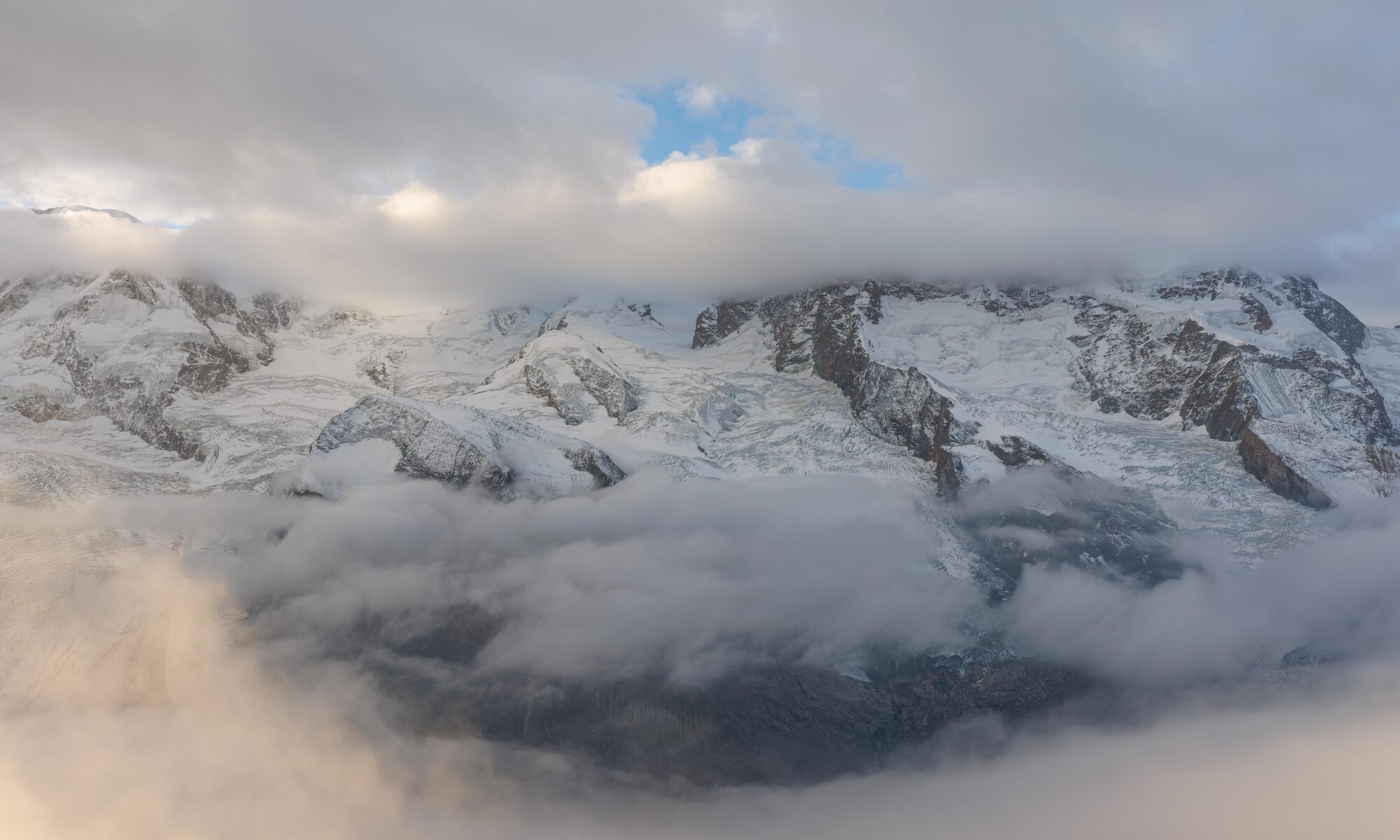
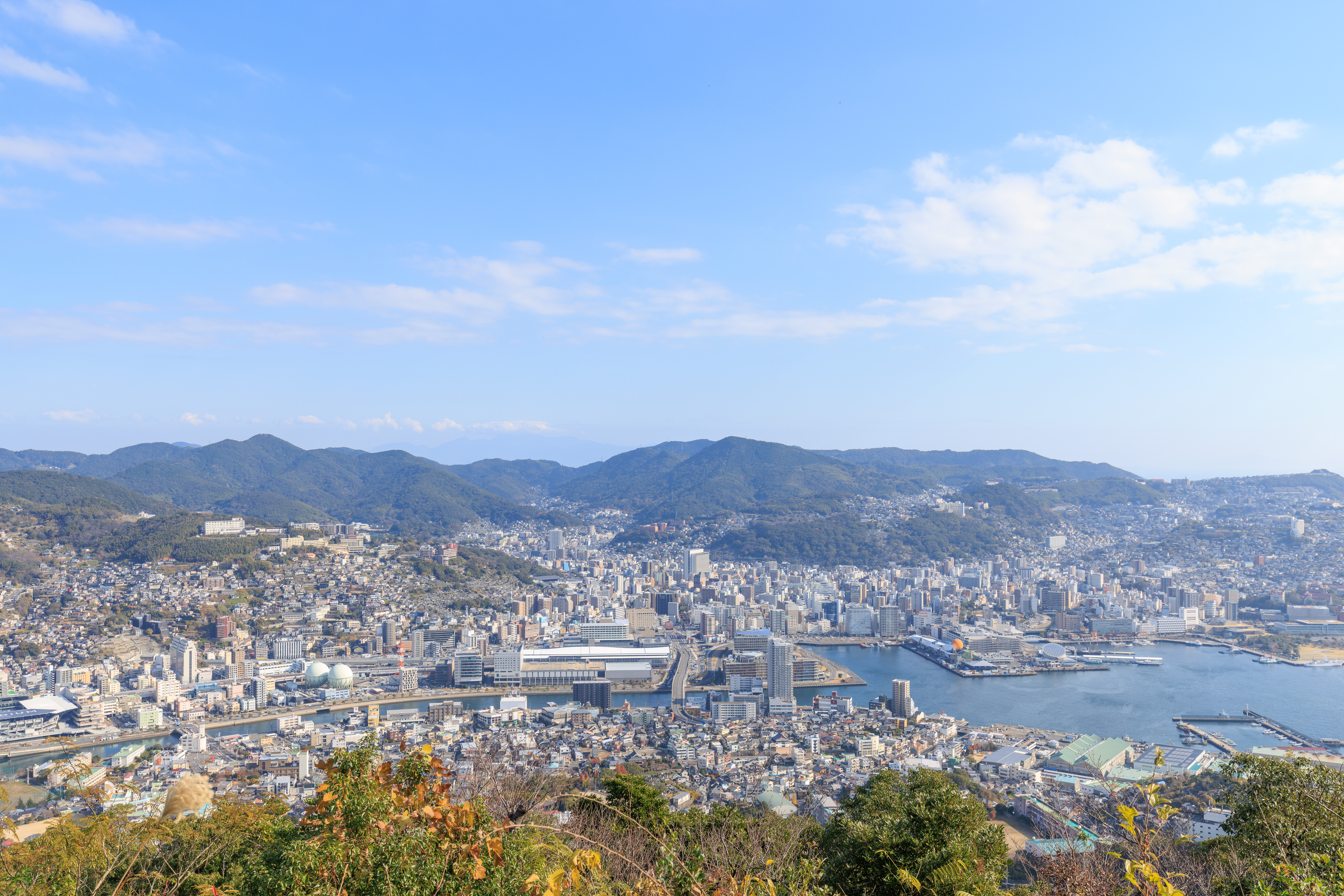
After waking up at the ザ ブラッサム熊本 The Blossom Kumamoto, we checked out and headed over to 長崎 Nagasaki by a combination of Shinkansen and conventional rail. We left our bags at the 長崎マリオット Nagasaki Marriott and visited the 山王神社 Sanno-jinja and its one legged torii, having lost the other leg during the atomic bombing. After, we took the 長崎ロープウェイ Nagasaki Ropeway up to the top of 稲佐山 Inasa-yama for a fantastic view of the city. Next, we took a quick look at the 眼鏡橋 Spectacles Bridge before having a sushi dinner and checking in at the Marriott. Our room ended up being fantastic! In the evening, we took the Shinkansen over to 武雄温泉 Takeo Onsen to ride on the Super Mario train which was operating as the Midori.
Kumamoto
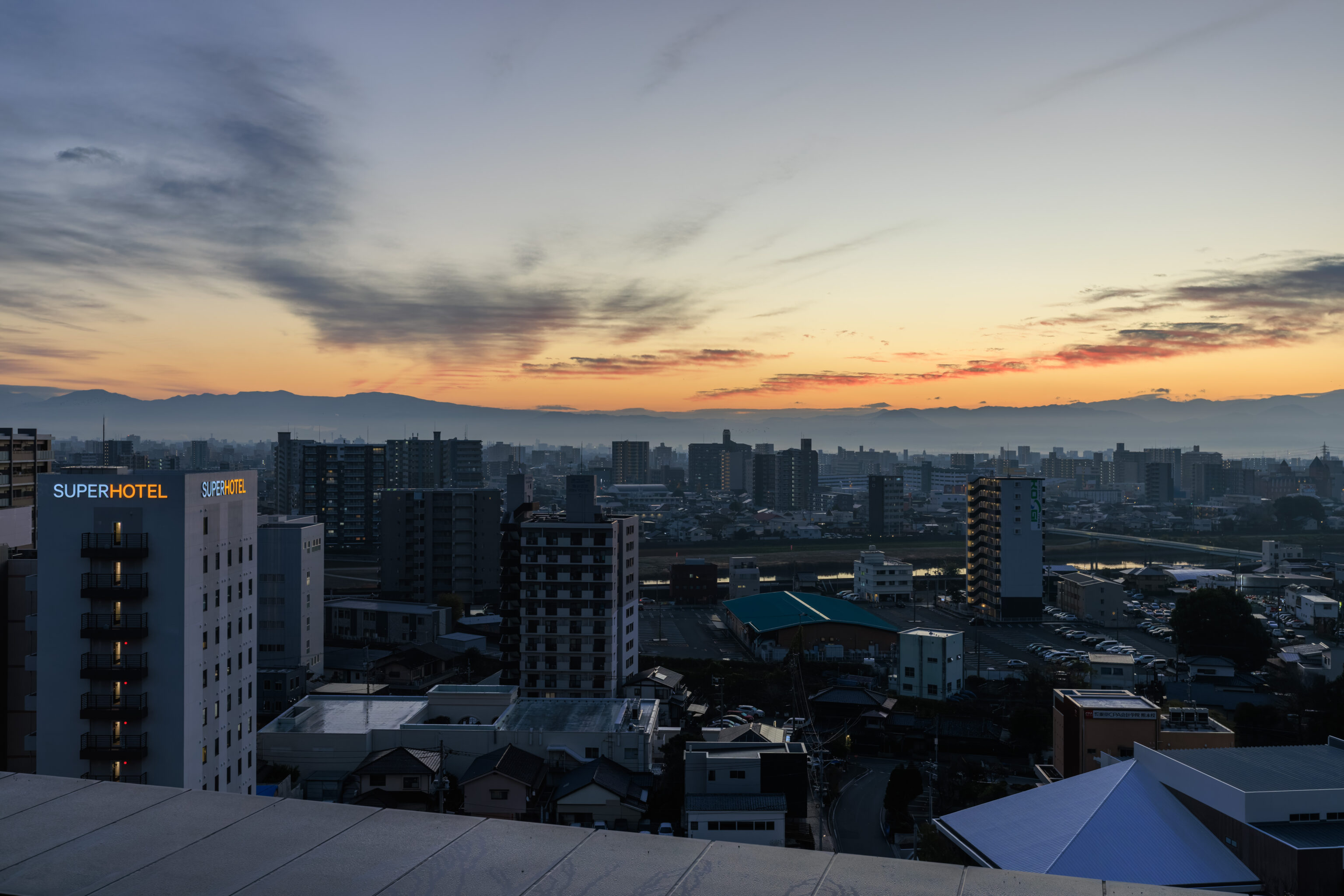
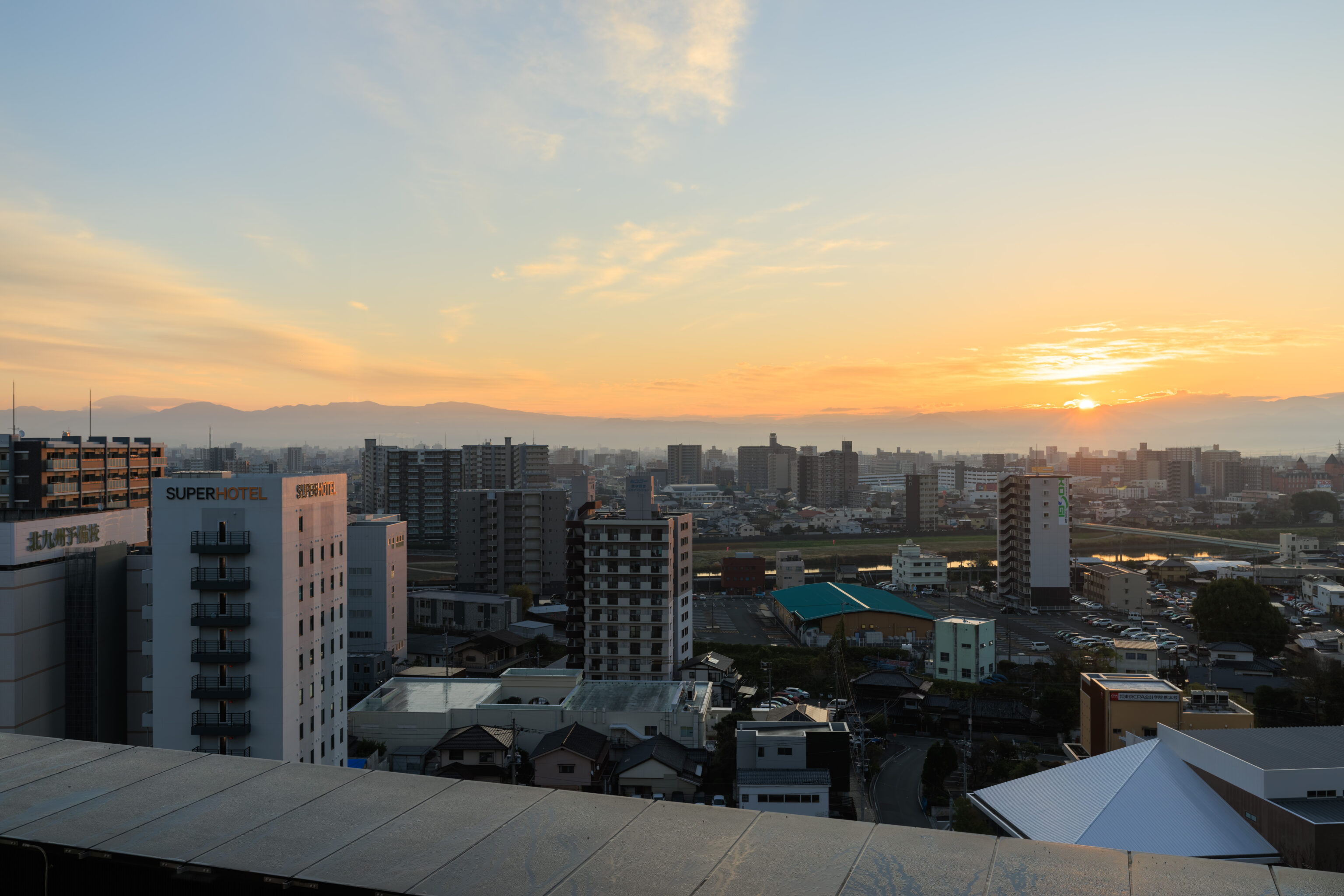
We woke up at ザ ブラッサム熊本 The Blossom Kumamoto just in time for sunrise!
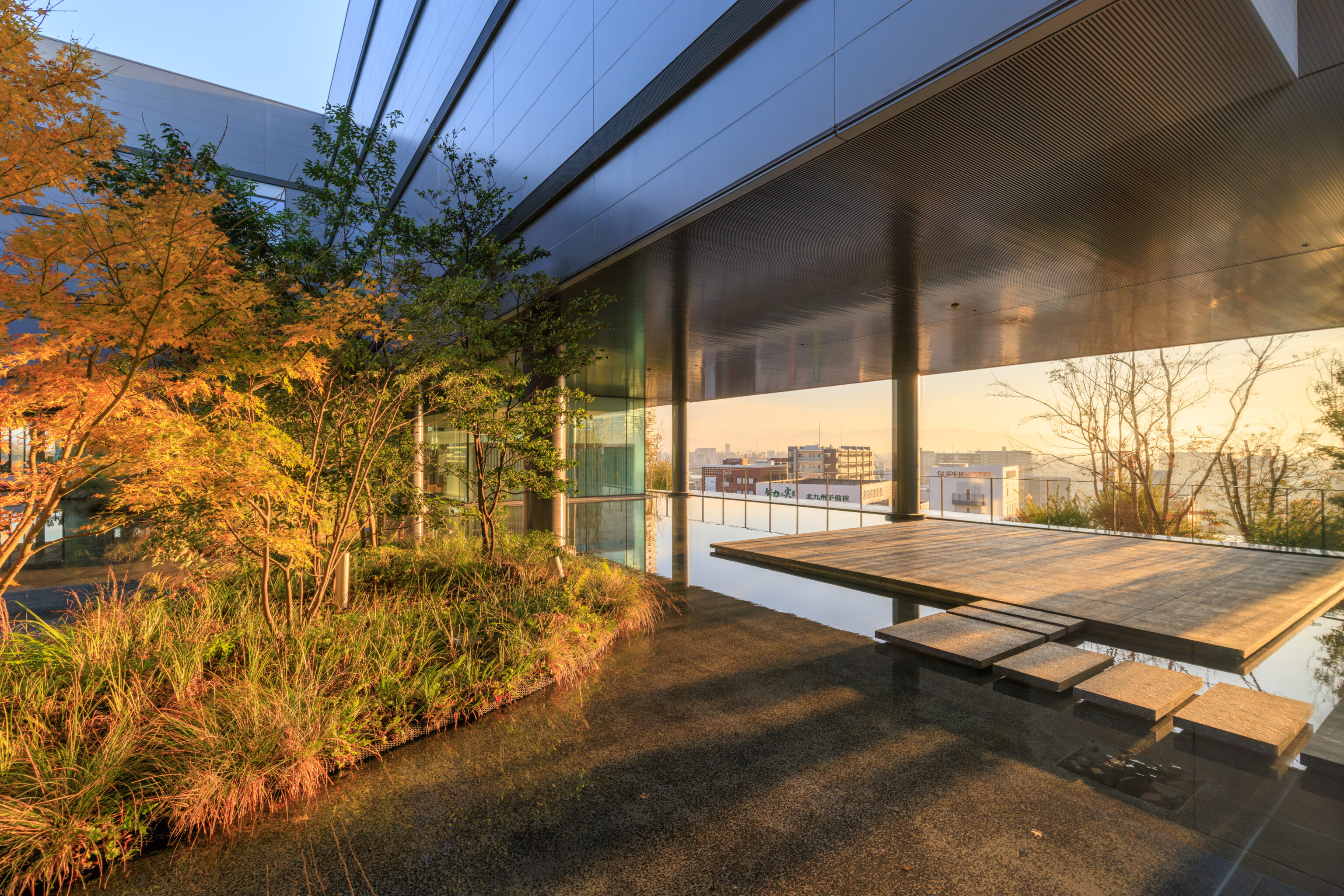
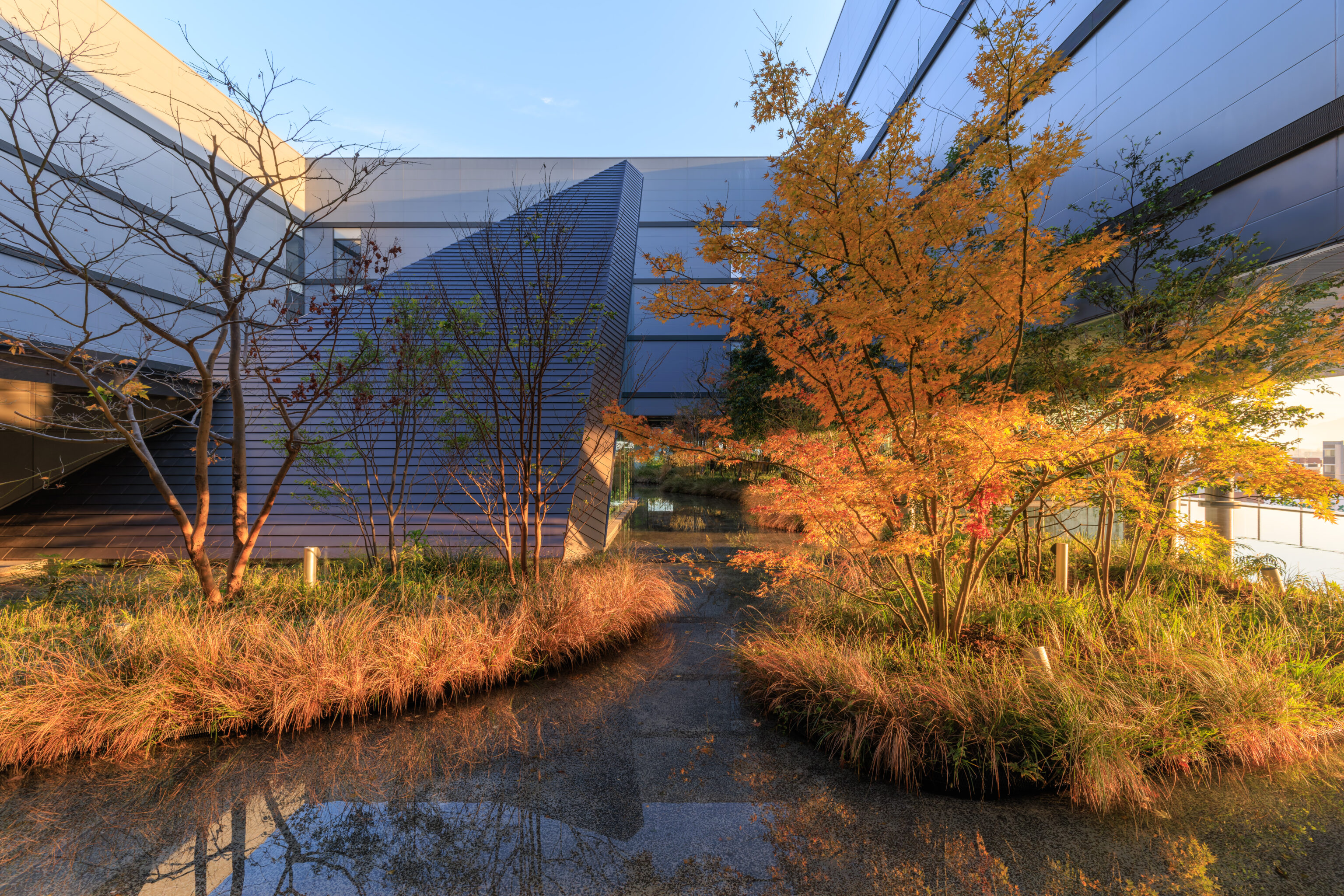
We headed towards the lobby before 8am to check out. This central atrium area featured some water and greenery. It is The Forest Terrace, the hotel’s wedding venue.
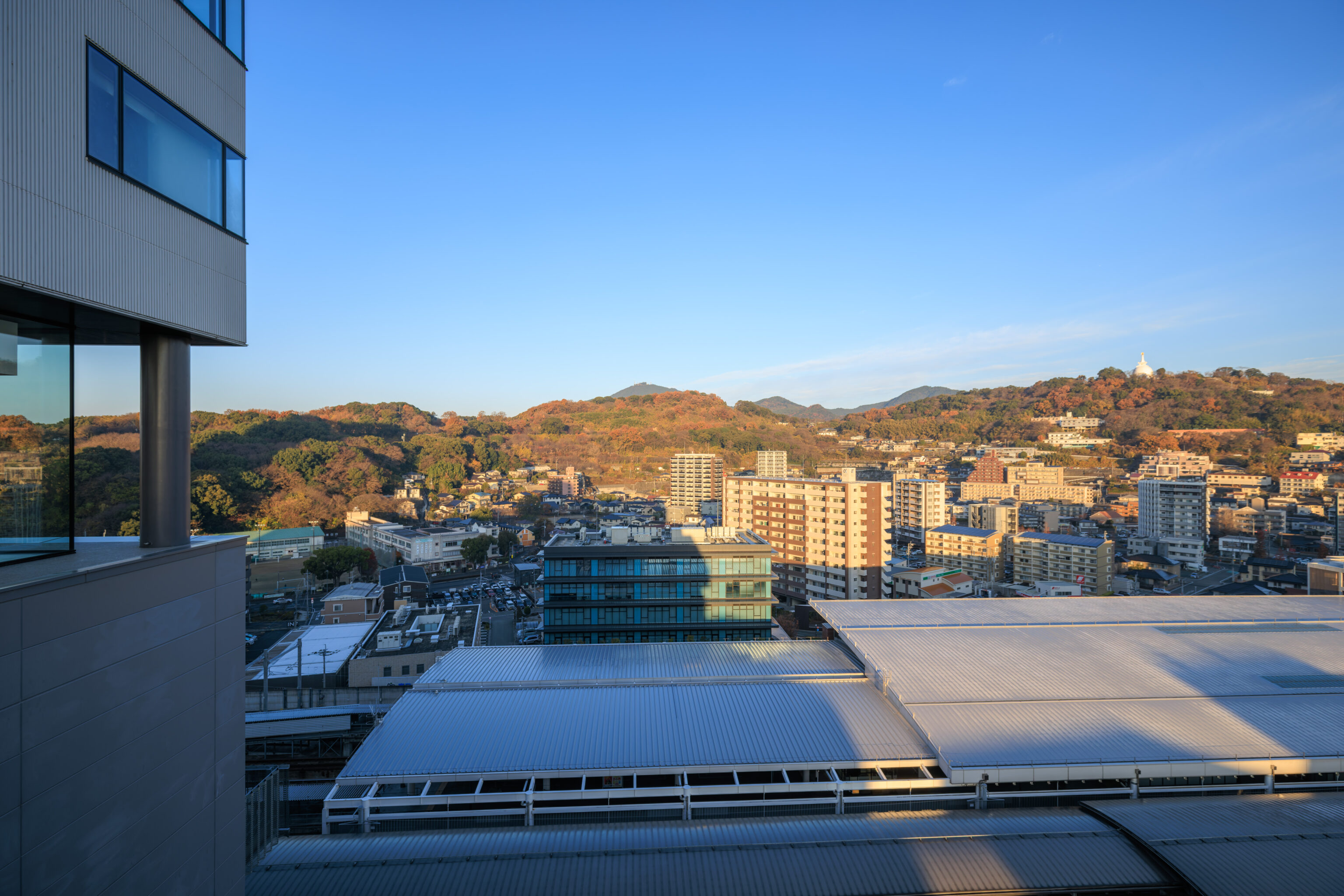
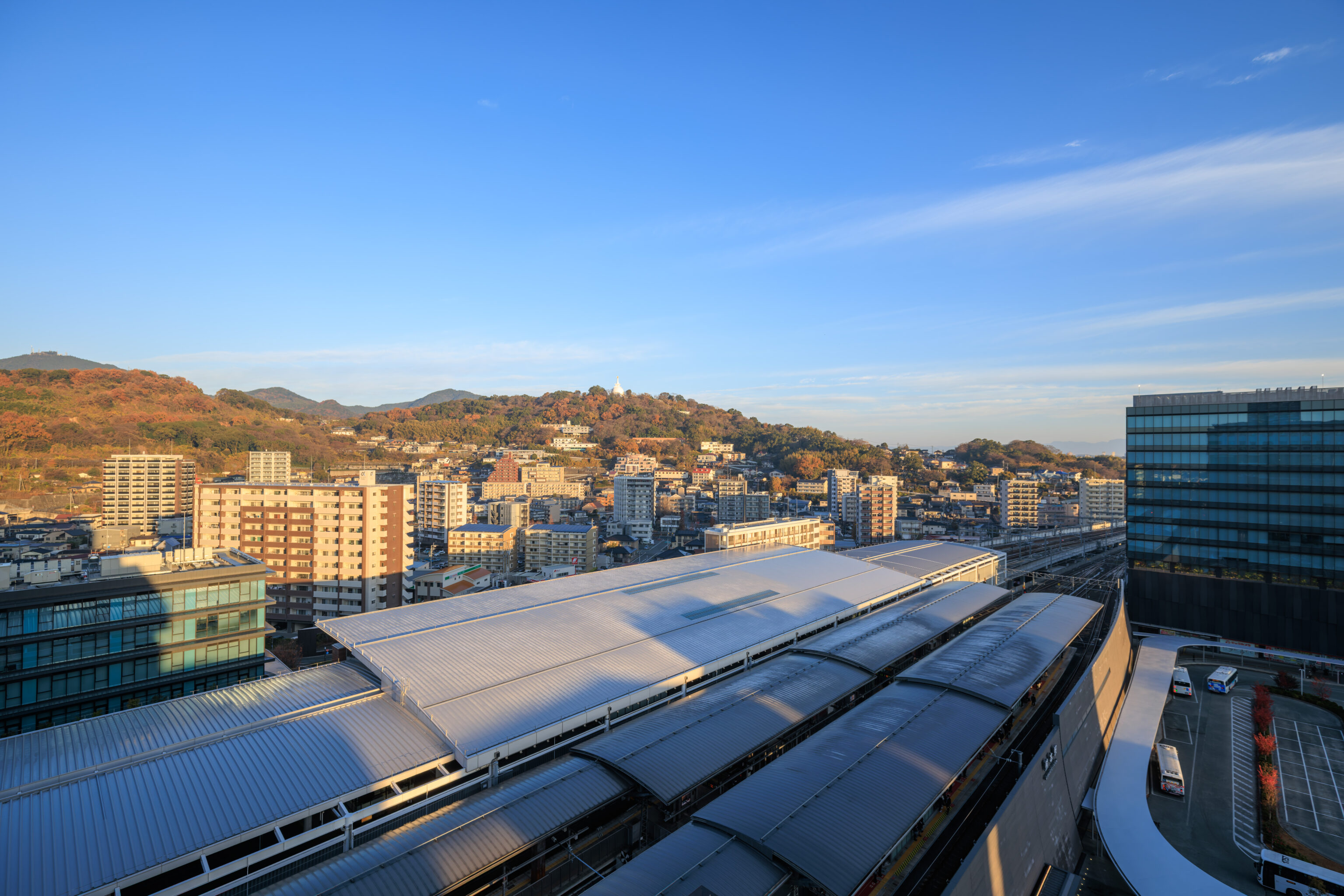
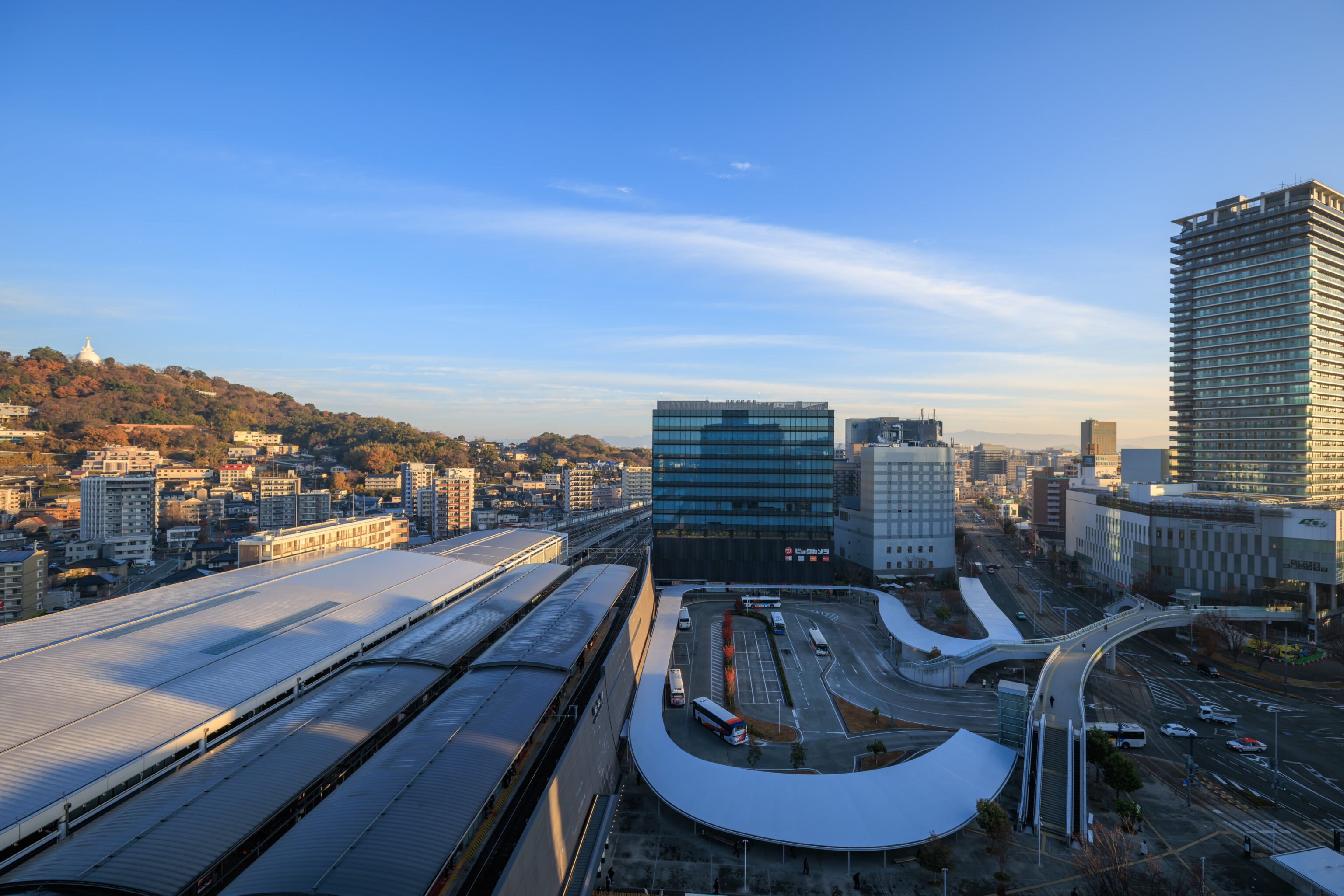
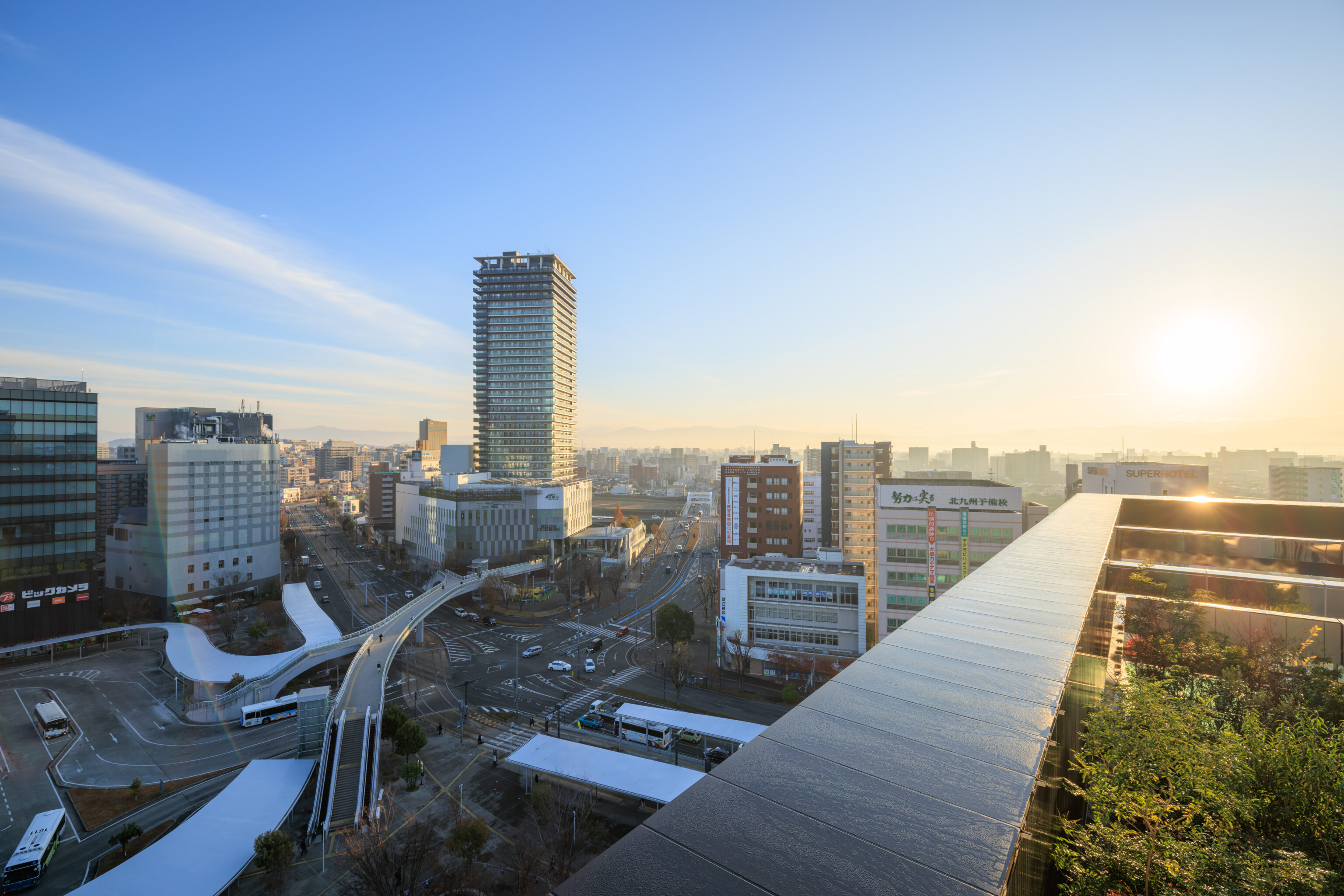
Before heading downstairs after checking out, we walked outside to the small observation deck to take a look around again.
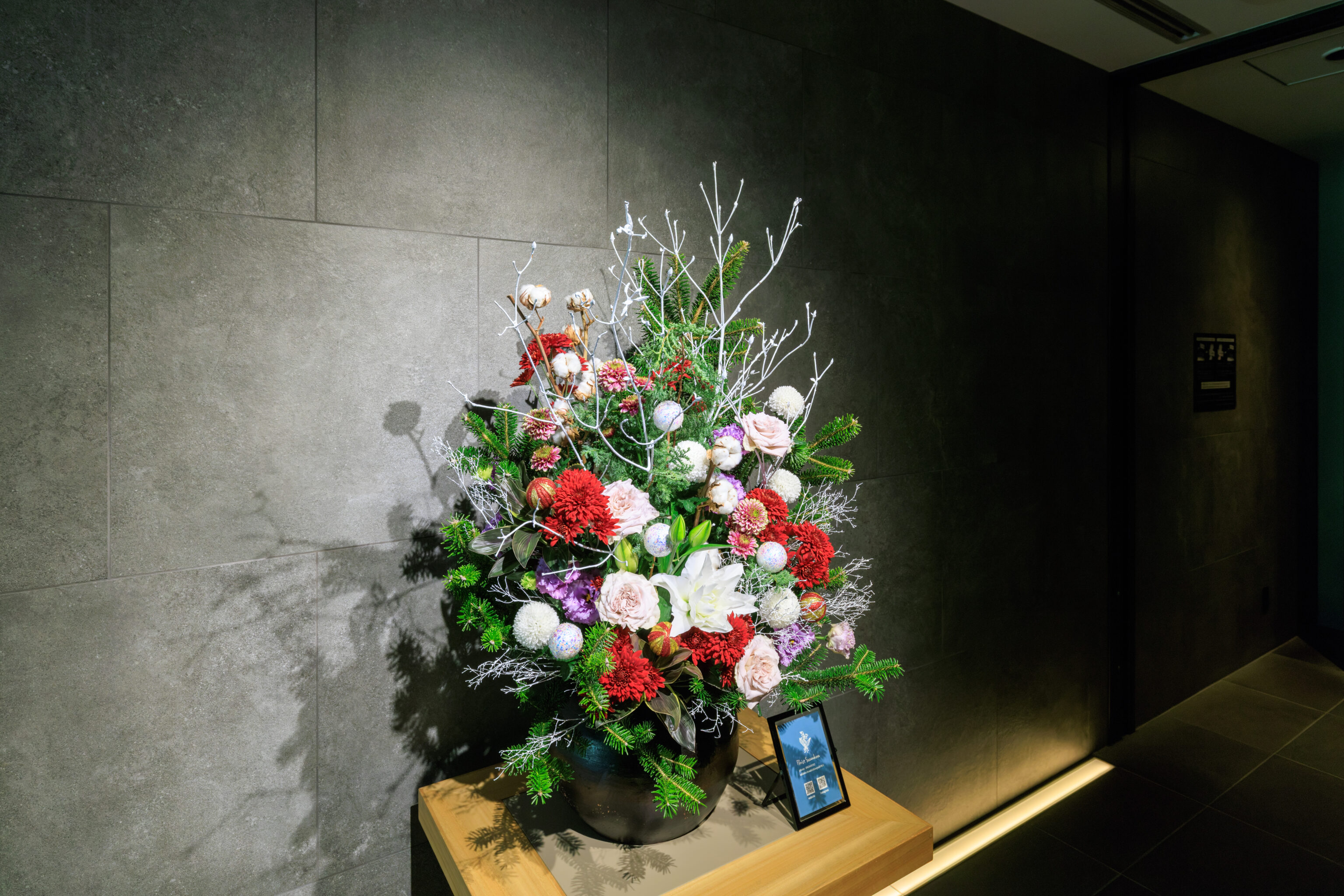
We walked by these flowers as we headed down to exit the hotel.
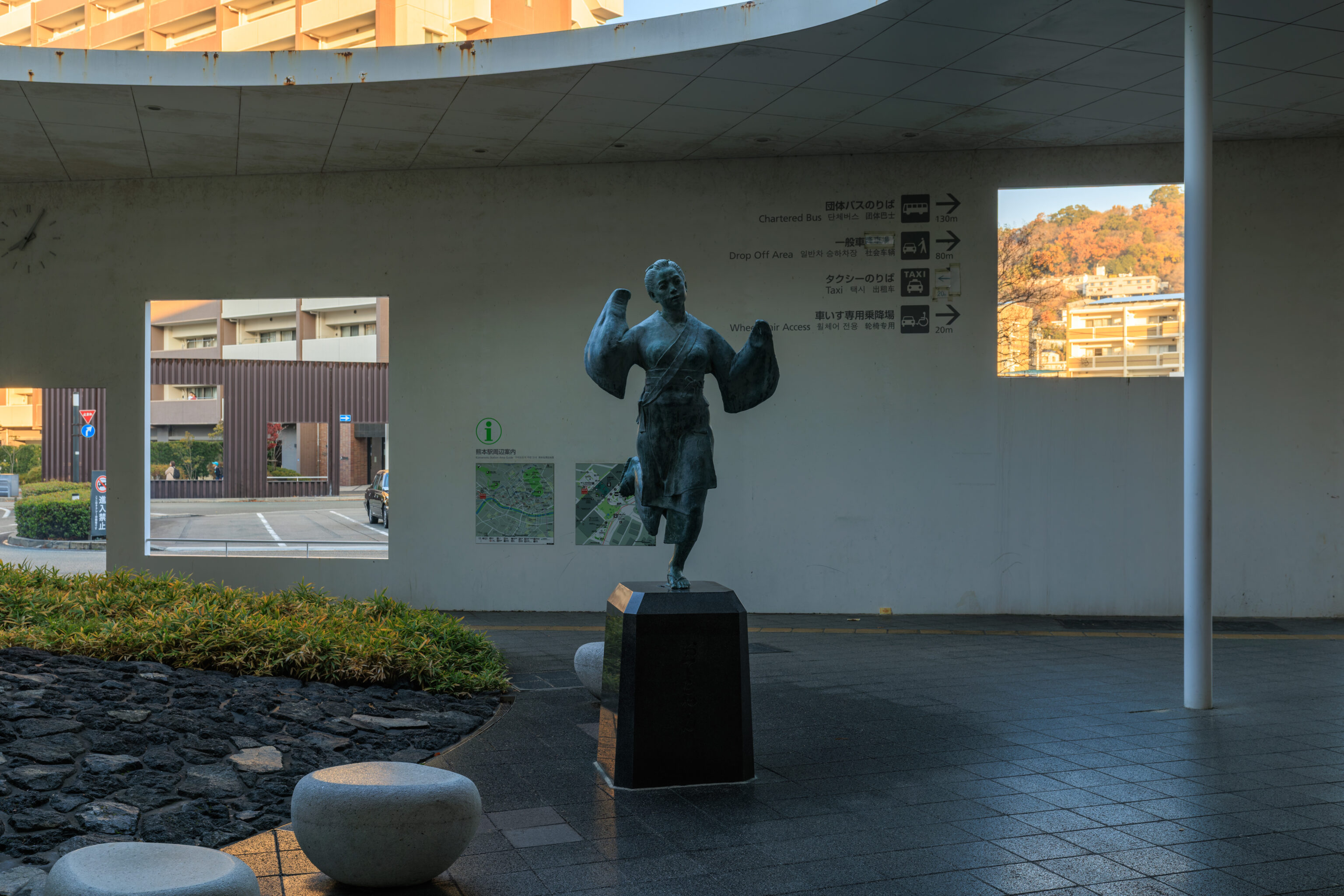
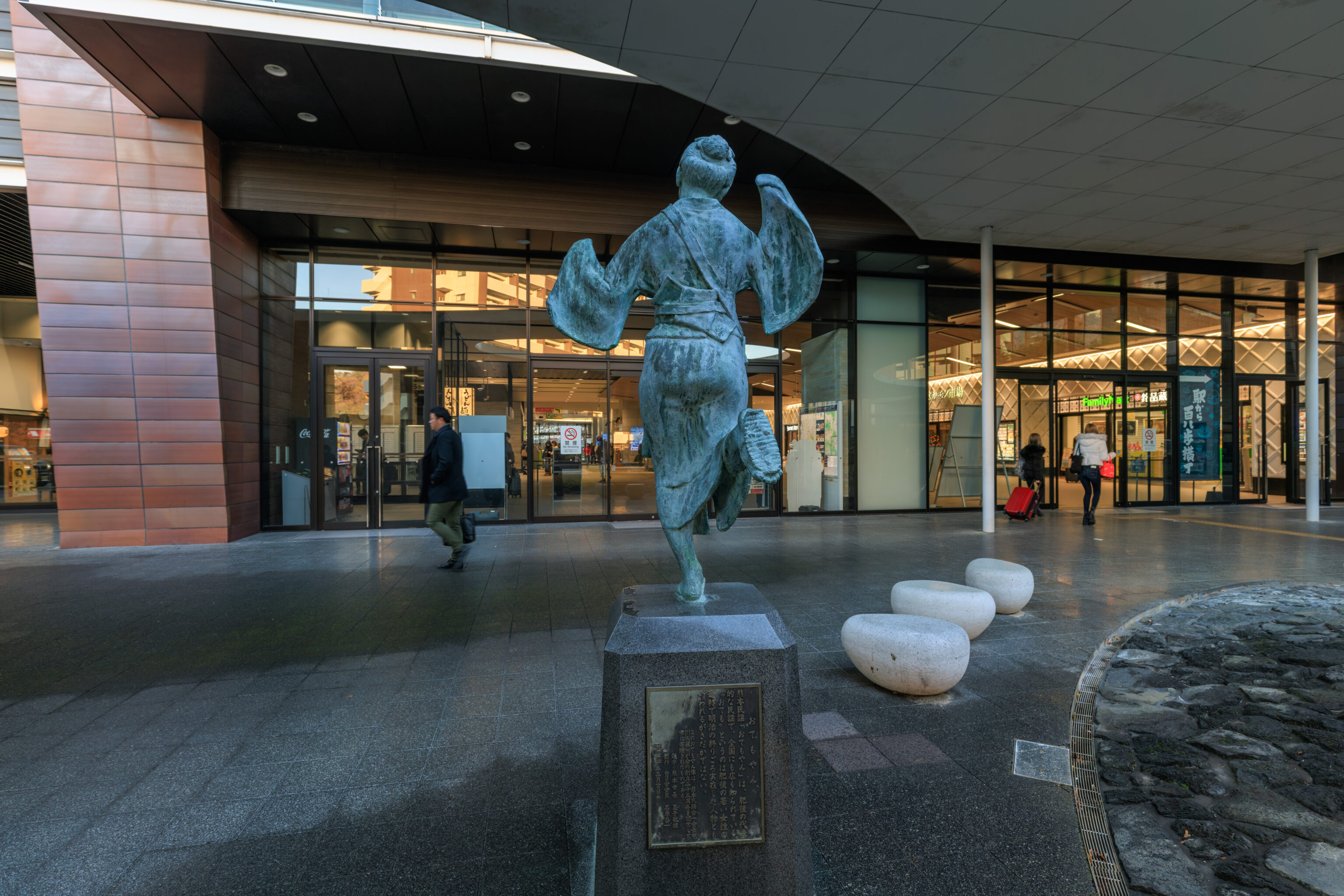
We actually had quite a bit of time before our train so decided to take a look around the station again. This statue was on the west side of the station. It depicts a young local woman:
Otemoyan

"Otemoyan" is a quintessential folk song from the Higo region (modern-day Kumamoto) and is widely known throughout Japan. "Otemo" was a common nickname for young women in Higo; while it is said that the song was based on a real person who lived around the end of the Meiji era, this remains unconfirmed.

This statue of Otemoyan was donated to the city by the Kumamoto Minyo-kai (Kumamoto Folk Dance Association)—led by Chairman Kyuzo Nakagawa—to commemorate the association's 35th anniversary.

Calligraphy by Toshio Hoshiko, Mayor of Kumamoto
Sculpted by Shoichi Ishihara, Member of the Hakujitsukai
An auspicious day in March, 1985
– Text from the plaque on the back of the statue’s base, translated using Google.
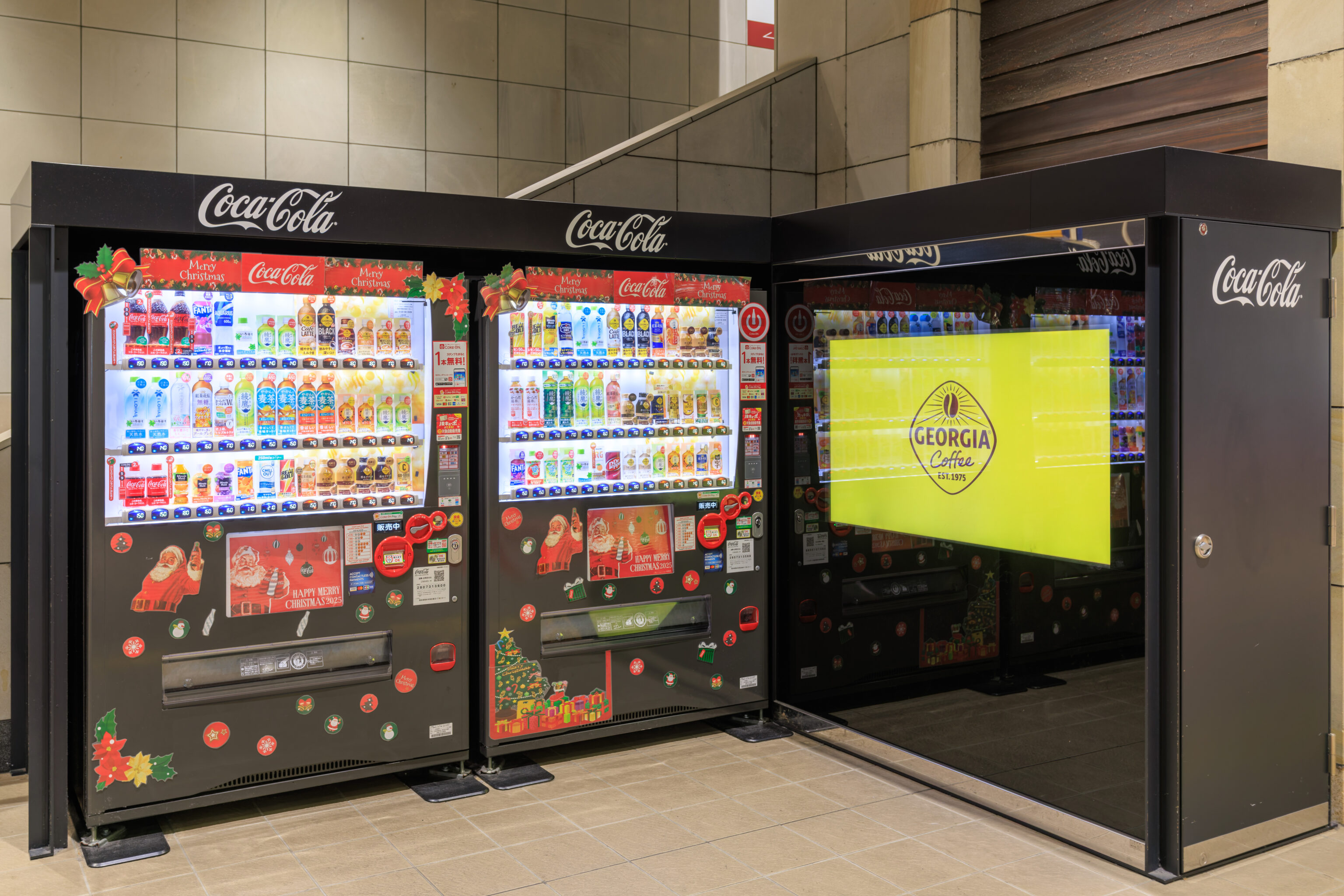
Inside, these vending machines were decorated in a Christmas theme. Coca Cola is big in Japan as it is nearly everywhere in the world. Because if you can’t beat ’em, buy ’em!
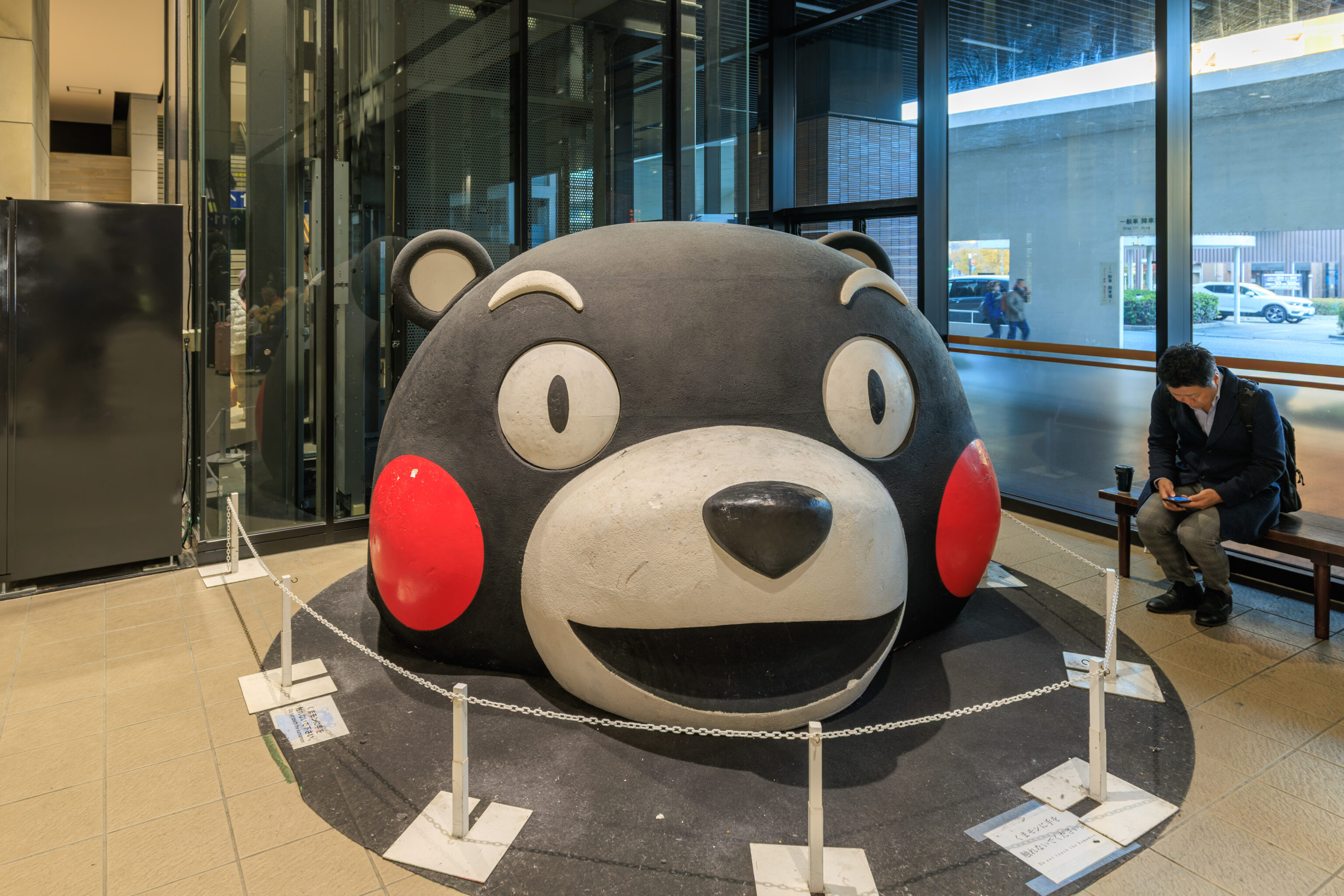
There was a giant Kumamon head on the west side of the station!
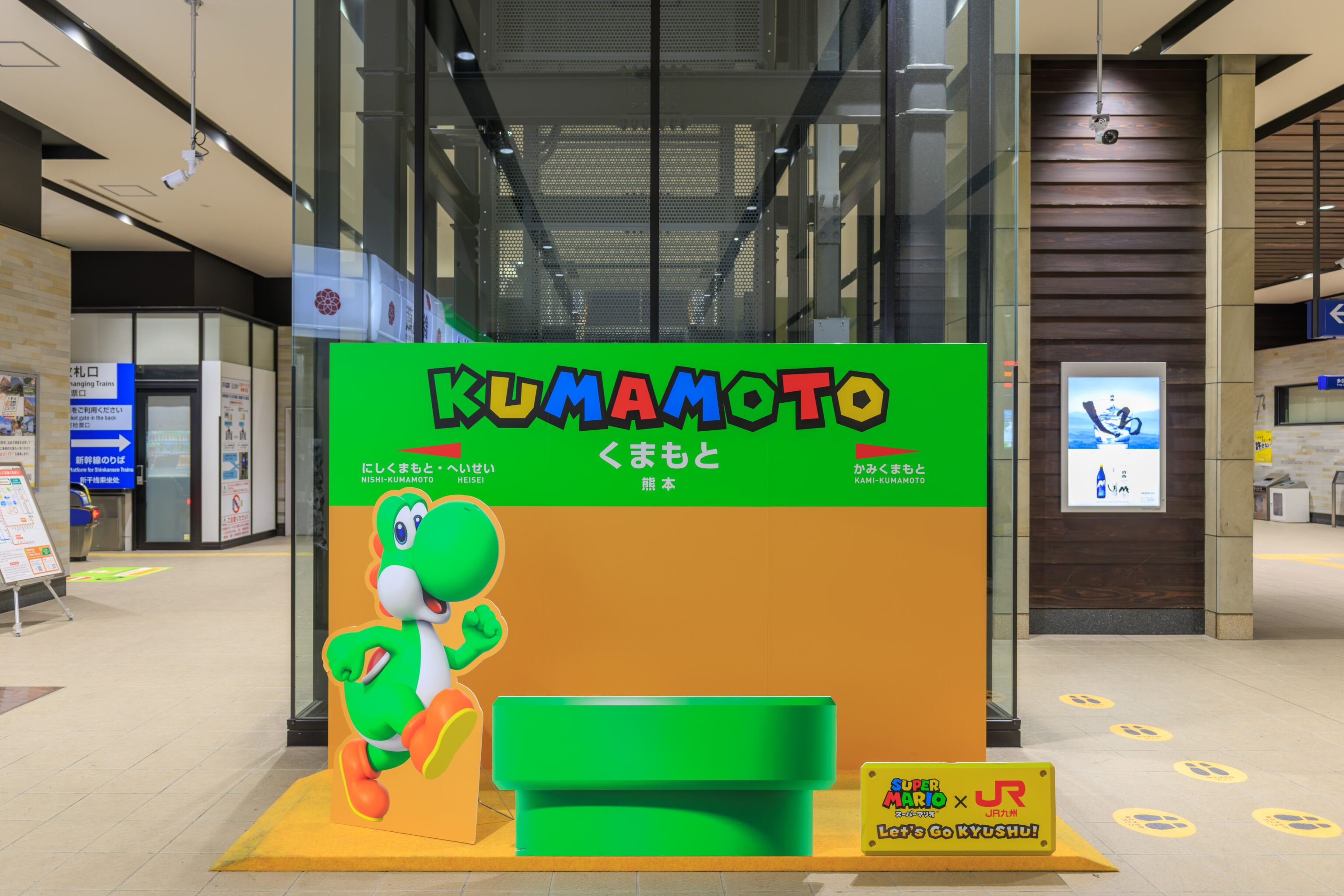
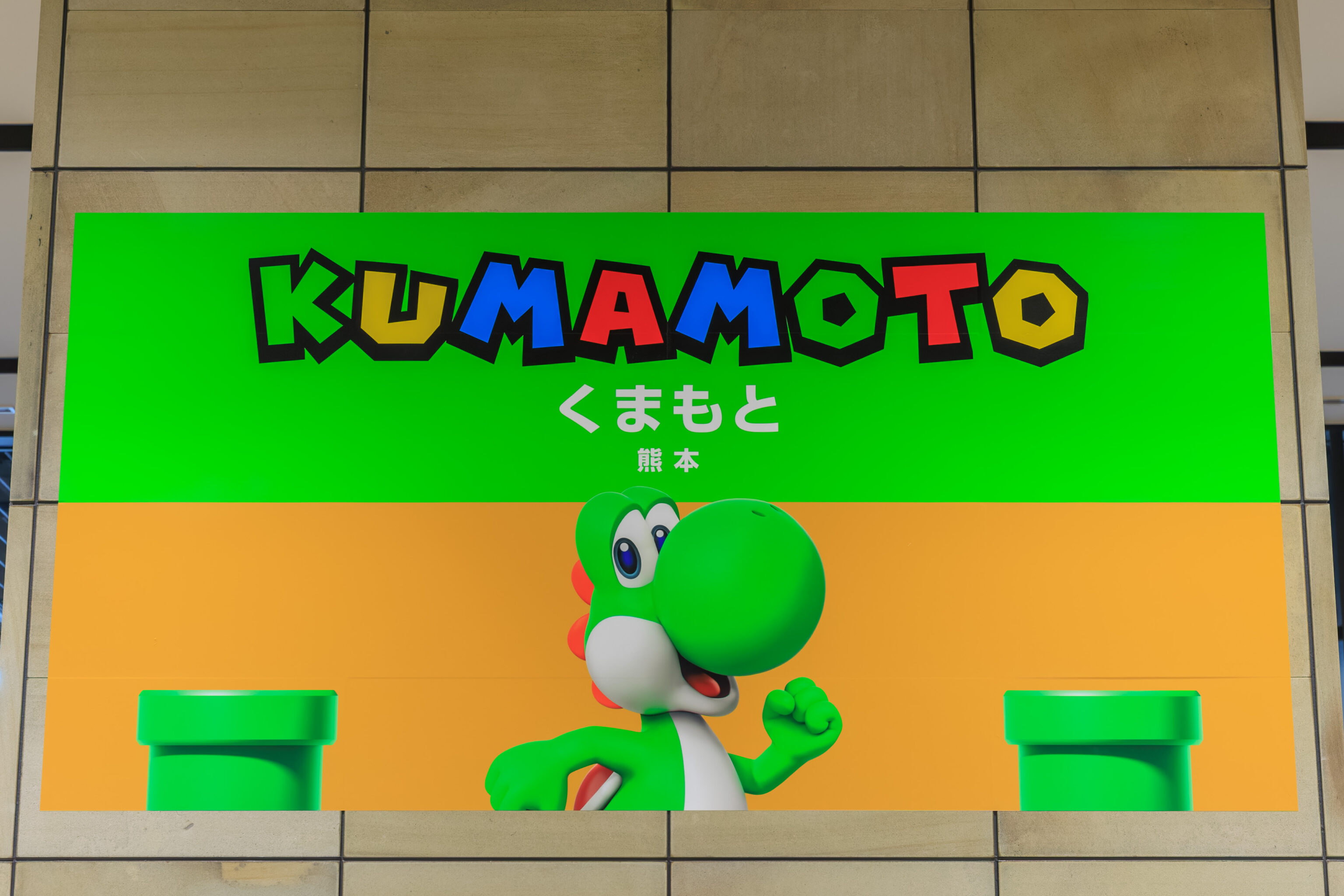
Kumamoto Station features Yoshi for the Super Mario x JR Kyushu Let’s go Kyushu! event. While here at the station, we got two Kurobuta nikuman as well as two onigiri from a FamilyMart and ate them before leaving.
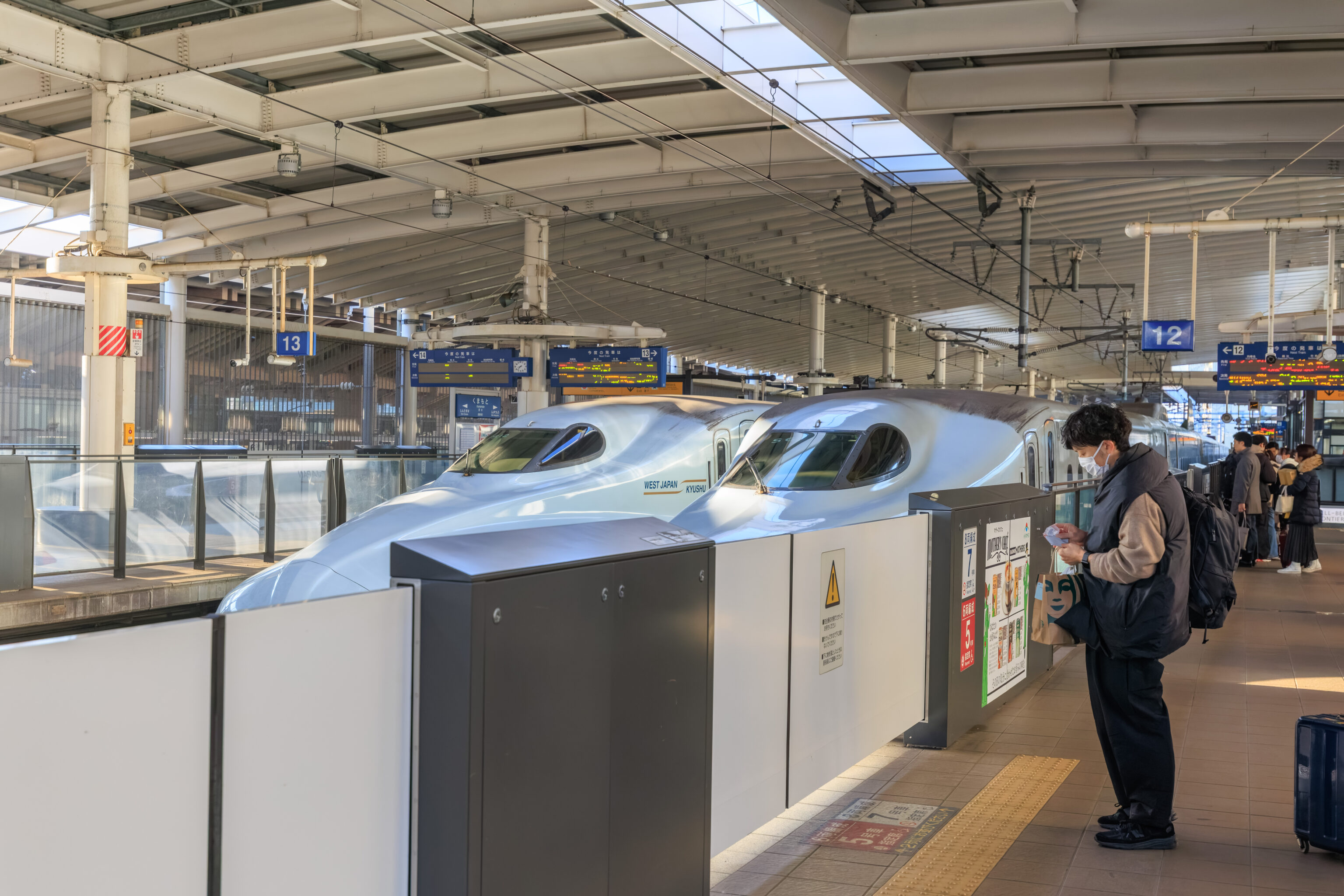
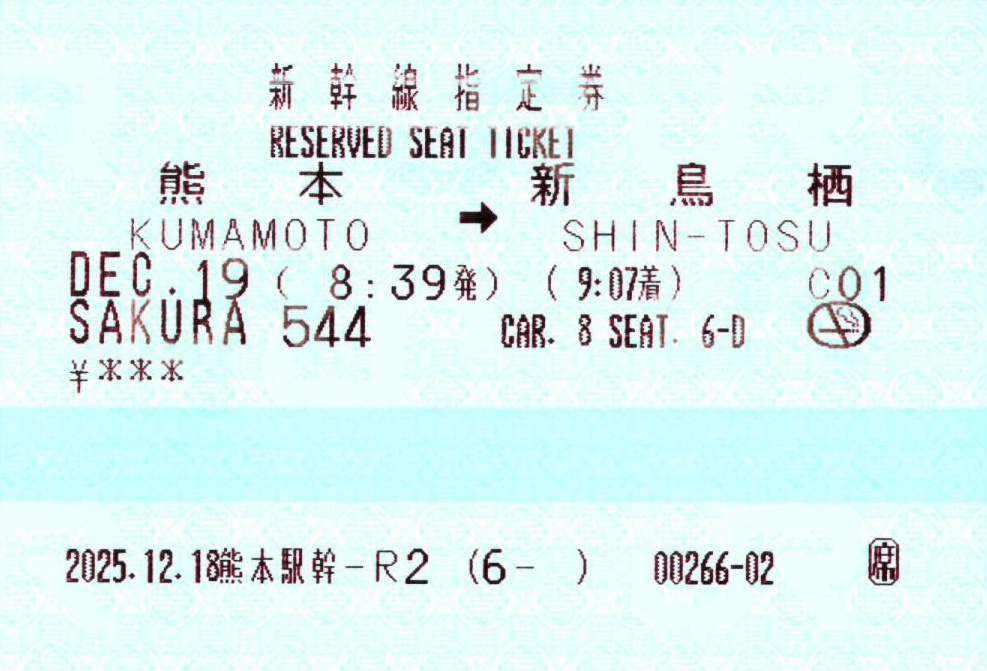
The optimal route from 熊本 Kumamoto to 長崎 Nagasaki is slightly complicated. First, take the Kyushu Shinkansen from Kumamoto to 新鳥栖 Shin-Tosu. From there, change to the Relay Kamome to 武雄温泉 Takeo Onsen. And finally, take the Nishi Kyushu Shinkansen to Nagasaki Station.
The trip from Kumamoto to Shin-Tosu, which is about two thirds of the way to Hakata, takes just under 30 minutes.
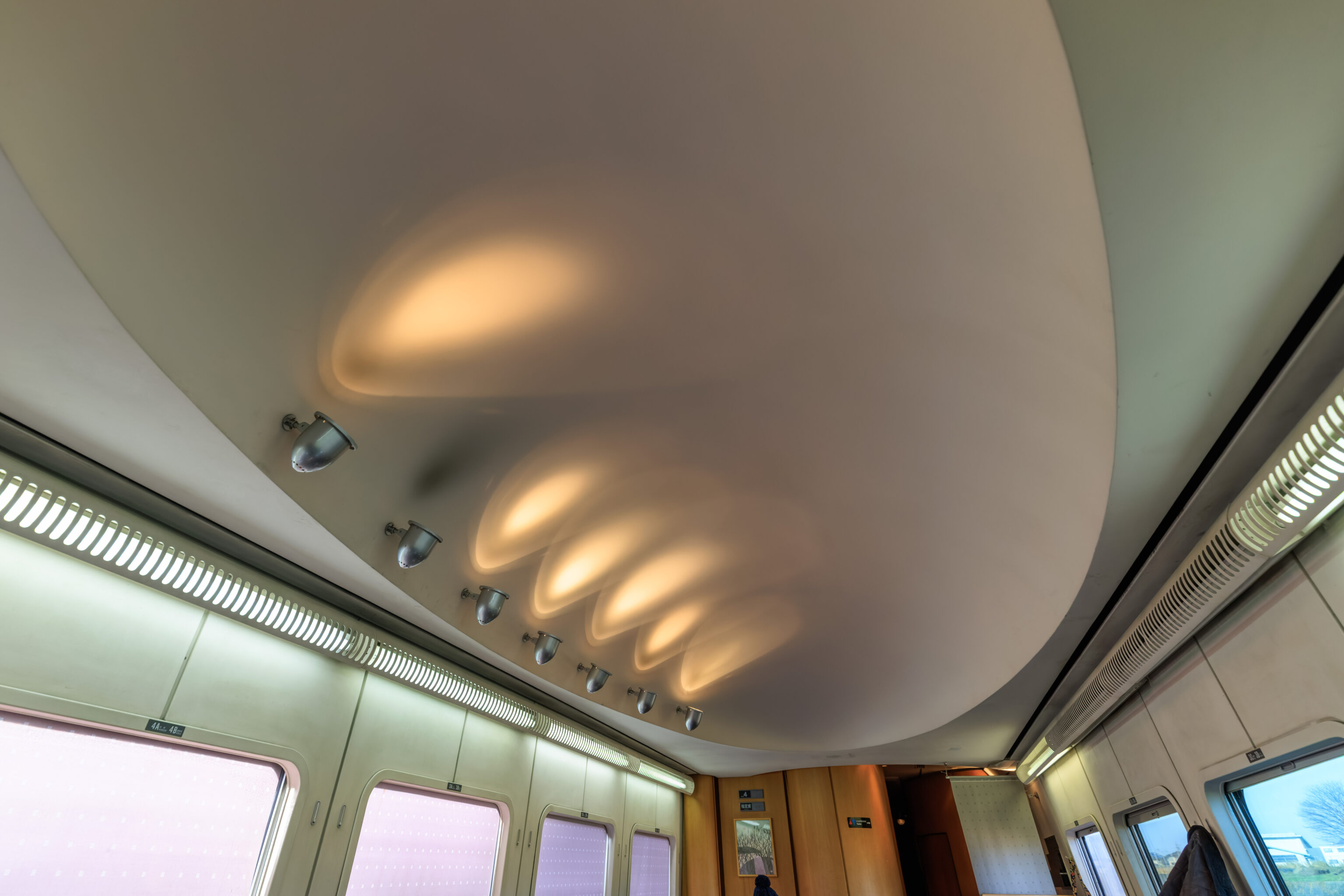
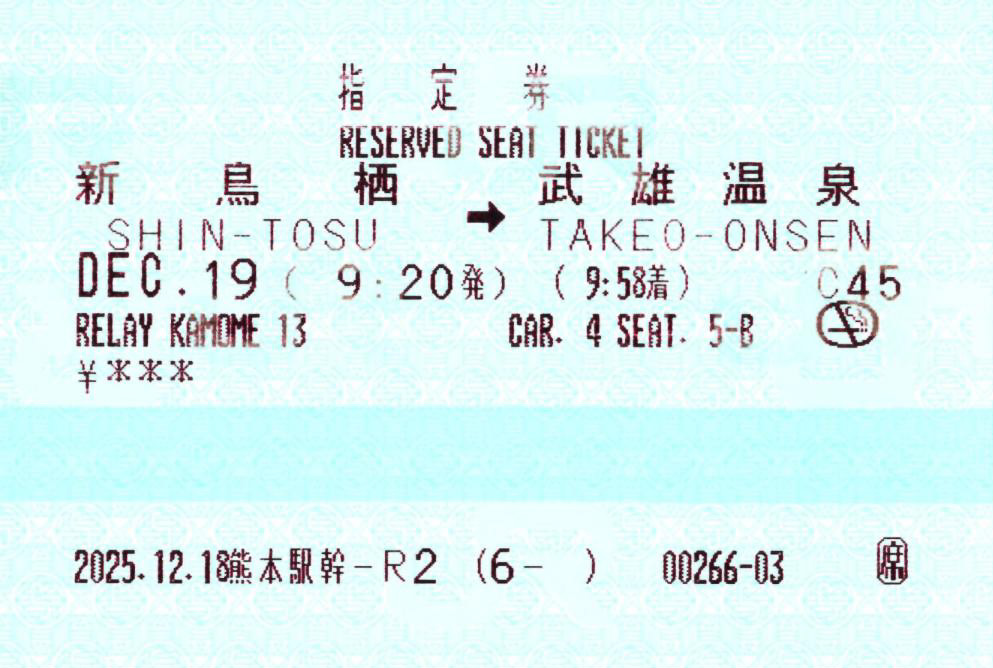
The trip from Shin-Tosu to Takeo Onsen on the Relay Kamome is on conventional rail and takes about 40 minutes.
While on the Relay Kamome, we actually spotted the Super Mario 885 Series train going in the opposite direction as we were approaching Takeo Onsen! We tried to to quickly snap a photograph but that was pretty much fail.
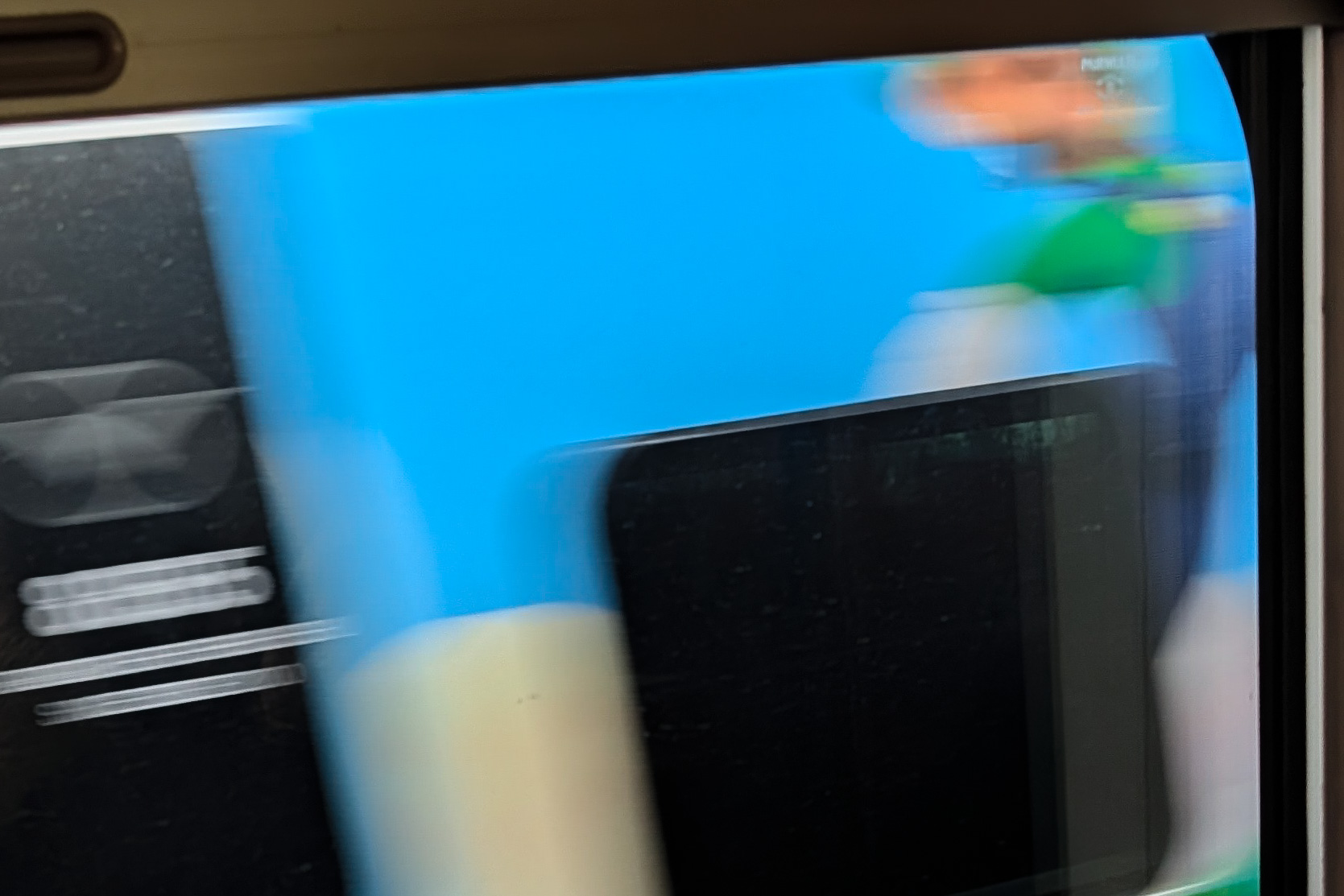
That is definitely Luigi though!
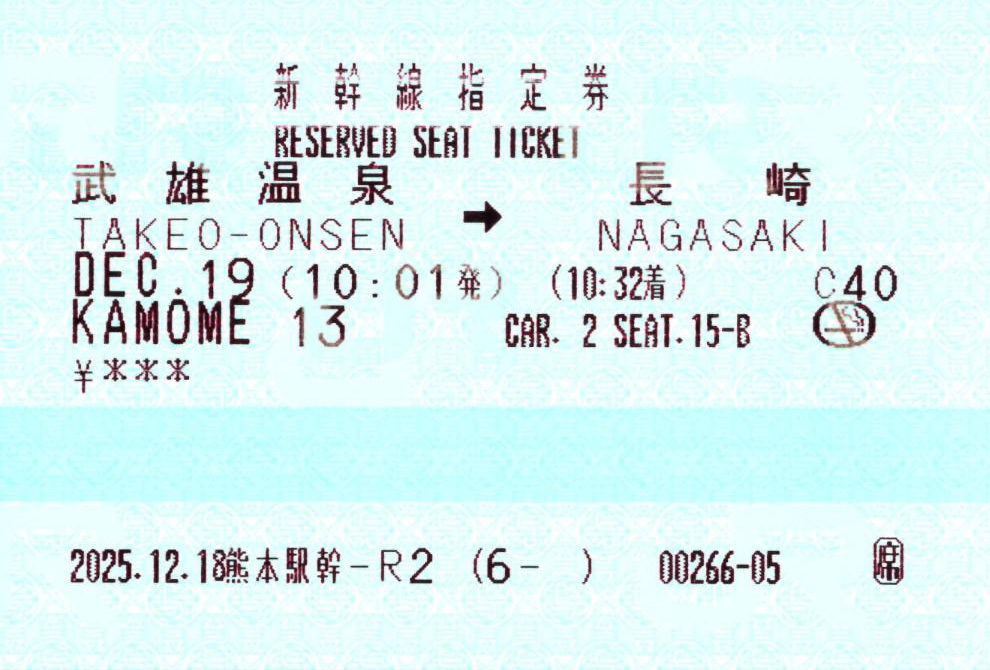
Finally, the trip from Takeo Onsen to Nagasaki takes about 30 minutes on the Nishi Kyushu Shinkansen. This Shinkansen route is the shortest in Japan. Formerly, the fastest way to get between Hakata and Nagasaki was on the limited express かもめ Kamome (Seagull) train. This train is being replaced by the Shinkansen. However, the portion between Takeo Onsen and Hakata hasn’t been completed yet. So, the Relay Kamome covers this section of the line with the remainder being served by the Nishi Kyushu Shinakansen which operates as the Kamome.
Nagasaki Station
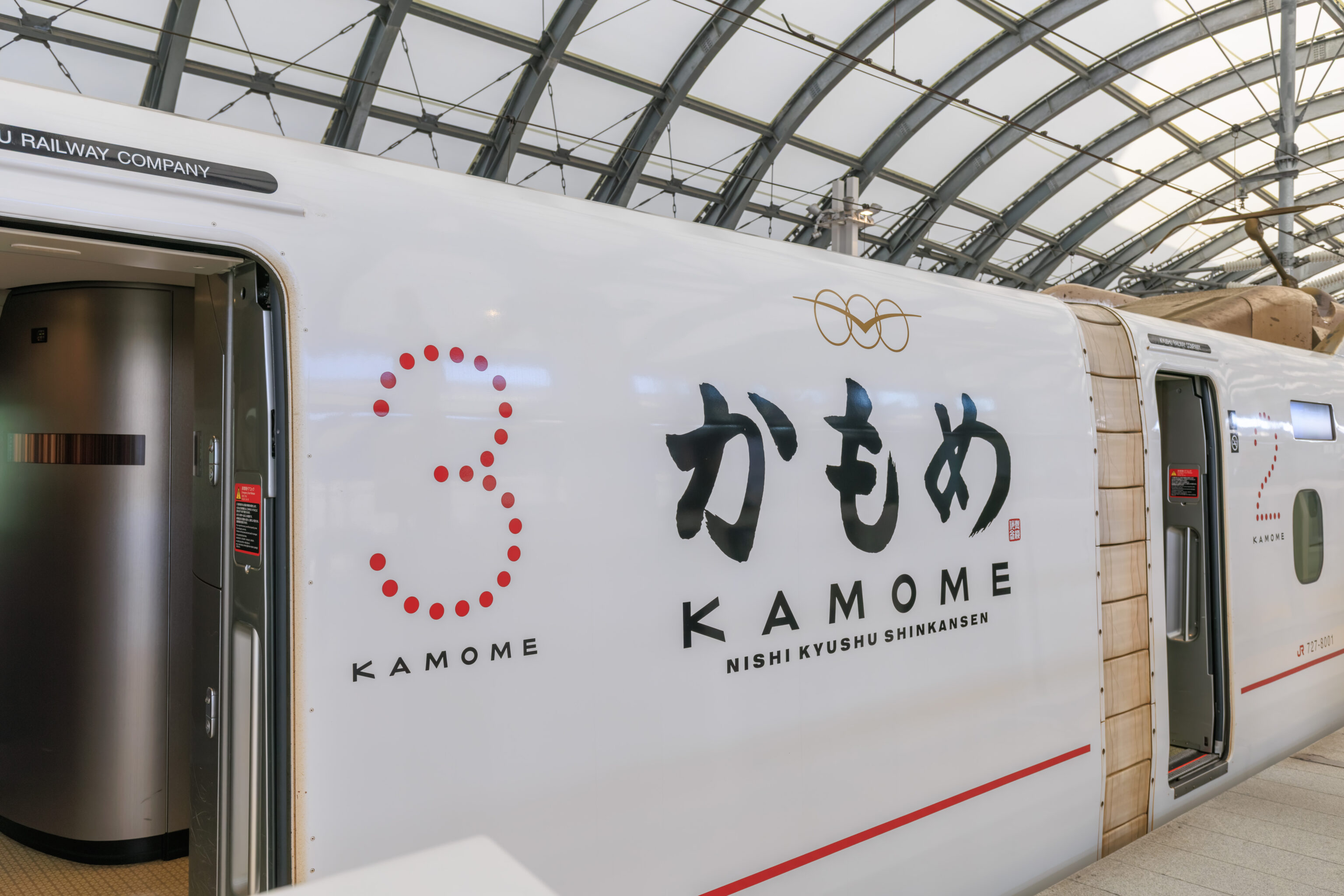
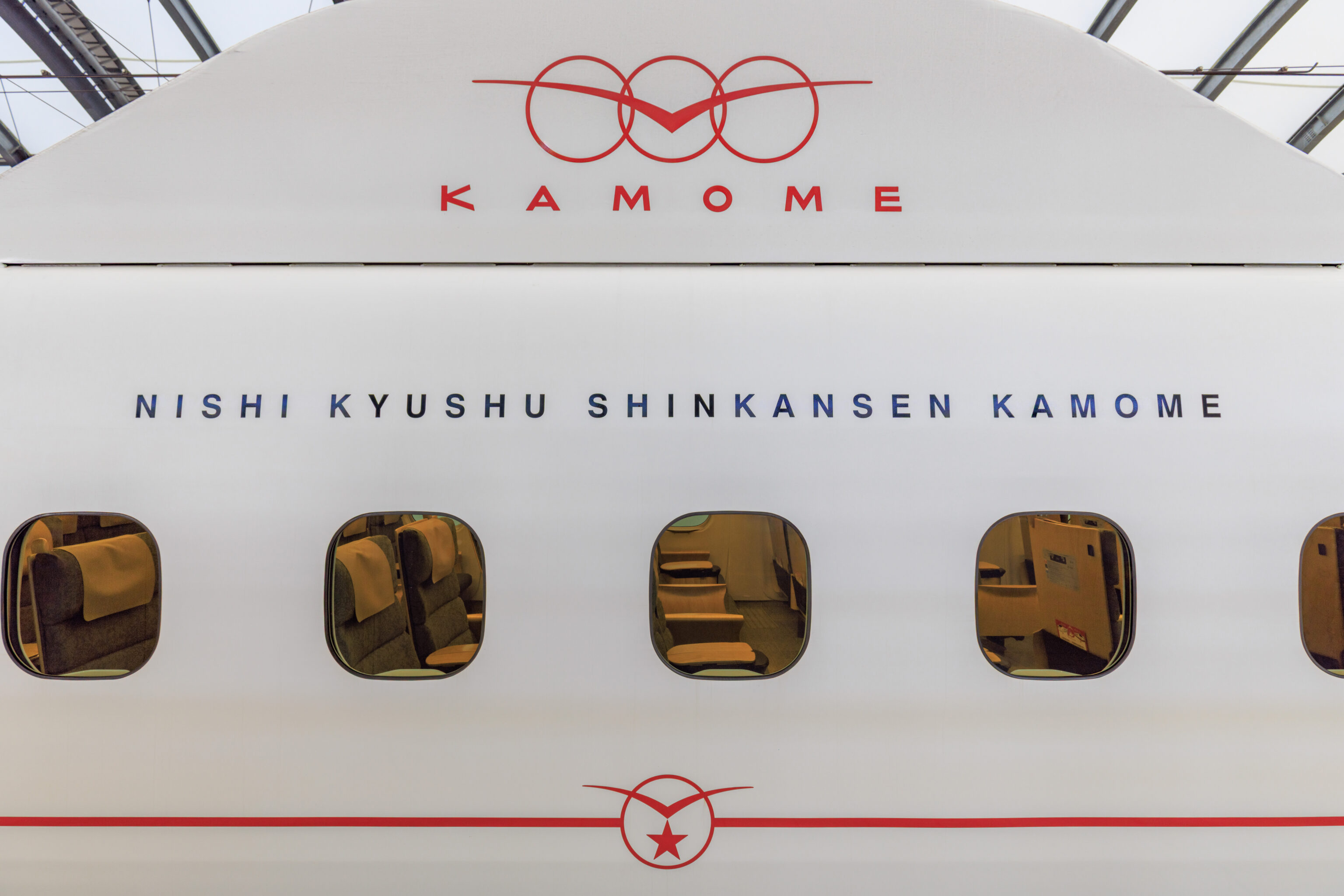
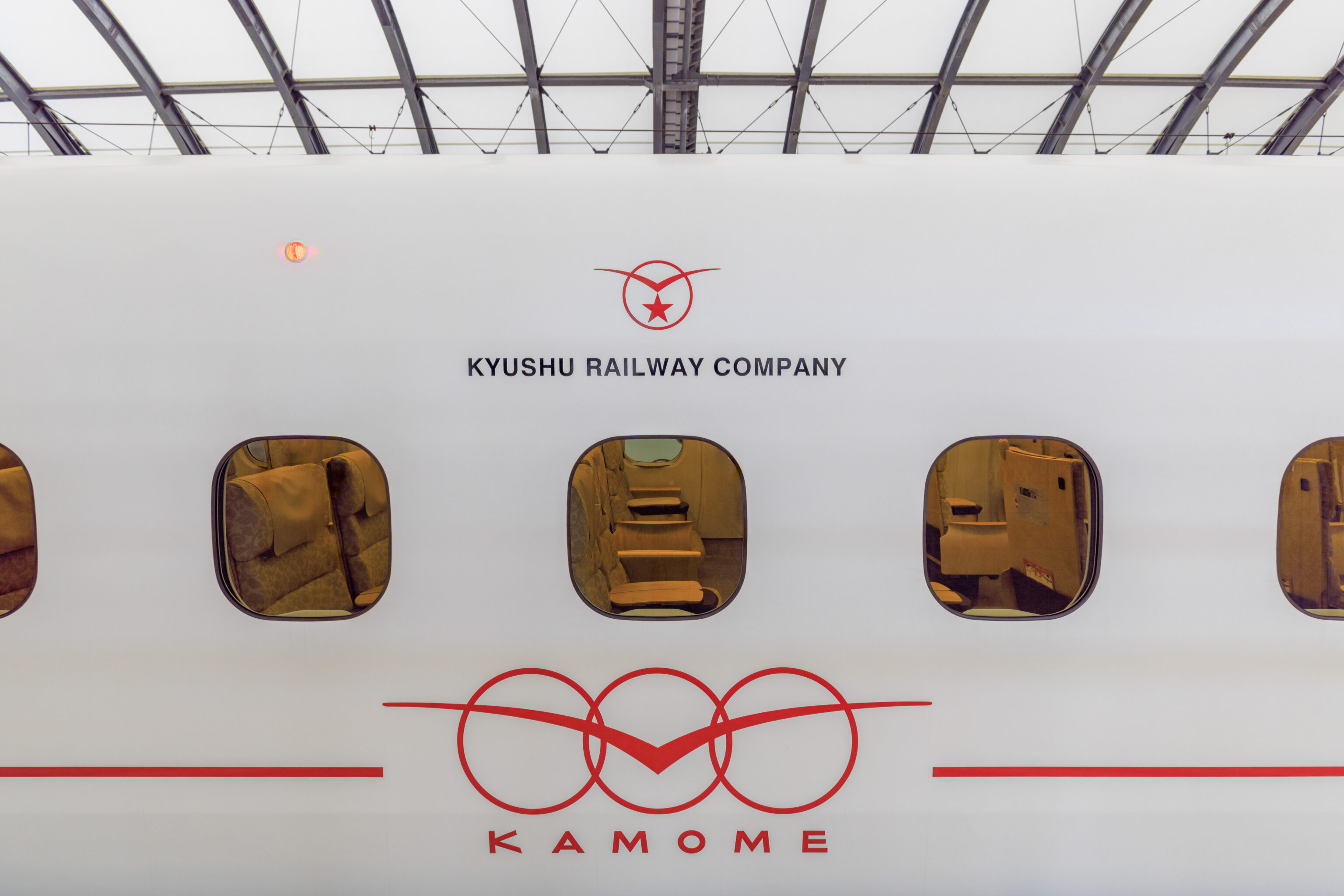
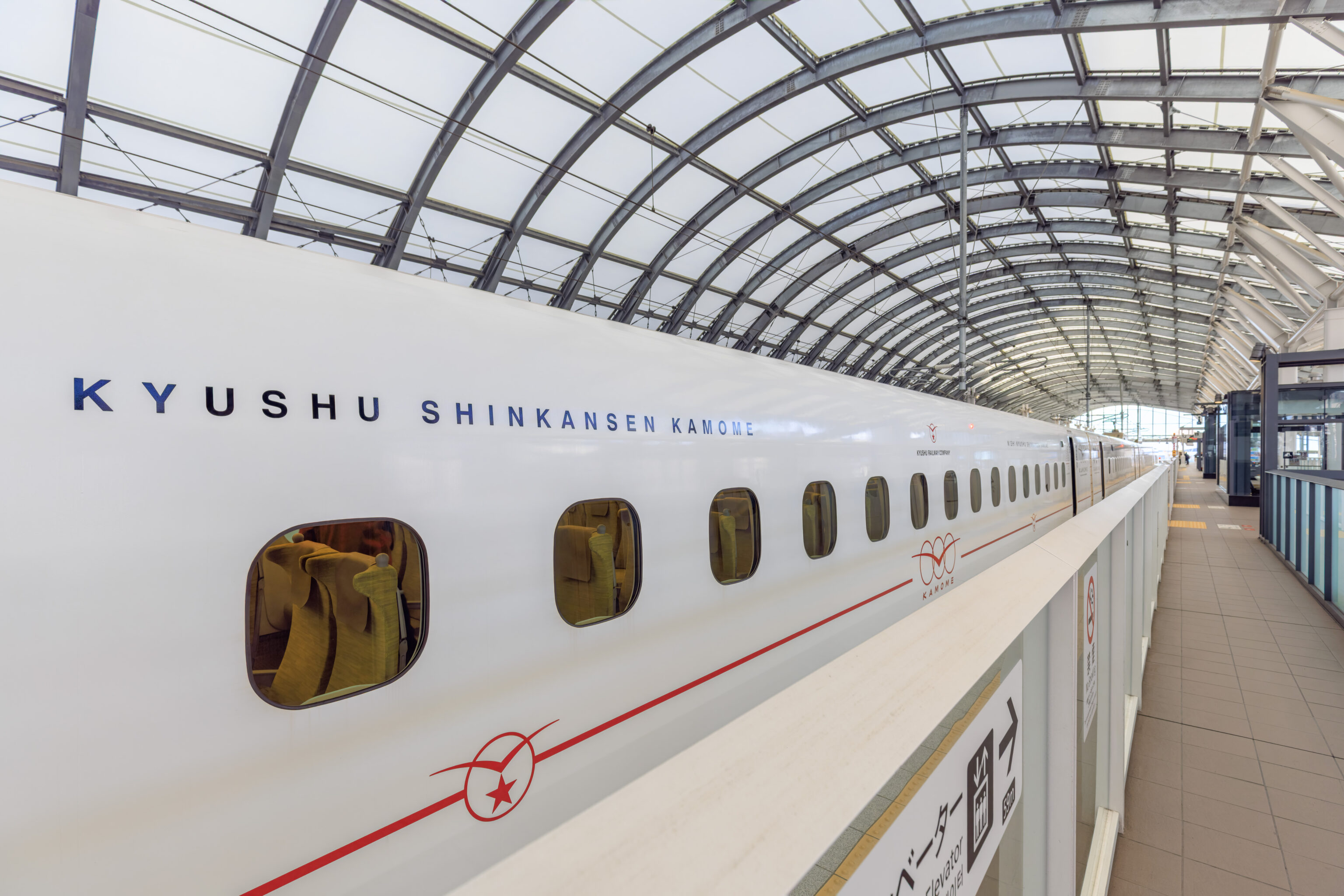
The Nishi Kyushu Shinkansen features very prominent Kamome branding.
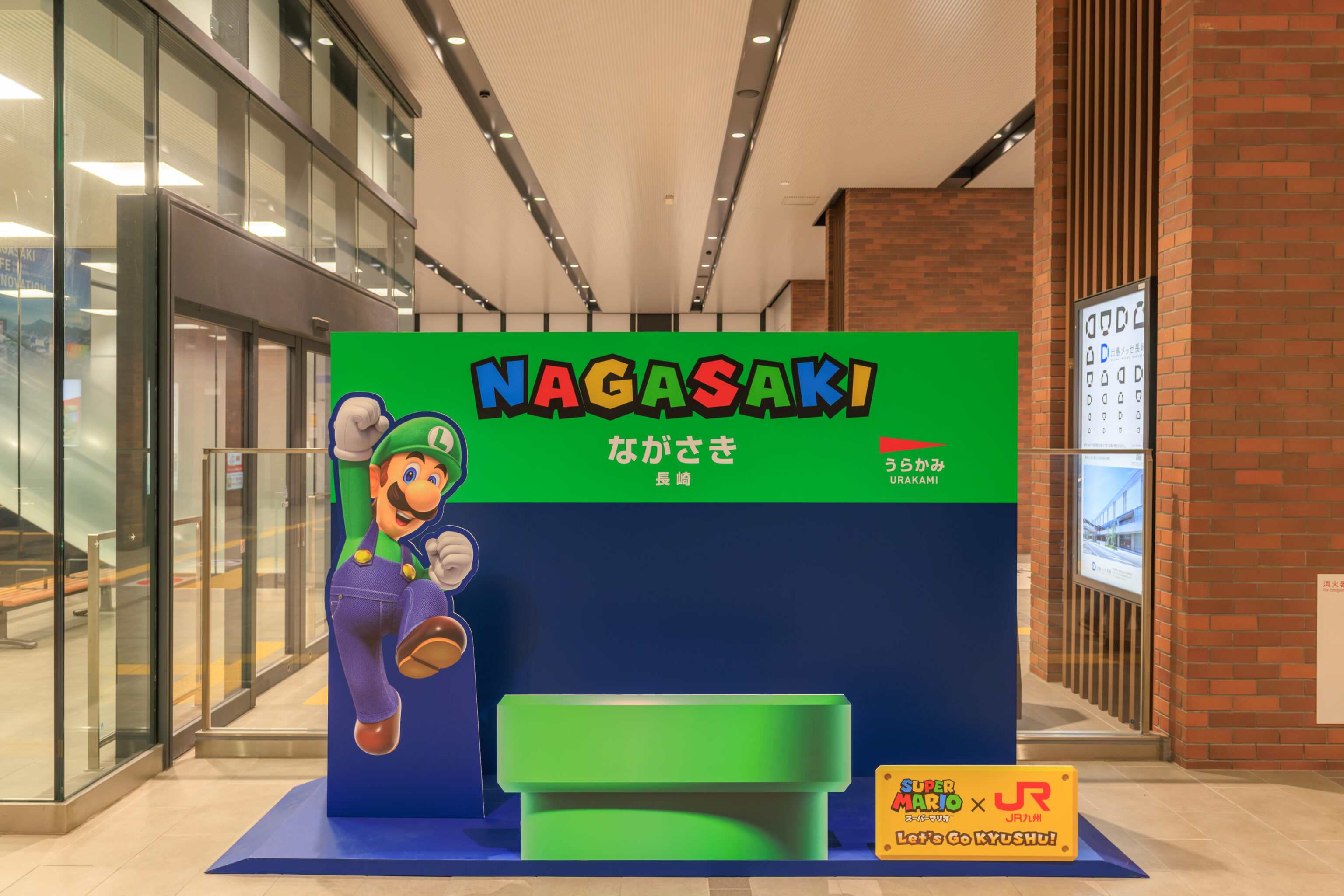
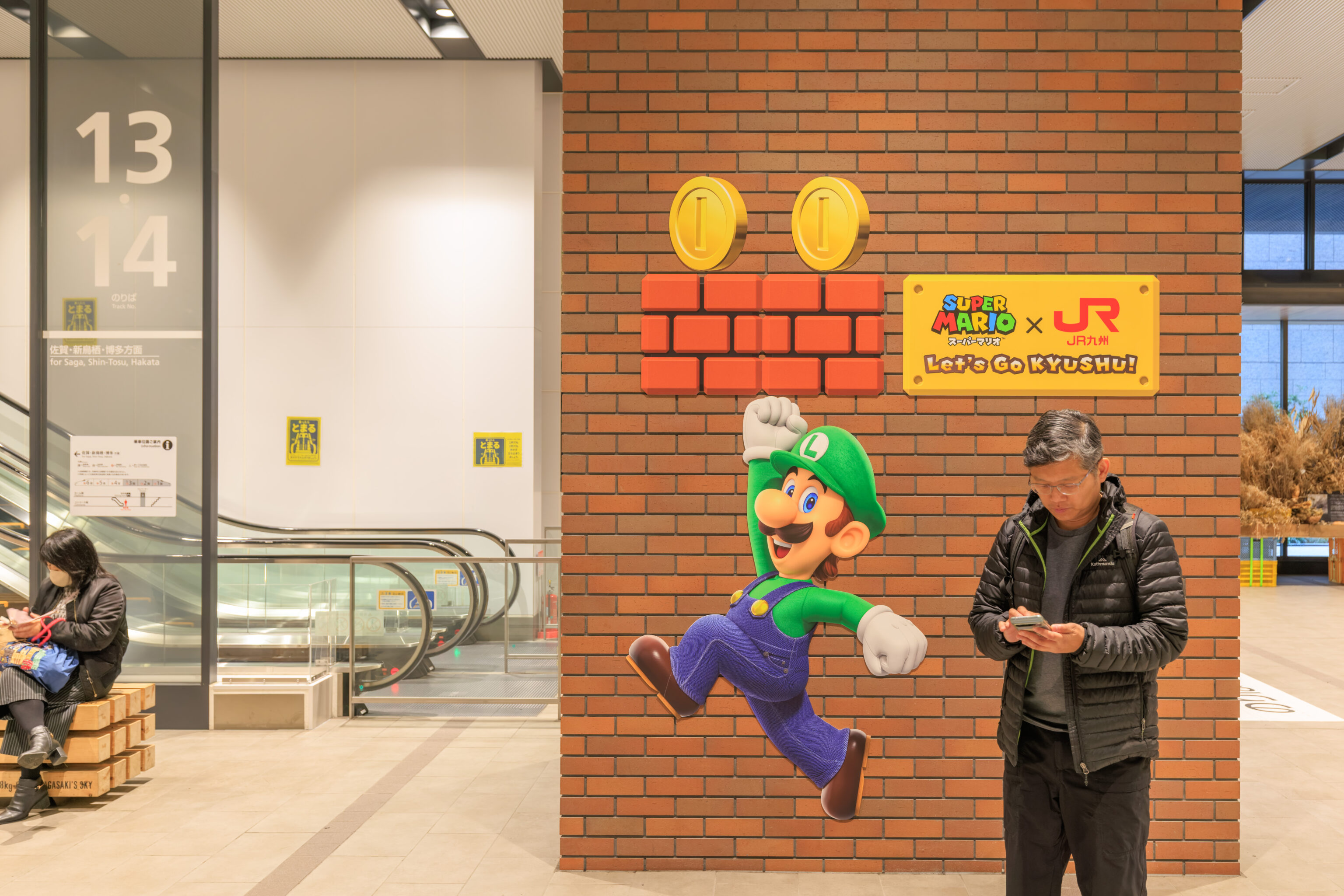
Nagasaki Station features Luigi!
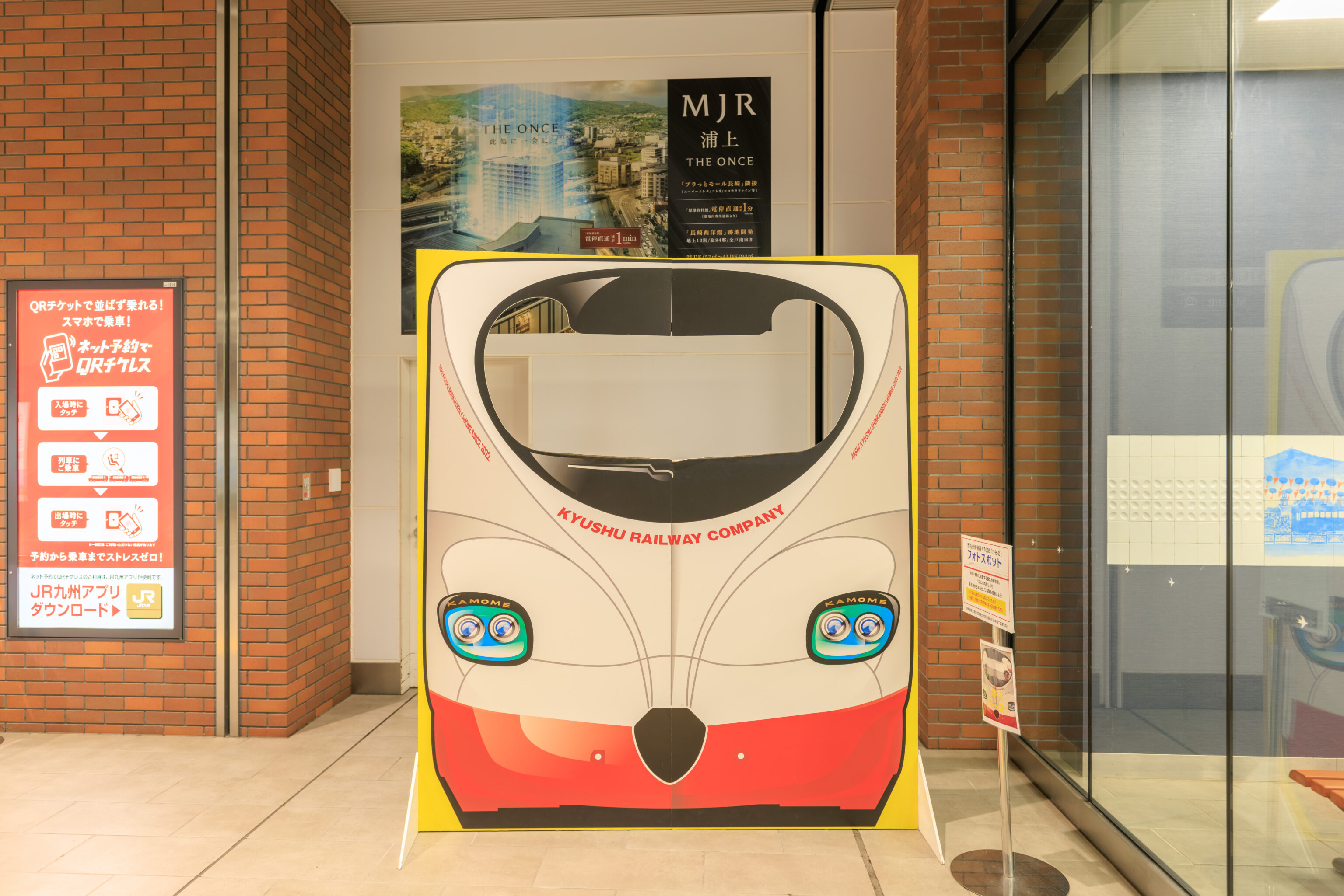
There was also a Kamome Shinkansen photo spot.
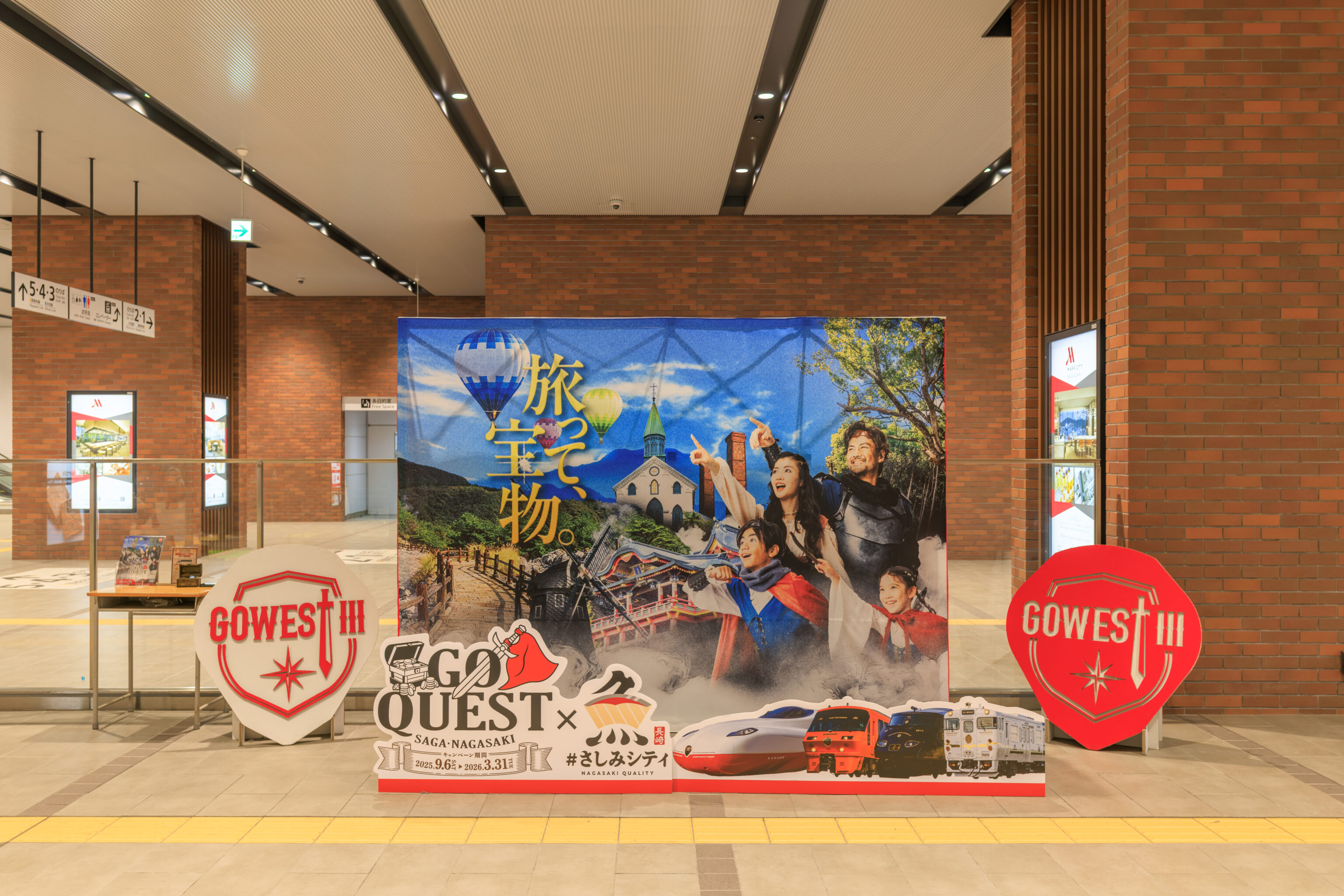
We saw a displace for the Saga and Nagasaki Prefectures’ Go Quest campaign. We actually came across this a few days ago at Beppu Station!

We found the entrance to the Nagasaki Marriott, which was in a building right next to the station. Our room was not ready yet so we left our bags and continued on.
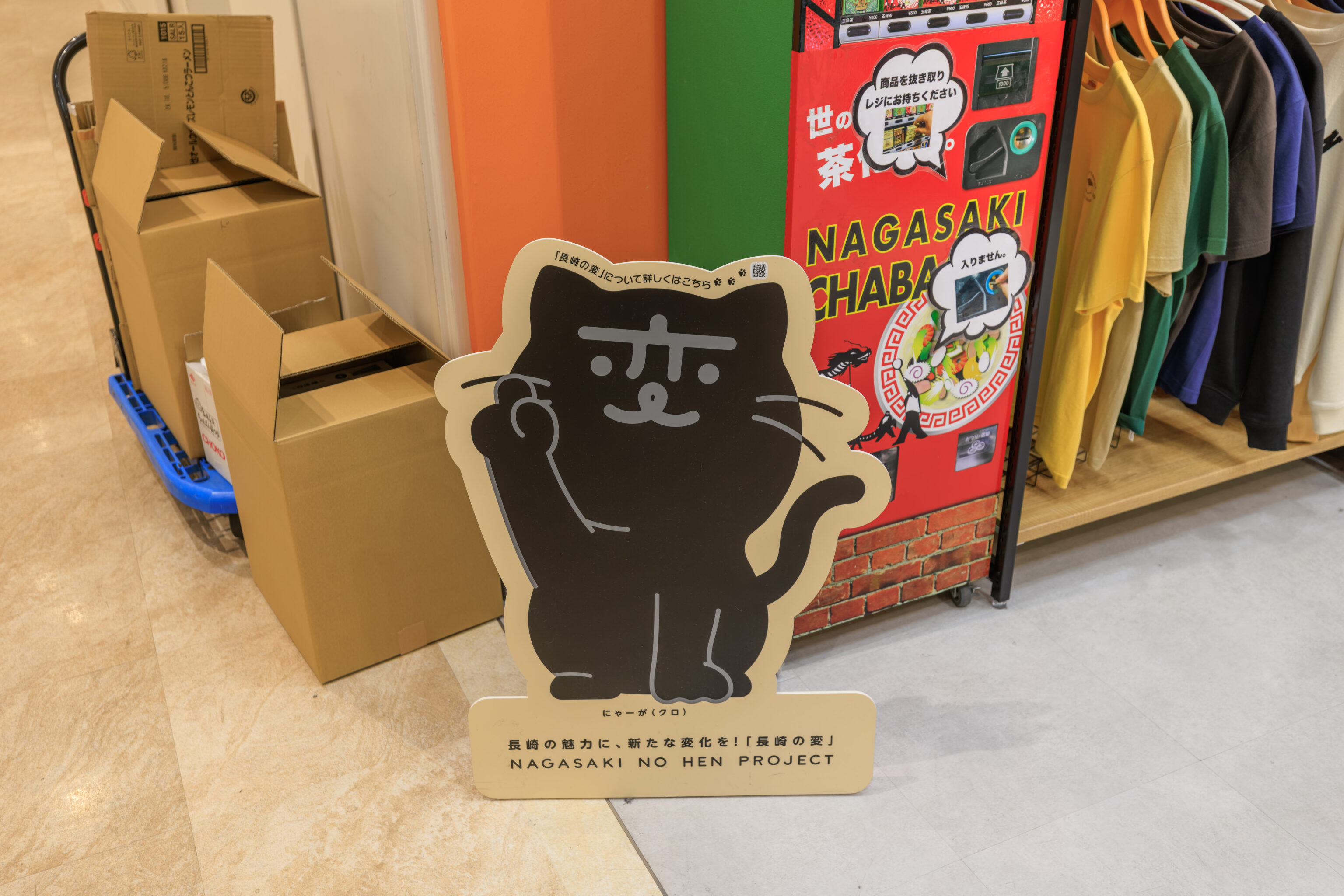
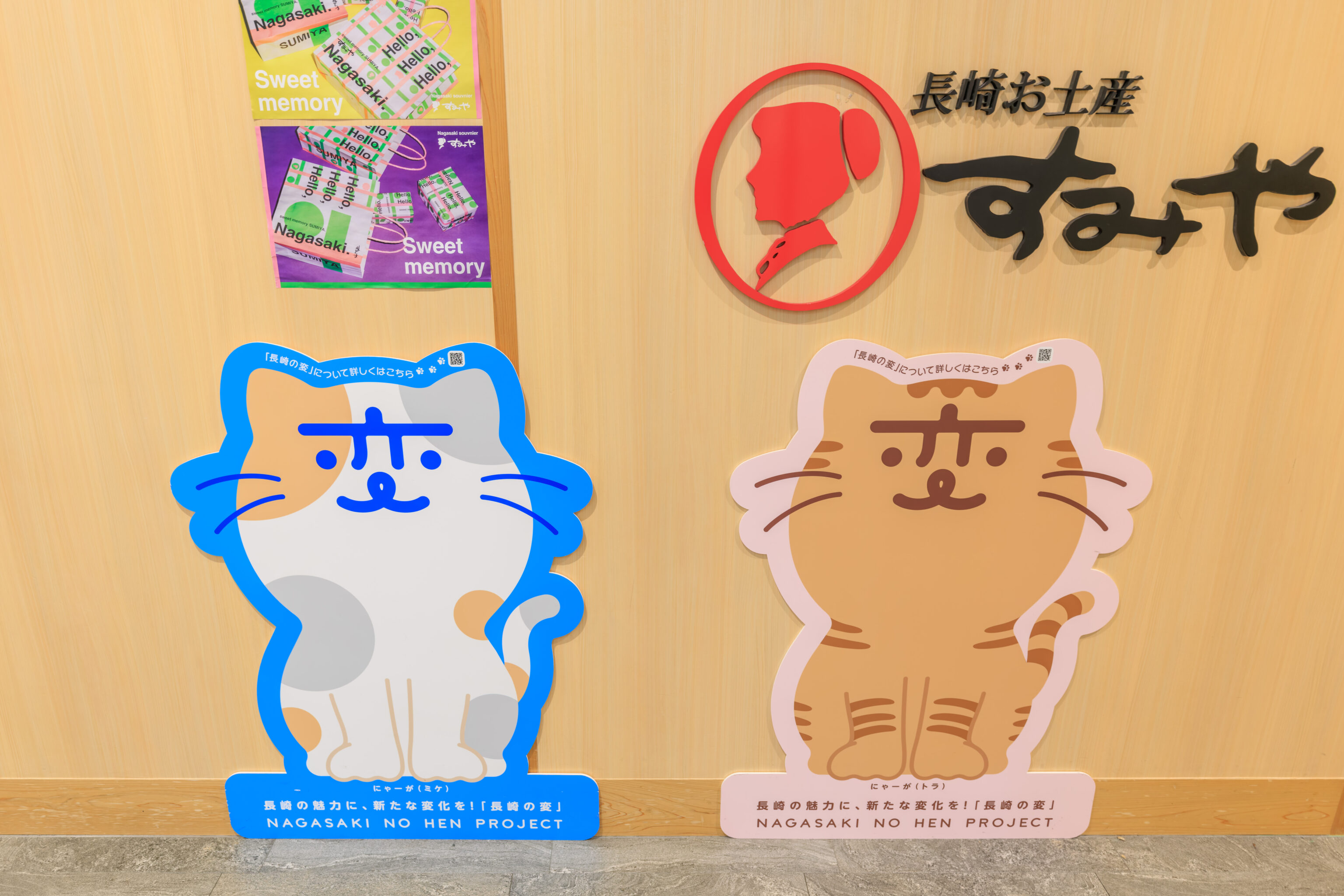
While walking around the station, we came across the cat mascot for 長崎の変 Nagasaki No Hen. This appears to be a new mascot for Nagasaki named にゃーが Nya-ga.
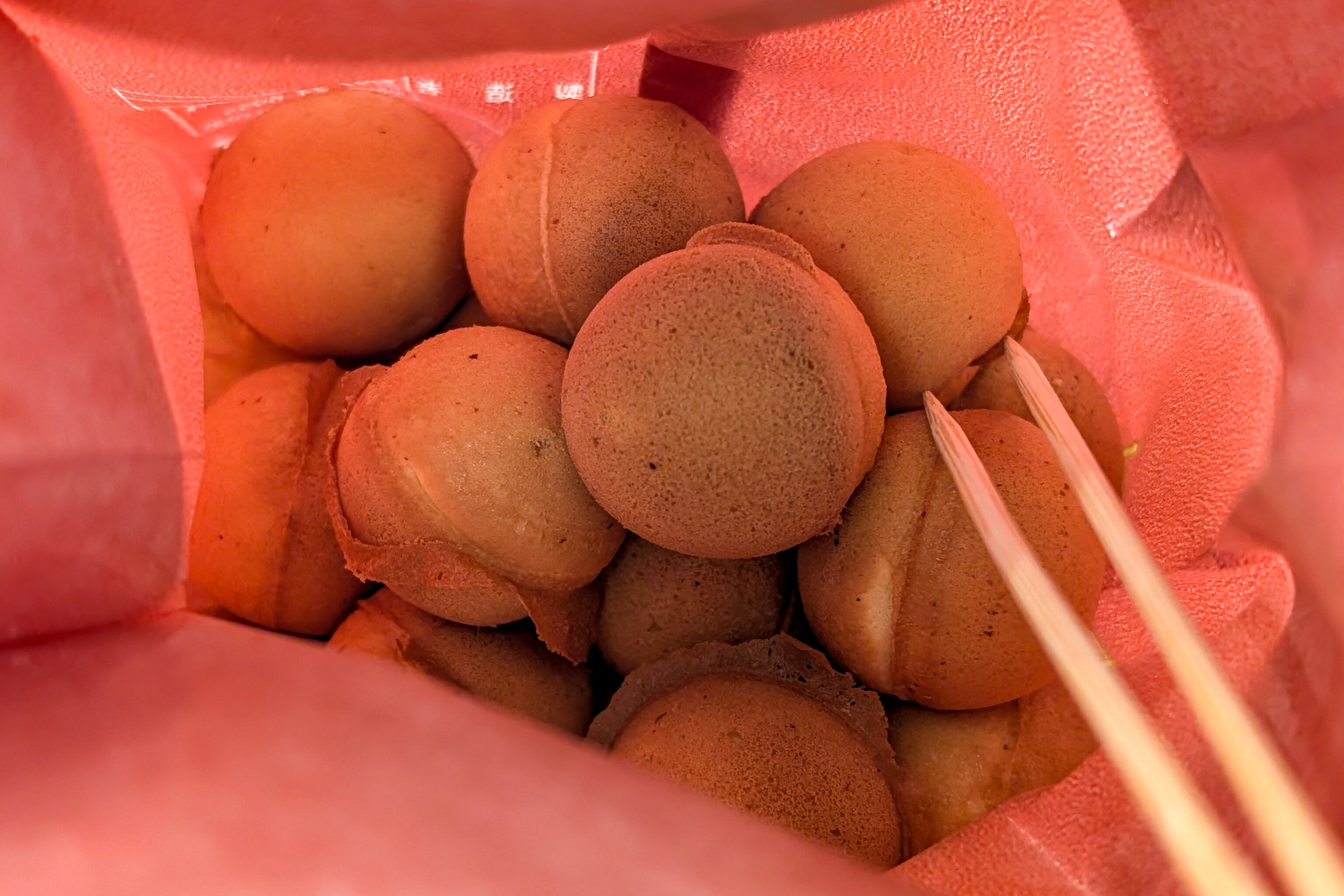
We got 20 fresh baby castella from a pop-up store in the station. They’re particularly nice when still hot!
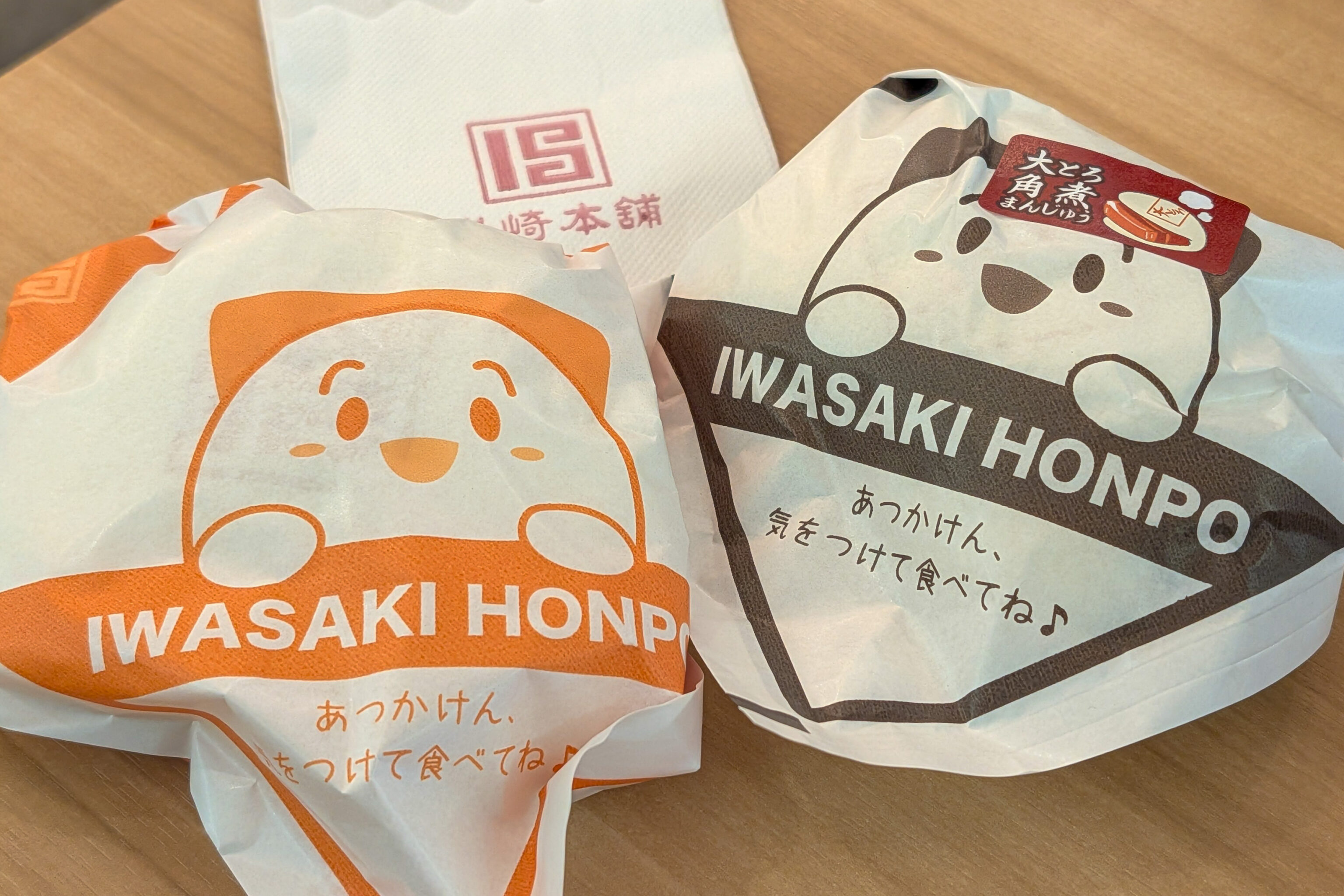
We also got two kakuni manju, or pork belly bao, from 岩崎本舖 Iwasaki Honpo. There were two different kinds, one fattier and softer than the other. Both were excellent.
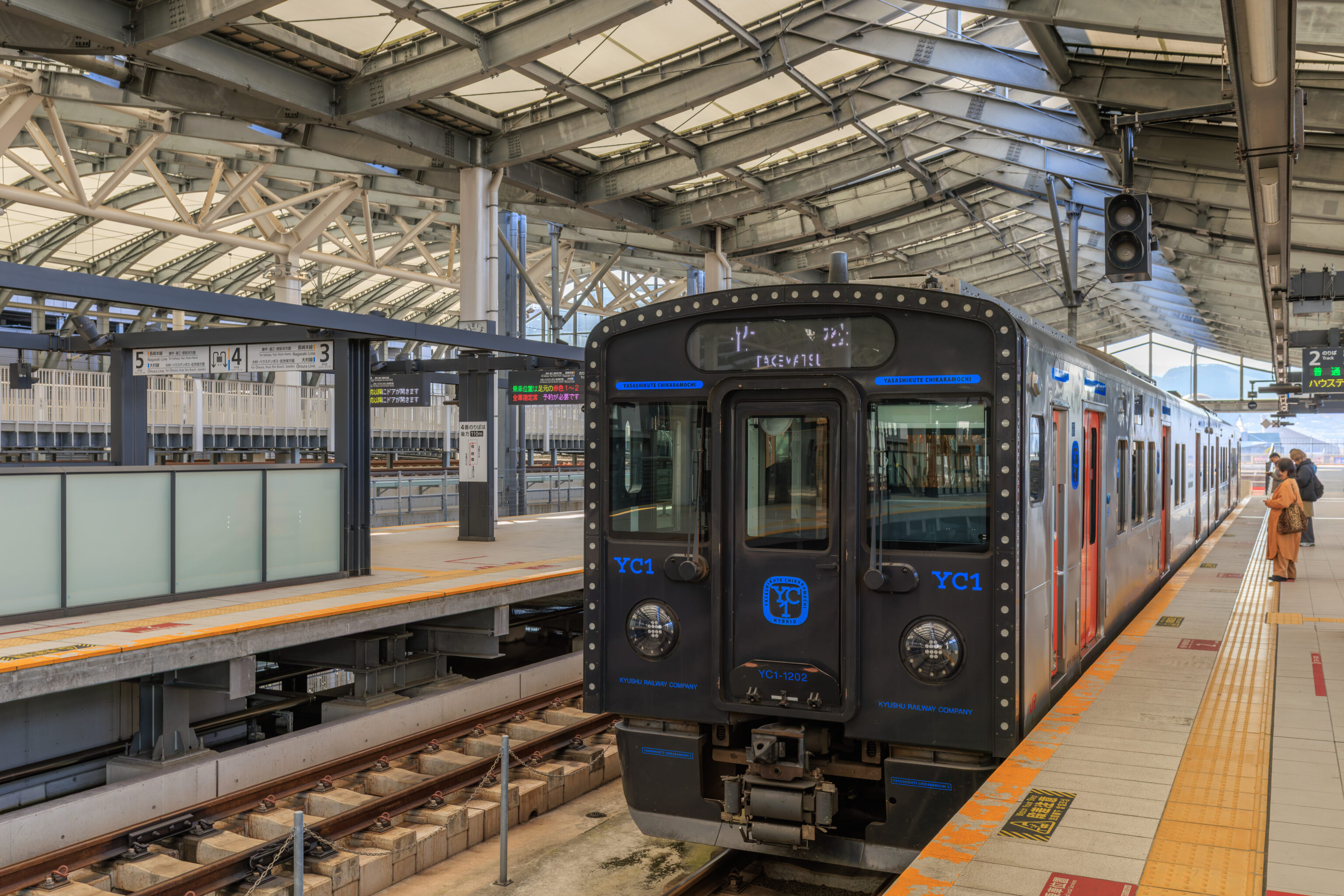
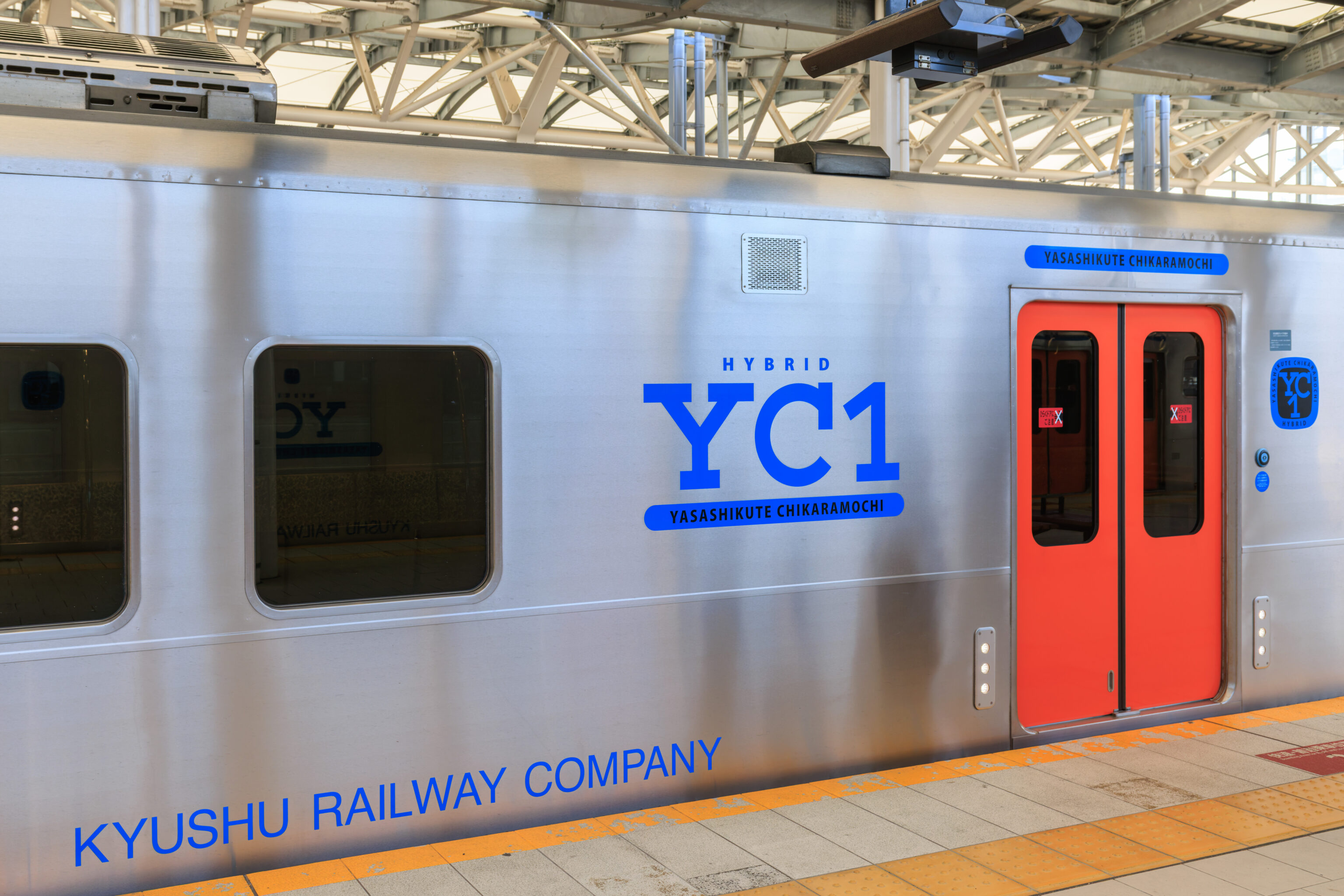
After our snack, we found the entrance to the conventional railway and boarded a local train that was departing soon. The hybrid designation on this train refers to it being a diesel electric with regenerative braking.
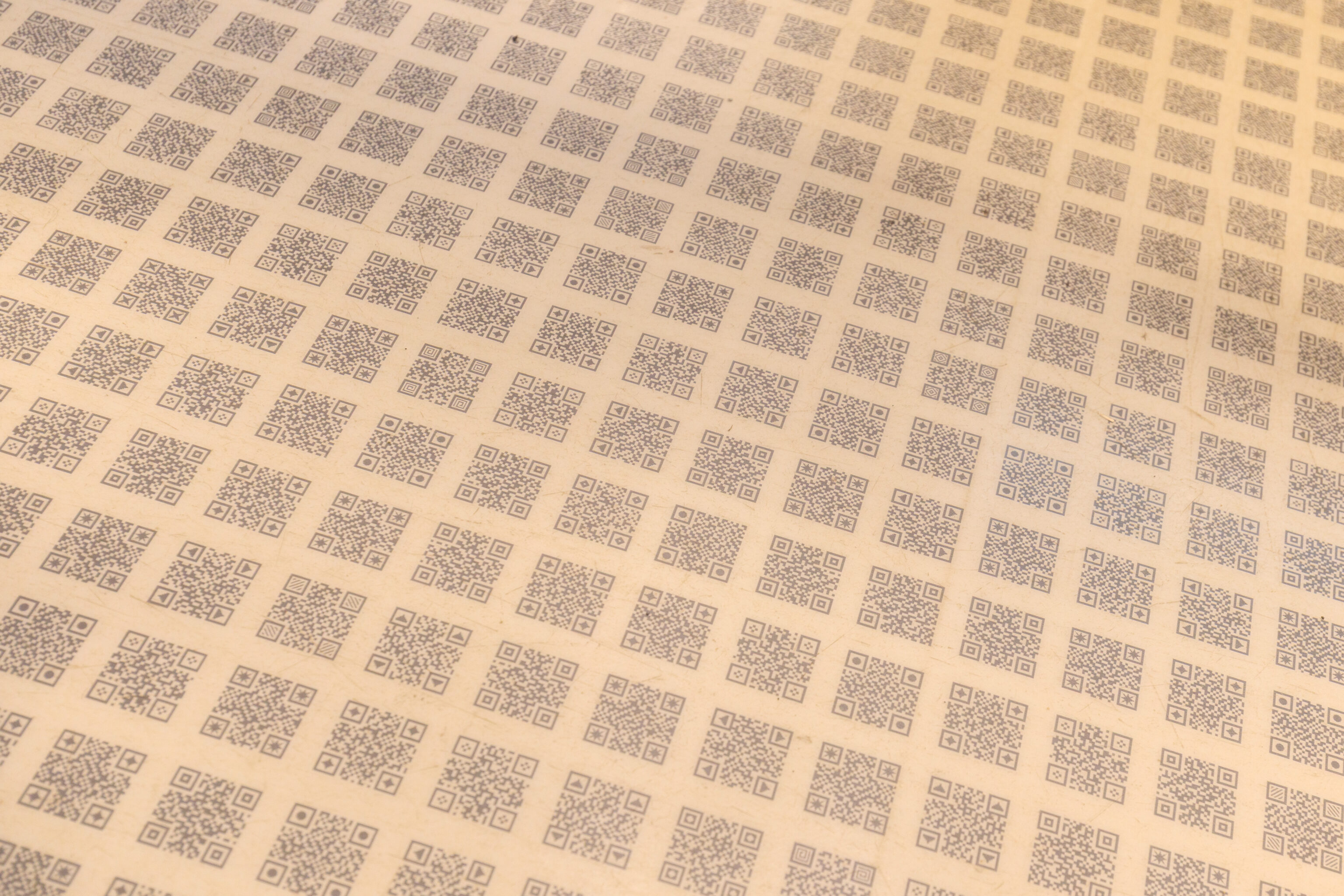
The interior of this train featured a QR code-like designs on the floor, similar to the train that we took in Fukuoka from 海ノ中道 Umi no Nakamichi to 香椎 Kashii. And like that train, the patterns on the floor aren’t recognized by QR code scanners.
Sanno-jinja
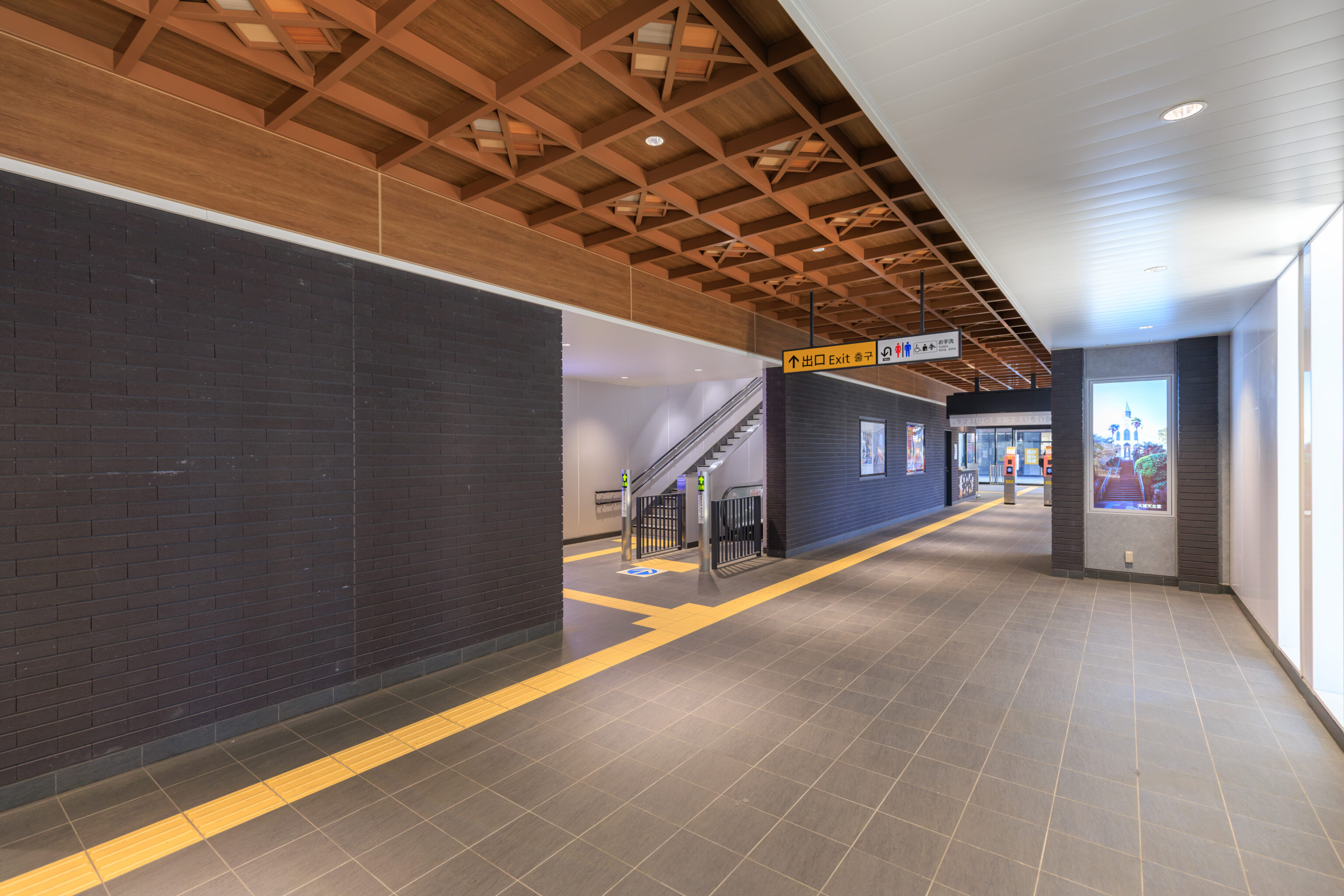
We took the train just one stop to 浦上 Urakami. We could have also taken the tram or a bus but we took JR as it is currently free for us due to having a JR Kyushu rail pass.
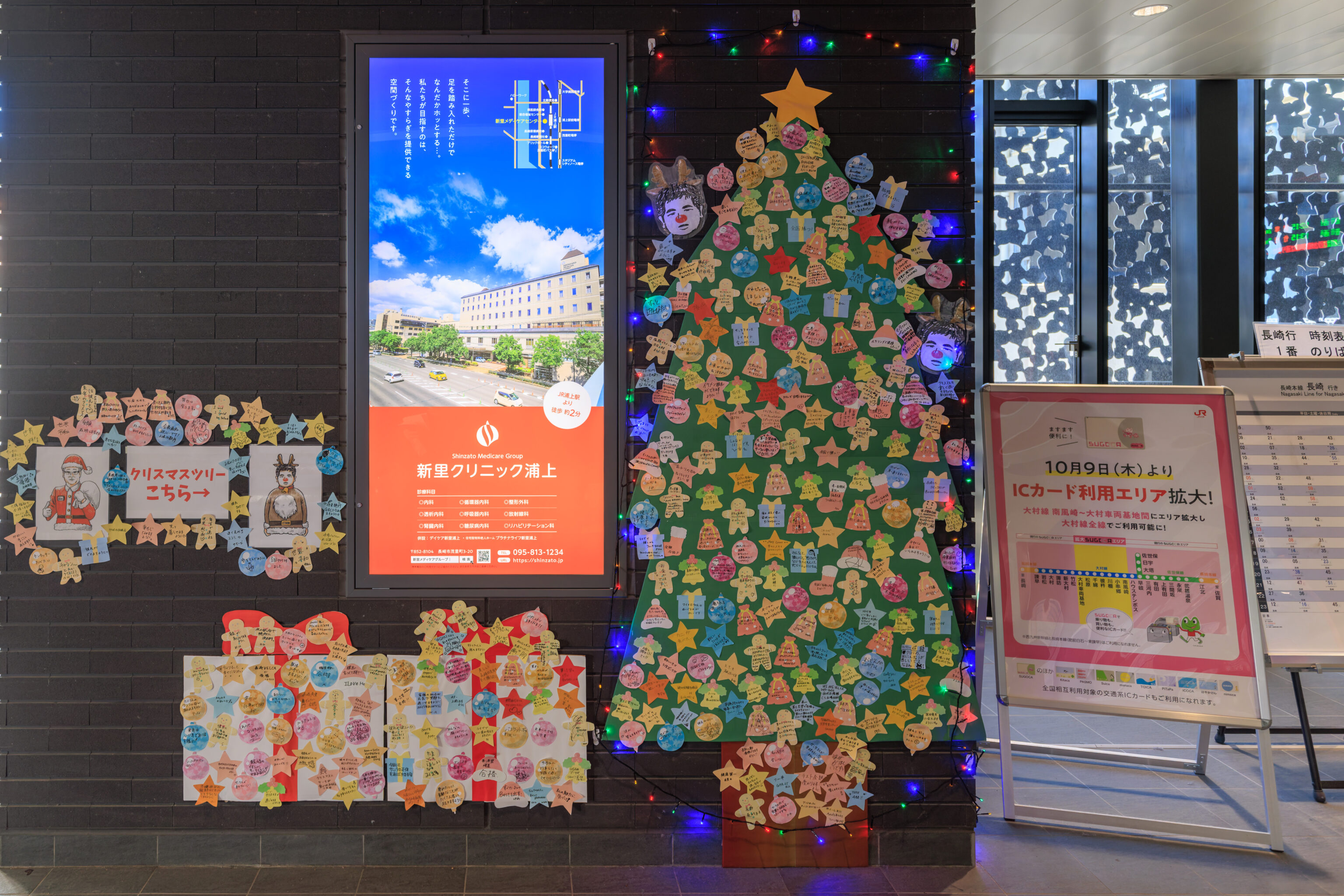
It seems that you can write messages and stick them on the wall here for the Christmas holiday.
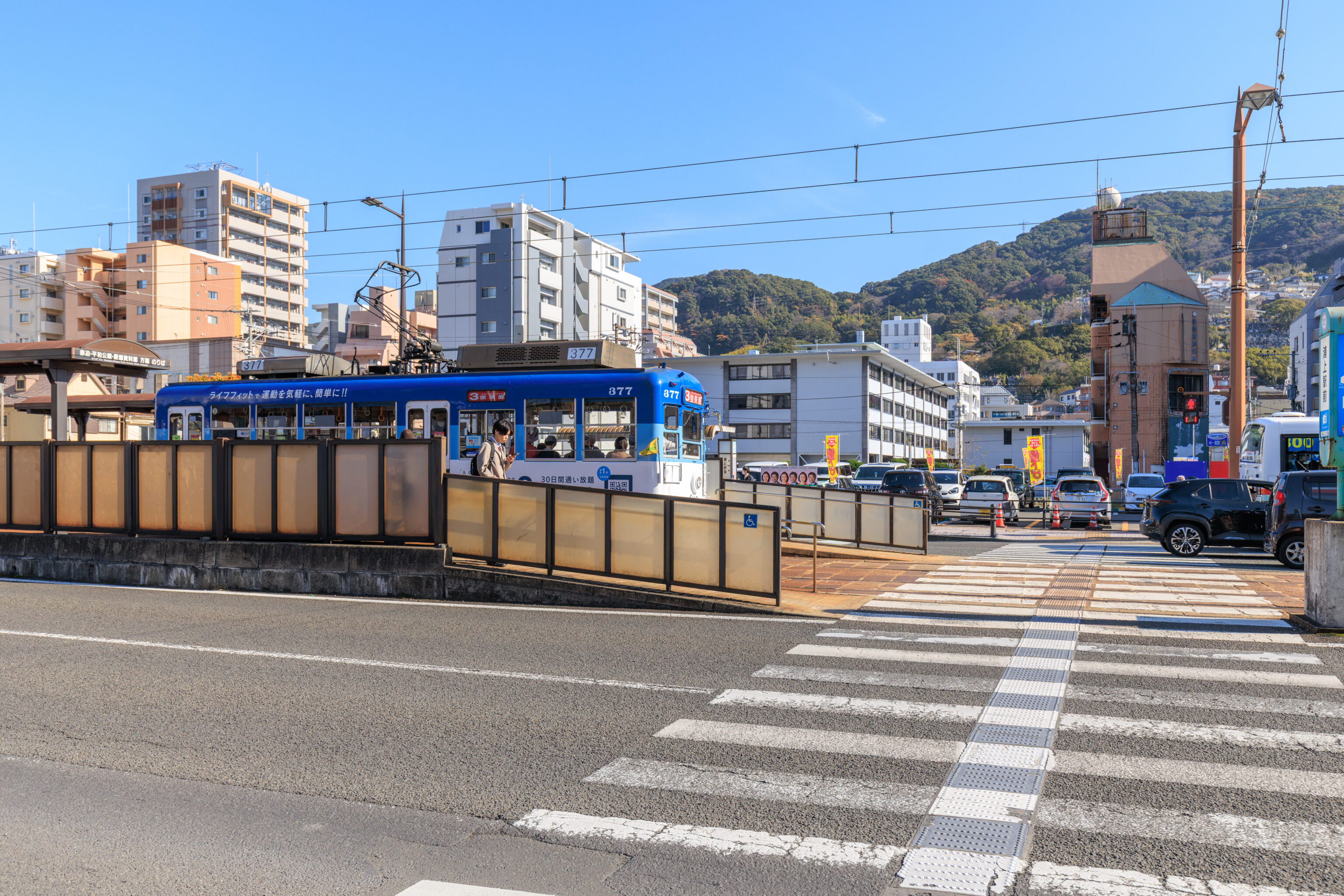
We came here to visit the 山王神社 Sanno-jinja (Mountain King Shrine), a Shinto shrine which is to the northeast of the train station. The road just to the east of the station carries two of the city’s tram lines.
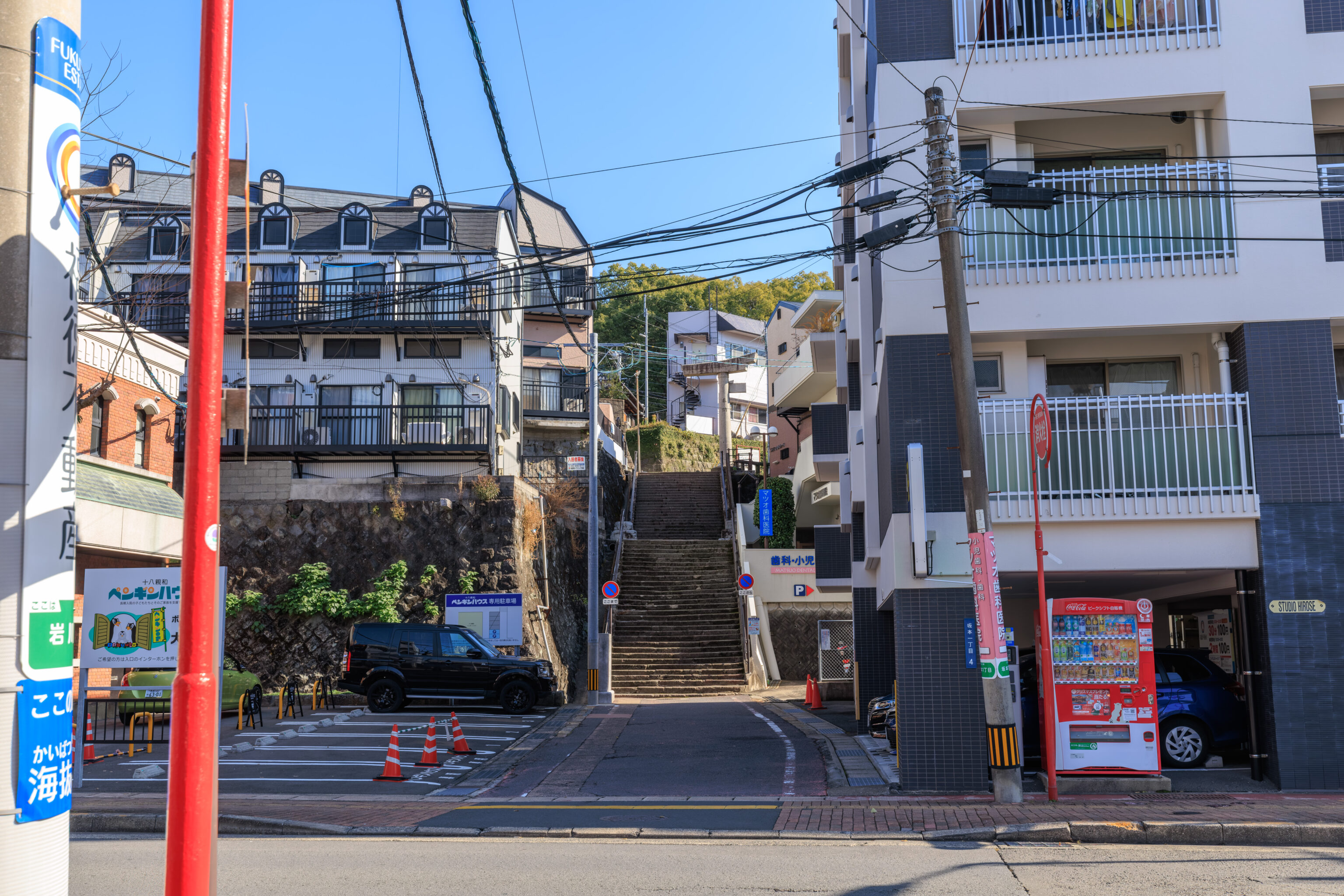
After walking for about ten minutes, we came to stairs that led up a hill to the east.
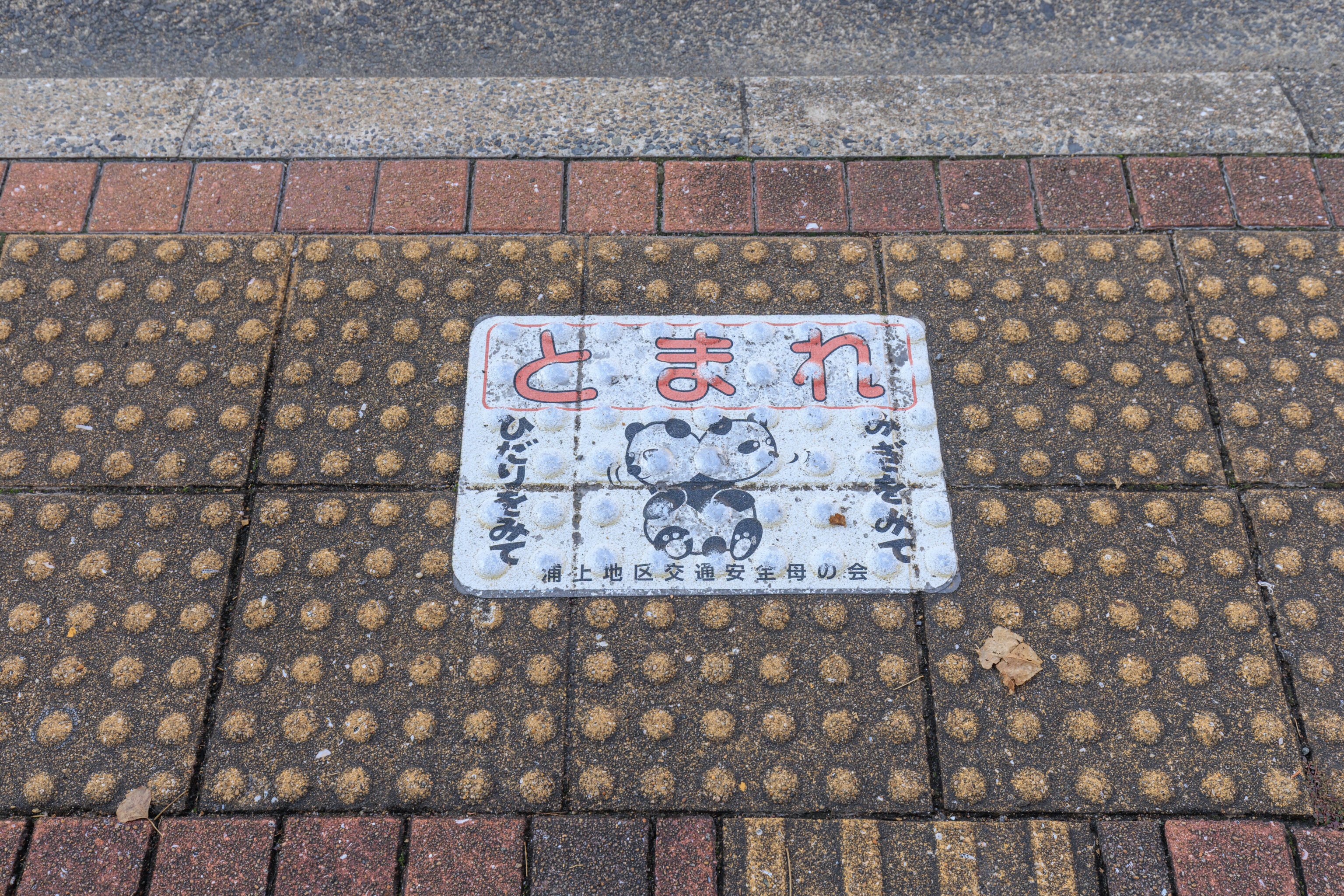
These placards on the ground are reminders to stop and look both ways before crossing.
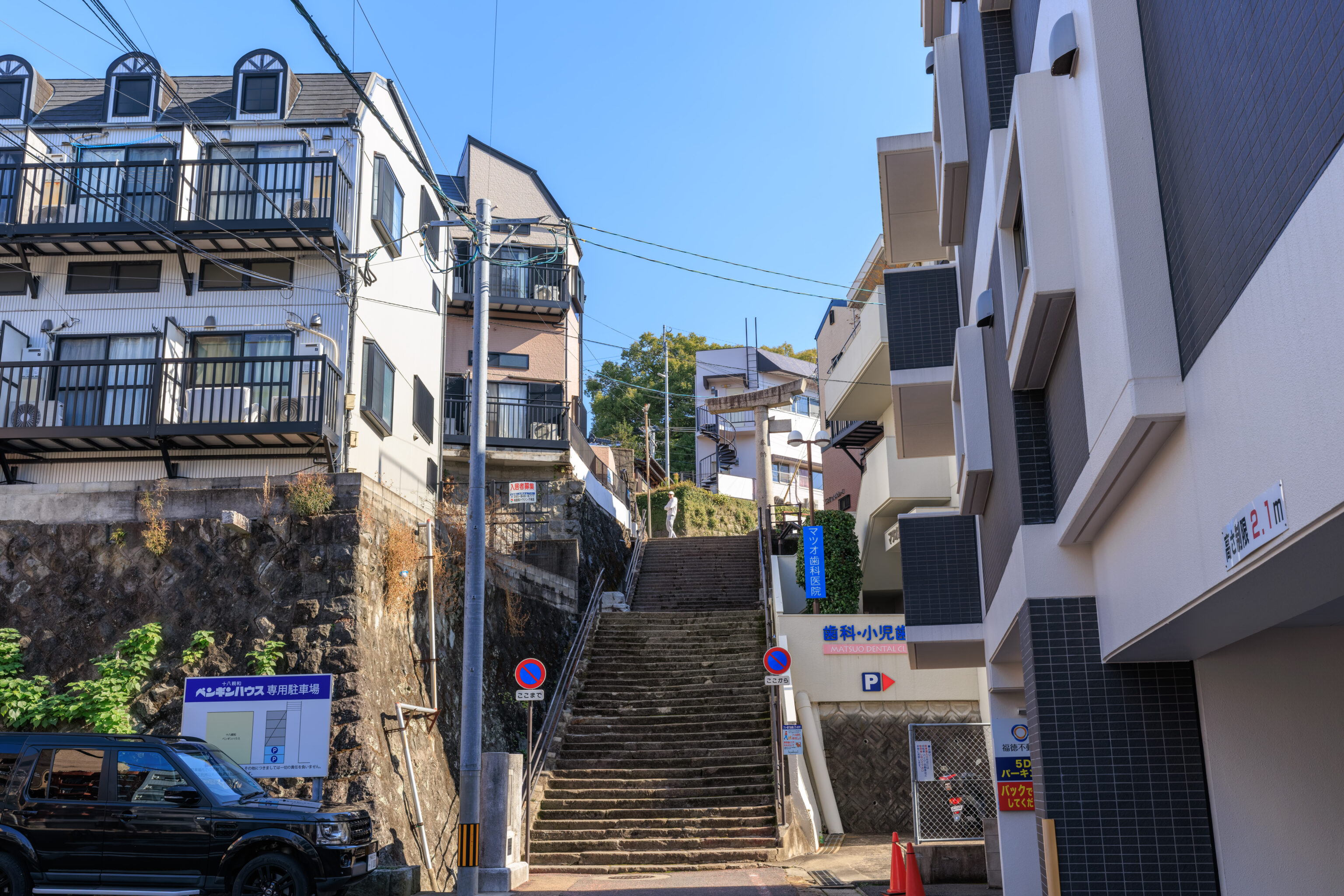
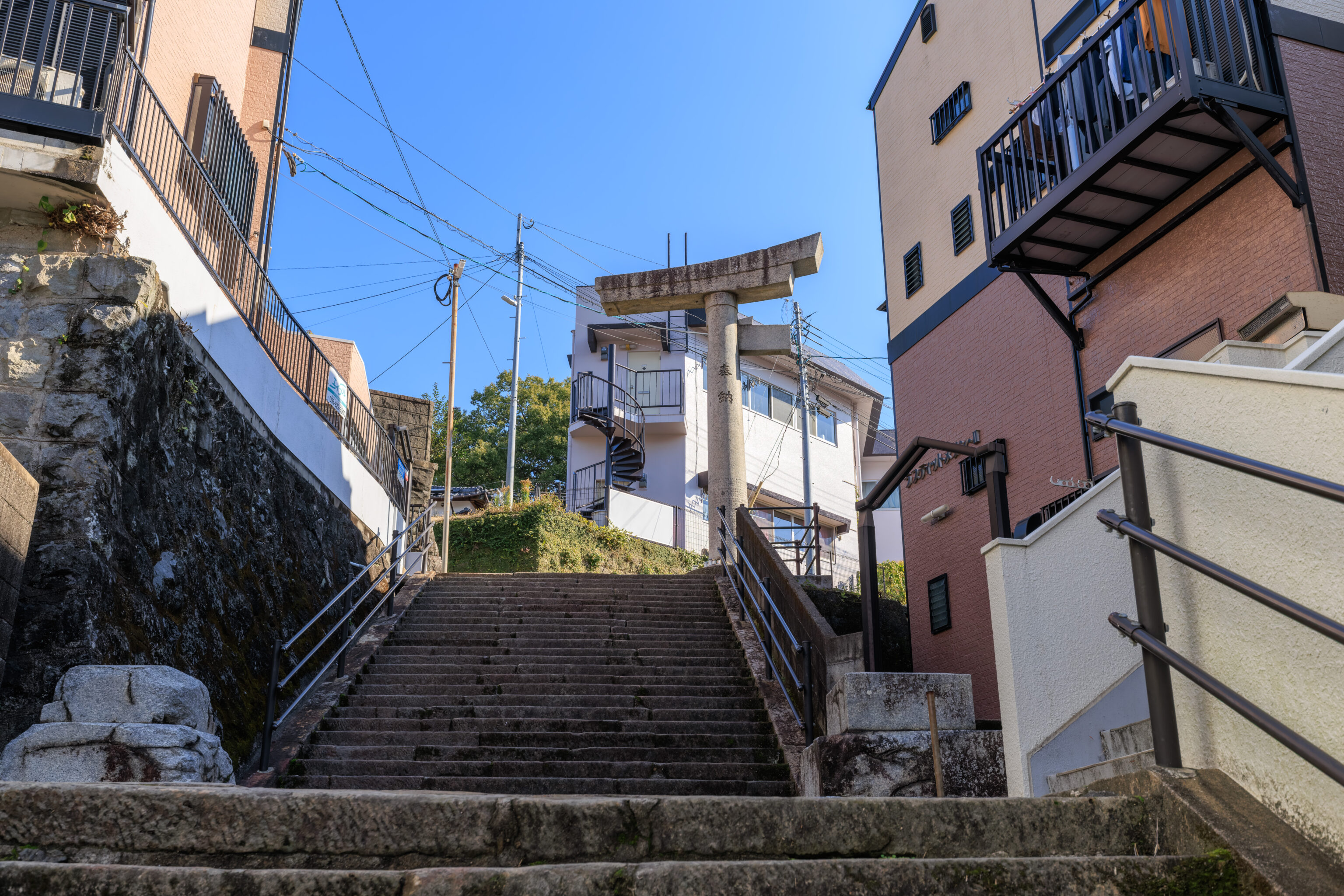
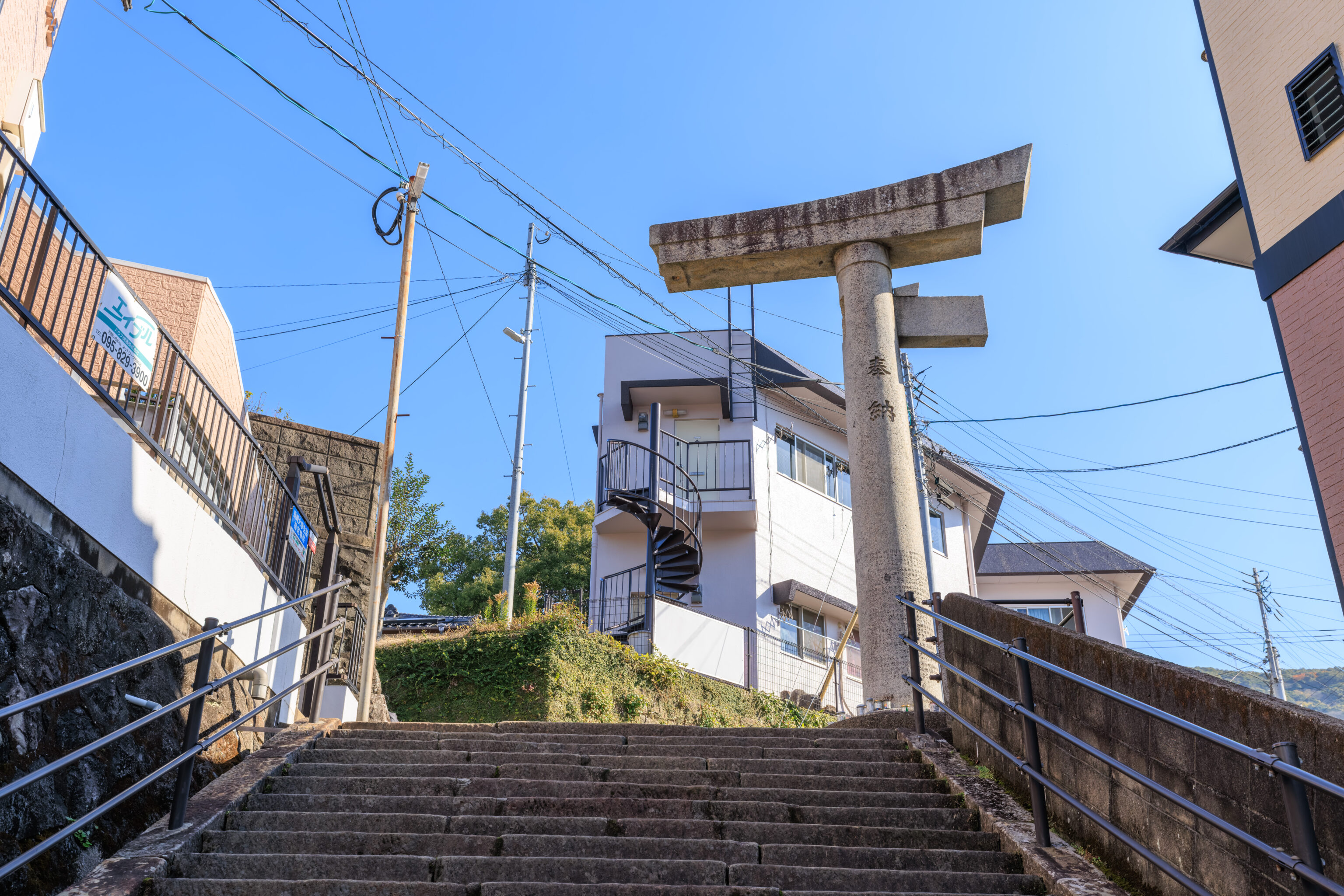
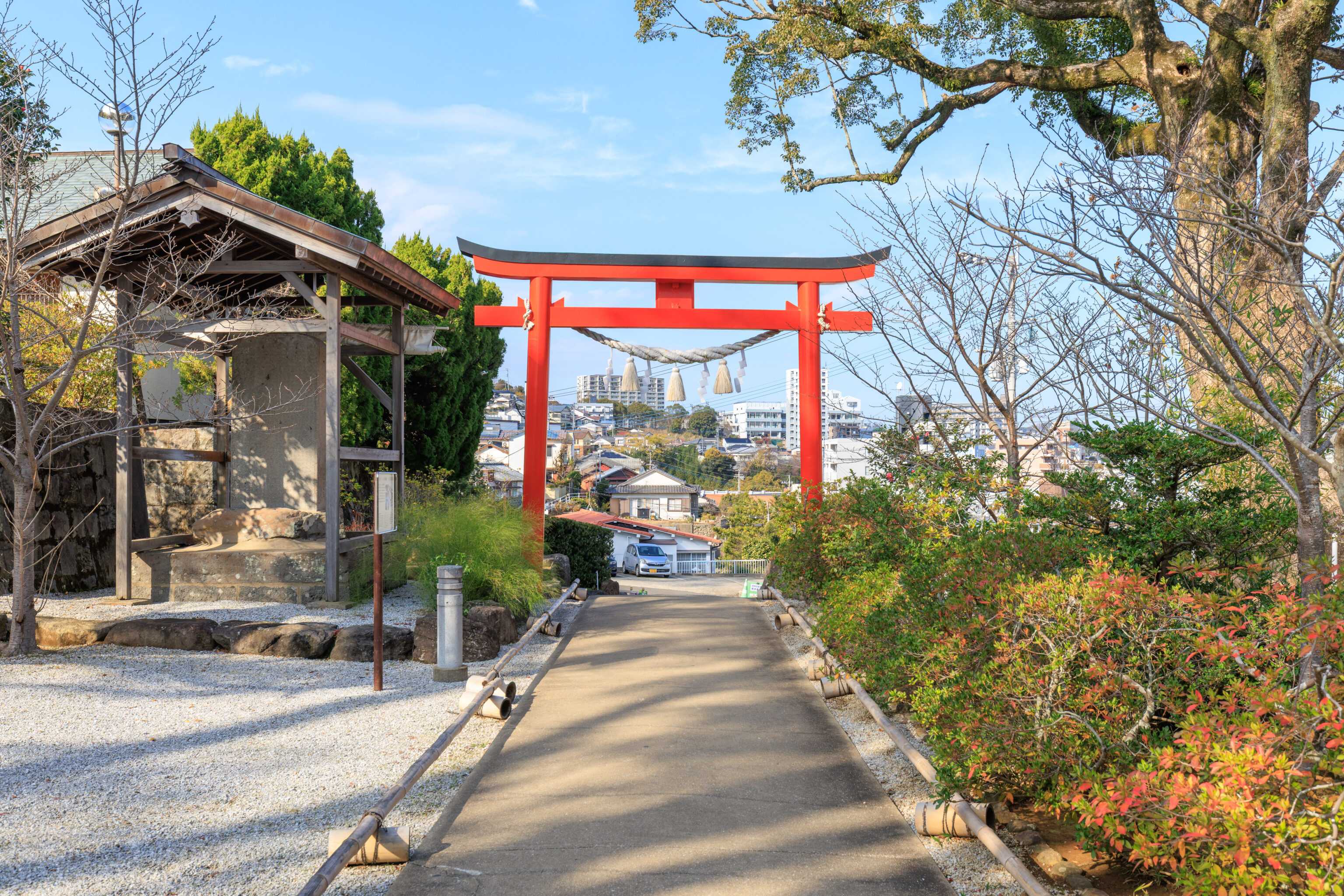
A one legged torii was at the top of the stairs. This torii marked the entrance to the Sanno-jinja. The missing portion was destroyed during the atomic bombing of Nagasaki right before the end of World War II.
Atomic Bomb-Damaged Torii Arch at Sanno Shinto Shrine
This arch was built in October 1924 as the second torii arch at Sanno Shinto Shrine. The explosion of the atomic bomb at 11:02 a.m., August 9, 1945 slapped down one of the pillars. Located only 800 meters southeast of the hypocenter, the upper parts of the arches were scorched black by the fierce radiating heat, one of the pillars and its upper parts were destroyed by the blast, and the top part of the crossbeam shifted in the opposite direction as a result of the blast pressure.

An explosion of a single atomic bomb reduced the surrounding neighborhood to ashes and rubble, but this arch endured the biast and continues to this day to stand on only one pillar as though testifying to the atomic bomb devastation. The base of the pillar and its adjoining parts have been reinforced to ensure safety.

Nagasaki City installs this plaque as a prayer for the repose of the souls of the people who died here and to ensure that this tragedy is never repeated.

Merch 2001
Nagasaki Ciiv
(Atomic Bomb Museum)
– Text from a historical marker, translated using Google.
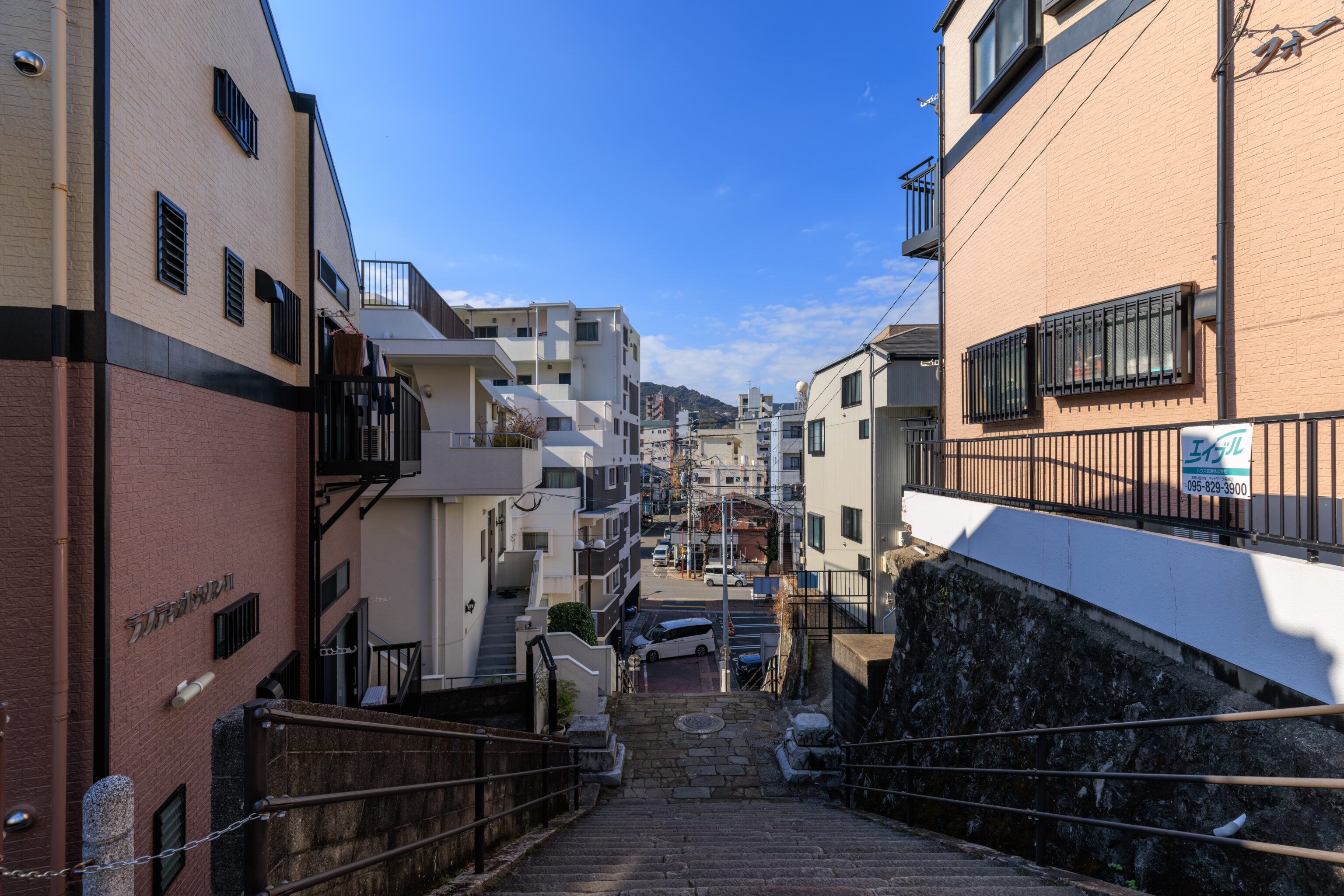
The view from the torii looking back towards the west where we came from.
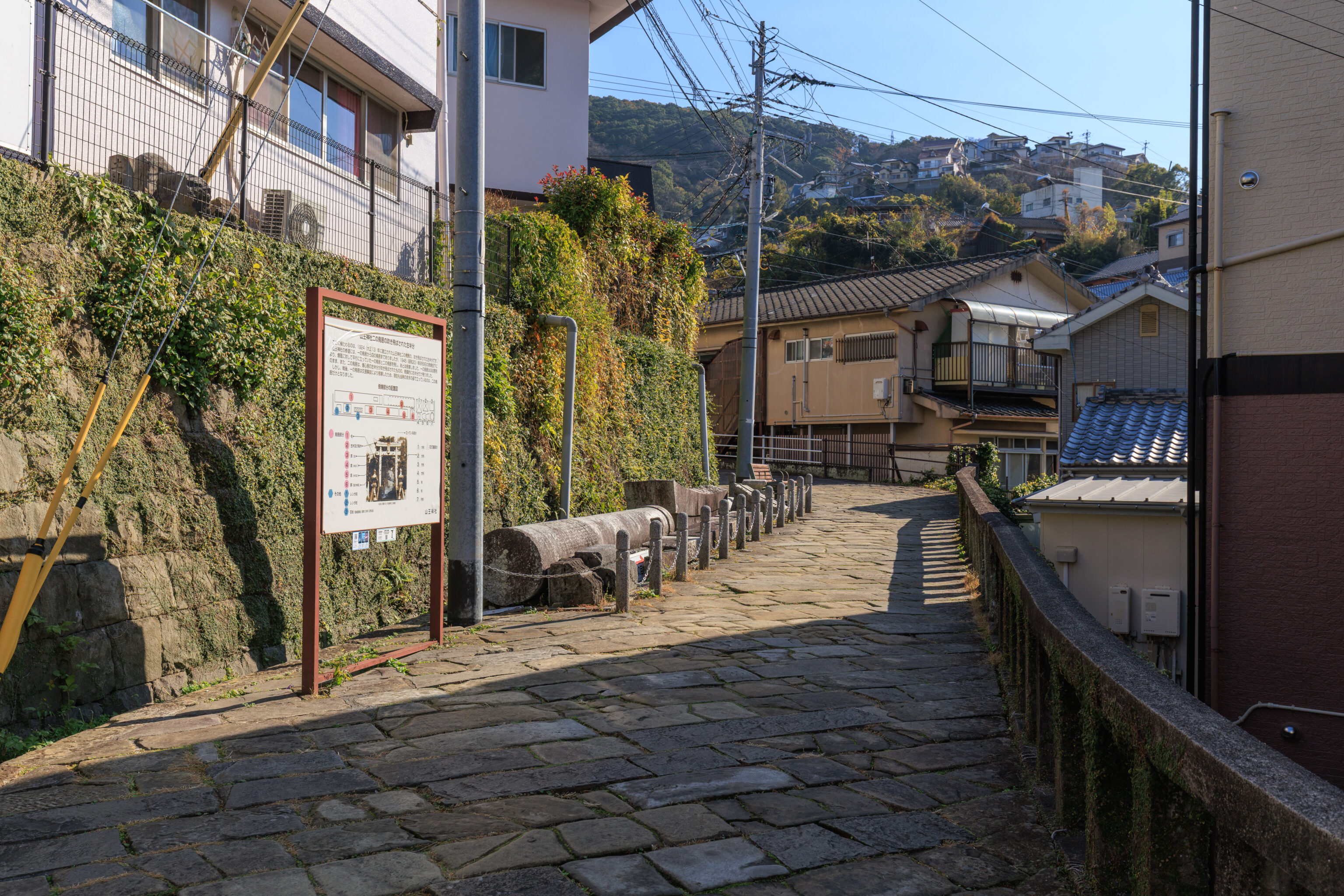
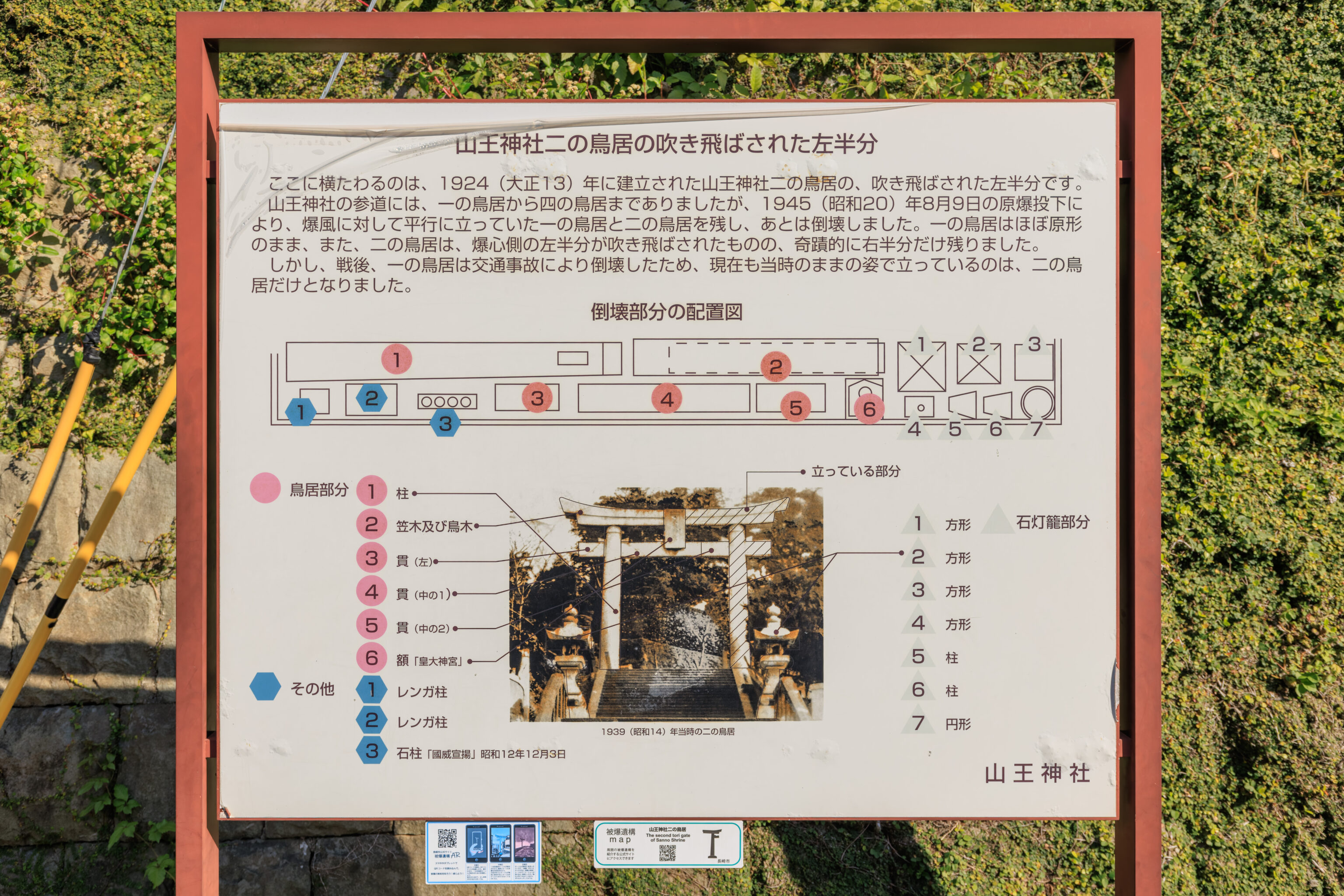
This sign shows how the torii appeared in 1939. The parts of the torii that are missing are actually on display here along the left side of the path.
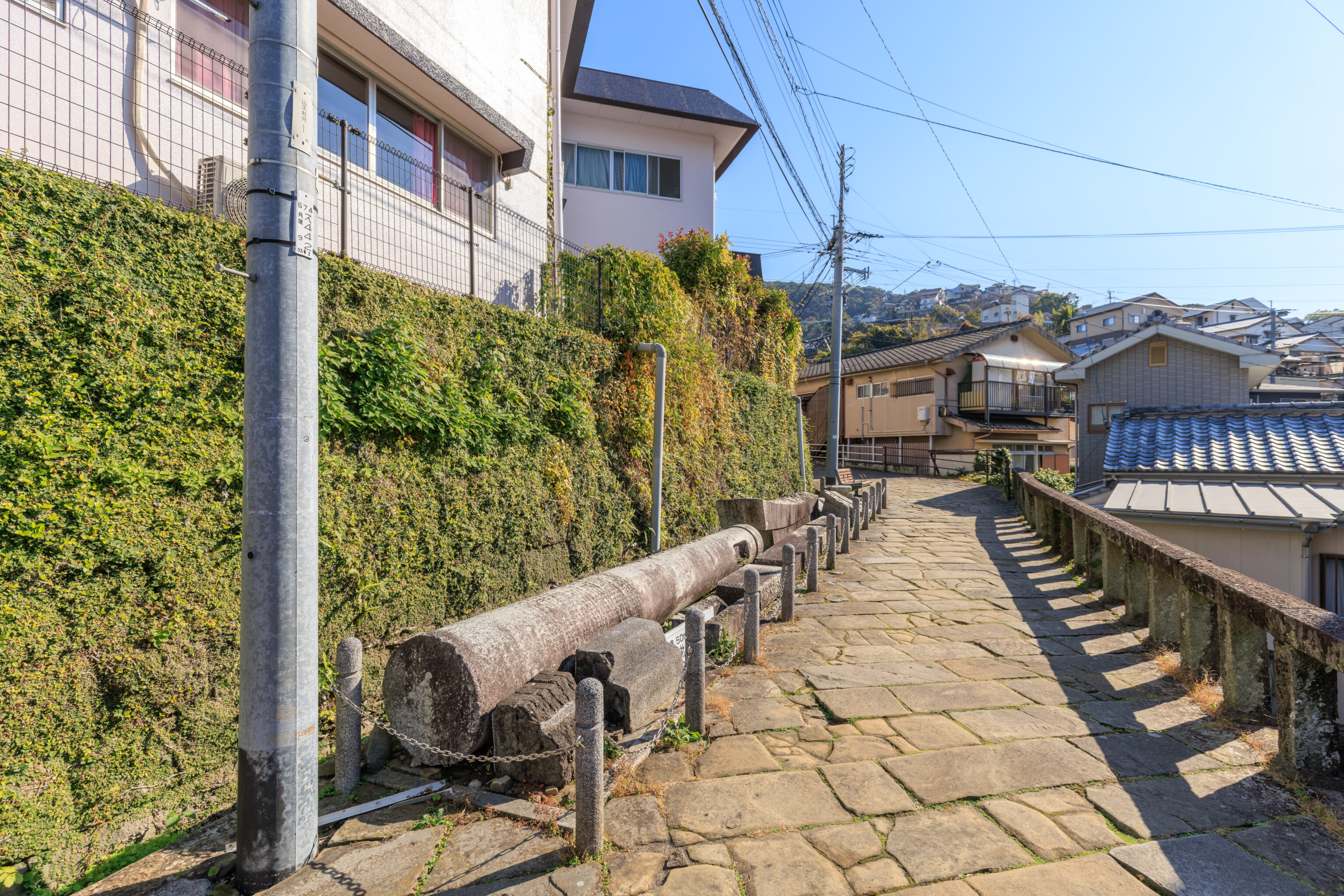
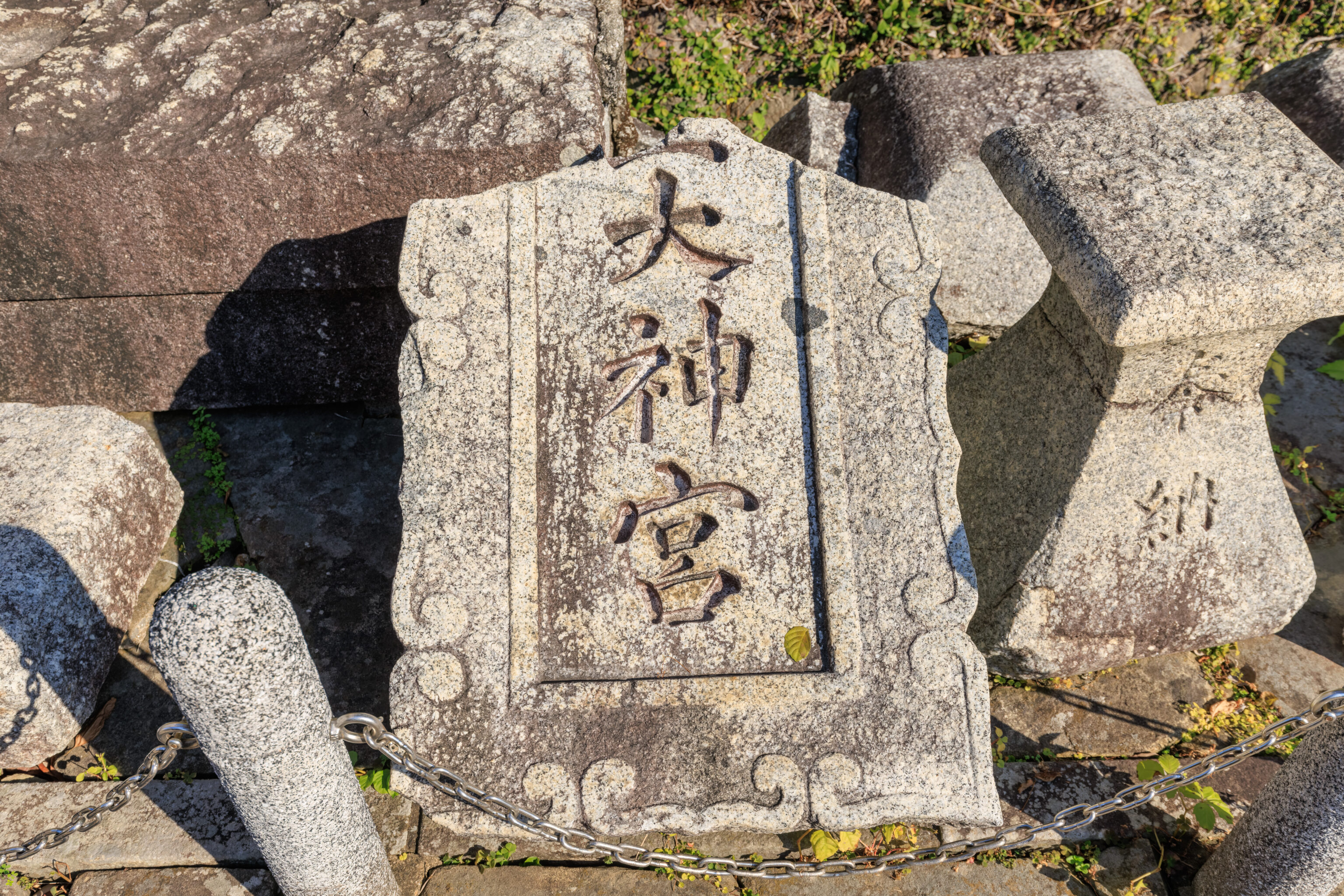
We walked by the torii parts on our way to the shrine.
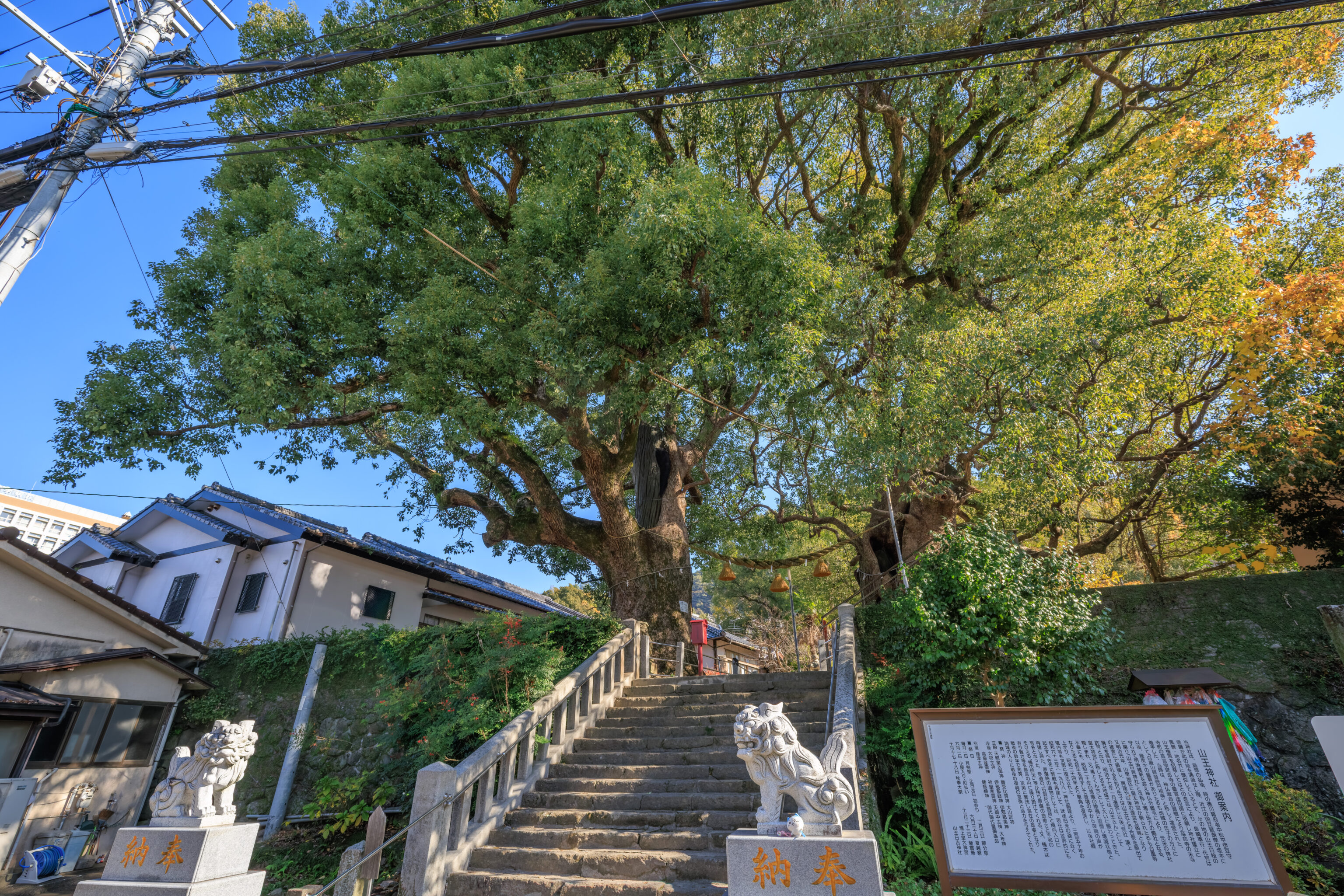
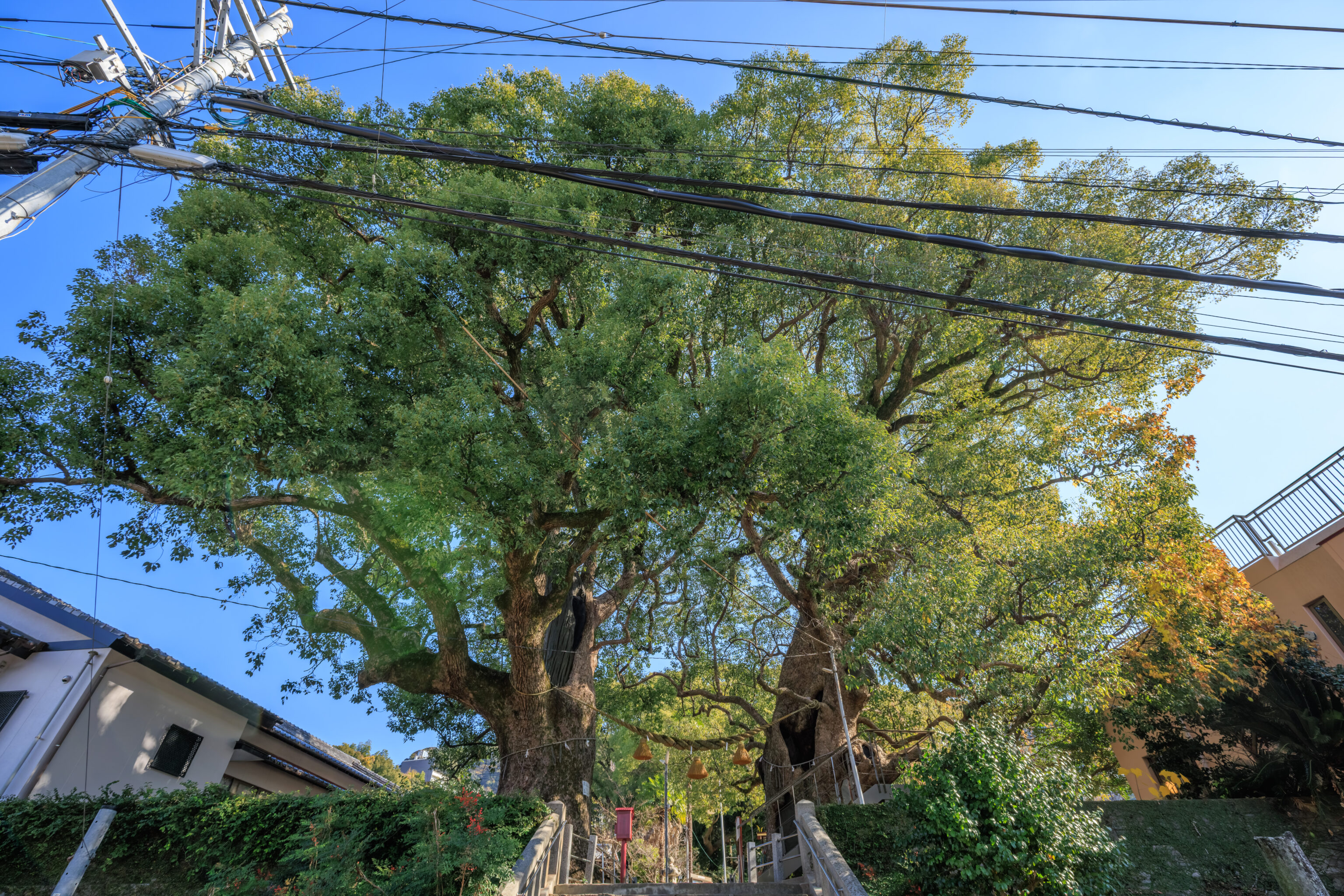
Sanno-jinja has two large camphor trees that survived the nuclear blast.
Camphor Trees in Sanno Shinto Shrine
These two huge camphor trees stand out among the trees surrounding Sanno Shinto Shrine, sinking deep roots on both sides of the entrance and creating a thick canopy of greenery with their tangle of branches.

The ferocious blast and heat generated by the explosion of the atomic bomb at 11:02 a.m., August 9, 1945 destroyed the buildings of the shrine, which were located only 800 meters southeast of the hypocenter, and slapped down one of the pillars of the second gate. These two trees were instantly stripped naked and split down the trunk by the blast and scorched black by the heat rays. Although considered dead at the time, they came back to life and are now natural monuments designated by Nagasaki City.

Nagasaki City installs this plaque as a prayer for the repose of the souls of the people who died here and to ensure that this tragedy is never repeated.

Nagasaki City
(International Culture Hall)
August 1995
– Text from a nearby plaque.
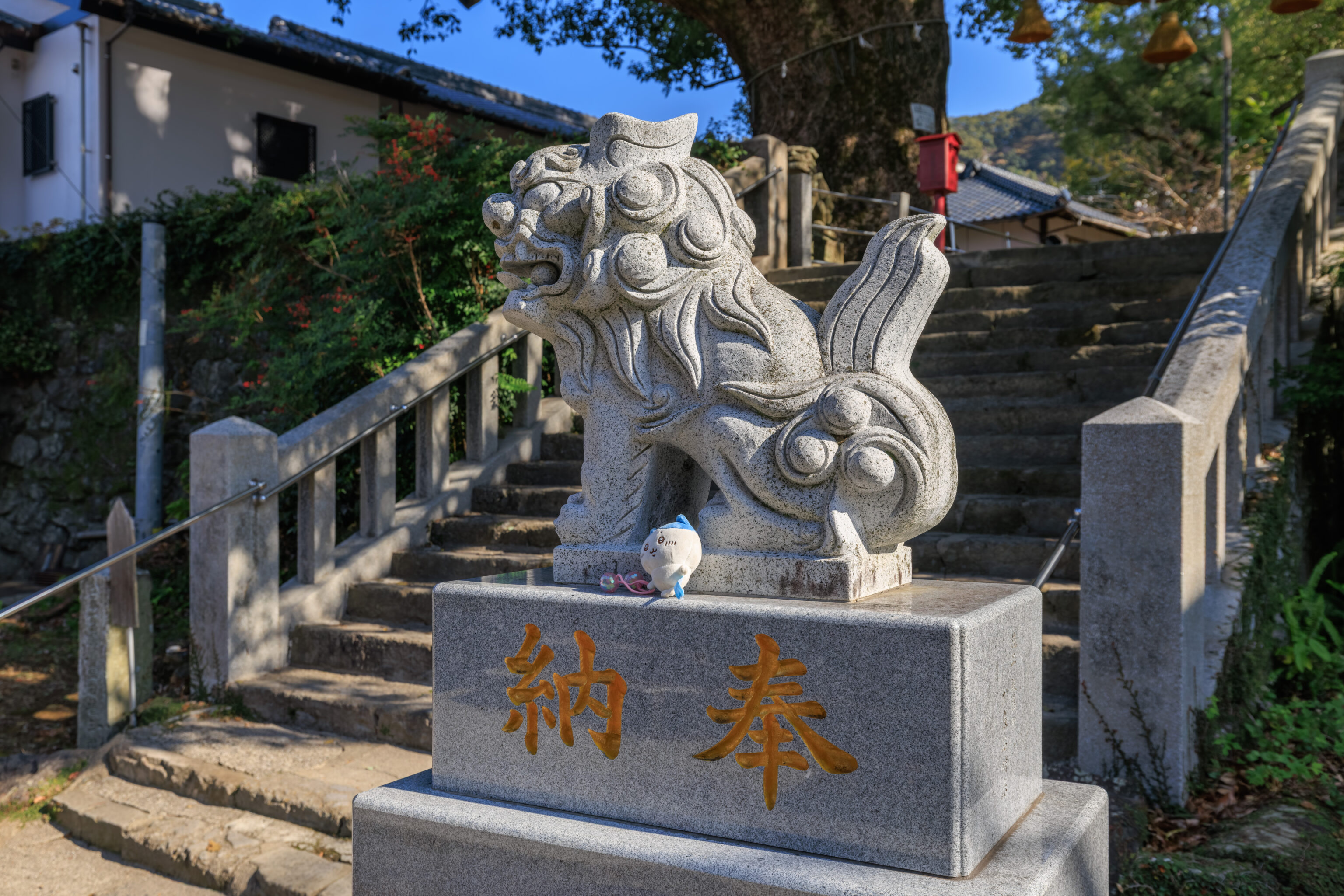
The entrance to the shrine is guarded by two 狛犬 komainu. And, Google Gemini identified the little plushie at the base of this komainu as a “very cute Hachiware plushie from Chiikawa“. A large sign, which was visible in the one of the previous photographs above, has a lengthy history of this shrine in Japanese:
Information about Sanno Shrine
Following the Shimabara Rebellion, Matsudaira Izu-no-kami Nobutsuna—a senior councilor of the Tokugawa Shogunate—passed through this area. Noting that the landscape and place names bore a striking resemblance to Sakamoto (located on the shores of Lake Biwa in Omi Province), he suggested enshrining the Sanno Gongen deity from the Sanno Hie Shrine of that region here. Acting on this proposal, the Nagasaki Magistrate and local officials commissioned Ryusen Hoin, a monk of the Shingon sect’s Enmei-ji Temple in Teramachi, to undertake the shrine's construction. At the time, reflecting the prevailing custom of syncretism between Shinto and Buddhism, the shrine operated as a subsidiary of Enmei-ji Temple under the name "Hakuganzan Kannon-in Enpuku-ji."

Although the shrine experienced periods of both prosperity and decline over the years, it was safeguarded by local parishioners. With the arrival of the Meiji Restoration and the government's decree separating Shinto and Buddhism, it reverted to being a dedicated Shinto shrine; renamed "Sanno Hiyoshi Shrine," it was designated as a *gosha* (local shrine) for the Urakami district. Separately, a Kotai Jingu Shrine had been established in the Yamazato district in the first year of the Meiji era (1868), but it suffered damage from typhoons and other disasters. Facing difficulties regarding reconstruction and ongoing operations, and learning that the shrine was slated for closure, local parishioners petitioned to merge it with Sanno Shrine. Permission was granted, and the deity was transferred in January of the 17th year of Meiji (1884). While officially designated as the "Prefectural Shrine: Urakami Kotai Jingu," it remained affectionately known to locals as "Sanno-san" and became the vibrant center of the "Urakami Kunchi" festival. Tragically, the shrine was devastated by the atomic bombing in 1945. Yet, rising from this adversity, calls for restoration emerged within just a few years; the festival was revived in 1949, and the shrine buildings and grounds were gradually restored.

In 1988—a milestone year marking the 350th anniversary of the shrine's founding—the *Heiden* (Offering Hall) was rebuilt, successfully restoring the shrine to a state closely resembling its original form. Relics from the time of the atomic bombing that remain today—and have since gained worldwide renown—include the "One-Legged Stone Torii" on the approach and the "Giant Camphor Tree" towering at the shrine entrance; these silent witnesses speak eloquently of the tragedy of the bombing and the preciousness of peace. The camphor tree sprouted in the years following the war and gradually flourished into its current majestic form, inspiring the local community with the drive and vitality needed for postwar recovery.

■ Deities Enshrined
Main Hall: Amaterasu-ōmikami / Toyouke-hime-no-kami / Ōyamakui-no-kami

Left Side: Ōmononushi-no-kami / Izanagi-no-kami / Izanami-no-kami / Takamimusubi-no-kami / Kamimusubi-no-kami / Amenominakanushi-no-kami / Ōtoshi-no-kami

Right Side: Futsunushi-no-kami / Takemikazuchi-no-kami / Miyodomiyo-sumemago-no-mikoto

■ Festival Days
1st of every month: Monthly Festival
New Year's Day: First Shrine Visit of the Year
February 3: Setsubun Festival
June 1: Koya-iri (Ritual Opening of the Season) / Yakubarai (Warding off Misfortune)
June 30: Nagoshi Festival (Summer Purification)
October 17–18: Autumn Grand Festival
November 23: Niinamesai (Harvest Thanksgiving Festival)
Urakami Kōtai Jingū

Sannō Hiyoshi Shrine
(Inscription on the far left: Crafted in 1991)
– Text from the sign in the to the right of the komainu, read using Google Gemini and translated using Google Translate.
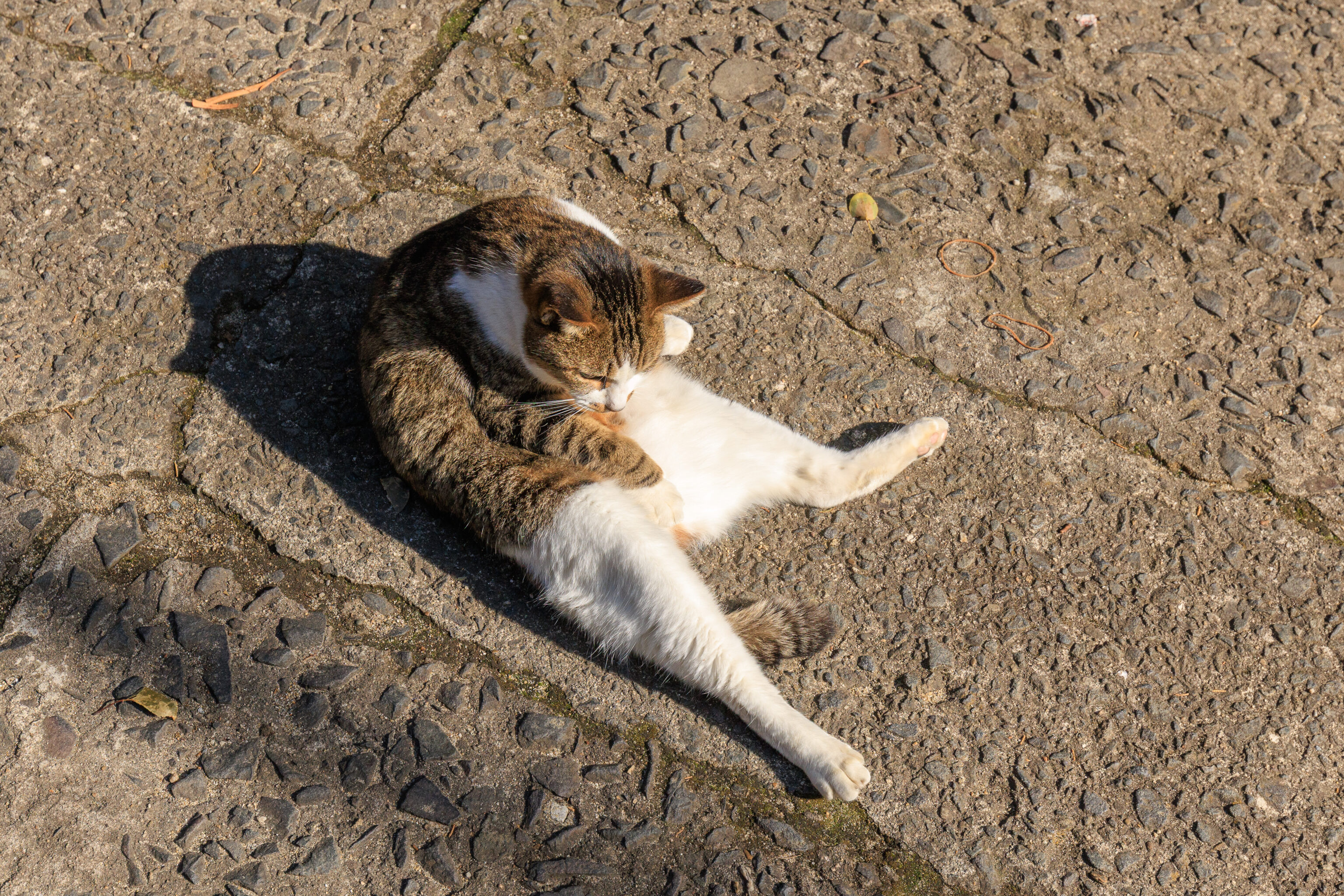
We took a bit of time to look at this cat who completely ignored us!
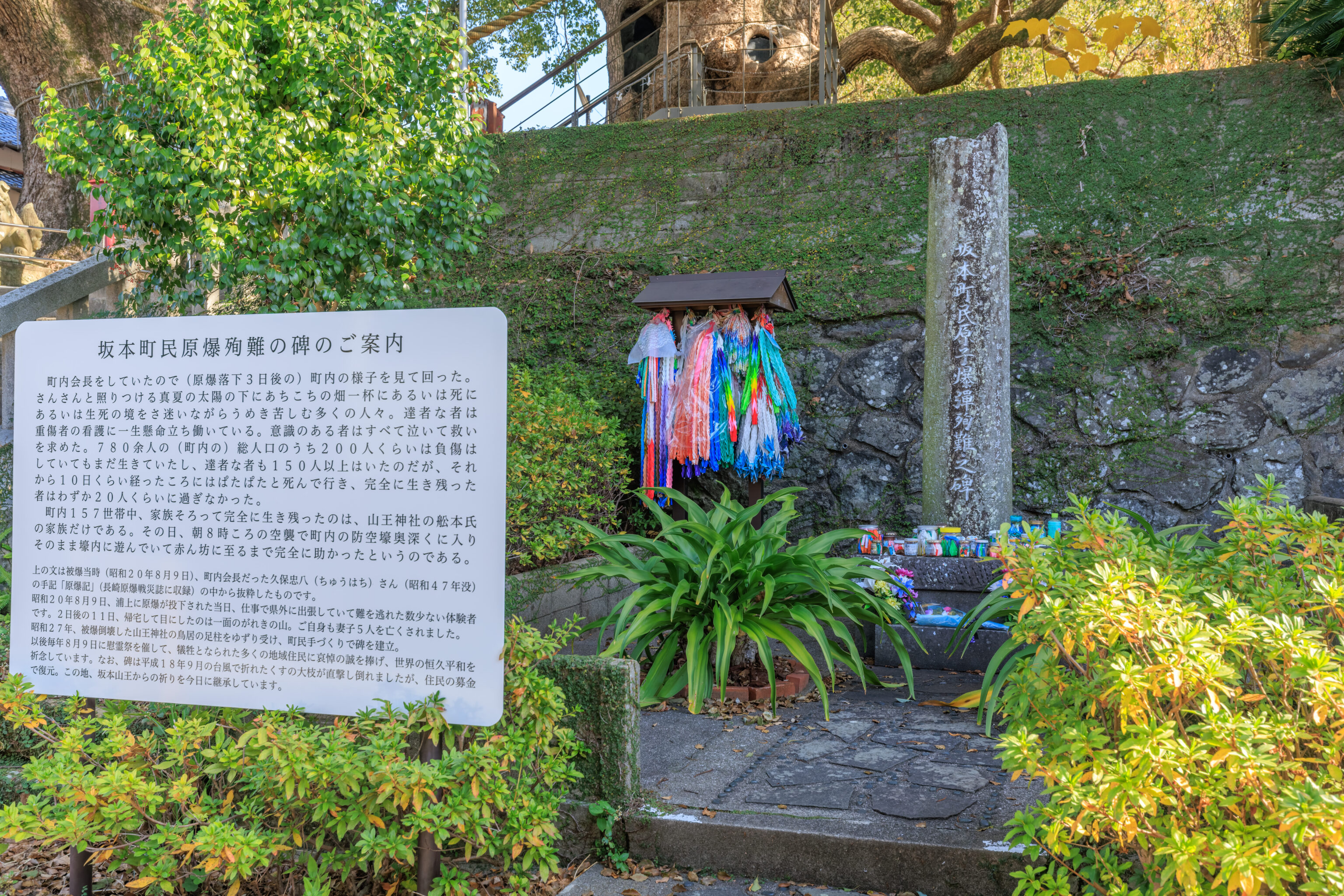
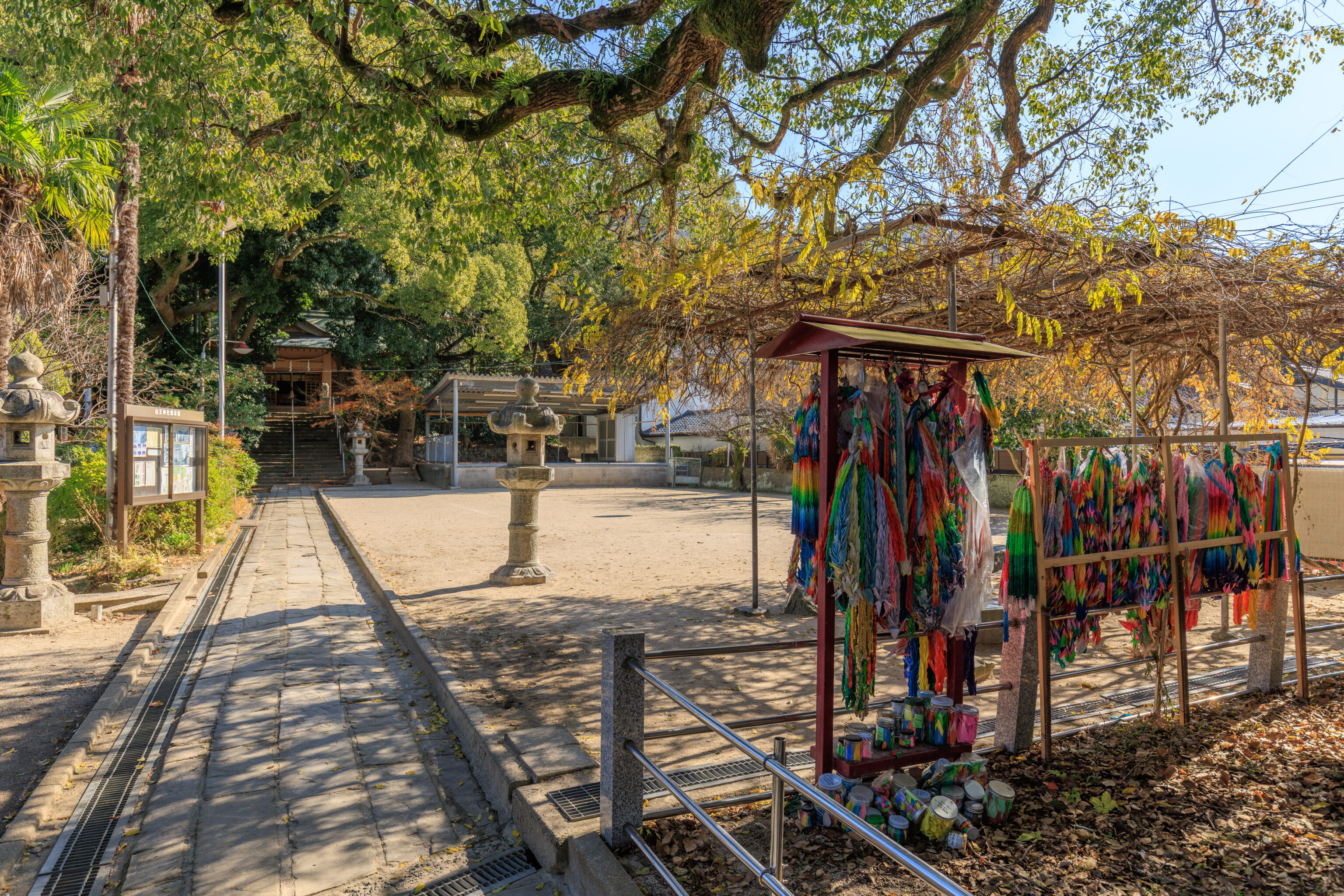
Origami cranes are a symbol of peace in Japan and were popularized as a result of 佐々木 禎子 Sadako Sasaki, an atomic bomb survivor from Hiroshima who folded origami cranes while sick from the effects of the radiation up to her death in 1955 at the age of 12. That is why there are colorful origami cranes here at this memorial, the 坂本町民原子爆弾殉難之碑 Sakamoto Town Monument to the Victims of the Atomic Bombing.
About the Monument to the Sakamoto Neighborhood Atomic Bomb Victims

As the neighborhood association president, I went around to observe the state of the neighborhood (three days after the atomic bomb fell).  Under the blazing midsummer sun, the fields were filled with people—some already dead, others groaning in agony as they hovered between life and death. Those who were uninjured worked tirelessly to care for the seriously wounded. Everyone who was conscious wept and begged for help. Out of a total neighborhood population of over 780, about 200 were still alive despite their injuries, and more than 150 were uninjured; yet, within about ten days, they died one after another, leaving only about twenty people who truly survived.

Of the 157 households in the neighborhood, the only family to survive completely intact was that of Mr. Funamoto from Sanno Shrine. On that day, during an air raid around 8:00 a.m., they had taken shelter deep inside the neighborhood air-raid bunker and stayed there playing; consequently, every family member—even the baby—was saved.

The text above is an excerpt from the memoir "Genbaku-ki" (Record of the Atomic Bombing)—included in the *Chronicle of the Nagasaki Atomic Bombing and War Damage*—written by Mr. Chuhachi Kubo (who passed away in 1972). He was the neighborhood association president at the time of the bombing (August 9, 1945).

He was one of the few survivors who escaped the disaster because he was away on a business trip outside the prefecture on August 9, 1945, the day the atomic bomb was dropped on Urakami. When he returned home on the 11th, two days later, he was met with a landscape of nothing but rubble. He himself lost his wife and five children.

In 1952, the residents obtained a pillar from the *torii* gate of Sanno Shrine—which had collapsed due to the bombing—and built this monument with their own hands.

Since then, a memorial service has been held every year on August 9 to offer sincere condolences to the many local residents who lost their lives and to pray for lasting world peace. The monument was toppled after being struck by a large branch of a camphor tree that snapped during a typhoon in September 2006, but it was restored through donations from local residents. It carries on the prayers originating from this site—Sakamoto Sanno—to the present day.
– Text from the sign on the left, read using Google Gemini and translated using Google Translate.
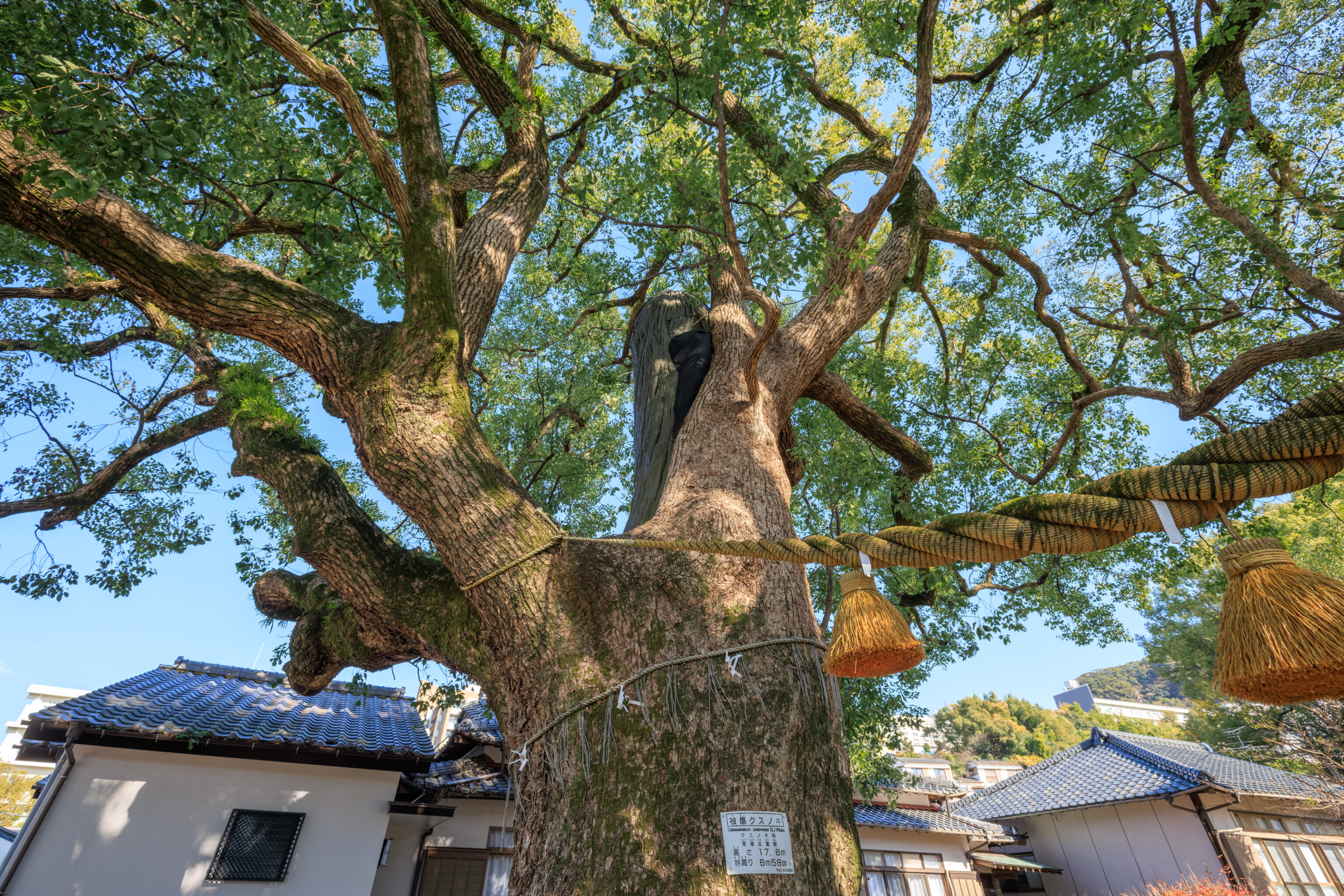
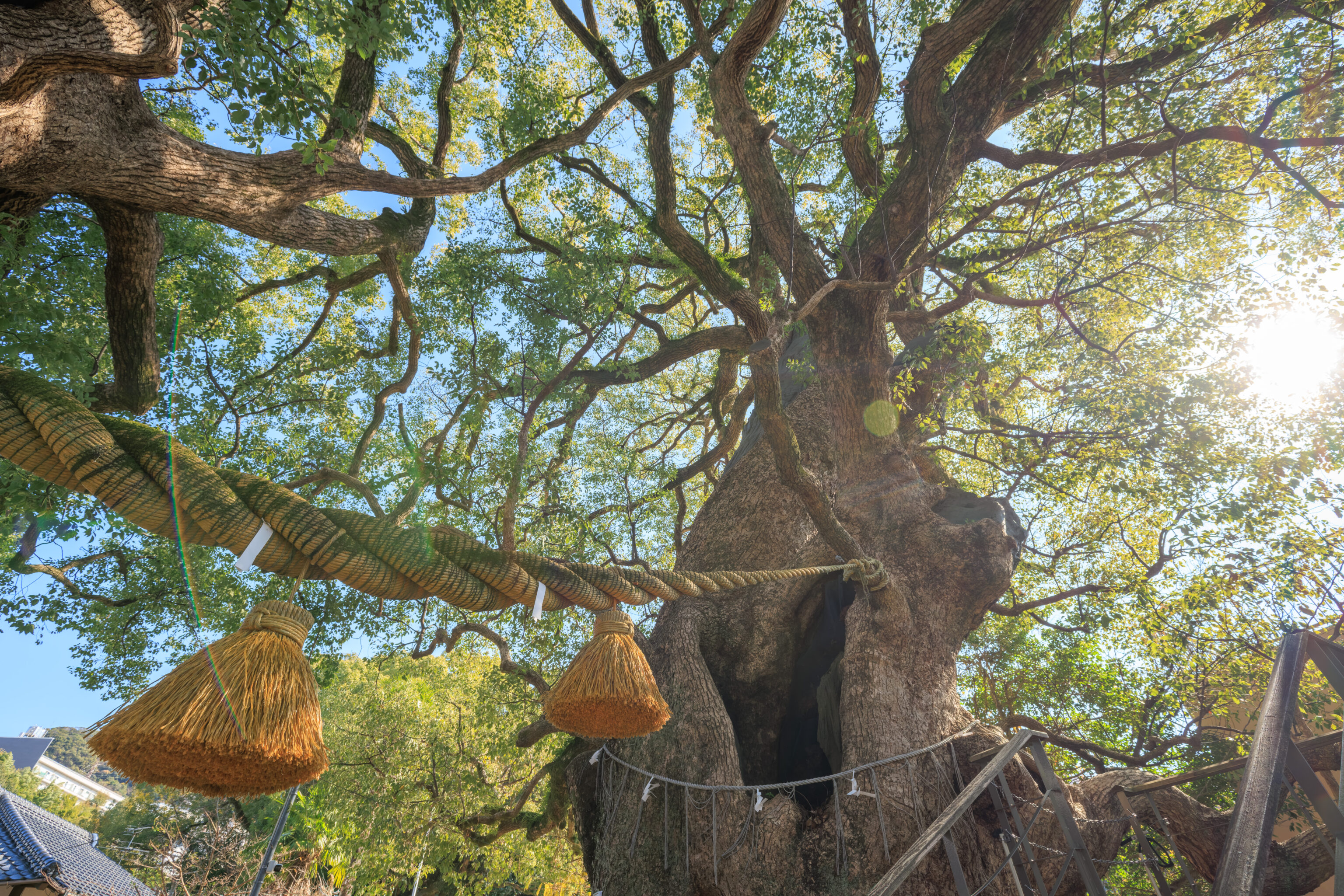
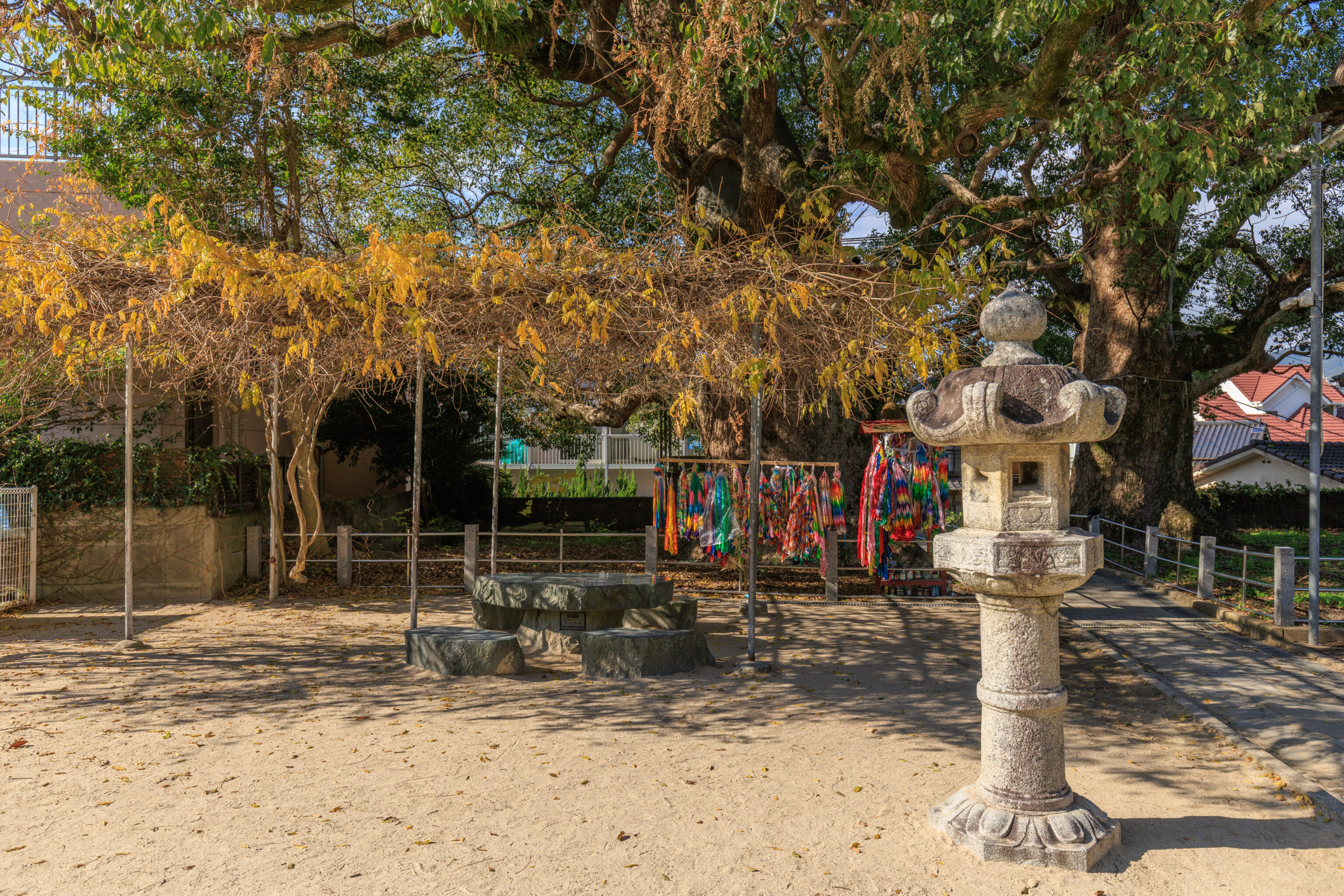
We walked up the stairs into the modern-day shrine boundaries and took a look at the two giant camphor trees.
Municipal Natural Monument
Giant Camphor Trees of Sanno Shinto Shrine
Date of Designation: February 15, 1969

These two camphor trees, which have a trunk circumference of eight and six meters, are among the largest camphor trees in the city.  Both trees were broken at the upper portion of the trunk as a result of the 1945 atomic bombing and thus are now only about 10 meters in height. But the branches have flourished to form a huge canopy measuring 40 meters east to west and 25 meters north to south.

Although stripped of leaves and almost killed by the atomic bombing, the trees eventually budded and regained their vitality.

Nagasaki City Board of Education
– Text from a nearby sign.
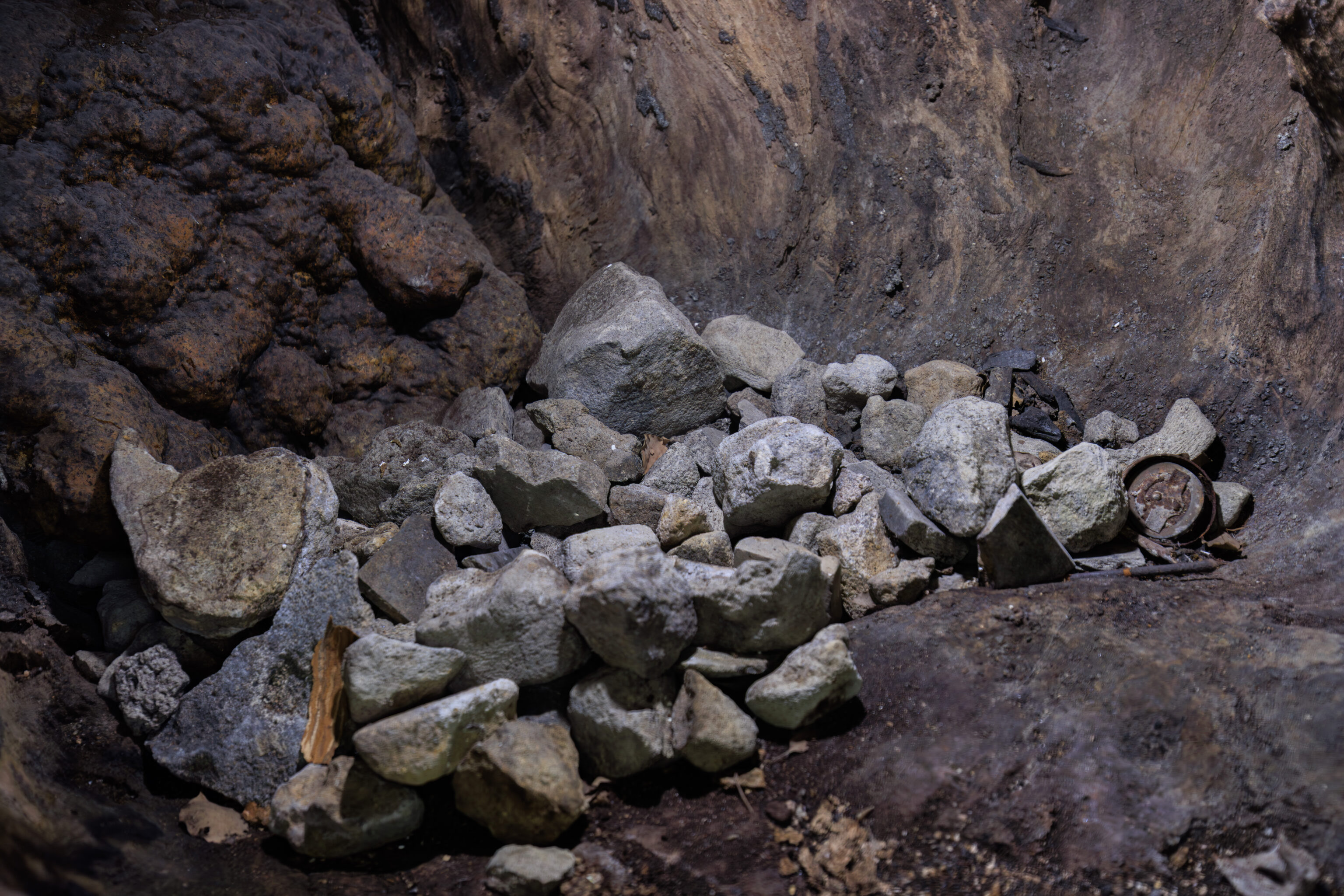
We peeked into a hole in the tree on the right, which was accessible by stairs. It contained what appeared to be stones:
About the Origin of This Stone
This stone was retrieved from the hollow of the camphor tree on the right side during the second round of treatment performed on the Sanno Shrine's atomic-bombed camphor trees in 2006.

(Blast wind speed: 220 meters per second; heat ray temperature: estimated 4,000°C)

Countless stones were discovered inside the tree on the right, serving as evidence of the event.  There is an opening in the tree three meters above the ground; it is believed that the blast wind caused stones to fly upward, and this small stone entered the hollow through that opening.  It bears witness to the immense power of the atomic bomb—a force far beyond anything conceivable under normal circumstances.

The camphor tree on the left side (as one faces the shrine) stood closer to the hypocenter, and its main trunk snapped partway up.  Furthermore, countless fragments—such as roof tiles, metal, and pebbles—were embedded deep within the trunk, making their removal during the treatment process extremely difficult.

Katsunosuke Funamoto, Chief Priest, Sanno Shrine
Sanno Shrine Parishioners' Representative Association
– Text from a nearby sign, translated using Google.
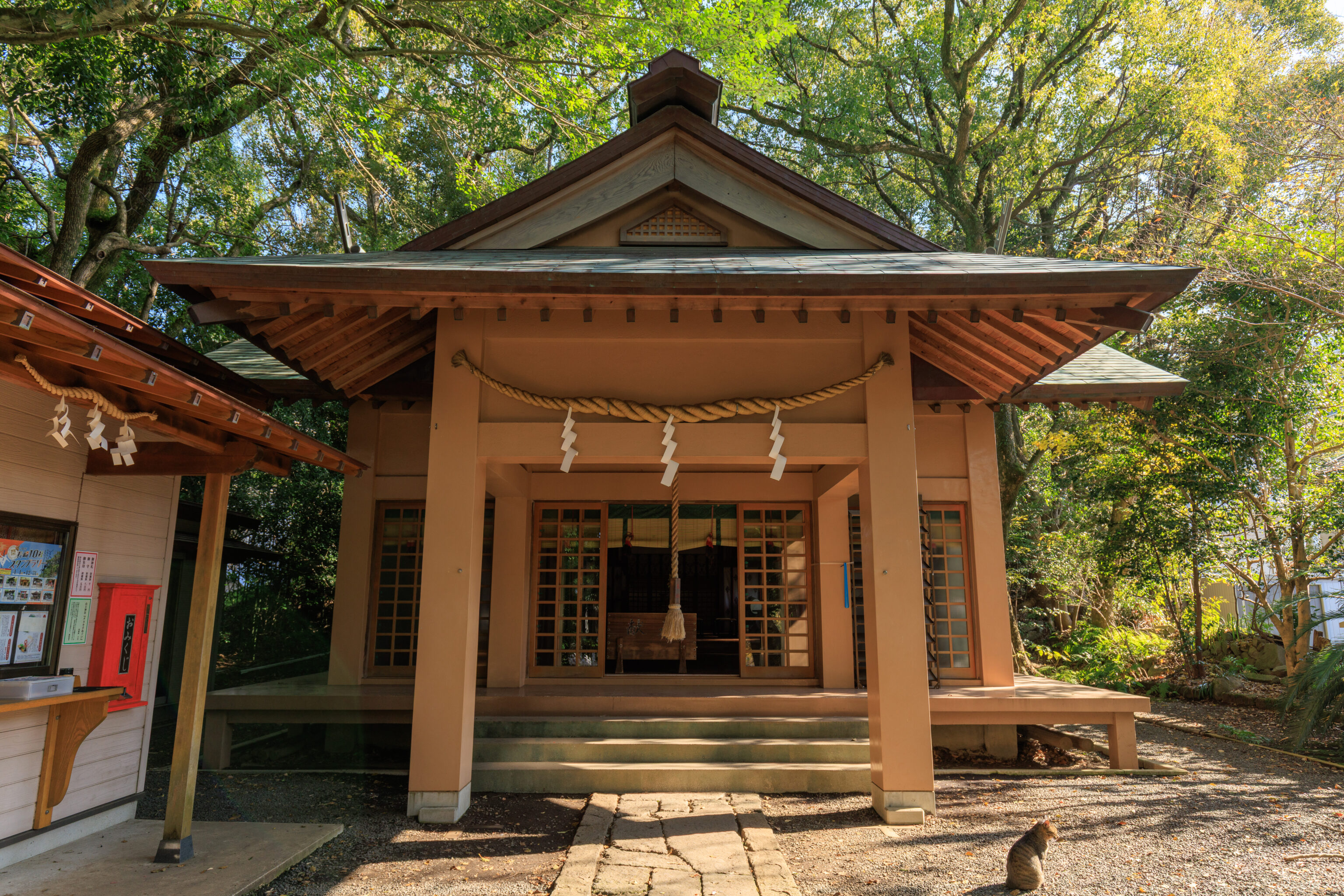
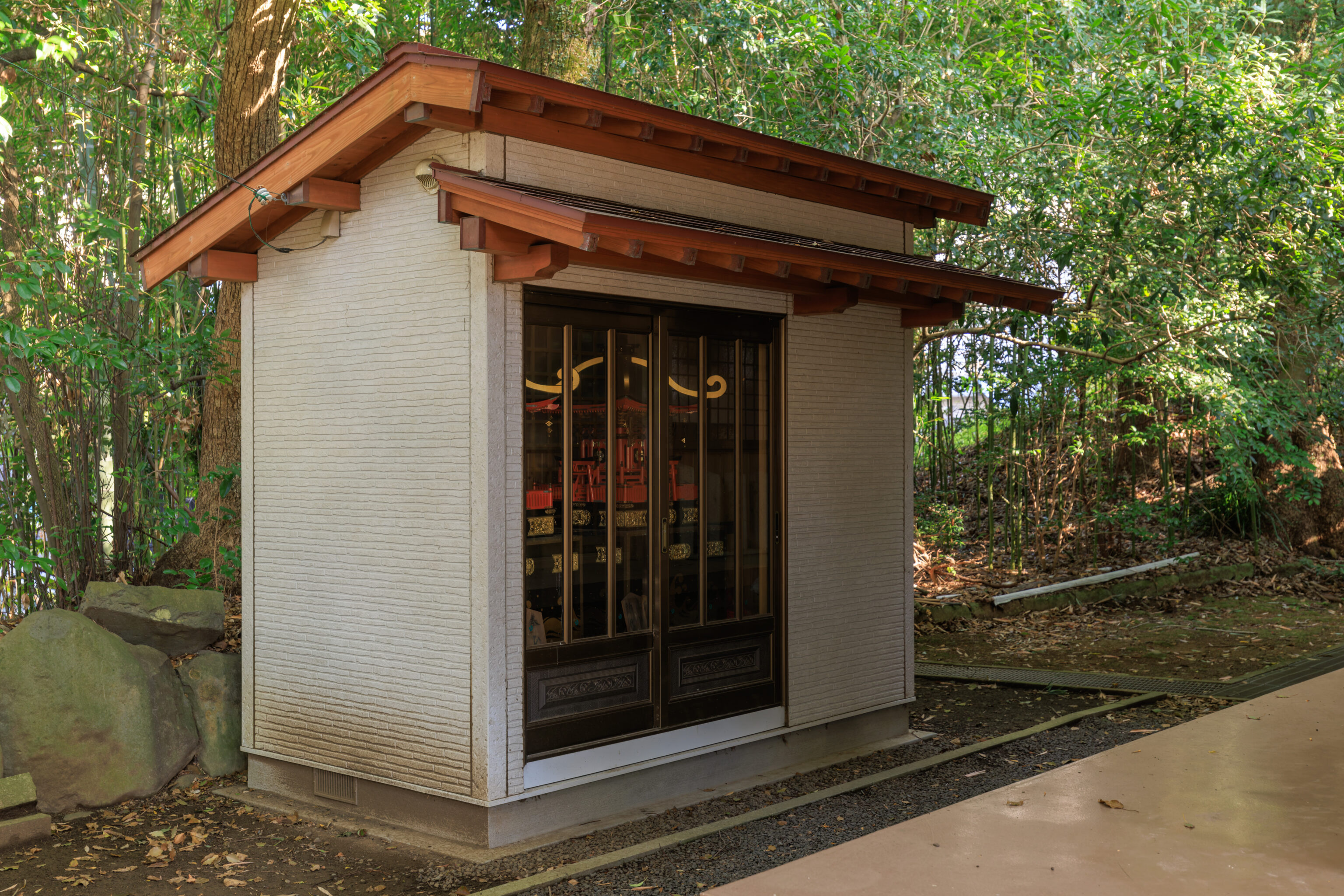
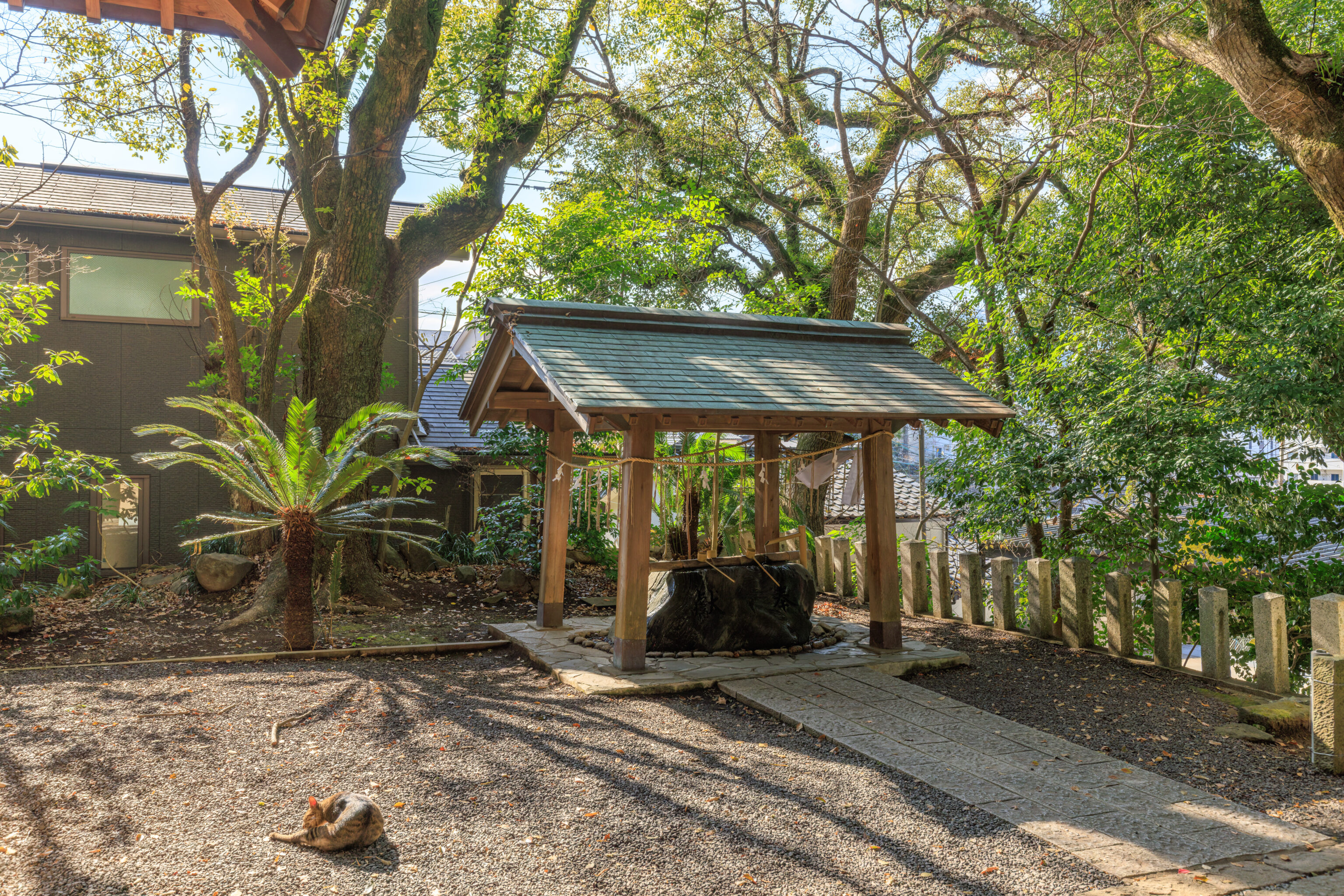
Other than the history of this place, it is a pretty standard small Shinto shirne.
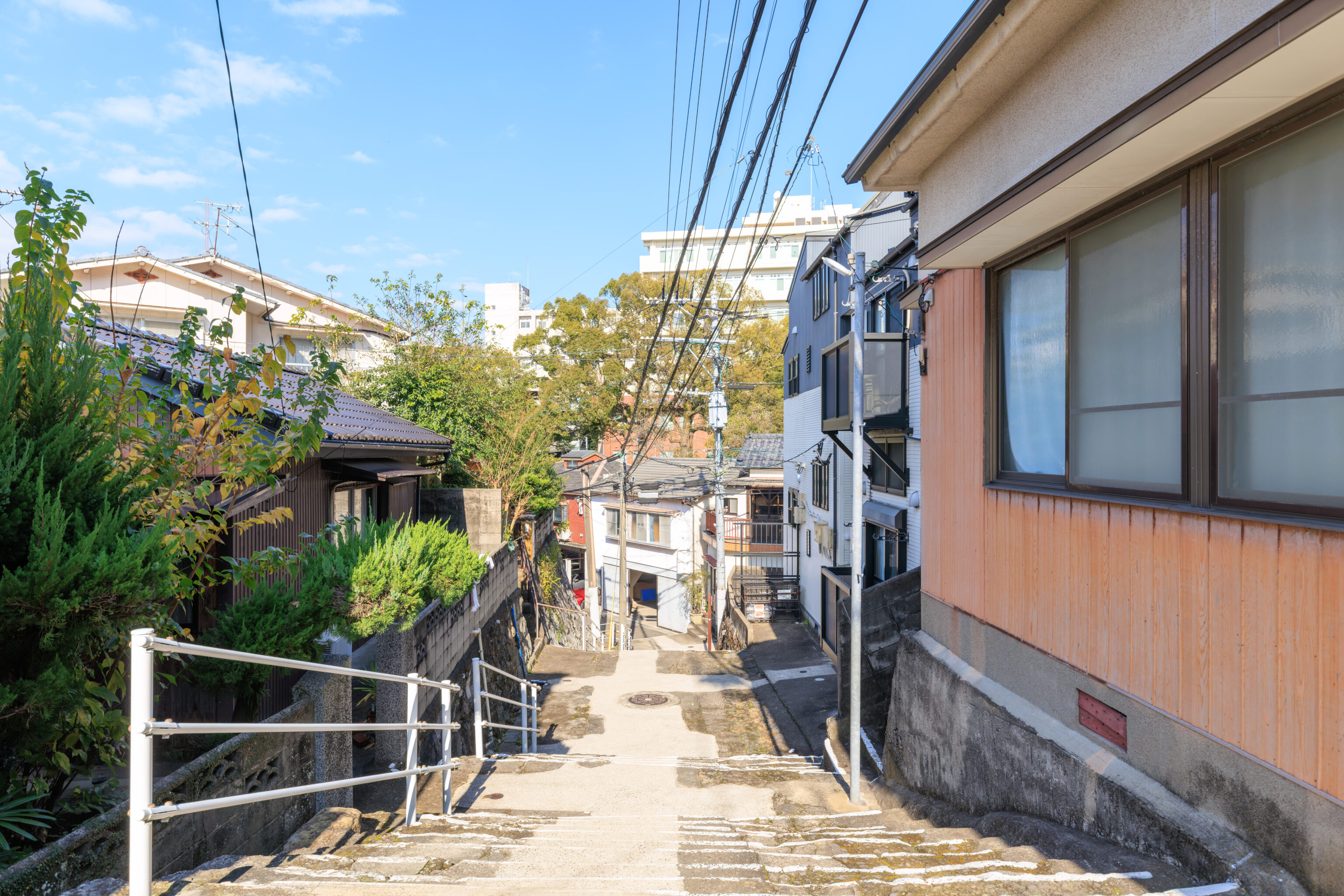
After our visit, we decided to visit the Nagasaki Ropeway next. To get there, we first descended by a different set of stairs to the north.
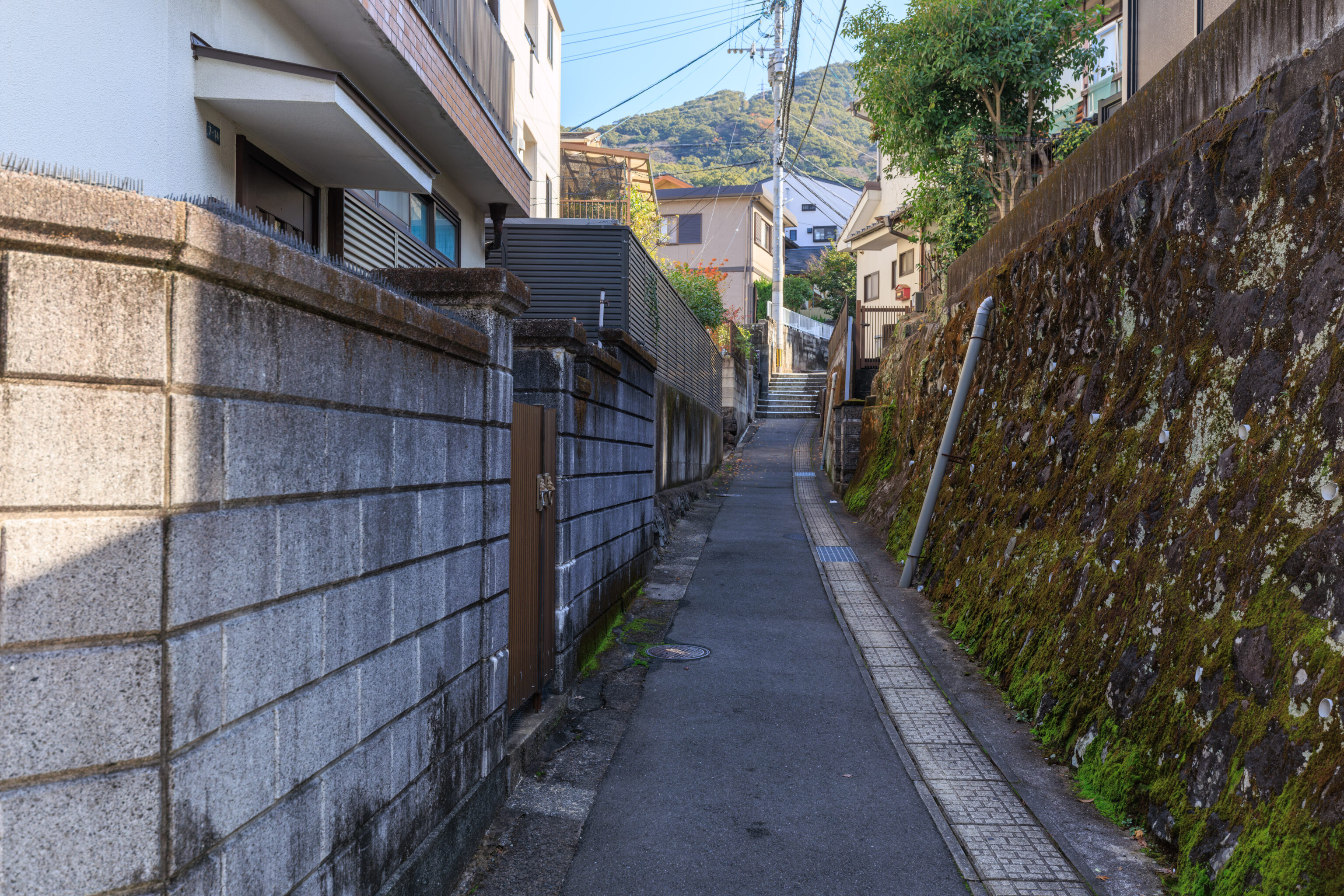
We then walked to the northwest. This was the view looking back after walking a short distance away from the stairs.
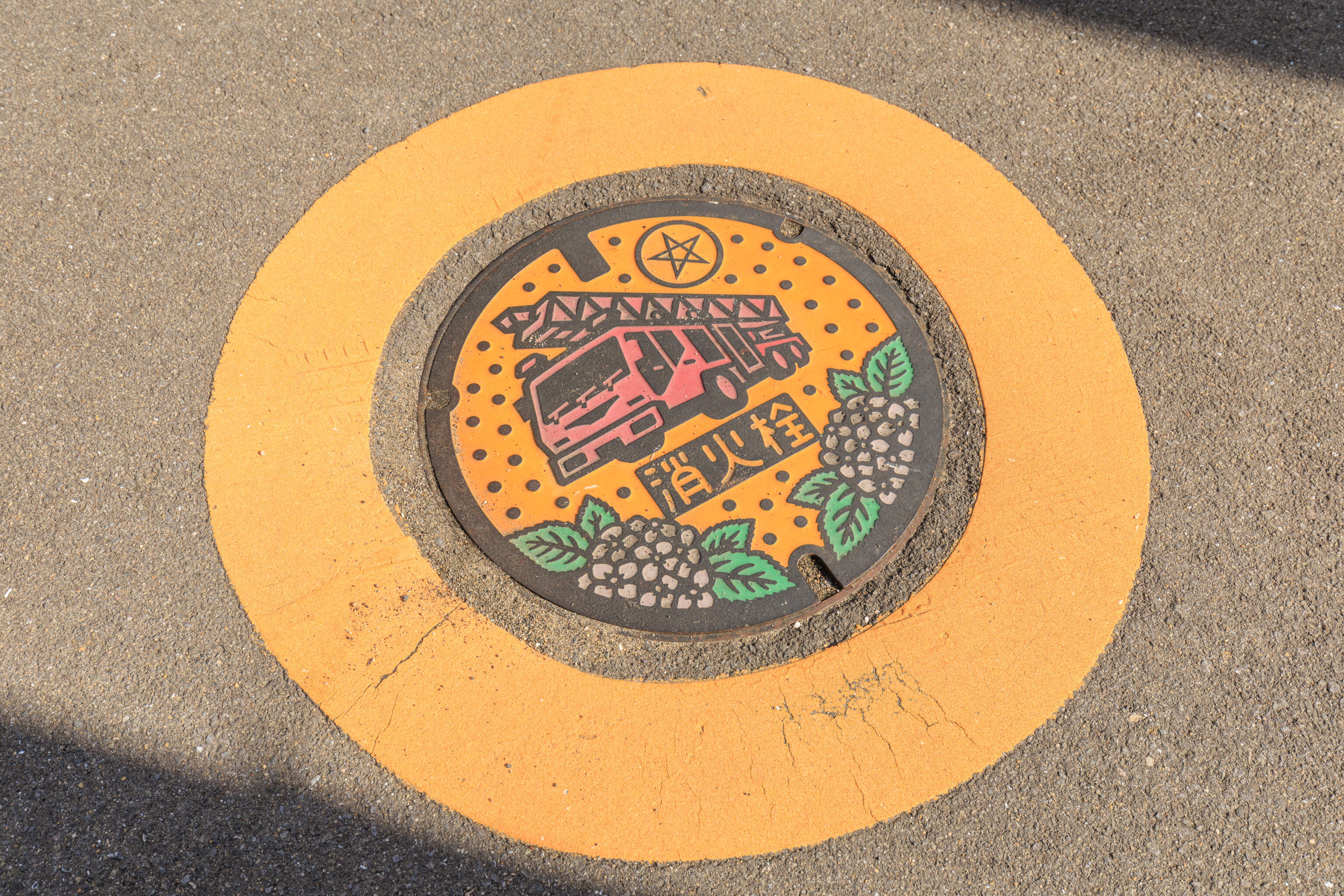
This colorful fire department utility cover features a pentagram, a simplified version of Nagasaki’s city emblem. It also depicts hydrangeas, the official flower of the city.
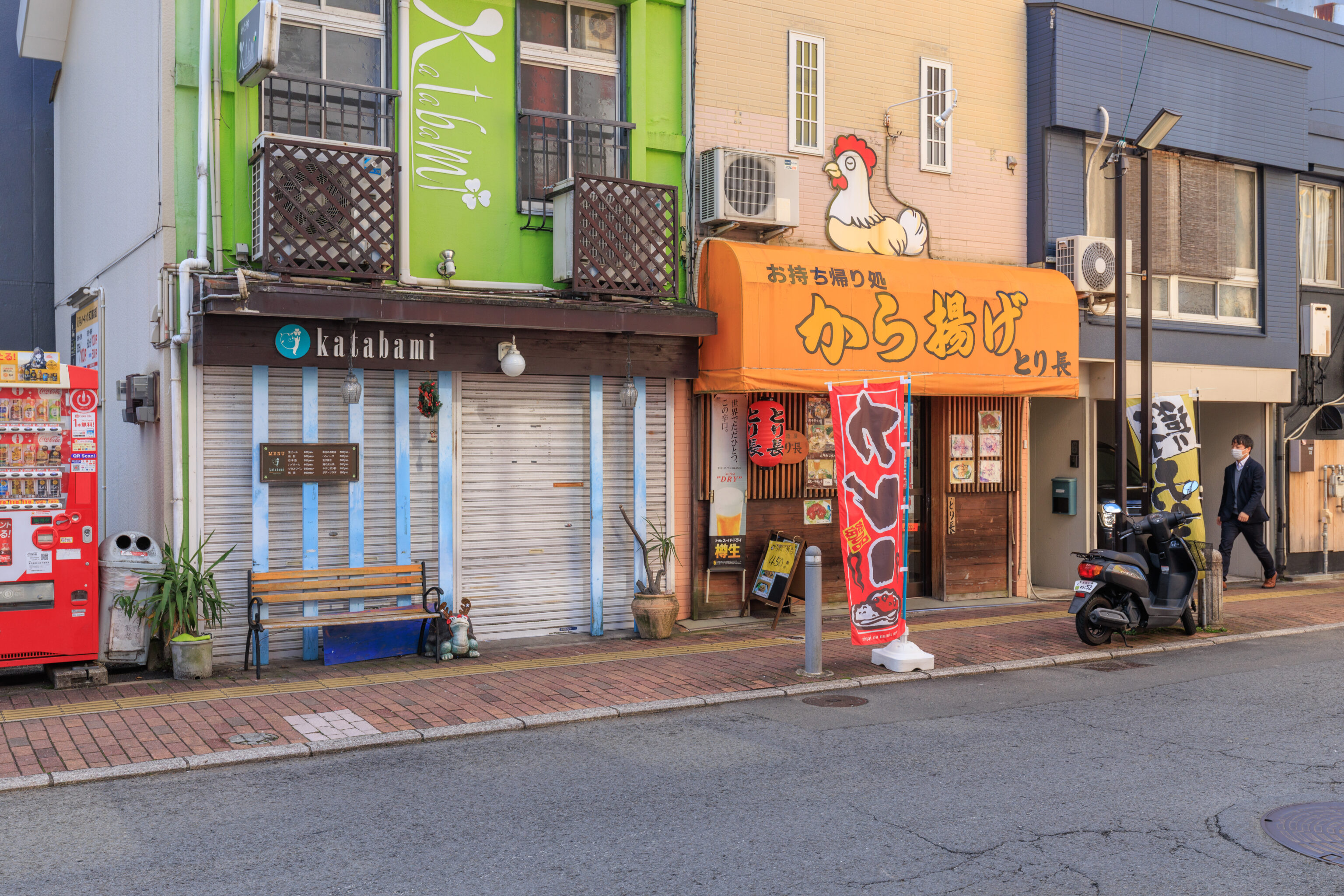
After reaching an intersection, we turned left to continue walking west back to the street that has the tram lines. We passed by this shop with a large chicken sign!
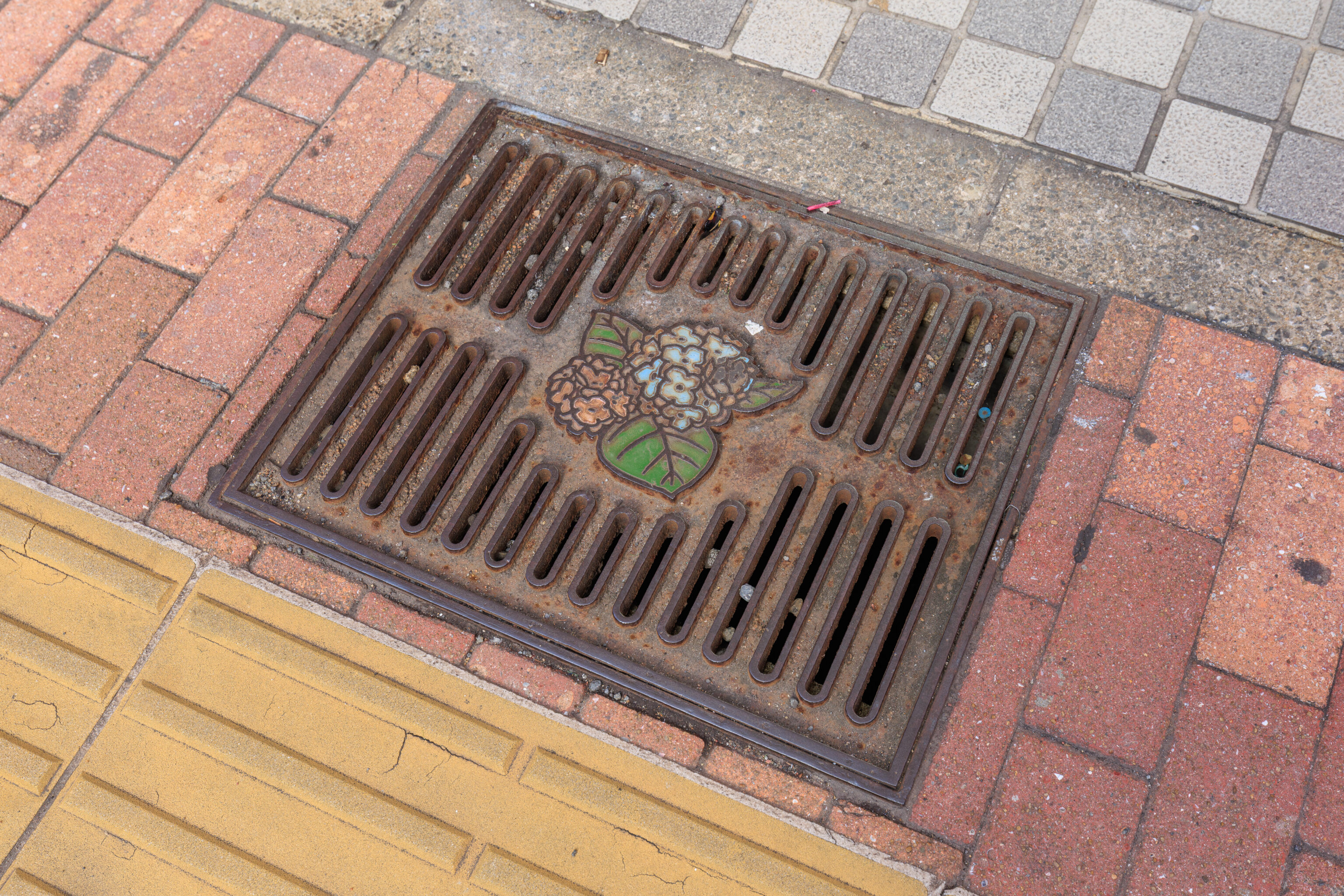
Another depiction of hydrangeas, this time on a storm drain. After walking another block to the west, we took a tram from the 大学病院前 Daigaku Byoin-mae stop.
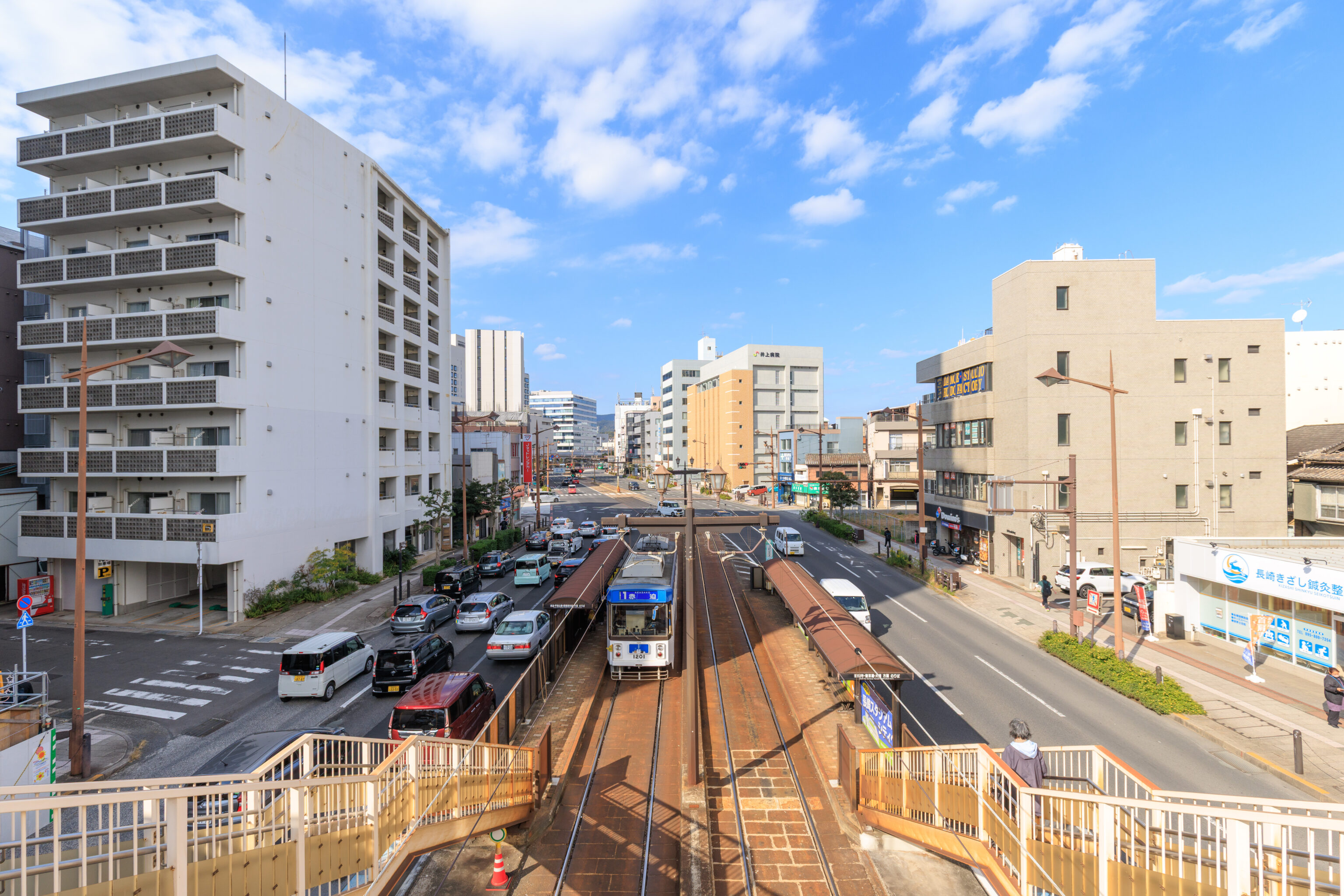
We took the tram south to スタジアムシティサウス Stadium City South, near Nagasaki Station. We crossed over the street to the west via pedestrian overpass to reach the 宝町 Takaramachi bus stop.
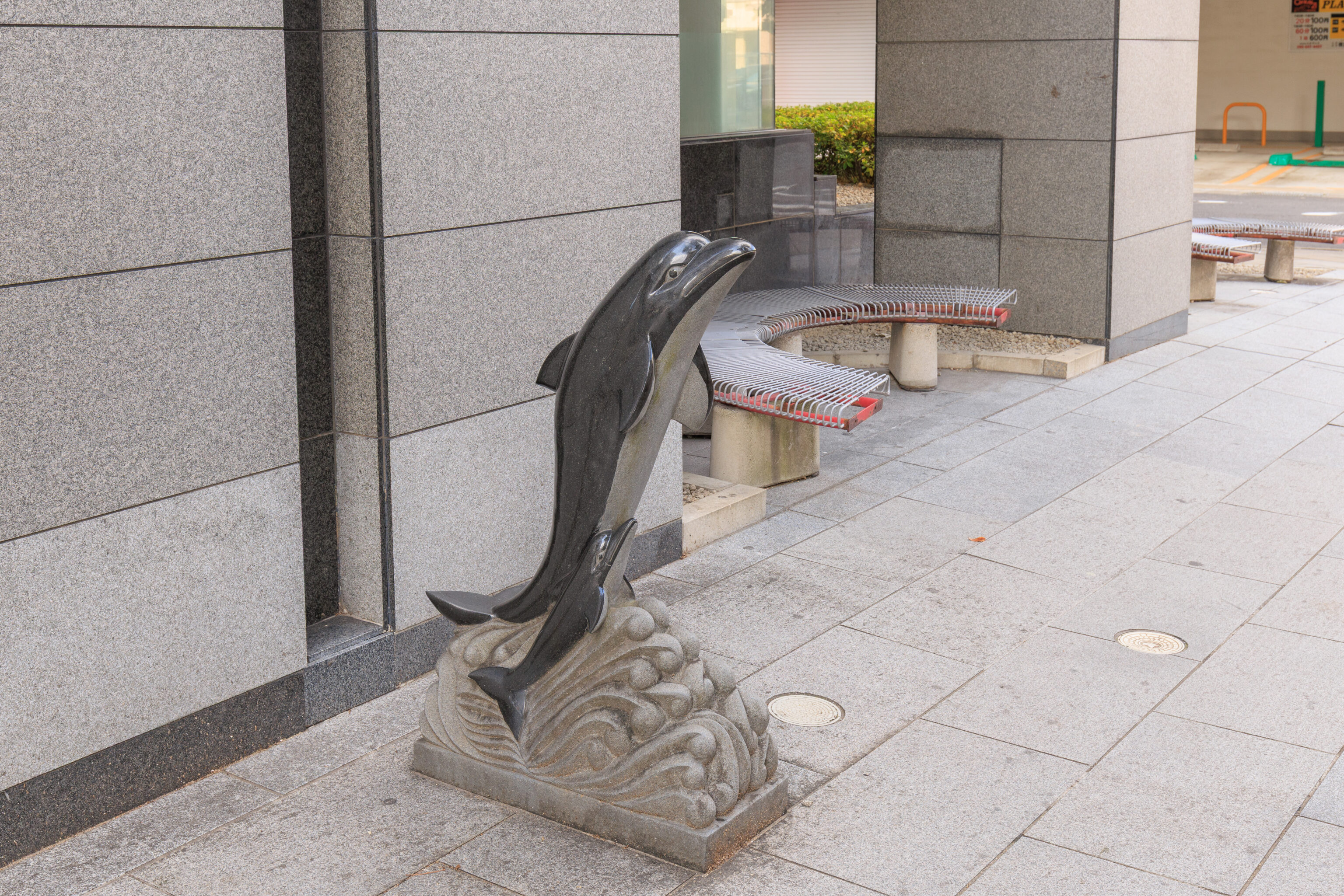
These two dolphins were by the bus stop.
Inasa-yama
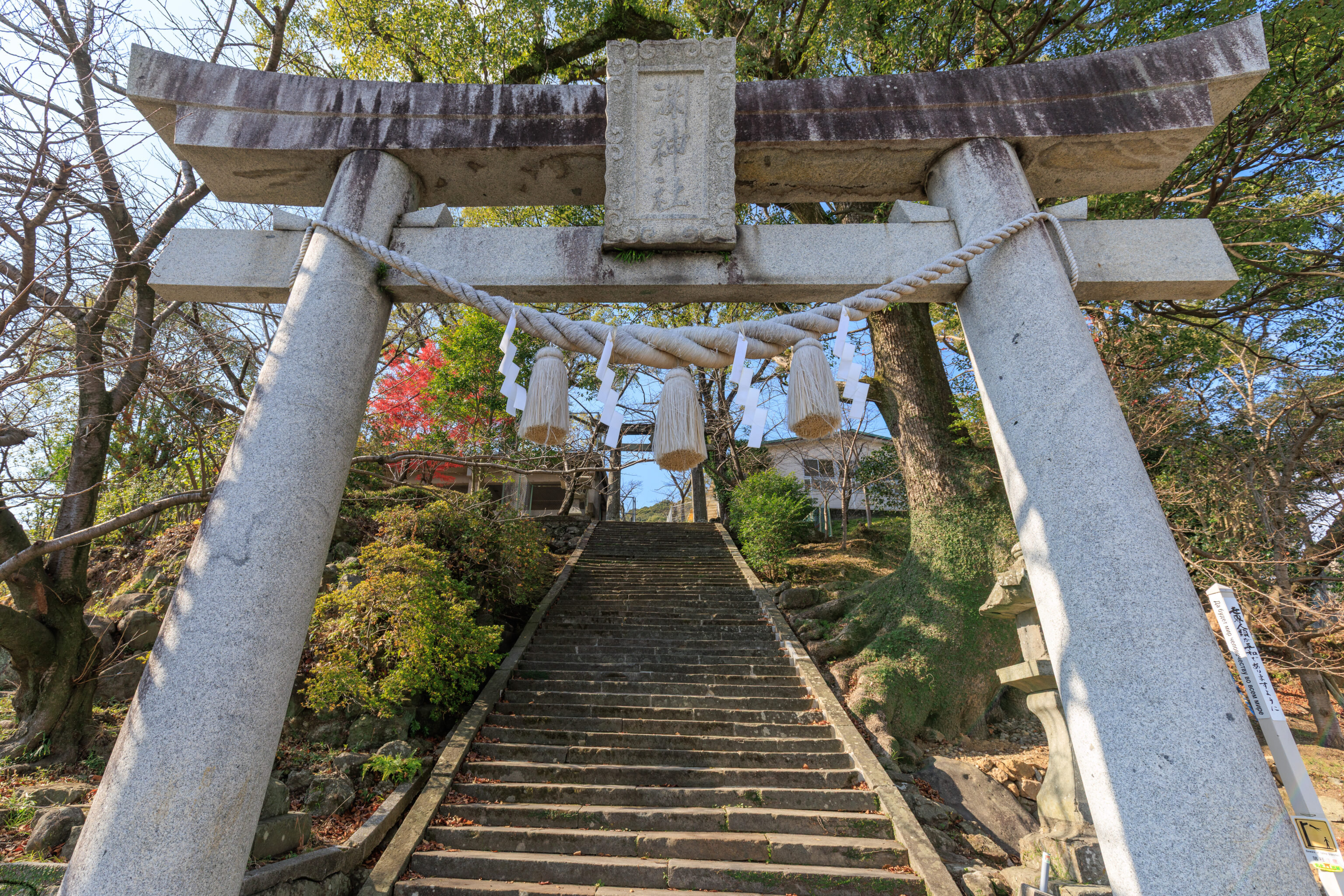
We then took a bus over to the ロープウェイ前 Ropeway-mae stop. We walked by a torii marking the entrance to the 淵神社 Fuchi-jinja.
Fuchi Shinto Shrine
Fuchi Shinto Shrine is located at the foot of Mt. Hoju about 1.7km south-southwest of the atomic bomb hypocenter. The explosion of the atomic bomb at 11:02 a.m.,9 August 1945 destroyed the shrine buildings and knocked down most of the stone railing.Even the railing left standing leaned deeply toward the shrine. The large trees in the shrine precincts were also broken at the roots, the forests nearby collapsed away from the hypocenter, and branches and leaves were scorched brown.

In the aftermath, the shrine and environs served as a refuge for people injured in the city below.

Nagasaki City installs this plaque as a prayer for the repose of the souls of the people who died here and to ensure that this tragedy is never repeated.

Nagasaki City
(Atomic Bomb Museum)
March 1999
– Text from a sign.
Although it seems like we probably could have reached our destination via these stairs, we decided to go around via a sloped road instead.
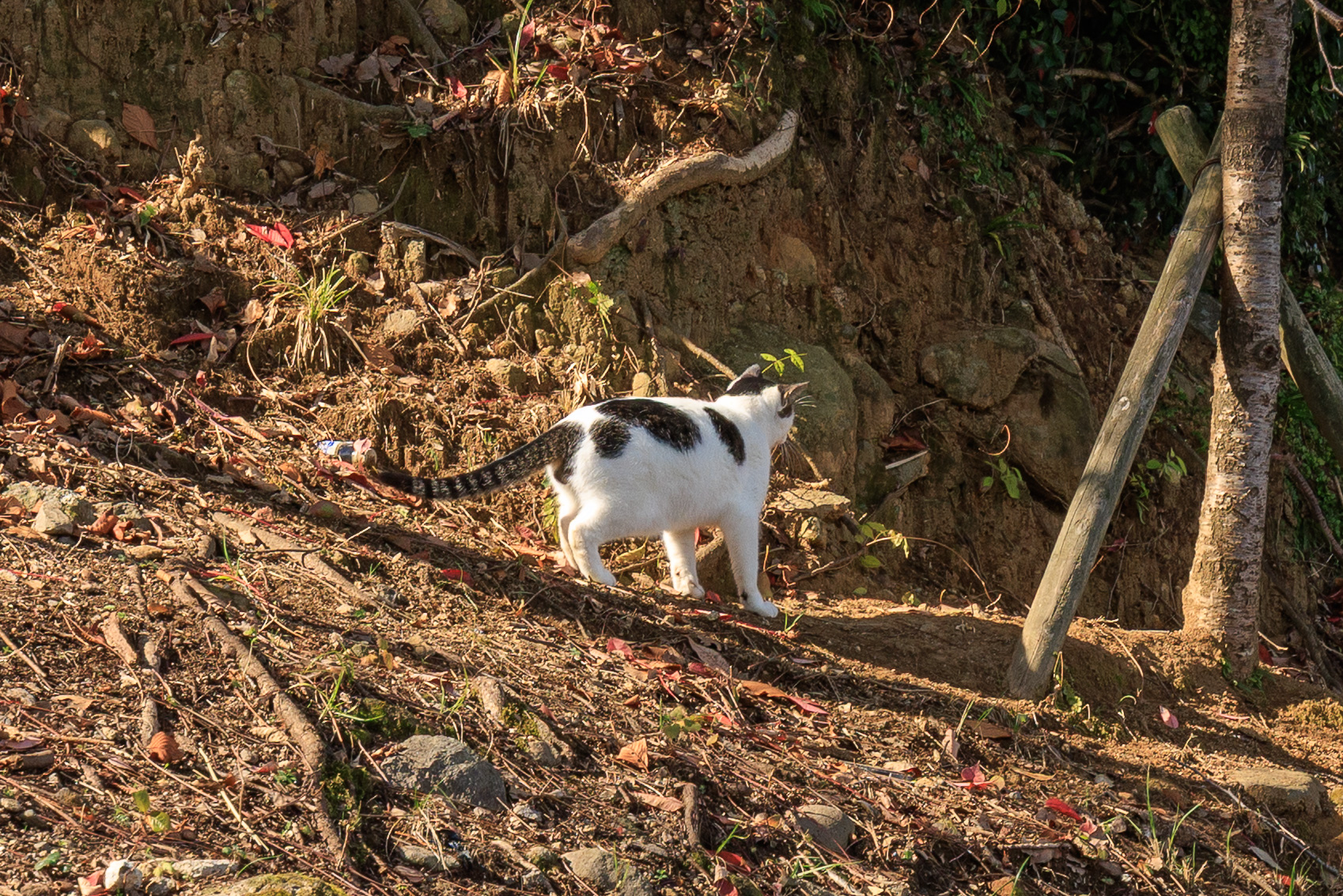
We walked by a cat…
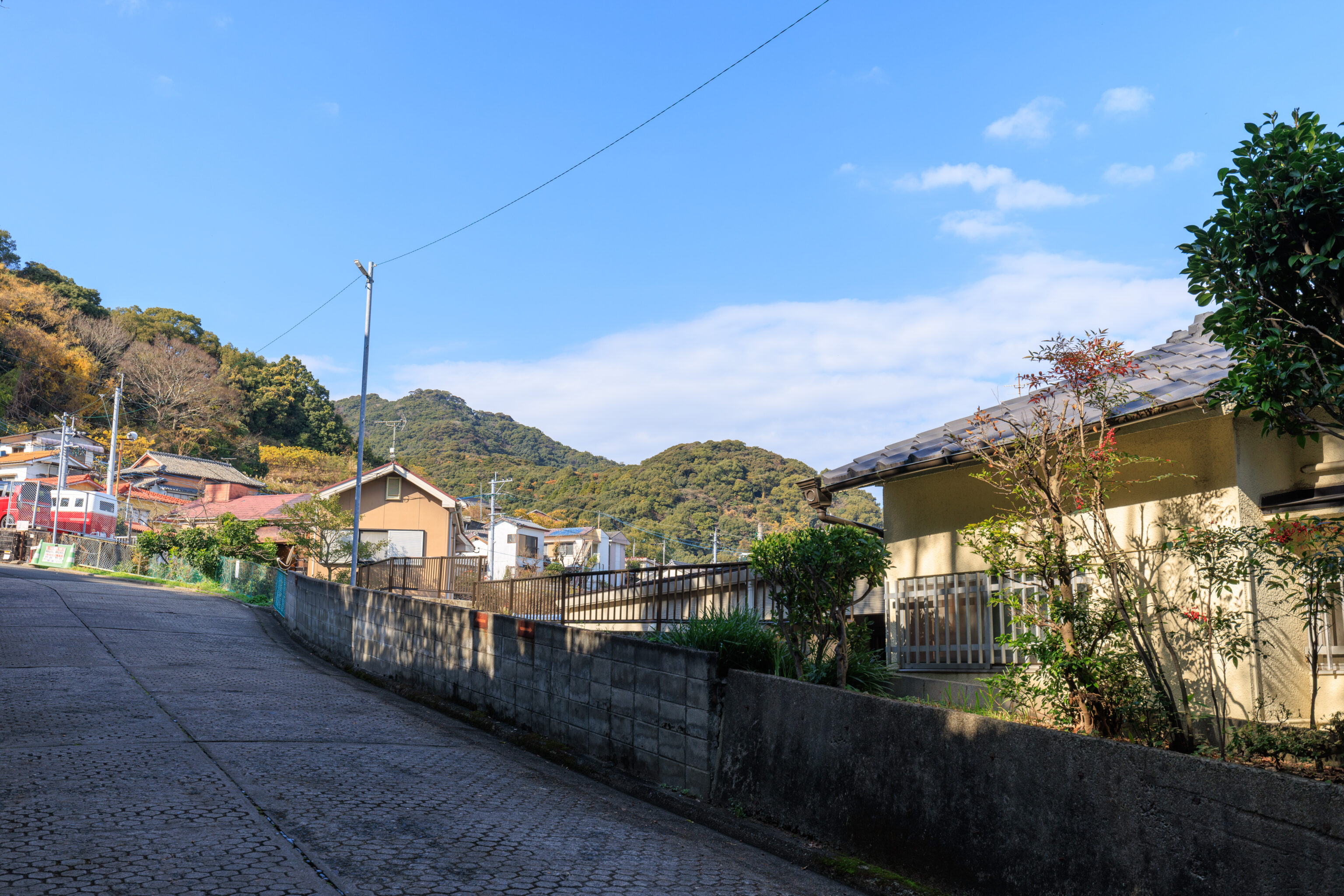
And then walked up a somewhat steep road.
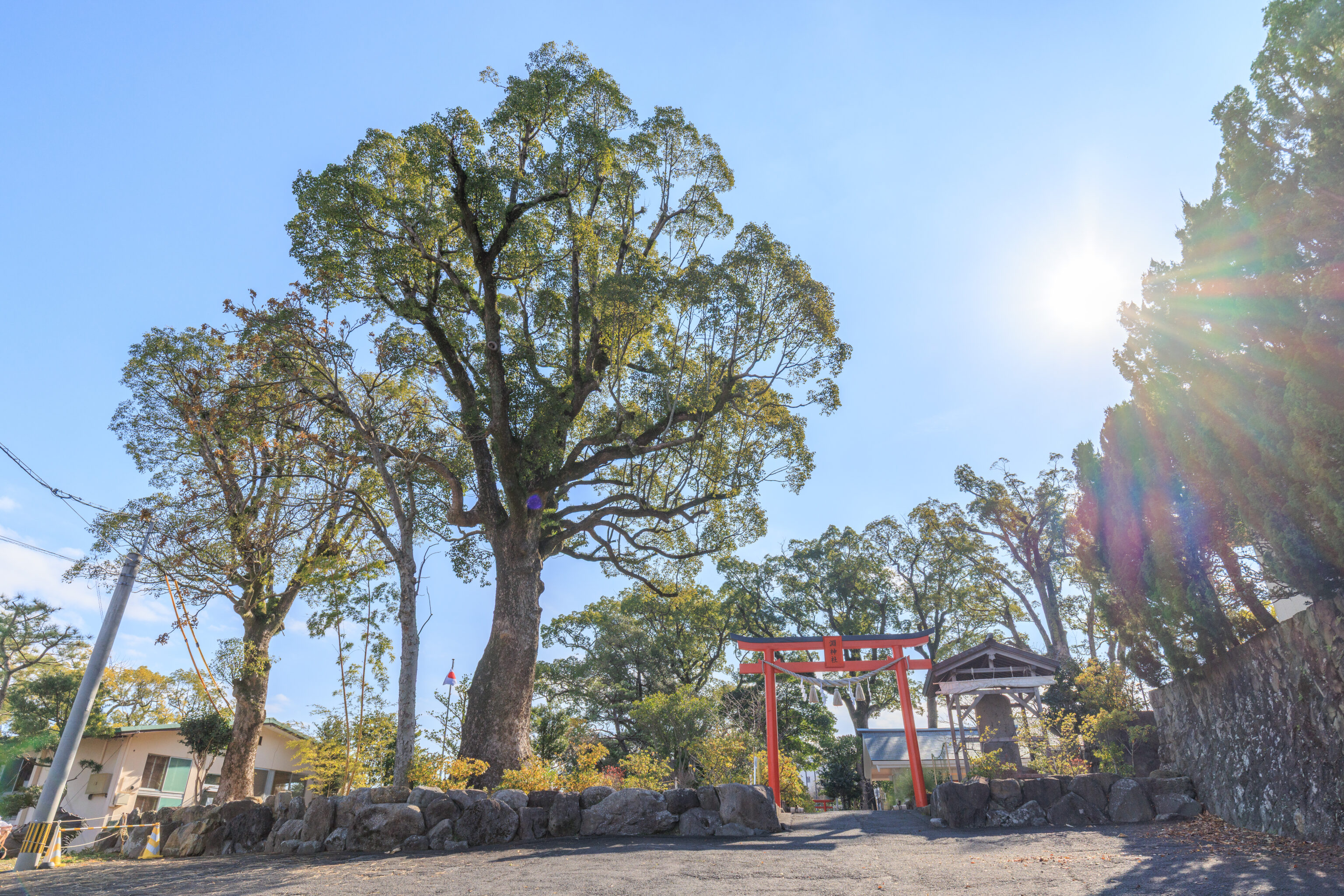
The road led to a parking lot. Turning left, we reached another torii marking another entrance to the Fuchi-jinja.
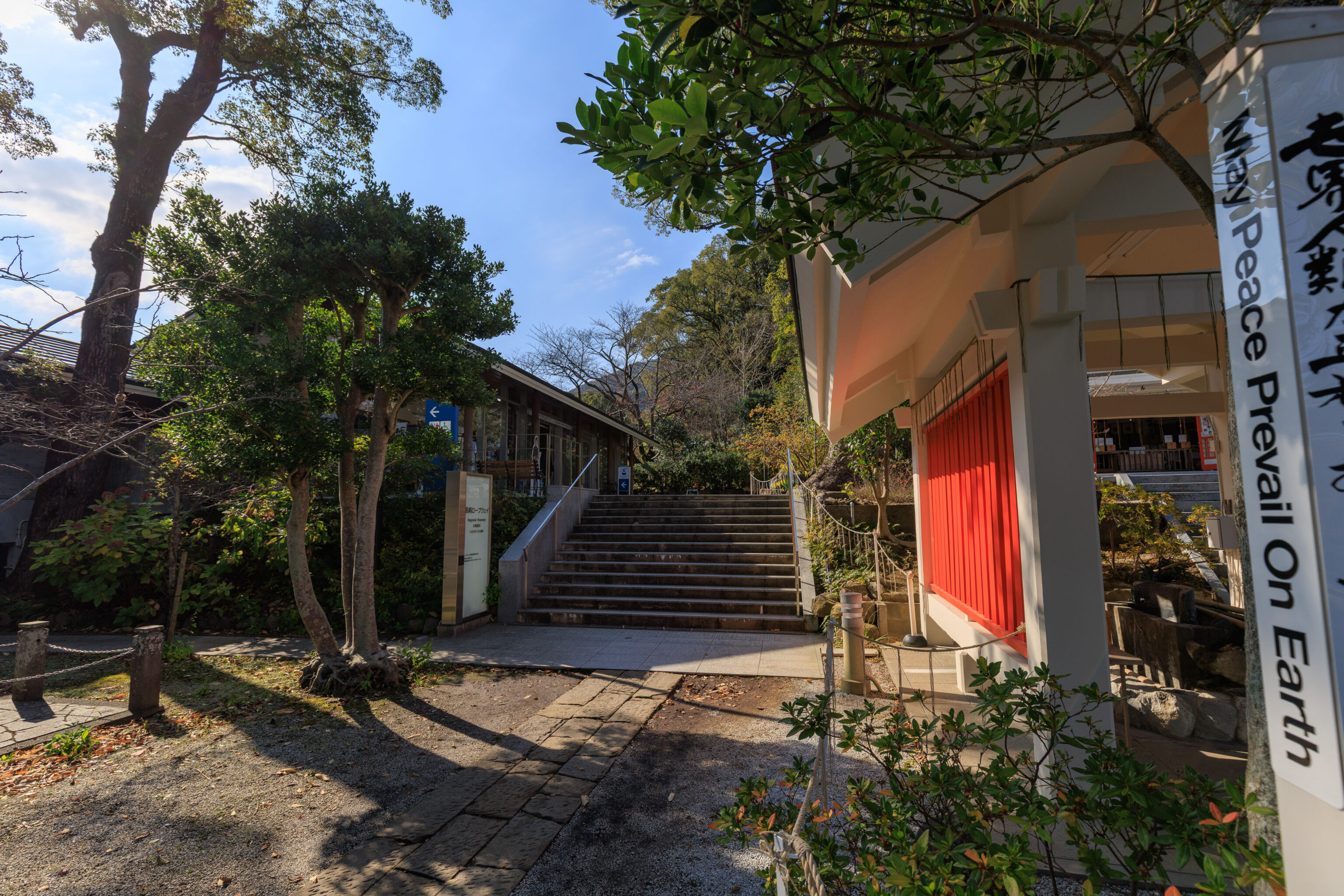
We walked under the torii to reach the 長崎ロープウェイ Nagasaki Ropeway.
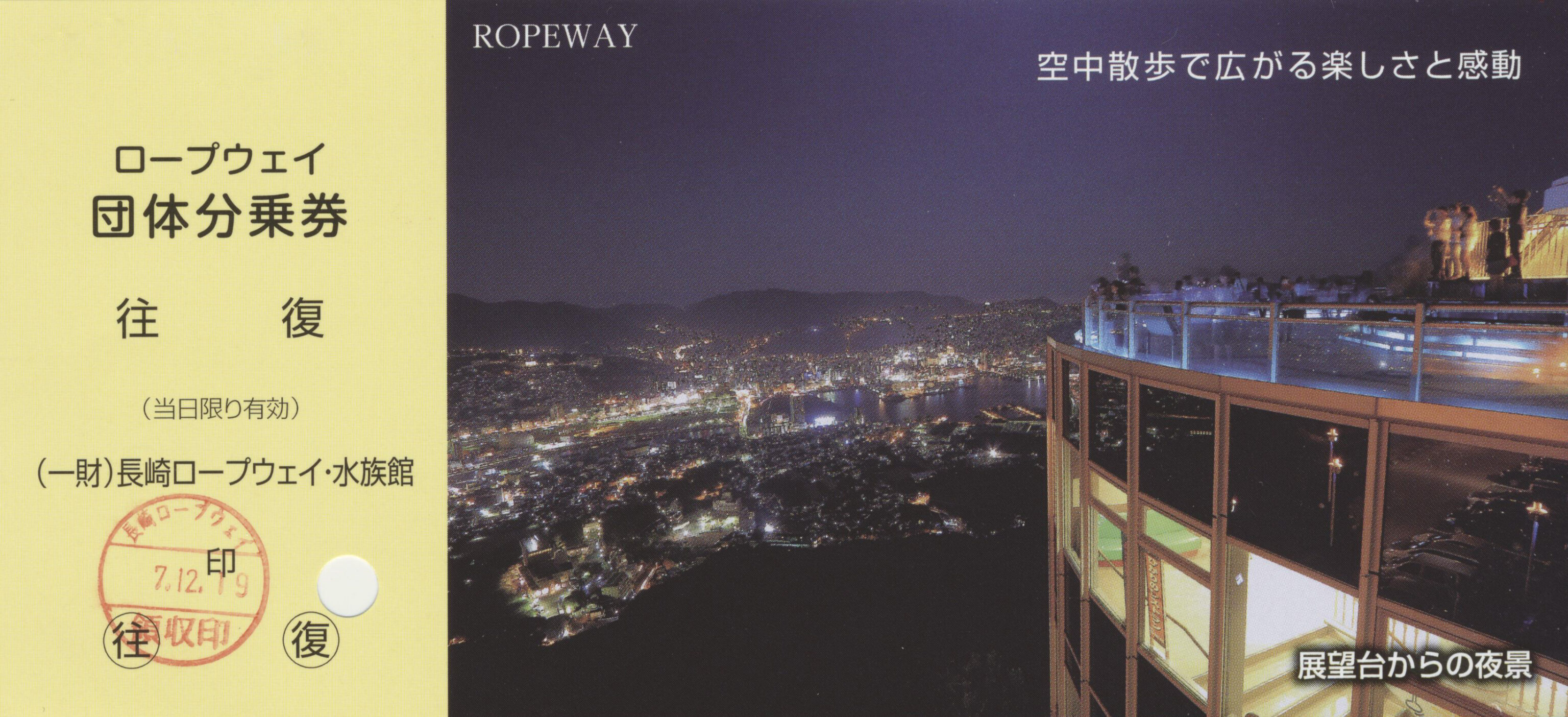
We immediately bought tickets with the next departure scheduled to leave in a few minutes.
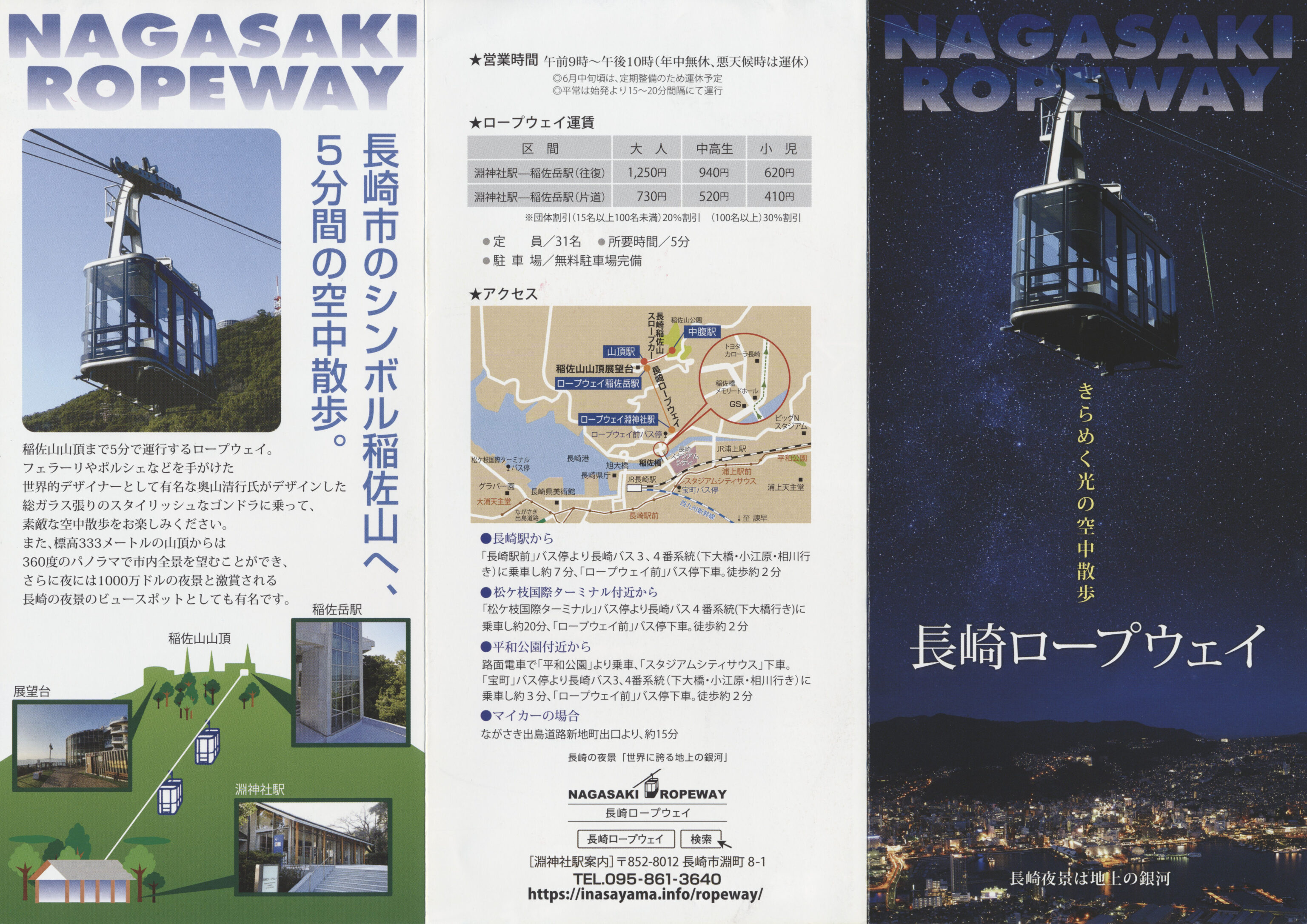
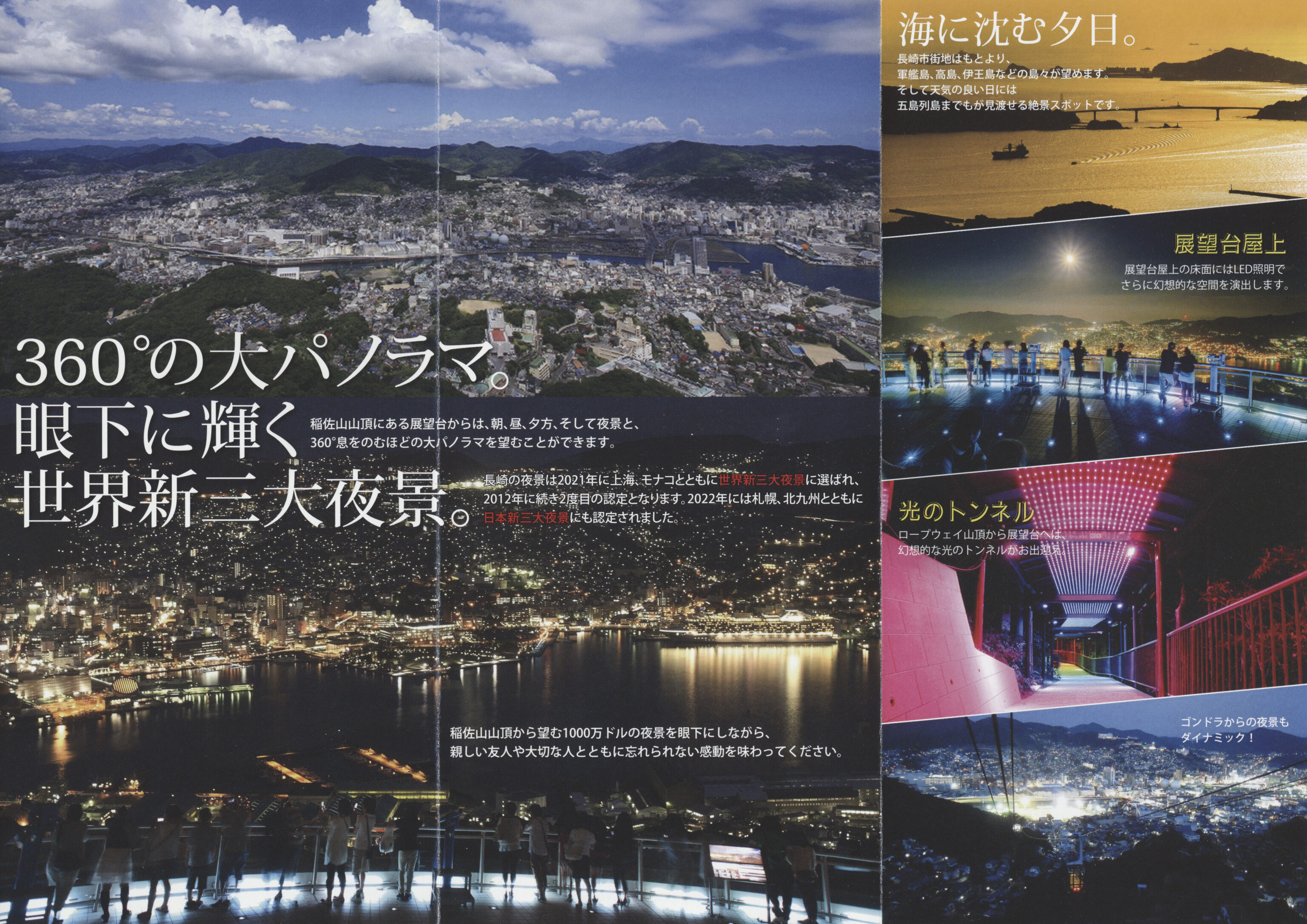
We also picked up a small informational pamphlet in Japanese.
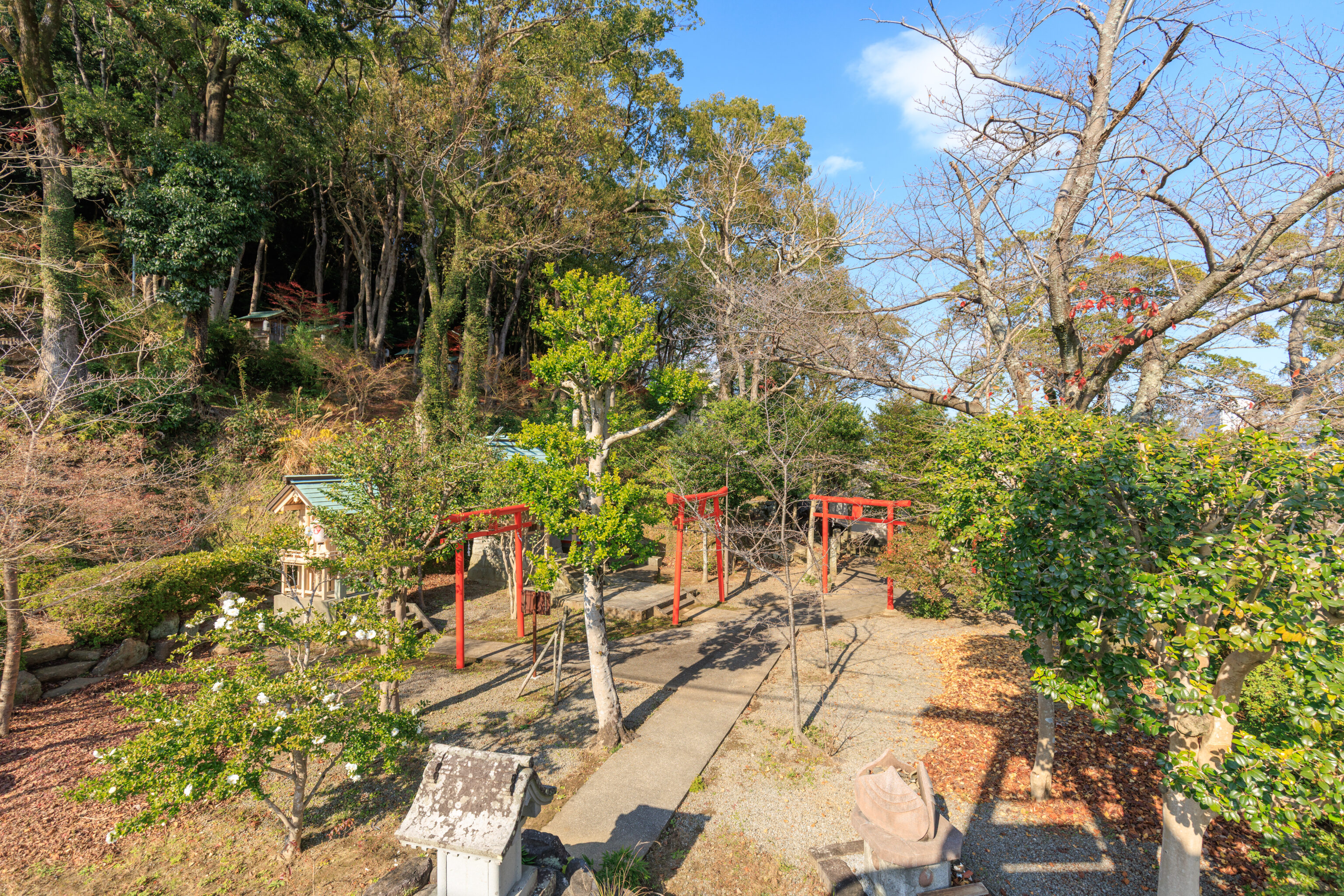
After boarding, the aerial tram departed. We had a view of part of the shrine as we began to ascend.
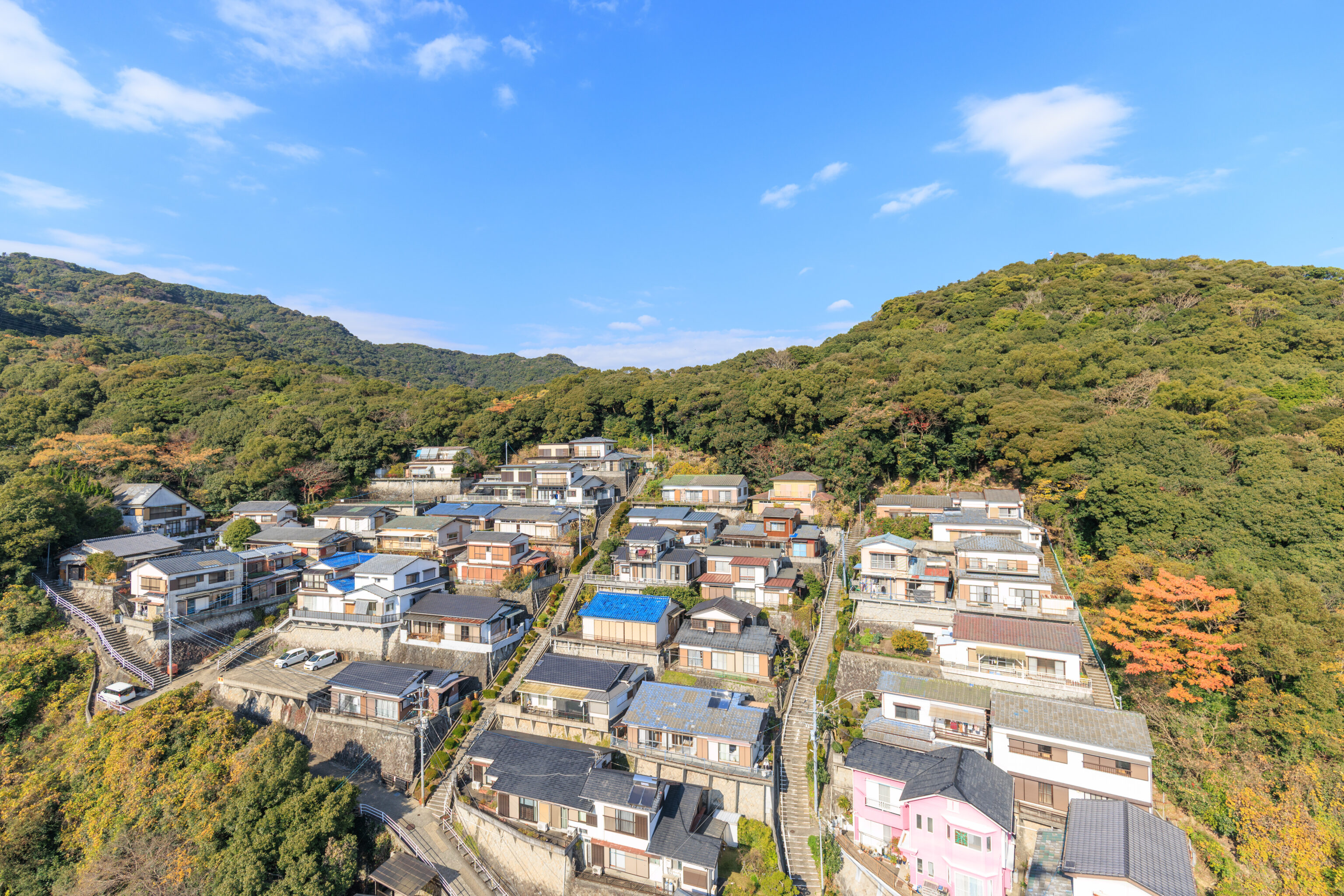
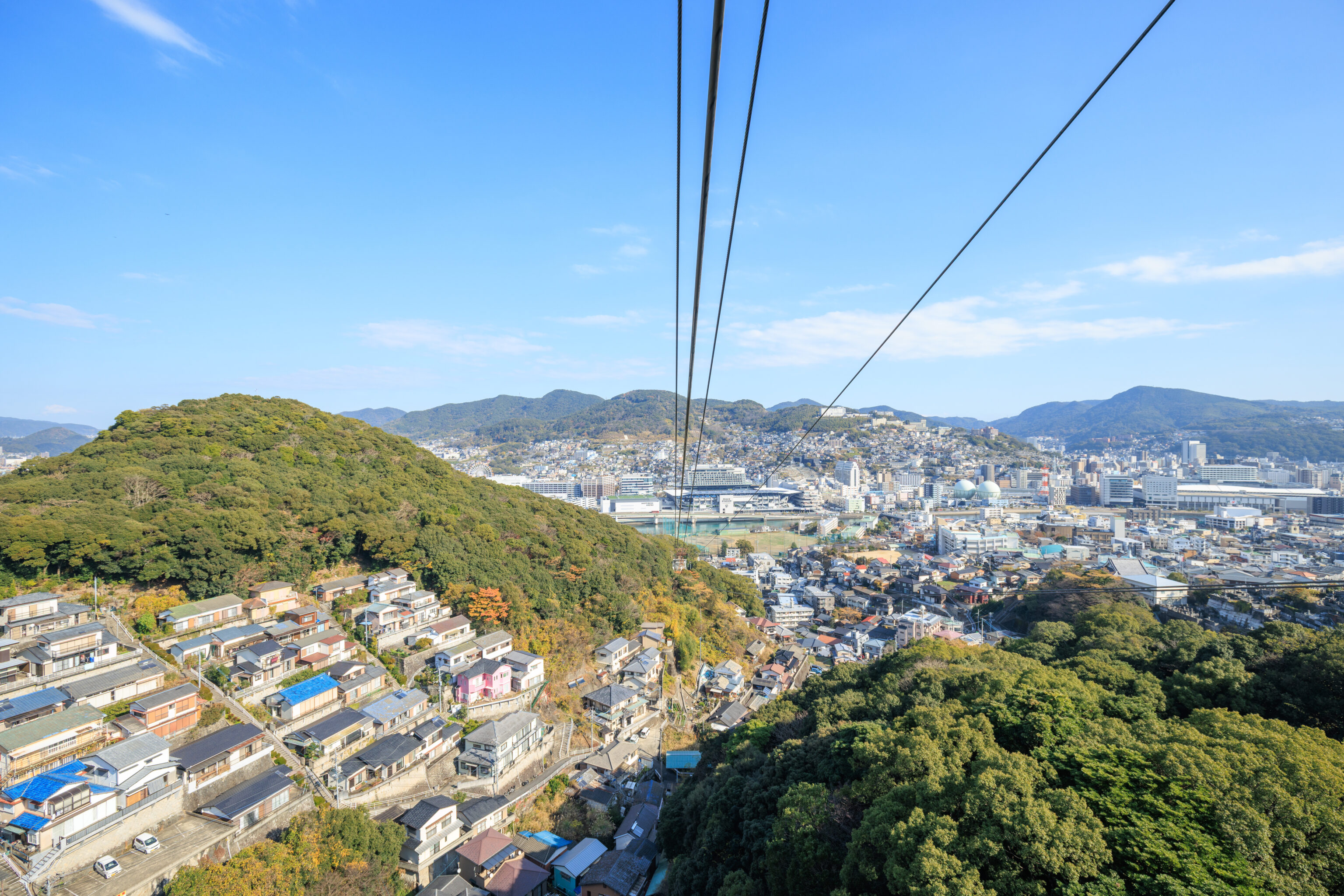
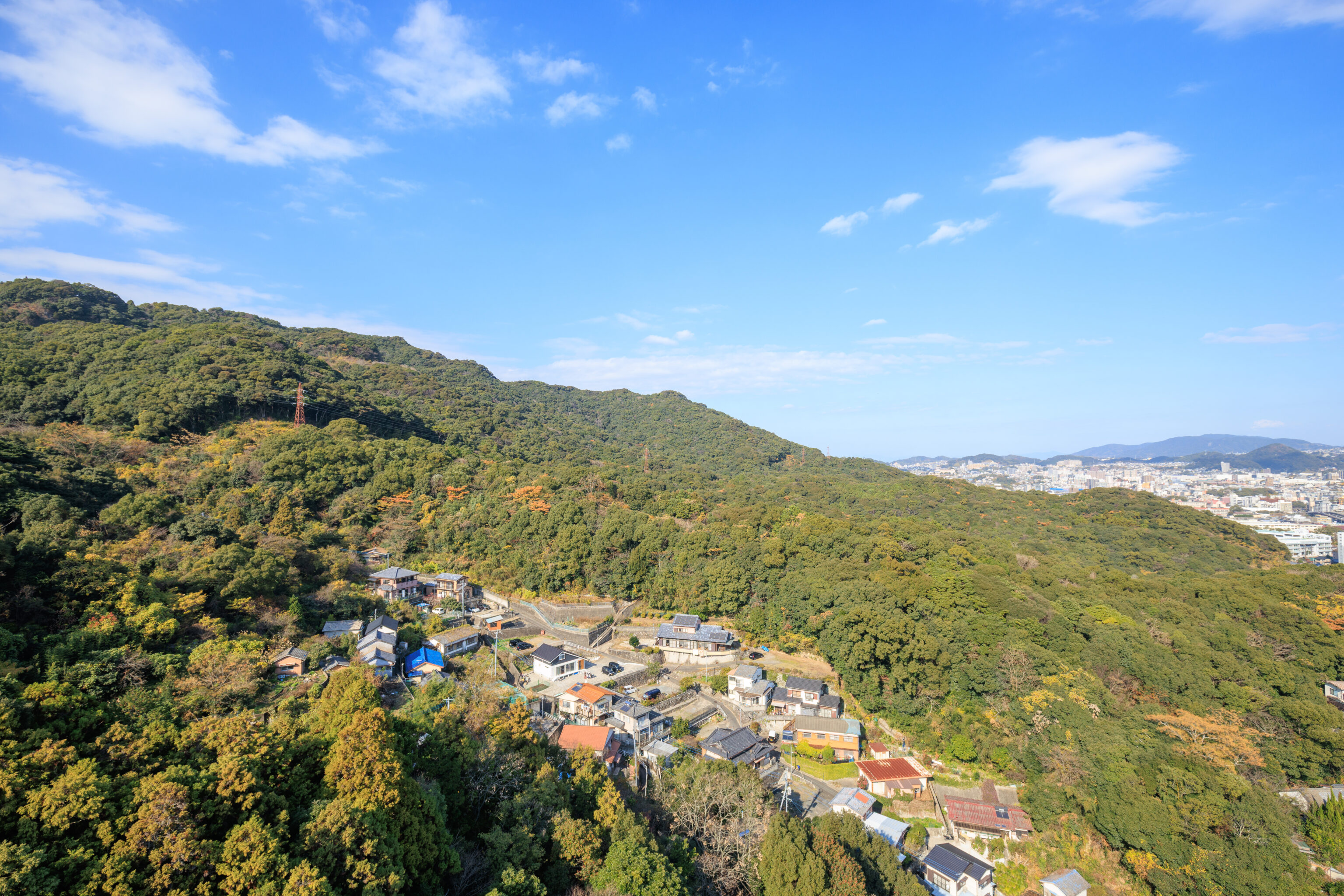
We passed by a small neighborhood on the lower elevations of 稲佐山 Inasa-yama, the small mountain, really just a big hill, that the ropeway is on.
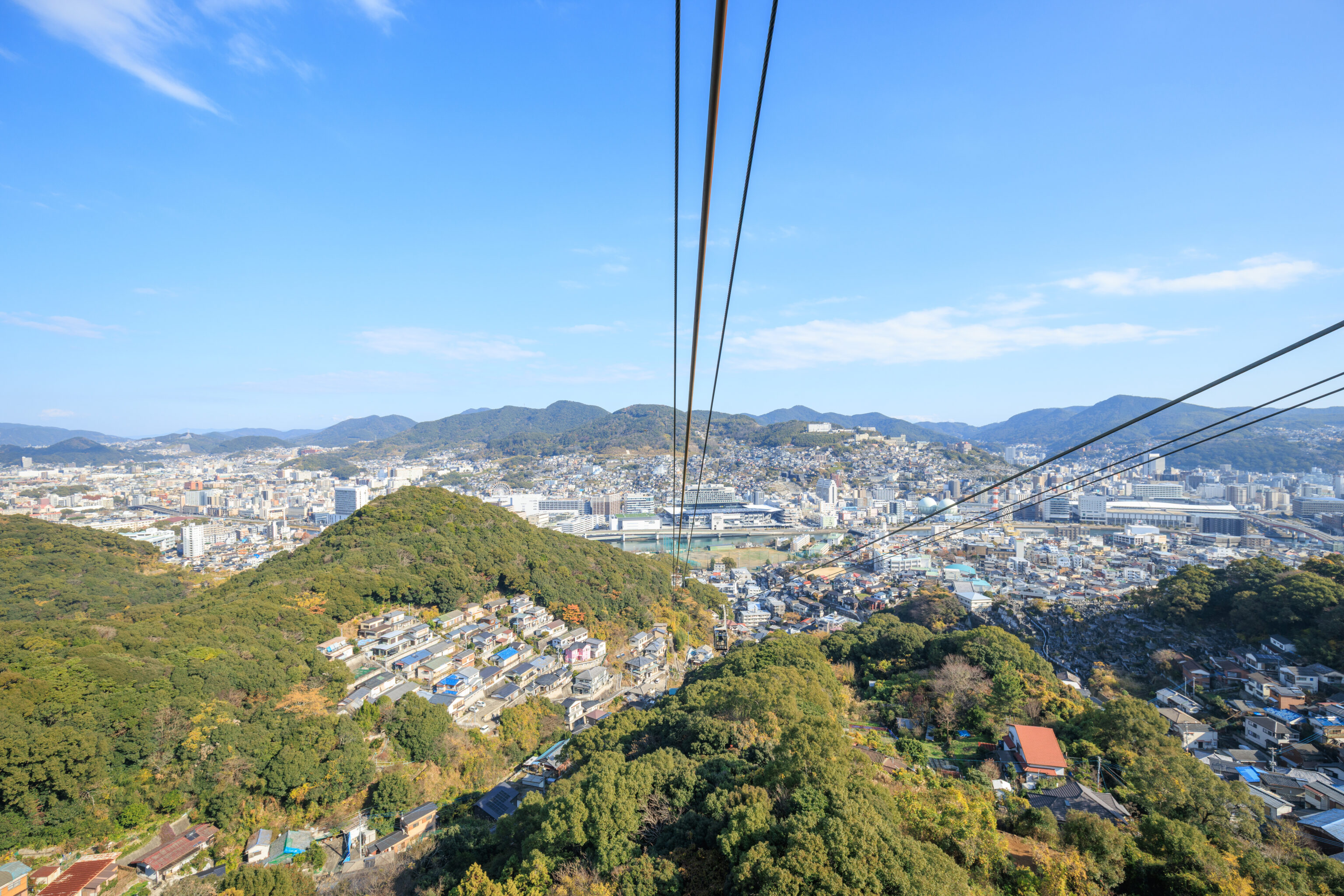
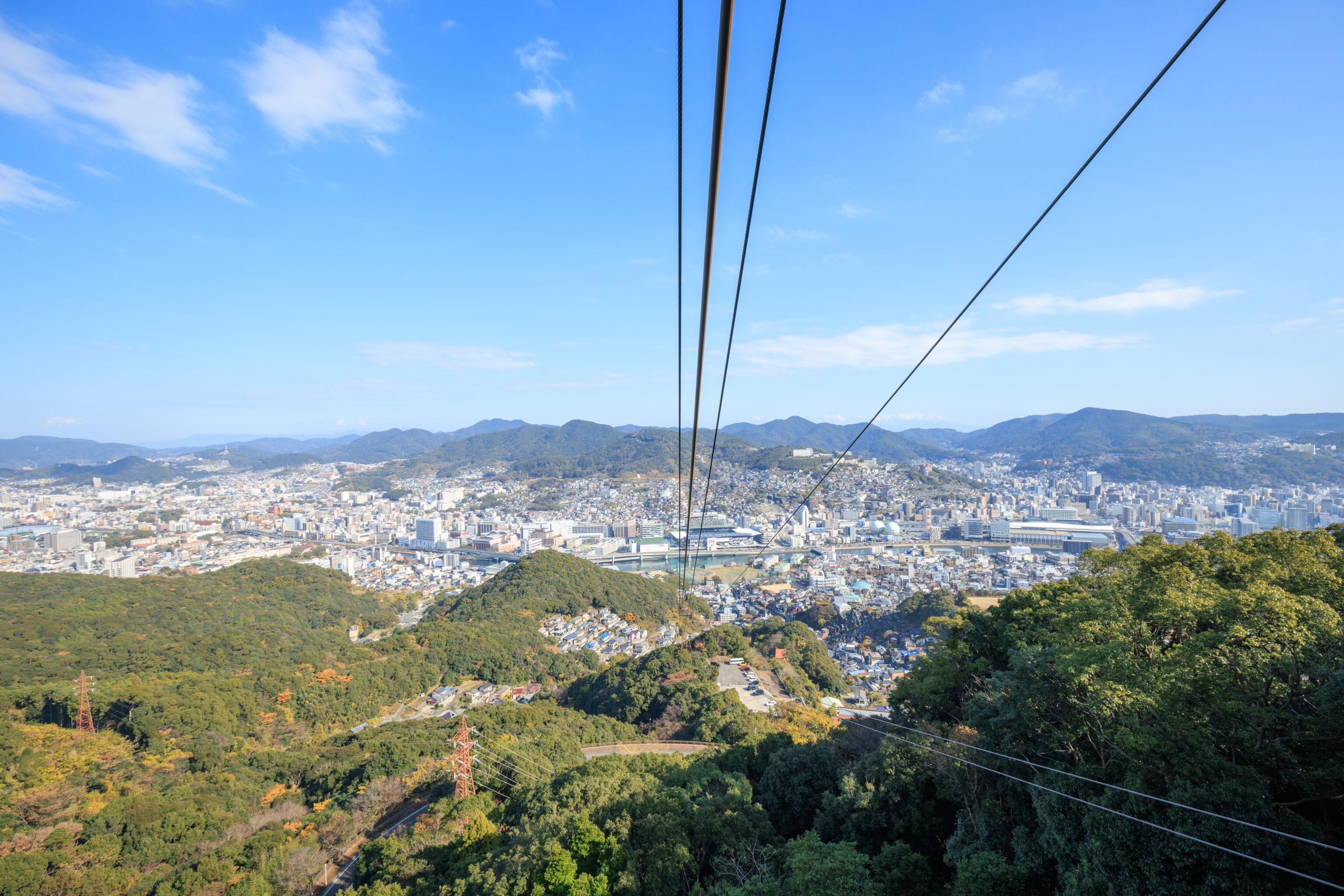
We had a wonderful view of Nagasaki when looking to the east.
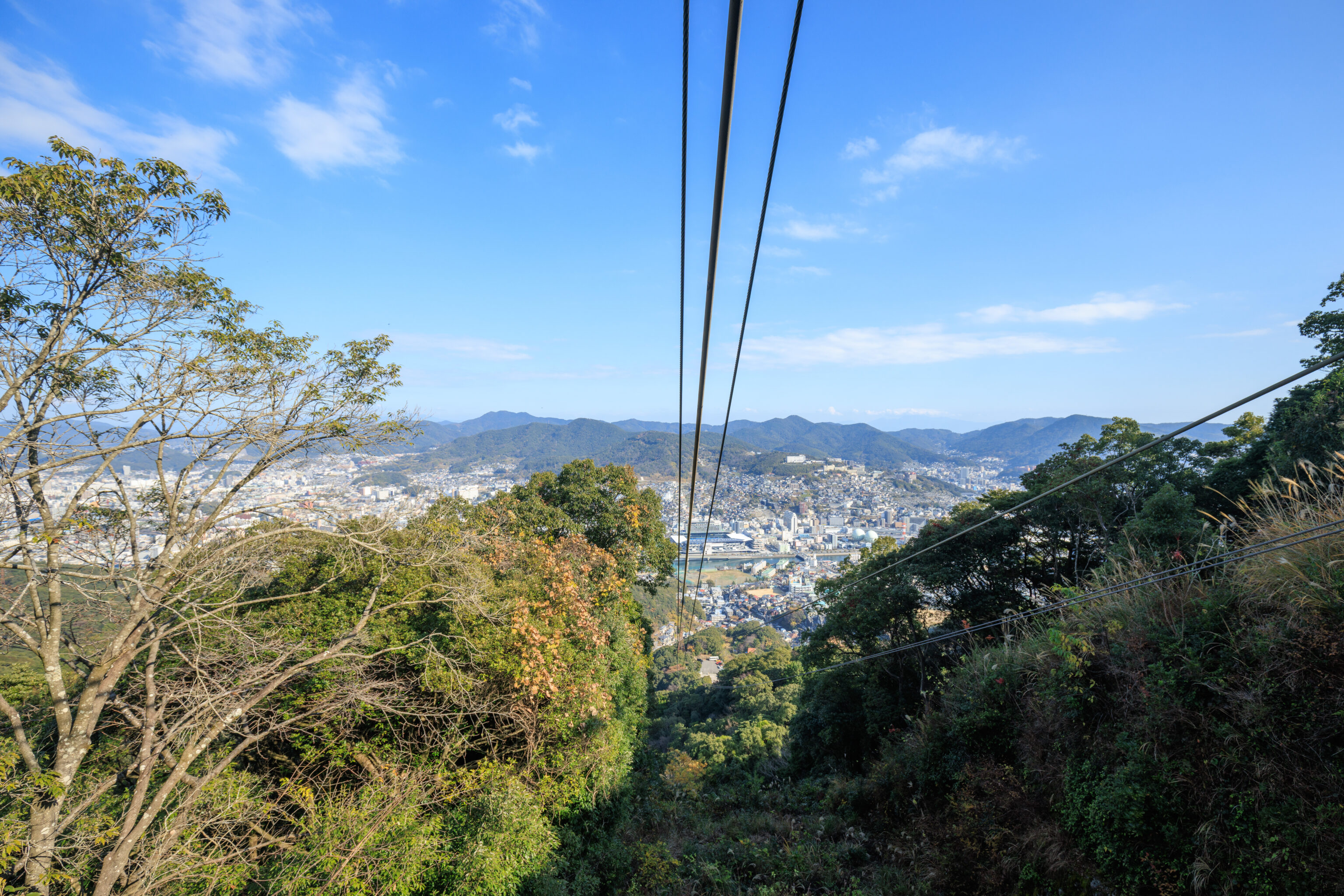
The trip only takes a few minutes.
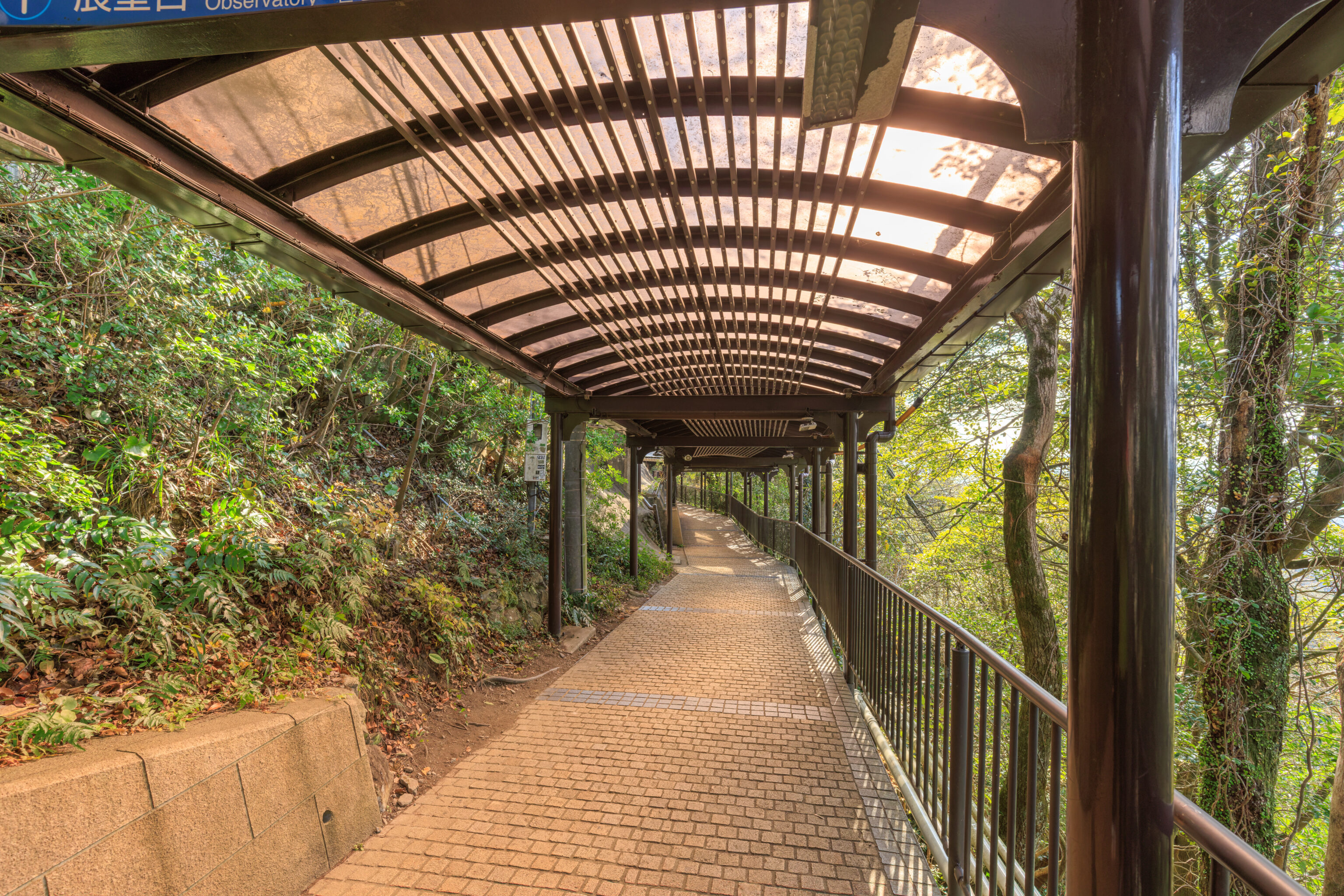
After arriving at the upper terminal, we walked down this covered path to reach the summit of Inasa-yama.
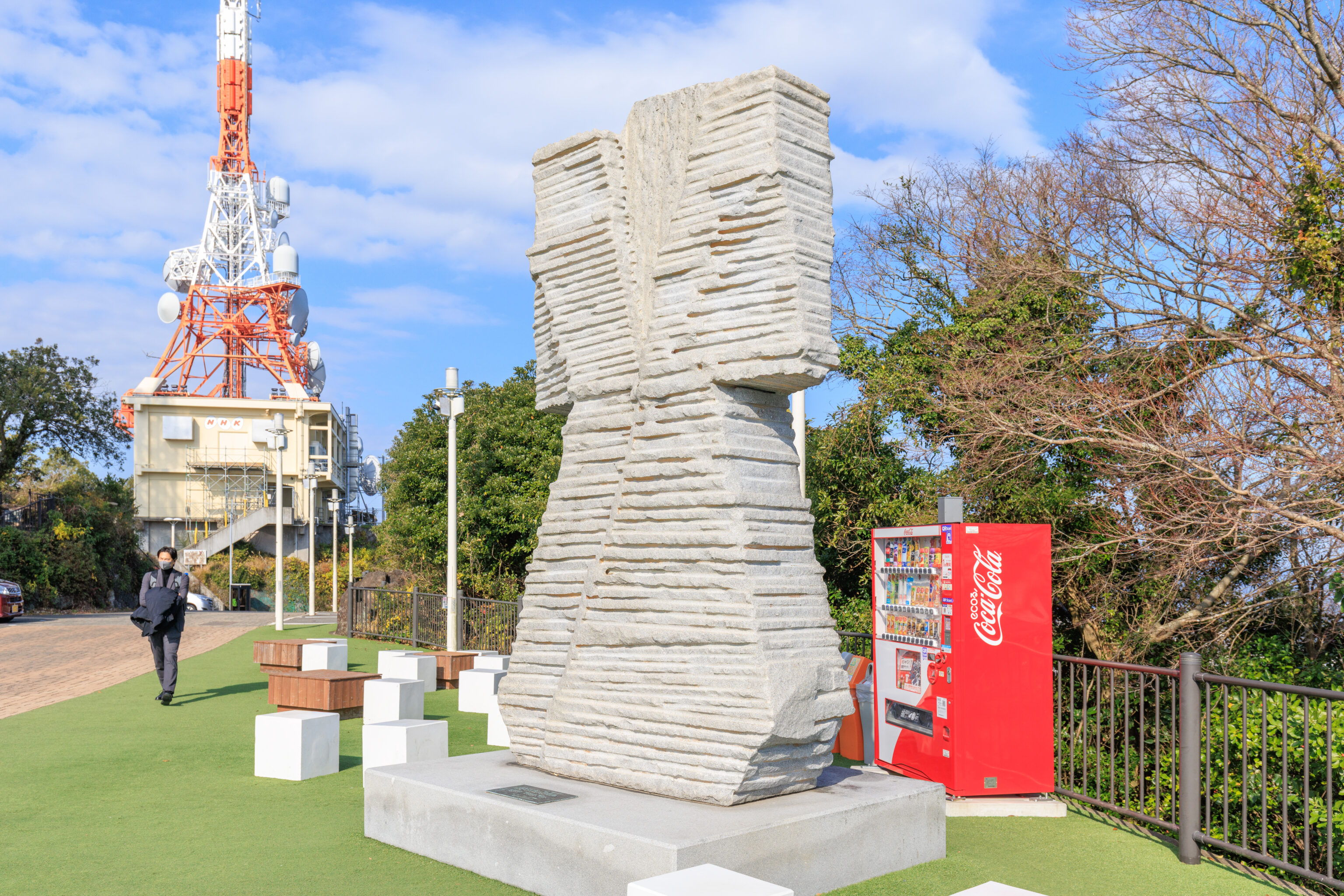
The summit area had an odd looking sculpture. It looks a bit like kimono, or maybe yukata? We failed to photograph the sign but someone did and posted it on Google Maps:
Kimono of 450 Years
This sculpture was donated to Nagasaki by the city of Lisbon, Portugal to commemorate the 450th anniversary of friendly relations between Japan and Portugal. It was unveiled on this spot in the presence of Portuguese President Mario Soares.

Sculptor: Pedro Ramos
October 1993
Nagasaki City
– Text from a photograph of a sign on Google Maps.
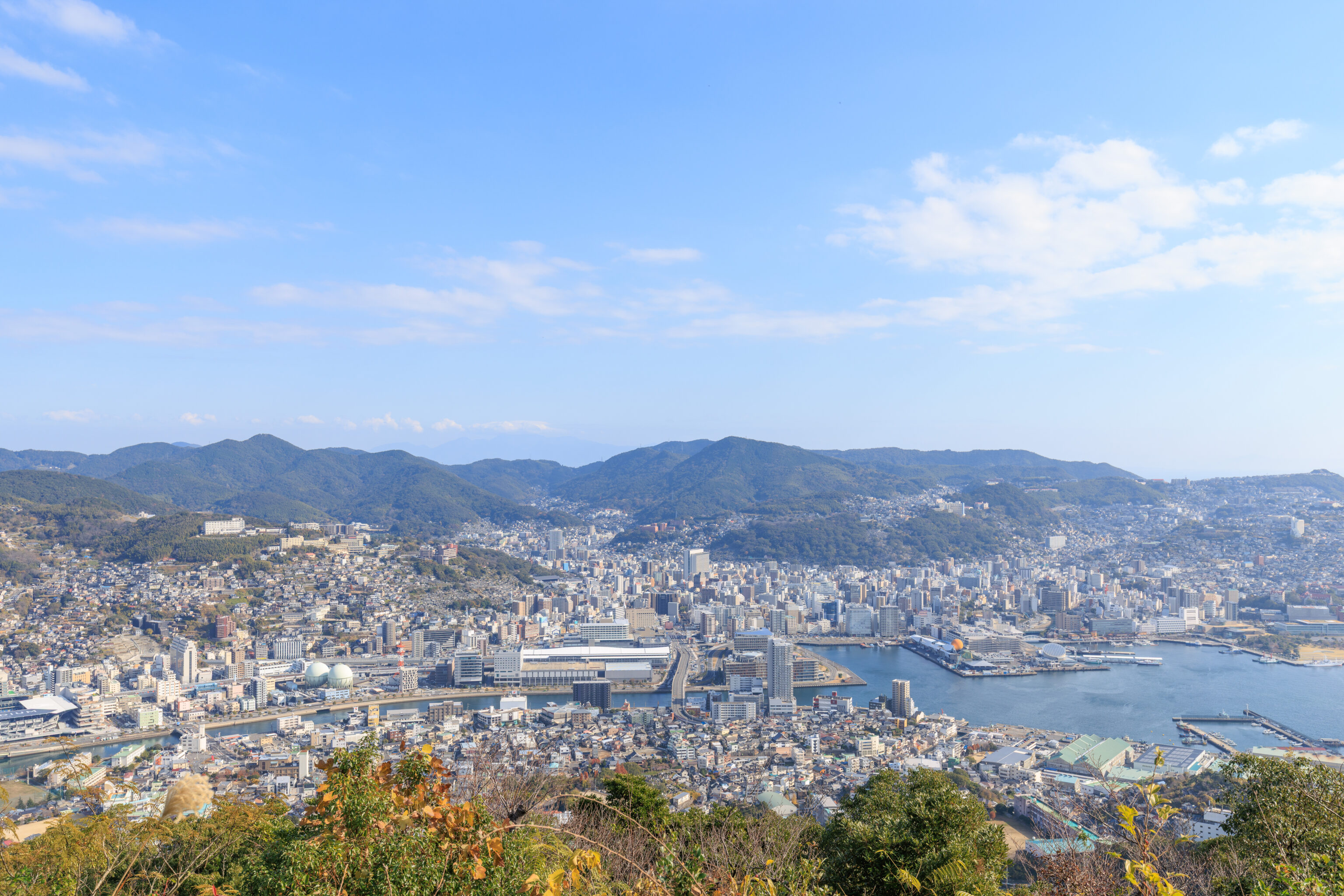
Walking a little bit past the sculpture, we had a fantastic view of Nagasaki below us. Nagasaki Station and the Marriott that we will be staying at are both visible here just a little bit of left of center.
Mt. Inasa
Standing at a height of 333m, Mt. Inasa boasts one of the "three great night views of Japan," which is recognized as a piece of Japan's heritage that must be preserved for future generations. In 1959 Nagasaki Ropeway was opened, and the mountain was firmly established as a place with a beautiful scenic view. This viewing space was established in 2009 along with the Candlelight Parking (a mountaintop car-park, named after the peace candles used to light it). The viewing space has been built so that the view has Nagasaki station and the surrounding town at its center, and stretches as far as the Peace Park, Urakami River and the local residential area.
– Text from a sign.
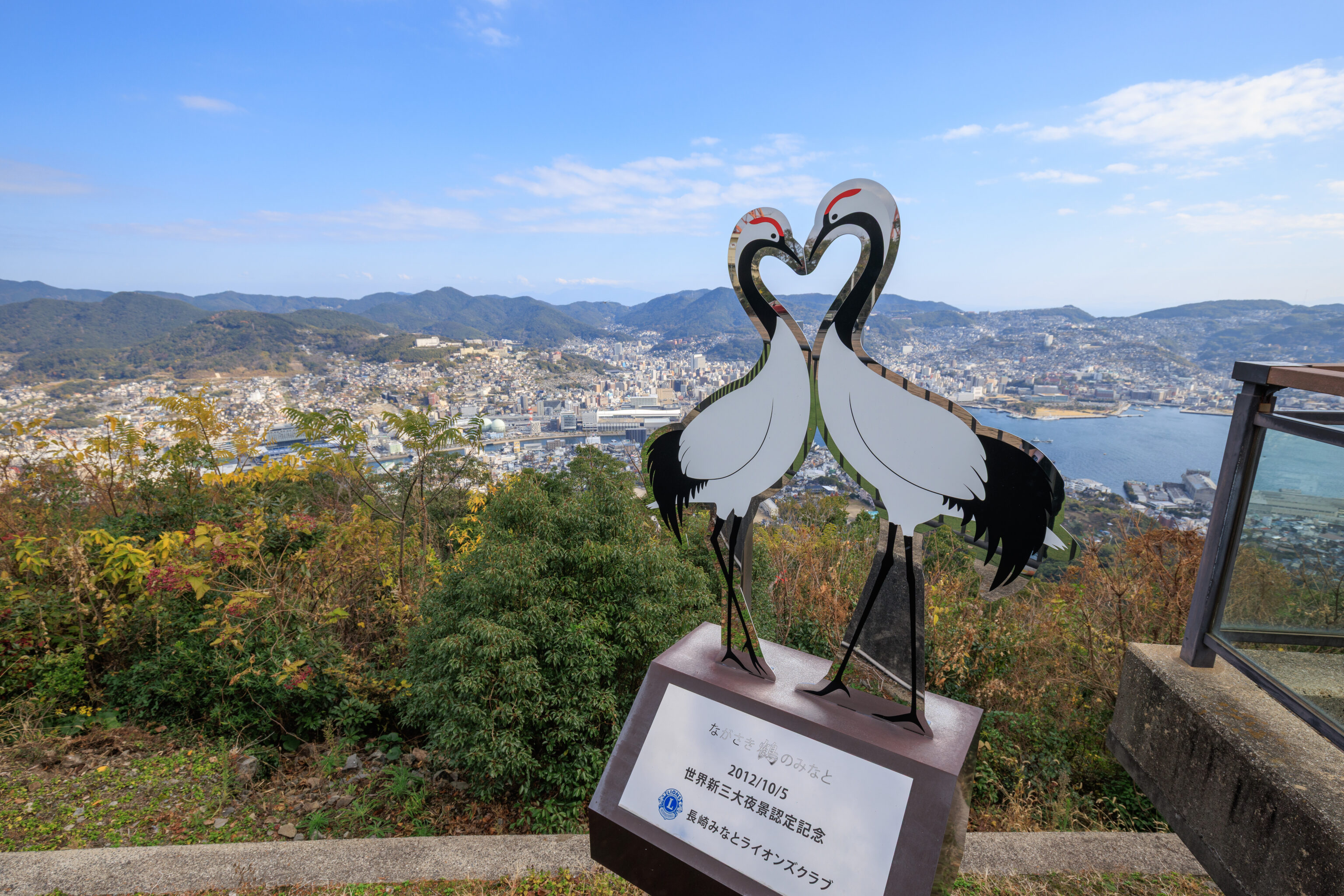
This metal sculpture of two cranes was erected by the Lions Club:
Nagasaki, Crane Port

October 5, 2012
Commemorating the designation as one of the "New Top Three Night Views of the World"

Nagasaki Minato Lions Club
– Text from a the plaque below the two cranes, translated using Google.
鶴 tsuru (crane) specifically means a bird in the crane family. This is unlike English where crane also means a structure used to lift heavy objects. Various sources explain that Nagasaki is called the crane port because its harbor is shaped like a crane.
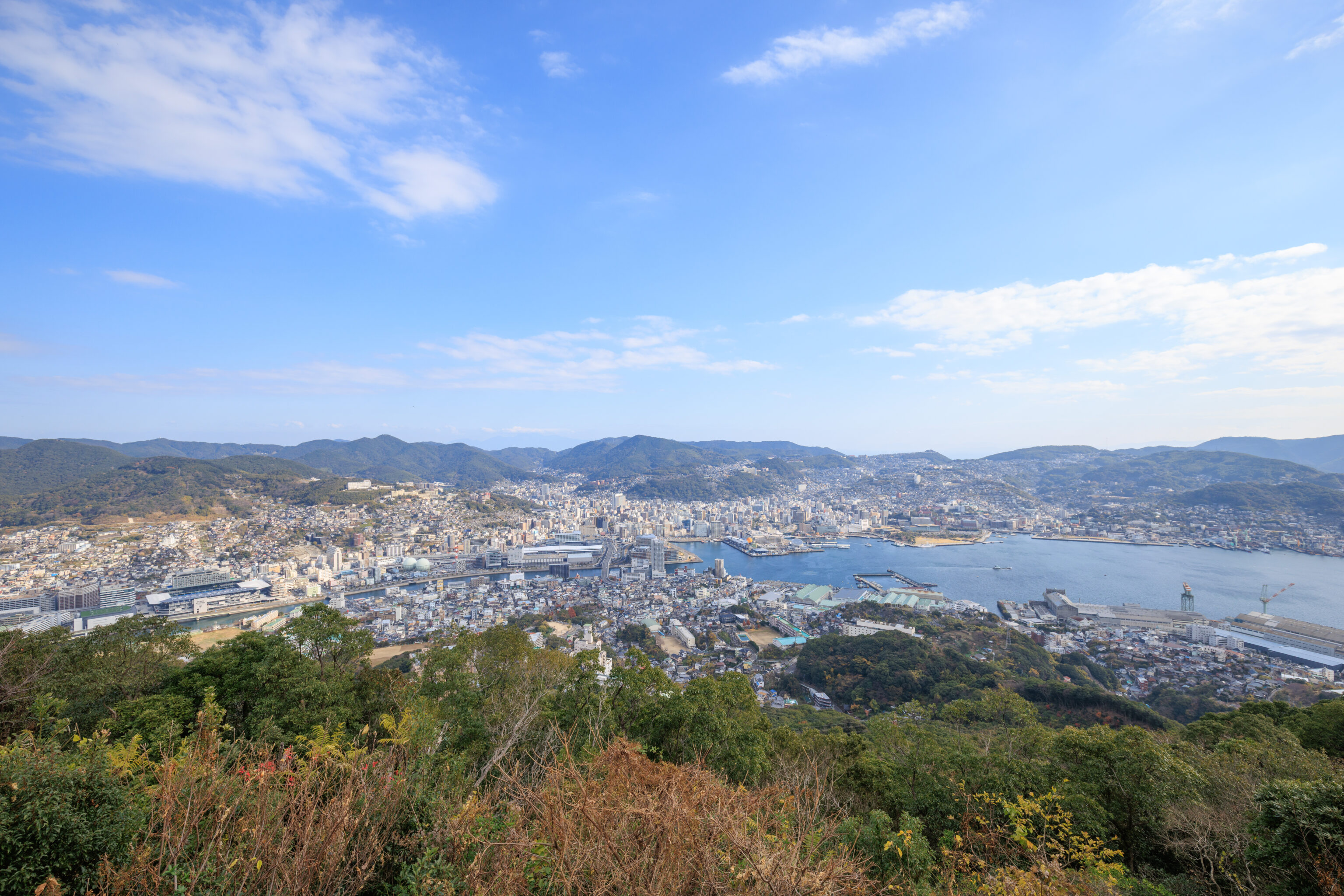
A similar but wider view of Nagasaki.
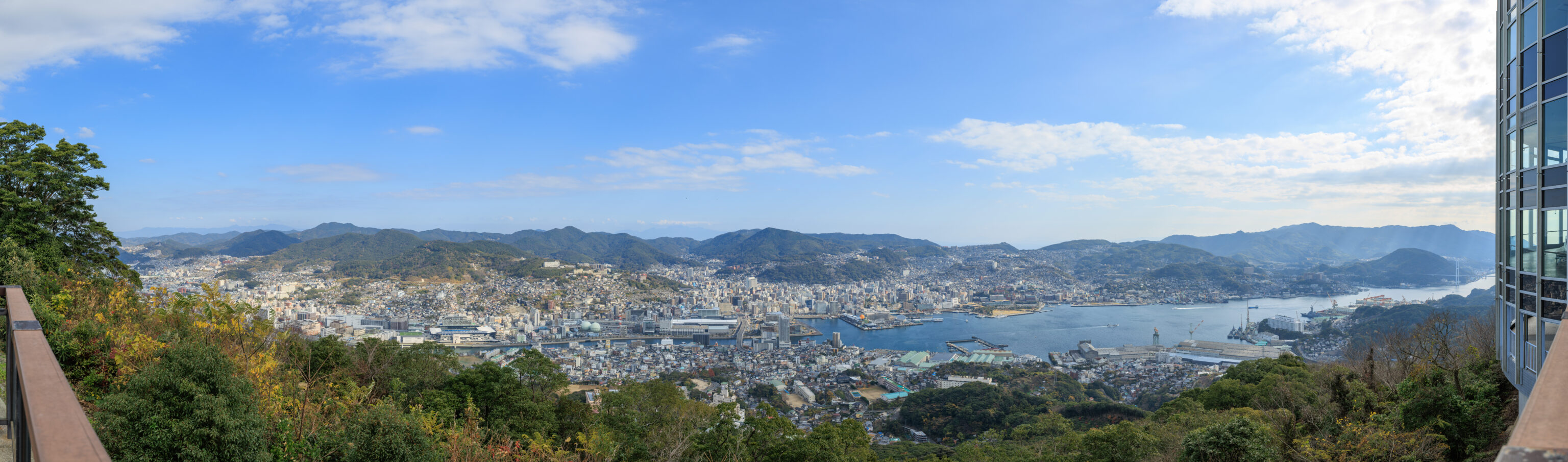
And a panorama from the same general area. The building on the right edge of this panorama is a circular observatory building. We didn’t actually photograph this building as it wasn’t particularly attractive.
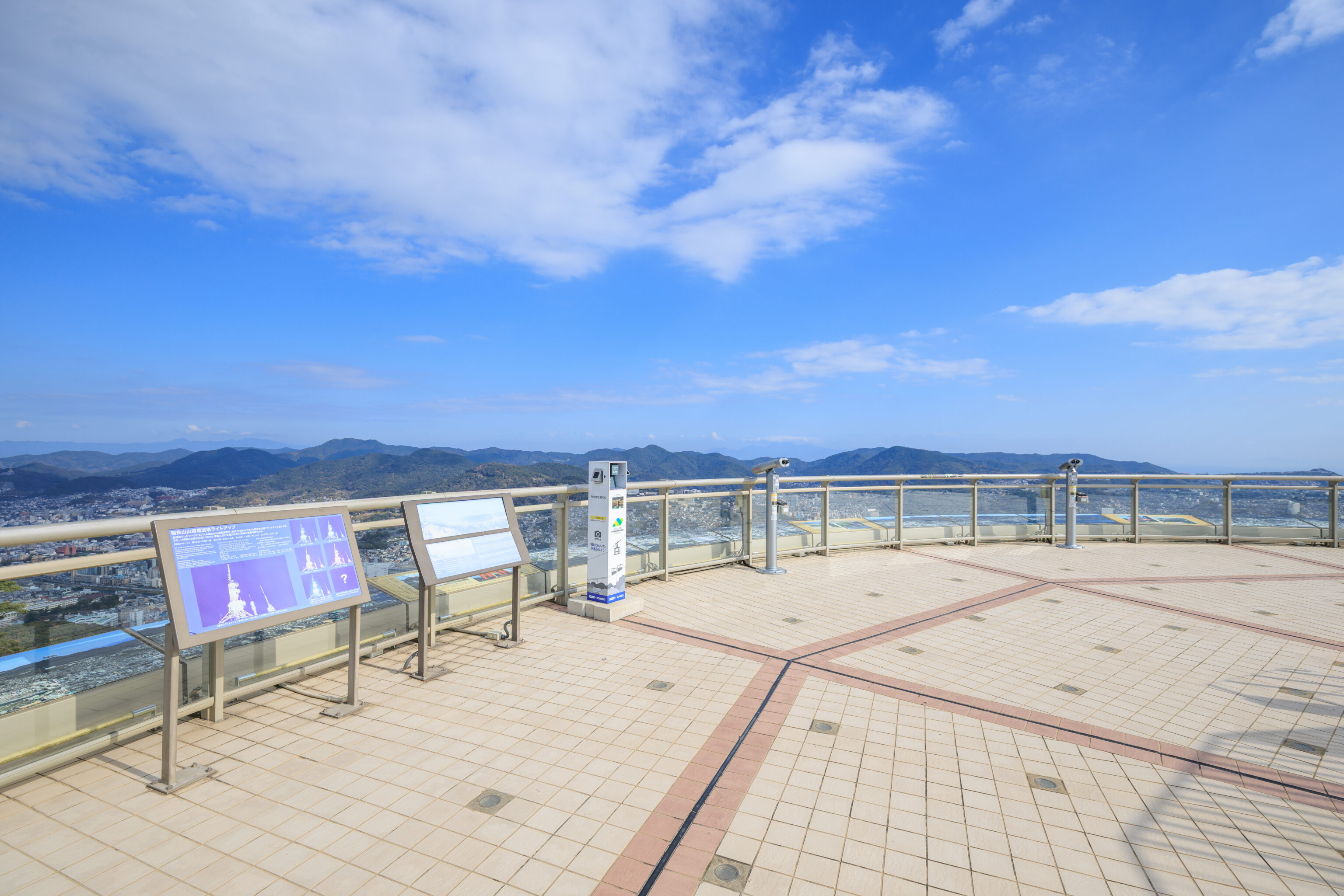
We went to the rooftop viewing deck via elevator.

We were able to get a 360° view of the surrounding area. Unfortunately, the entire thing didn’t quite stitch together due to perspective differences related to photographing from the circumference of a large circular space.
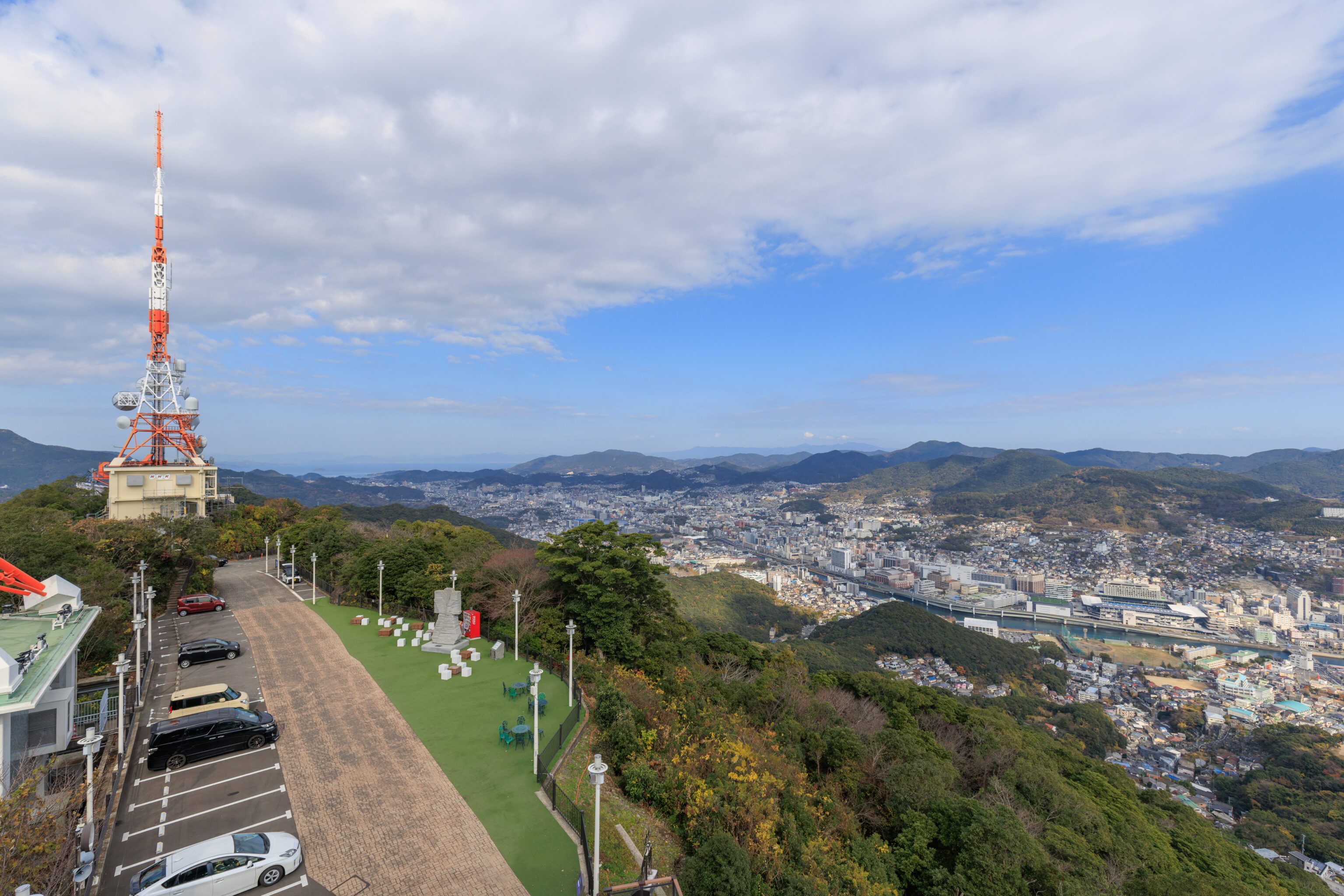
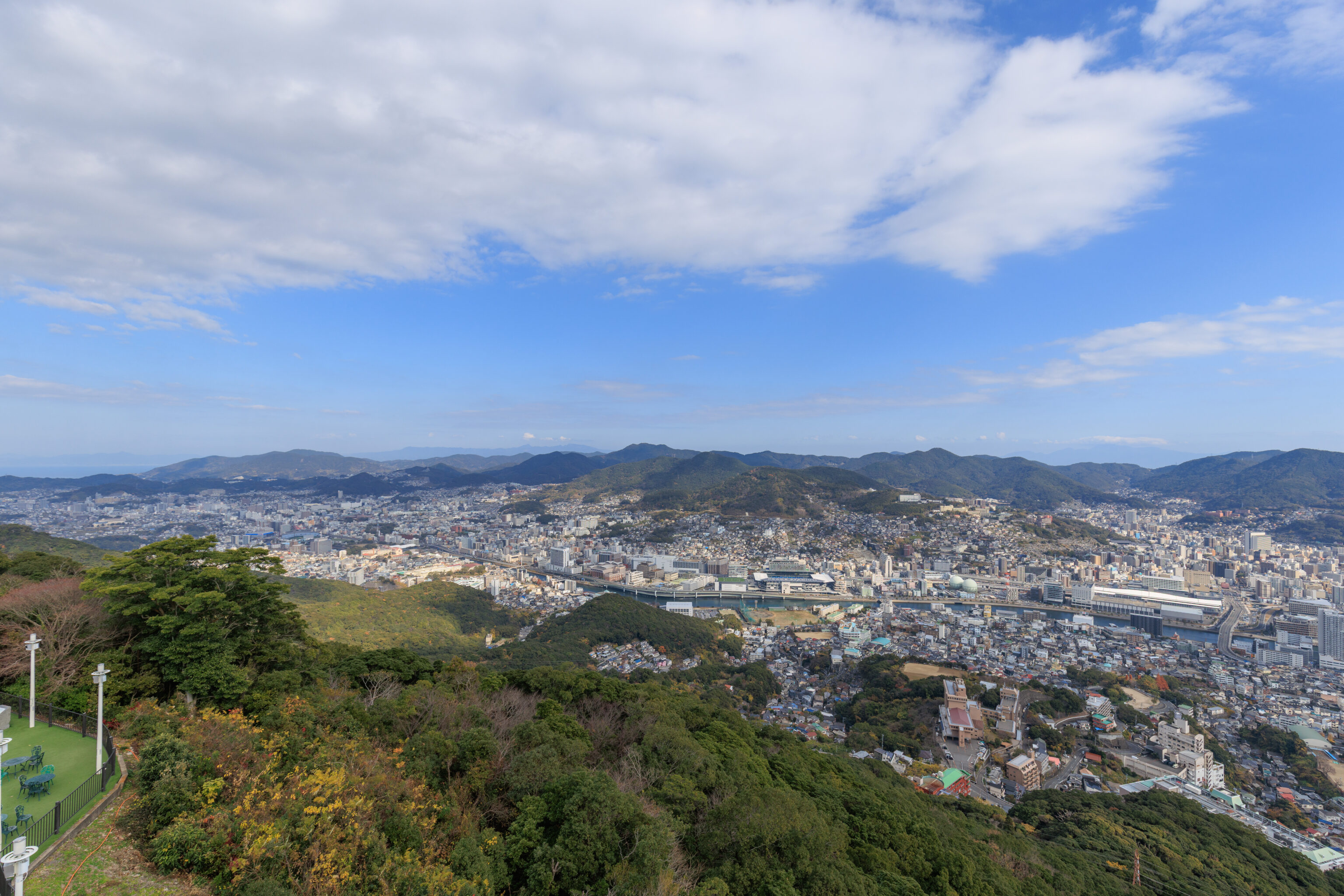
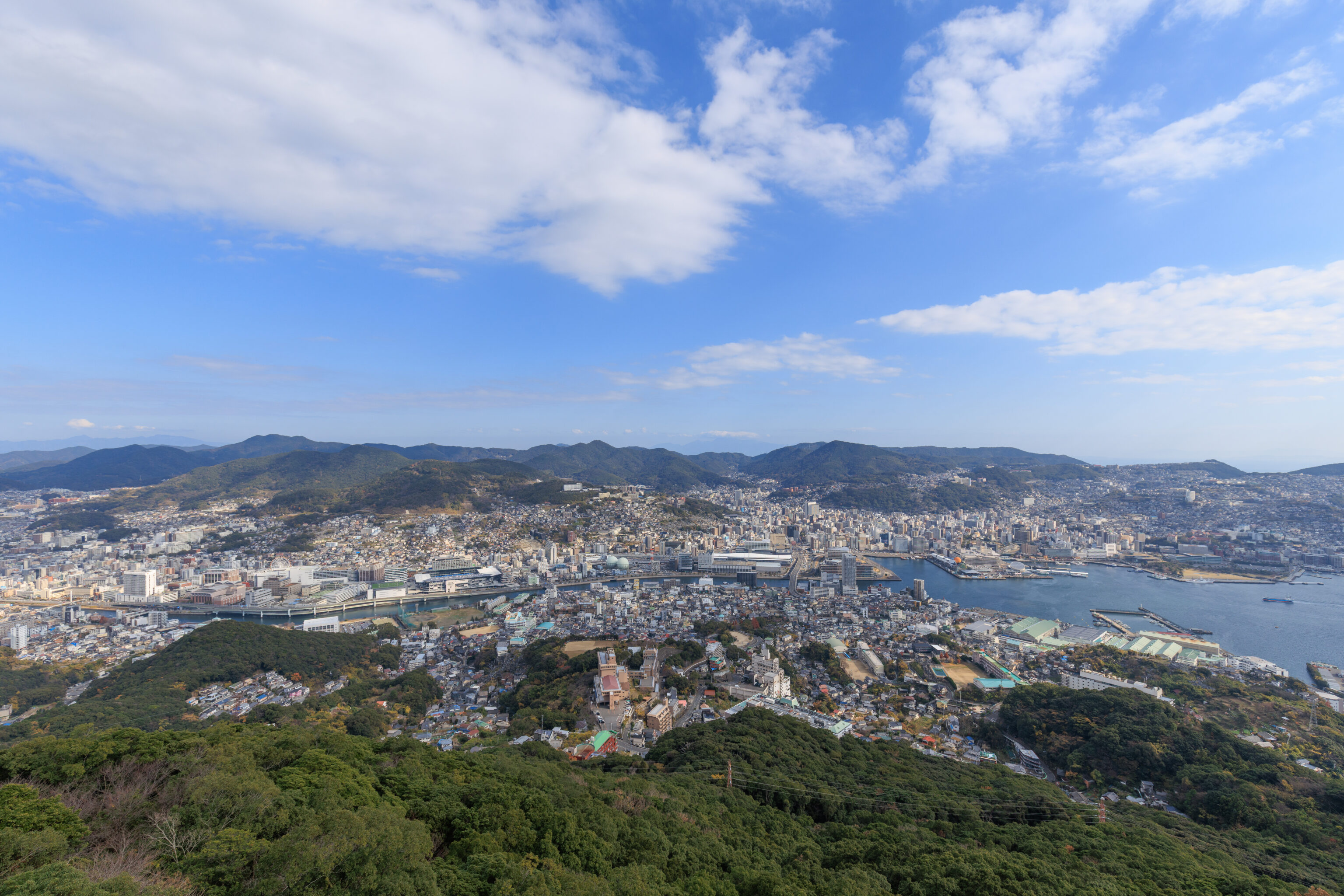
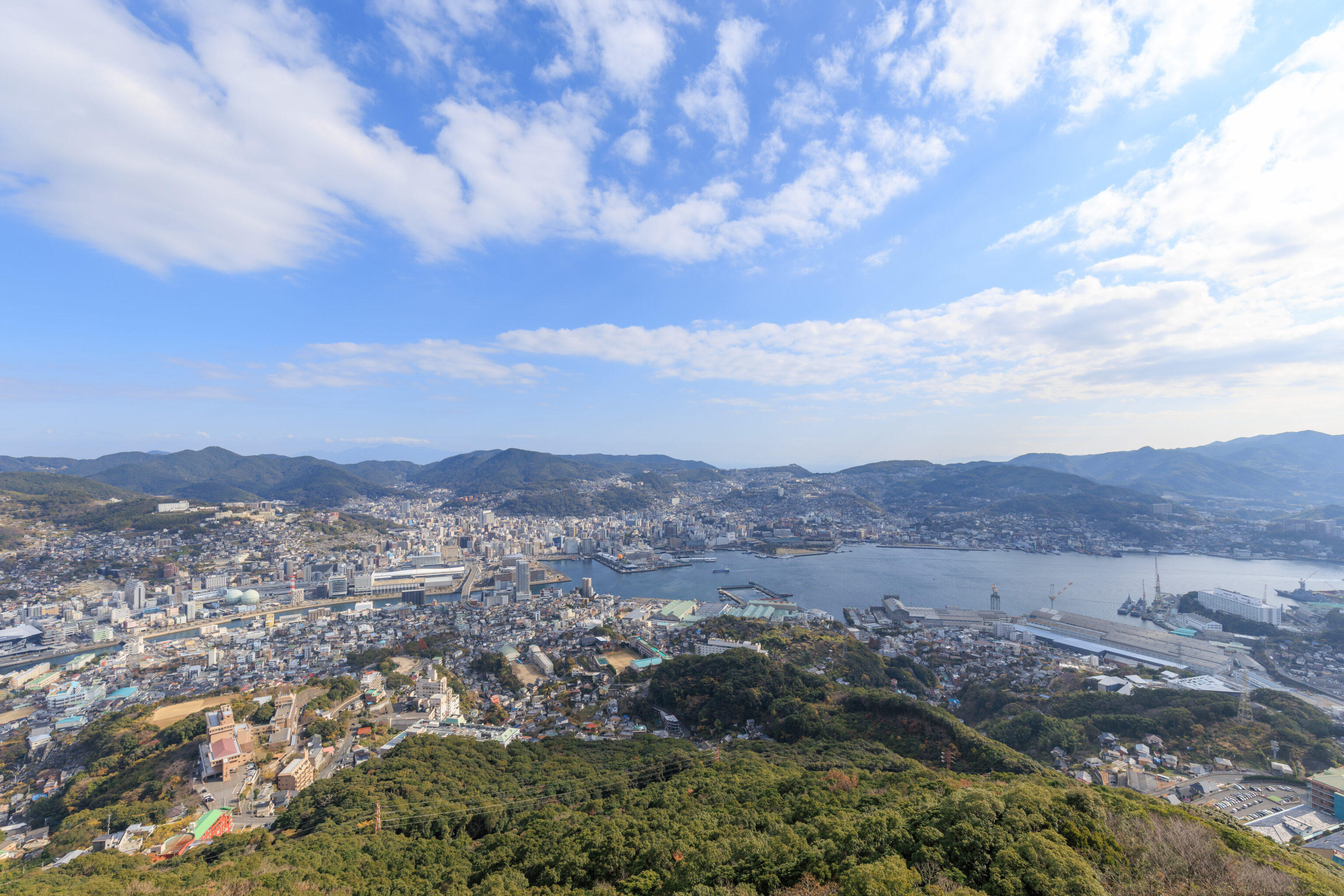
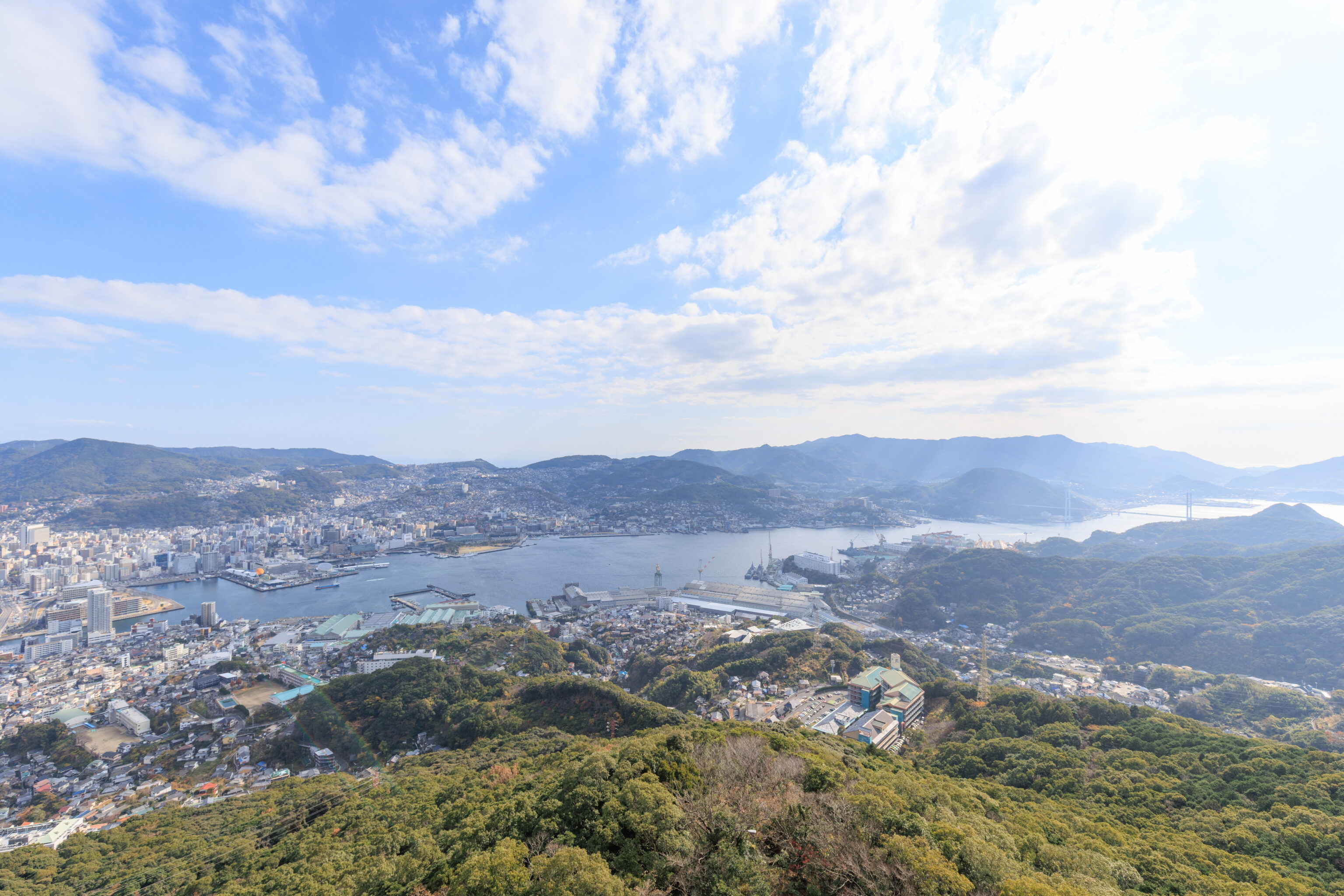
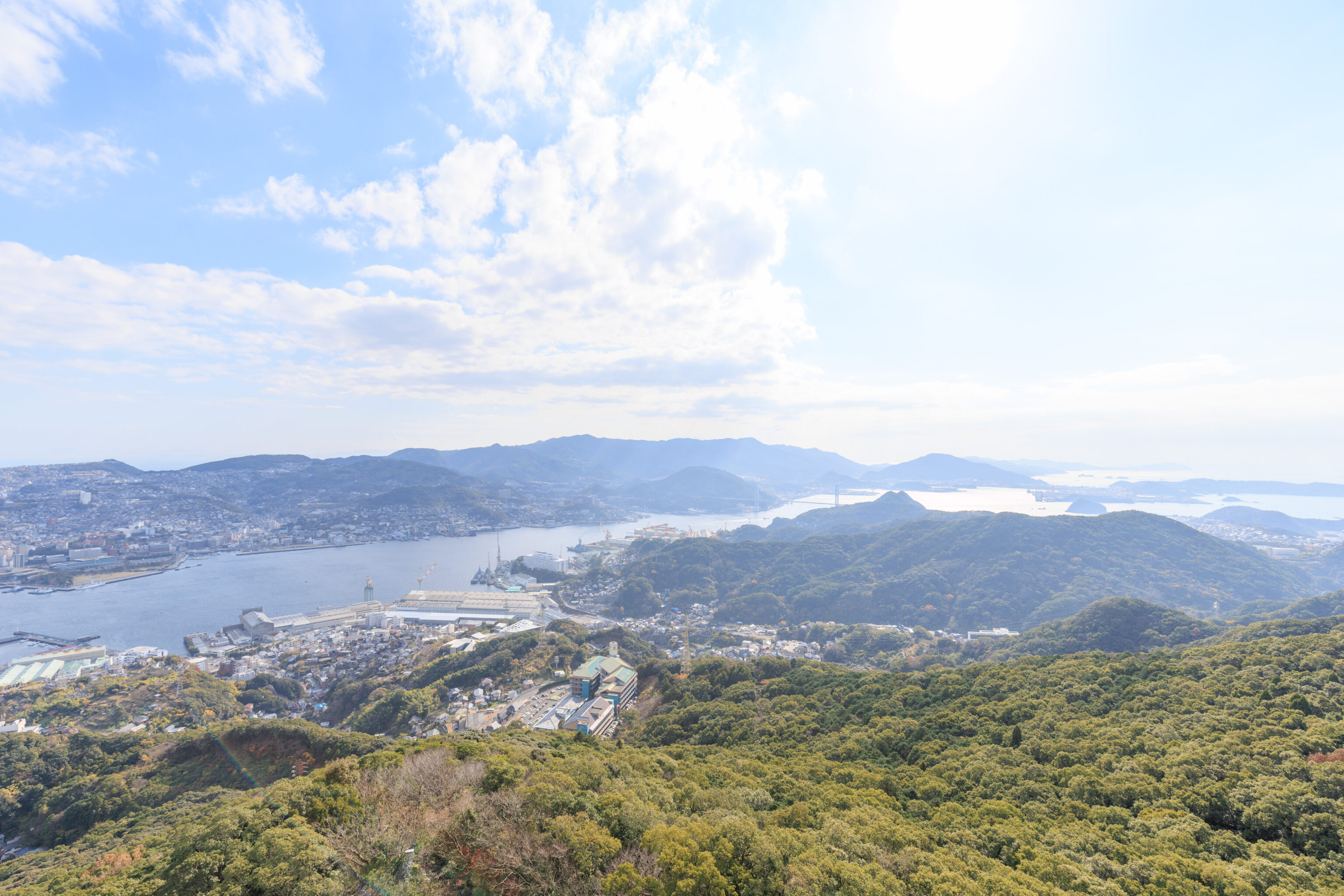
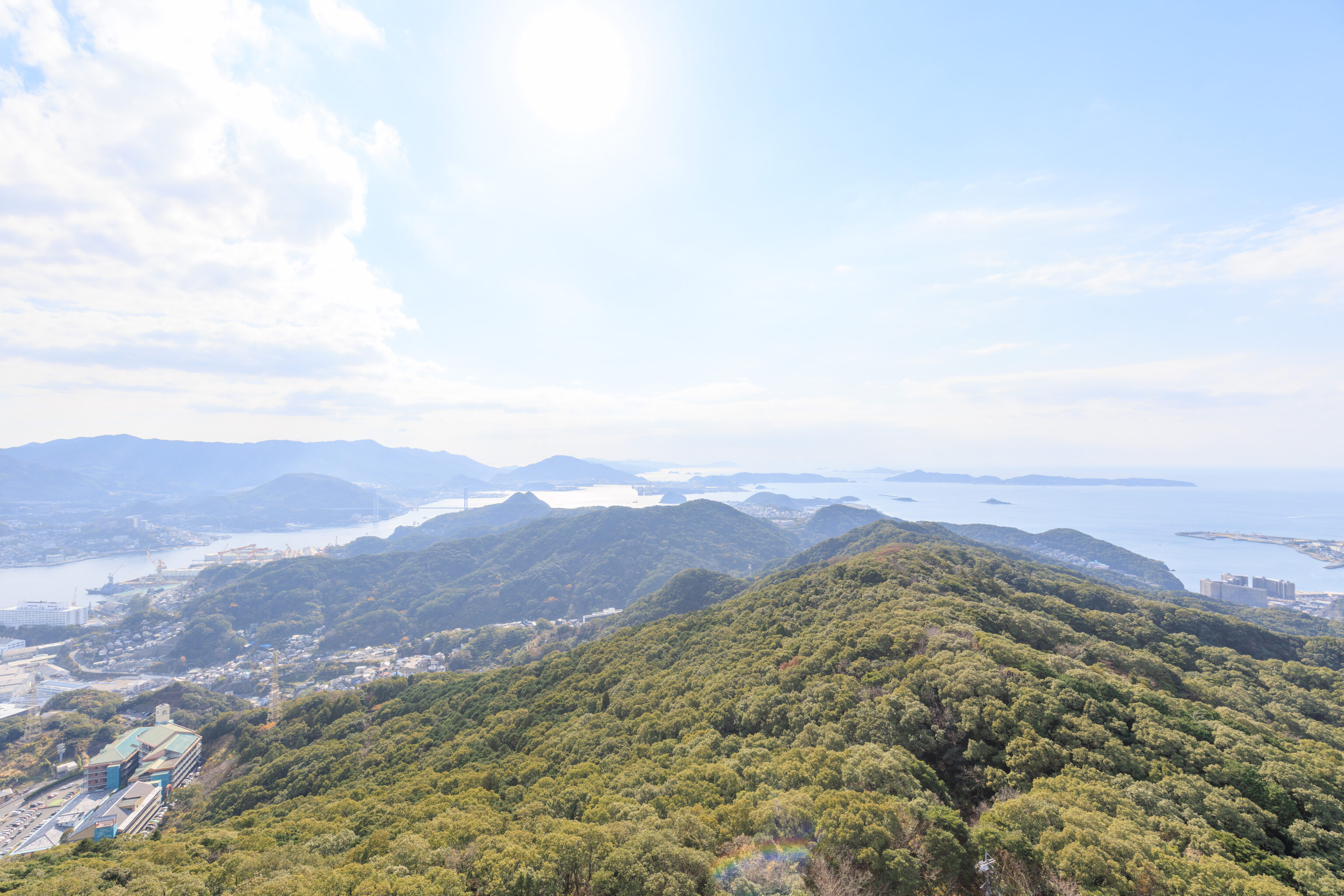
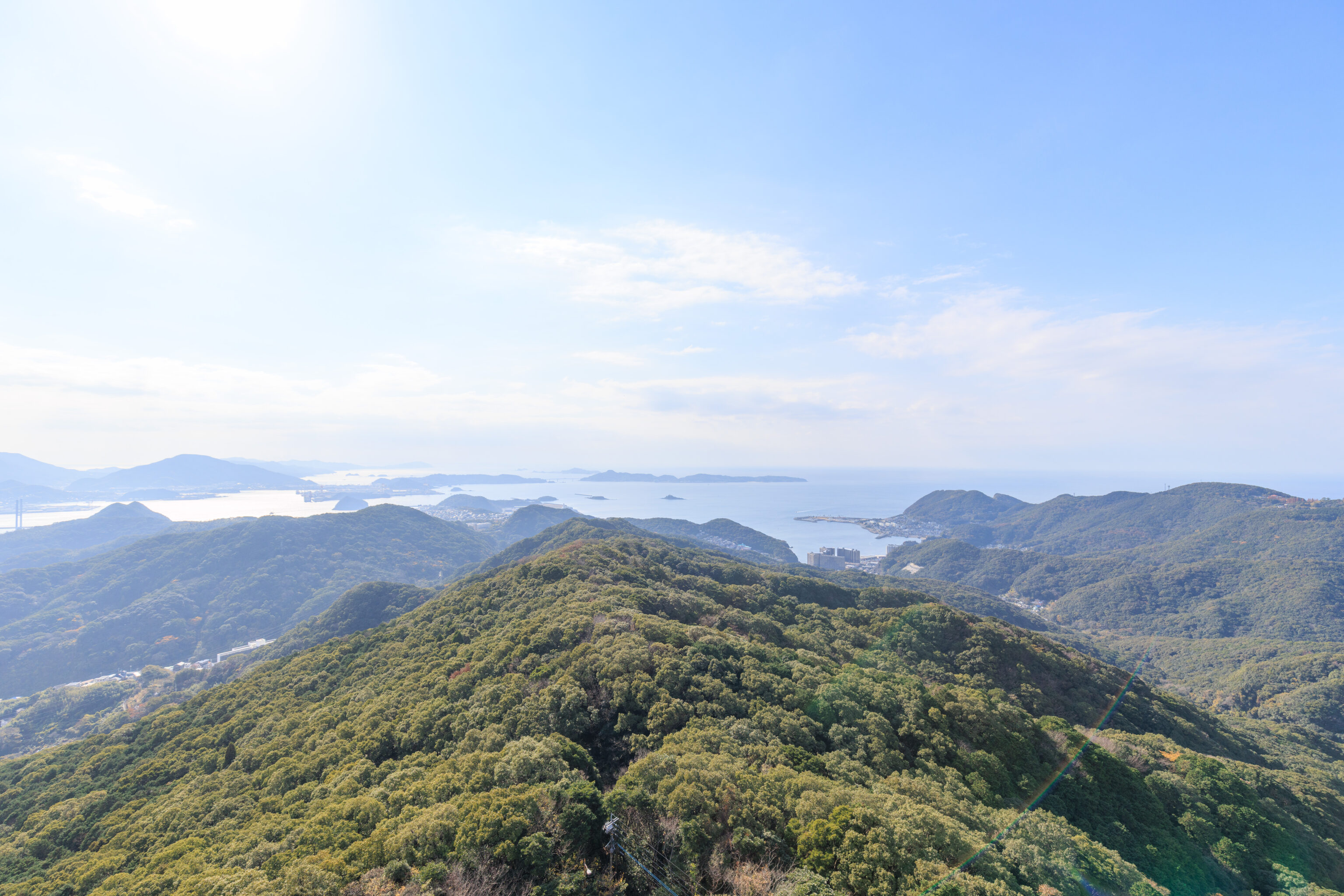
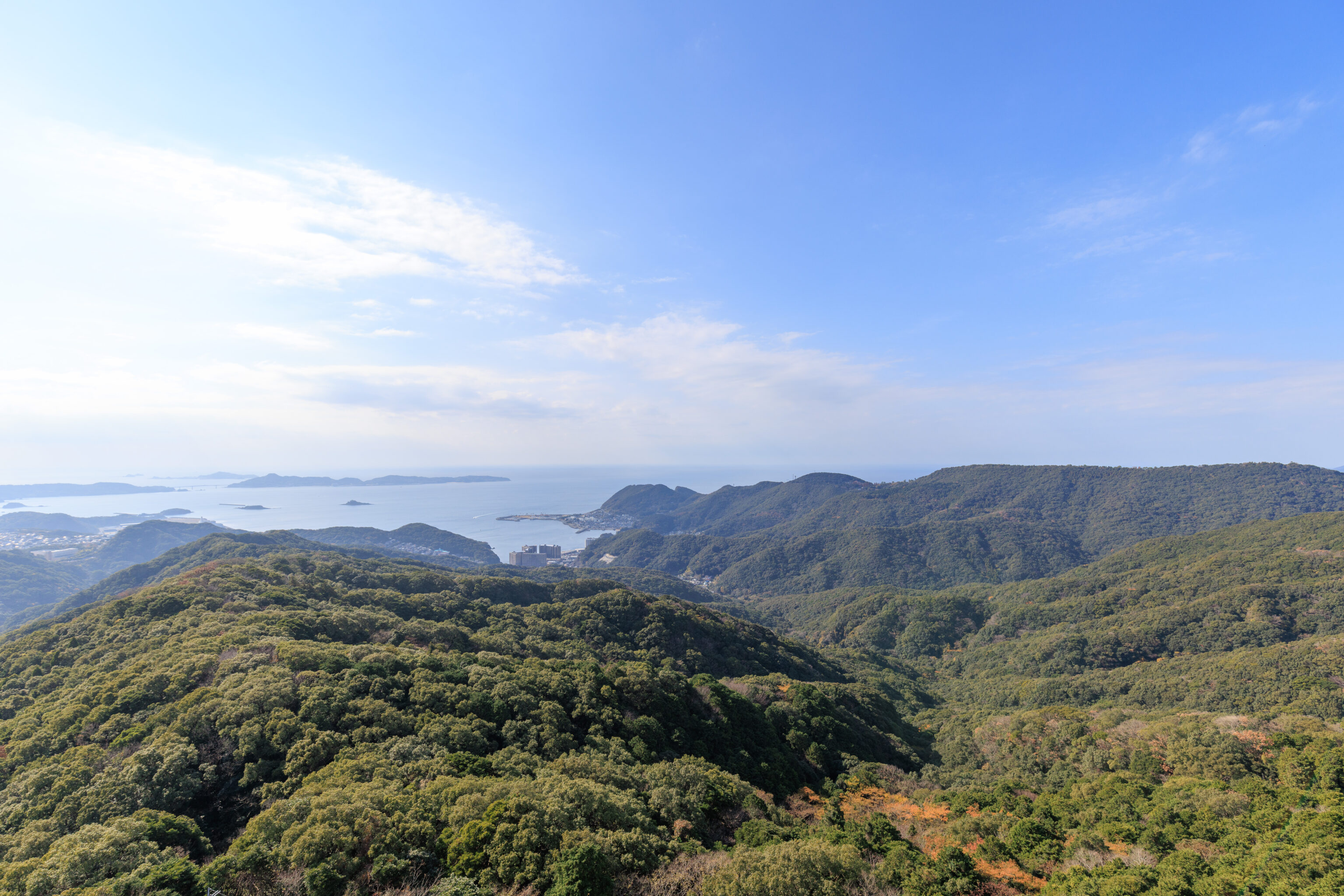
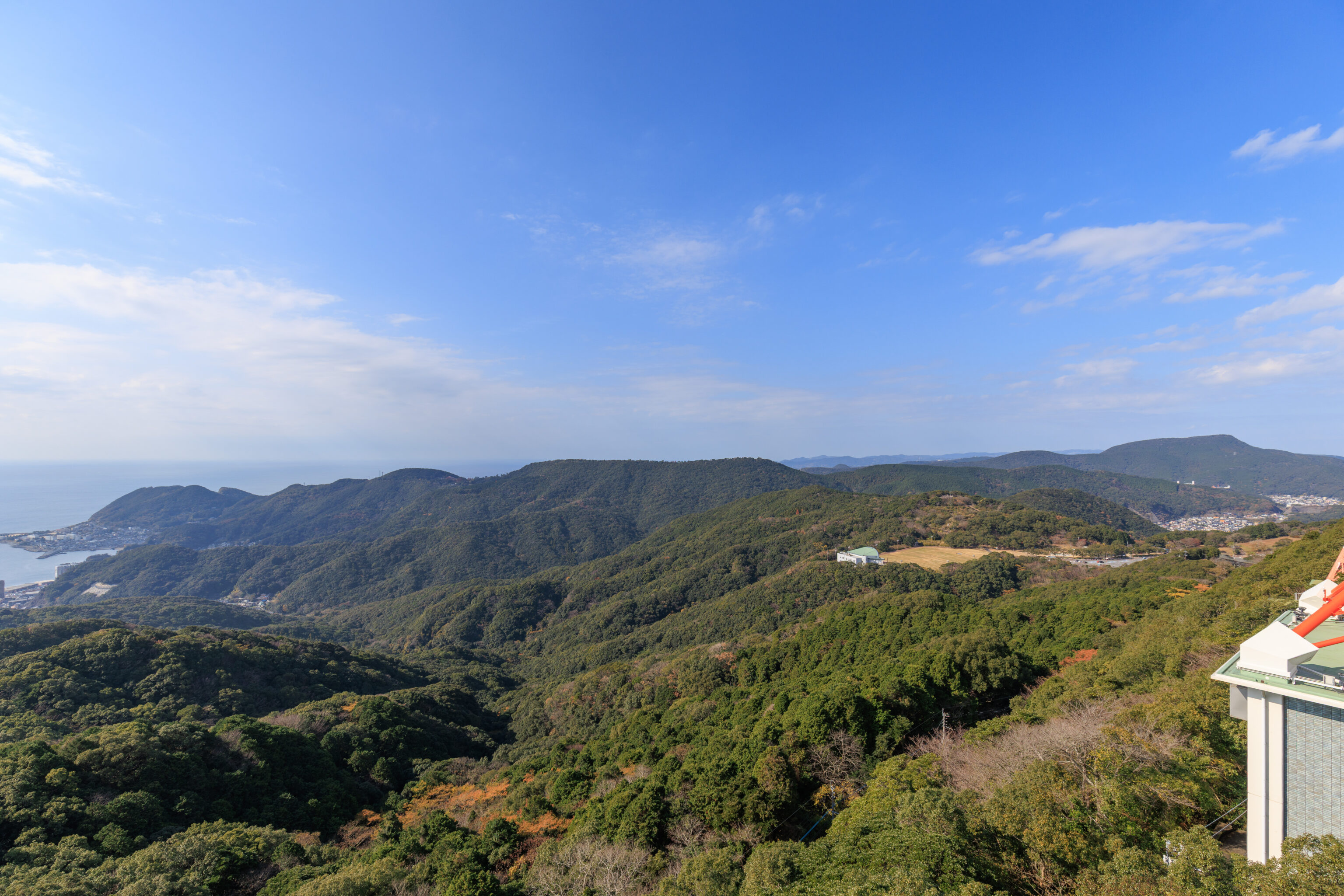
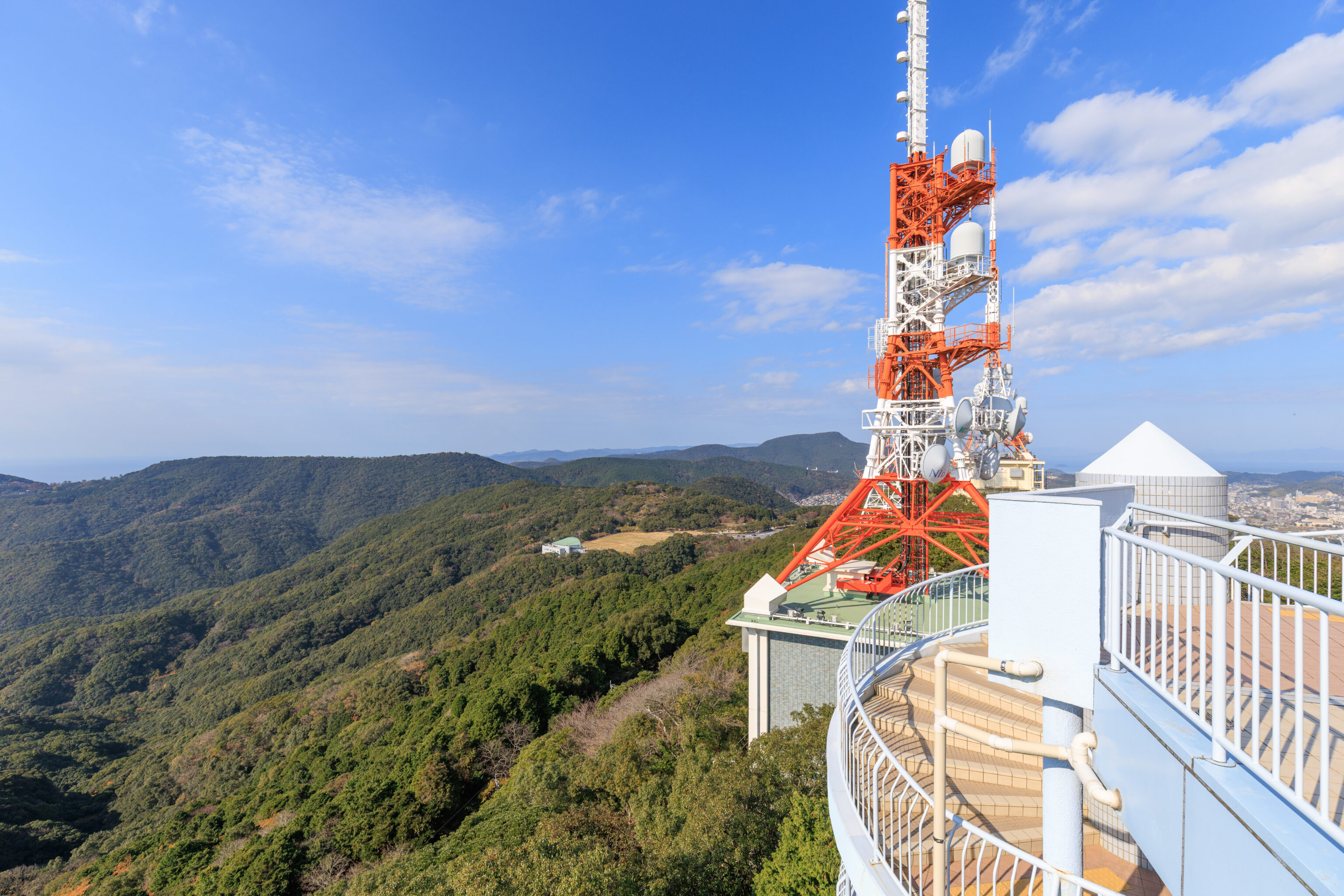
This was the view starting from the north and rotating clockwise.
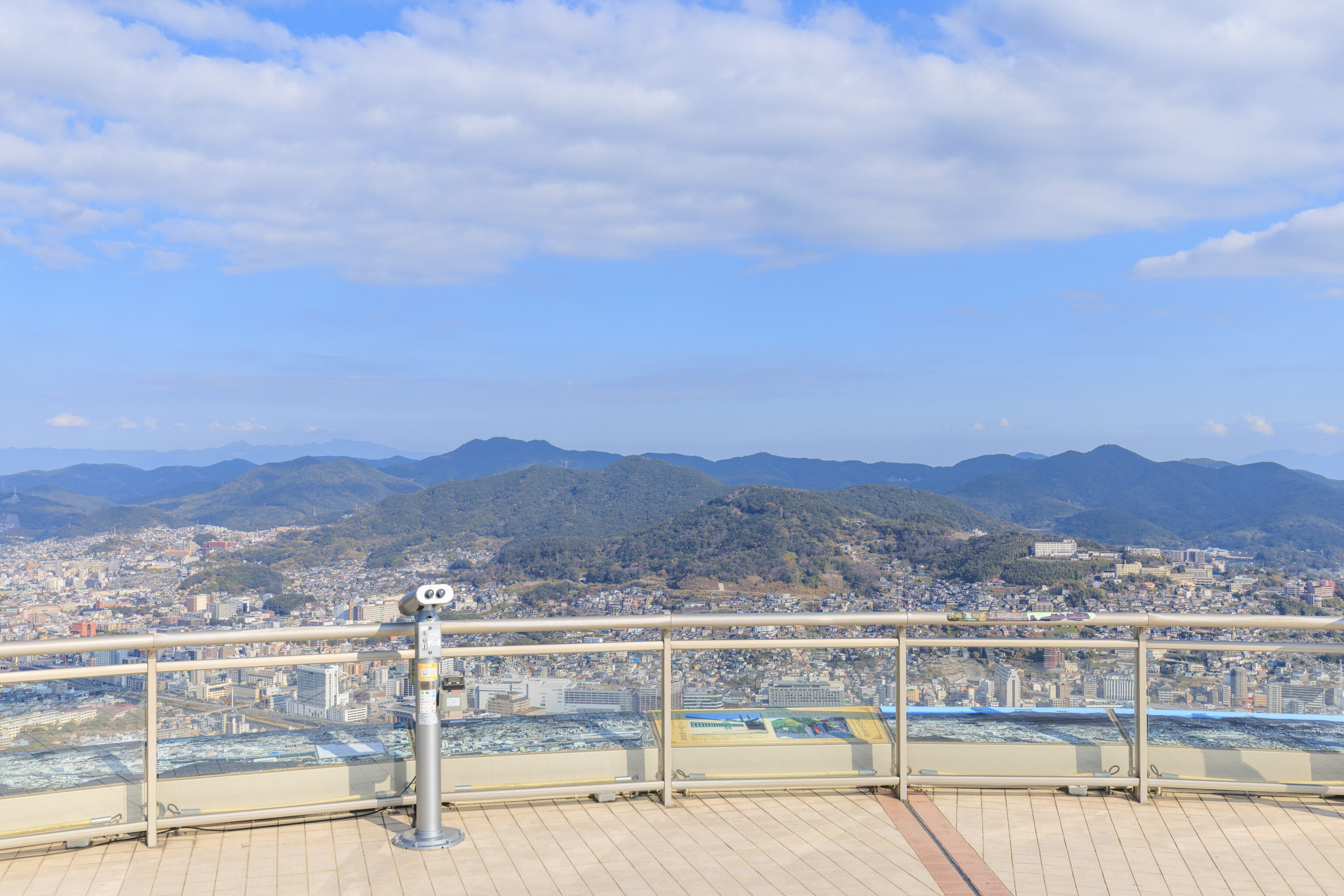
We didn’t photograph it but there is a circular elevated seating area at the center of the observation deck. It is a bit like bleacher seating. The middle is actually a glass ceiling that looks down upon the ground floor of the building. Its a bit hard to describe.
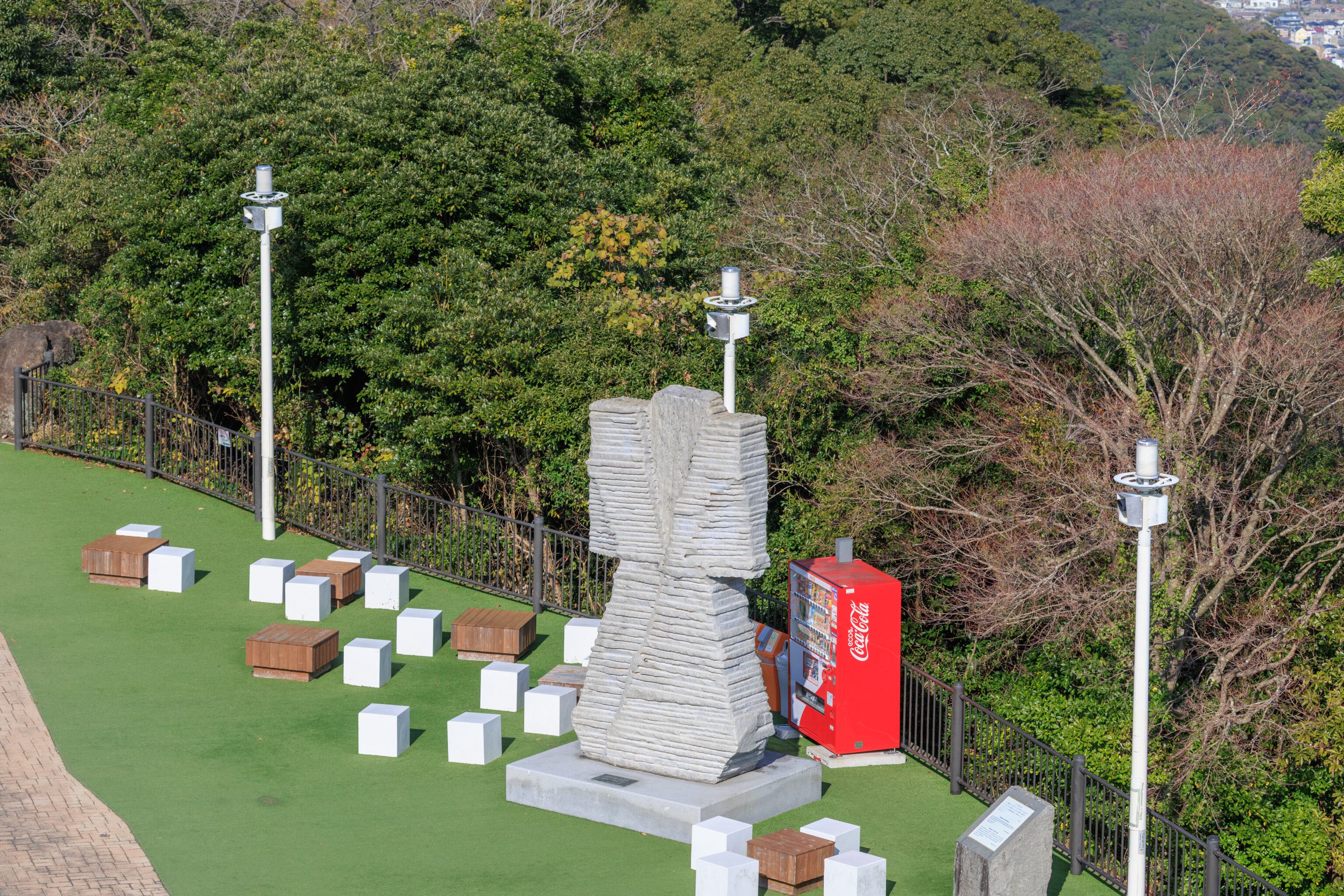
We looked around with the telephoto lens to see if we could identify any of the places that we have been and are planning to go. First, we saw the kimono sculpture below.
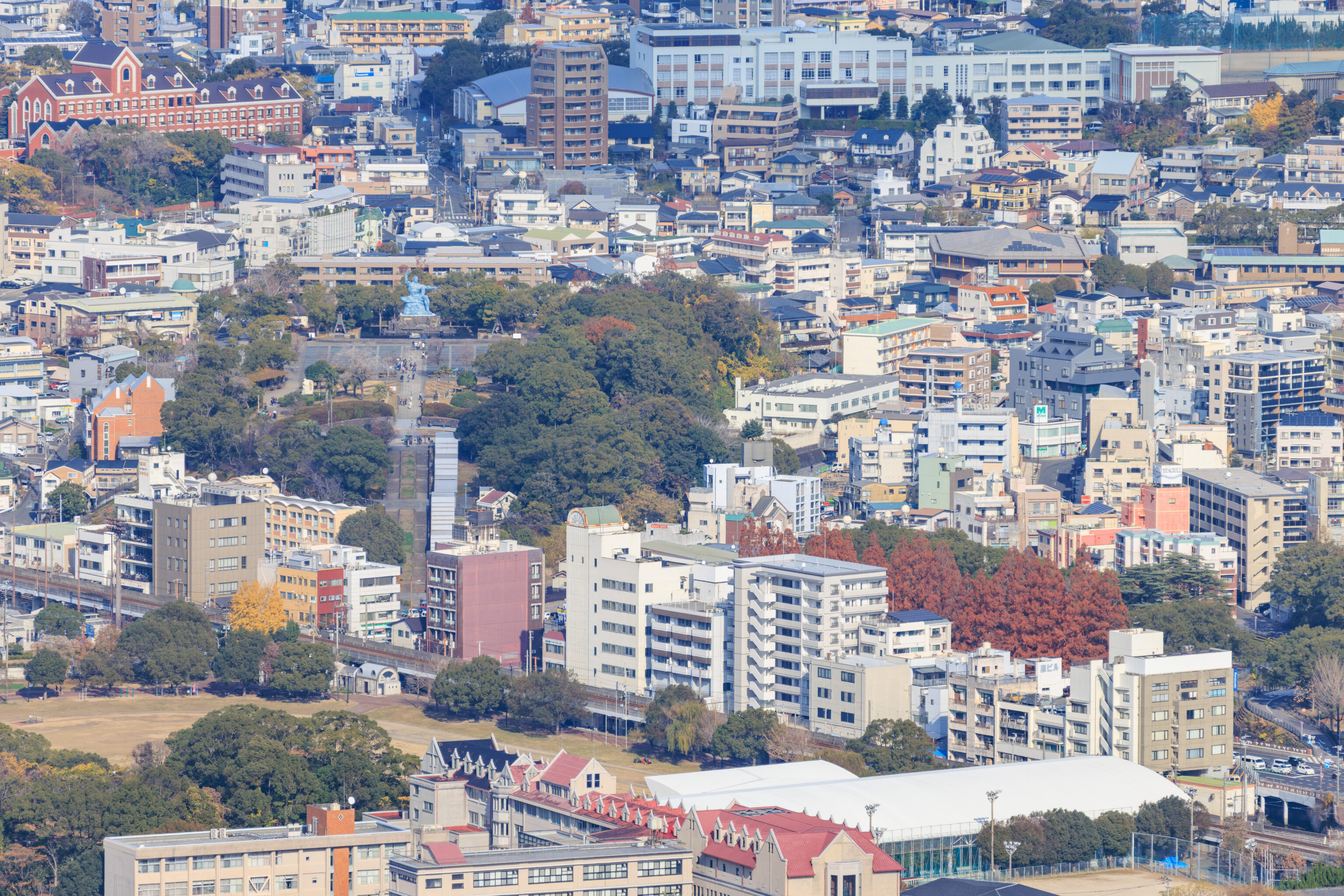
Looking to the northeast, we found the 平和祈念像 Peace Statue, the big blue statue at the center of the upper left quadrant, within the 平和公園 Peace Park.
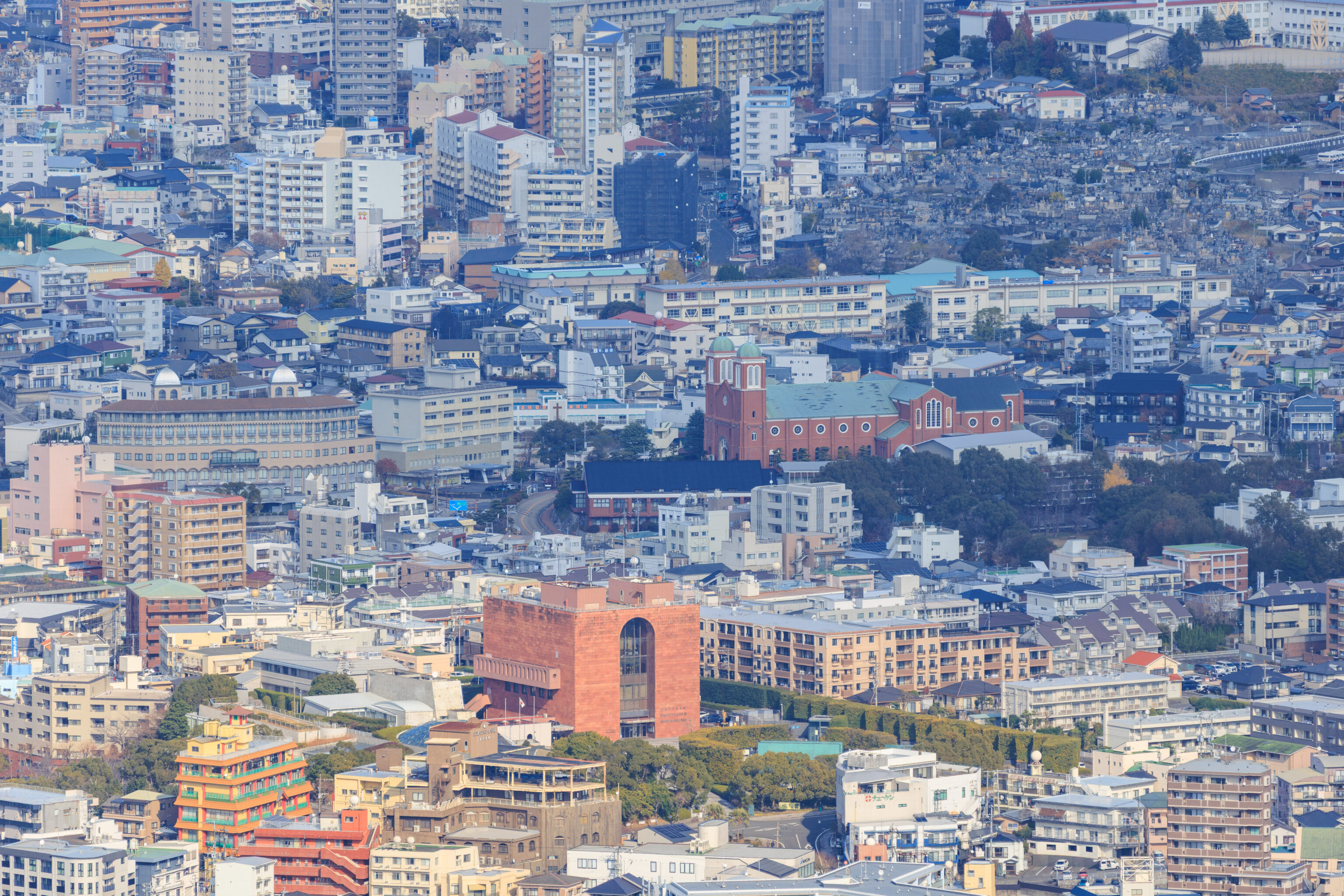
The building that looks like a Christian church is in fact a Christian church. It is the 浦上天主堂 Urakami Cathedral of the Catholic Church. The church that was there during the war was mostly destroyed during the atomic bombing.
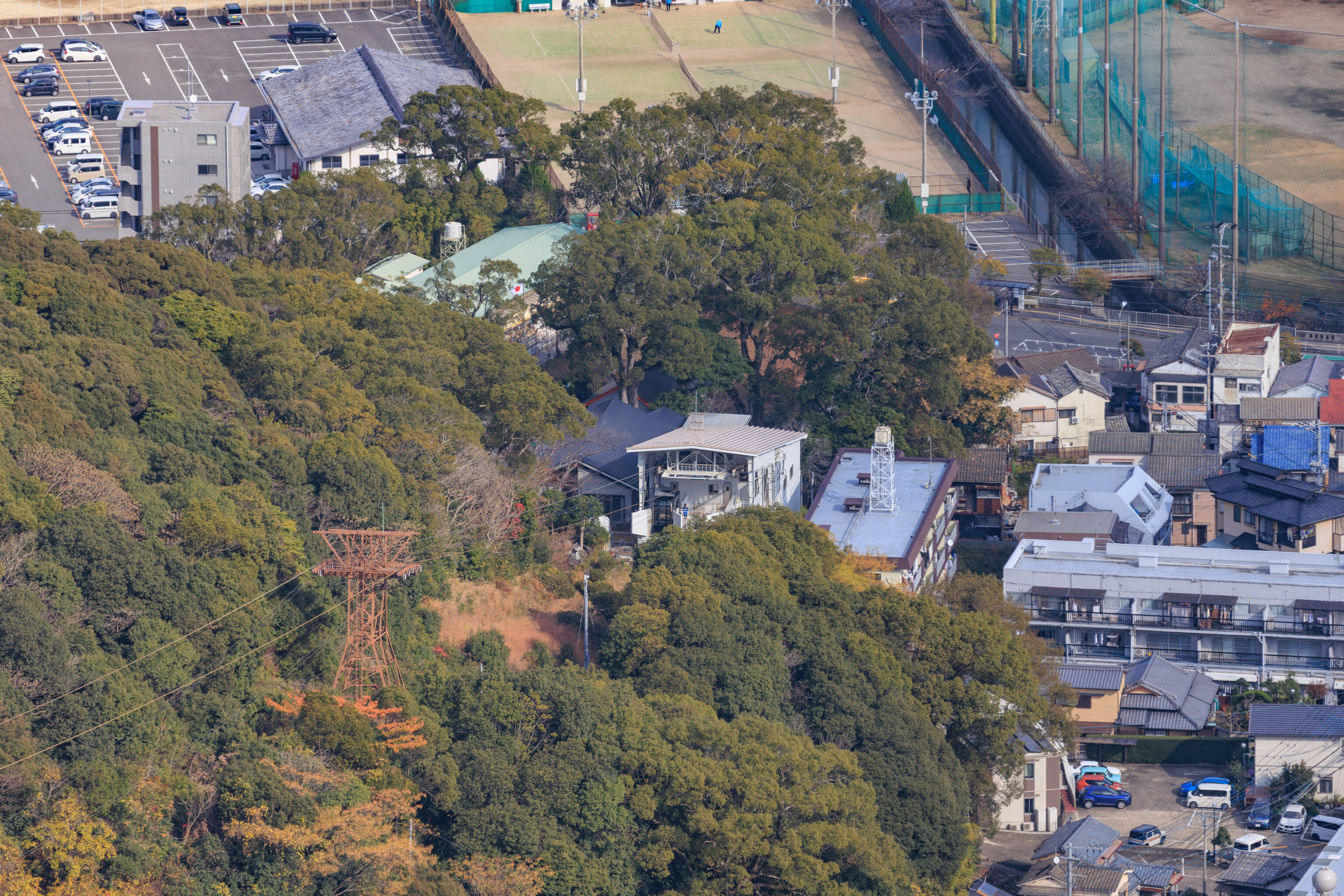
We could see the lower terminal of the Nagasaki Ropeway. The shrine buildings aren’t visible due to all the foliage.
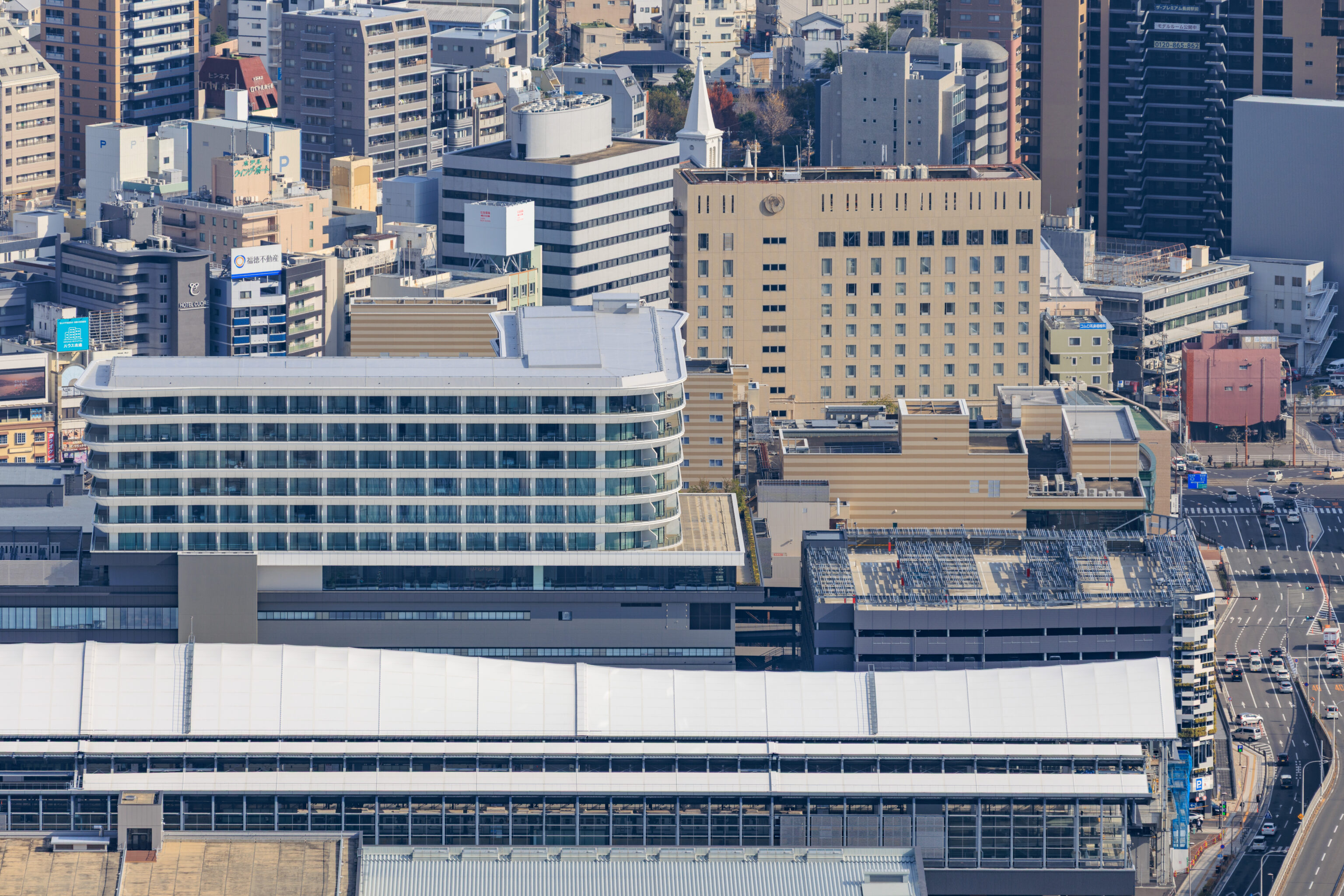
Looking towards the harbor, we could see Nagasaki Station, in the foreground here, and the Marriott, which is the modern building on the left half of the photograph.
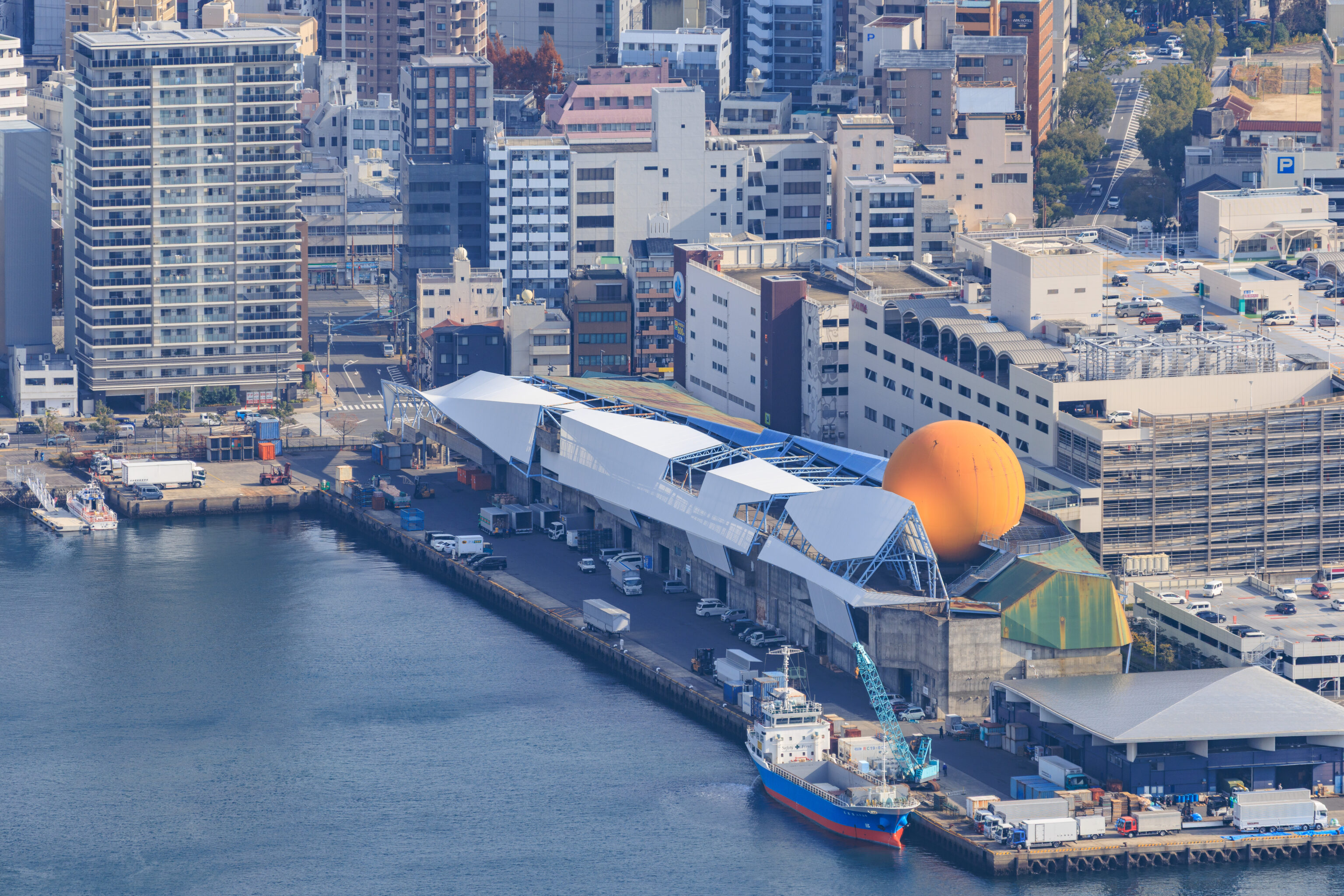
This building with orange sphere is south of the Marriott and the station. The structure seems to be a warehouse but has a pedestrian promenade on its rooftop, the ドラゴンプロムナード Dragon Promenade. It is described as being created by an American architect and is used as an event space.
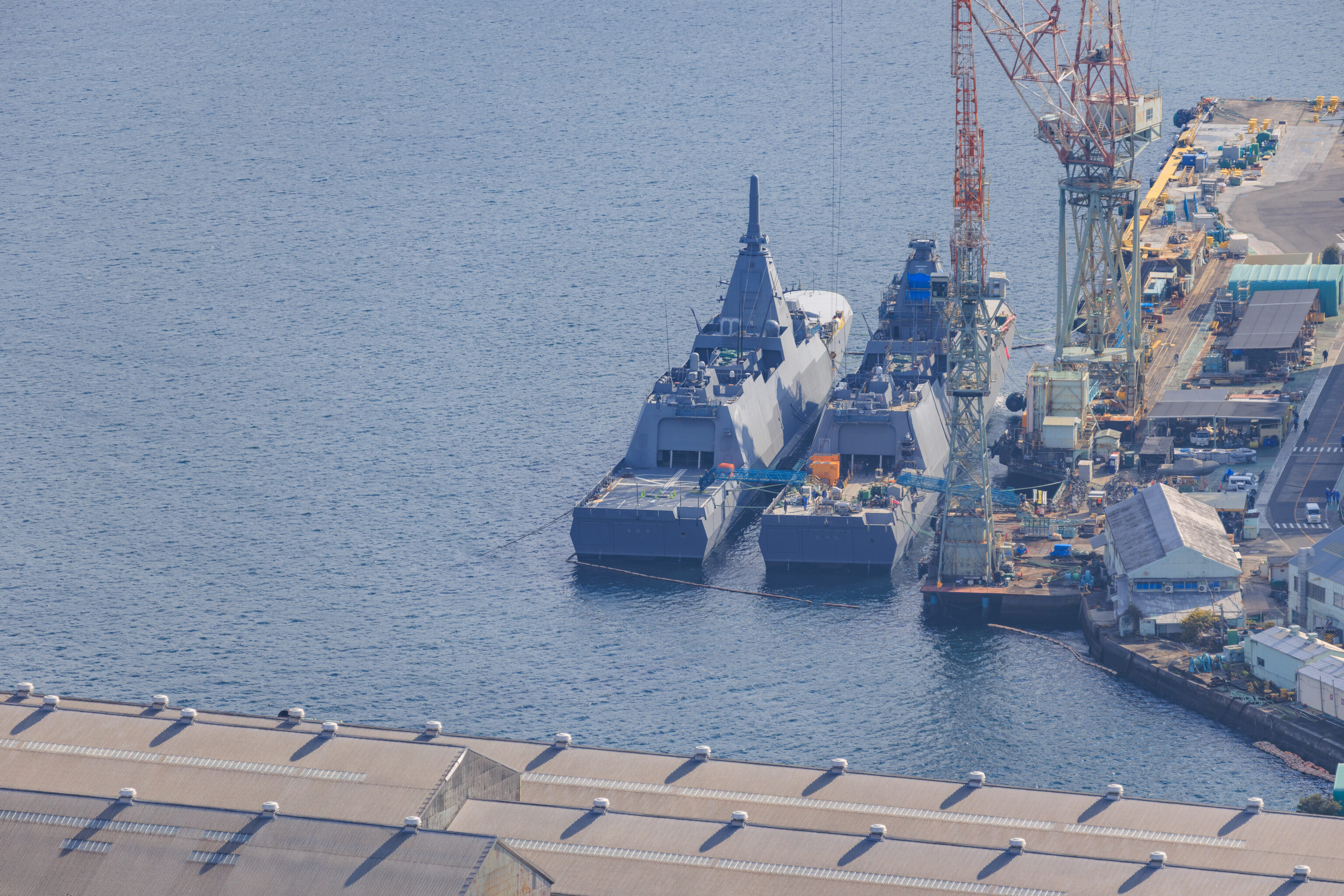
Nagasaki is home to Mitsubishi Heavy Industries. These two ships appear to be new Mogami class frigates of the JMSDF.
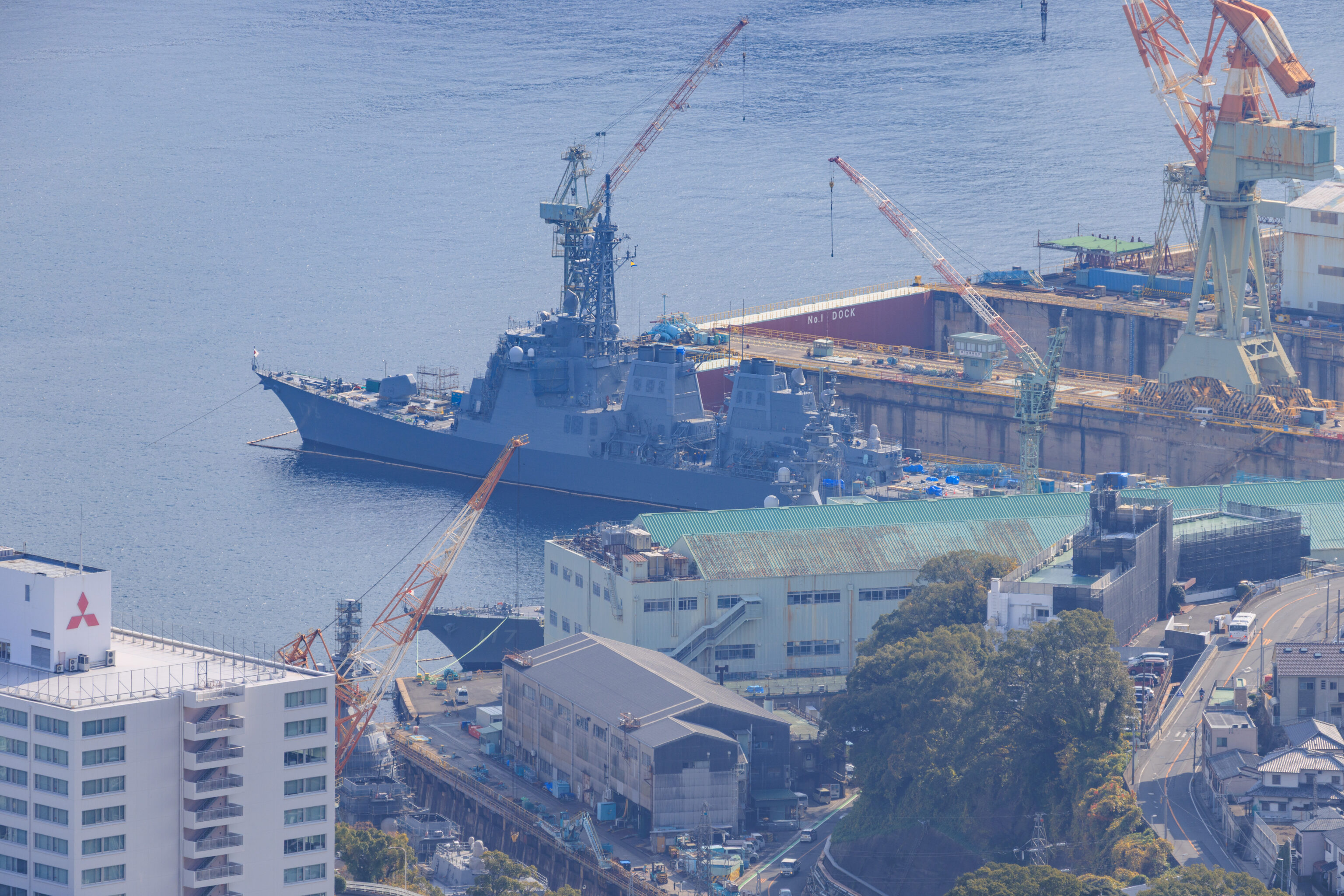
This ship is DD-173, the JS Kongo. Interestingly, this was the first non-American ship to be equipped with the Aegis system.
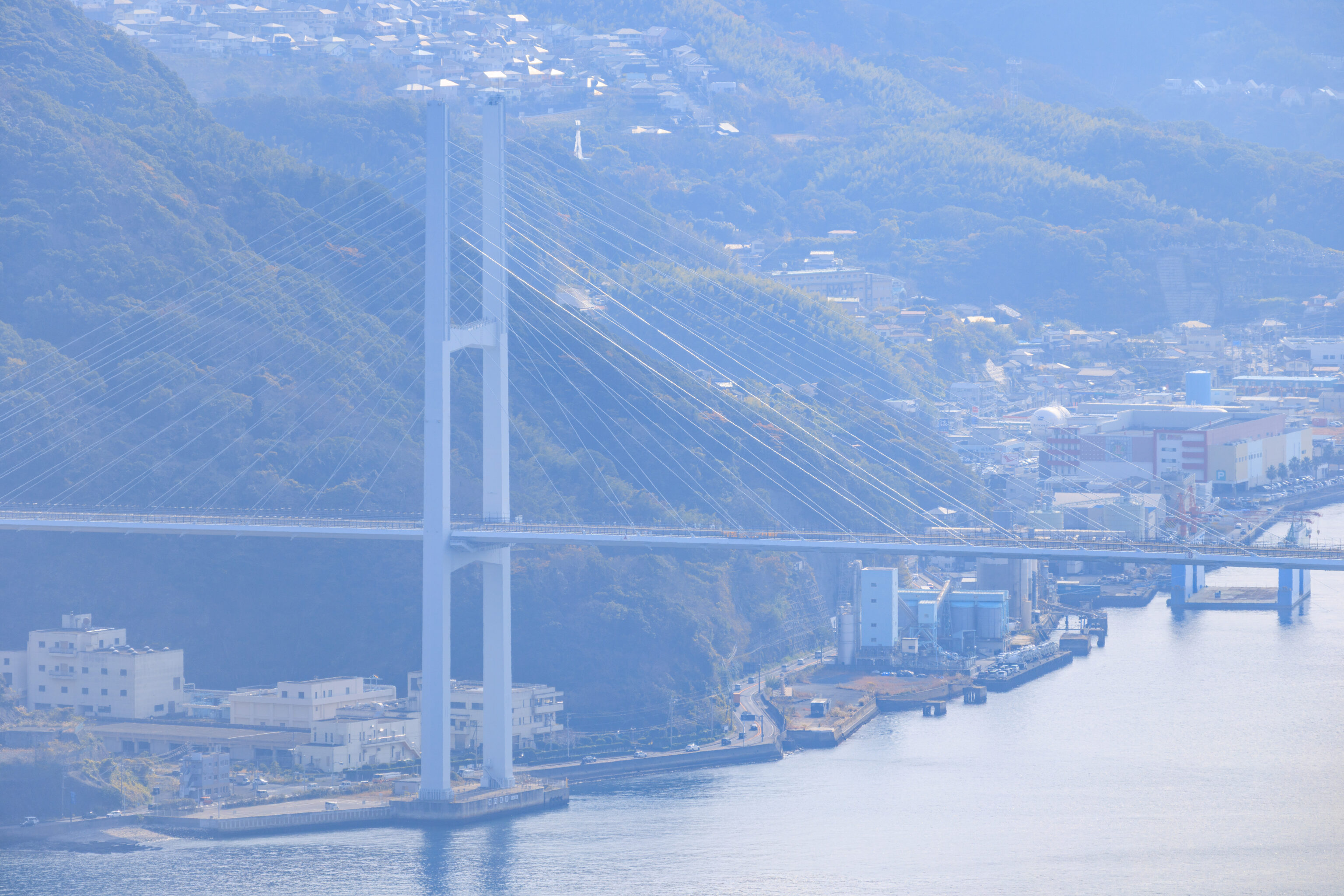
This bridge, the 女神大橋 Megami Ohashi Bridge, appears to be the only harbor crossing south of the train station.
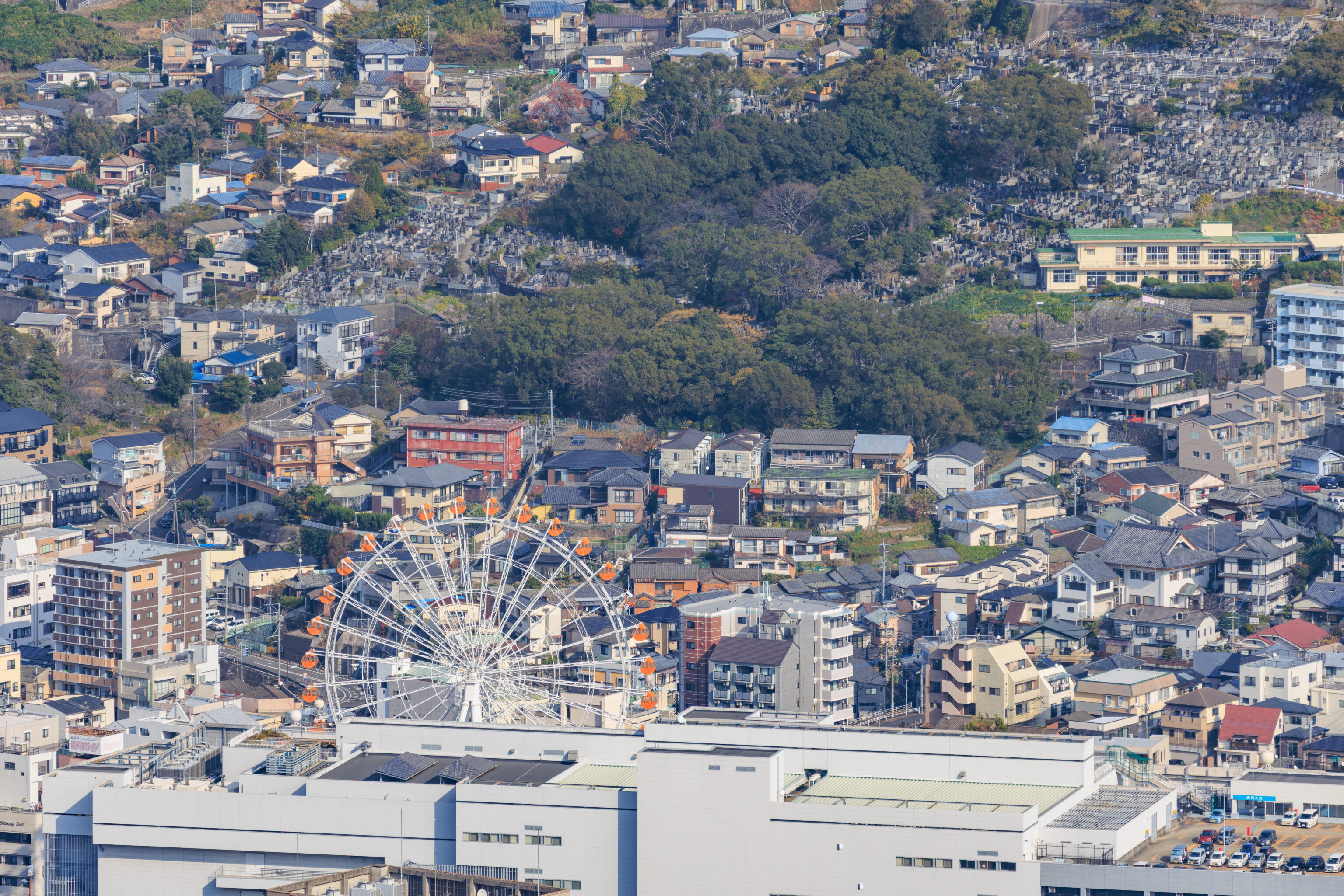
This ferris wheel is at the みらい長崎ココウォーク Mirai Nagasaki Cocowalk, a mall between Urakami Station and the Stadium City area.
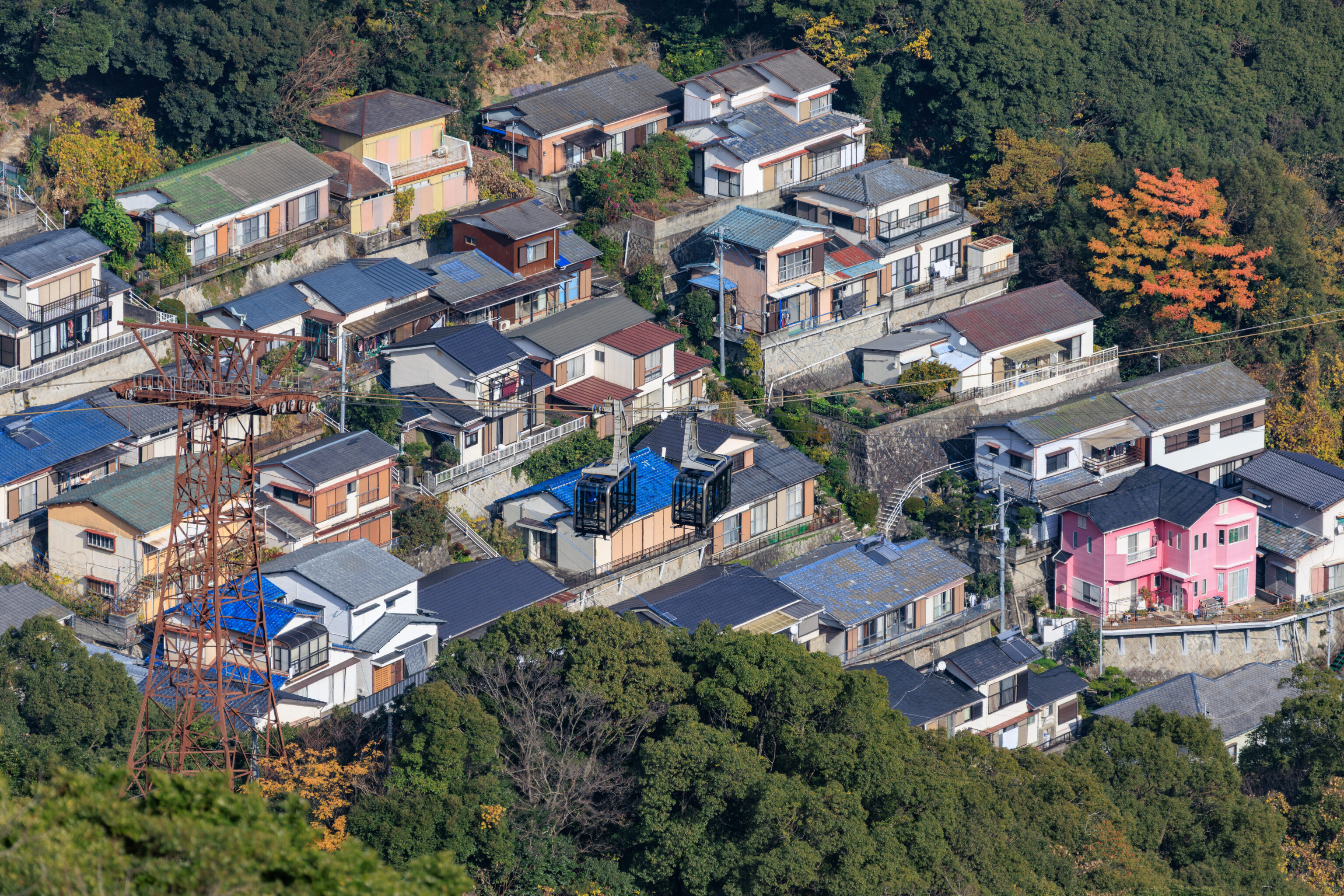
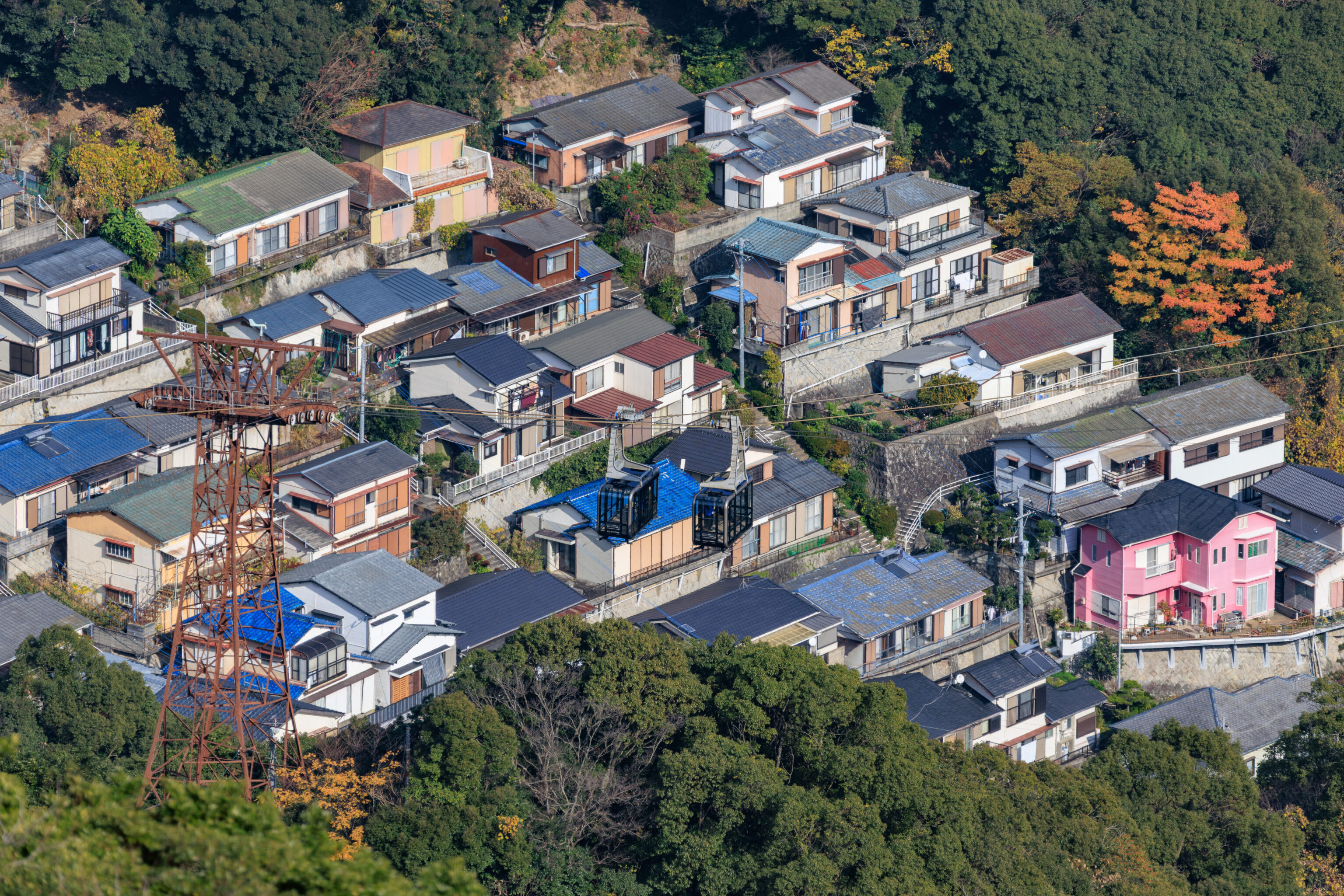
We caught the two aerial tram cabins as they passed each other.
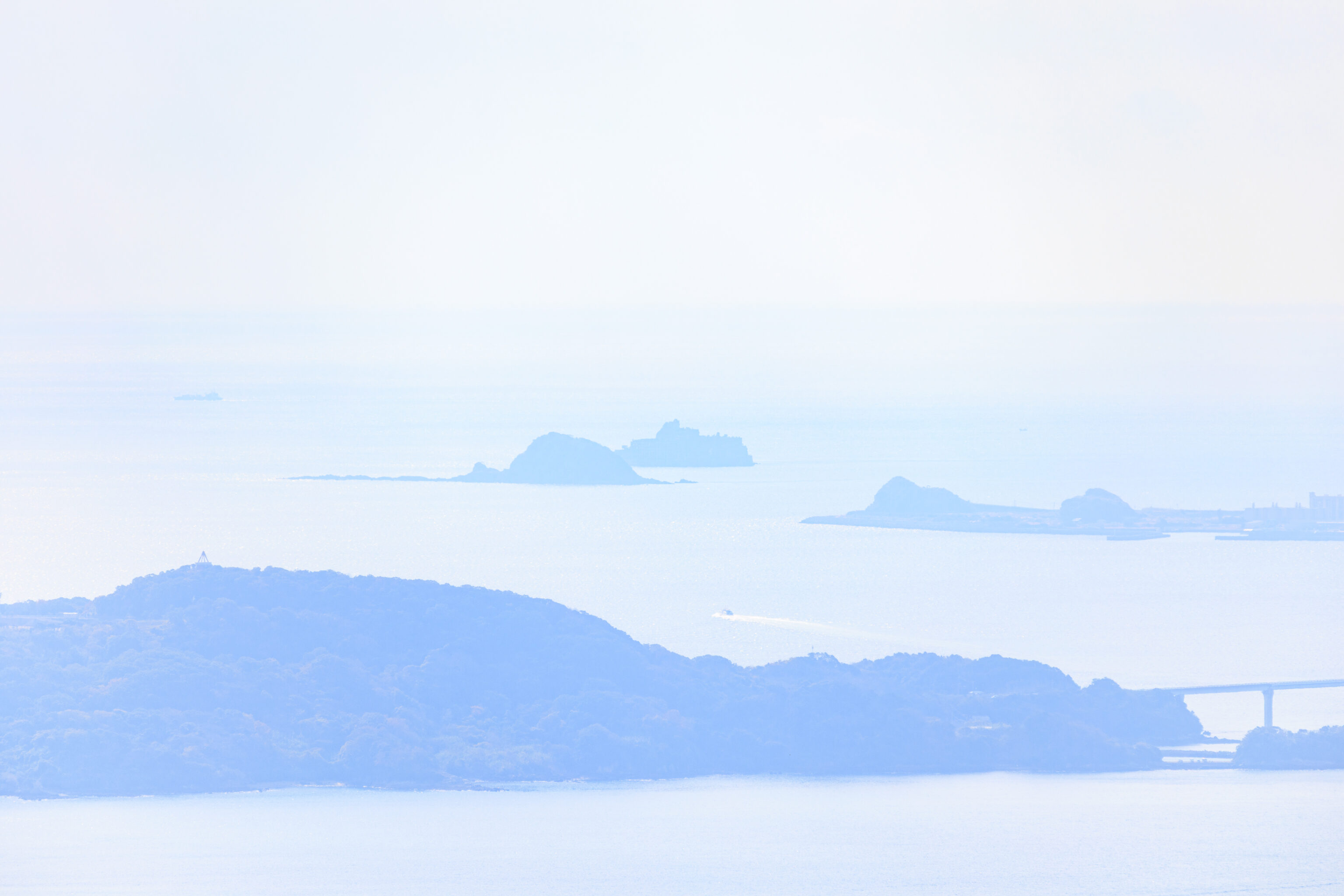
Looking to the southwest, we could see a few of the islands out in the East China Sea. 軍艦島 Gunkanjima (Battleship Island) is somewhere out there. Gunkanjima is an abandoned island that formerly contained coal mining facilities. It was built up and said to resemble a warship, hence, its nickname. Is that it just left of center? Its location relative to the two other closest islands checks out.
Gunkanjima can be visited, and we definitely considered doing so on this trip. But, sea conditions often mean that it is not possible for the ferry to actually stop at the island. We decided against it for this trip as there is plenty to see and do.
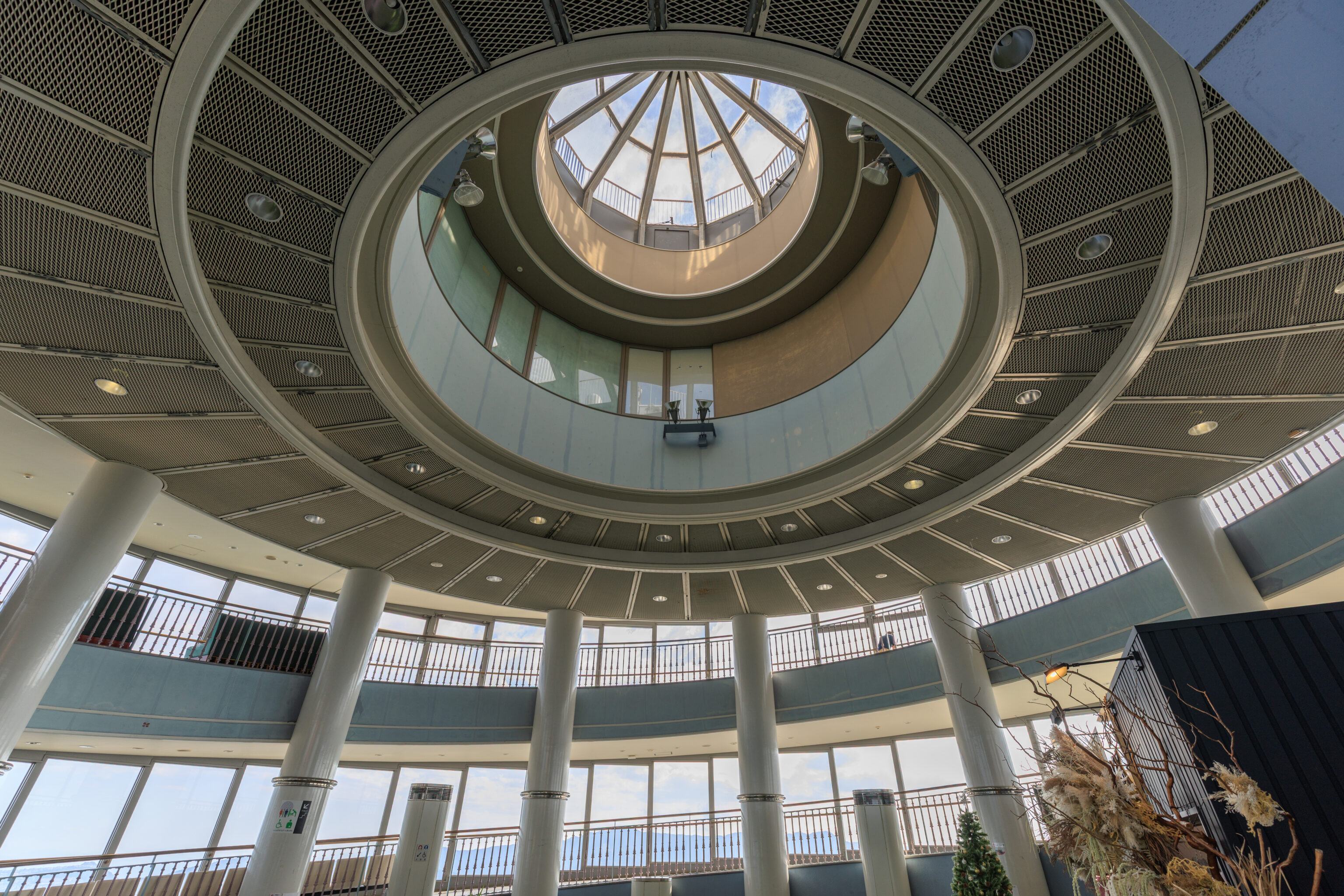
After enjoying the view, we headed back down to ground level. Looking up from within the observatory building, it is possible to see the glass ceiling at the center.
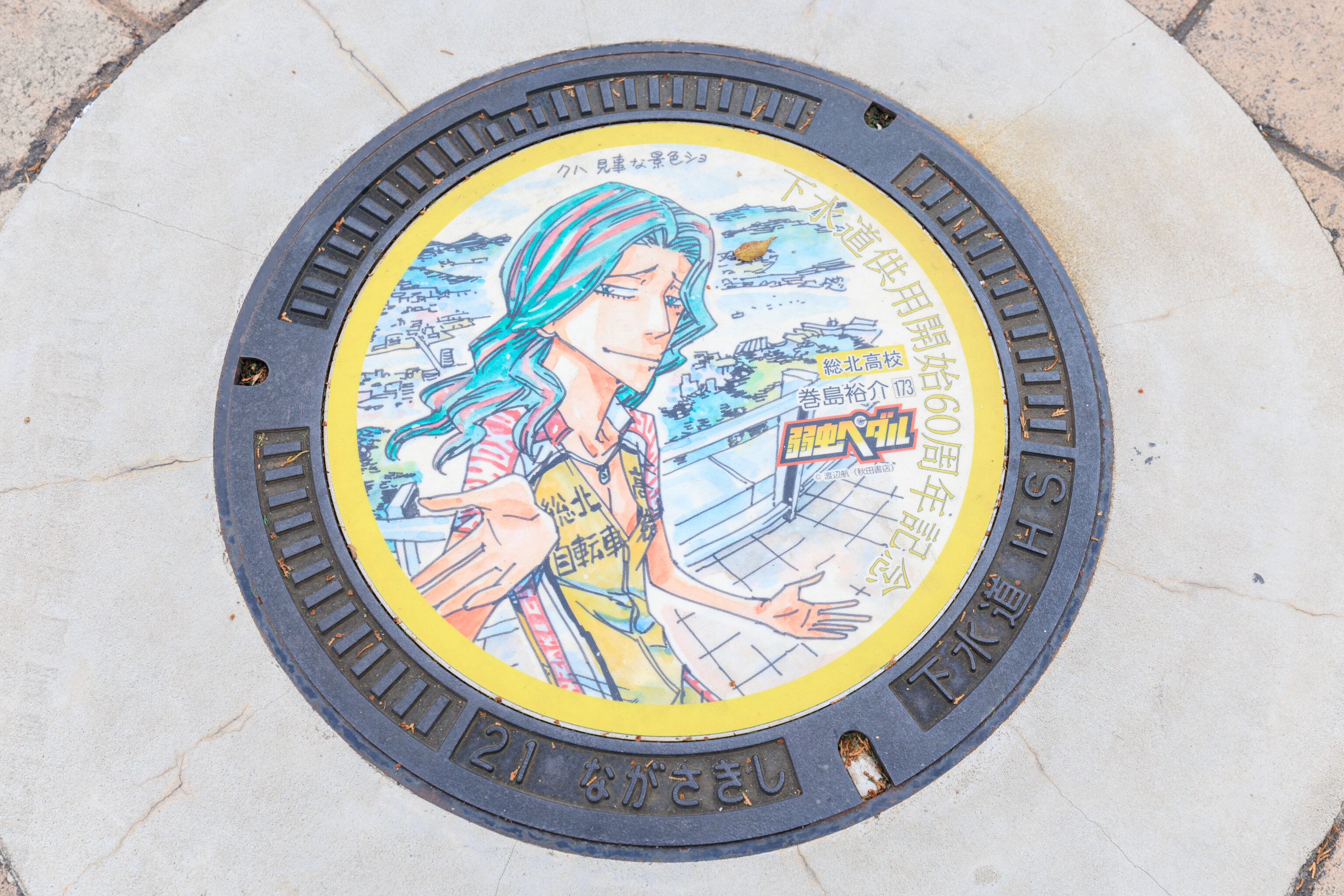
This utility cover features 巻島 裕介 Yusuke Makishima from the 弱虫ペダル Yowamushi Pedal, a manga about bicycle racing. The text in yellow on the right indicates that this design is for the 60th anniversary of the sewer system.
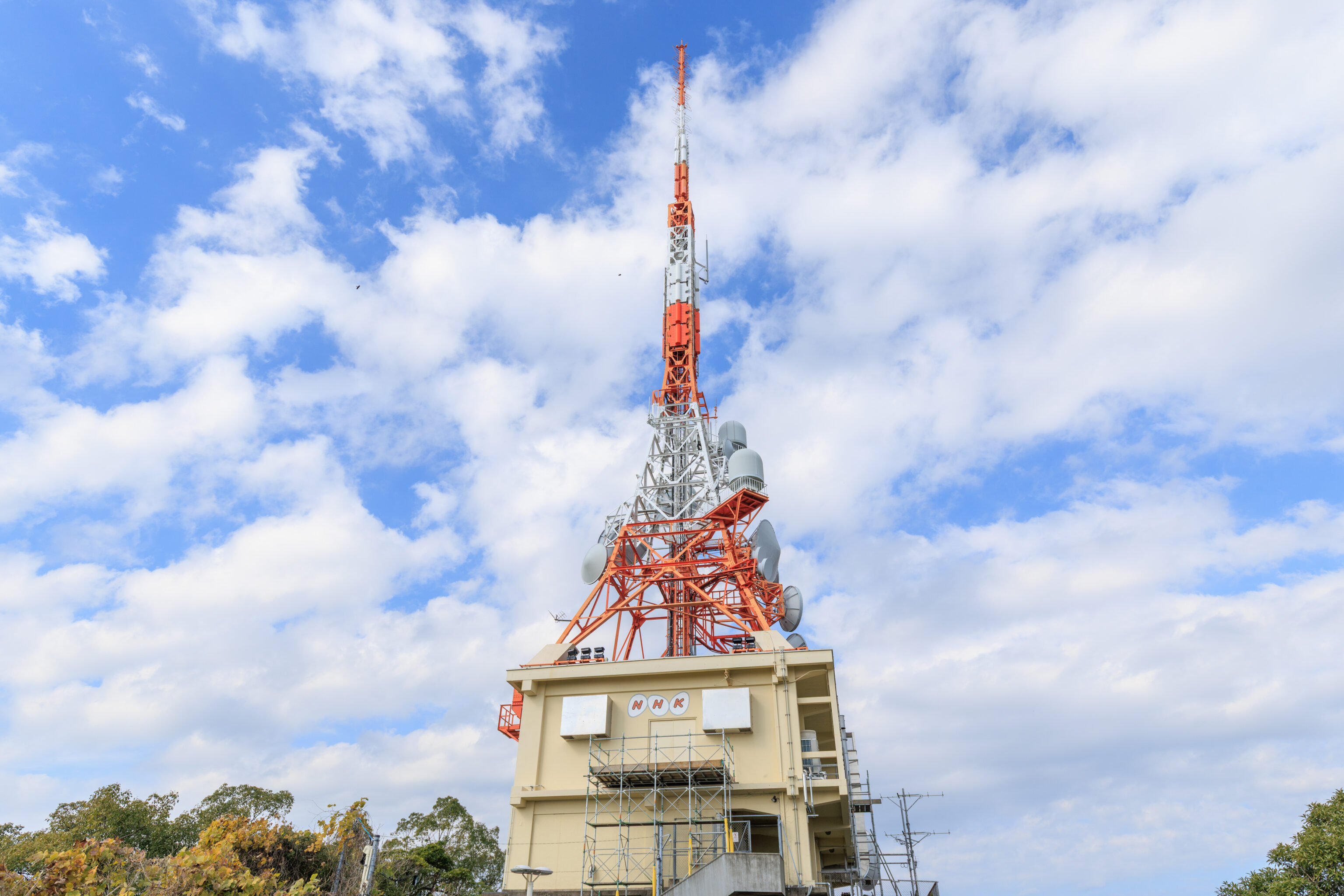
This structure is a transmission tower for NHK, Japan’s public broadcaster.
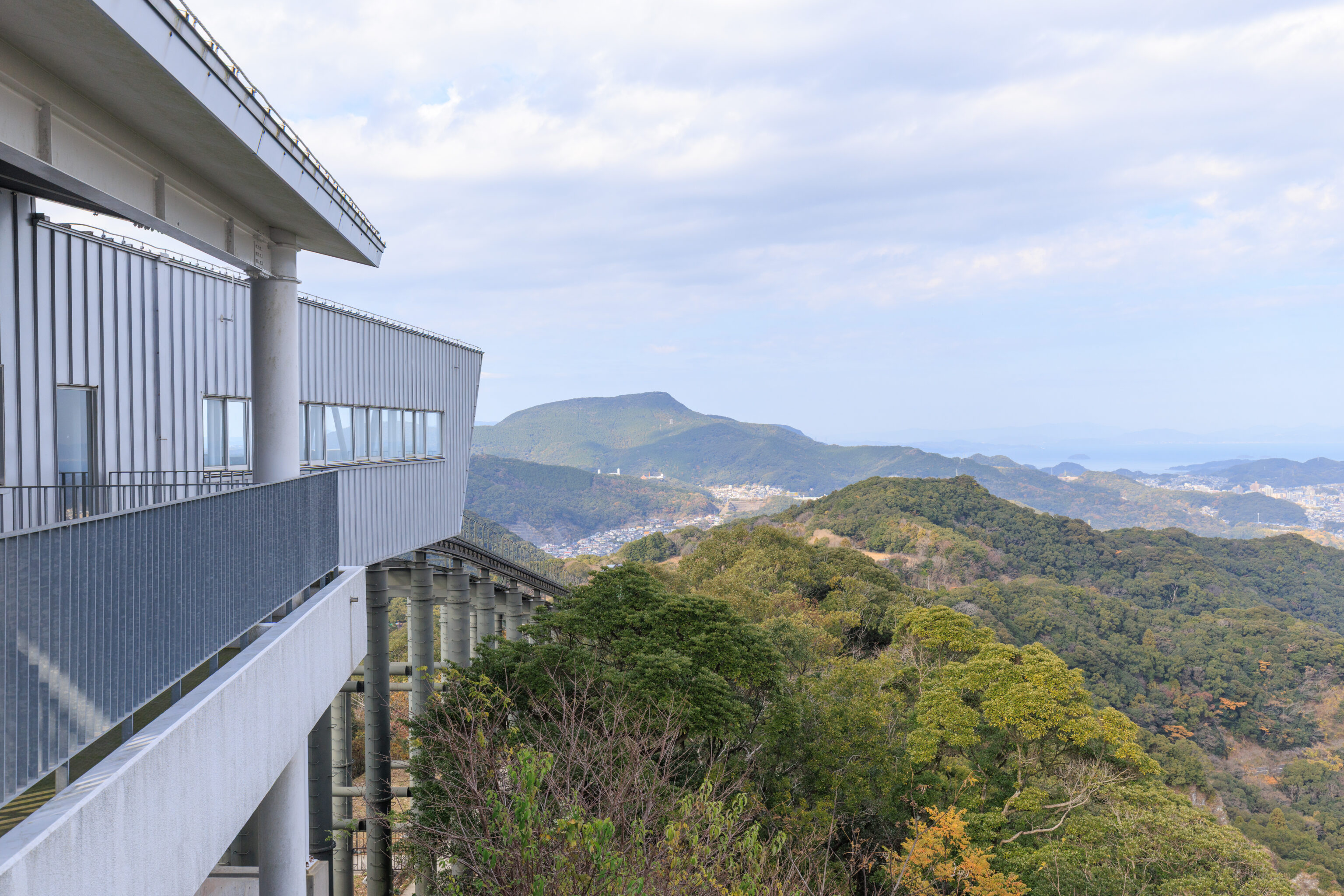
There is actually another transportation system on the mountain. The upper aerial tram station is directly connected to the southern end of the Inasayama Slope Car. This is a monorail system that maintains a level floor within the carriages throughout the route. The other end of the route is a large parking lot and park along with a tiny questionable zoo. While we had originally considered going to check out the park, after seeing it from the rooftop observation deck, we decided it wasn’t worth the time.
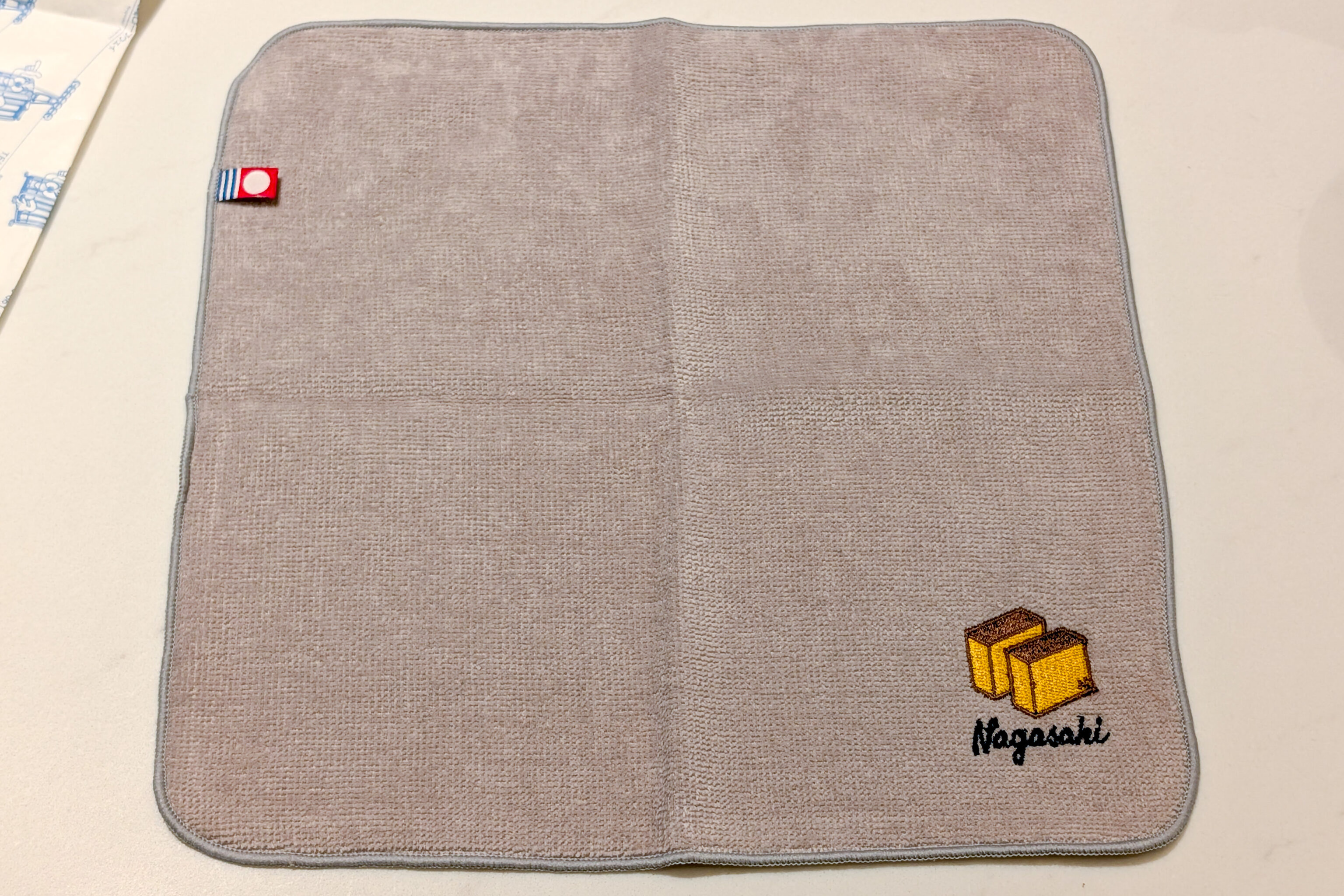
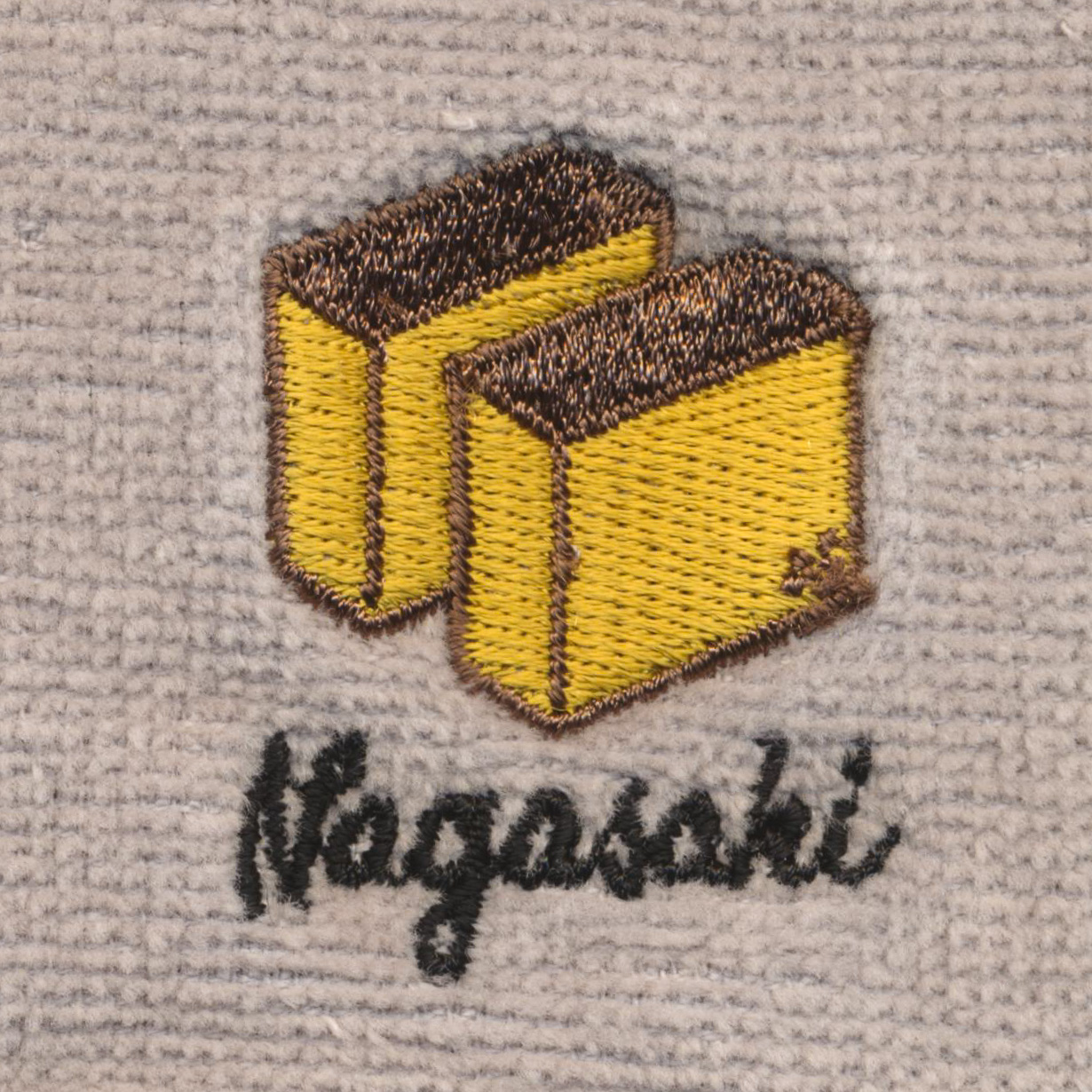
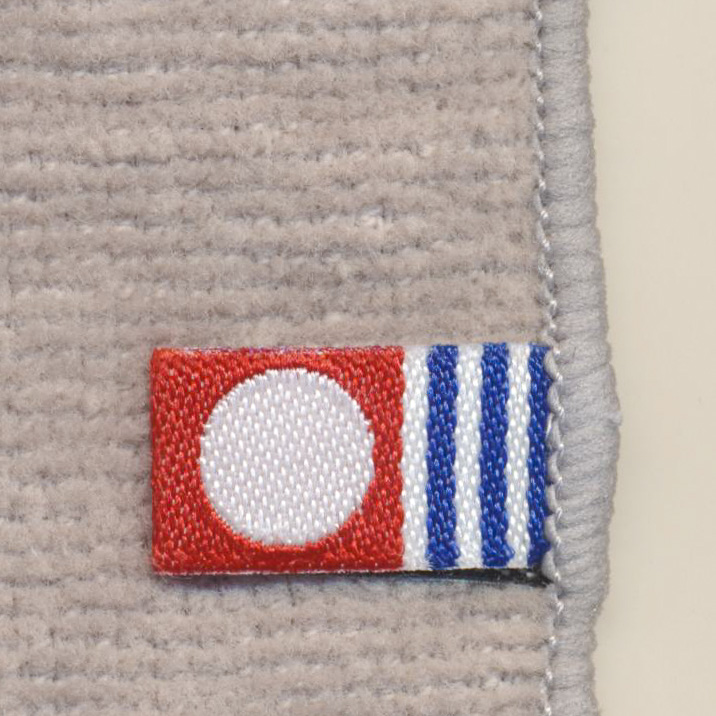
After taking the aerial tram back down, we visited the gift shop within the terminal building. We got a 今治タオル Imabari Towel featuring two of Nagasaki’s famous カステラ castella. 今治 Imabari is a large producer of cotton and towels and according to Wikipedia has captured 60% of Japan’s towel industry. Products featuring the Imabari Towel logo are certified authentic products, much like Gruyère cheese or real Champagne. Small hand towels like the one that we purchased are particularly useful in Japan as there are often no paper towels or hand dryers in public bathrooms.
As for the castella, they are based on sponge cakes that were introduced to Japan from Portuguese merchants. They first became popular here in Nagasaki which was the center of foreign trade in Japan at the time.
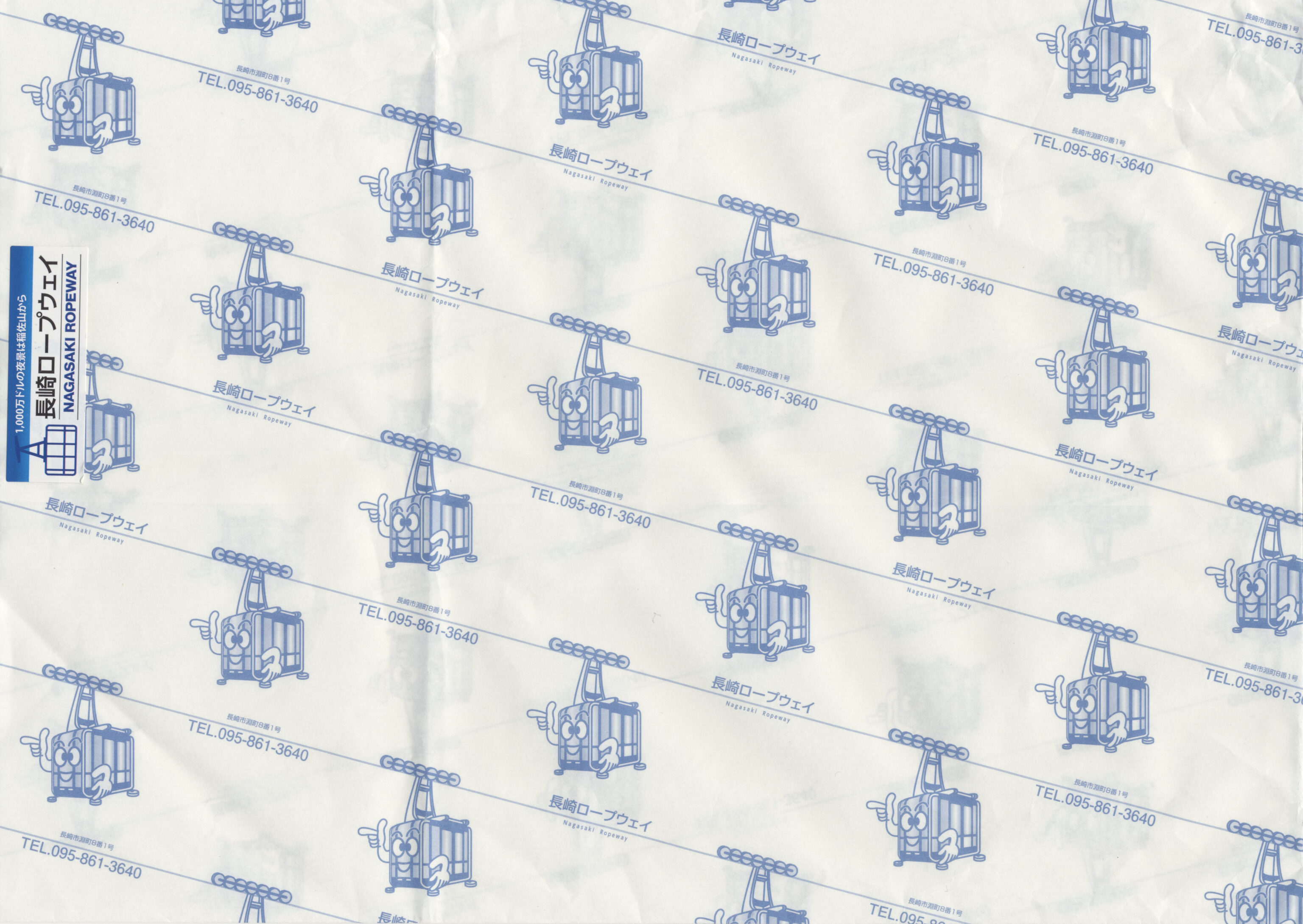
Nagasaki Ropeway’s paper bag featured a cute little aerial tram mascot.
After leaving the aerial tram terminal building, we decided to take a look around the Fuchi-jinja.
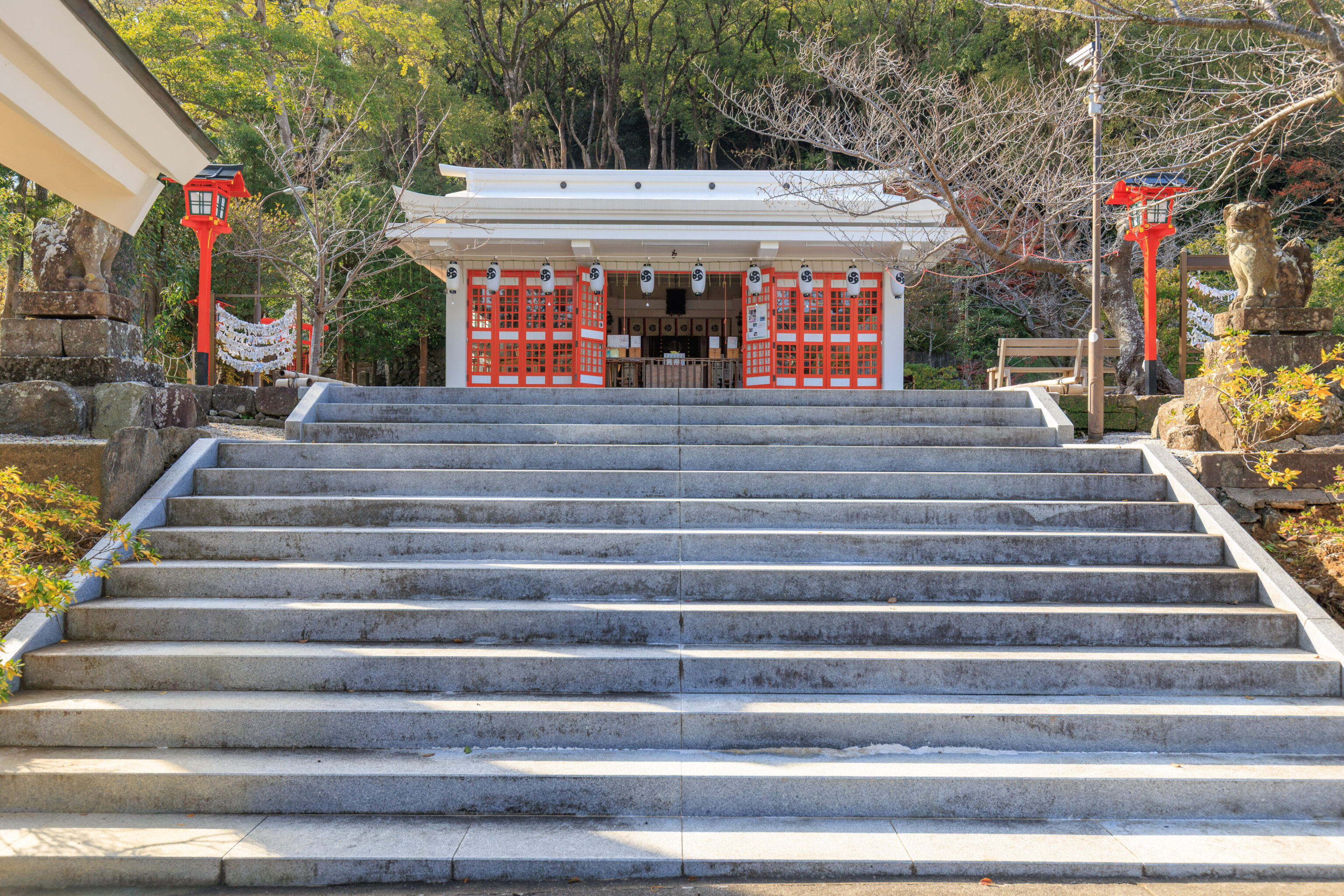
The shrine’s small main hall was up a set of stairs. The buildings here at the shrine are interesting and different because they are painted white, something we’ve never seen before.
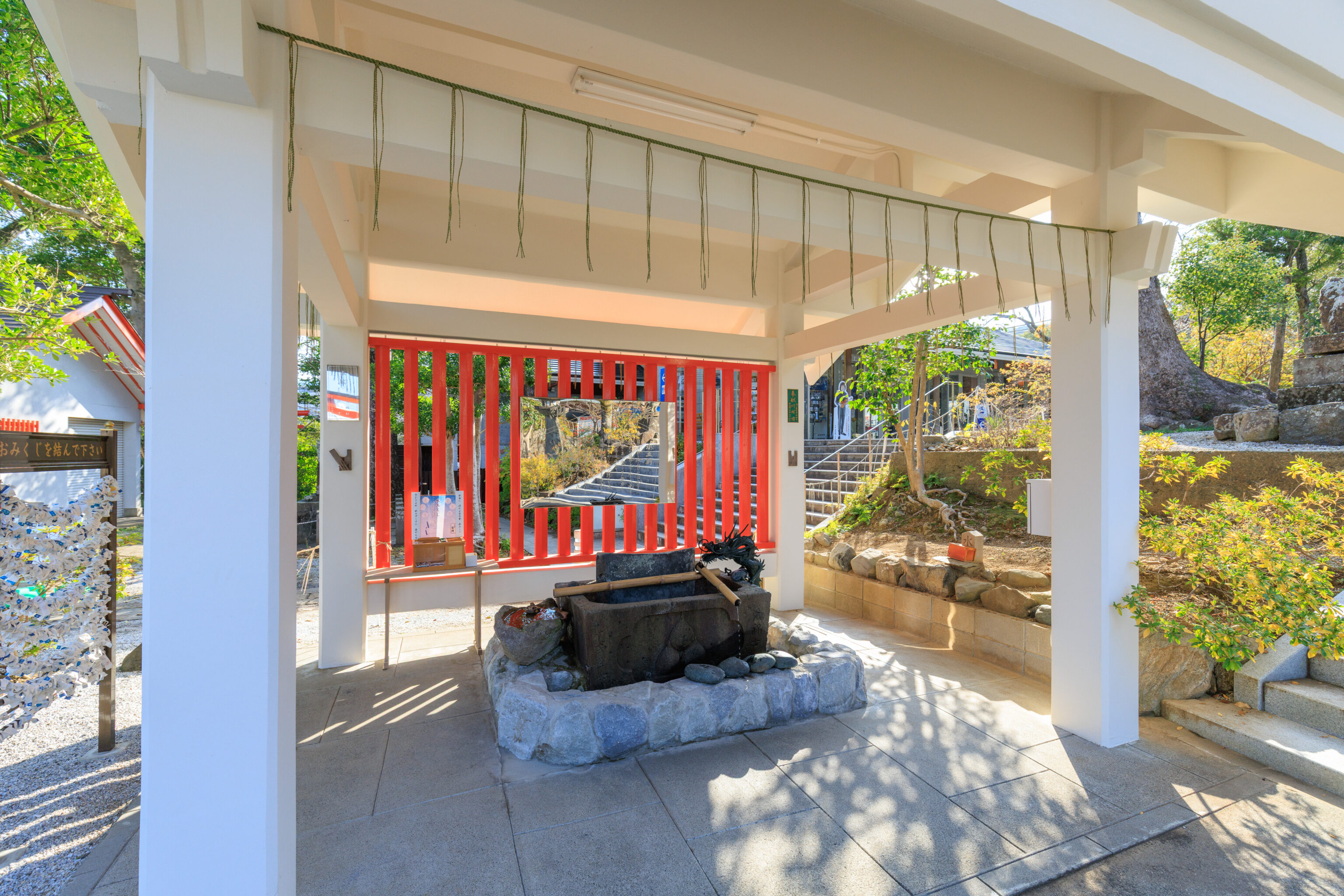
The purification station at the base of the steps was painted the same way.
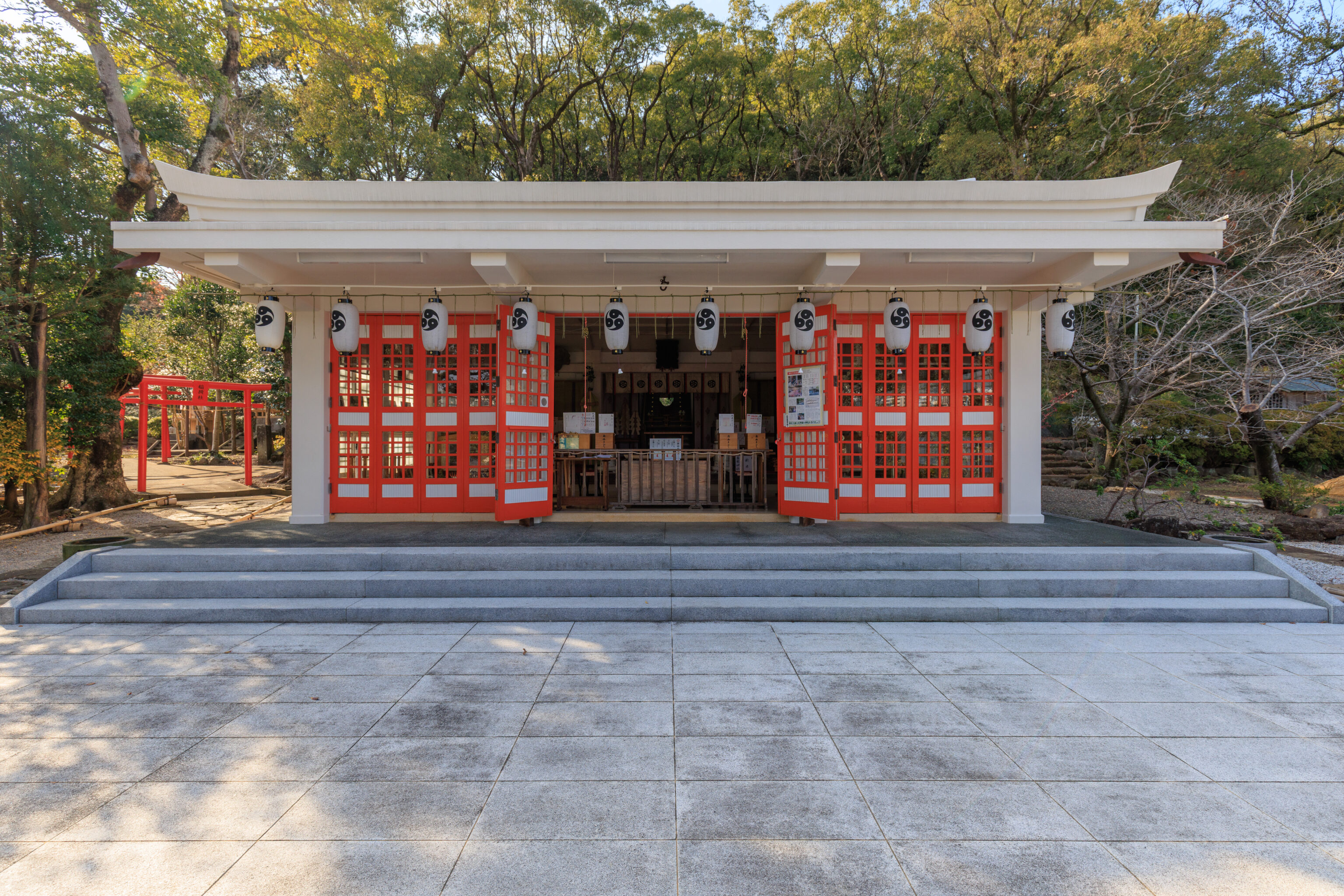
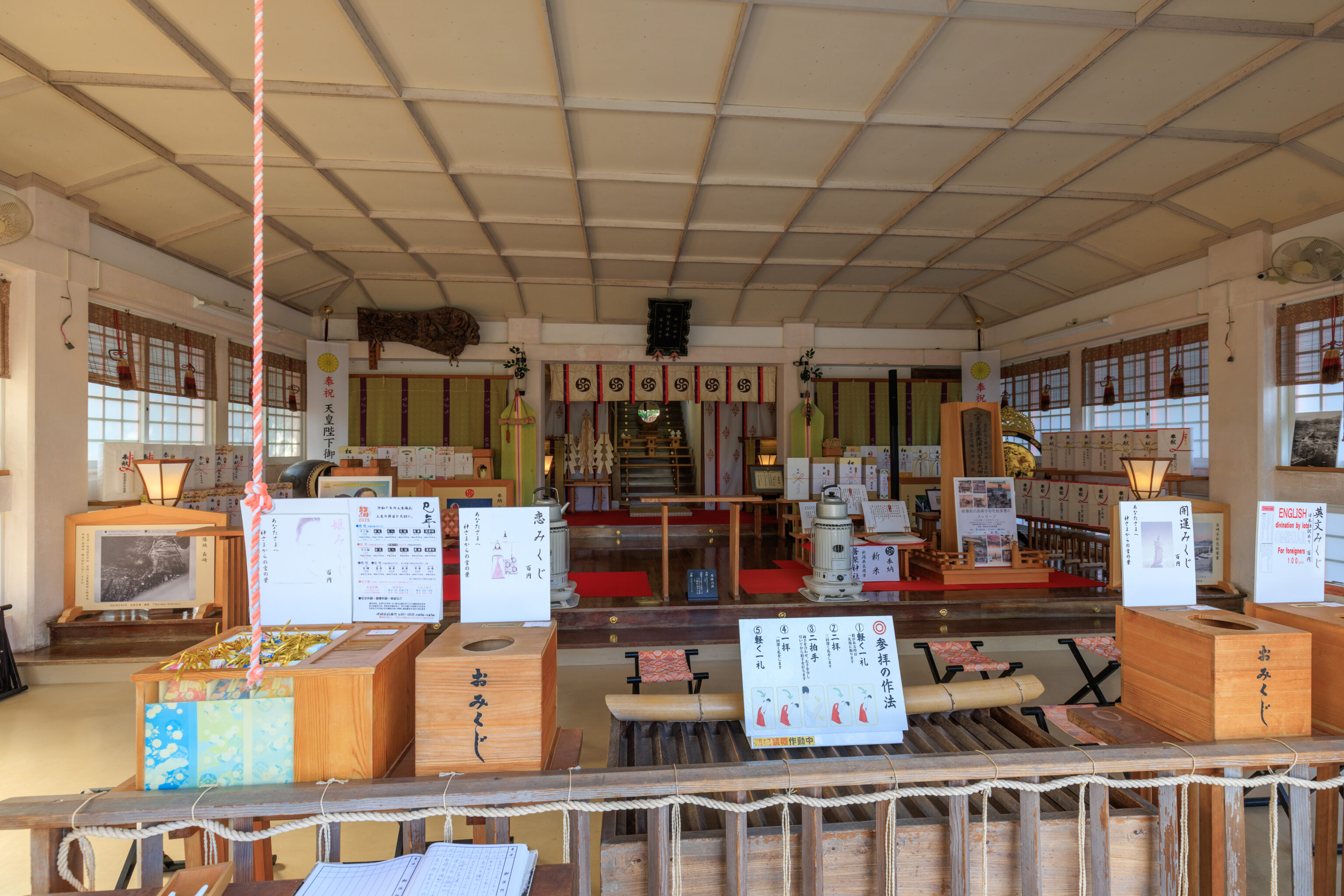
We walked up to the shrine’s small main hall to take a look.
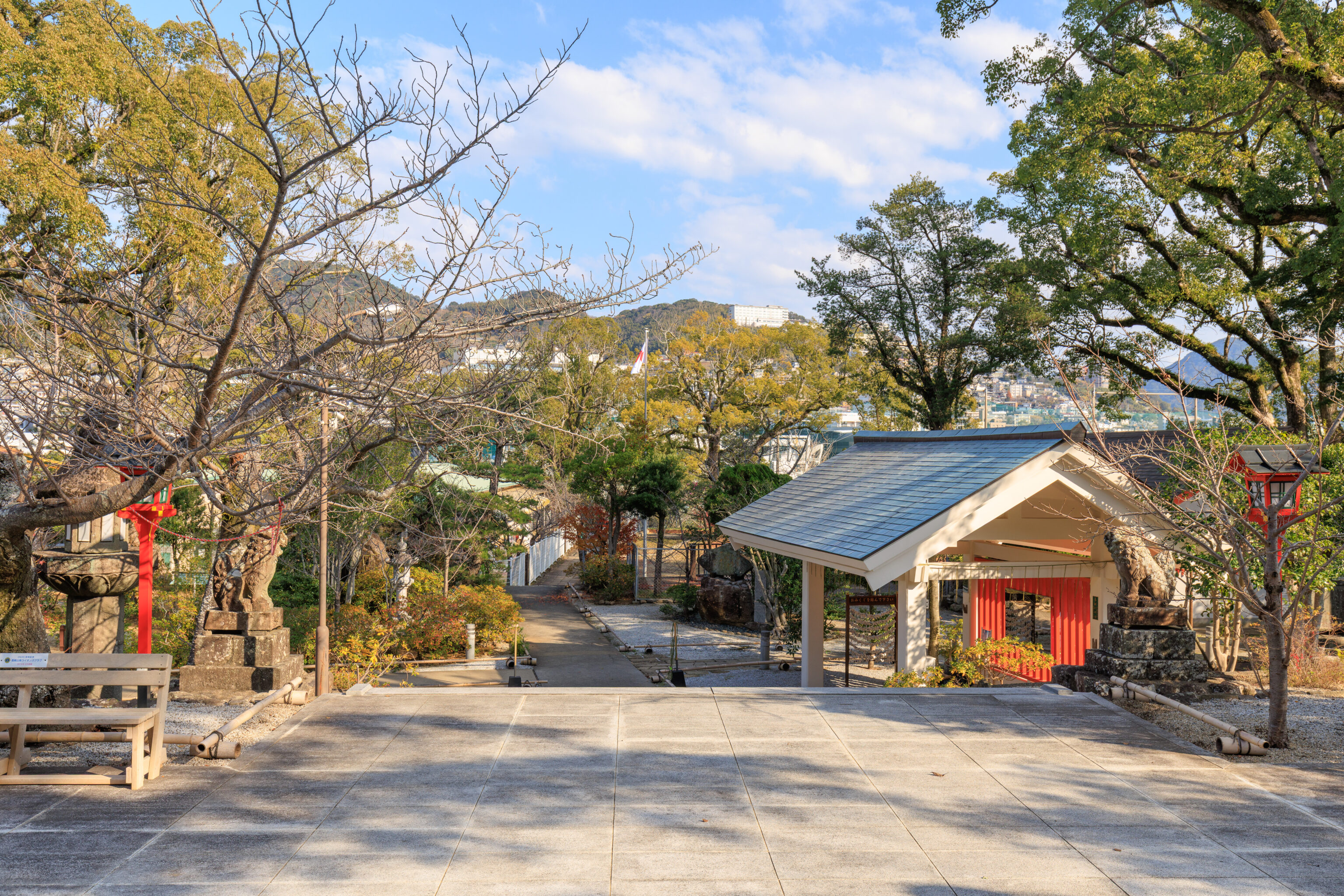
The view looking towards the stairs from the main hall.
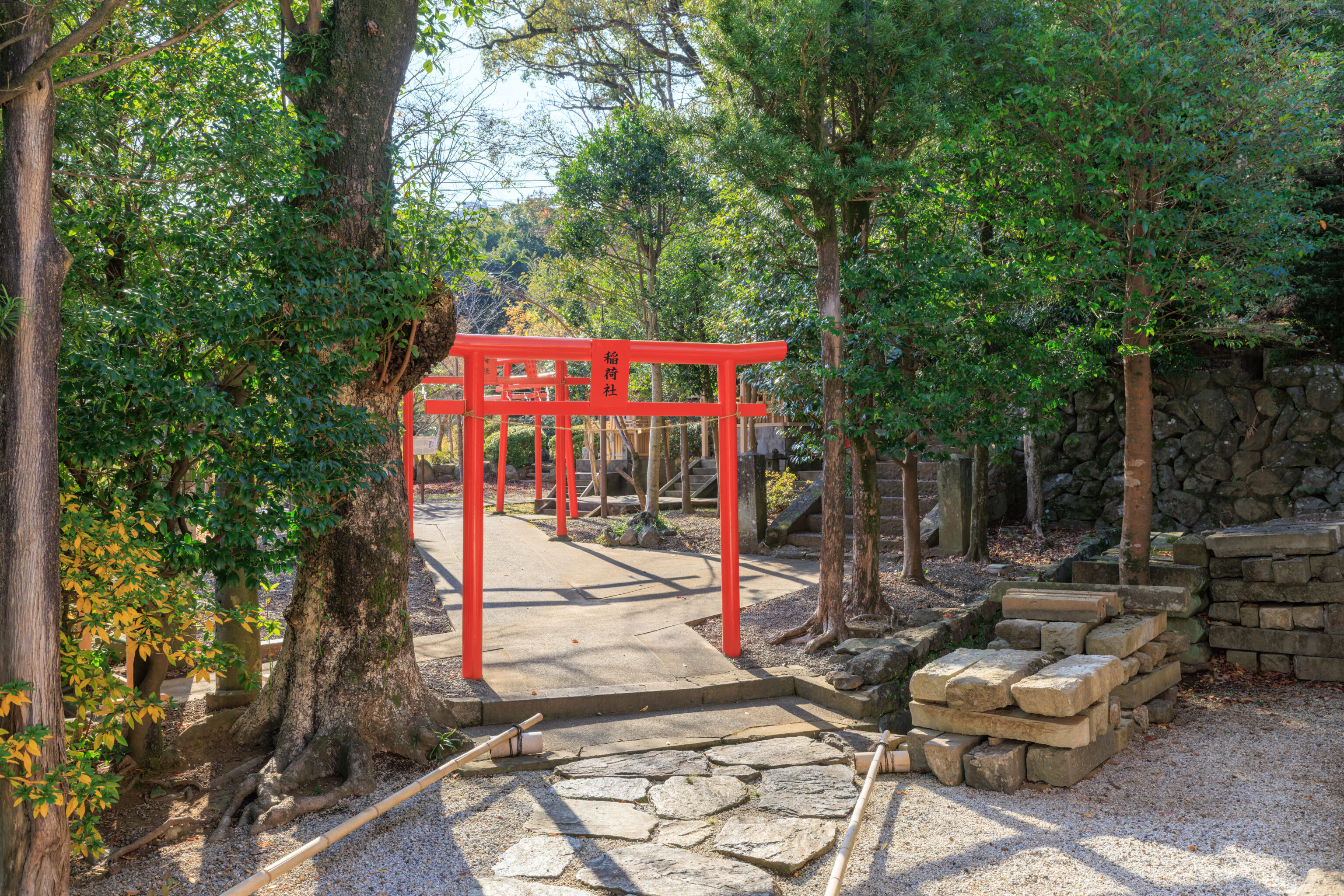
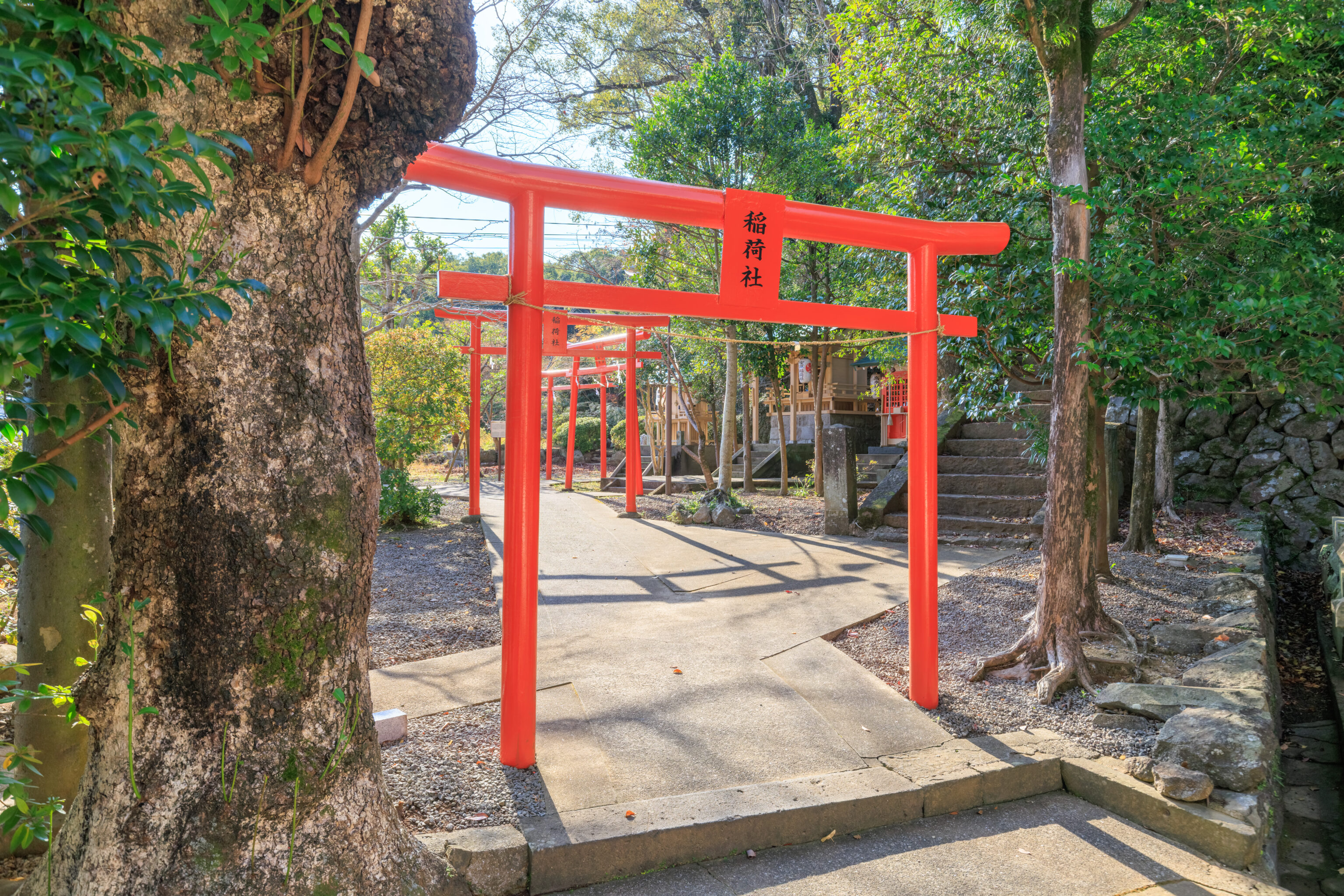
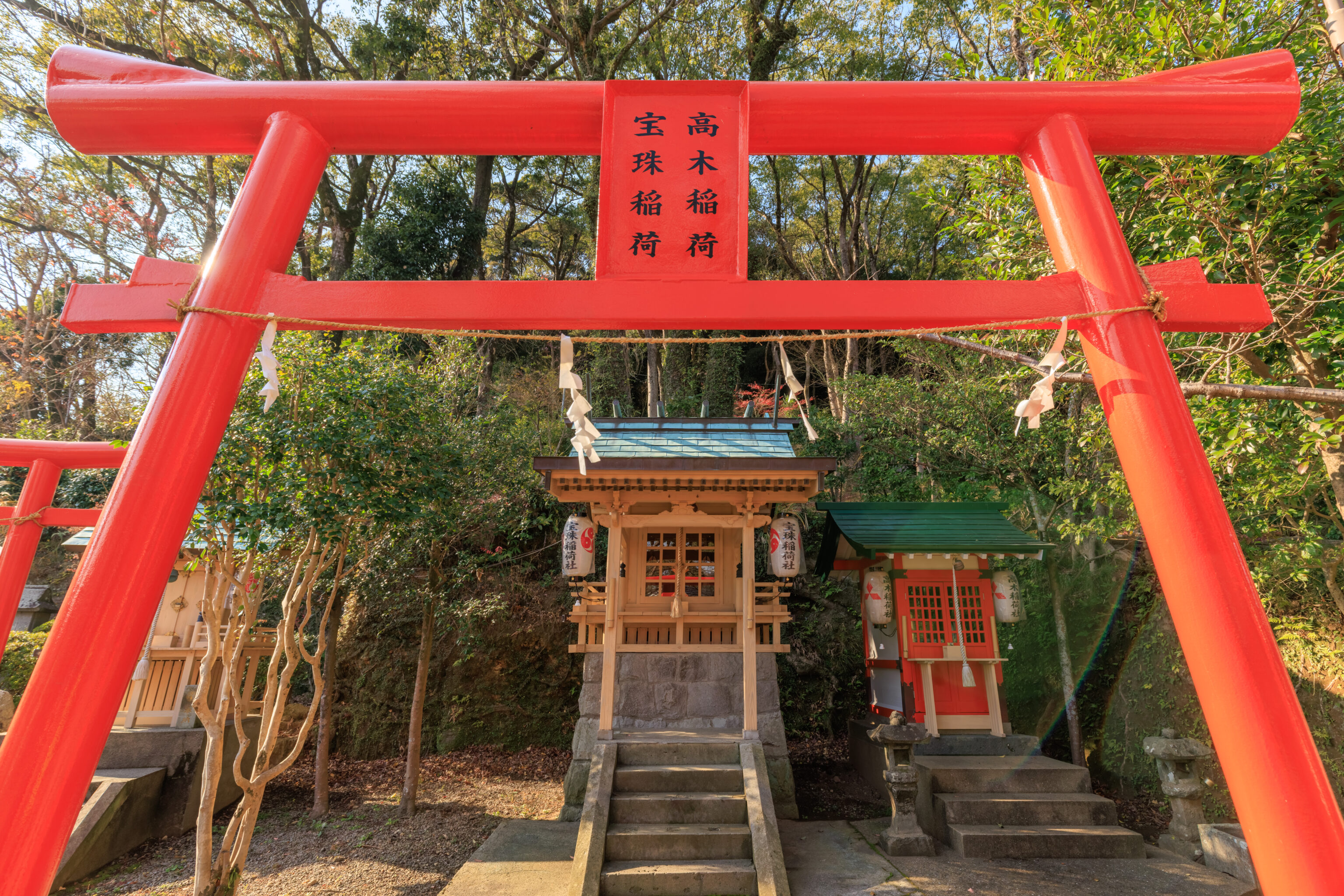
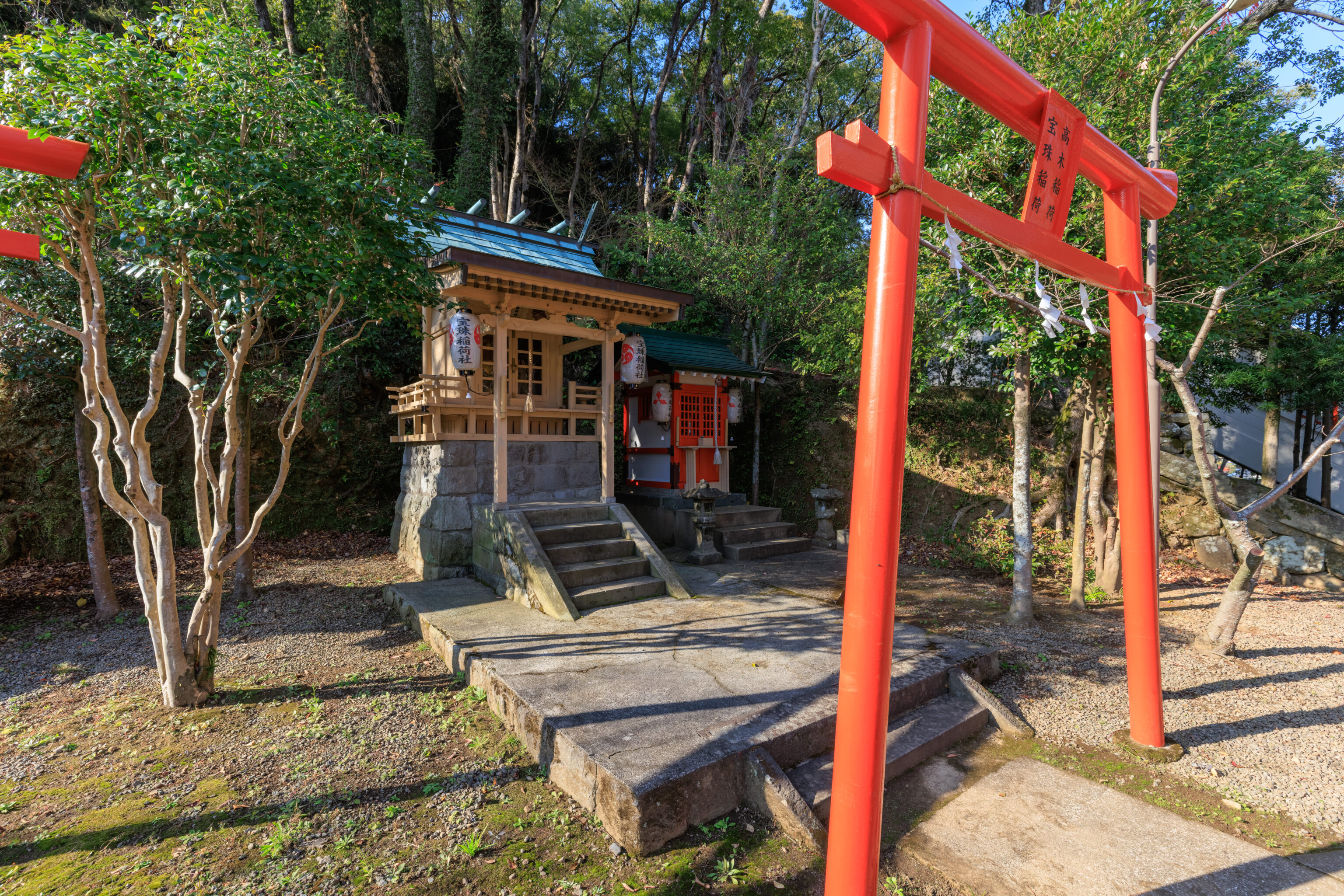
We then walked past the main hall to a small area between the hall and the ropeway terminal building. This was the area that we saw from the aerial tram when we just departed on our way up. In addition to the torii, there were some small shrines.
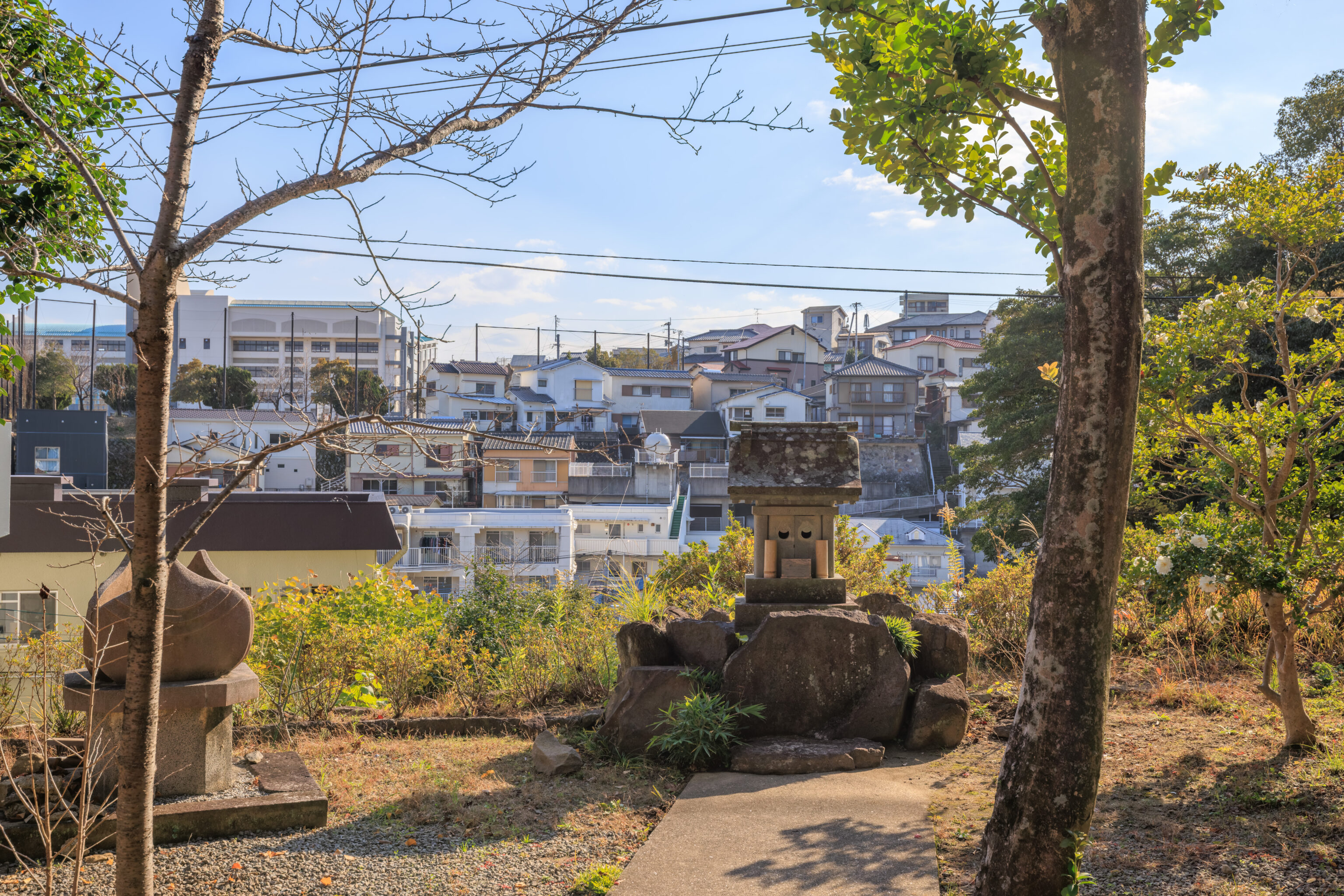
This small shrine had its back to the ropeway.
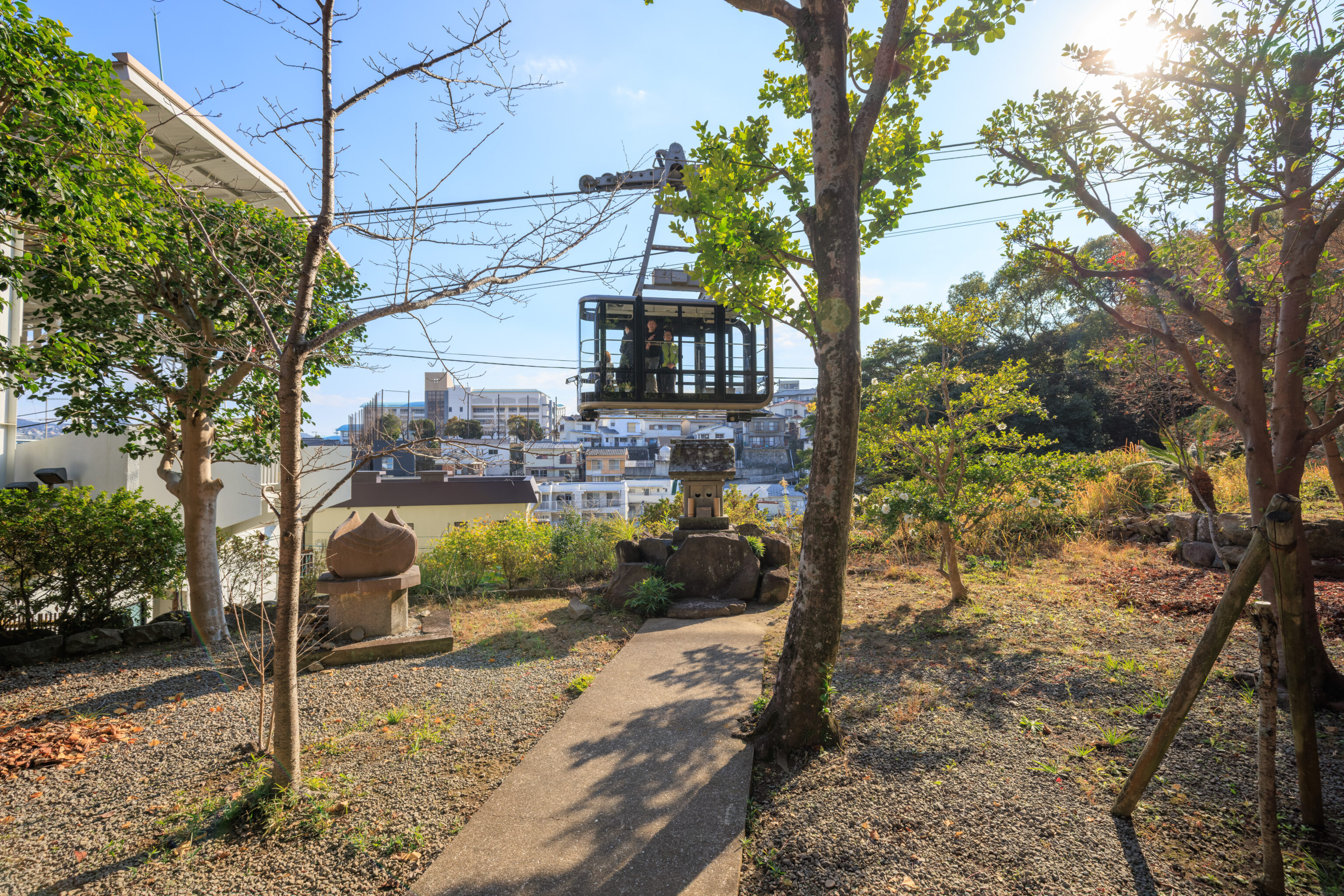
We watched as the aerial tram arrived behind it.
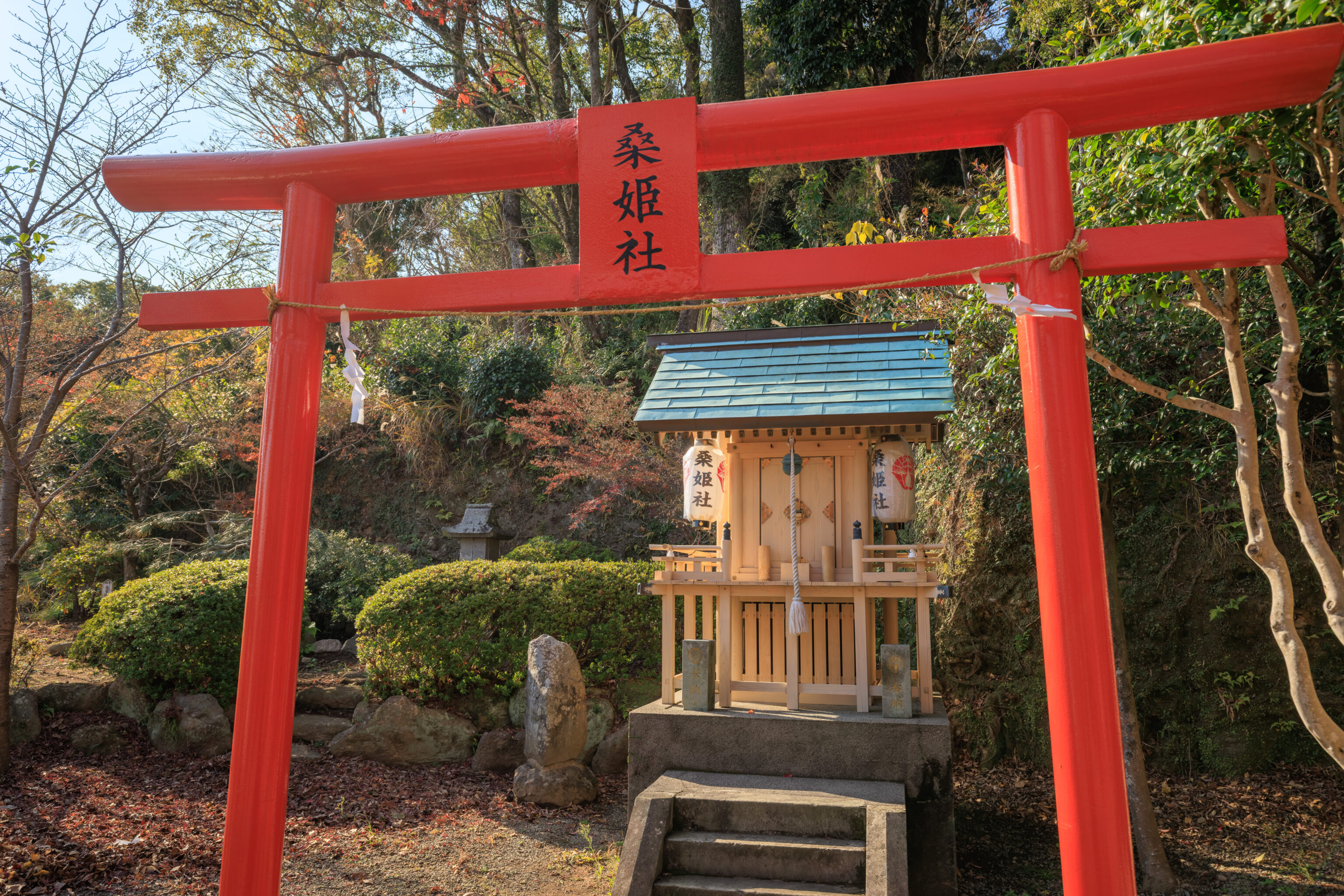
One of the shrines here is the Kuwahime Shrine, as described by a nearby sign:
Kuwahime Shrine
Kuwahime Shrine is famous because the Christian feudal lord (Daimyo) Sorin Ohtomo's granddaughter, Kuwahime, the goddess of marriage, is enshrined here. After the downfall of the Ohtomo Household, she was exiled to Nagasaki where she went into hiding. She grew mulberry bushes and reared silkworms and also taught the local girls how to spin yarn. After her death, a mulberry bush was planted by her grave and thus people began to call her the "Mulberry Princess". In 1900, Kuwahime's headstone was placed on this site. It can be seen through the grille, resting on the lower half of the small stone shrine. Moreover, in honour of the dharma of Kuwahime, a Confucian plaque called "Tenyo" (celestial nymph) was erected in the grounds of Manpuku Temple, which It still remains today.
– Text from a nearby sign.
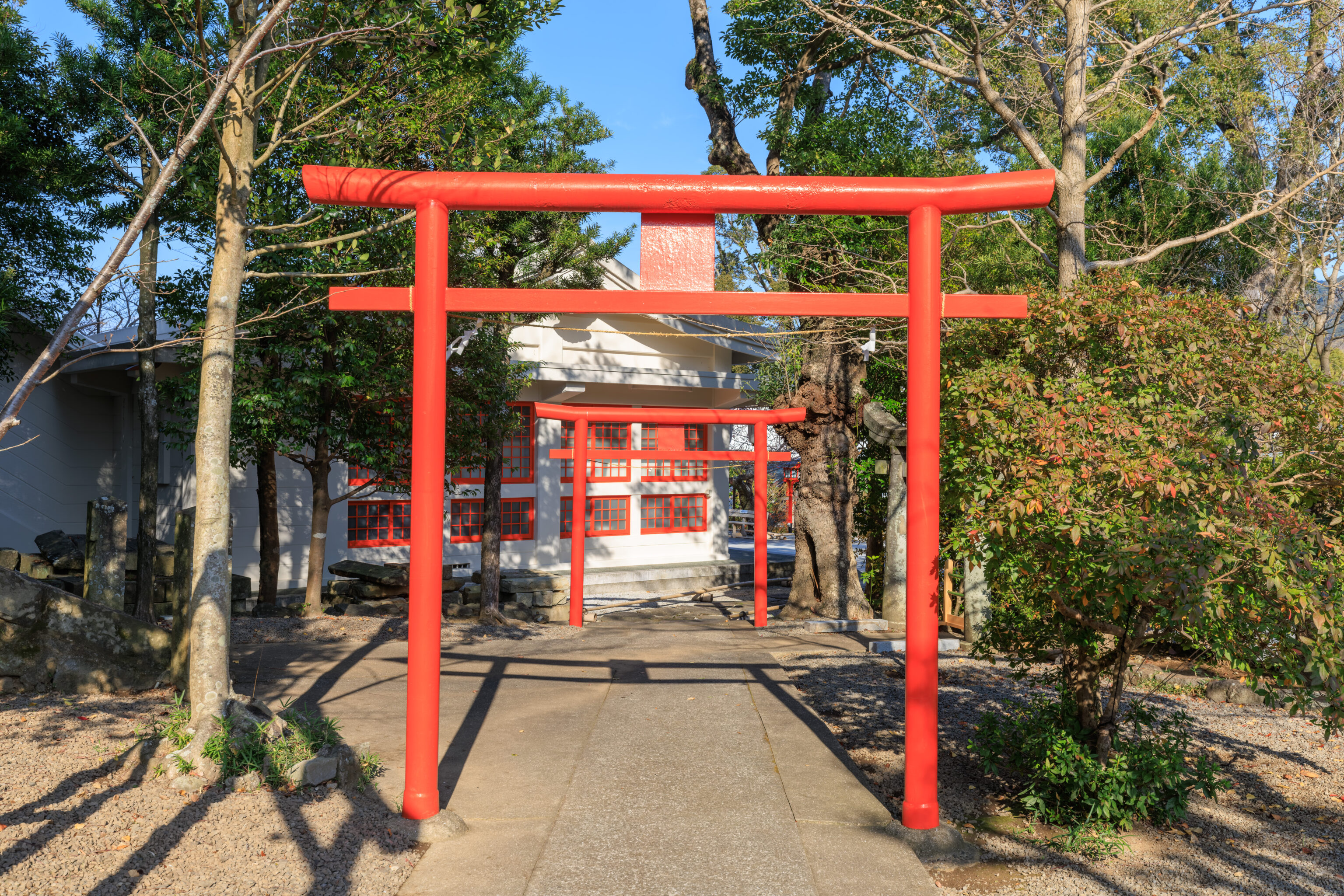
After our brief visit, we turned around to head back down to the road to catch a bus to our next destination.
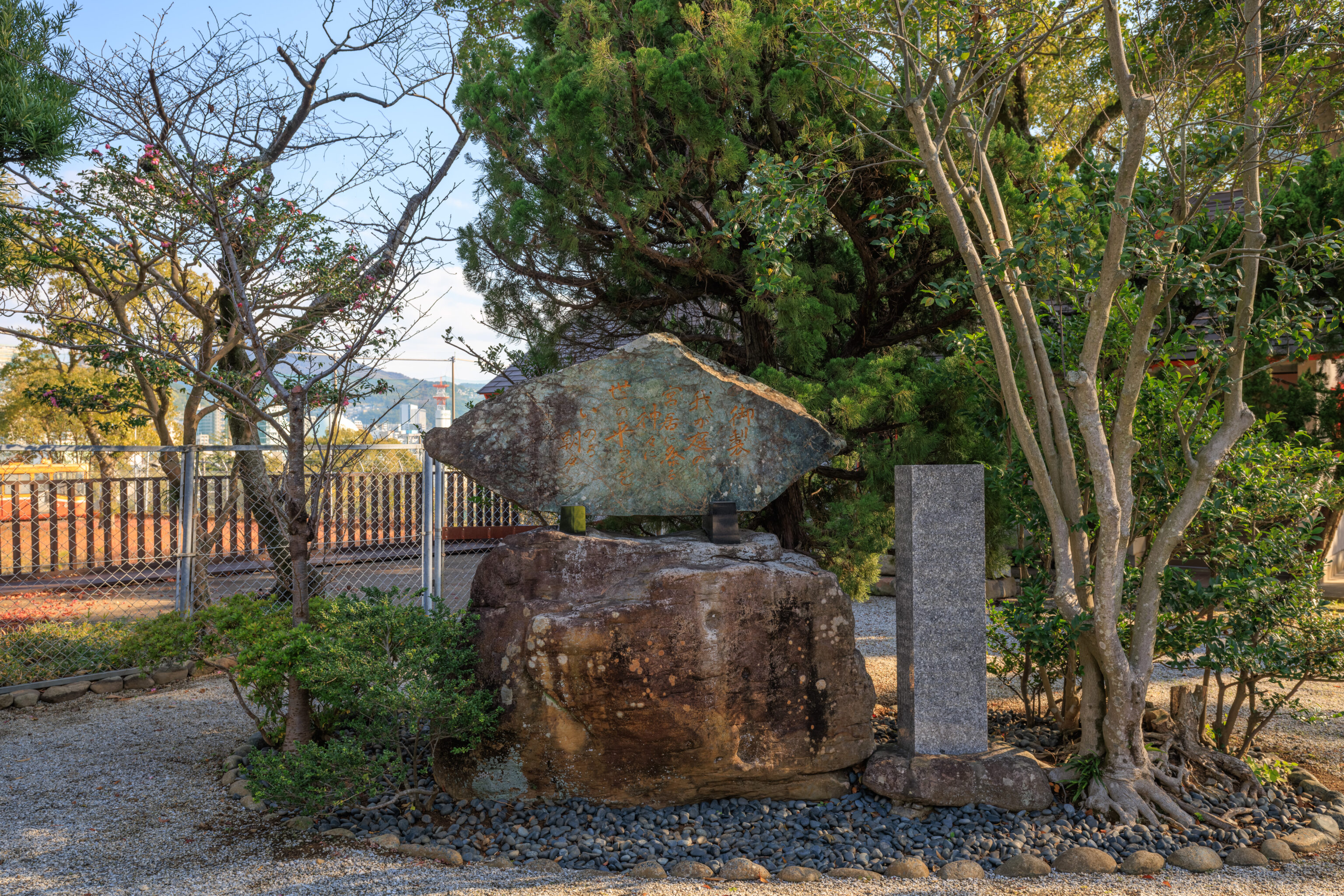
These stone markers are often hard to read. This one is inscribed indicating that it is a 御製 gyosei (imperial poem).
Imperial Poem
To the gods enshrined
Within the palace grounds
Of my own garden,
Morning after morning
I pray for peace in the world.
– Text from a sign, read using Google Gemini and translated using Google Translate.
There is additional text on the left that is unfortunately quite hard to make out.
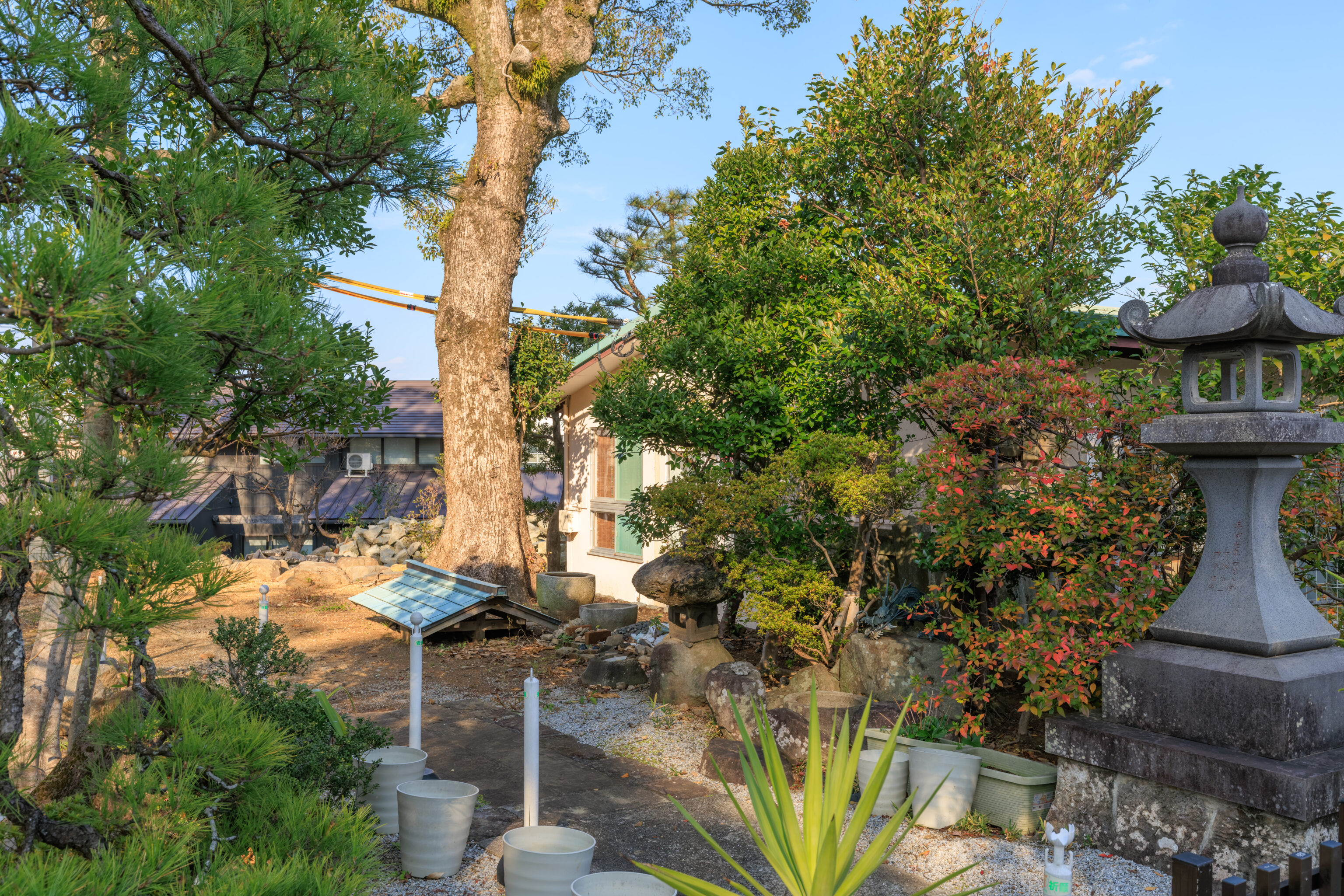
This scene was interesting because of the little roof on the ground. There’s also a metal dragon on the right, the kind that seems like it belongs at a purification station.
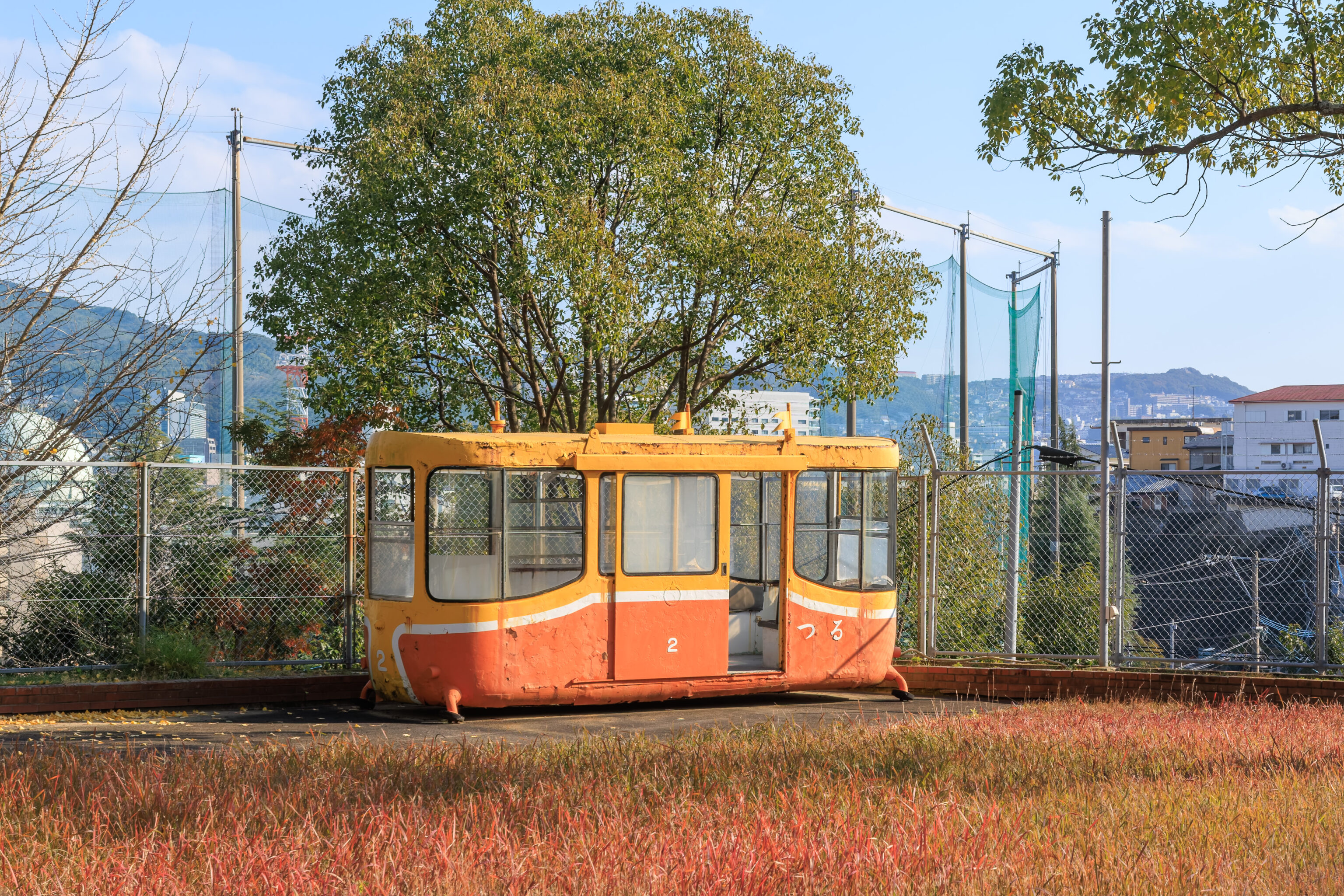
Conituning on, there was an old aerial tram cabin sitting at the far end of a fenced-in field.
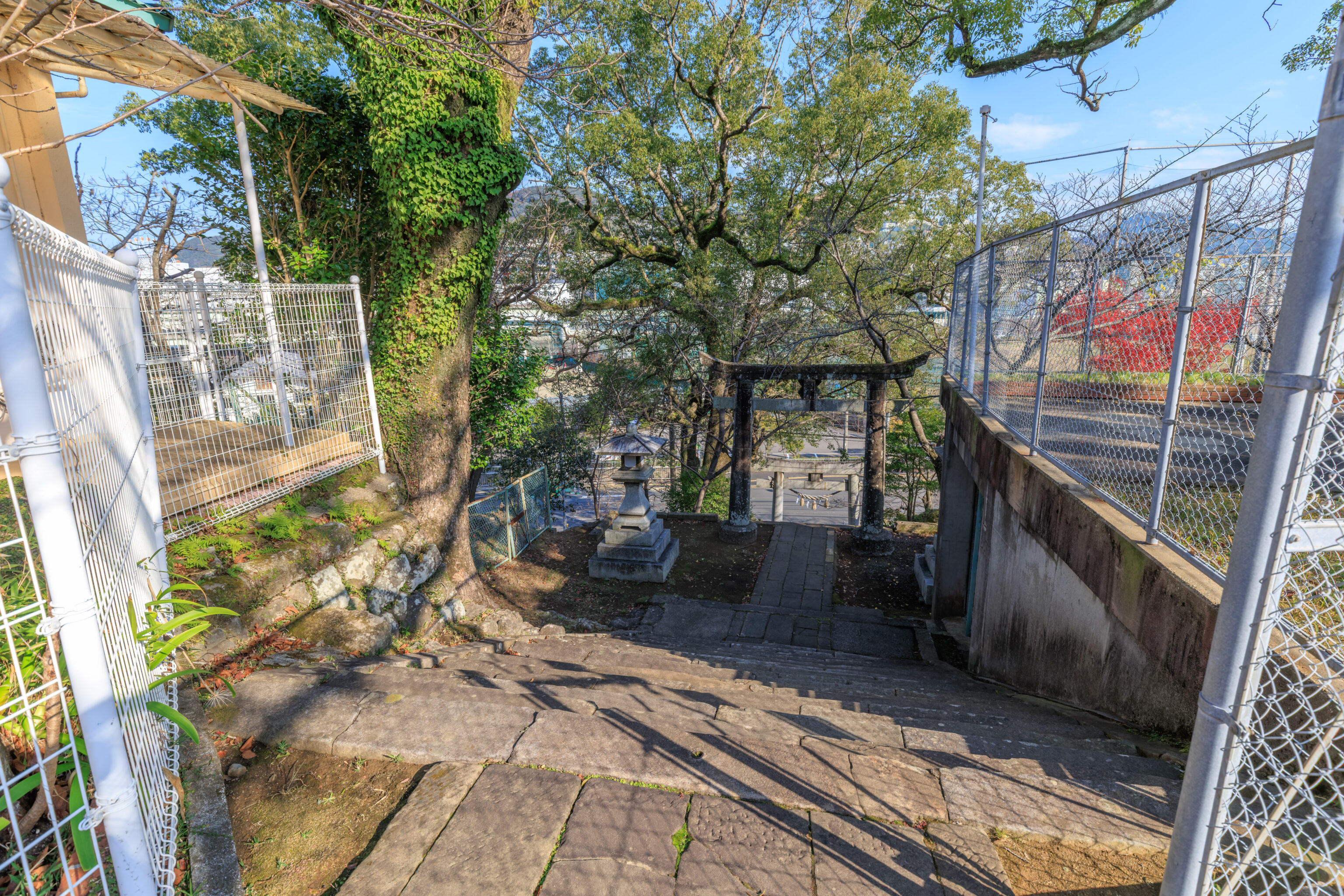
These are the stairs we saw on our way here after we got off the bus.
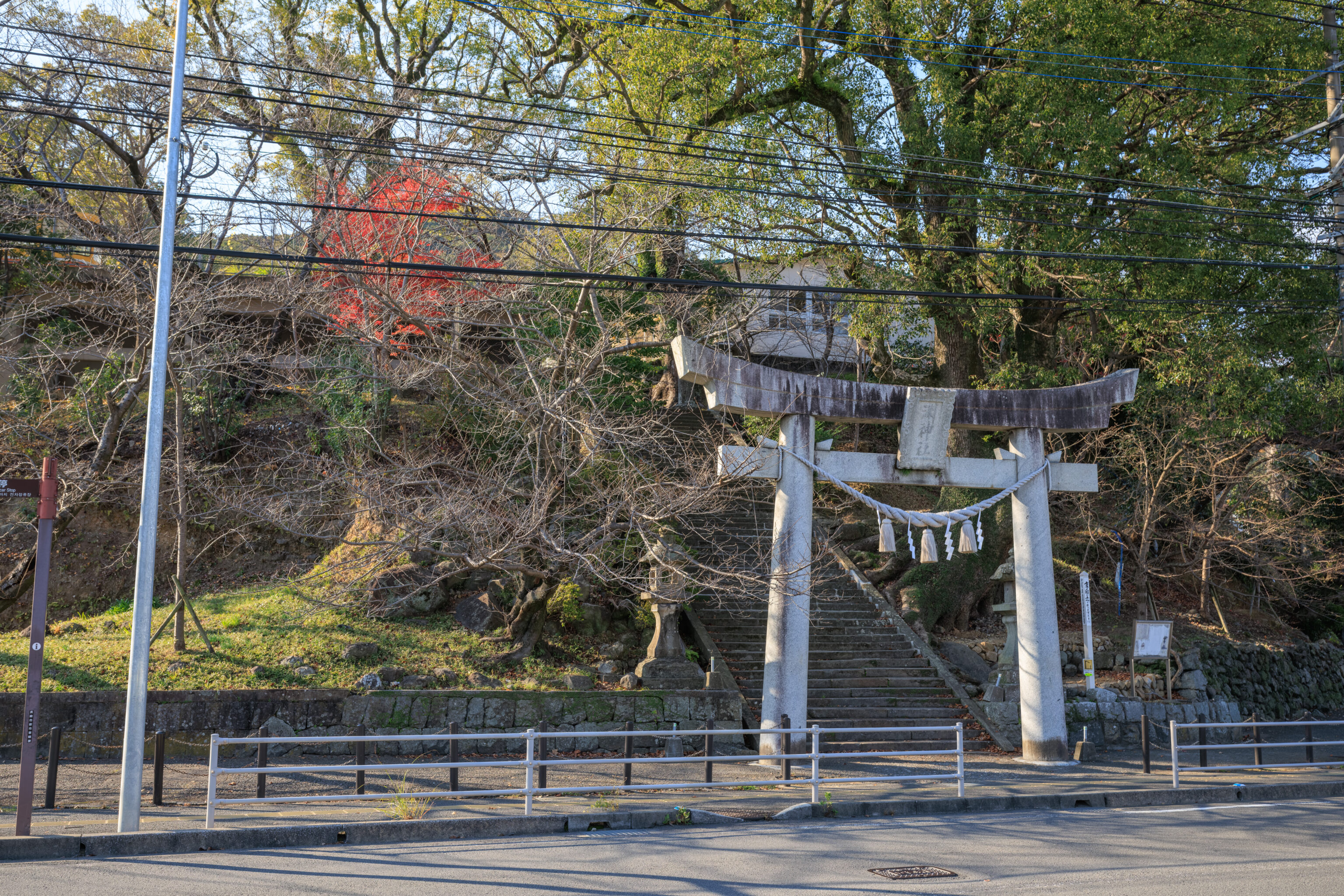
We walked down and crossed the road to reach the southbound side of the bus stop.
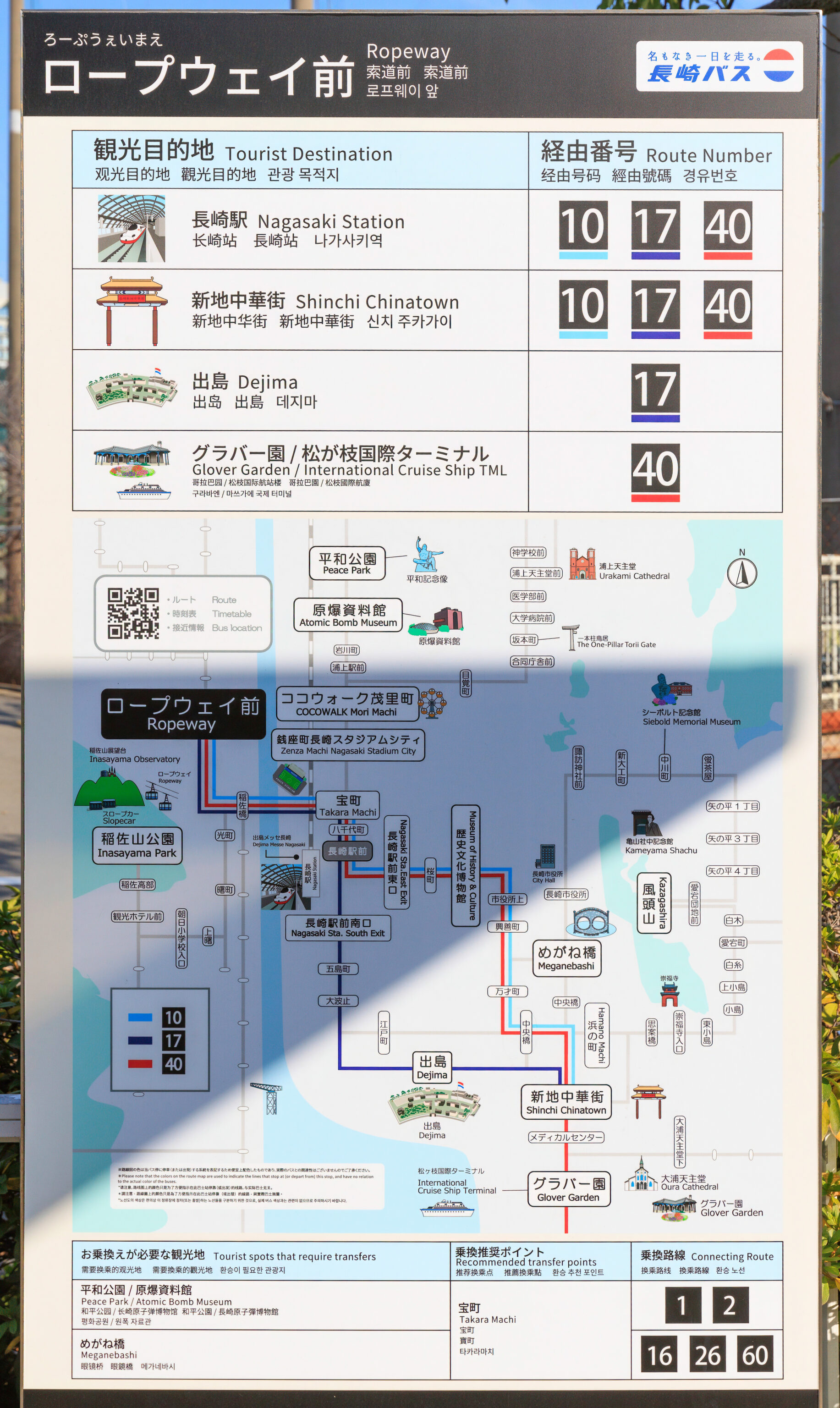
This bus stop actually had a map showing some points of interest to tourists that can be reached by bus. The busses that stop here, 10, 17, and 40, are highlighted in color.
We’re headed to the Meganebashi. Although the map indicates that a transfer is required, the 10 and 40 lines go close enough that there is no need to do so.
Meganebashi
We took the bus to the 興善町 Kozenmachi bus stop. From there, our destination was just a few blocks away.
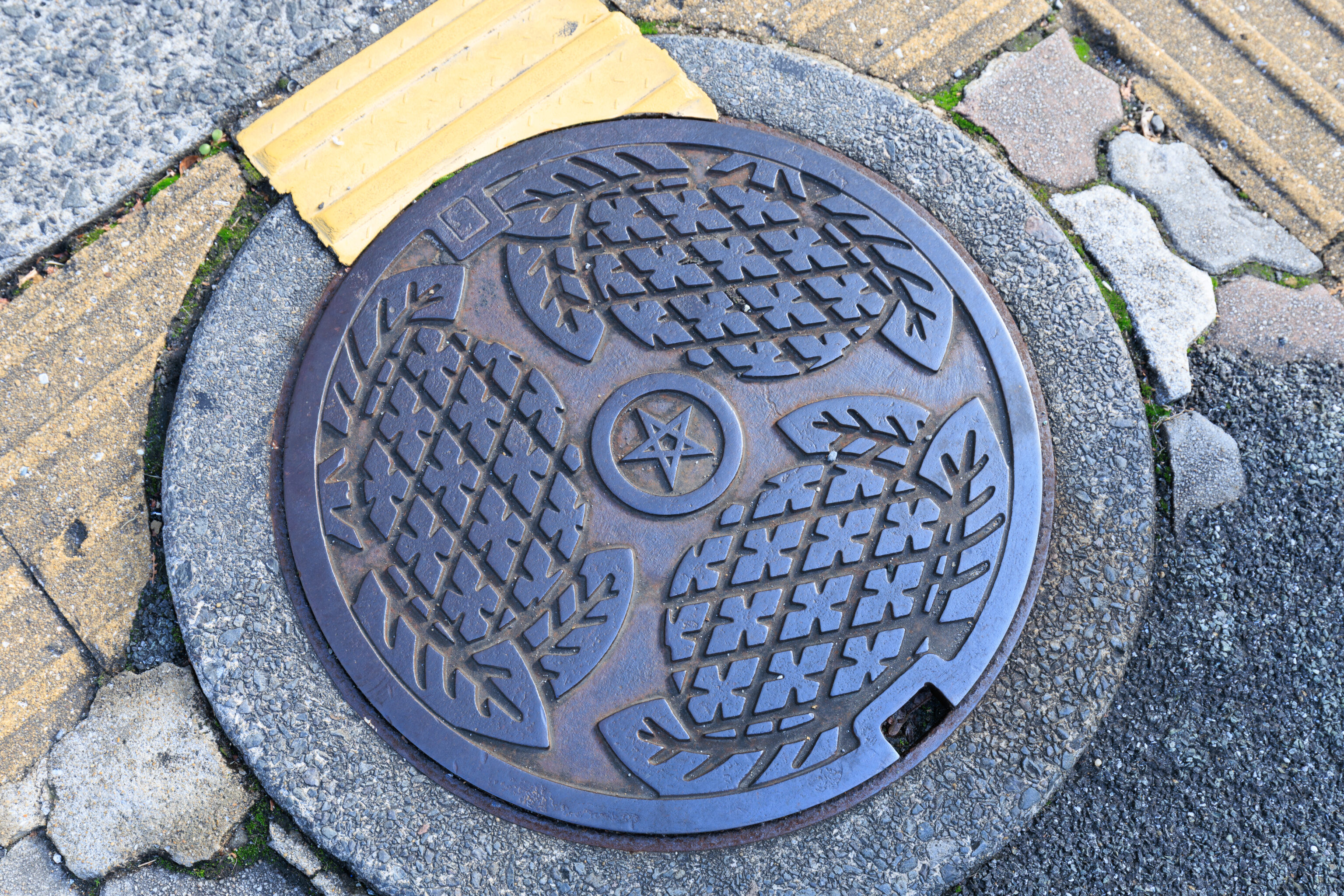
We noticed this utility cover featuring the simplified Nagasaki emblem. It seems to depict three stylized hydrangeas as well.
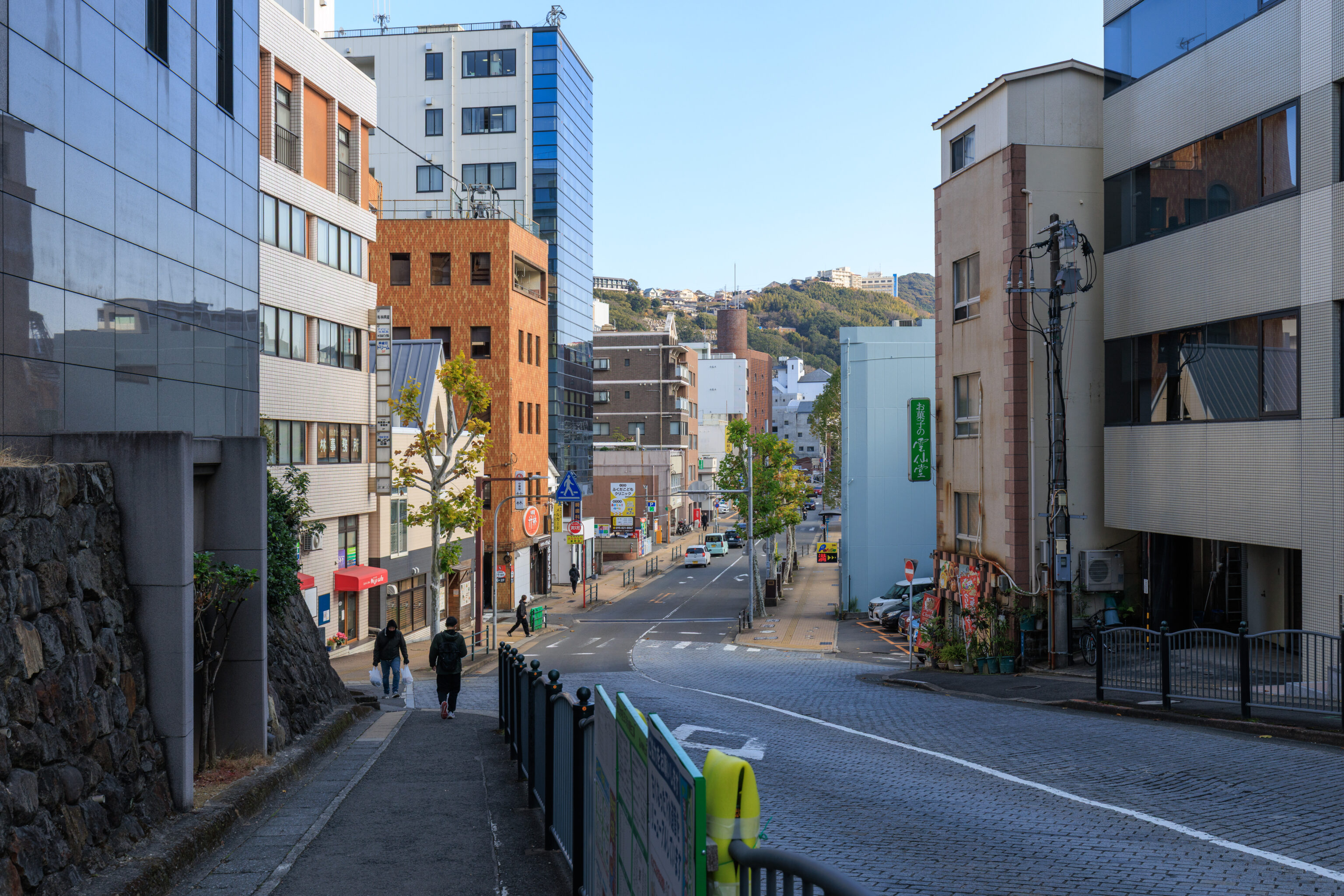
After turning left, we started to walk to the southeast.
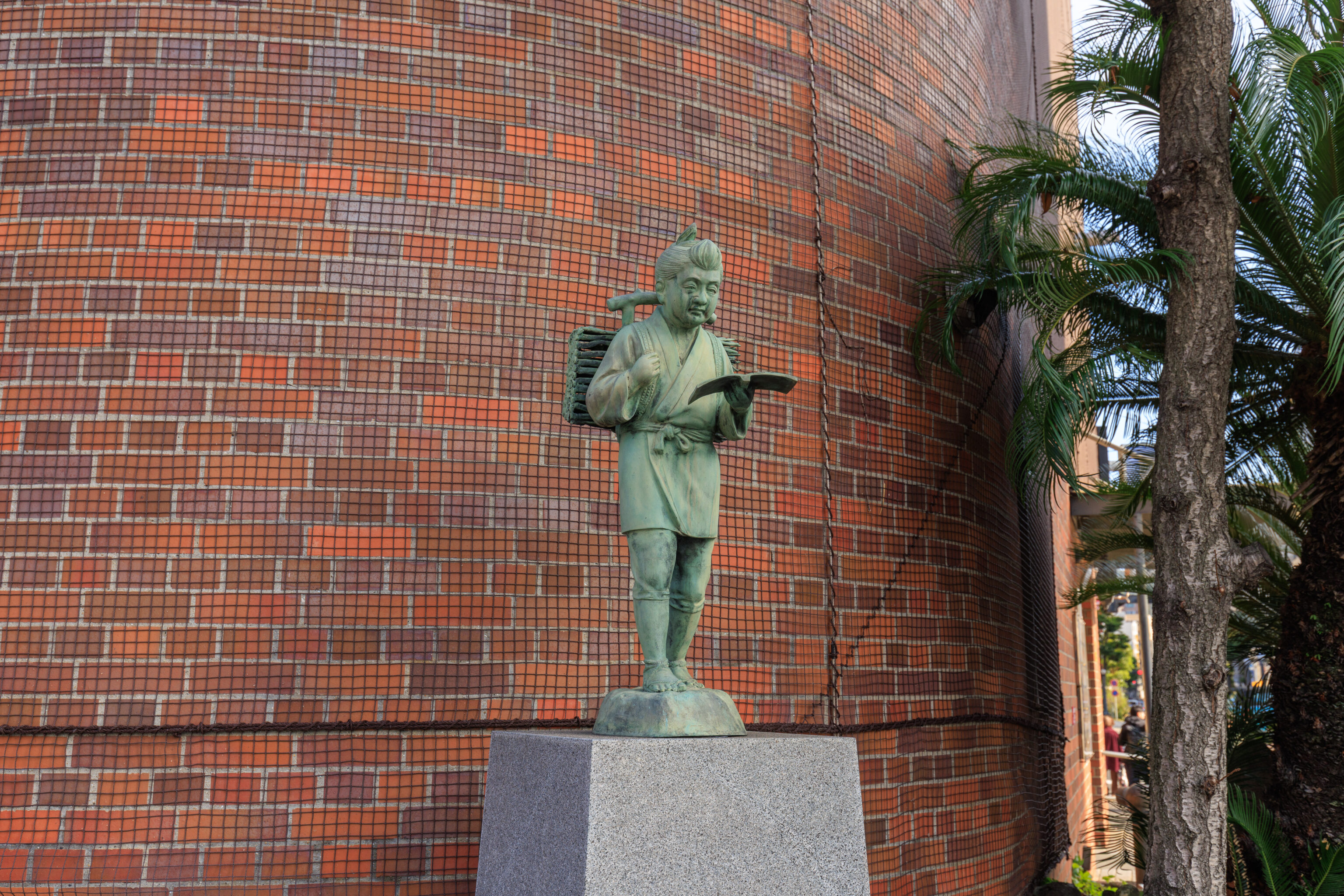
This statue depicts 二宮 尊徳 Ninomiya Sontoku, who is also known as 二宮 金次郎 Ninomiya Kinjirō and is labelled as such on Google Maps.
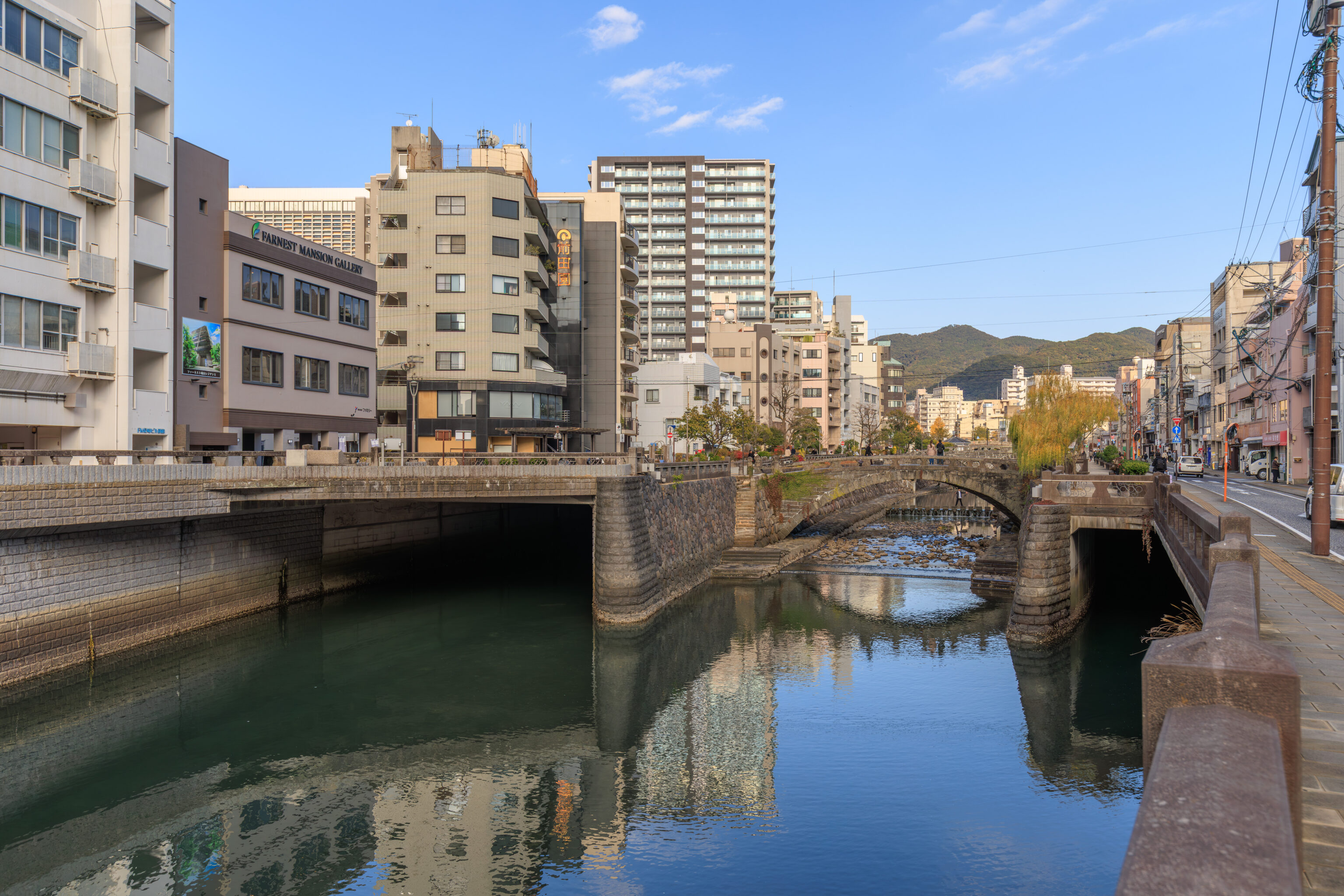
Just beyond the statue, we crossed over the 中島川 Nakashima-gawa via the 常盤橋 Tokiwa-bashi, a vehicular and pedestrian bridge.
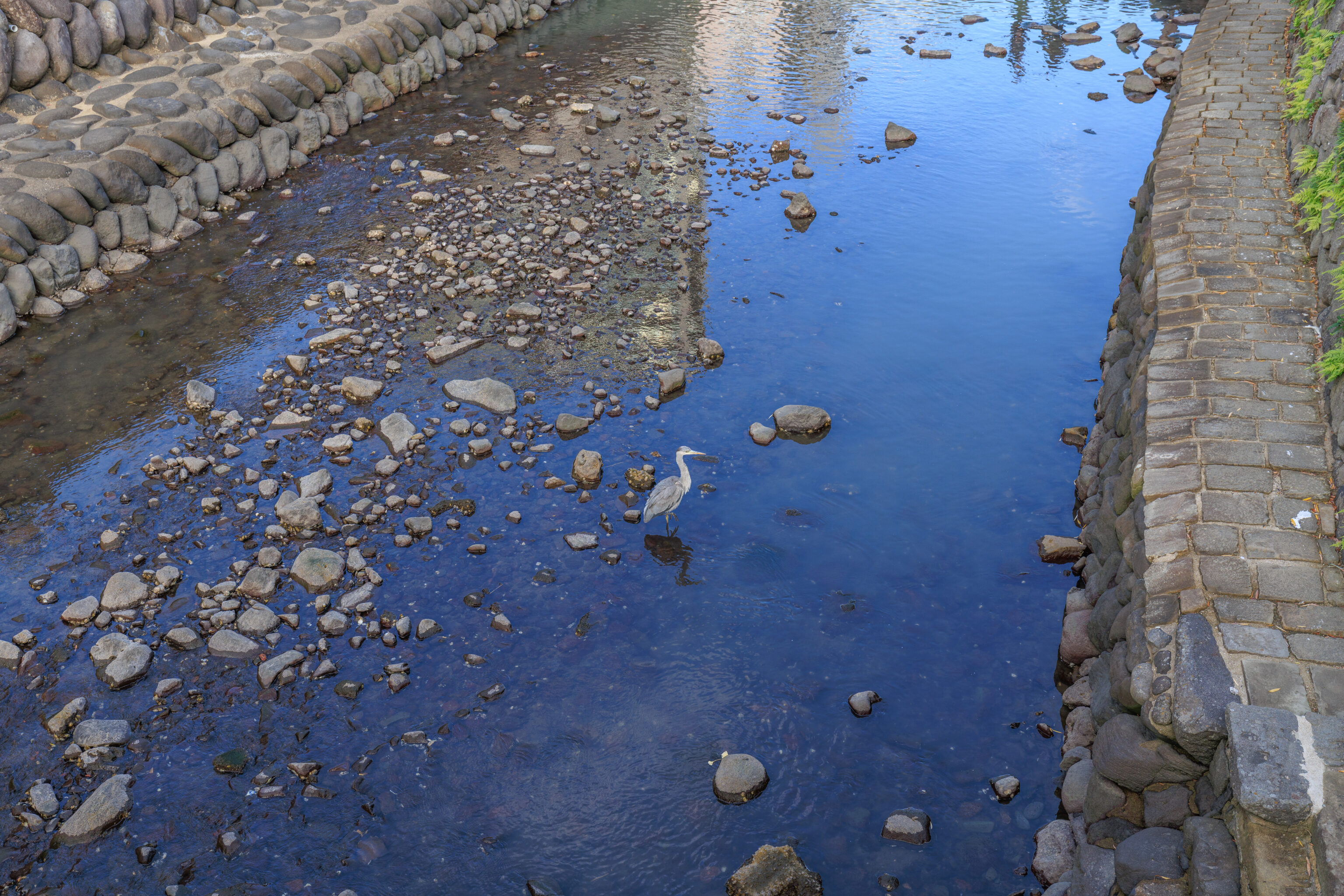
Looking down, we spotted a Gray Heron standing in the shallow waters below.
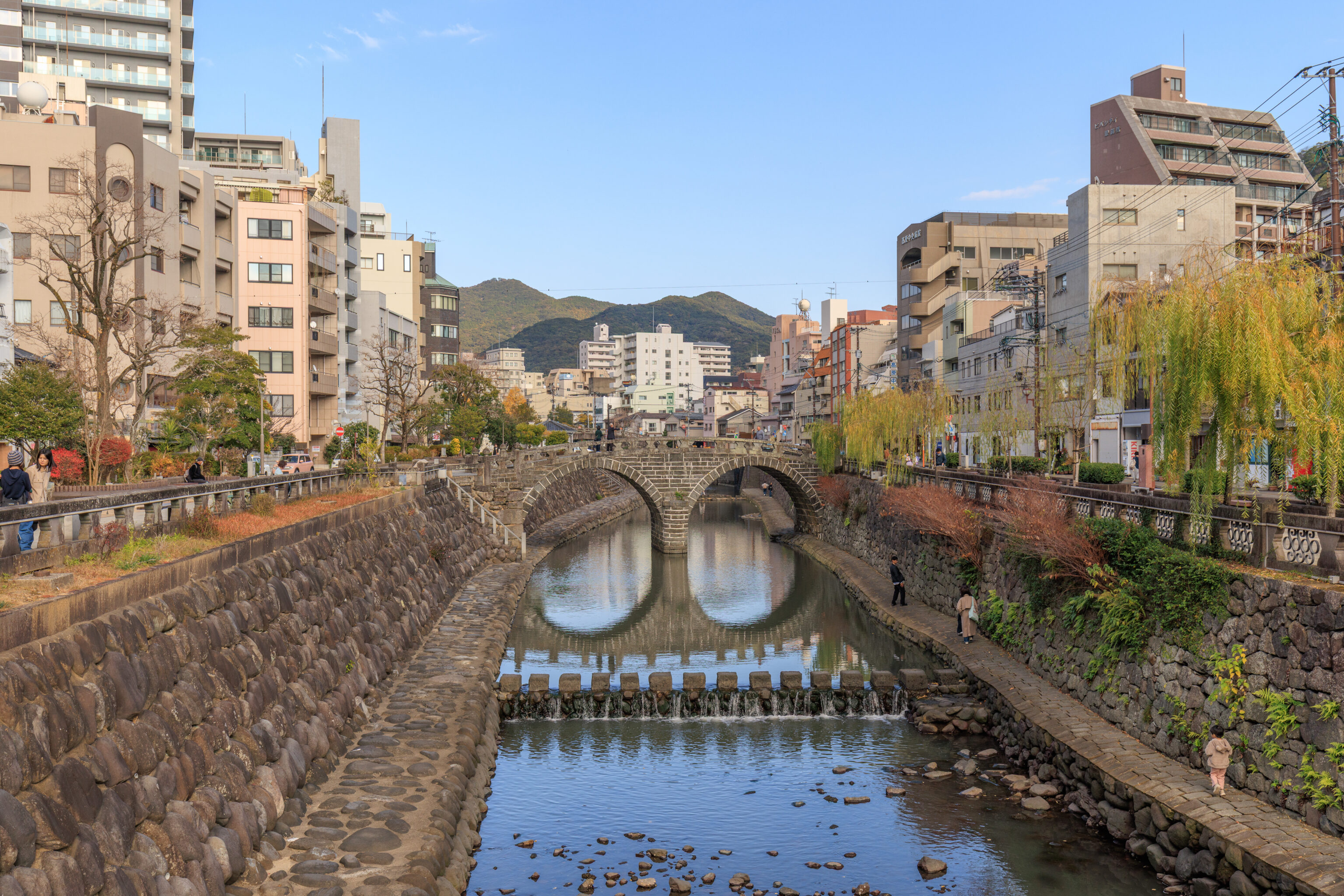
We then walked to the next bridge to the east, the 袋町橋 Fukuromachi-bashi, which is the bridge next to the 眼鏡橋 Megane-bashi (Spectacles Bridge). The Megane-bashi was built in 1634 and gets its nickname from its appearance as resembling glasses.
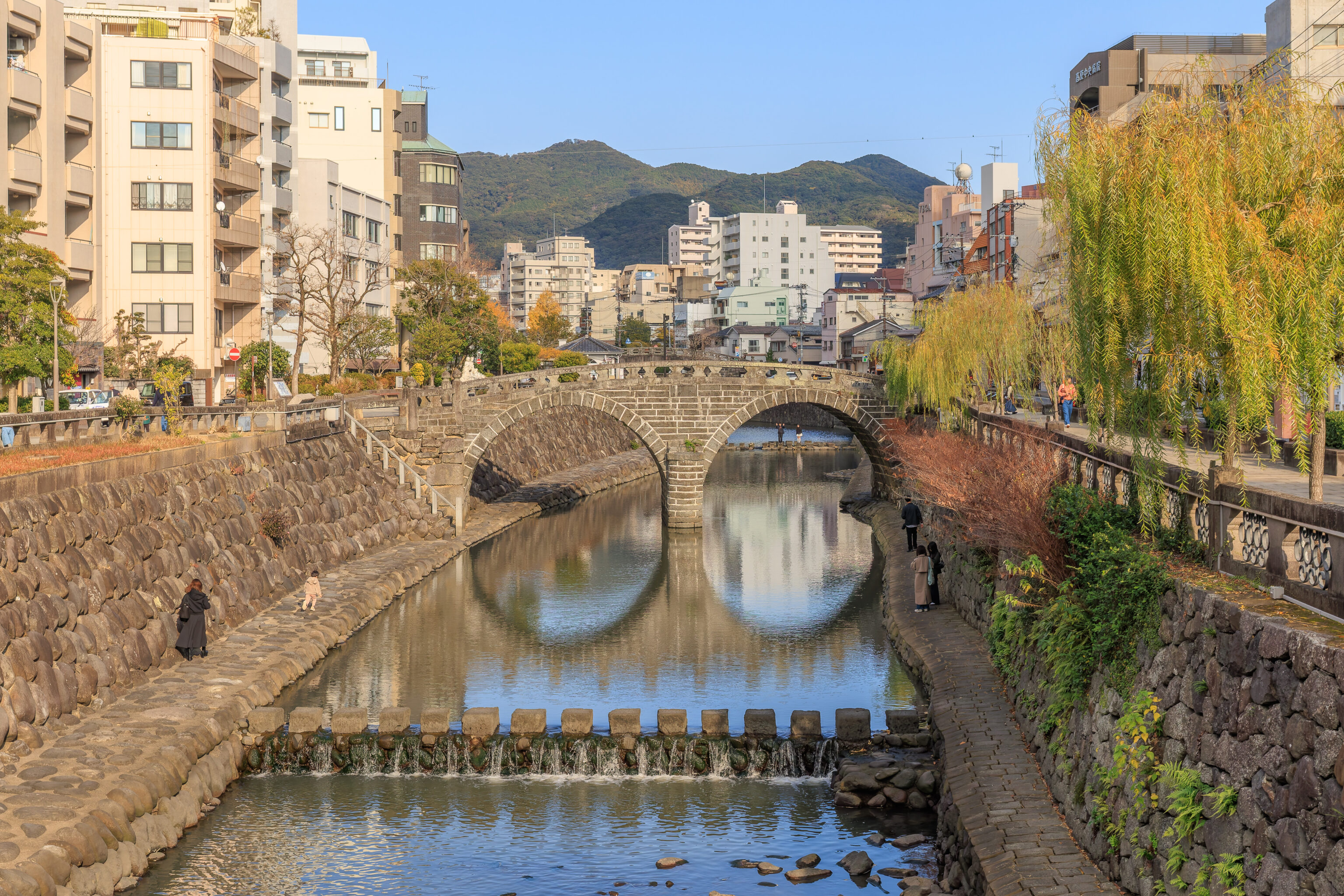
A similar perspective of the Megane-bashi at a moment with better light.
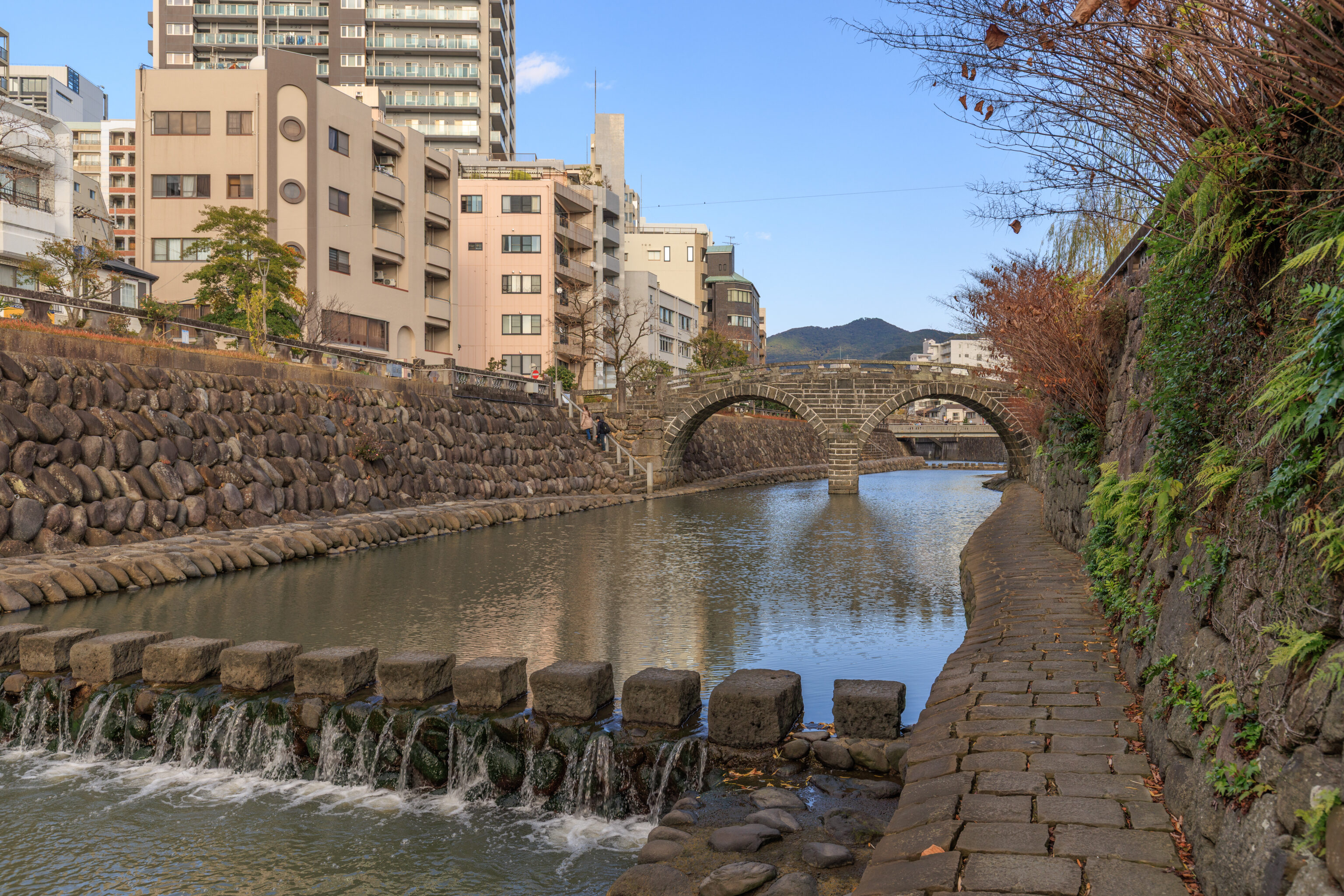
The Megane-bashi as seen from the pathway next to the river. Unfortunately, the wind conditions resulted in the water’s surface becoming ripply.
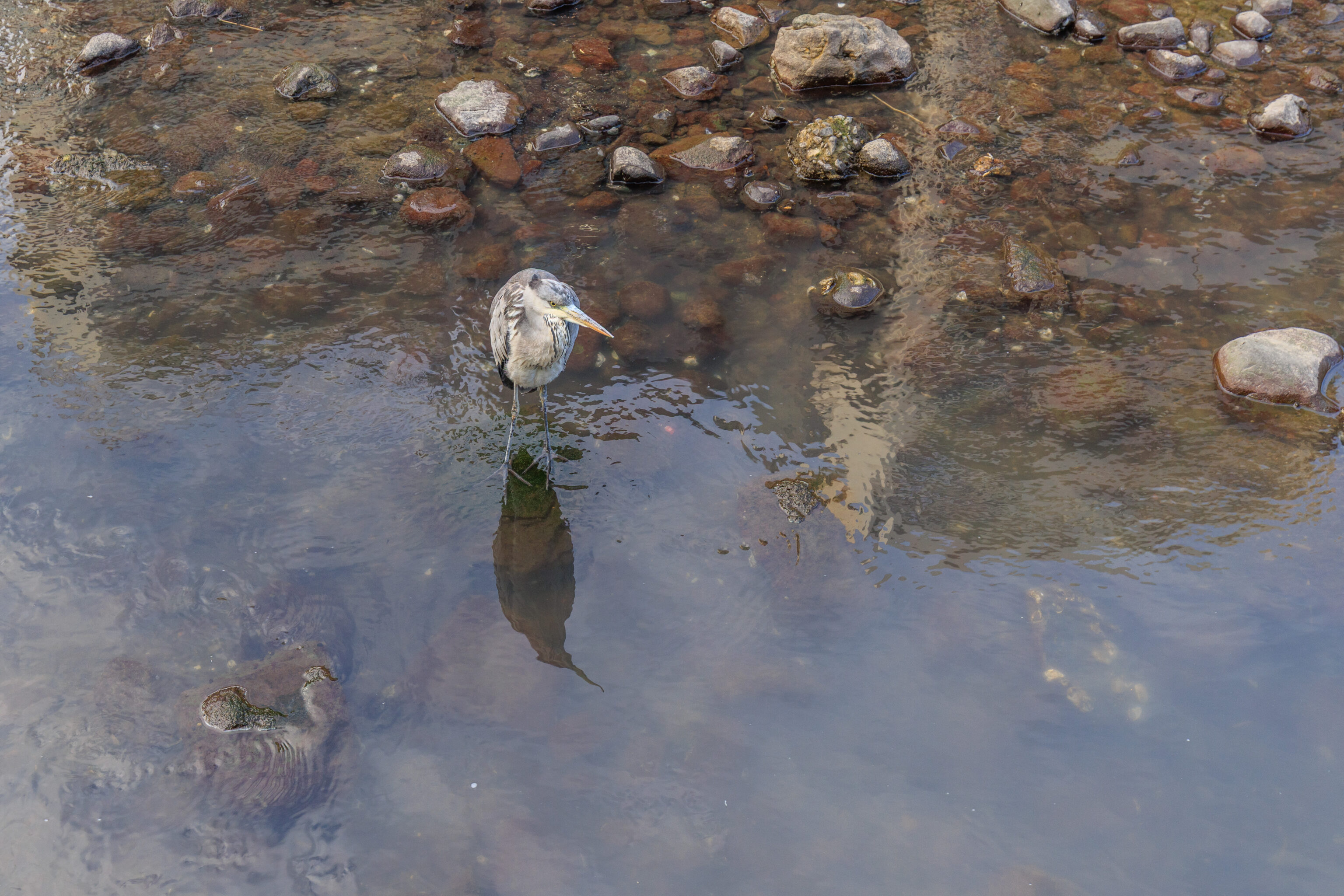
There was a heron here as well.
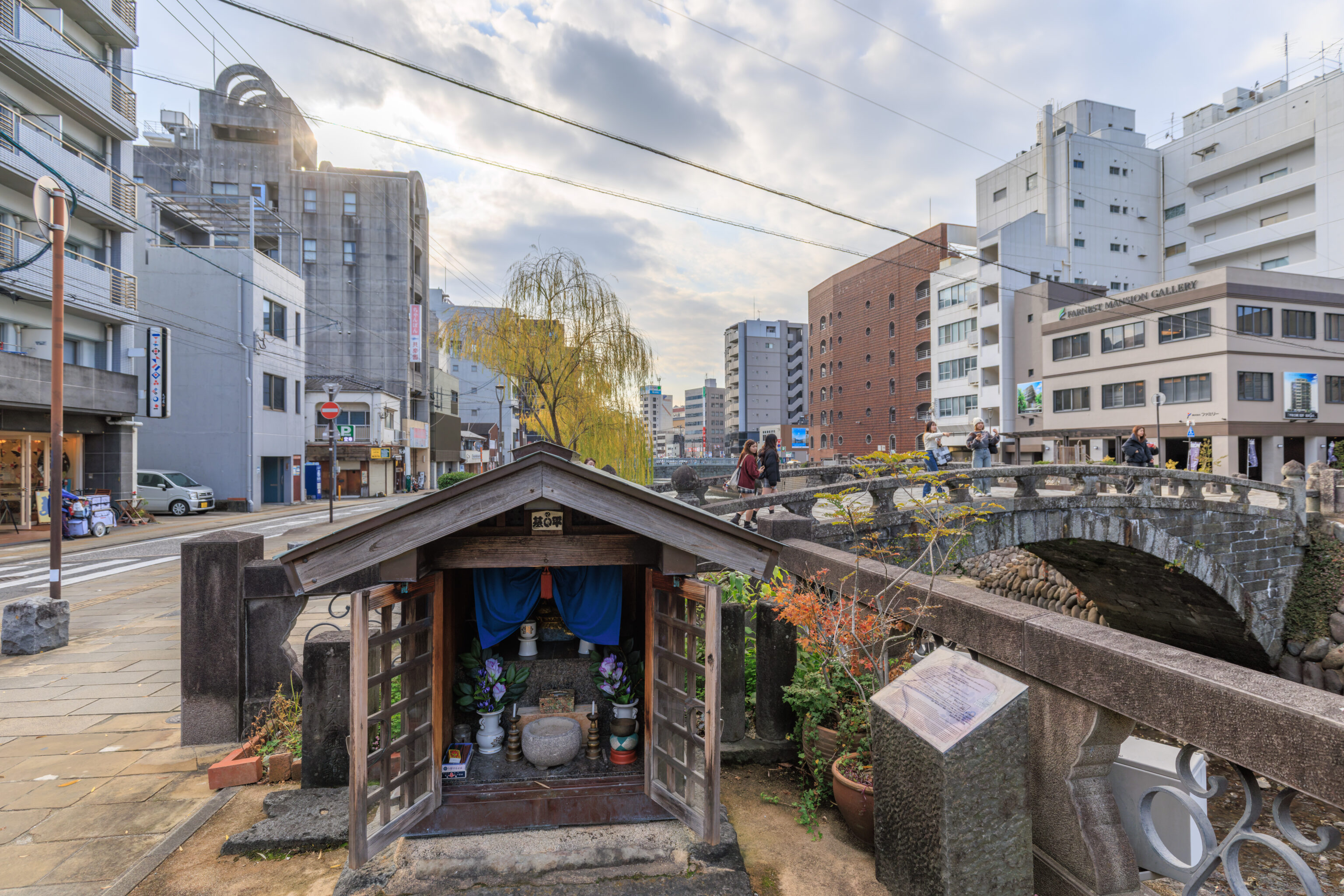
This small shrine was at the Fukuromachi-bashi. The marker to the right had quite a bit of text that describes the history of this area as well as this shrine:
The History of Nishi Furukawa and the Jizou Statue
(Jizou or Ojizo-sama, is a deity, represented by a stone statue and is thought to go fearlessly into any place or situation to help those in need.)

Old Furukawa Machi (or "town") was built along the Nakashima River. It began as Nishi Furukawa Machi when Old Furukawa Machi was divided into three separate districts in 1672. The town experienced many fires and one such fire destroyed the official records of the town. To protect the town from further fires, a statue of the protective deity Jizou was made.

It is believed that Nagasaki City was established in the Kounin Era, 810-823.

In 1570, the Japanese government opened Nagasaki Harbor for international trade during the 250 years-long period of National Isolation. Nagasaki Suwa Shrine was established in 1555.

In 1634, Japan's first arch-style stone bridge, Megane Bashi ("Spectacles Bridge") was constructed. This is the year that the Nagasaki Kunchi Festival started at Suwa Shrine. It is believed that the Fukuro Bridge, which is the closest to the Jizou, was constructed about a decade after Megane Bashi was built.

In 1663, a great fire burned 57 of the 66 neighborhoods in Nagasaki. 2900 houses were damaged.

1672
Old Furukawa Machi was divided into three towns to rezone the stricken districts after the fire, and to share the benefits of world trade. From this year, the cost of the Kunchi Festival was equally shared. The old Furukawa Machi was long and narrow, along the Nakashima River. The town was enlarged by reclaiming land from the river. The 1 to 2 meter high stonewalls that were built during this process can be viewed, adjacent to the river.

1674
Nishi Furukawa Machi formally participated in the Kunchi Festival.

1766
A great fire in Nishi Furukawa Machi burned 16 neighboring towns and 2794 houses.

1782
Another fire in Fukuro Machi burned 15 houses.

In March, 1782, the people of Nishi Furukawa Machi built a statue and Jizou beside Fukuro Bridge to protect the community, particularly from fire.  No big fire has occurred since the statue was built.

Every July 24th, Nishi Furukawa community celebrates the Ojizou-sama Festival in honor of Jizou and has done so for the last 220 years. Neighboring communities also have honored the Jizou by dedicating offerings.

1982
A big flood killed 299 people in Nagasaki city, and damaged 39,755 houses. Some of the bridges on the Nakashima River were also severely damaged.

In July 2006, construction was completed to repair the flood damage and a new shrine was built for the Jizou statue.  Jizou continues to watch over the Nishi Furukawa community and the people who visit the Jizou.
– Text from a sign, translated using Google.
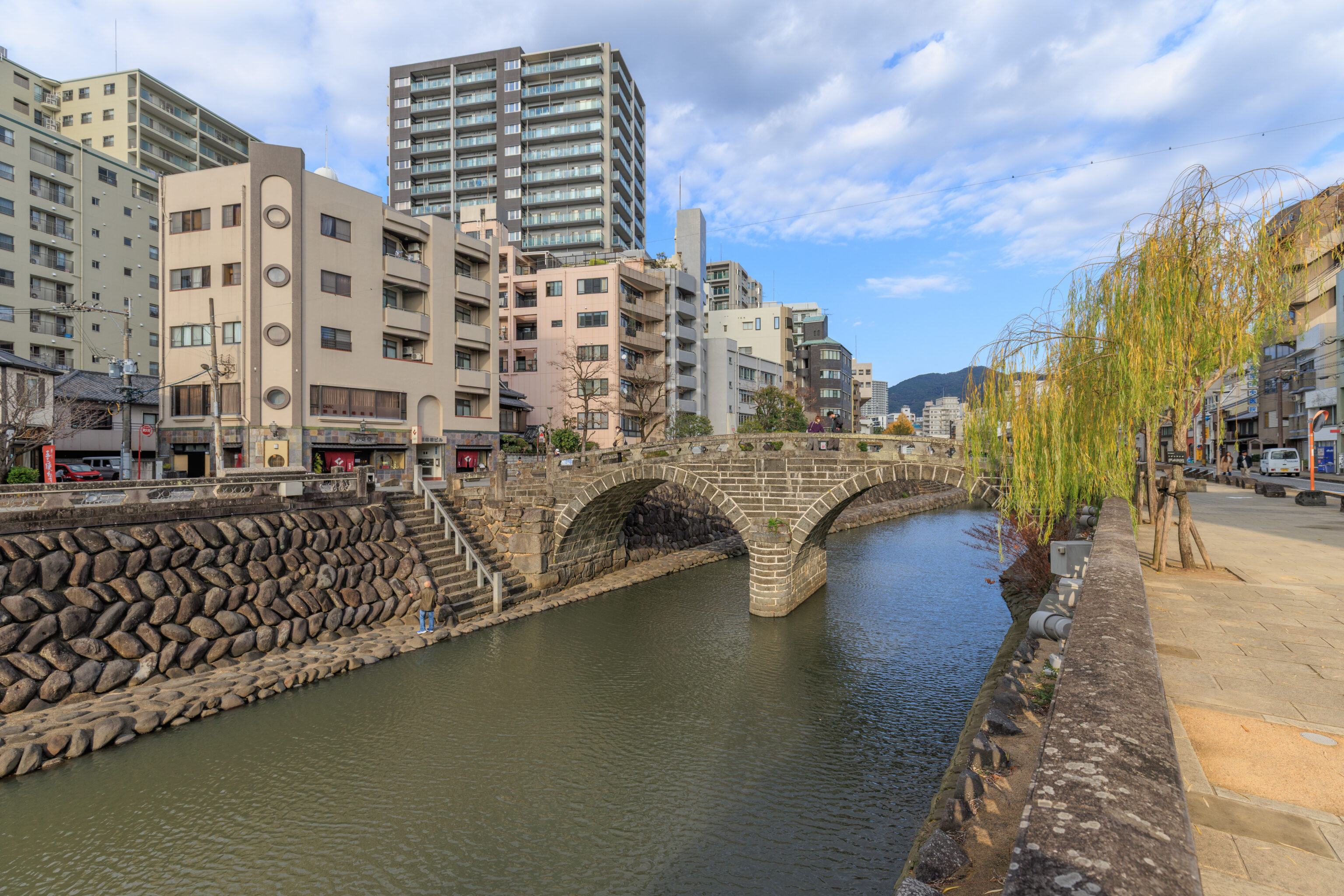
We were lucky that we saw the Megane-bashi when the river’s surface was calm and reflective!
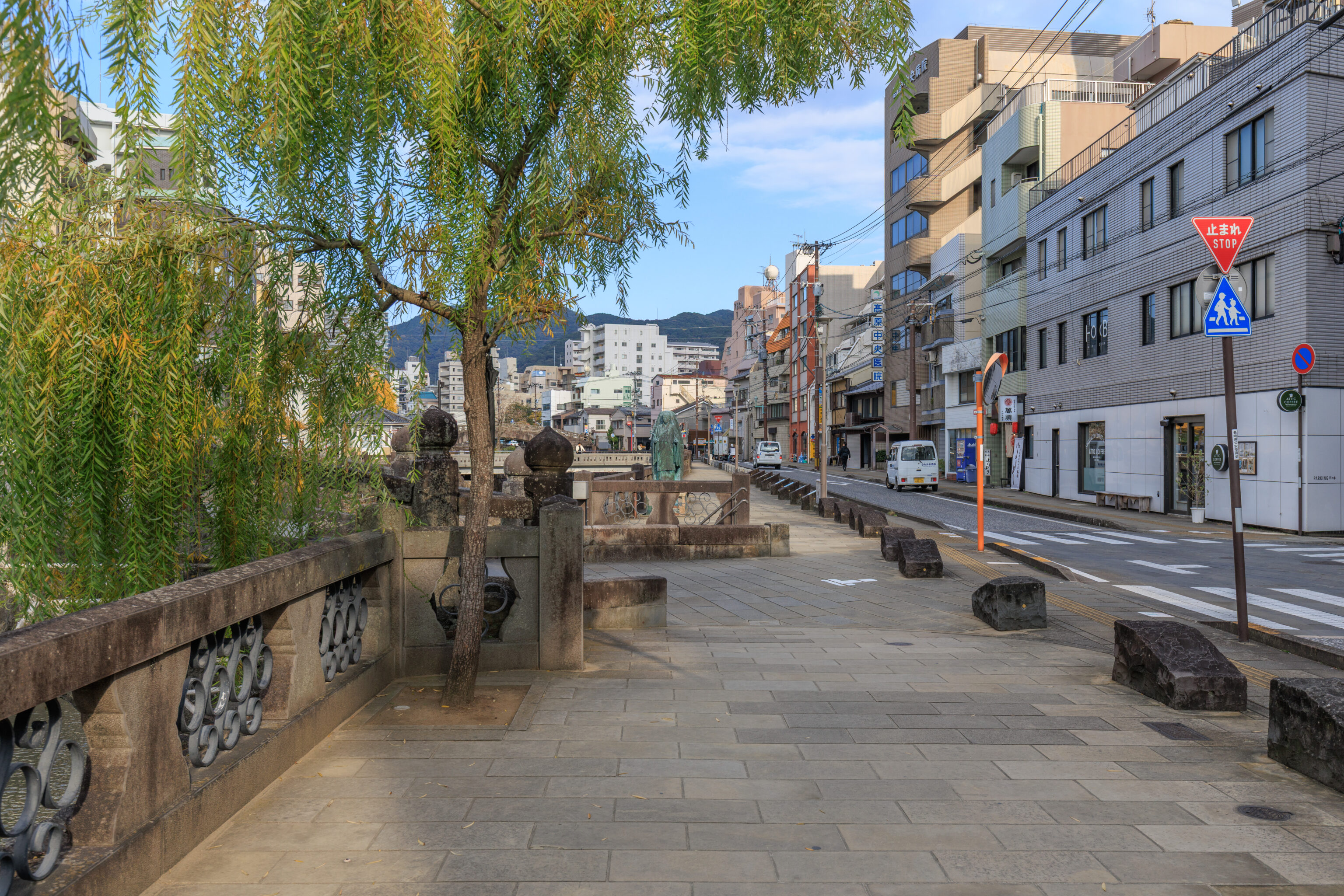
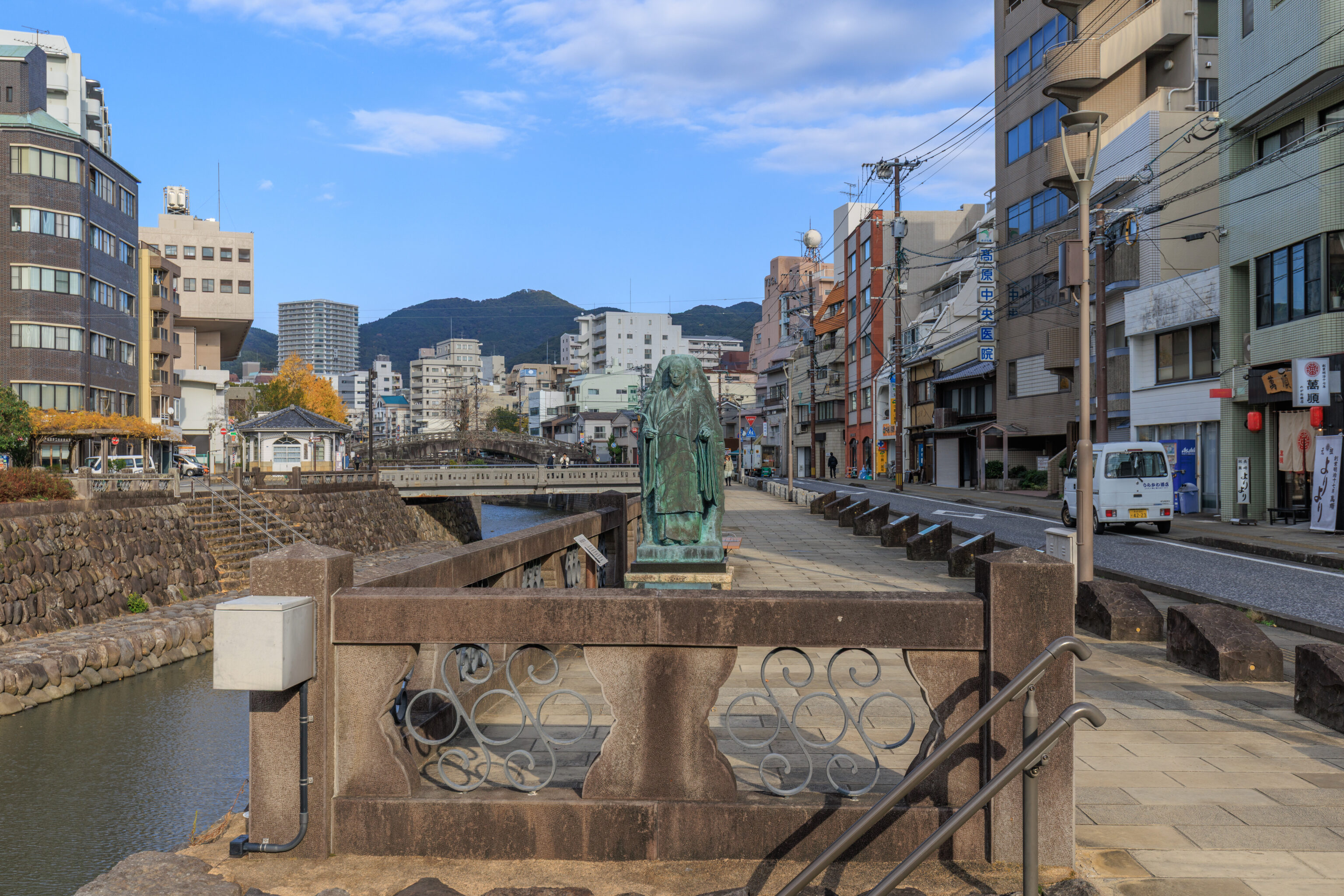
We decided to cross over the Megane-bashi. We walked over to its eastern end.
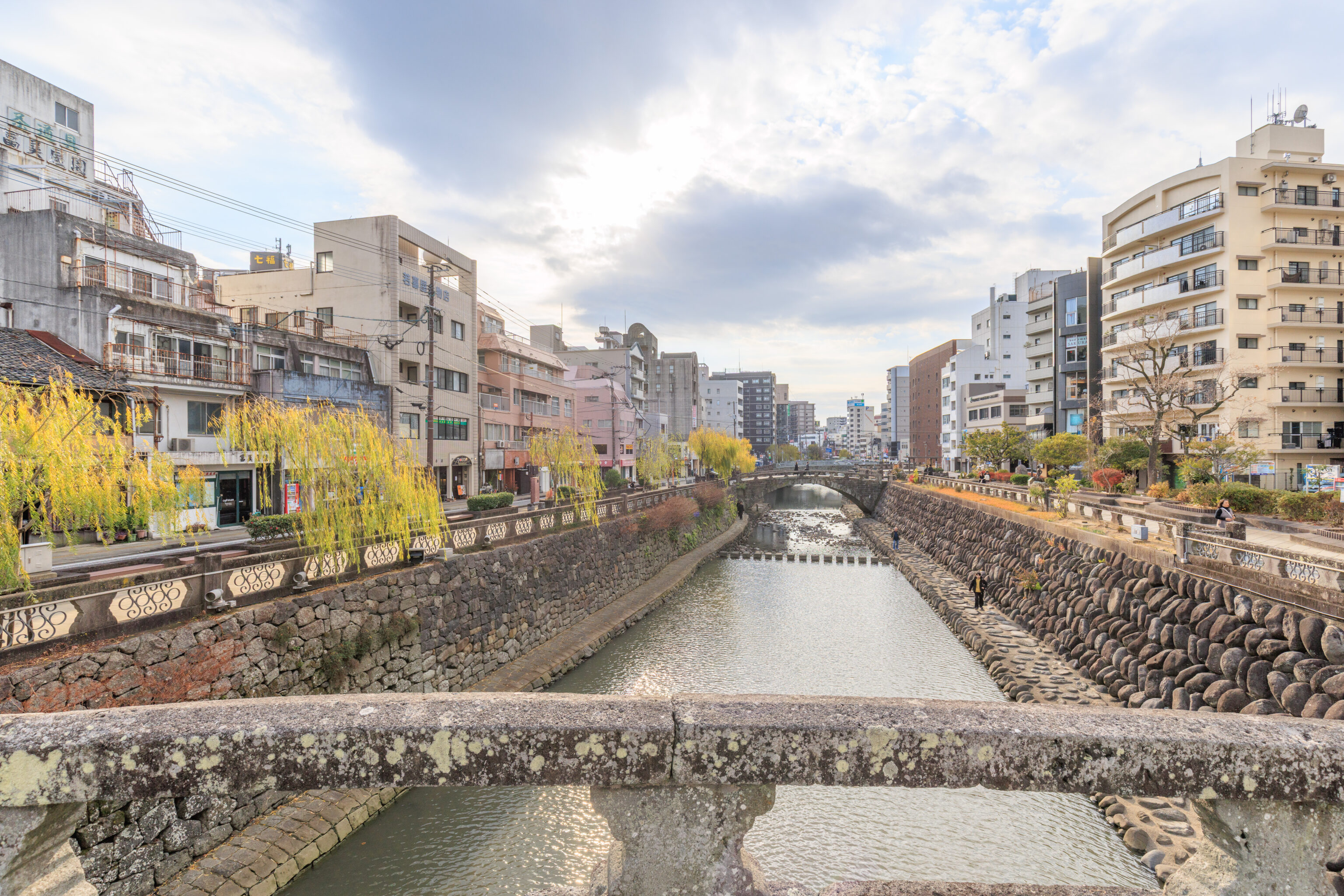
This was the view from the Megane-bashi looking back to the west.
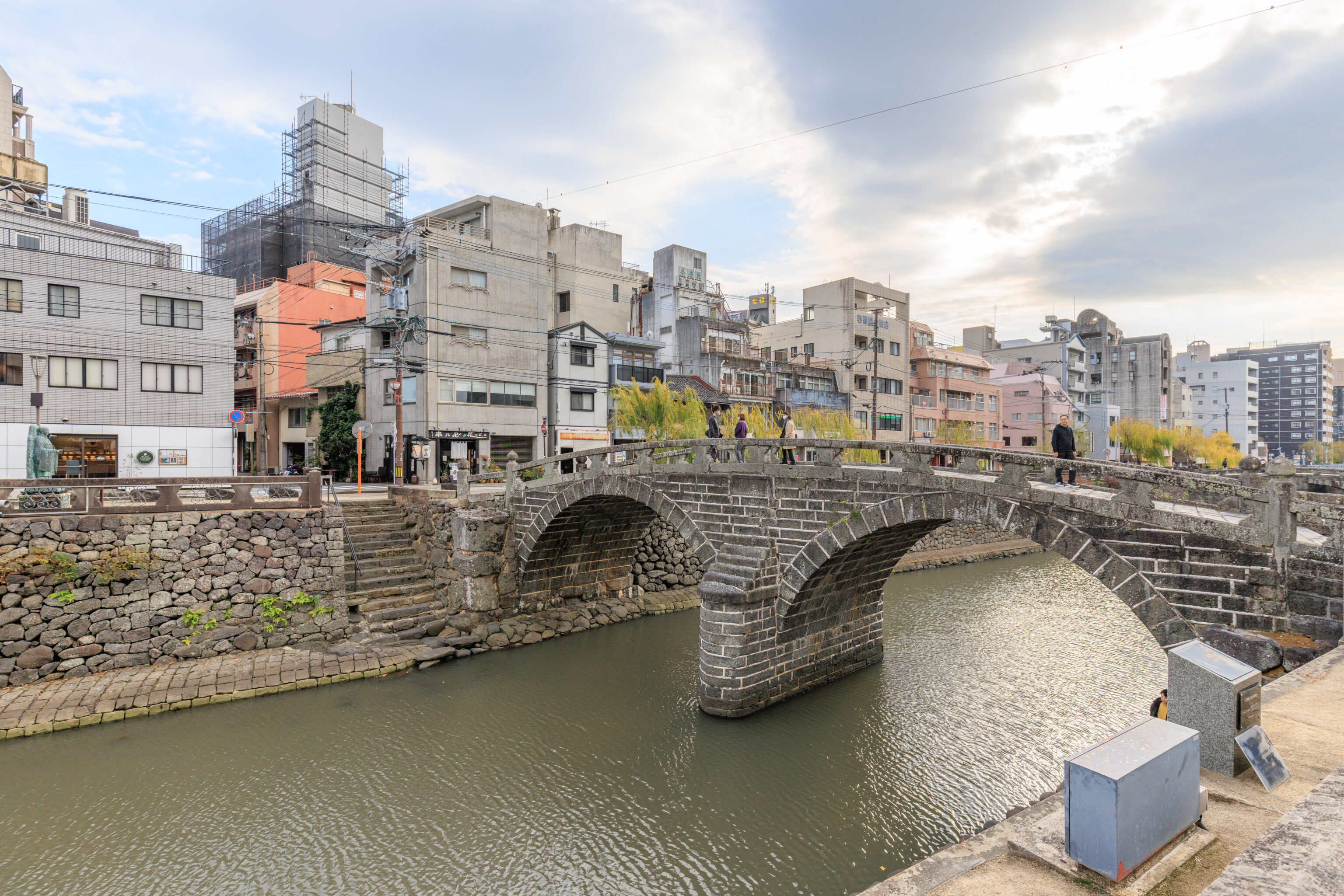
After crossing over to the west side of the river, we began to walk northeast to start heading to the nearest tram stop that would take us back to Nagasaki Station without needing to transfer or to go too far out of the way. We did look back at the Megane-bashi as we walked away.
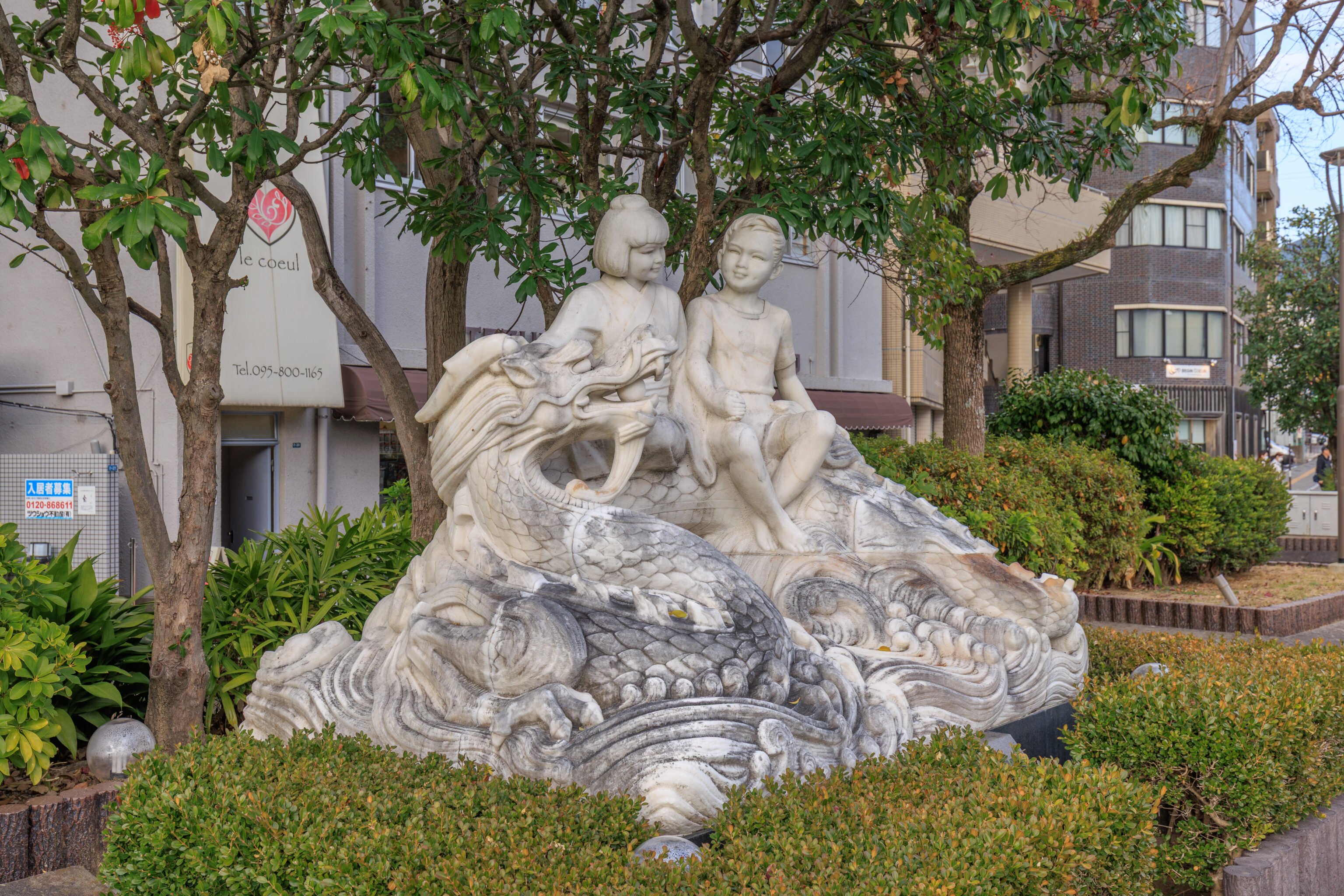
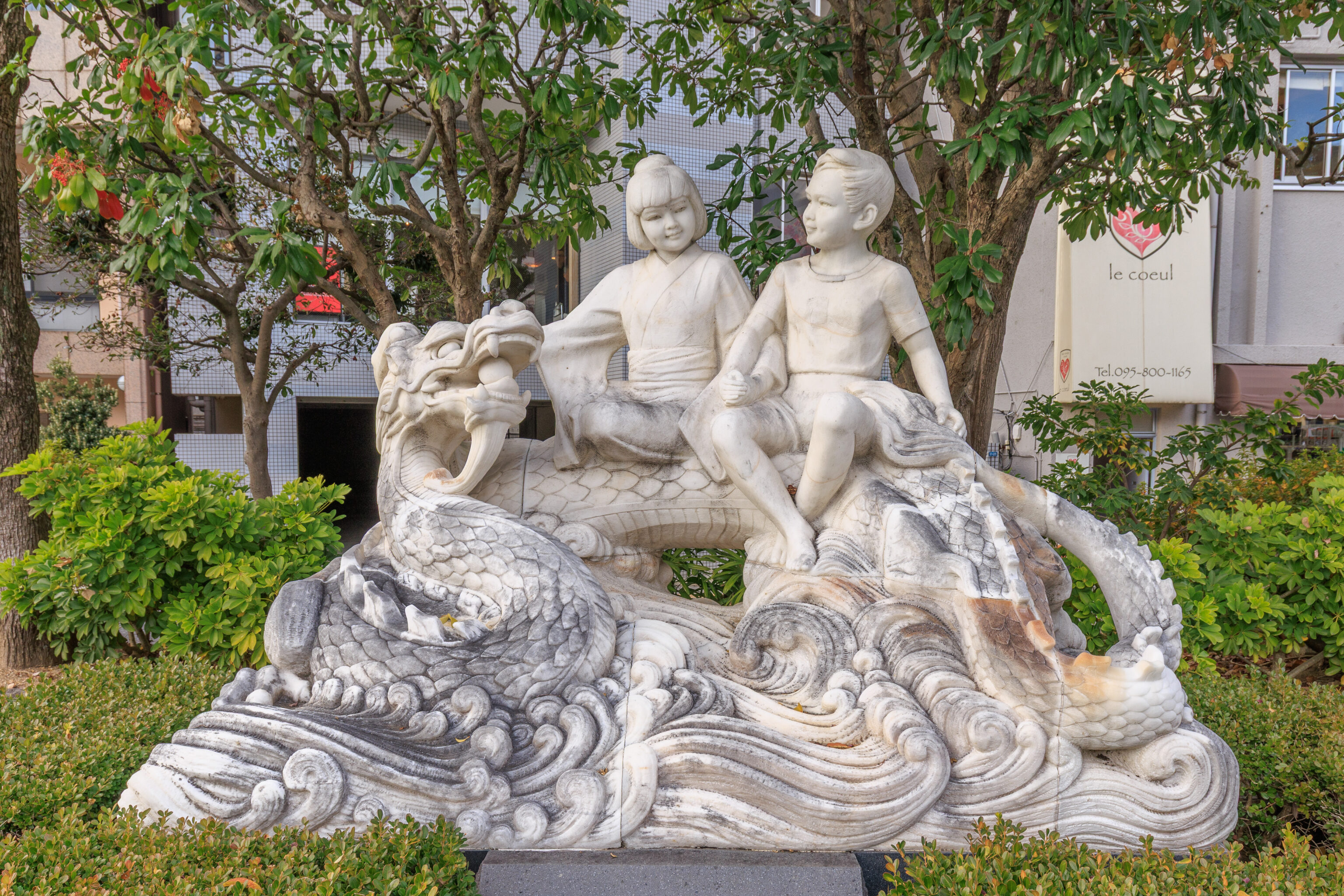
This sculpture reminded us quite a bit of Italy. It is the 水害復興と友好の記念碑 Monument to Flood Recovery and Friendship. According to city’s website:
On July 23, 1982, Nagasaki was struck by an unimaginable torrential downpour, resulting in a devastating disaster with 262 deaths and missing persons. Six of the beautiful stone bridges over the Nakashima River were washed away, and three were severely damaged. This monument is a memorial for the recovery from the flood, commissioned from China, a country with deep historical ties to Japan, including the construction of stone bridges over the Nakashima River. The statue depicts a legendary Chinese boy with mysterious abilities and a spirited Japanese girl working together to control a giant dragon that summons wind and rain, symbolizing flood control and friendship between Japan and China.
– Text from Nagasaki City’s Nakashima River Park website, translated using Google.
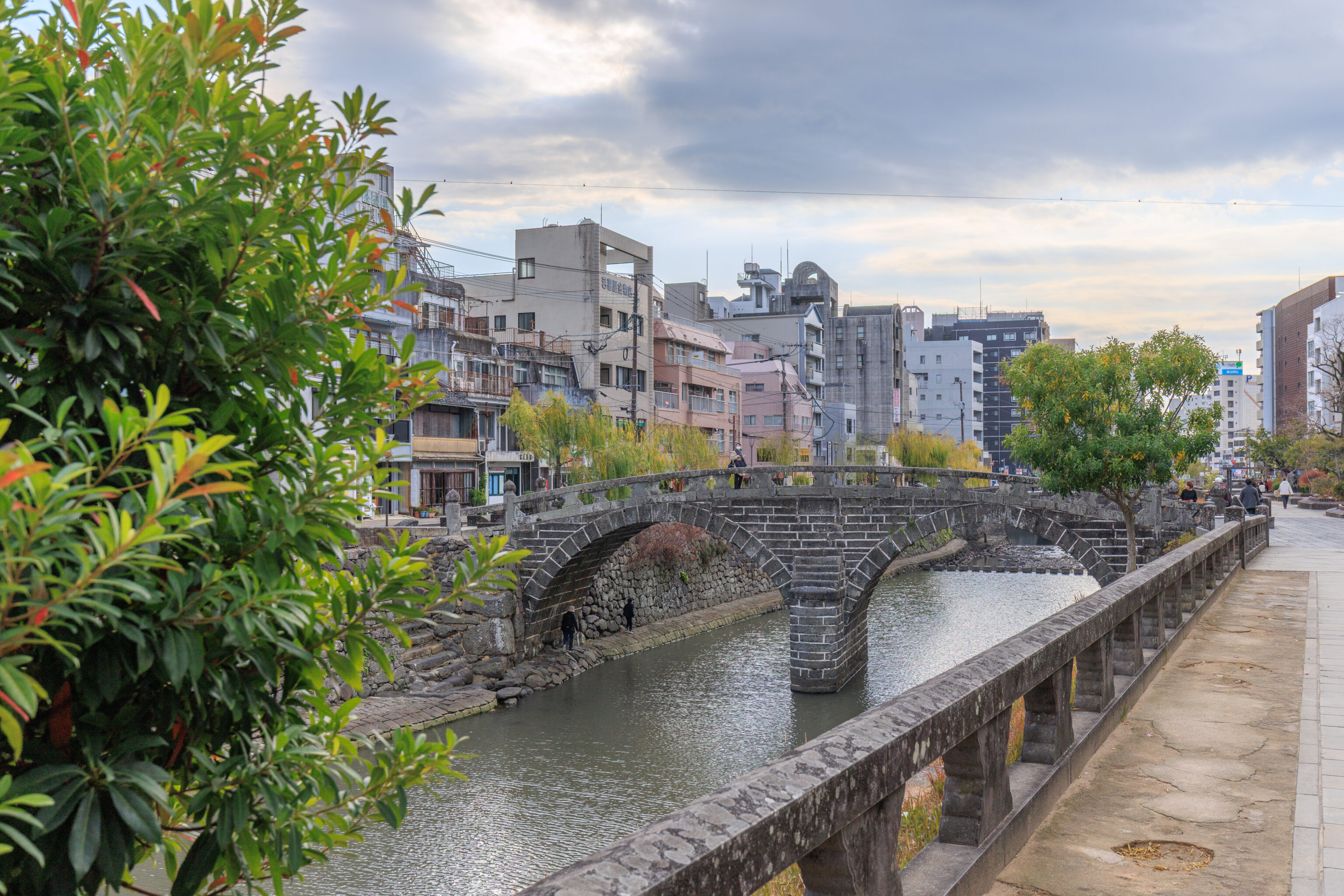
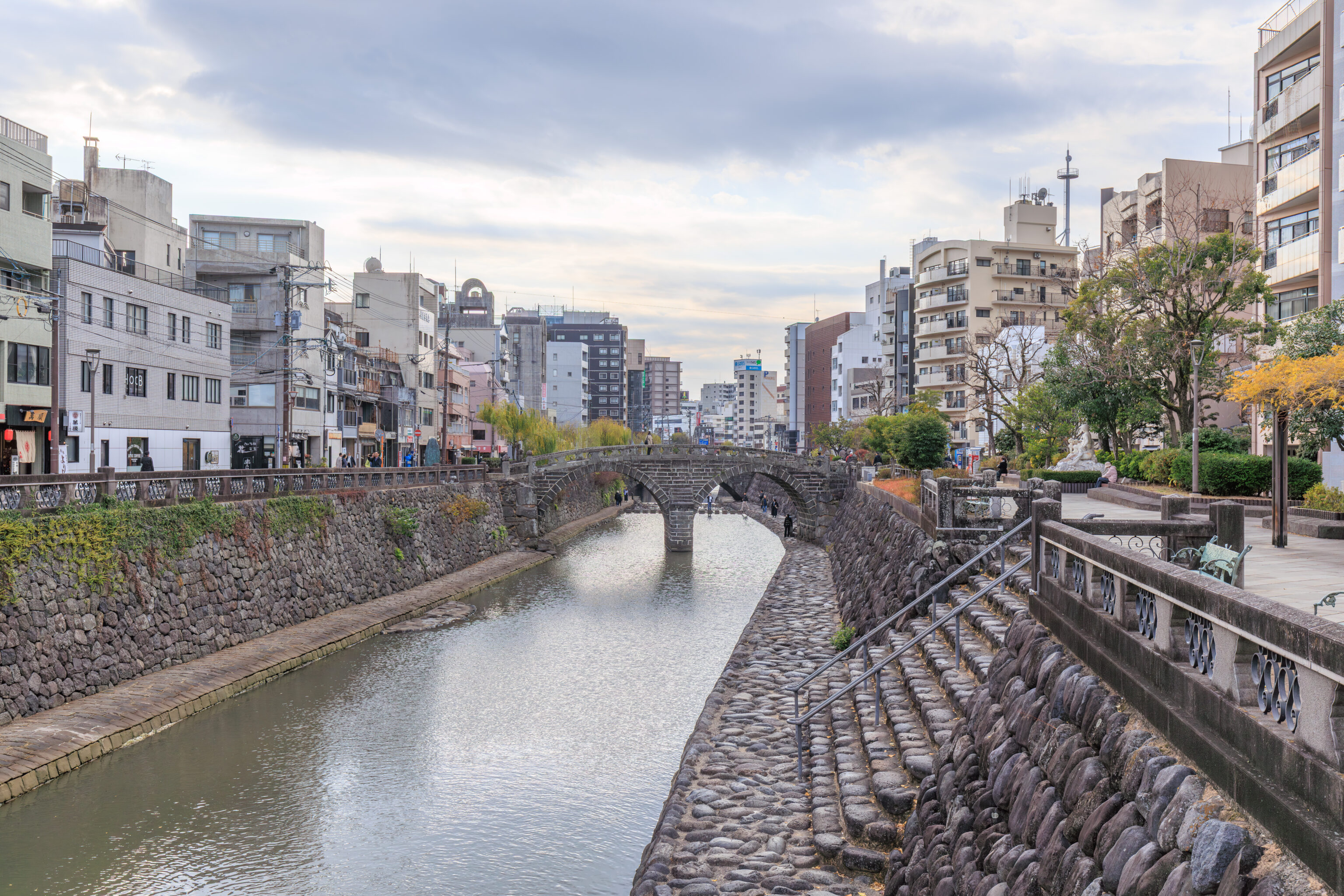
We continued on, leaving the Megane-bashi behind us.
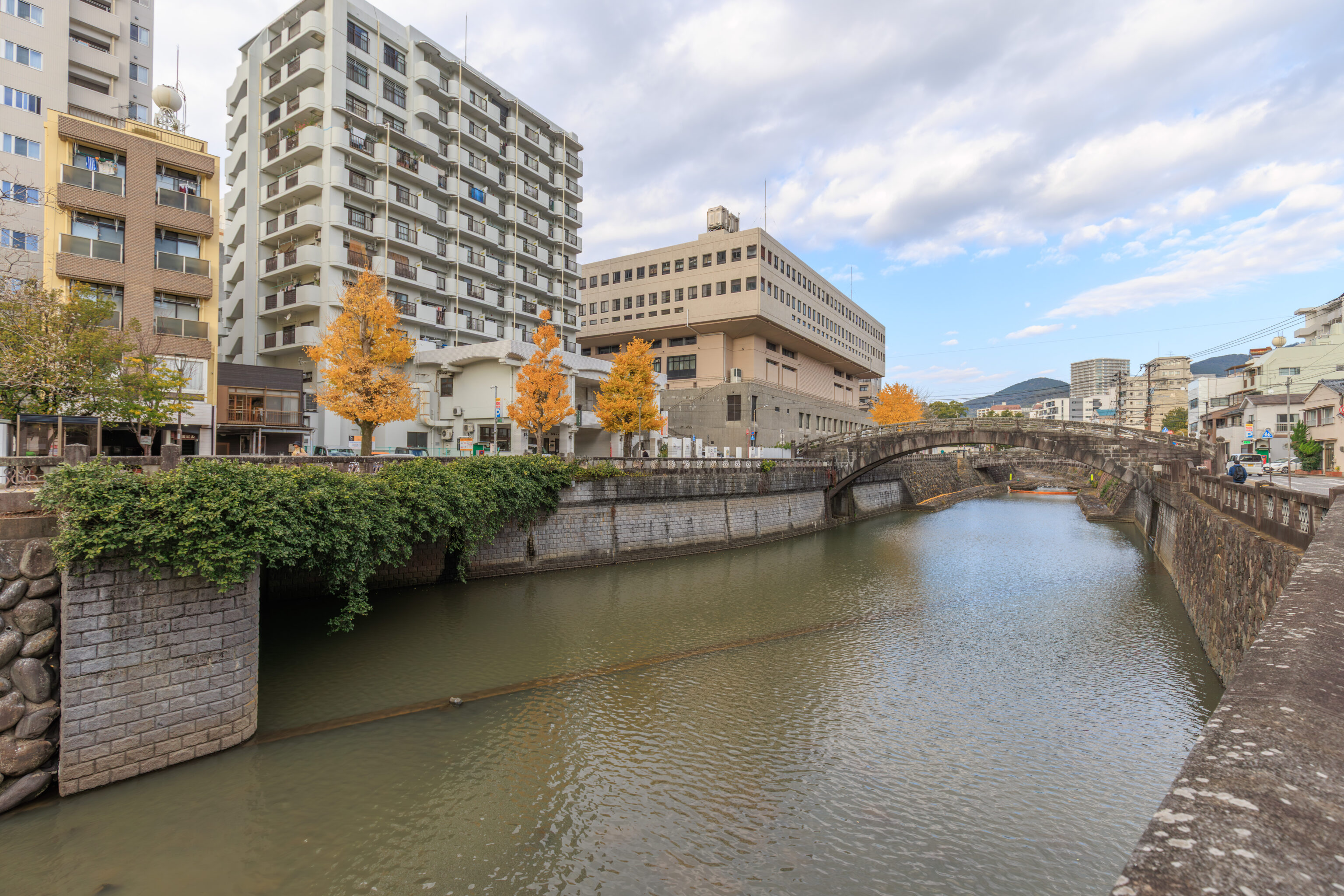
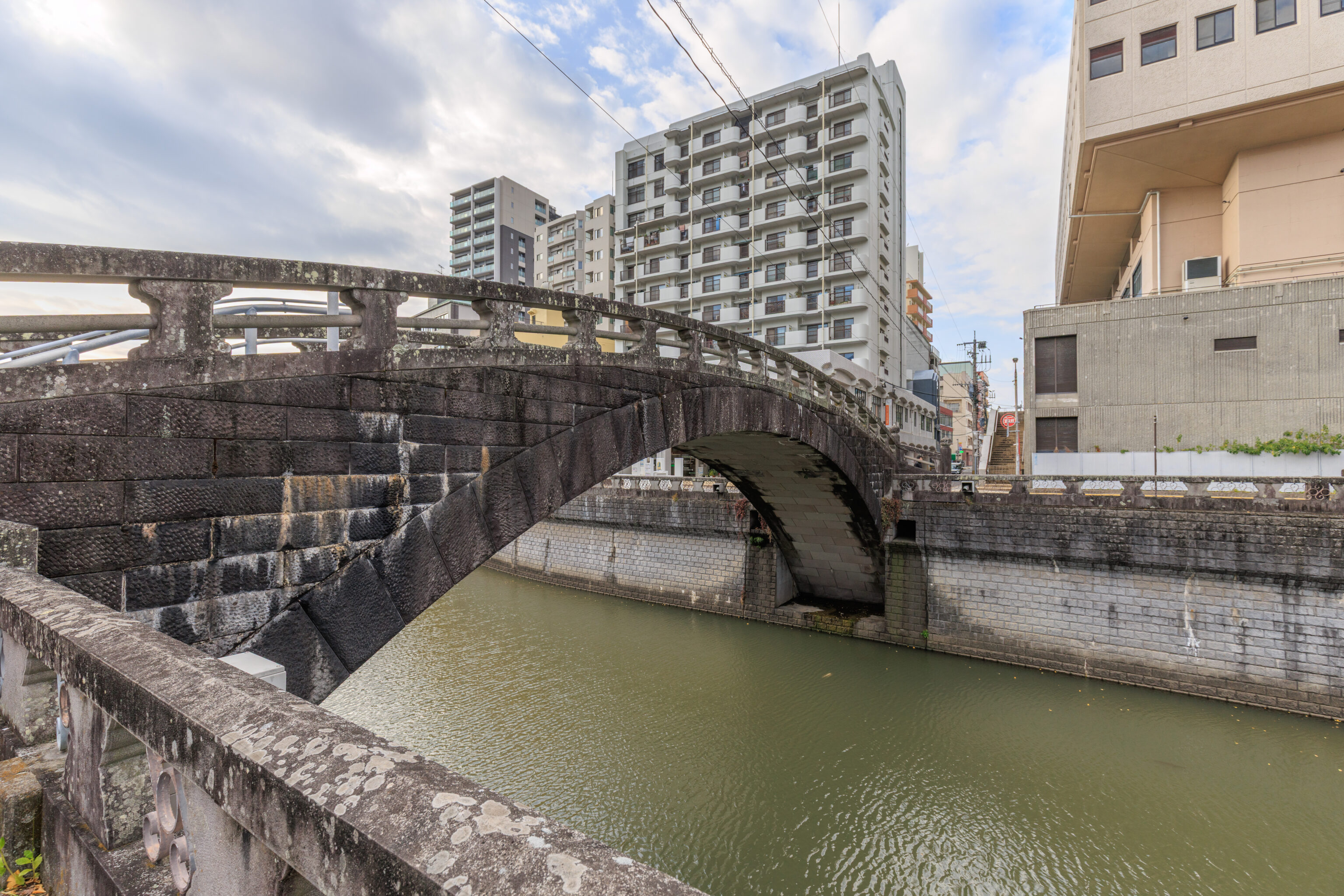
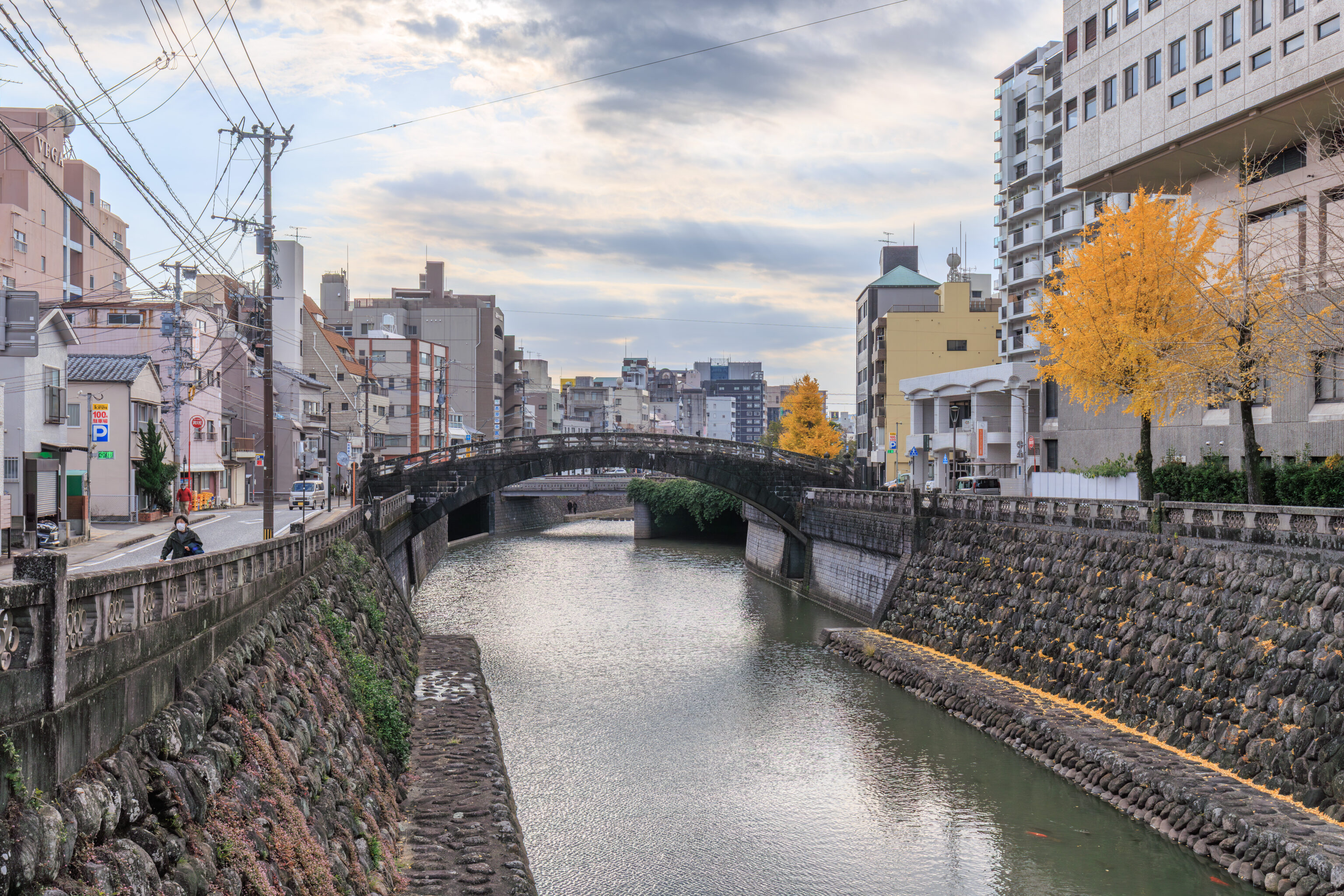
We crossed back over to the east side of the river at the next bridge, walked past another, and then crossed back over to the west side of the river at the 芊原橋 Susukihara Bridge.
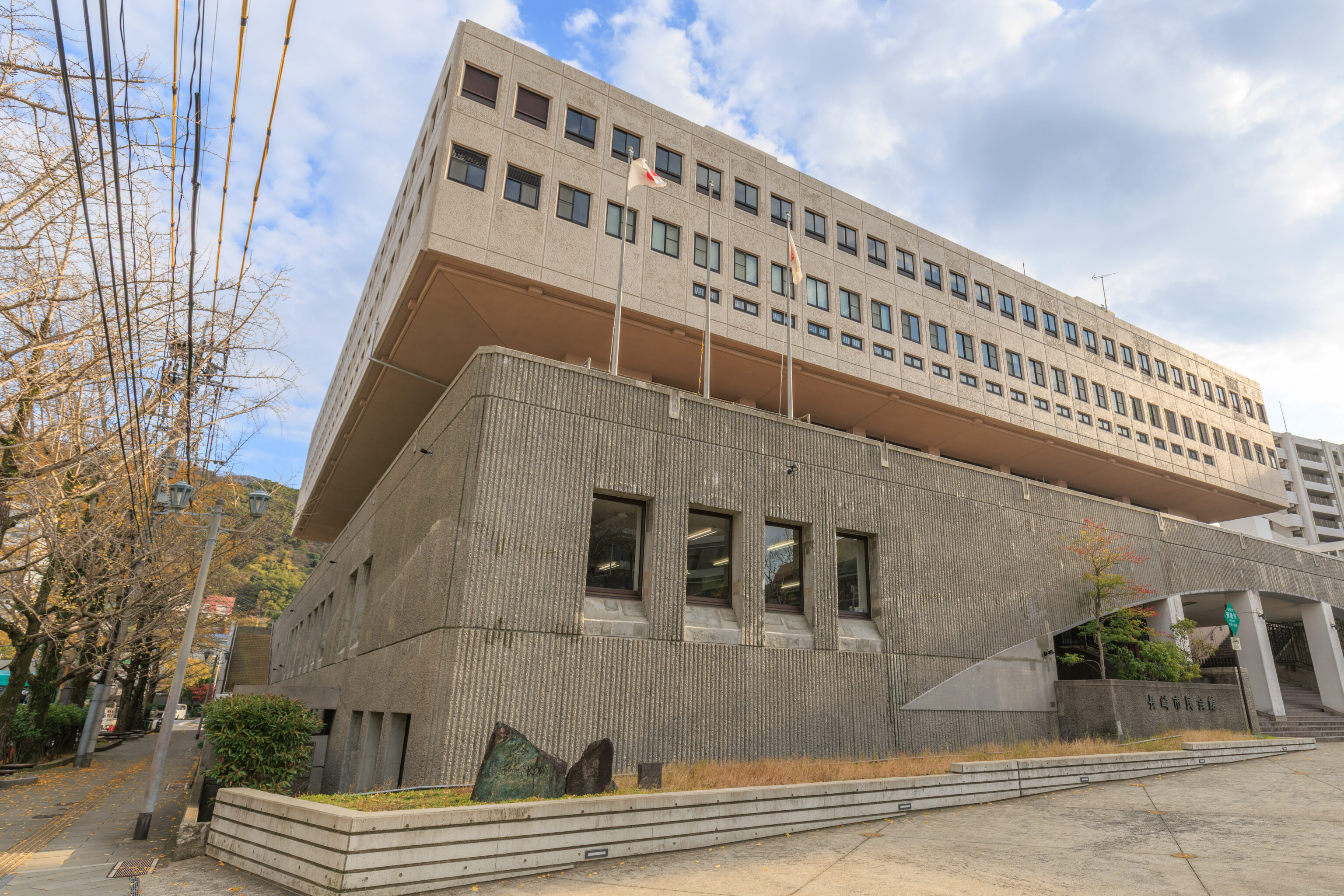
This building looks like it would feel right at home in Washington, DC! It is the 長崎市民会館 Nagasaki Civic Hall and is across the street from the 長崎市役所 Nagasaki City Hall. We took the tram from the 市役所 City Hall stop which is on the northeast side of the city hall building.
Nagasaki Station
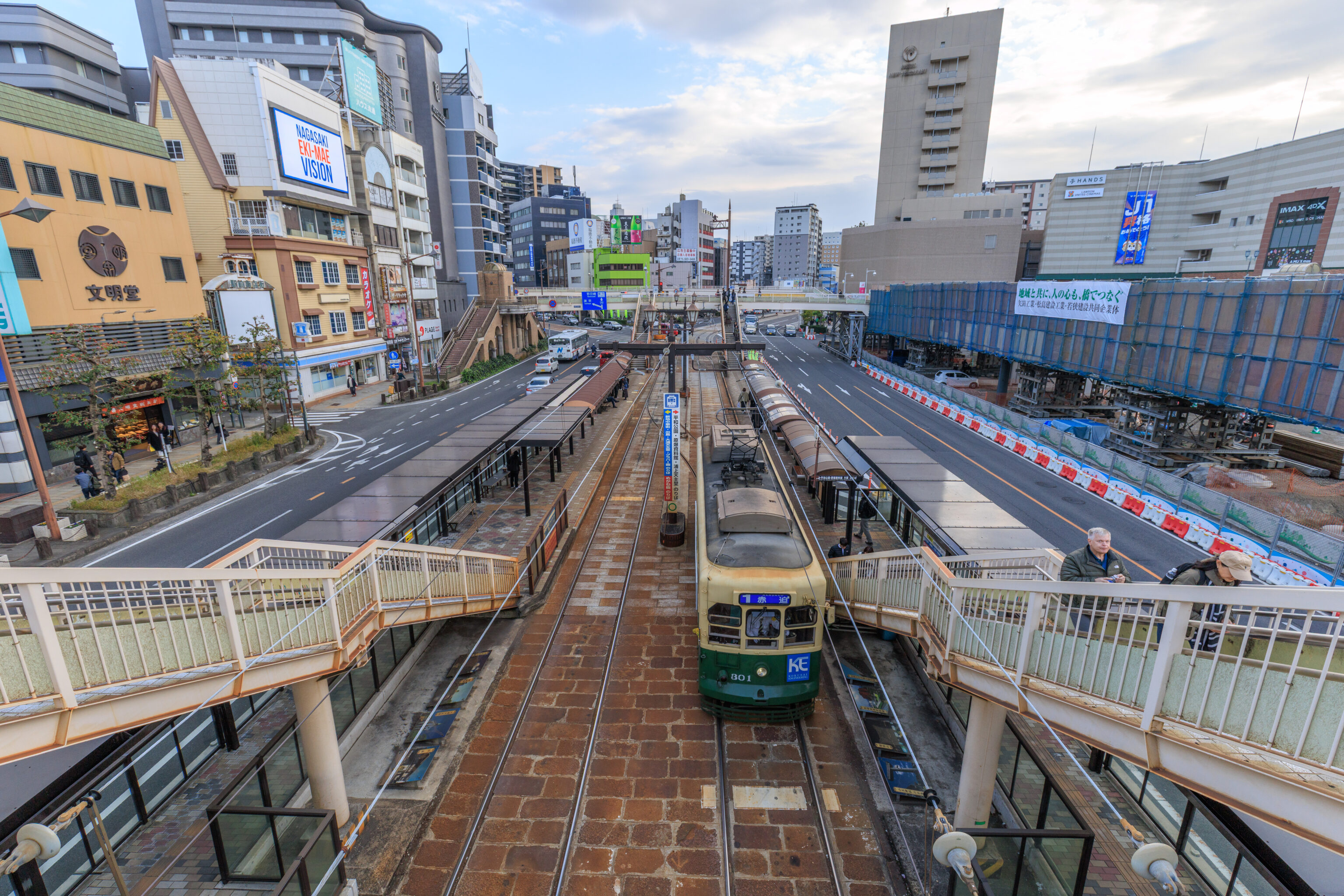
We took the tram to the 長崎駅前 Nagasaki Ekimae stop, which is on the east side of Nagasaki Station.
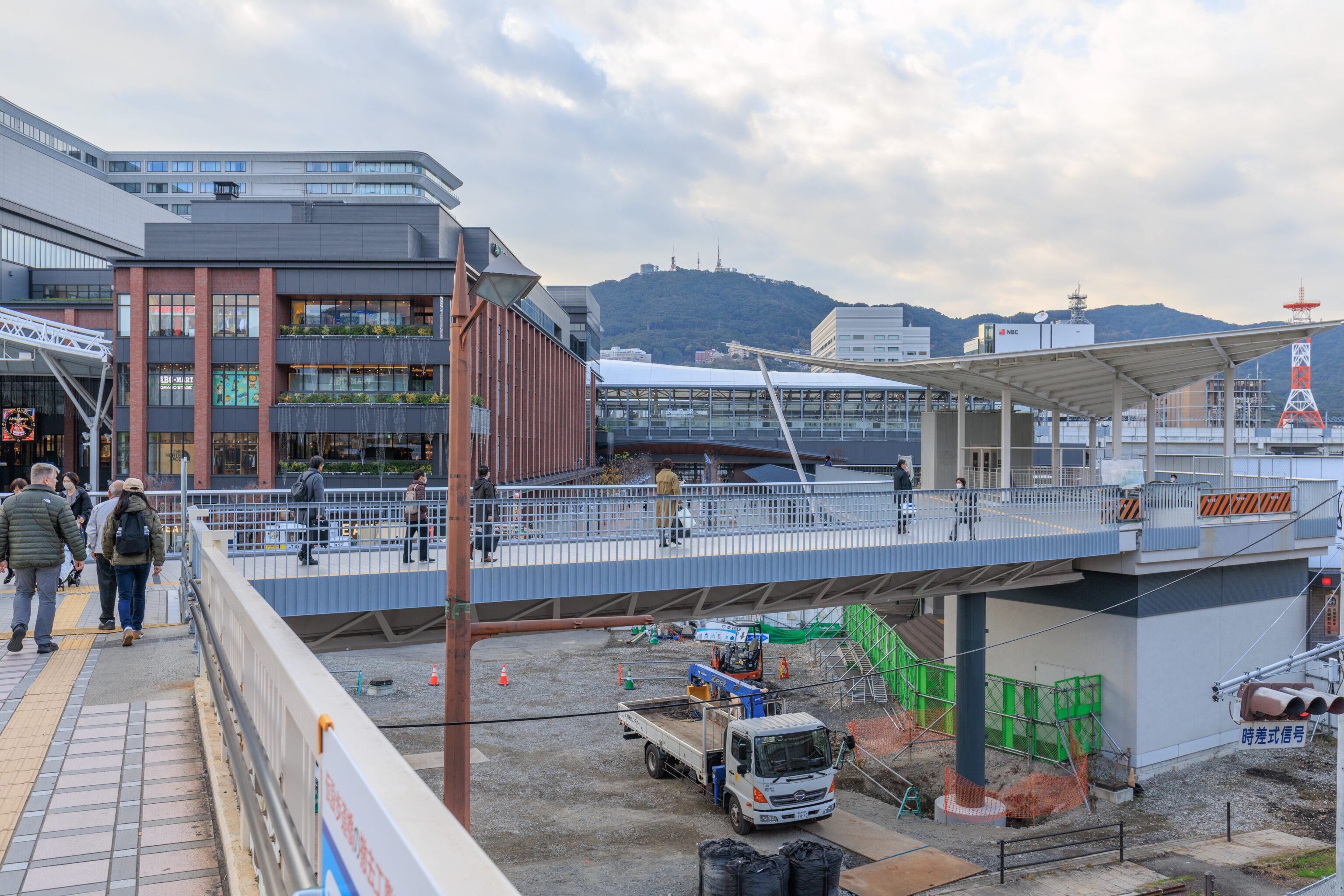
There were some elevated walkways in this area.
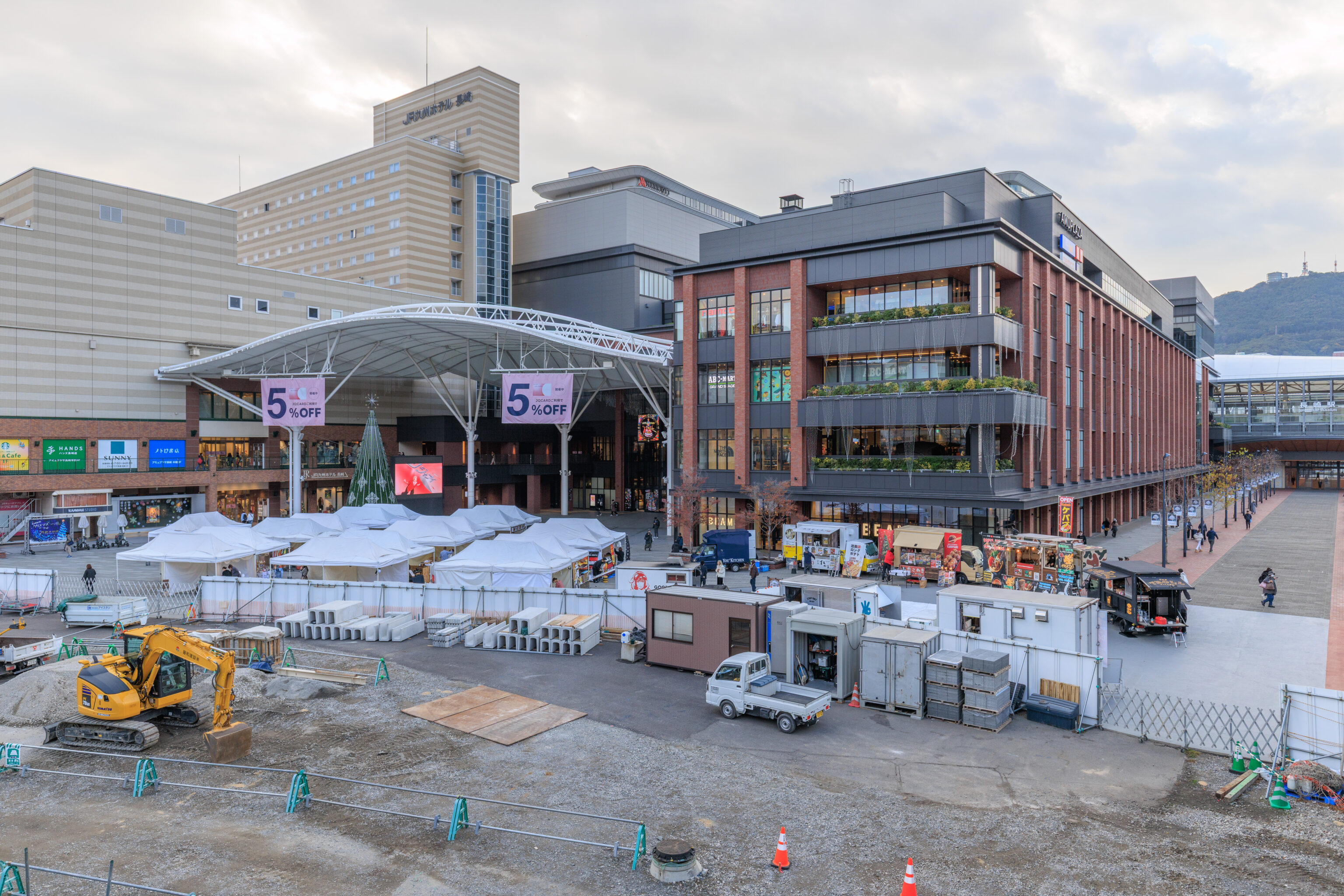
There was some construction going on below us. Looking towards the station, we could see a large Christmas tree as well as what looked like market stalls, although it did not look like a European-style Christmas market.
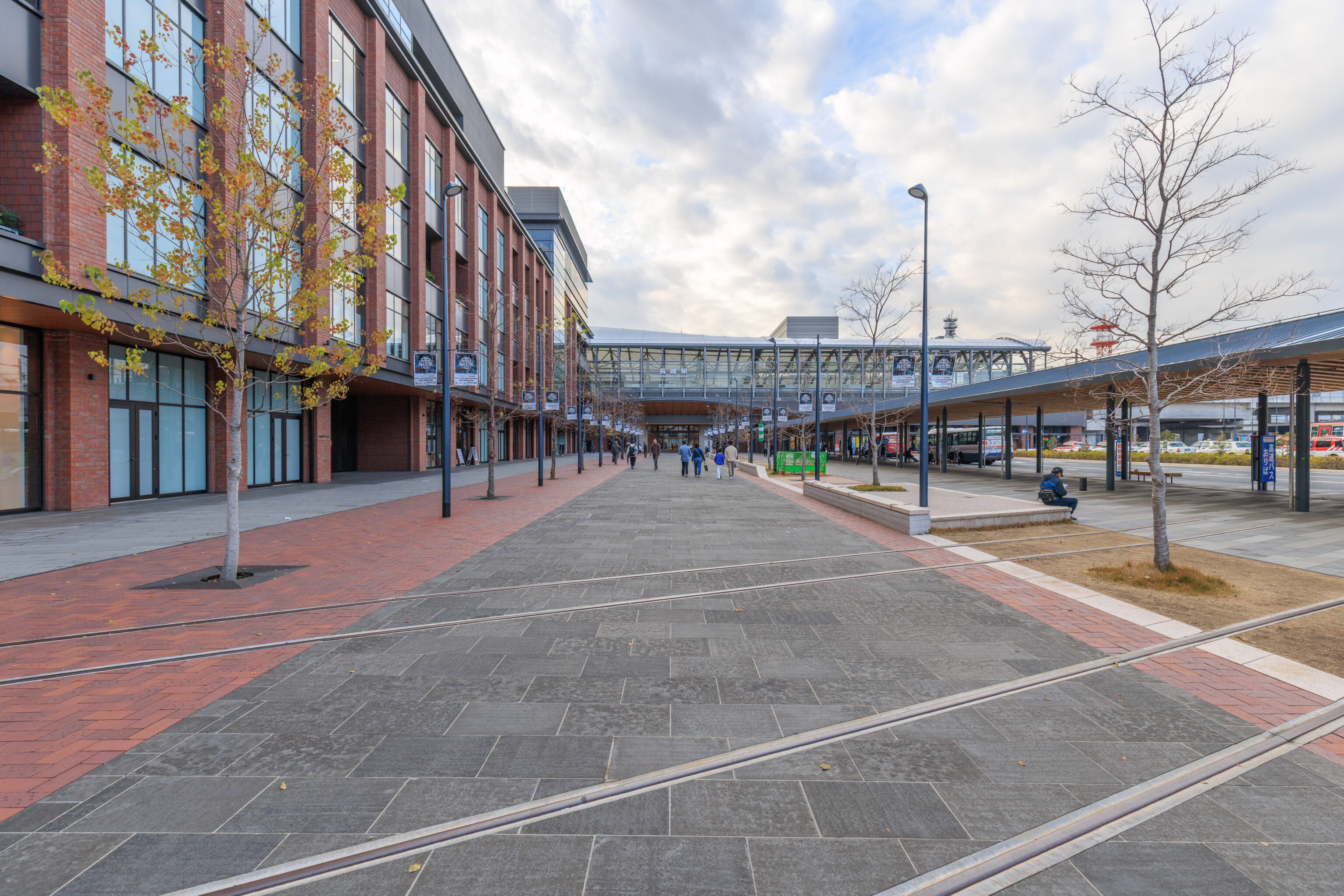
We continued to walk west towards the station at ground level.
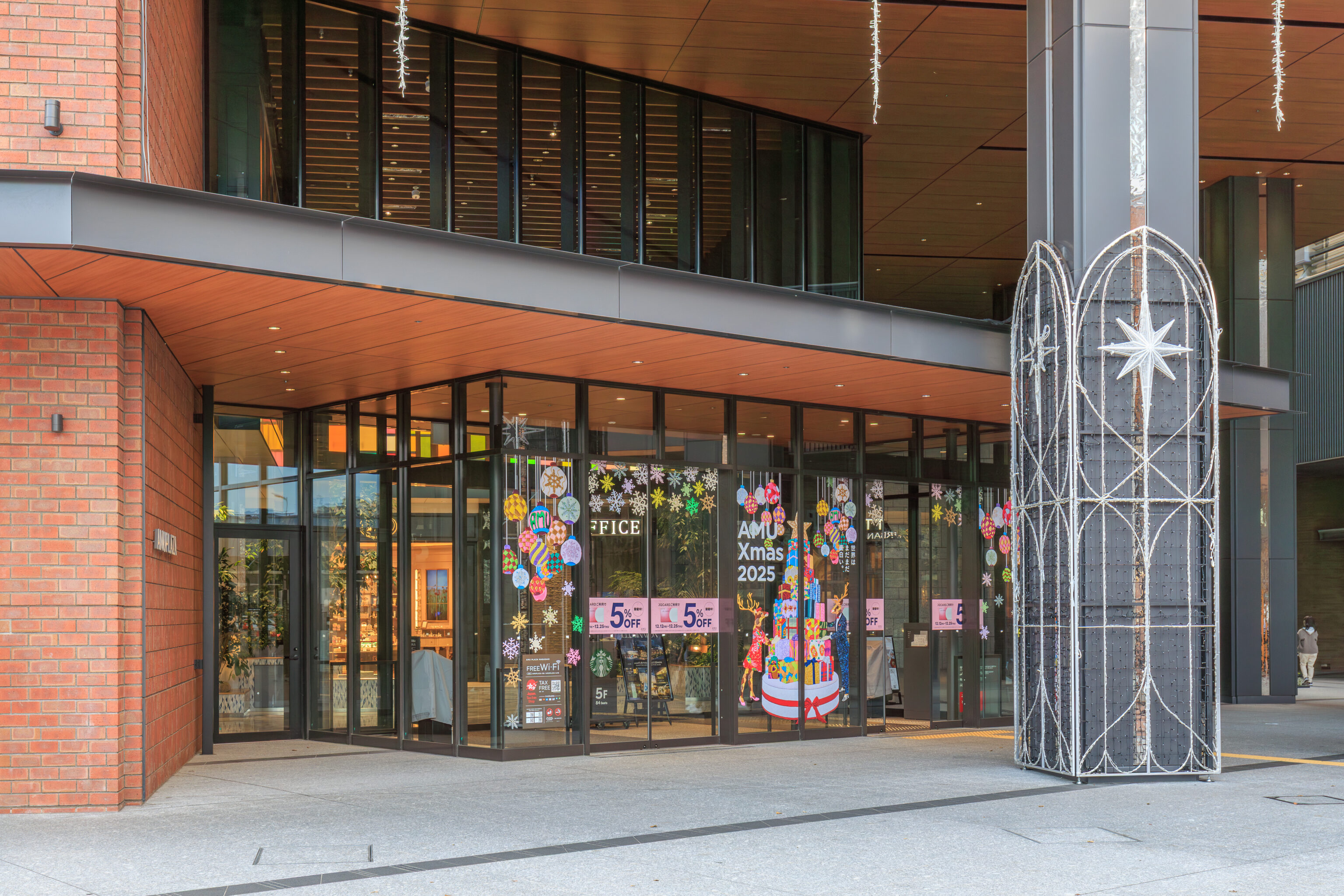
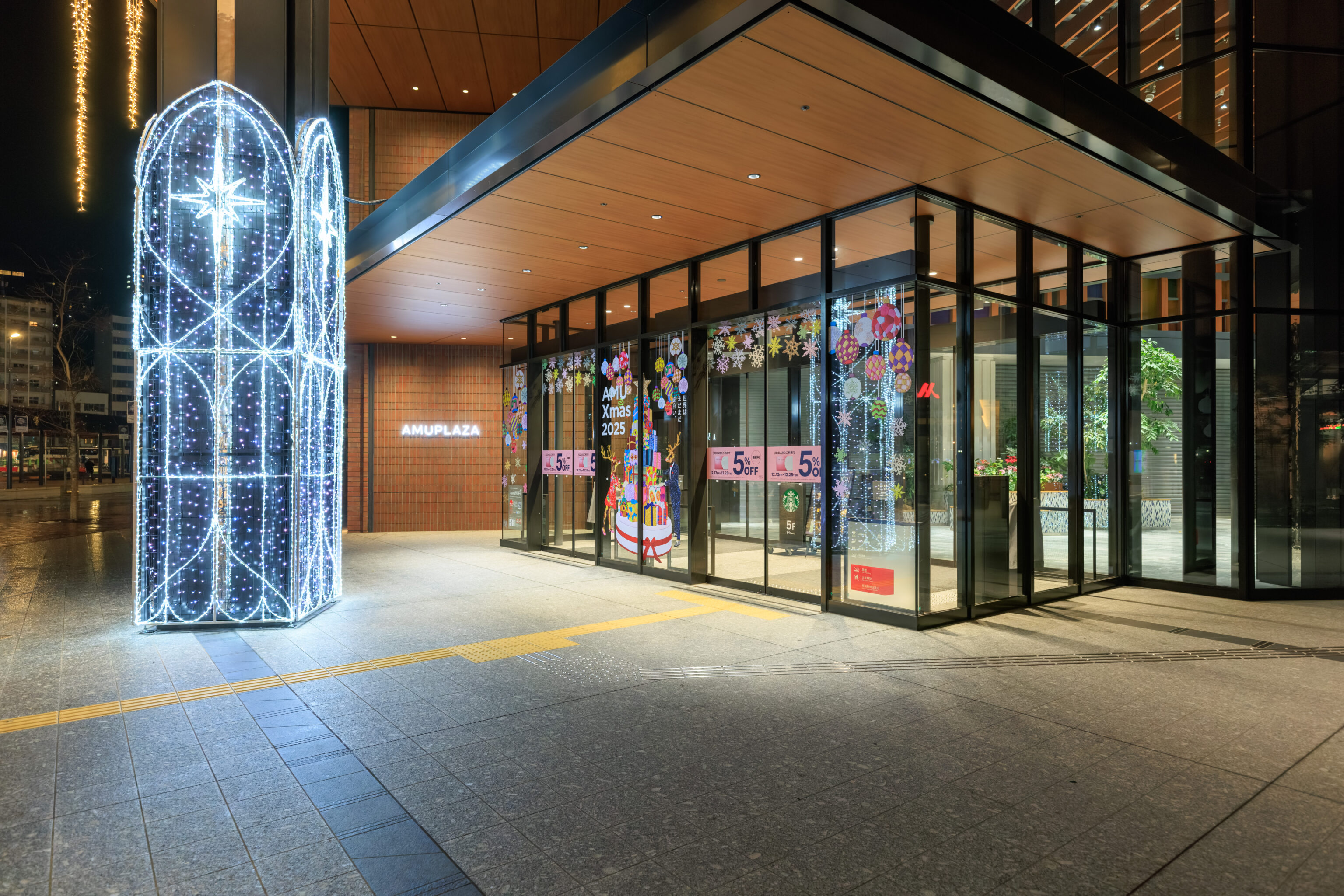
This entrance to AMU Plaza, which is right next to the entrance to the Marriott, was decorated for Christmas. However, rather than return to the hotel to check into our room, we wanted to eat first. It took us awhile to figure out exactly where we wanted to eat. It was around 3:30pm and not the greatest time as many restaurants were not open.
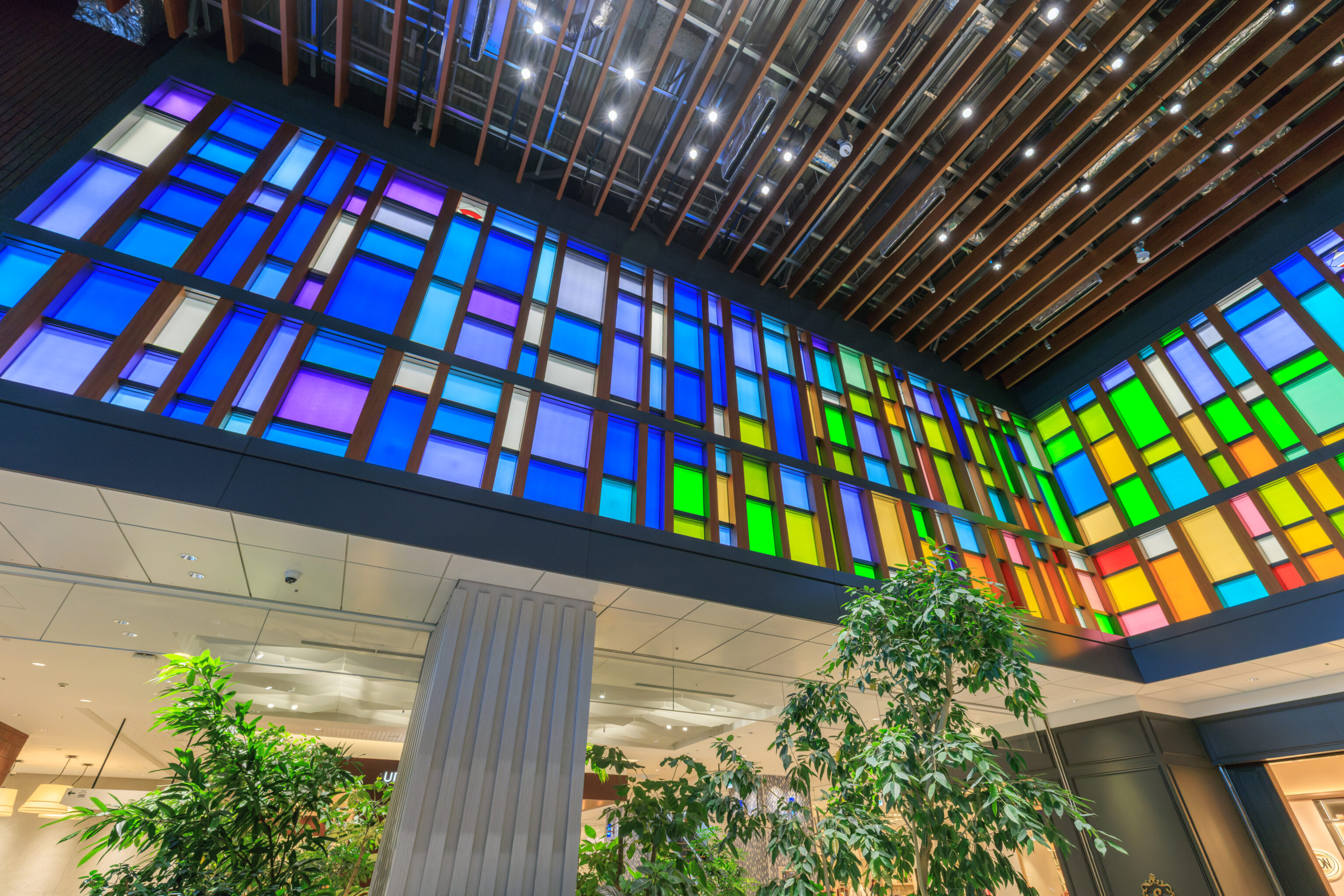
The AMU Plaza here is pretty big. We ended up in the eastern building which is actually near the tram stop that we arrived at. We walked around a bit to find 若竹丸 Wakatake Maru, a sushi restaurant.
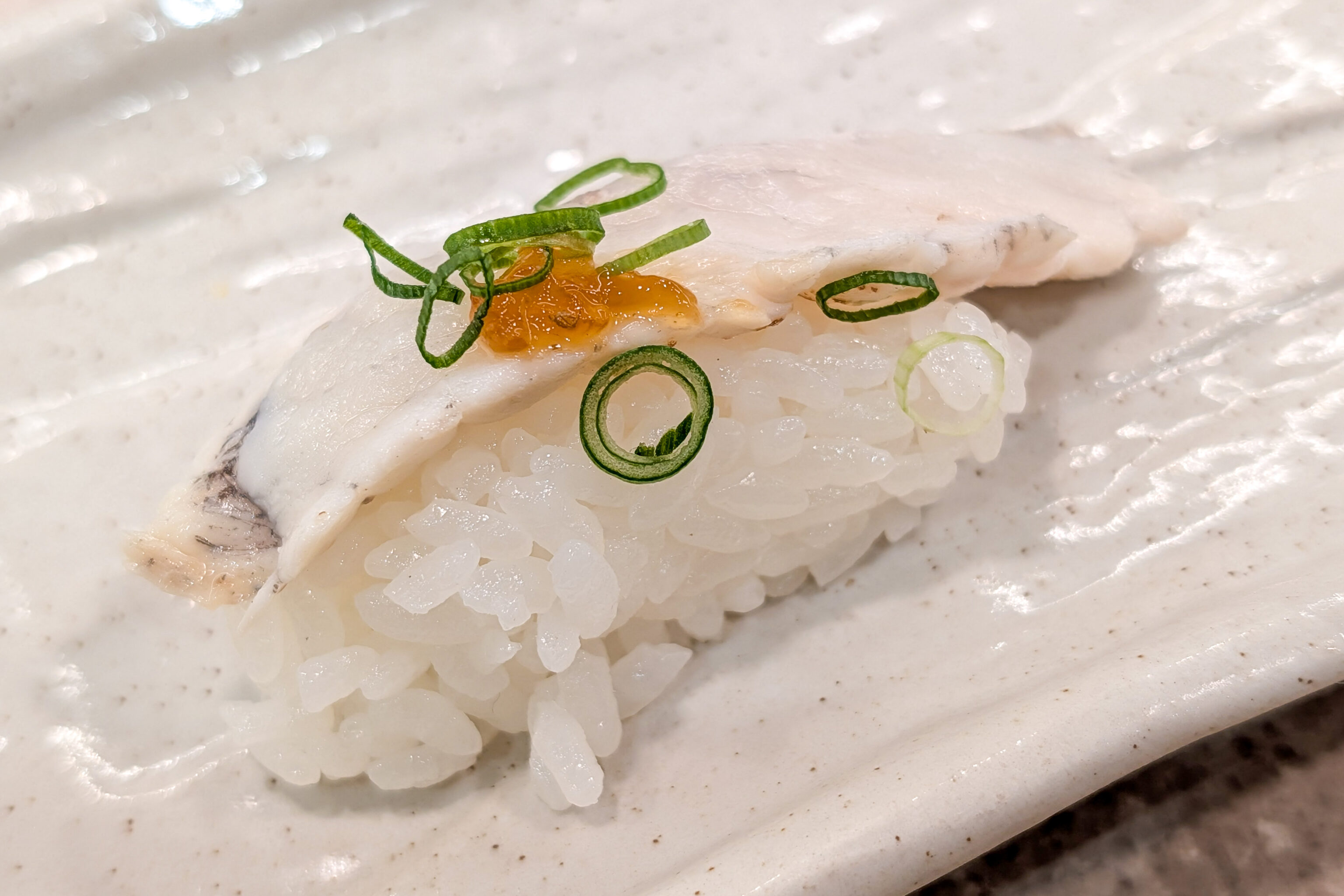
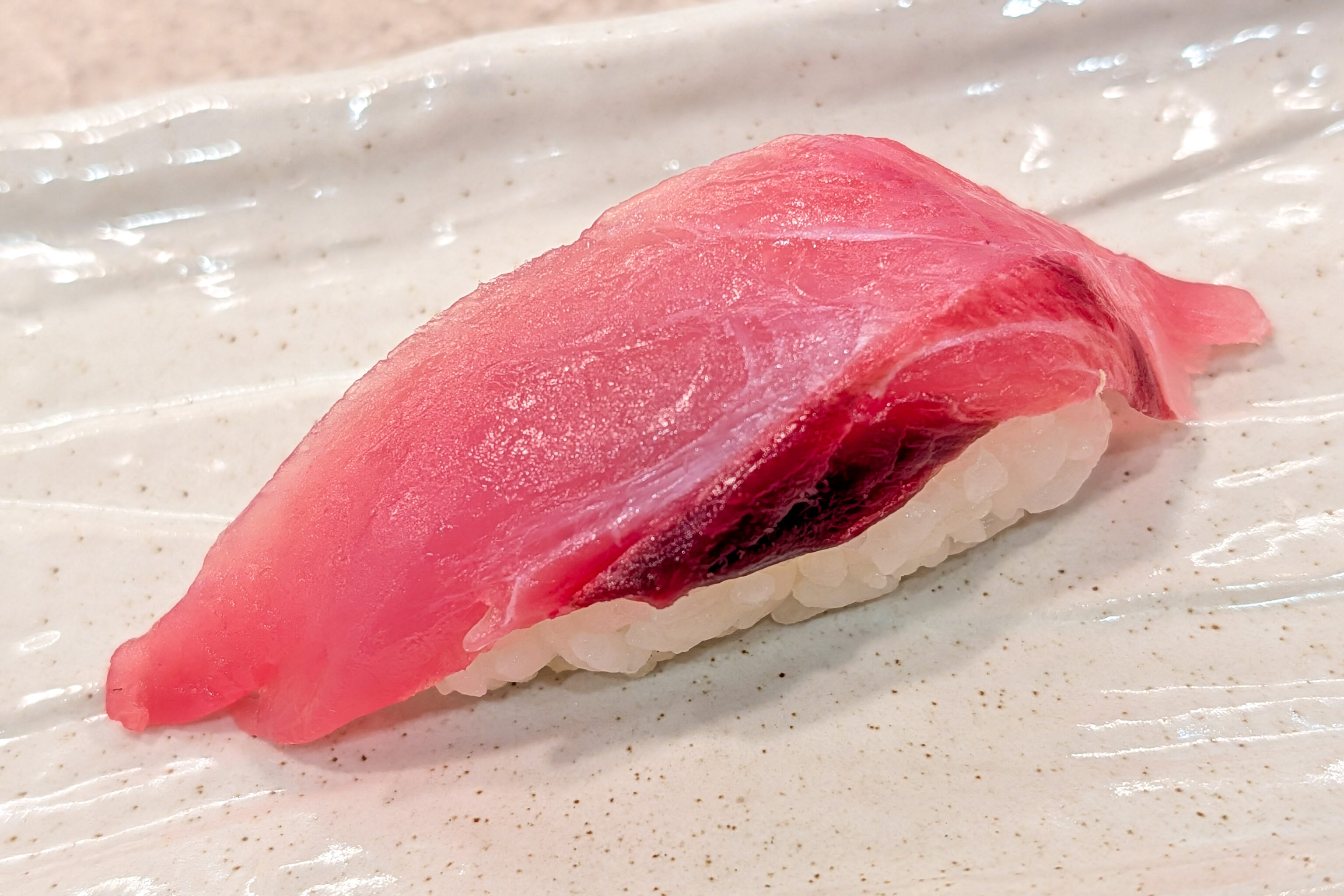
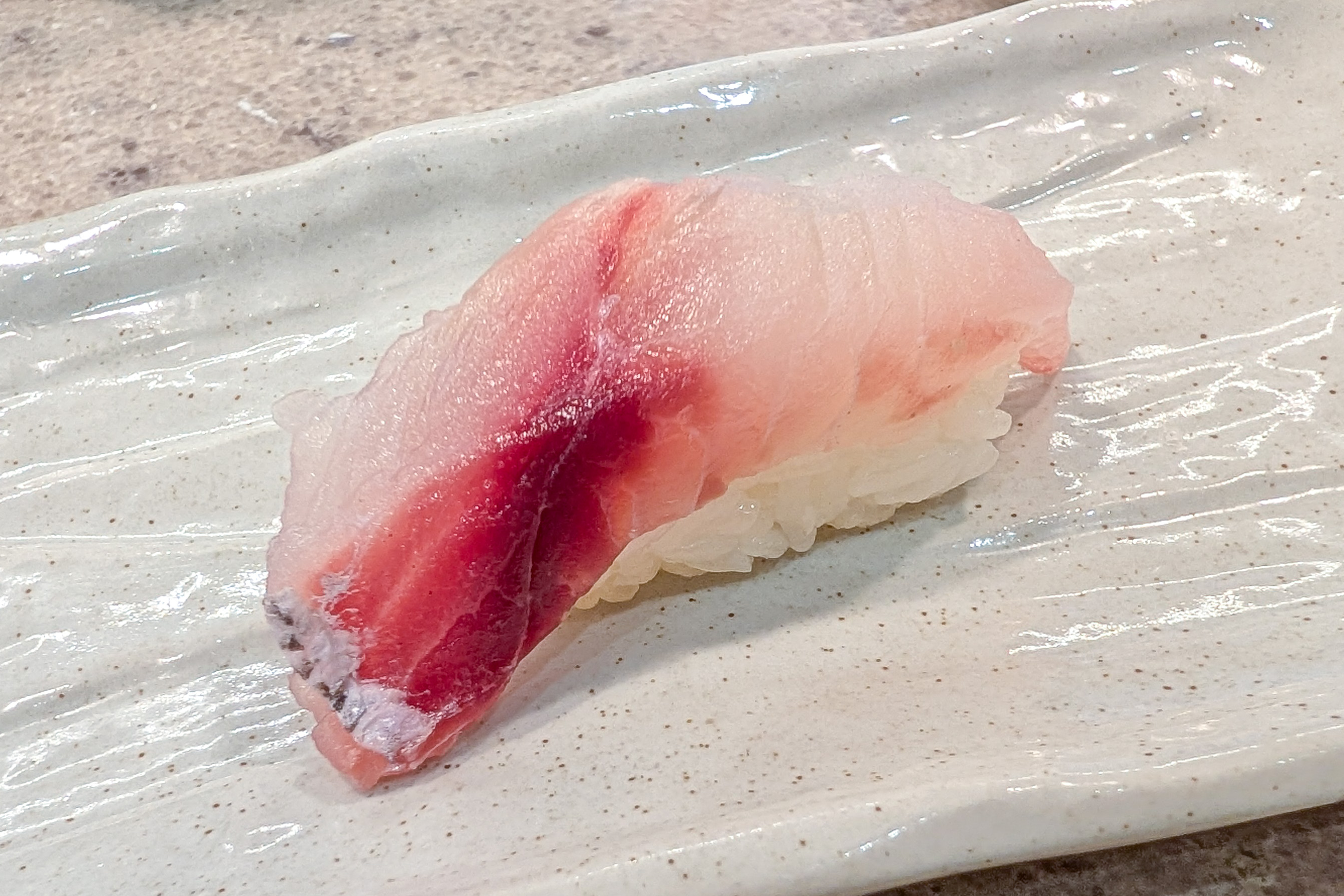
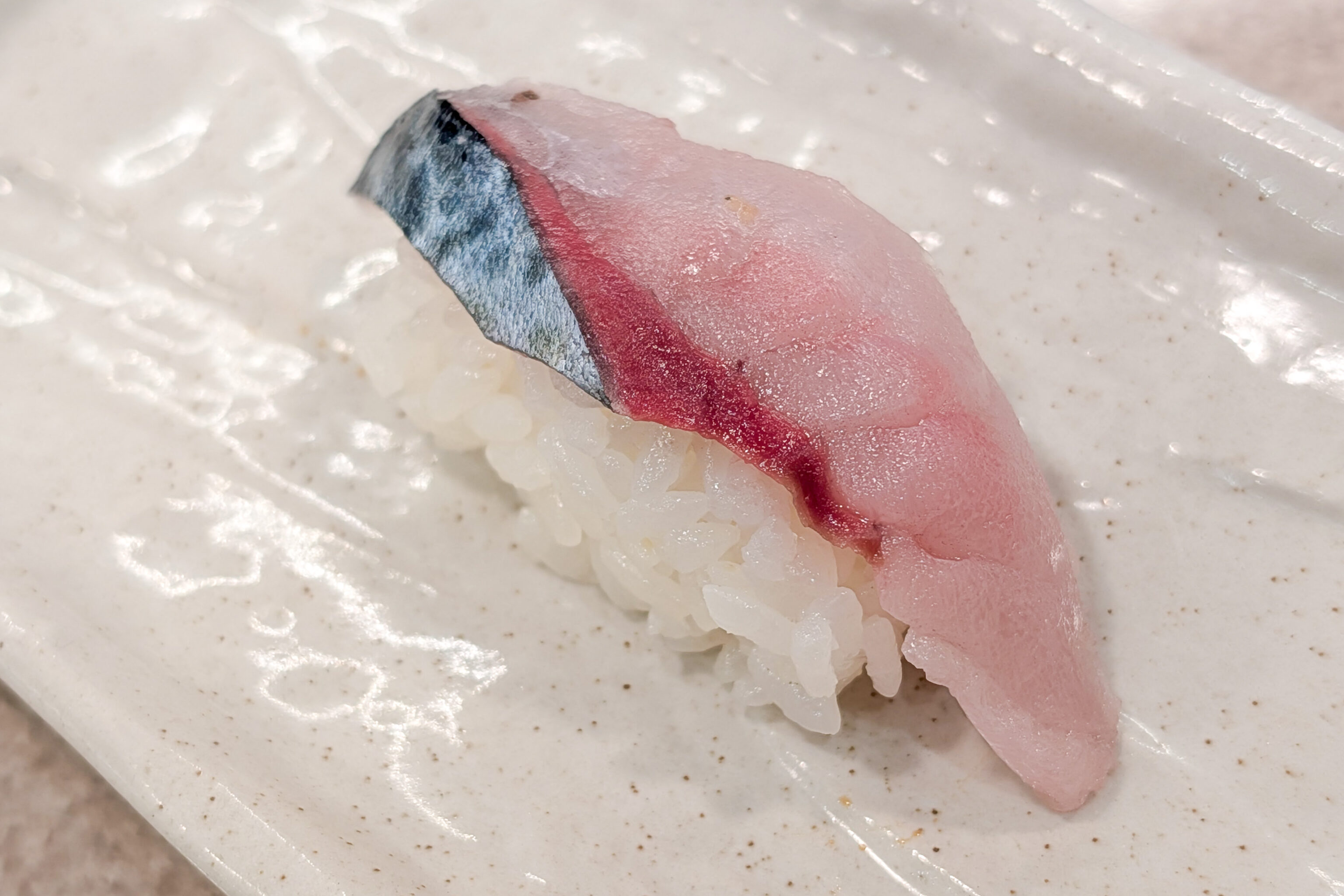
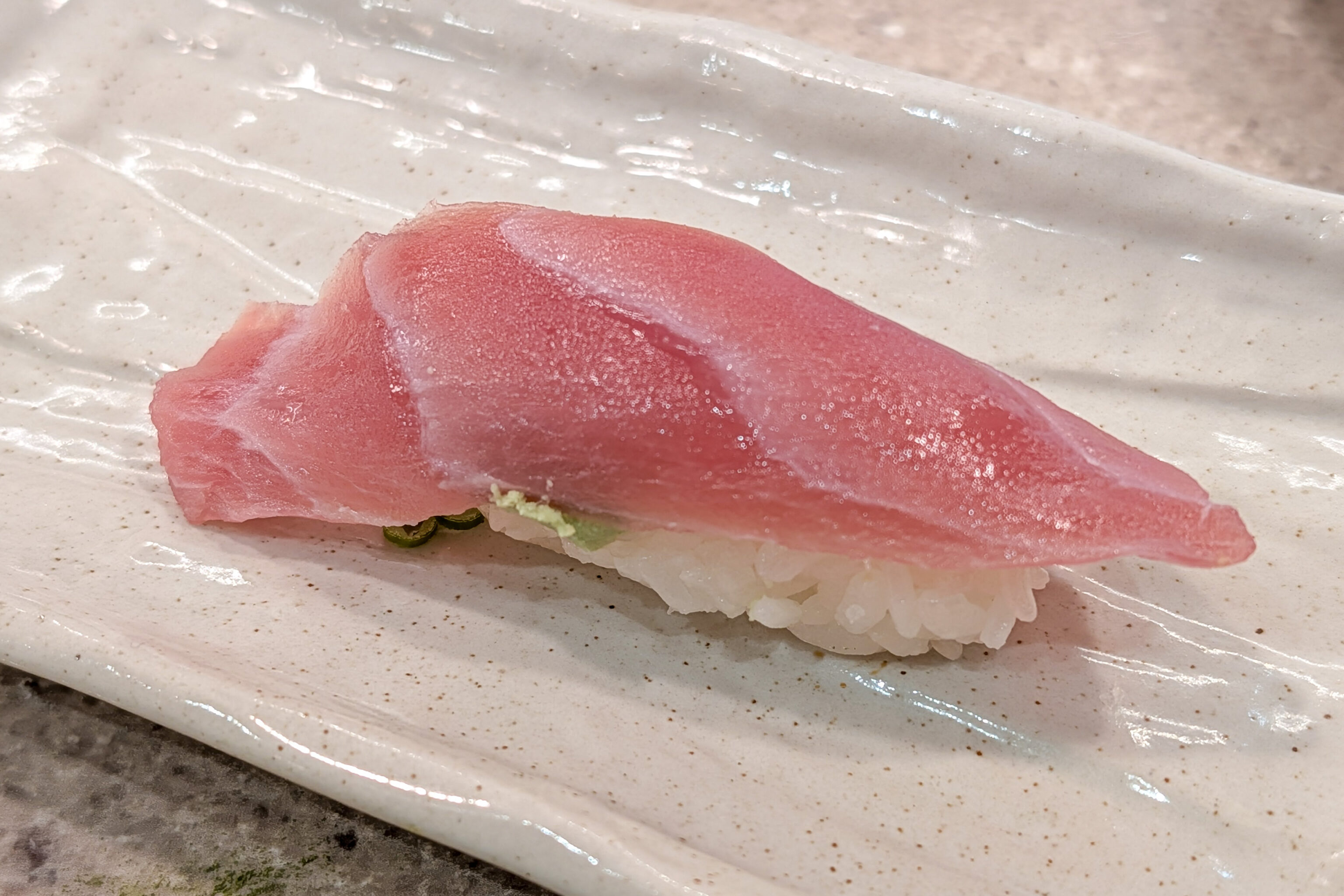
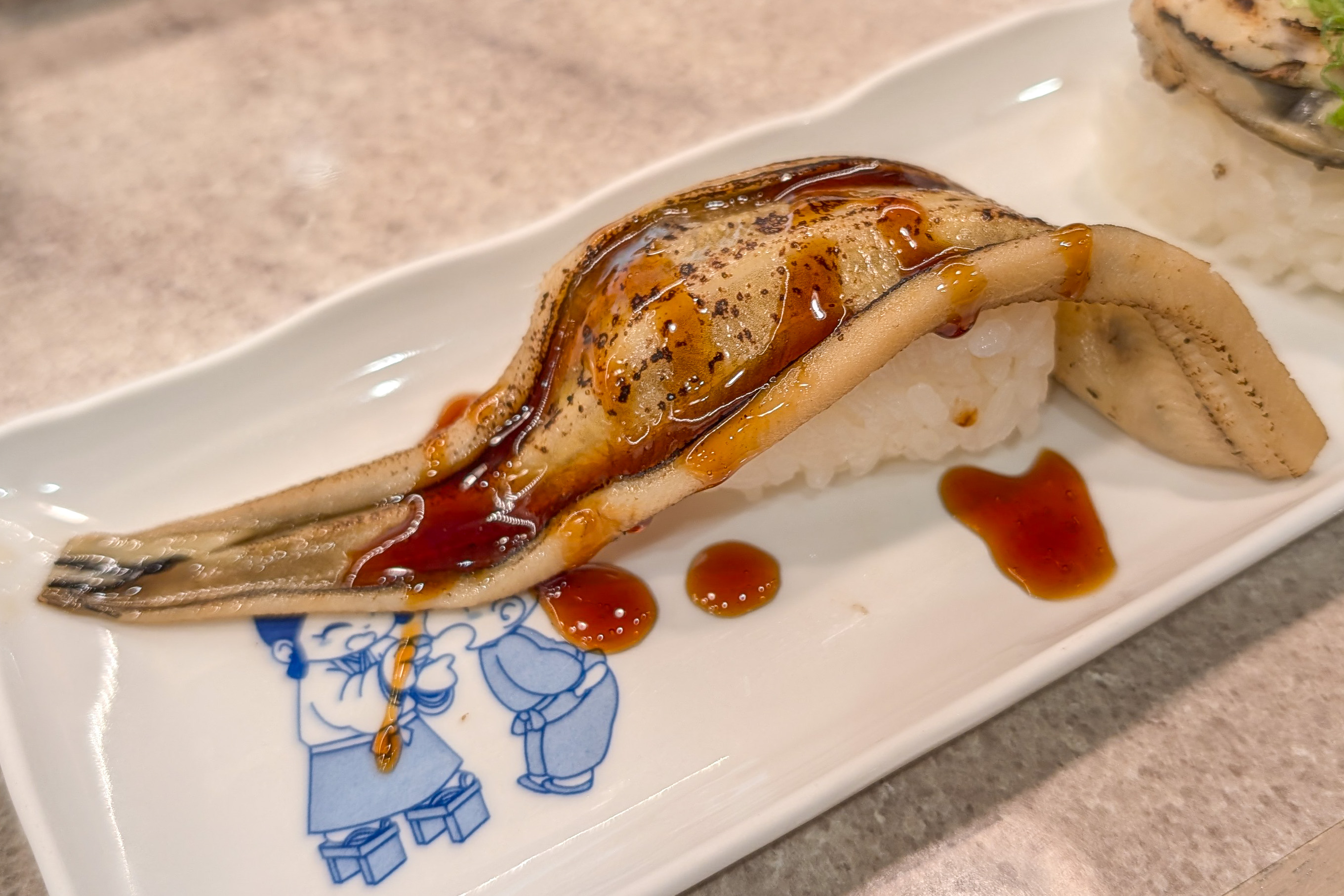
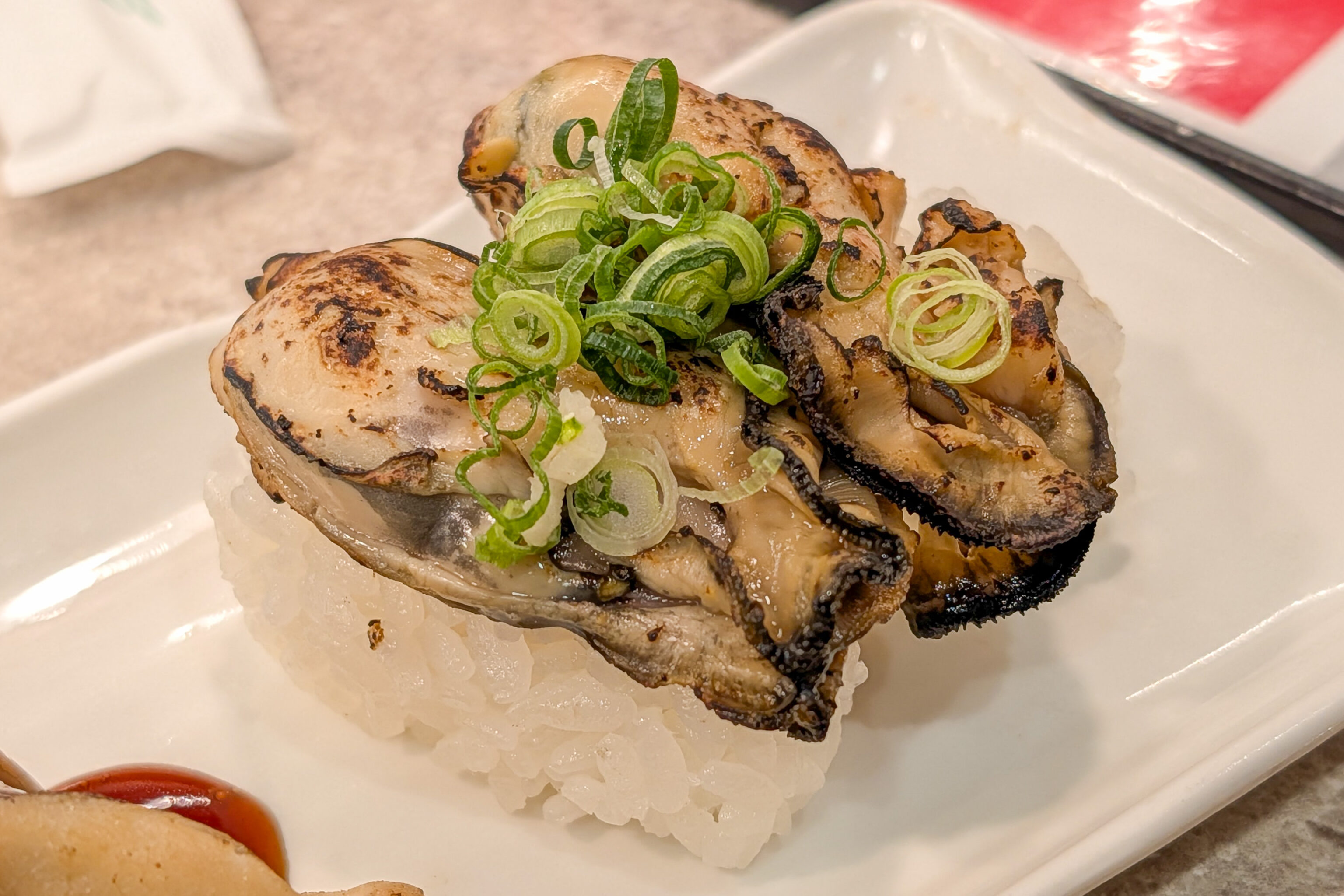
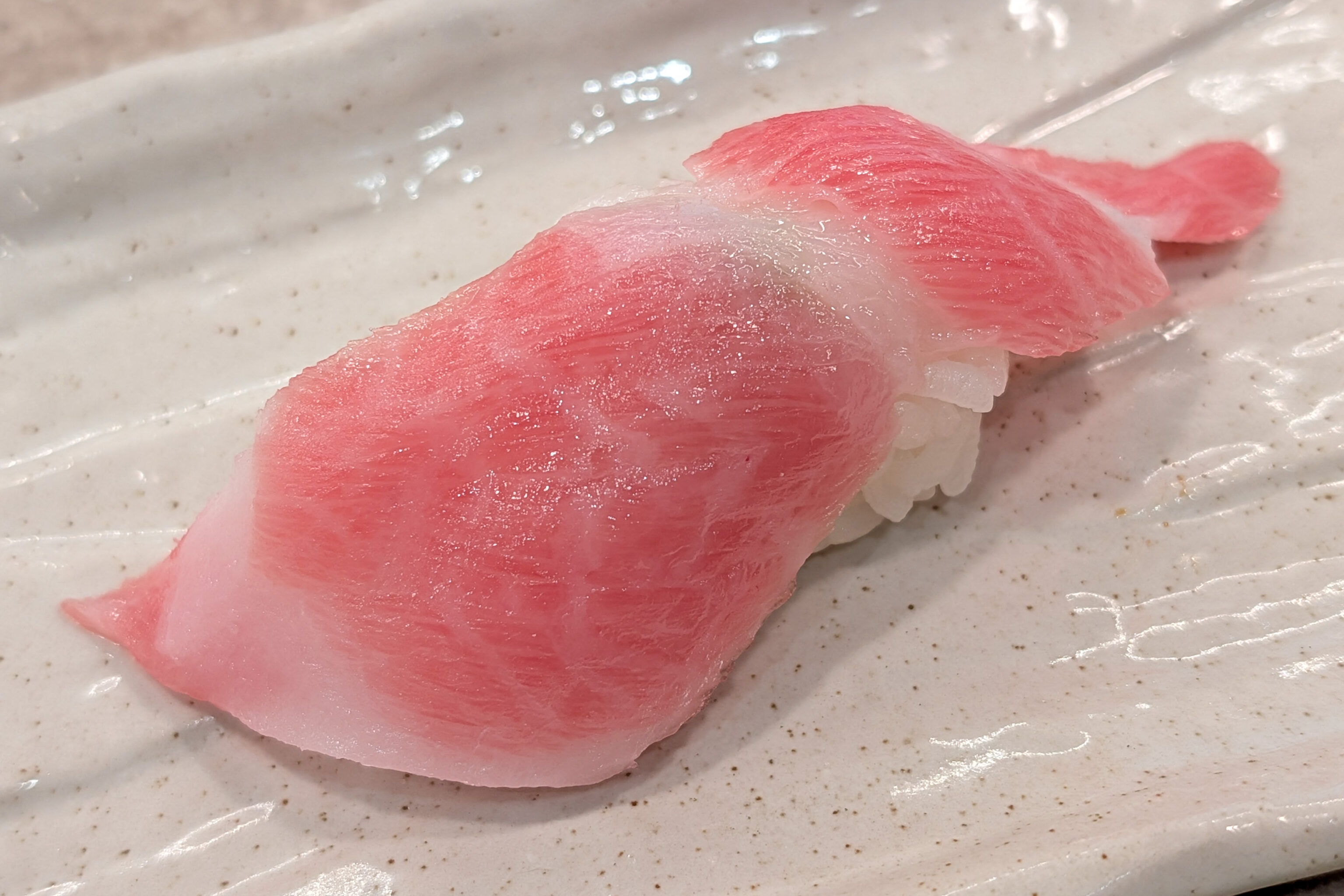
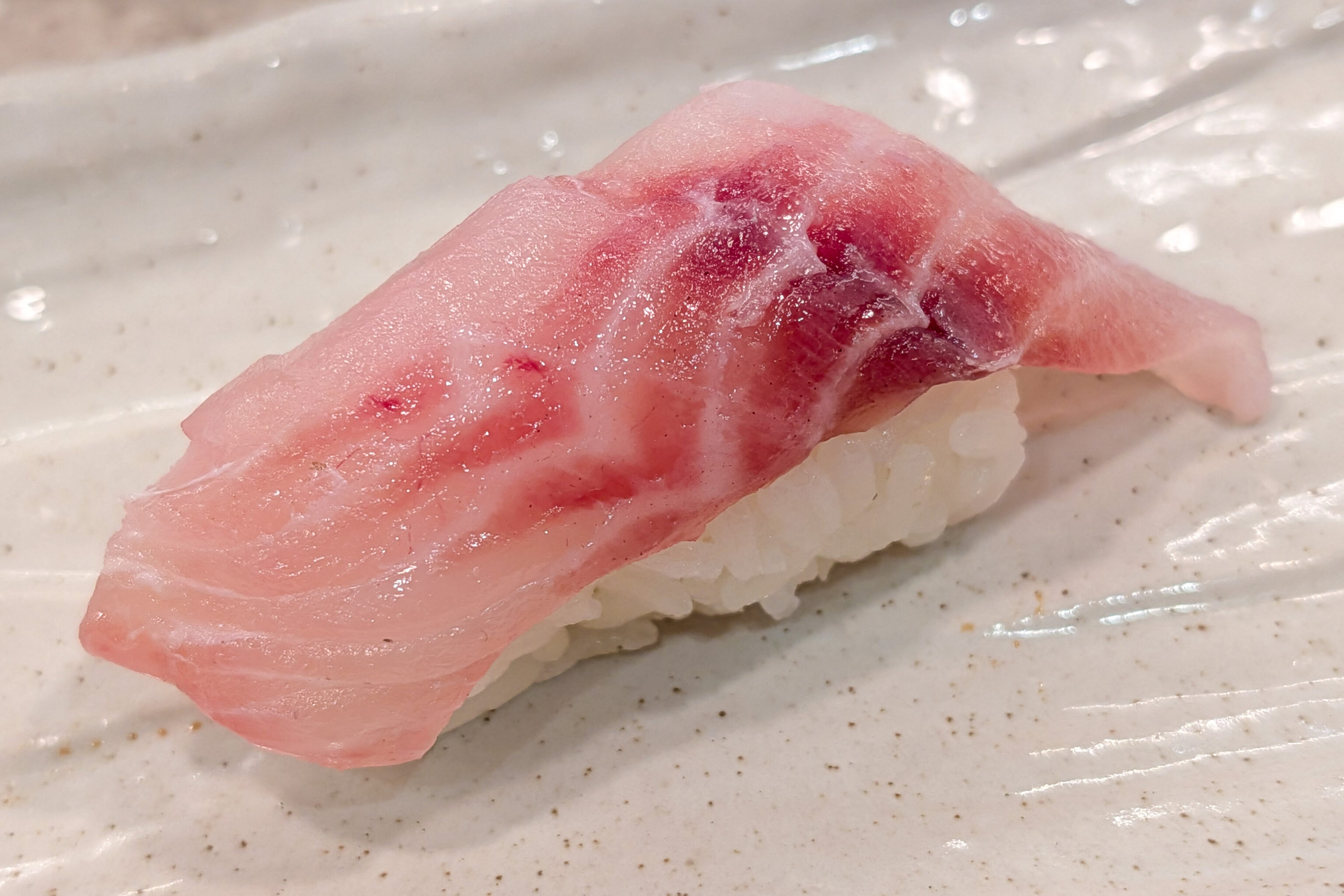
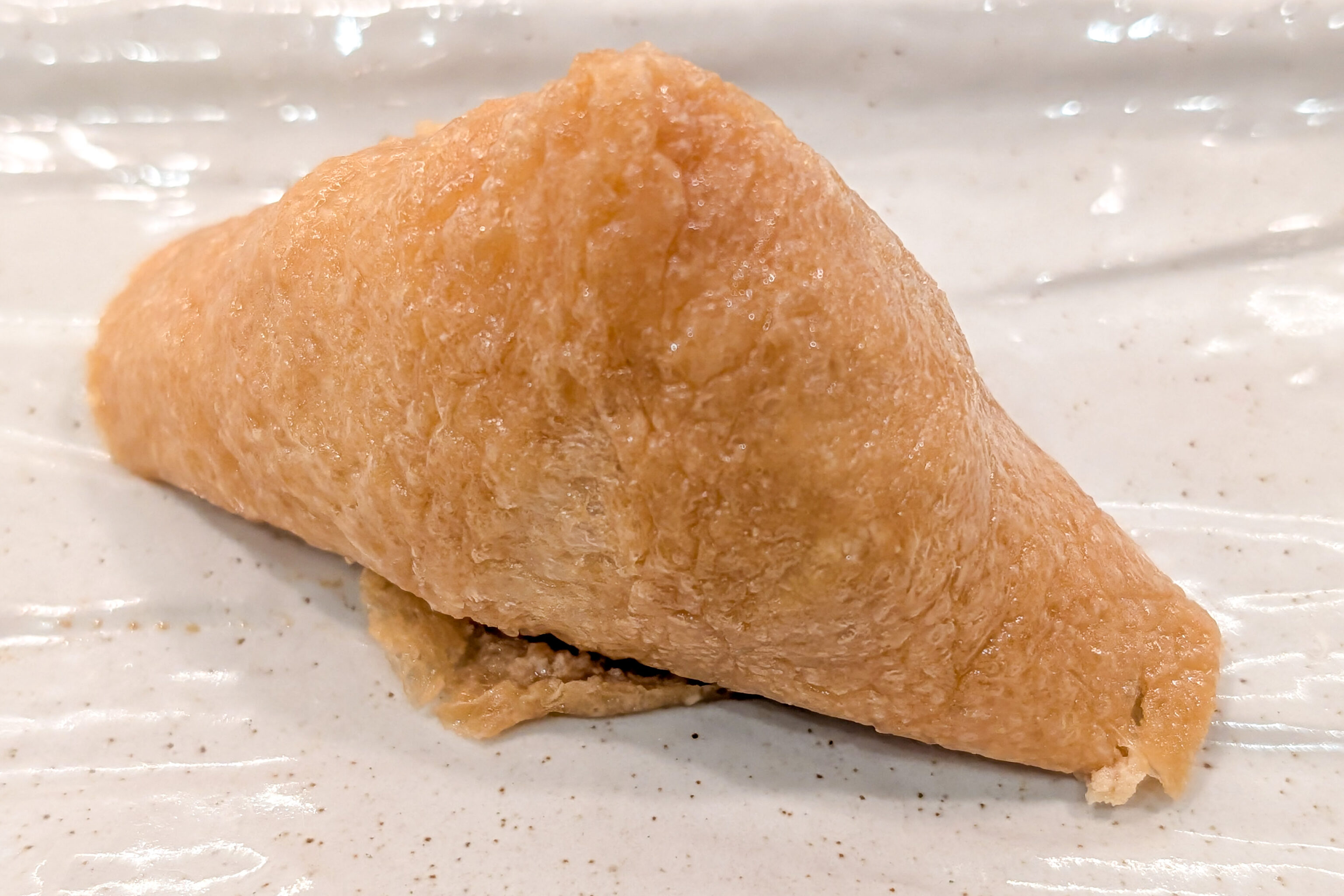
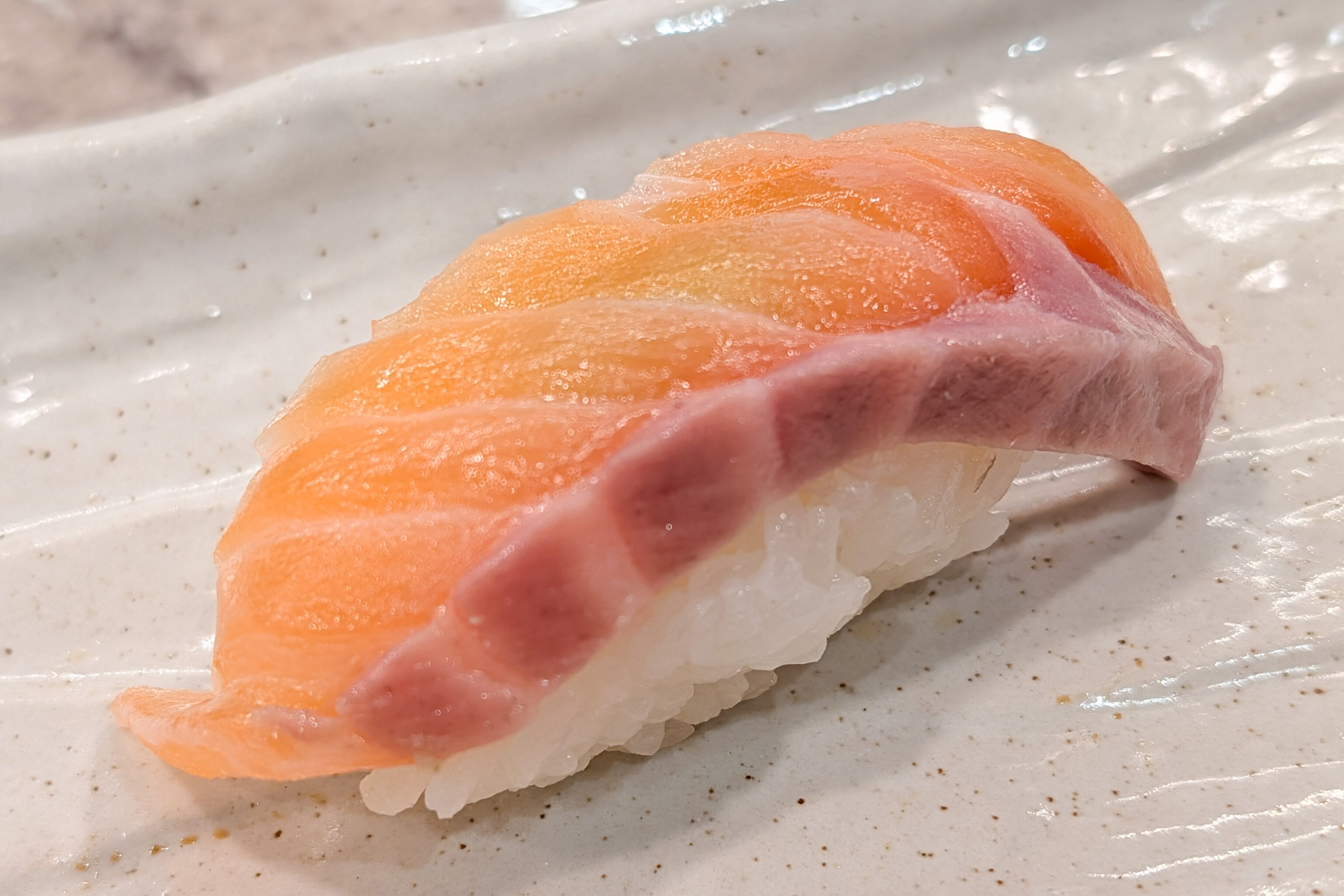
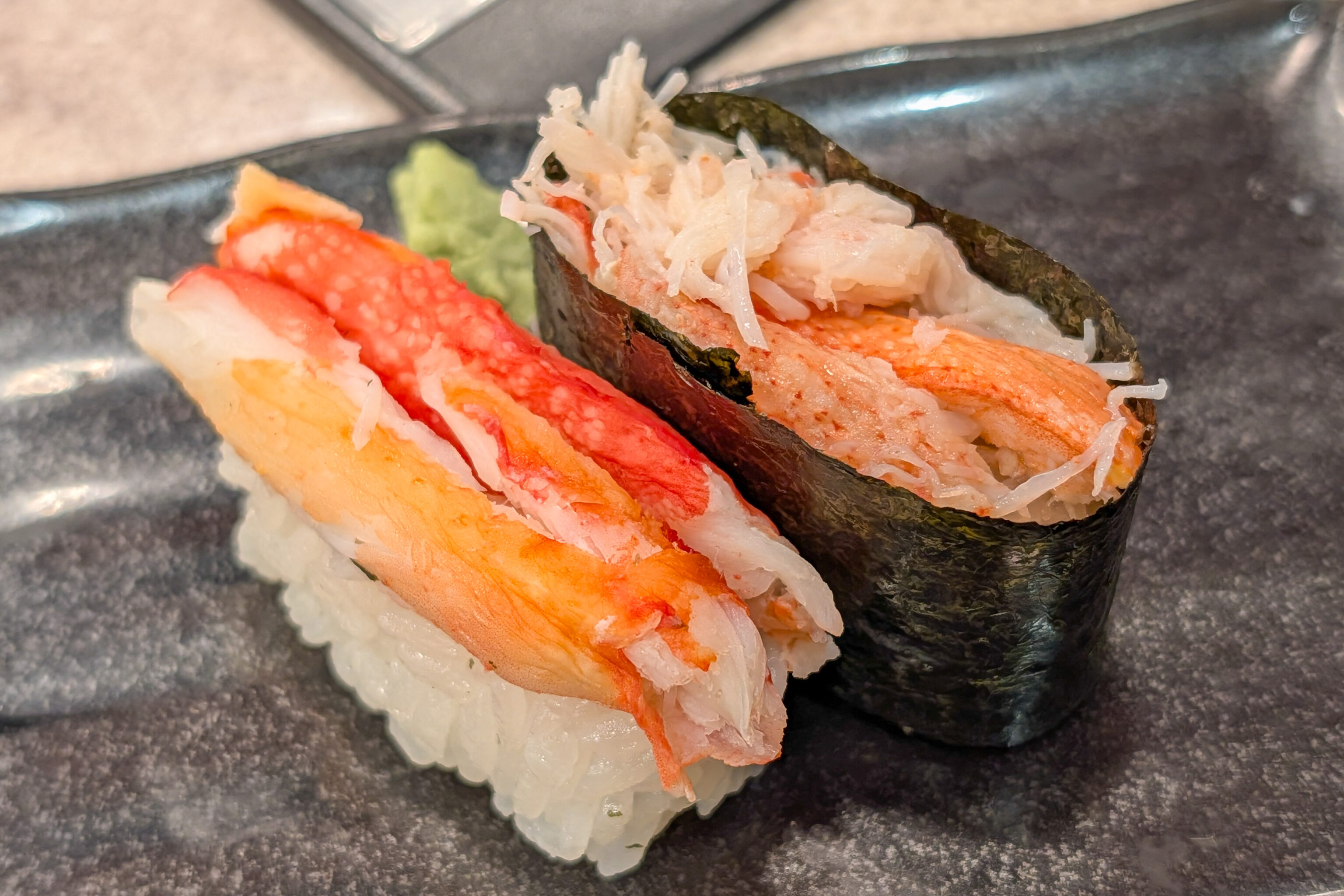
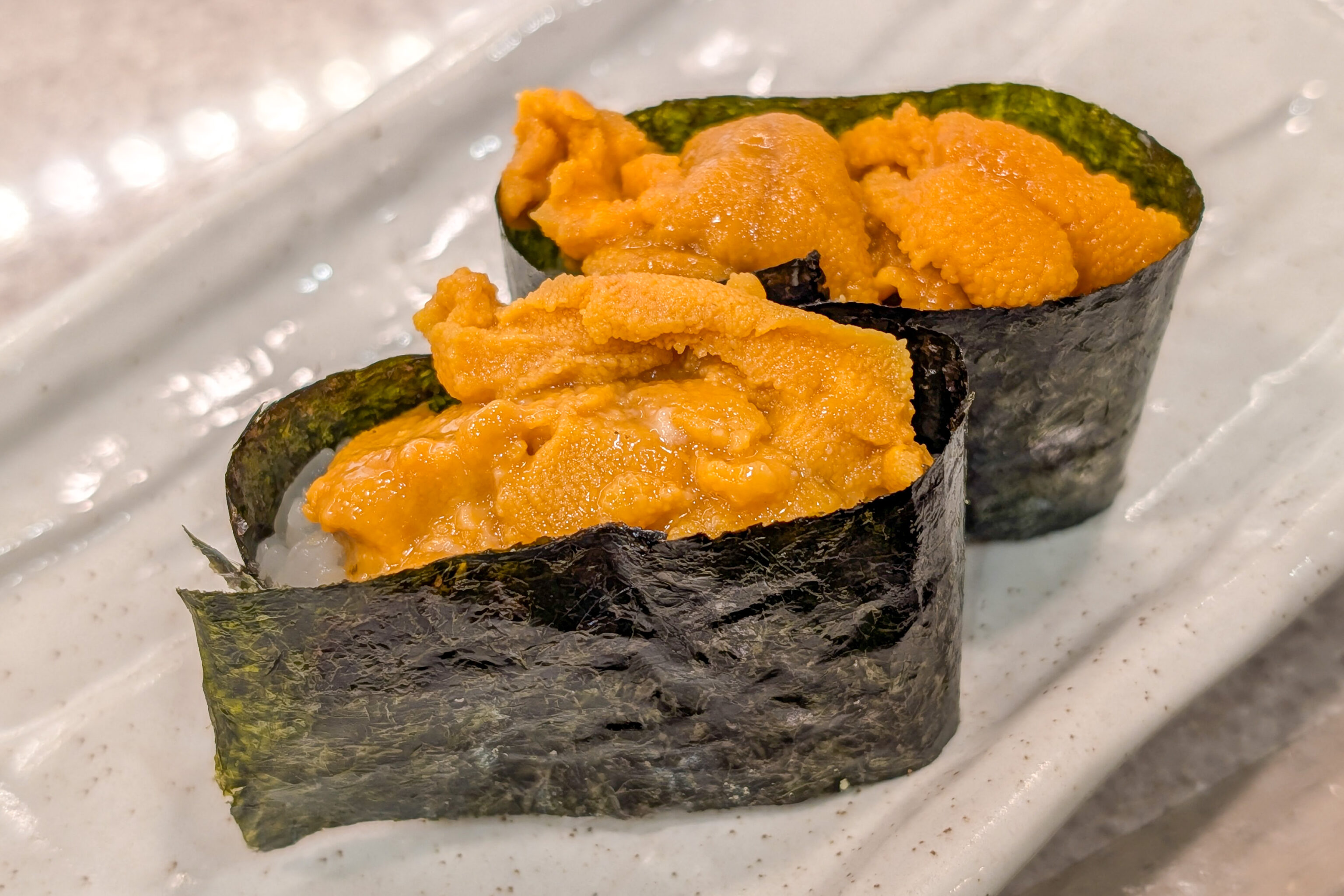
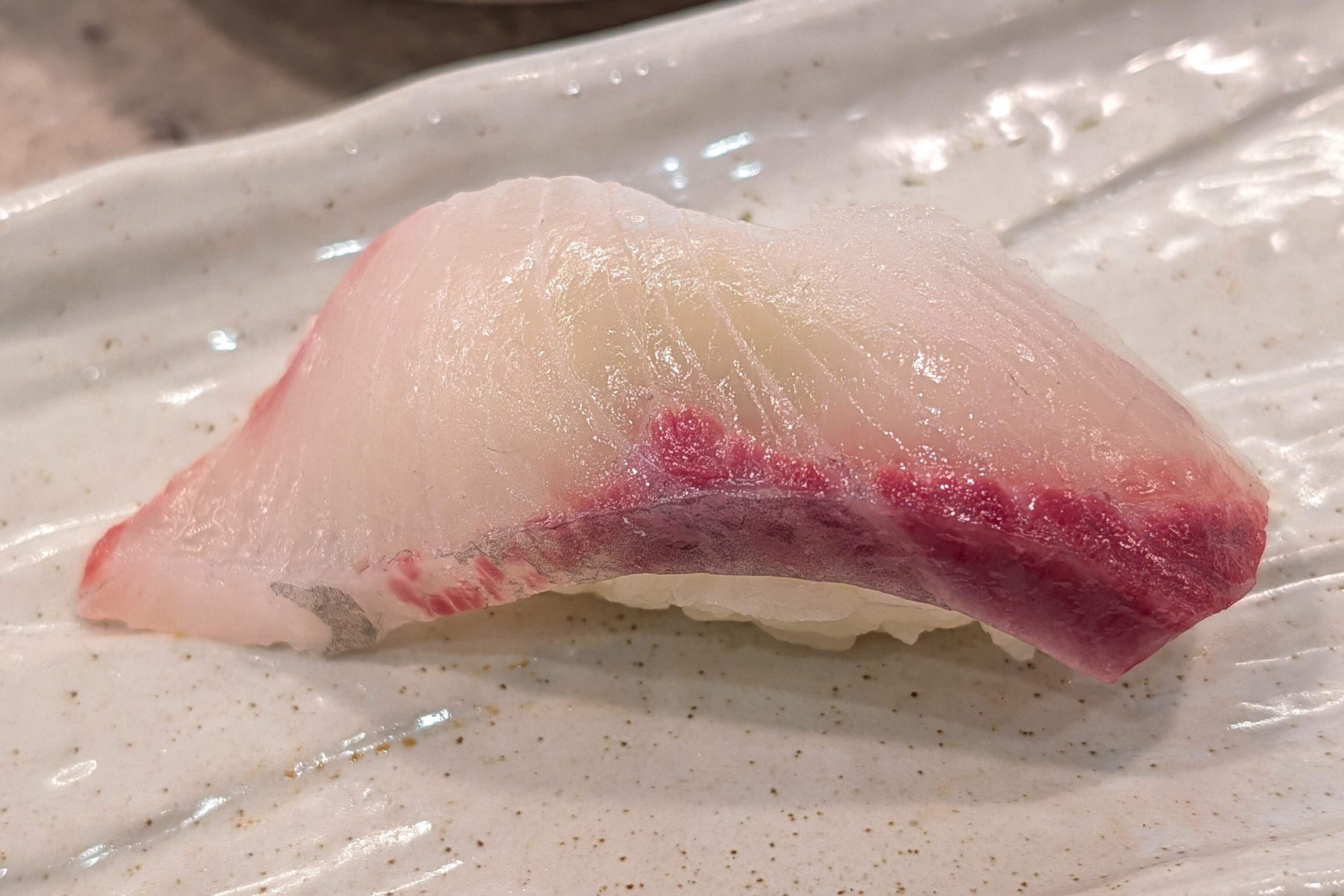
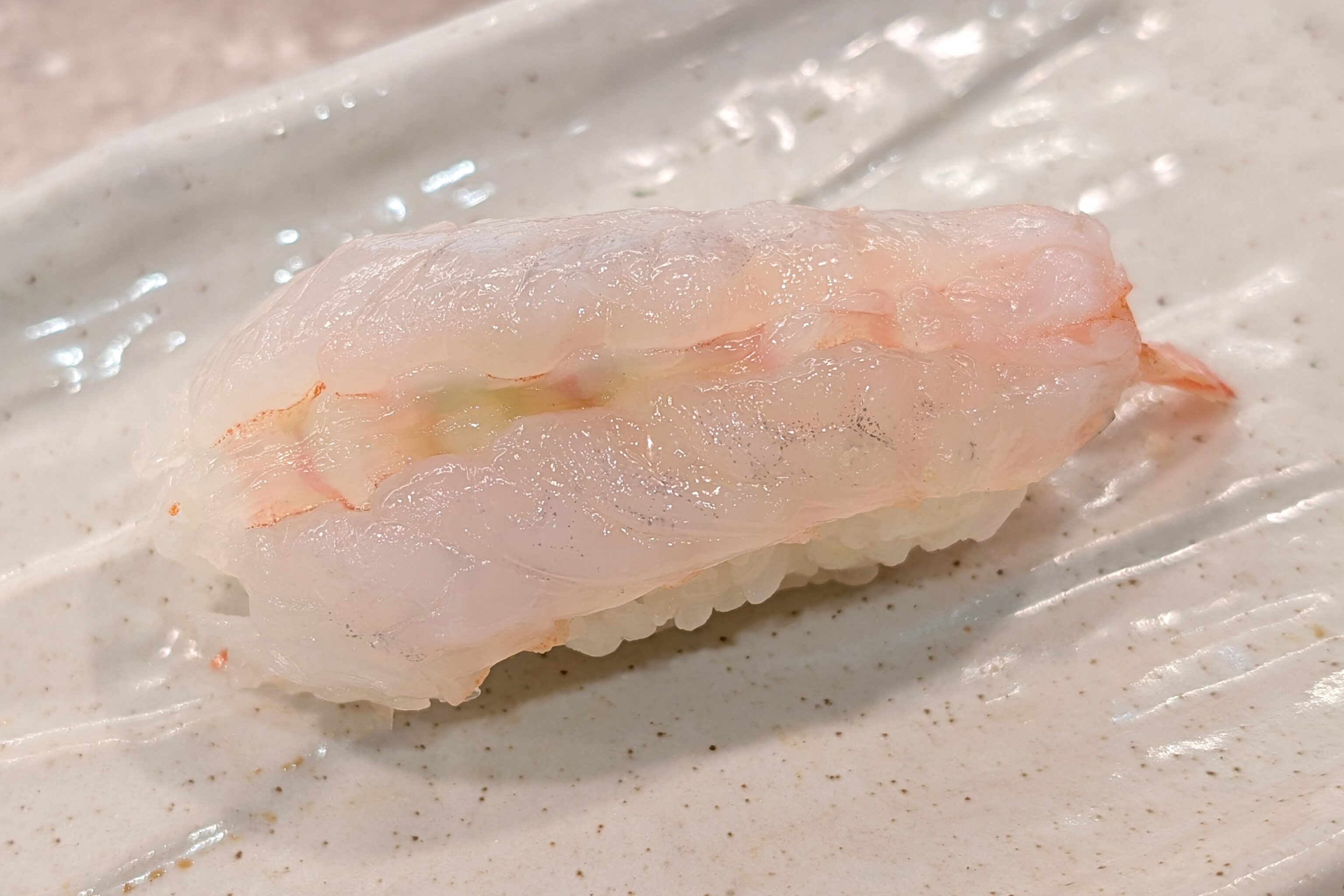
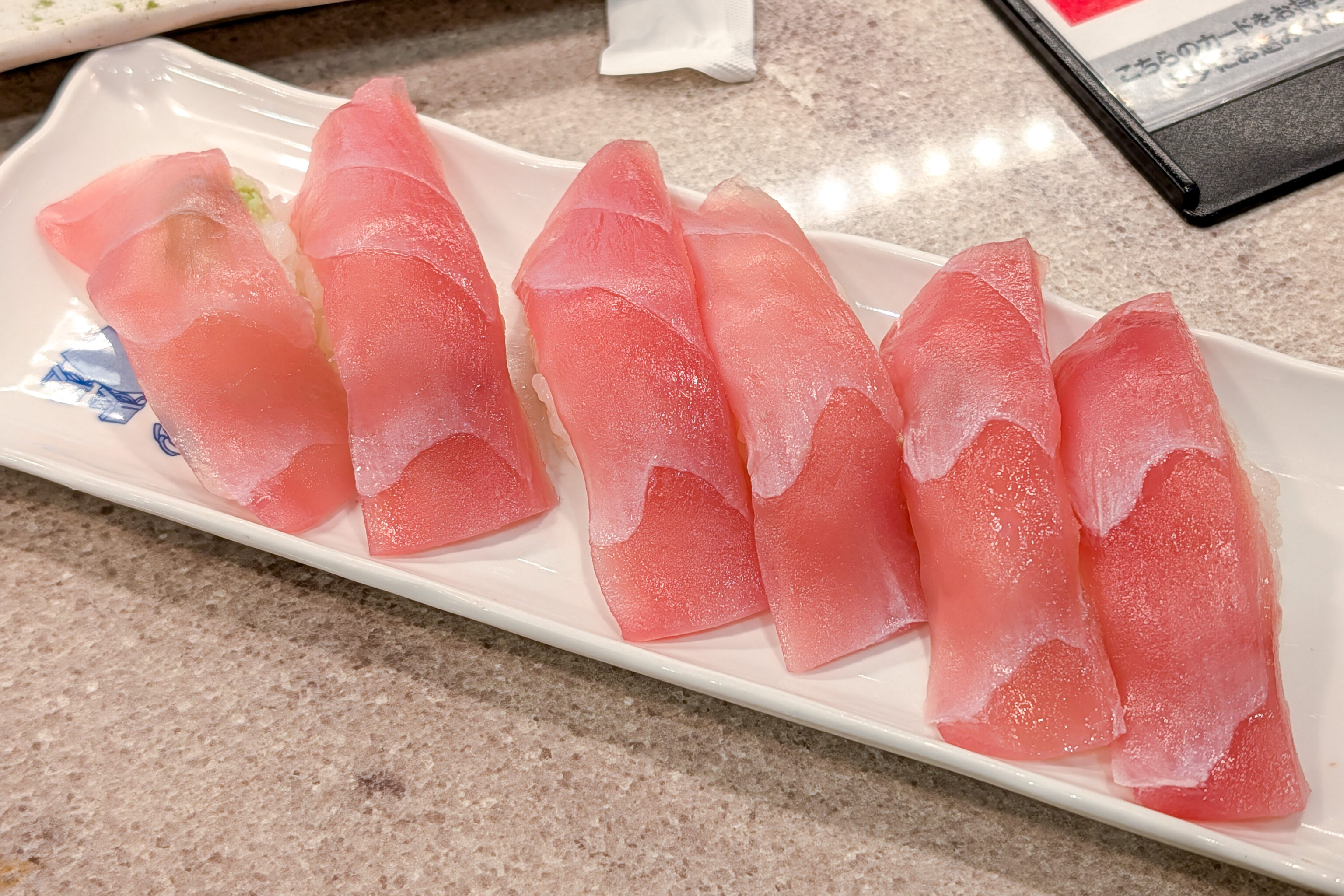
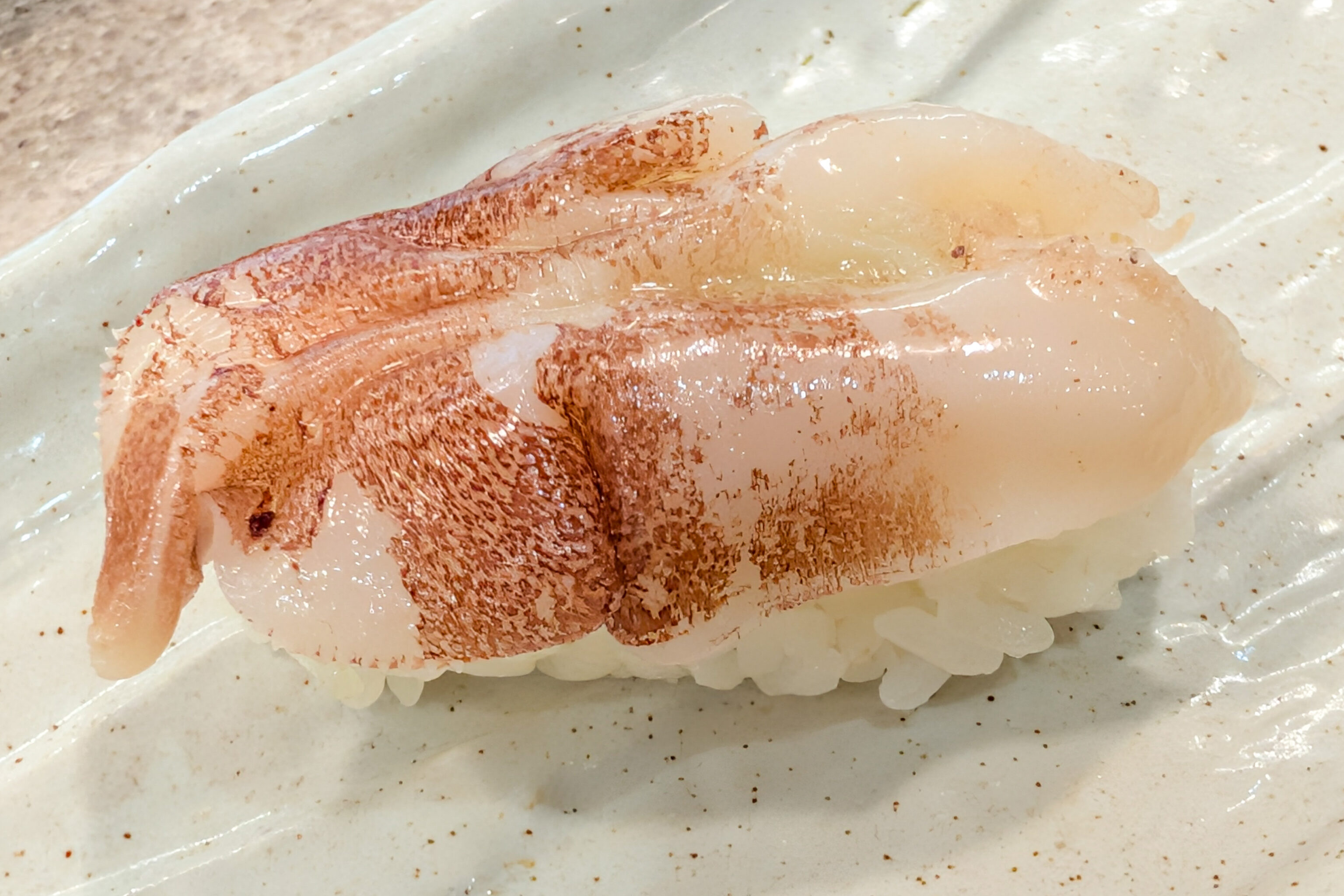
Wakatake Maru is a chain from Nagasaki. It was a wonderful meal and pretty cheap as far as decent sushi goes. It probably wasn’t quite as good as the sushi we had yesterday in Kumamoto but it was less than half the price. And despite the low price point, it was still much better than Kura, which was the cheapest sushi we’ve had anywhere.
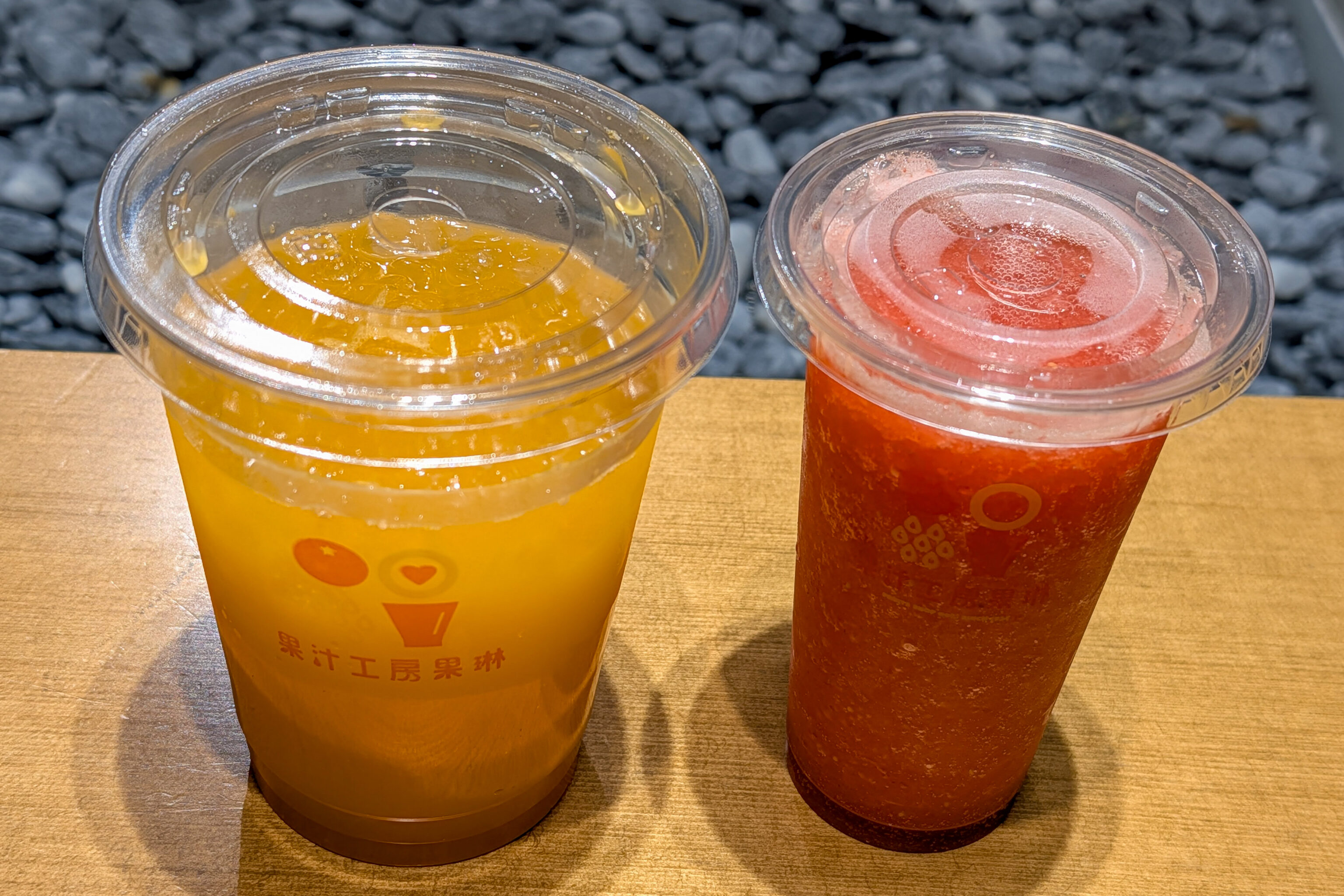
After, we got fresh strawberry and fresh Kyushu Mandarin orange juices 果汁工房果琳 Karin Fruit Juice Studio. While both were very good, they were pretty expensive compared to the sushi we had just had!
Nagasaki Marriott
Finally, we returned to the 長崎マリオット Nagasaki Marriott to check in for our four night stay.
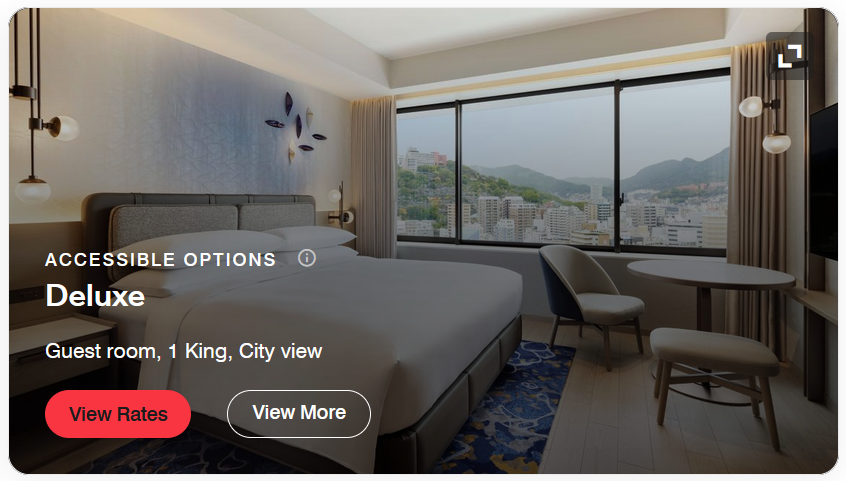
We had reserved a Deluxe City View room, which is effectively the base one bed room type at this property…
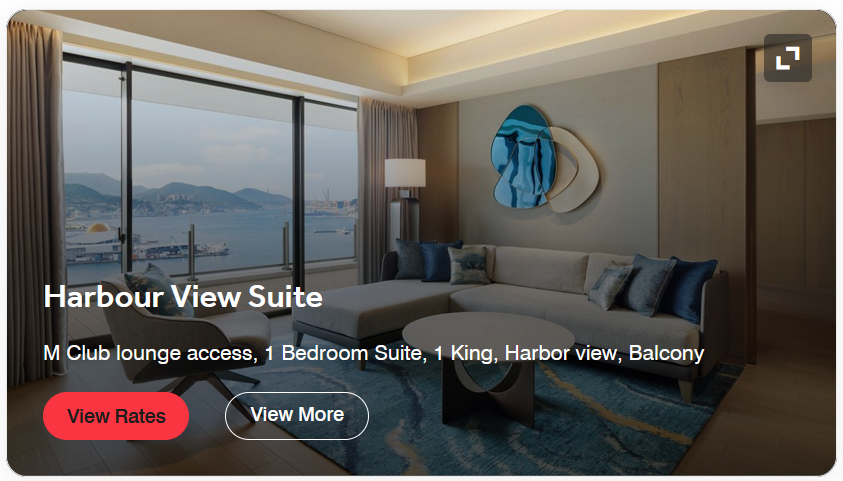
And were upgraded to a Harbour View Suite!
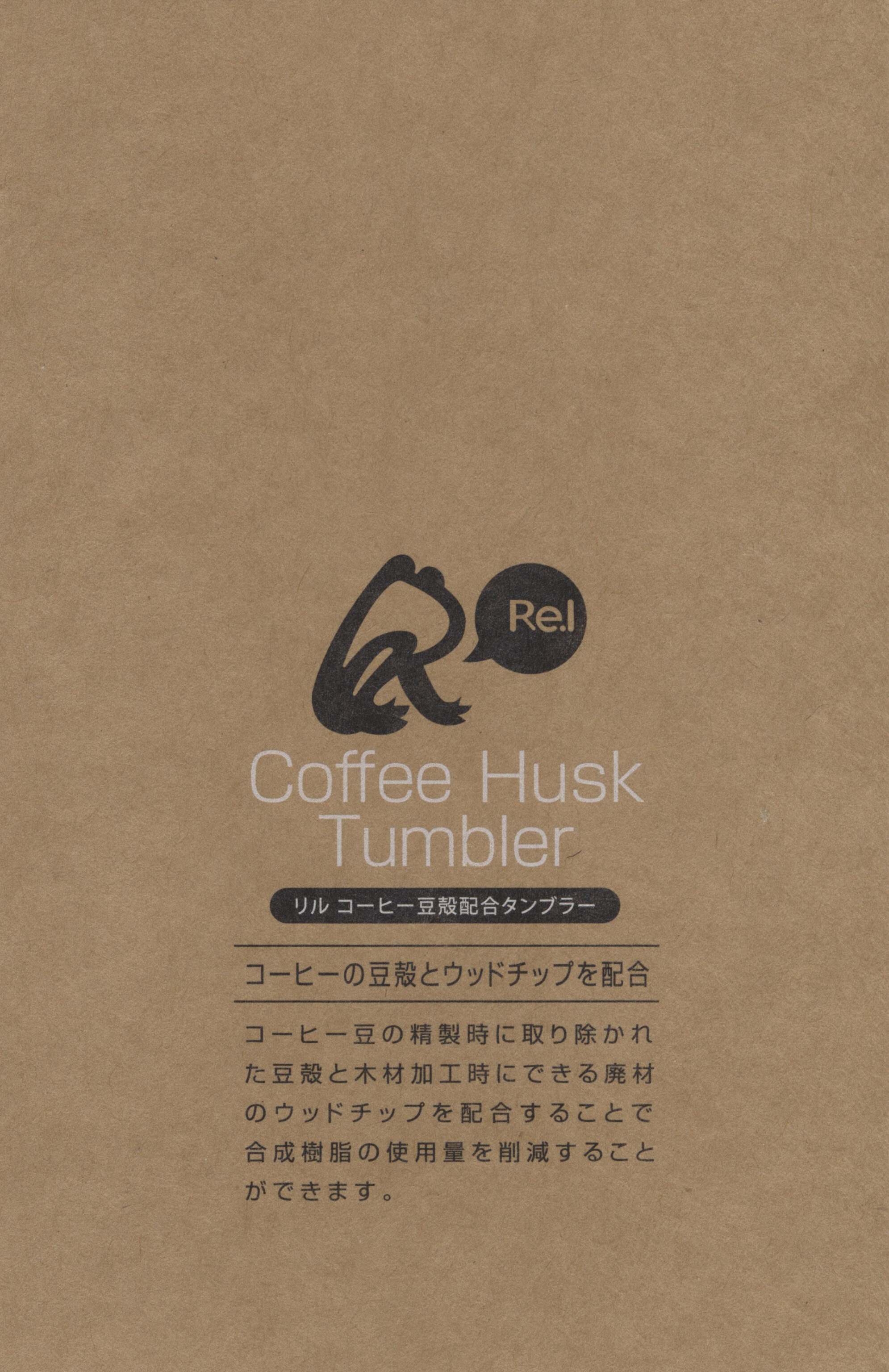
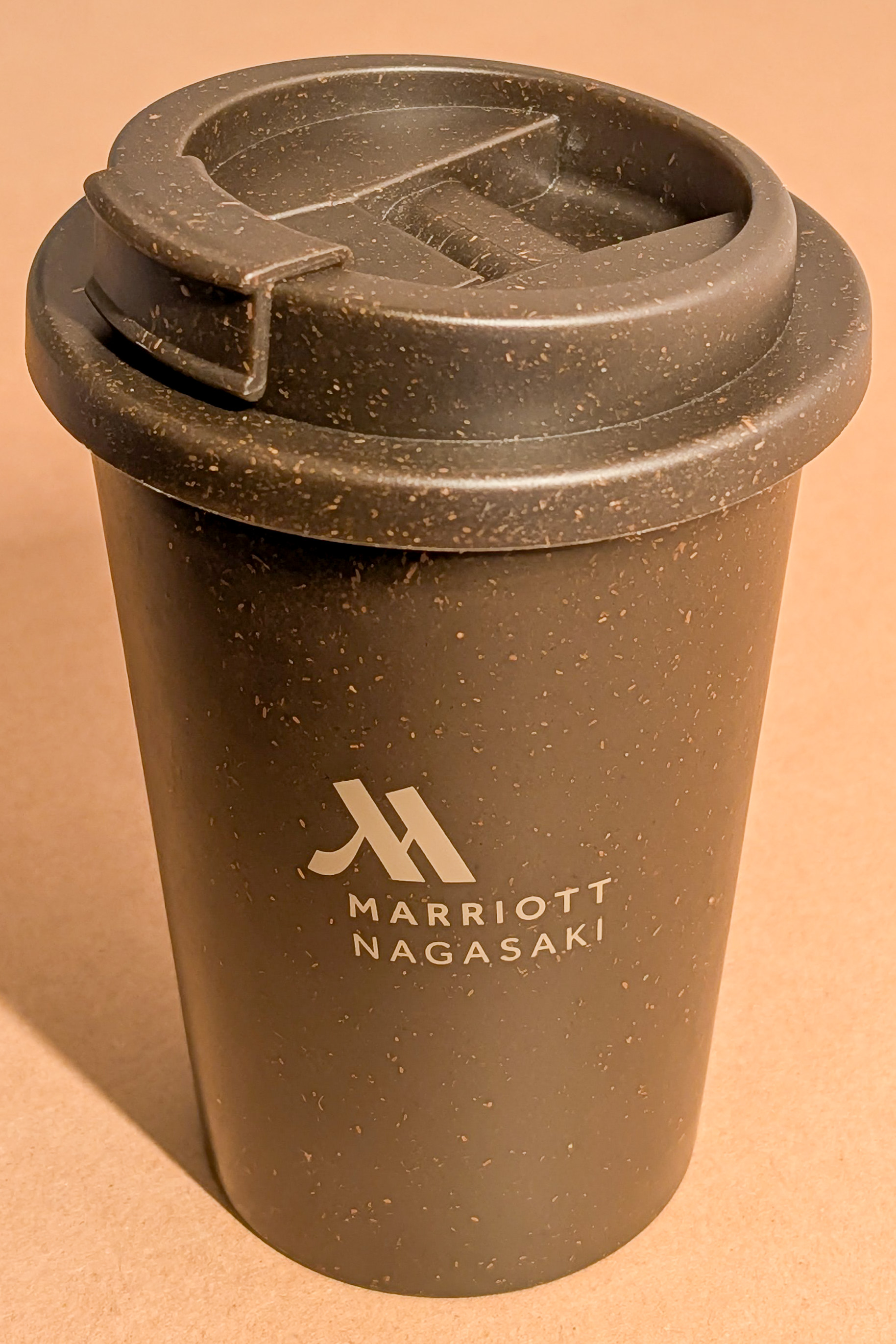
A unique welcome amenity was provided, a coffee husk tumbler!
Re.l Coffee Tumbler (Made with Coffee Bean Husks)
A blend of coffee grounds and wood chips.

By blending coffee bean husks—removed during the bean processing stage—with wood chips from timber processing waste, it is possible to reduce the amount of synthetic resin used.

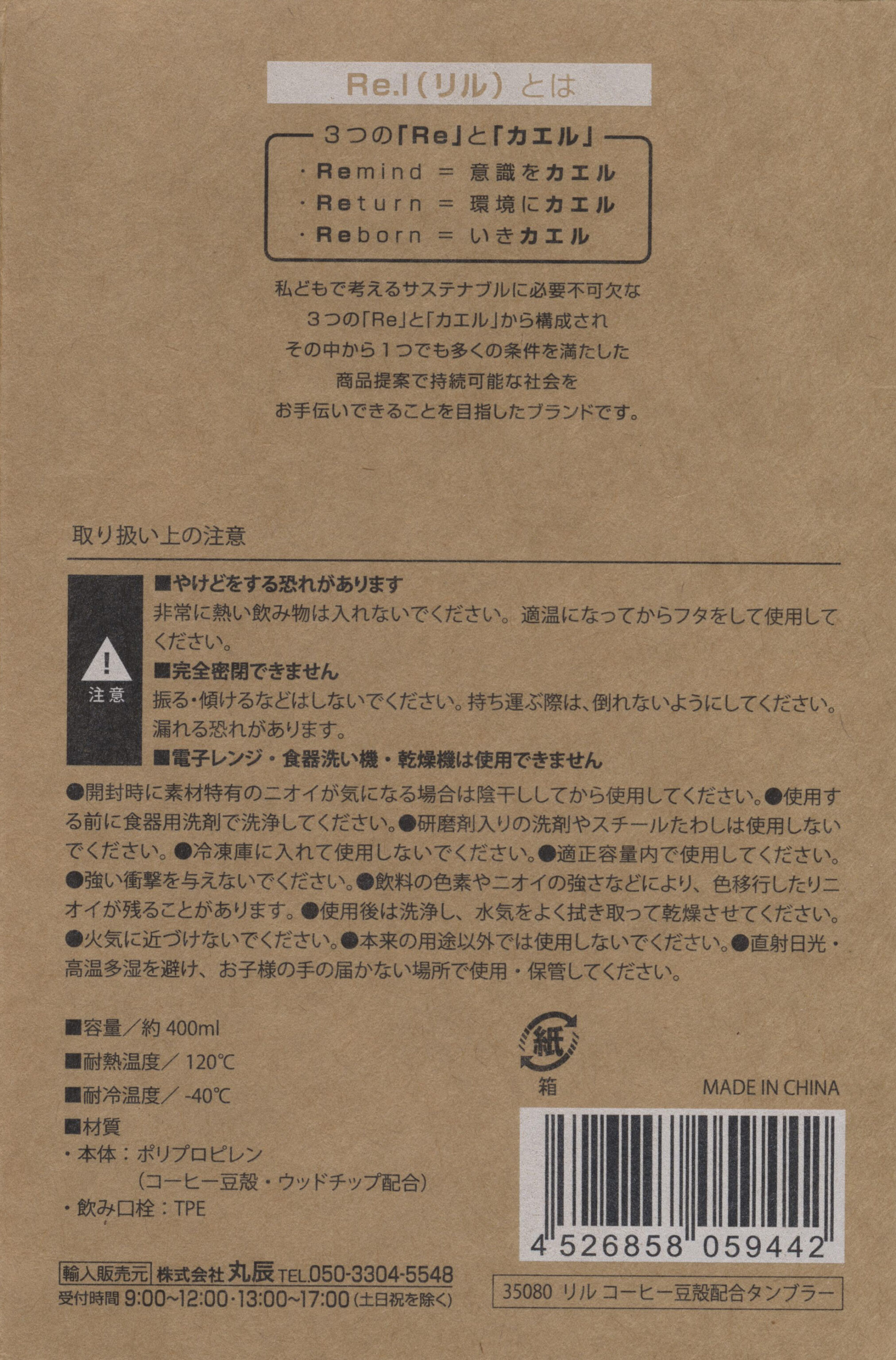
About Re.l
"Re.l" is built upon three "Re" concepts and the Japanese word *kaeru* (meaning "to change" or "to return"):
· Remind = Changing one's mindset
· Return = Returning to the environment
· Reborn = Being born anew

We view these three "Re" and *kaeru* concepts as essential to sustainability. Our brand aims to contribute to a sustainable society by proposing products that fulfill as many of these criteria as possible.

Handling Precautions
■ Risk of burns
Do not fill with extremely hot beverages. Allow the contents to cool to a suitable temperature before closing the lid and using.
■ Not completely leak-proof
Do not shake or tilt the container. When carrying it, ensure it remains upright to prevent leakage.
■ Do not use in a microwave, dishwasher, or dish dryer
● If you notice a characteristic odor from the material upon opening, air-dry the product in the shade before use. ● Wash with dish soap before use. ● Do not use abrasive detergents or steel wool. ● Do not place in the freezer. ● Use within the specified capacity. ● Do not subject to strong impacts. ● Beverage pigments or strong odors may cause staining or odor retention. ● After use, wash, wipe off moisture thoroughly, and let dry. ● Keep away from fire or heat sources. ● Do not use for purposes other than intended. ● Avoid direct sunlight, high temperatures, and high humidity; use and store out of the reach of children.
■ Capacity: Approx. 400ml
■ Heat resistance: 120°C
■ Cold resistance: -40°C
■ Materials
· Body: Polypropylene
(Blended with coffee bean husks and wood chips)
· Spout/Stopper: TPE

Importer/Distributor: Marutatsu Co., Ltd. TEL: 050-3304-5548
Service hours: 9:00–12:00 / 13:00–17:00 (excluding weekends and holidays)

MADE IN CHINA
35080 Re.l Tumbler with Coffee Bean Husk Content
– Text from the box, translated using Google.
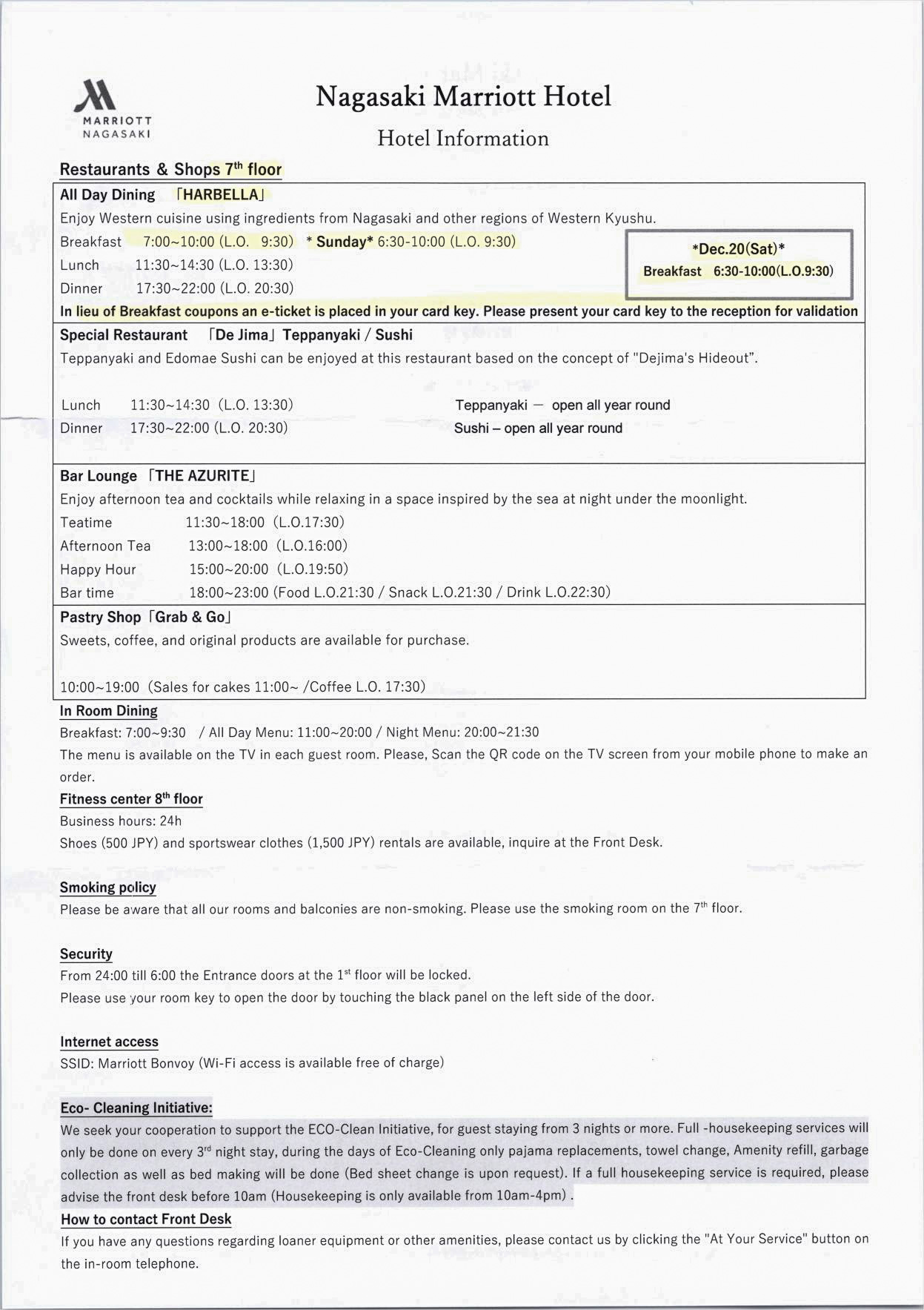
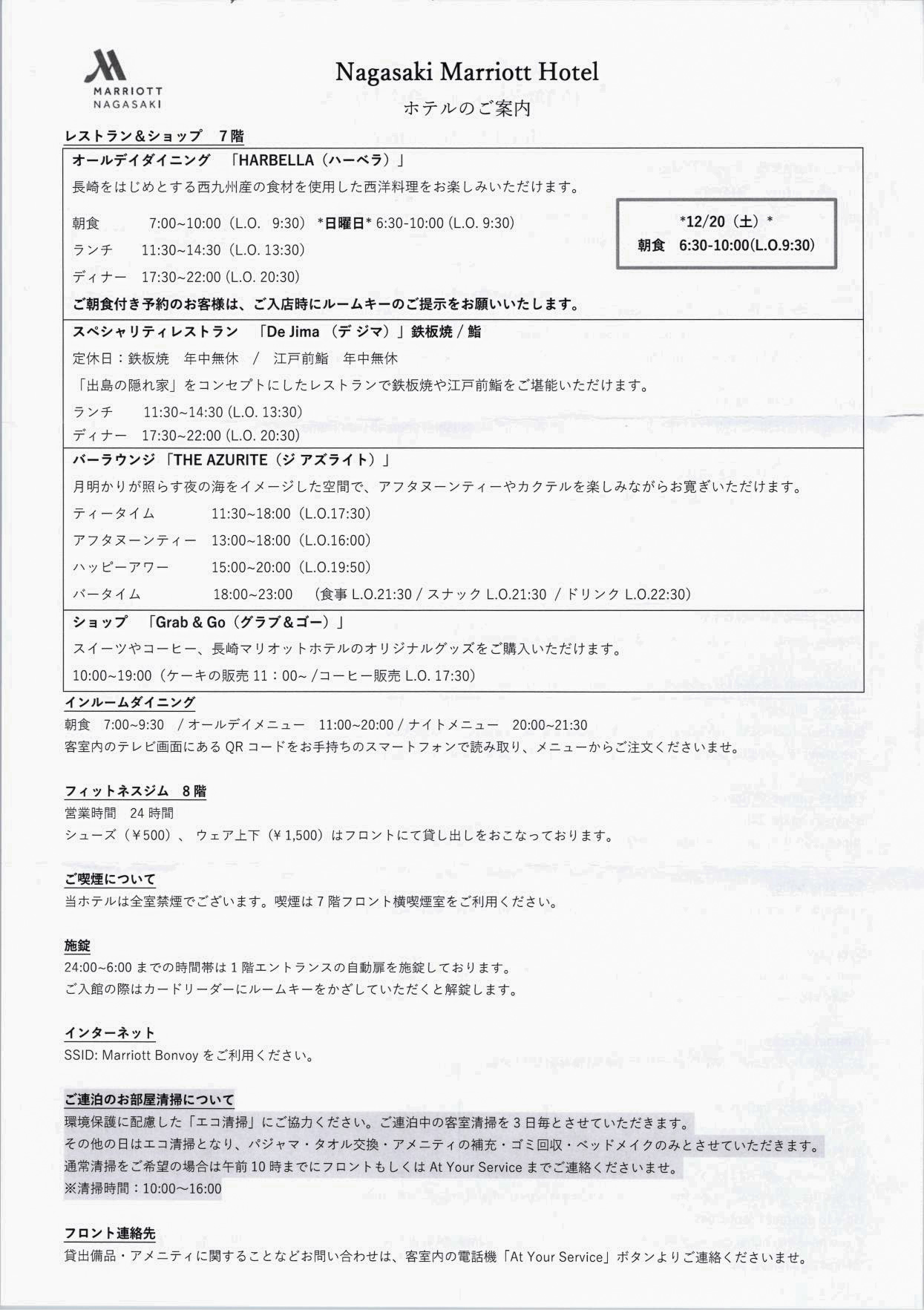
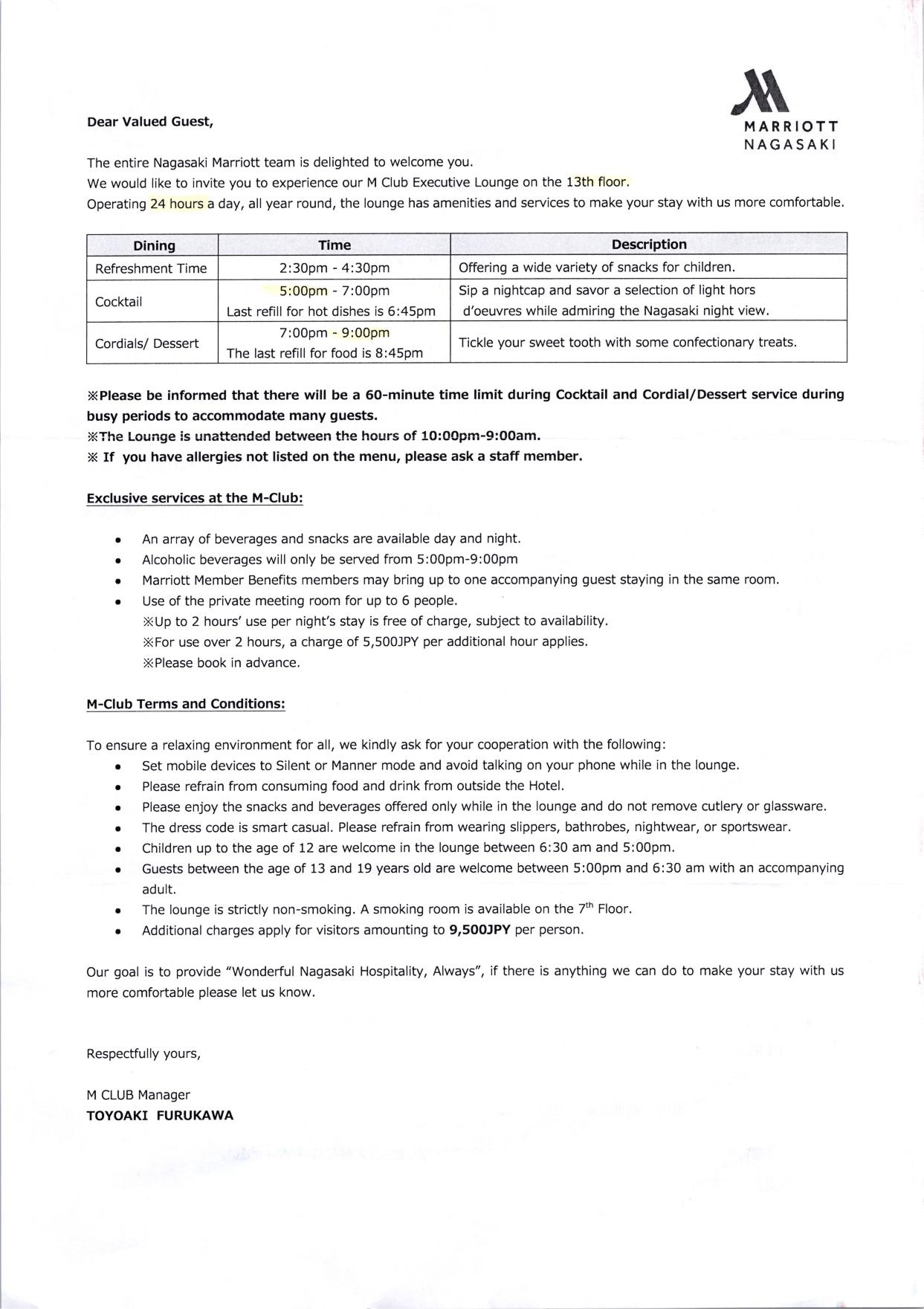
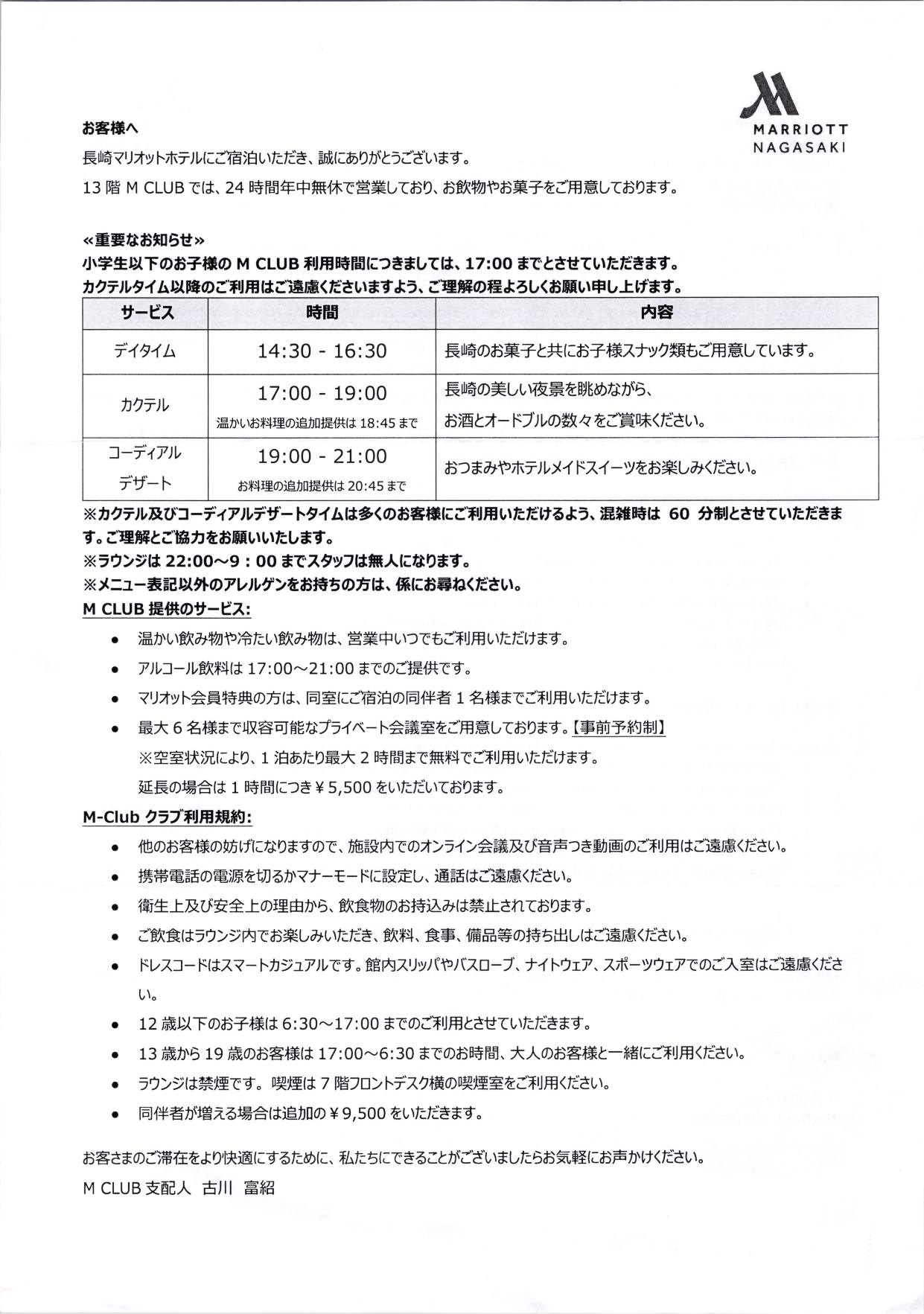
Detailed information about the property was provided in both English and Japanese. Now, time to head up to the room!
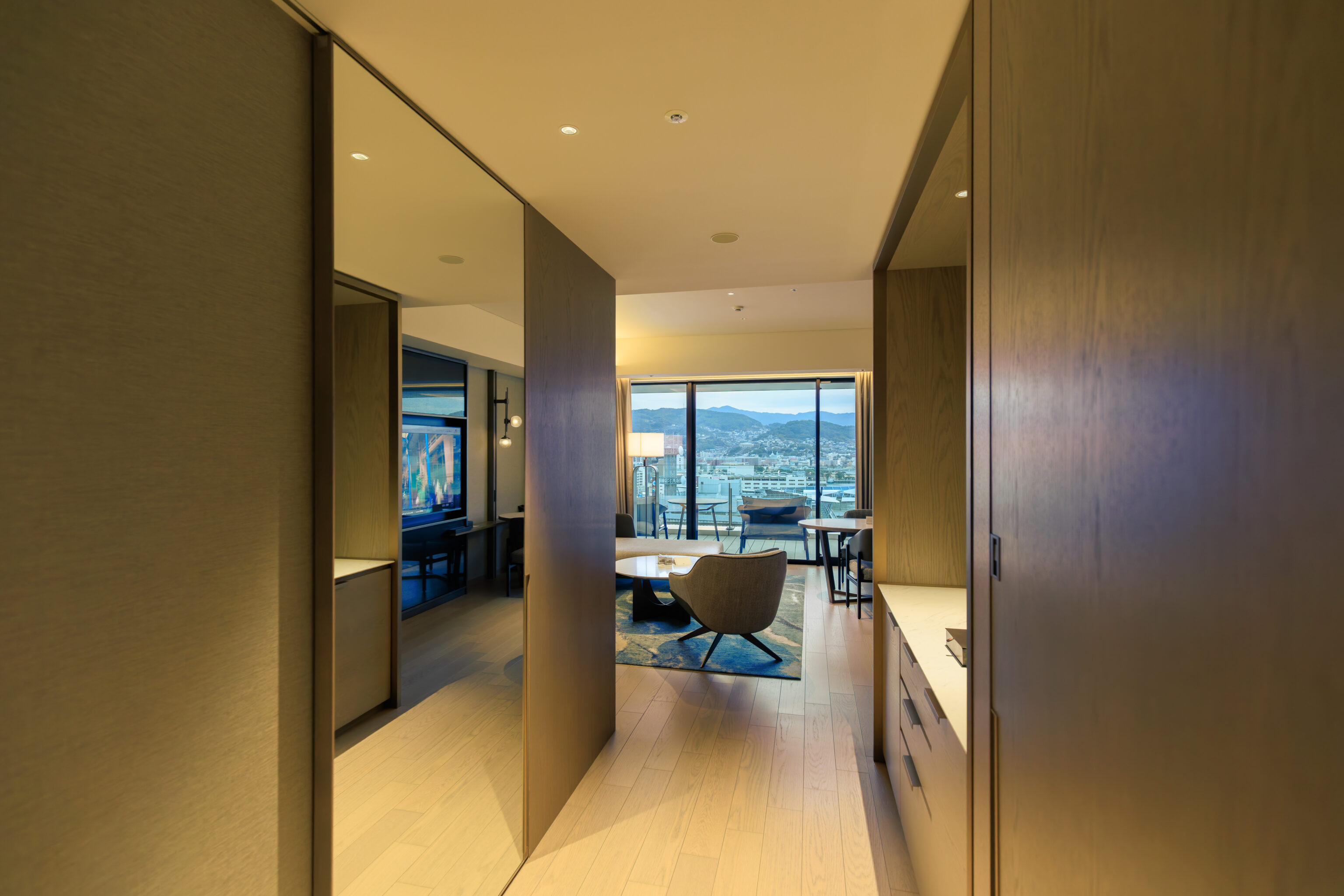
Upon entering the our suite, we could see that it had a clean and modern design. And, we could immediately see a bit of the view!
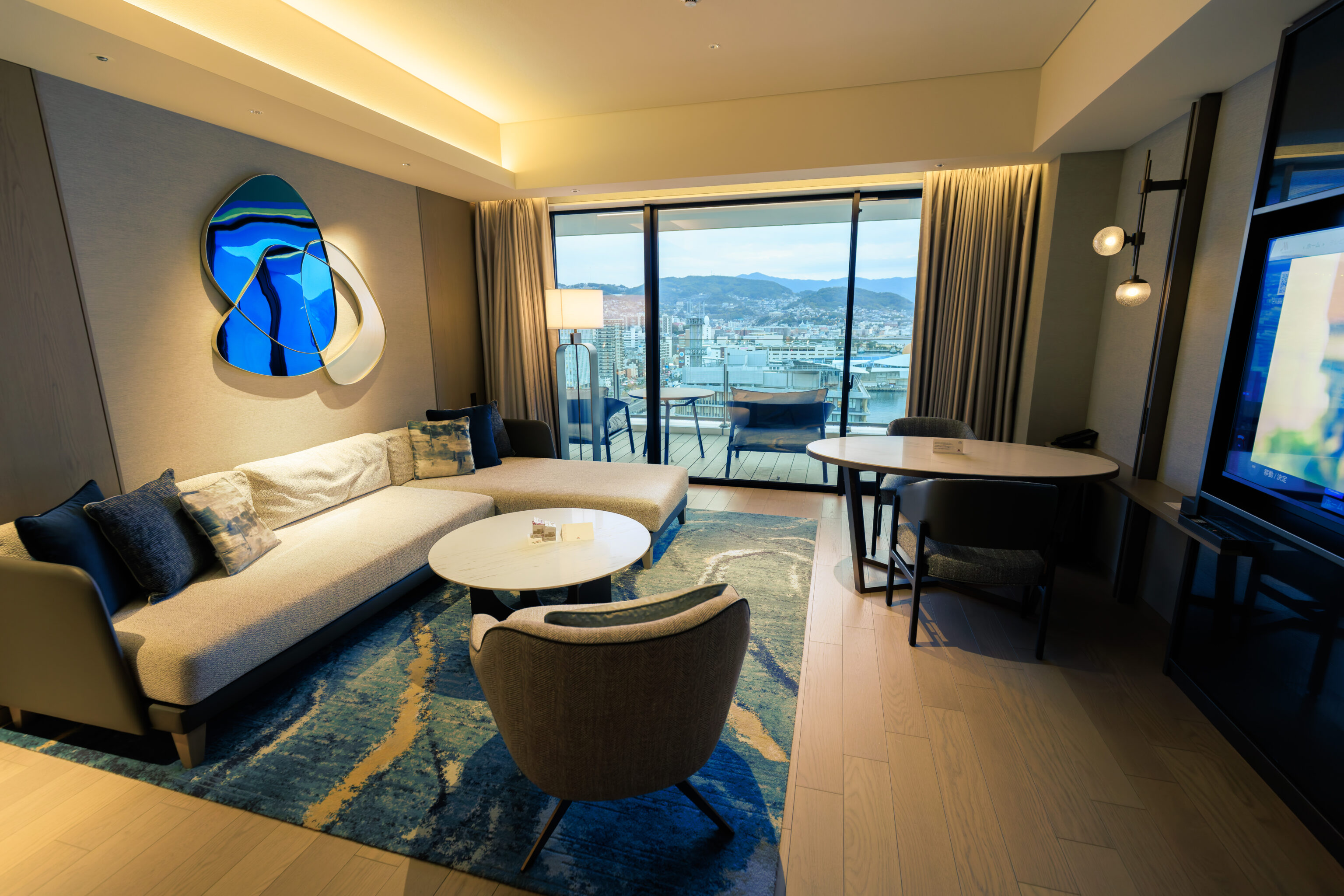
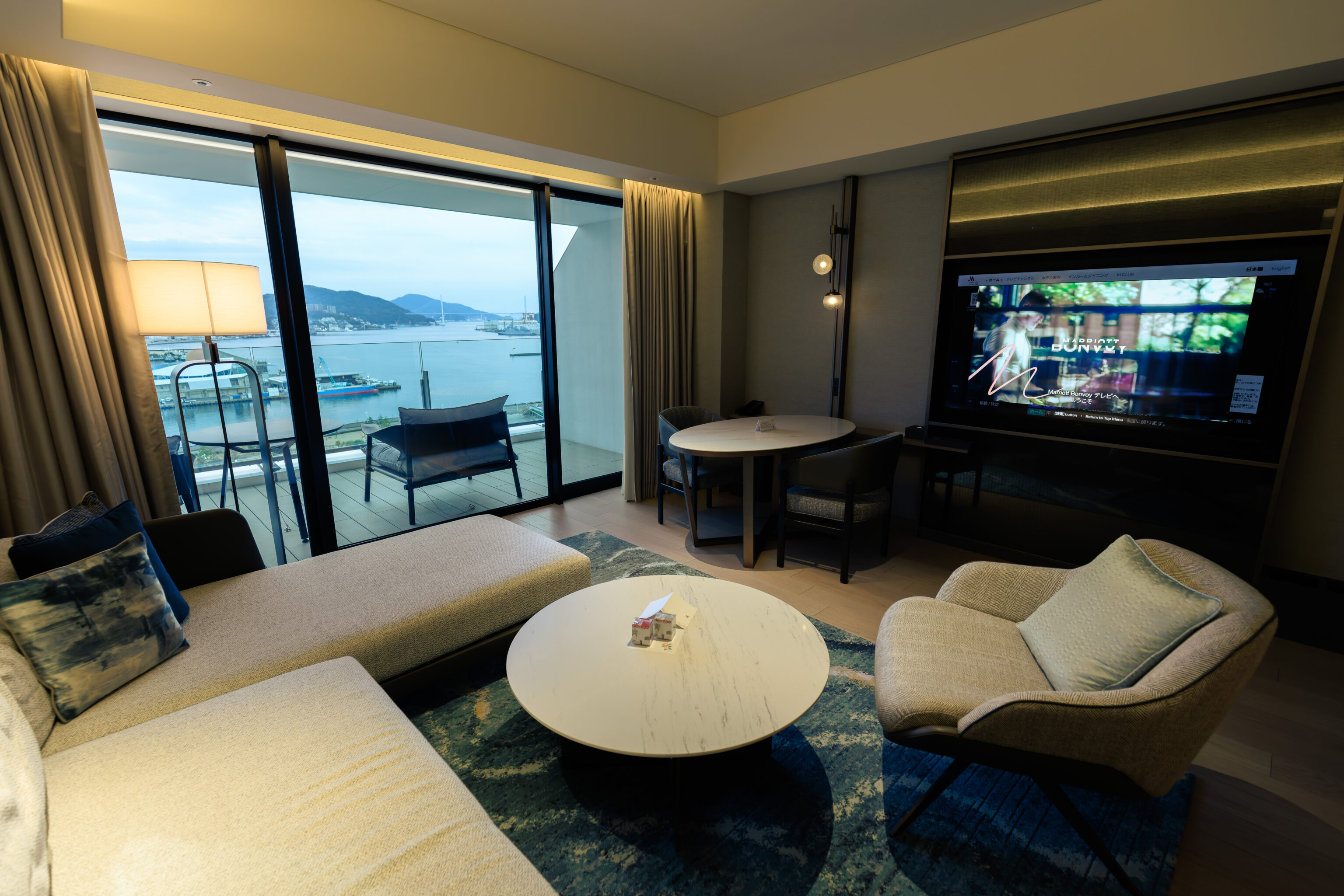
There was a large living room.
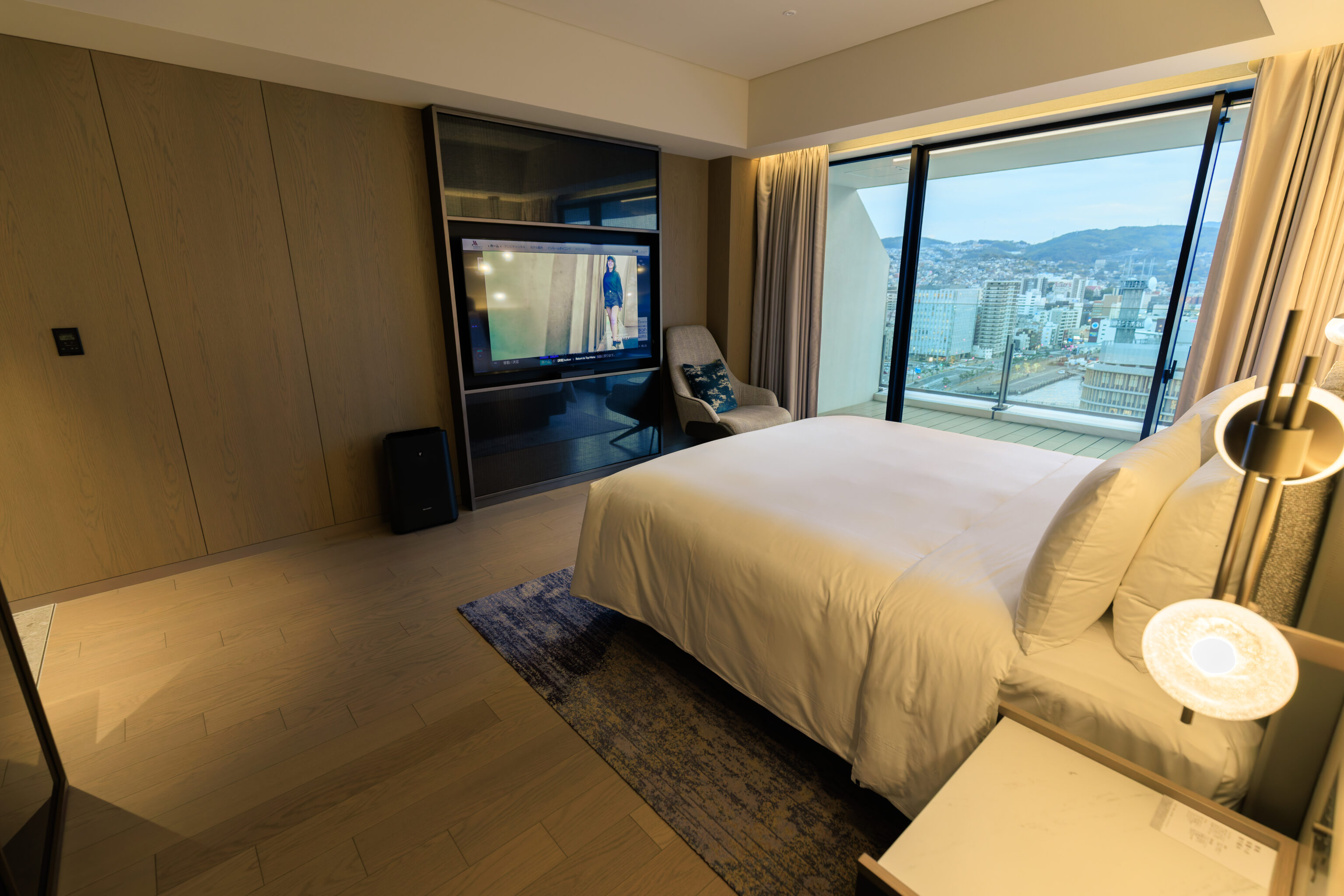
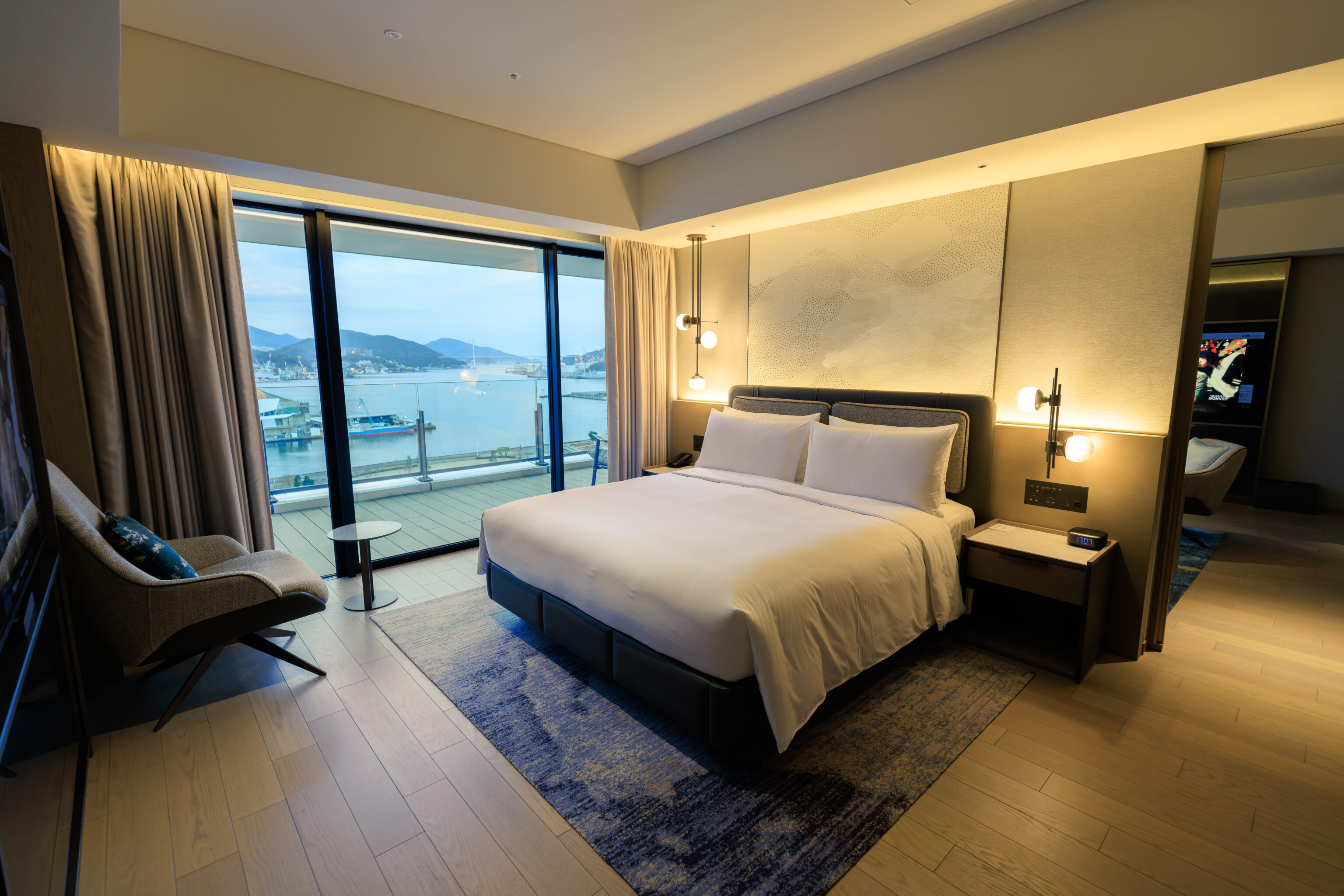
And, a large bedroom as well.
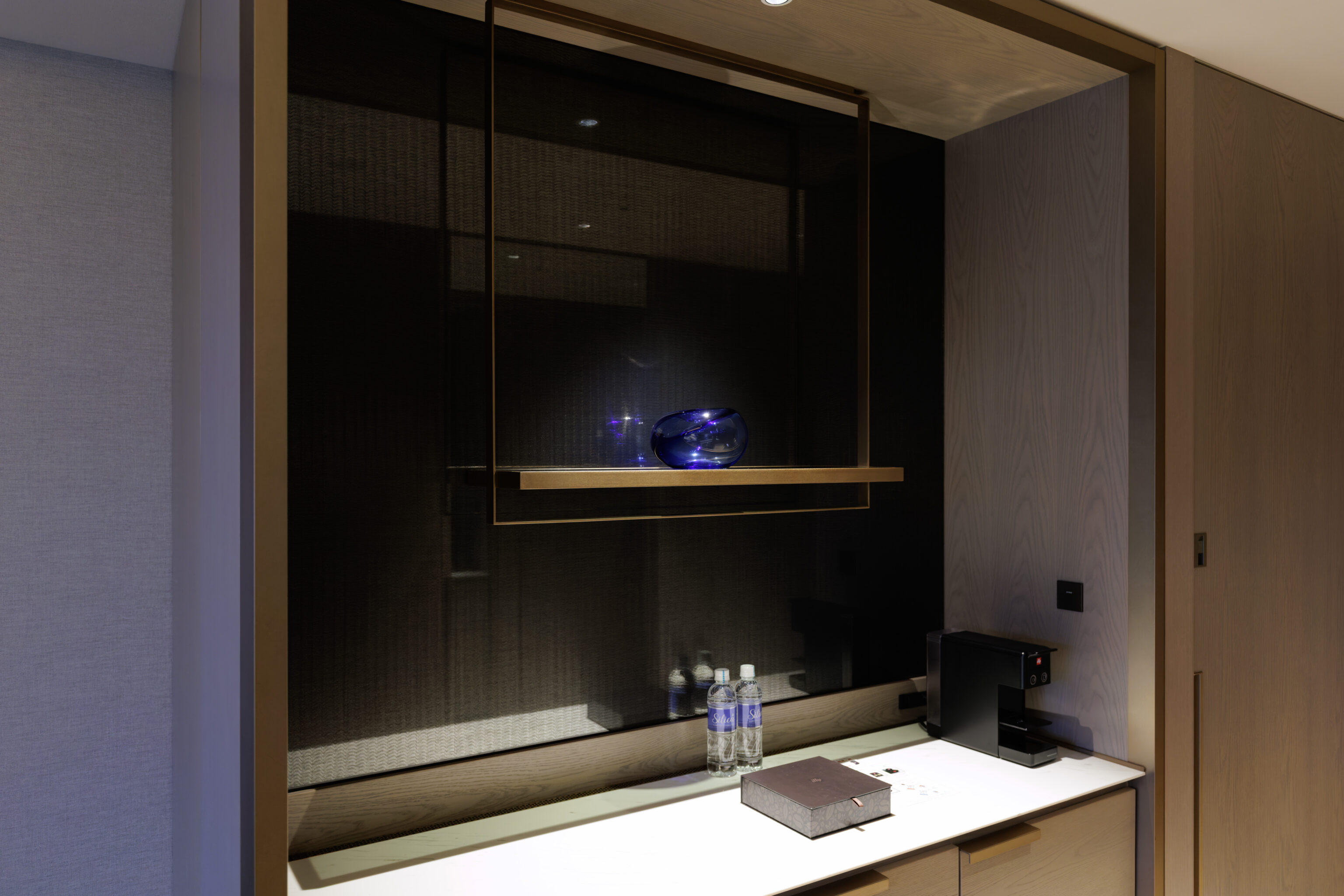
A counter by the entrance door held some complimentary water as well as an illy capsule espresso machine.
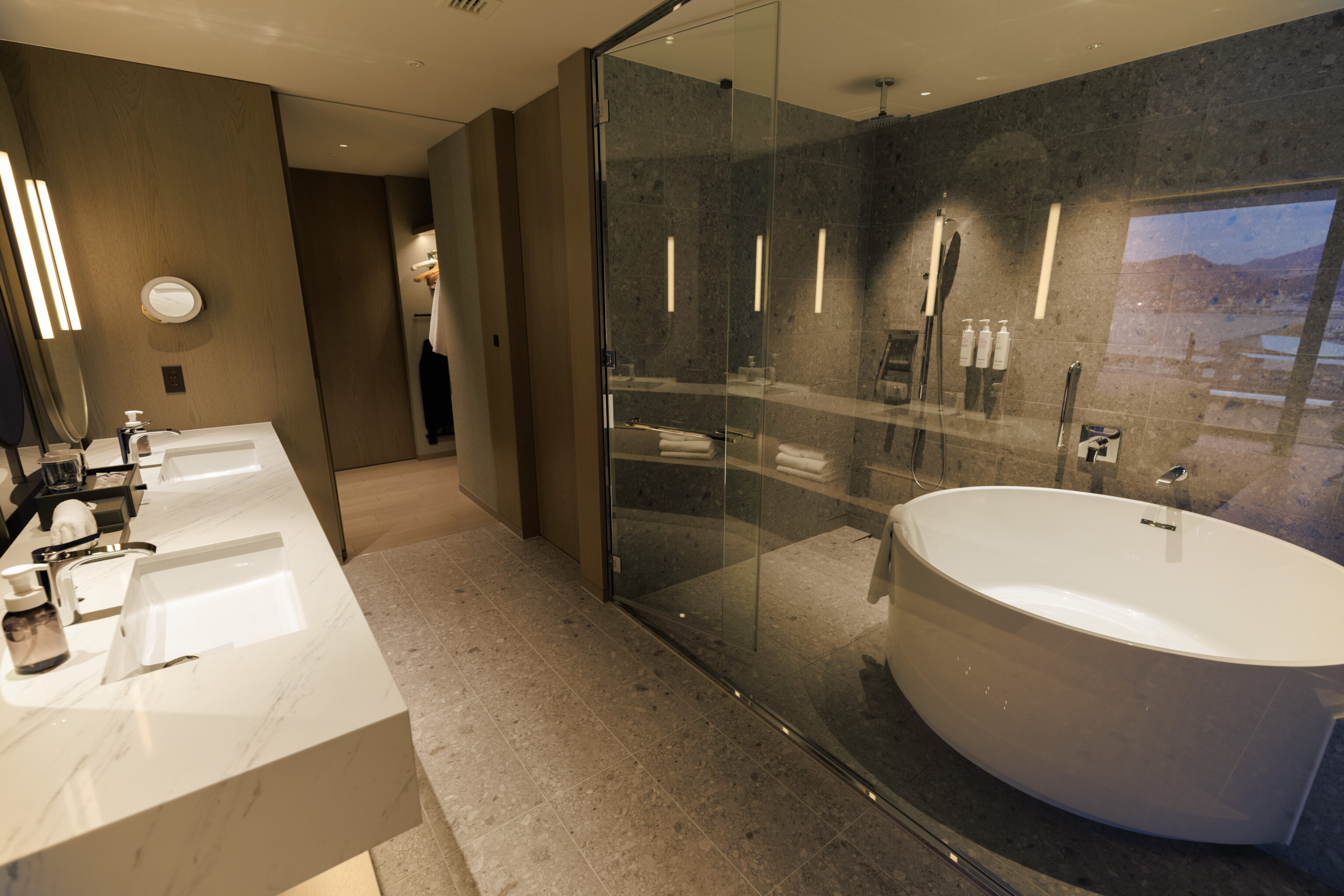
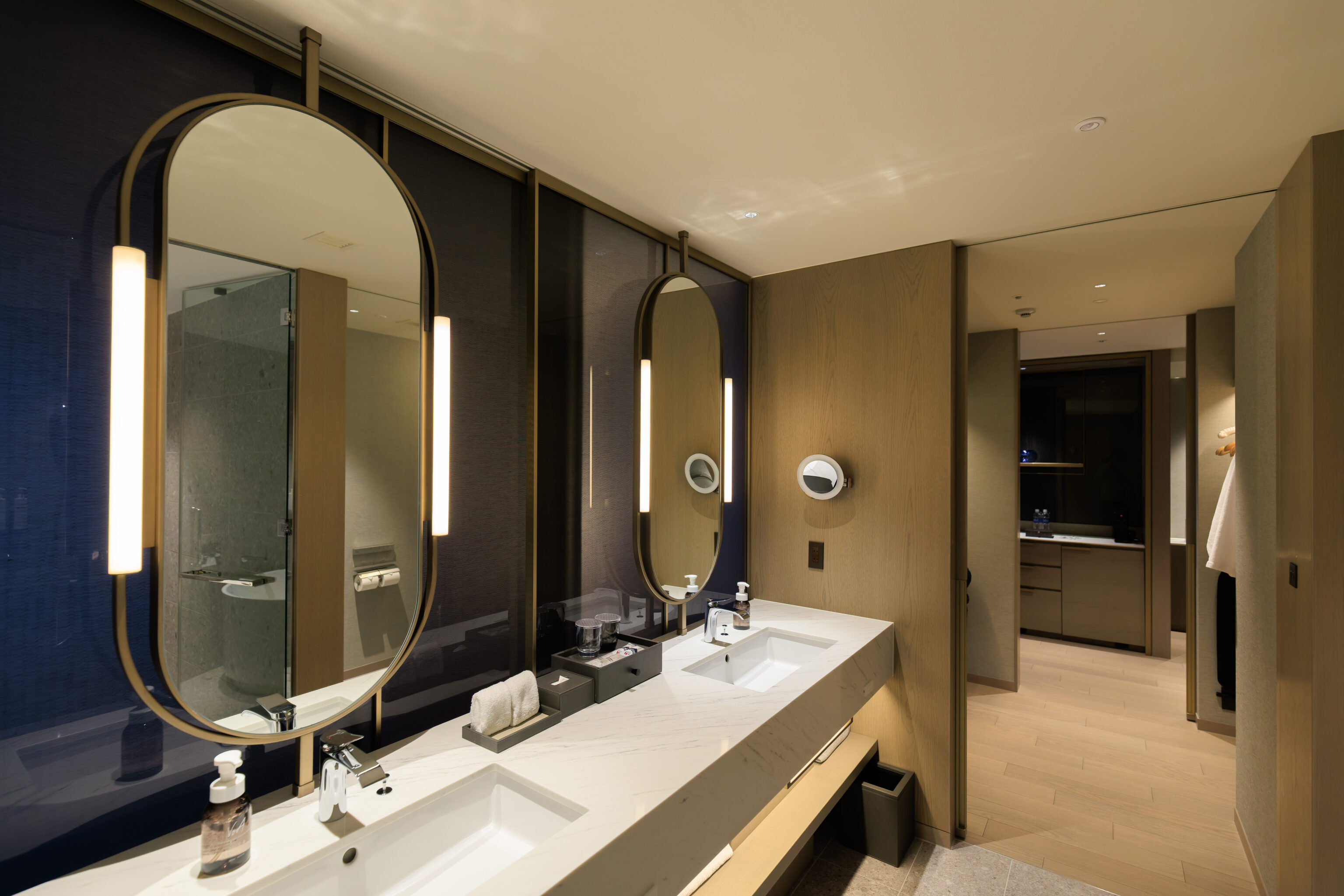
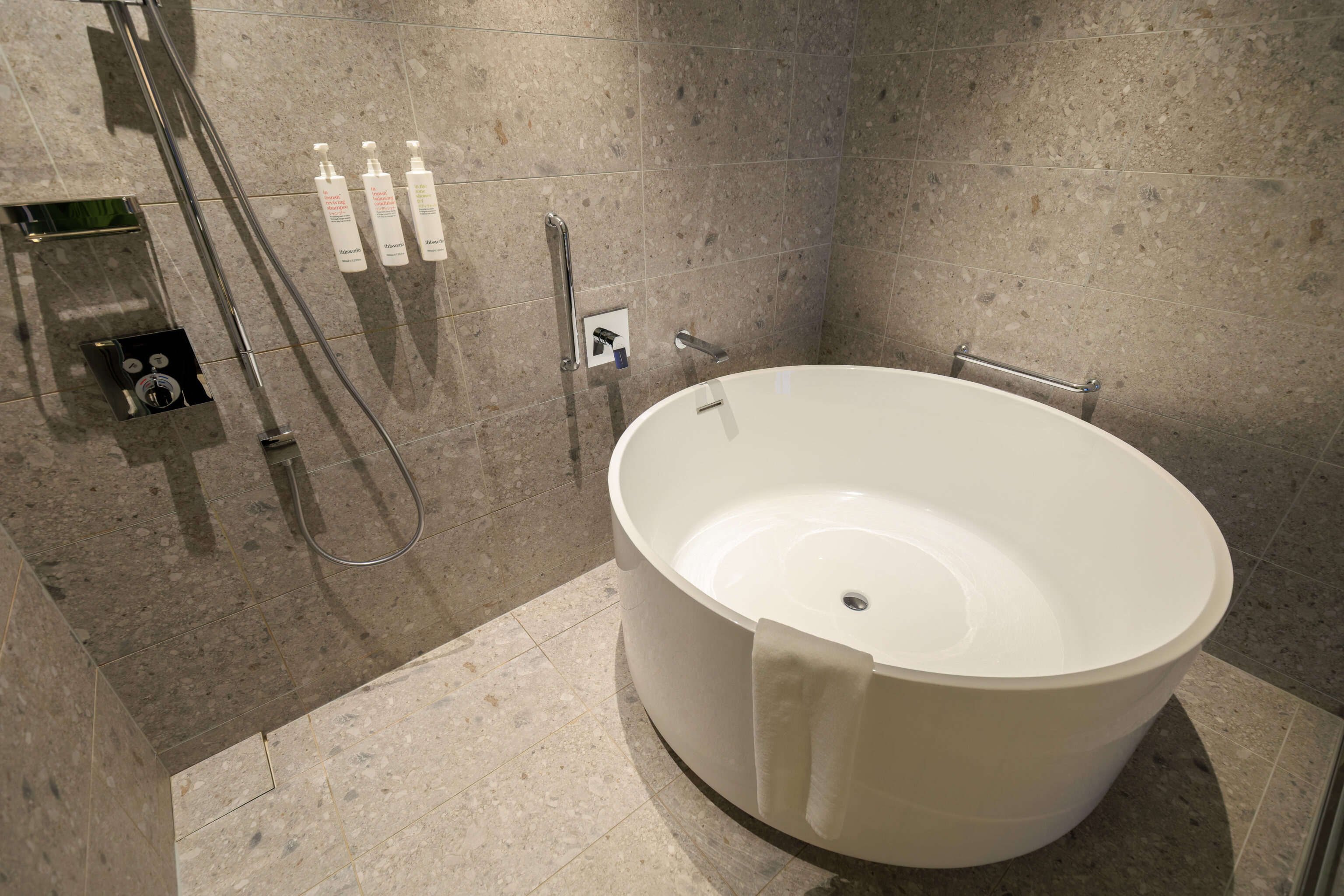
The bathroom was also huge! We liked that it had dual sinks, a huge tub, and a Japanese design where the shower and tub are in a wet space that is isolated from the rest of the bathroom so that water is kept inside.
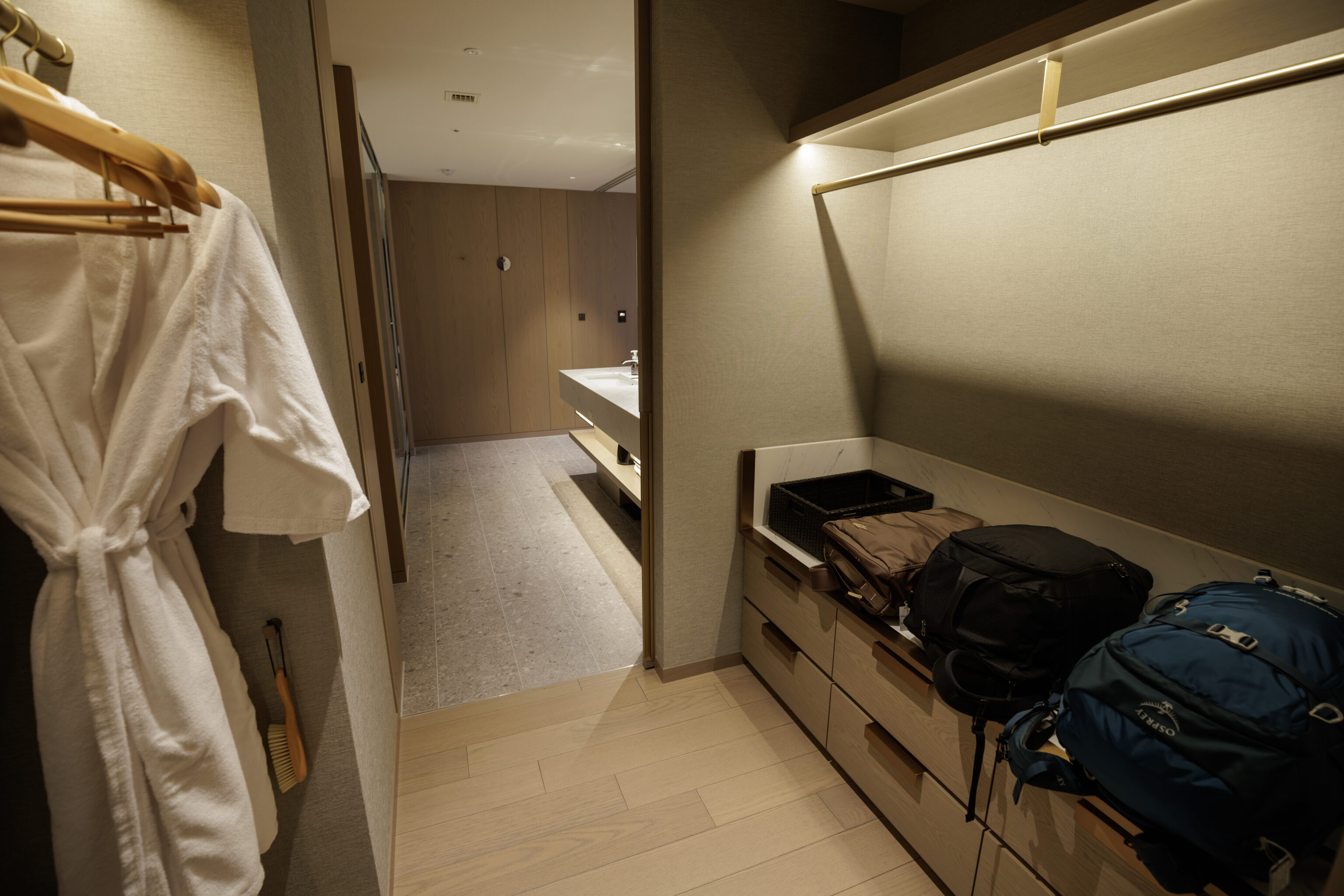
Our bags were already placed in the walk-in closet.
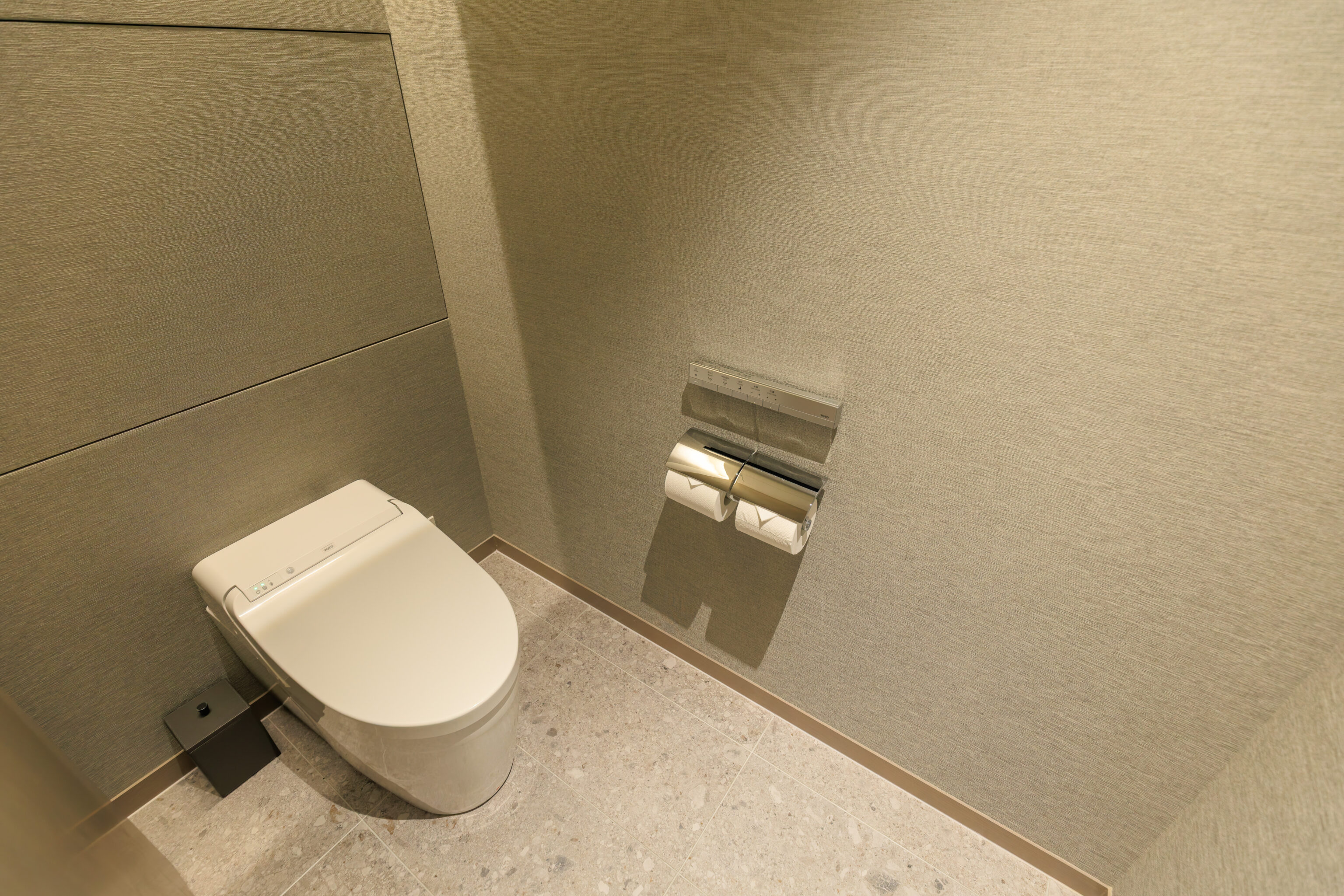
As is typical in Japanese hotels, there was a Japanese toilet in its own little room.
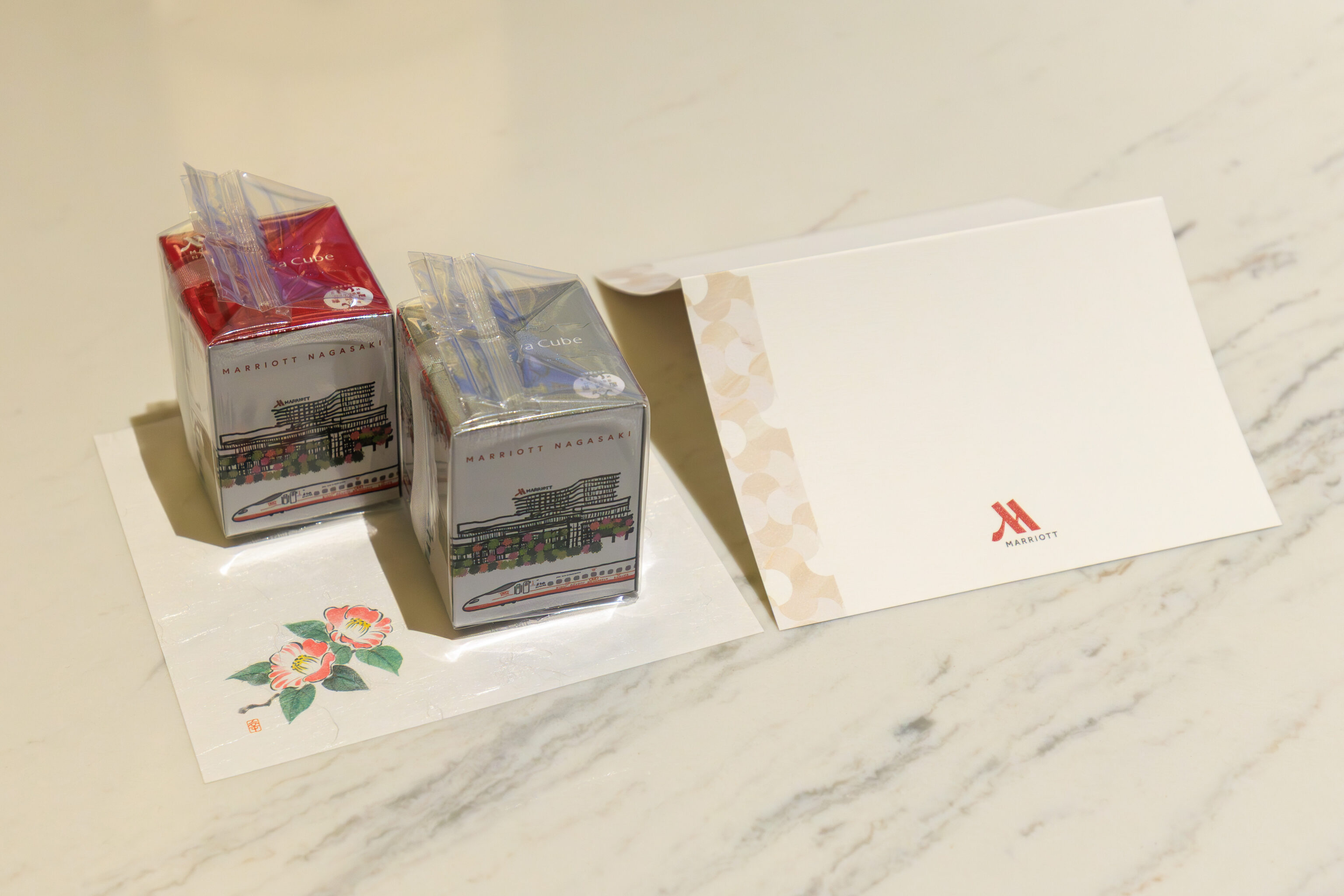
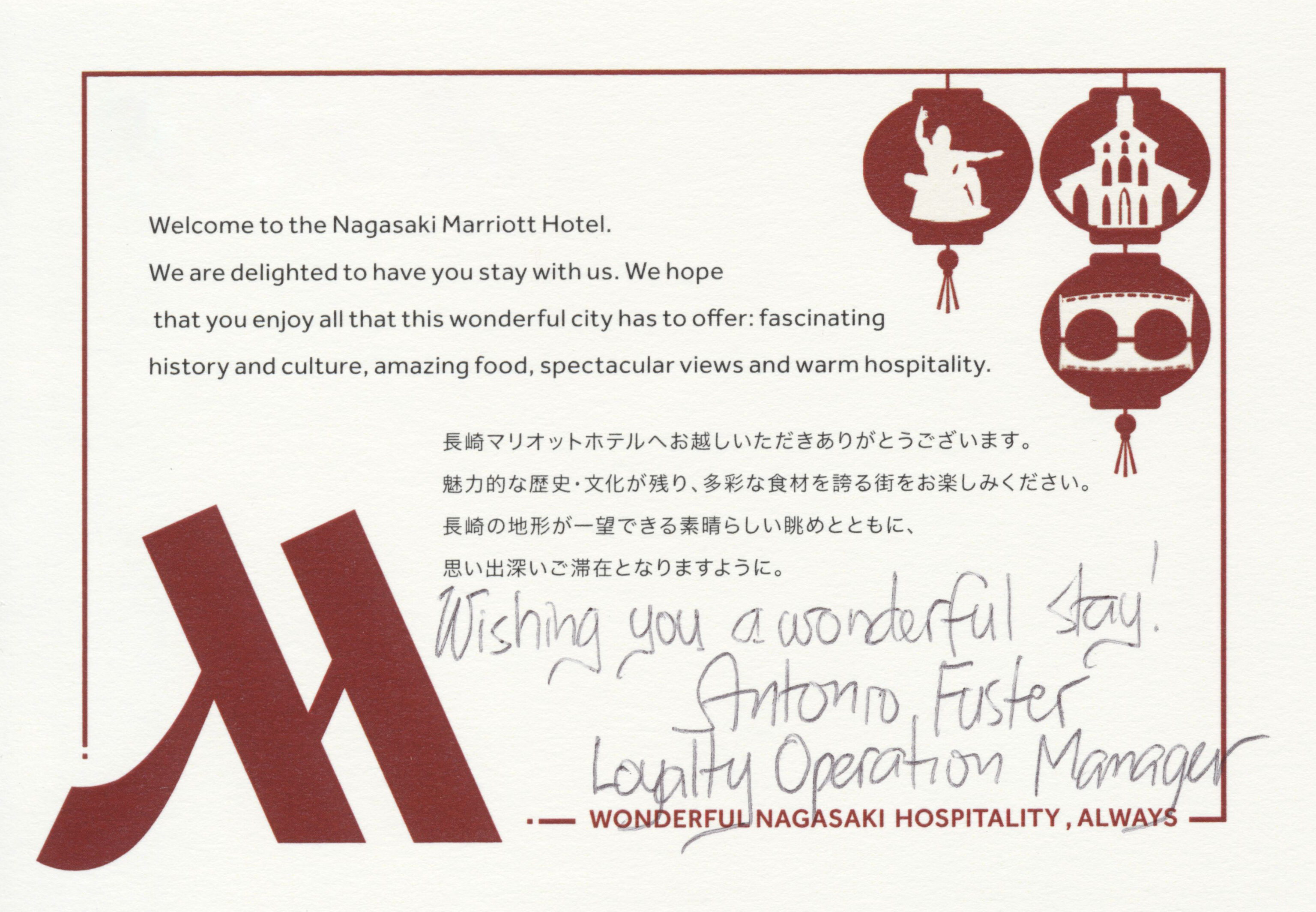
There was a welcome note and gift on the table in the living room. The two cubes contain castella! We will eat them later for sure!
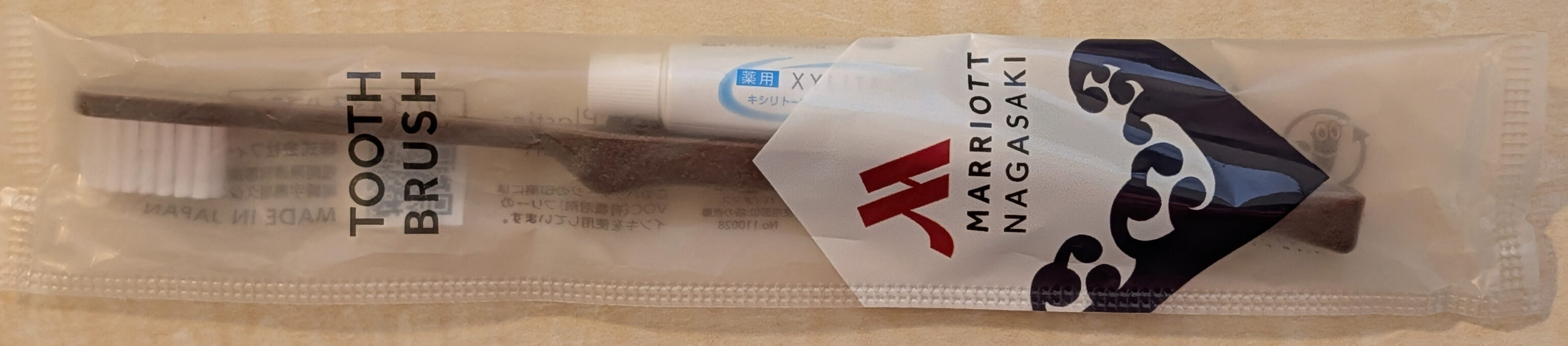
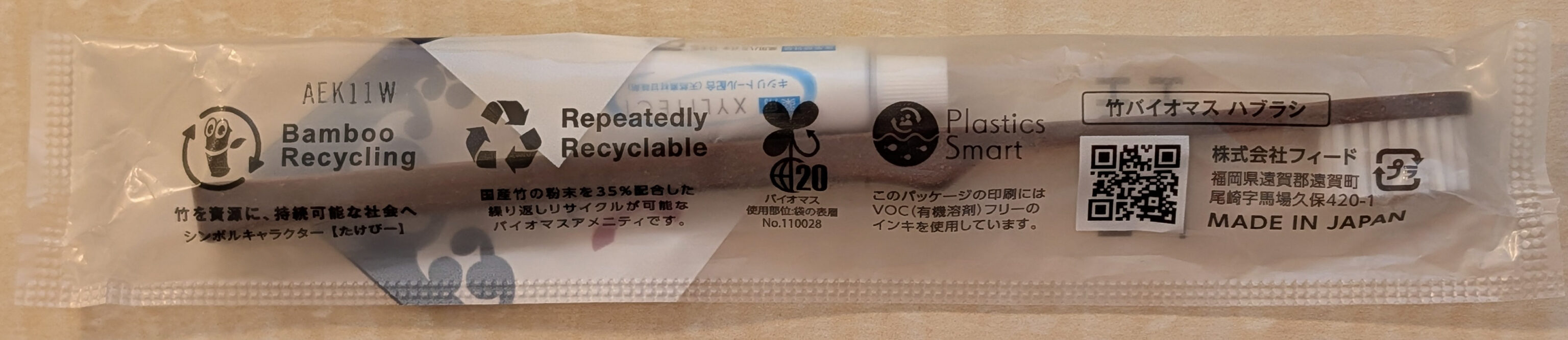
Bamboo based toothbrushes were available, which seems to be an increasing trend as we’ve seen them a few times now. We’ve also come across ones with wooden handles.
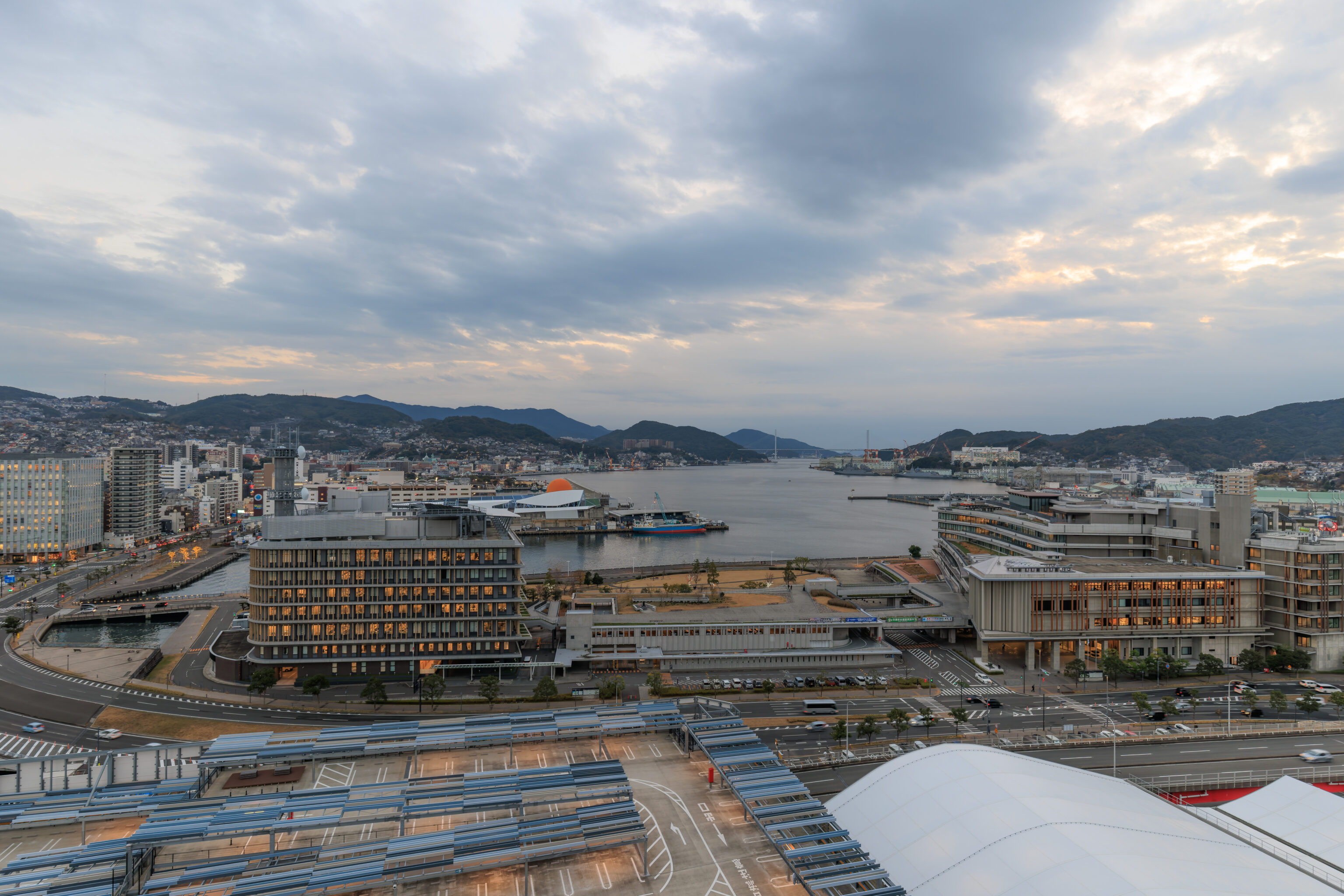
The view from the balcony, which spanned the entire width of the room, was fantastic!
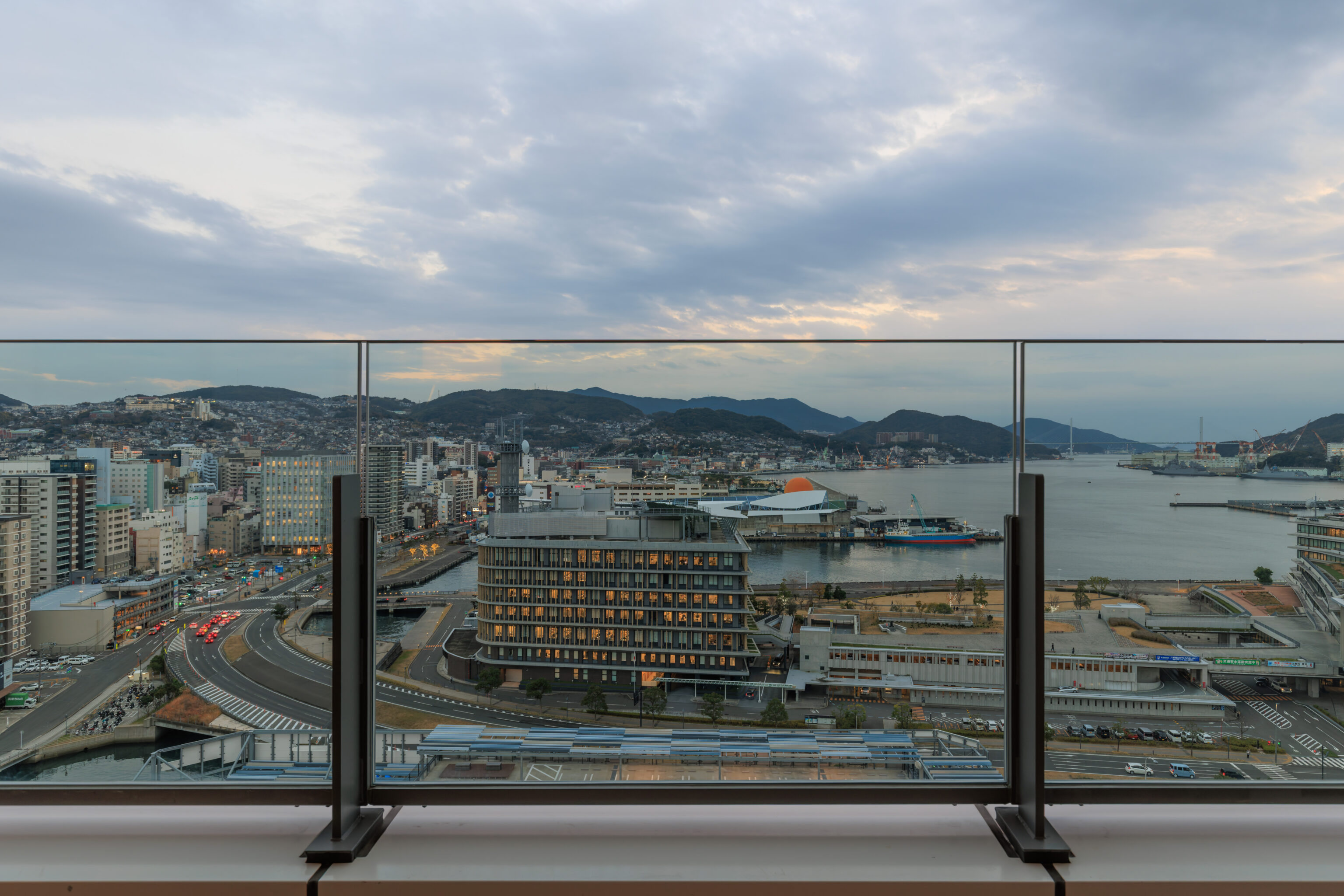
We sat down and relaxed for awhile. Unfortunately, sunset tonight was mostly just the sky getting darker.
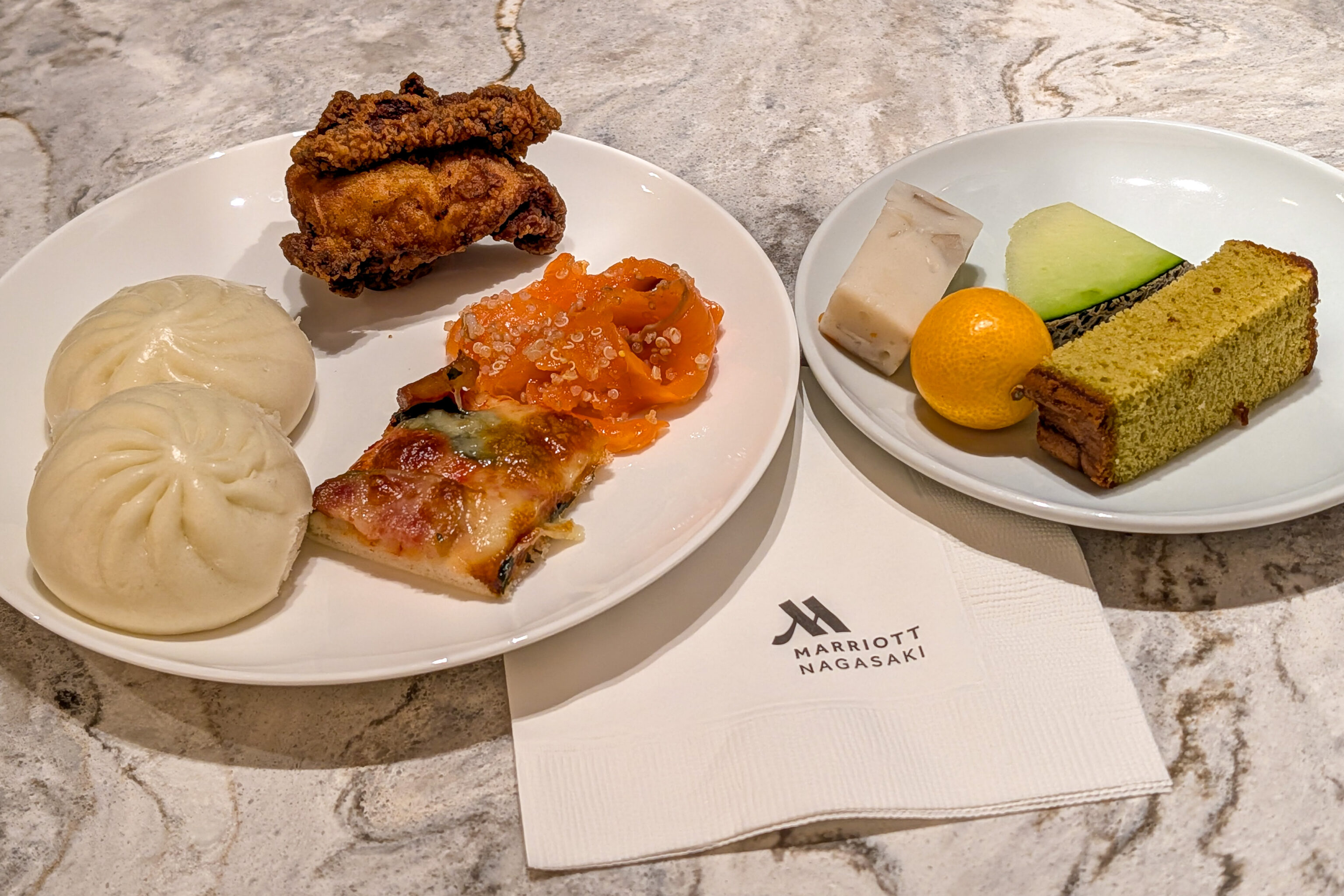
After sunset, we decided to go check out the lounge. There was a small selection of mostly OK items.
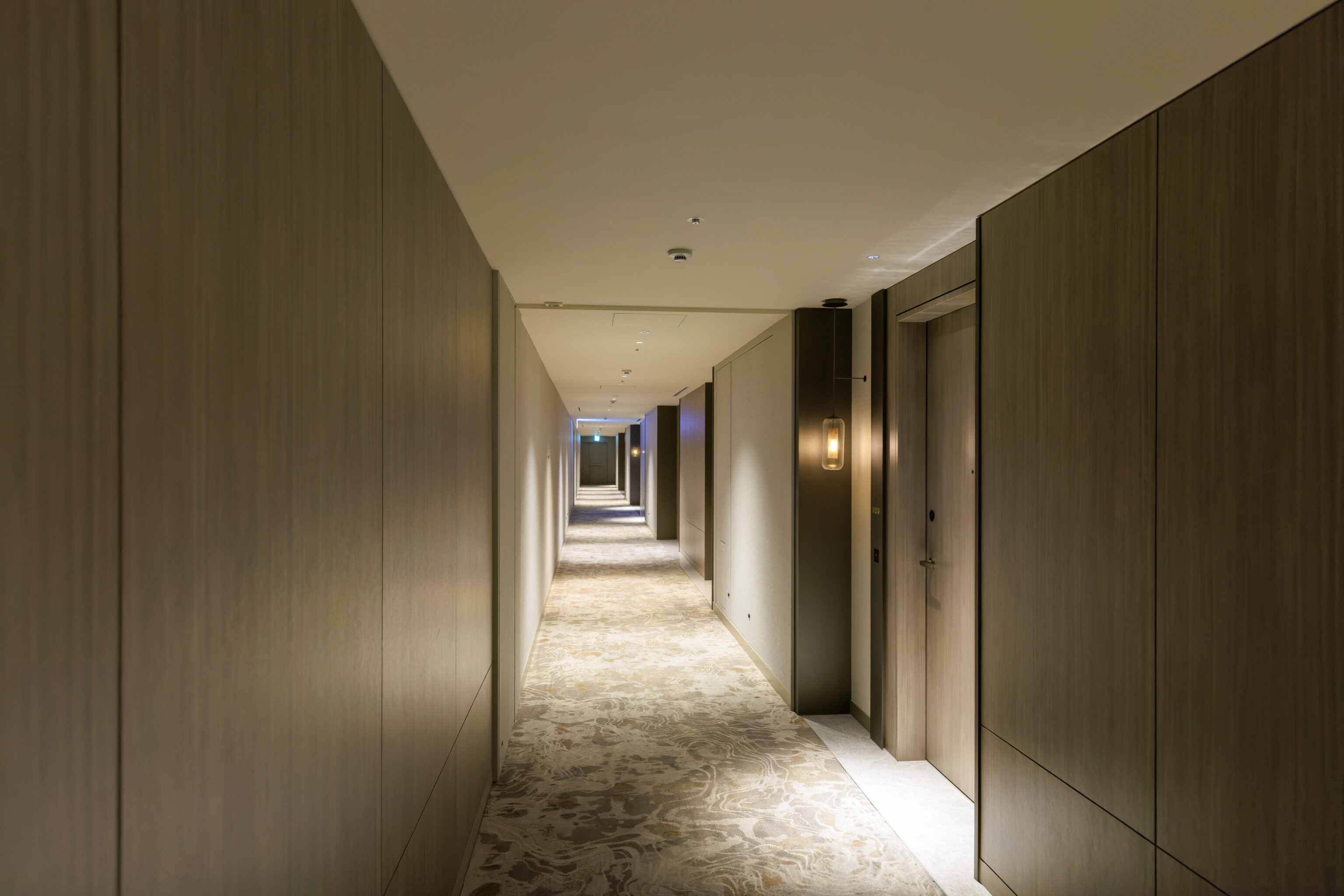
Later on in the evening, we decided to go and ride on the Super Mario train! Upon examining the schedule, we saw that it would be operating as the Midori tonight. The Midori runs between Sasebo, which is on the coast of Kyushu to the north of Nagasaki, to Hakata. This route includes a stop at Takeo Onsen, which we could easily reach by taking the Shinkansen.
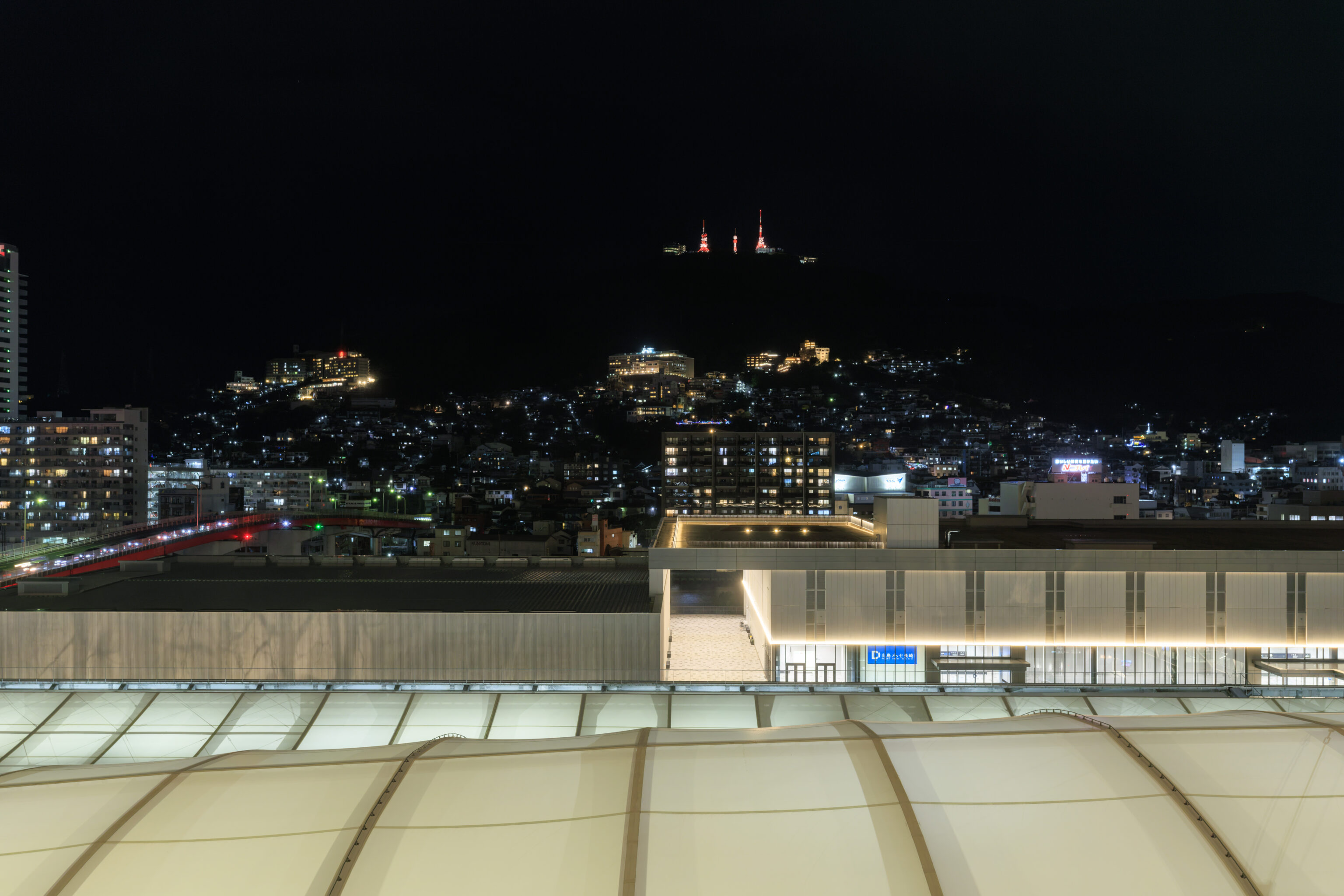
The lobby of the Marriott had an excellent view to the west. It was nearly 7pm now and completely dark outside. The illuminated transmissions towers on Inasa-yama seemed to float above the city along with the observatory building that we visited earlier.
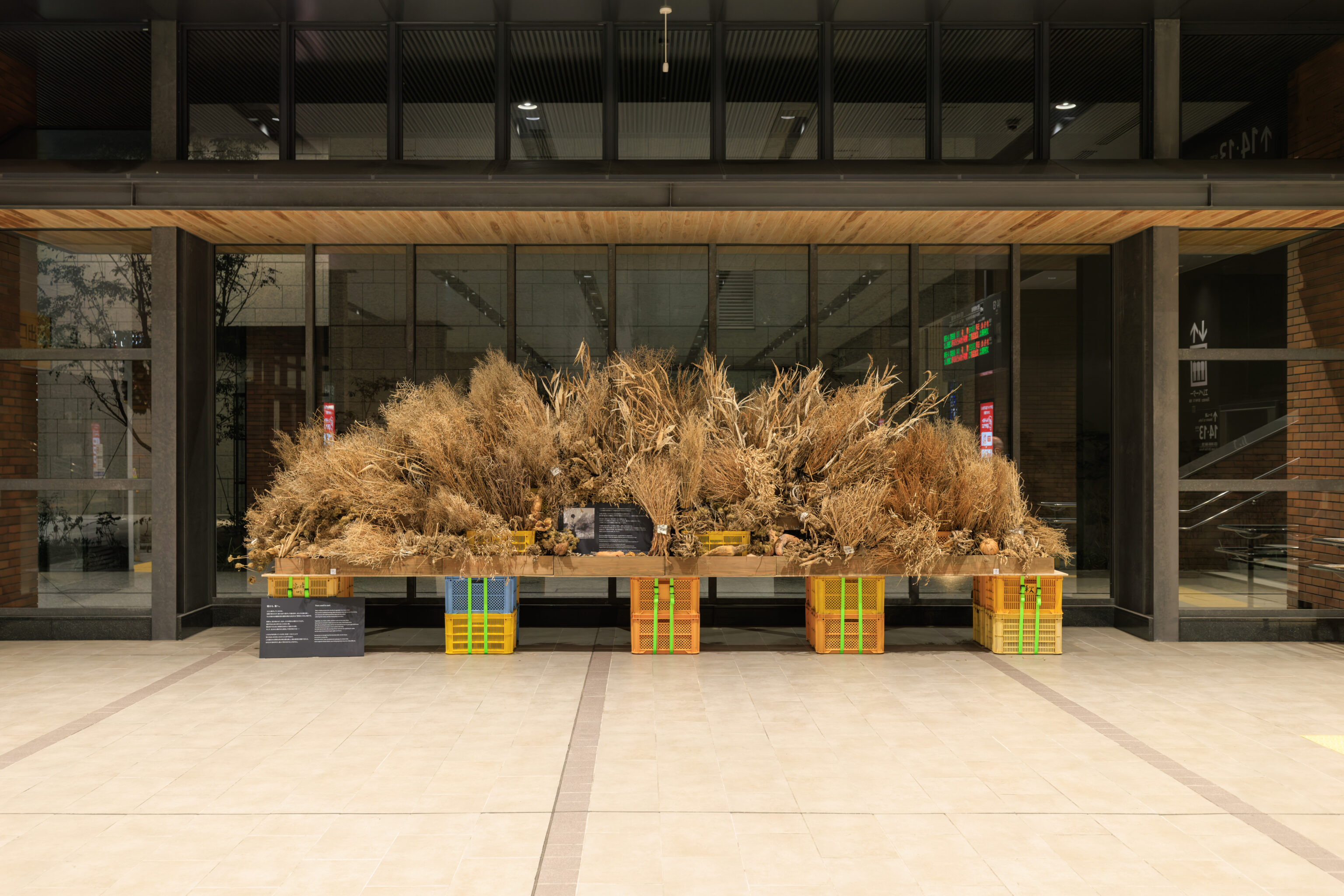
We passed by a display of… grasses? native grass?
Let’s Go Kyushu!
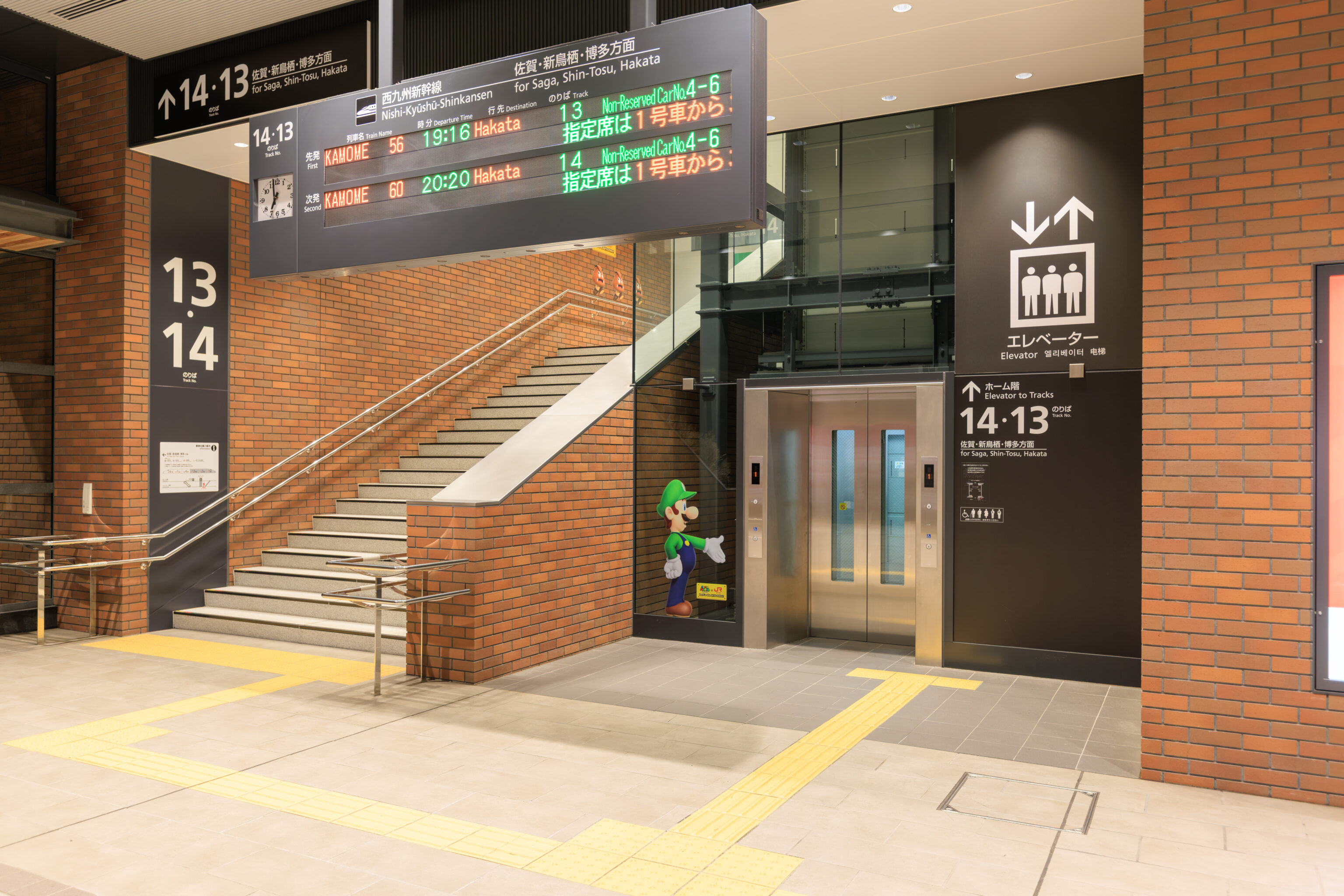
There’s the train we’re looking for! The 7:16pm Kamome Shinkansen service to Hakata. As we have JR Kyushu rail passes that cover northern Kyushu, this Shinkansen line is free for us to ride at any time.
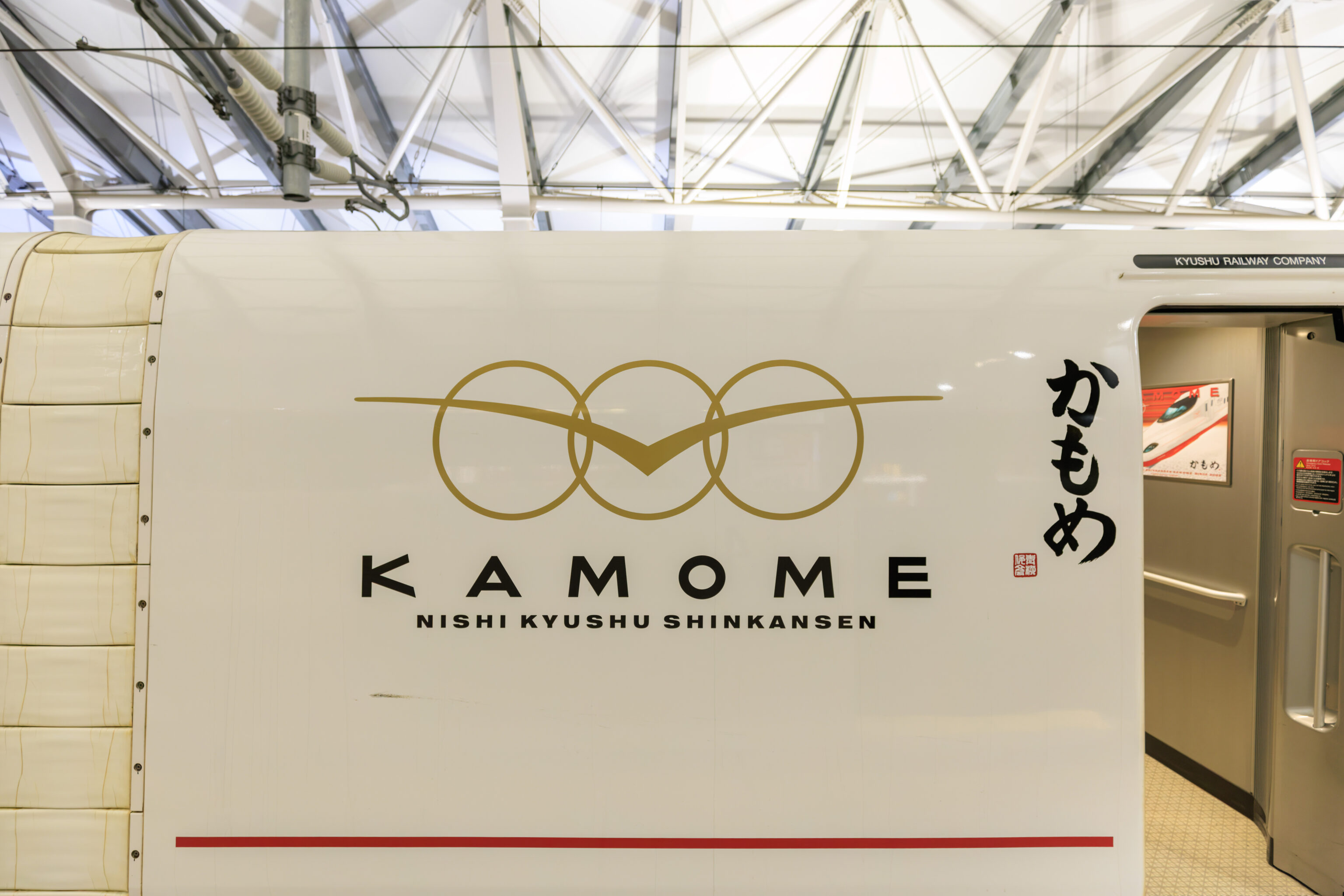
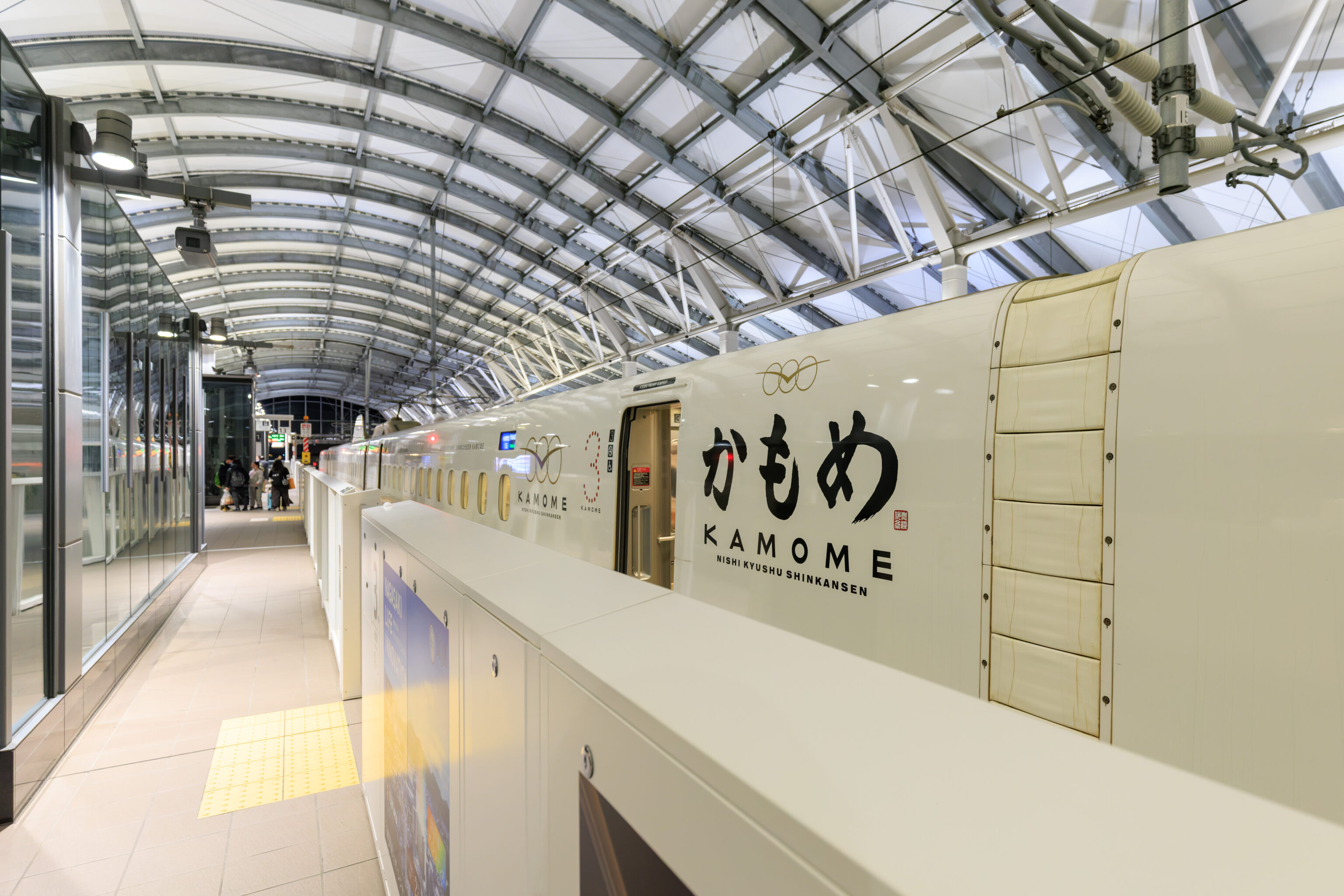
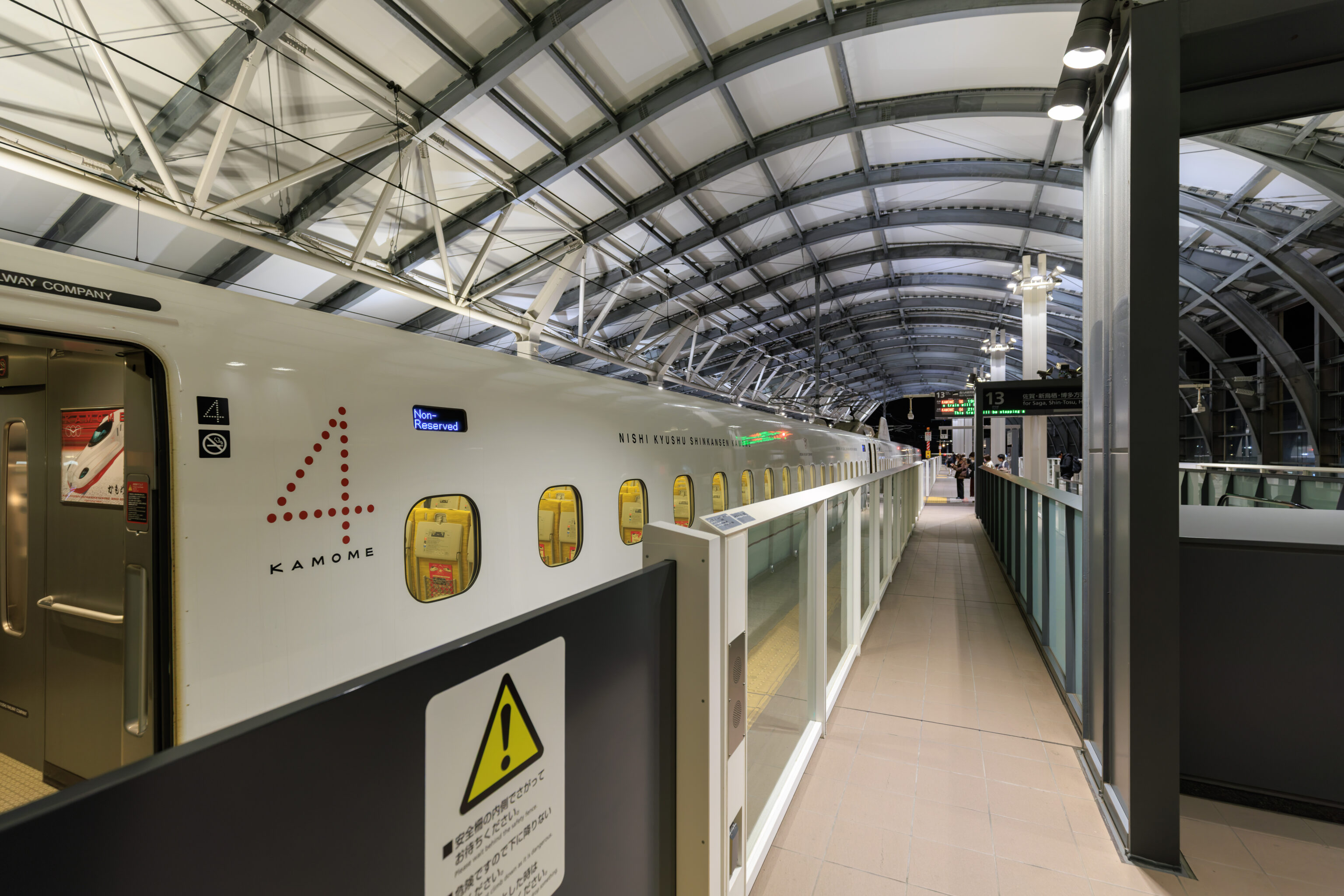
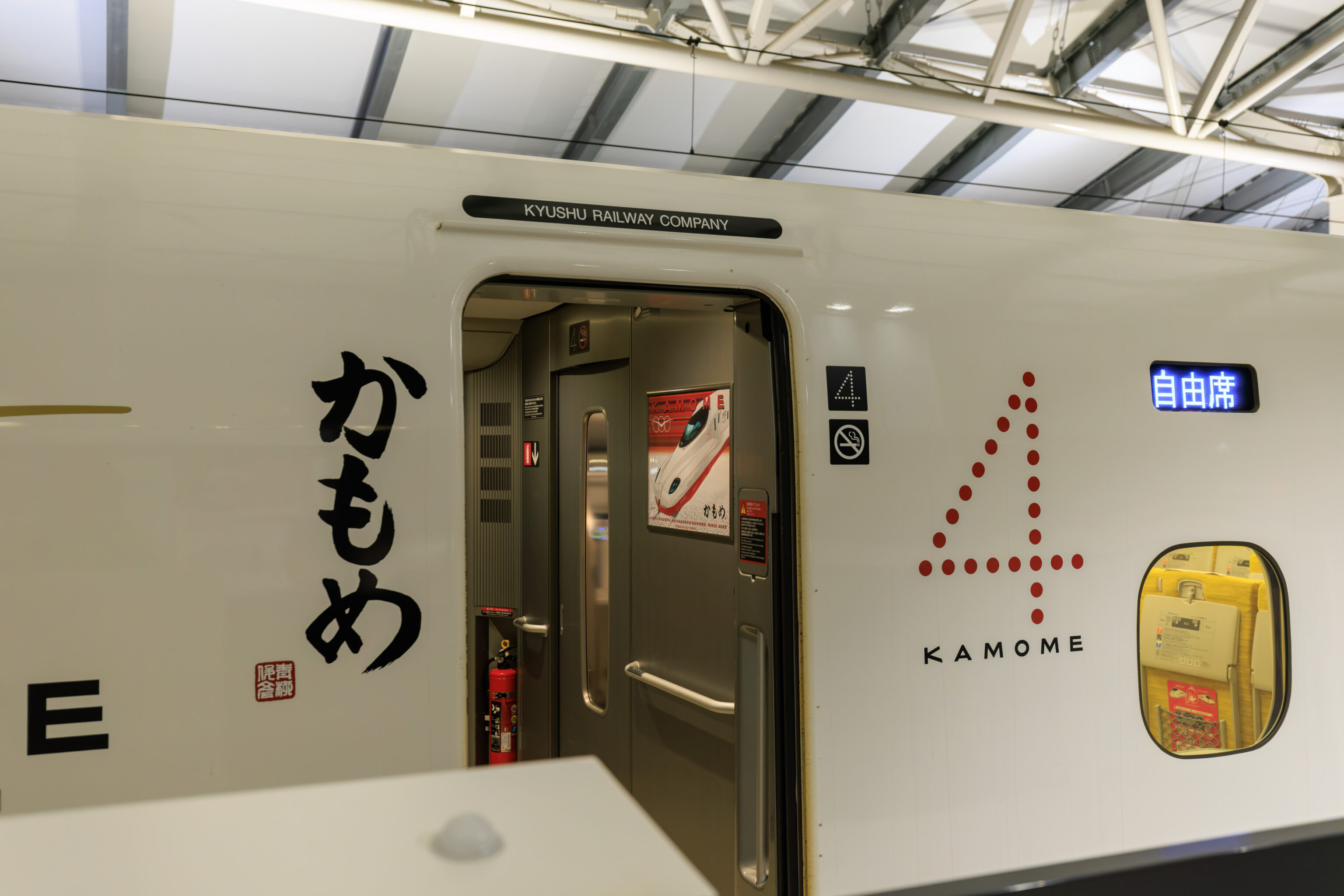
The Shinkansen was already on the platform when we arrived. It was not ready for boarding yet though. Typically, trains like the Shinkansen are cleaned after all the passengers have left and before new passengers are able to board for the next run.
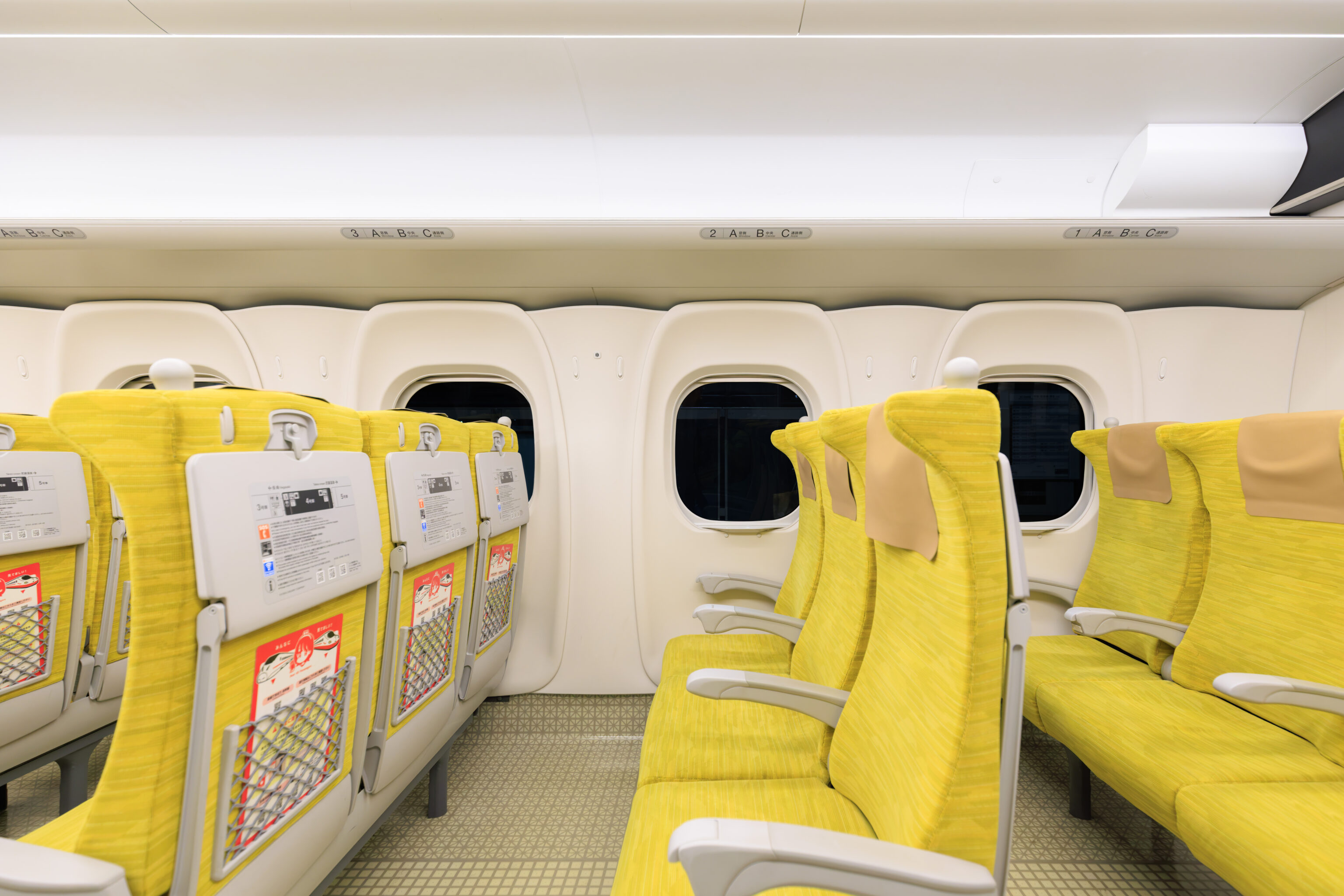
We sat in one of the unreserved cars.
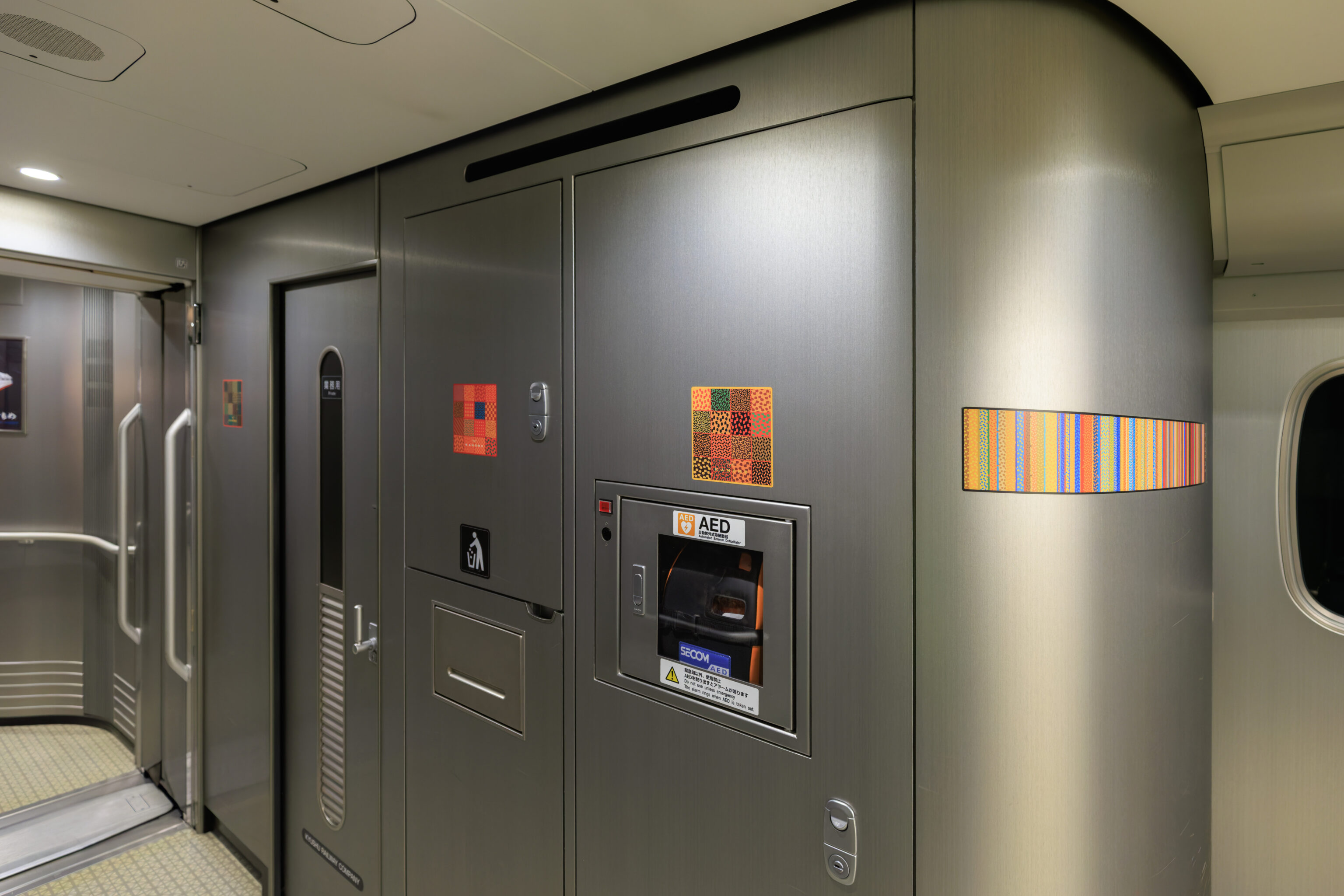
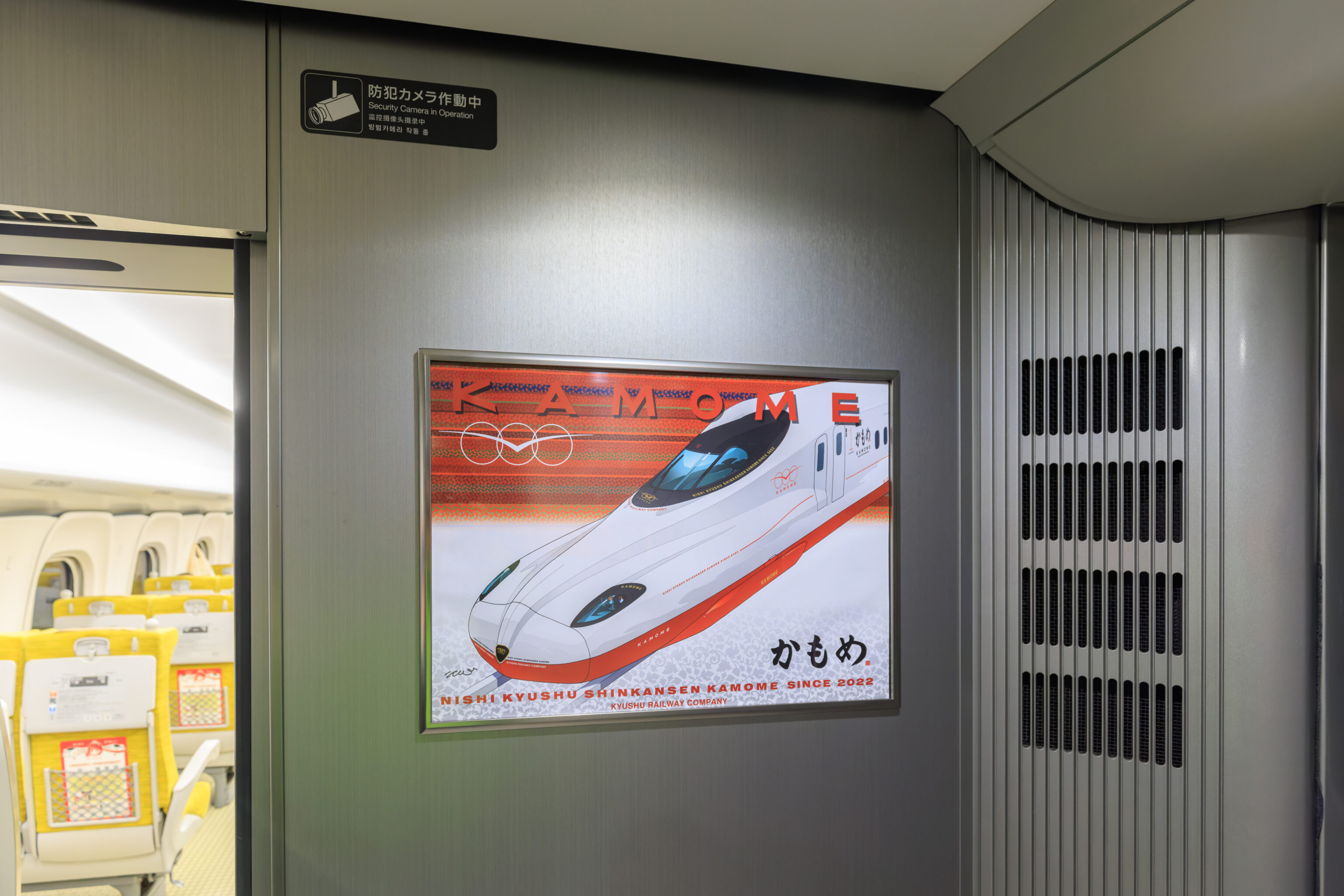
The interior of the cars had a bit of decoration by the doors.
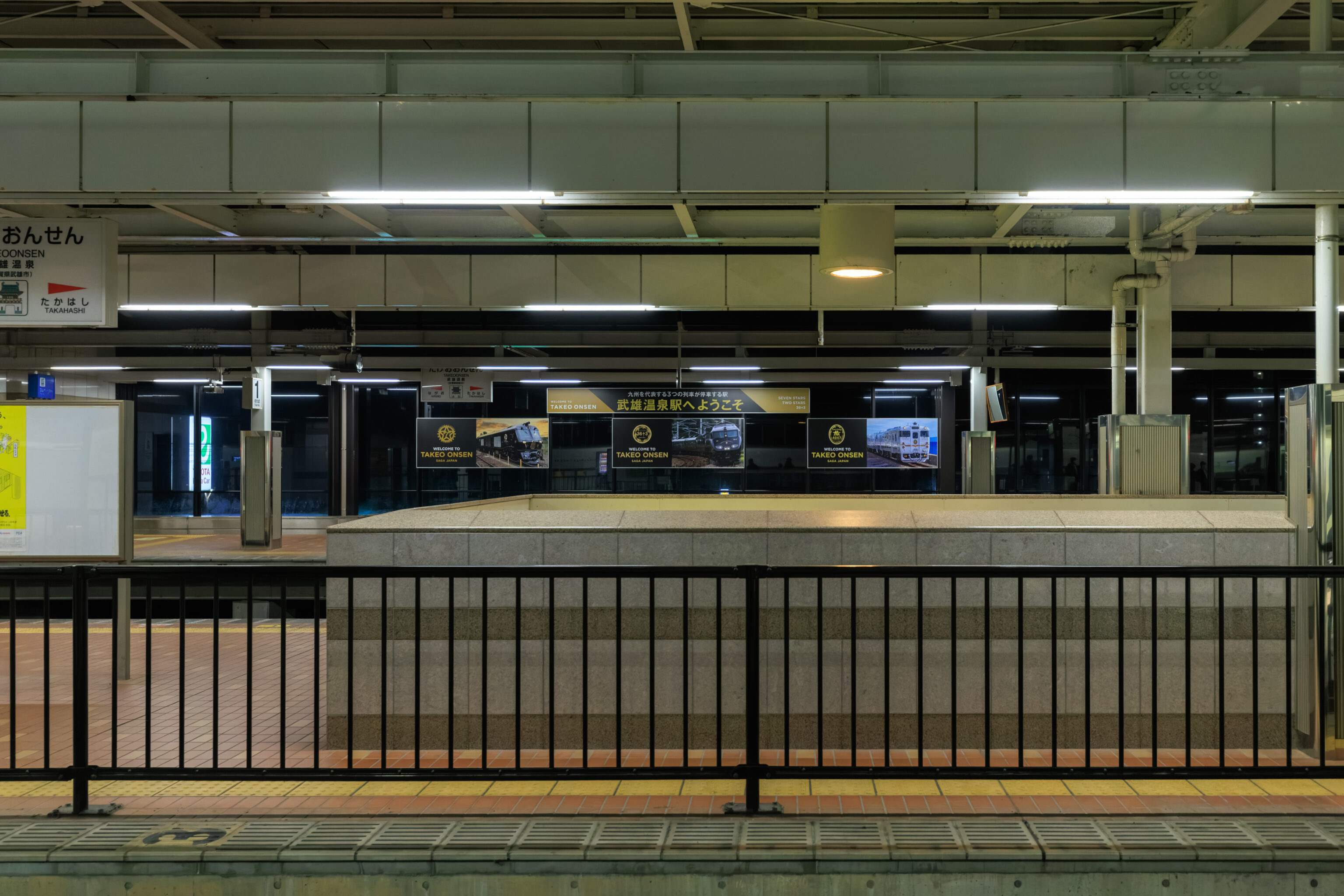
We arrived at Takeo Onsen around 7:50pm. Earlier, when we were headed in the opposite direction, we took the Kamome Relay which provides service on the section between Takeo Onsen and Hakata while the Nishi Kyushu Shinkansen line is being completed. Currently, for the Kamome that we took, the Midori is operating in lieu of the Kamome Relay. The schedules are designed such that there is always a train that meets the Kamome on the opposite platform within a few minutes to minimize travel time.
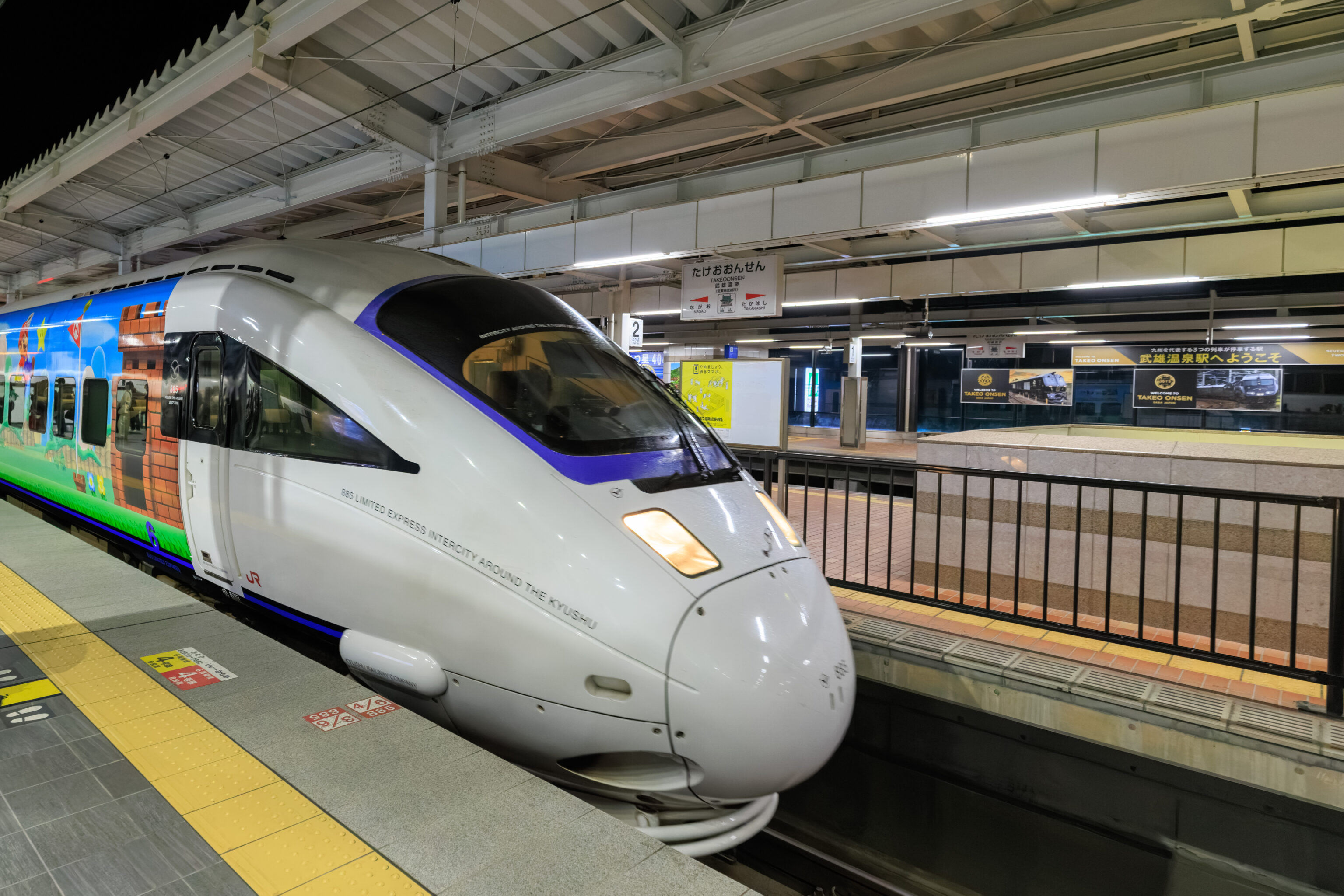
The Super Mario train arrived at 7:54pm! Although there will be two Shinkansen Super Mario trains in the near future, this 885 Series train is the only one operating right now.
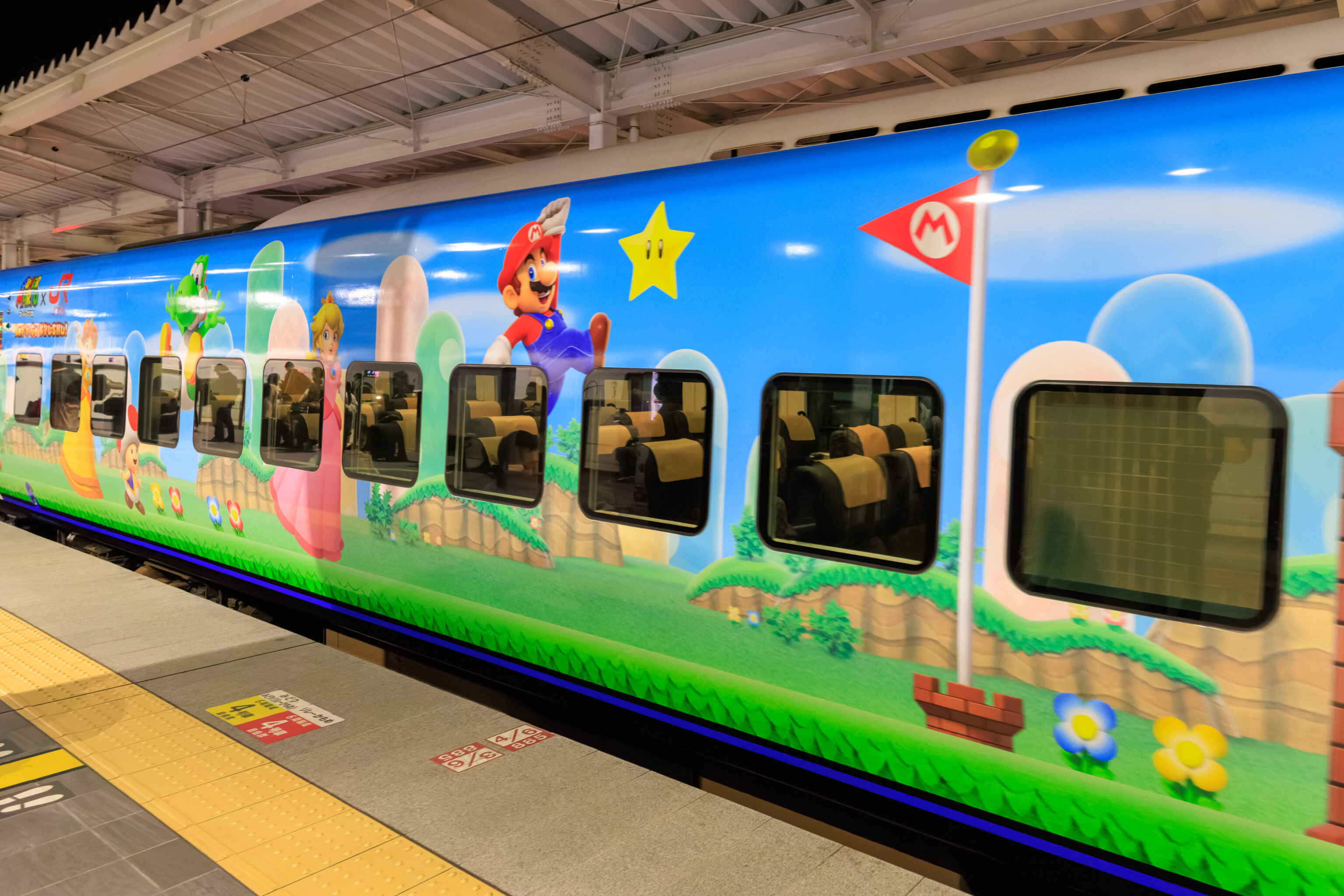
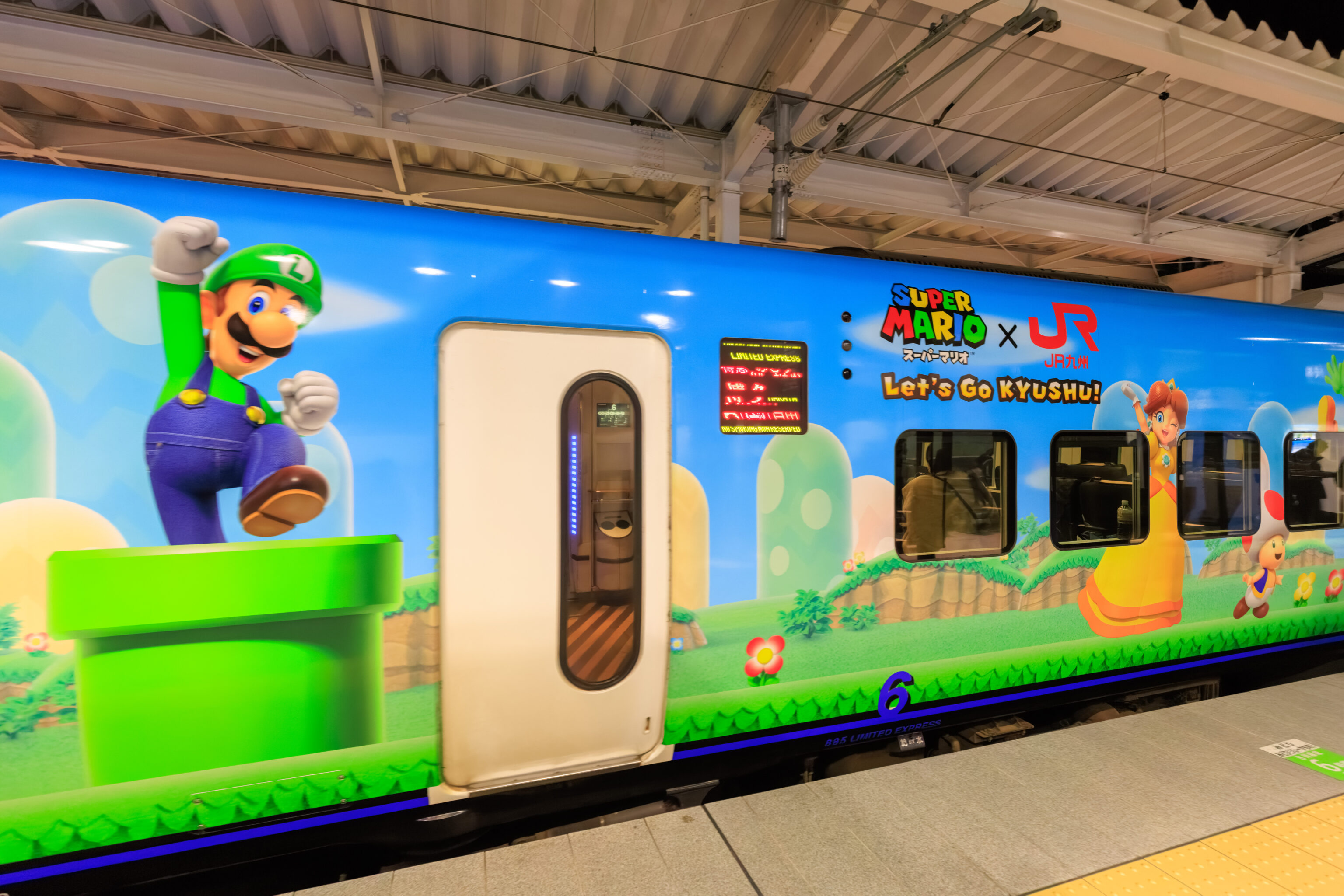
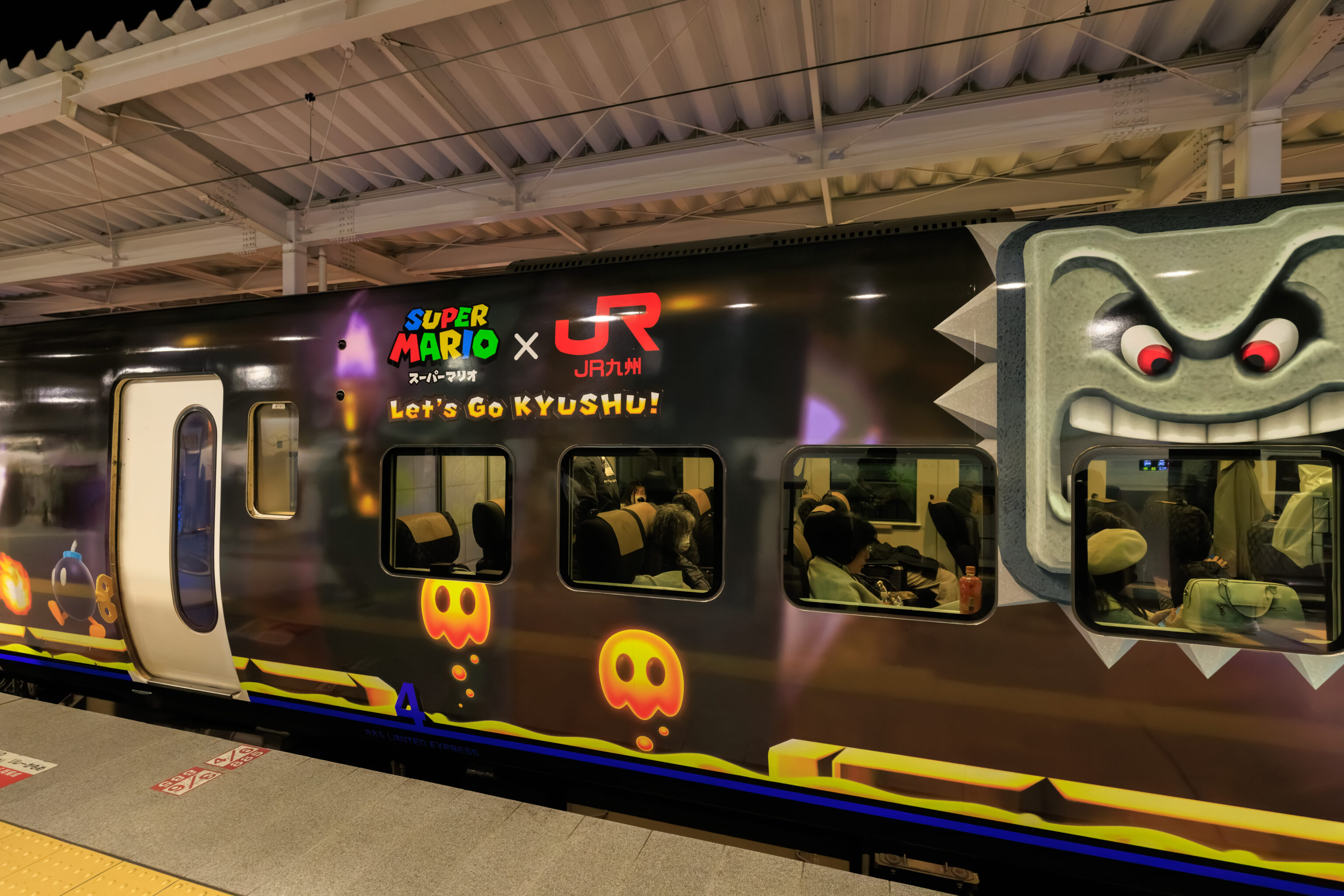
We didn’t really have time to look at the rest of the train as we had to board! Generally, trains in Japan stop for just long enough for passengers to alight and board.
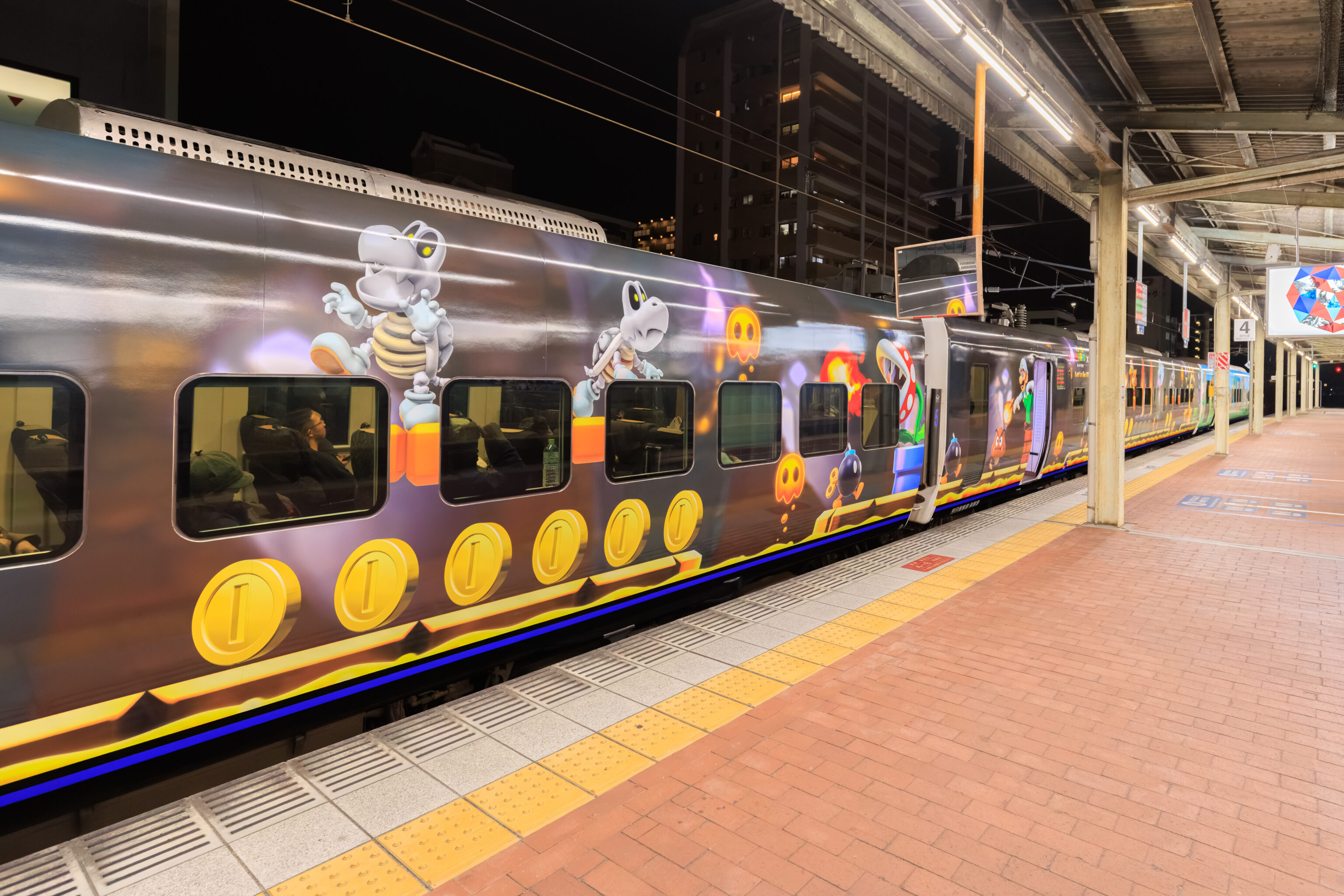
We rode the Midori two stops to 佐賀 Saga. Why Saga? It isn’t as far as Hakata which takes an hour to get to from Takeo Onsen. But it is also the city on the Let’s Go Kyushu! magnet that we got in Oita!
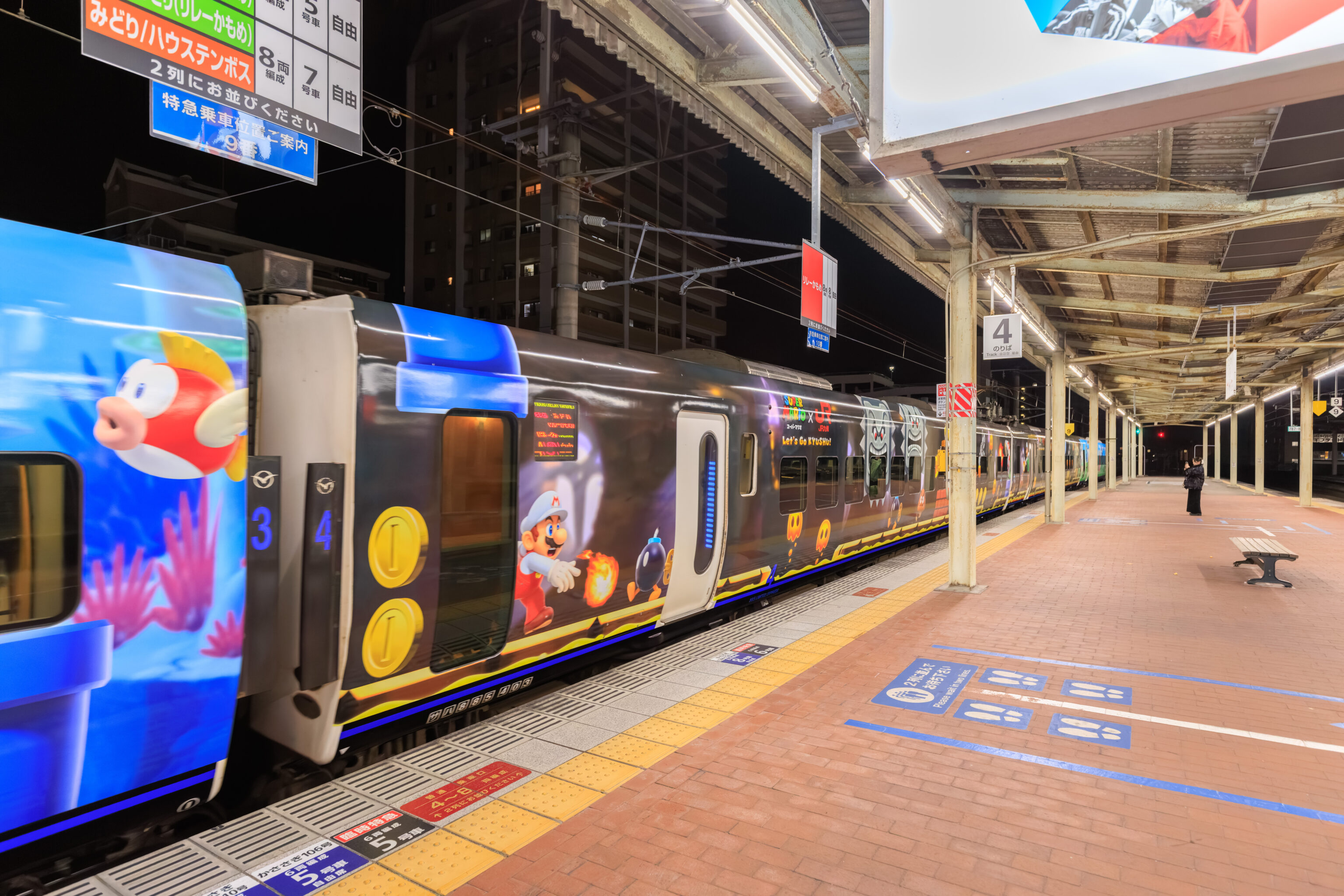
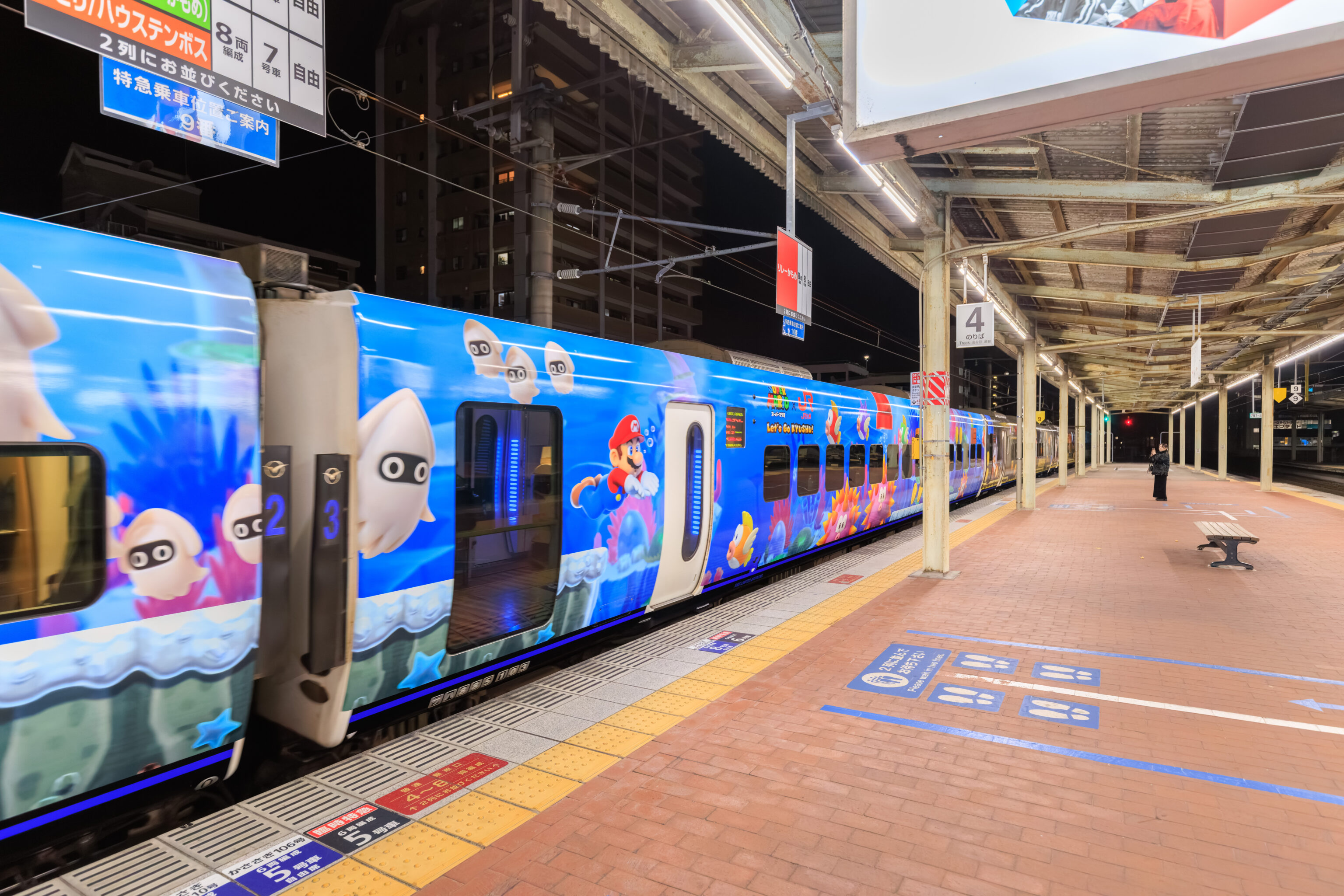
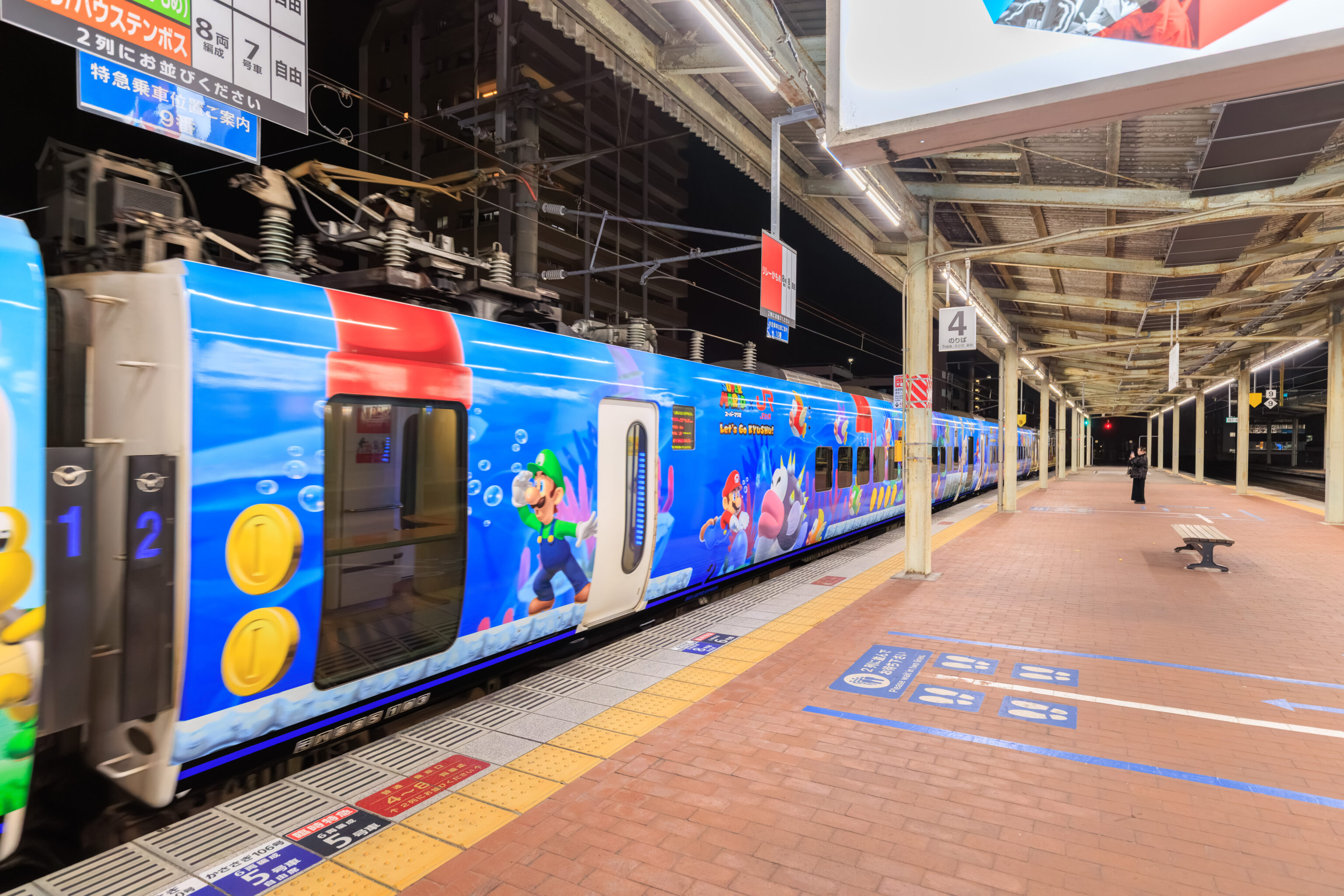
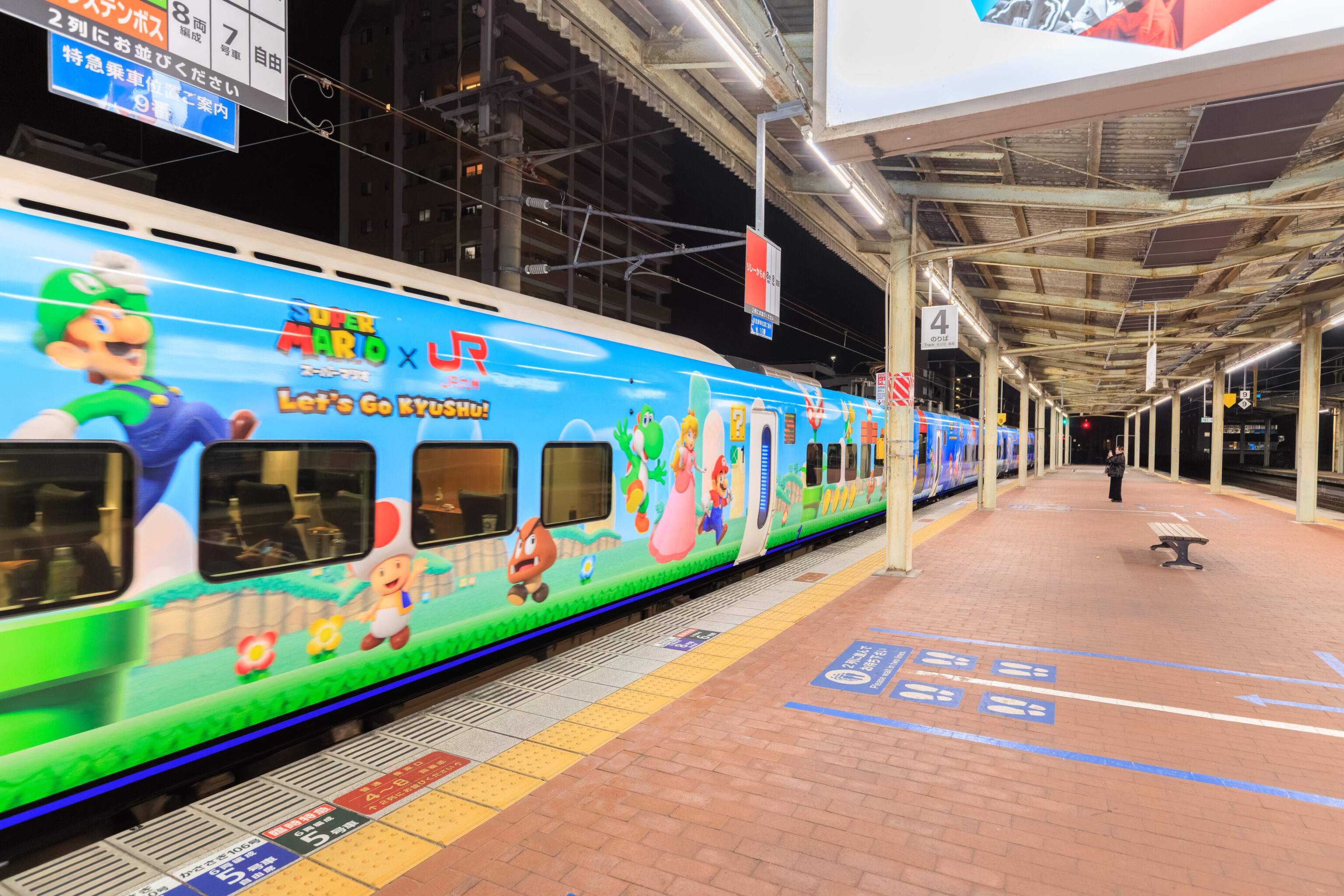
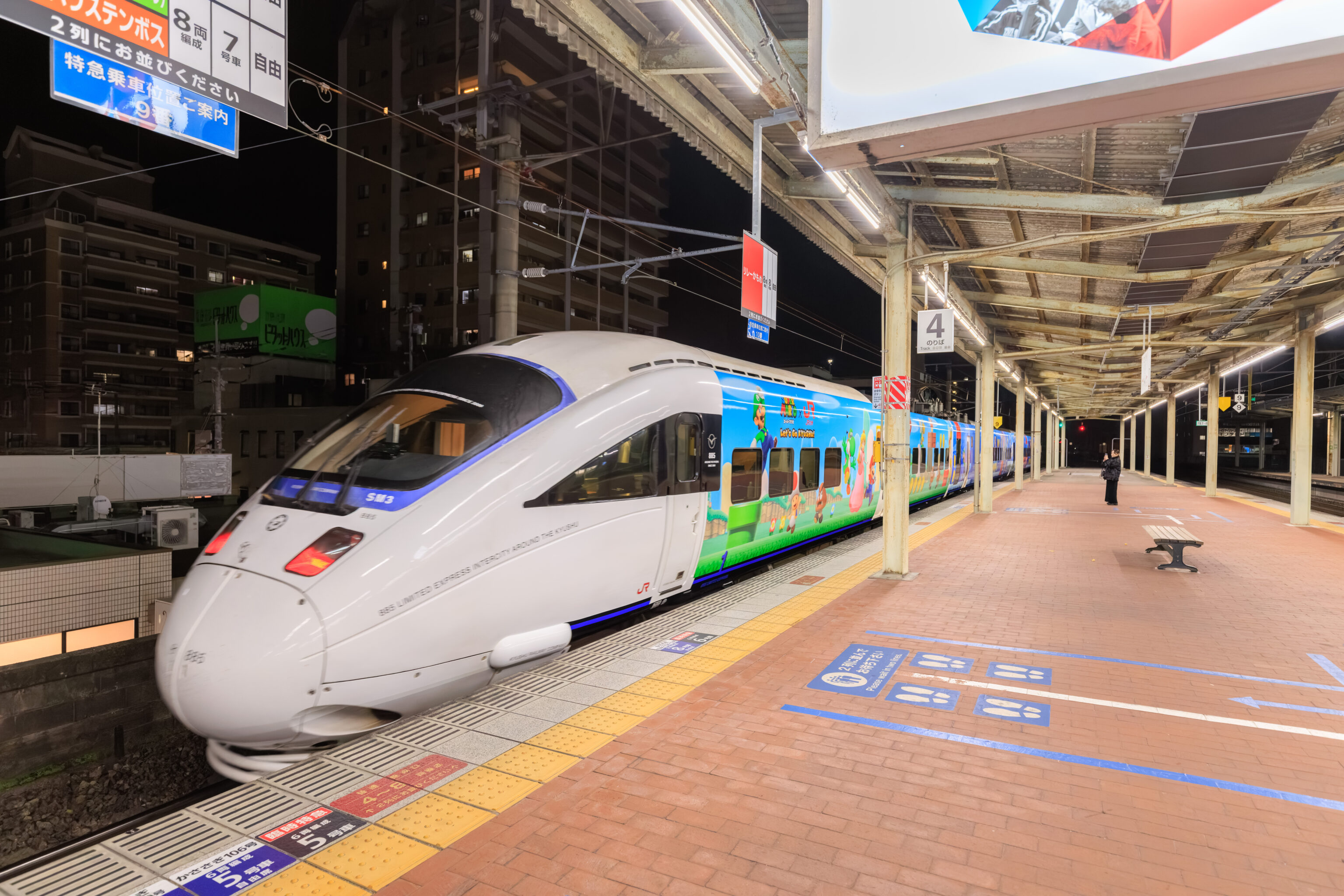
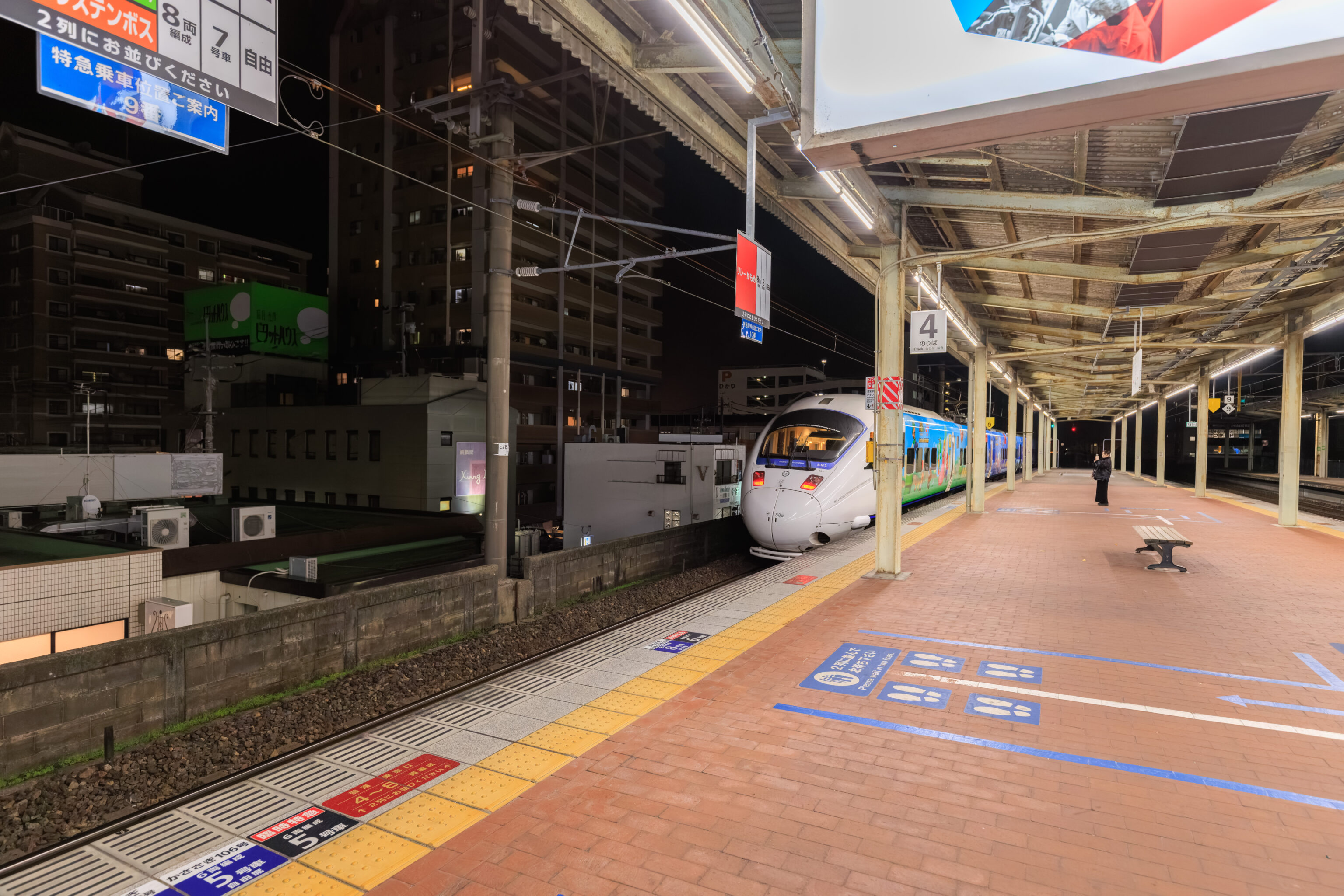
We watched from the platform as the Midori departed on its way to Hakata. Given its schedule and our likely schedule for our remaining time in Kyushu, it is unlikely we will see it again!
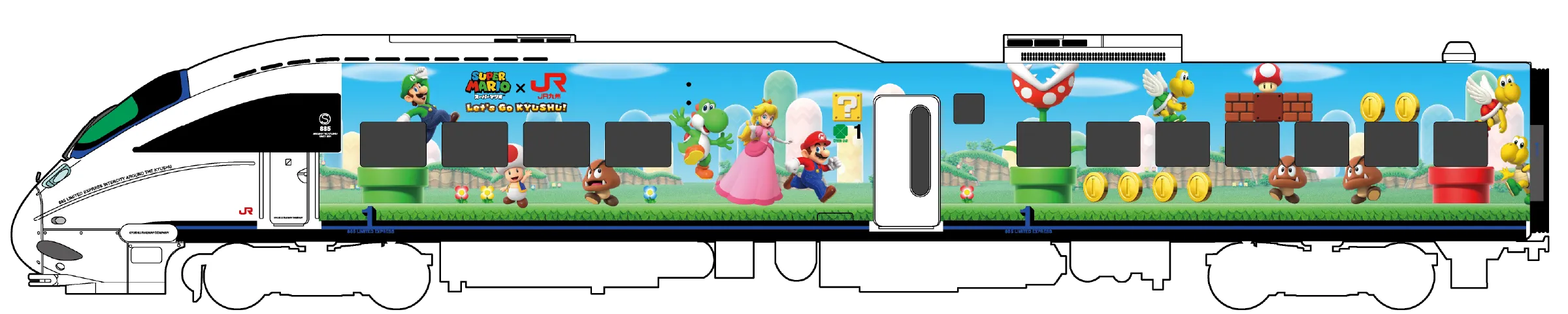
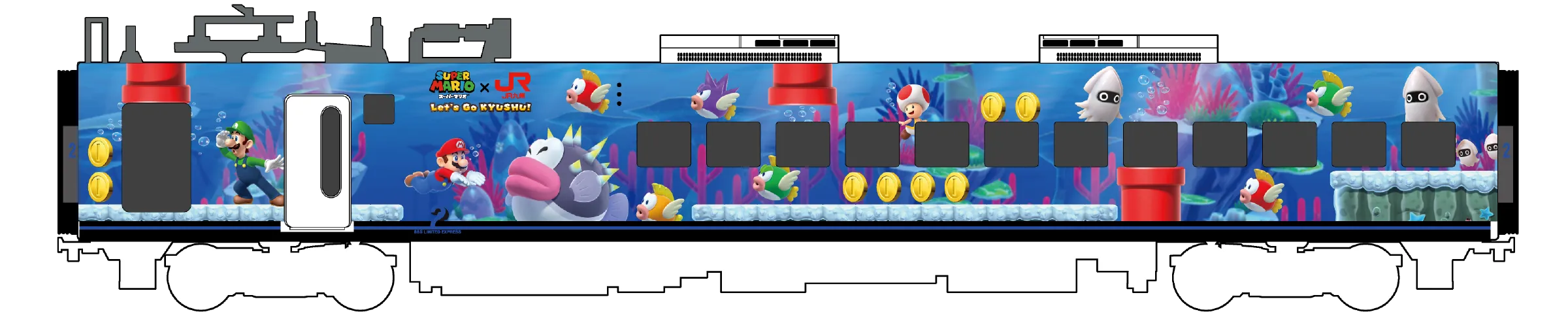
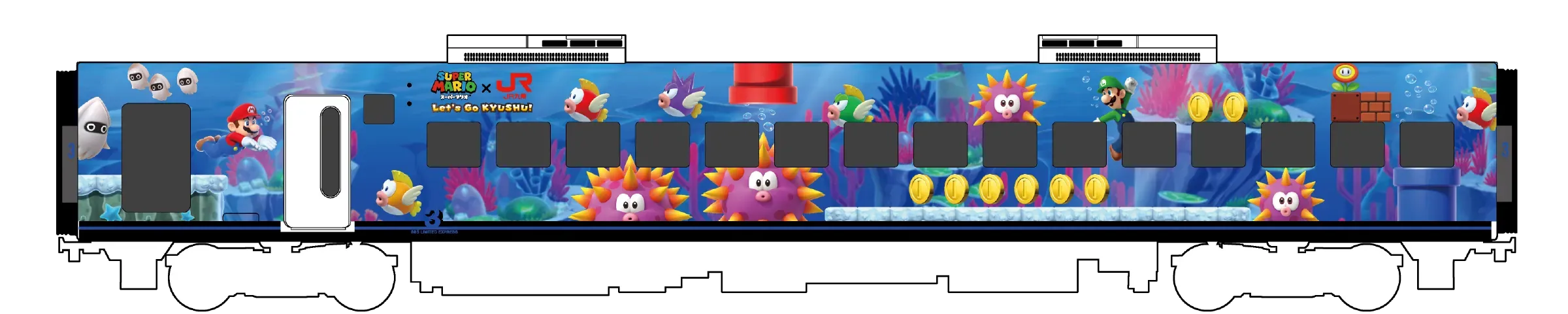
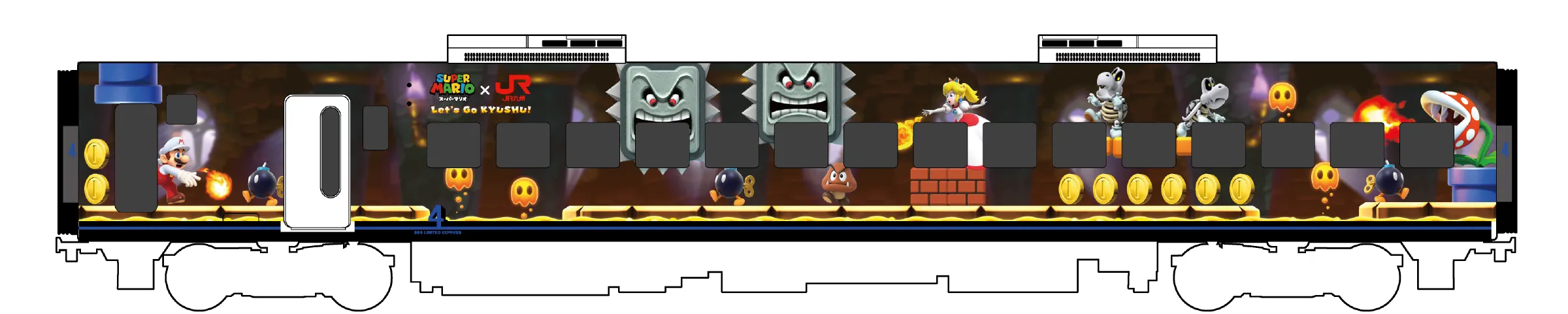
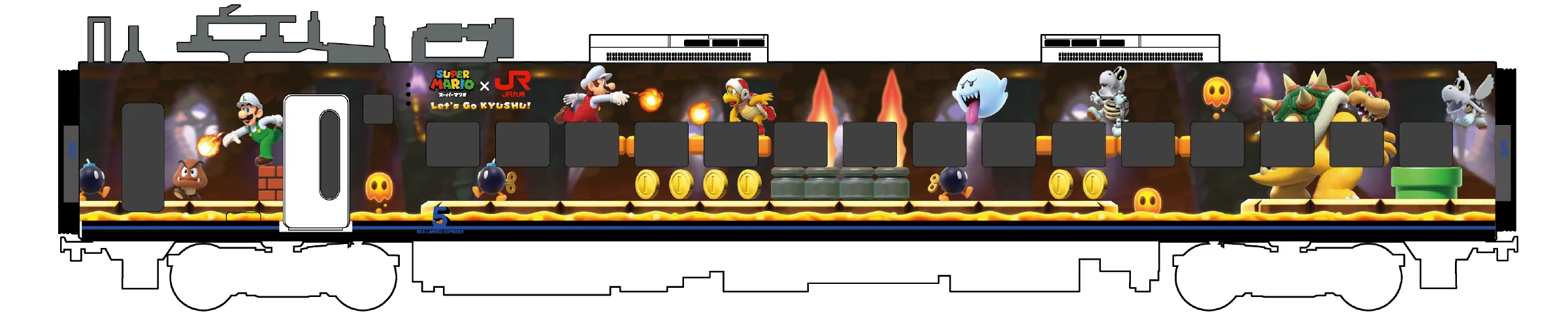
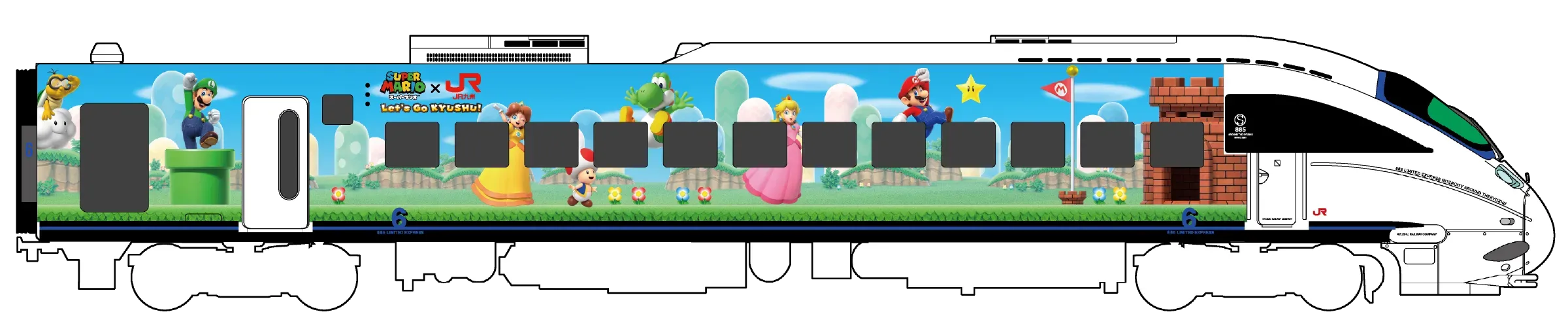
https://www.jrkyushu.co.jp/train/mario/design/
JR Kyushu has images of the train online. It is unclear how long the website will survive after the collaboration period ends so we have included it here for posterity.
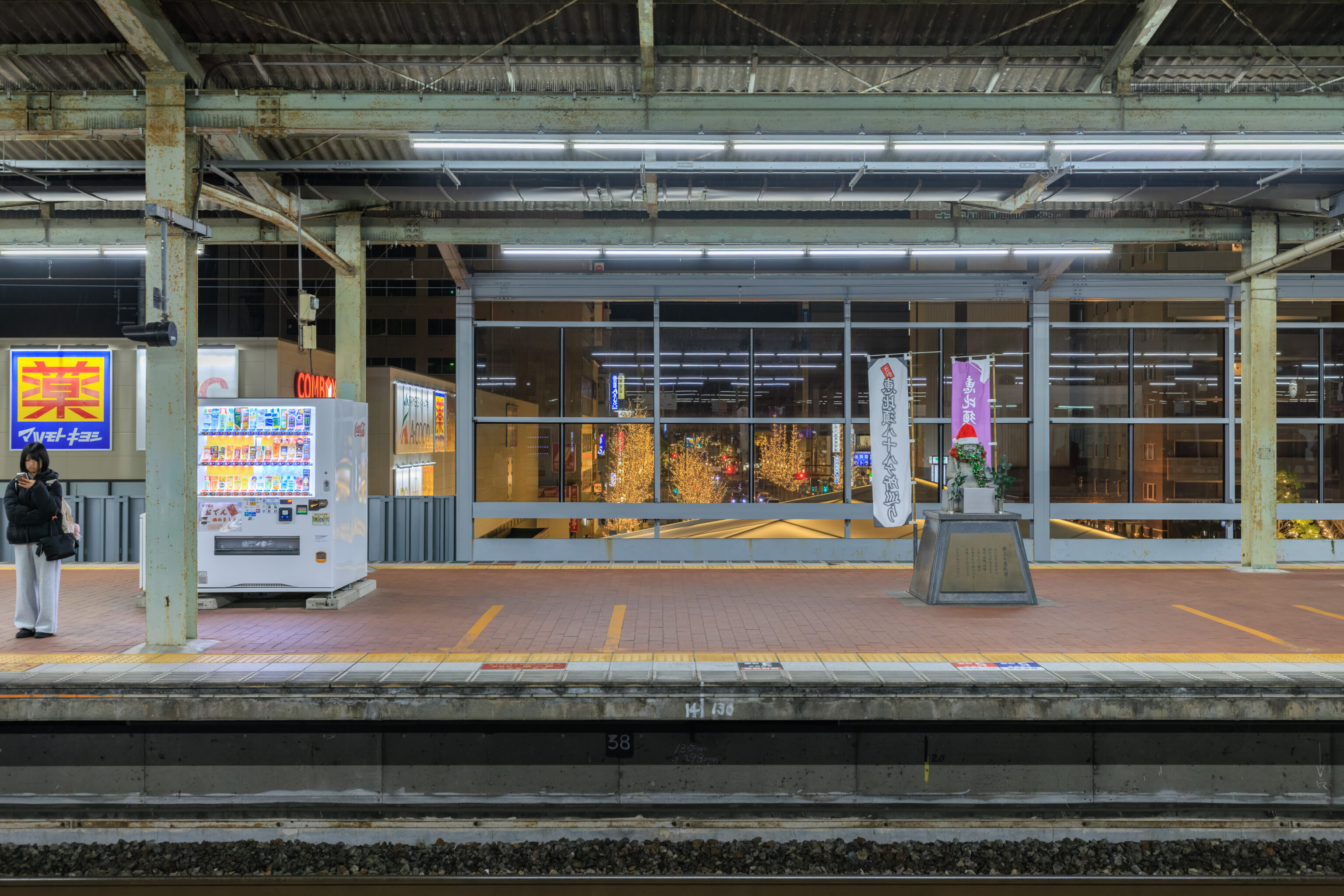
Looking across the tracks towards the opposite platform, we could see some illuminated trees along the street below. This view seems to be to the north.
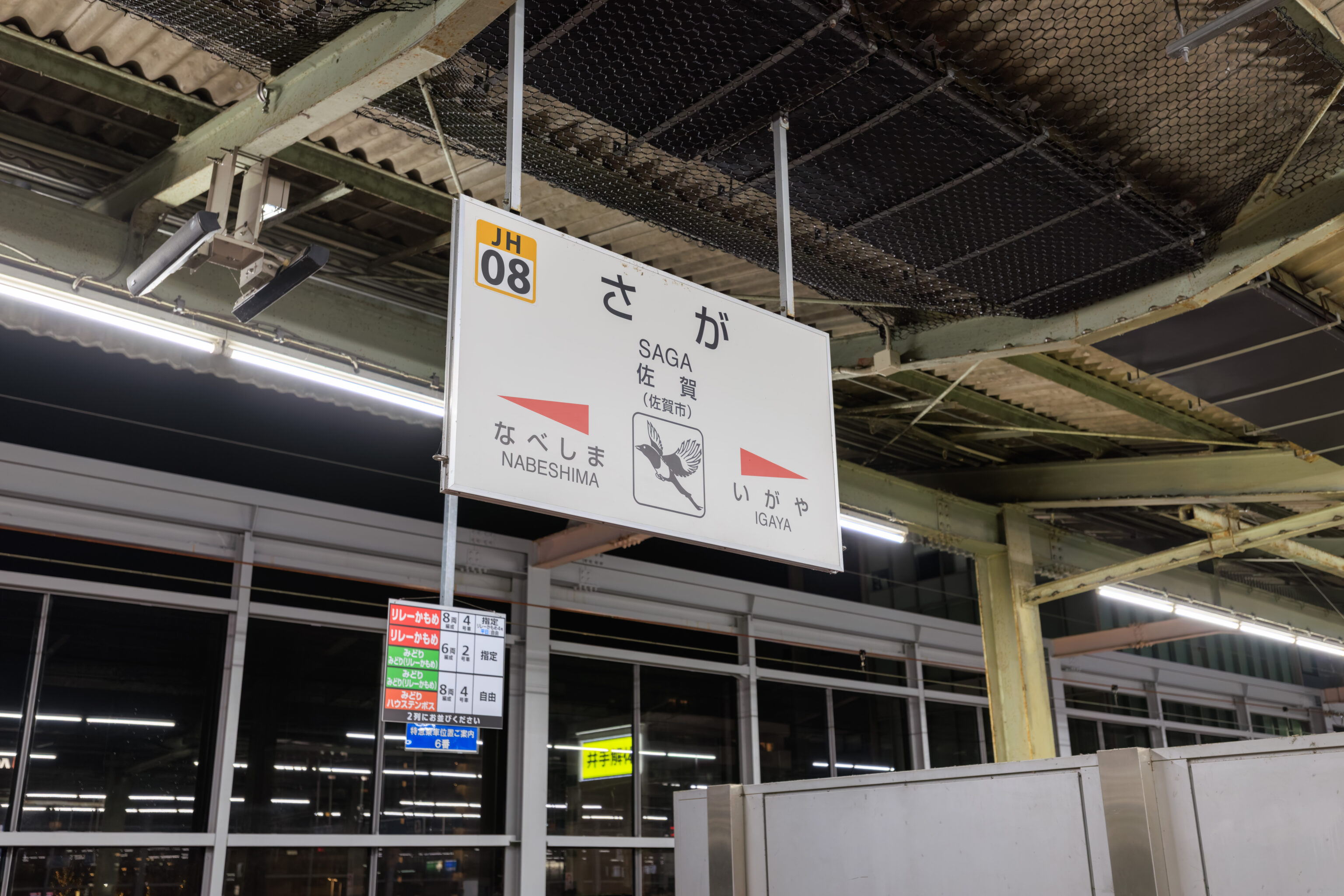
The signs for Saga Station feature a bird, the カチガラス Kachigarasu (Eurasian Magpie). According to Wikipedia, this is the official bird of Saga Prefecture.
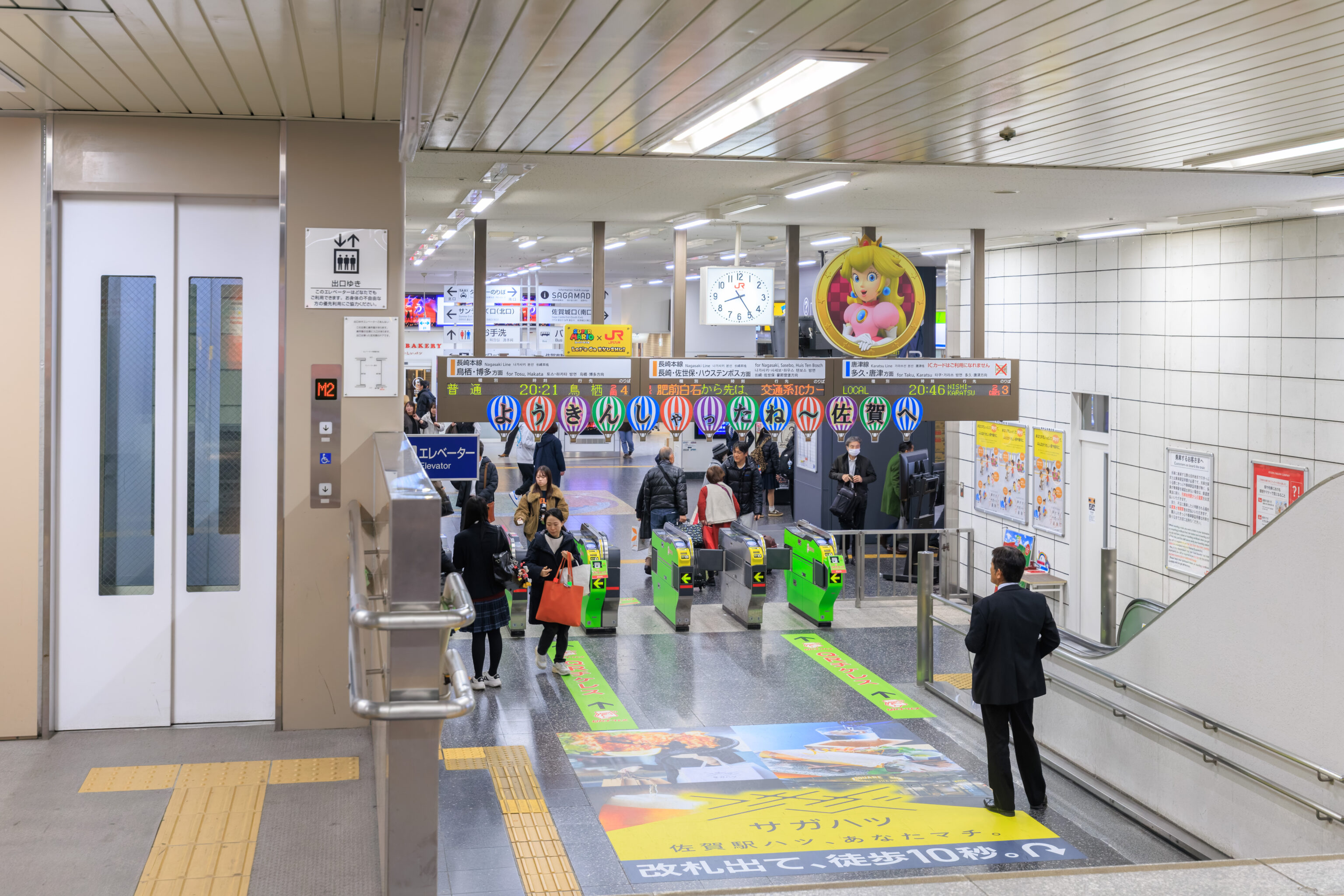
We decided to head outside to take a look around.
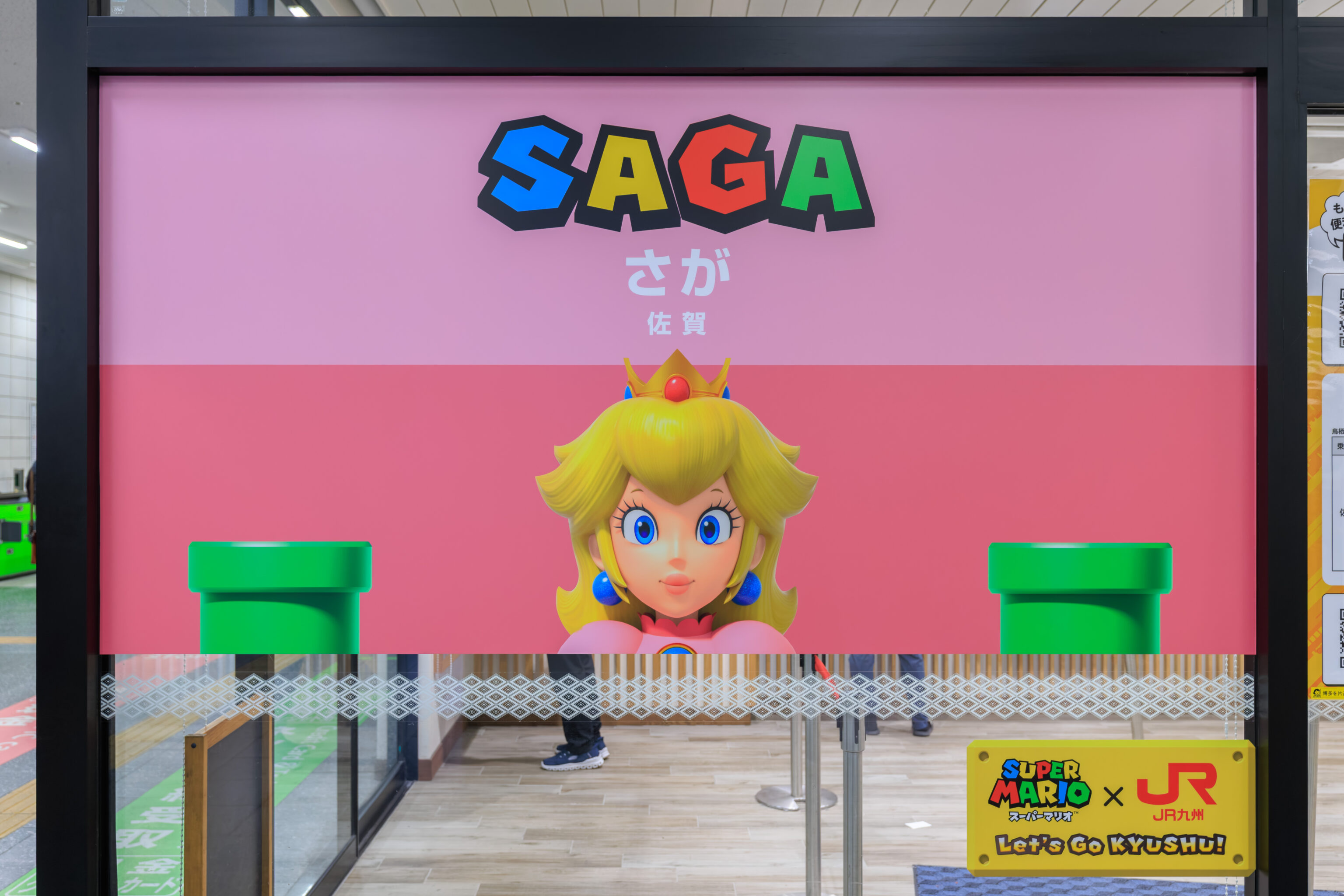
The character for Saga is Princess Peach.
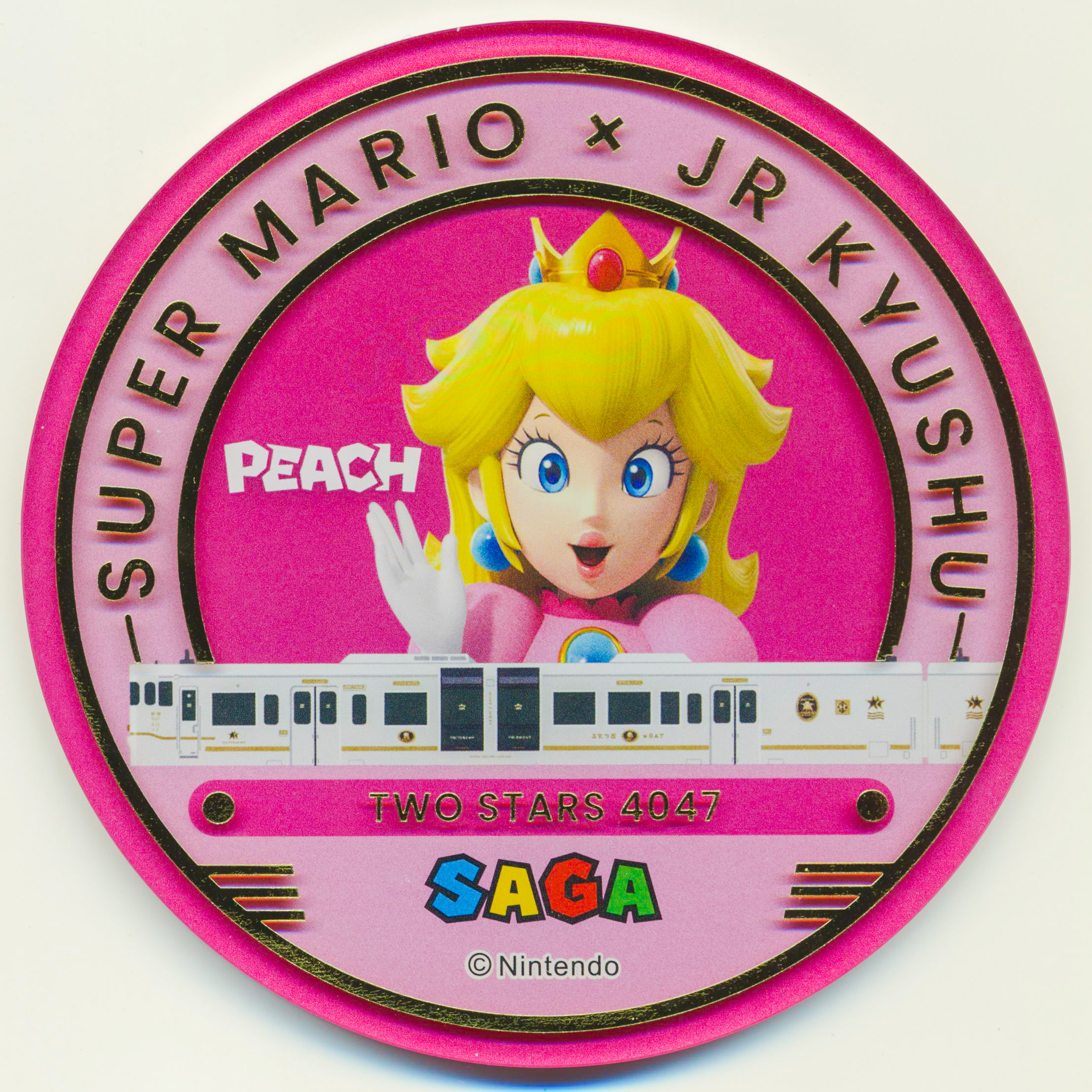
It matches the magnet that we got at the Lets Go Kyushu! popup store at Oita Station!
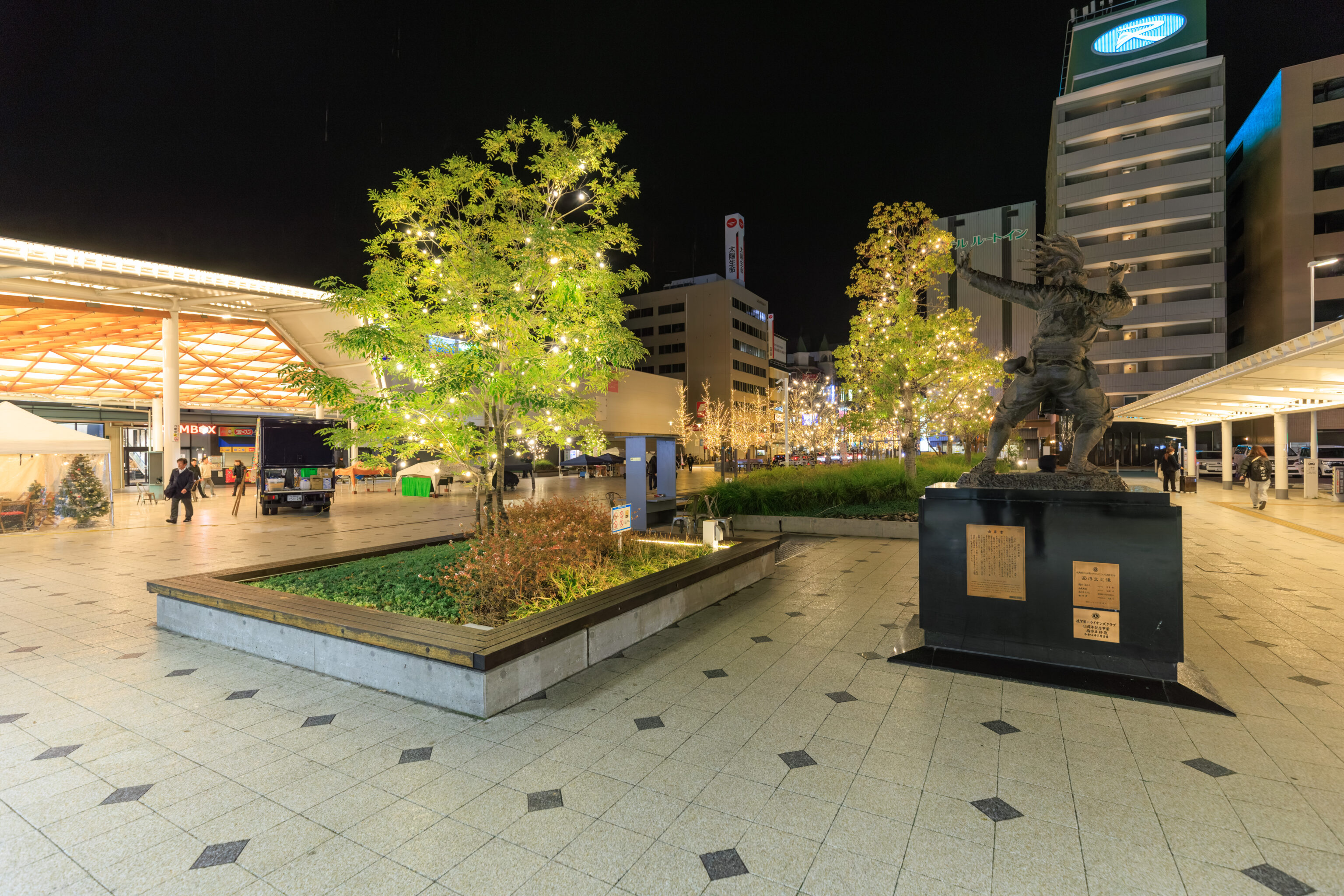
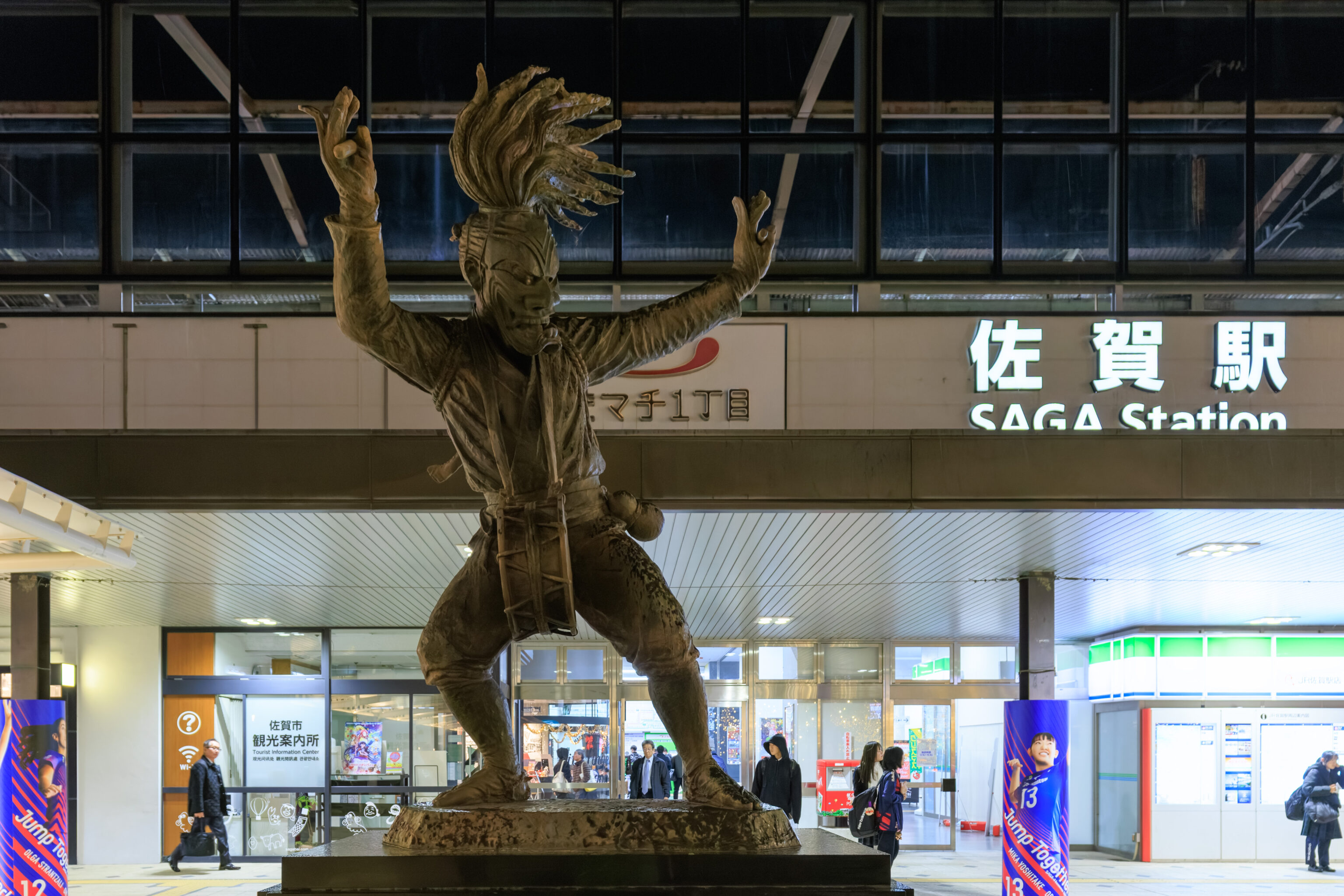
This statue depicts 面浮立 menburyu, which seems to be described as a masked folk dance native to Saga Prefecture. The best concise description of menburyu that I could find from a reputable source was an English language PDF provided by Kashima City:
Menburyu (Ritual Mask Dance)
This ritual mask dance is performed by lines of dancers in devil masks, and the dance is Saga Prefecture's most well-known example of folk art. This ritual mask dance is performed at shrines throughout the area to show gratitude for bountiful harvests and to the natural environment.
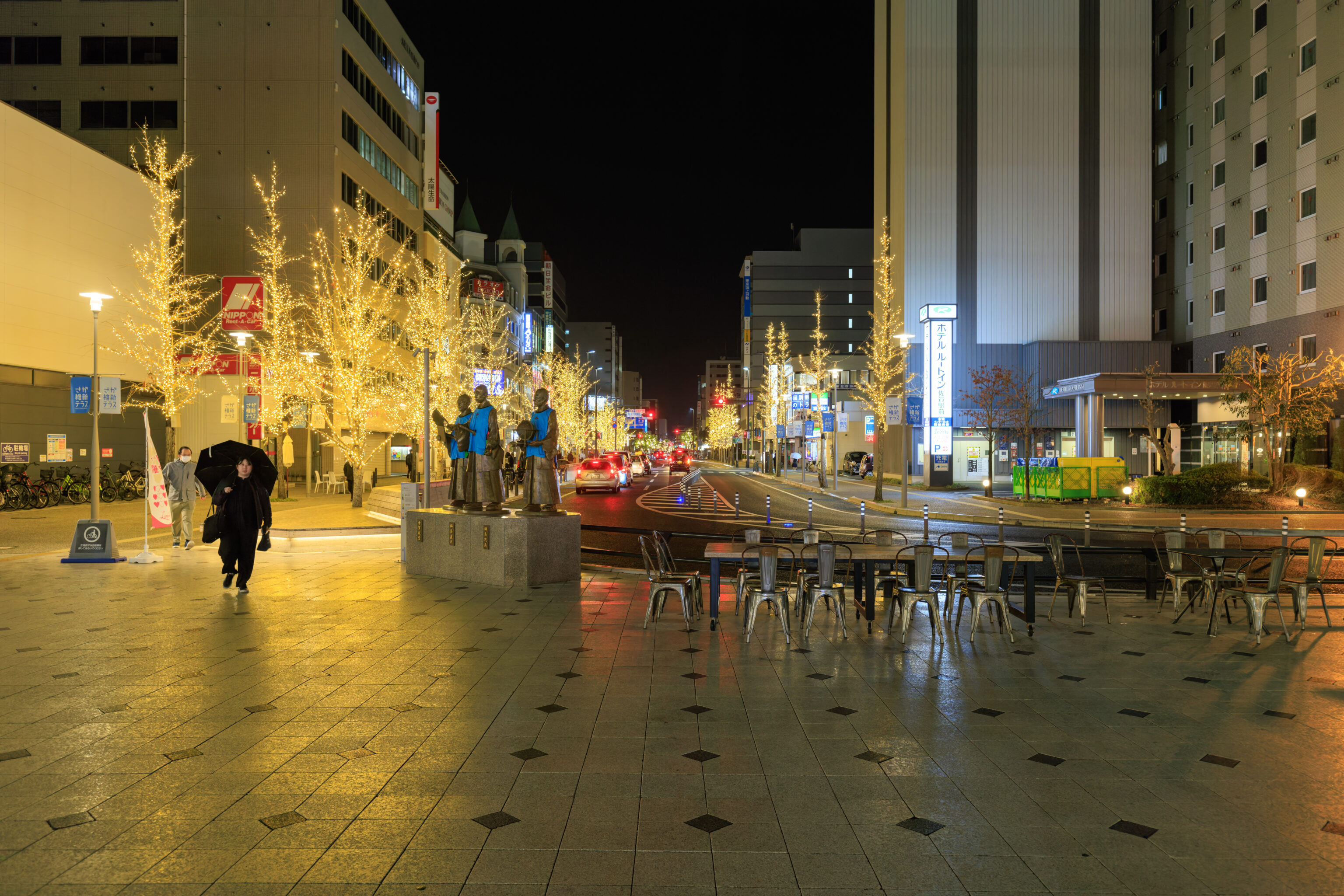
Who are these three guys standing by the side of the road?
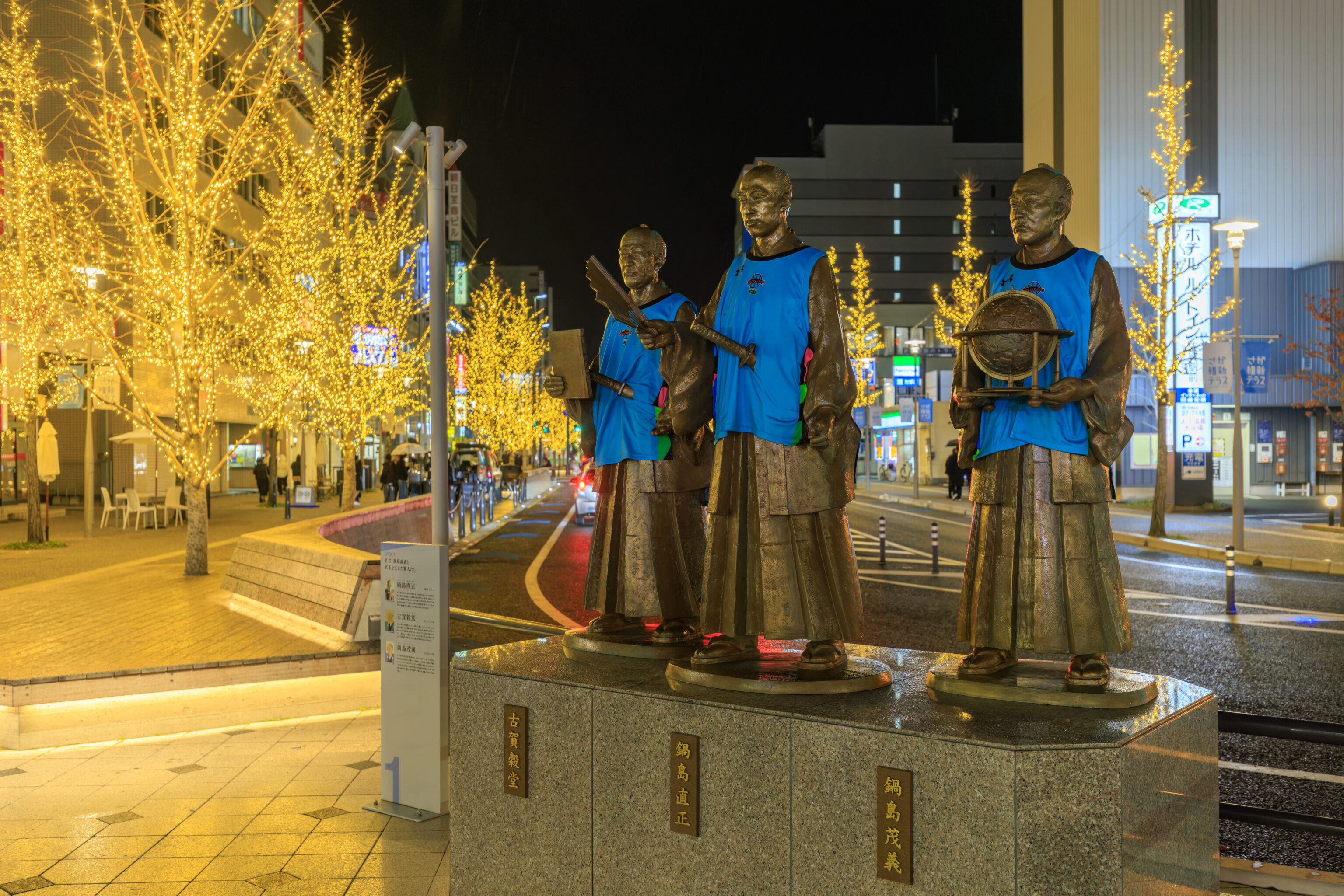
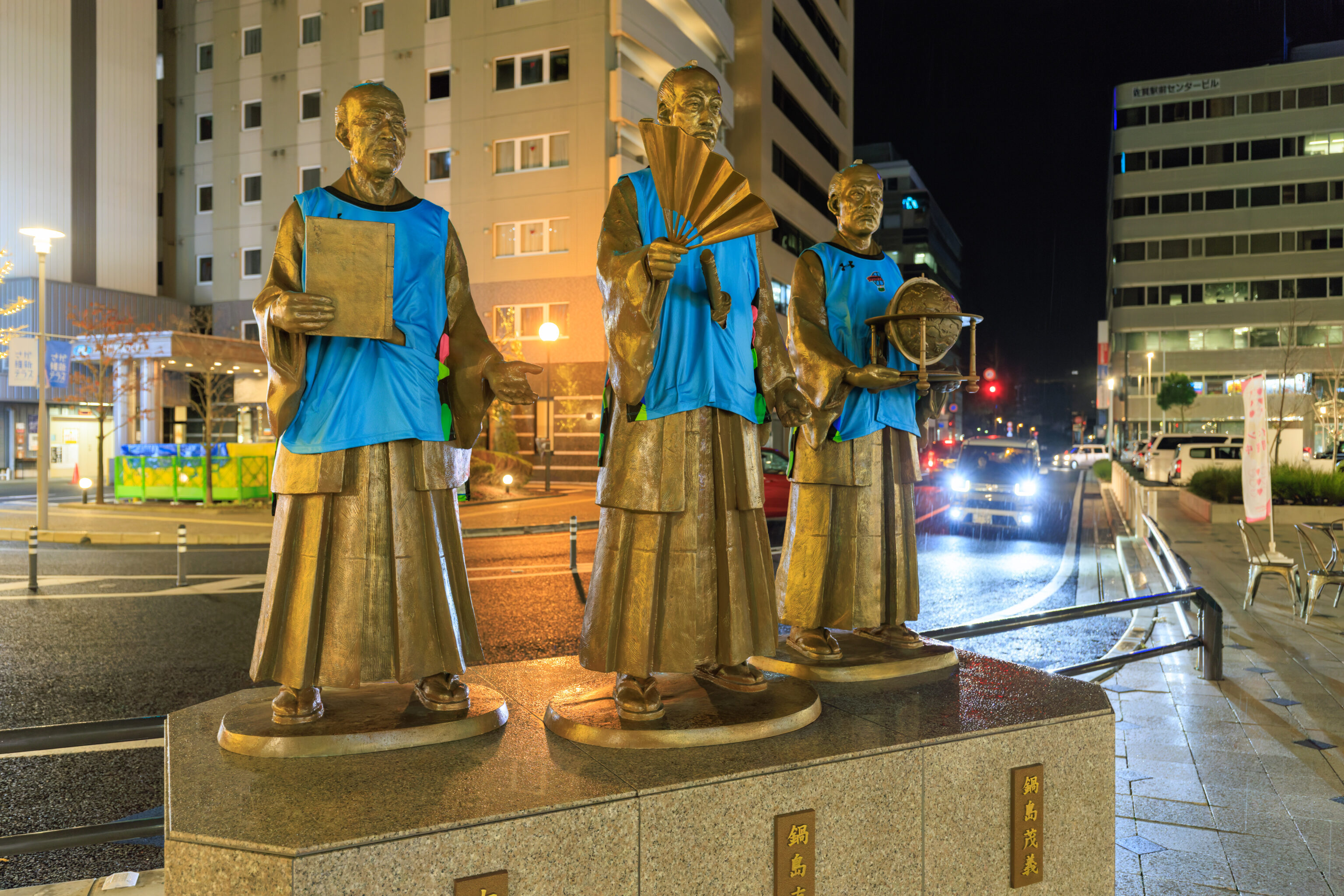
Luckily, there was a sign:
An Enlightened Ruler: Nabeshima Naomasa and the Wise Men Who Supported Him

Nabeshima Naomasa
1814-1871
He was the 10th lord of the Saga Domain. Inheriting the family headship in 1830 at the young age of 17 (15 by modern reckoning), he spearheaded reforms in domain administration. Adopting the views of Koga Kokudo, he implemented bold educational reforms at the domain school, Kodokan. He also focused on building a cooperative relationship with senior retainers, placing figures such as Nabeshima Shigeyoshi in key positions and actively introducing Western science and technology. Through the cultivation of talent and the strategic placement of individuals in roles suited to their abilities, he propelled the Saga Domain to prominence as a powerful domain.

Koga Kokudō
1777-1836
Born in what is now Yoga-machi, Saga City, he was the eldest son of Koga Seiri—a Confucian scholar serving the Shogunate and one of the "Three Great Scholars of the Kansei Era." In 1806, he became a professor at the domain school, Kōdōkan, and was an early advocate for the necessity of *Rangaku* (Western learning). He also served as the tutor for the young Naomasa, who would later become the domain's lord. In 1831, he submitted a policy proposal titled *Saikyū Fūji* ("Urgent Proposals for Reform") to Lord Naomasa; this document set the course for the Saga Domain's reforms.

Nabeshima Shigeyoshi
1800-1862
He was the lord of the Takeo domain (part of the Saga domain) during the late Edo period. In 1822, he was selected at a young age to serve as the *uke-yaku* (chief senior retainer) for the main Saga domain, where he exerted a profound influence on the development of Nabeshima Naomasa. In 1827, he married Naomasa’s elder sister, thereby becoming his brother-in-law. From the early 1830s—ahead of the main domain—he actively introduced Western studies (*Rangaku*), including Western-style artillery techniques and military armaments, laying the foundation for the modernization of the Saga domain, which would go on to spearhead the Meiji Restoration.
– Text from a sign to the left of the statues, translated using Google.
The Under Armour jerseys that the three statues are wearing are for the 佐賀バルーナーズ Saga Ballooners, a basketball team in the Japanese B.League at the Premier level. The B here seems to refer to Basketball and not as a minor league designation. The Ballooners name apparently comes from the yearly Saga International Balloon Fiesta. Its kind of a silly name but no more ridiculous than the Washington Commanders.
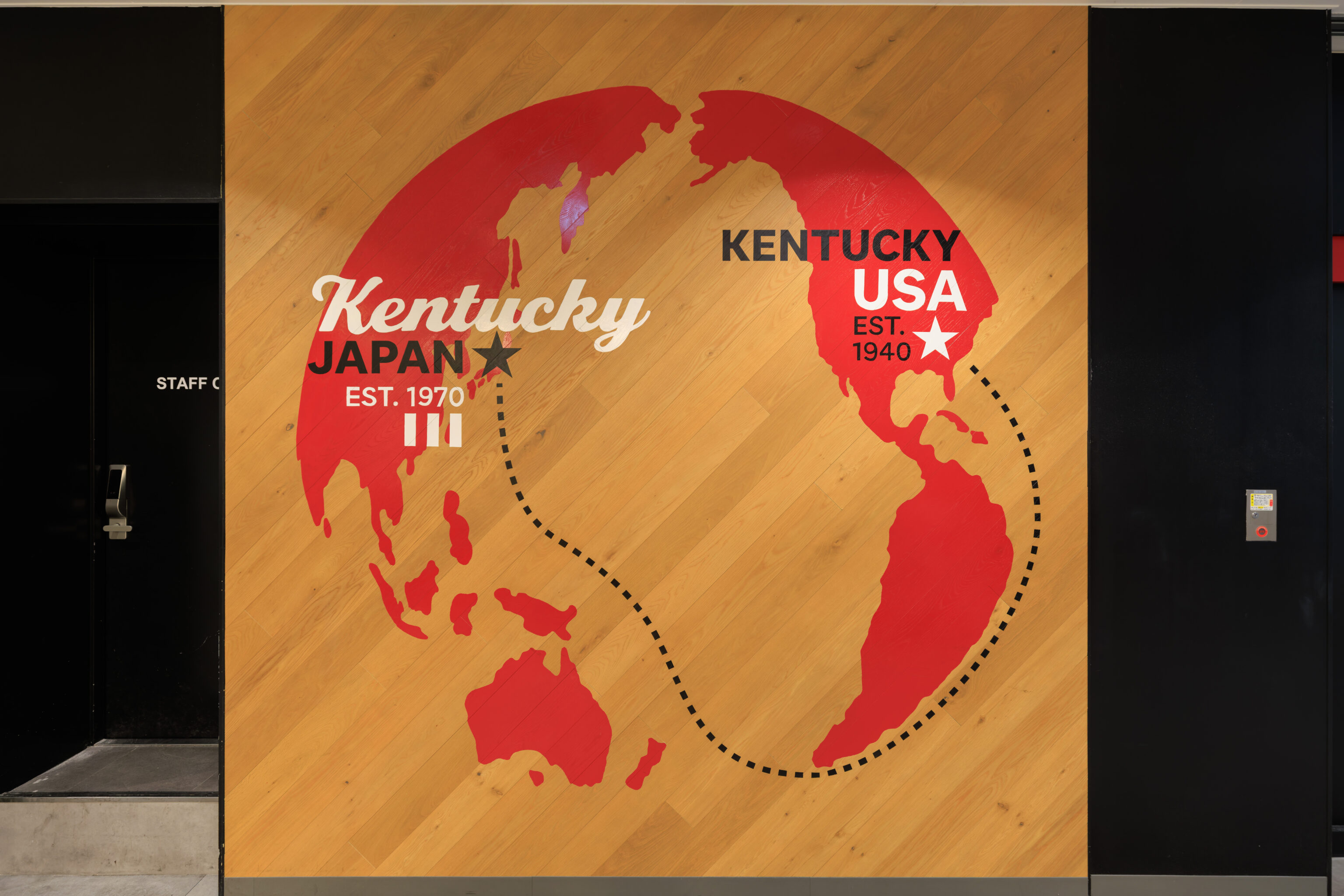
There was a KFC in the station with a helpful map of how Colonel Sanders arrived by ship in 1970. Well, not really, its just some art that someone came up with.
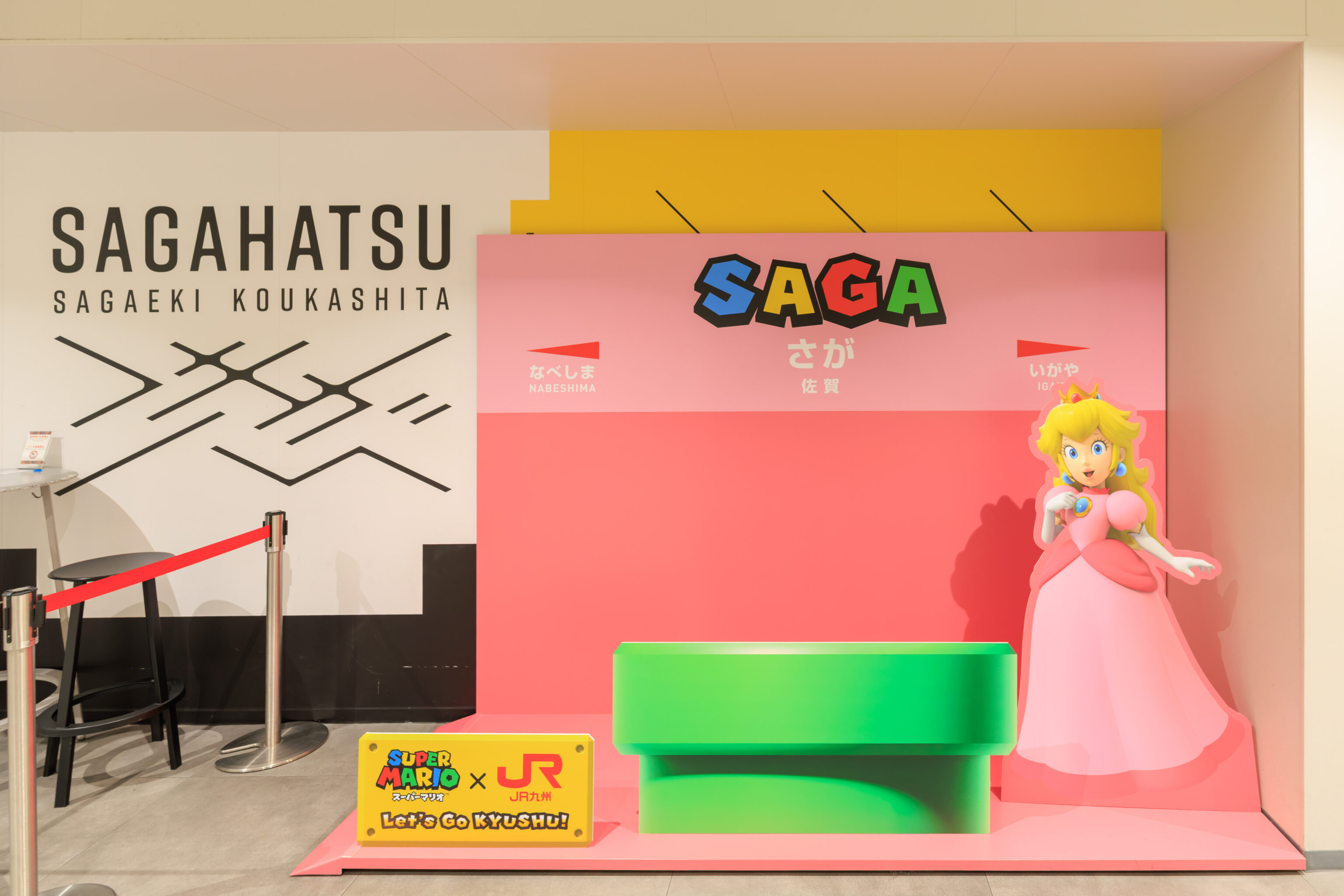
There was a green pipe photo spot in the station with Princess Peach.
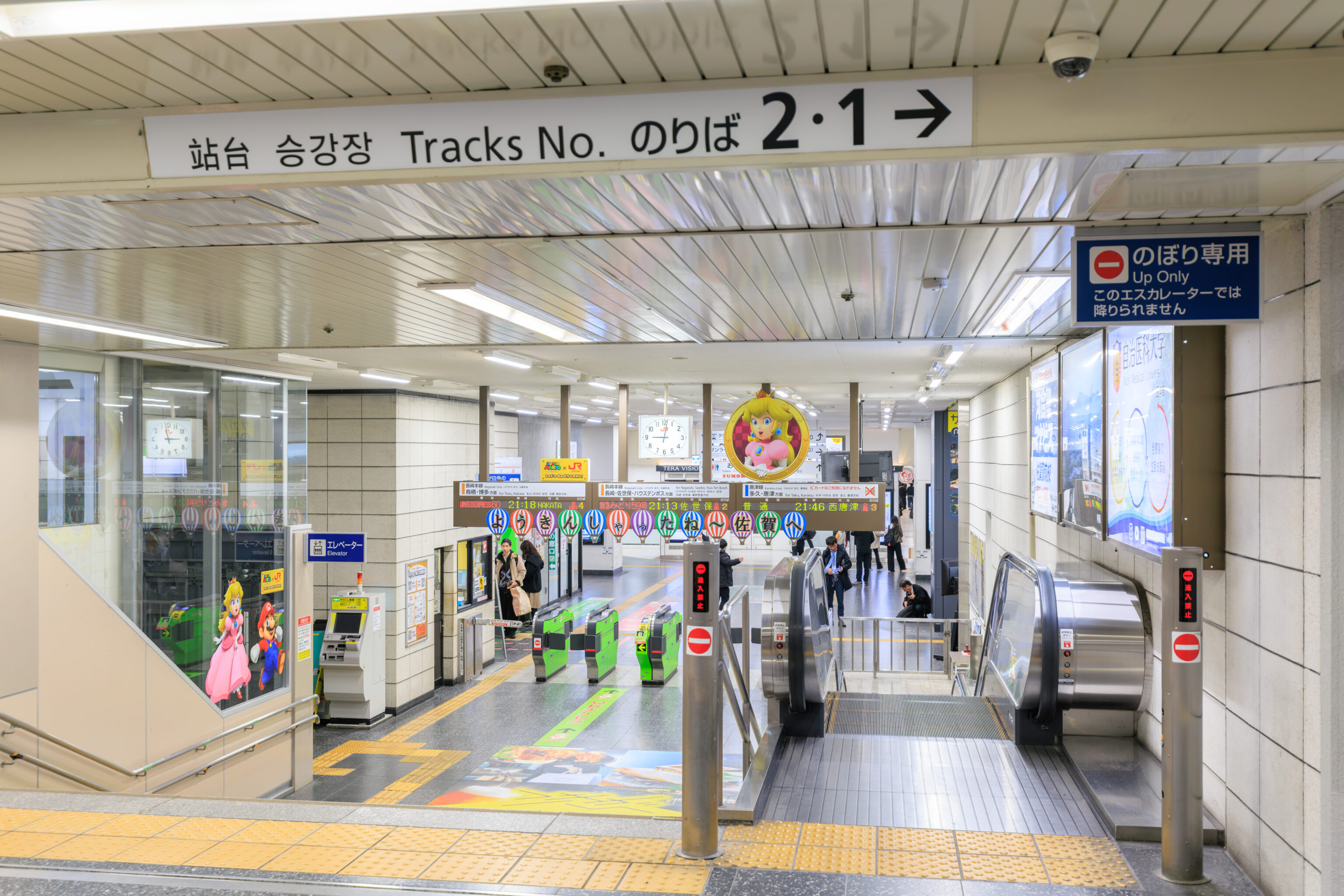
The train that we plan to take back is the Midori departing at 9:13pm on track 2.
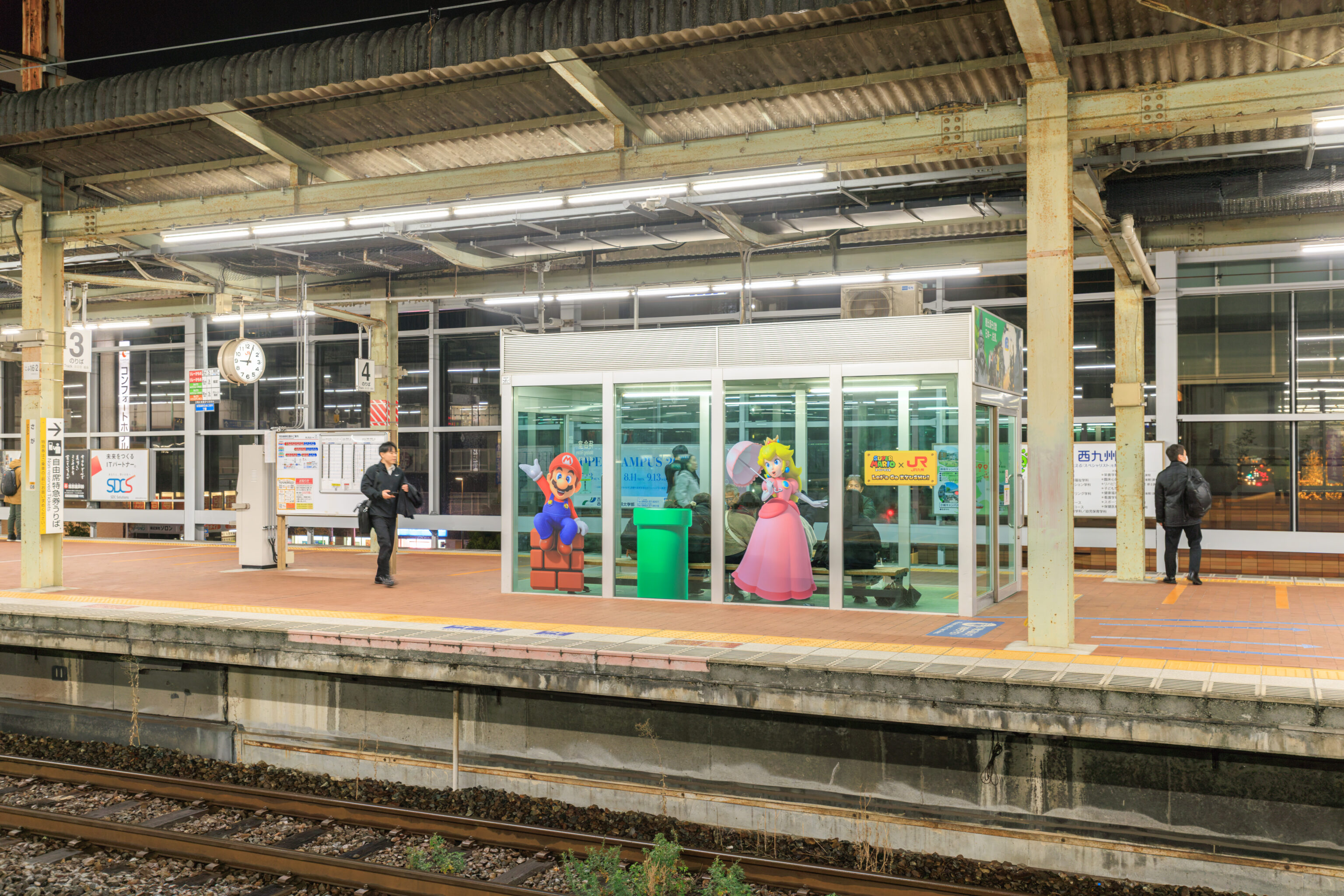
Up on the platform, we noticed an enclosed Super Mario themed waiting area.
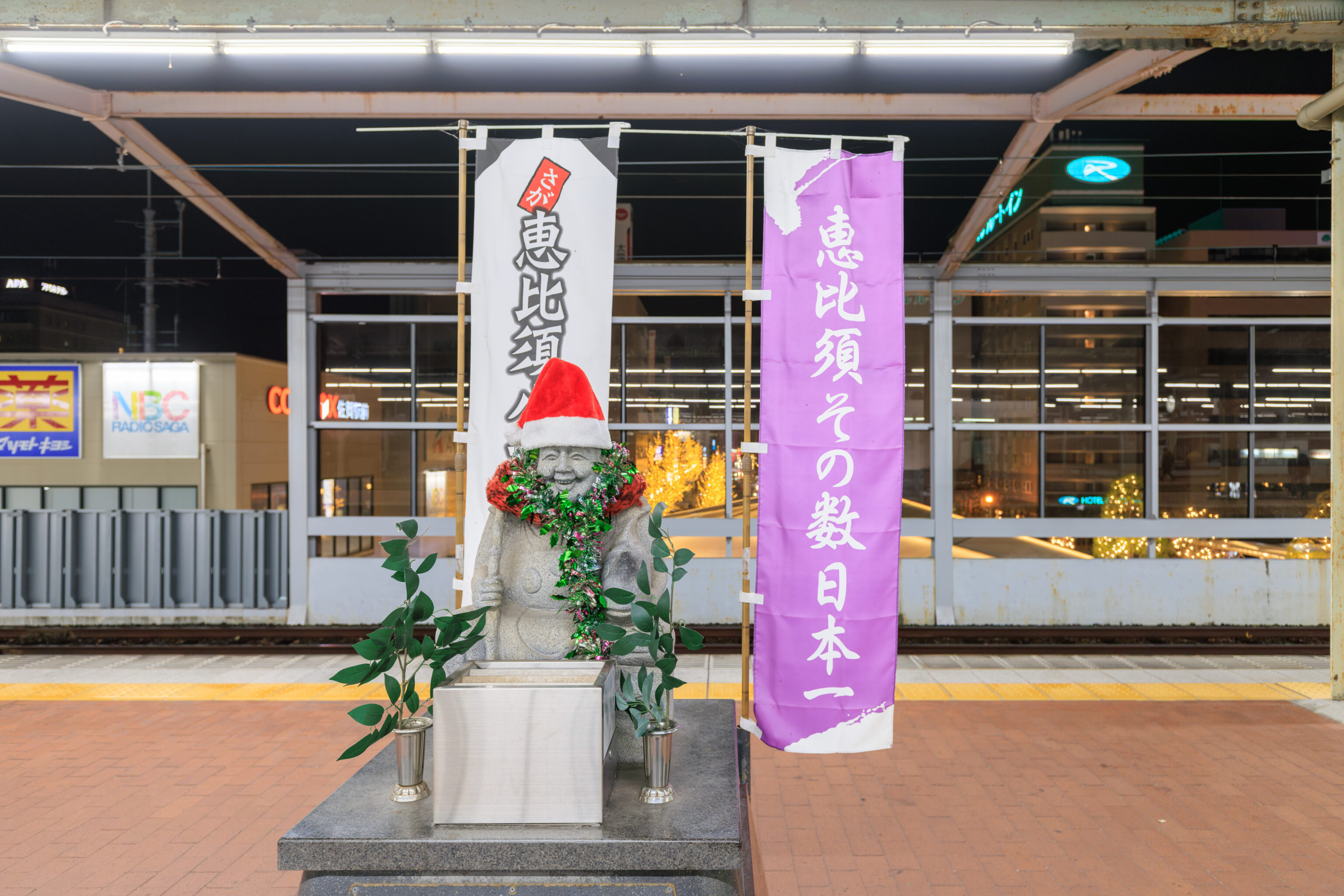
Apparently, Saga City is the “place with the largest number of Ebisu statues in Japan”1. It isn’t clear exactly how this is determined. At any rate, this is one of them.
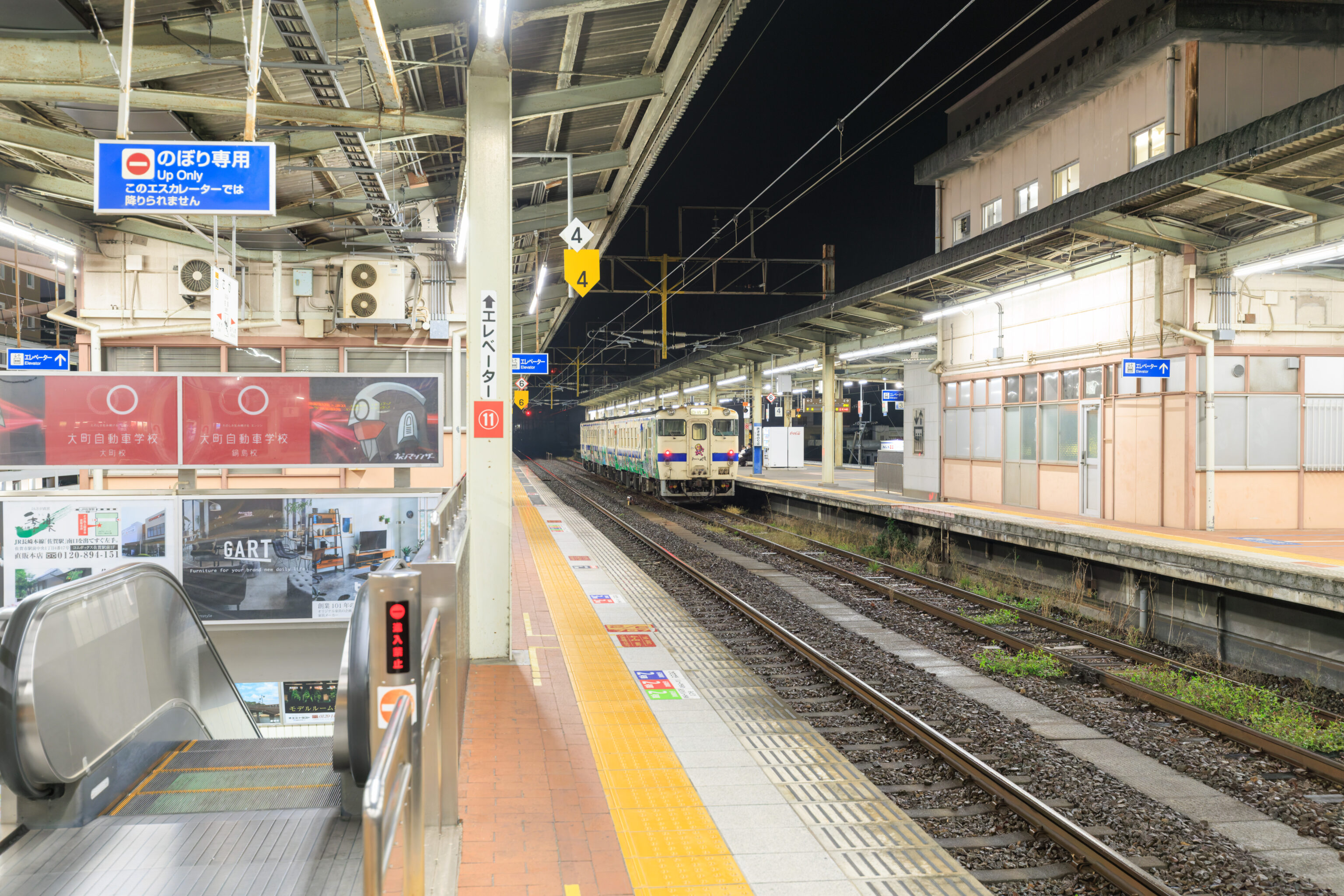
We noticed an idling train at the far end of another platform. We went over to take a look.
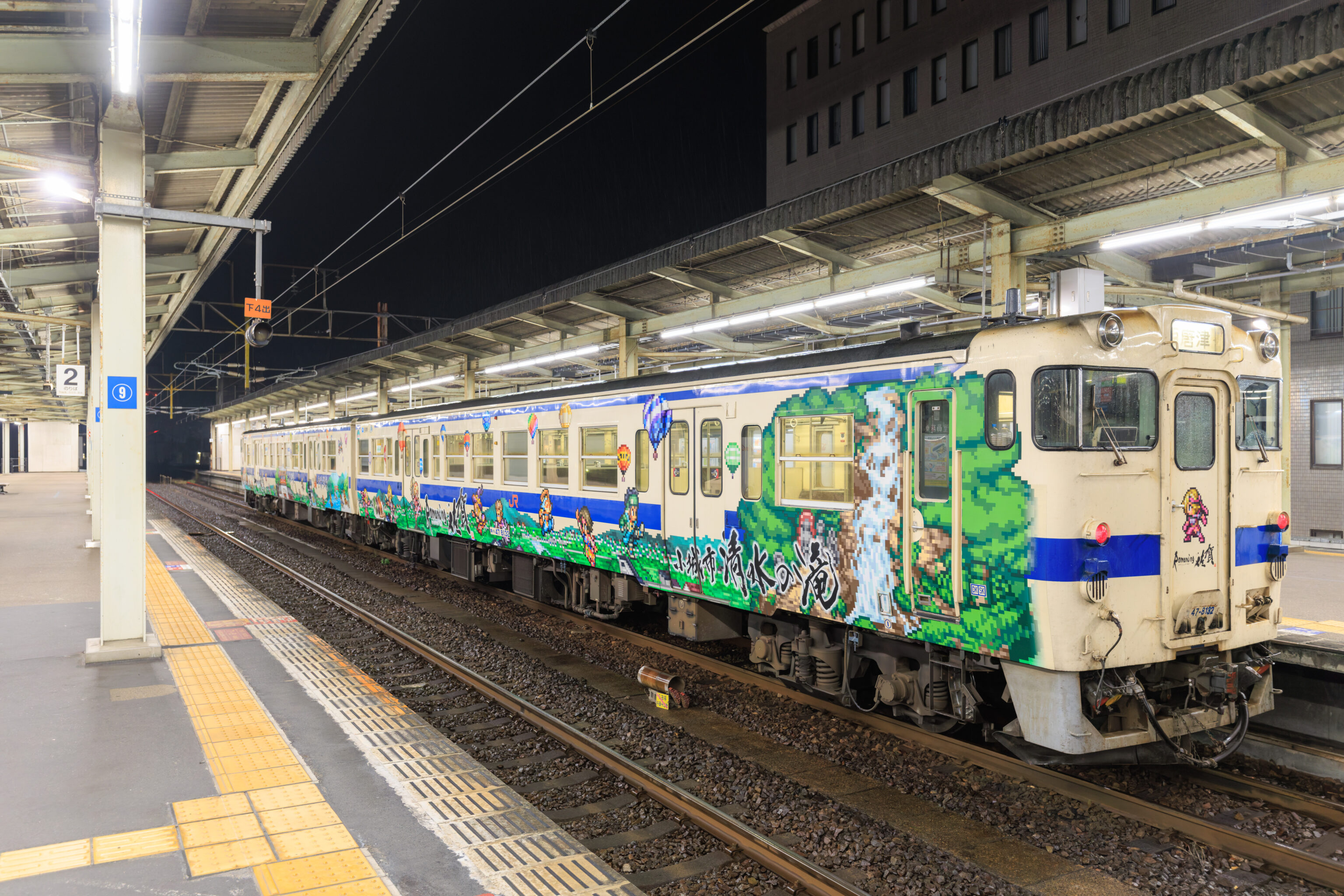
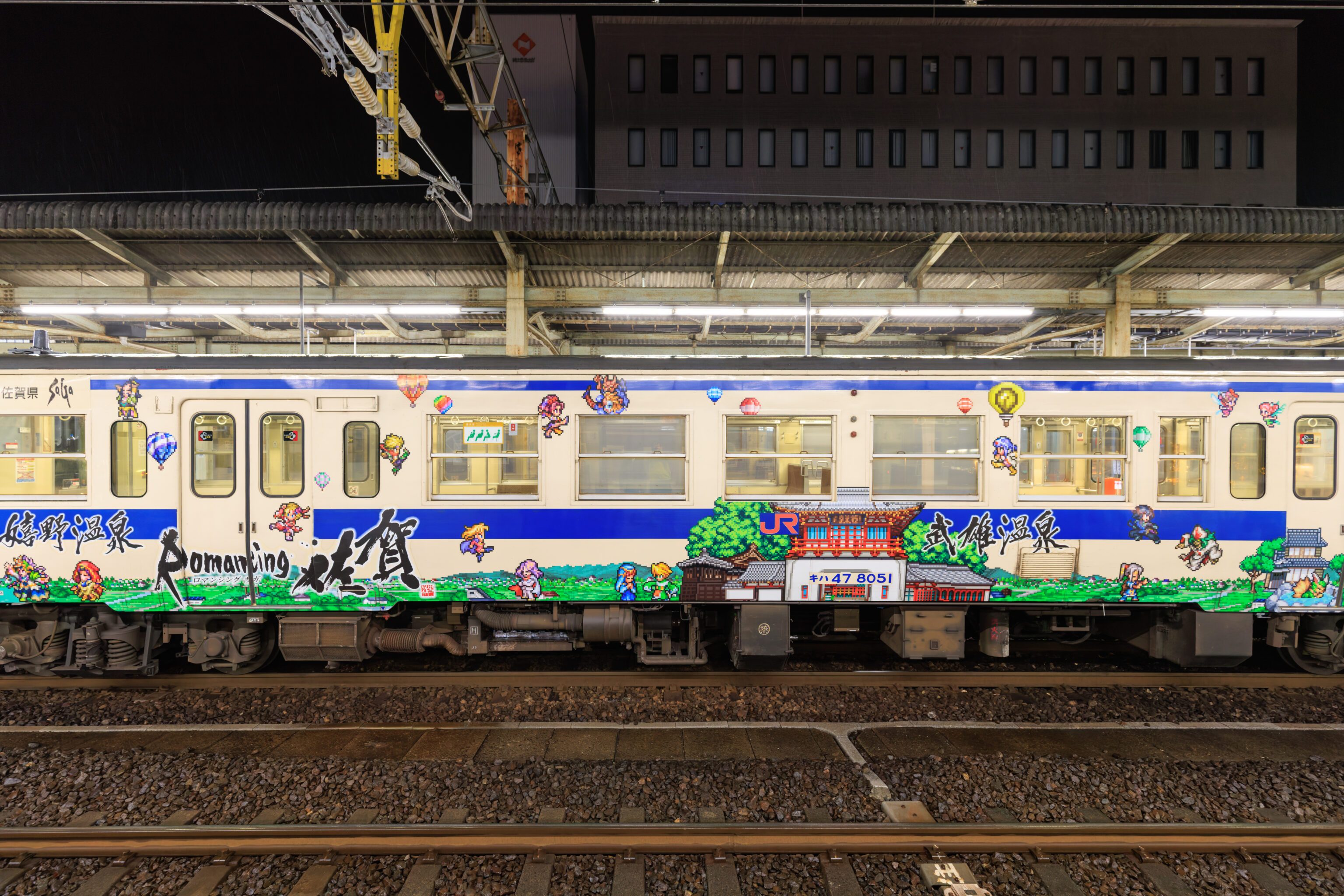
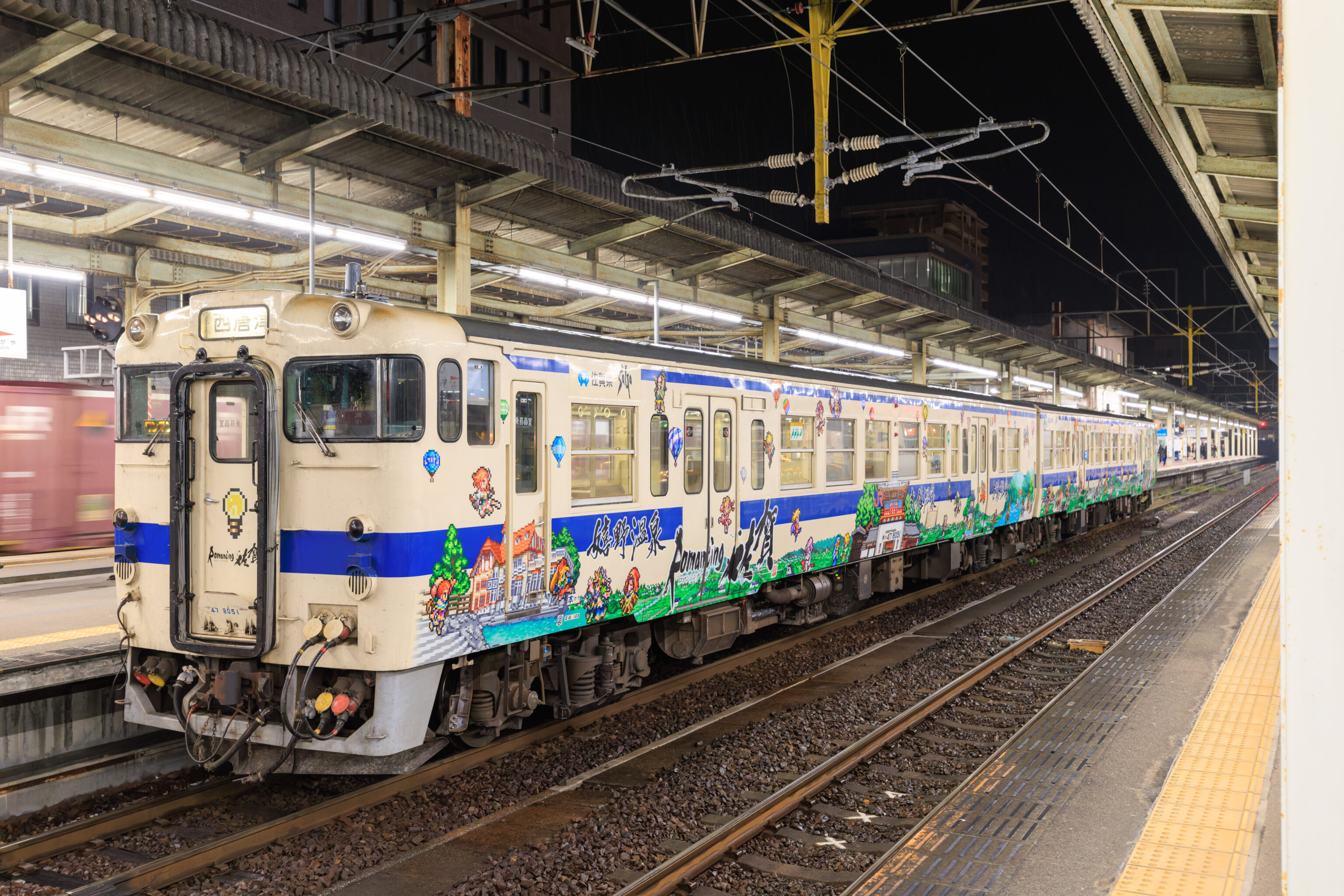
It had a Romancing SaGa livery. This appears to be part of a promotion with Saga Prefecture, basically, Saga Prefecture x SaGa. Looking on the website, it seems that they’ve had collabs with the prefectural government since 2014. This current incarnation began in 2022.
There are sixteen individual train cars that have received a Romancing SaGa wrap.
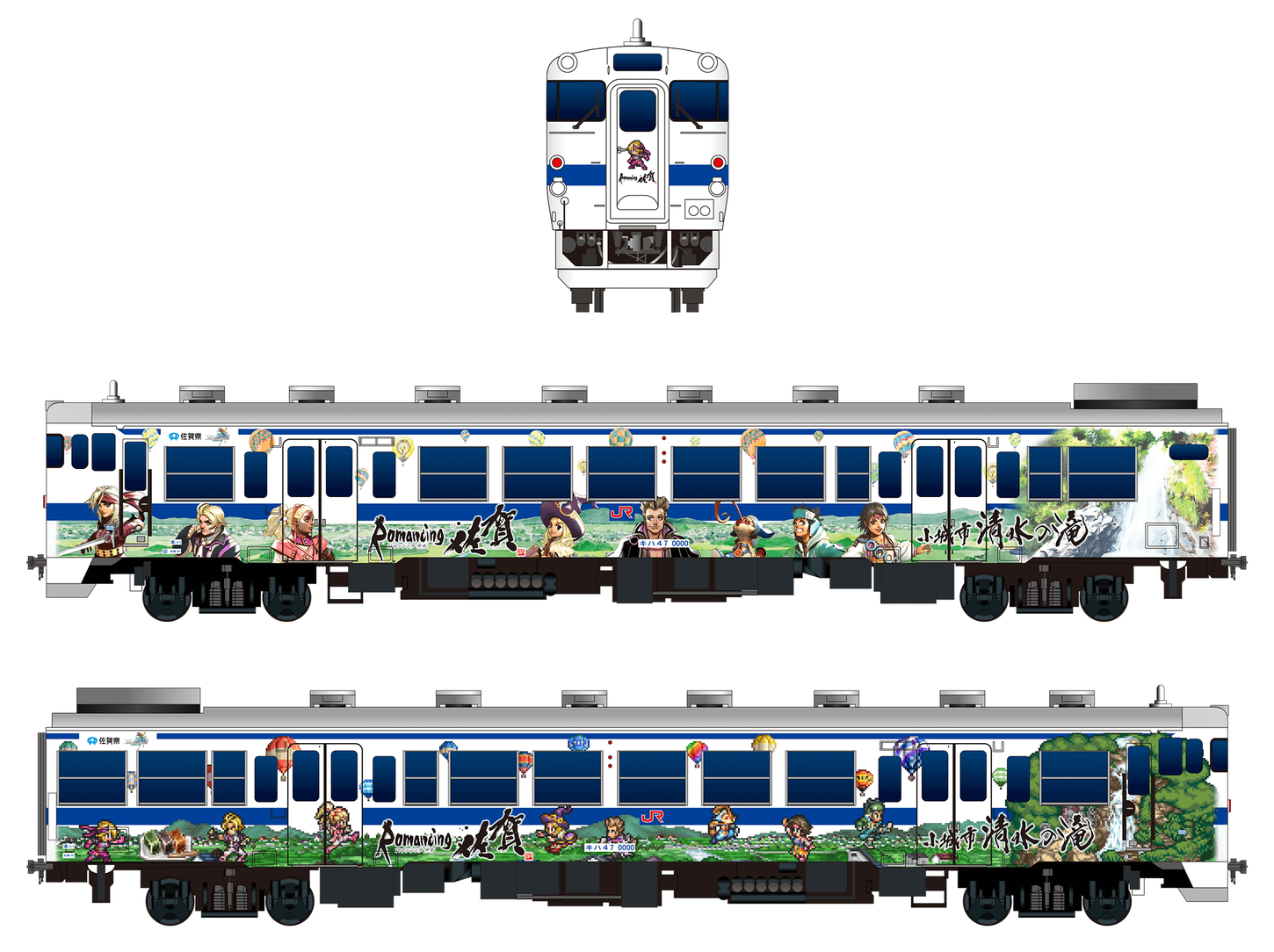
The car closest to where we were initially standing, which is the first car seen in the three photos above, is #9.
"Kiyomizu Falls" Train
Ogi City's Kiyomizu Falls × *Unlimited SaGa*
Character Illustration: Yusuke Naora
– https://romasaga.jp/2022/train, translated using Google.
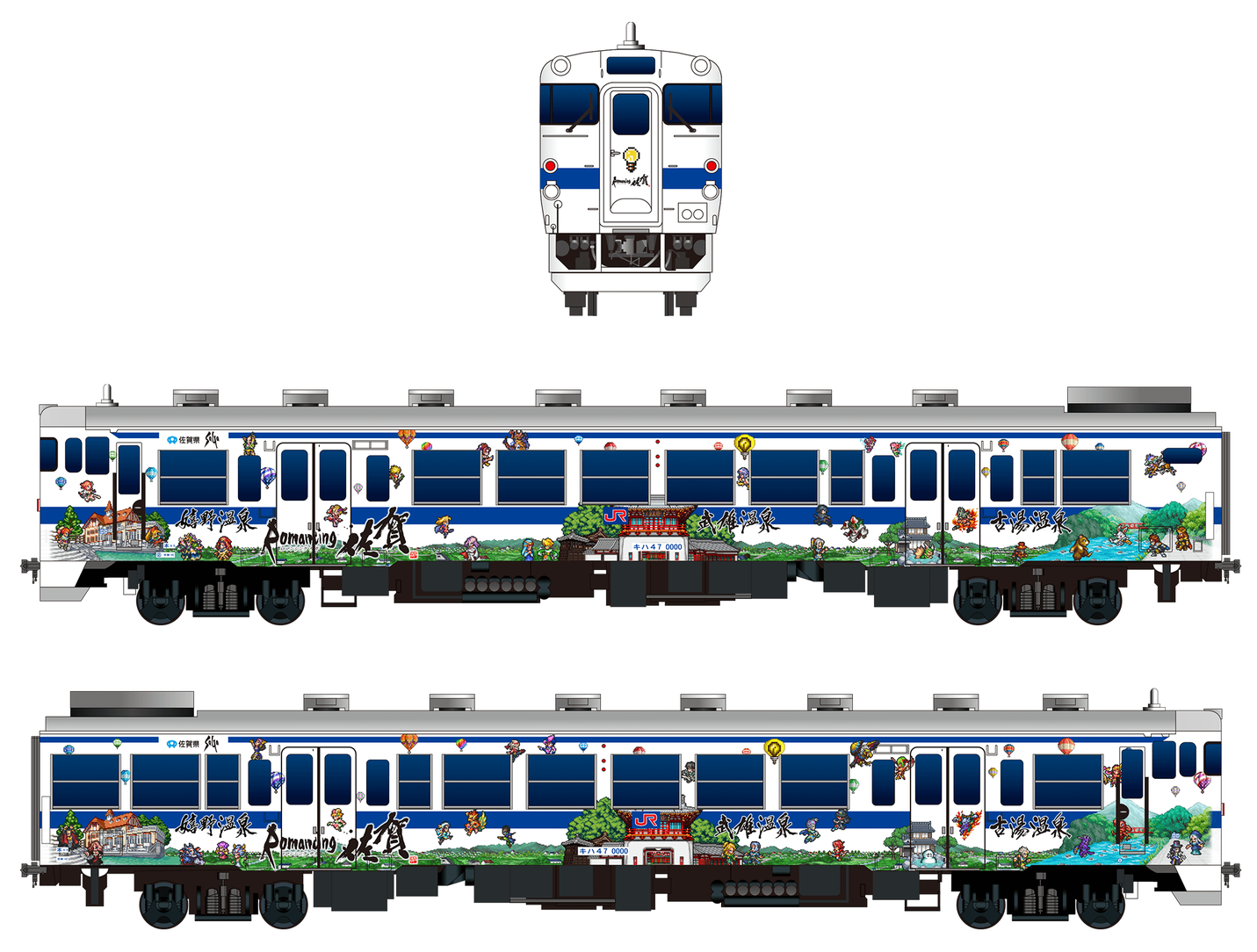
The other car is #16, described as simply SaGa風呂号 (SaGa Bath Train). It depicts Takeo Onsen so the name makes sense as onsen are thermal baths.
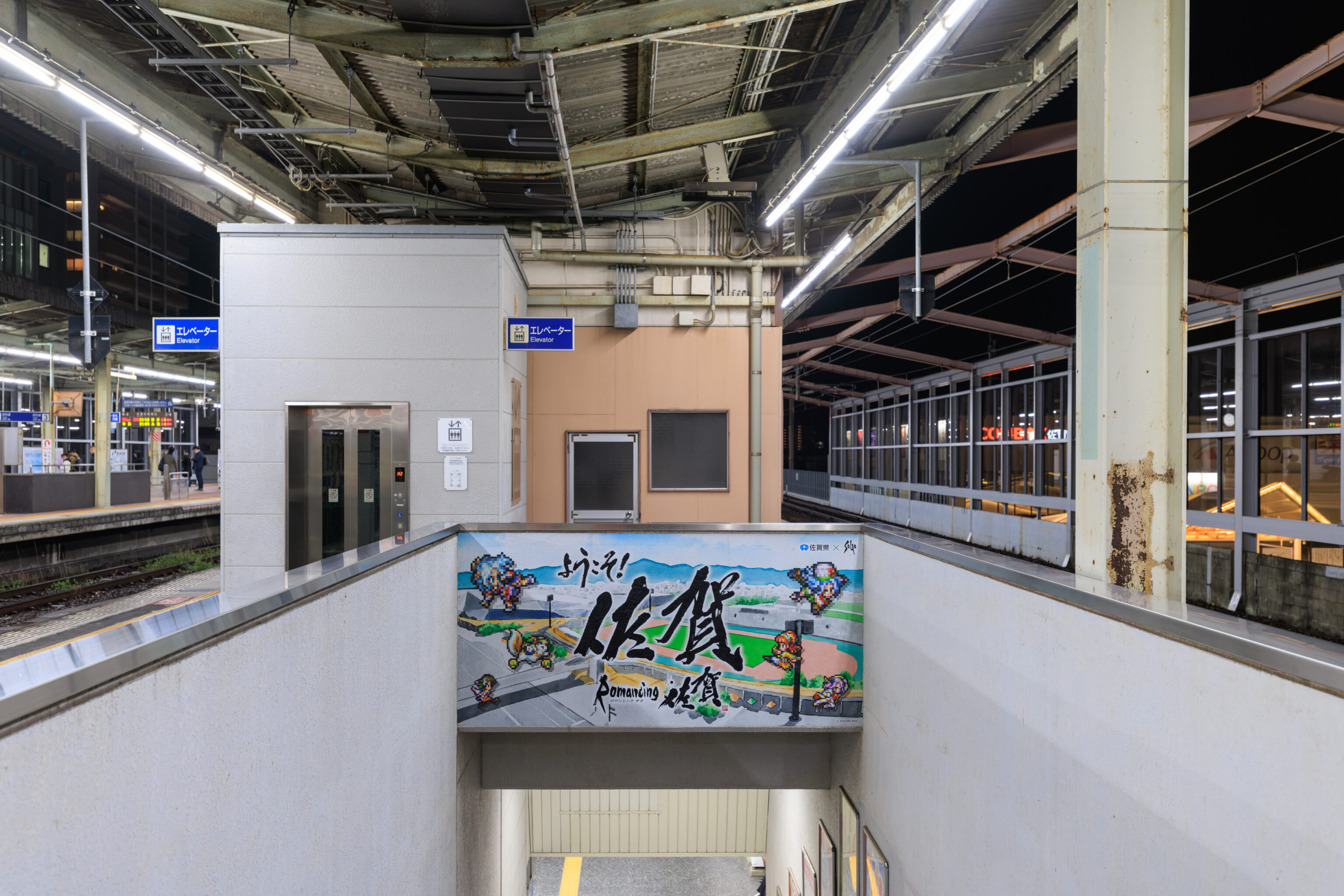
We also spotted a Romancing SaGa banner one on of the stairways down to ground level.
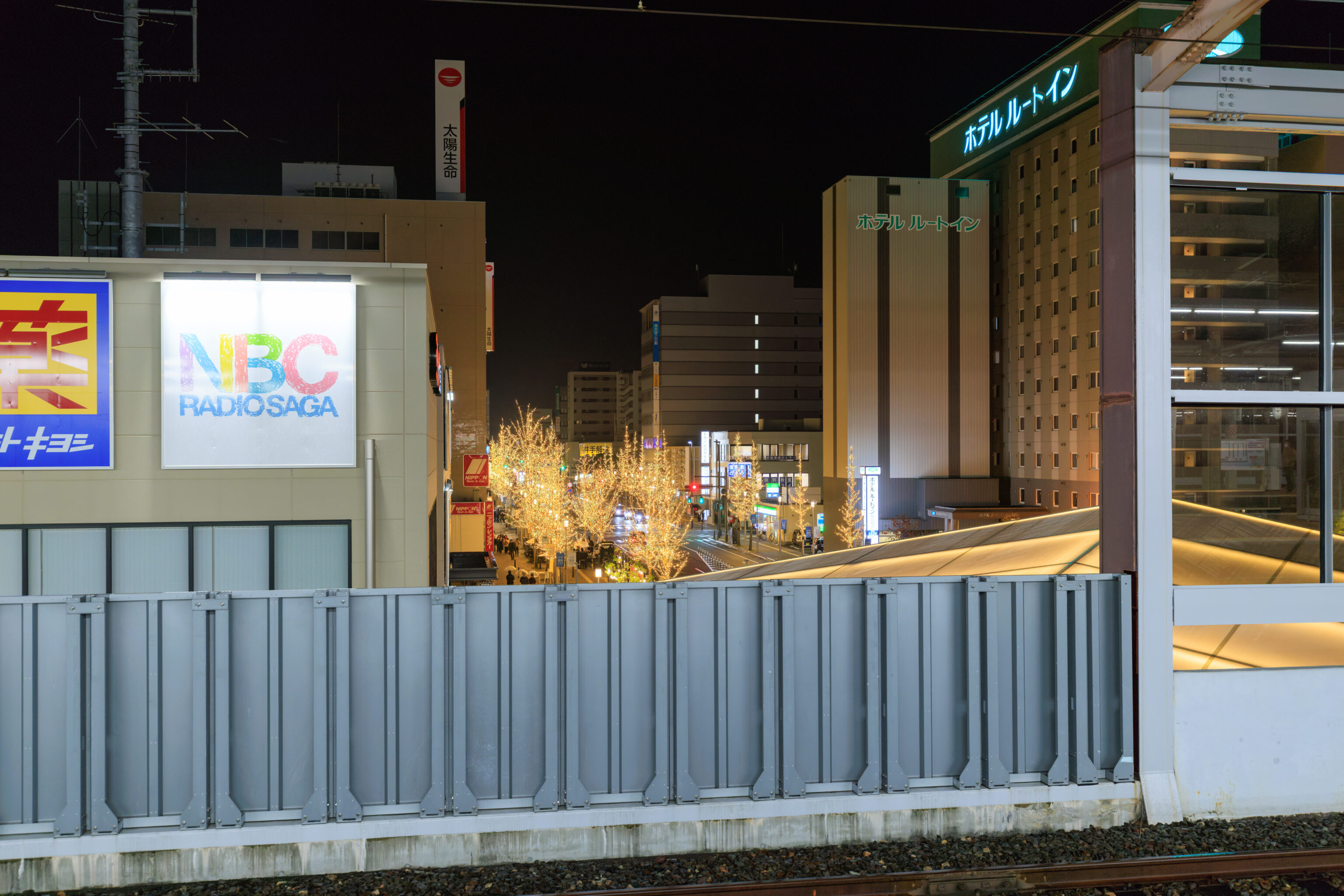
We saw this view from a different platform when we arrived.
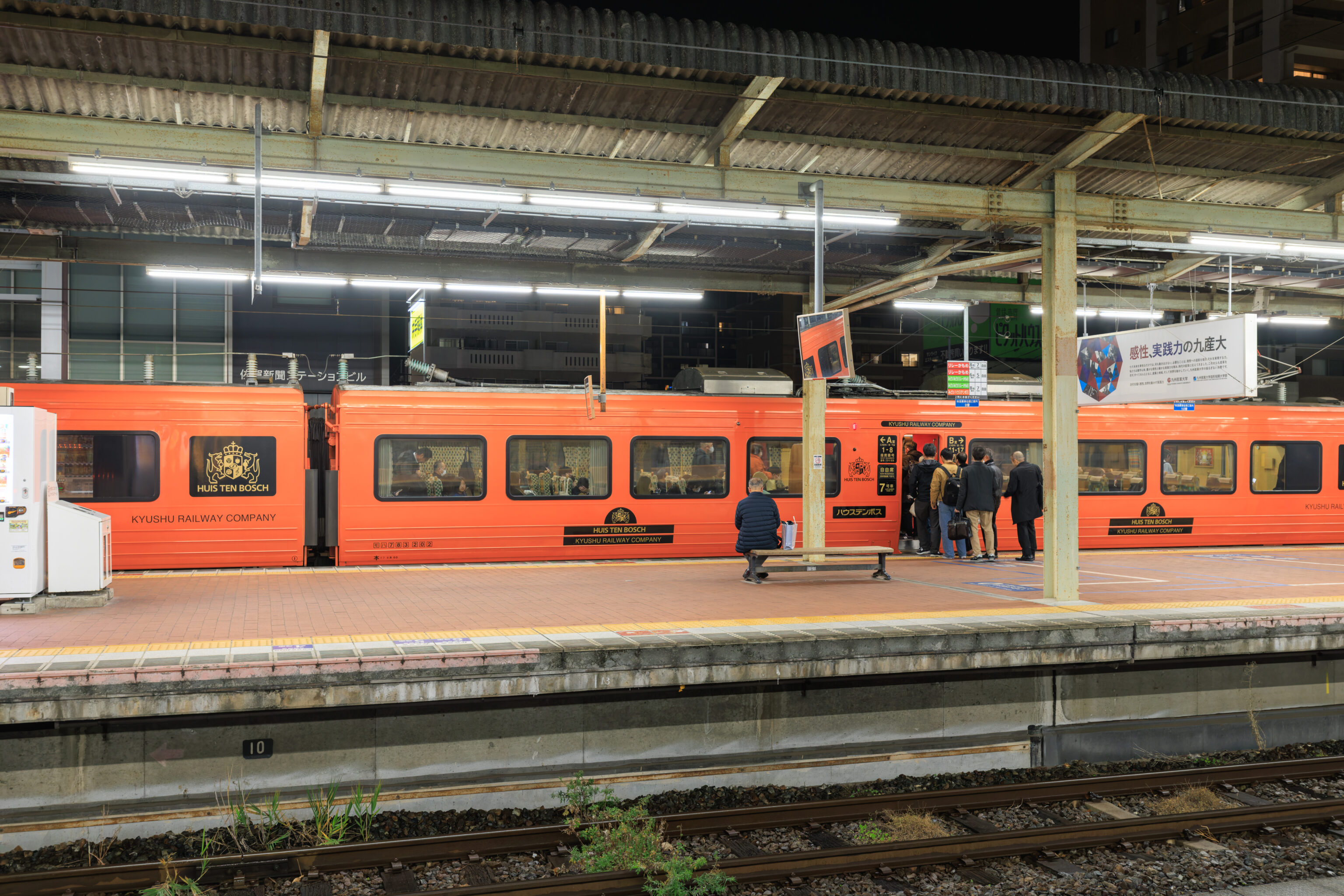
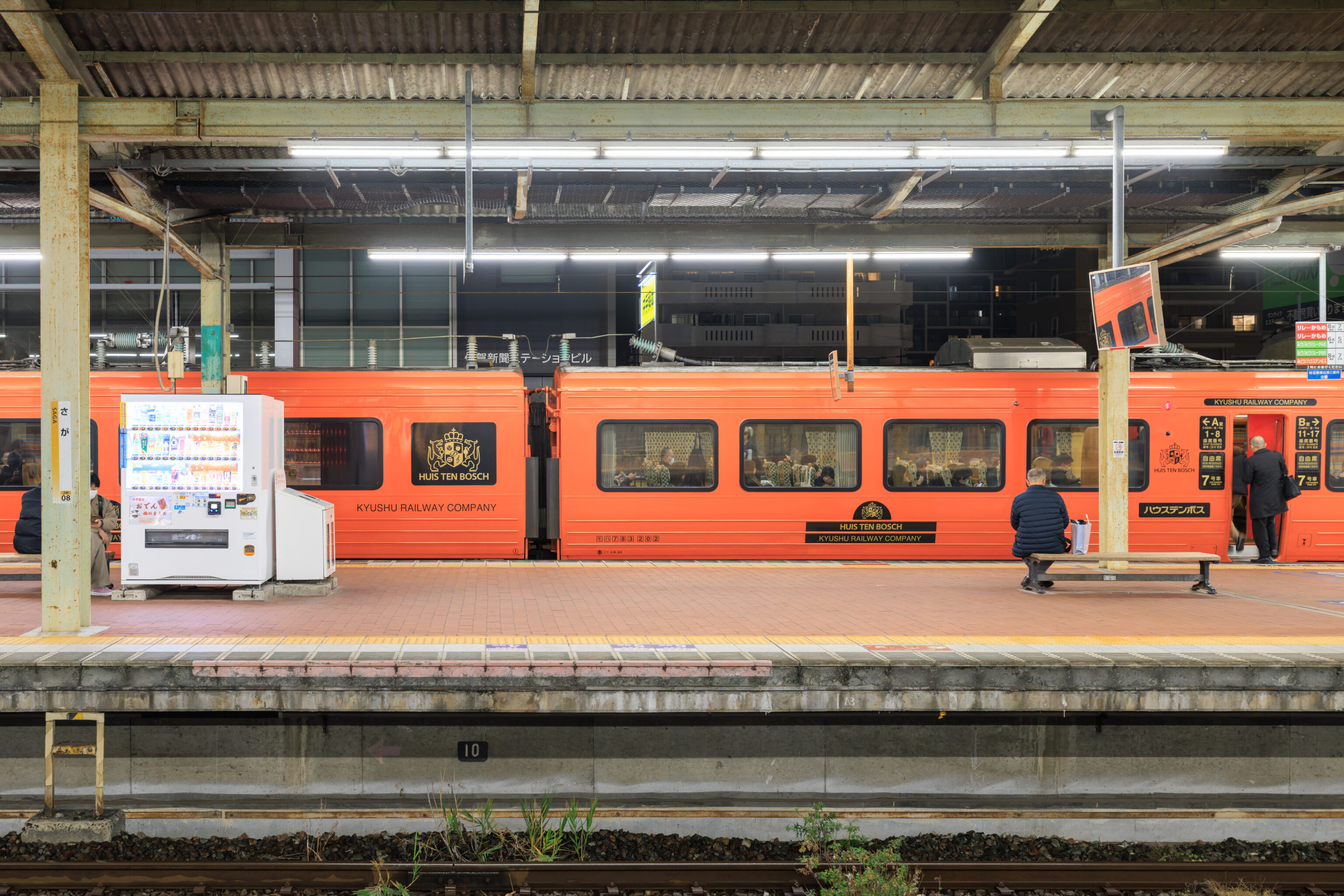
The Huis Ten Bosch is one of JR Kyushu’s limited express trains. If the name seems like it is Dutch, that’s because it is! Huis Ten Bosch is a Dutch themed theme park that opened in 1992. The train runs between the Huis Ten Bosch Station and Hakata Station.
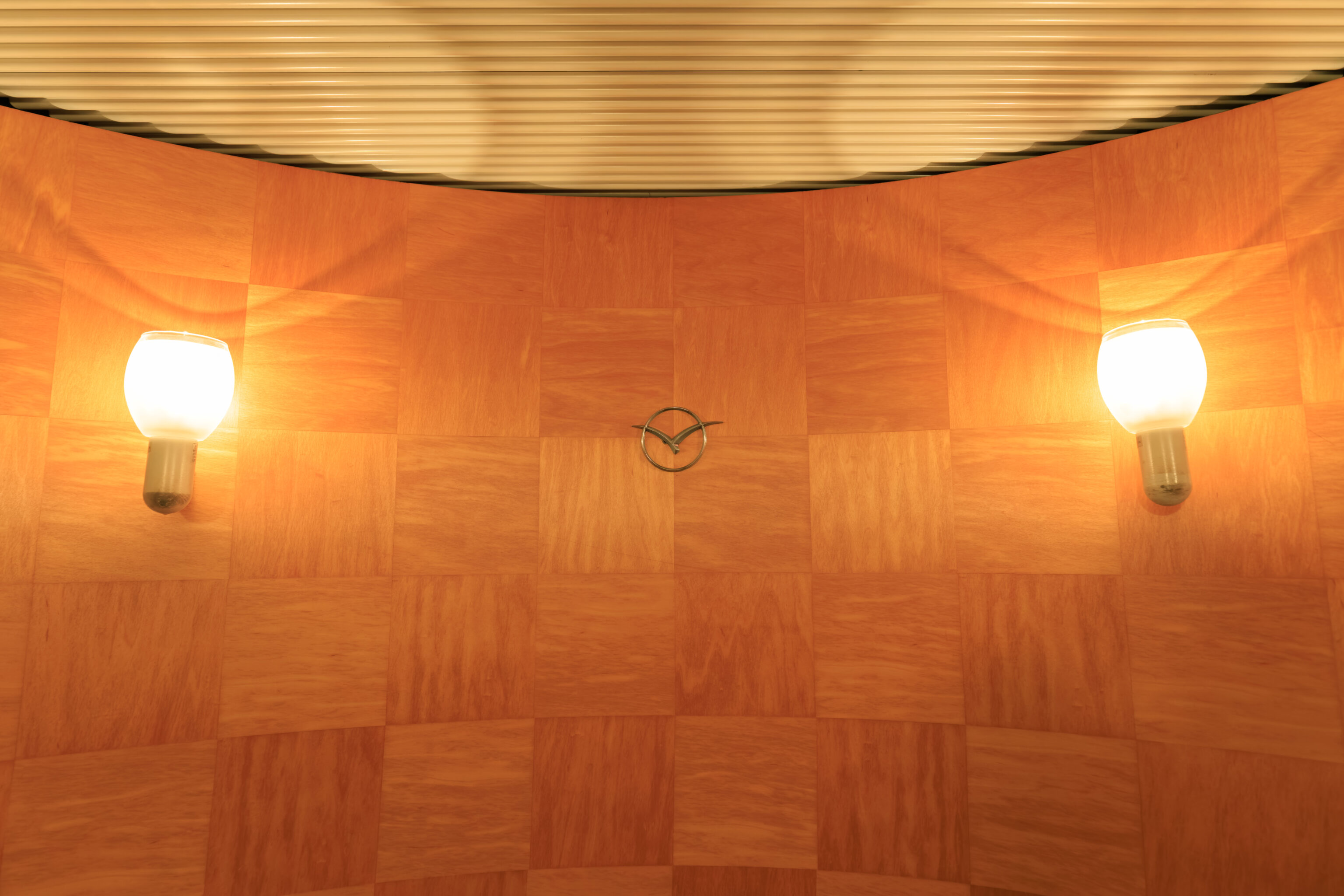
Our train had a Kamome logo, photographed as we were leaving the train after arriving at Takeo Onsen.
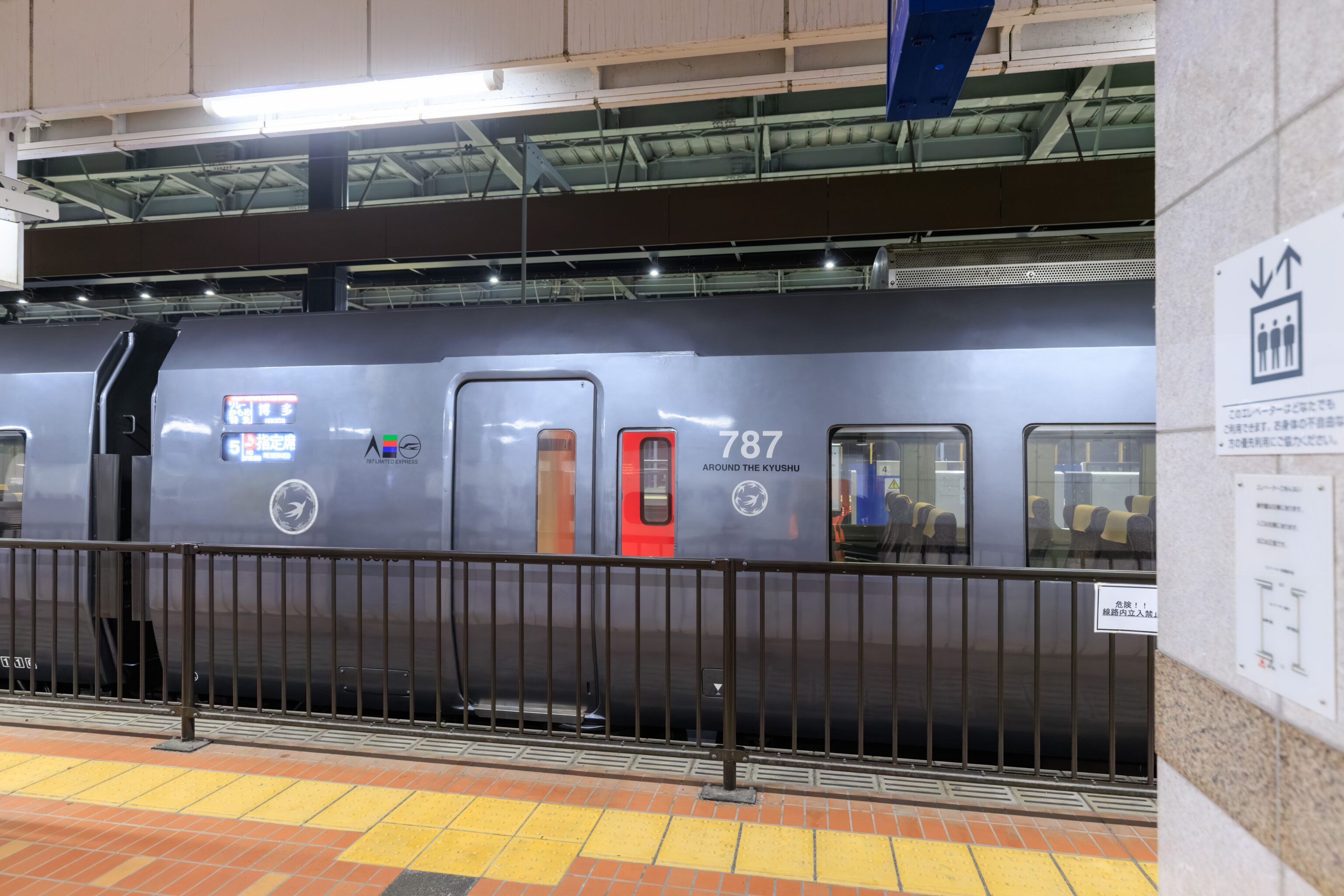
This darker train on the opposite platform is the Relay Kamome headed for Hakata. It looks like its doors will open on the opposite side where a platform is shared with the Shinkansen.
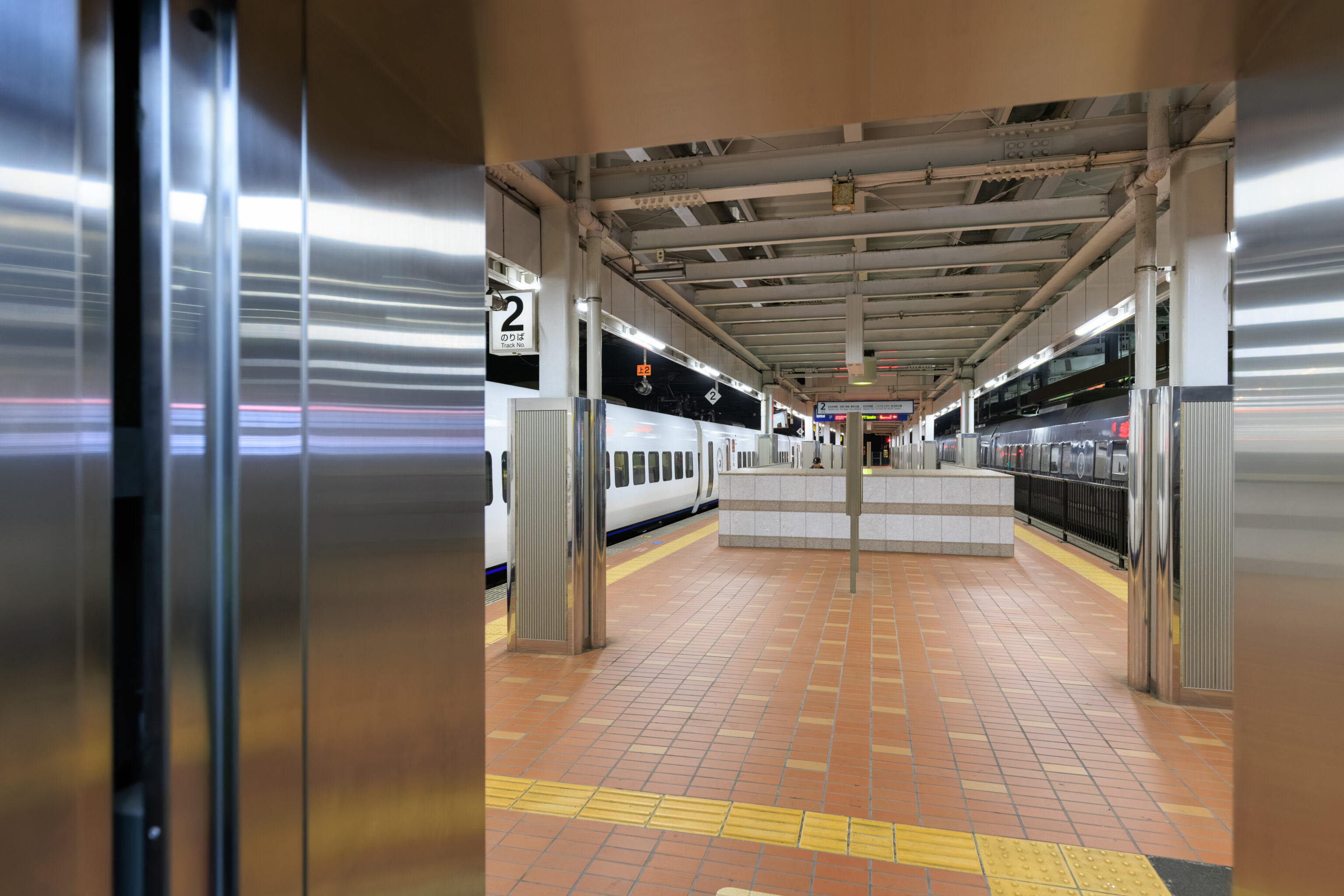
Our train was the white one on the left, seen here as we are about to descend in an elevator.
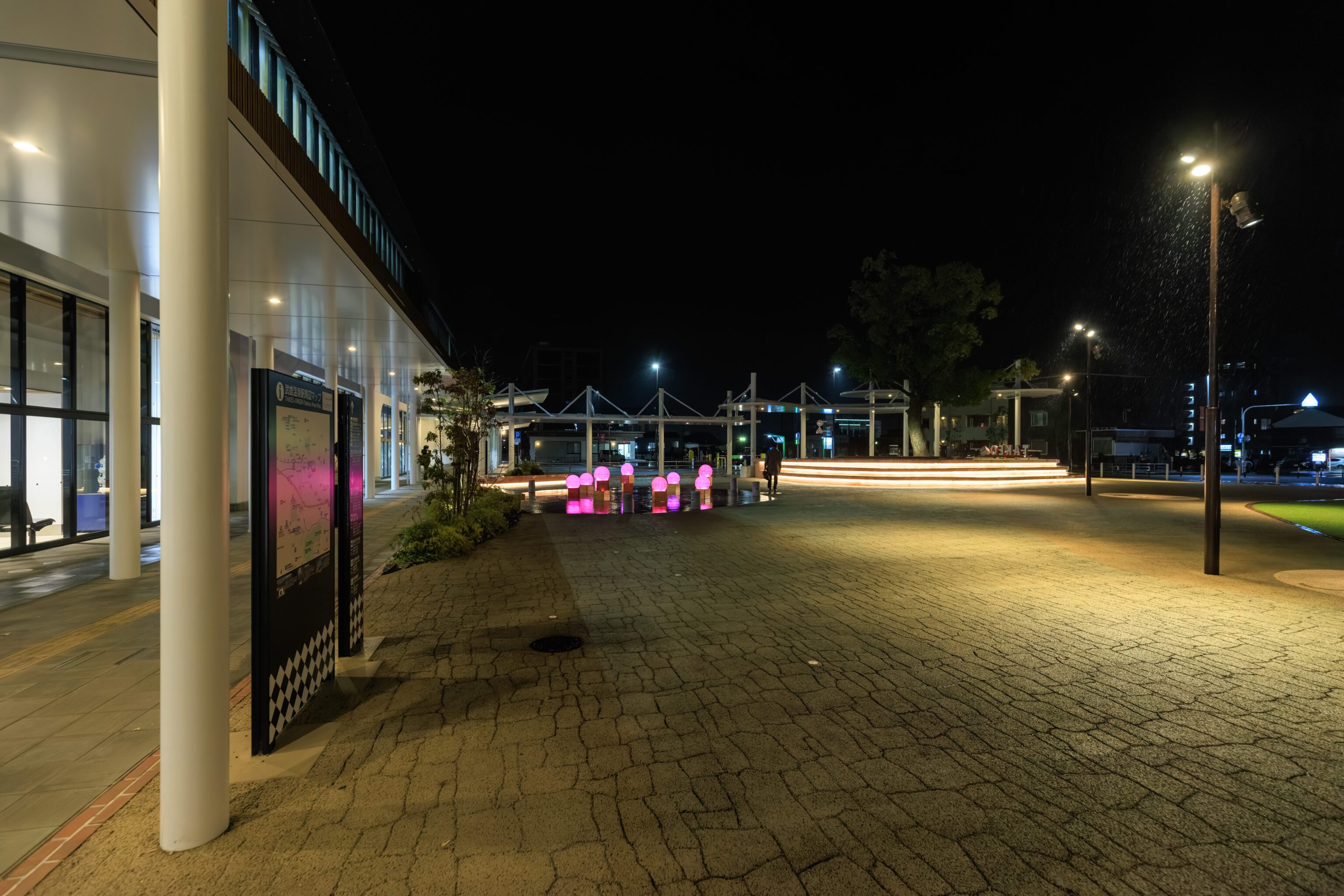
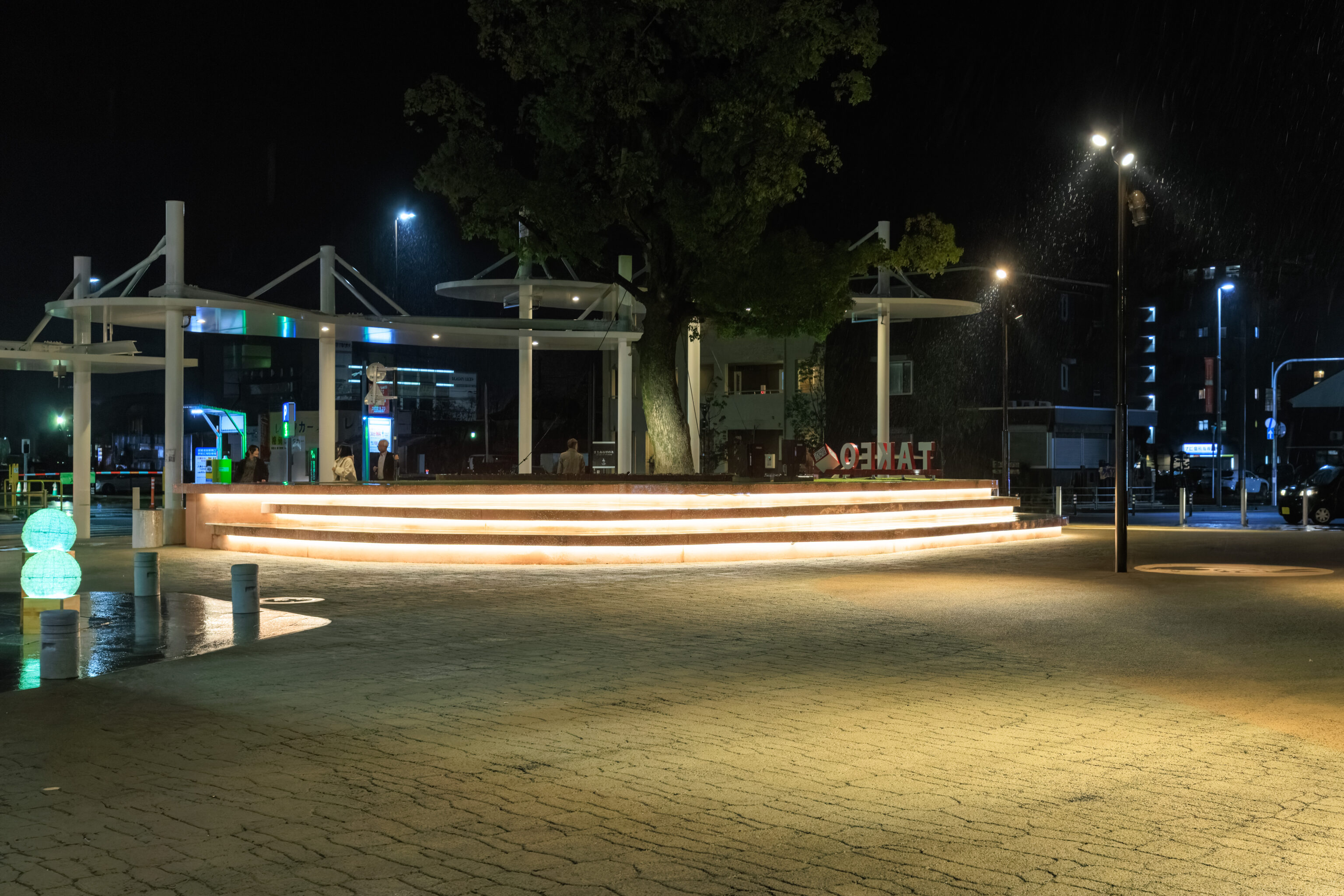
We decided to take a quick look around the Takeo Onsen station before returning to Hakata on the next Shinkansen. Unlike when we were here earlier, the Midori that we took was not a timed service with the Kamome.
It was pretty quiet here and it had started to rain. There are places worth visiting here but we likely will not have time on this trip.
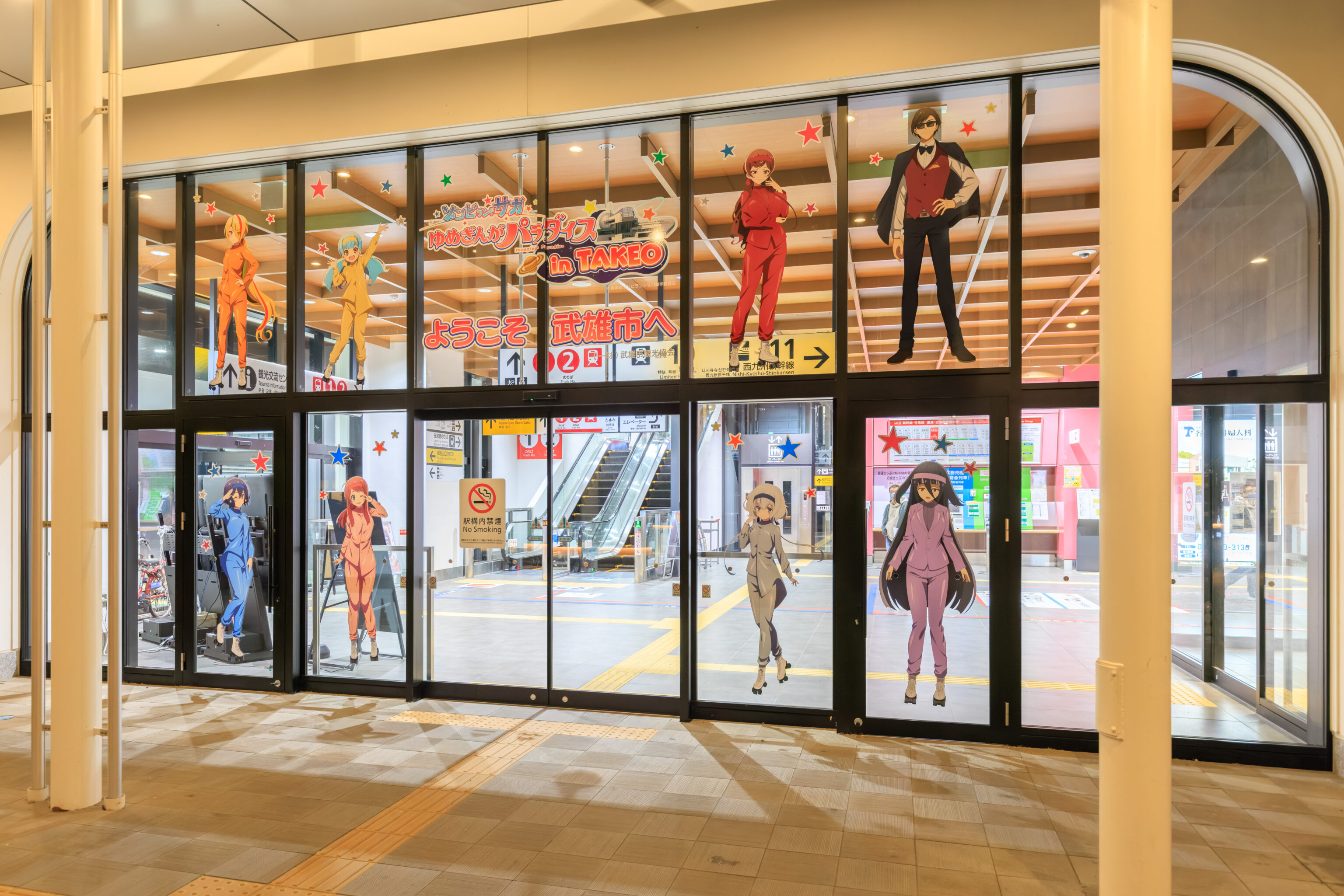
This is apparently a promotion with an anime, ゾンビランドサガ Zombie Land Saga. The Saga in the title does indeed refer to Saga Prefecture. The plot is, well, its best to just read the Wikipedia article…
This display seems to be advertising Zombie Land Saga: Yumeginga Paradise. ゆめぎんが Yumeginga is the Saga Prefectural Space and Science Museum.
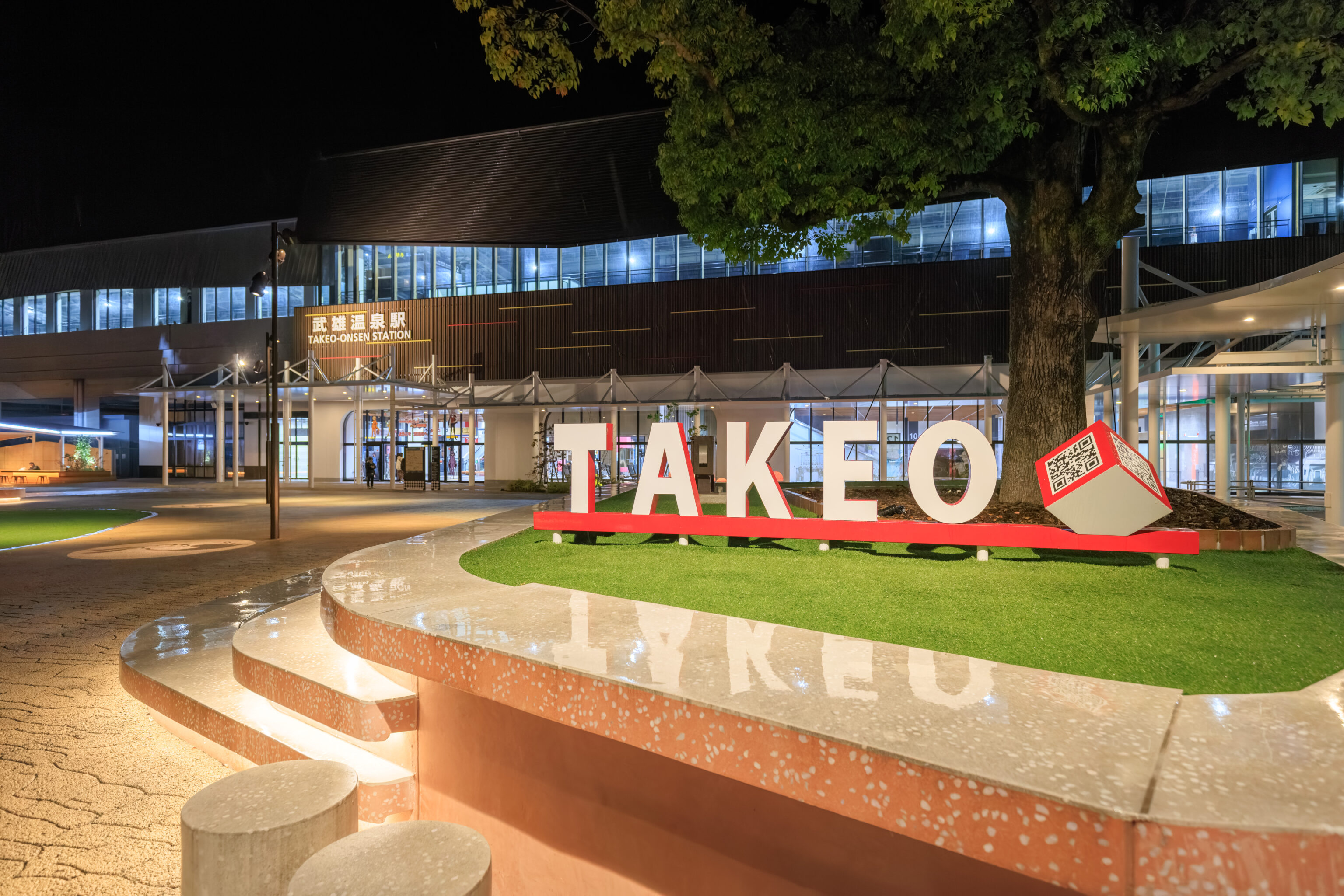
I ended up running back out in the rain to photograph this Takeo sign… The QR code on the cube scans to the Takeo City Tourist Association.
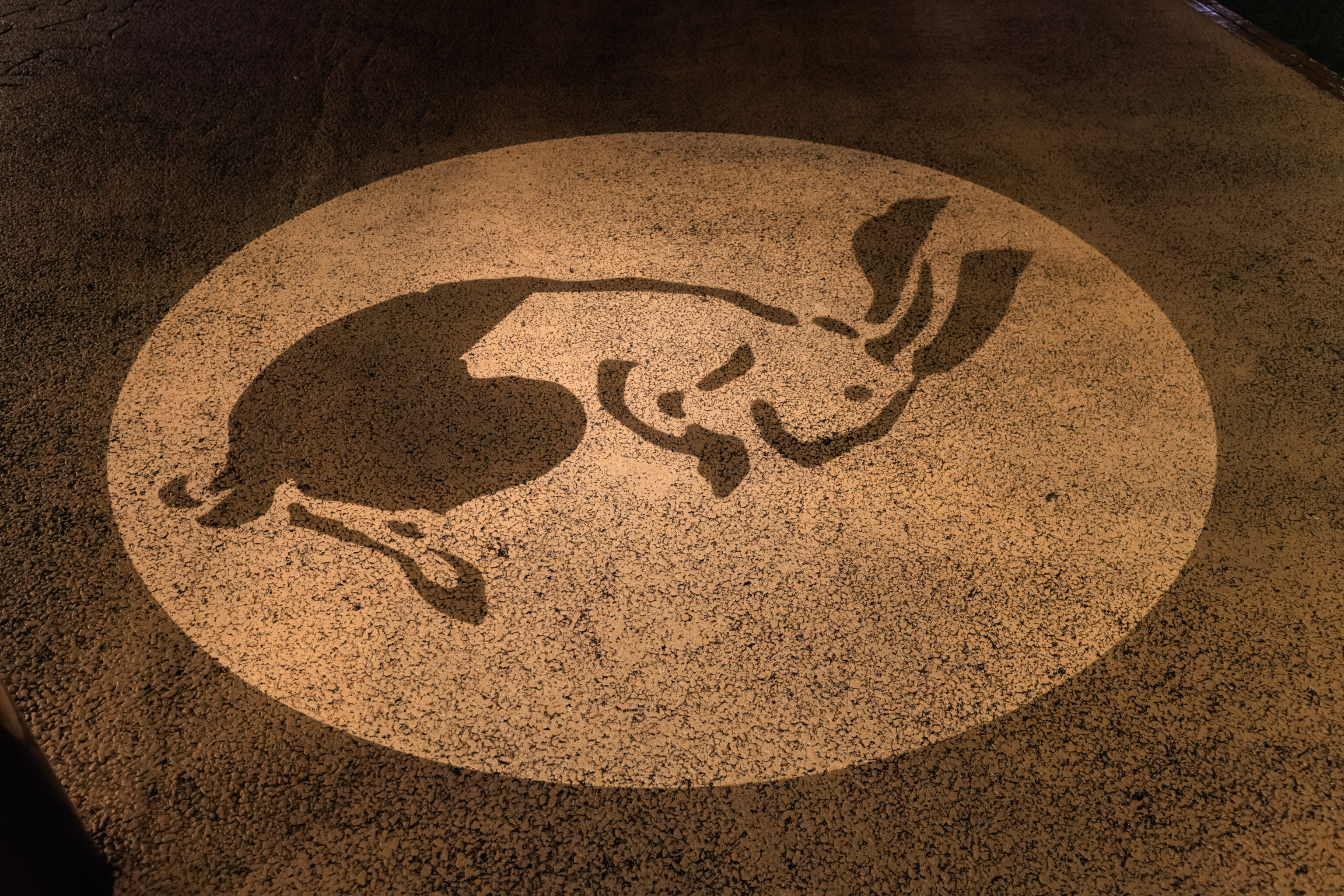
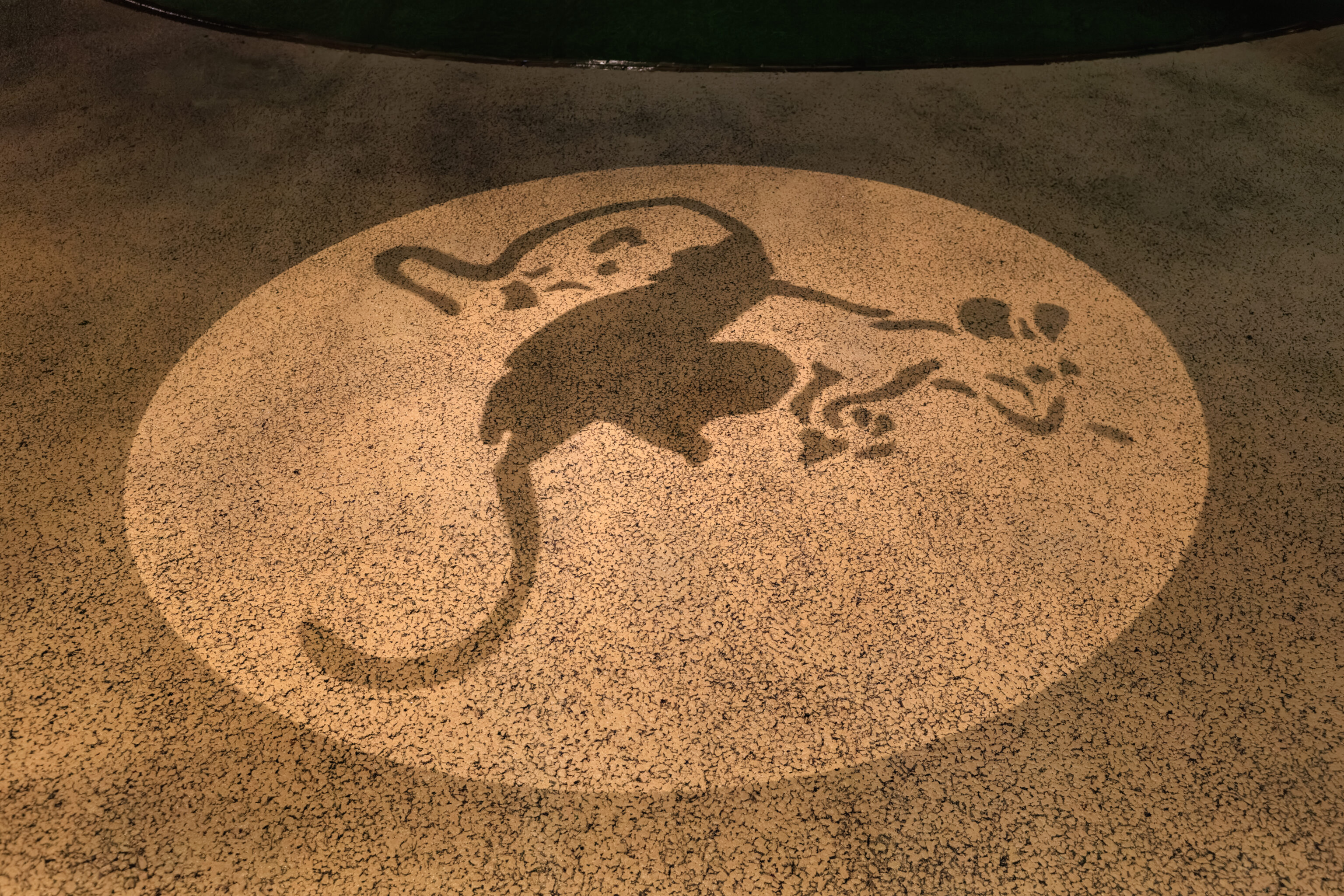
There were illuminated images, or rather shadow images, projected on the ground.
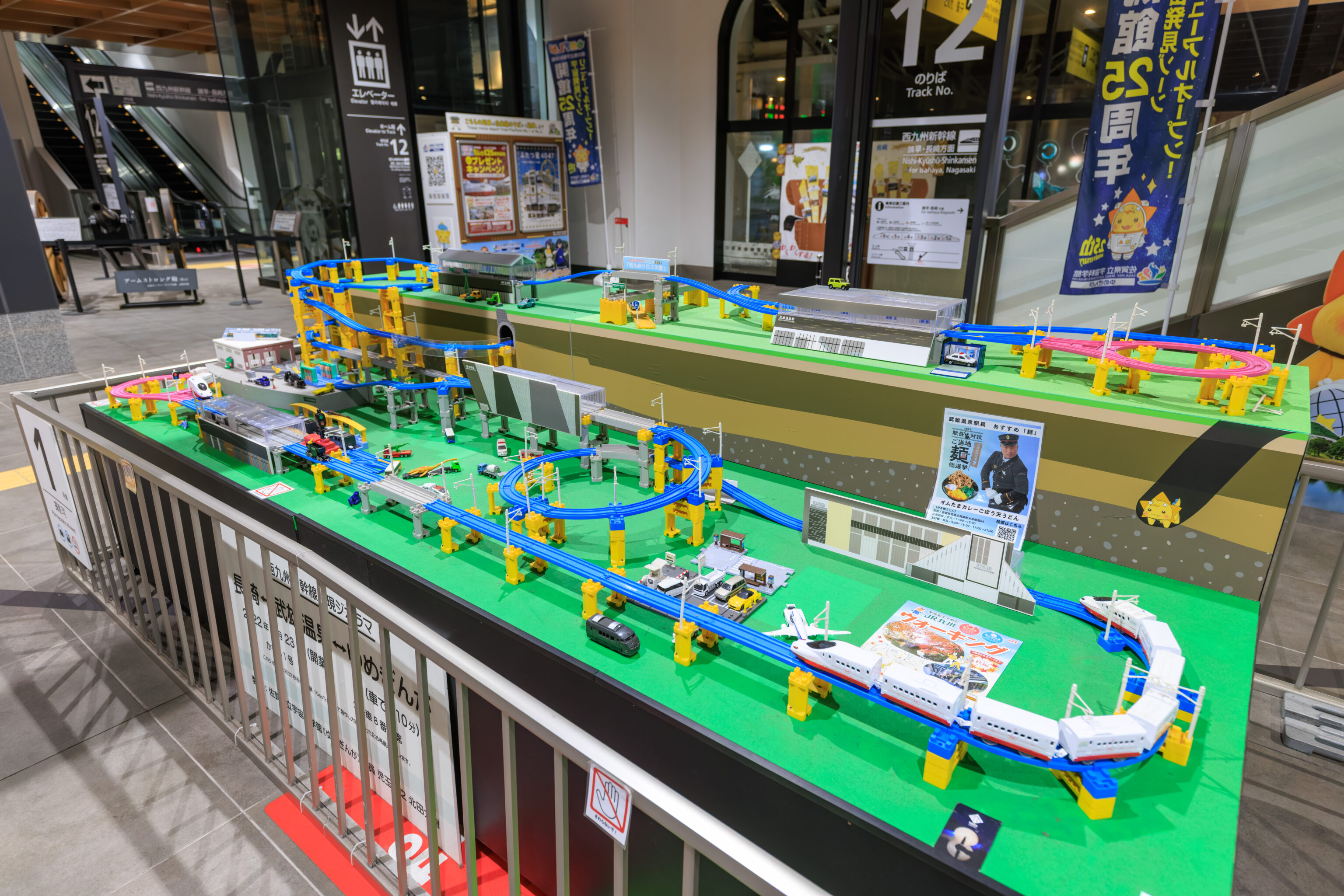
Inside the station, there was a building block Shinkansen track. And what looks like a burrowing Pokemon? No, it is apparently ウーたん Uutan, the mascot of the Yumeginga. There is apparently an asteroid named after Yumeginga, 12746 Yumeginga. Uutan was born on this asteroid.
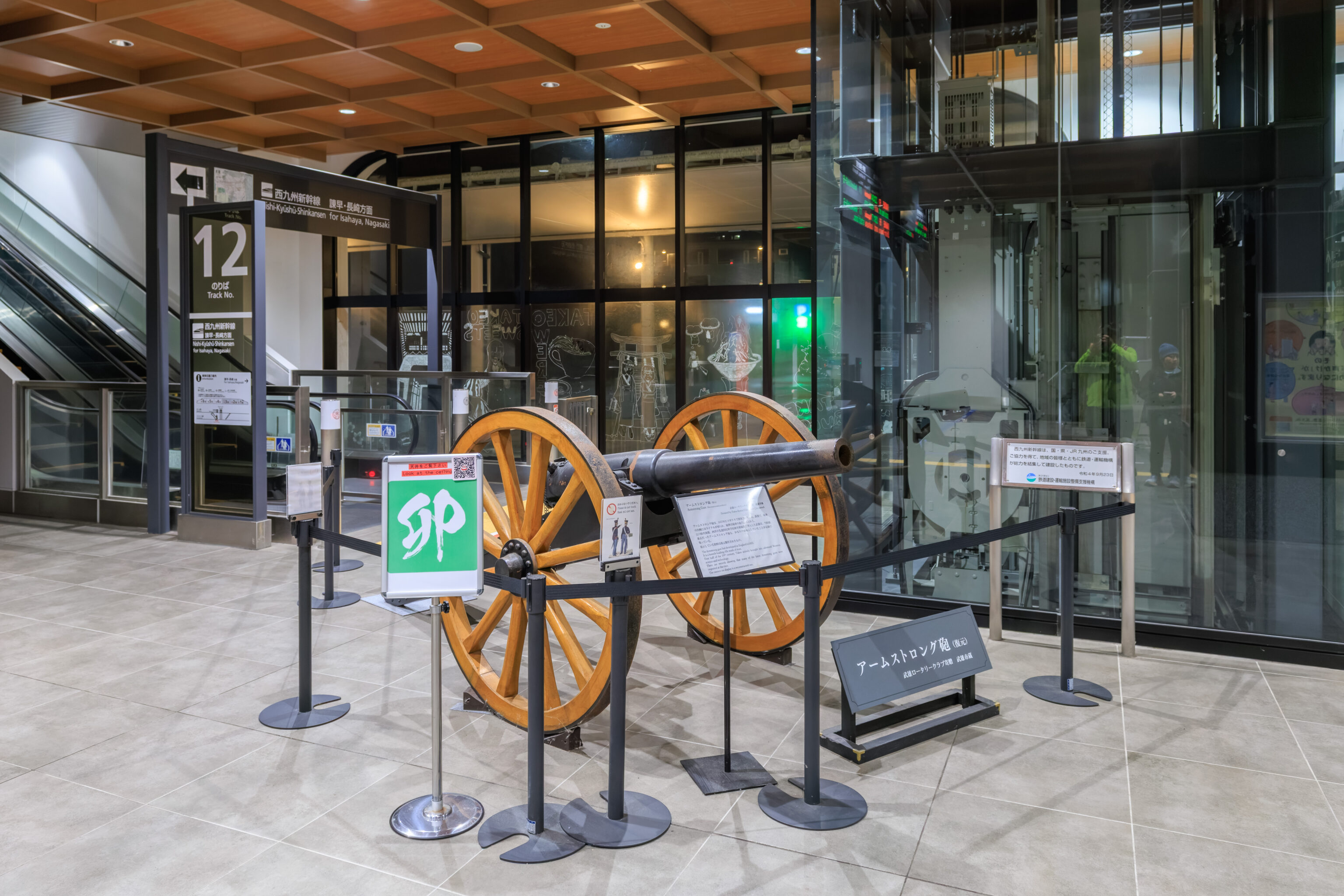
There was also a cannon, more specifically, an Armstrong Gun from England.
The Armstrong gun had developed in England in 1855. It is a breech-loading rifle made of iron. Fiest half of the 19th century, Takeo actively brought into advanced Western science and technology. There are records showing that many of the latest Armstrong guns were imported at the time. The cannon on display is a reconstructed one.
– Text from a sign in front of the cannon.
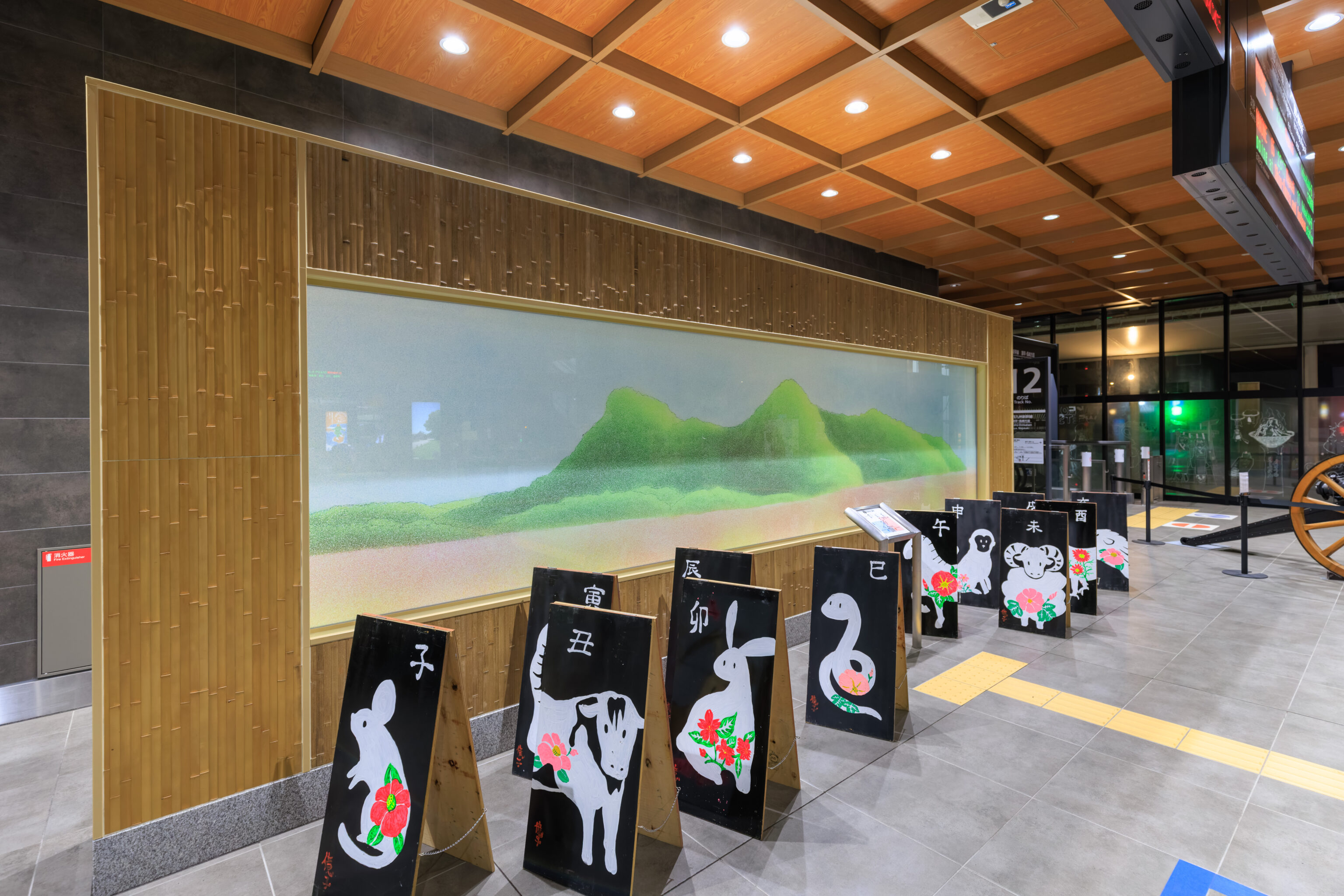
This display contains illustrations of the twelve animals of the zodiac.
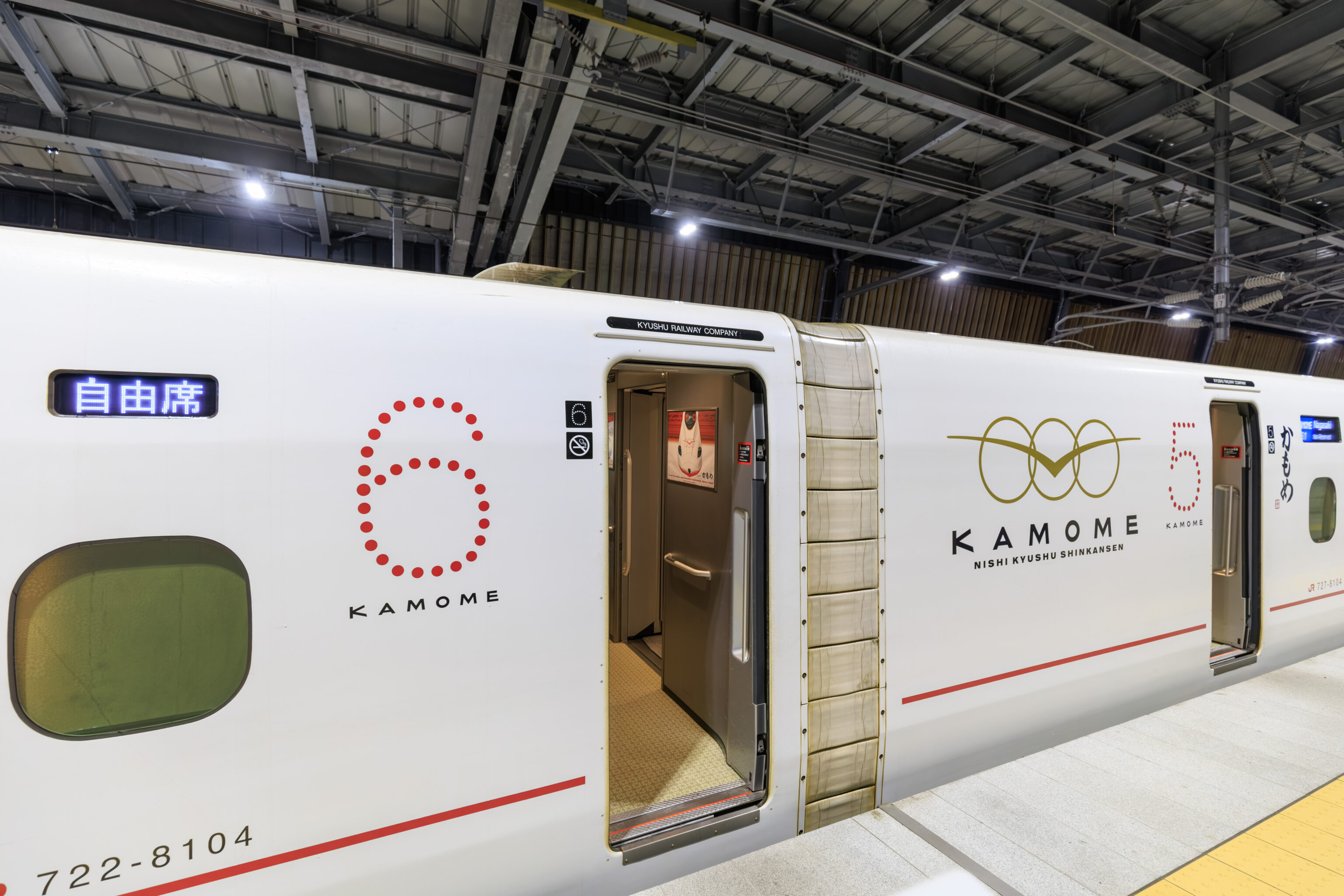
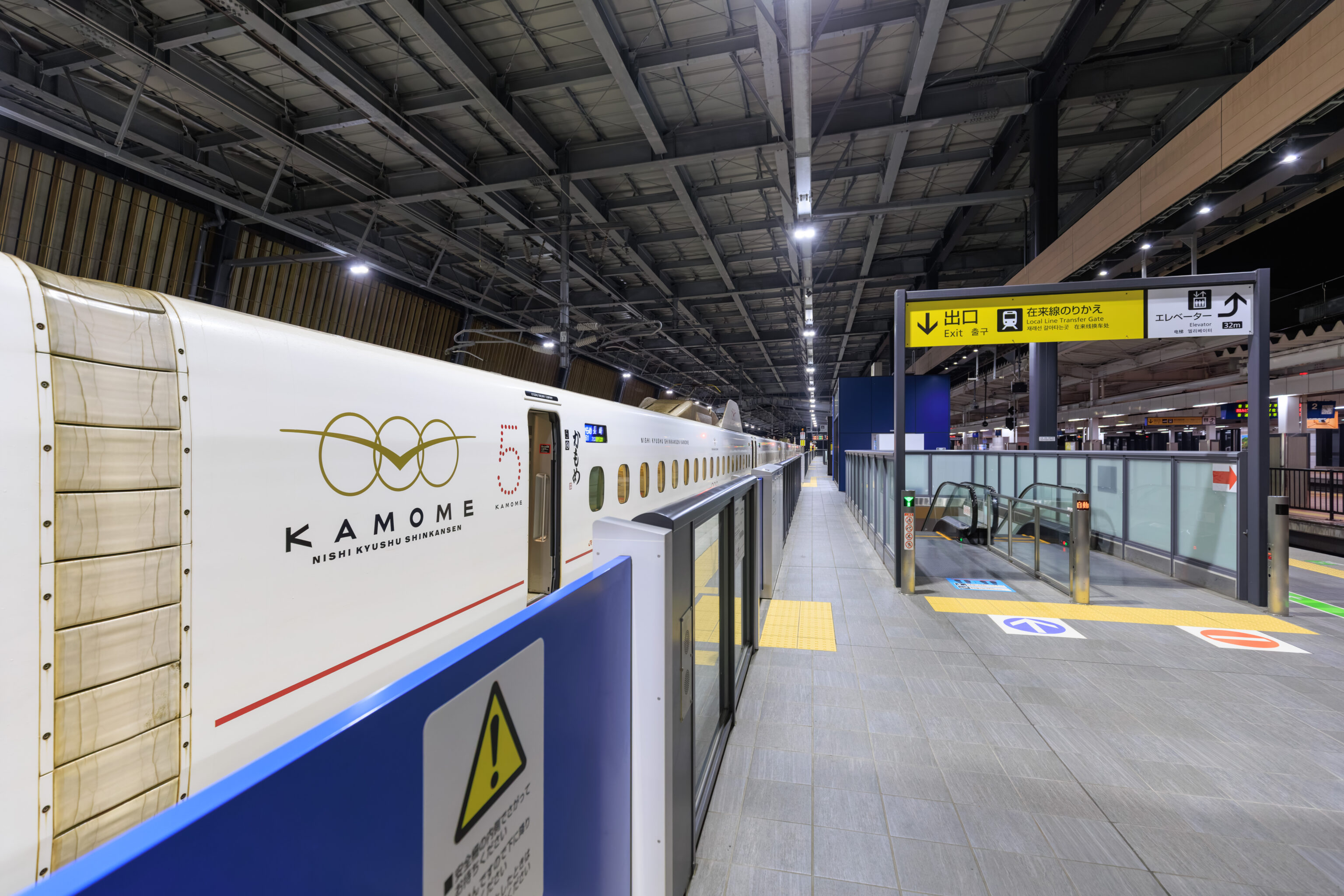
The Kamome Shinkasen was on the platform when we arrived. We had to wait a bit to board.
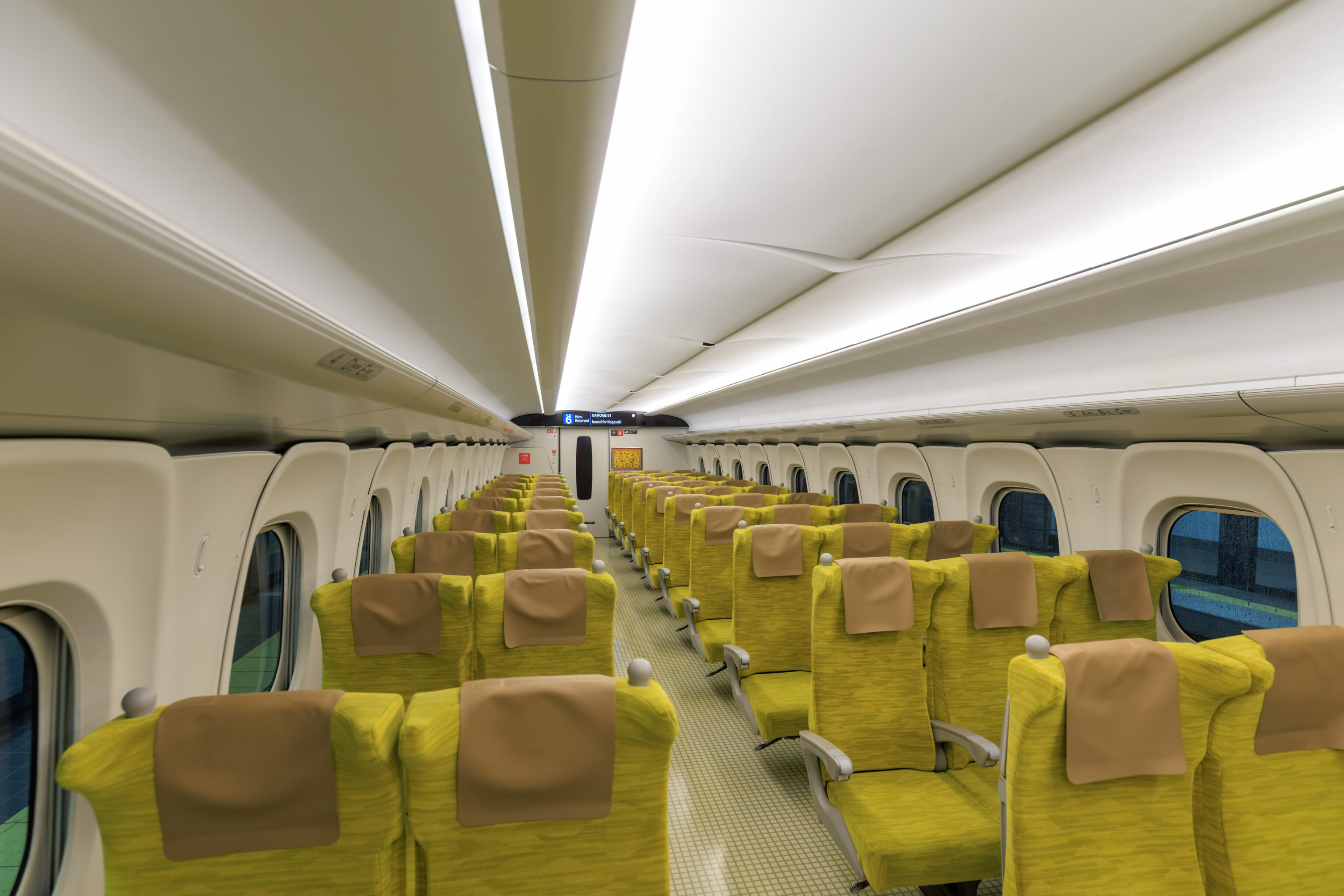
The interior of the Shinkansen looks pretty much like all the other Shinkansen.
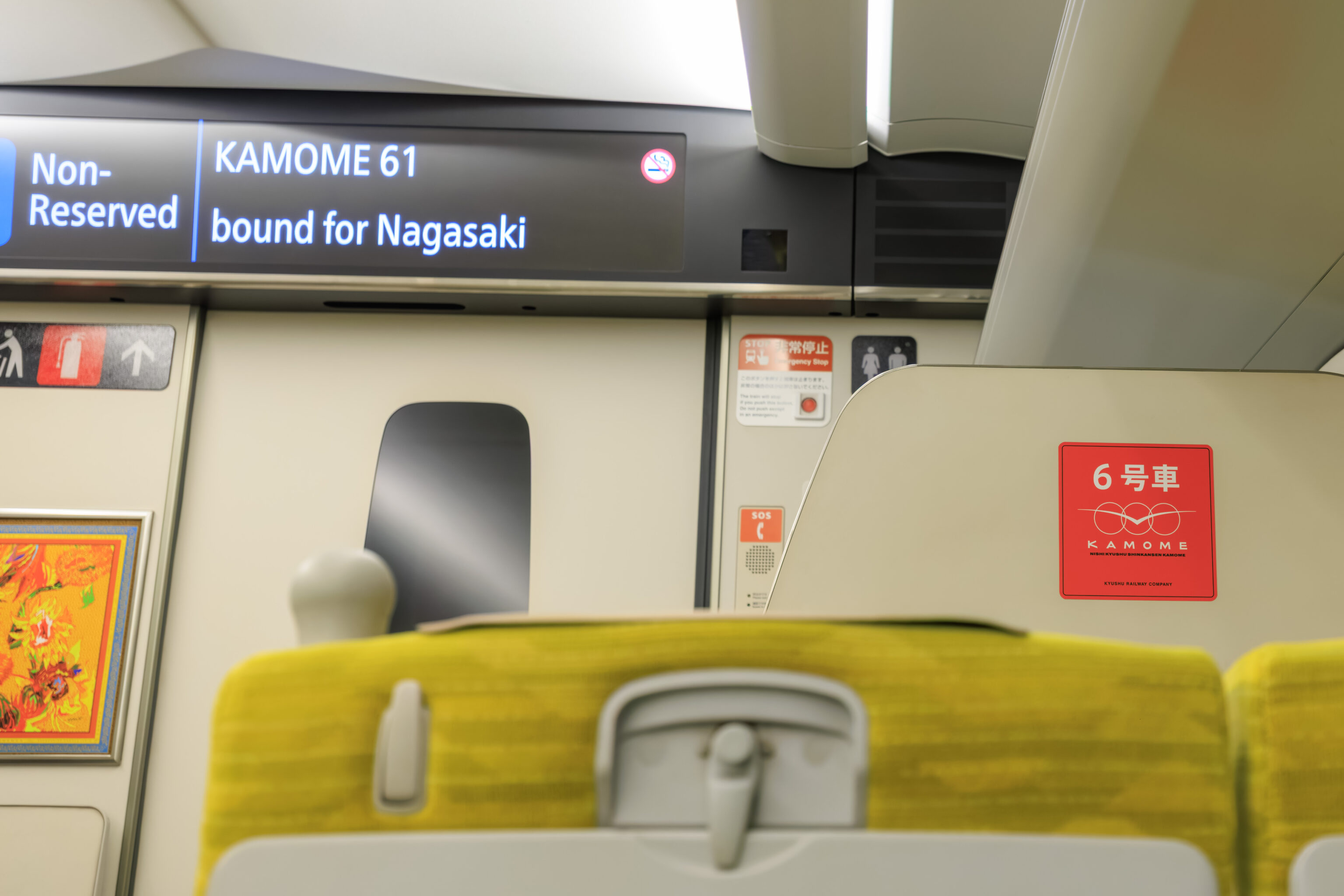
Although, the ceiling did have wing-like elements that were reminiscent of the Kamome logo, seen here on the right.
We made it back at around 10:45pm…
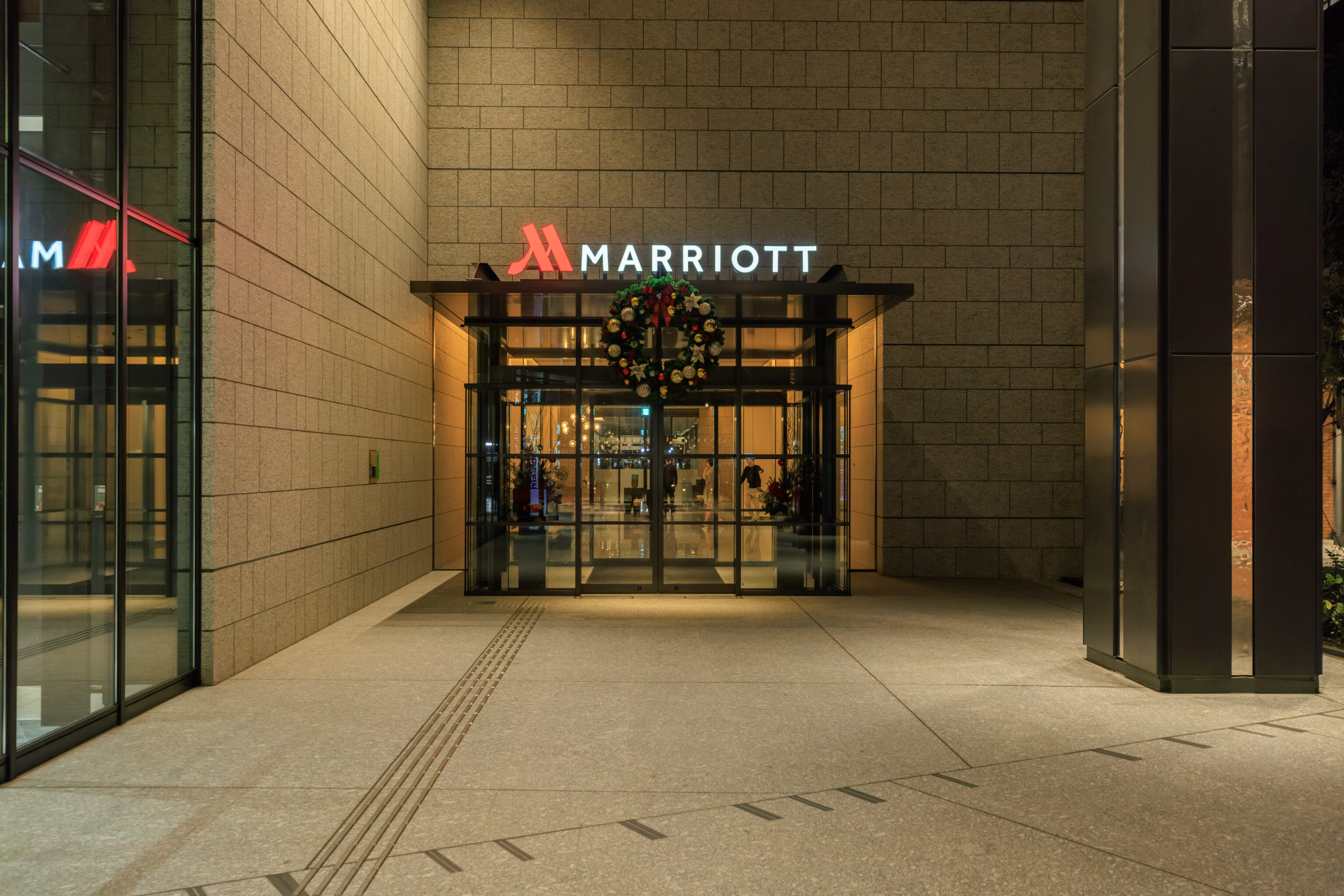
And headed back into the Marriott.
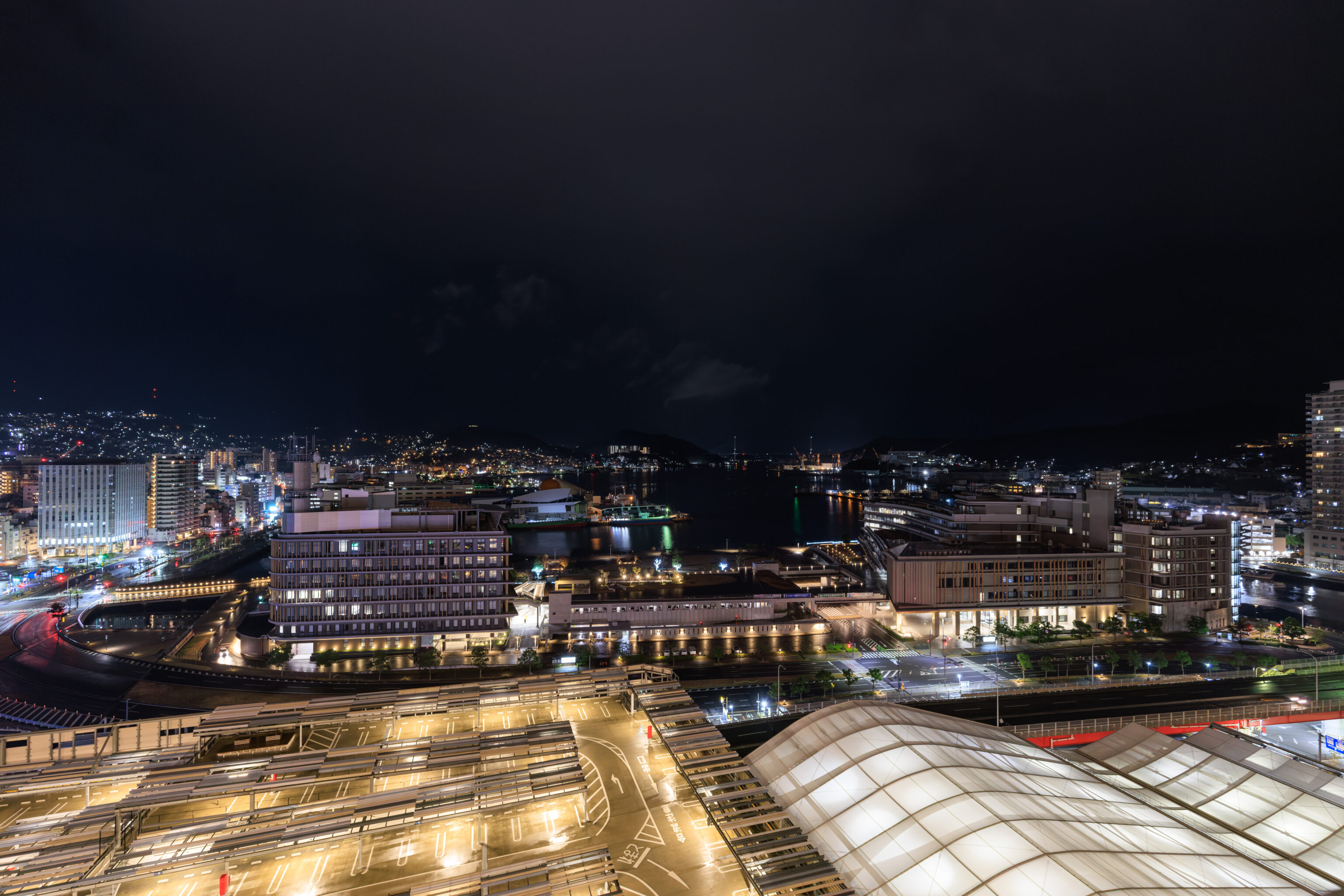
The night view from our balcony!
- Exploring Saga City, Visit Kyushu. https://www.visit-kyushu.com/en/blogs/exploring-saga-city-and-sake-street/ ↩︎