
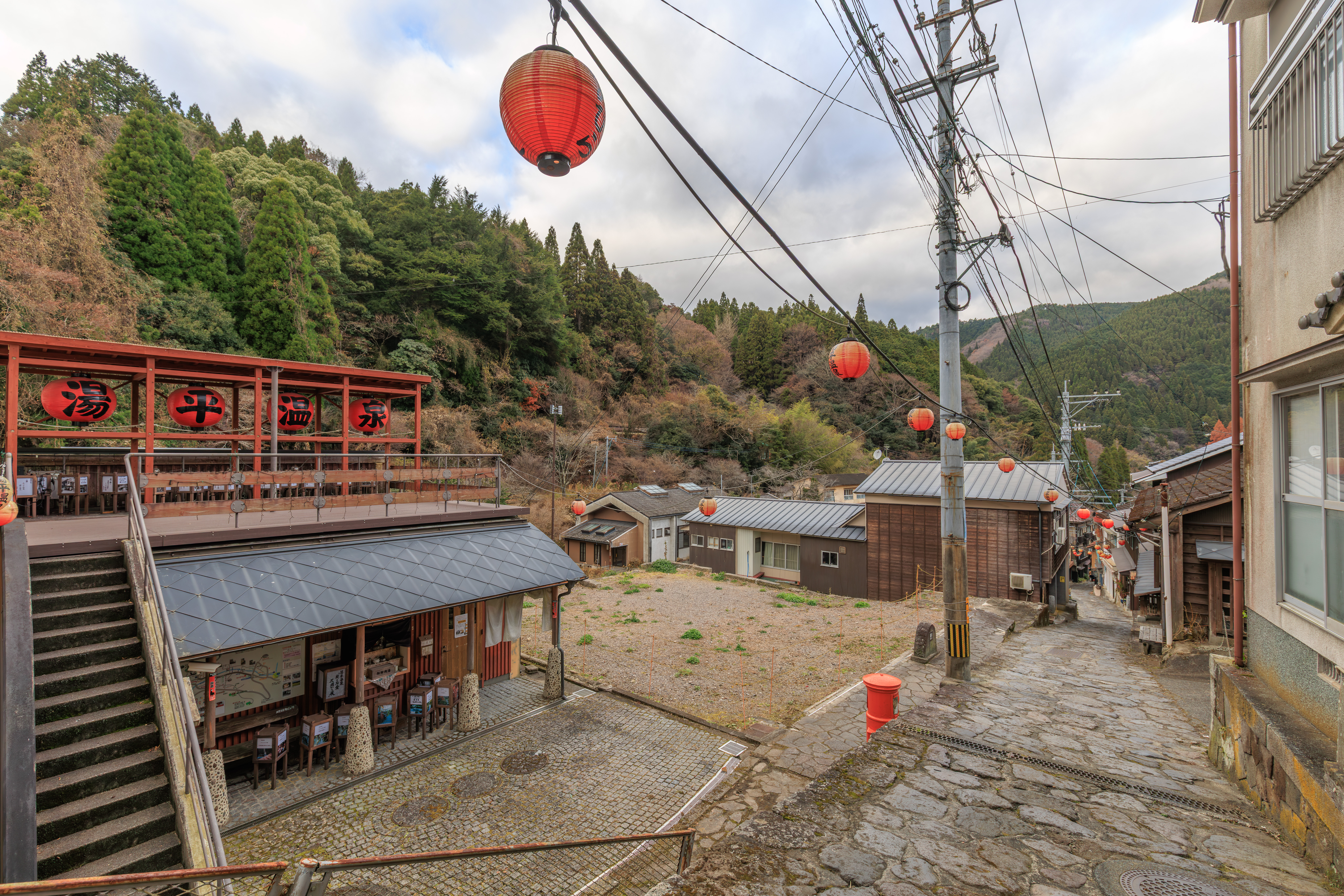
After waking up at the Grand Hyatt Fukuoka, we walked around the Tenjin neighborhood for a bit and had a mentaiko lunch. We then checked out and took the JR Kyushu limited express Yufu over to Yunohira, a small rural onsen village in northeastern Kyushu near Beppu and Yufuin. Upon arrival, we checked in to the ゆのひら上柳屋 Yunohira Kamiyanagiya, a seven room onsen ryokan, and went out to explore the village before returning to enjoy the ryokan’s dinner and onsen.
Morning
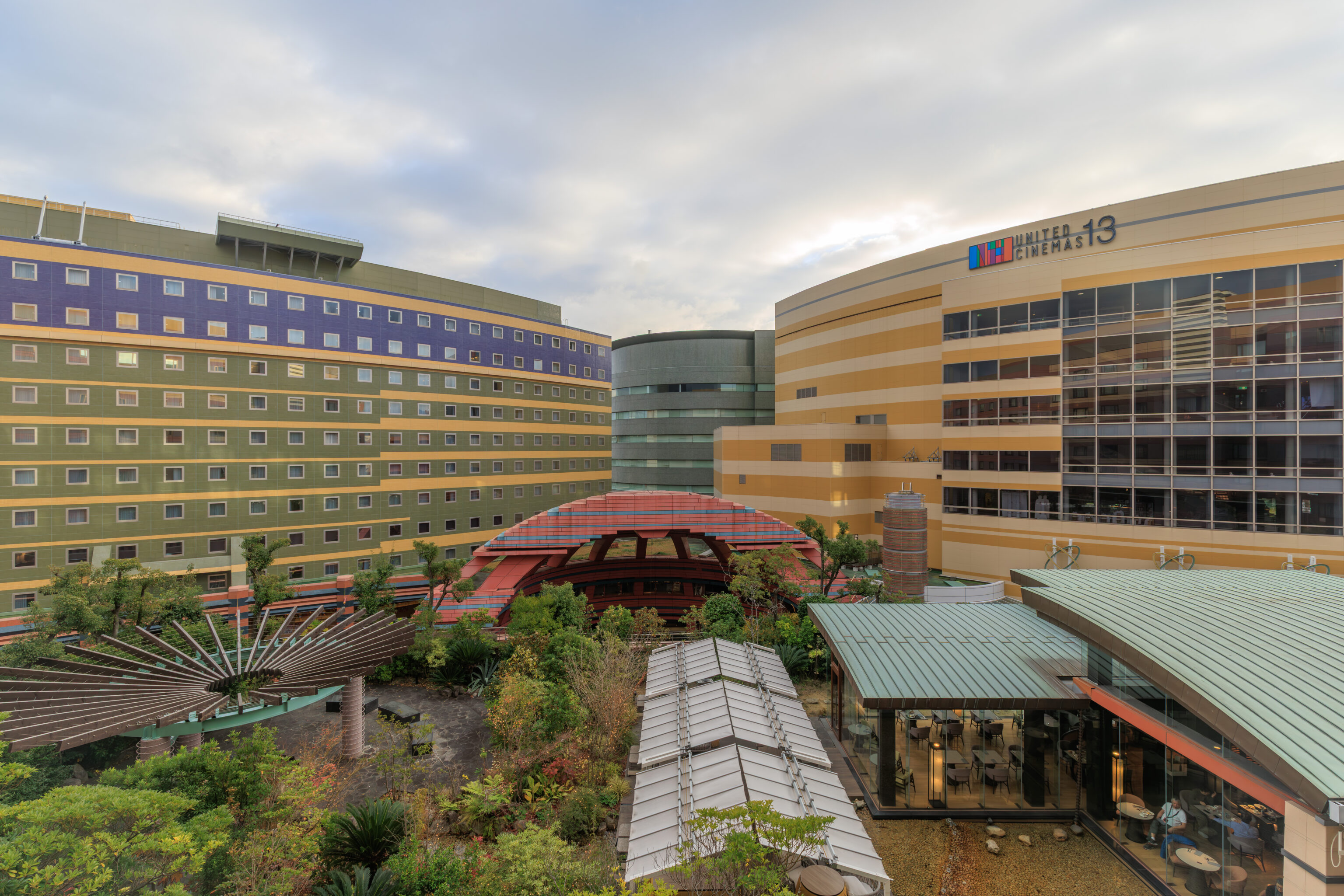
Our final morning at the Grand Hyatt Fukuoka! We checked out in the morning and left our bags at the hotel to pick up later as our train to Yunohira was scheduled for 12:14pm. We decided to walk through part of the nearby Tenjin neighborhood and probably get a late breakfast, or an early lunch, at a mentaiko restaurant there.
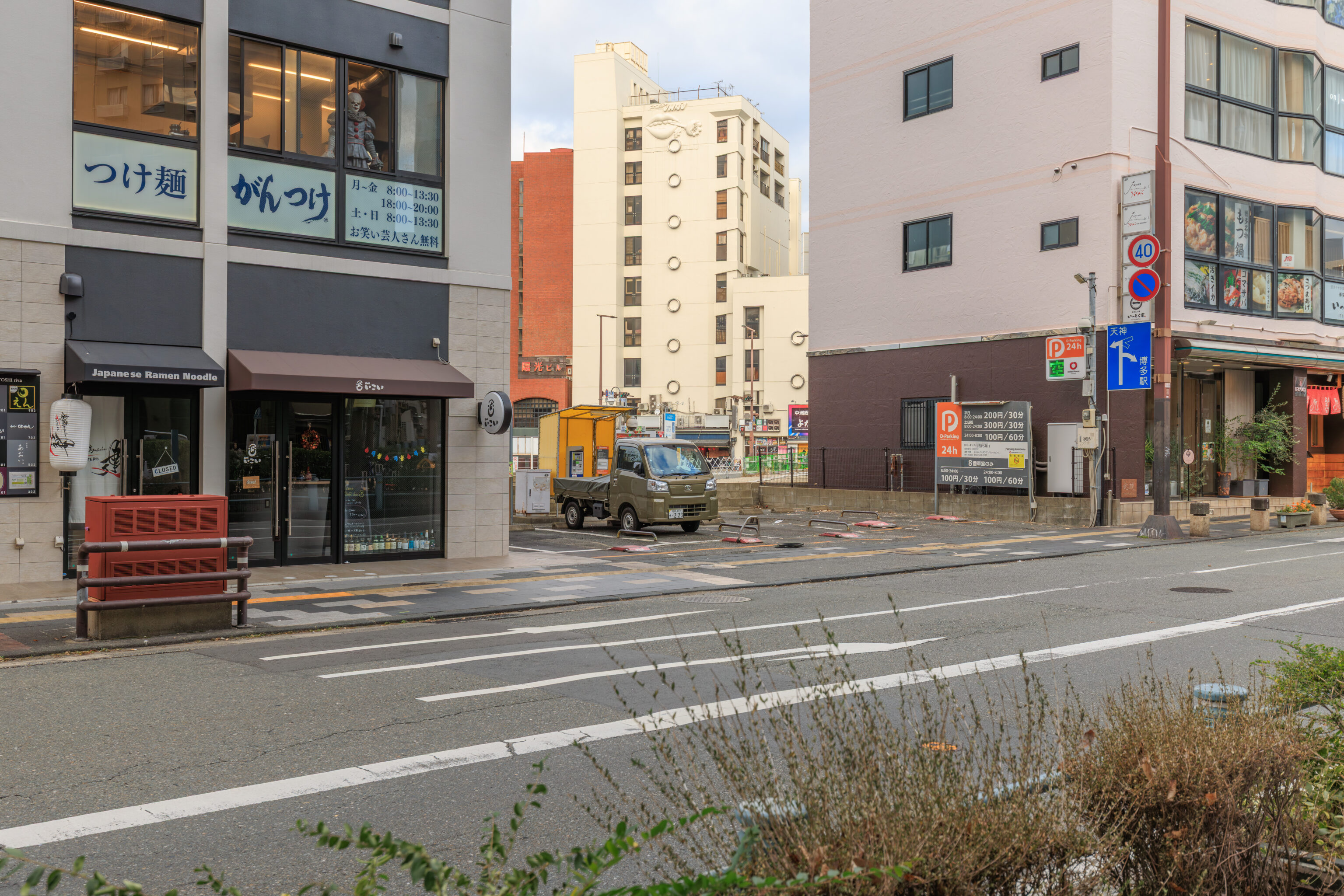
We decided to walk by the Hakata River on the way to Tenjin. To get there, we first started walking to the north. Not far from the hotel, we noticed a creepy clown statue in a second floor window. Its in the building on the left.
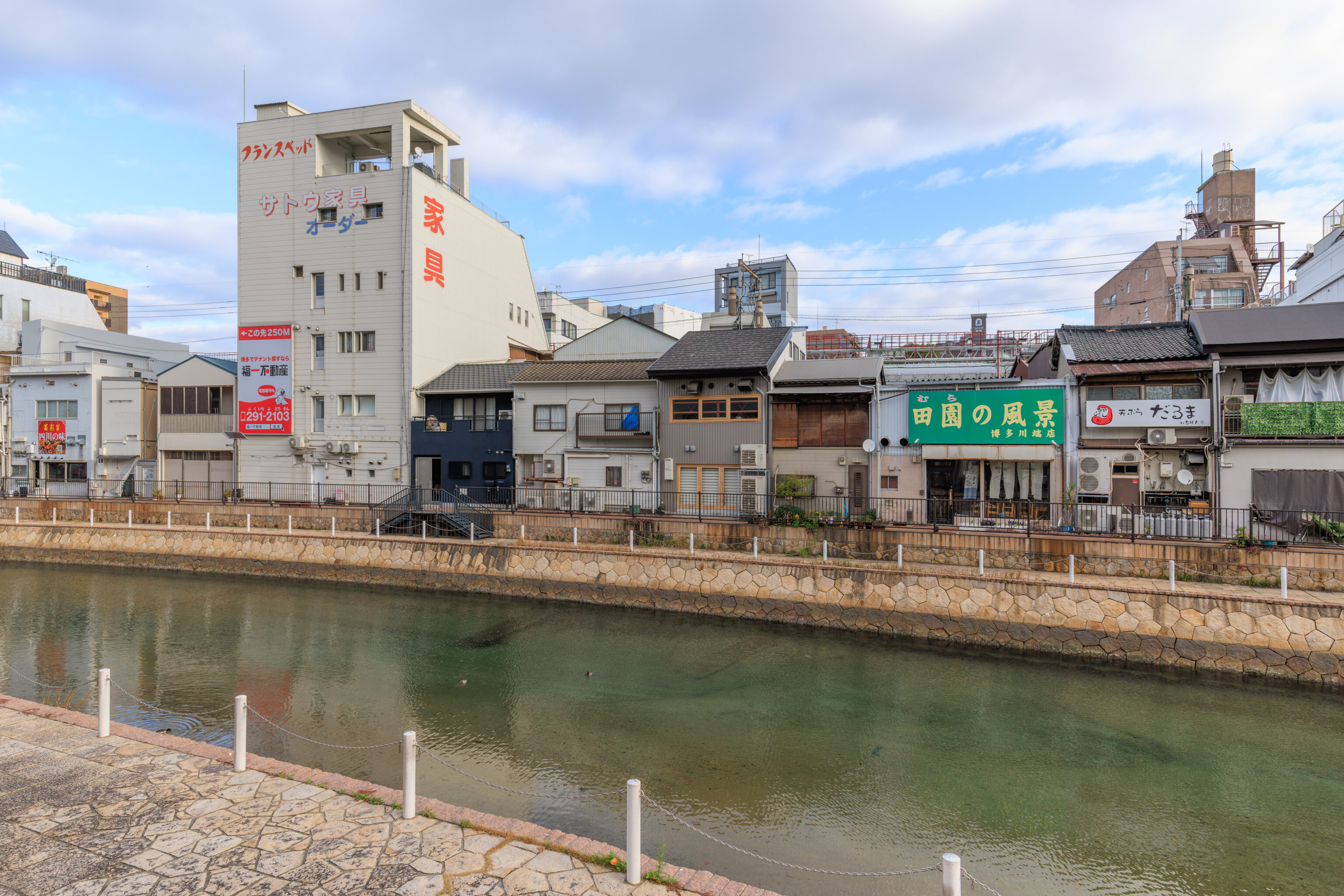
Once we reached the Hakata River, we walked along its west bank. This is the same route we took on our first day here in Hakata when we had grilled unagi for lunch.
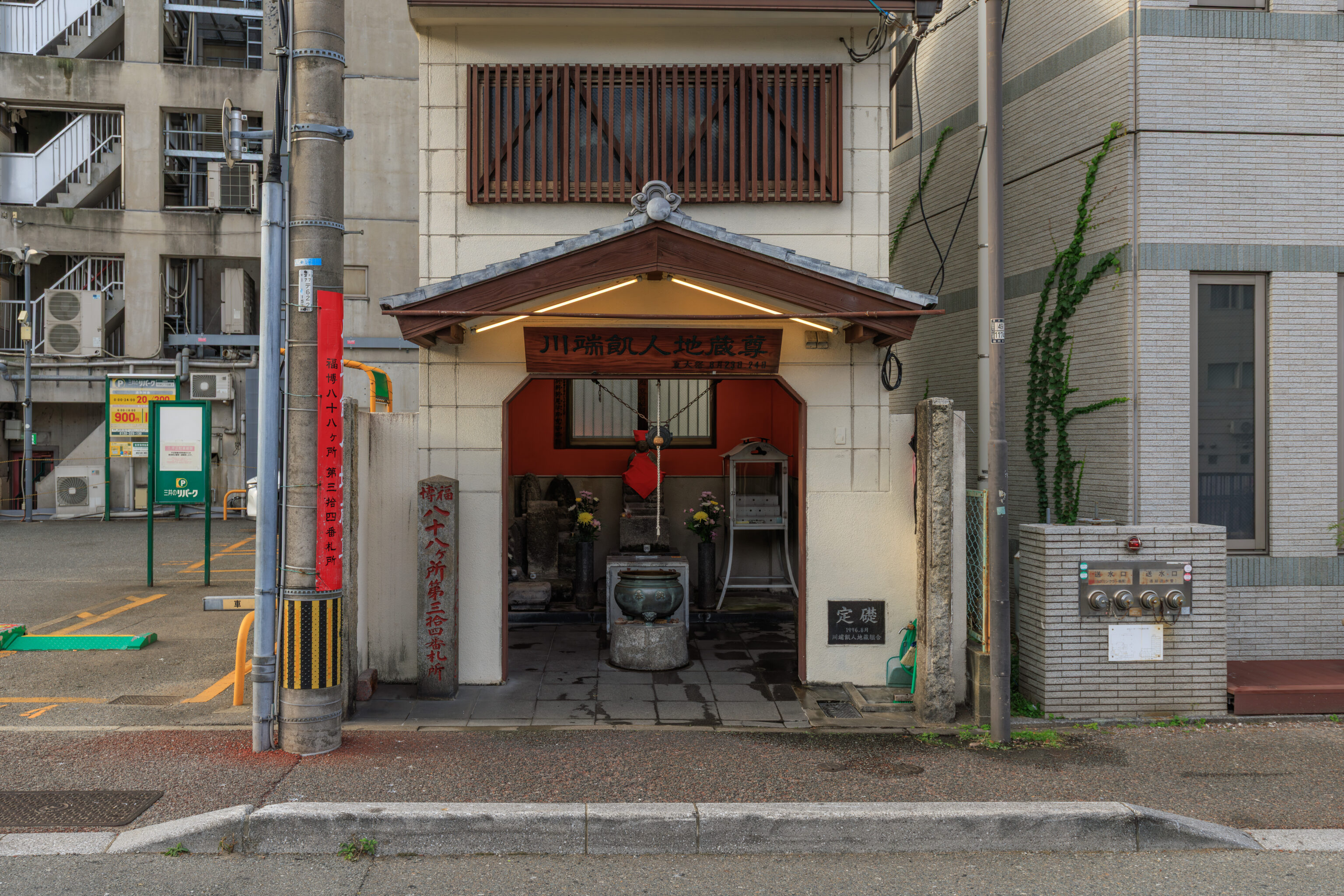
We walked past a small shrine.
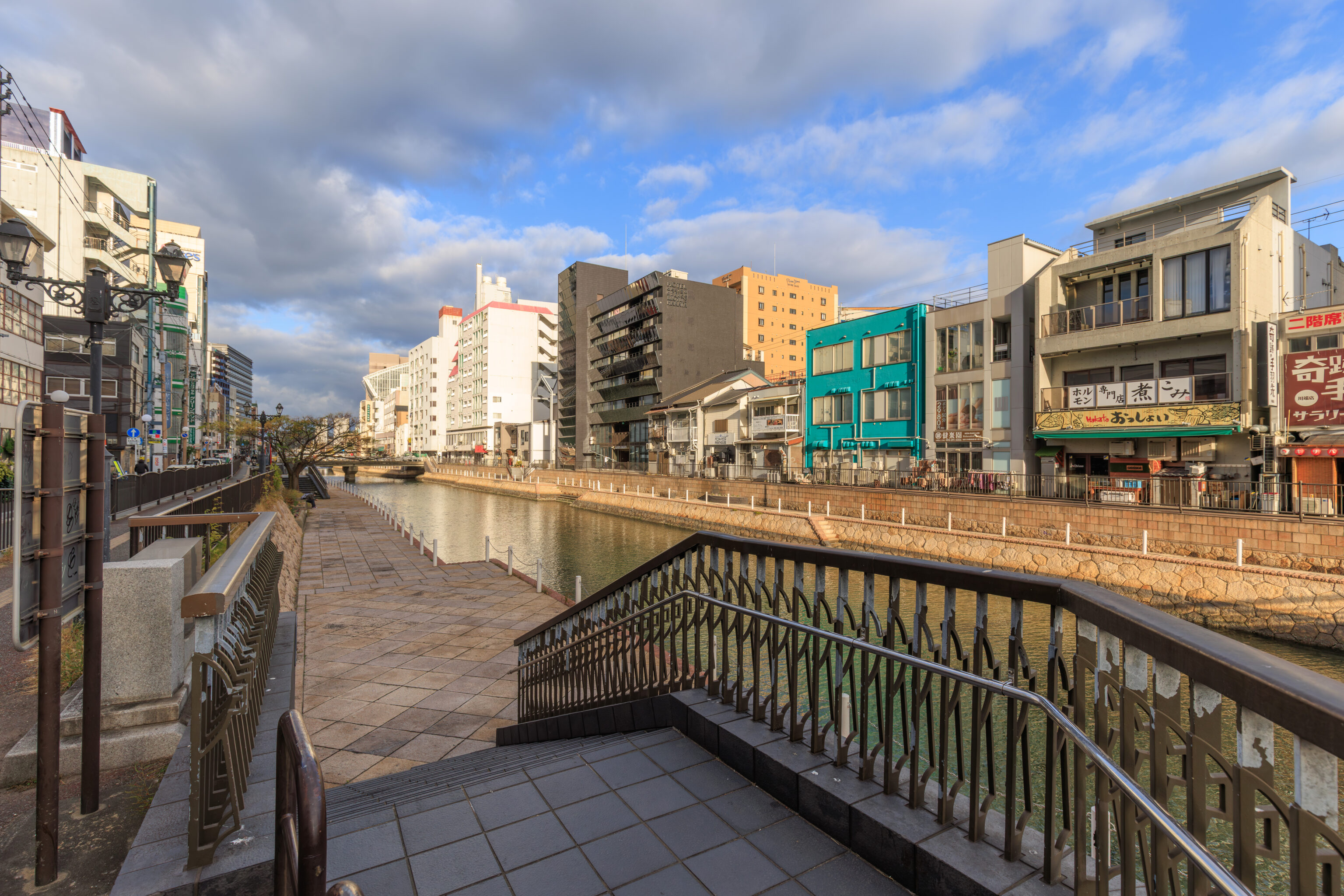
Its not particularly scenic here, more of a concrete jungle, but the area around the river still seems pleasant.
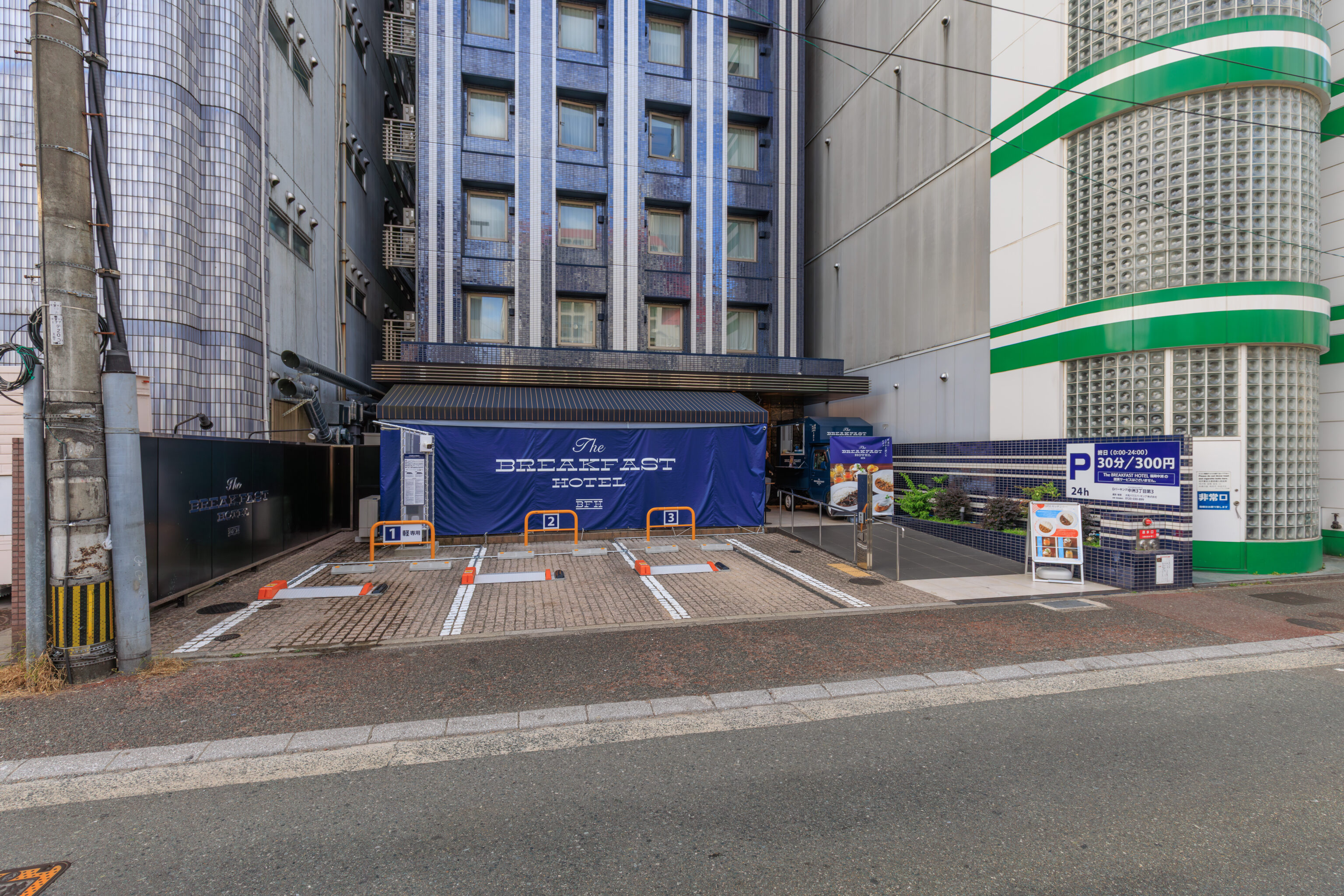
We came across a hotel amusingly named The Breakfast Hotel! Despite its name, breakfast is not complimentary here. It looks to be a pretty standard Japanese business hotel.
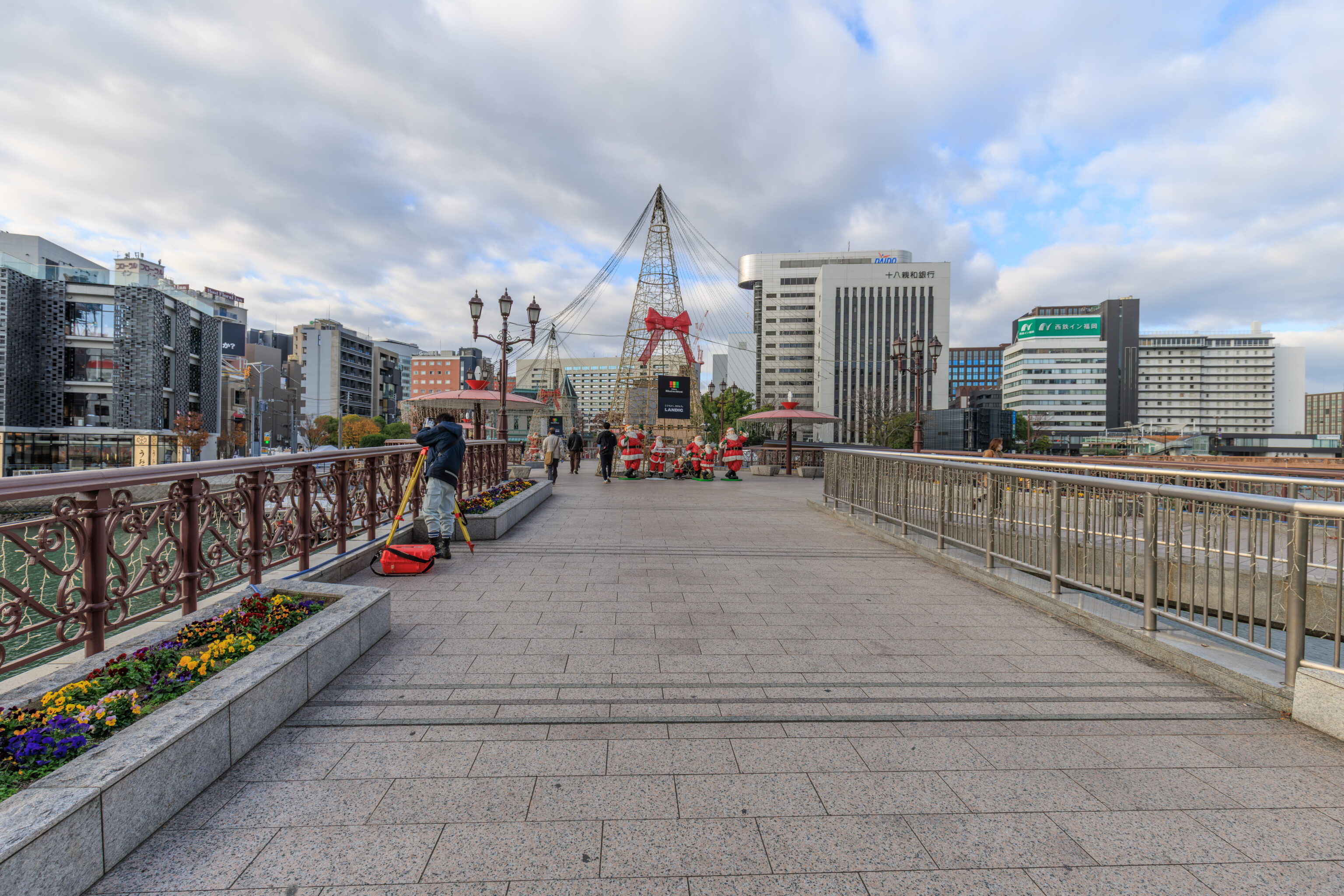
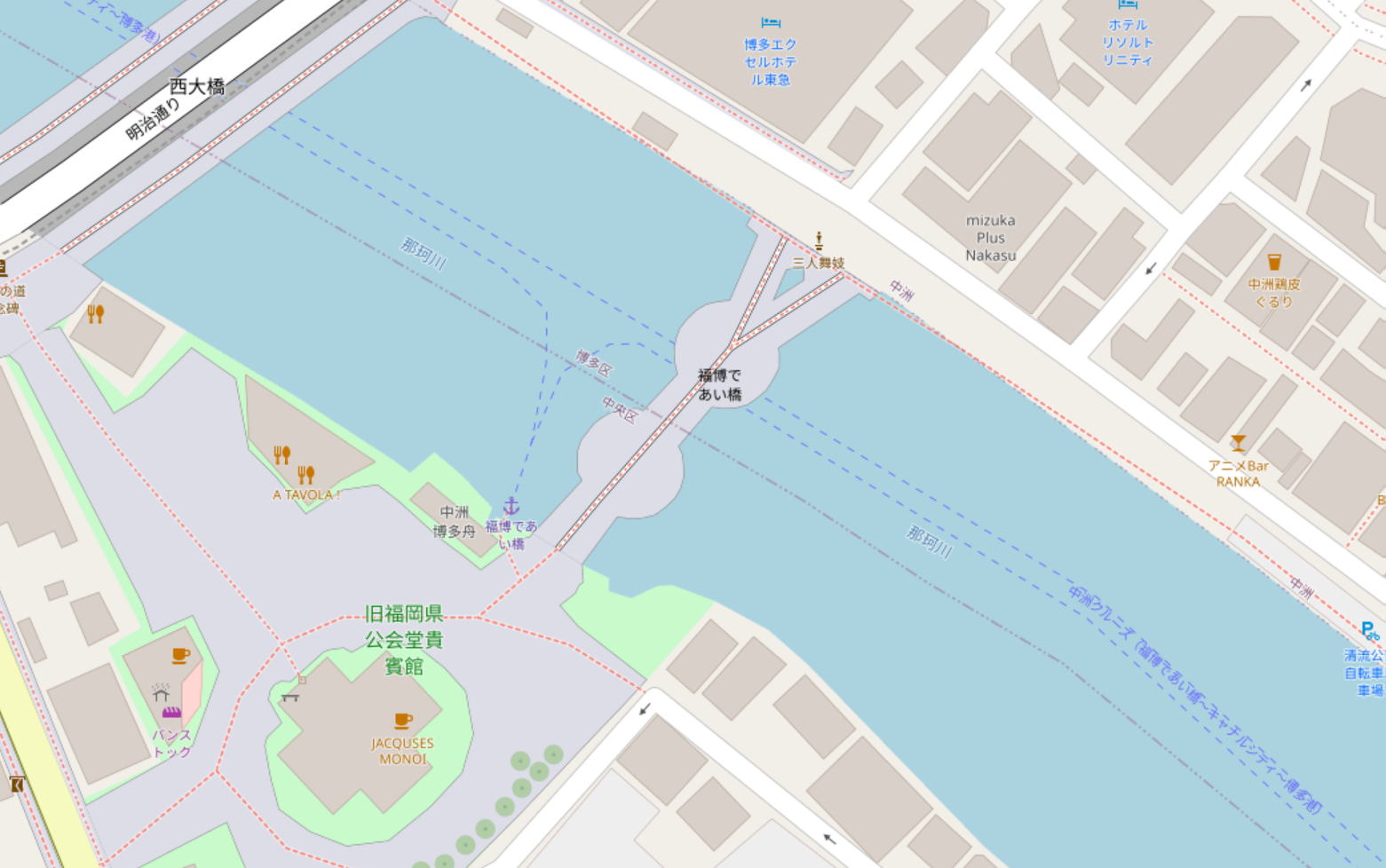
After turning left just after The Business Hotel, we walked southwest until we reached the pedestrian 福博であい橋 Fukuhaku Deai Bridge.
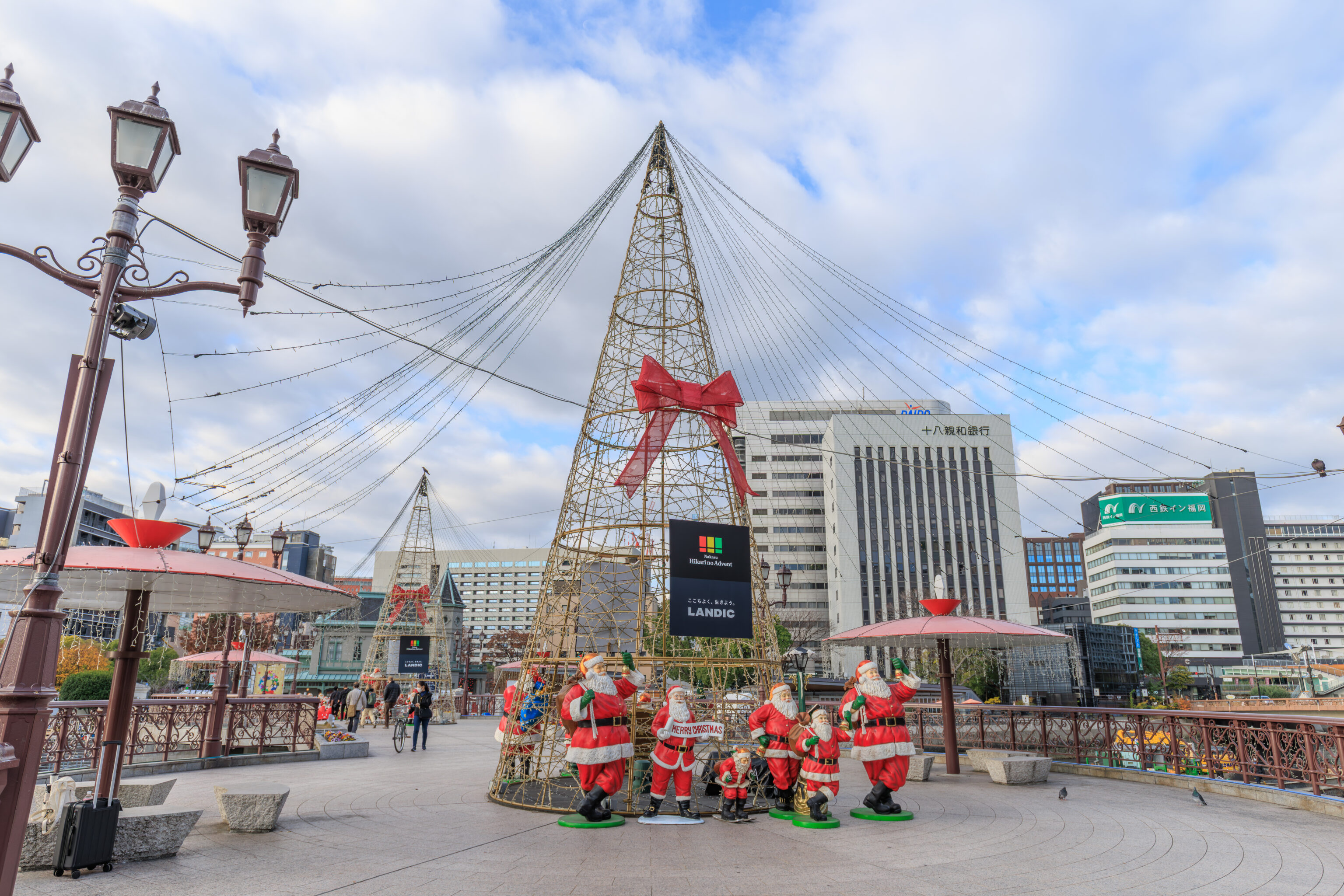
This bridge has two circular areas on it. It is more obvious if you look at it on a map. Each of these circles had a Christmas tree, or rather a Christmas cone, on them along with many Santa Clauses.
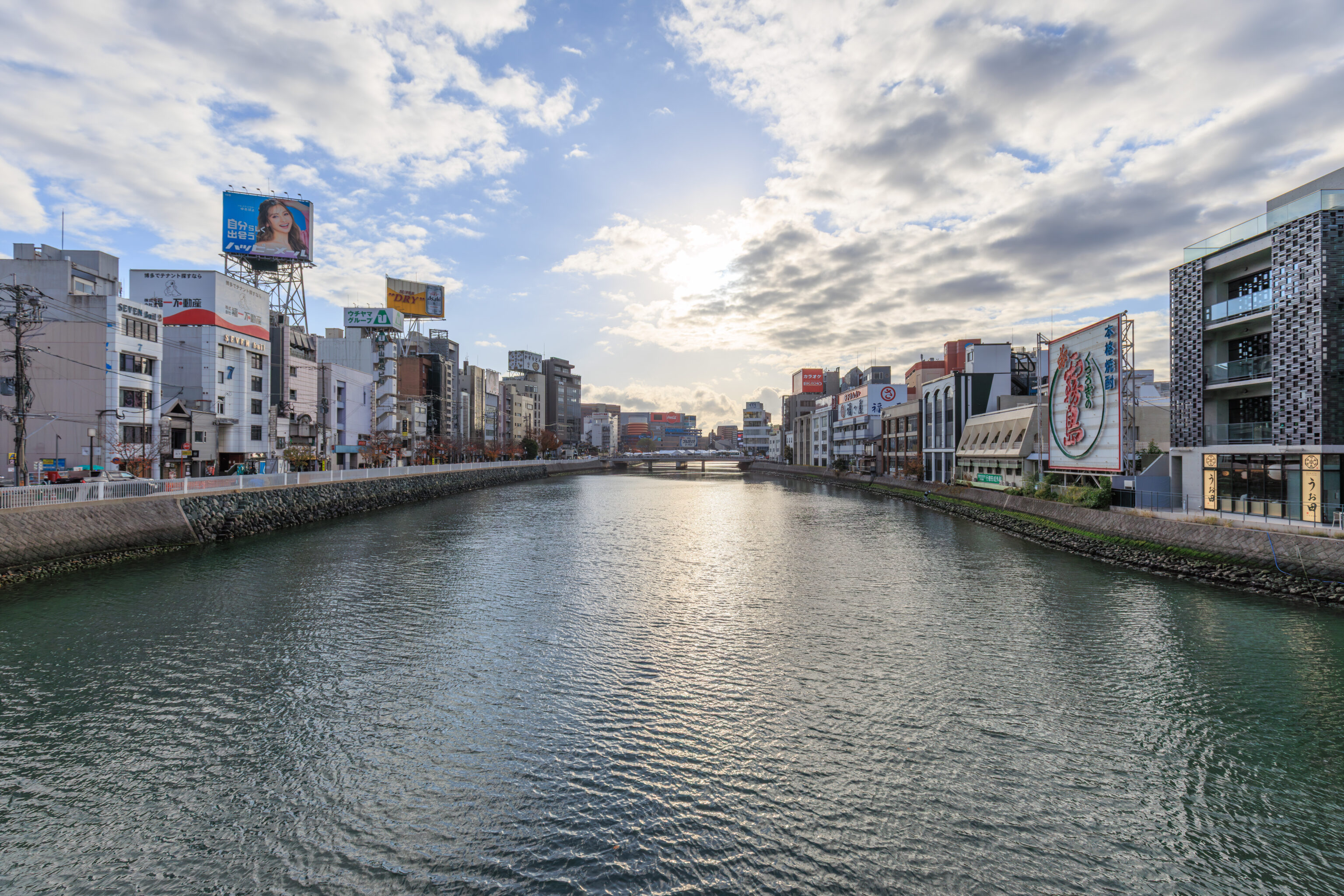
The view looking into the Sun to the southeast. Canal City is visible in the background.
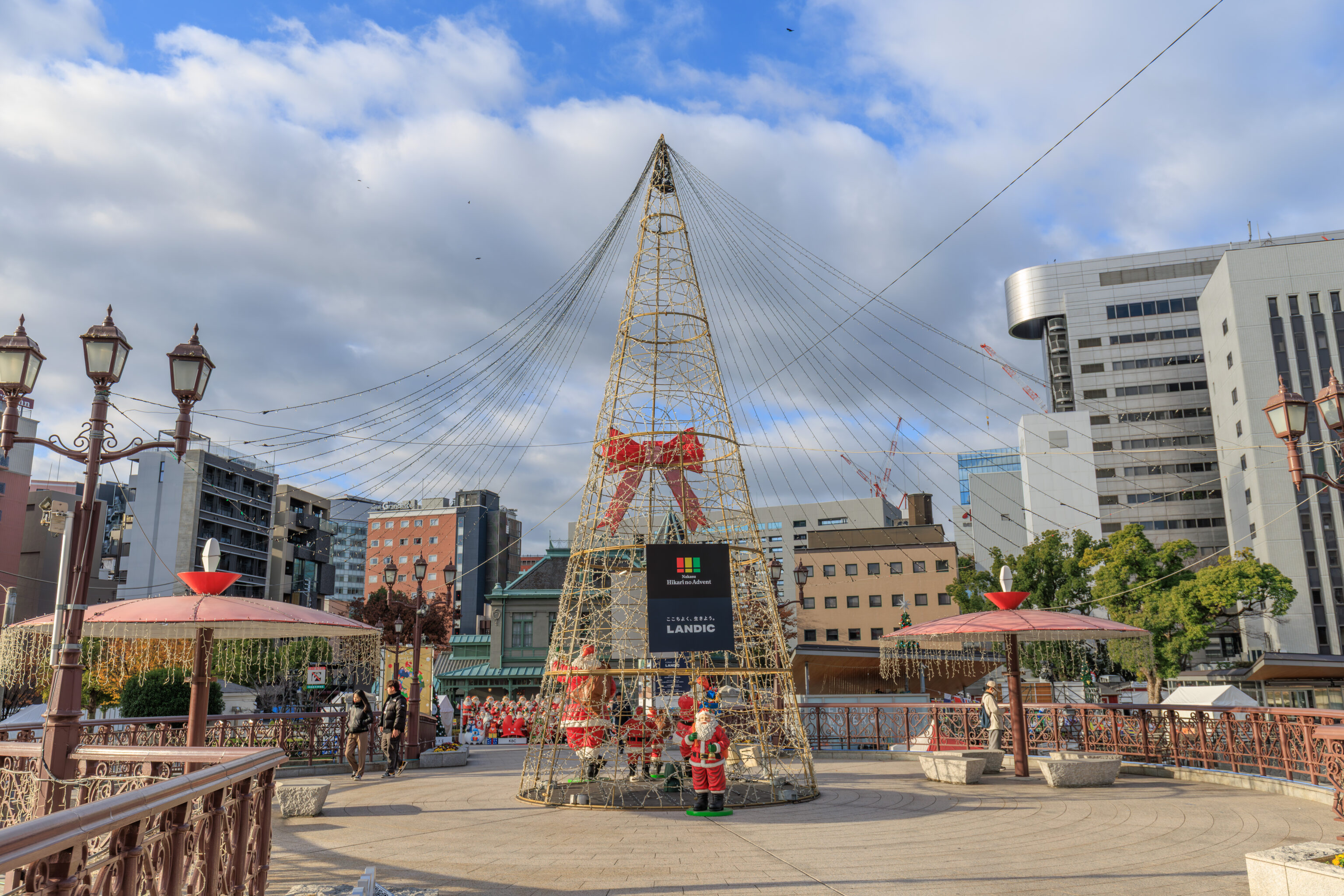
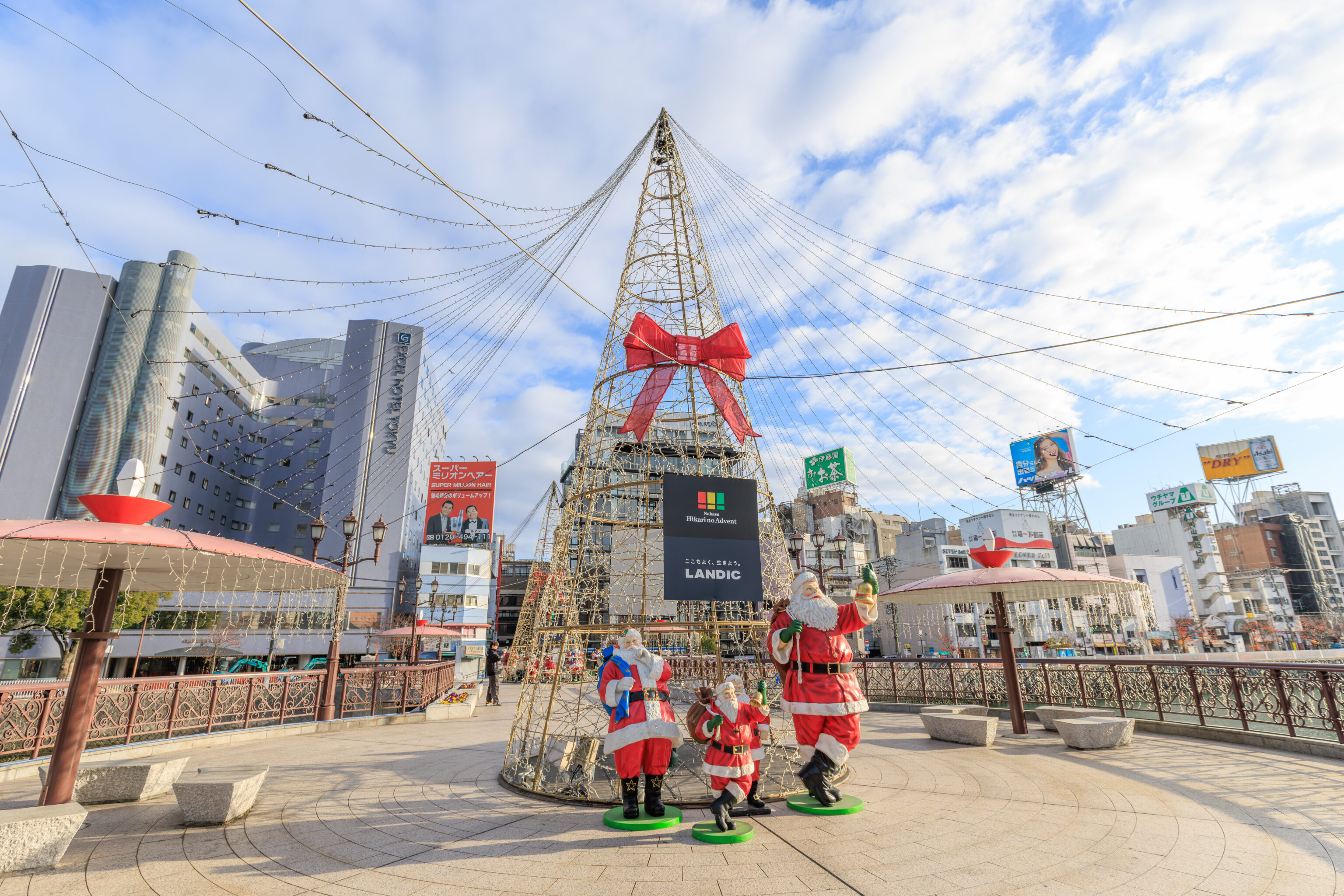
We continued on to the second circle. The ヒカリノ アドベント Hikari no Advent seen on these signs translates to Advent of Light in English. In Fukuoka, this is the branding for the city’s nine Christmas markets. There are also three places that are illuminated, including this bridge which is part of the 中洲 Nakasu illumination area.
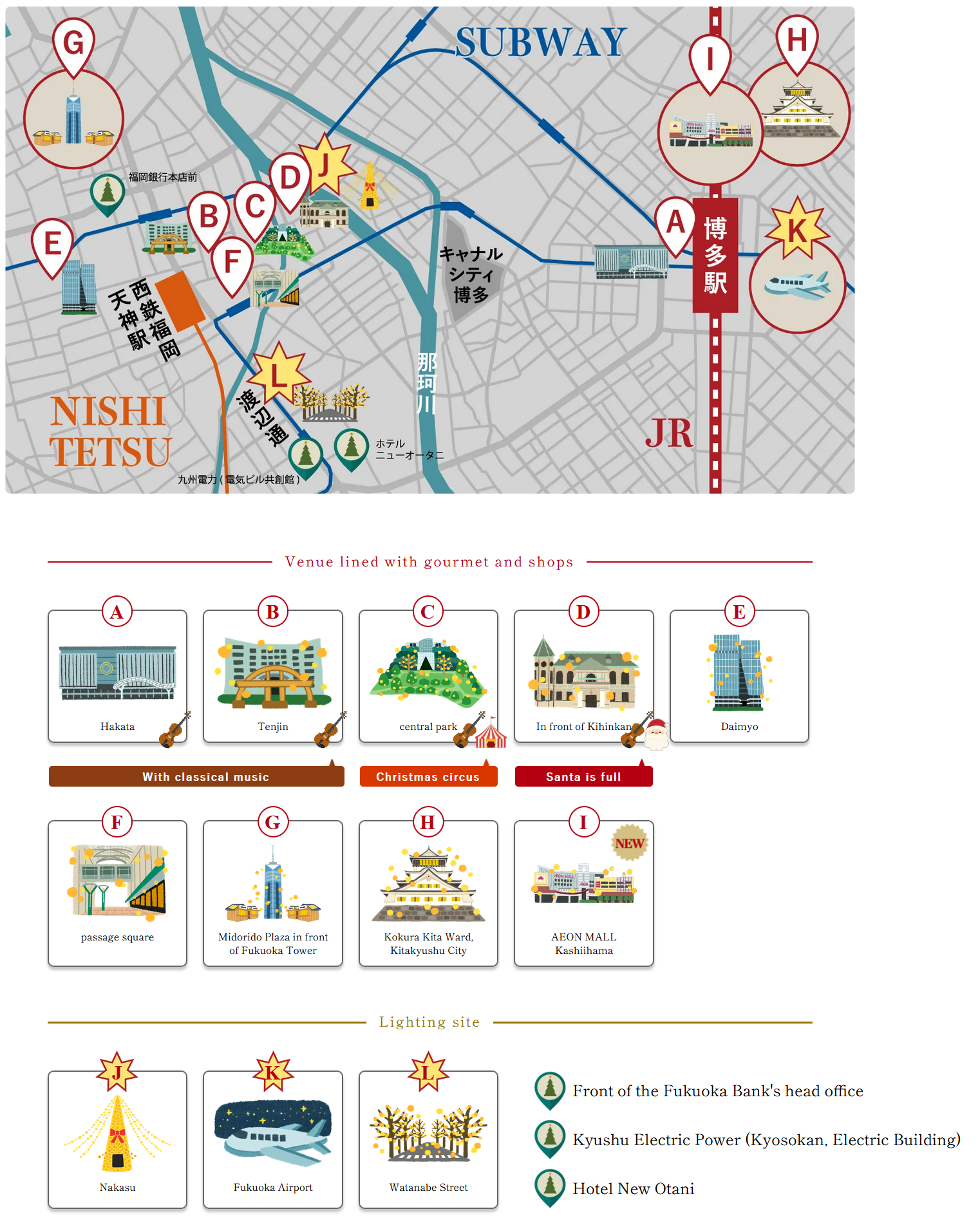
The Hikari no Advent website has a map of all the venues. This might be a website that changes every year, meaning this year’s content will be replaced.
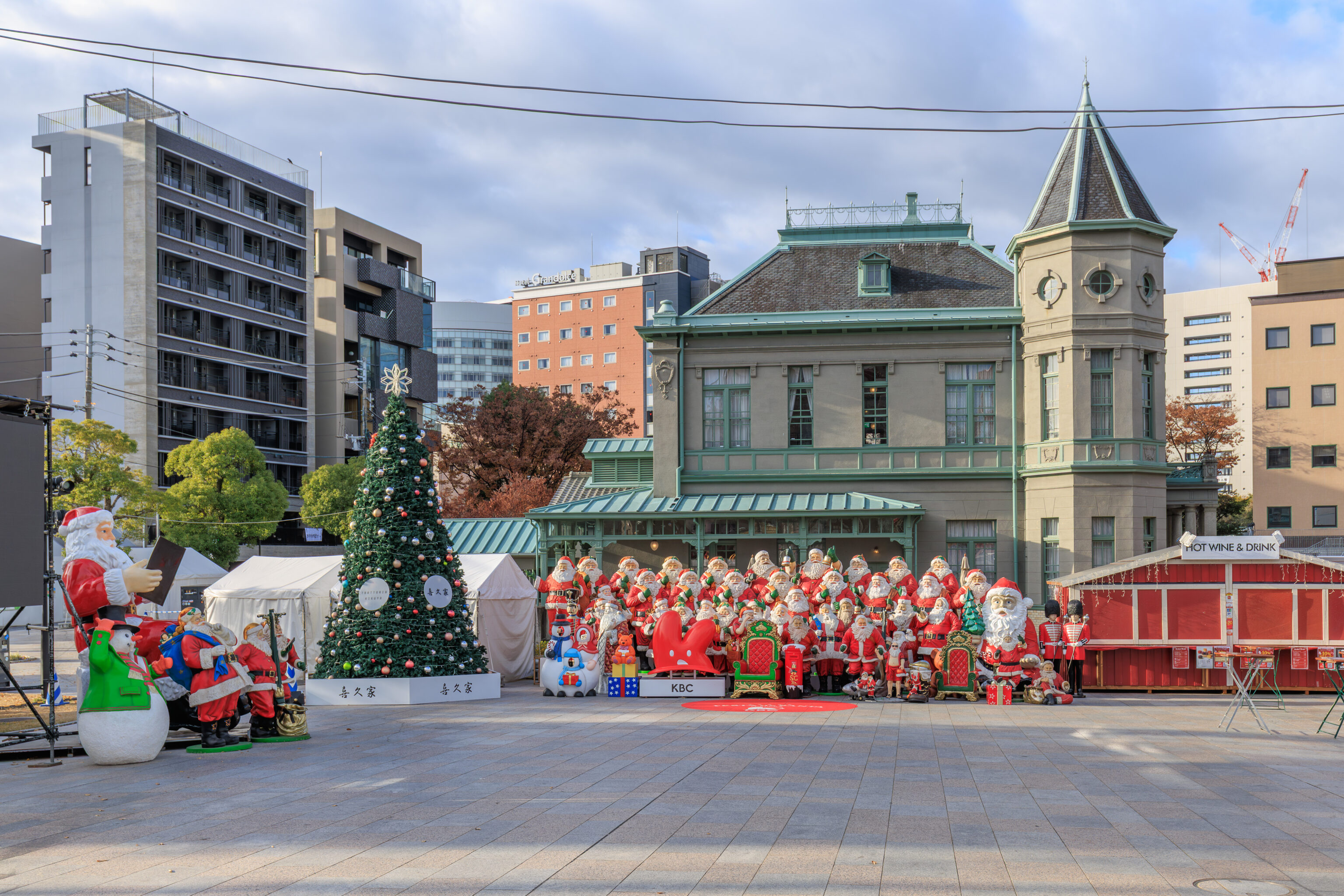
Just beyond the bridge, we saw the 貴賓館 Kihinkan, which is a descriptive name meaning in this context VIP Guest House. It was built in 1910. There were many Santa Clauses in front of the building! Or rather, in front of the side of the building as its front is on the right.
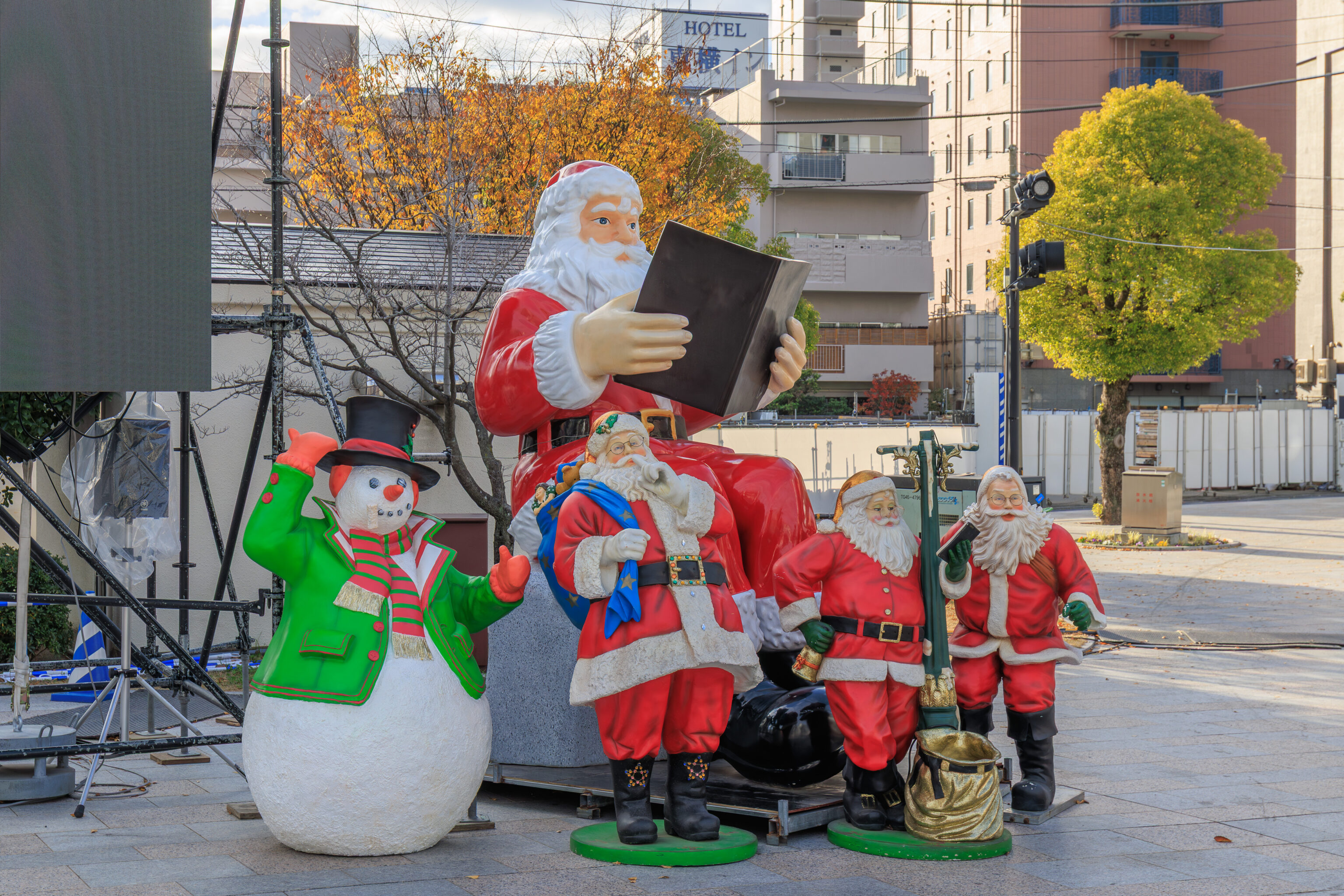
We also spotted a snowman!
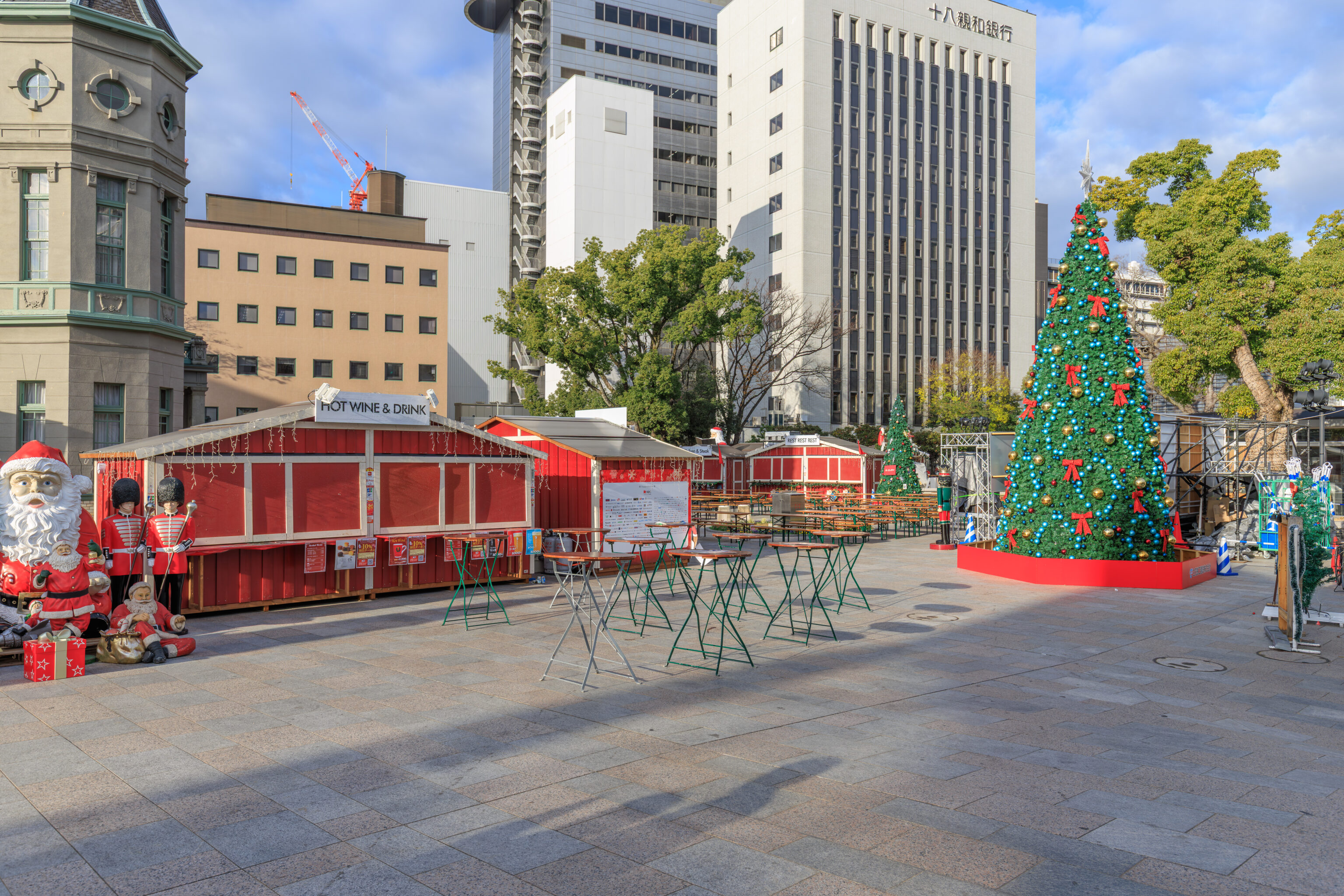
The area here is part of the Festa de Santa Christmas market. It was only around 9am when we got here, way too early for anything to be open.
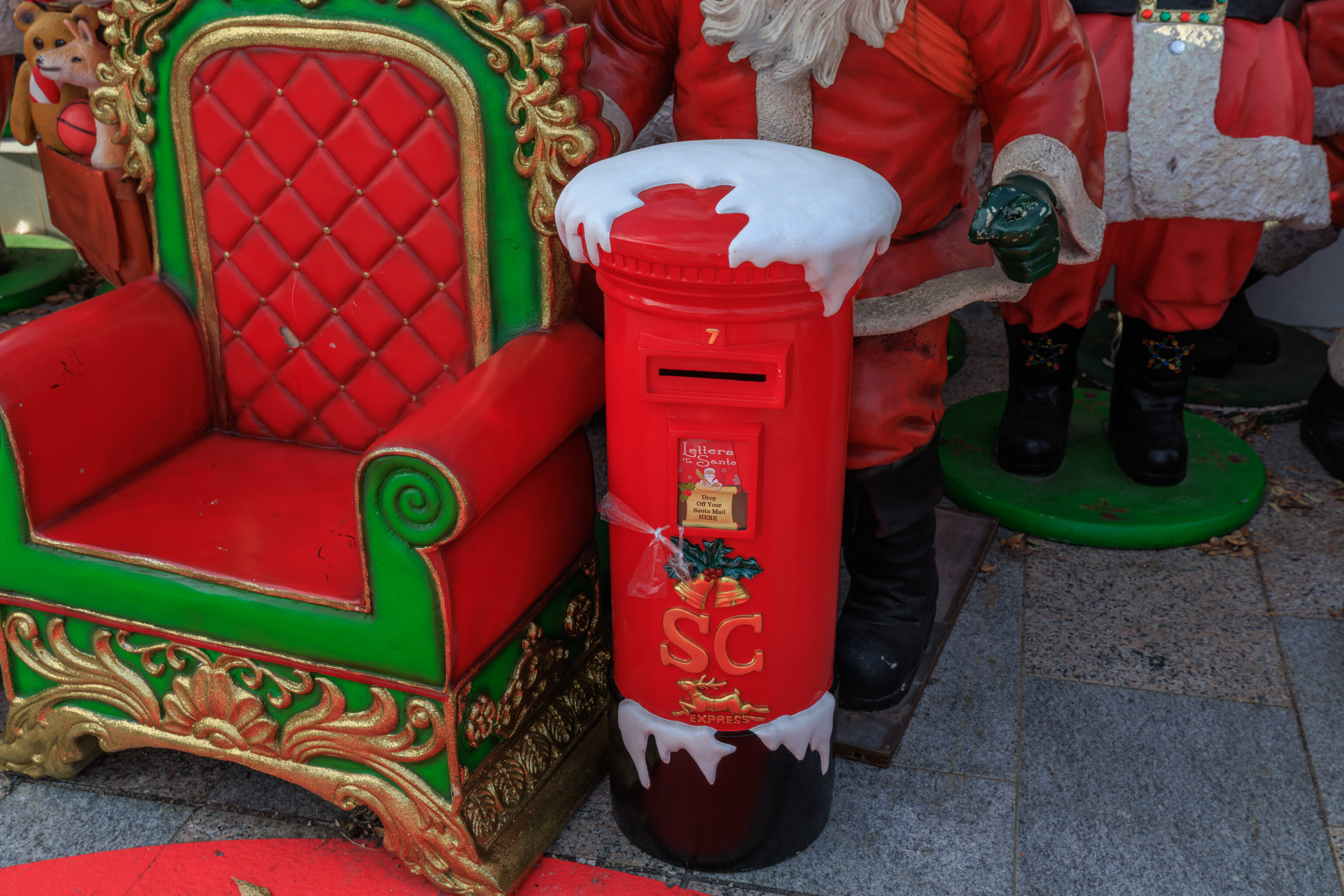
We also came across a postbox for your Santa Mail!
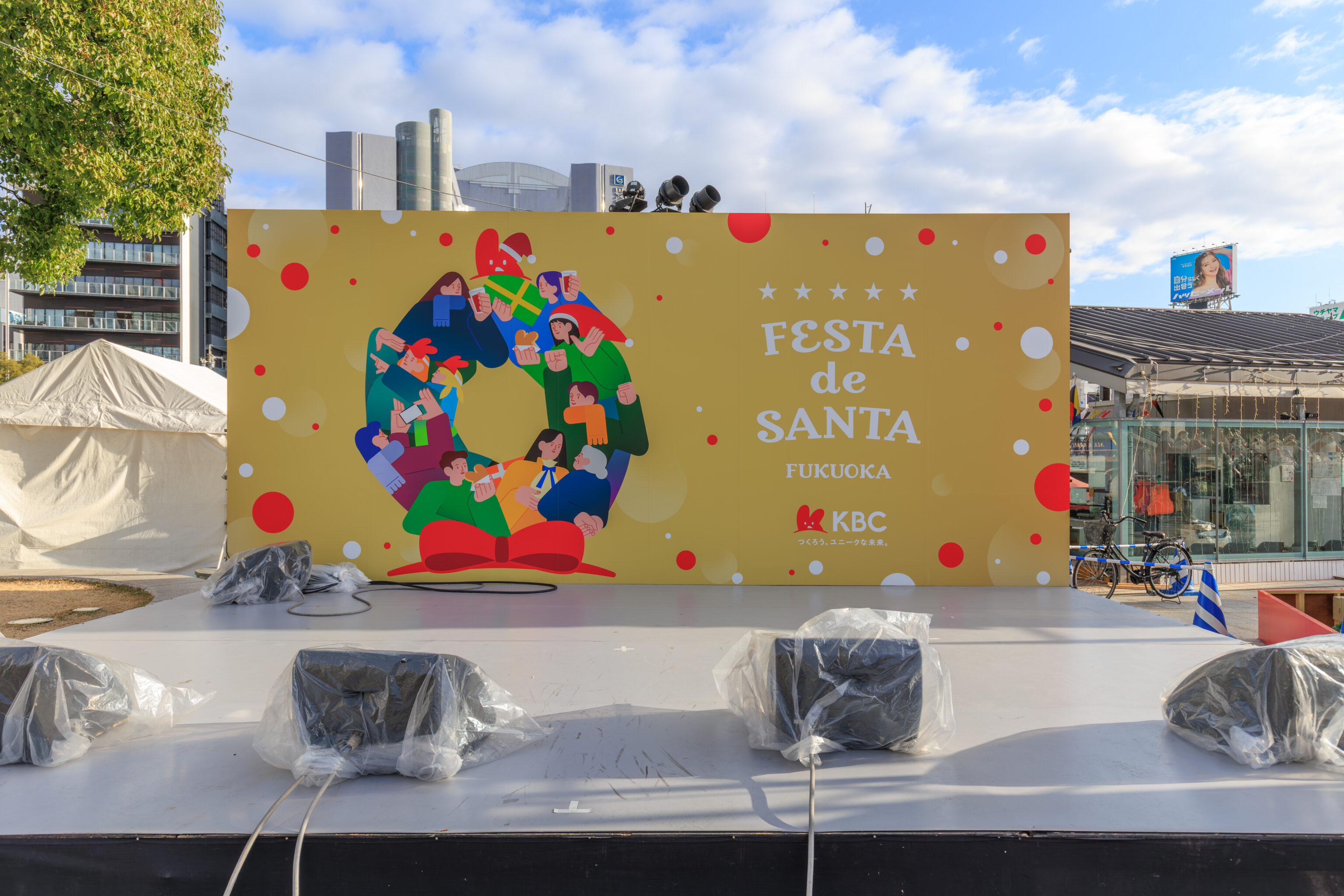
See? This is definitely the Festa de Santa!
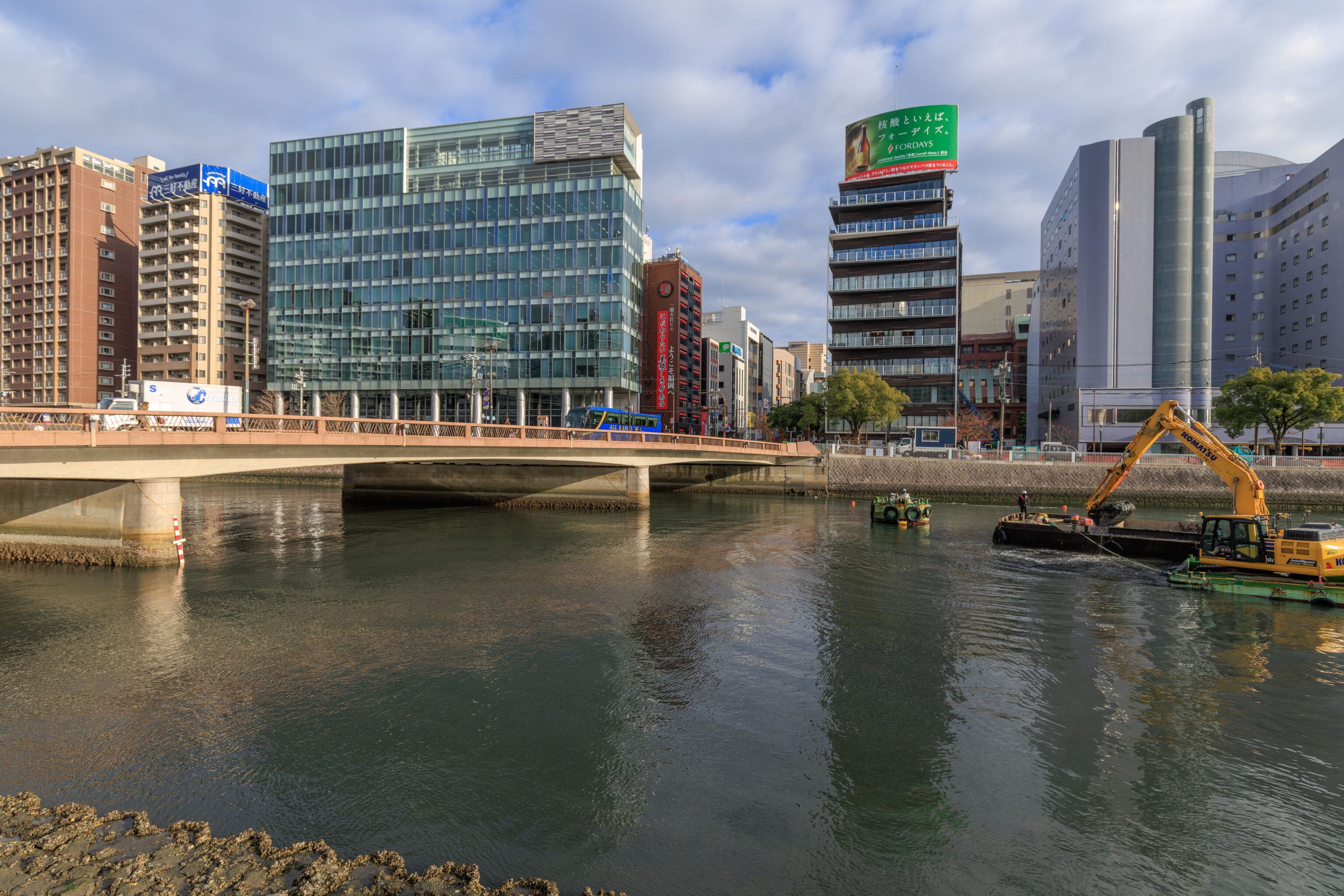
Looking back to the east, here we see a vehicular bridge to the north of where we crossed as well as some dredging that is going on. But that’s not why we took this photograph…
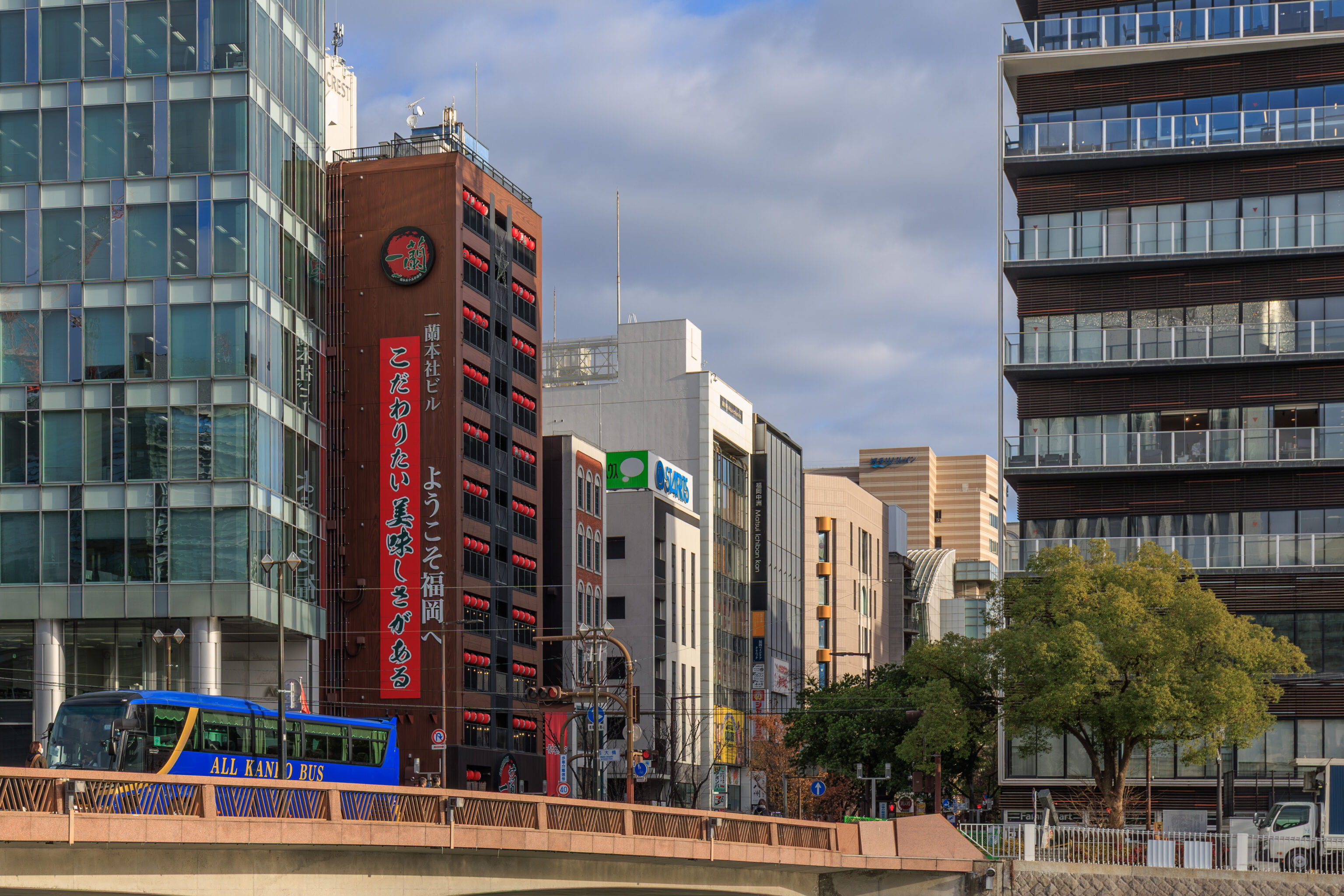
We were aiming to capture this building on the left! It is 一蘭 Ichiran‘s 本店 honten. Most of the building is actually offices though. We originally wanted to eat here but decided not to as Dazaifu‘s is arguably more special with its auspicious five sided bowls and 59cm long ramen.
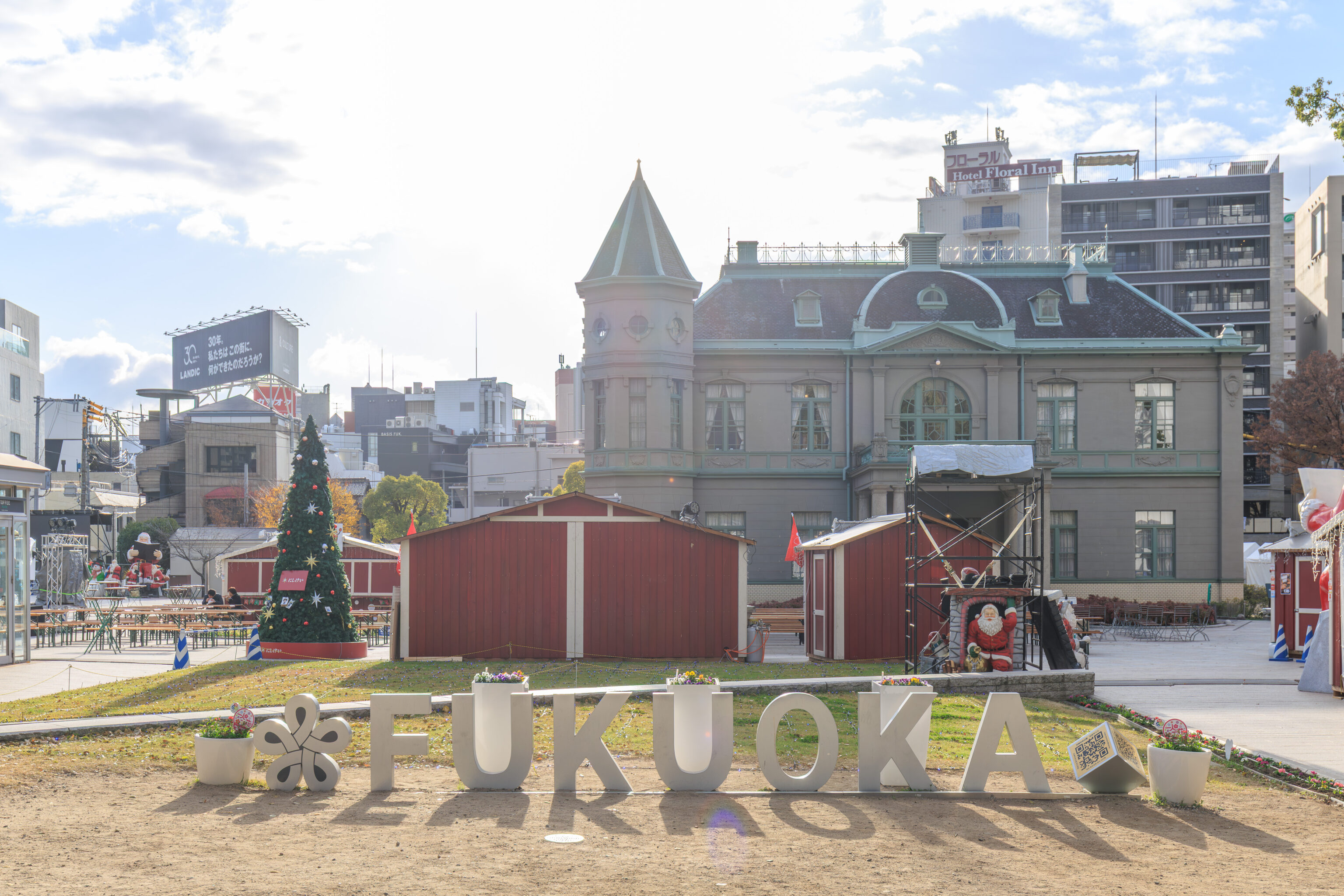
The Kihinkan, as seen from the front and directly into the Sun.
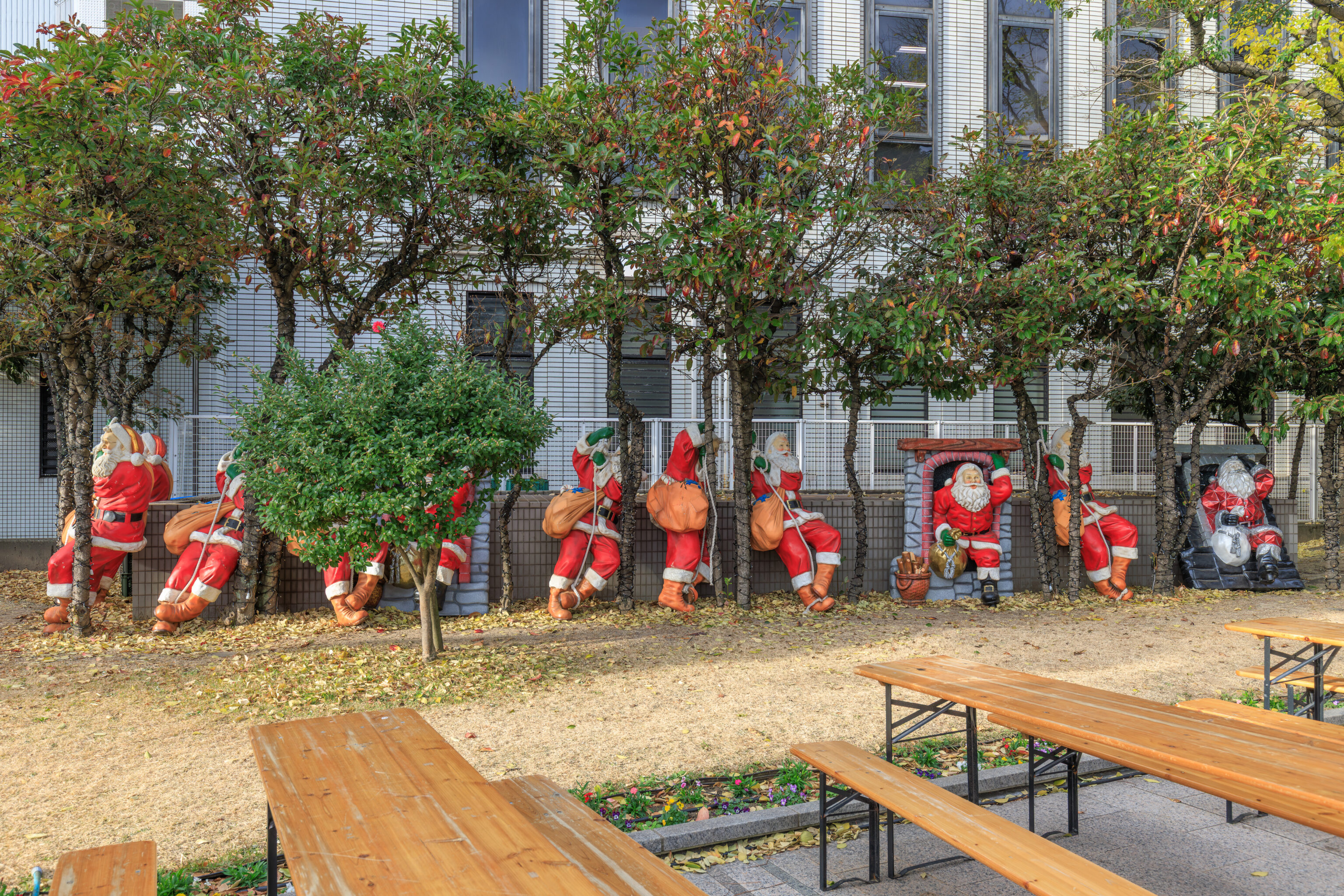
These Santa Clauses seem to be working on their climbing technique!
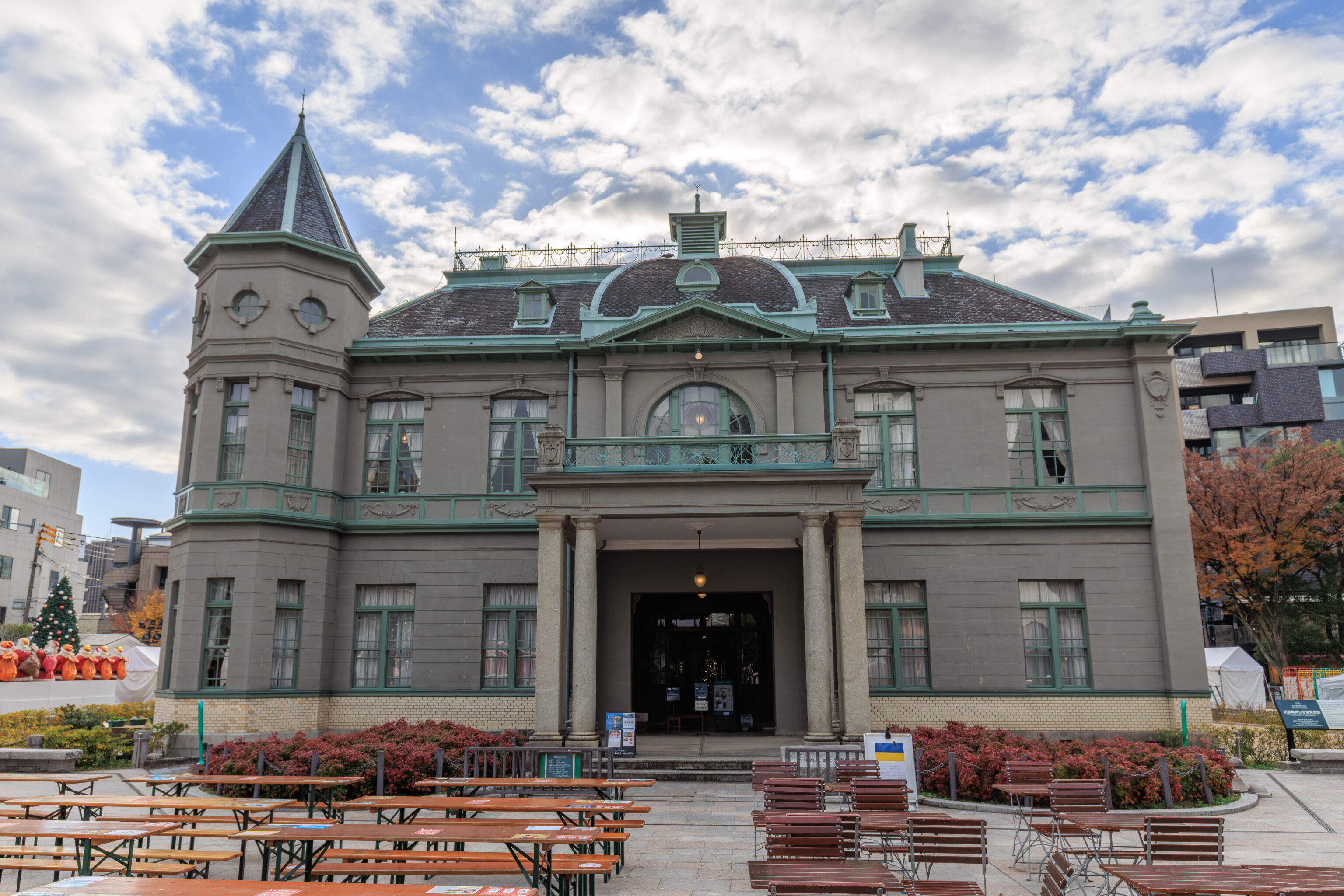
We walked over to the Kihinkan to get a closer look.
Nationally Designated Important Cultural Property
Former Fukuoka Prefectural Civic Hall and Honorary Guest House
Completed in March 1910
Designated as an Important Cultural Property in May 1984

The guest house was built as a civic hall to accommodate and entertain the dignitaries visiting the 13th Kyushu-Okinawa Association Exhibition (somewhat like present-day Expo) held in the Tenjin area in 1910. It is open to the public as one of the few existing wooden public buildings built during Meiji period.
– Text from a Japanese and English text on a sign by the building, translated using Google.
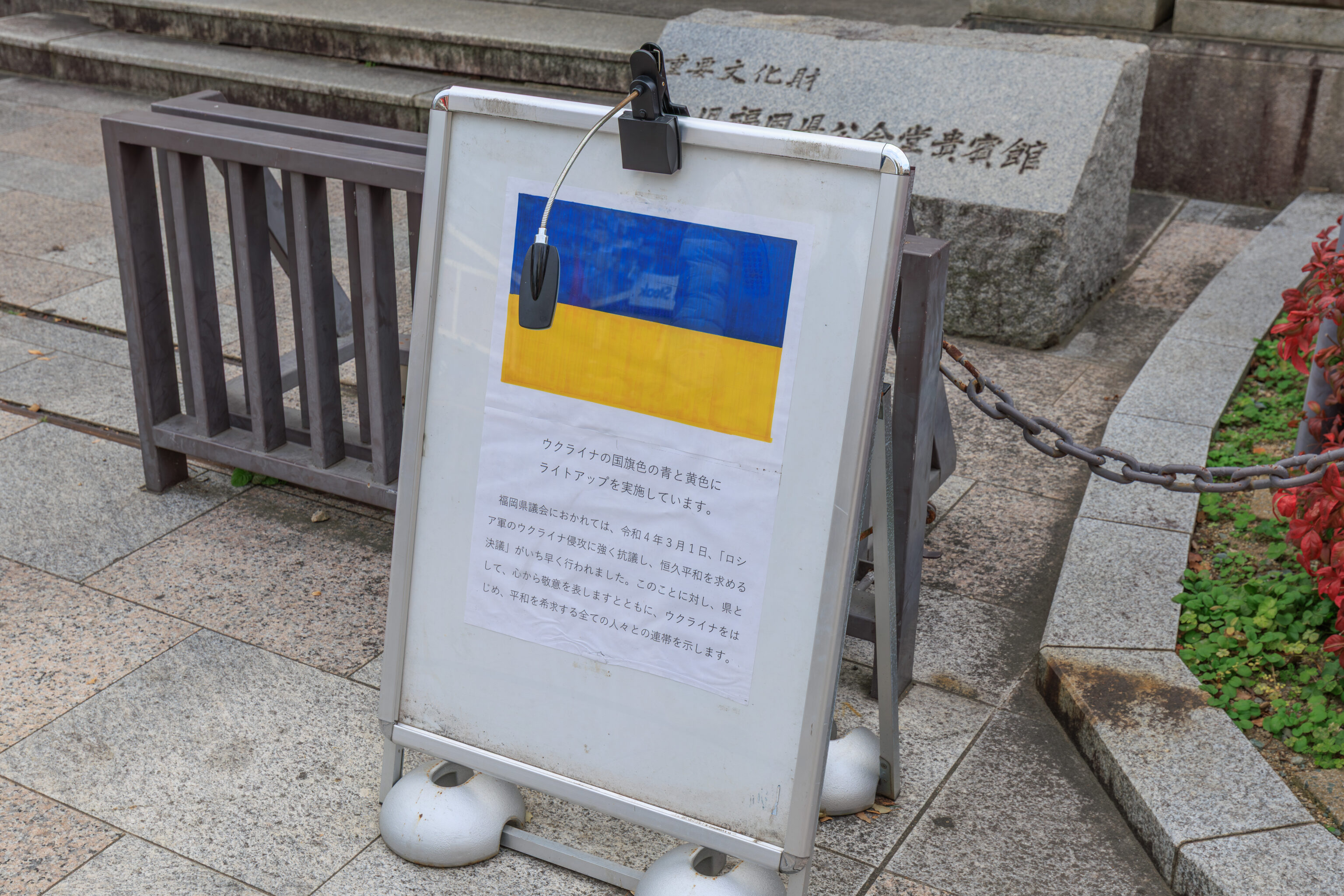
There was a small sign in front of the Kihinkan illustrating Fukuoka’s support for Ukraine.
On March 1, 2022, the Fukuoka Prefectural Assembly swiftly adopted a "Resolution Strongly Protesting the Russian Military's Invasion of Ukraine and Calling for Permanent Peace." In response to this action, the Prefectural Government expresses its heartfelt respect and demonstrates its solidarity with Ukraine and all people who aspire to peace.

We are currently illuminating our facilities in blue and yellow—the colors of the Ukrainian national flag.
– Text from a the sign, translated using Google.
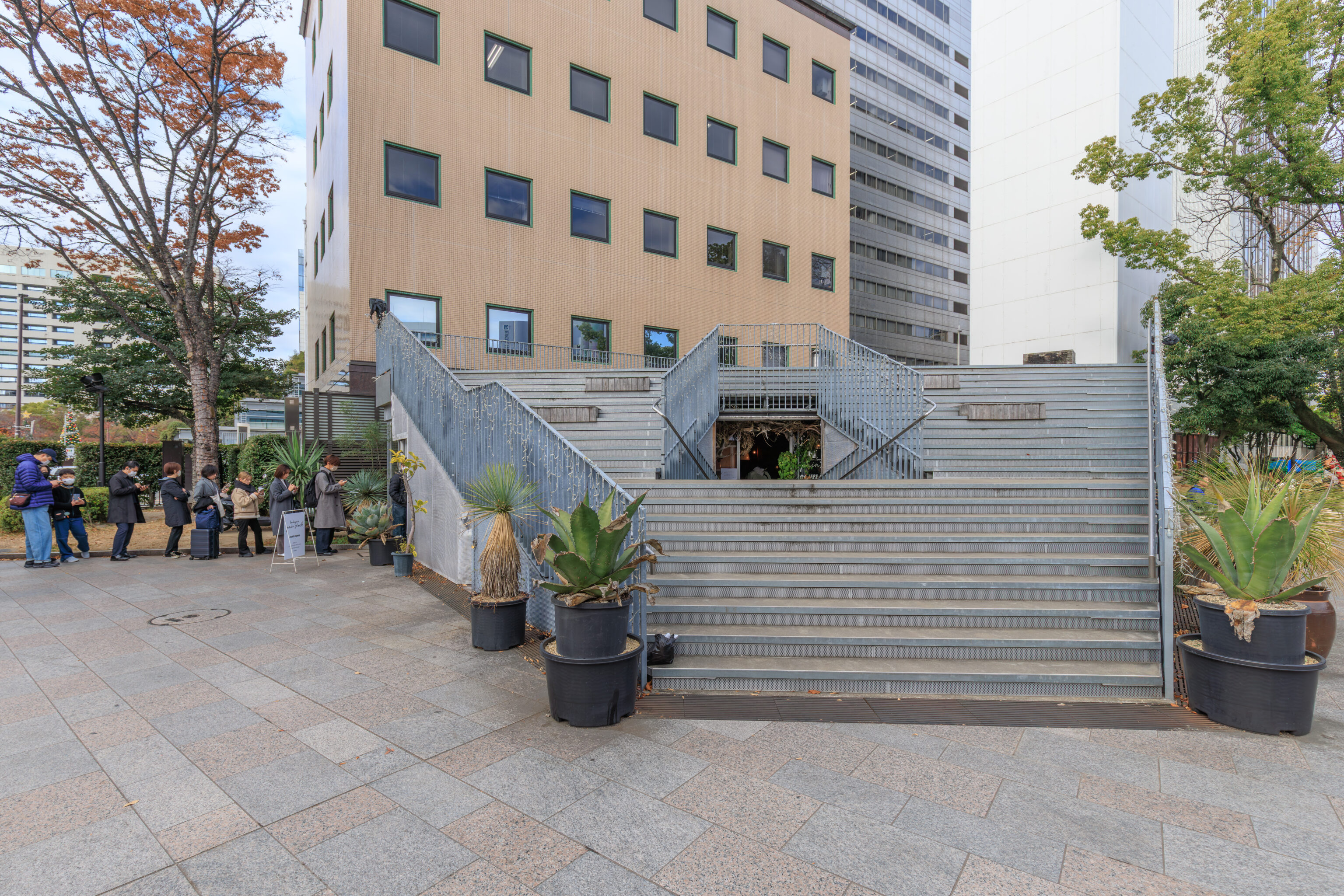
While this looks like its just a set of wide stairs, it is more than that as there is a shop underneath. And there is a queue!
We hadn’t heard about this place but it is パンストック天神店 Pain Stock Tenjin, pain being French for bread. This is apparently a famous place for getting mentaiko baguettes. We considered queuing but given the time decided to continue on, particularly as we were on our way to have a mentaiko breakfast.
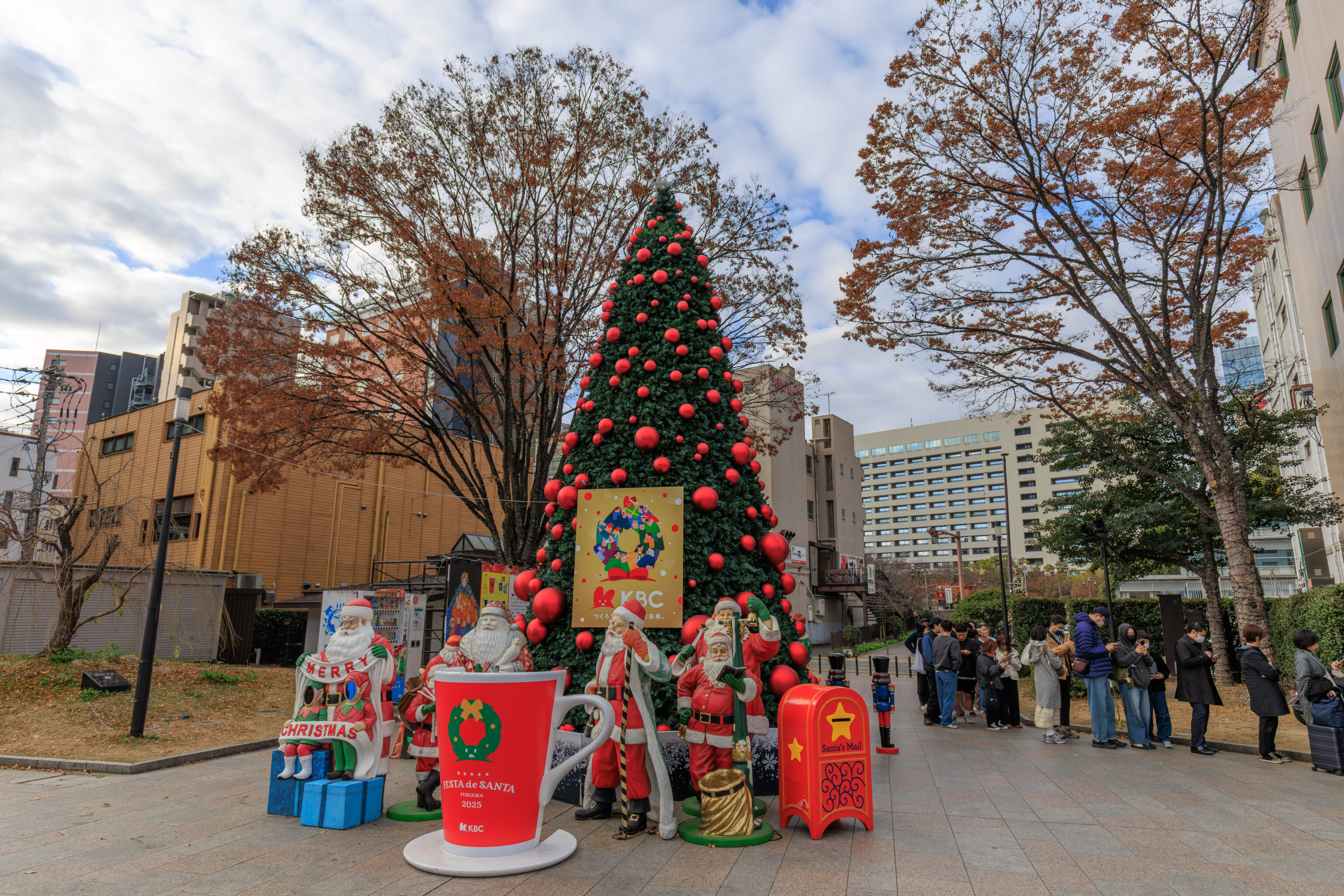
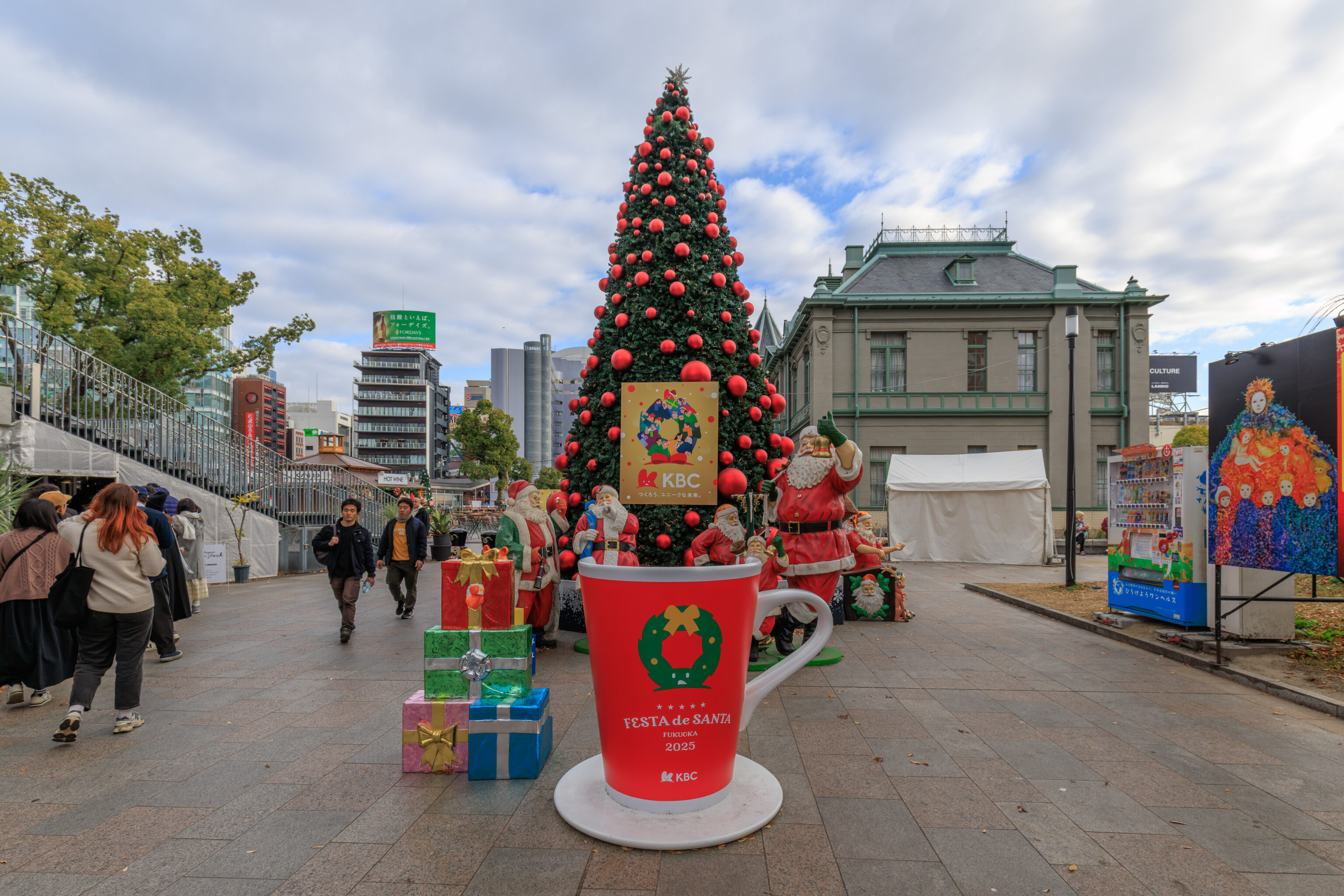
The Christmas tree for the Festa de Santa, as seen from both sides.
We arrived at 元祖博多めんたい重 Ganso Hakata Mentaiju, a restaurant just to the west of the Kihinkan. As the name suggests, they are a local restaurant that specializes in 鱈子 mentaiko. Mentaiko is pollack roe cured with chili peppers and originates from Korea.
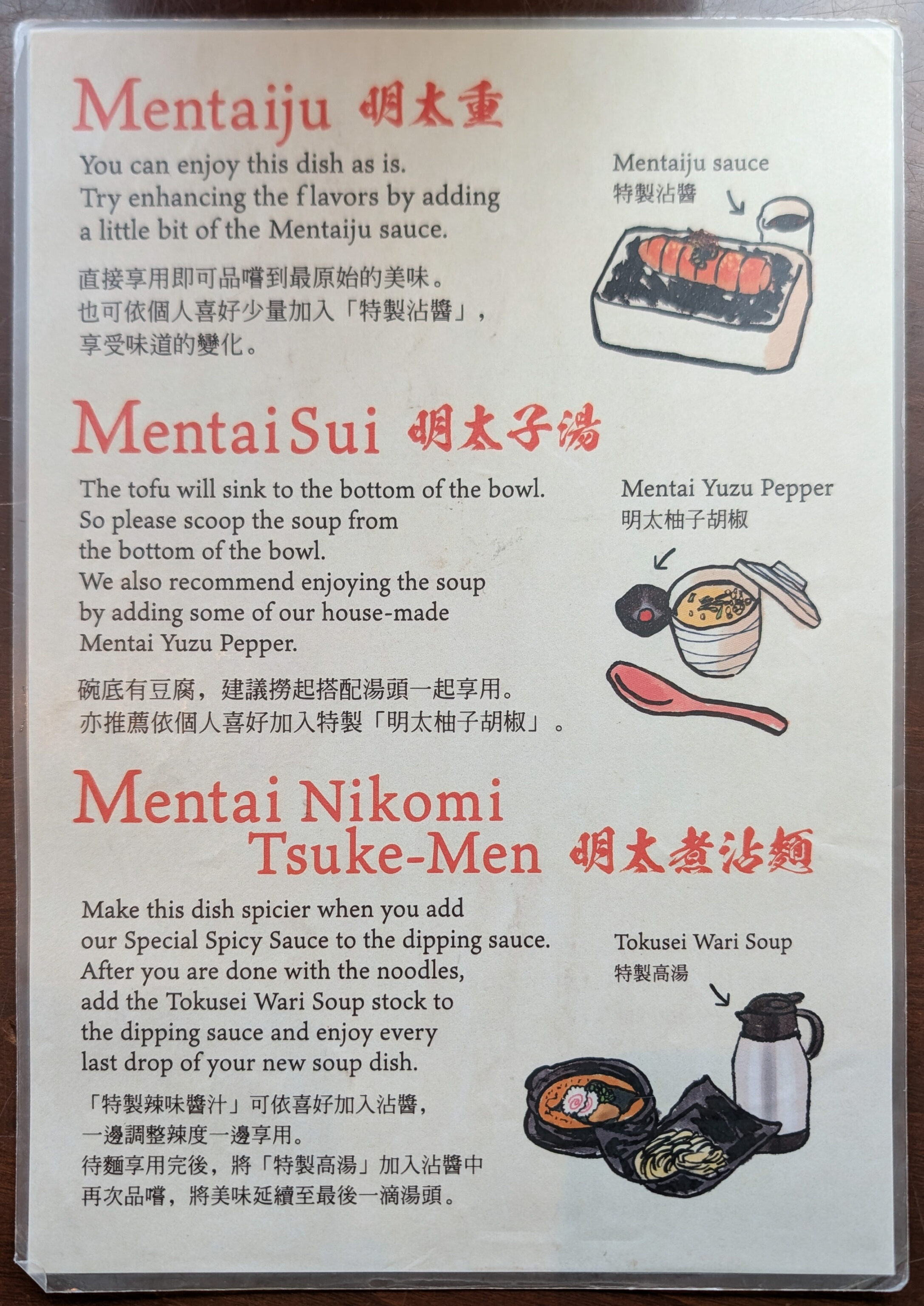
The sheet on the left describes how to eat the various mentaiko dishes that they serve.
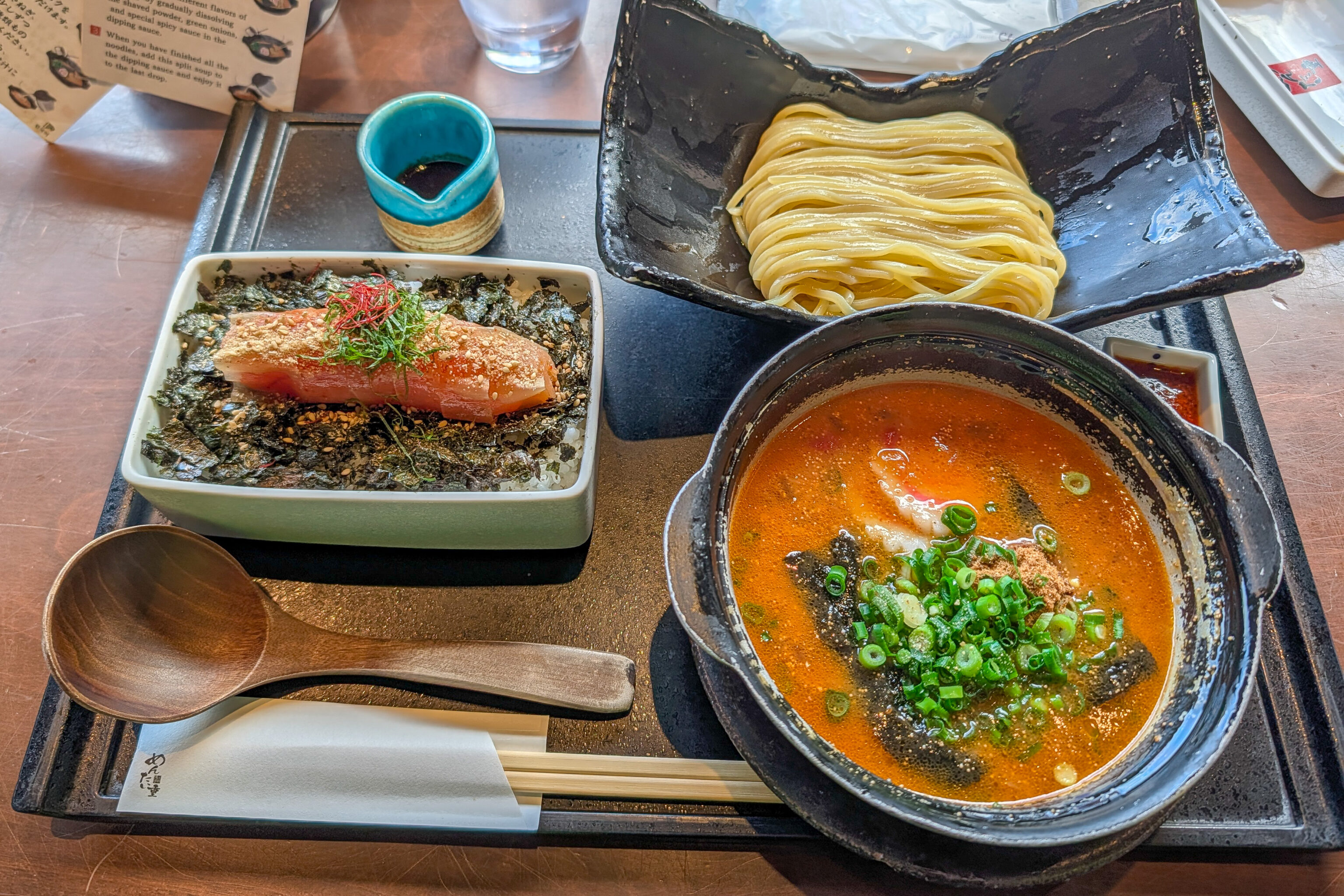
We ordered one set which includes mentaiko over rice, known as mentaiju, as well as mentaiko tsukemen. Both were excellent!
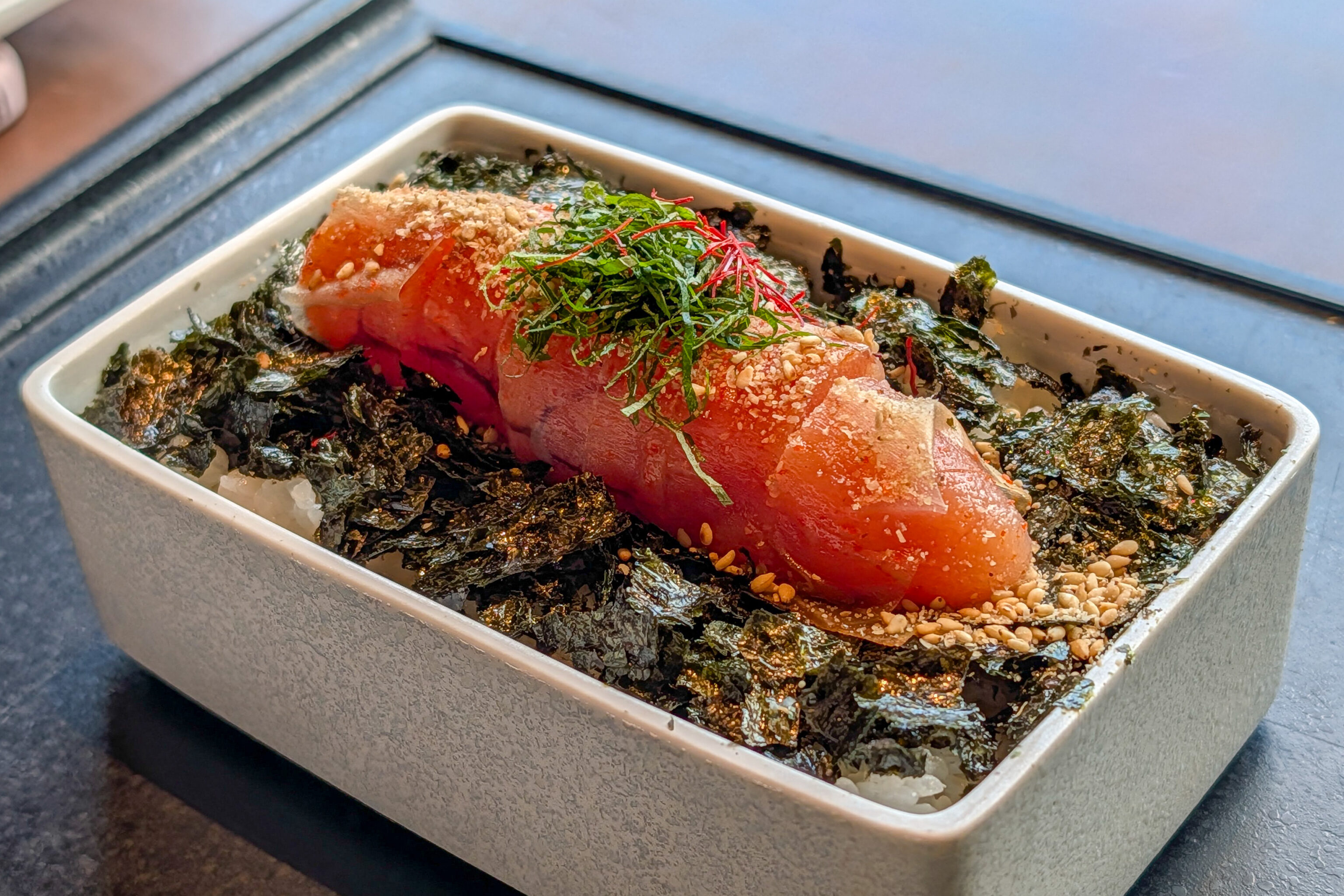
We also ordered just a mentaiju as we didn’t think we’d be hungry enough to eat two whole sets.
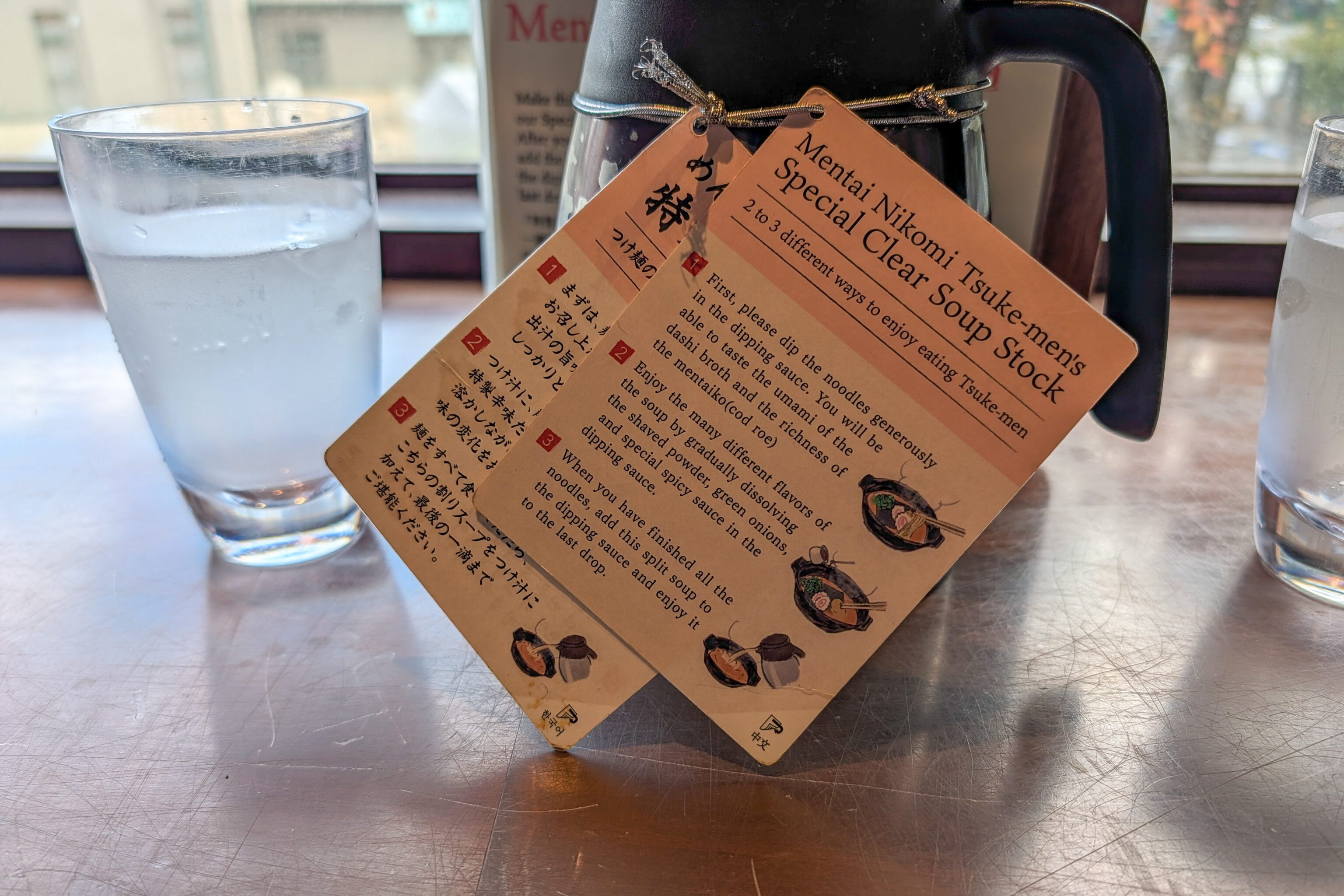
Having multiple ways of consuming a dish is a thing in Japan, as described here with the soup stock intended for the tsukemen.
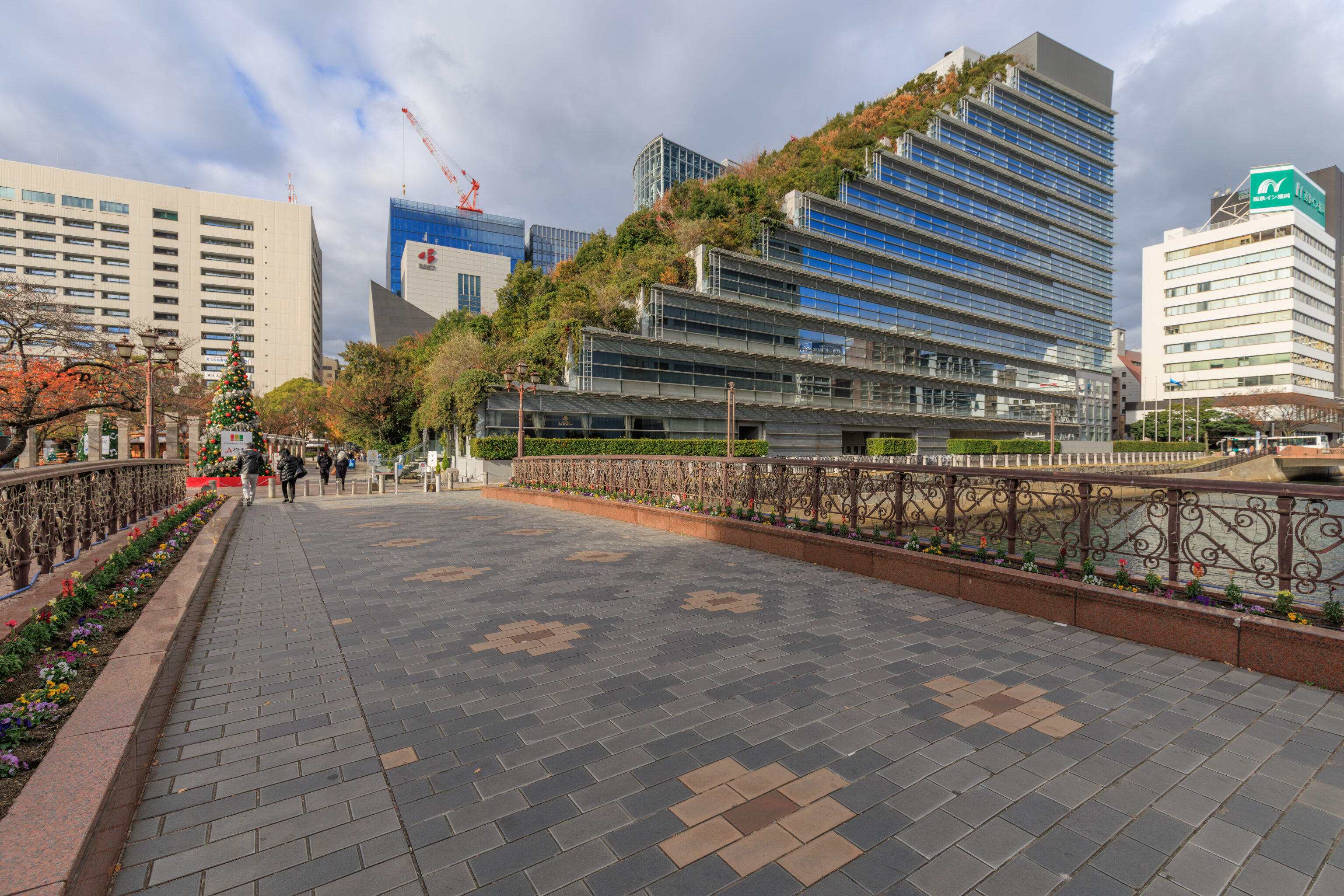
After our mentaiko meal, we continued walking to the west, crossing the 公園通り橋 Park Avenue Bridge. The bridge leads to the northeast corner of the 天神中央公園 Tenjin Central Park. The large building with the terraced garden roof is the アクロス福岡 ACROS Fukuoka. ACROS apparently is an acronym meaning Asian Crossroads Over the Sea. The building seems to be a multi-purpose facility containing conference, music, and event halls.
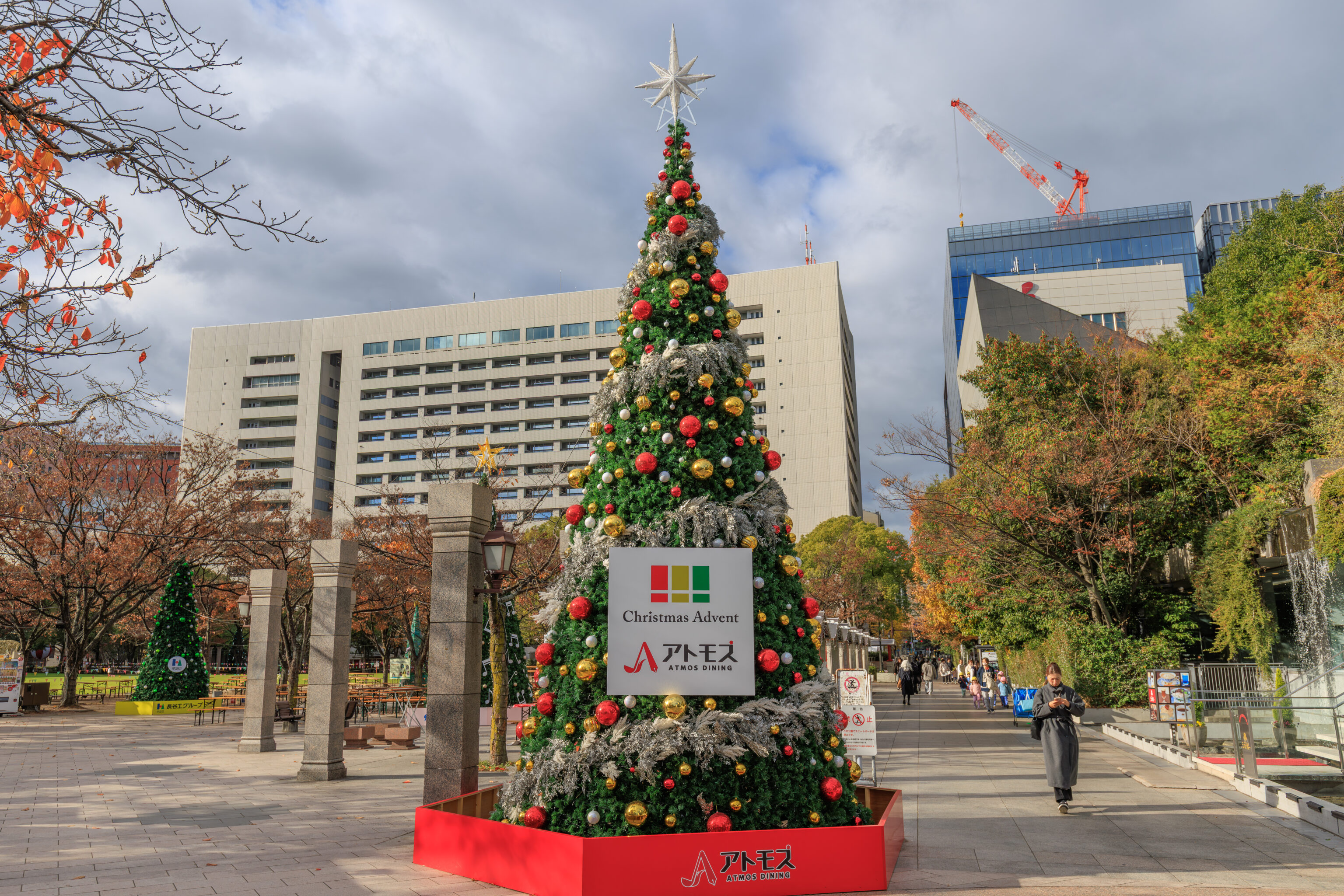
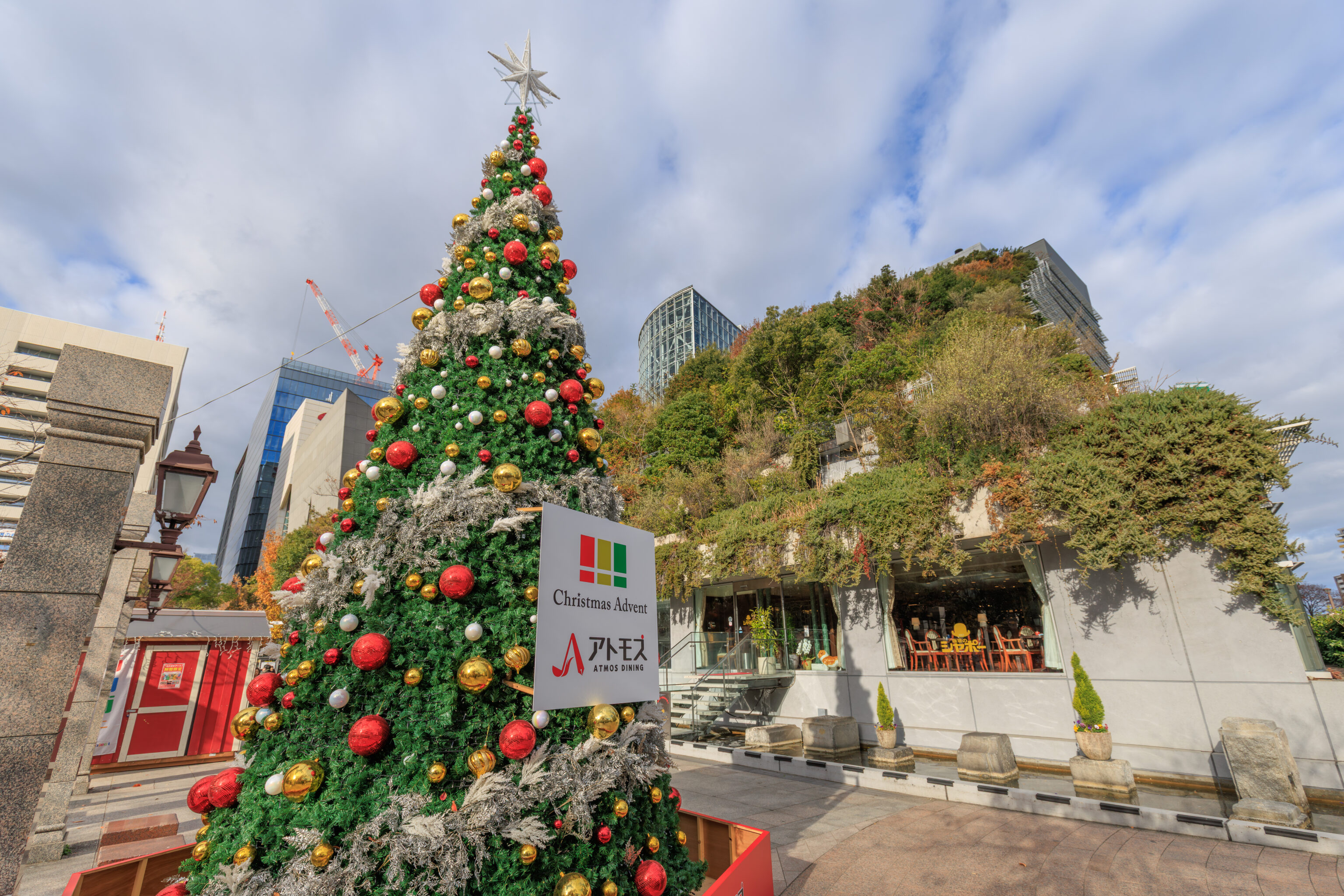
There was a Christmas tree just beyond the bridge. Atmos Dining, the sponsor on the sign, seems to be a restaurant operator in Fukuoka.
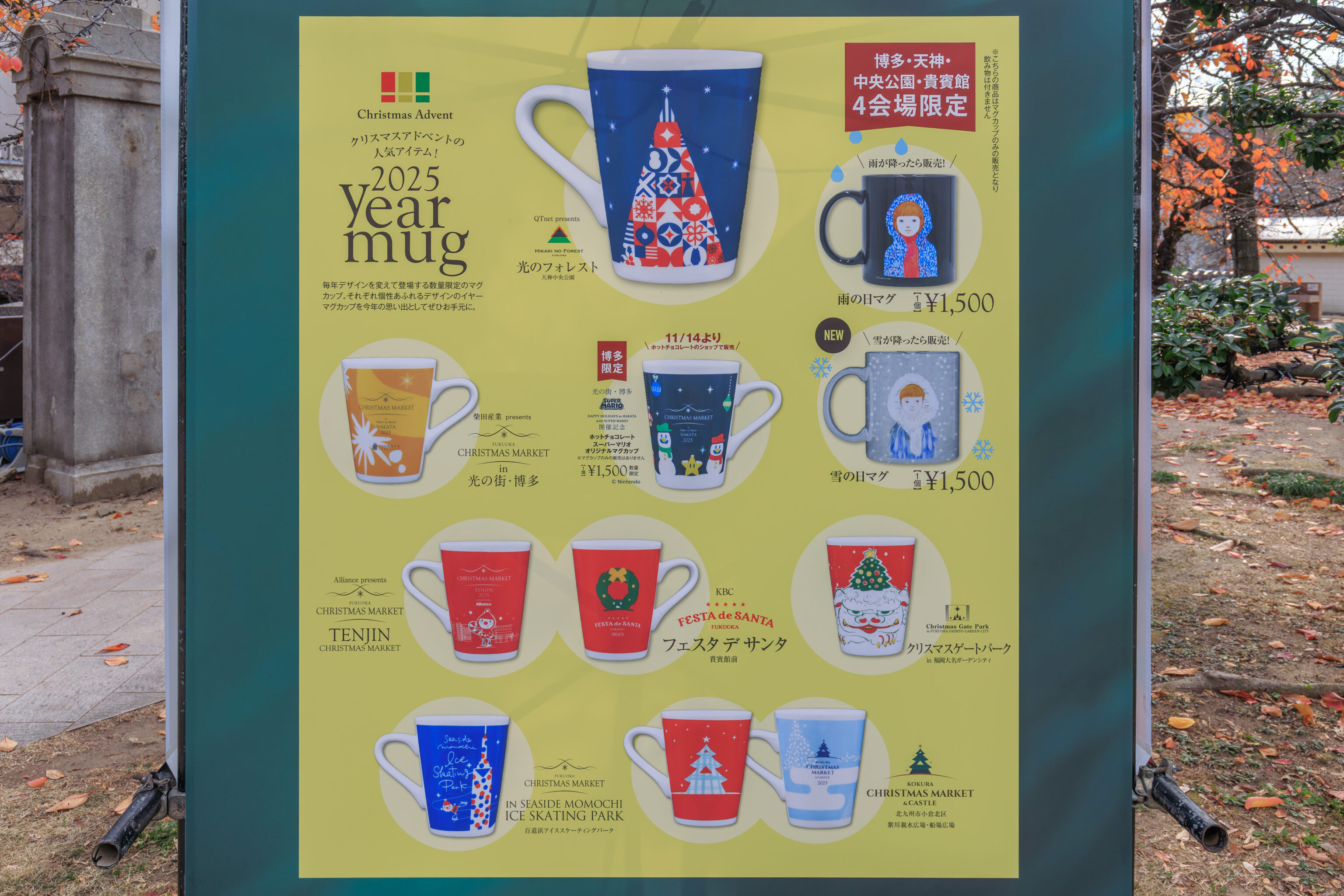
This nearby sign illustrates all the mugs that are available at Fukuoka’s Christmas markets. We have the yellow and orange one on the left which was from the market in front of Hakata Station. Maybe we should have gotten the Super Mario one? The art isn’t particularly great…
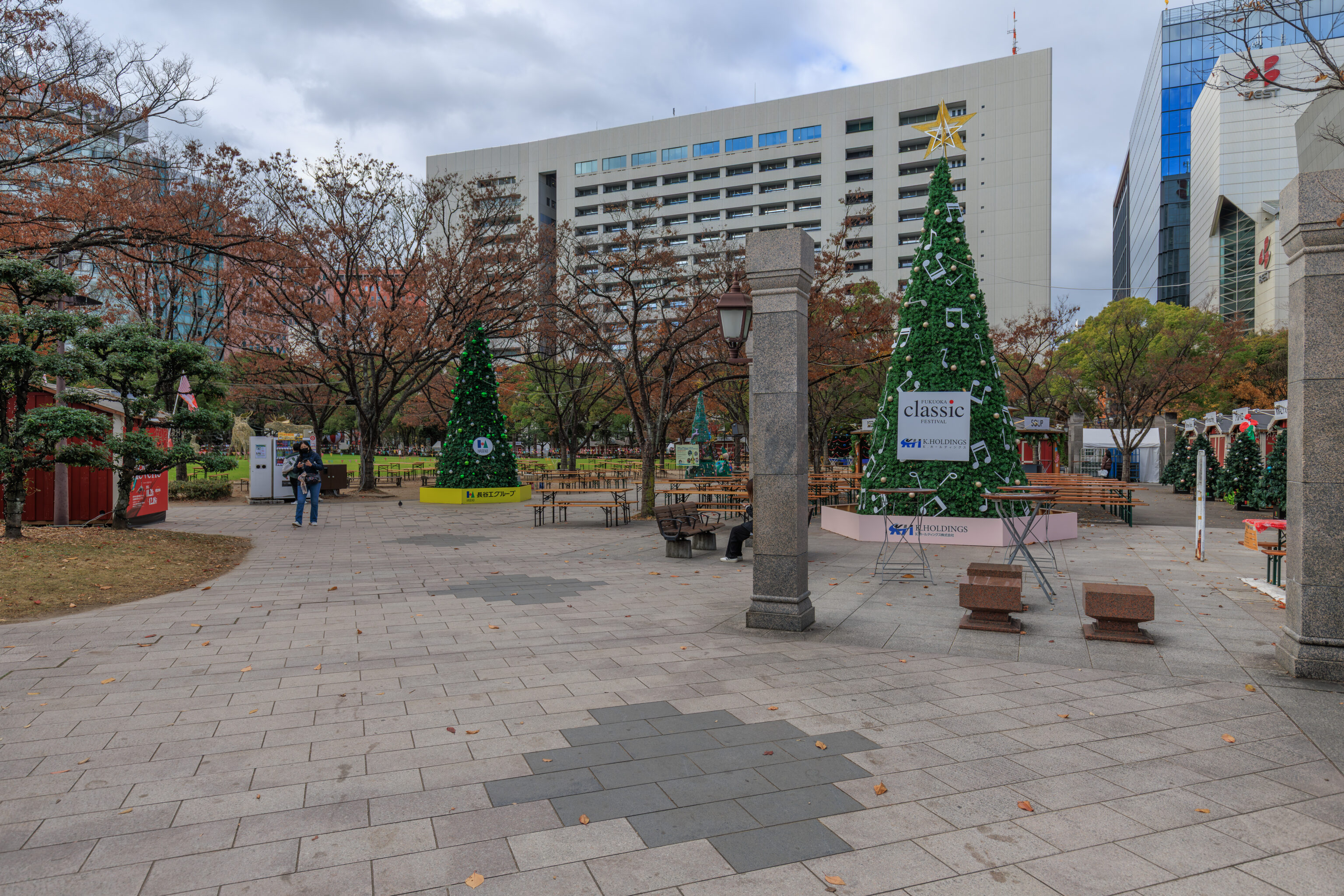
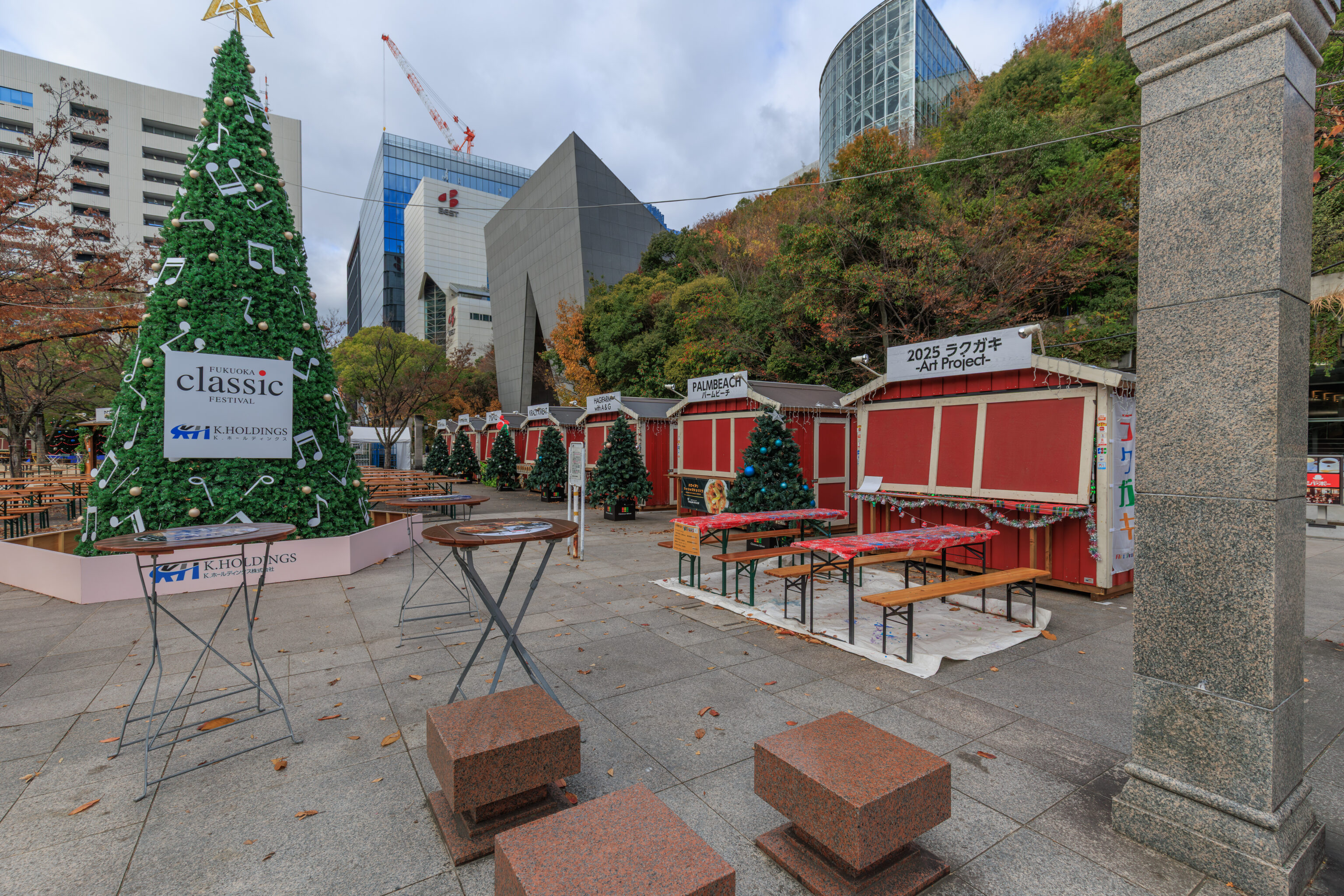
Continuing on, there was another Christmas tree near some market stalls, which weren’t open yet as it was still quite early.
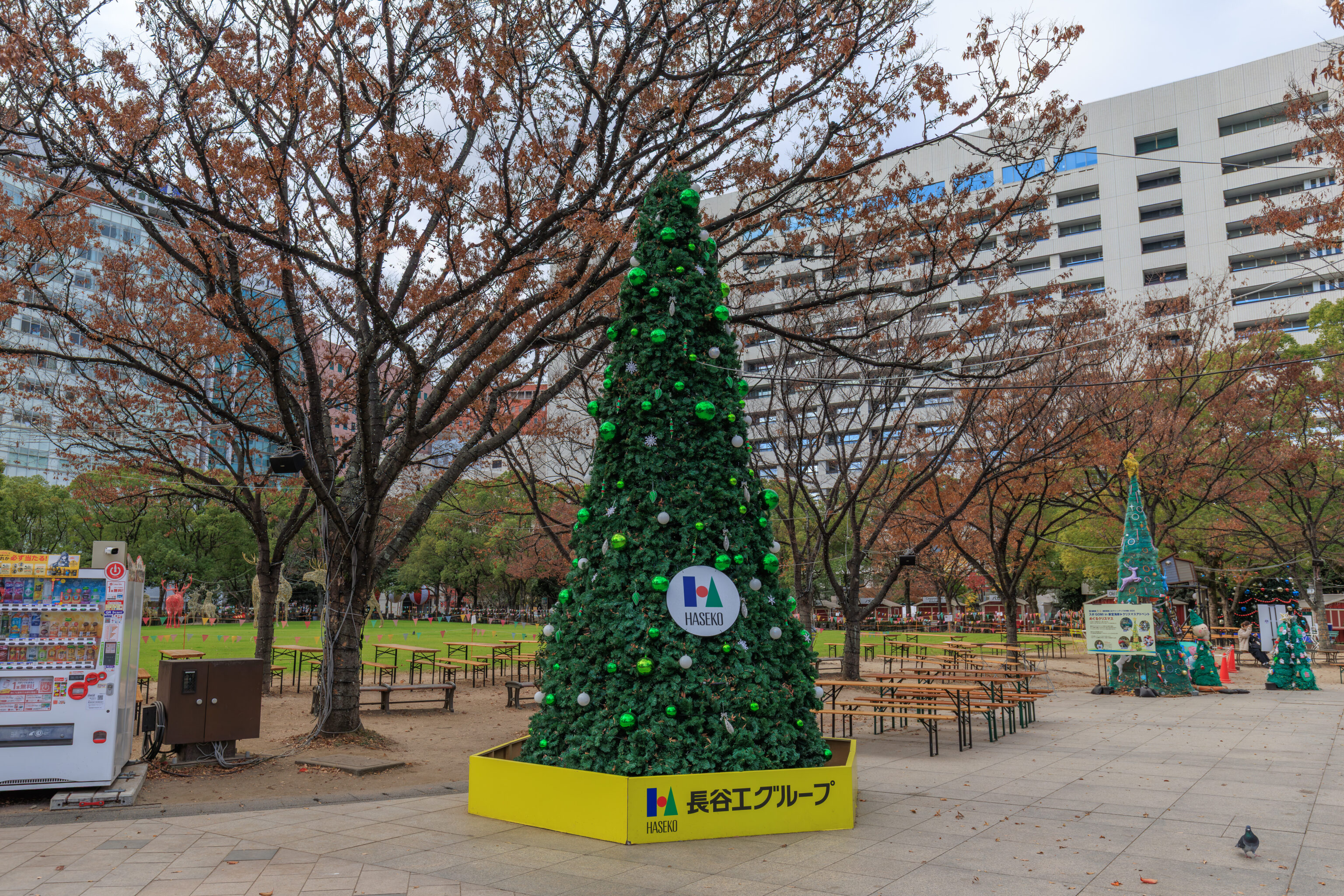
And, another Christmas tree!
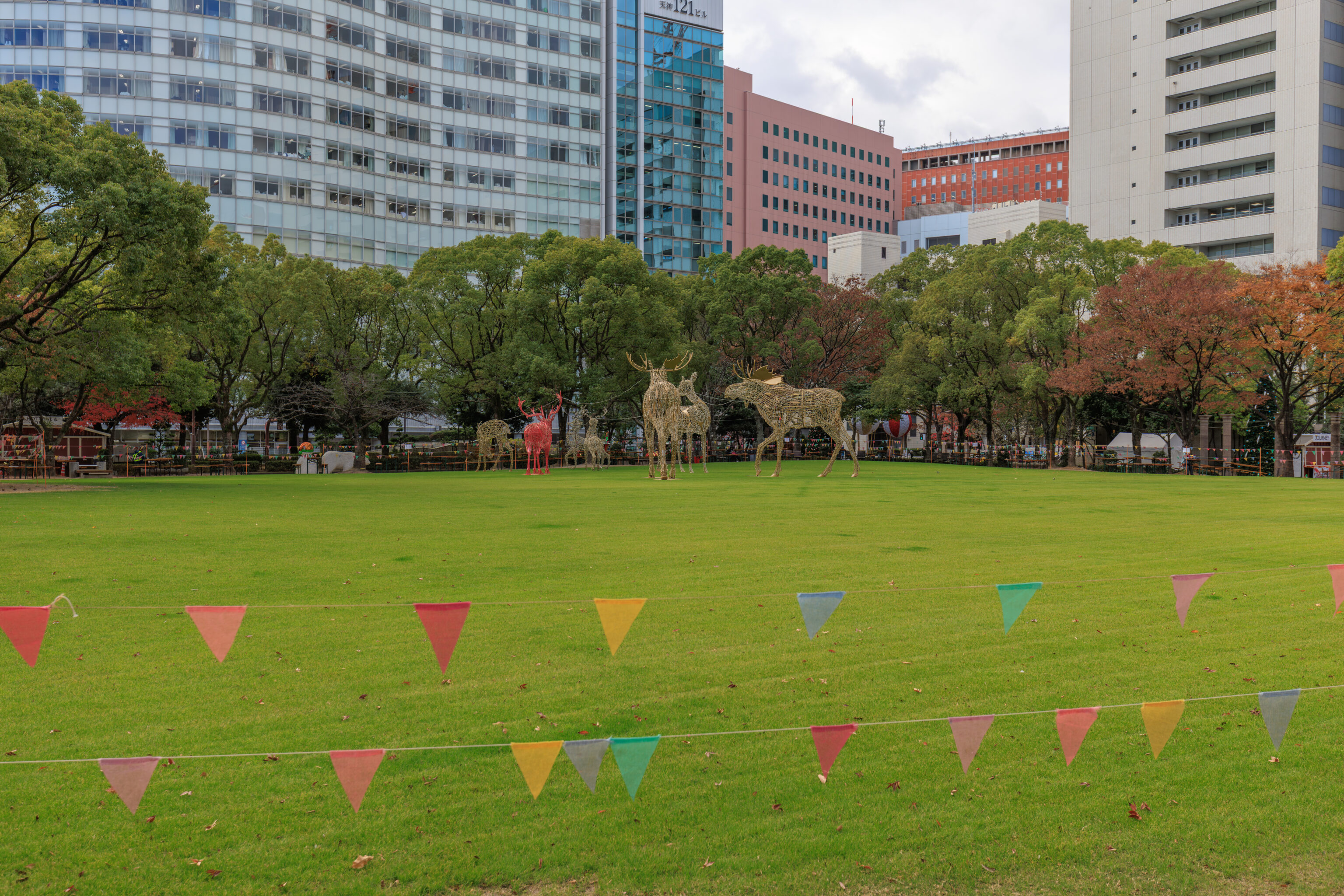
The open field in at the park contained a small herd of moose and elk.
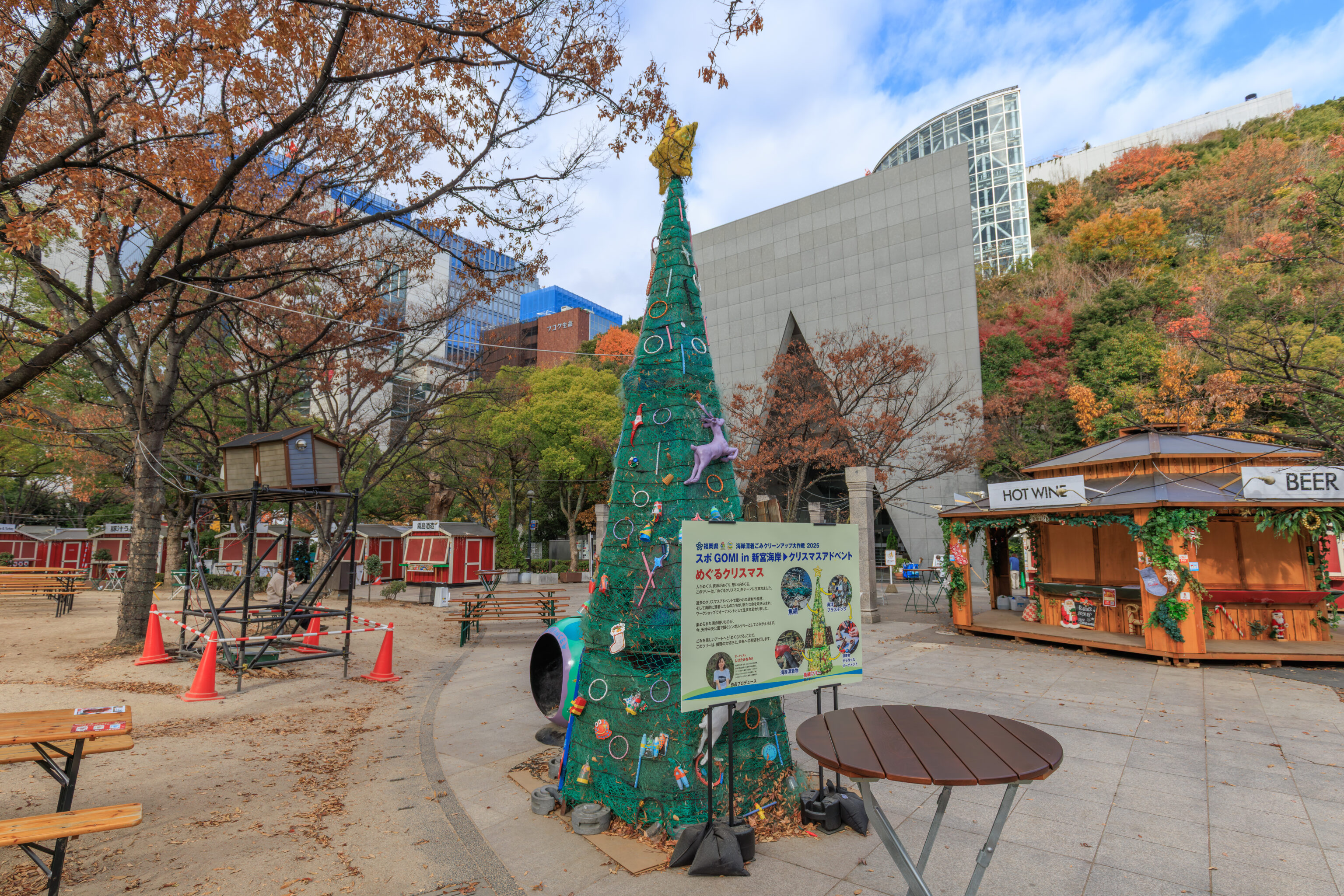
Another Christmas tree! While the others were advertisements for corporate sponsors, this one seems to be an art project created from trash collected along the coast.
Fukuoka Prefecture Coastal Debris Cleanup Campaign 2025
GOMI Spot at Shingu Beach ▶ Christmas Advent
A Circling Christmas

People circulate, resources circulate, and sentiments circulate.  This tree was created around the theme of a "Circulating Christmas."

Materials and scraps—repurposed from past Christmas advent seasons—
along with objects washed ashore from the coast, have been breathed new life and reborn as ornaments through a series of workshops.

These gathered gifts from the sea now come to life once again as a radiant symbolic tree in Tenjin Central Park.

By "circulating" waste into beautiful art, this tree illuminates the importance of circularity and hope for the future.

Artist: Minami Shibata
Born and residing in Fukutsu City. Since 2013, she has engaged in creative activities utilizing kimono and personal belongings.  She has been active in the Fukuma area since 2018. Her work was exhibited at "JAPAN SDGs Action 2020," and she received the Minister of the Environment Award at the "Umi-Gomi Zero Award 2021."
– Text from the sign in front of the tree, translated using Google.
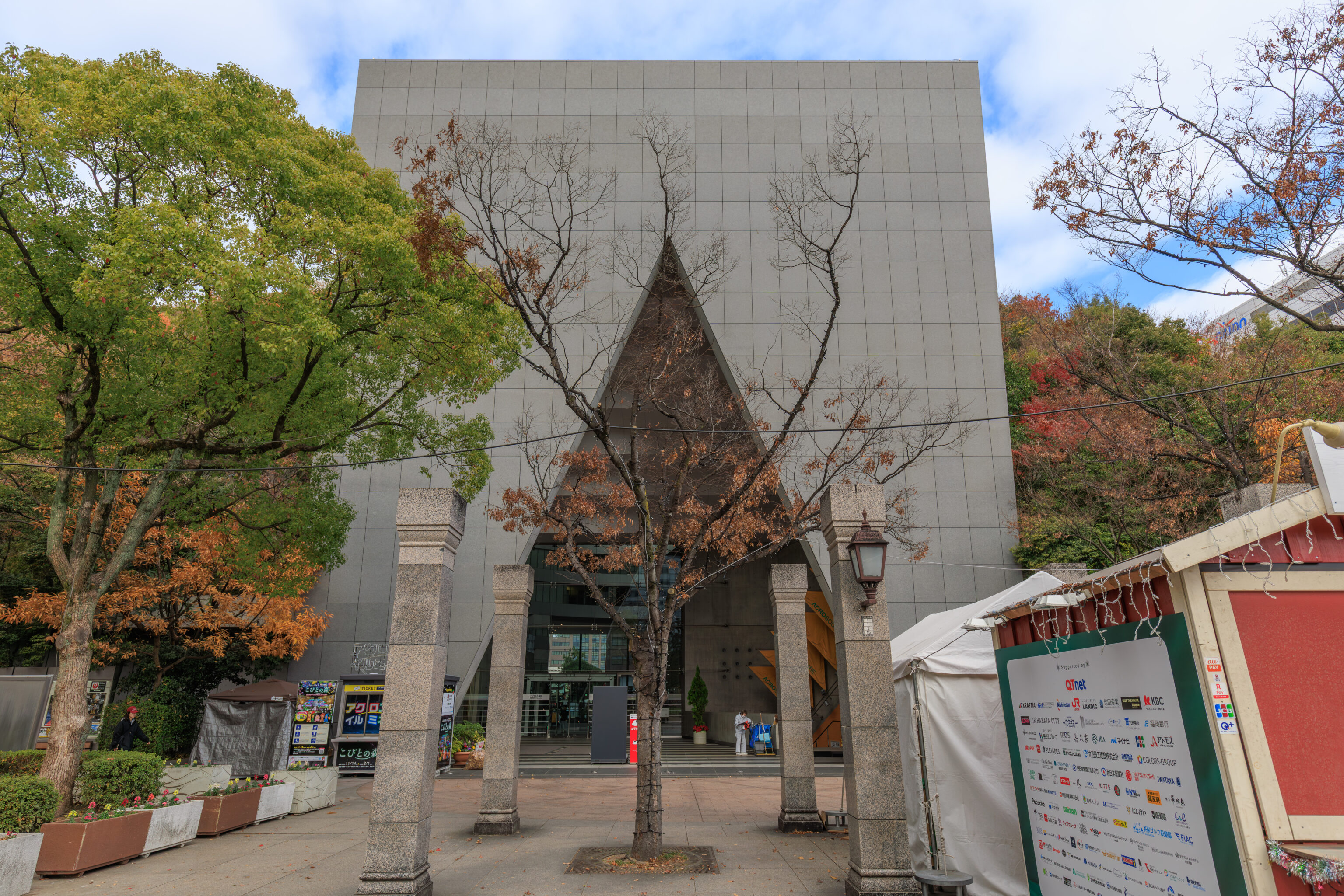
The structure in the background is the main entrance into ACROS Fukuoka.
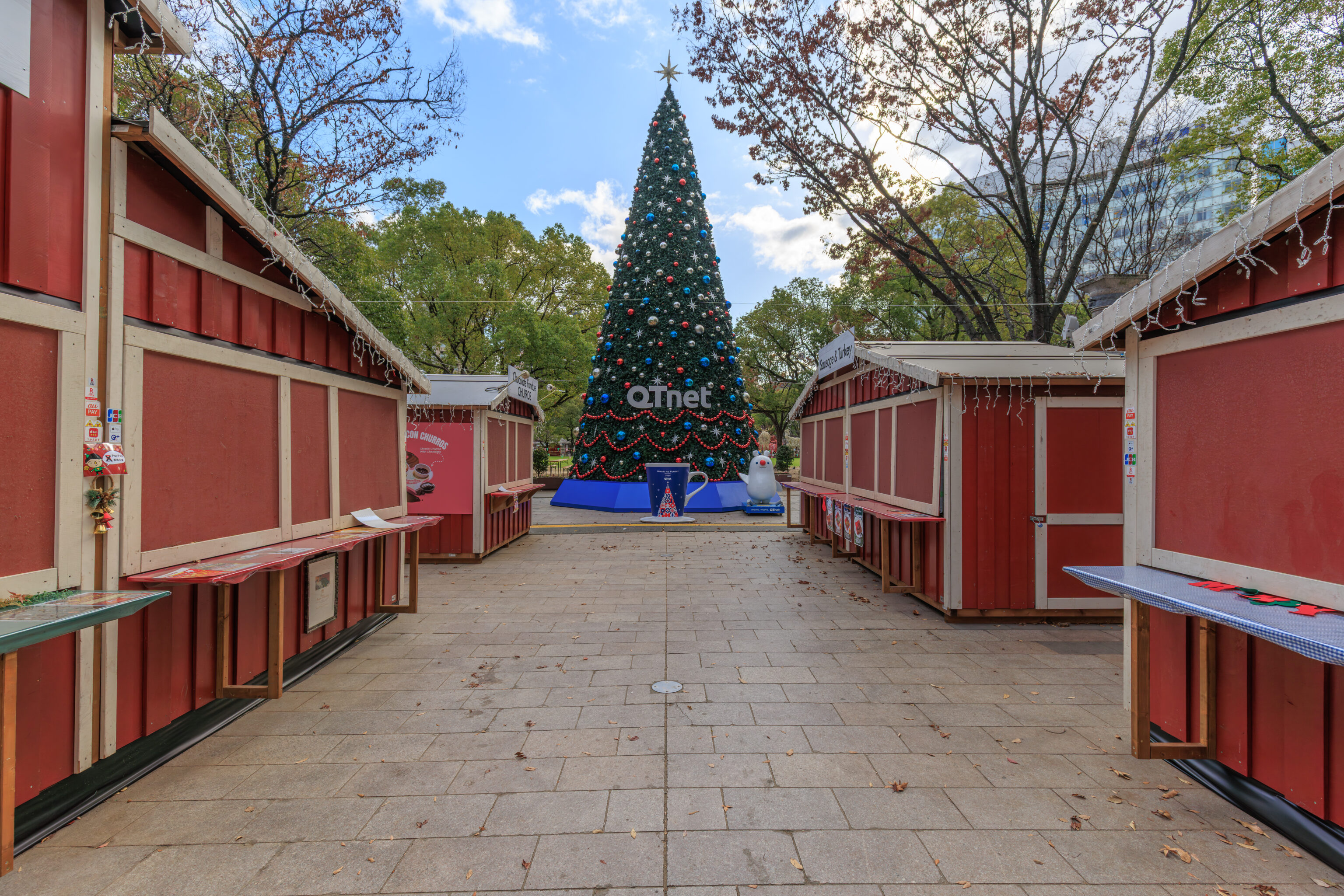
Another Christmas tree, this one with the Hikari no Forest mug in front of it. Hikari no Forest is the name of the Christmas market at Tenjin Central Park.
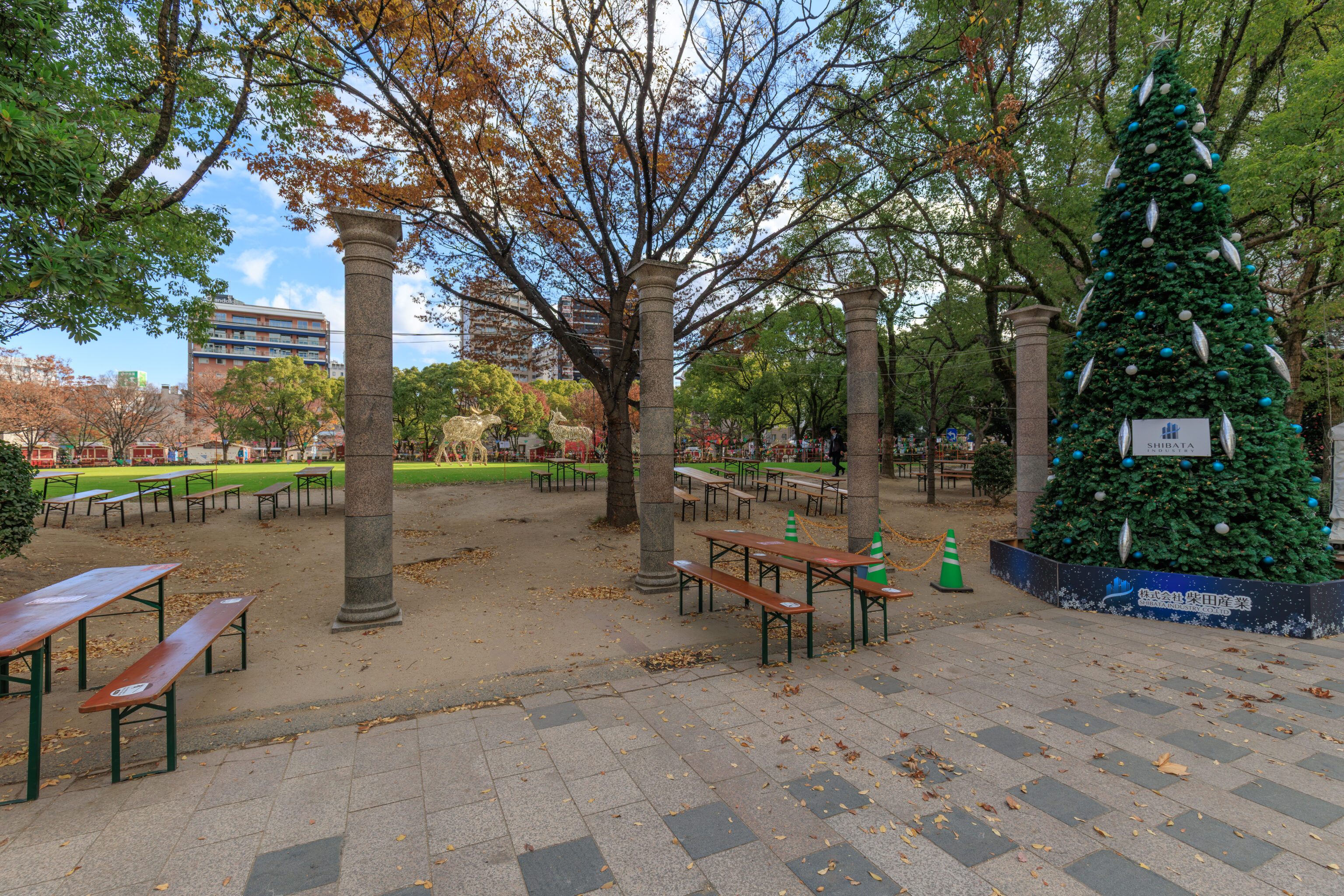
These appear to be modeled after Doric order columns…
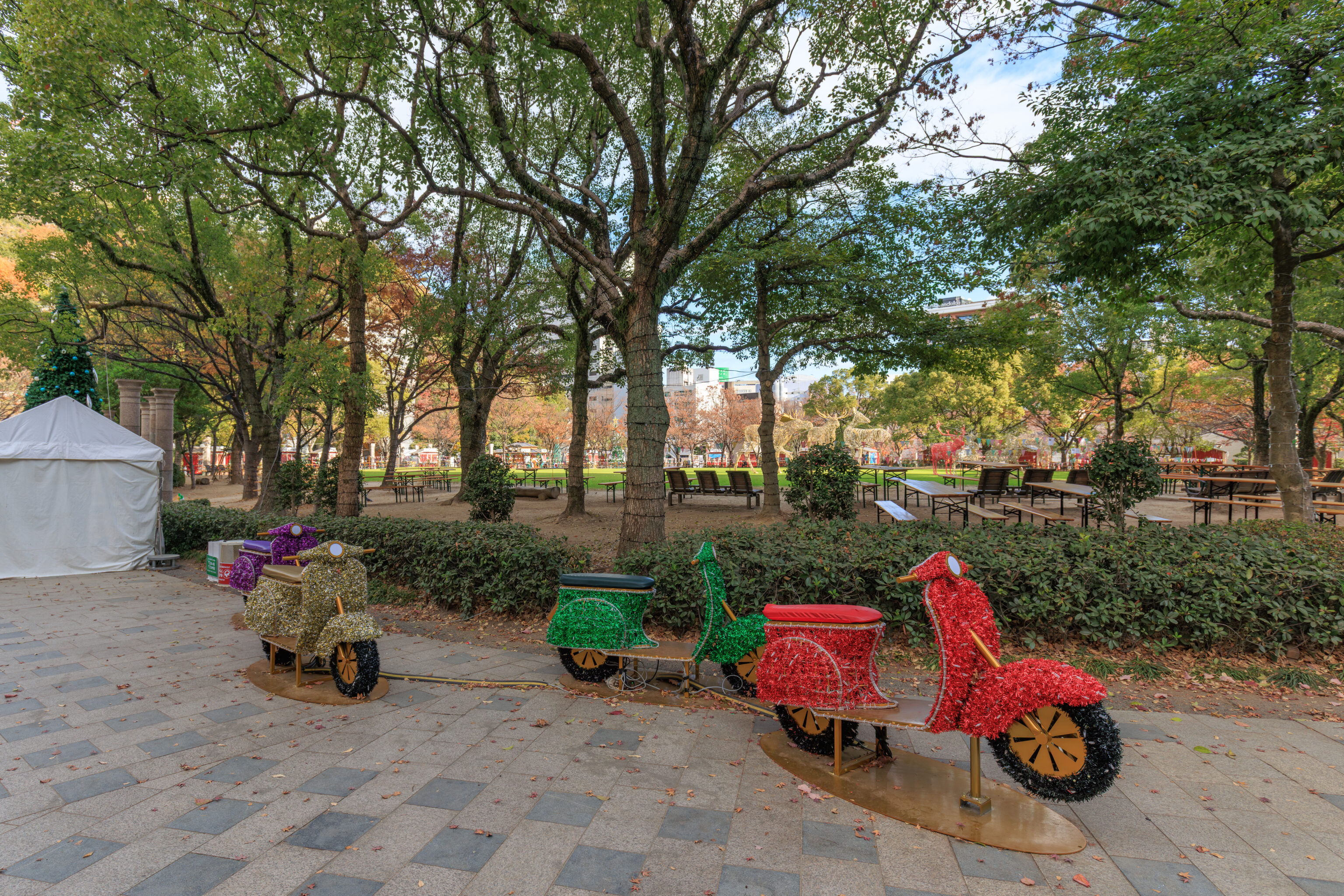
Continuing on, these three scooters were near the southwest corner of the park.
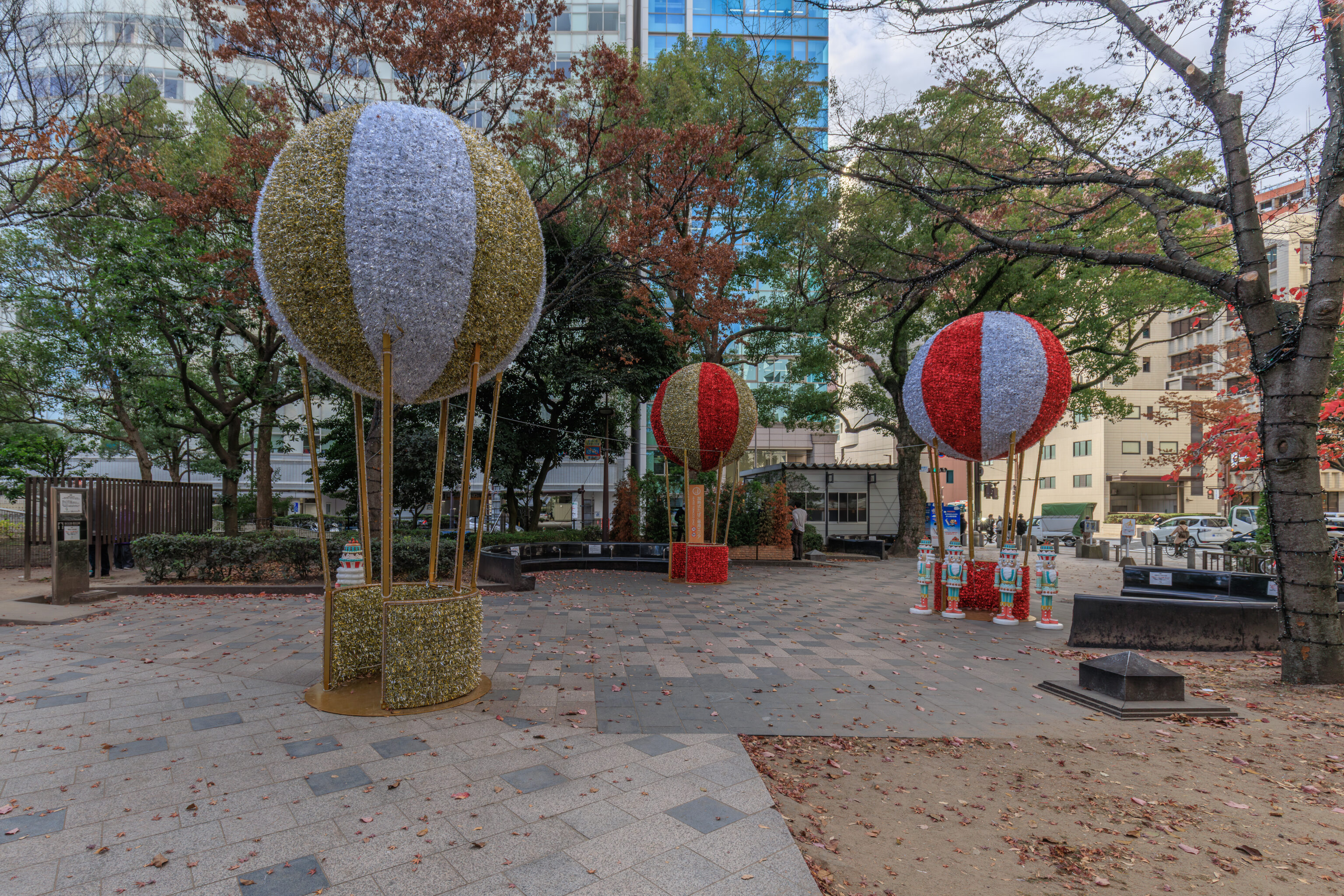
There were also hot air balloons.
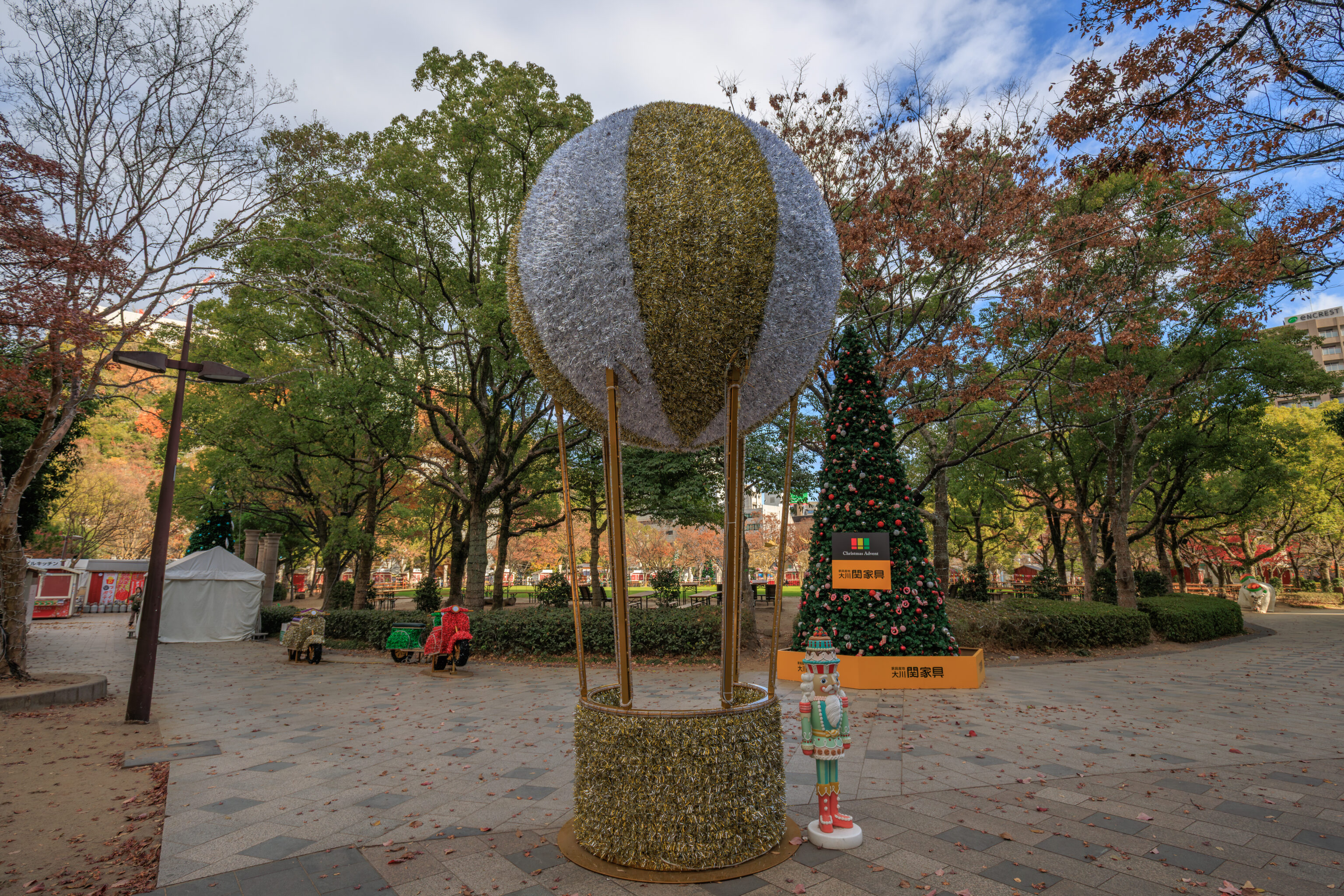
And of course, another Christmas tree.
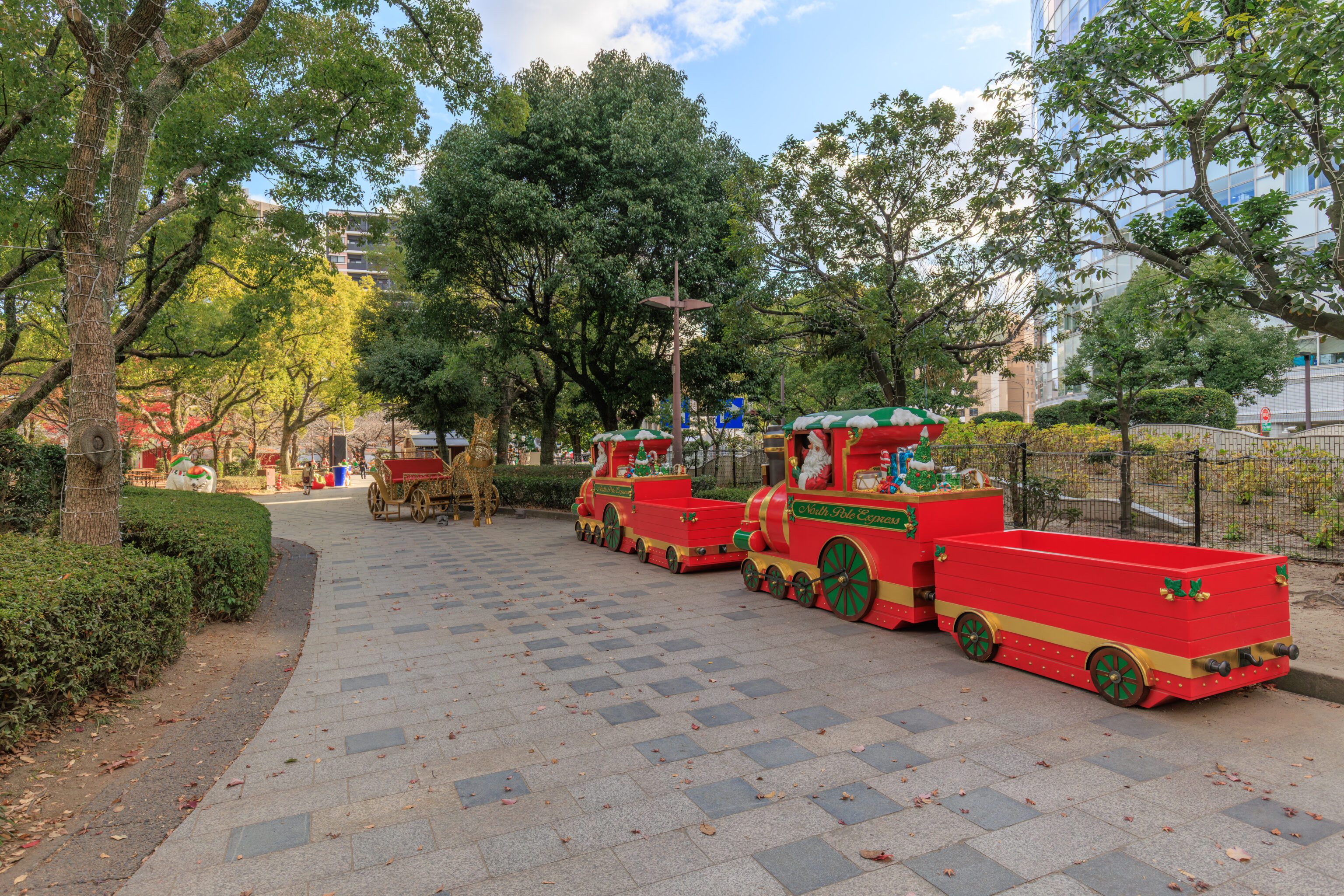
Walking to the east, we came upon Christmas trains and a horse drawn carriage. It should really be a reindeer up front!
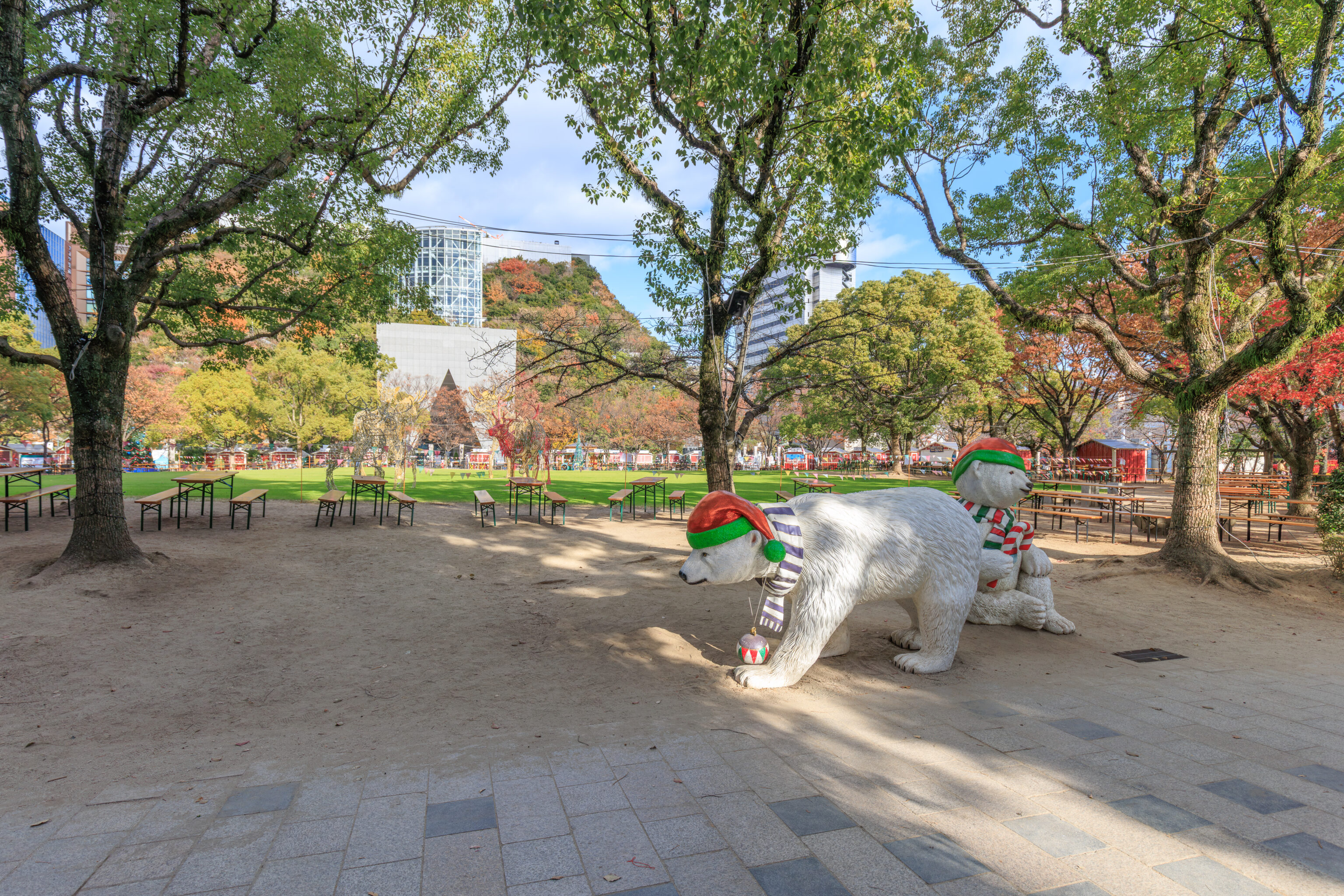
There were even polar bears!
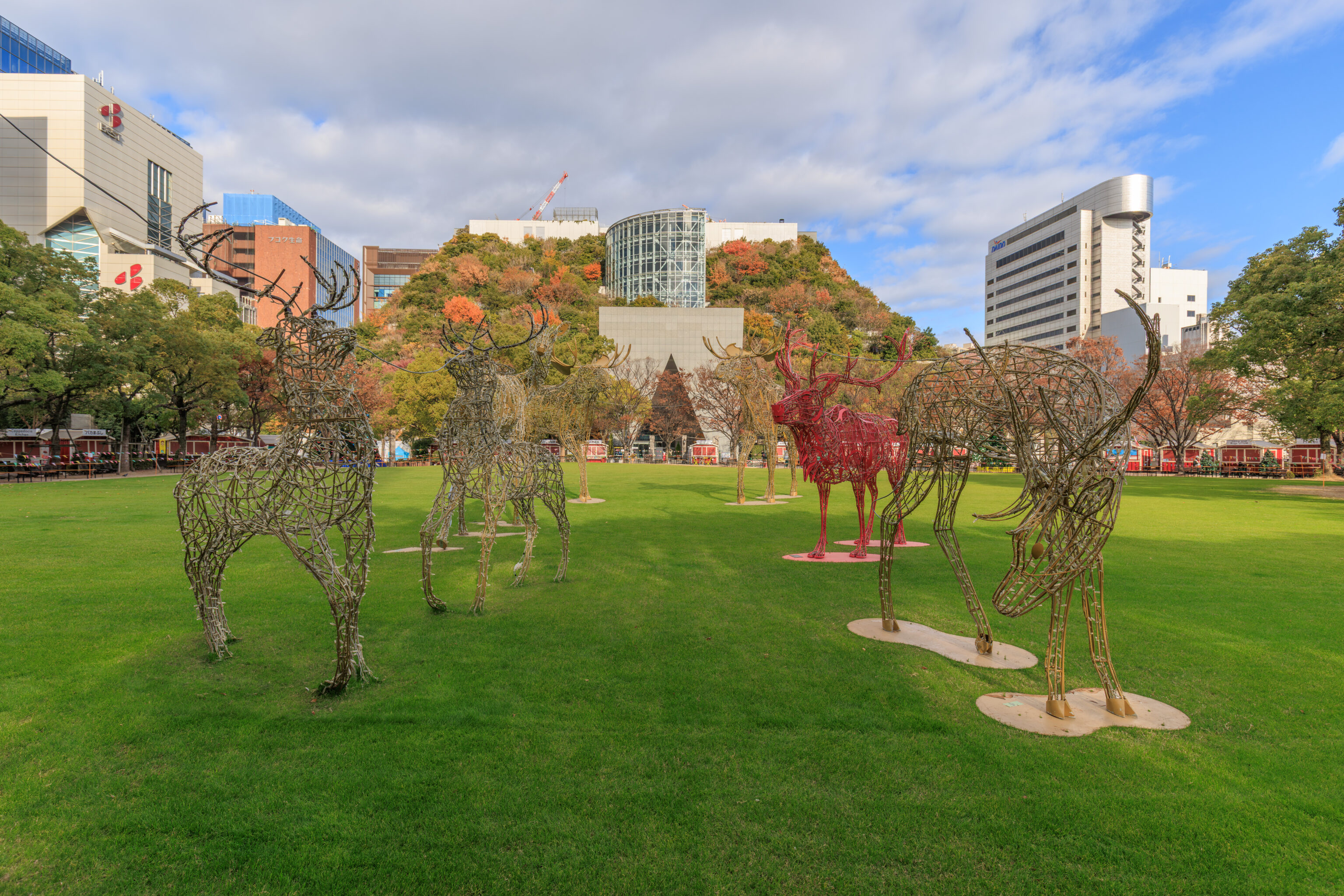
We were able to get a closer look at the elk with the moose hanging out further away.
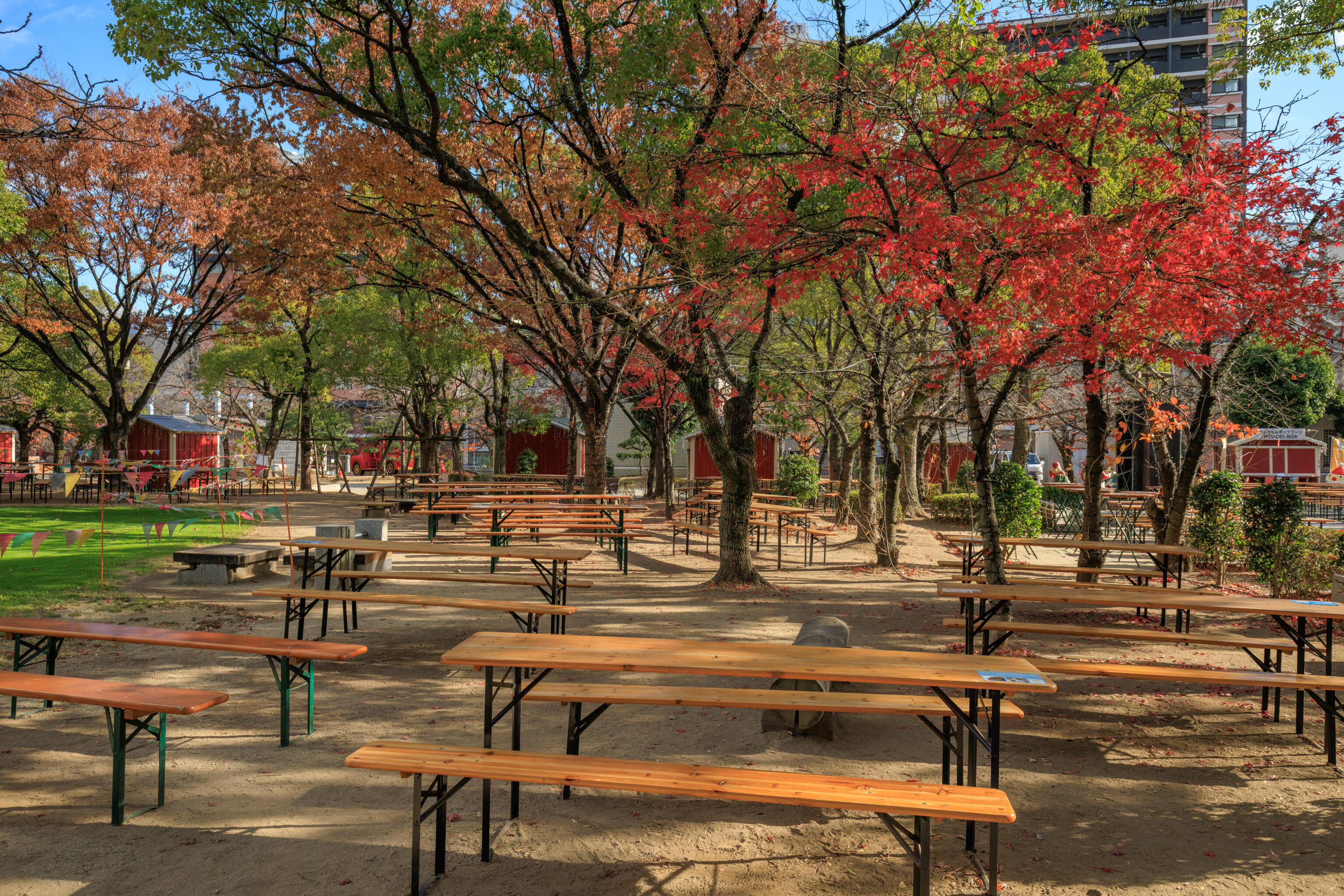
This area at the southeast corner of the park had quite a bit of tables for eating.
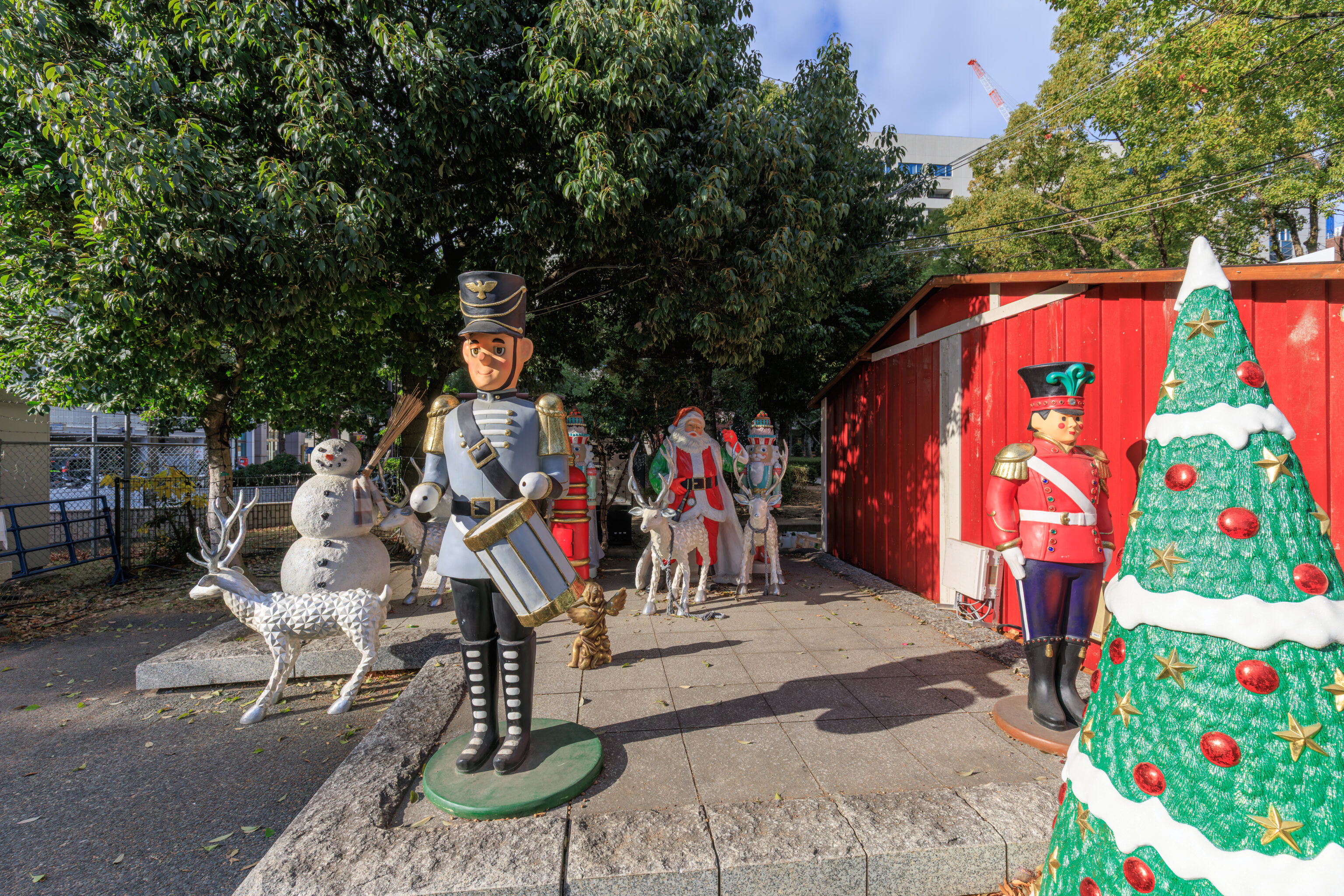
There was also a cluster of these nutcrackers and deer that are not reindeer.
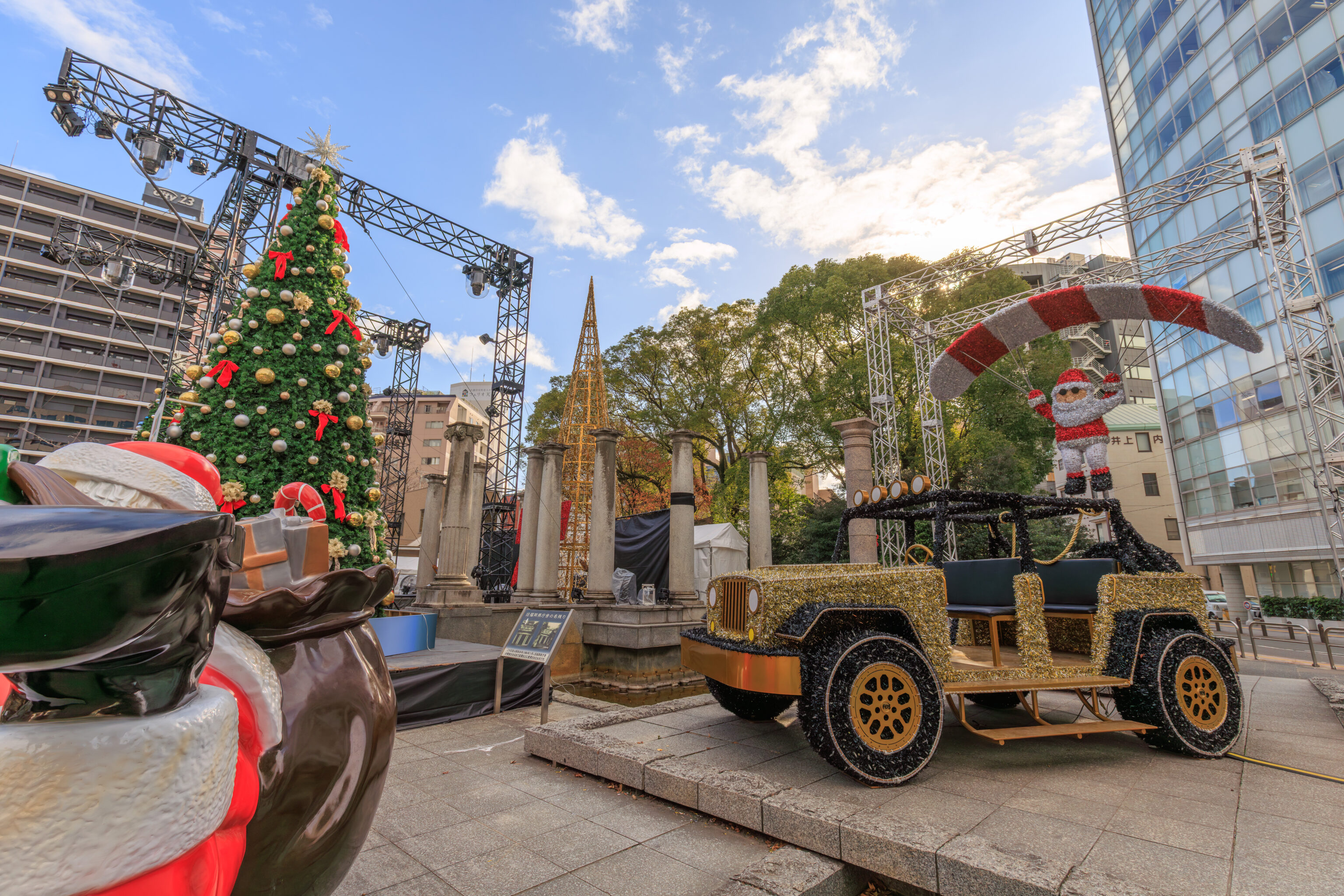
There was even a parachuting Santa Clause along with a jeep.
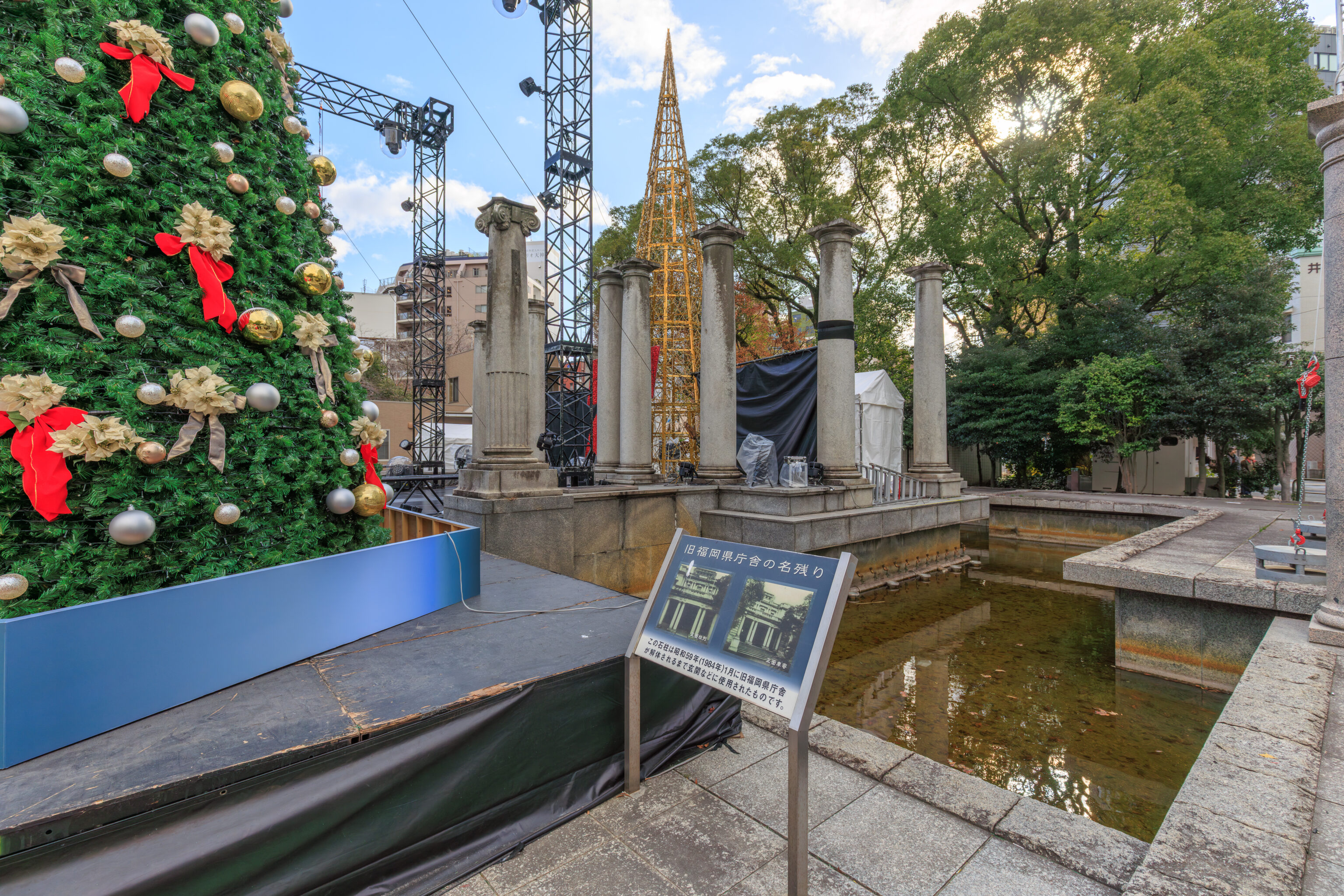
The columns in the background were originally part of the Fukuoka Prefectural Government Building. It was originally located where ACROS Fukuoka now stands.
Remnants of the former Fukuoka Prefectural Government building

These stone pillars were used in the entrance and other areas of the former Fukuoka Prefectural Government building until it was demolished in January 1984.
– Text from the sign in the photograph above, translated using Google.
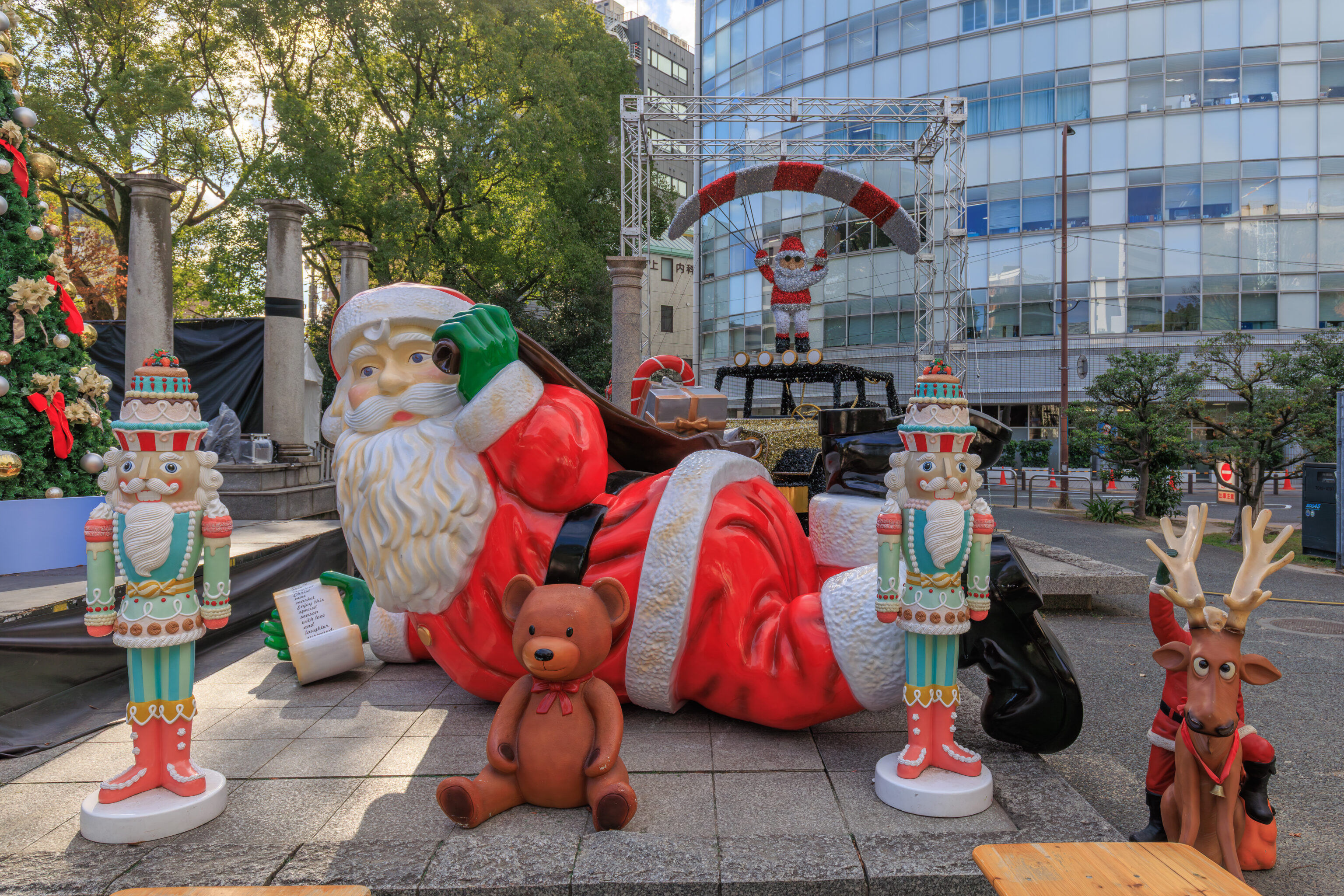
A posing Santa…
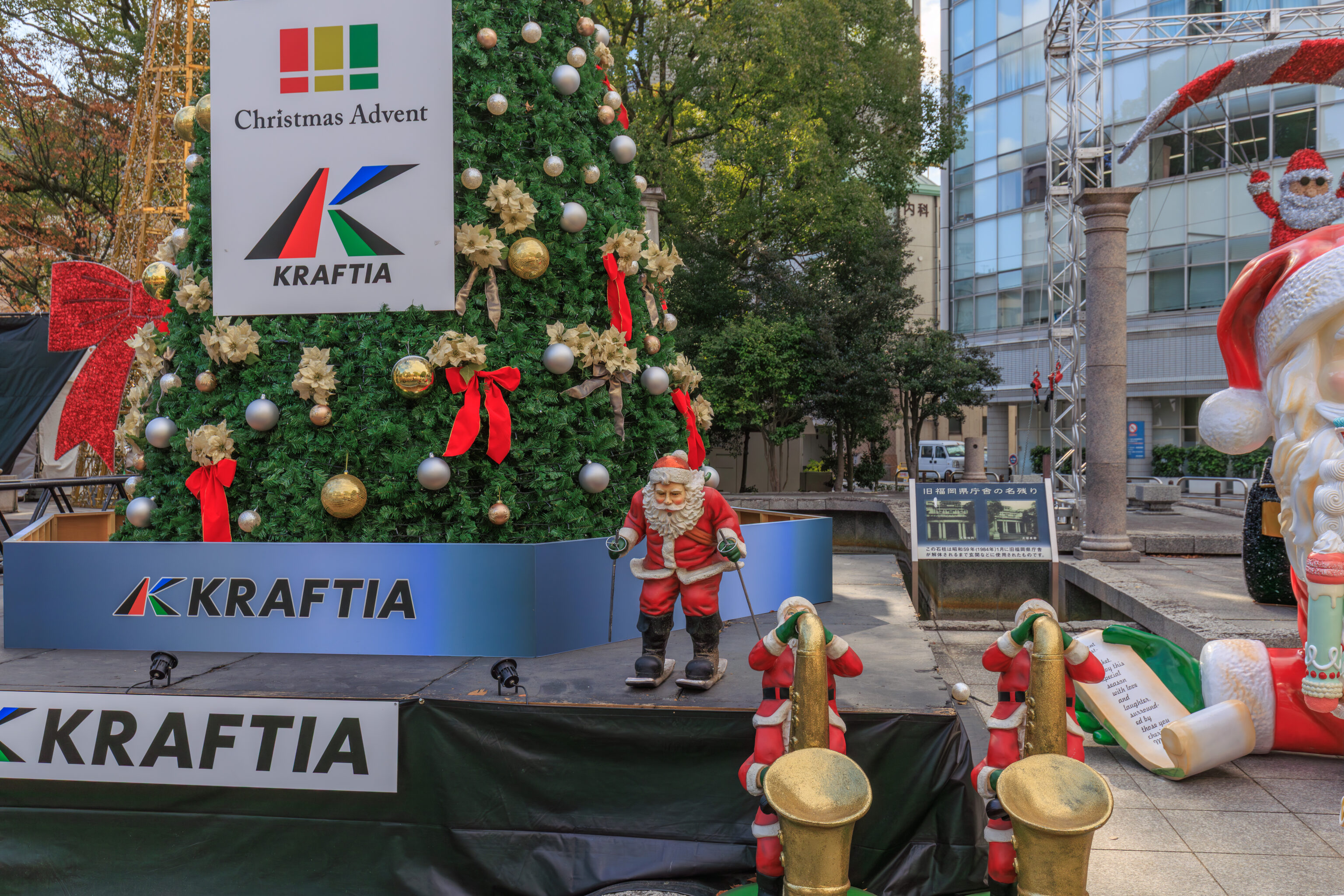
And a skiing Santa!
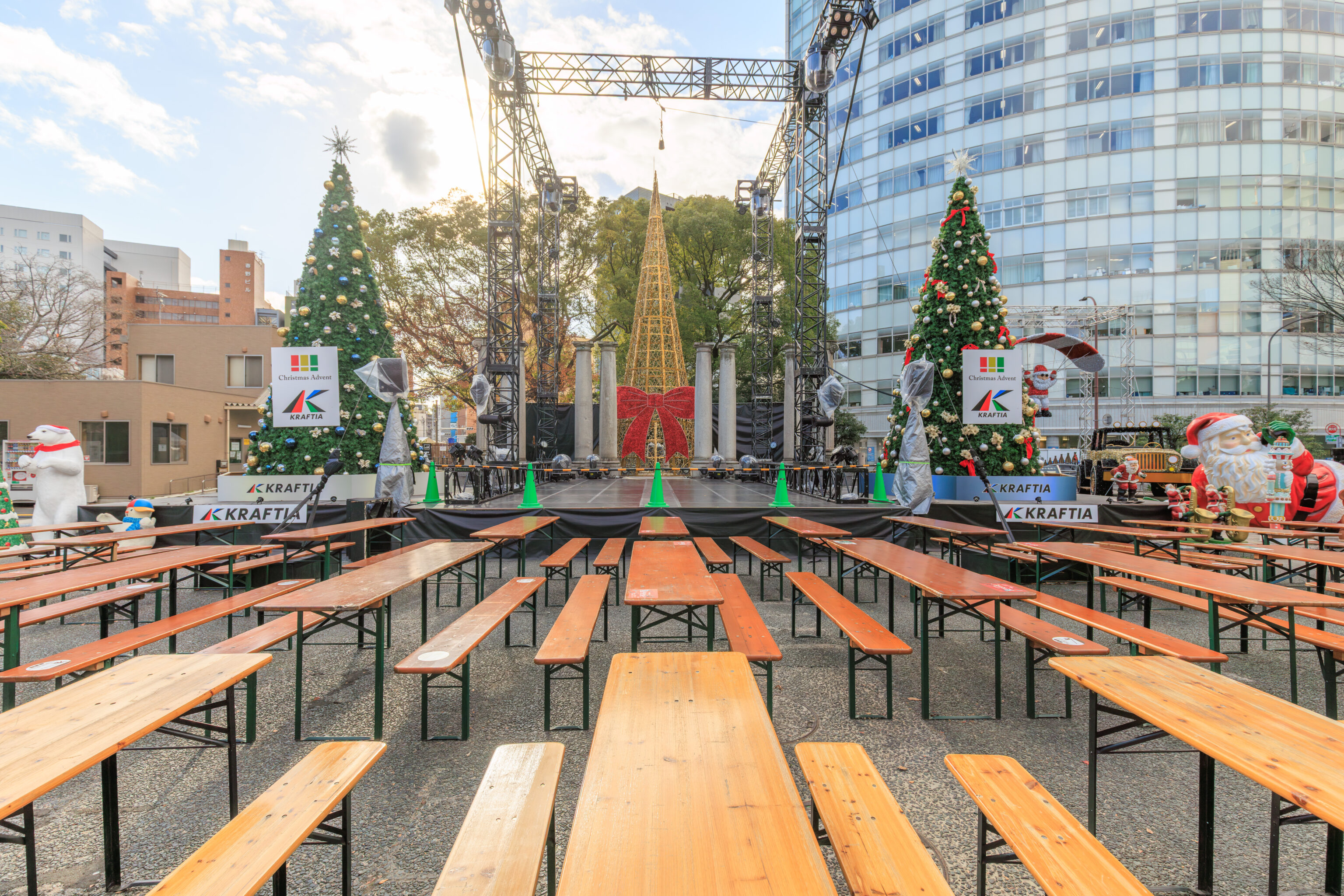
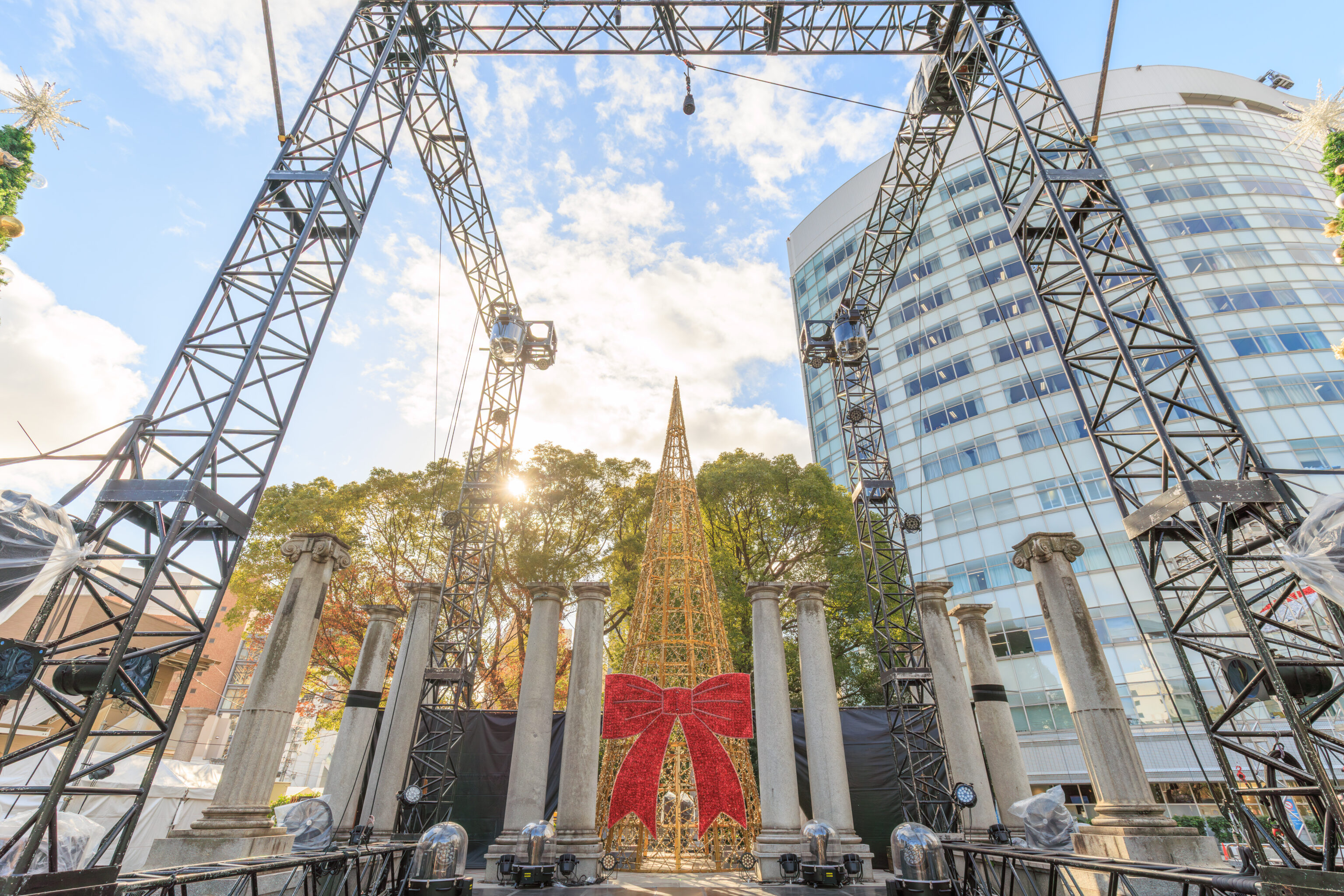
There was a small stage here by the dining tables.
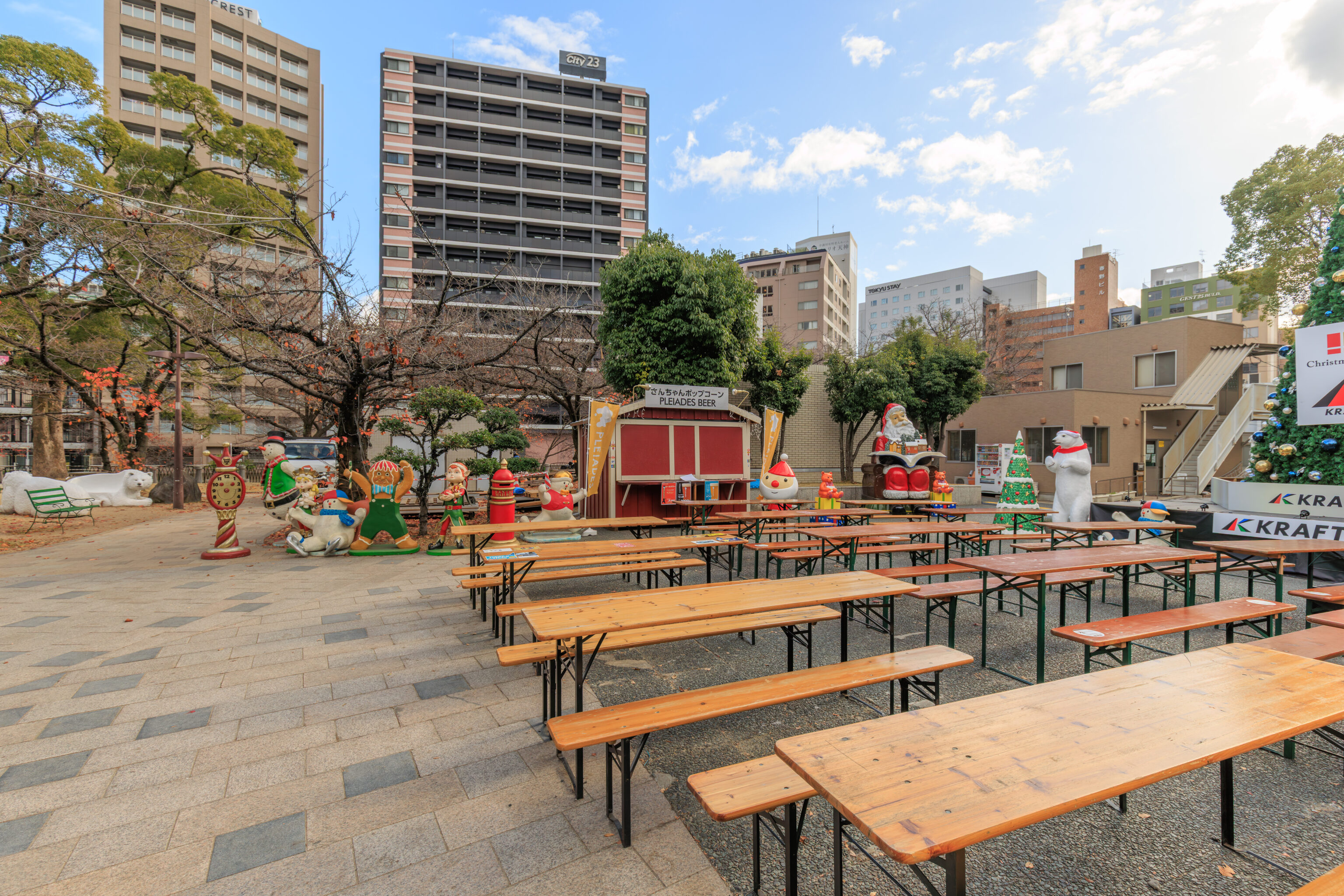
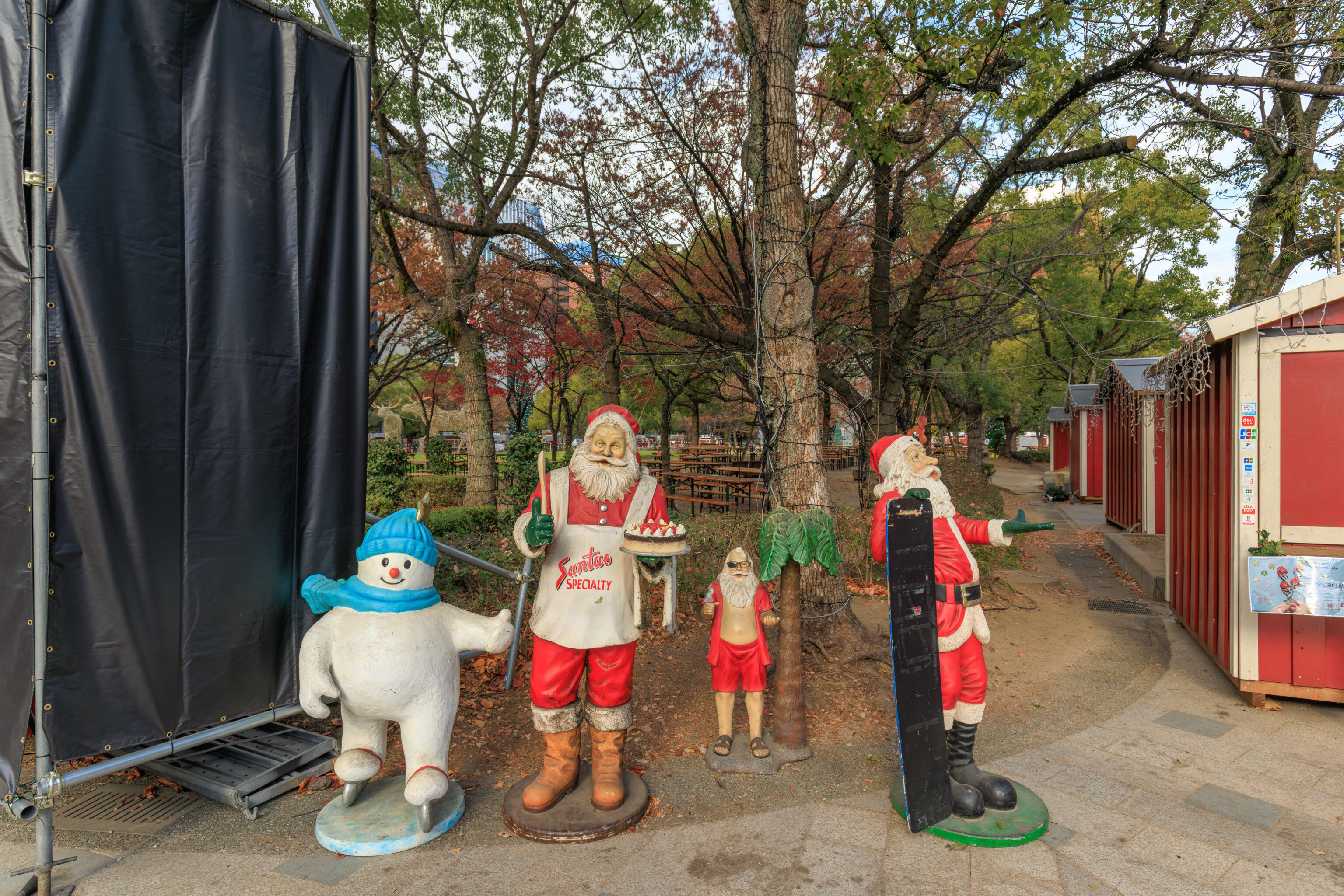
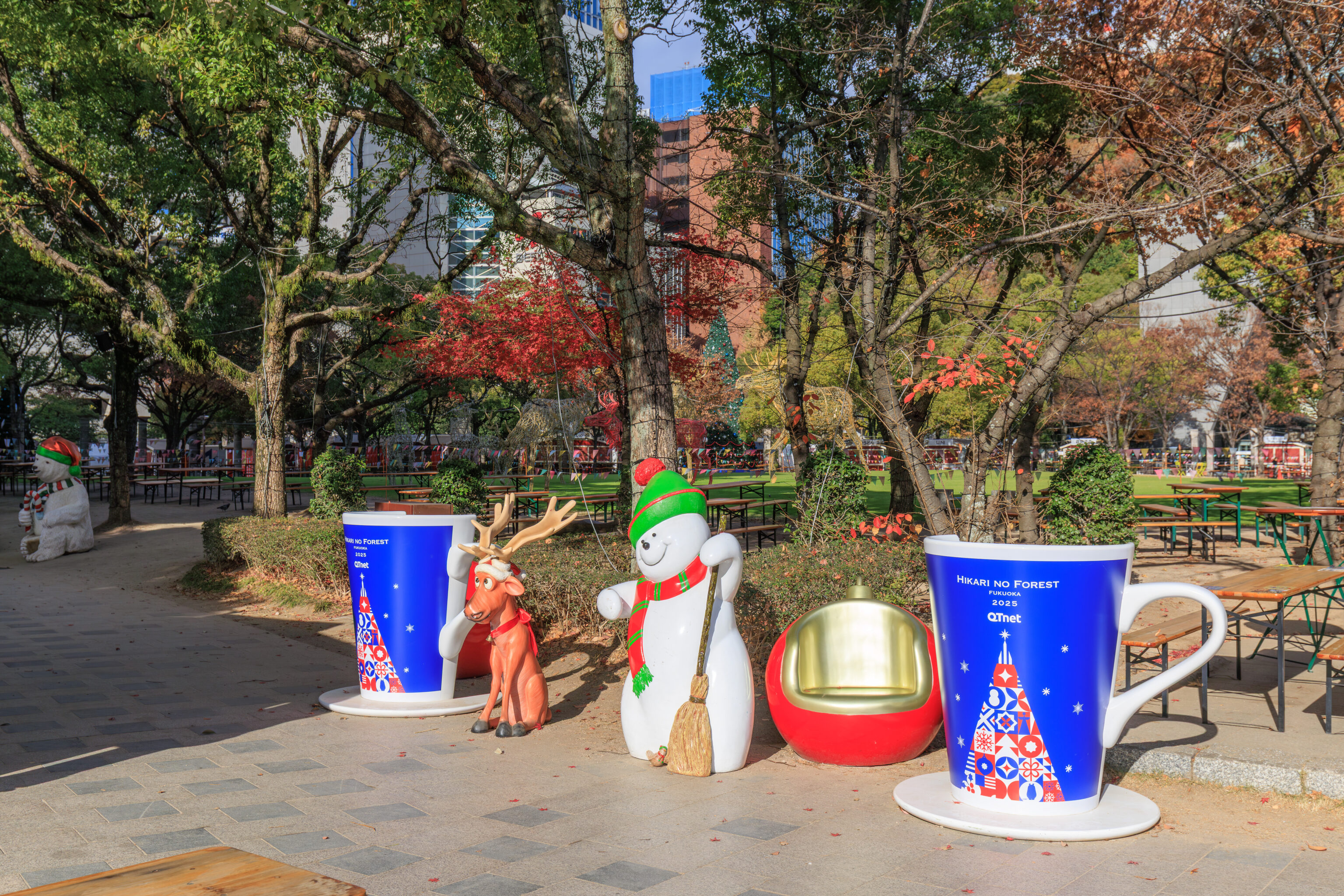
This Christmas market definitely had the largest assortment of decorations that we’ve seen in Fukuoka!
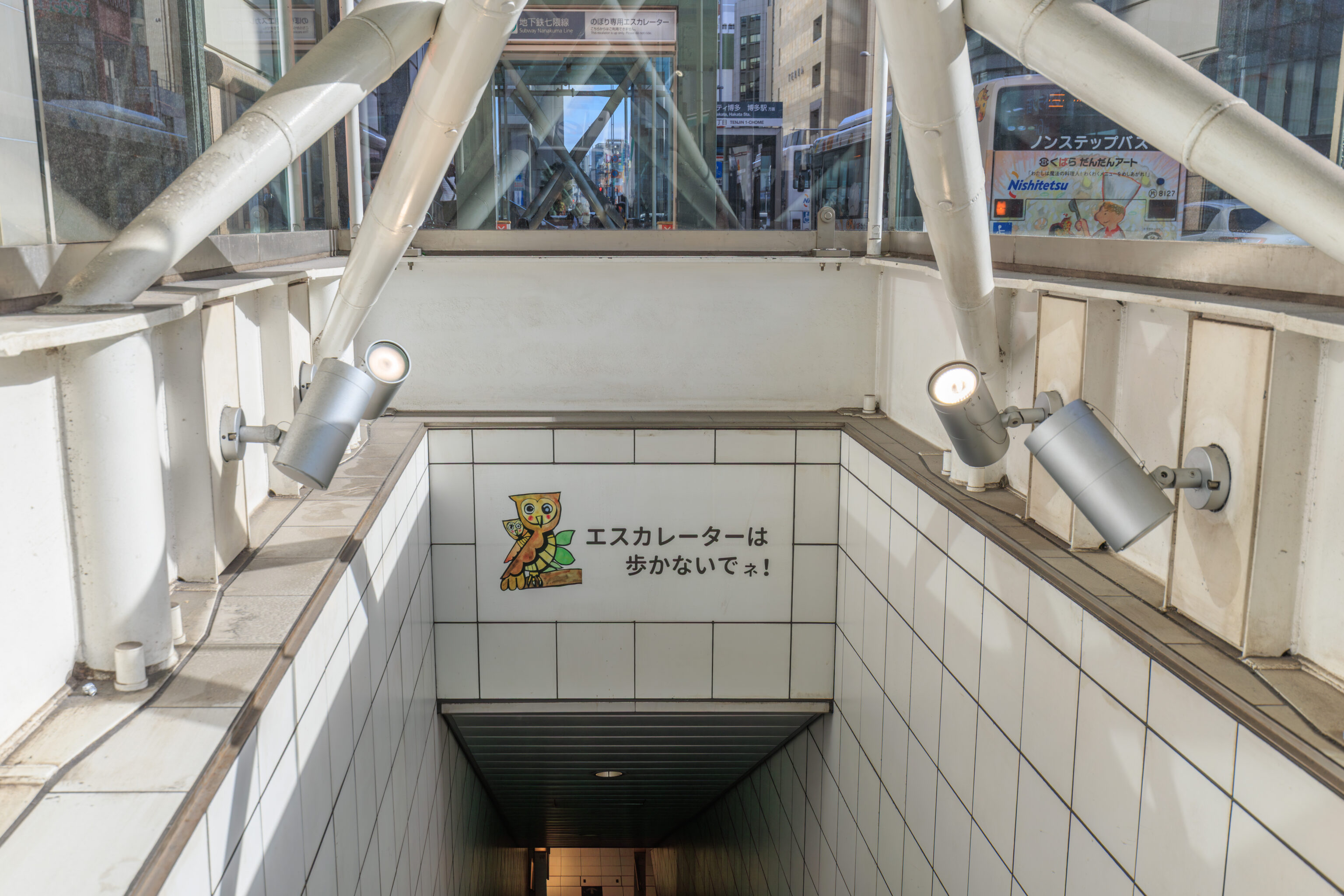
By now, it was around 10:15am and about time to head back to the Grand Hyatt. We decided to take the subway back from the Tenjin-Minami station. The sign above this entrance says not to walk on the escalator. There is a growing trend in Japan to convince people to not walk on escalators as studies have shown that throughput is greater when everyone simple stands.
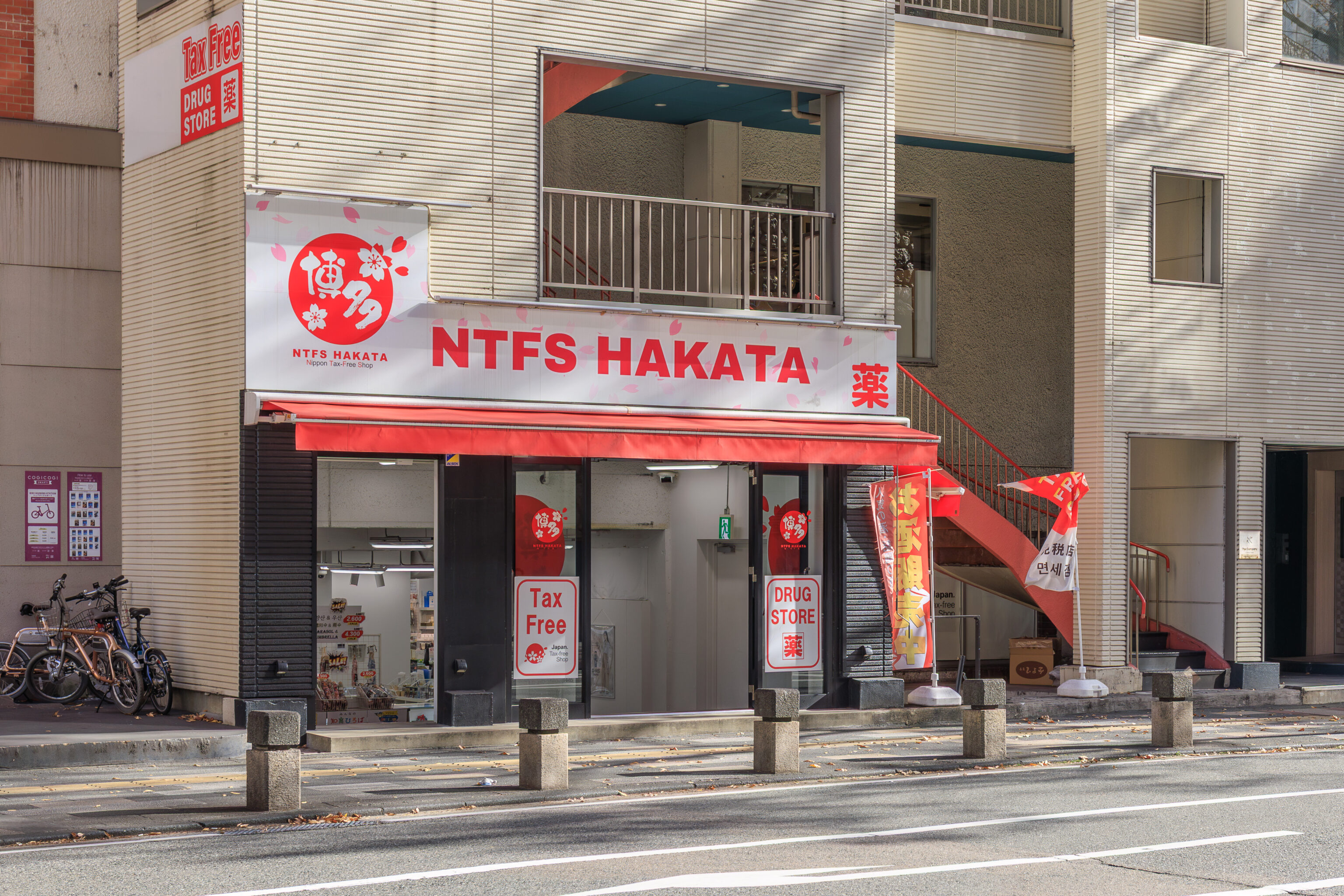
After taking the subway to the Kushida Shrine station, we wanted to check out The フルフル博多 Full Full Hakata, a bakery which is popular for its mentaiko. It is just east of Canal City. So, we started walking in that direction. We passed by this shop, NTFS Hakata, which probably is not in the Windows file system business! In this context, NTFS apparently means Nippon Tax Free Shop rather than New Technology File System, which was new in the 90s.
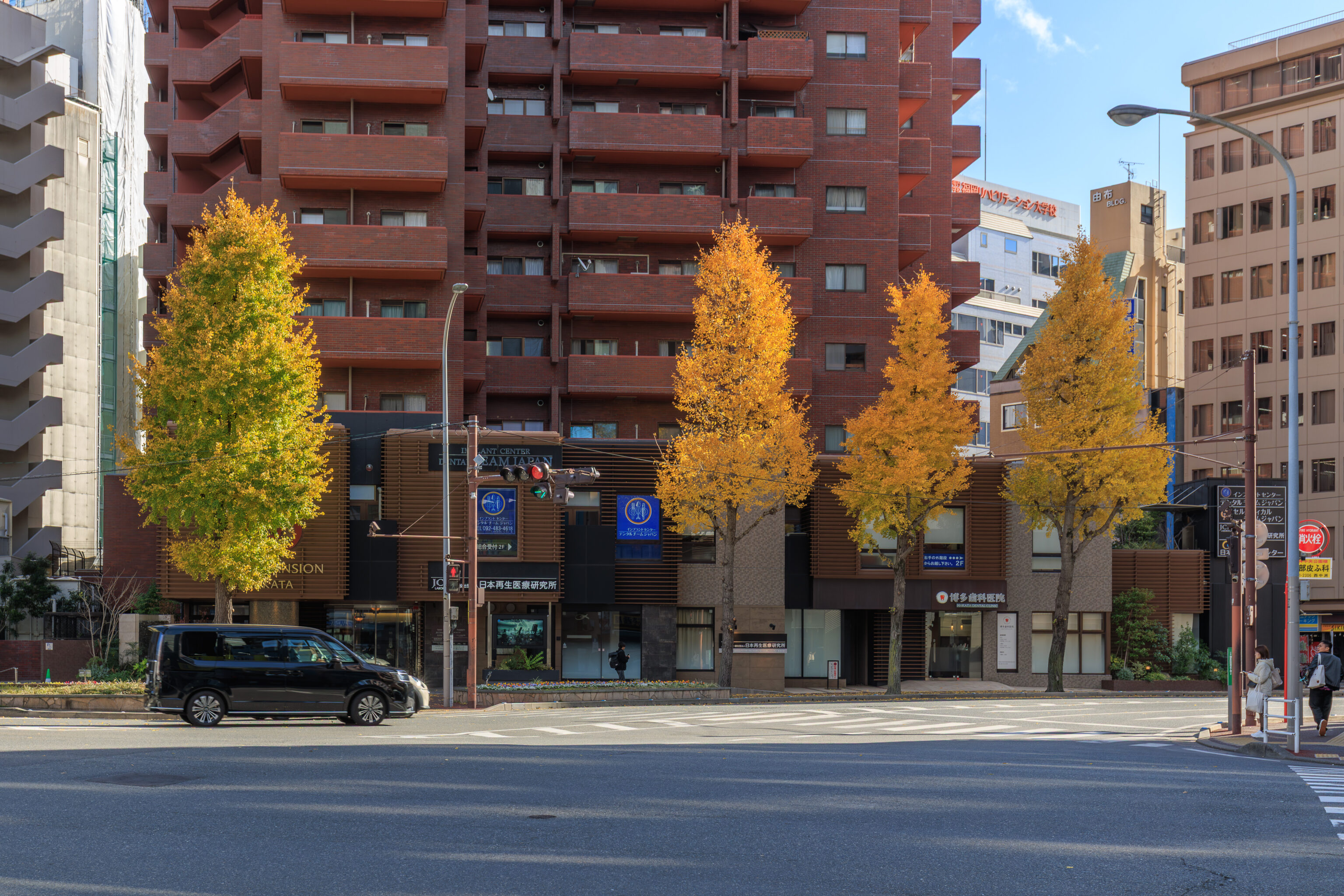
We came across a few nice ginkgo trees near our destination. Unfortunately, The Full Full was super busy so we continued back to the Grand Hyatt to pick up our bags.
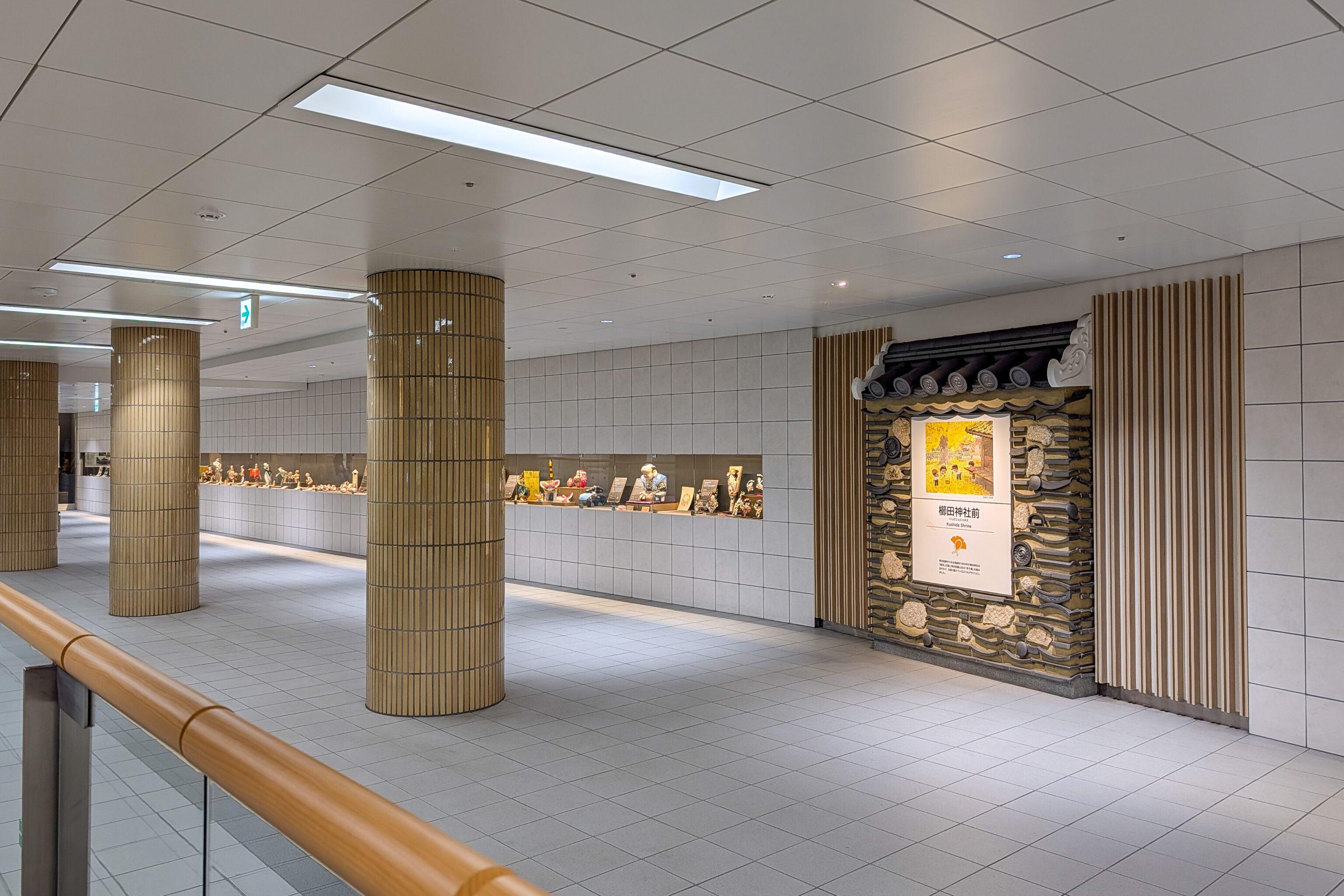
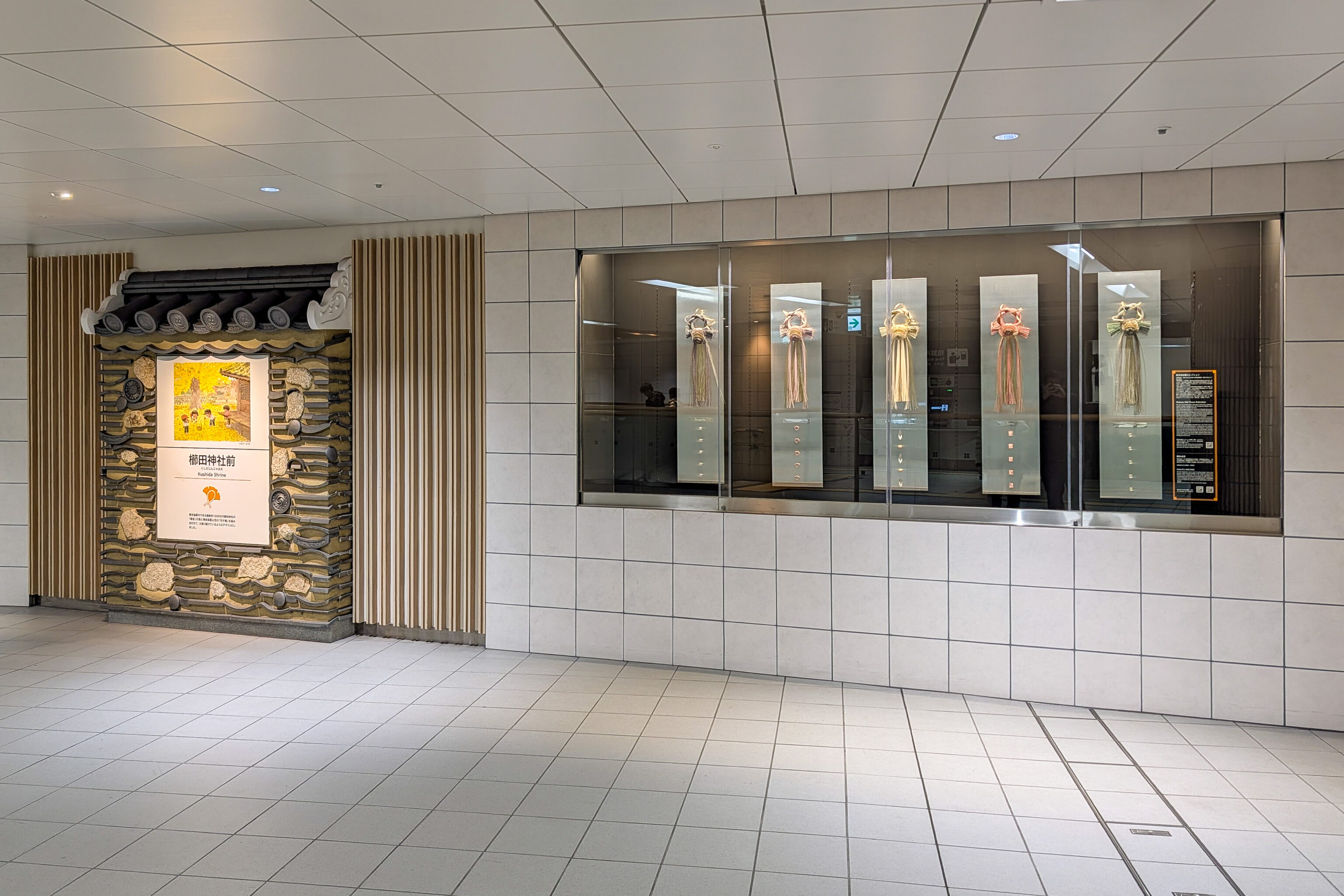
We then returned to the Kushida Shrine subway station where photographed these displays related to the shrine.
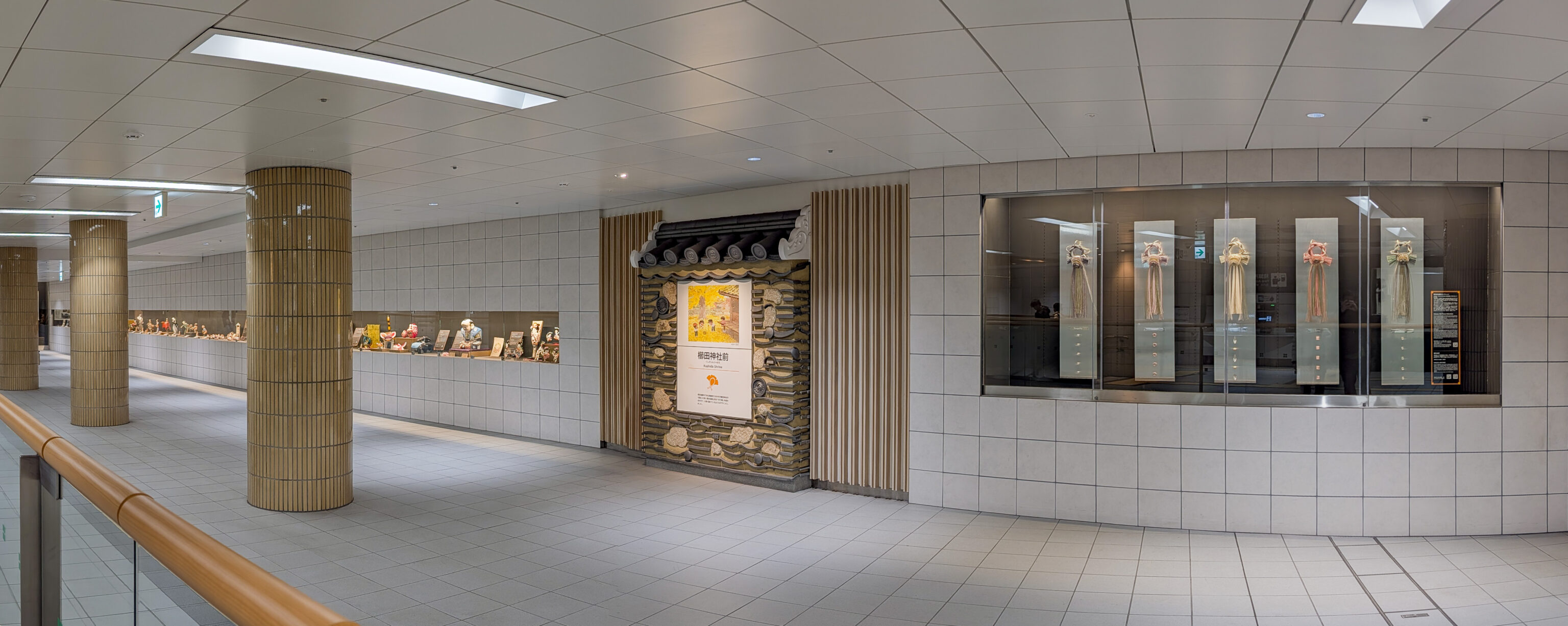
The photos actually worked quite well as a panorama.
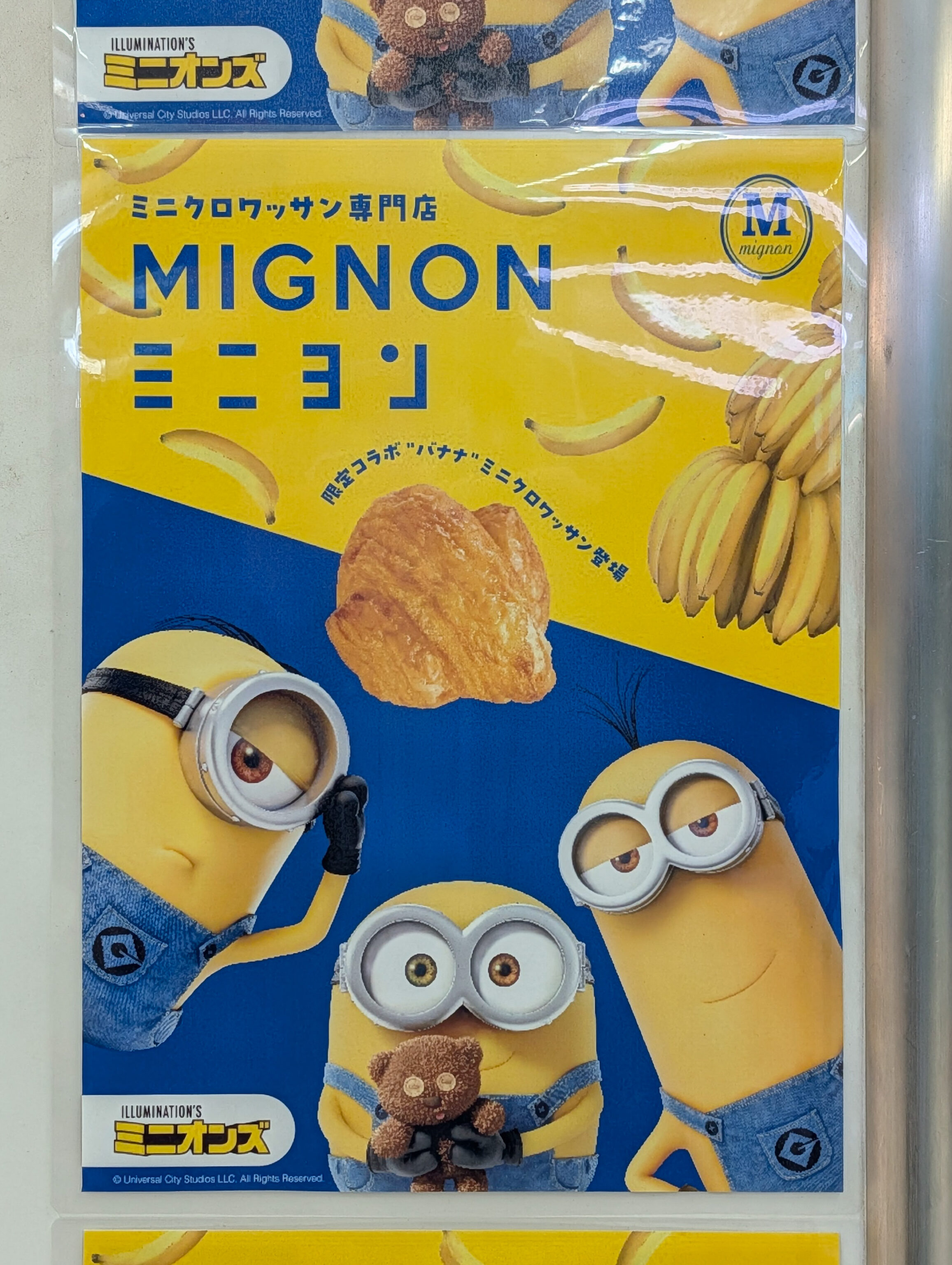
At Hakata Station, we visited il Forno del Mignon again. We realized that they have tiny mentaiko croissants. Yum!
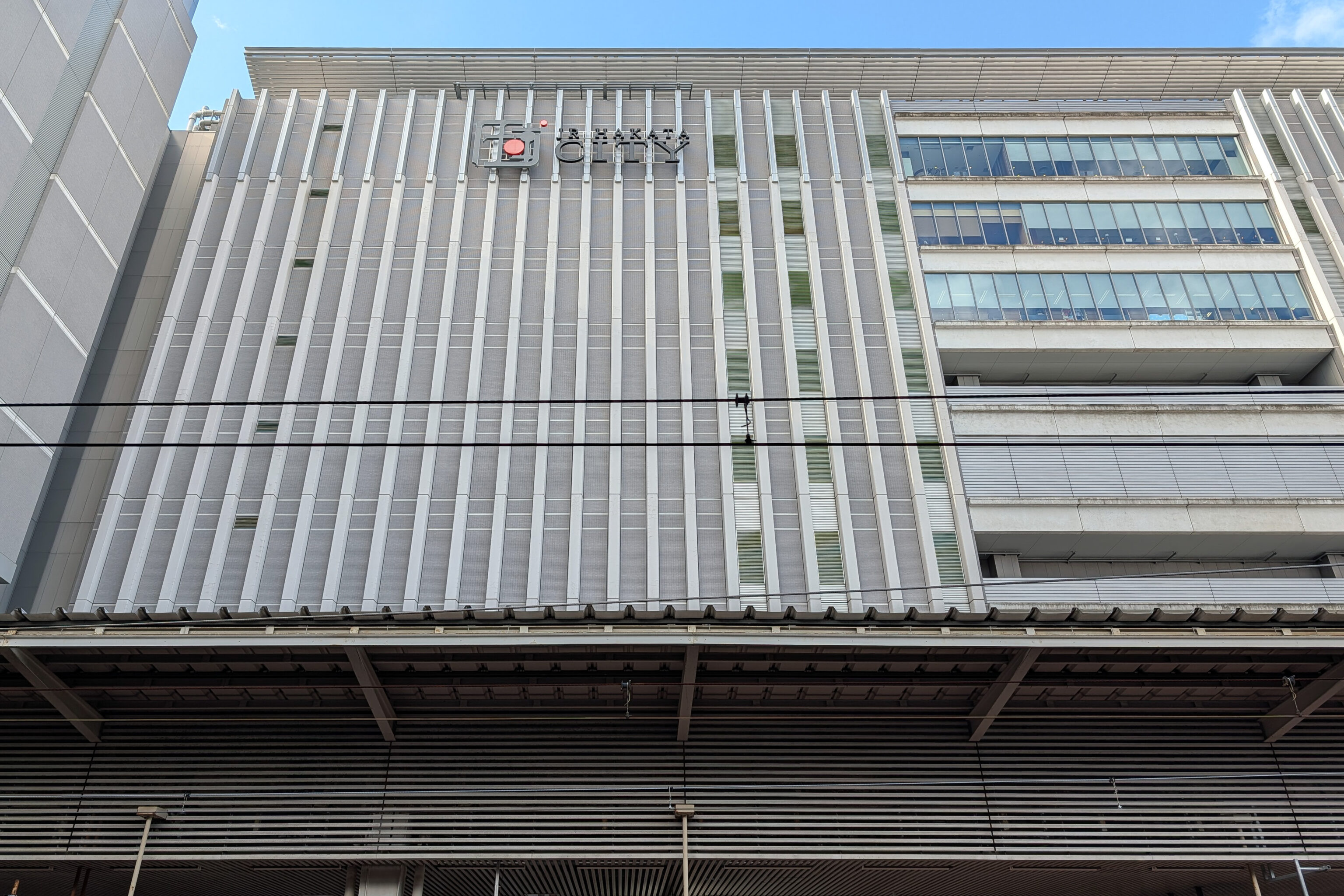
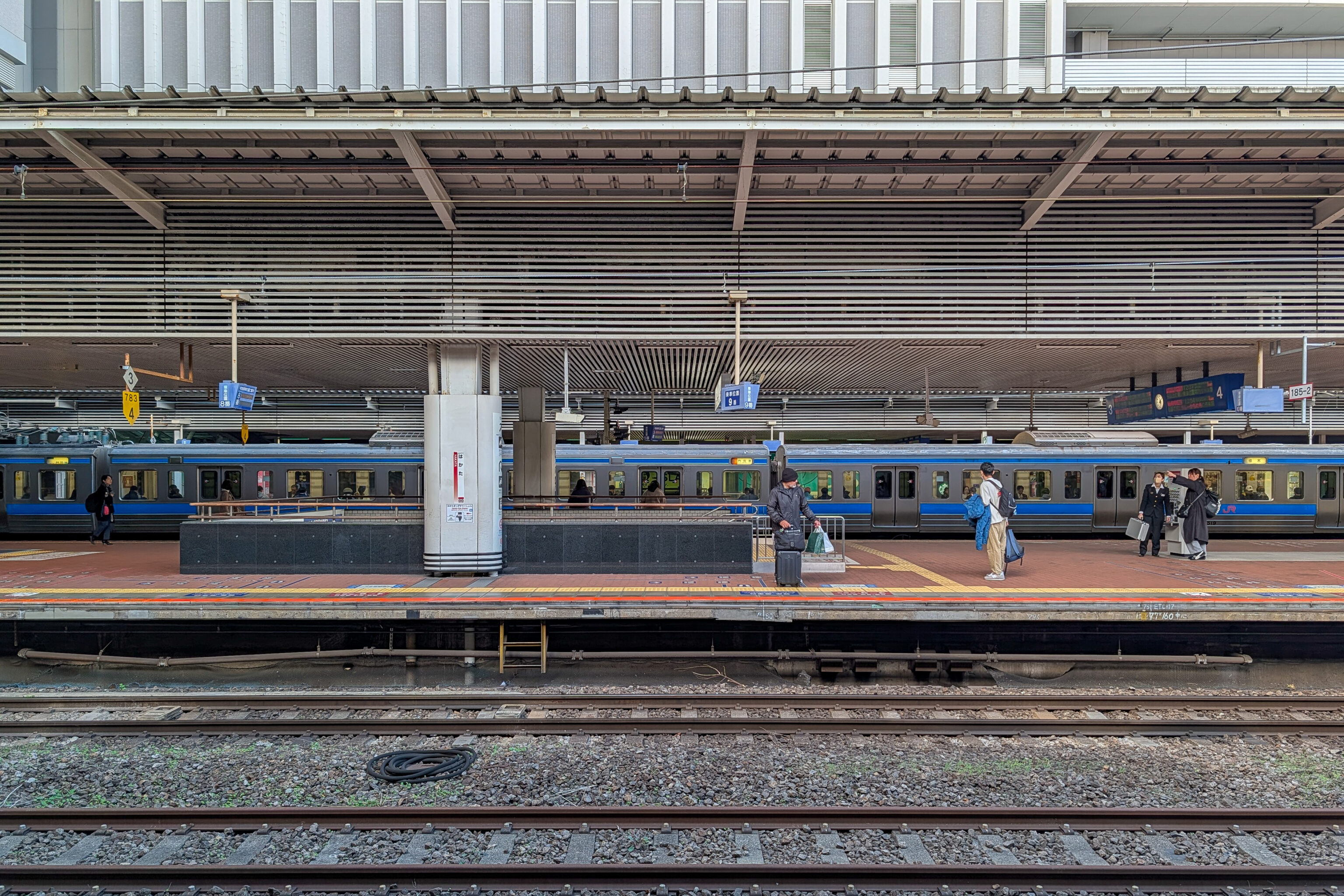
The view from the platform as we waited for the Yufu to arrive.
Hakata to Yunohira on the JR Kyushu Yufu
The limited express ゆふ Yufu is generally a three to five car diesel train that runs a route going from Hakata to Beppu on the northeastern coast of Kyushu with both reserved and unreserved cars. It is the only direct service between Hakata and Yunohira and makes the trip in about 2 hours and 30 minutes. And the trip from Yunohira on to Beppu takes about 50 minutes on the same train.
There are two other limited express trains, the ゆふいんの森 Yufuin no Mori and かんぱち·いちろく Kanpachi-Ichiroku, that run this route between Hakata and Beppu but they don’t stop at Yunohira. These are all reserved tourist services that tend to sell out much more quickly than the Yufu.
Overall, the trip on the Yufu is a somewhat rough ride, particularly as the train rocks back and forth along rough rails and as it accelerates and decelerates. A bit like riding Amtrak in the US!
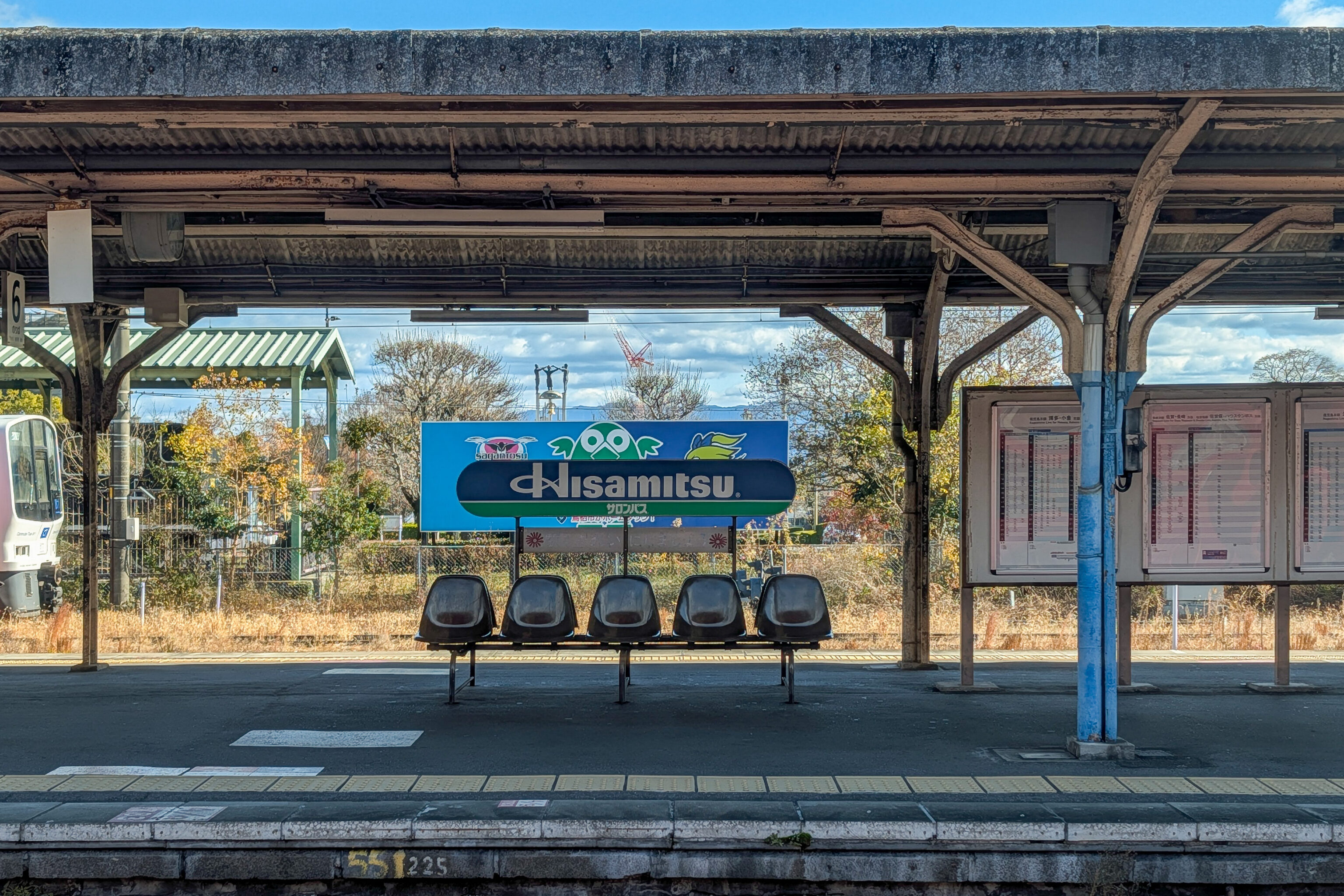
We noticed this sign for Hisamitsu, the Japanese pharmaceutical company known for its Salonpas pain relief patches and catchy Hisamitsu jingle, at Tosu Station. It turns out that the company is from Kyushu and has its headquarters here in Tosu!
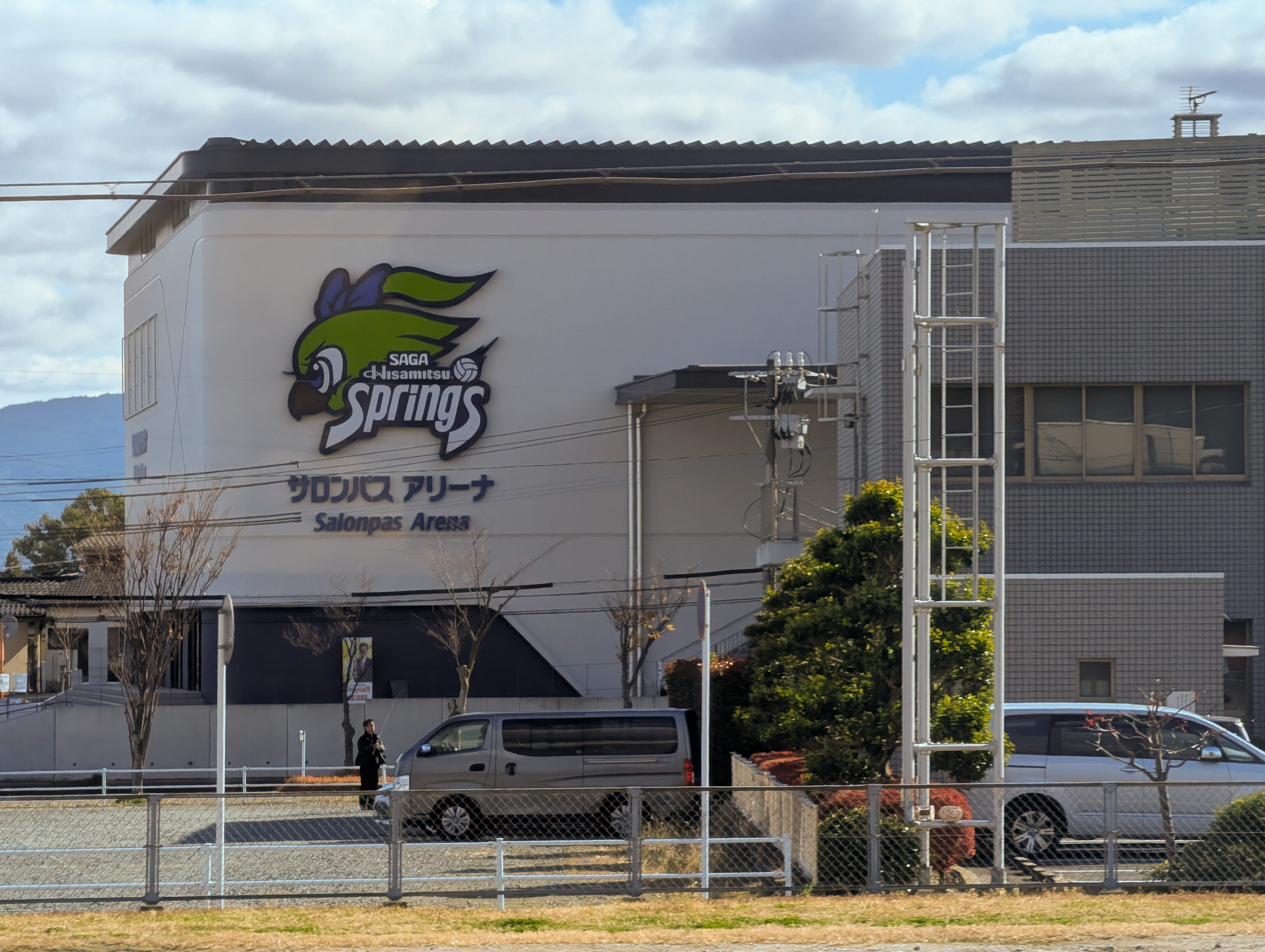
There’s even a Salonpas Arena! It is just a little bit past Tosu Station. It is the training facility for the Saga Hisamitsu Springs, a professional women’s volleyball team.
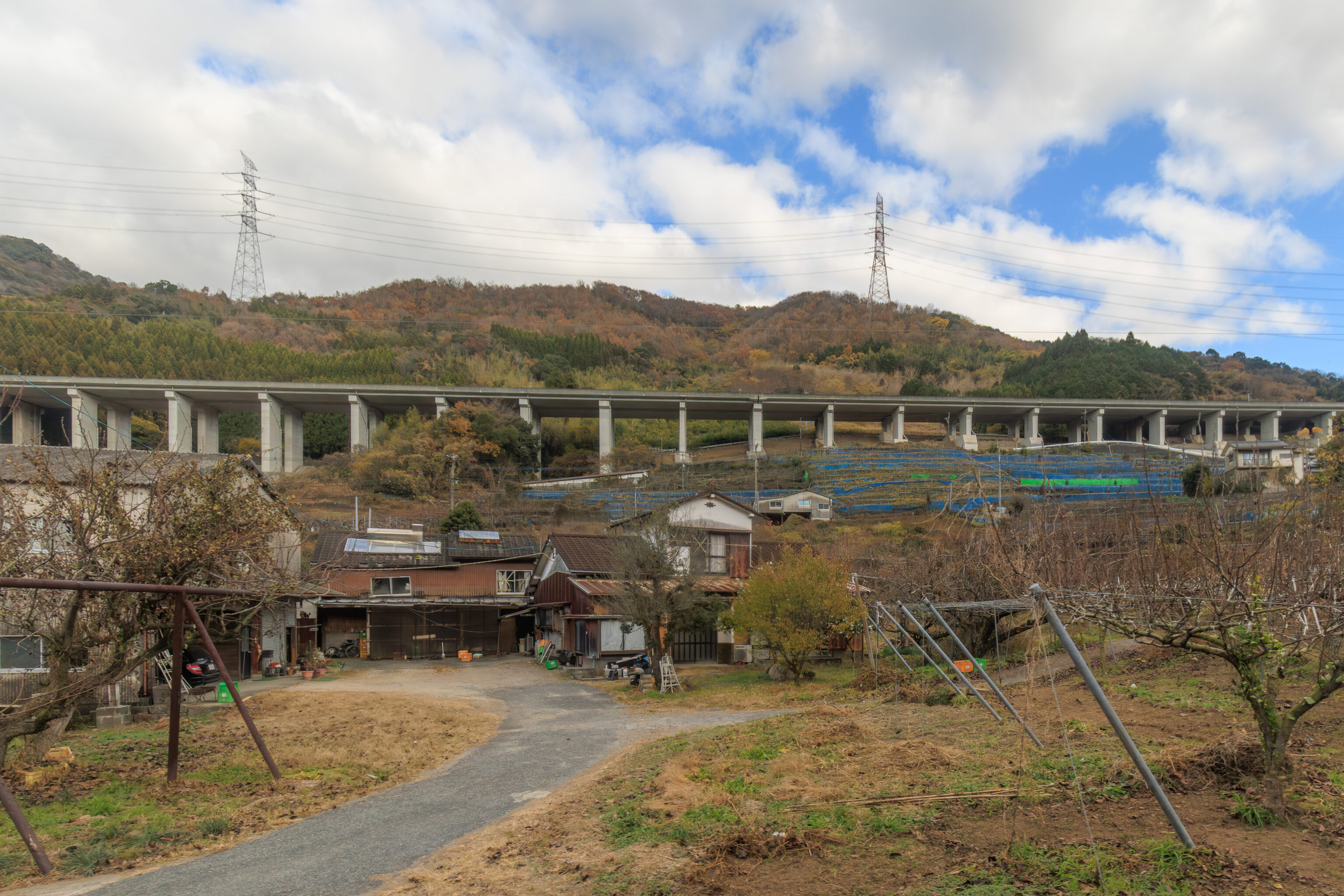
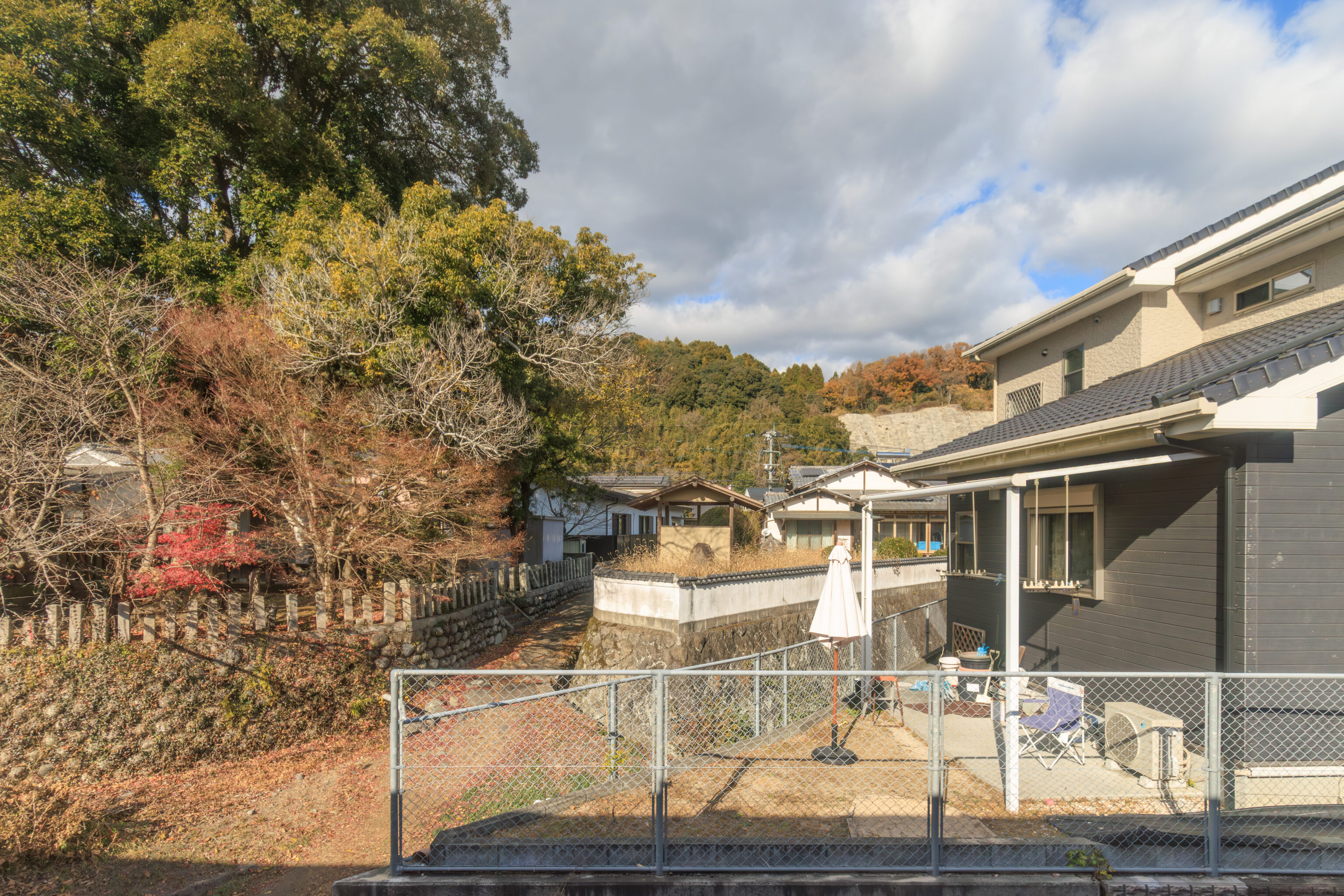
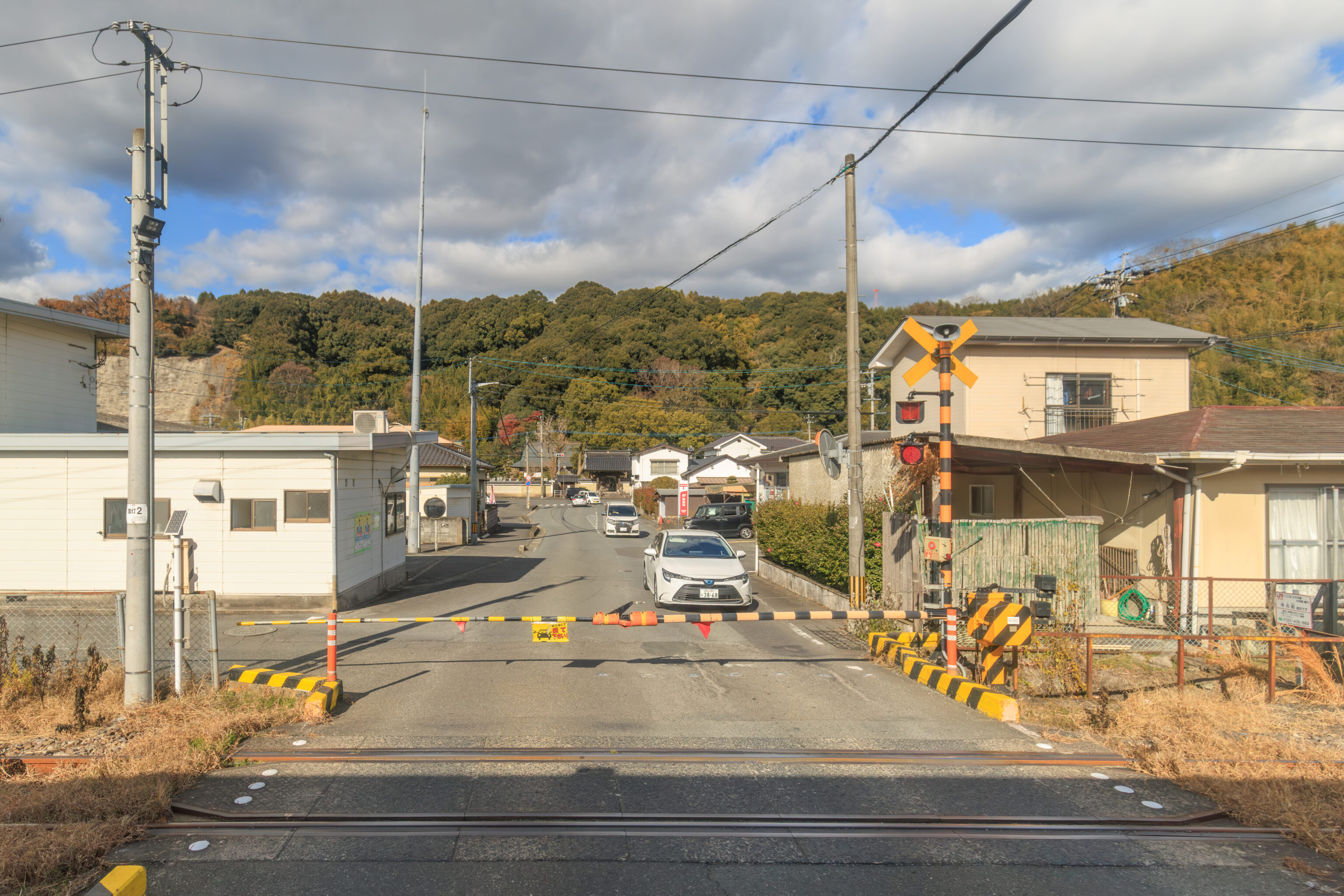
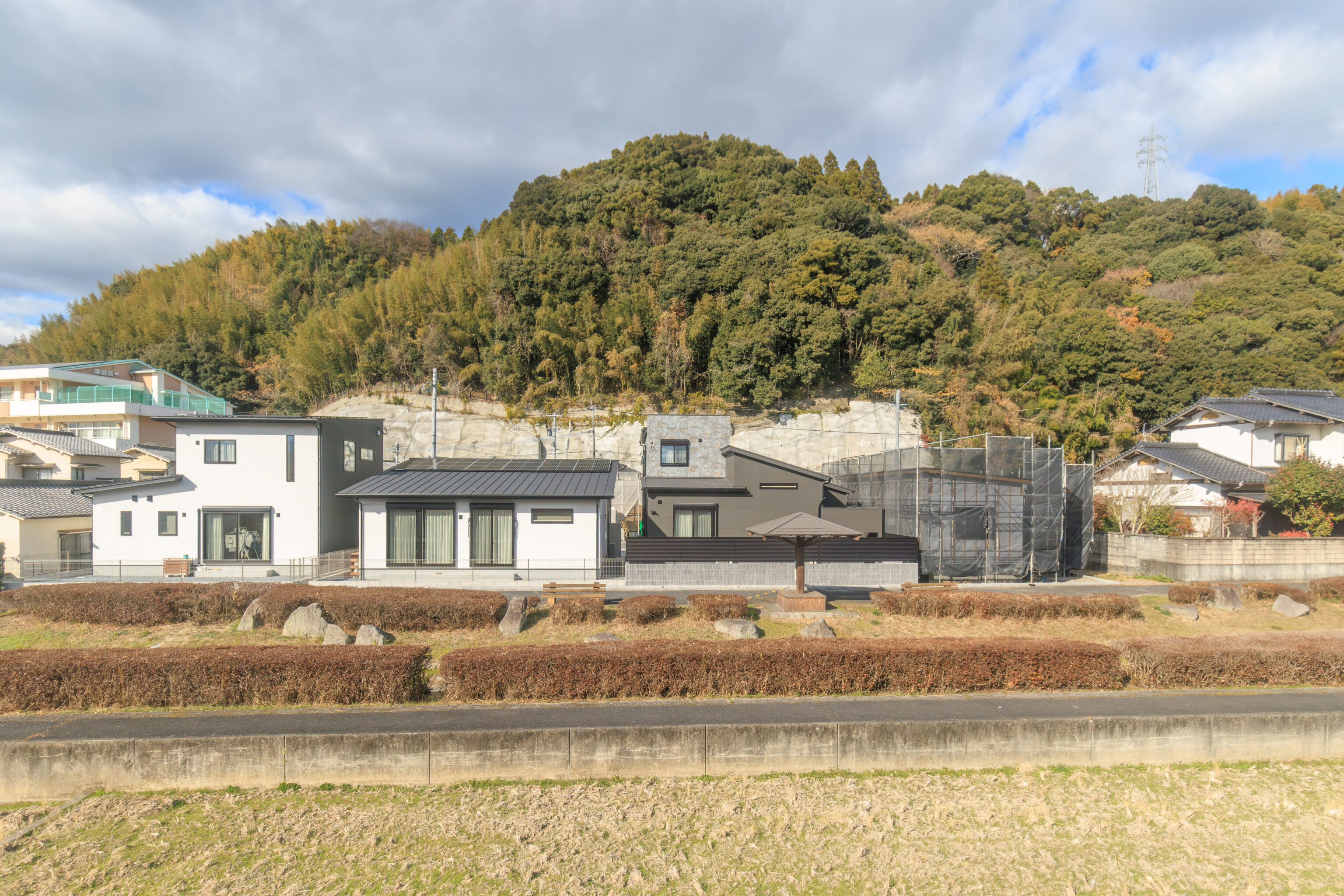
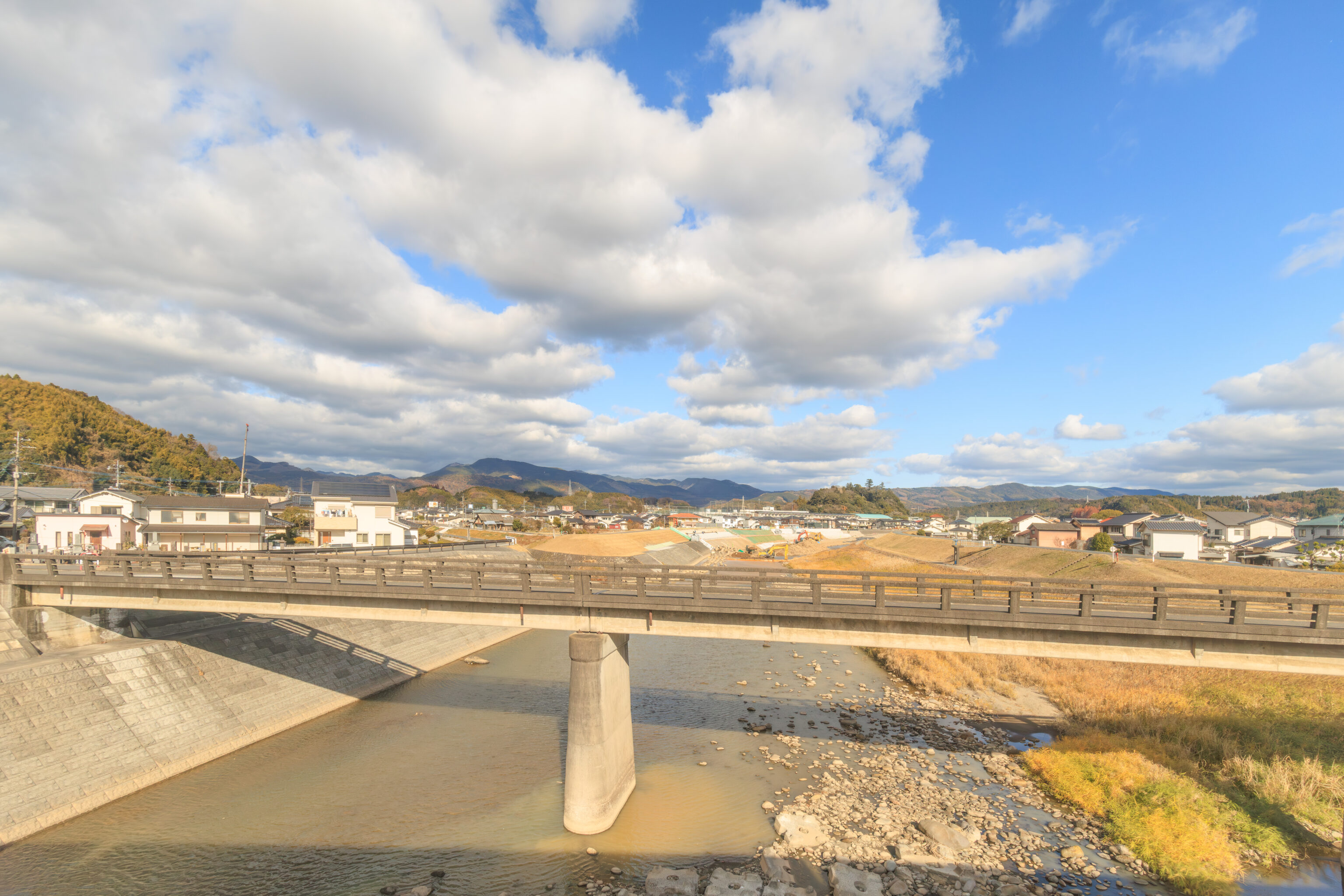
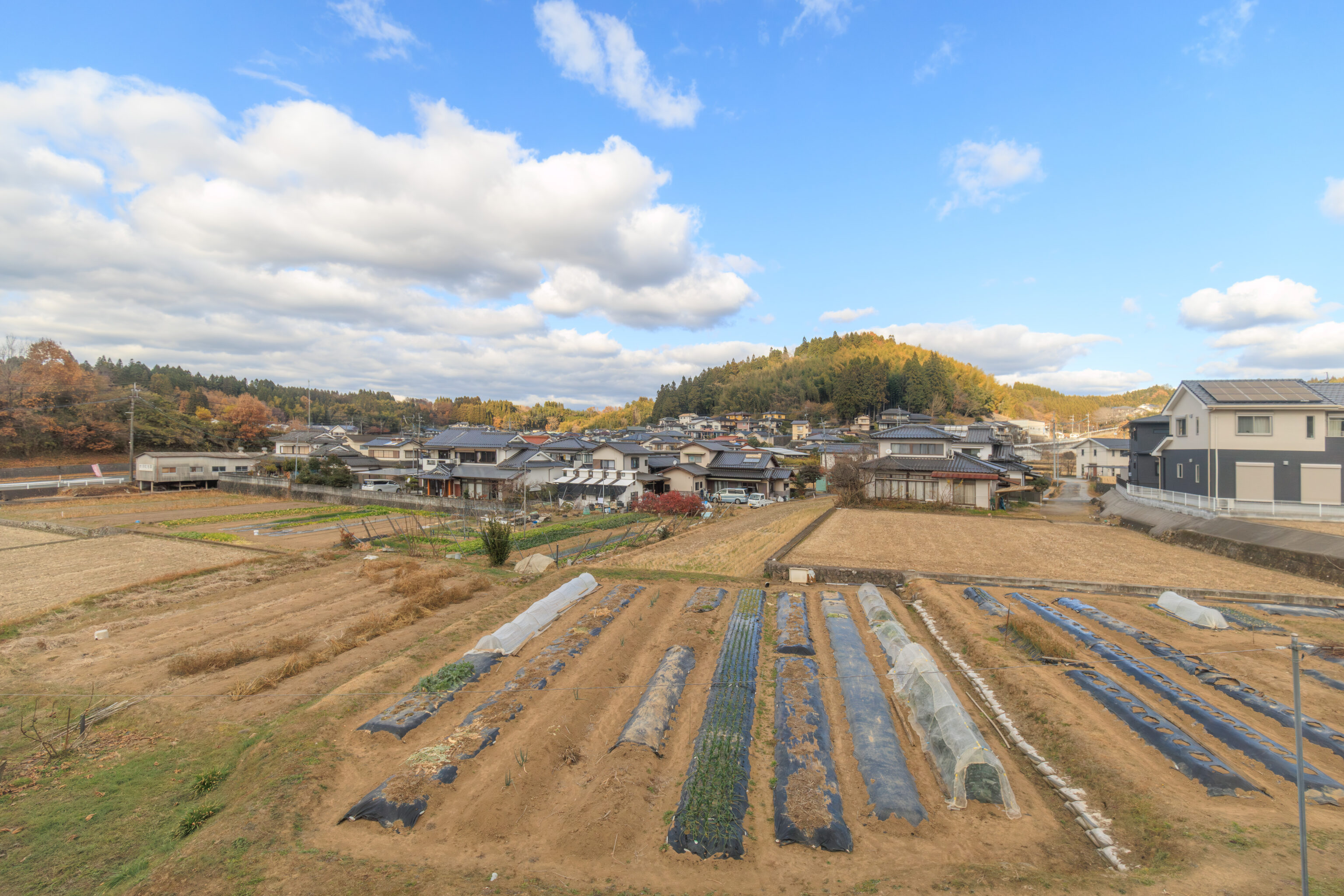
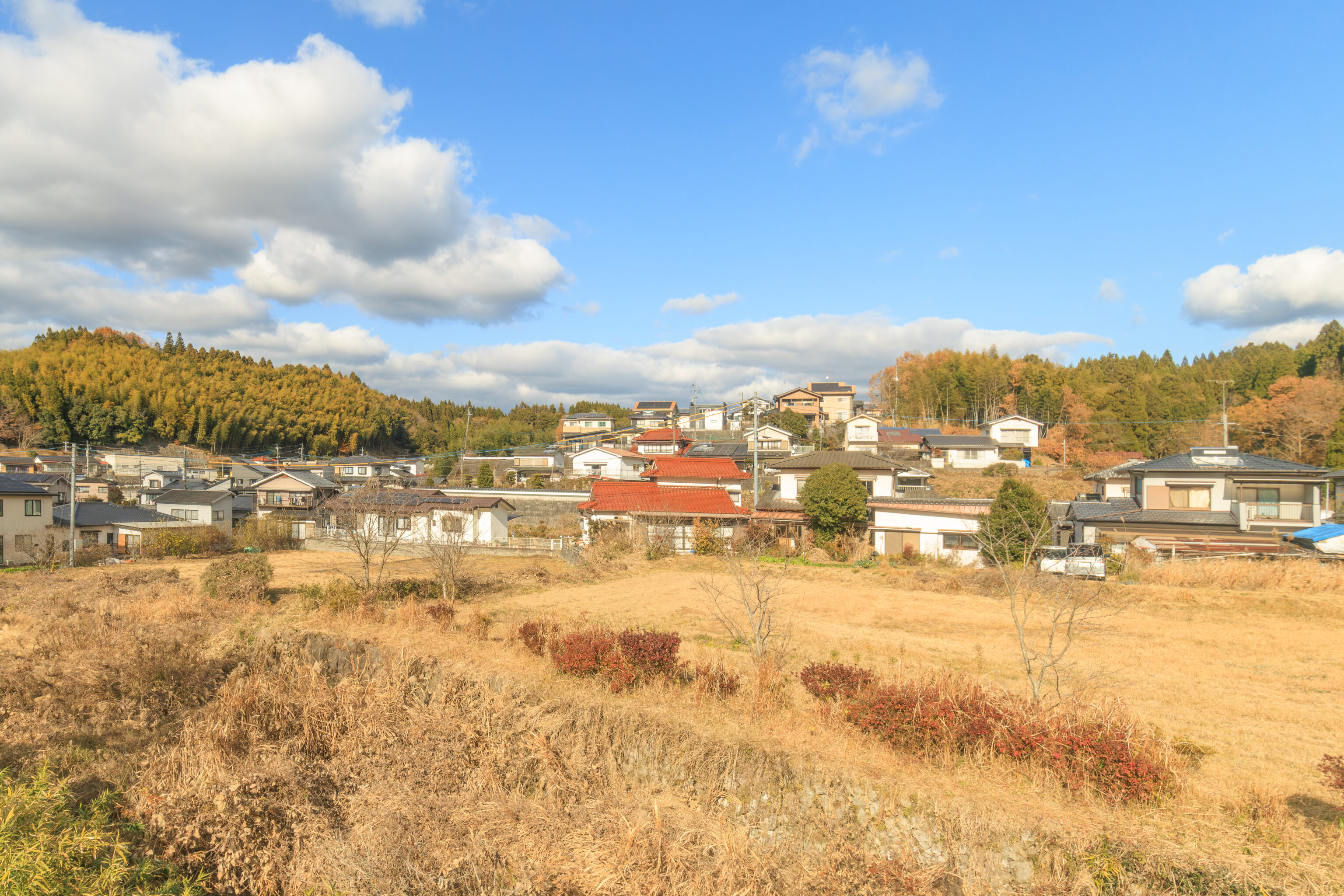
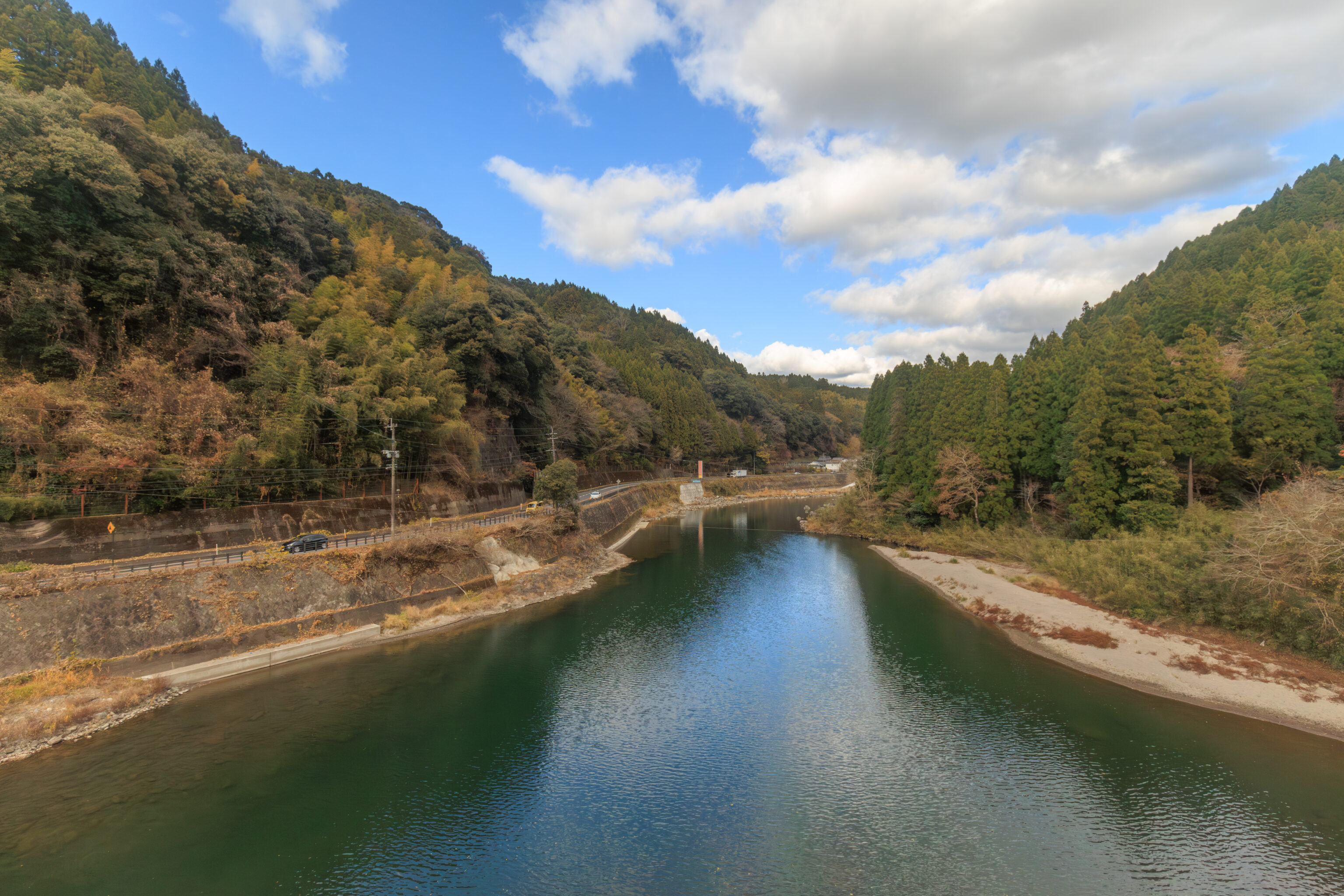
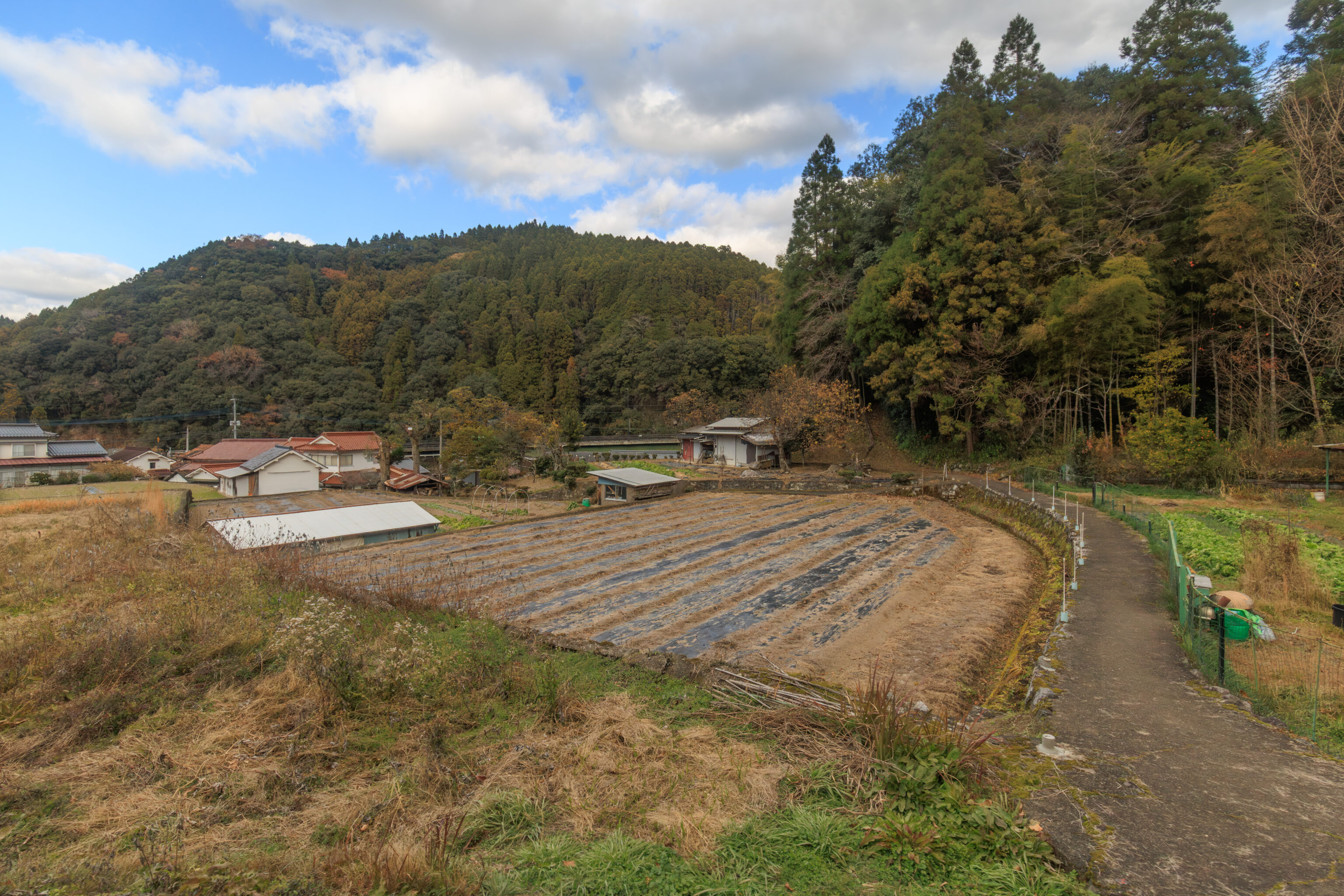
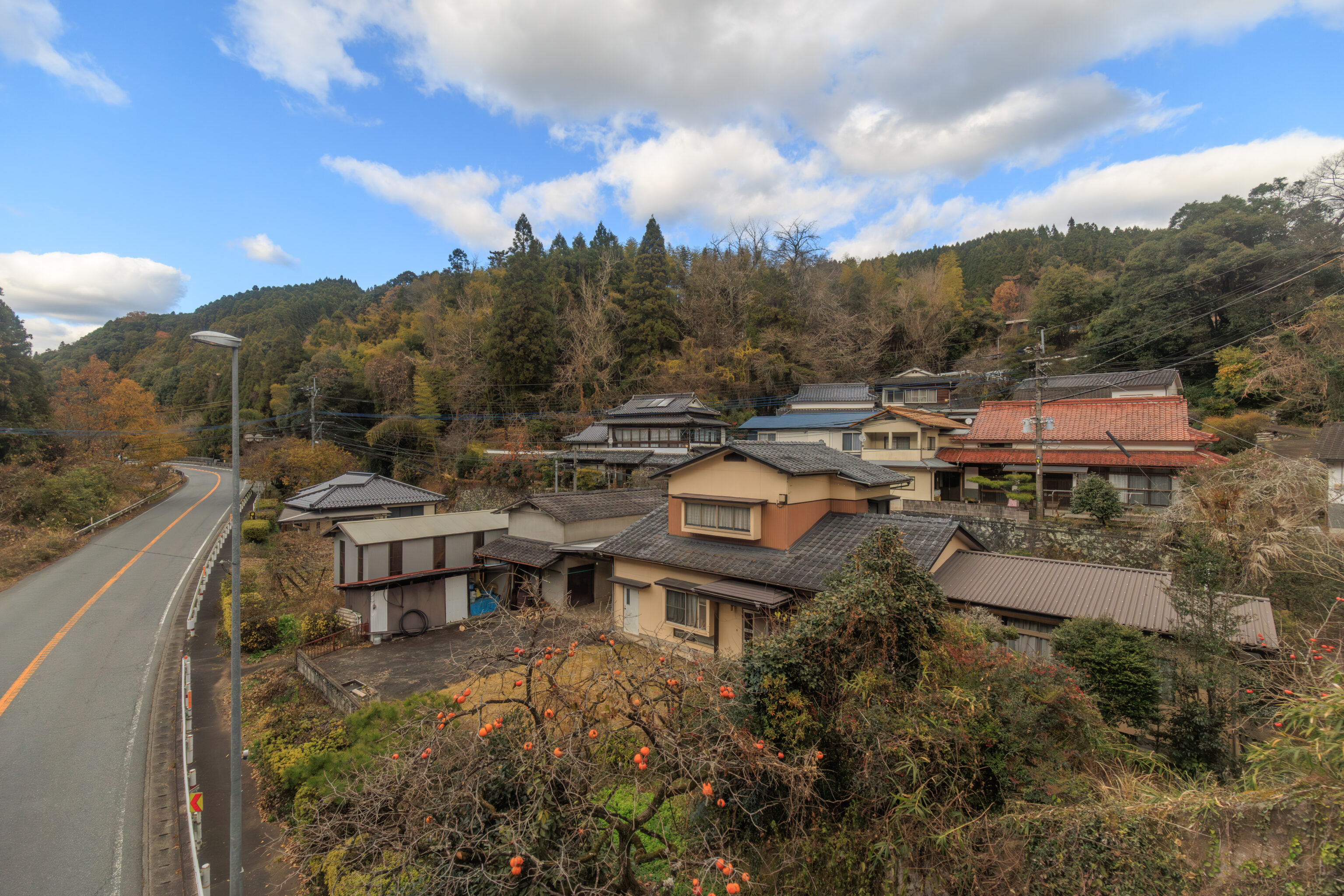
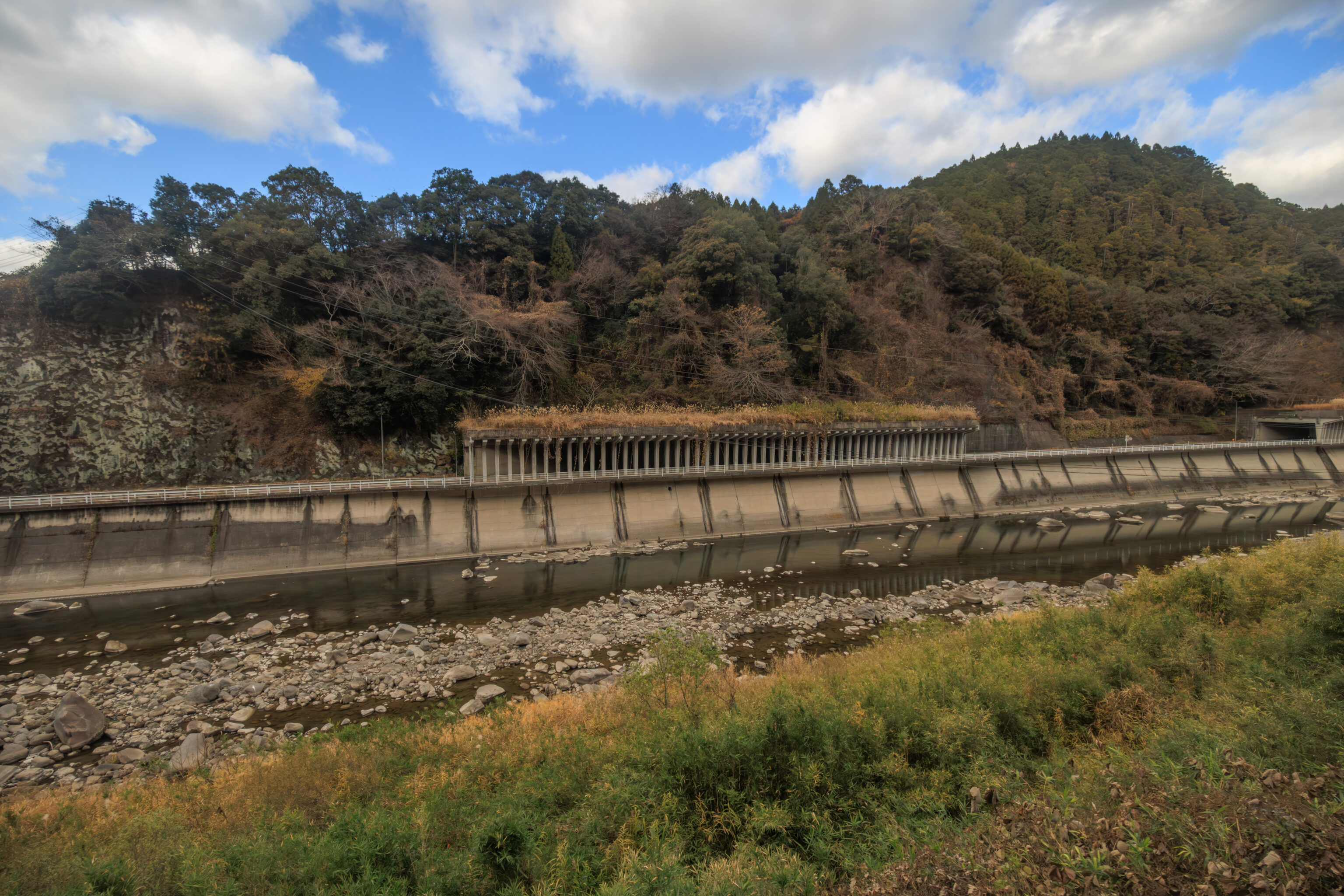
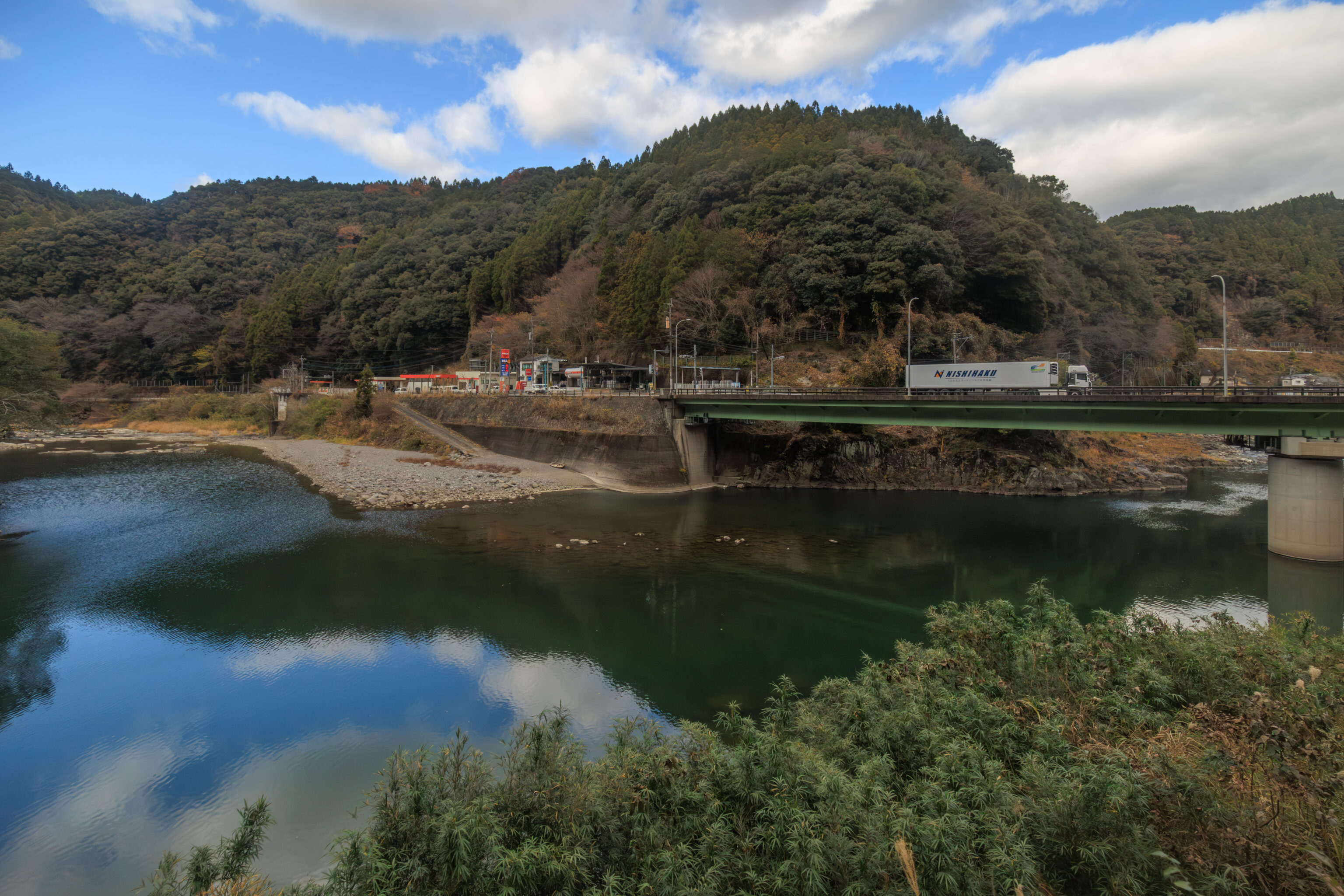
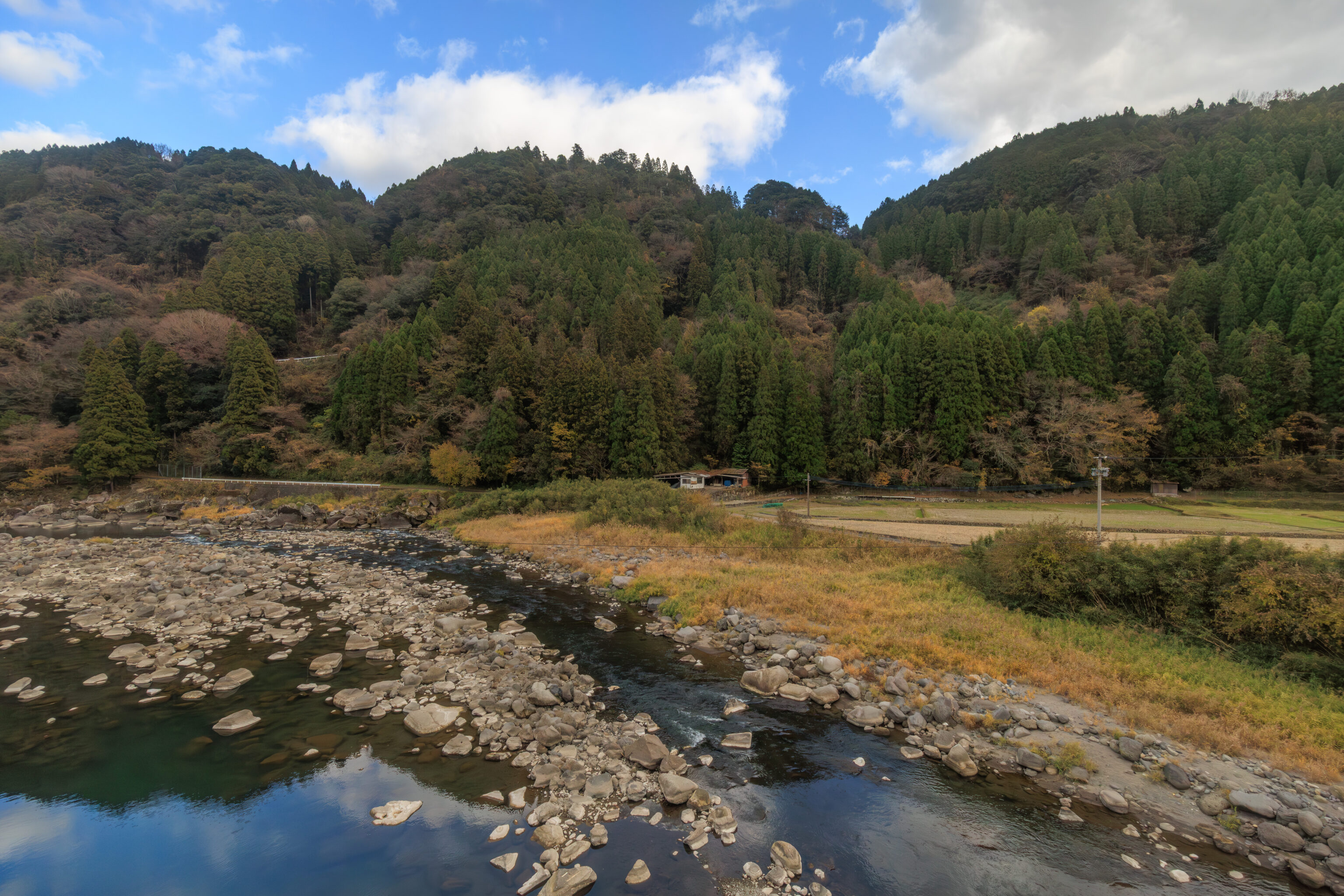
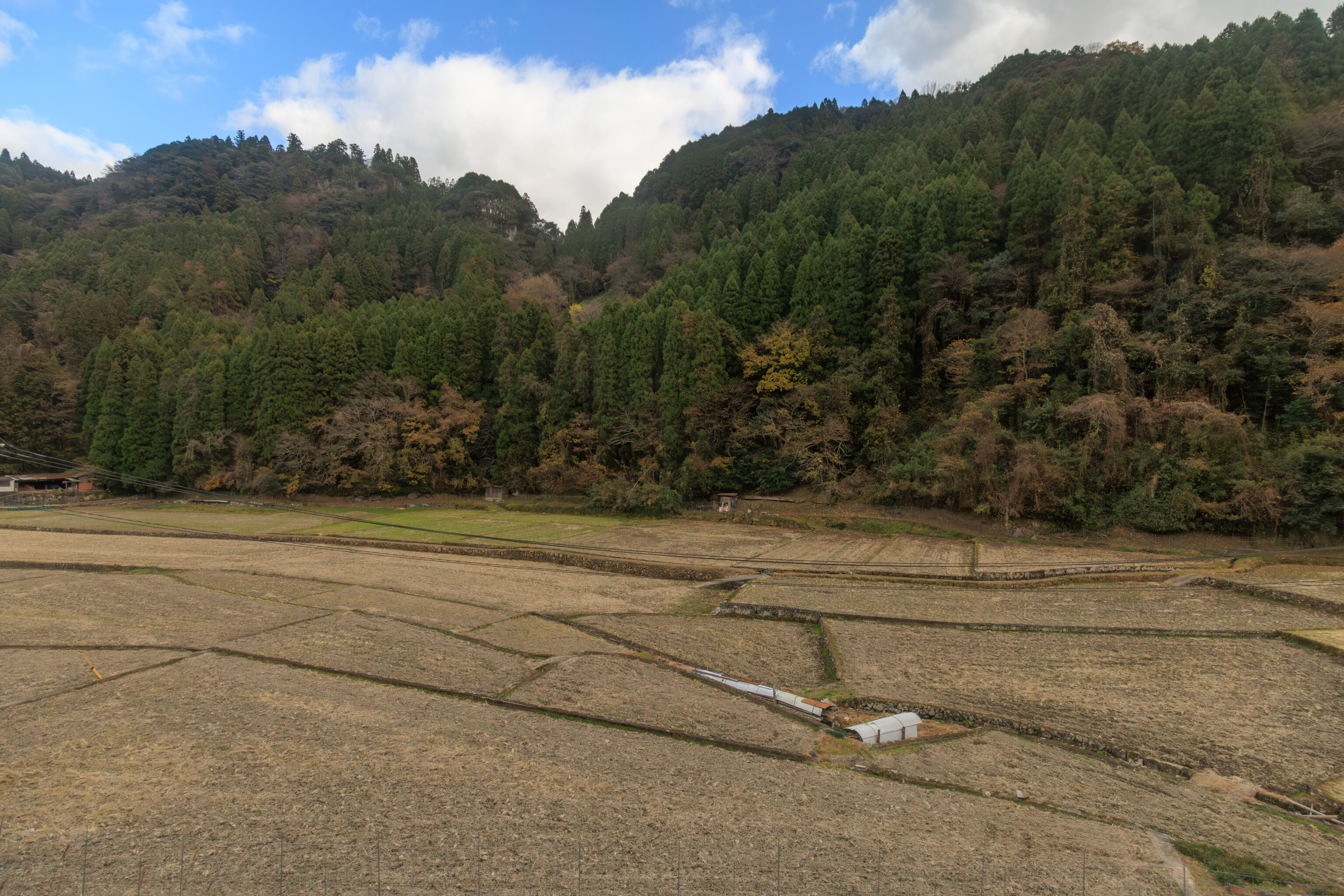
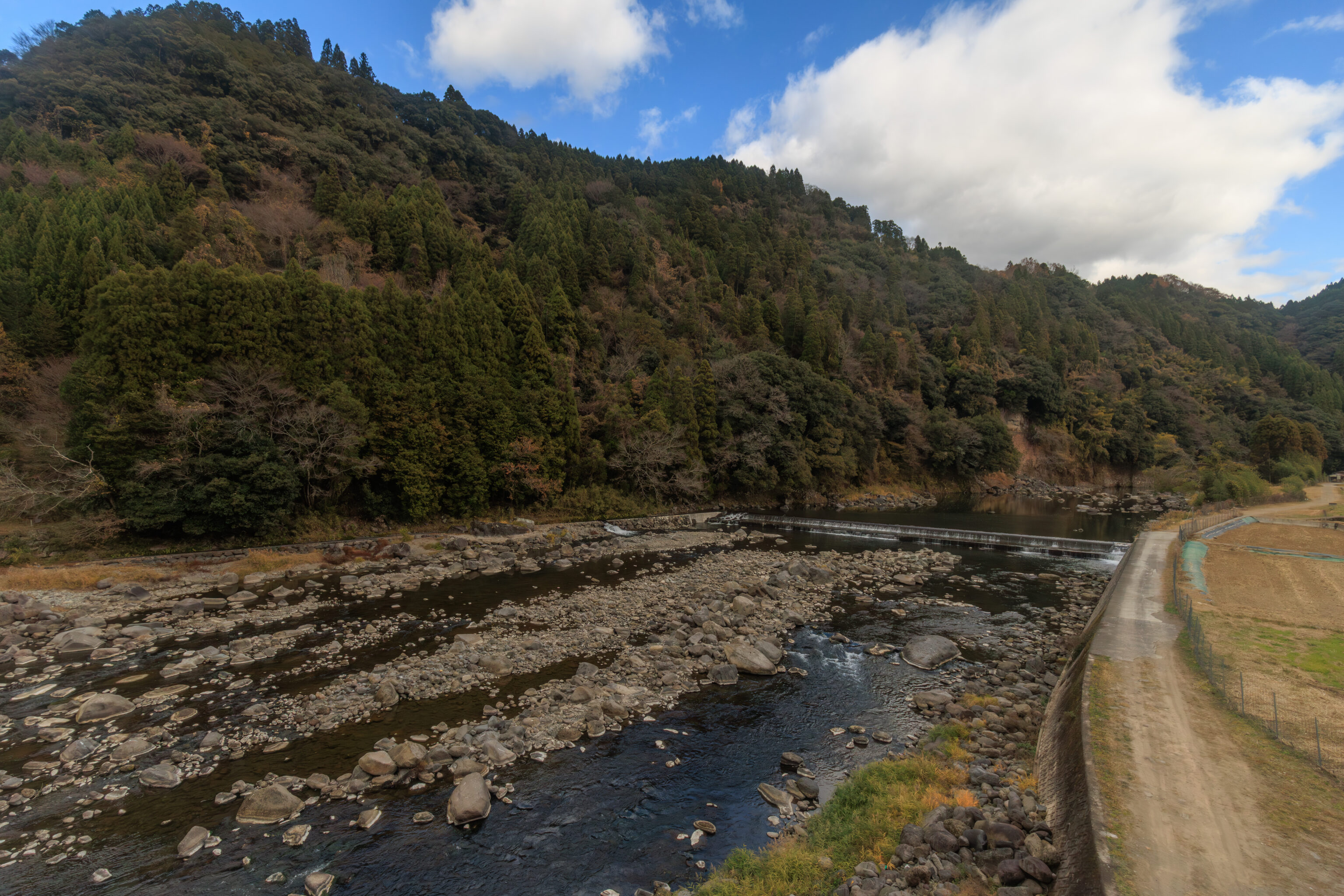
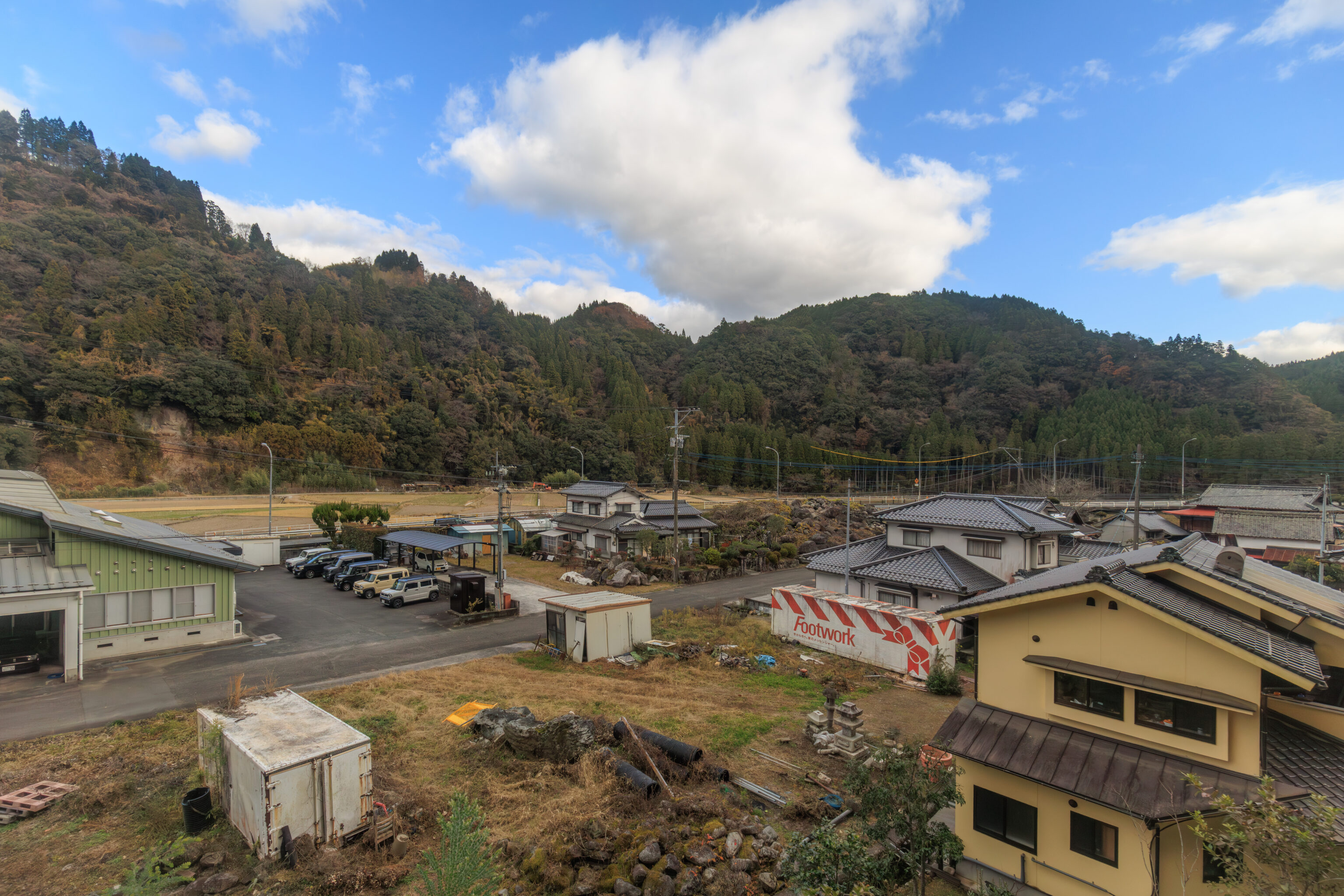
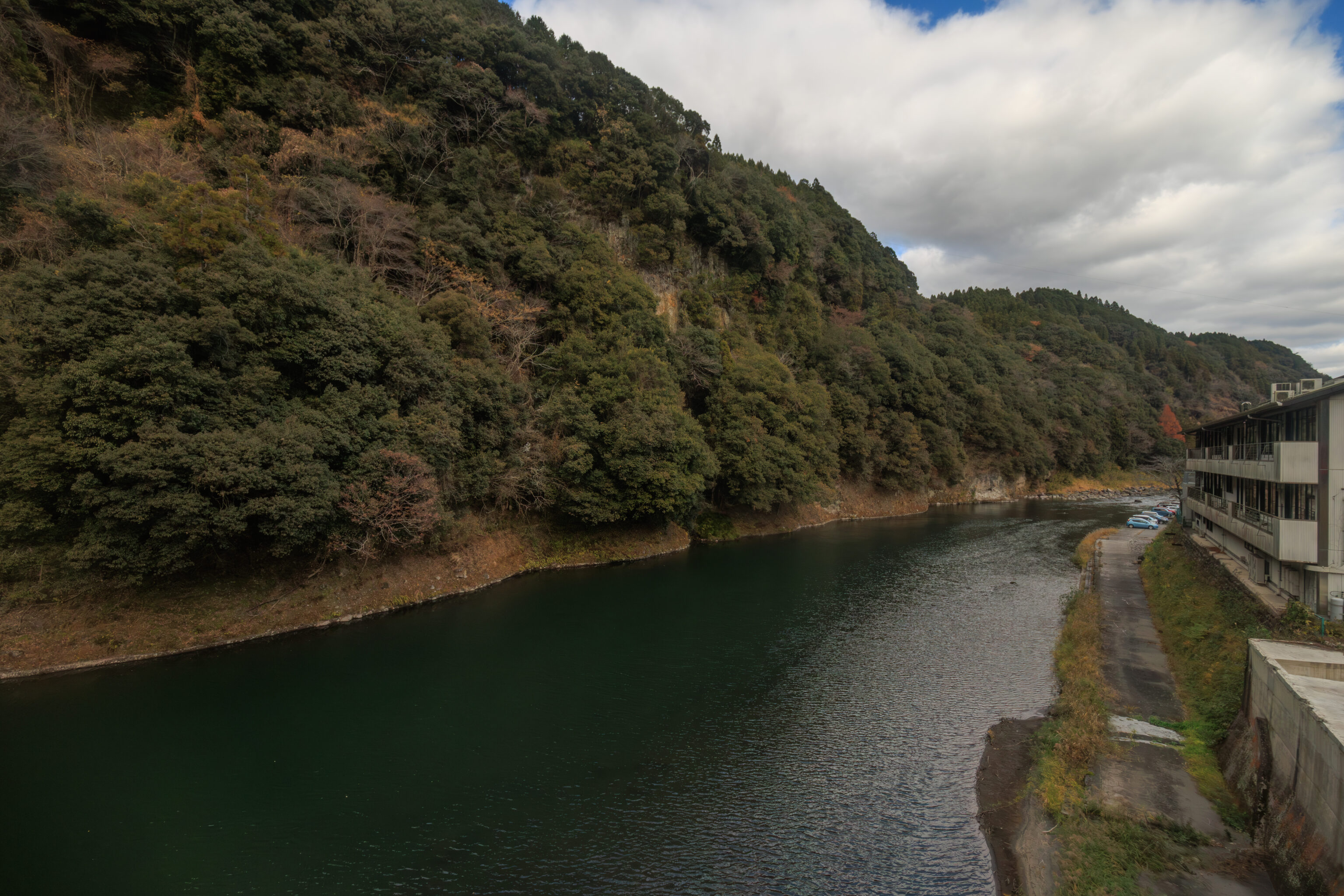
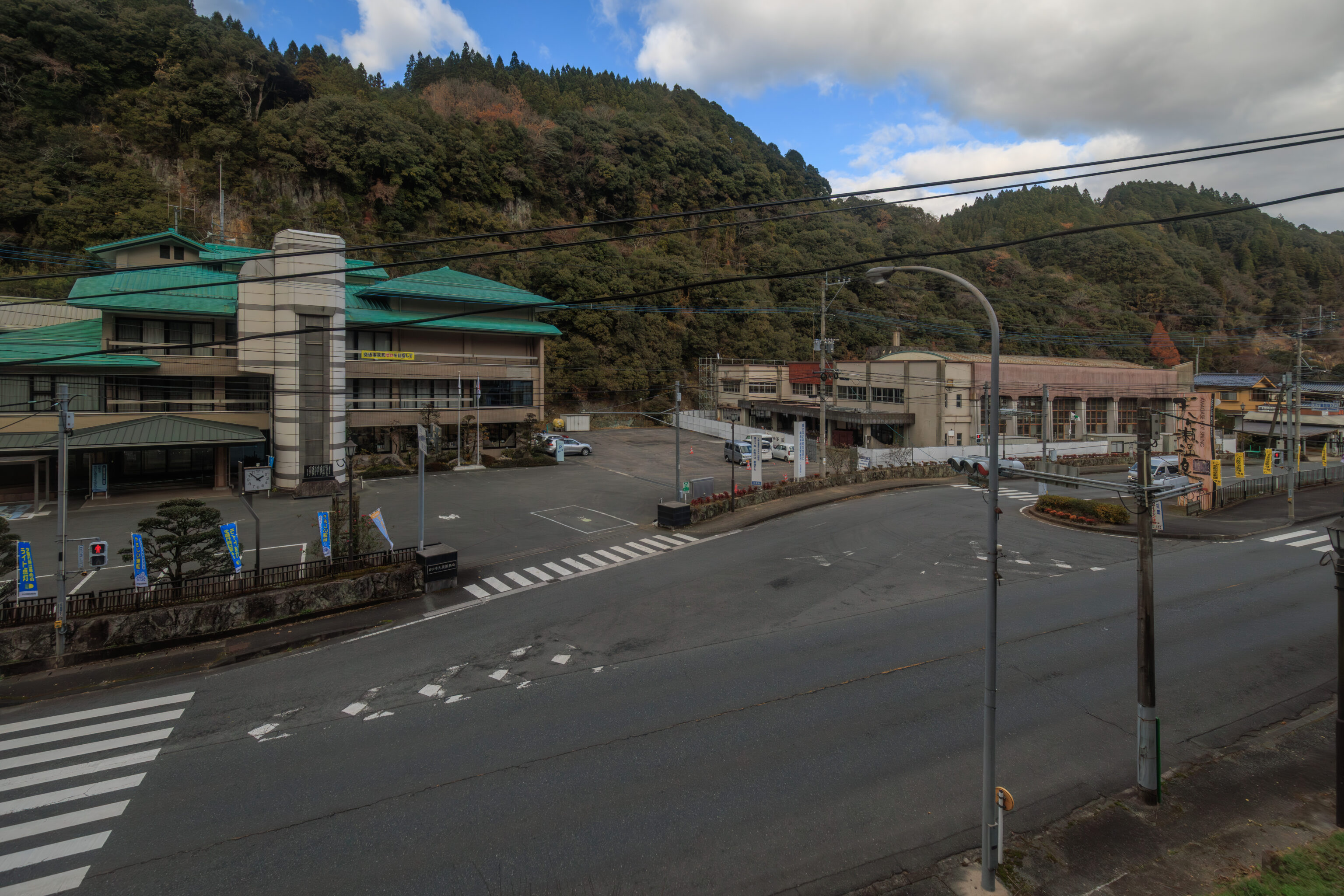
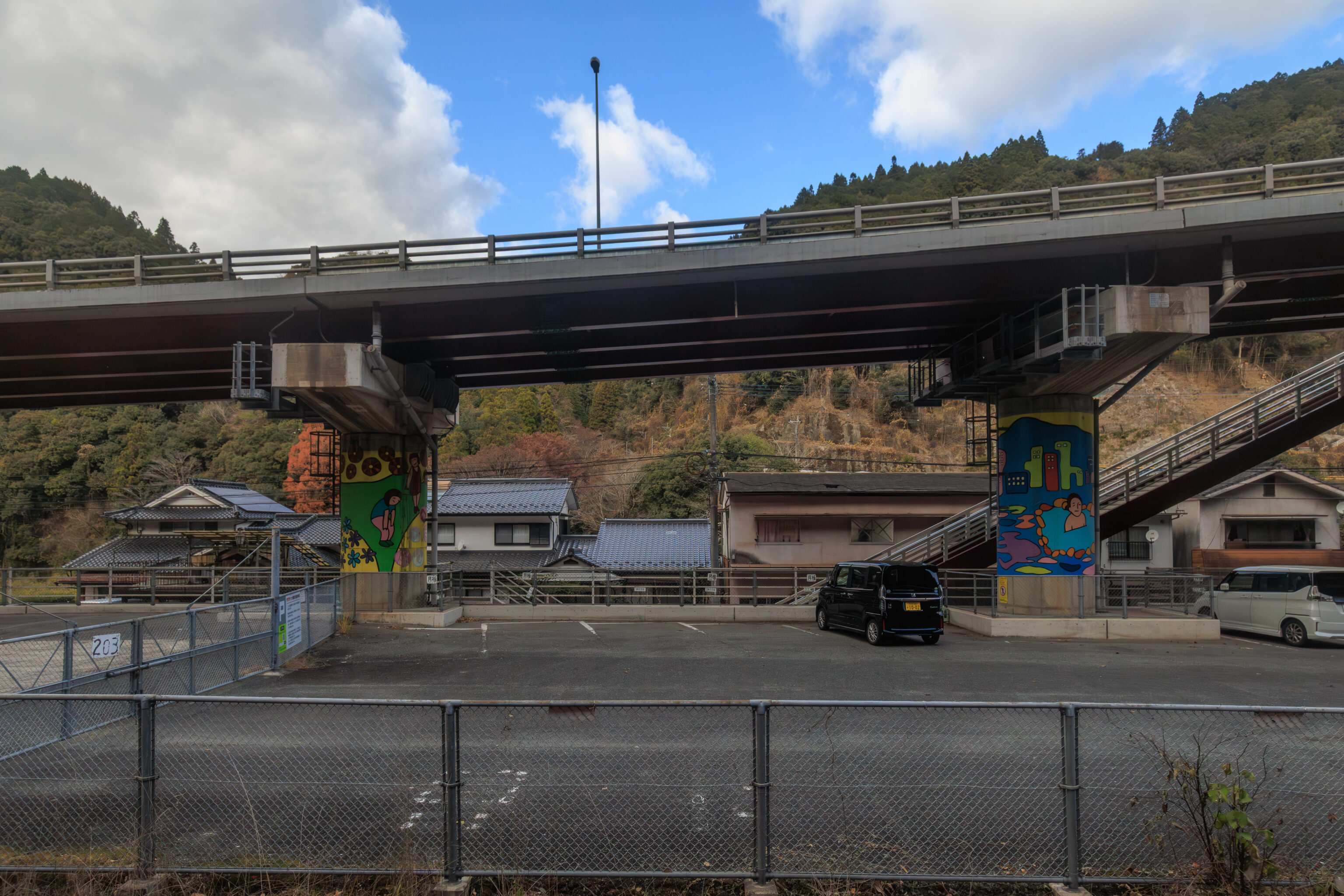
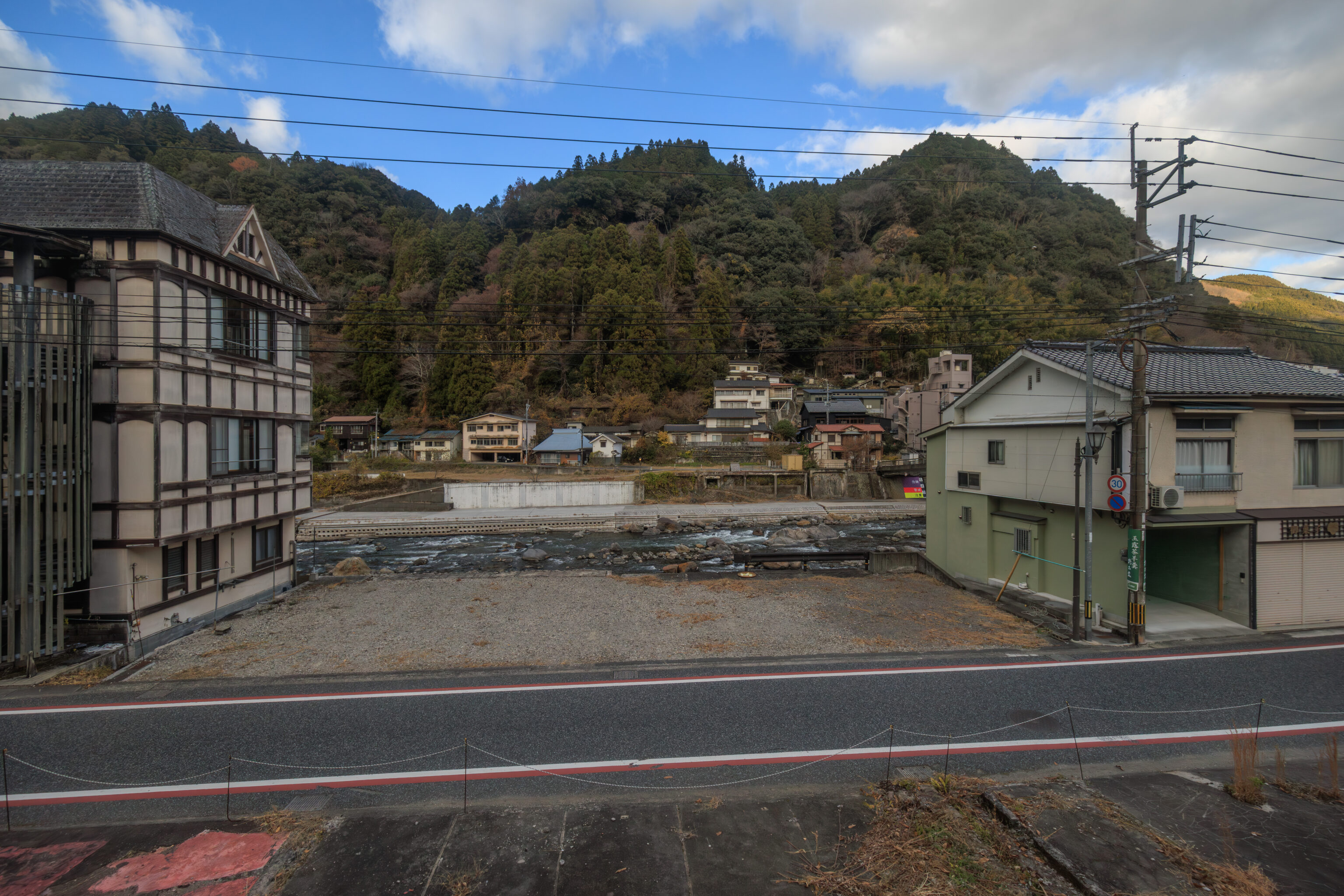
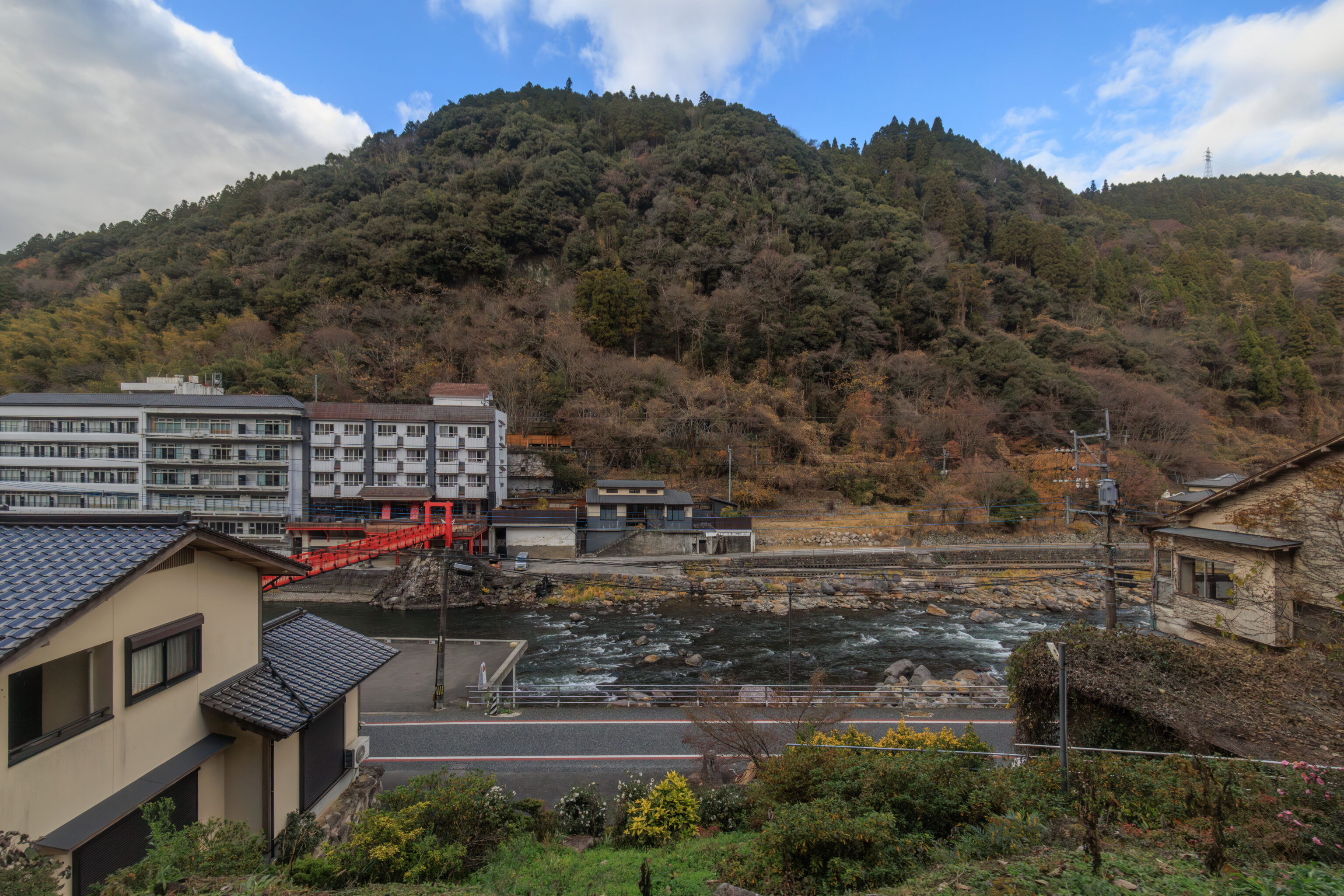
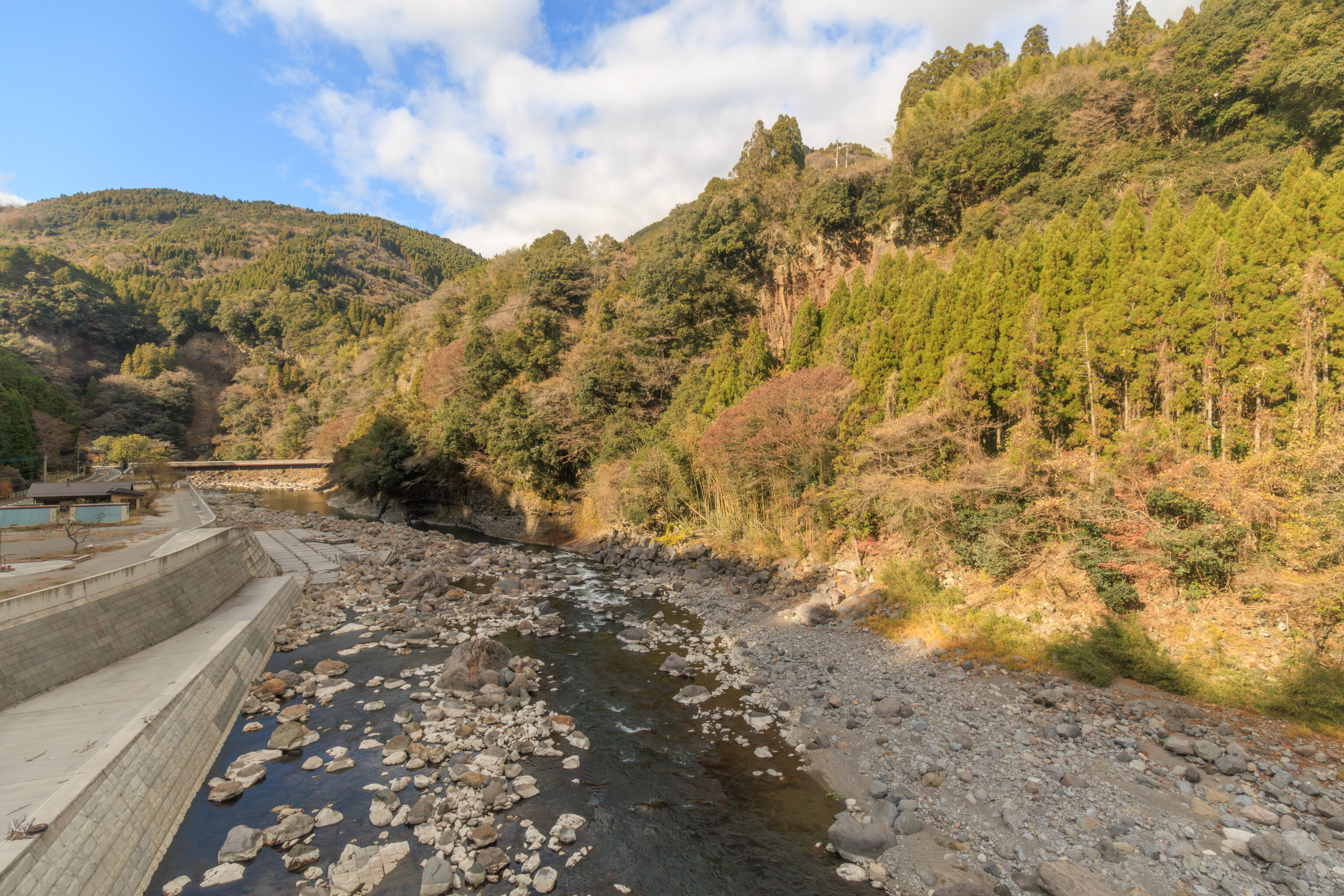
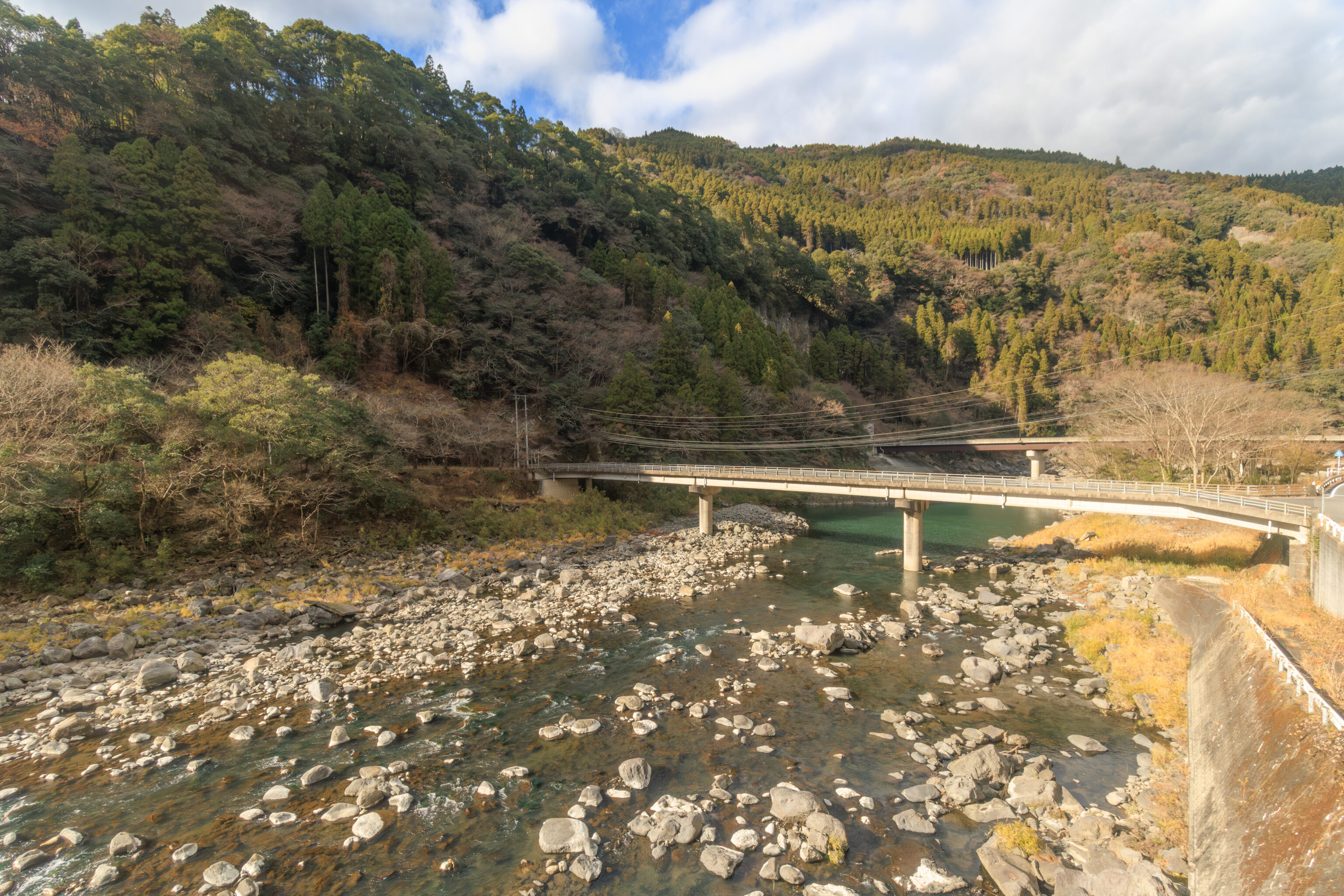
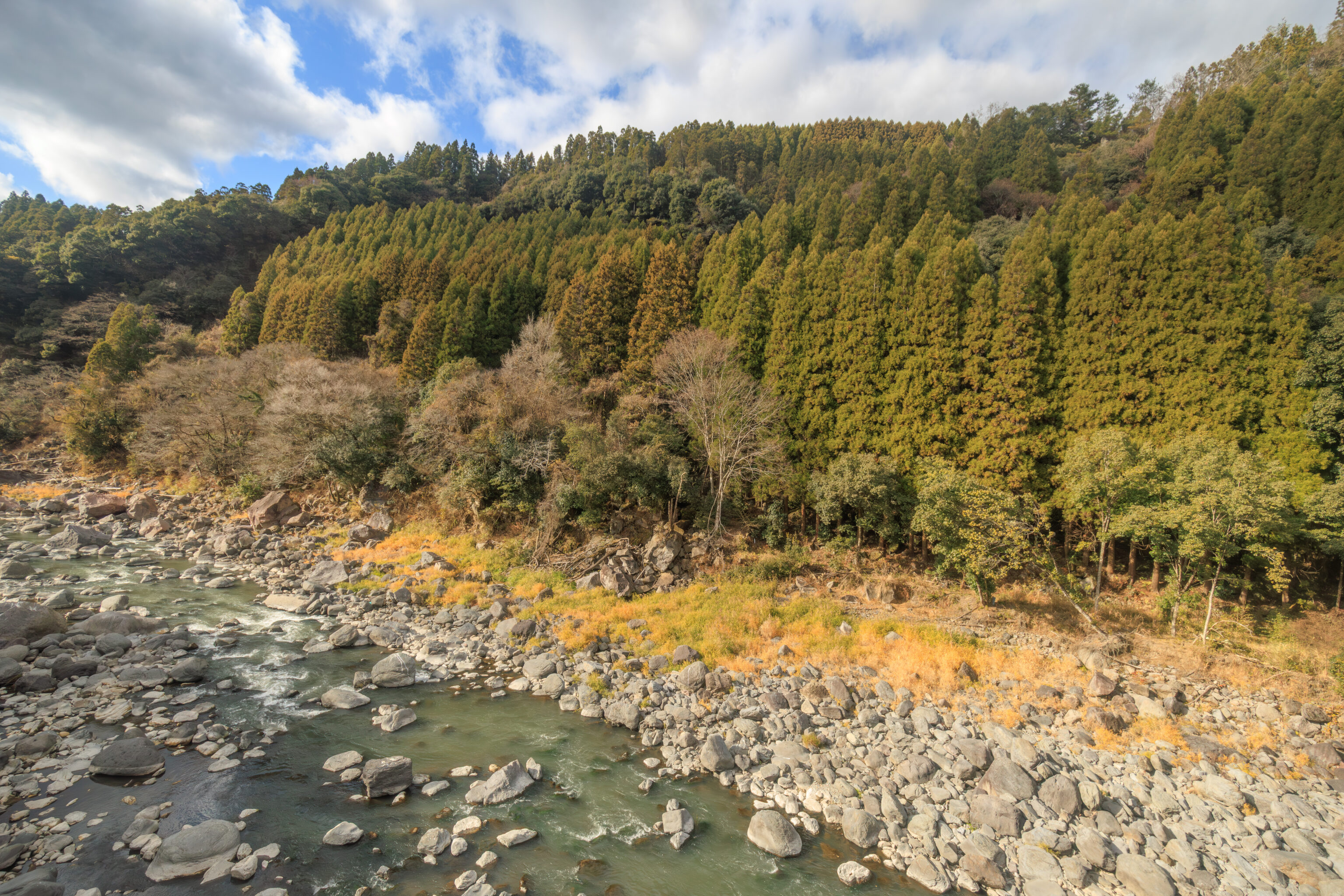
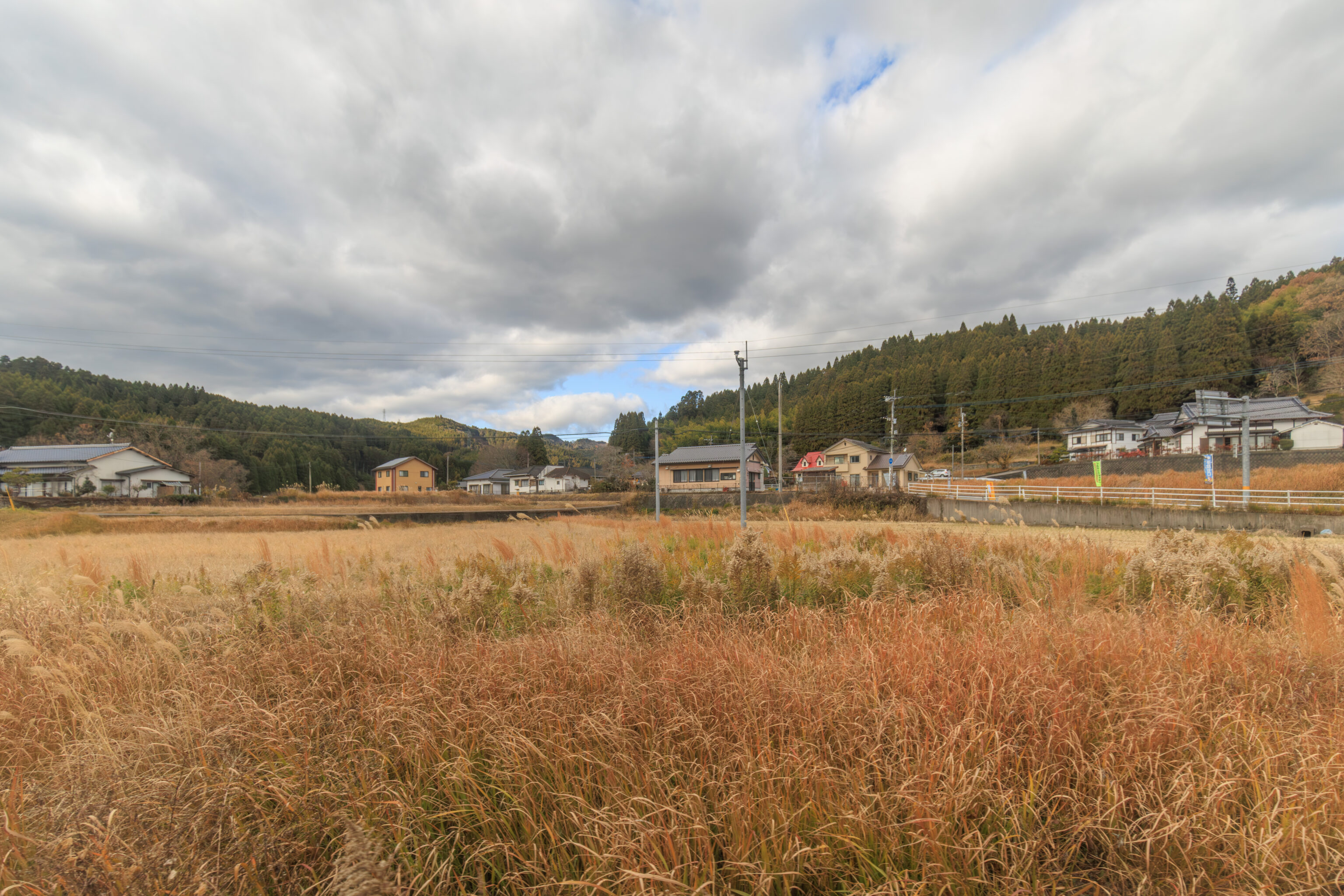
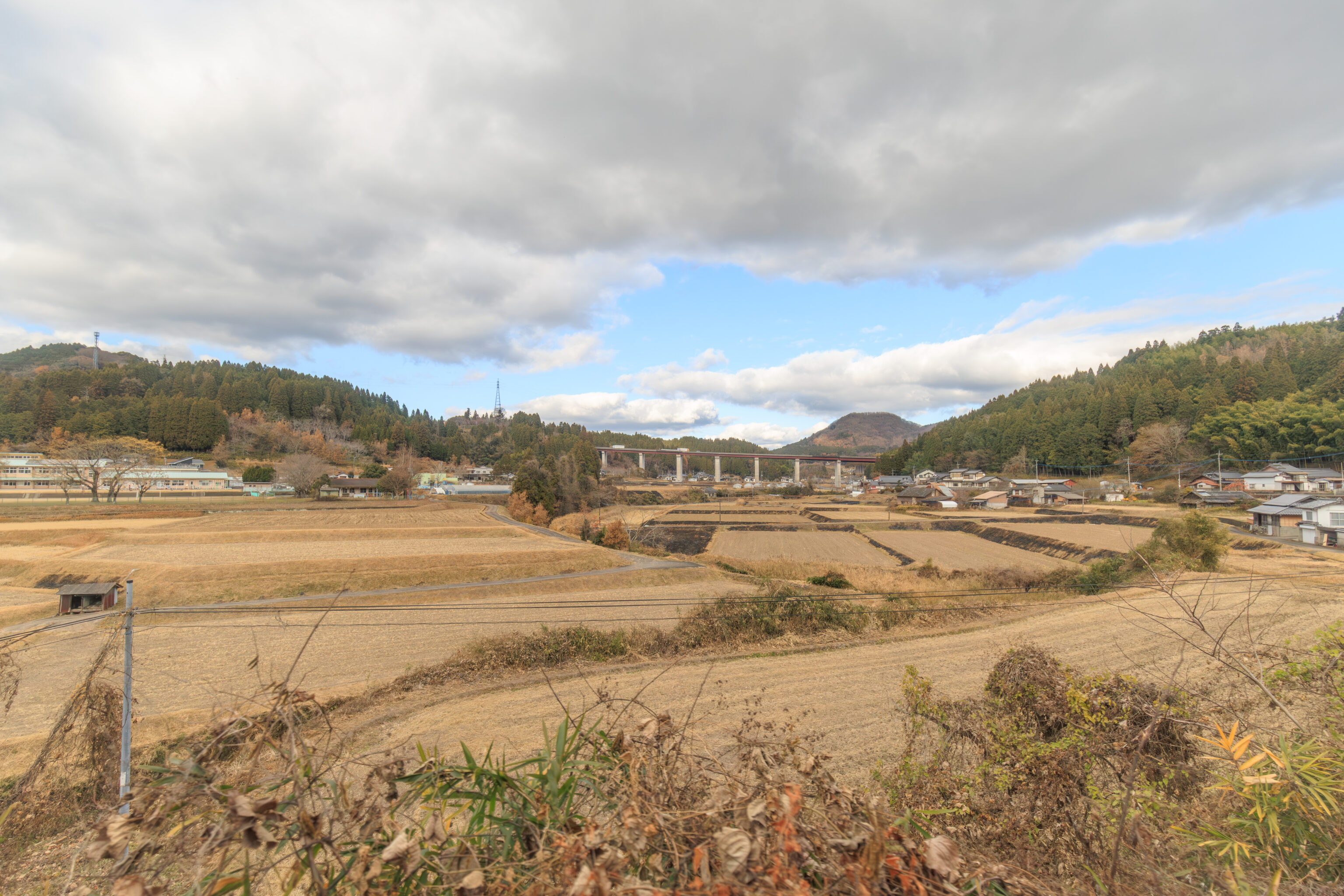
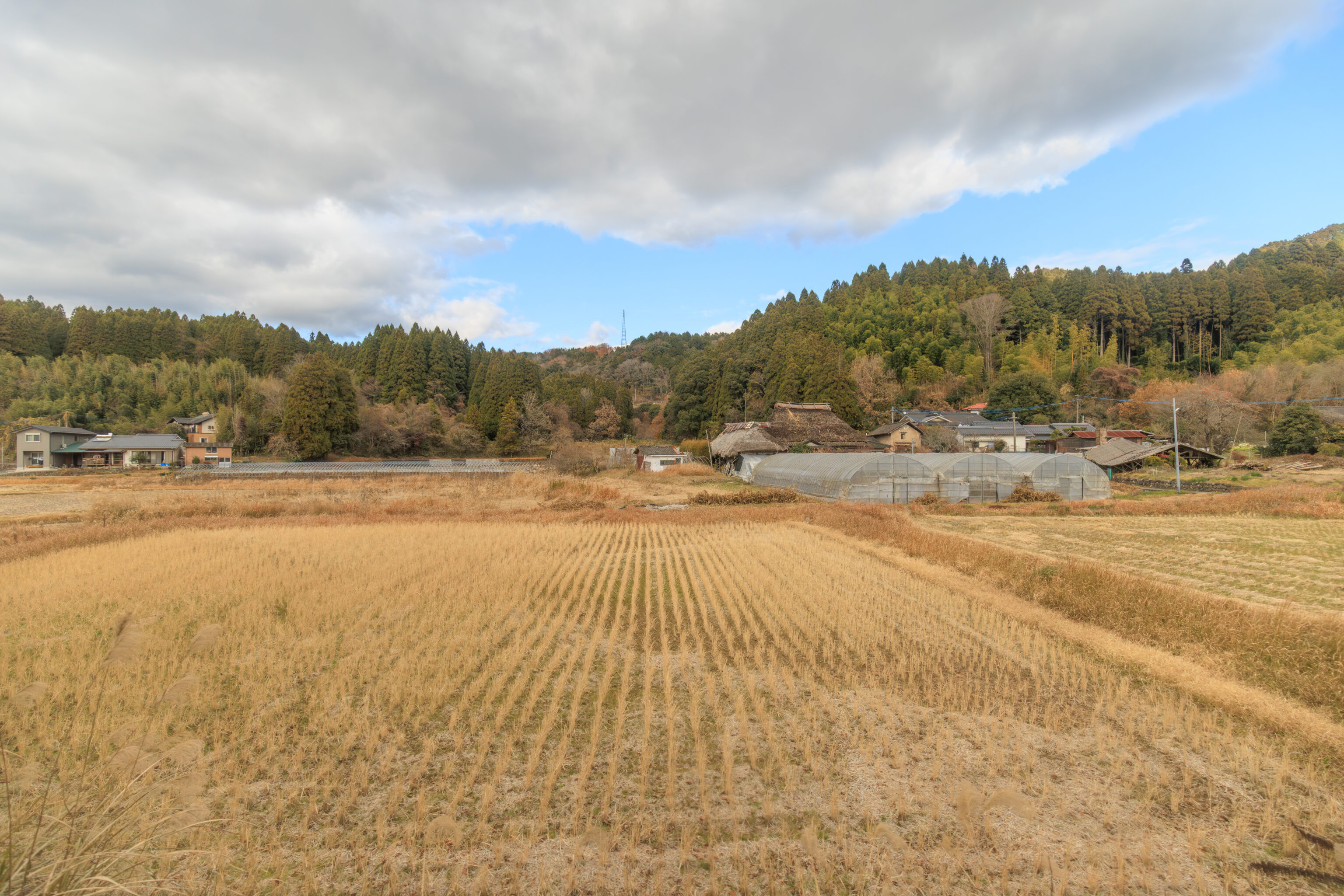
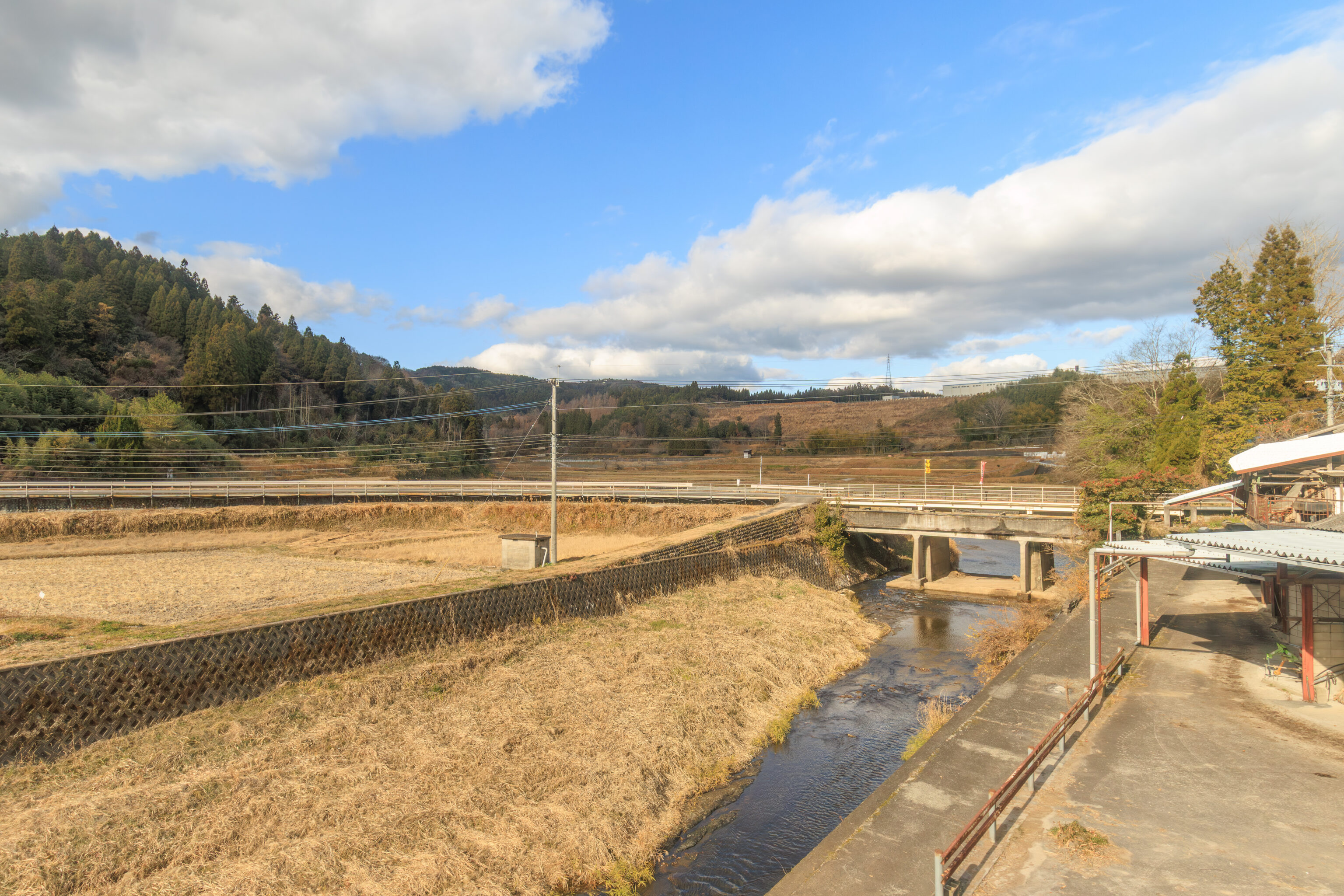
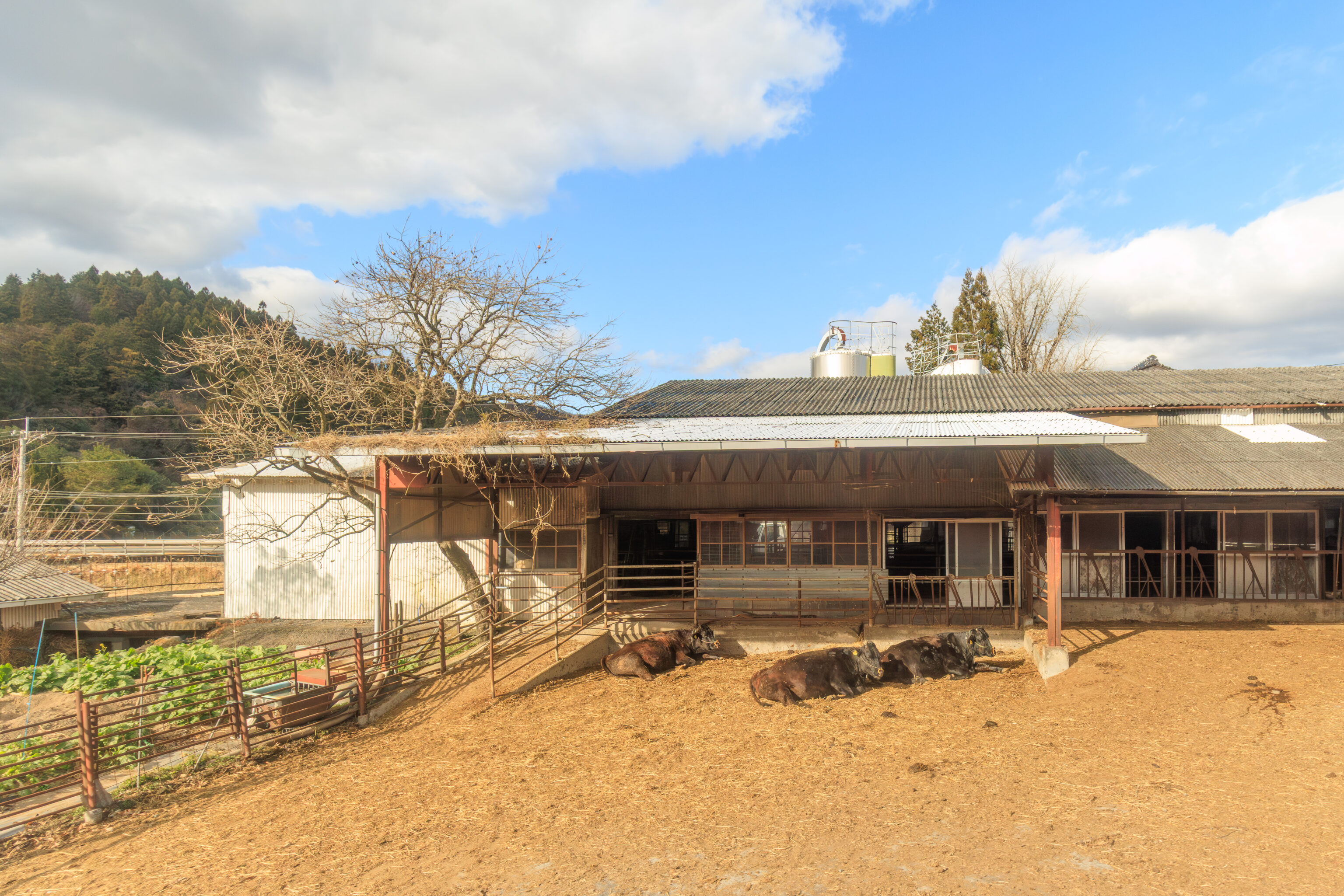
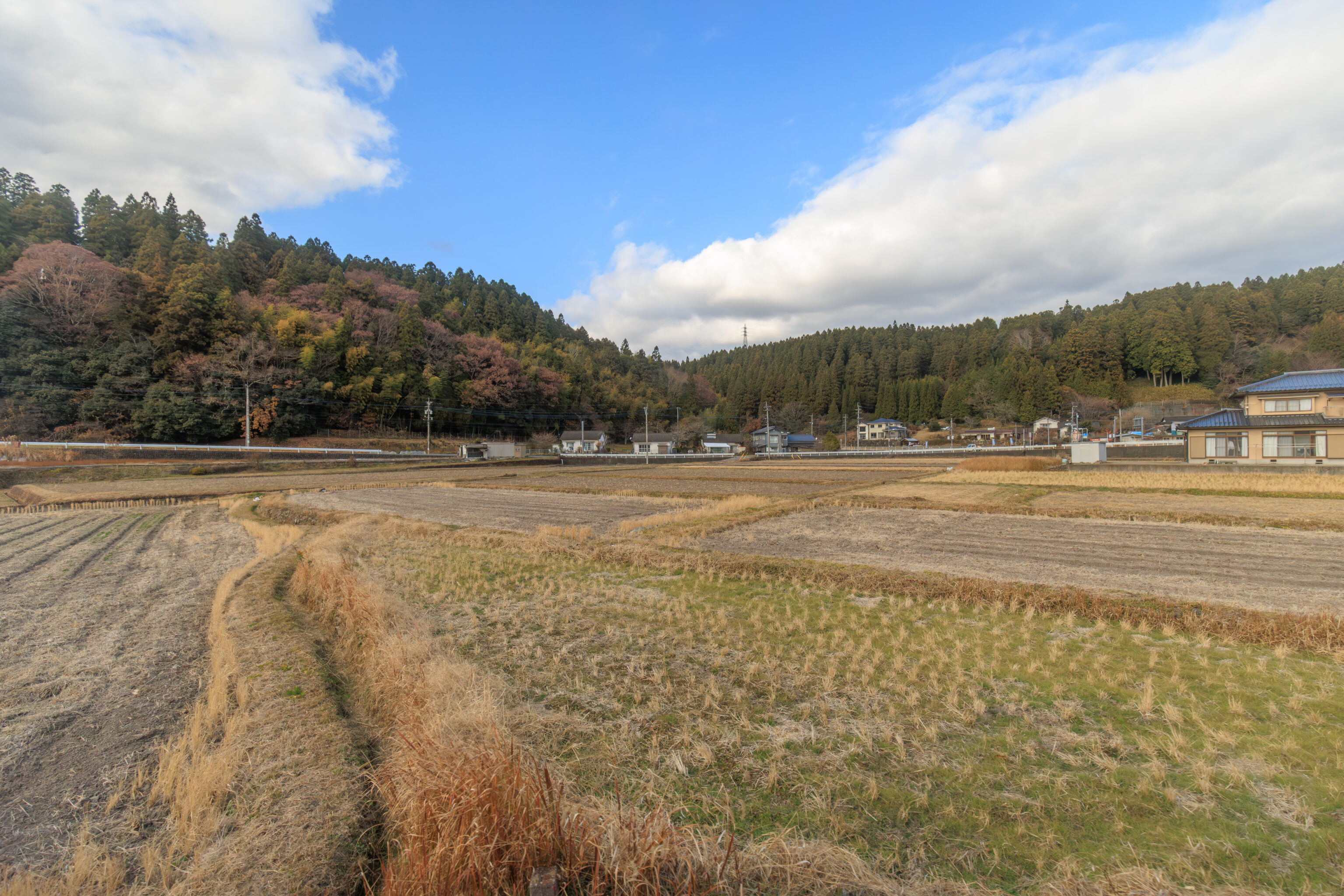
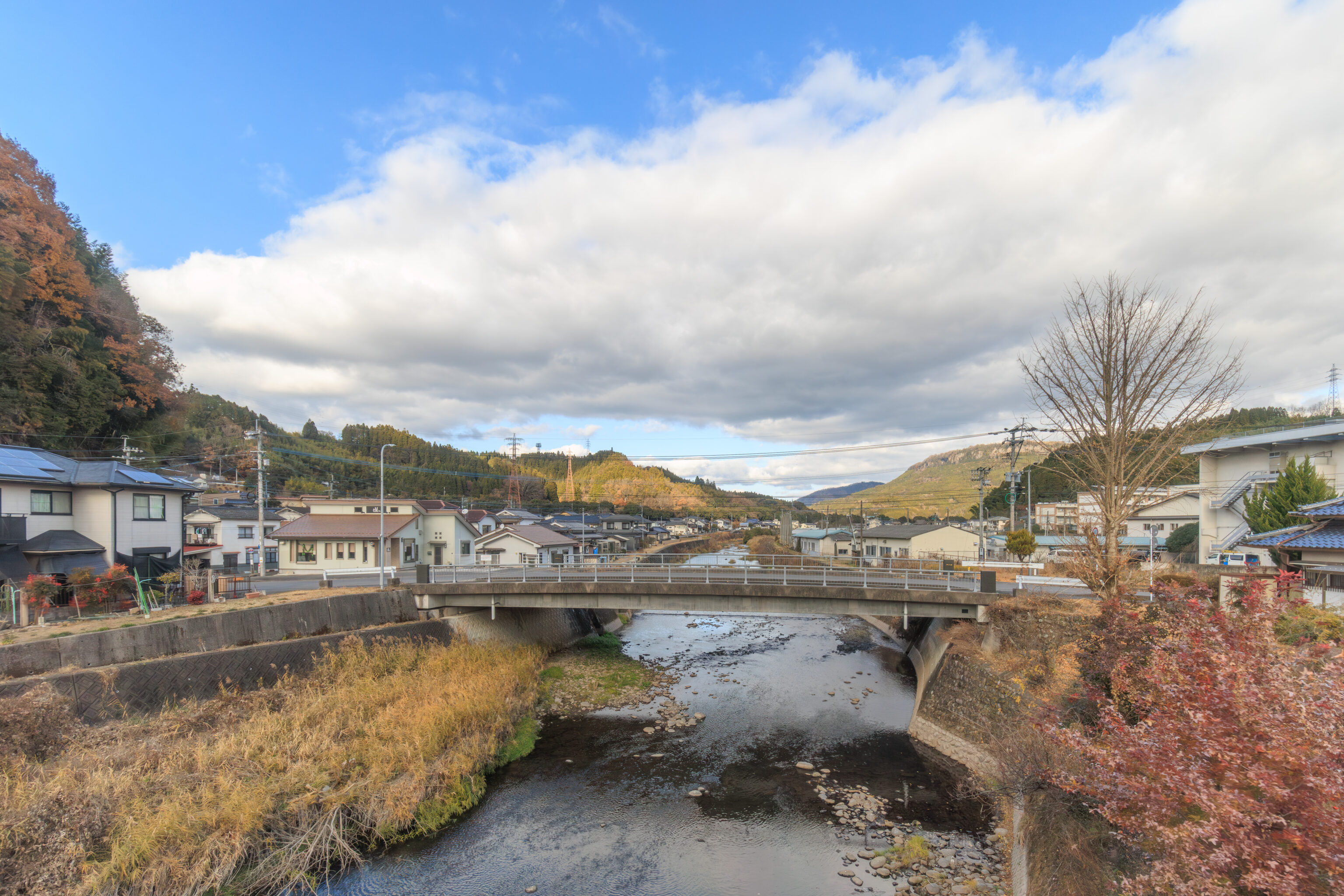
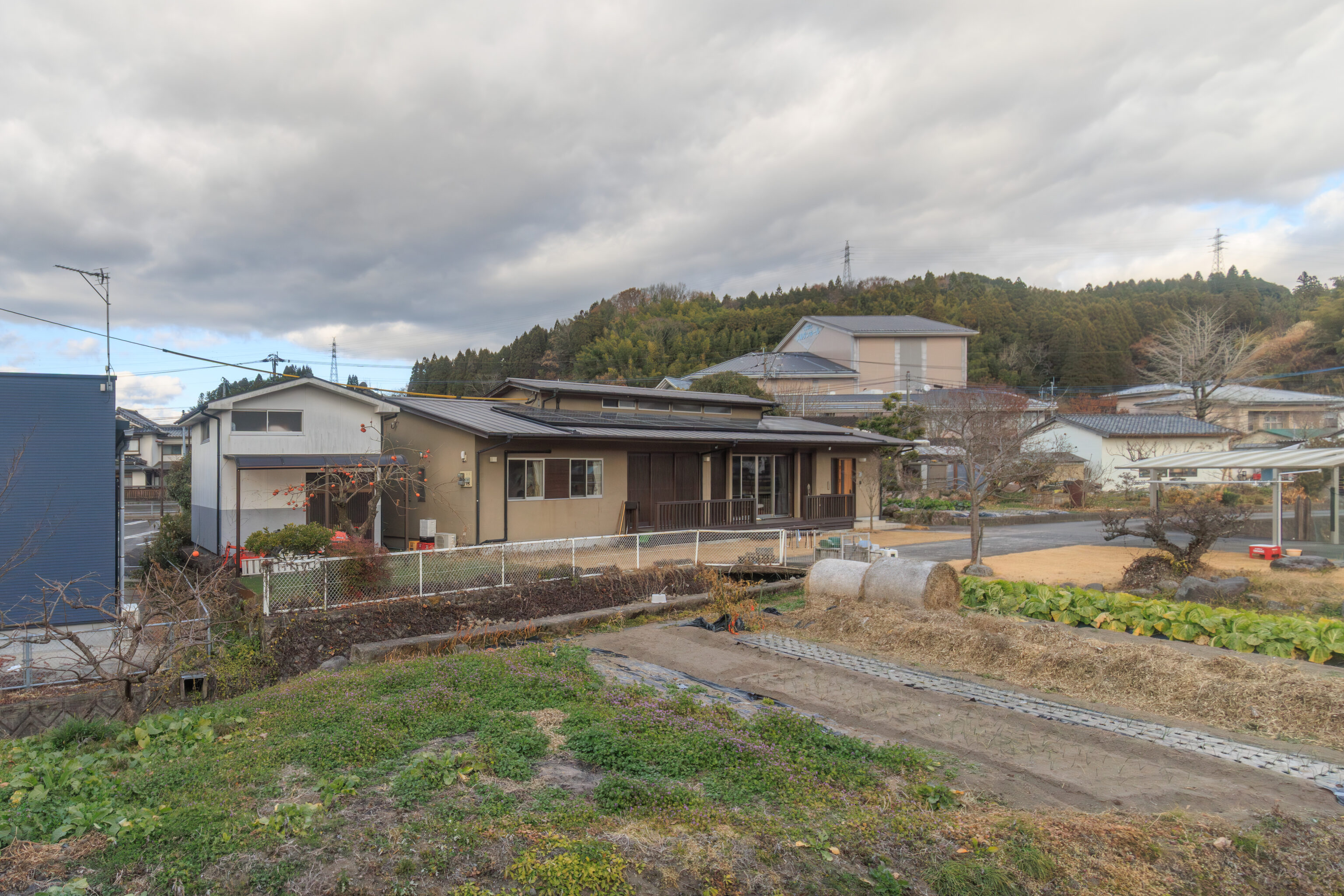
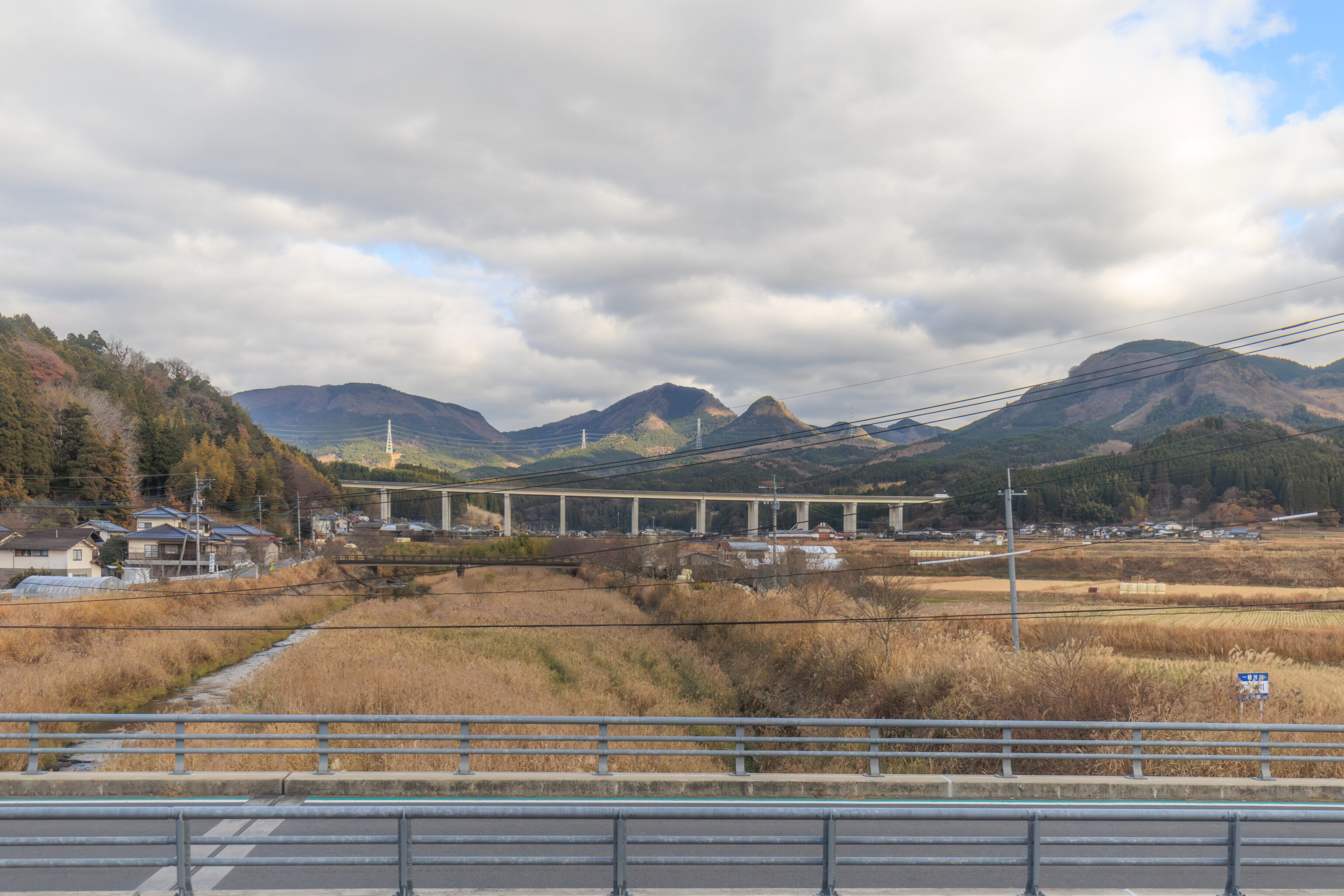
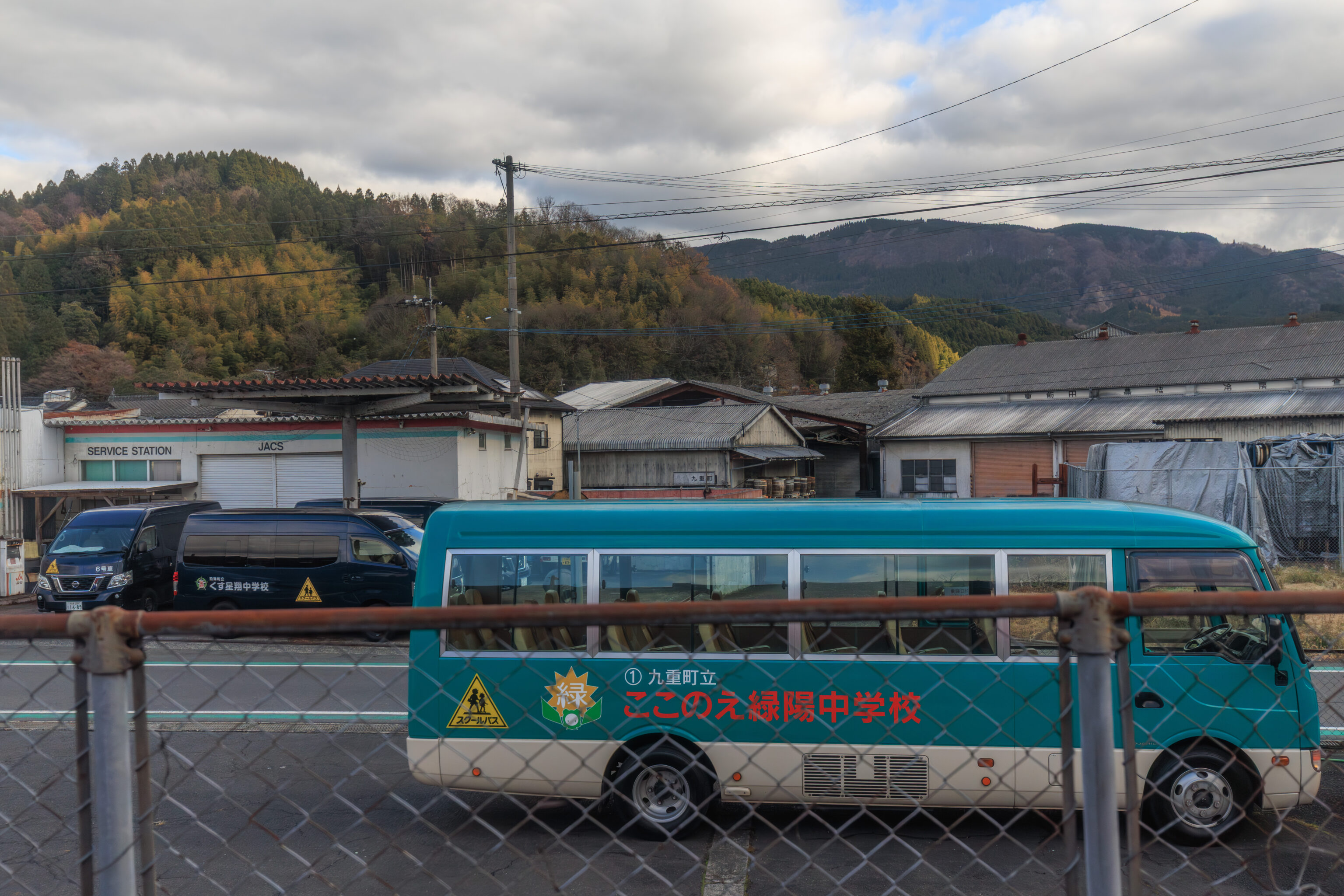
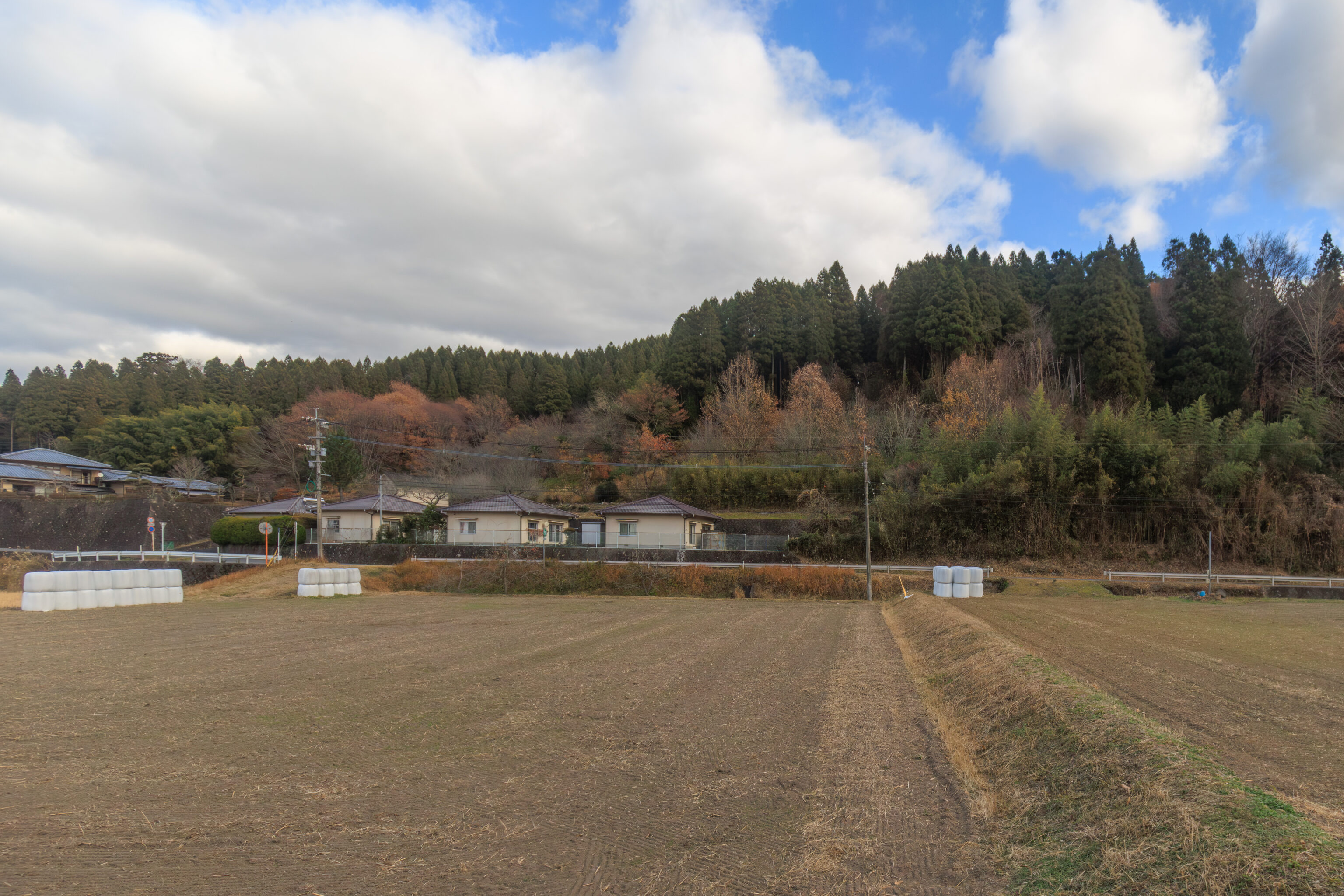
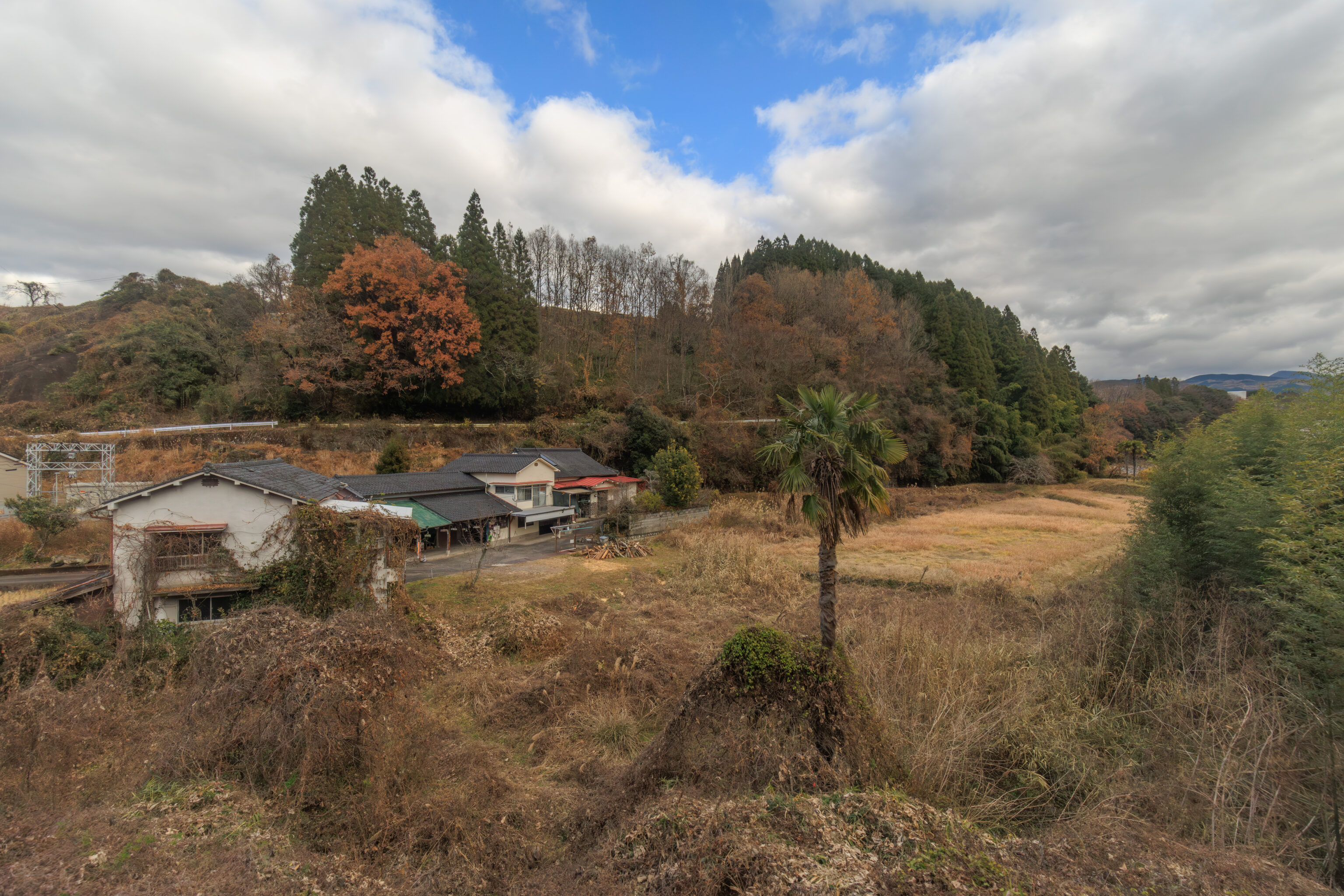
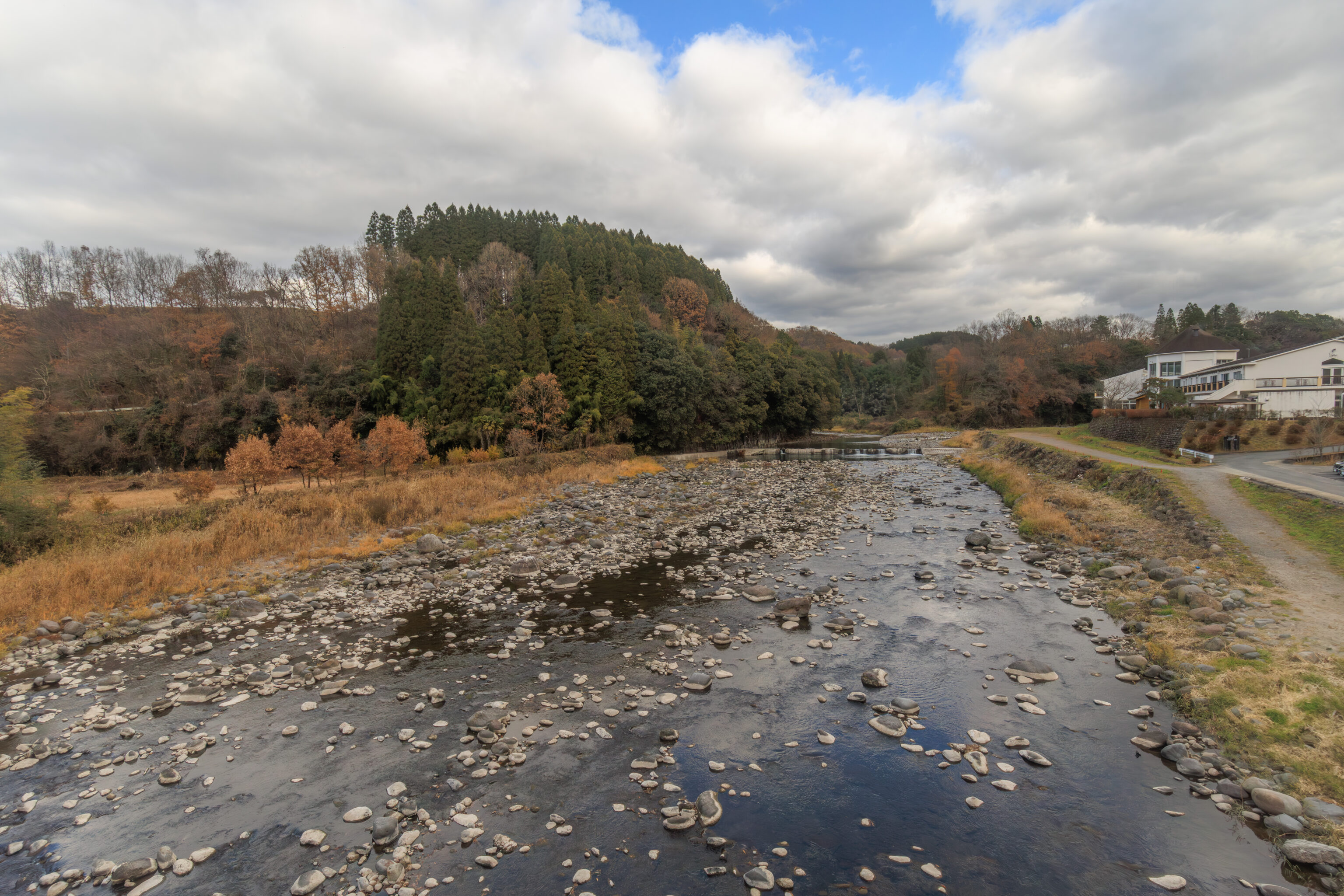
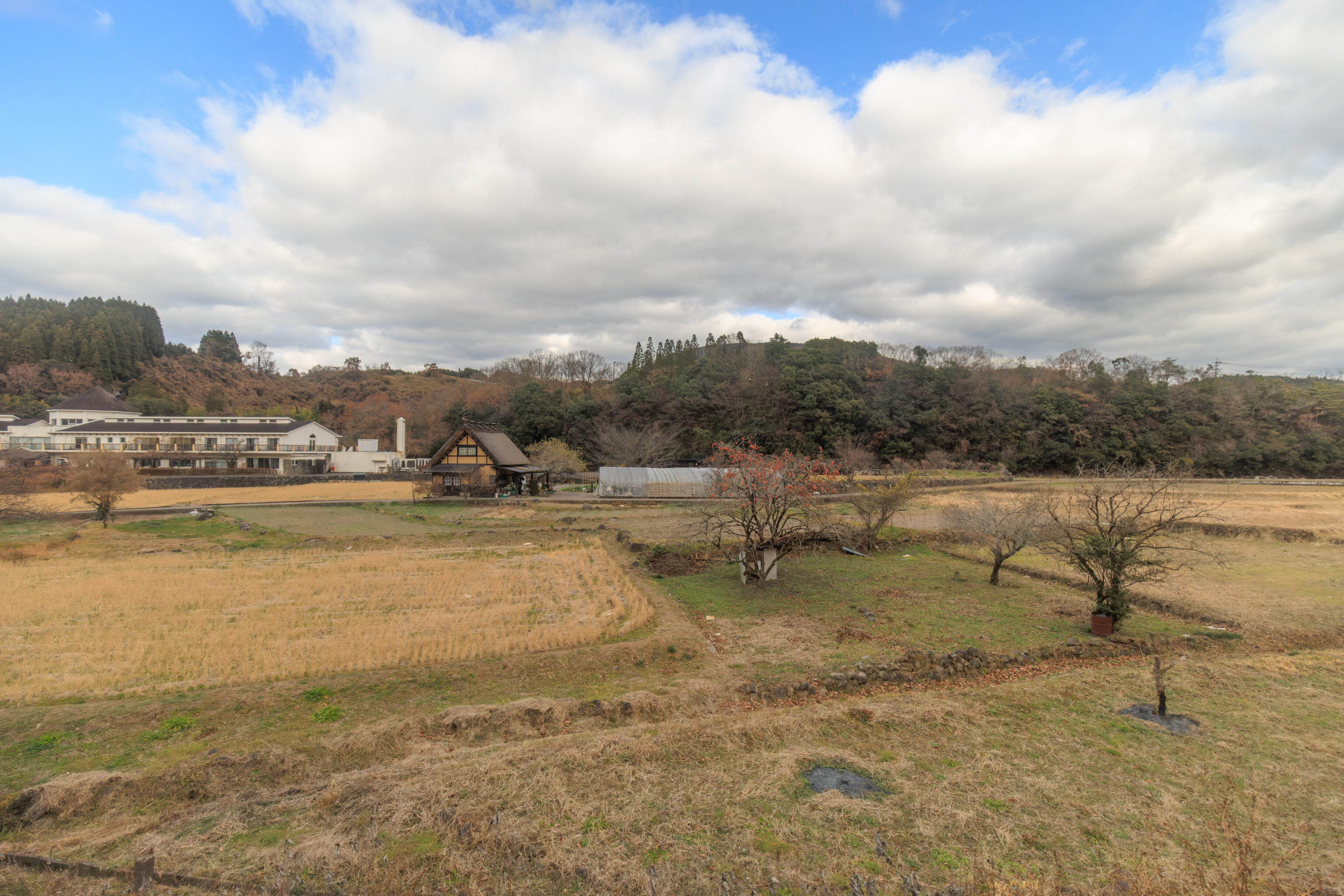
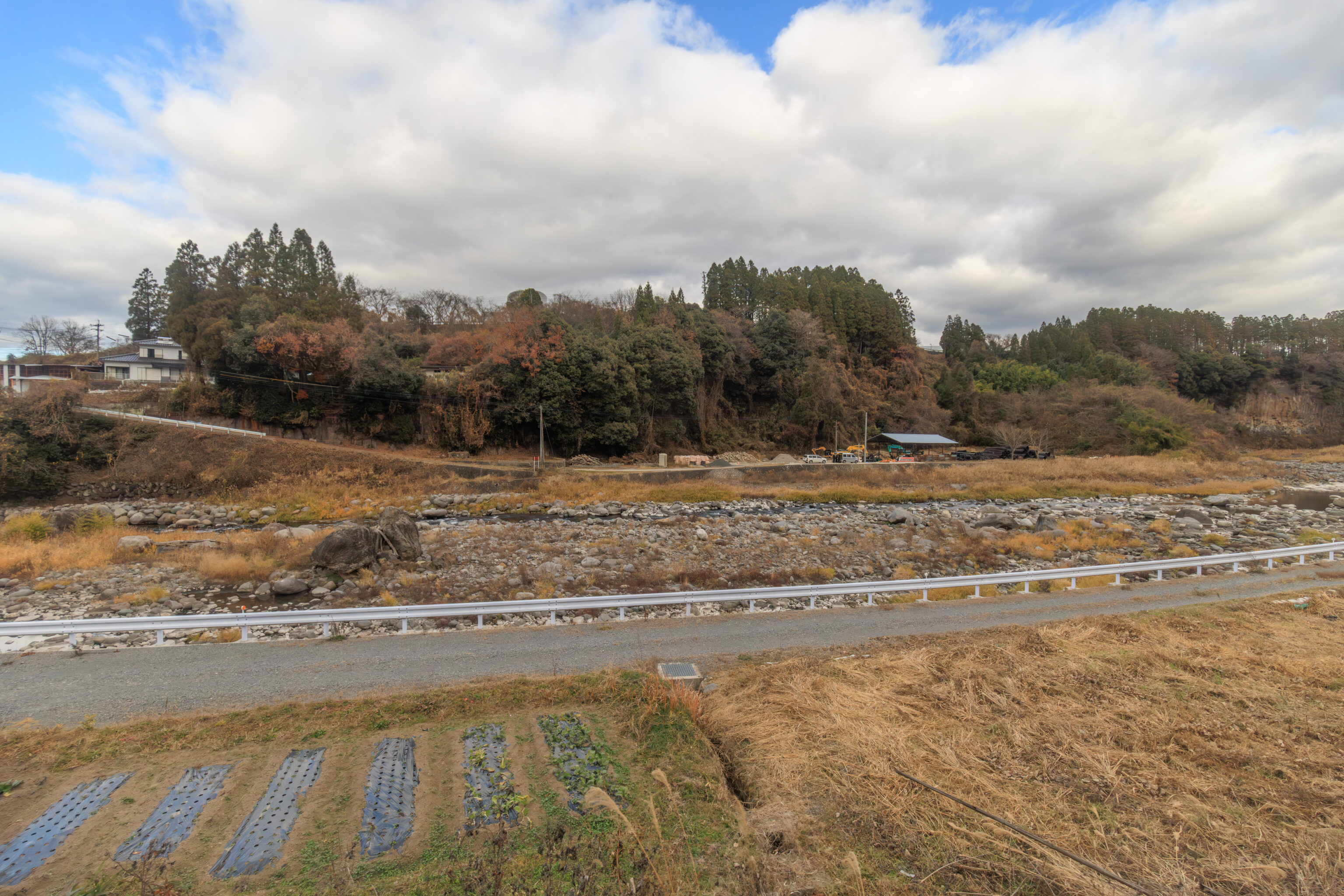
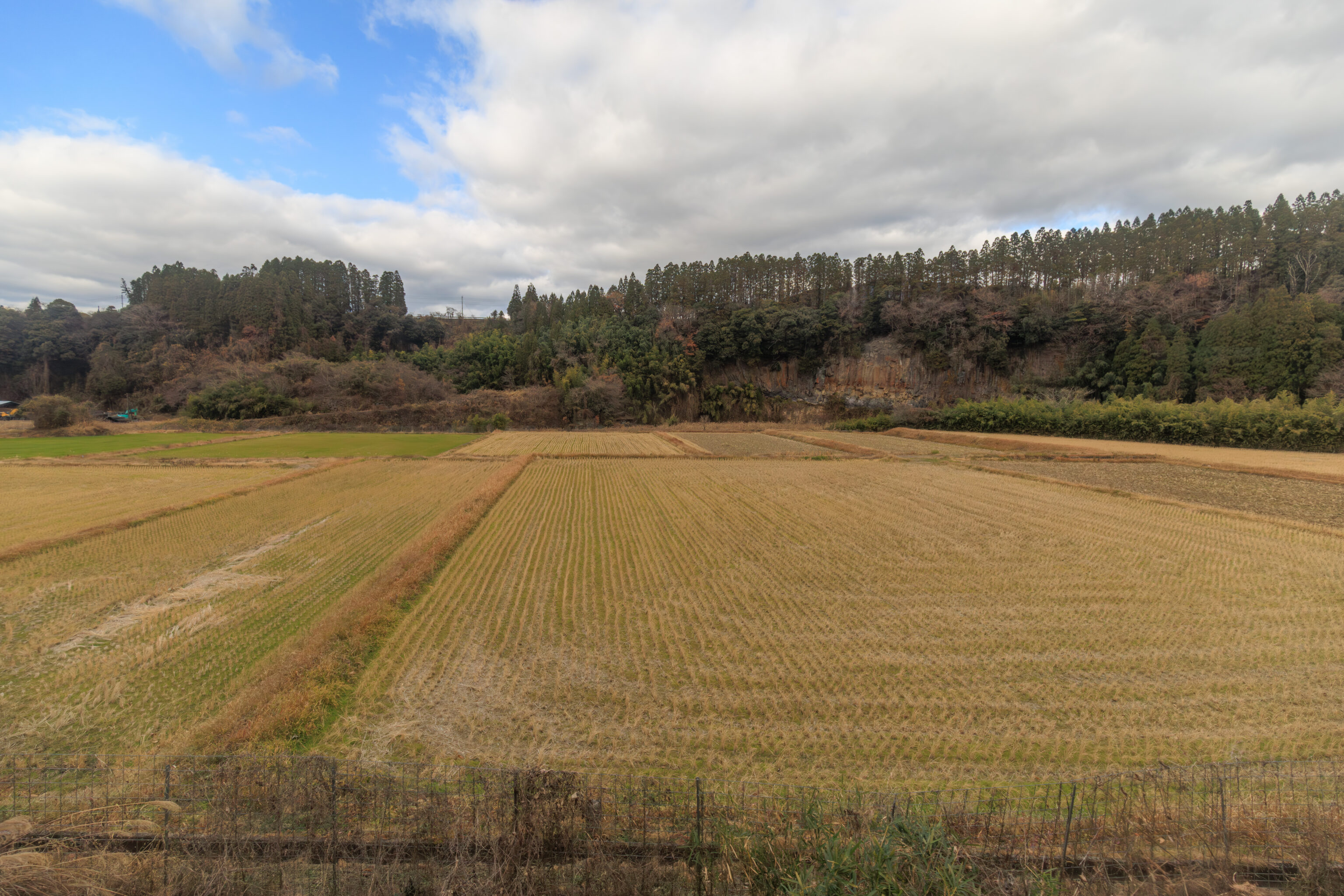
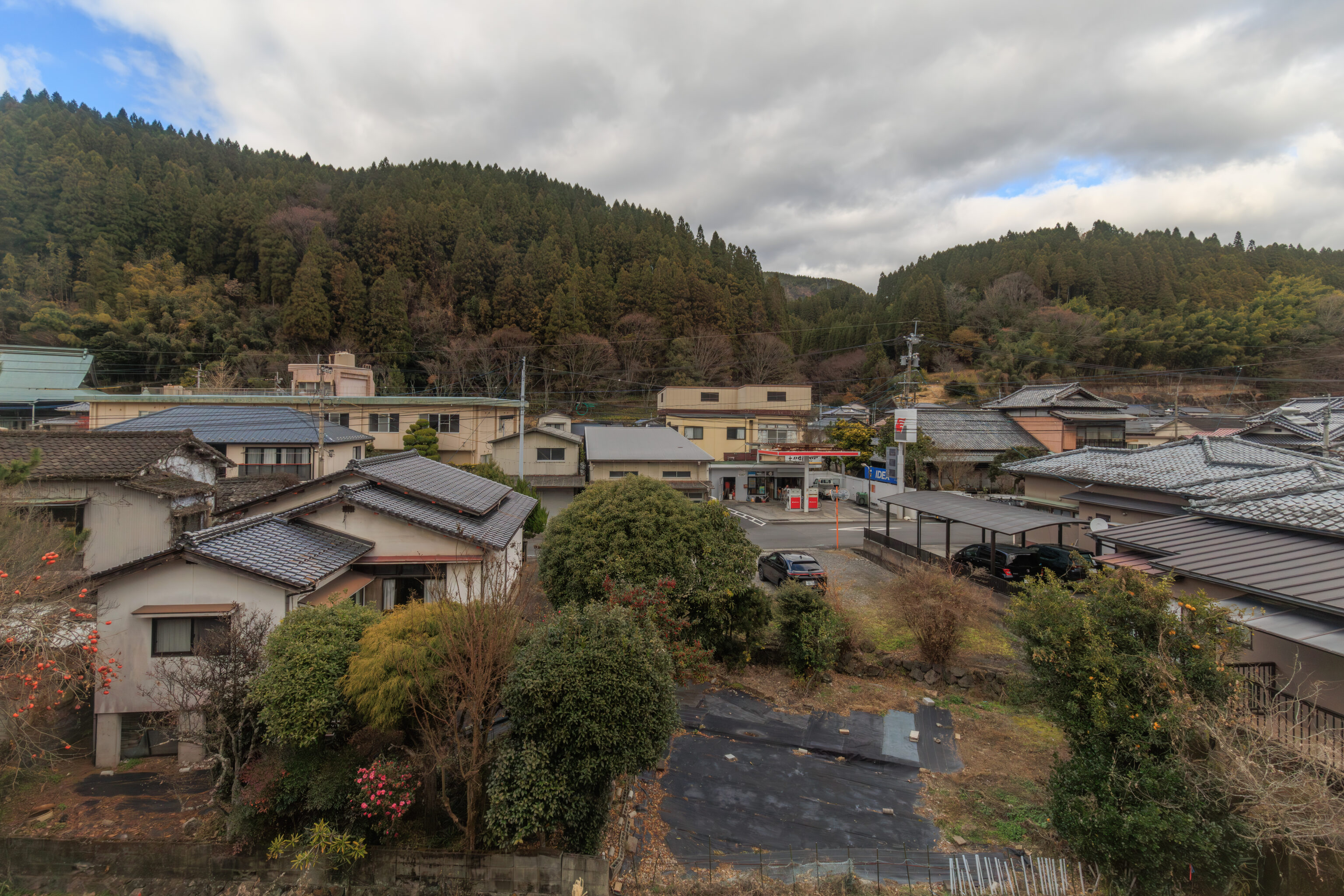
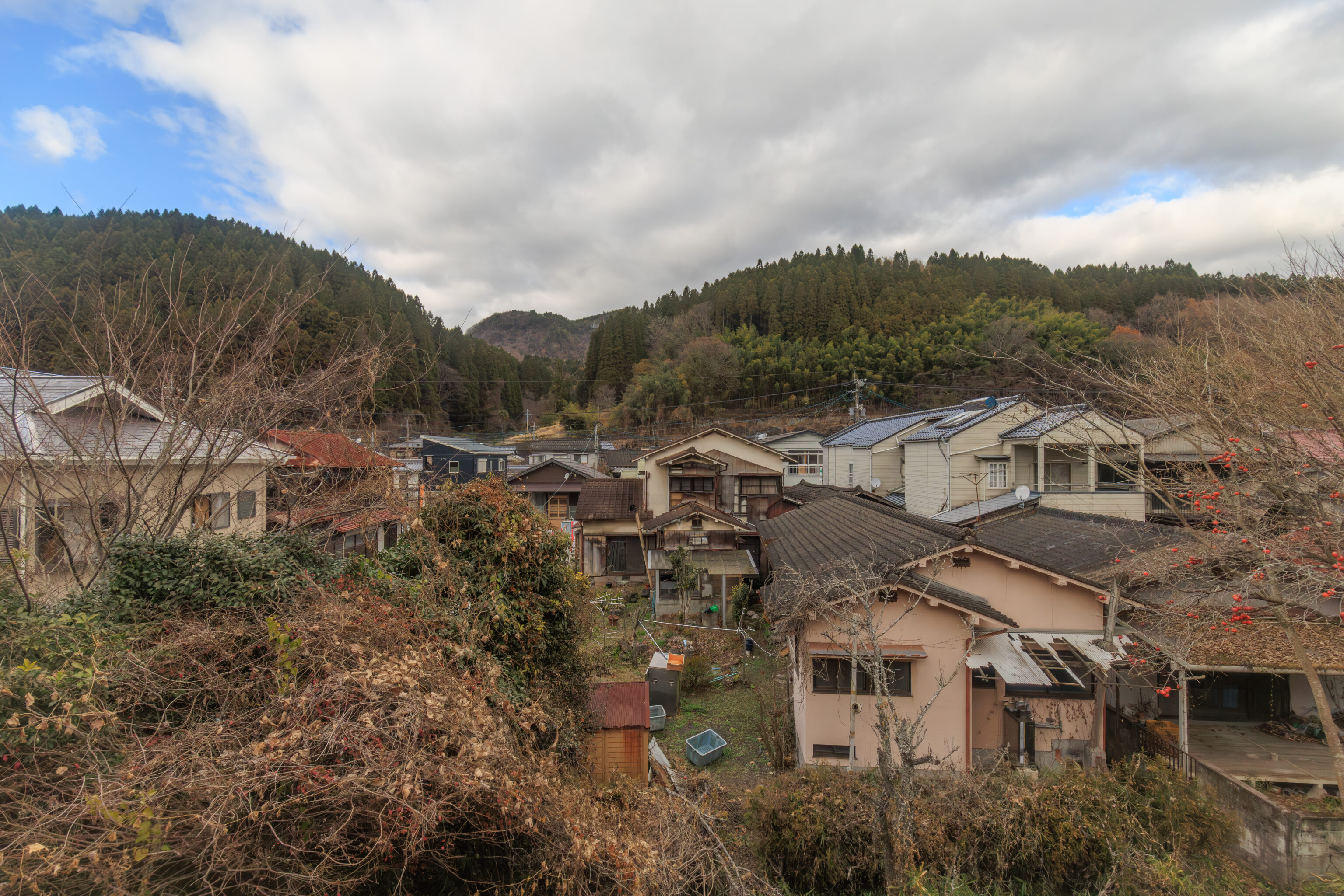
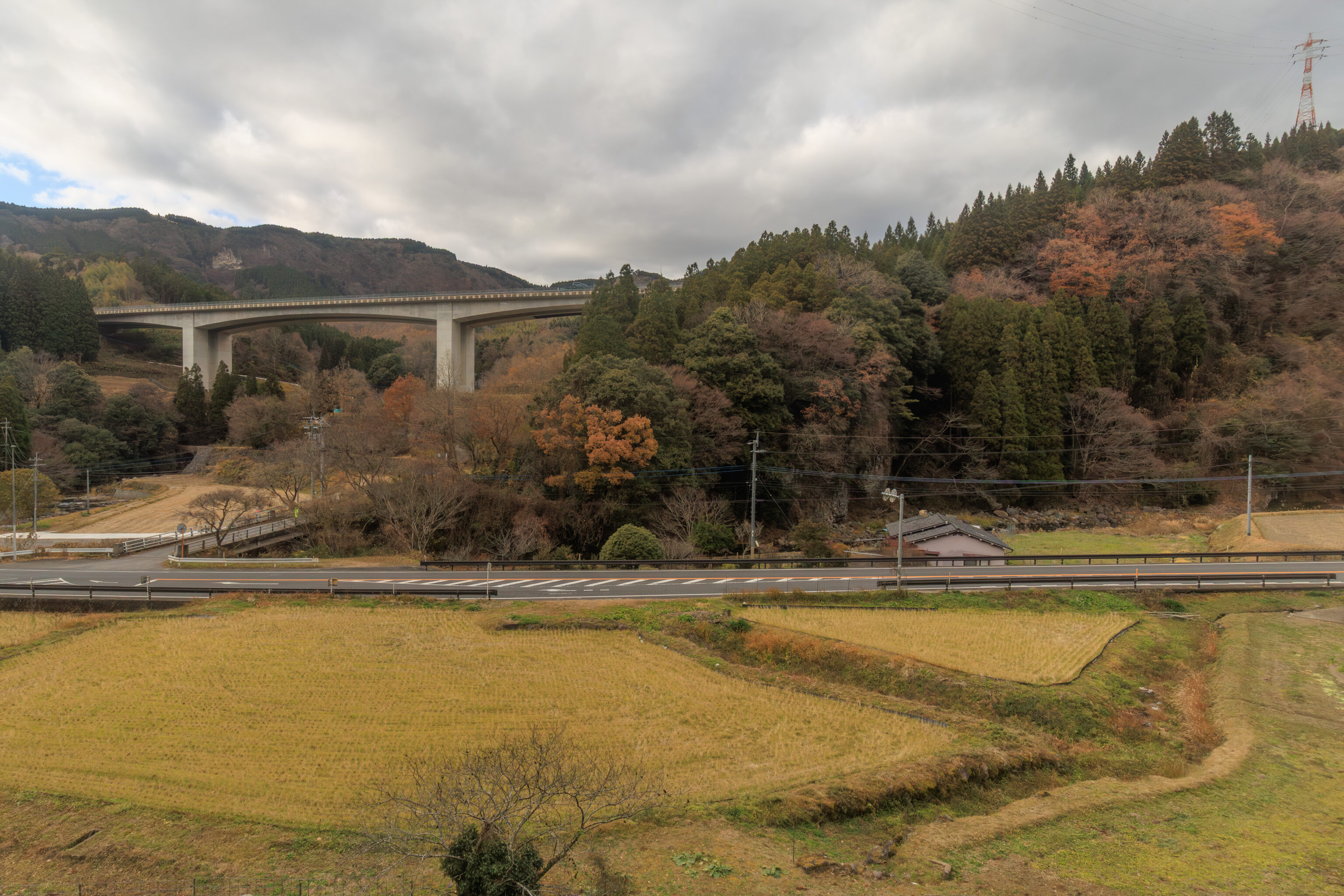
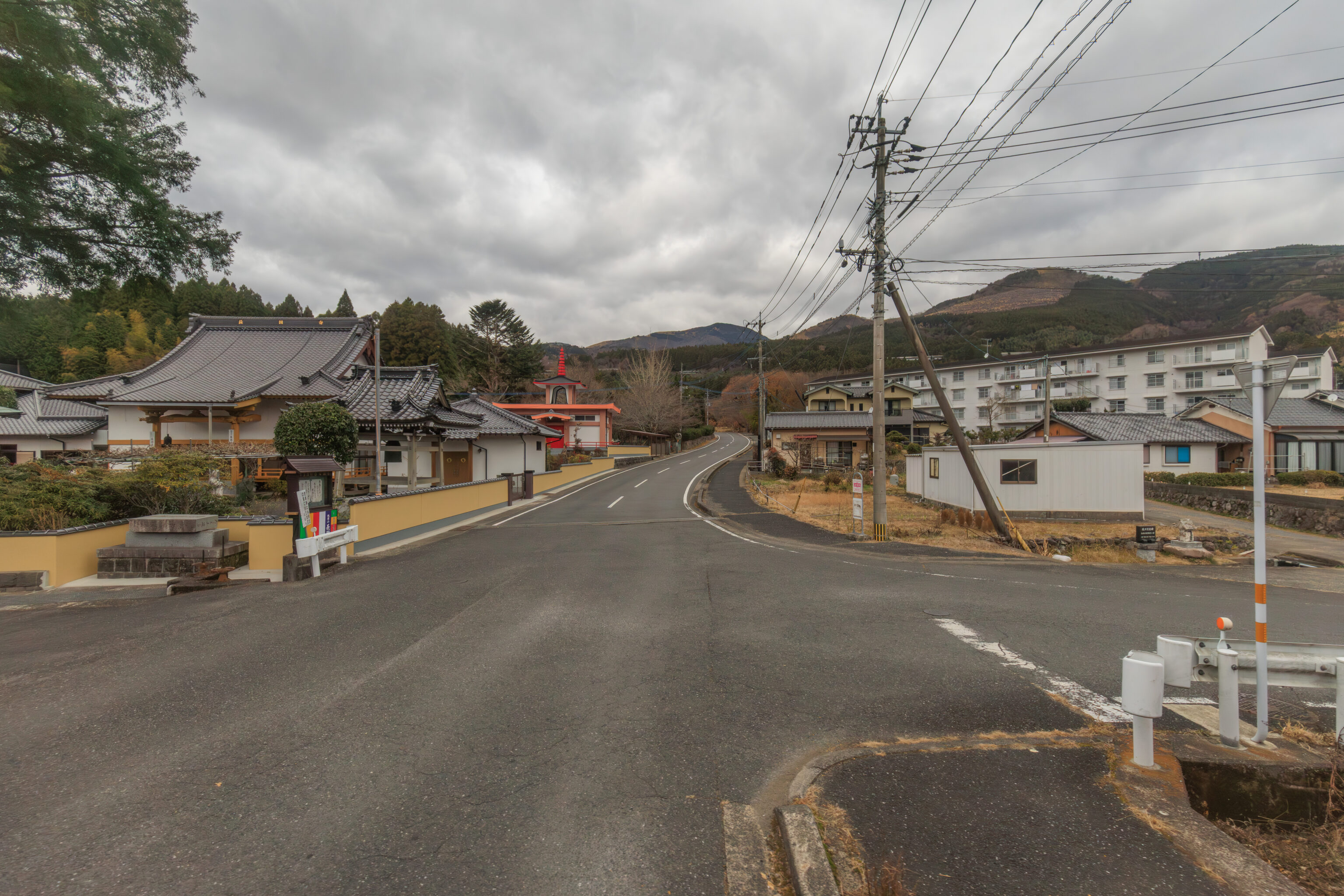
The route to Yufuin, the stop before Yunohira, passed through many varied landscapes. We arrived at around 2:45pm. Many people got off here and some got on as well. Yufuin is a popular tourist destination due to its numerous onsen.
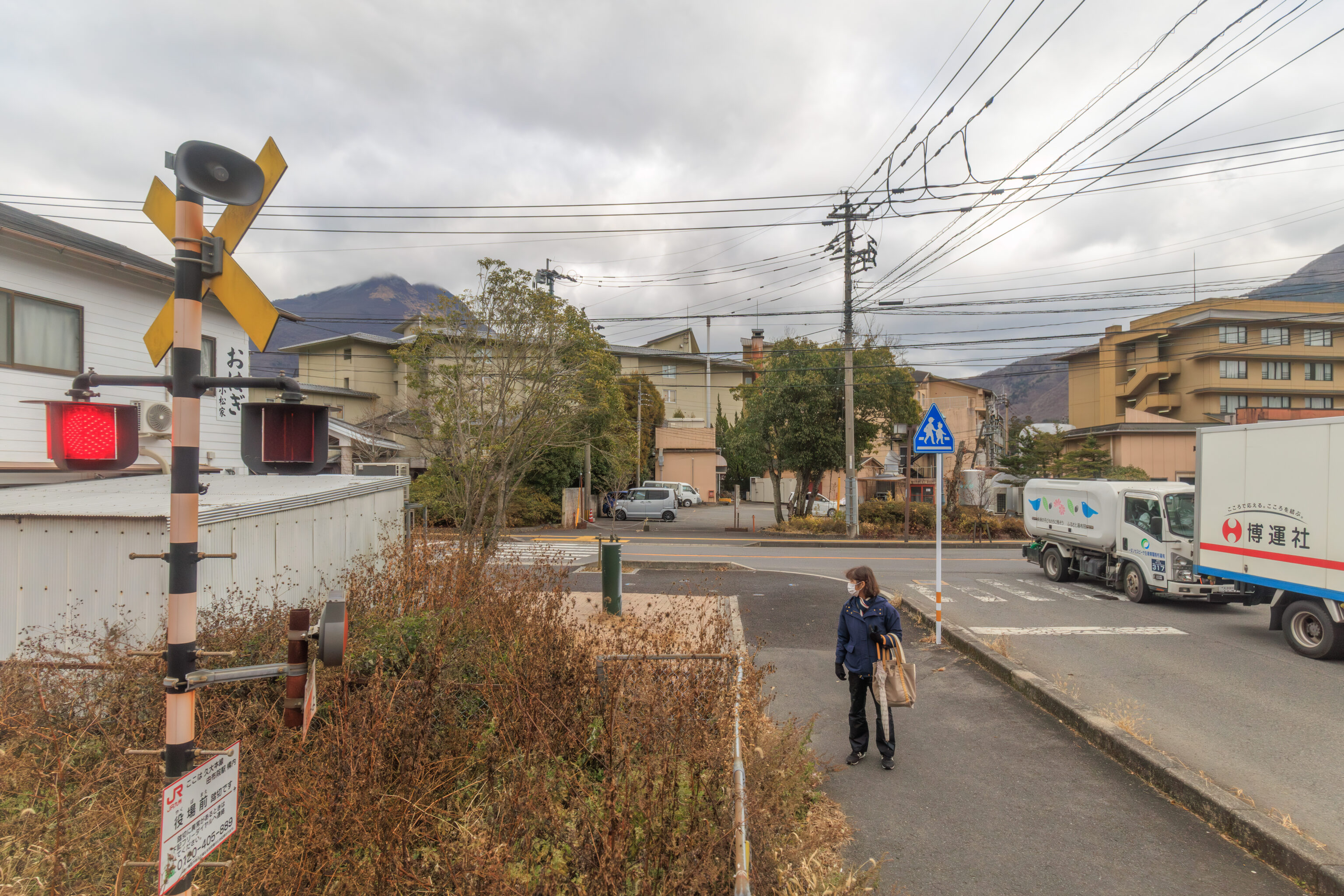
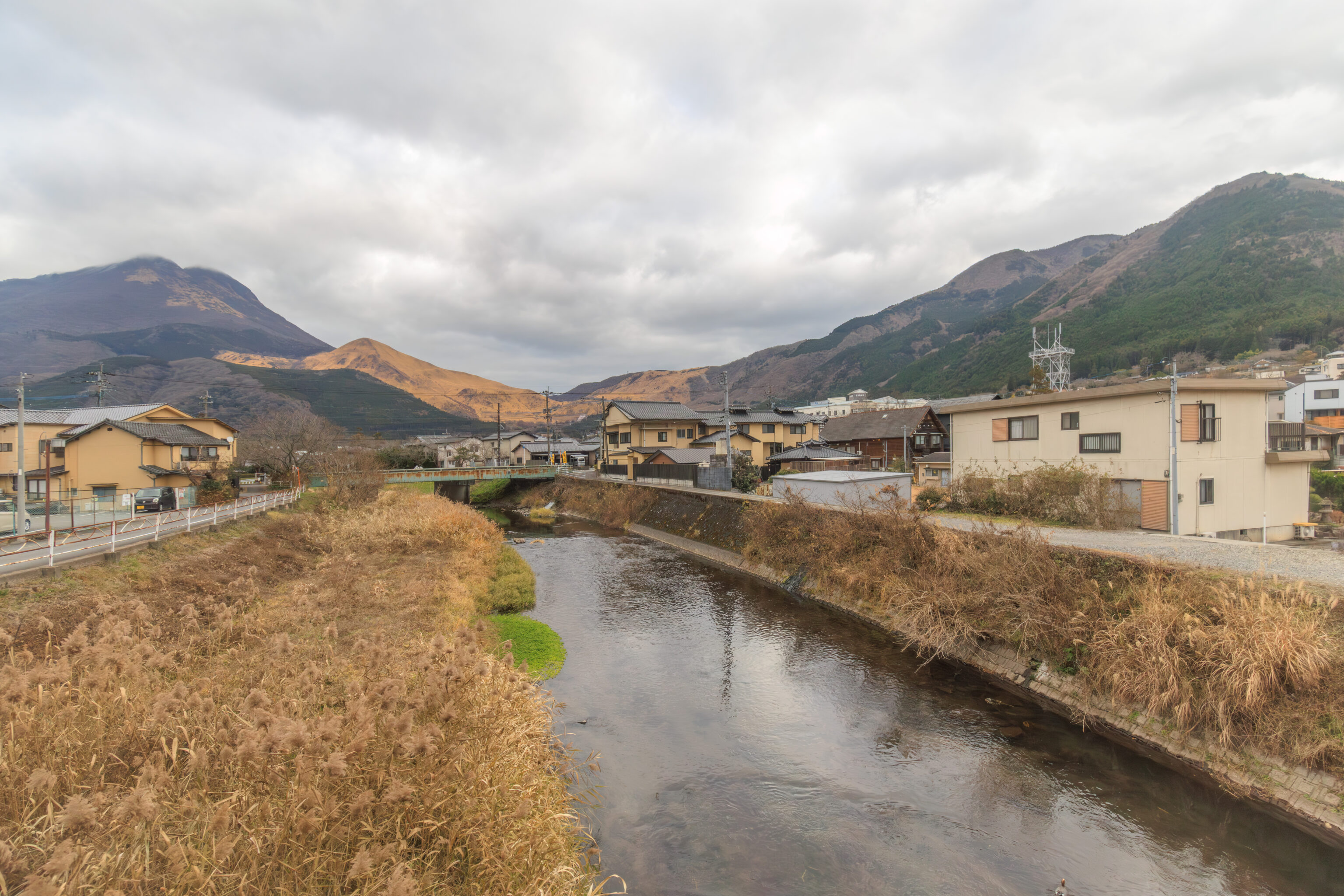
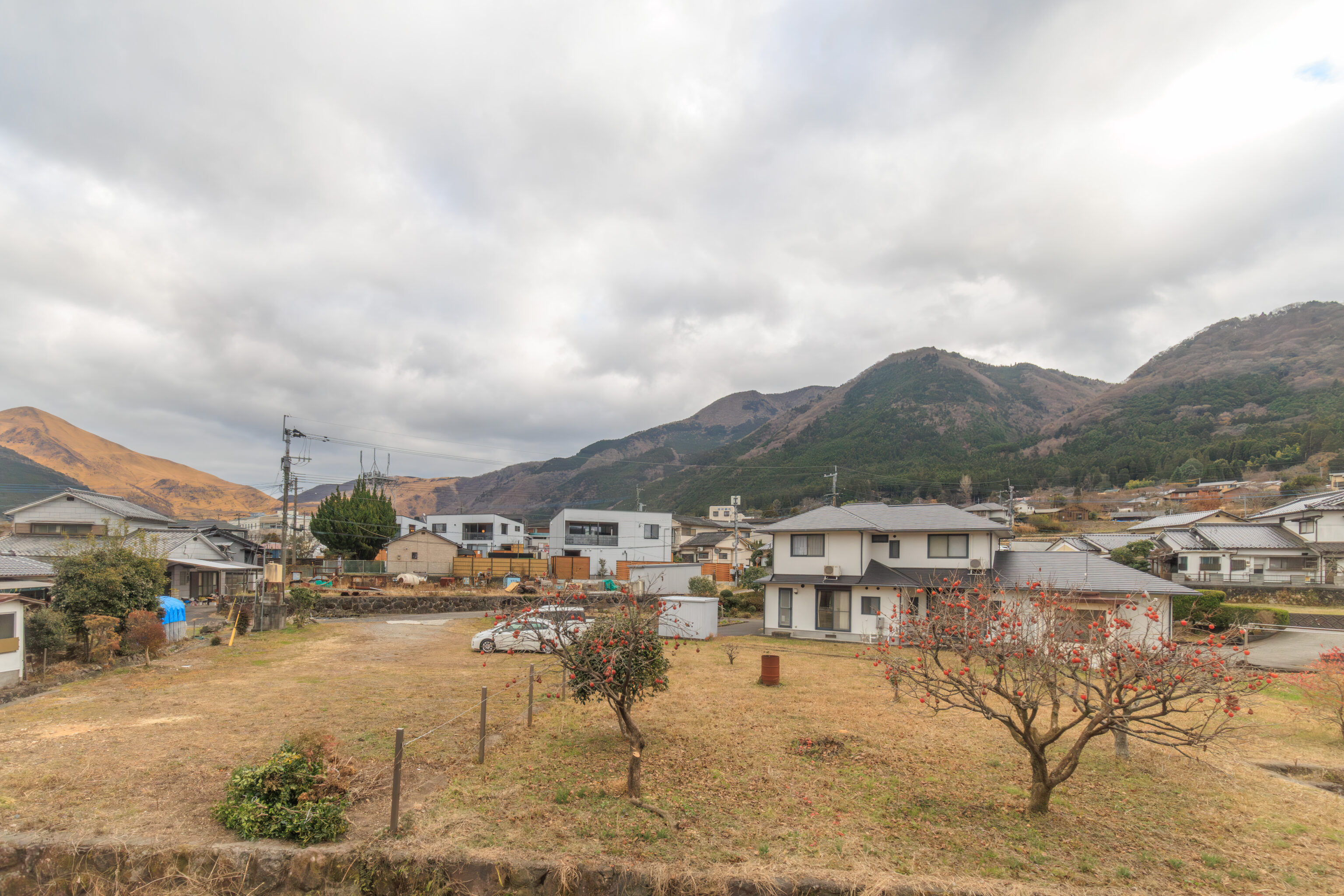
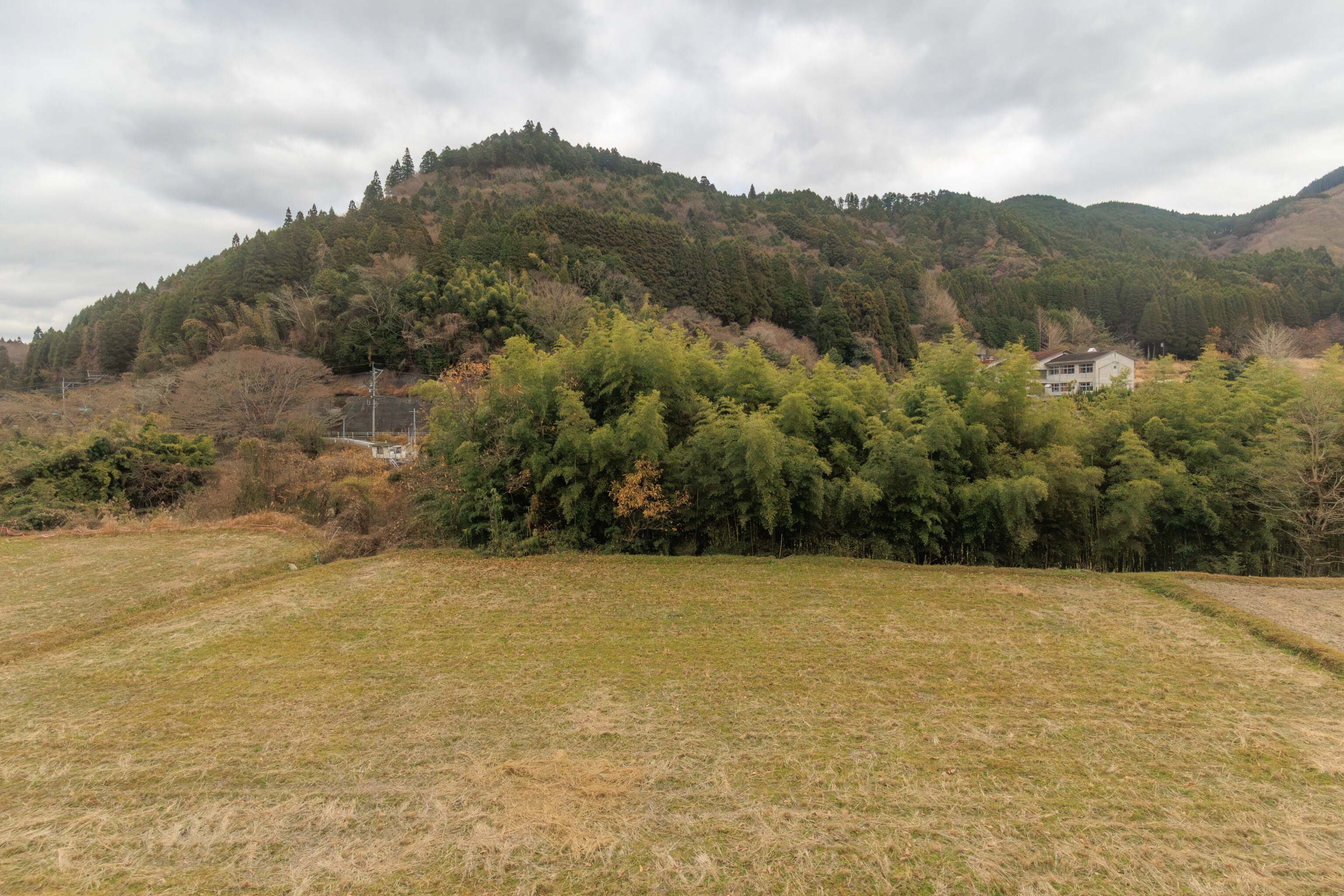
It took around 10 more minutes to get to Yunohira.
Yunohira
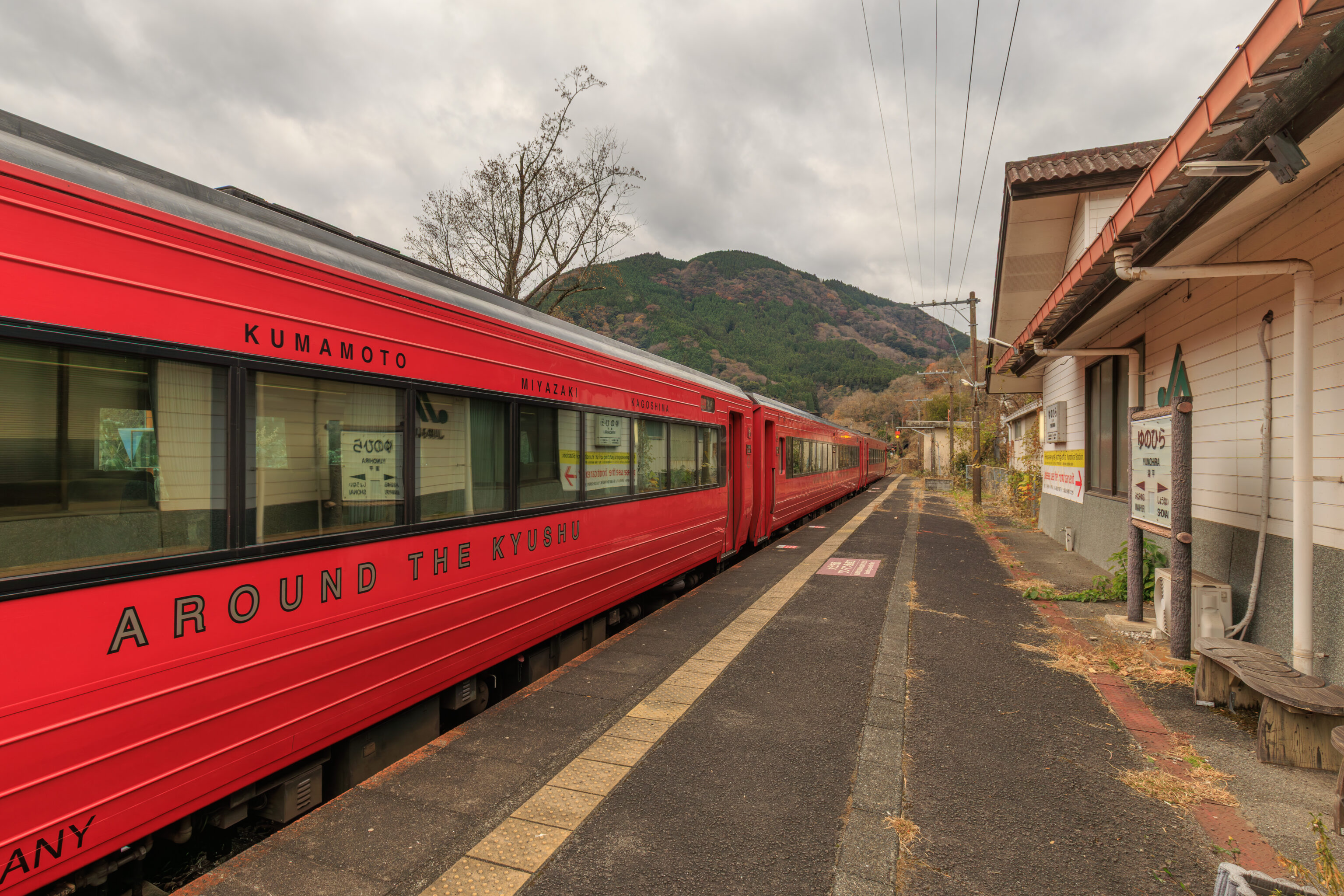
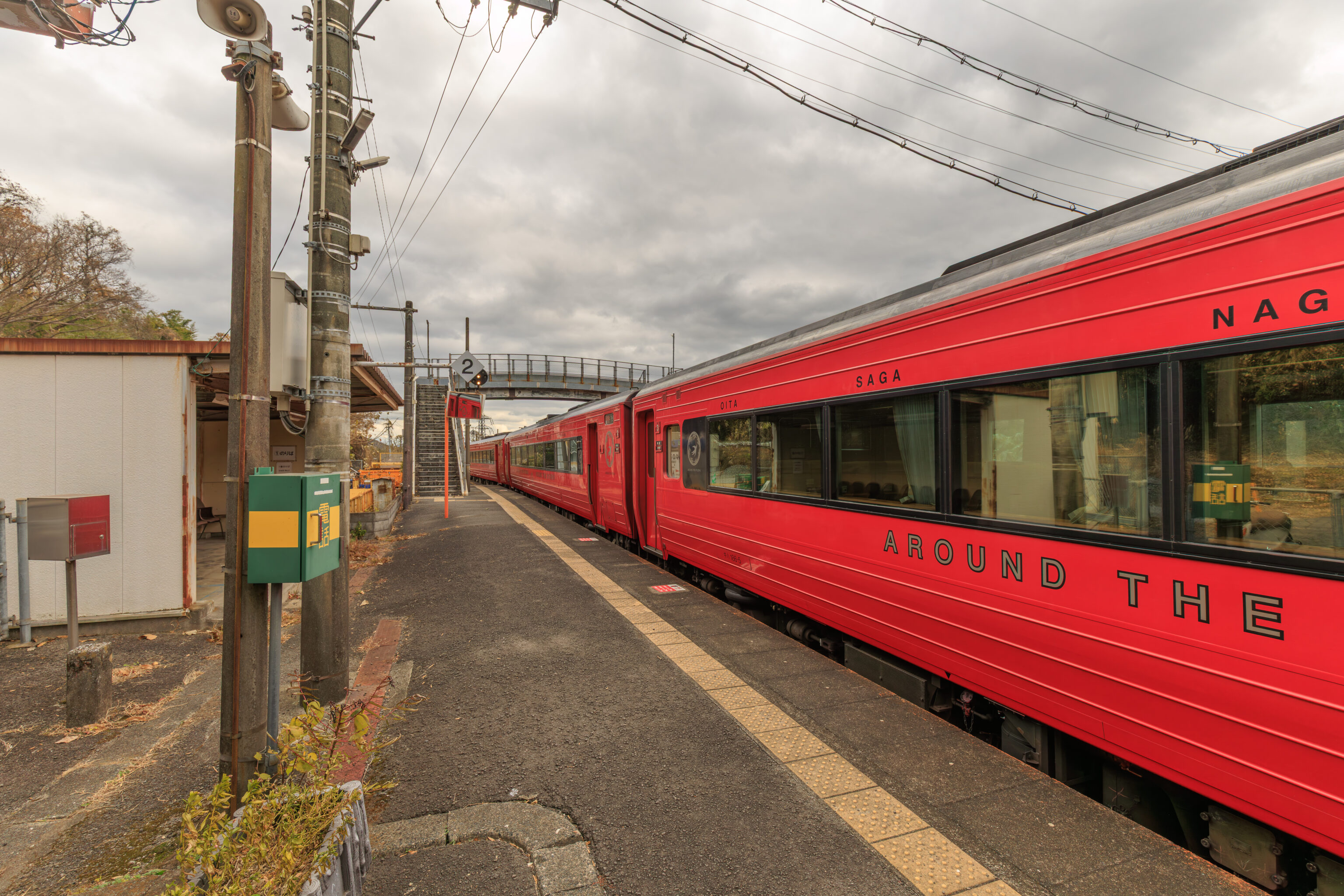
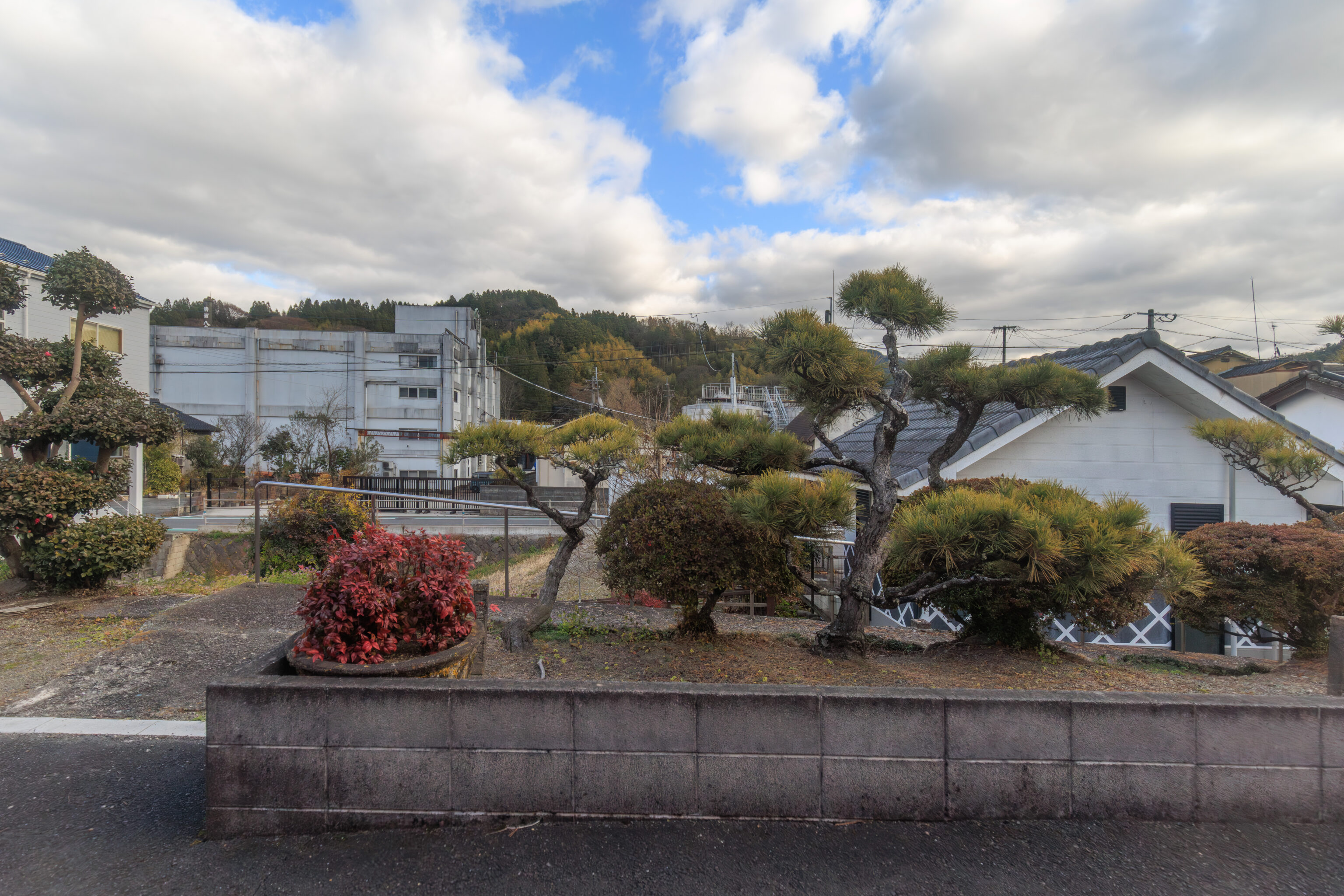
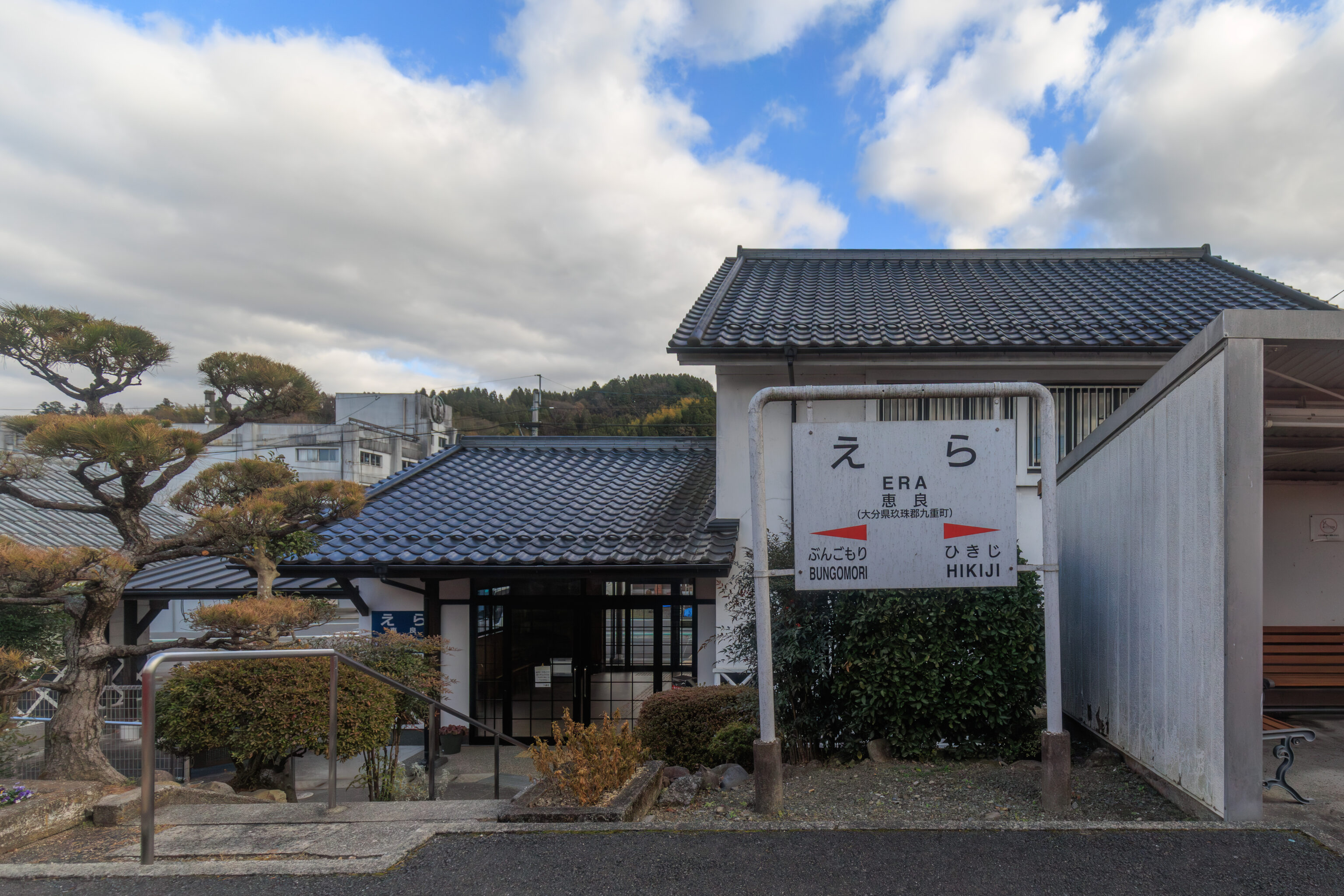
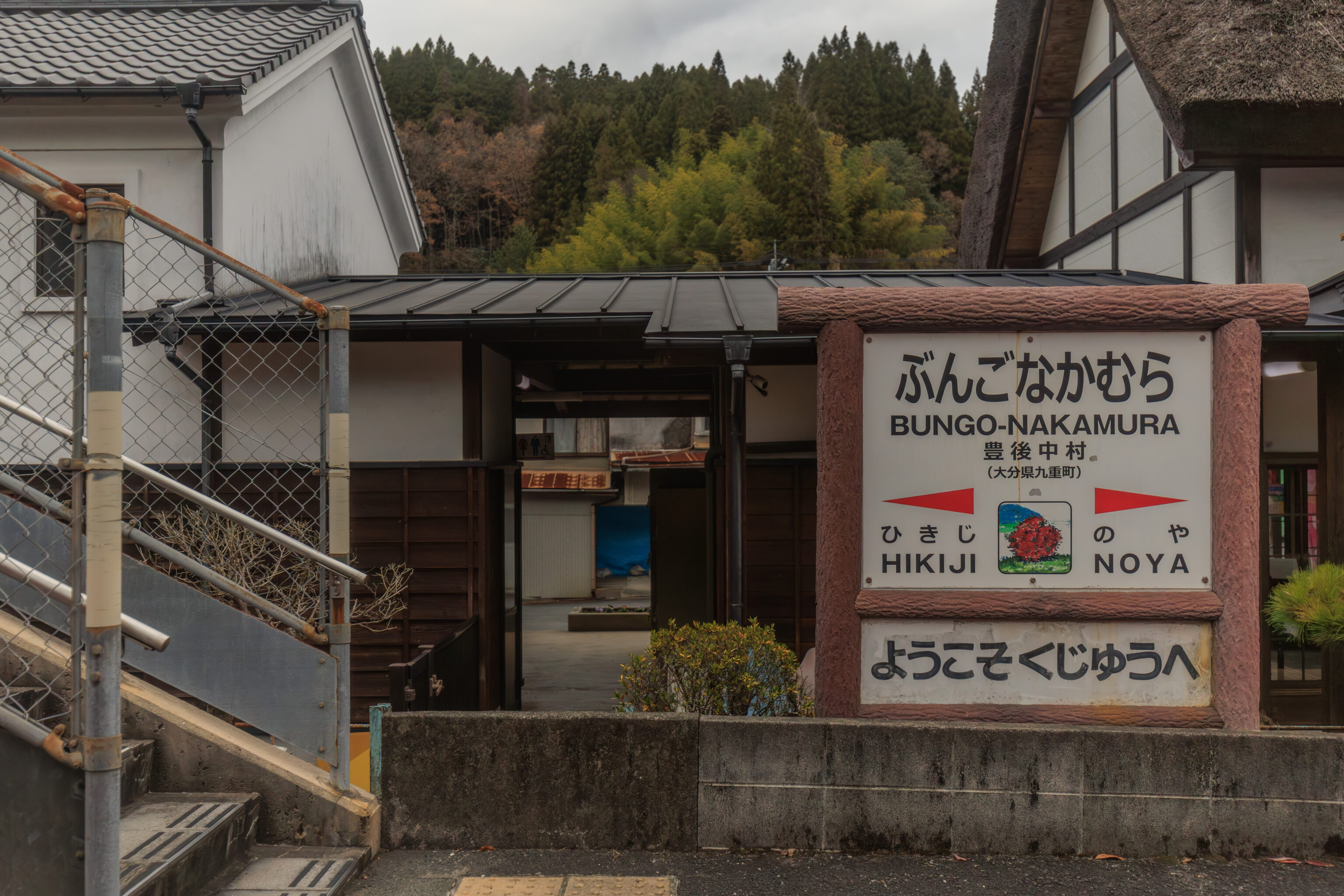
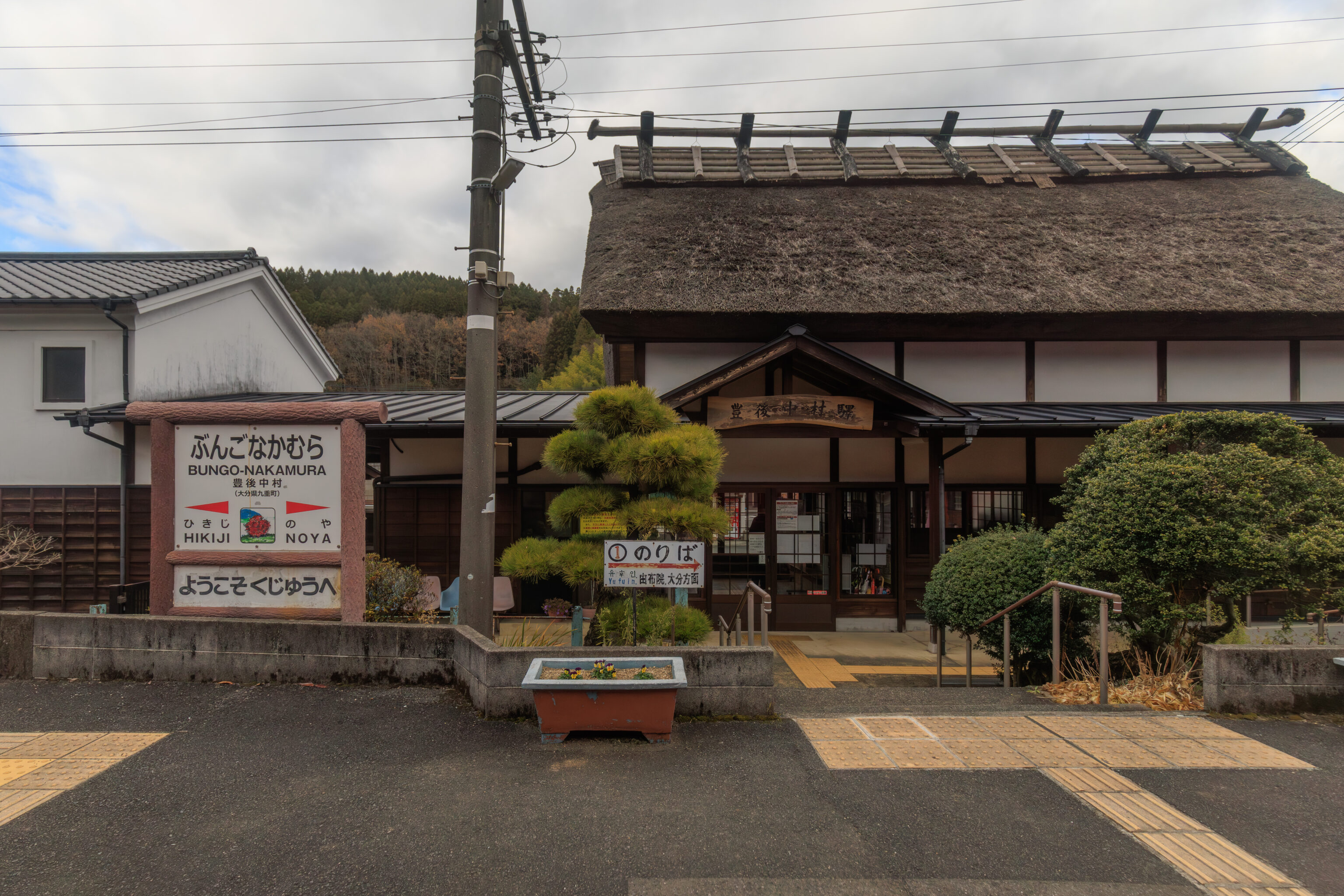
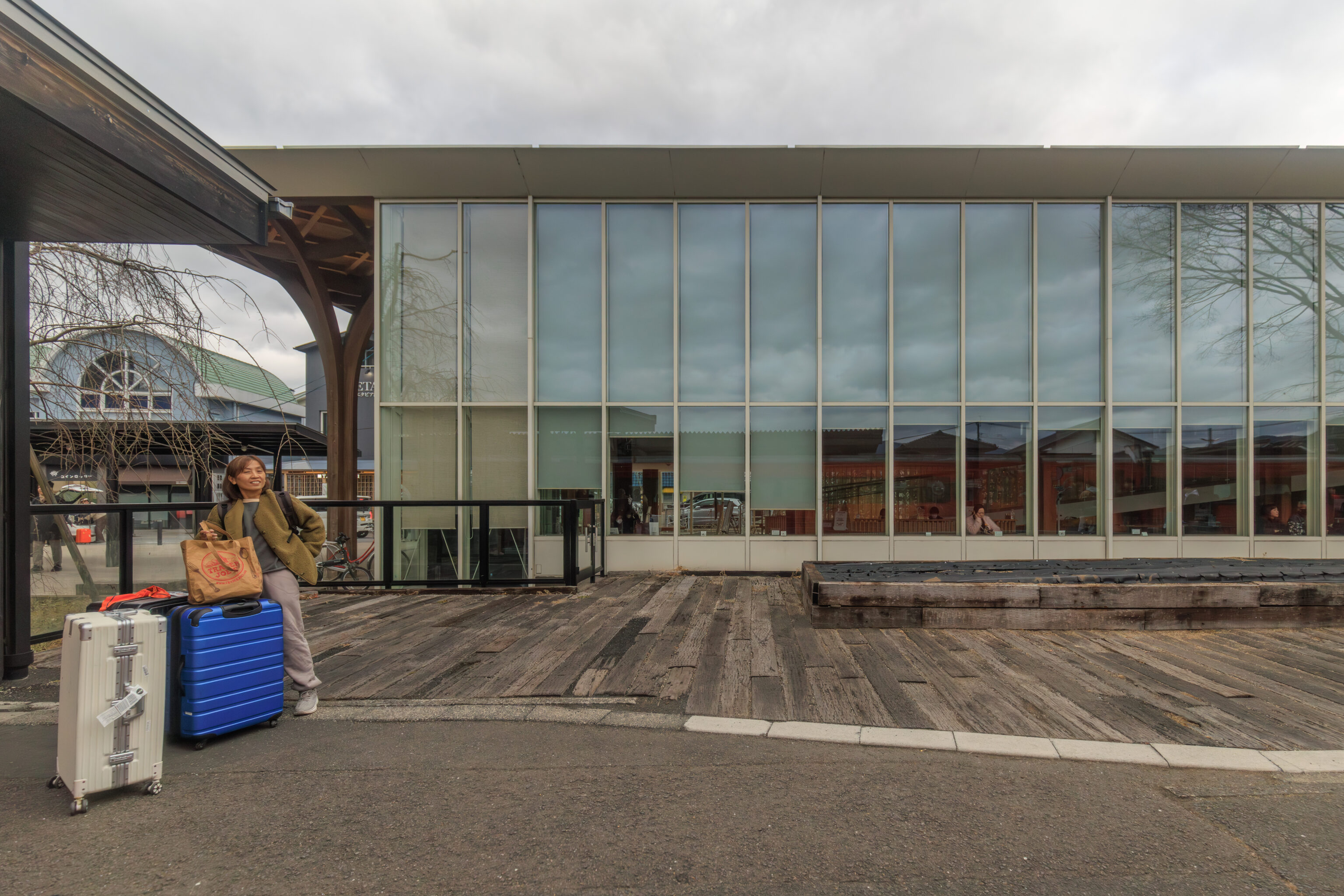
Yunohira’s station is small with a small station building. Shuttle service is provided by ゆのひら上柳屋 Yunohira Kamiyanagiya, the ryokan we are staying at, and was waiting for us when we arrived. We stayed at the station just long enough to snap these two photos before getting into the driver’s minivan!
Deciding where to stay for the next few nights was pretty difficult. We wanted a traditional ryokan experience with private onsen near Yufuin or Beppu. And we didn’t finalize our plans for this part of the trip until early November, just before we left for our trip to Lyon, so that greatly limited our options. The Kamiyanagiya was a great find because it had everything we were looking for and wasn’t overly expensive. So, we have two nights here and two nights in Beppu at what should be a very different establishment.
The actual Yunohira village is about five kilometers away from the train station, a trip that takes 10 minutes or so by car. As the curved road is pretty narrow, trying to walk it does not seem like it would be a good idea.
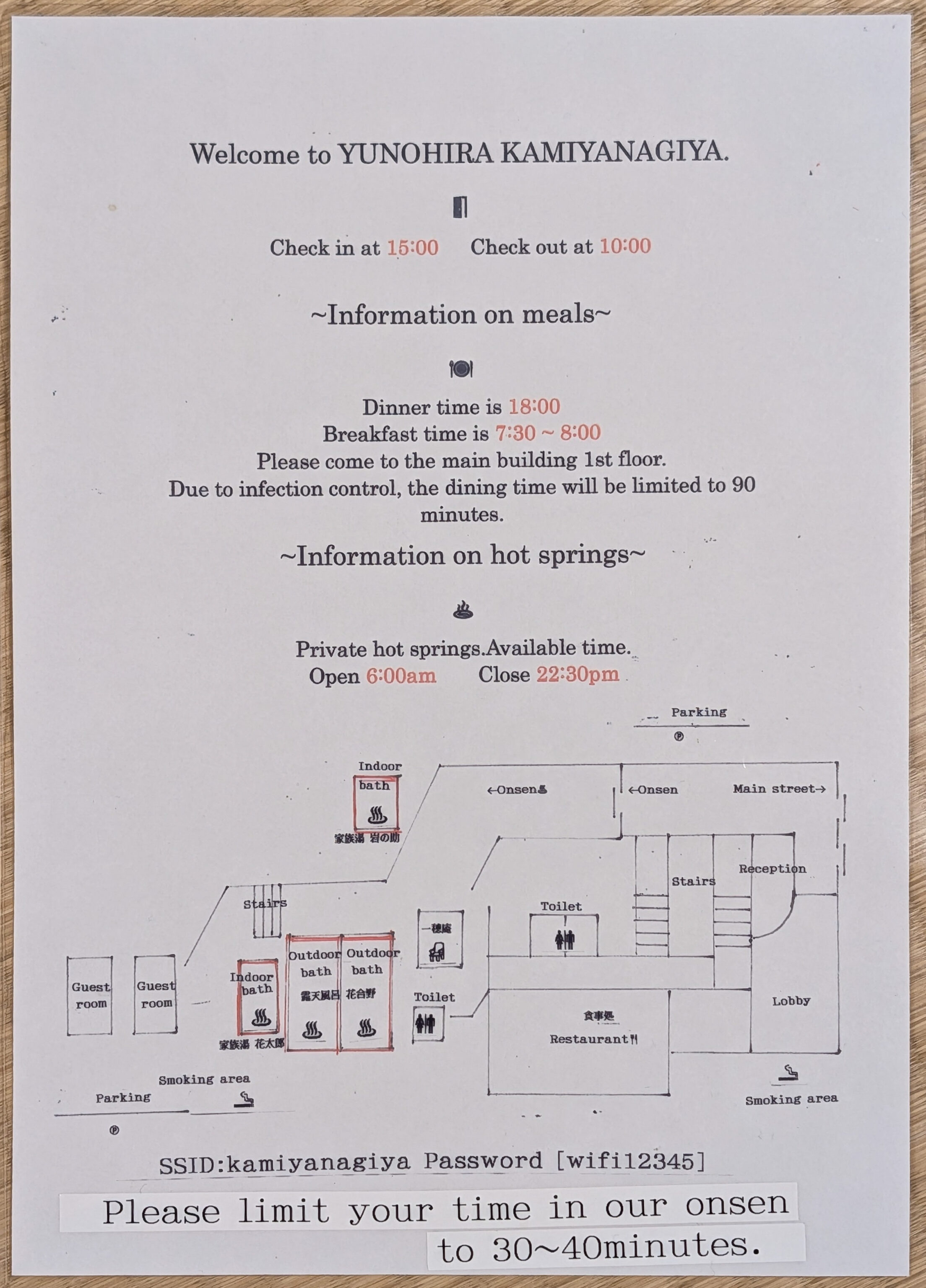
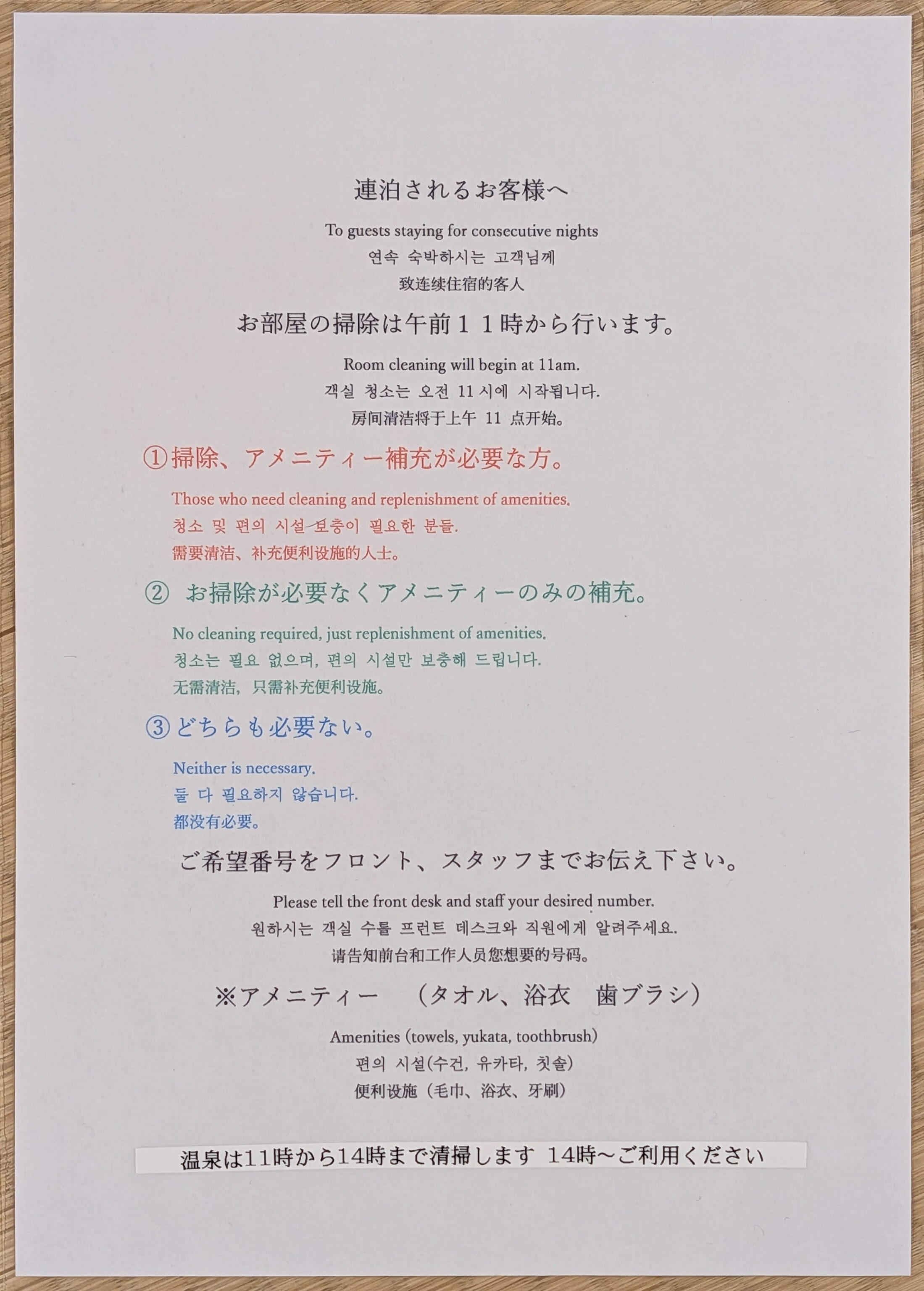
After arriving, we were welcomed by the 女将 okami. It took awhile to go through the check-in formalities and to receive information about the property. Kamiyanagiya has just seven guest rooms, two in the main building and an additional two in a separate building at the rear of the property. There are also four private onsen rooms which can be used first come first serve from 6am until 10:30pm.
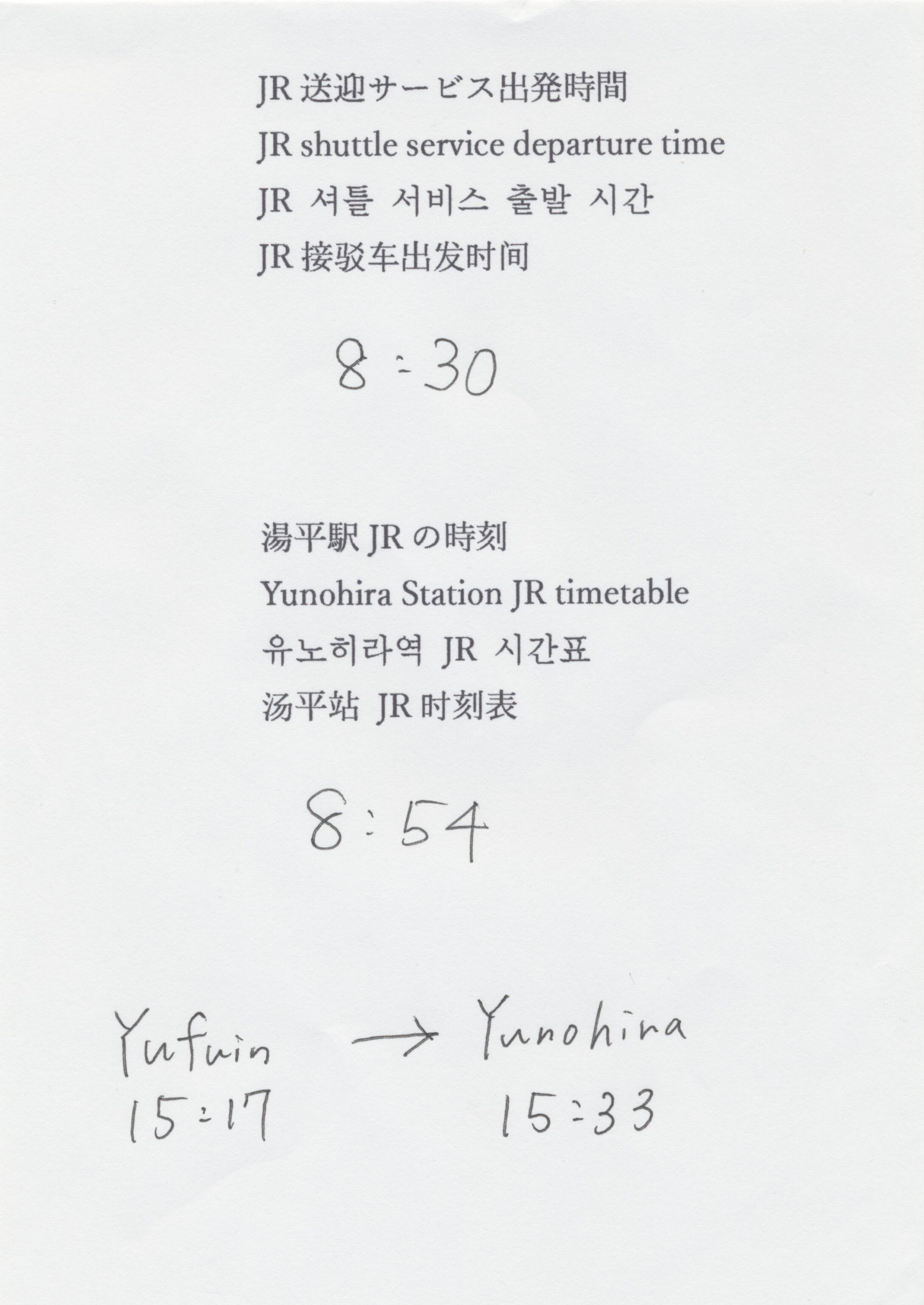
We arranged for complimentary transportation tomorrow to and from the Yunohira Station so that we could visit Yufuin.
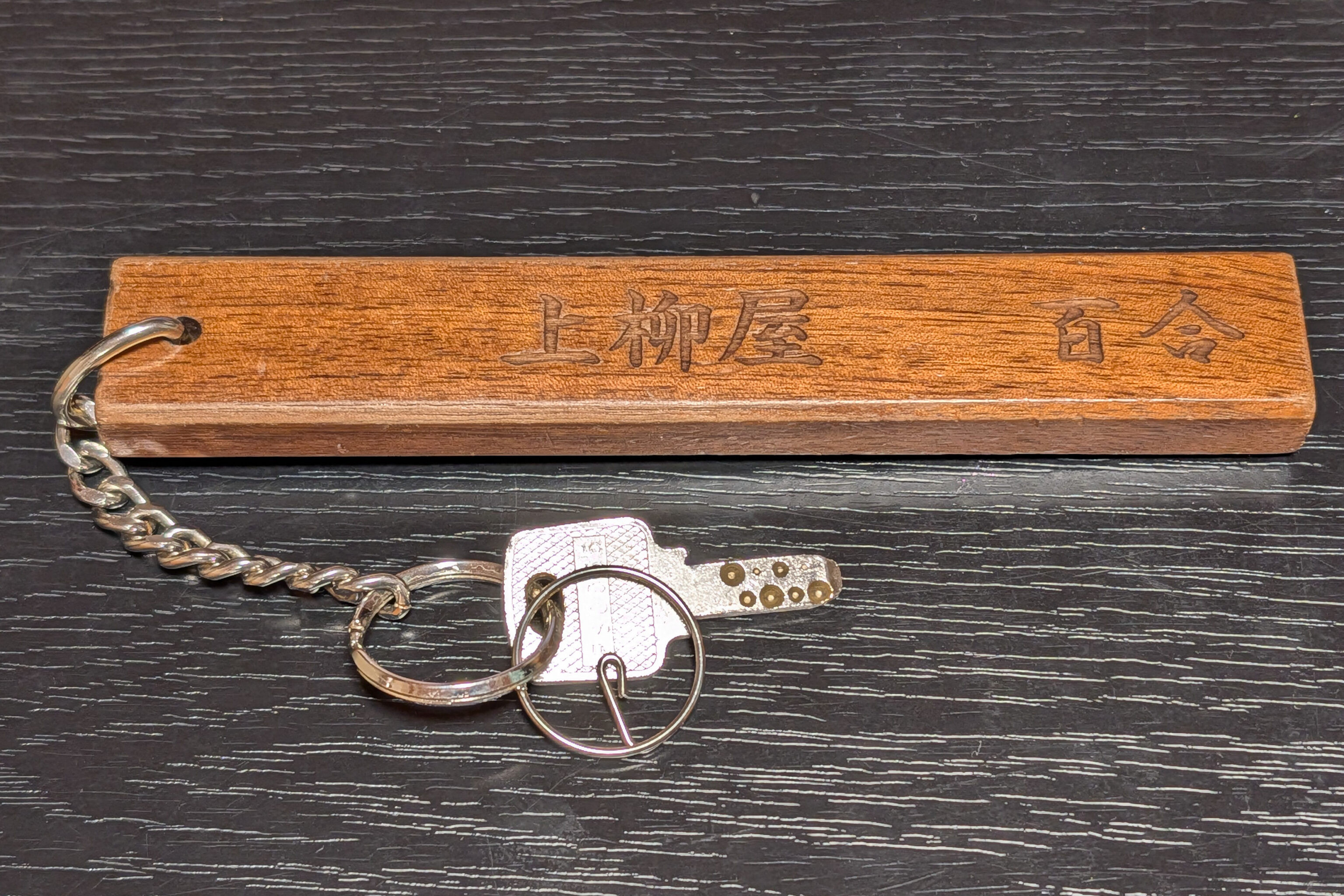
Our room was the 百合 yuri (lily).
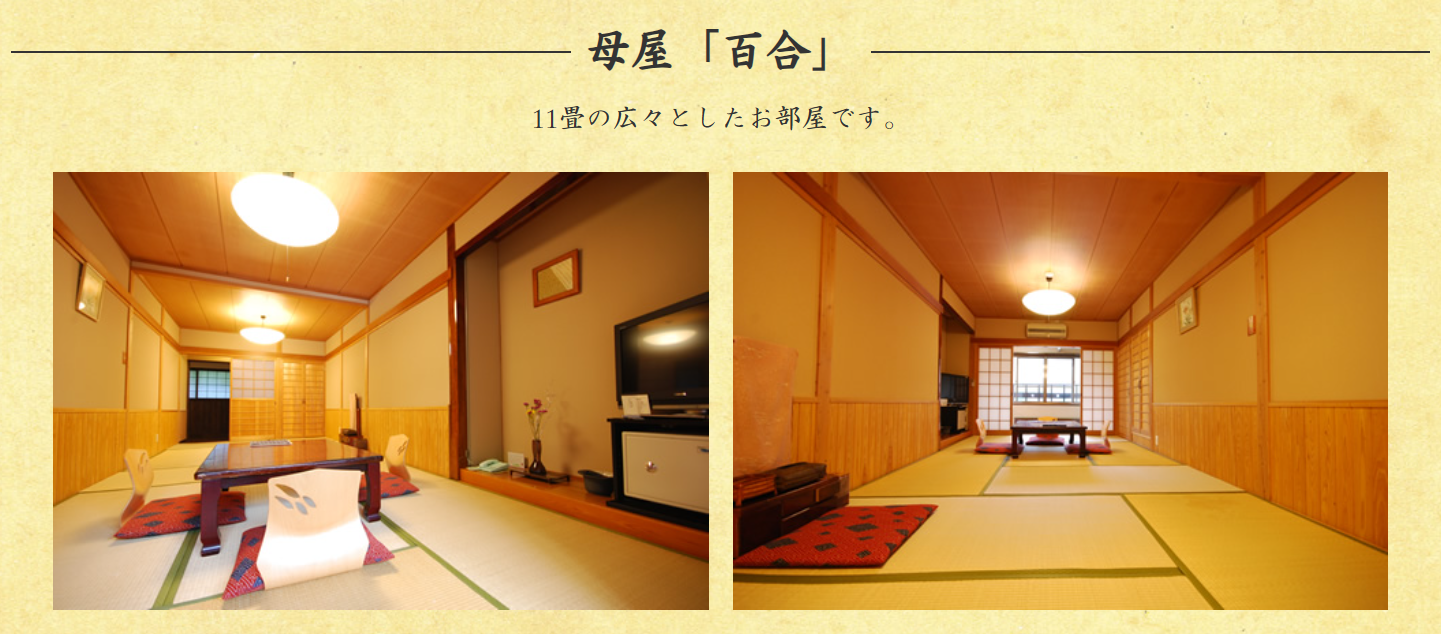
The room is described as being 11 tatami mats in size.
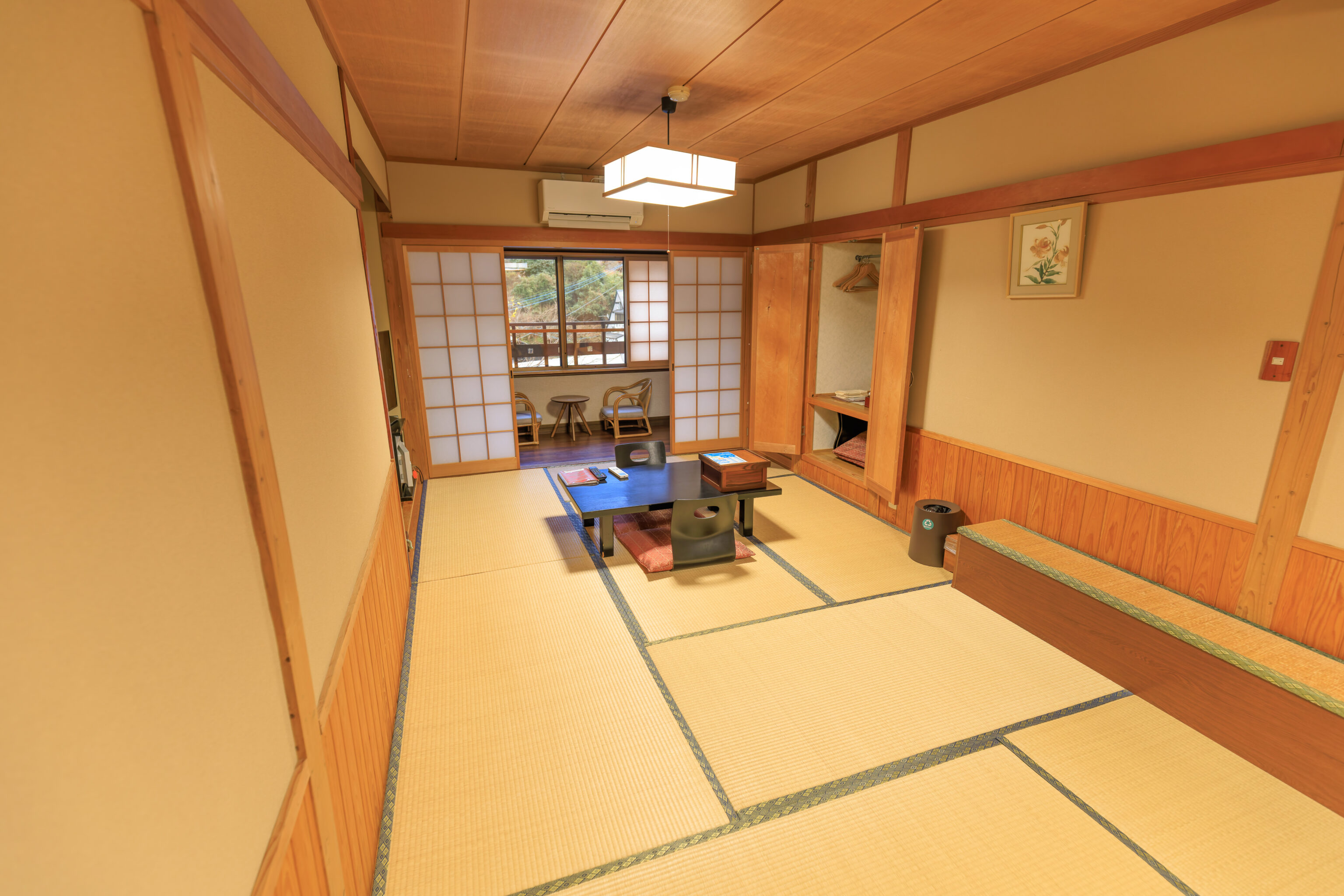
Our room was rectangular with a table set up at the far end.
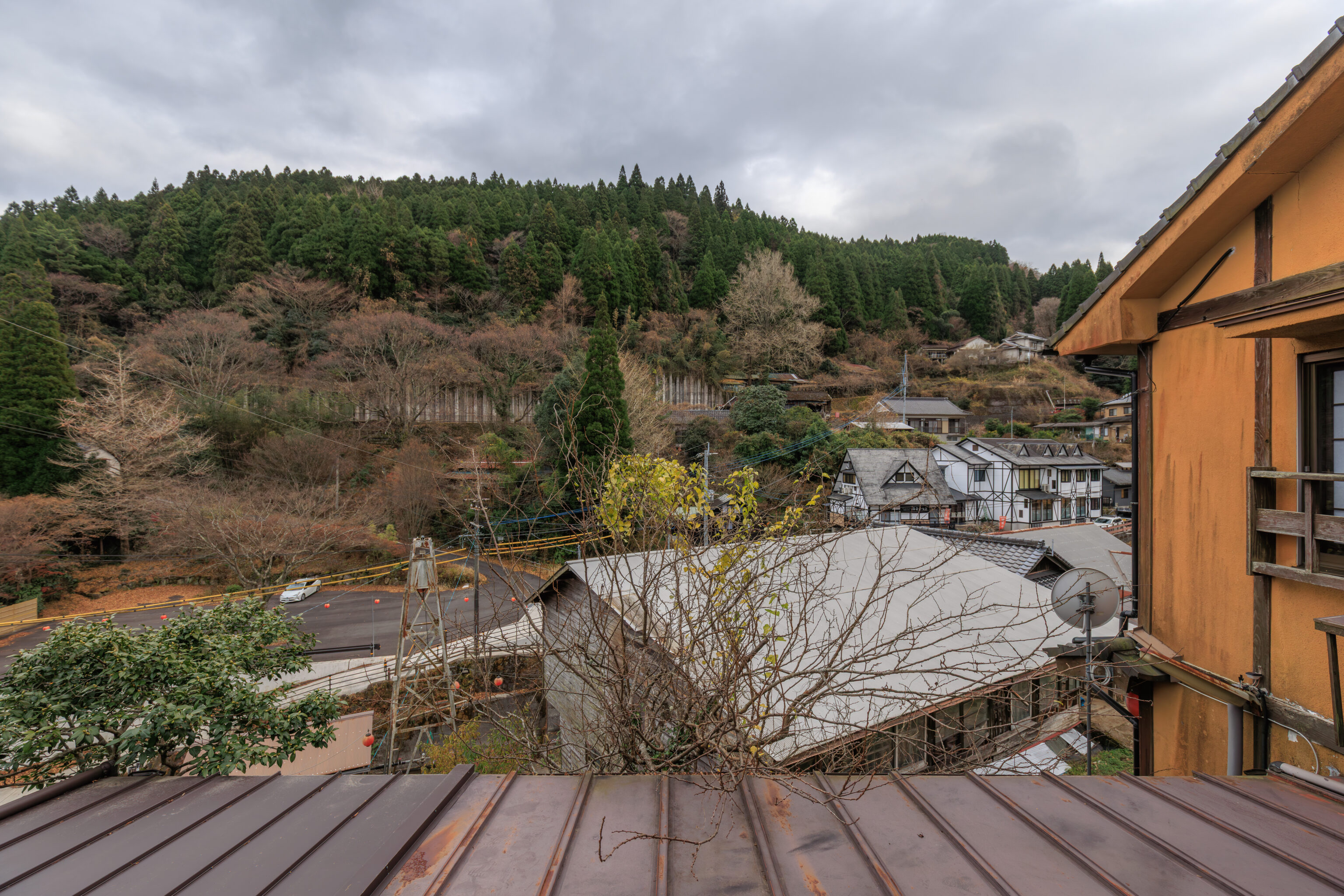
The window looks out to the east. It technically overlooks the 花合野川 Kagonogawa, the river which runs through Yunohira. Unfortunately, the view of the river is blocked by the buildings below us.
The ryokan’s name, Kamiyanagiya, translates to something like Upper Willow House. It is in the upper part of Yunohira, so perhaps that explains a bit of the name.
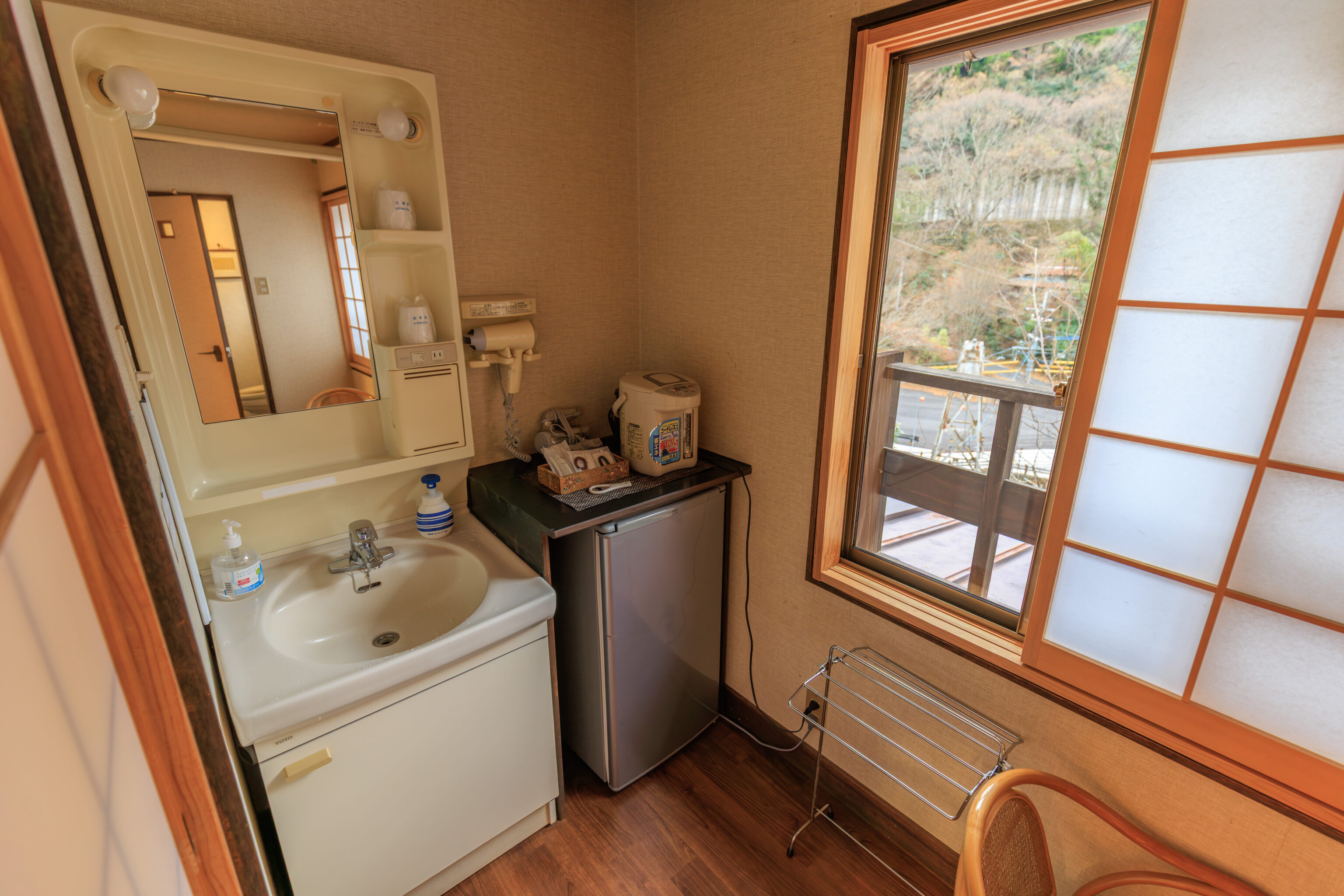
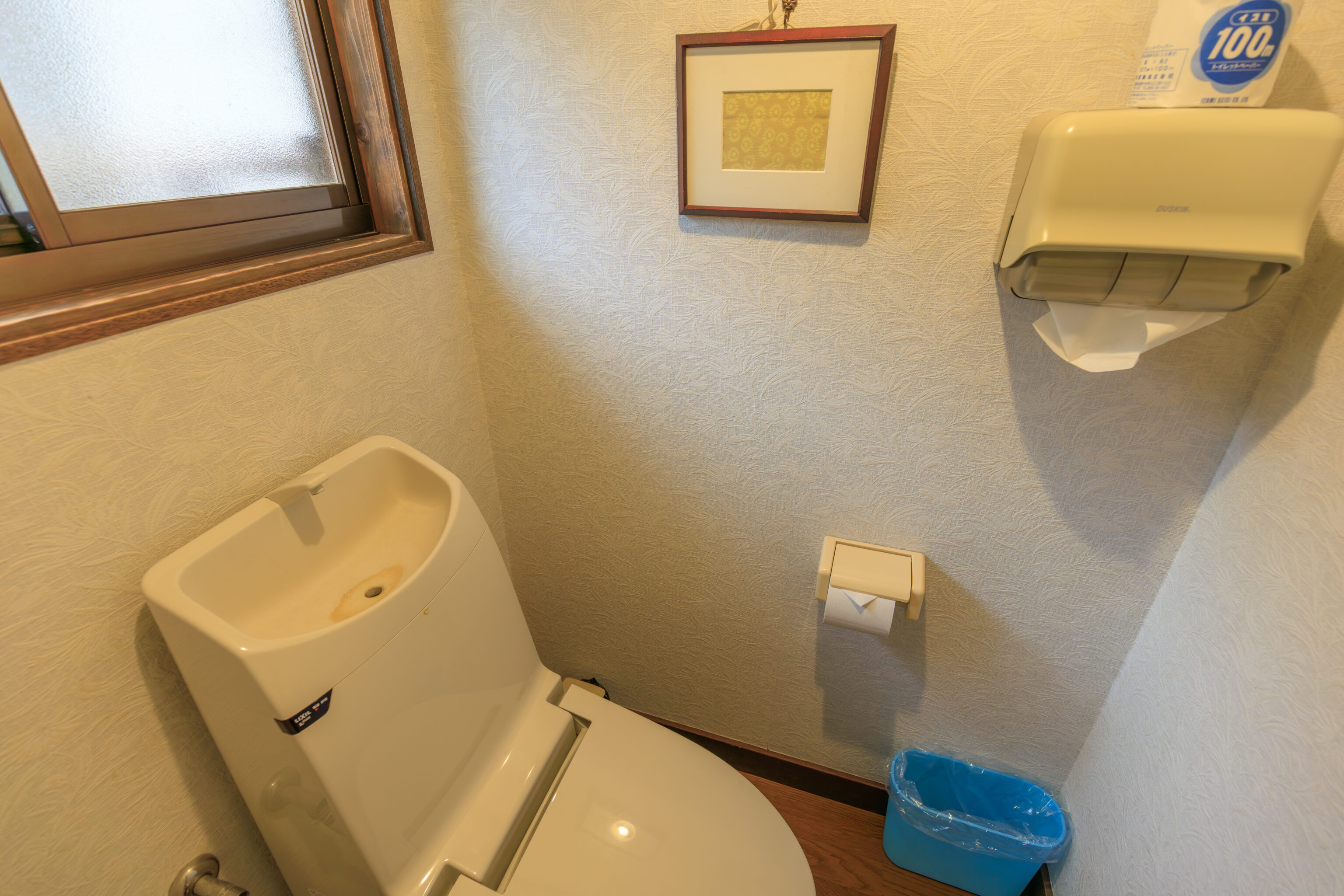
The bathroom was pretty basic with a small sink and toilet.
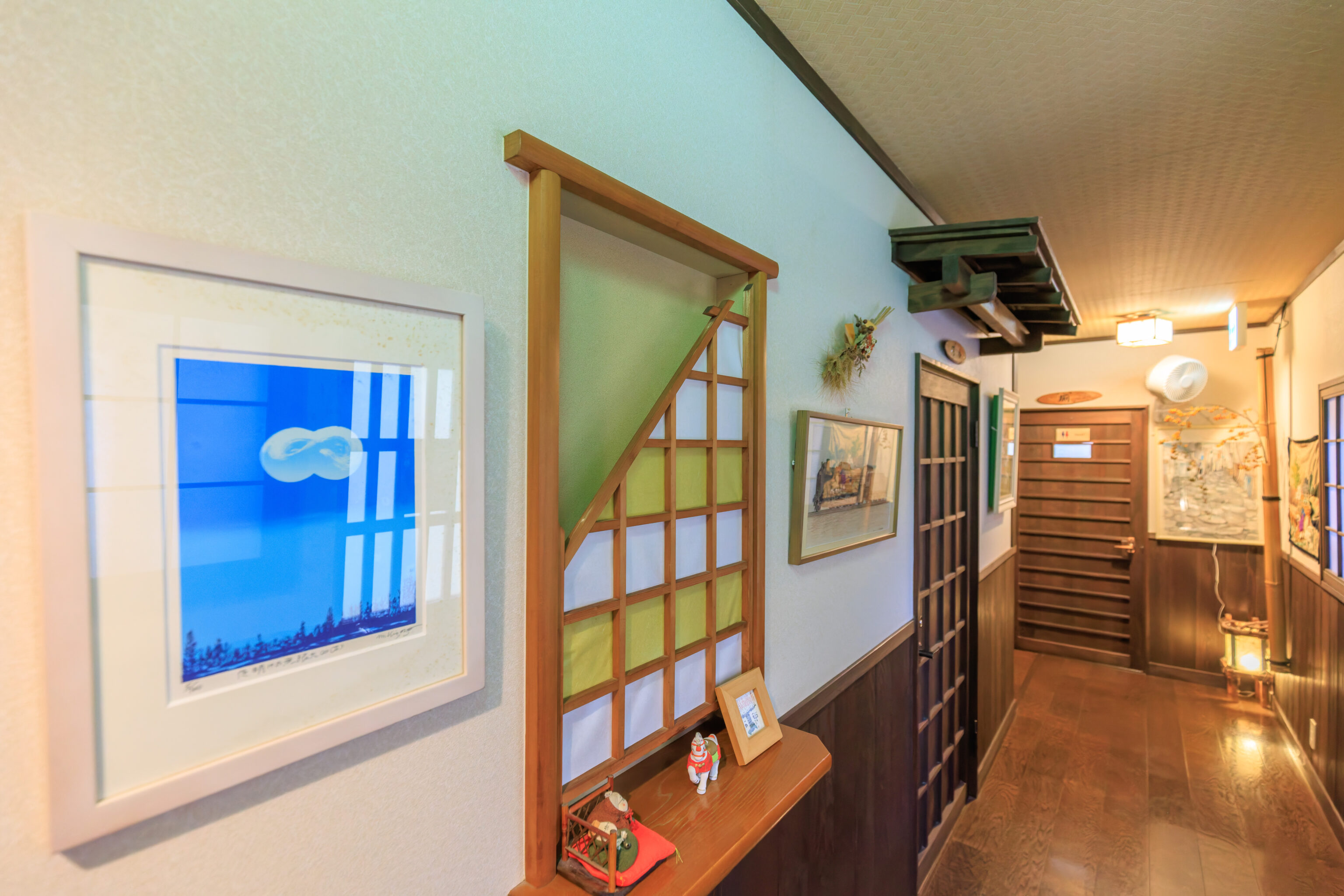
We decided to walk through Yunohira a bit as it was already 3:40pm with sunset at 5:07pm. There were some decorations in the 2nd floor hallway where all the rooms in the main building are located. The entrance to our room is the first one on the left.
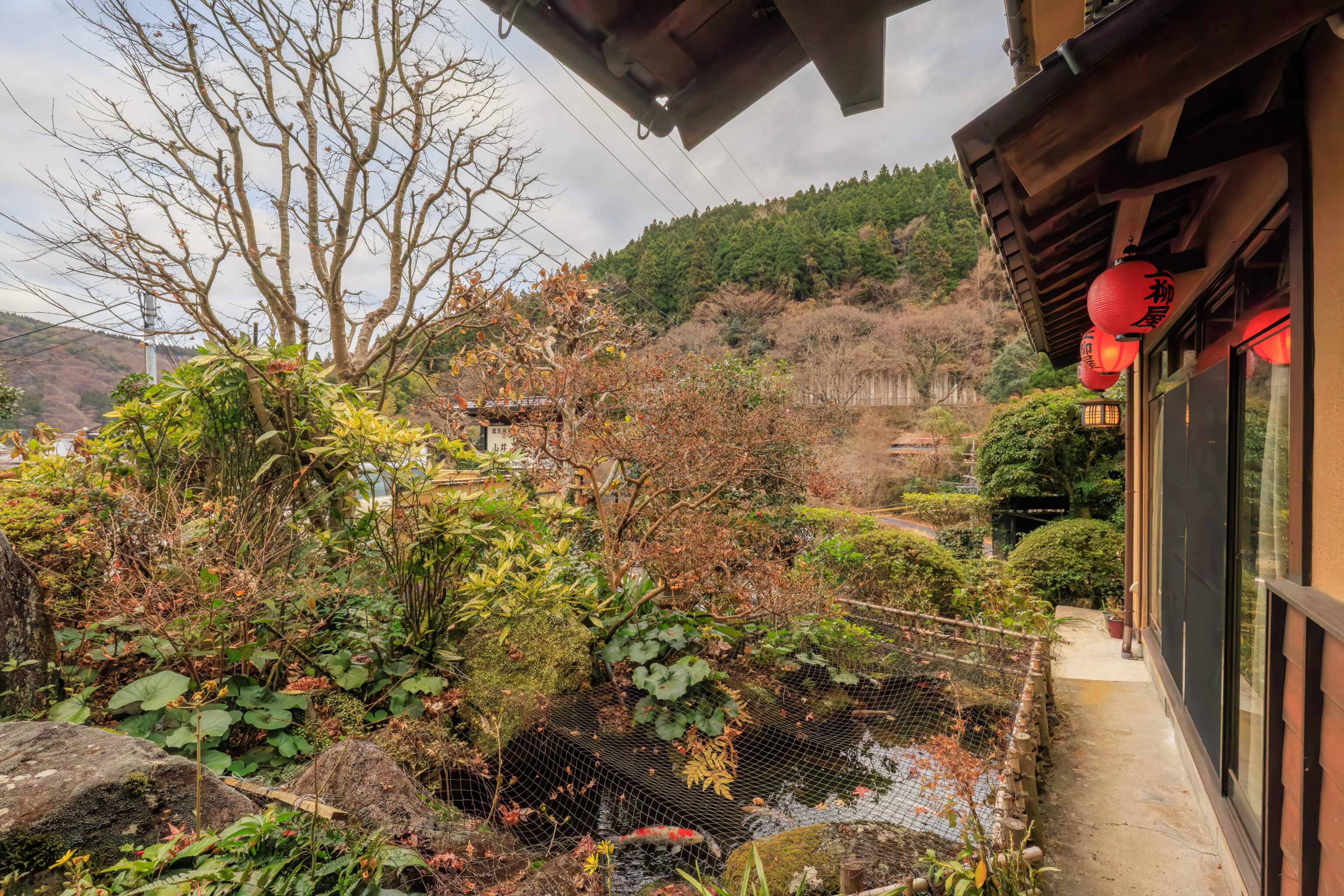
We went outside via the ryokan’s front entrance, which we hadn’t seen yet as we arrived from the parking area in the back.
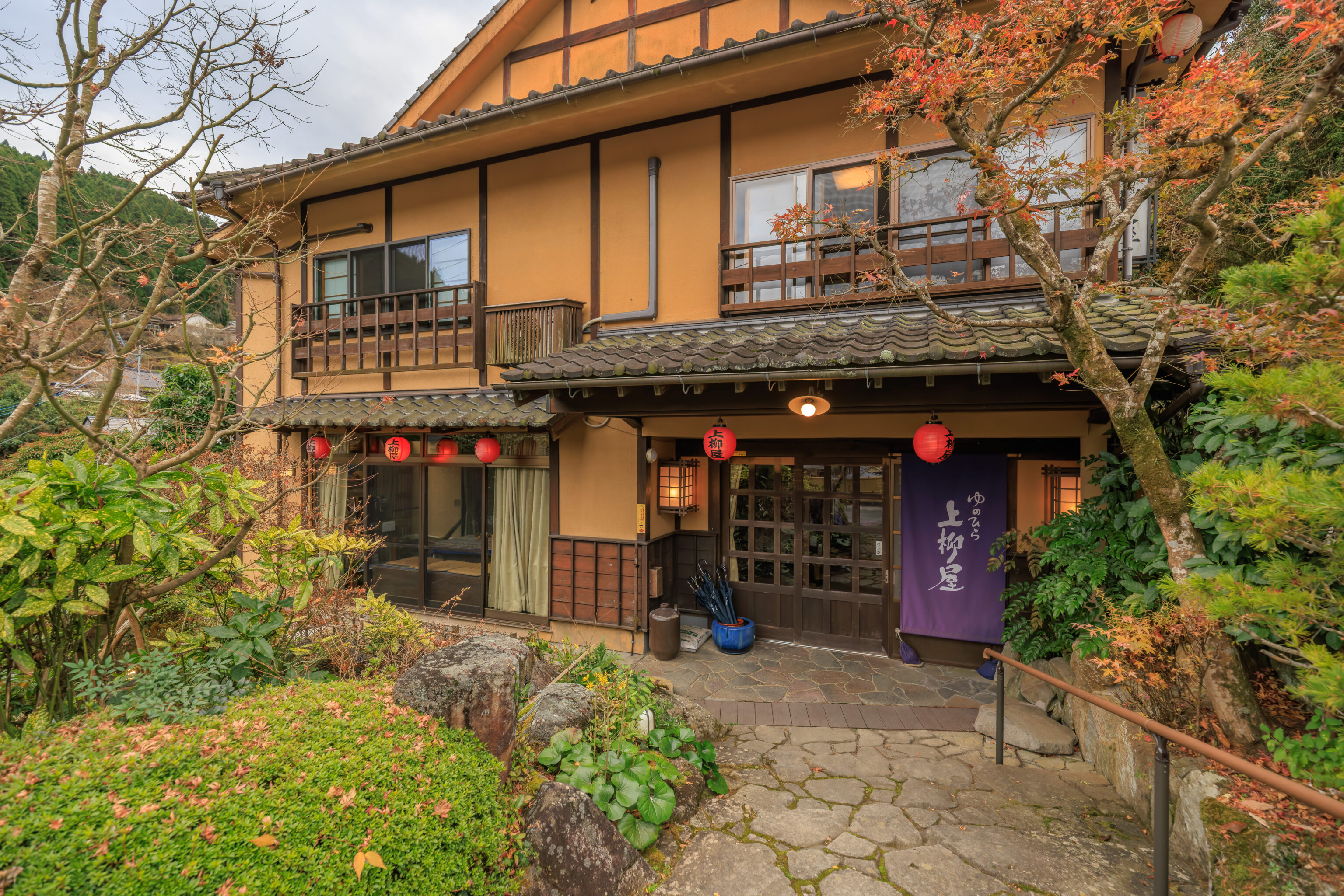
The Kamiyanagiya, as seen from in front of the building.
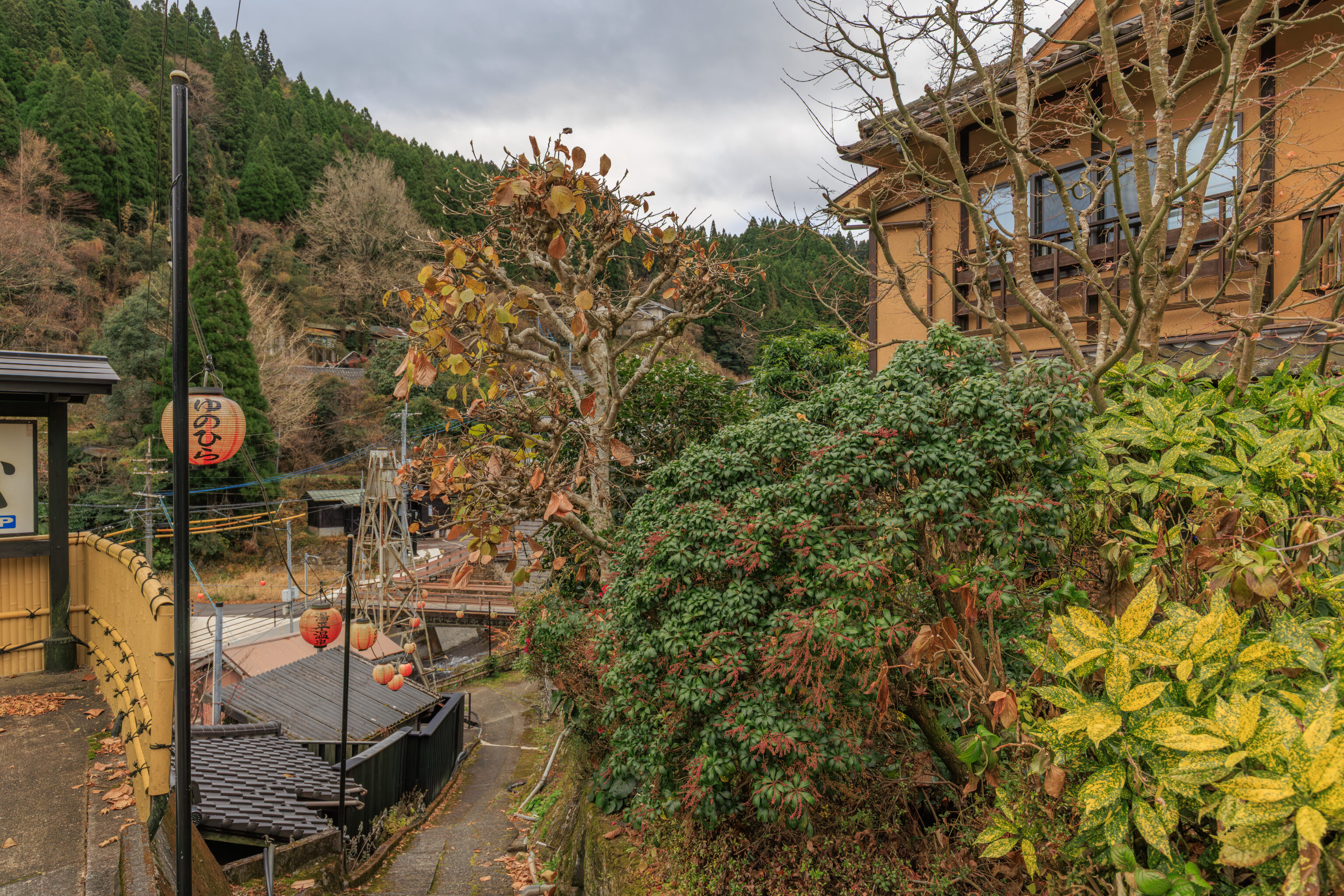
The view from the front of the ryokan looking roughly to the southeast.
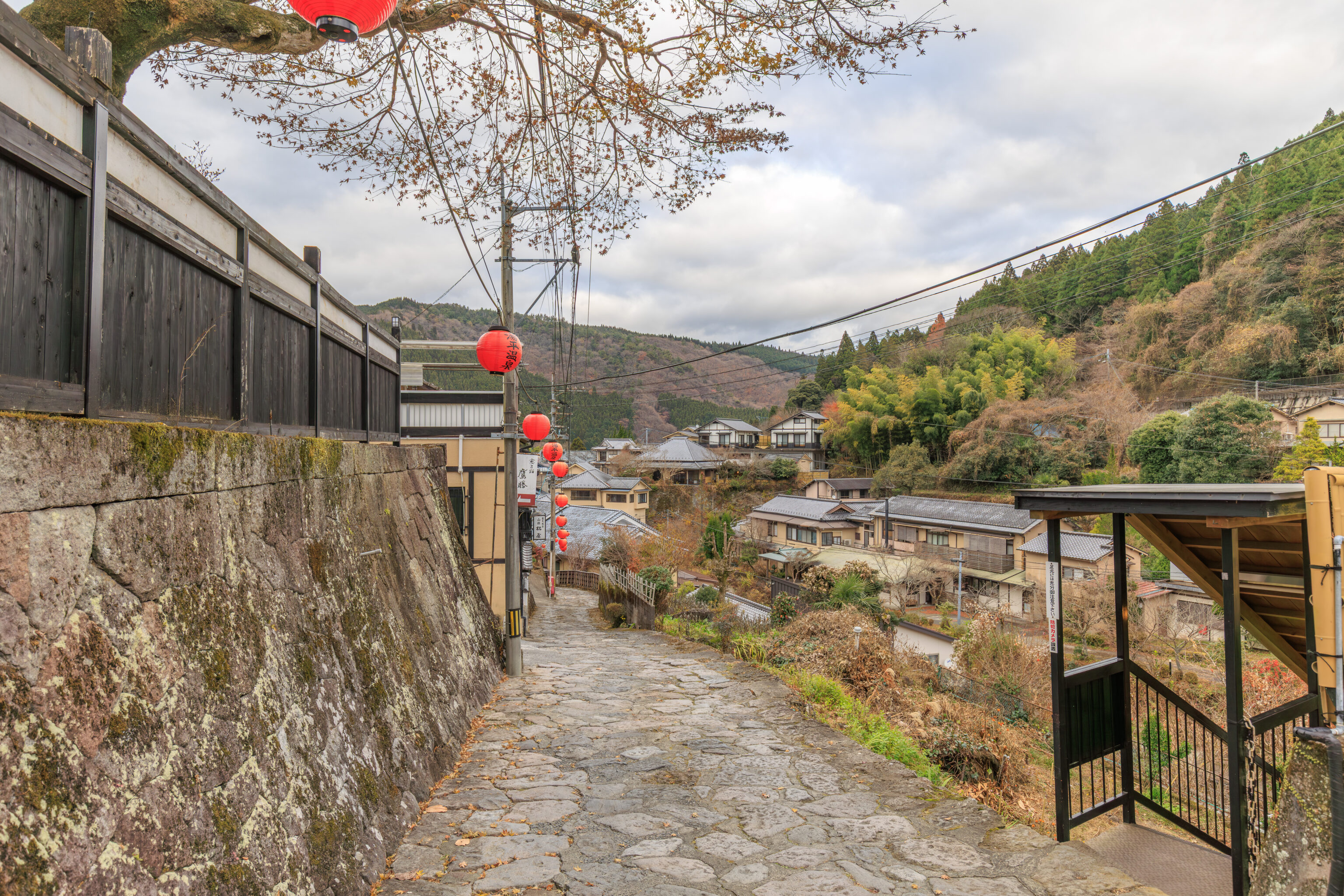
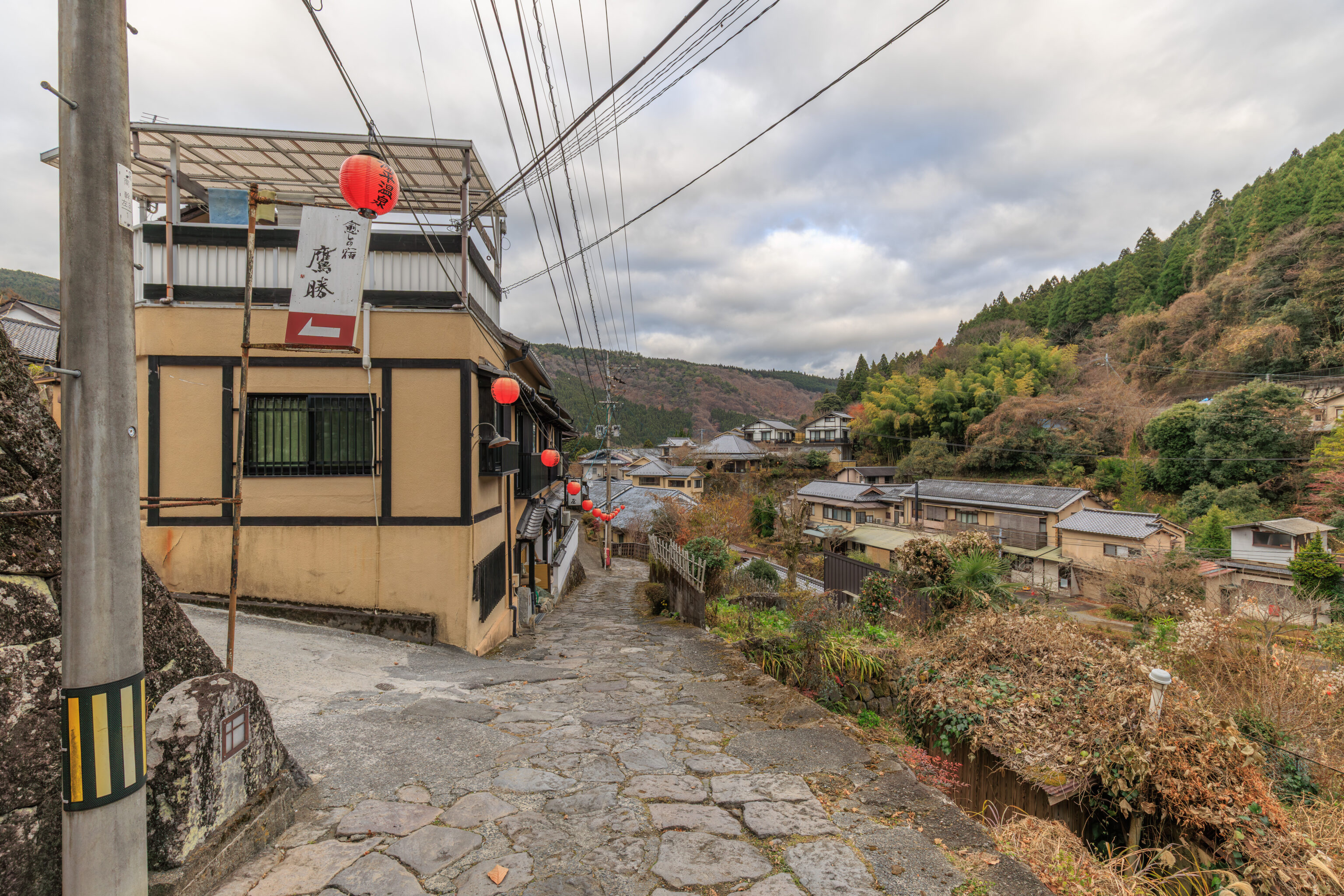
Yunohira is situated in a valley with the Kagonogawa at the bottom. The river generally flows south to north here and the town is aligned in this way as well. There is basically one small road which runs through Yunohira, which our ryokan is on, a larger road that runs along the edges of the village. Unlike the US, where all public roads are named, its common in Japan for local roads to not have a name. So while we know that the larger road is named 湯平温泉線 Yunohira Onsen Line and is Oita Prefectural Route 537, the local roads in Yunohira are nameless. We started to walk downhill to the north along the nameless village road, which is just wide enough to fit one car.
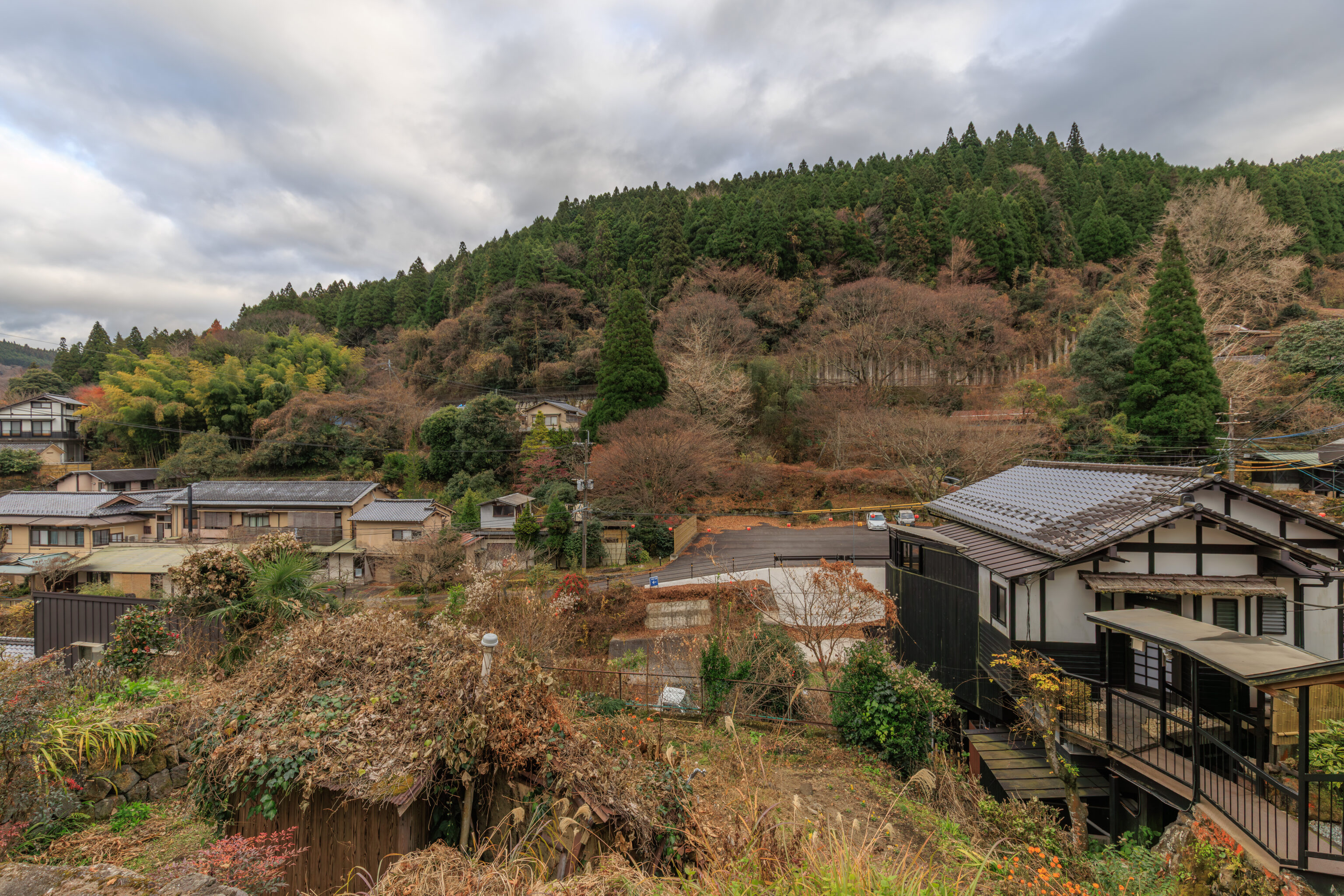
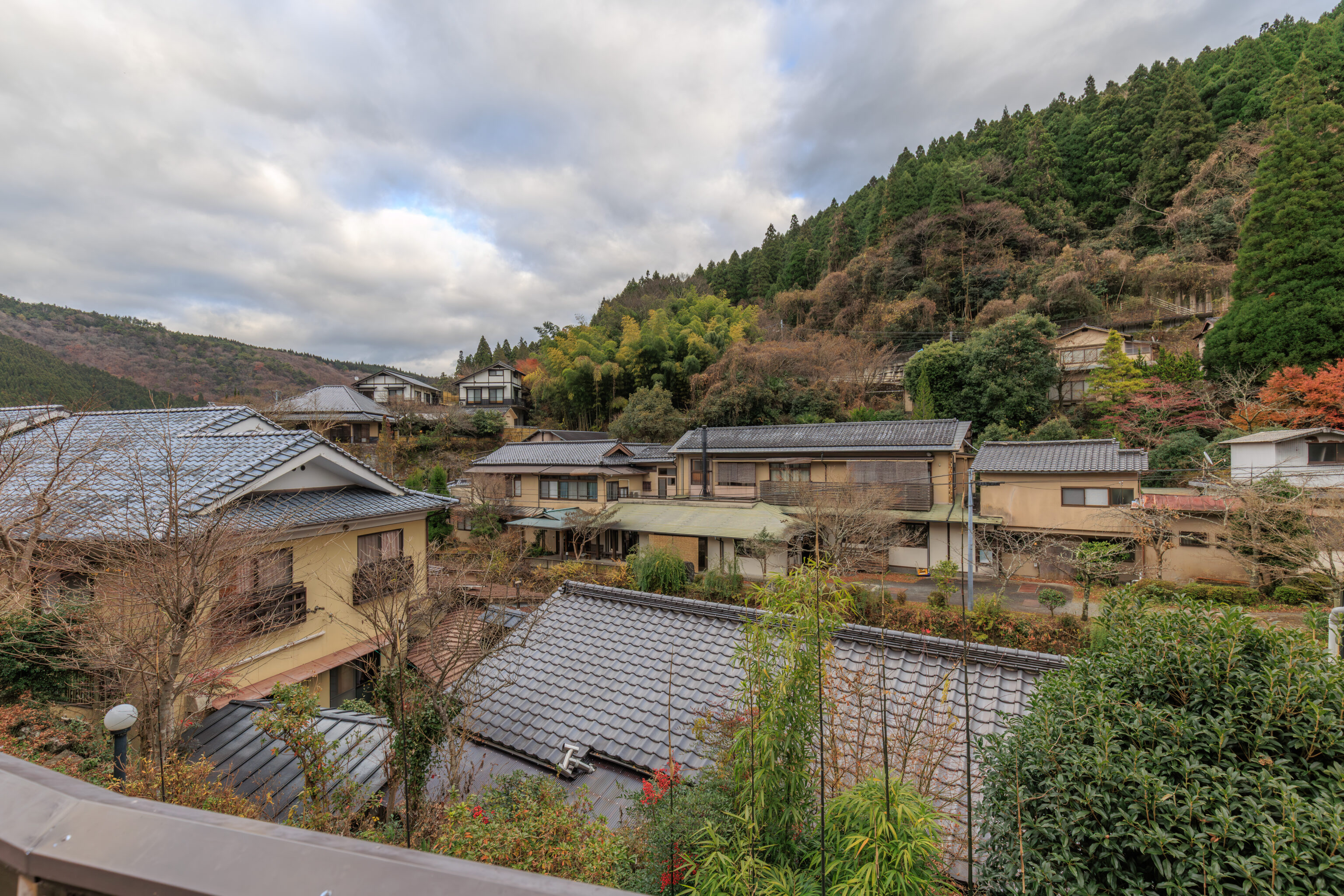
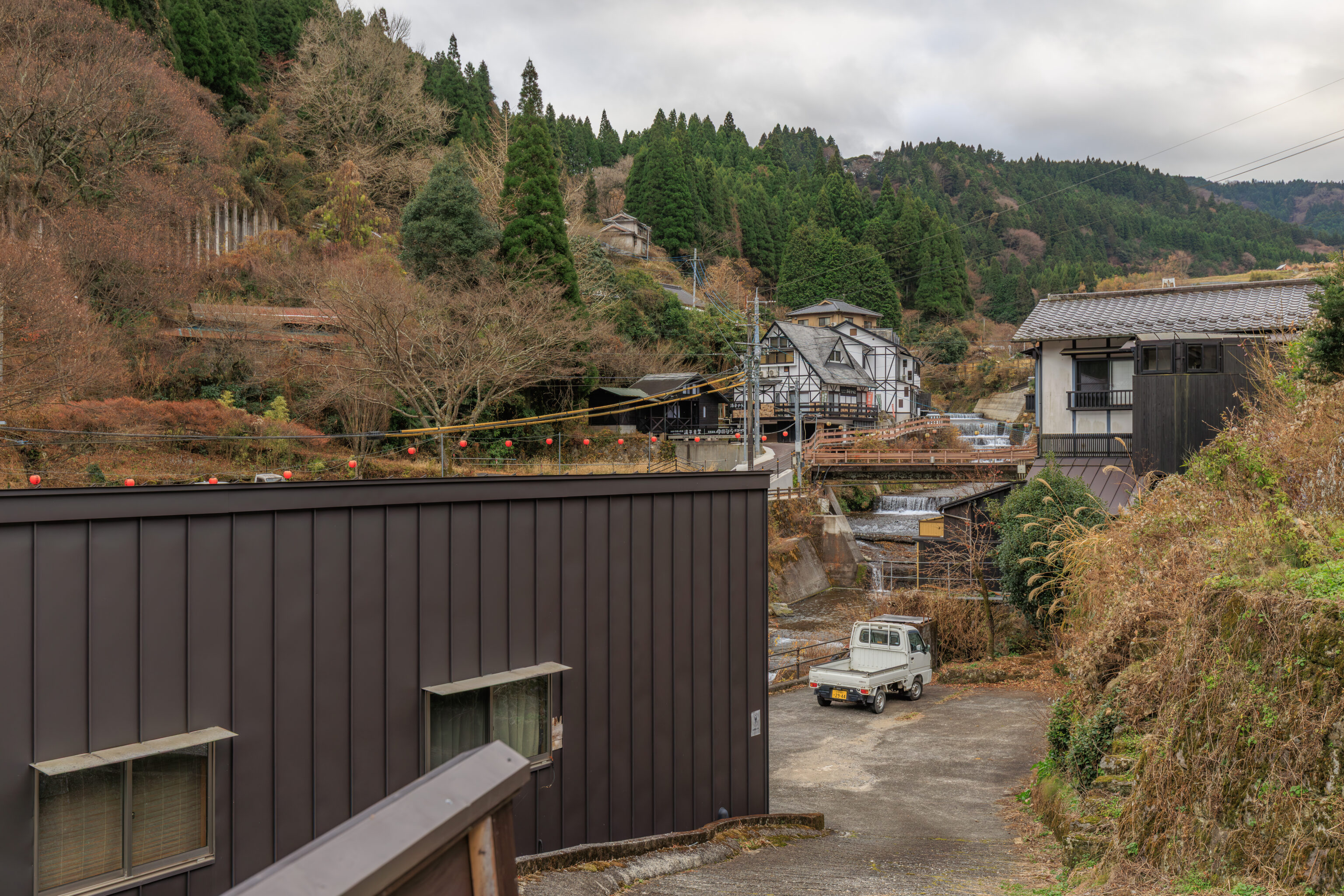
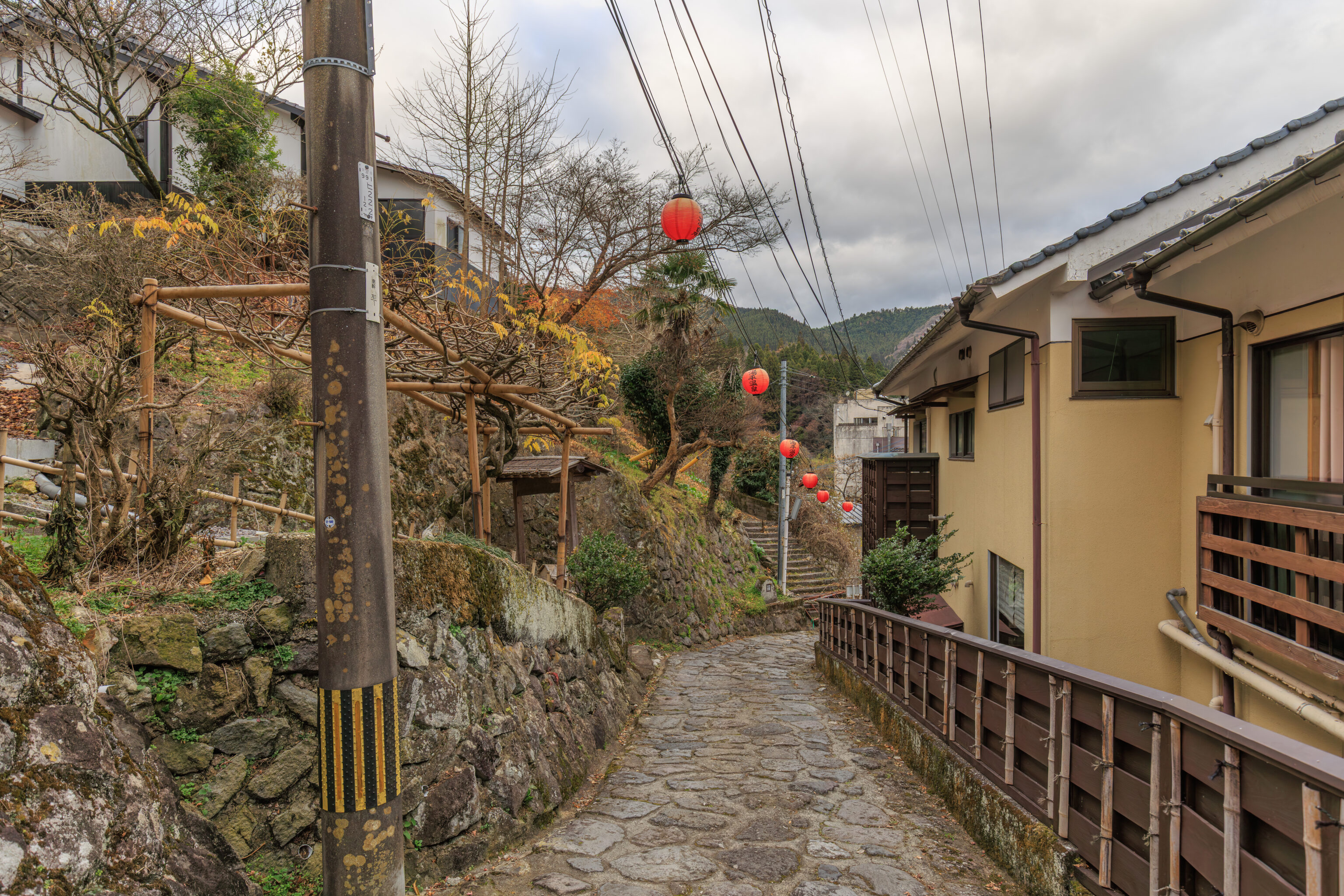
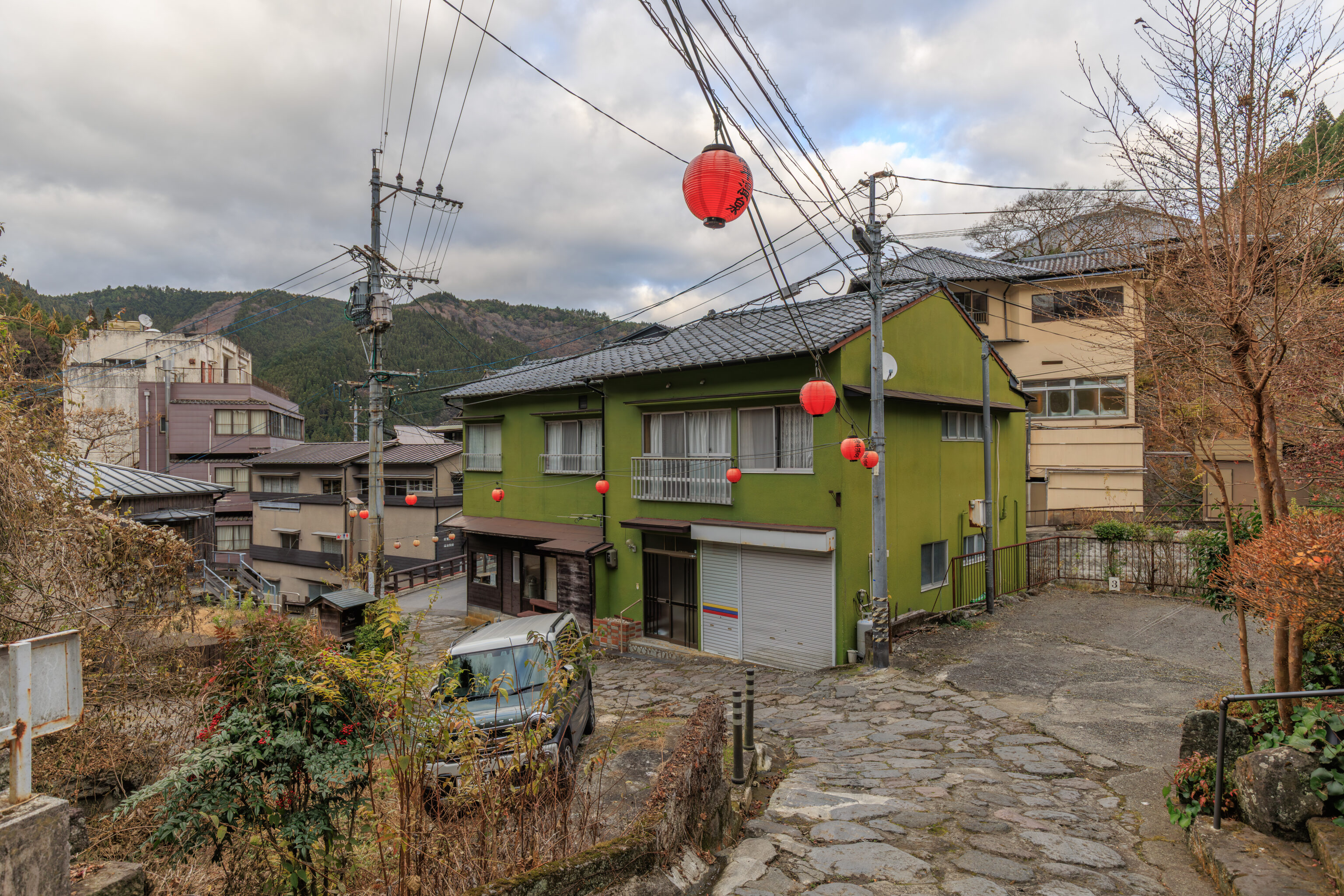
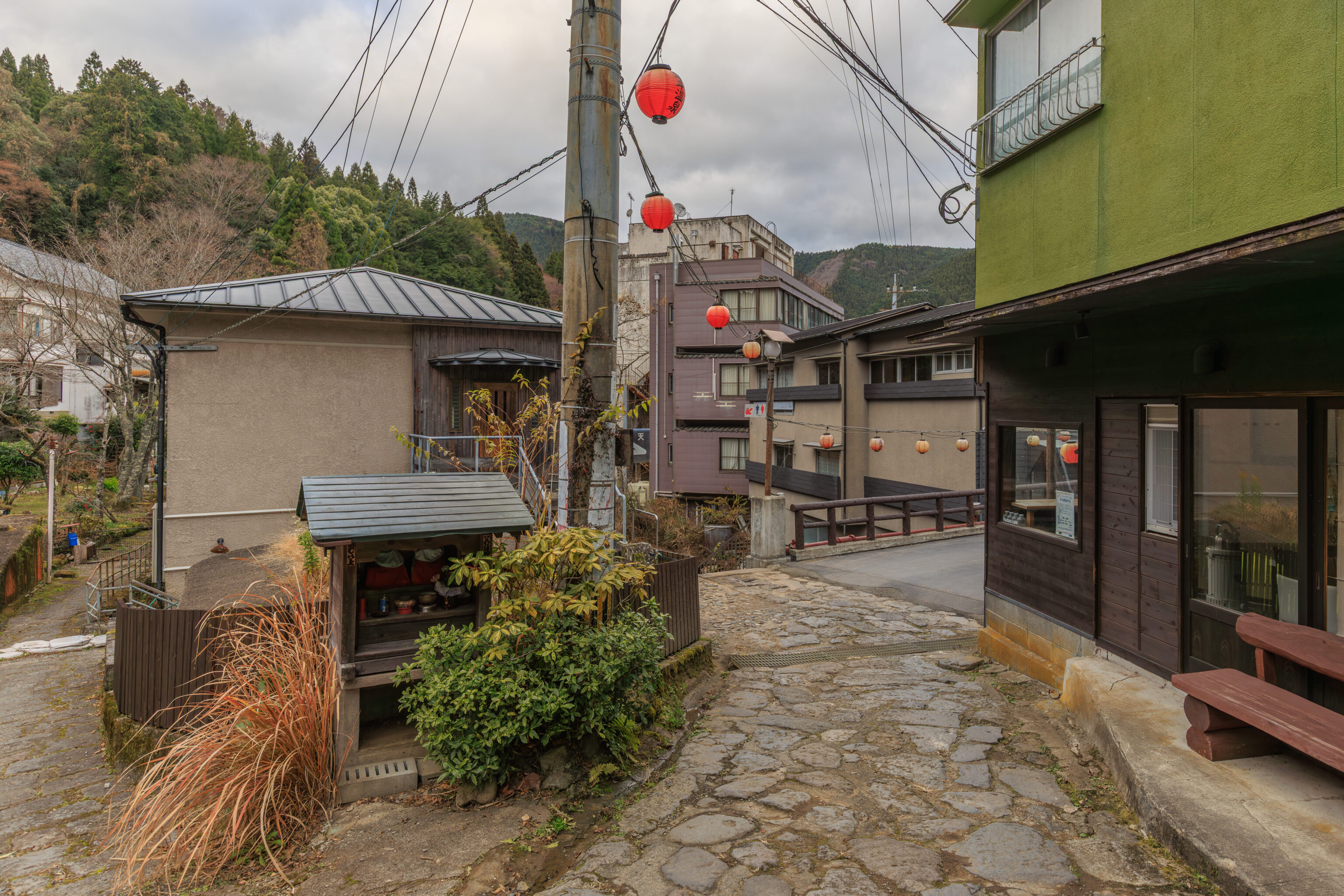
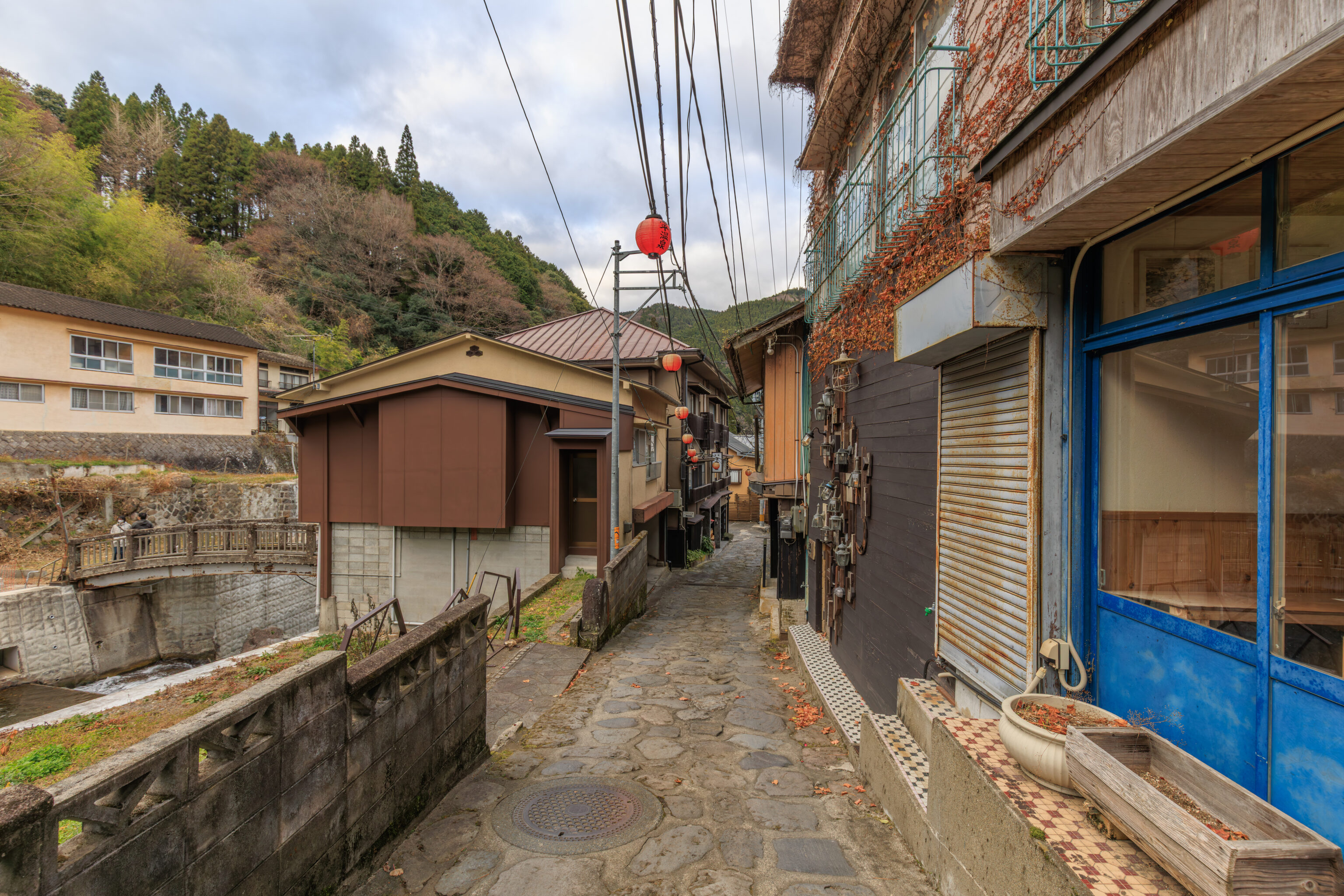
It was pretty quiet as we walked through Yunohira with almost no one else around. Every once in awhile, there would be a car but they were about as rare as people.
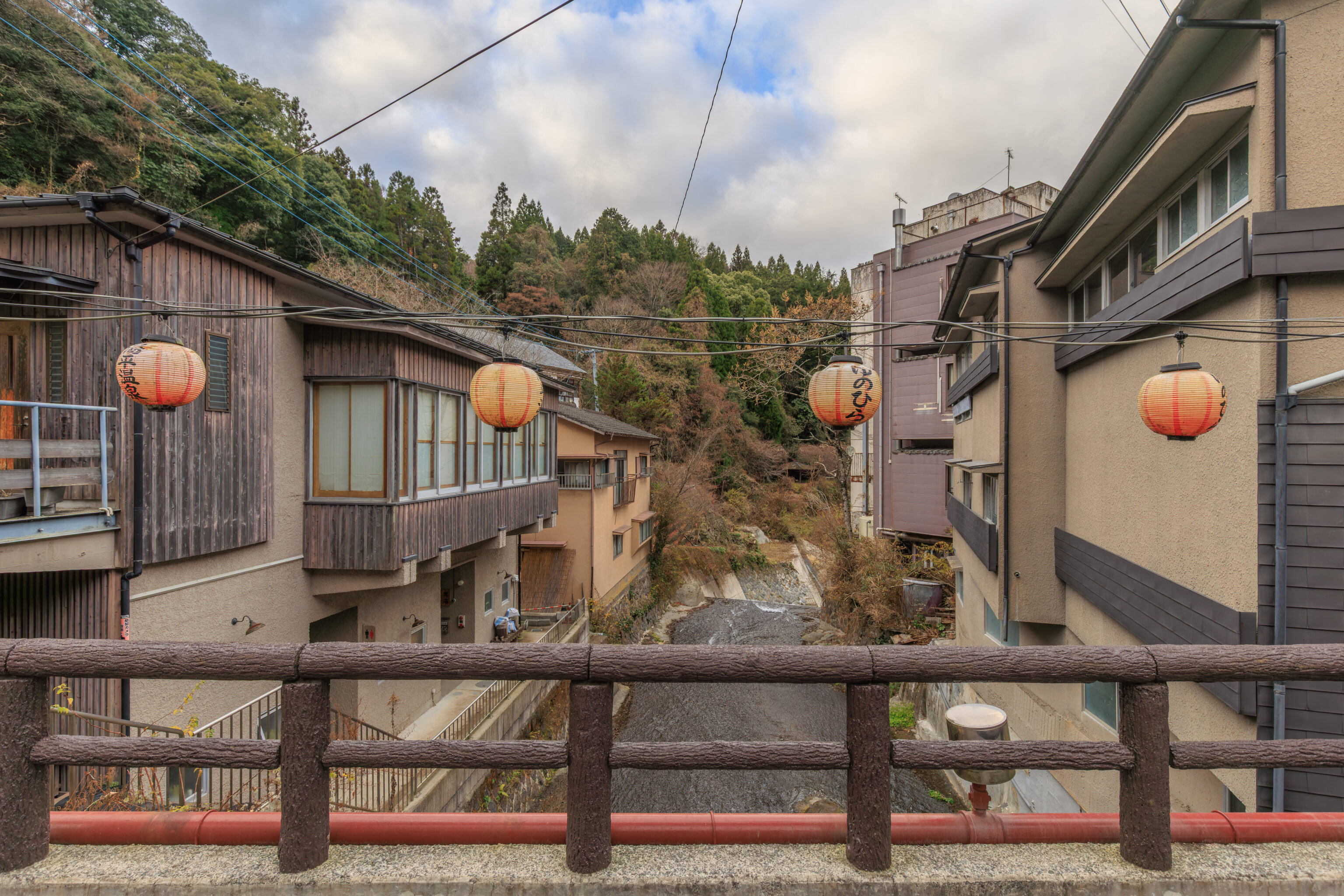
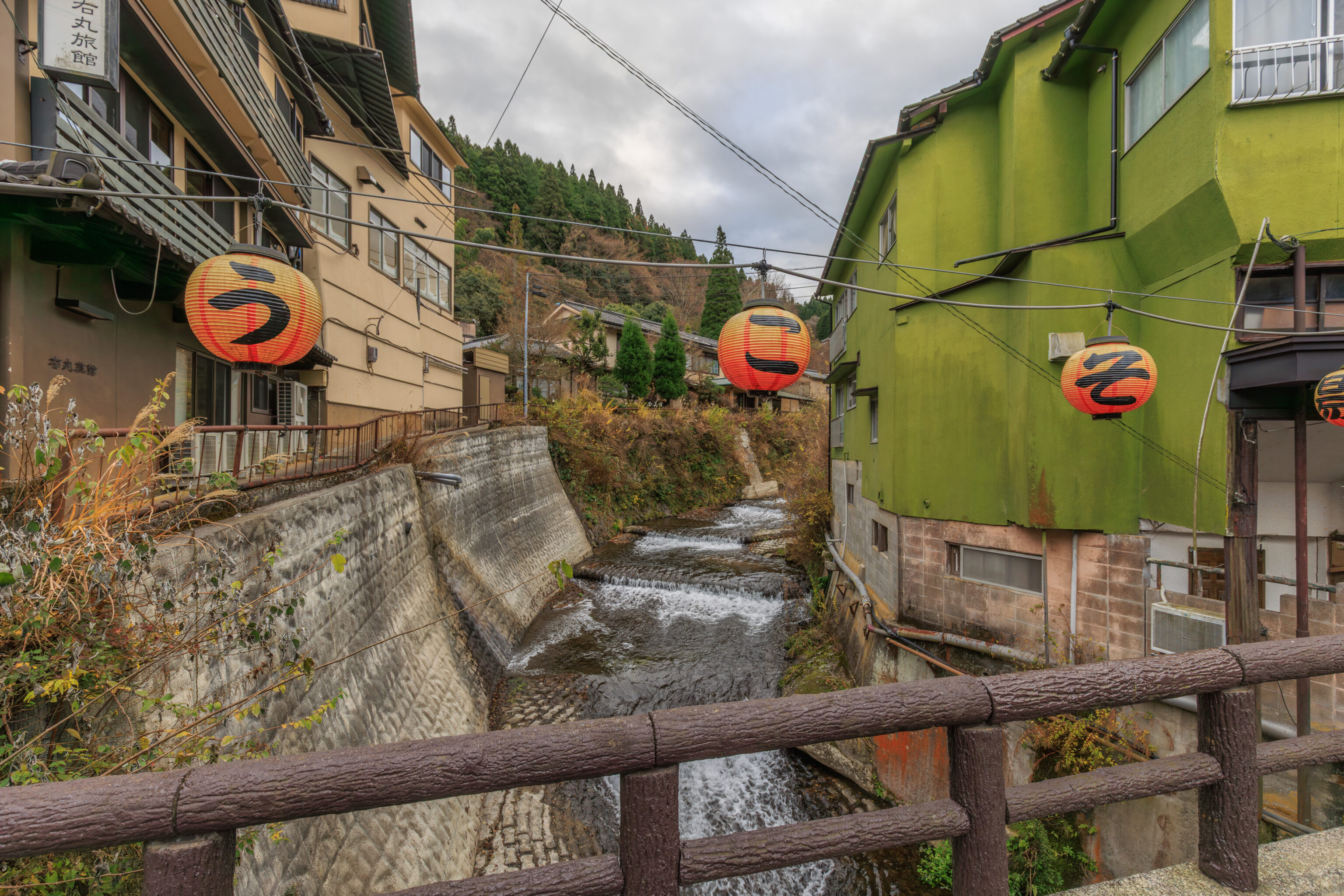
The village road crossed over the Kagonogawa via this bridge, which was probably just a bit to the south of the village’s center. Although the river was pretty small, it was fast flowing as it continuously descended through the village.
There is a junction in the road here on the east side of this bridge. We took the northern fork which continues descending and following the Kagonogawa. The other road goes directly to the Yunohira Onsen Line while the one we walked down joins it further to the north.
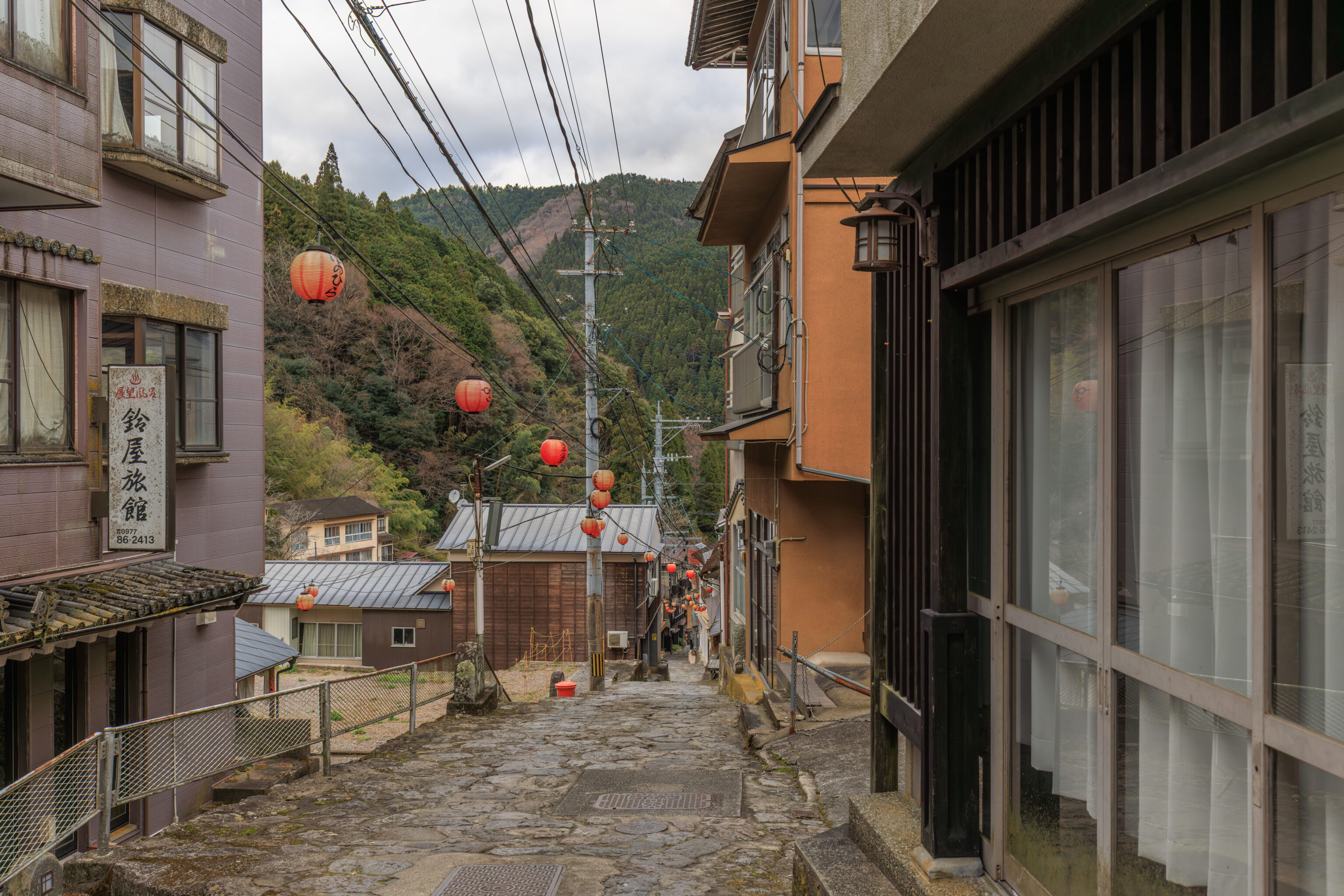
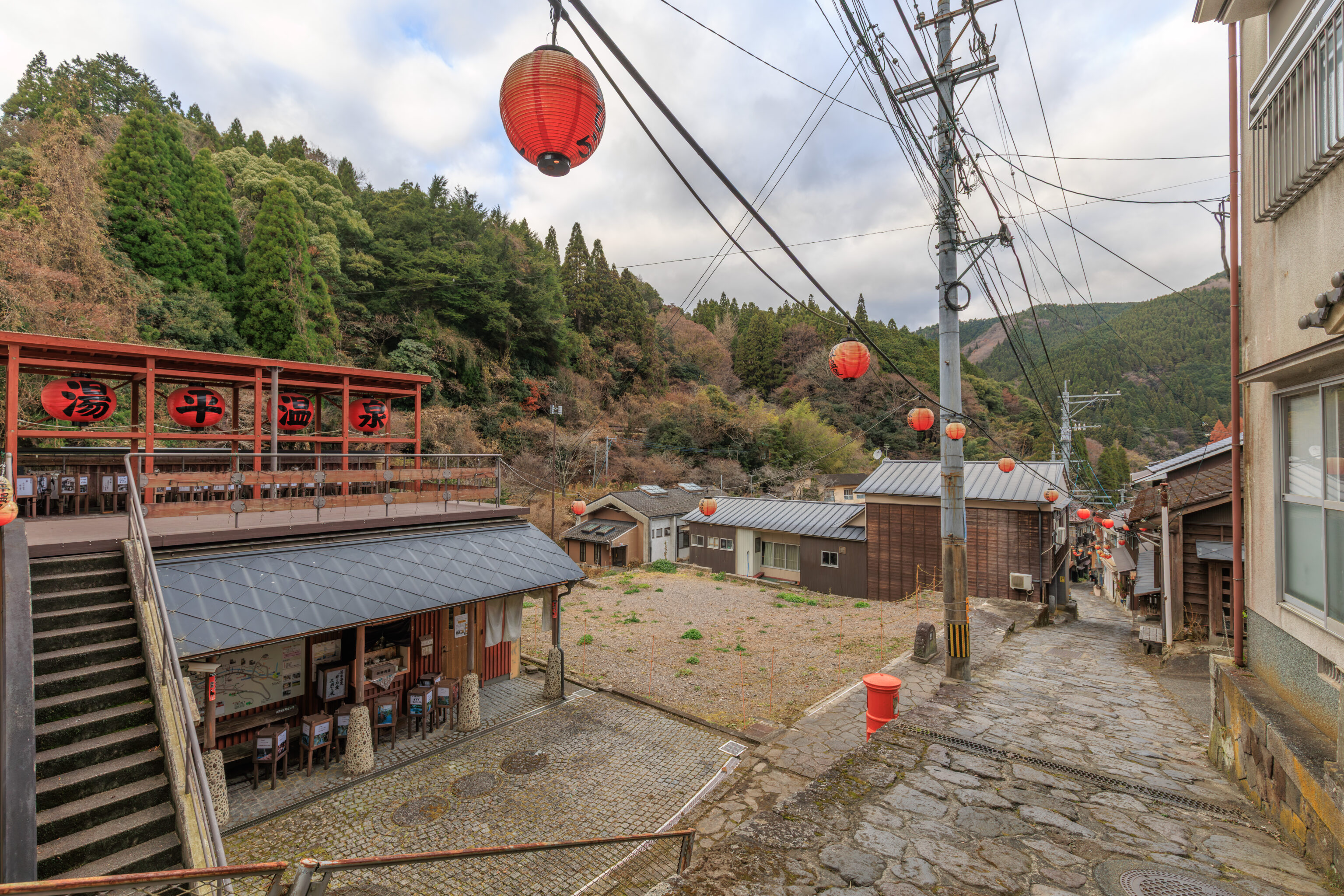
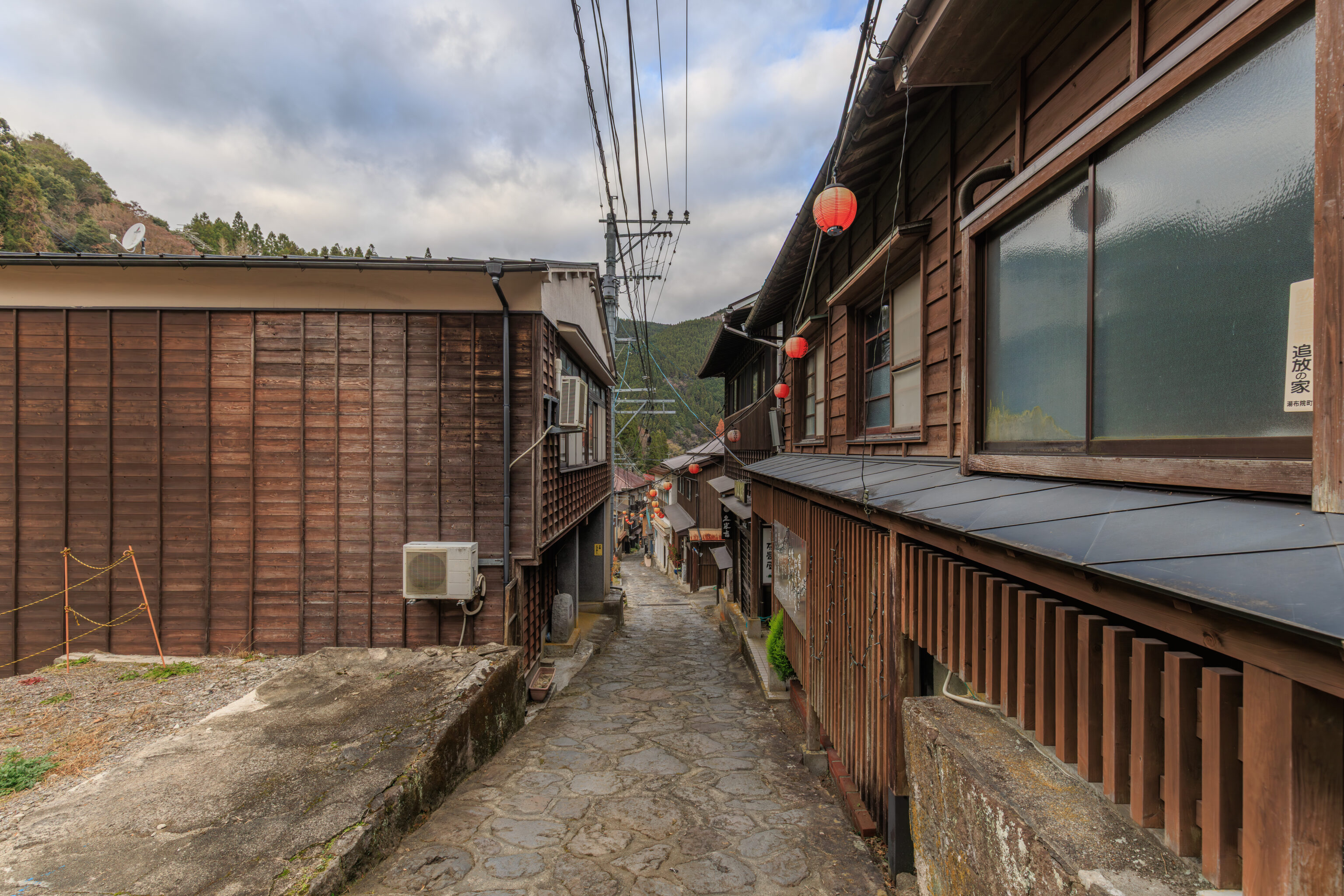
Some buildings that we walked by contained businesses, but they were all closed.
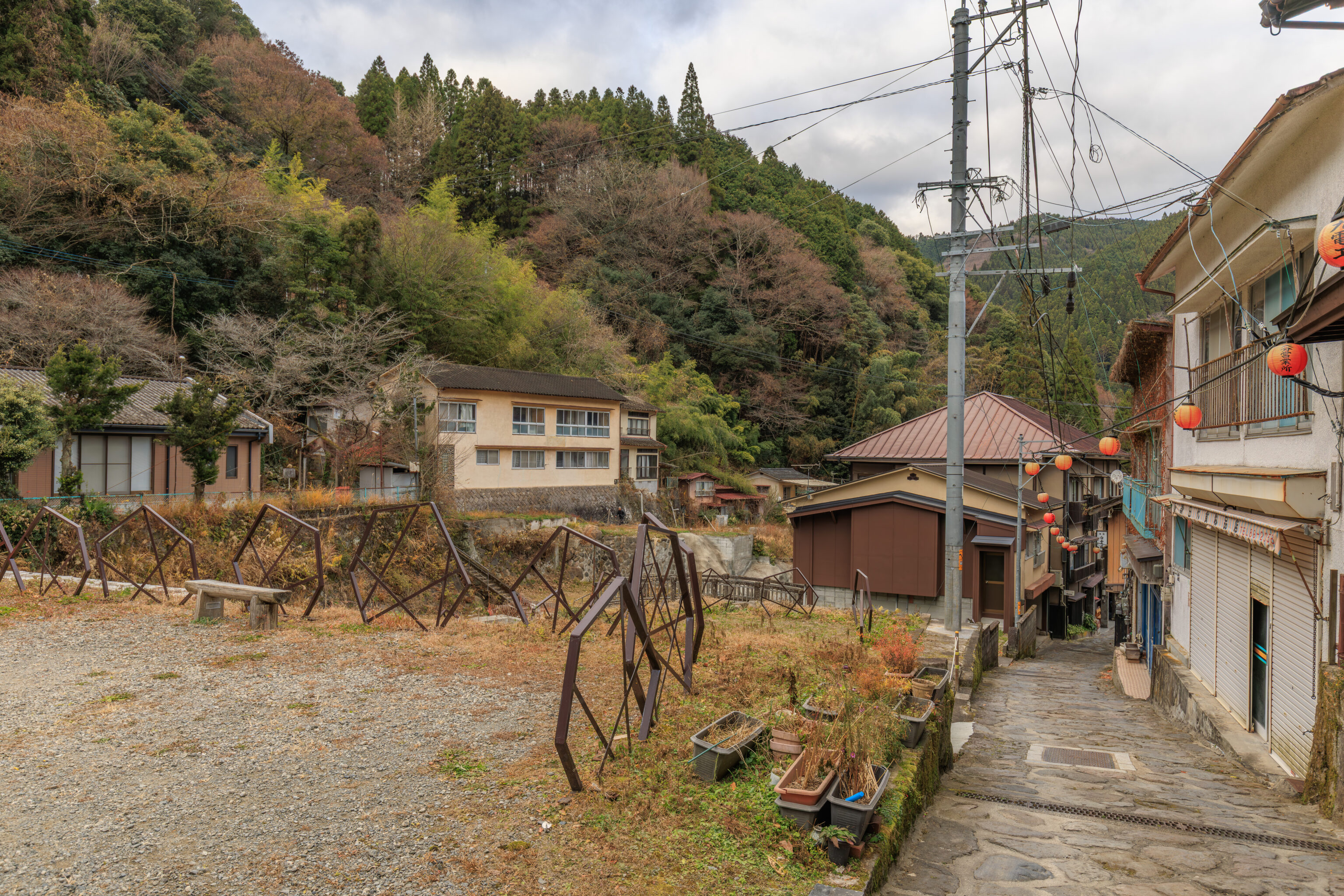
This property here had a parking lot with a bench.
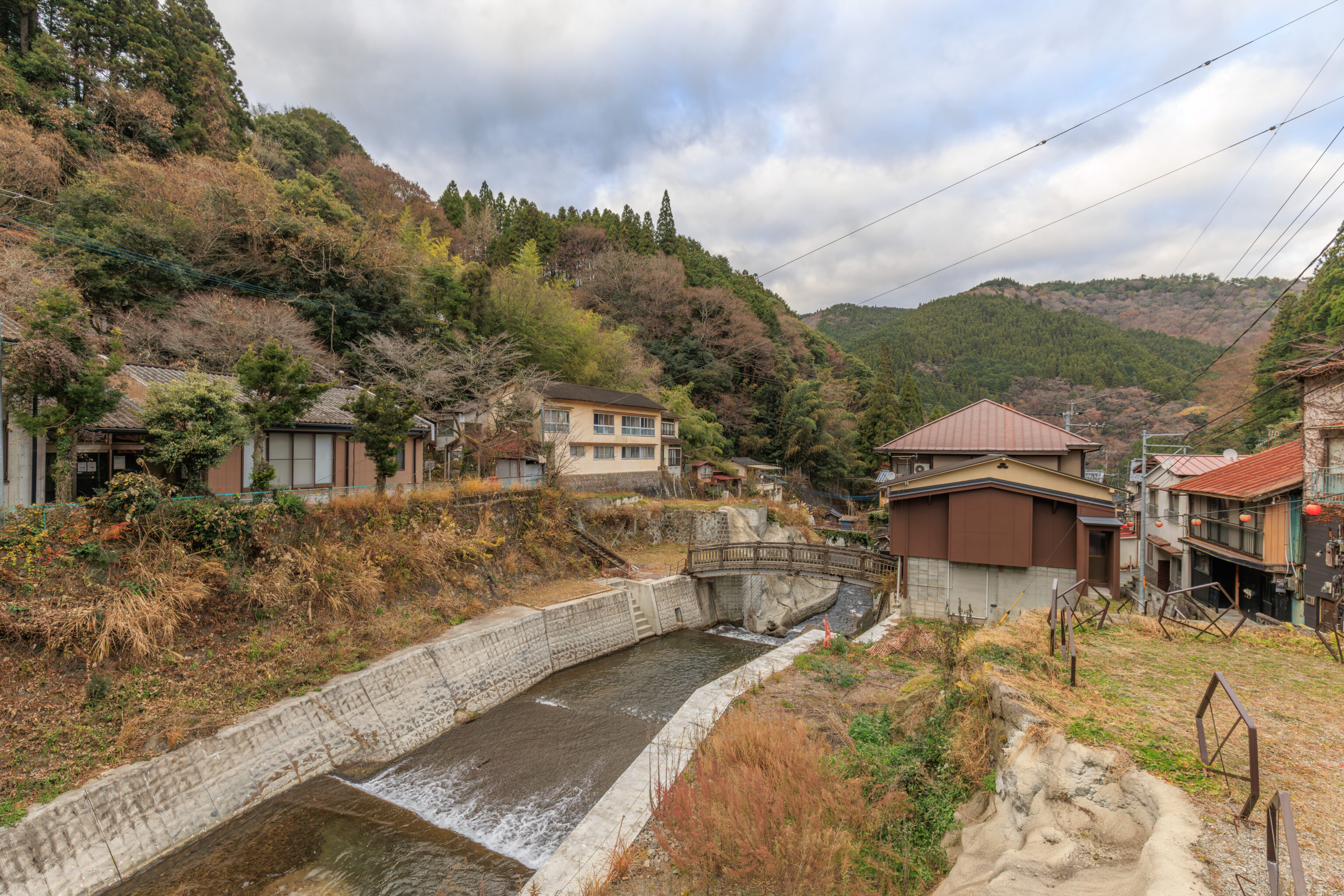
The parking lot provided a nice view of the Kagonogawa below.
We continued to the south…
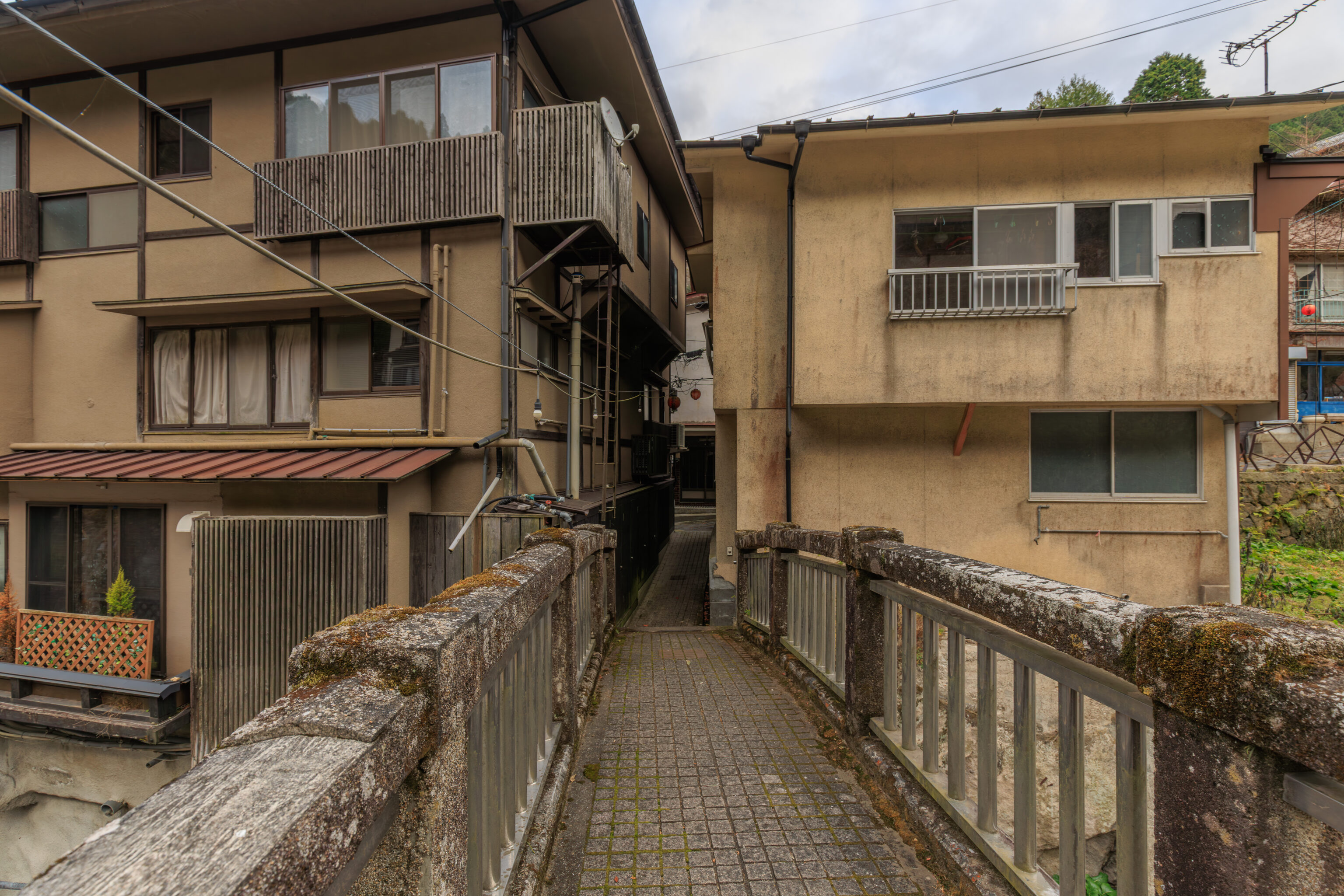
And walked out onto the next bridge.
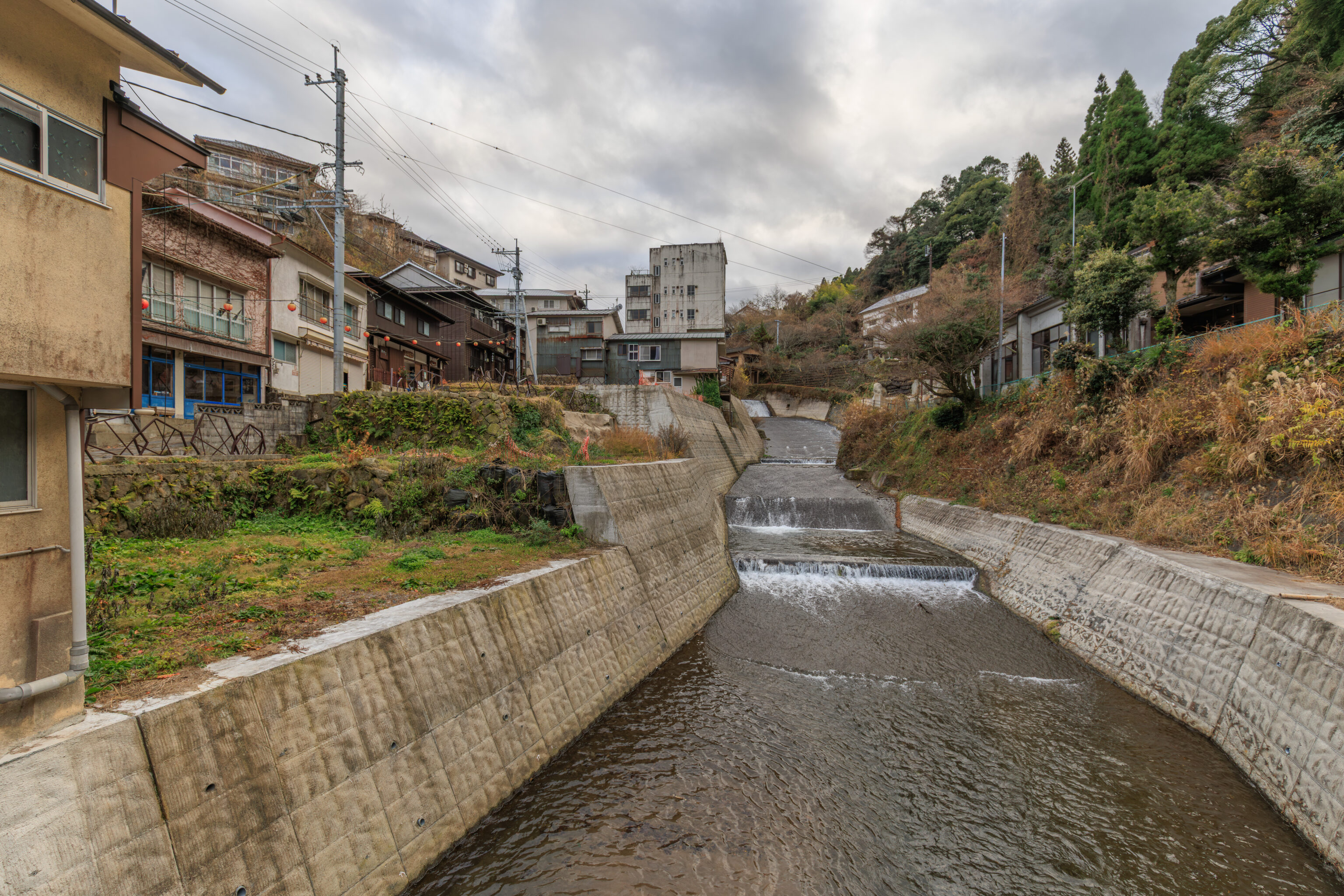
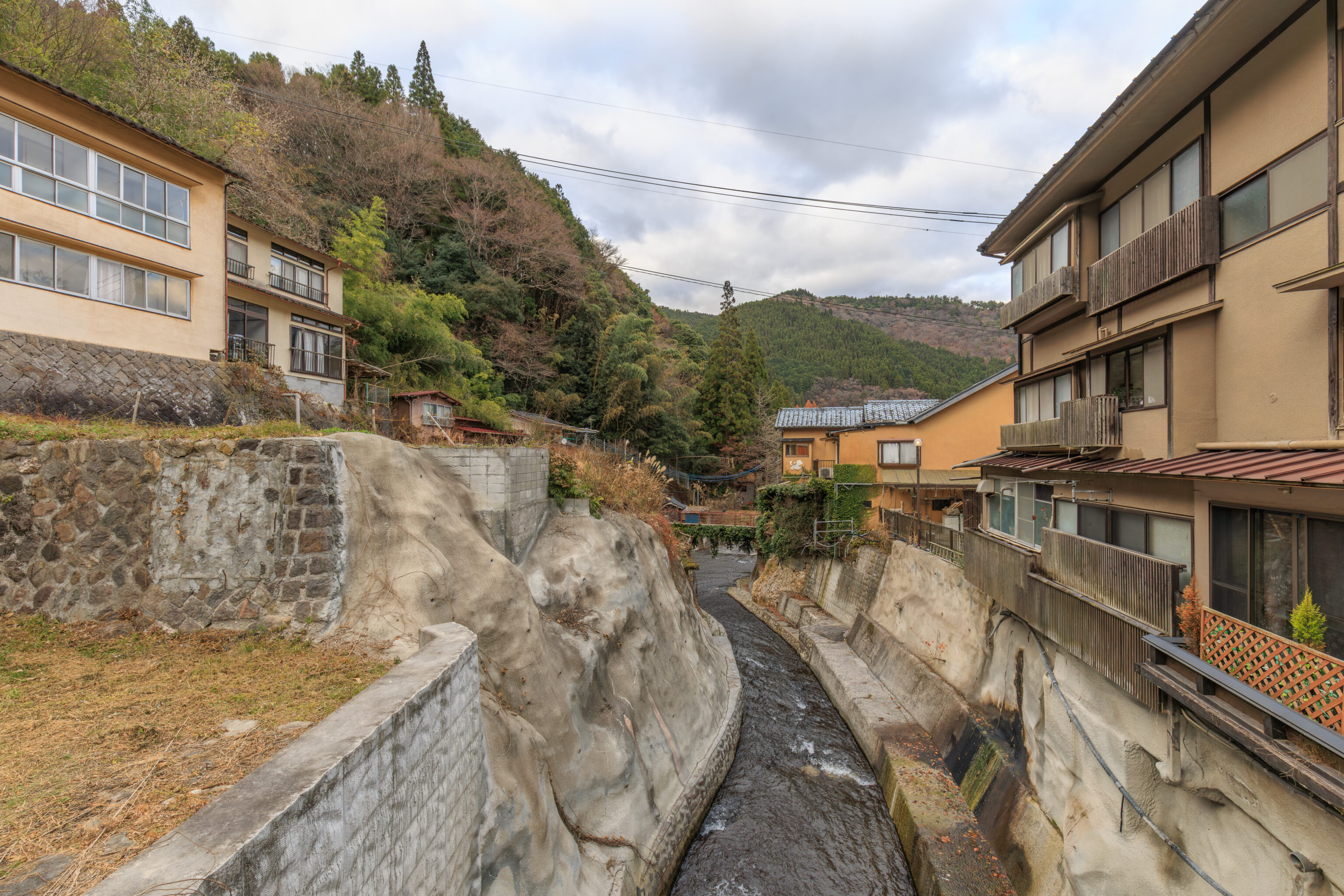
The view, looking up and down river.
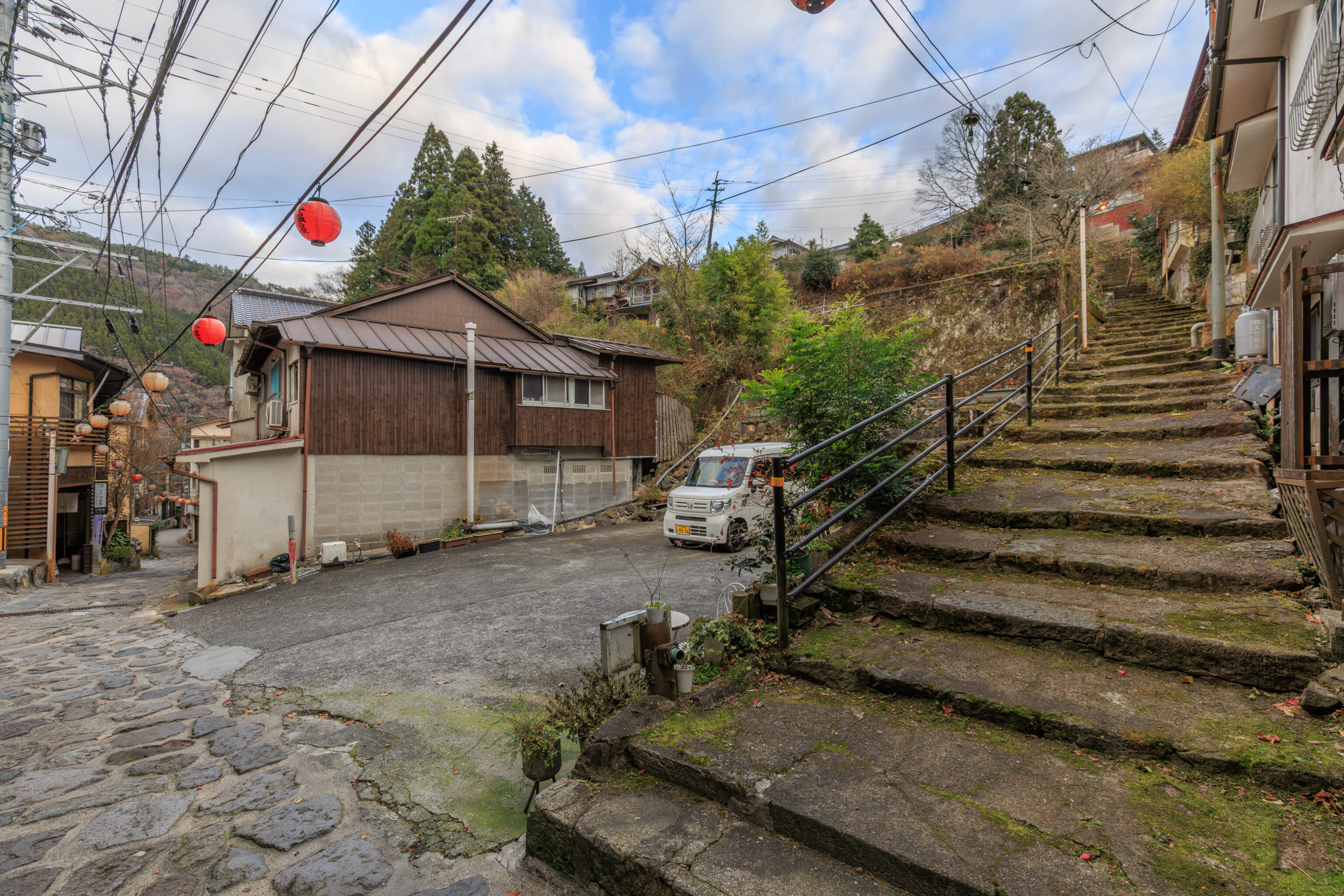
We did not cross the river though and continued on. We walked by some stairs that went up the side of the hill to the east. There is another road up there as well as some ryokan.
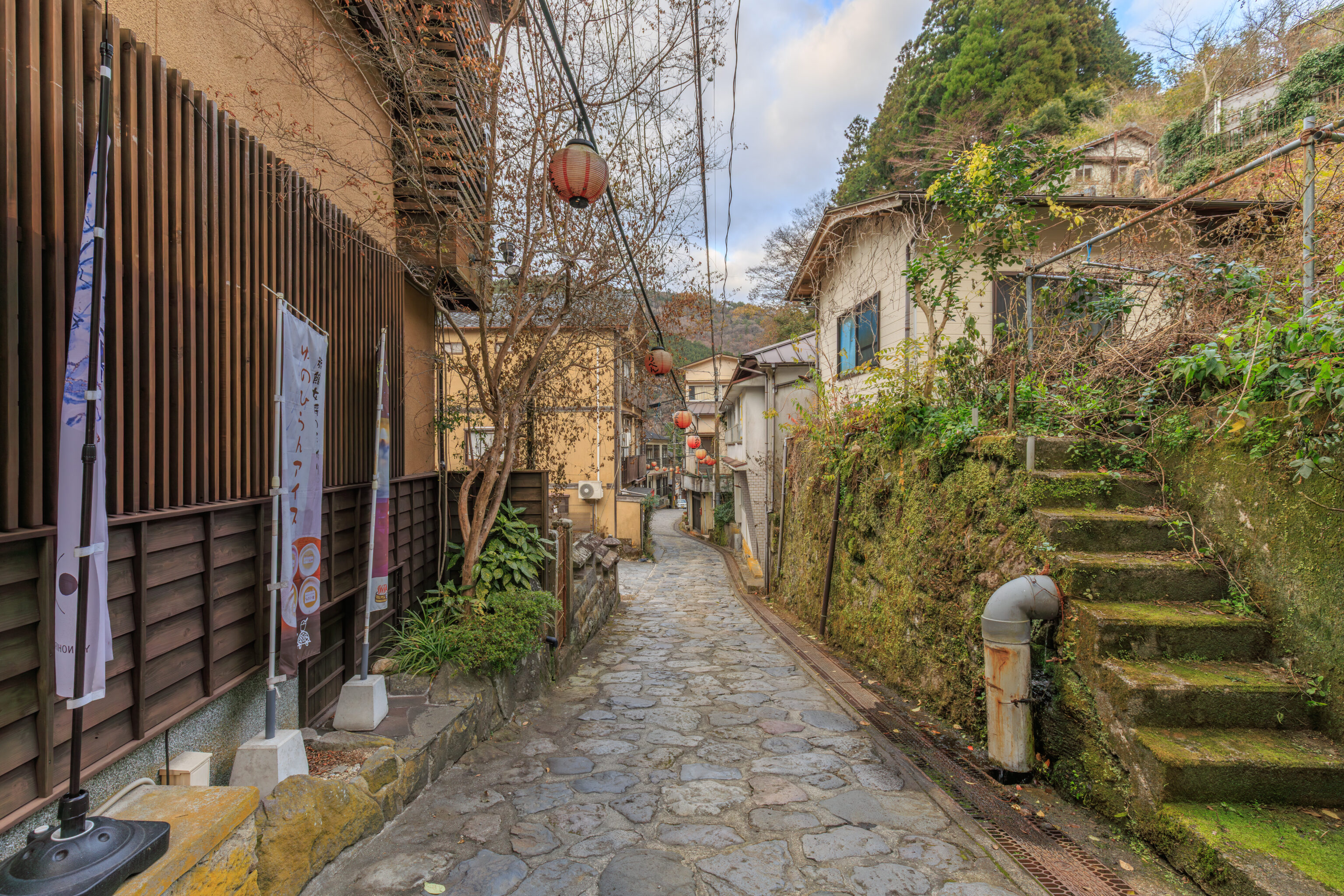
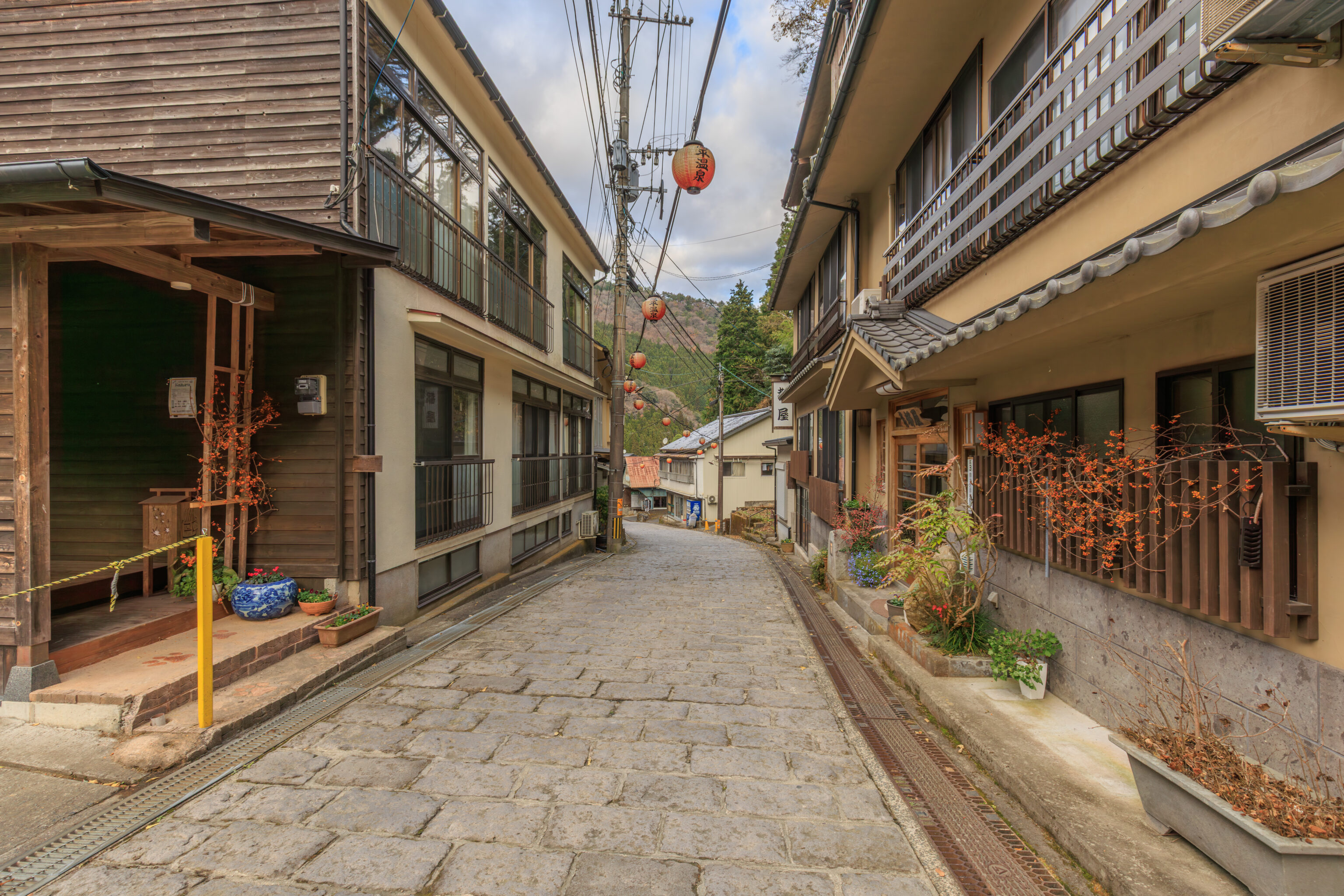
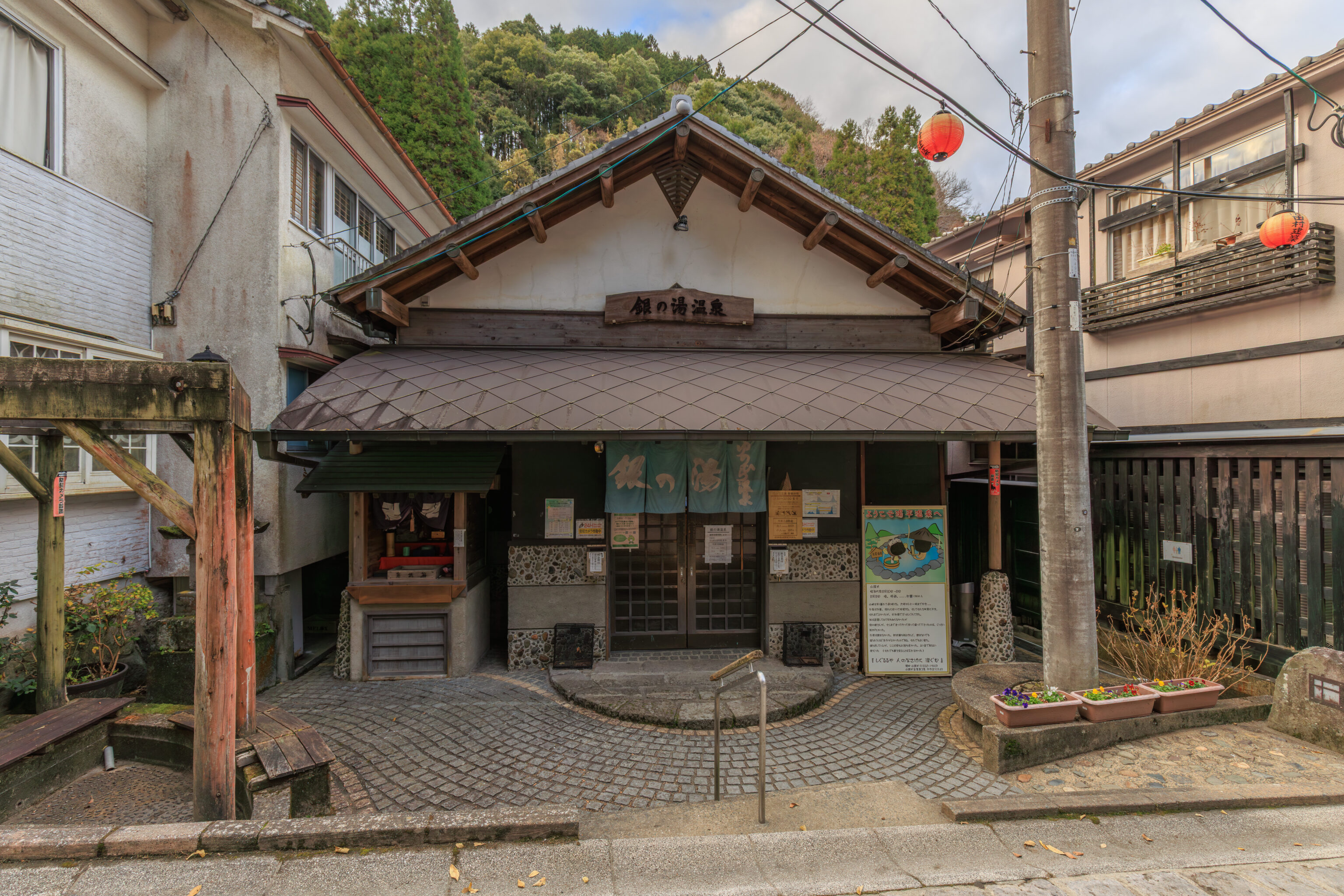
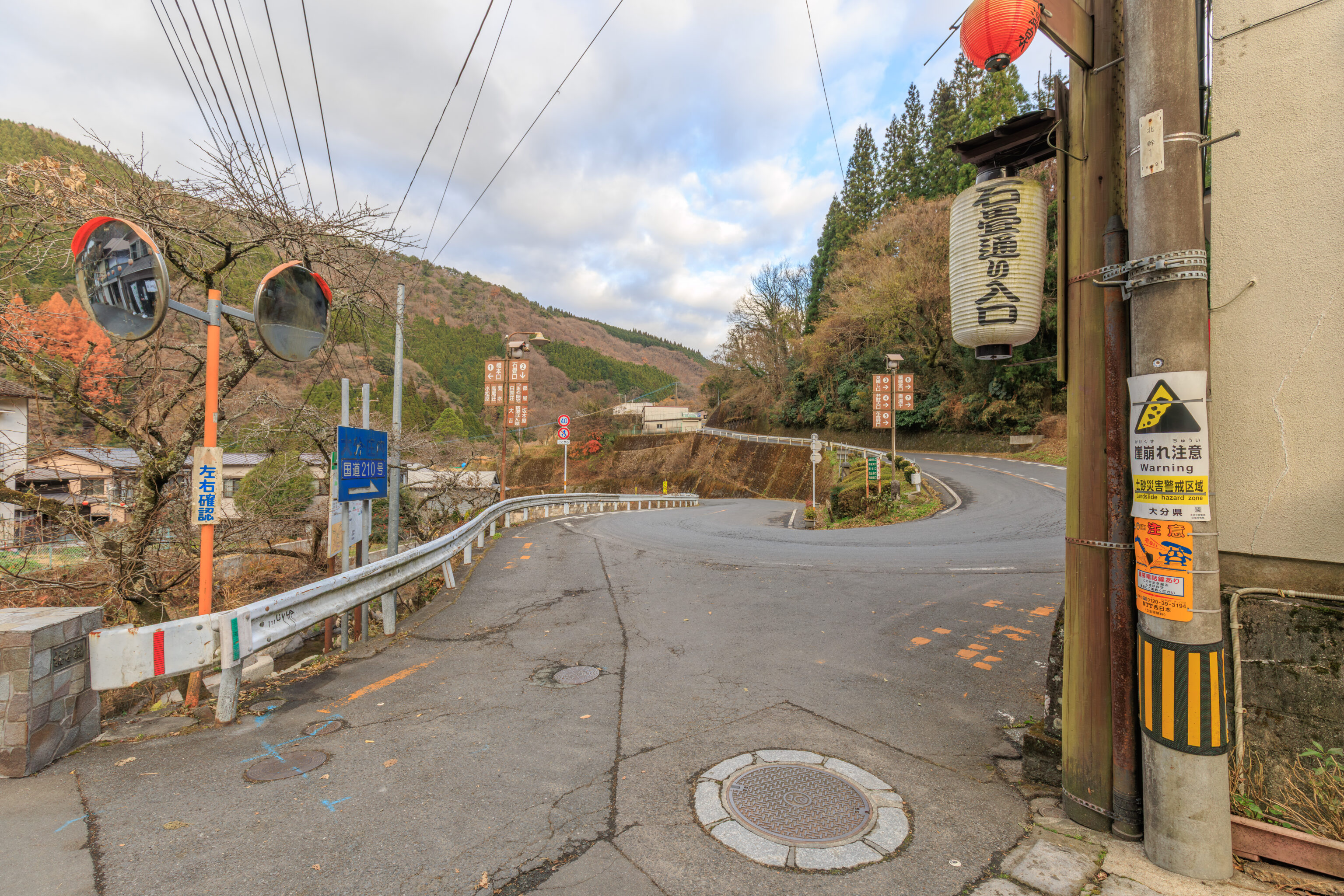
After continuing to walk to the north, we reached where the road joins the Yunohira Onsen Line. There is actually a bus stop here, however, service is infrequent.
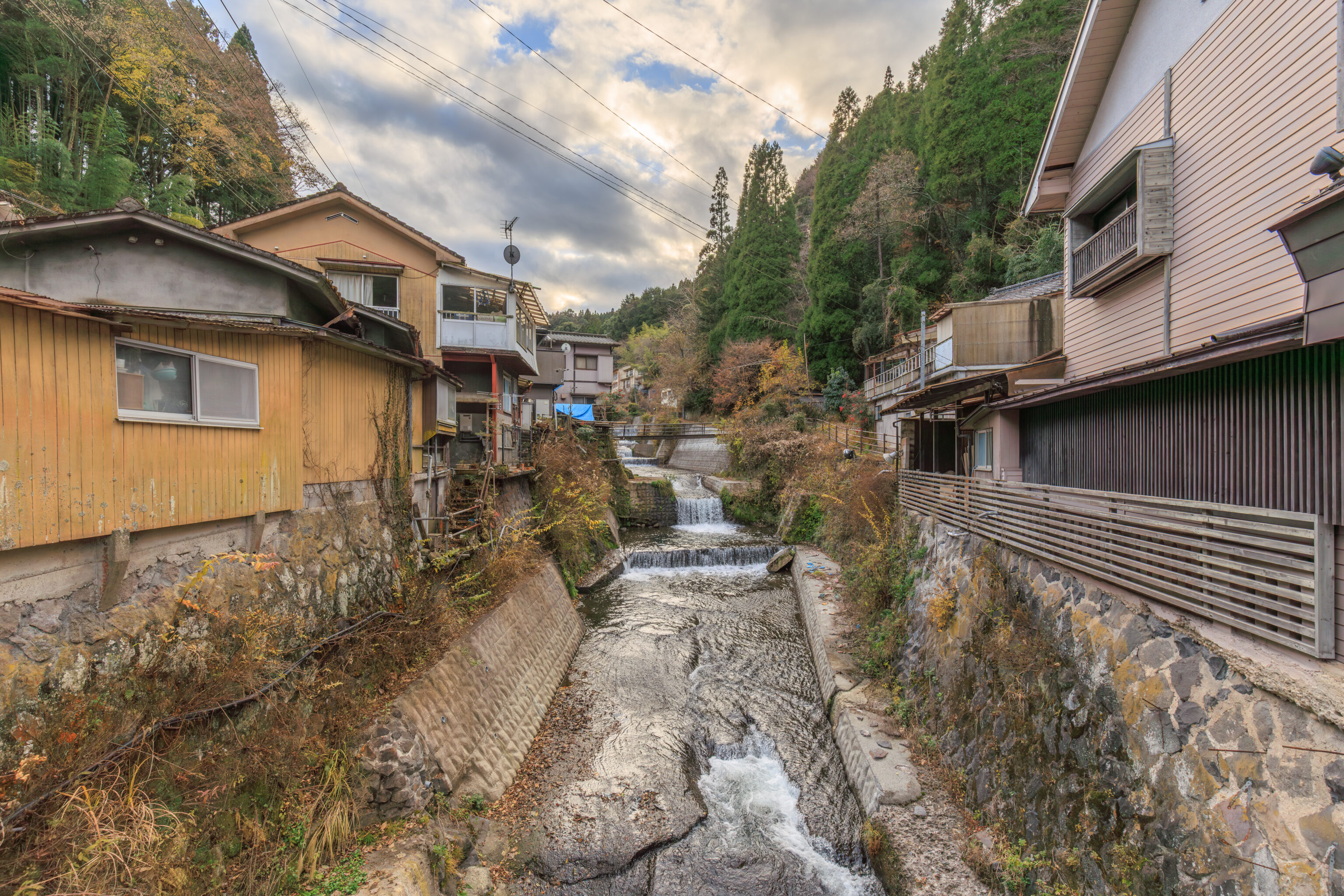
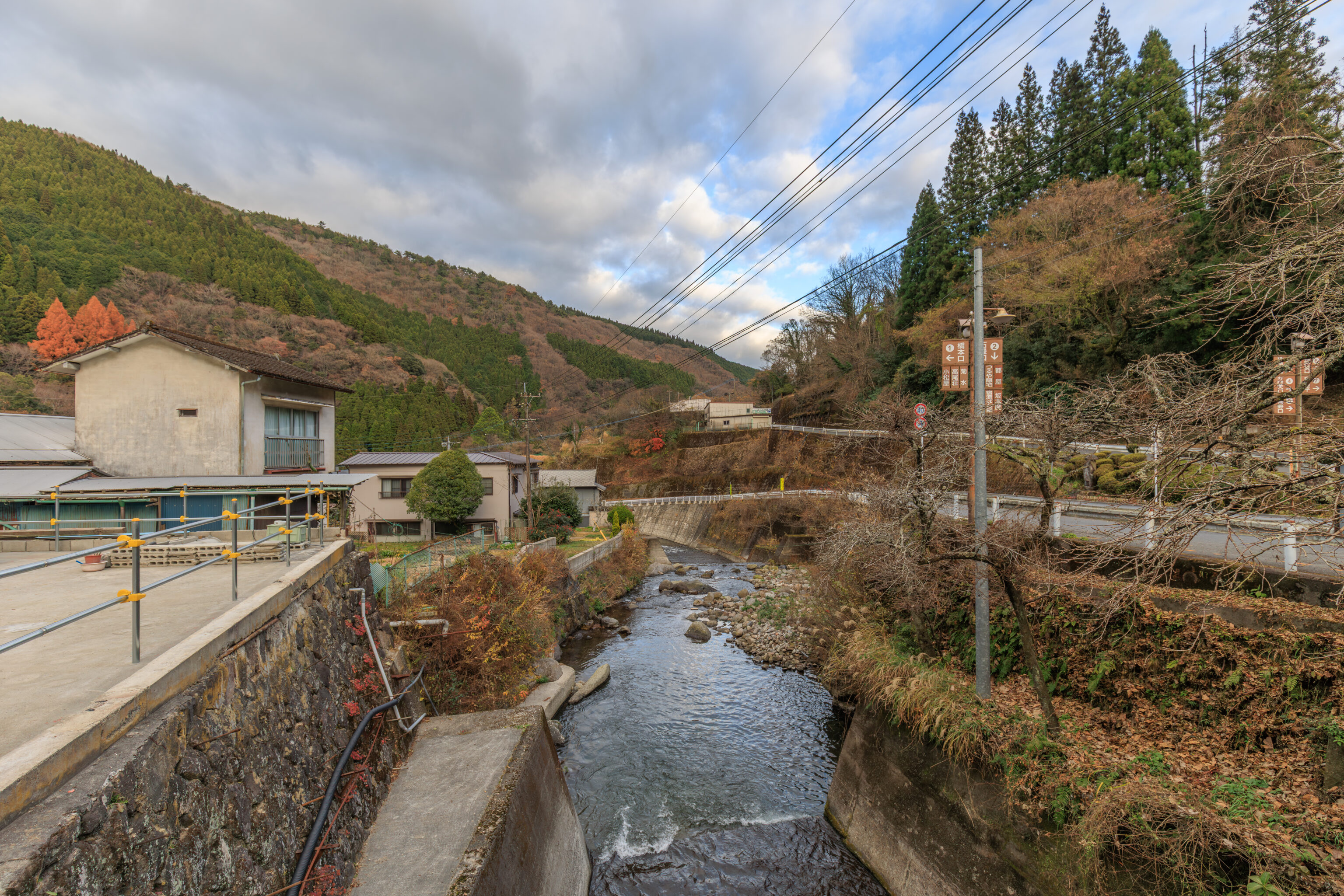
There is a junction here with another local road forking off to the north and crossing the river. So, we took that road to continue walking through the remainder of Yunohira.
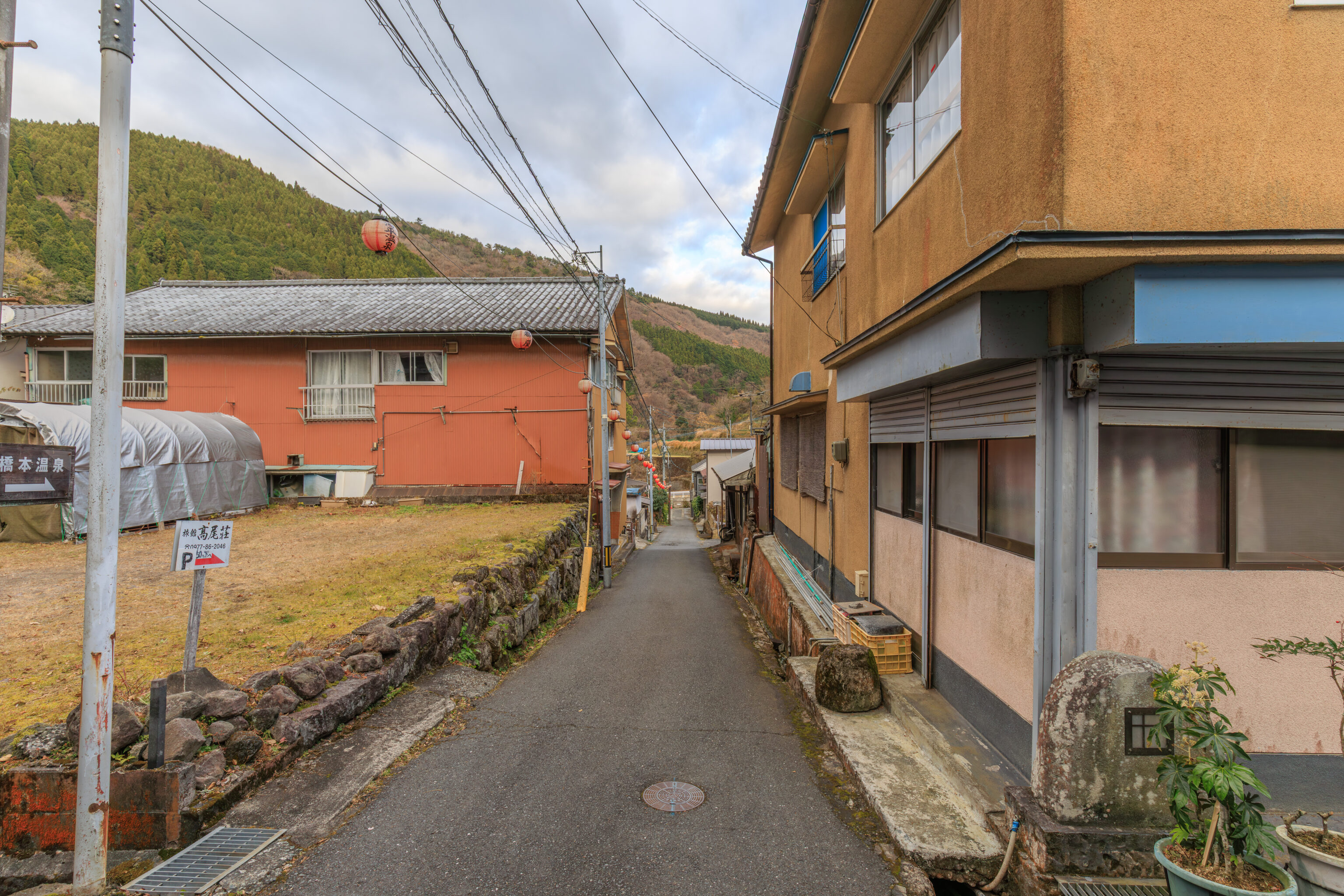
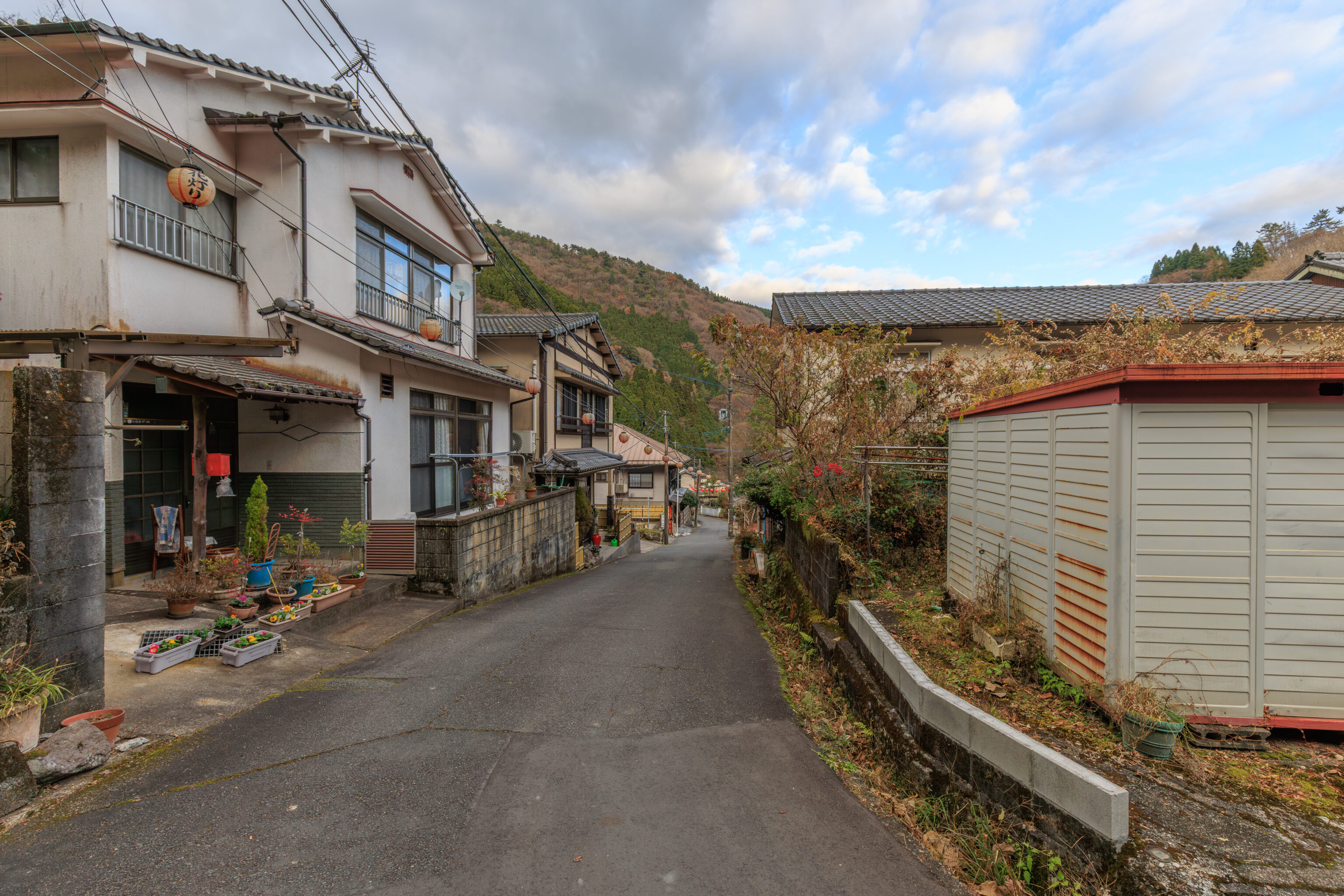
This part of the valley was a bit wider compared to further upriver. It felt more open than before.
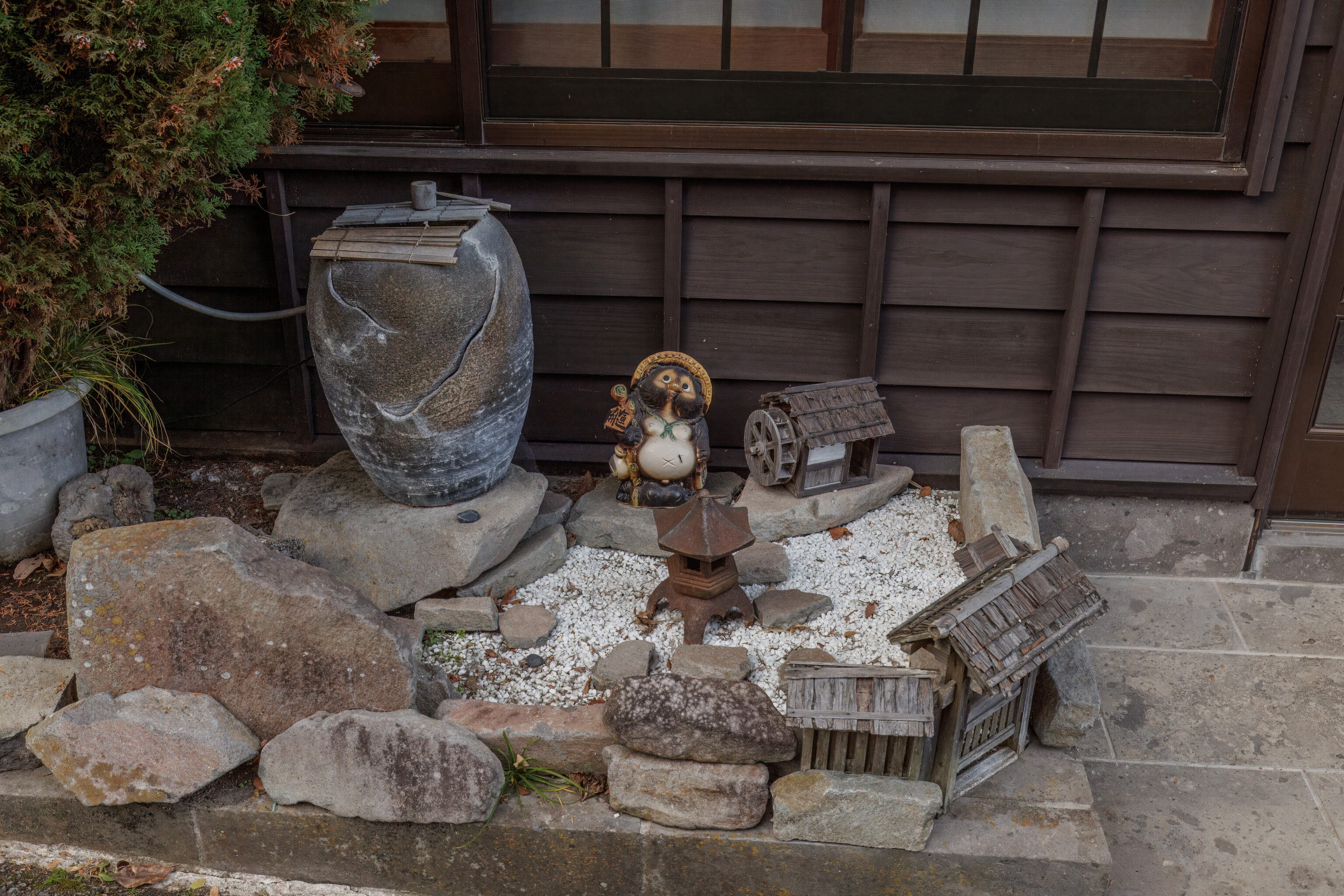
A cute little landscape featuring a large tanuki, or at least, large relative to the other objects here!
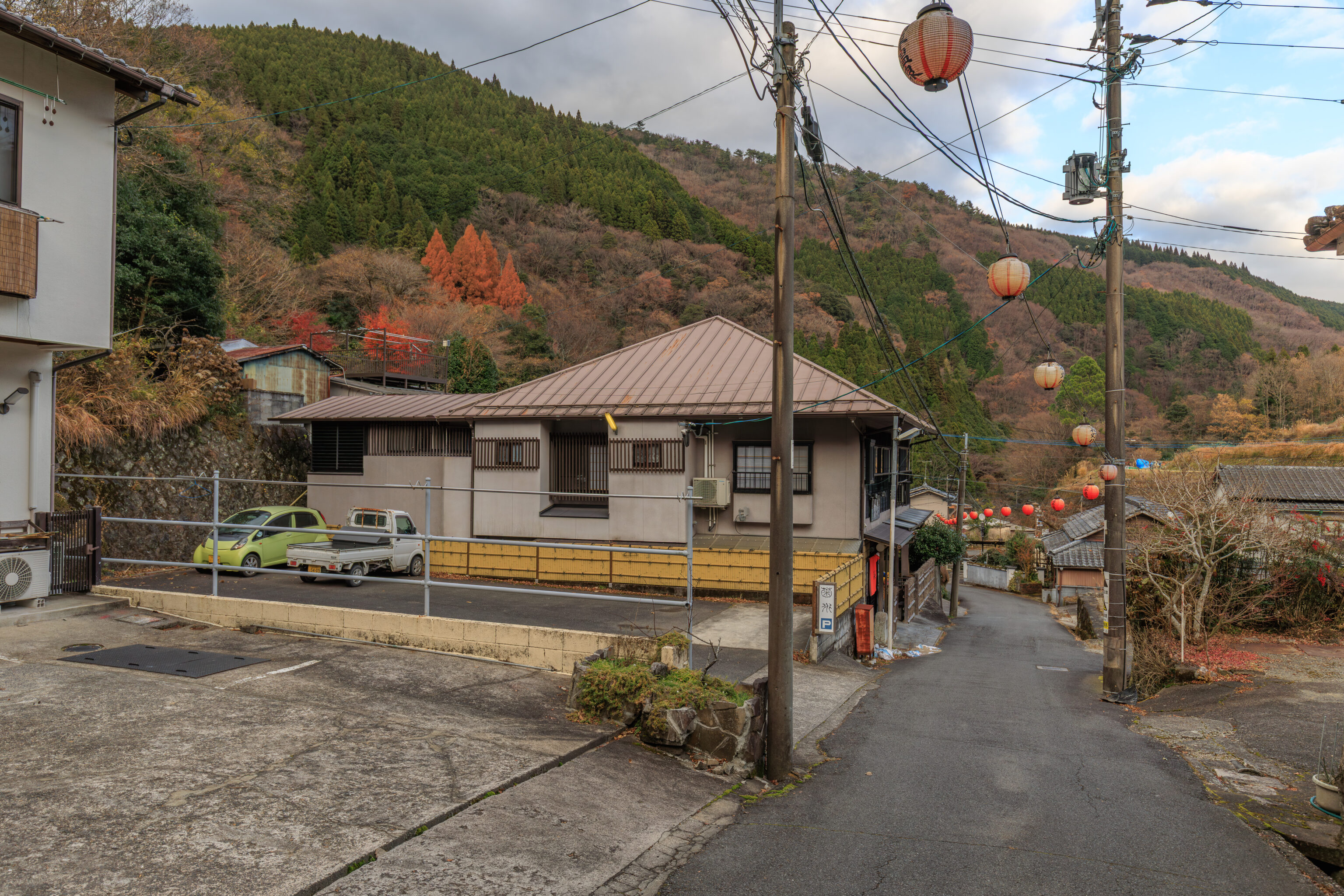
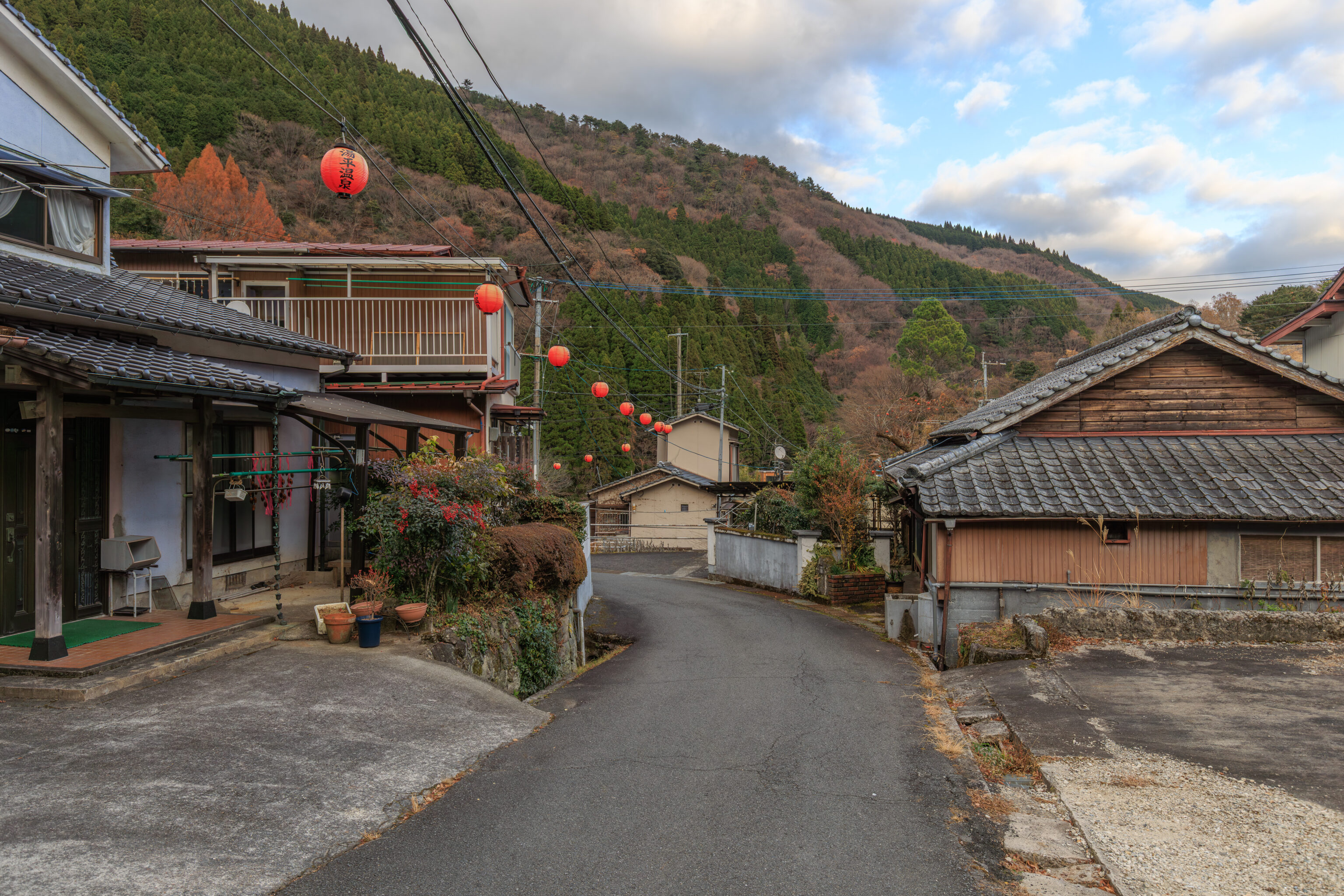
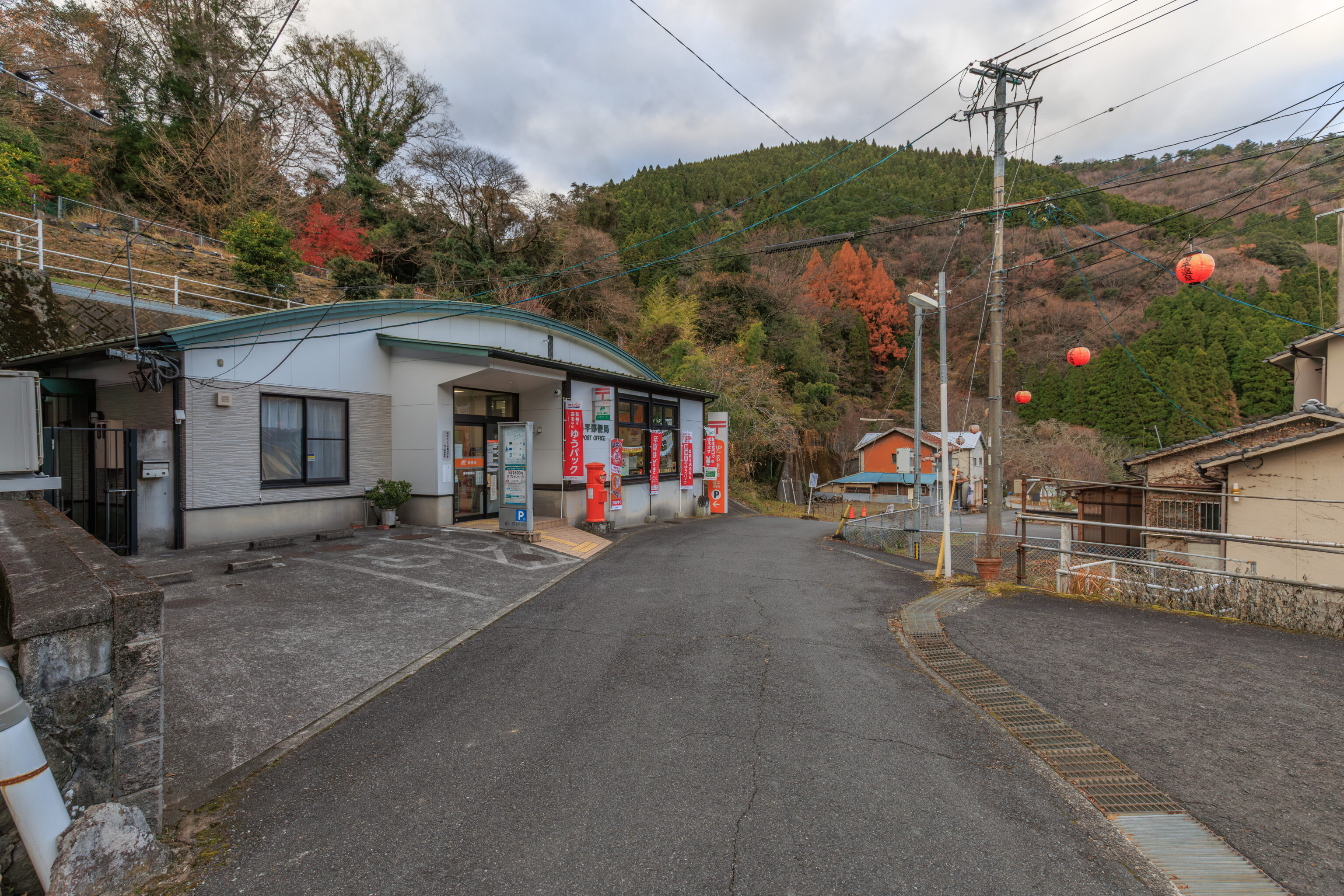
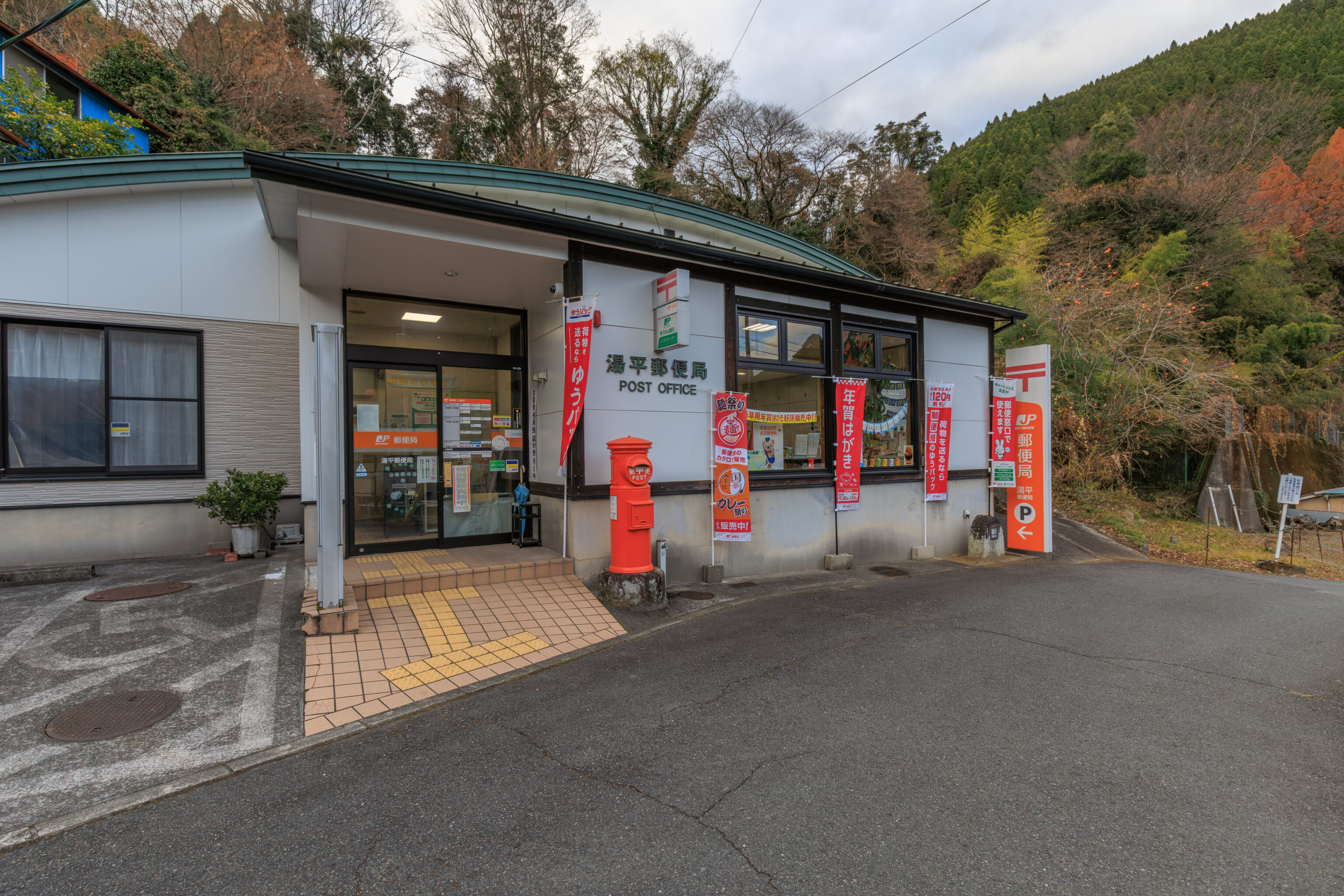
We continued walking north until we came upon a post office. It was in a relatively modern looking building and the lights were on.
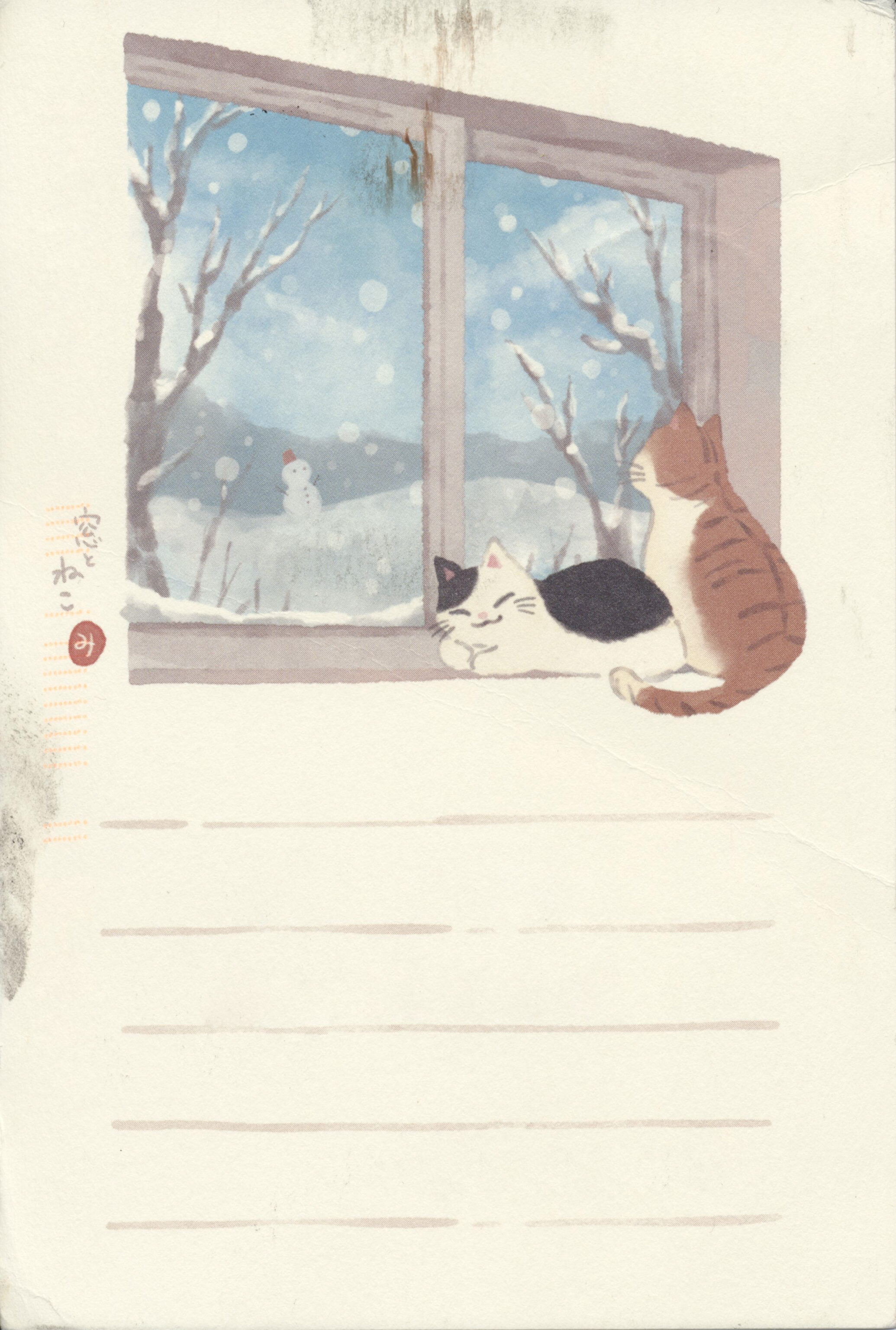
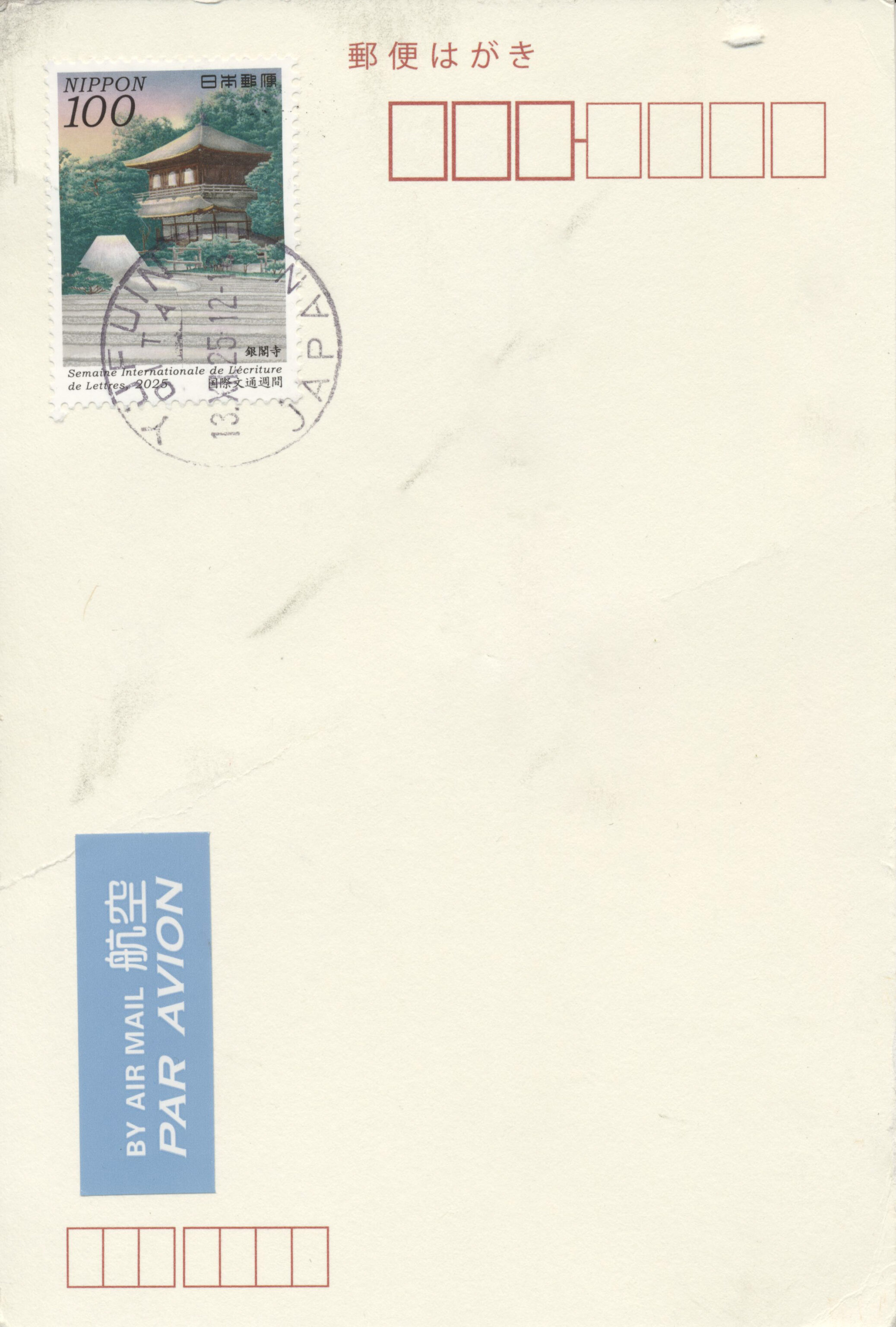
We ended up buying postcards and stamps!
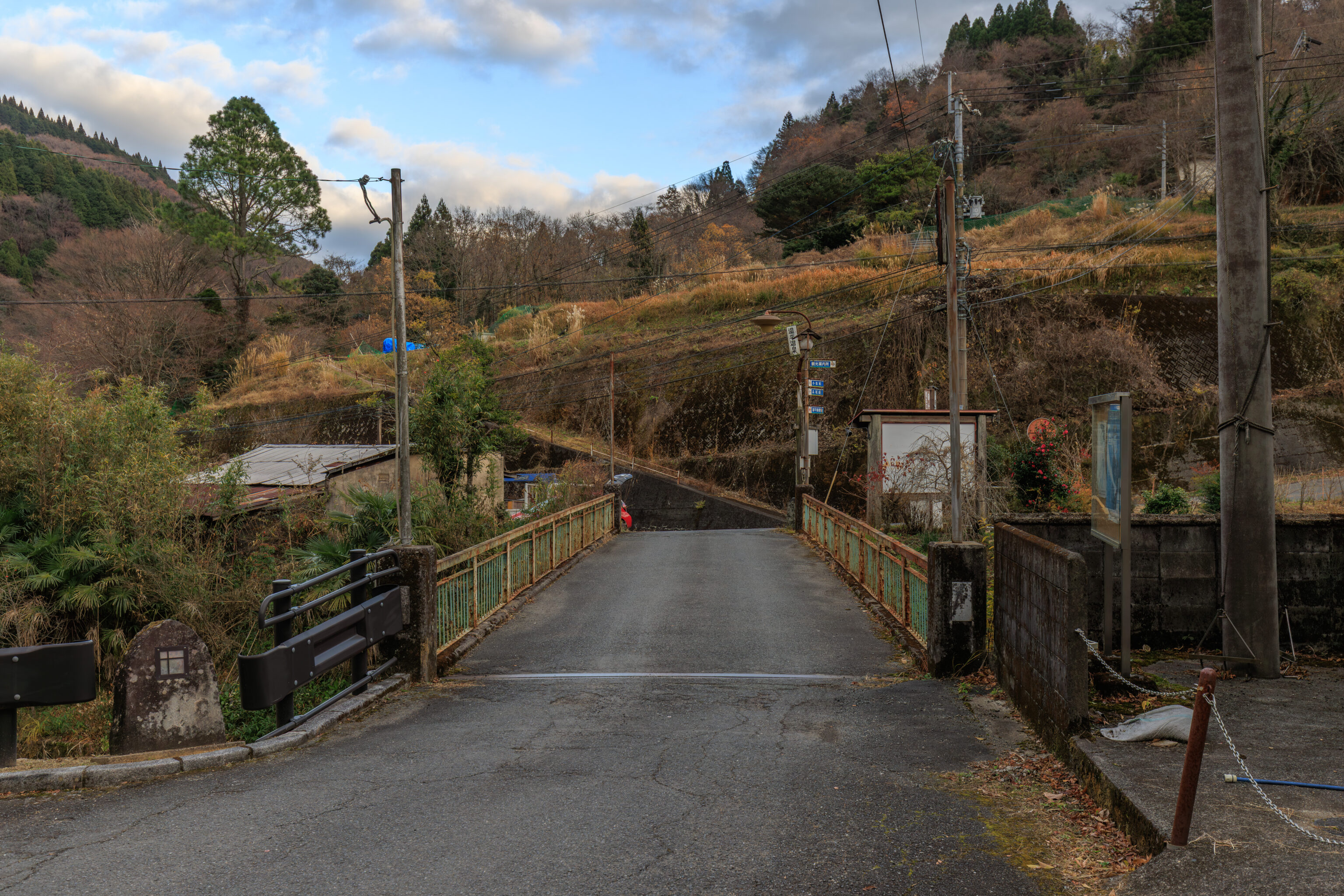
The last bridge across the river is right across from the post office.
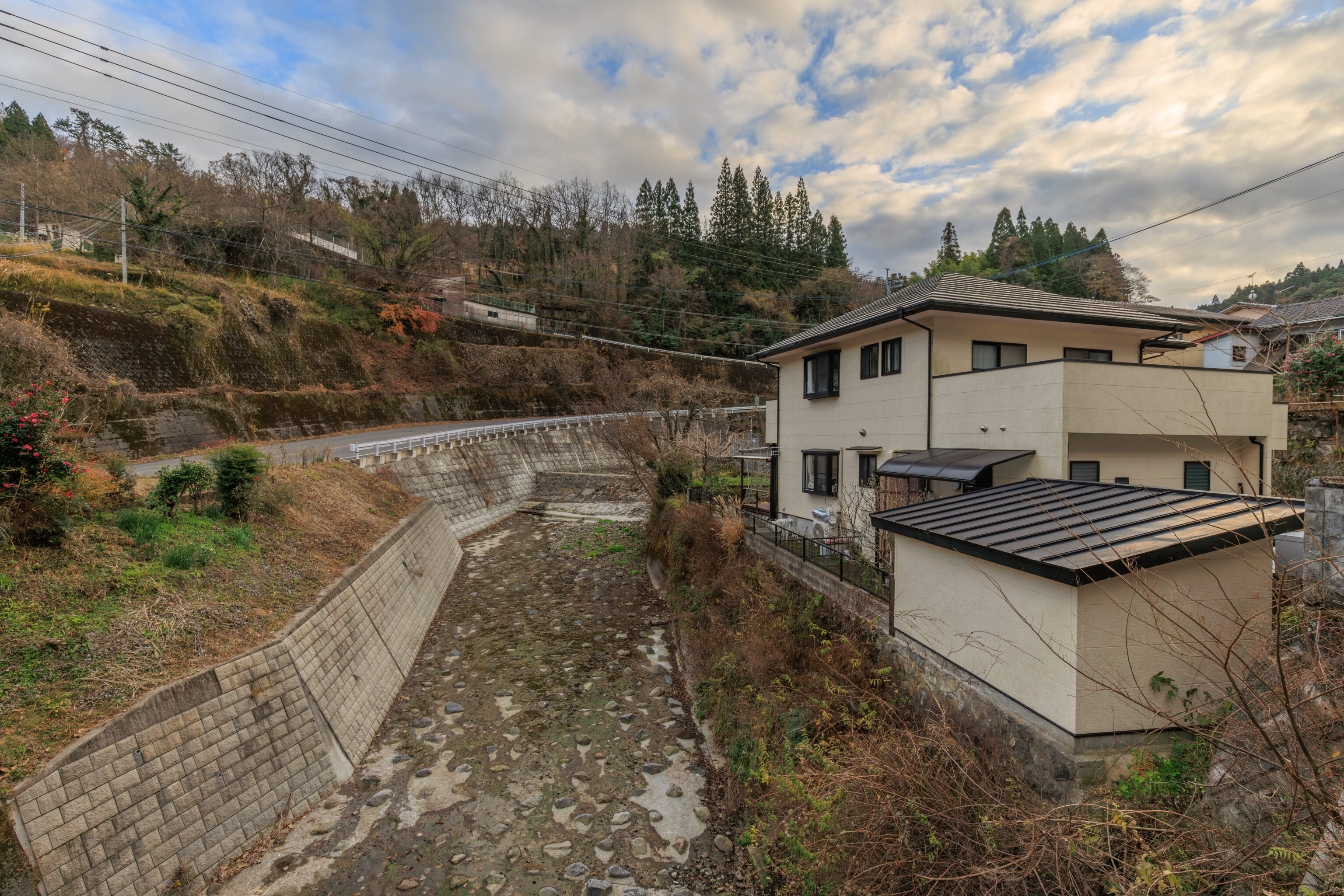
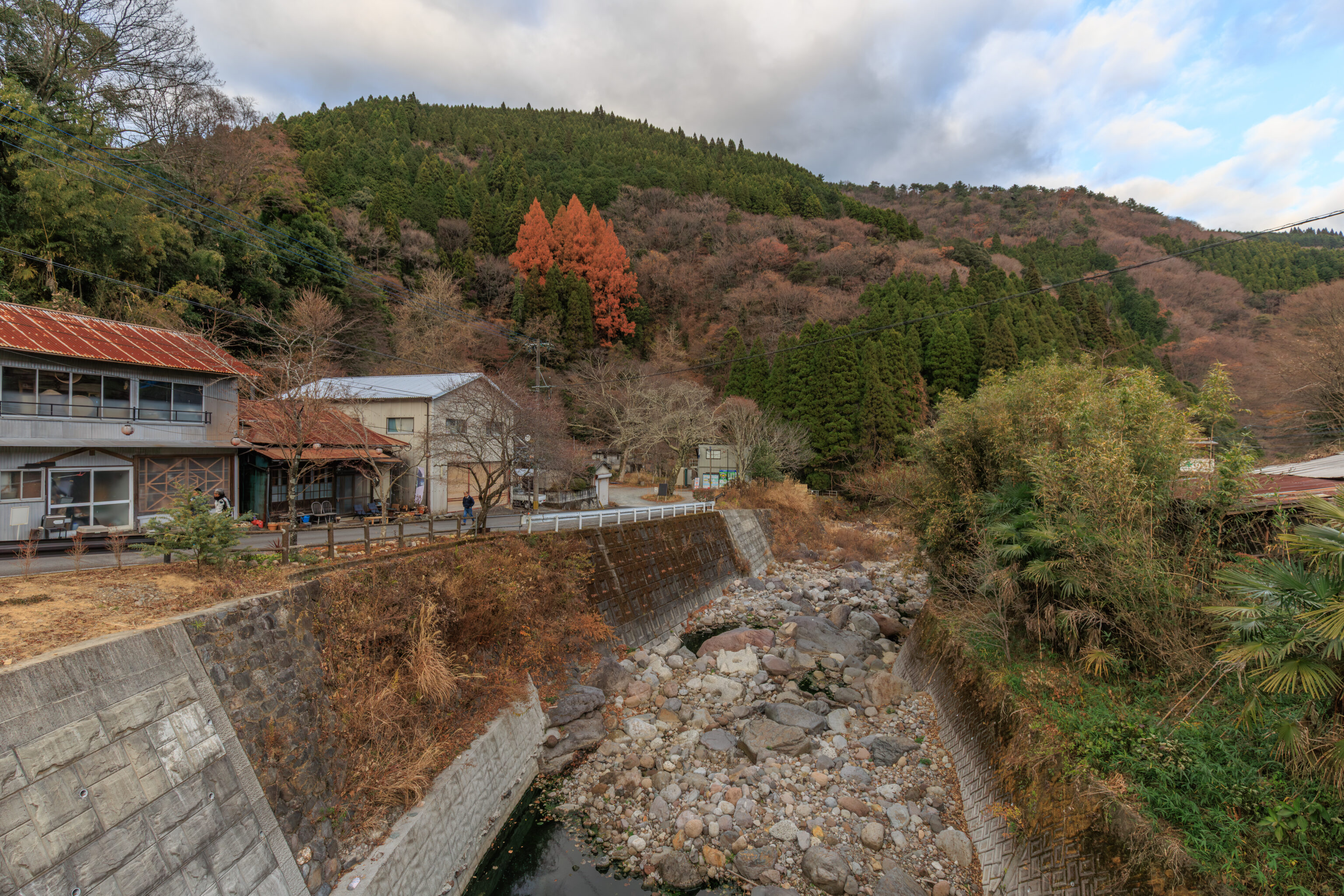
We went onto the bridge to look up and down the river. The water flow here is just a trickle as there seems to be a small dam a little bit upriver that redirects the water to somewhere else.
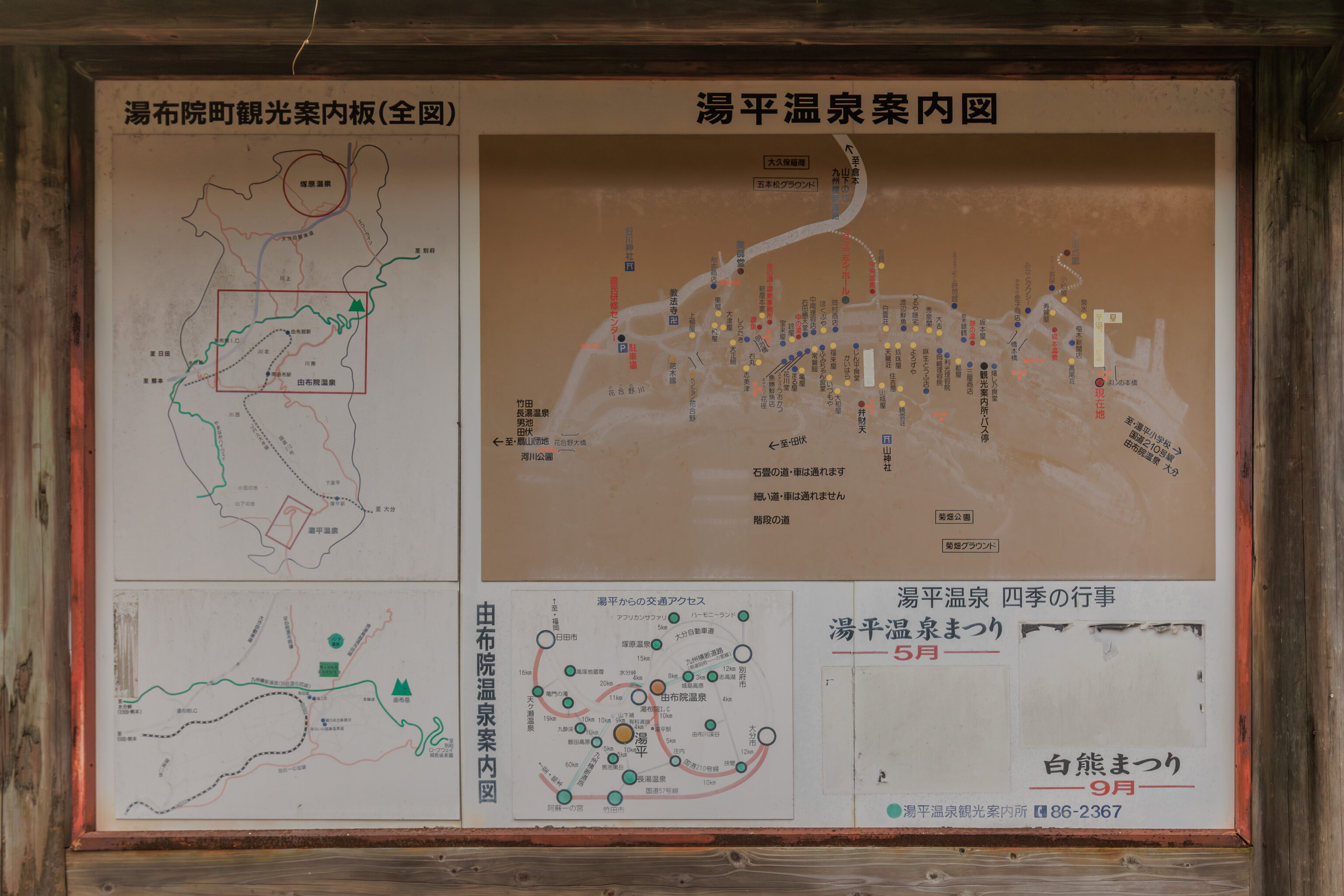
The bridge leads to the Yunohira Onsen Line. This map was by the intersection. While the black text on the sigh was still extremely legible, most of the roads within Yunohira have faded away.
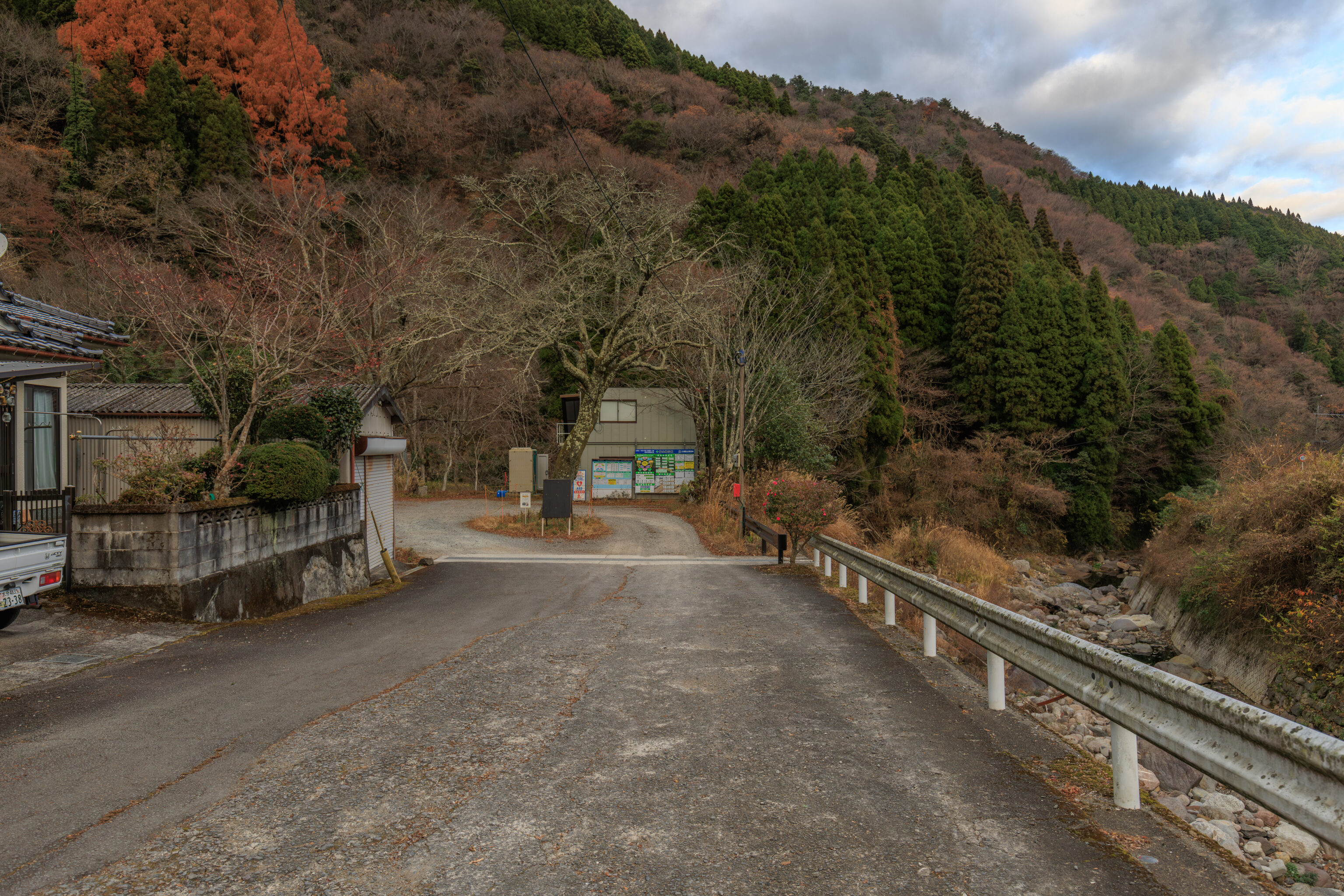
We went back across the bridge to the west side of the river to walk to the end of the road.
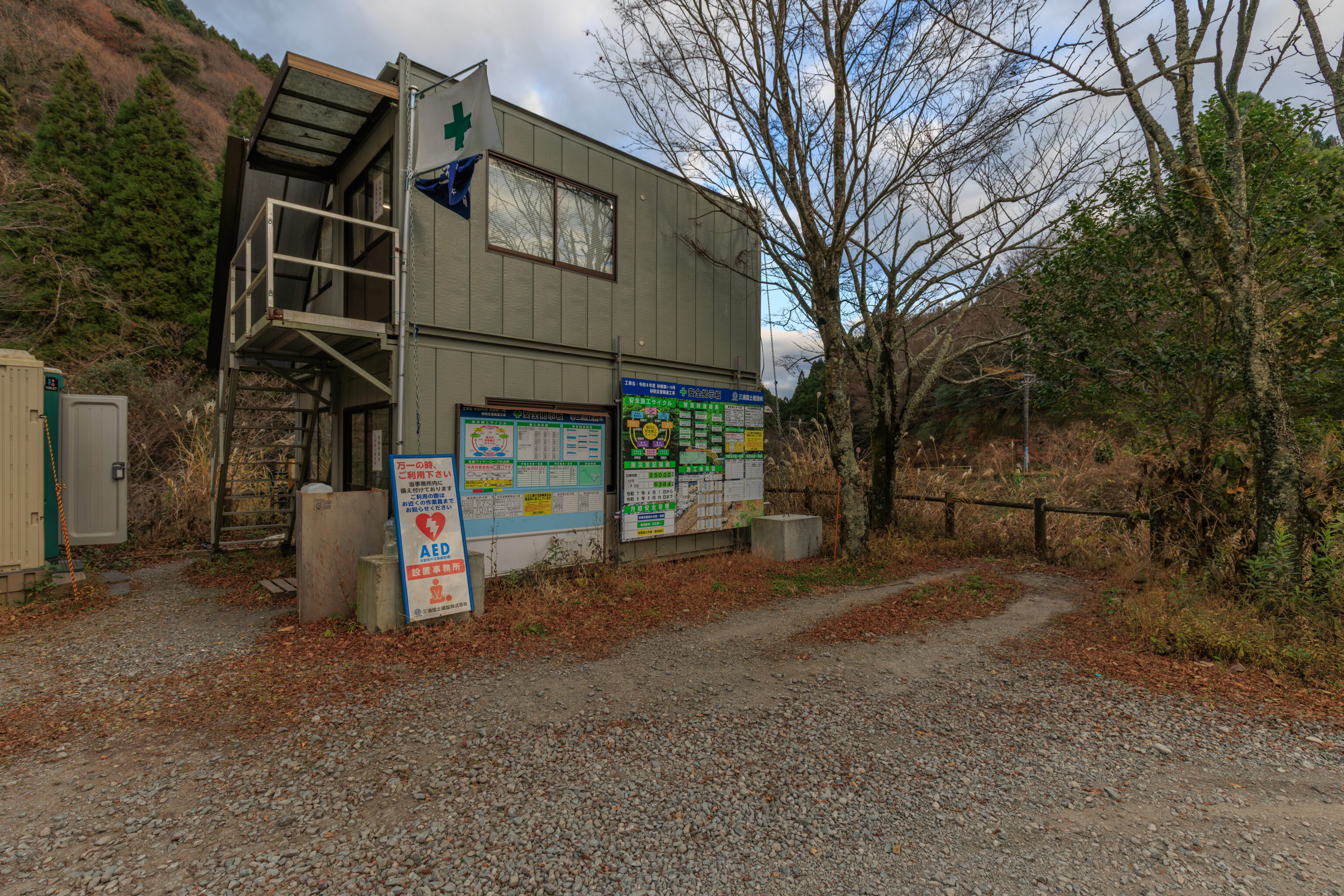
At first, we thought this might be a medical clinic. But it seems to be the safety office of a construction company.
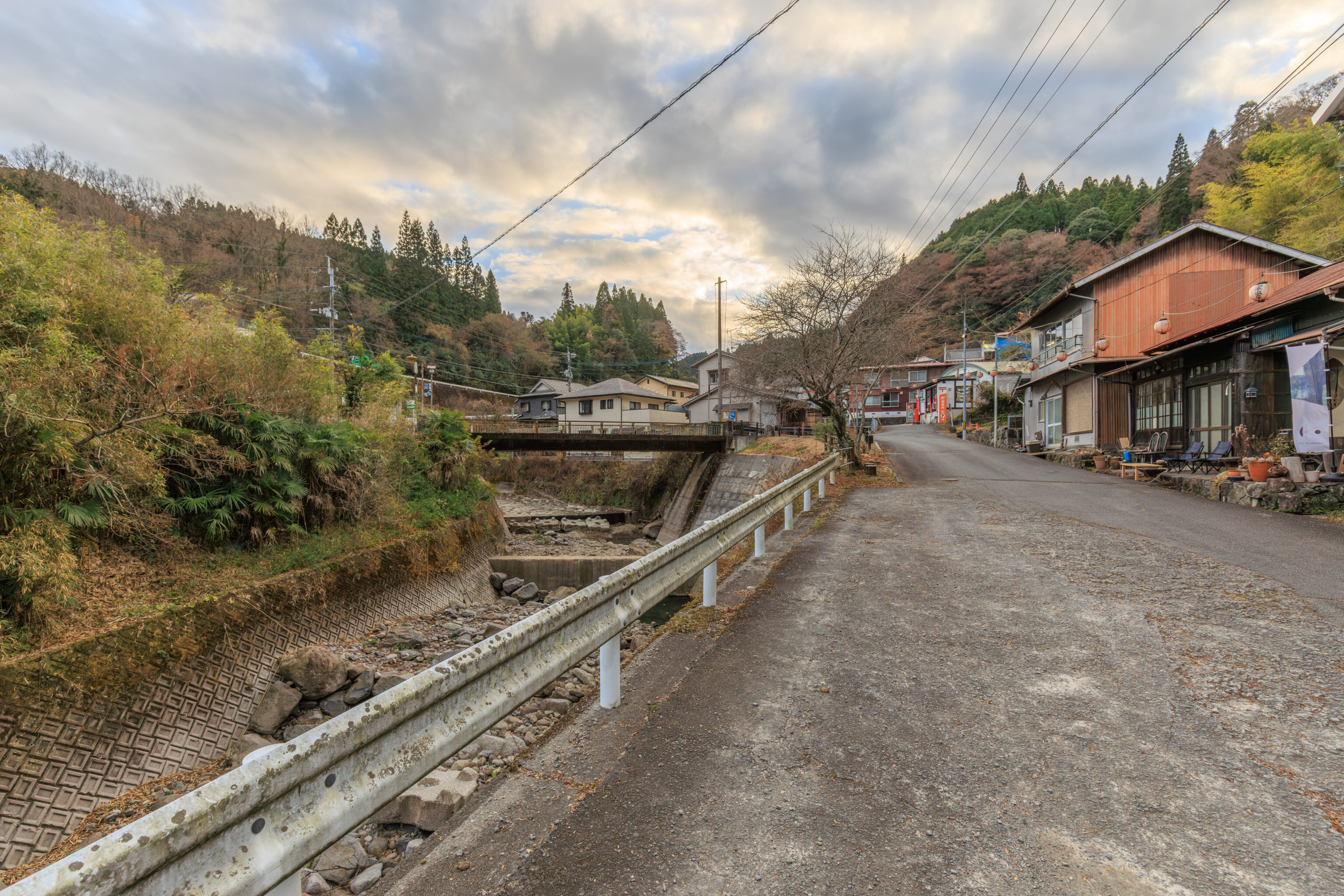
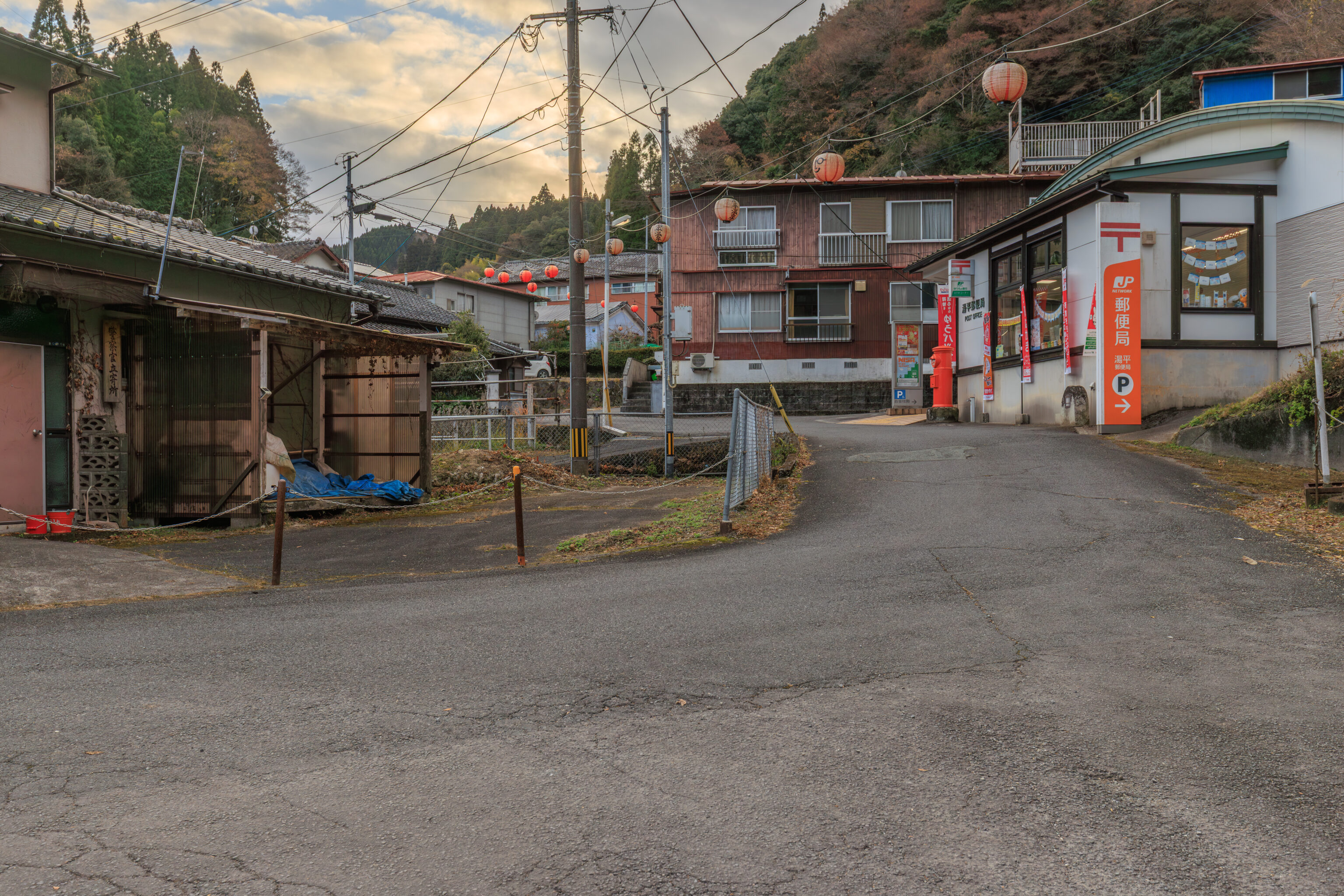
Having reached the end of the road, we turned around to head back to the Kamiyanagiya. It was starting to get dark and we noticed that the many red lanterns that hang above the road were now illuminated!
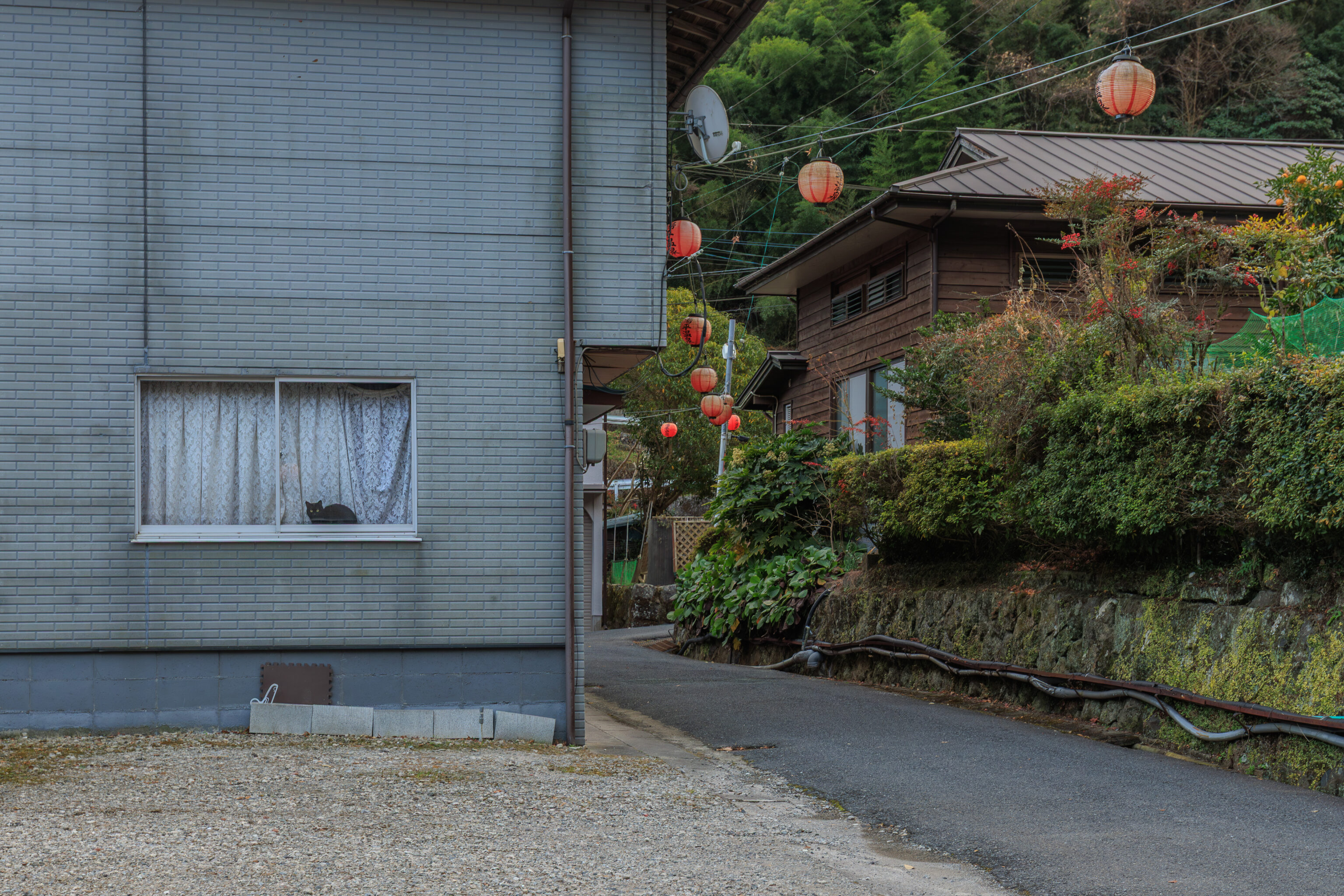
We came across a black cat in a window. Yes, it was a real cat!
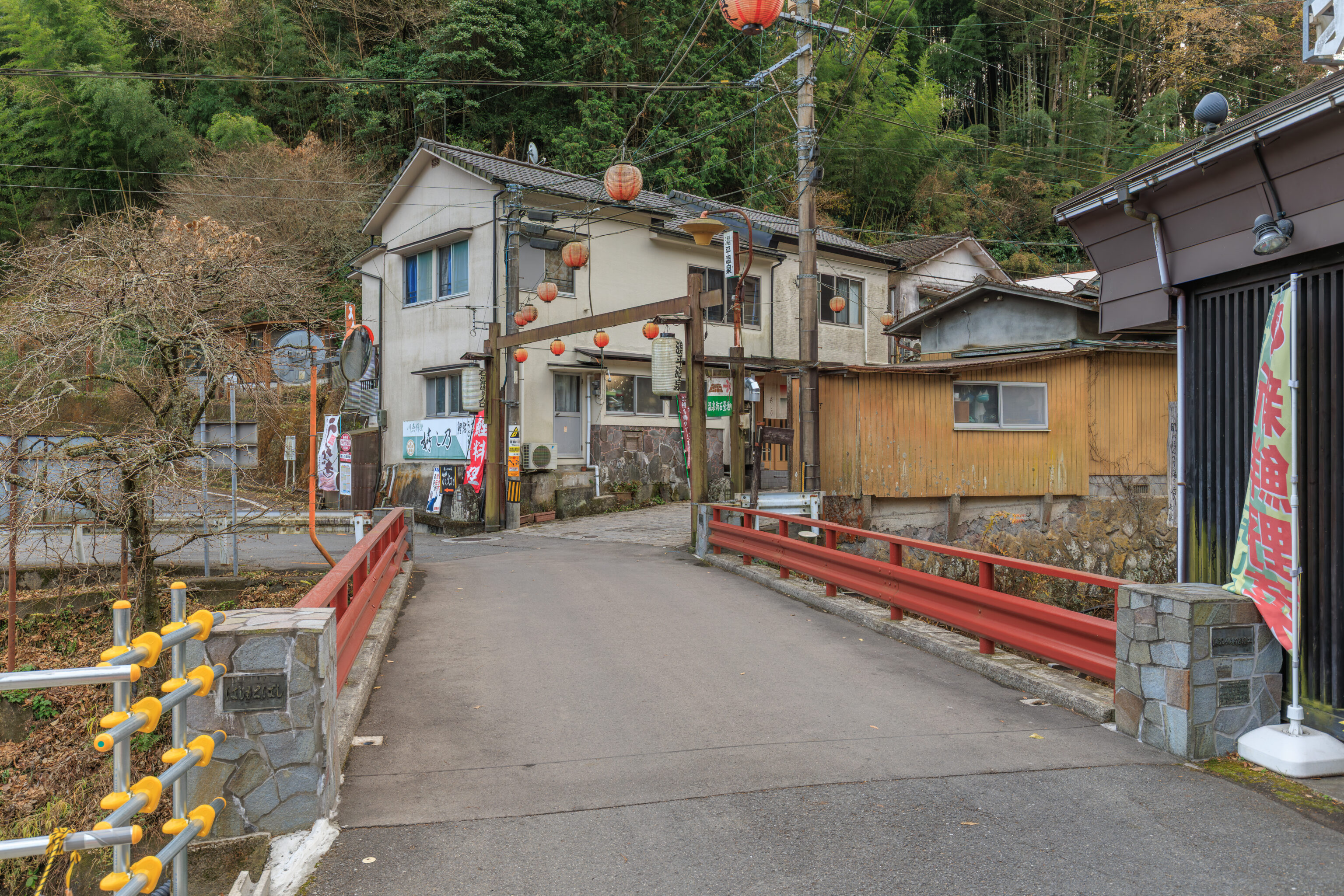
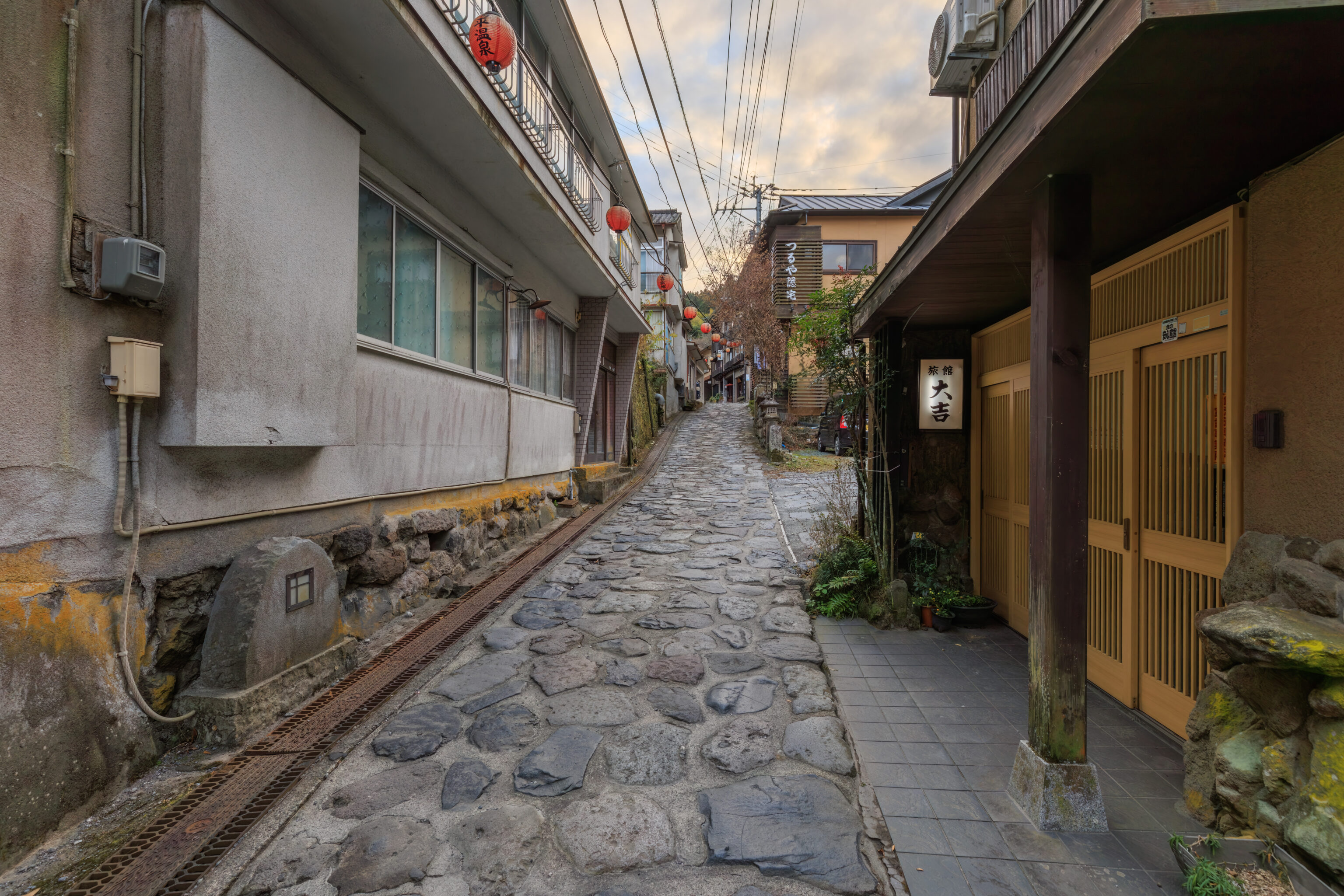
The walk to the north was entirely downhill. So unfortunately that means the walk back was all uphill.
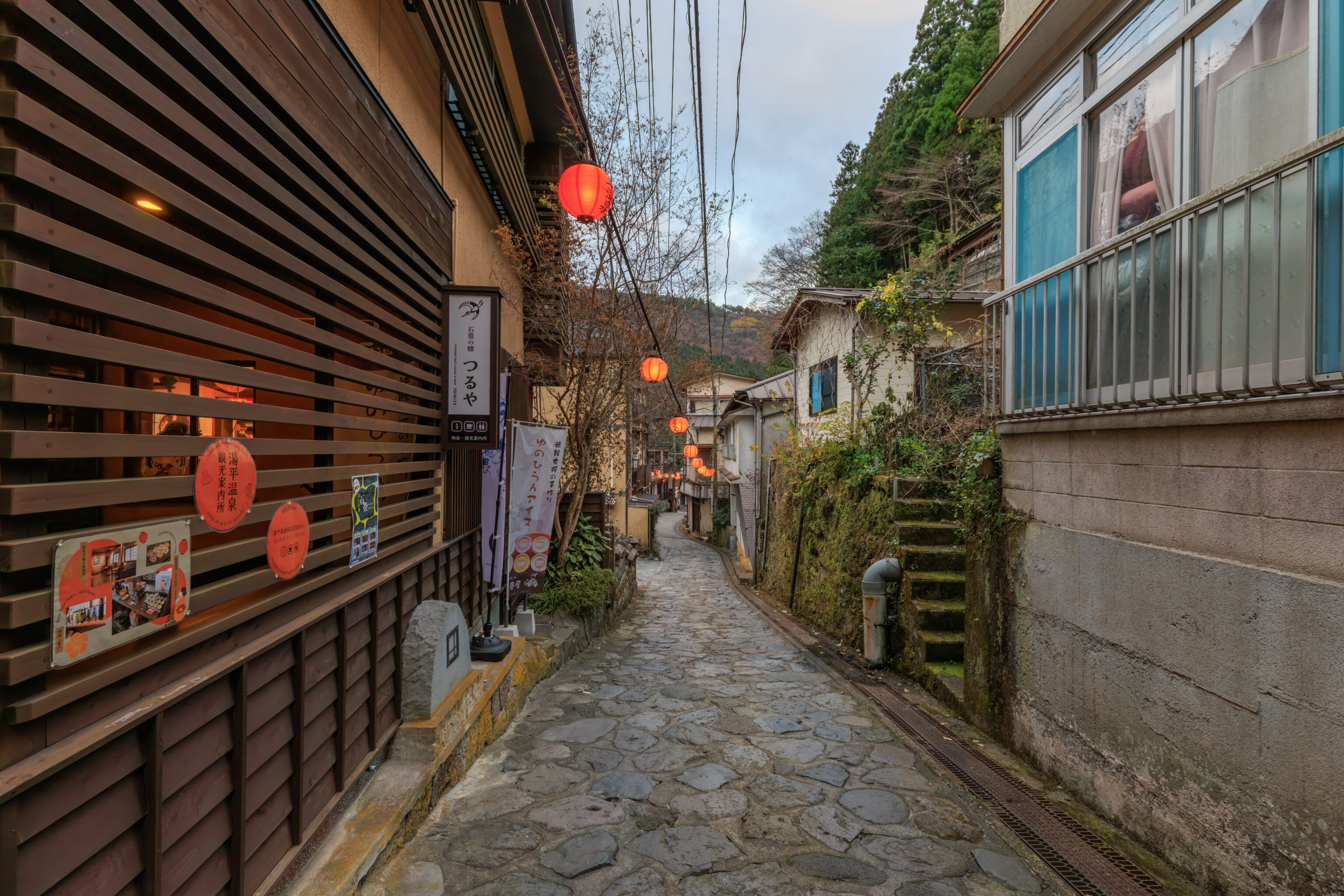
There was actually a business that was open, 石畳の驛 つるや Ishidatami no Eki Tsuruya. The English on their sign gives the name as Yunohira Rest Lounge & Shop Tsuruya. The actual Japanese text is something like Cobblestone Station Crane Shop, as in the bird, not construction machinery. It is also the Yunohira Onsen Tourist Information Center.
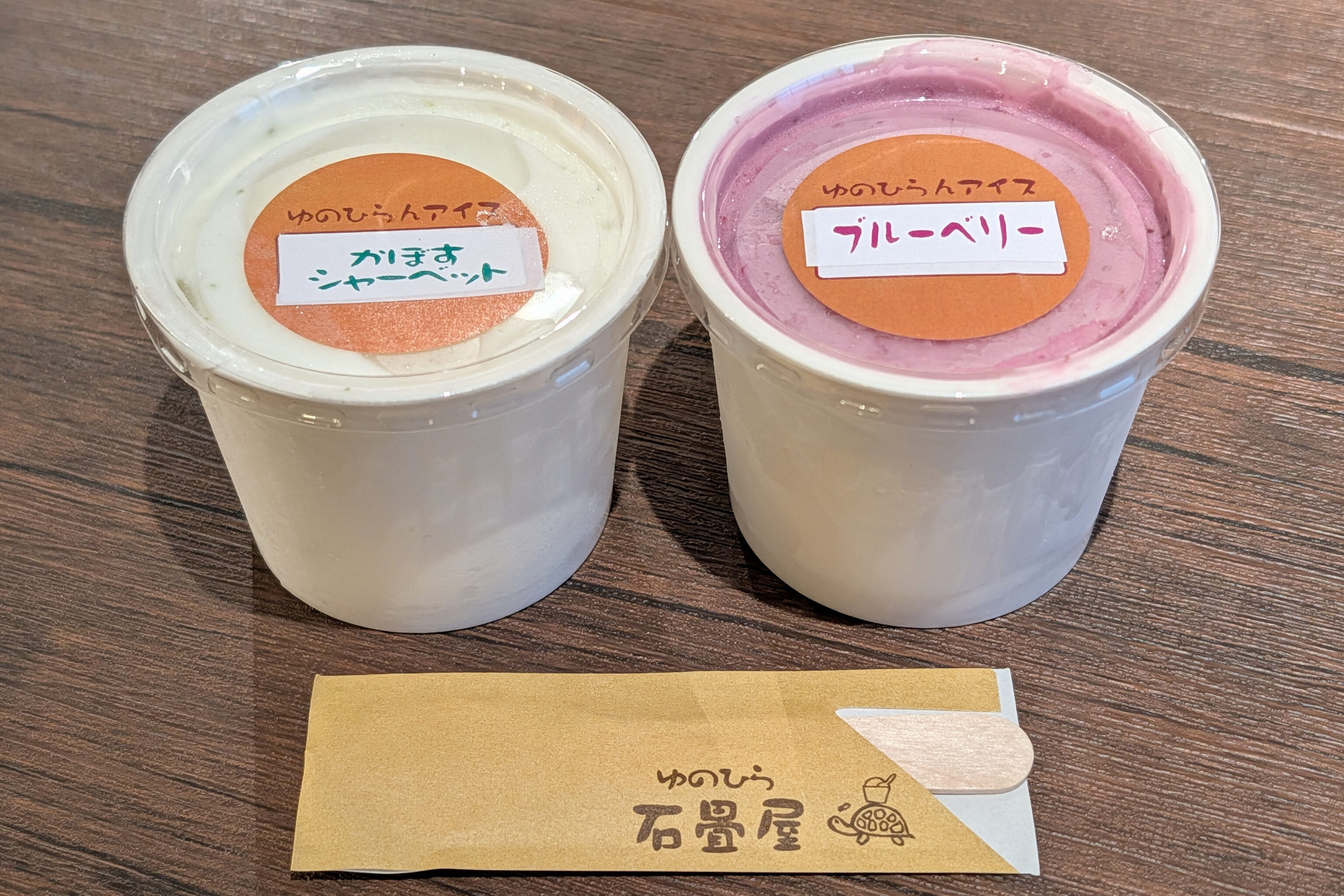
We bought two local ice creams, branded as ゆのひらんアイス Yunohiran Ice. The two flavors that we got are かぼす シャーベット kabosu sorbet and ブルーベリー blueberry. That is not a translation, it is literally what the katakana says.
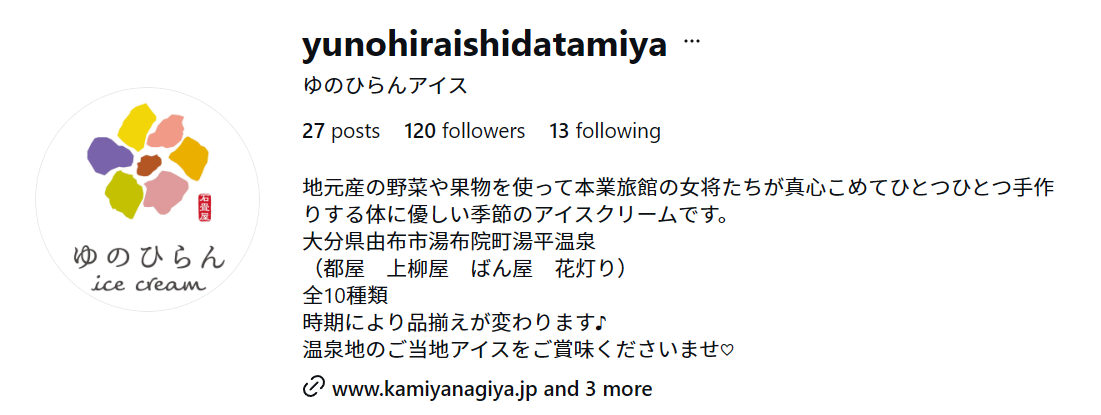
Searching for Yunohiran Ice yields an Instagram account, @yunohiraishidatamiya. It turns out that these are made by the okami of four local ryokan, including the Kamiyanagiya where we are staying!
These seasonal ice creams are handcrafted with heartfelt care—one by one—by the proprietresses of local inns, using fresh vegetables and fruits harvested right here in the region.

Yunohira Onsen, Yufuin-cho, Yufu City, Oita Prefecture
(Featuring: Miyako-ya, Kamiyanagi-ya, Ban-ya, and Hana-akari)

A total of 10 varieties available.
Our selection changes with the seasons!
We invite you to savor this unique local ice cream from our hot spring town.
– Text from @yunohiraishidatamiya‘s Instagram profile, translated using Google.
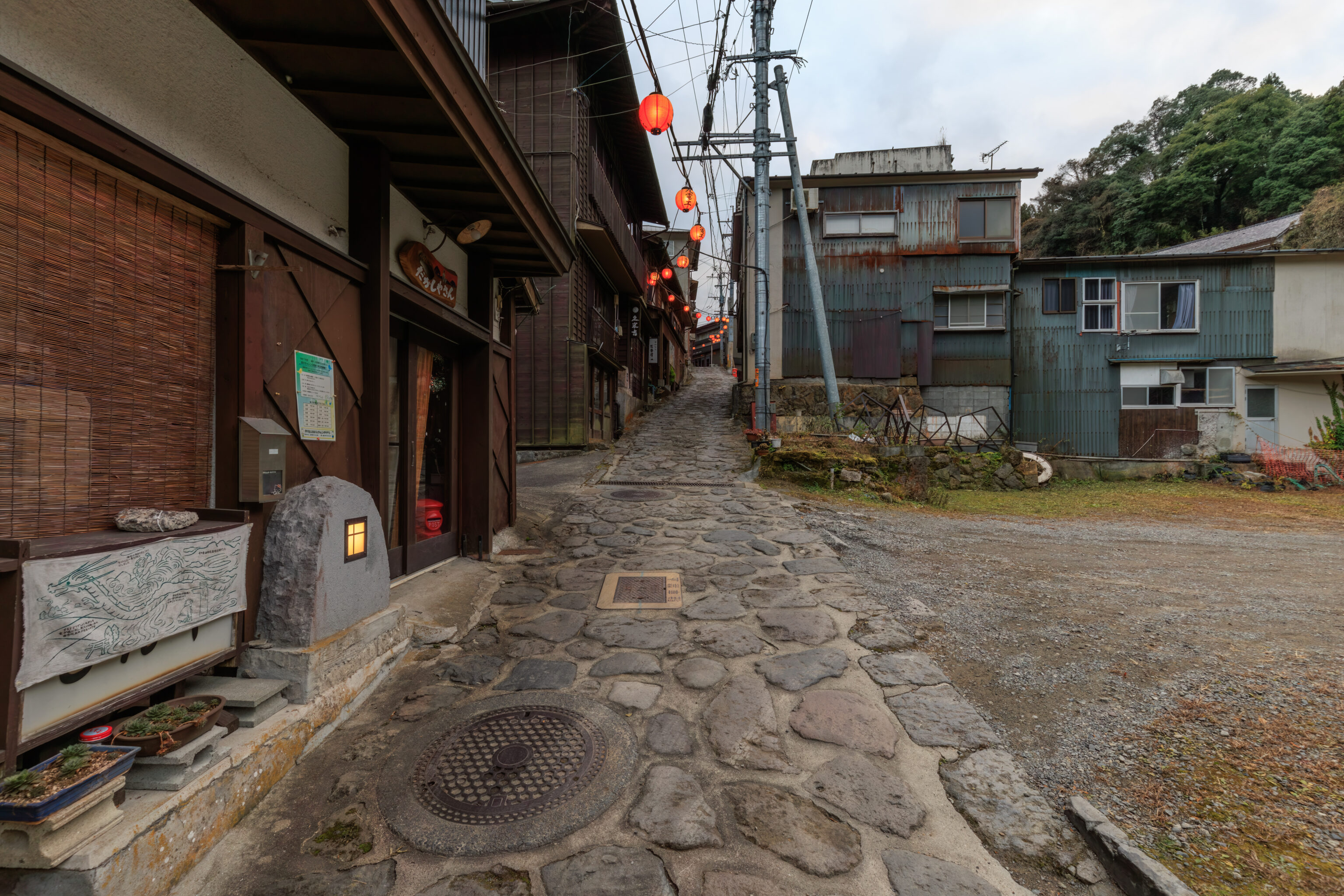
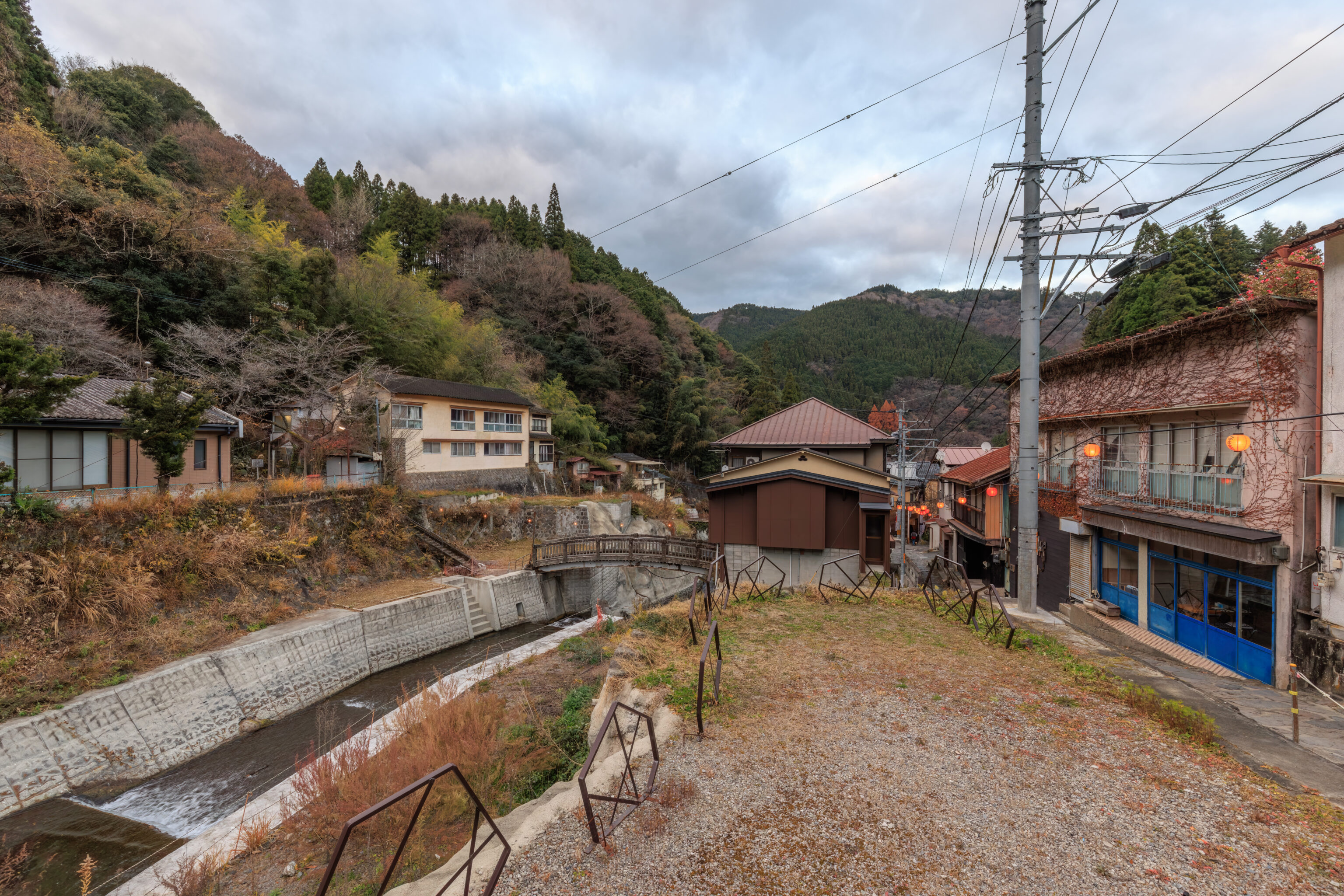
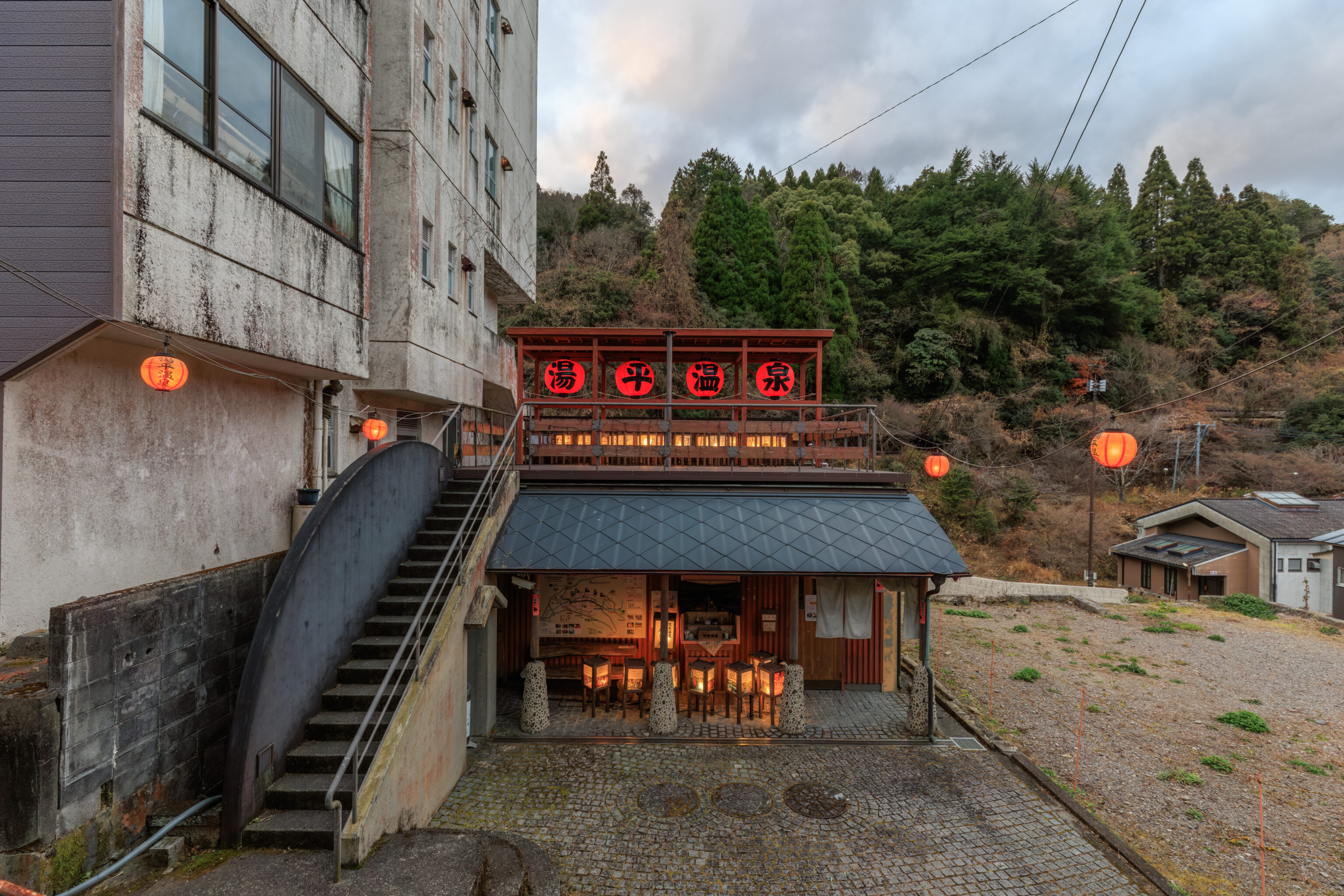
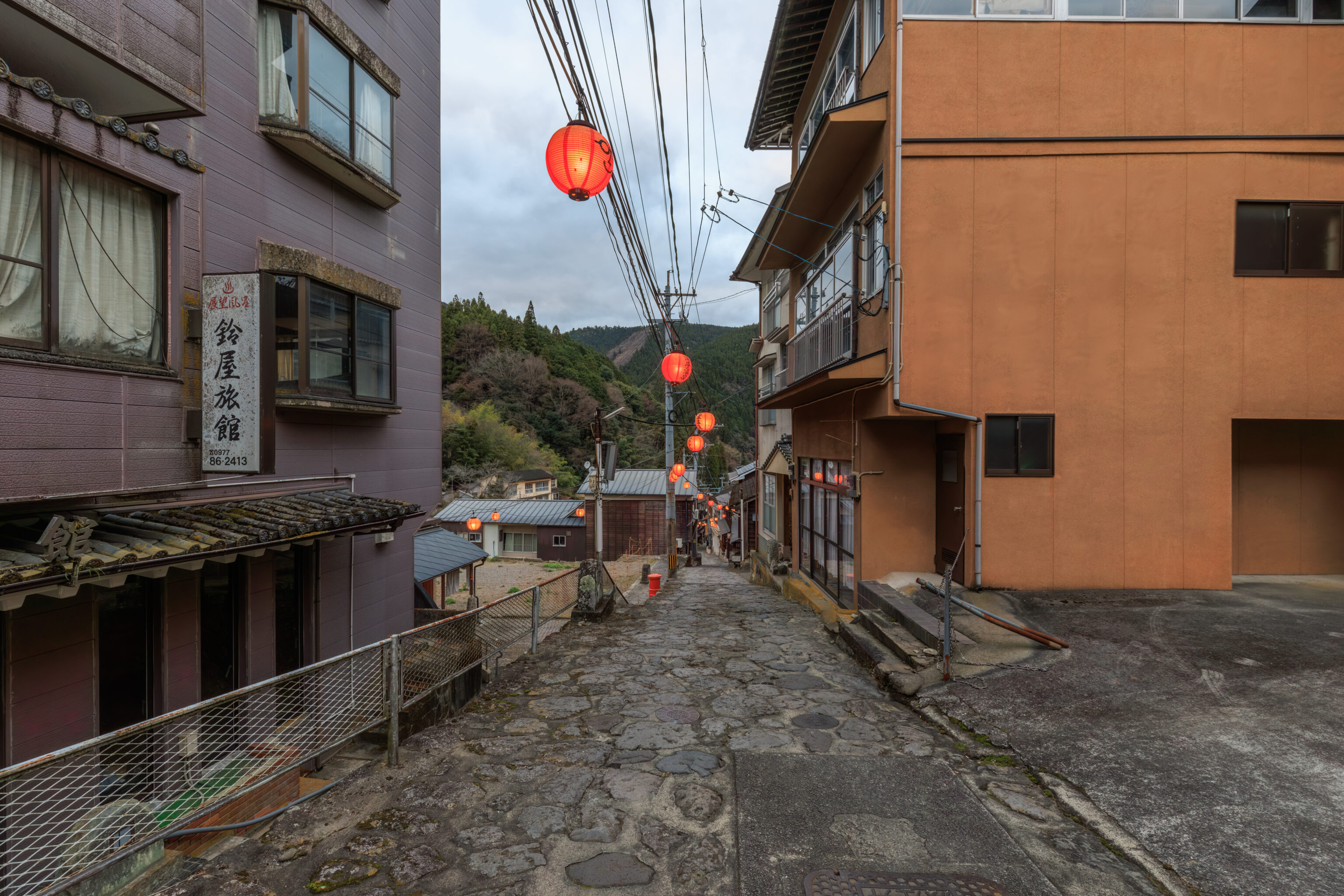
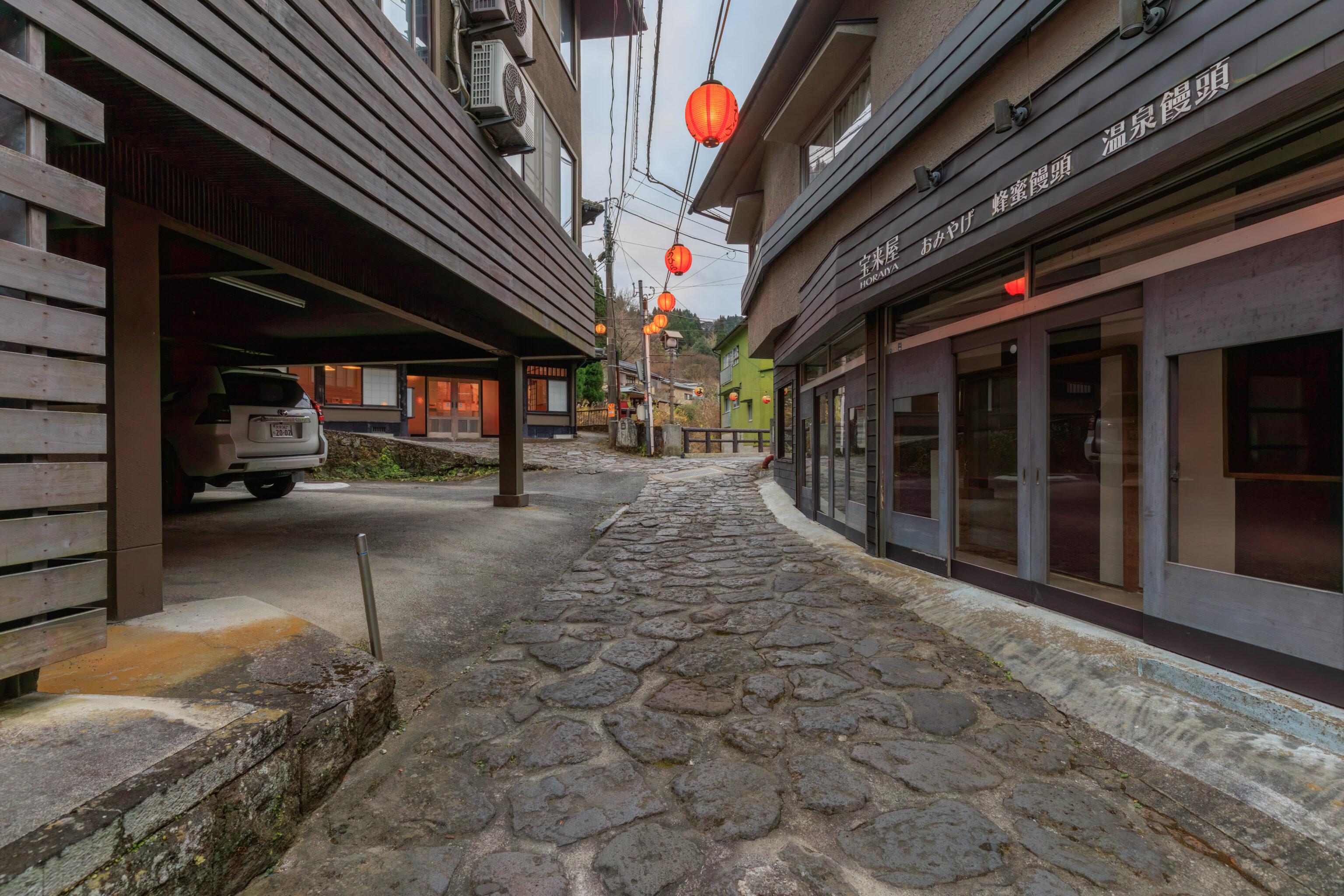
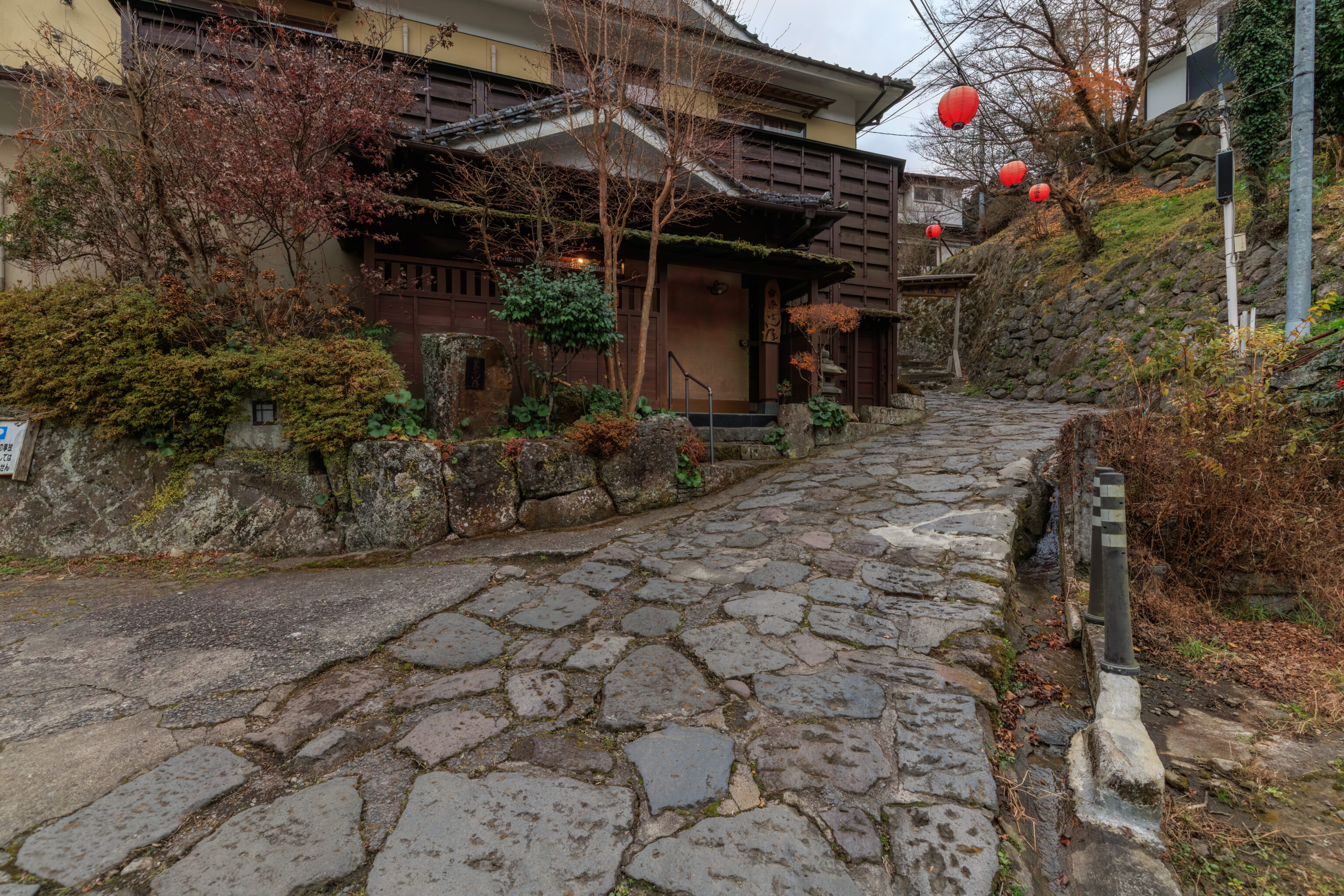
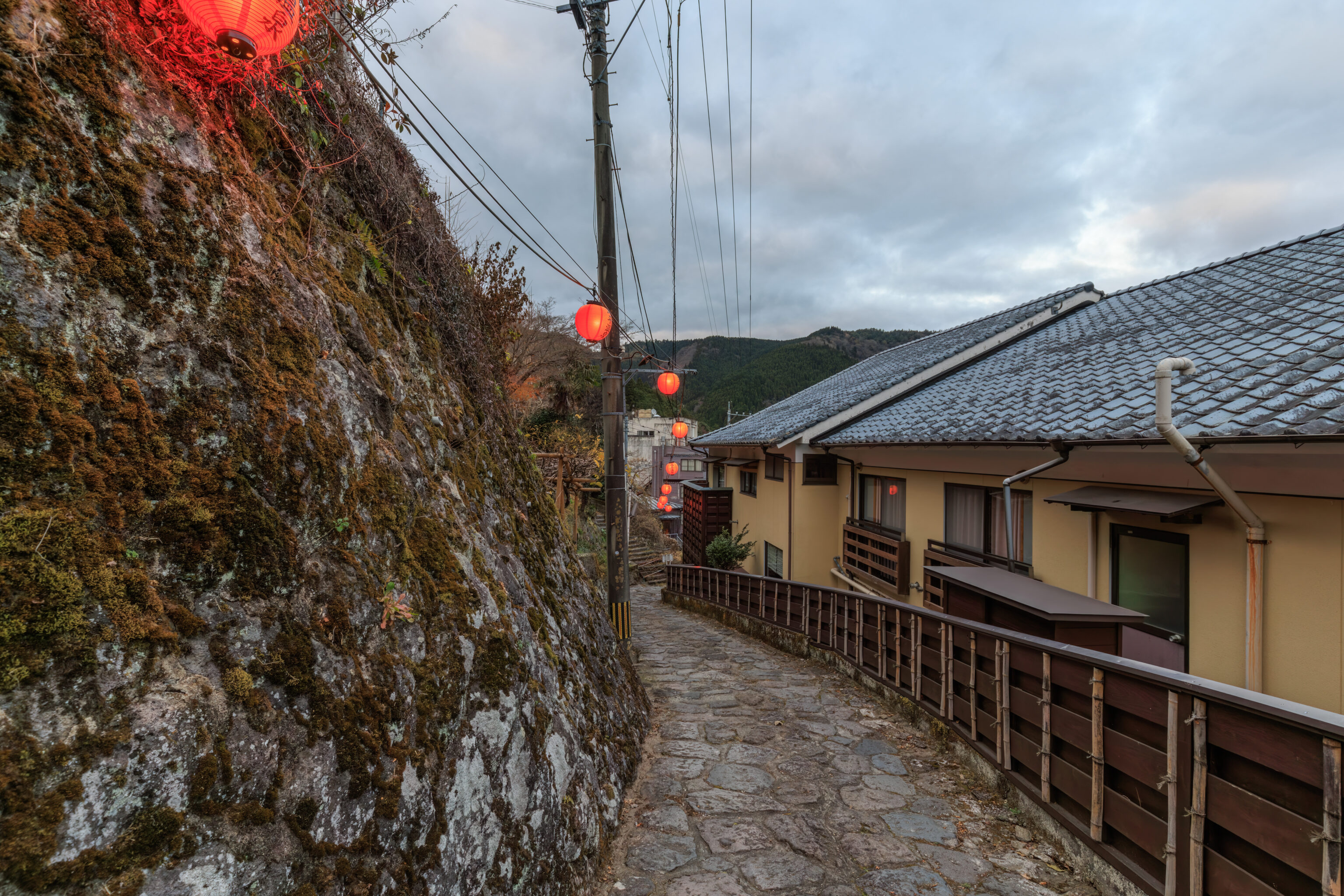
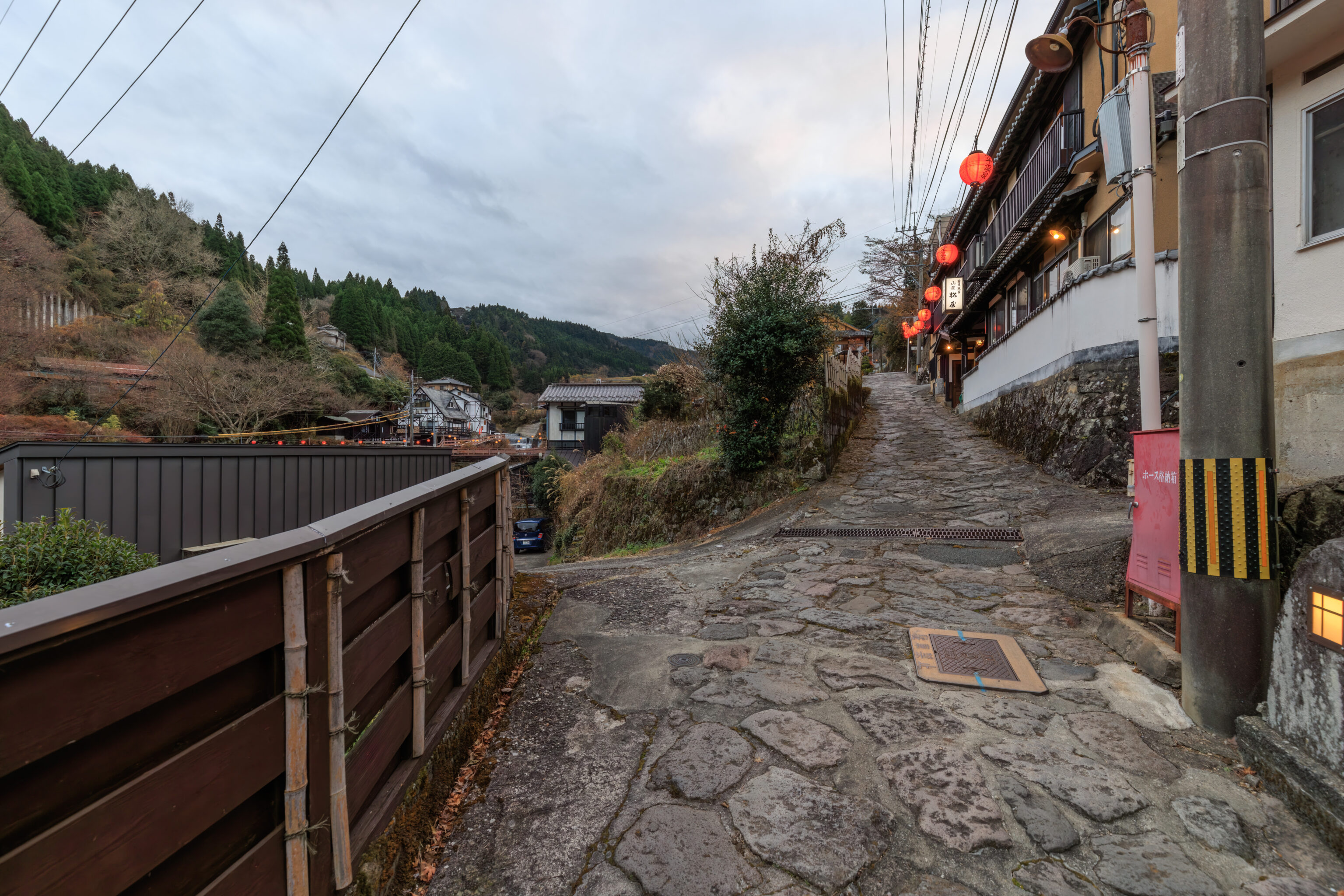
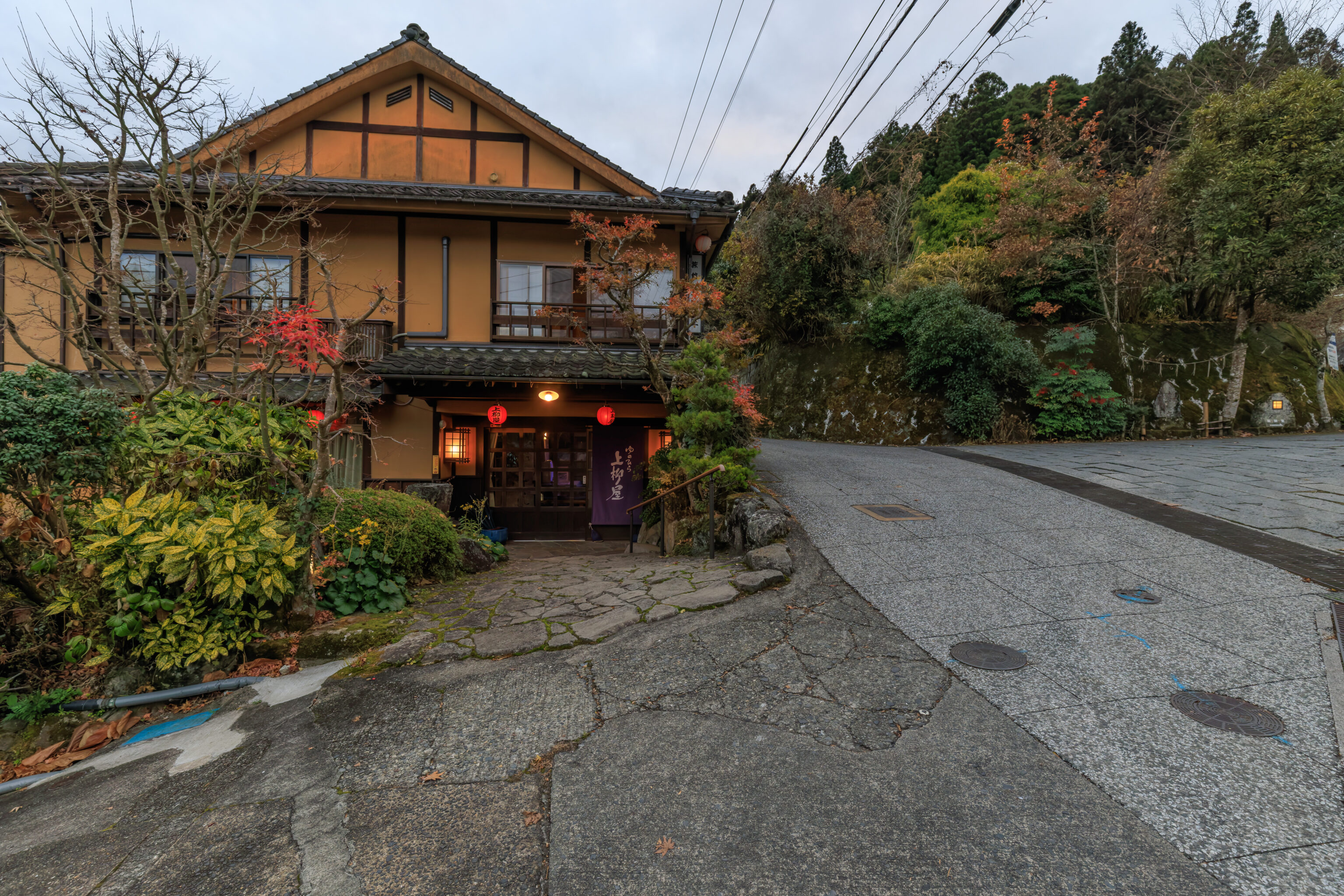
We continued walking uphill to the south until we returned to the Kamiyanagiya.
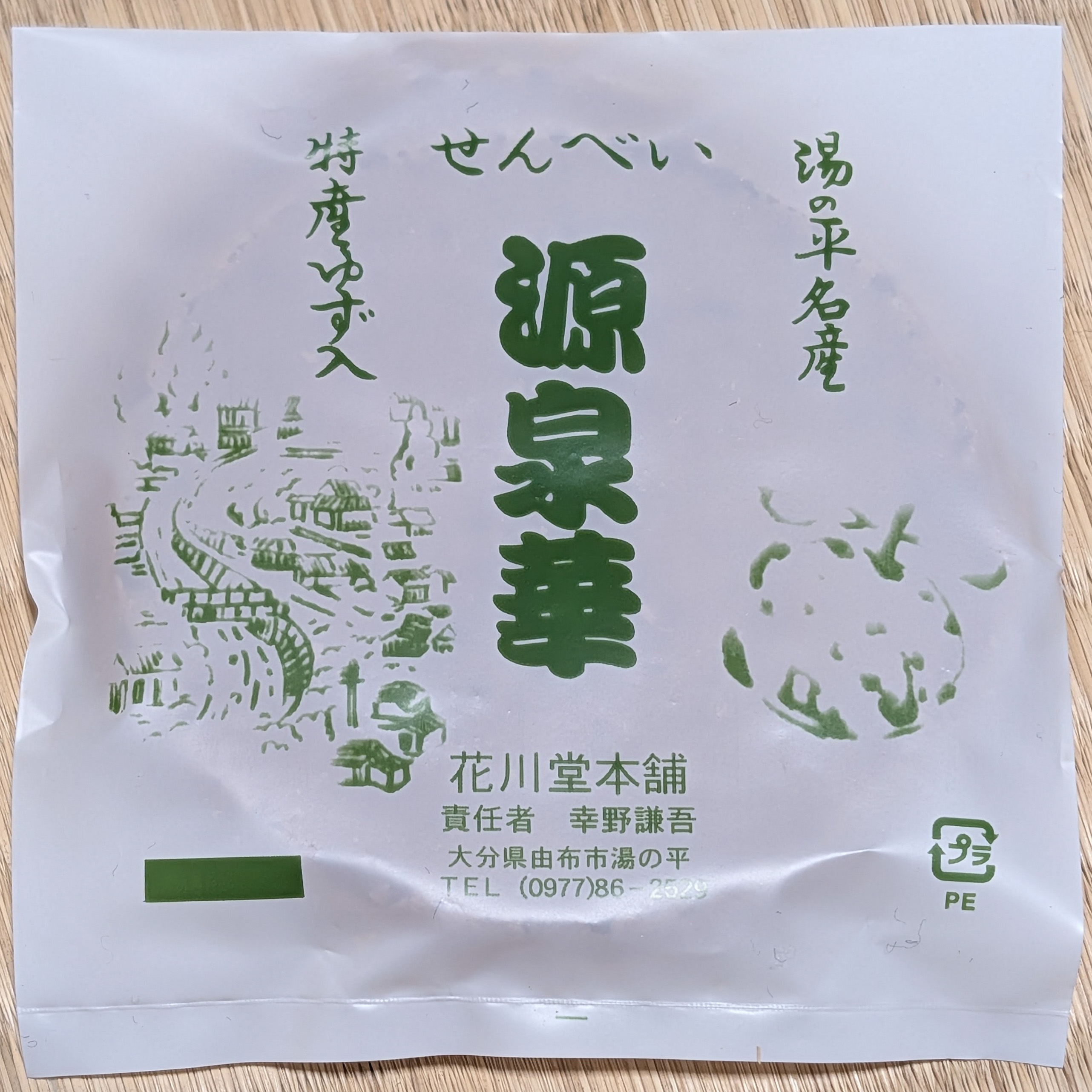
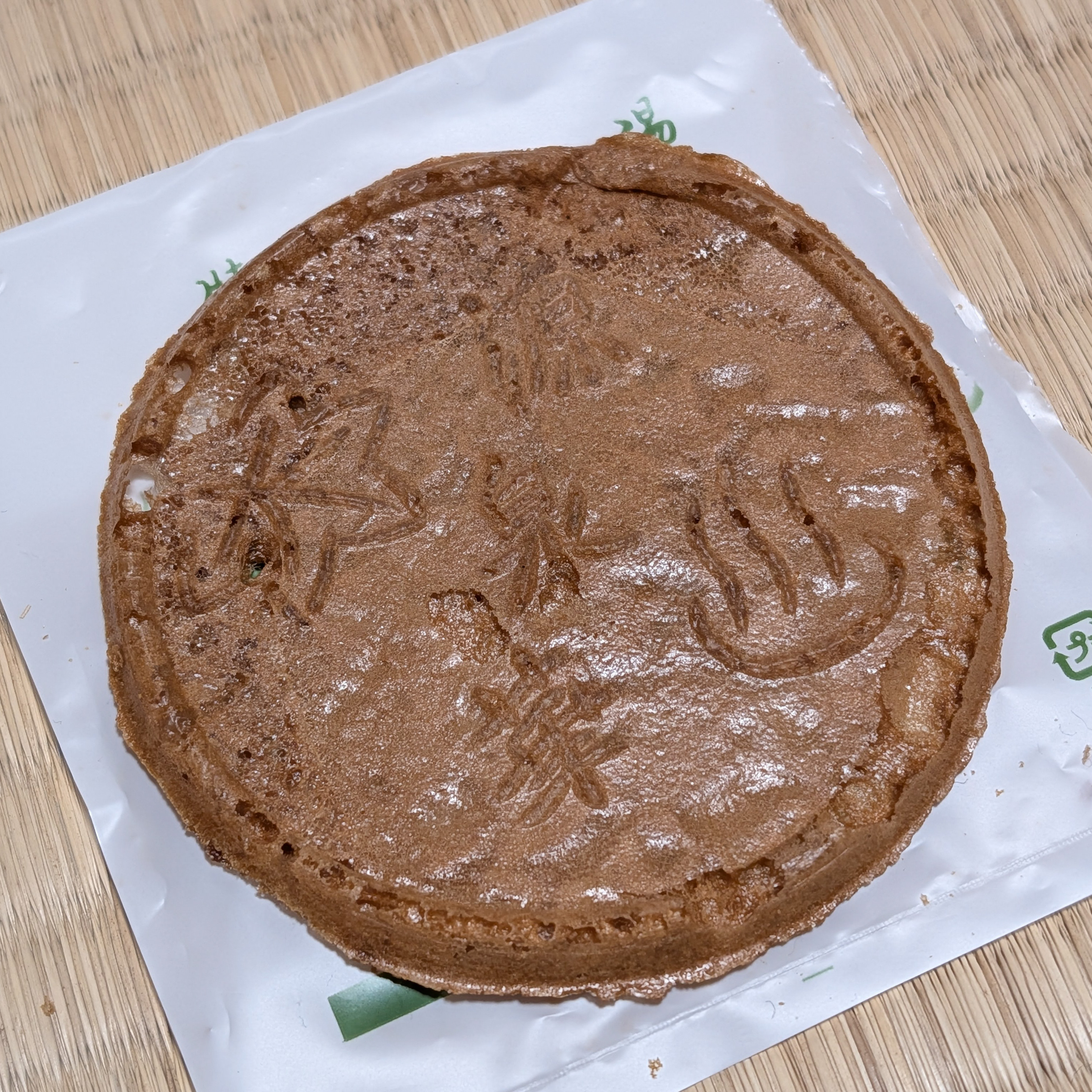
After returning to our room, we ate a local senbei which was provided by the ryokan.
Senbei Crackers
Gensenka
Featuring Local Yuzu
A Specialty of Yunohira

Hanakawado Honpo
Manager: Kengo Kono
Yunohira, Yufu City, Oita Prefecture
– Text from the senbei wrapper, translated using Google.
We then rested in our room for a bit until it was 6pm, dinner time!
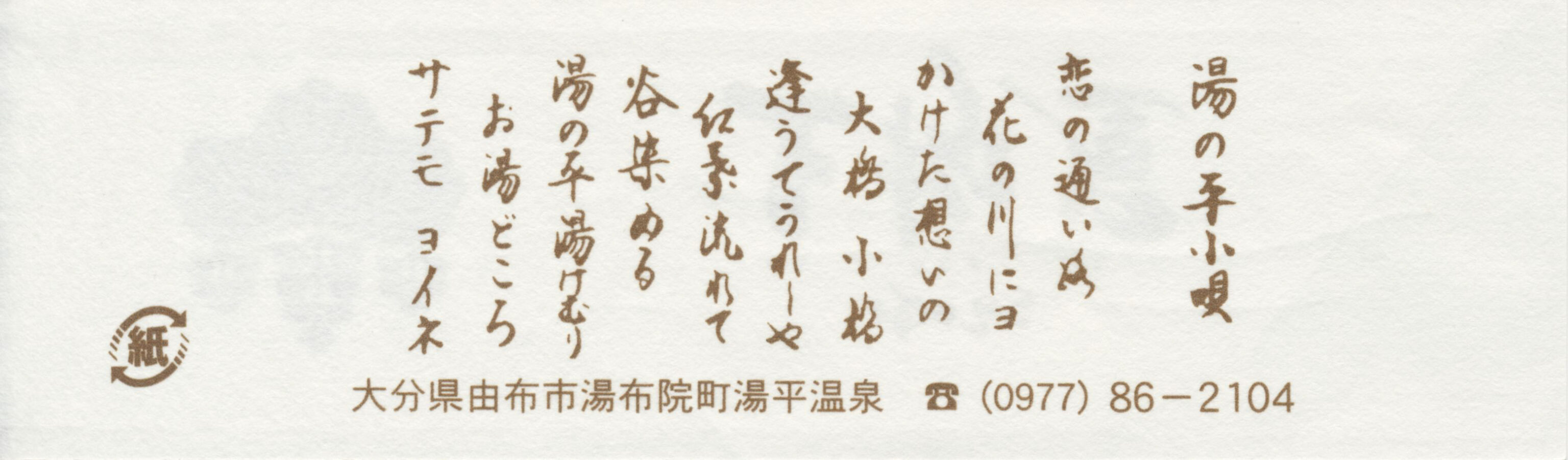
Dinner was served downstairs in a dining room that was around the corner from the ryokan’s front desk and stairs. Each of the groups staying at the ryokan got their own semi-private dining areas.
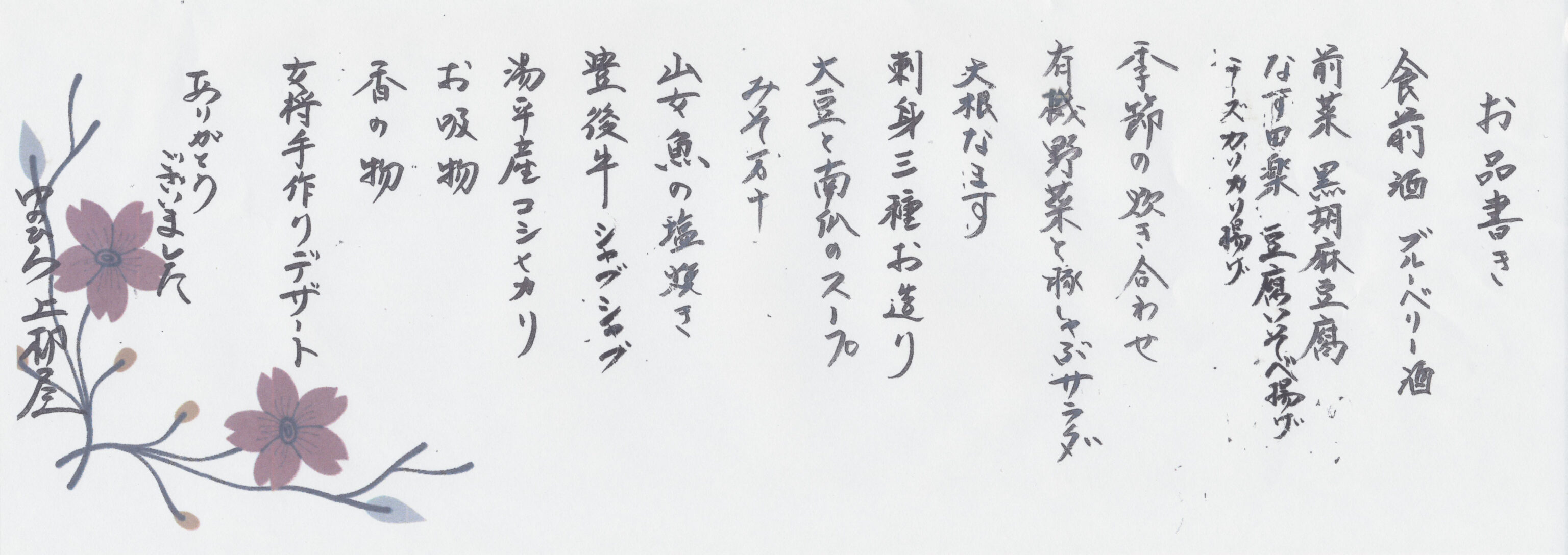
Menu
Aperitif: Blueberry wine
Appetizers:
  Black sesame tofu
  Eggplant with sweet miso glaze (Nasu Dengaku)
  Deep-fried tofu skin with perilla (Tofu Isobe-age)
  Crispy fried cheese
Seasonal Simmered Assortment
Organic Vegetable and Pork Shabu Shabu Salad
Daikon Namasu
Three-Variety Sashimi Platter
Soybean and Kabocha
Miso Manju
Salt-Grilled Yamame Trout
Bungo Beef Shabu shabu
Yufuin-Grown Koshihikari Rice
Clear Soup
Pickles
Handmade Dessert by the Proprietress

Thank you very much
Yunohira Kamiyanagiya
– Text from a sign, translated using Google Gemini and Google Translate.
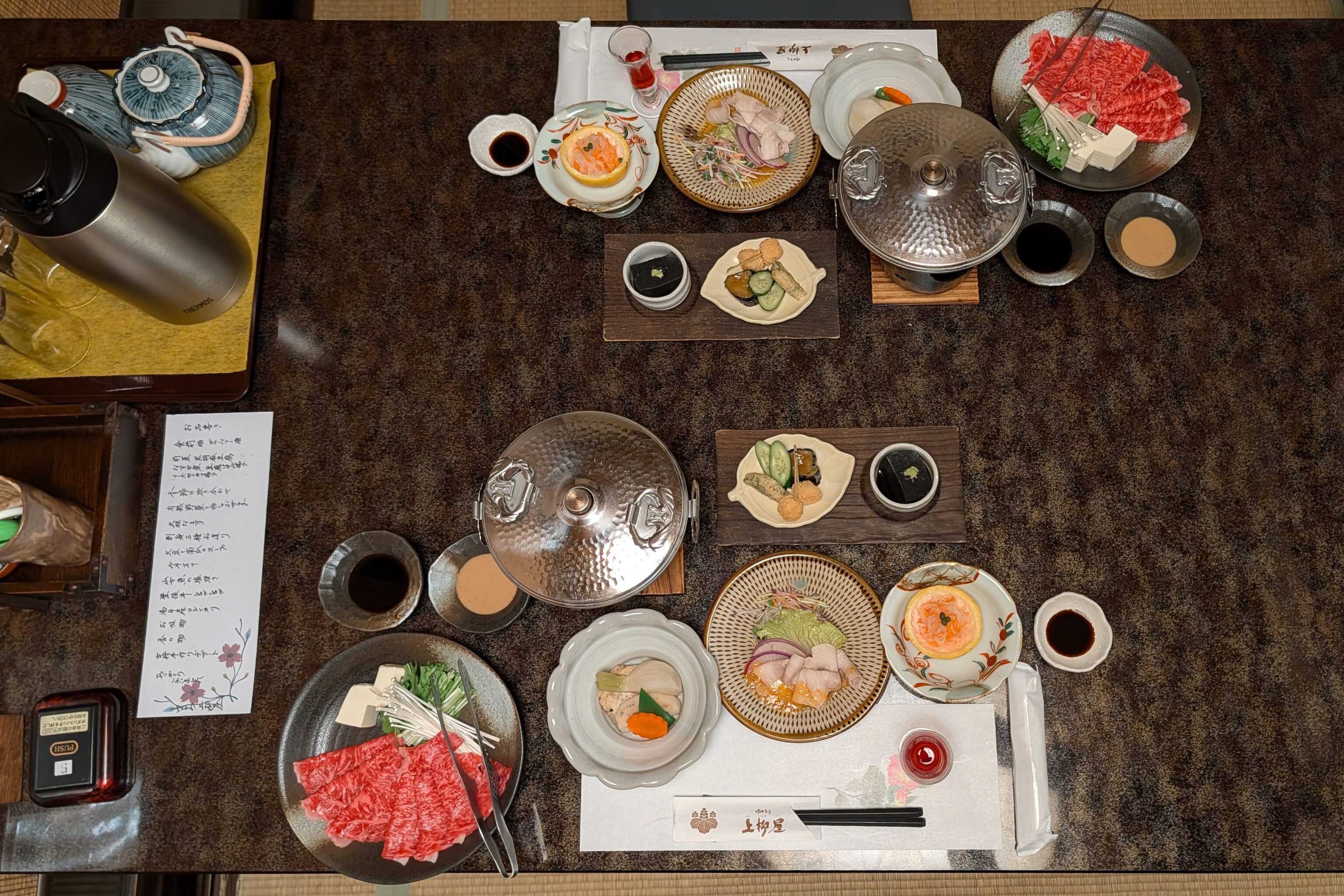
Many of the meal’s courses were already placed on the table when we arrived.
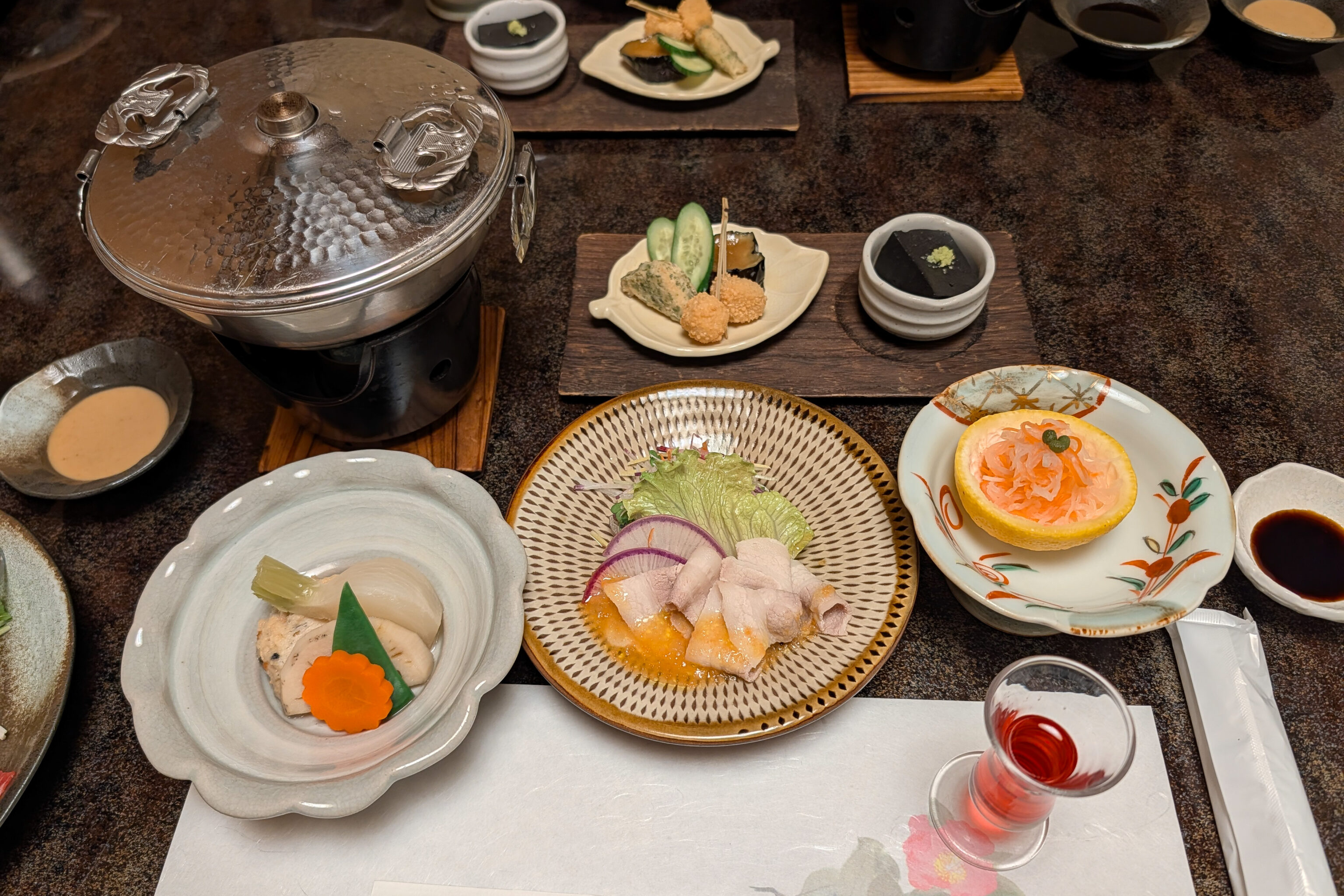
The leaf-shaped dish at the top includes three appetizer items, with the black sesame tofu to the right in a small bowl. Below, from left to right, are the seasonal simmered assortment, organic vegetable and pork shabu shabu salad, and daikon namasu.
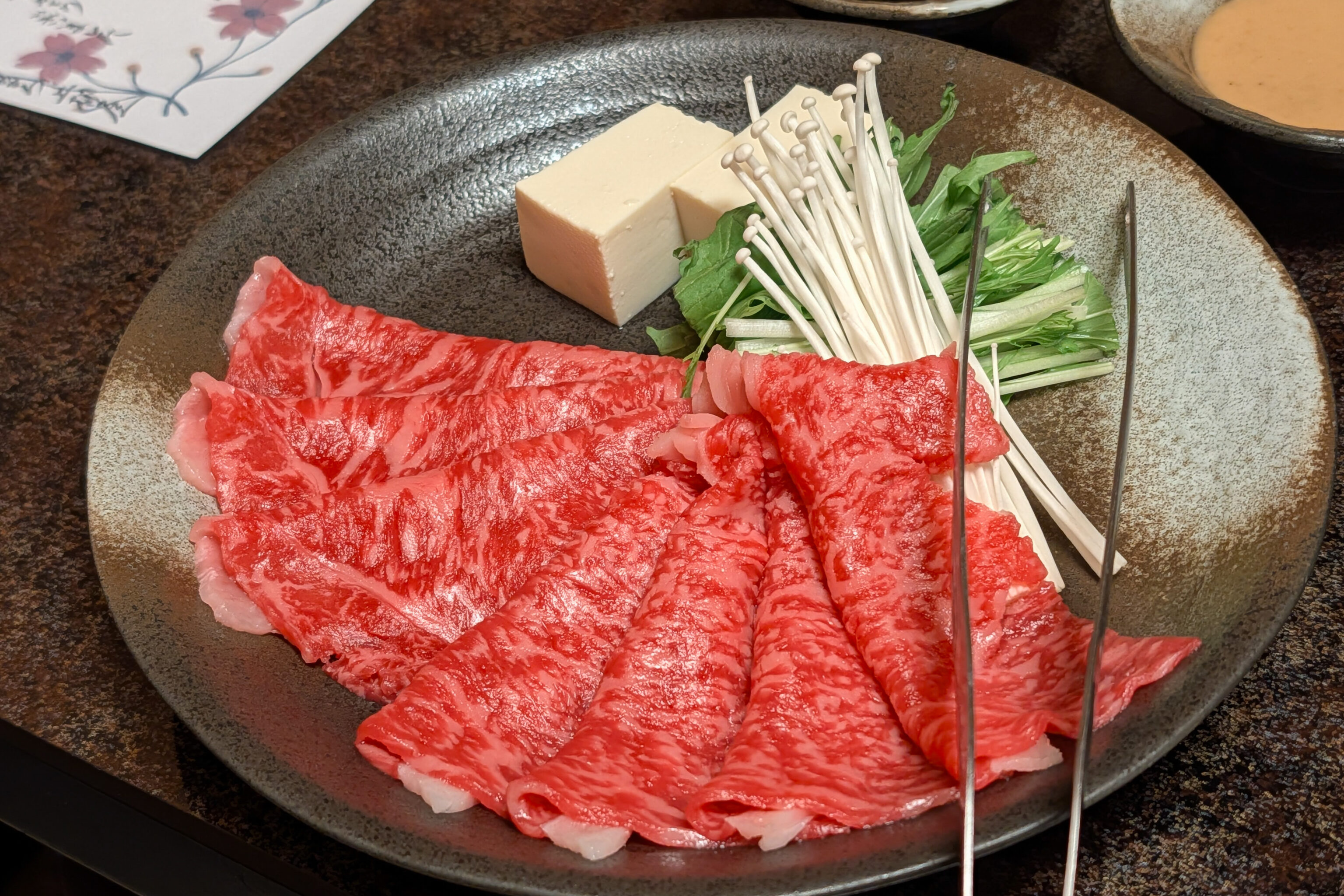
The meal included shabu shabu with excellent wagyu. The wagyu was the local Oita Bungo Beef, also romanized as Bungogyu, brand. Much of the modern Oita Prefecture was formed from the historic Bungo Province. The shabu shabu is cooked in the pot which was already on the table. It is heated using whatever the generic term would be for Sterno.
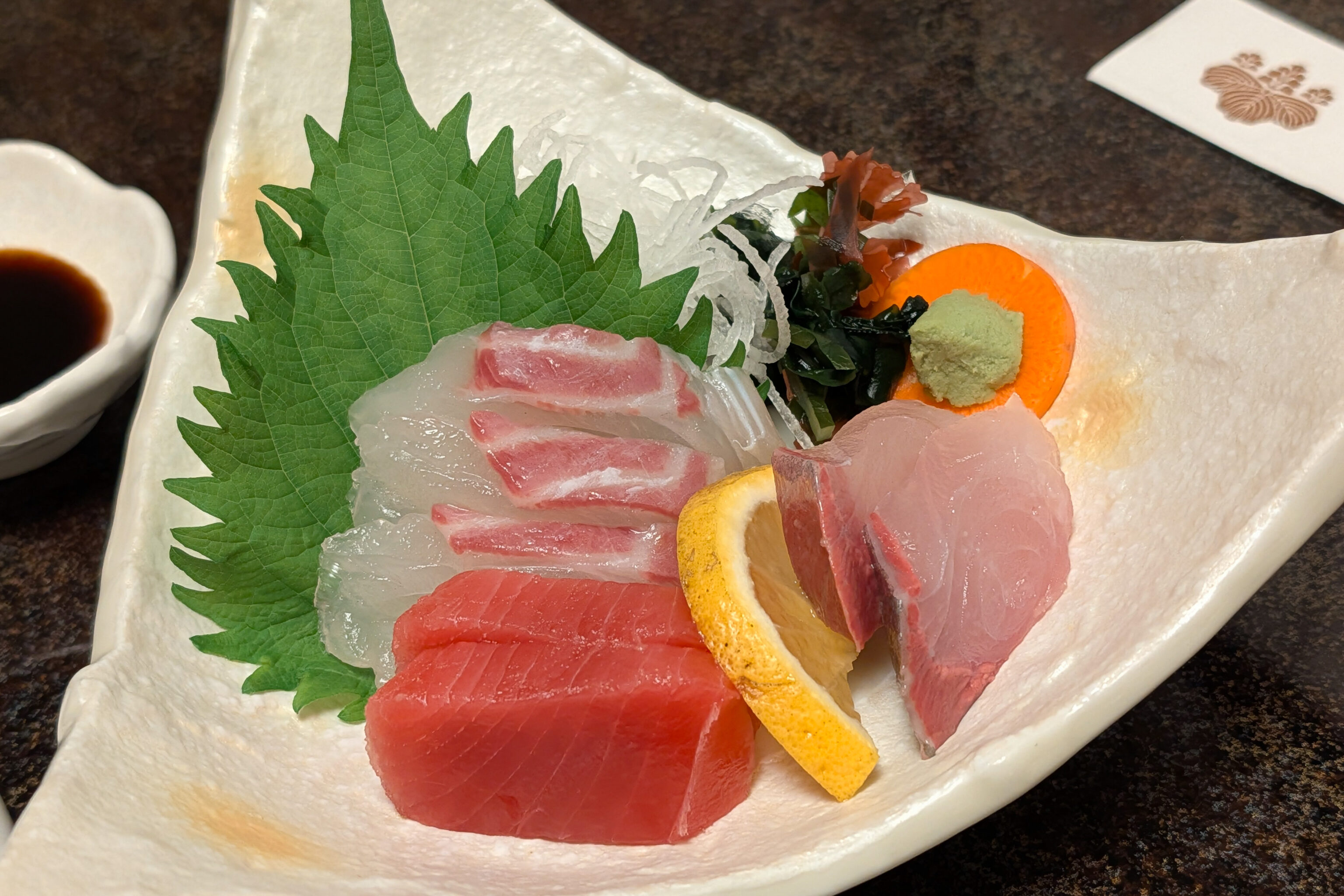
A few slices of sashimi arrived after we started eating. The tuna was decent. The other two types of fish weren’t actually too great and were the weakest part of the meal.
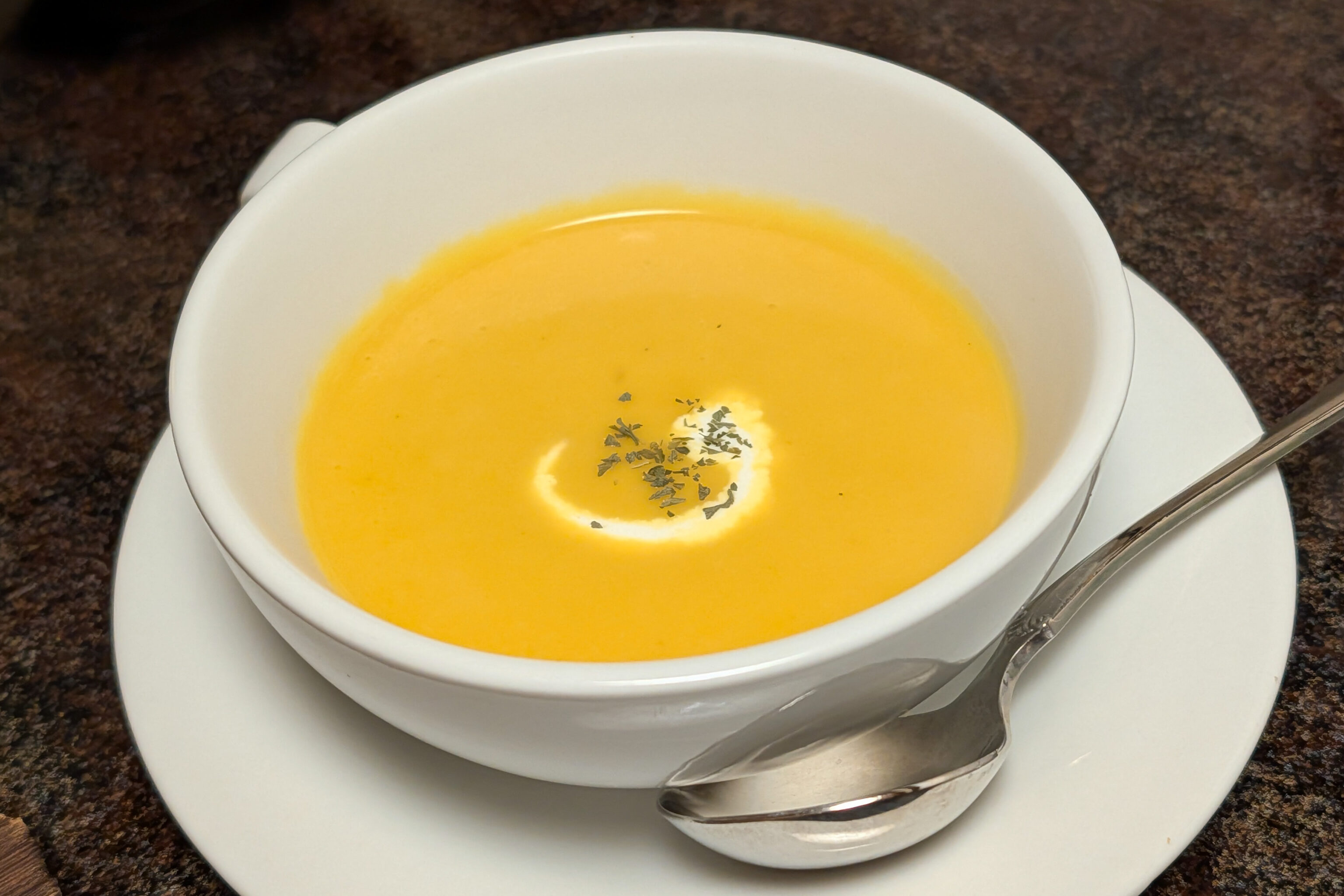
Next, the bowl of soybean and kabocha soup arrived. It was pretty good.
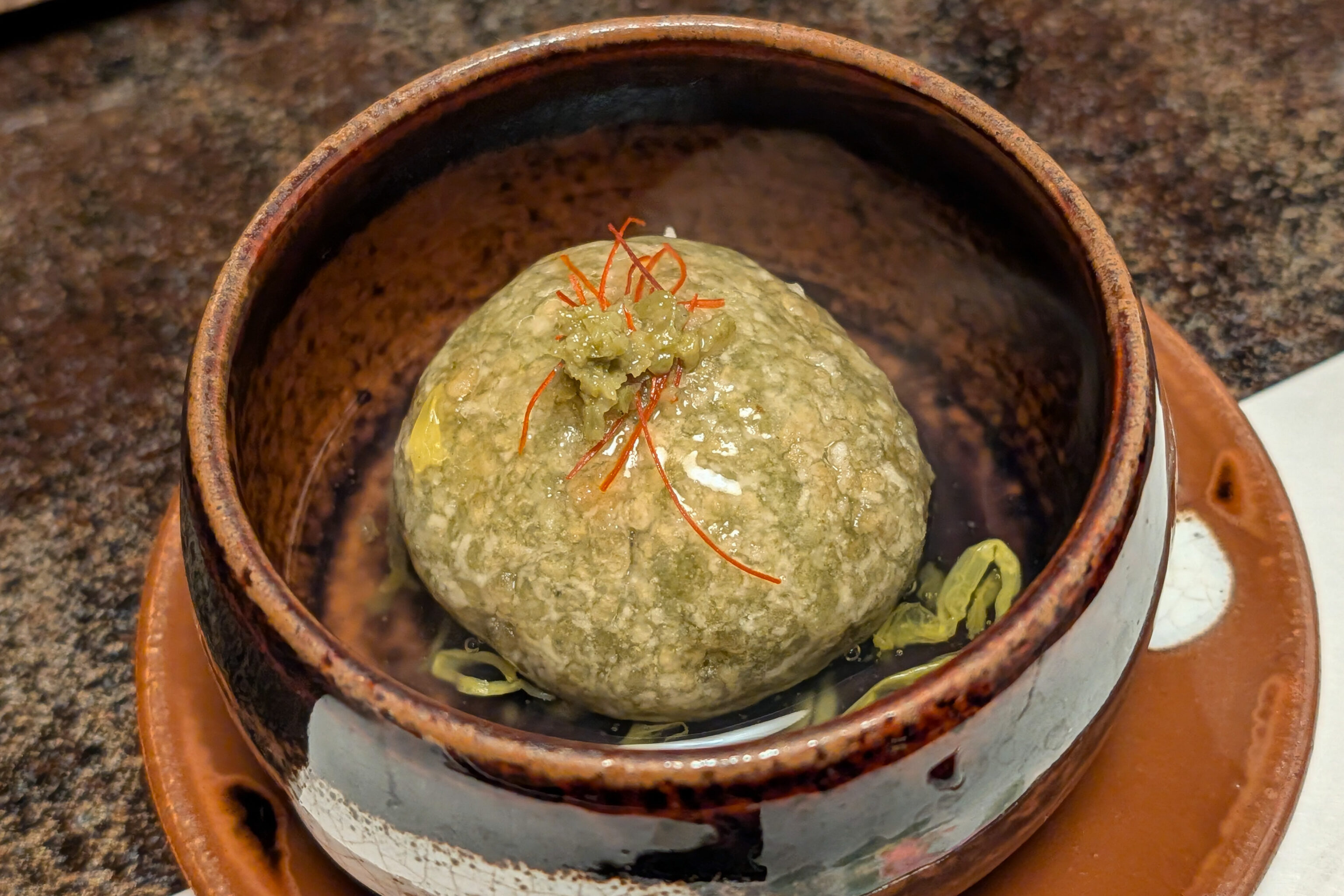
The next item to arrive was a miso manju. It’s kind of hard to describe but had a sort of hard shell with matcha.
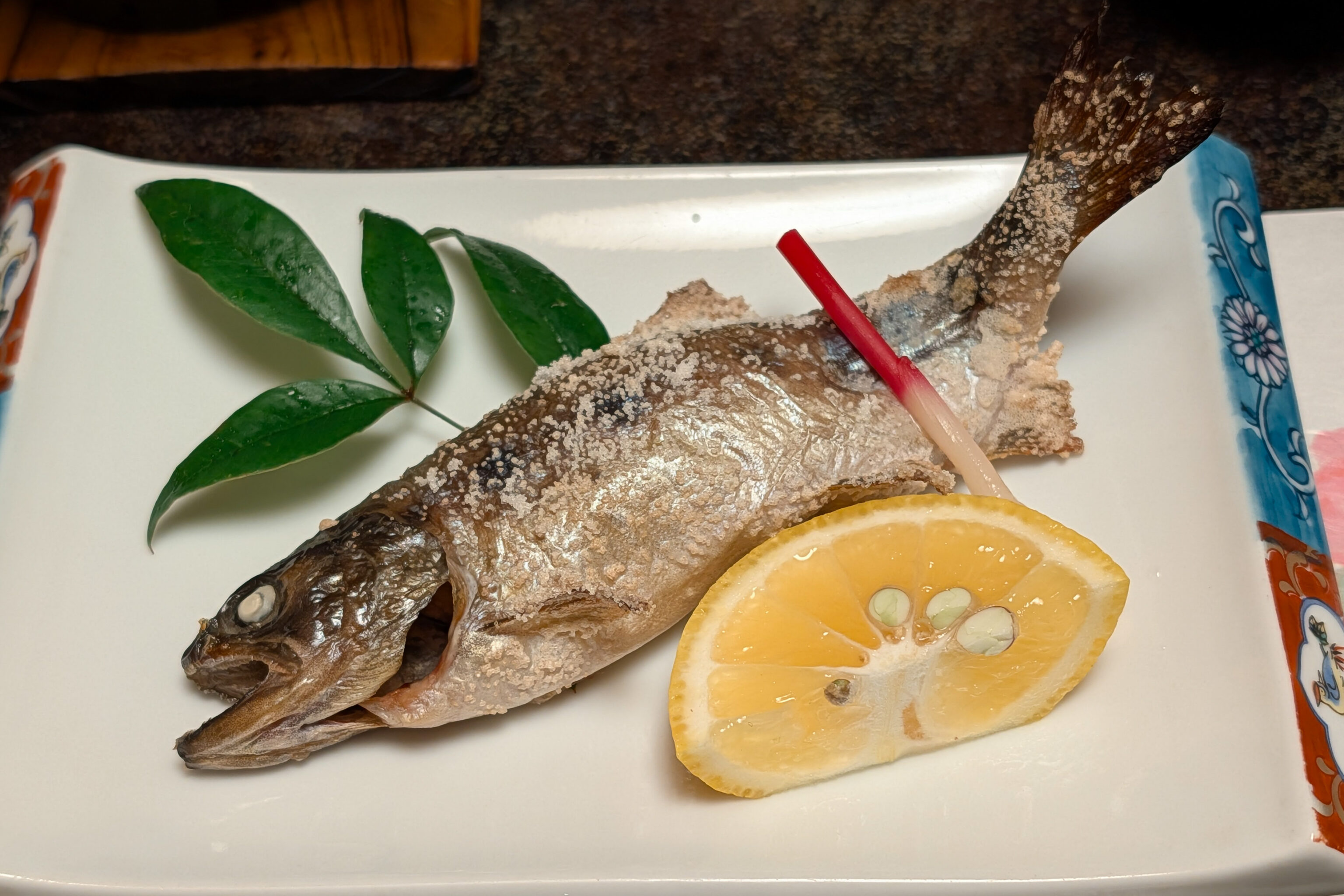
A small grilled yamame trout arrived next. This is a landlocked variety of masu salmon.
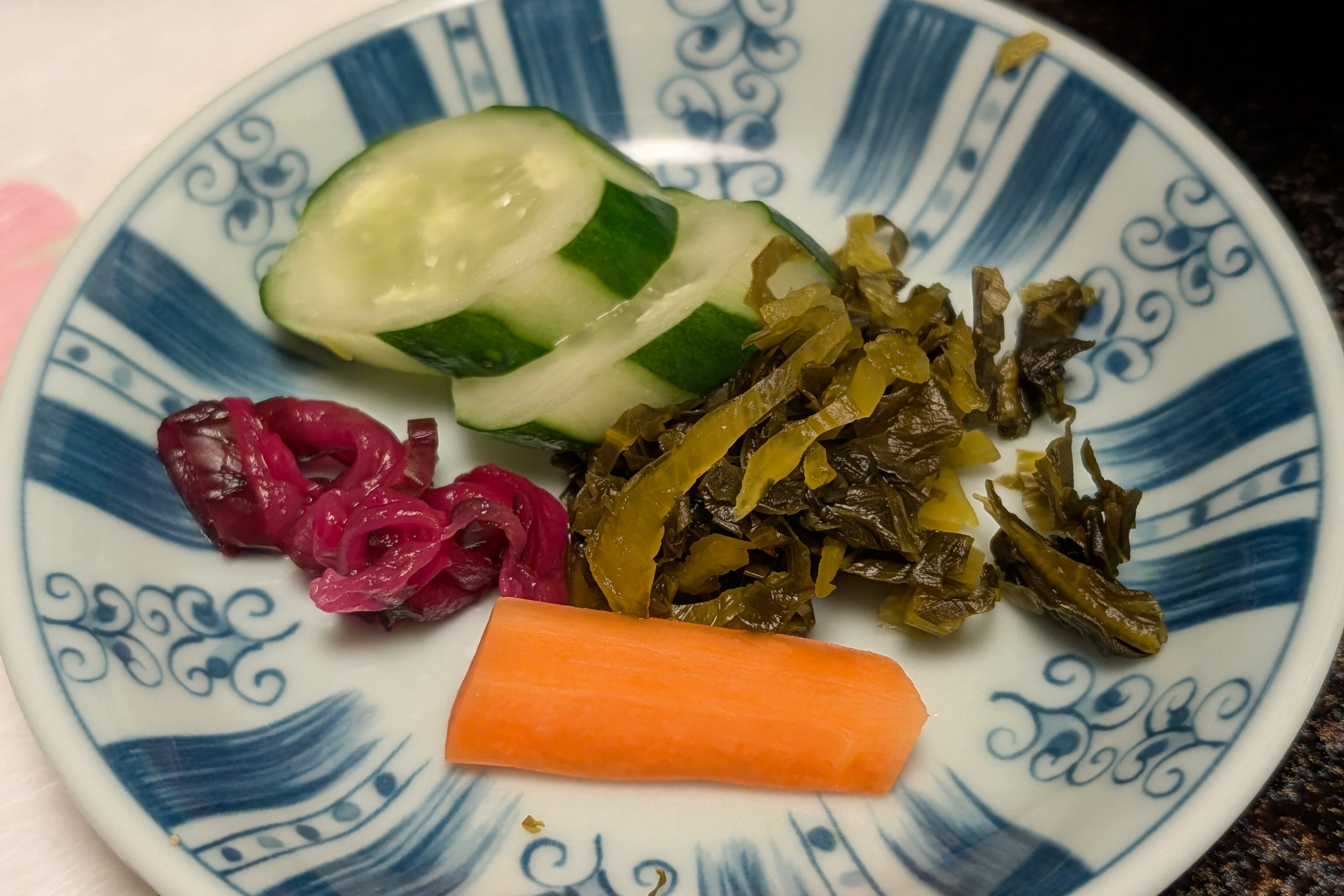
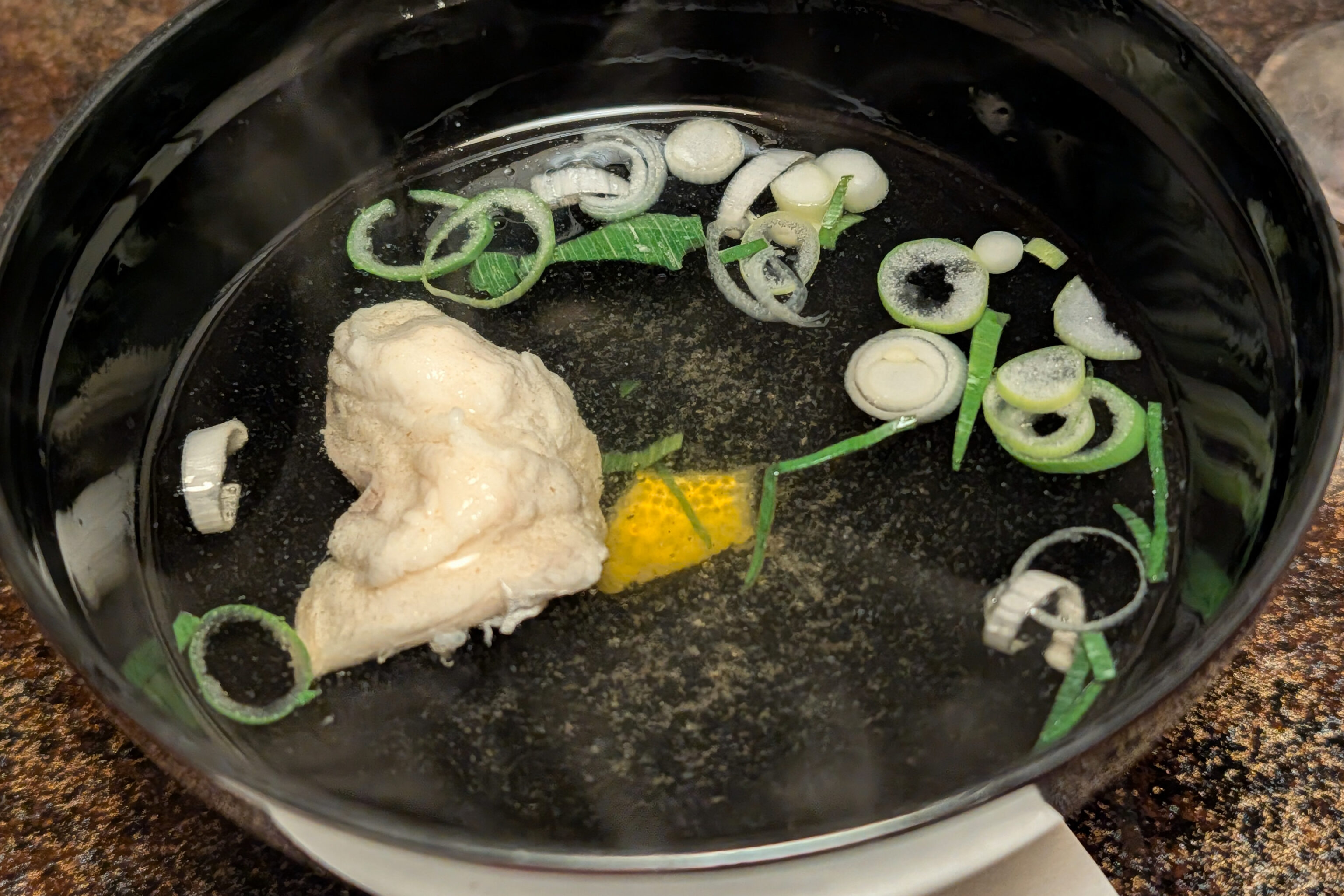
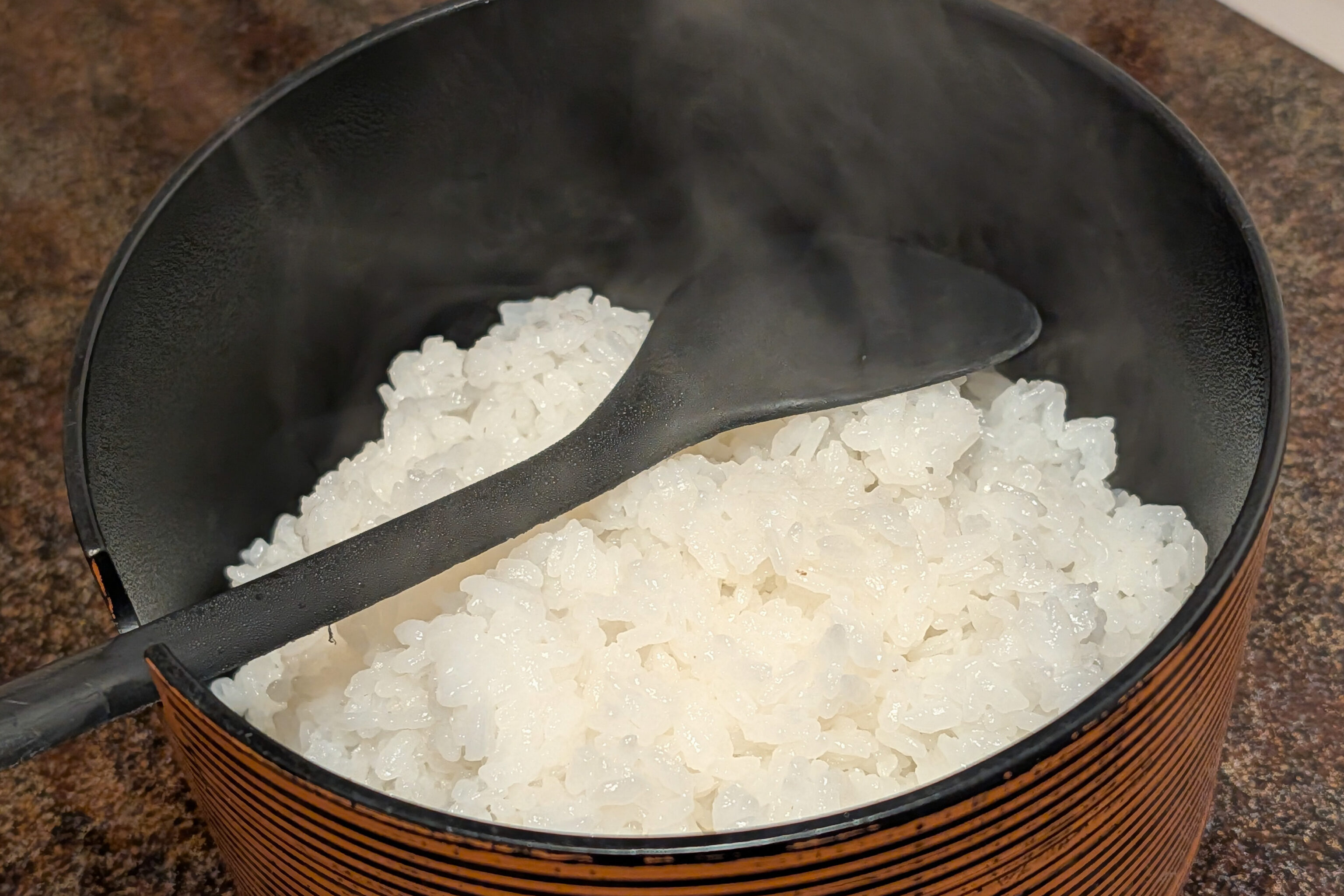
A few pickled vegetables arrived along with some clear soup with fish and the local Koshihikari rice.
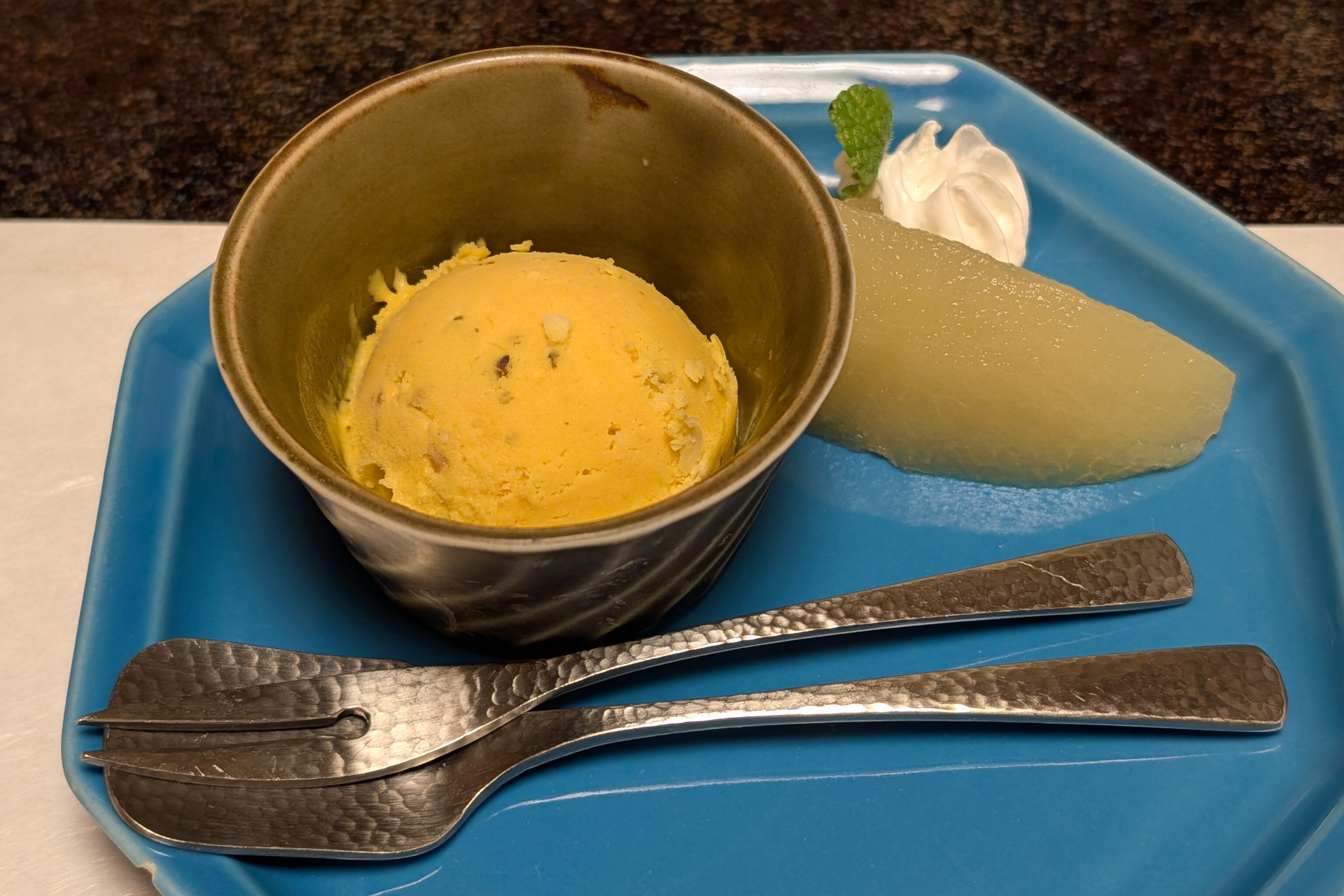
The last plate to arrive was dessert with kabocha ice cream and apple compote.
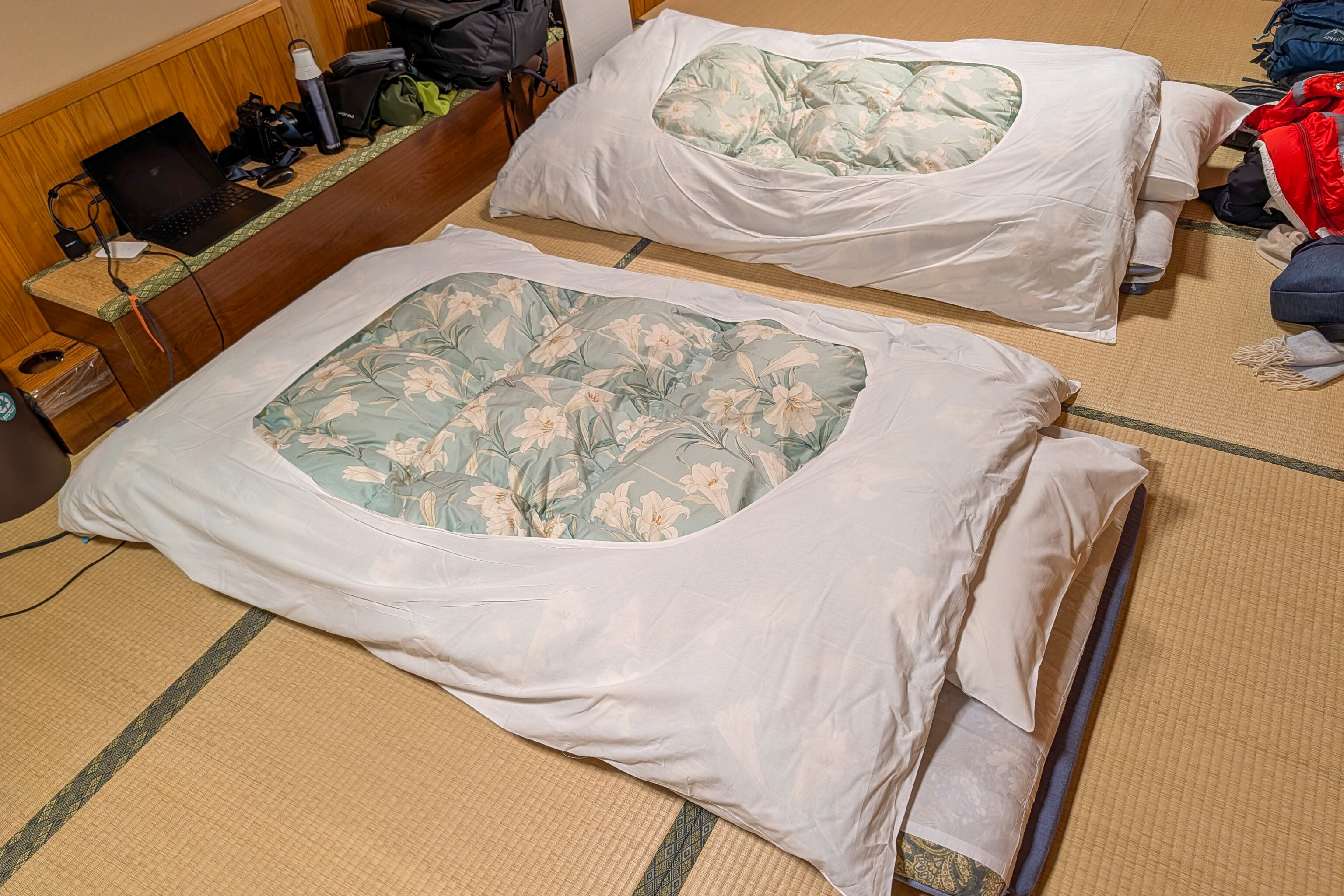
Our futon were already made when we returned to our room after dinner. It would be too much work to stage everything nicely here for photography!
After returning to our room, it was time to hit the onsen!
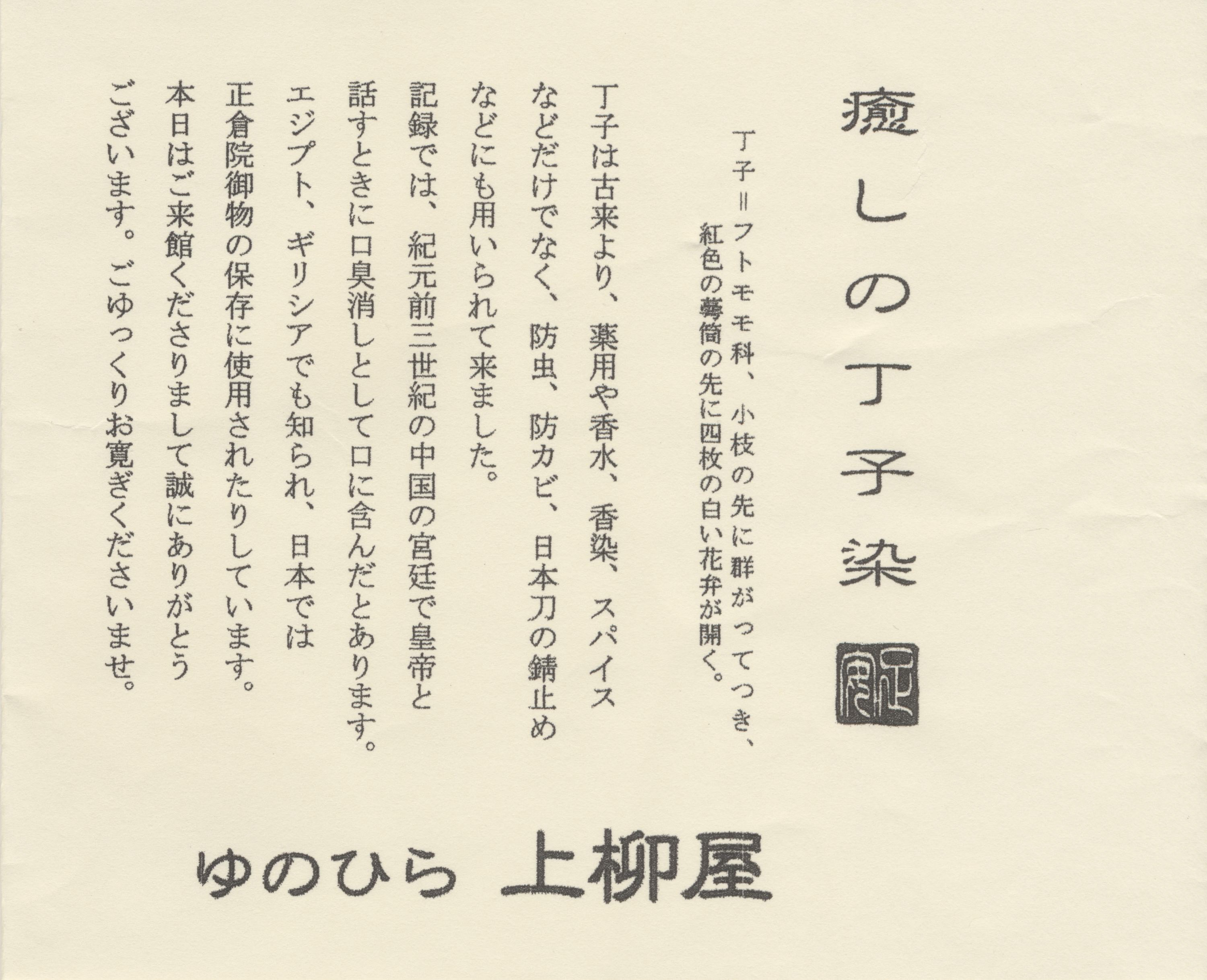
The Soothing Hue of Clove Dye

Four white petals unfurl from the tip of a crimson, tubular base. The *Chōji* (Clove)—a member of the Myrtle family—blooms in clusters at the very tips of its slender branches.

We are delighted to welcome you here. Please, make yourself at home and relax at your leisure.

Since ancient times, cloves have been utilized for a wide variety of purposes—not only as medicine, perfume, aromatic dyes, and spices, but also as a natural insect repellent, a mold inhibitor, and even as a rust preventive for Japanese swords.

Known in lands as far-flung as Egypt and Greece, the clove also holds a significant history here in Japan.

Historical records indicate that as early as the 3rd century BC, within the imperial court of China, courtiers would hold cloves in their mouths to mask bad breath when speaking directly with the Emperor.

Today, cloves continue to be employed in the preservation of precious artifacts, such as the treasures housed within the Shōsō-in Repository.

We sincerely thank you for visiting us today.

Yunohira Kamiyanagiya
– Text from the paper used to wrap onsen towels, translated using Google.
One of the outdoor baths was available so we went in and flipped the sign to indicate it was occupied. The door has a latch too to prevent accidental entry.
Each of the four onsen here have a small room for dressing and undressing and for storage of whatever small items you brought with you. There is also a gas heater as this area is unheated. The door to the hot spring bath must be left closed to avoid steam from entering. Unfortunately, we didn’t photograph this room.
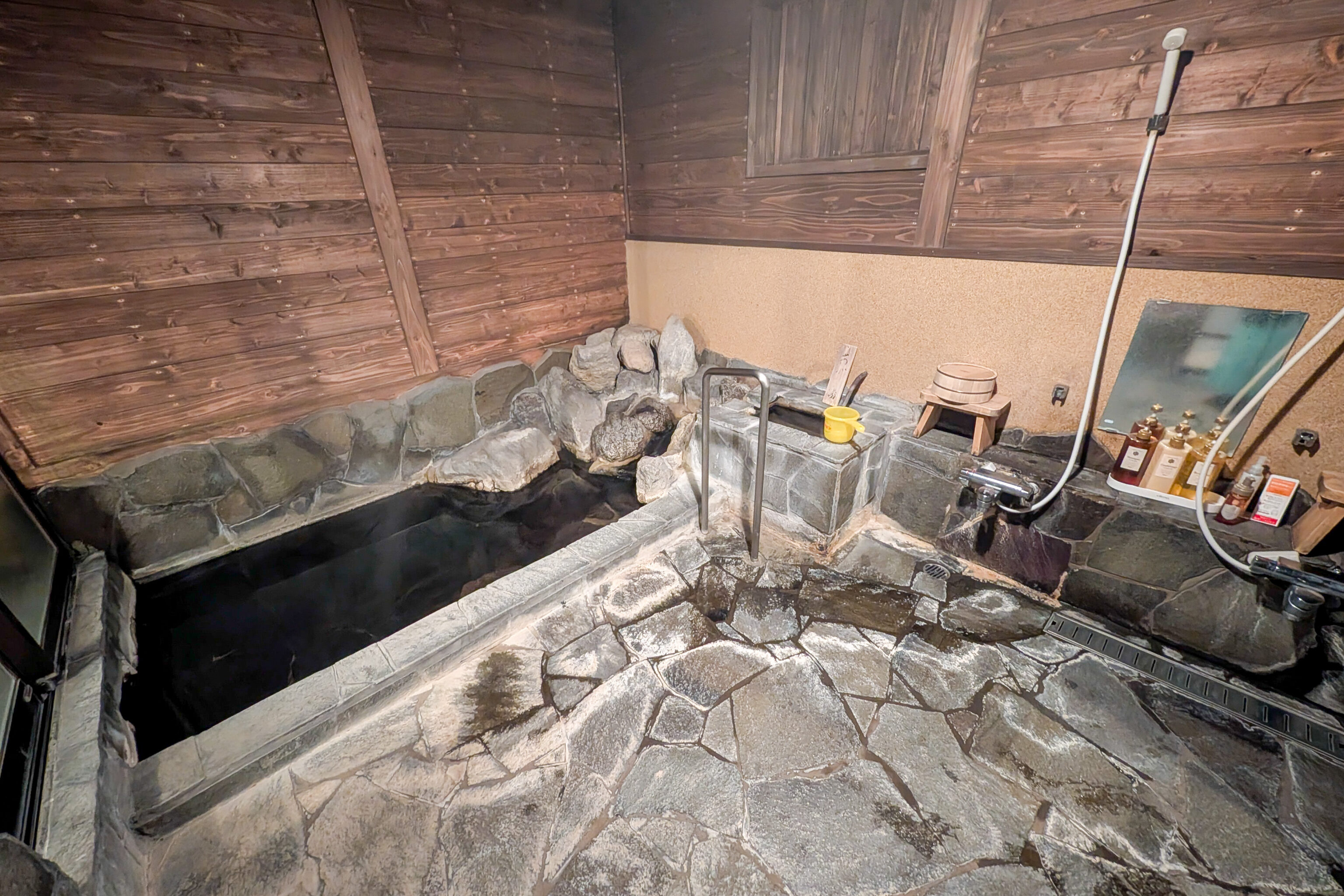
The way onsen work is that you shower before using the actual hot spring bath. So, the first thing in the room with the hot spring bath is the shower. This room had two showerheads, which was convenient.
Although this is an outdoor onsen room, it does have an indoor hot spring bath as well. The two are actually linked, with the indoor bath being much hotter.
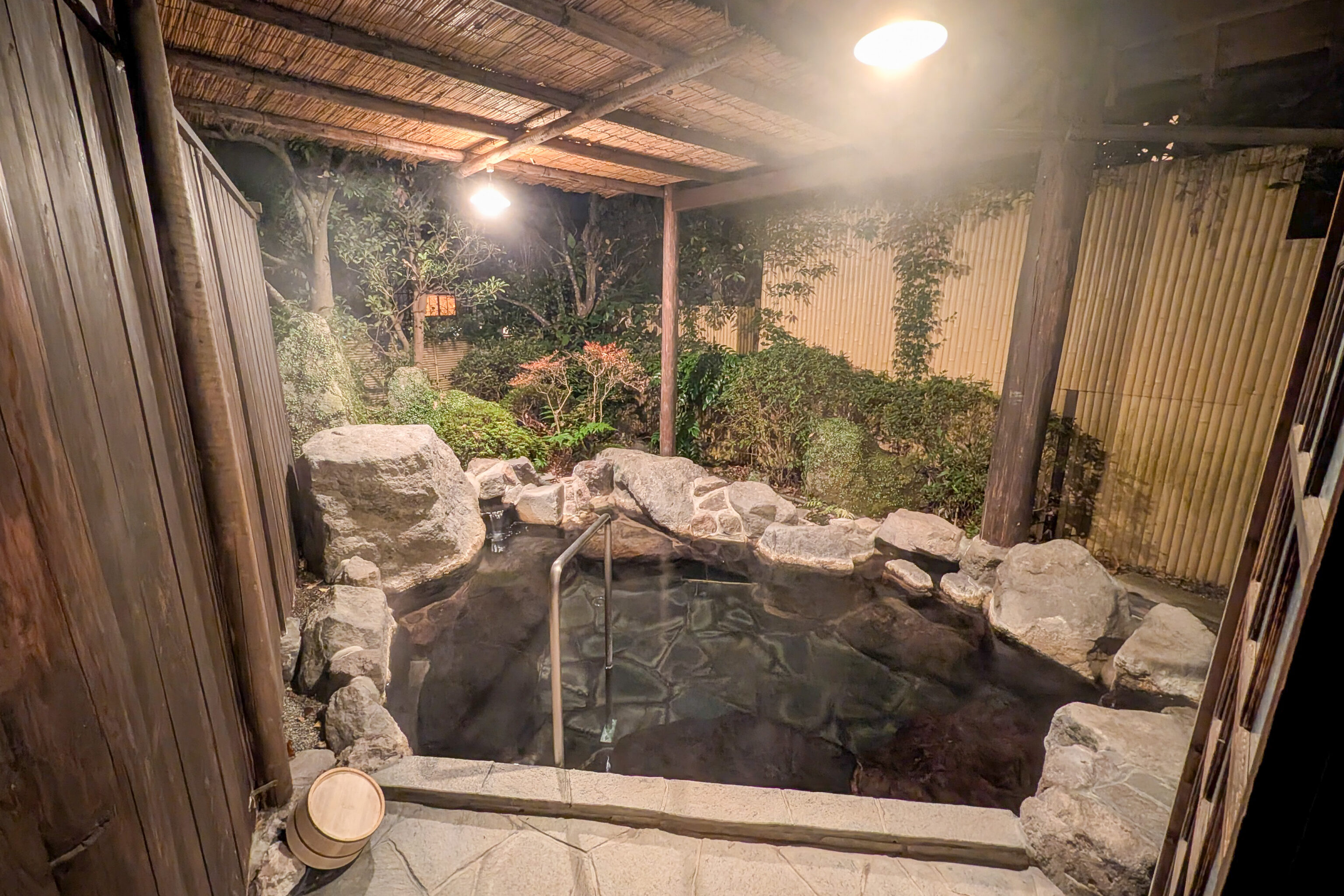
The outdoor bath is open on one end and partially exposed to the elements on one side. There is a roof to avoid snow and rain from coming in.
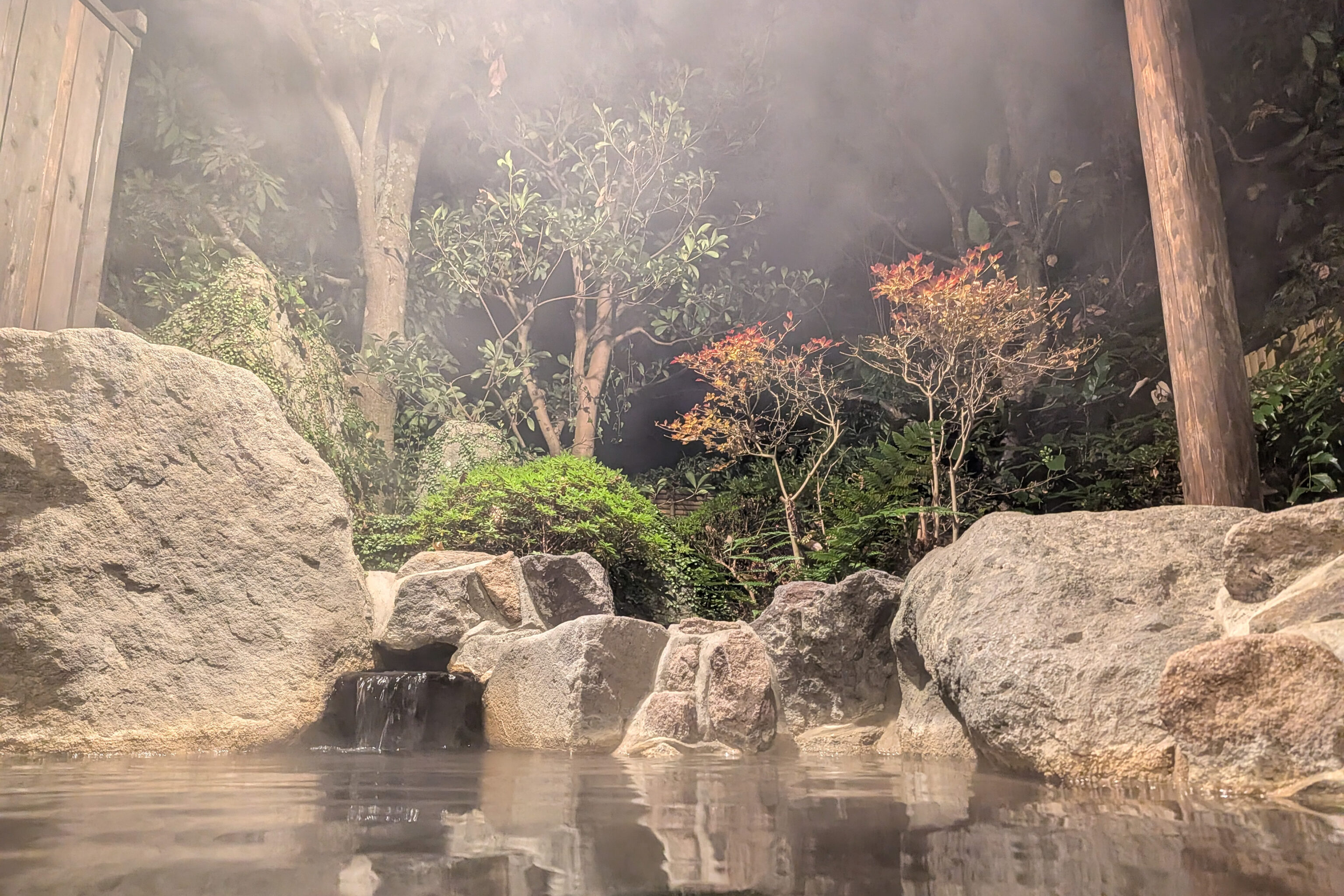
The stone bath was fantastic!
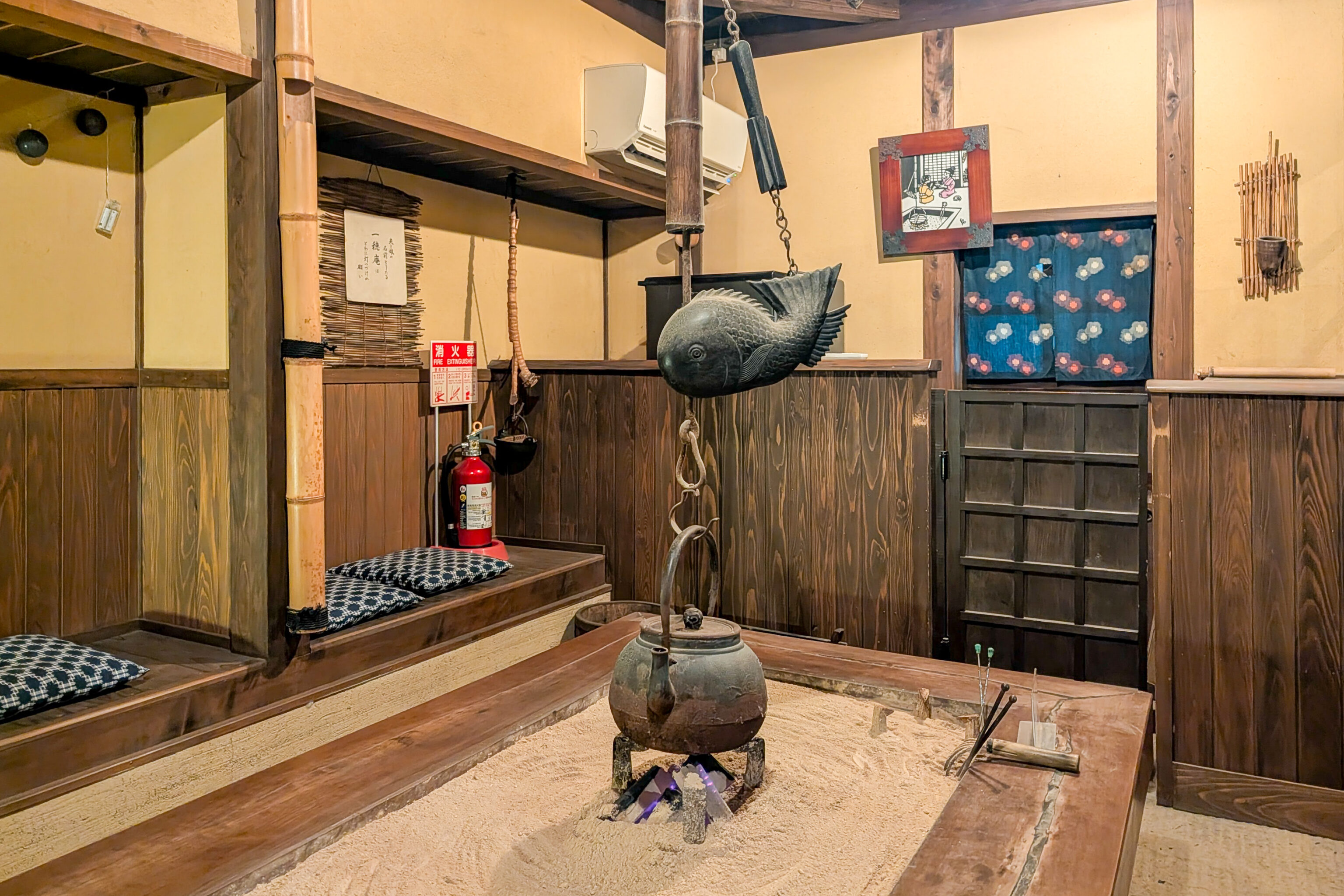
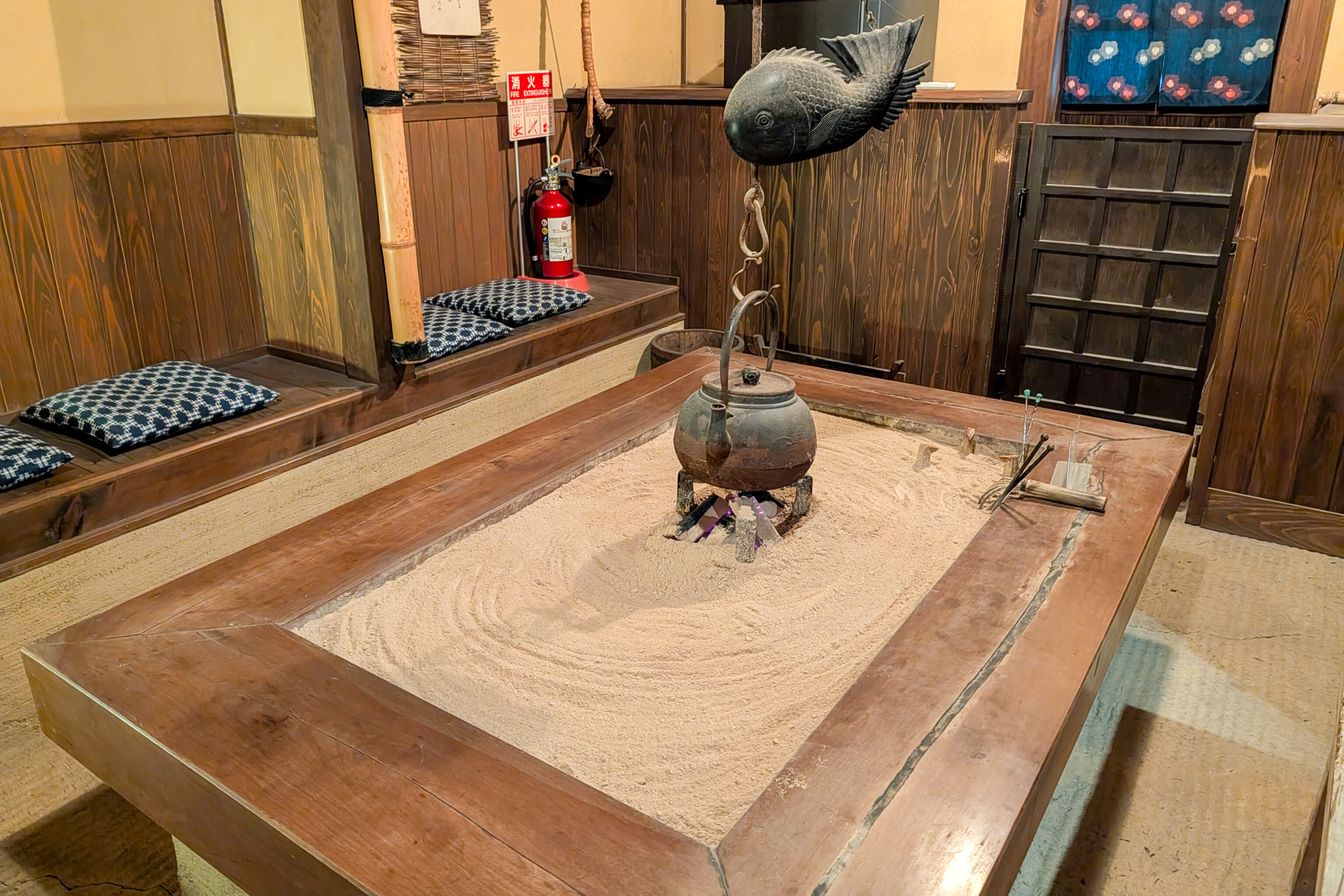
There is a room to rest near the onsen with a heated hearth in the middle. There is supposed to be a way to get snacks here, although we weren’t quite sure how that works. We weren’t looking to have anything more to eat but were just a bit curious. After sitting here for awhile, we returned to our room to end the day.