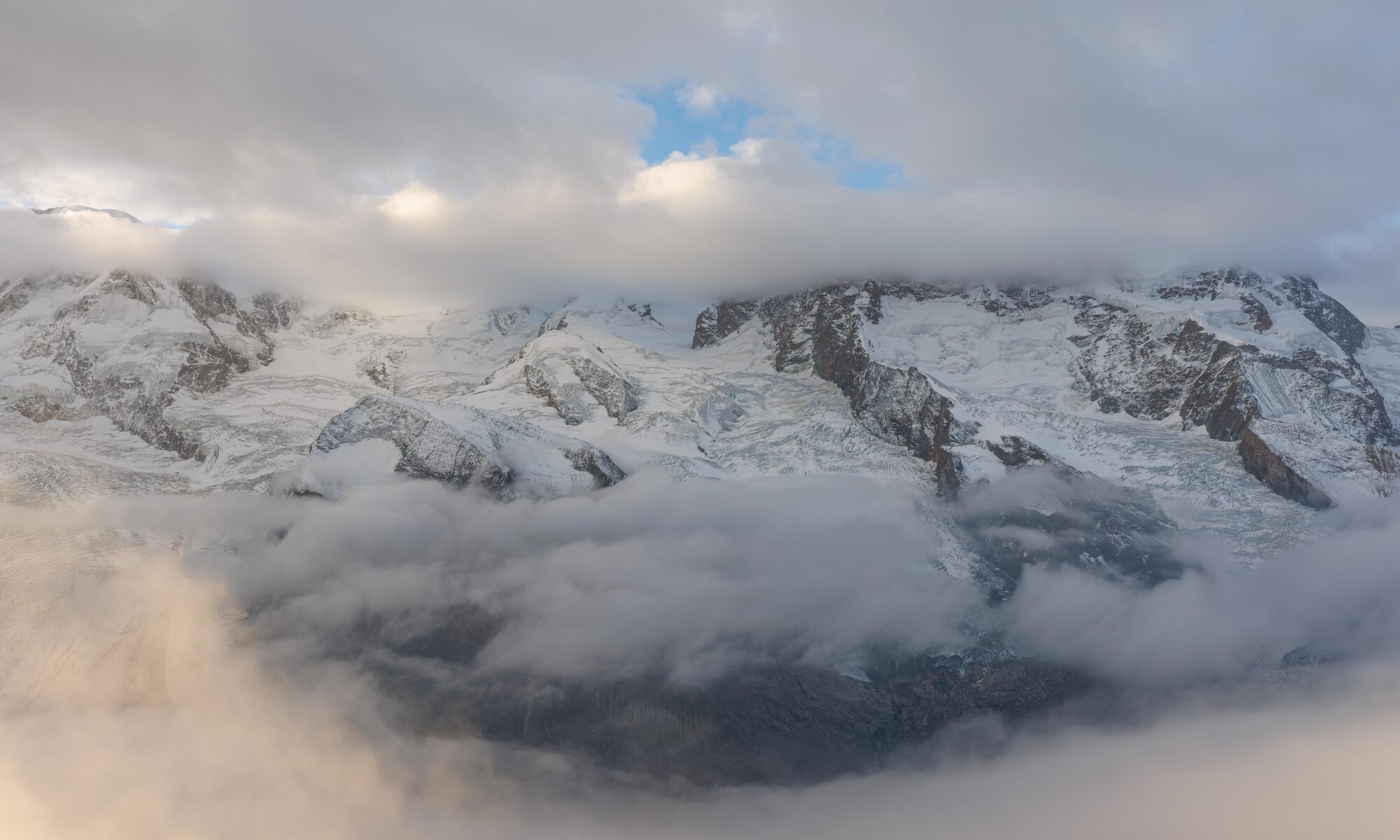
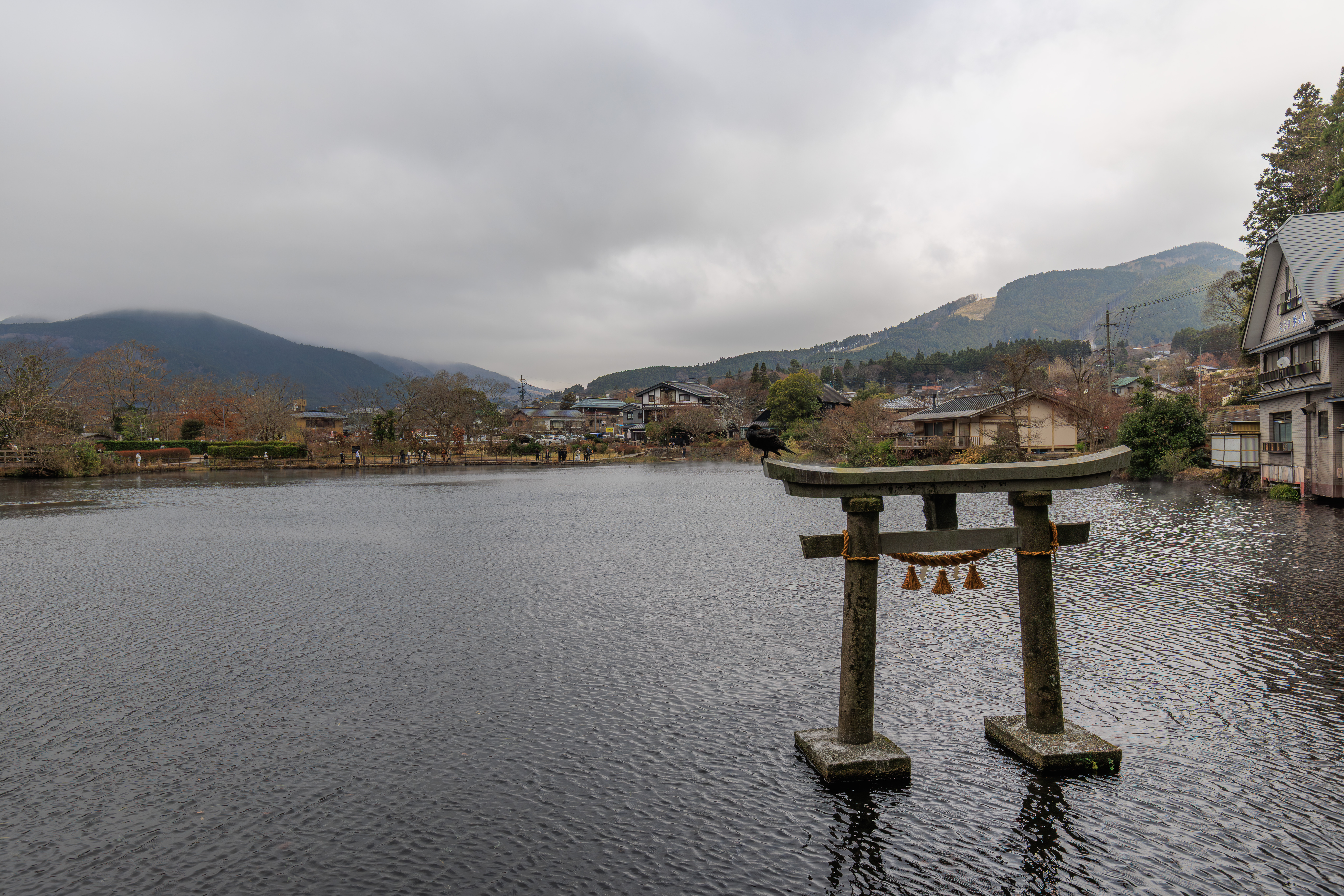
After waking up at the ゆのひら上柳屋 Yunohira Kamiyanagiya, we went to the onsen before breakfast. We then spent the day in 湯布院 Yufuin where we had lunch and walked around the town, enjoying scenery, 金鱗湖 Kinrinko, and a few snacks. After returning to 湯平 Yunohira, we again enjoyed the onsen before dinner.
Morning
We woke up relatively early at the ゆのひら上柳屋 Yunohira Kamiyanagiya so that we would be able to enjoy one of the ryokan‘s private onsen rooms before our 7:30am breakfast.
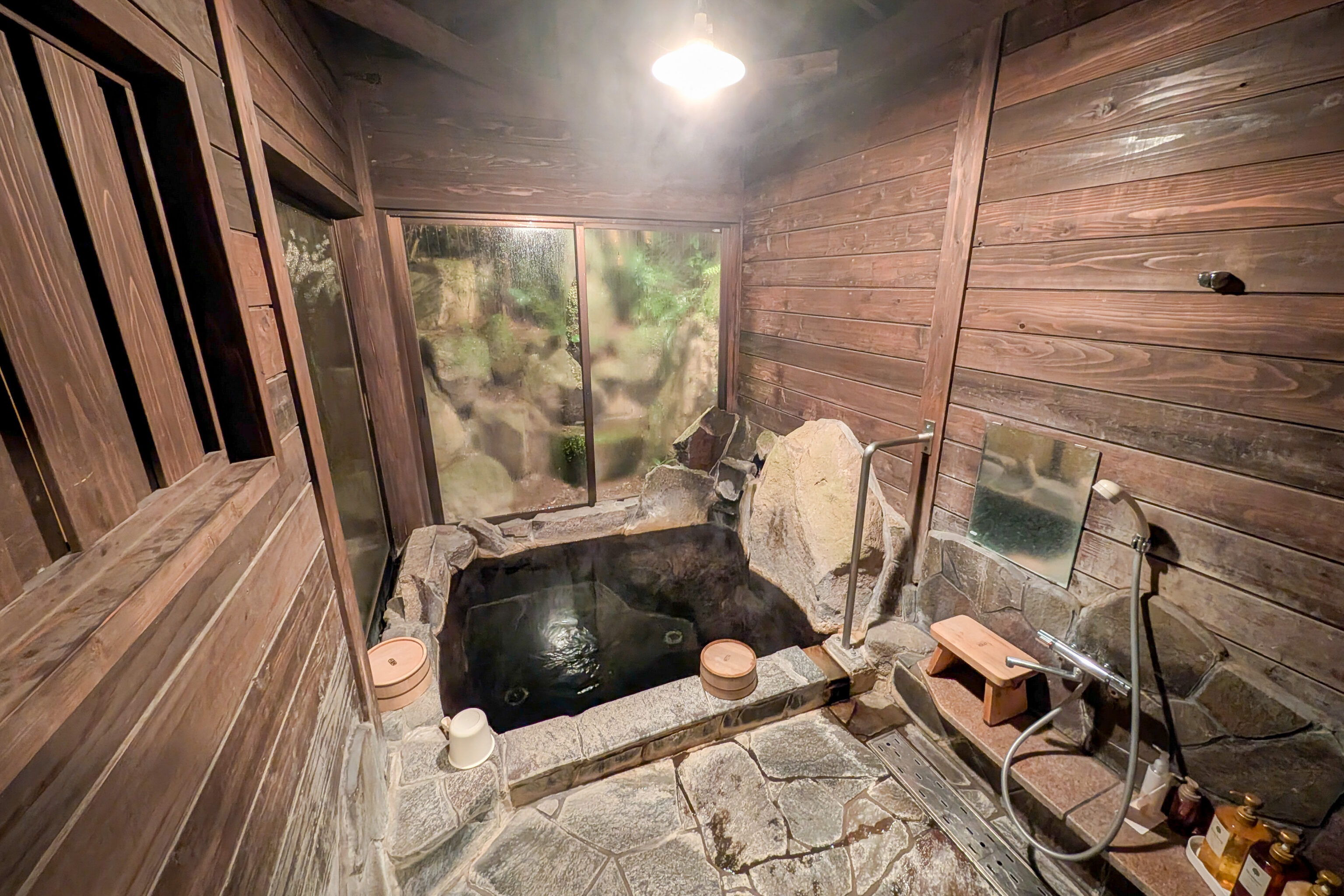
We used one of the indoor onsen rooms. The indoor room was definitely smaller than the indoor portion of the outdoor room. The sliding glass door can actually be opened, allowing one to see the landscaping outside and making it a partially outdoor bath.
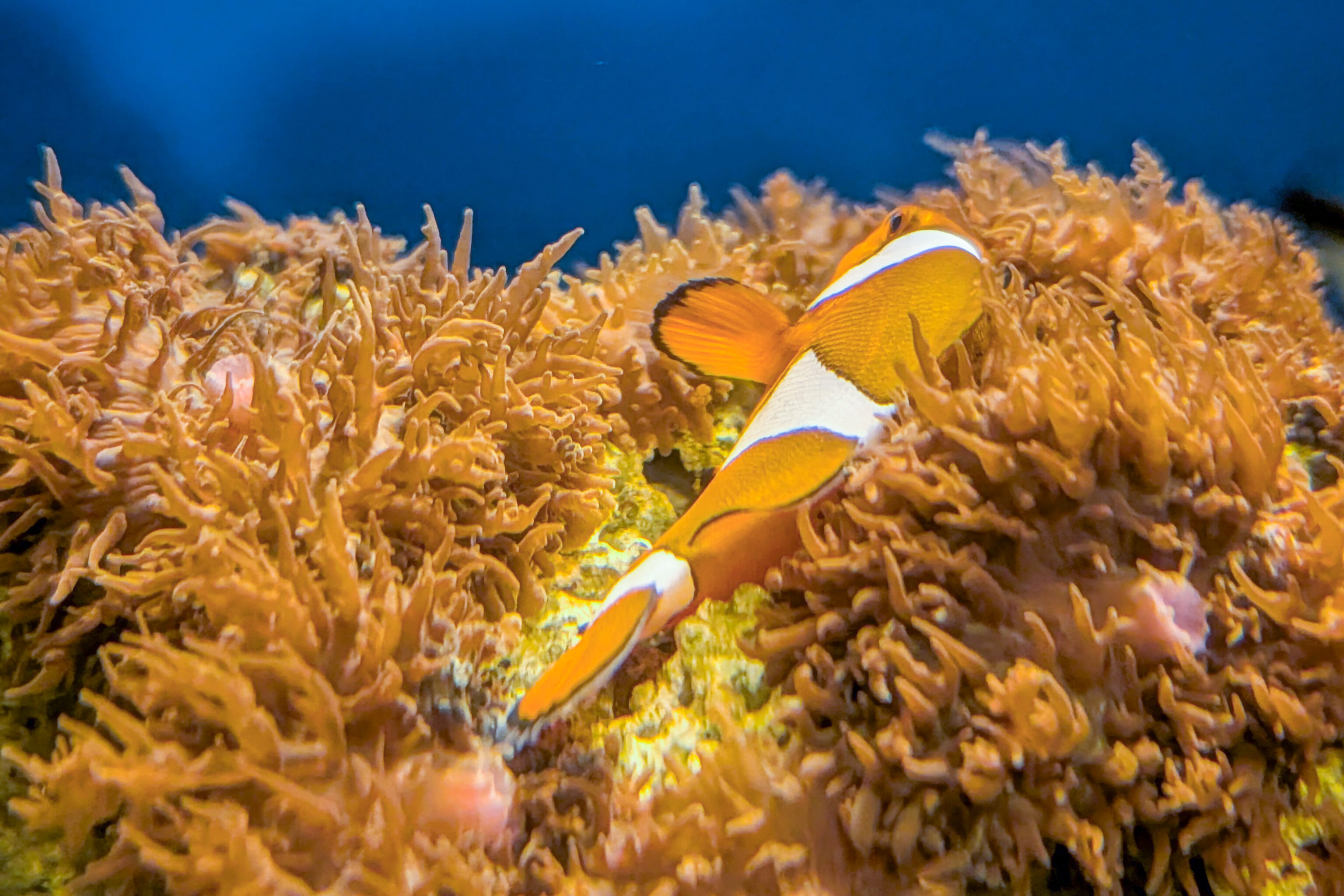
After using the onsen for about 40 minutes, walked back to our room. On our way, we took a look at the fish tank in the lobby area. Nemo seemed to be sleeping?
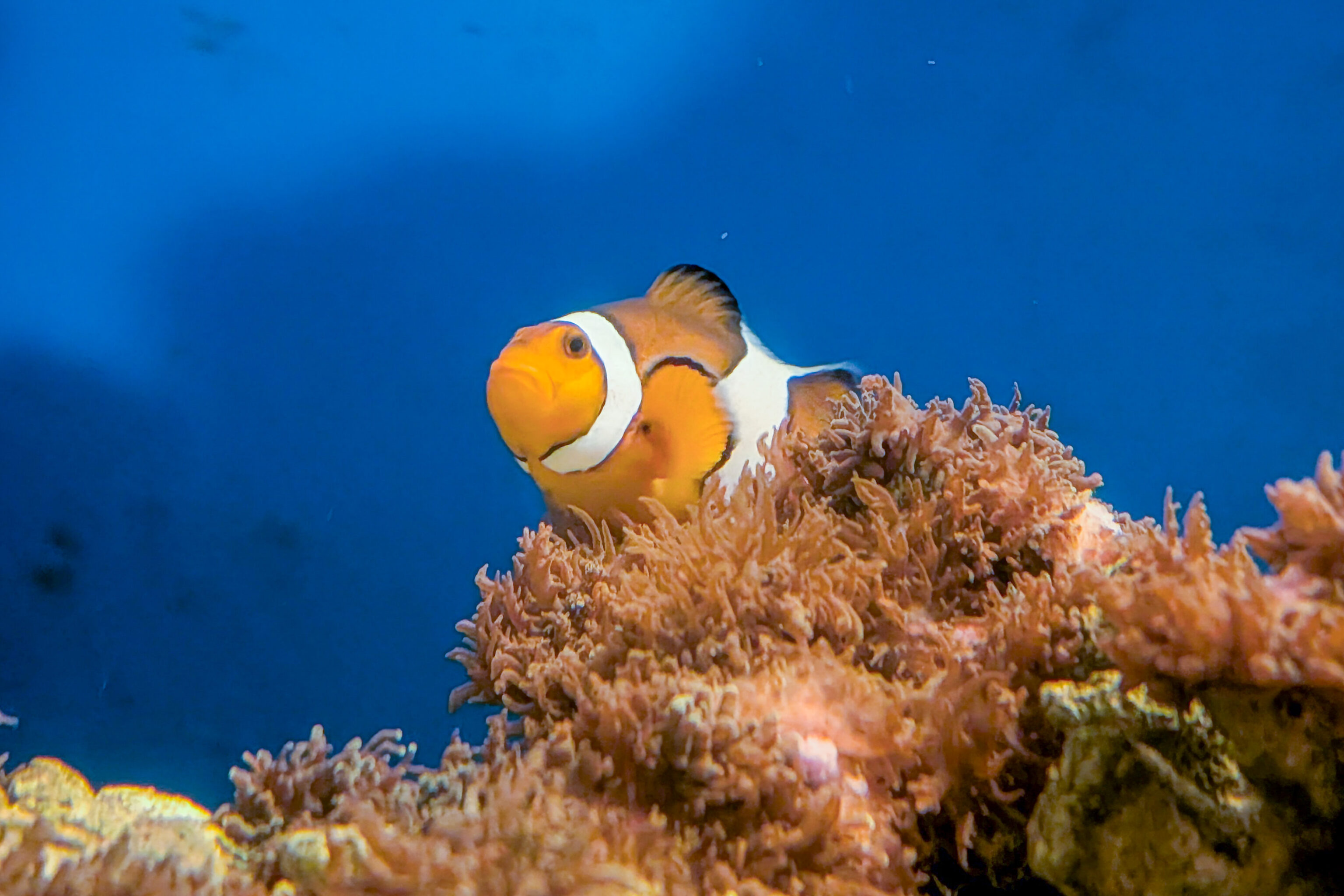
Nemo is awake!
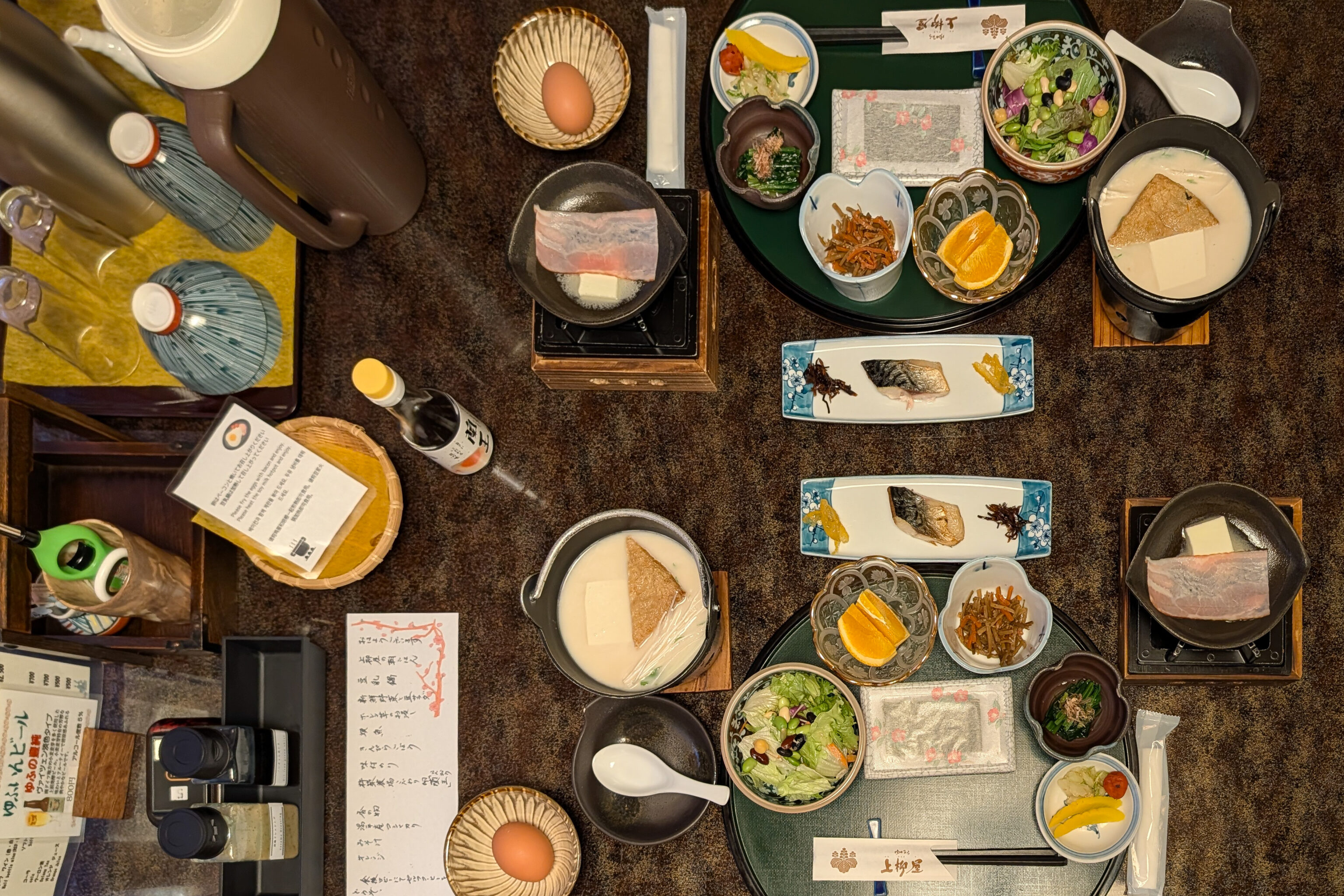
Breakfast was already placed as we arrived in the ryokan’s dining area. We had the same semi-private area as we did yesterday for dinner.
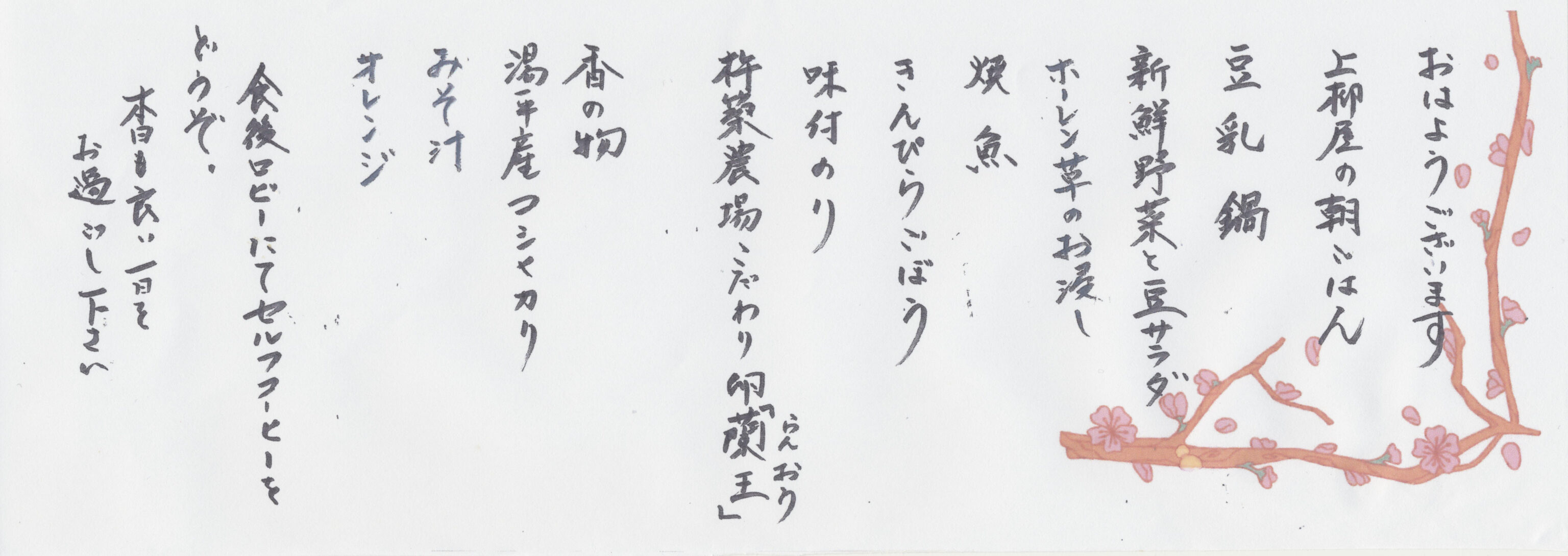
Good morning
Kamiyanagiya's Breakfast

Soy Milk Hot Pot
Fresh Vegetable and Bean Salad
Spinach Ohitashi
Grilled Fish
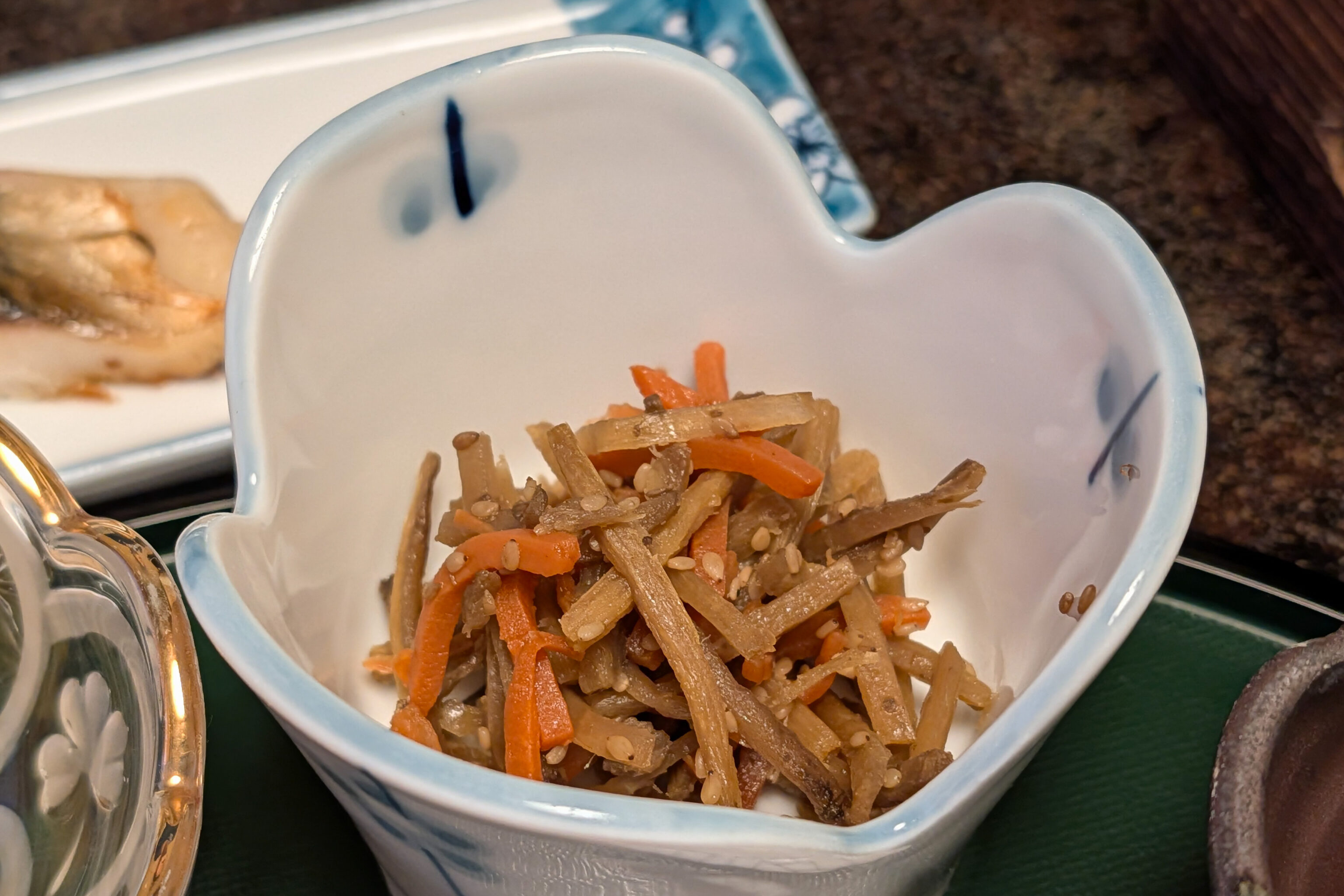
Kinpira Gobo (Braised Burdock Root)
Seasoned Seaweed
Kitsuki Farm's Premium Eggs: "Ran-Oh"
Tsukemono
Yunohira-grown Koshihikari Rice
Miso Soup
Orange

Please help yourself to coffee in the lobby after your meal.
Have a wonderful day today as well.
– Text from the menu, translated using Google Gemini and Translate.
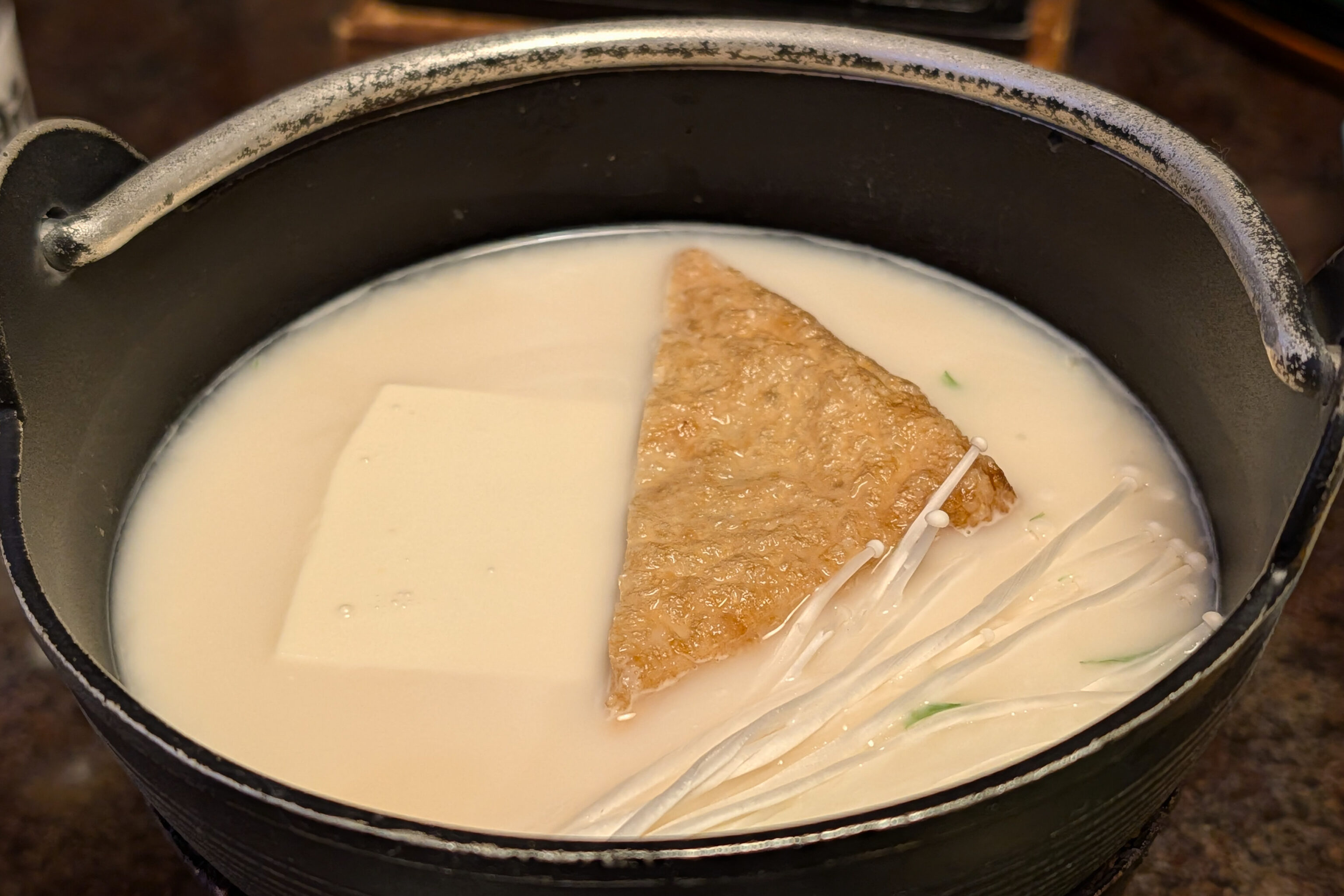
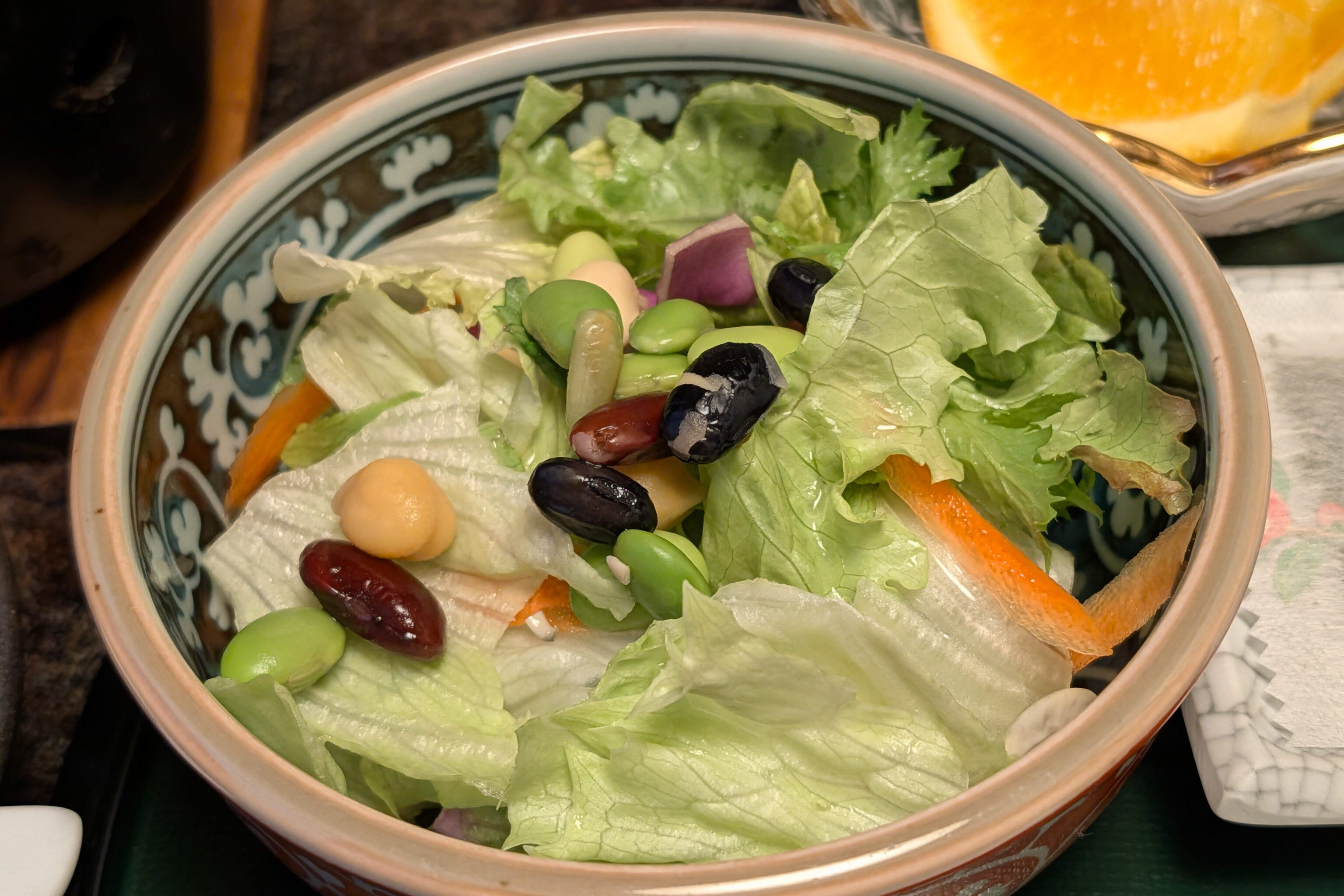
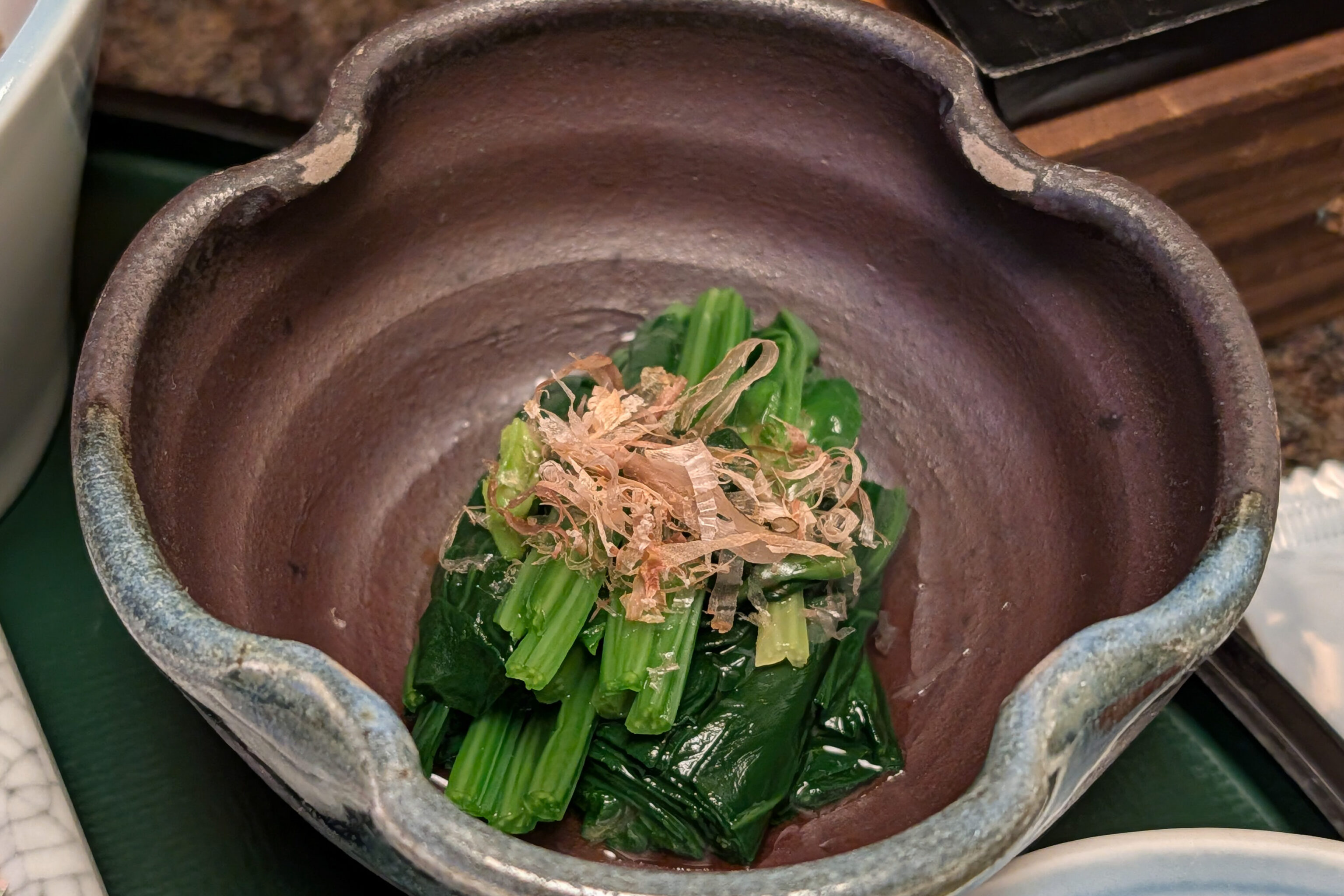
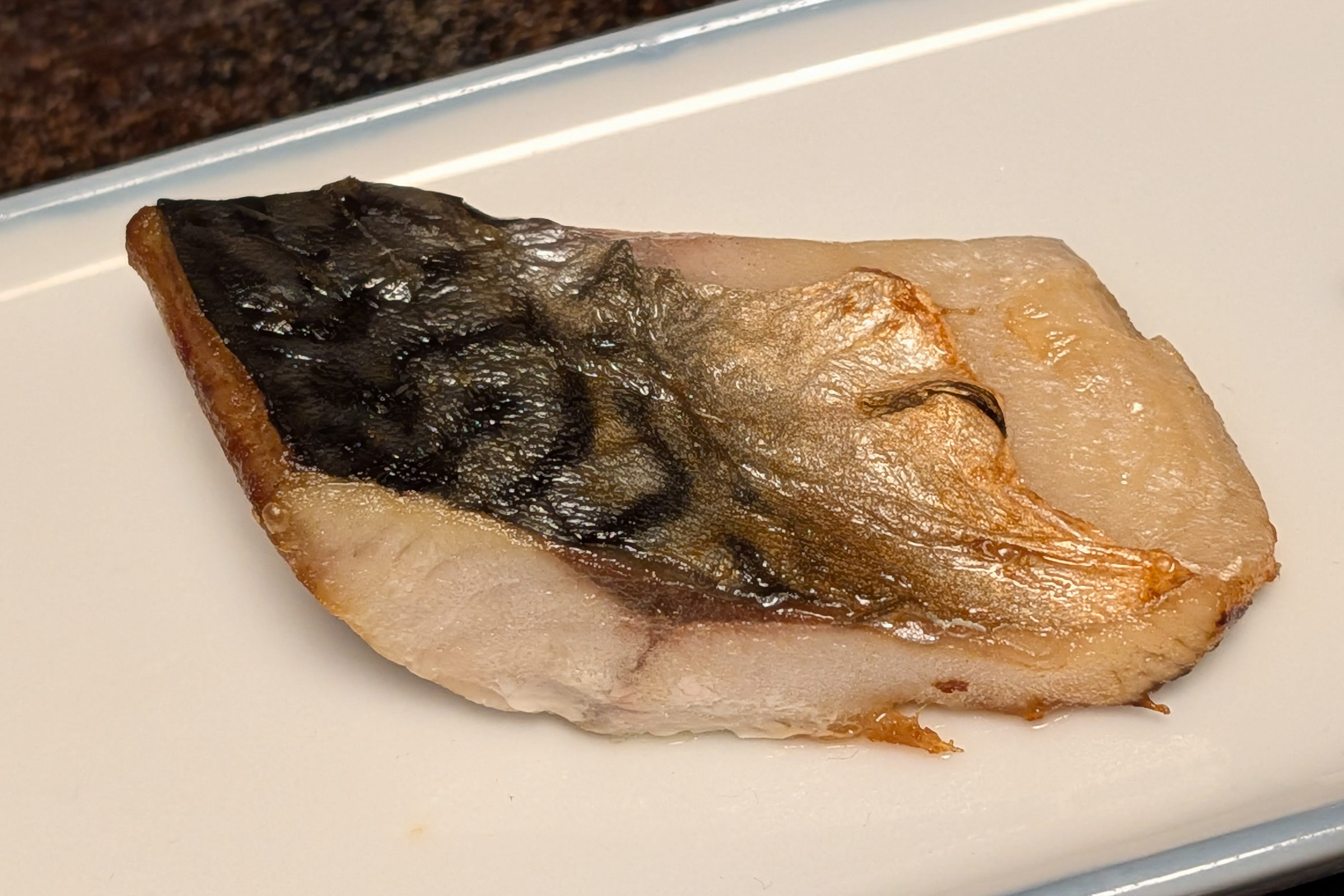
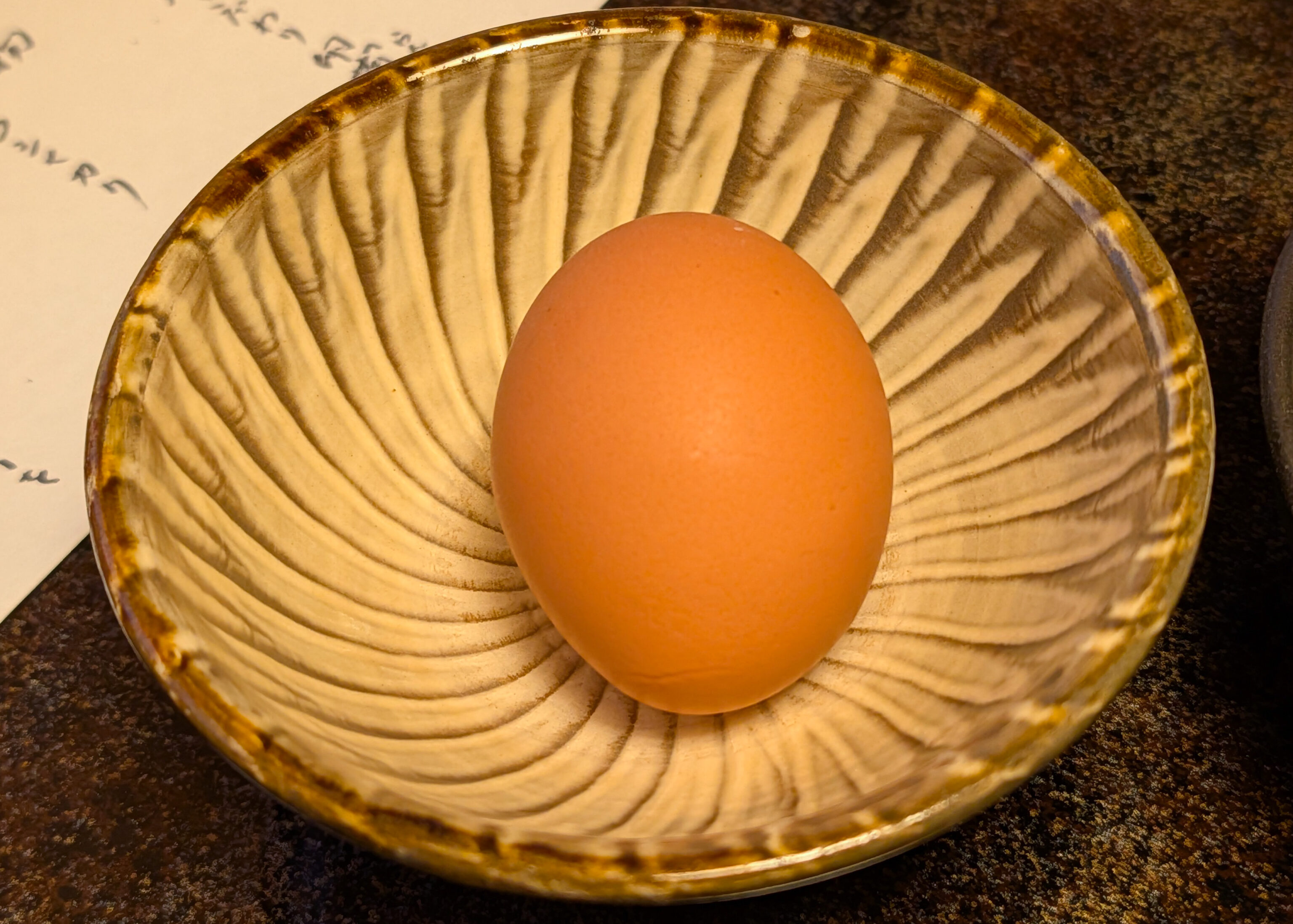
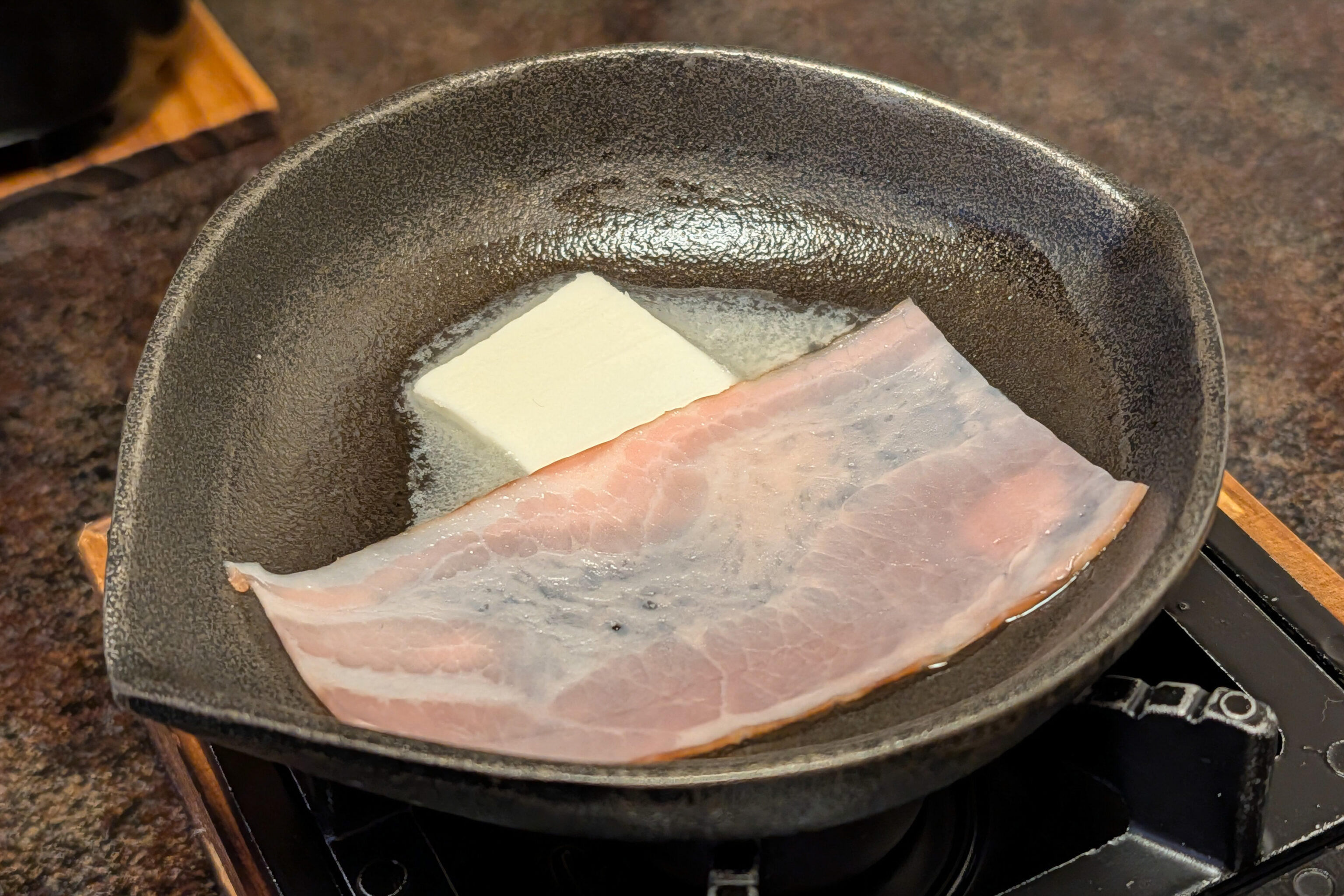
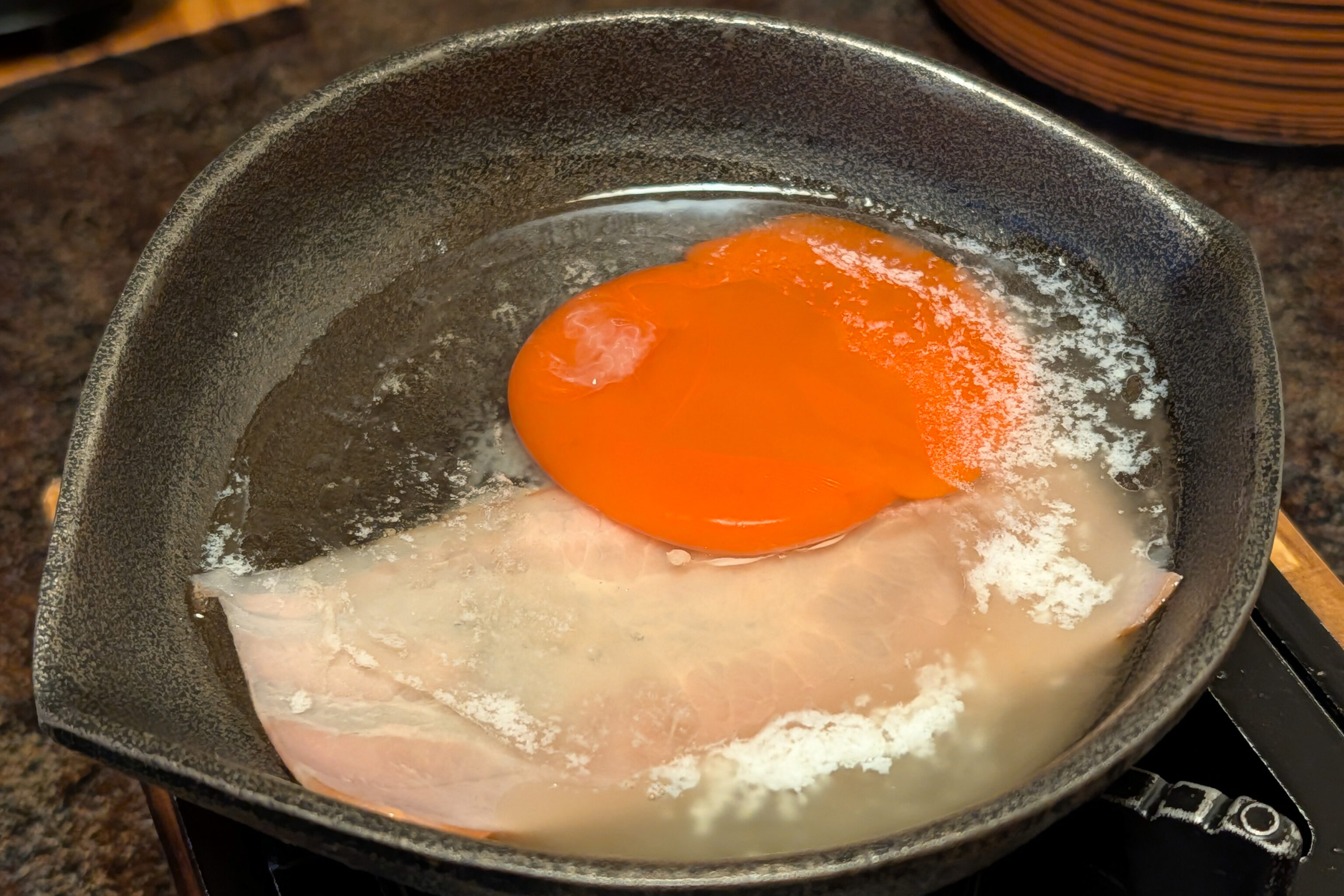
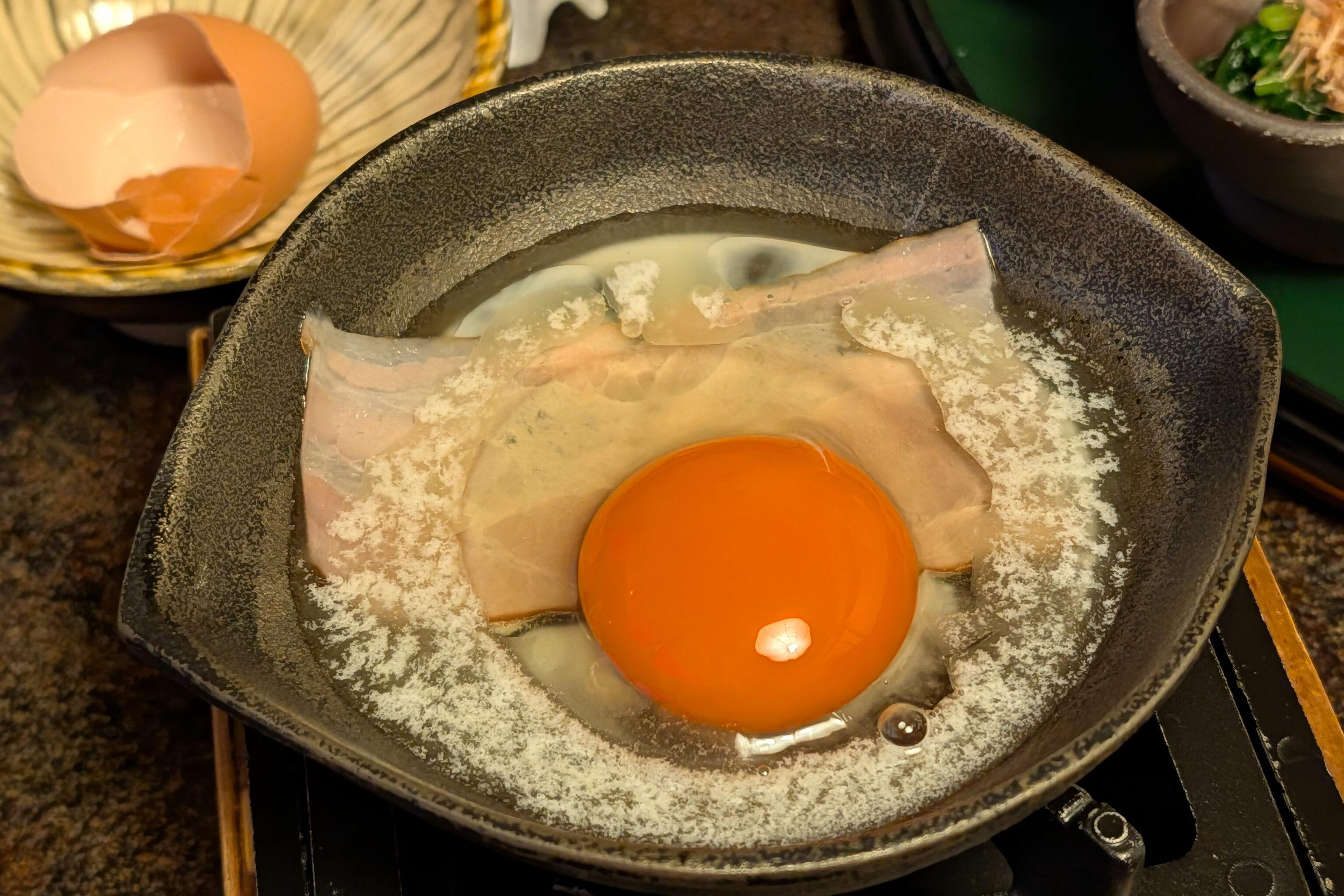
The egg is cooked in this little skillet along with what could be described as a slice of shabu shabu pork and butter.
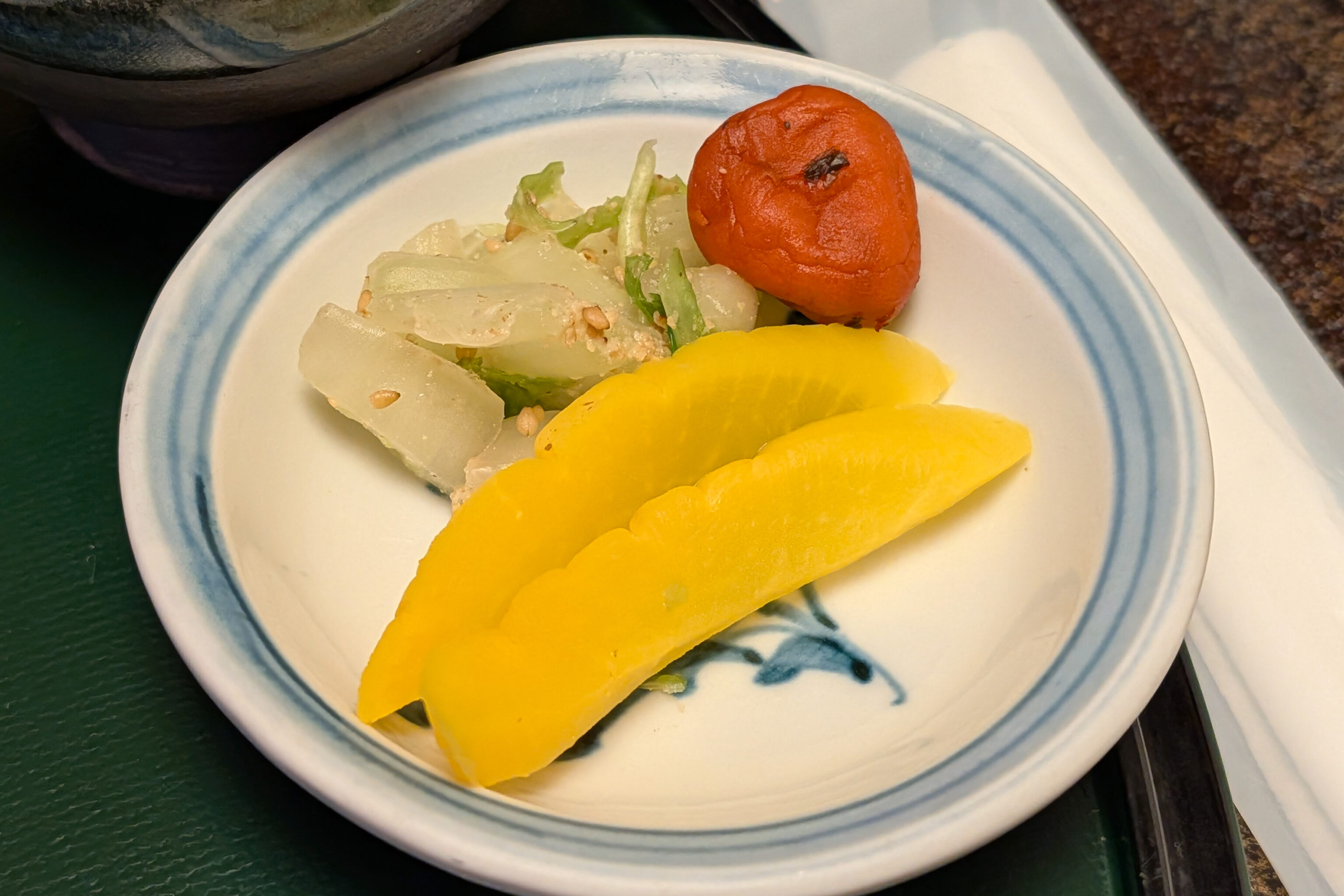
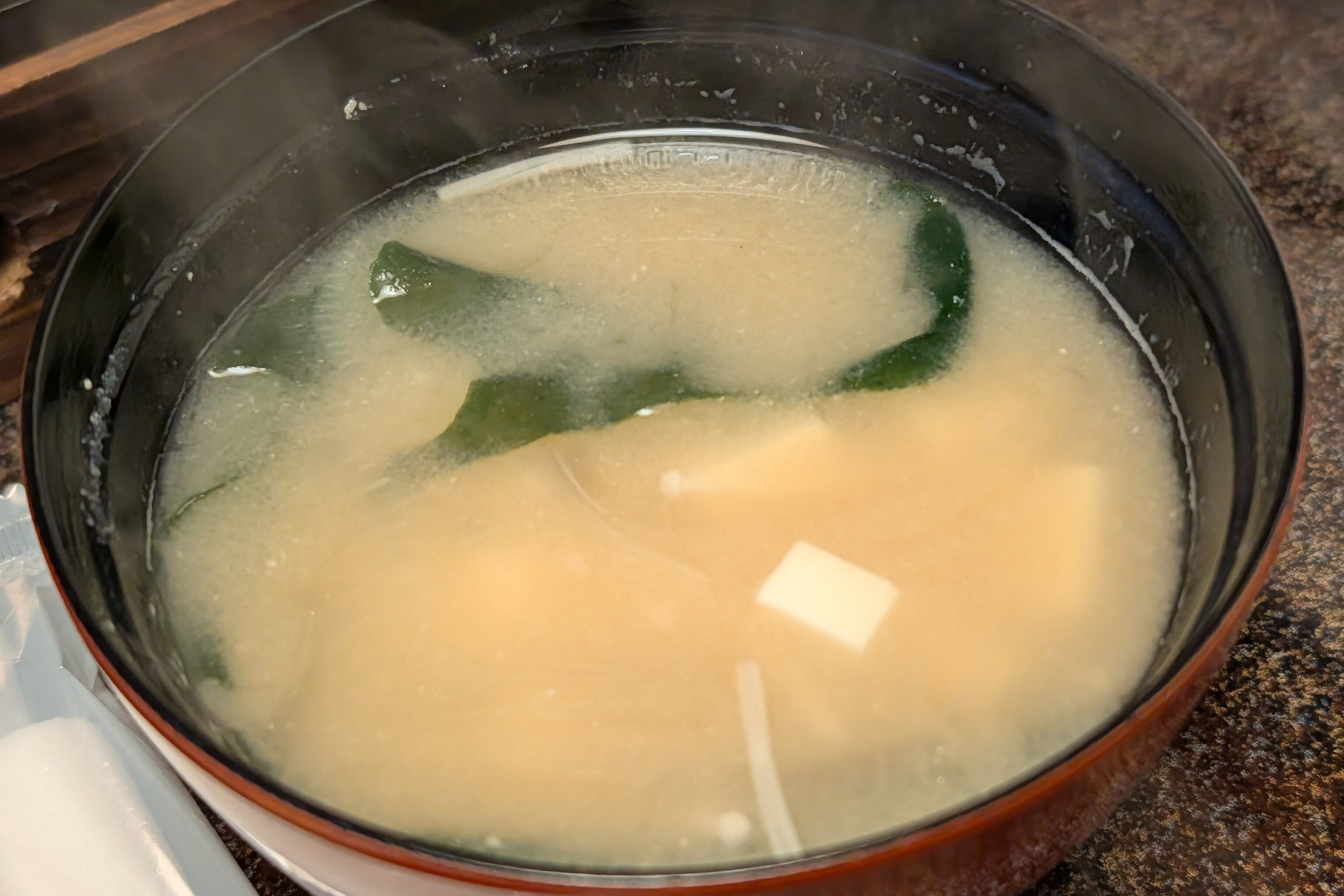
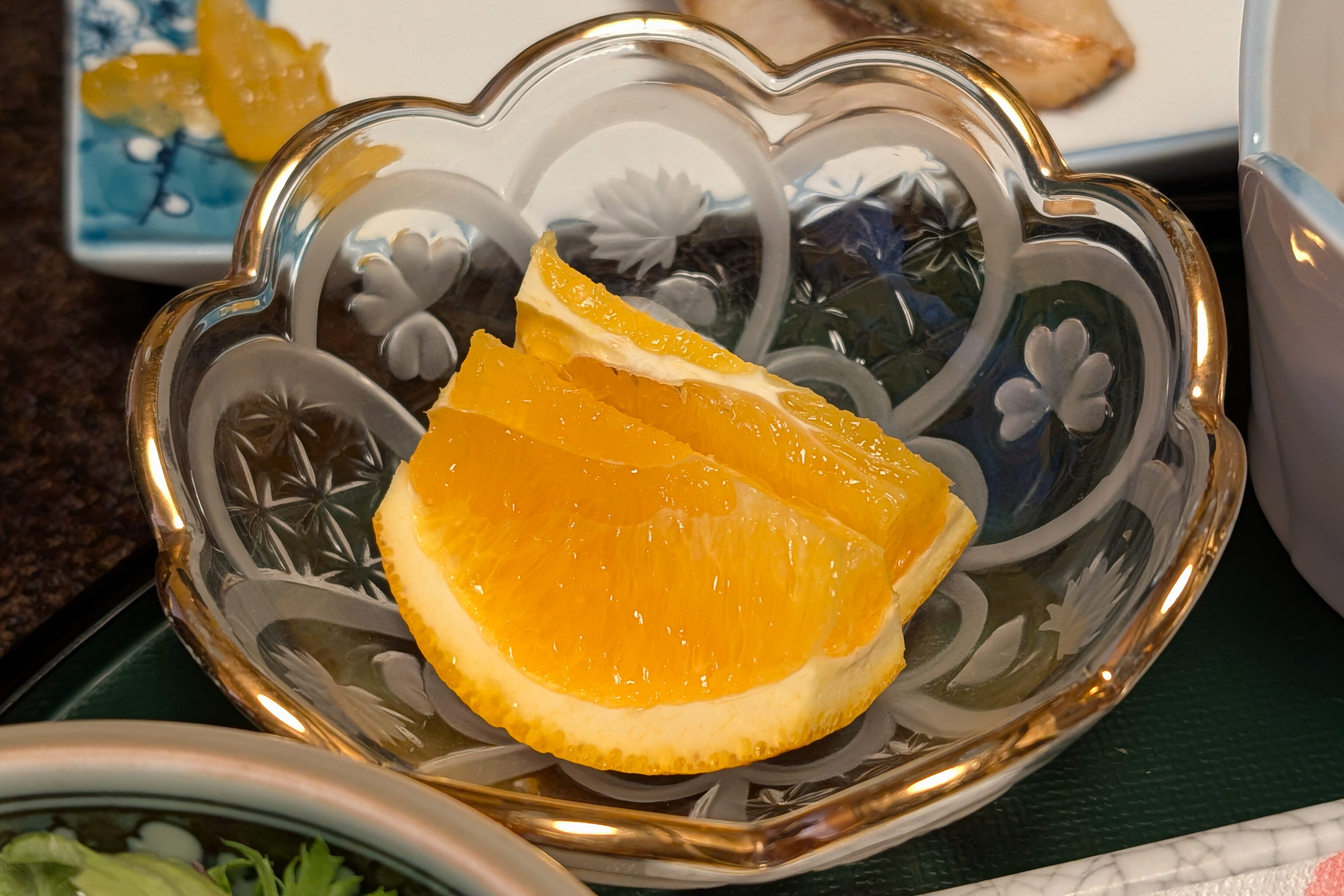
The only item not pictured is the rice. The seasoned seaweed is in a wrapper at the center of the serving platter. It was an enjoyable breakfast and definitely different from what we usually have when staying at a hotel.
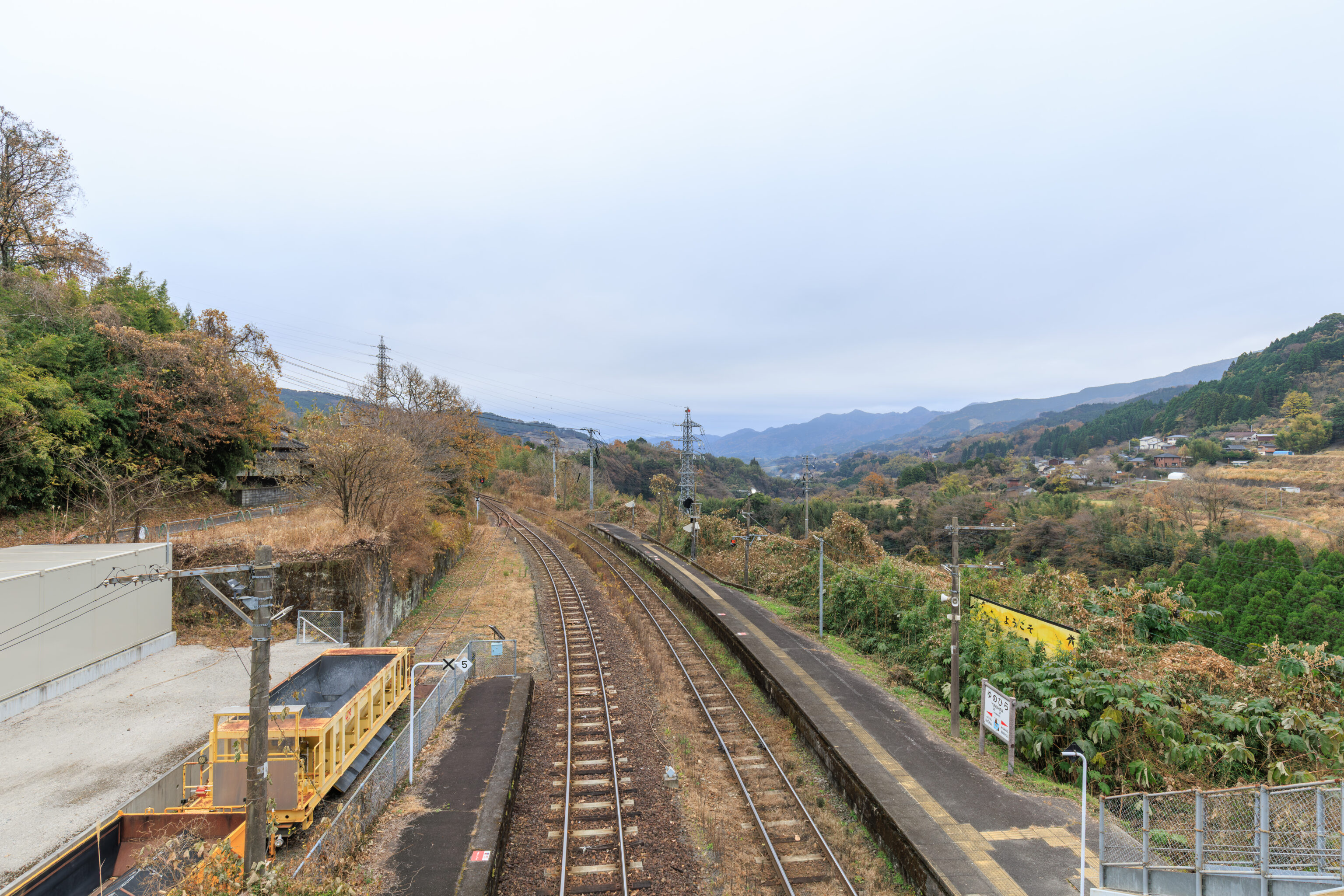
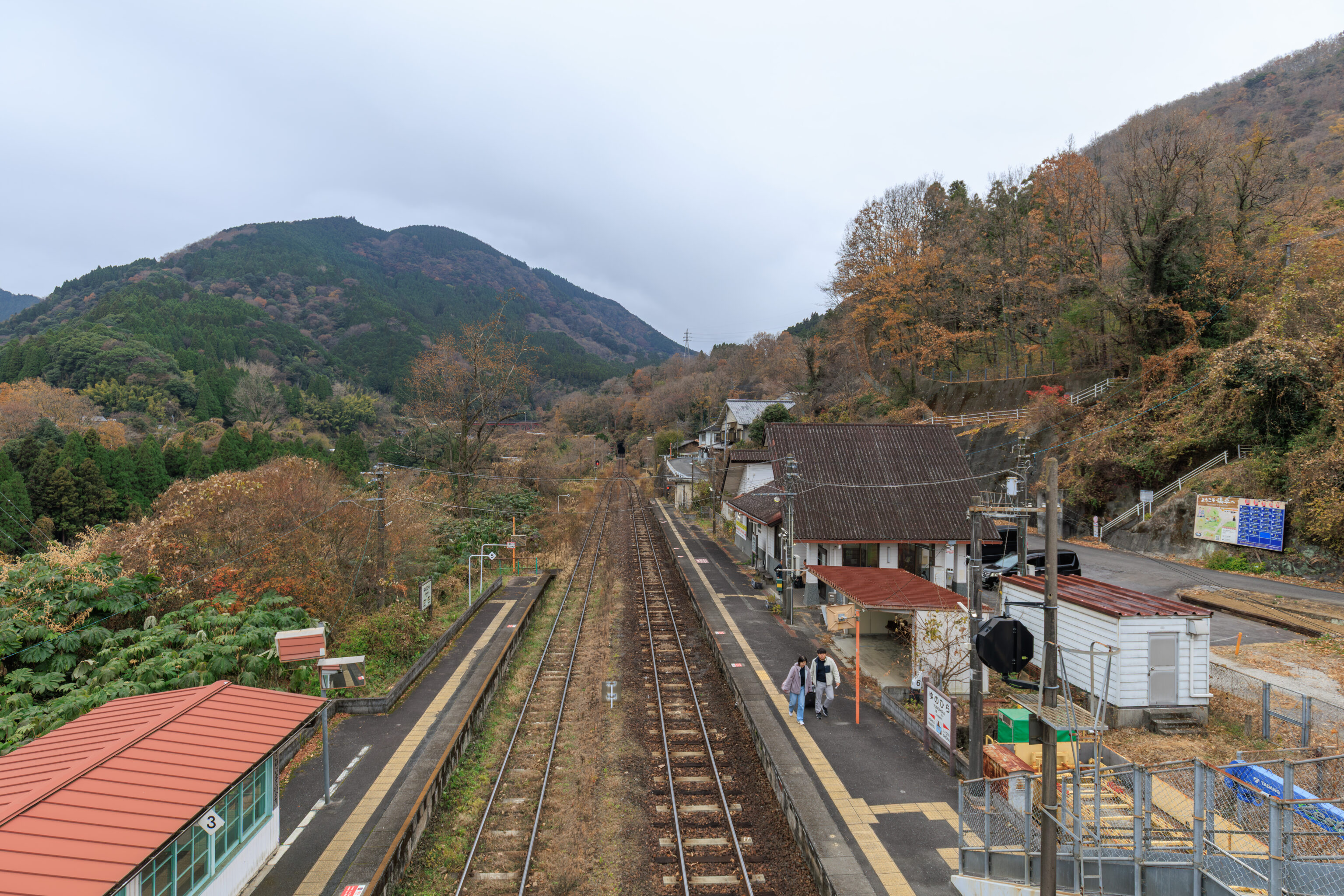
After breakfast, we were dropped off at Yunohira Station at the pre-arranged time to catch the 8:54am train to Yufuin. The platform for Yufuin is on the other side of the tracks from the station building. We crossed over by a pedestrian bridge.
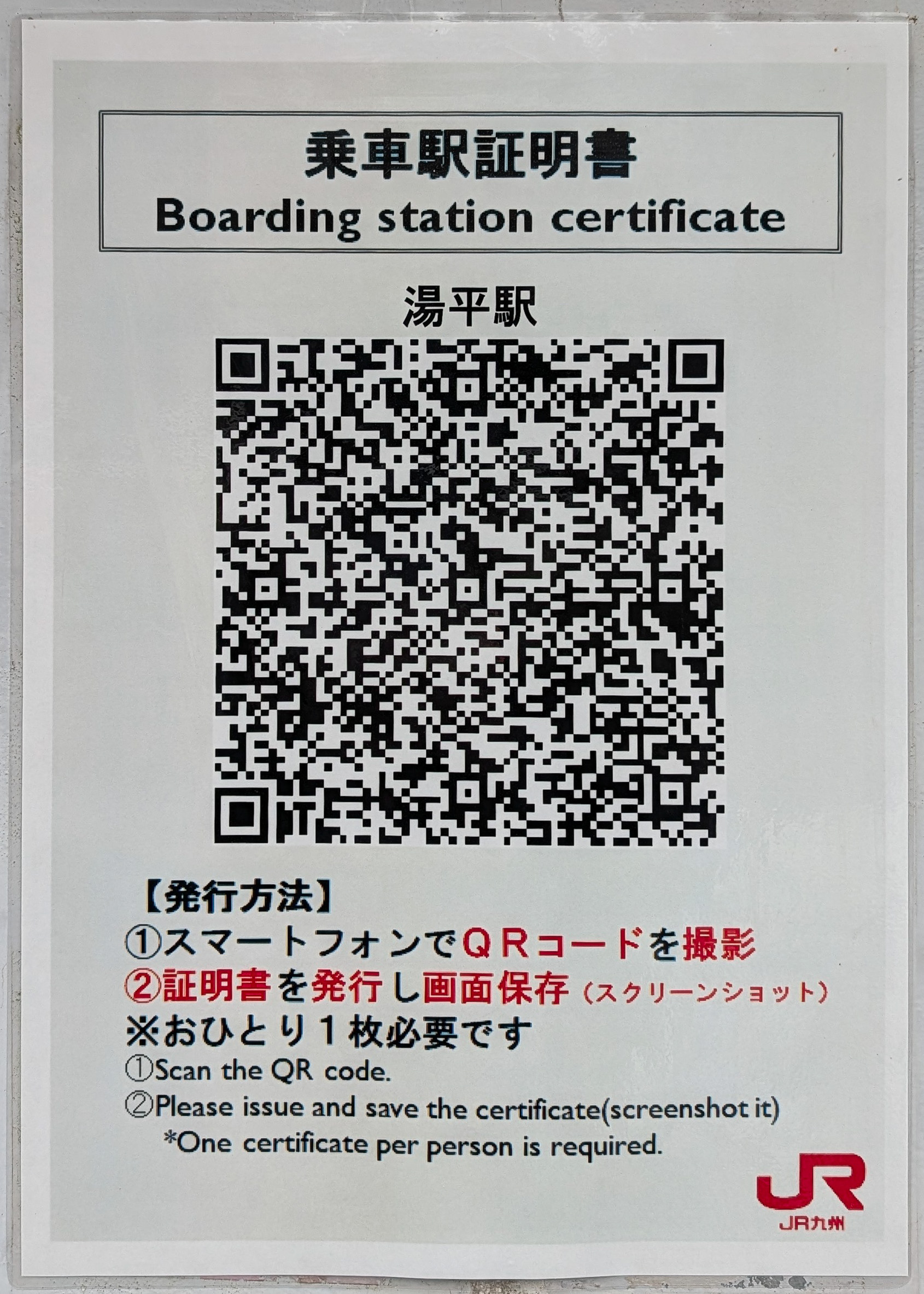
Yunohira is an unstaffed station. There are no ticket vending machines at stations like this. Instead, what you are supposed to do is scan this QR code to record where you boarded from.
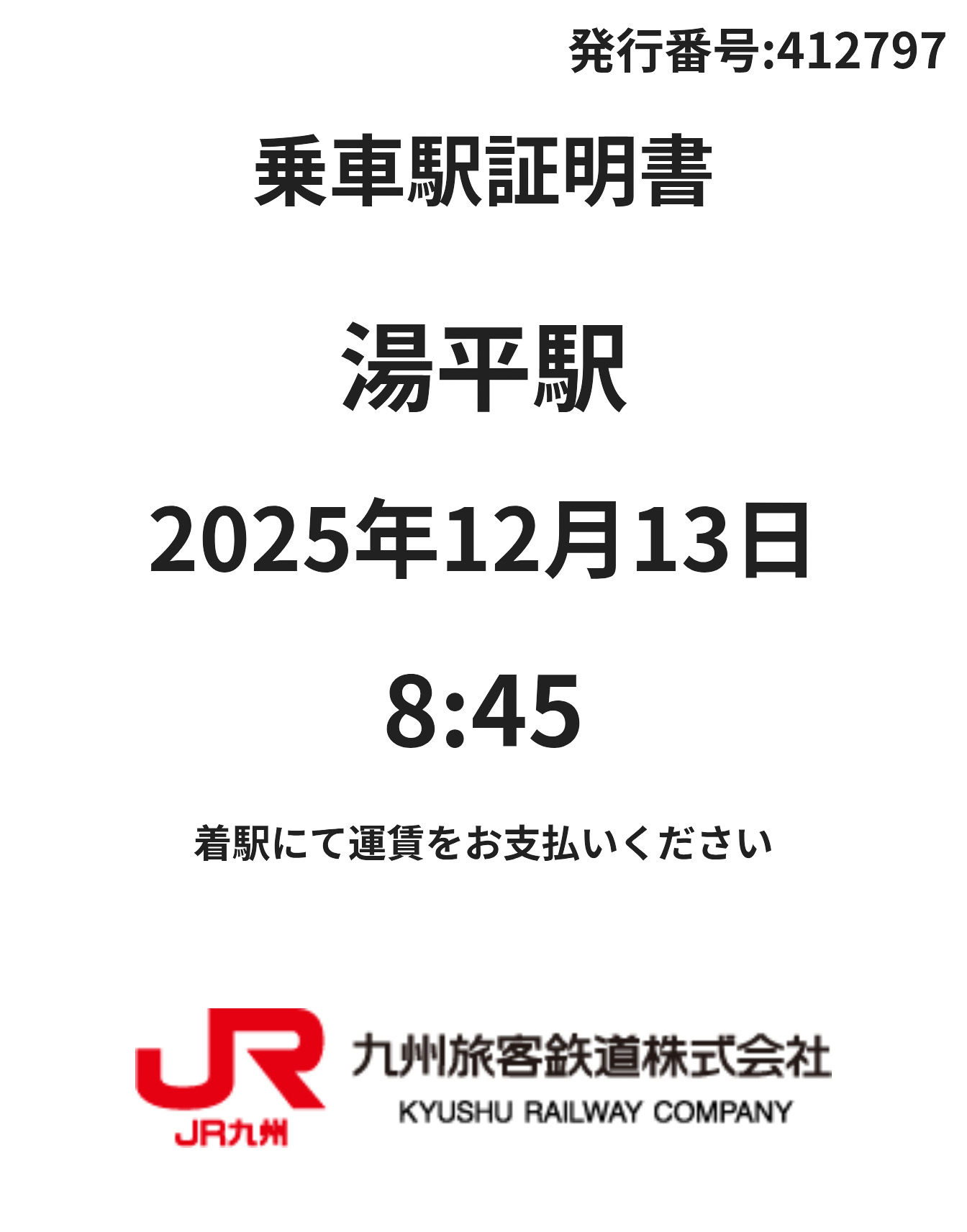
Scanning the QR code resulted in this numbered certificate. Then, you pay when exiting the train if it is an unstaffed station or at the station if it is staffed. It isn’t really clear how this system is supposed to work if you’re unable to scan a QR code.
We have a JR Kyushu rail pass that covers all trains that stop at Yunohira so this wasn’t really a concern.
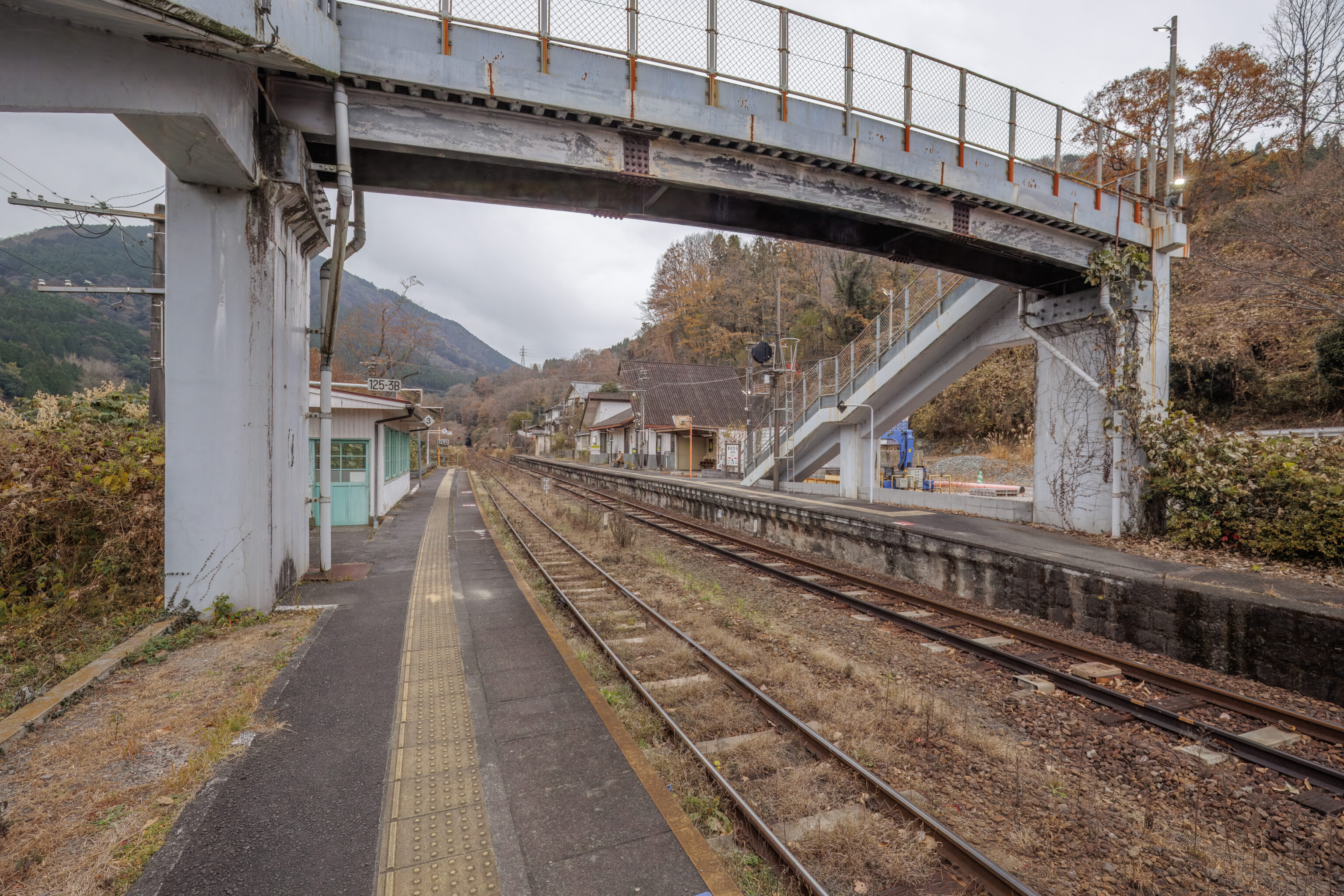
The view from the platform looking to the west towards Yufuin. Typically in Japan, at stations like this trains will use the track on the left in the direction of travel.
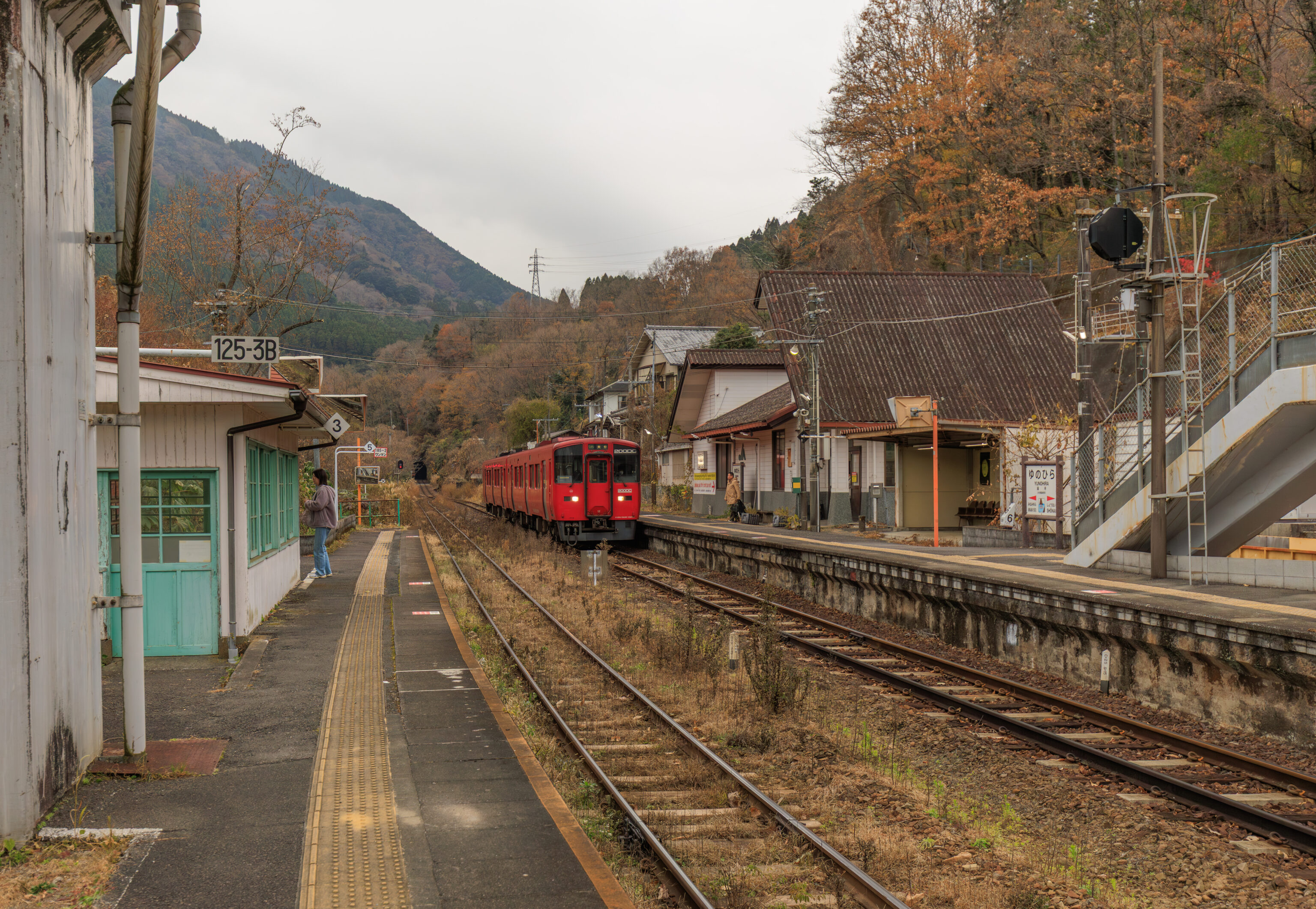
We saw a two car local train bound for Oita arrive at the other platform.
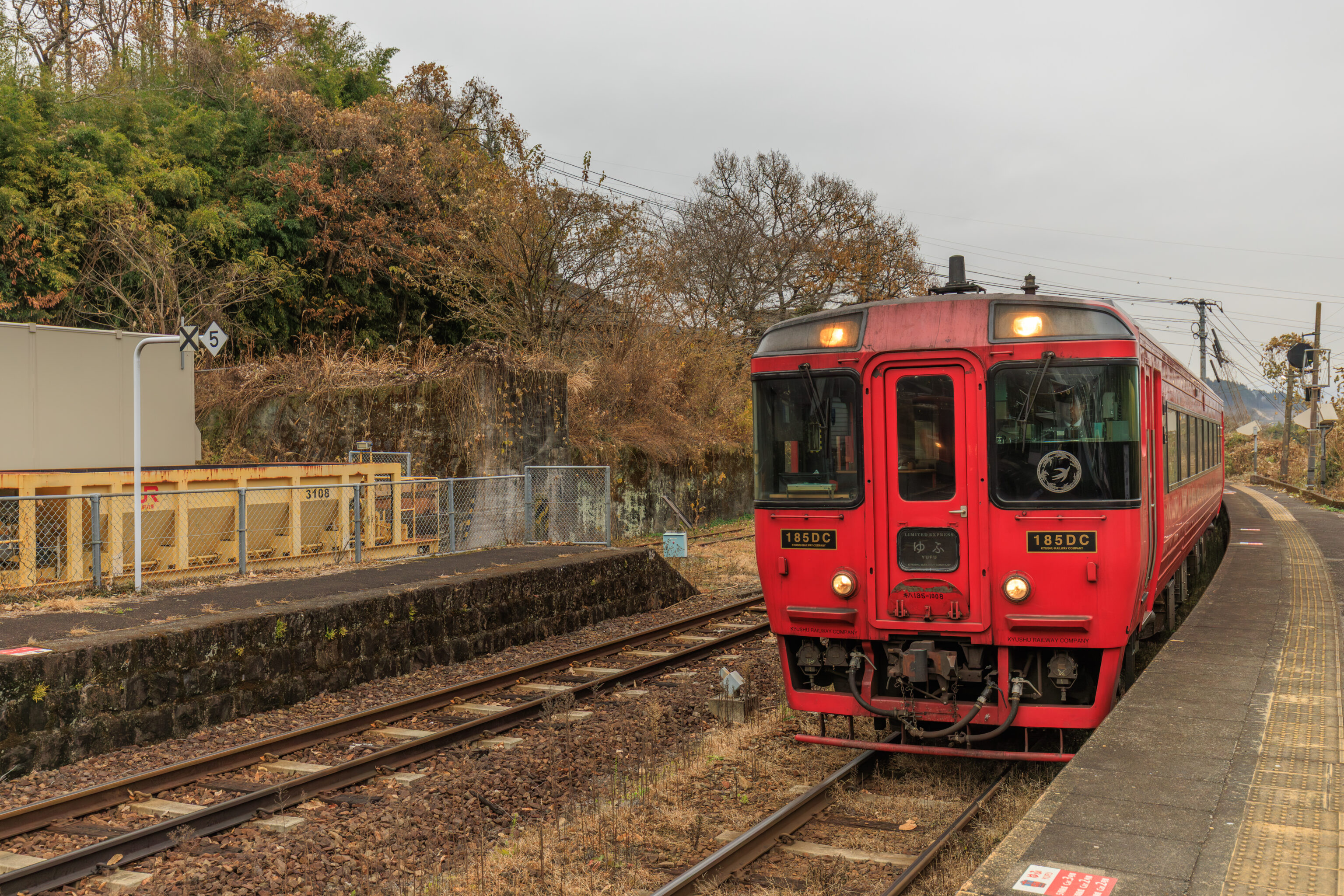
Soon, our train arrived as well, the limited express Yufu bound for Hakata. Most of the track along this line is single track with double track at some stations. So, these areas are the only places where trains can go past each other.
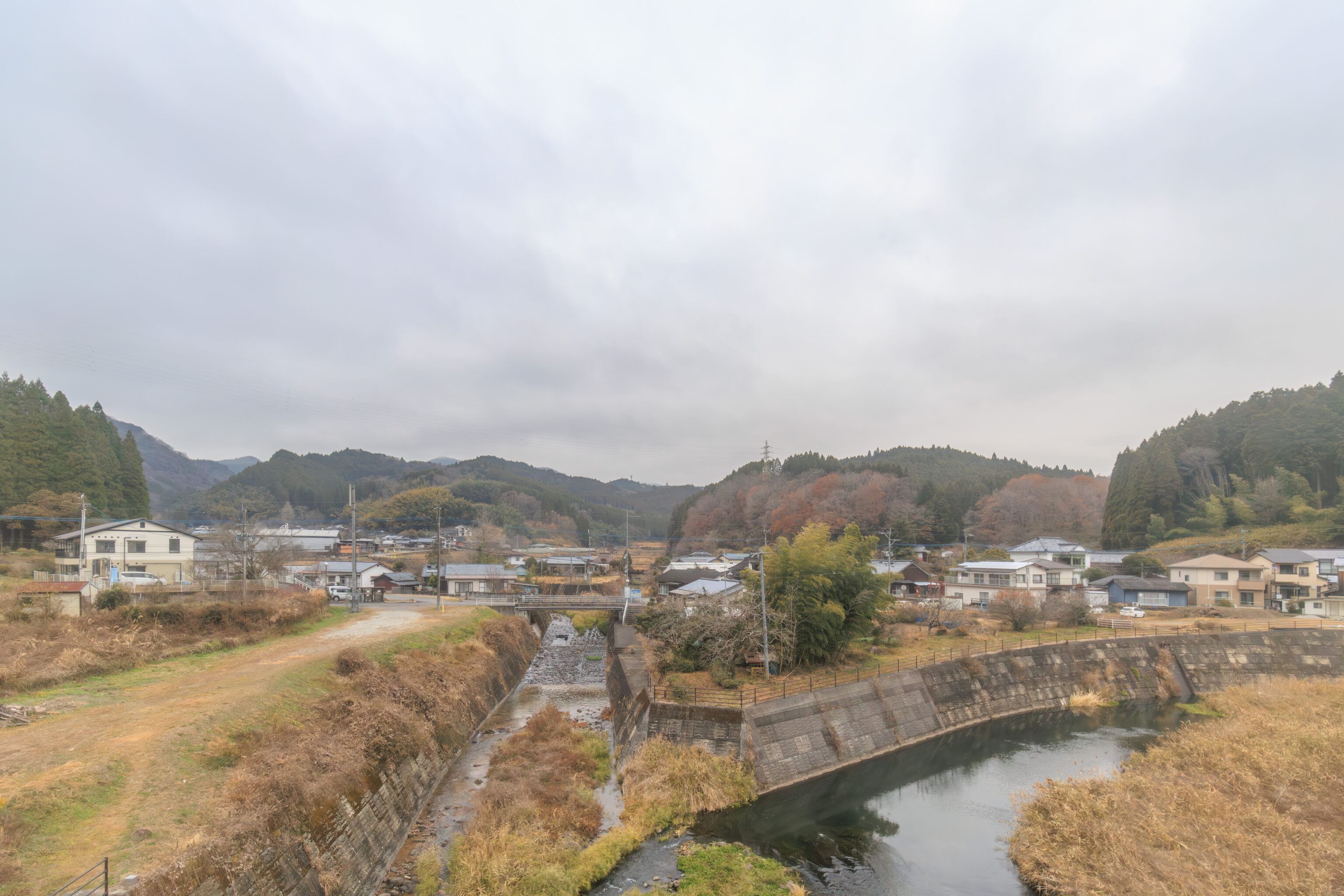
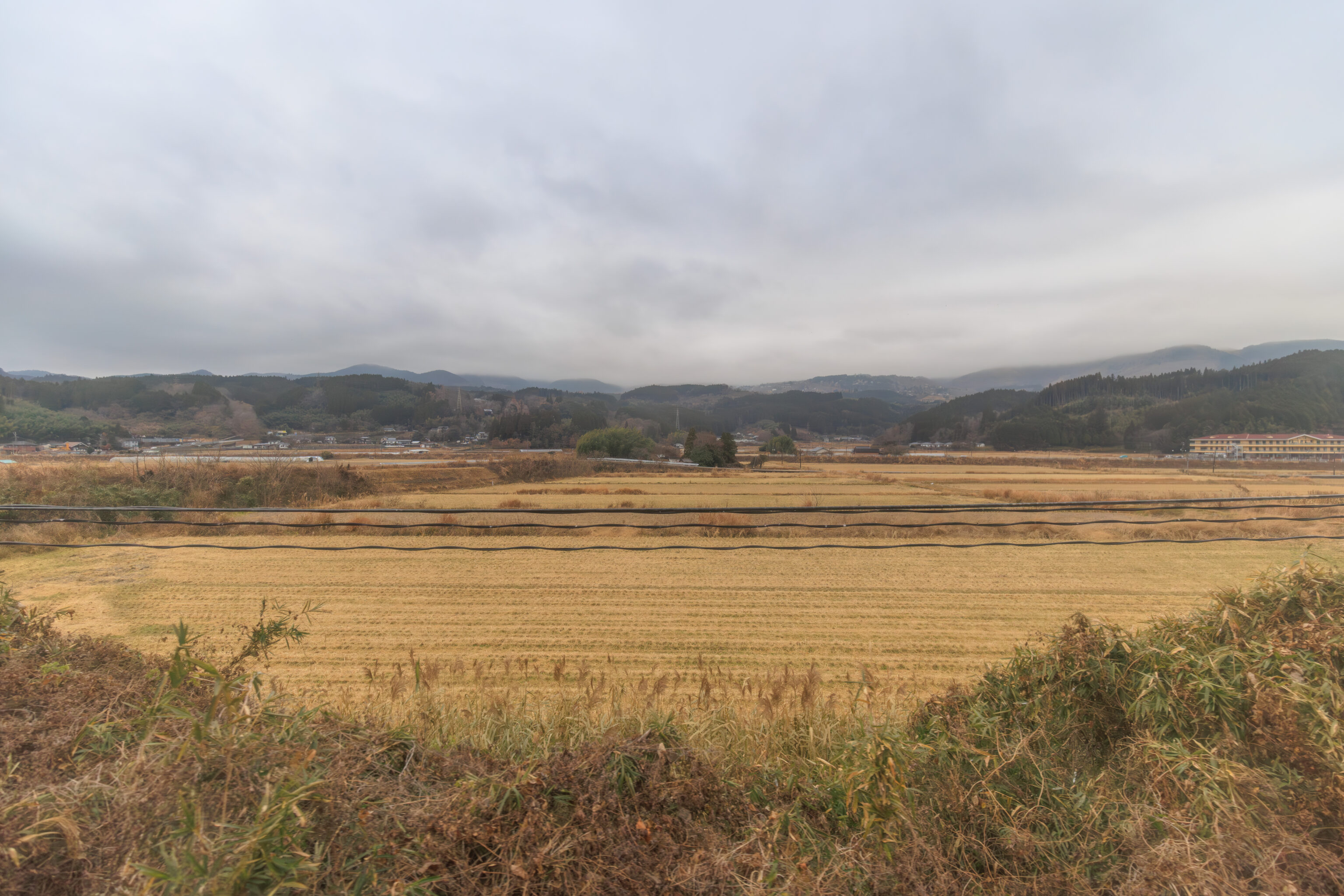
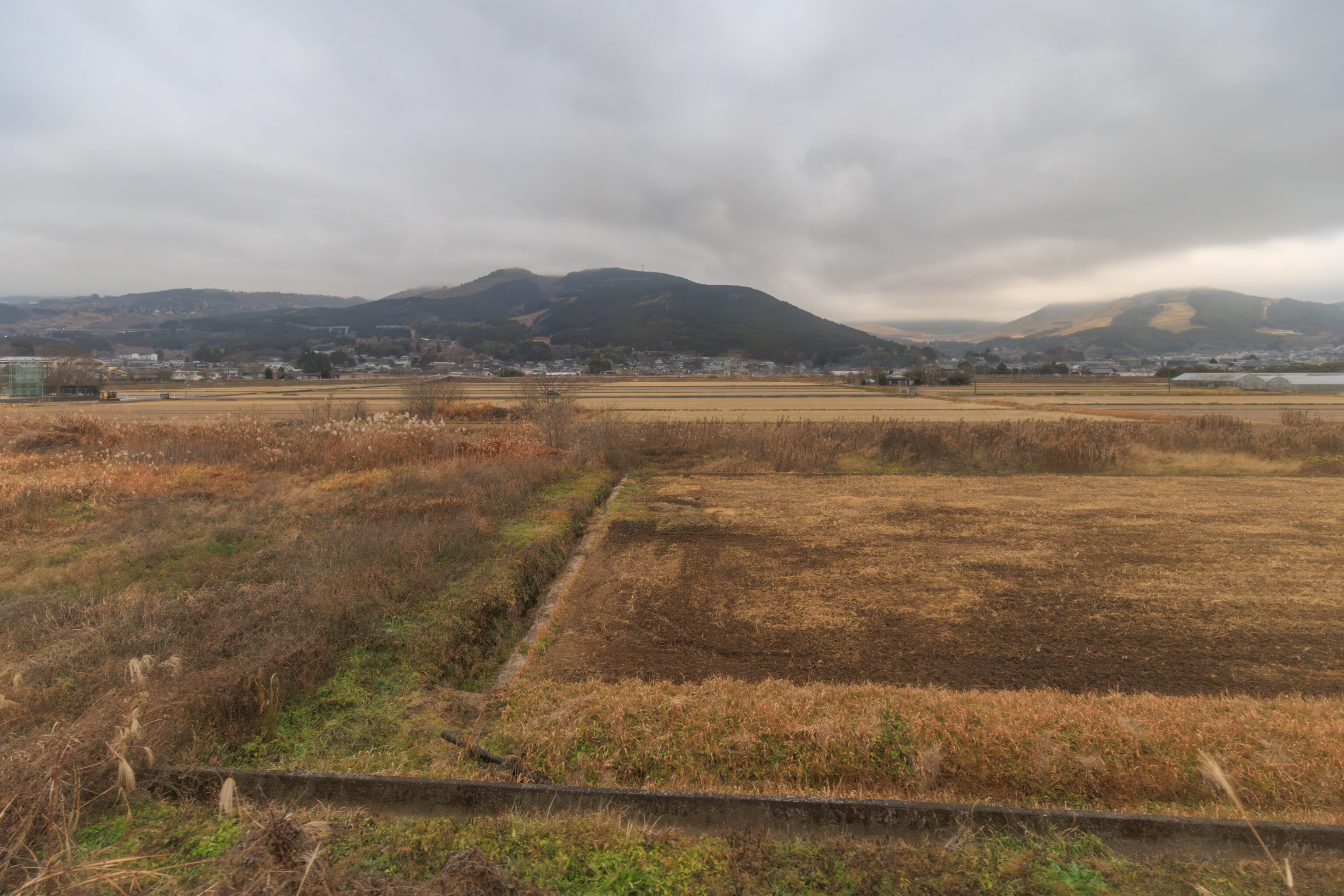
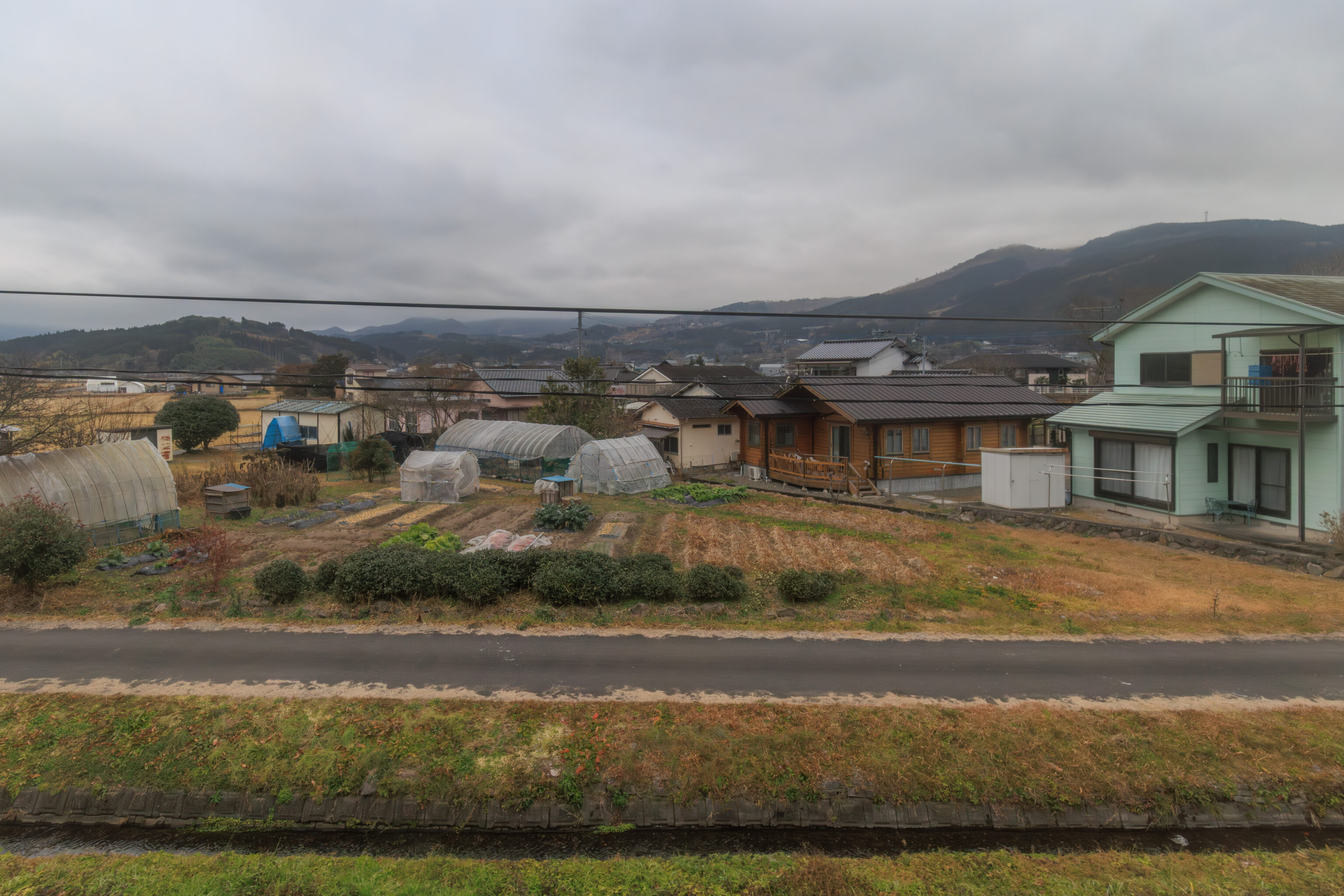
The trip to Yufuin from Yunohira took roughly 10 mintues or so.
Yufuin
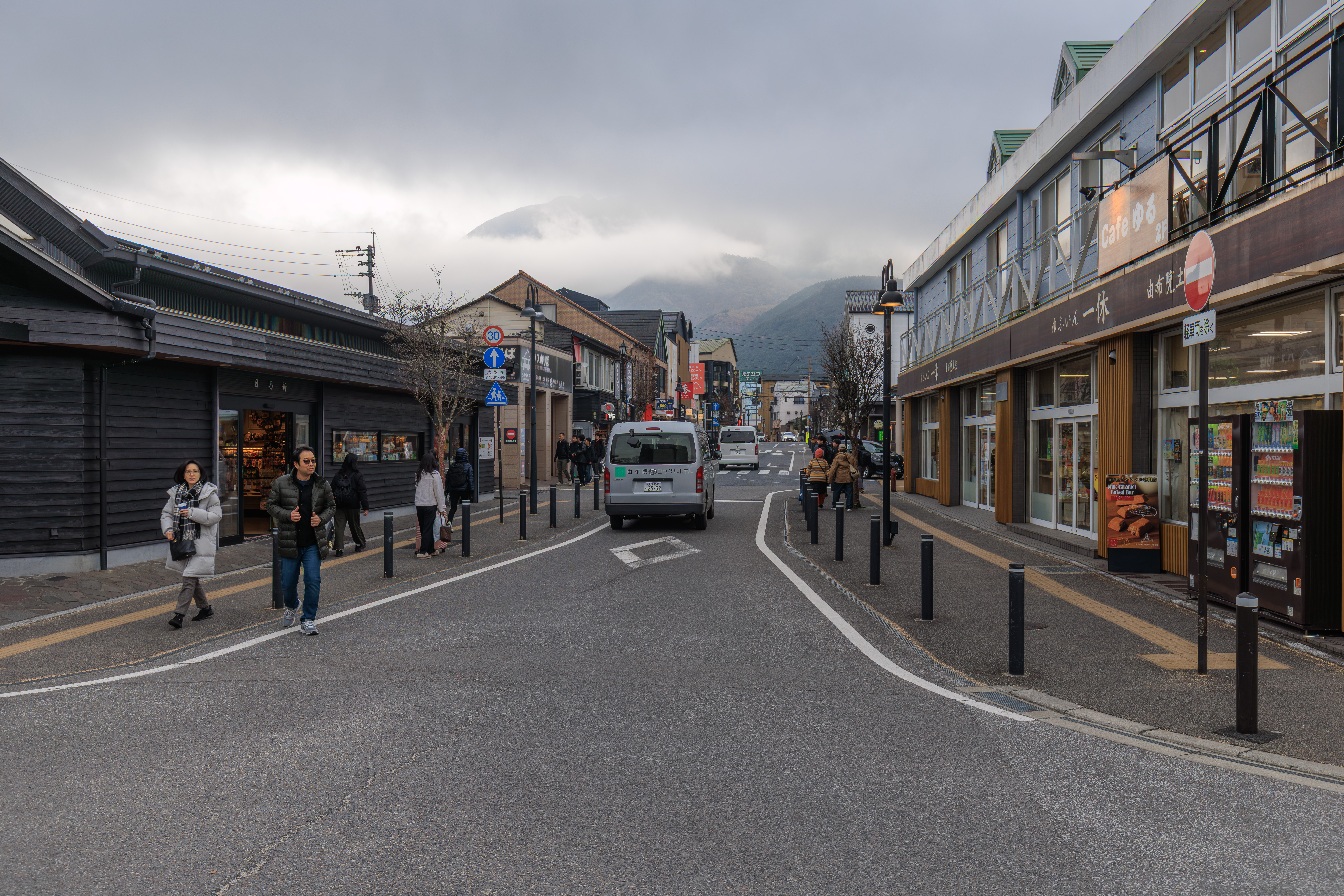
We arrived at 湯布院 Yufuin a little bit before 9:10am. There were unfortunately low clouds which blocked the view of 由布岳 Mount Yufu to the east. The station is at the west end of a street which runs through the center of the developed area of Yufuin.
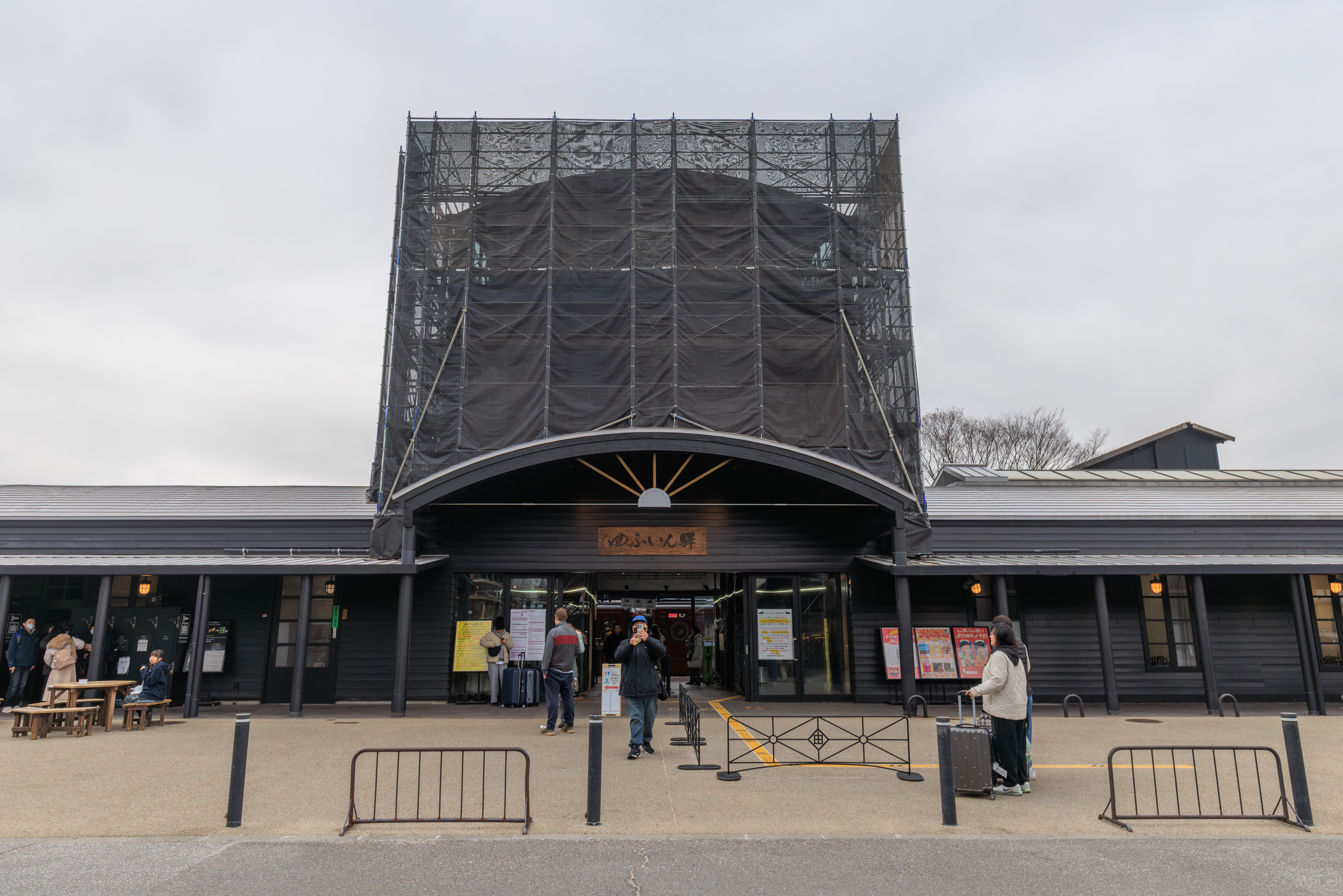
The dome over the station building was being renovated at the time.
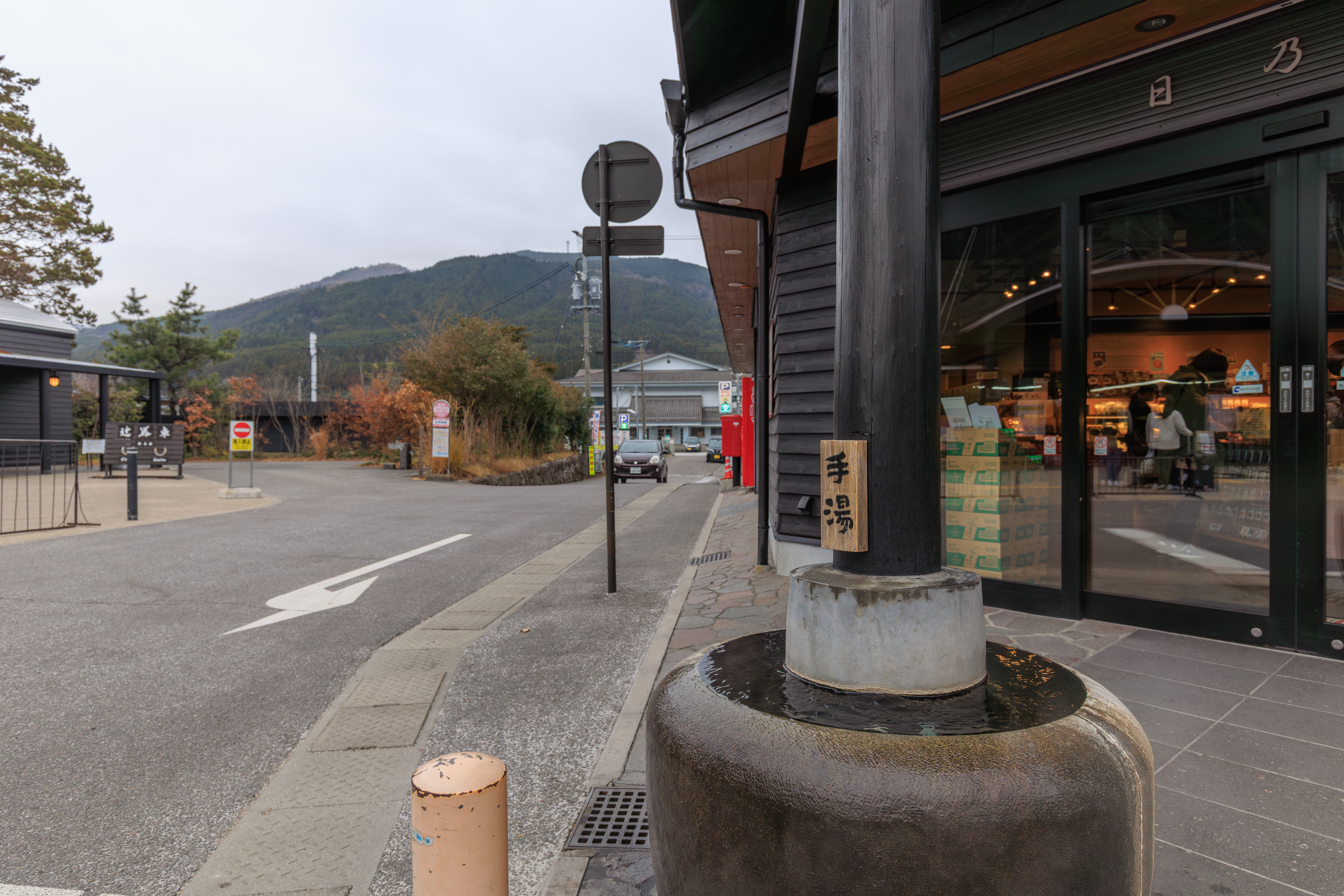
We came across a hot spring hand bath on a corner opposite of the station! It was quite nice, although our hands felt quite cold afterwards due to the weather!
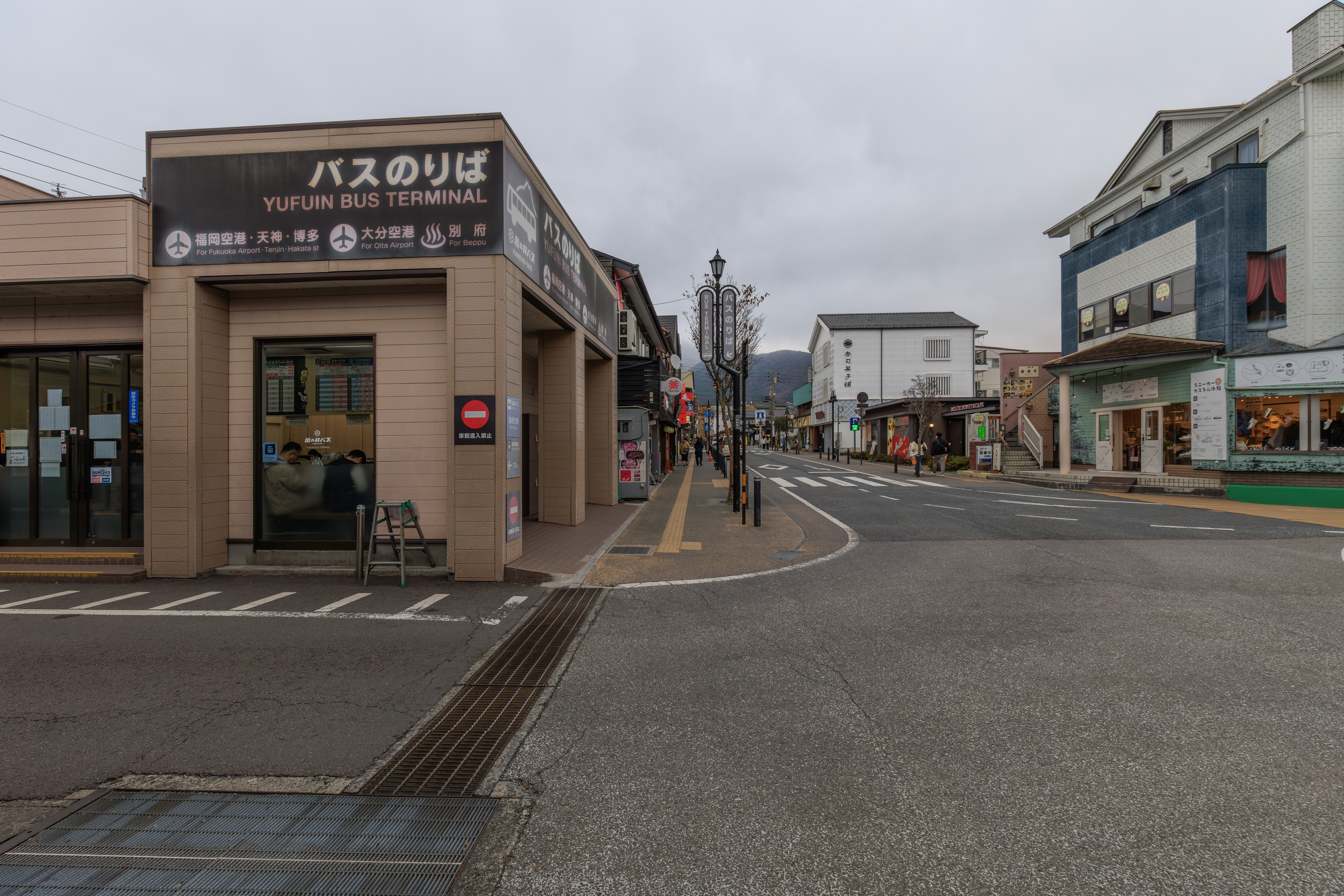
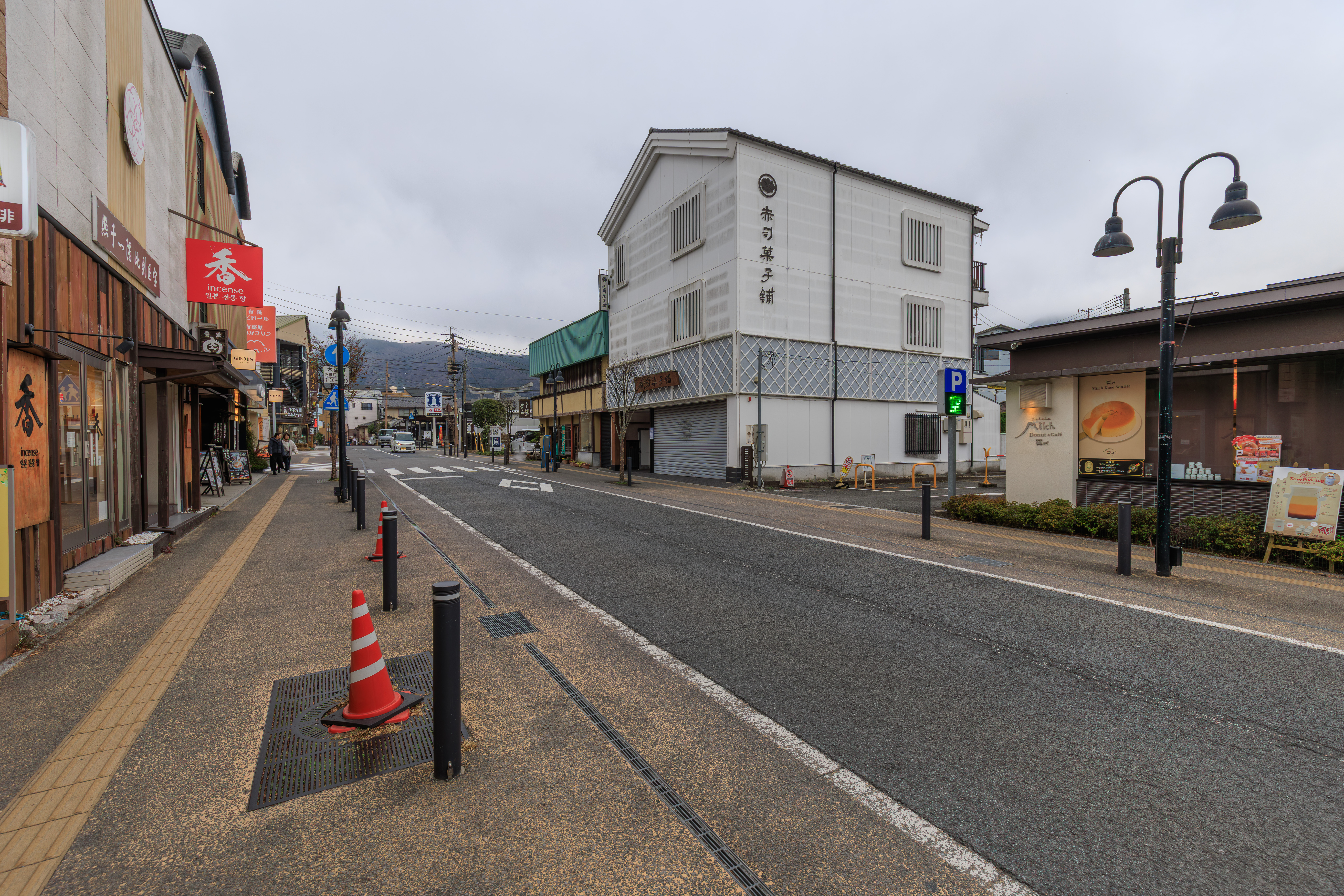
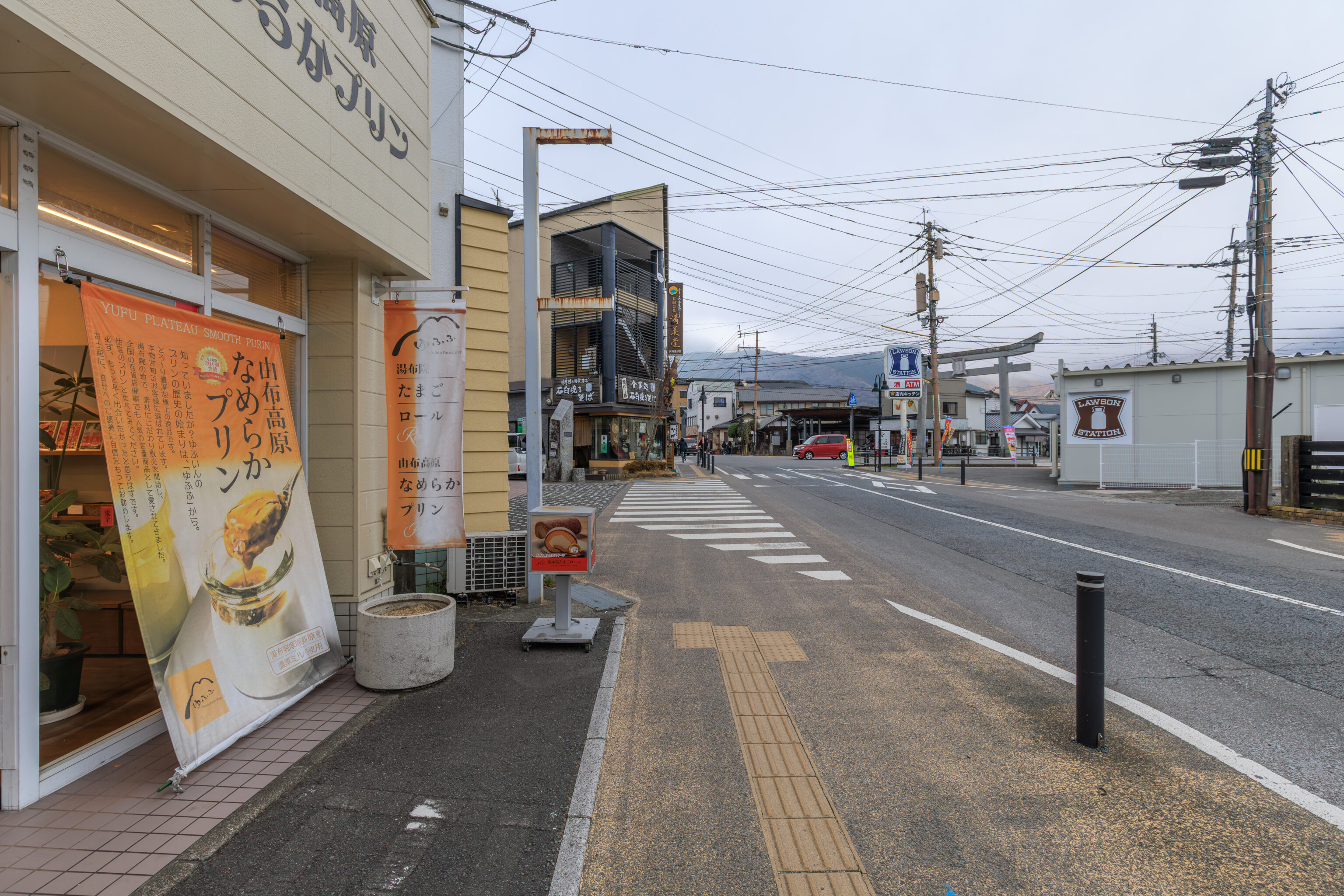
After visiting 日乃新 Hinoshin, a large souvenir shop next to the hand bath, and the bathroom back by the station, we walked to the east away from the station.
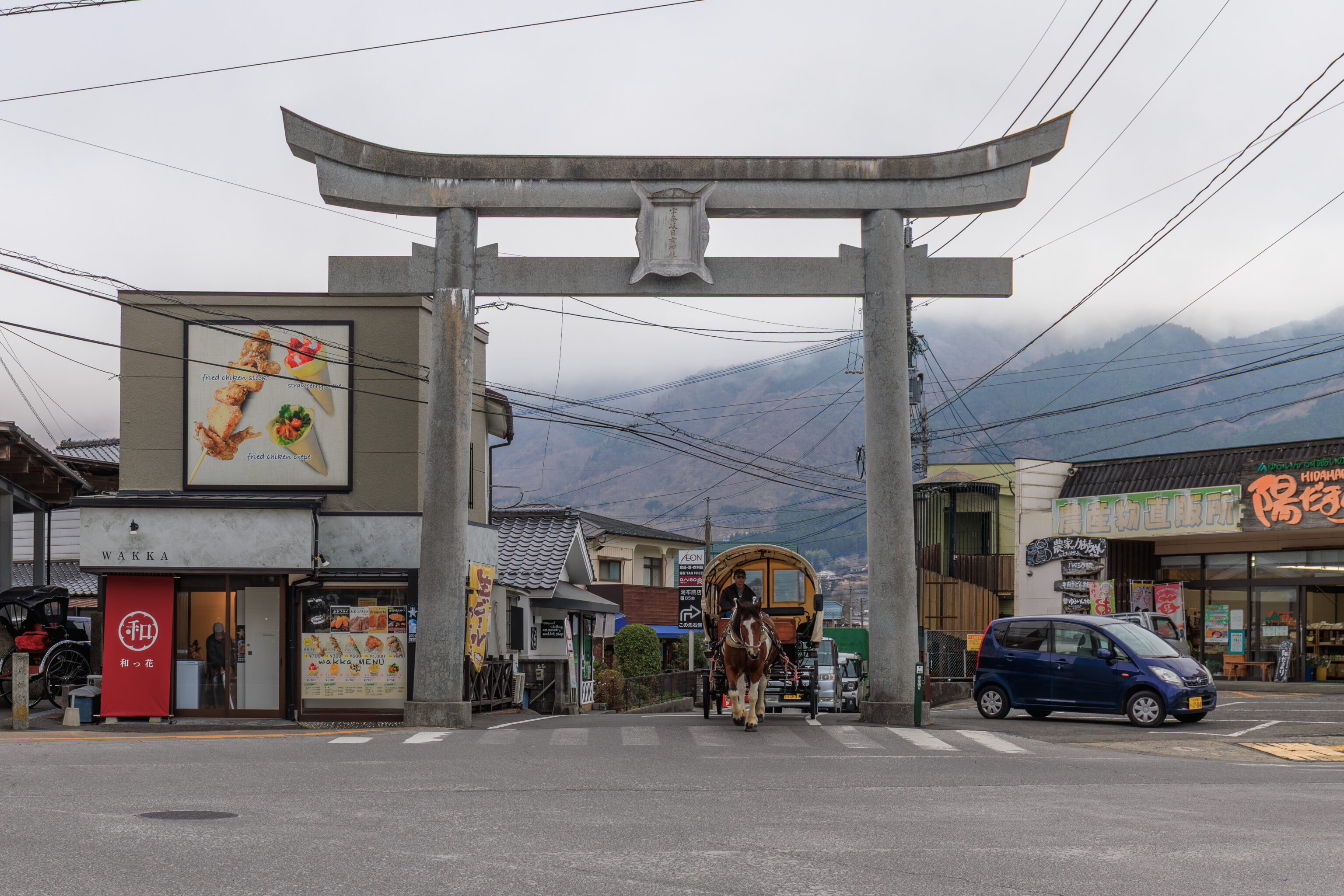
We walked by a large concrete torii with a horse drawn carriage that just happened to be passing through it at the time. The torii is over a road that goes to the southwest part of town.
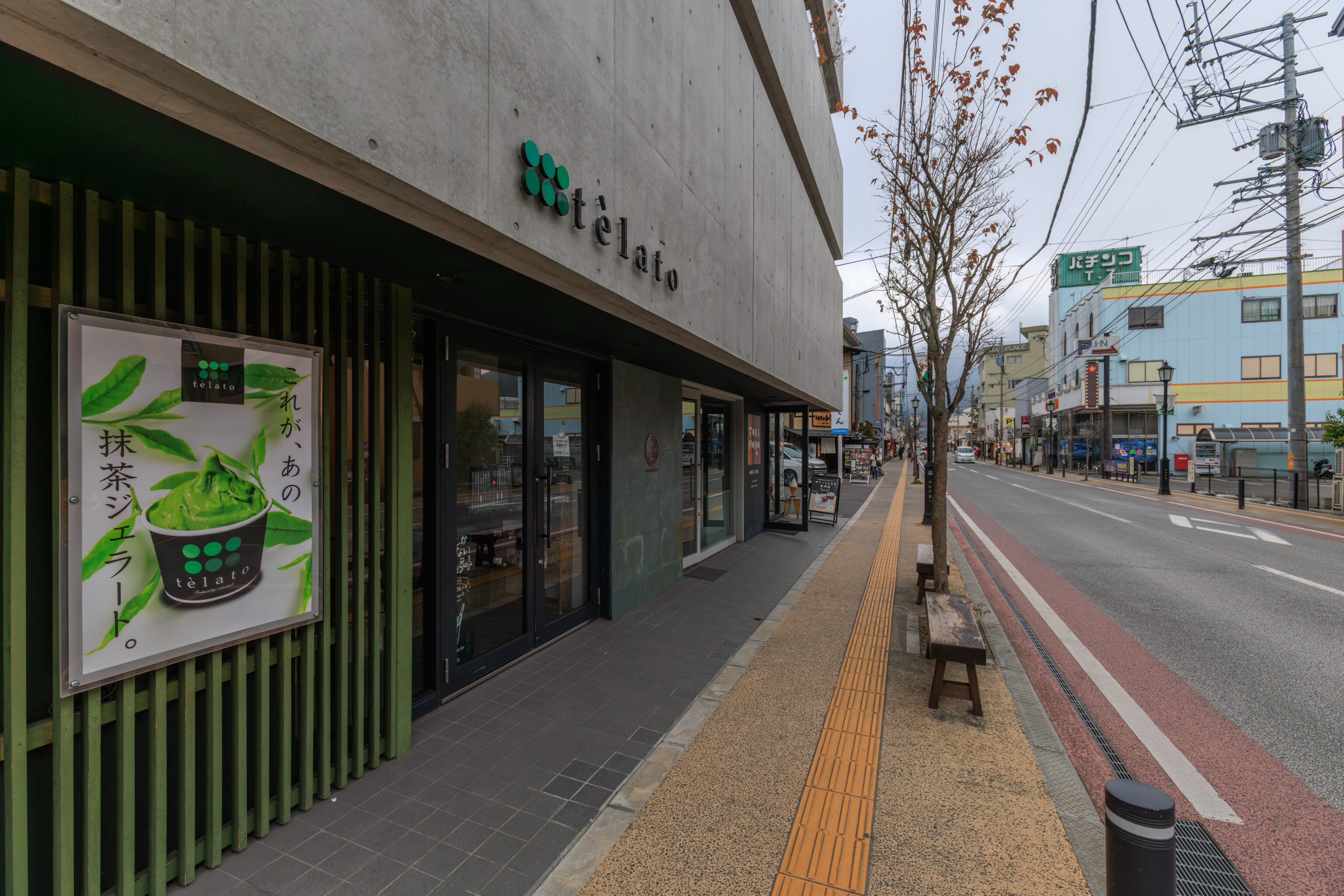
This matcha gelato shop, テラート Telato, had really good reviews on Google Maps. It was too early in the morning for it to be open though. Maybe we will be able to visit it later?
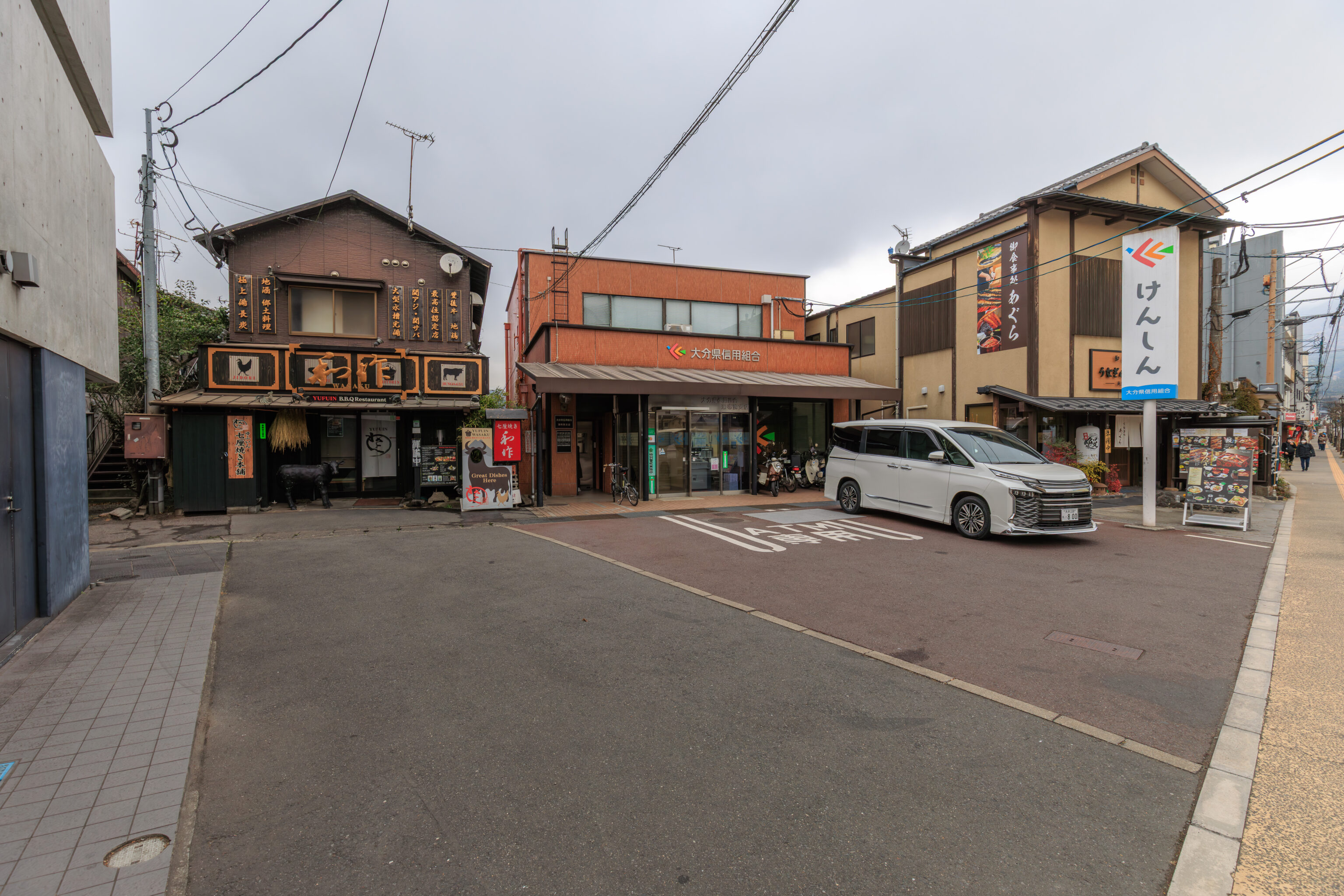
We were thinking about where we wanted to eat later as ideally we wanted something local. We passed by this yakiniku restaurant which serves the local おおいた和牛 Oita Wagyu, seemingly referred to in English as Oita Bungo Beef.
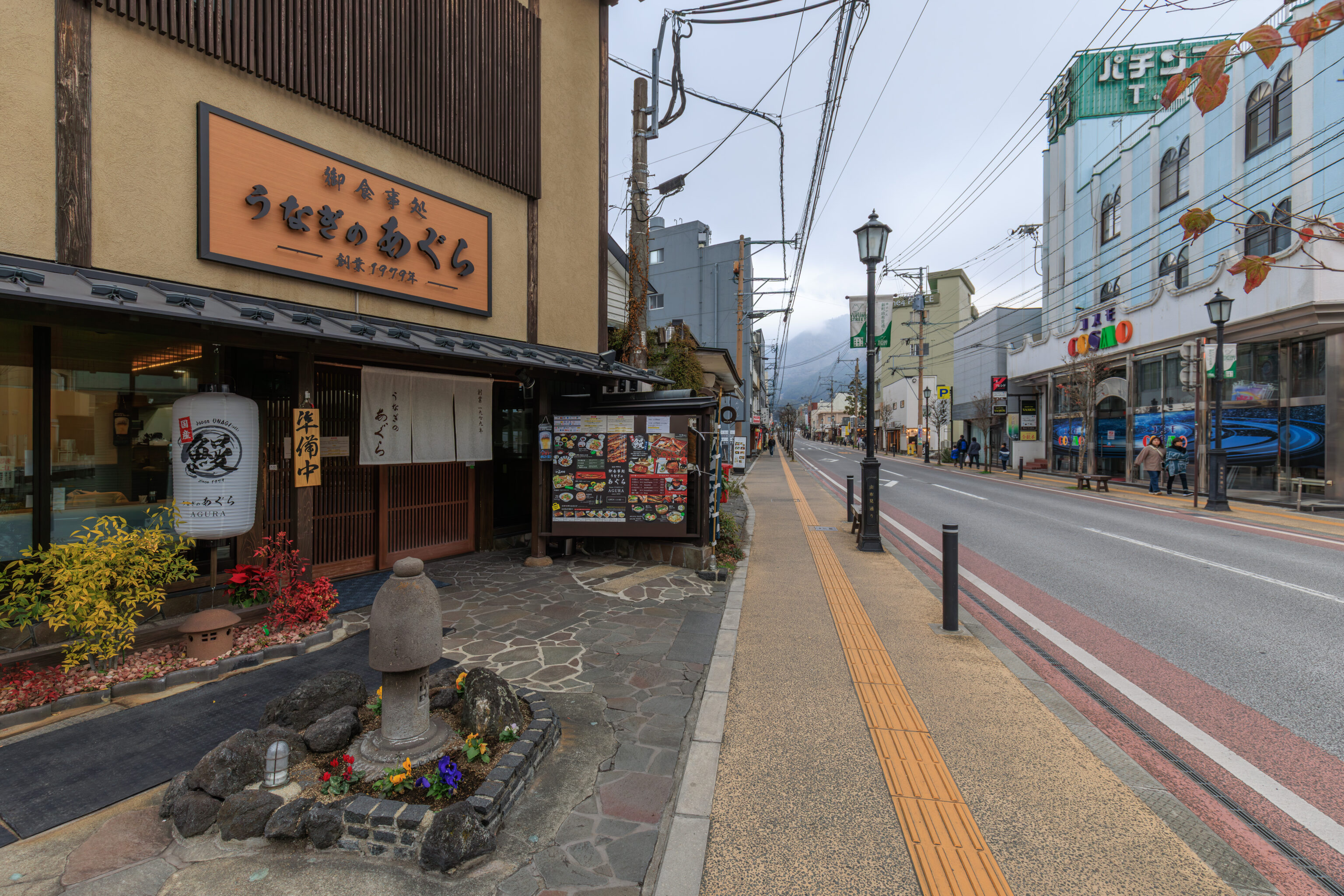
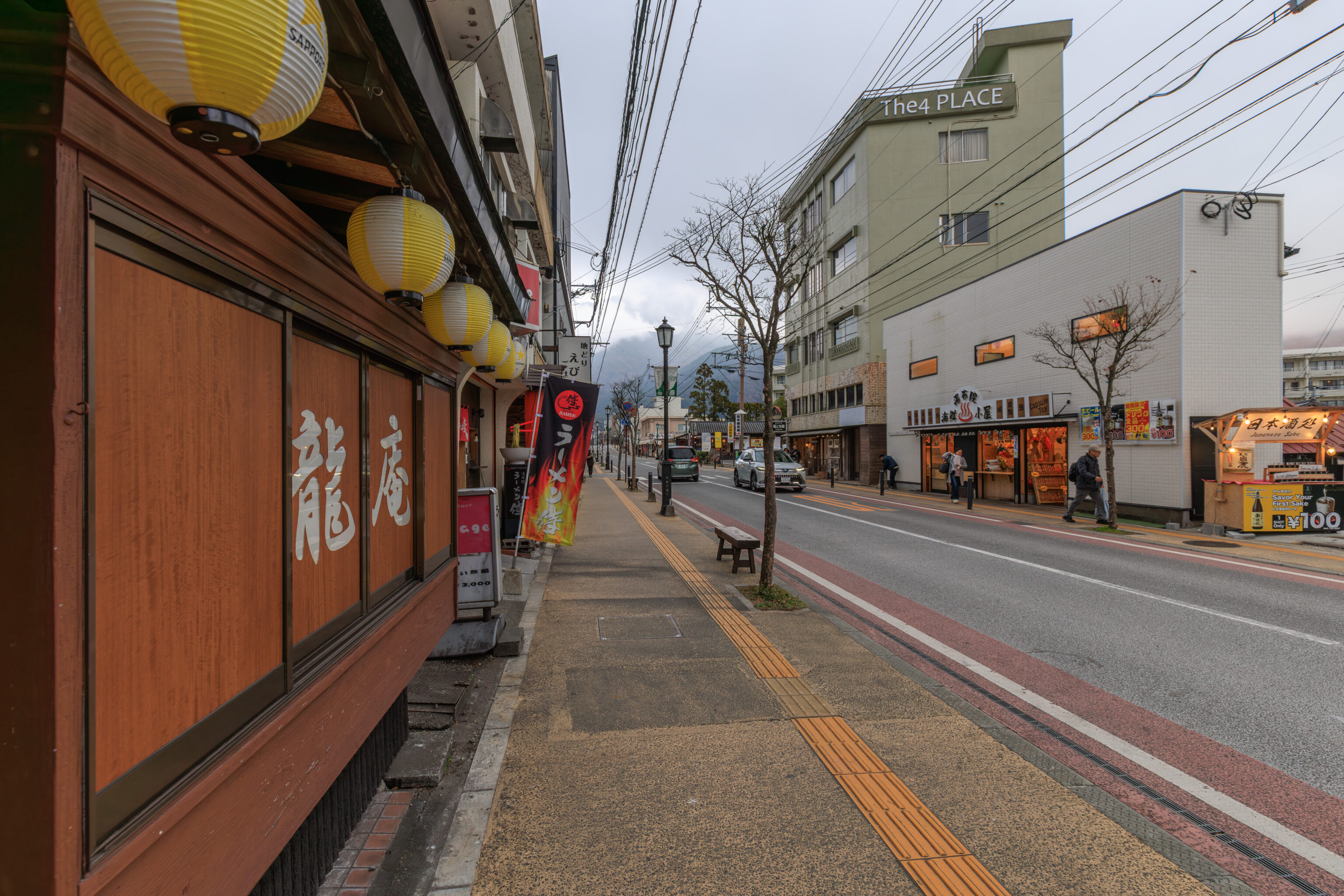
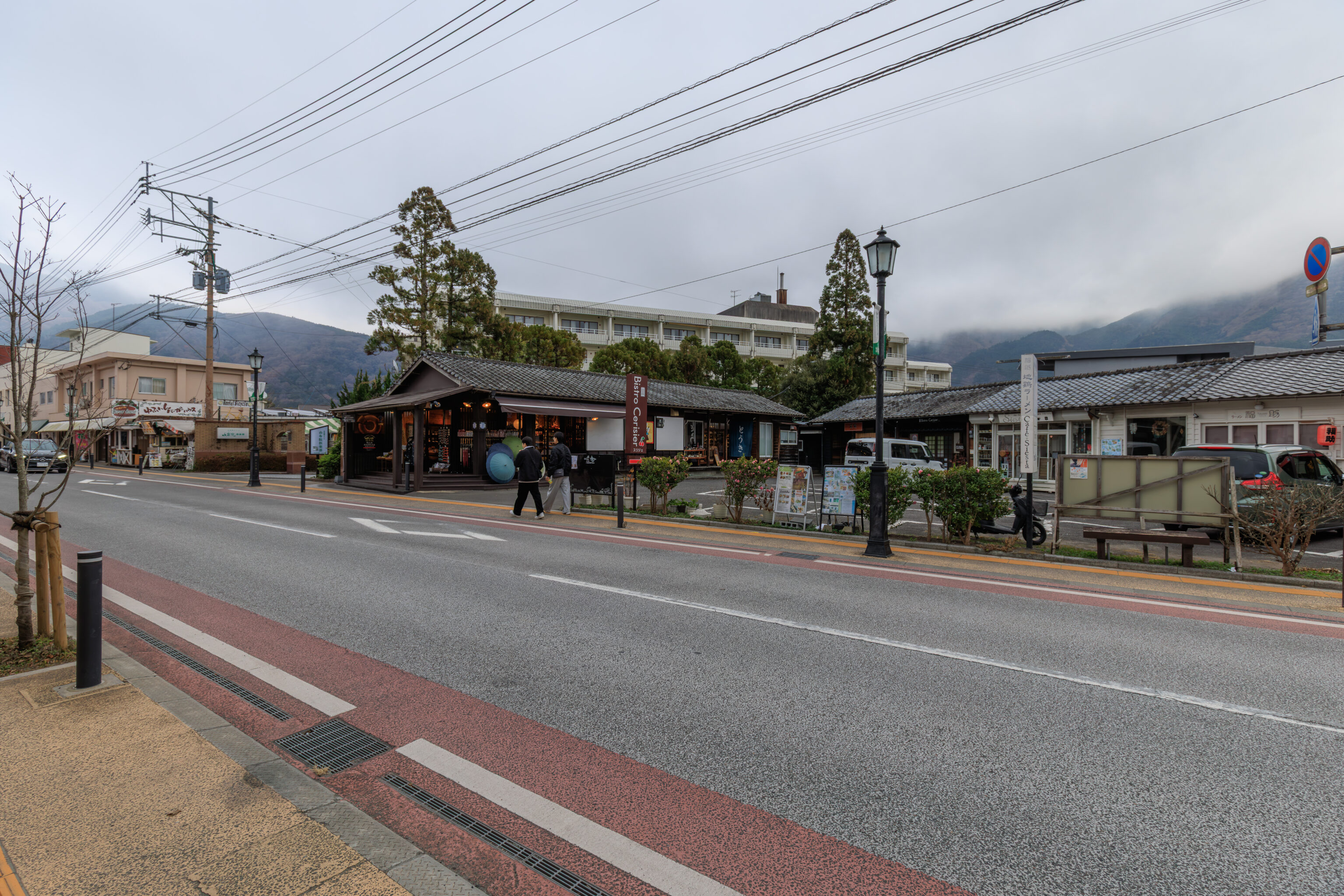
It was pretty quiet as we walked. The ryokan were all pretty busy based on availability so there should be many people in town. It could just be it is early?
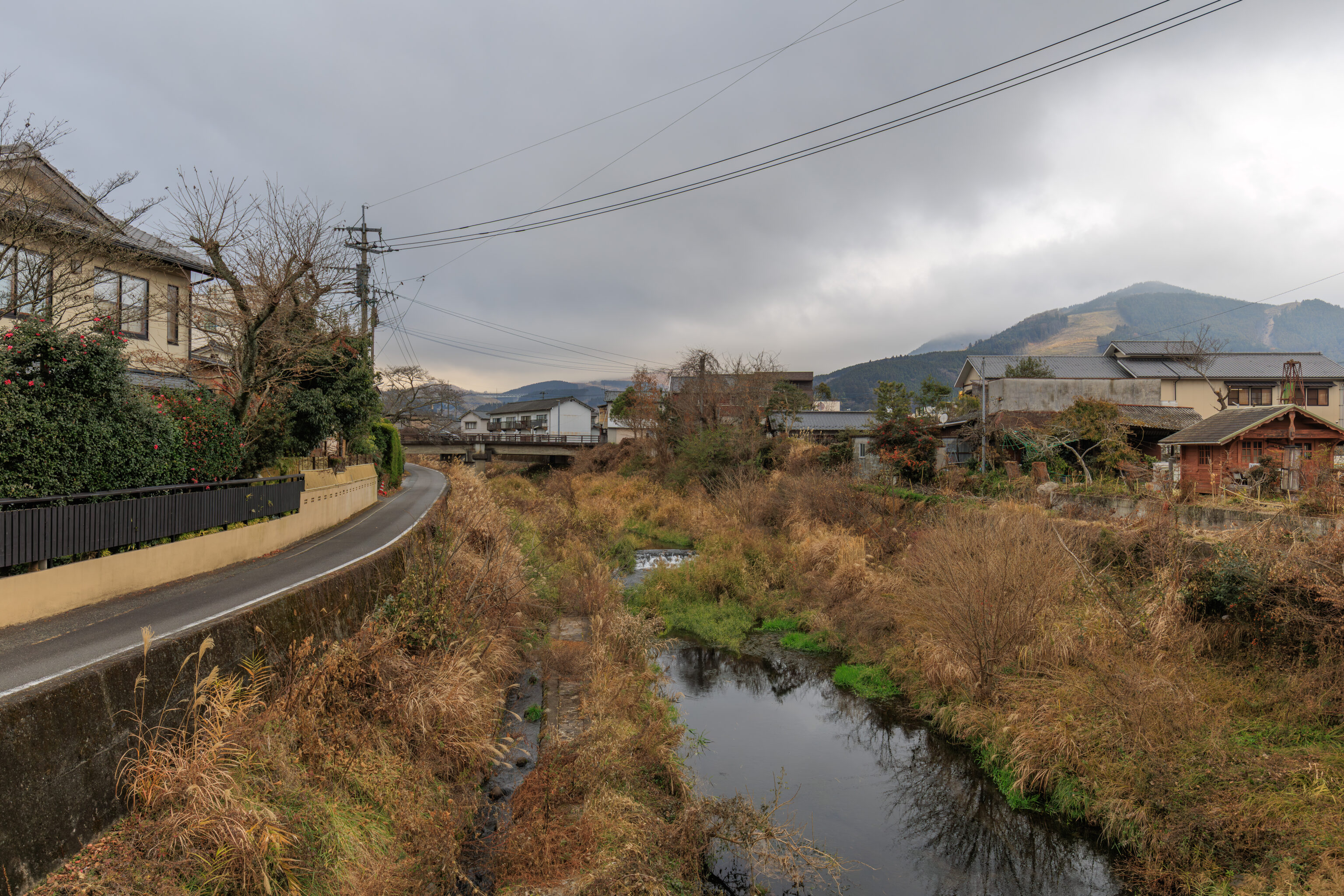
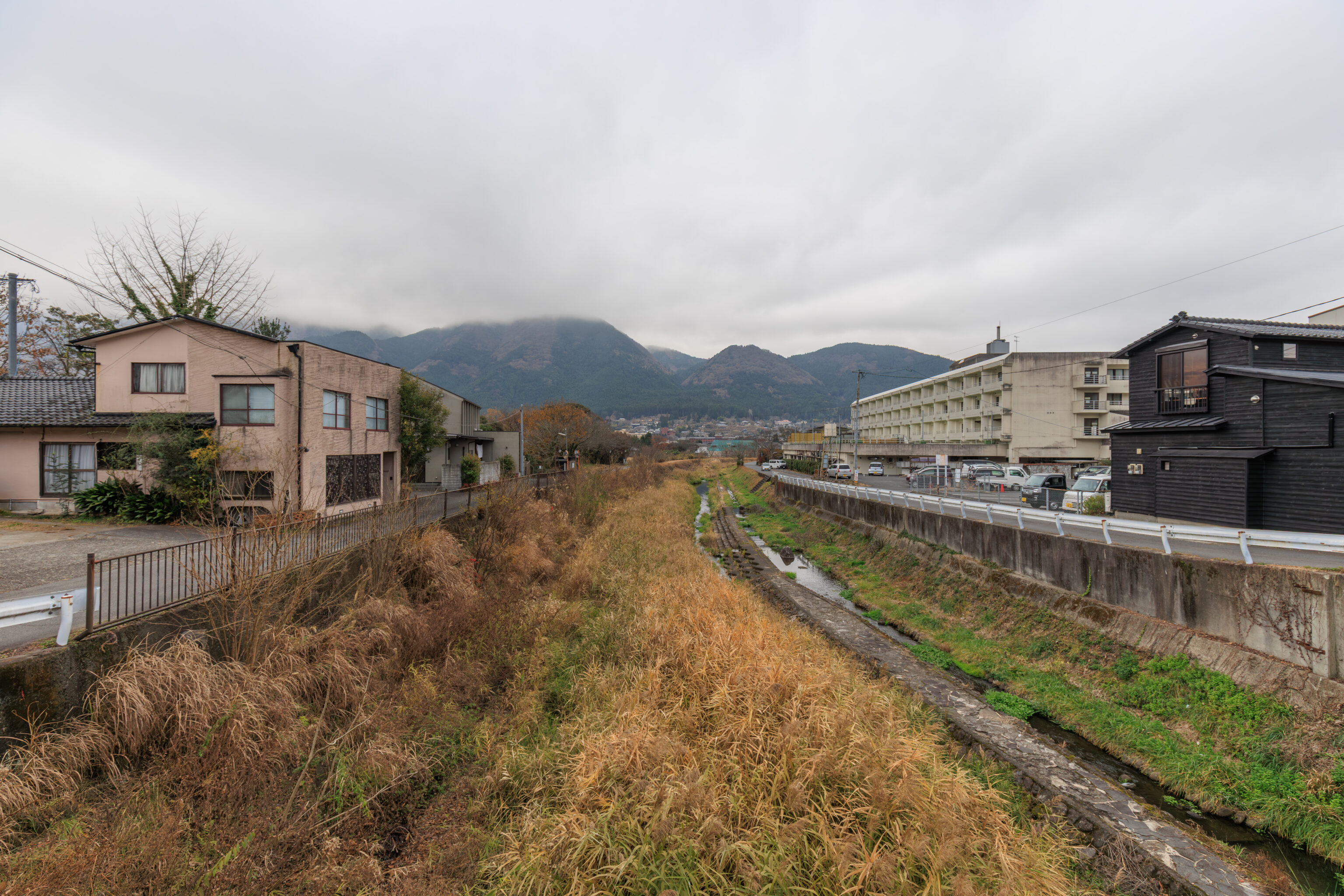
We came to a bridge which crossed over a small river, the 白滝川 Shiratakigawa (White Falls Stream). There seemed to actually be a path down the middle of the river.
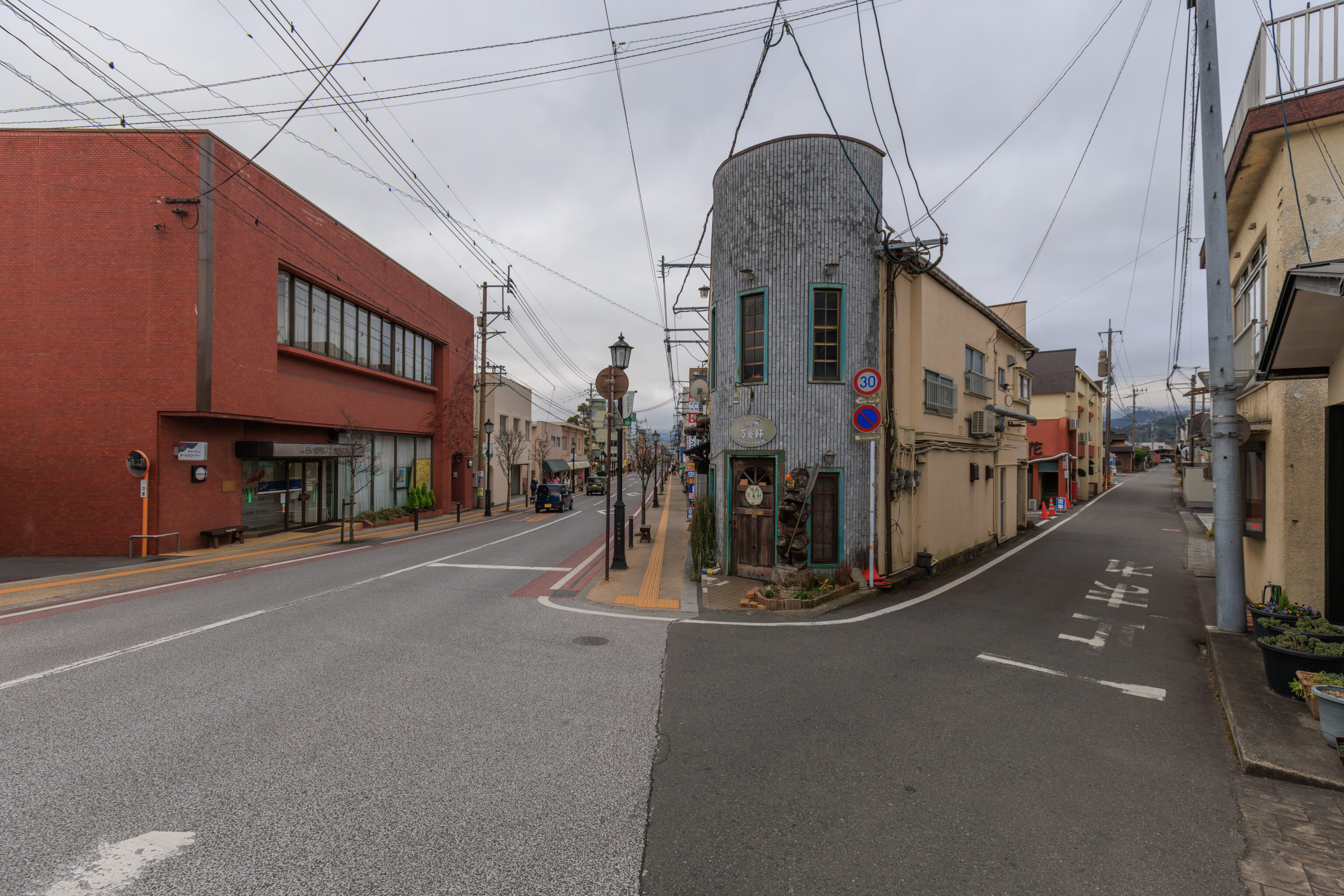
There was a fork in the road right next to the river. We decided to take the right fork. Which did end up being the right fork.
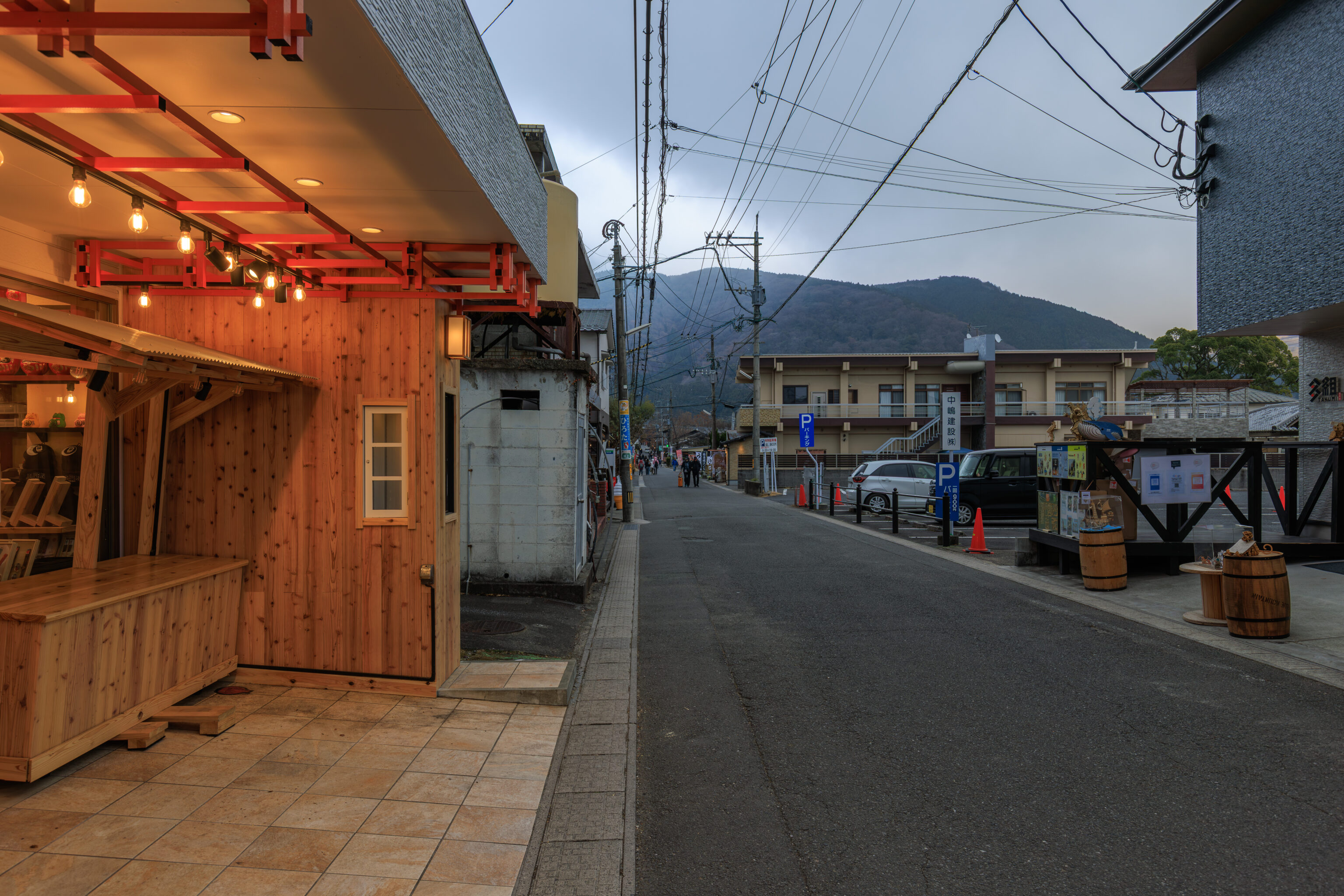
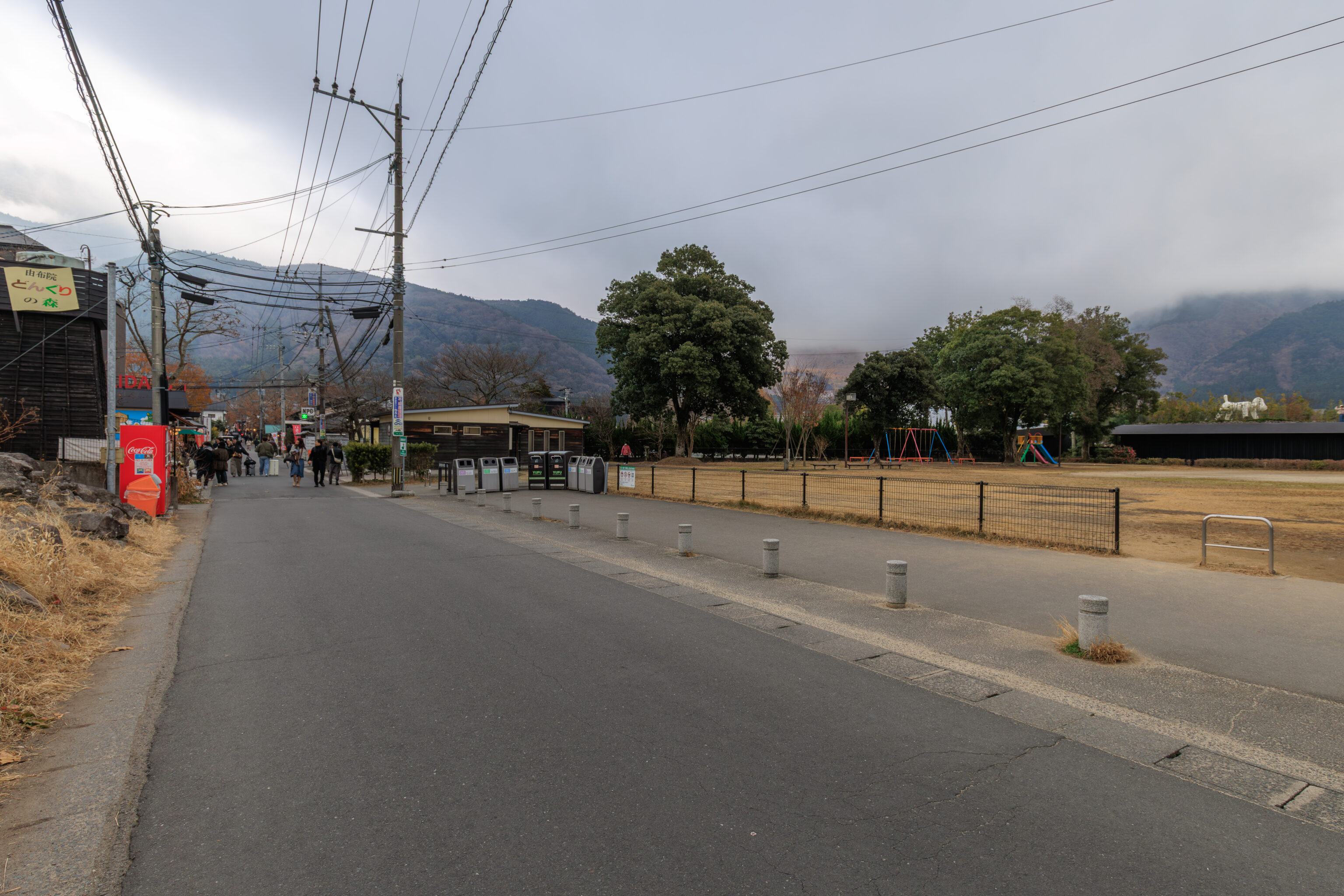
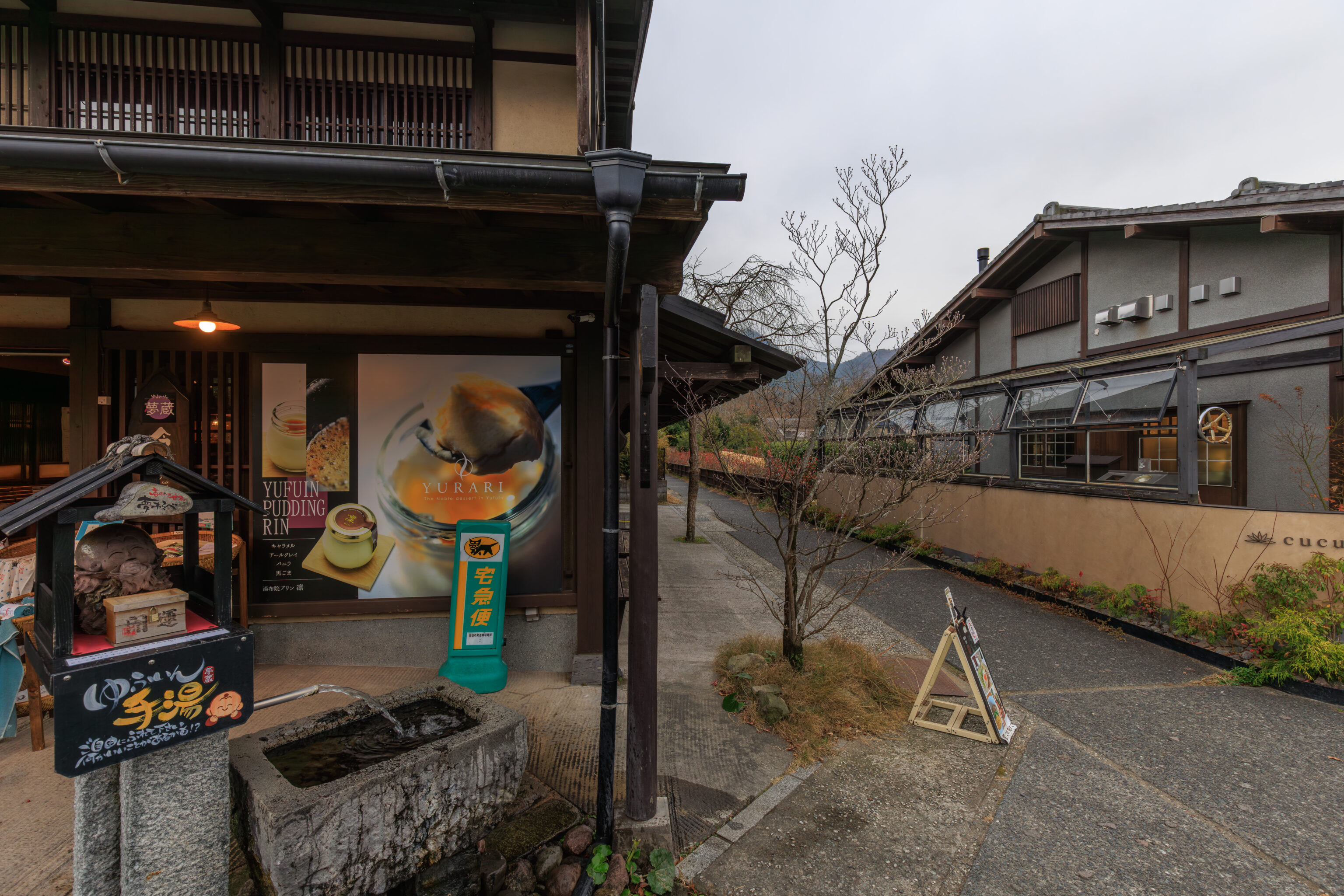
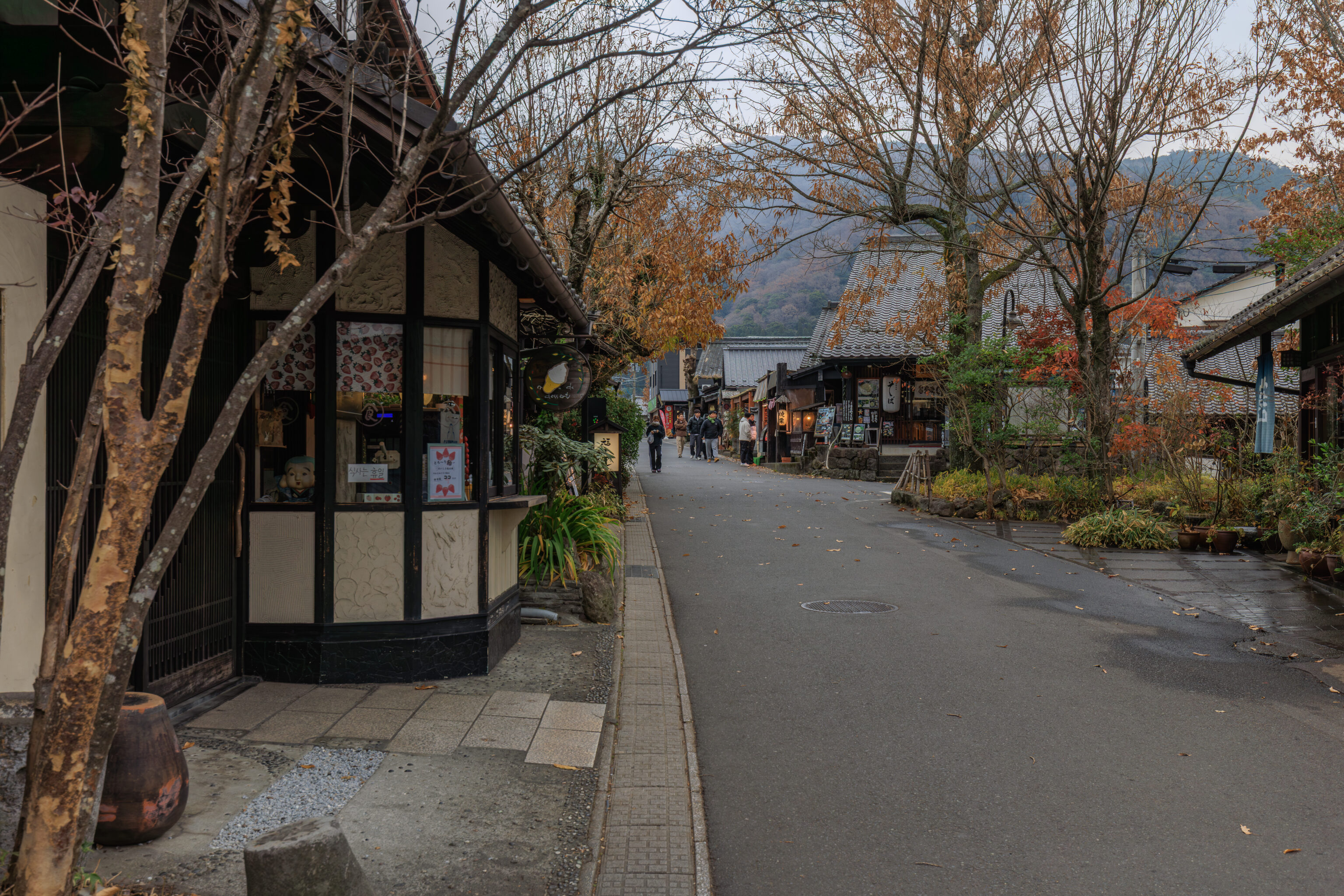
This road was much smaller than the one we were on. It had many businesses though and there seemed to be a bit more people around. It was still pretty early so most shops weren’t open yet.
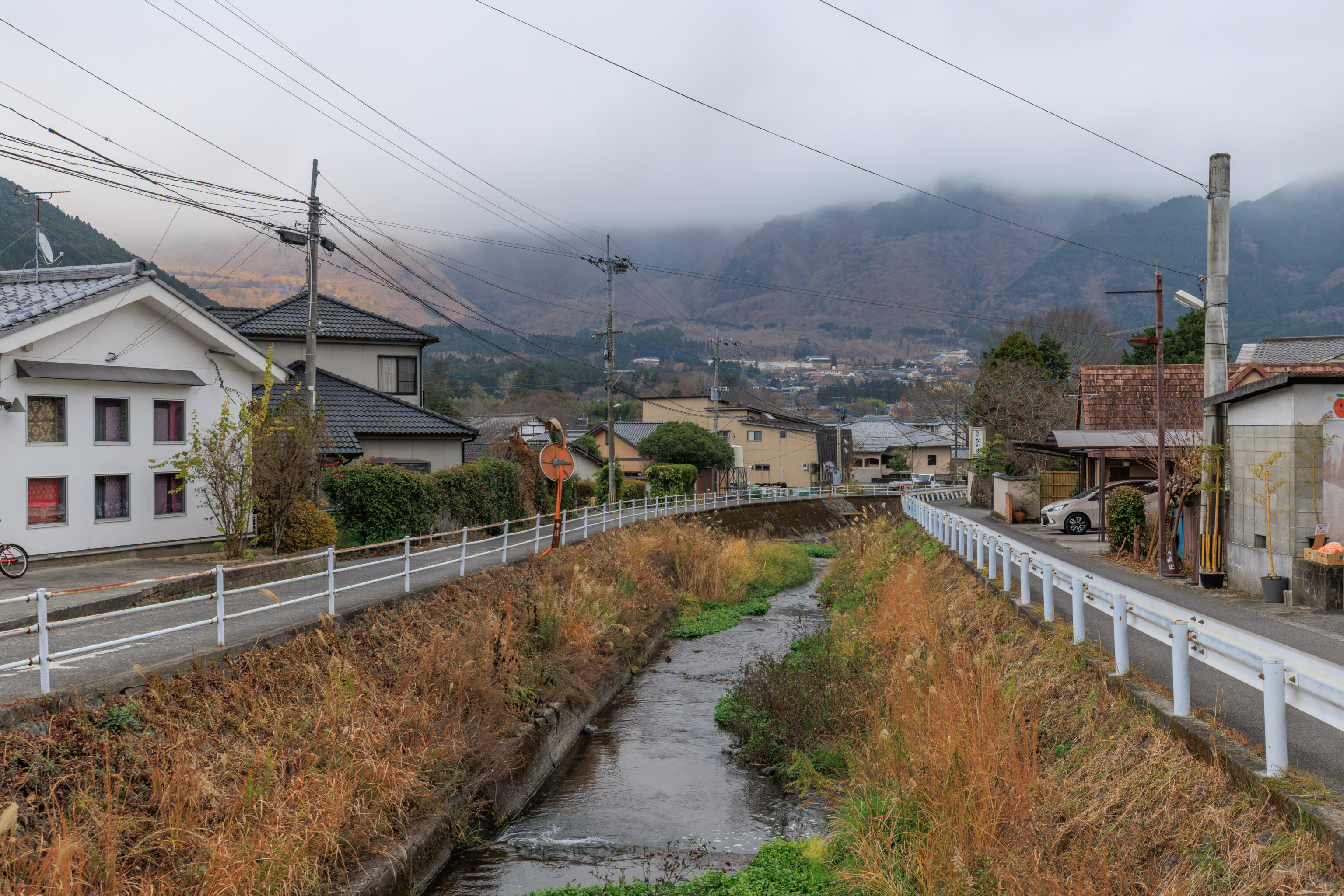
We crossed over another river, the 湯の坪川 Yunotsubokawa. This seems to mean something like Hot Spring Basin River, implying that its source is a hot spring area.
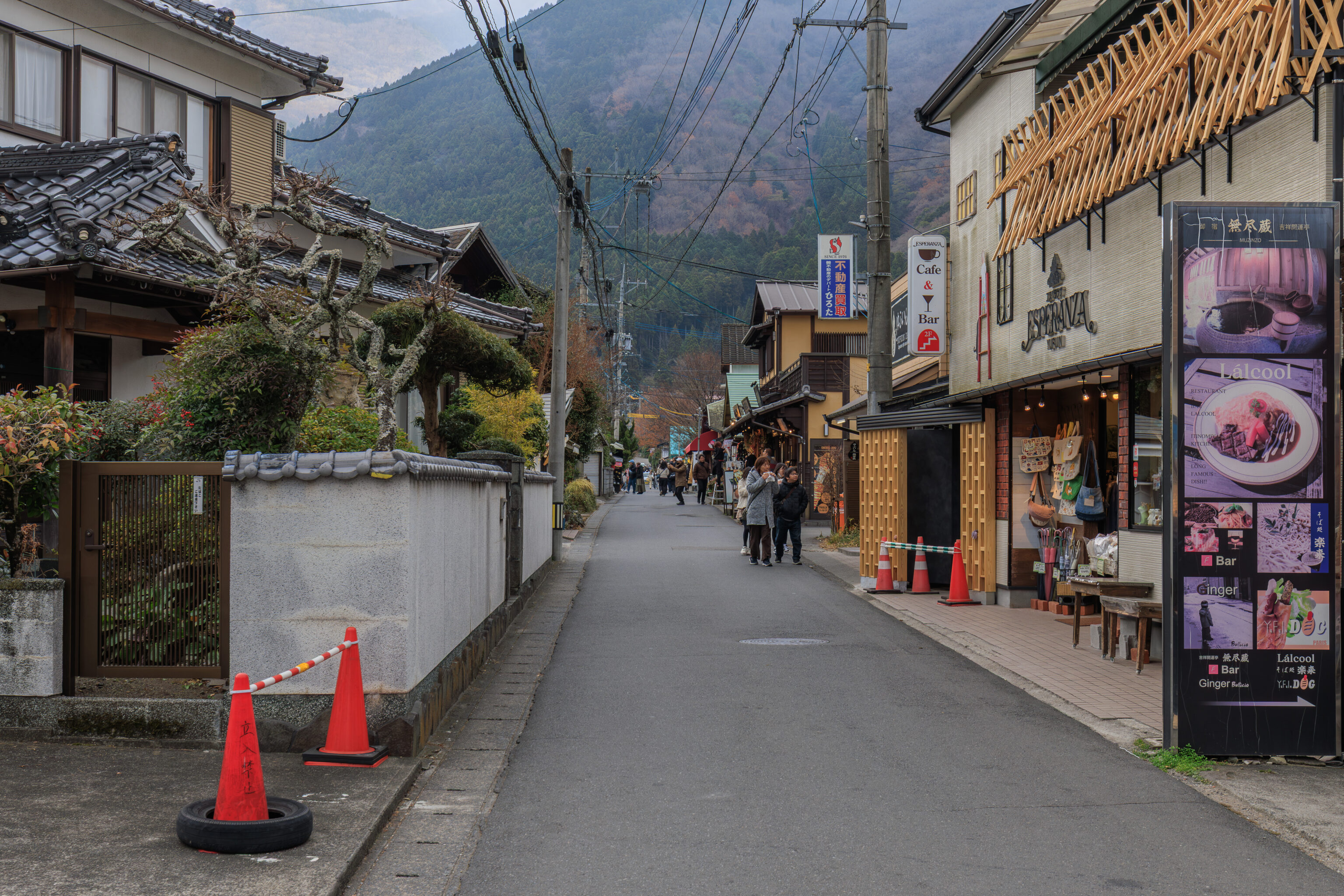
There definitely seemed to be more people as we walked further away from the train station.
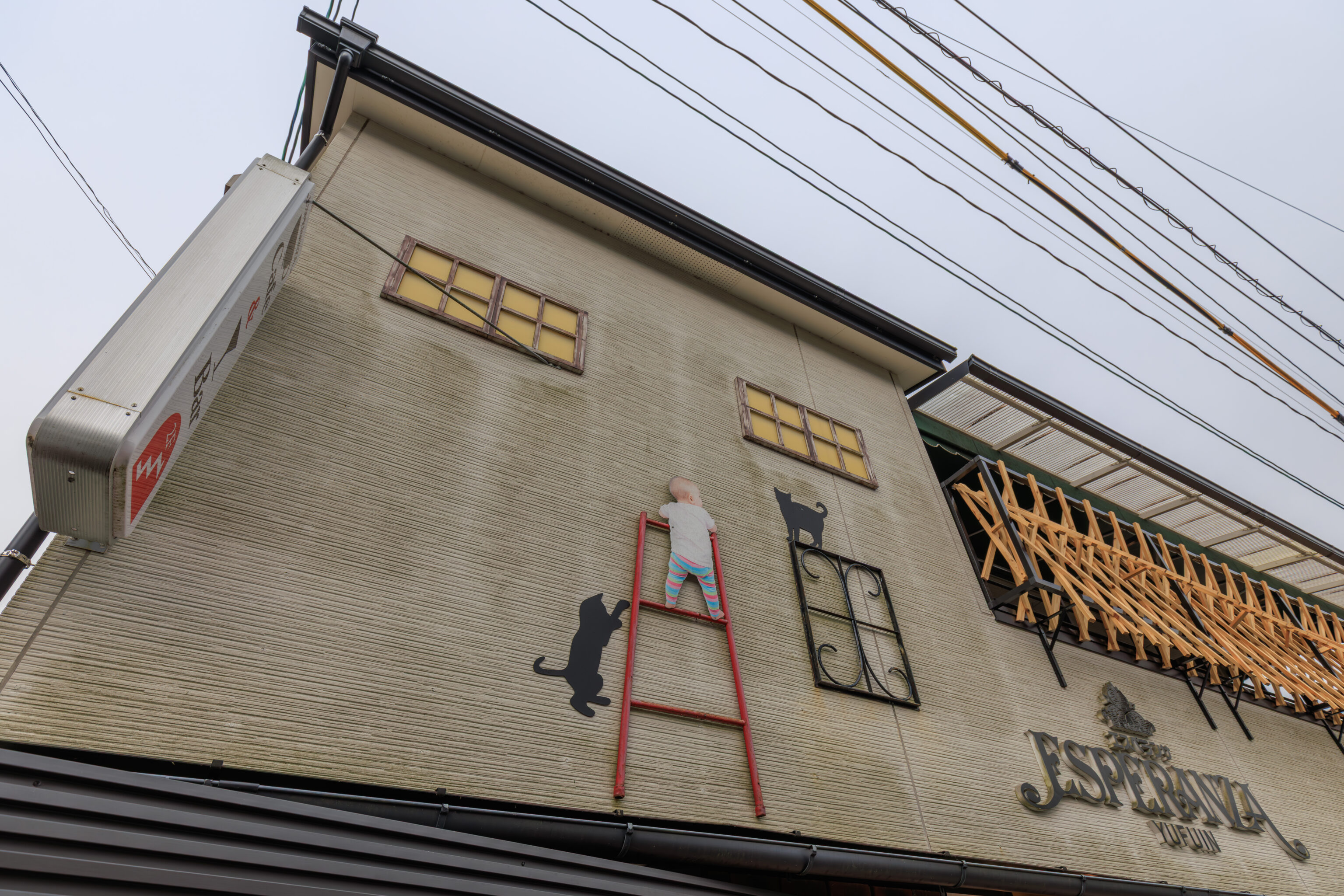
We found this wall art amusing!
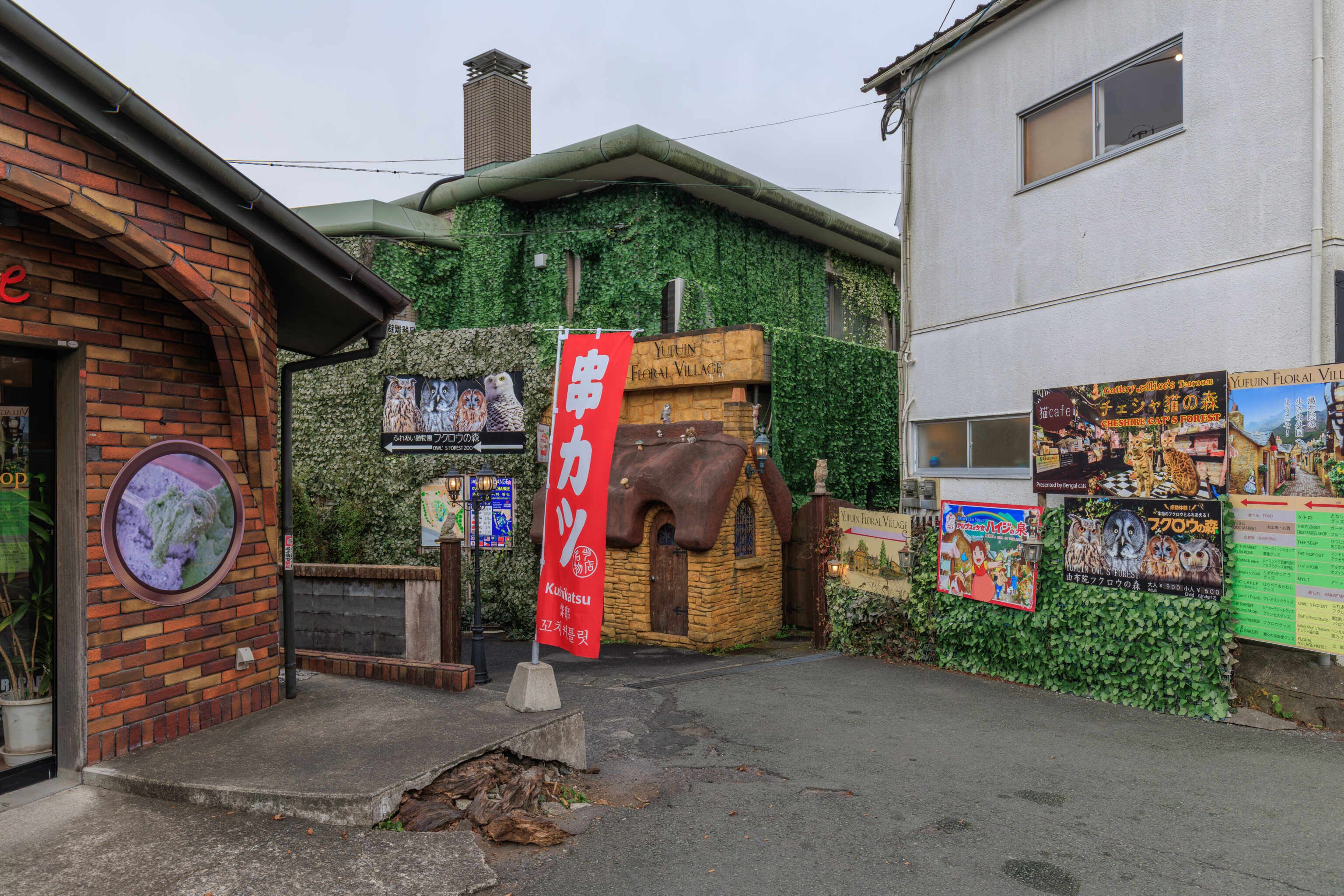
We walked by the northern edge of the 湯布院フローラルヴィレッジ Yufuin Floral Village, which describes itself as being modeled after the Cotswalds in England. We’ve been to the edge of the Cotswalds where its basically farms, narrow roads, and small English villages.
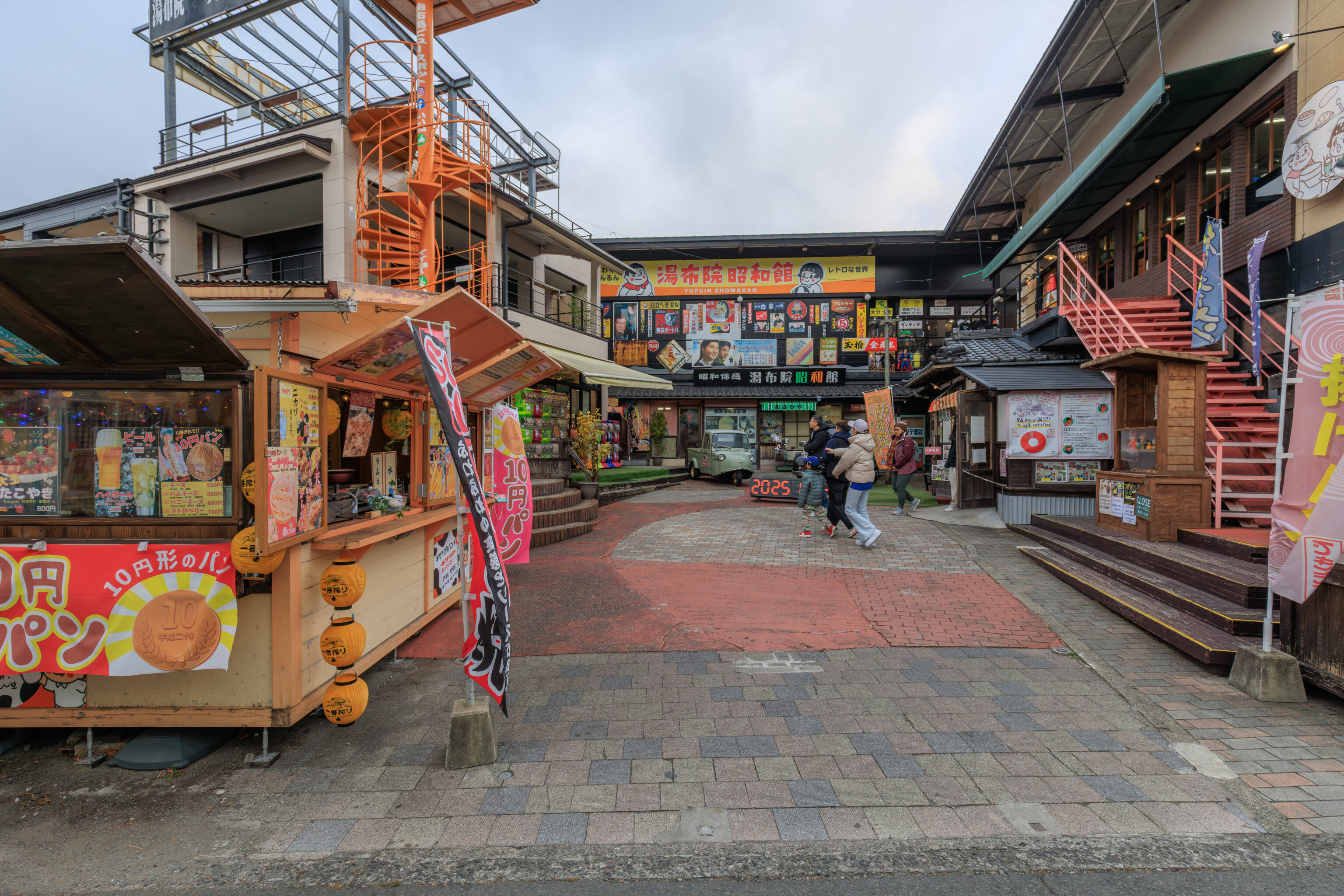
A little but further up the road, we passed by the 湯布院昭和館 Yufuin Showa Museum. This is basically a collection of post-war Showa era artifacts.
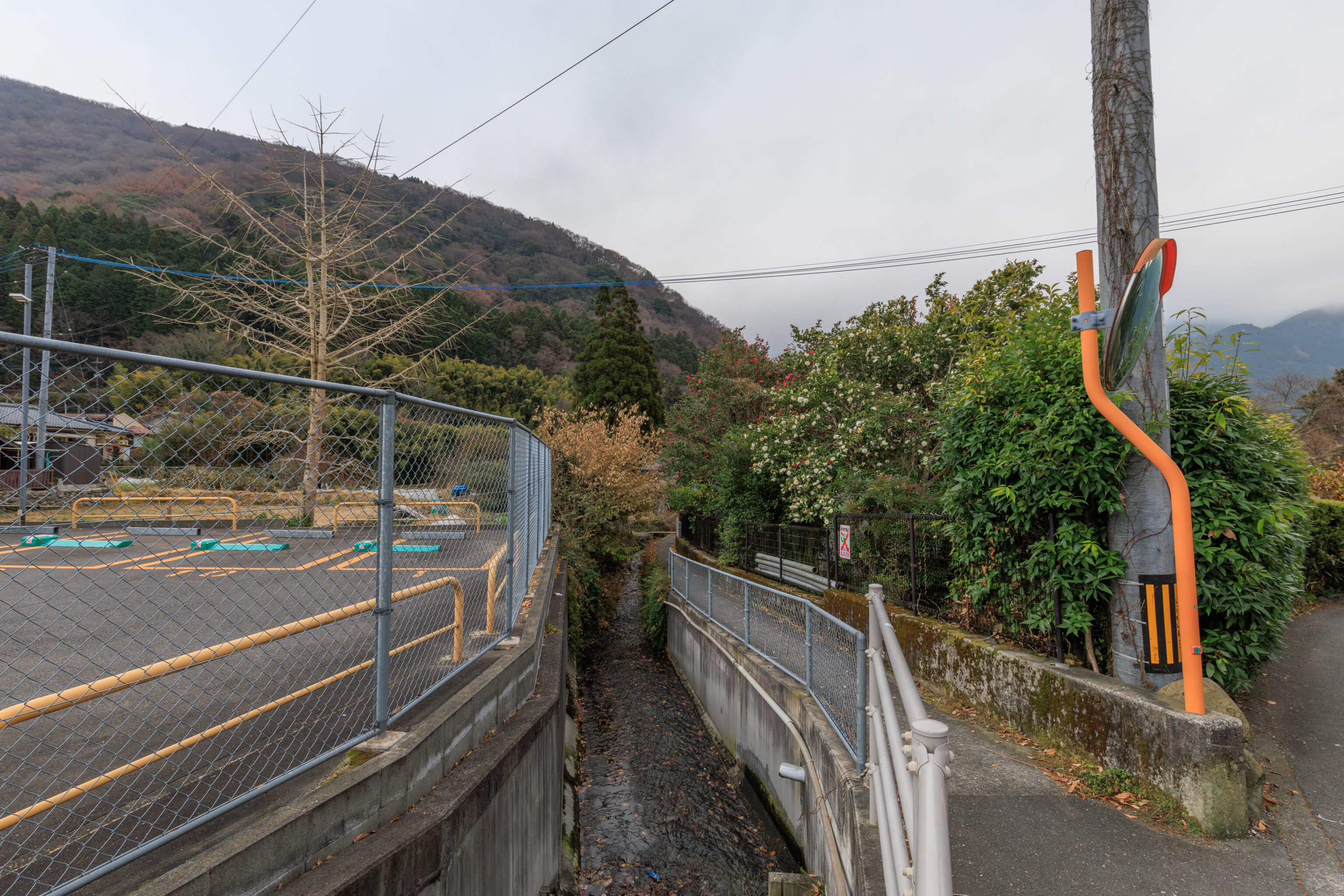
We continued walking until we reached this point. We were getting pretty close to the base of Mount Yufu where the town’s roads end. We turned here to visit a lake not far to the south. The stream next to the path appears to be a canal or something like that rather than a natural waterway.
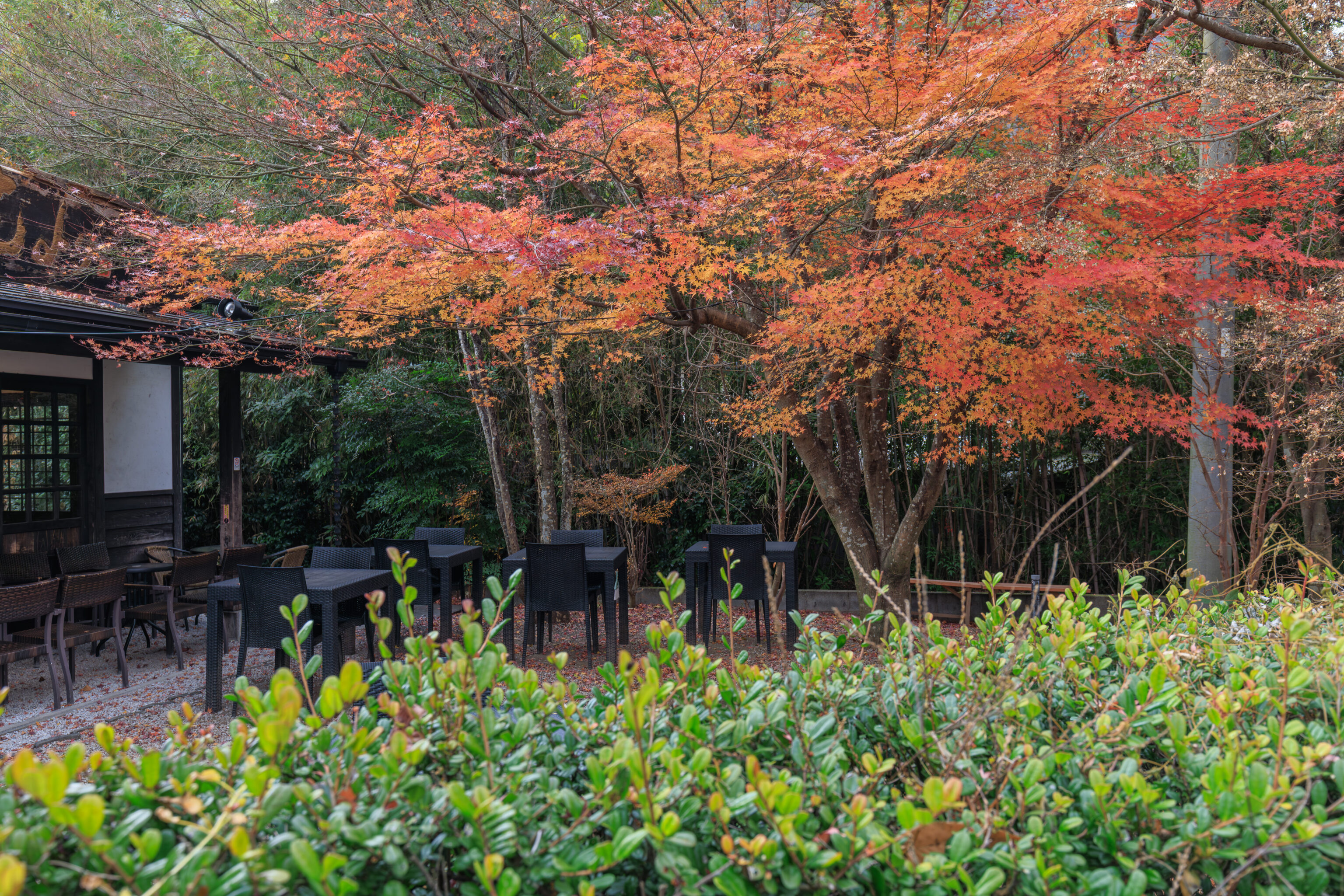
Now walking to the south, we passed by some nice fall colors at 花より Hanayori, a small cafe. It might be considered a 茶屋 chaya?
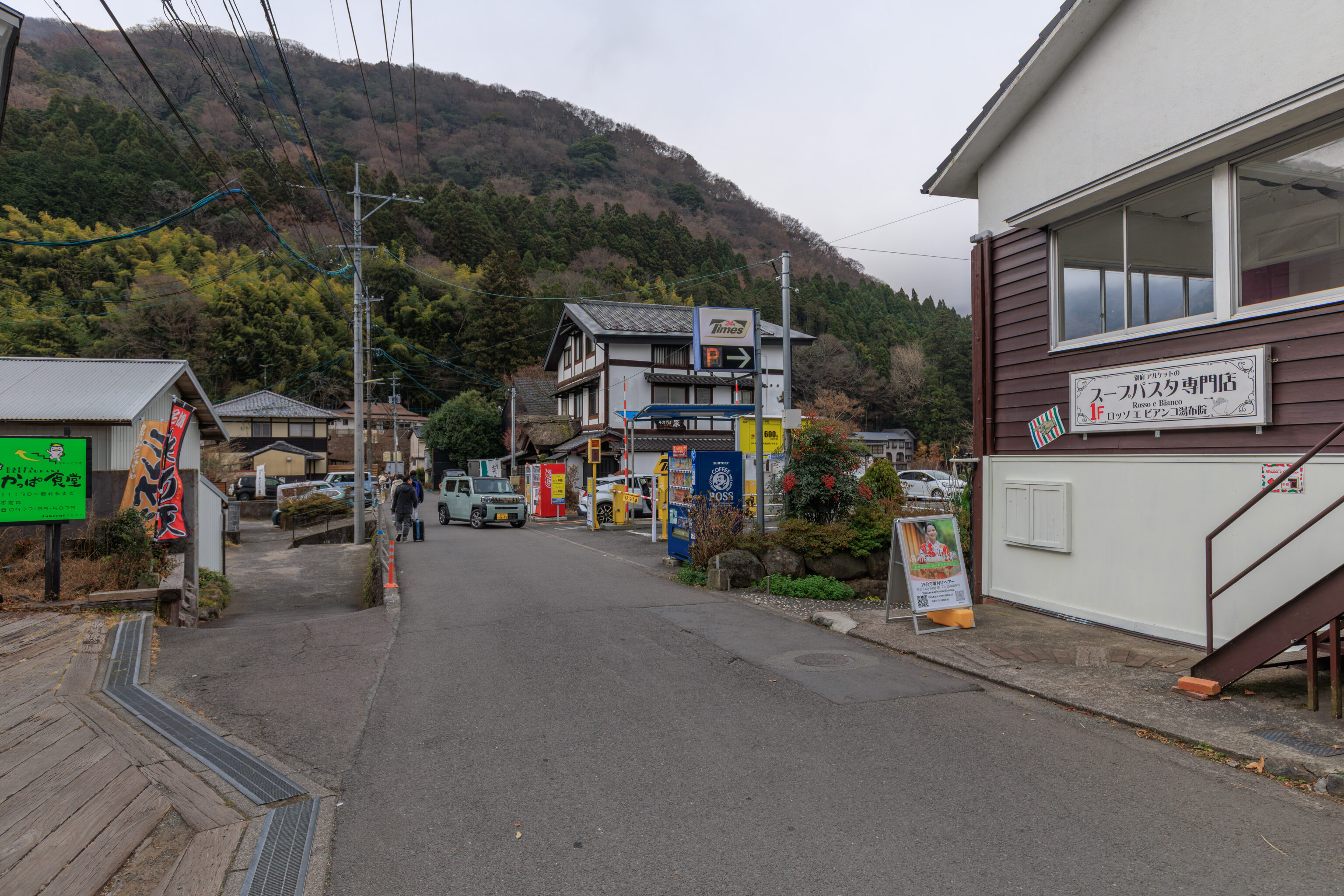
We continued walking to the south…
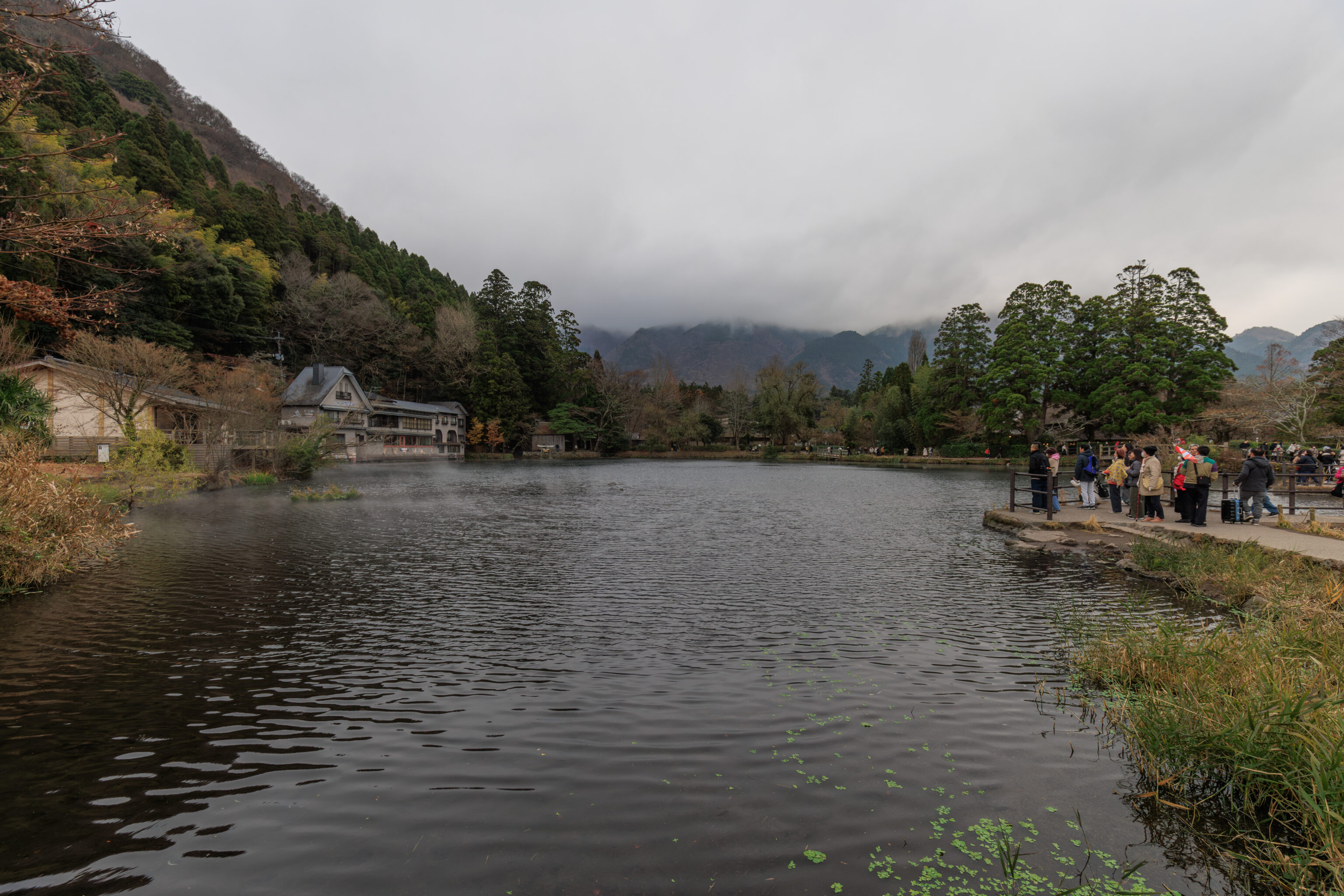
It was about 10:20am when we reached the northern shore of 金鱗湖 Kinrinko (Gold Scale Lake). There was a small tour group gathered at a nearby viewpoint when we arrived. The lake’s surface was a bit ripply and we could see a bit of steam where hot spring water was flowing in.
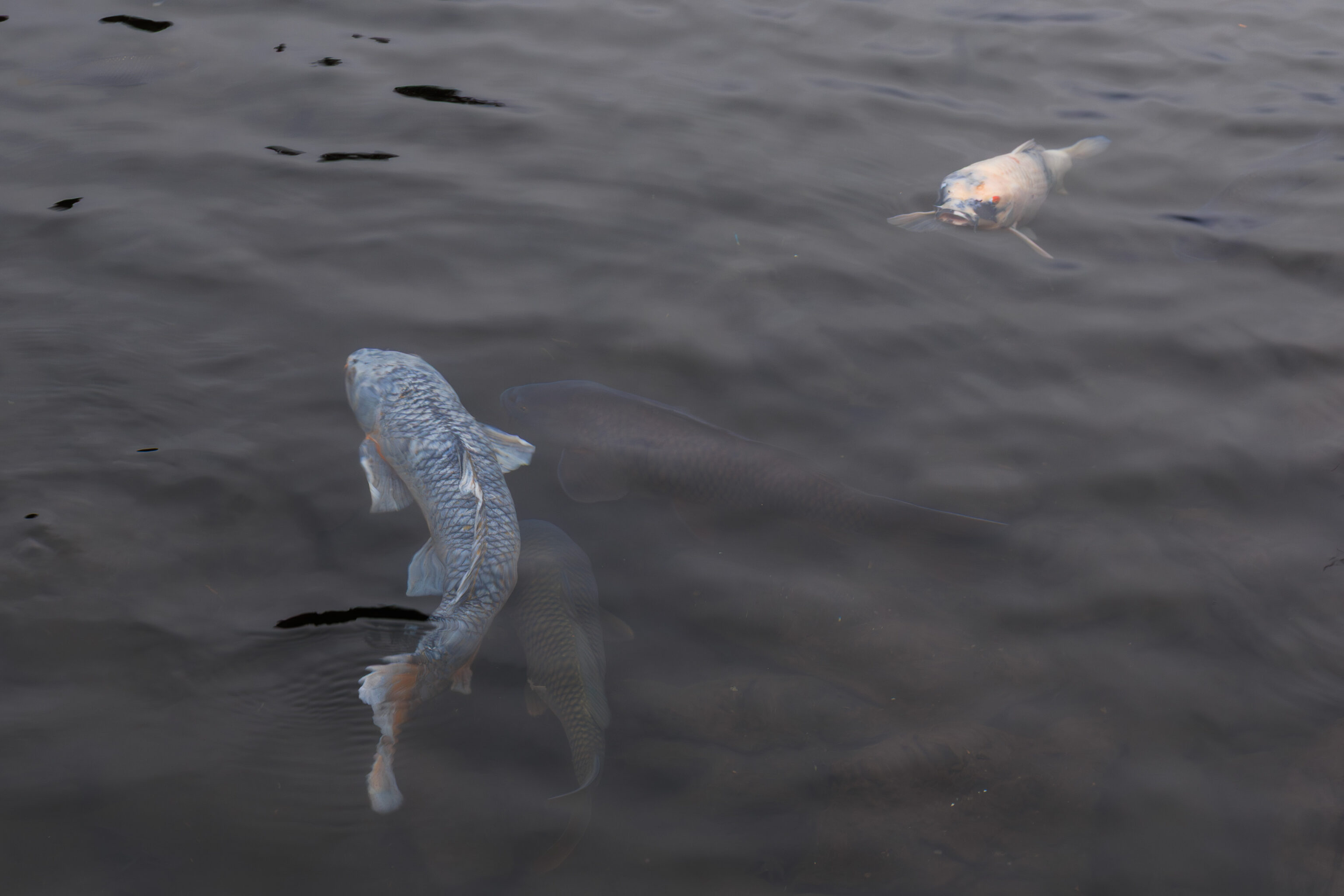
We saw some koi in the lake.
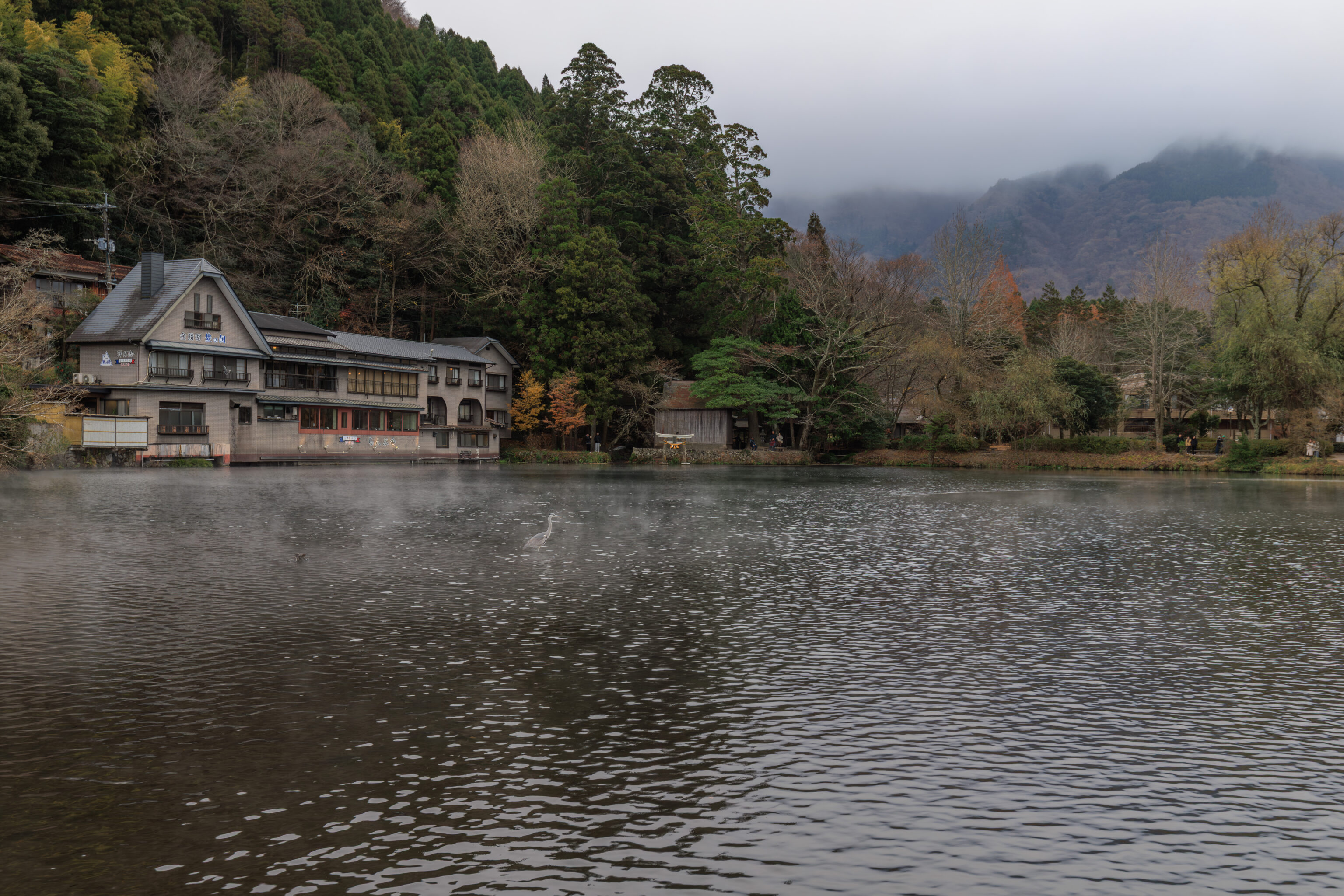
There was something else in the lake. A Gray Heron!
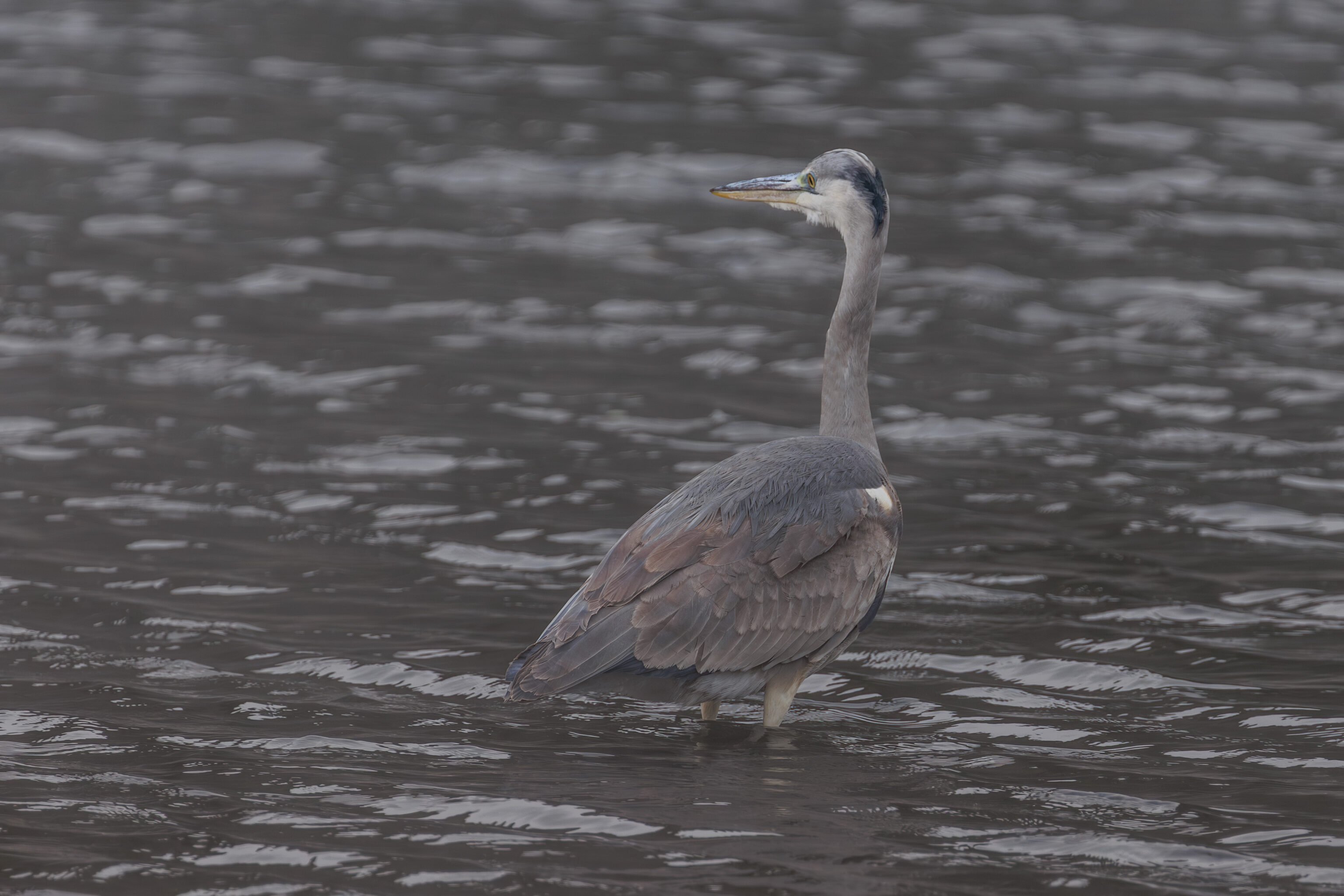
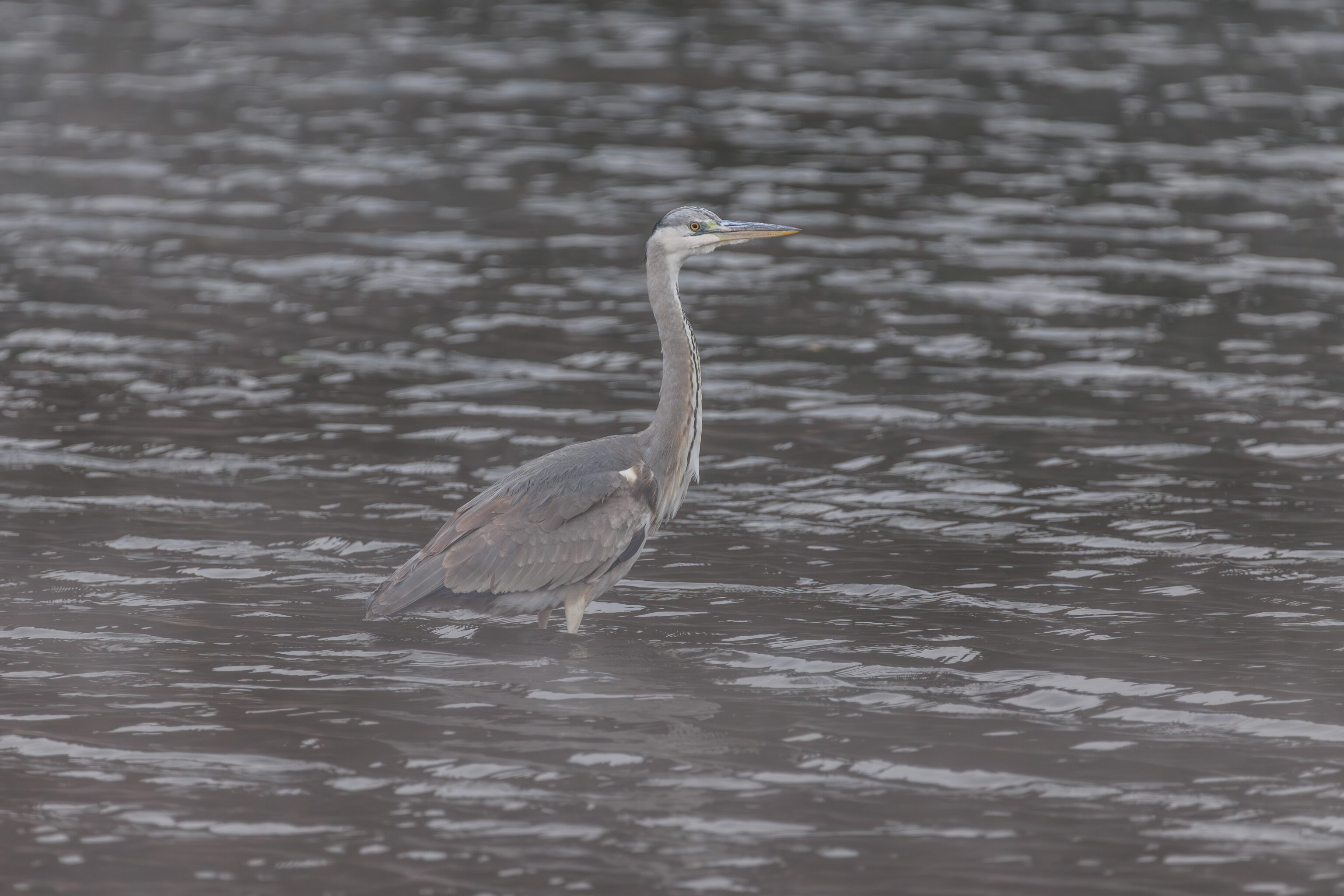
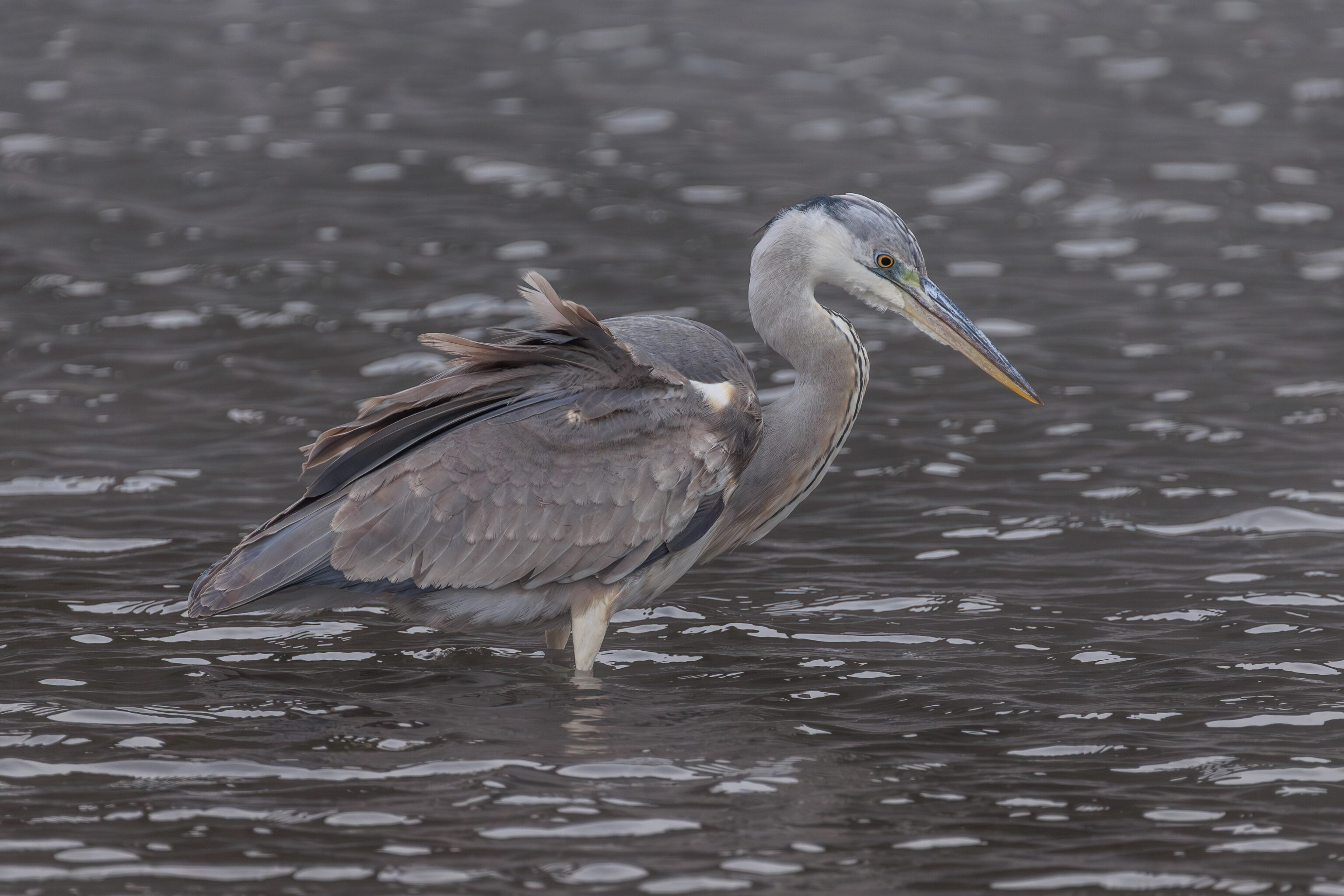
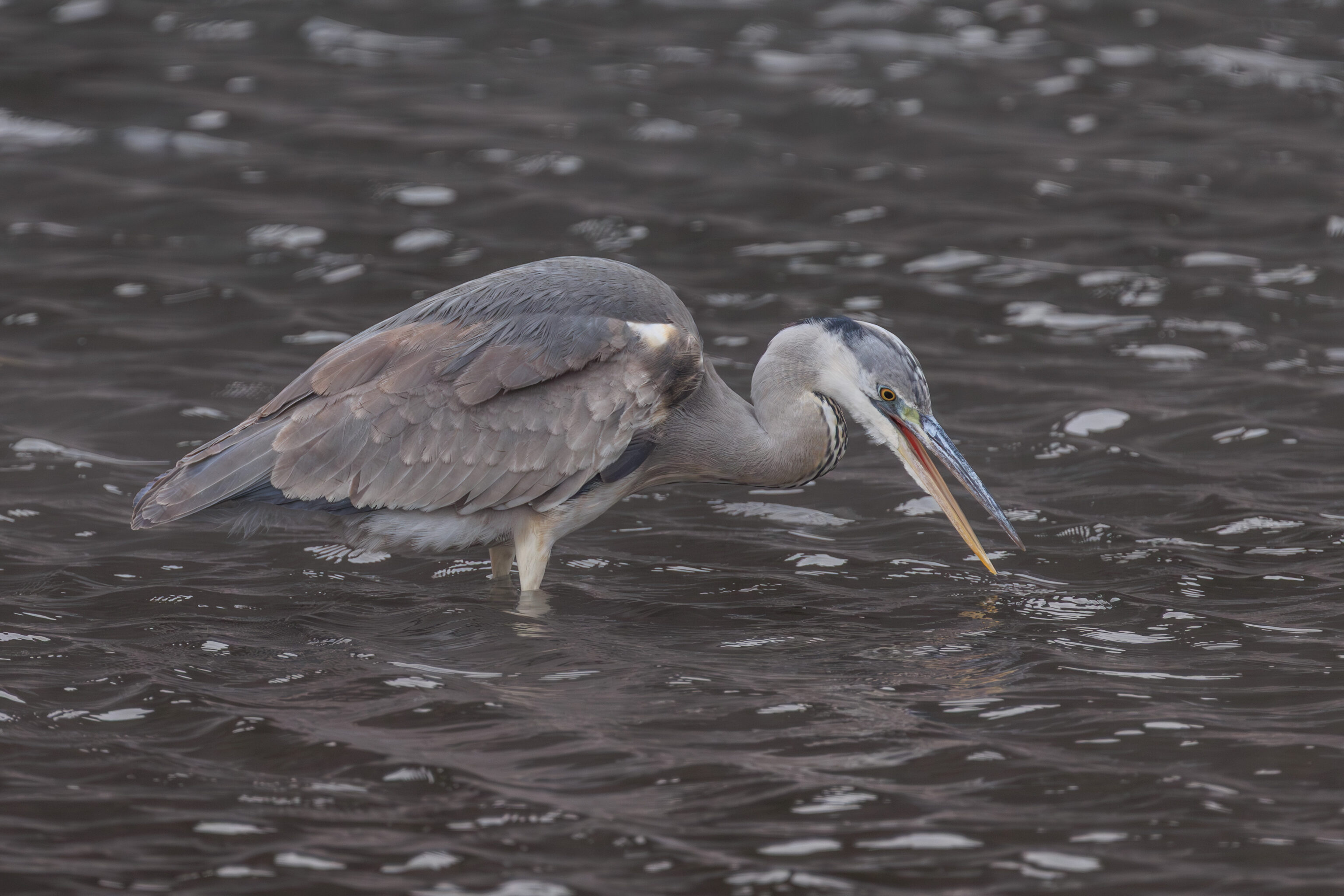
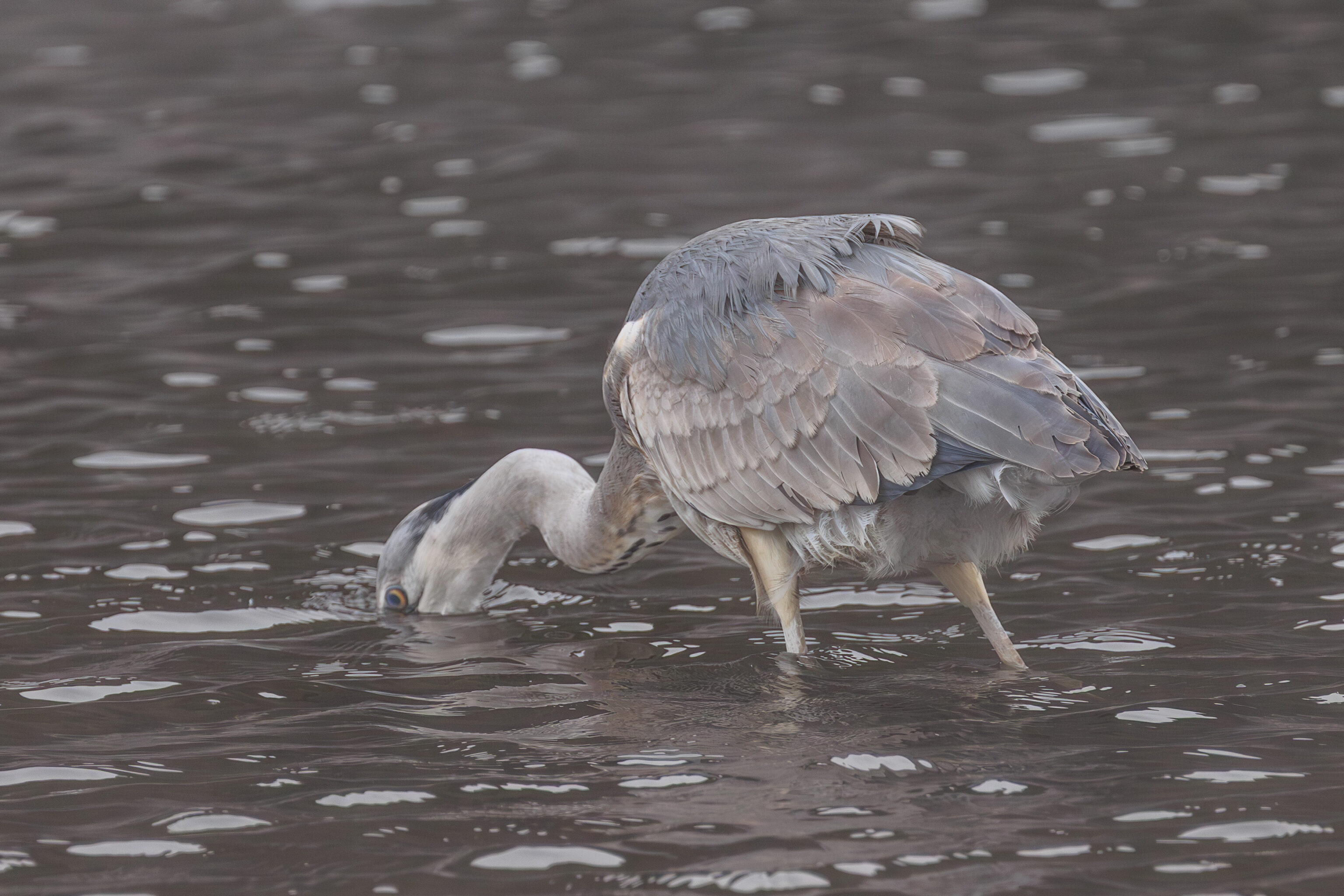
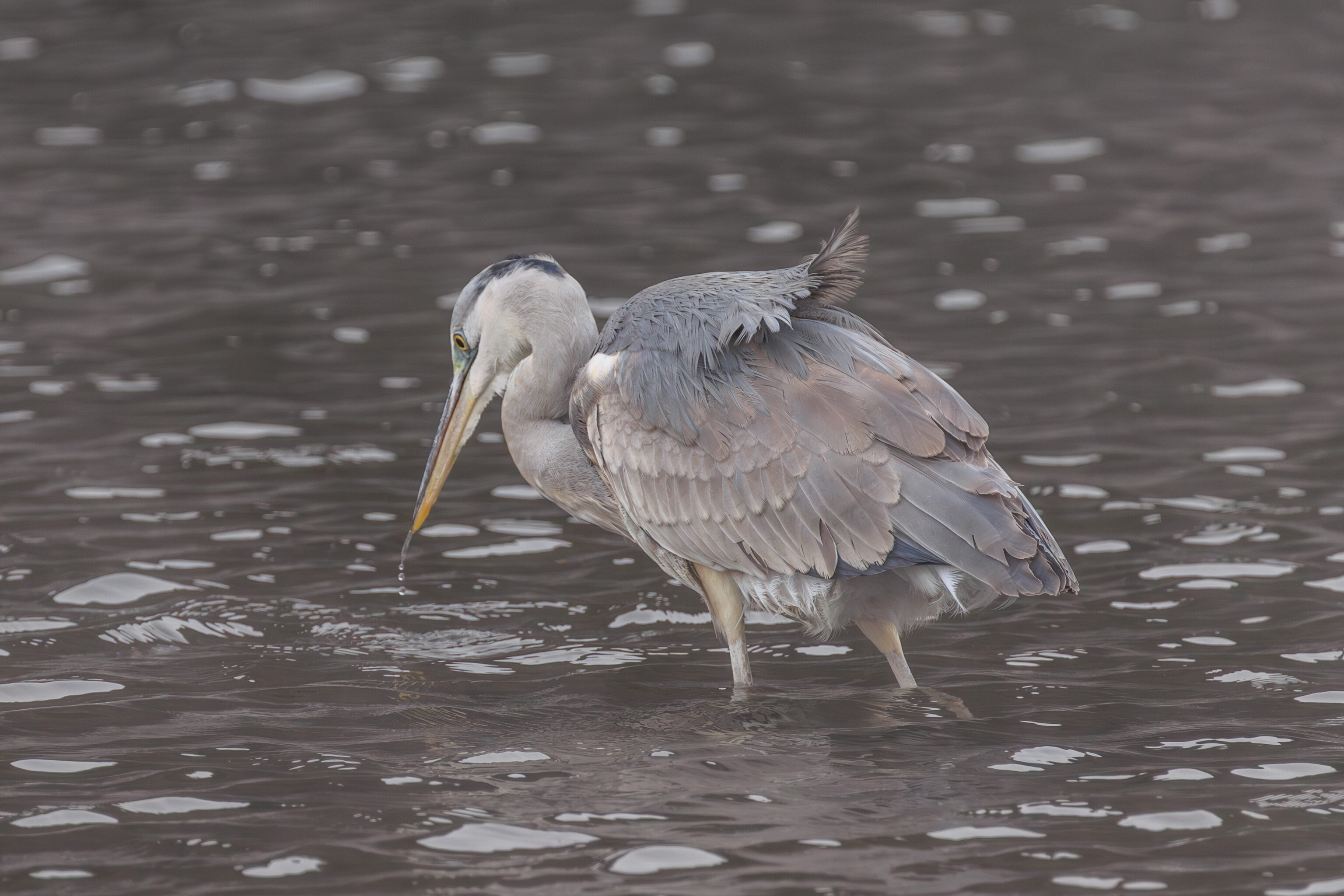
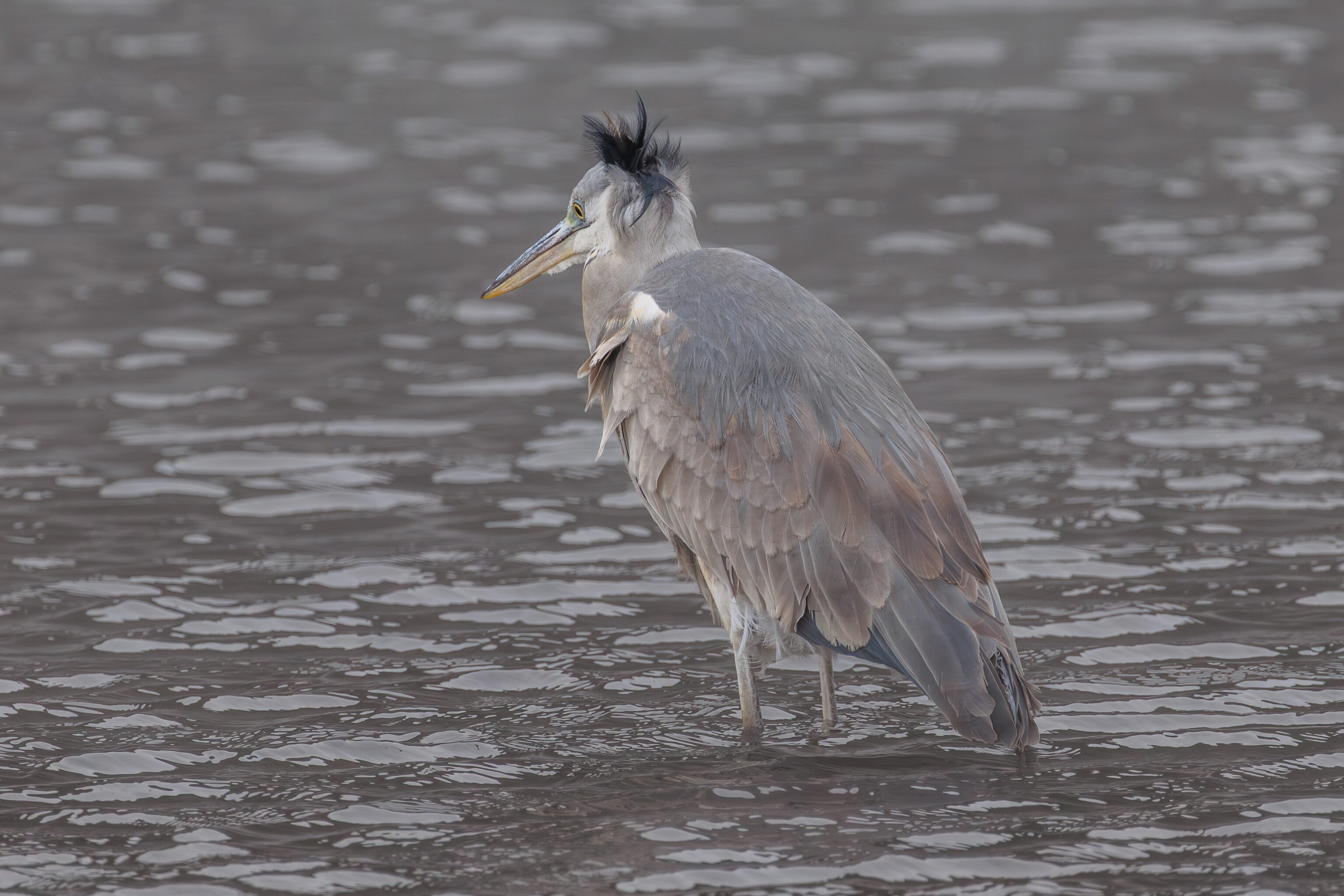
We watched the heron as it tried to catch fish. We didn’t see it catch anything substantial.
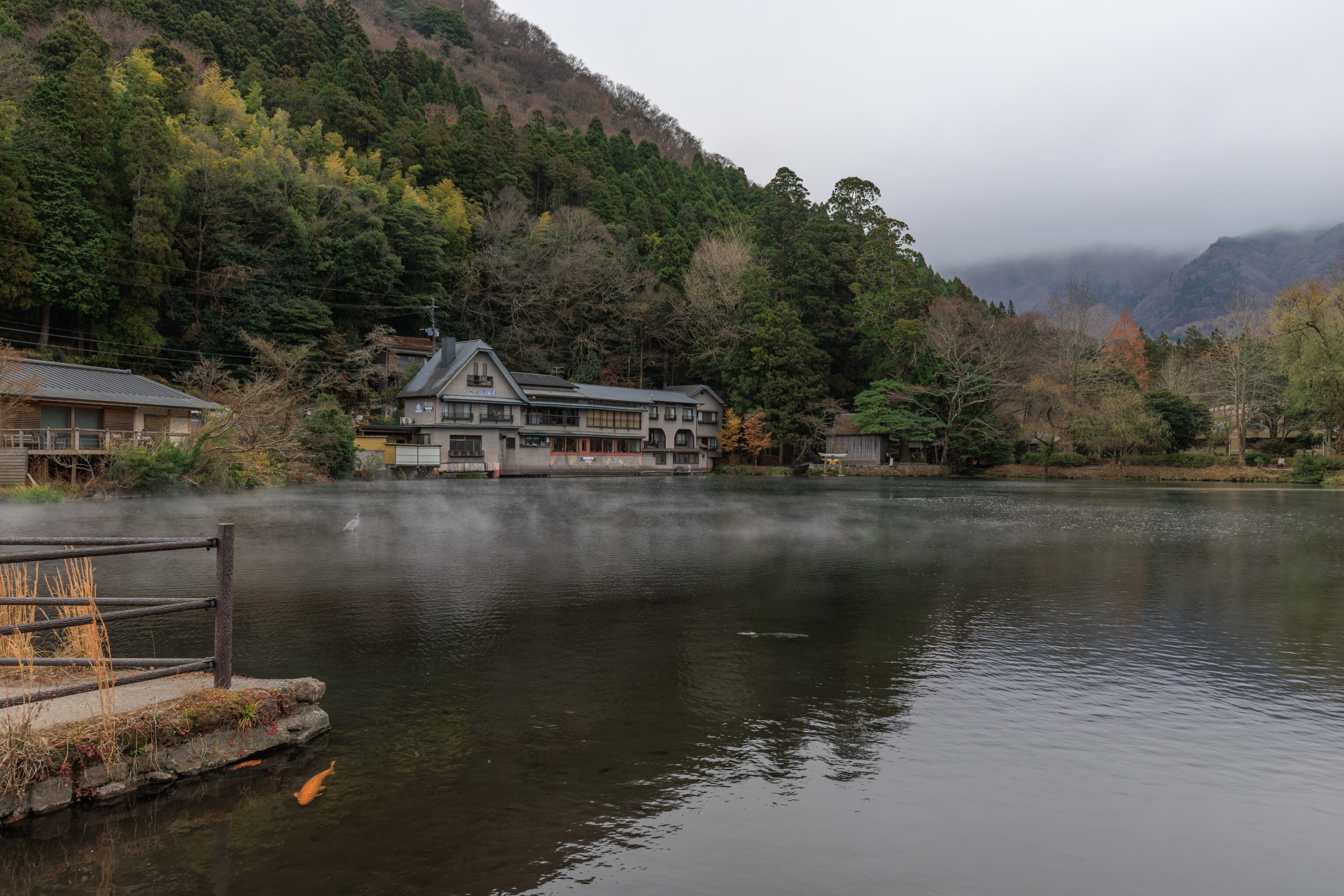
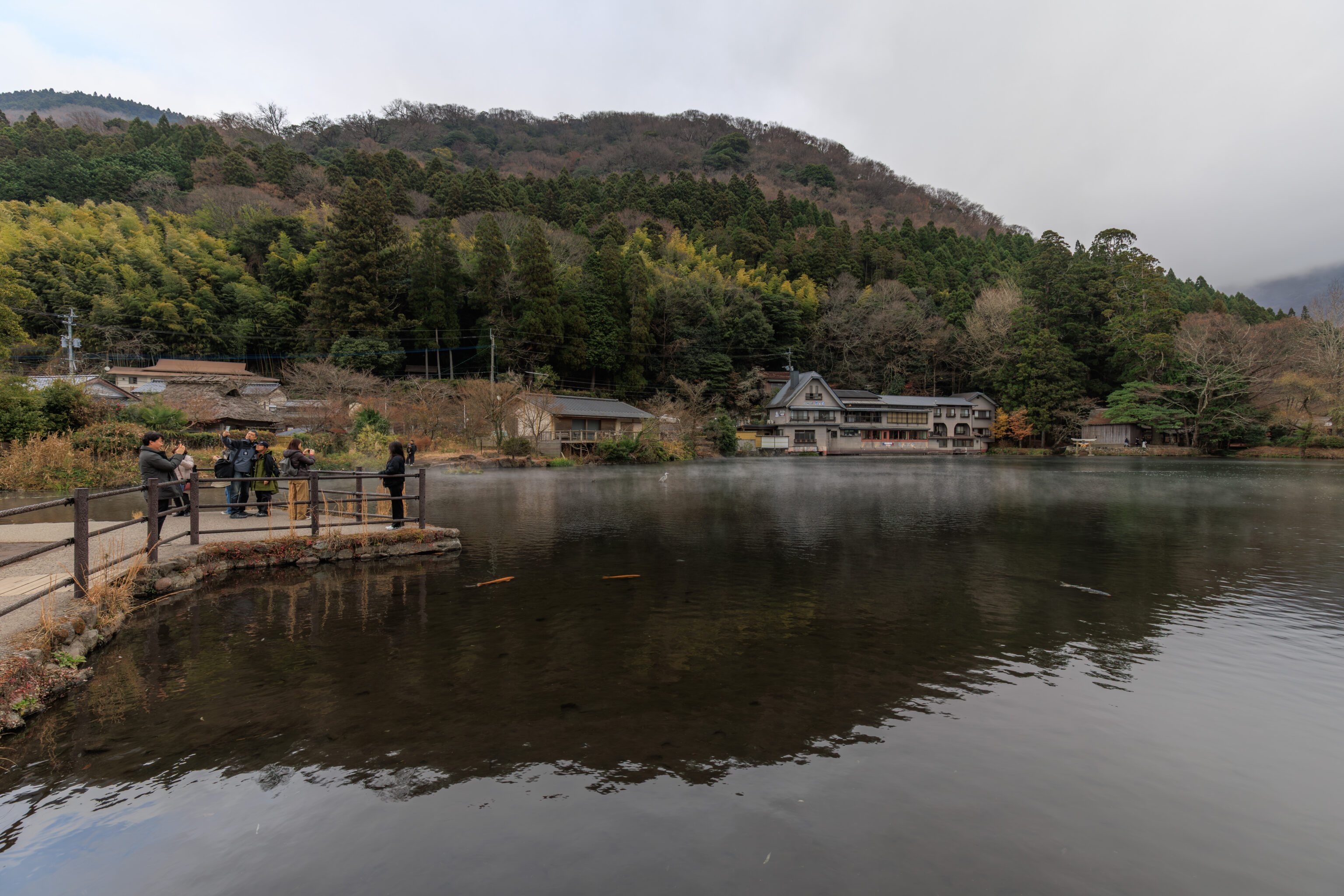
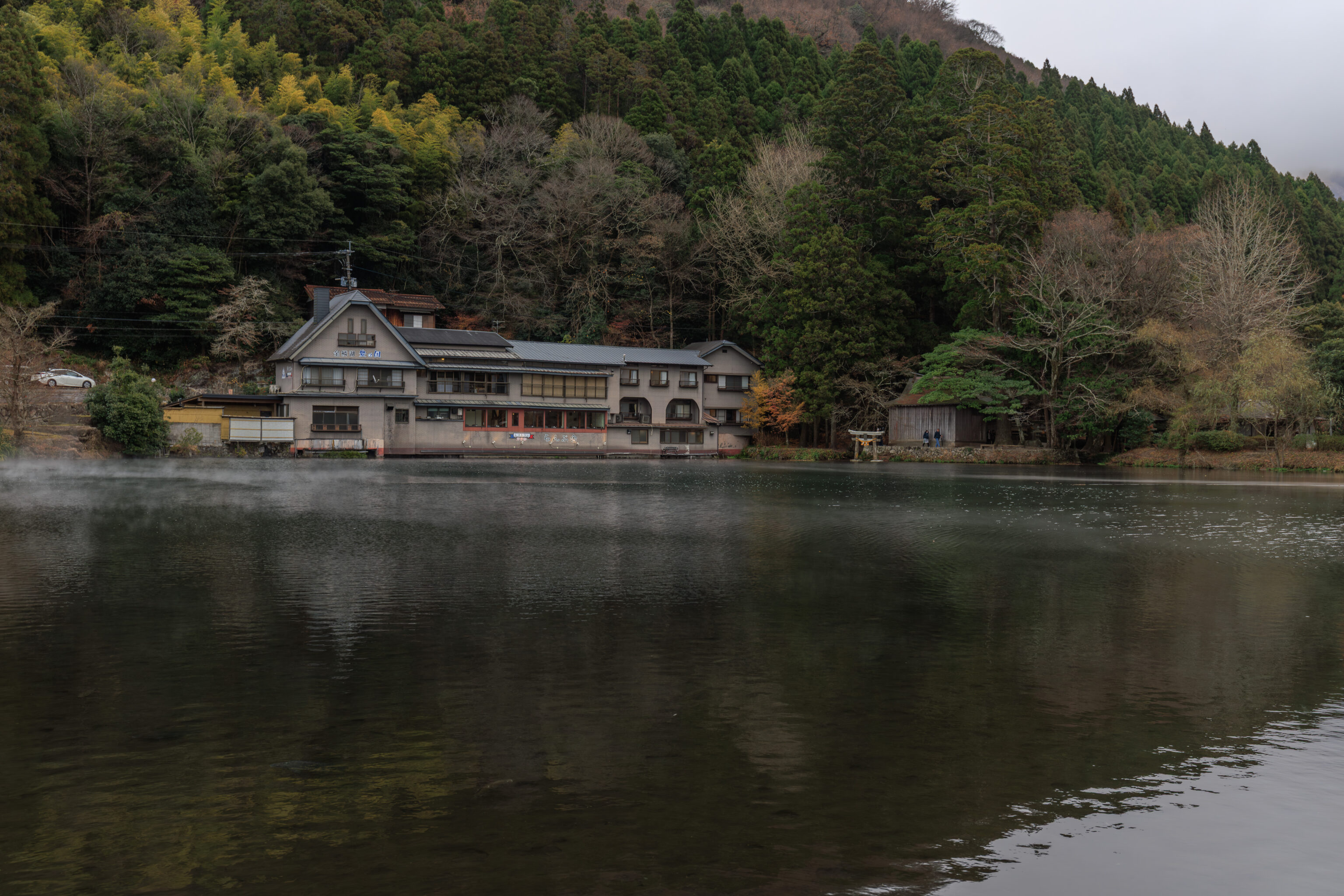
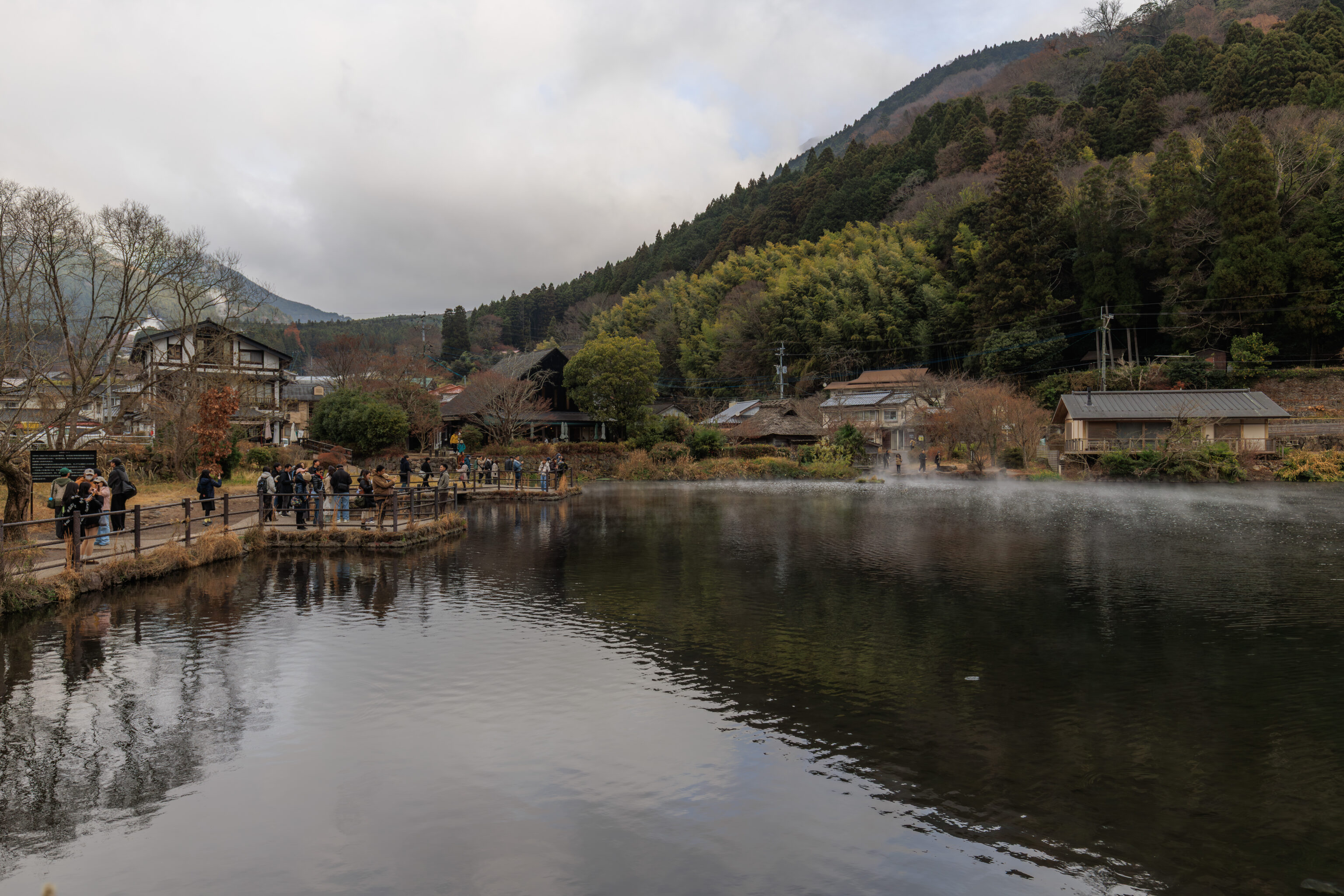
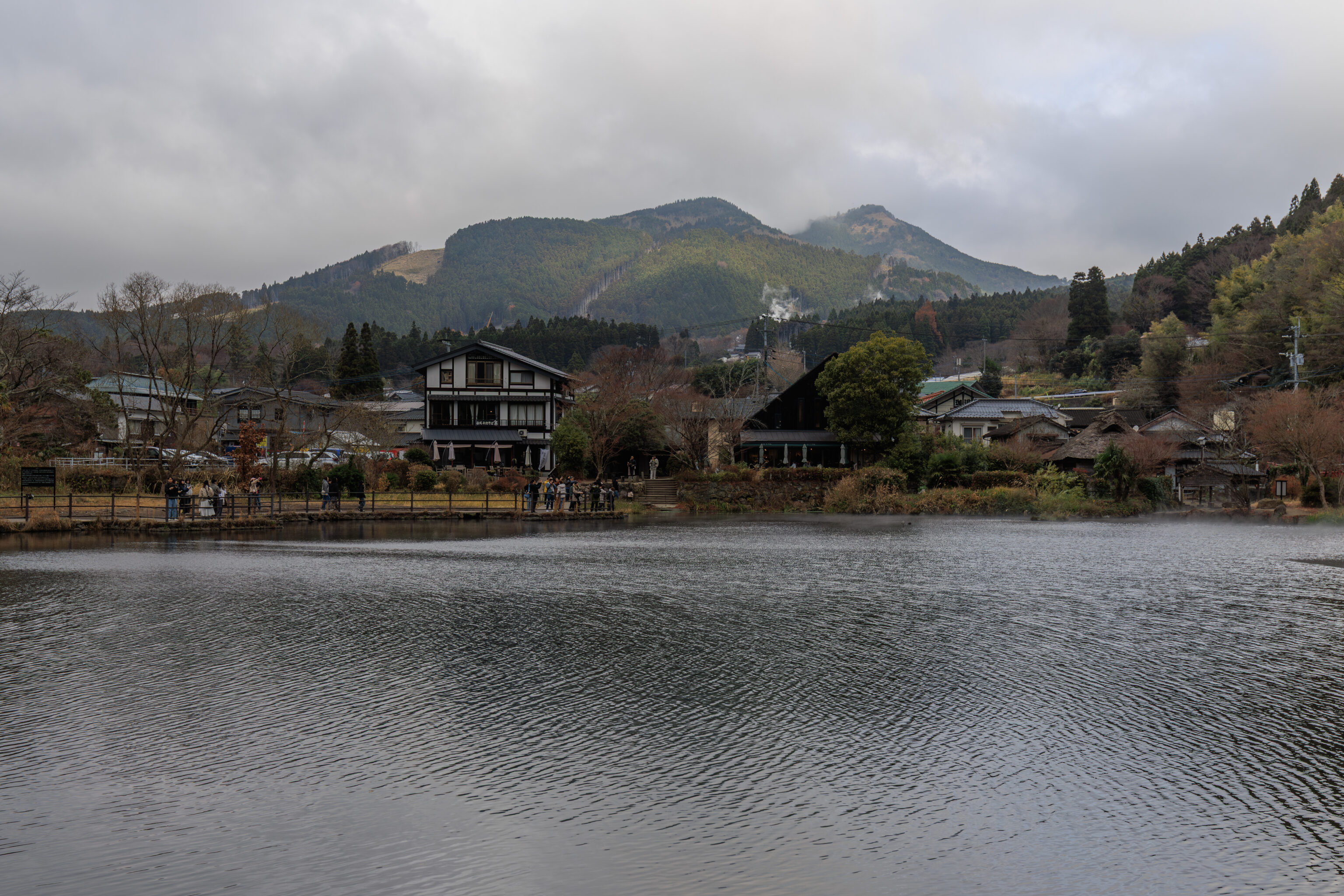
We continued walking south around the lake’s western shore.
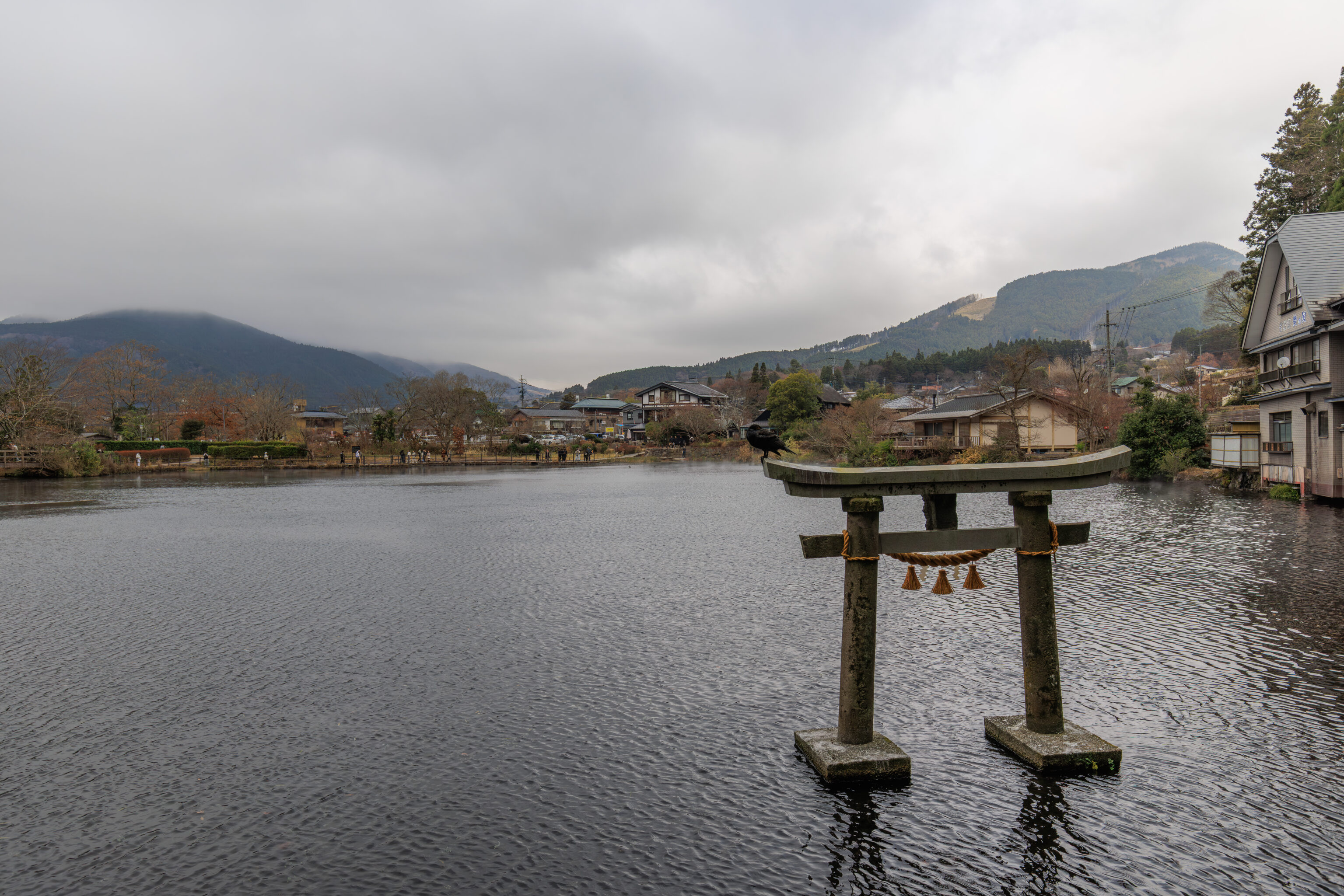
The 天祖神社 Tenso-jinja is at the southern end of the lake. We walked around the rear of the shrine’s small building to see this view of a torii in the lake.
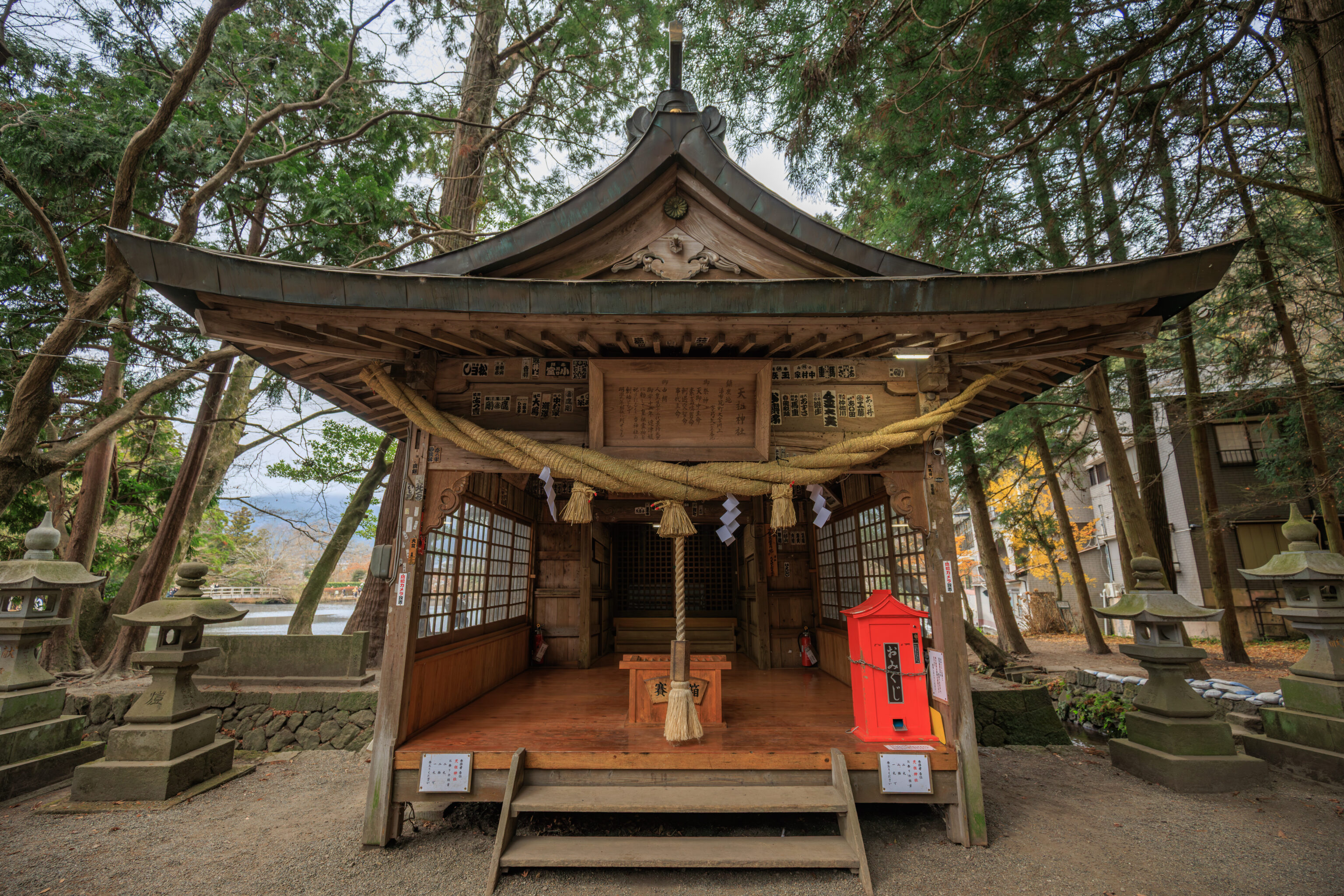
Tenso Shrine

Location:
Yufuin-cho, Oaza Kawakami
Aza Yumiya, Plot 175

Enshrined Deities:
Ame-no-Minakanushi-no-Mikoto
Susanoo-no-Mikoto
Kagu-tsuchi-no-Mikoto
Kotoshironushi-no-Mikoto

History:
The founding of this shrine dates back to the 12th year of the reign of Emperor Keiko (the 12th Emperor of Japan), when he issued an Imperial Decree to Princess Tootsu to enshrine the ancestral spirits of the Imperial Family.  In the 9th year of the Meiji era (1876), the shrine was officially designated as a "Village Shrine" (Sonsha).
– Text from the sign on the shrine, translated using Google Gemini and Translate, and Proton Lumo.
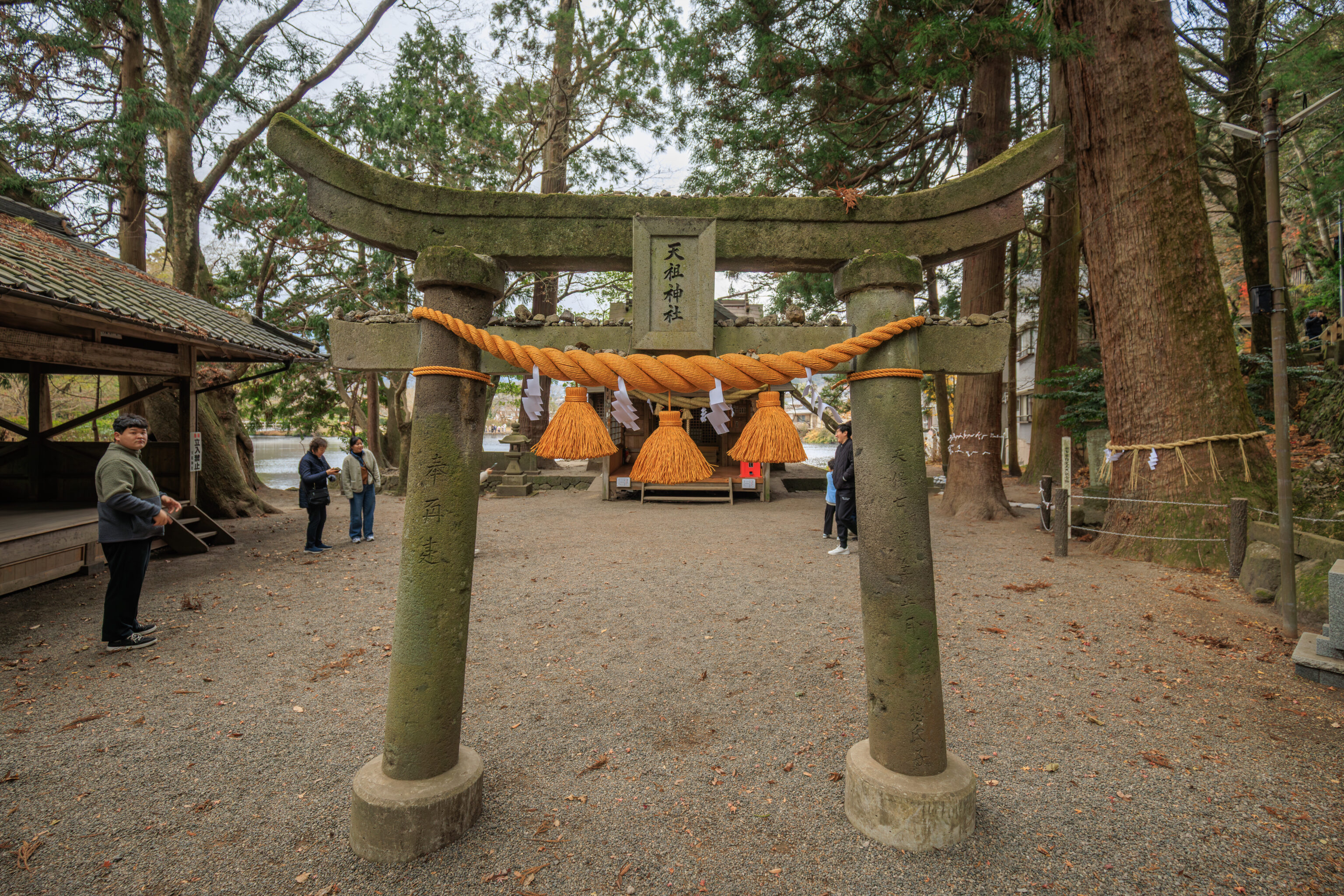
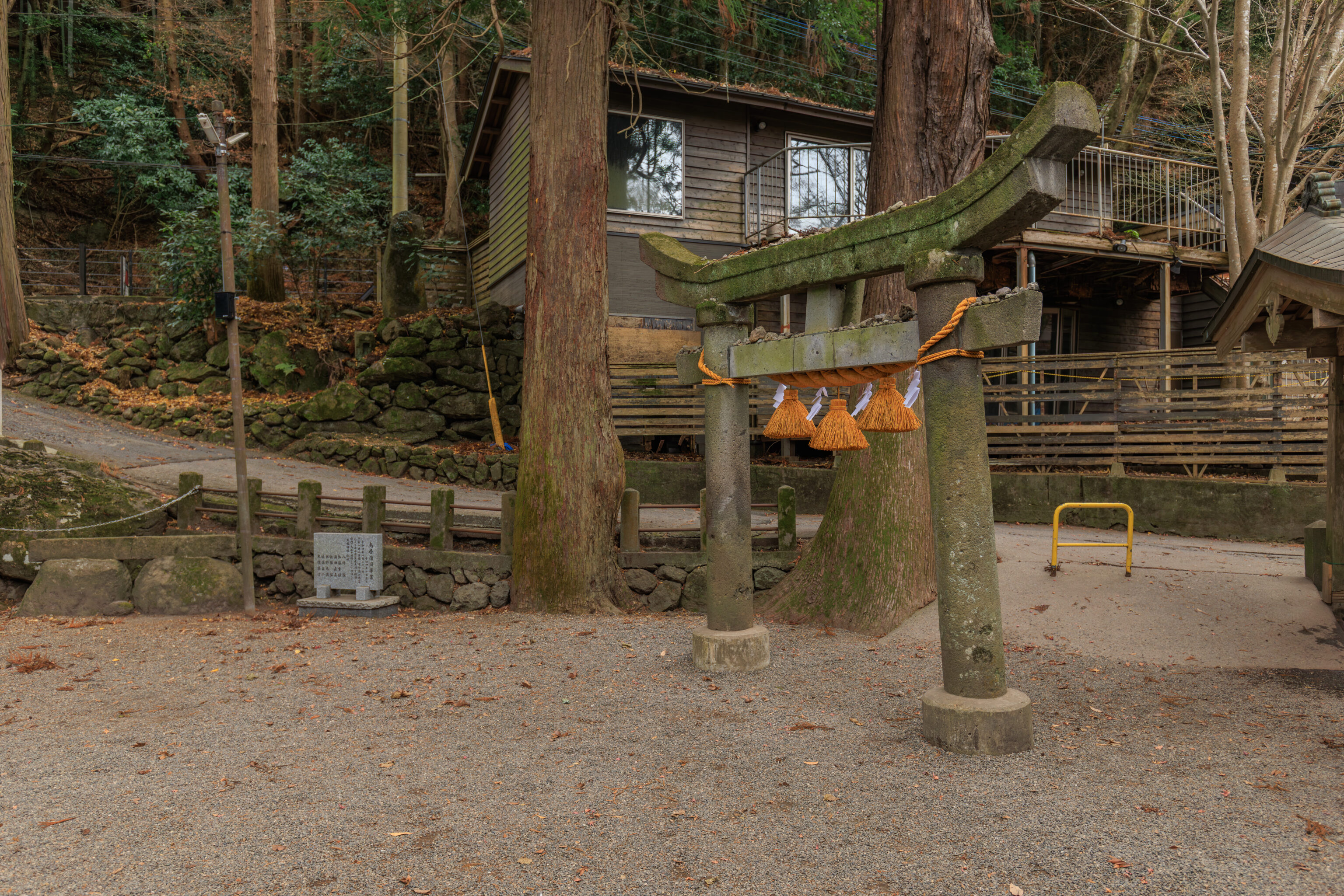
There is a concrete torii facing the shrine. It is pretty similar to the one that is in the lake.
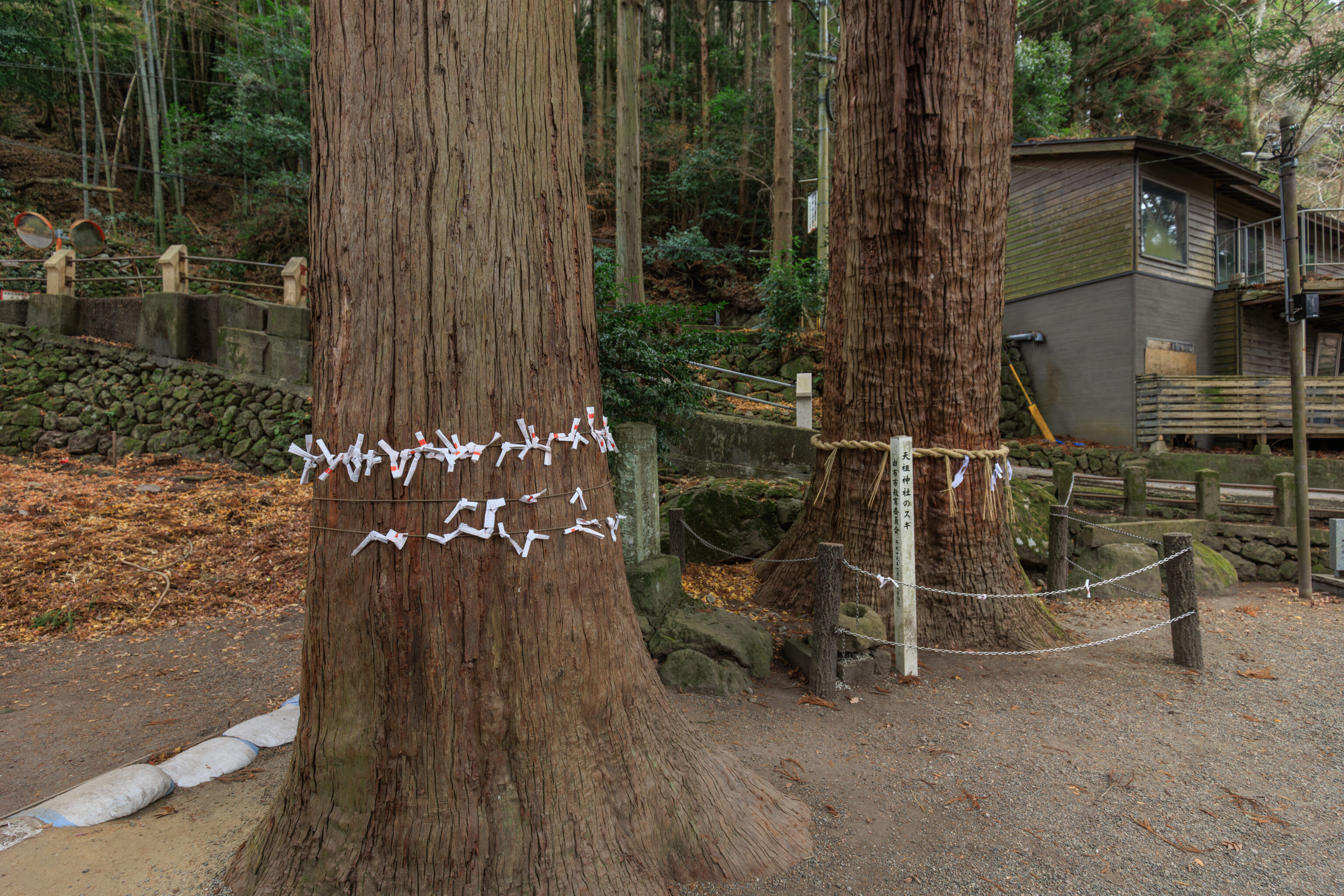
The red machine that was in the shrine distributes omikuji. They are tied around this tree on the left.
Cedar trees at Tenso Shrine
Yufu City Board of Education
June 2, 2007
– Text from the white post in front of the tree on the right, translated using Google.
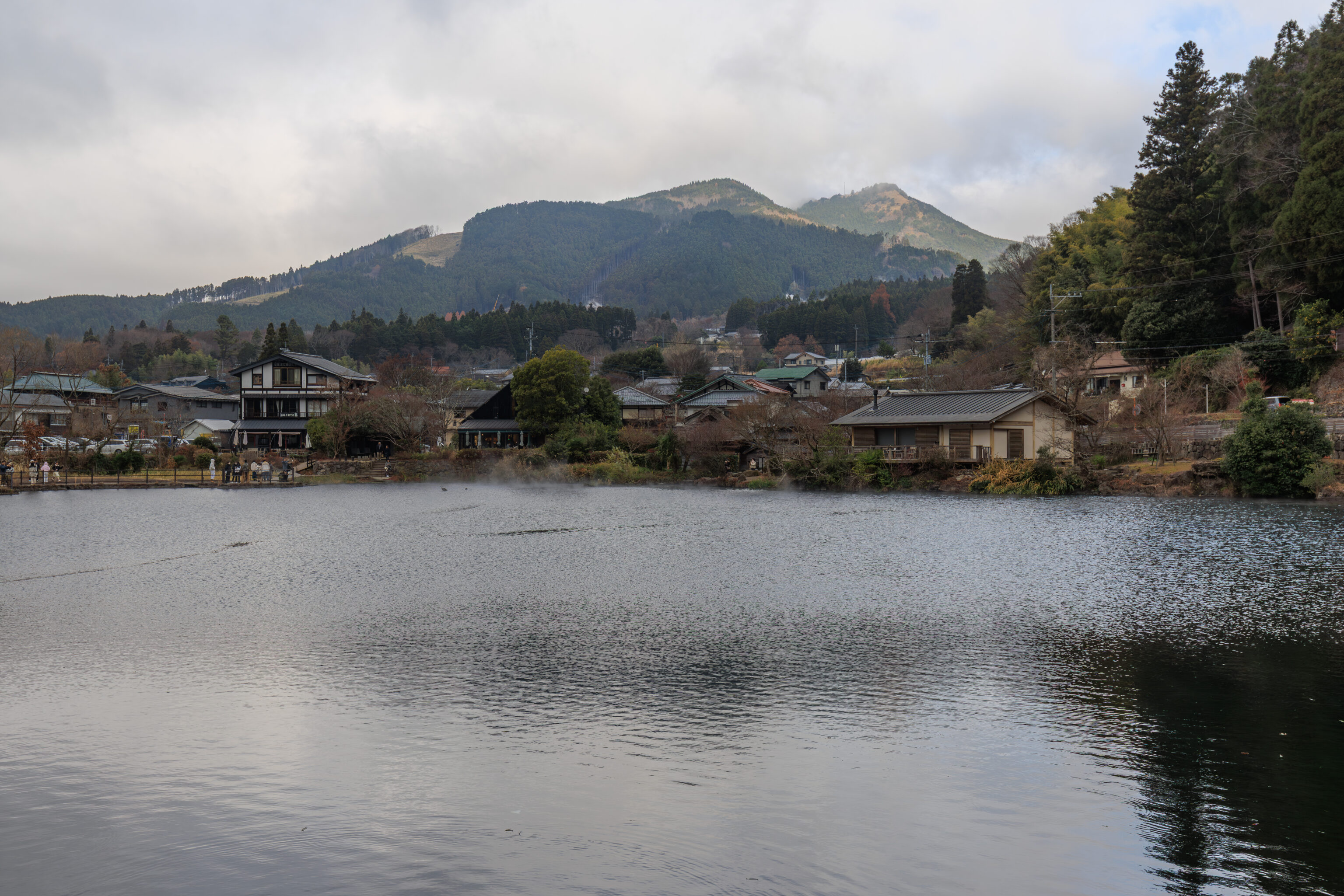
After visiting the shrine, we decided to get lunch at a charcoal grill restaurant that is nearby to the west which opens at 11am today. So, we started to heed back north along the lake’s west shore. It is a bit hard to see but we could see geothermal steam coming from the foothills beyond the lake.
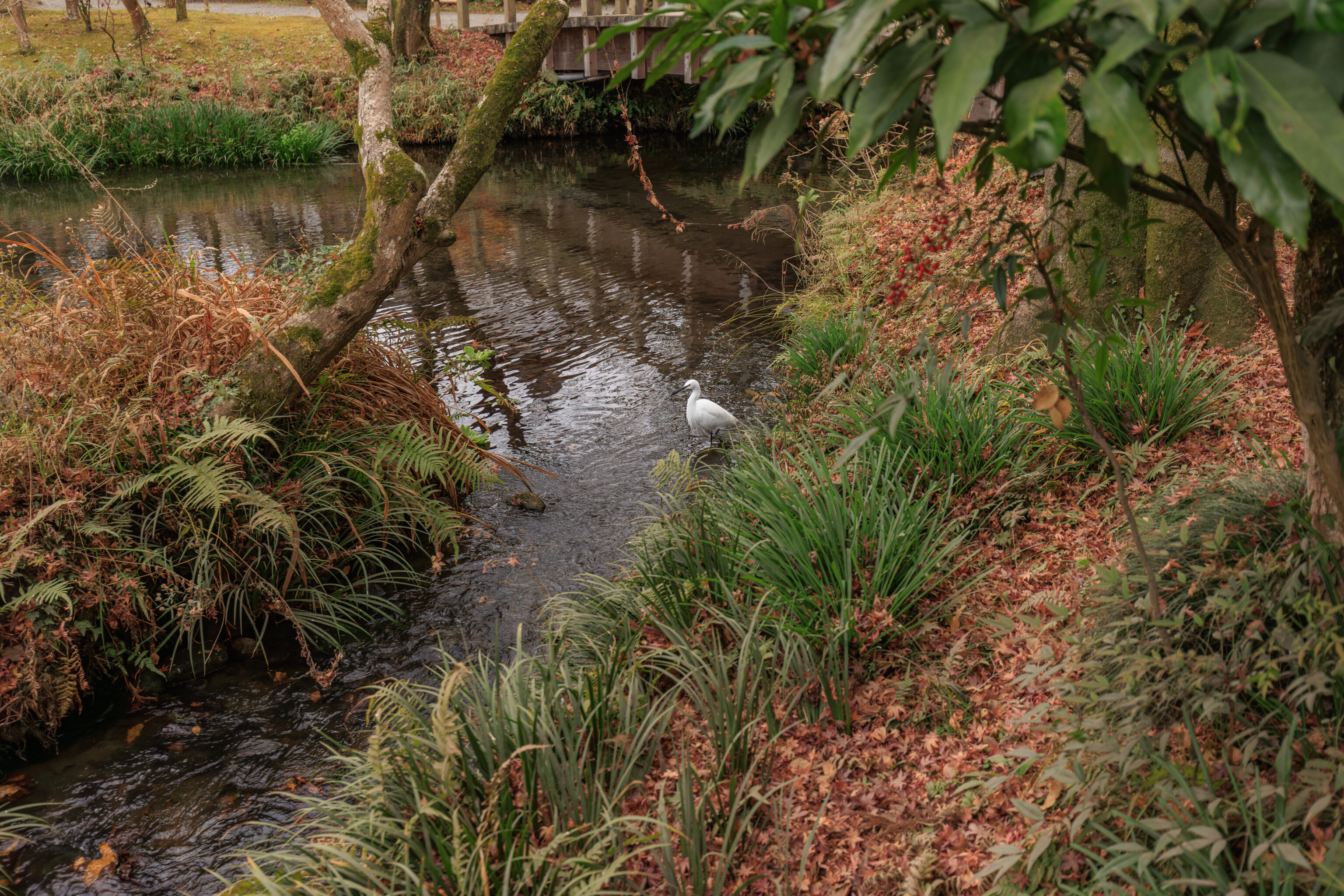
There is a small river, the 旧大分川 Old Oita River, which flows out of the lake to the west. We saw a white bird standing at the water’s edge. It looks like it is a Little Egret!
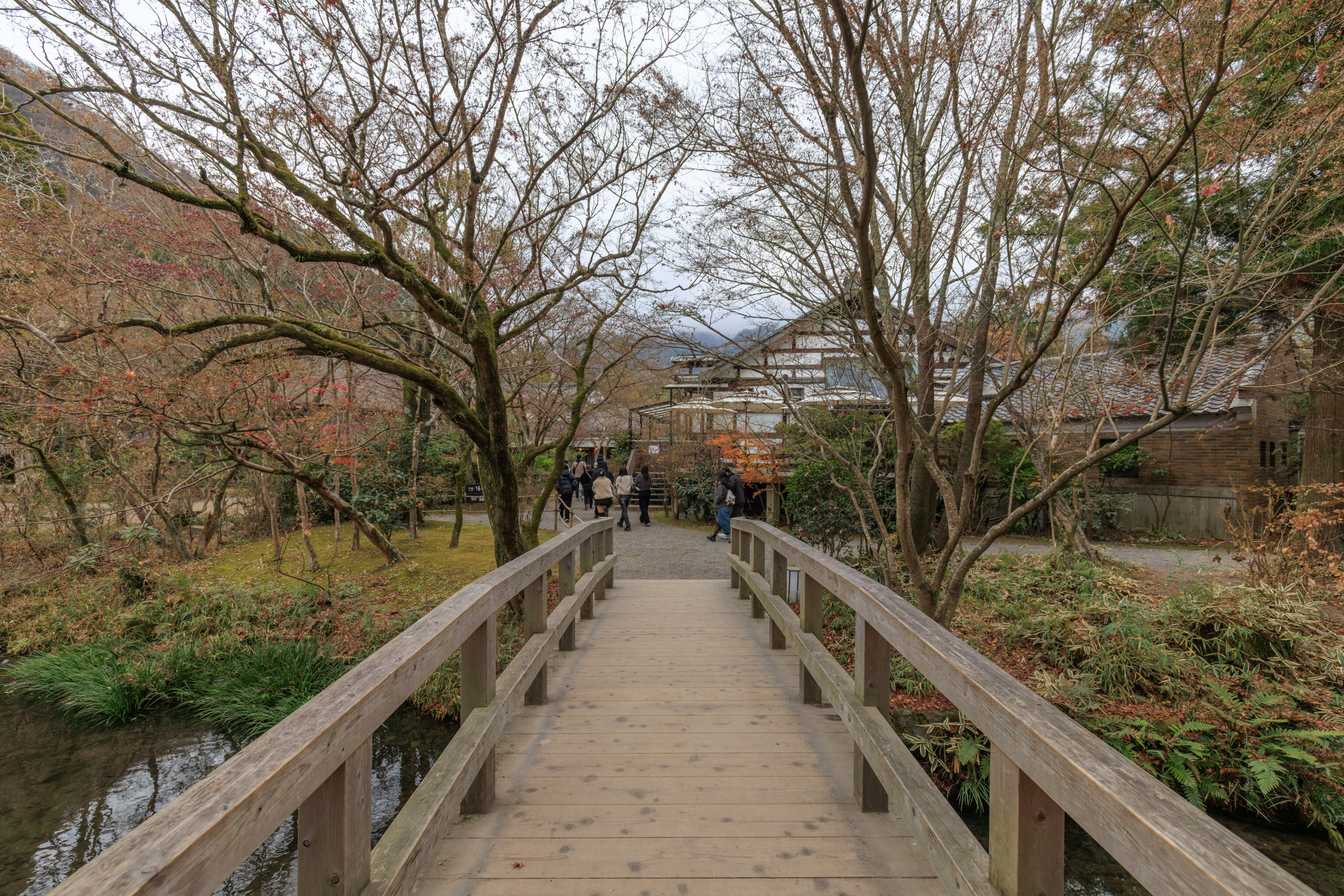
We crossed the river on this wooden bridge which is a bit to the west of where we crossed earlier on our way to the shrine.
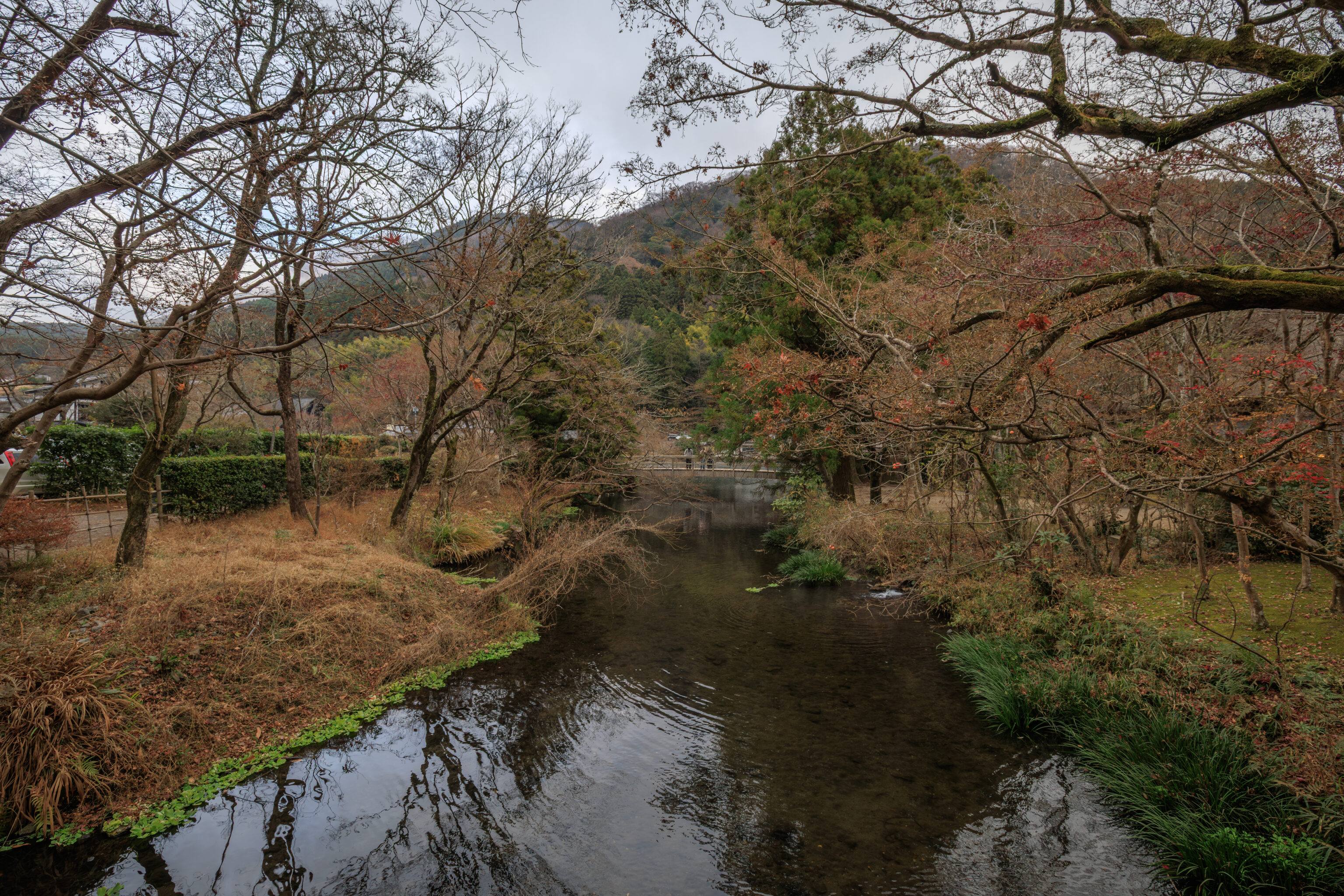
The bridge in the background here is where we crossed earlier.
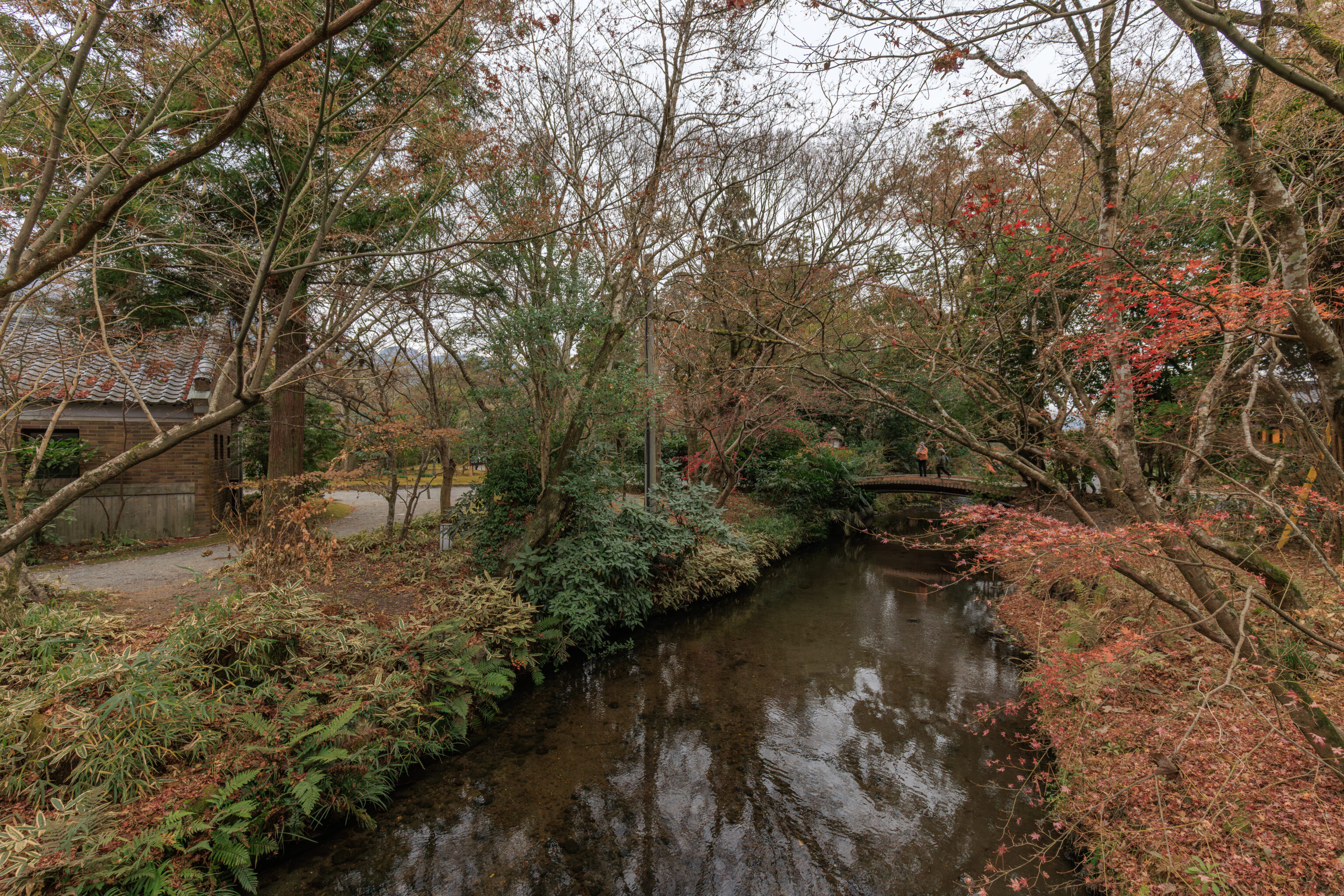
This is the view to the west. There is another bridge nearby.
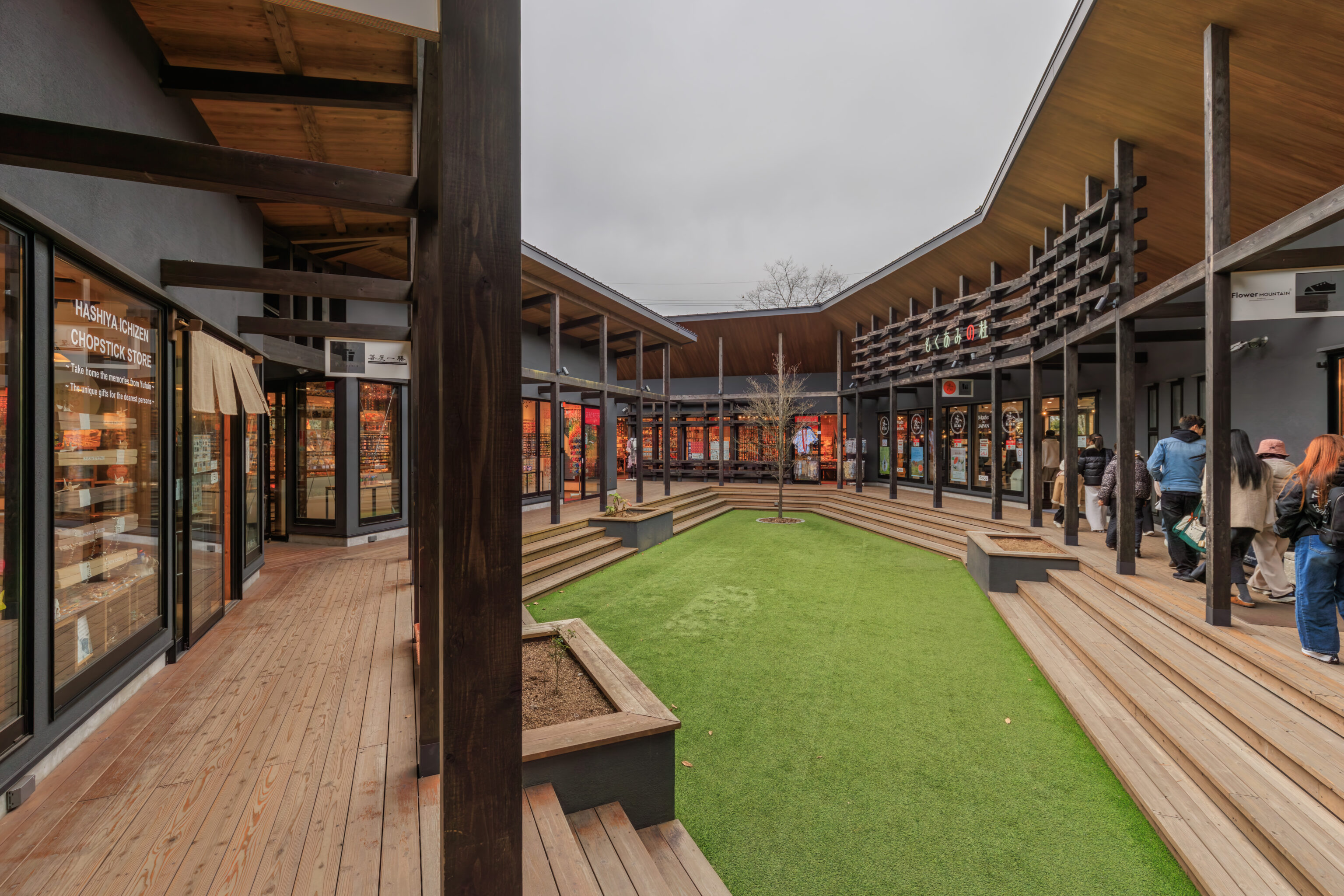
We came across the もくあみの杜 Mokuami no Mori, basically a little shopping center. There were a few shops selling locally made goods around this courtyard.
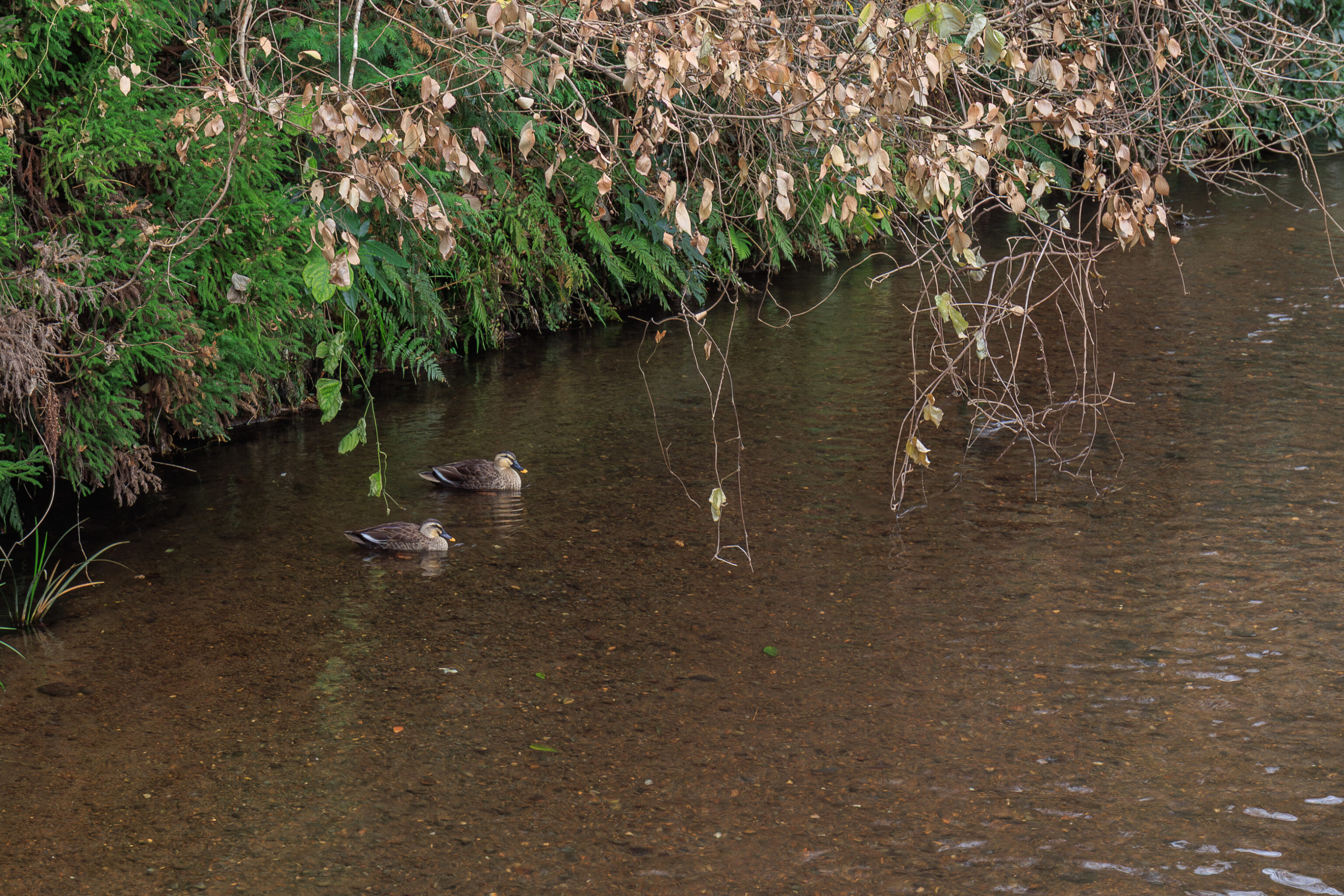
We continued on along the path. We walked past these two ducks who look like they are Eastern Spot-Billed Ducks, or 軽鴨 Karugamo in Japanese. This is a new species for us, although its possible we’ve just never looked closely enough.
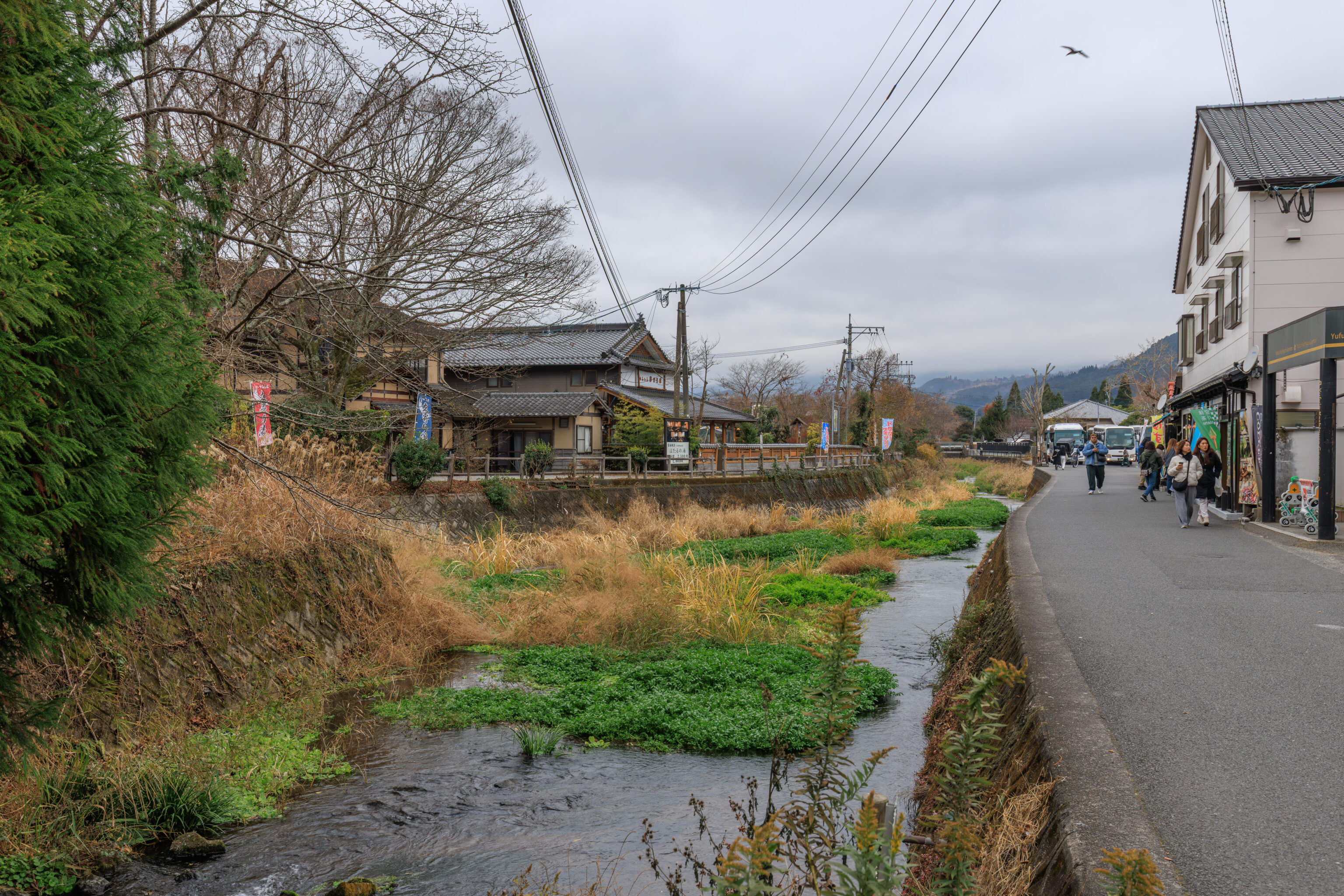
Continuing on, we could see a tour bus parking area ahead. The term for these busses in Japanese seems to be 観光バス kanko bus.
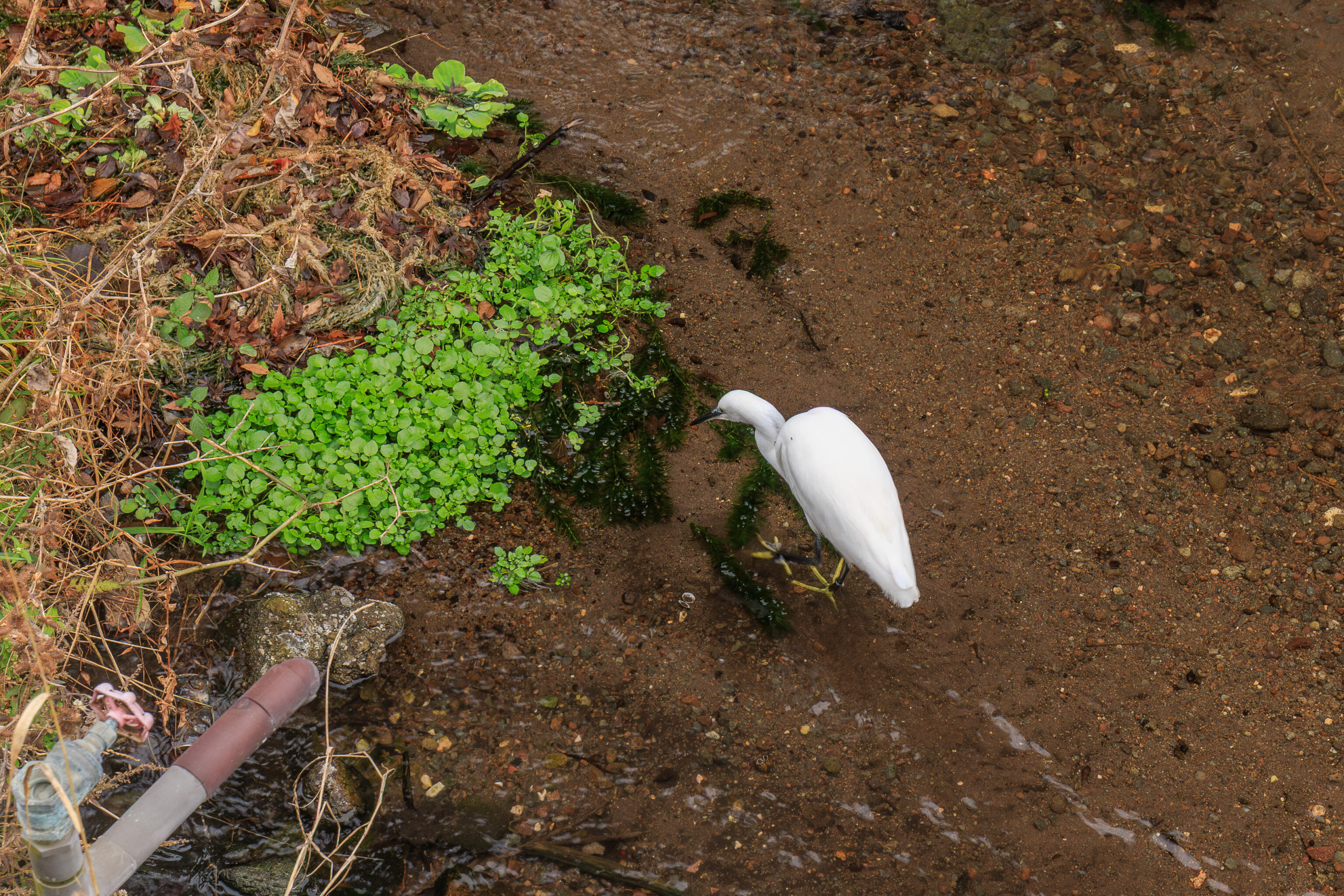
We saw another white egret here at the water’s edge.
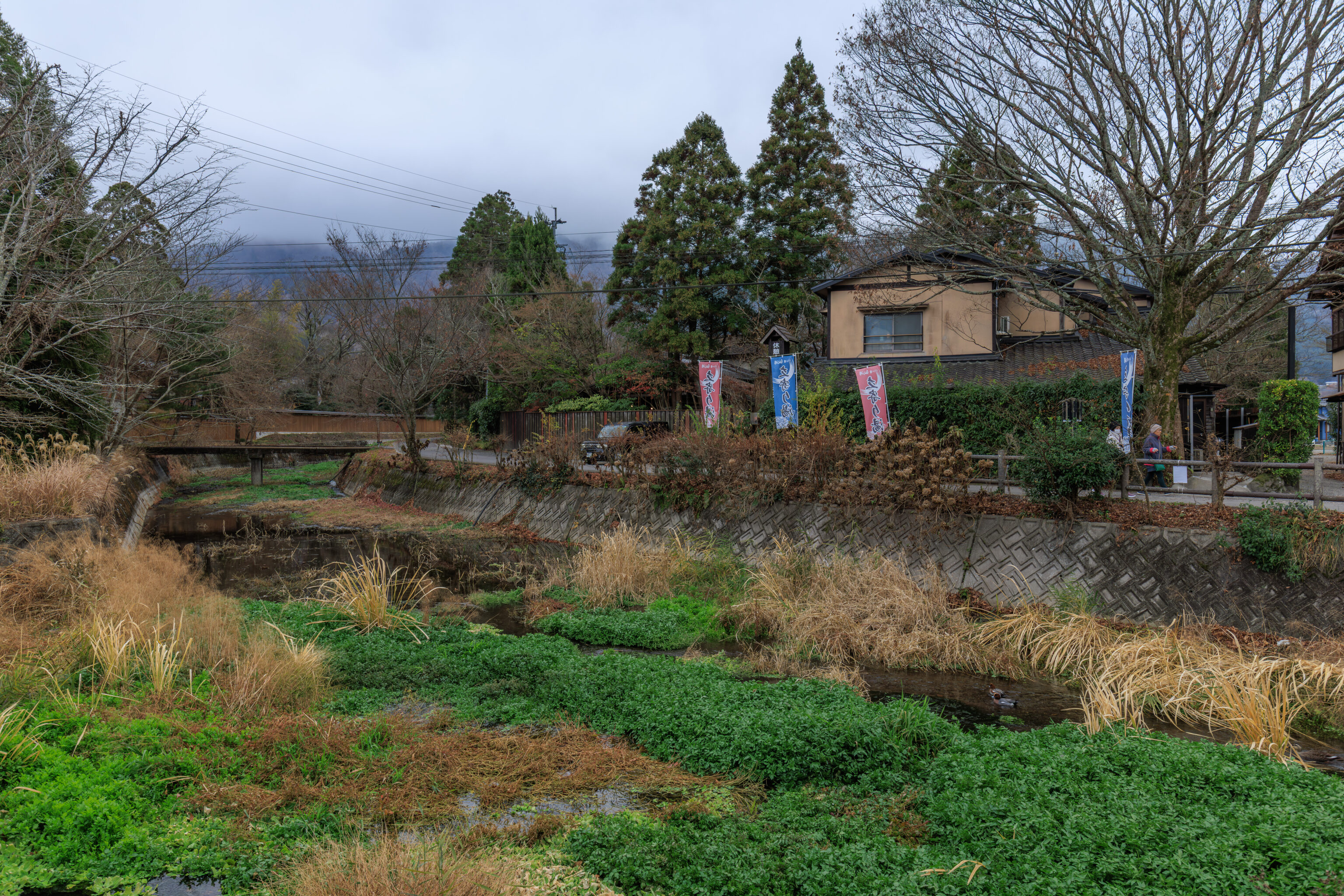
The area here was a bit less developed.
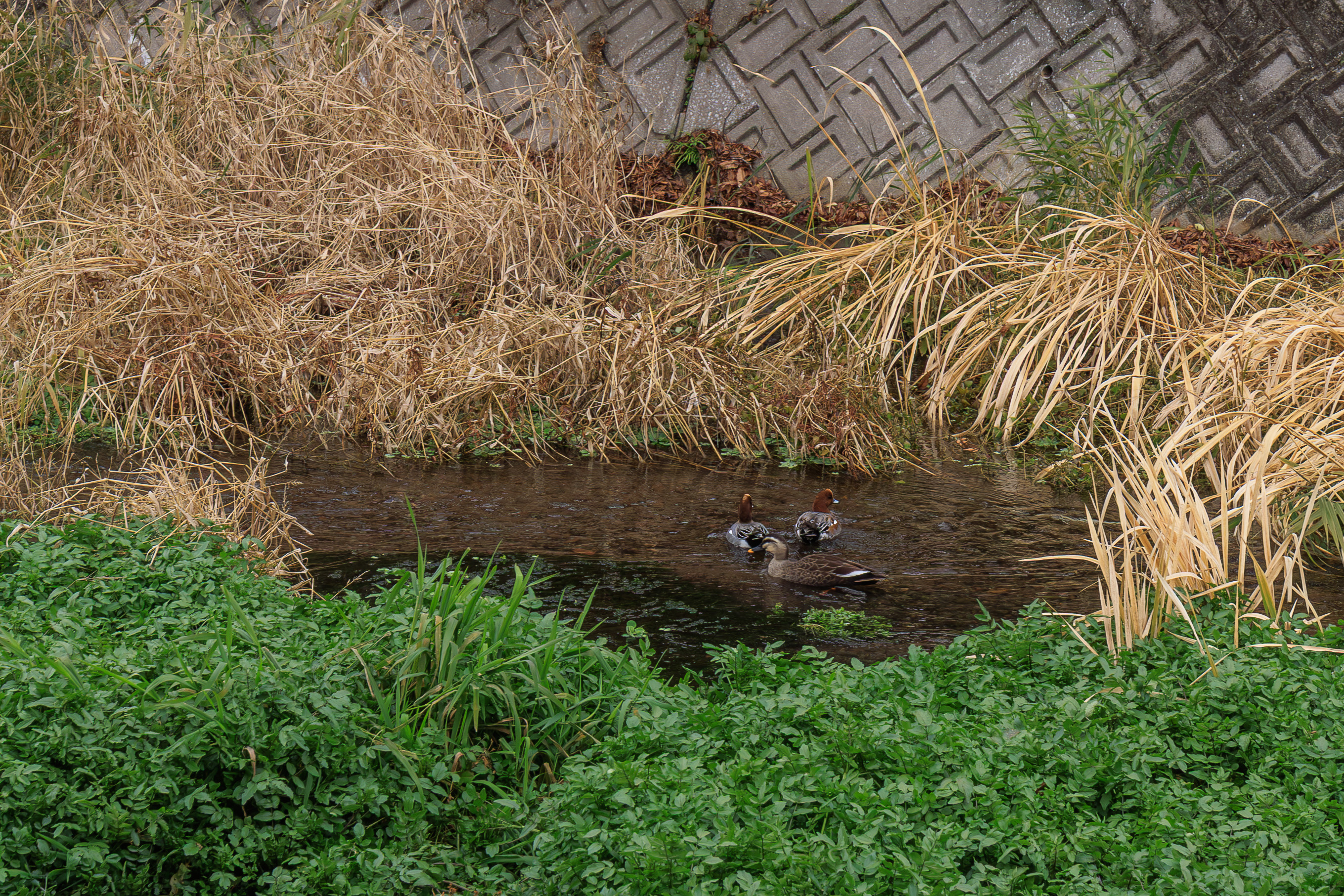
We spotted another Eastern Spot-Billed Duck as well as what looks like two Common Pochards. They’re known as 星羽白 hoshihajiro, meaning something like white starred feathers. This descriptive name refers to their wings, which we did not see because we did not see them fly.
We arrived at 啓修庵 Keisyuan not long after they opened. This restaurant specializes in charcoal grilling using 七輪 shichirin, a type of small Japanese charcoal grill.
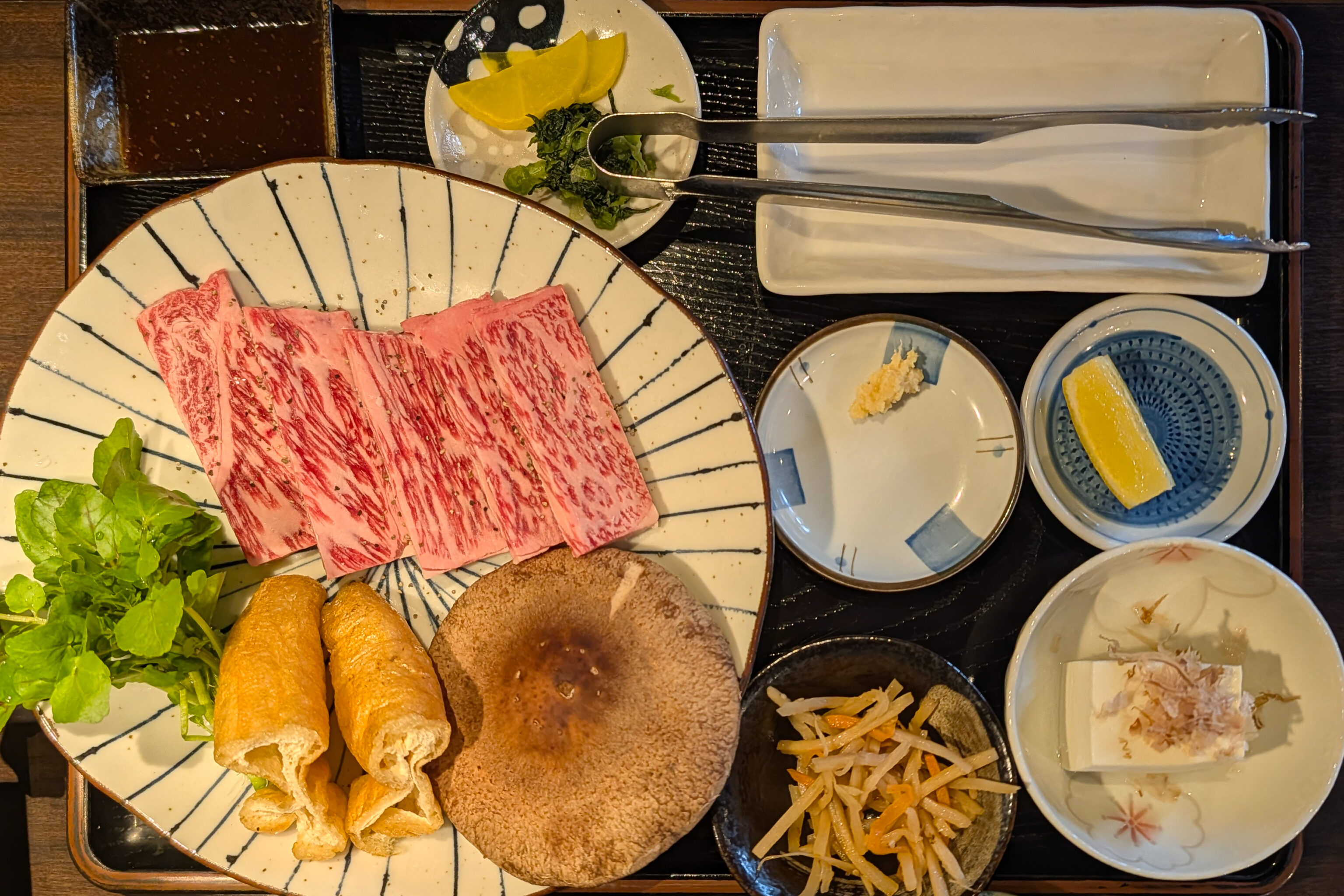
We ordered two sets, one with the local Oita Bungo Beef…
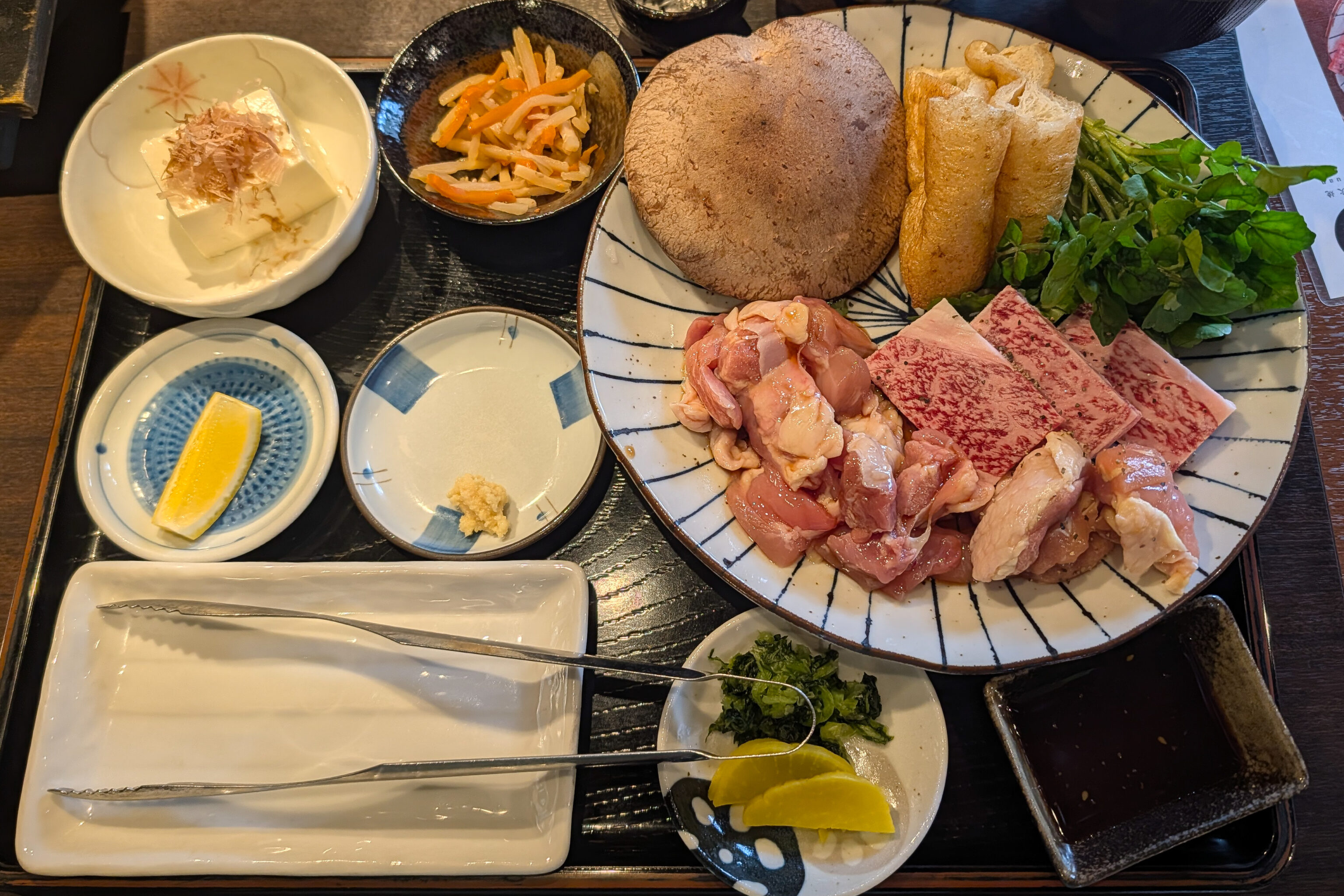
And another with the same beef as well as local chicken.
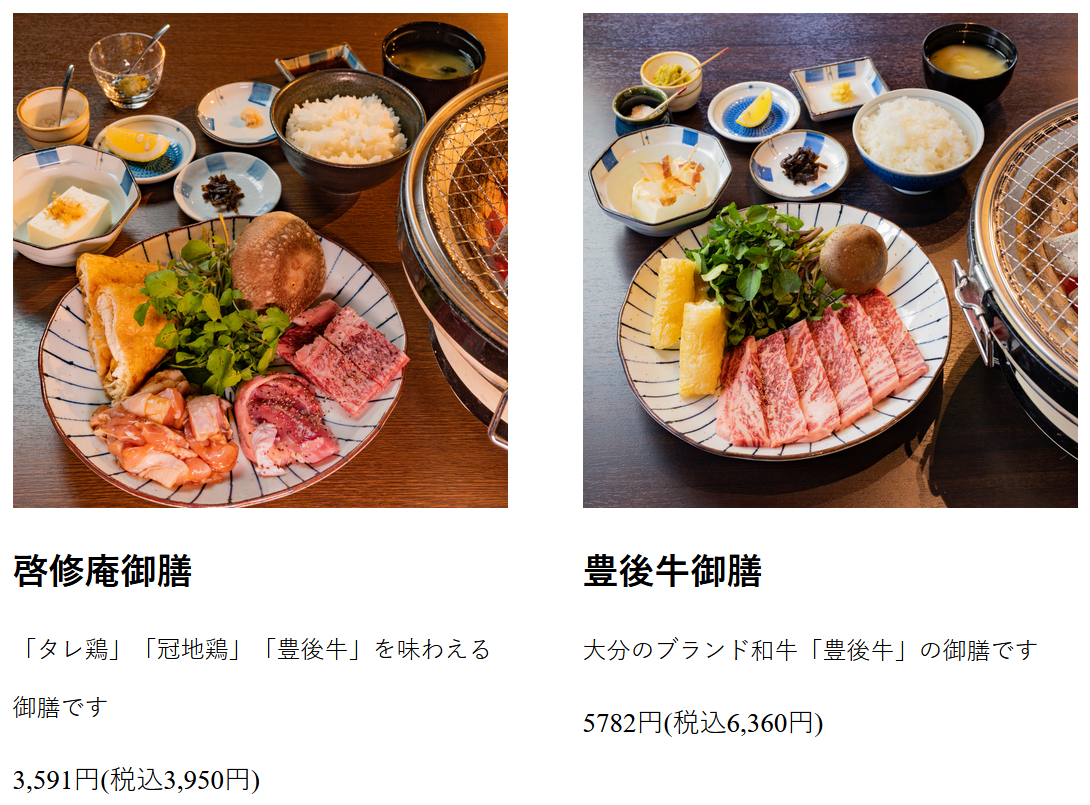
Bungo Beef Gozen
A set meal showcasing Oita's renowned brand Wagyu: "Bungo Beef"

Keishuan Gozen
A set meal featuring "Tare-tori" (Marinated Chicken), "Kanmuri Jidori" (Premium Local Chicken), and "Bungo Beef"
– Text from the menu on their website, translated using Google.
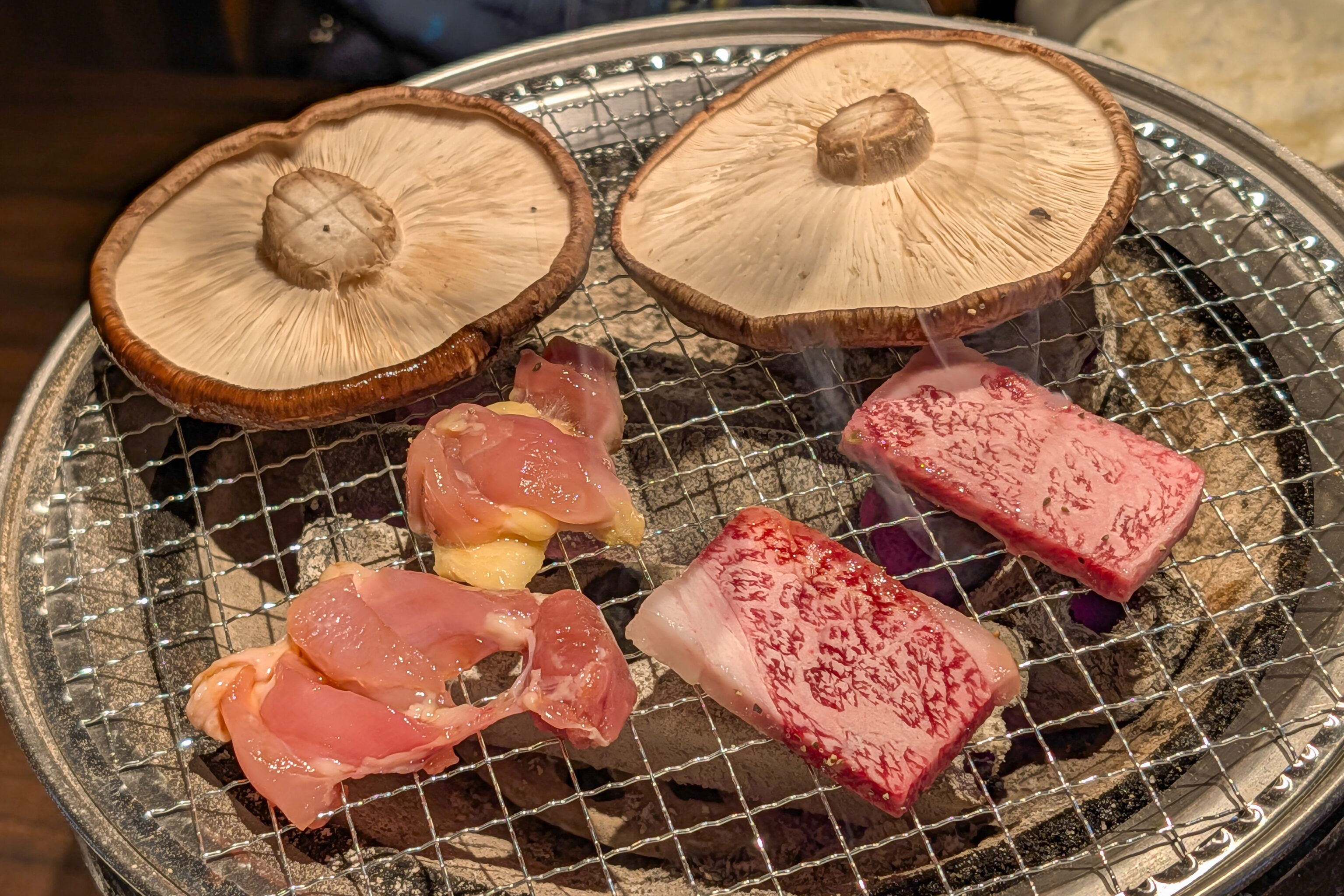
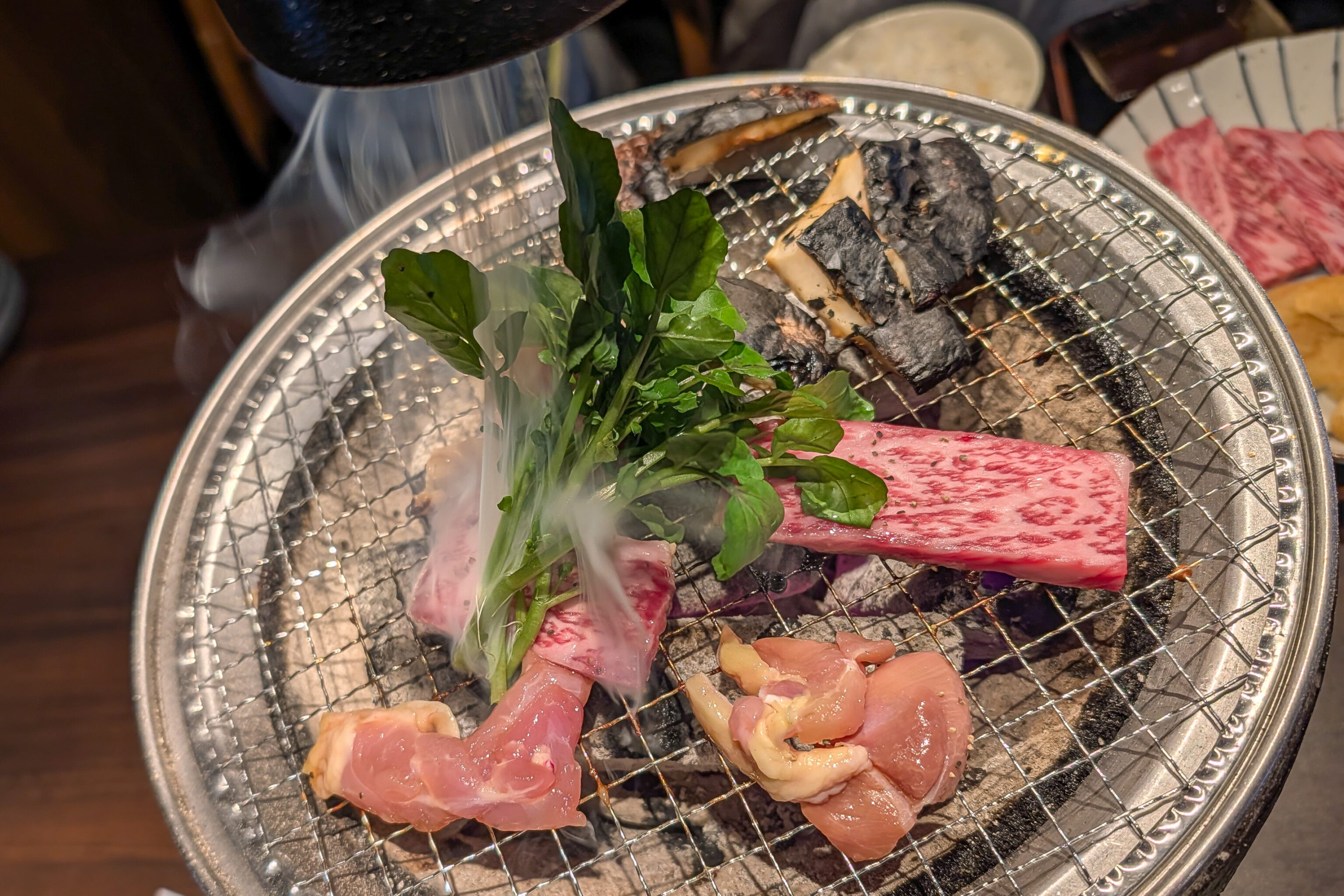
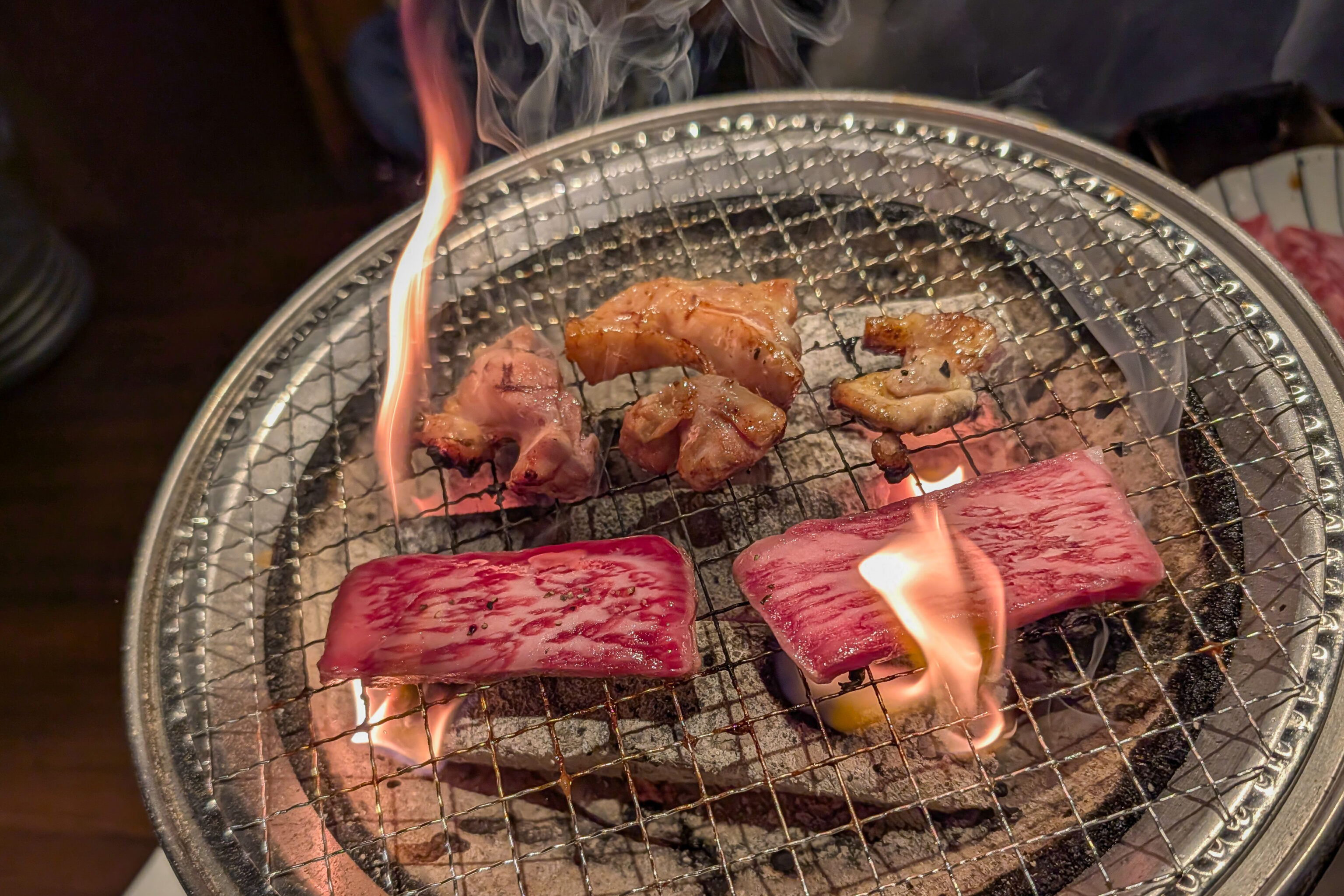
The chicken was, well, chicken. The wagyu was excellent though! Particularly when cooked on the charcoal grill. The portions were pretty small, as is typically the case when having named wagyu. Still, it felt quite expensive.
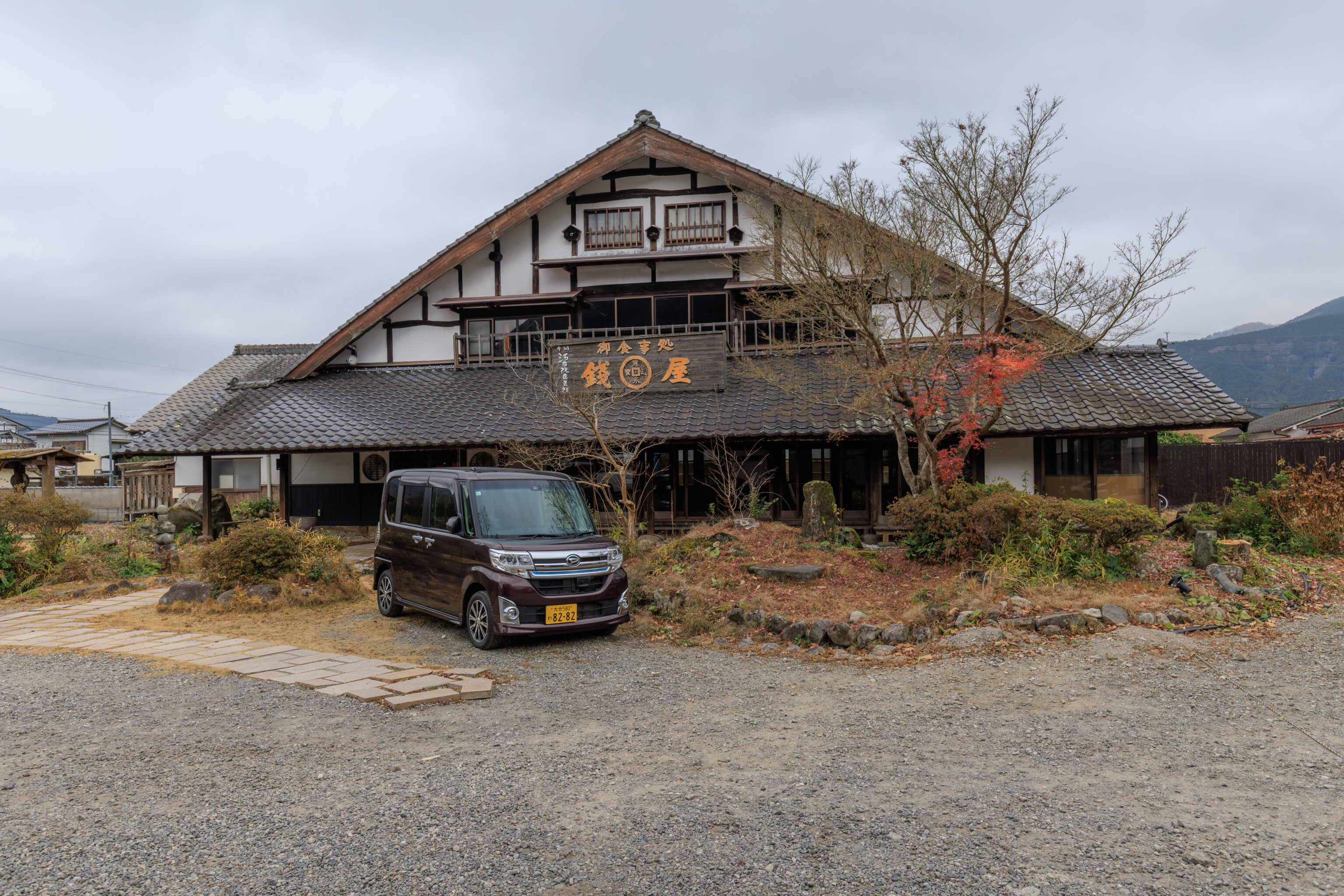
This building contains some business that wasn’t open. It didn’t have a marker on Google Maps so perhaps it went kaput?
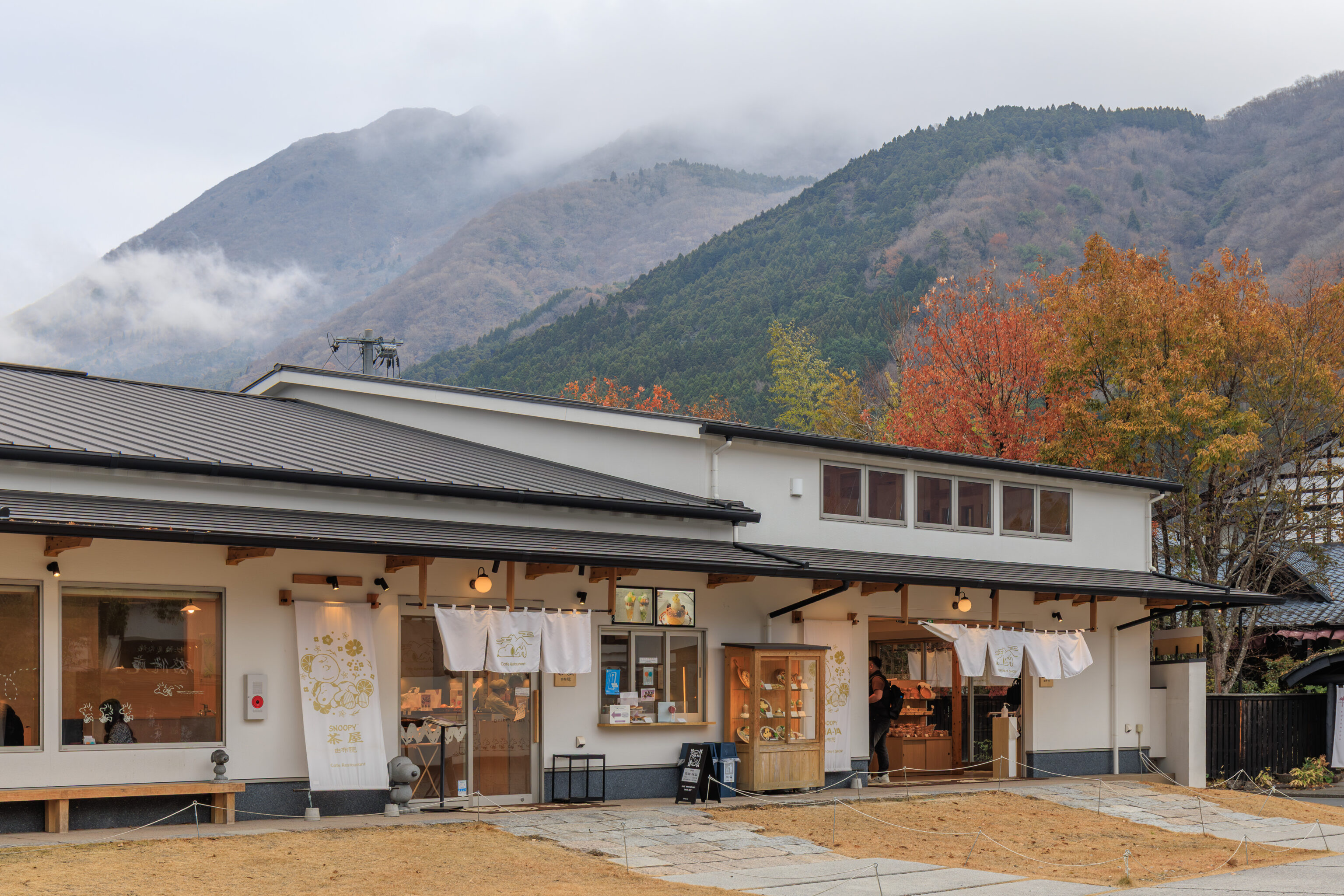
A Snoopy Chaya, one of eight in Japan. was just to the north of the Keisyuan. Snoopy is quite popular here! They serve a variety of light meal items and desserts, many with a Snoopy, or more generally Peanuts, theme.
While we didn’t go to the chaya, we did take a look at the store. They had a huge selection of Snoopy and Peanuts items.
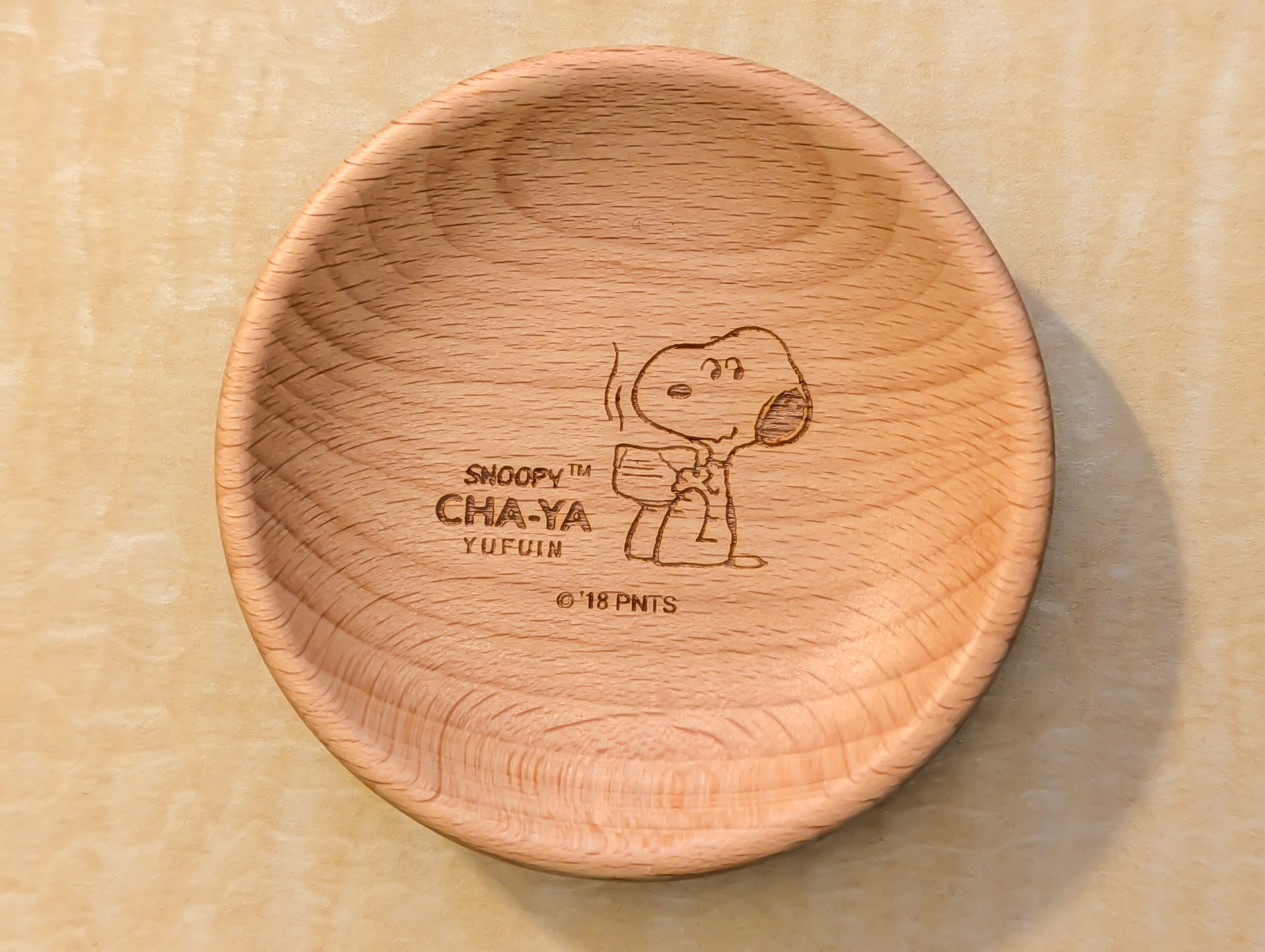
We bought this little circular tray as it had Yufuin branding on it. While many of the items for sale were probably Japan only, a few items like these are only available here in Yufuin!
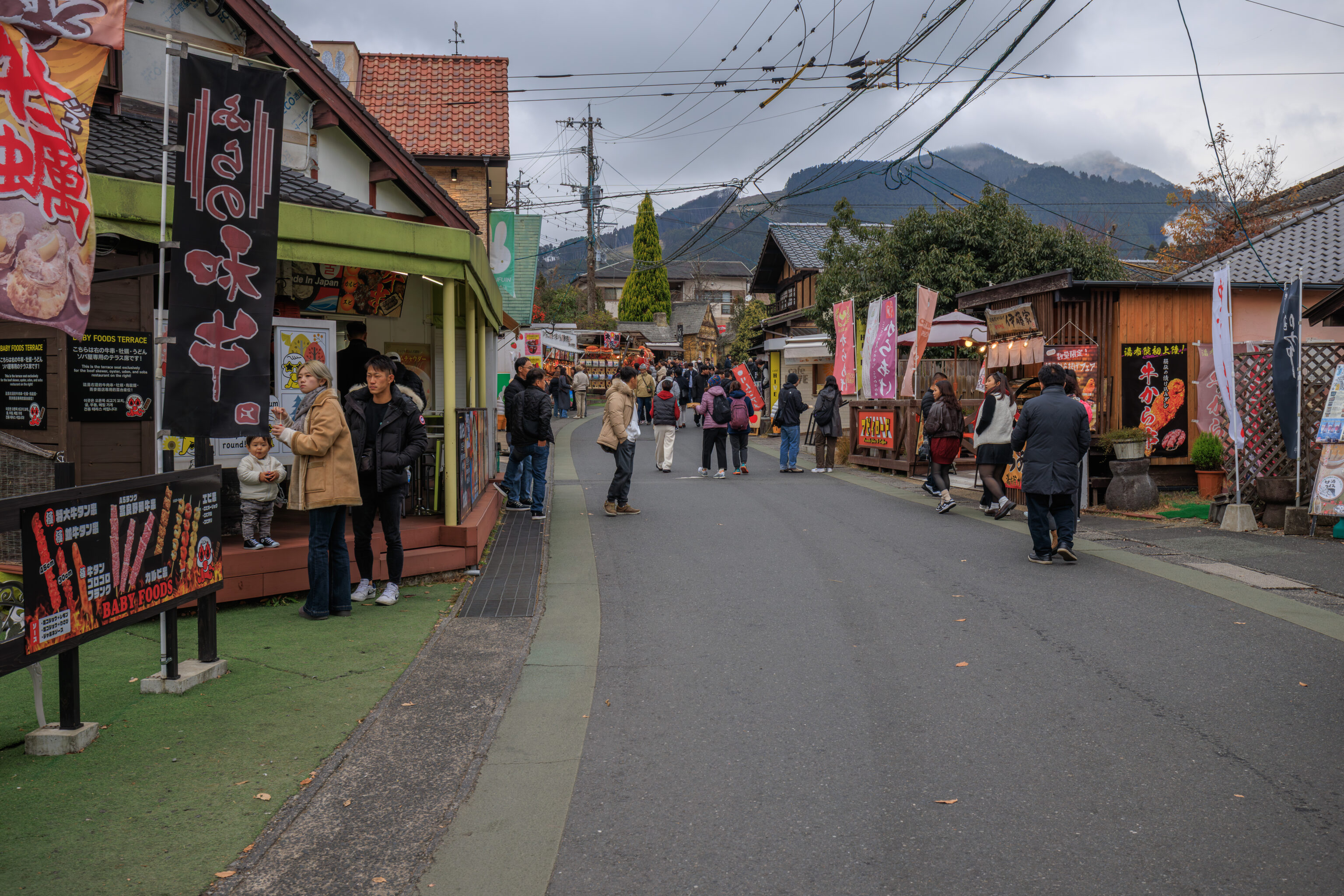
We started to walk back to the north to get to the road we walked down in the morning to start making our way back towards the train station. Our plan was to get snacks on the way as well as to visit any shops that seemed interesting. It definitely seemed much busier now than it was before.
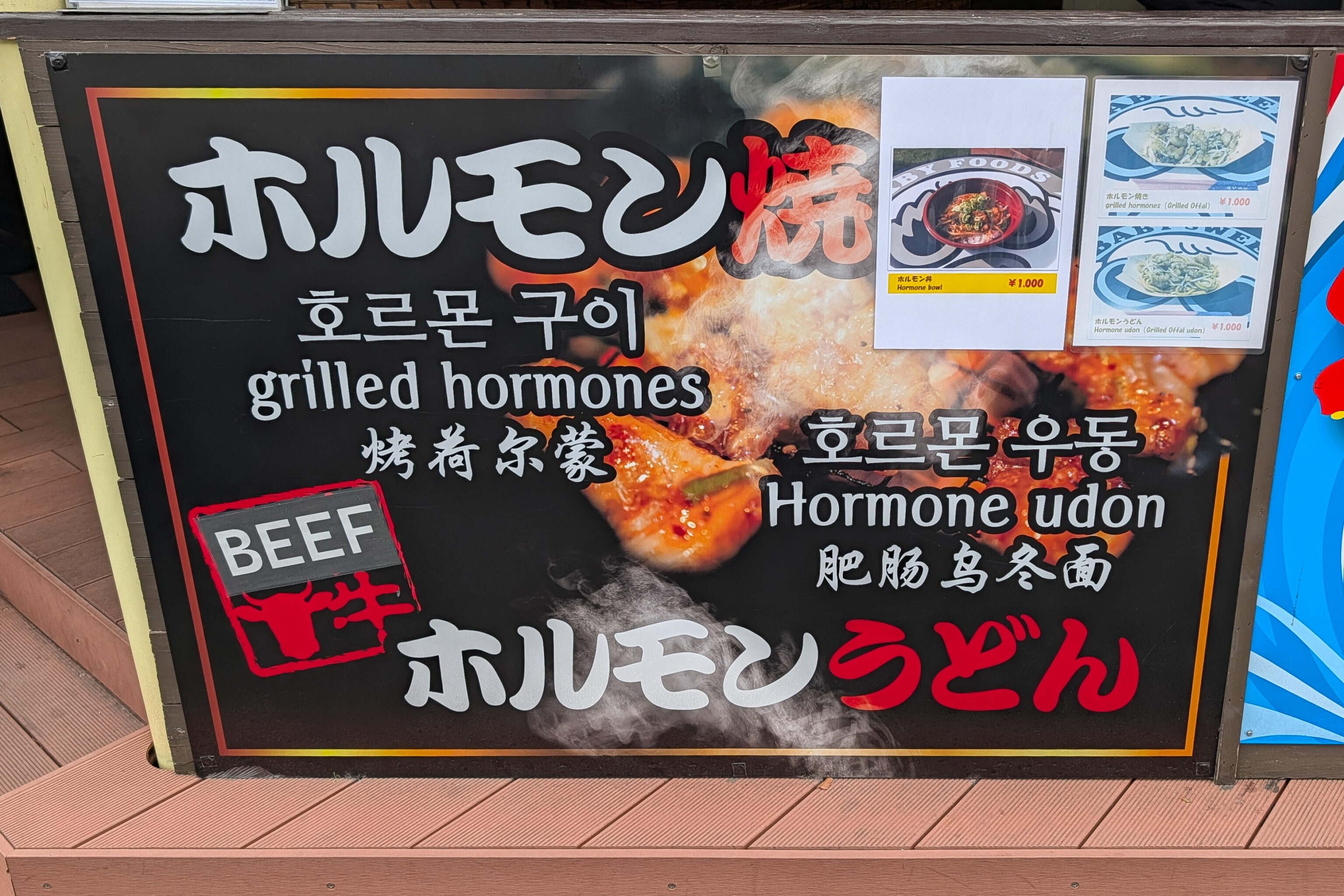
Does anyone want hormones?
…
Hormone is ホルモン horumon in Japanese. Foreign words are often translated phonetically but need to be adjusted to be pronounceable. And often, these borrowed words are the only term for something, which is the case here with hormones.
However, horumon also means offal in Japanese. This seems to come from the Kansai dialect. AI provides a well phrased explanation of the etymology of this term that matches what various sources describe:
The Etymology: "Throw Away"

The most widely accepted theory is that ホルモン comes from the Osaka/Kansai dialect word ほるもん (horu-mon).

    ほる (Horu): A dialect verb meaning "to throw away" or "to discard" (standard Japanese: suteru).
    もん (Mon): A colloquial contraction of もの (mono), meaning "thing."

So, ほるもん literally meant "throw-away things."
– Text from Proton Lumo.
So it is an unfortunate coincidence that these two terms sound exactly the same in Japanese.
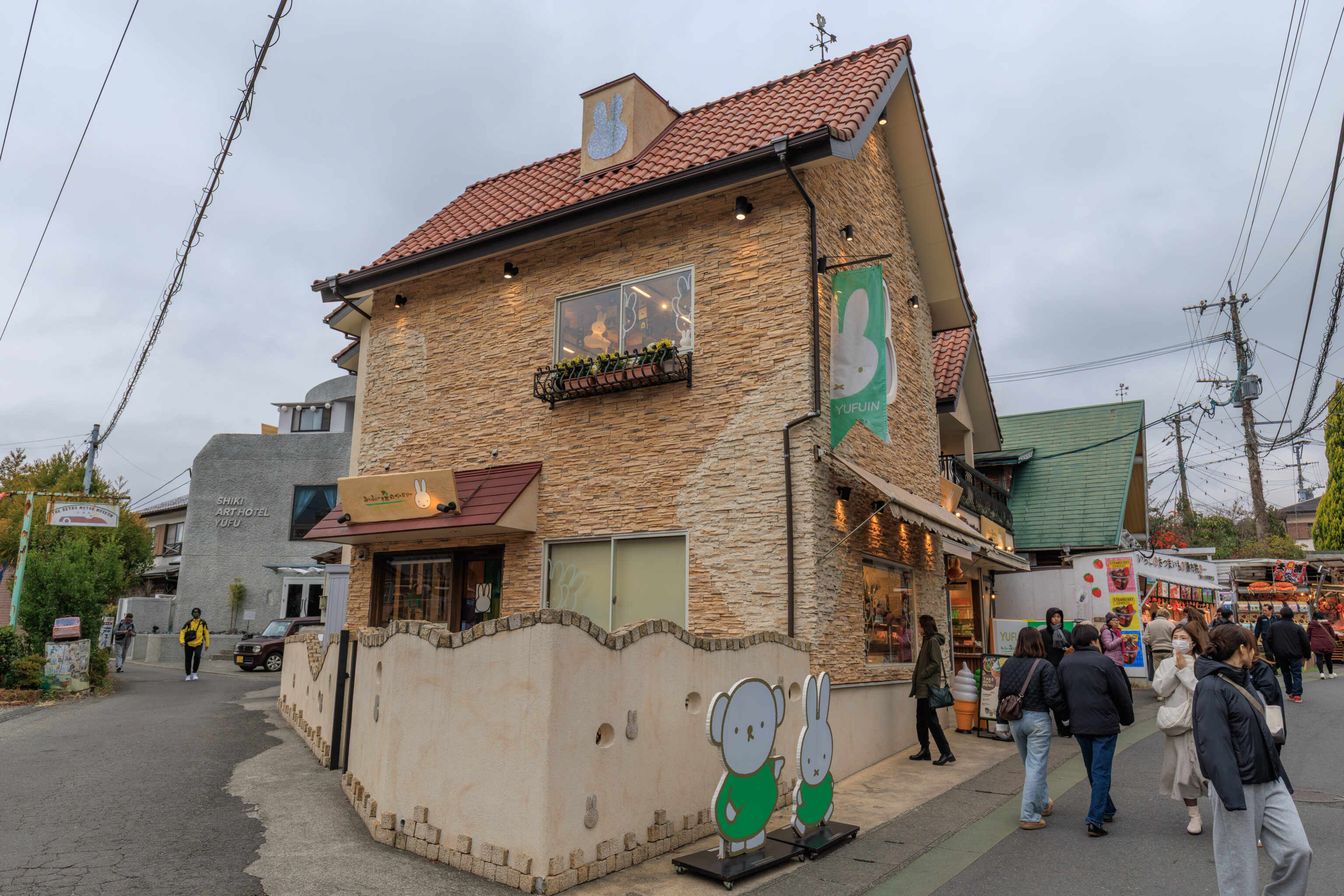
Not far from the Snoopy Chaya, we came across another international star, Miffy! This is the みっふぃー森のきっちん&べーかりー Miffy’s Forest Kitchen & Bakery and is one of six Miffy kitchen and bakery shops in Japan.
Of course, we went in to take a look. The shop has an area with merch and another that sells food, mainly baked good, drinks, and soft serve.
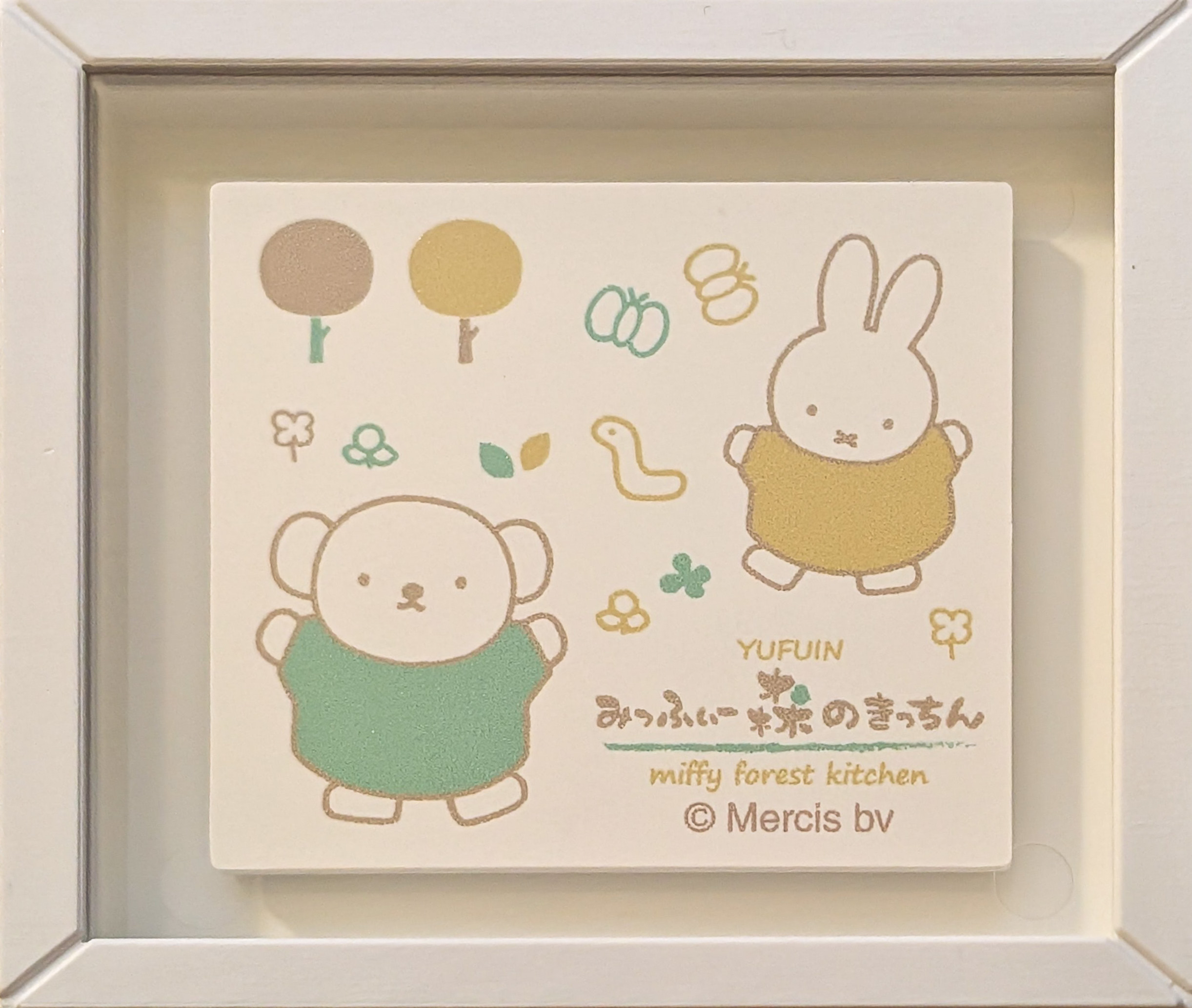
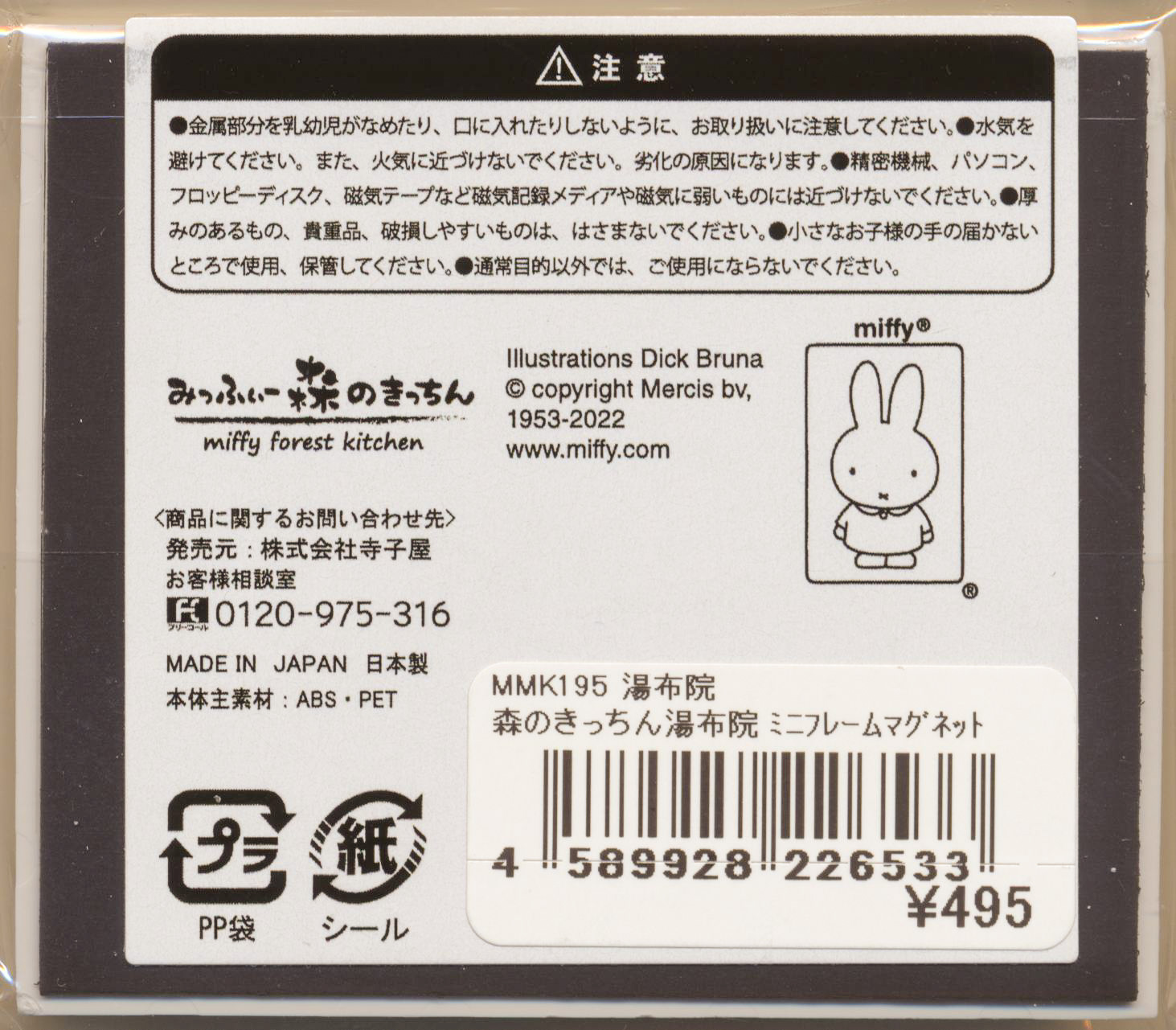
We got a magnet as it has Yufuin on it.
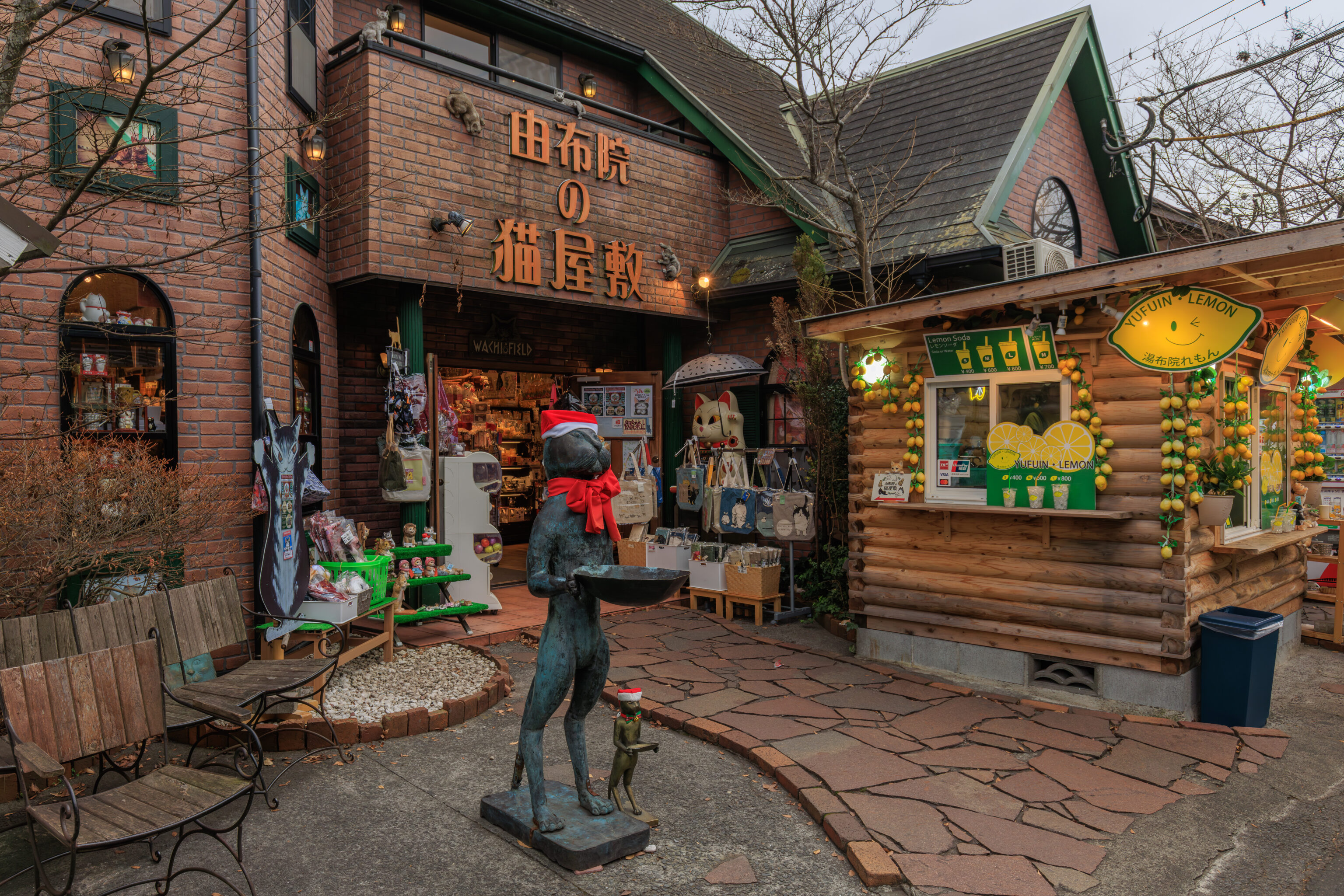
This is the 由布院の猫屋敷 Yufuin Cat House. It seems to be a shop that sells cat products. We didn’t go in but enjoyed the pair of Christmas cats outside.
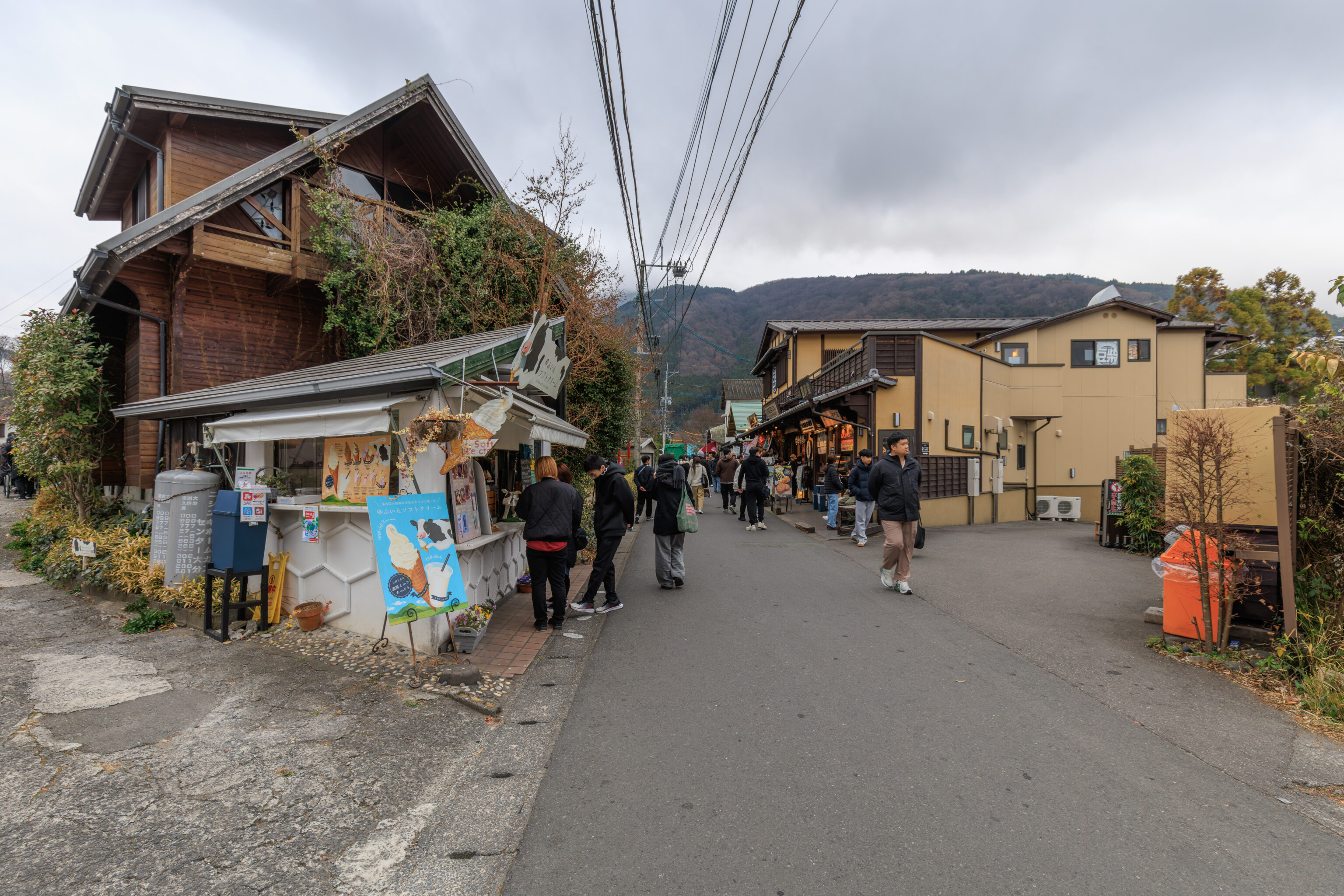
After returning to the road that we originally arrived on, we decided to stop at ゆふいん ソフトクリーム Yufuin Soft Cream. The branding they use in English is a bit more specific, Yufuin Milk Soft Ice Cream…
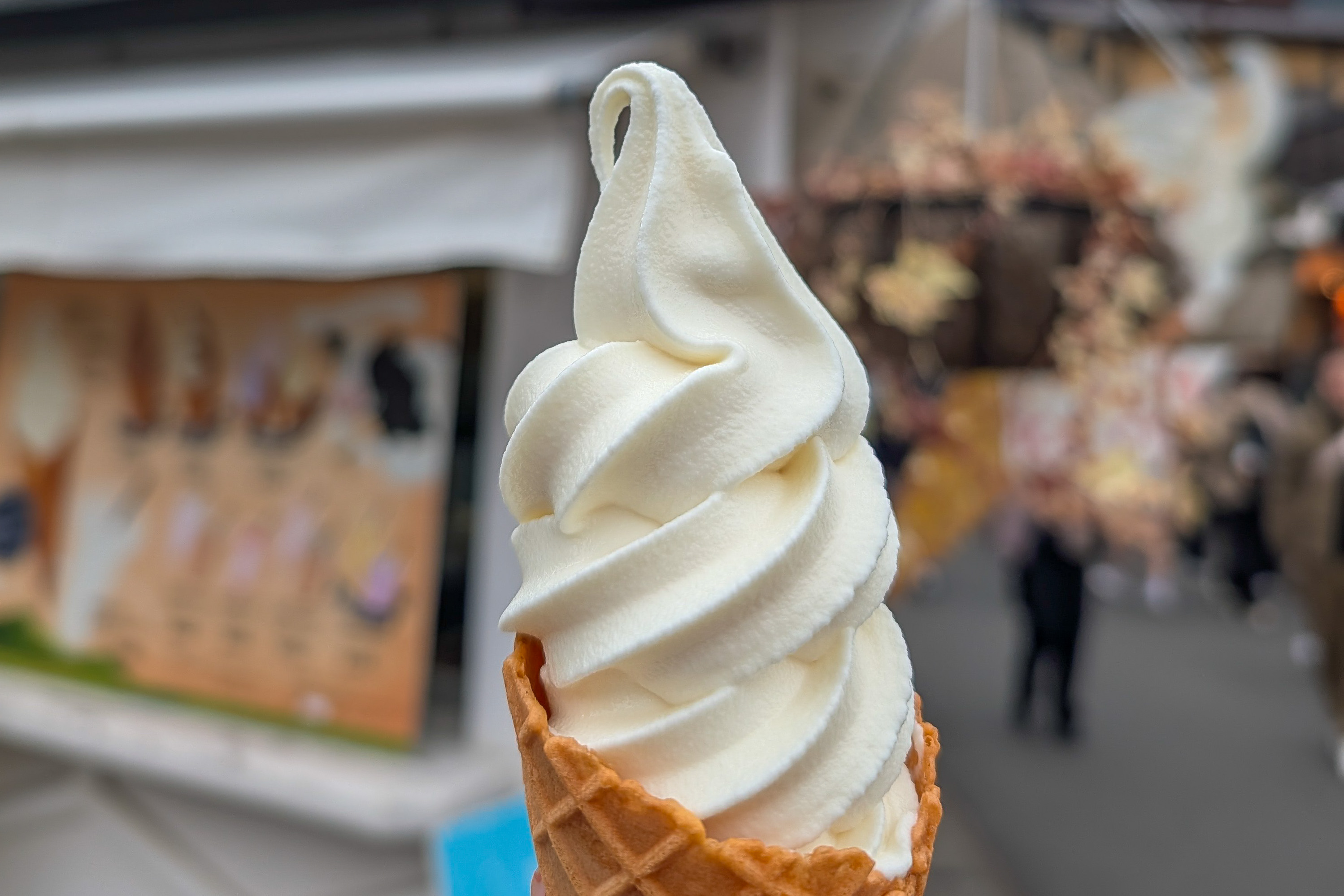
And that’s exactly what we got! The milk used is from Yufuin. It was good and very milky!
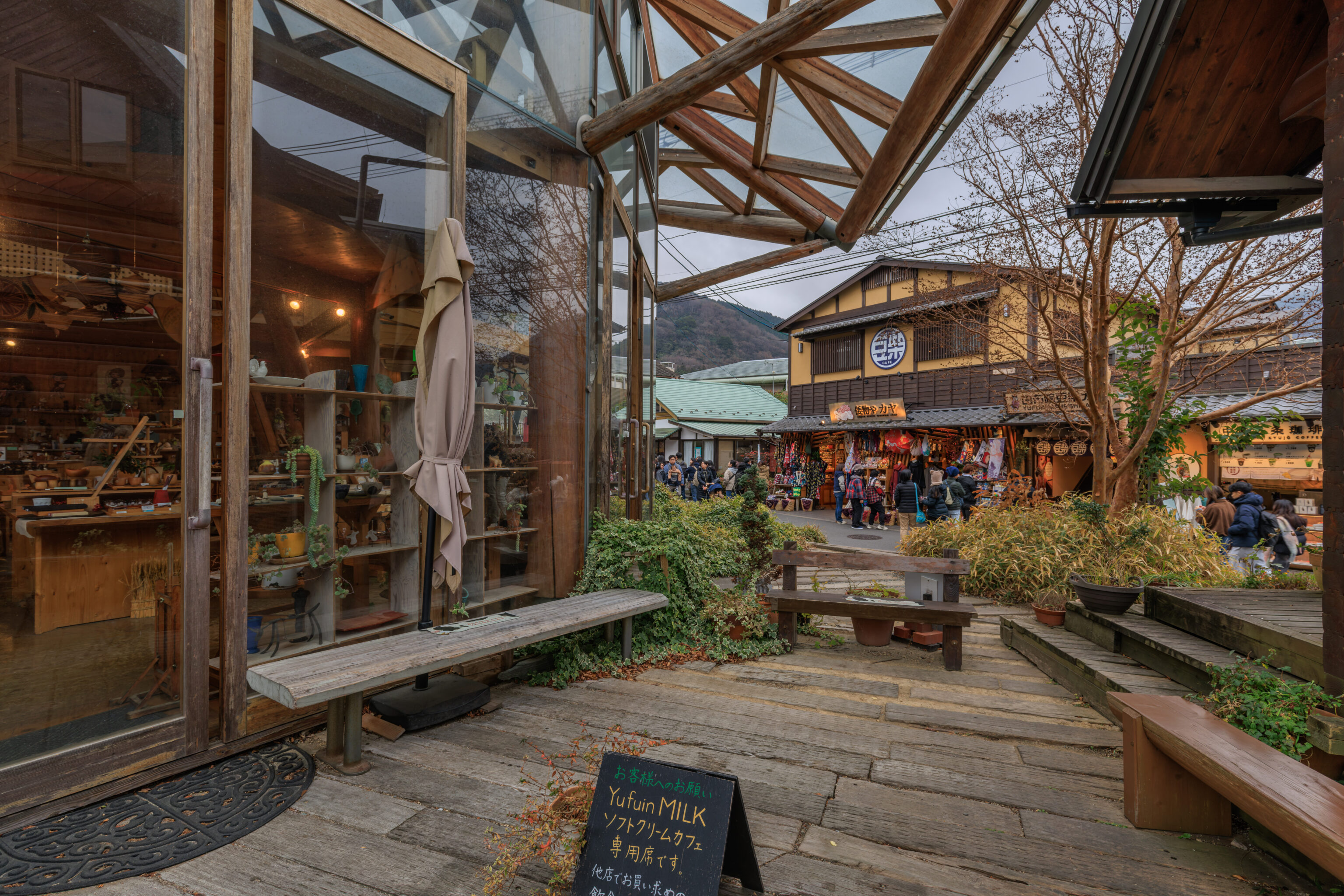
They actually had a little seating area behind the shop,, which was in a little courtyard-like area between some other businesses.
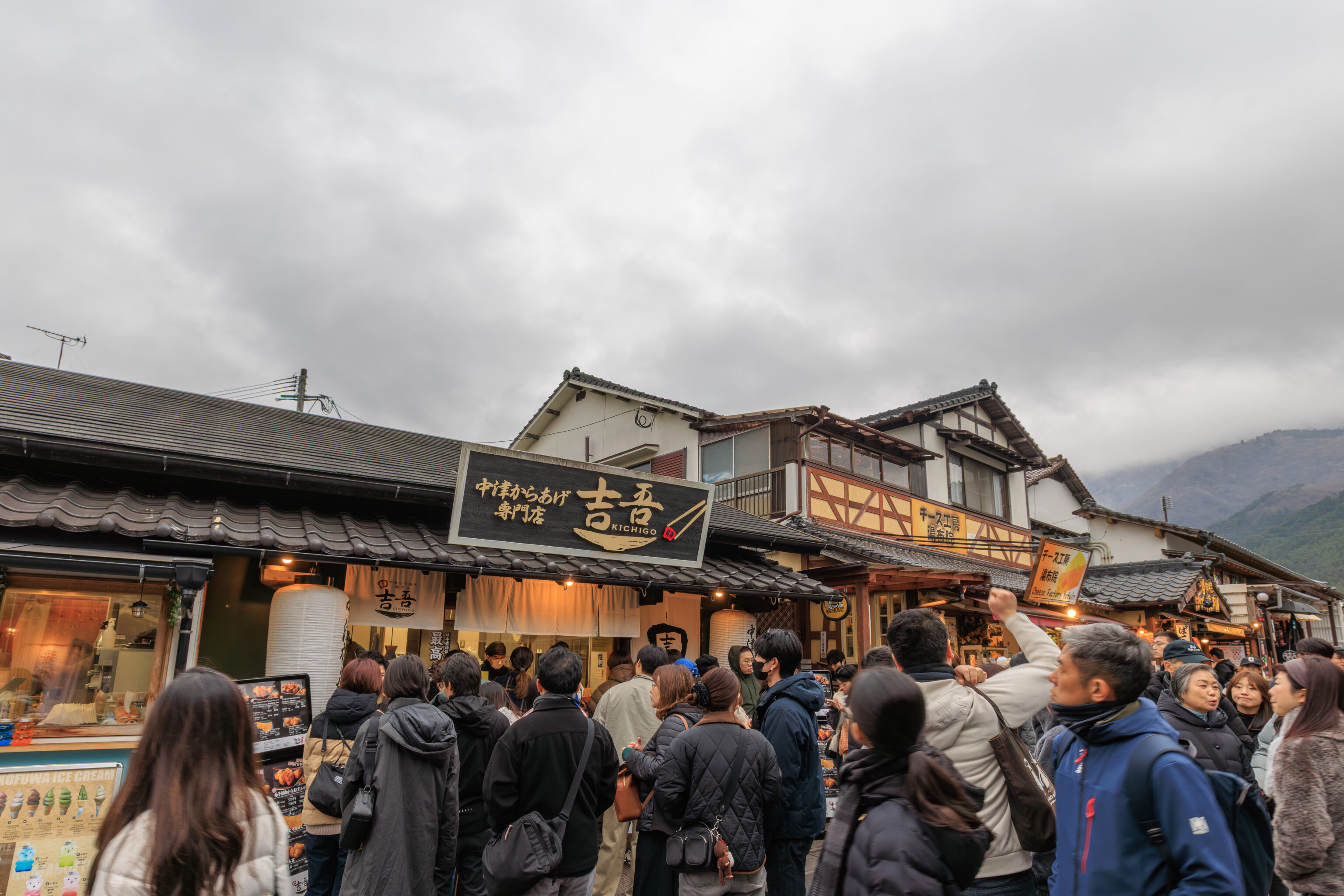
We spotted many people queuing at Kichigo for karaage and decided to give it a try.
The sign indicates that this is a 中津からあげ専門店 Nakatsu Karaage Specialty Shop. The product they sell here is Nakatsu style karaage. The origin of modern karaage in Japan appears to come from Nakatsu and neighboring Usa, both in Oita Prefecture and around 20 miles to the north. According to a BBC article, it can be traced back to a single Chinese restaurant, Rairaiken, in Usa.
Nakatsu Karaage is protected by a brand association, 聖地中津からあげの会 Holy Land Nakatsu Karaage Association. There doesn’t seem to be an explicit list of official criteria but it seems that the kaarage should use fresh domestic chicken, have either no batter or a just a thin coating, and have a minimal soy or salt marinade.
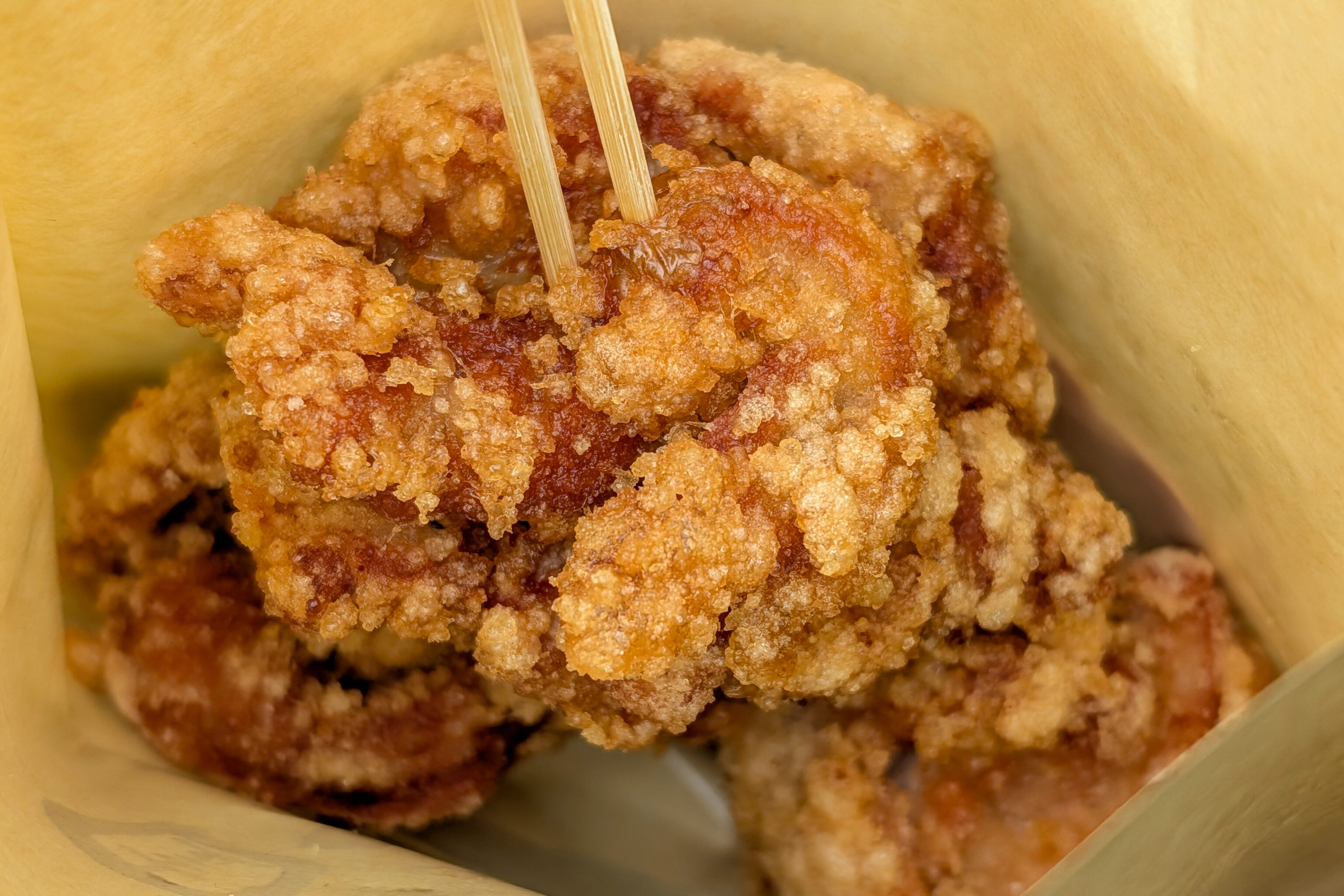
It didn’t take long to get our order. It was hot and fresh and satisfying!
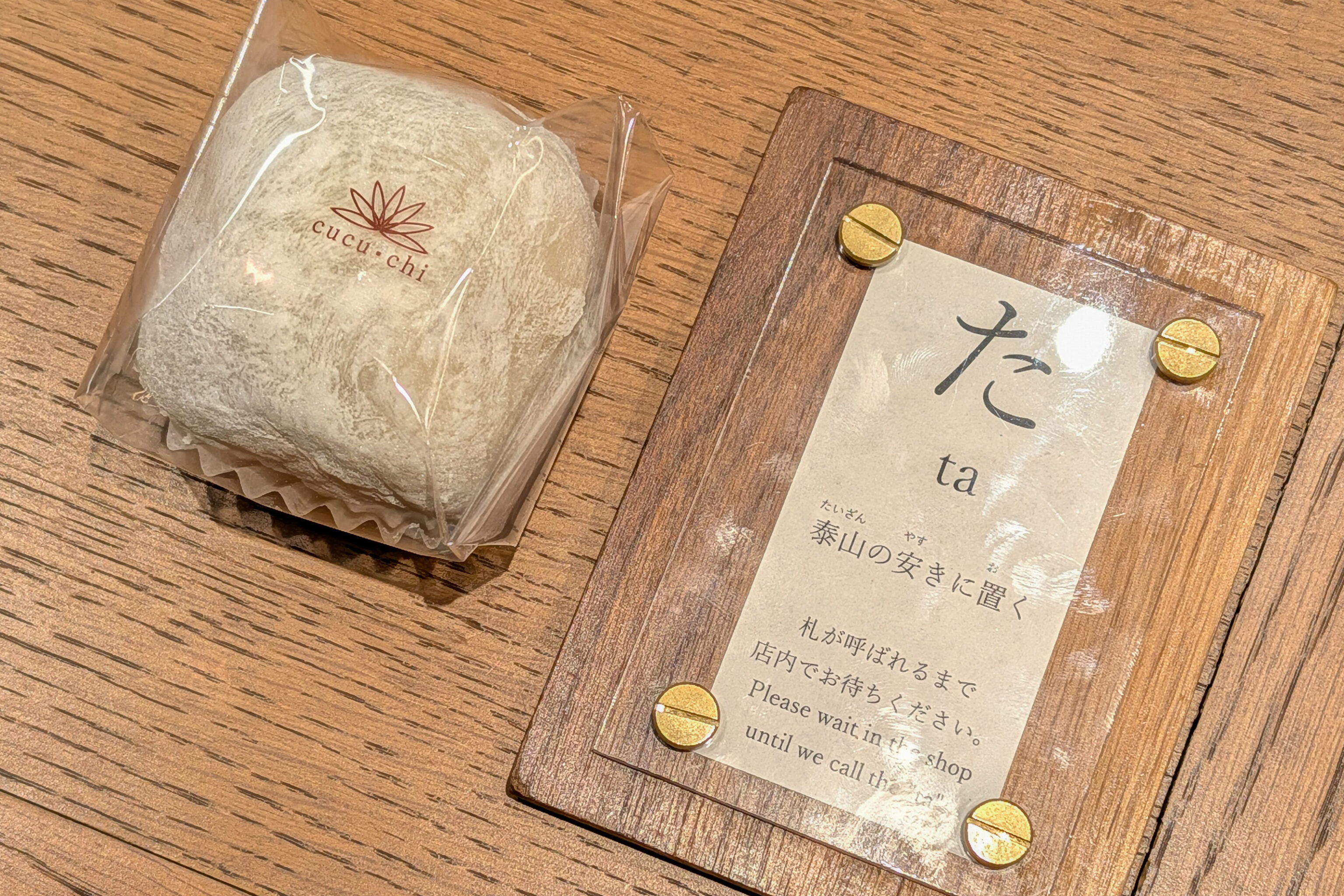
The next place we stopped was at 鞠智 Cucuchi, just a little bit down the road to the west. This shop was also busy. We ordered a chestnut and satsumaimo daifuku as well as a 和栗のモンブランどら焼き Japanese Chestnut Mont Blanc Dorayaki. The daifuku was provided immediately while the dorayaki had to be prepared fresh. We decided to save the daifuku for later as it was nicely packaged in plastic wrap.
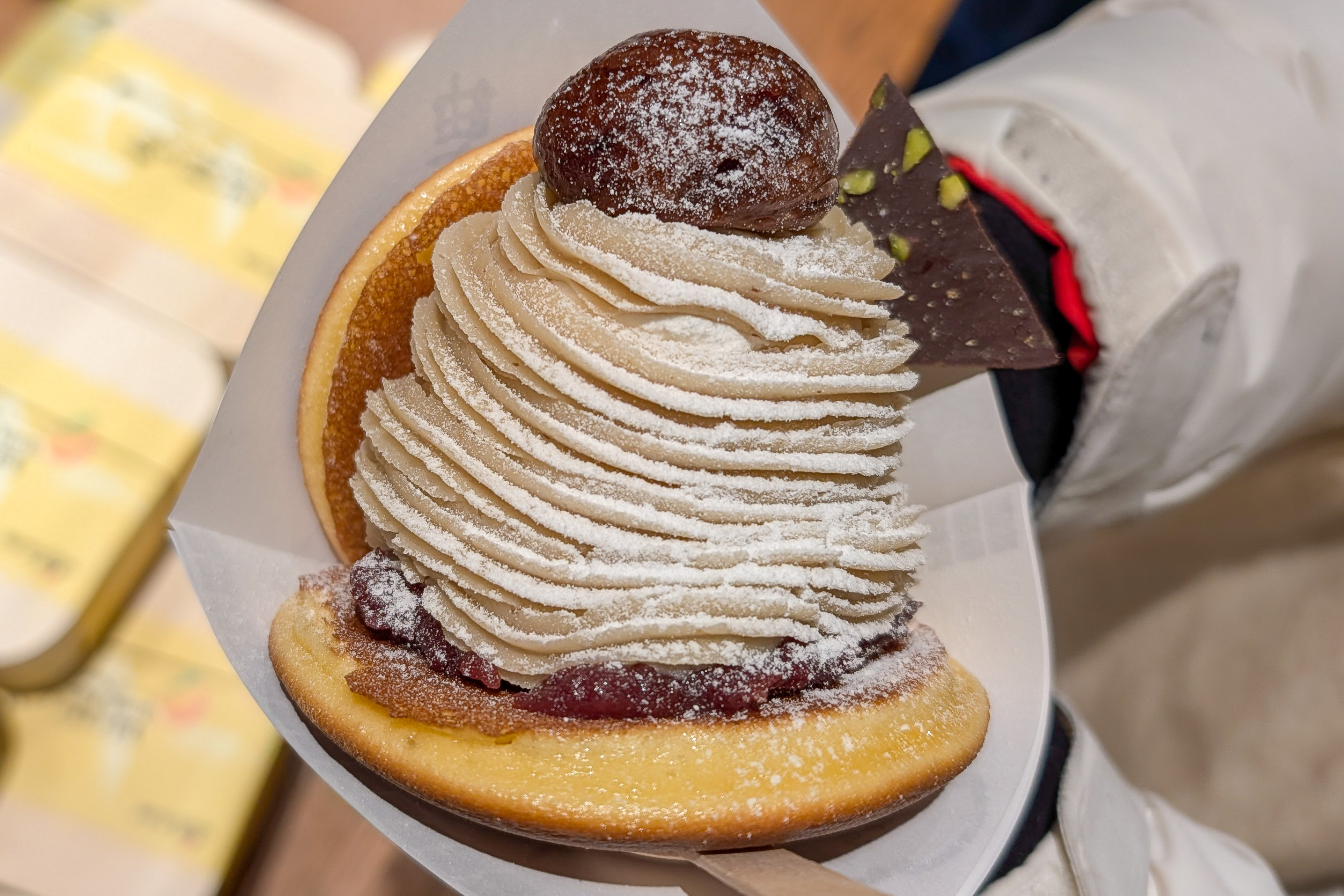
Japanese Chestnut Mont Blanc Dorayaki
Freshly Baked Dorayaki × Freshly Piped Mont Blanc

Japanese Chestnuts
*Shibukawa-ni* (Chestnuts Simmered with Inner Skin) Characterized by an elegant yet rich sweetness.

Pistachio Chocolate
Chocolate featuring nuts coated in crushed pistachios.

Japanese Chestnut Mont Blanc Cream
Freshly piped Mont Blanc cream, allowing you to savor the refined, limited-edition flavor of Japanese chestnuts.

Dorayaki Pancakes
Freshly baked pancakes, hand-griddled on a traditional copper plate.

Warabimochi
A Taste of Authenticity

Japanese Chestnut Mont Blanc Dorayaki
(Perfect for Eating on the Go)
¥1,288 (¥1,390 incl. tax)
A Mont Blanc Dorayaki crafted using a freshly baked pancake made-to-order.
[Best Consumed Within: 3 Minutes]

Please note: Since the Mont Blanc cream would melt if applied directly to a piping-hot pancake, we allow the dorayaki to cool slightly before assembling your treat.
– Text from a sign posted on Google Maps, translated using Google.
https://maps.app.goo.gl/BBwri6RcqUrGUPMy9
This dorayaki Mont Blanc was pretty elaborate and good!
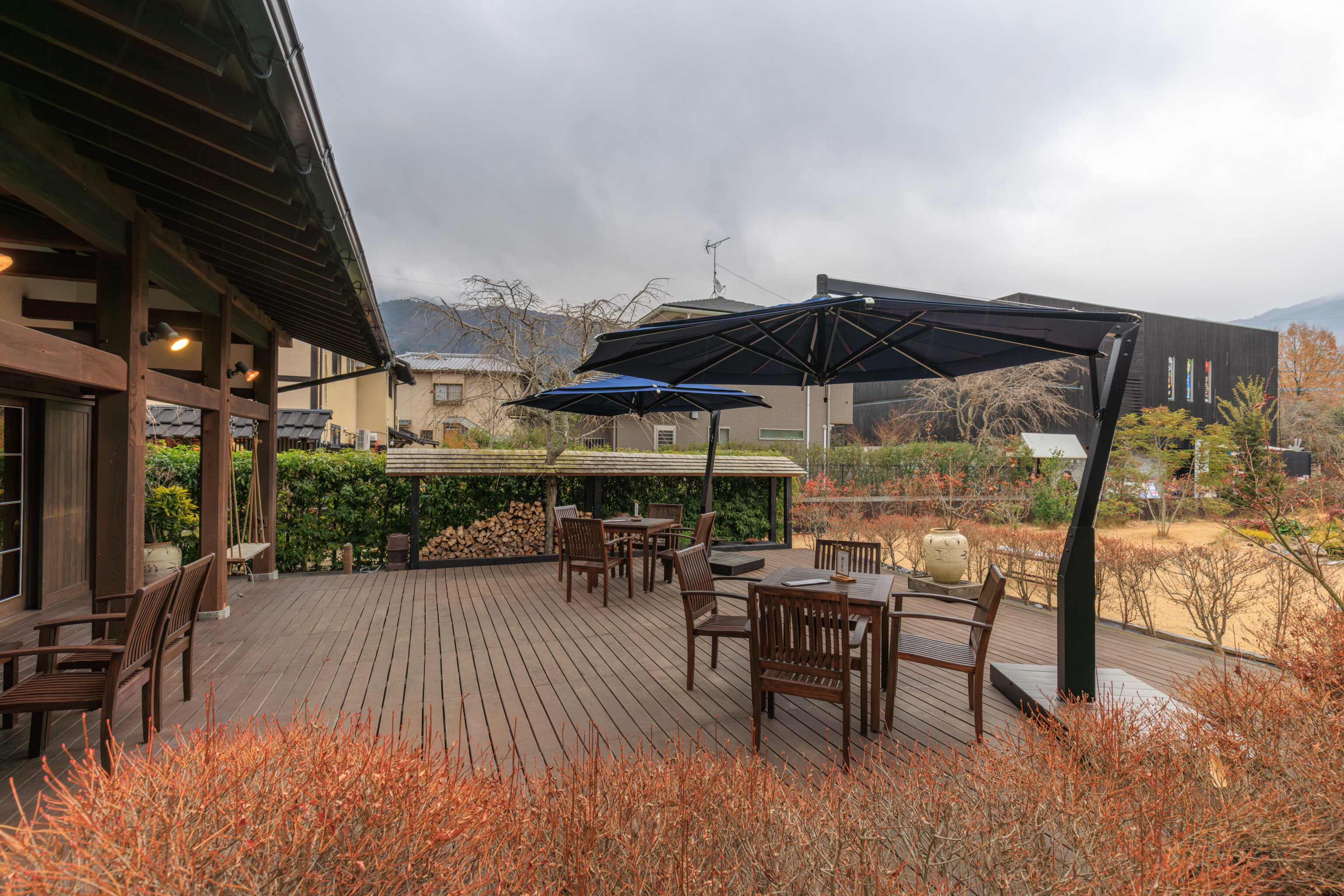
Cucuchi also had a cafe along with outdoor dining area.
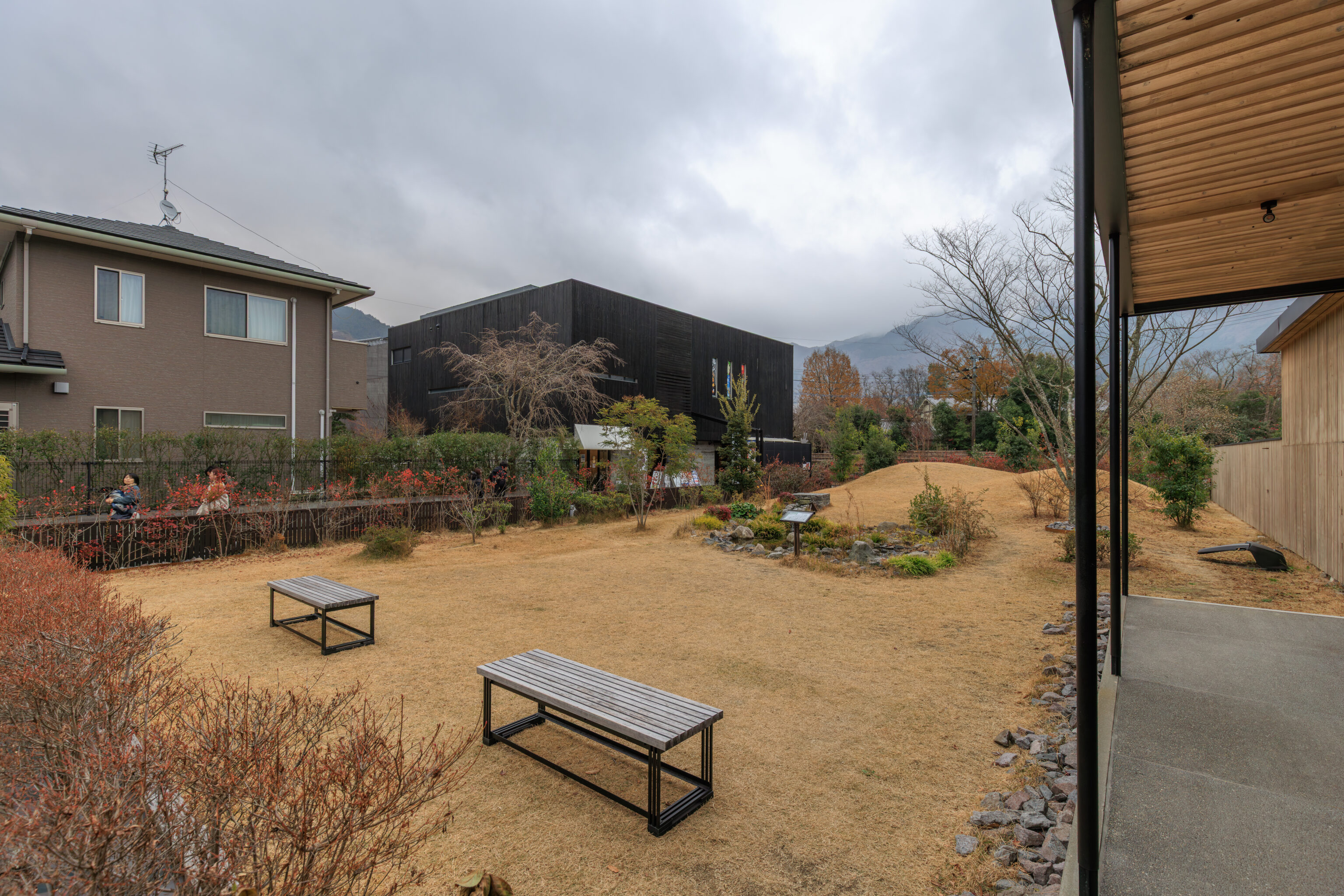
There was also a little garden area.
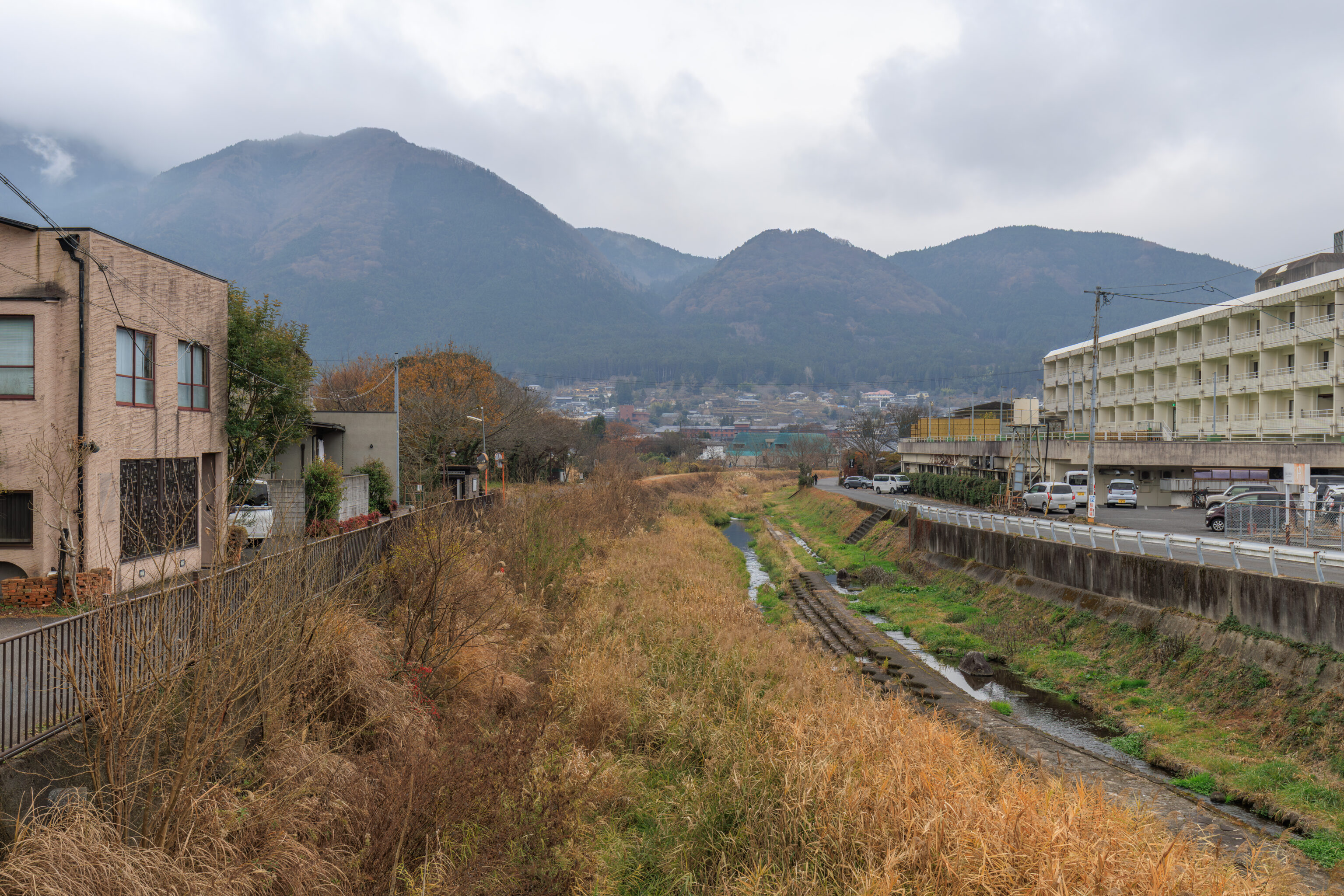
We continued on to the west, crossing over the Shiratakigawa again.
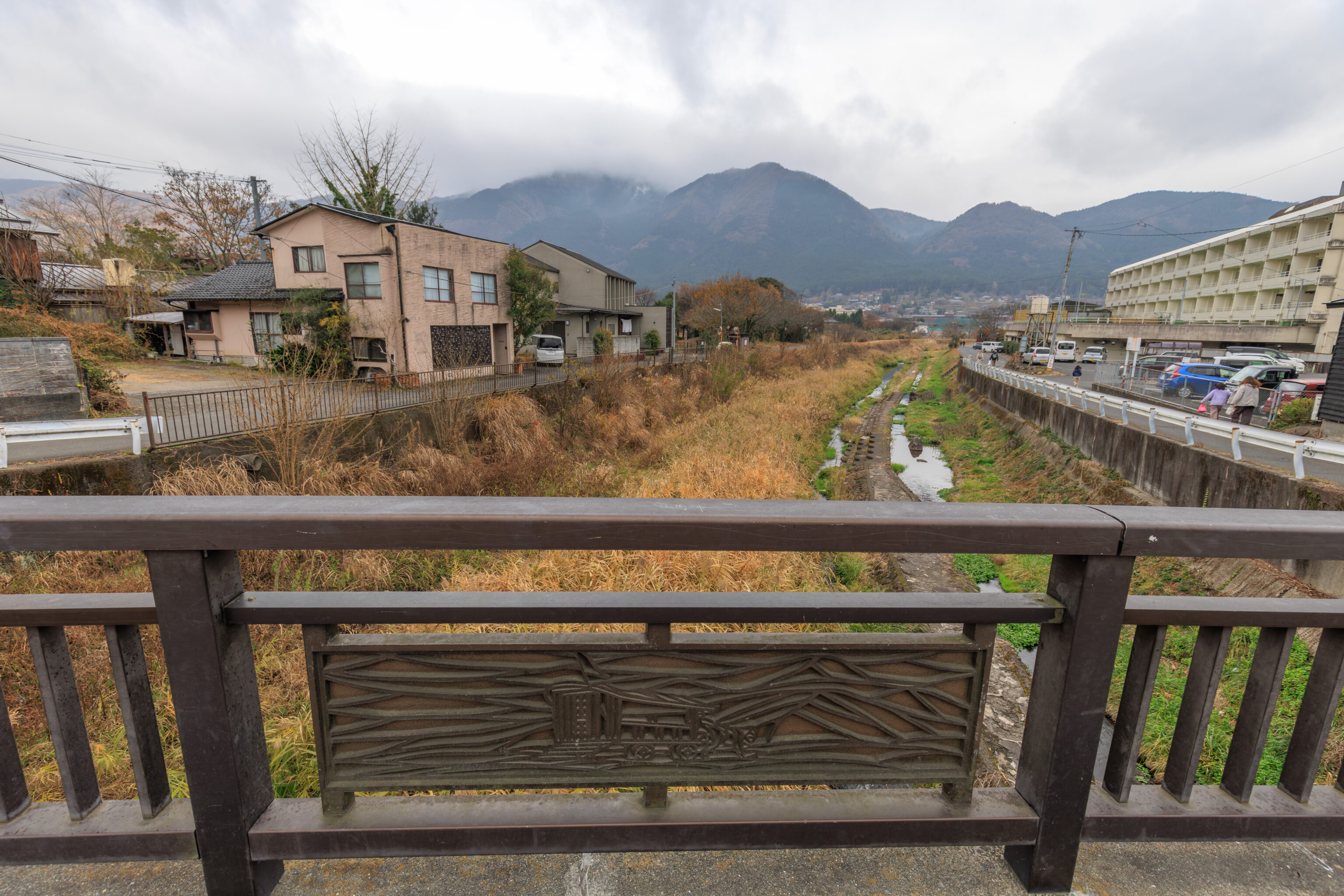
The bridge’s railing had a depiction of what seems ot be a horse and carriage along with mountains int he background.
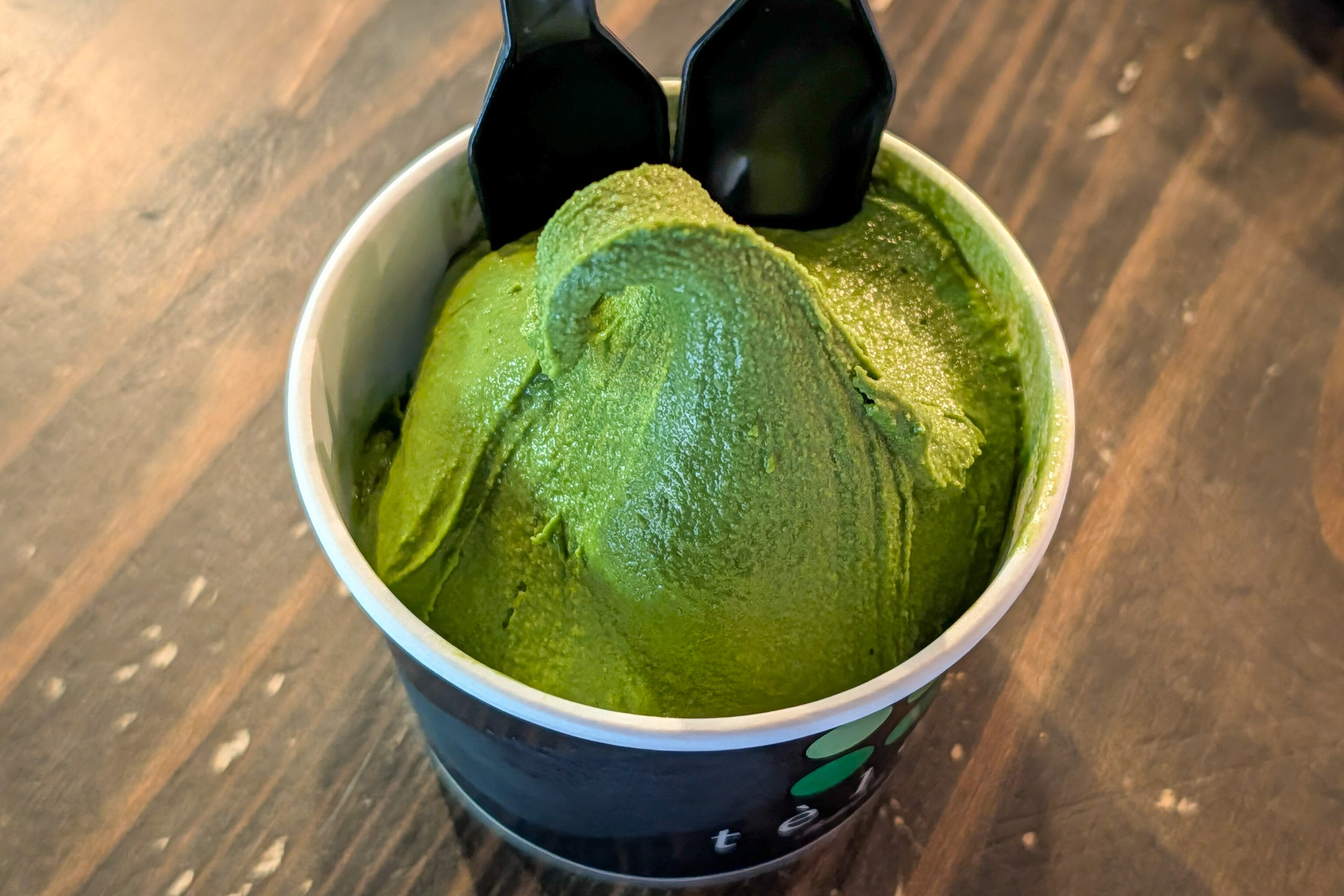
Continuing on, we stopped at テラート Telato, which was not open yet when we passed by in the morning. They had various options with varying quantities of matcha. The one with the most and highest grade matcha is ¥4000, about $26! We went for the second best option which was 5% matcha and a much more reasonable ¥700. It was excellent!
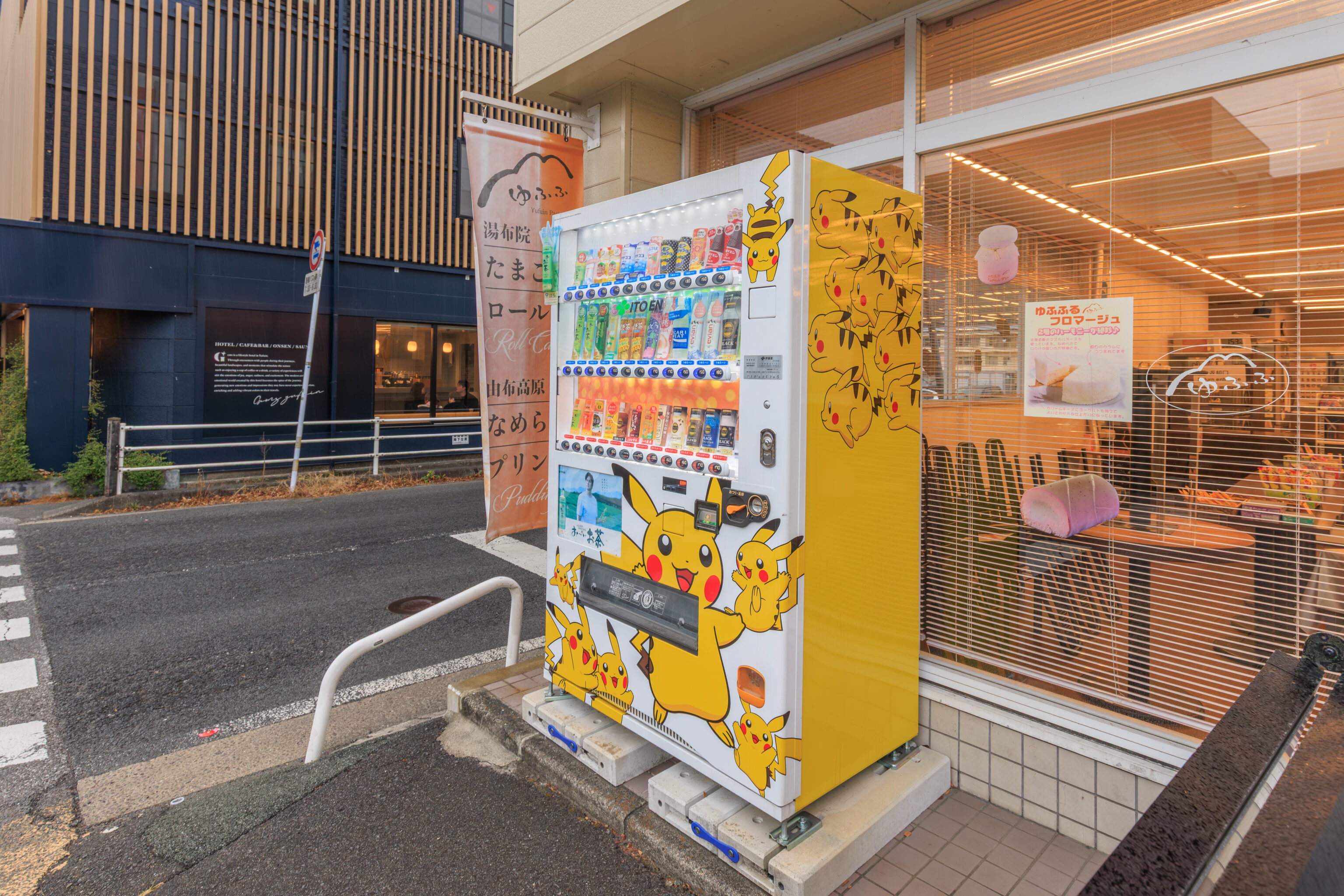
We walked by a Pokemon branded vending machine. It was just a standard vending machine though and did not sell any Pokemon specific drinks.
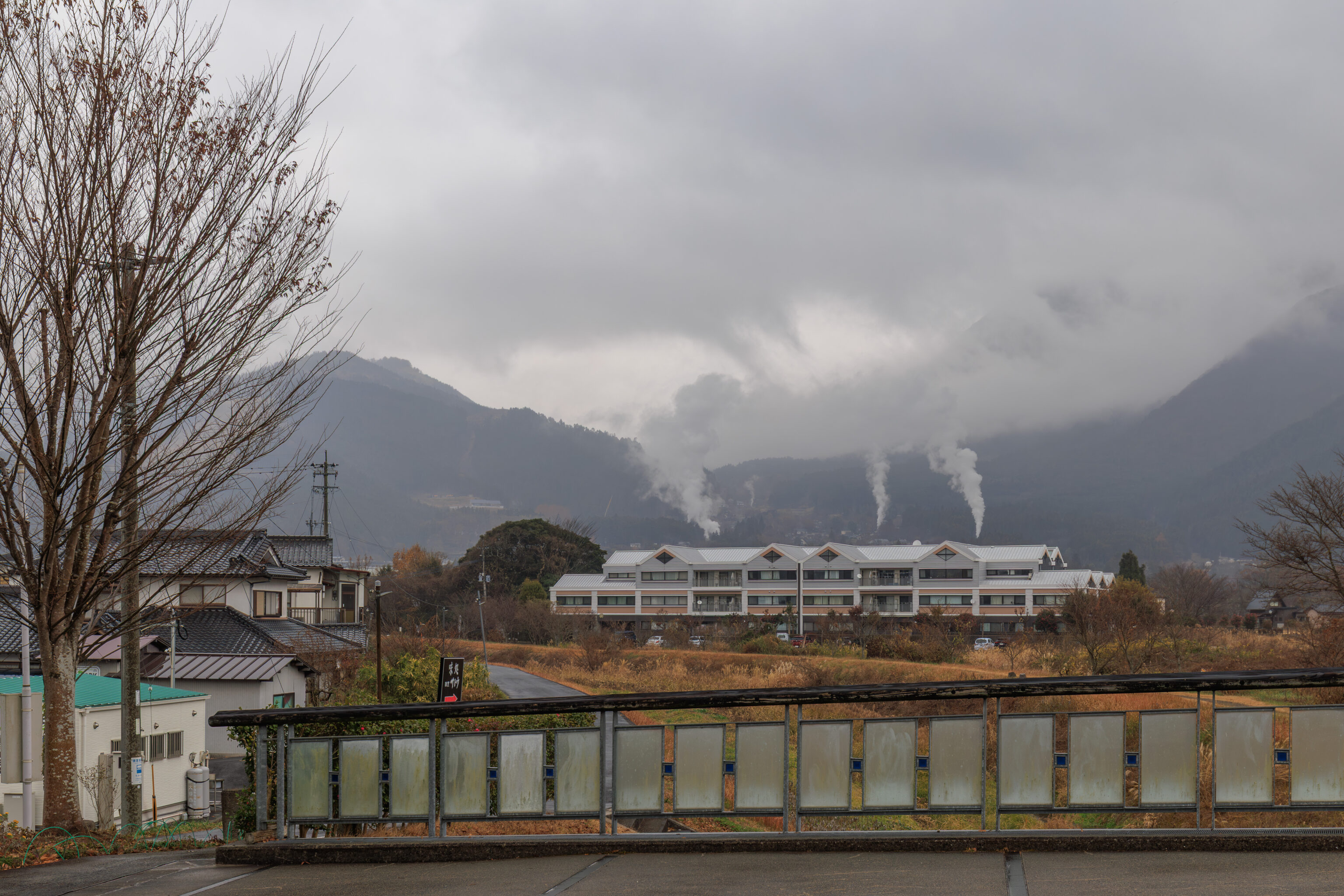
We contemplated returning to Yunohira early and calling for an earlier pick up from the train station but decided to walk around Yufuin some more. So, we walked to the southeast along the road with the large torii that we photographed this morning. This named road, the 参宮通り Sangu-dori, wasn’t particularly interesting. We continued walking until this bridge over the 大分川 Oitagawa. This was the view looking northeast. Geothermal steam was clearly visible in the mountains at the edge of town.
Yufuin gets much more rural beyond this bridge. There are still various businesses though including ryokan and restaurants. But, we decided to stop here, particularly as the weather was getting worse.
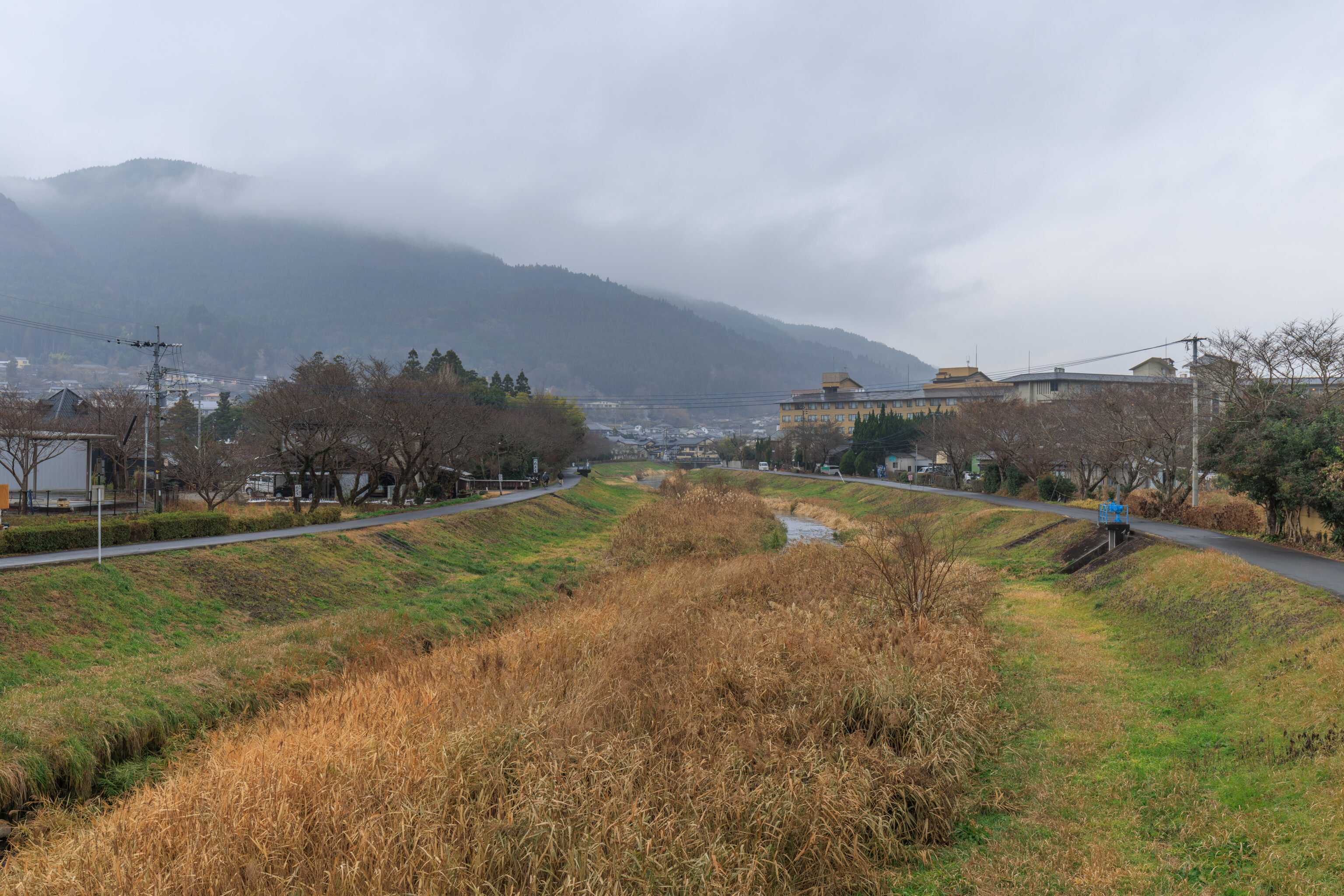
This was the view in the opposite direction.
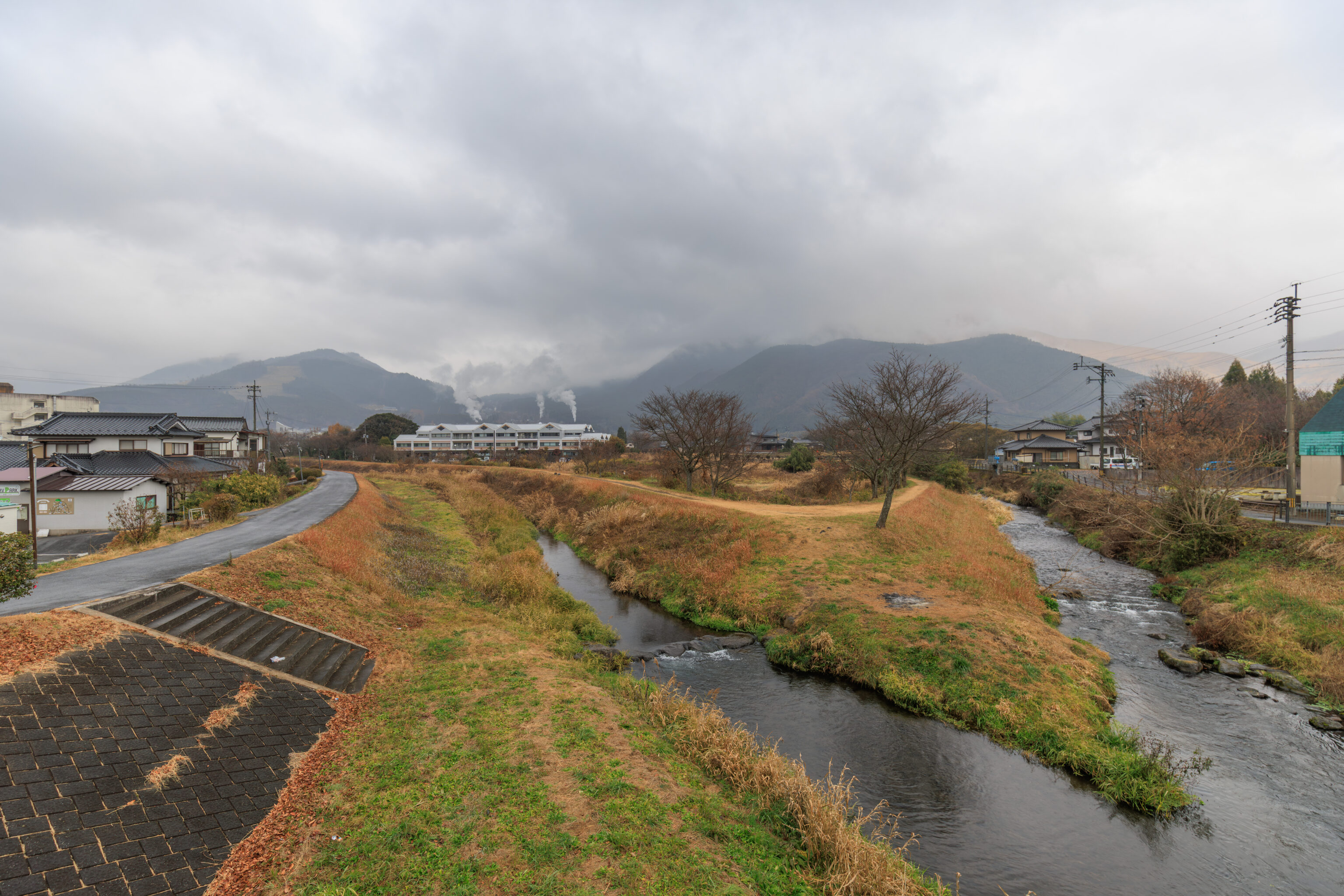
Just north of the bridge, the Shiratakigawa flows into the Oitagawa. We decided to take the path next to the Shiratakigawa, seen here on the left.
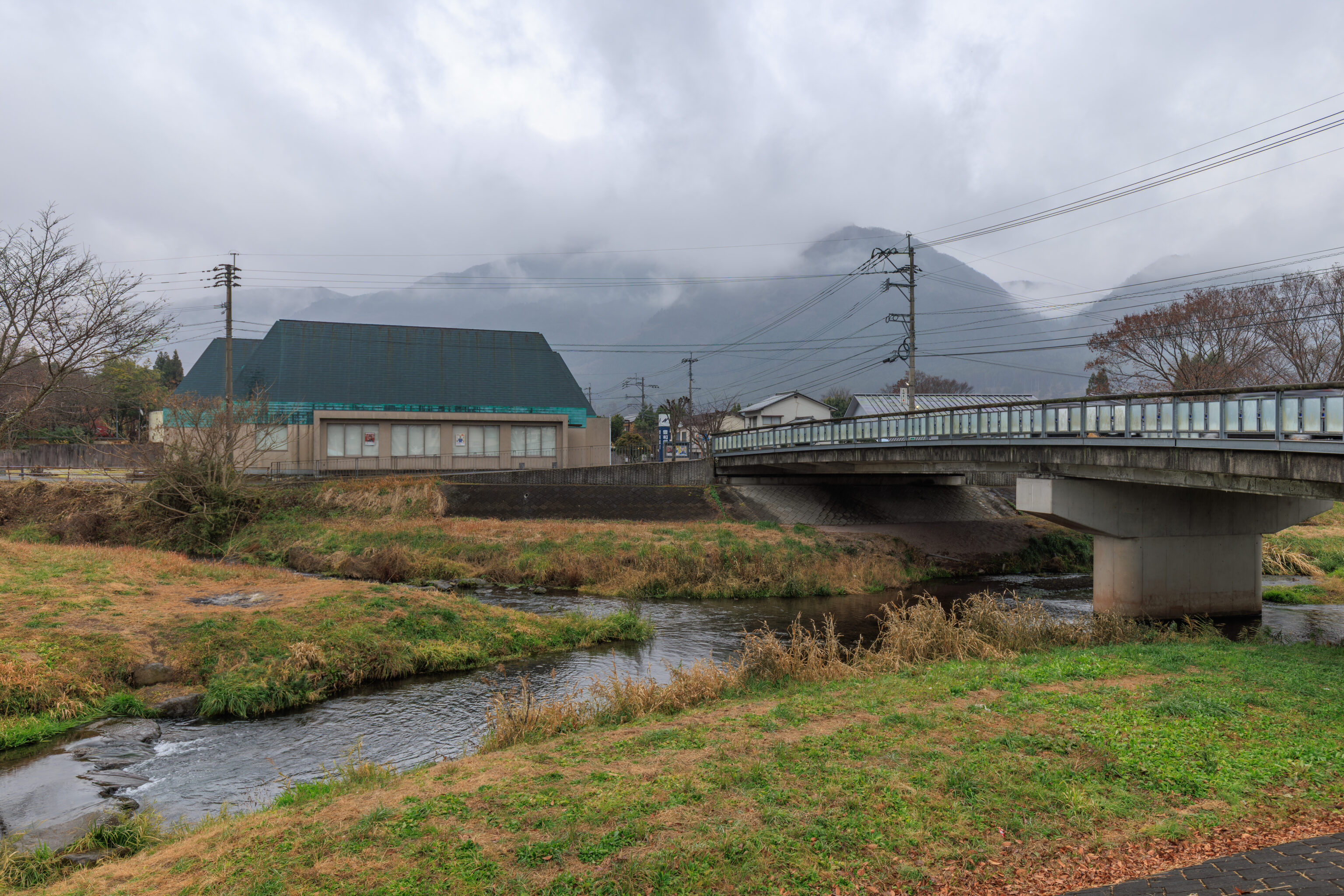
A look back at the bridge we were just on.
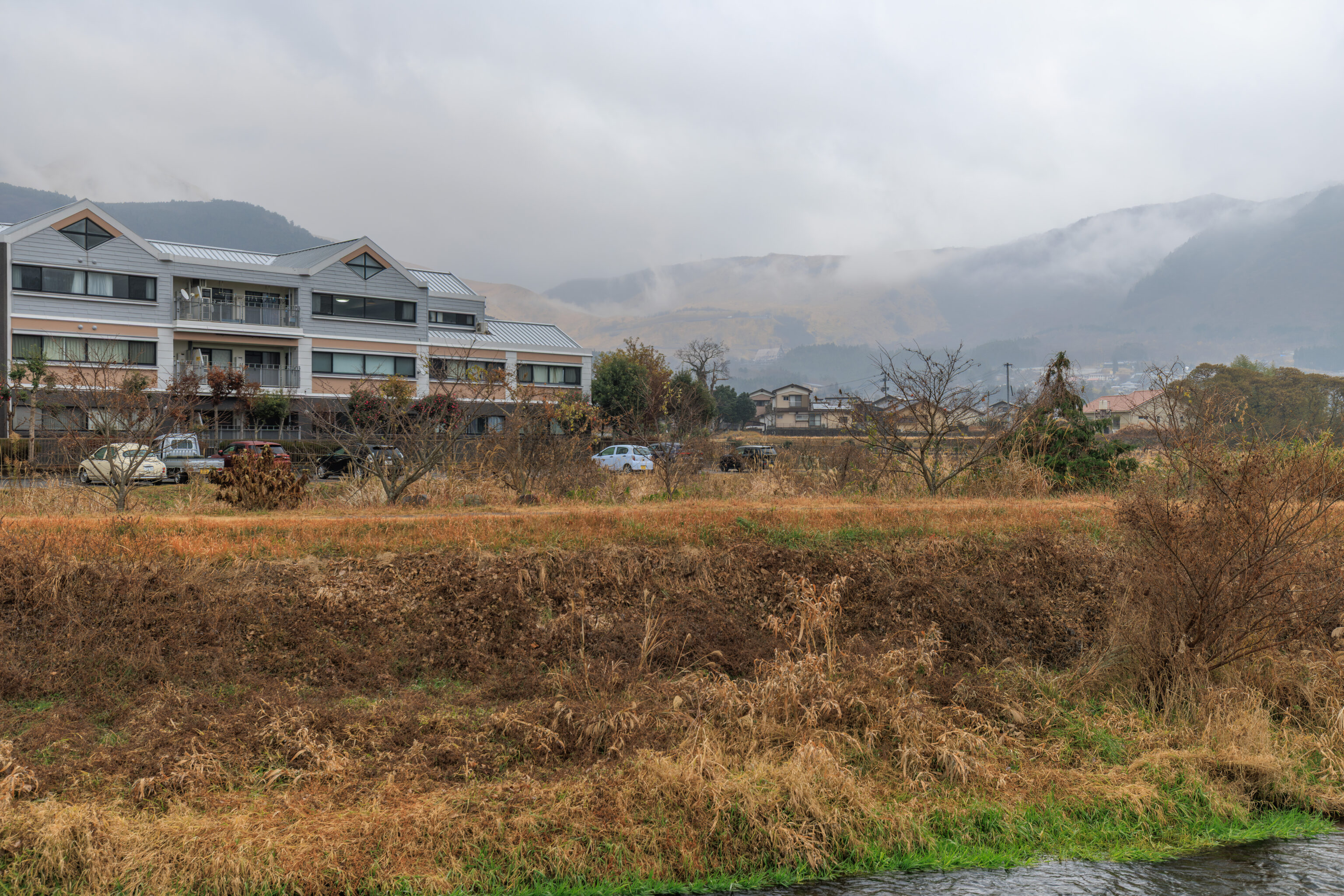
We found it interesting that the mountainside in the background seems to not have any trees. It seems to be just yellowed grass like in the foreground here.
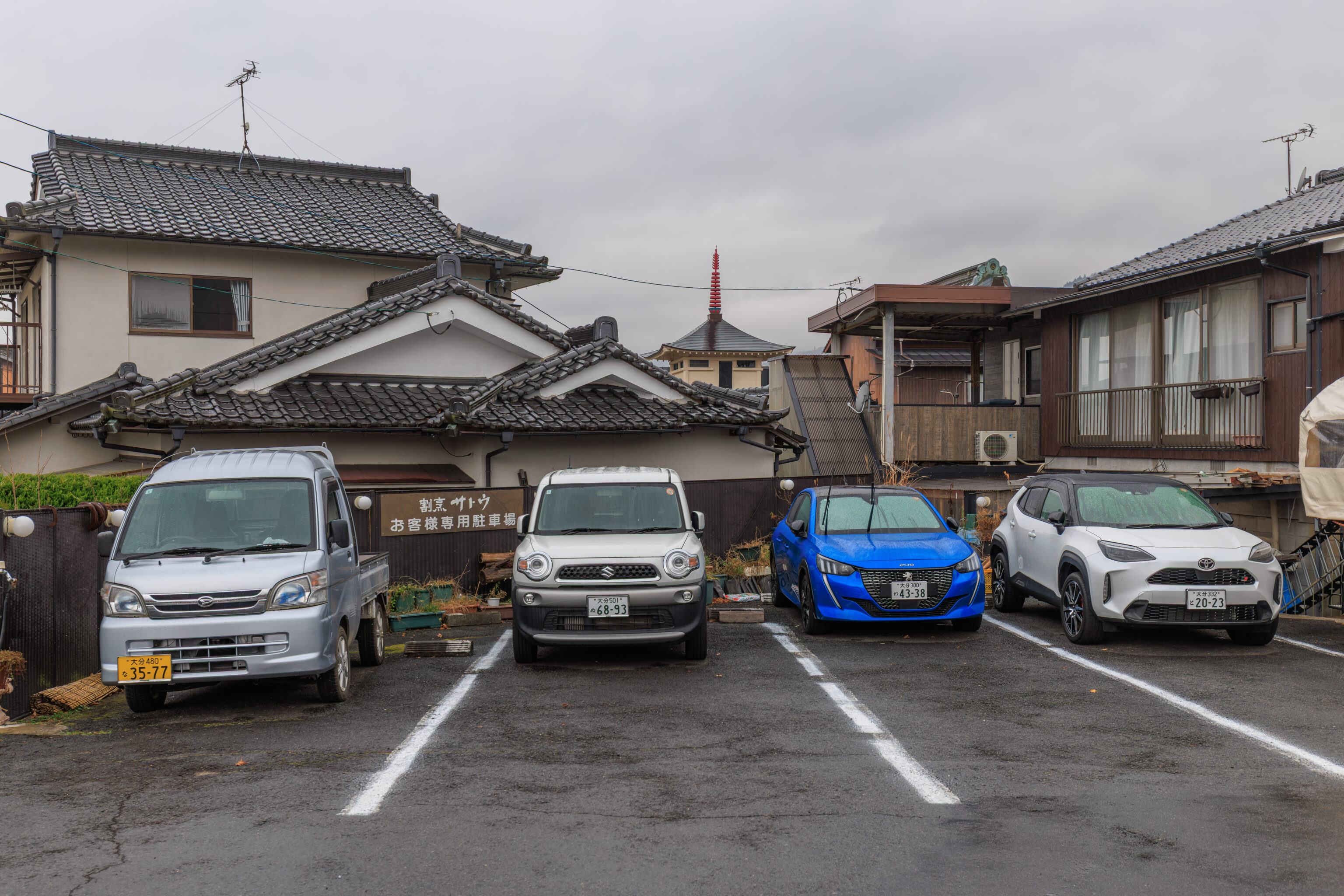
Following the Shiratakigawa upstream, we saw on our left what seemed a bit like the spire atop a temple building.
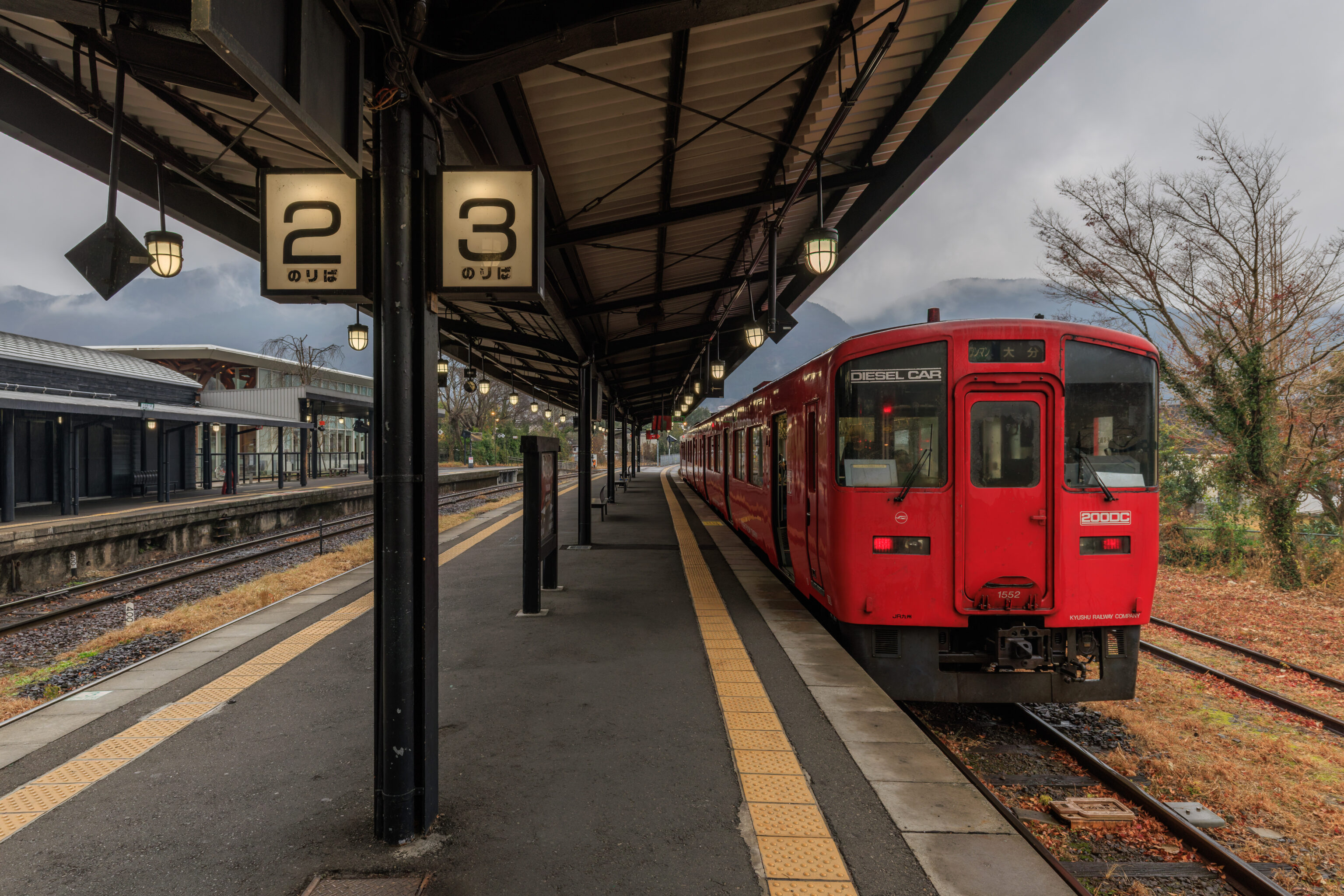
We returned to the Yufuin Station with plenty of time to catch our train, the 3:17pm local train to Oita.
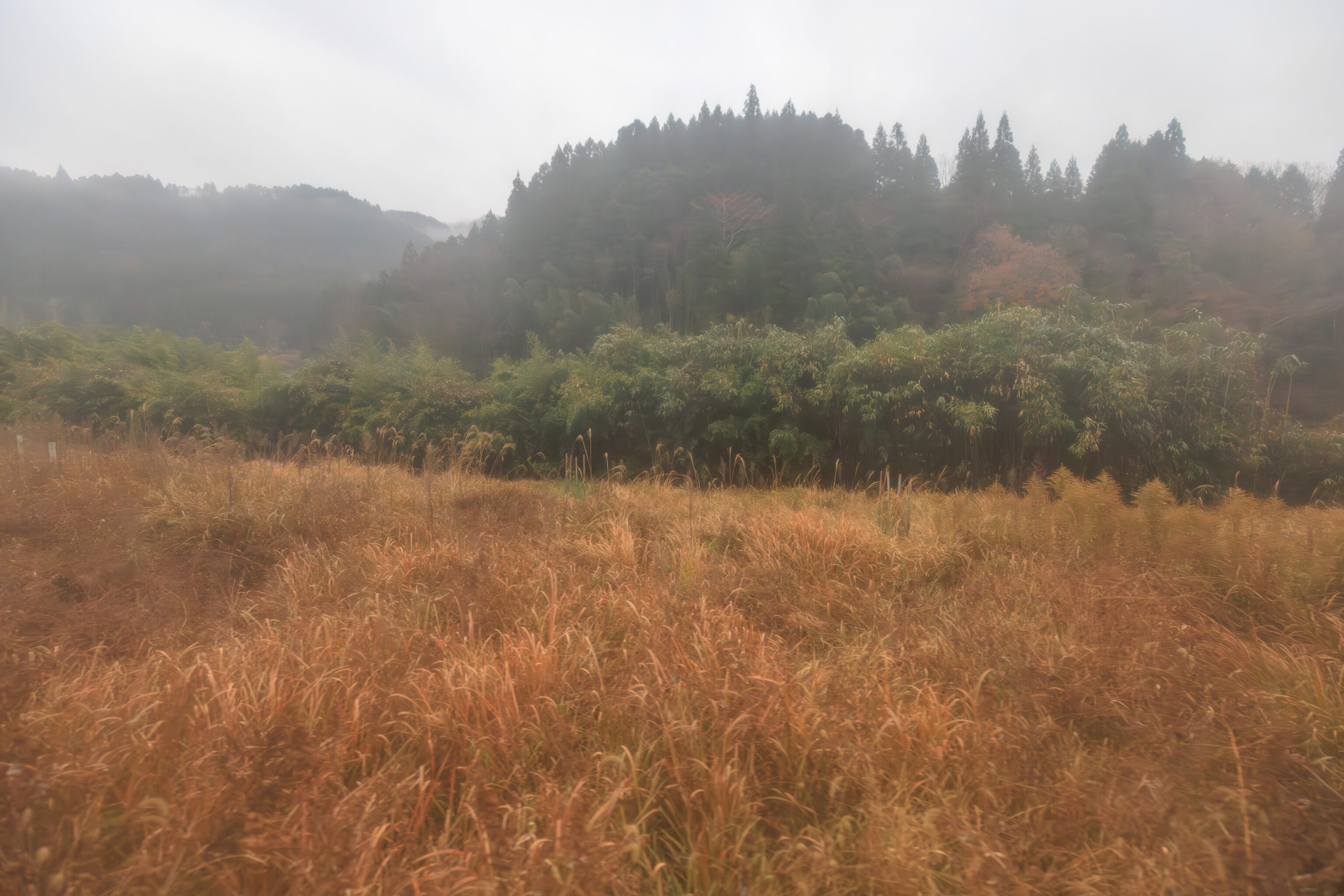
The weather did not improve while we were on the train for the short trip back to Yunohira Station.
Yunohira
The shuttle was waiting for us when we arrived at the station.
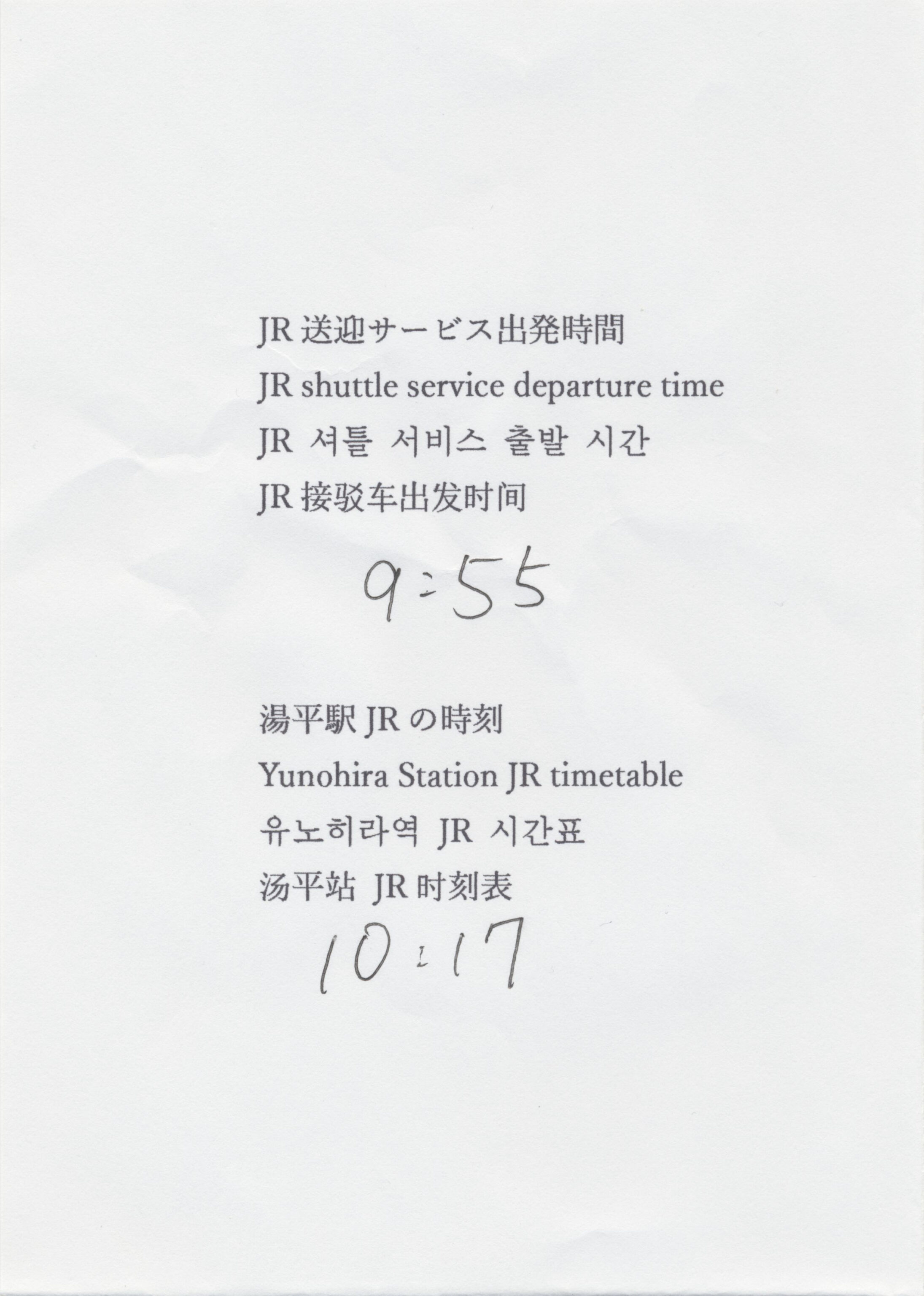
After returning to the Kamiyanagiya, we made arrangements for our departure tomorrow morning to catch the 10:17am Yufu limited express to Beppu.
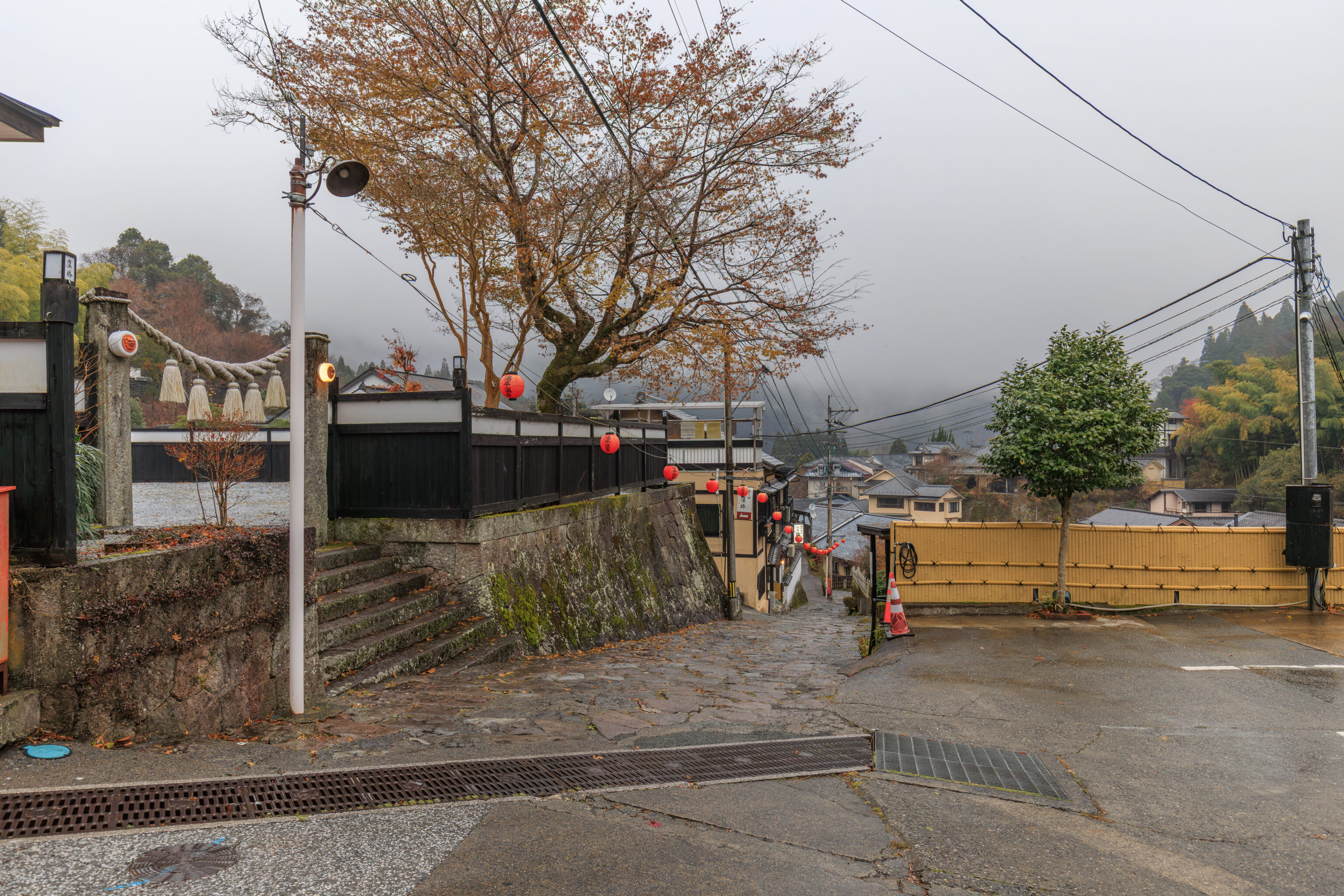
We decided to head out again to explore the southern part of Yunohira as we will be leaving tomorrow morning. Although the weather was bad, we did have rain gear, other than shoes.
This was the view to the north, where we walked yesterday. We’re going to go in the opposite direction.
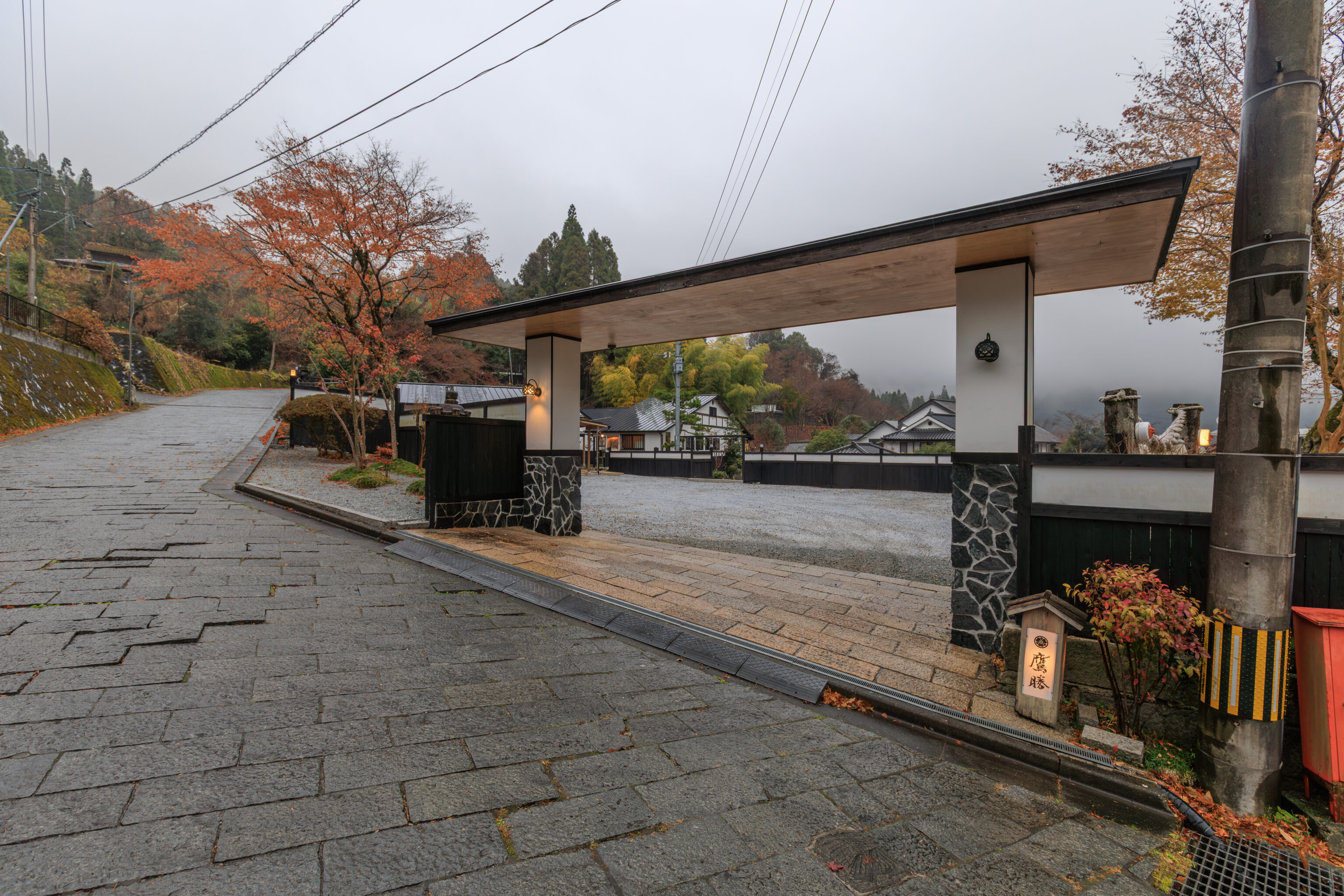
This is the entrance to 癒しの宿 鷹勝 Iyashi no Yado Takasho. This looks to be a larger and fancier ryokan than the Kamiyanagiya with 14 rooms.
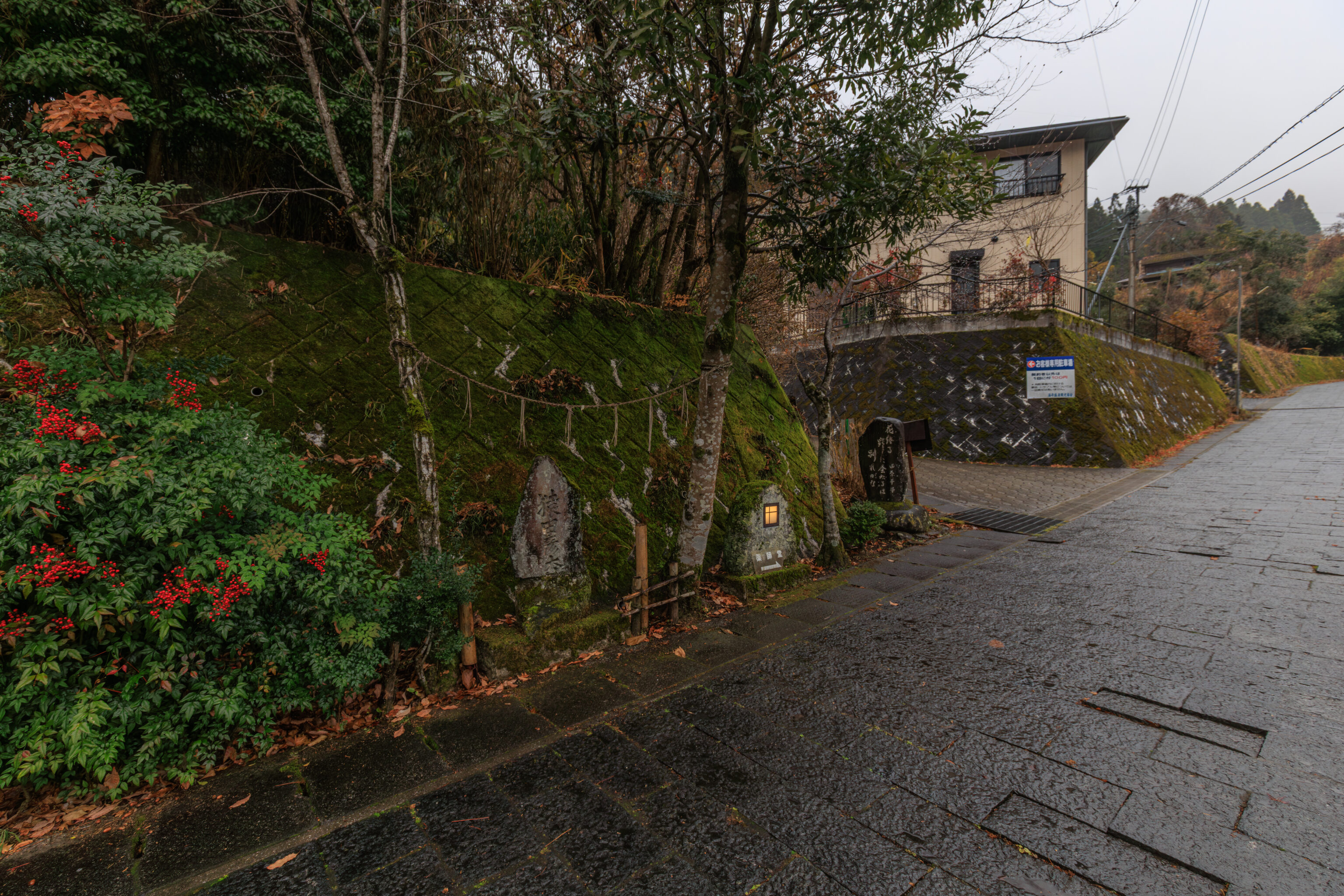
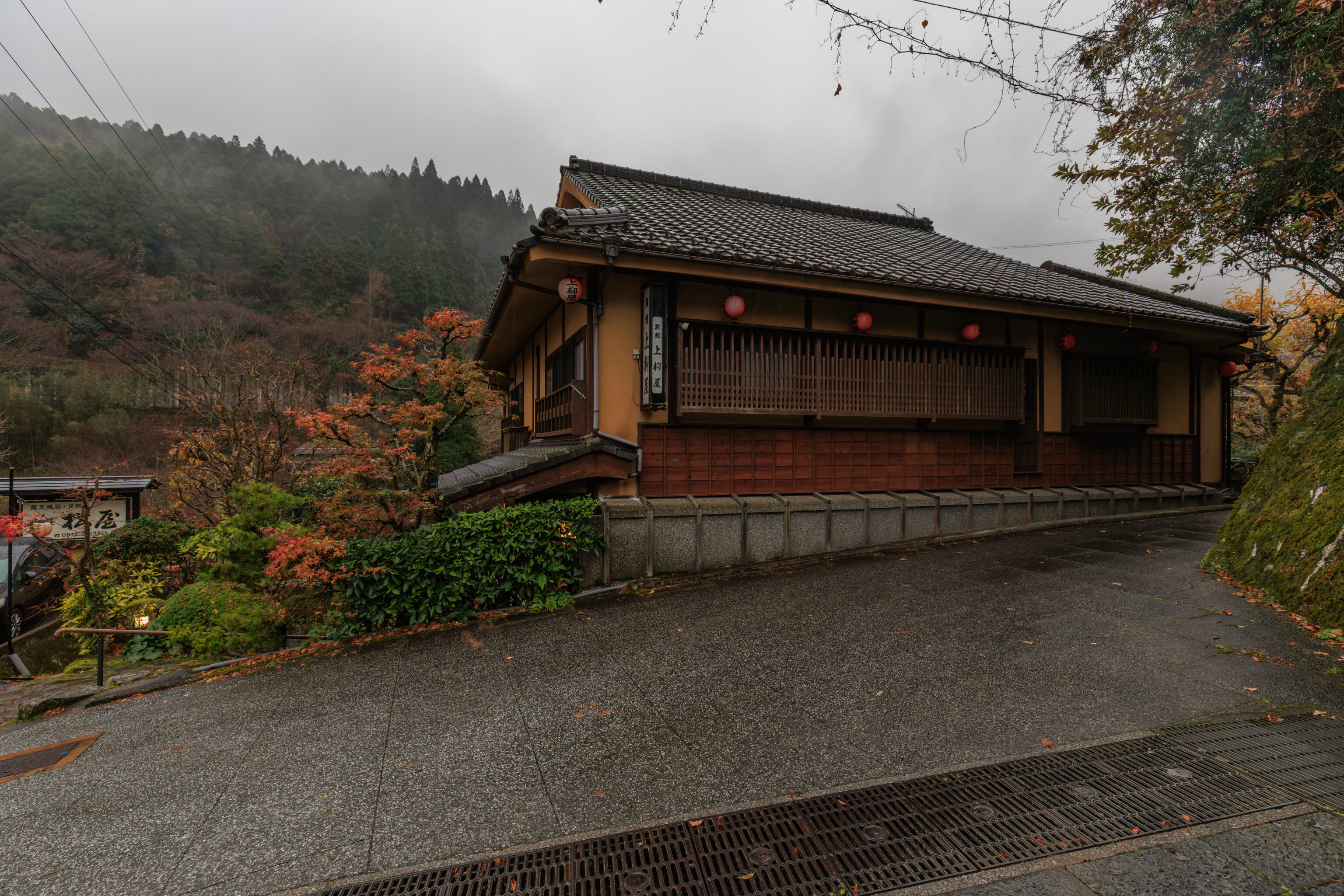
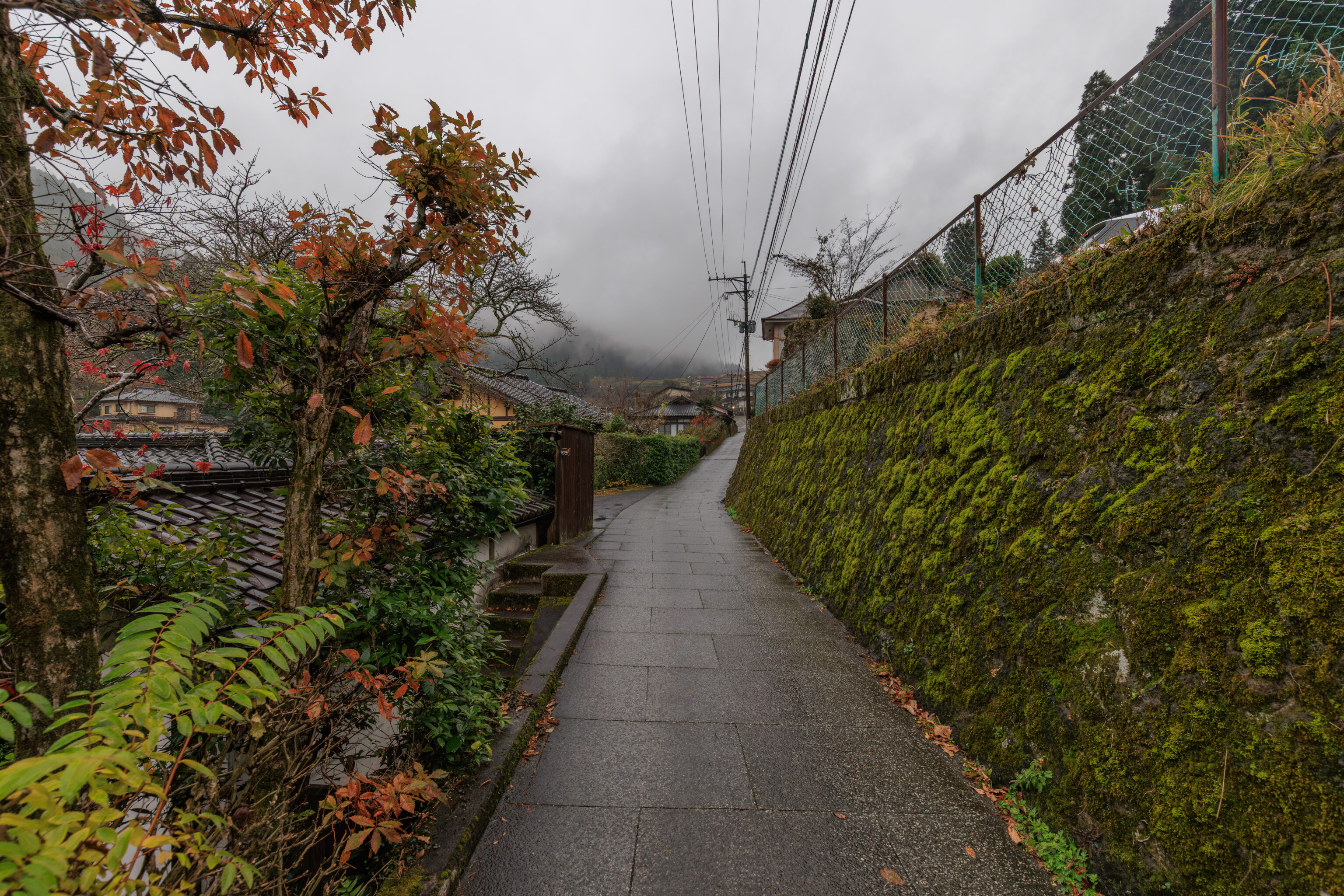
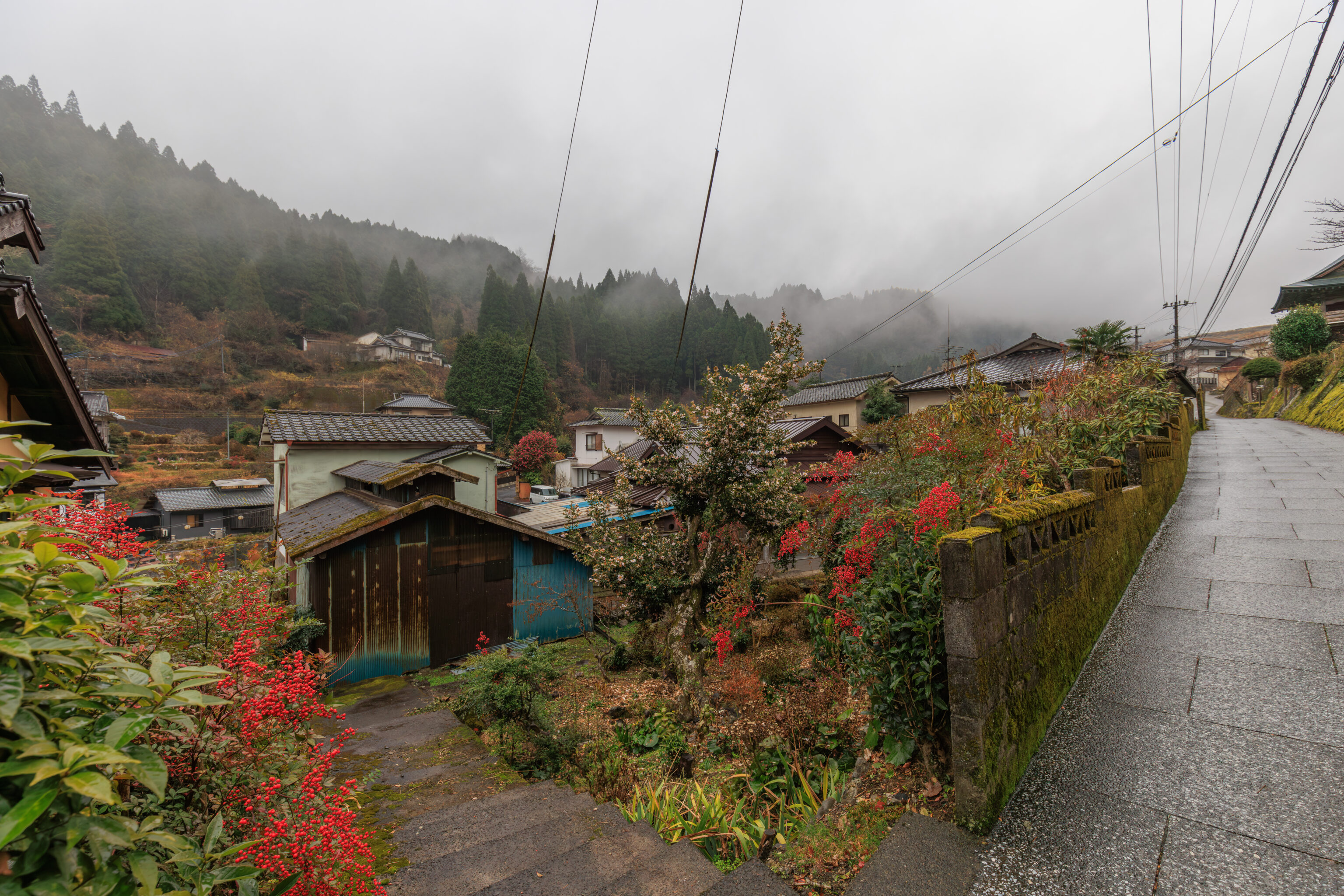
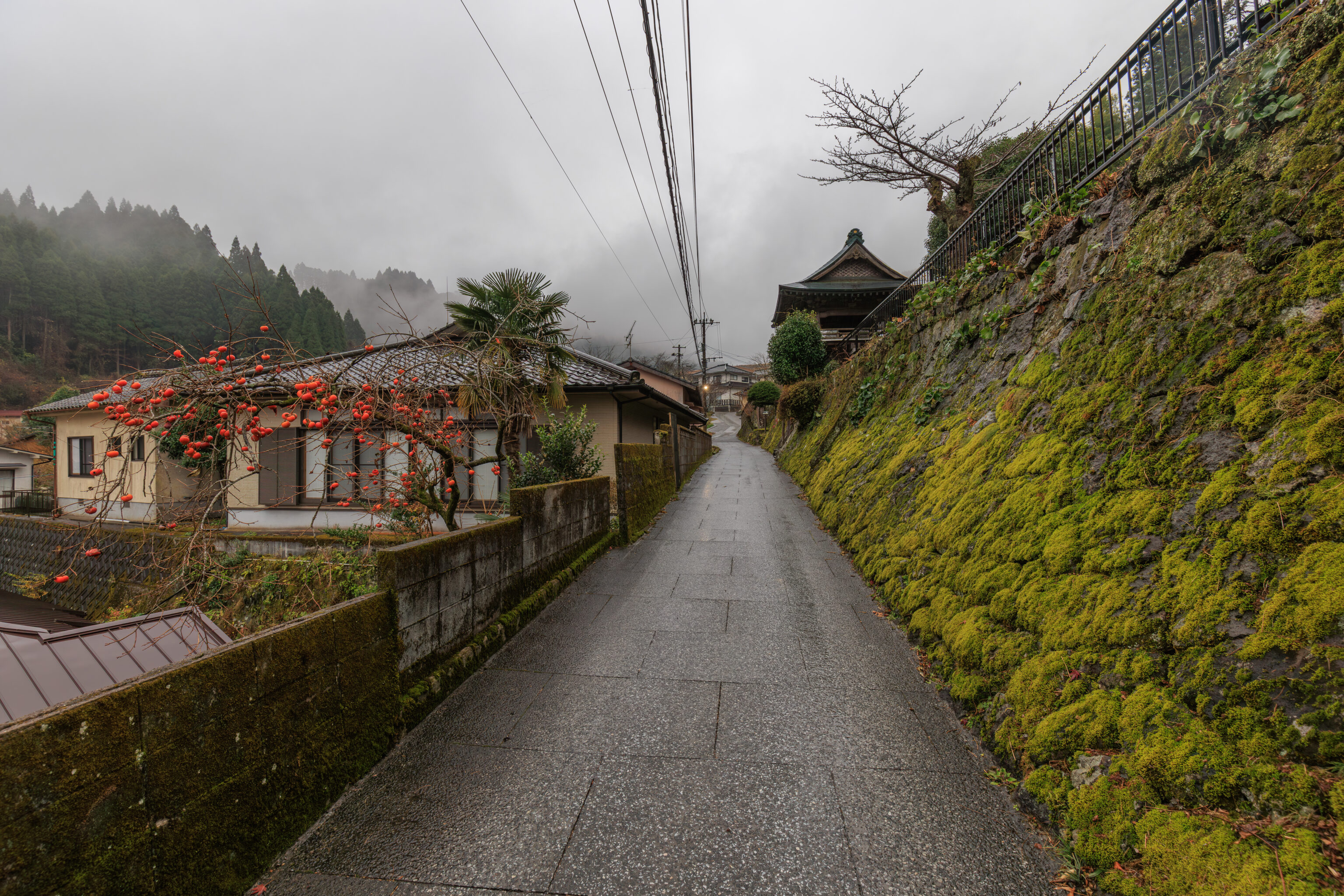
We started walking to the north. While the terrain was uphill, it was not as steep as when we walked to the south yesterday.
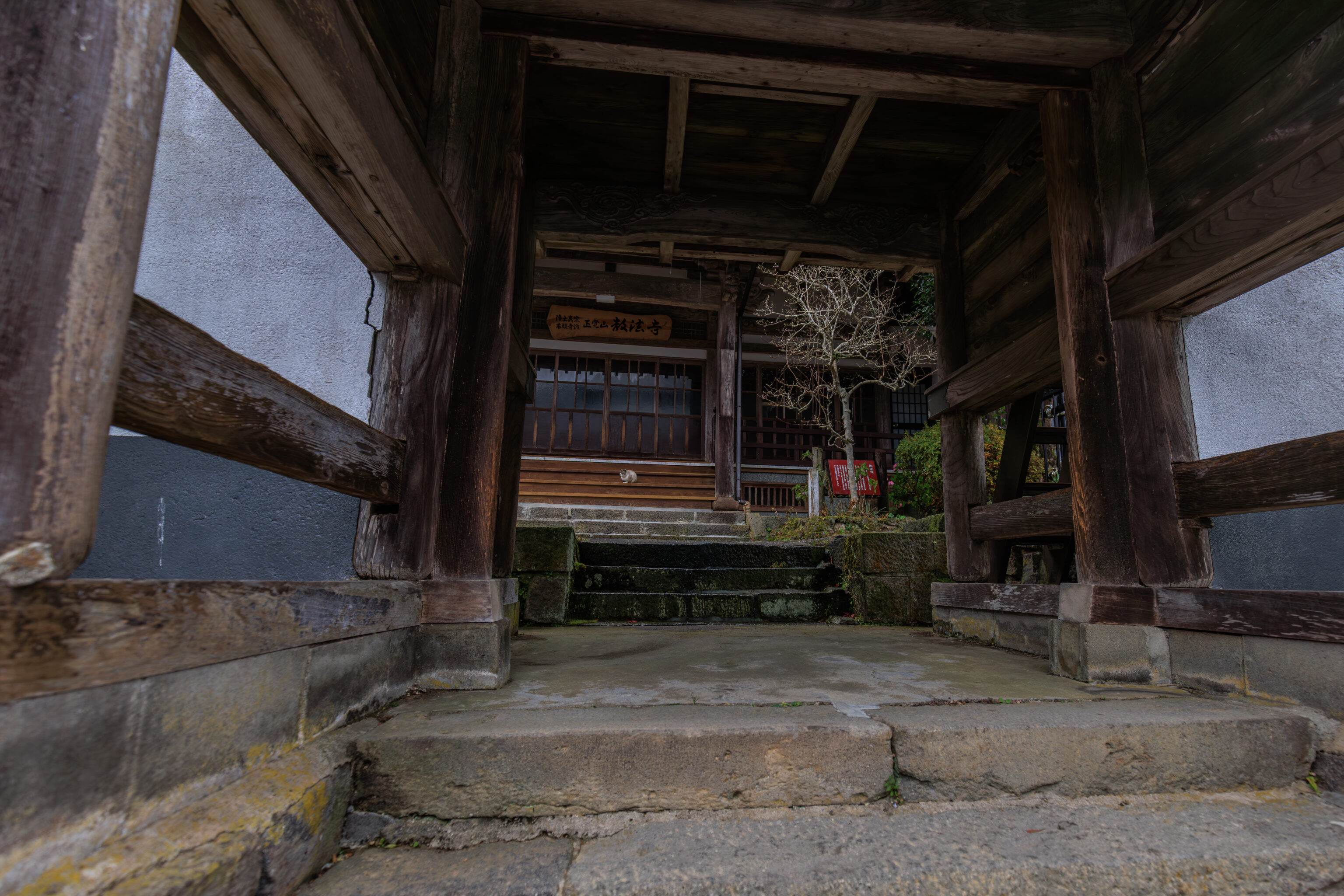
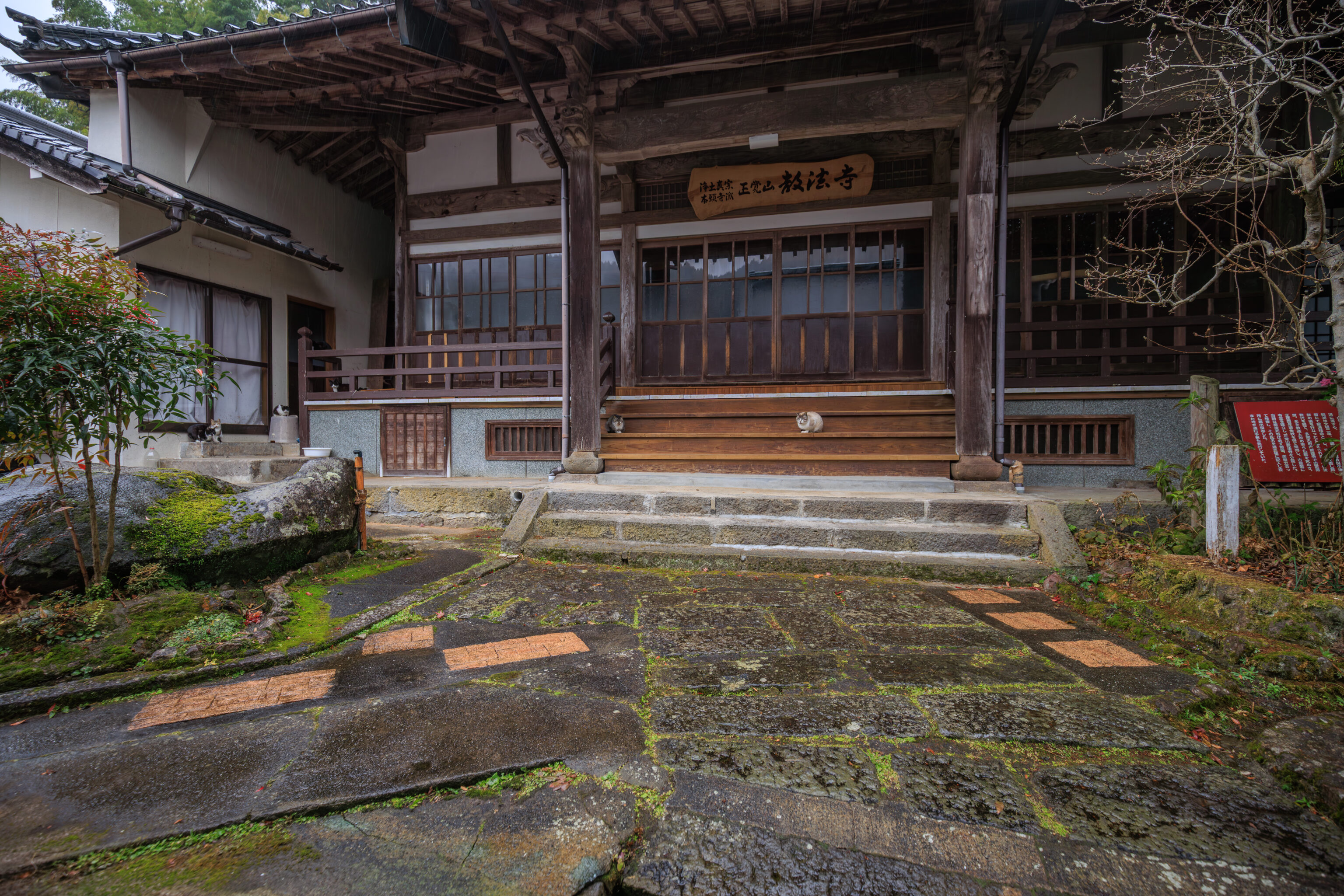
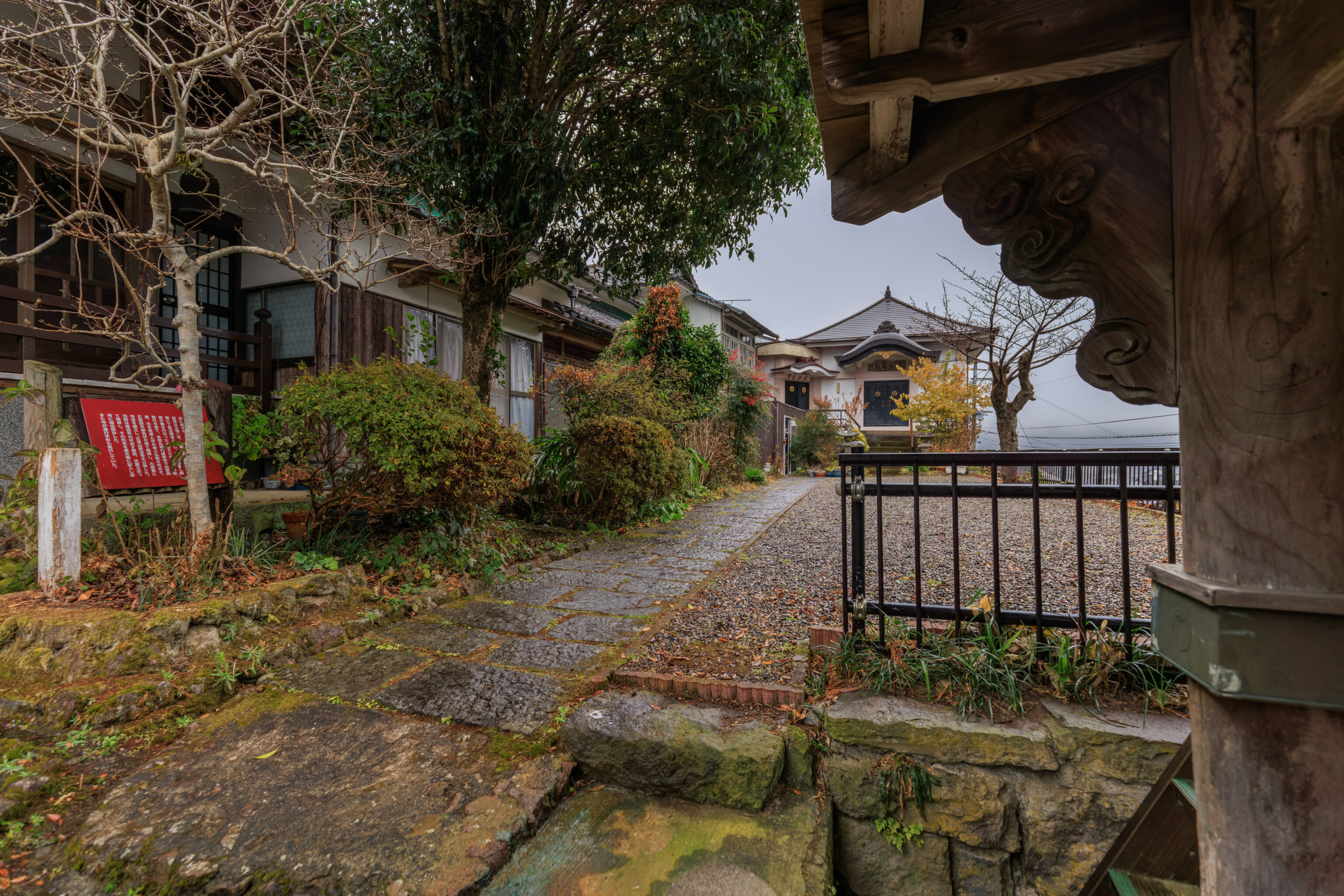
We came upon a small temple, 教法寺 Kyohoji. We went through the open gate to take a look.
Kyōhō-ji Temple

Bearing the honorary mountain name Shōgaku-zan, this temple belongs to the Jōdo Shinshū sect (Nishi Honganji branch).

It is said that the temple's founder—Ōshima Shikibu-no-taifu Kyōho—established the institution in Nakatsuru during the second year of the Bunroku era (1593). Adopting the religious name Jakuhō Seimei, he enshrined a guardian Buddha and began conducting funeral rites. Several generations later, Tamonmaru entered the priesthood at Itoku-ji Temple in Funai; taking the name Kyōun, he devoted himself entirely to the study of Buddhism. In the fourth year of the Shōtoku era (1714), having obtained an official license, he returned to his hometown. There, he constructed a temple hall on the site of his family's former residence and formally established the institution as Shōgaku-zan Kyōhō-ji.

In those days, whenever a parishioner passed away, it was mandatory for both a Buddhist priest and the village headman (*shōya*) to be present to inspect the body. The deceased's name would then be recorded in the temple's death register (*kakochō*), and the record would be formally submitted to the local authorities for safekeeping.

Furthermore, the temple also held the authority to issue travel permits.
– Text from the red sign on the left side of the last photograph above, translated using Google.
It was quiet and there was no one around.
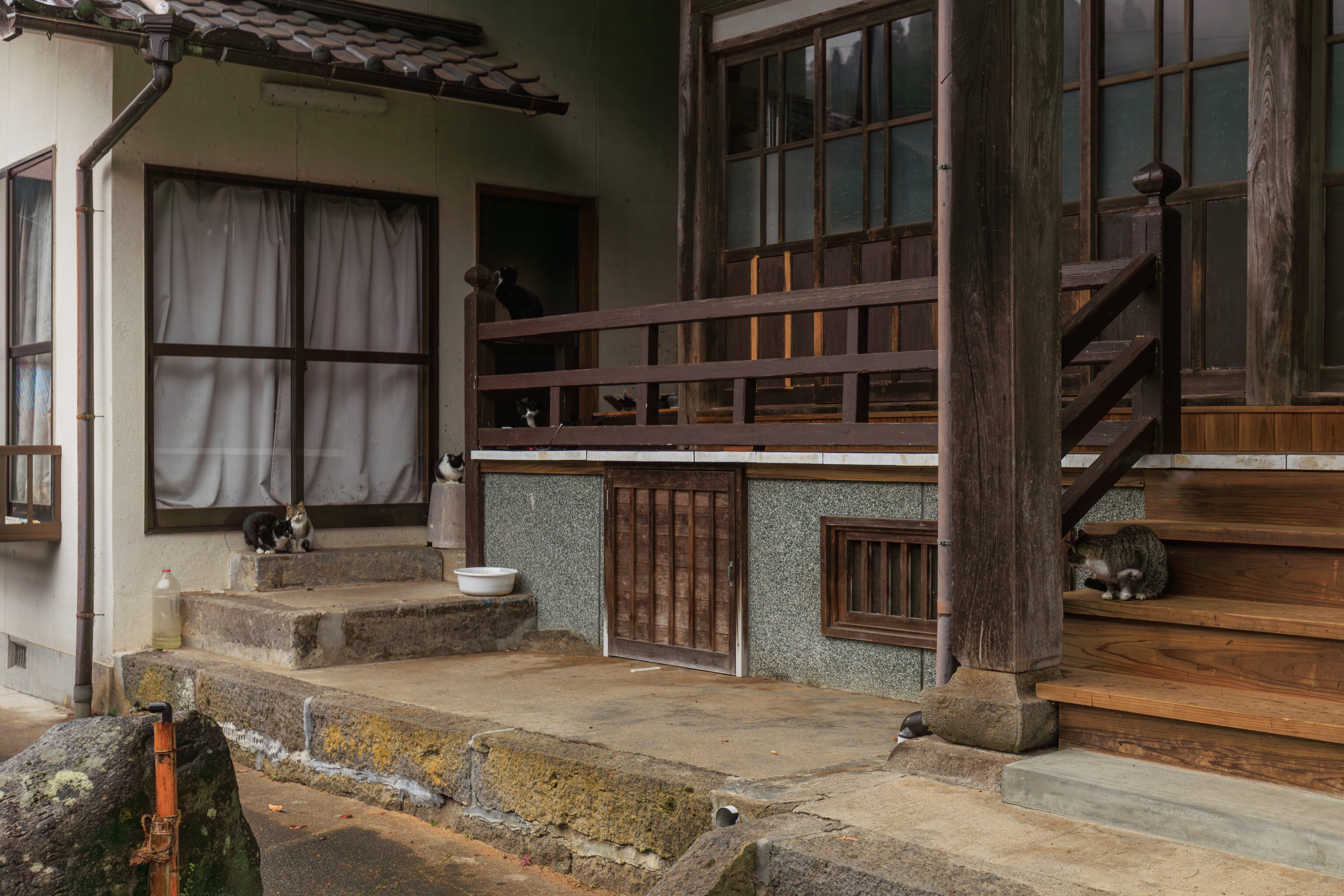
However, there were cats around! There are six visible in this photograph!
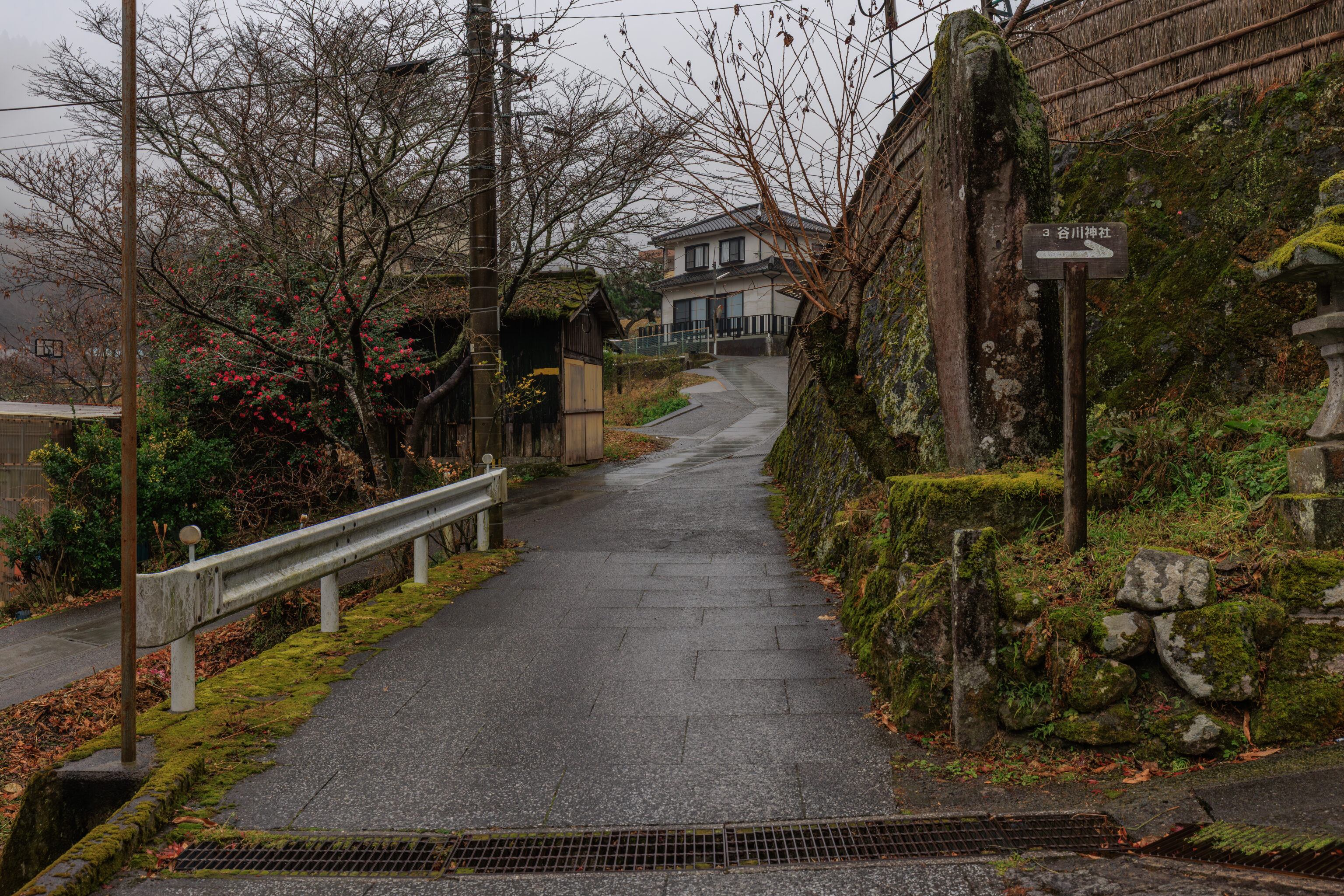
We continued walking to the north…
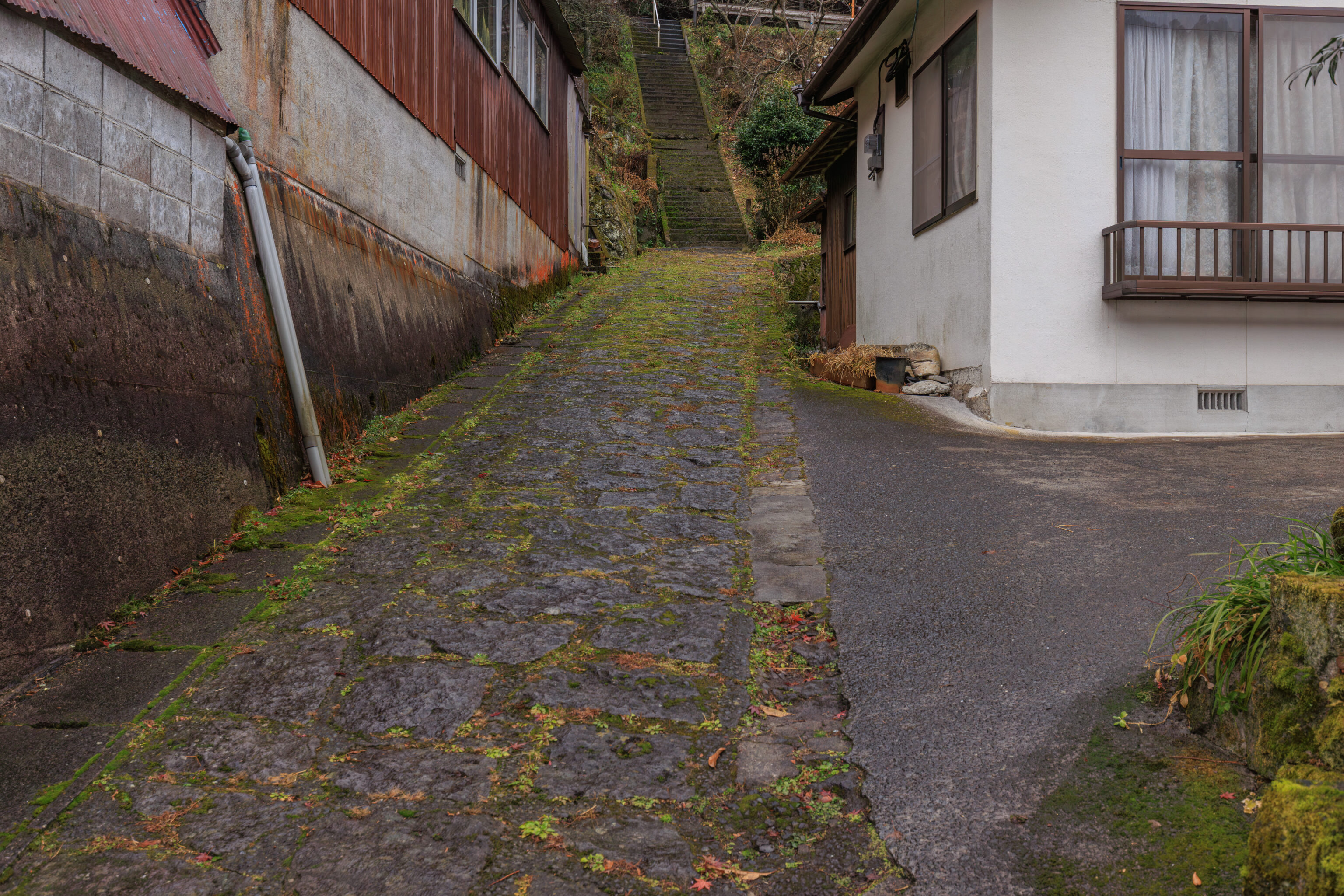
There was a steep path of stairs to our right. We kept on going though.
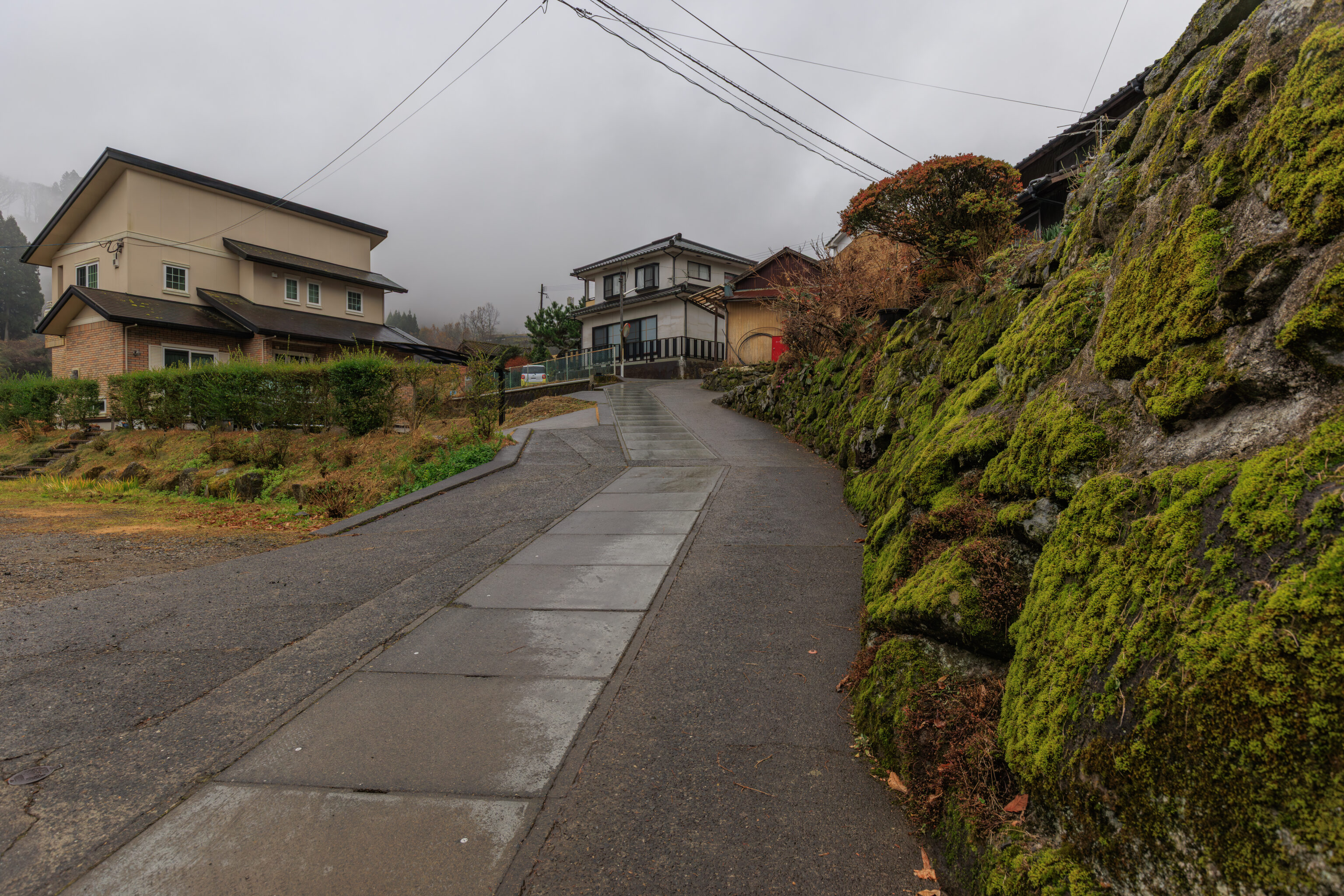
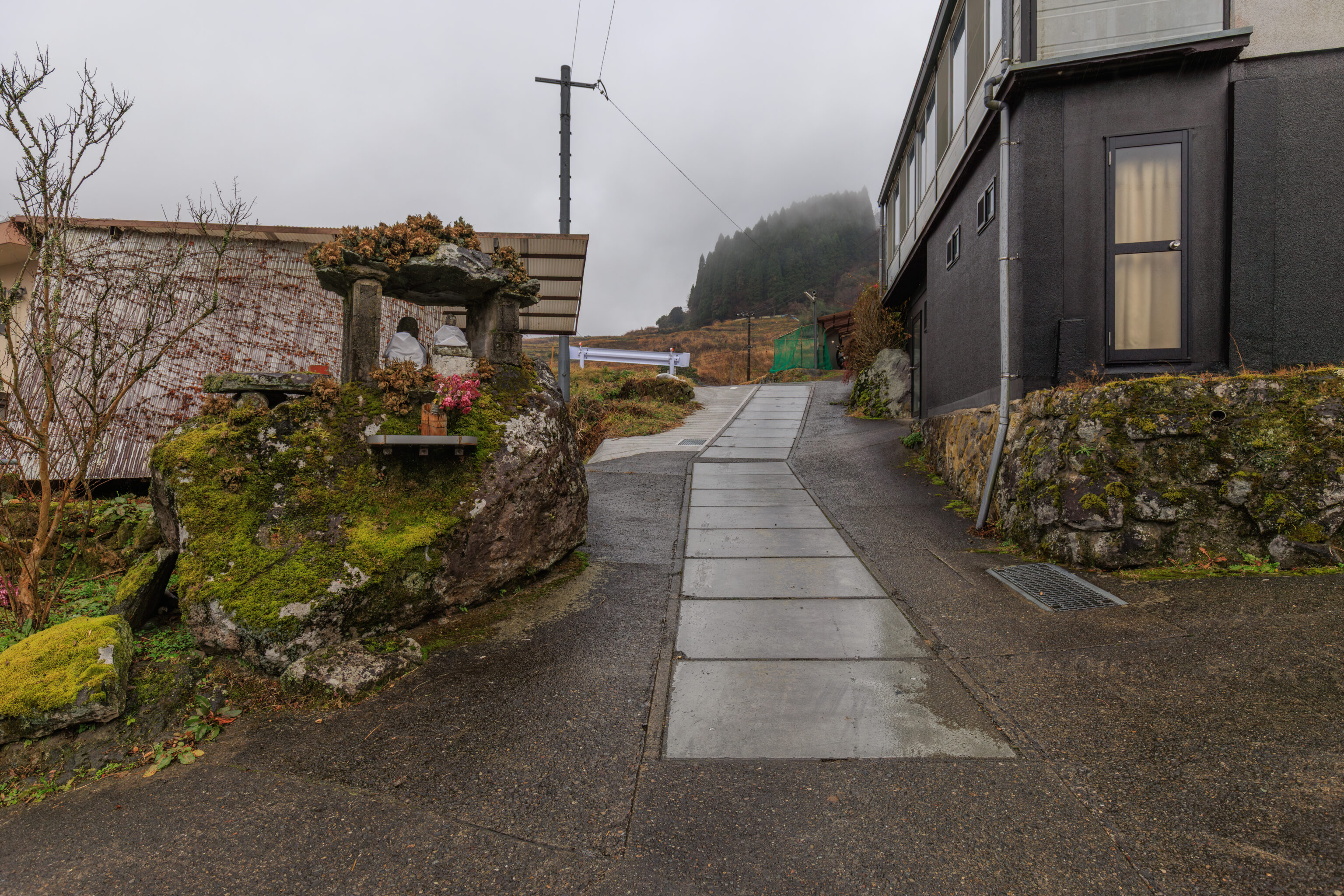
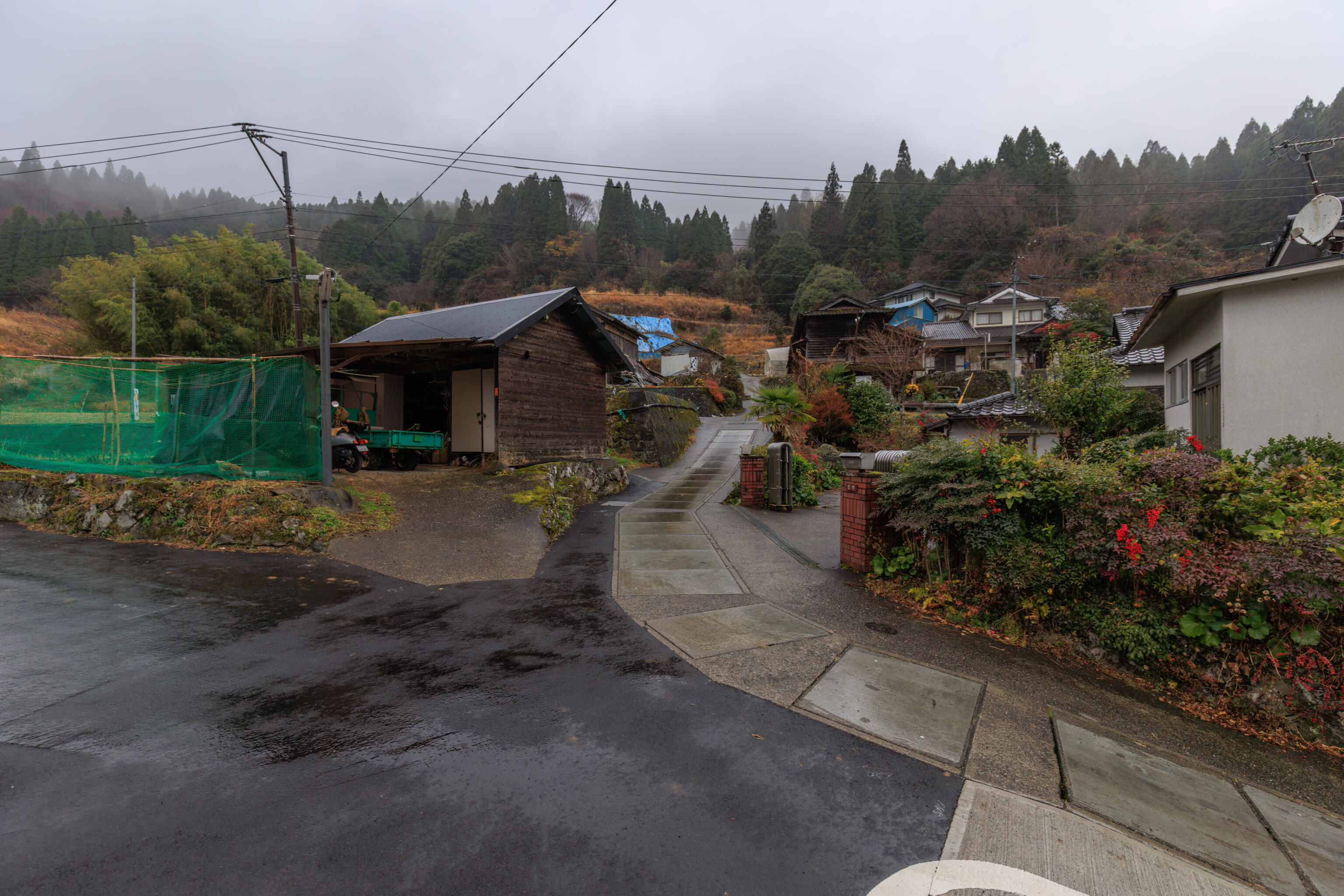
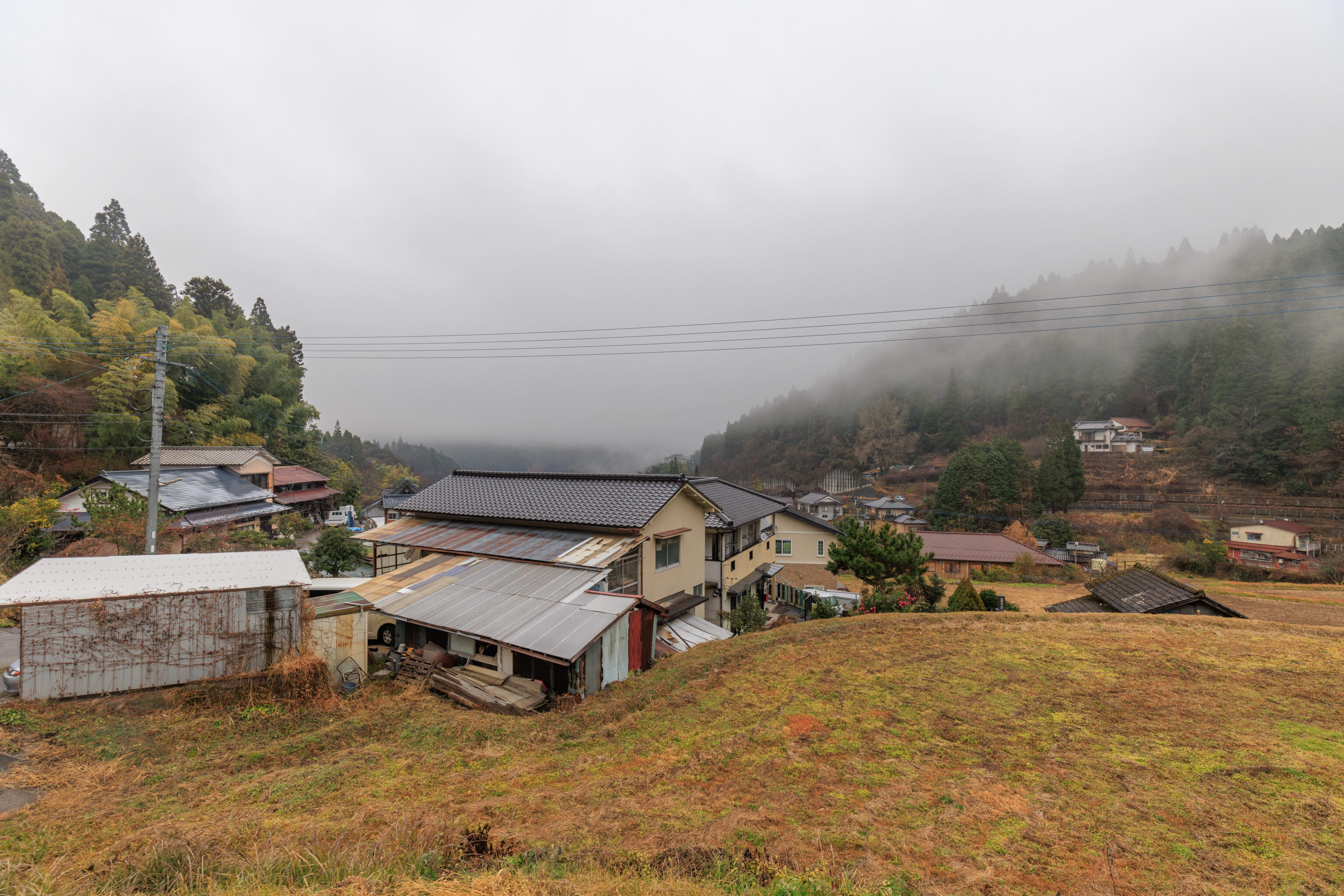
Eventually, we reached about as high as the road was going to go. From this spot, we can see a field in front of us as well as some of the village’s buildings in the background.
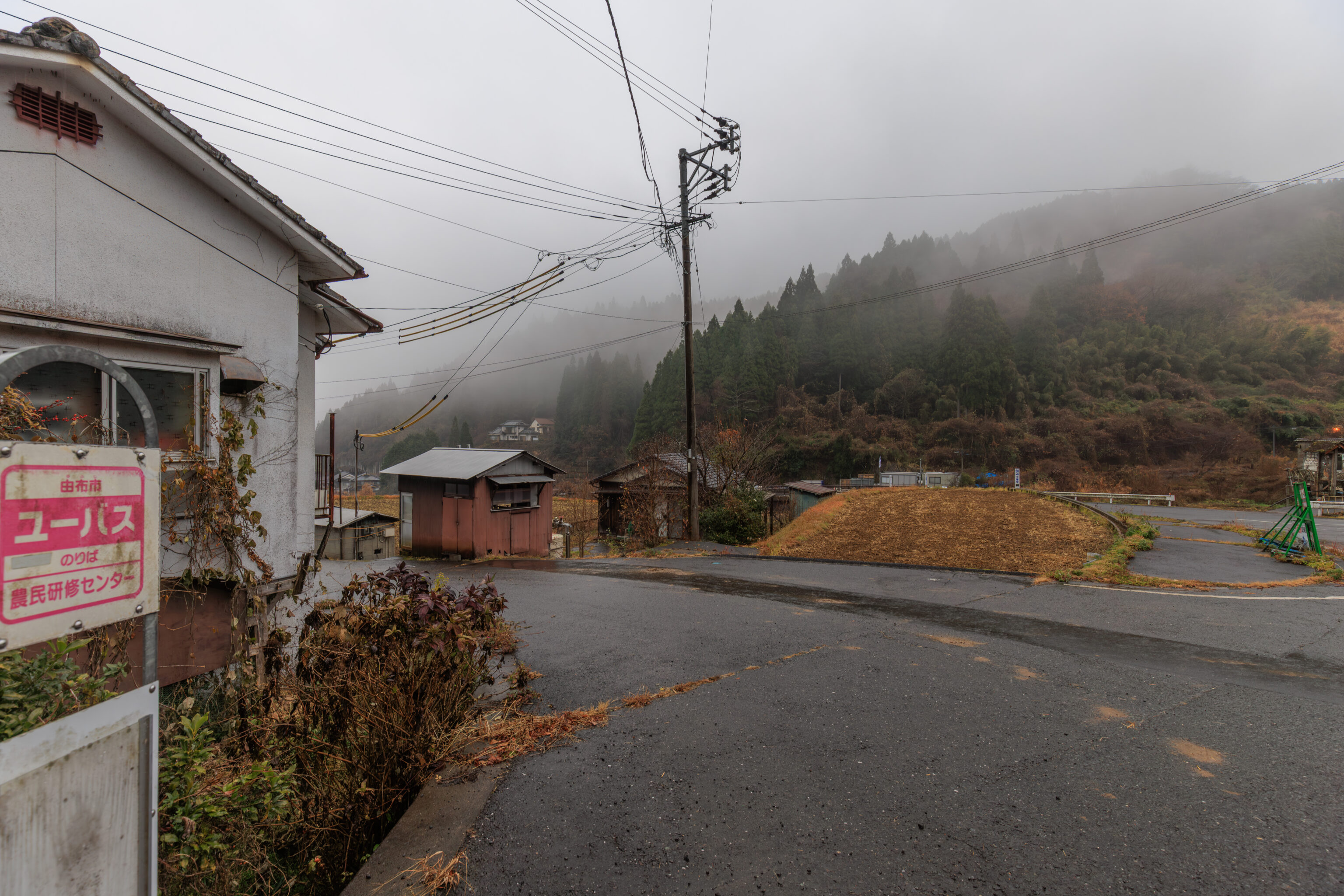
We continued walking to the north until we reached Prefectural Route 537, the Yunohira Onsen Line. There were some really loud dogs coming from a property near here. They did quiet done once we walked by but they were super annoying.
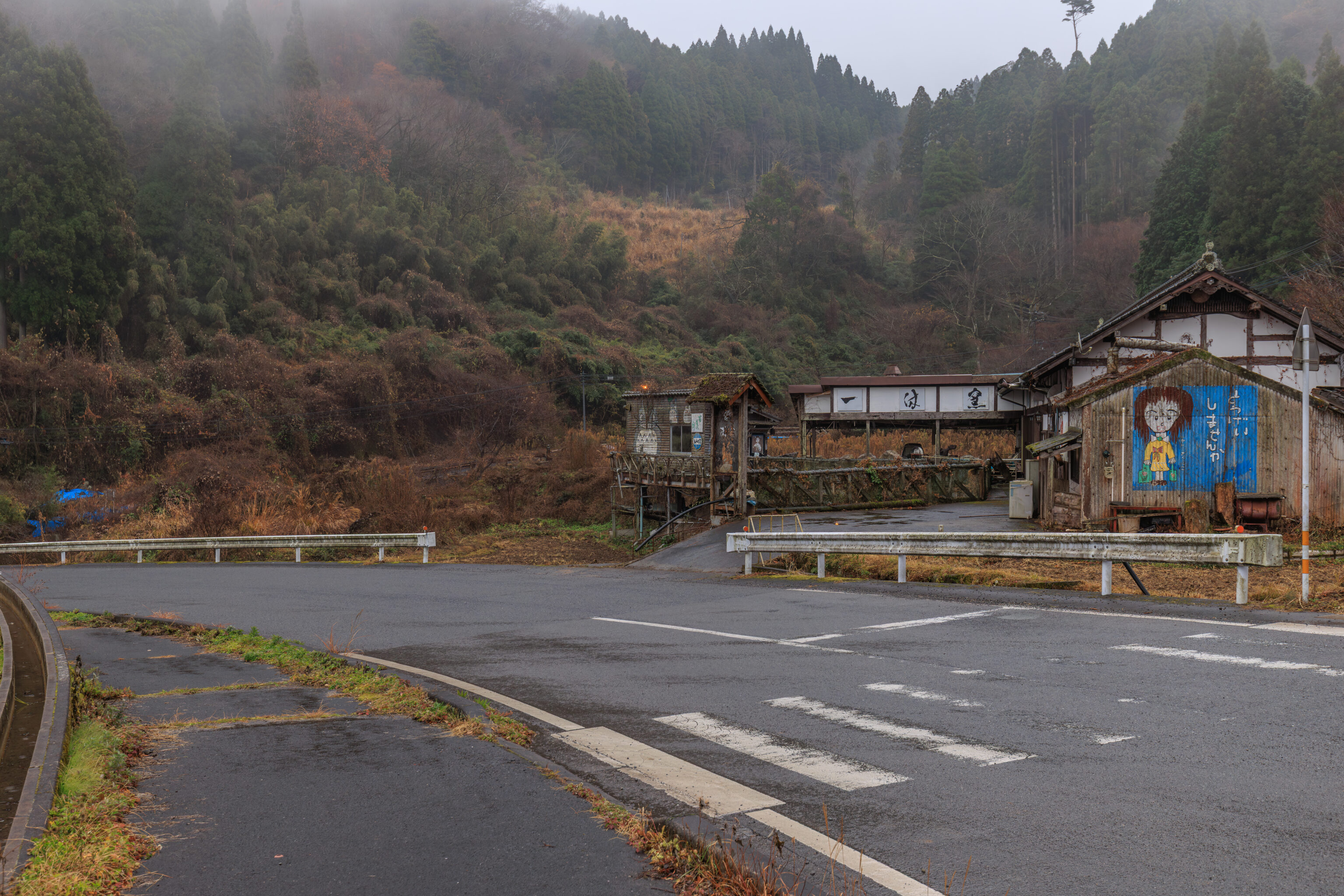
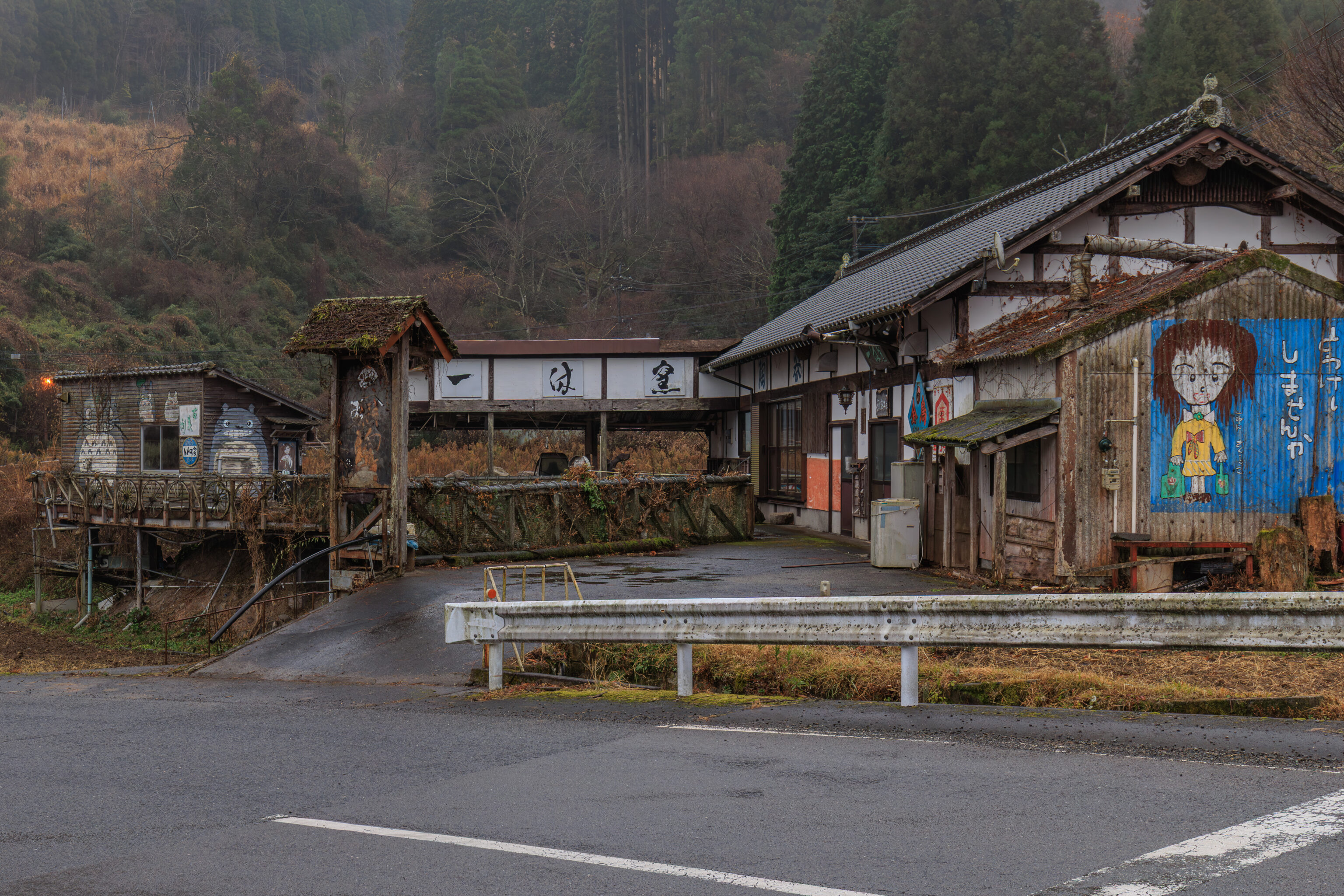
We decided to walk along the sidewalk to the east for a bit. This building across the street is, or maybe was, the 一休窯 Ikkyu Kiln. Using Google Gemini to read the blue sign on the side of the building, the text in large characters reads, “Shall we read books?” The smaller text near the girl read, “ねん さくらこ”, which translates to, “First Grade Sakurako”.
The building on the left has art from the famous anime My Neighbor Totoro.
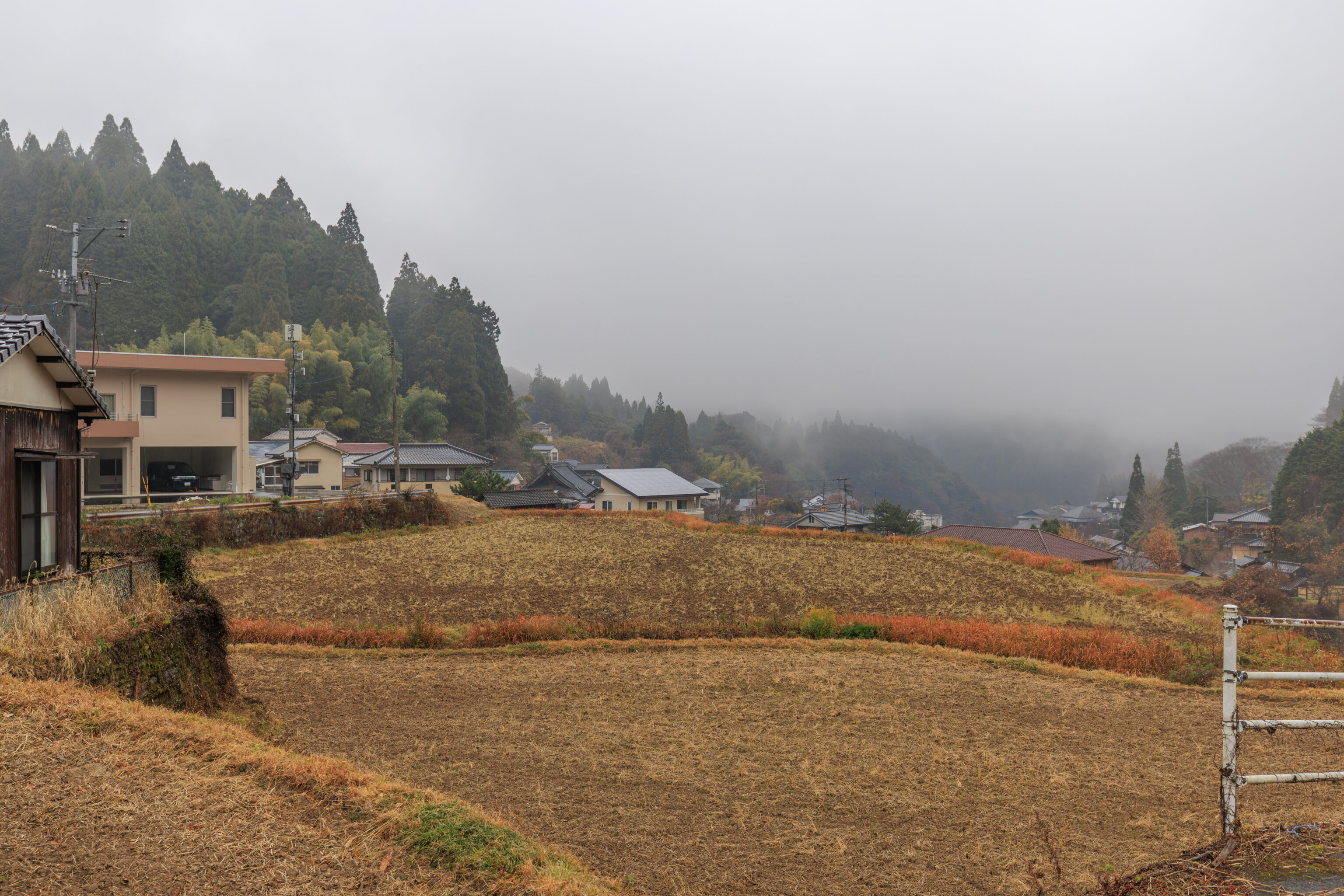
Looking to the north, most of Yunohira is too low and obscured by the terrain right in front of us.
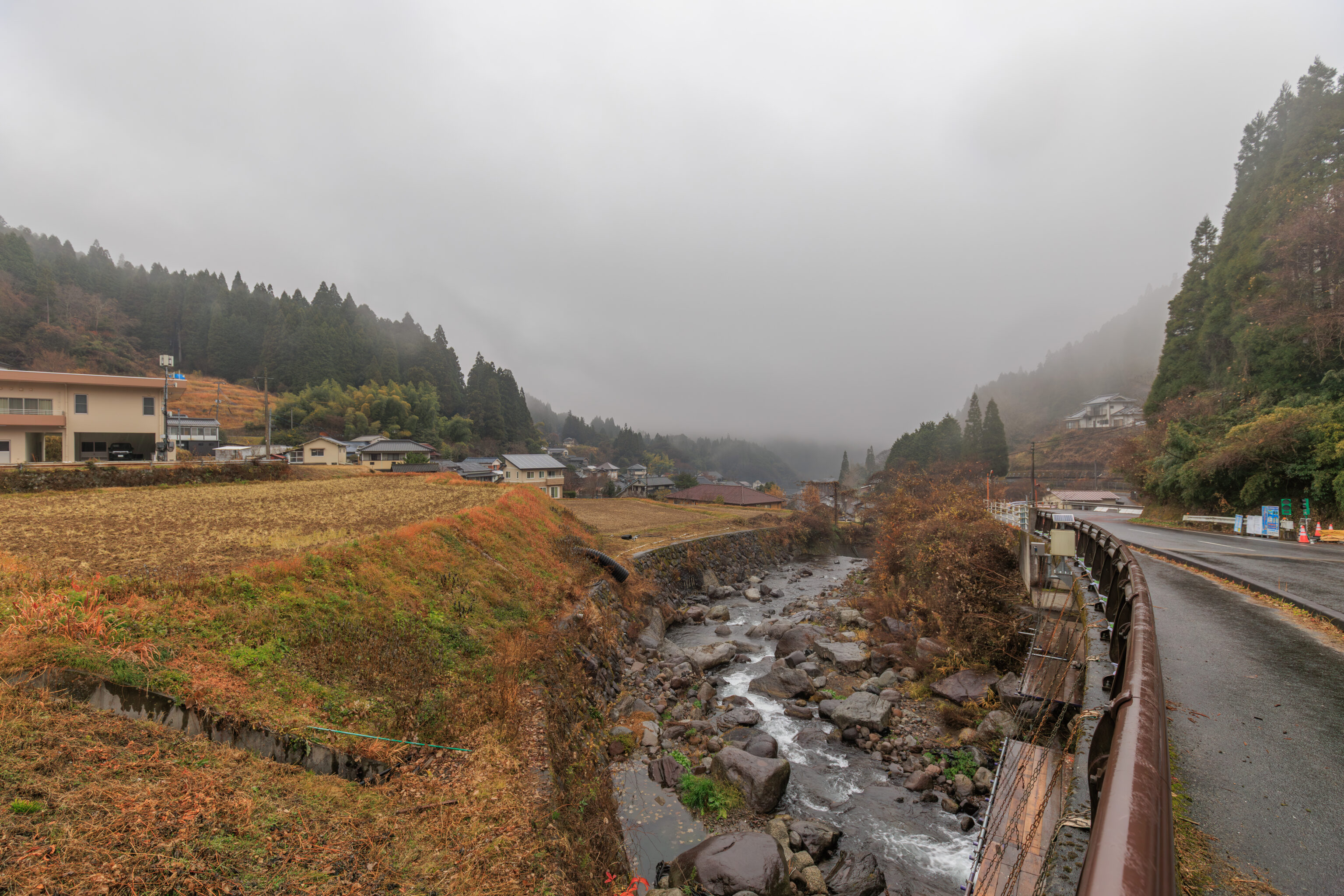
Walking a bit further down the road, we reached a bridge over the 花合野川 Kagonogawa. While we could see a bit more of Yunohira, most of it was still blocked by the terrain. We did see a local here, a man walking his dog past us. We didn’t go any further though as the sidewalk ends and the road is curved and narrow.
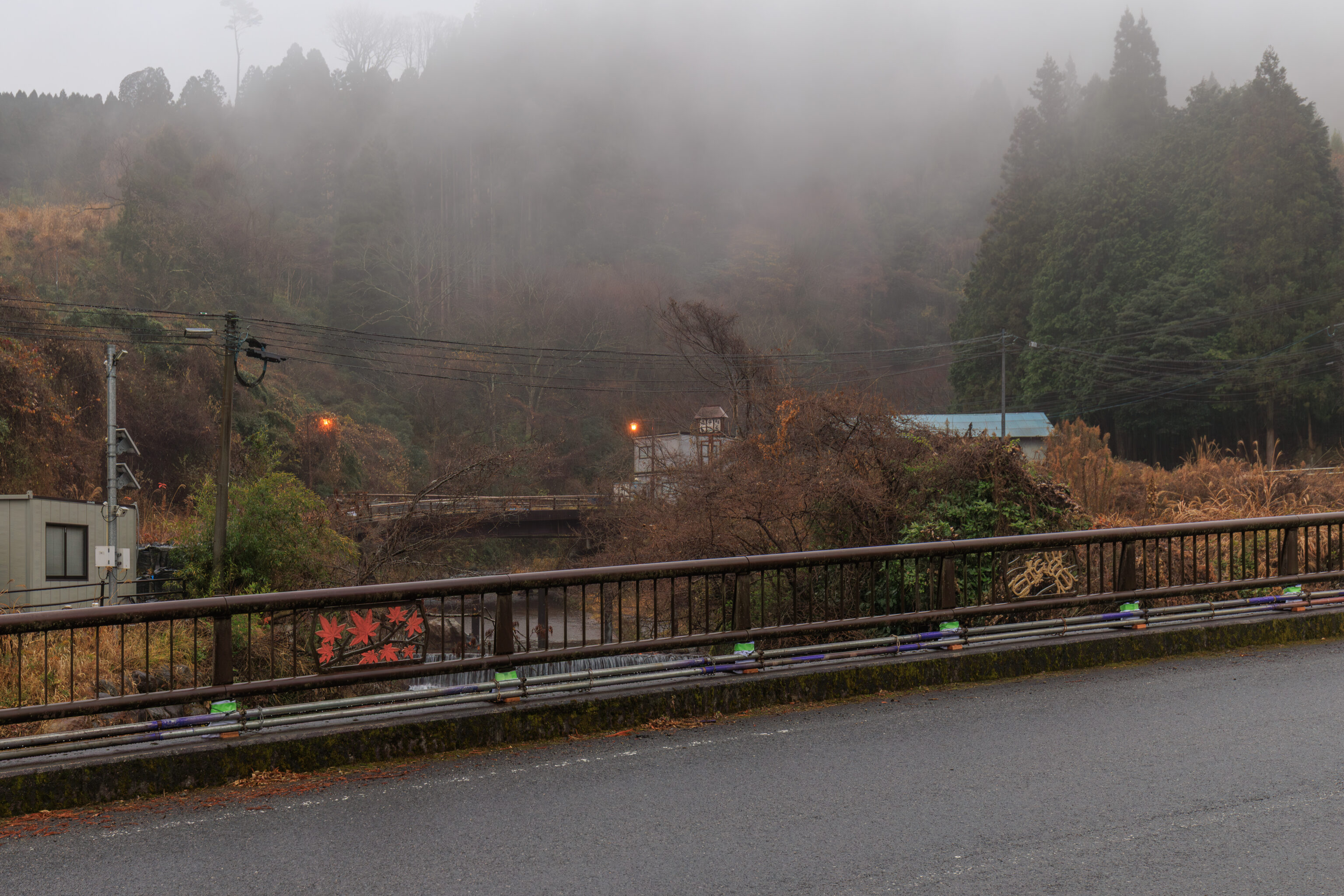
The view looking in the opposite direction. The bridge railing had decorations, leaves on the left and what might be beetles on the right.
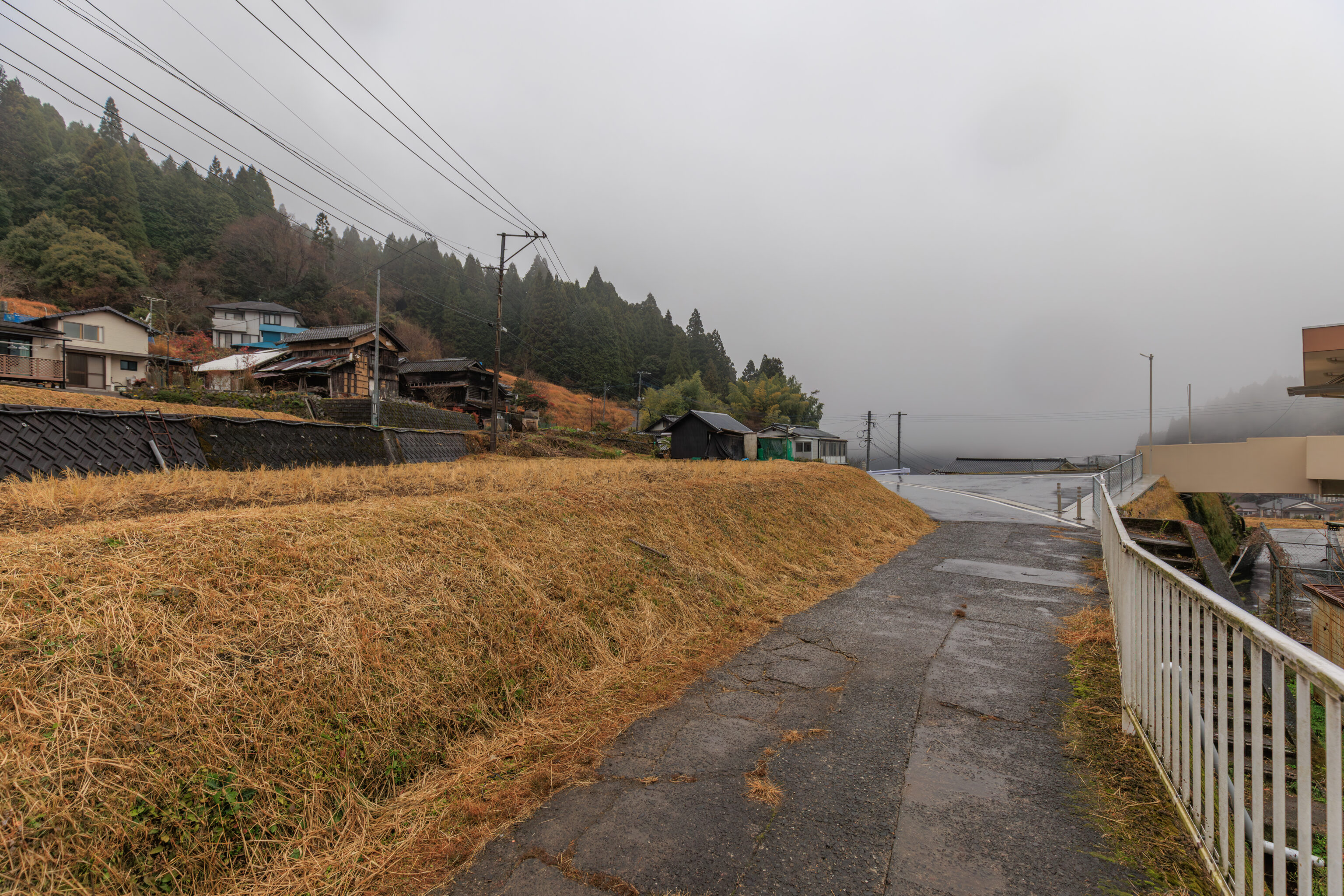
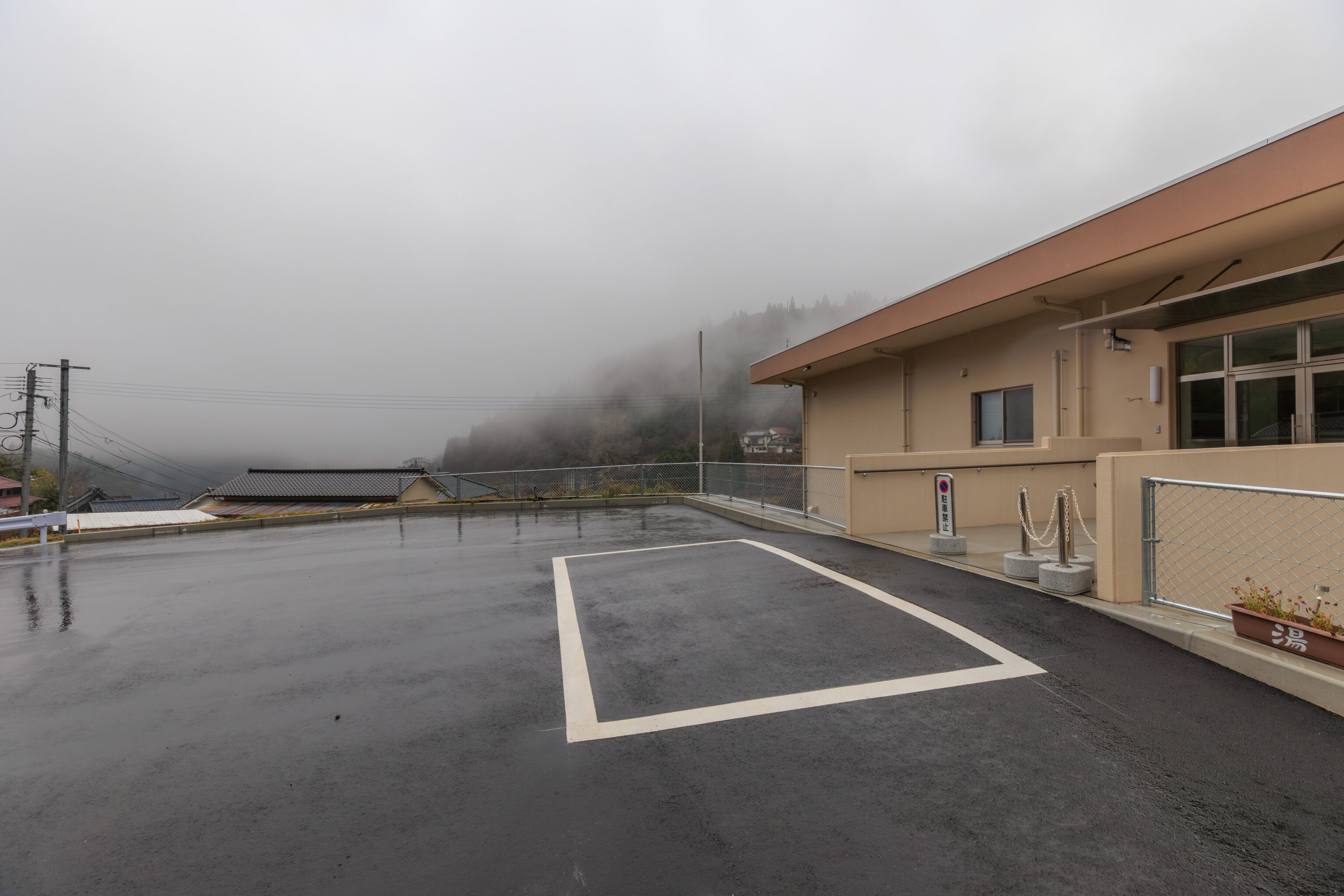
We turned around and started to head back. We passed by this modern building earlier but didn’t photograph it. It is the 花合野川防災センター Kagonogawa Bosai Center. Bosai is disaster prevention. So, this is probably an emergency facility where local residents can shelter if there is a flood or landslide.
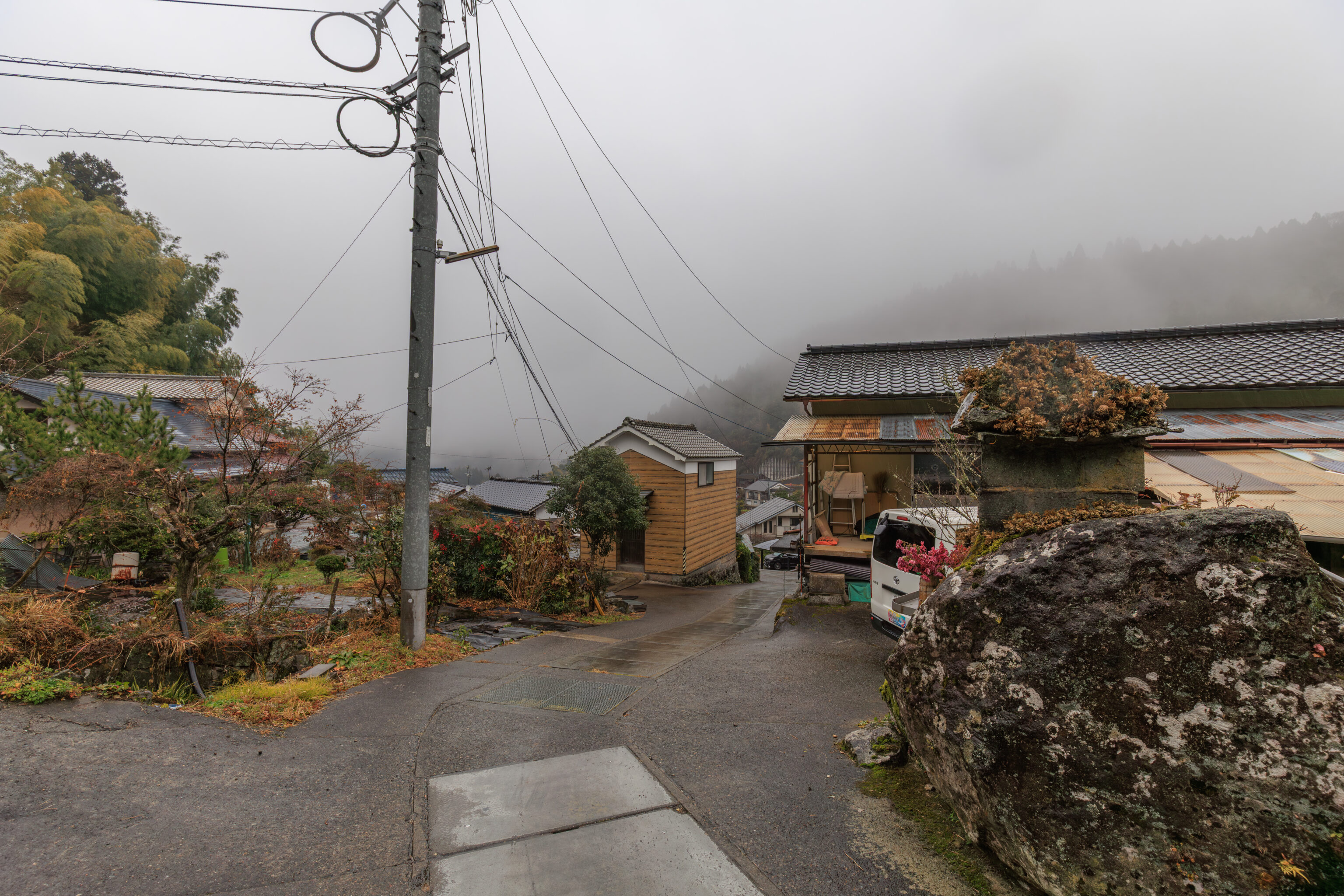
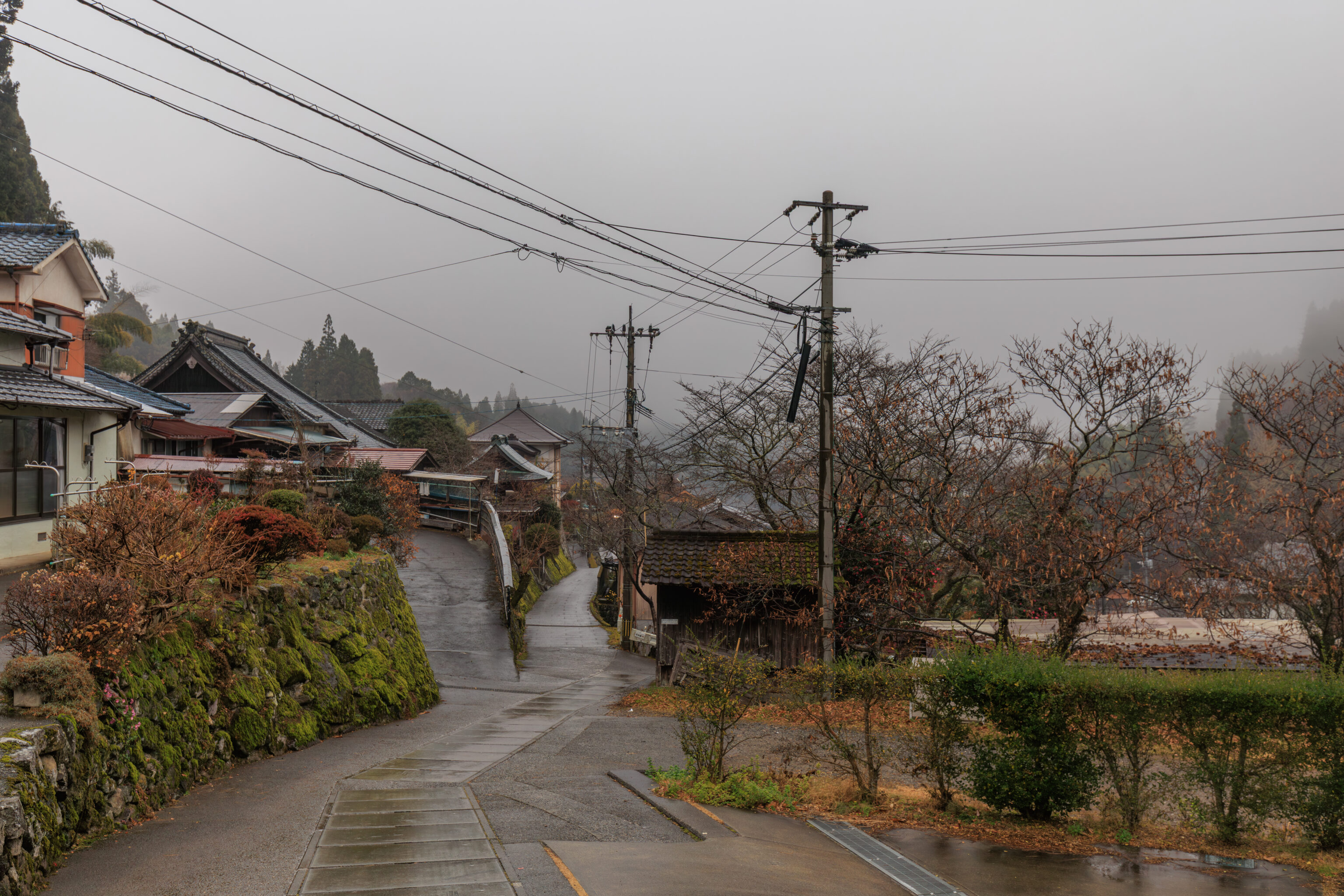
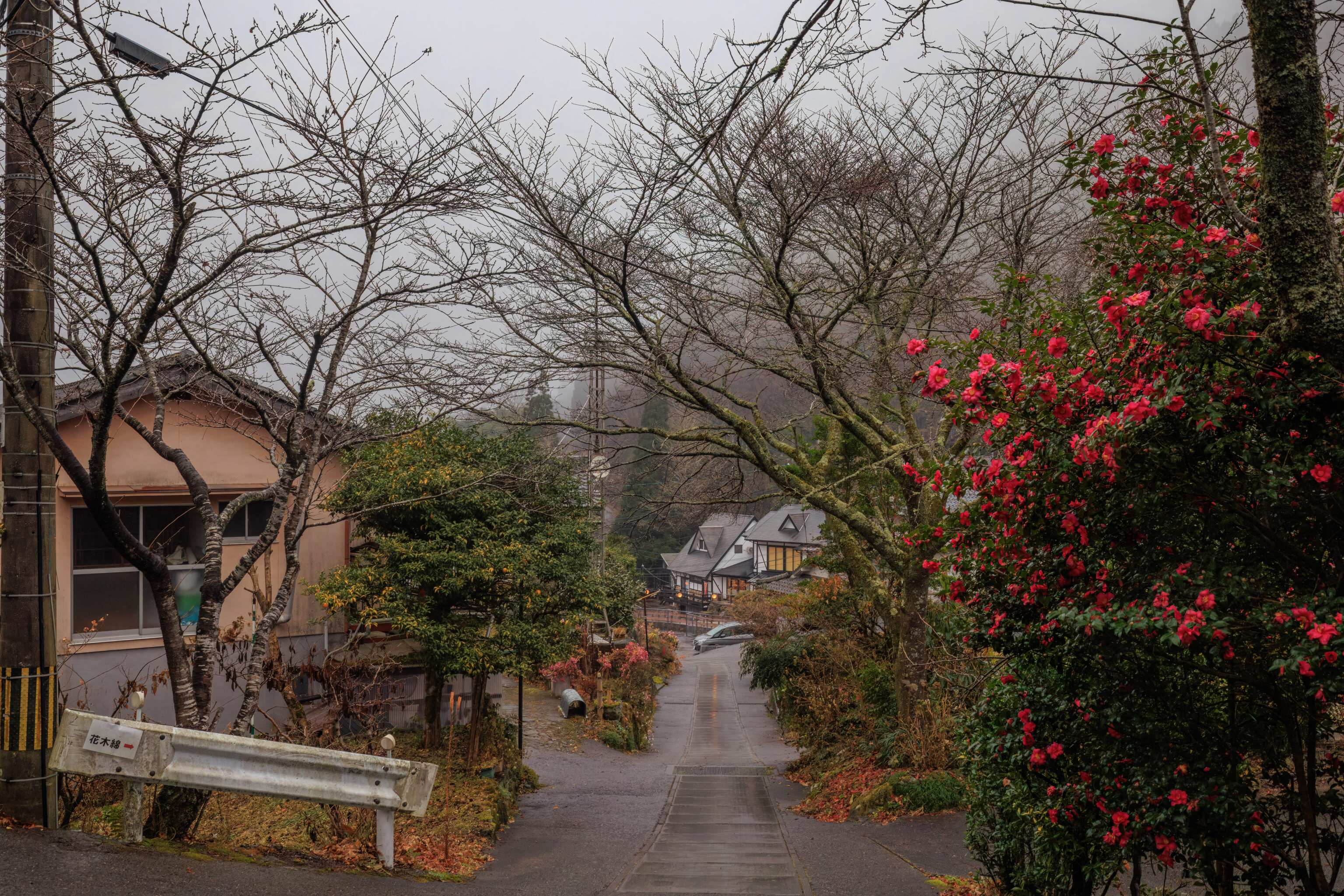
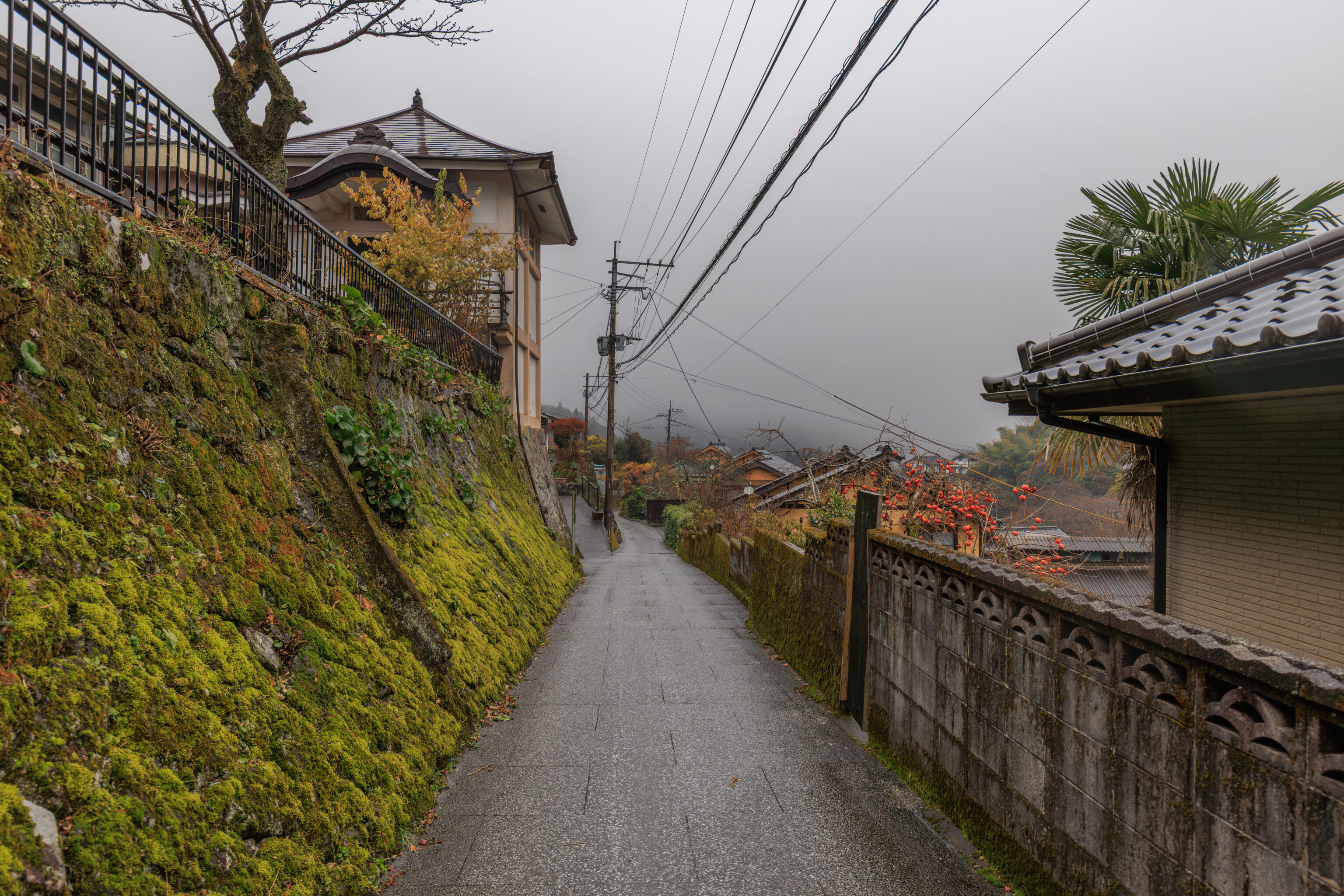
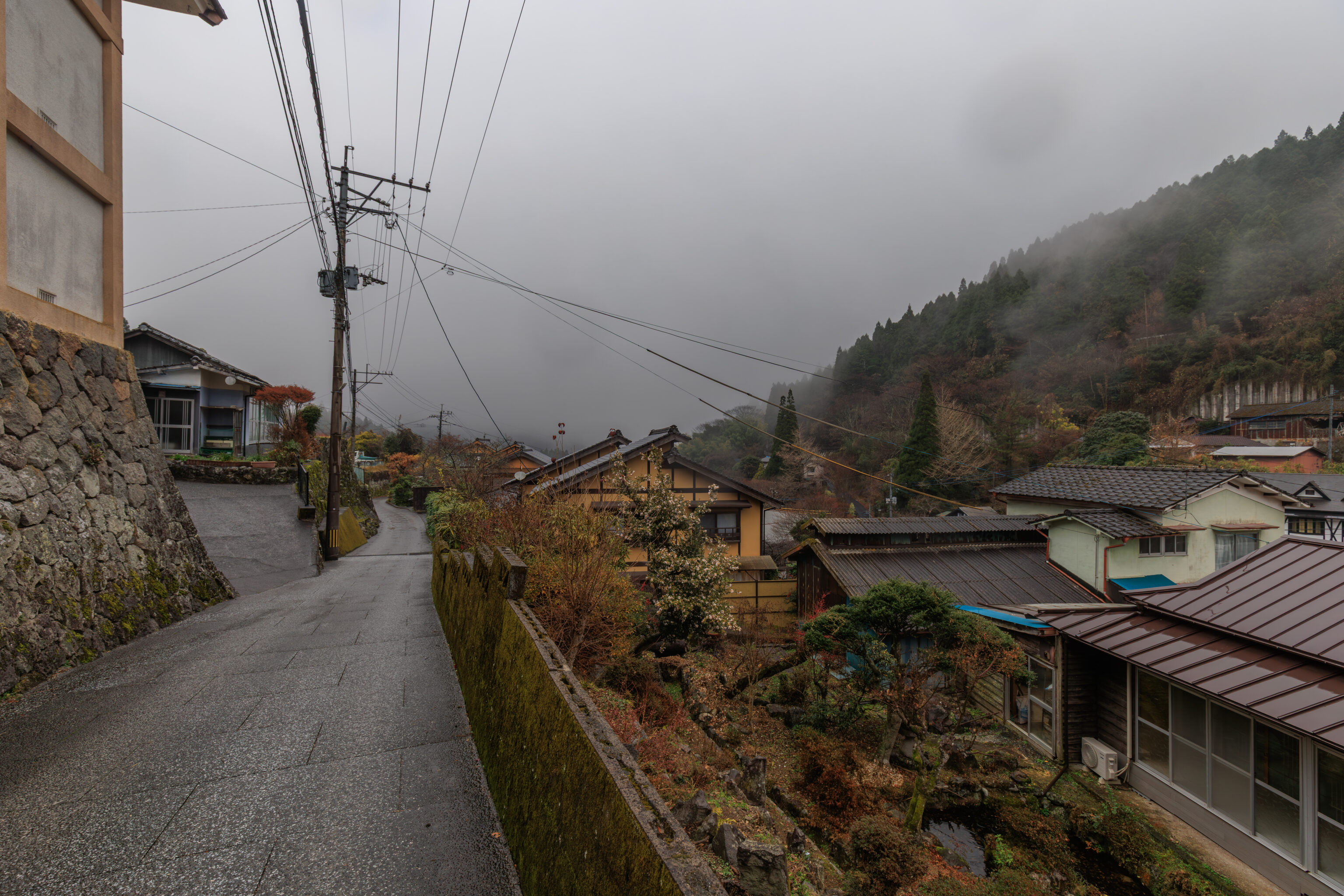
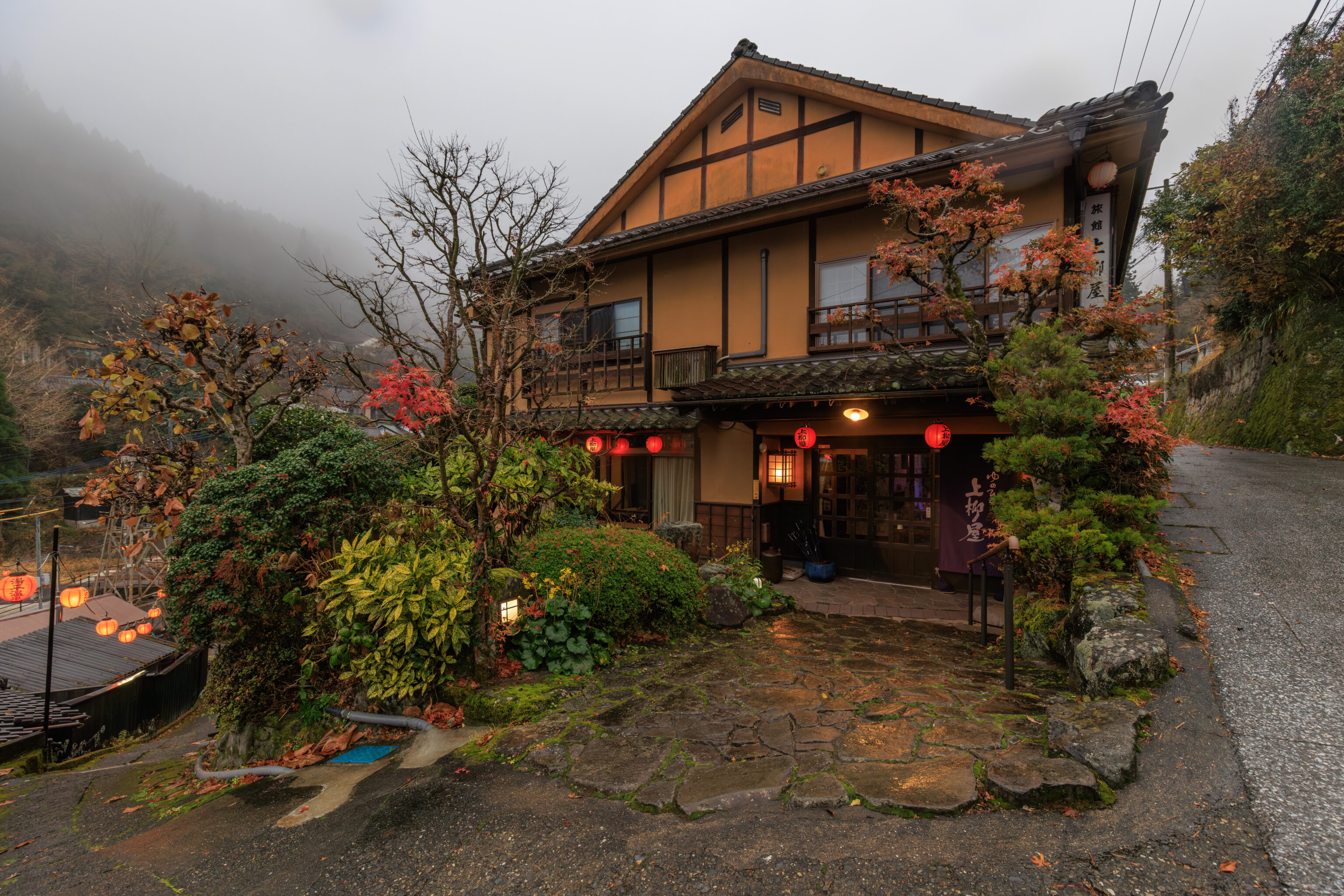
We continued walking north until we returned to the Kamiyanagiya.
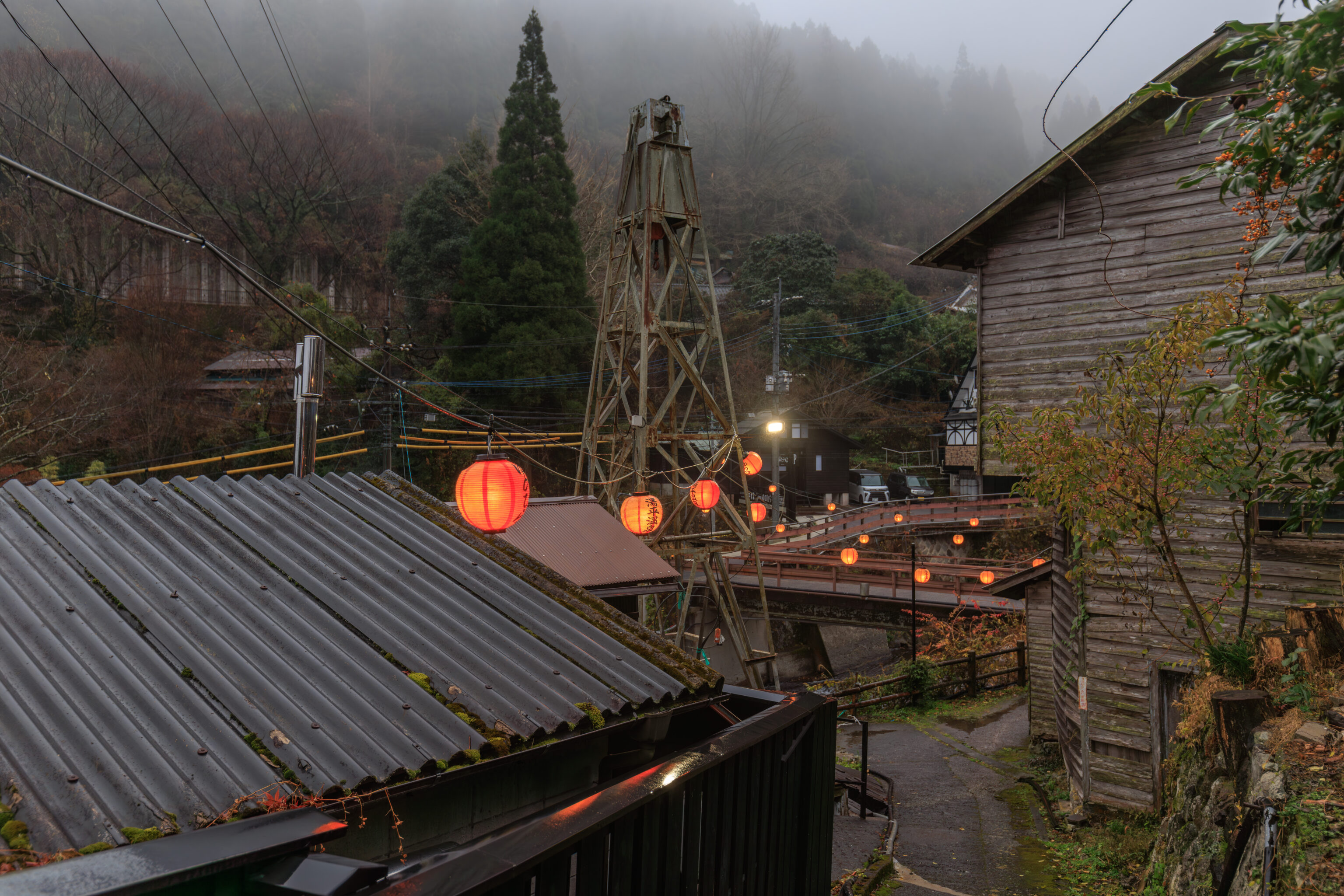
Rather than go back inside, we decided to instead take the steep path that heads down to the east from the front of the ryokan.
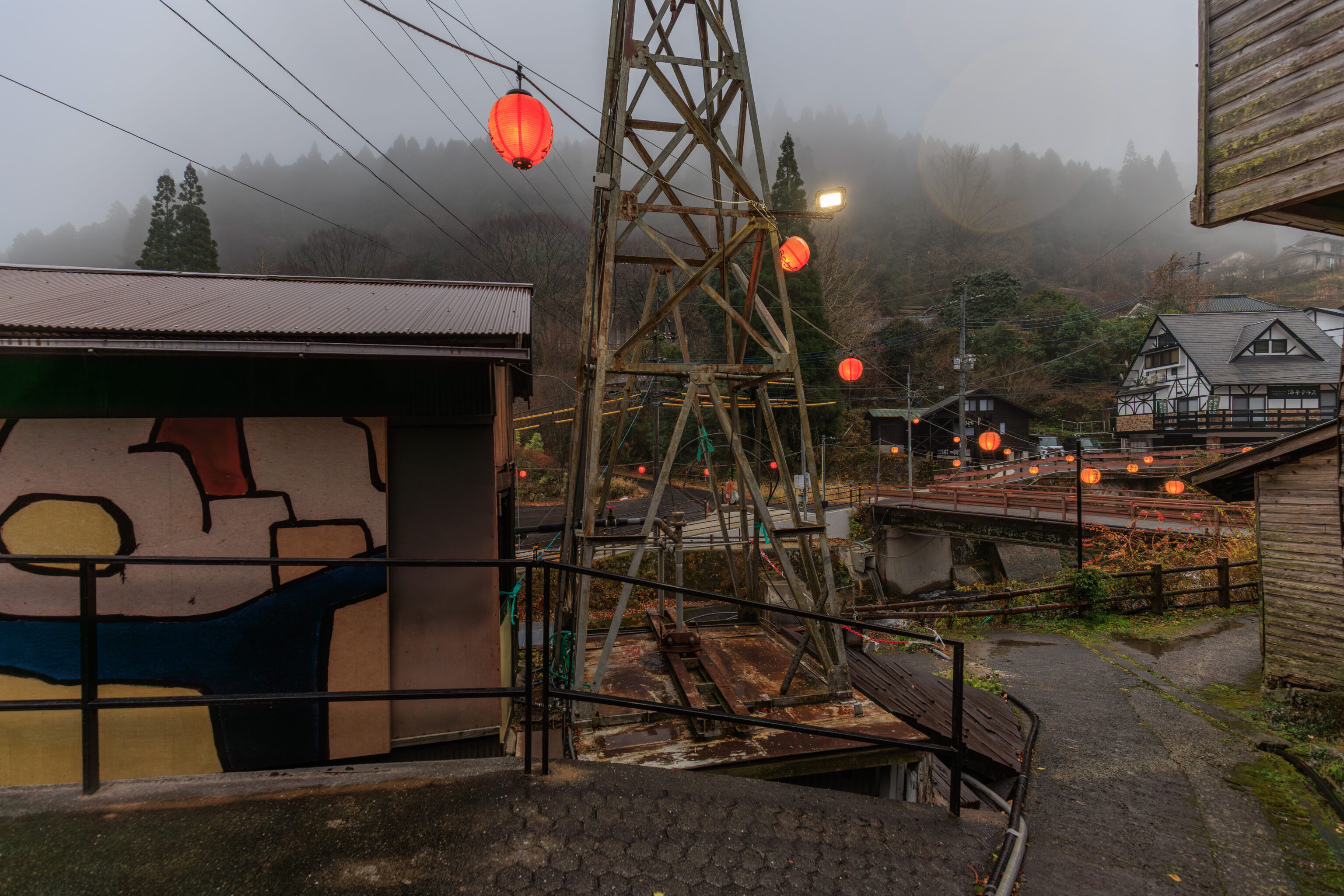
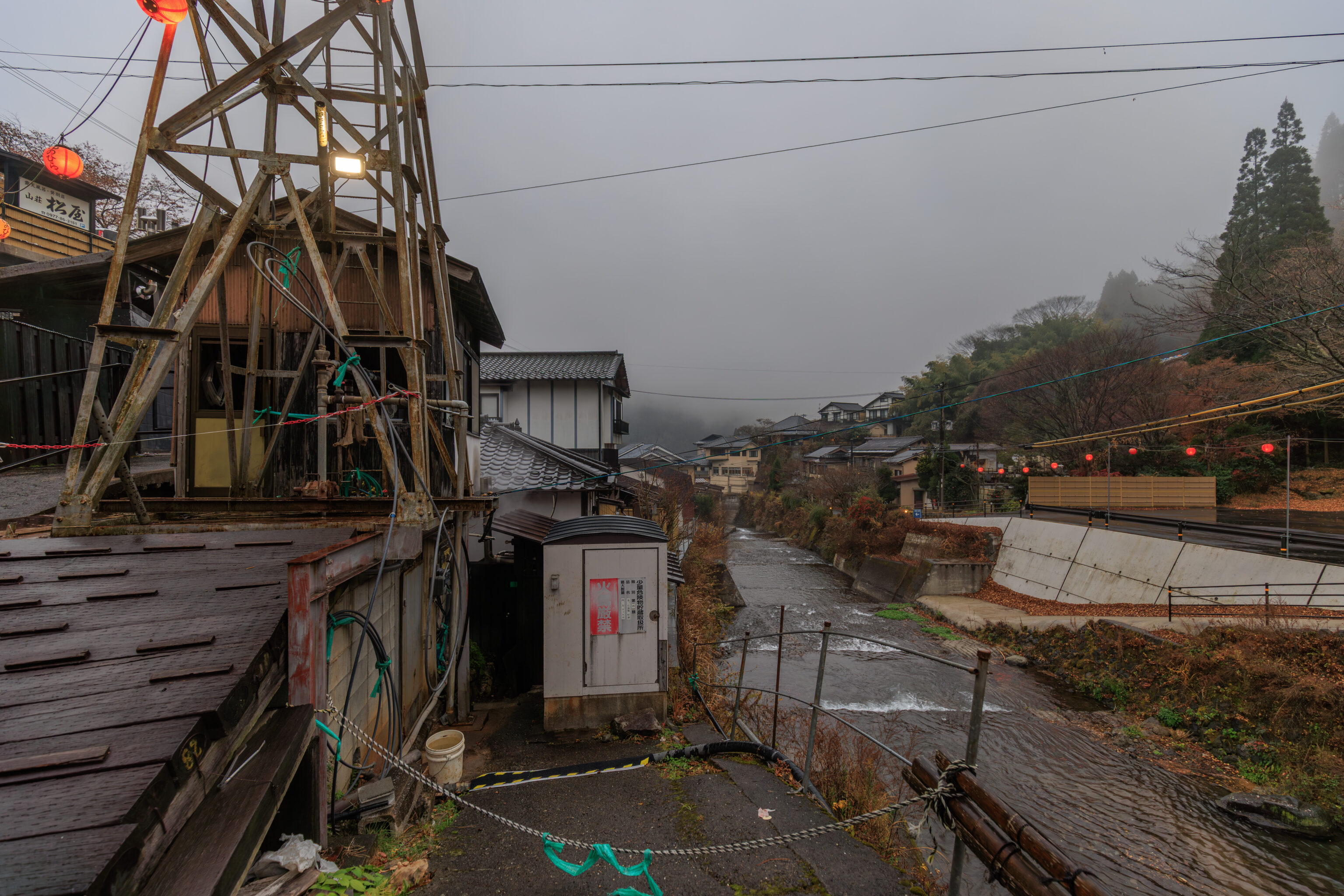
The path lead down to the Kagonogawa.
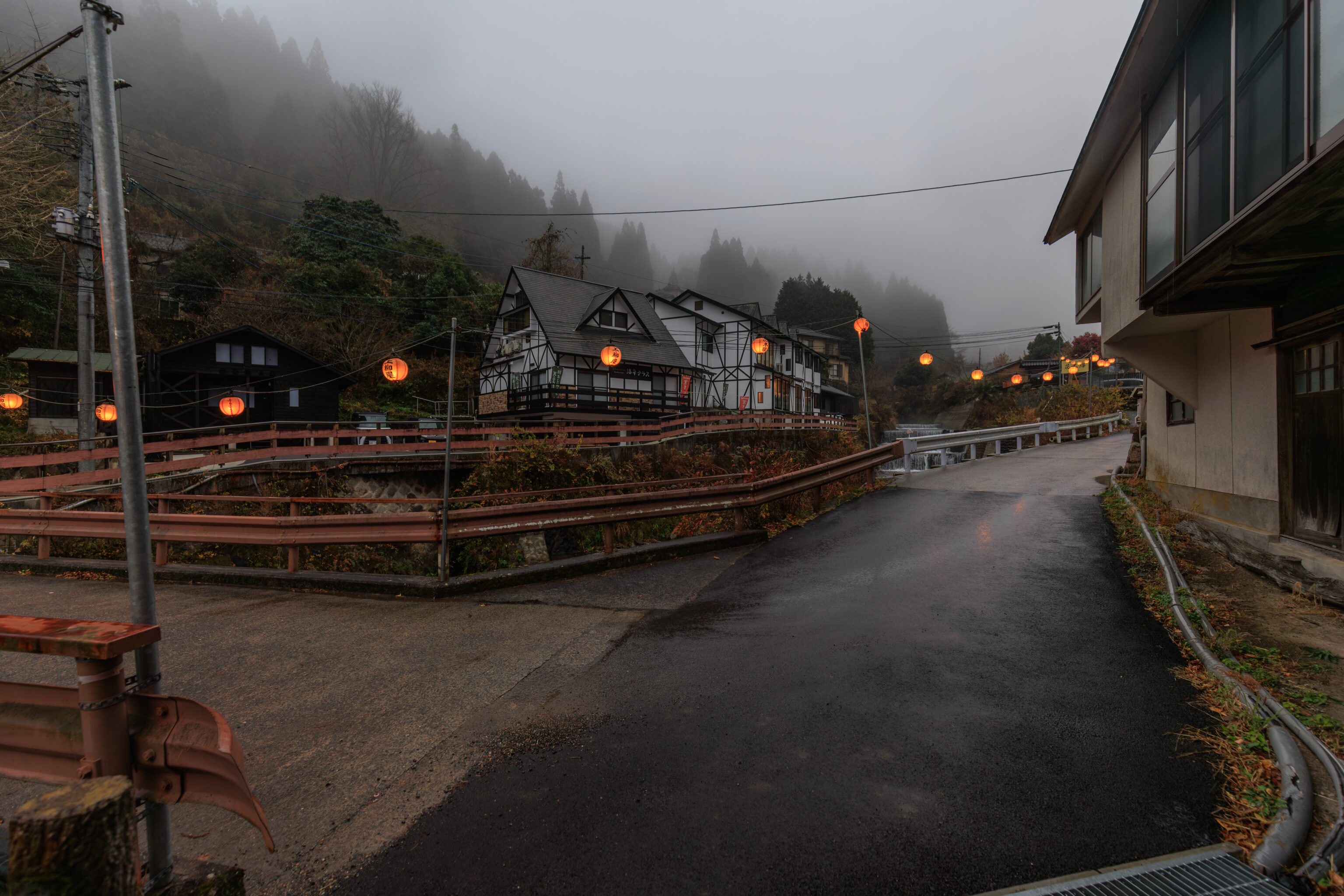
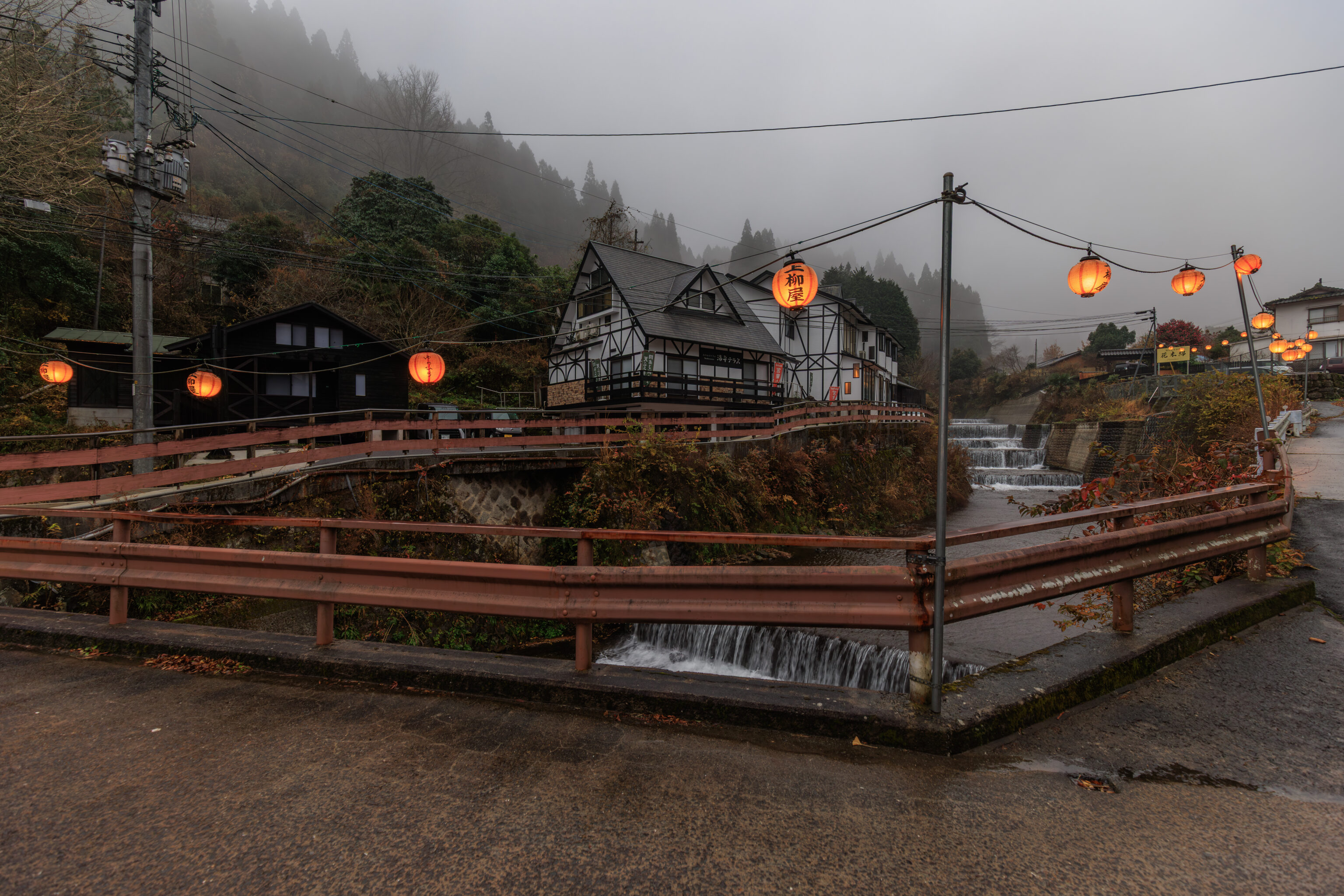
There is a narrow bridge that crosses the river here.
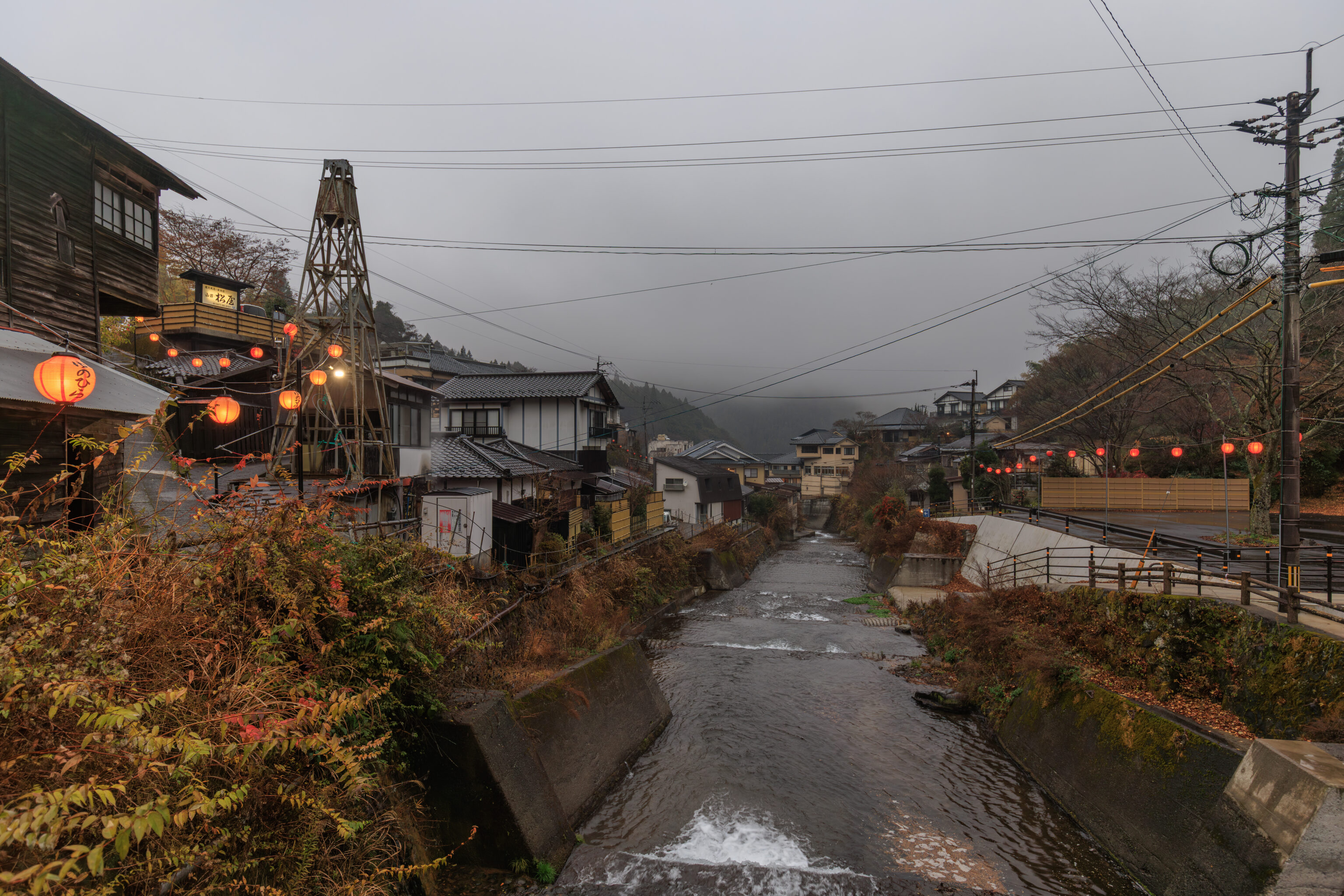
The view from the bridge looking downstream to the north.
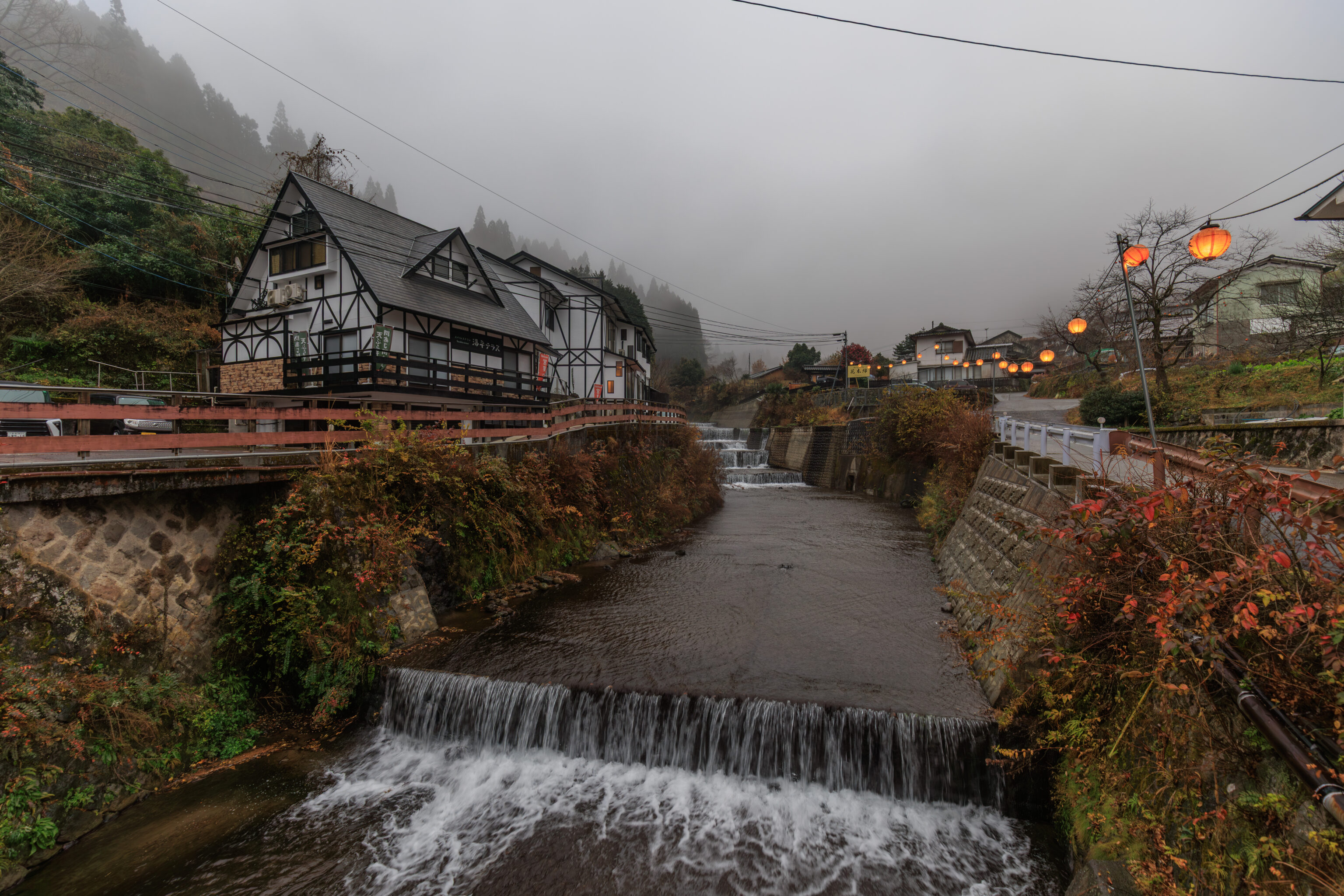
The view upstream to the south.
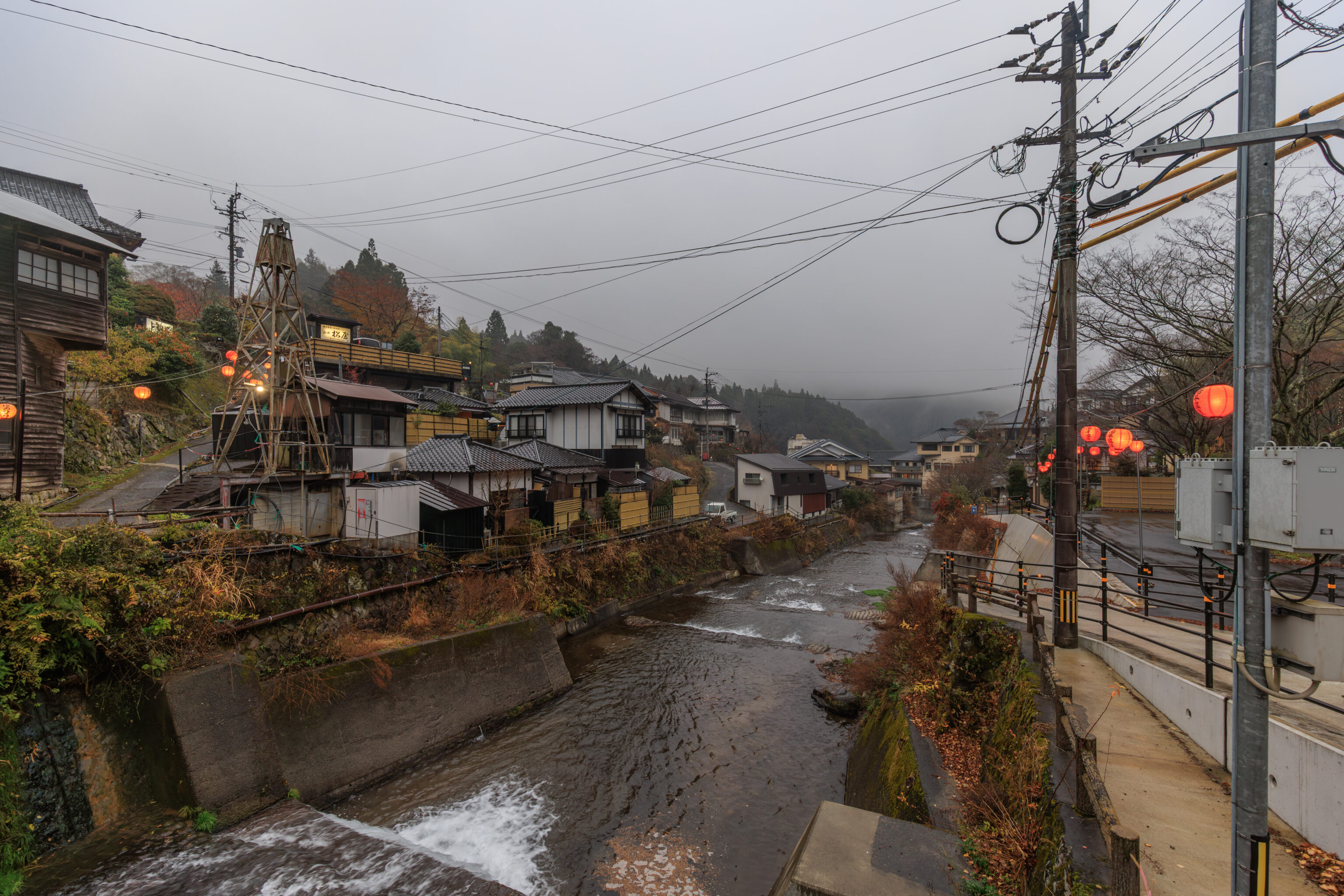
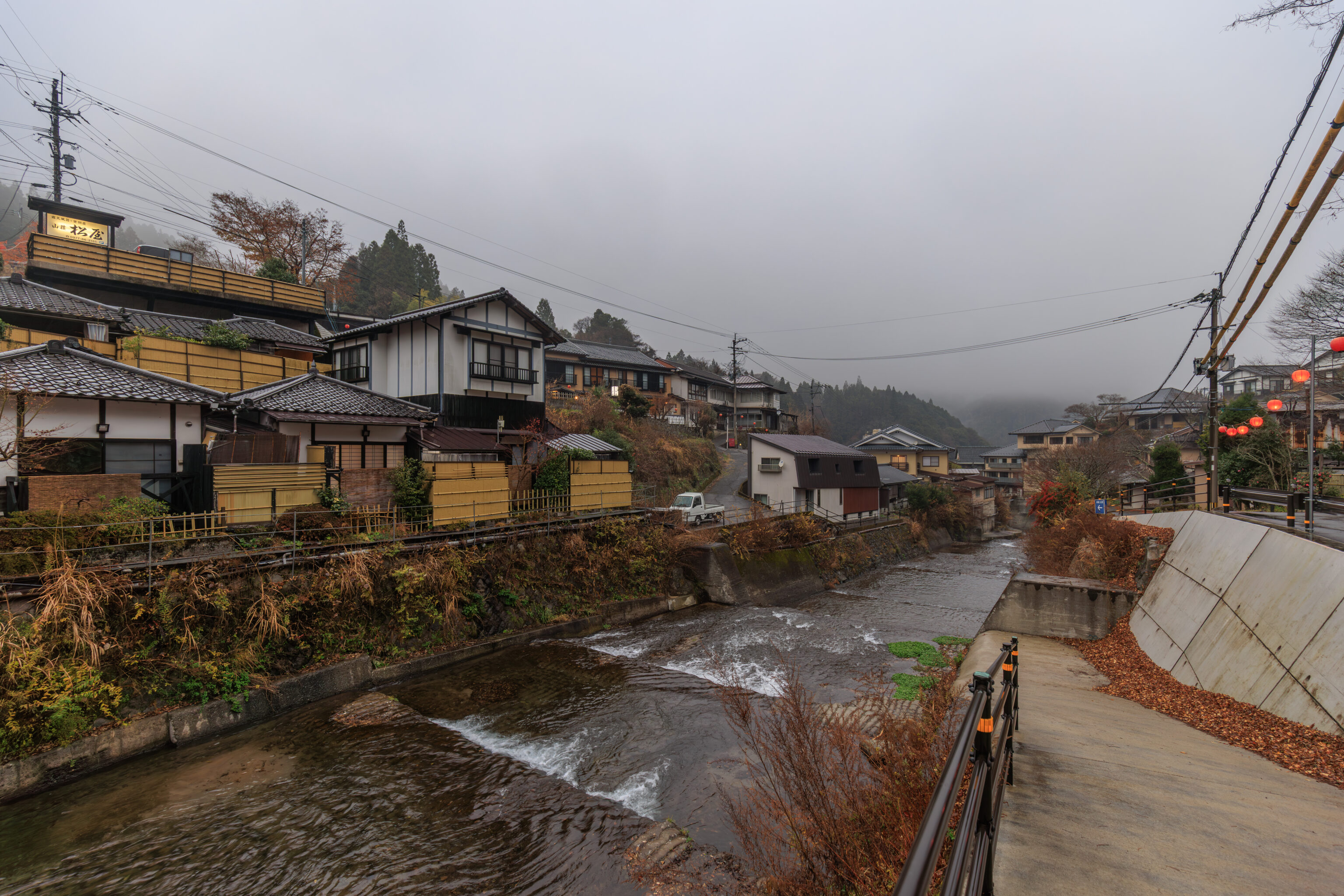
There was a concrete ramp here that goes down to near the water’s edge. The river looks shallow but fast flowing.
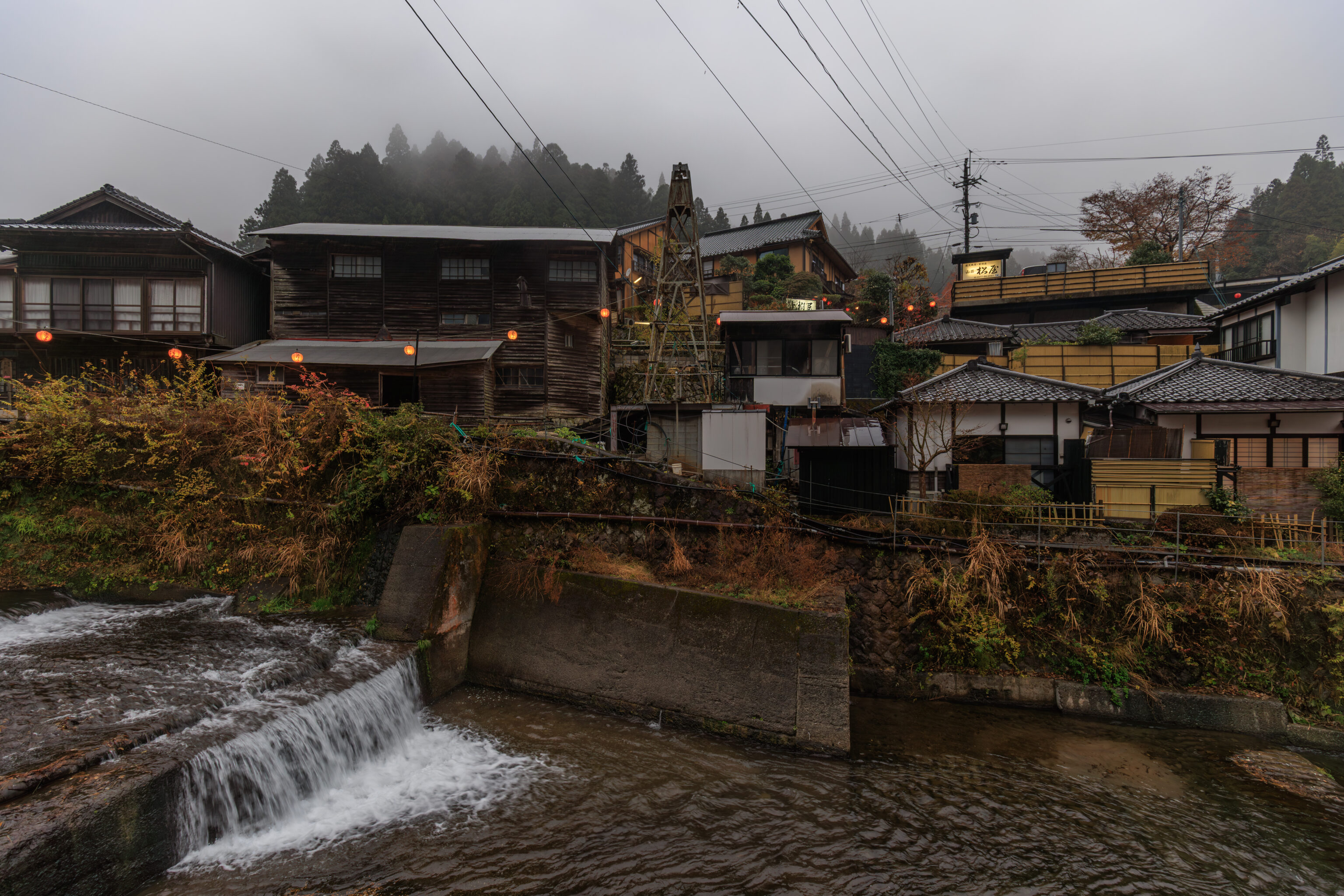
The view from this point looking west. From this perspective, the Kamiyanagiya is the highest building at the center of the photograph. Our room mioght be the window that is visible at the edge of the structure that looks like an oil derrick. Could this be a pump for extracting hot spring water from the ground?
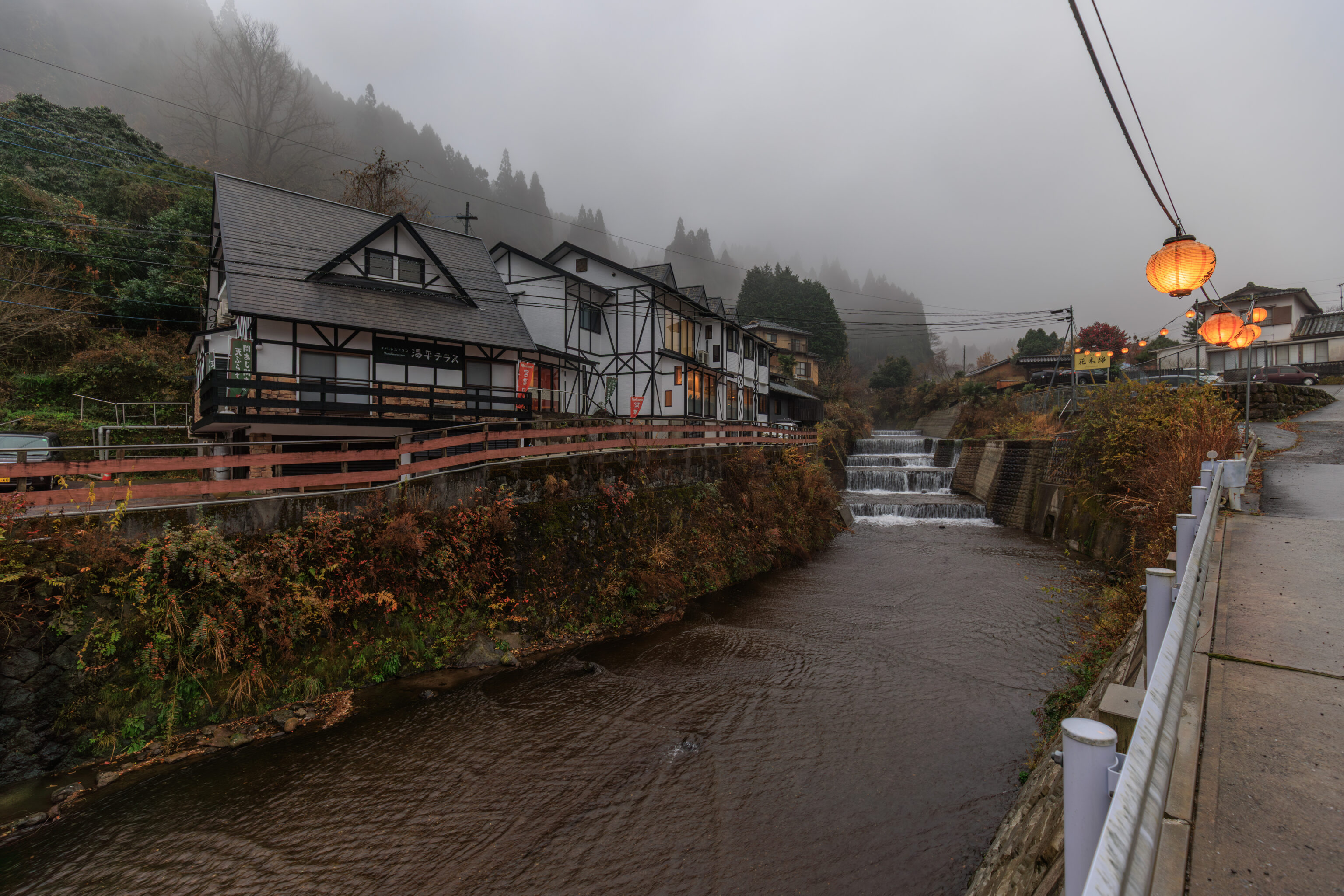
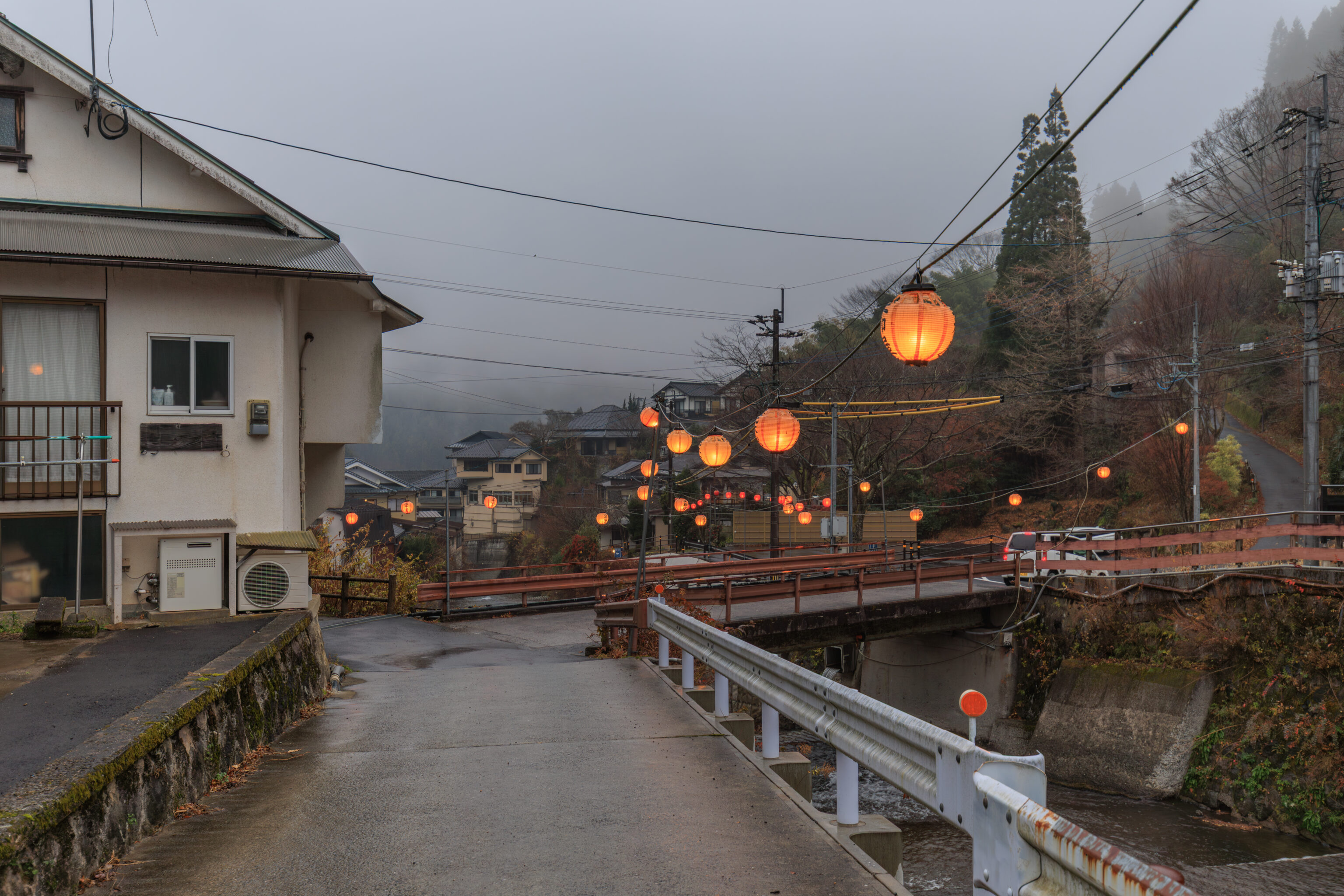
We started to head back, deciding to walk on the road rather than via the steep and wet path that we came down on.
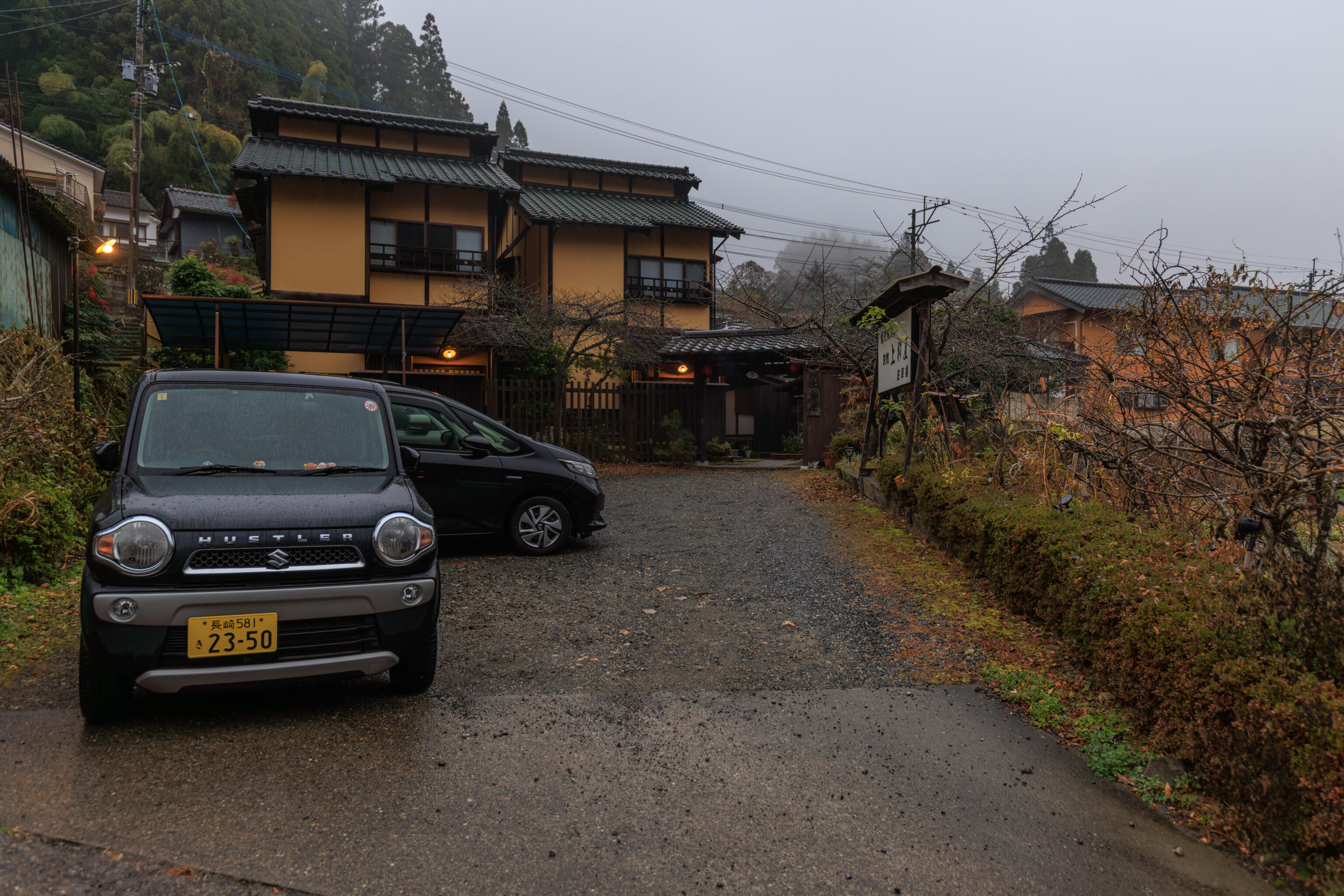
We returned via the entrance at Kamiyanagiya’s small parking lot.
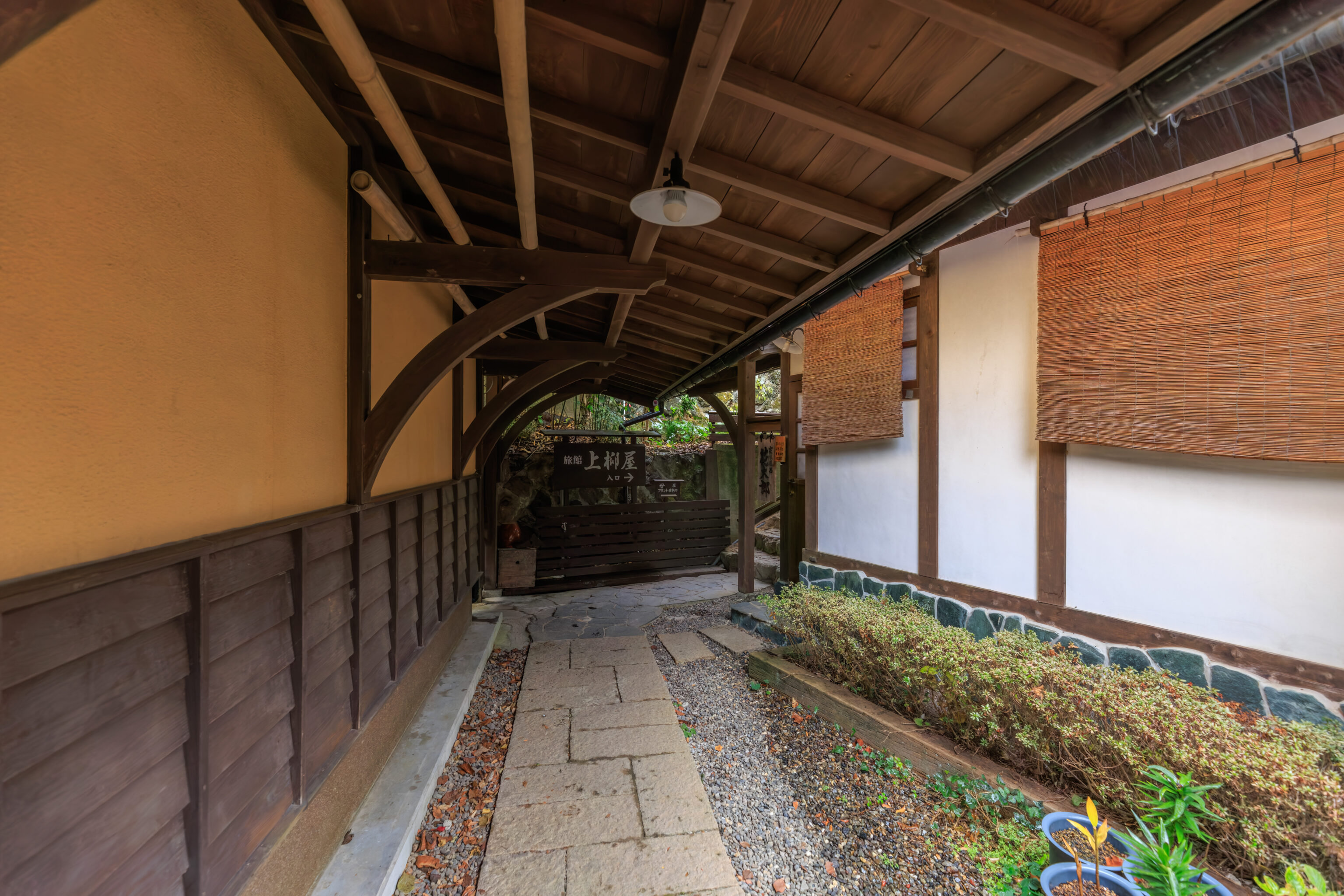
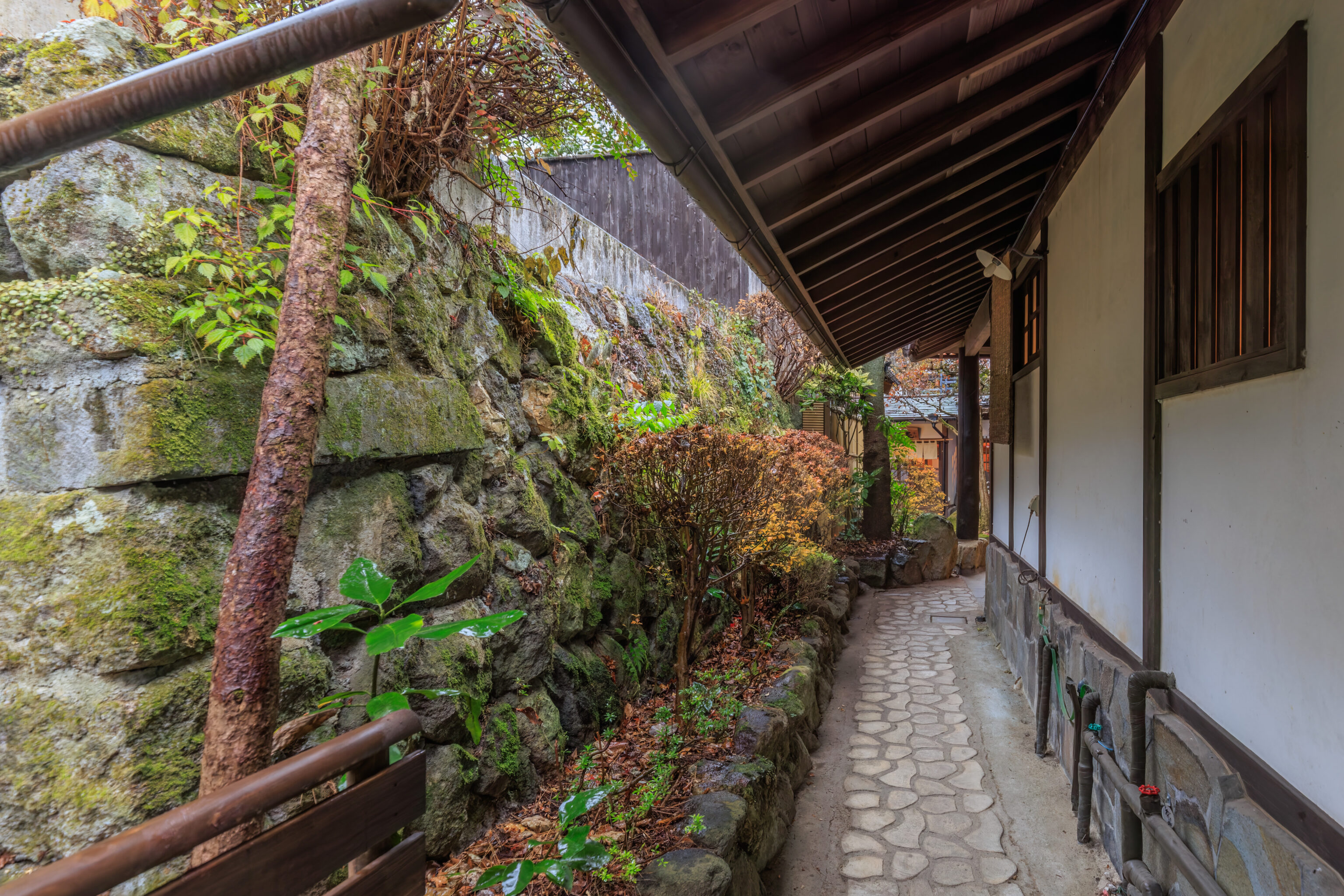
This path leads past the two detached rooms to the ryokan’s main building.
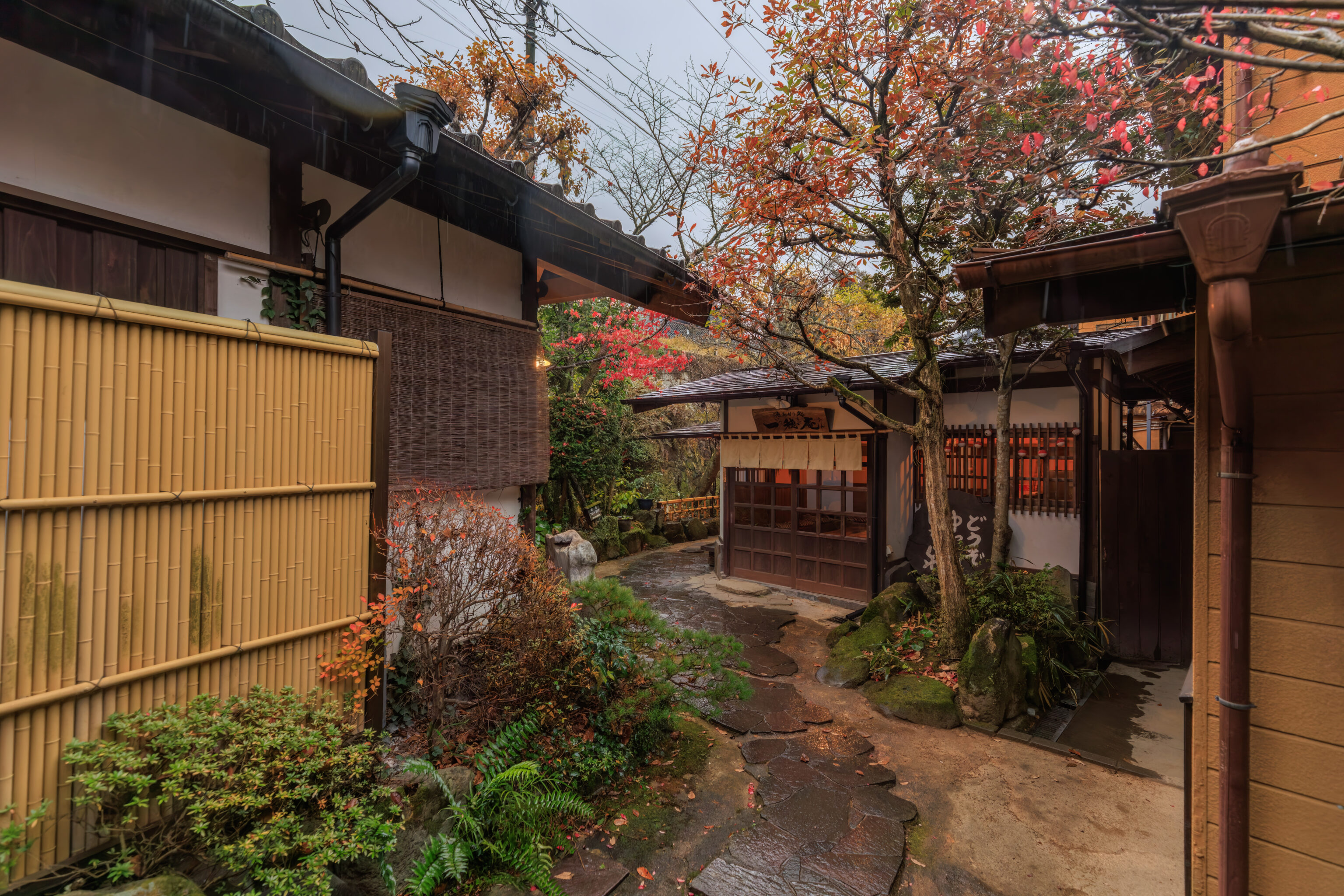
This is the area with the onsen. There is a indoor onsen on the left, two on the left around where we are standing, and a final indoor onsen behind us.
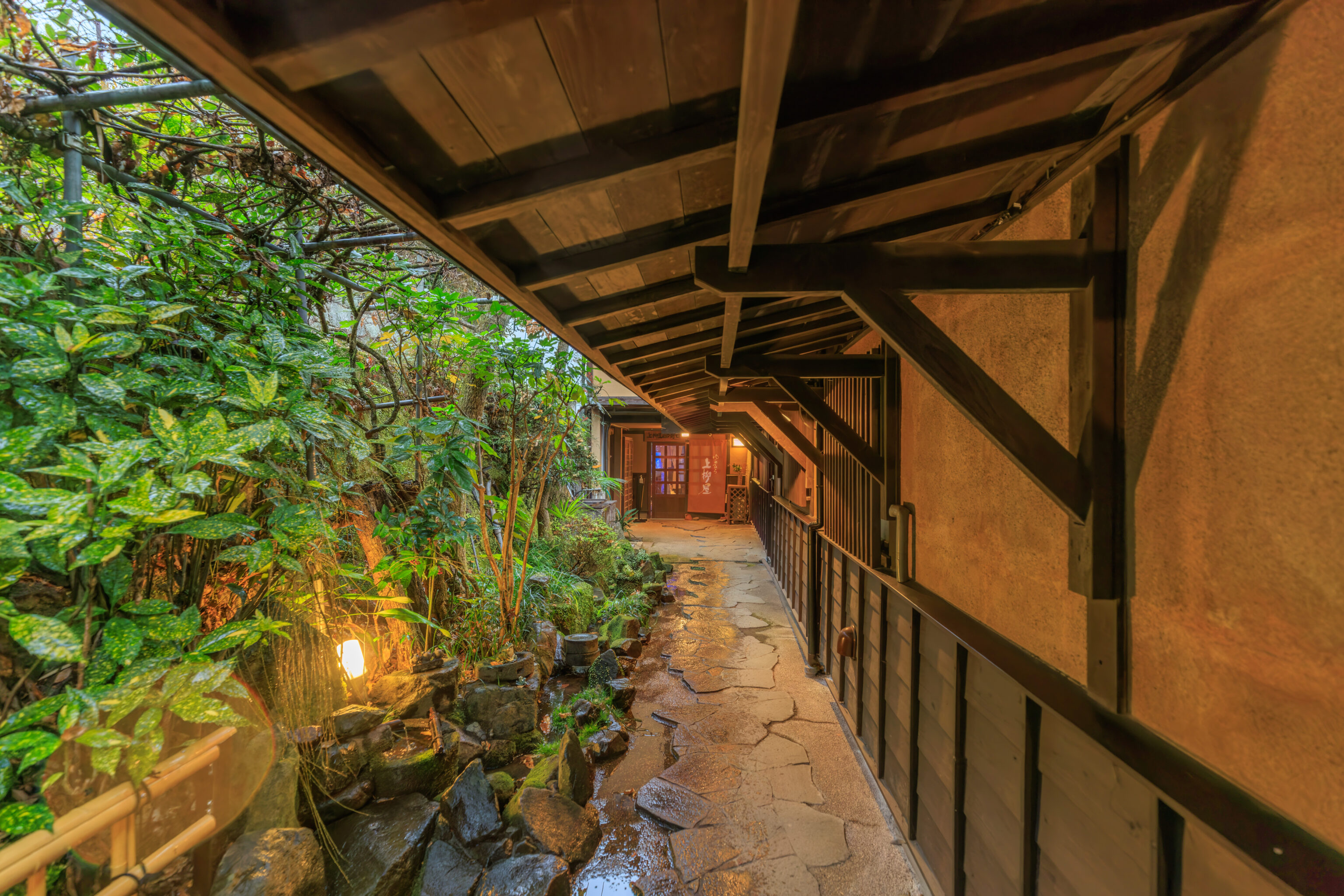
We continued on to the rear entrance of the main building.
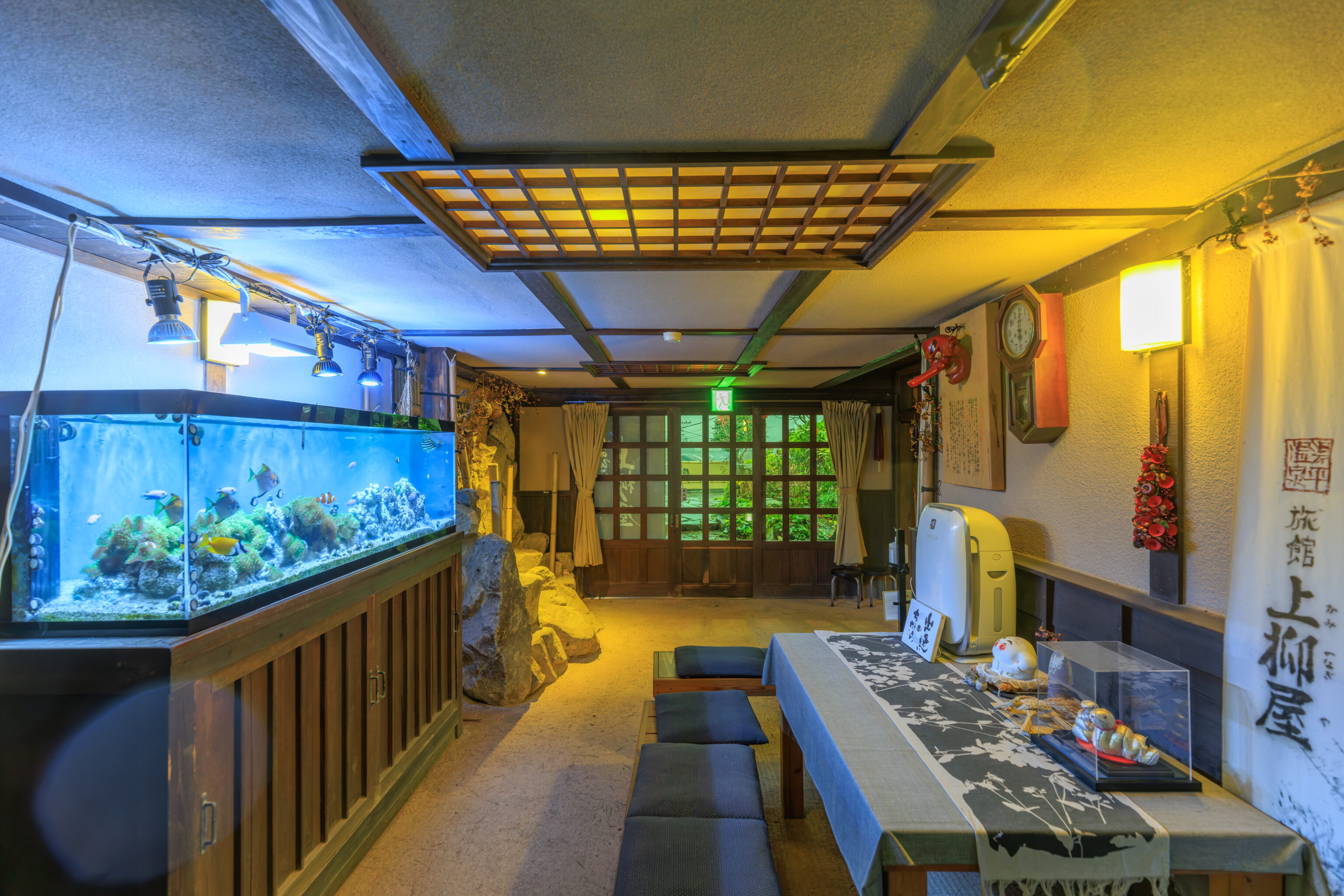
The lobby area is pretty simple with a nice fish tank on the left and a table on the right. There is another table and the ryokan’s front desk around the corner. The door directly in front of us is the front door to the building.
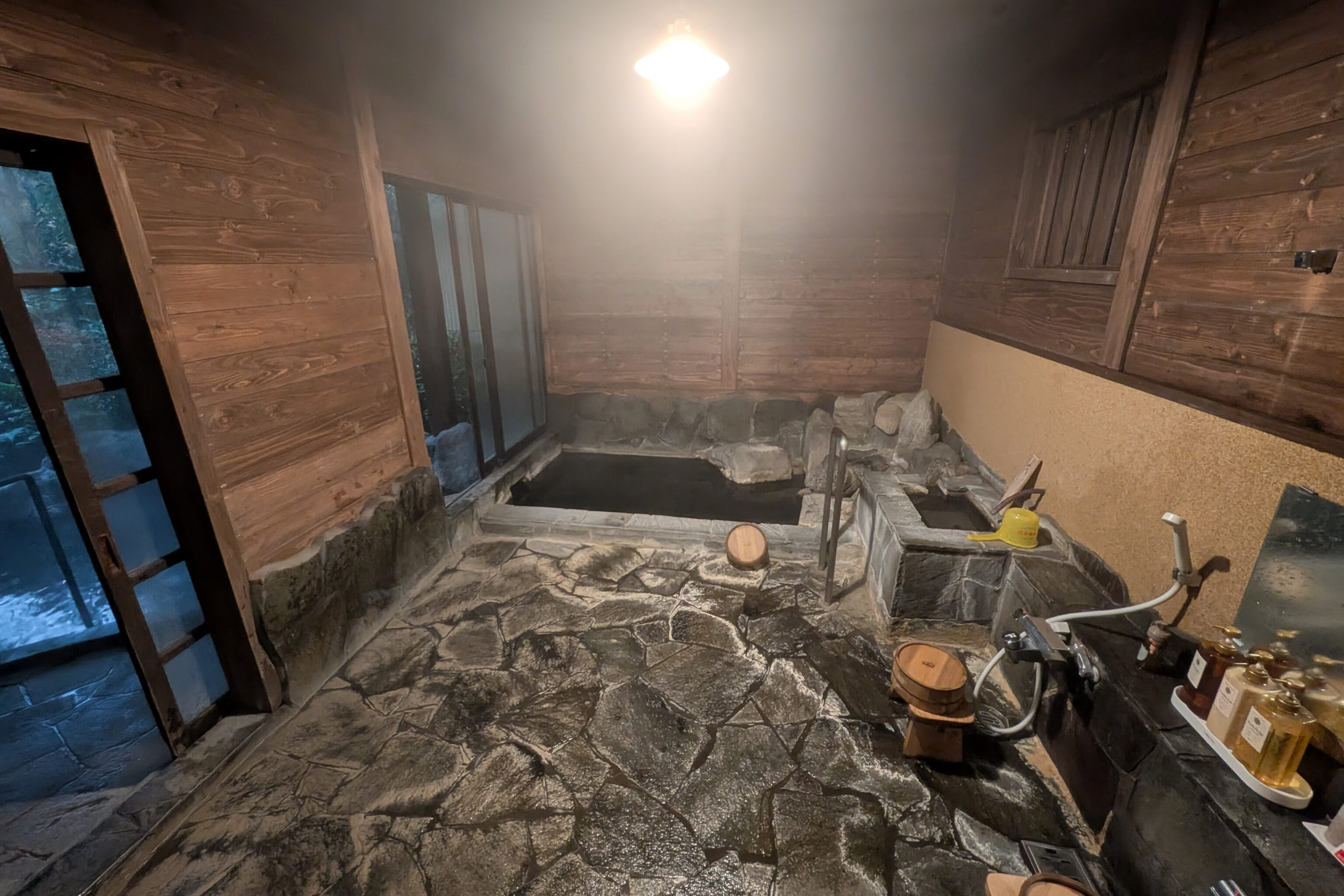
After returning to our room, we changed into our yukata to visit the onsen.
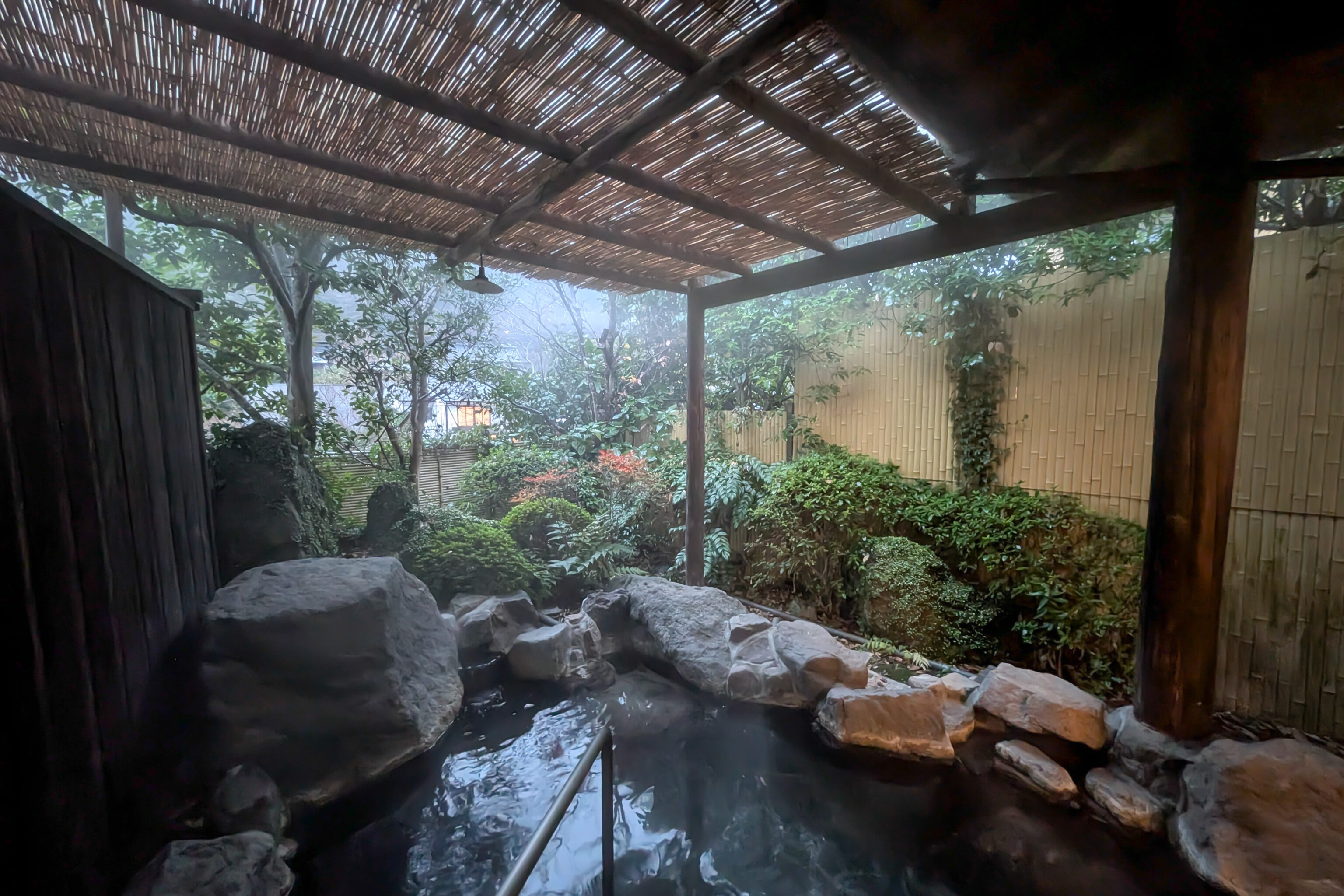
We used the same outdoor onsen that we used yesterday night.
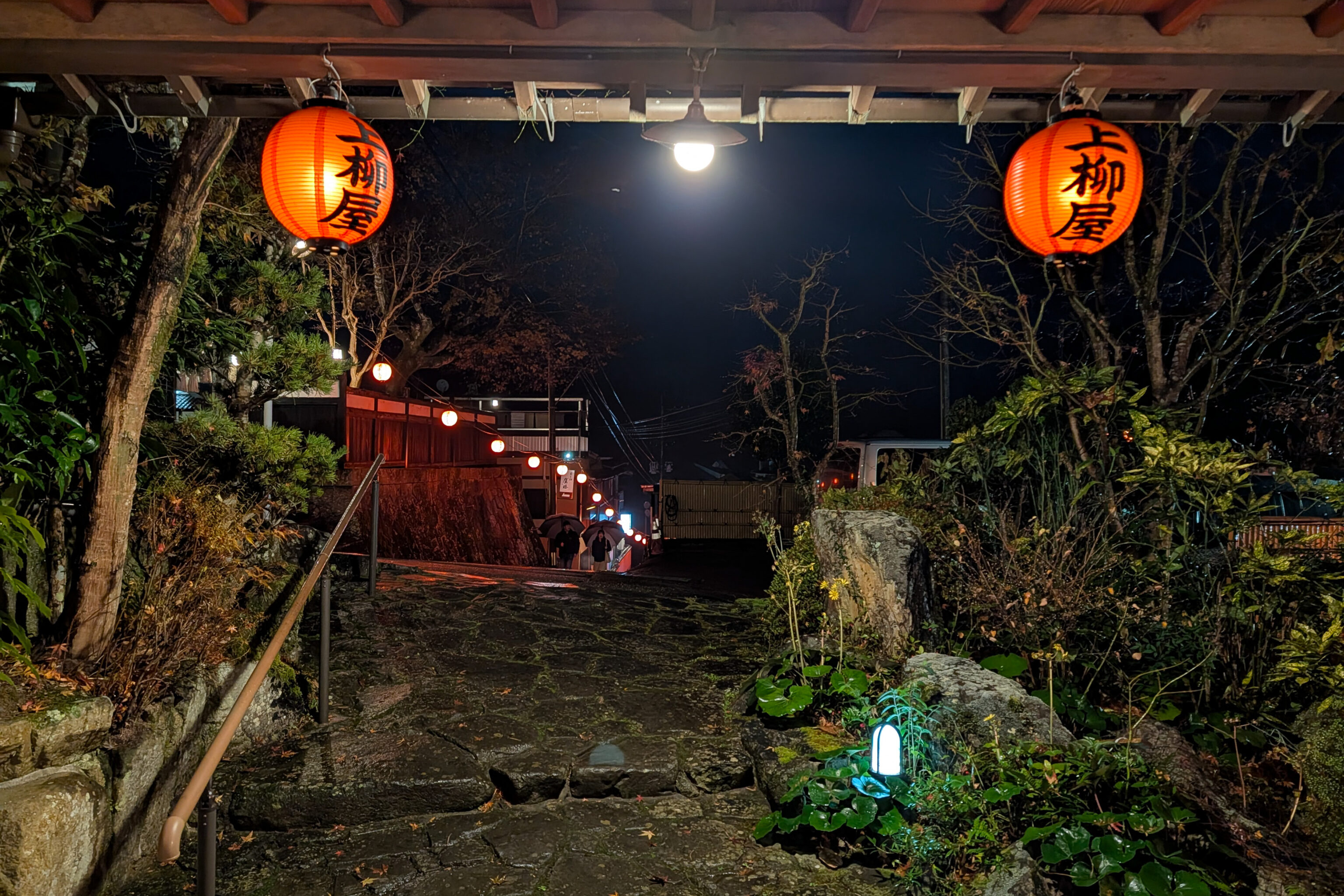
After enjoying the onsen, we took a quick look out the front door before returning to our room to get ready for dinner at 6pm.
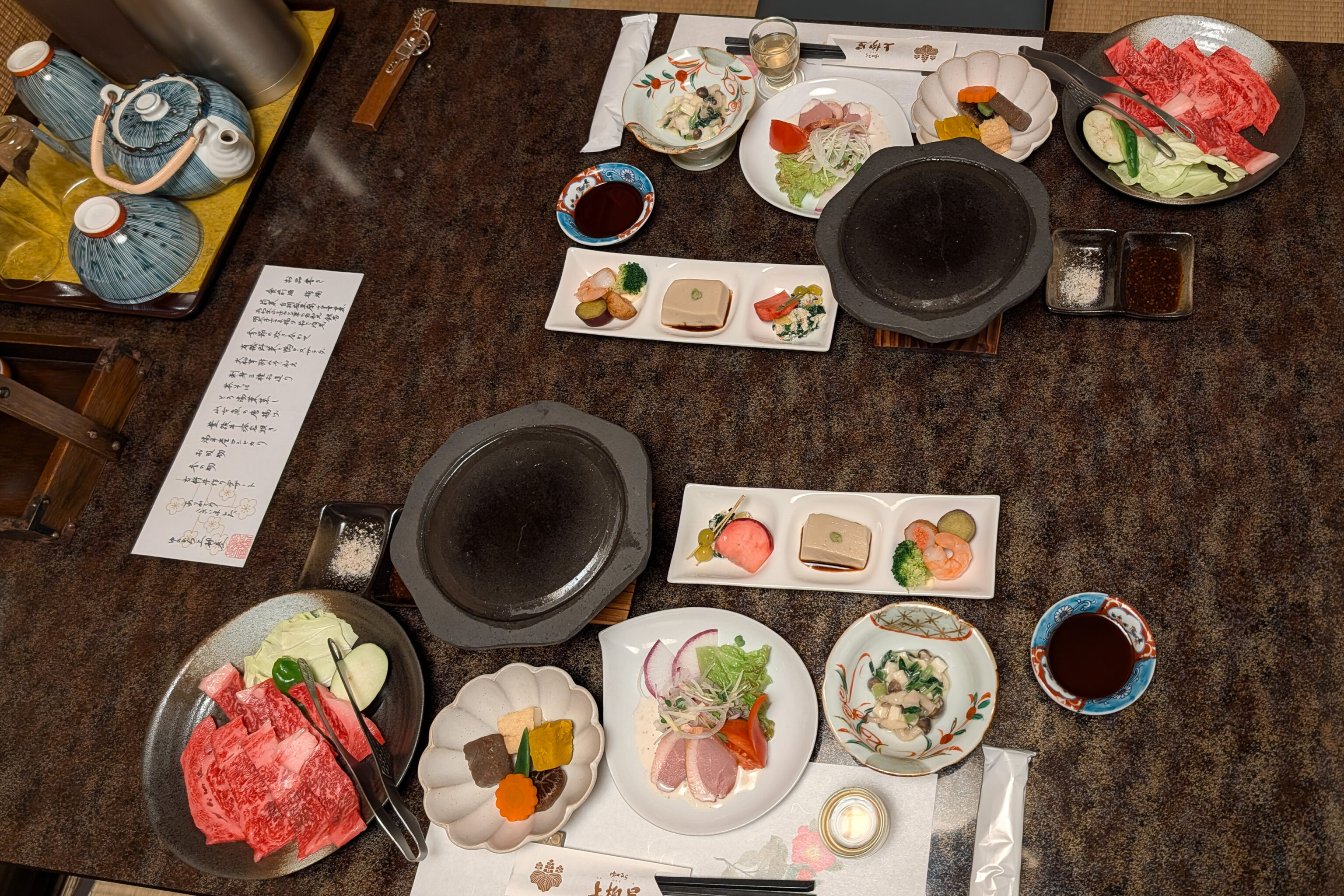
Once again, most of our dinner was laid out on the table when we arrived in the dining area. This was, again, the same table as the previous two meals.
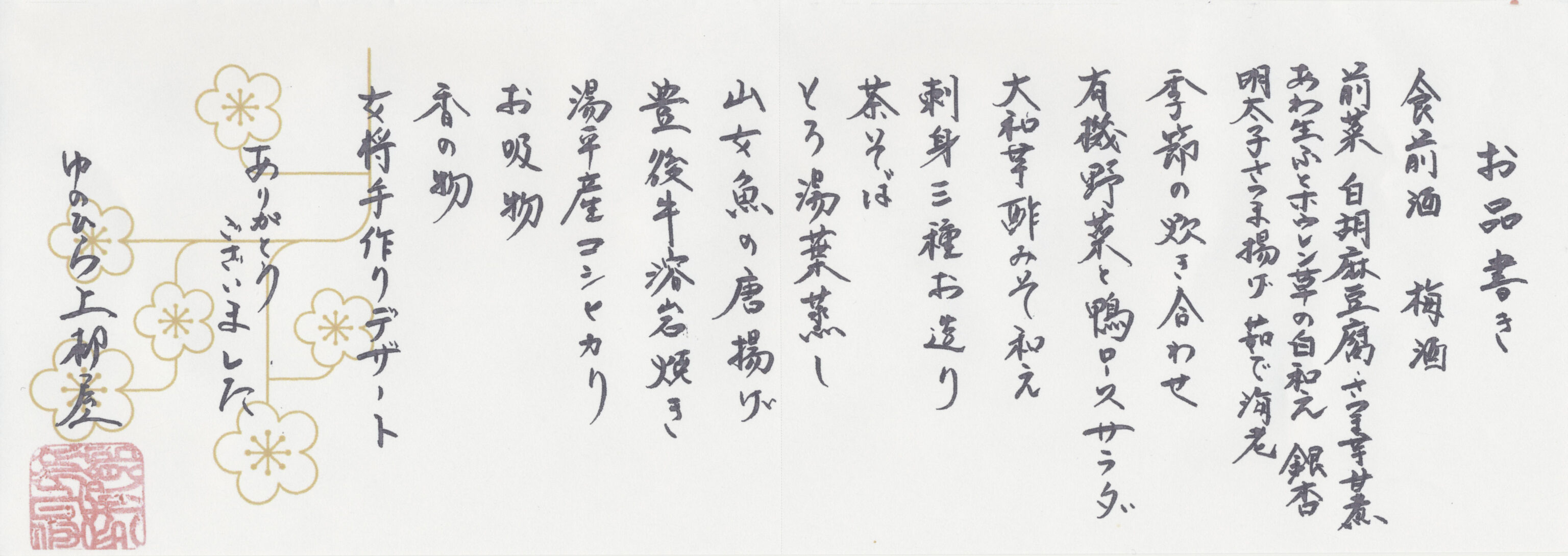
Menu
Aperitif: Plum Wine
Appetizers:
  White Sesame Tofu
  Sweet-Simmered Sweet Potato
  Millet Wheat Gluten and Spinach in White Sesame Dressing
  Ginkgo Nuts
  Spicy Cod Roe Fish Cake
  Boiled Shrimp
Seasonal Simmered Assortment
Organic Vegetable and Duck Breast Salad
Yamatoimo with Vinegar-Miso Dressing
Sashimi: Three-Variety Assortment
Green Tea Soba
Steamed Creamy Tofu Skin
Deep-fried Yamame Trout
Bungo Beef Grilled on Lava Stone
Yunohira-grown Koshihikari Rice
Clear Soup
Konomono
Handmade Dessert by the Okami

Thank you very much
Yunohira Kamiyanagiya
– Text from the menu, translated using Google Gemini and Translate.
There are a few items that aren’t entire obvious, and it seems we may have missed photographing the Yamatoimo with Vinegar-Miso Dressing, although it could be it was plated with something else.
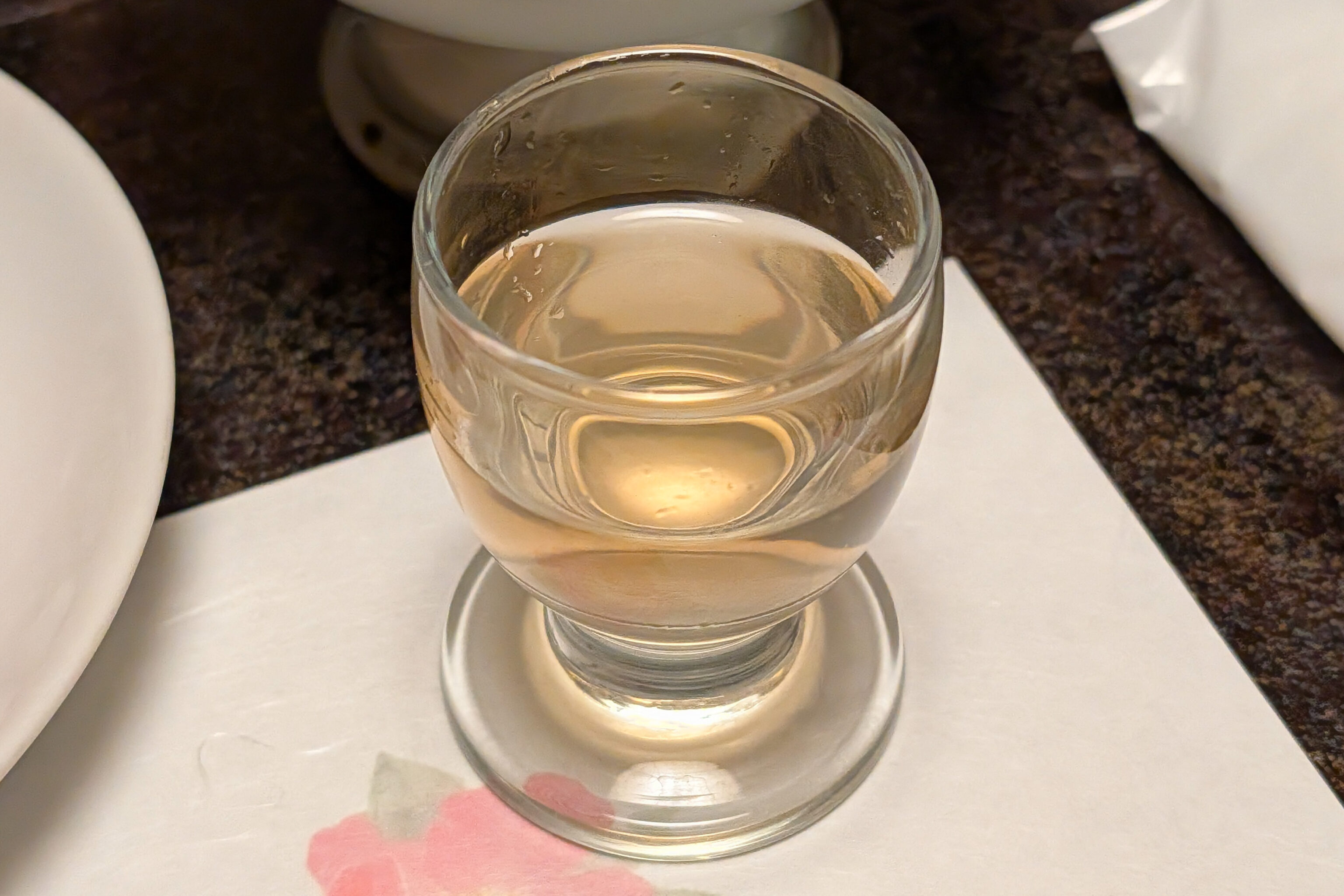
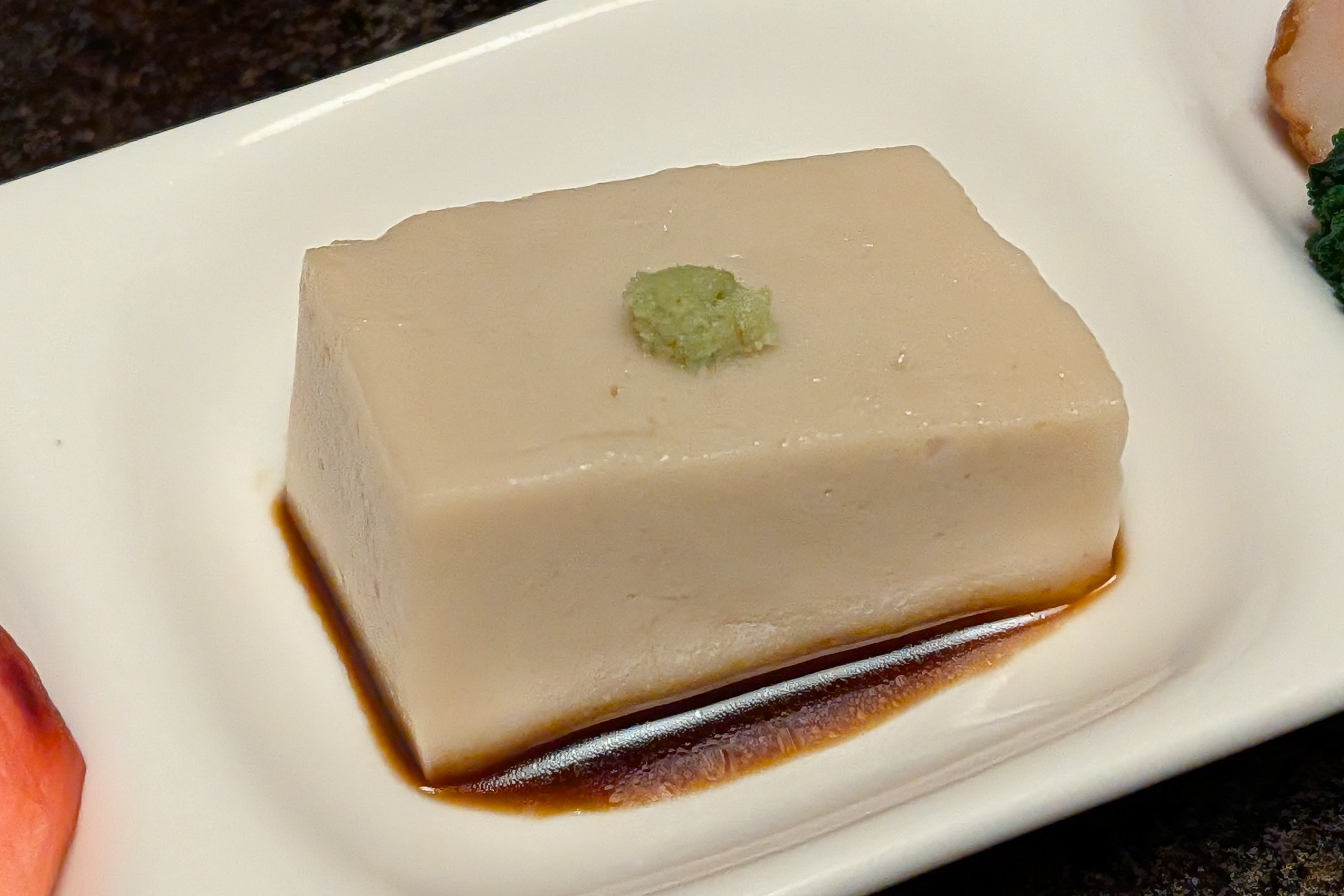
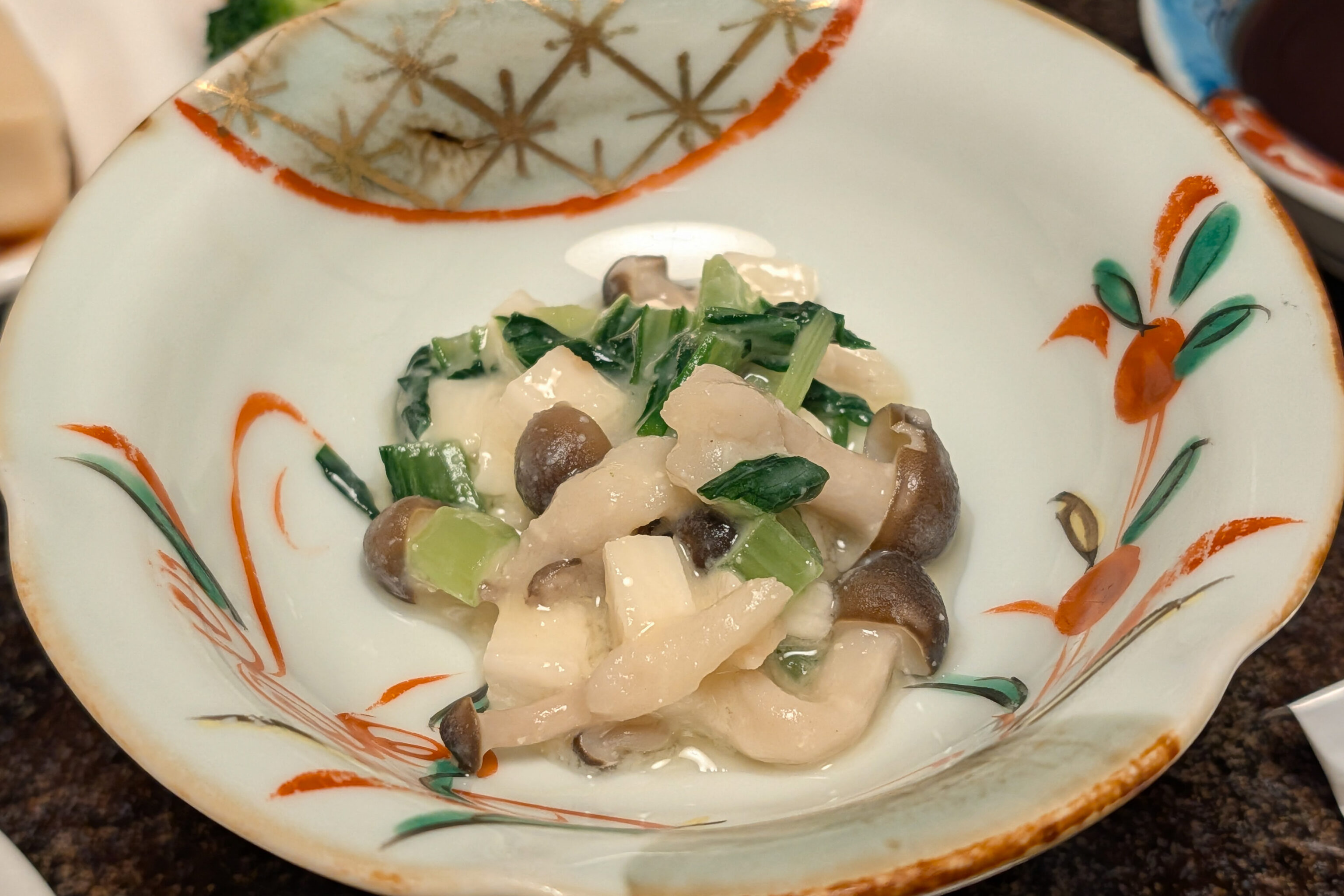
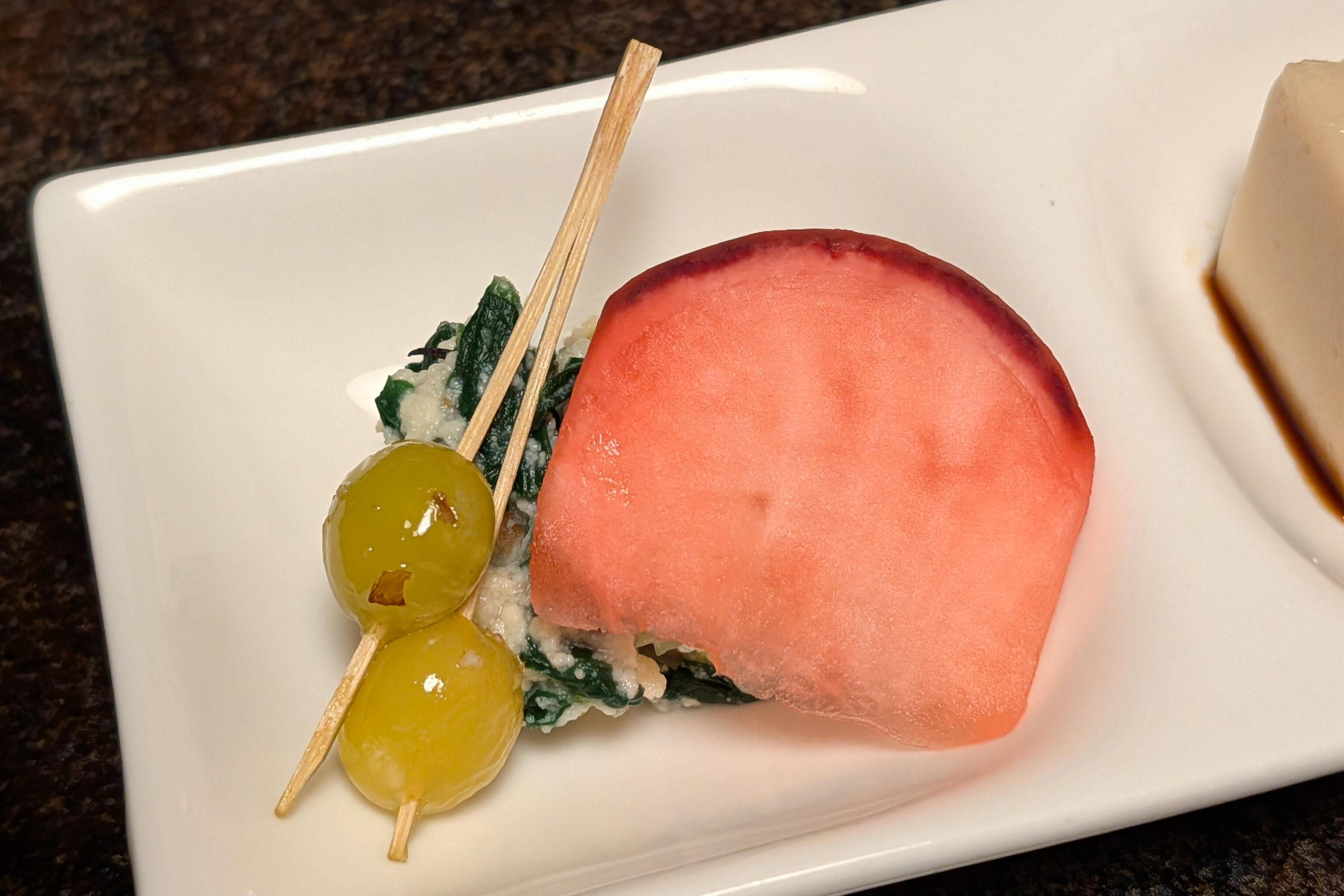
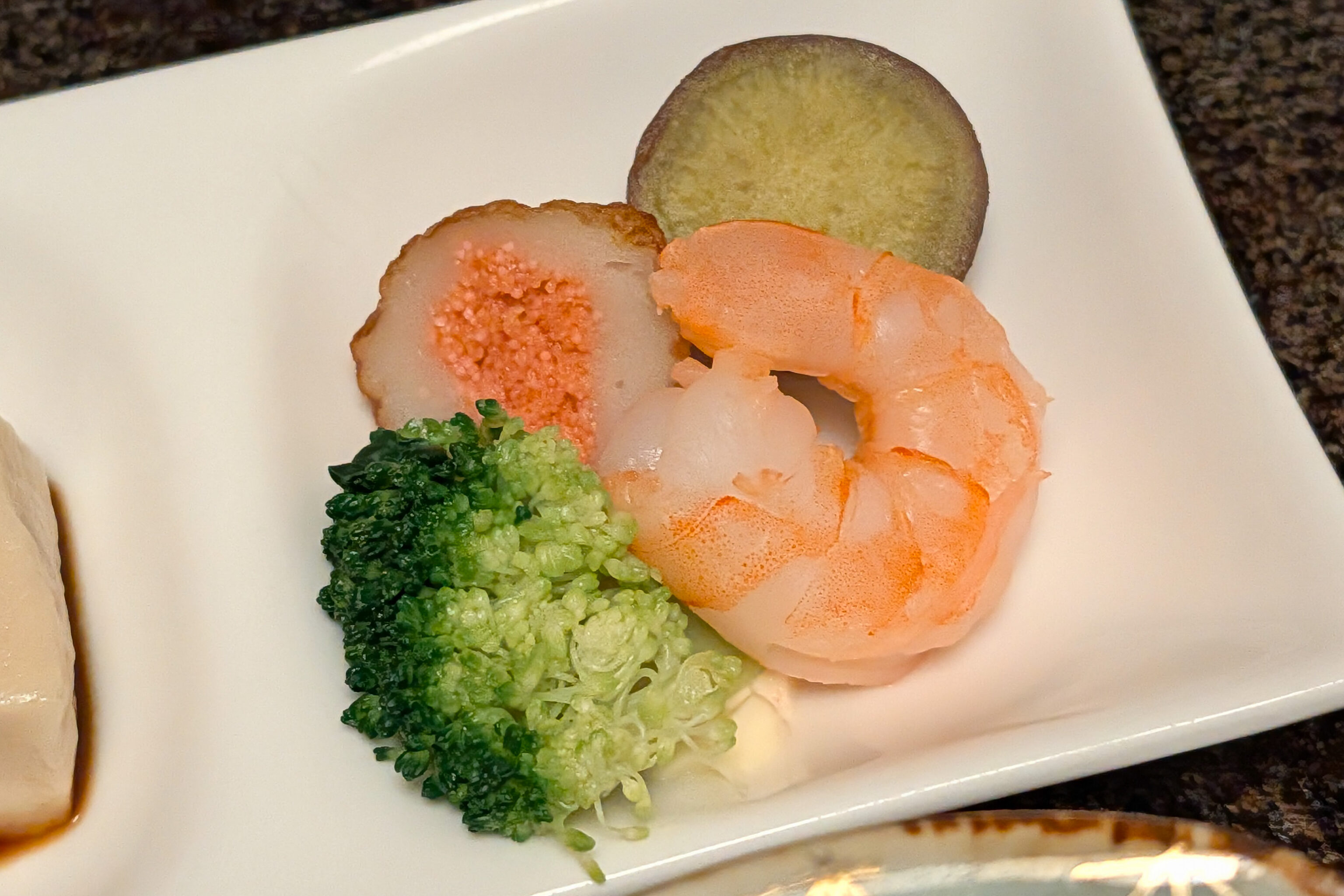
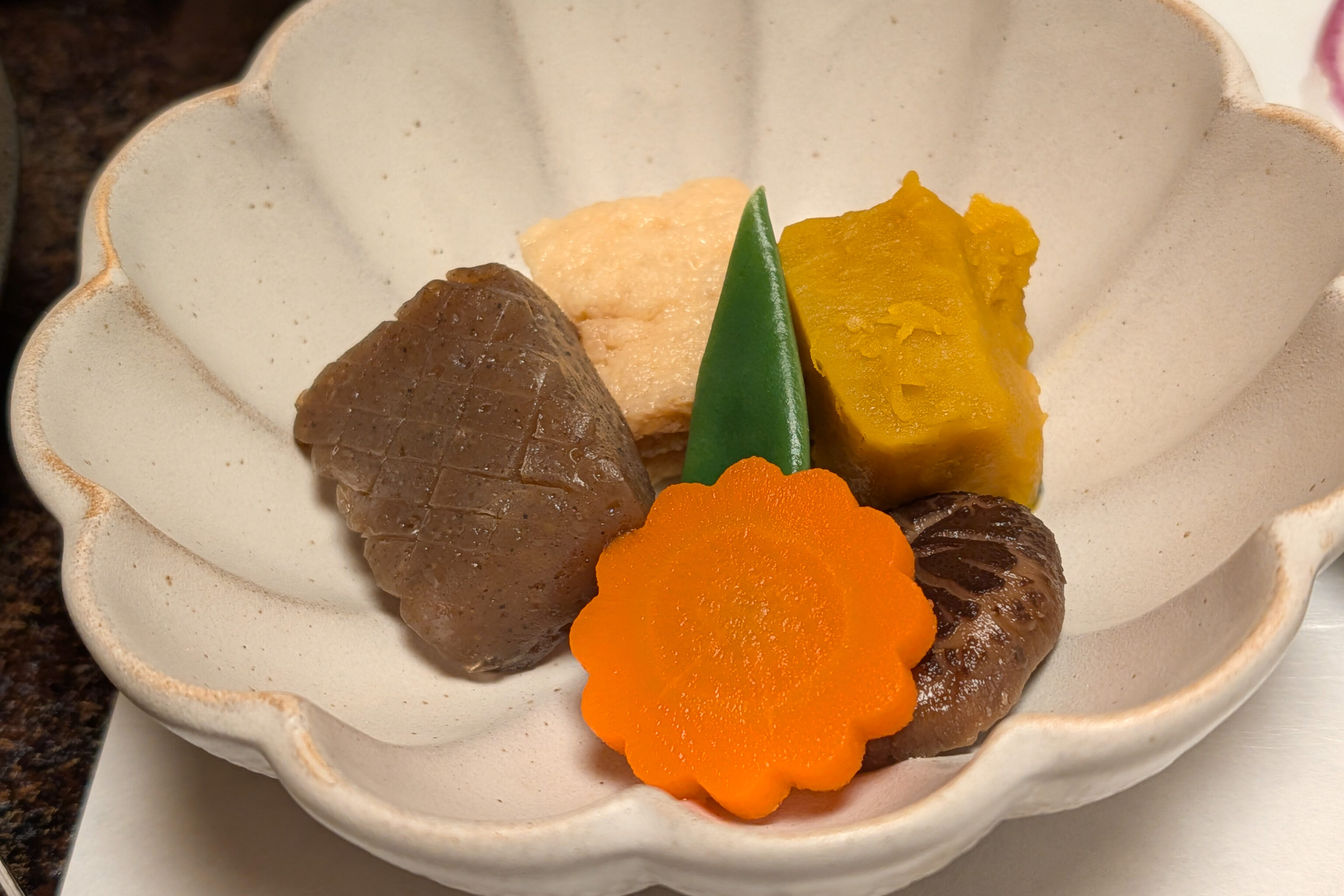
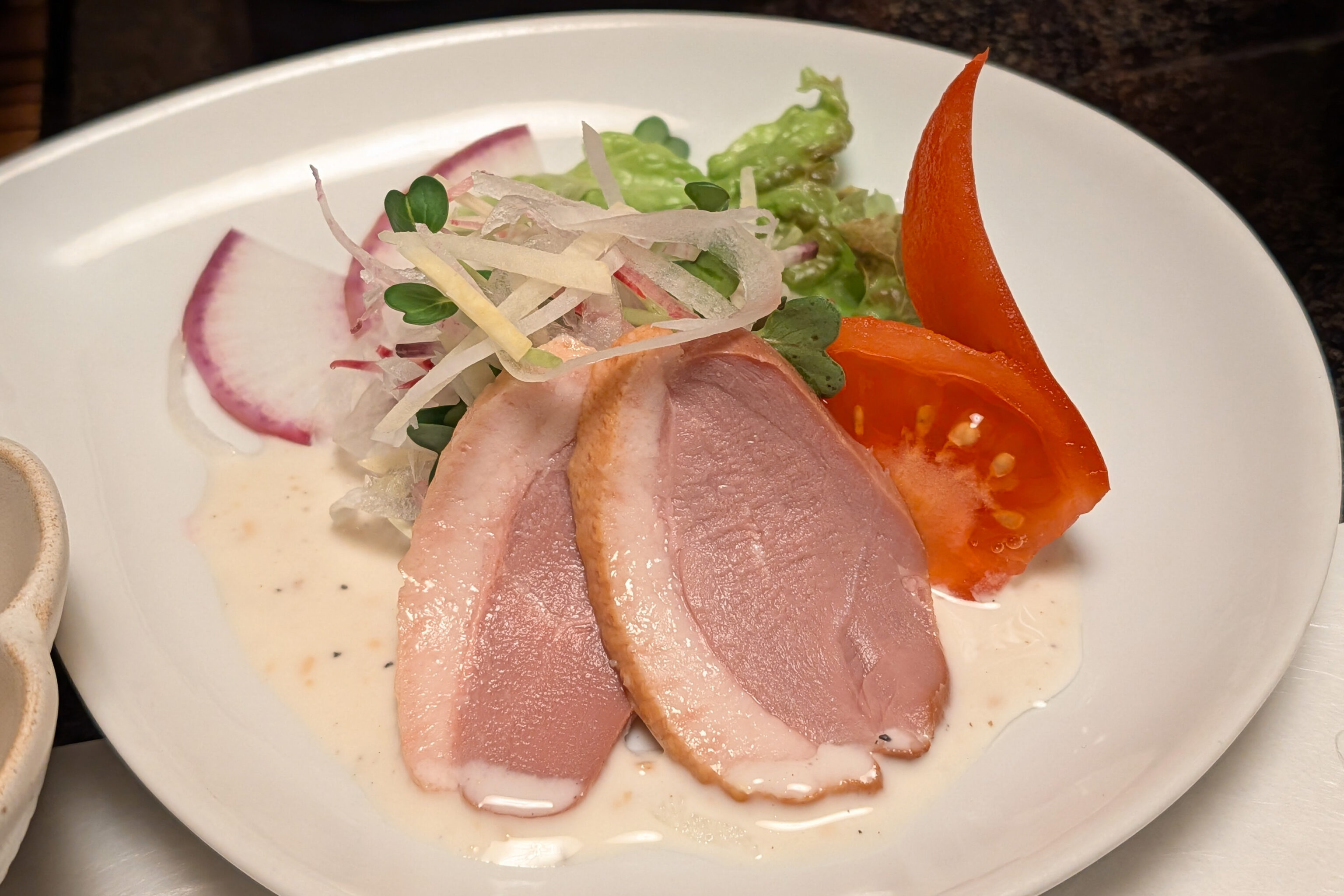
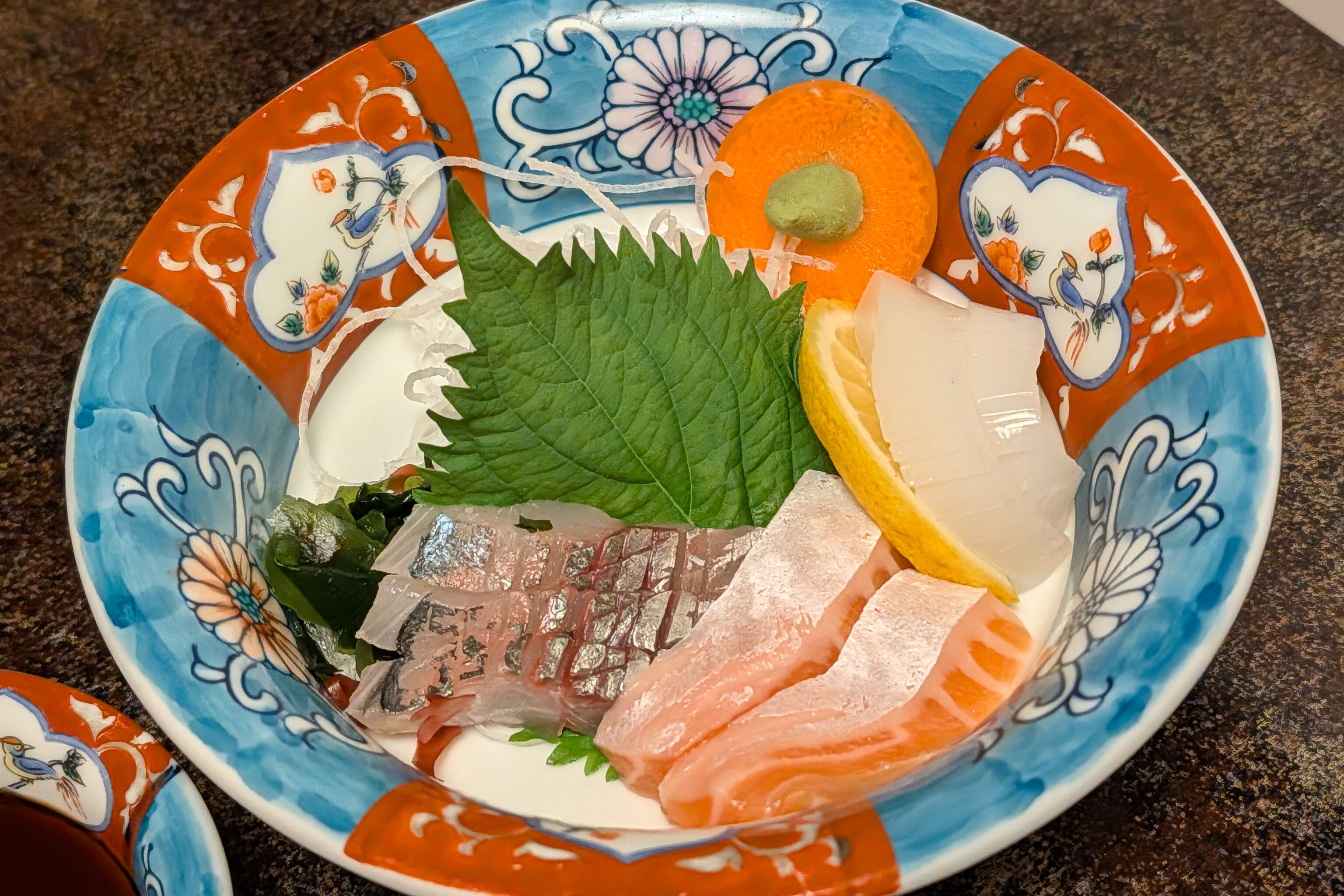
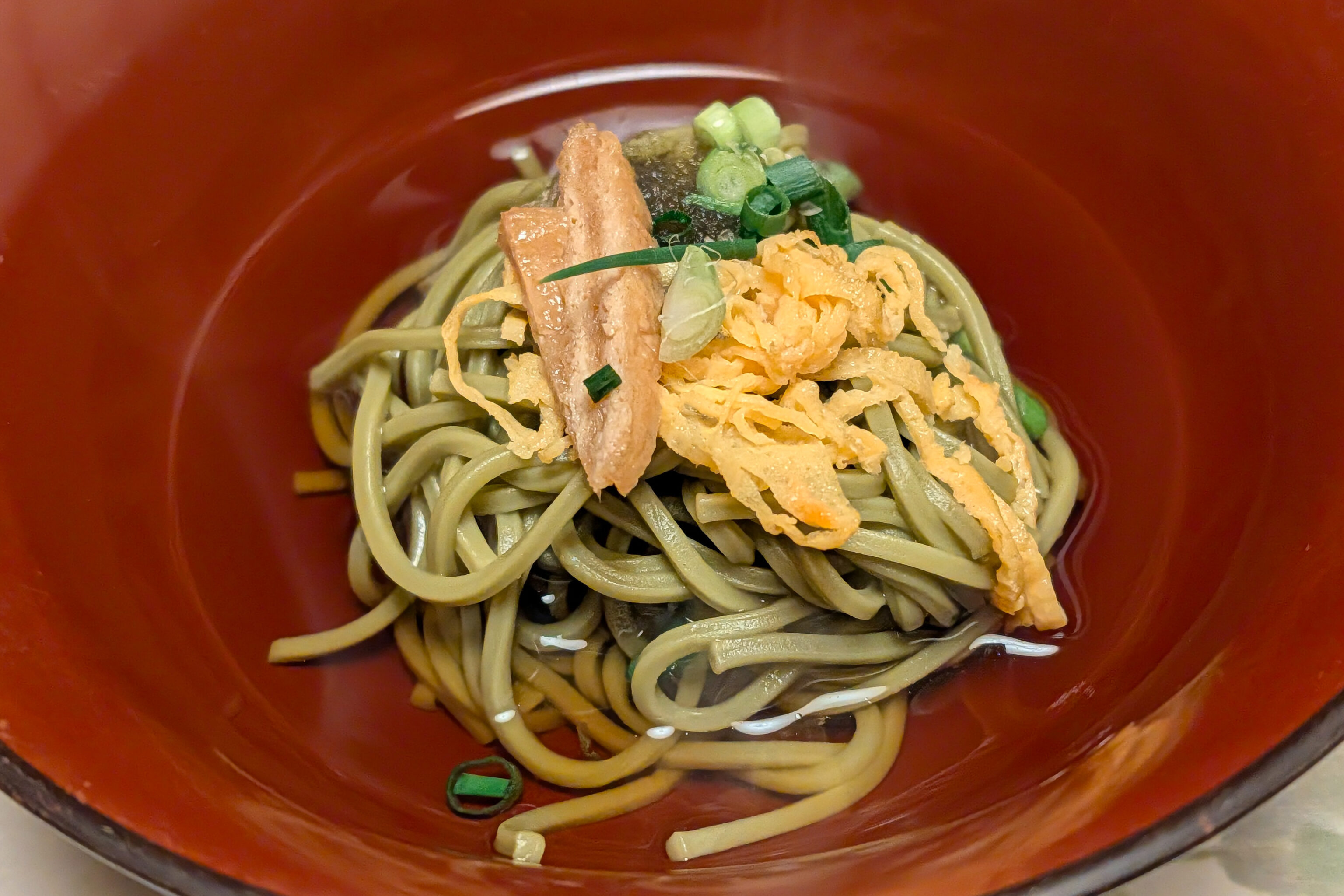
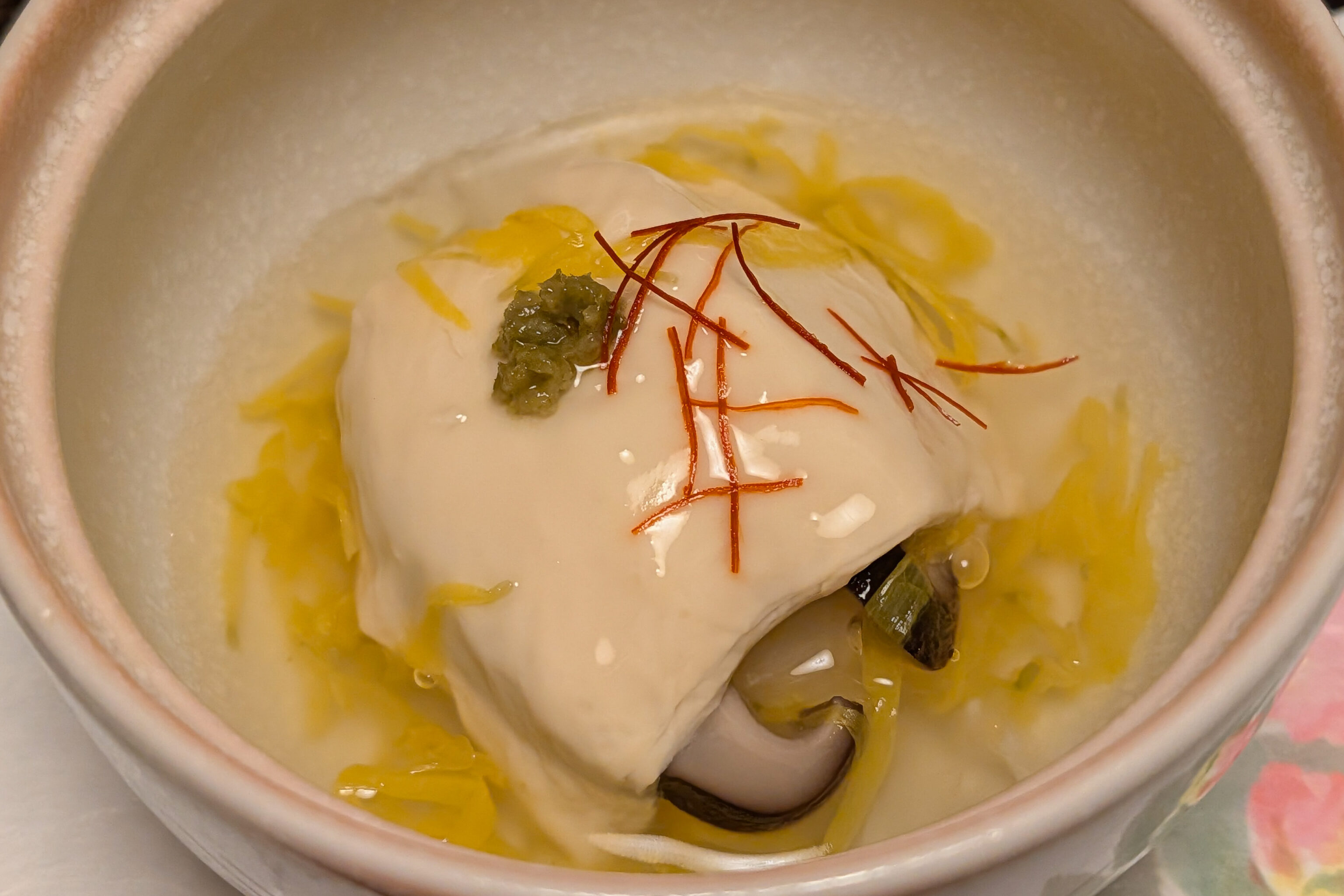
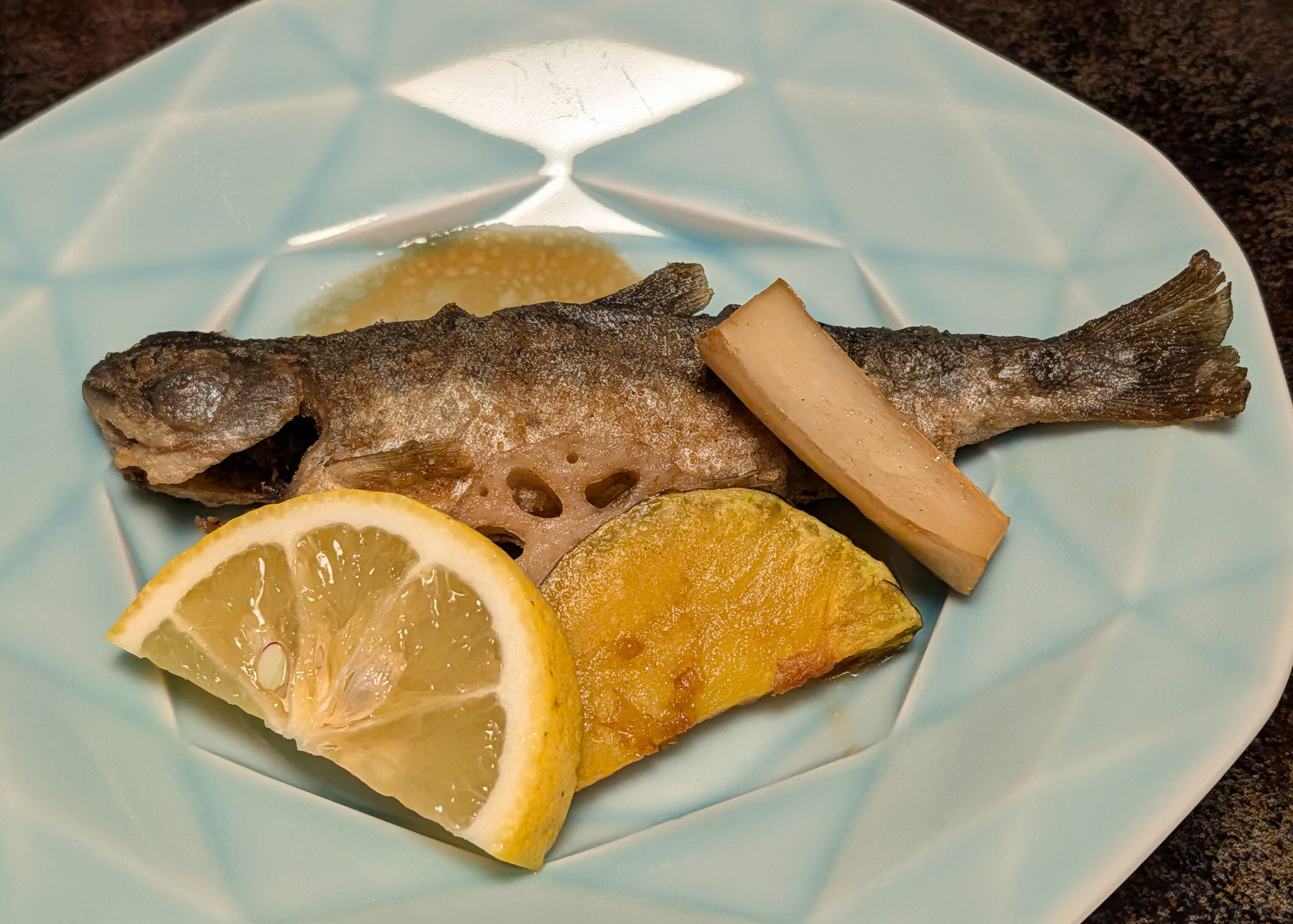
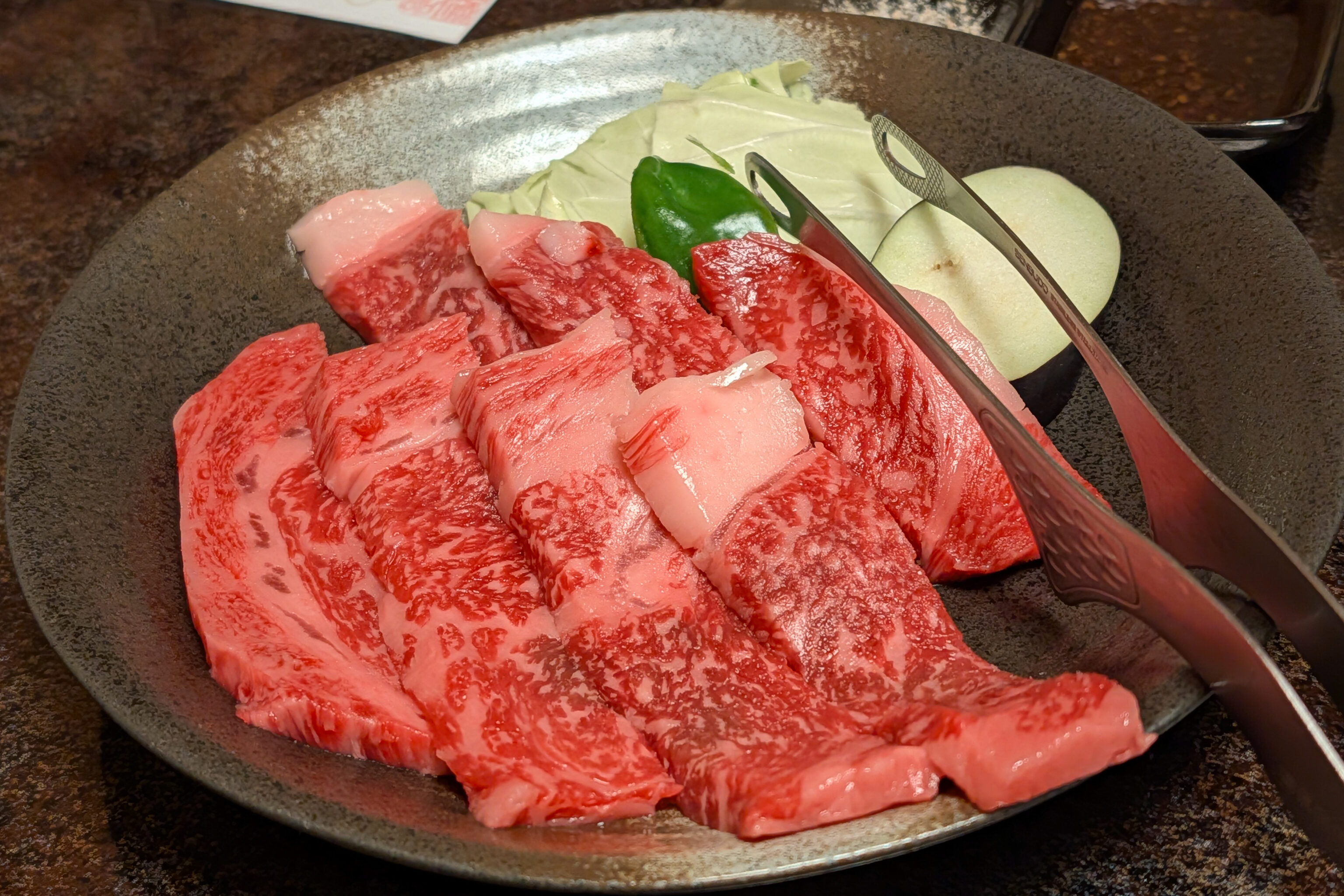
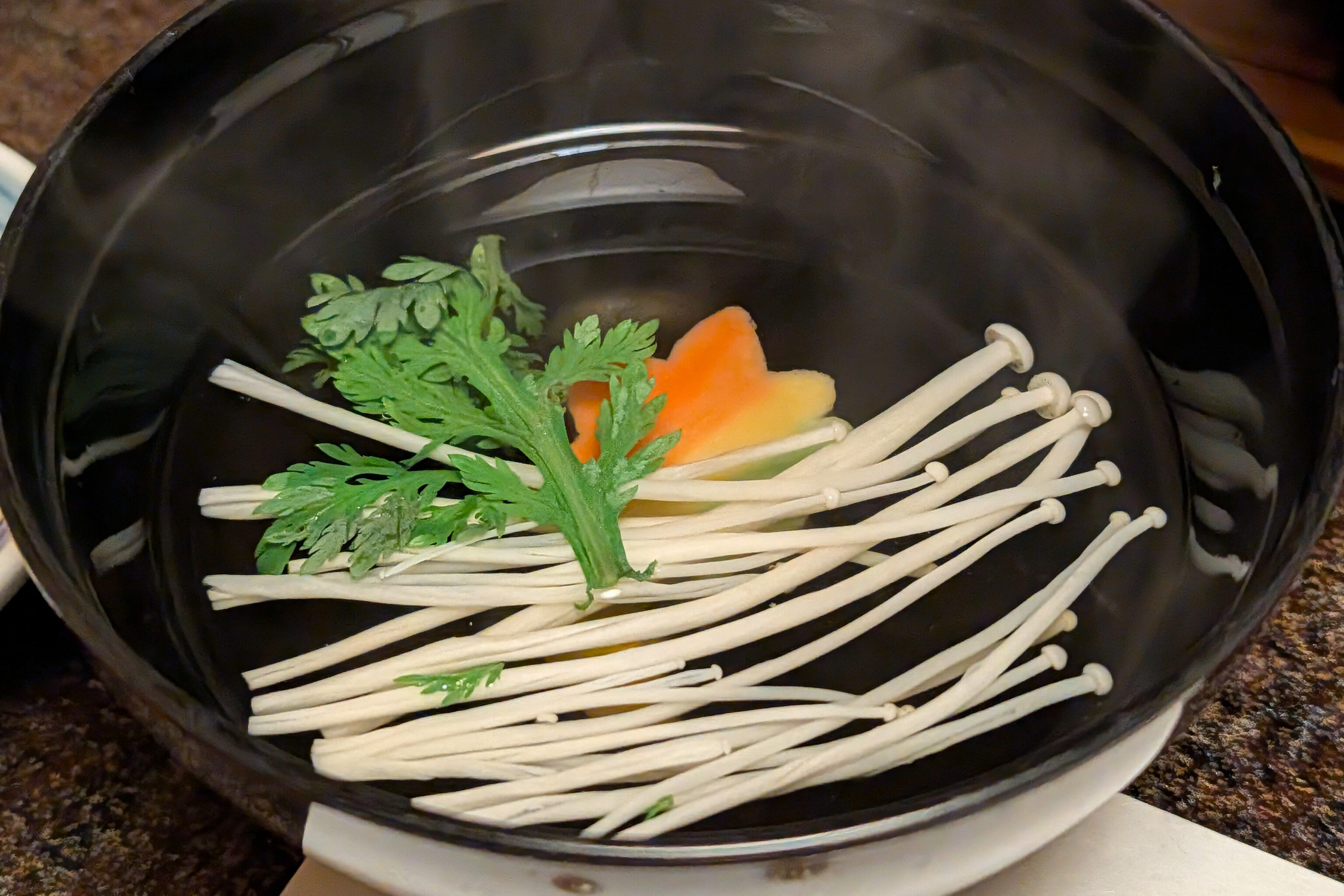
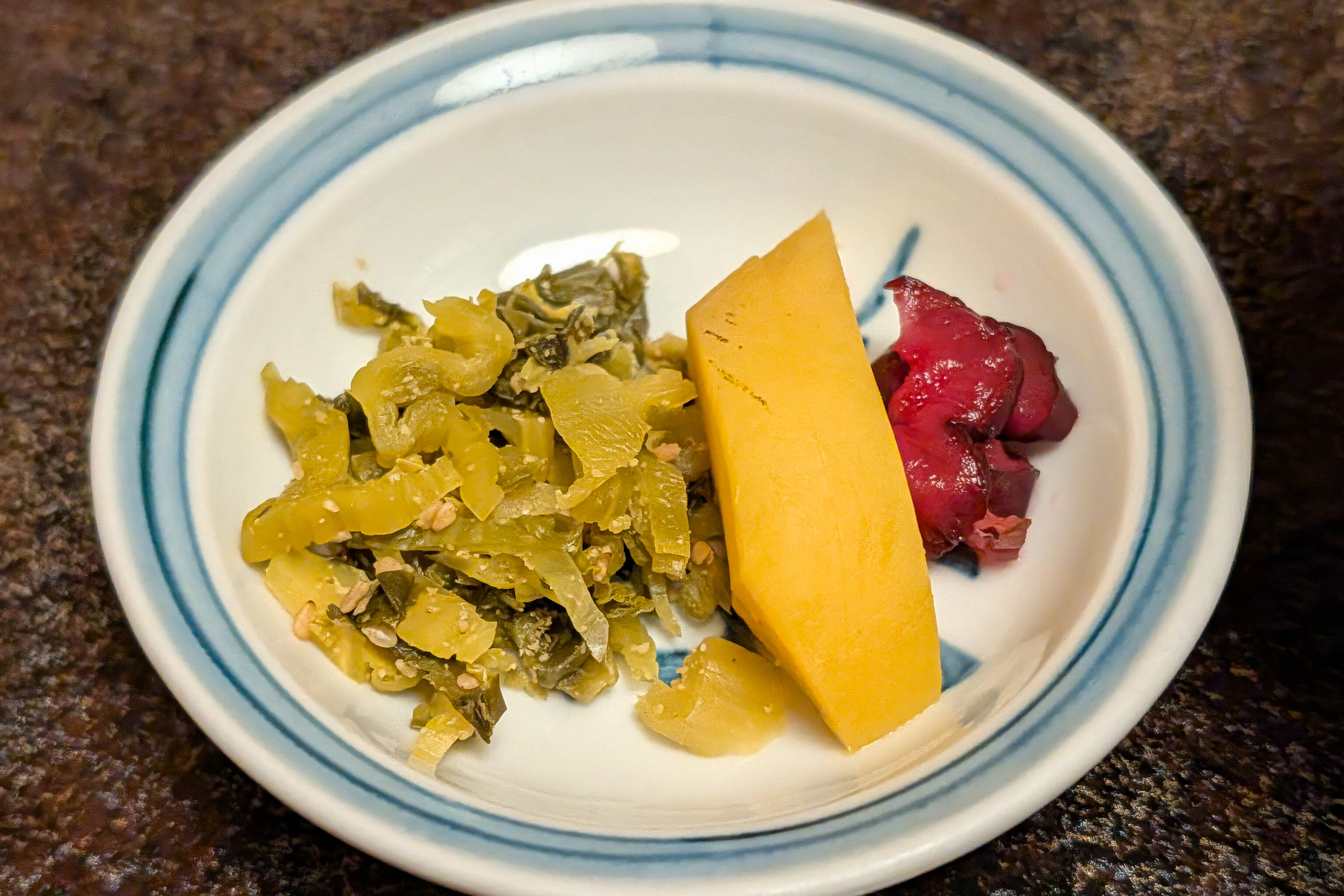
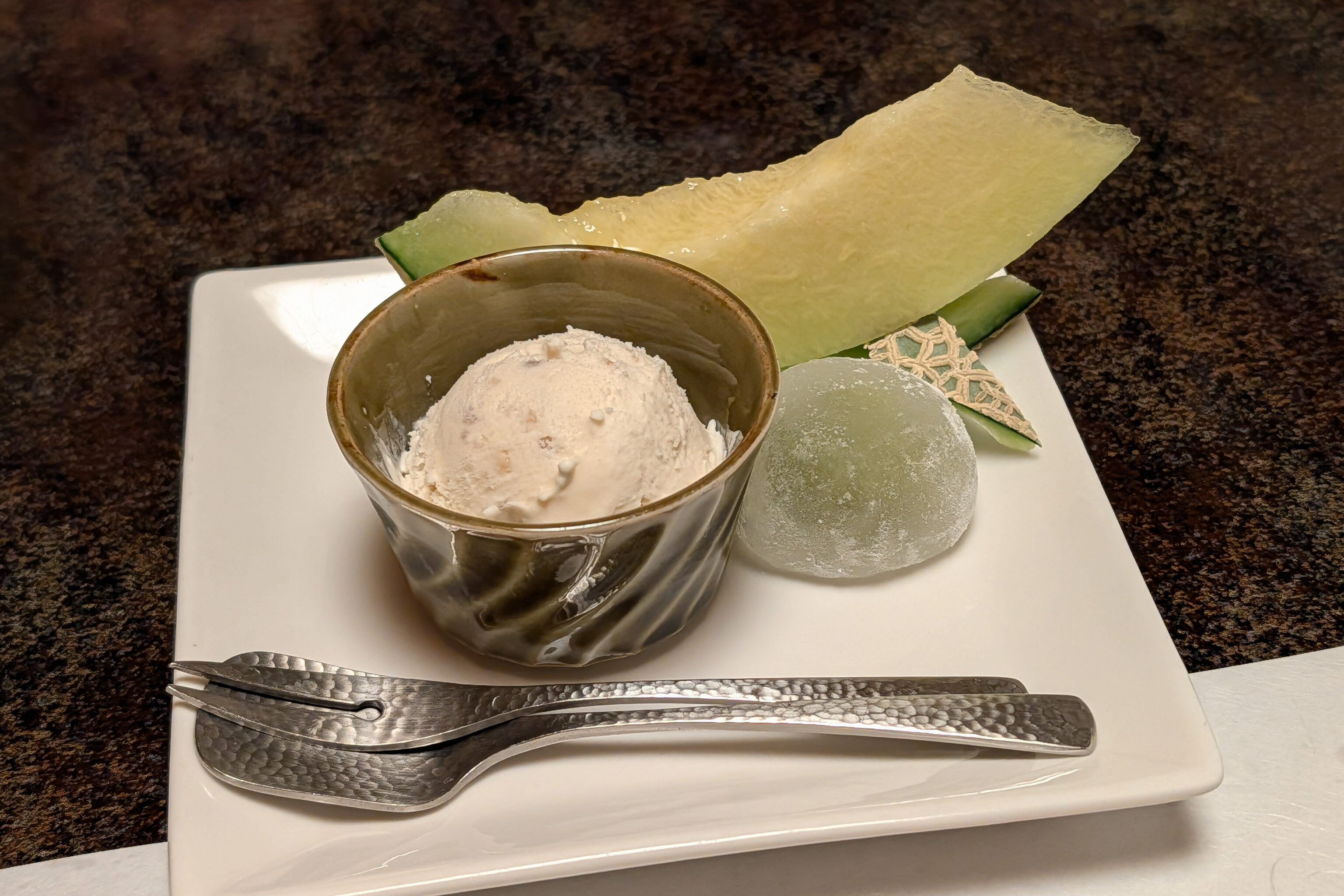
Overall, it was again another excellent meal! While the wagyu wasn’t as good as the Bungo wagyu we had for lunch at Keisyuan, it was still very good and better than the beef we’re usually able to reasonably get back at home.
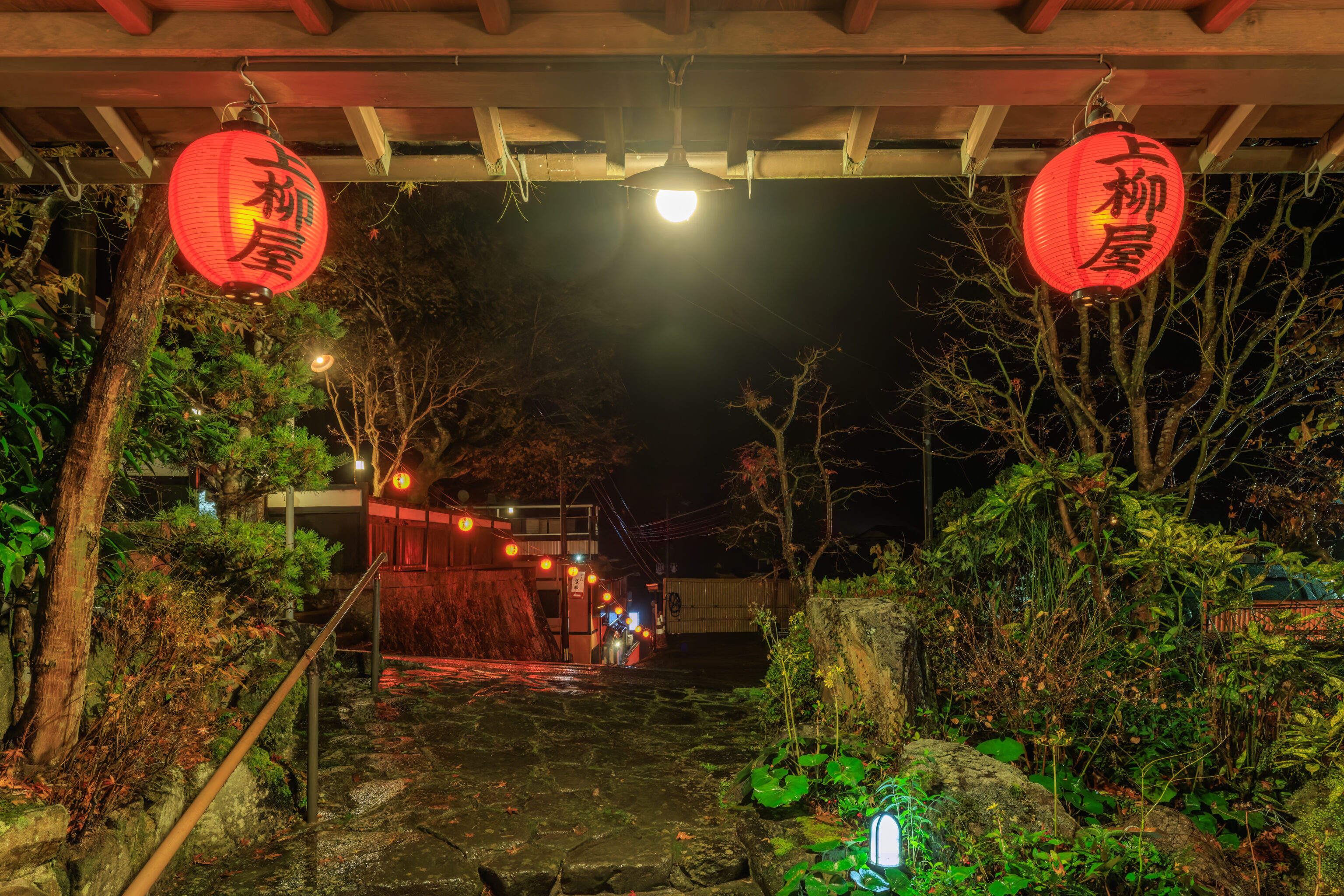
The view looking out of the ryokan’s front door after dinner.
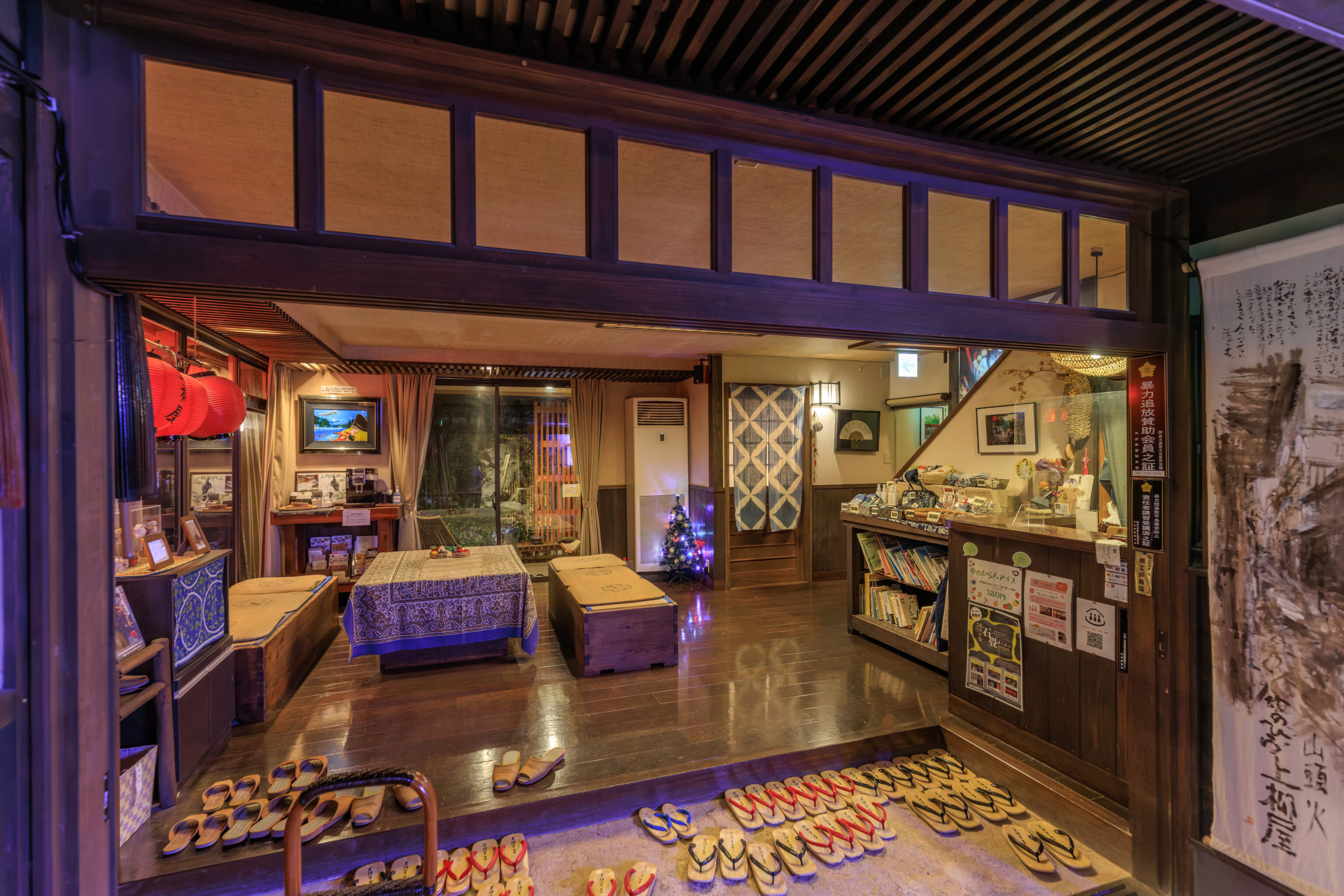
The lobby area as seen from around the front door with both indoor and outdoor slippers. Guests normal shoe are kept in a cabinet on the left.
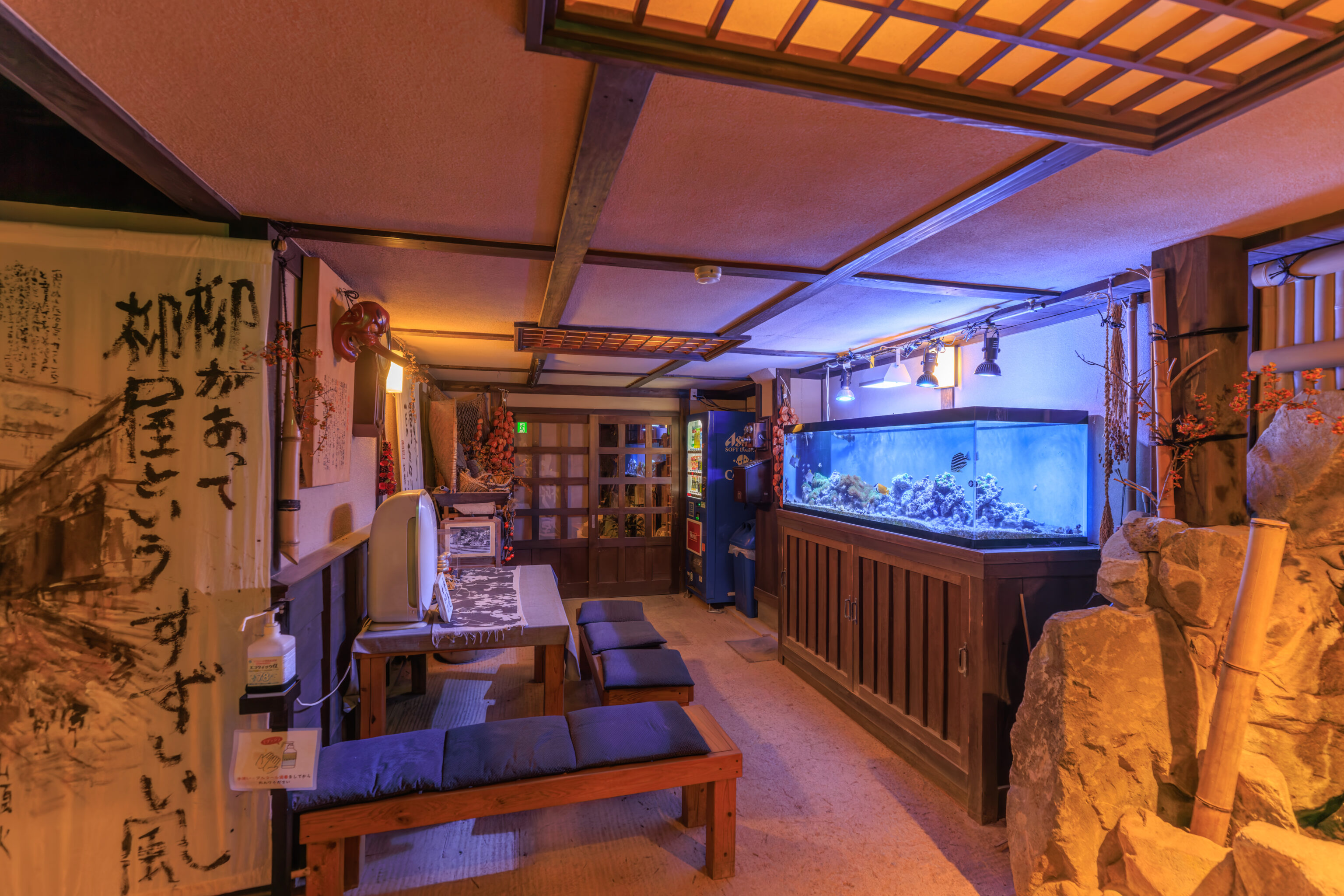
The view looking from the front to rear door.
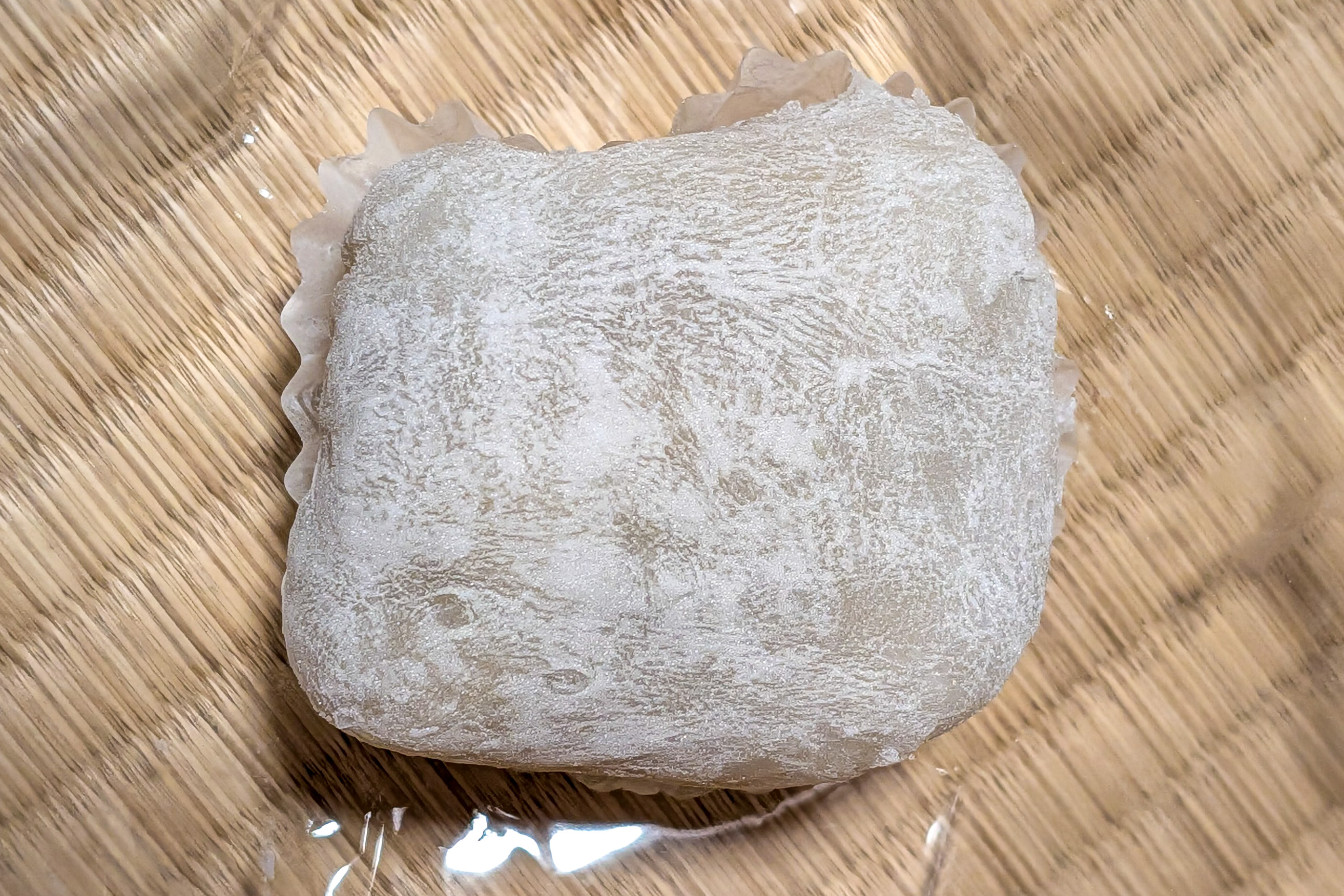
Later on in the evening, we ate the daifuku that we got in Yufuin from Cucuchi.