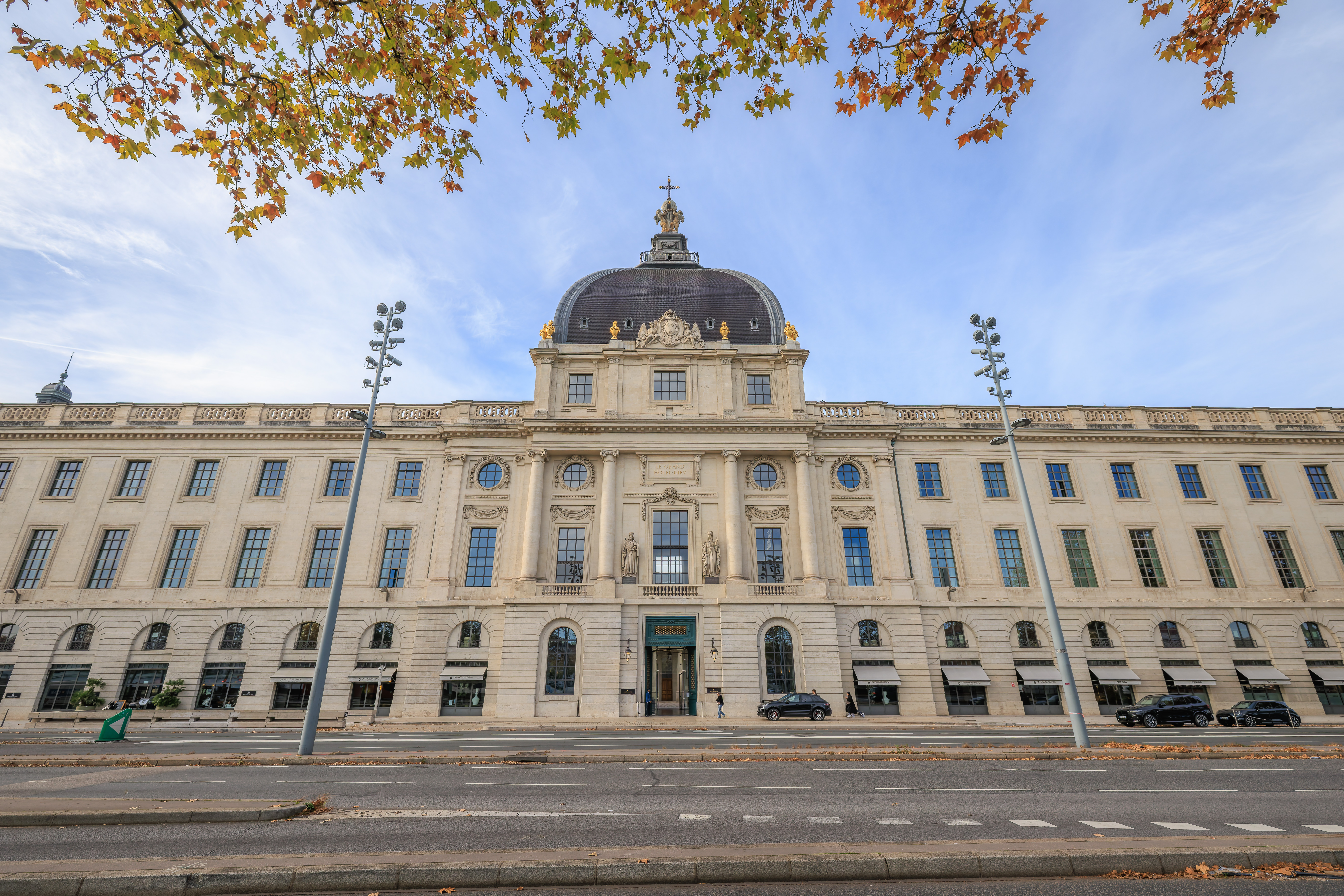
After arriving at Geneva, we took the train over to Lyon and checked into the InterContinental Hotel Dieu. We then walked around the Presqu’ile district of the city before having dinner in the evening.
Dulles to Geneva
After arriving at Dulles, we checked in, passed through security, and went to United‘s Polaris Lounge.
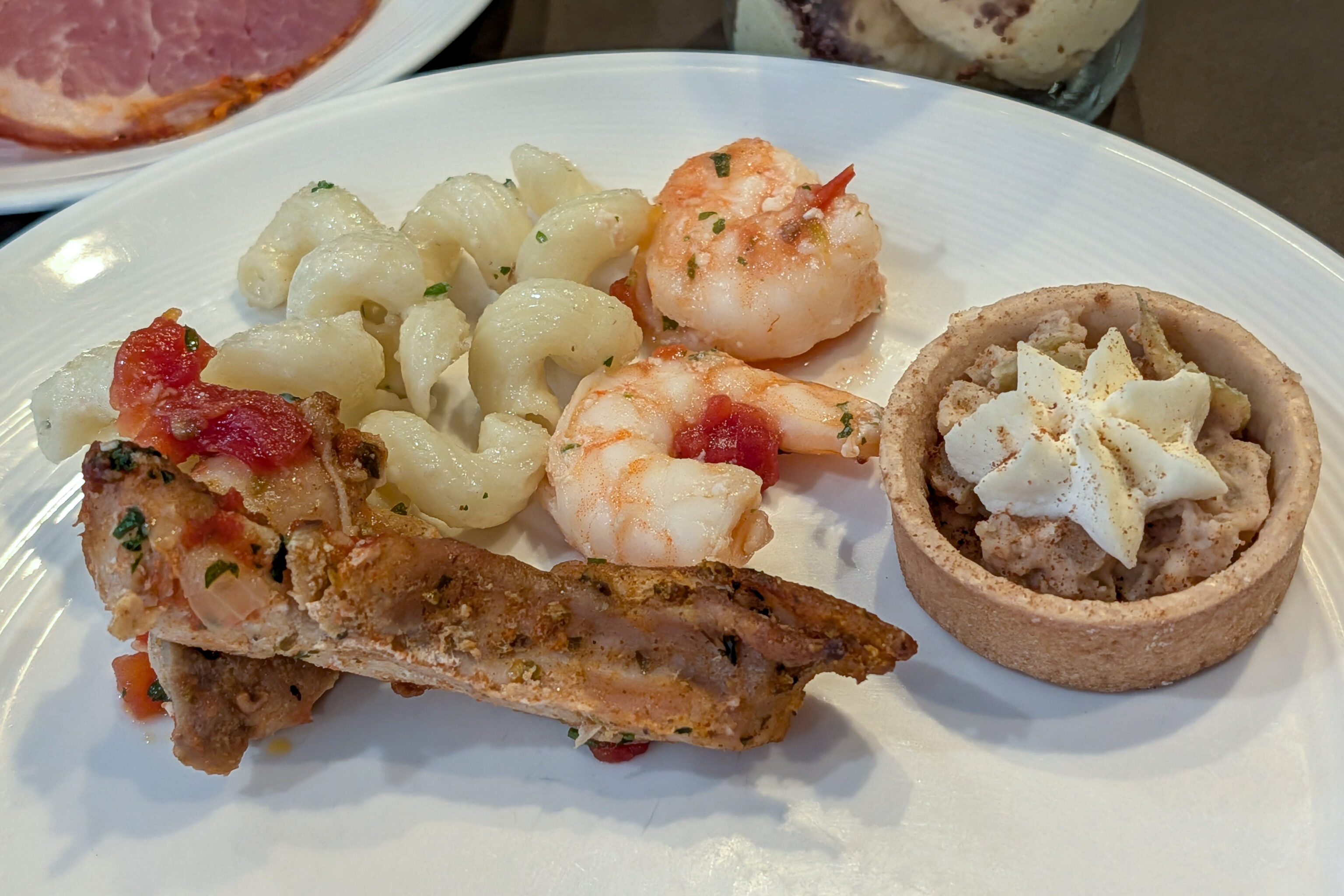
We arrived early so that we could have lunch in the lounge. We hit the buffet first. The chicken and shrimp were pretty mediocre, though the apple tart was decent.
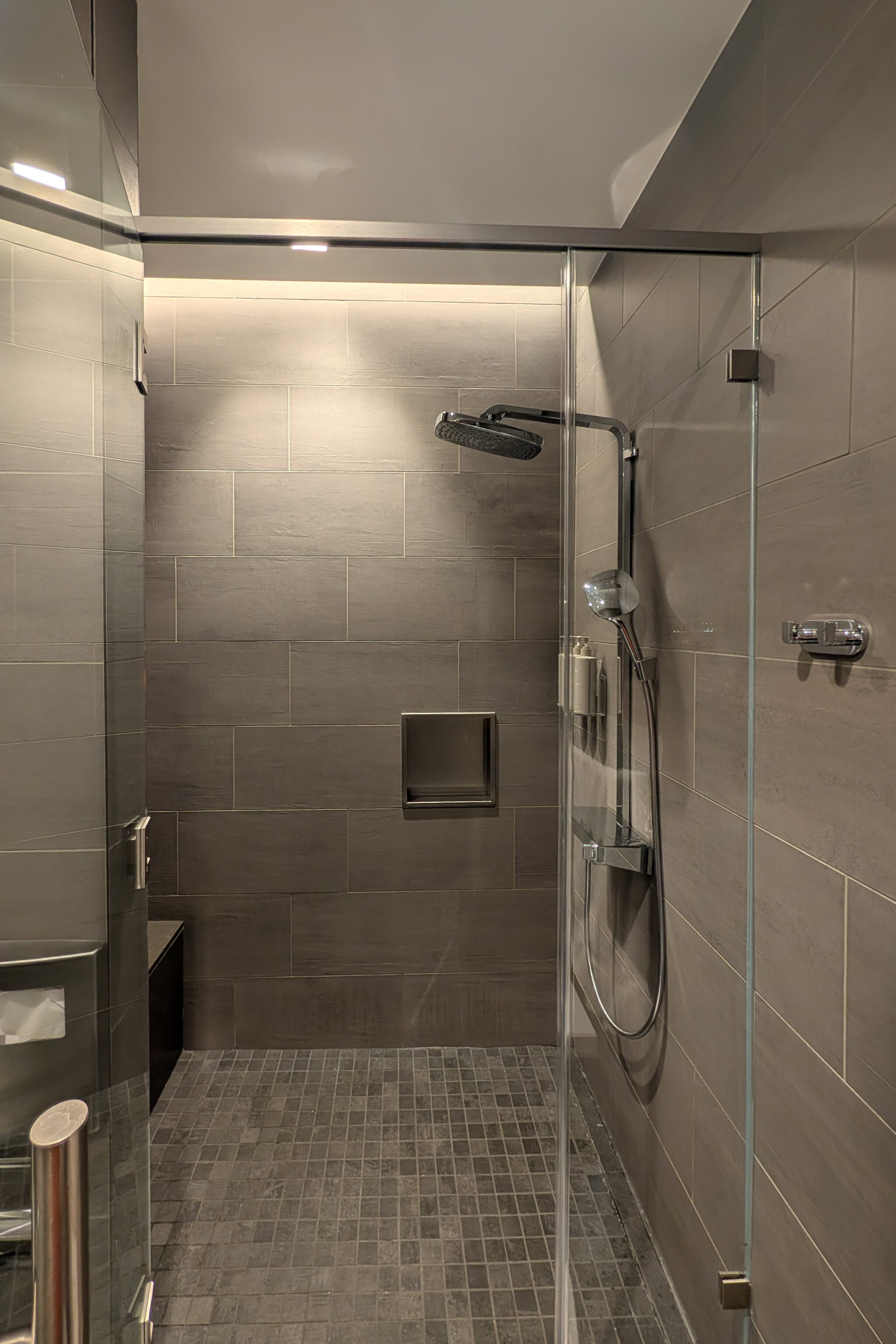
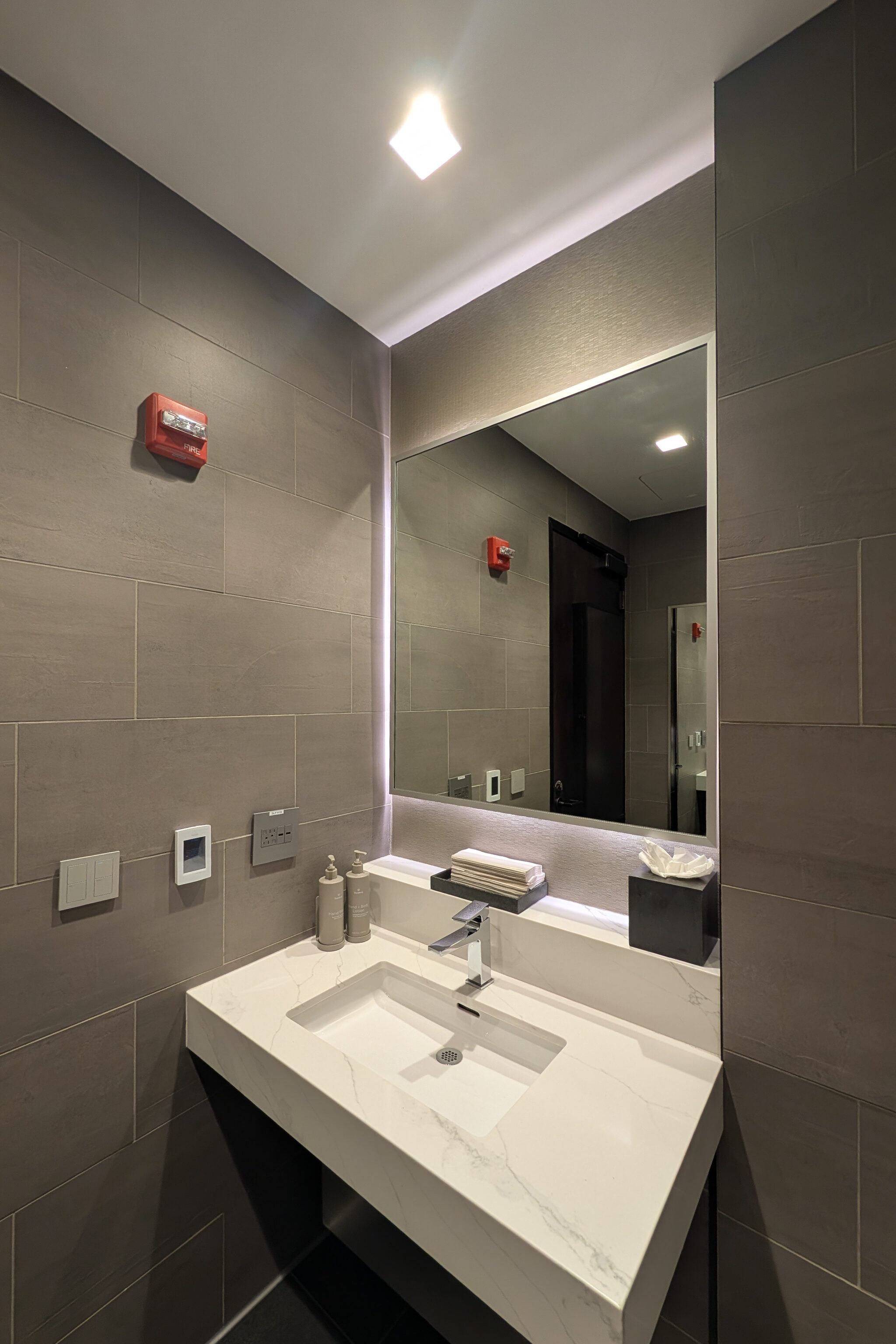
We used the lounge’s shower facility to clean up a bit.
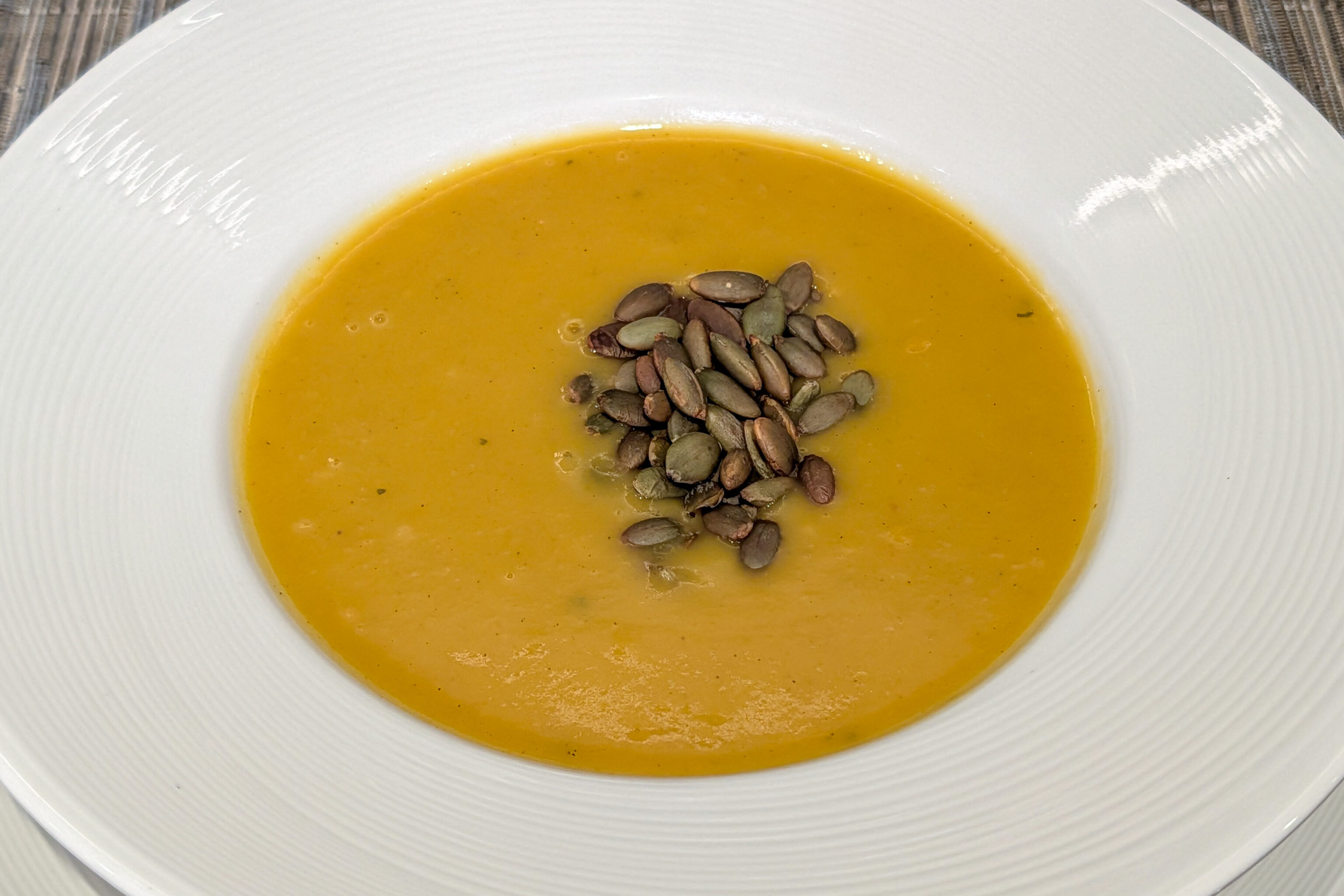
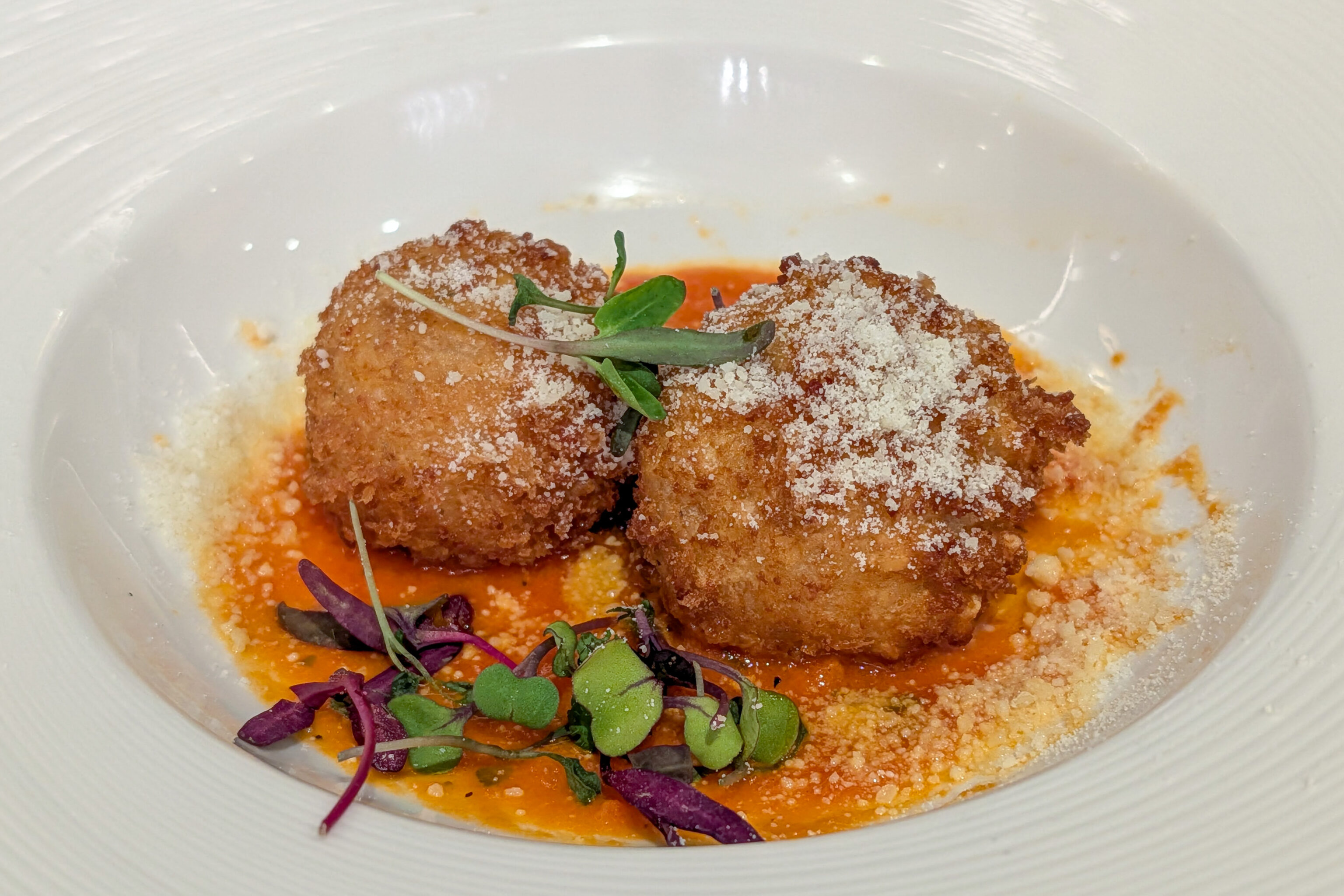
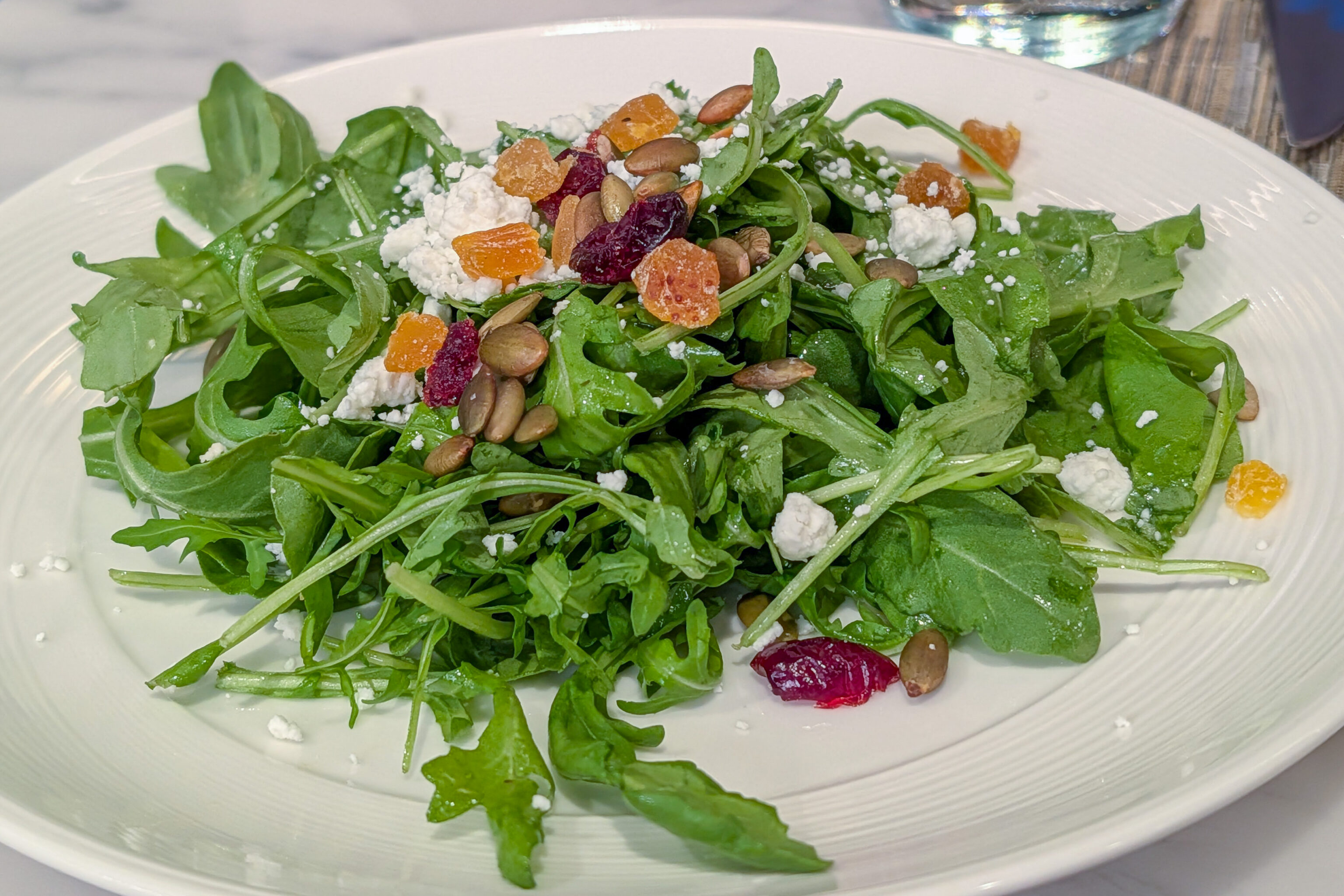
After showering, we headed over to the restaurant area and started with some appetizers.
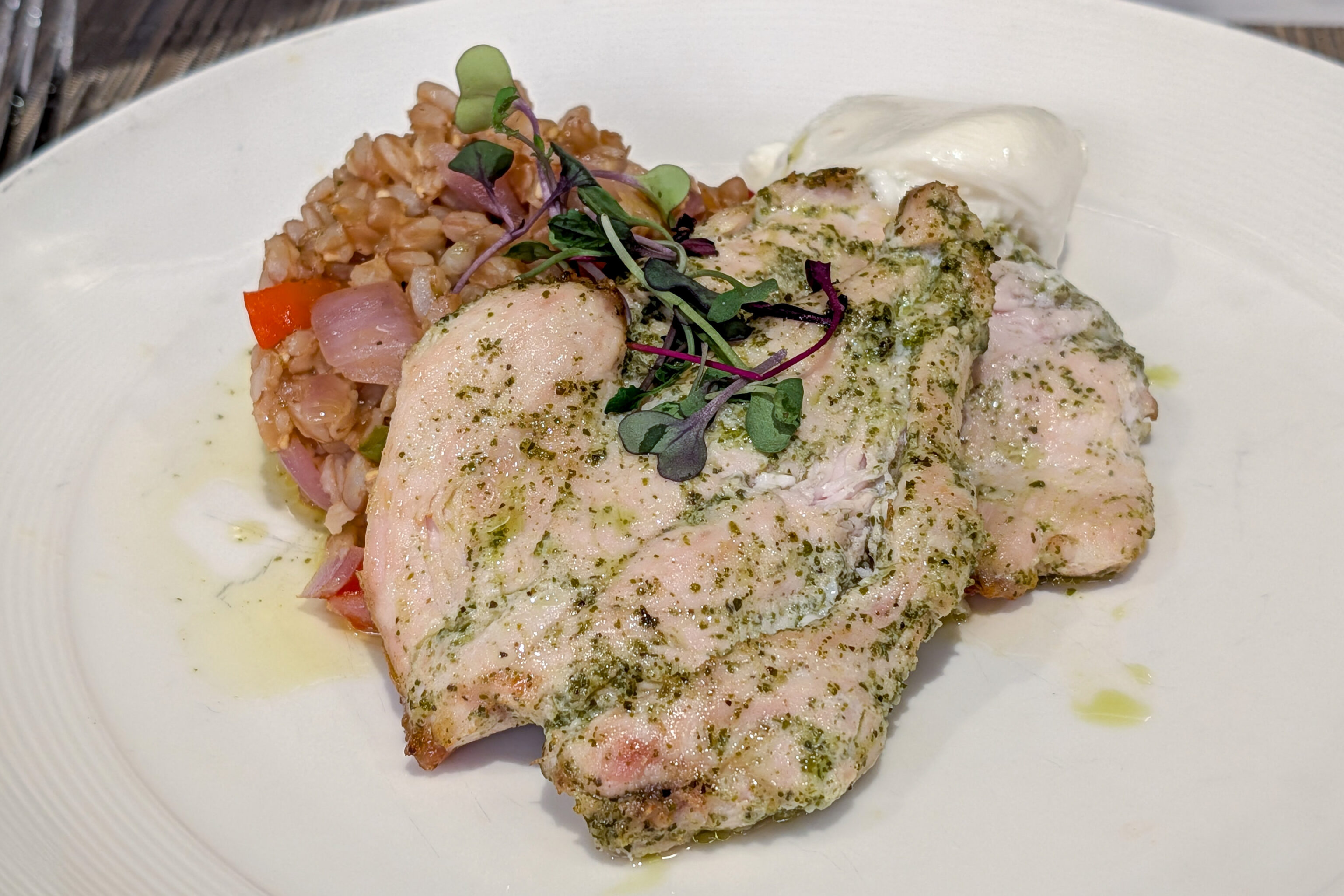
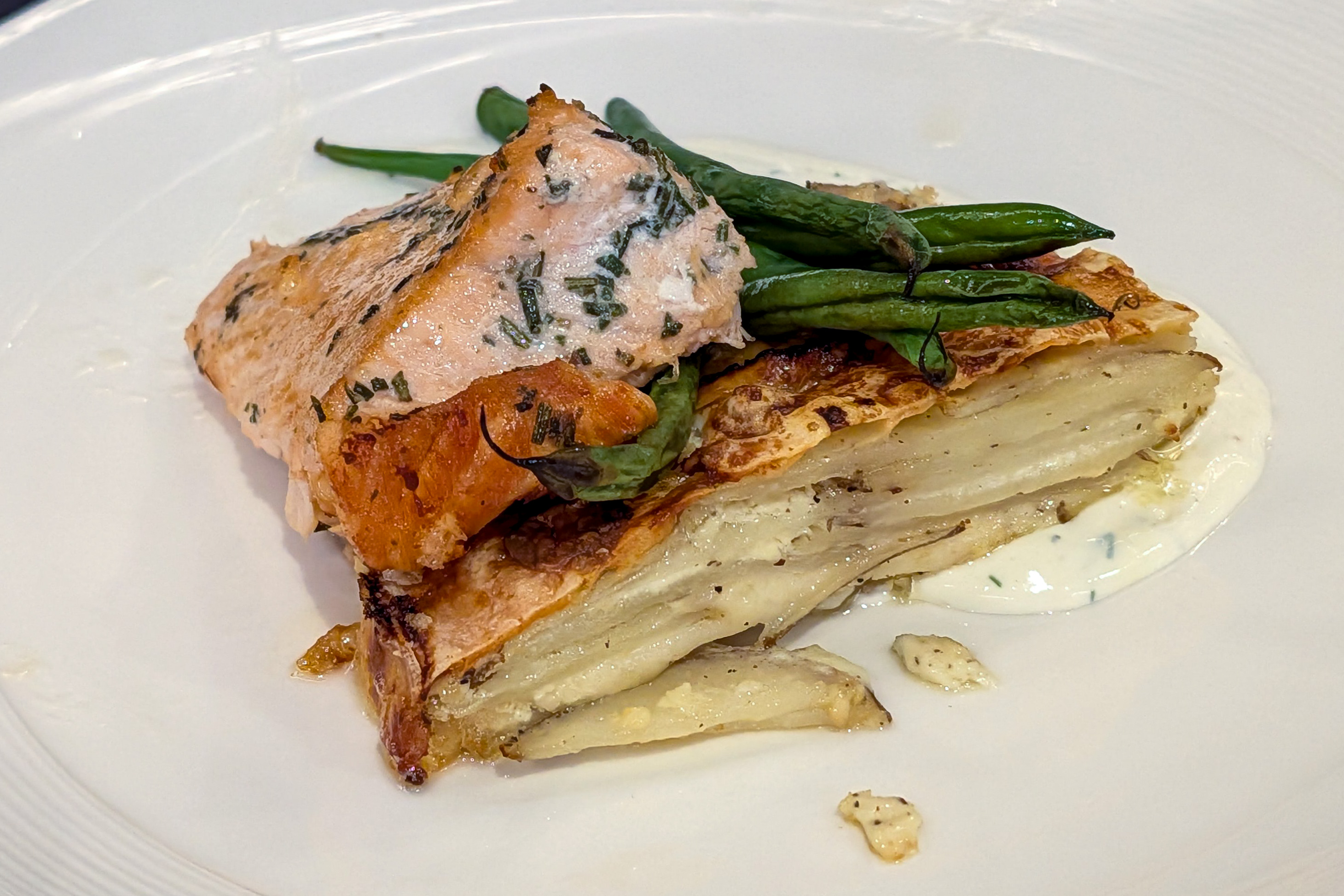
We also ordered the chicken and salmon mains. The chicken would have been good if it was chicken thigh instead of super dry chicken breast. The salmon was also too dry, as is the typical case with American cuisine.
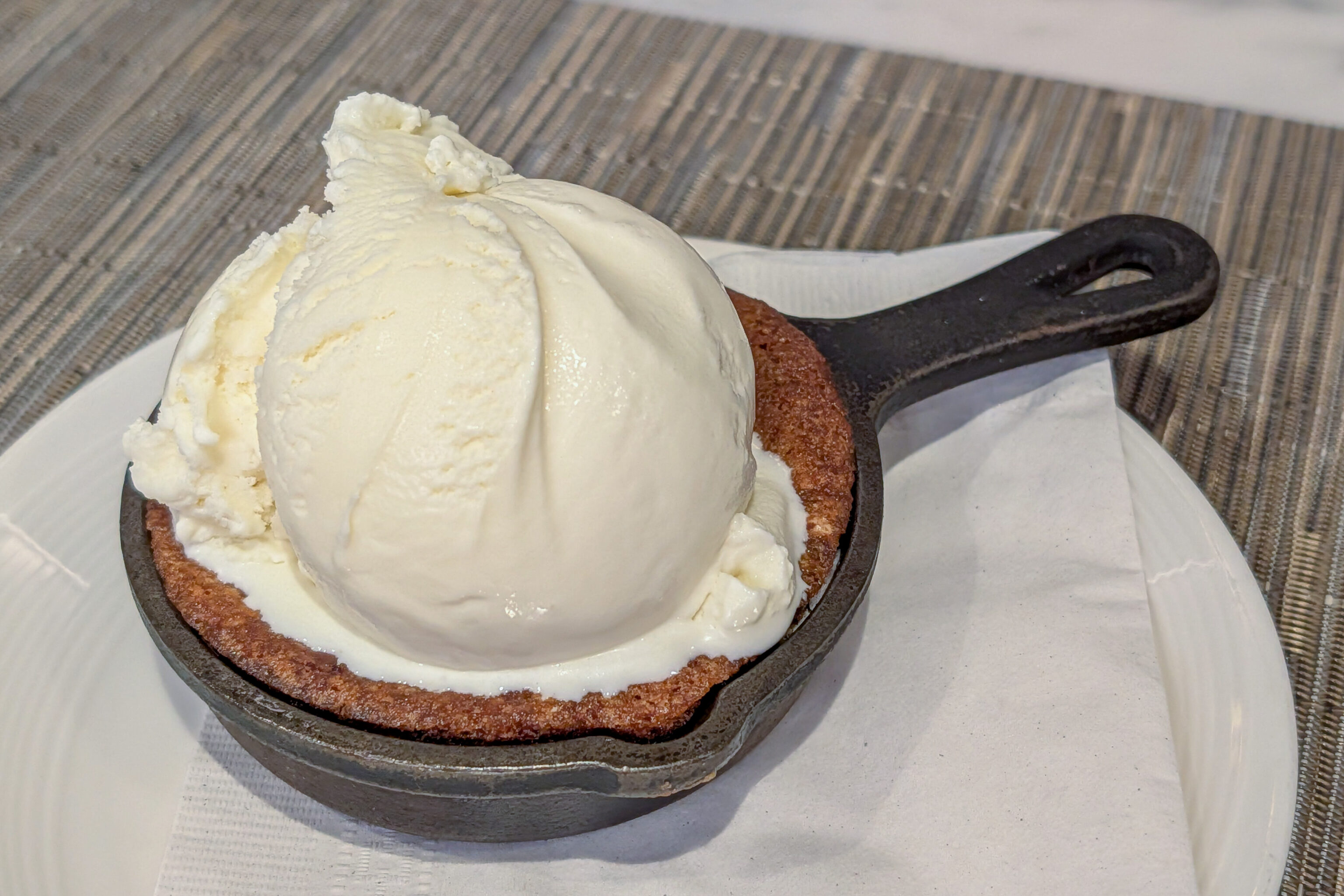
The cookies were fantastic though, as good as it gets here with United.
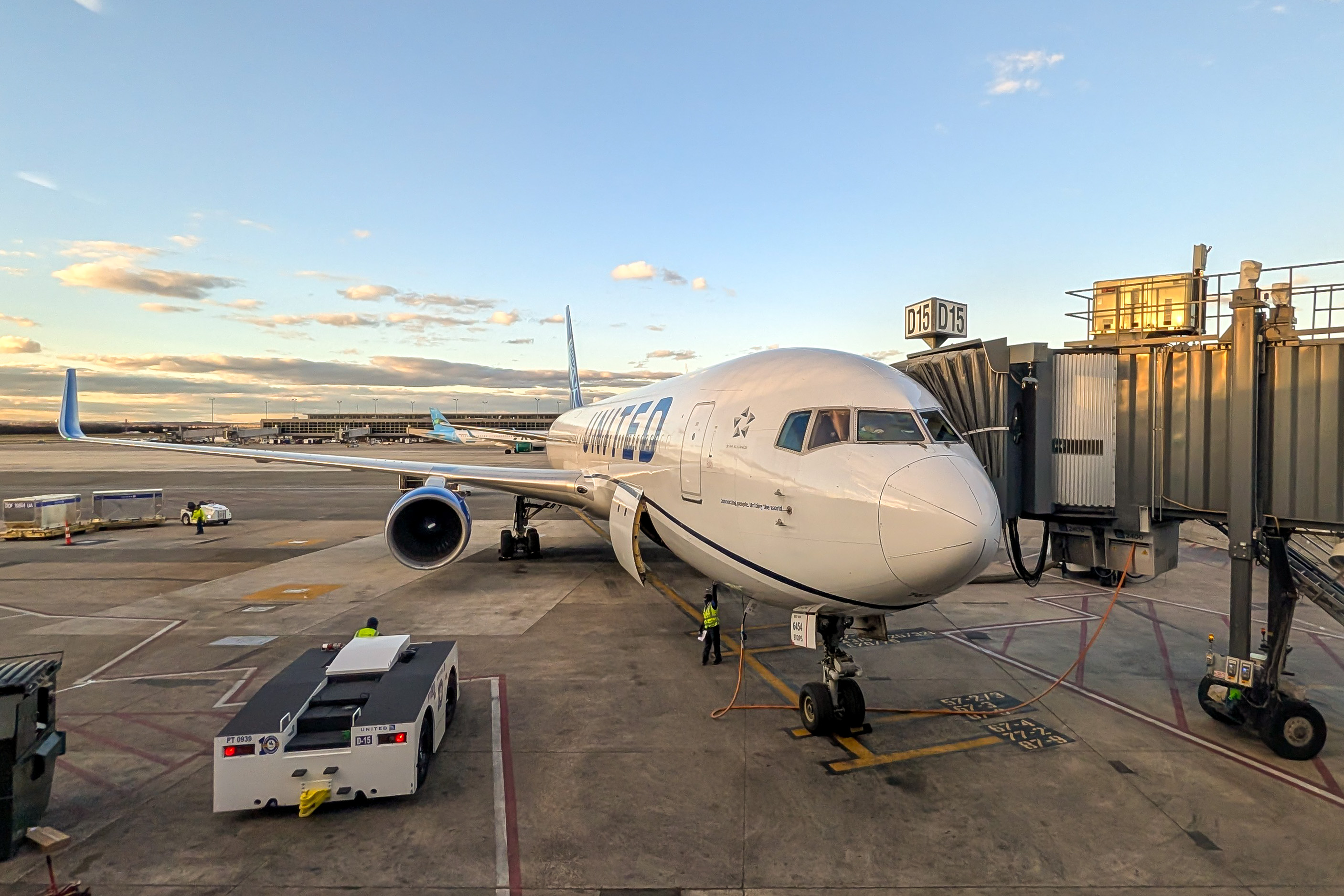
After spending some more time in the lounge, we headed to the gate to board a 767-300 for the flight to Geneva.
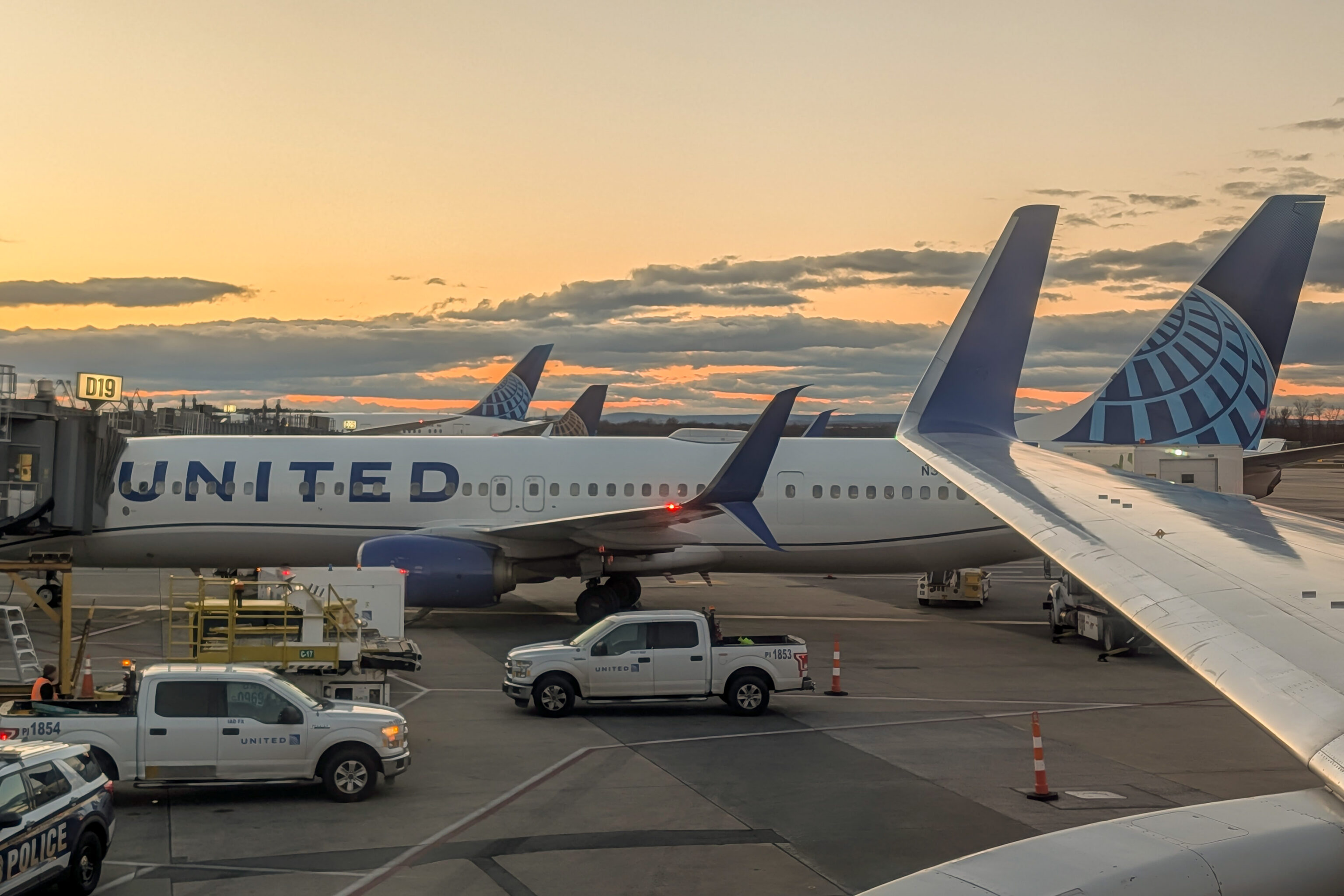
There was a nice sunset not long after boarding.
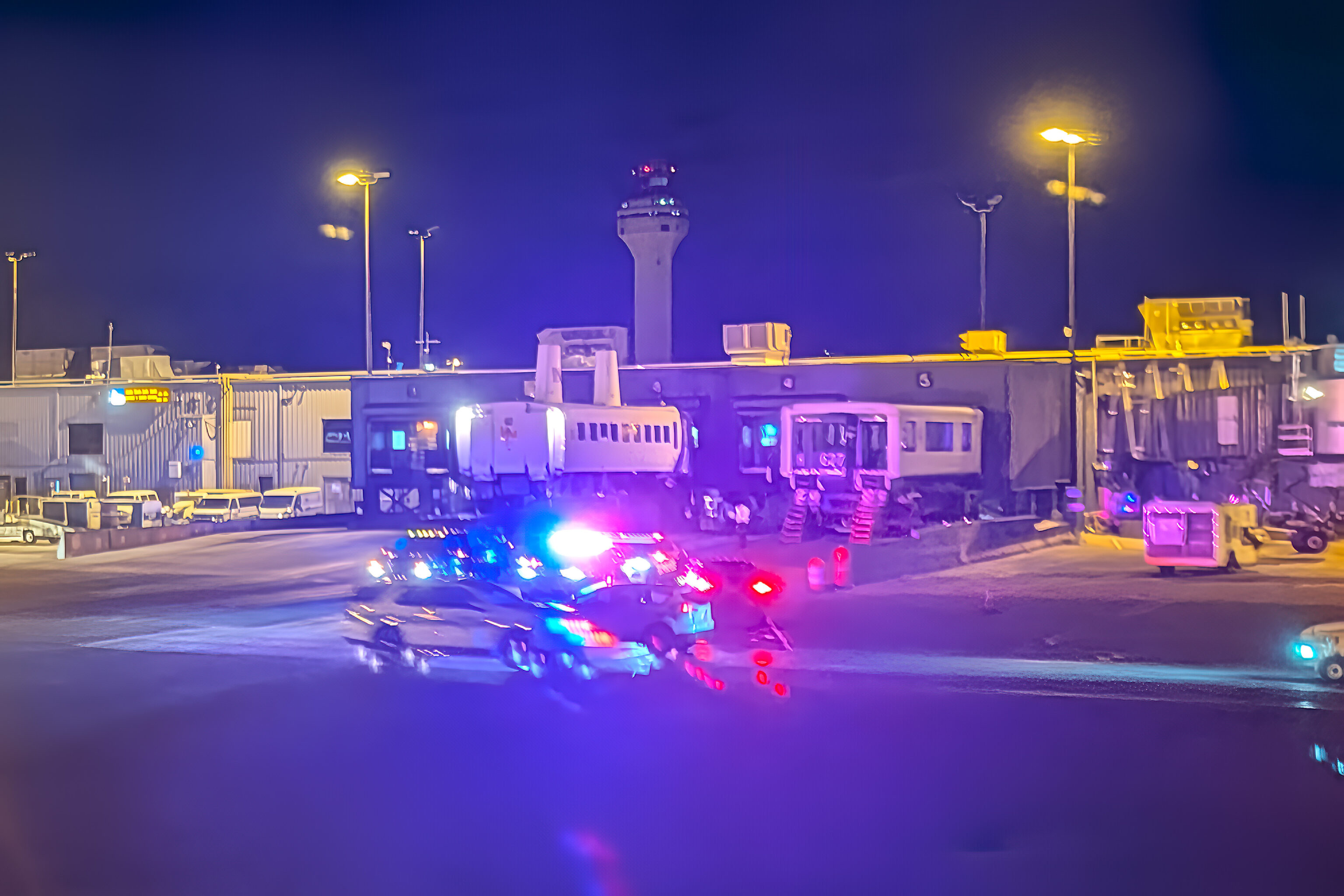
While we were waiting to board, we felt a rather large bump in the terminal. It was definitely unusual. It turns out that one of the Moon Buggies, more formally known as Mobile Lounges, collided with the terminal building! The Terminal D Mobile Lounge “gate” was right next to D15, our departure gate. We ended up being stuck at the gate as ware emergency vehicles behind our aircraft.
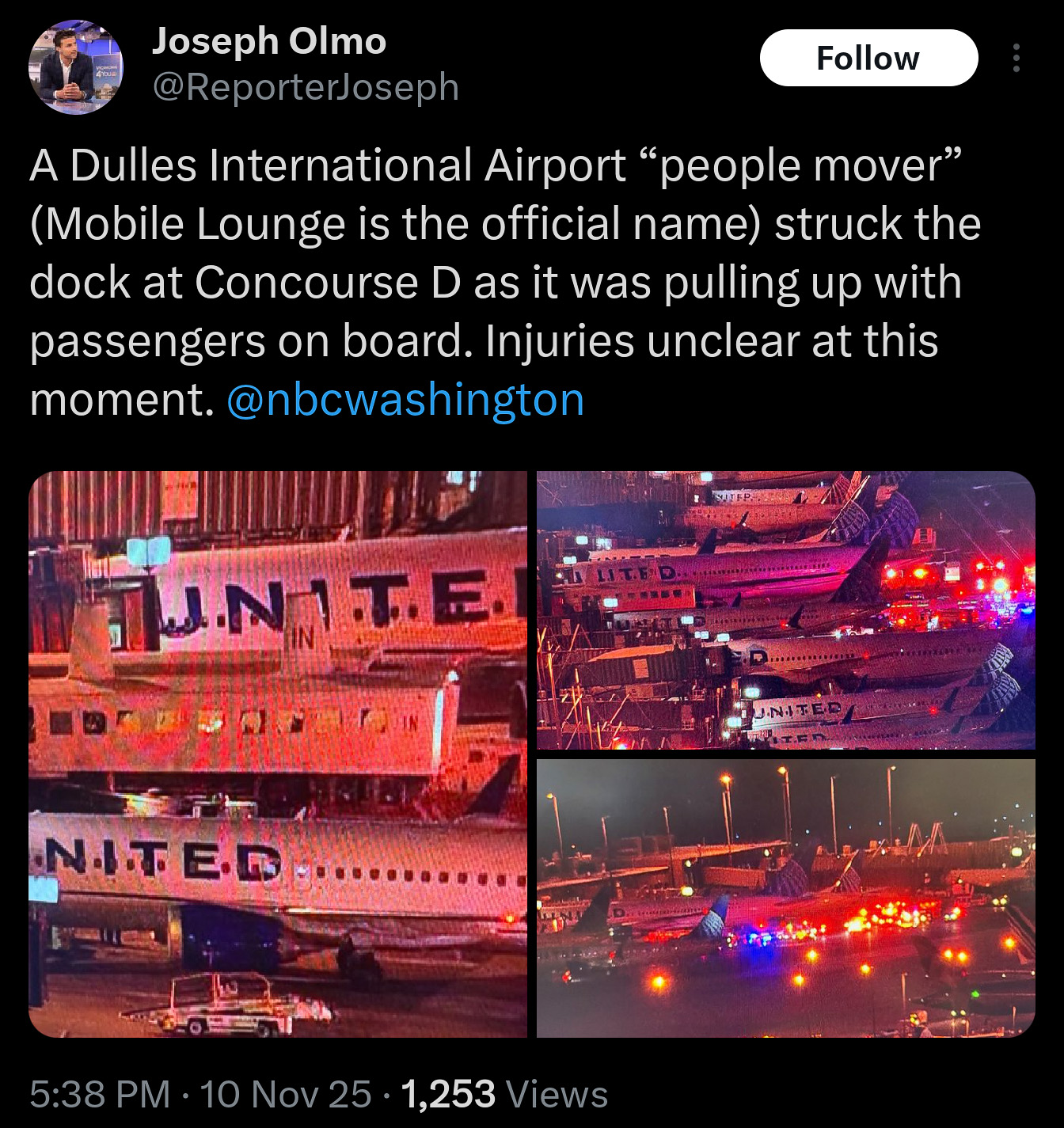
We were on the wrong side of the aircraft to see what was going on. But we could follow along on Twitter. Uh, X. Our aircraft was the bigger one in the background behind the Moon Buggy.
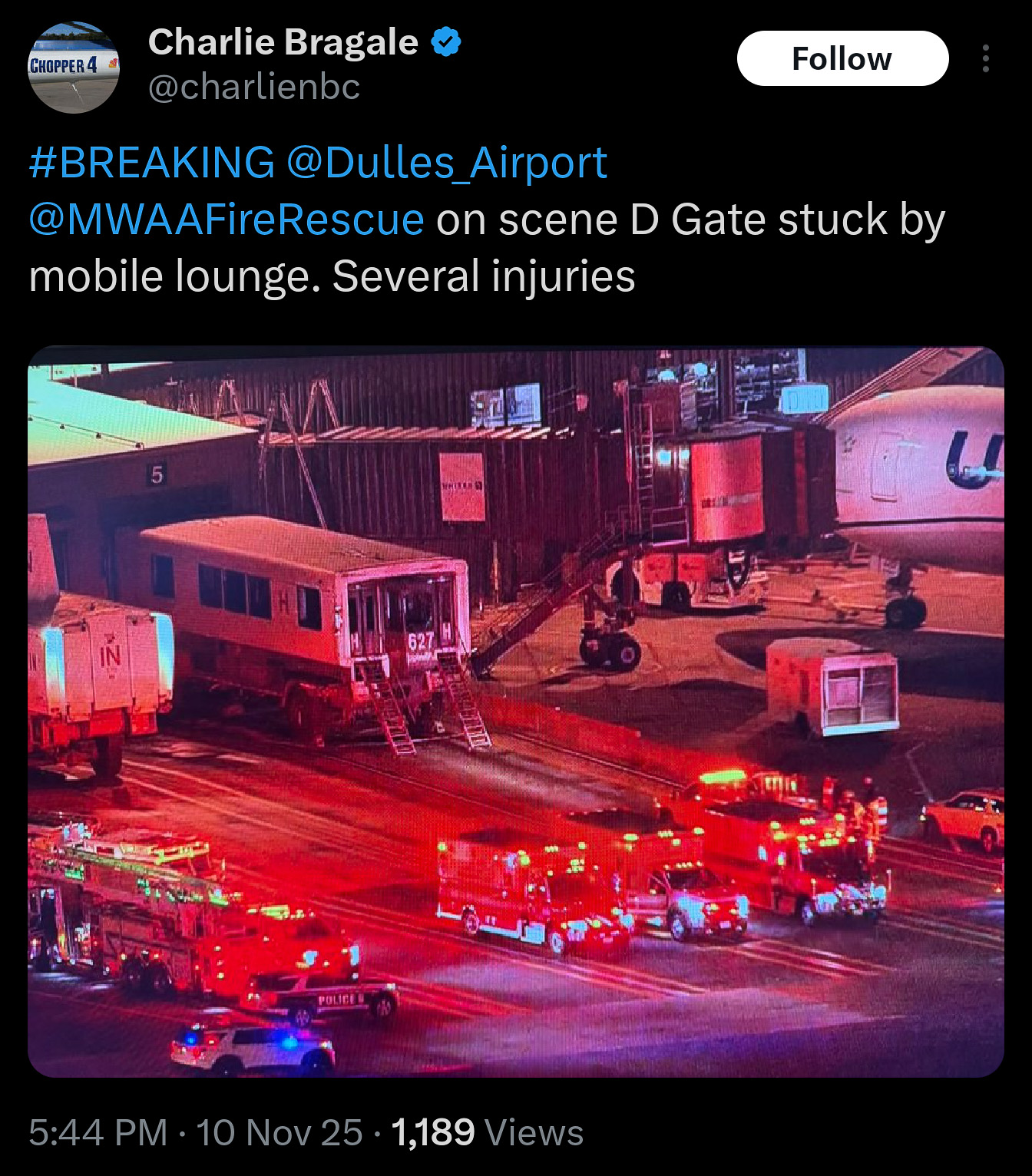
There’s our aircraft again in the background with the jetbridge pulled away. They ended up reconnecting it to get maintenance onboard to fix a seat belt issue with one of the other seats here in the Polaris cabin.
By the time we actually departed, there was an estimated 35 minute delayed arrival at Geneva. That wasn’t too bad considering how long we were delayed.
As usual for flights to Europe, we declined dinner service and went right to sleep after taking off.
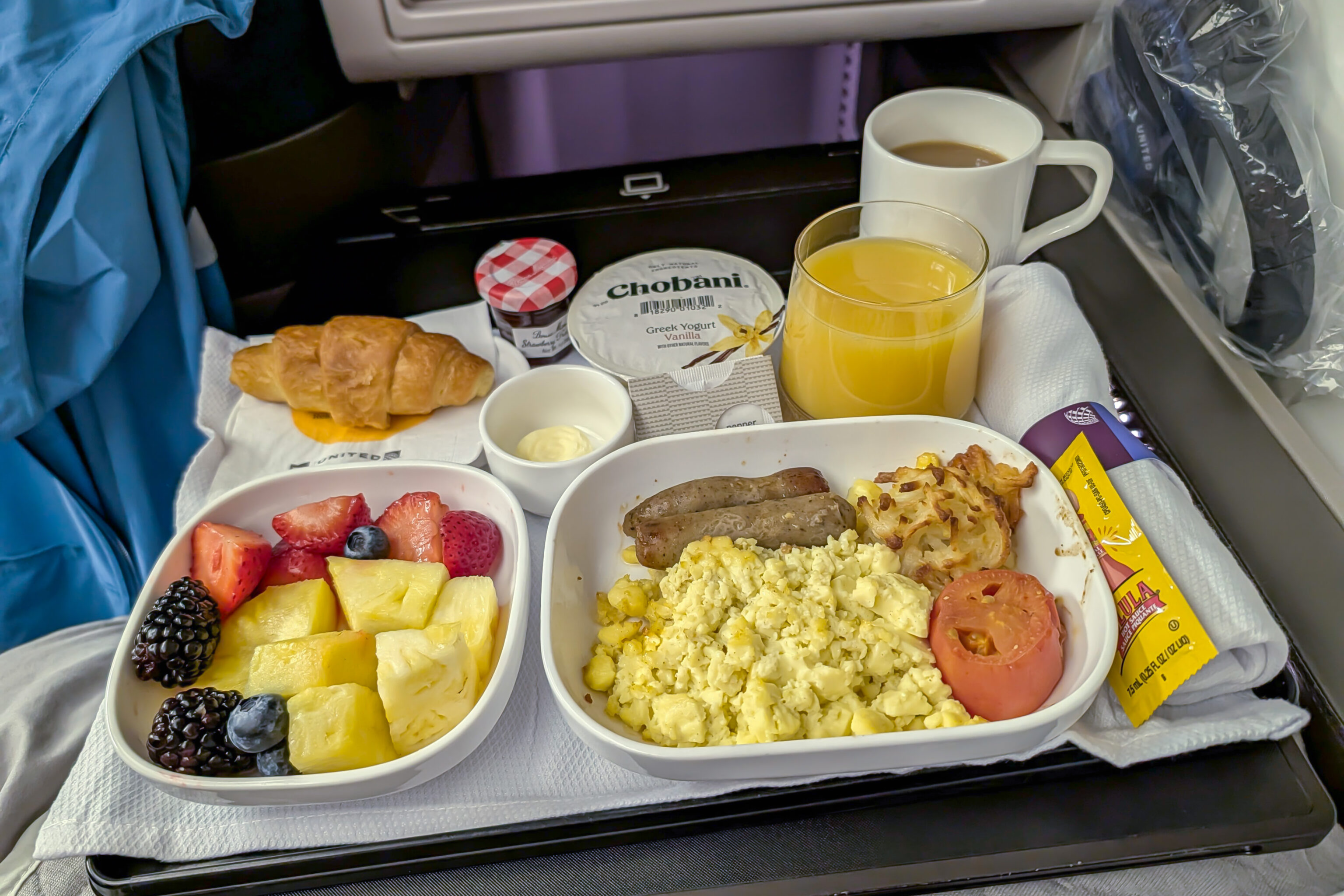
Also as usual, we did have the pre-landing breakfast meal. It was served over France, about an hour before landing.
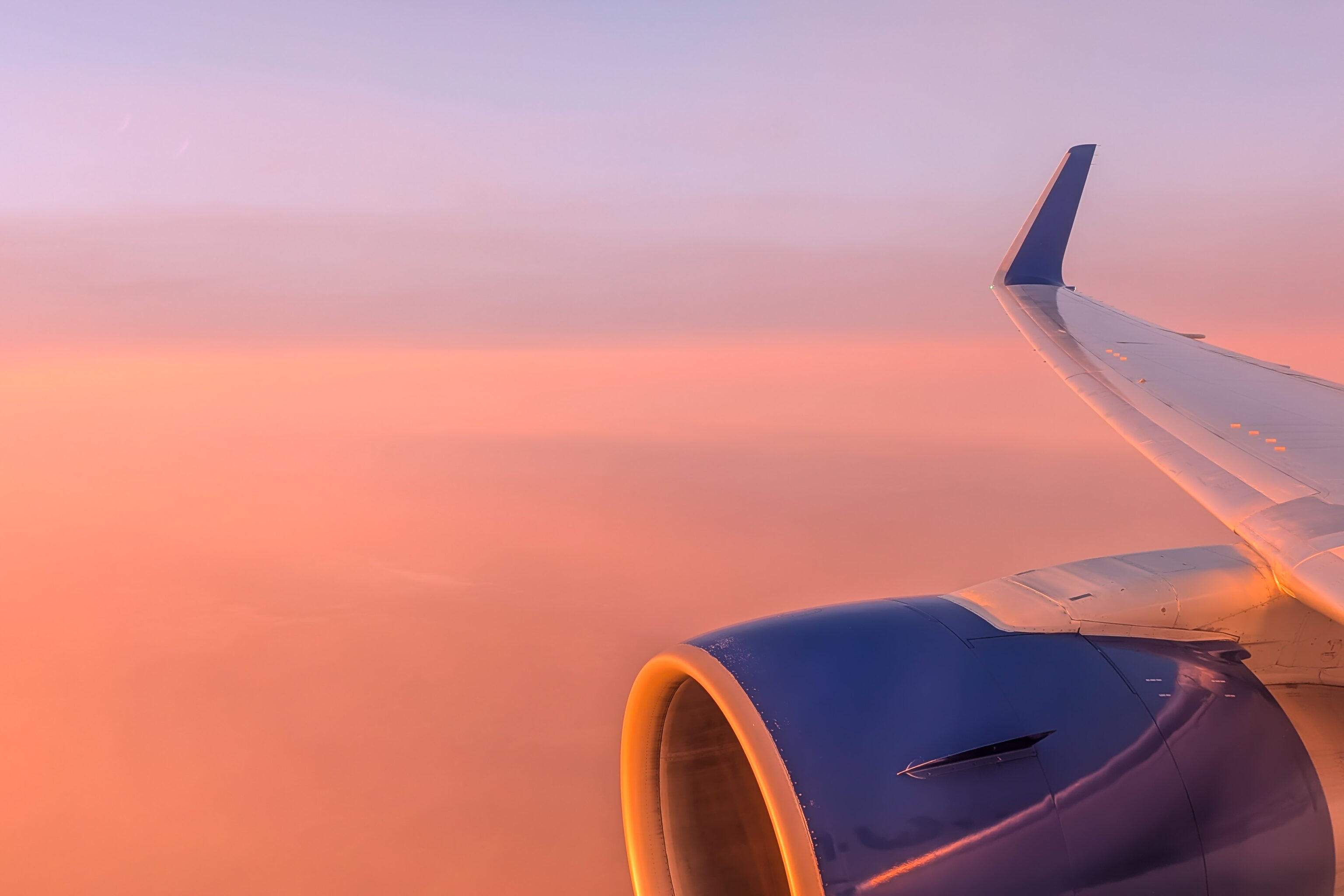
There was a nice sunrise.
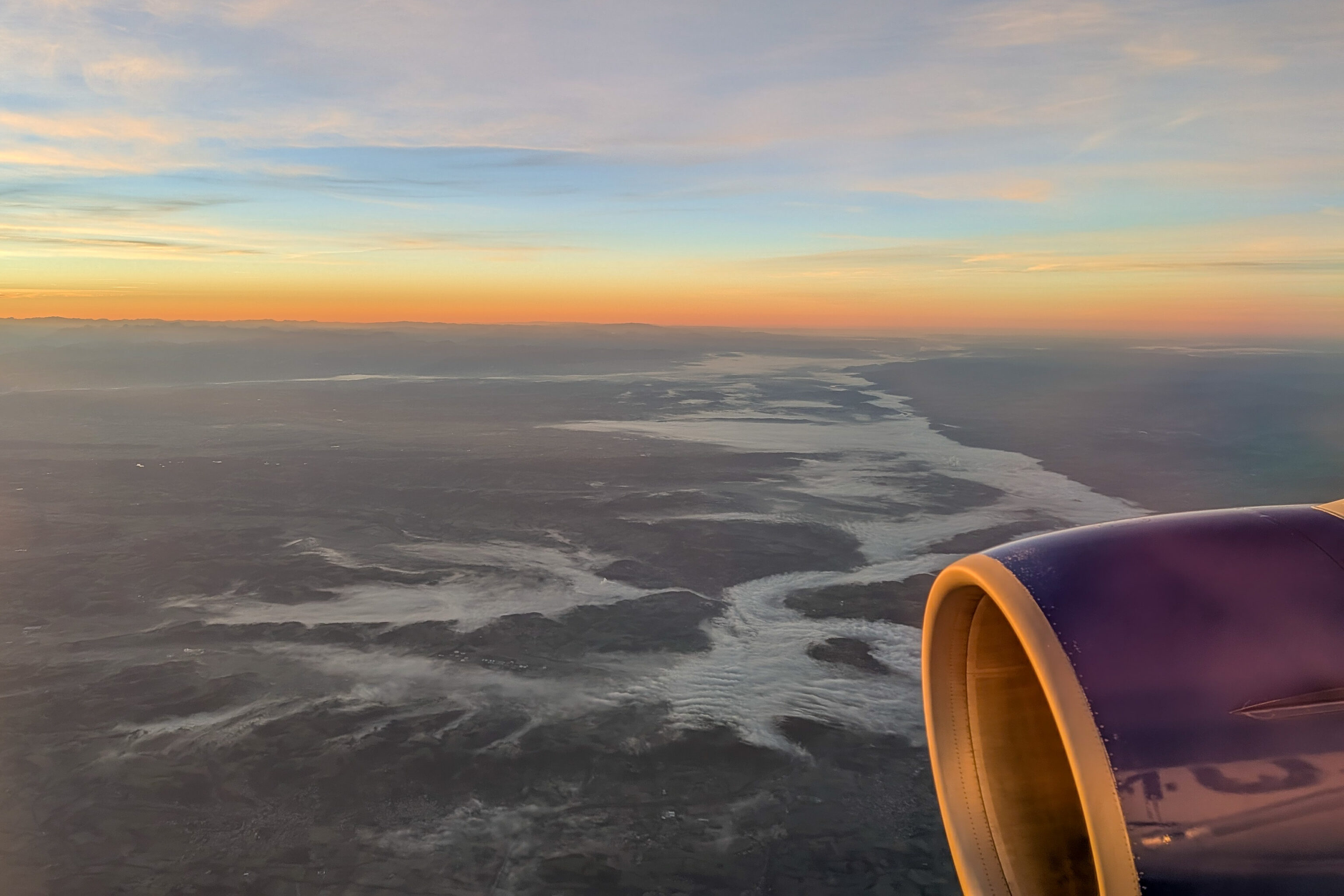
We actually flew over Lyon on our way to Geneva. There was some fog down below but otherwise the weather looked pretty good.
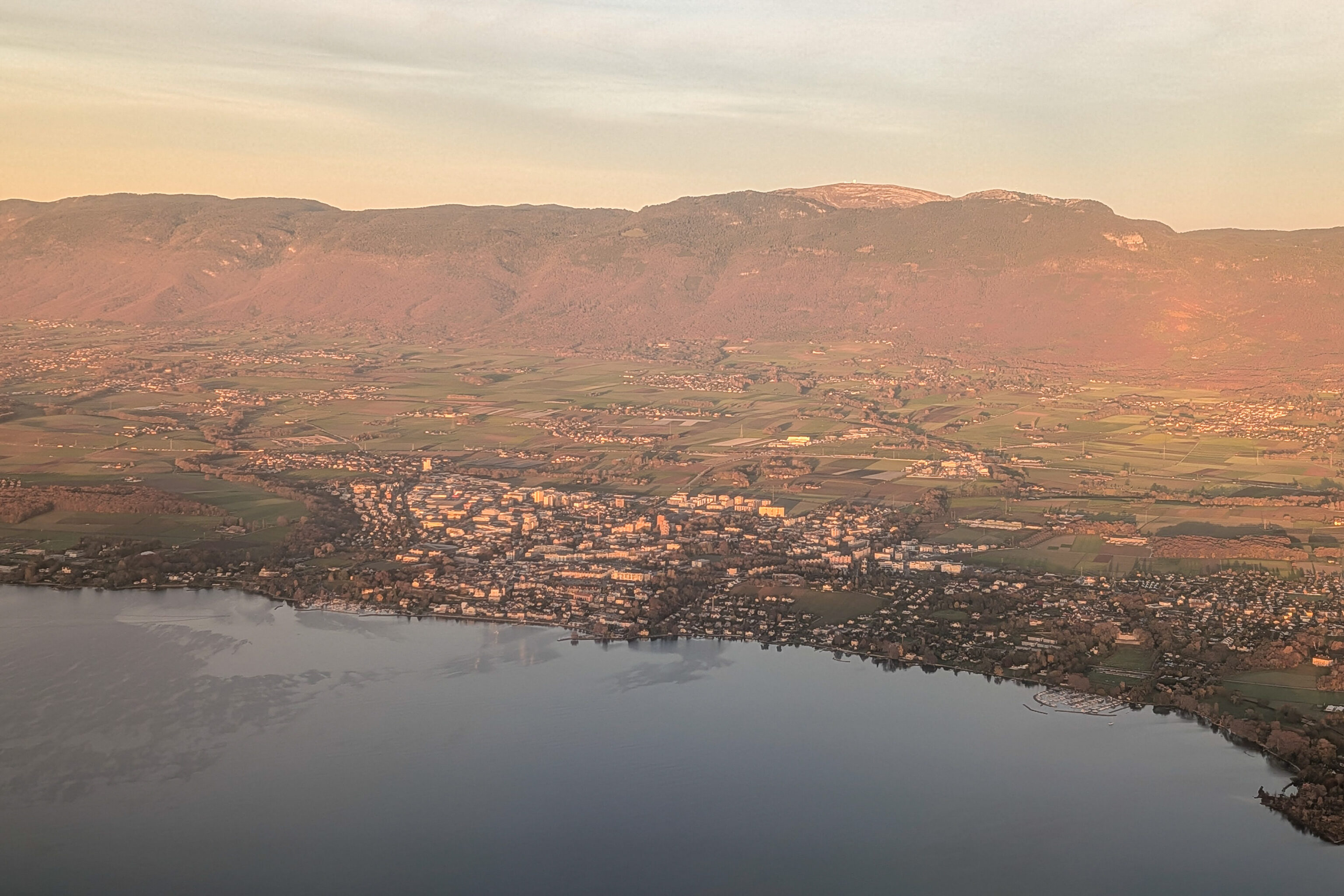
We turned over Lake Geneva to approach the airport from the east. We flew by the town of Nyon, Switzerland, which we visited before back in 2023.
Geneva to Lyon
After entering Switzerland, we took the next train to Geneva Cornavin, the city’s main train station.
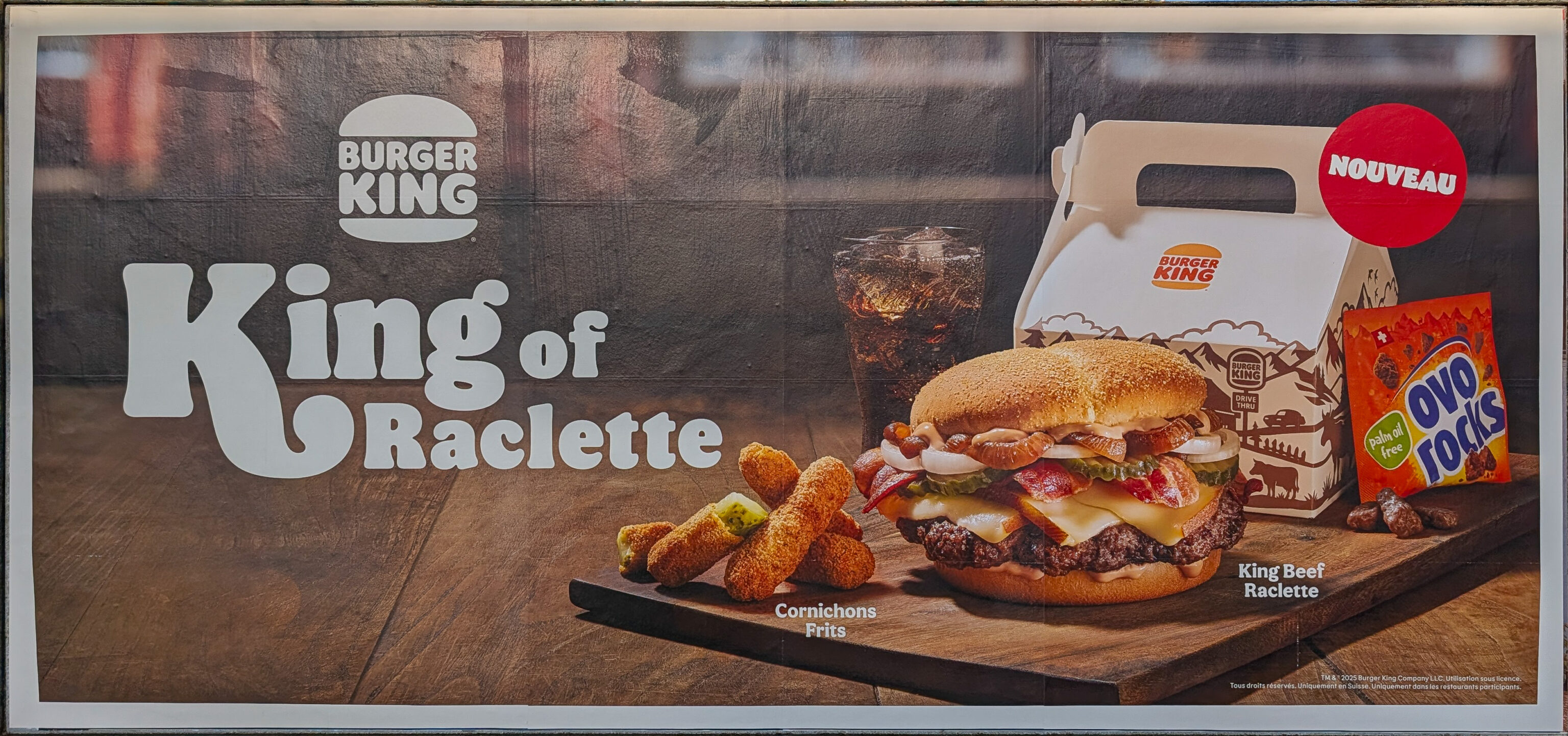
We walked by an ad for Burger King’s King Beef Raclette burger! It looked pretty good in the ad, although fast food is almost never as good as it looks. While we have had McDonald’s in Switzerland, we haven’t had Burger King before. Anyway, we continued on, taking the next French TER train to Lyon. The trip from Geneva to Lyon takes about two hours and can be done without needing to change trains.
InterContinental Lyon Hotel-Dieu
We arrived at Lyon Part Dieu, the city’s main train station. We then took the Metro to Place Bellecour, which required a transfer at Saxe-Gambetta.
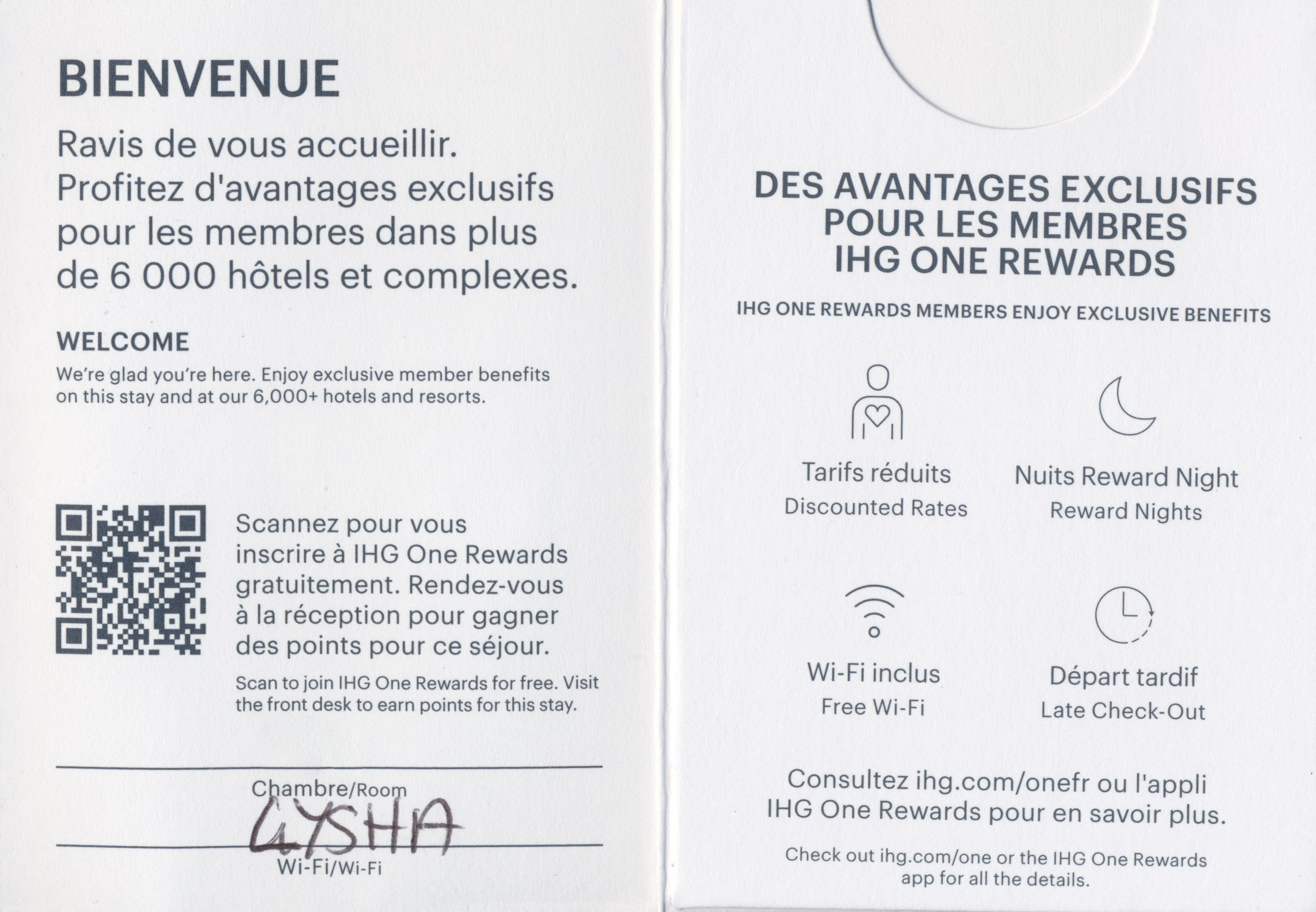
Our room was ready when we arrived at the InterContinental Lyon Hotel-Dieu at around noon. We do pack so that we can get going right away if our room is not ready, but it is always nice when it is ready!
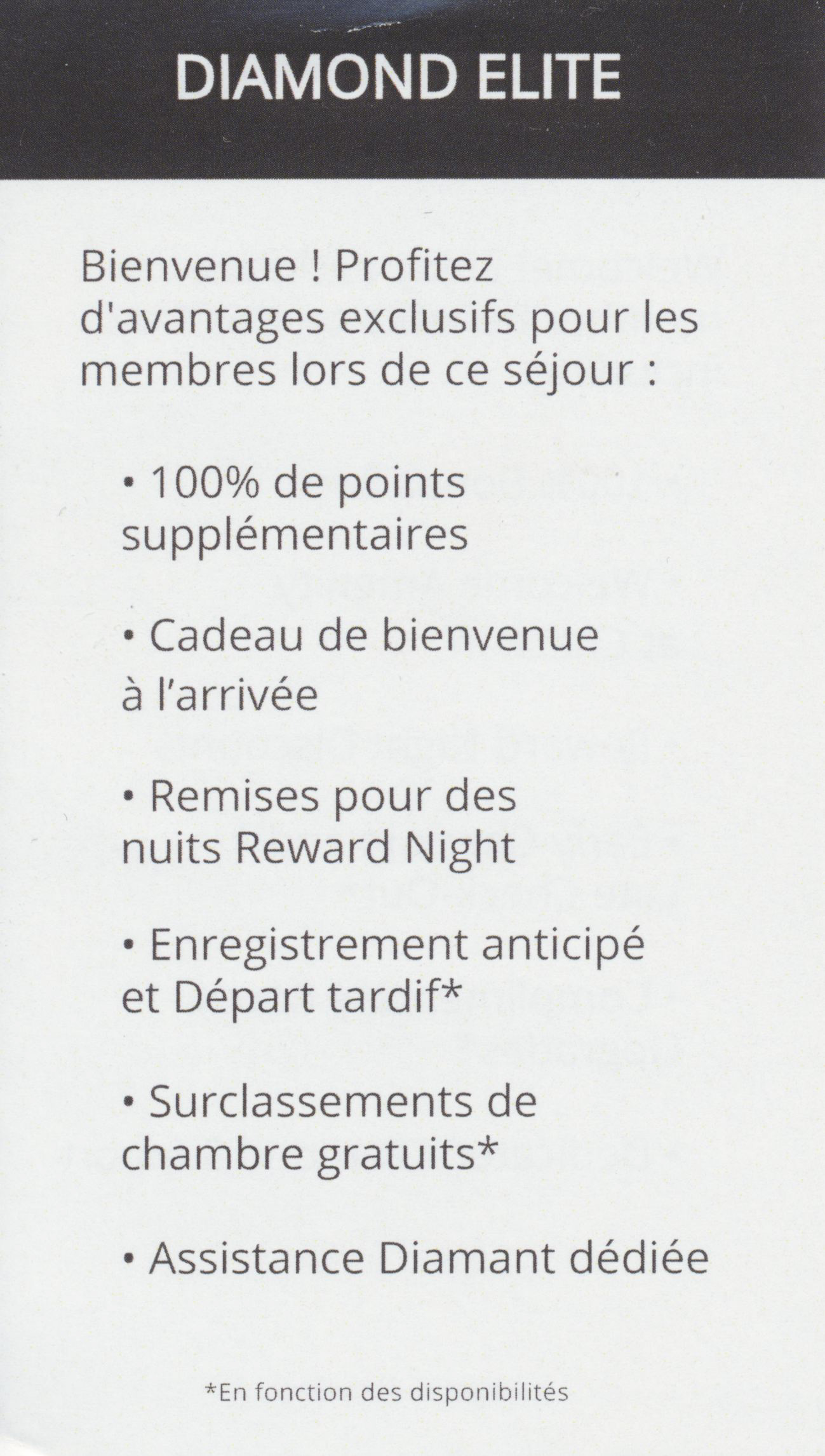
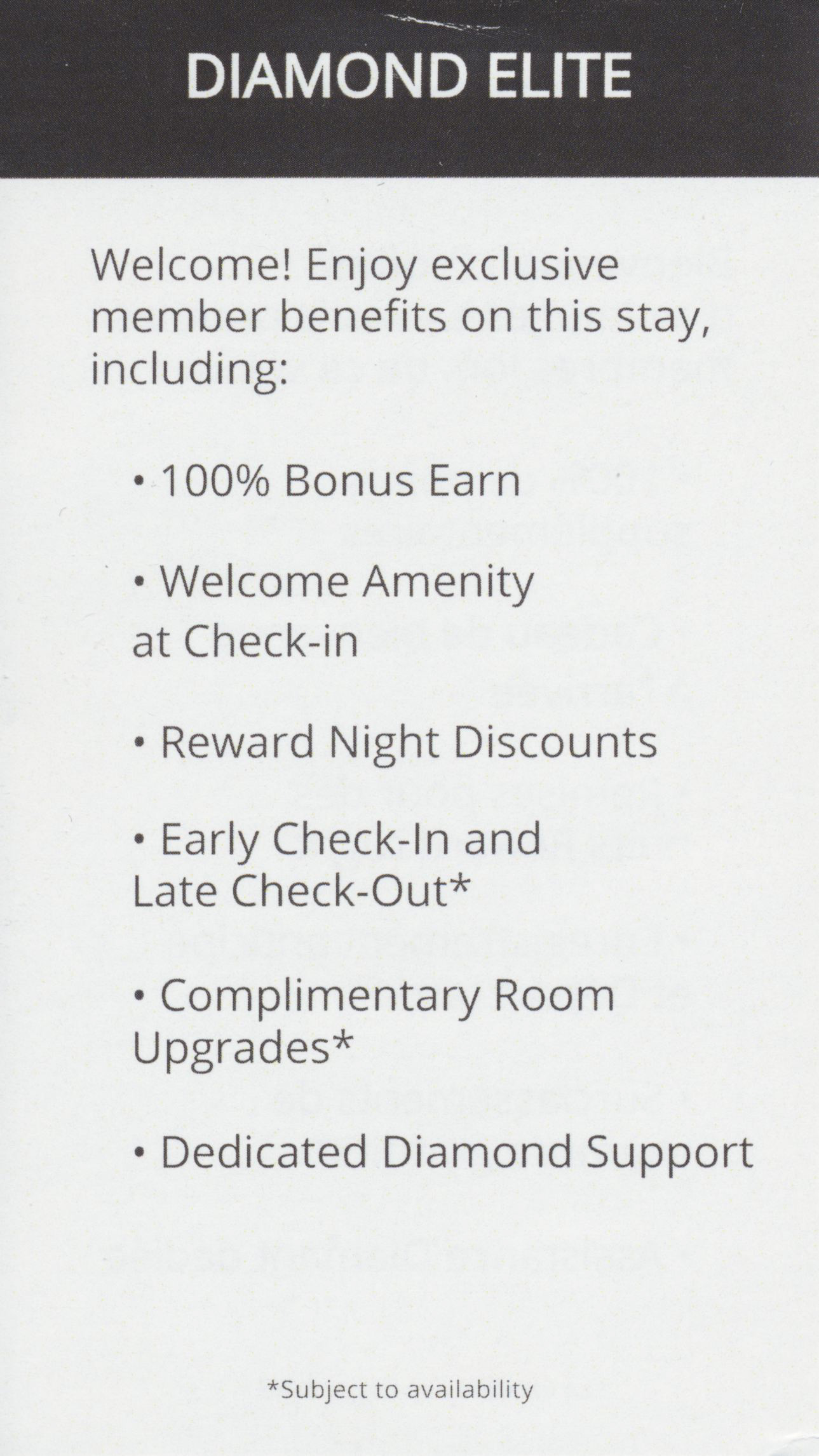
A small insert lists the benefits provided for Diamond Elite members of IHG One Rewards.
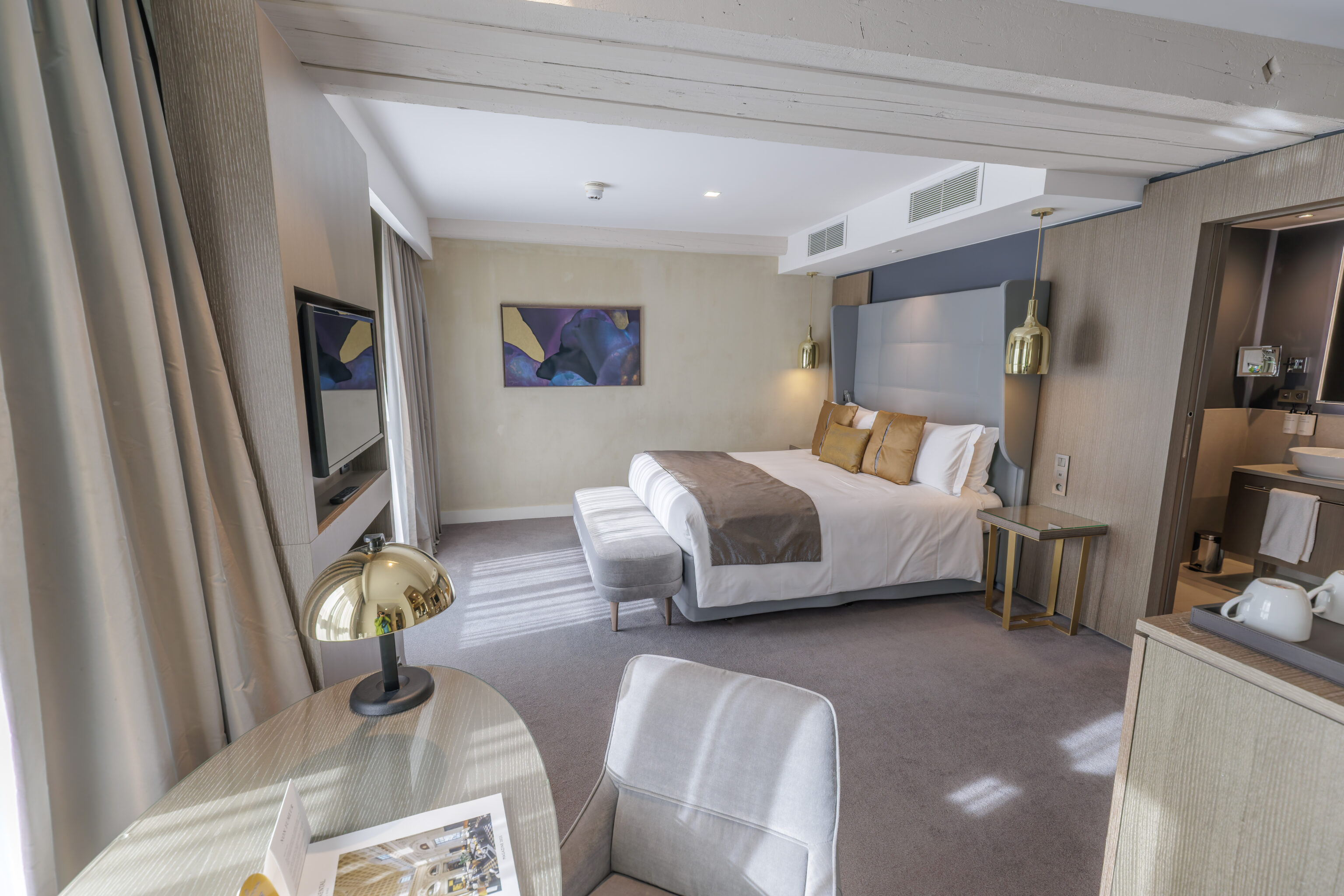
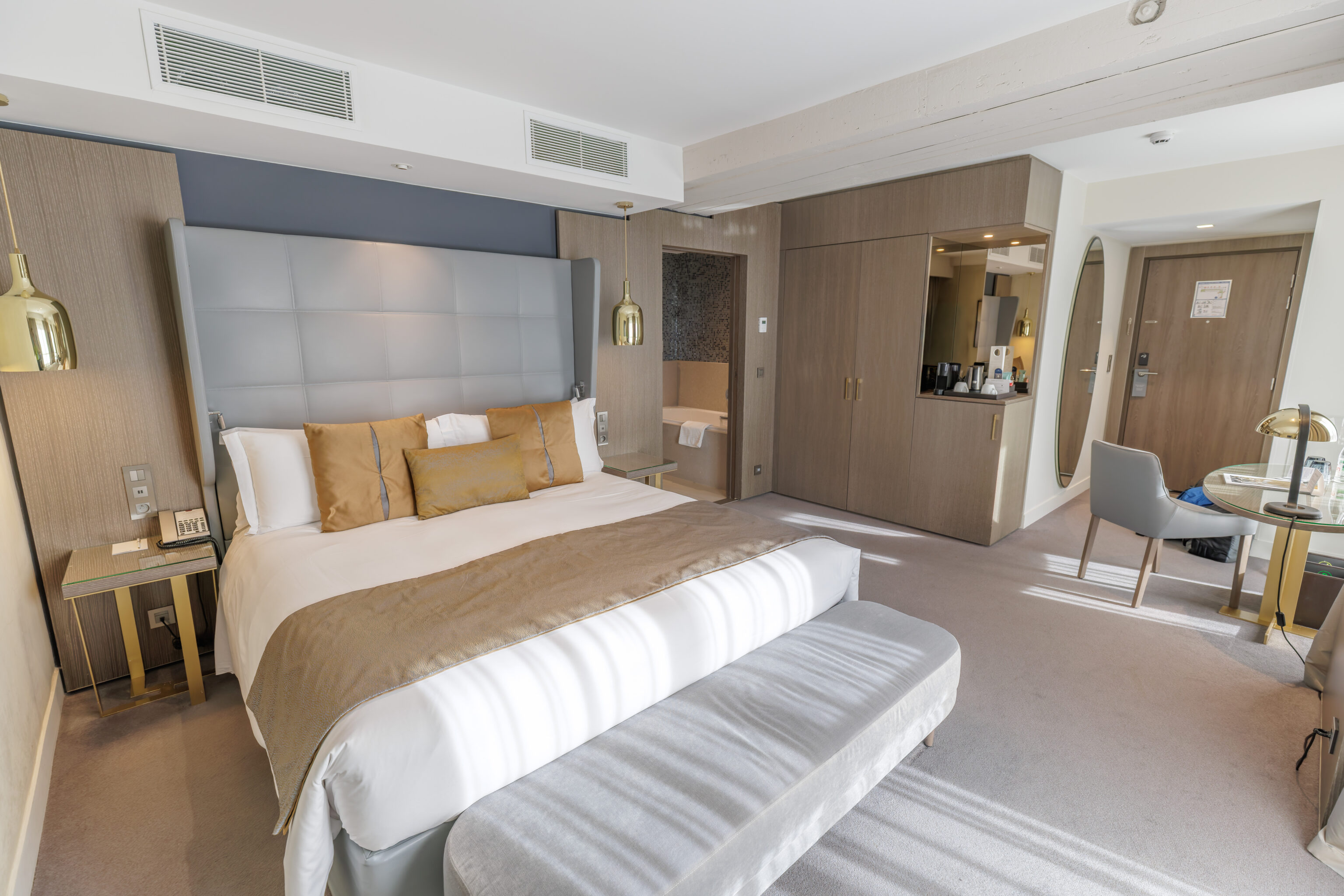
Our room was a good size and had a clean modern design.
The Hotel-Dieu building which contains the InterContinental was formerly a hospital and has history dating back to the 1400s, although the current structure seems to be mostly from the 17th and 18th century. The building was used as a hospital until 2010. Afterwards, it was redeveloped with the hotel opening in 2019. Other than the hotel, the building contains various shops and restaurants.
The French term hotel-Dieu is used to describe a facility used as a hospital for the poor. A sensible translation to English would be something like shelter of God.
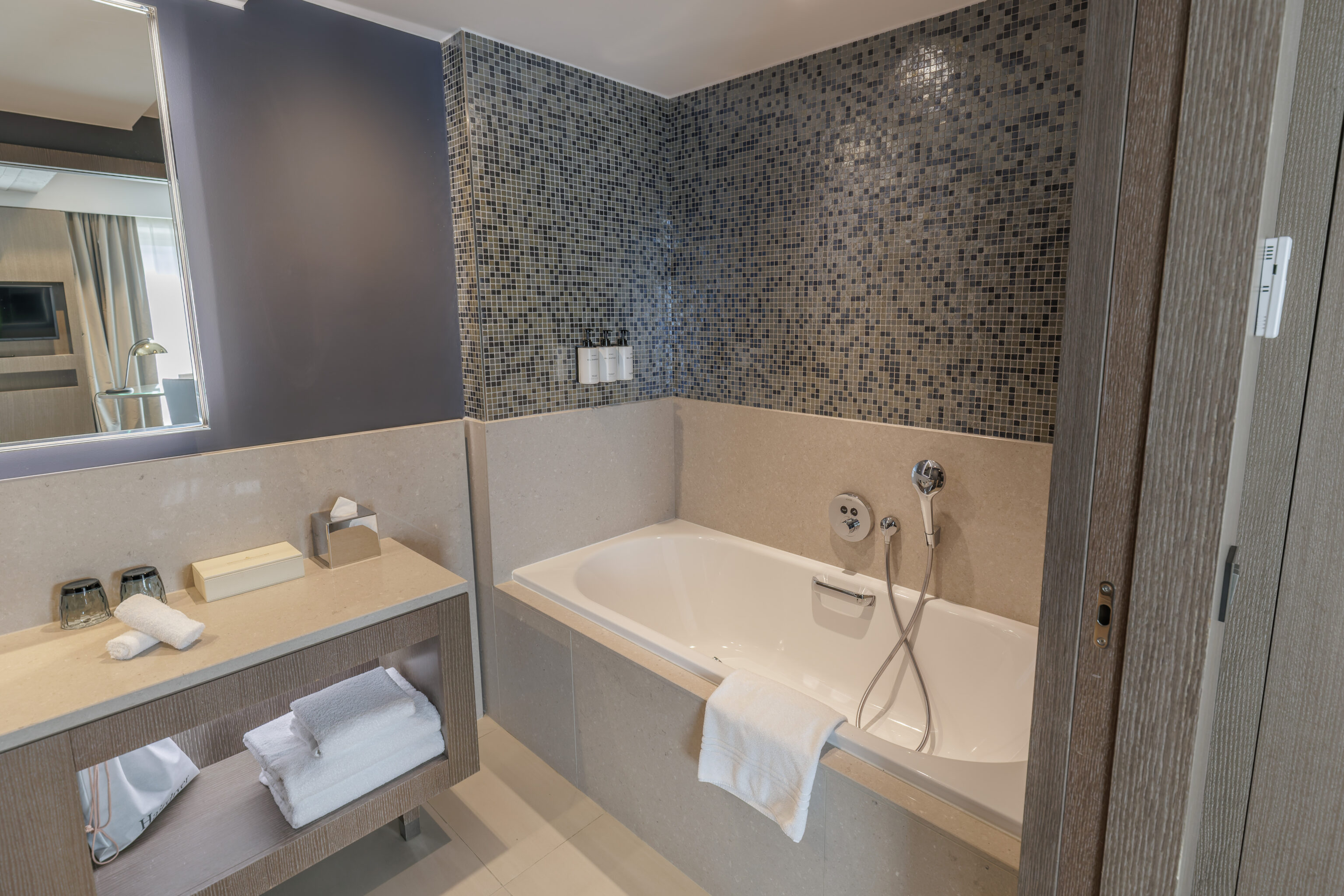
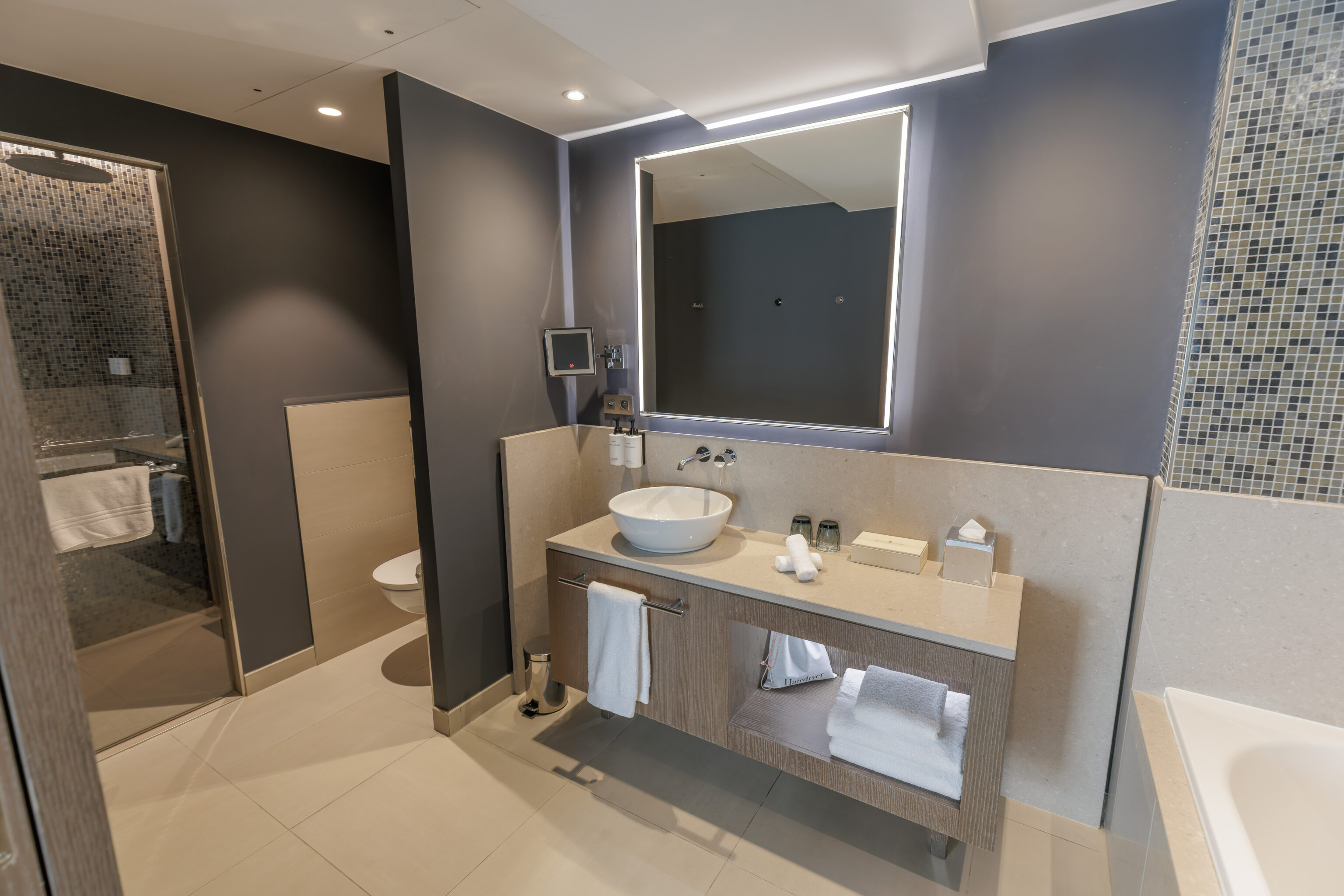
The bathroom had both a tub and shower.
Presqu’île
We headed out to explore the Presqu’île, which translates to Peninsula in English. Lyon’s Presqu’île is a central district located on a peninsula formed by two rivers, the Rhone and Saone. The Rhone forms in Switzerland and flows though Lake Geneva on its way to Lyon.
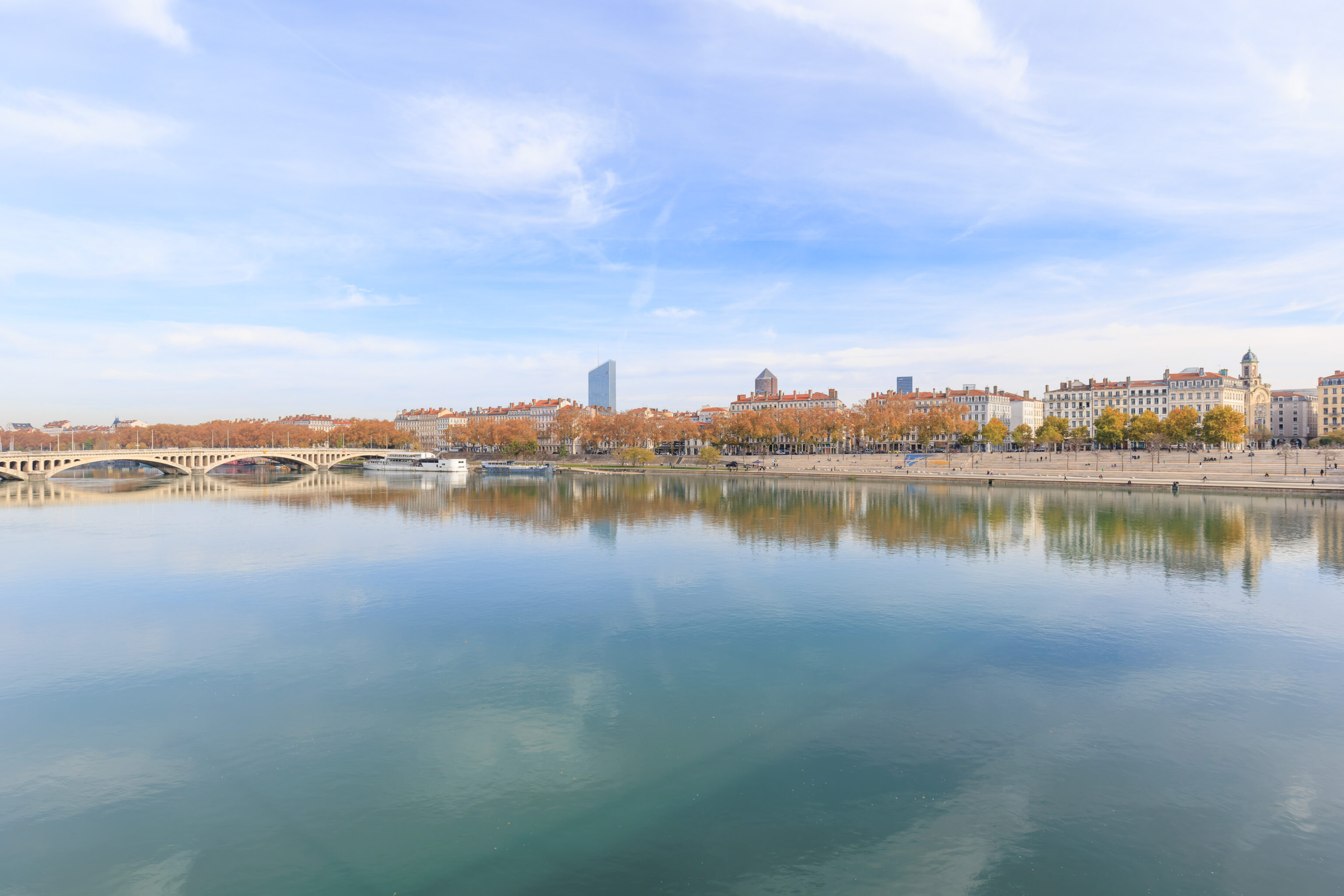
We walked across the street from the hotel to take a look at the Rhone. The water was pretty calm at the time.
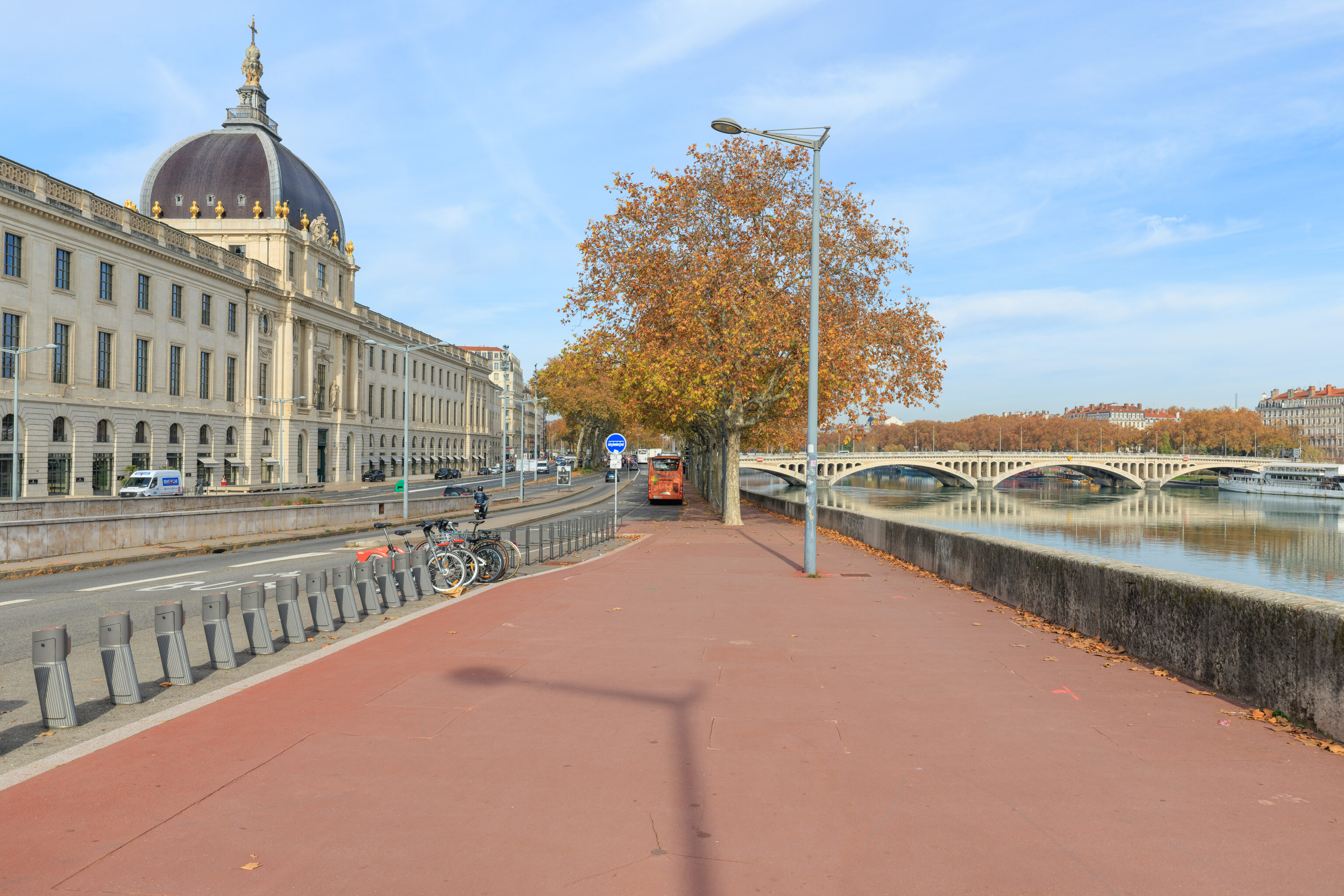
Looking to the north from the wide sidewalk next to the Rhone, we could see the Hotel-Dieu on our left. The InterContinental’s front entrance is under the large central dome.
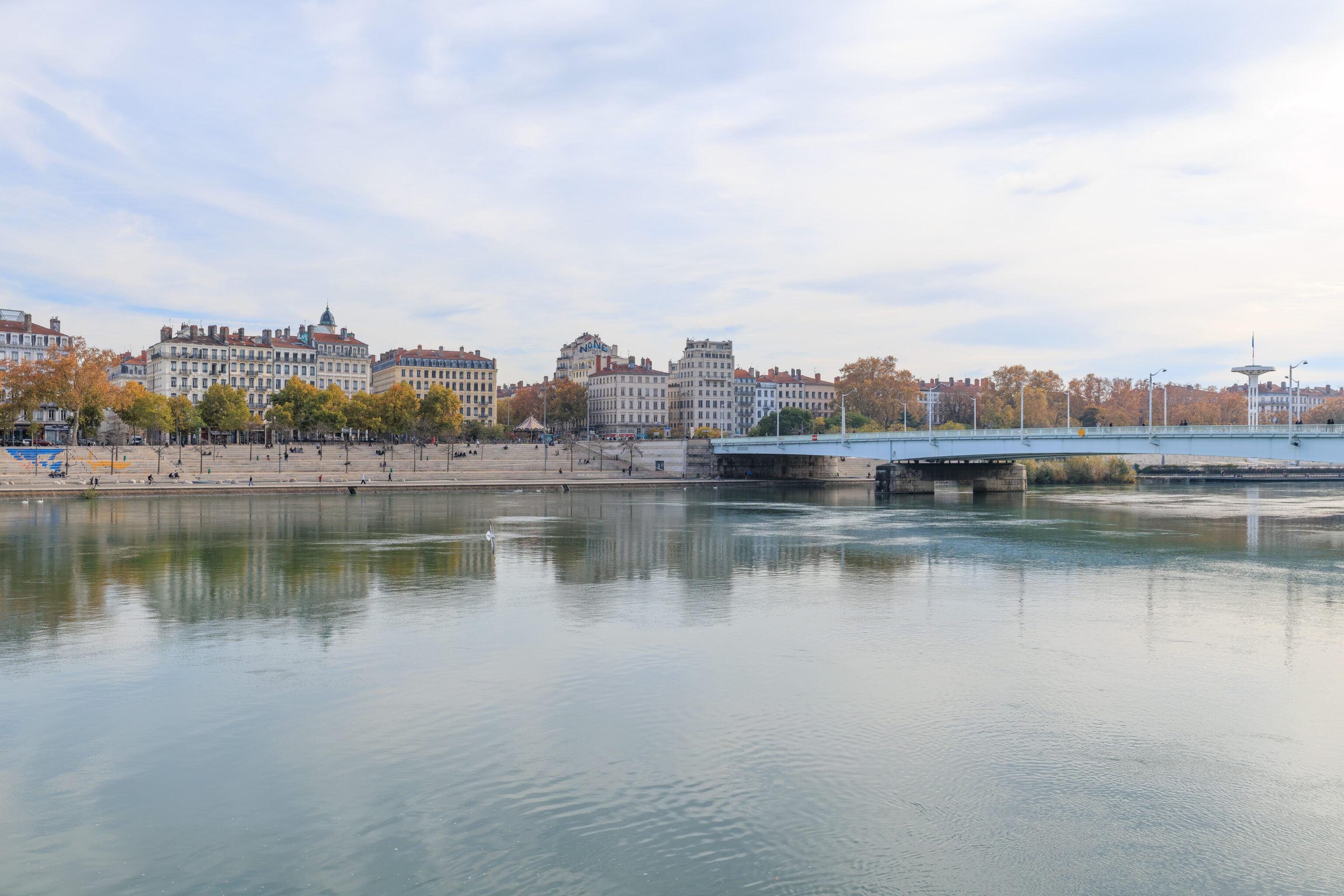
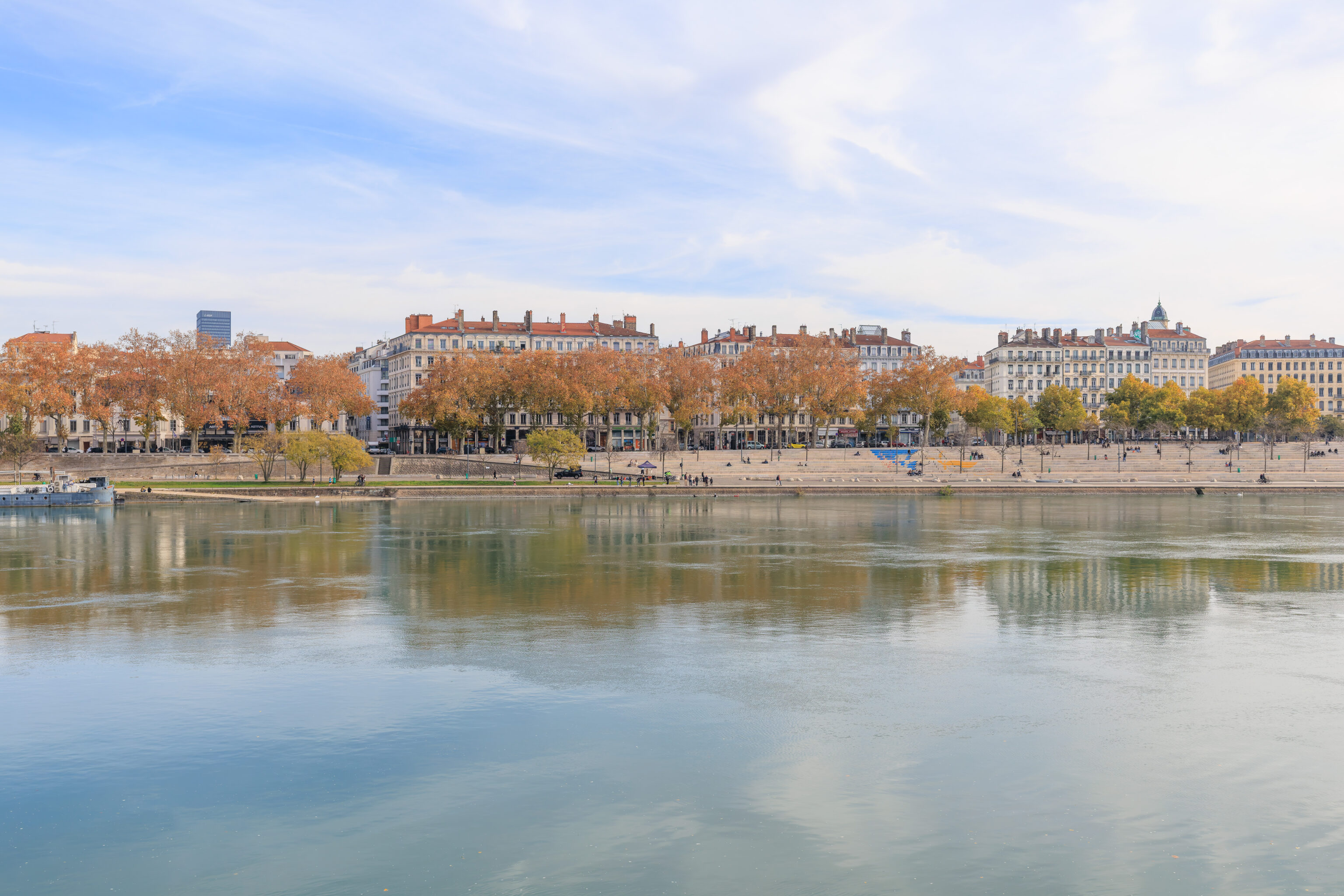
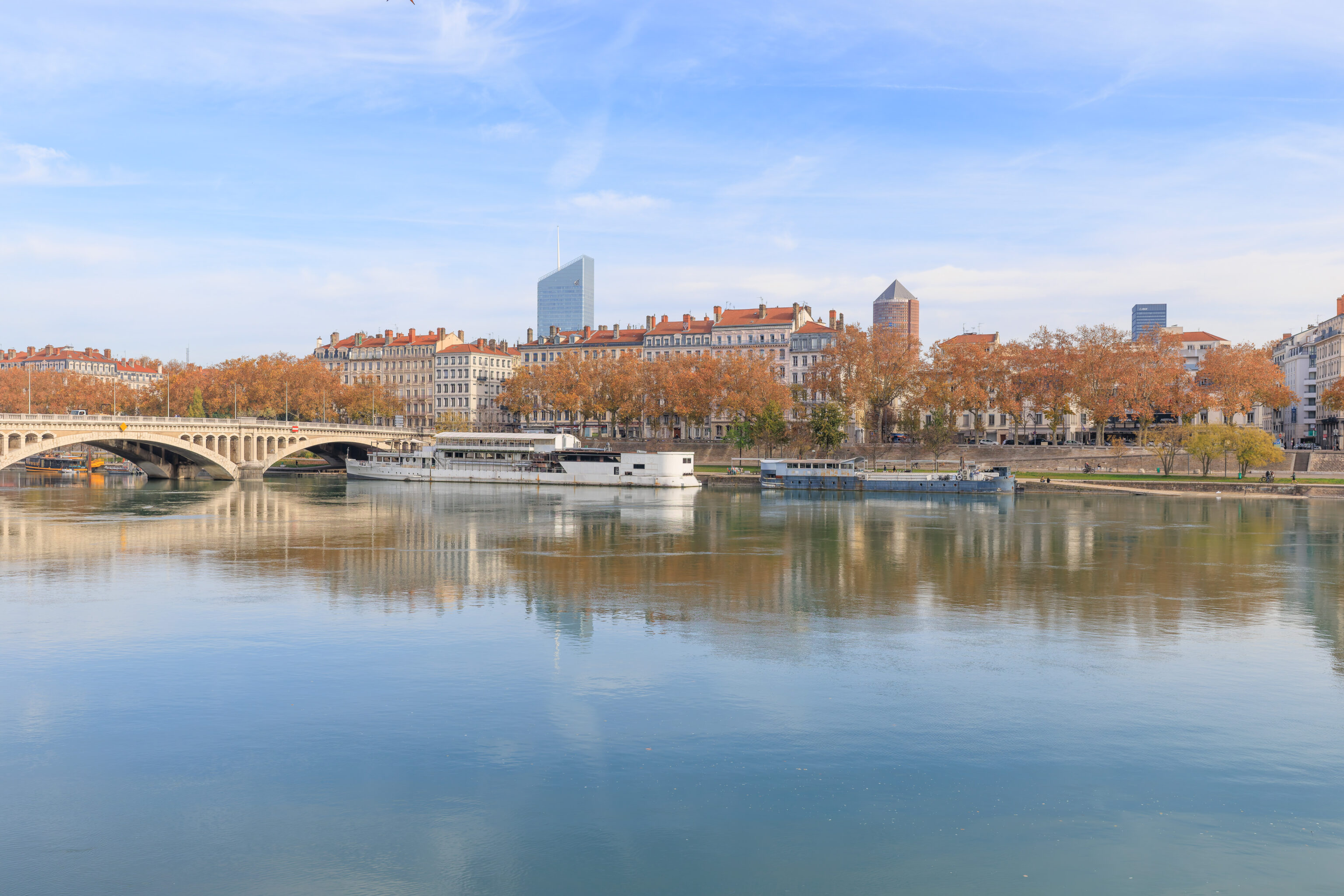
We decided to walk to the north along the river.
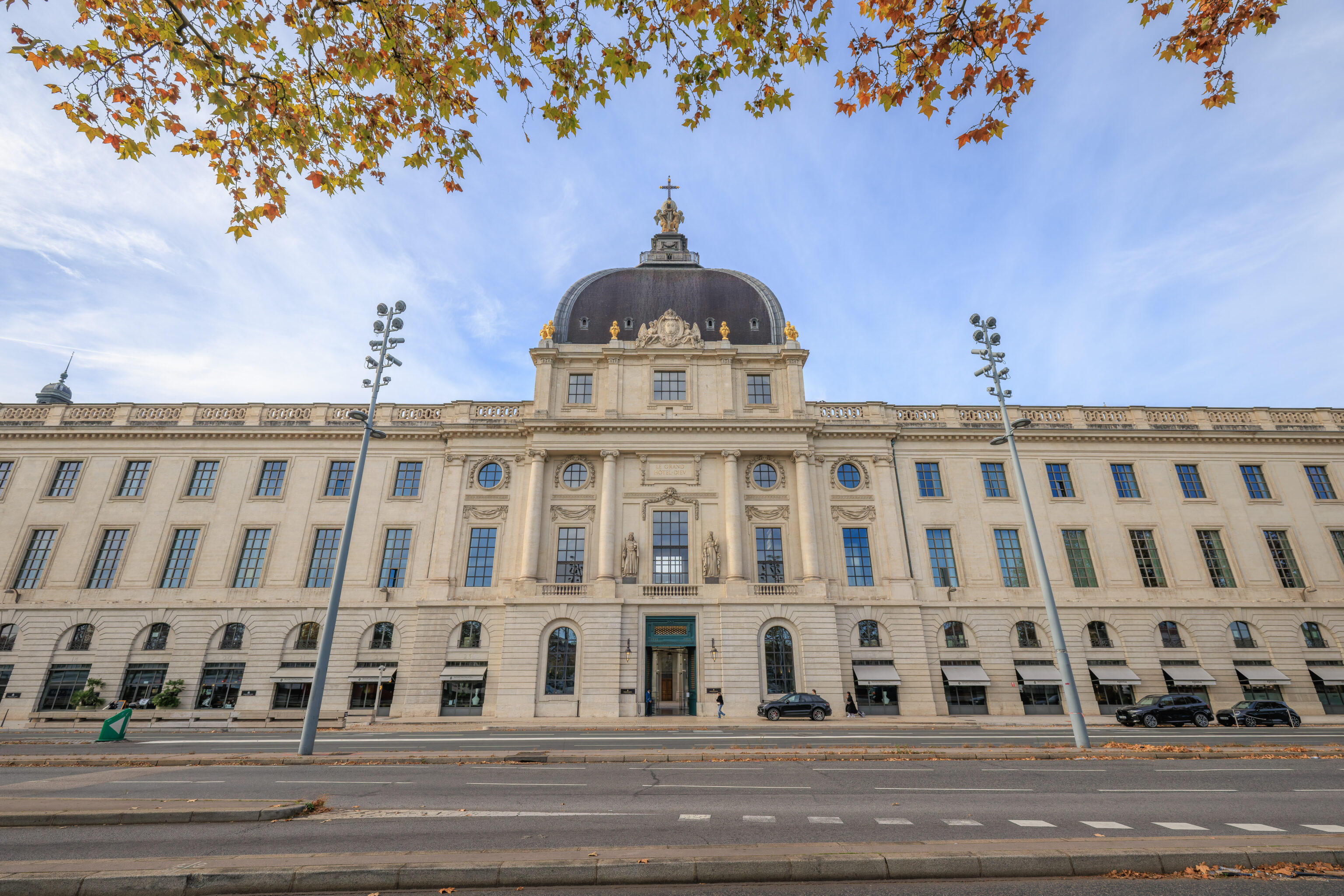
The view looking directly at the entrance to the InterContinental. The building maintains its historic exterior appearance with very little indication that it holds a modern hotel and other businesses.
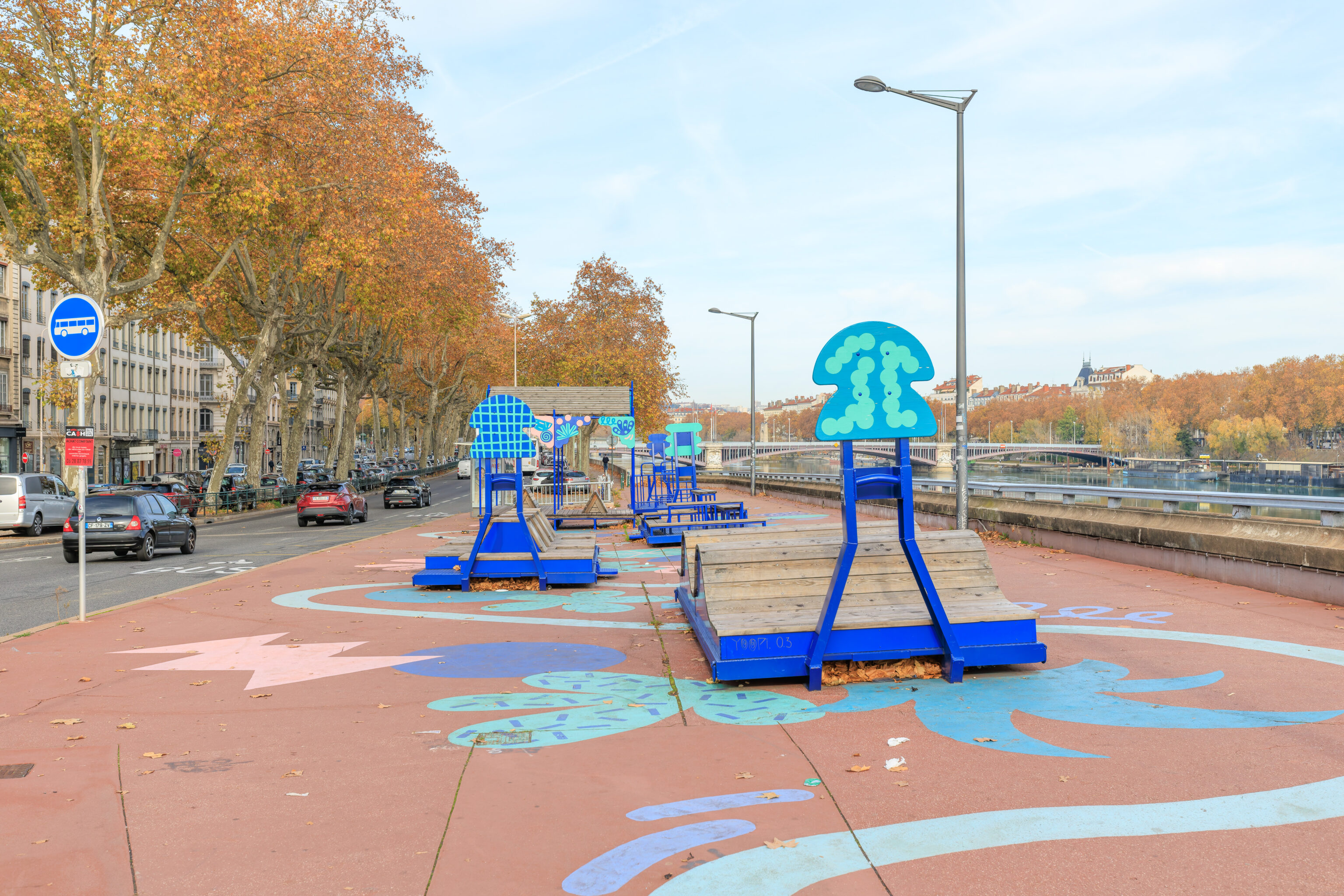
There was some outdoor seating on the far side of the first intersection to the north beyond the Hotel-Dieu. This is probably quite pleasant in the warmer months!
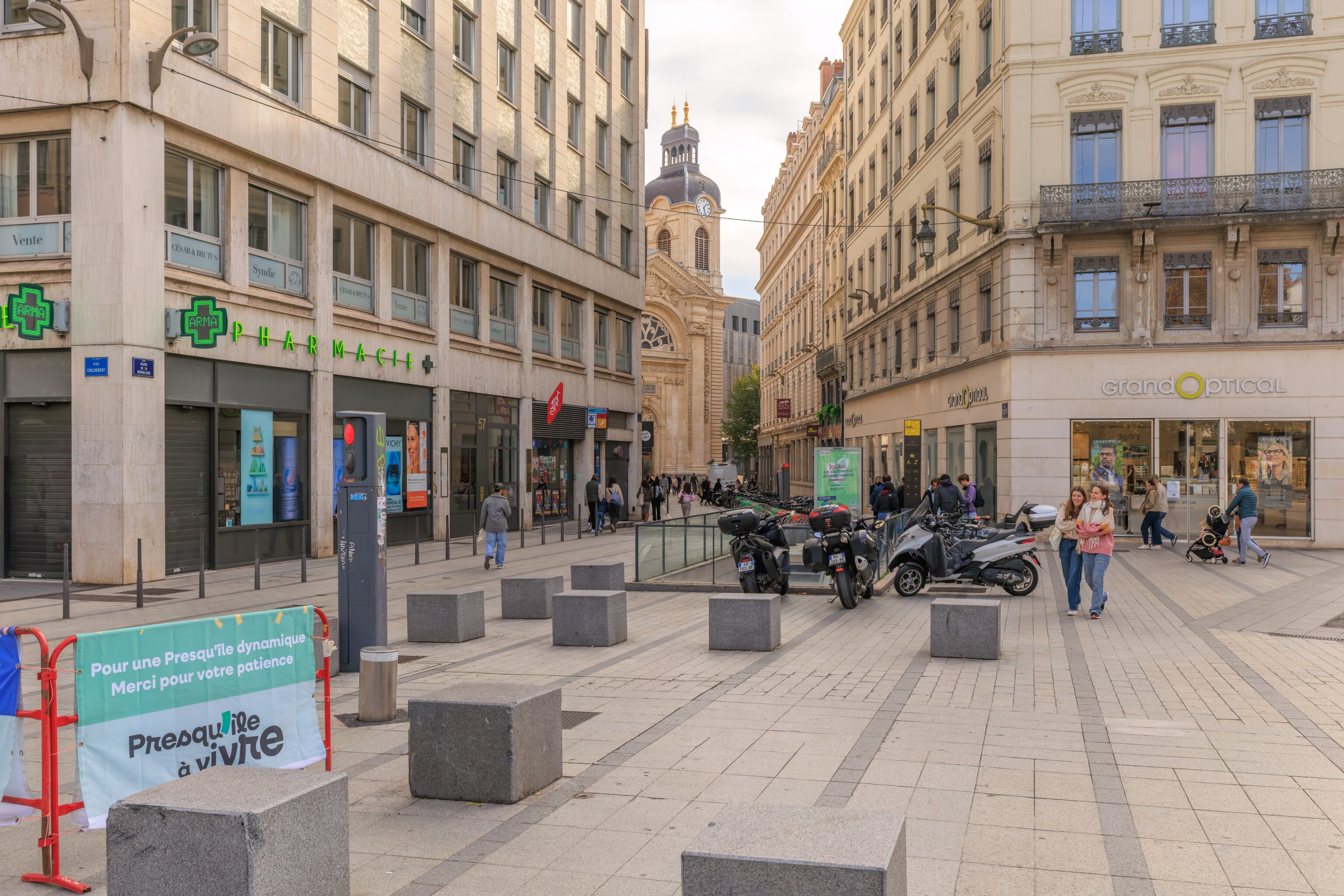
We turned left, walking to the west to reach the Place de la Republique.
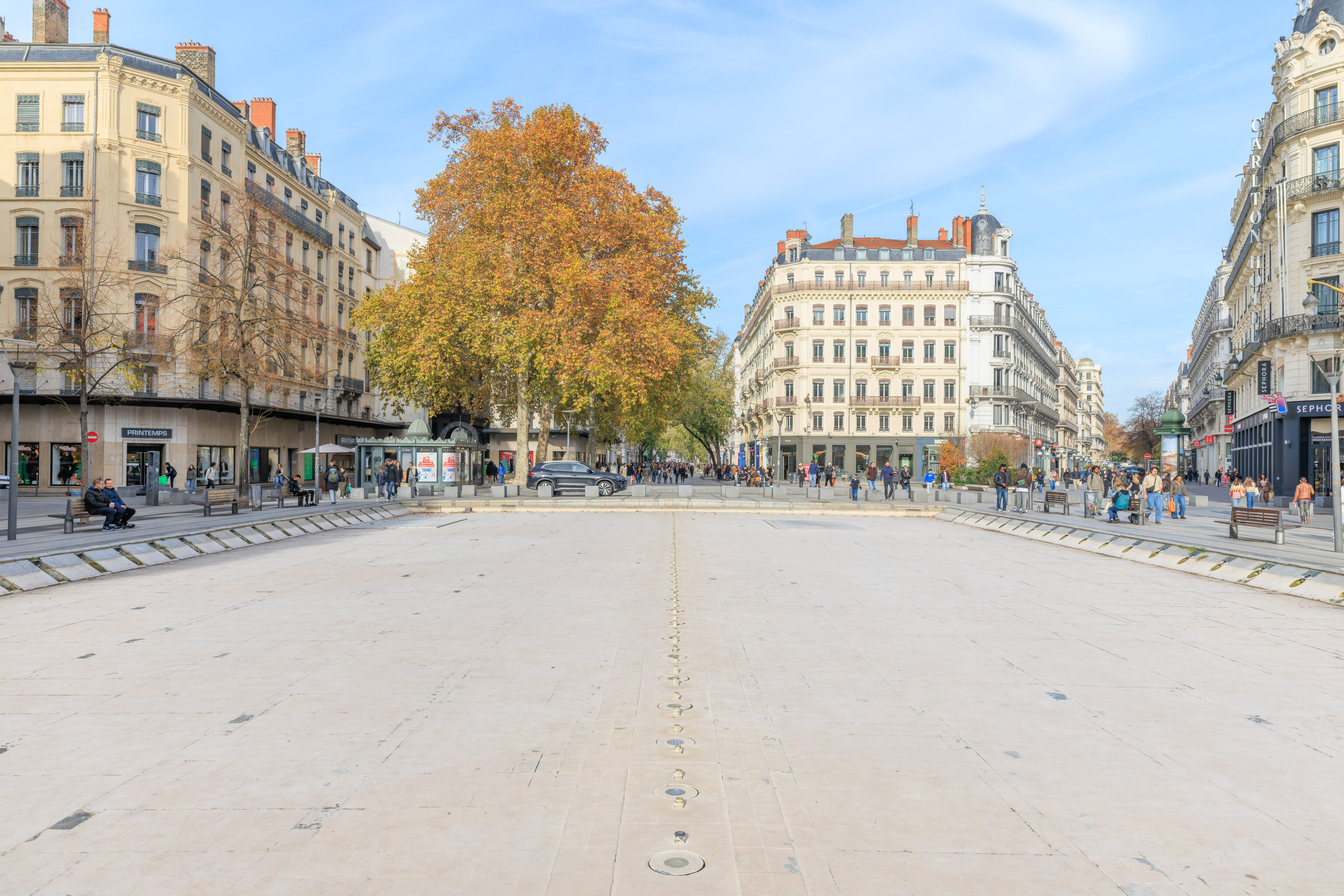
It looks like this might be a shallow pool of water in the warmer months?
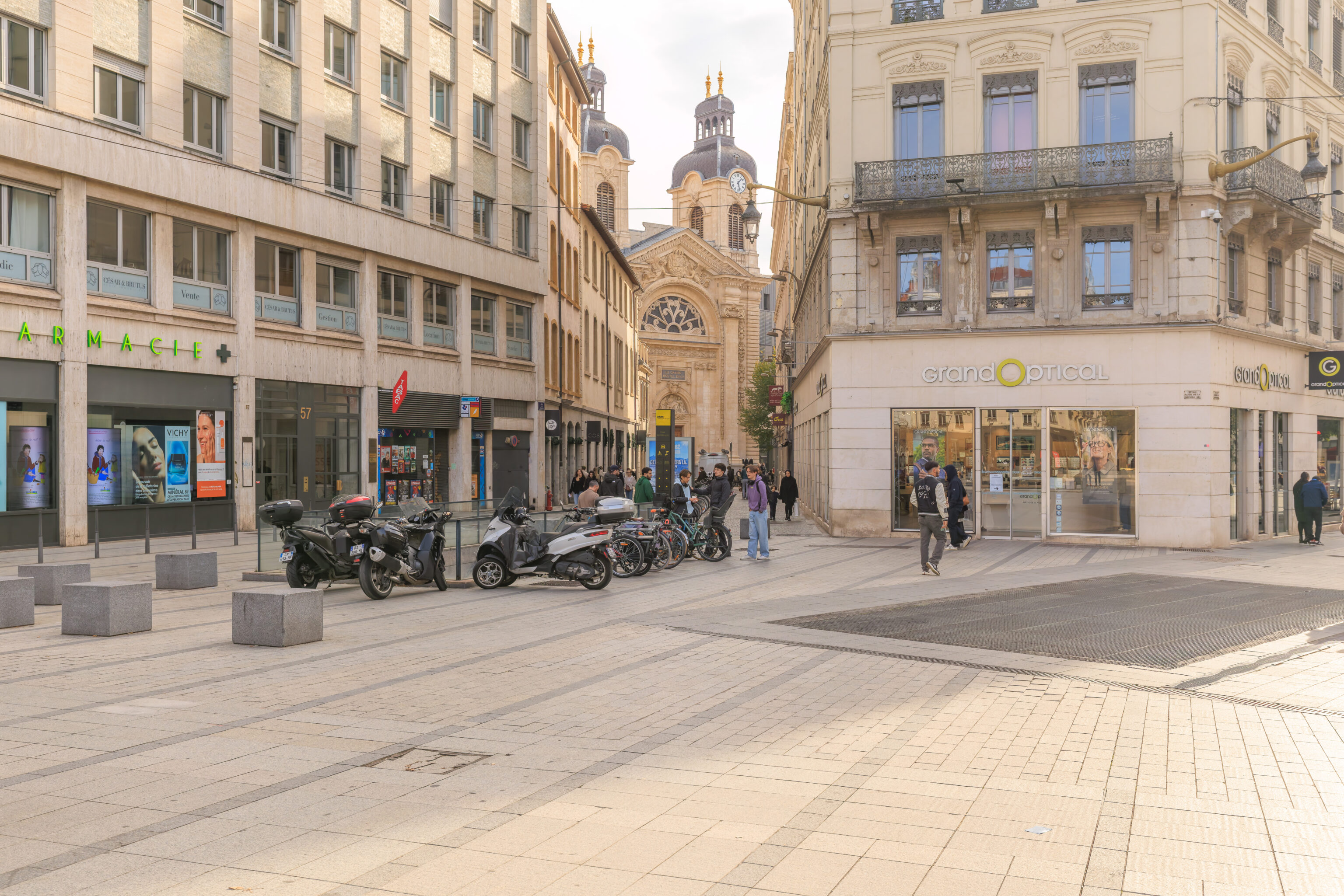
Looking to the southeast, we could see part of the front of the Hotel-Dieu’s chapel.
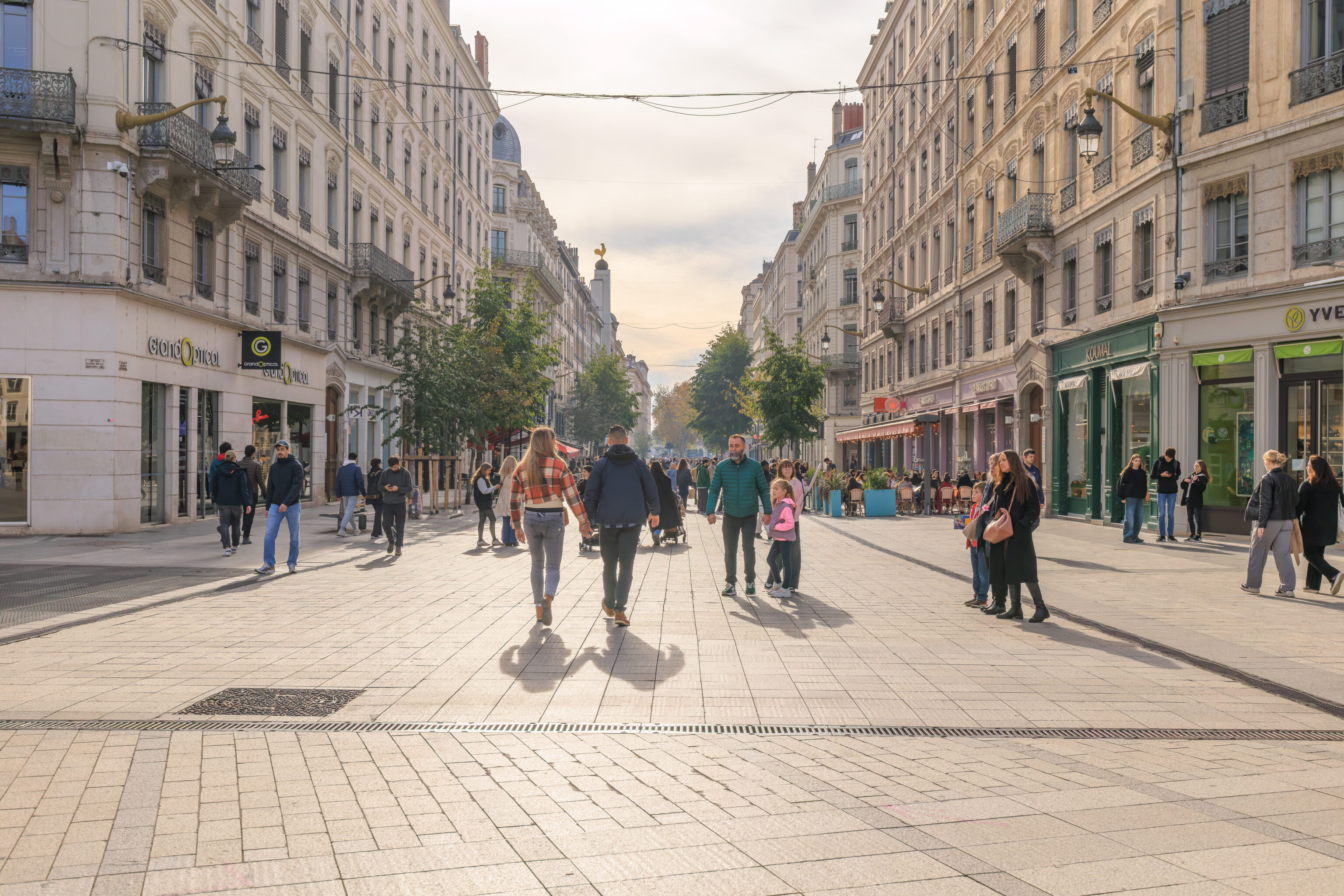
It was pretty quiet at the square. There seemed to be more people to the south along the Rue de la Republique, a mostly pedestrian street that runs through this area.
Today is Armistice Day, the day the armistice took effect ending World War I on the 11th day of the eleventh month at the eleventh hour in 1918. It is a national holiday here in France. So, we expected it to be sort of like a weekend, but we weren’t certain if businesses would be closed. As tourists just arriving, we have no real basis to determine if it was just like any other day. But it mostly seemed that way.
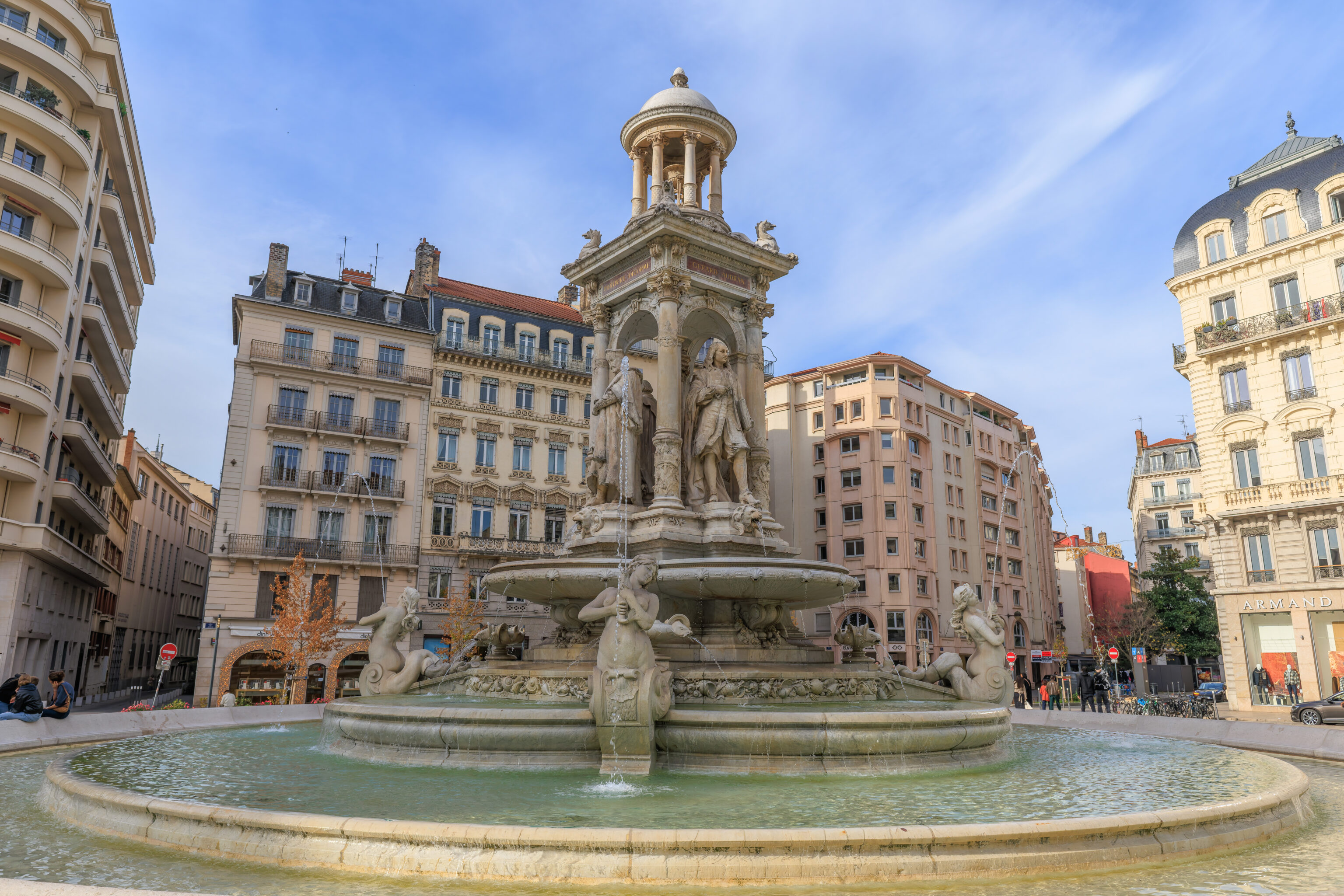
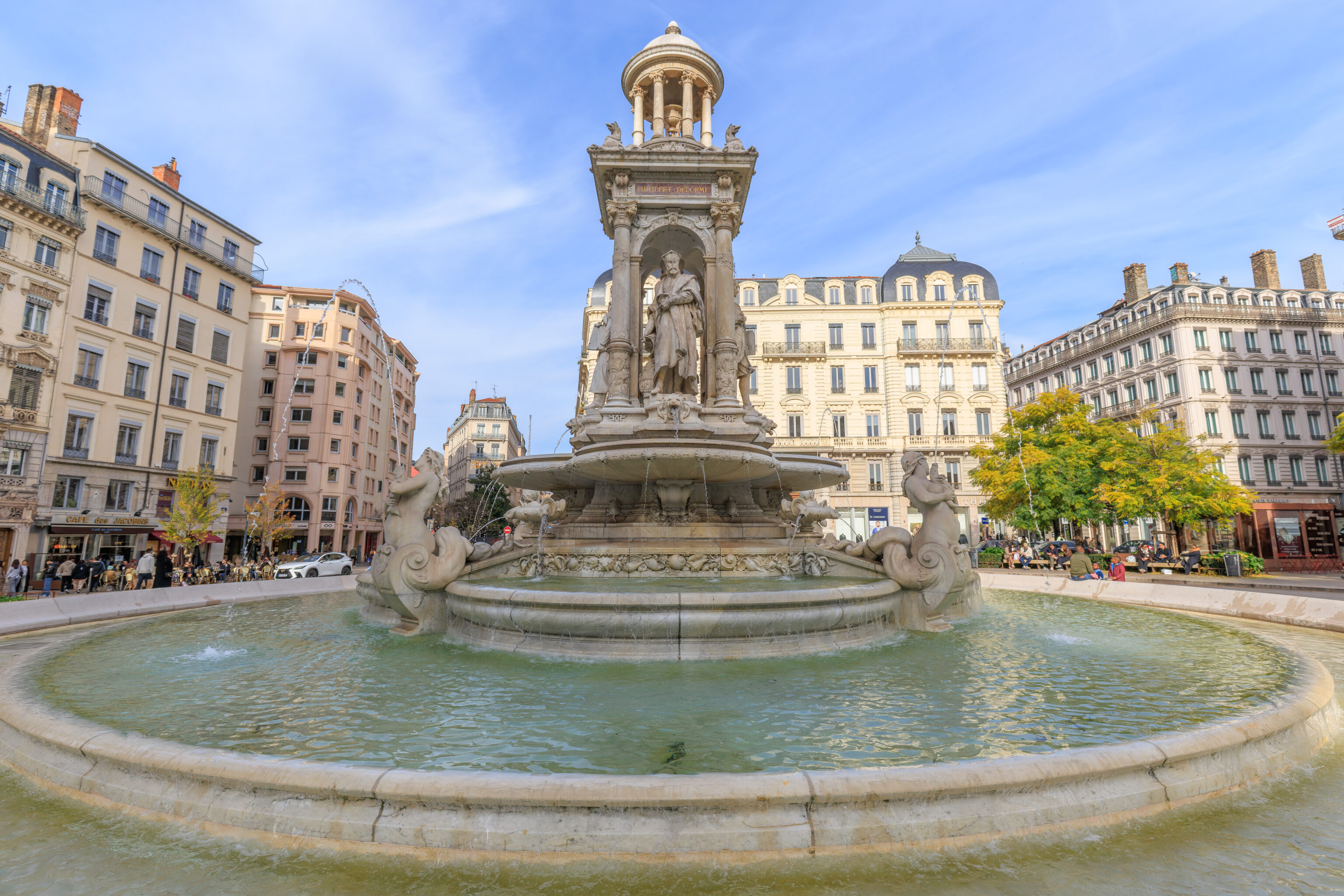
We continued walking to the west, reaching the Place des Jacobins one block away. Jacobins here refers to the Catholic Dominican Order.
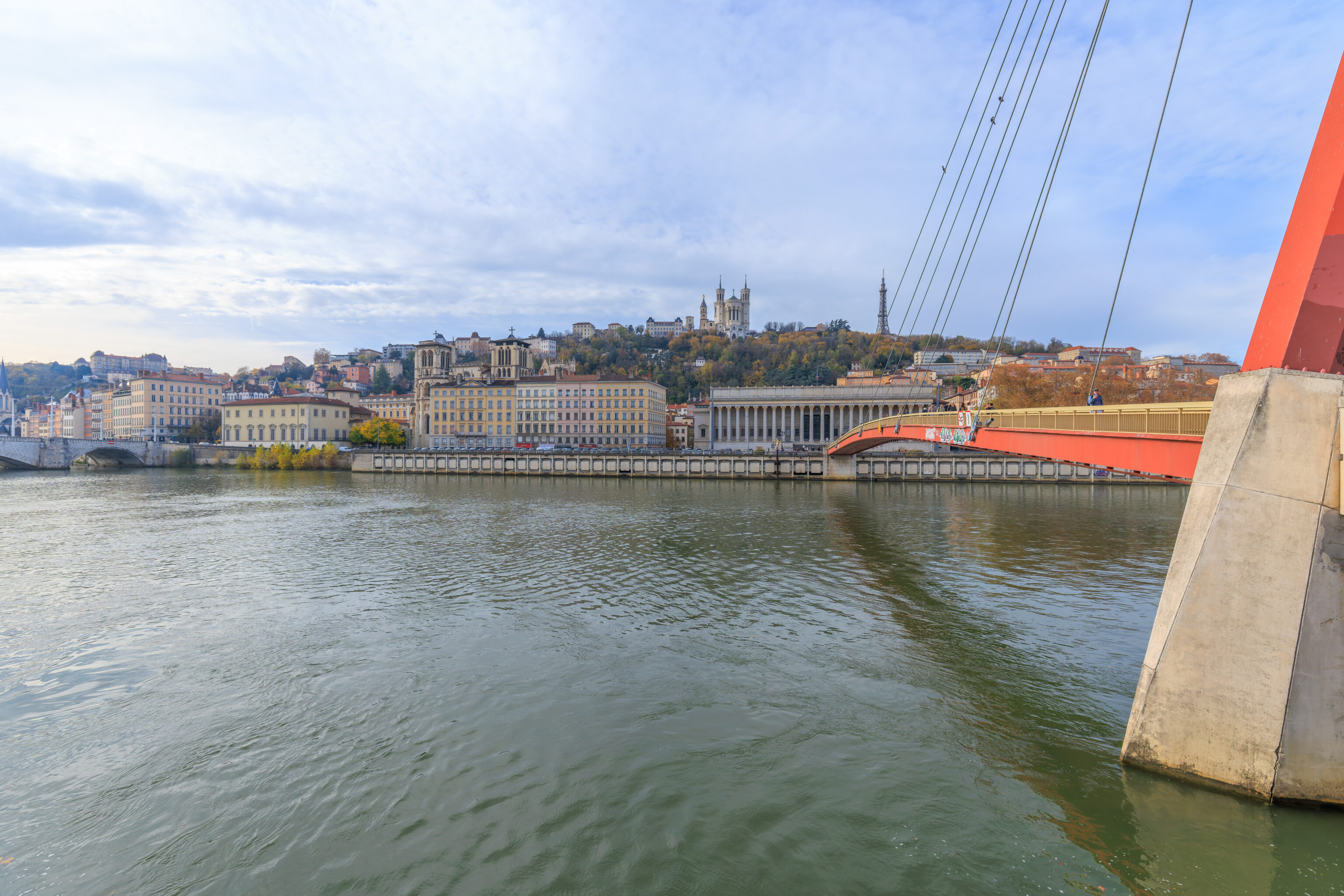
We continued to the west to reach the east bank of the Saone. Vieux Lyon, the historic old town district of Lyon, is on the other side of the river.
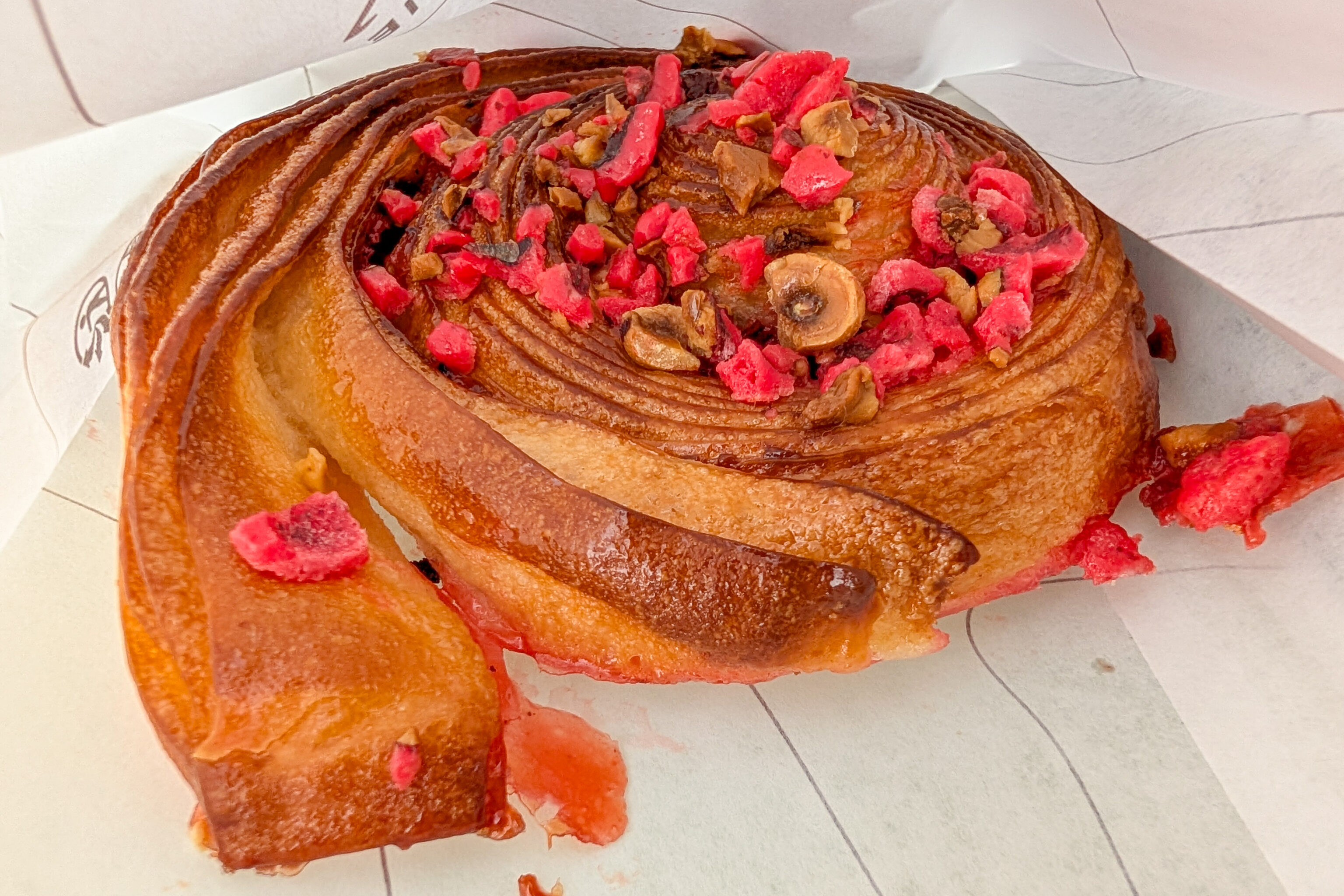
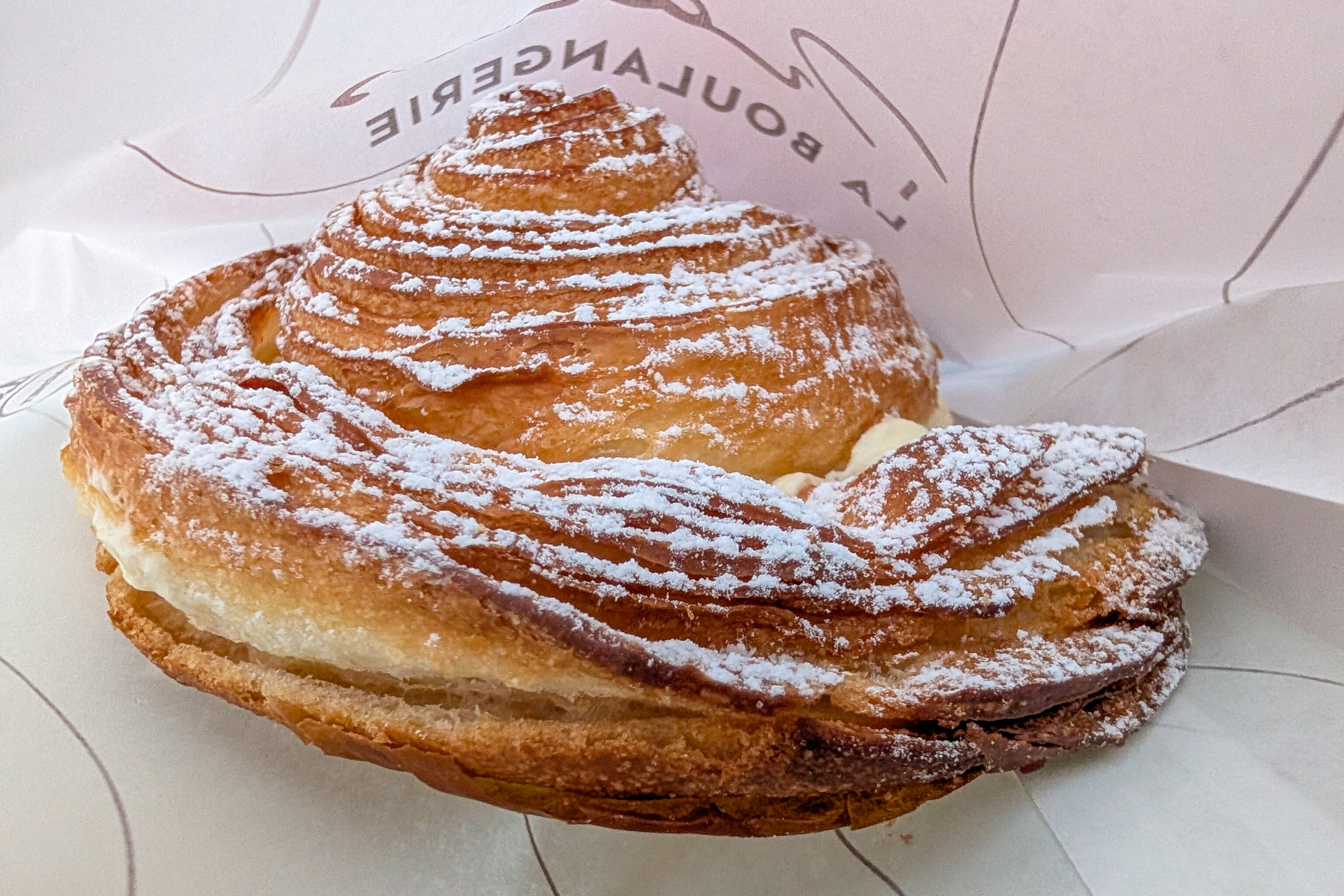
We were a bit hungry so rather than cross the river decided to visit Pralus, a boulangerie, for some snacks. They were very good and quelled our hunger for a bit.
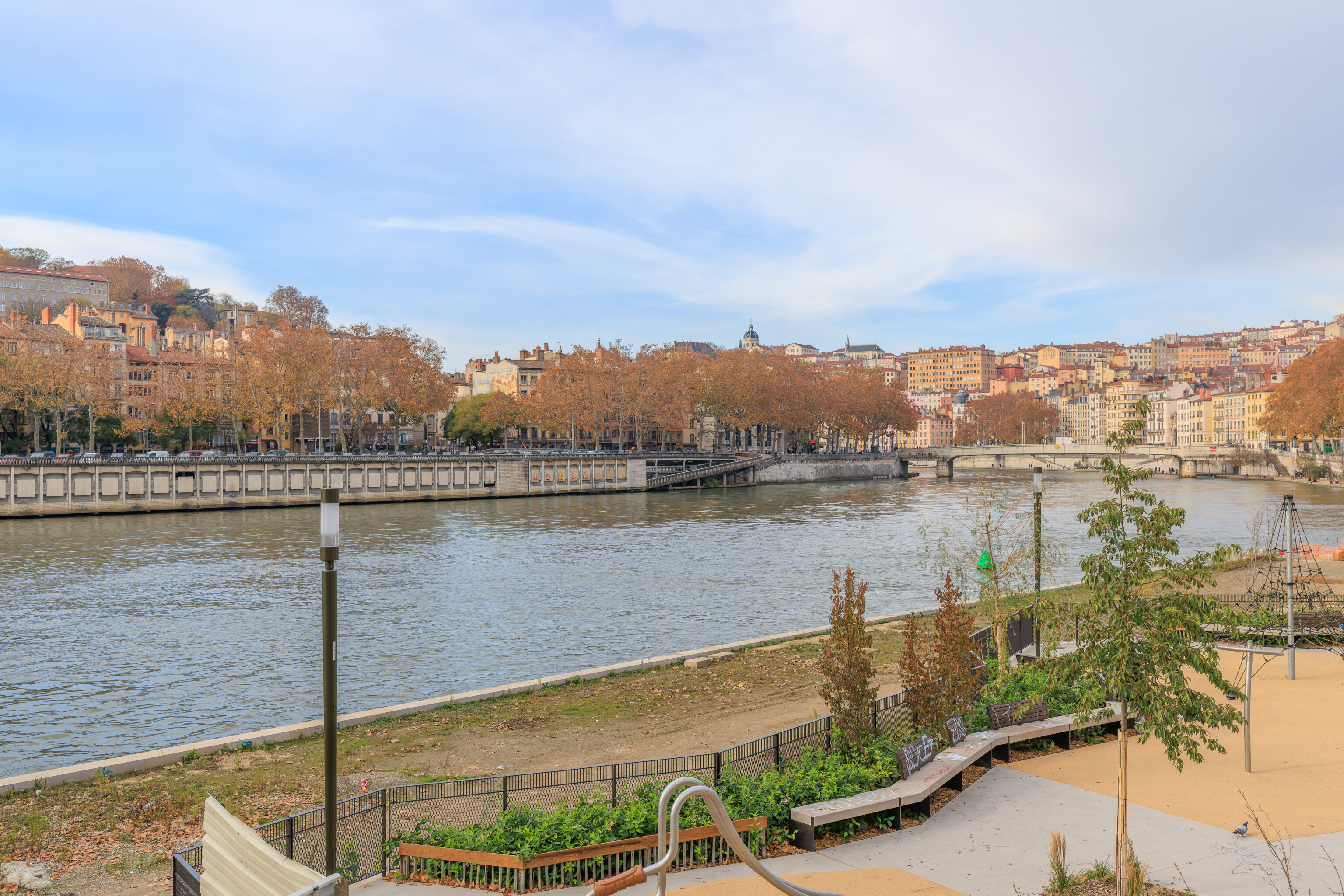
Pralus was one bridge to the north along the Saone.
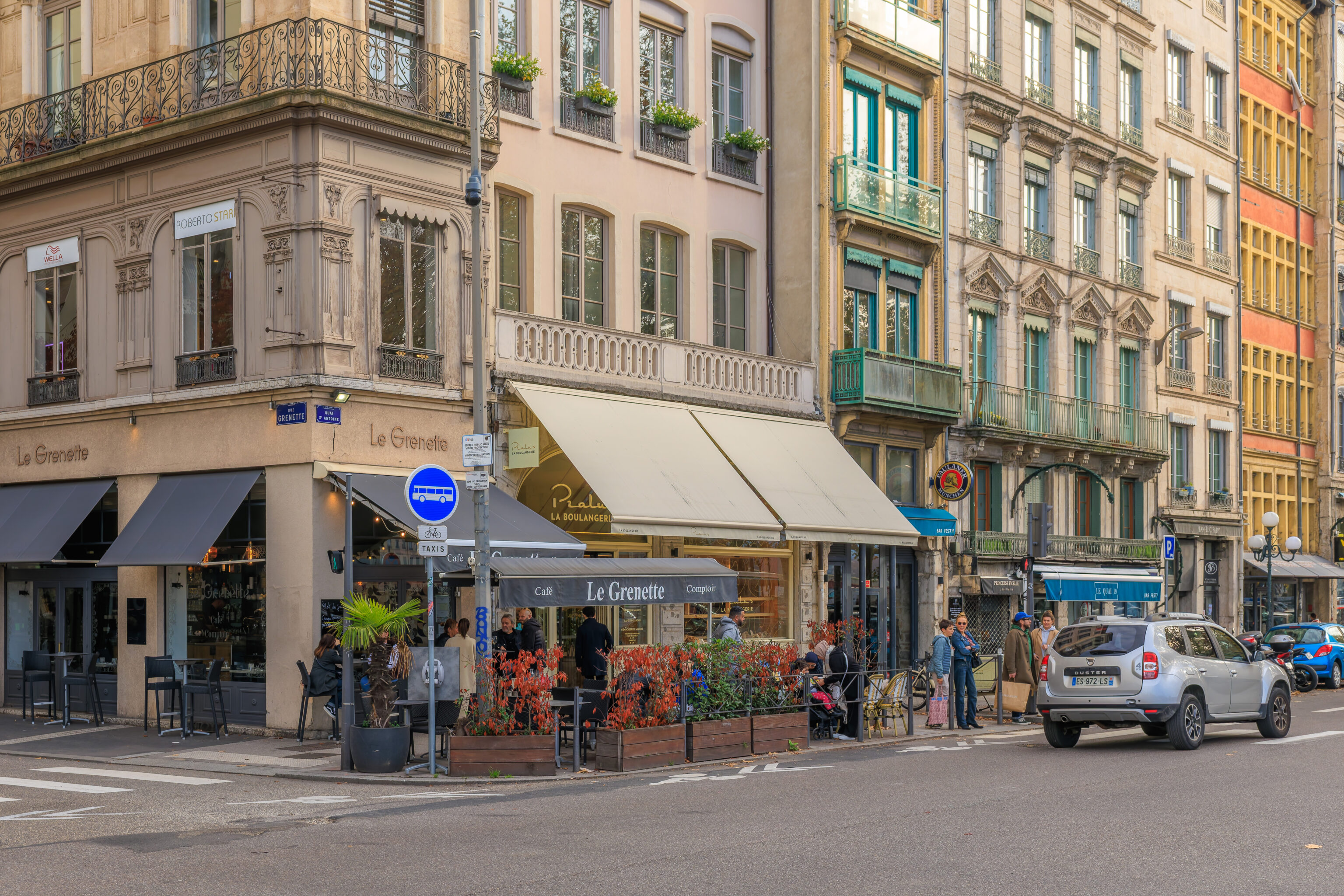
Pralus, as seen from the diagonal corner of the nearby intersection.
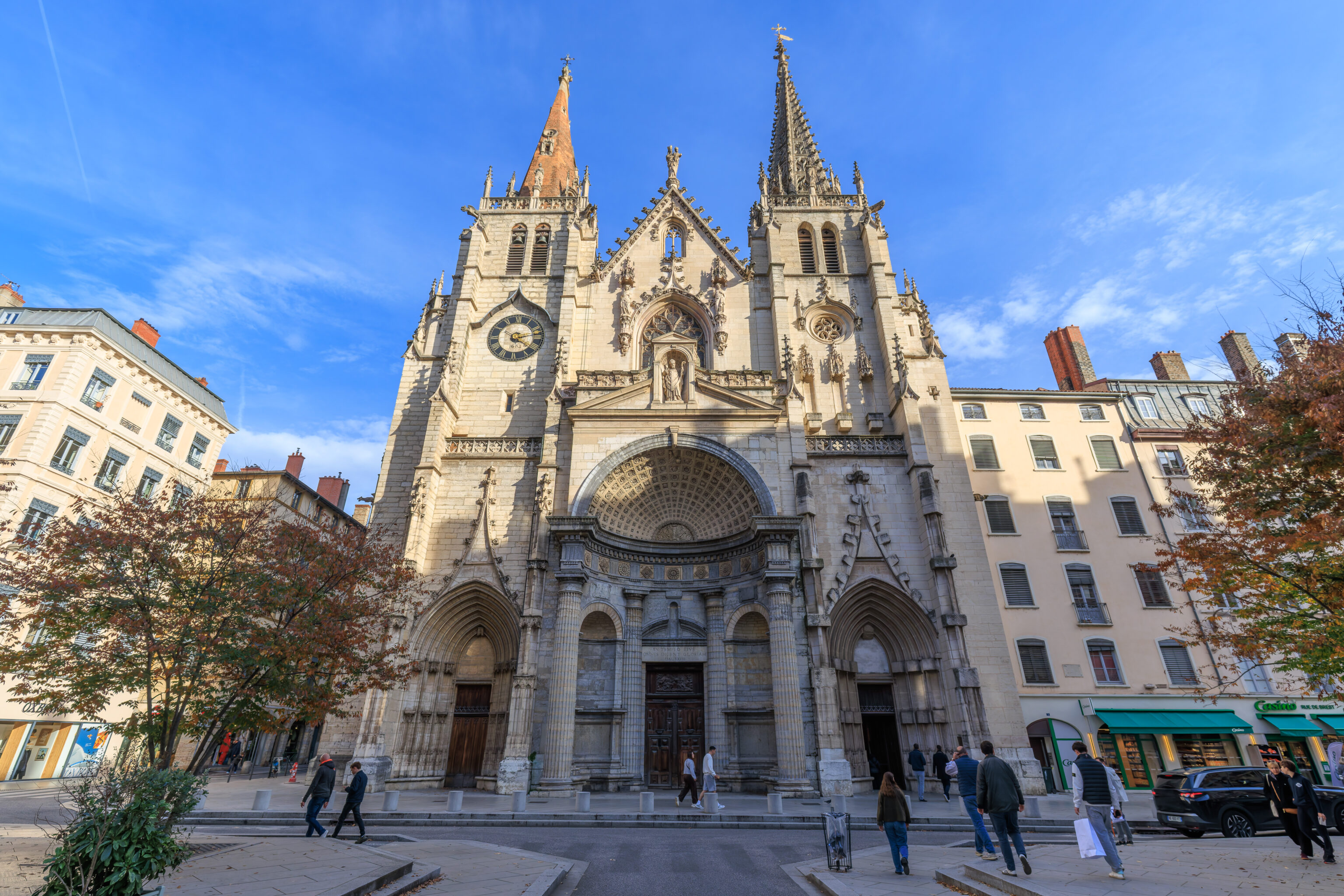
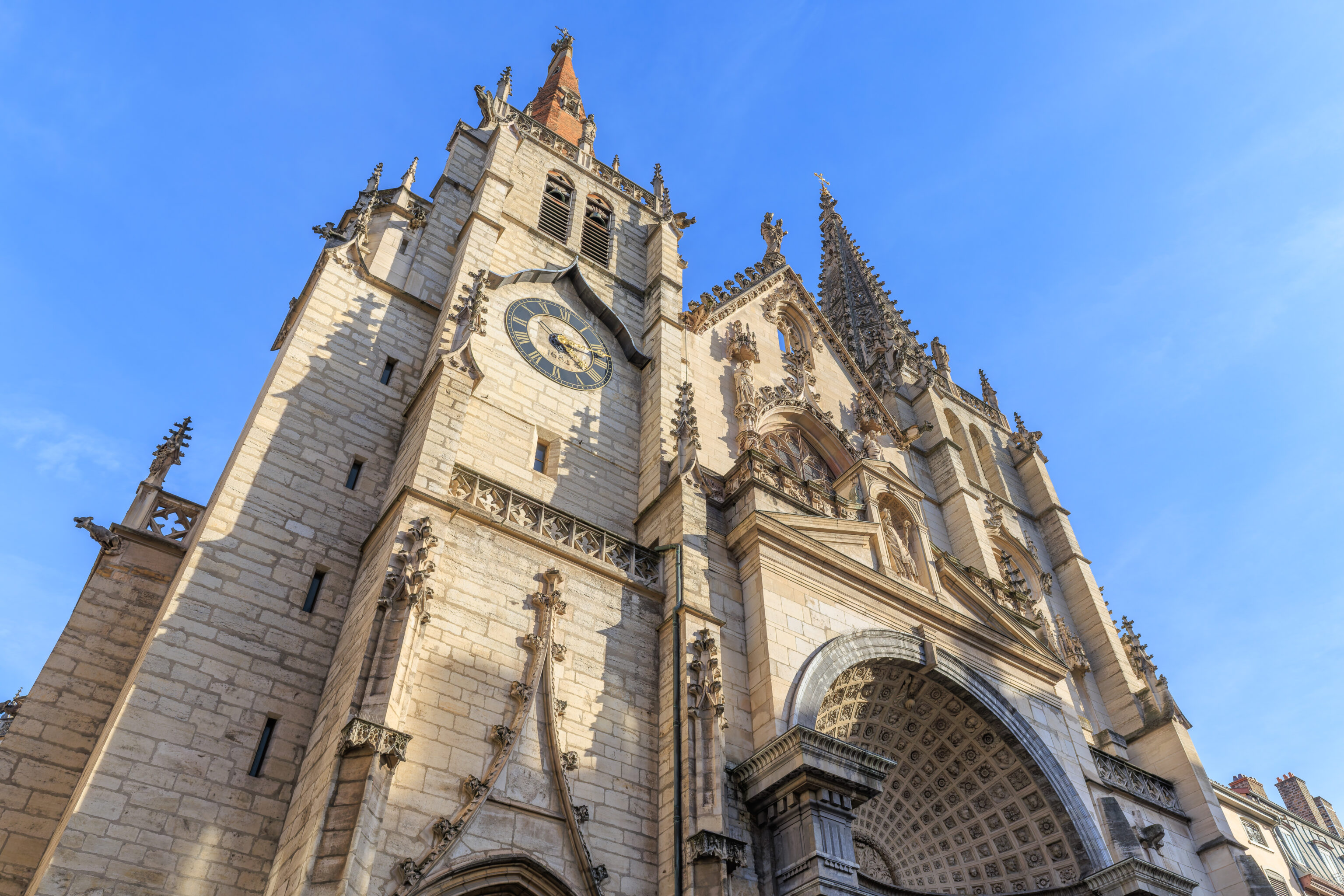
We then walked a little bit to the northeast to reach the Église Saint-Nizier. We went in to take a look.
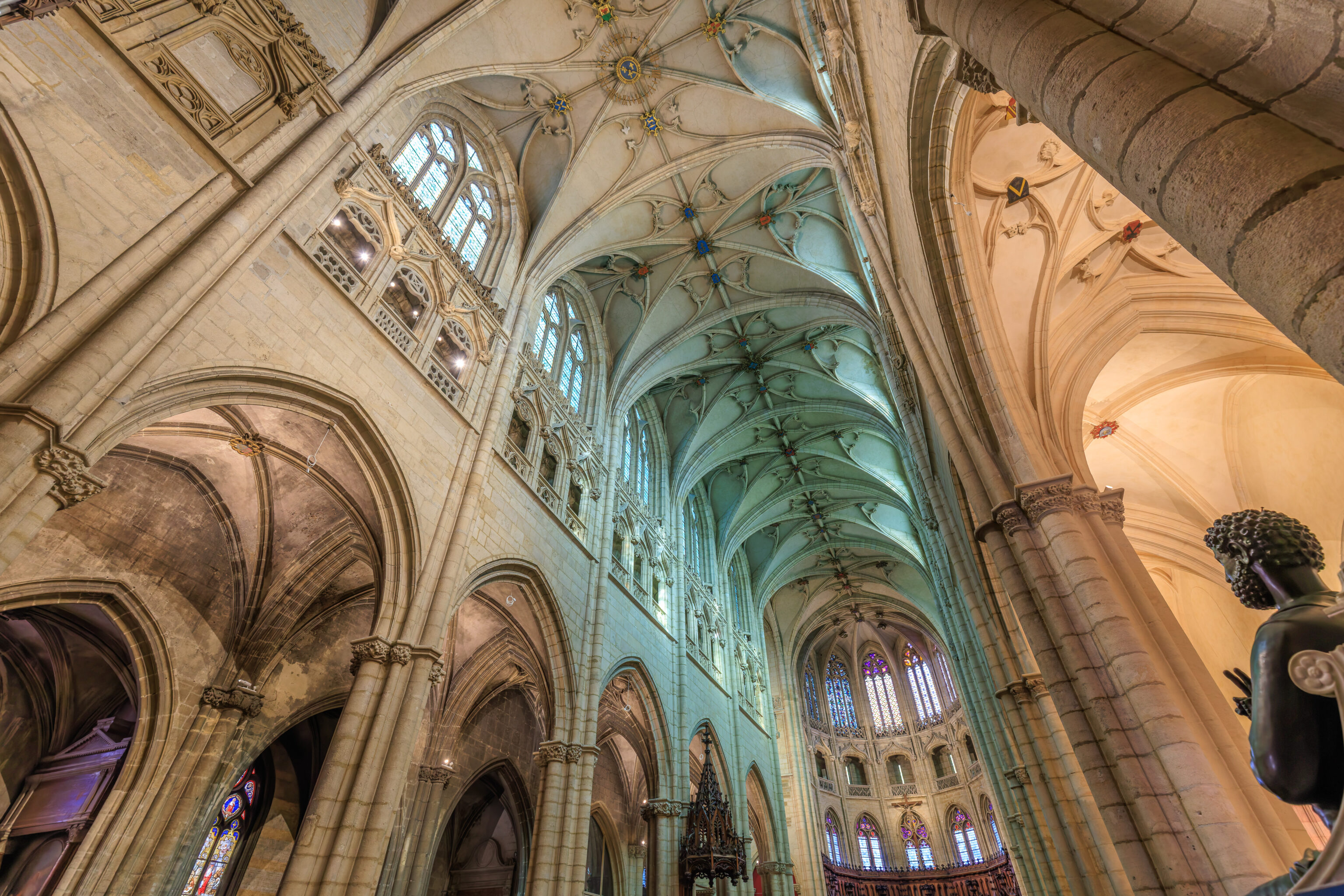
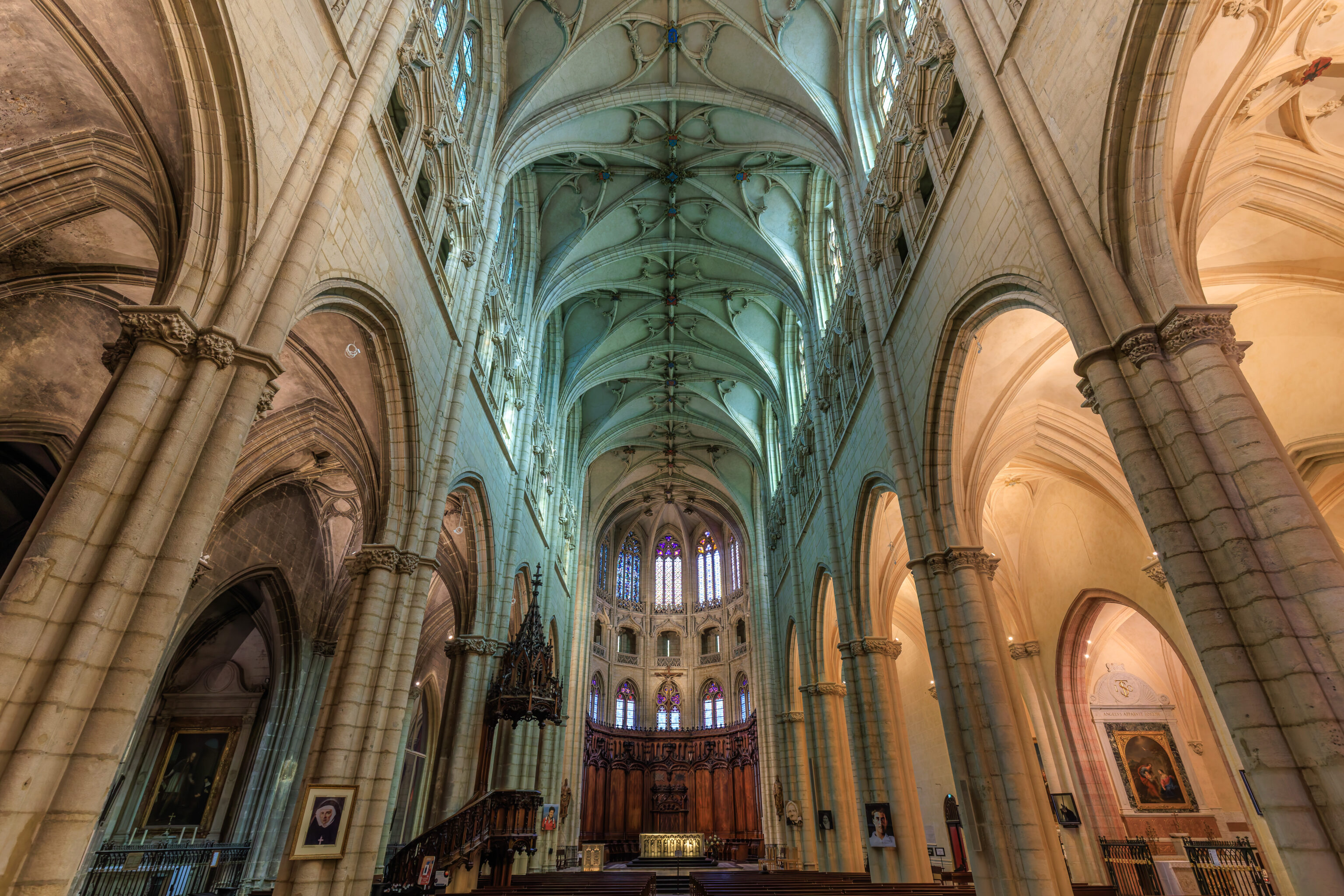
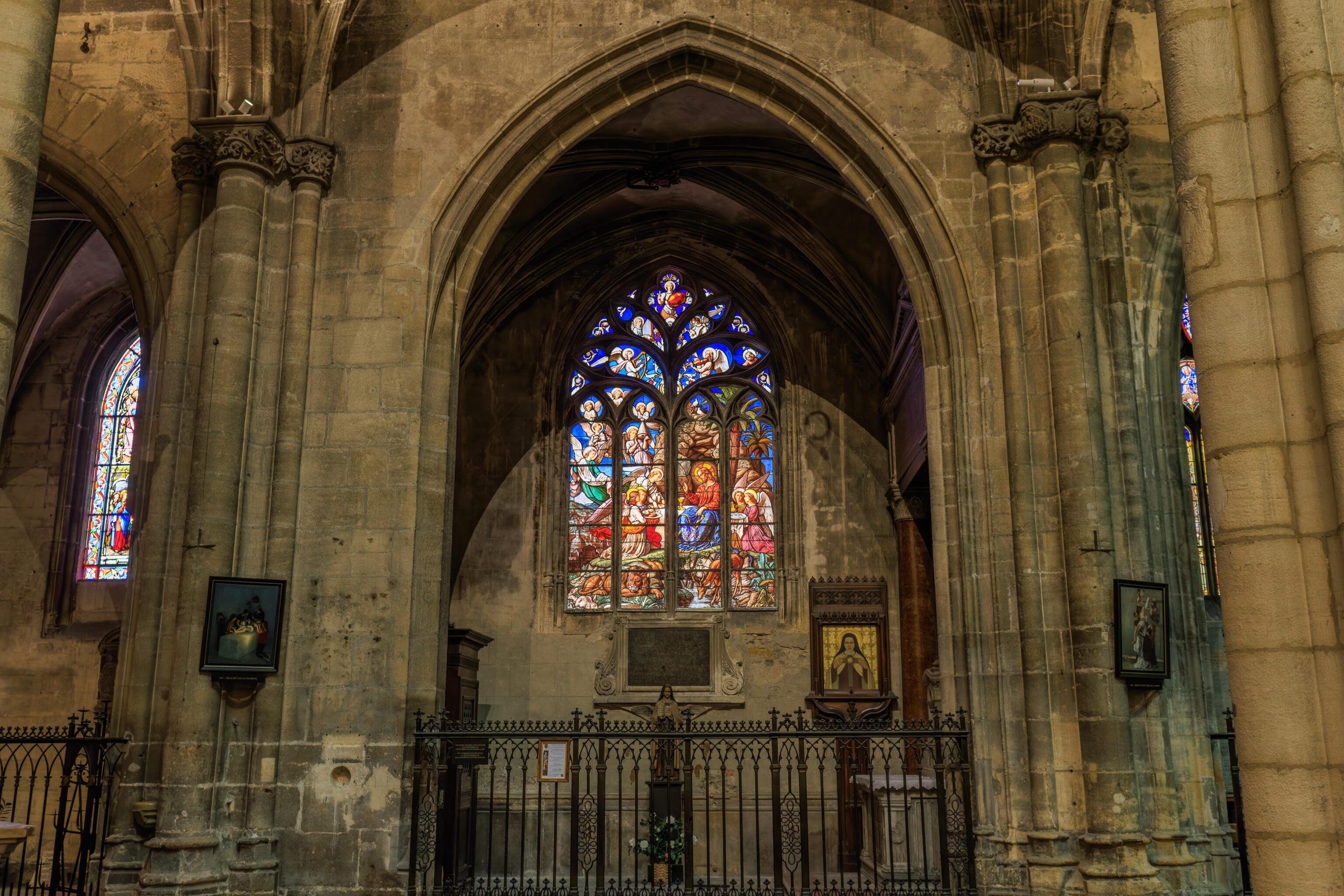
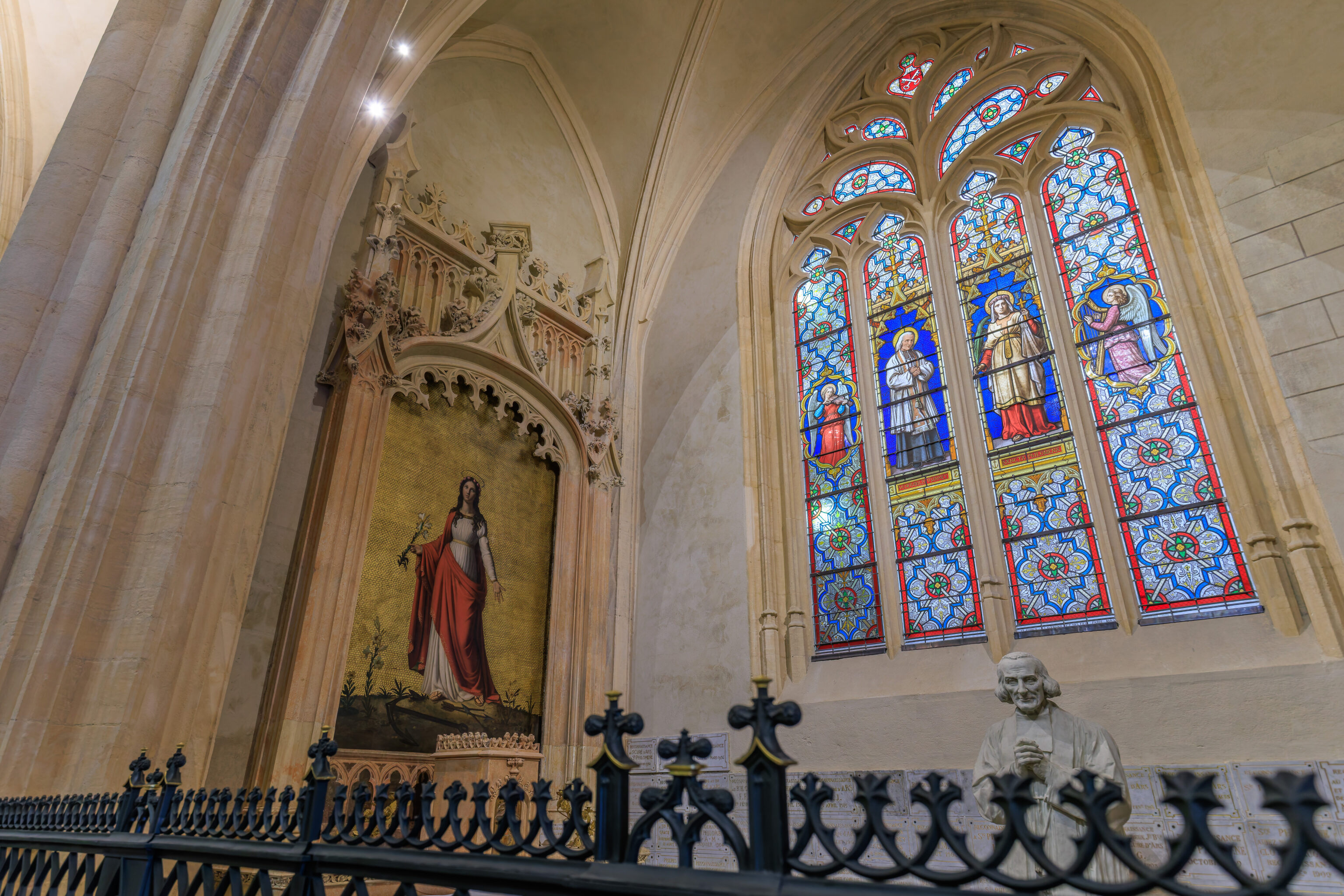
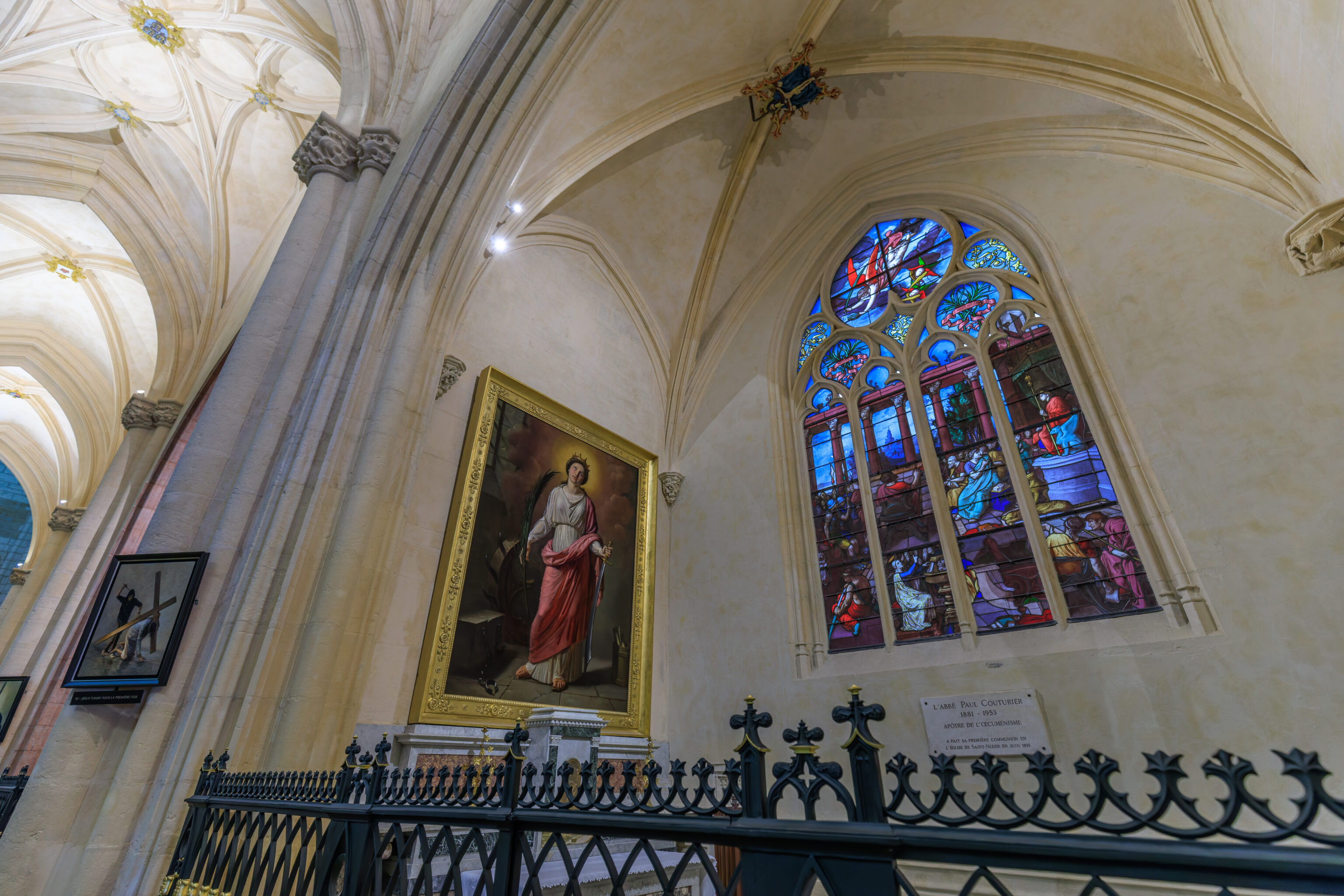
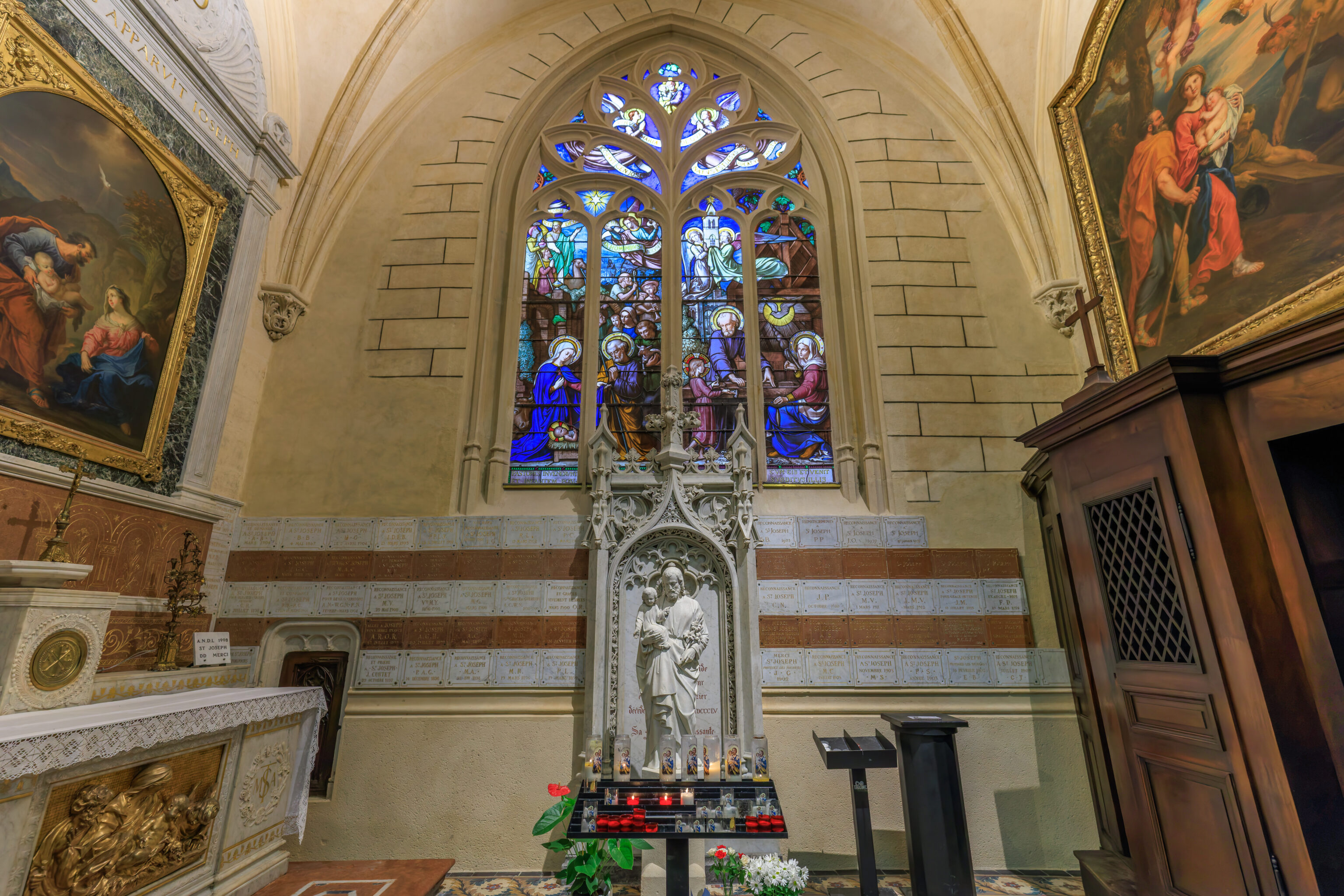
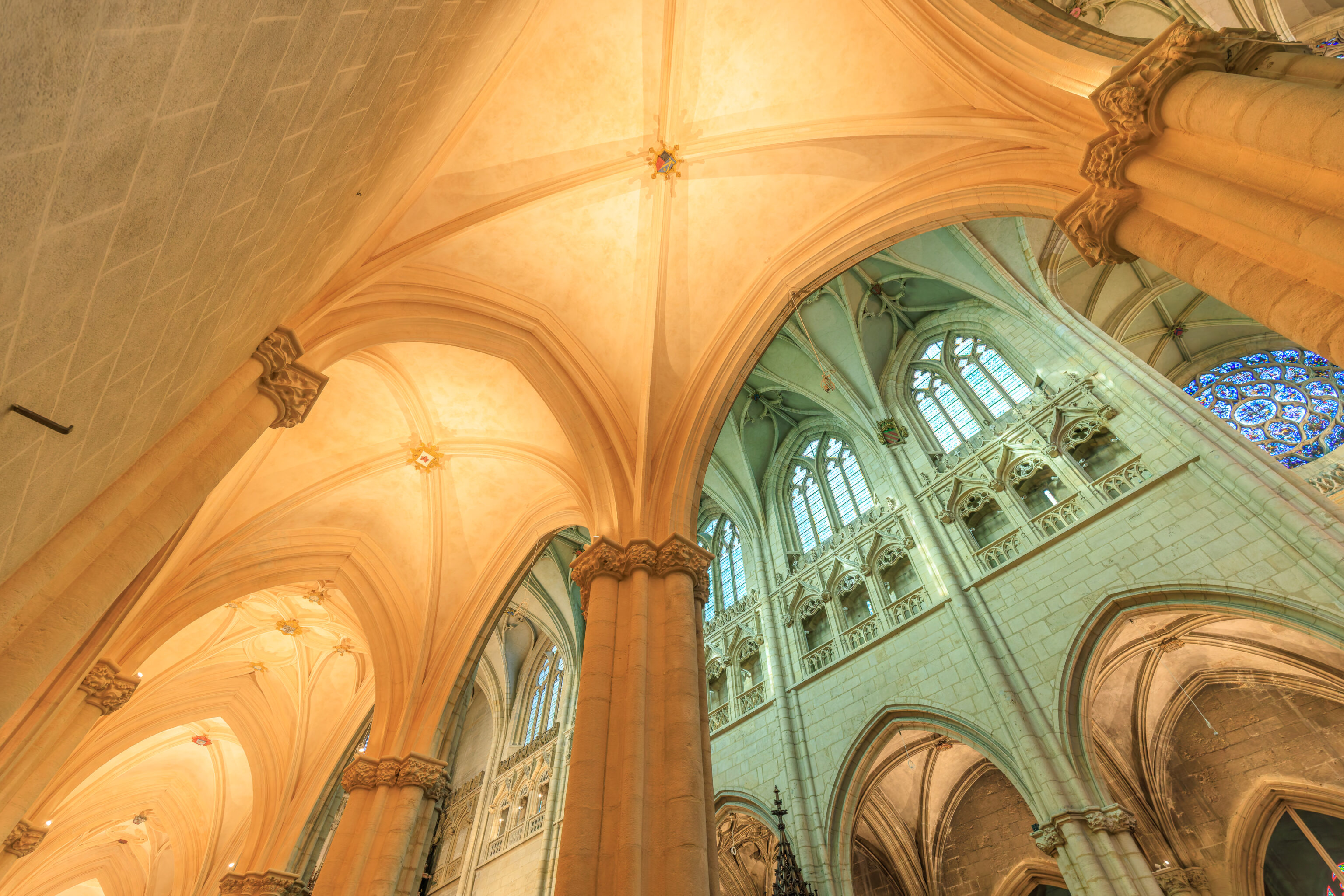
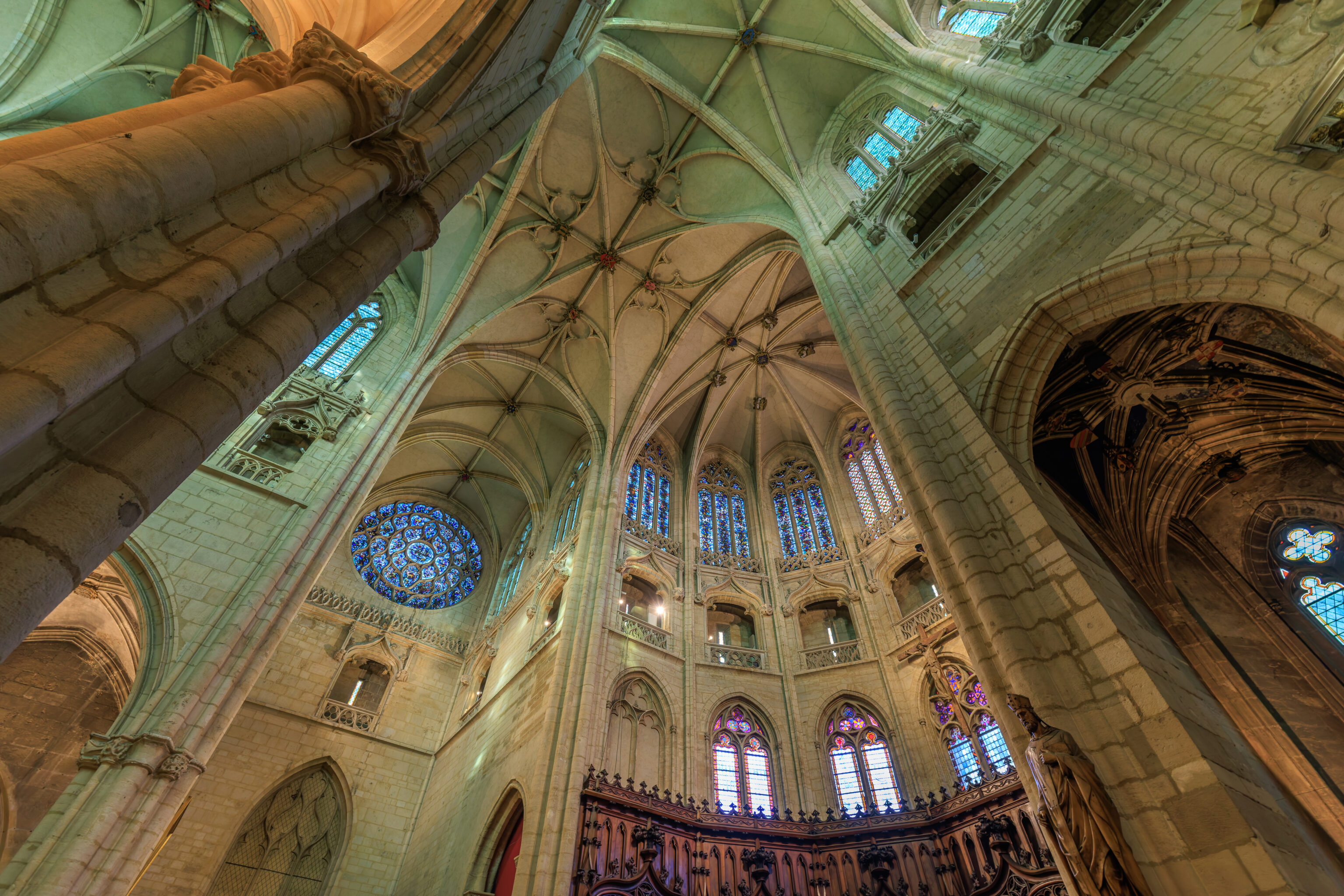
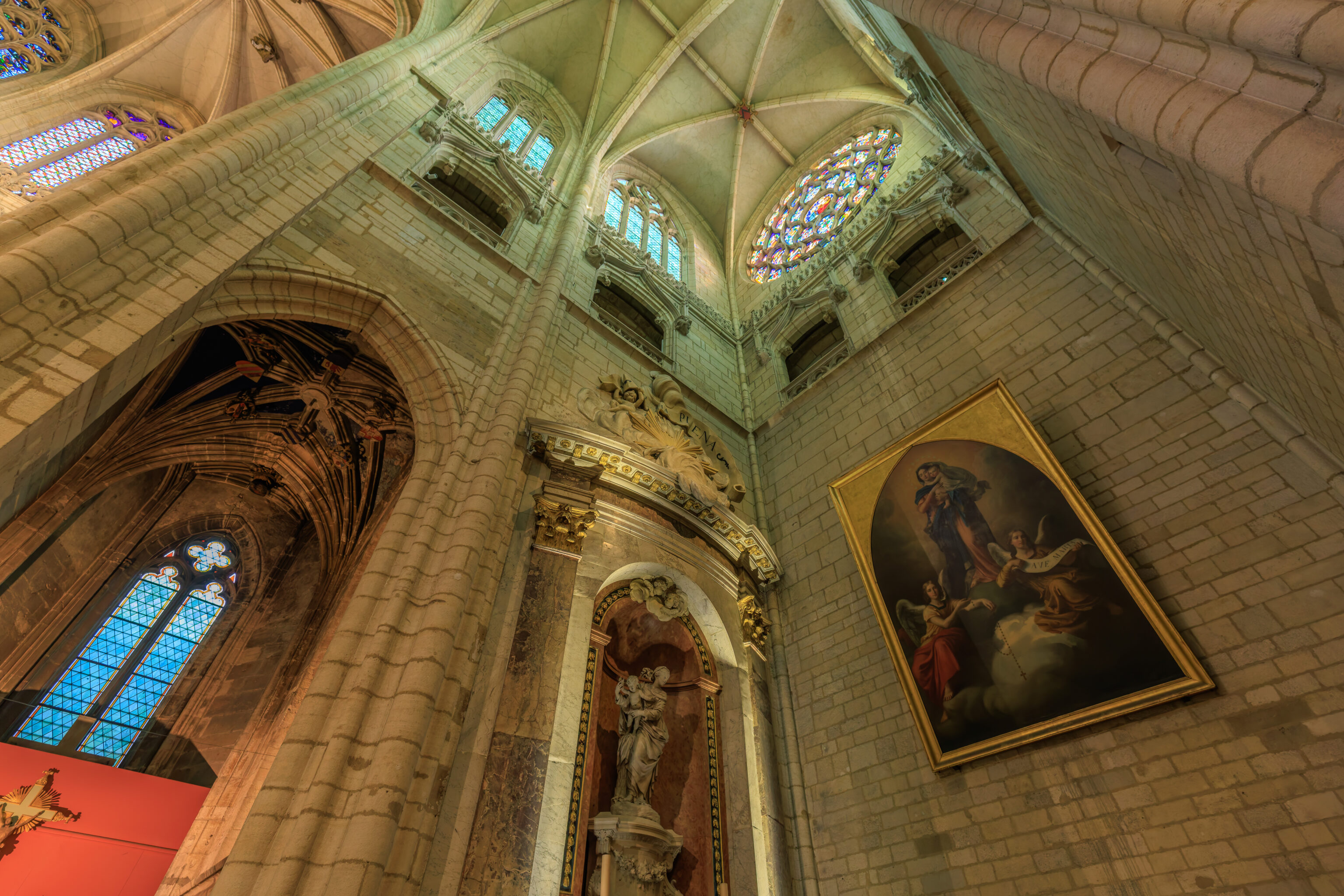
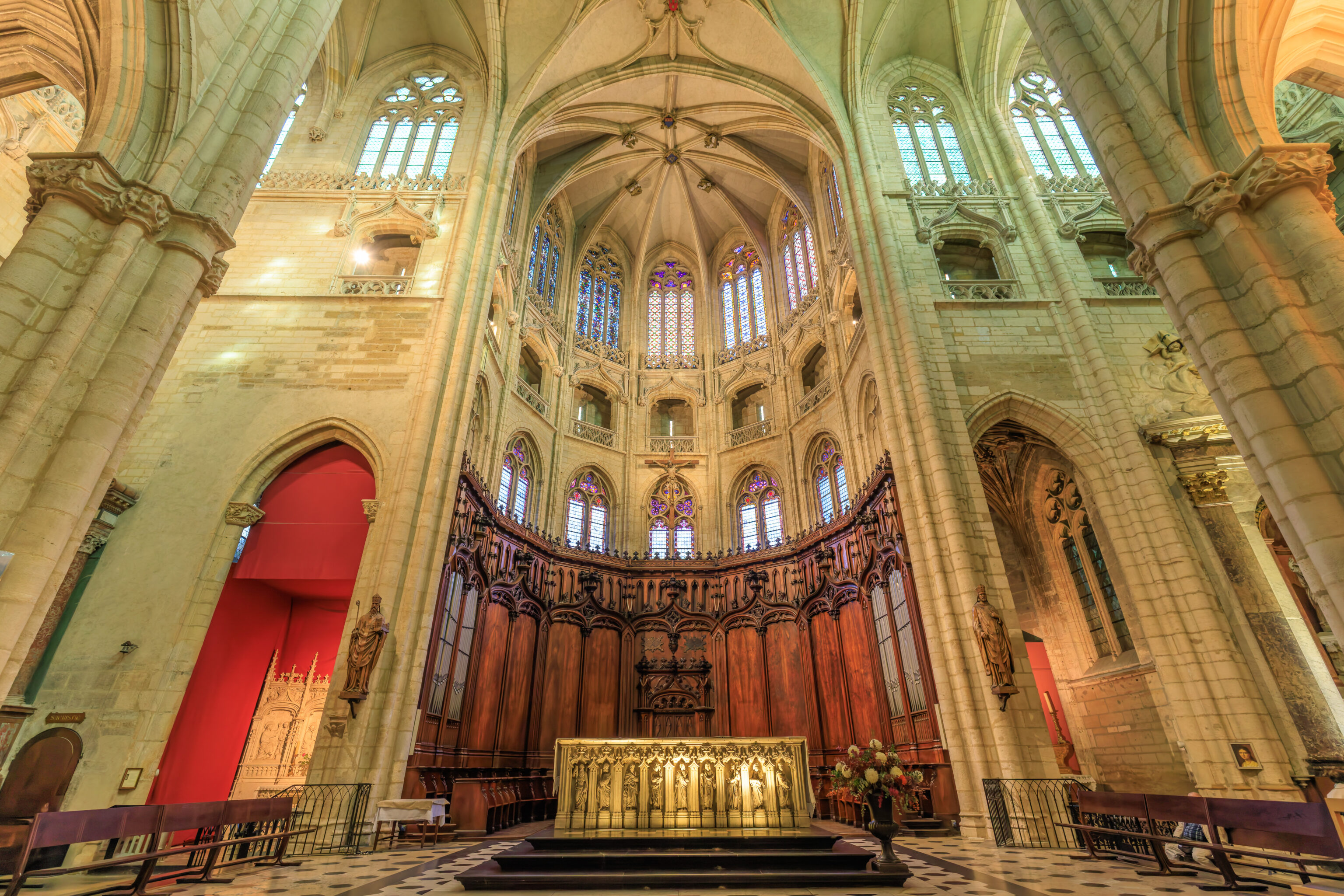
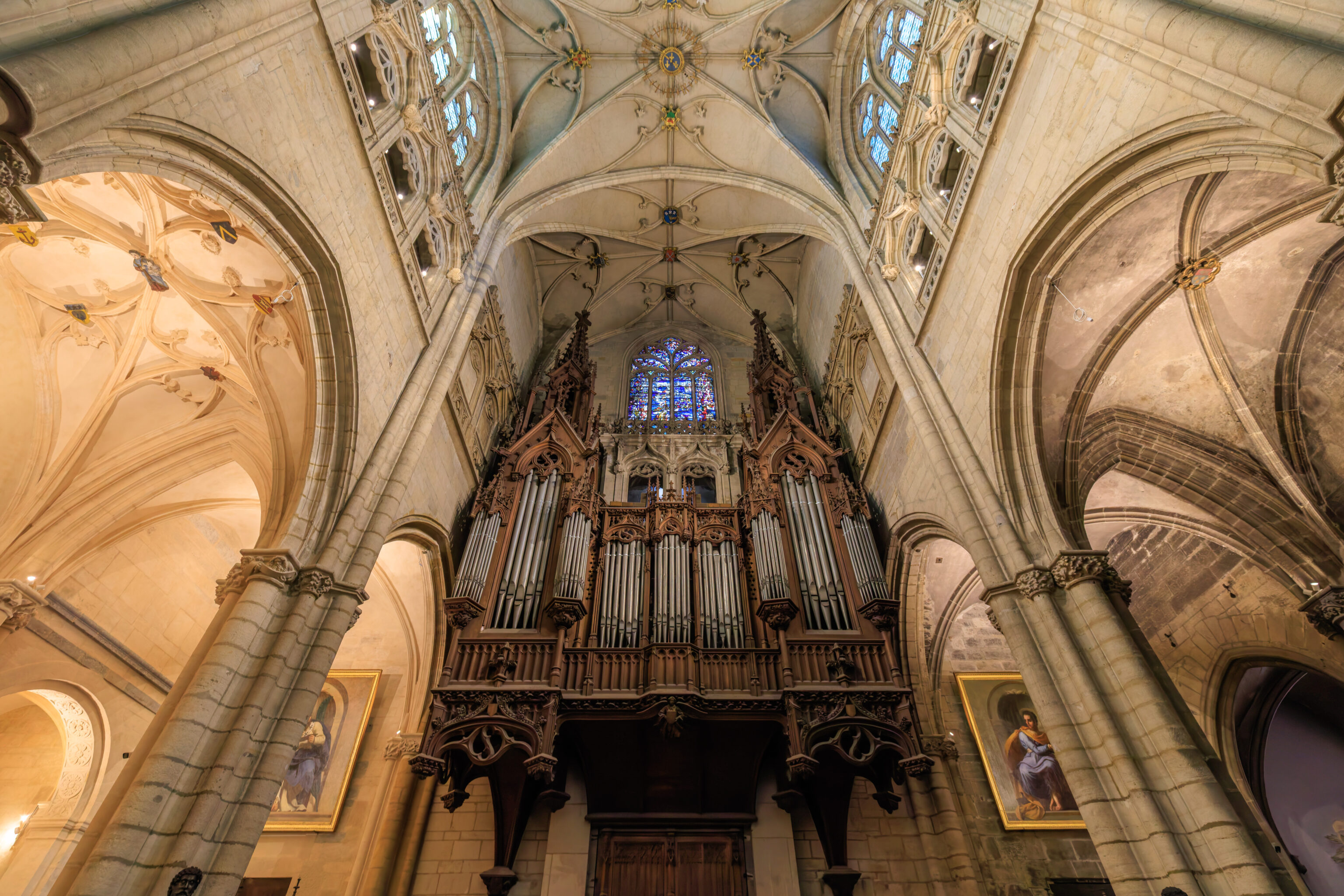
The interior was pretty simply decorated compared to other large European churches that we’ve been in.
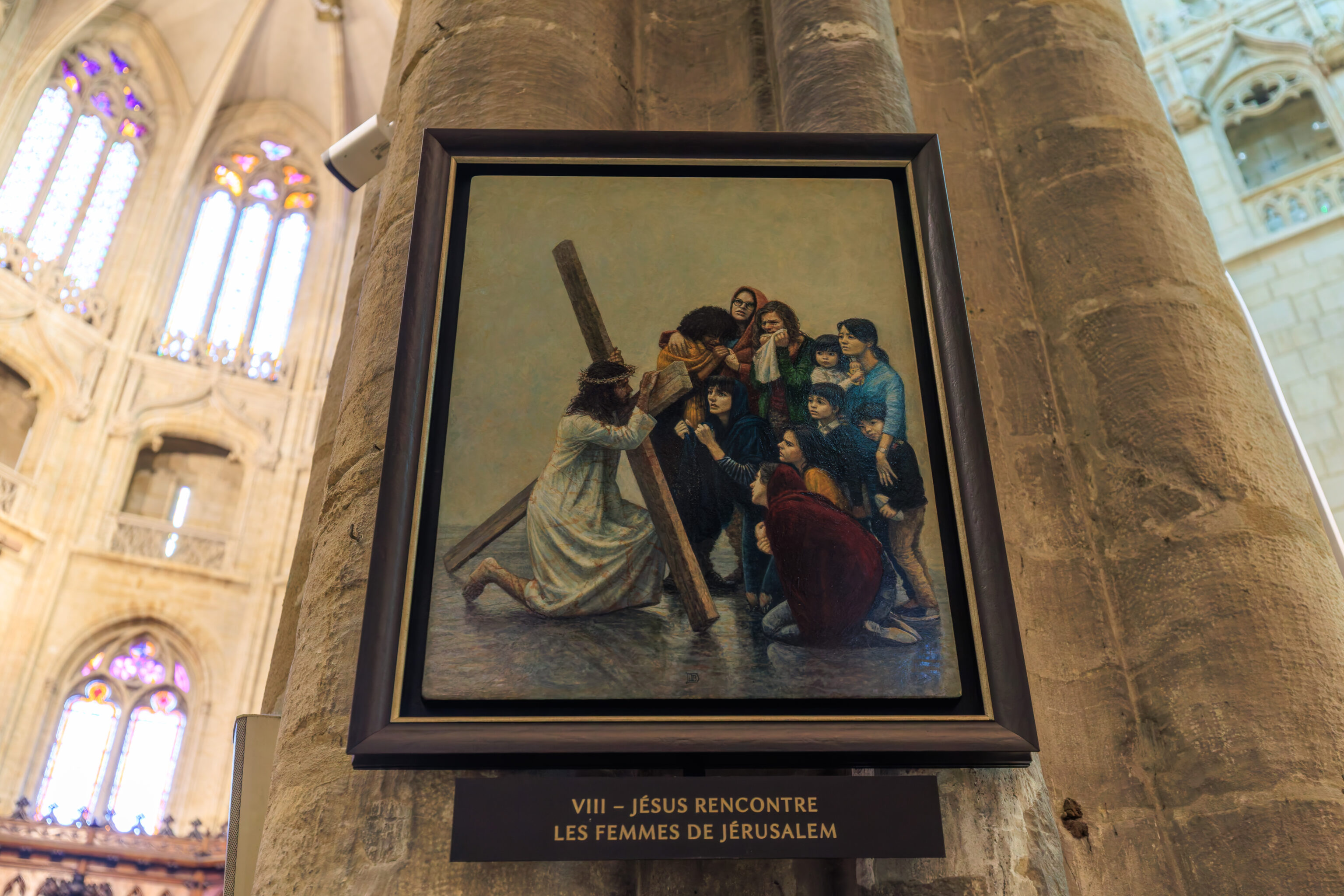
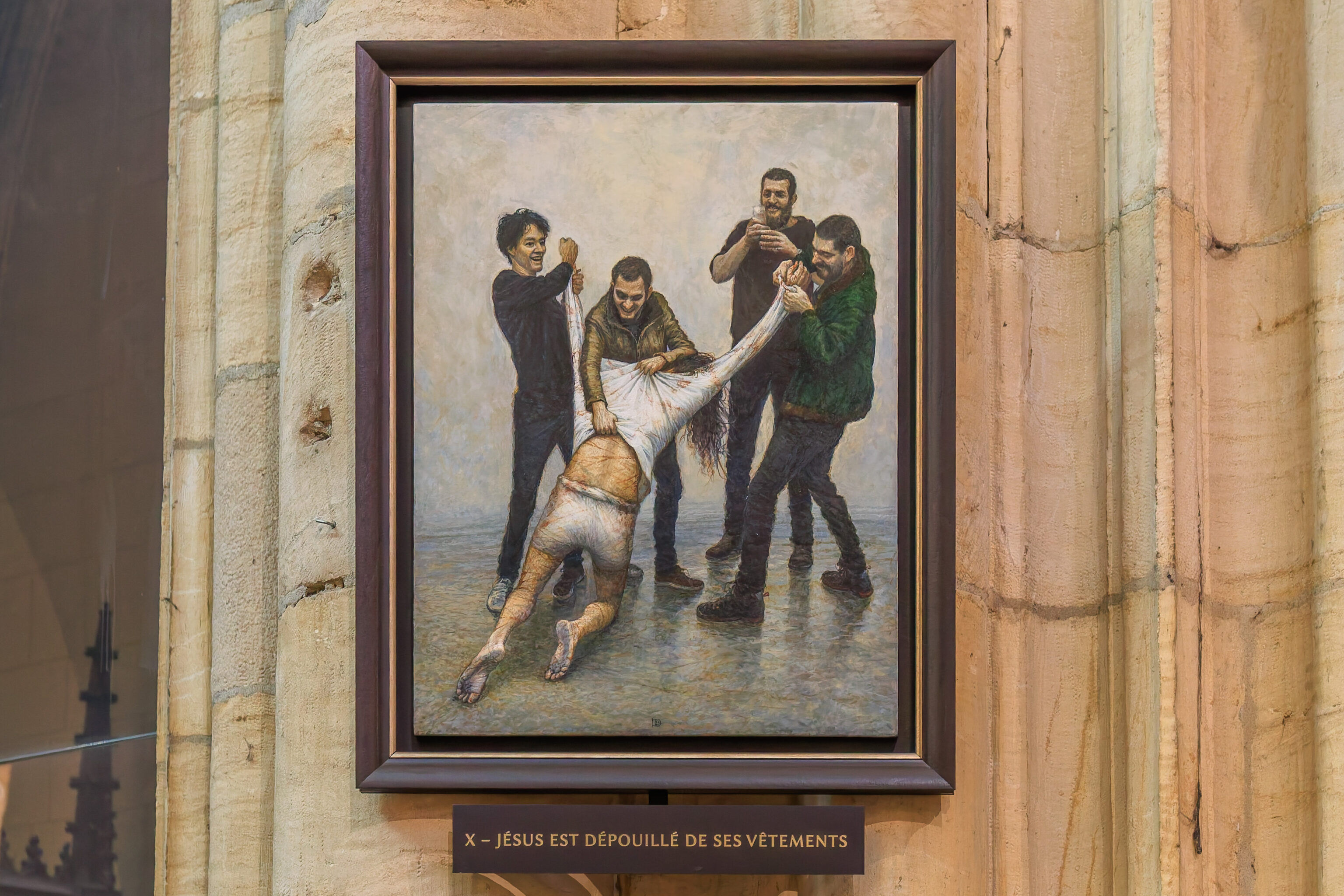
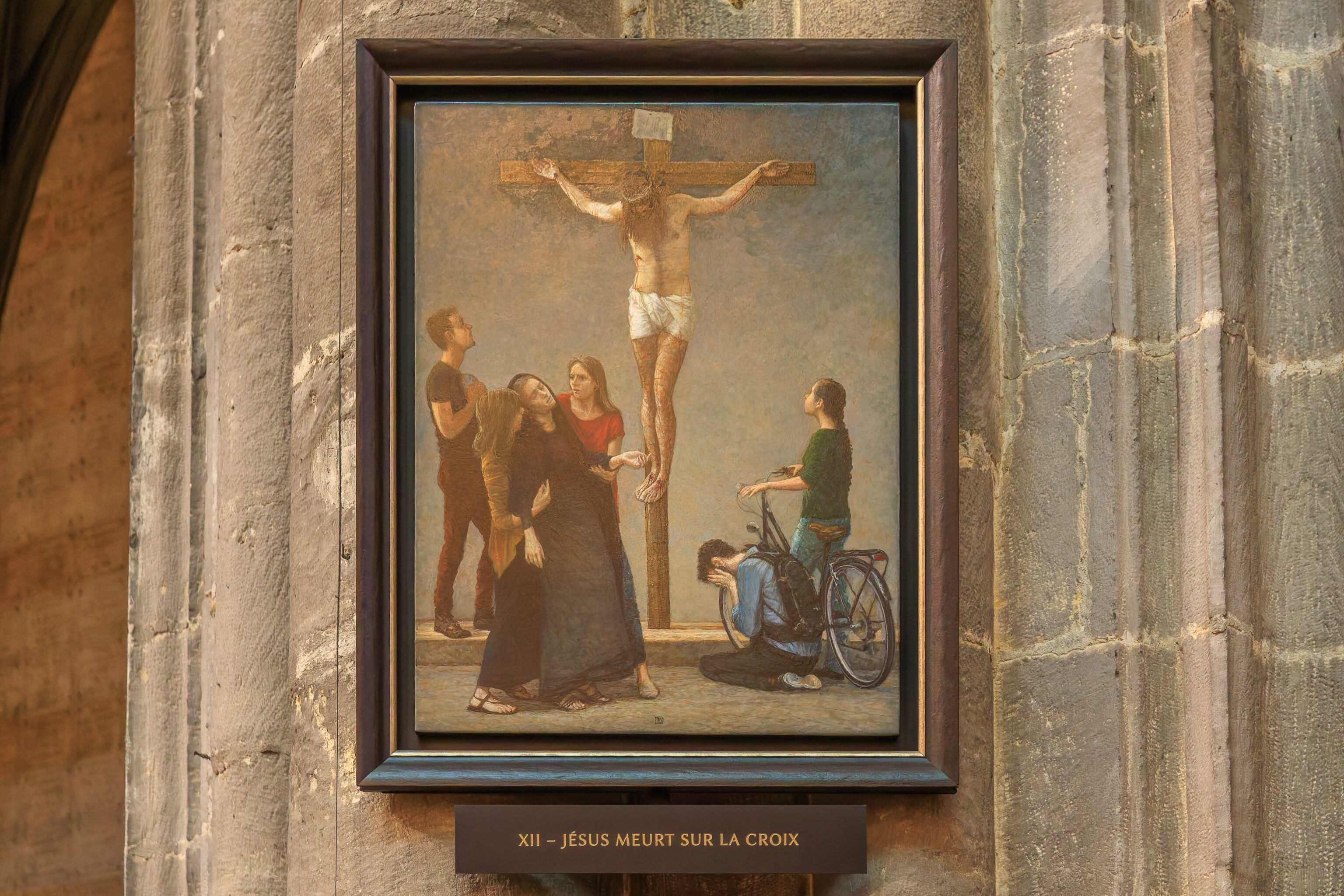
As we started to head out, we noticed that the paintings depicting the Via Crucis were unique in that they depicted the scenes using modern people.
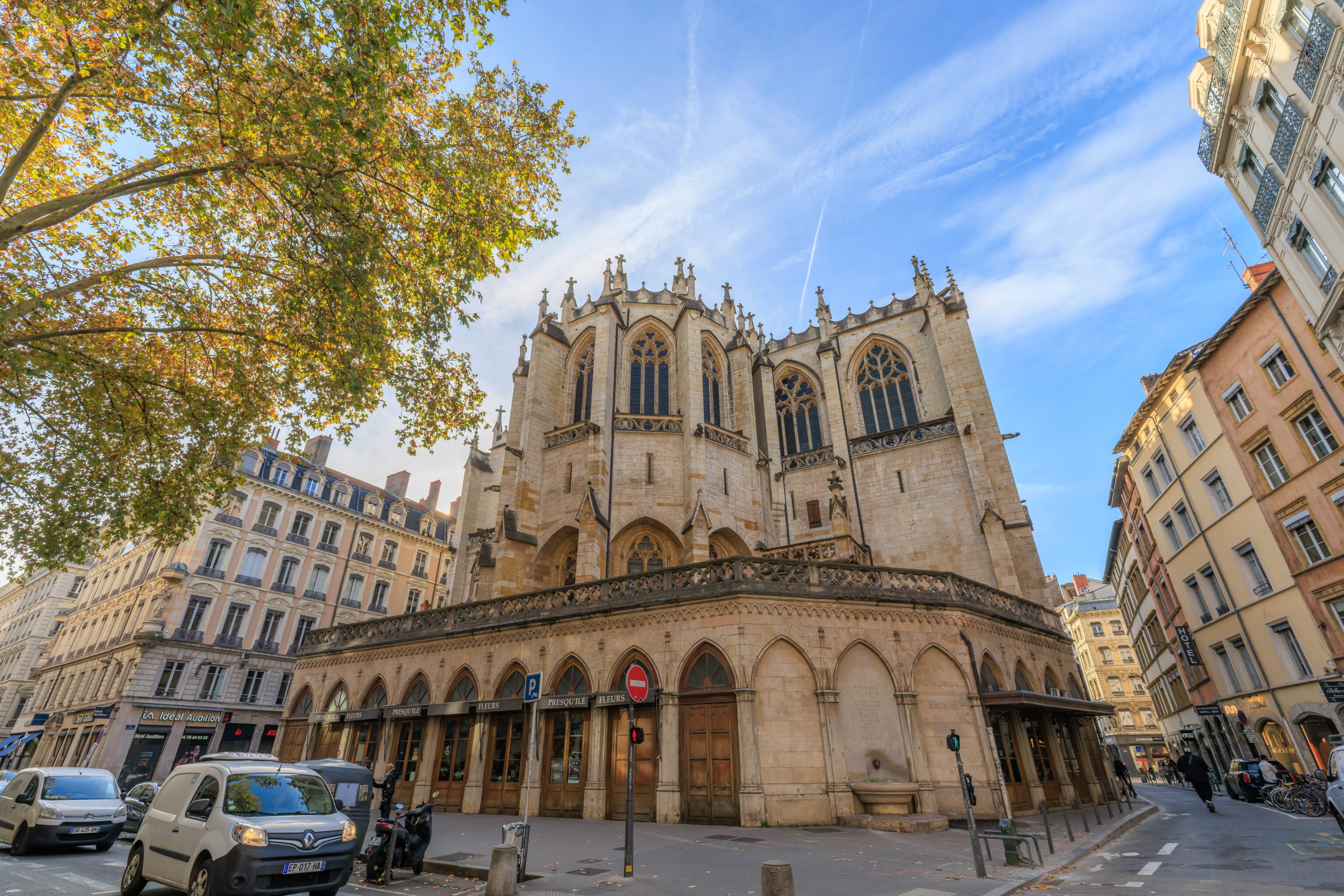
After exiting the church, we headed to the east along the northern side of the building.
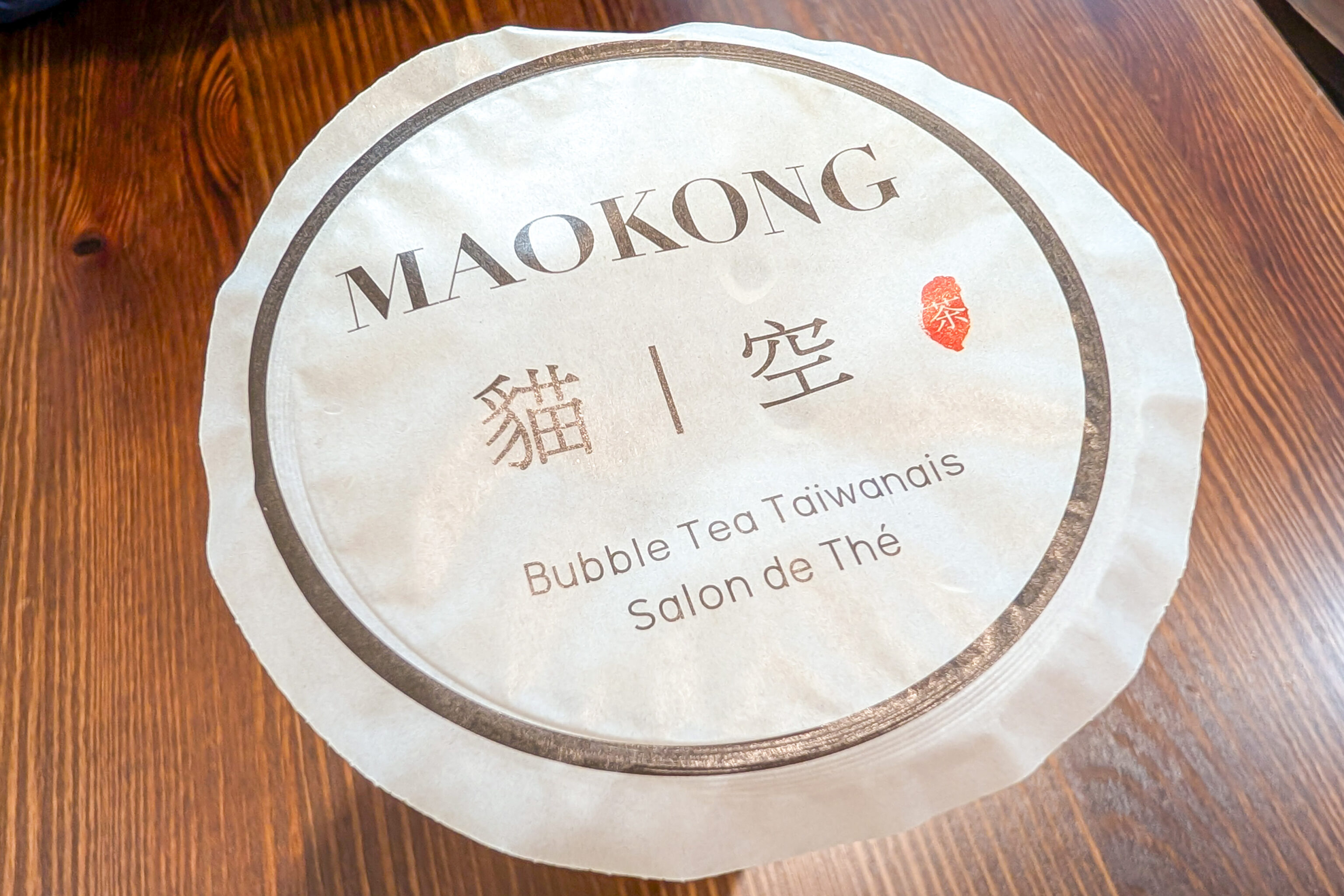

Our next stop was Maokong, a bubble tea shop on the Rue de la Republique. The name of the shop refers to the mountainous Maokong area on the southern side of Taipei. It is a tea growing area, which we visited in 2023. We were a bit skeptical as to whether or not this tea shop would be any good but decided to give it a try given its name!
We got a lychee oolong tea. It was very good, much better than the tea we had when we were last overseas in Munich!
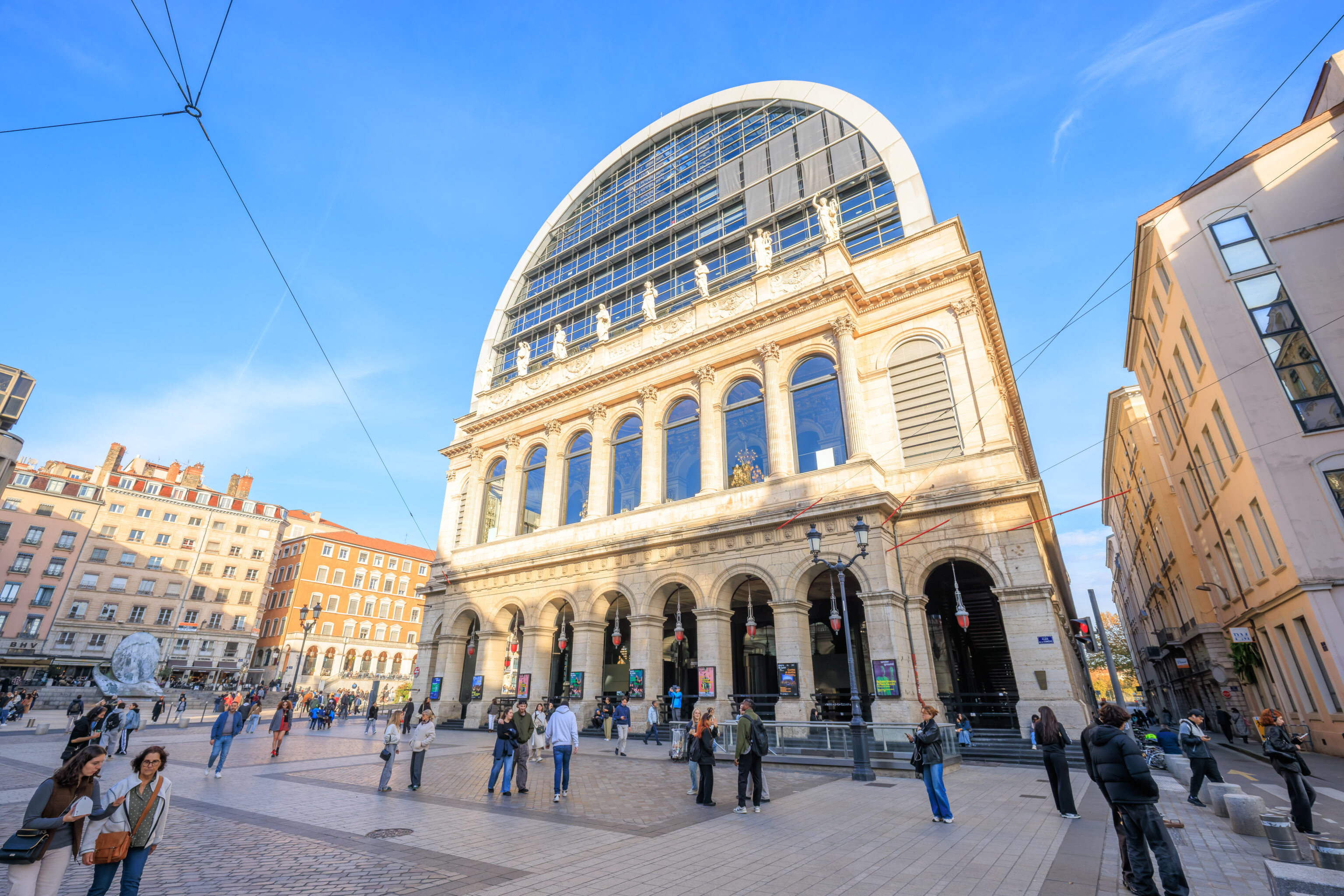
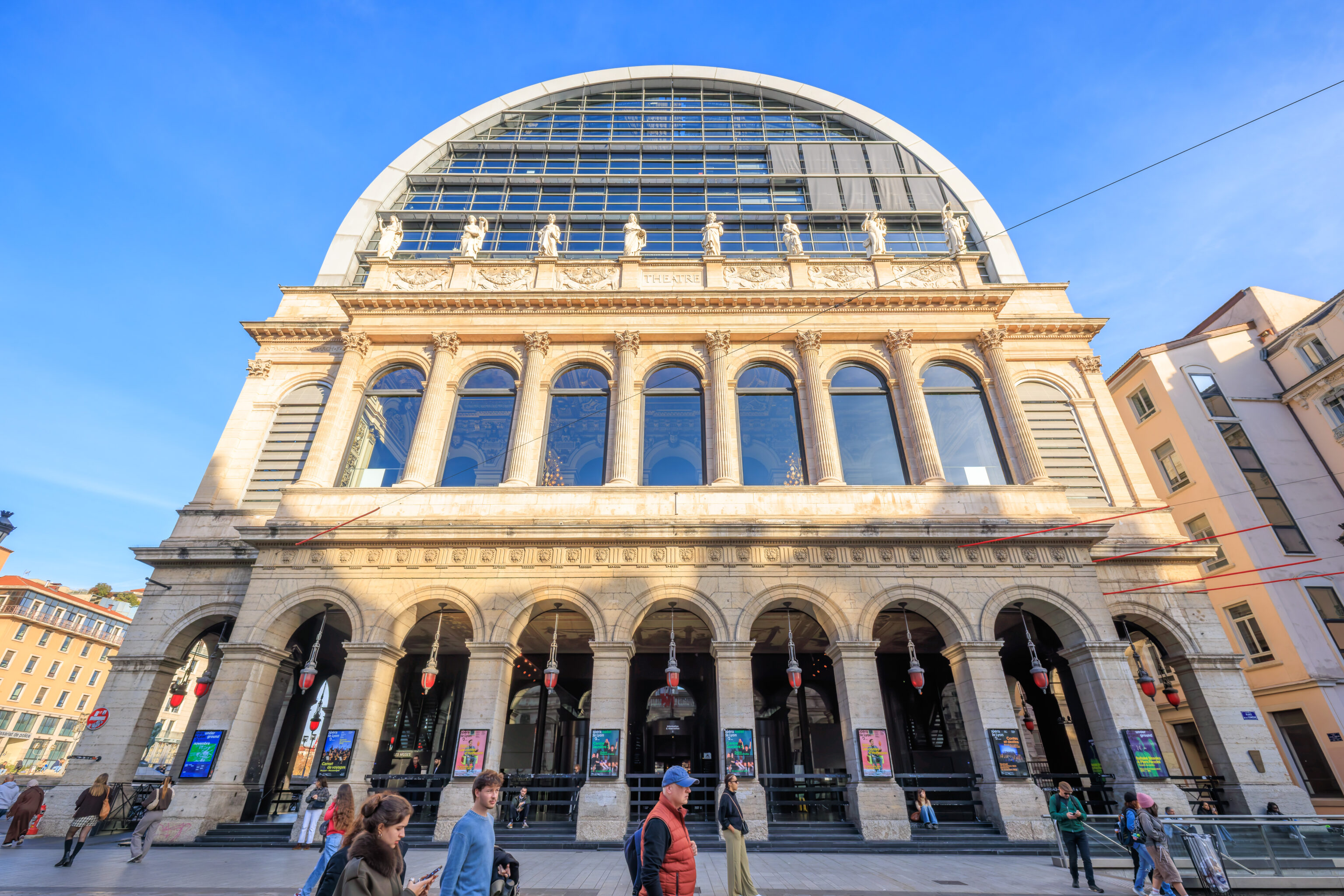
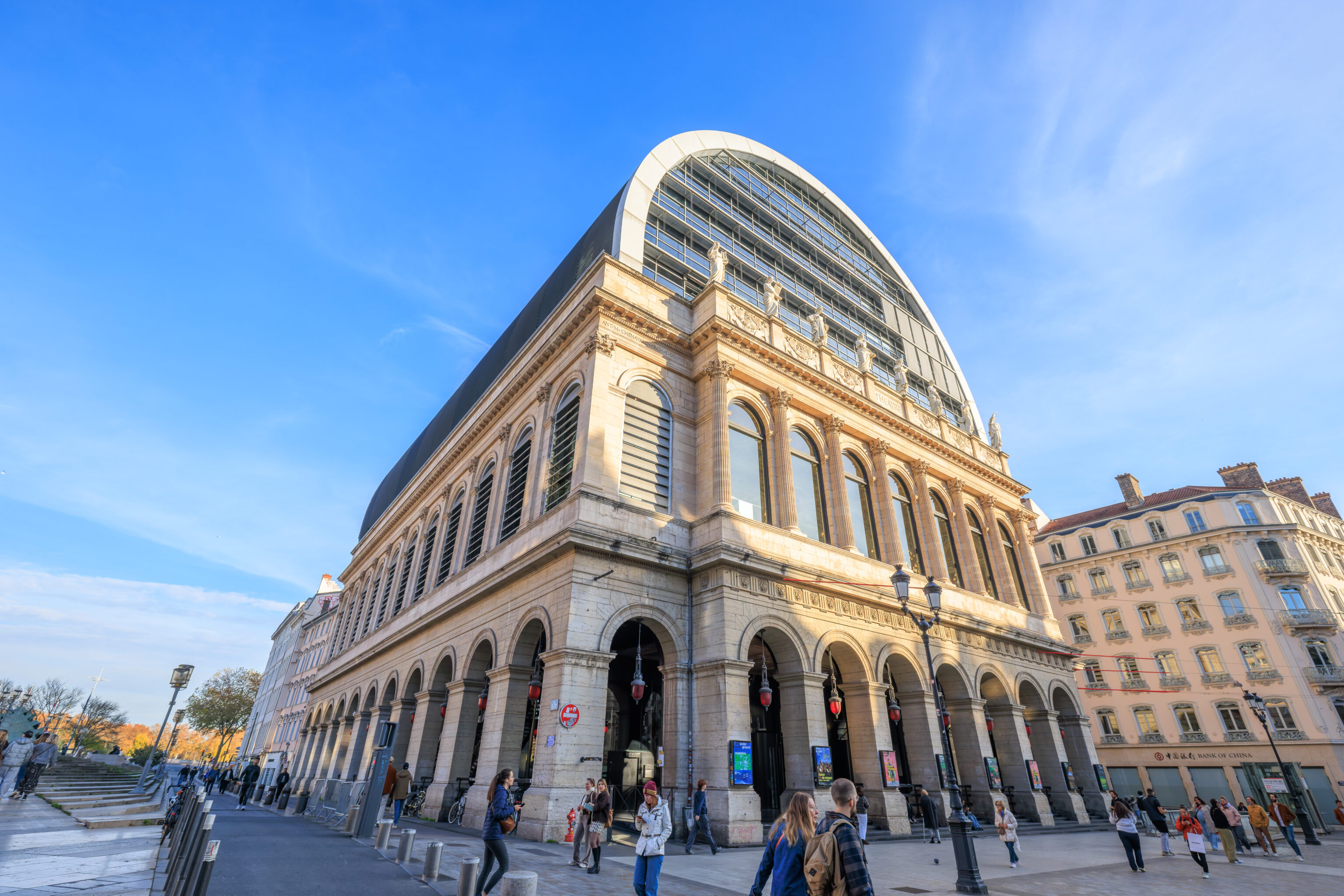
From Maokong, we walked to the north along Rue de la Republique until reaching the Opéra National de Lyon. The shell of the building dates back to the 19th century but the rest has been modernized. It isn’t particularly attractive.
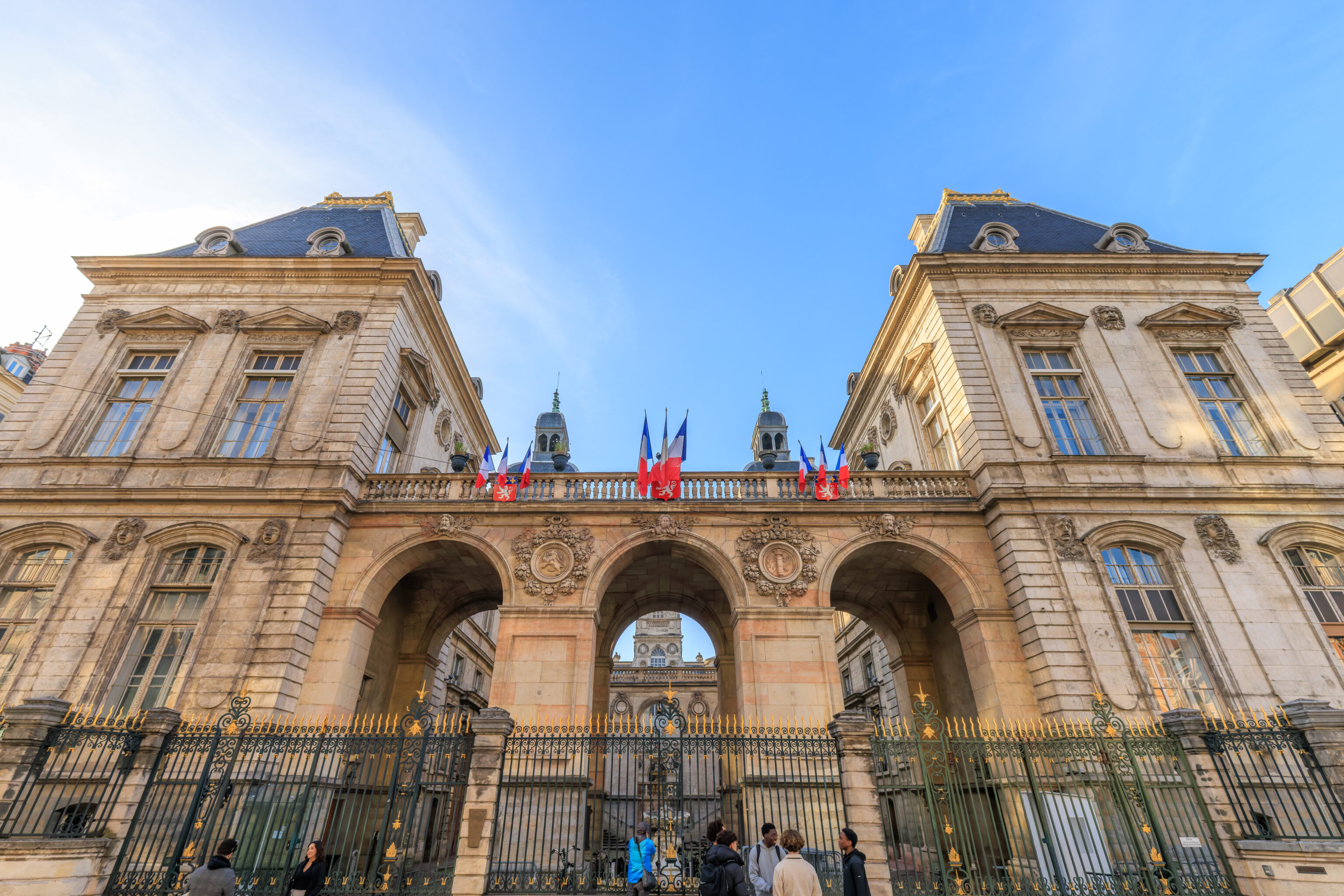
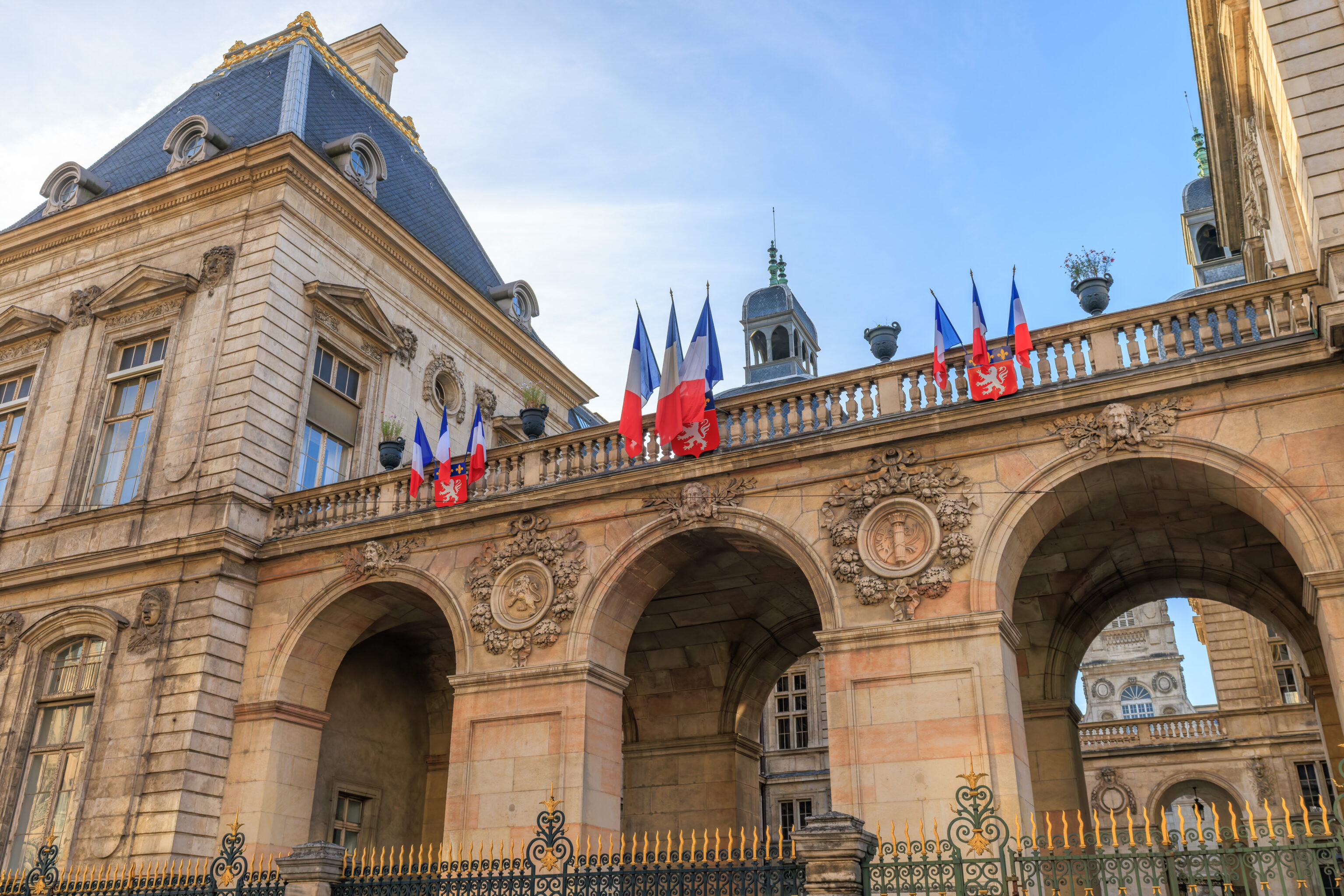
The front facade of the opera house faces the rear of the Hôtel de Ville de Lyon. The French term hotel de ville translates to city hall. It was built during the 17th century.
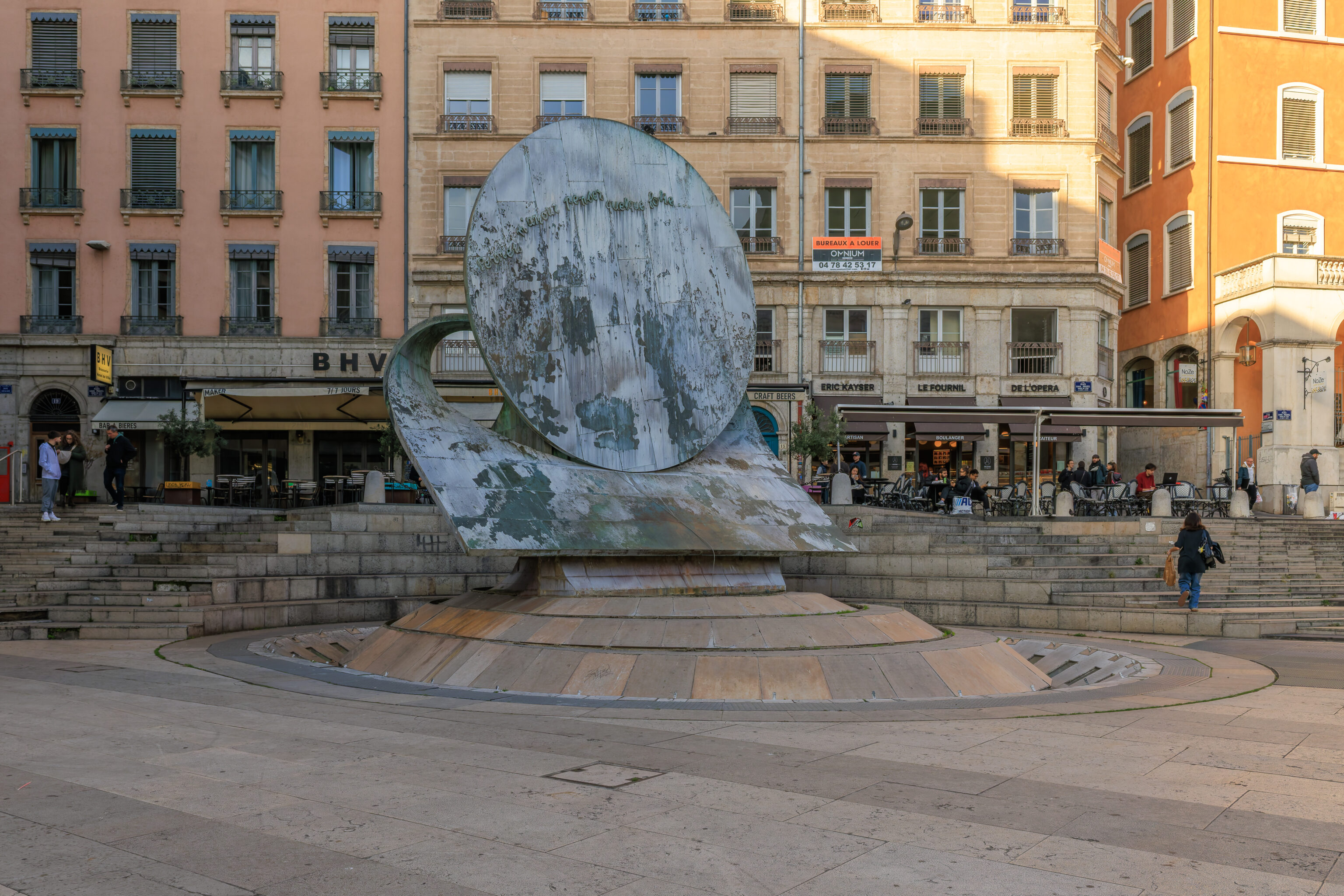
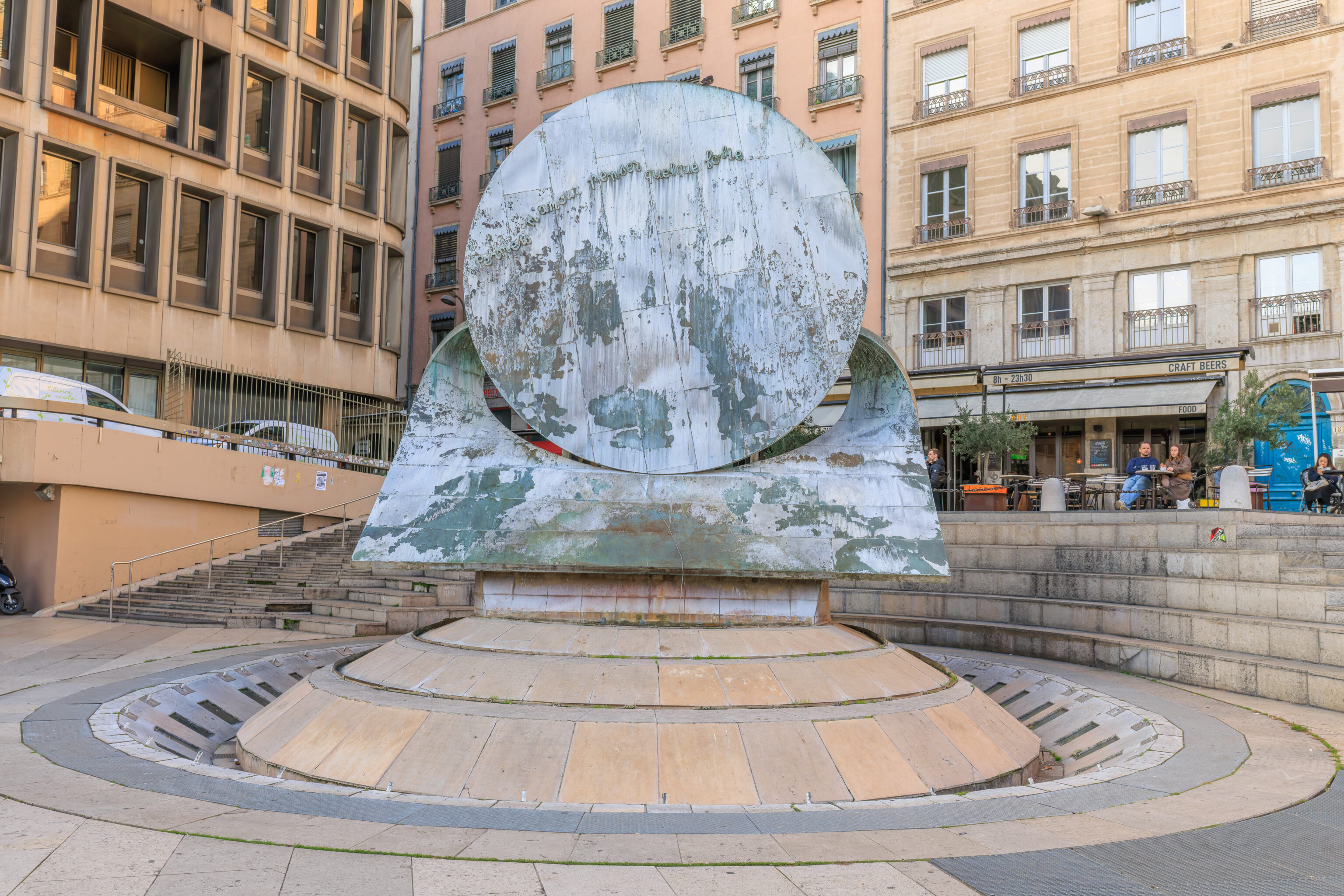
This rather worn looking fountain was created by Ipoustéguy along with four other sculptures. Maybe it looks better when the water is turned on?
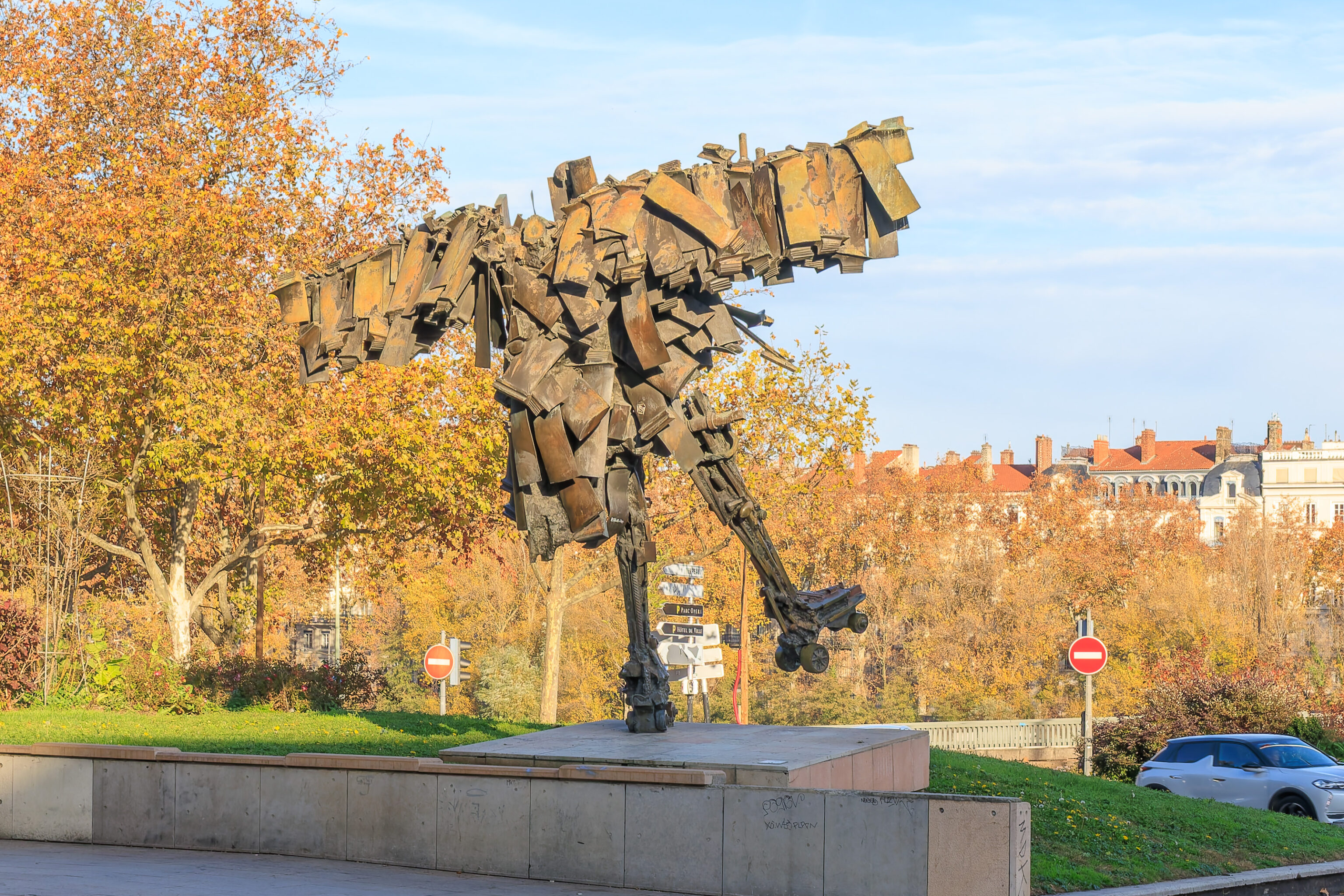
Is this sculpture supposed to represent a bird? Or maybe a Transformer? It is Le Patineur (The Skater) by César. It apparently is a man on with wings on roller skates.
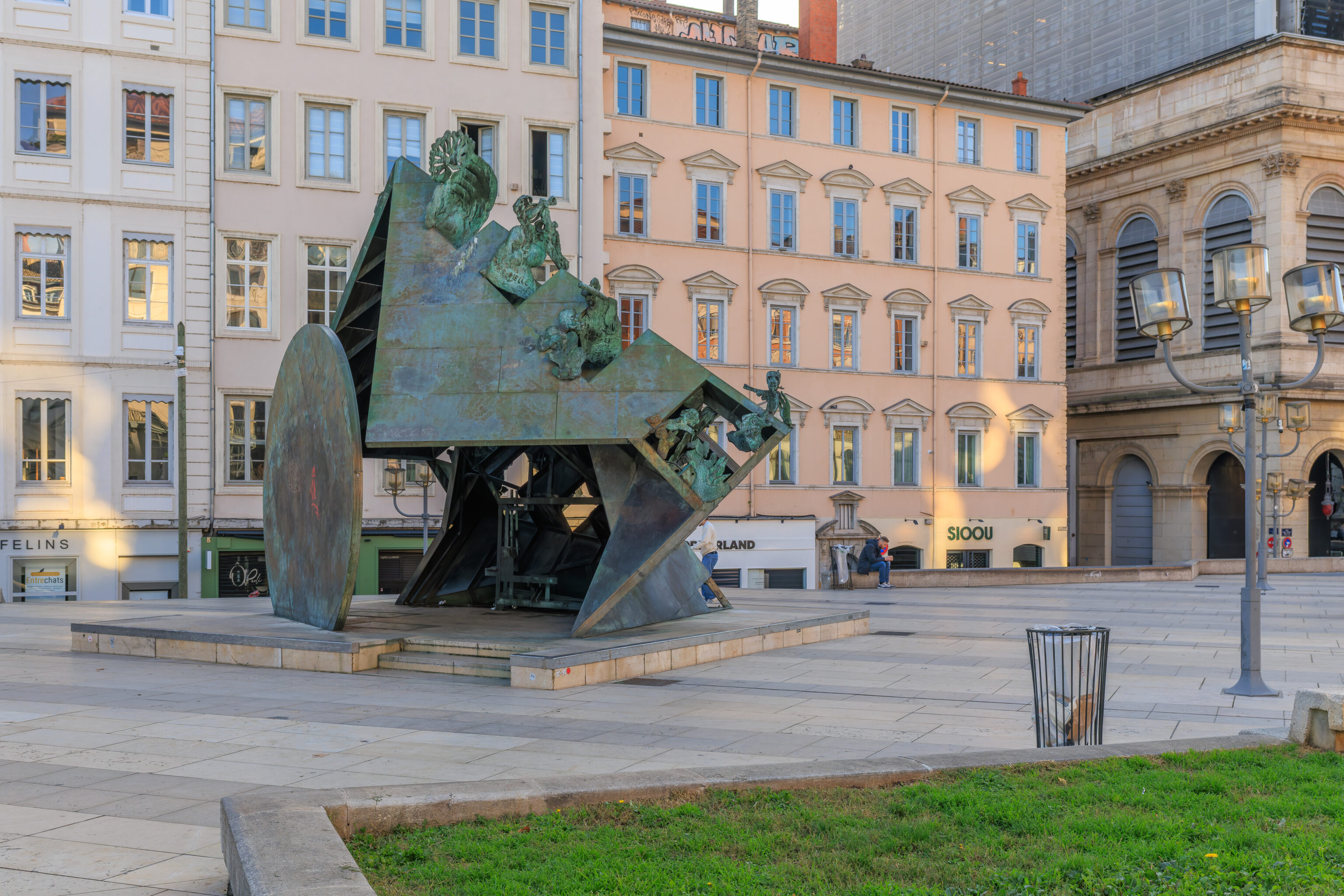
This is one of Ipoustéguy’s sculptures. It seems to depict Guignols (Puppets). More specifically, it seems to refer to a French puppet show titled Guignol from Lyon.
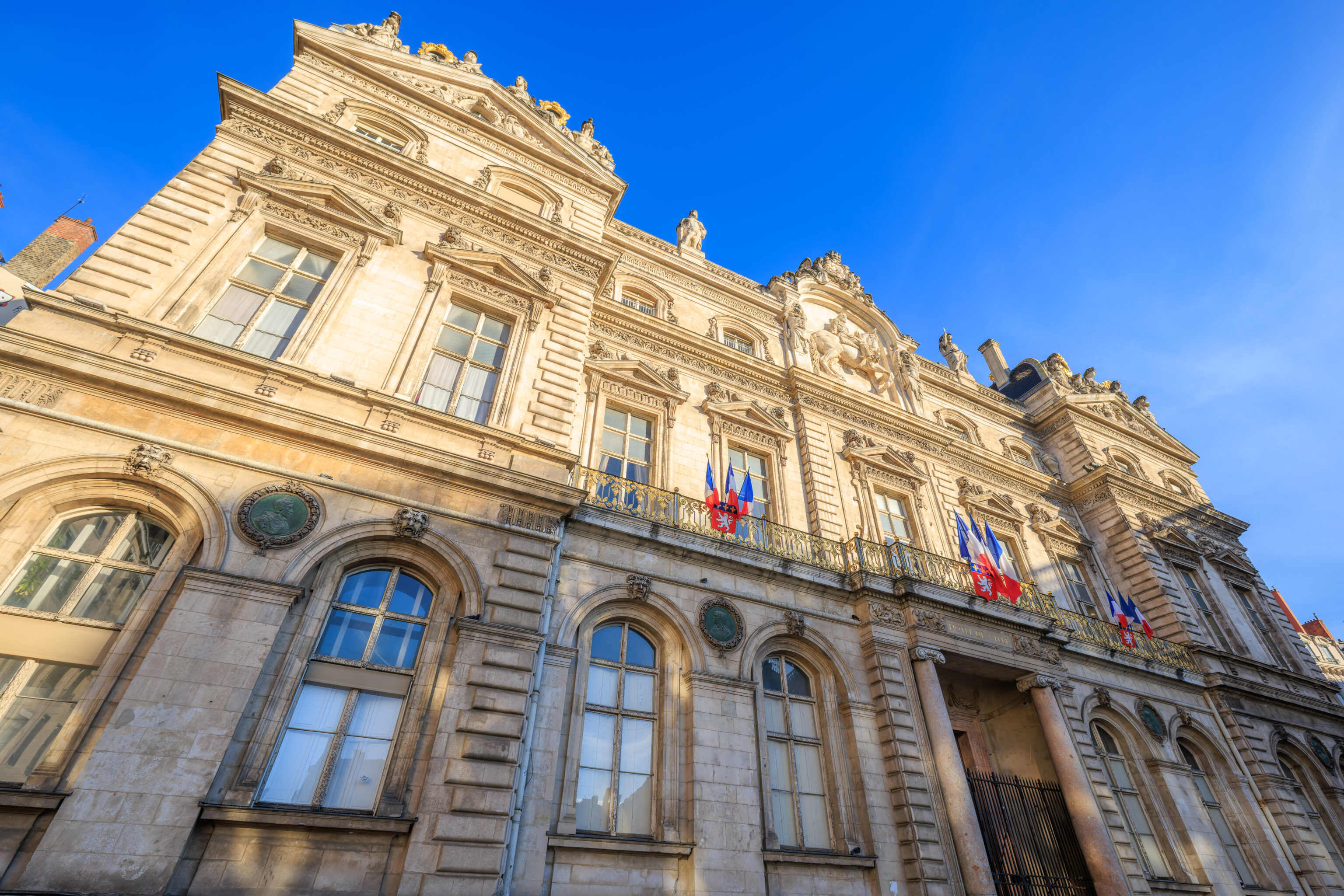
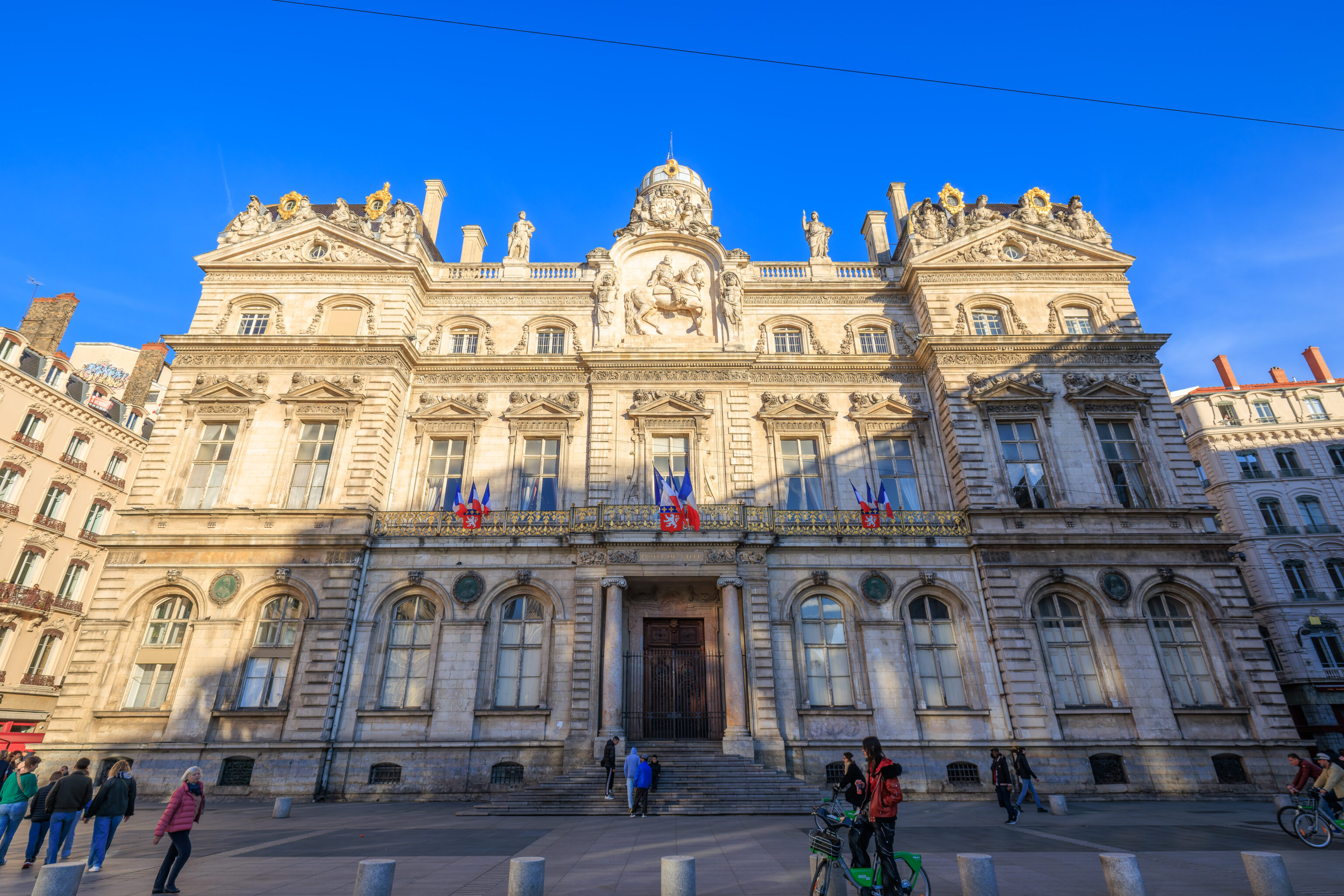
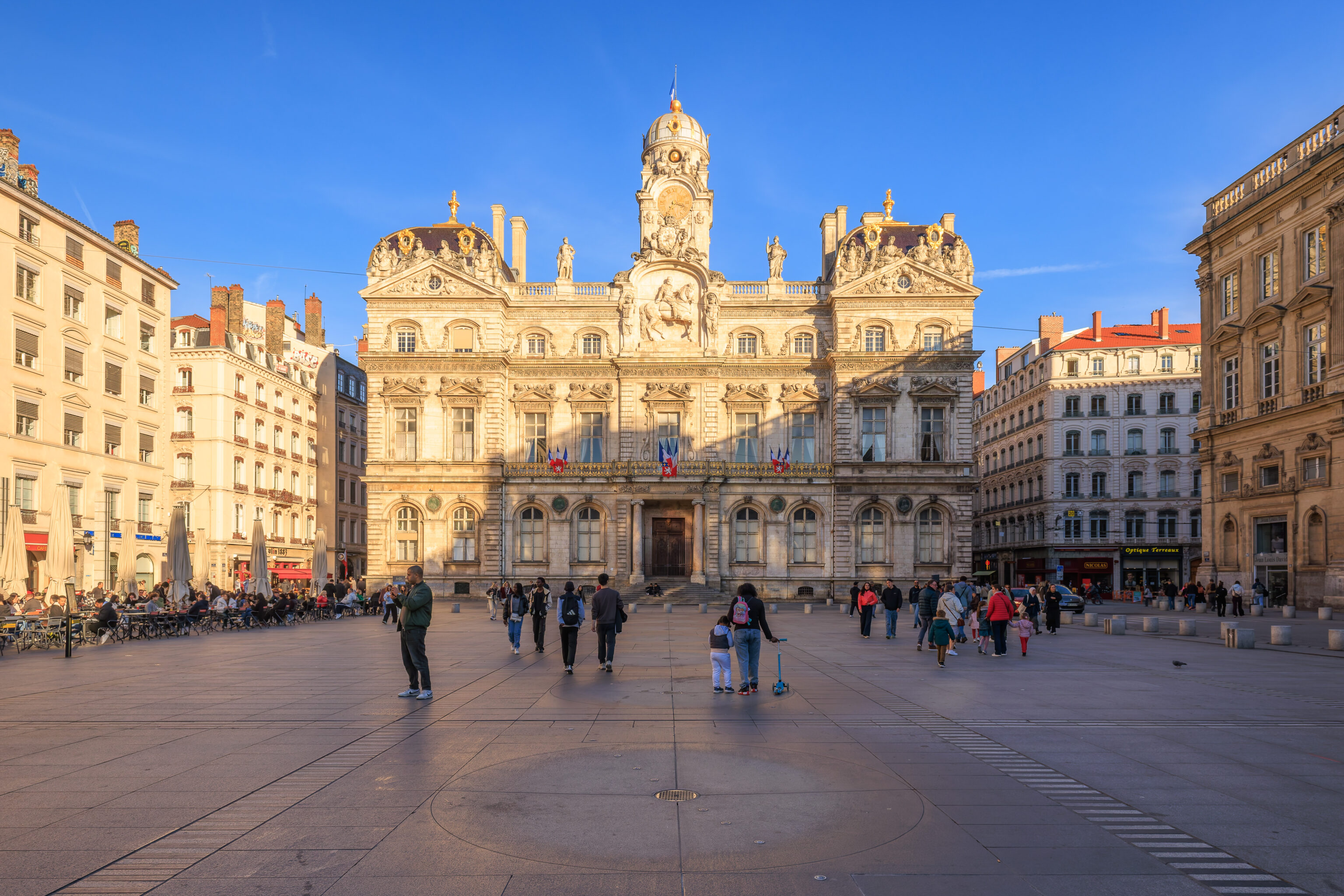
We walked to the west to the front of the Hotel de Ville, which faces the Place des Terreaux.
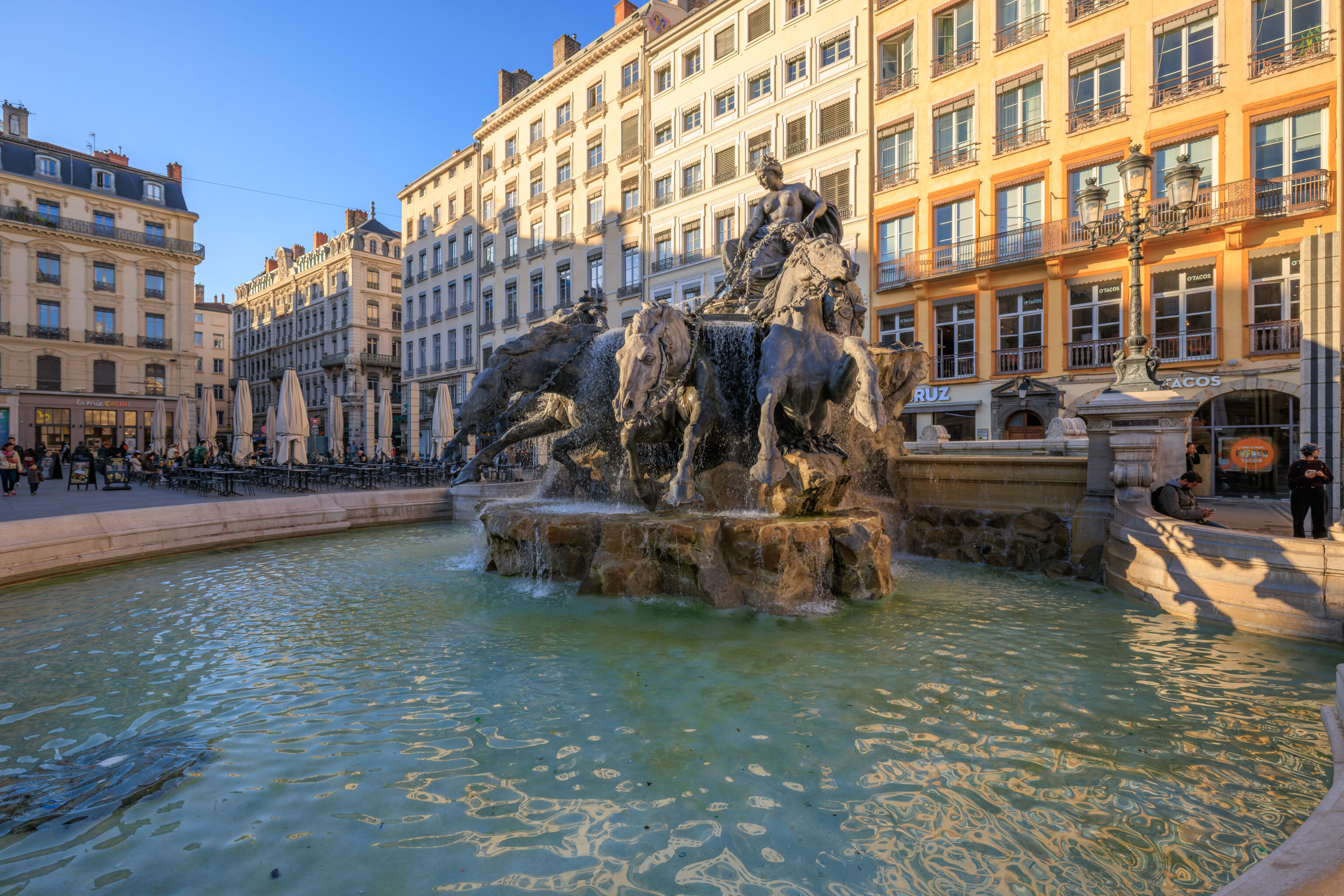
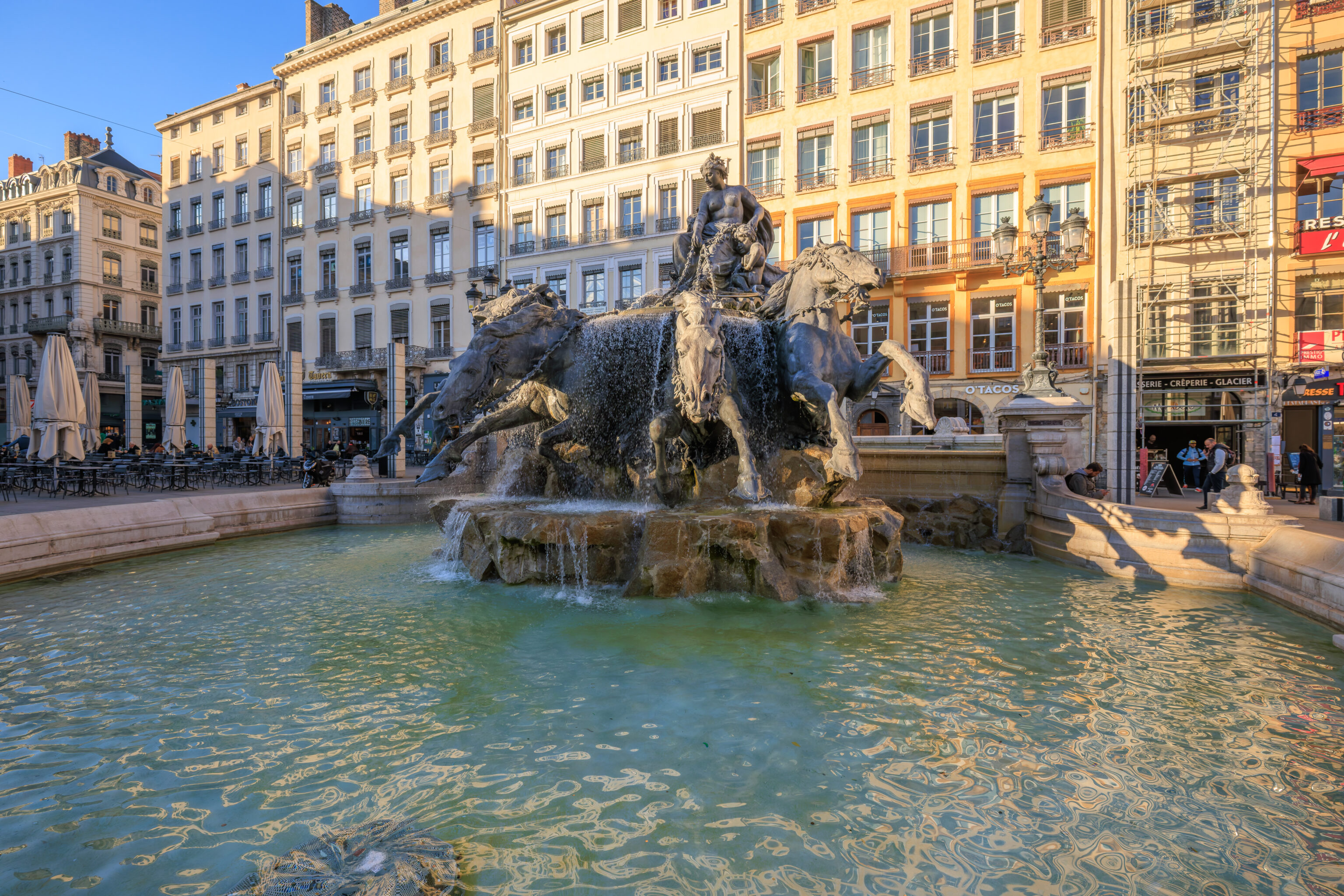
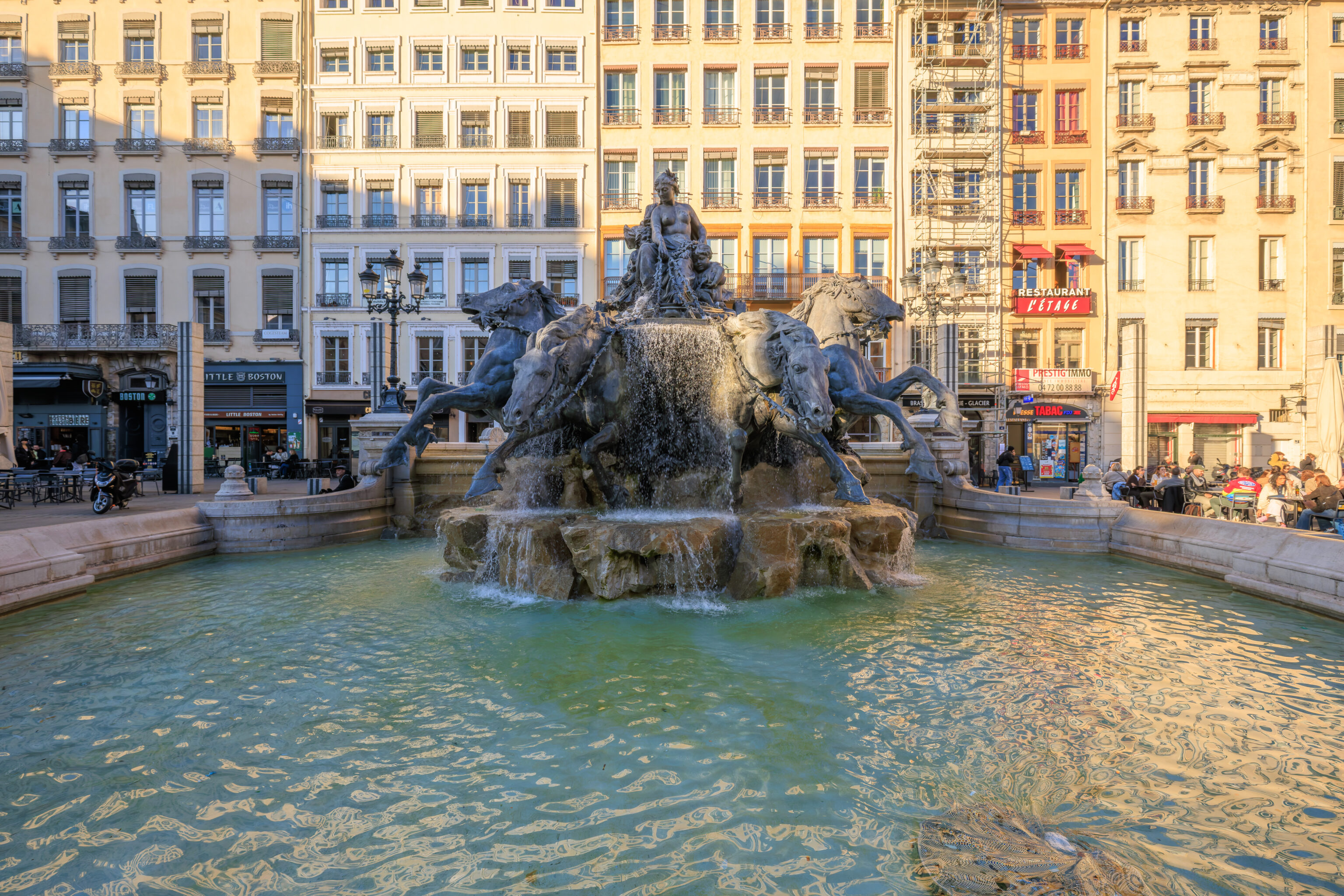
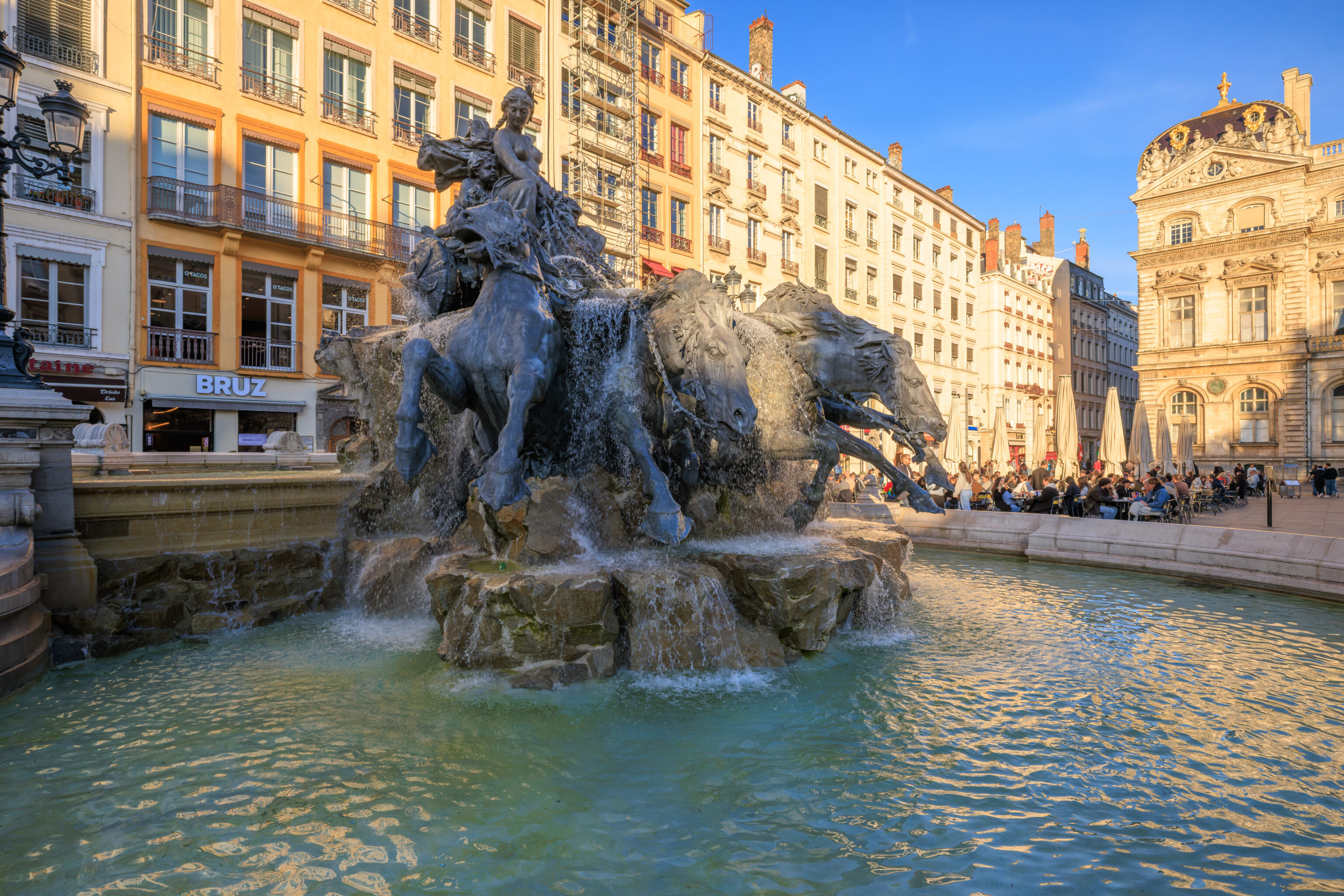
The Bartholdi Fountain stands at the northern side of the square. It was created by Frédéric Auguste Bartholdi after he created the Statue of Liberty.
We recorded a bit of video showing the fountain.
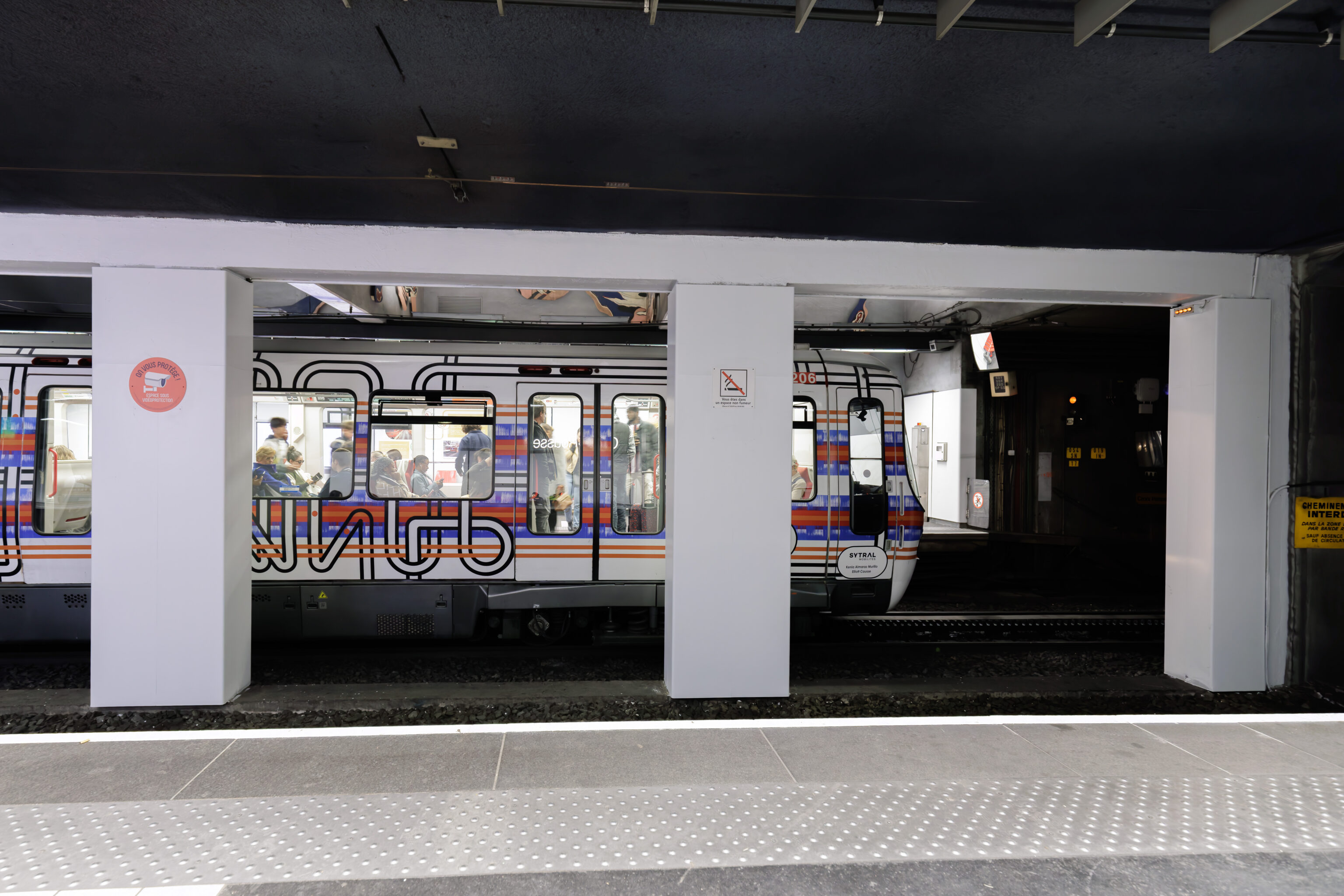
We then took the Metro from the Hôtel de Ville – Louis Pradel station to Croix-Rousse. The Croix-Rousse station is on a hill of the same name to the north of the Hotel de Ville. We figured we would take the Metro up and then walk back down. This particular Metro line is actually operated by a cogwheel train.
We exited the station near the Place de la Croix-Rousse. There was a pretty busy fair taking place there at the time with food vendors and amusement park rides. We started to walk downhill to the south.
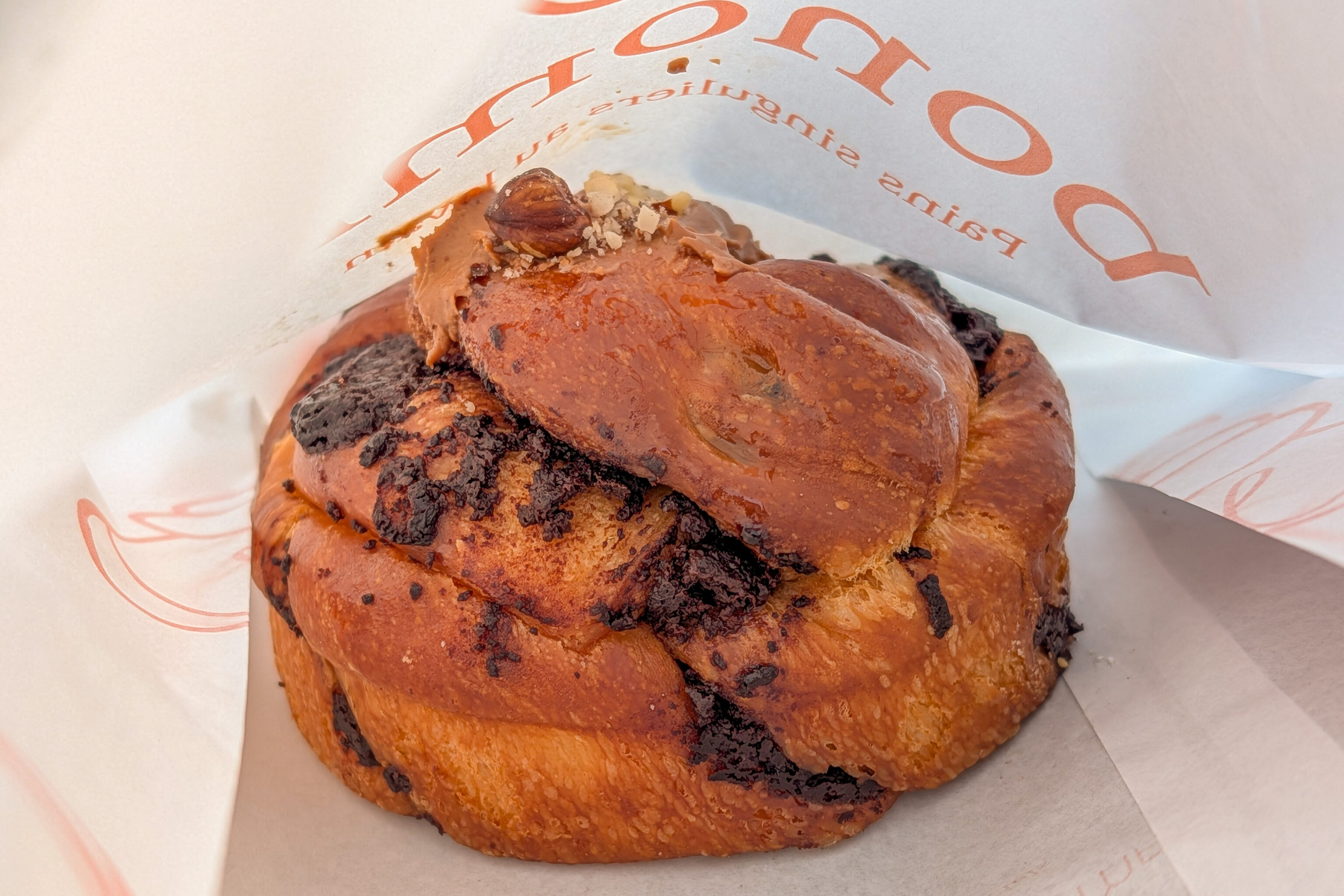
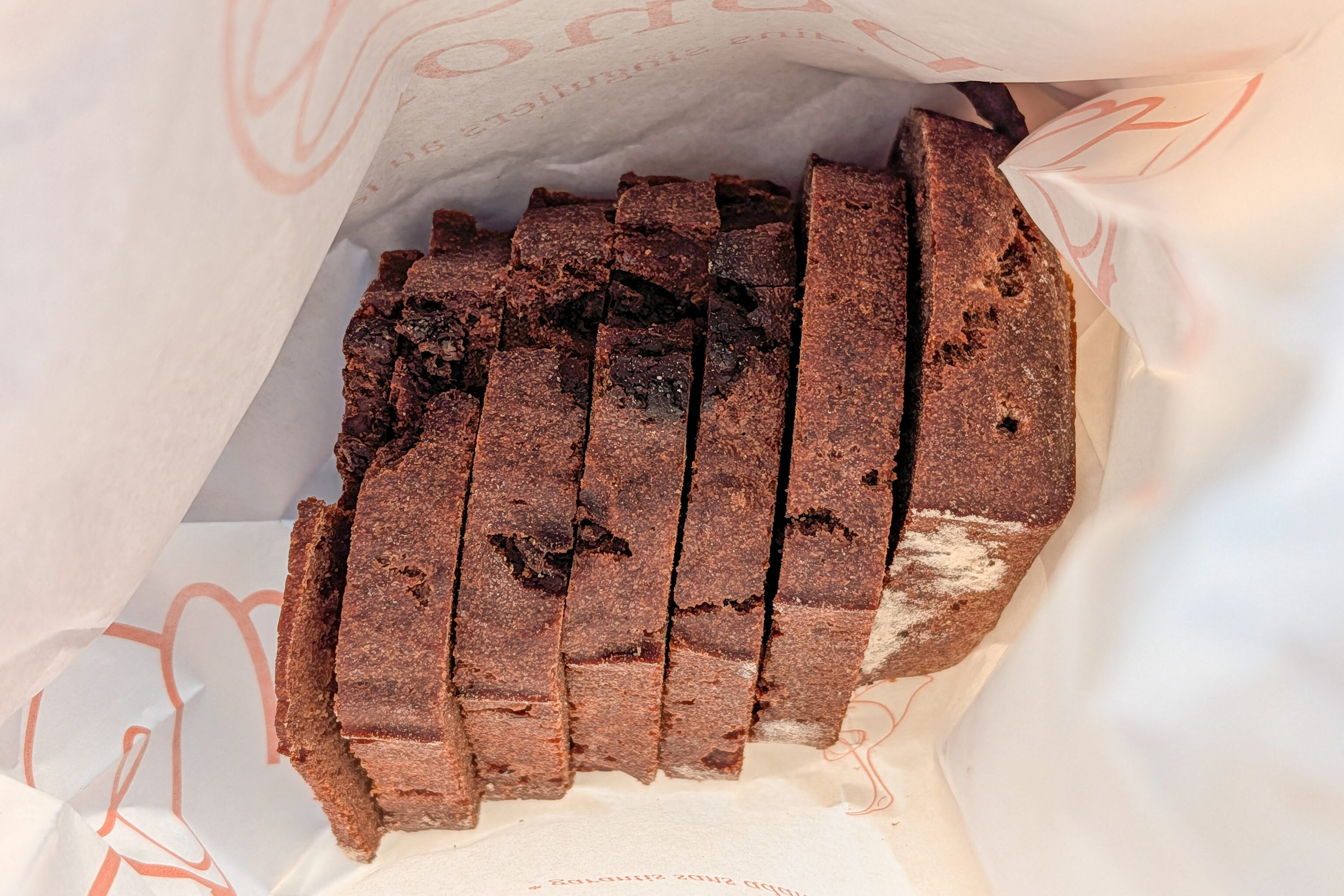
We decided to visit Bonomia, a boulangerie on Rue des Pierres Plantées. One interesting item they had was rice bread. We got a half portion to try. It was a bit like mochi, though not of the same texture.
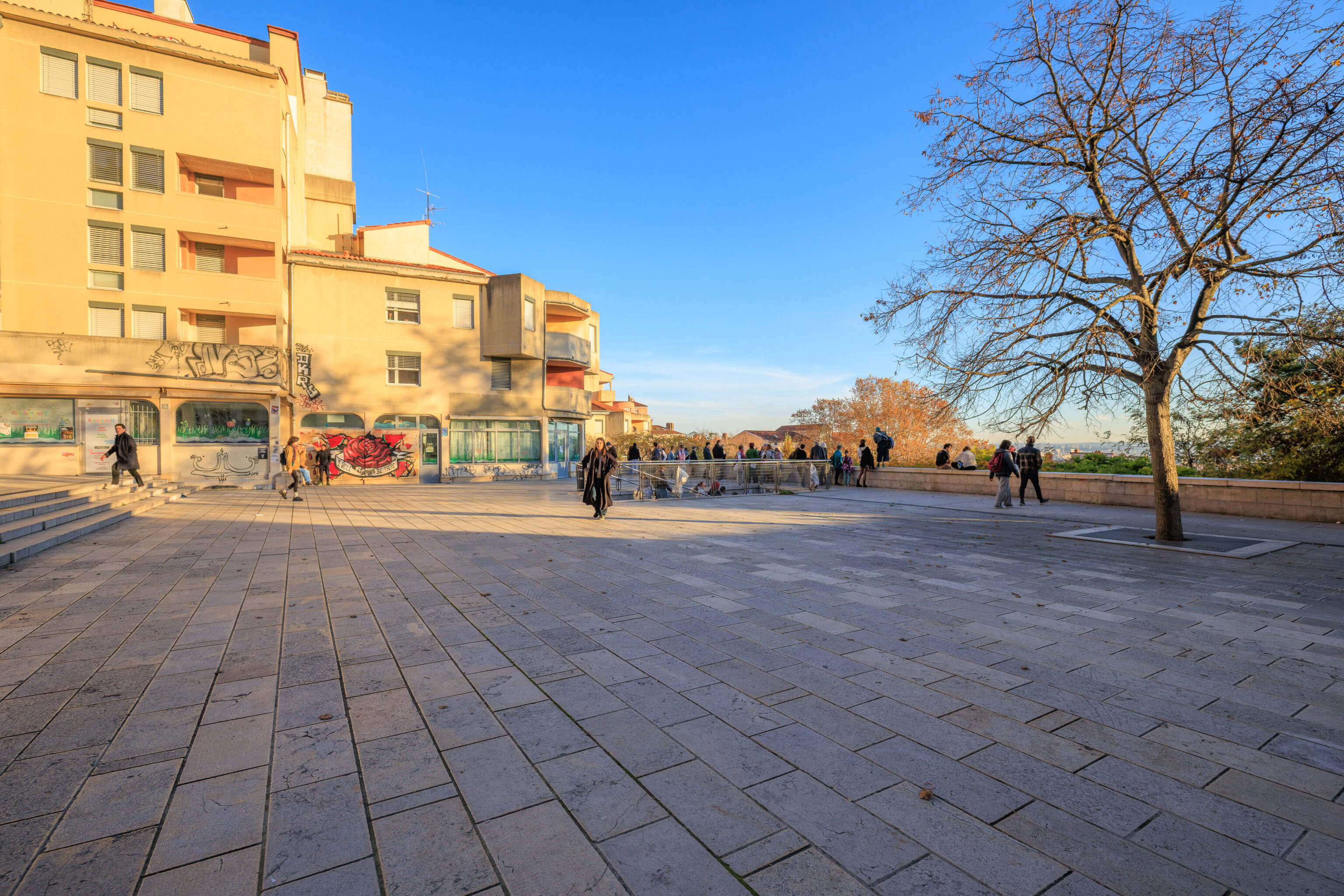
There was a small plaza to the south of the boulangerie.
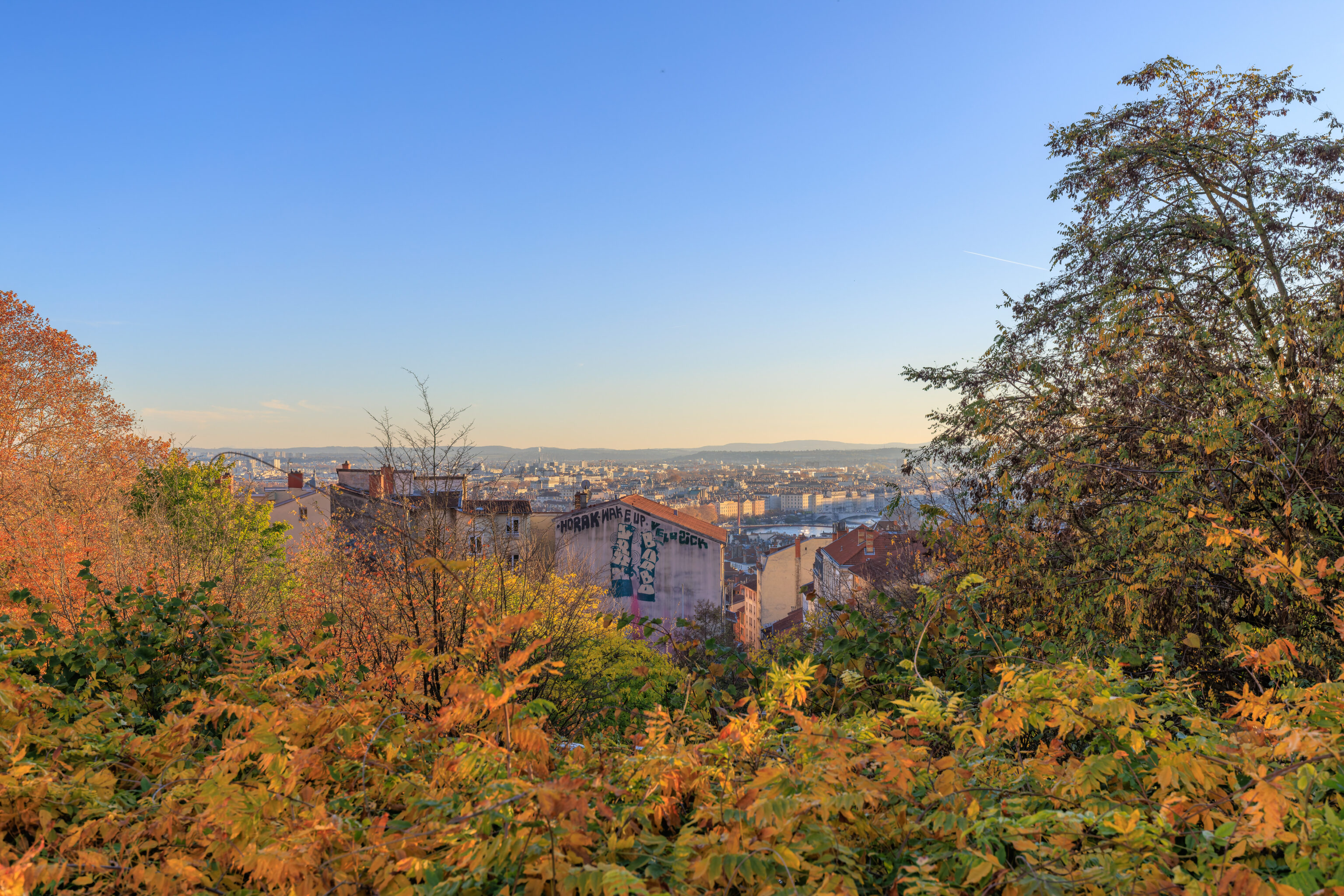
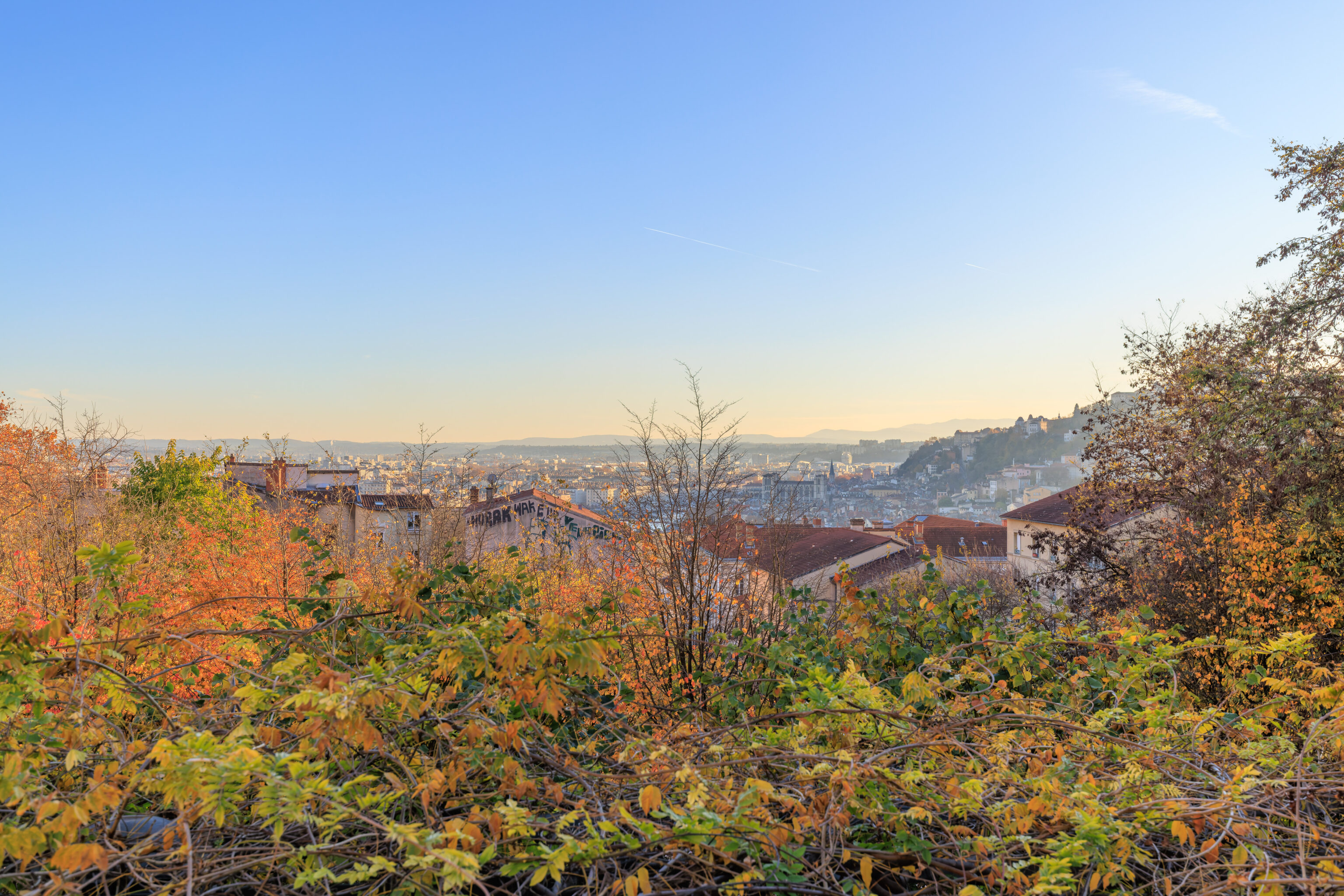
The plaza overlooks the area to the south where we came from and where we are headed. The view is blocked somewhat by the foliage.
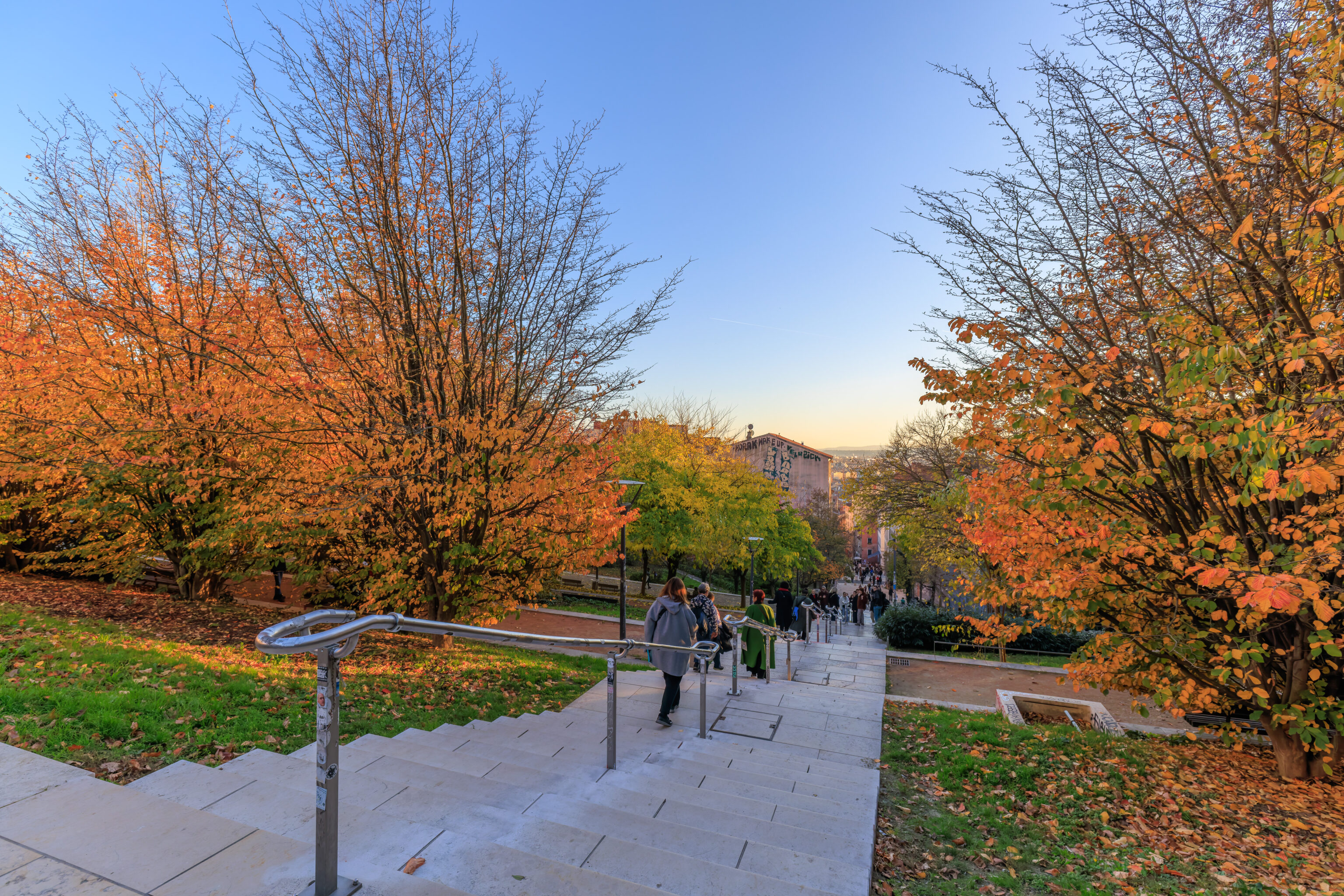
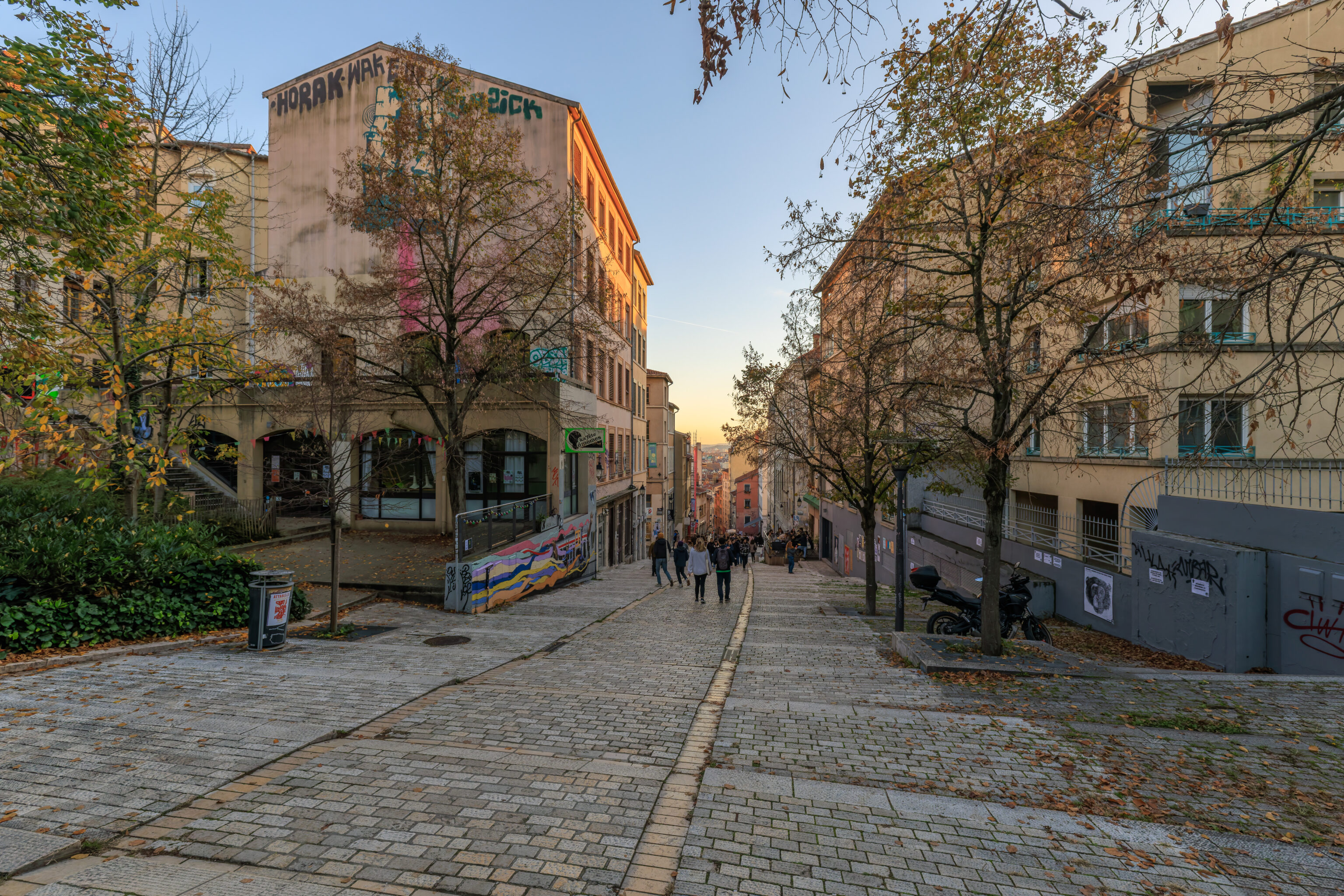
We continued walking to the south, descending on a pedestrian path.
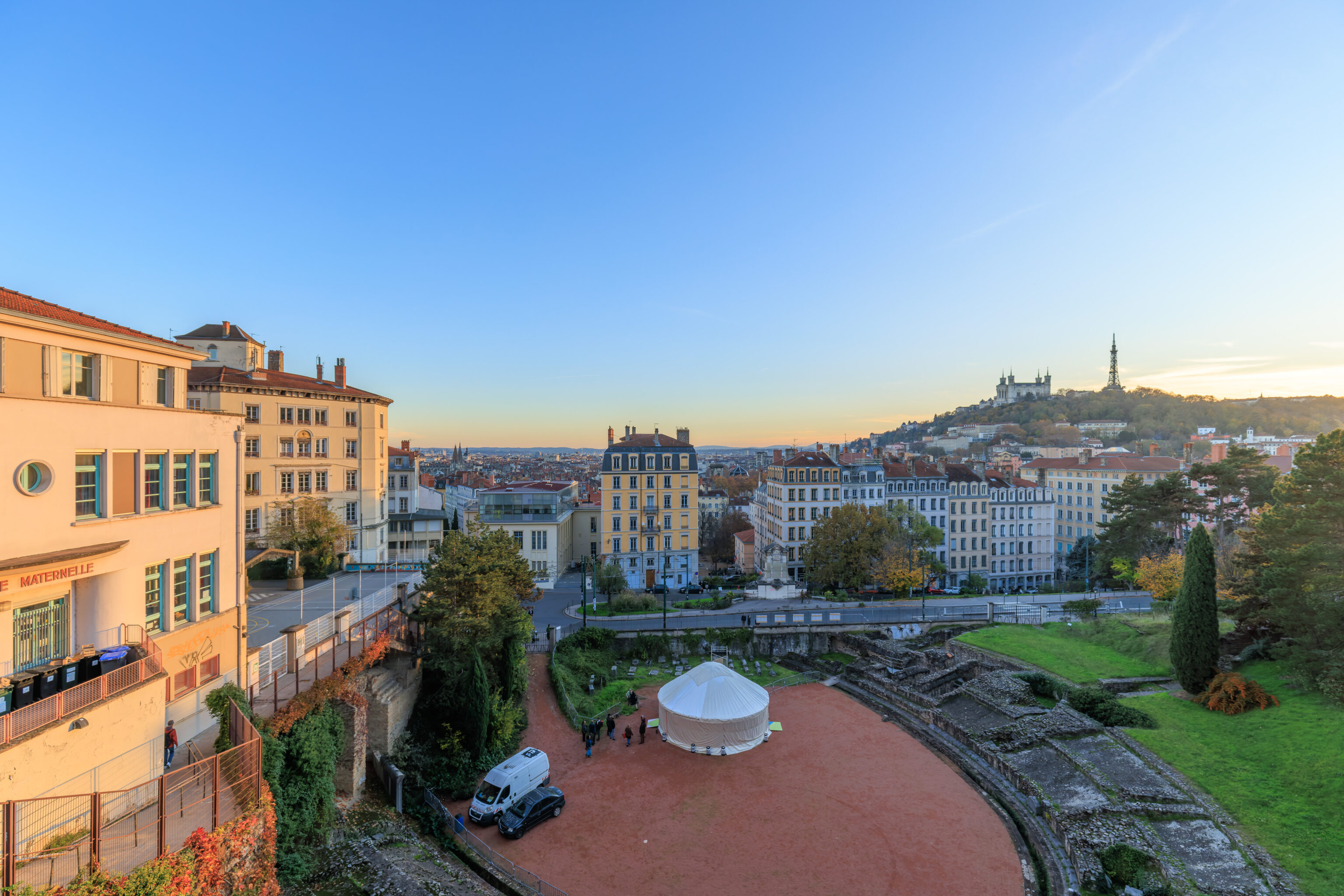
We turned to the west at a road which might be named the Rue des Tables Claudiennes. This road overlooks the ruins of the Amphitheatre of the Three Gauls below. This Roman amphitheatre dates back to the 1st century.
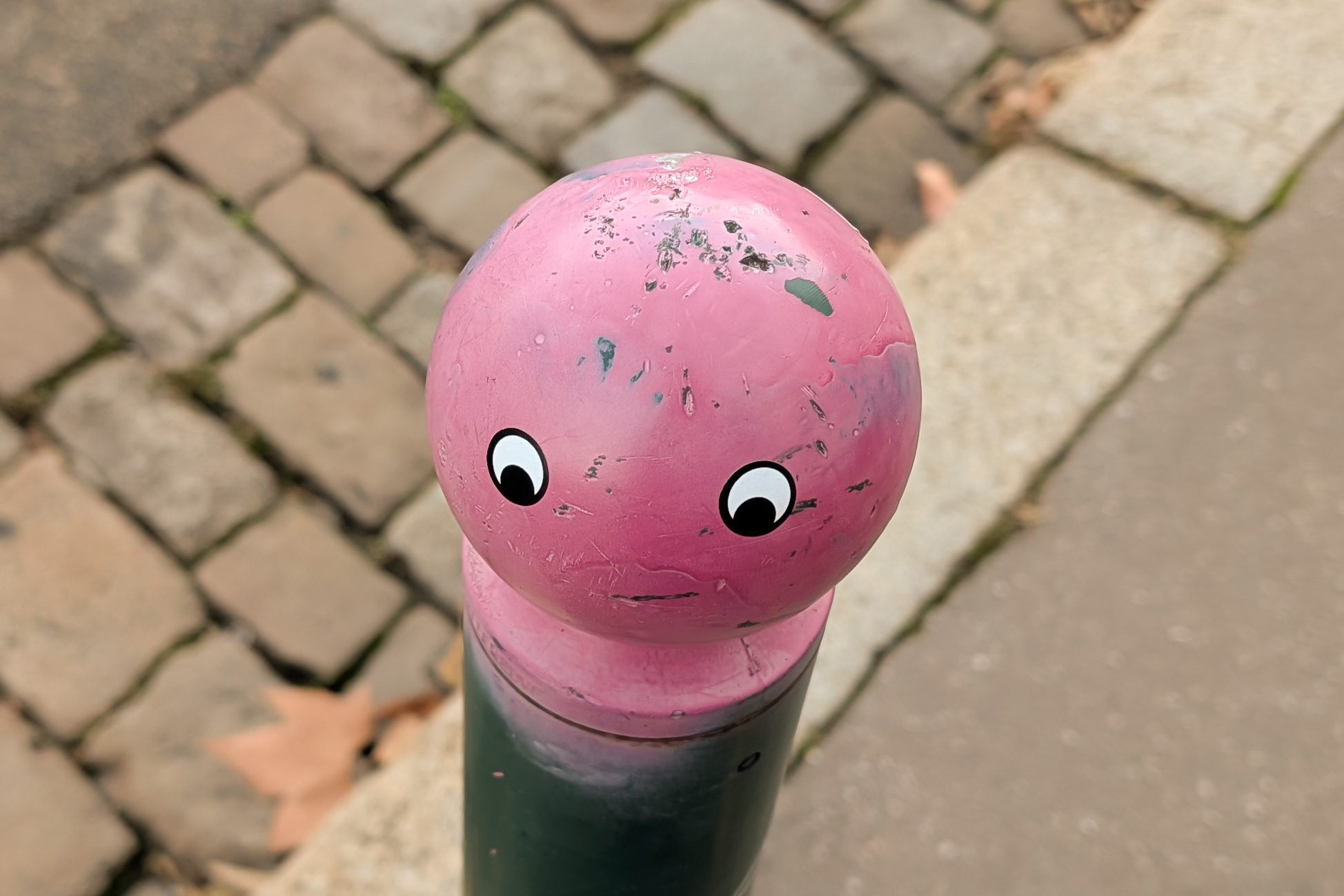
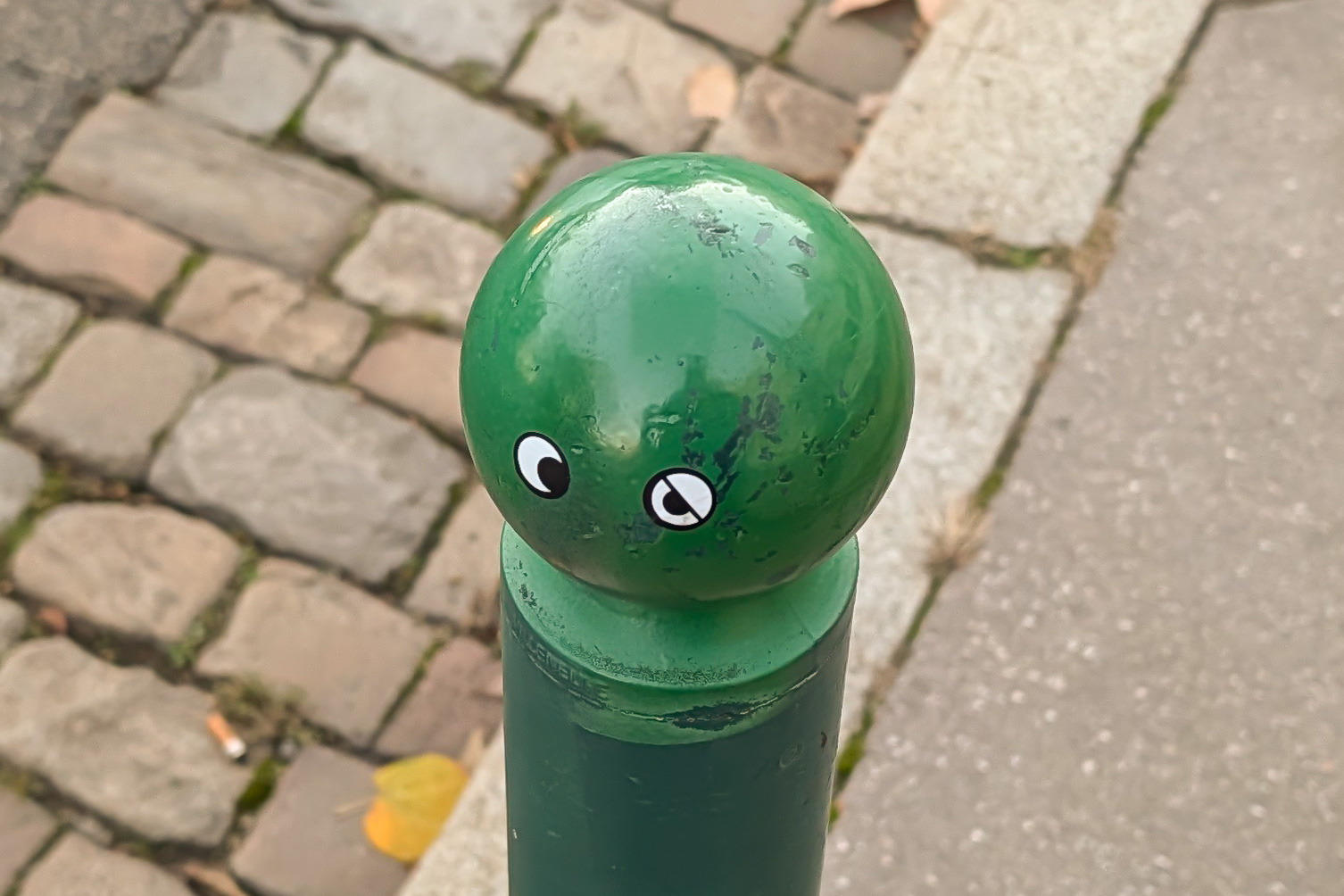
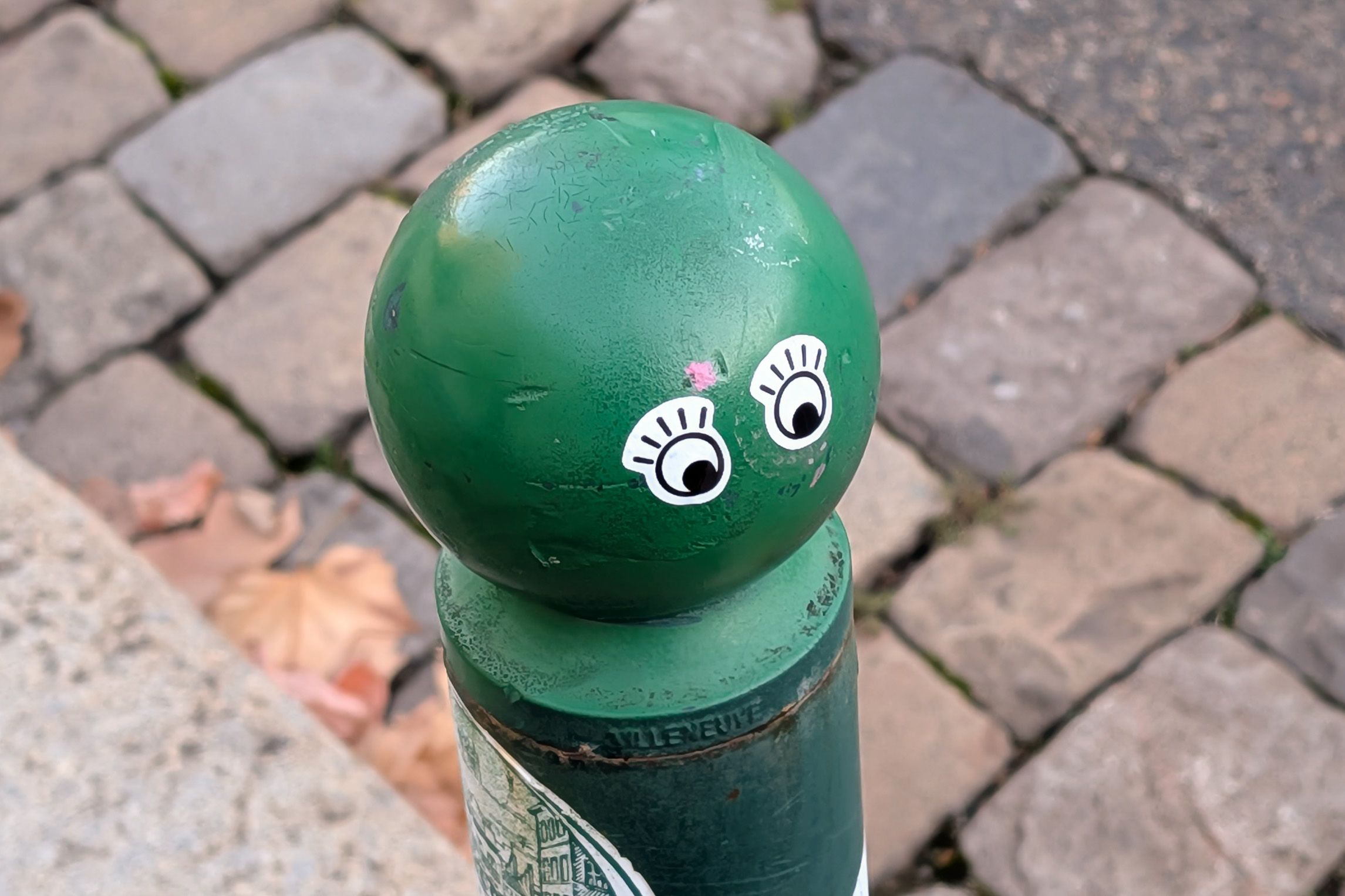

We noticed these posts along the sidewalk. They are probably here to prevent parking on the sidewalk. Someone decorated them with eye stickers!
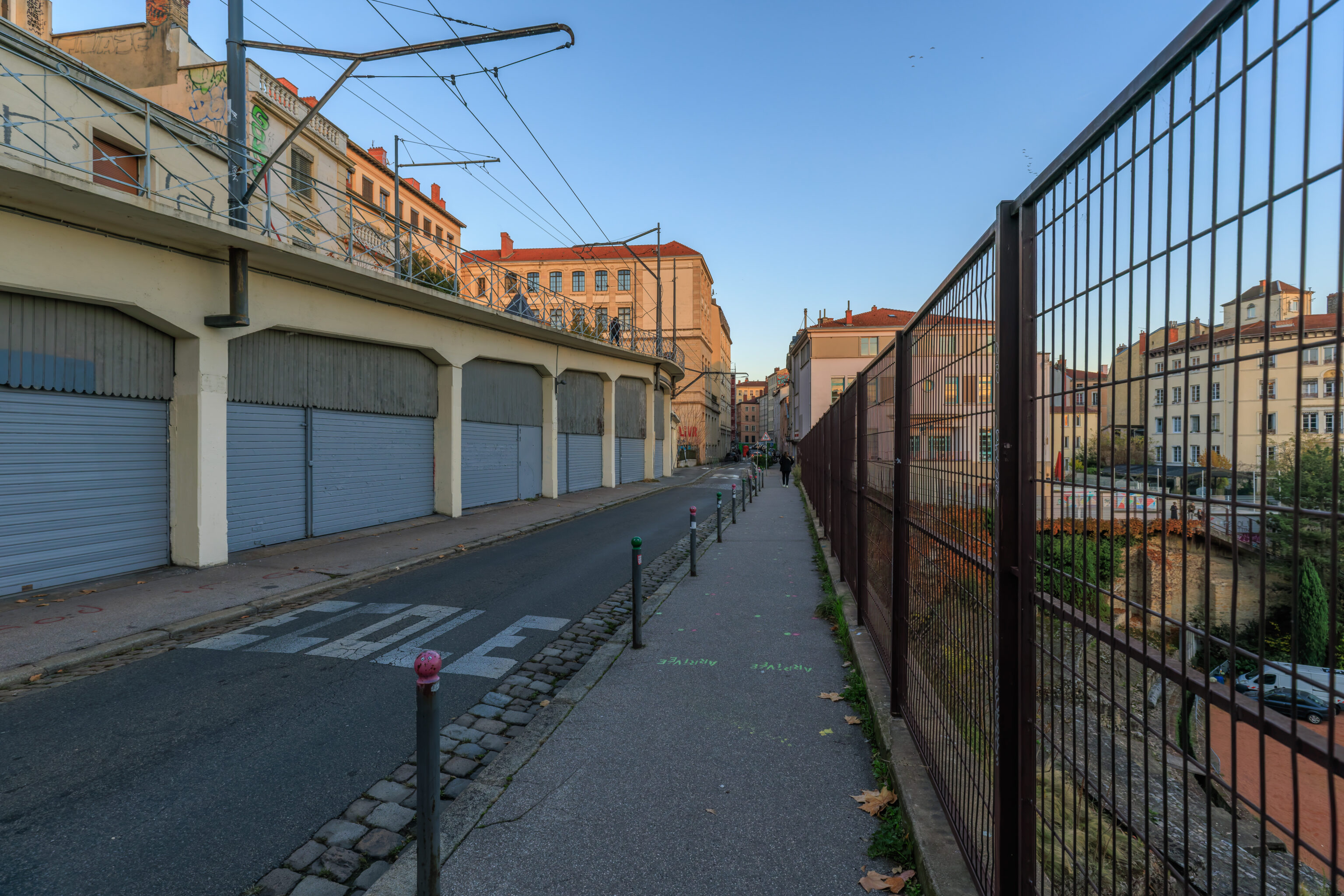
The road here actually consists of an upper and lower portion. We walked down to the lower portion to get a slightly closer look at the ruins below. This area is not particularly attractive.
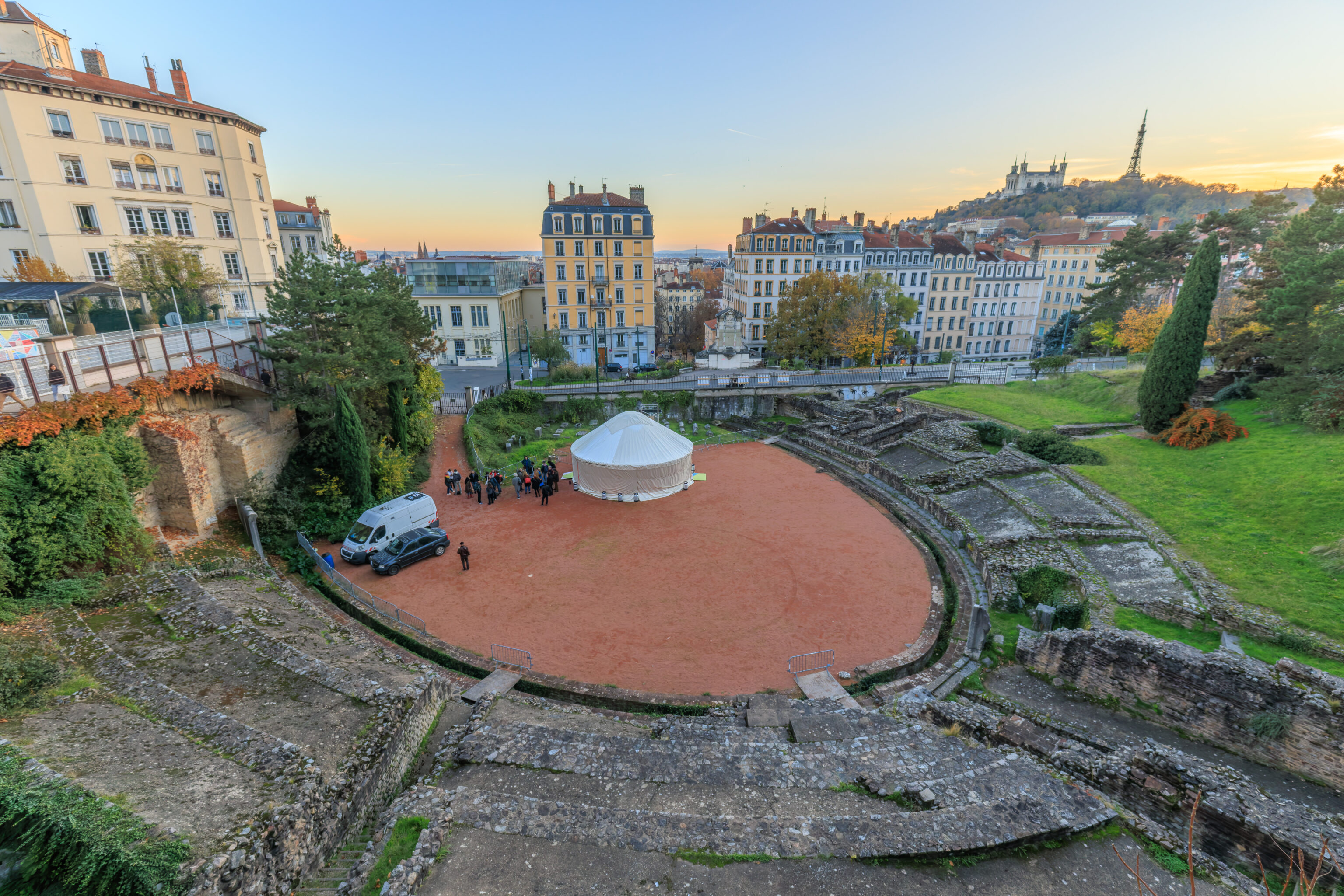
It seems that the ruins operates as some sort of event venue for at least part of the year.
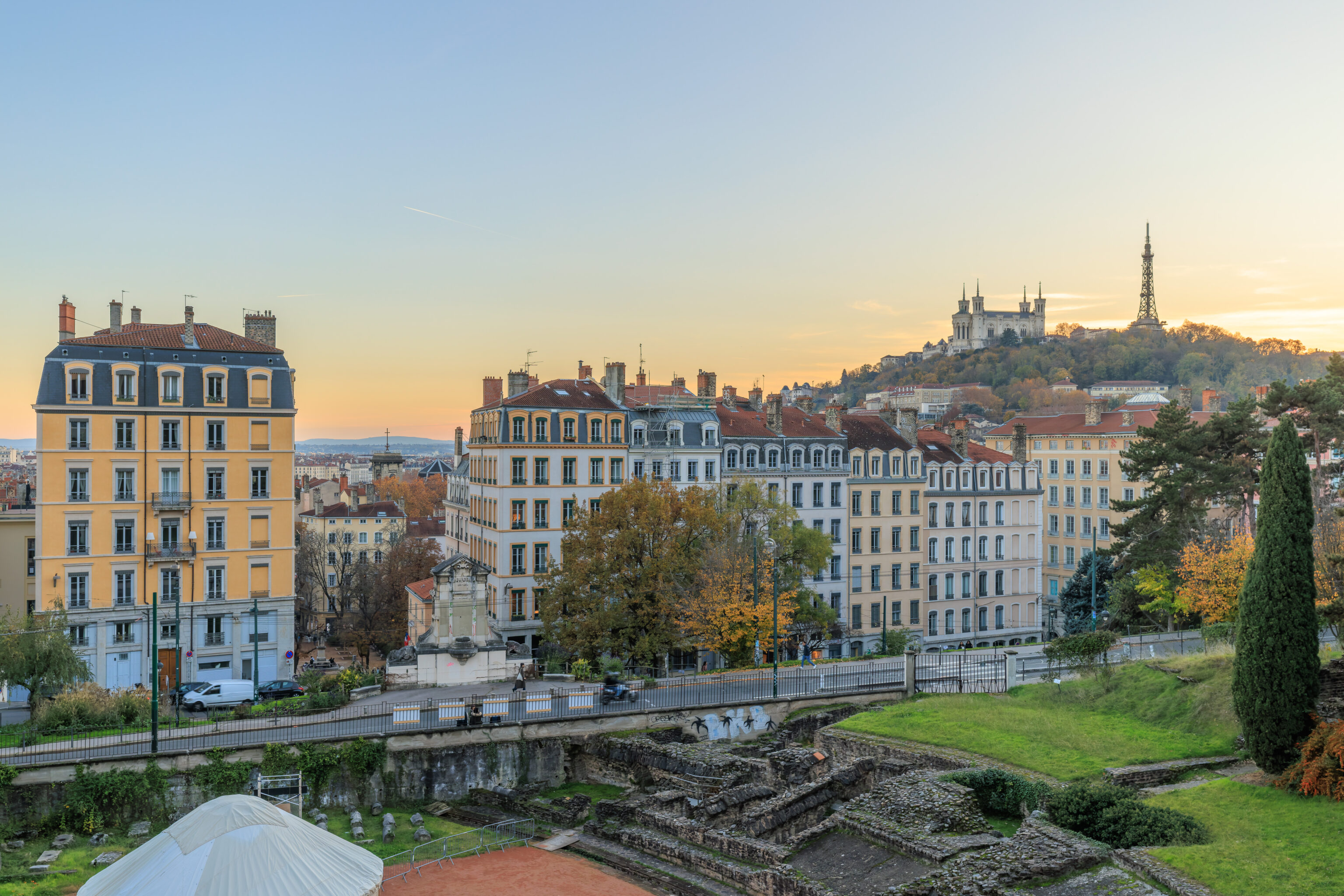
Other than the ruins below, there is also a nice view of the Fourvière Hill to the southwest. This hill was the site of the original Roman settlement of Lugdunum. Today, there is a museum and ruins as well as the Basilica of Notre Dame of Fourvière along with the Metallic Tower of Fourvière. We will visit these during this trip, just not today.
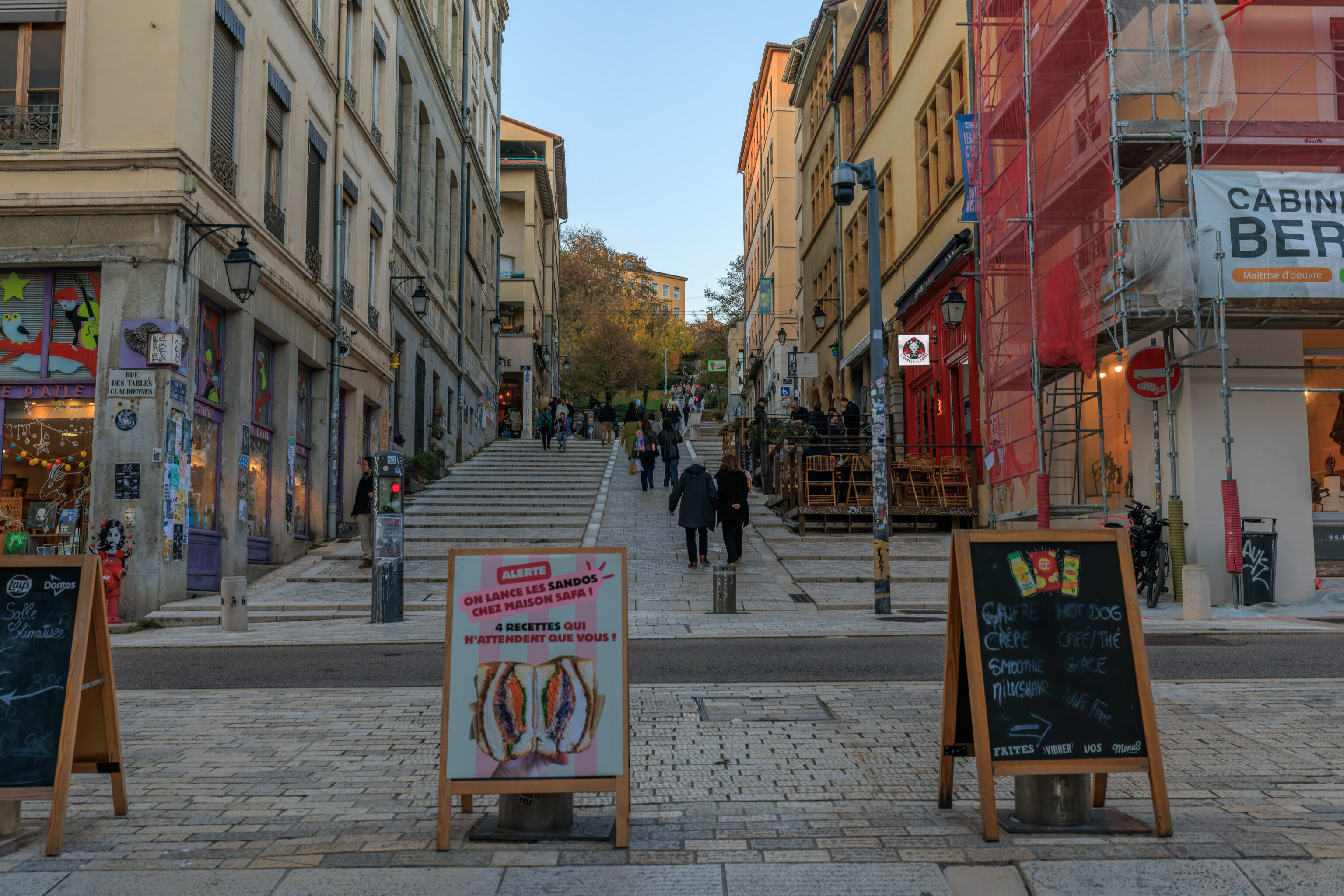
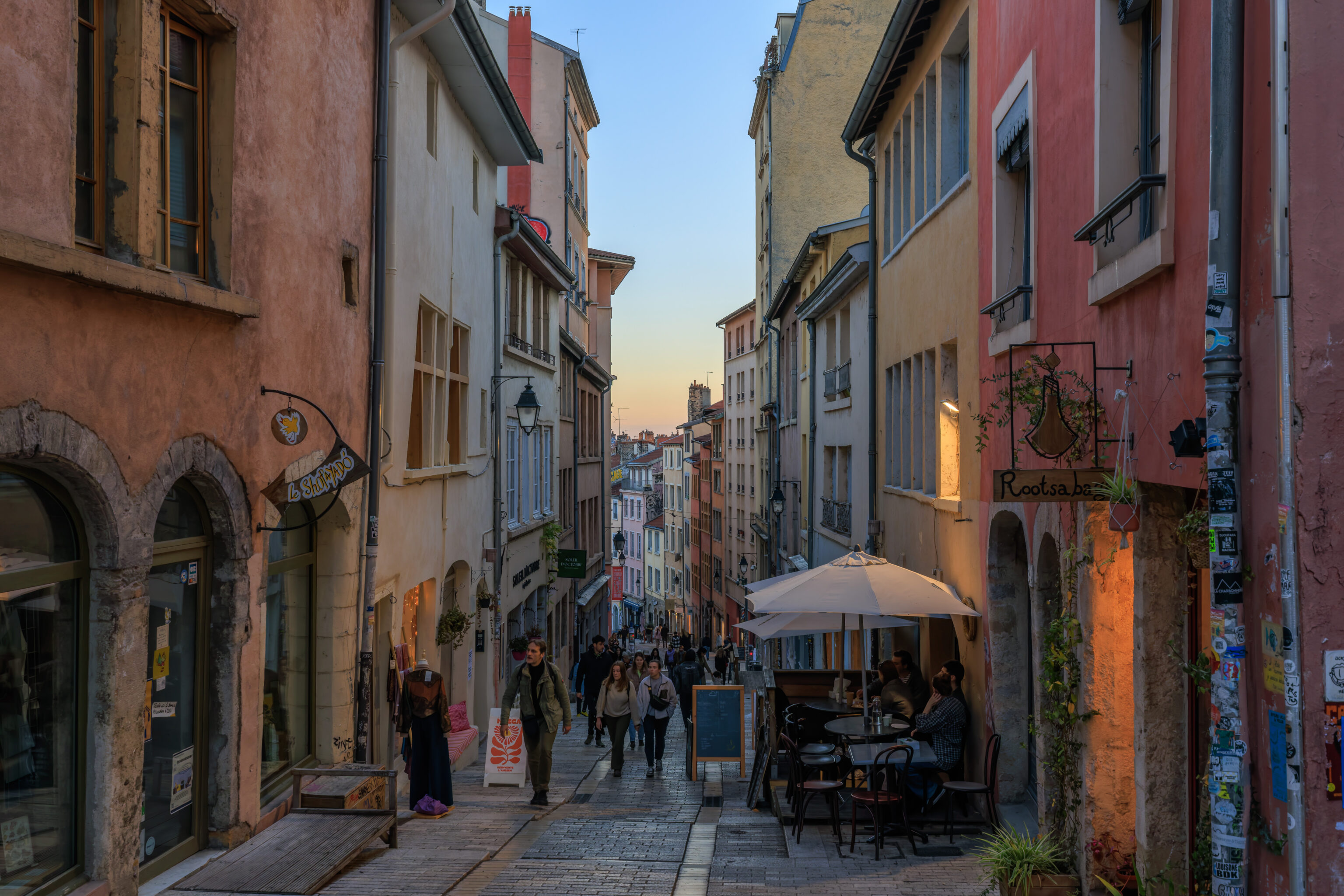
We walked back to the east to continue descending.
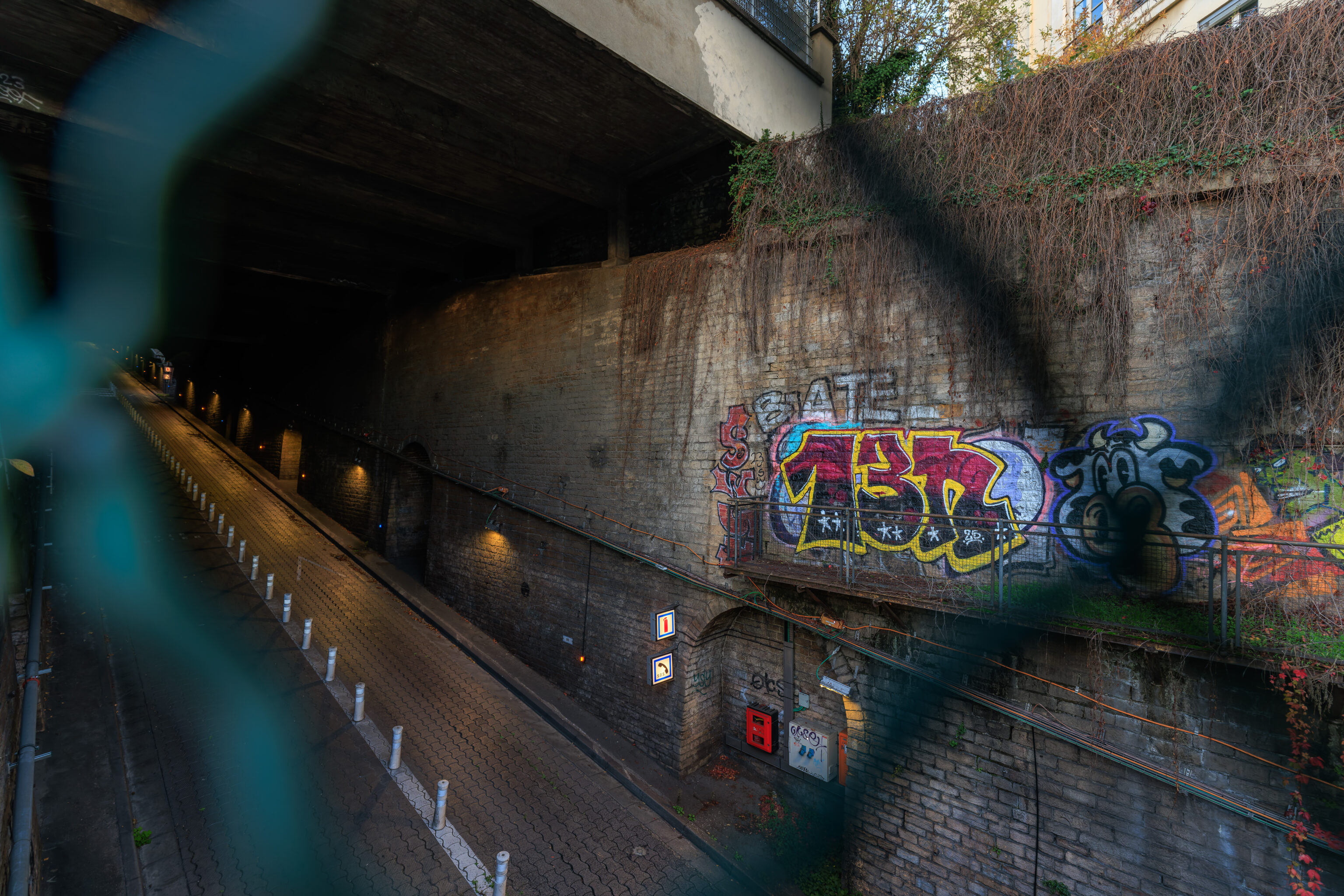
We passed by a fence overlooking what seemed like a subway tunnel. Looking more closely, it was a vehicular tunnel. We didn’t see any cars though.
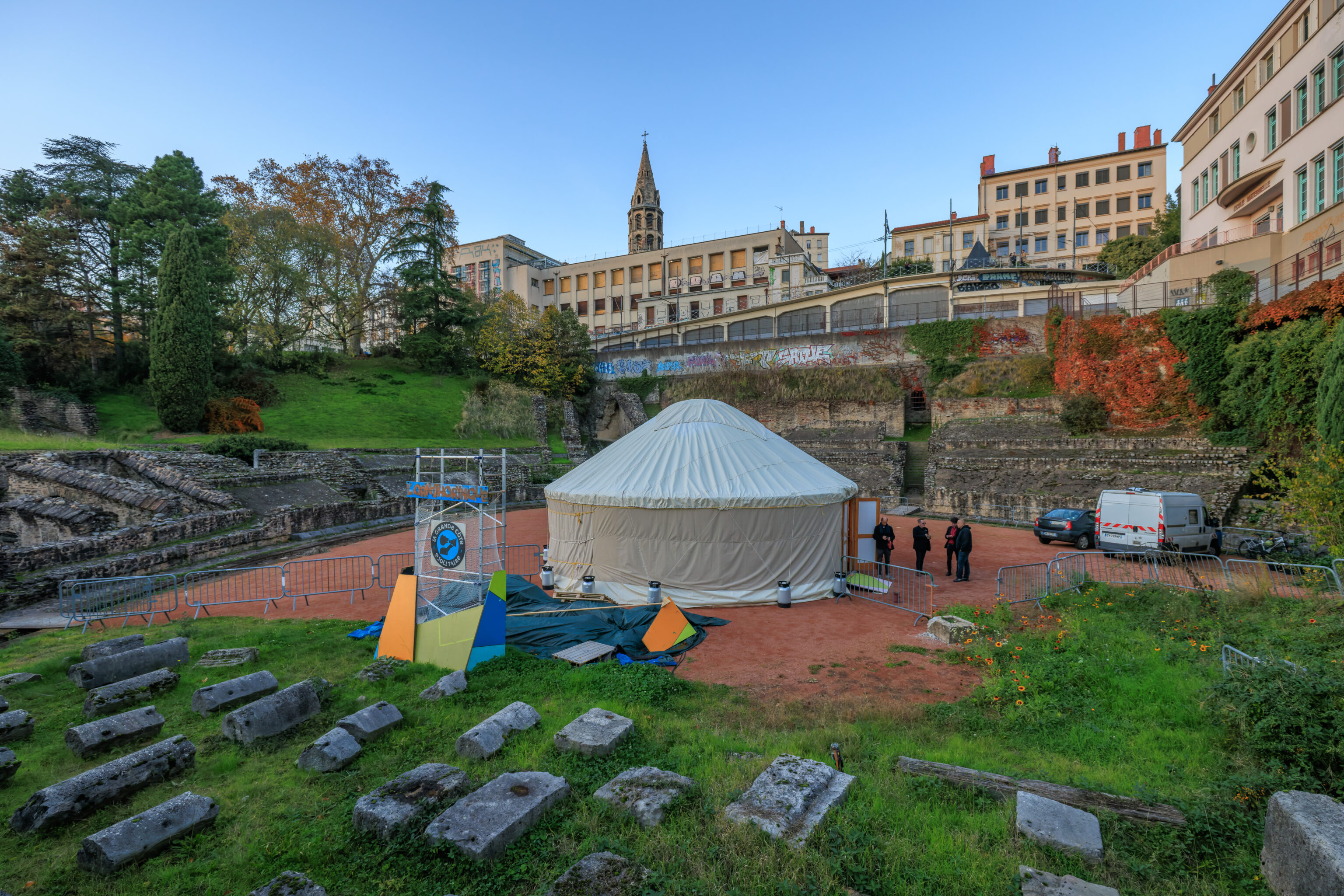
We walked down the road on the southern, lower side of the Amphitheatre of the Three Gauls. There isn’t much to see here. It is an interesting detour if already in the area but probably not worth going out of the way to visit.
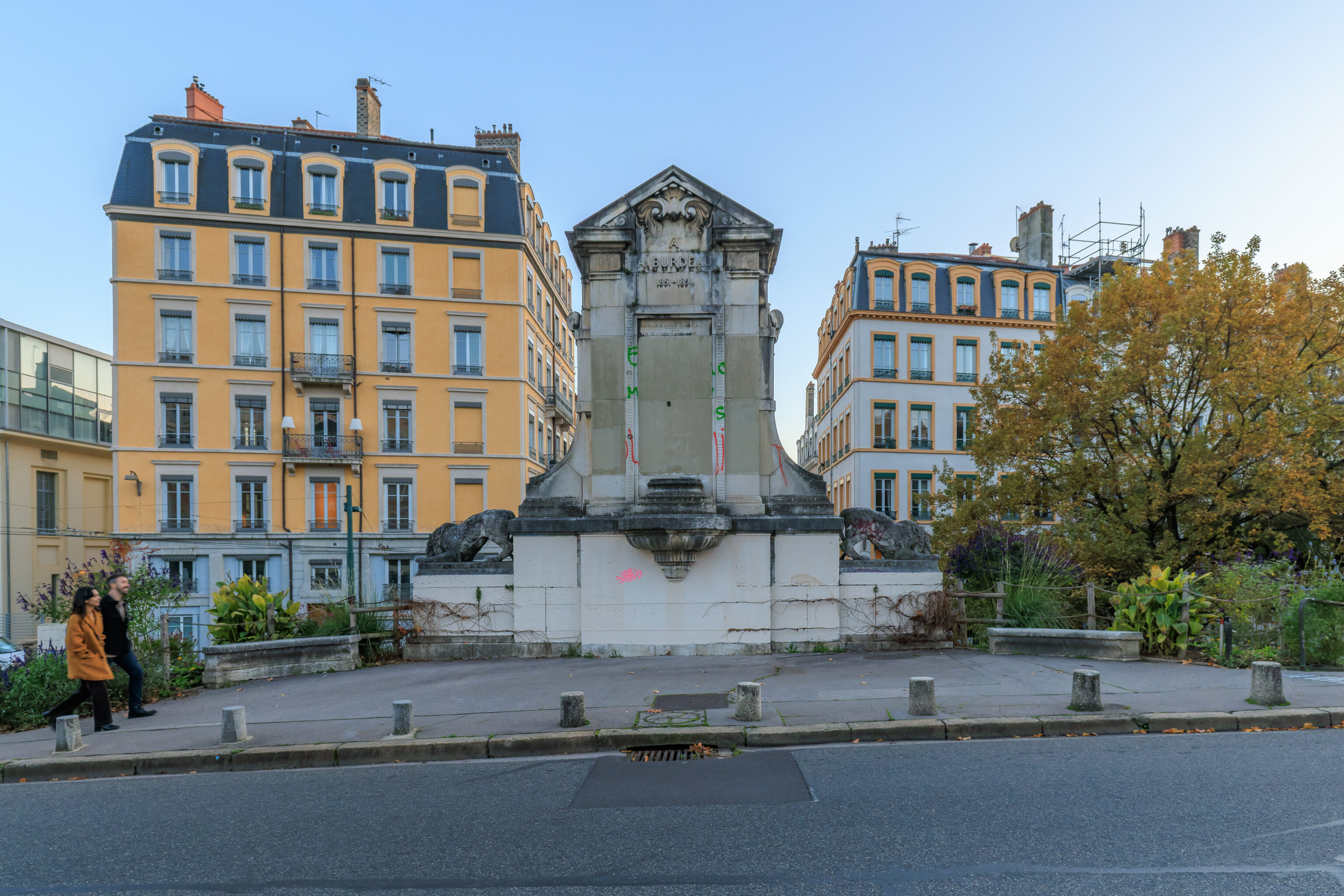
This derelict looking structure is apparently a fountain dedicated to Auguste Laurent Burdeau. This seems to be the back of the fountain.
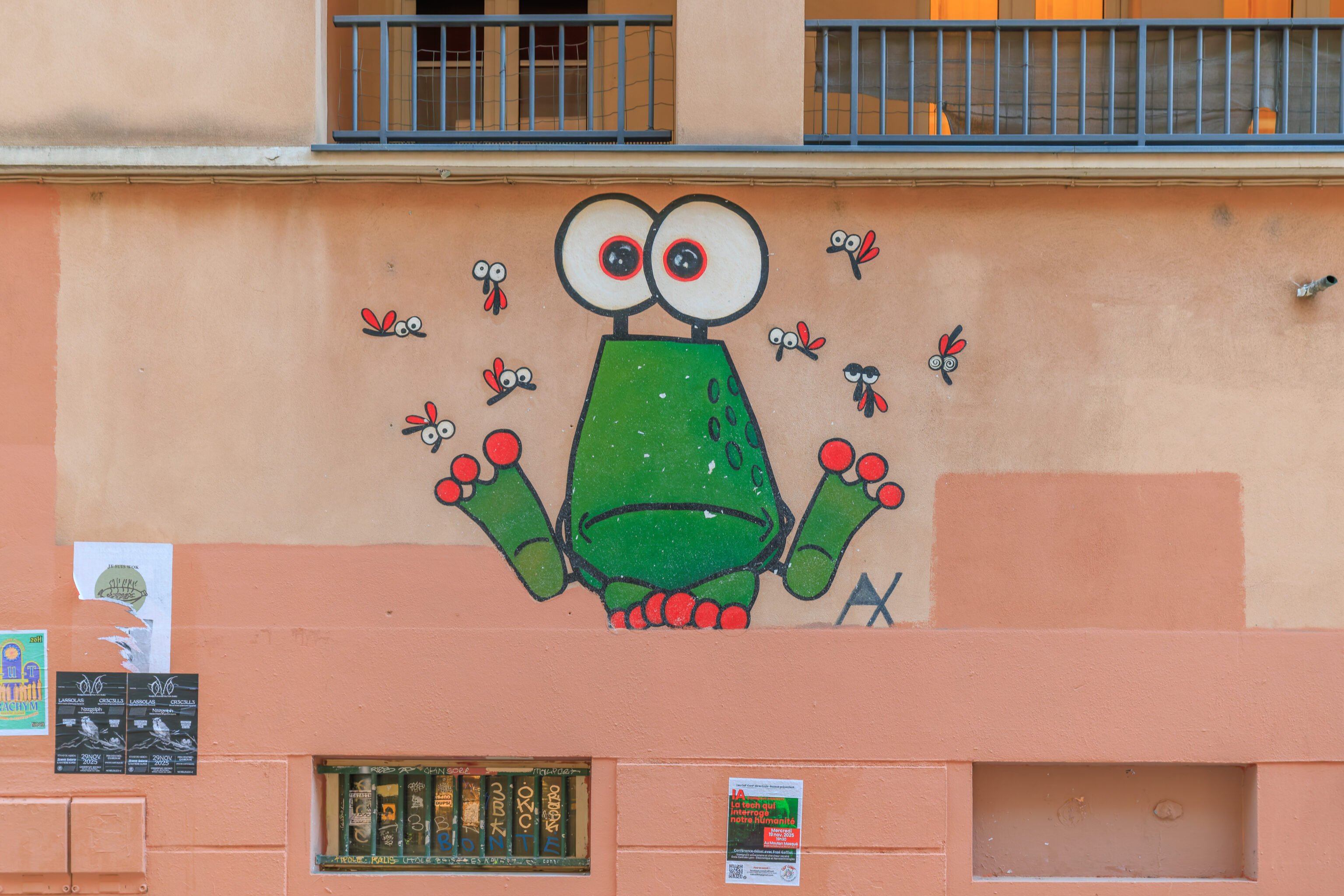
We passed by this small mural, perhaps graffiti, depicting what seems like a frog and flies.
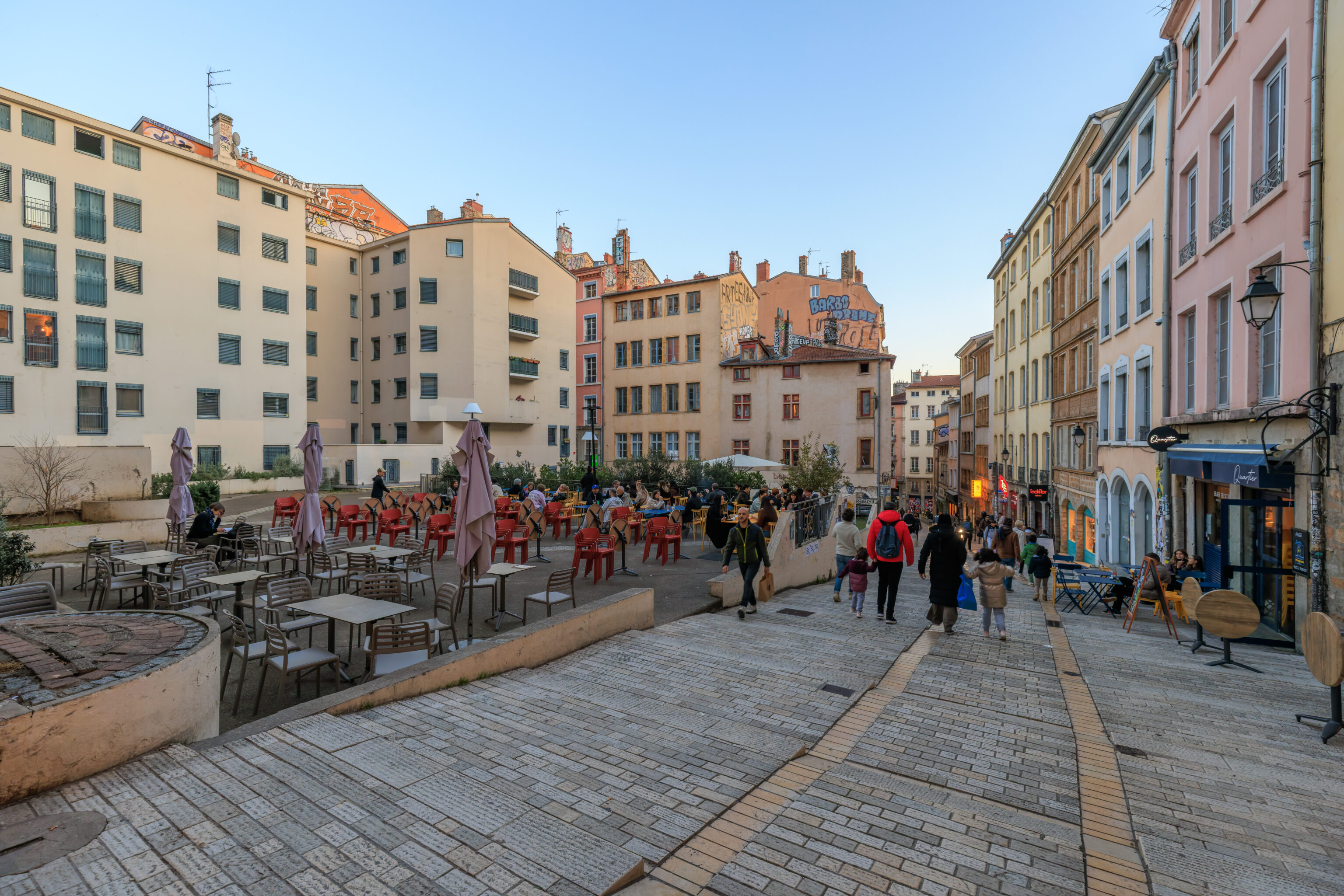
We continued descending.
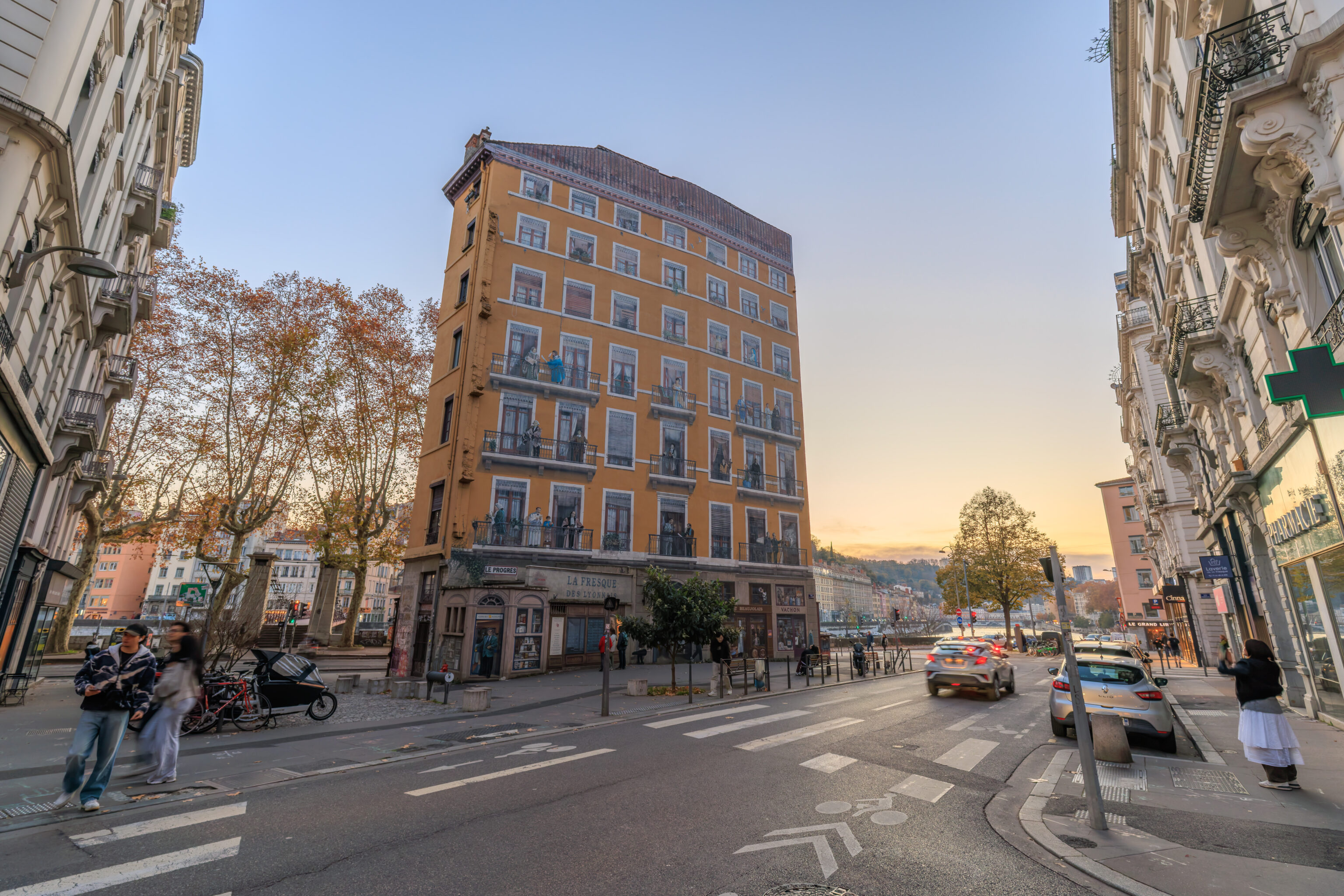
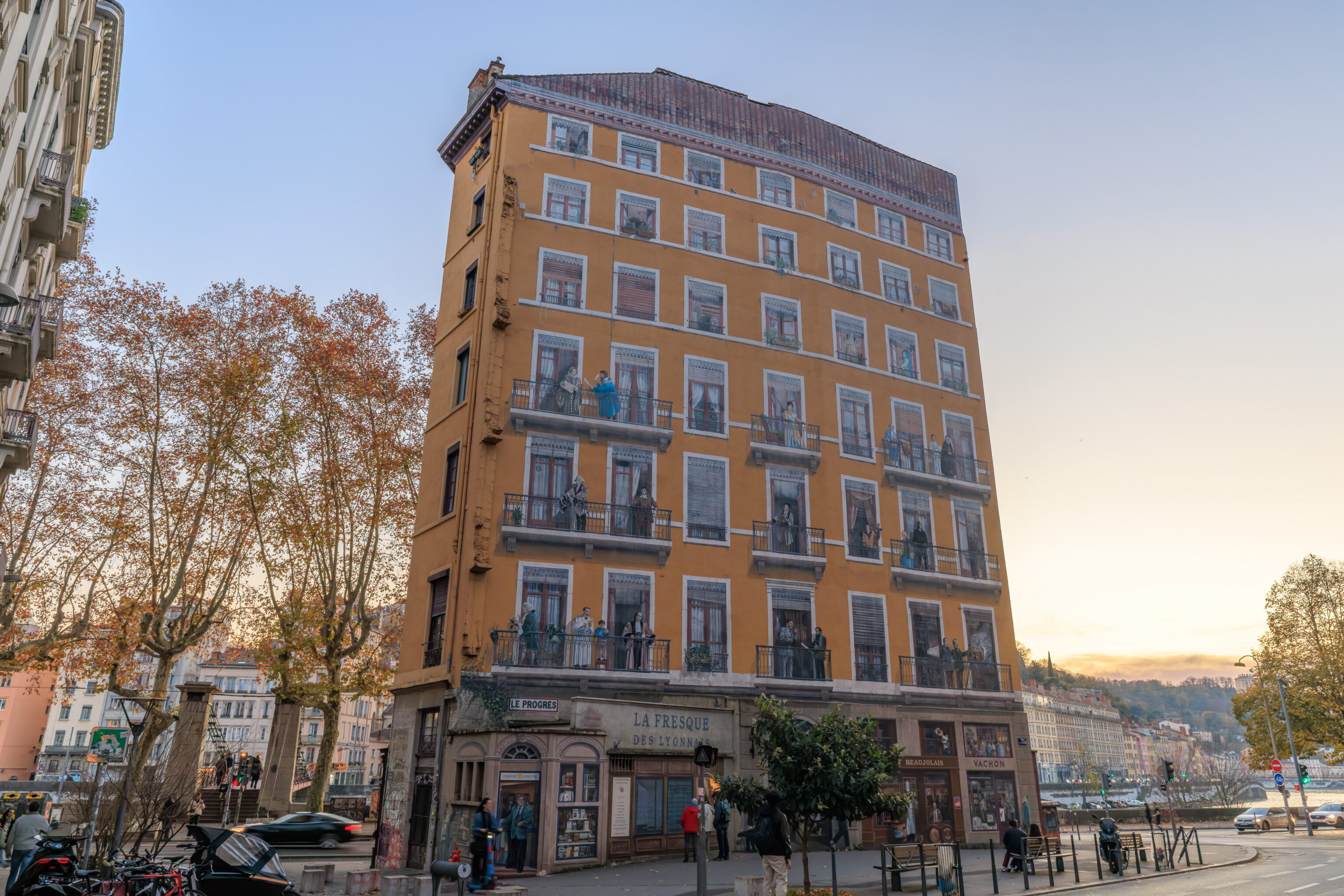
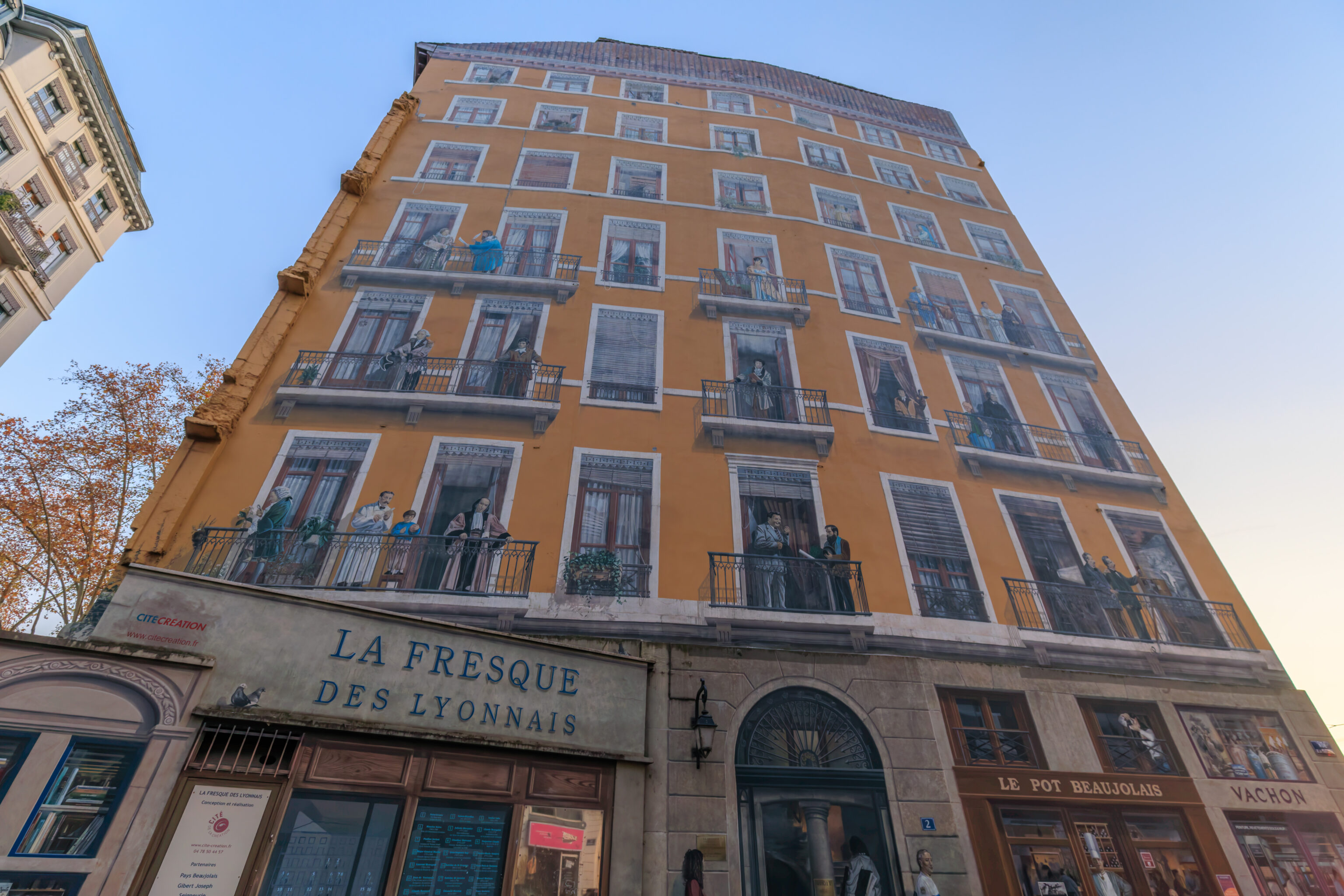
Once we got to the bottom of the hill, more or less, we turned to the right to visit the Fresque des Lyonnais. This large mural painted on the side of a building depicts famous figures from Lyon.

A helpful diagram identifies all the individuals depicted on the mural.
Notable figures include Lumiere brothers, inventors of an early film system. Ampere is also depicted. He is the physicist who the Ampere, the standard unit of electrical current, is named after. Interestingly, it also shows Jean de Verrazne. He is more commonly known by his Italian name, Giovanni da Verrazzano. The Verrazano Narrows Bridge connecting Brooklyn Staten Island is named after him. The French seem to think he was born in Lyon, although it seems more likely that he was born in what was the Republic of Florence. HIs voyages to what is now the northeastern United States were partially financed by King Francis I of France.
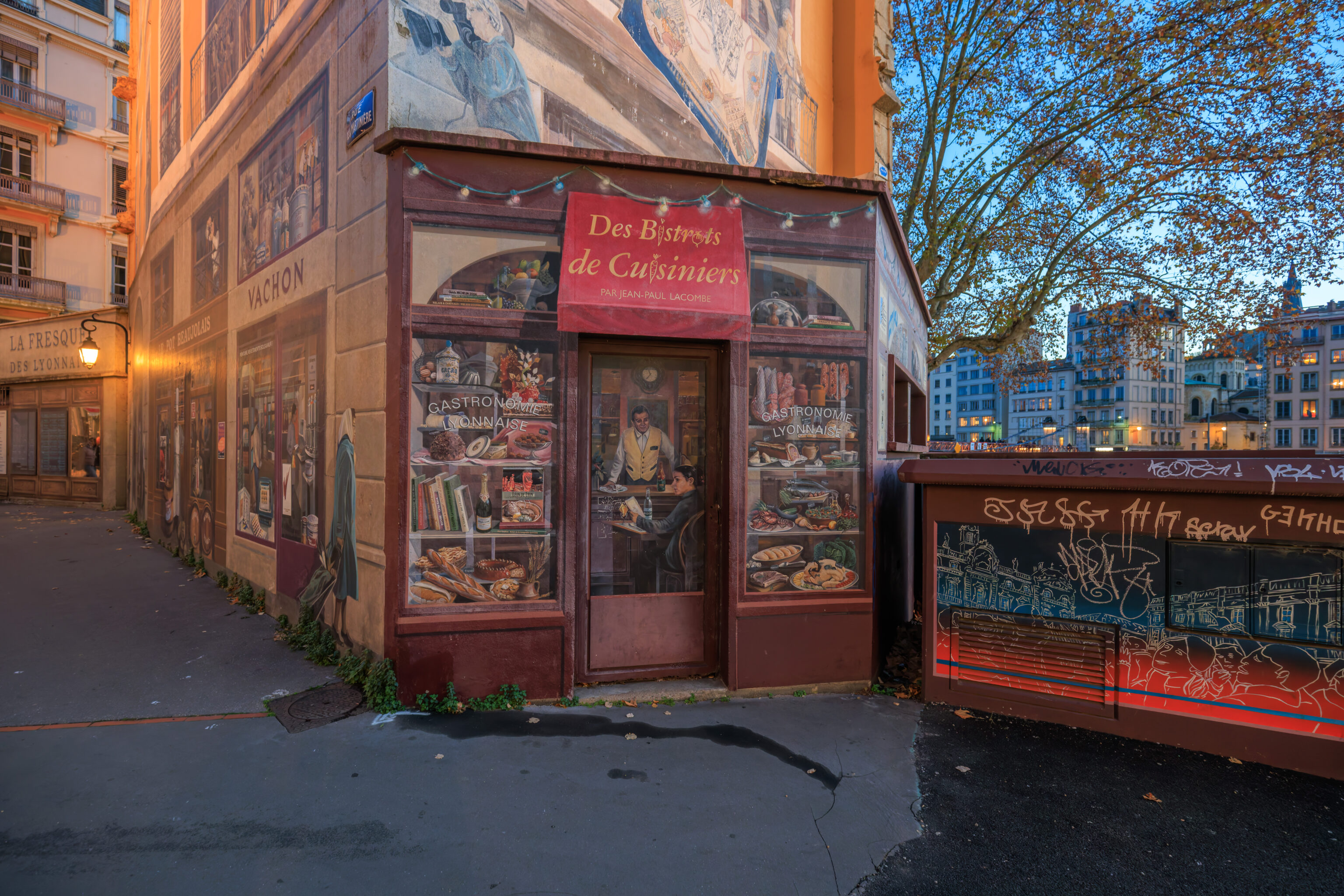
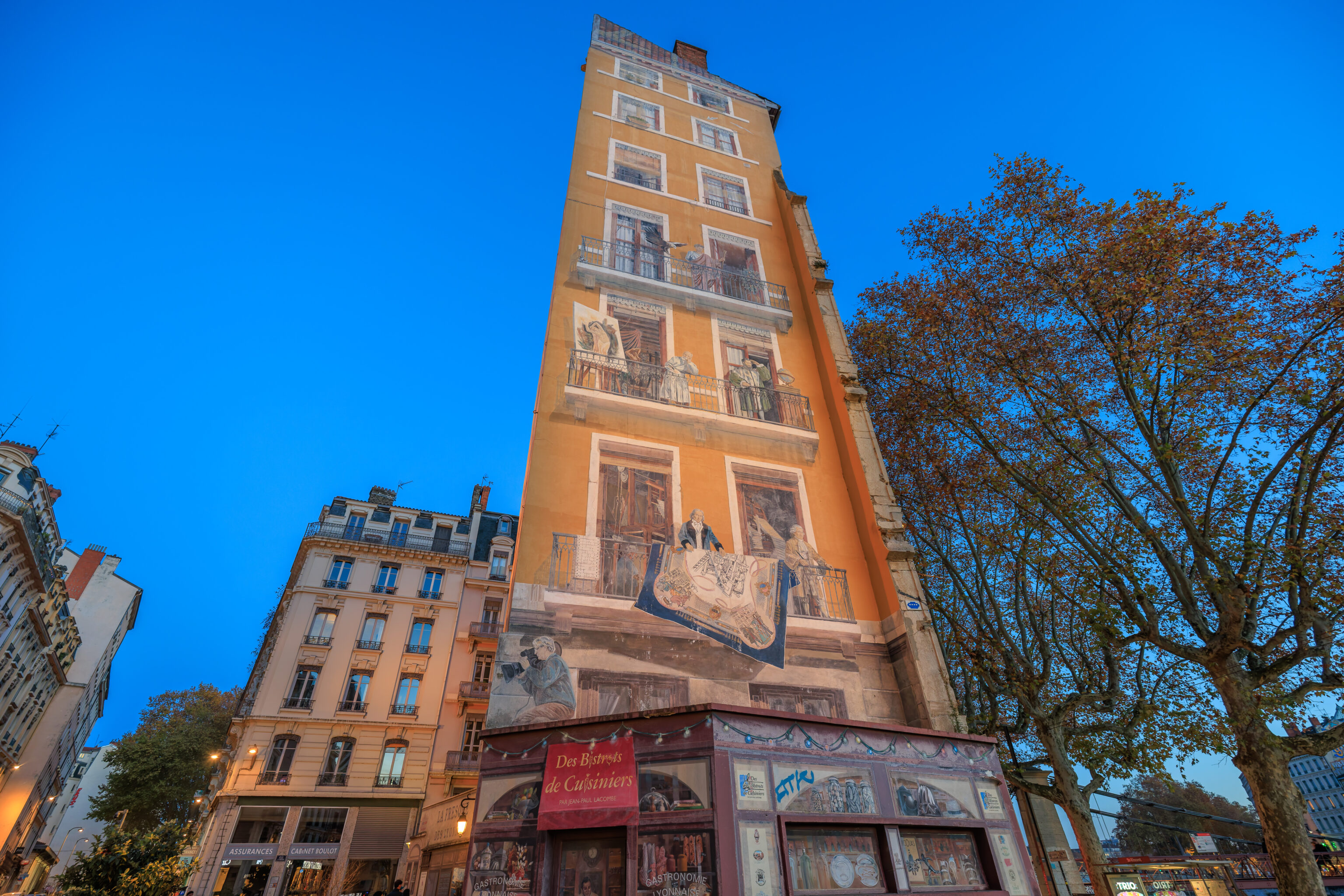
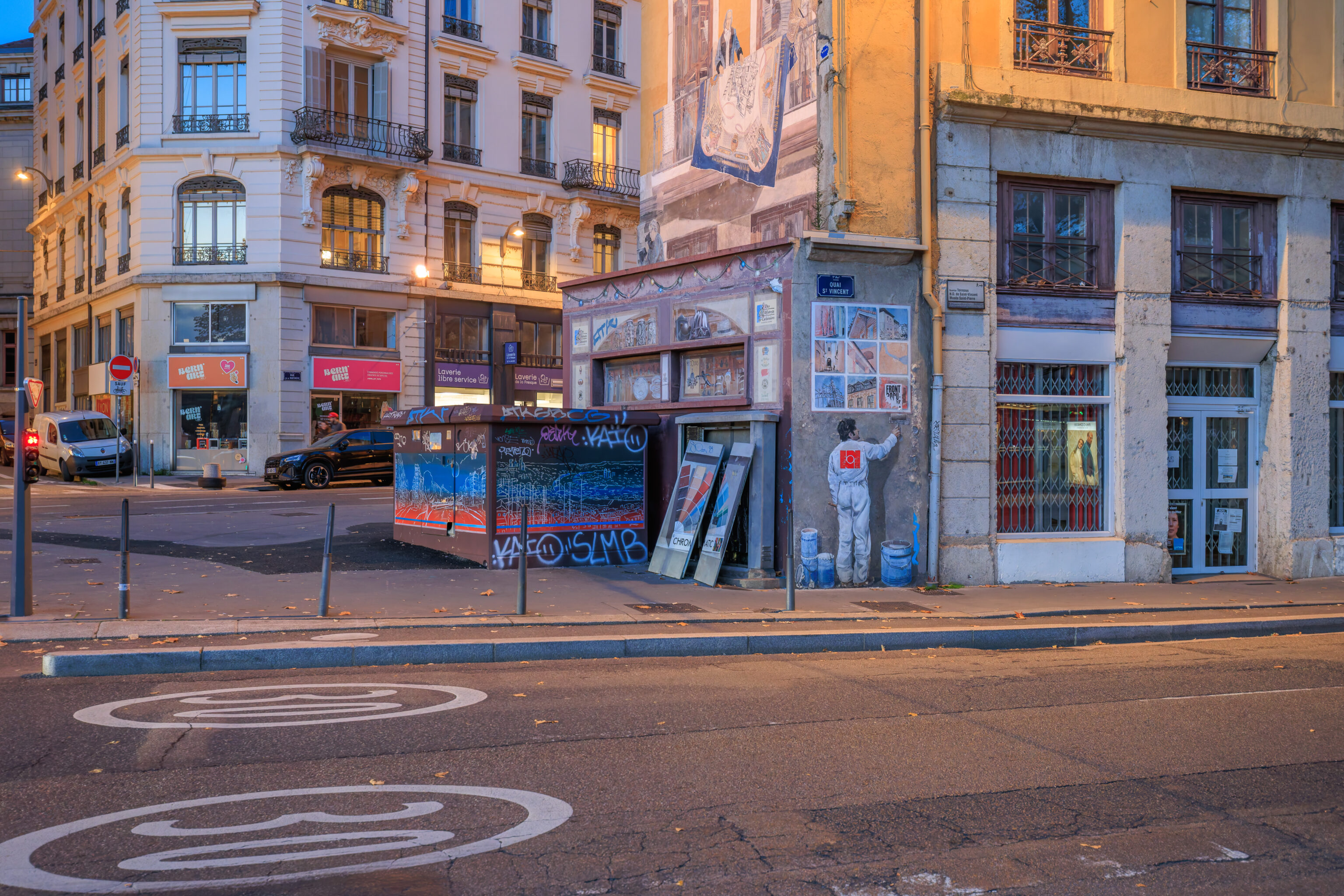
The mural continues along one of the narrow sides of the building.
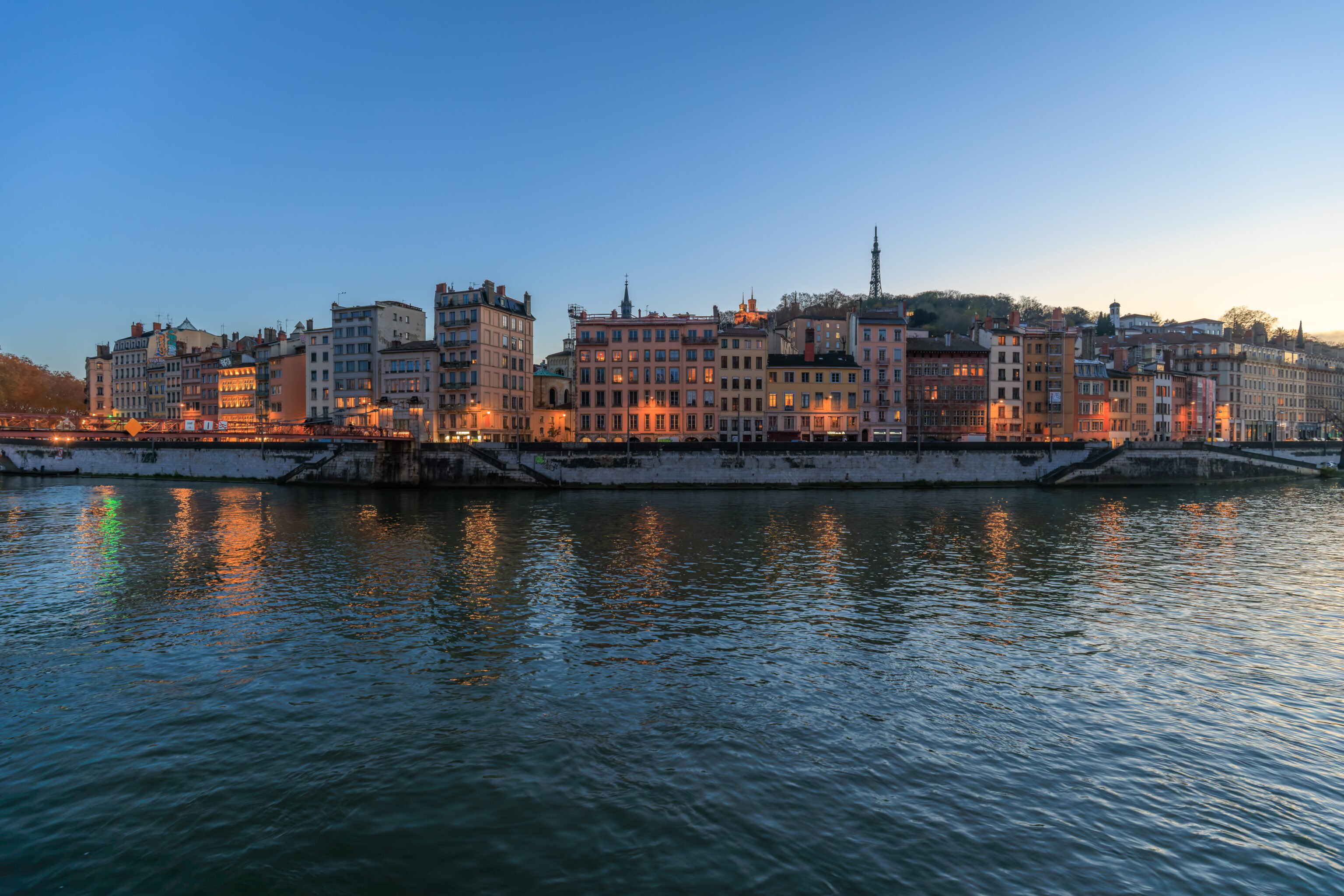
The Fresque des Lyonnais is across the street from the Saone.
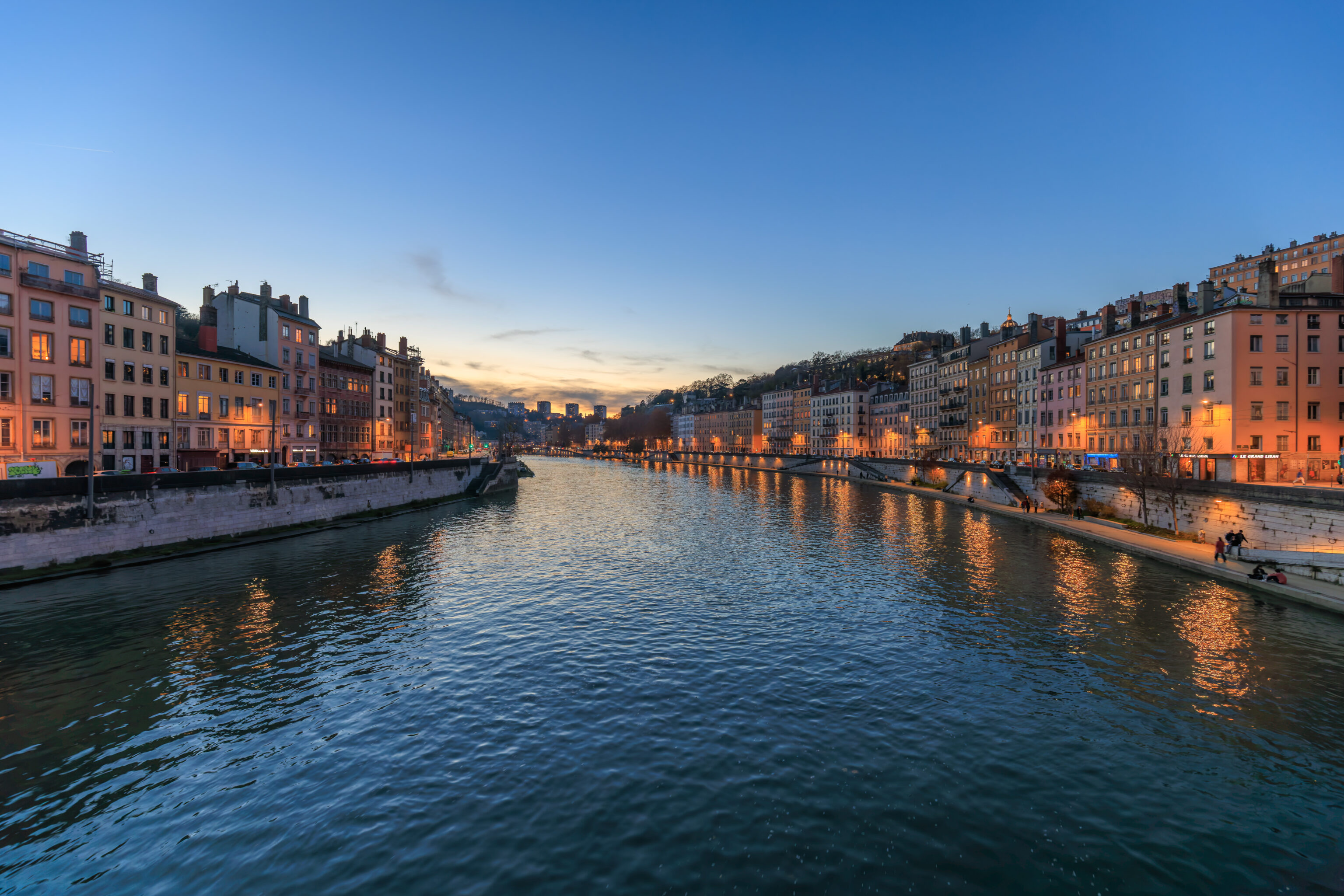
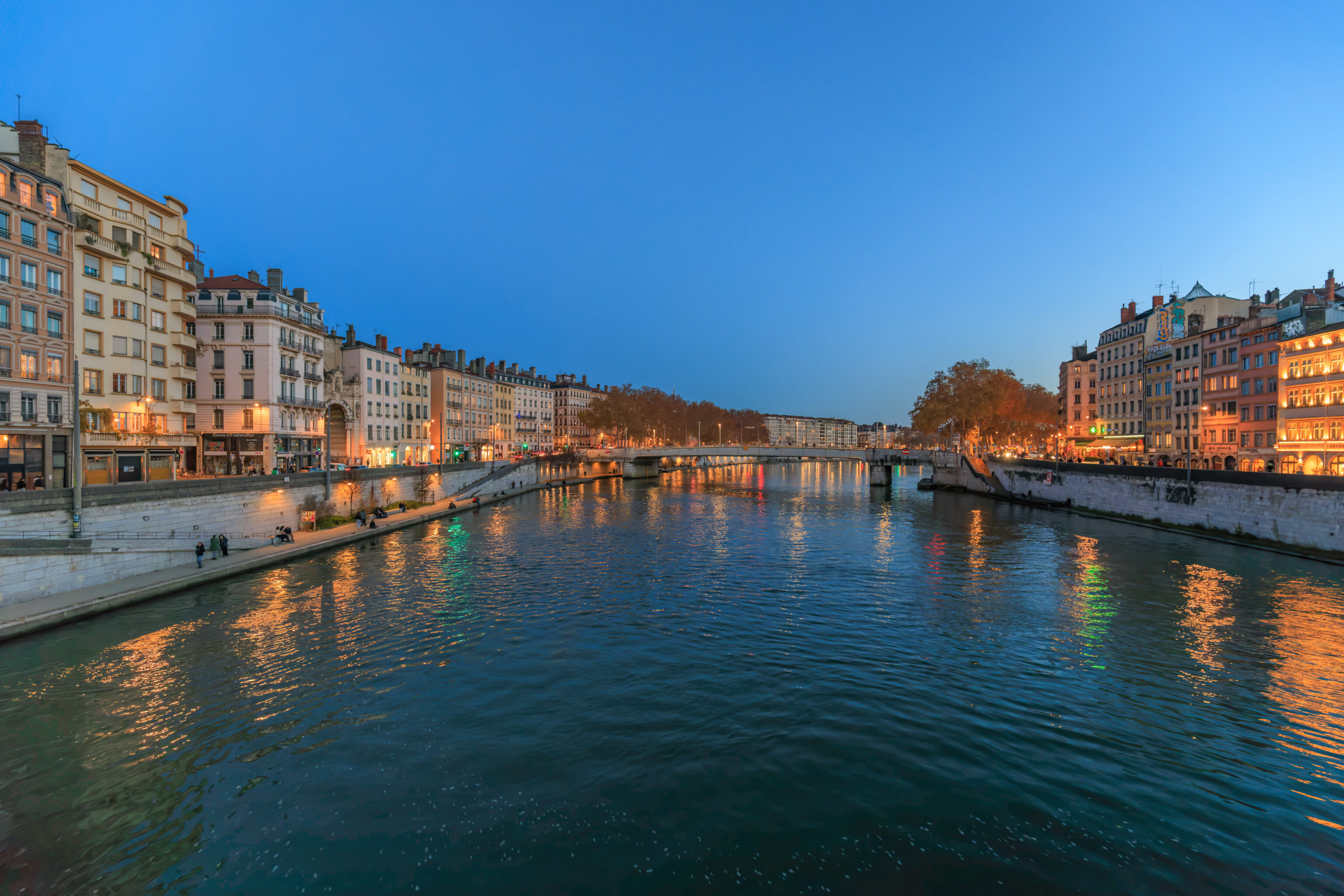
We took a look at the river from the Passerelle Saint Vincent. This pedestrian bridge crosses the Saone by the Fresque des Lyonnais.
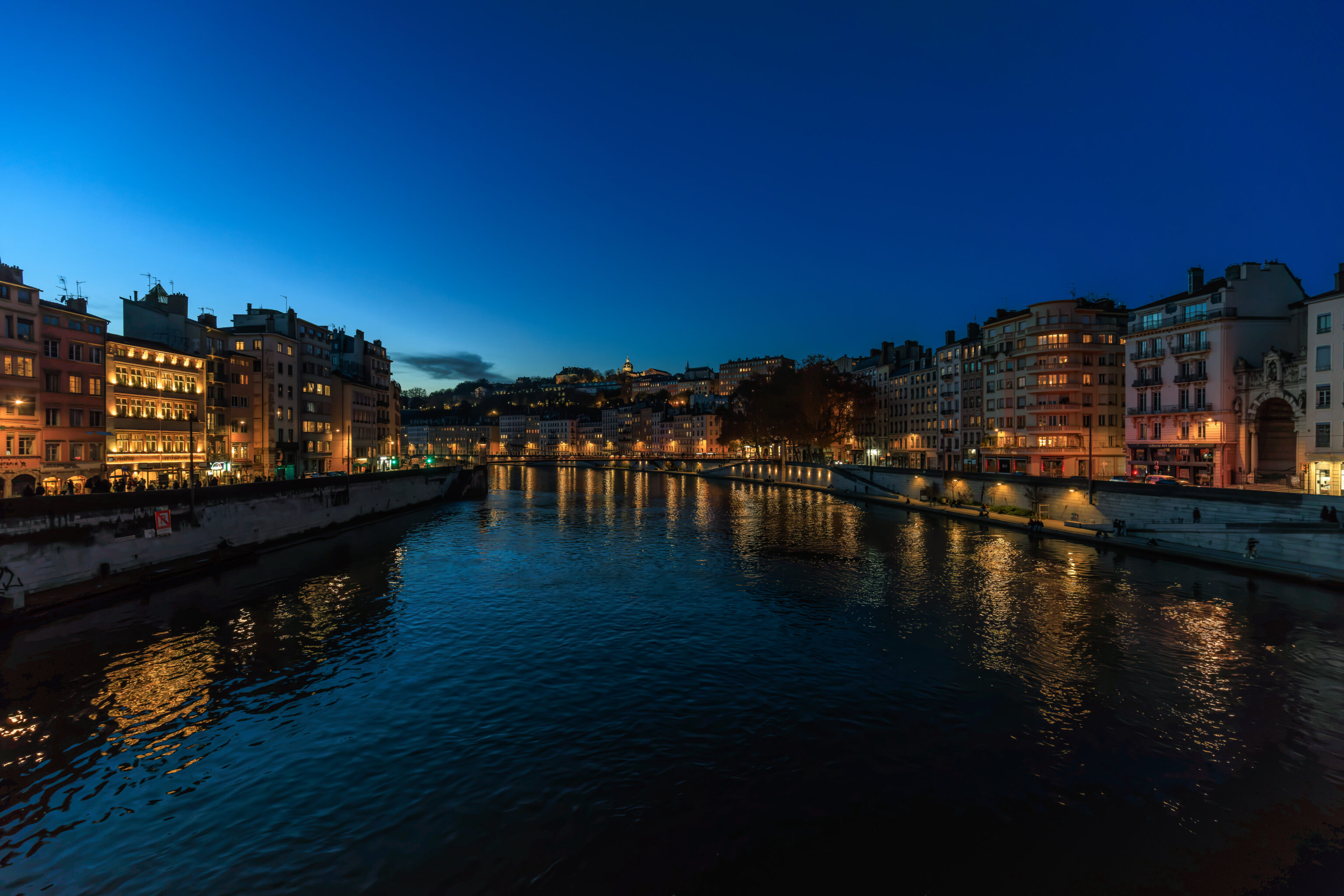
We continued on to the next bridge, the Pont de la Feuillée.
Evening
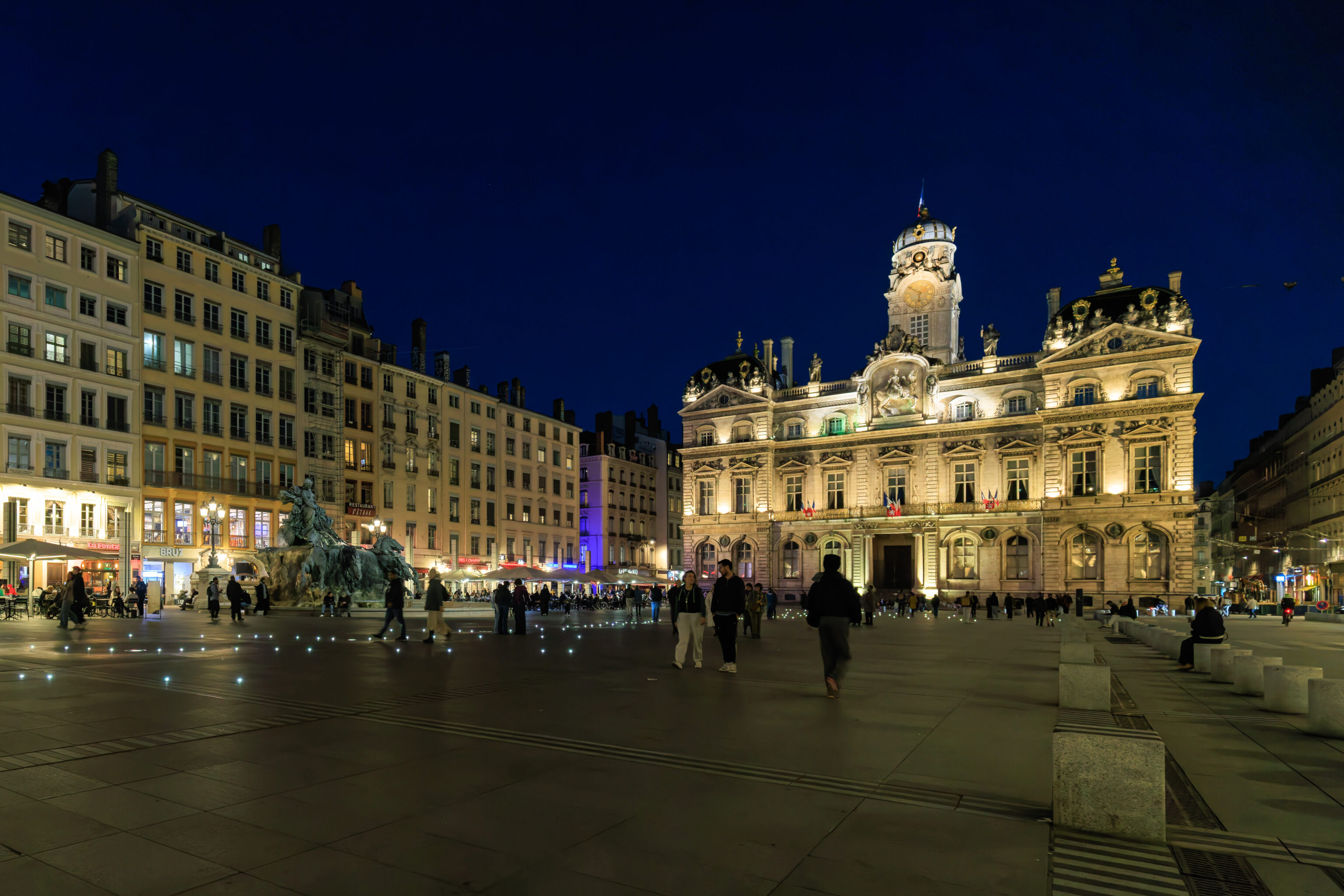
We then walked to the east to return to the Place des Terreaux. We spent some time trying to decide where to eat. Unfortunately, most restaurants in Lyon don’t open until around 7pm, with many opening later than that.
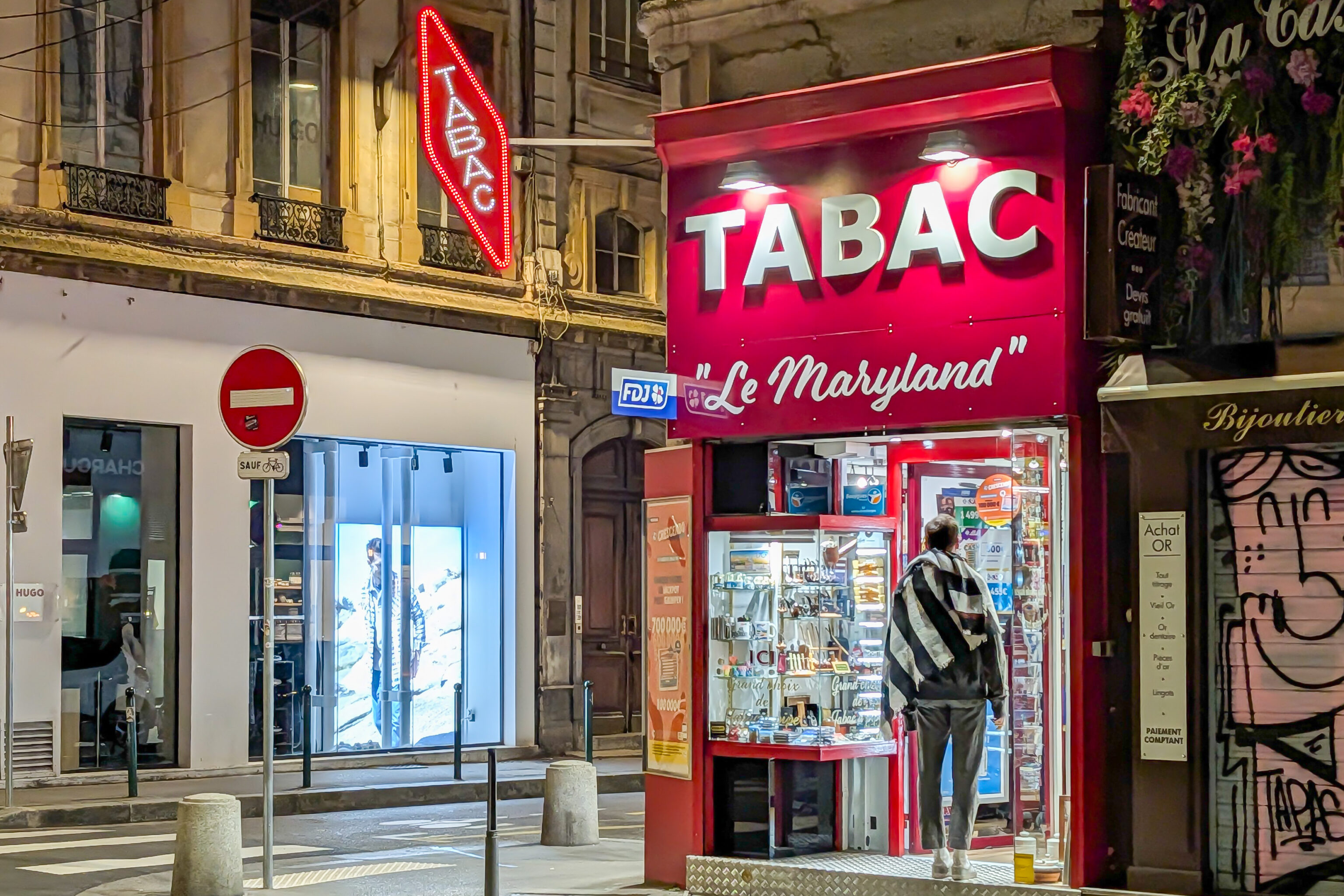
We decided to have dinner at a restaurant to the south, about half way back to the InterContinental. We passed by this tabac named Le Maryland. We just came from Maryland. Well, that was more than 24 hours ago!
We ended up having dinner at Bouchon Palais Grillet. It is a Lyonnaise restaurant, more specifically, a bouchon. There is a certification for bouchons, the Bouchons Lyonnais. Bouchon Palais Grillet has this certification. Bouchons were originally establishments which served meals for silk workers. We picked this place because they had good ratings and open earlier than other bouchons, most of which open at 7 or 7:30pm.
The menu had many dishes that we’ve never had before. We asked for recommendations for the most Lyonnaise of the dishes.
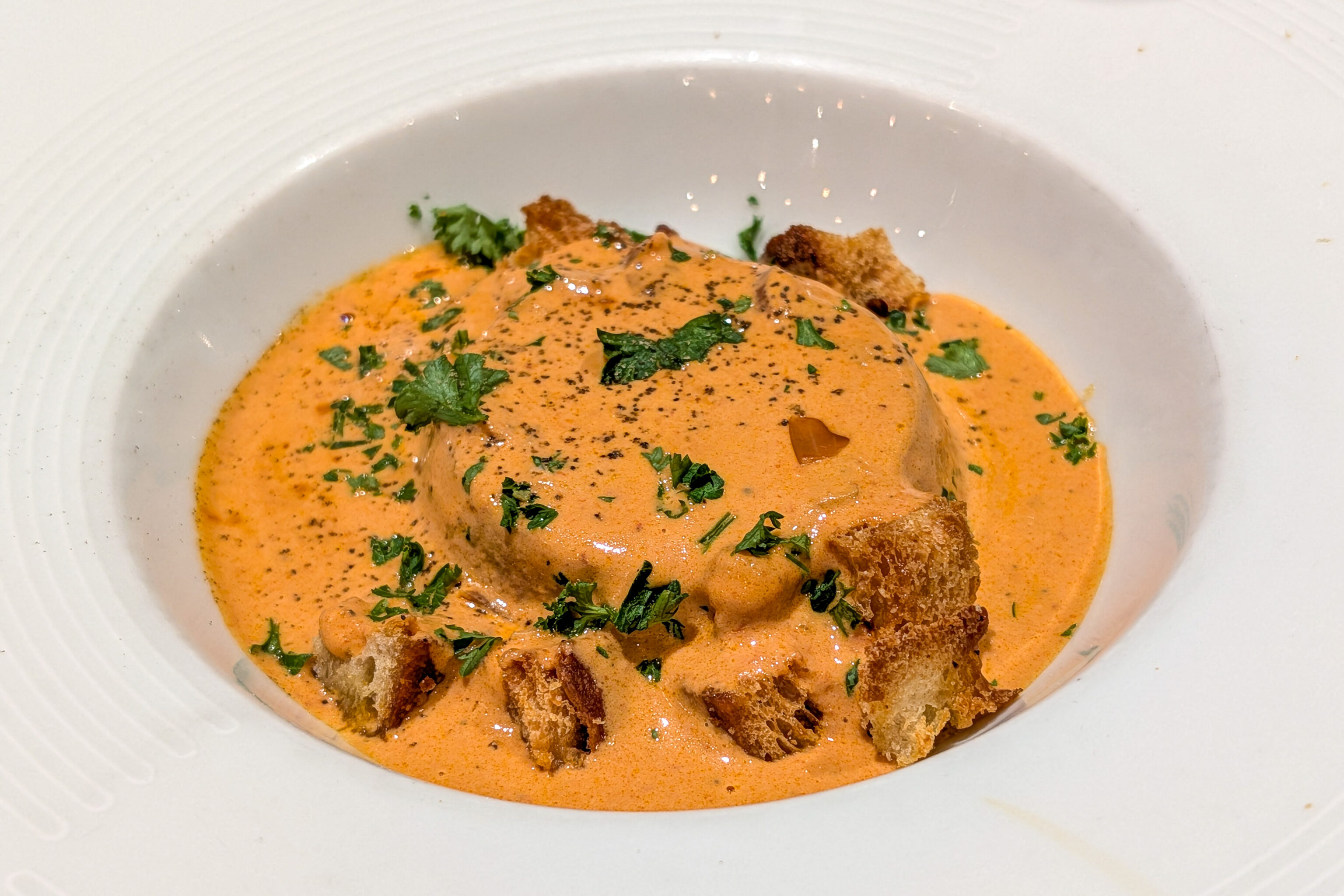
Chicken liver cake with Porto sauce
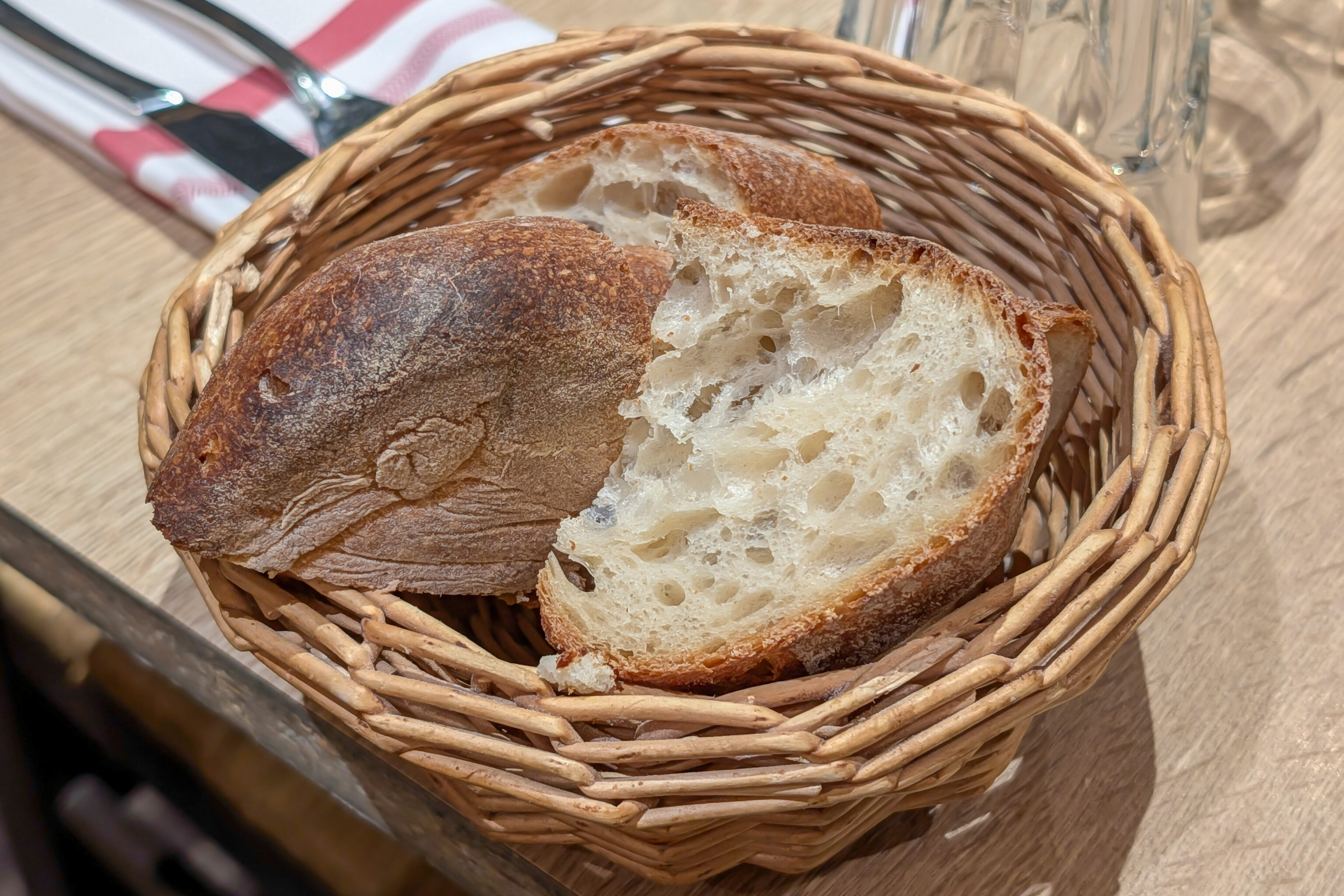
It’s a bit hard to describe this in a way that makes it sound as good as it was. A terrible description would be that it is like some really excellent canned cat food with lots of sauce. It doesn’t really seem like liver at all. The texture was almost a bit like finely ground beef. It came with bread to eat both the liver cake and sauce with.
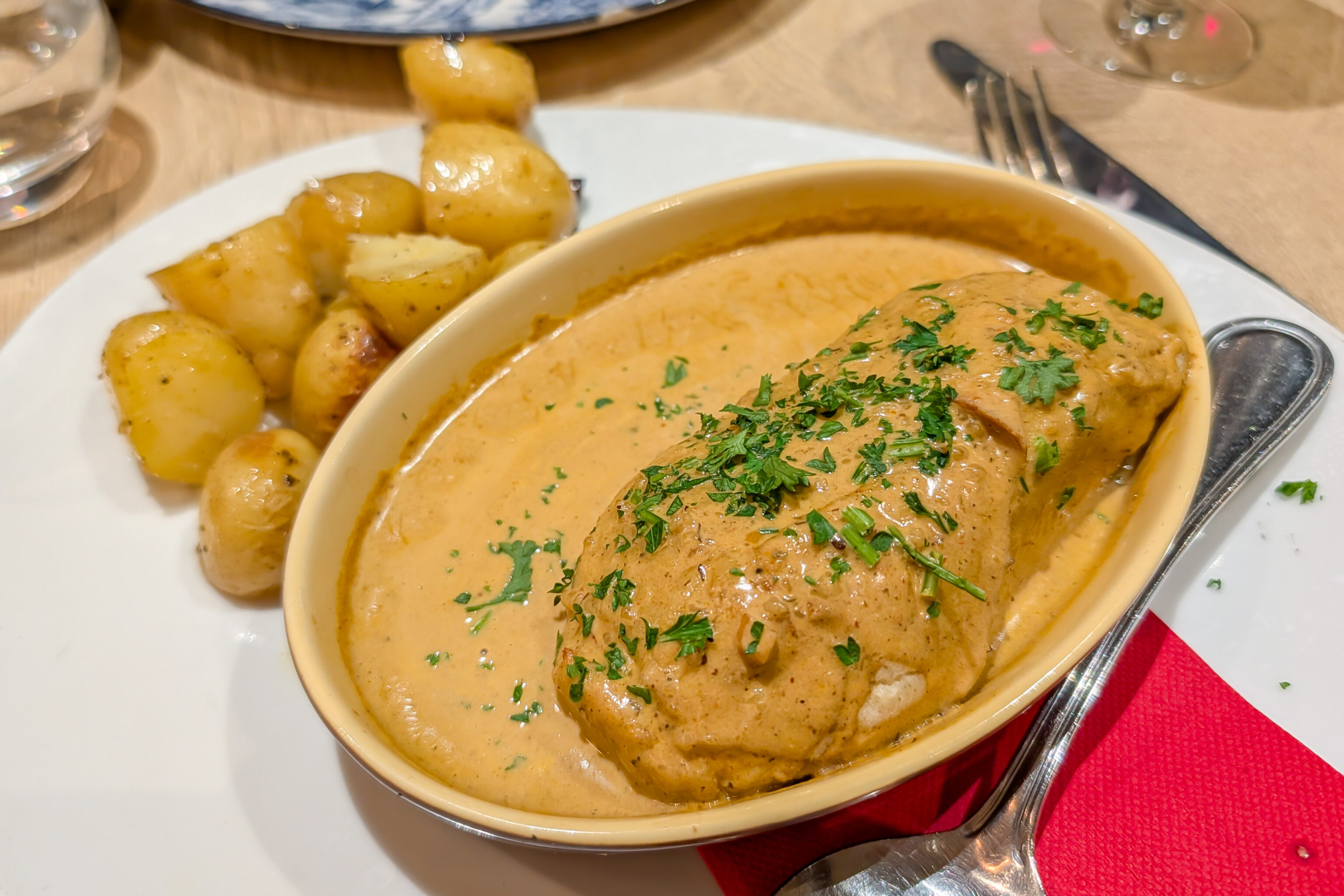
Pike soufflé, velvet crab sauce
Our next dish was another item that isn’t really like what it sounds like, particularly if you’ve had souffle. The texture is really like fine Chinese fish balls, and the taste is something like that too. Not really like souffle at all, which is really just a poor English description for the dish which seems to be properly referred to with it’s French name, quenelle.
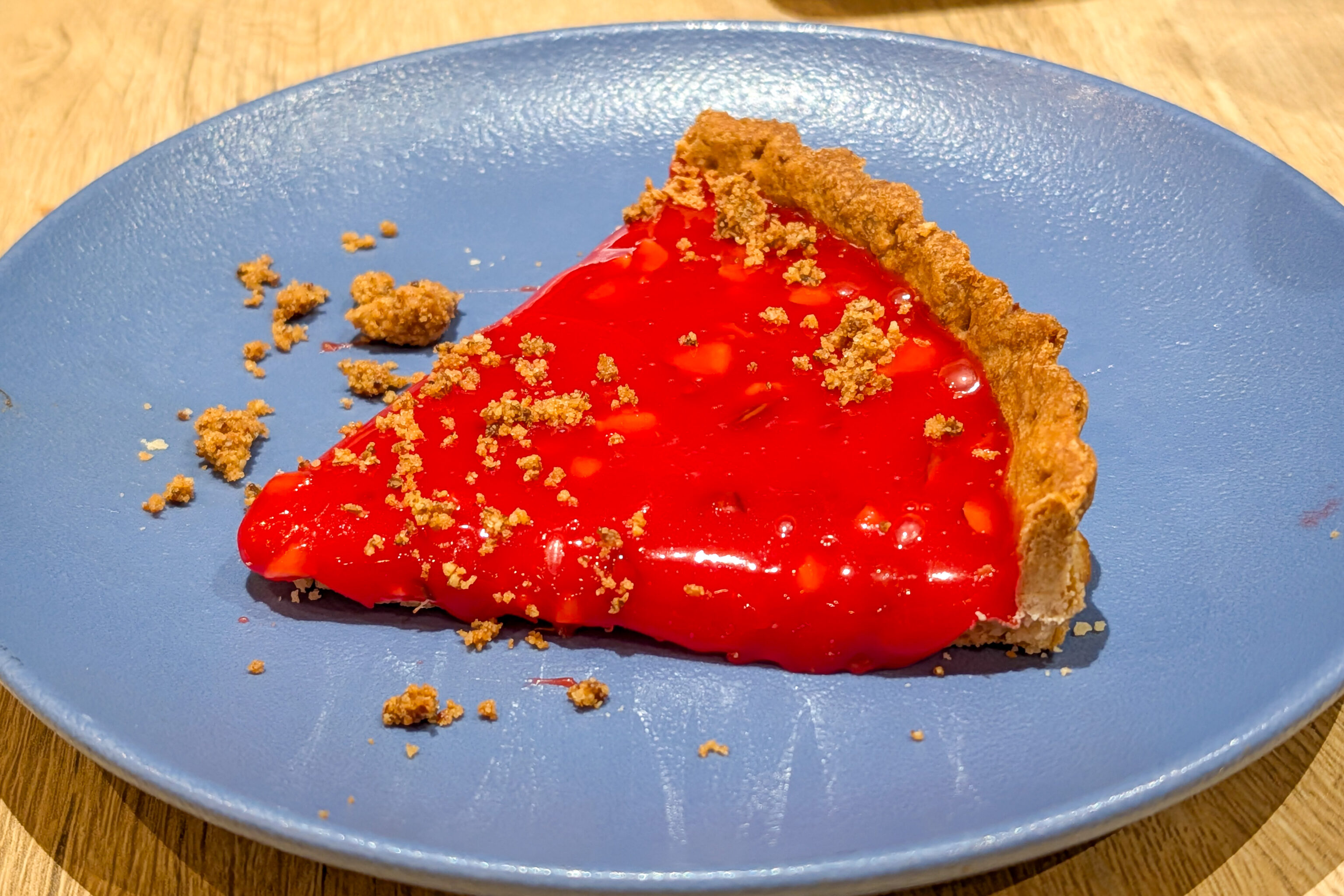
We had a slice of tart for dessert. The description seemed to be praline tart, although we’re not completely sure about that. The color is added as part of Lyonnaise cuisine, apparently to give it a prettier appearance.
We also had some local red wine with the meal, though it didn’t photograph well due to all reflections on the glass. It looked like wine.
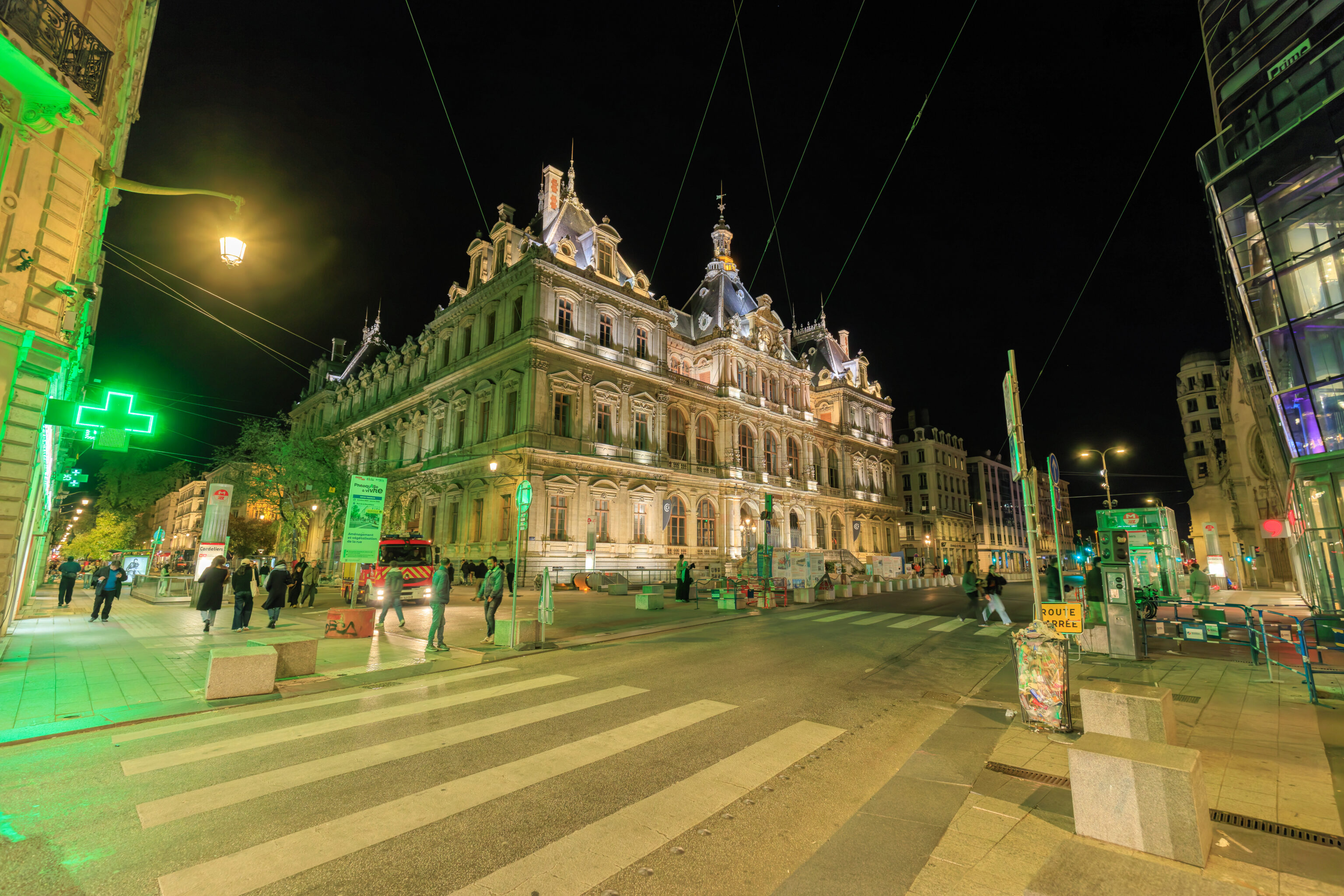
This large building near the bouchon is the Palais de la Bourse Lyon. This building from the mid-19th century currently houses the Chamber of Commerce and Industry of Lyon. It seems it formerly held a silk brokerage, which is perhaps how it got its name?
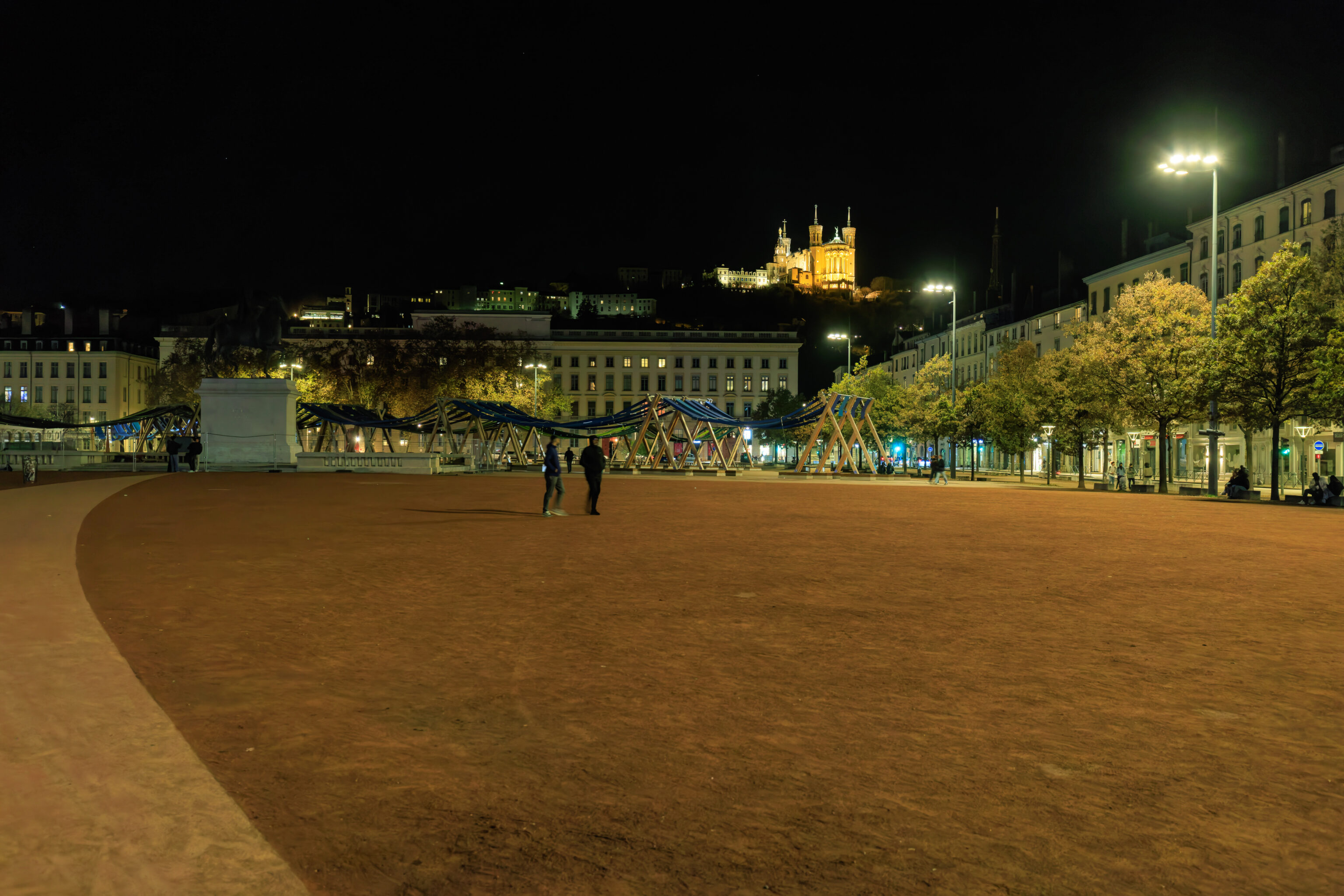
After dinner, we continued past the InterContinental to the Place Bellecour. This large square has a good view of the illuminated Basilica of Notre Dame of Fourvière to the west.
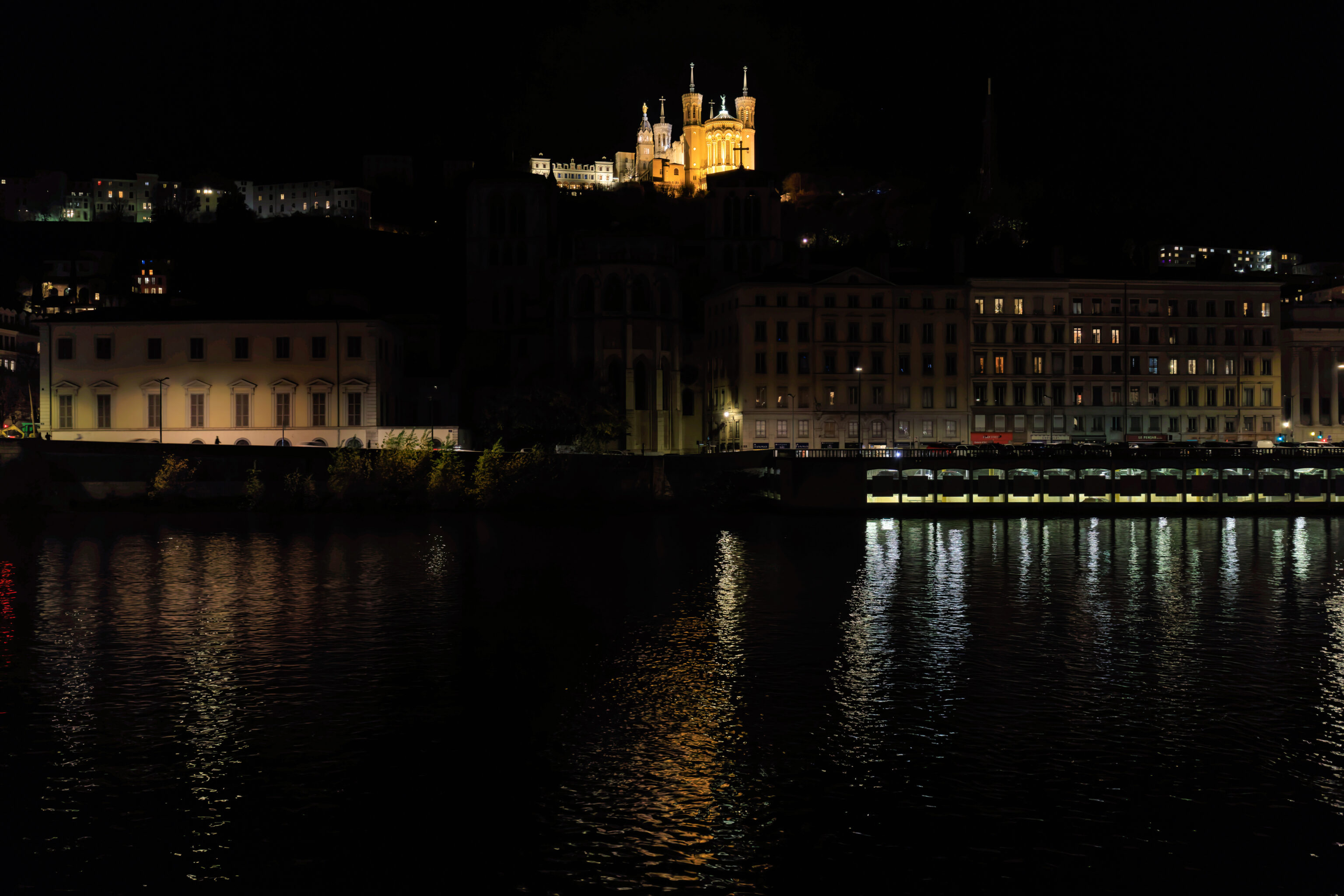
We walked to the west back to the Saone to get a closer view.
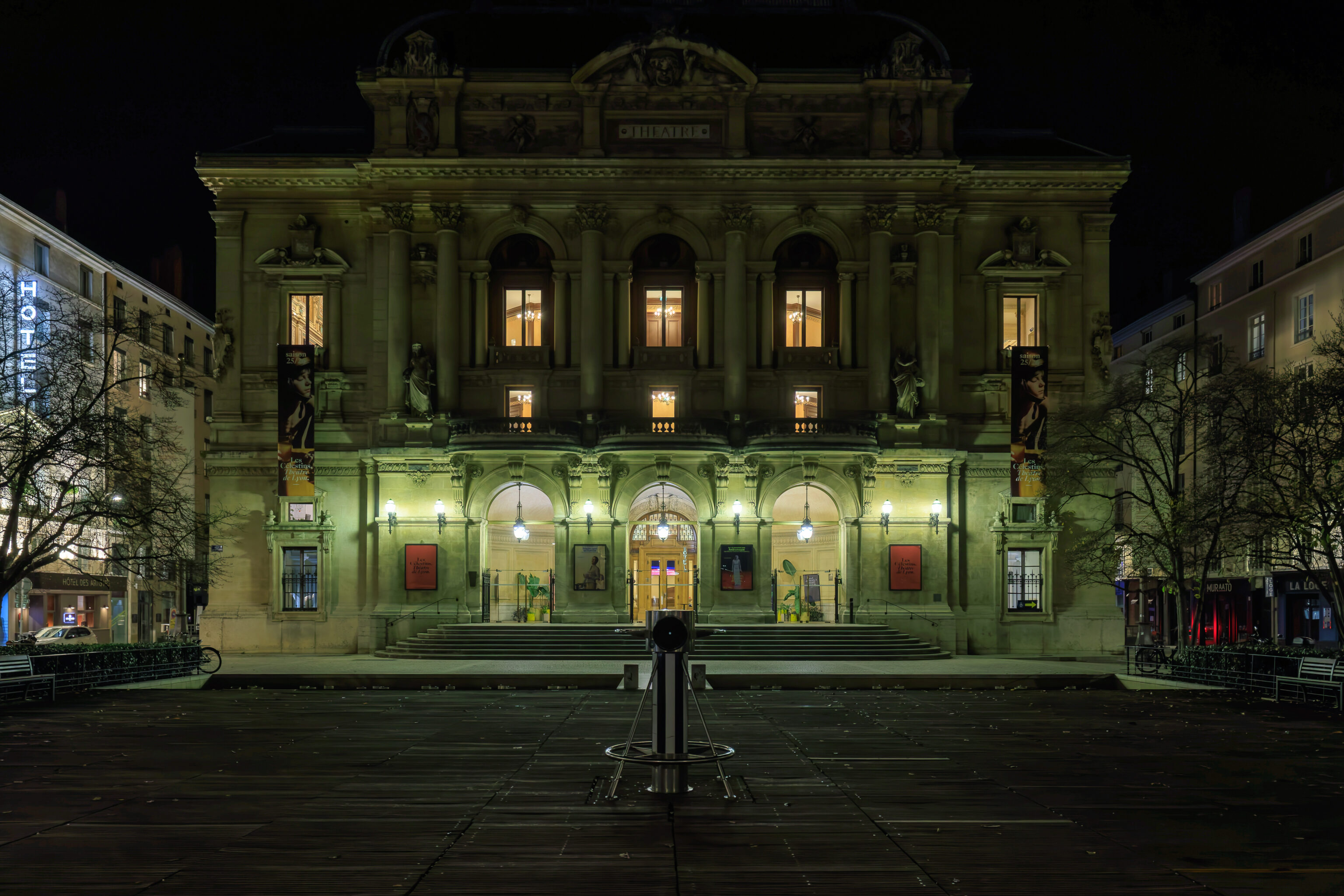
On the way back to the InterContinental, we took a quick look at the front of Les Célestins, a performing arts theatre, from the Place des Célestins. The theatre building was built in the 18th century. The square formerly held a command post for the Knights Templar and then a Celestine monastery.
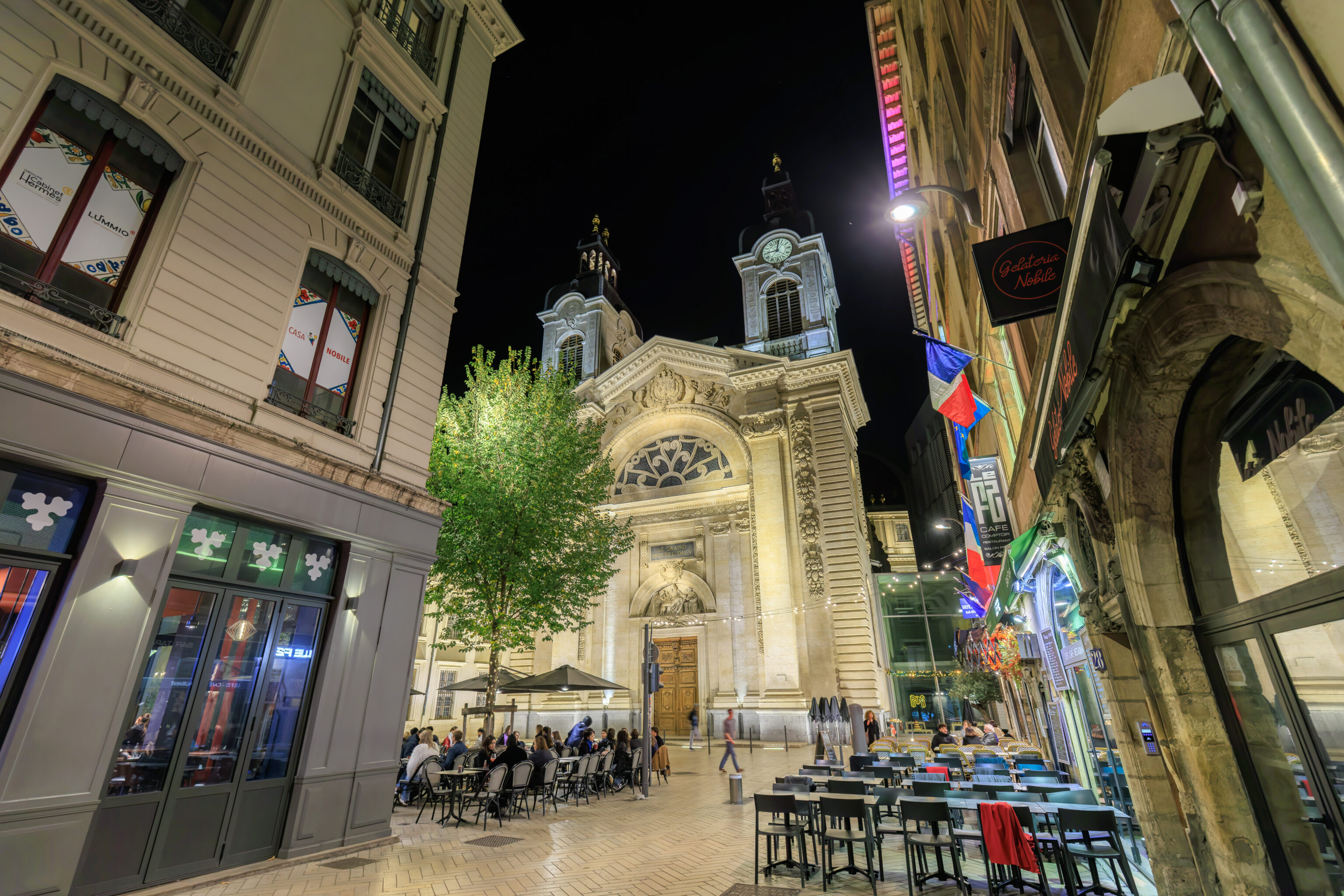
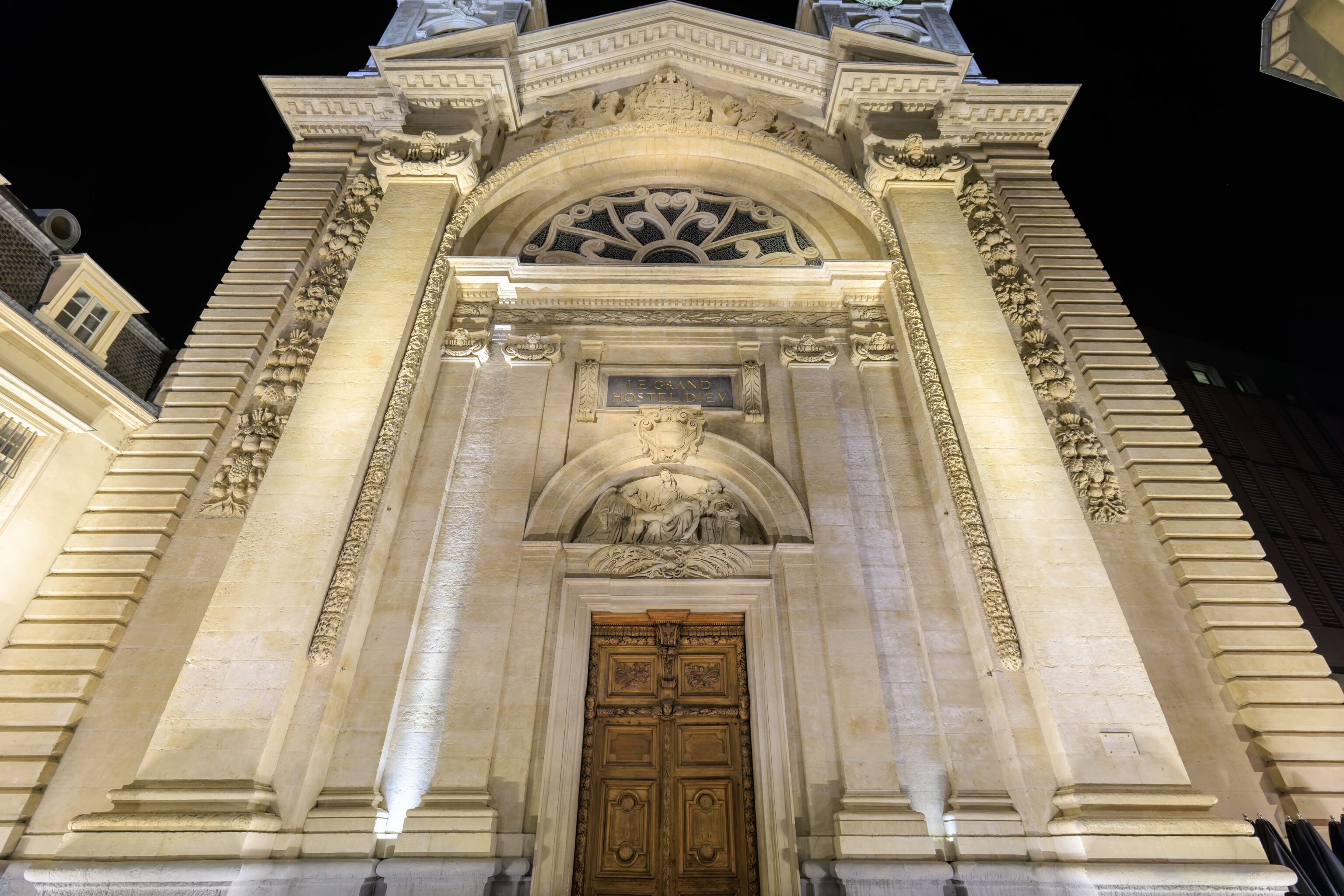
We ended up back at the Hotel-Dieu’s chapel. We entered the building thorough a door to the left of the chapel.
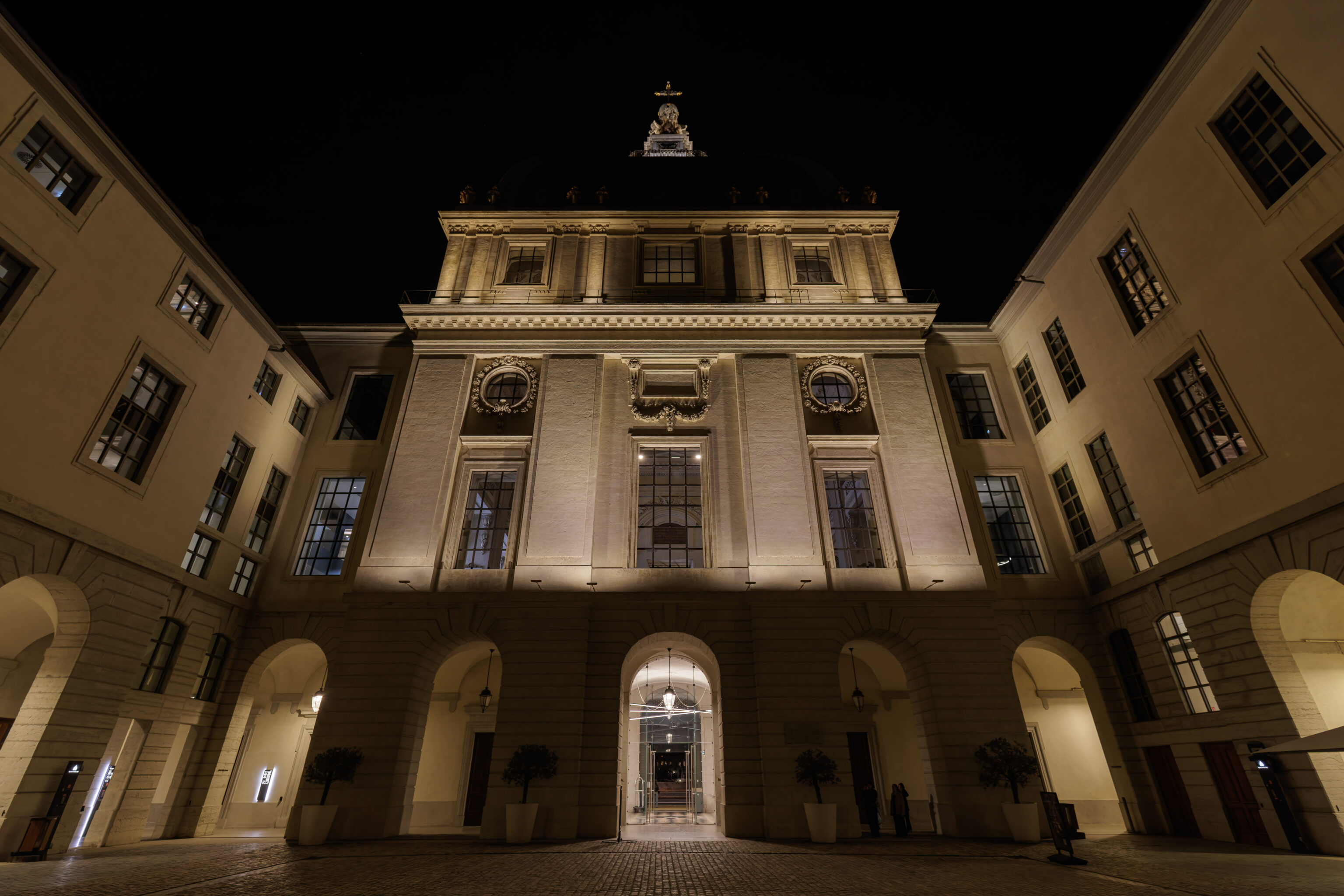
We made our way back to the courtyard at the rear of the InterContinental. Our room is above this courtyard.
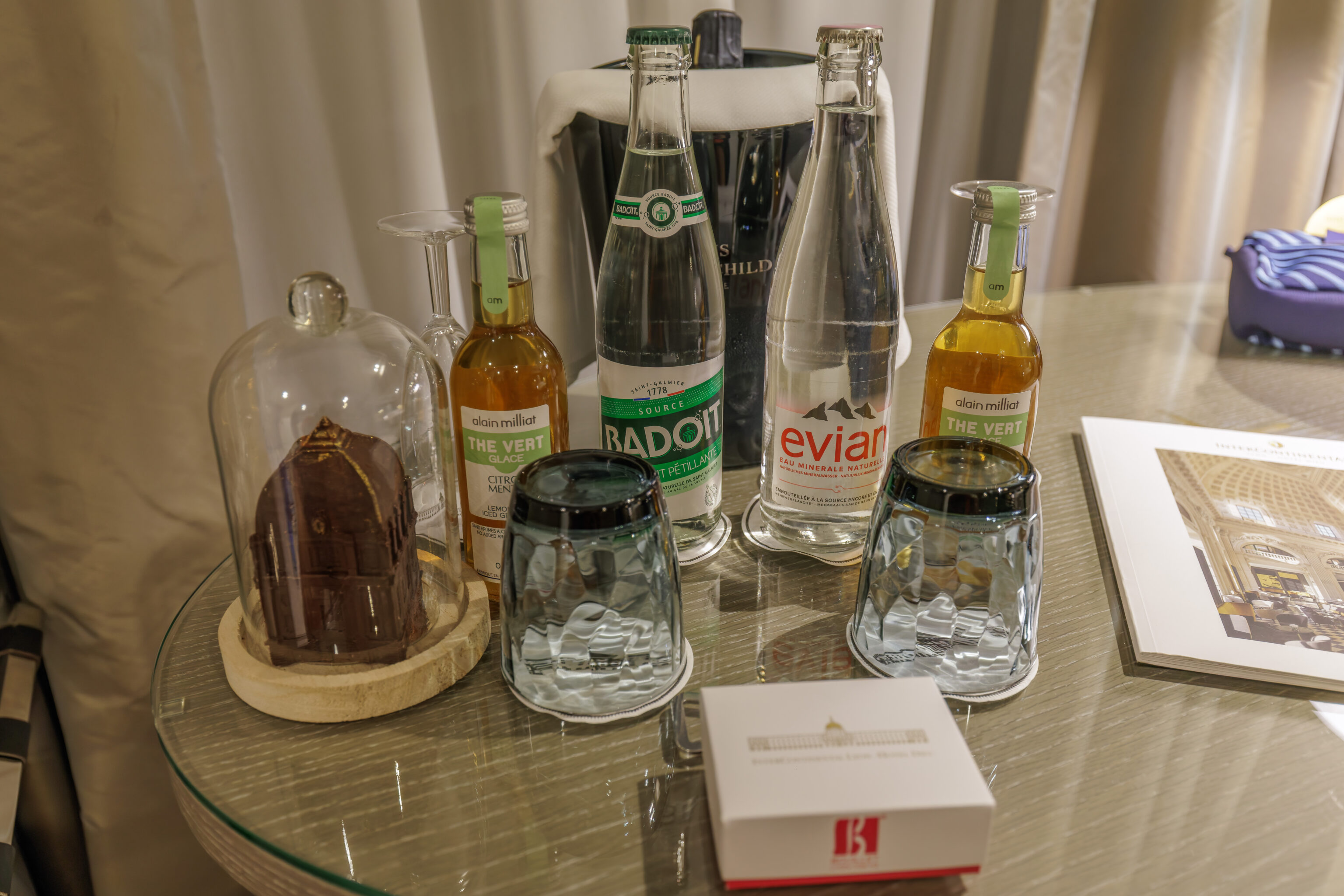
There were some drinks and snacks waiting for us in our room.
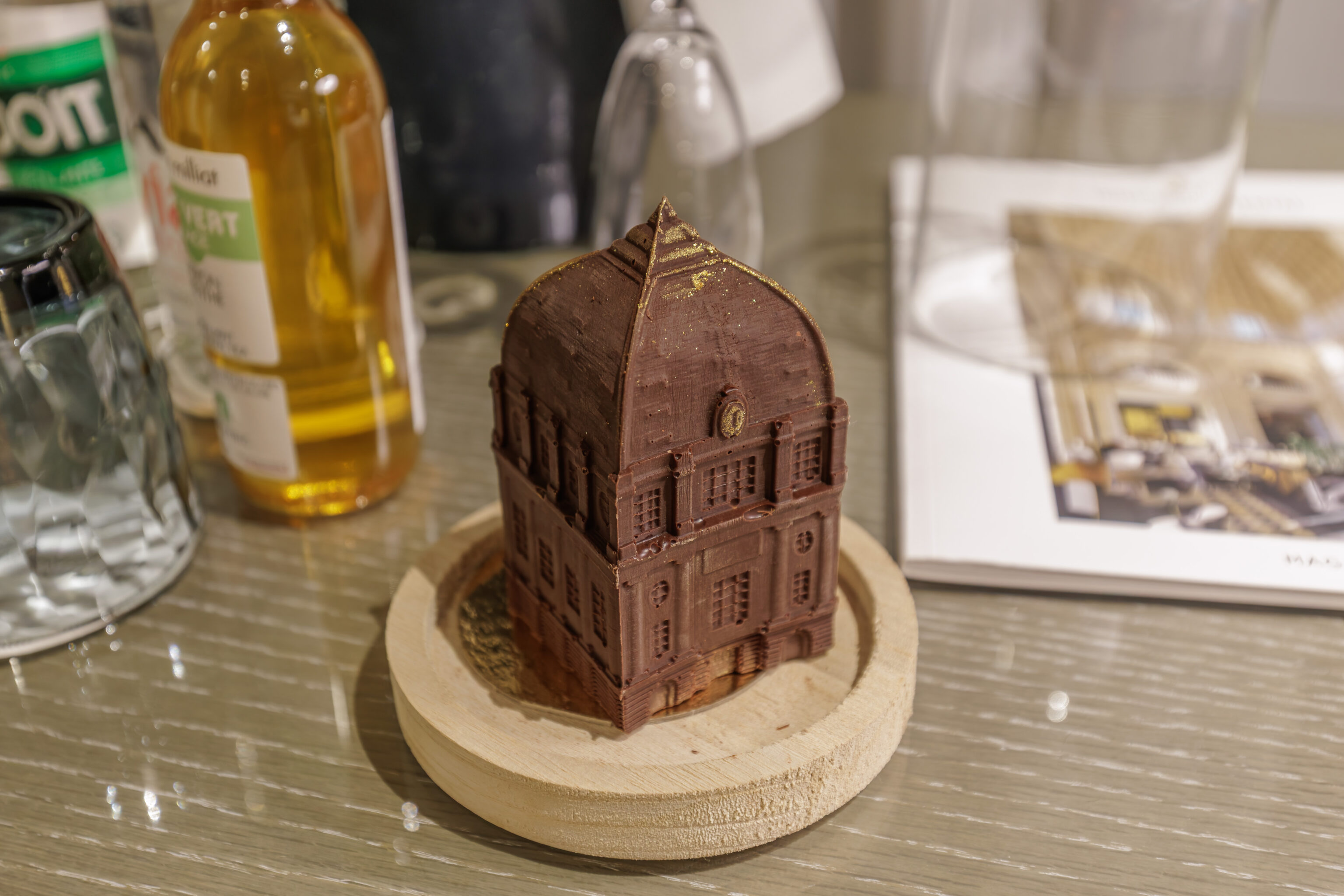
The most interesting of everything that was provided was this chocolate model of the Hotel-Dieu’s central dome. We did eat the whole thing. It was hollow.
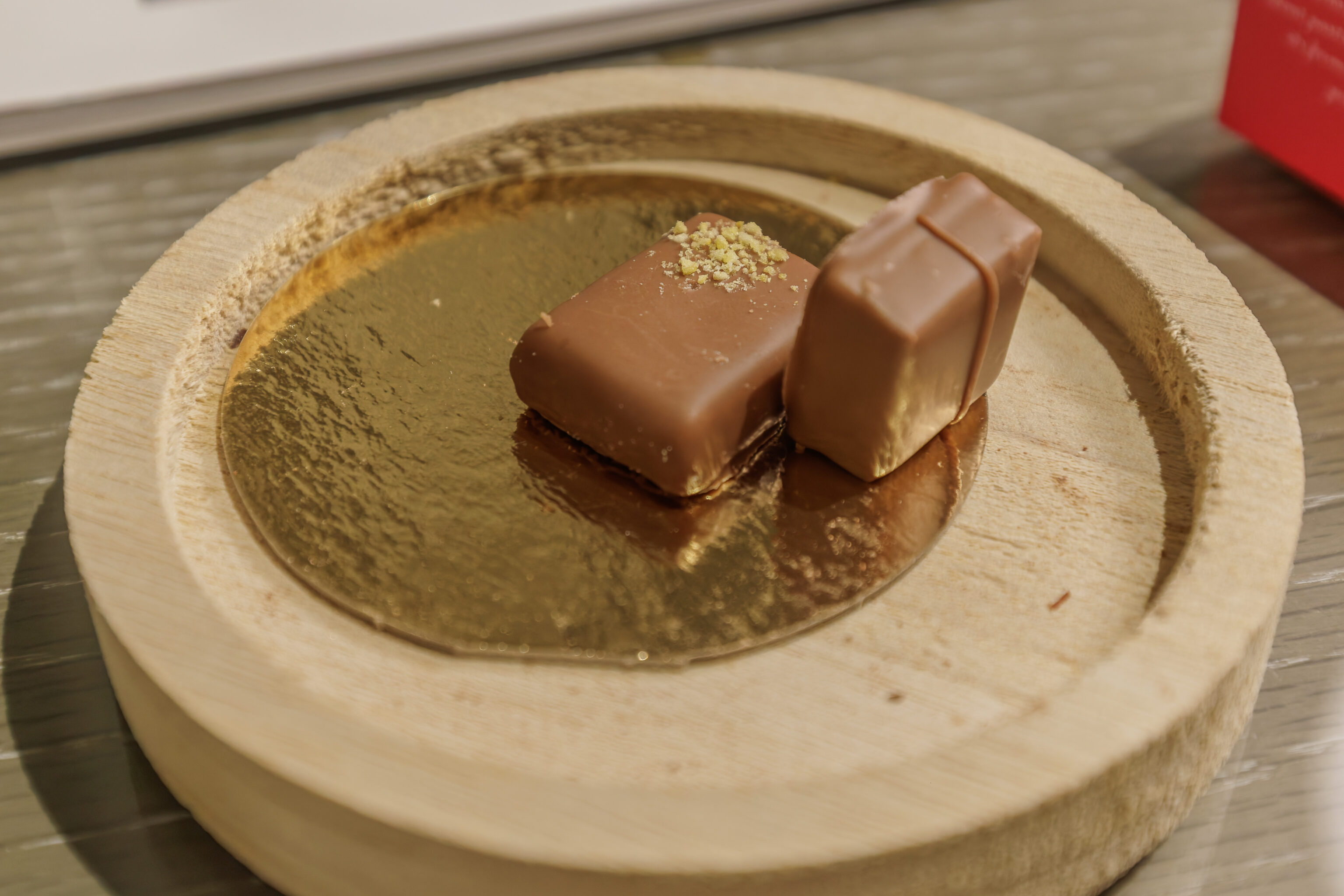
The dome covered two chocolates.
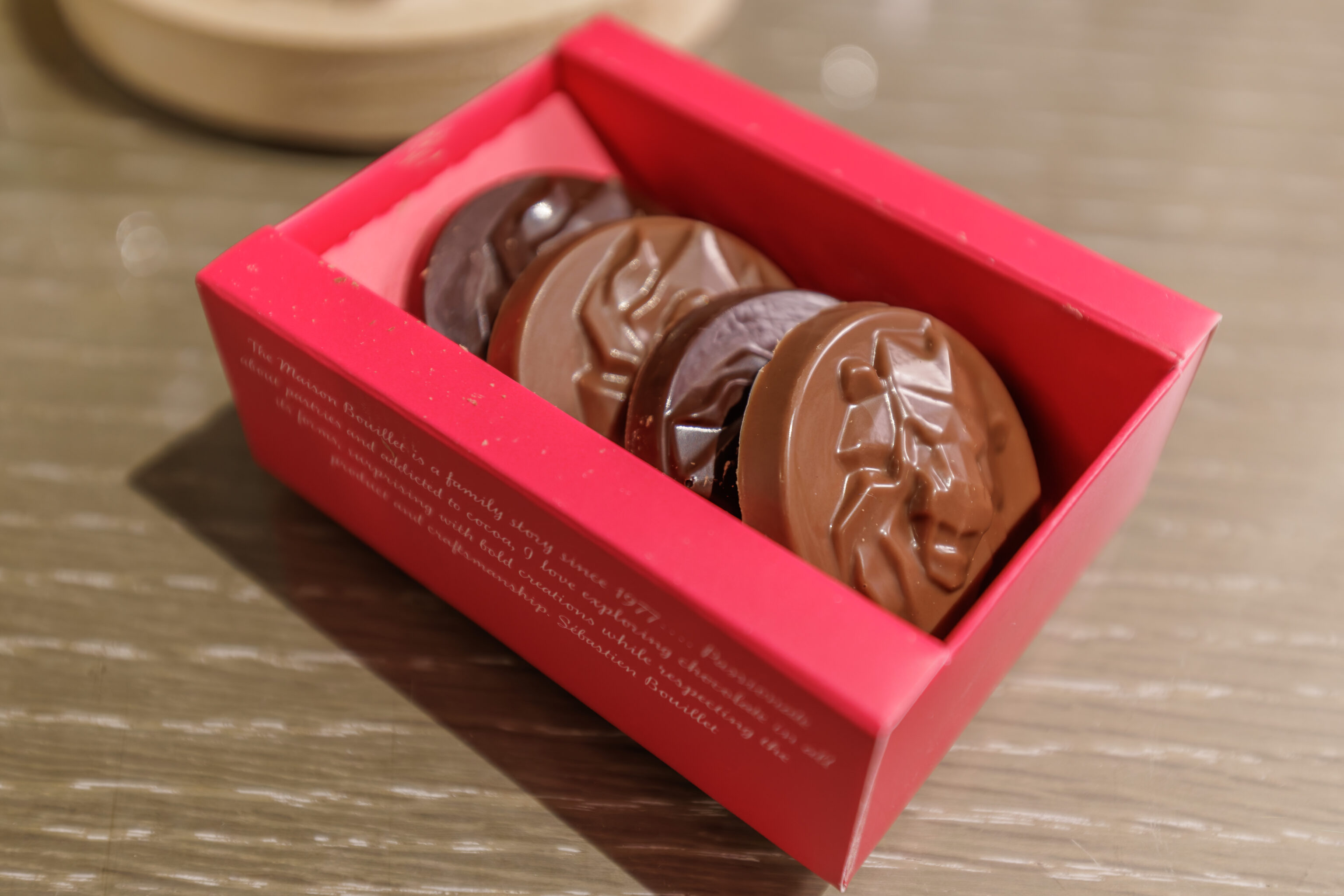
There were also chocolates from Maison Bouillet.
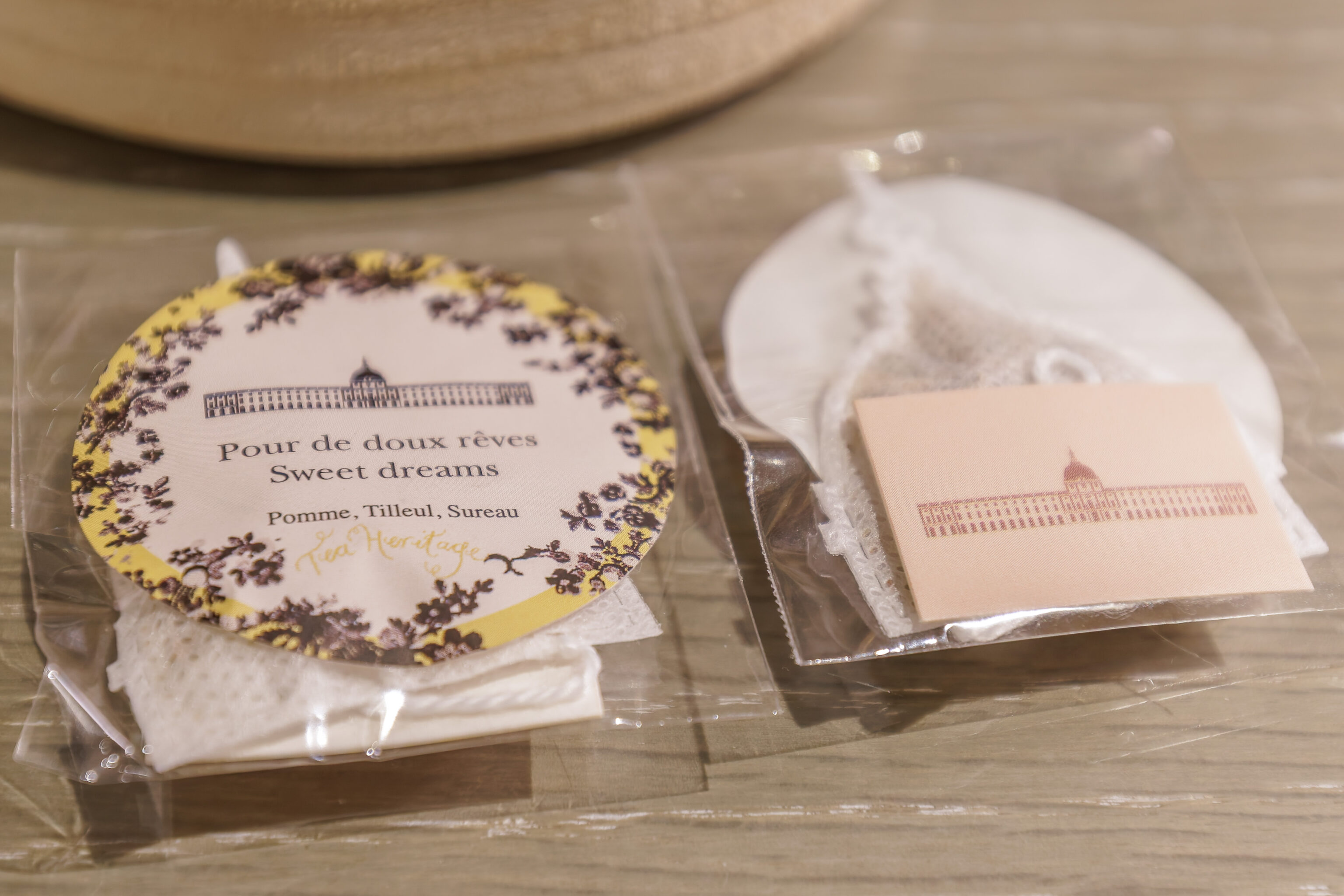
There was also some tea.
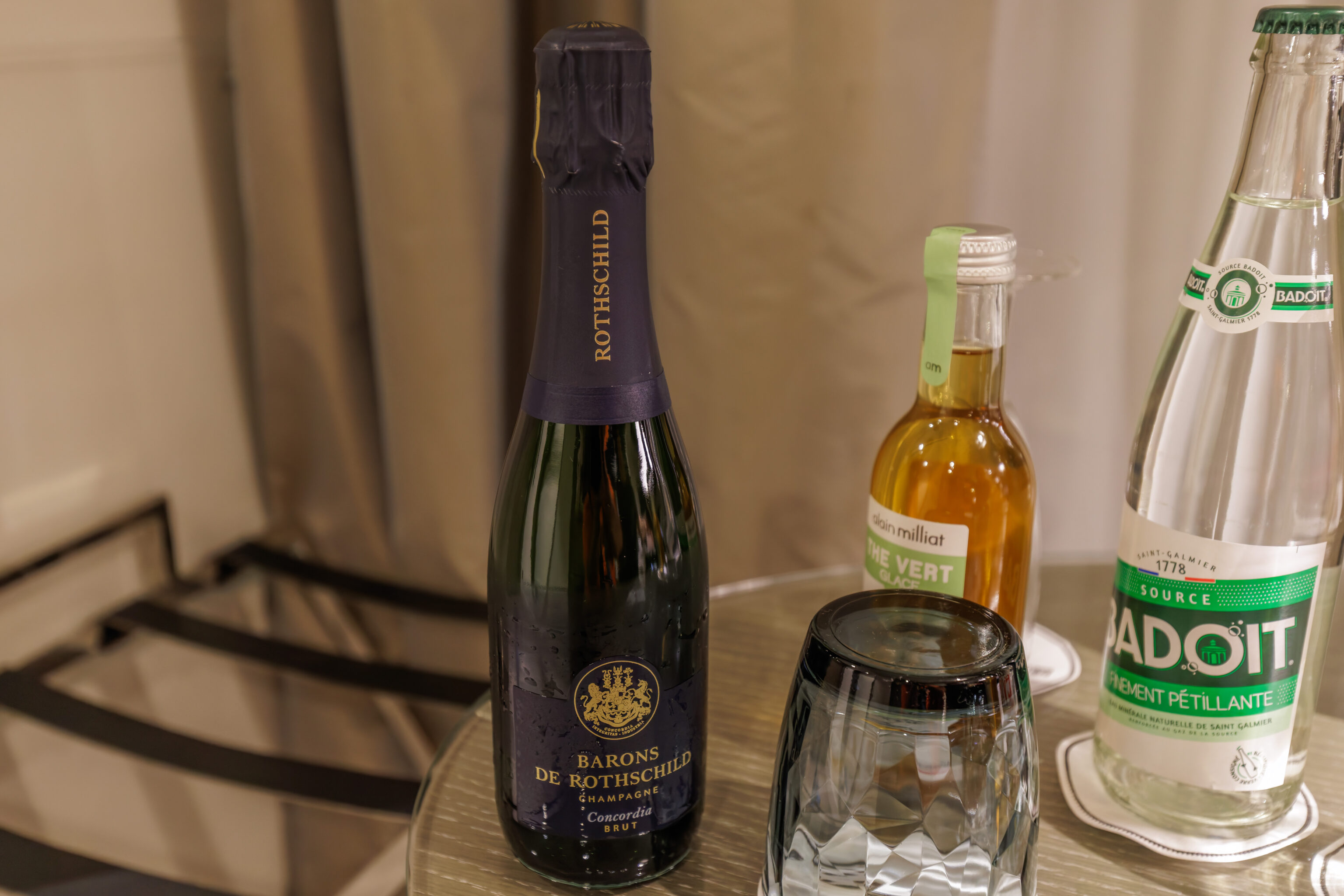
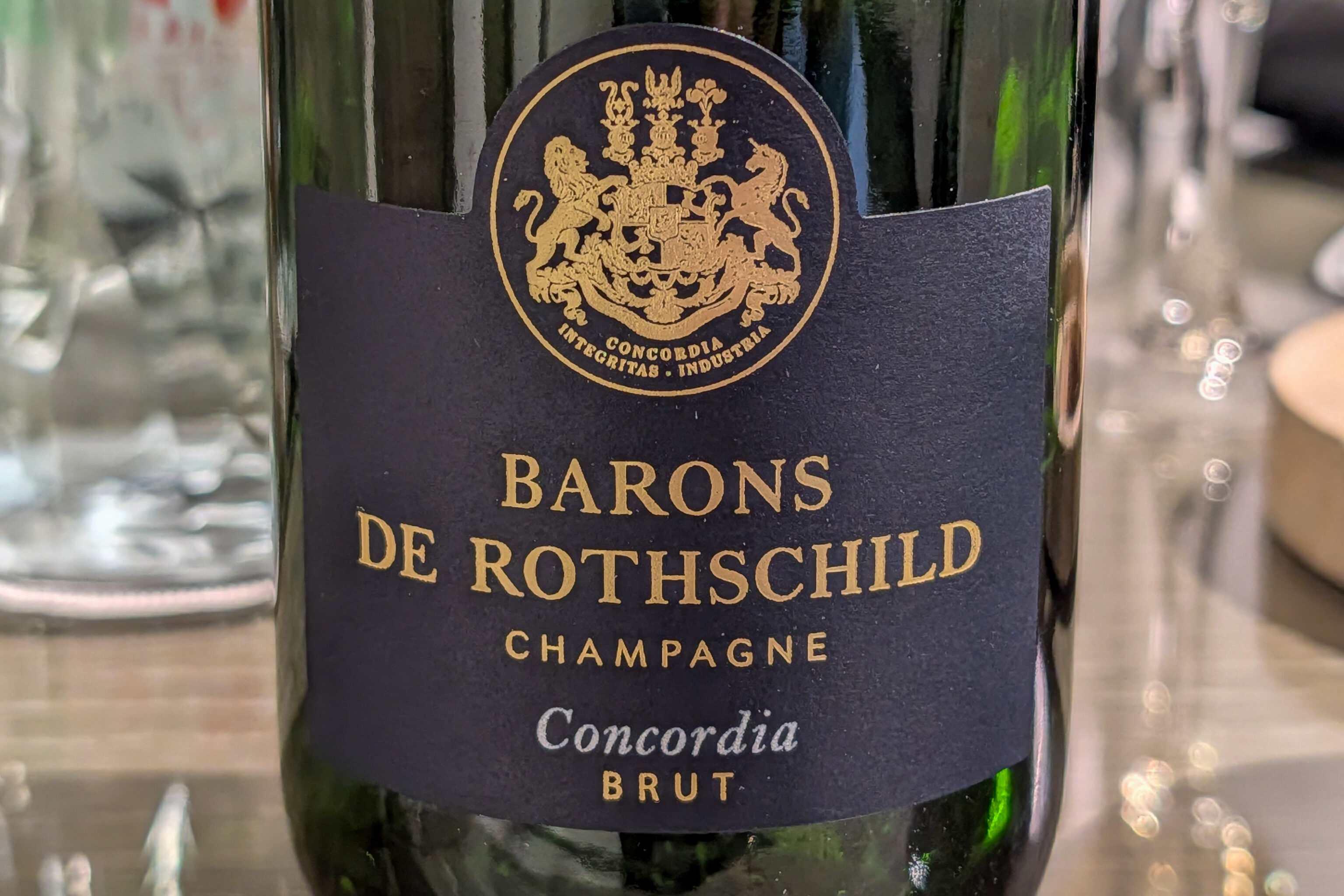
As for beverages, there was a bottle of Champagne.


There was also a bottle of tea along with Evian water and some Badoit carbonated water.
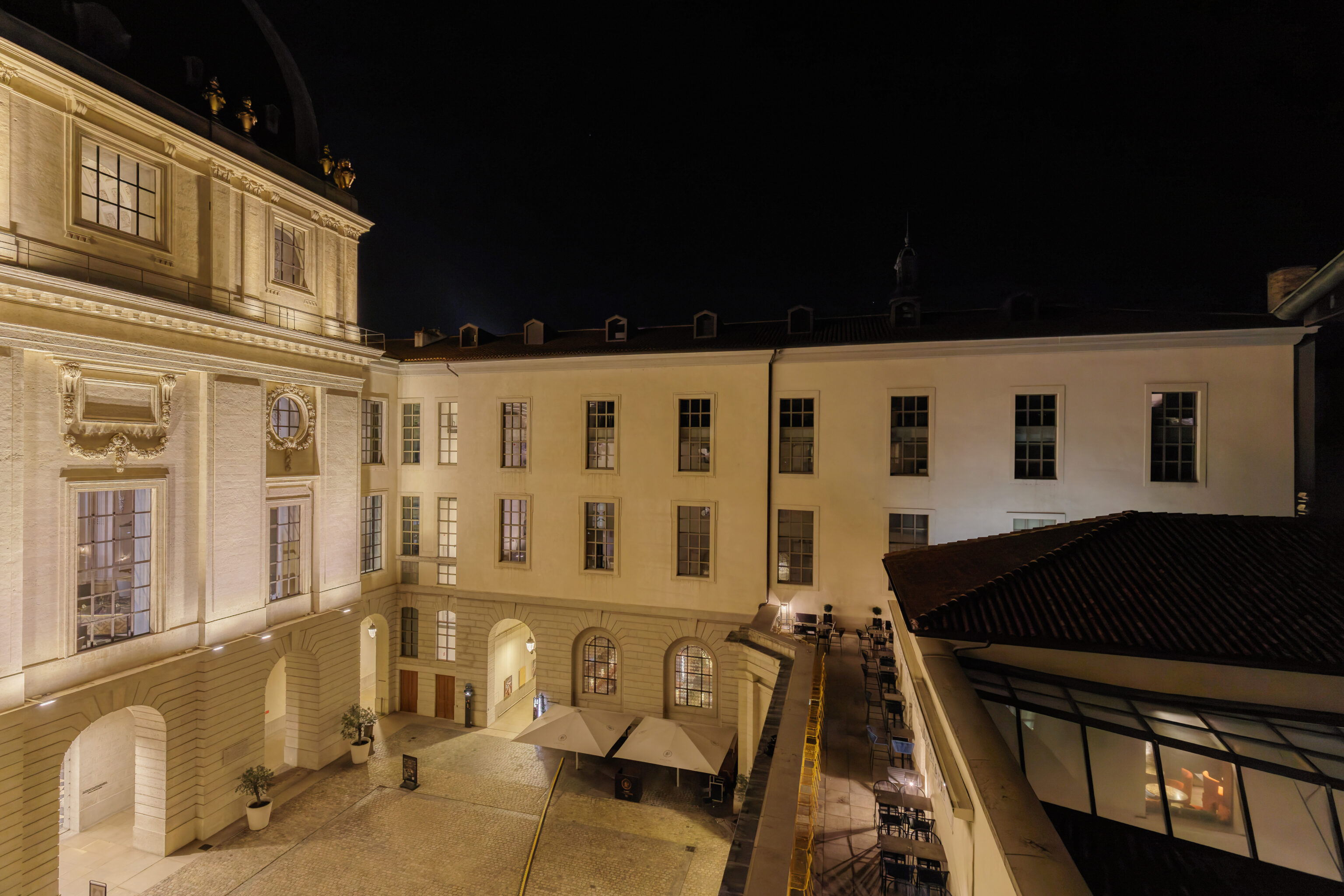
The view from our room’s window showing the courtyard below.