After flying from Dulles to Brussels on United, we took the train down to Namur. We spent most our time there visiting the Citadelle de Namur, accessed via gondola, and even got a private guided tour of its underground tunnels, although it was only private because we were the only people who booked today! We also enjoyed lunch and a short walk through the city before continuing on to Luxembourg where we checked in to the Luxembourg Marriott Hotel Alfa.
From Dulles to Brussels
We started our trip as we often do for international trips, from Dulles International Airport. After arriving at the airport and checking in with United, we passed through security and headed to the Polaris Lounge. And as usual, once there, we headed for the restaurant.
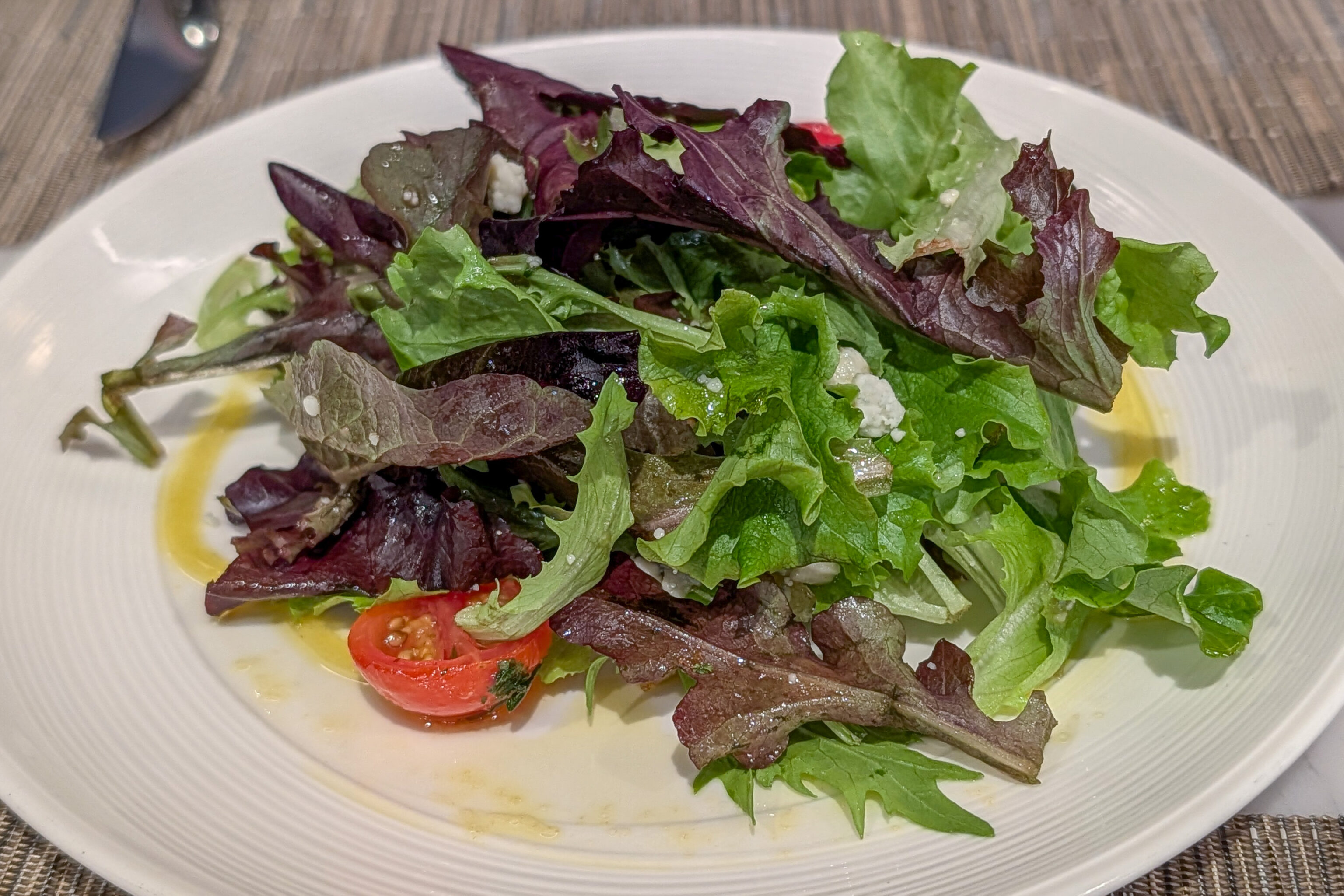
Blue Cheese, Cherry Tomatoes, Spiced Maple
Sunflower Seeds, Persimmon Vinaigrette
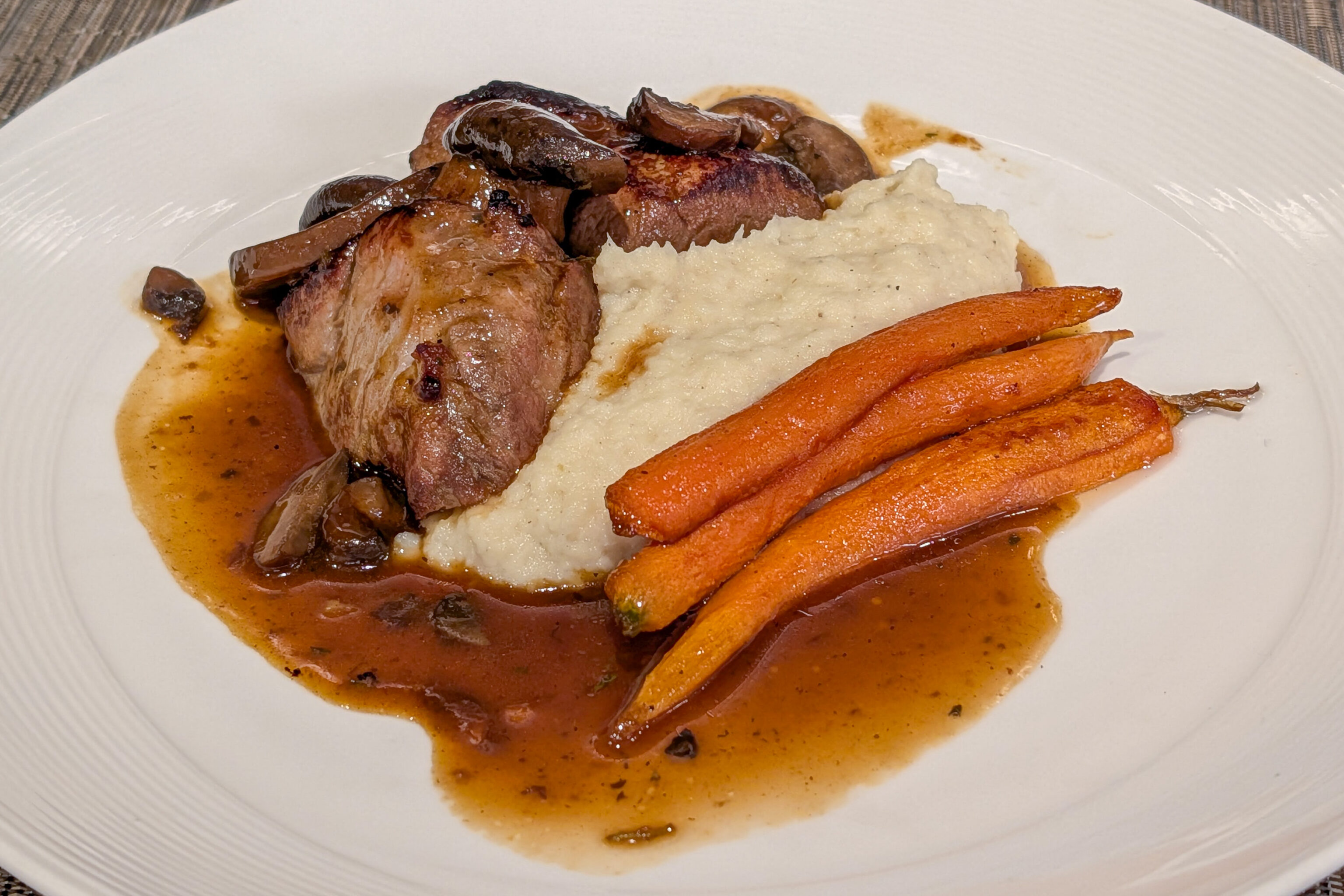
Parsnip Cauliflower Mash, Cinnamon
Honey Glazed Carrots, Crimini Mushroom
Cognac Sauce
ENTREES
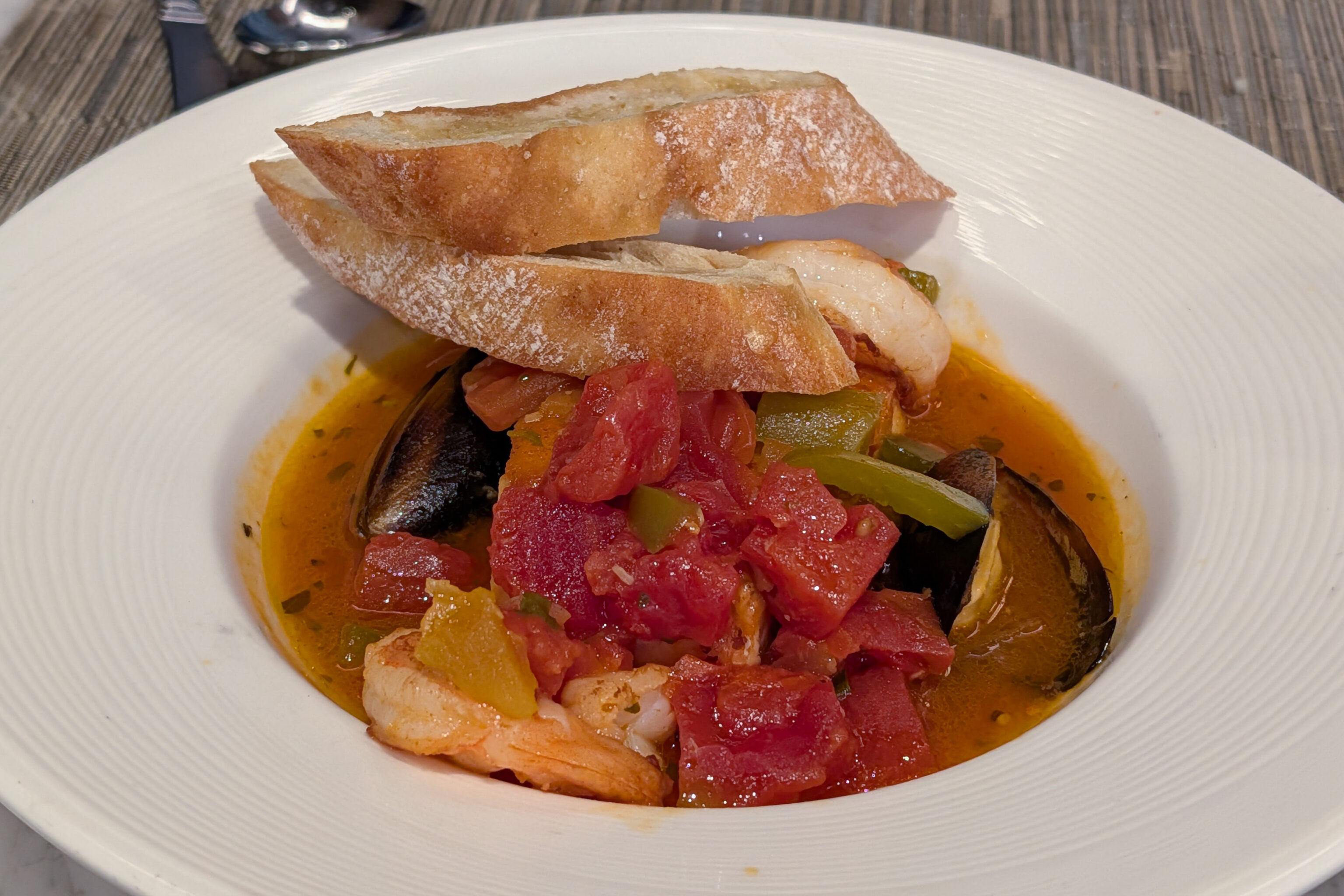
Lemon Basil Oil, Crostini
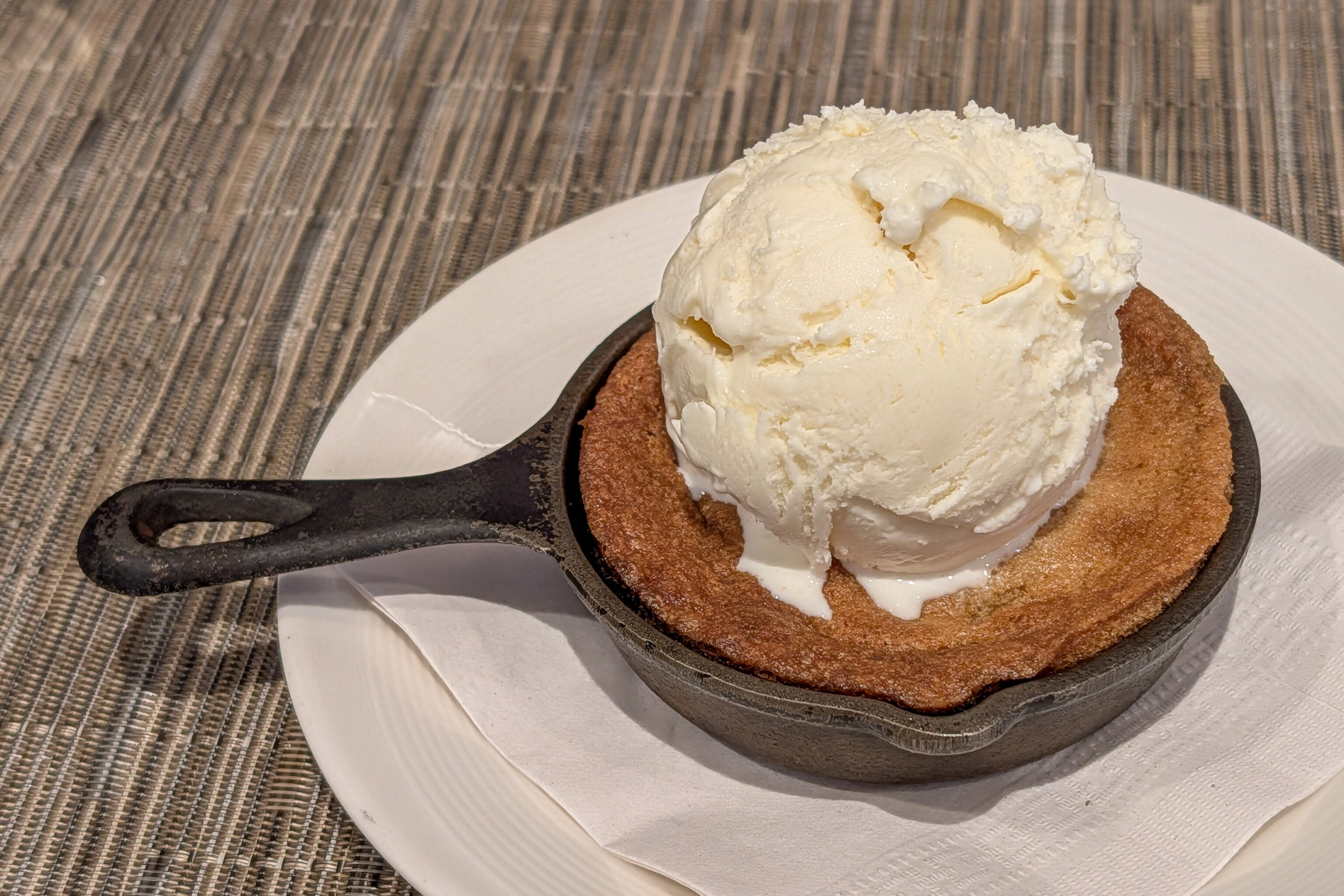
Vanilla Ice Cream
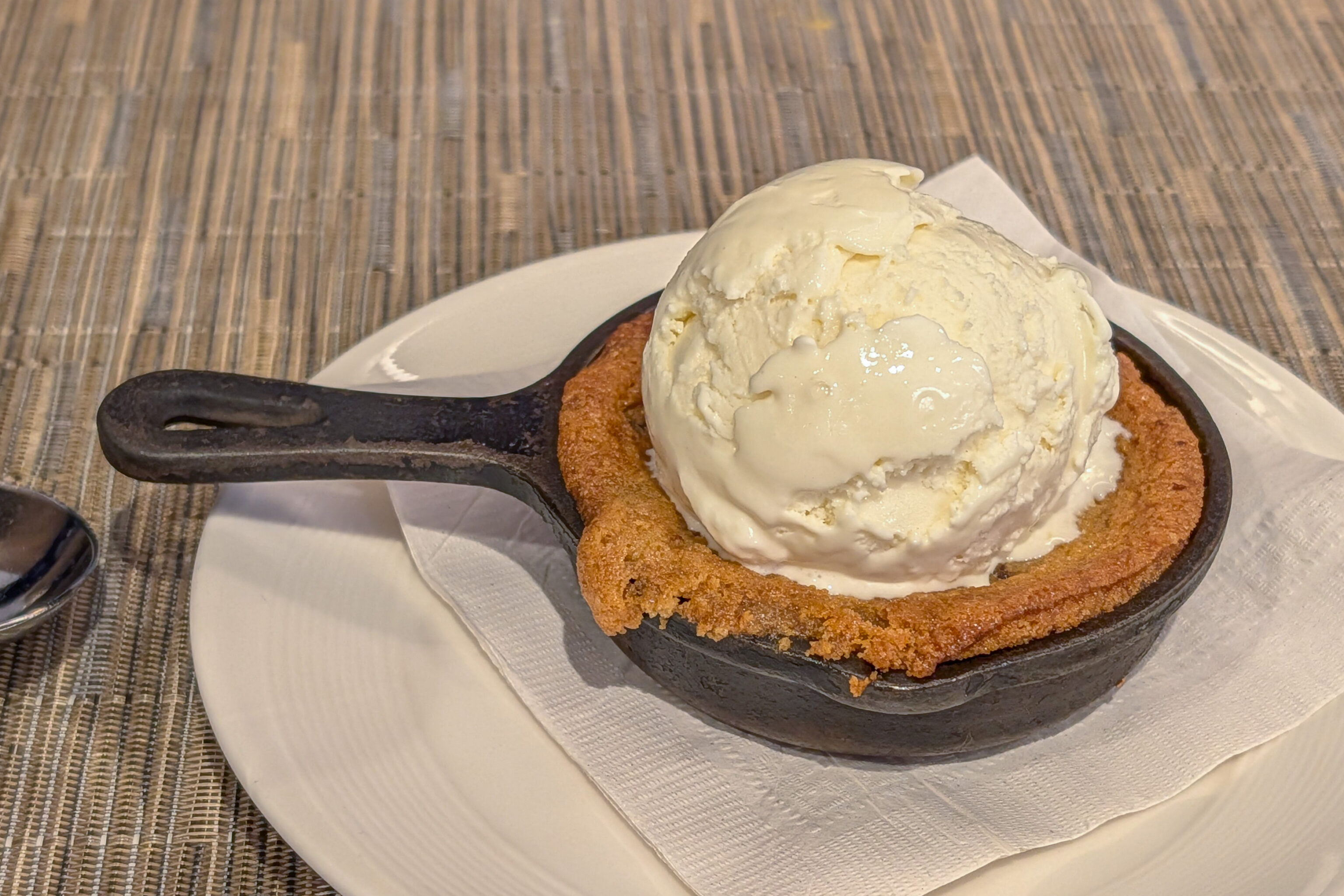
Vanilla Ice Cream
Nothing really seemed particularly compelling on the menu this time around, which isn’t really that unusual. The selections just tend to be somewhat unpredictable in both quantity and taste. But the cookie, that’s almost always great.
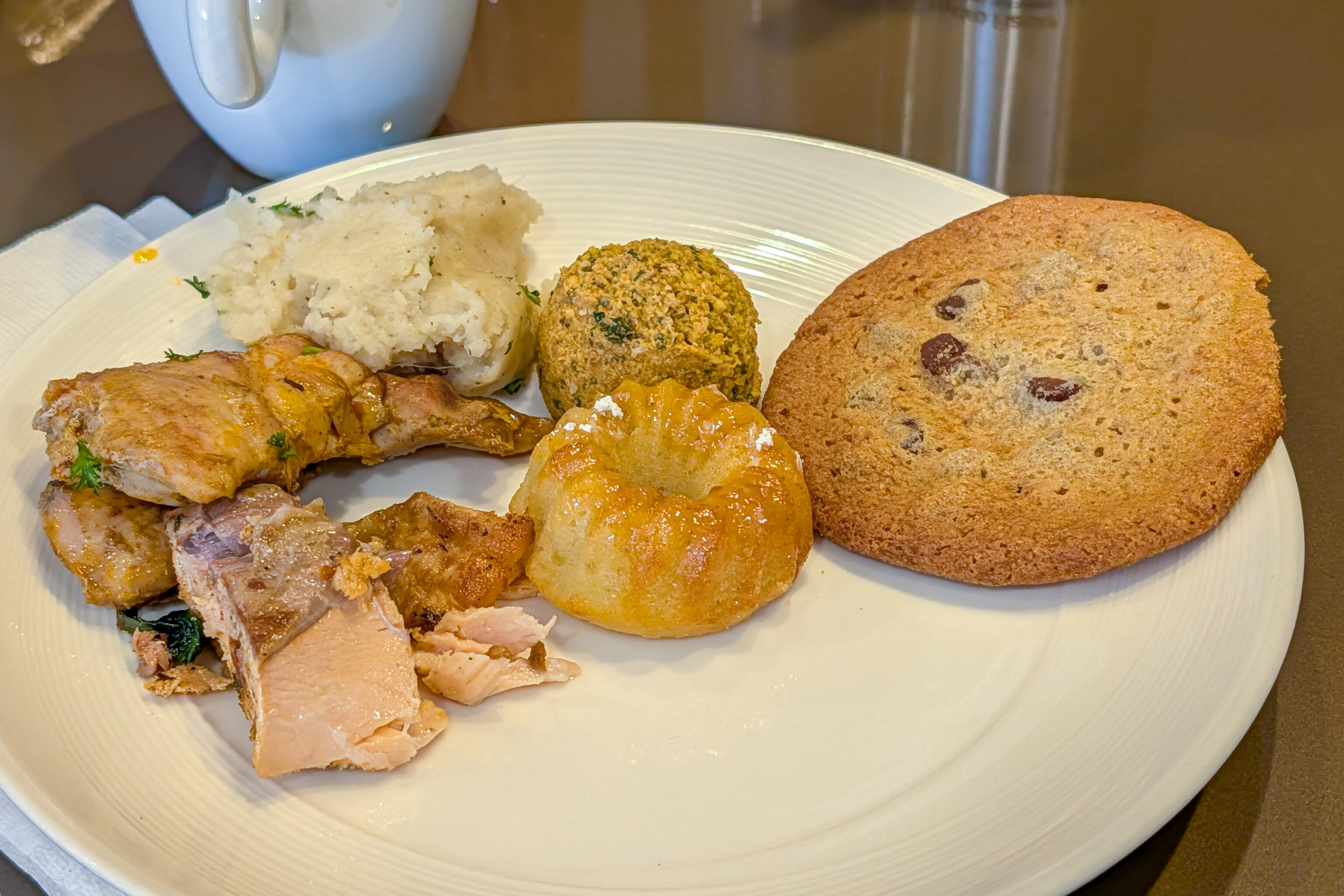
We also grazed a bit at the buffet. While at the lounge, we also bought tickets online for the guided tour of its underground tunnels at the Citadelle de Namur. We generally don’t like buying timed tickets and such for the first day of a trip as travel delays could easily cause us to miss the scheduled time. However, in this case, tickets can only be bought the day prior and we weren’t sure how readily available they would be at the ticket office tomorrow. The tickets were €14 each so it wasn’t really that much of a gamble.
Its actually been only about two weeks since we got back from our last trip, which was for almost one month in Japan. But have upgrades, in the form of United’s PlusPoints currency, that will expire at the end of the month so of course we had to go!
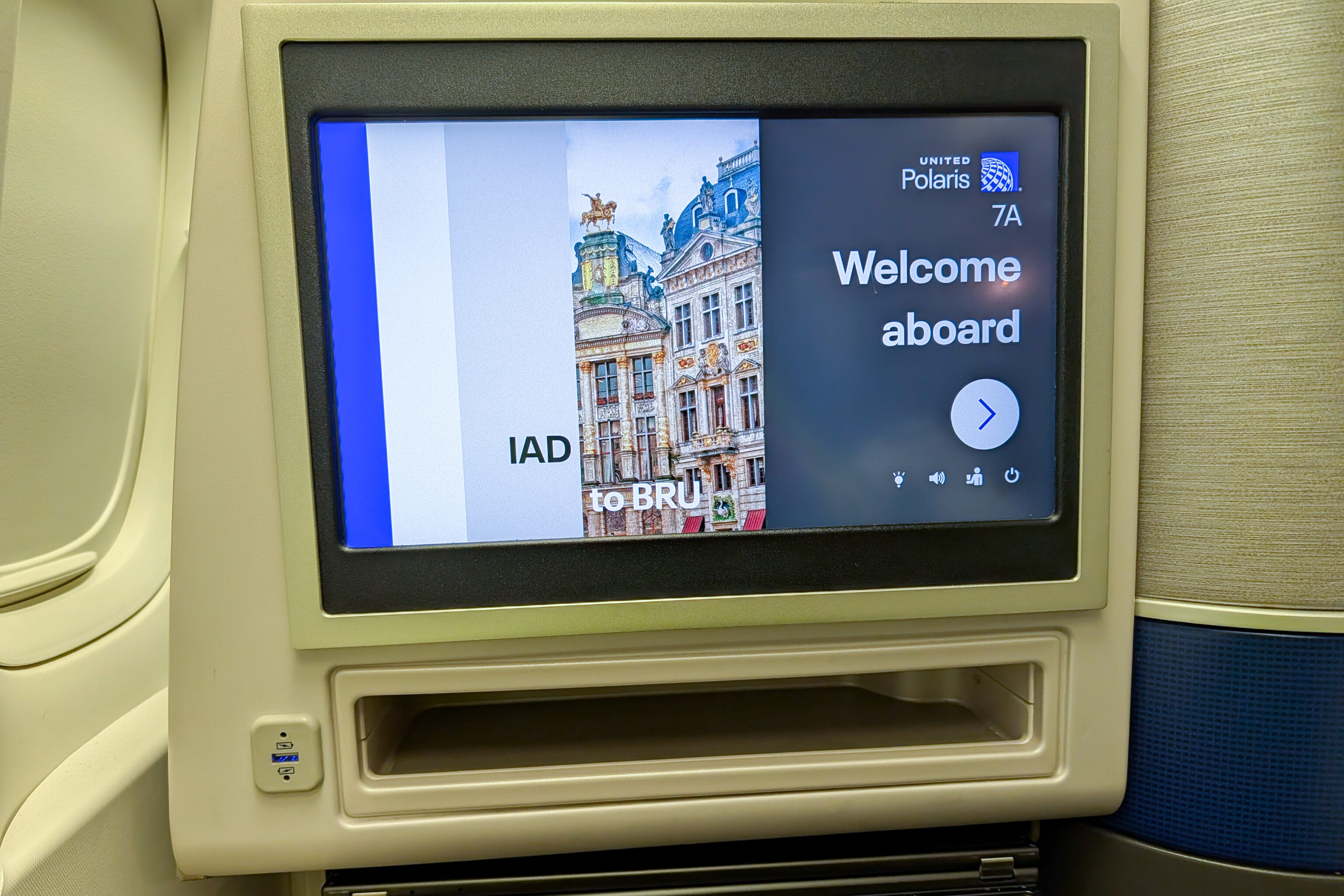
We were onboard a Boeing 777-200 for our flight by around 5pm.
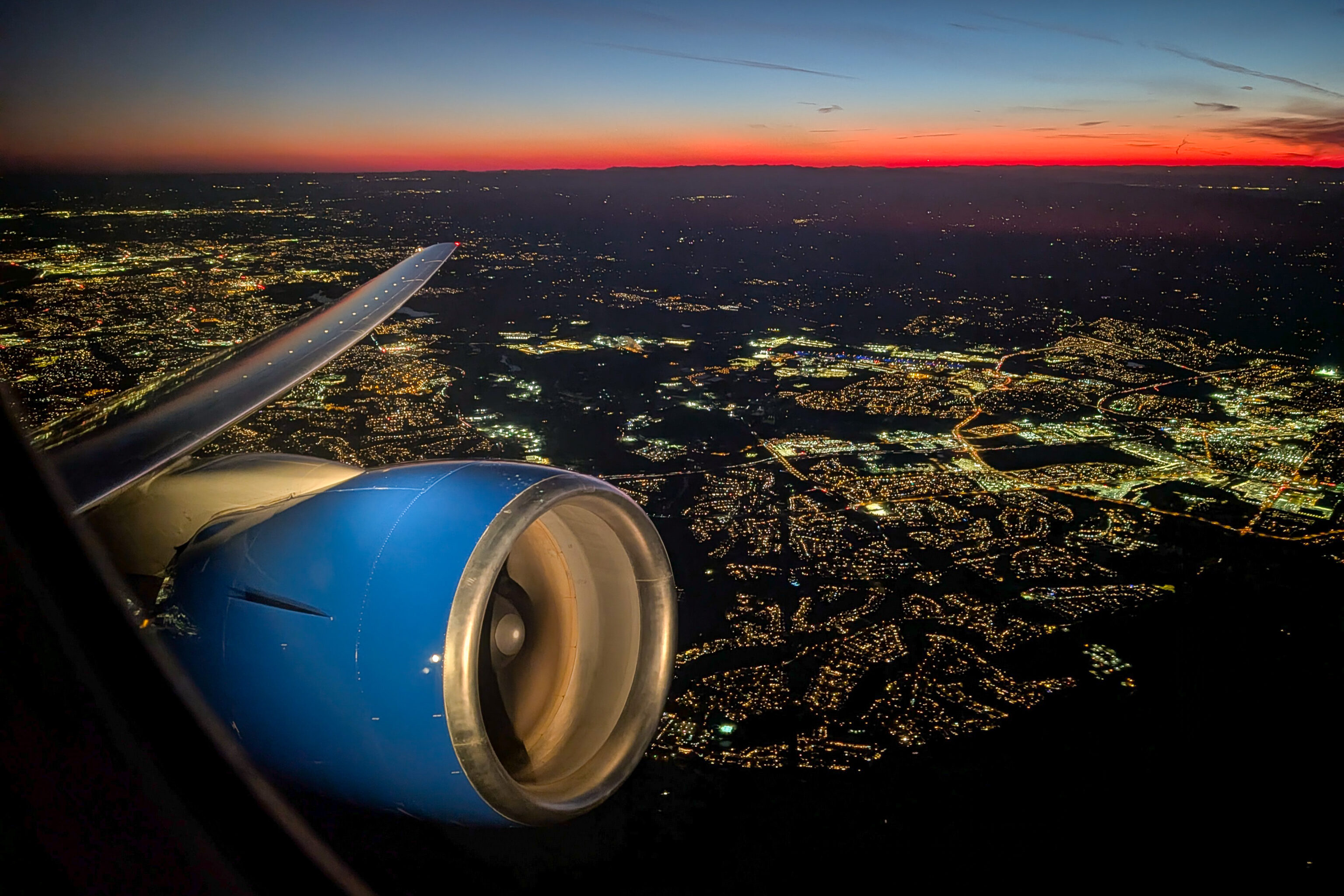
There was a bit of nice color in the sky when we departed at around 6pm. We went to sleep right after takeoff and skipped dinner service to maximize the amount of rest we could get on this short trip across the Atlantic.
The menu for this trilingual flight.
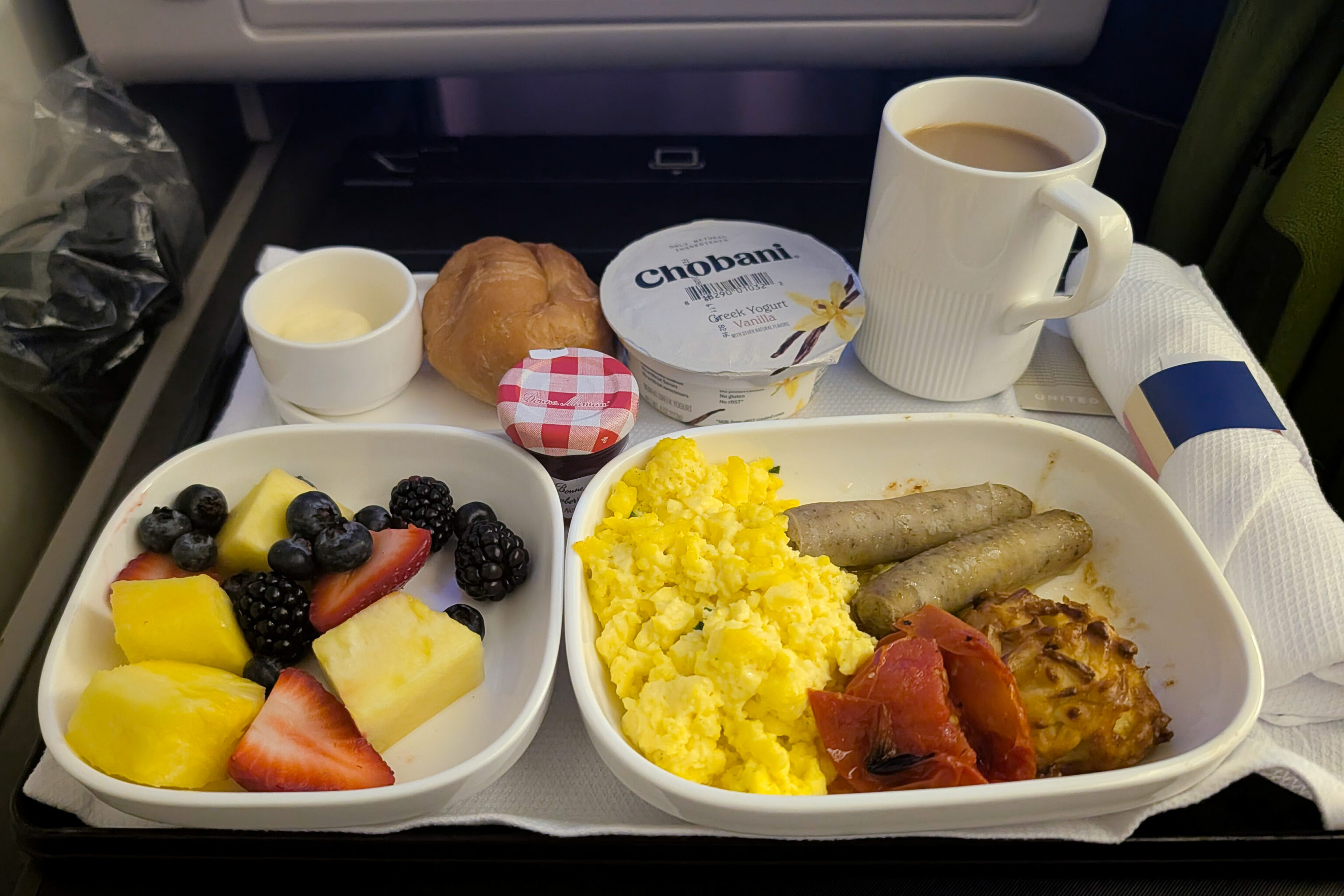
We did have the pre-arrival meal, basically equivalent a standard United domestic first class meal.
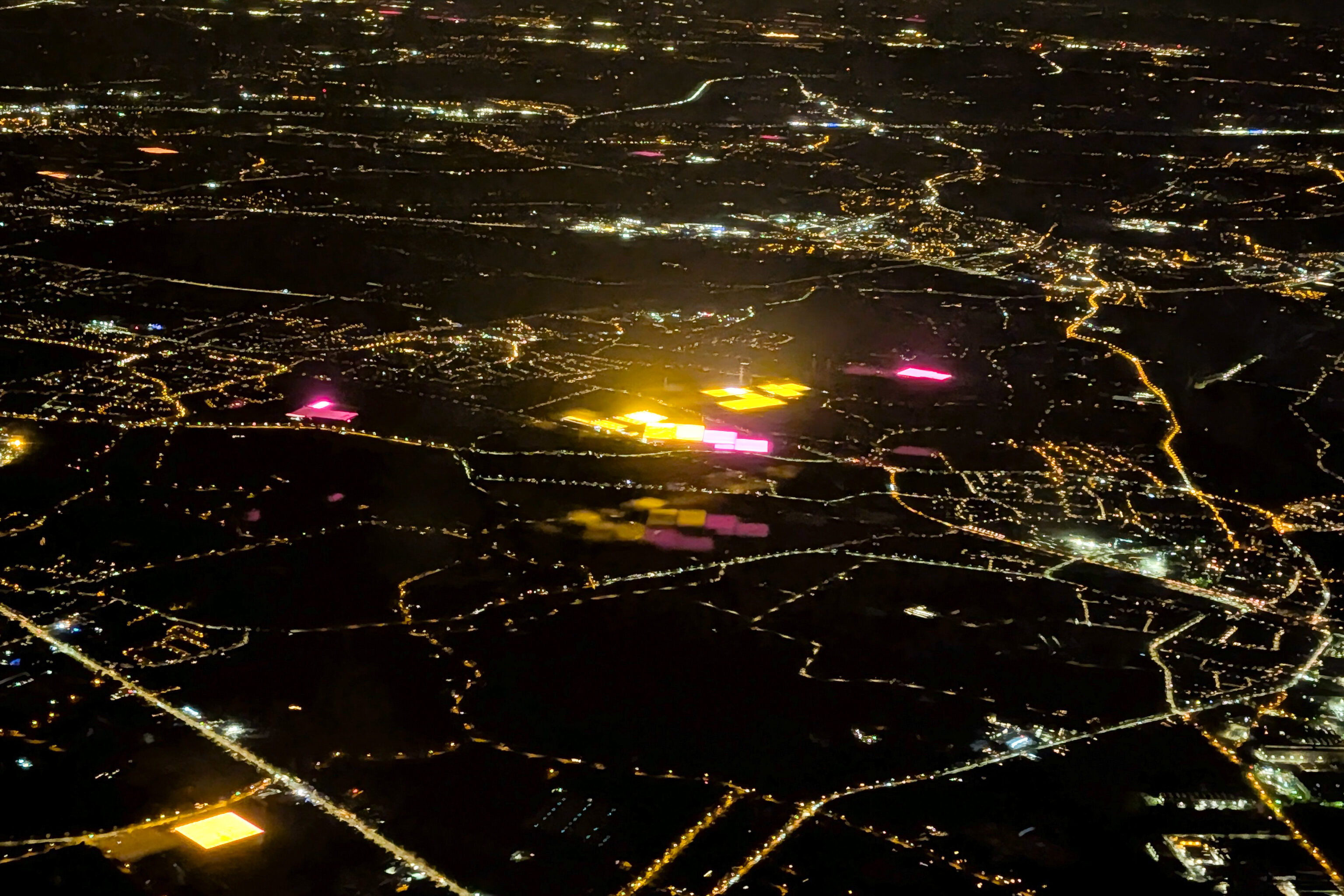
There’s some reflections within the different layers of glass and protective window here, but there we definitely some super bright lights out there! Our guess would be this is to extend the grow time for flowers? What else would require these uniformly bright rectangles of illumination?
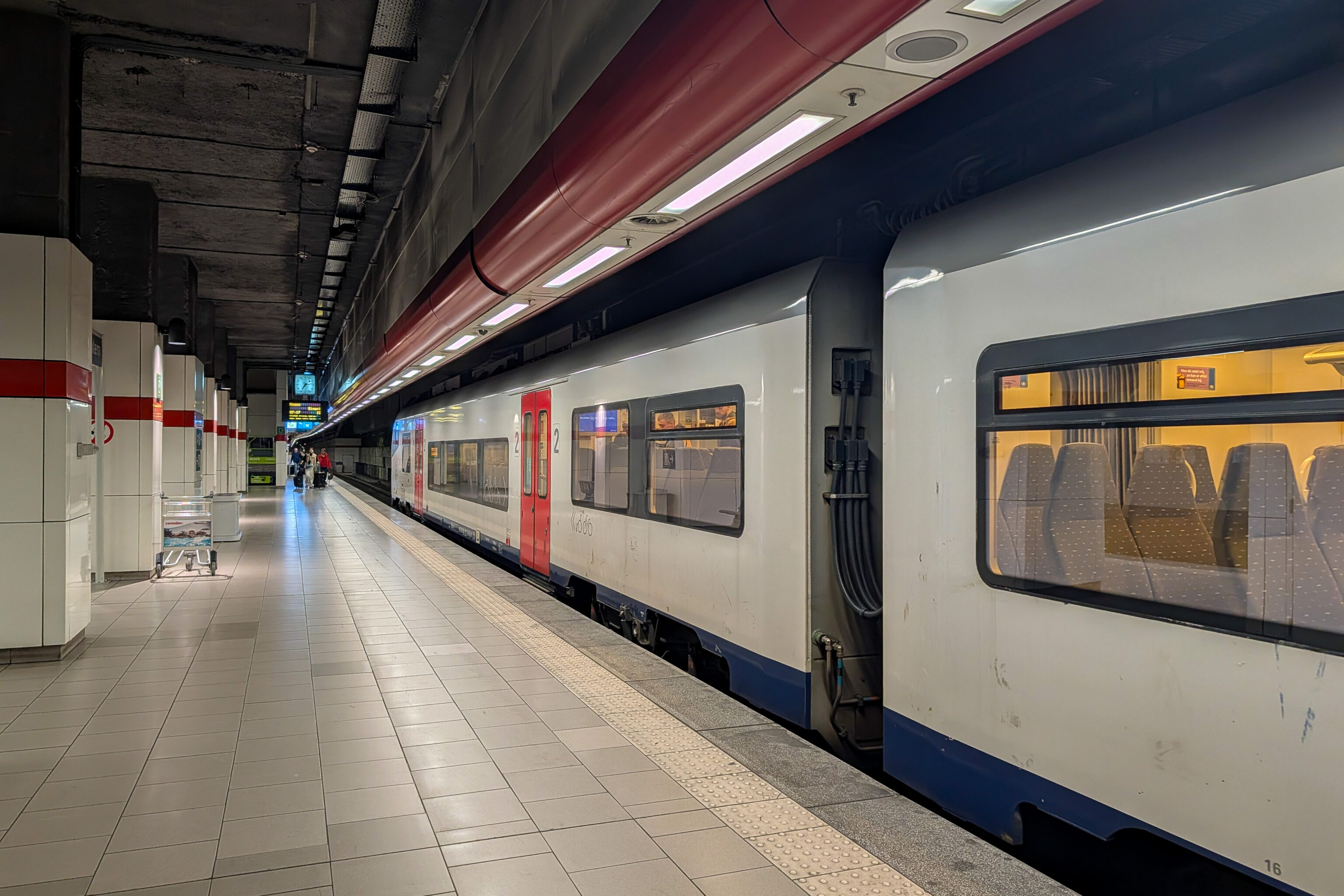
We arrived nearly an hour early at 6:21am. It took quite a long time to pass through immigration to enter the EU. It was just busy and the lines moved slowly. We bought train tickets while in line from the SNCB, Belgium’s national railway company. In this case, we bought tickets valid for any time today, although we did have a specific direct train in mind.
While we were in line, we became aware that there was a SNCB strike scheduled for the upcoming days, including when we plan on returning to Brussels. We don’t know if it will impact our plans yet but we’ll see.
We managed to get to the train station in time to catch our desired direct train to Namur, thus avoiding the need to change trains at one of the stations in Brussels. Although we have been to Brussels before, we do plan on spending a little bit of time in the city on our way home.
Namur
We arrived in Namur at around 8:30am.
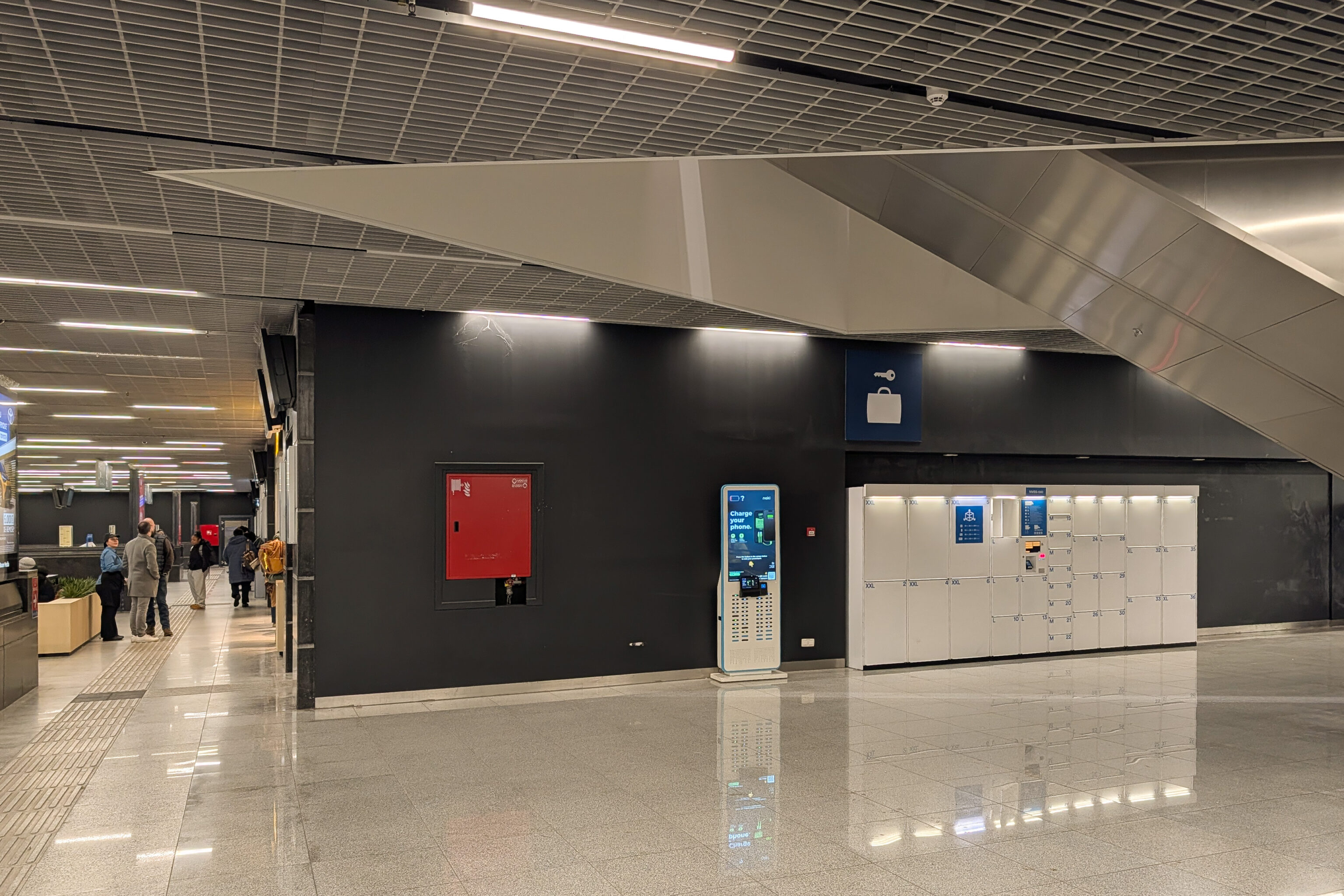
We left our luggage in some lockers in the station.
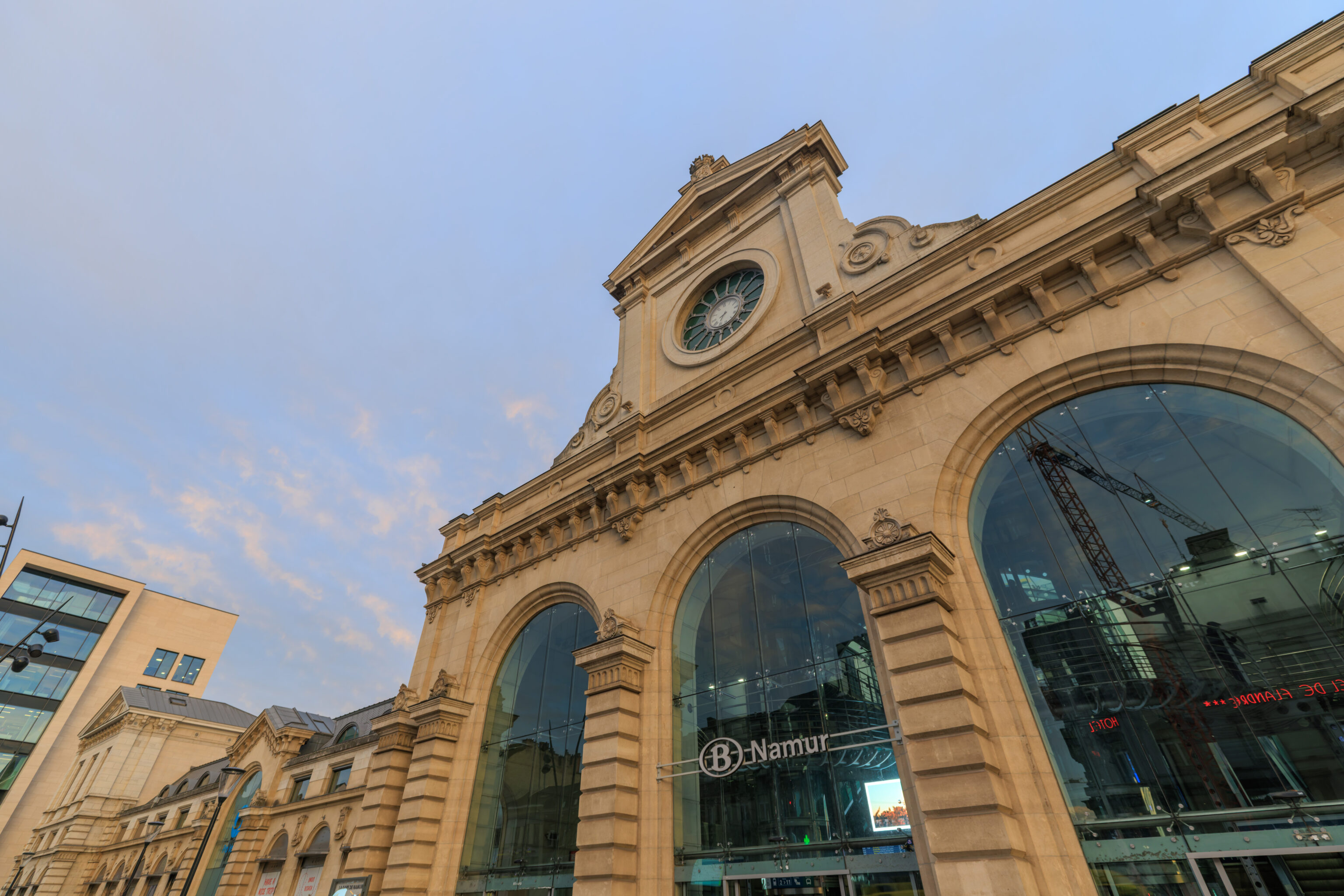
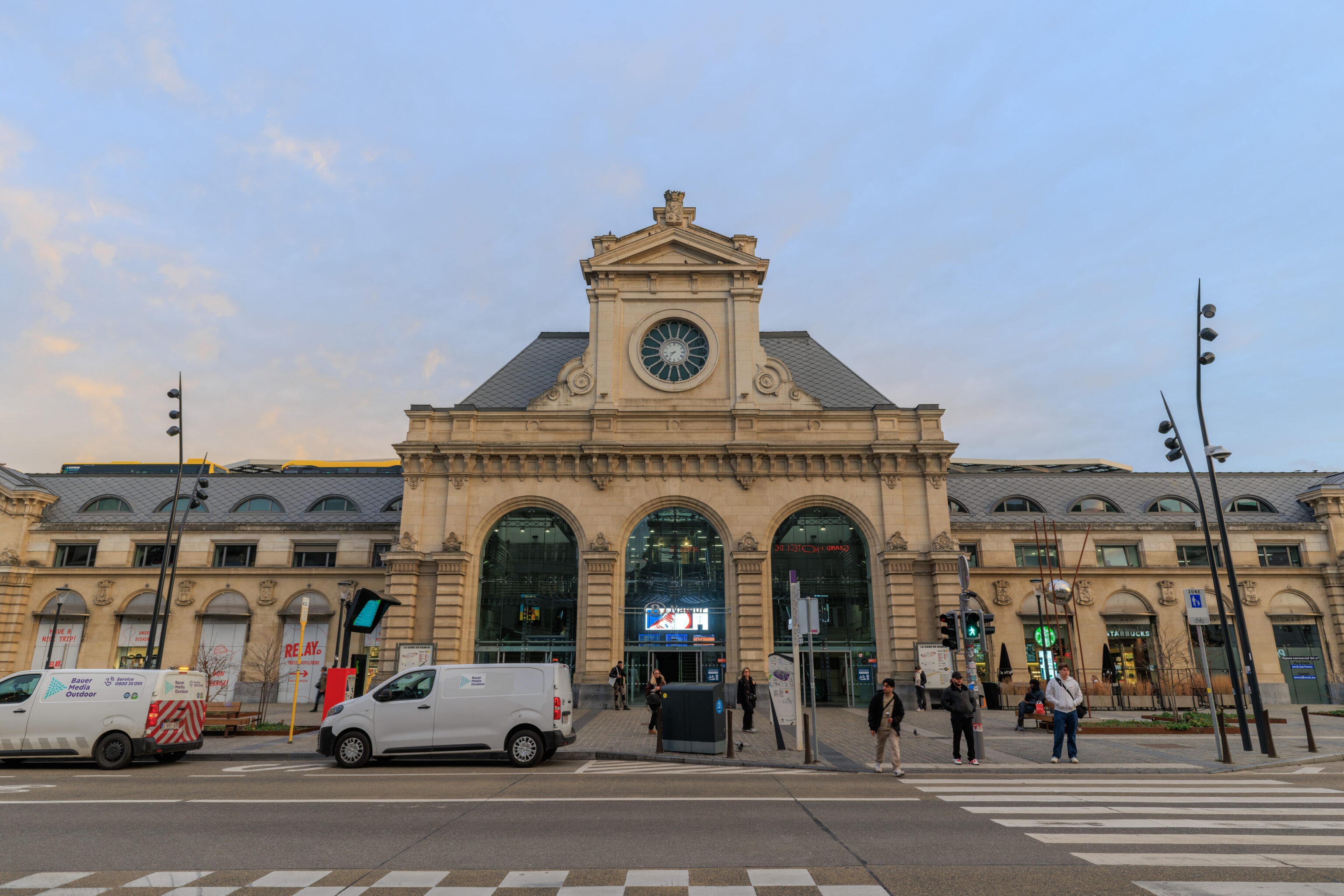
The station was actually pretty large!
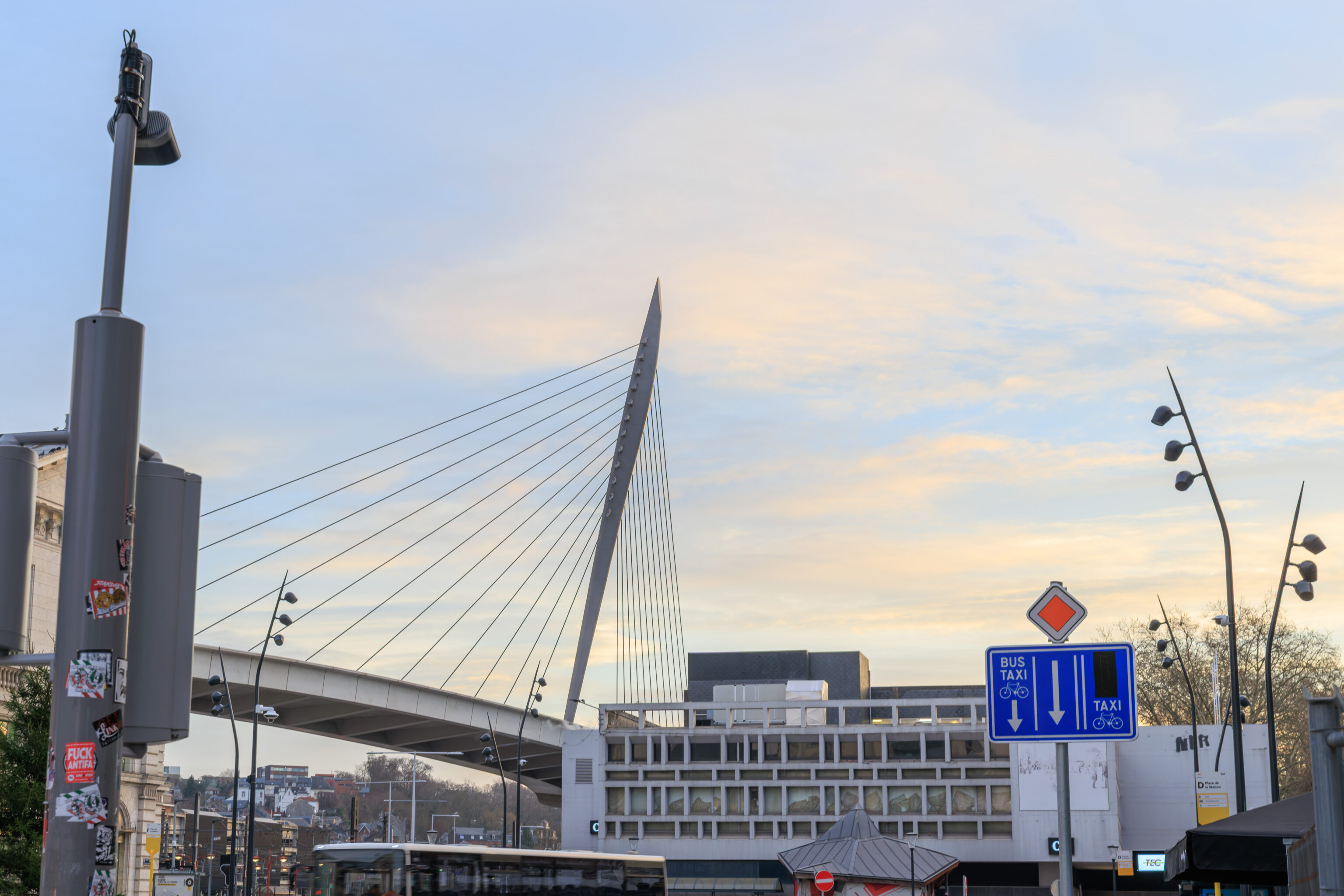
There was even a suspension bridge! It wasn’t over water though, it was for the ramp for busses to access the train station’s bus stops, which are on the roof of a station building above the tracks!
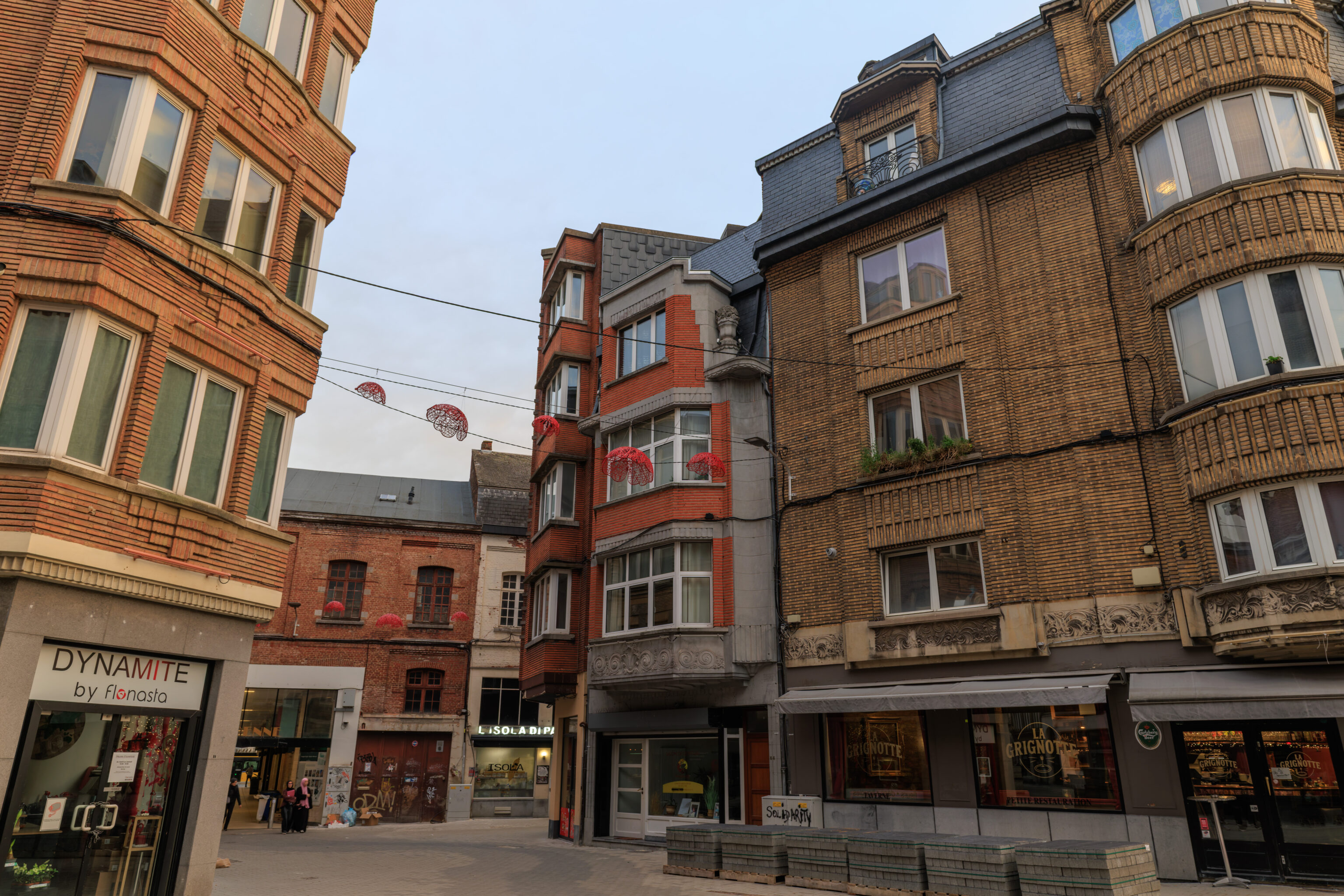
We started to walk to the south through the city.
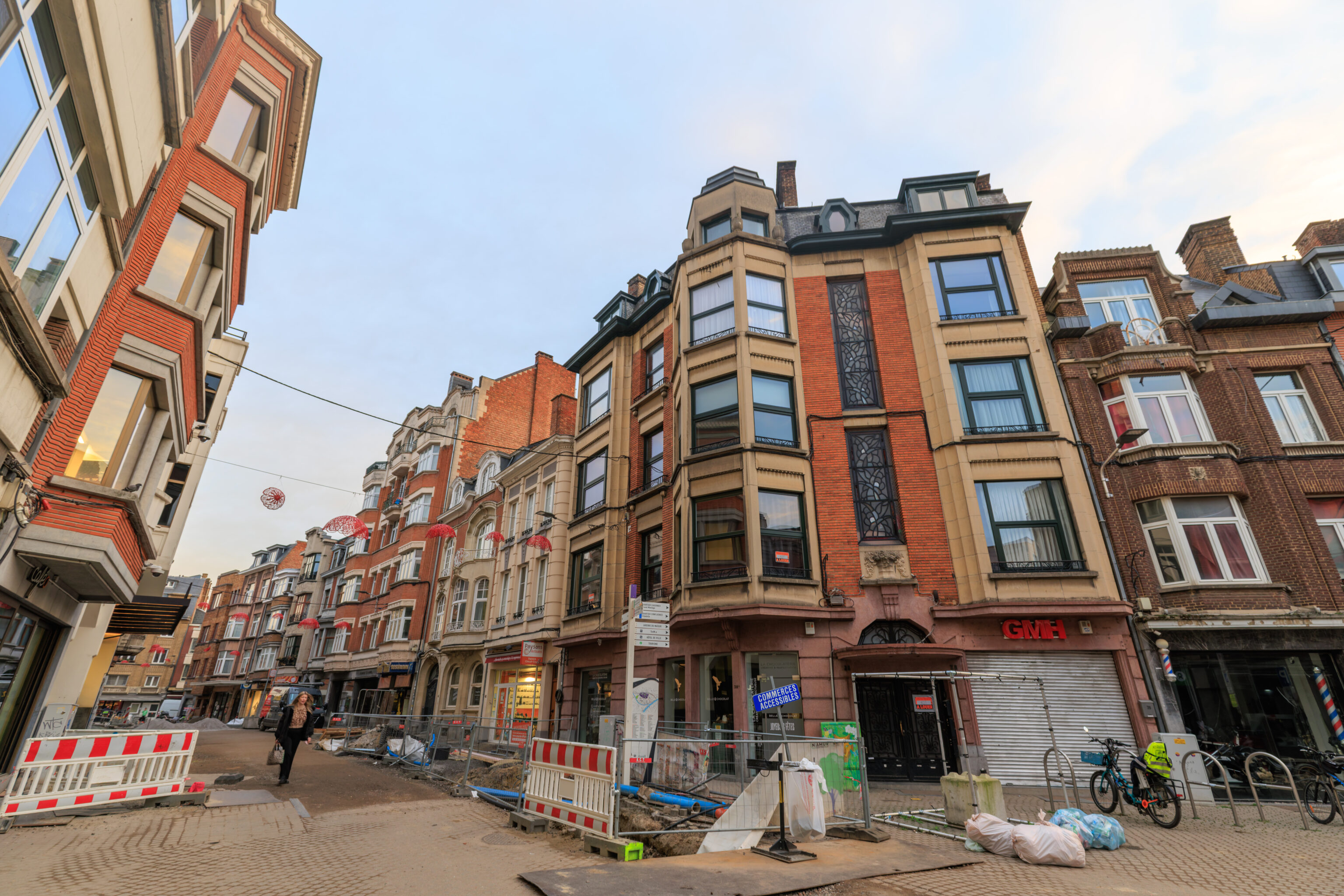
It was pretty quiet in the city, despite it being a weekday morning. The only thing going on was in a large construction zone!
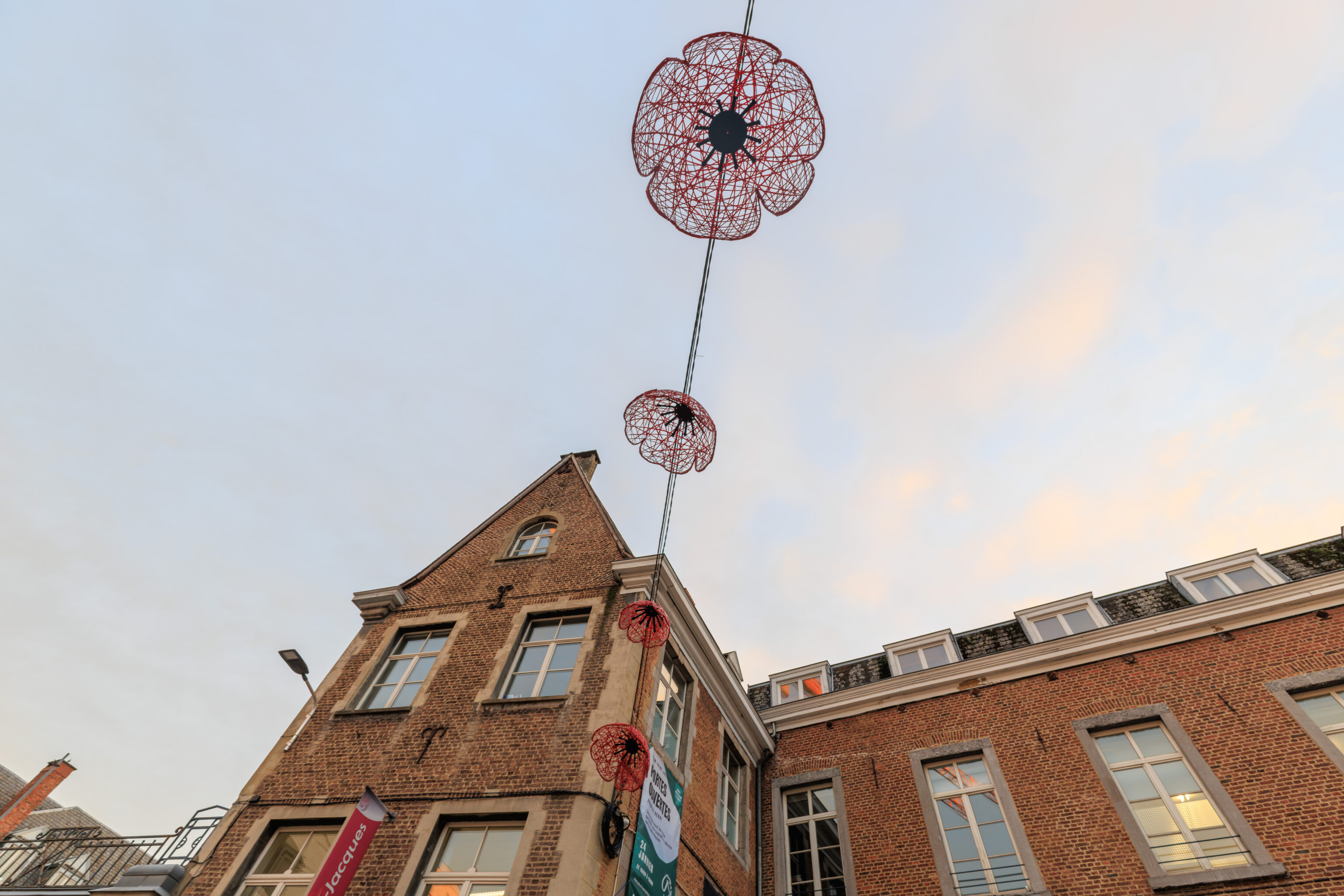
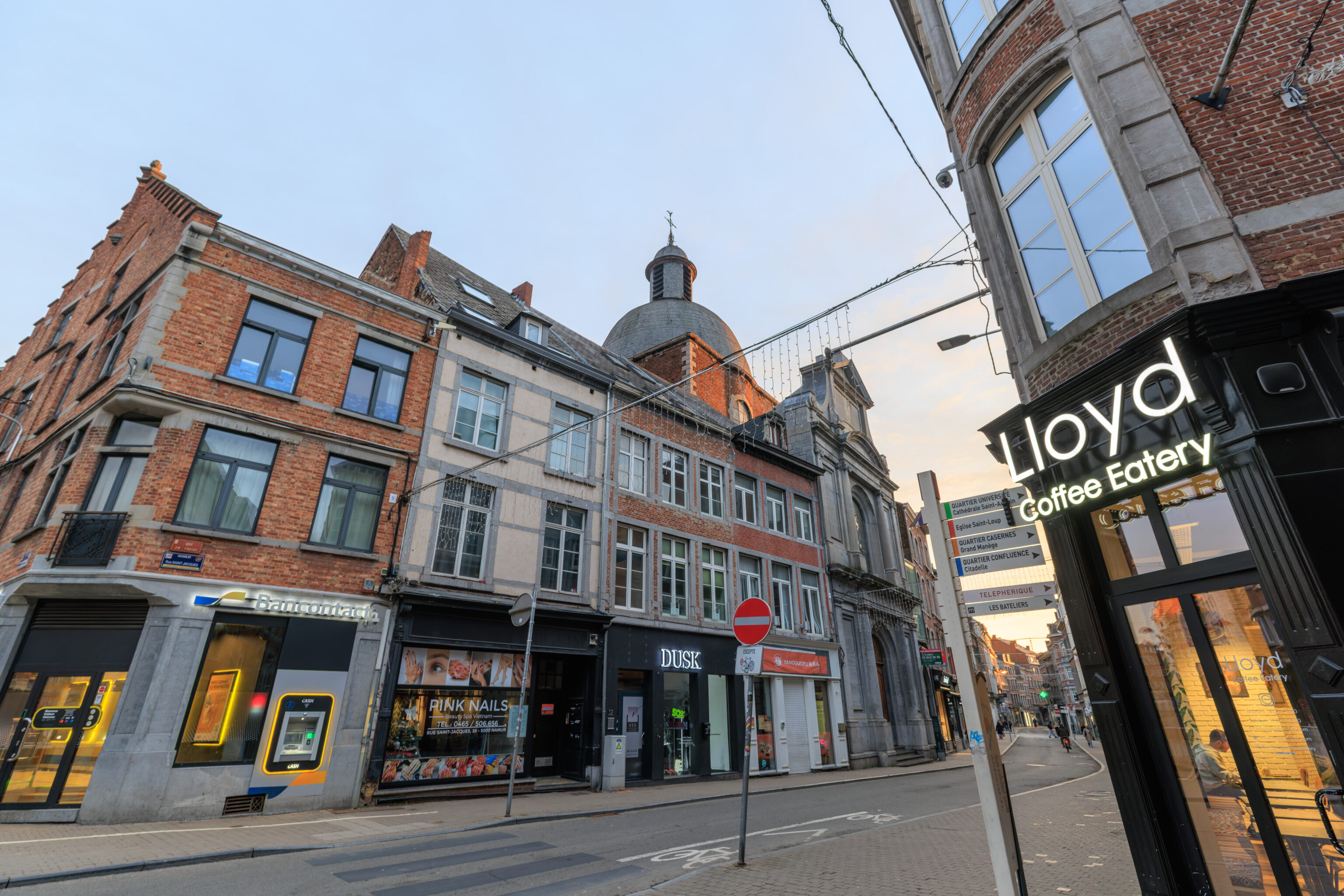
There were some decorations above the street that would be illuminated at night.
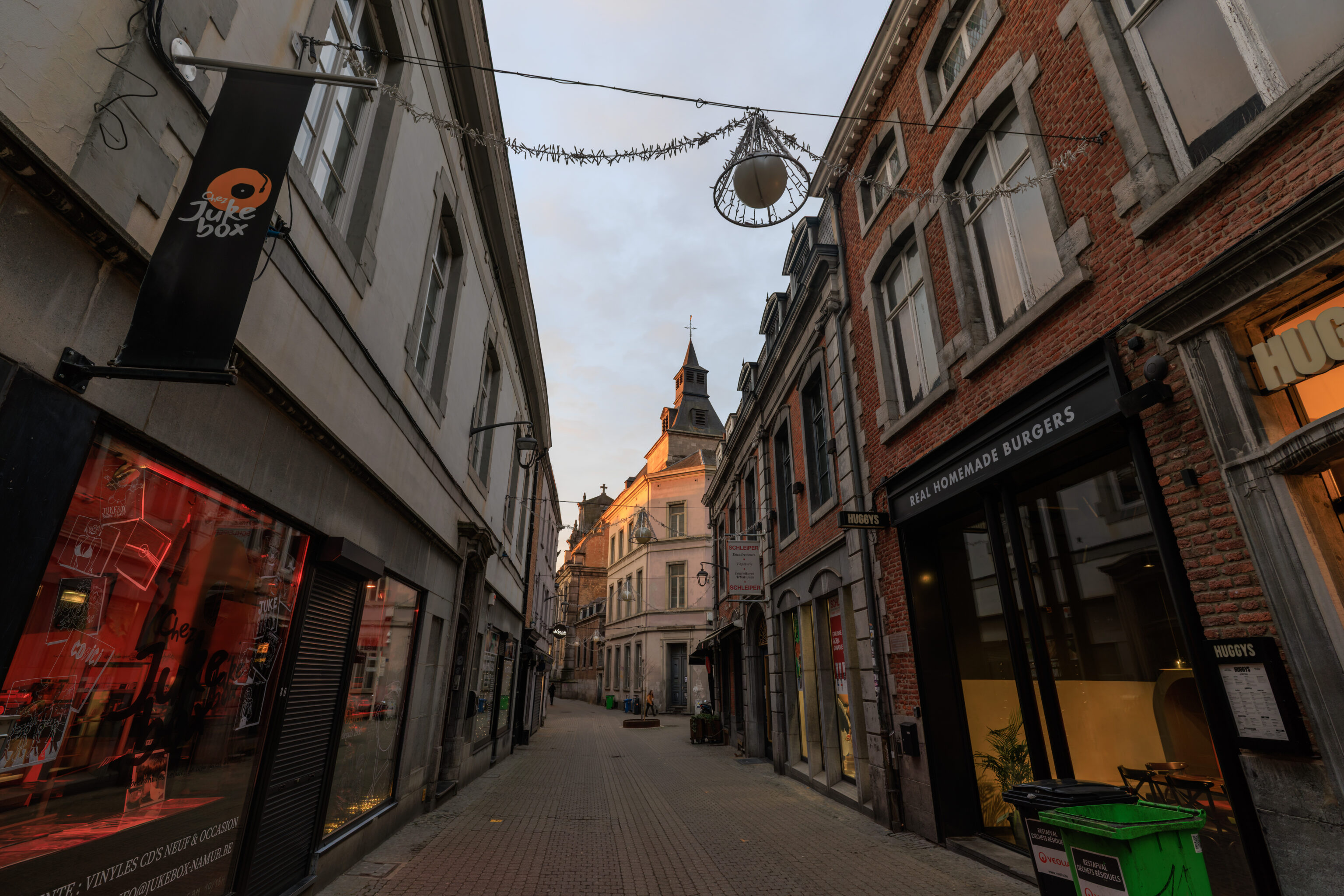
We can see a bit of our first destination up ahead, the Église Saint-Loup de Namur, a Catholic church.
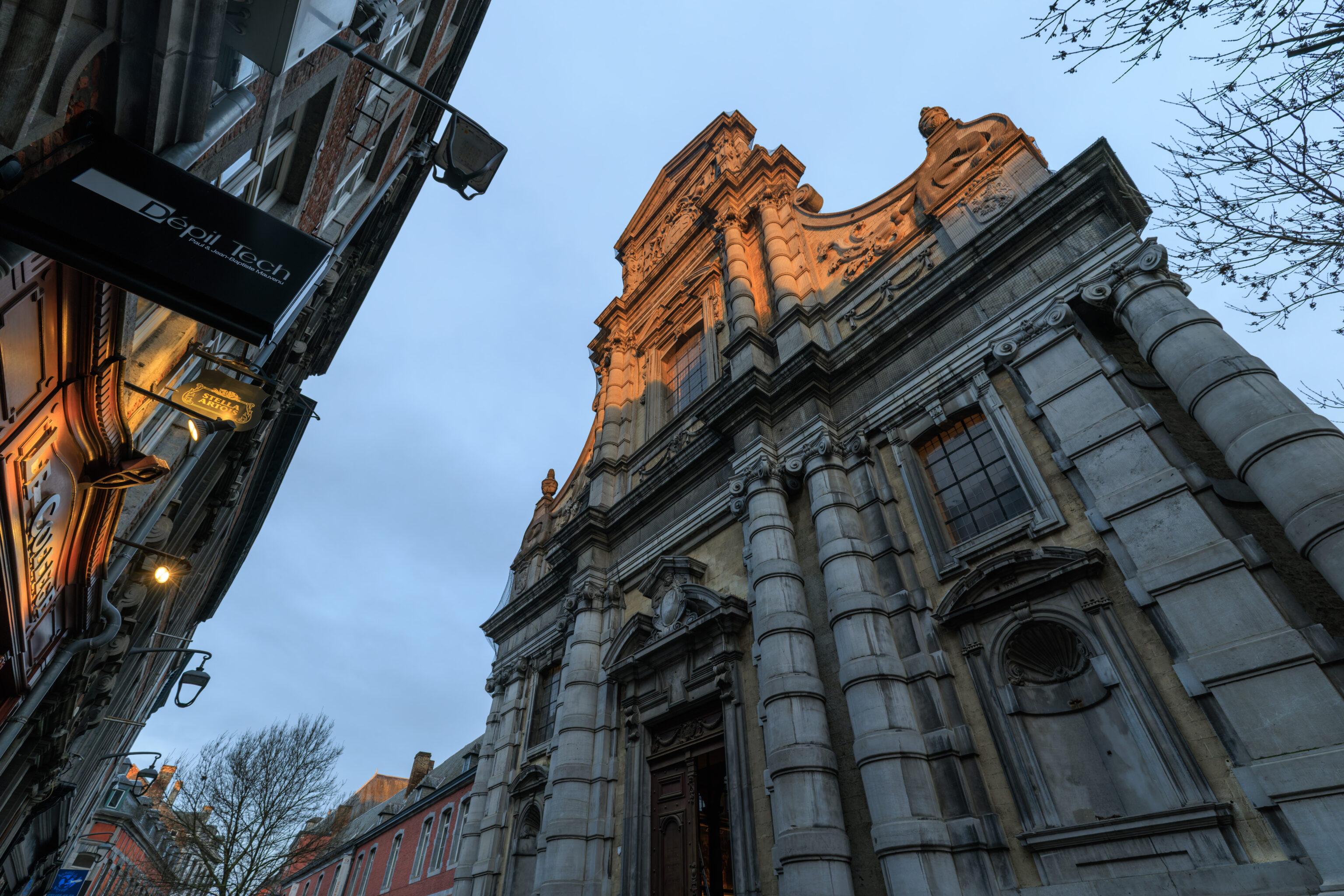
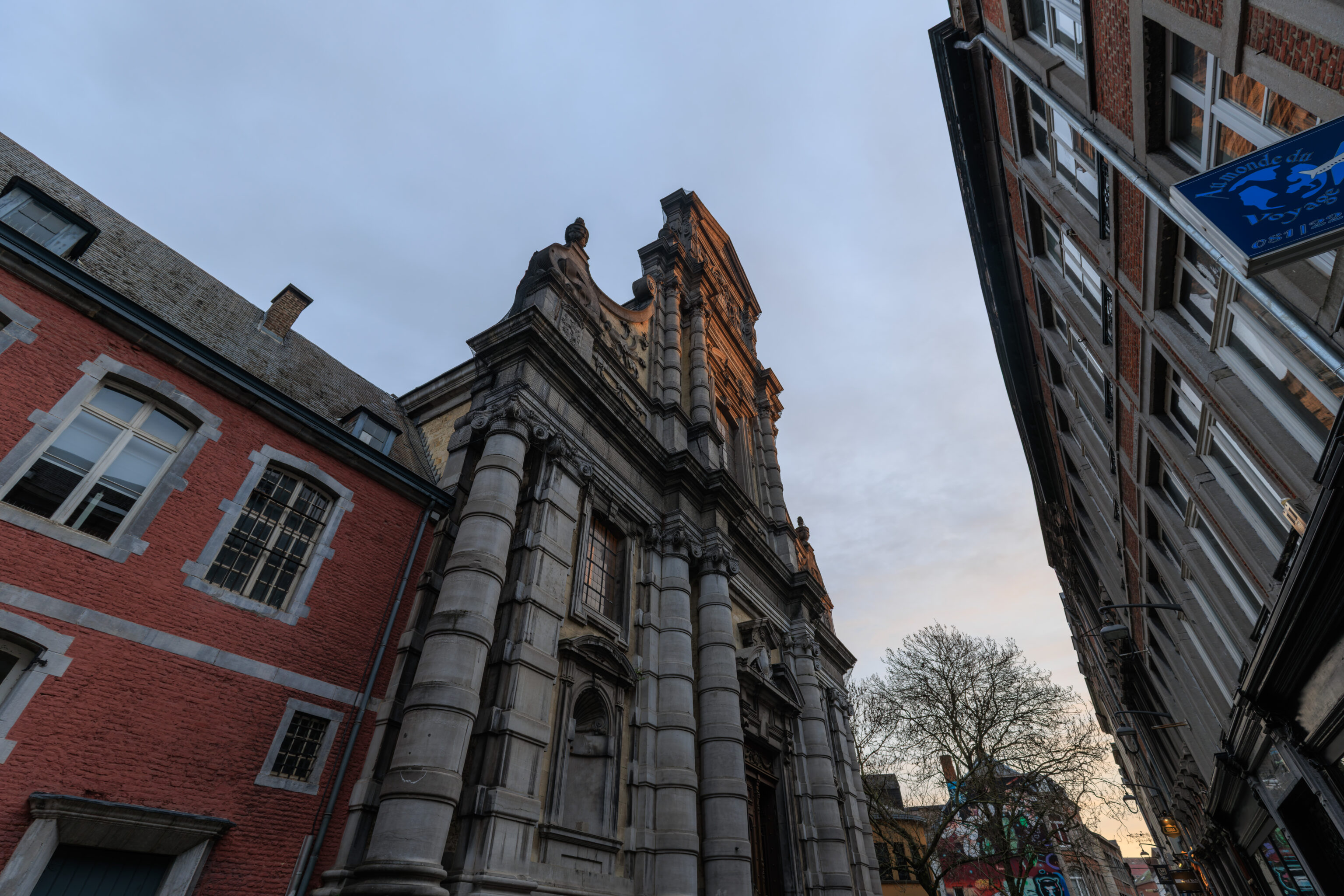
The church was built in the mid-17th century. It was, unfortunately, not open yet, which we confirmed with some men working on the building’s entrance.
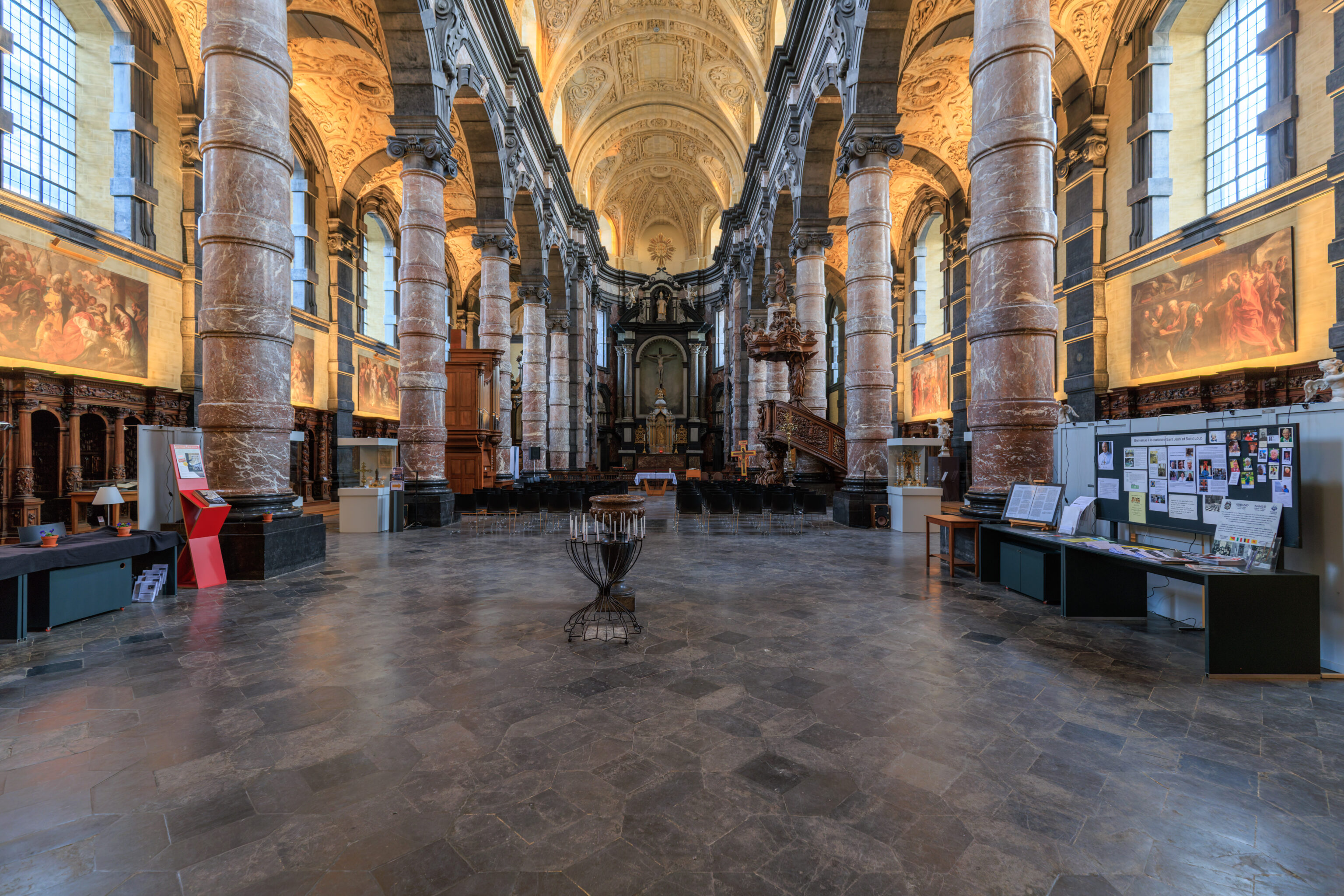
We were able to take a peek through a glass door though at the beautiful interior. It’s almost like being in Rome again!
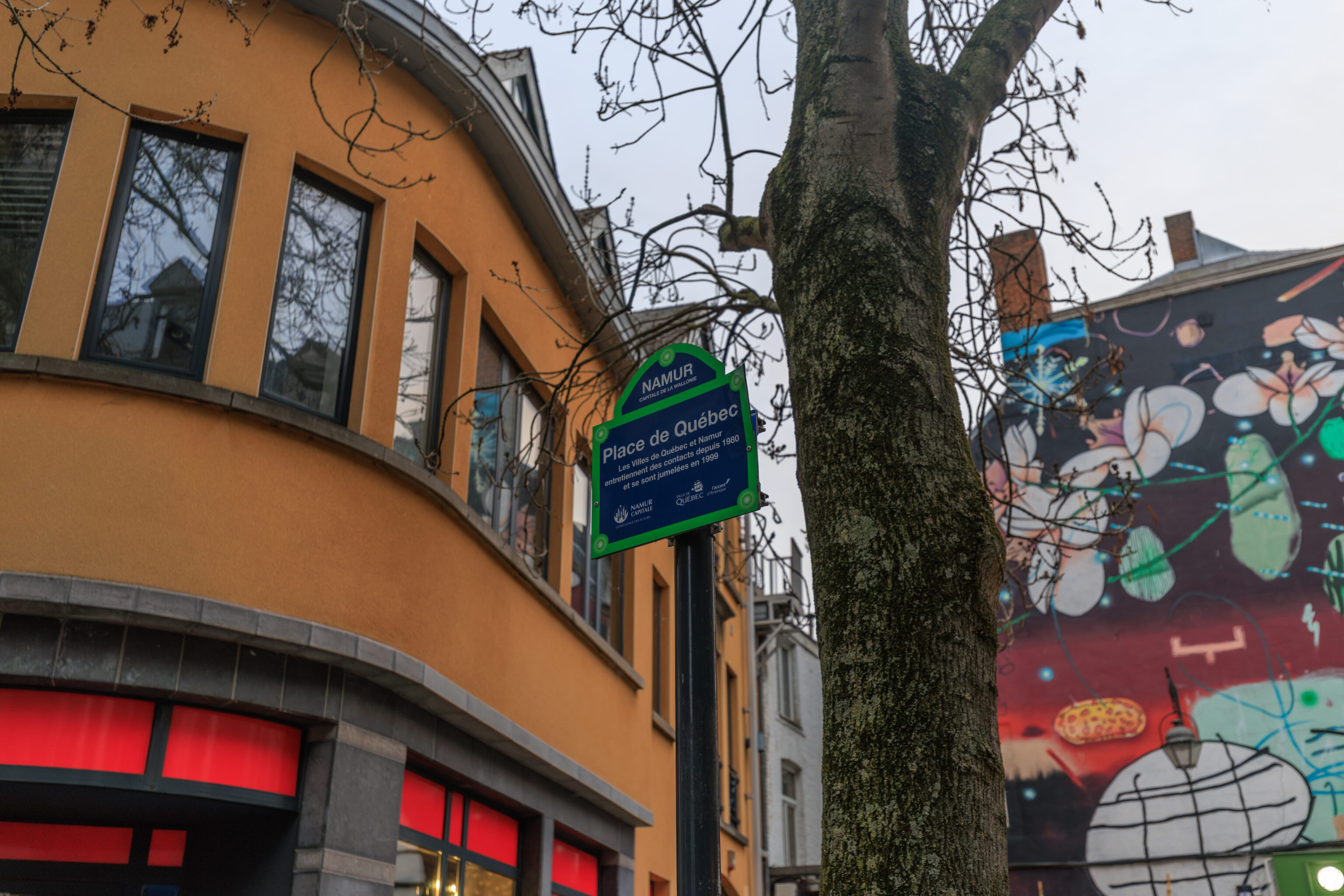
It turns out that this little square just to the east of the church’s entrance is the Place de Quebec. The sign says that the cities of Quebec and Namur became twin cities in 1999. It also says that they have maintained contact since 1980, whatever that means! I visited Quebec City in 2011, a long time ago now!
Citadelle de Namur
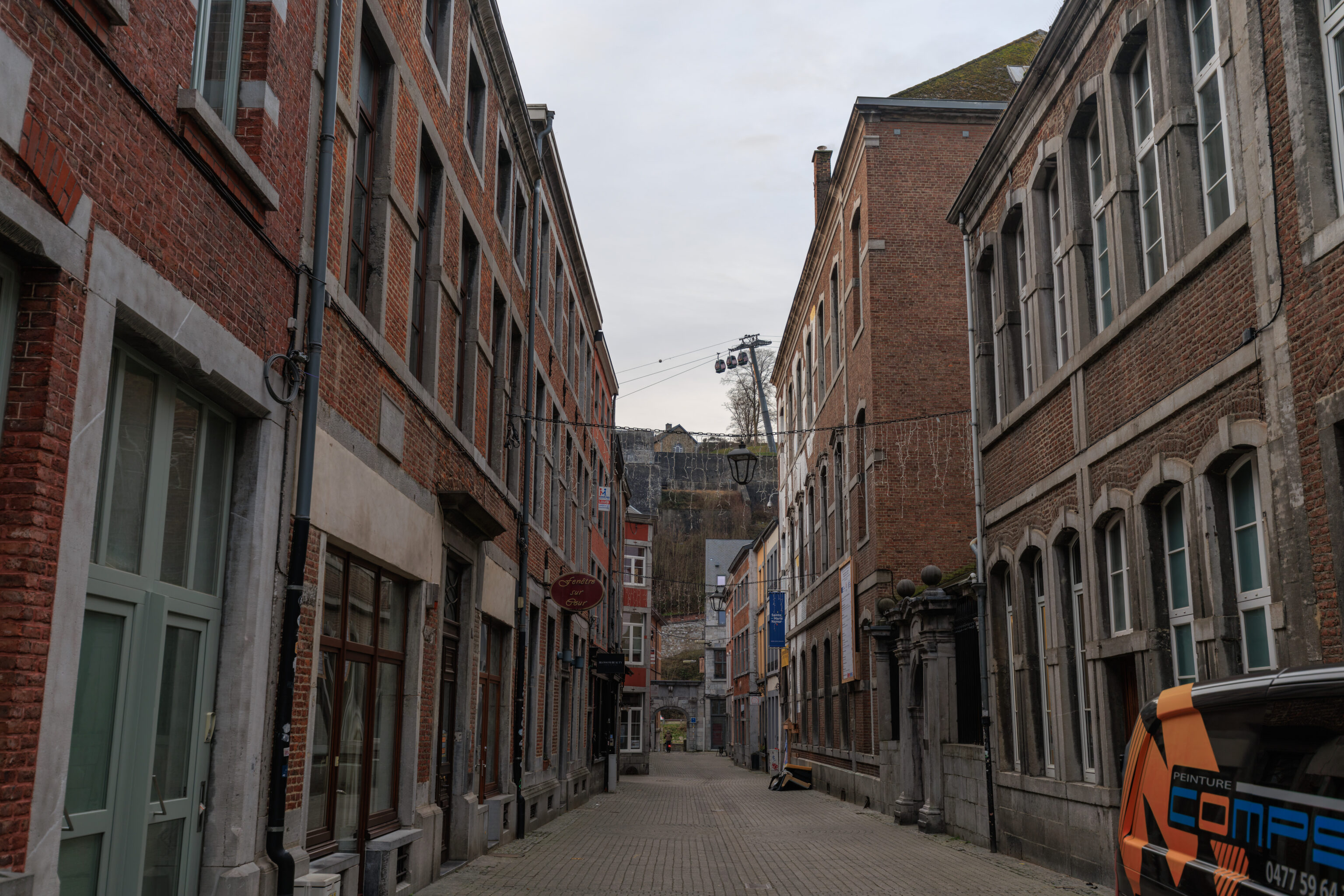
We continued walking to the south. We saw our next destination, the Citadelle de Namur up ahead, along with how we would get there, the Téléphérique de la Citadelle de Namur.
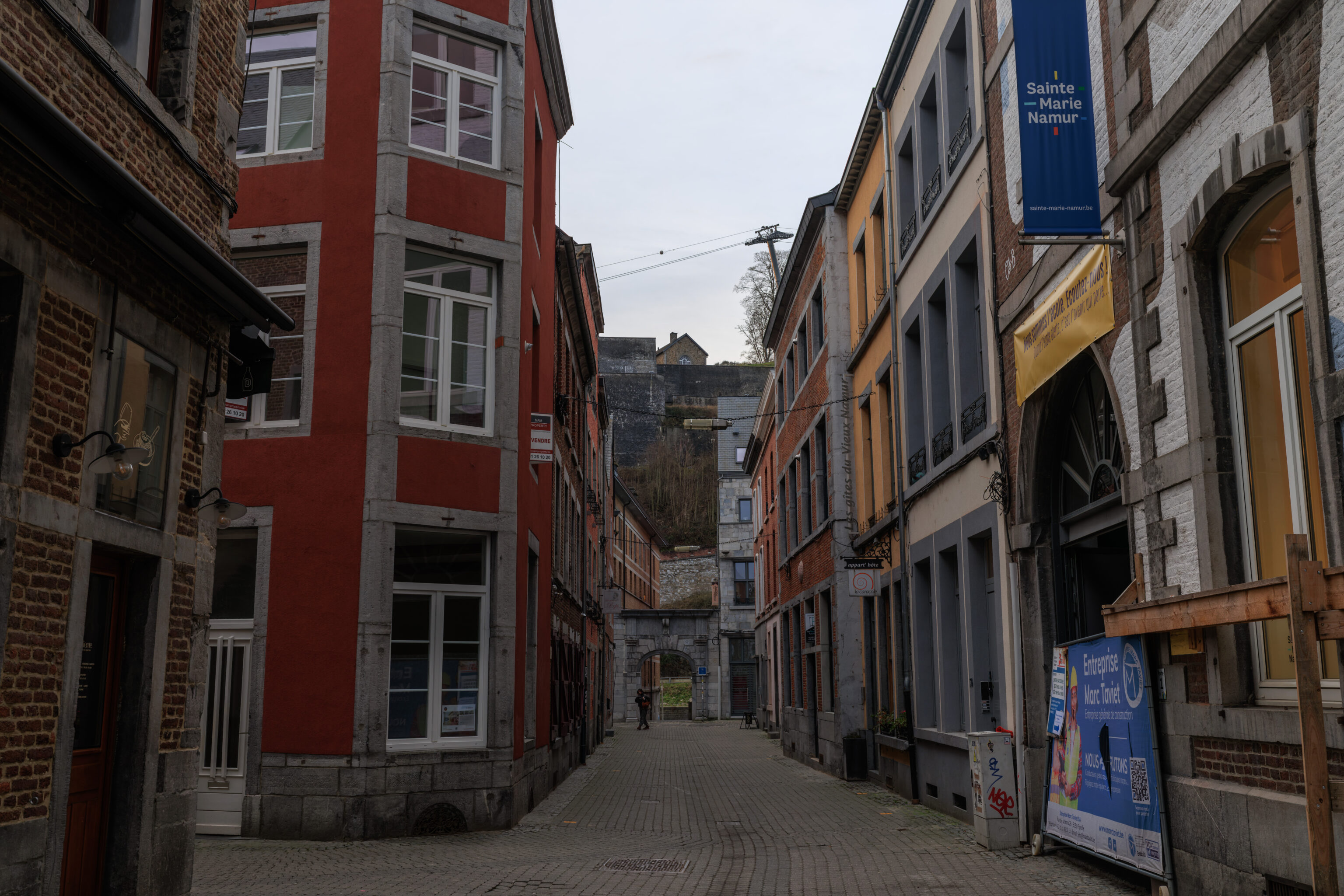
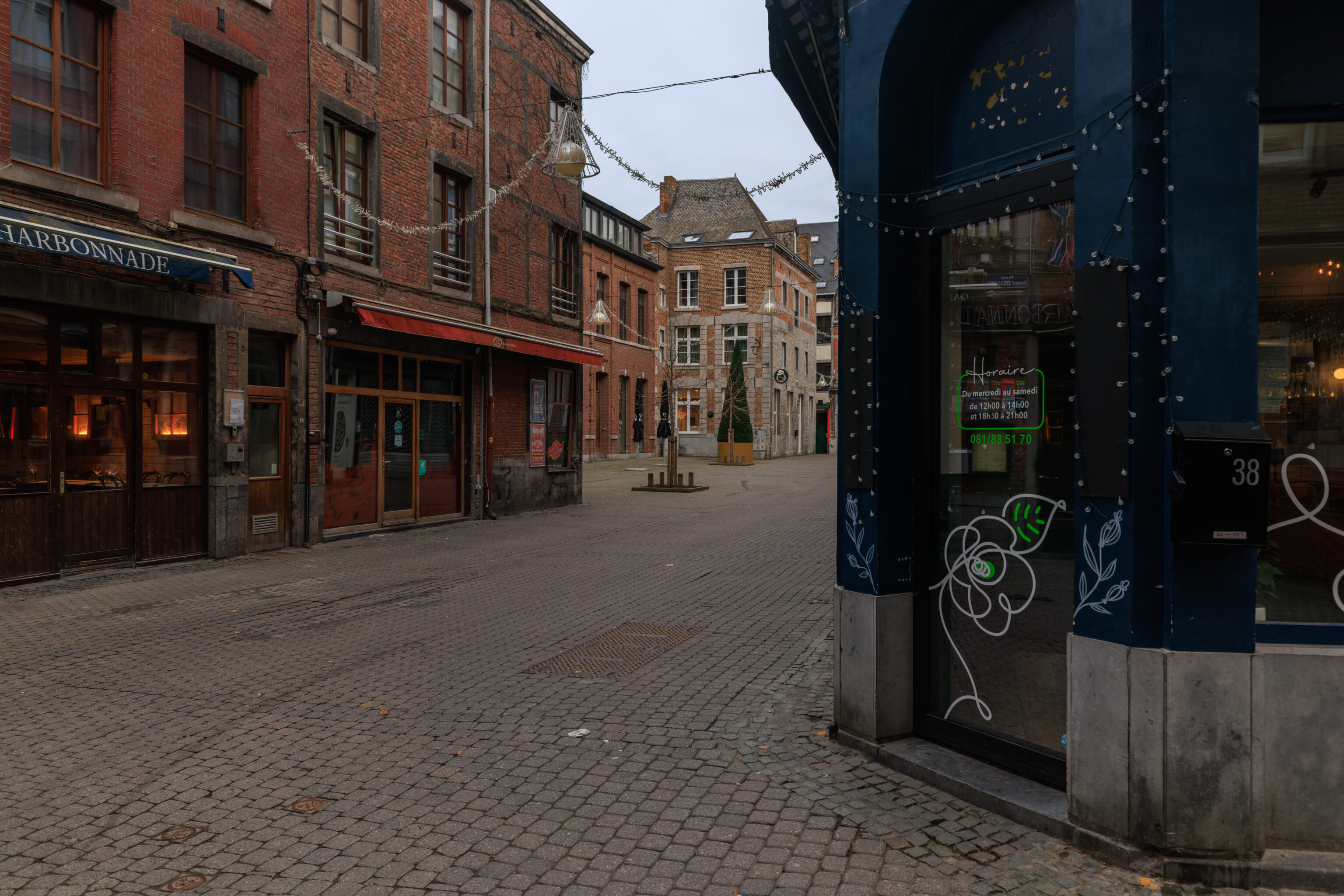
We continued towards the gondola station, which was southeast of the church.
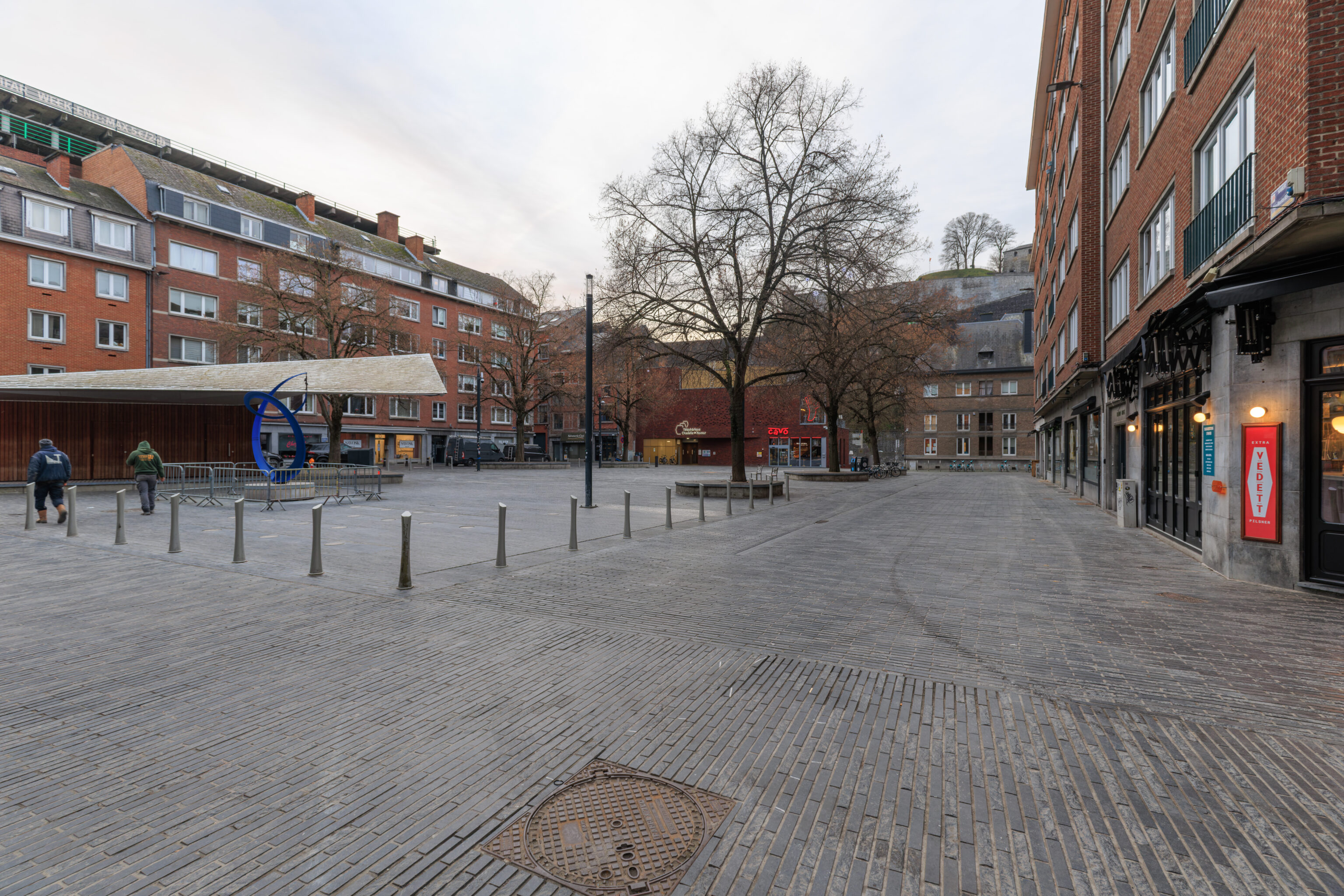
There is a square, Place Maurice Servais, just to the north of the station. There wasn’t much going on, just a few people walking here and there, some morning delivery traffic, and homeless that were possibly still asleep.
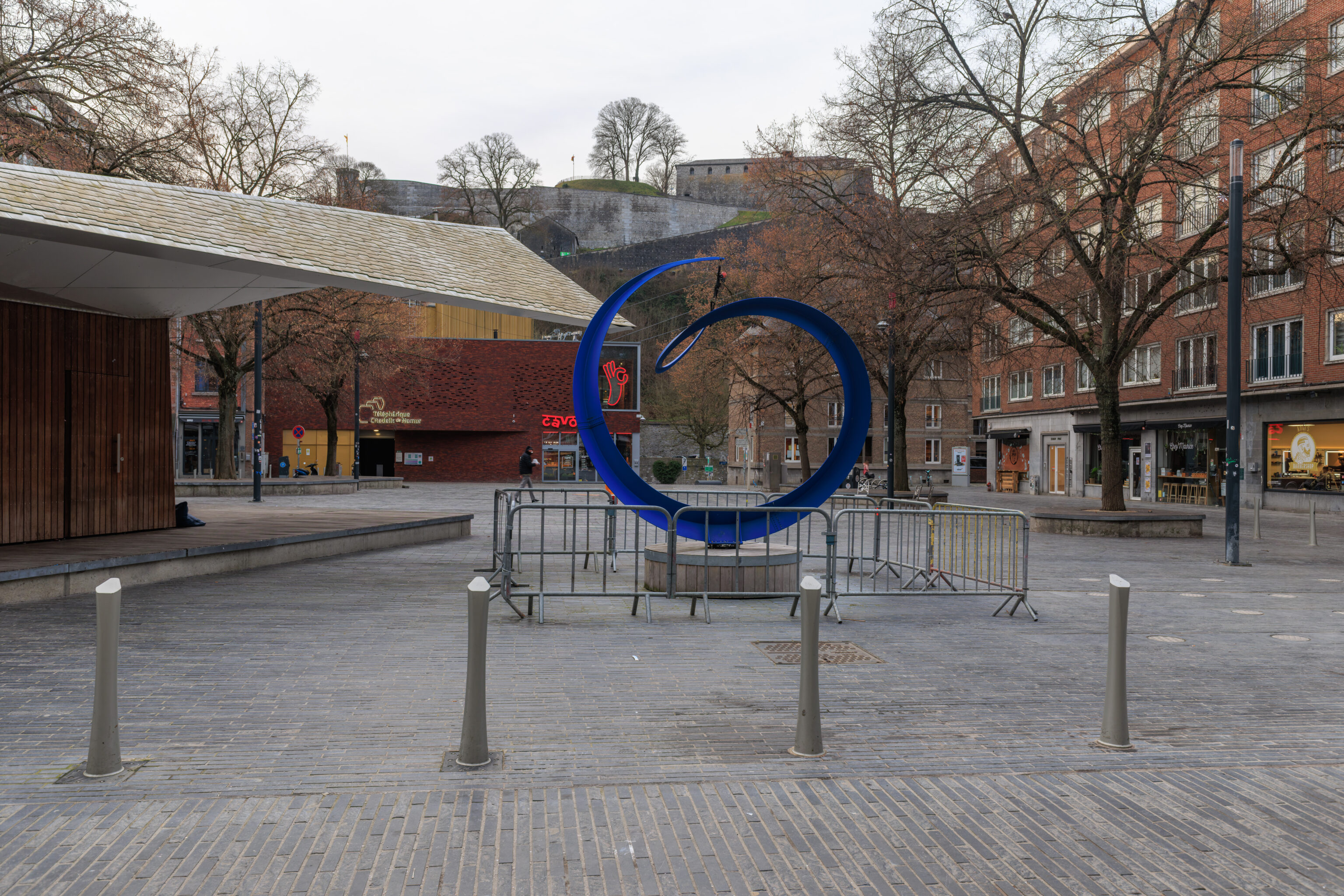
A sculpture of some sort…
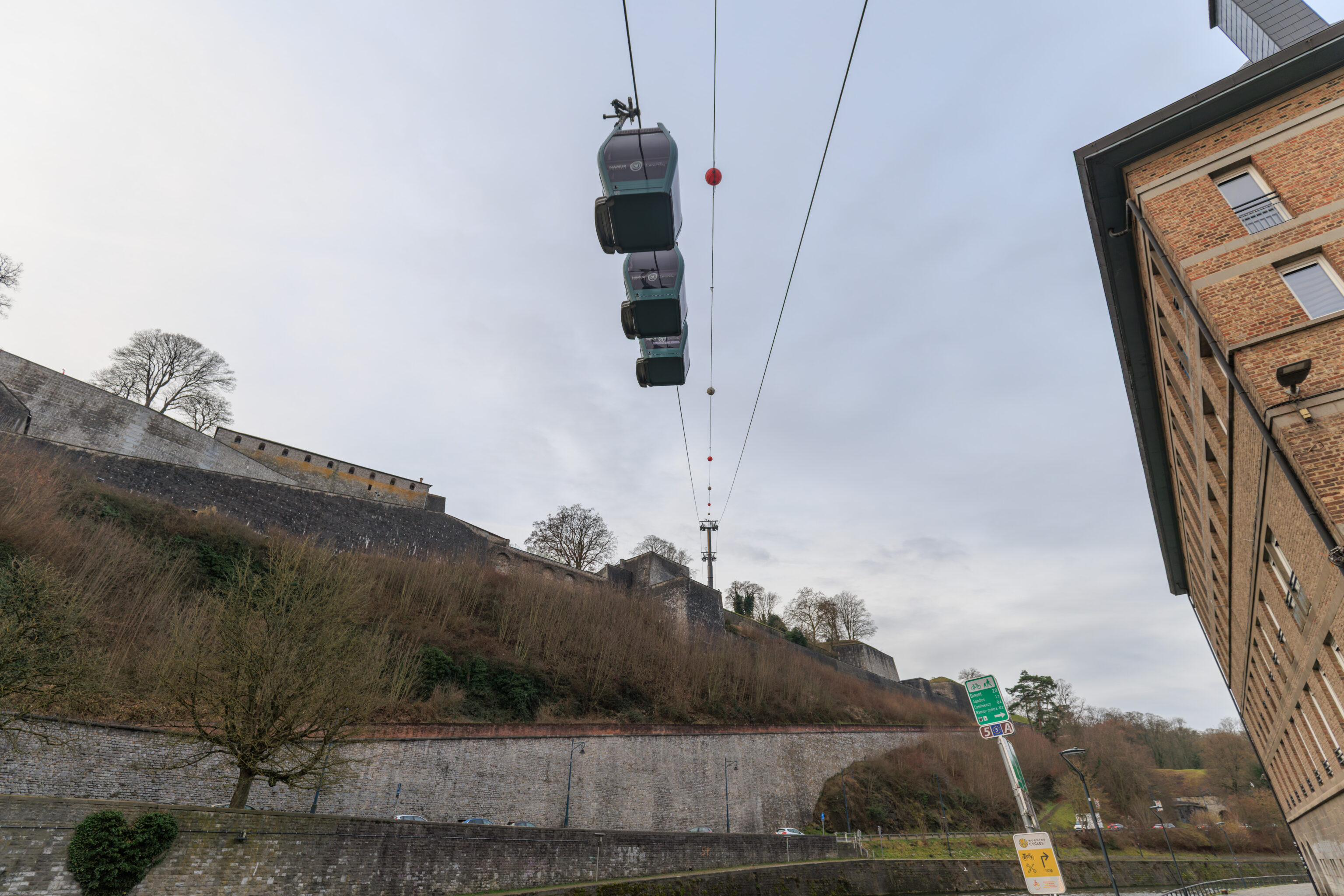
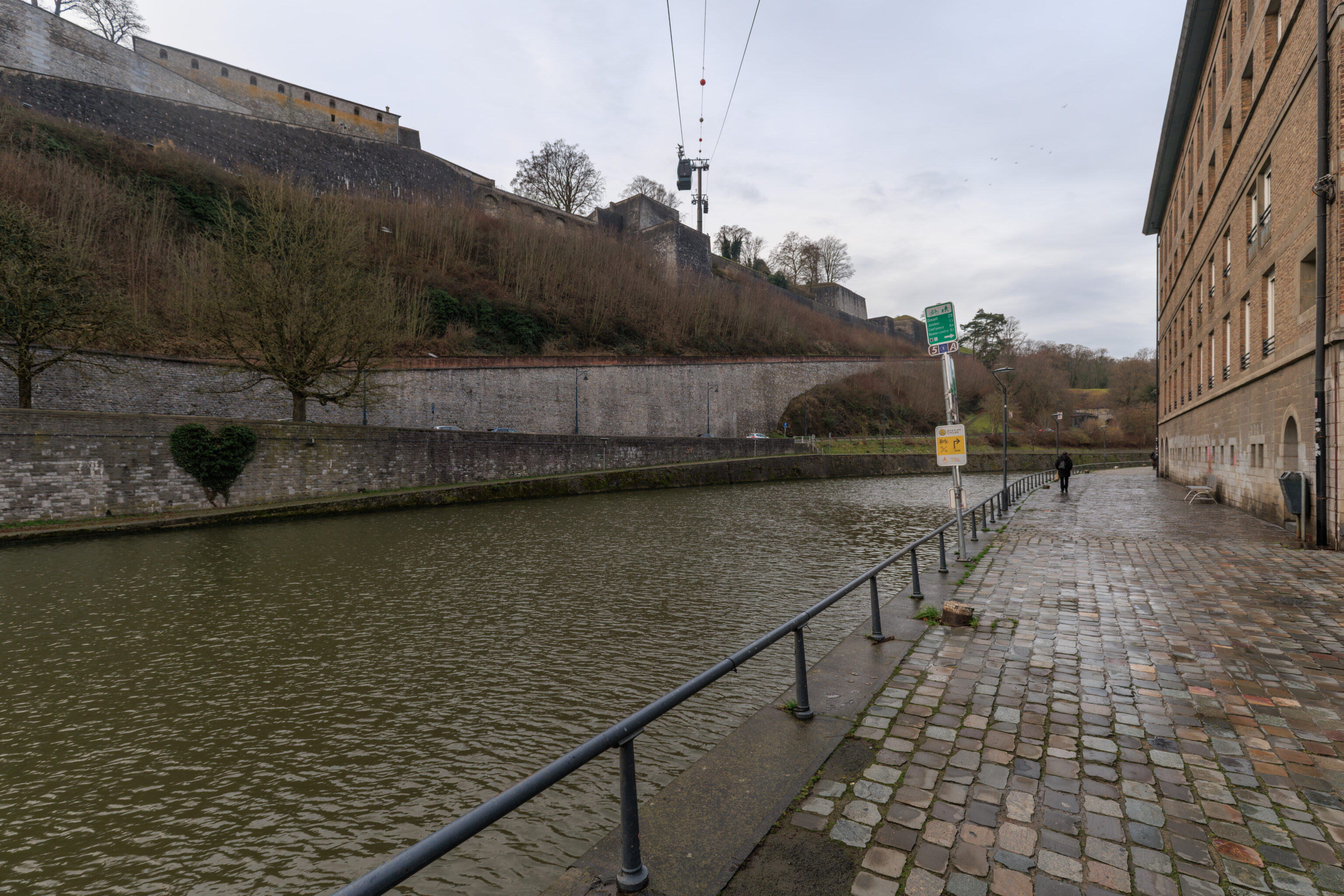
We continued past the station to the edge of the Sambre, a river that joins the much larger Meuse a short distance to the east. The Citadelle de Namur was in front of us, occupying the top of the hill between the Sambre and Meuse, with the hill and fortifications descending to where the two rivers meet.
Also, from this location, we could see the gondola cabins pass above us. This gondola system is interesting because it operates as groups of three cabins. We’re not sure why they opted for this design rather than having them evenly spaced.
It reminded us quite a bit of the Téléphérique de Grenoble, which we rode on last November. Other than the system in Grenoble having unique and much more visually attractive spherical cabins rather than these very standard gondola cabins, they were similar in that the lower station is next to a river. The line ascends over the river and up a hill, which contains a fortress.
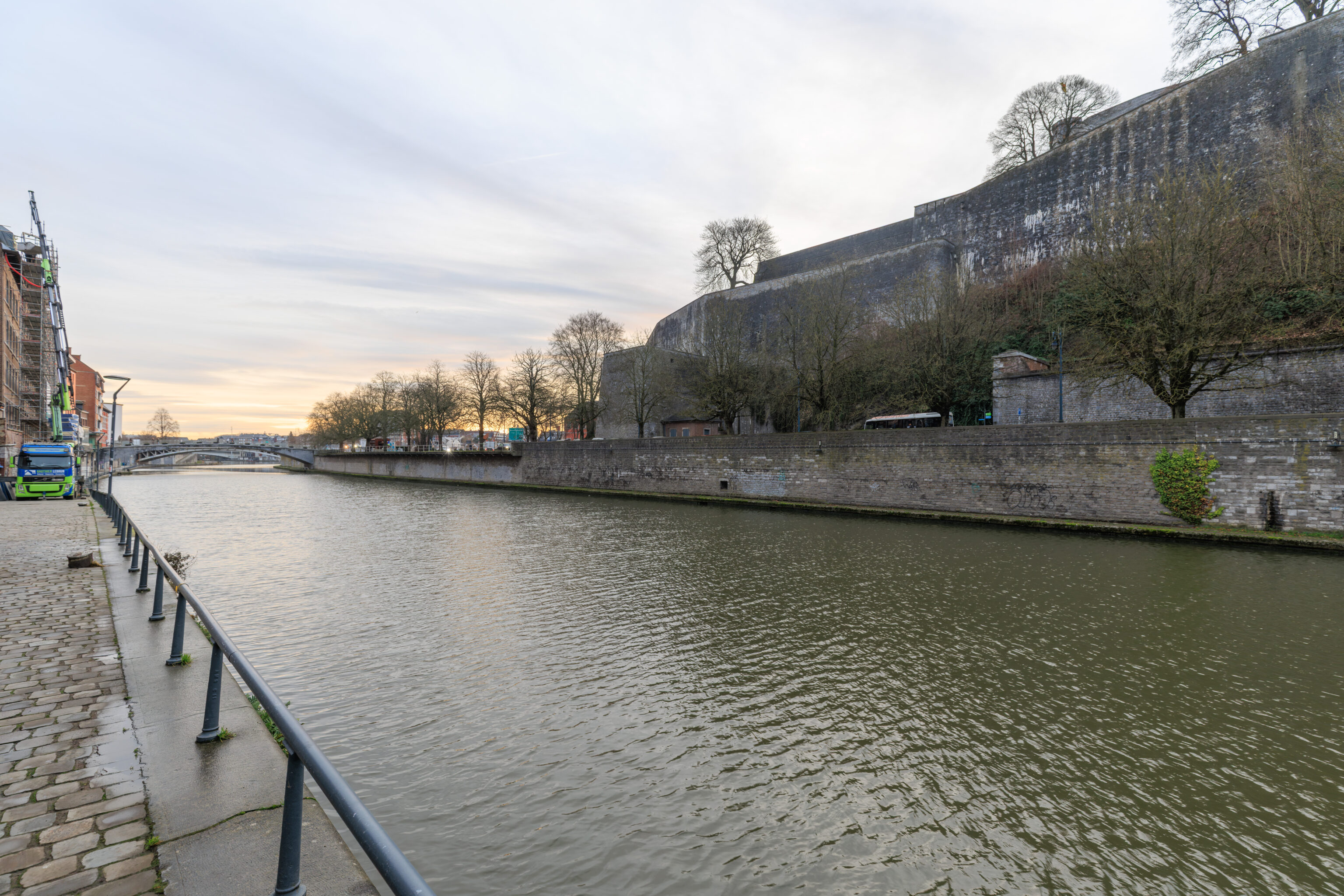
Looking to the east, we can see how the fortifications atop the hill descend. The two rivers merge not far past the bridge in the background. This wide angle view makes it look far away but its probably just a five minute walk or so.
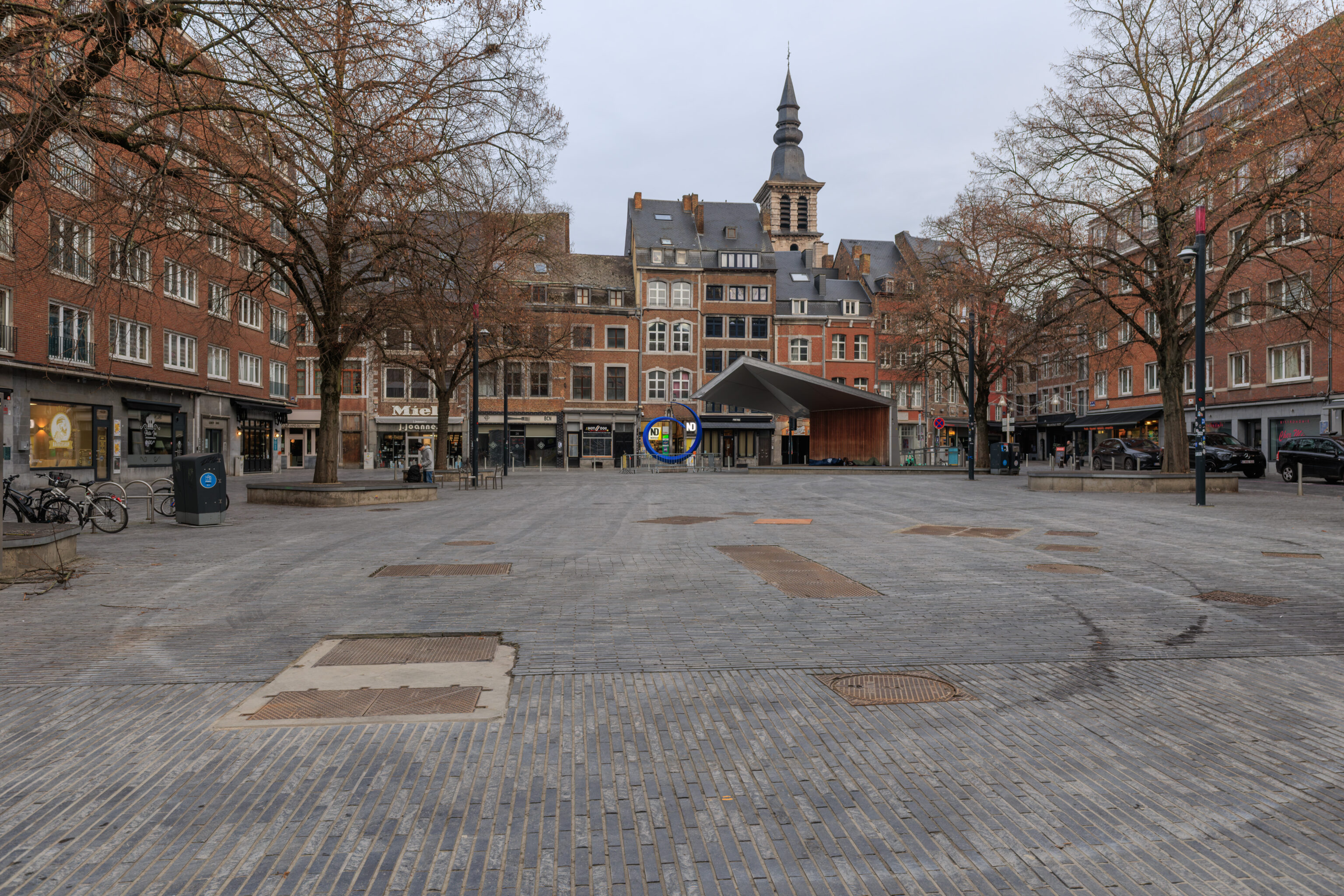
We returned to the square to take the gondola up to the citadel. We bought tickets to go up but not down as we plan on walking down.
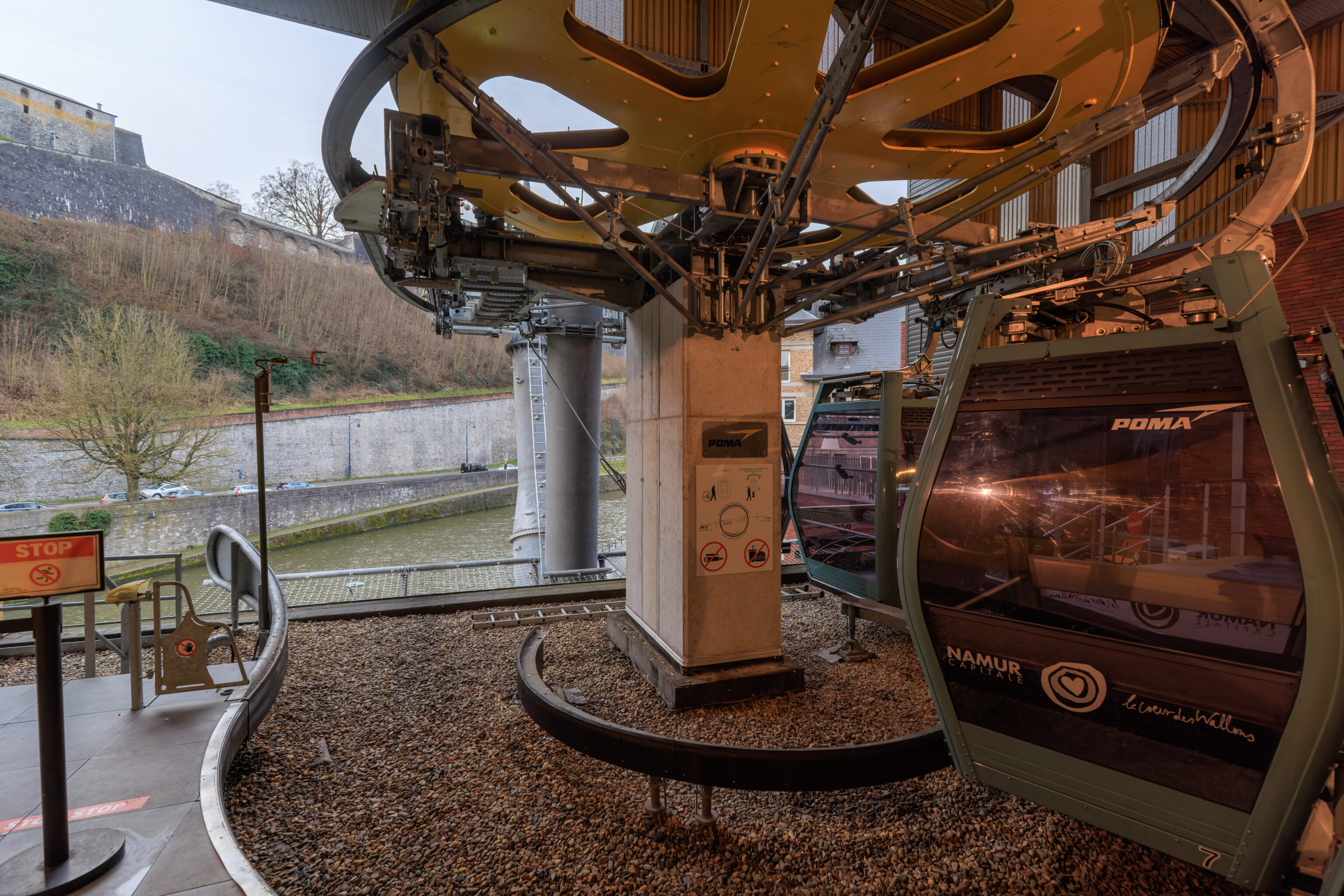
Other than the cabins being so close together, it really seems like a very standard gondola system.
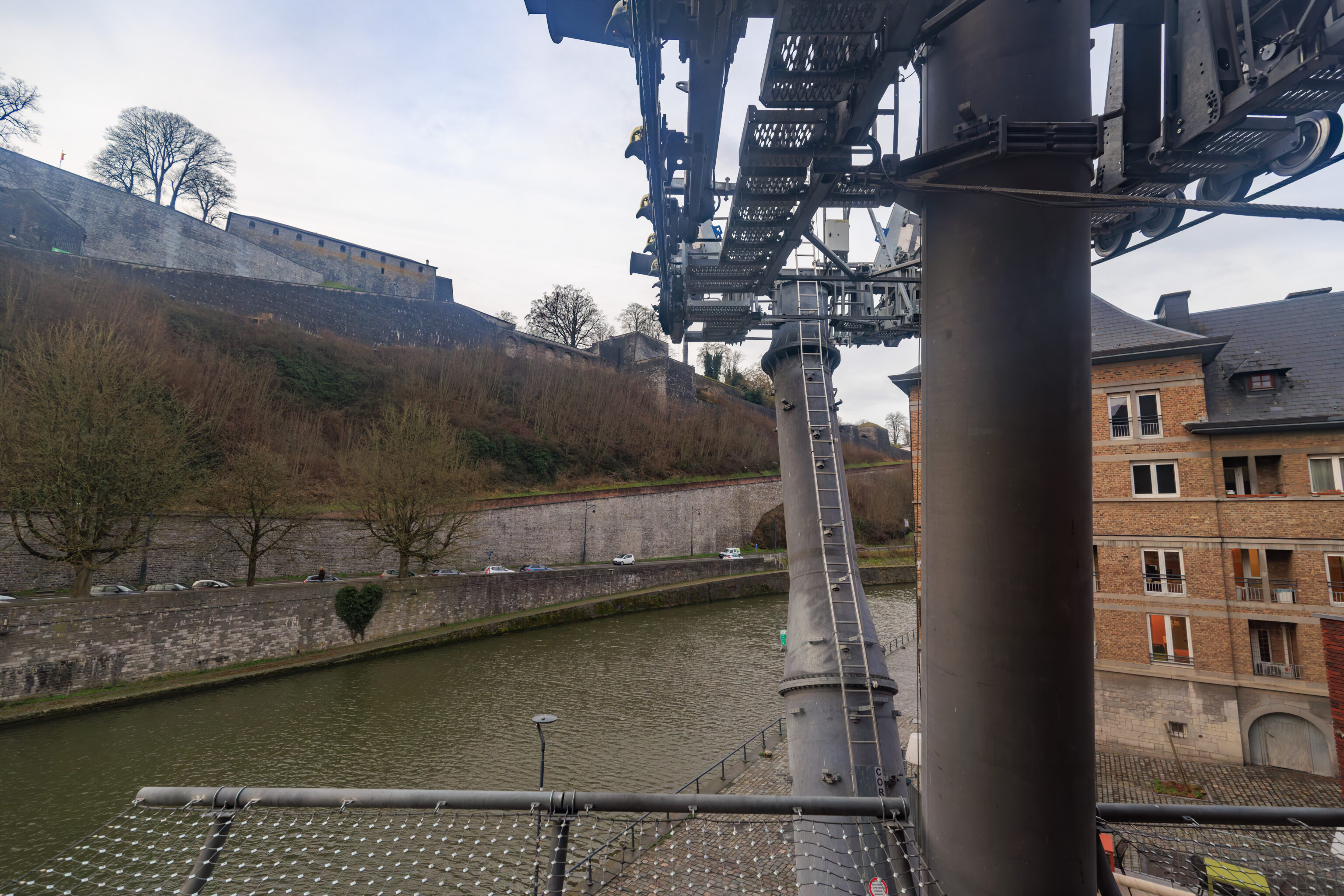
Here we go!
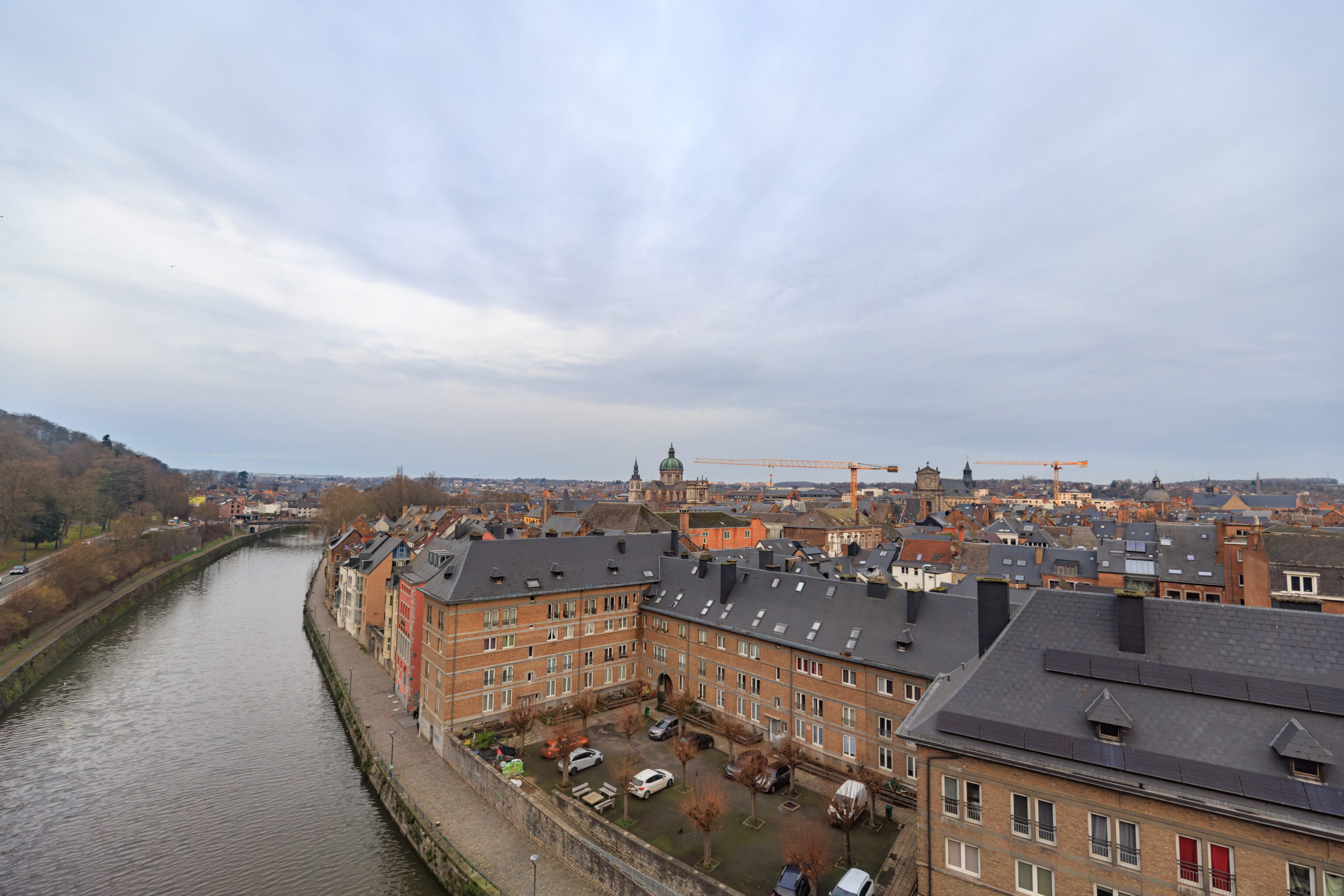
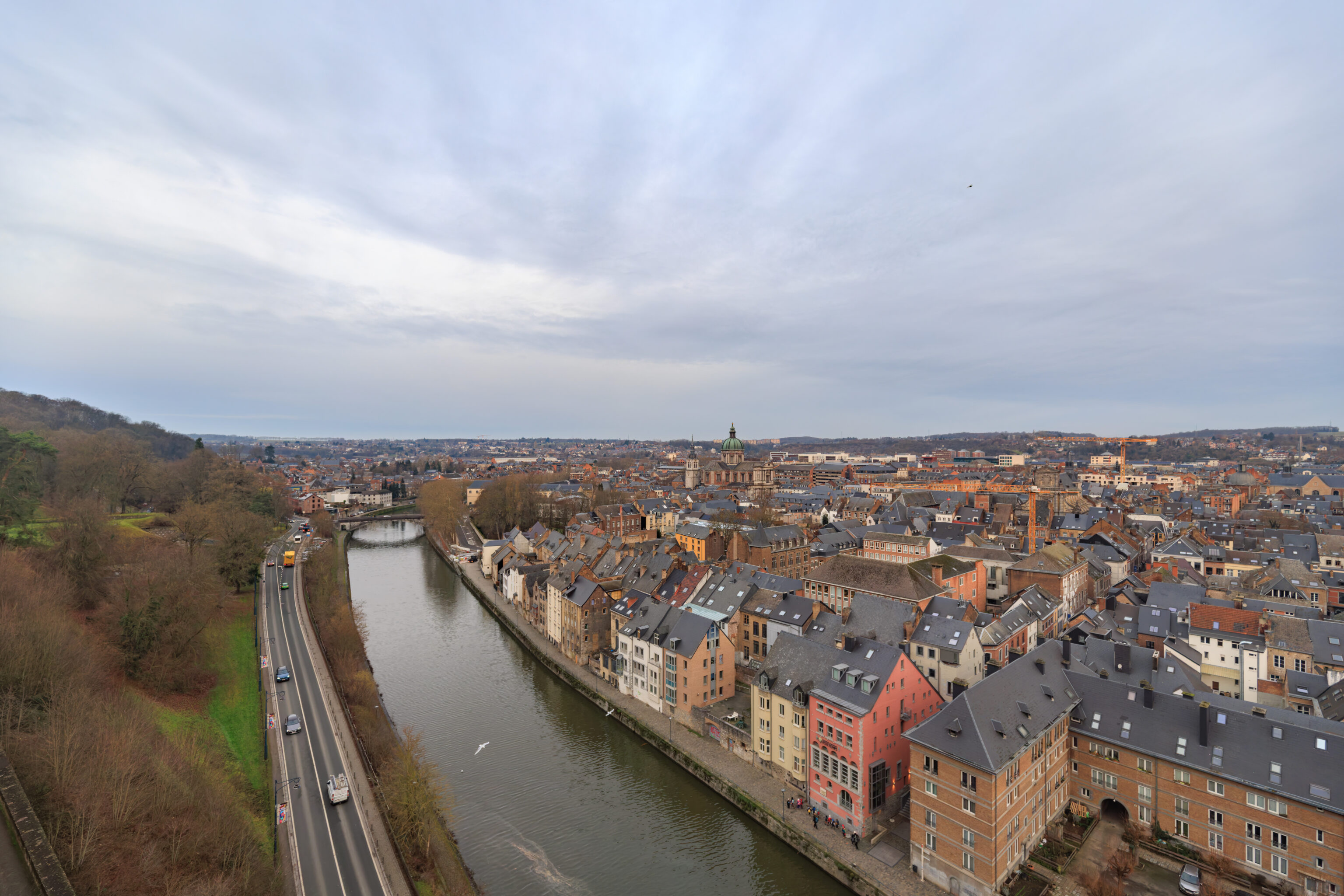
We had a nice view of the Sambre and the city as we ascended.
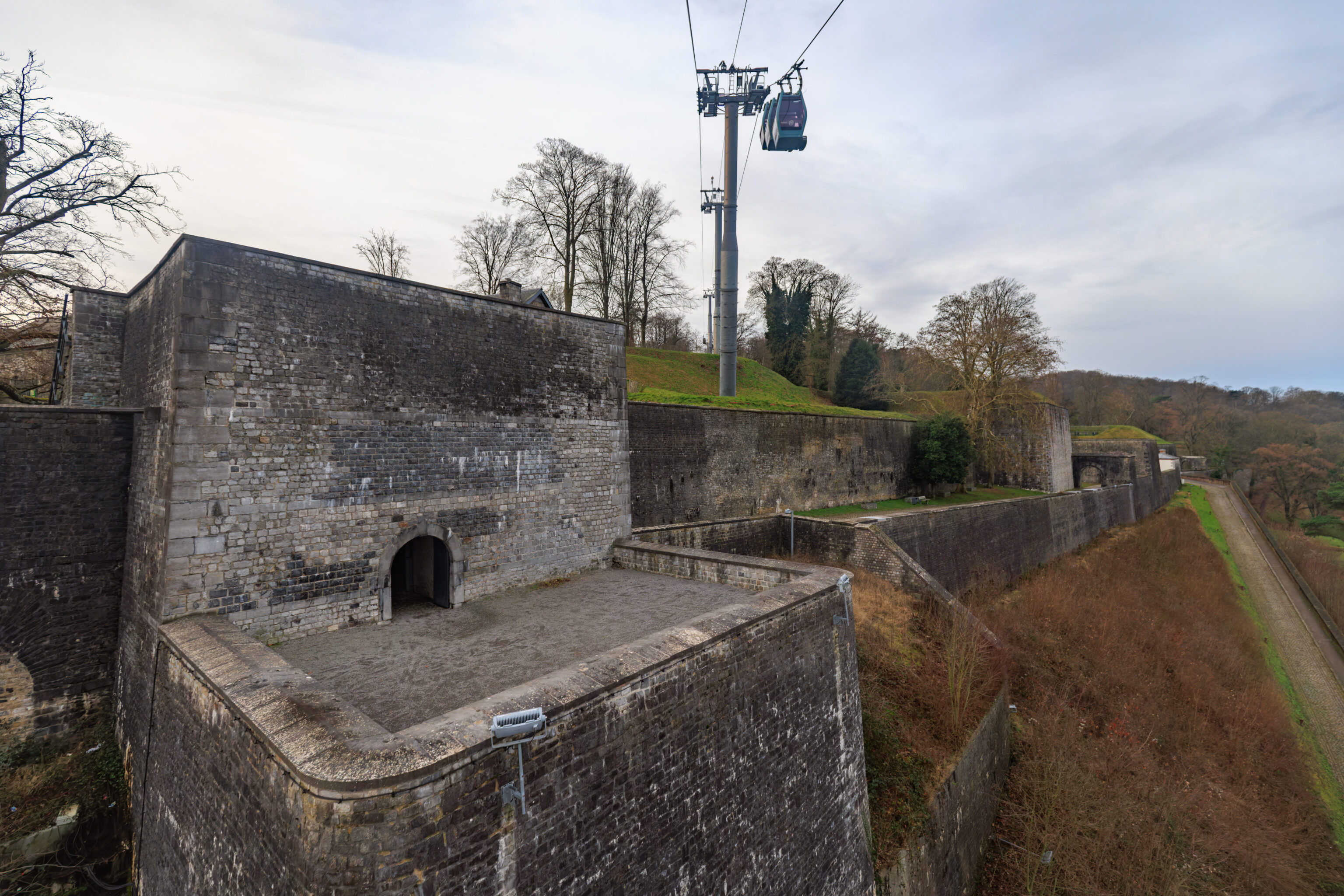
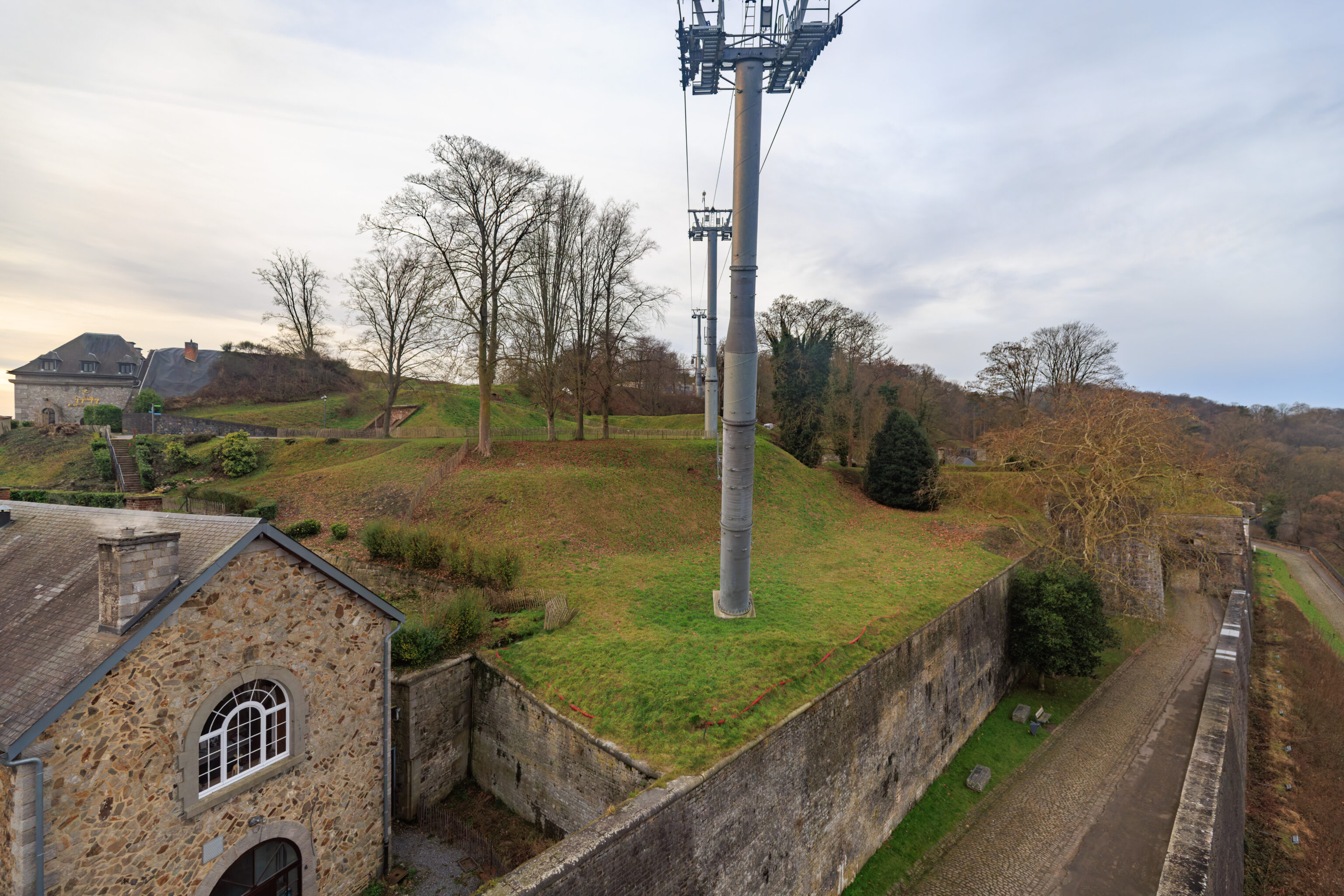
Soon, we started to pass above the fortifications below.
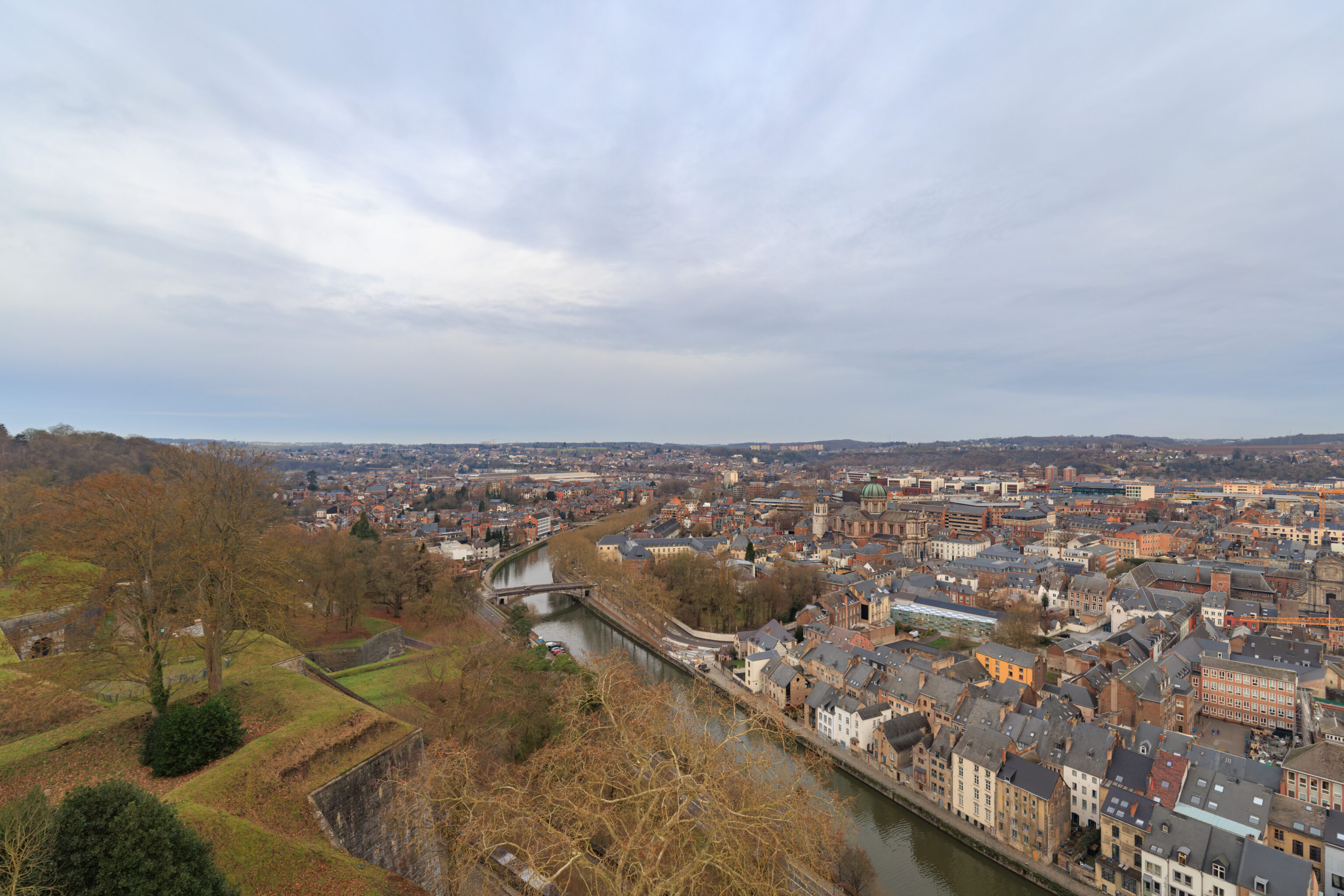
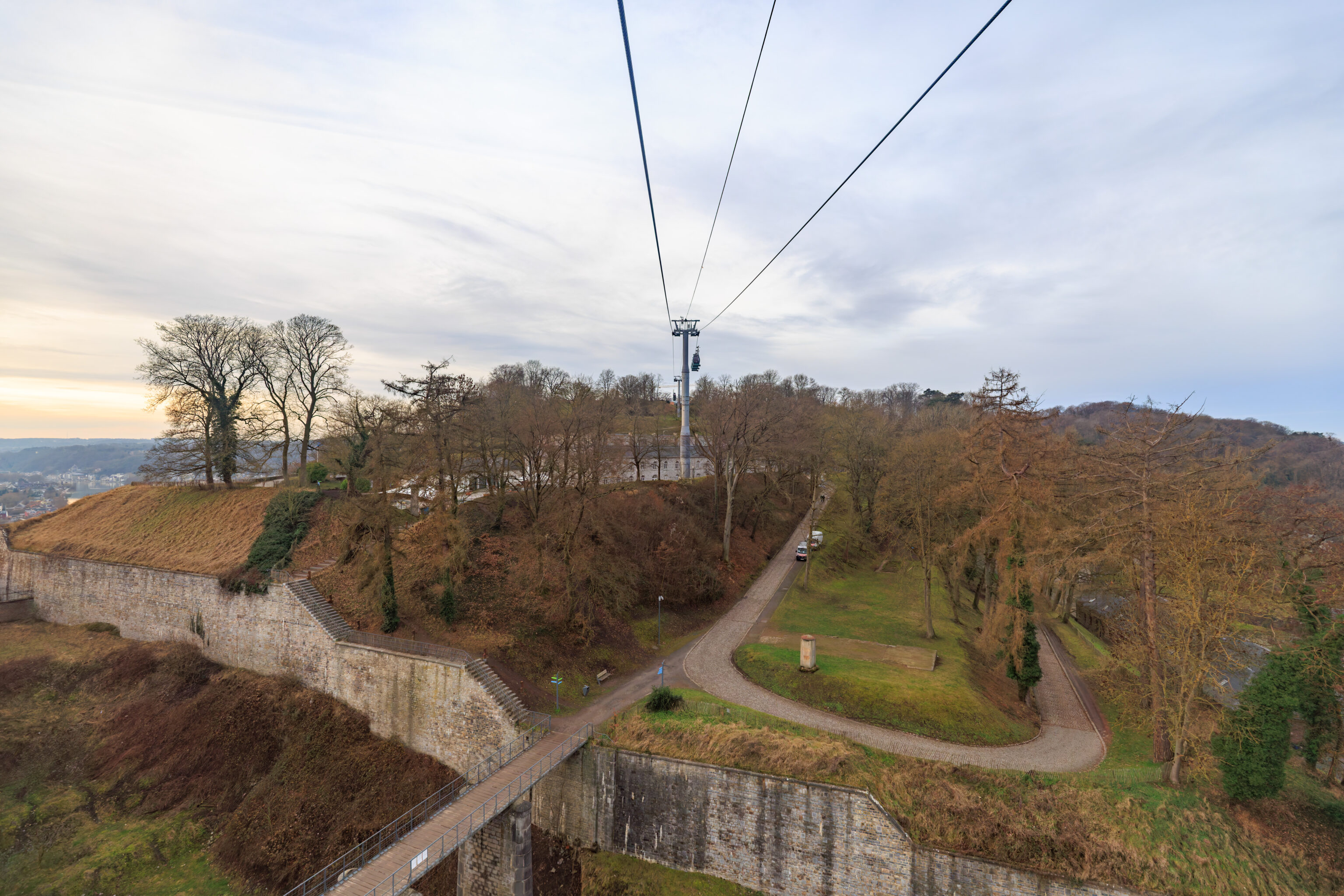
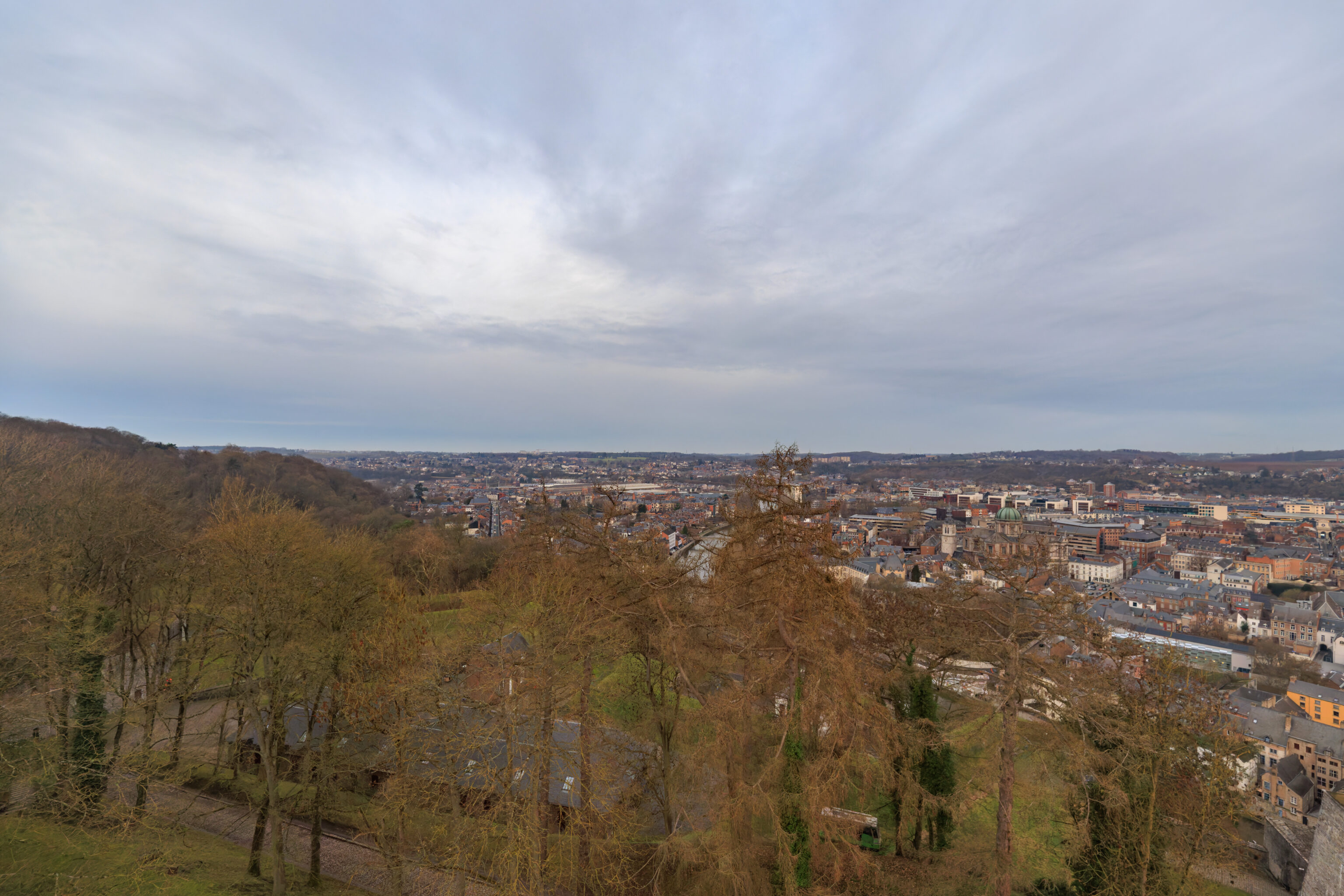
The cableway leveled off pretty quickly once we ascended above the northern edge of the fortifications below.
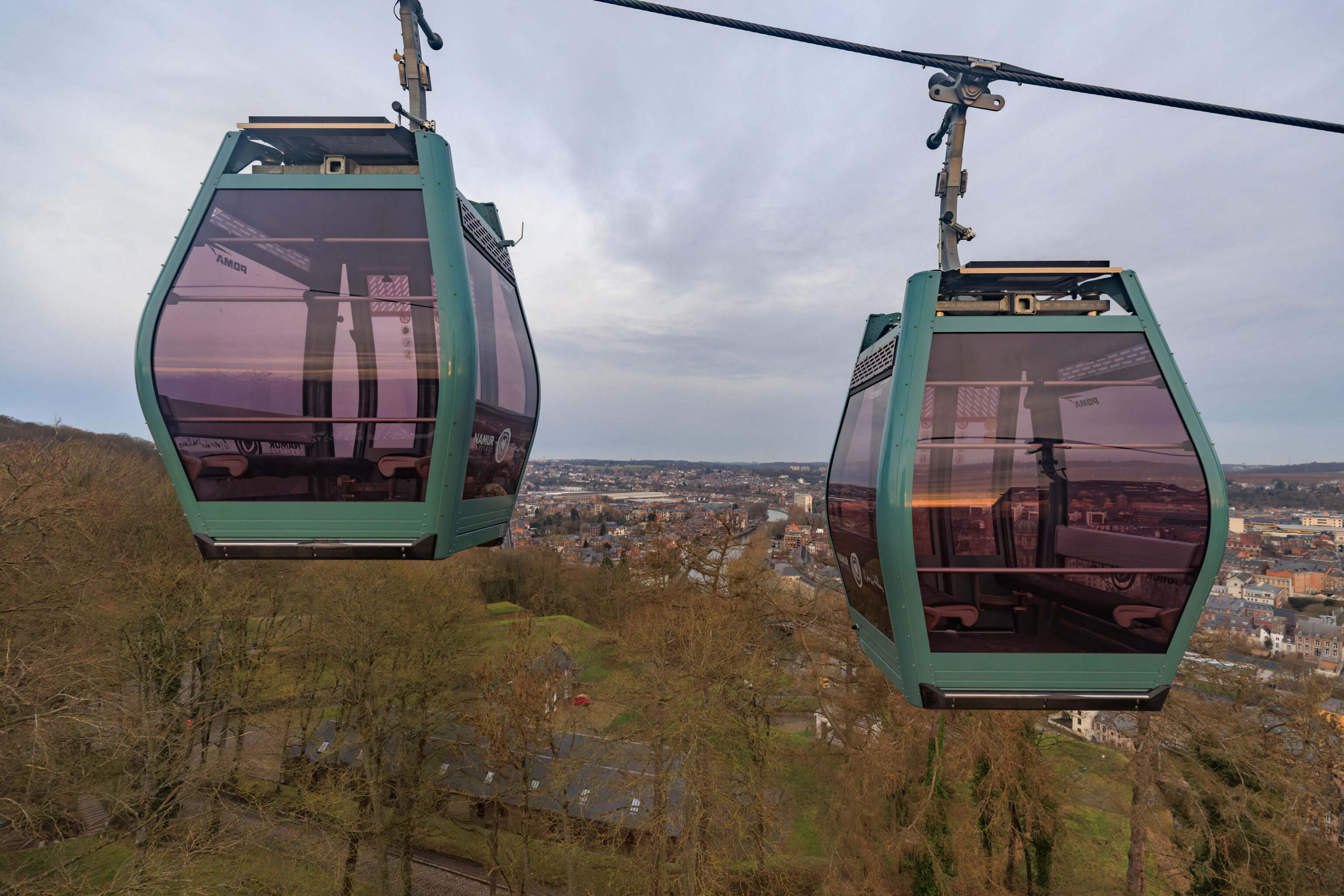
Two cabins from a trio on their way down.
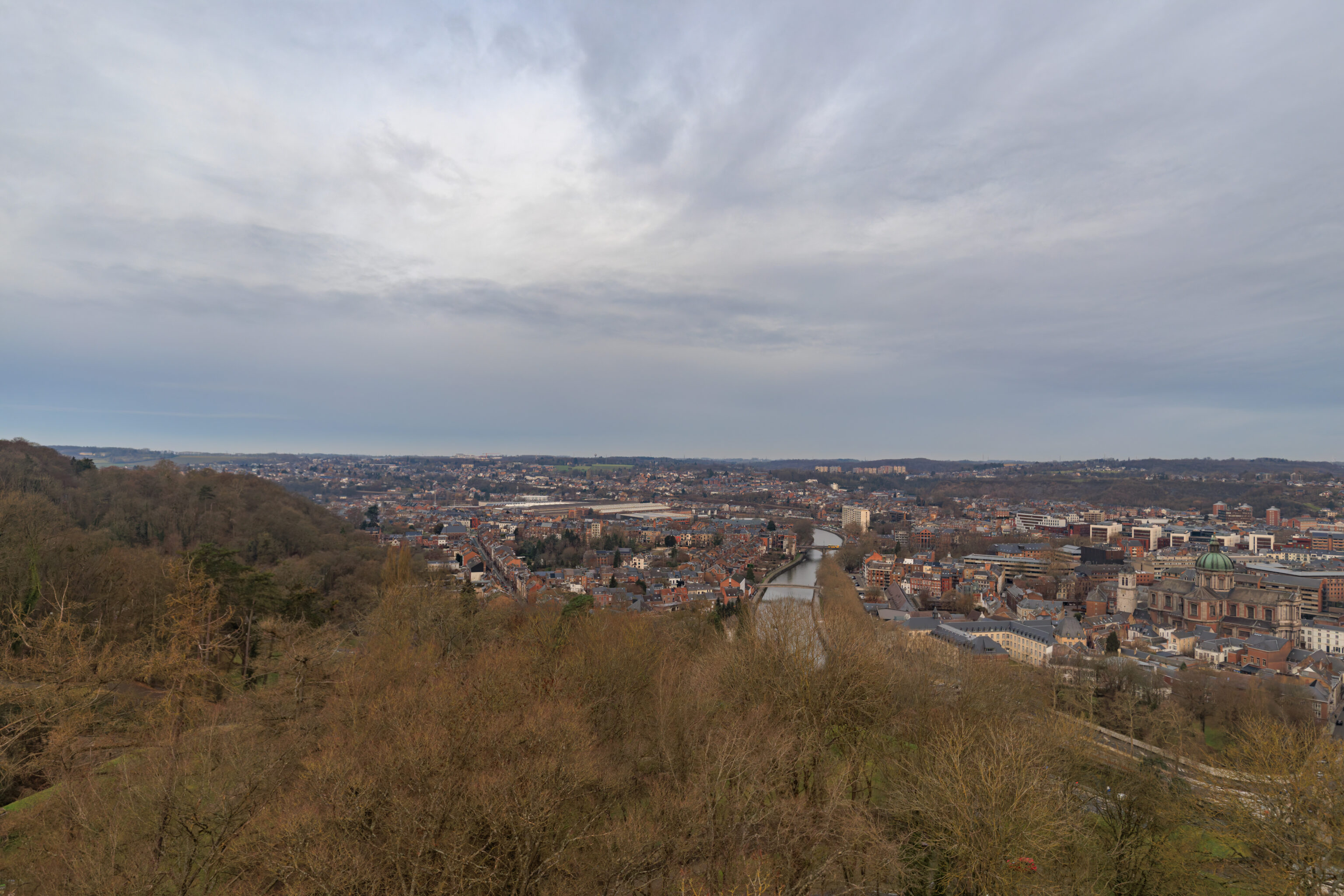
We now had a much wider view of the western half of Namur below. It should be pretty obvious from these photographs that the weather did not look good. The sky was overcast and it was dark.
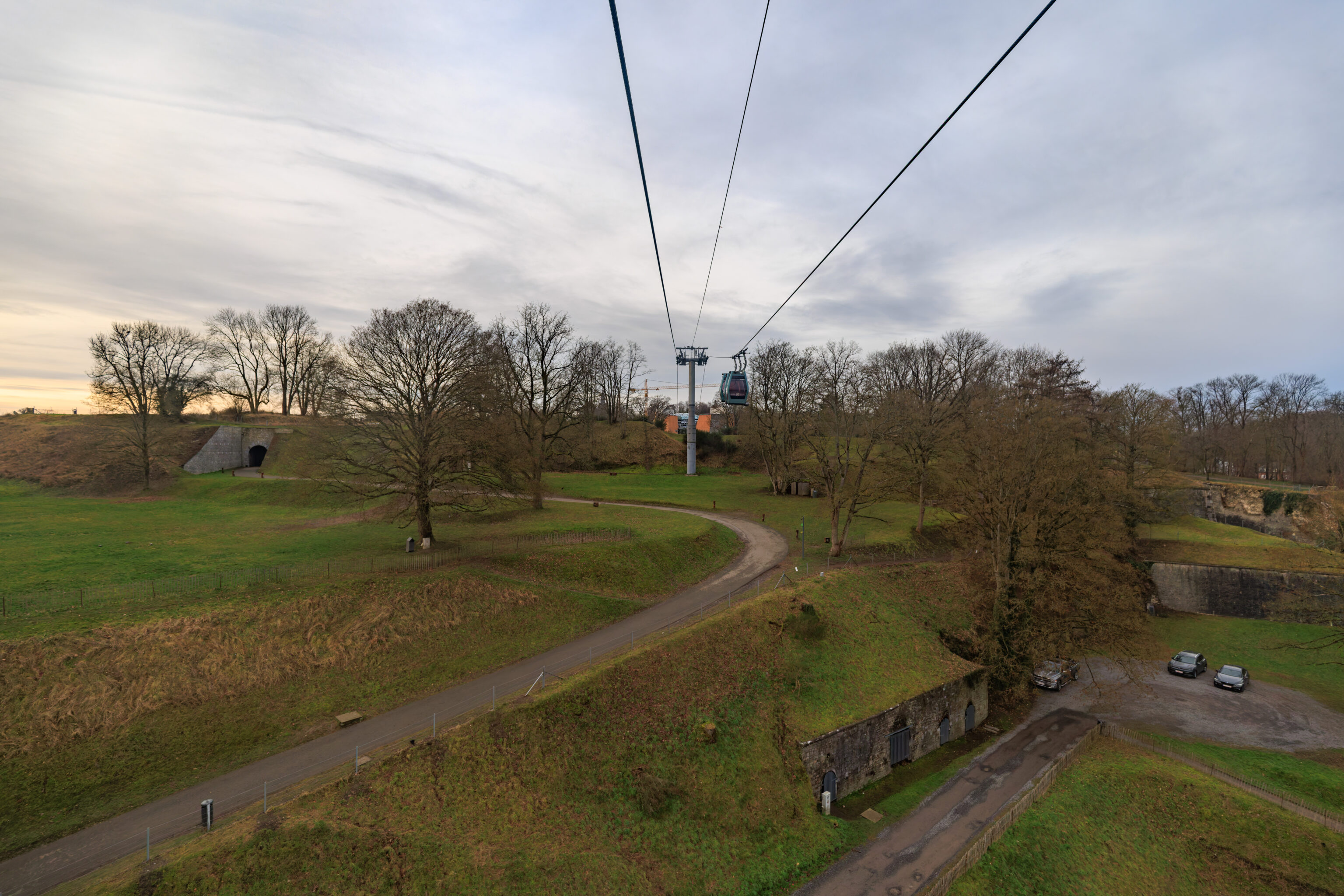
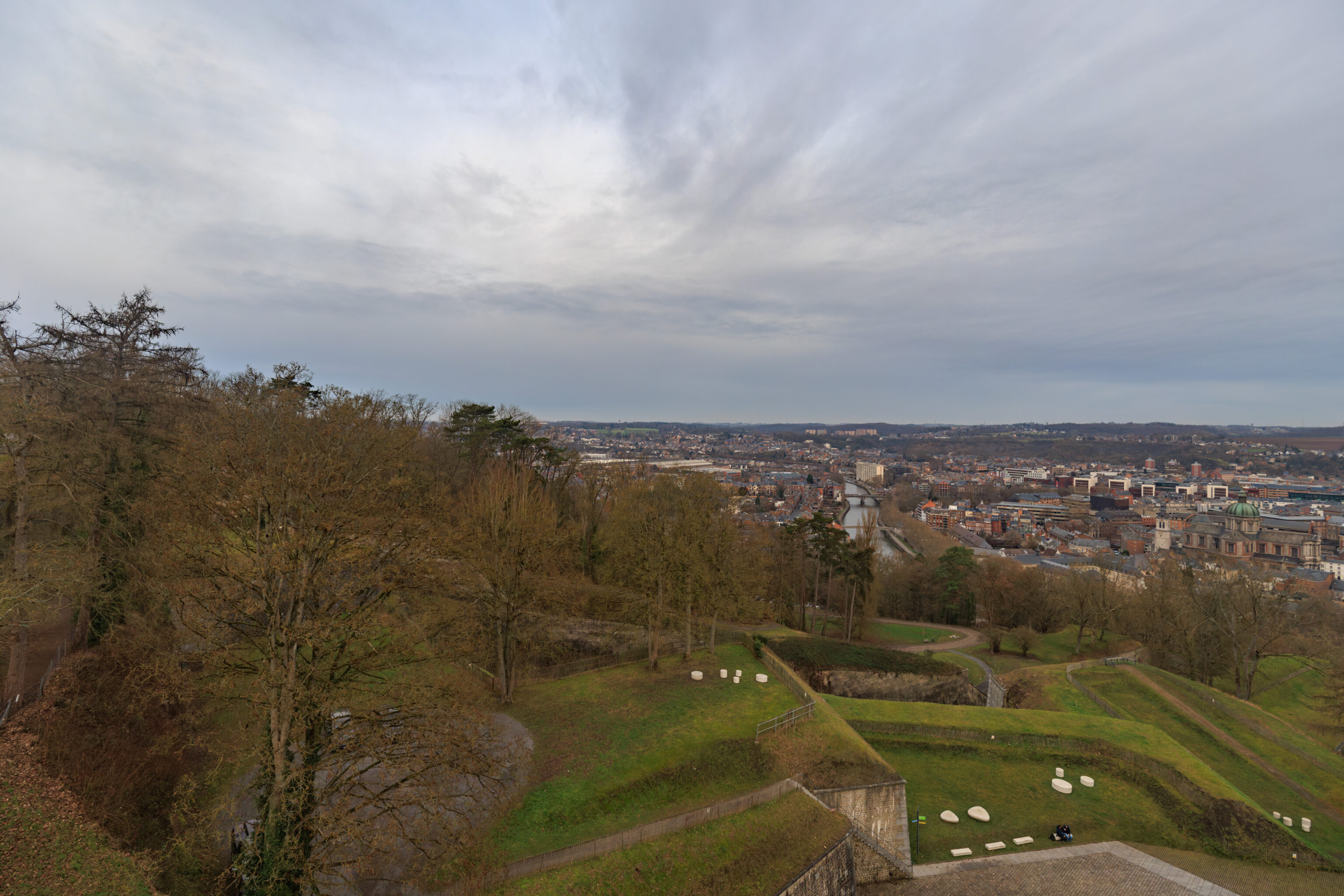
Nearly the entire route was above the citadel!
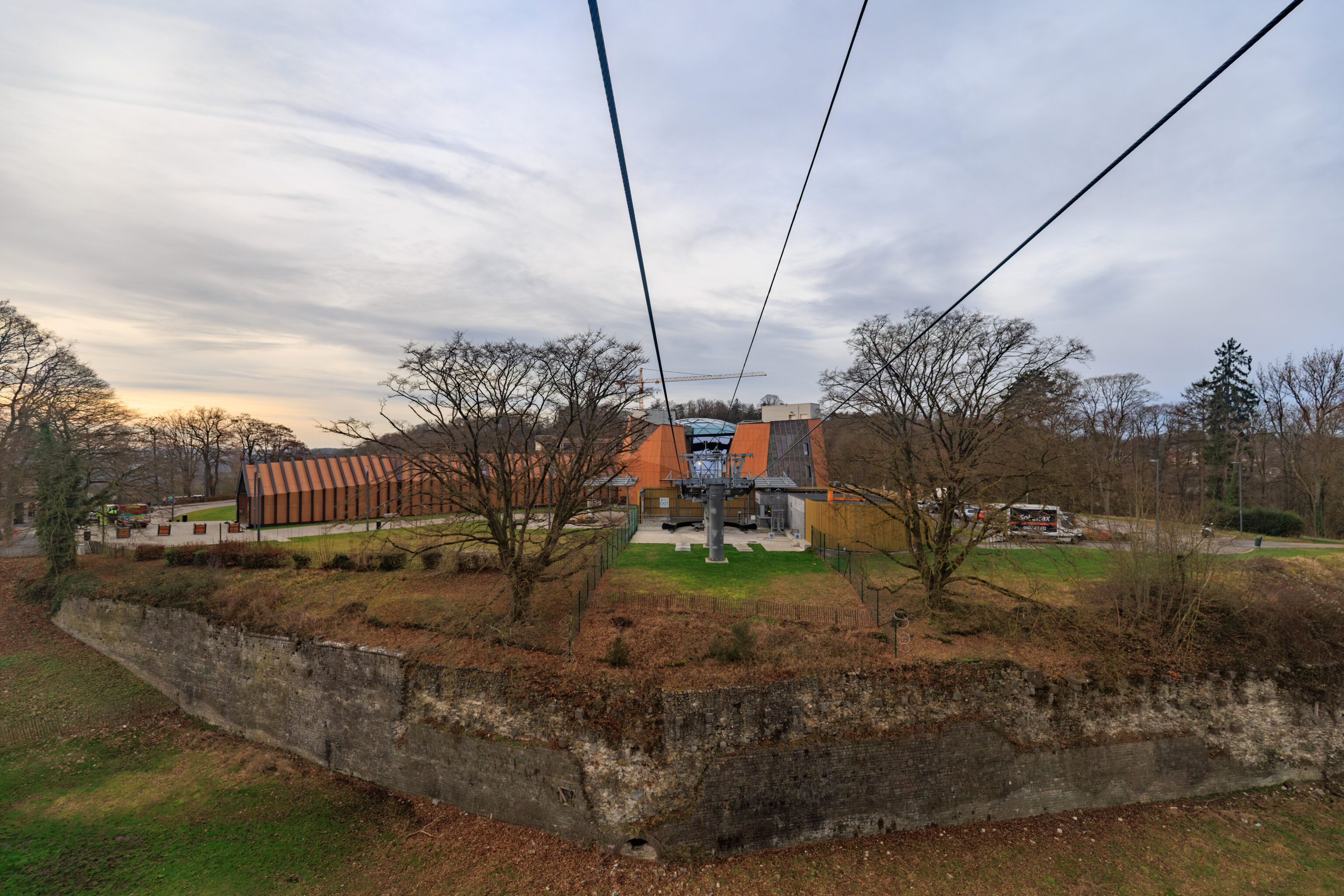
Soon, we saw the upper terminal of the gondola ahead.
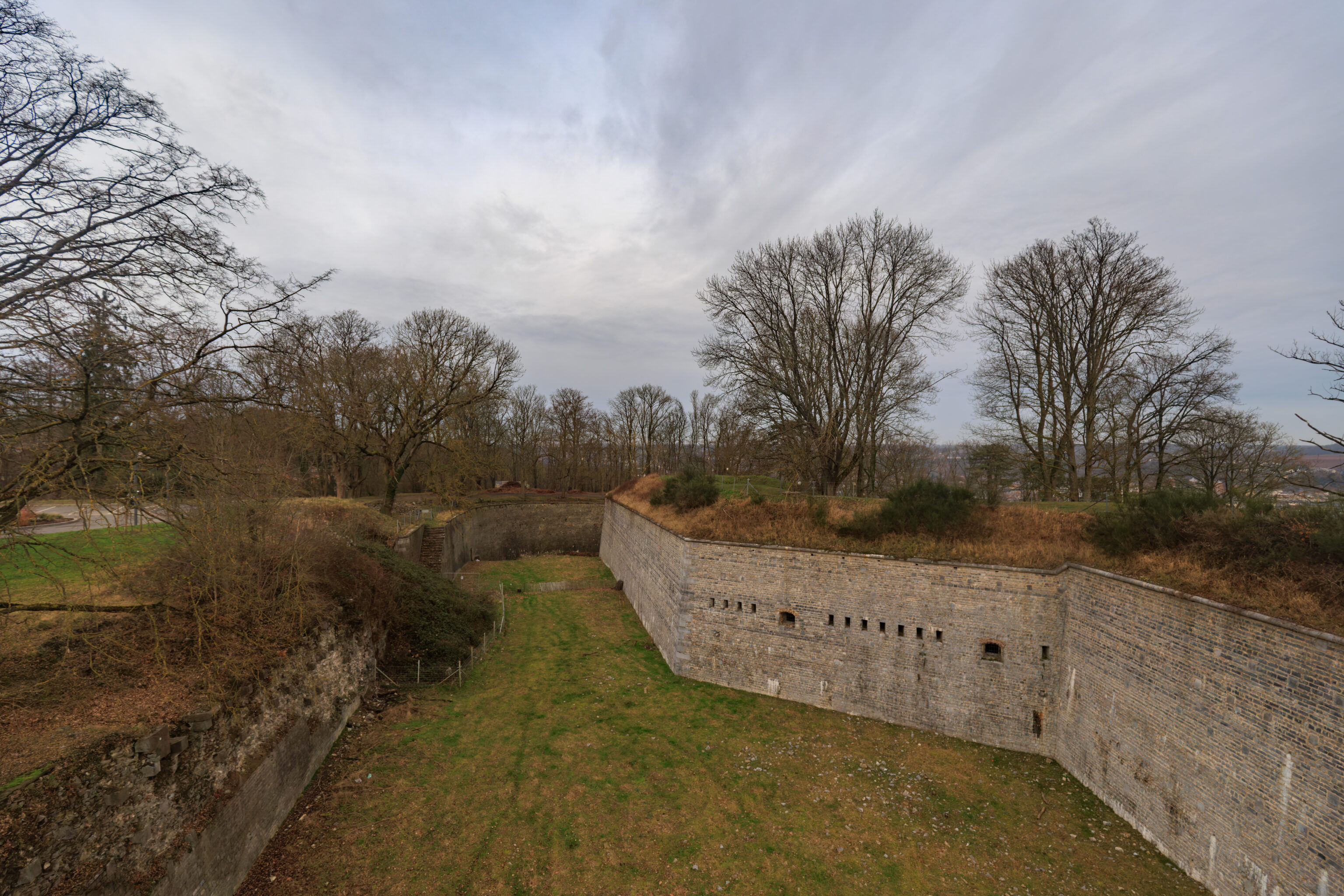
We passed over one additional section of wall before arriving. The trip was pretty quick, taking about 8 or 9 minutes.
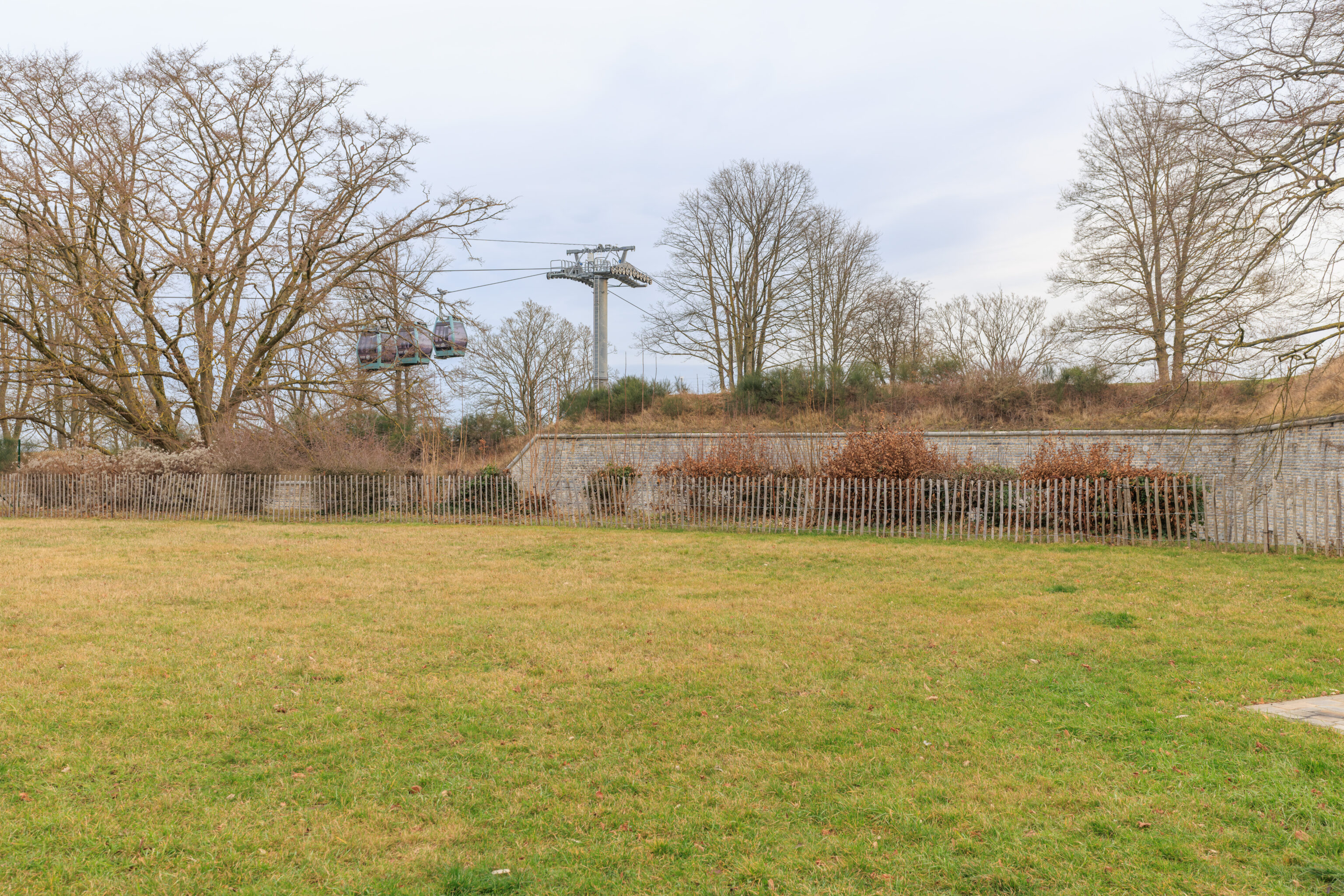
Once we arrived, we decided to walk around the area a bit before entering the citadel. Historically, this area here would have been part of the city’s defenses but in modern times, that last section of wall that we passed over is as about as far it goes. This was the view looking to the north towards the cableway as we walked away.
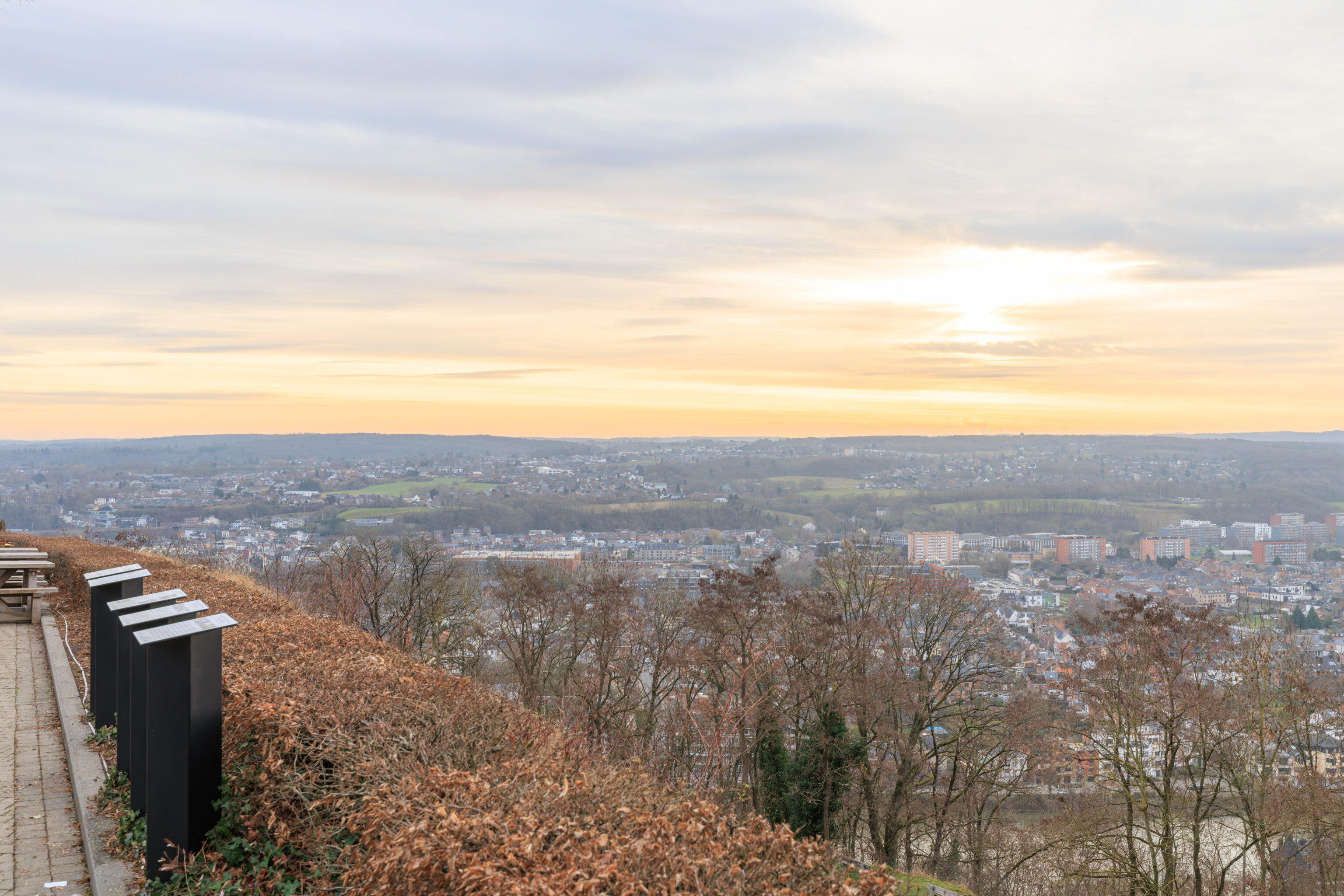
Just to the south of the gondola station, there is a restaurant, Le Panorama. Their outdoor patio is at the edge of the cliff above the Meuse, which is below to the southeast here. We couldn’t access the patio but were able to get a glimpse of southeastern Namur from just outside the patio’s fence.
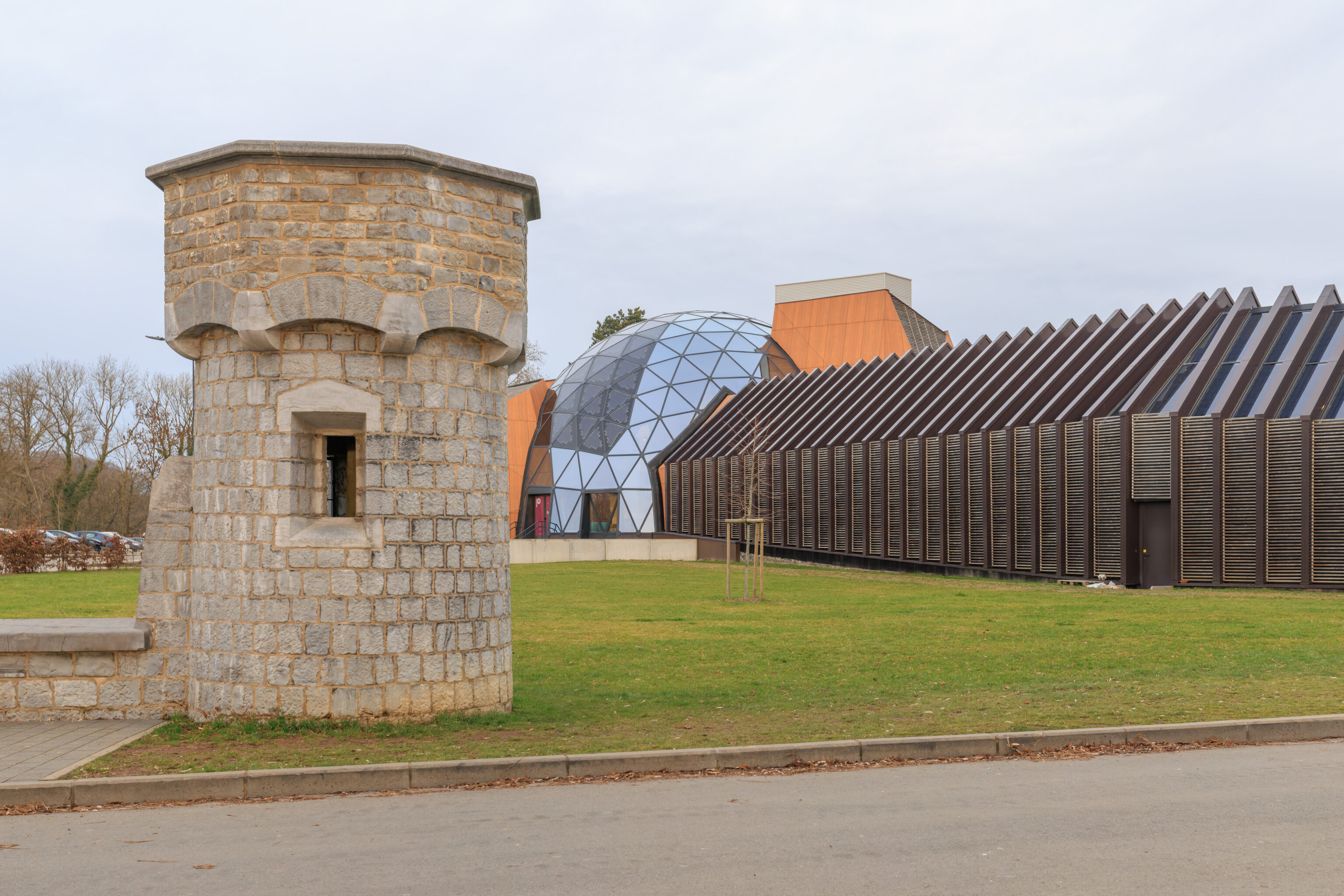
There was a little tower across the street from Le Panorama. And, in between the restaurant and gondola station, the was a very modern building. It is Le Pavillon, which seems to be an exhibition center.
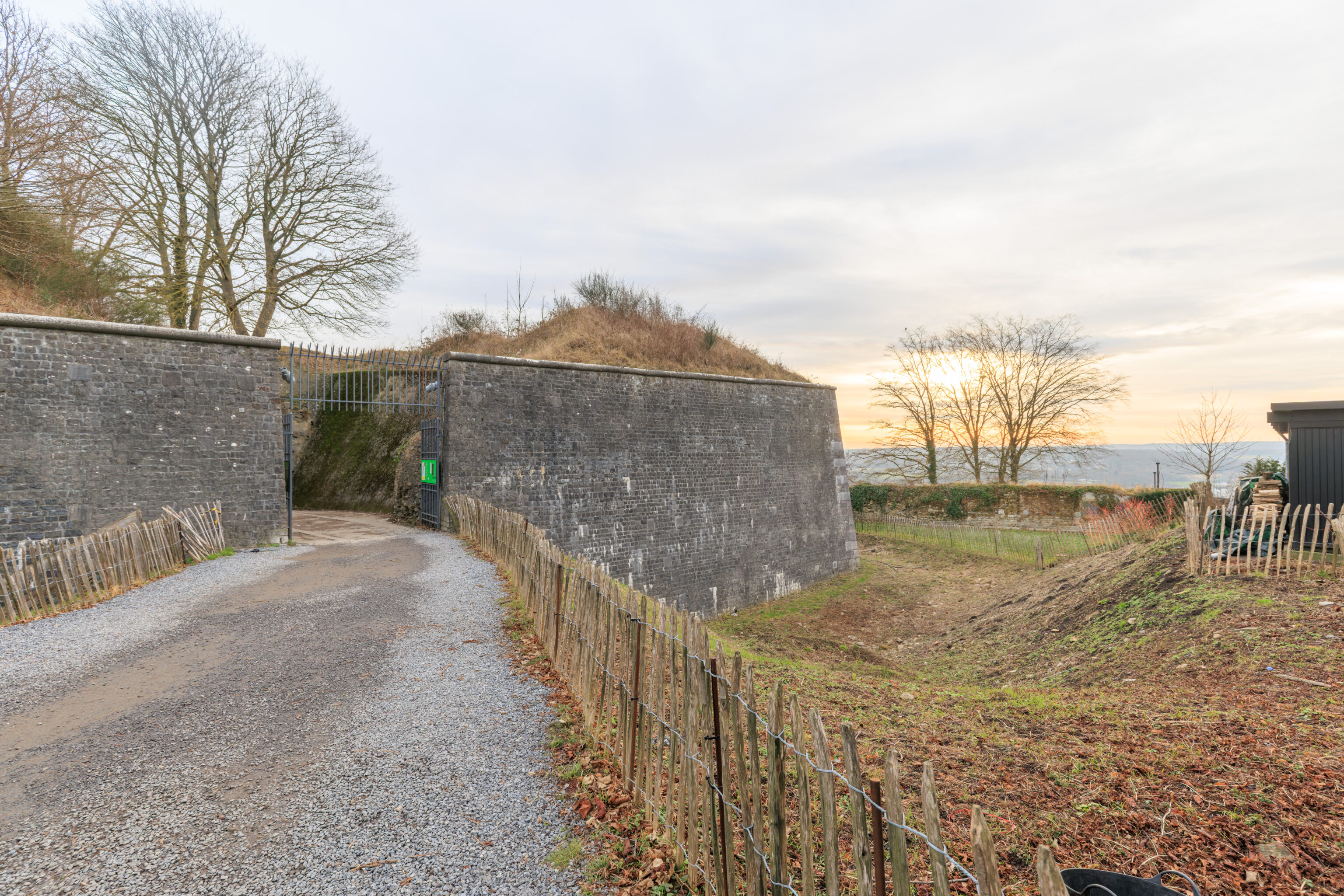
We considered walking further to the southwest but decided instead to head to the citadel. It seemed like there was an entrance nearby to the northeast. And there was!
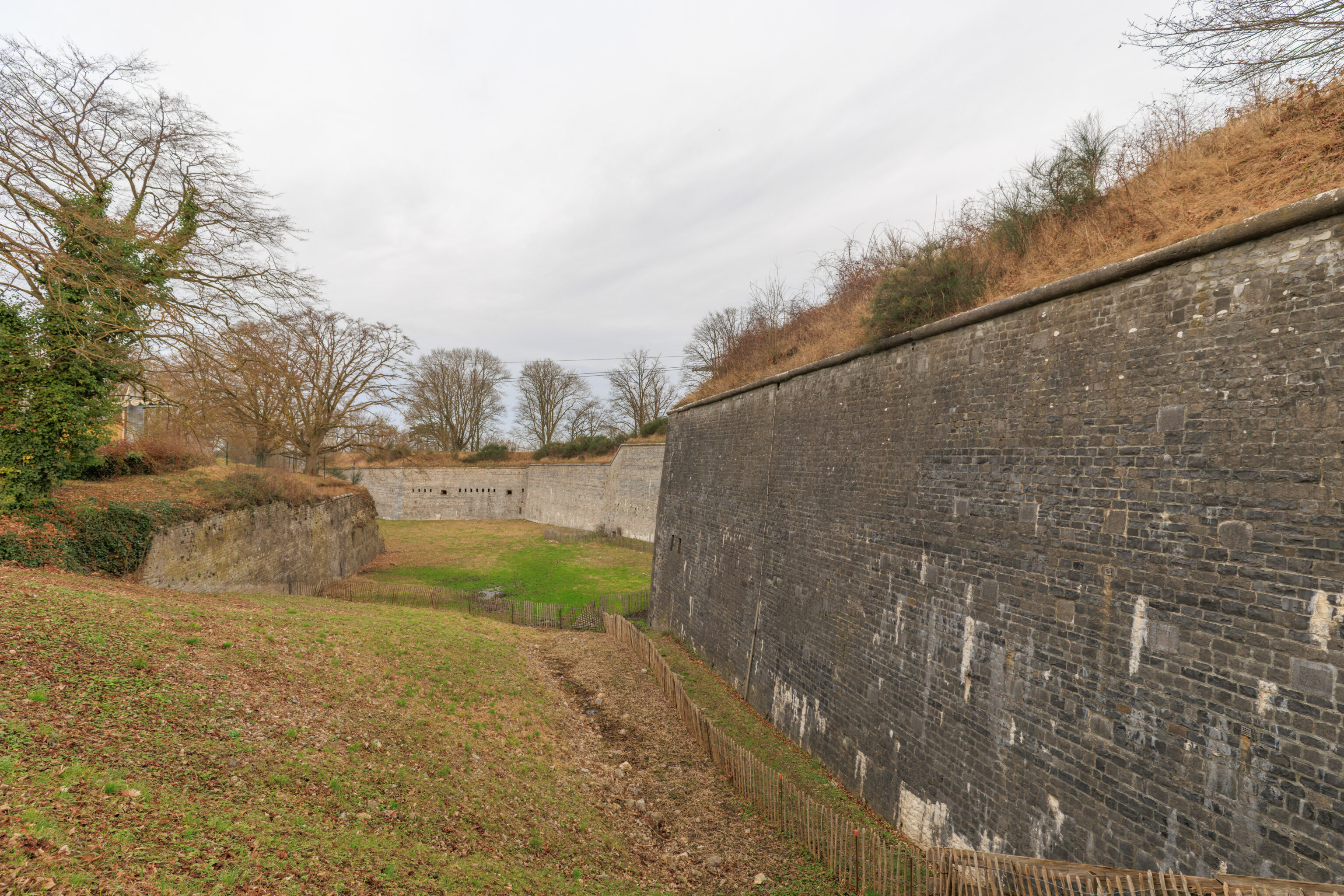
The view to the north includes the last section of the walls that we traveled over on the cableway.
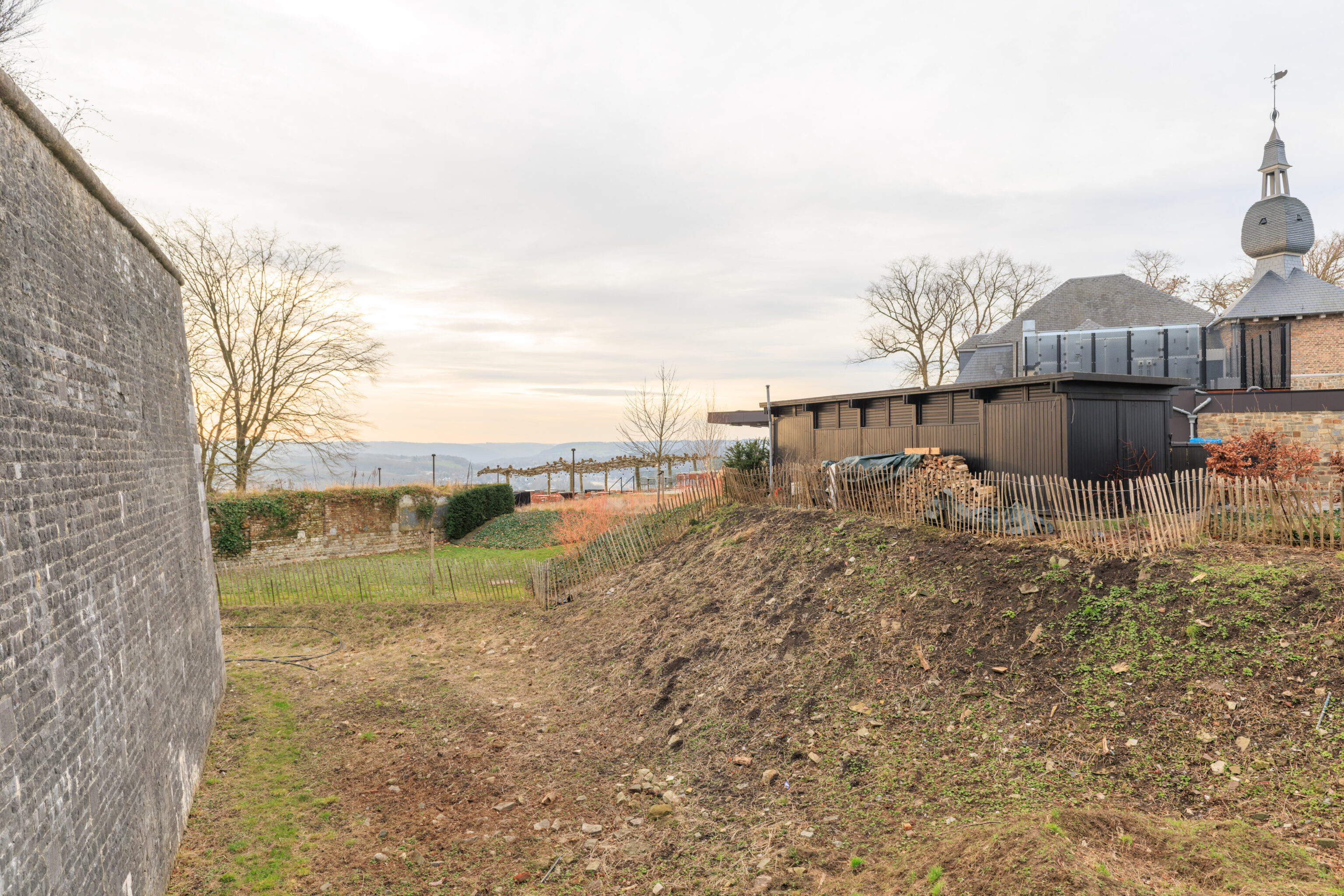
In the opposite direction, we could see Le Panorama and its outdoor patio.
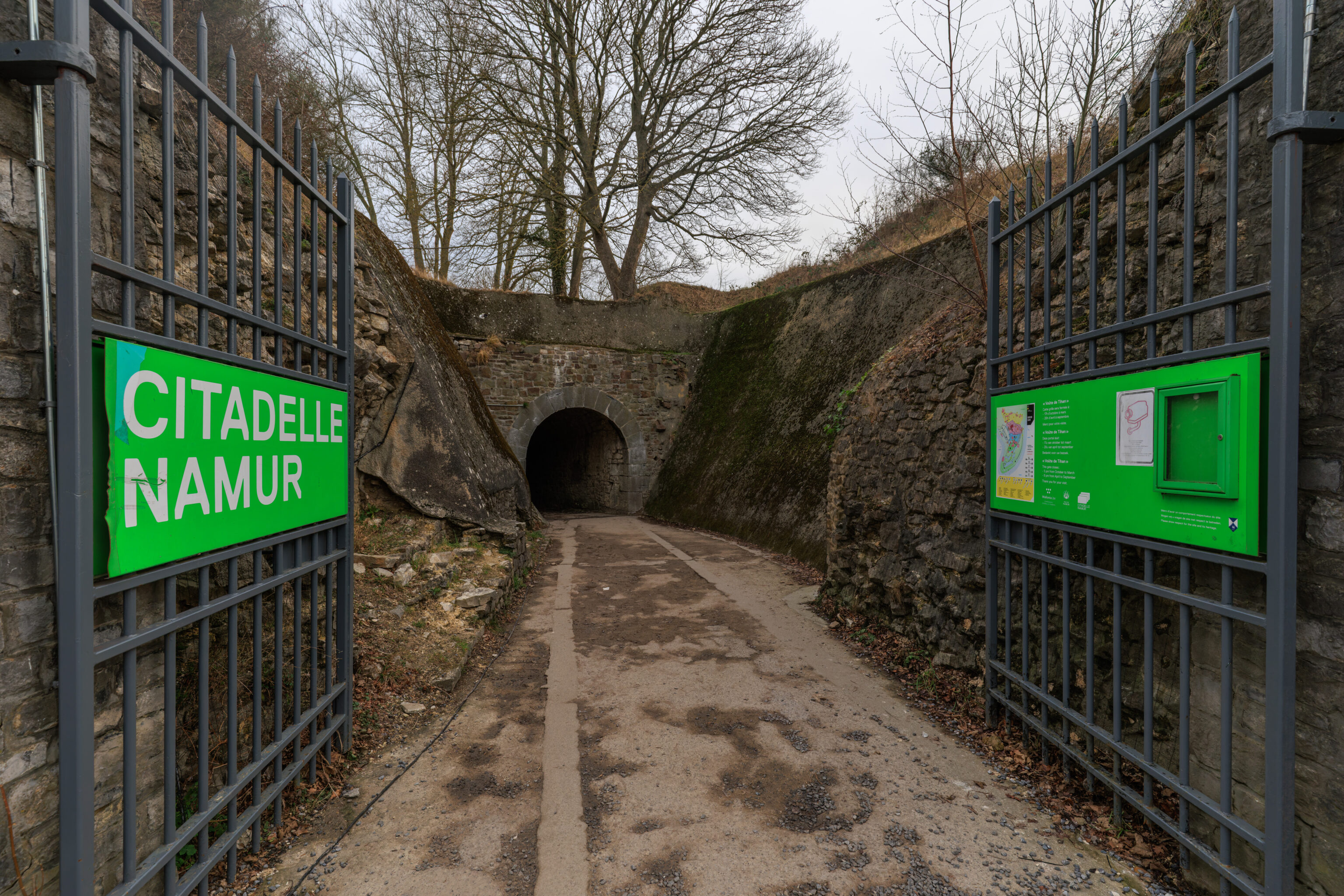
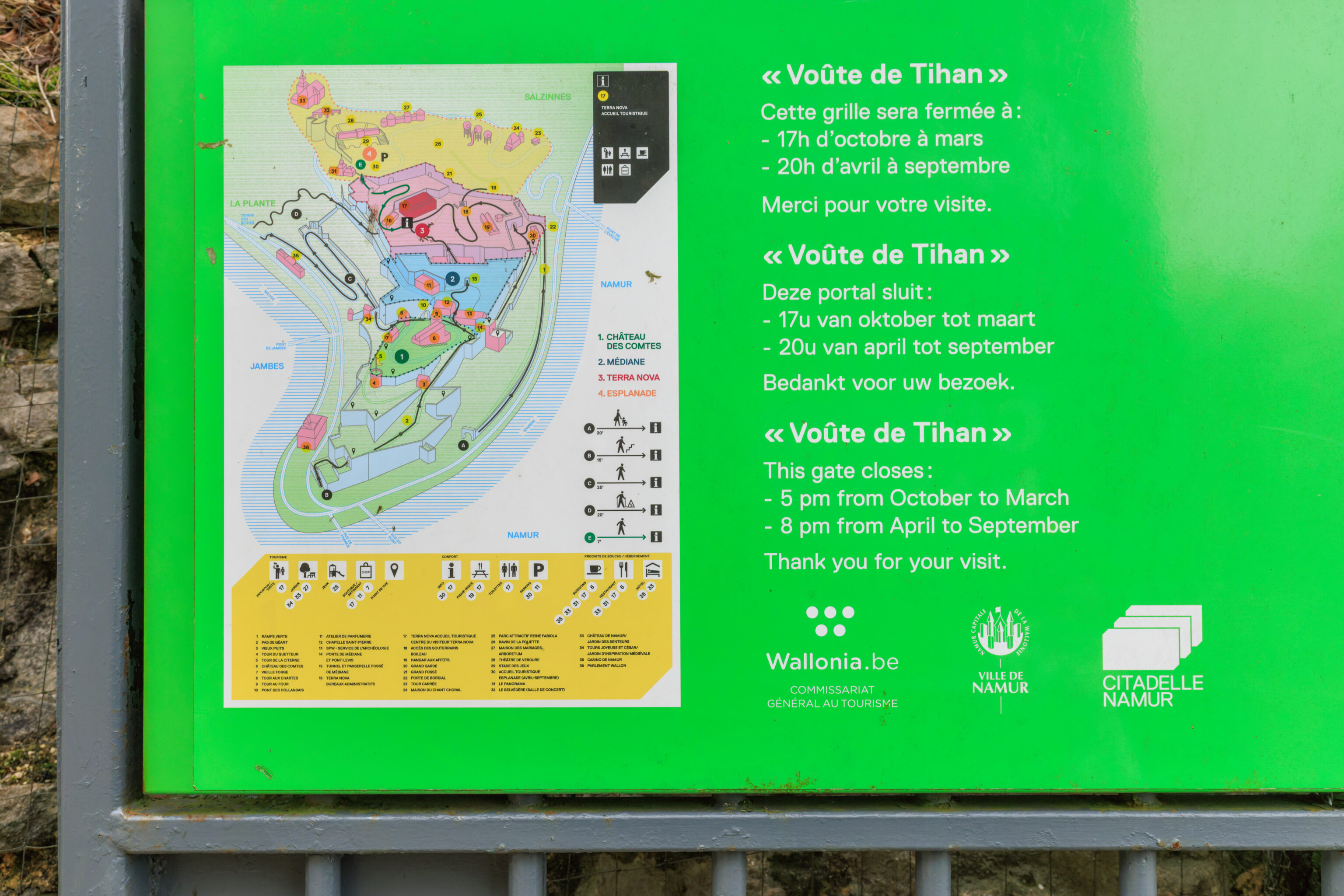
Luckily, the gate was open! The sign on the gate gives the daily closing time, 5pm right now, and includes a map. The citadel has a museum, Terra Nova, which is #17 on this map. Our guided tour will begin there later in the day at 1pm, which is still more than three hours away. So, we figured we’d slowly make our way over to the museum and check it out.
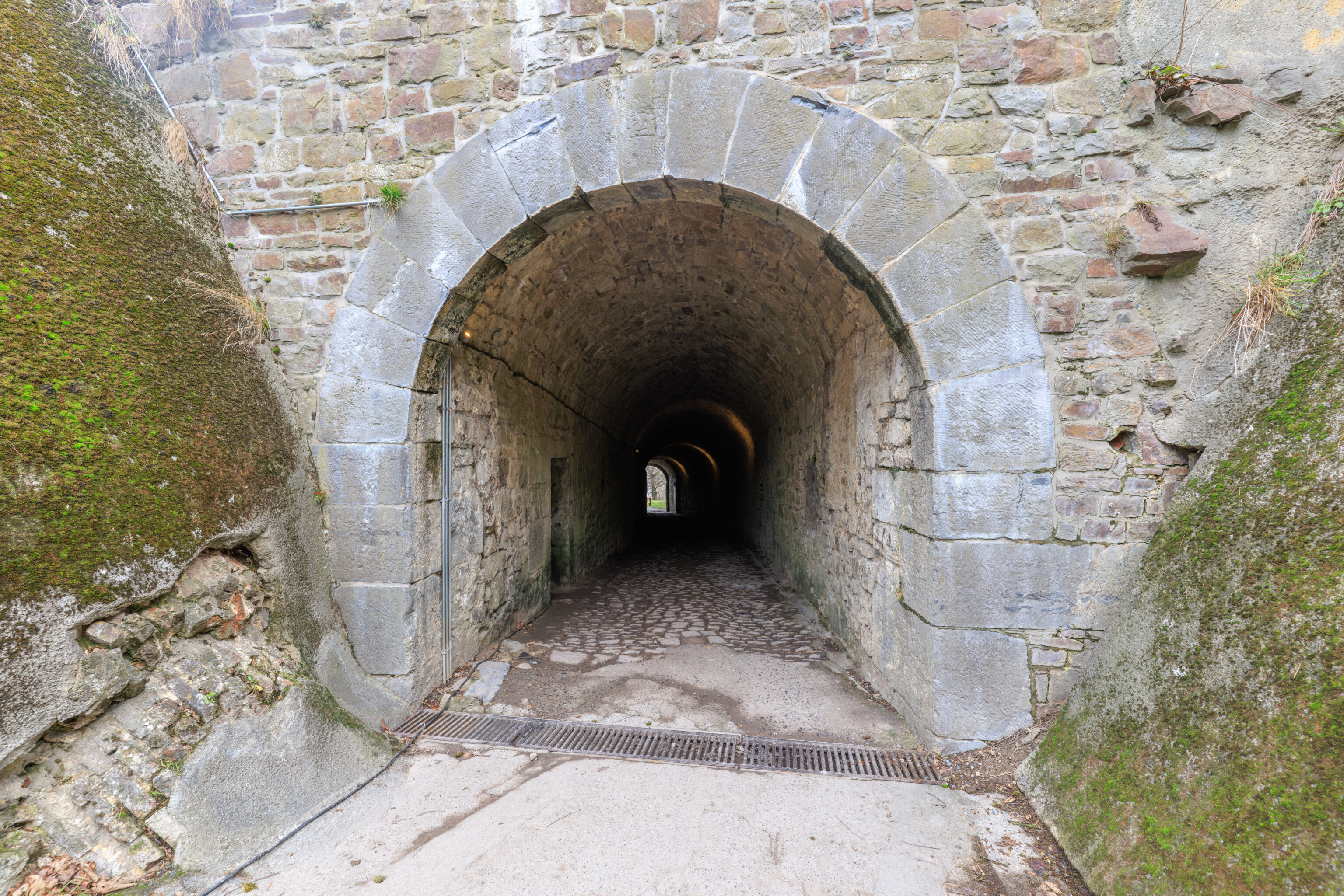
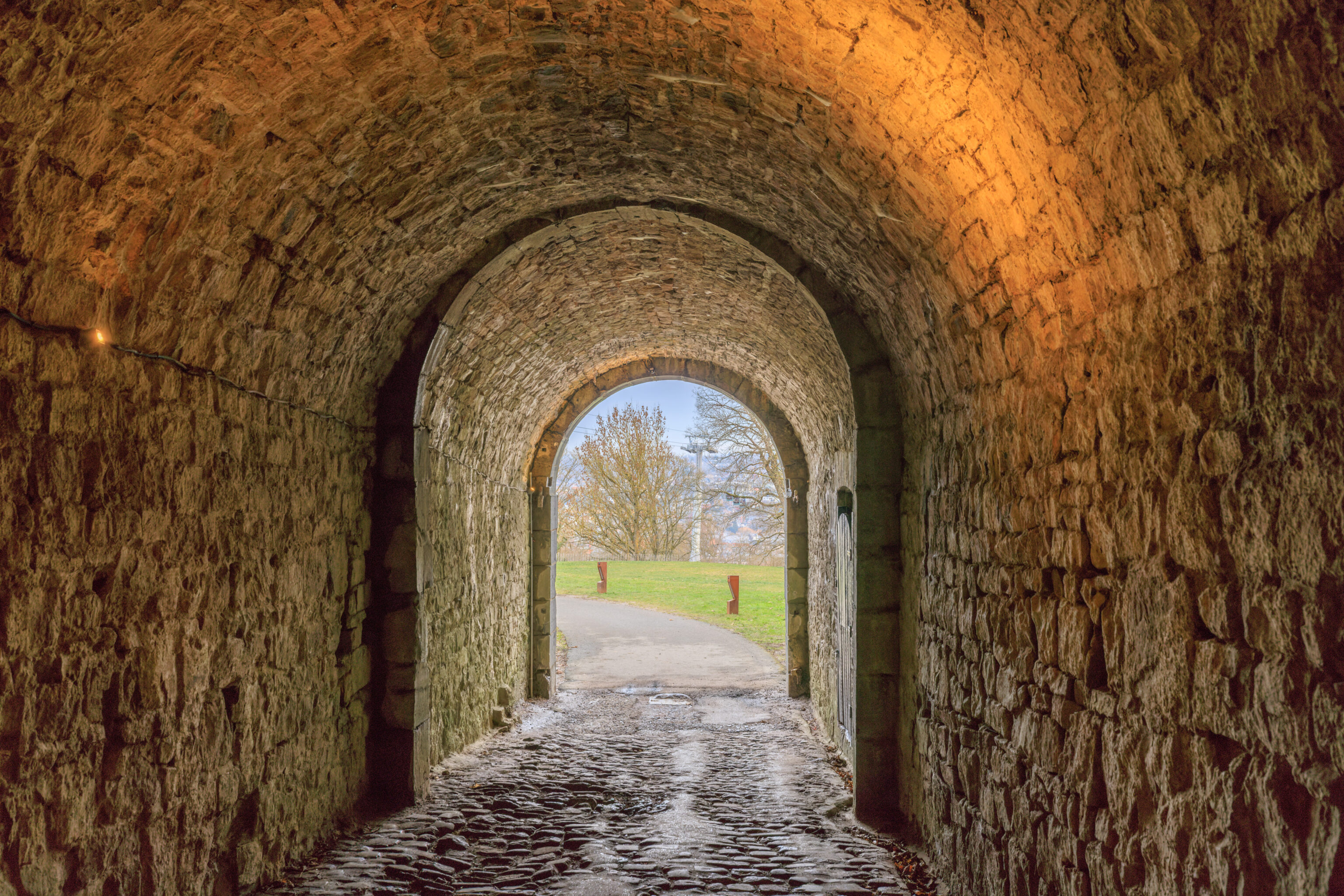
We passed through a short tunnel through the fortifications.
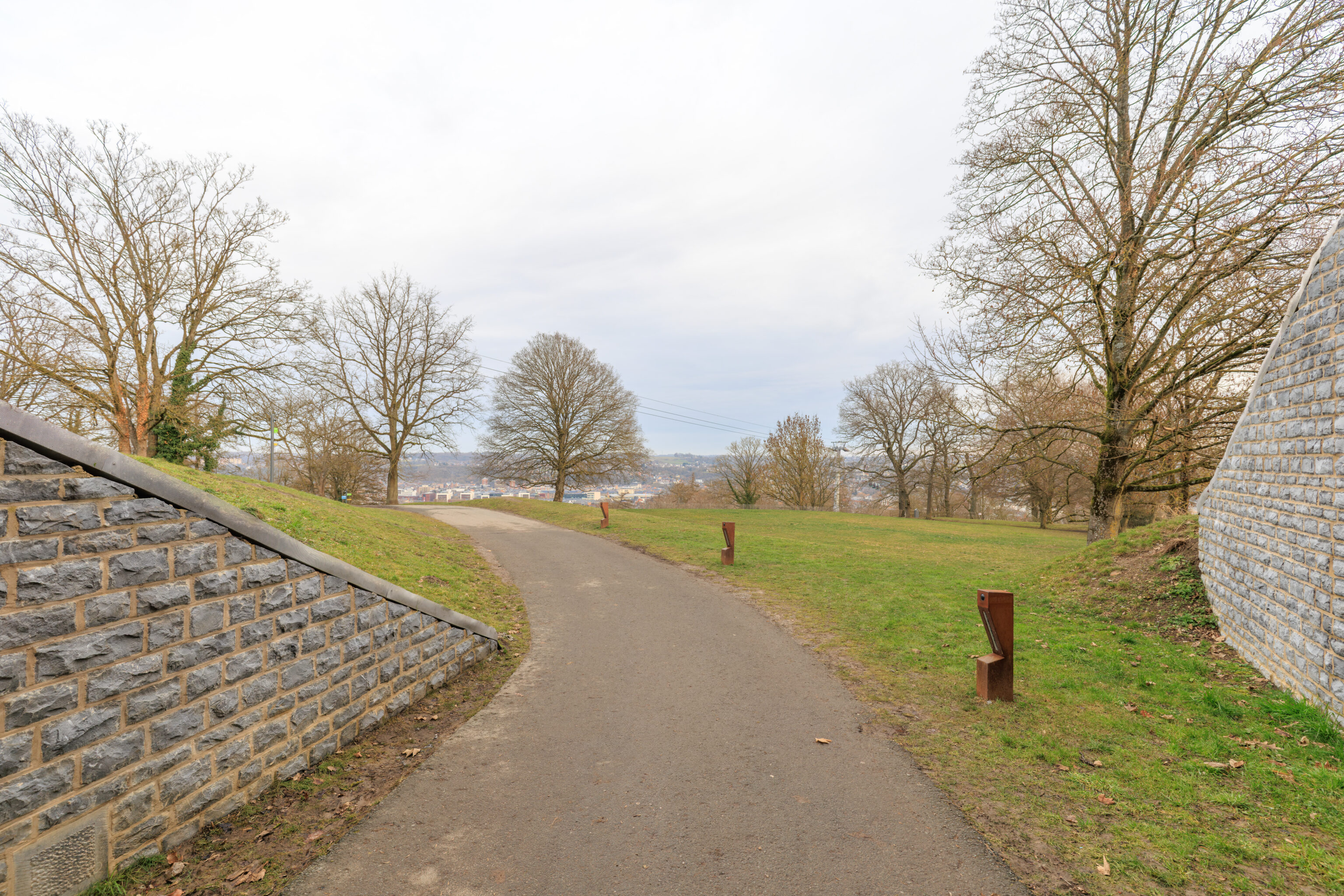
The path was paved, which was nice given how wet everything is here right now!
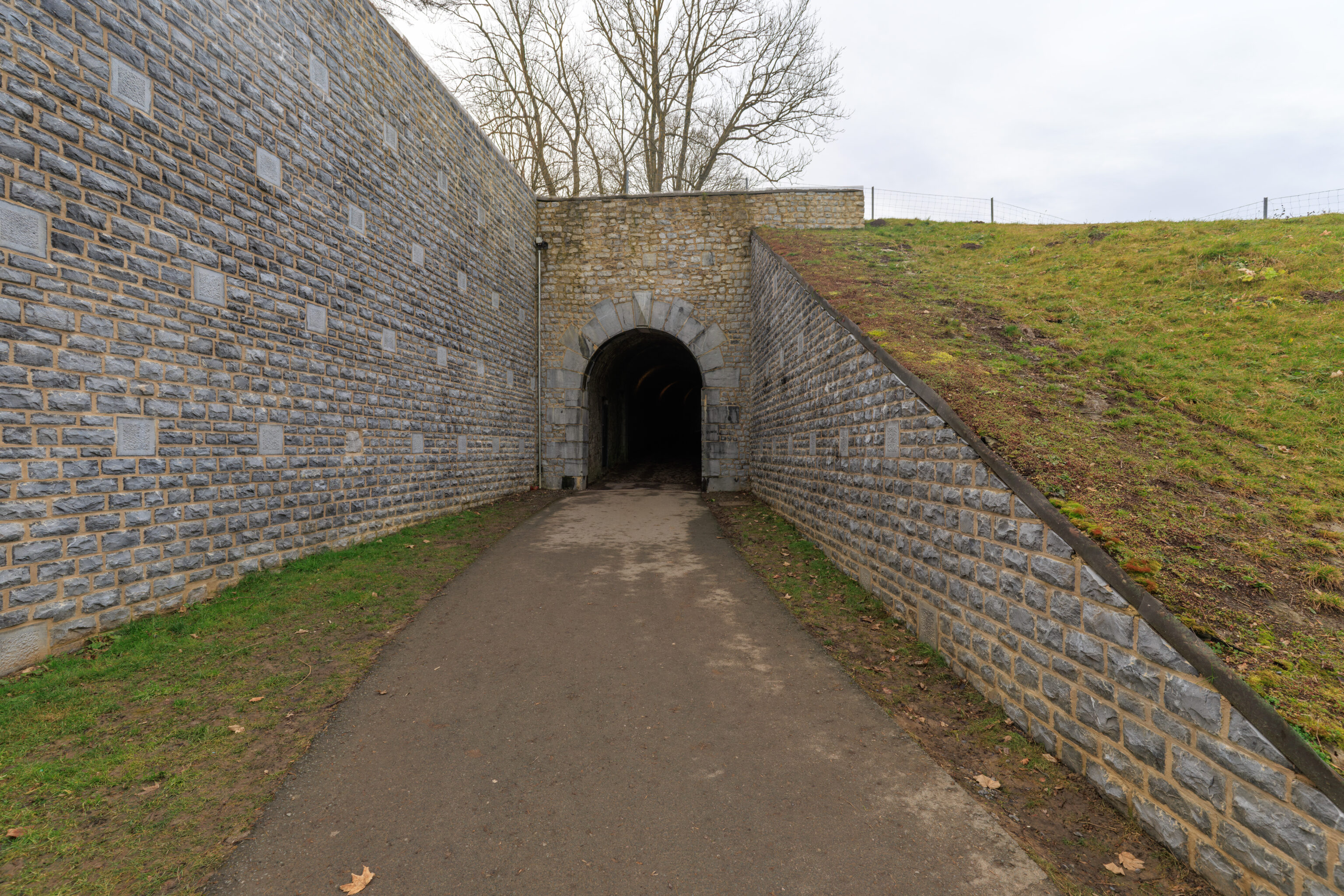
The view looking back at the tunnel we just walked through.
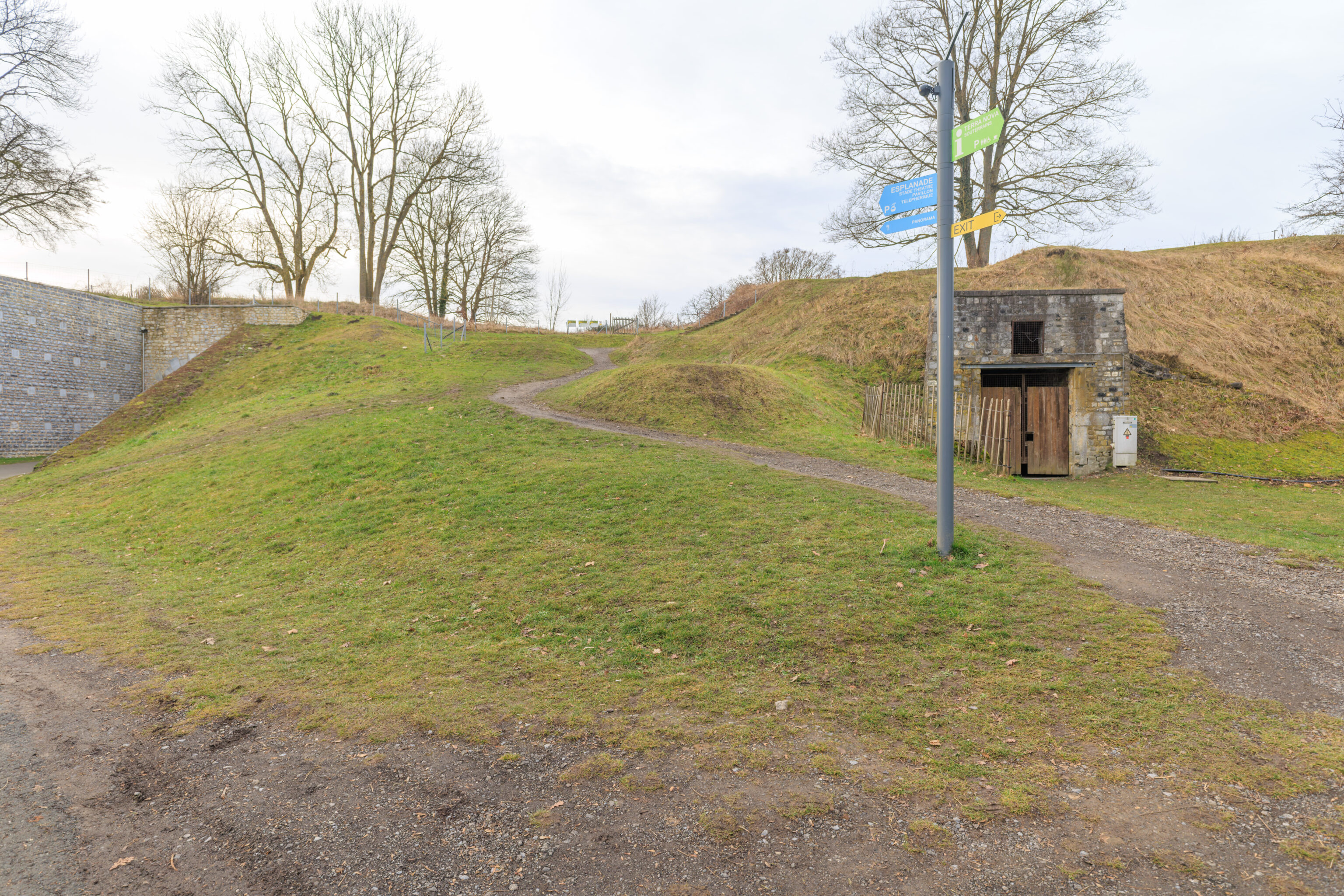
There were many paths going all over the place.
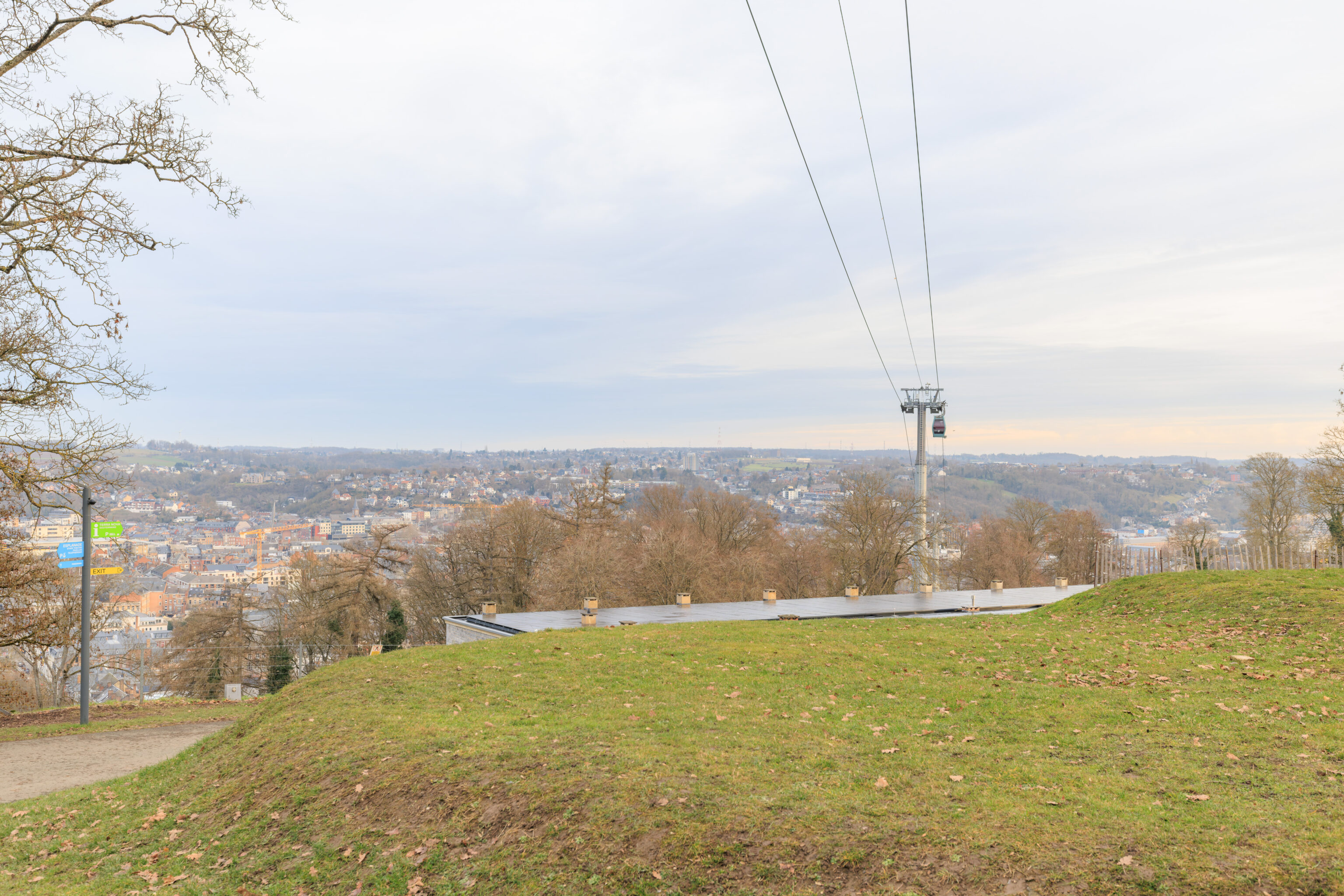
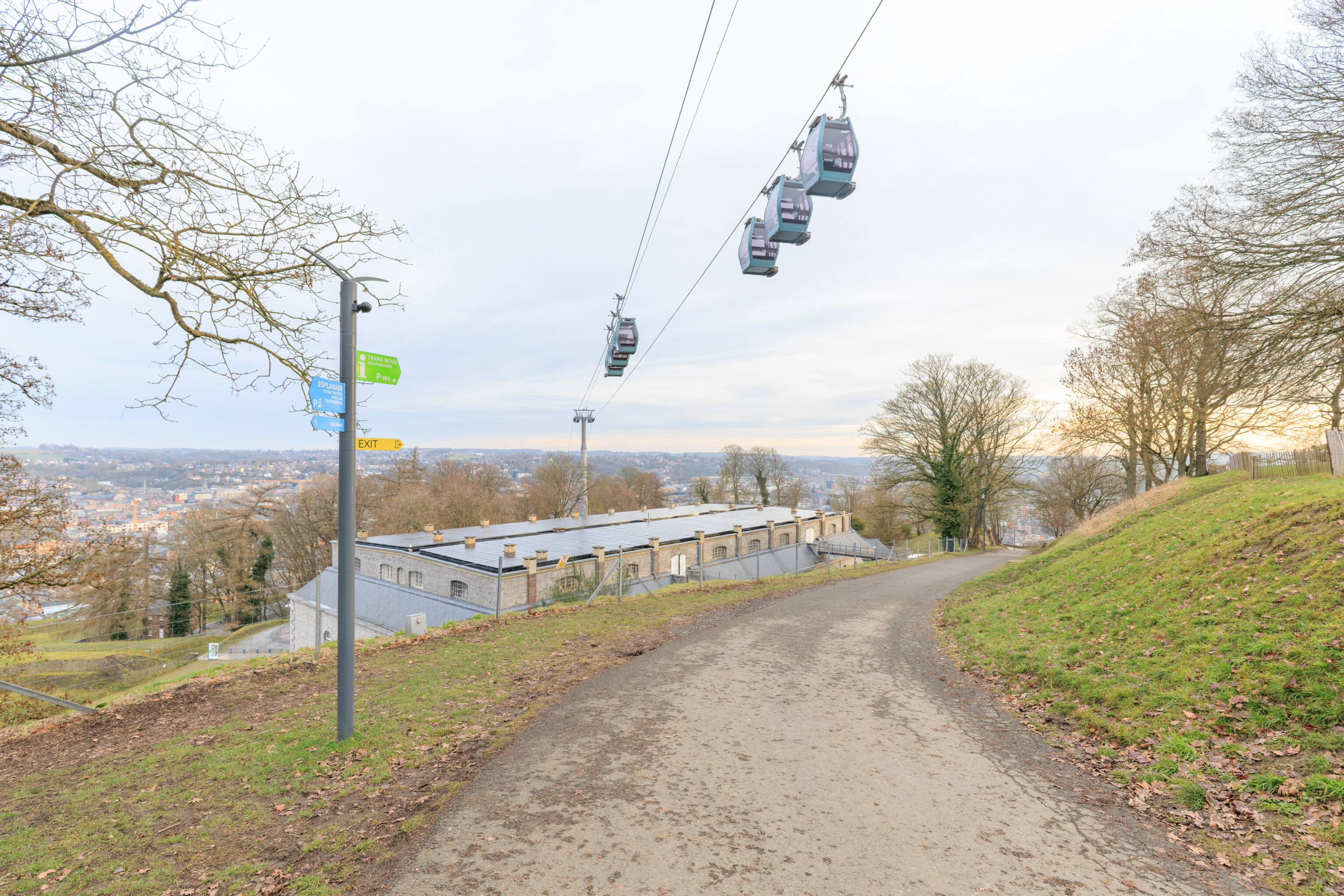
We stayed on the dry paved path as it passed under the cableway.
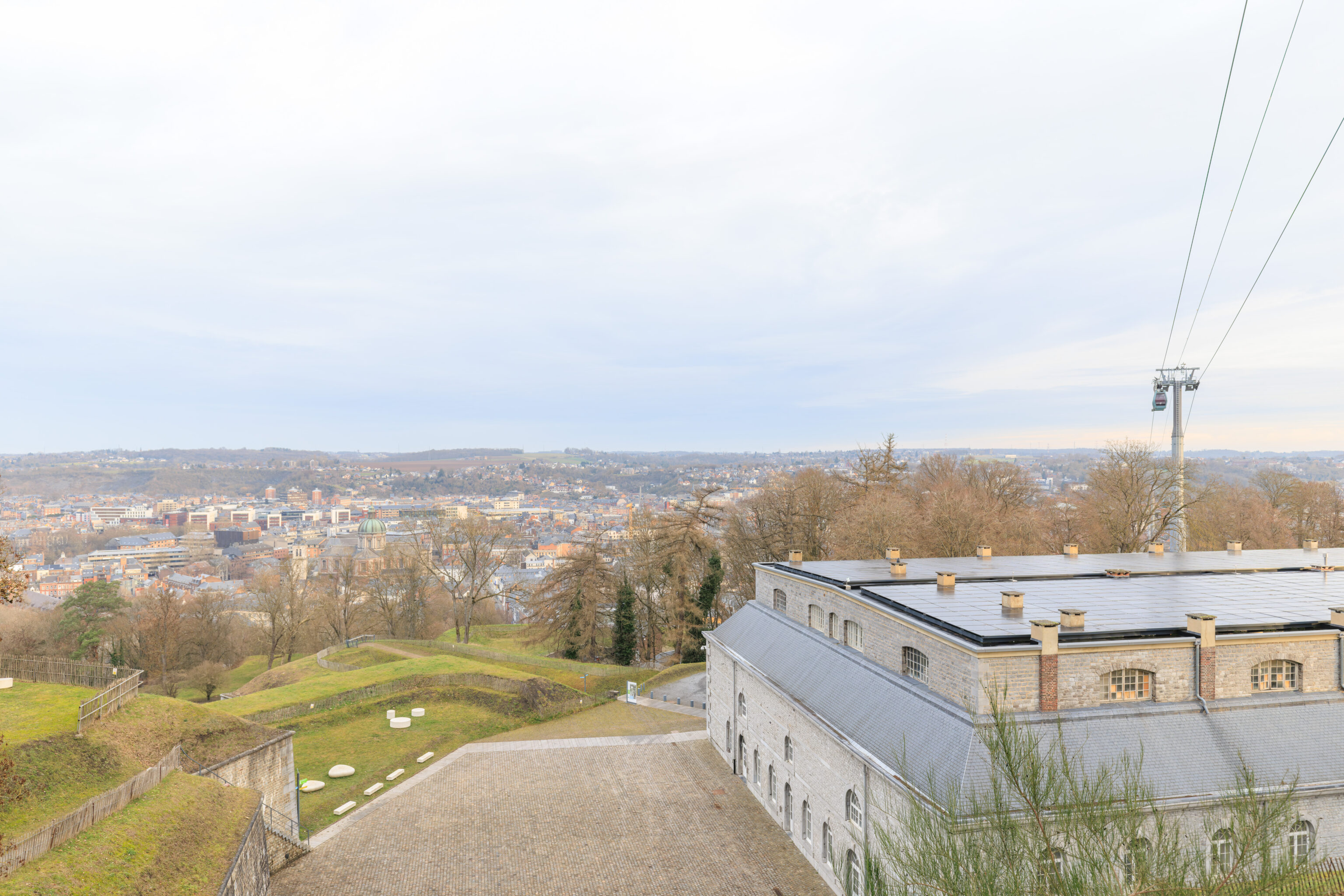
The building on the right is the Terra Nova museum, which is located in a former barracks building. Technically, Terra Nova is the name of part of the citadel that was expanded by the Dutch to differentiate it from the older portions of the fortifications. But, we’ll refer to this museum and its building as Terra Nova for simplicity.
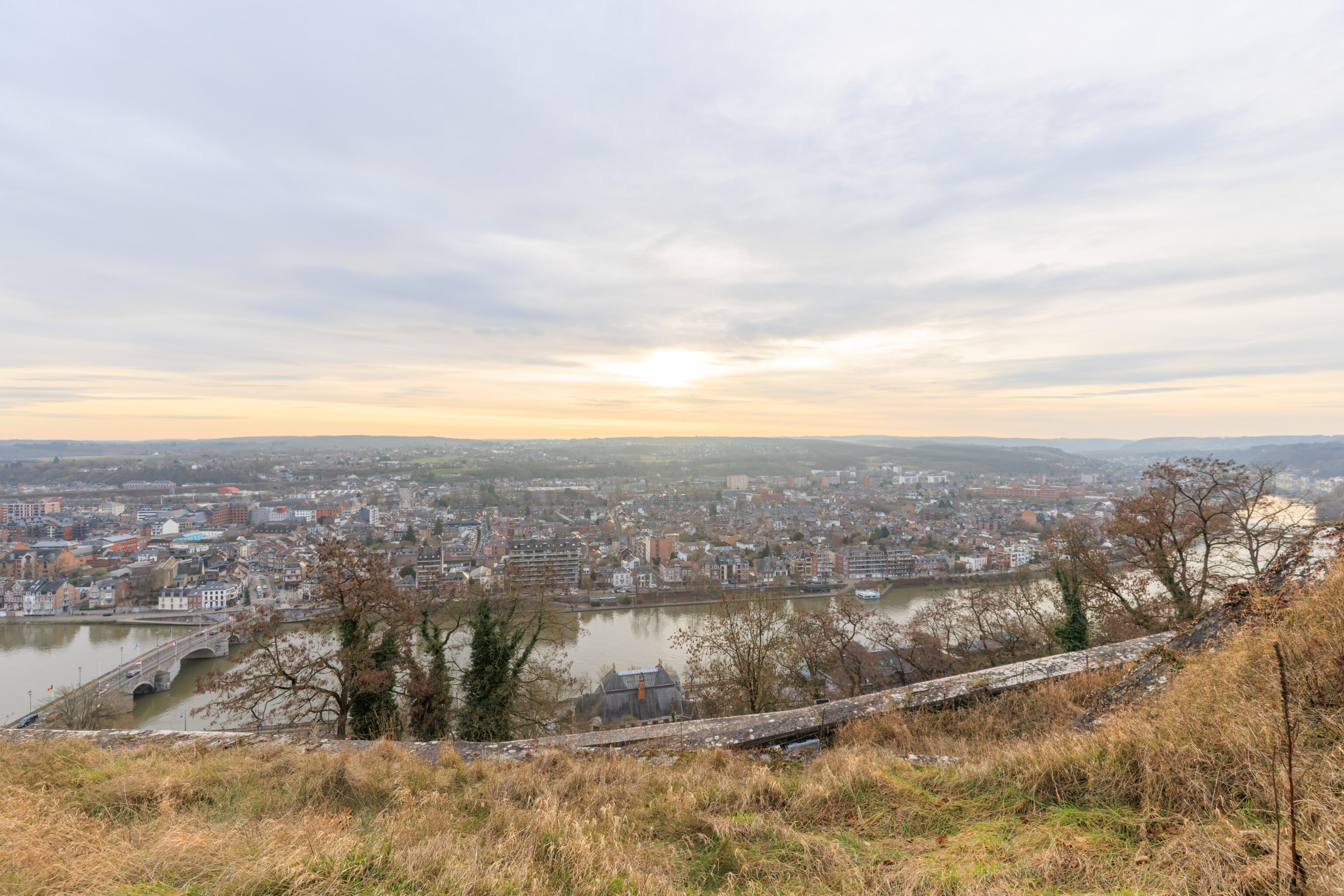
We did walk up a little grassy hill for this view to the southeast, directly into the Sun.
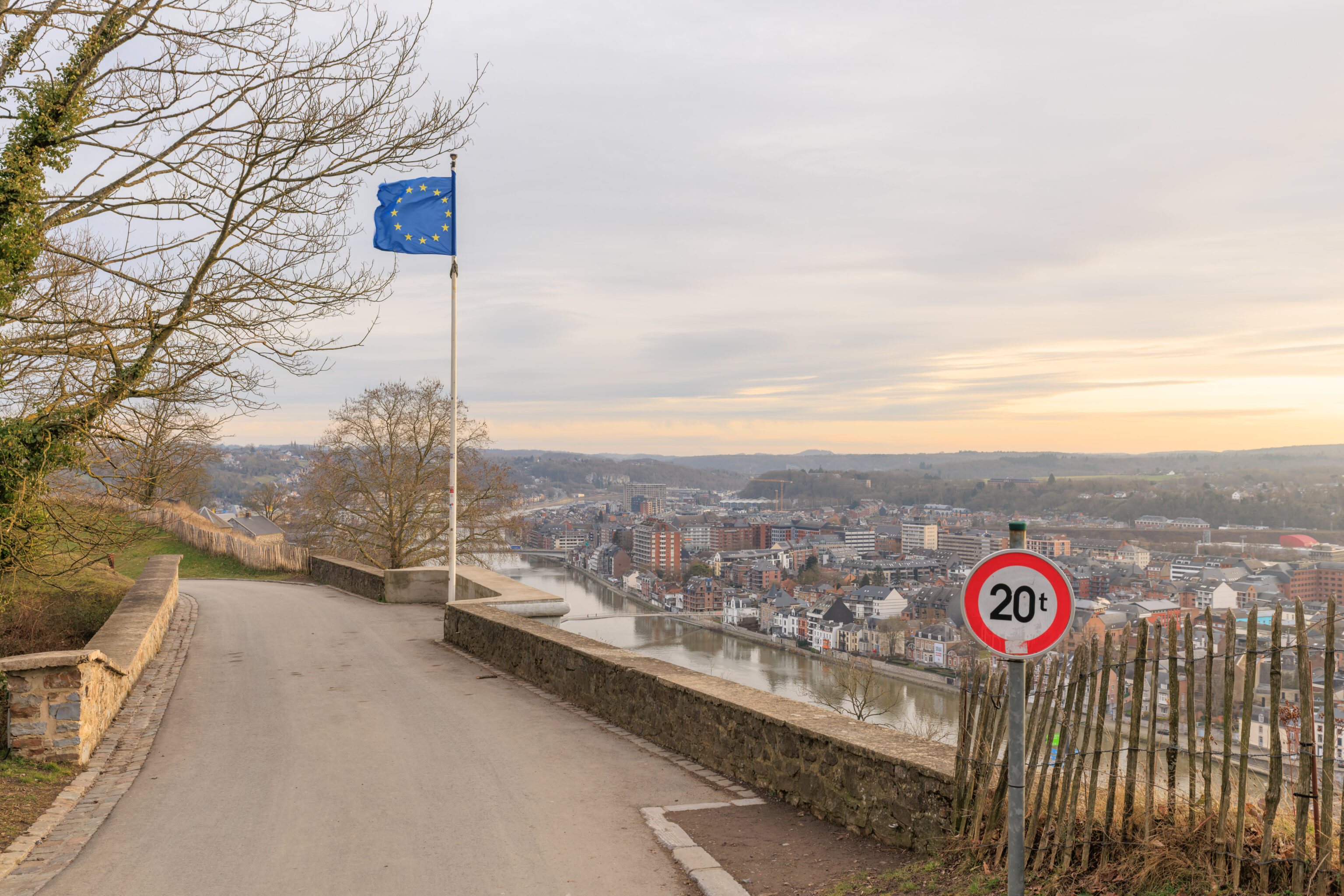
Well… We could have just stayed on the path, which is actually sort of a road that supports 20 metric ton vehicles.
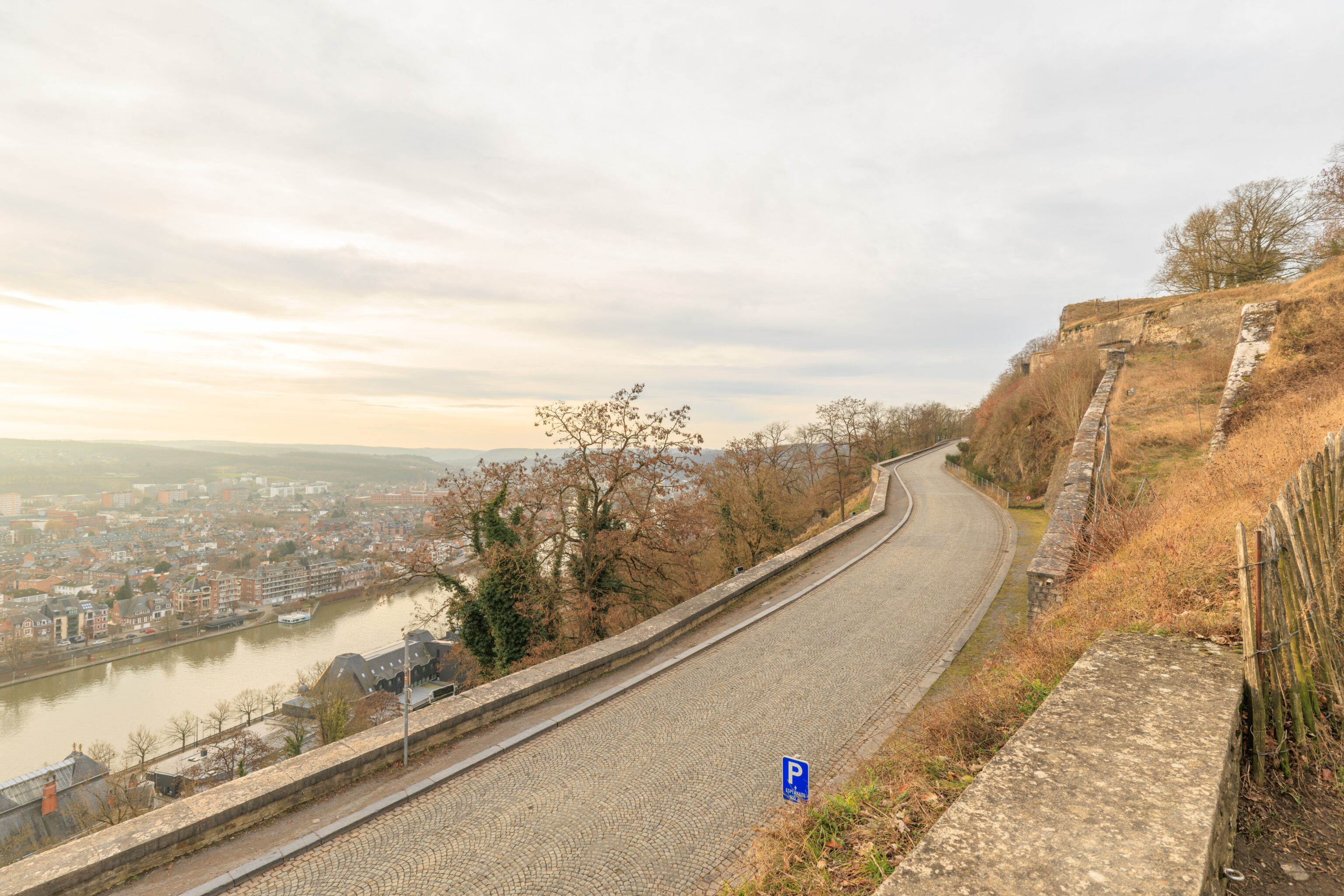
There was an actual road just below.
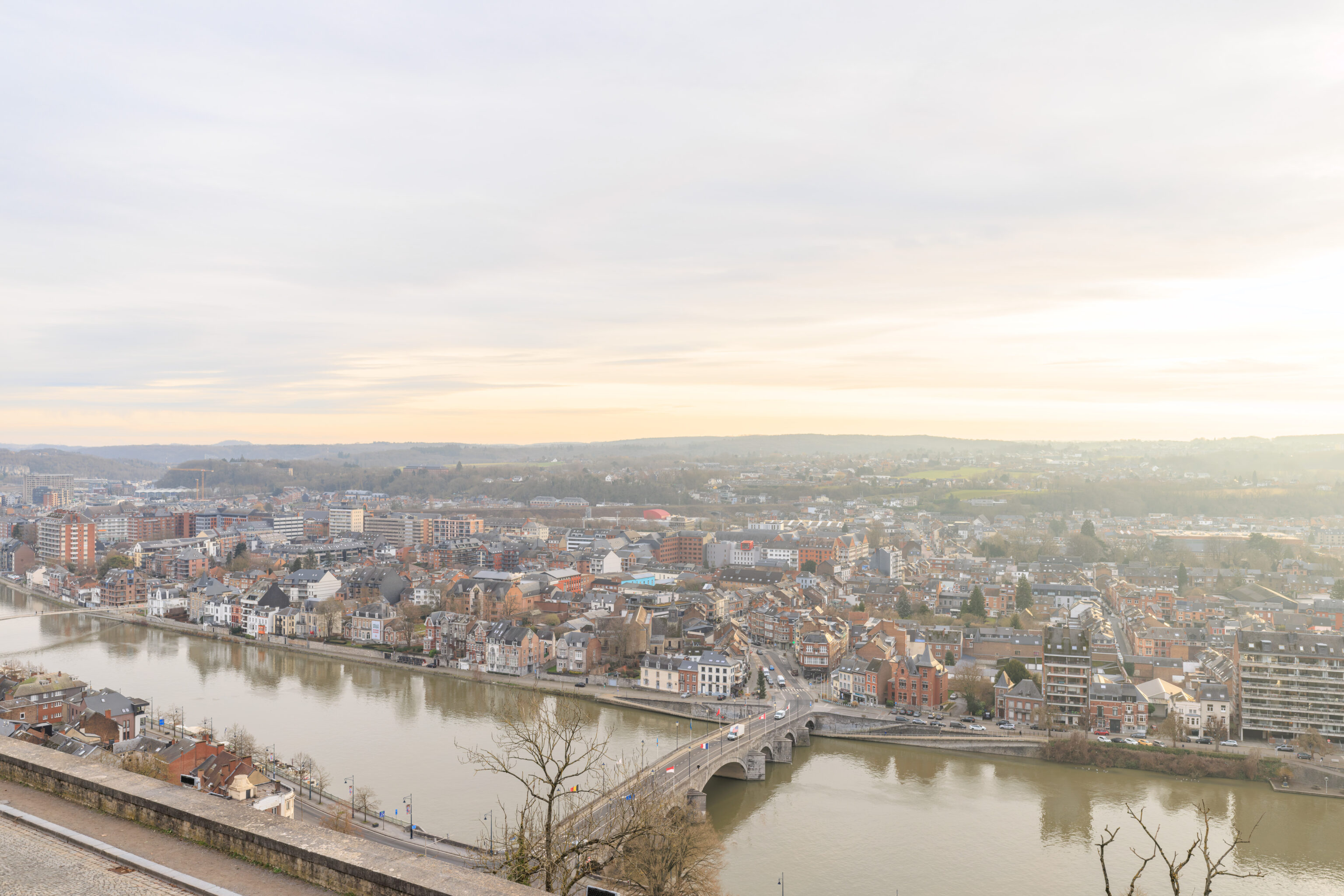
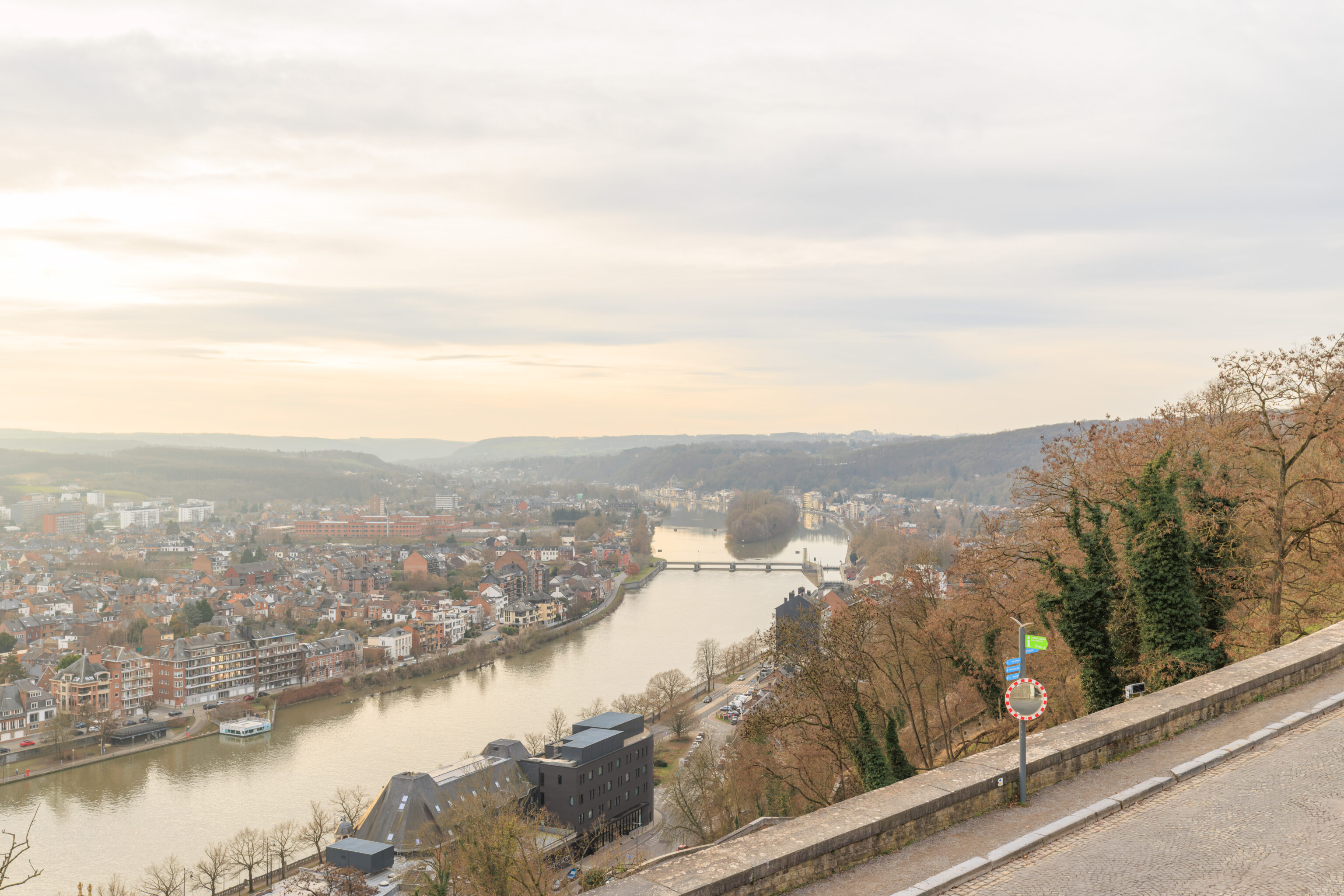
The view here overlooks the Meuse. It’s probably similar to the view at Le Panorama as this same road runs below the restaurant and its patio as well.
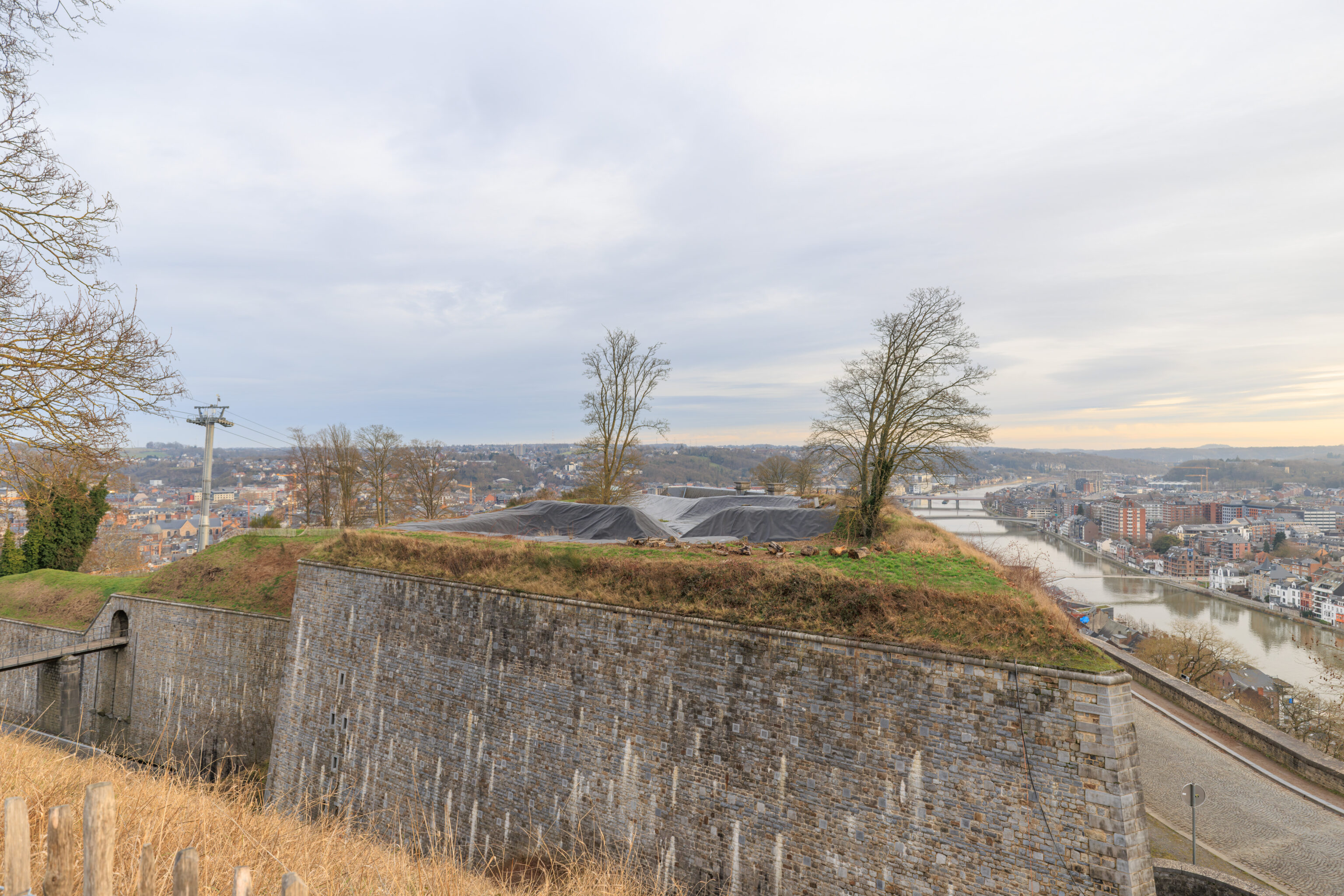
The view to the east as we followed the path, which curved down and to the left to start heading to the west towards the museum.
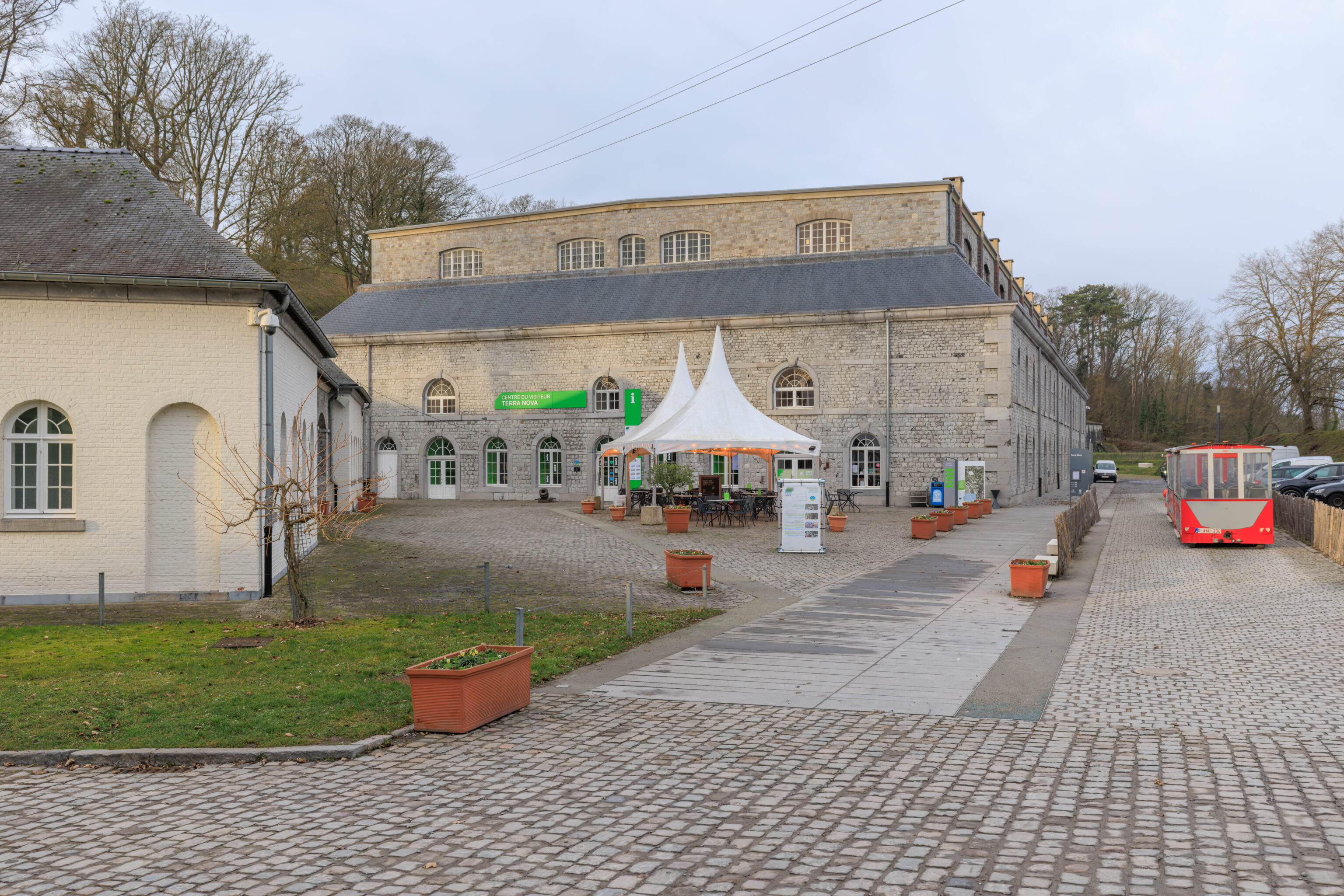
We got to the museum at 9:40am. The museum does not open until 10am. We’re a bit early thanks to our early arrival in Brussels!
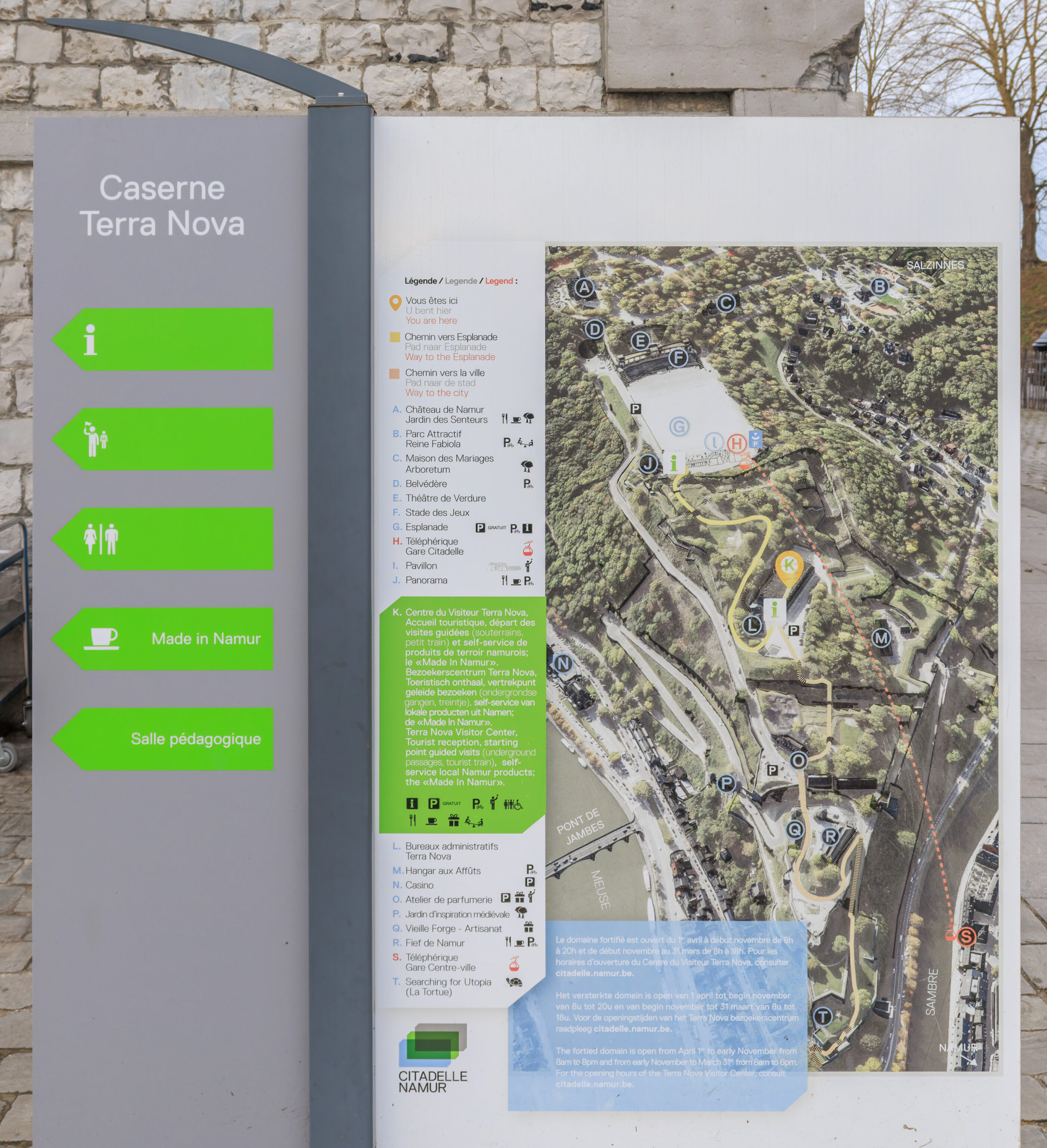
There was a sign here with another map of the citadel.
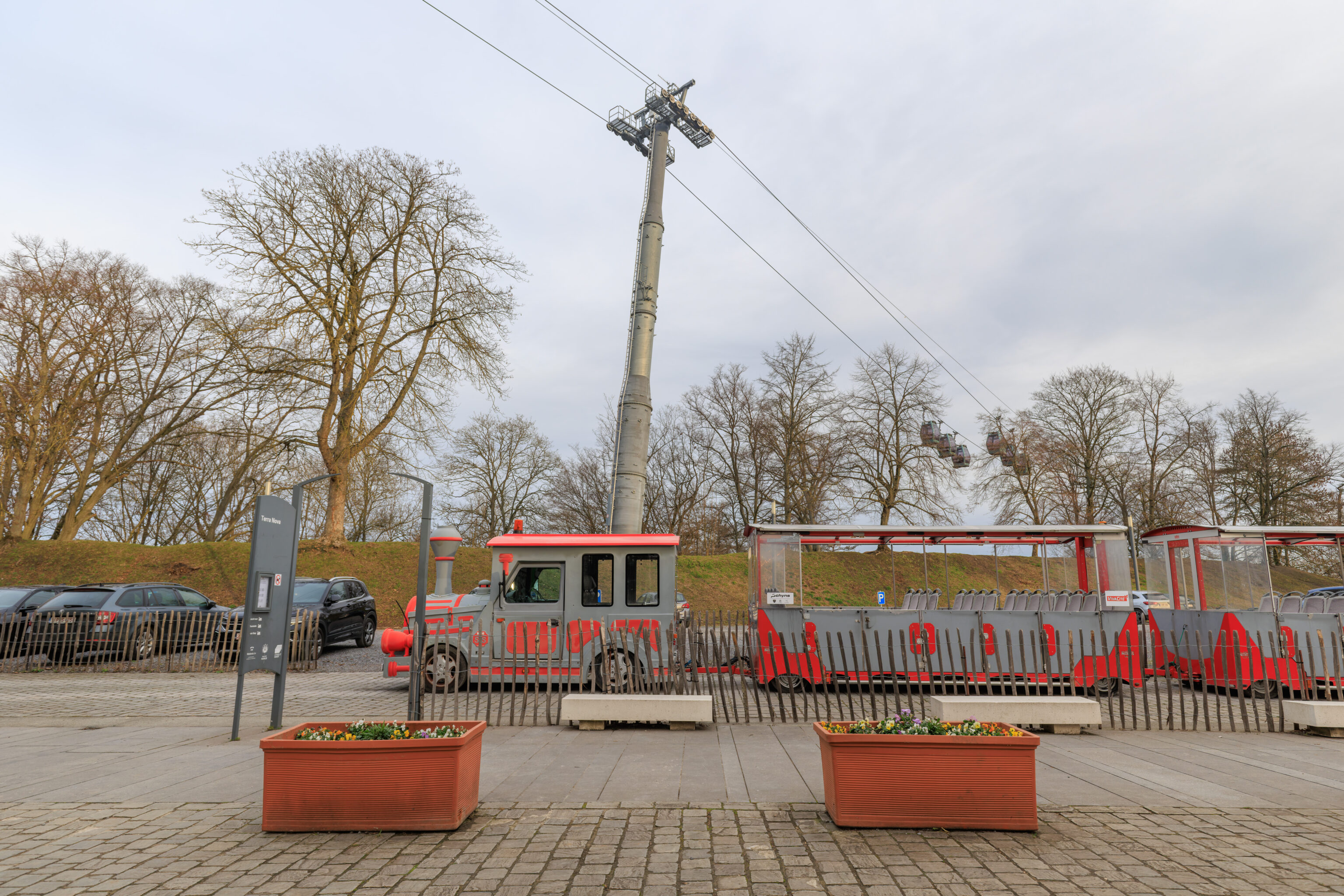
The citadel has a little tram that makes a few scheduled runs throughout the day.
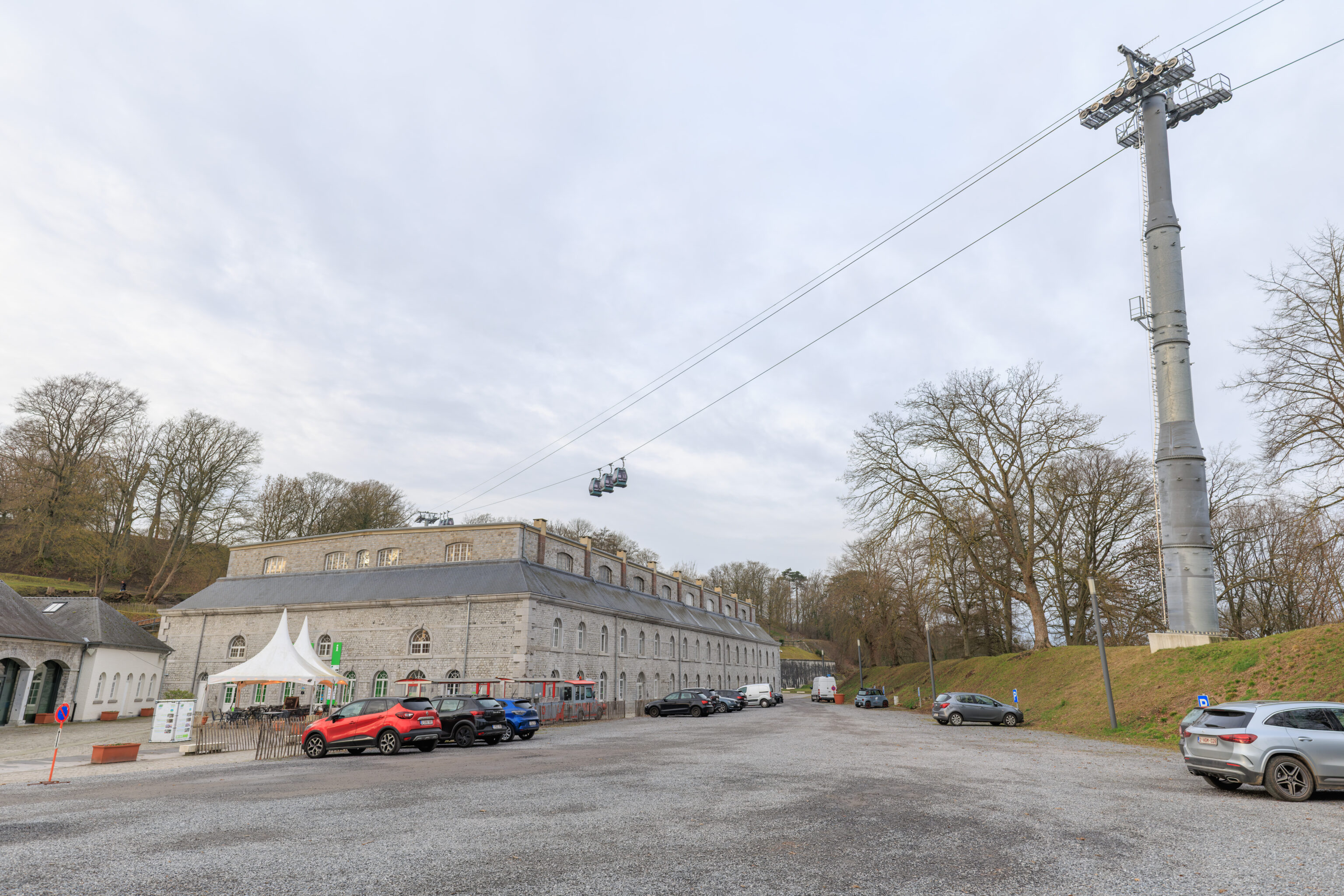
We sat at the tables and chairs outside of the museum for a bit before deciding to take a very quick look around.
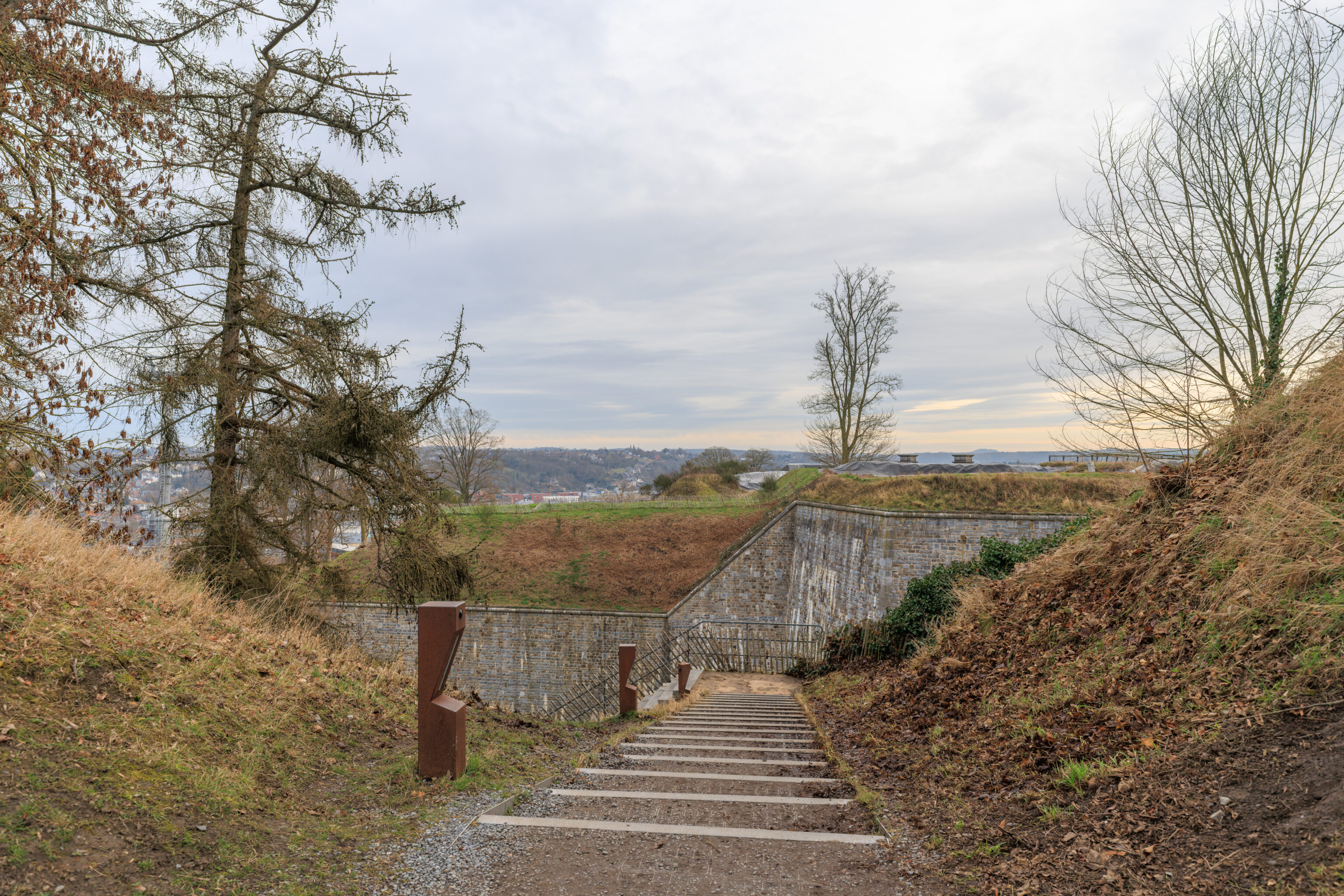
This path leads downhill somewhere. This is as far as we went before we returned to the museum.
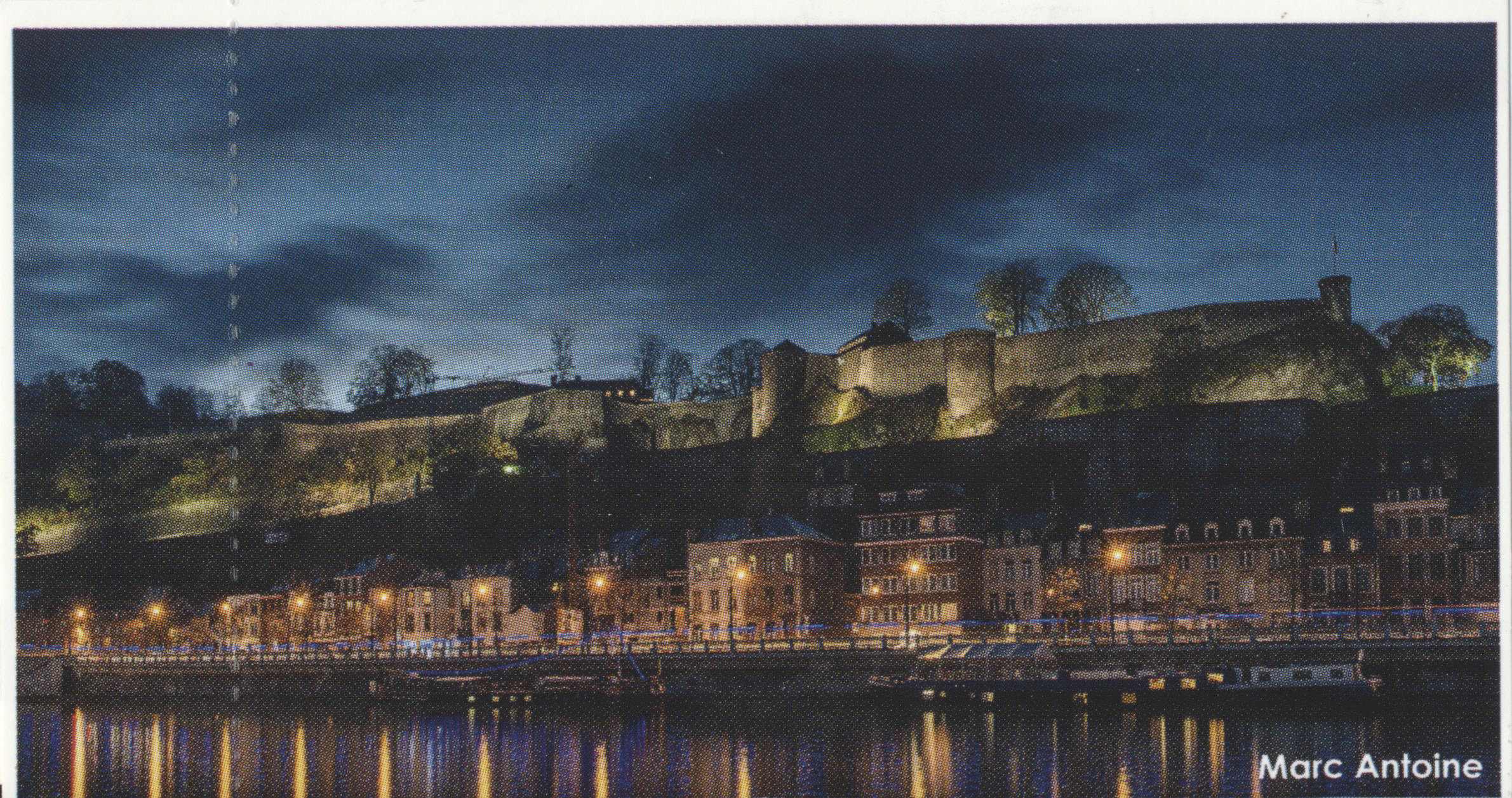
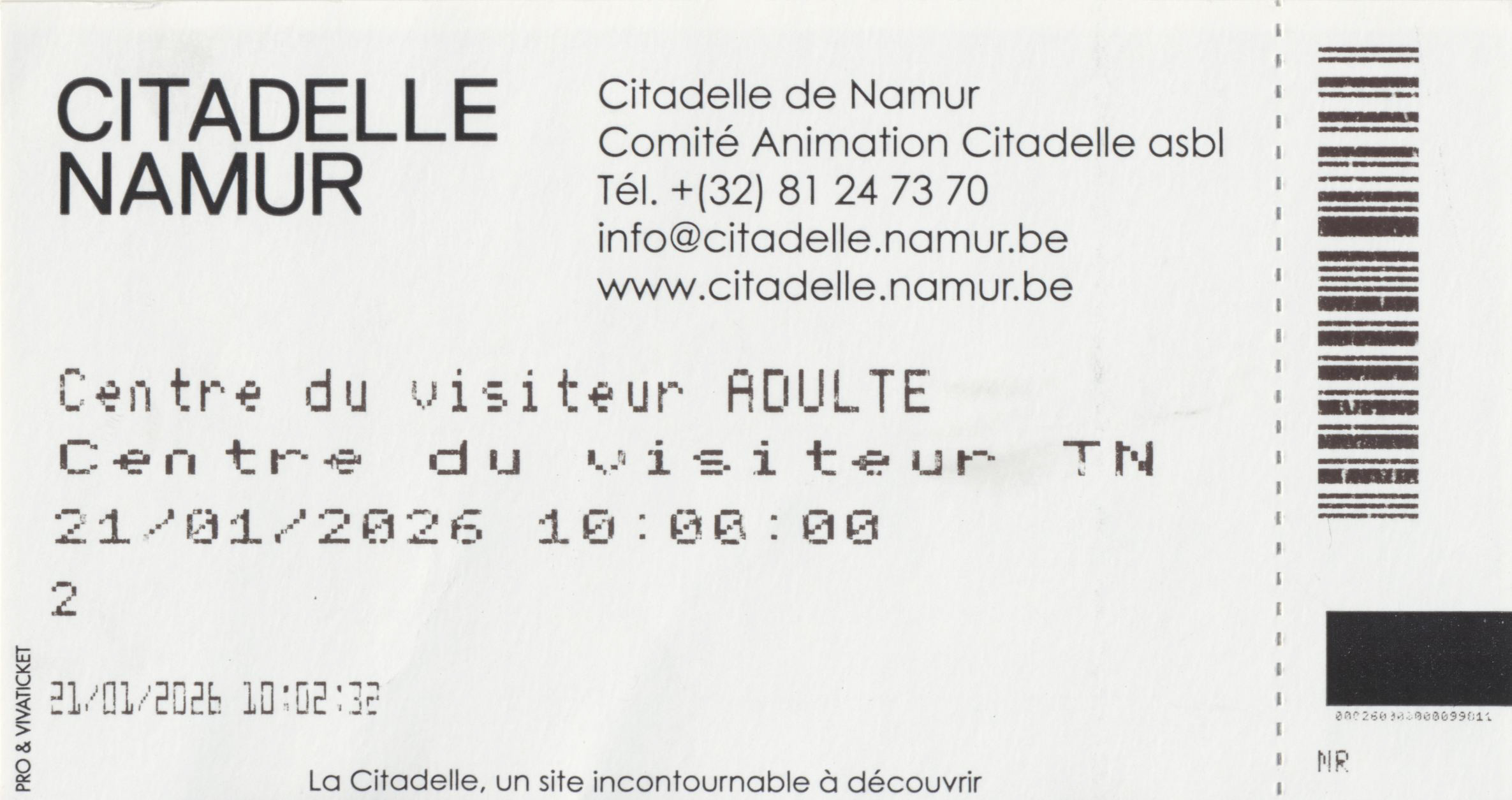
The museum is separately ticketed from the citadel’s guided tours. The actual citadel itself is free to enter.
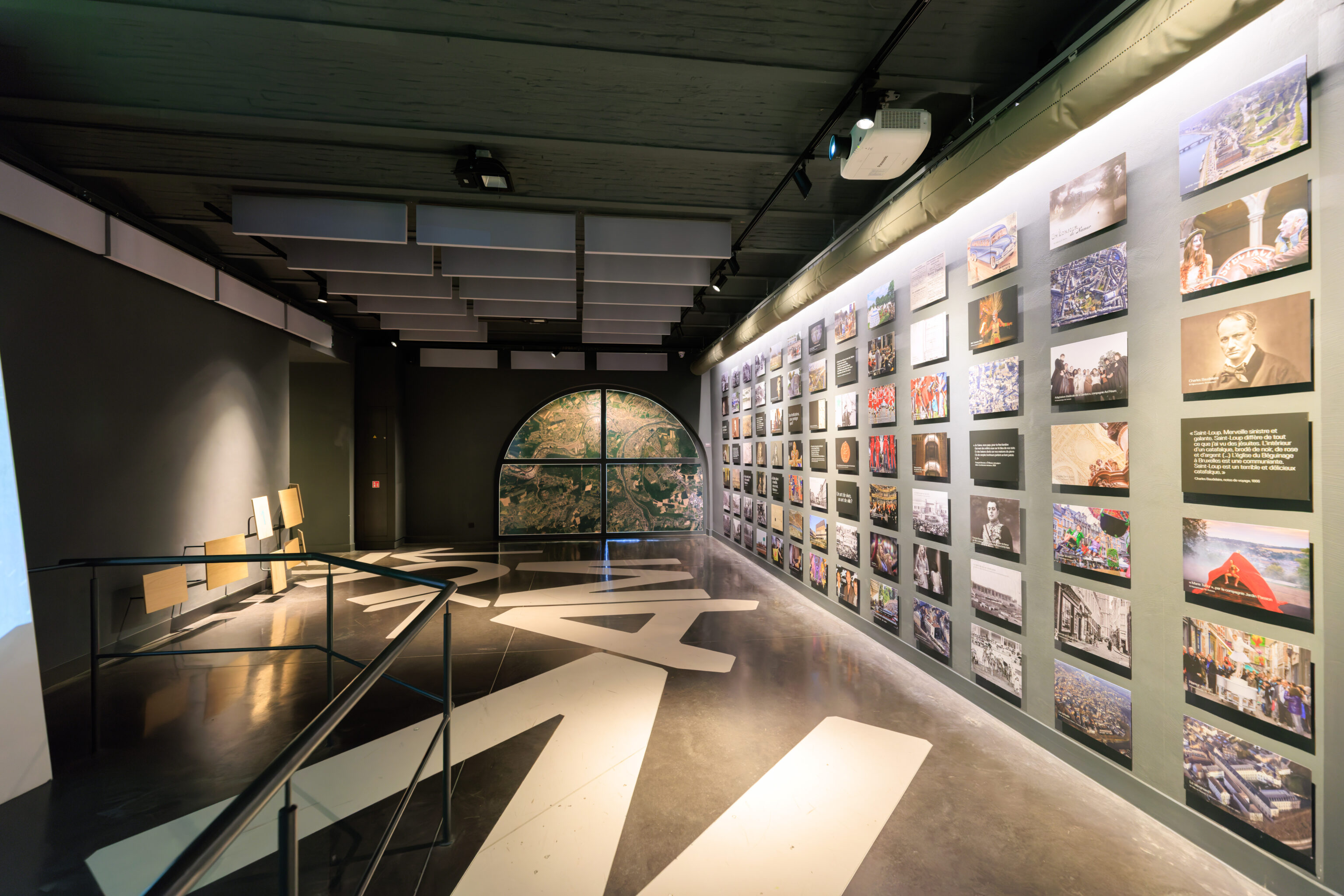
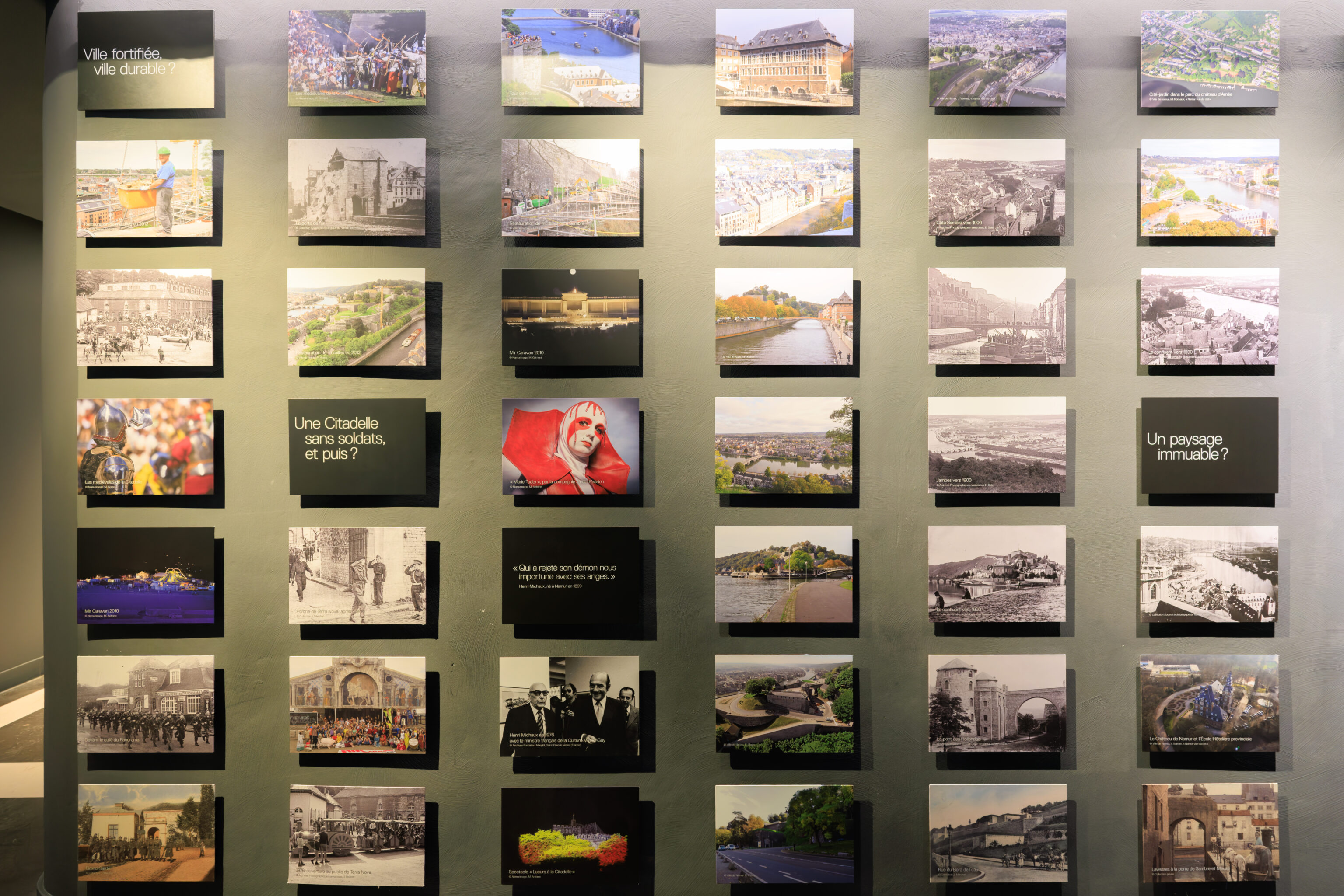
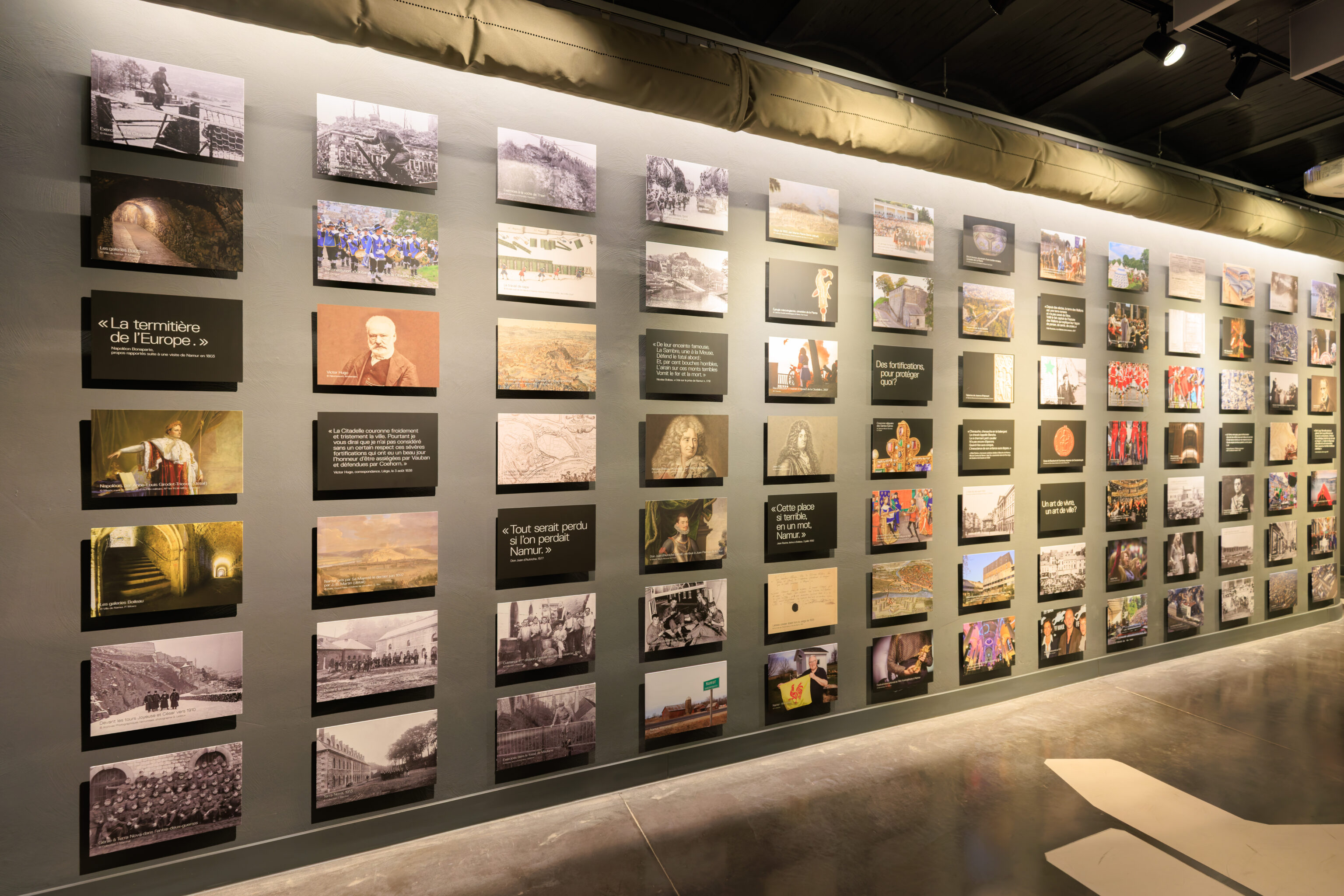
The first room in the museum was kind of an entrance area. There were many photographs and text on the walls.
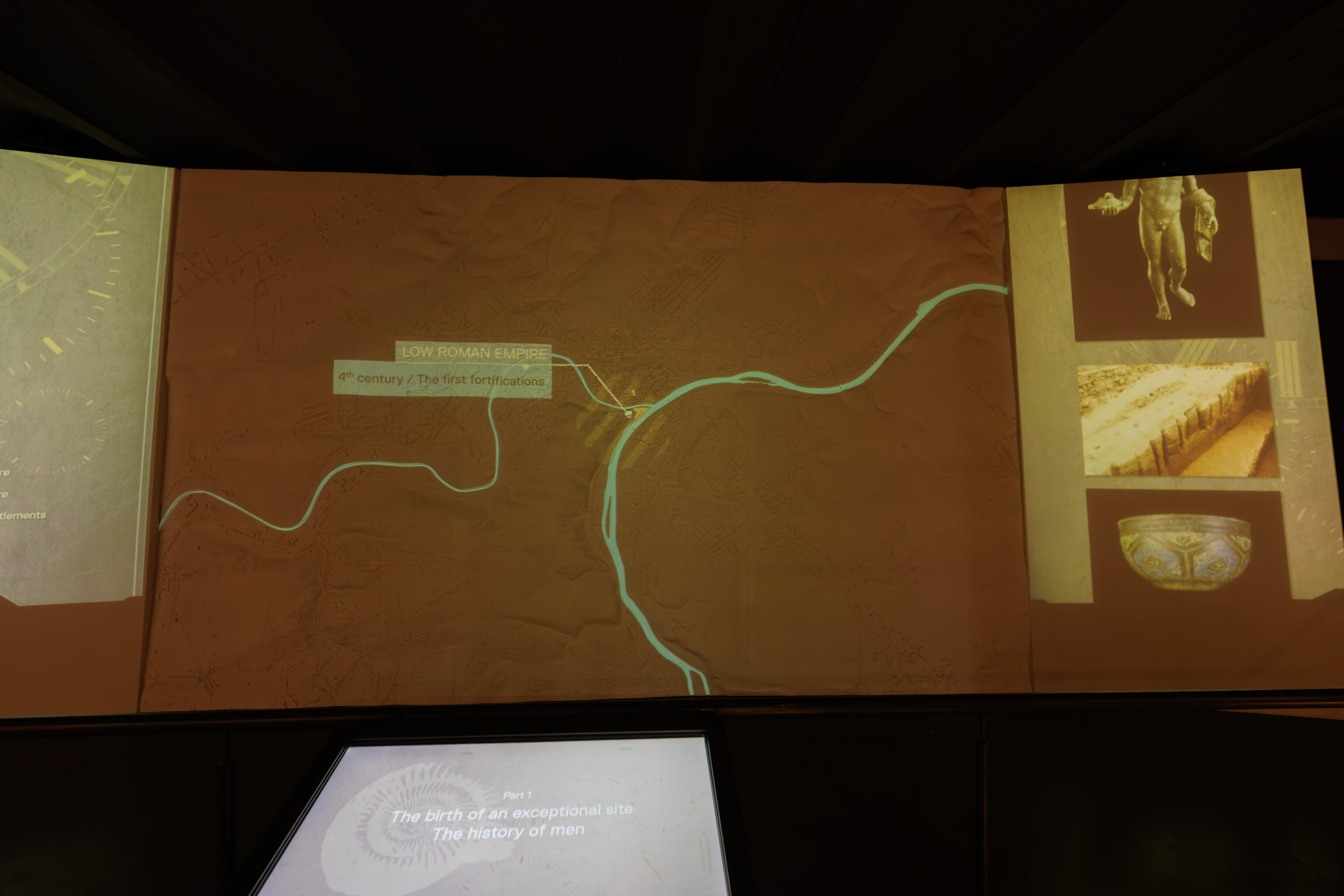
There was a video projected upon a 3D map of the terrain in the area which showed how the fortress grew from the initial Roman fortifications in the 4th century.
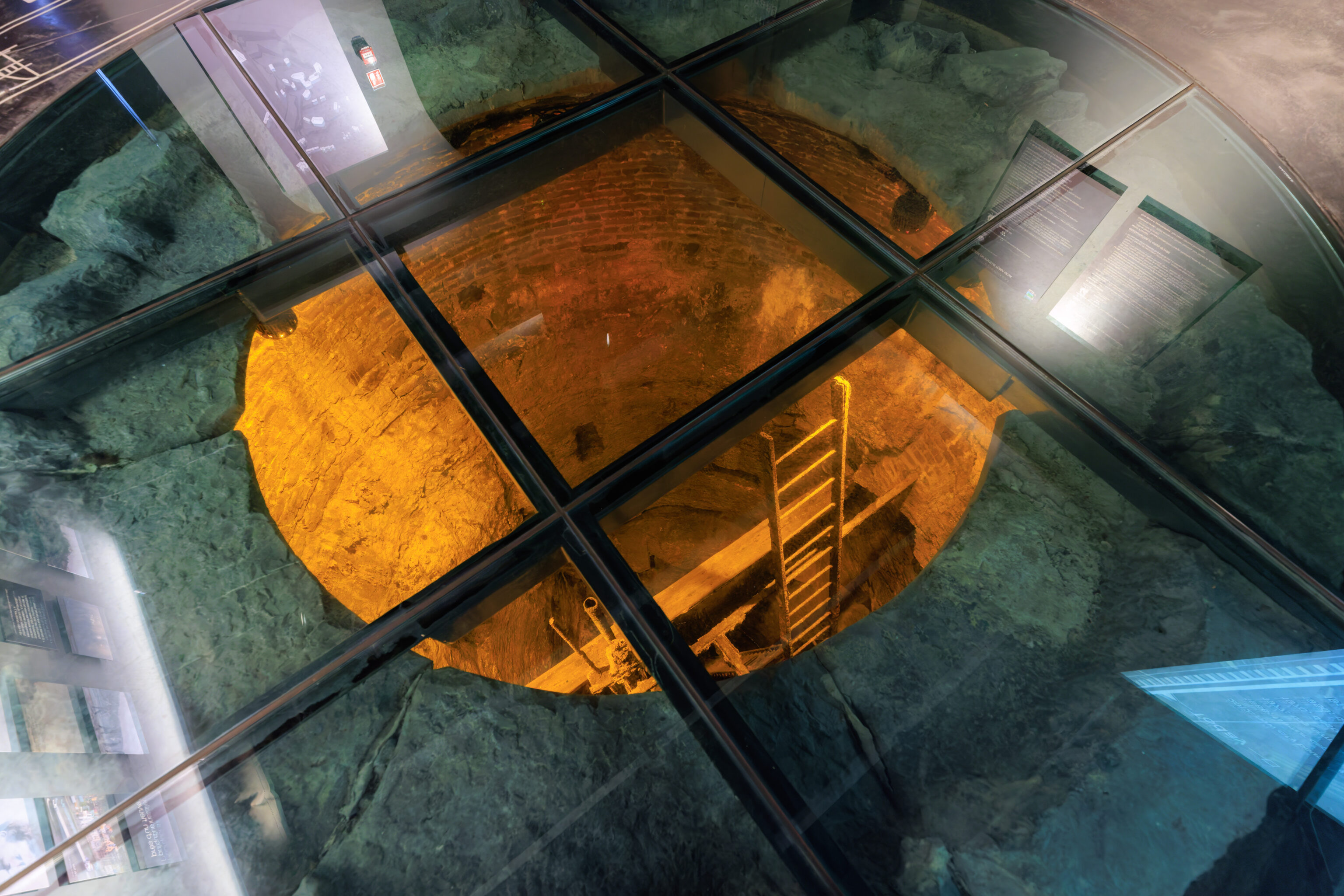
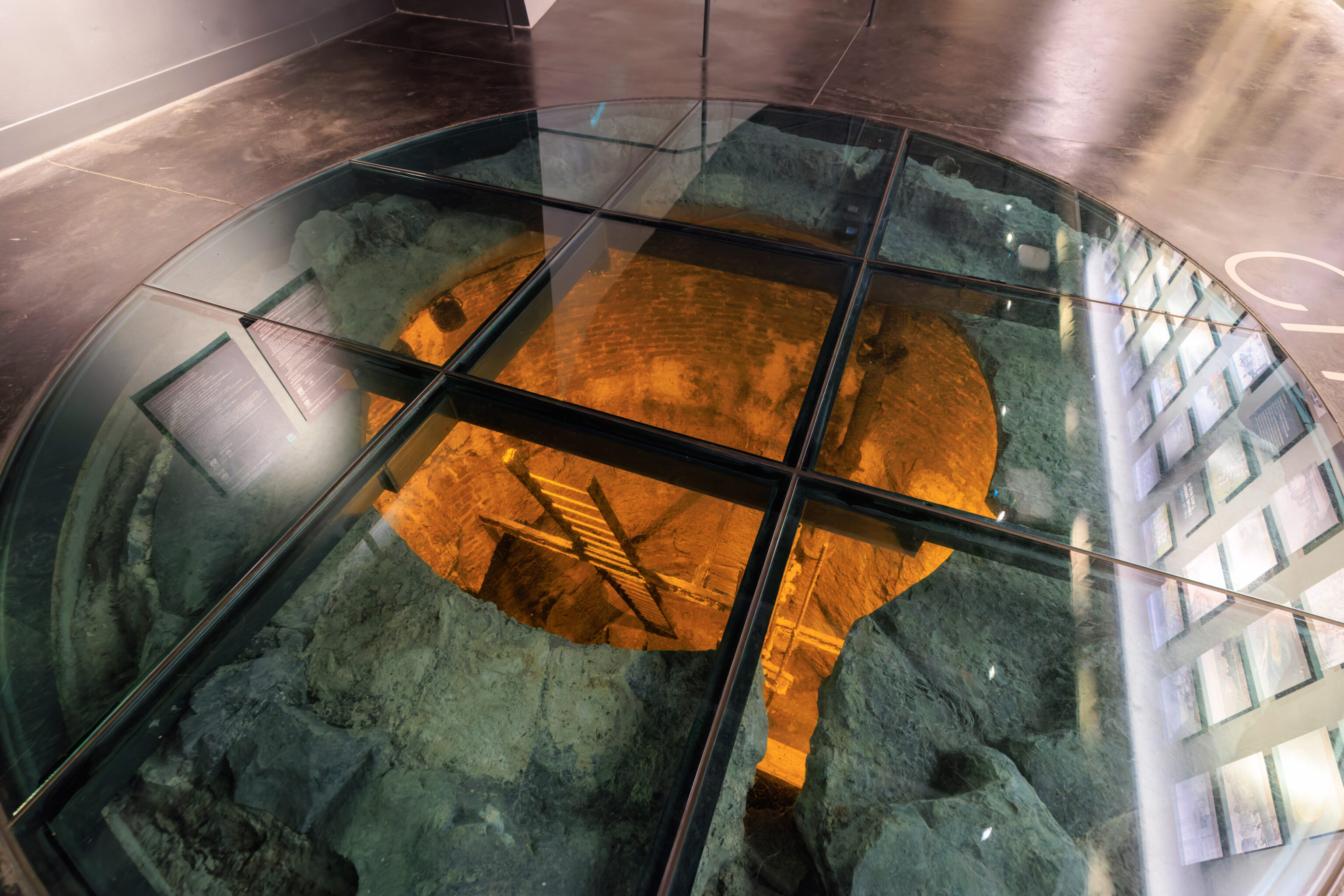
This was… well… we don’t remember what it was or its significance. Entrance to the museum included an audio guide, which talked about this feature in the museum. Audio guides can be great, particularly if they’re well done, but they don’t help you remember any of what you heard.
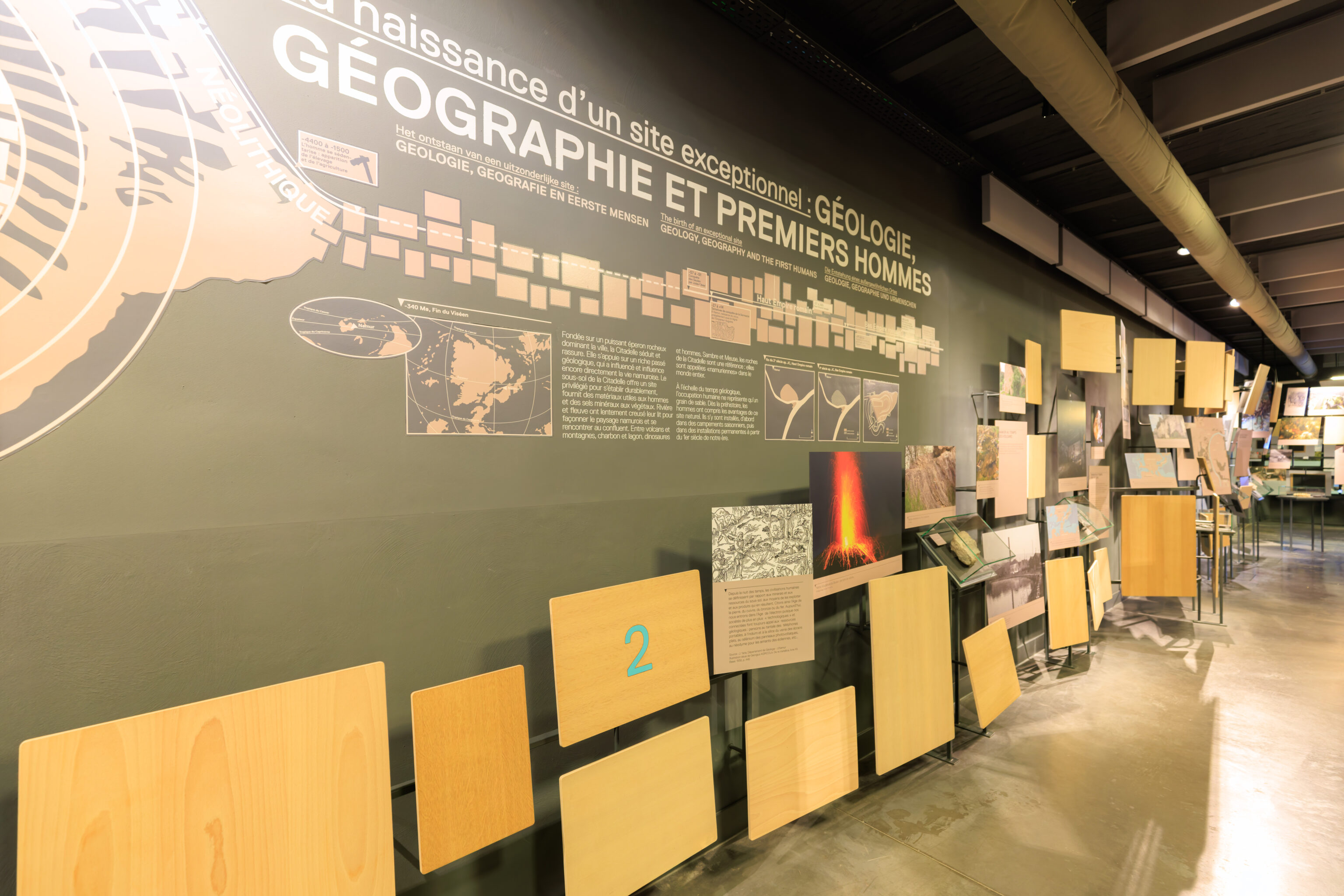
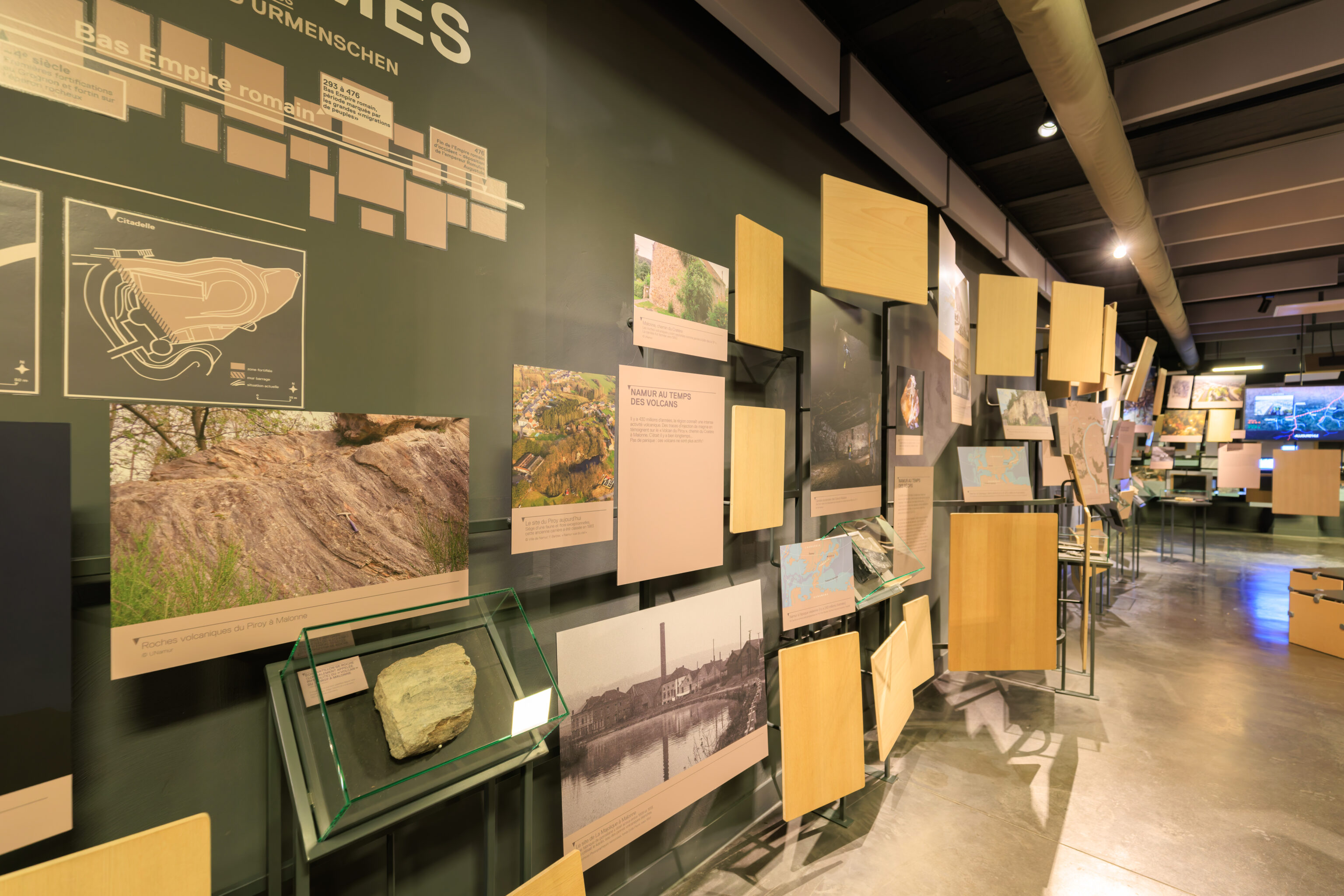
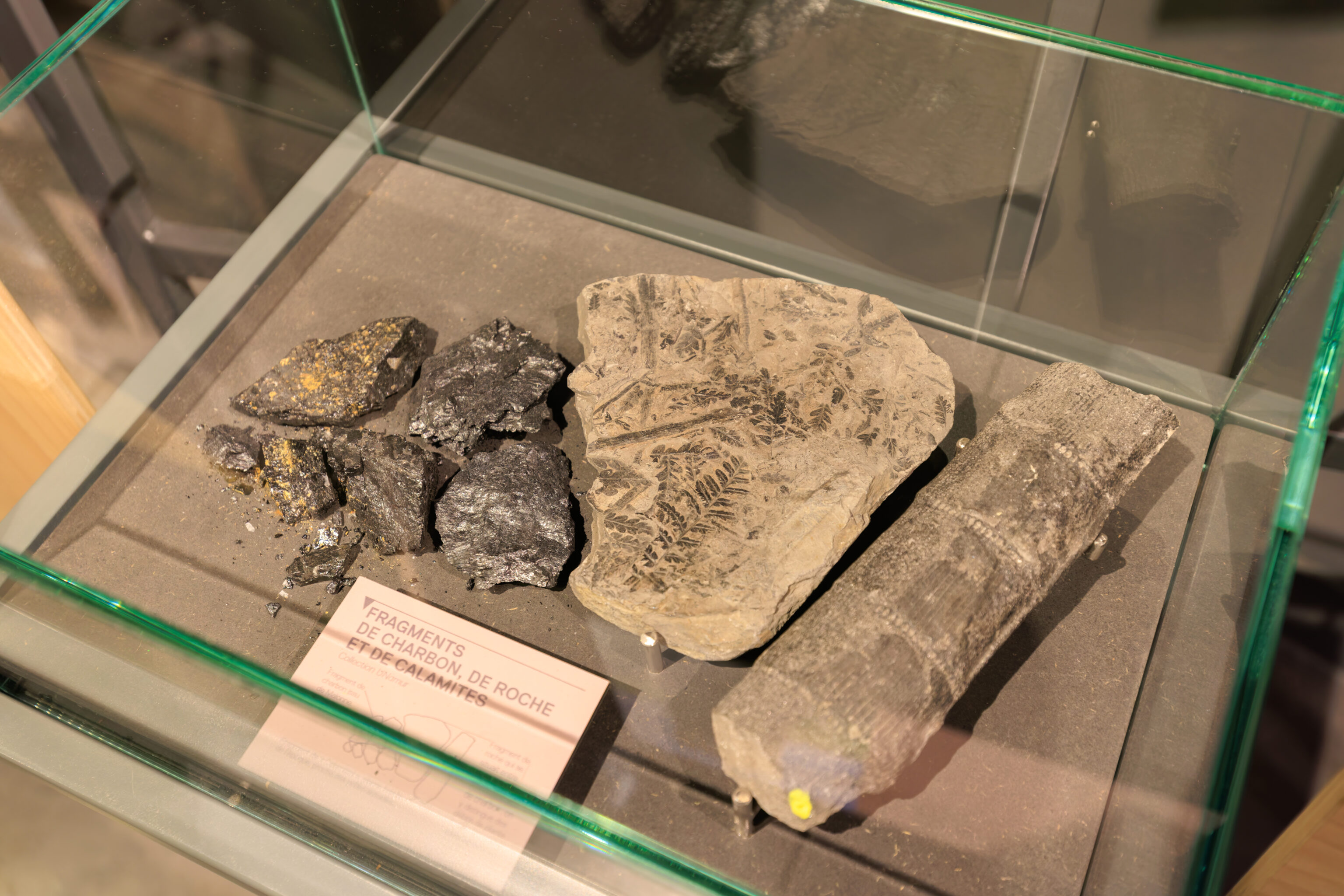
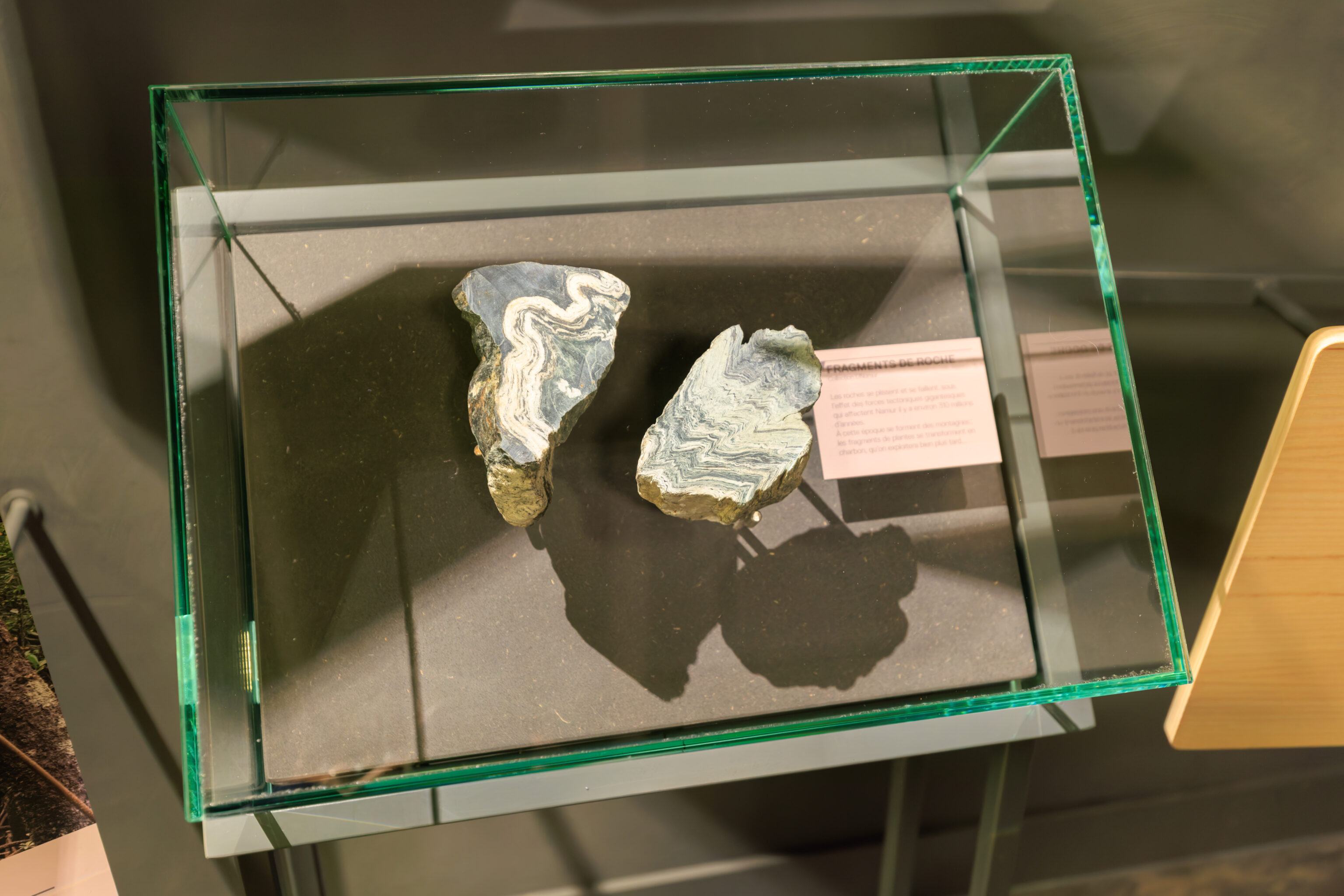
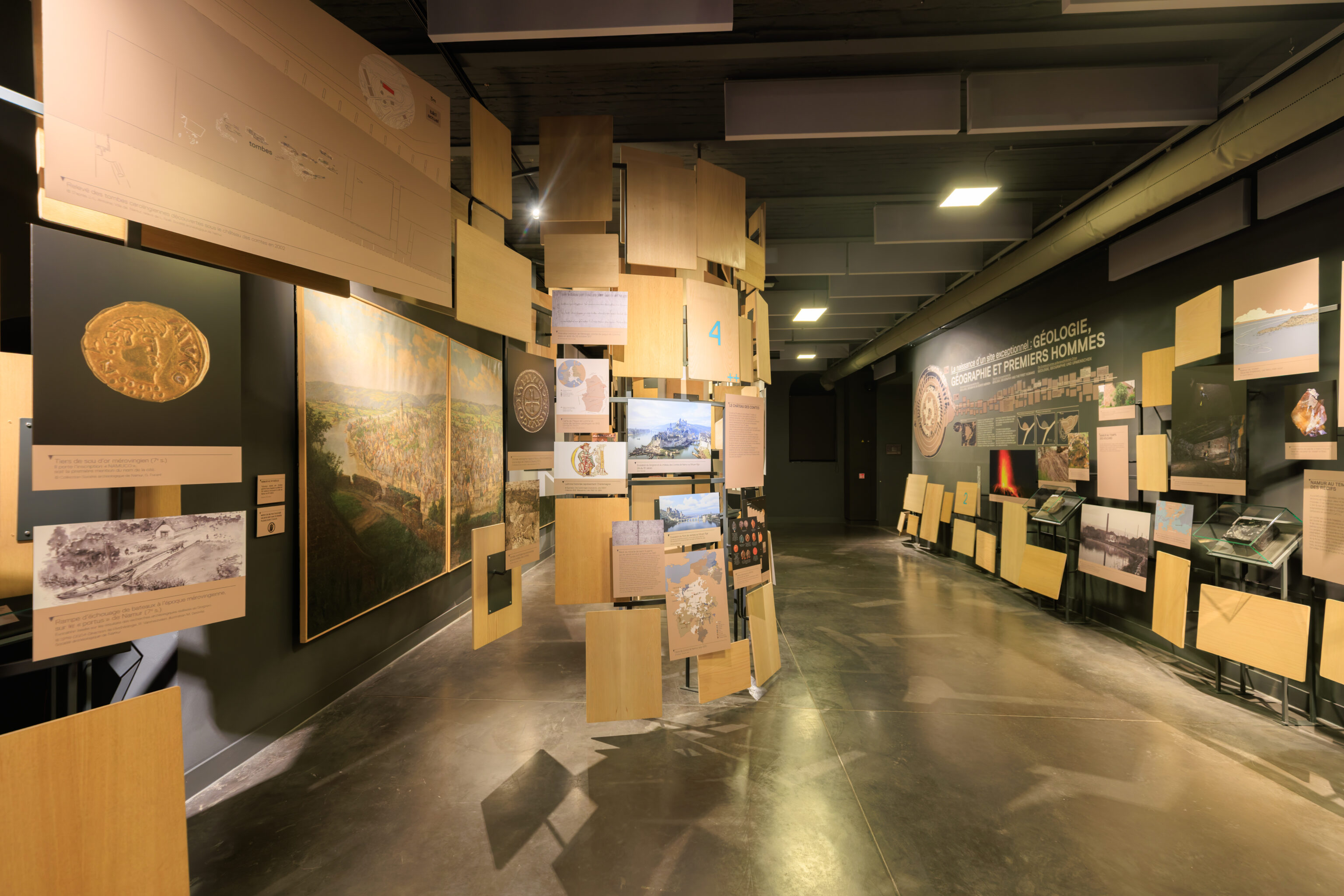
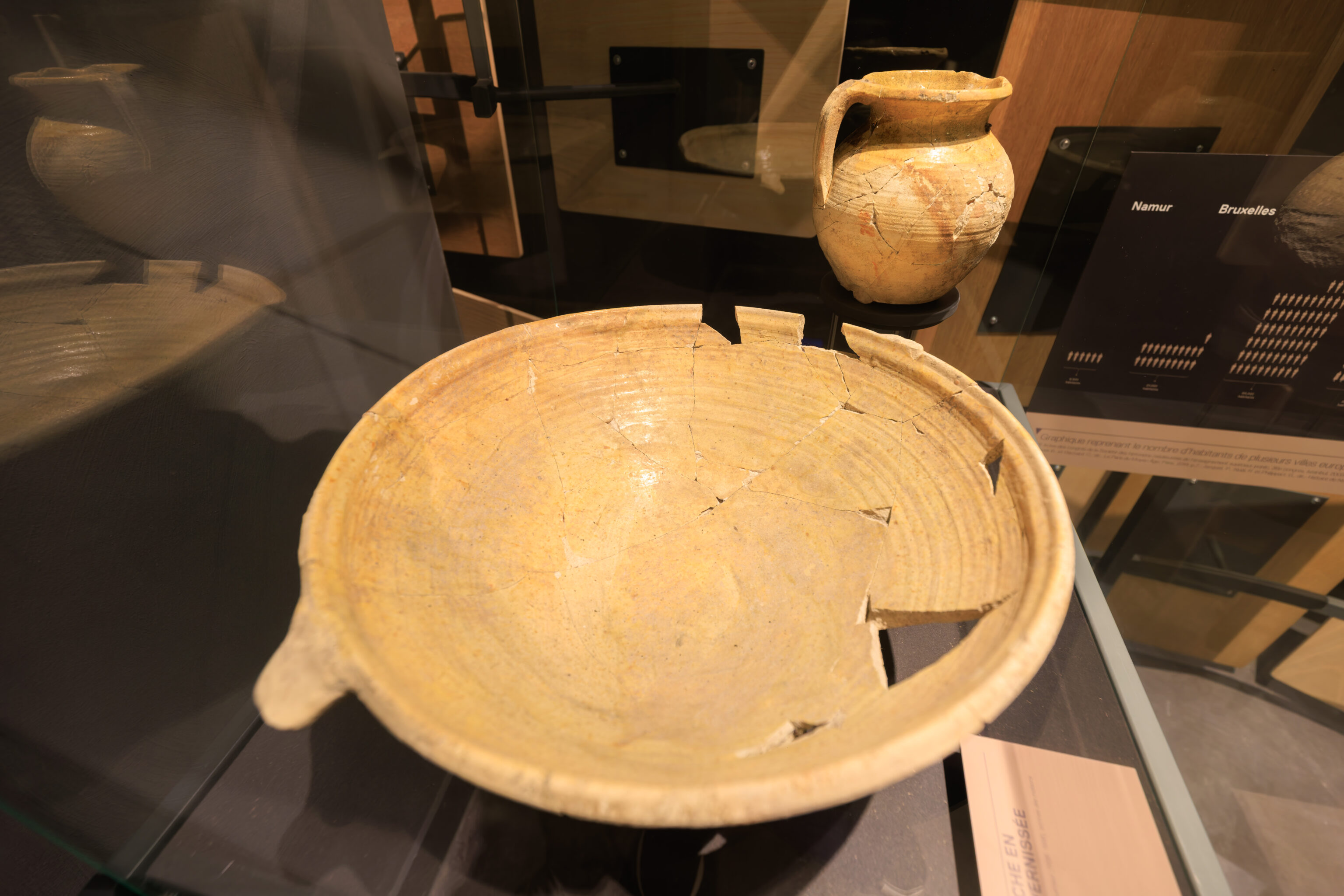
The interior design of the museum was, well, different. It was kind of like someone took a PowerPoint slide deck, cut pieces out, and stuck them on the wall. it ended up being a bunch of random information all over the place.
There were some artifacts present, but it was still mostly a PowerPoint museum.
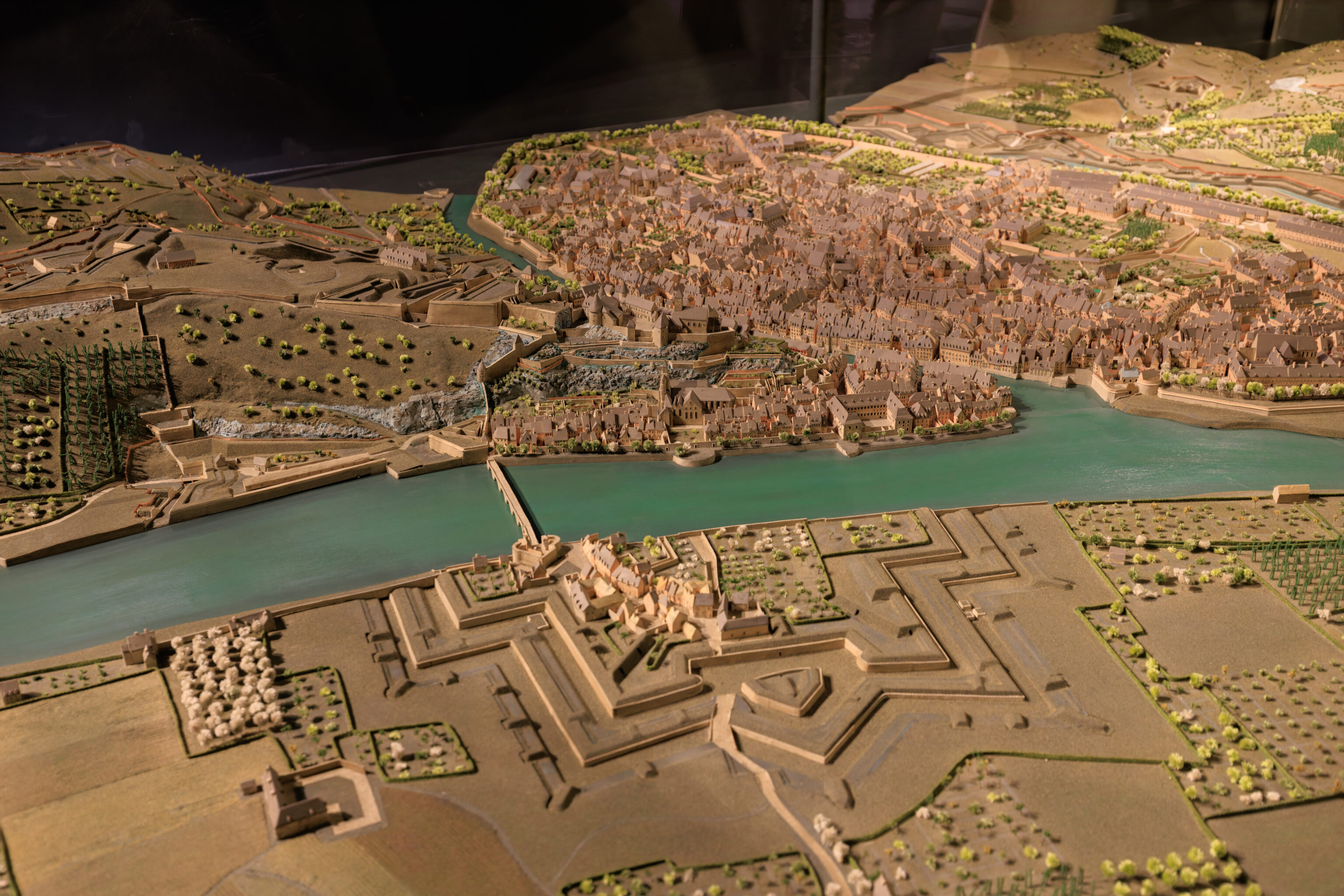
This model depicts what the citadel looked like when it was much larger and more complete than what remains today.
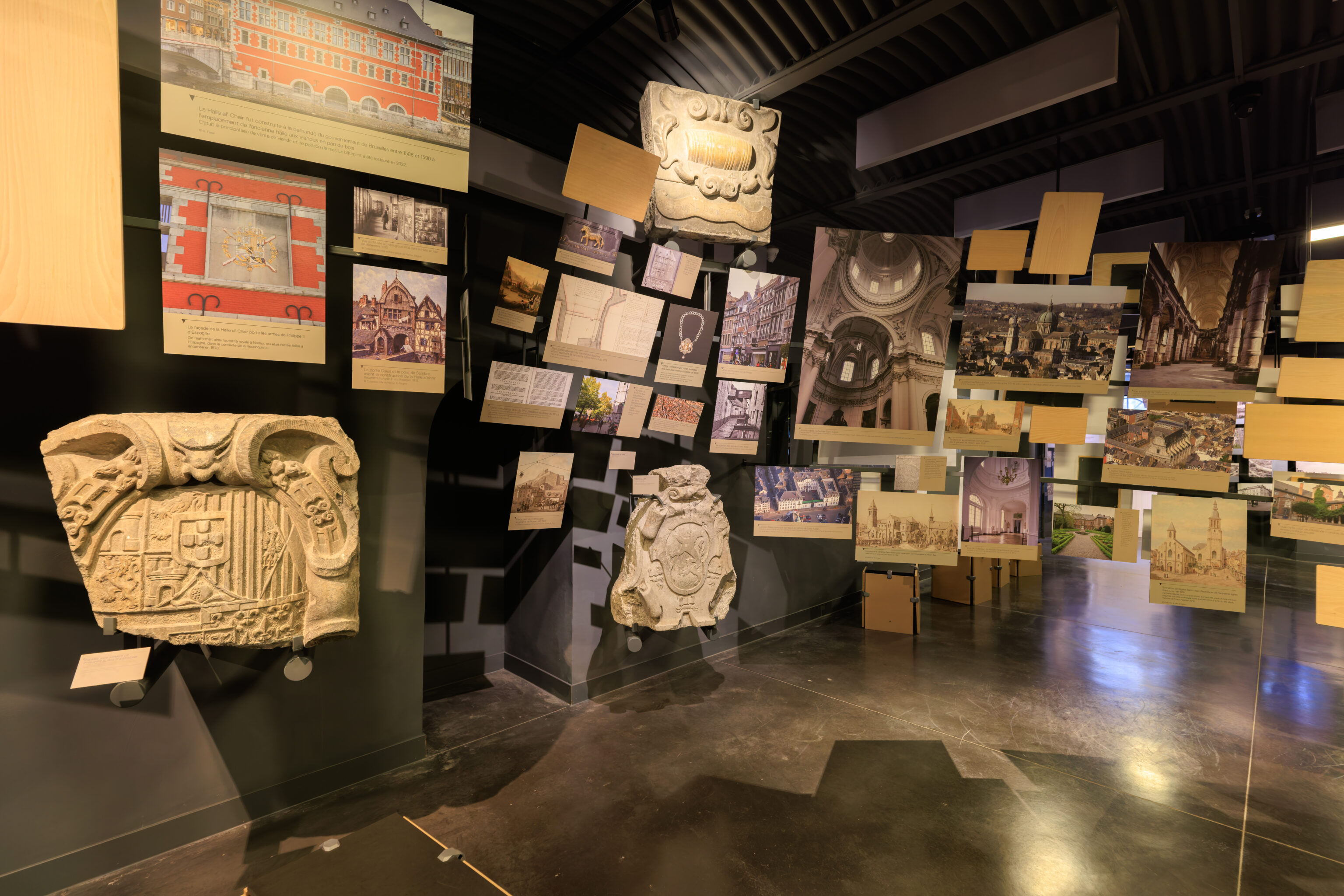
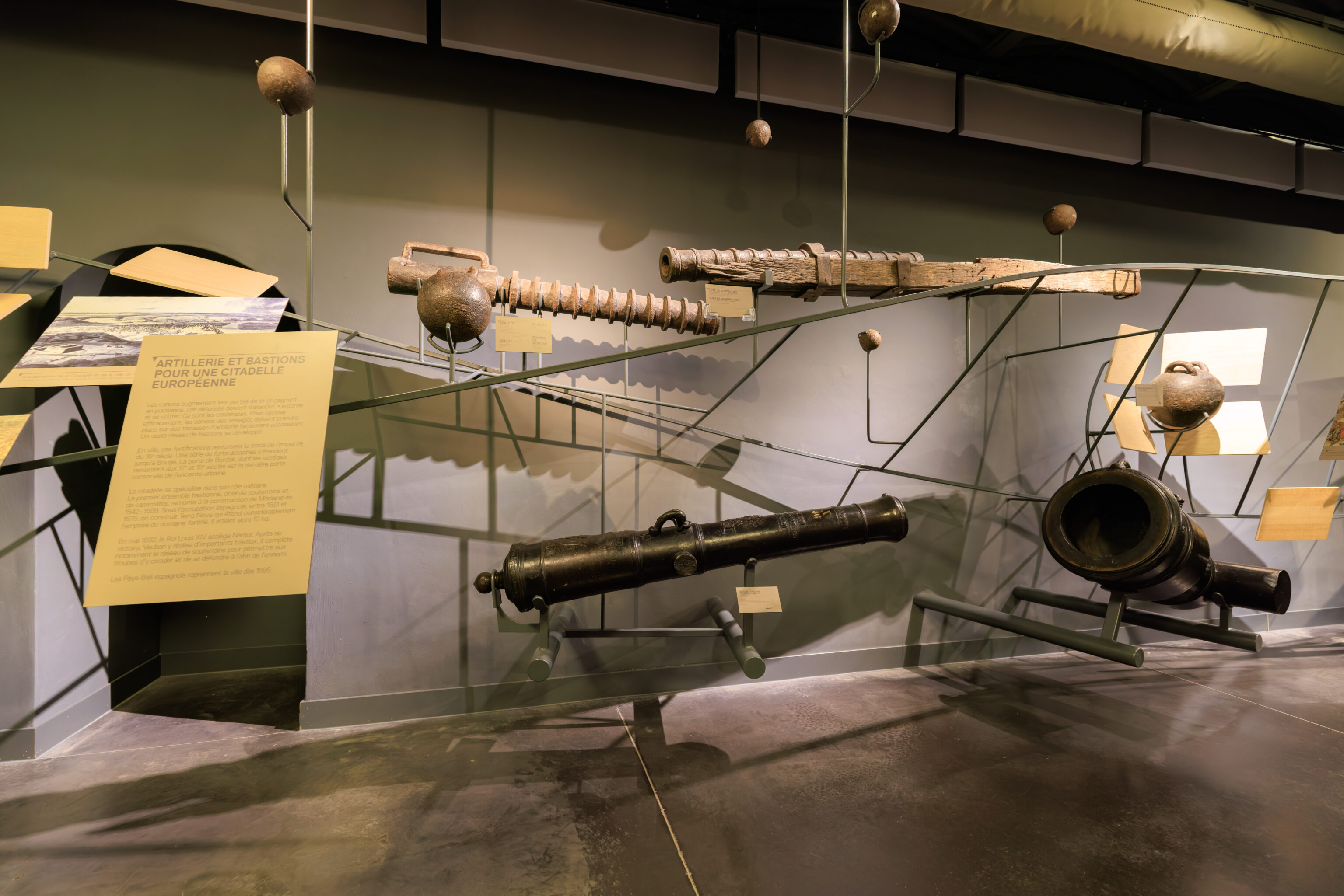
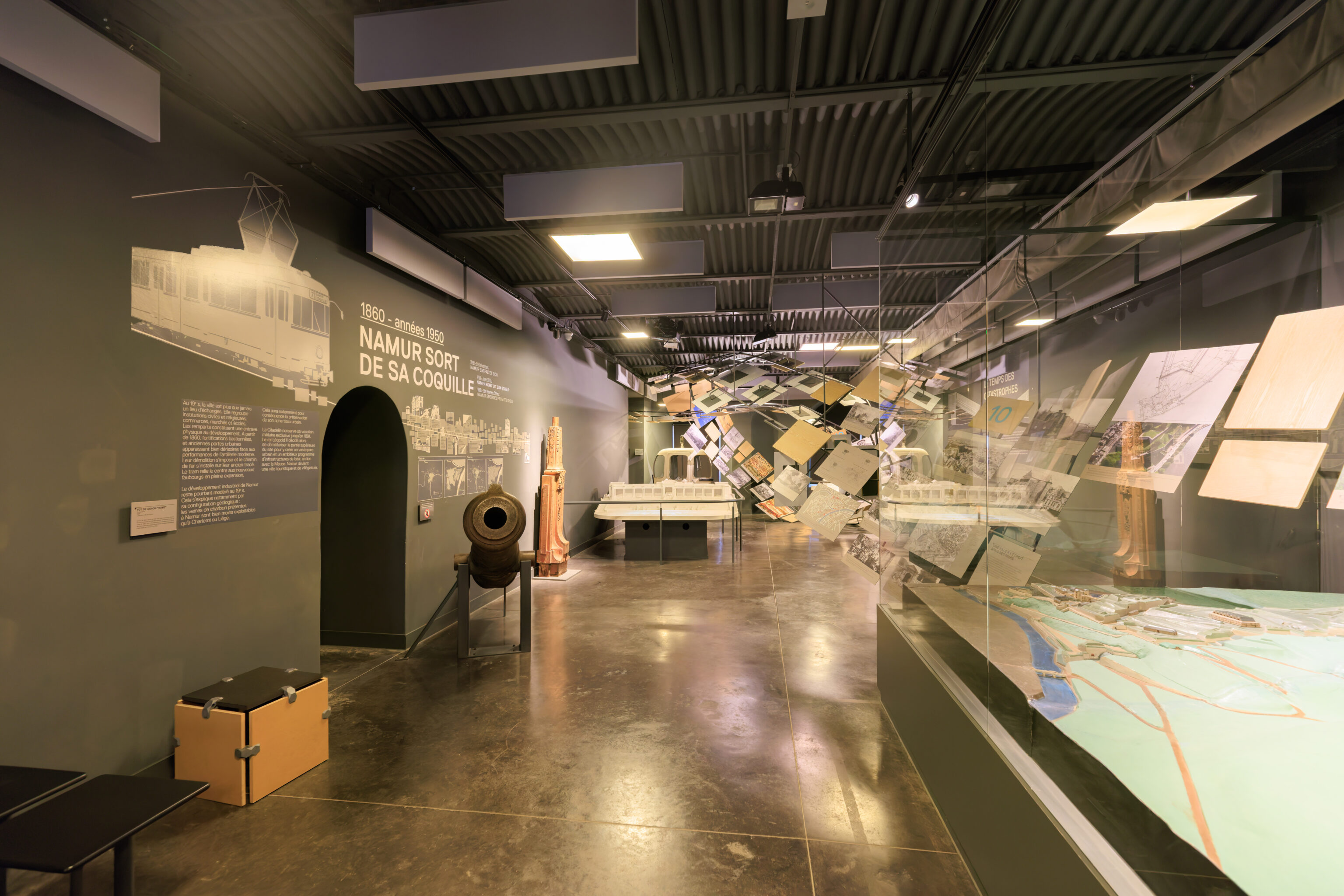
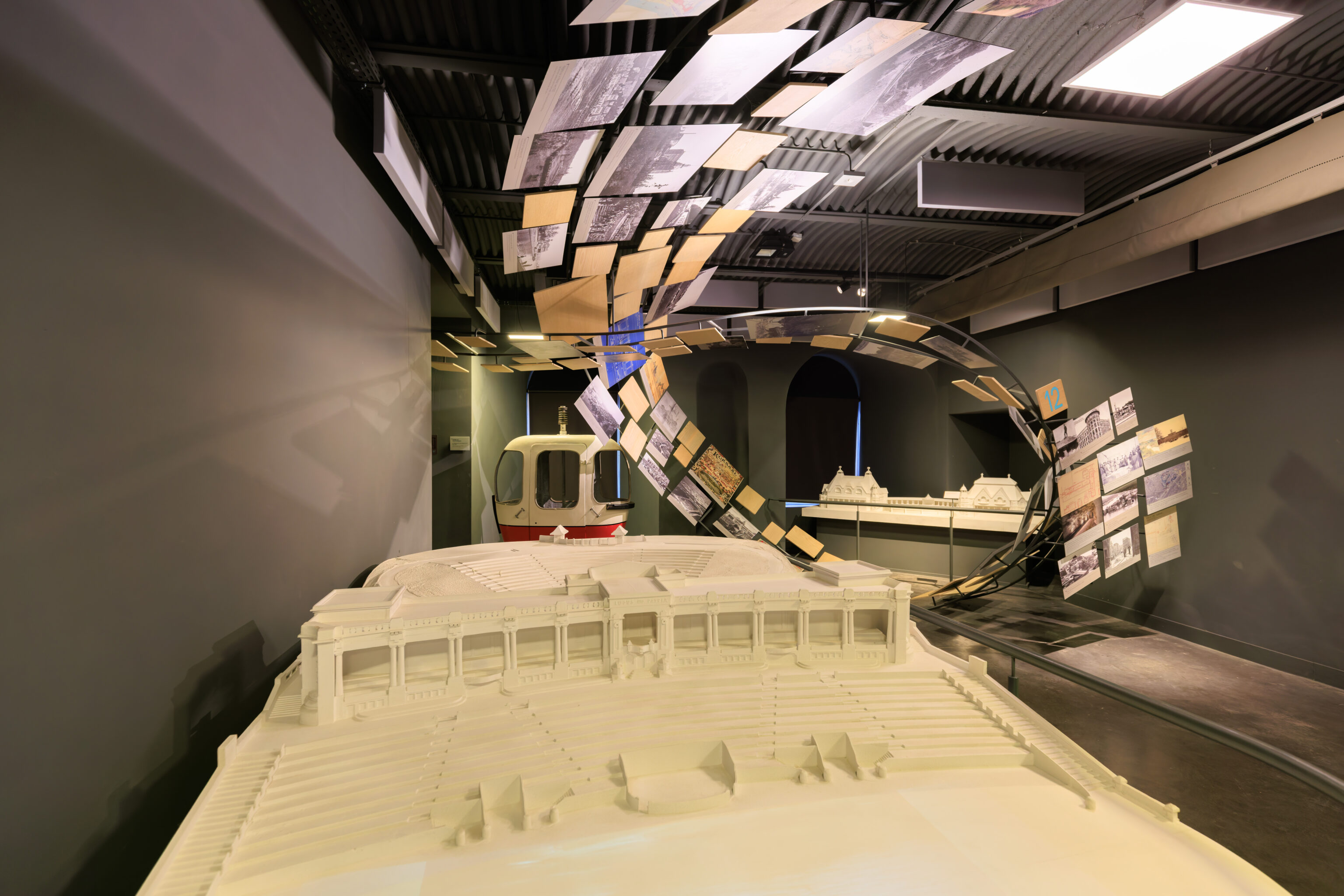
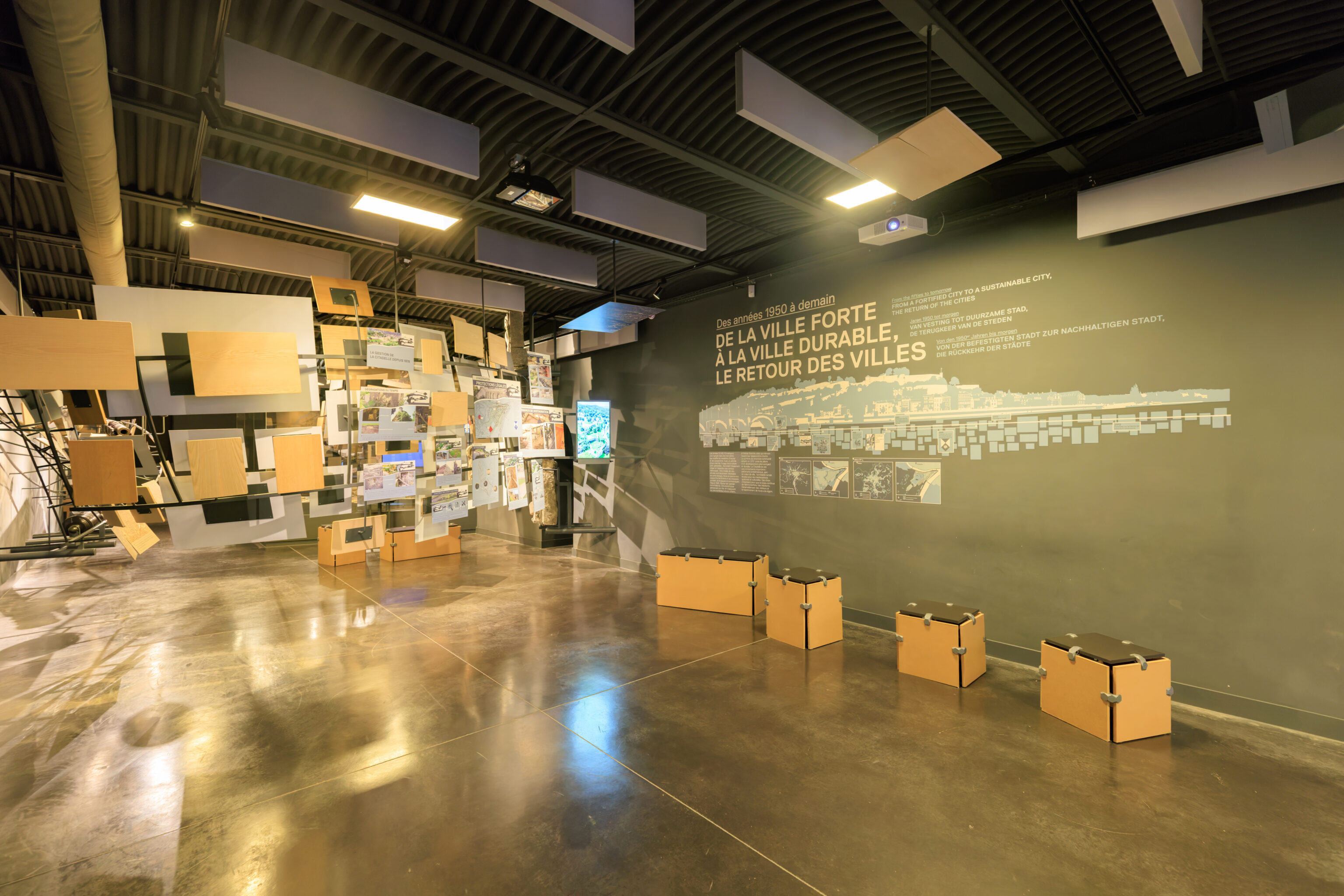
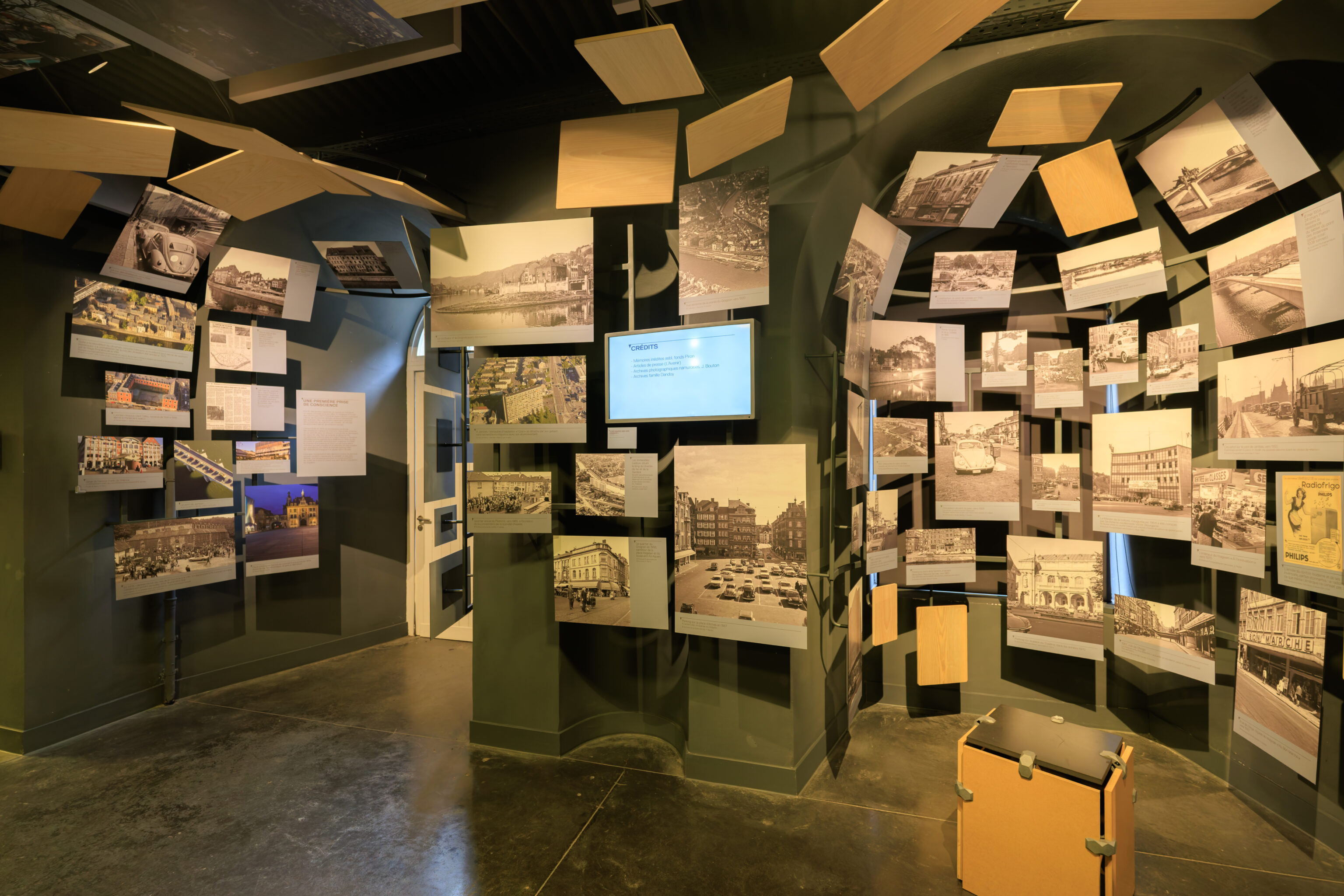
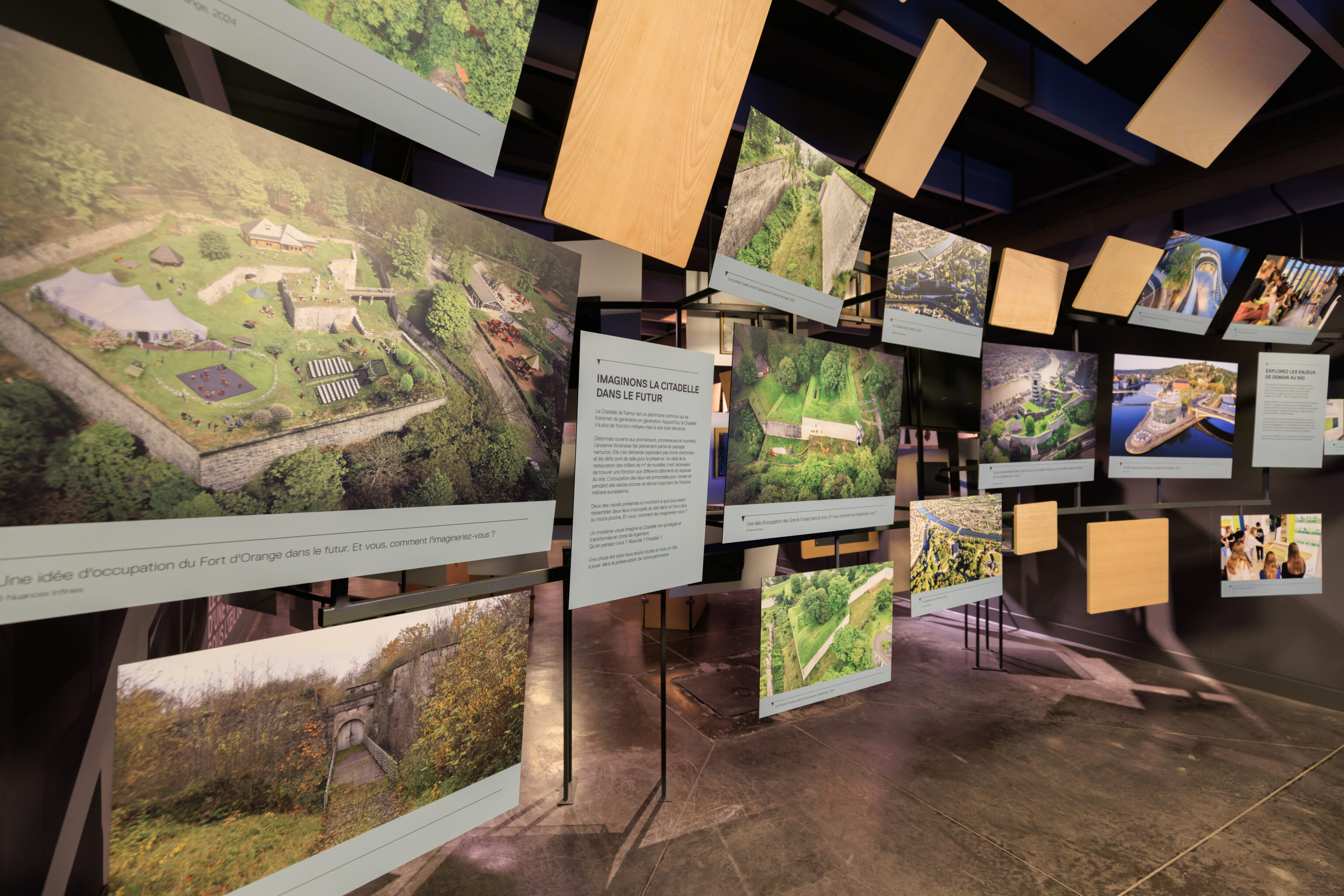
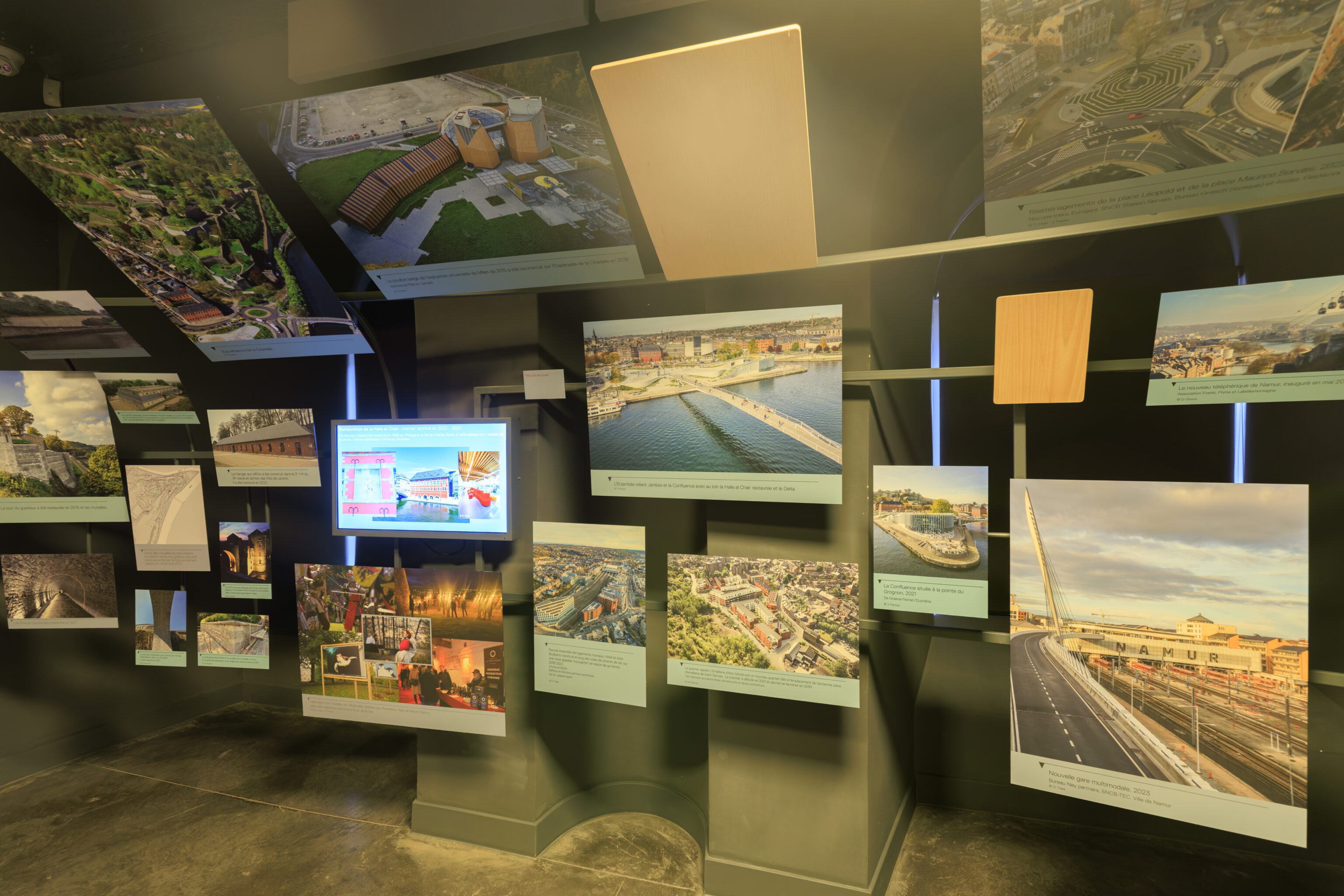
Overall, the museum was a pretty disappointing experience. If we could do it over, we’d skip it for sure.
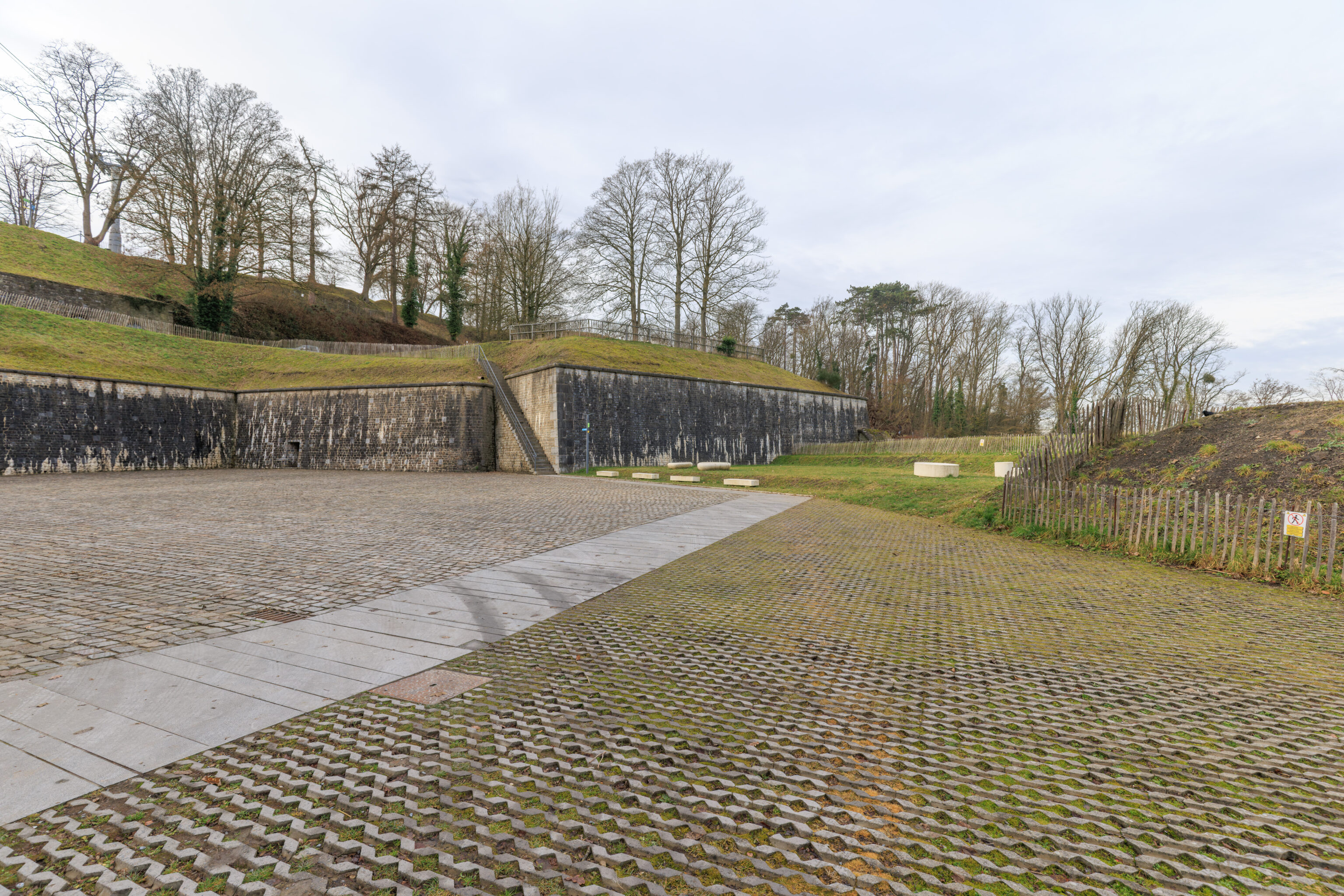
There was still plenty of time before our guided tour at 1pm. So, we decided to walk around a bit outside. To the west of the museum, beyond a large paved area, there was some scattered outdoor seating in the form of stone benches of various shapes. We found a restaurant on Google Maps that wasn’t far to the east. It seemed like we should be able to walk there without descending too much.
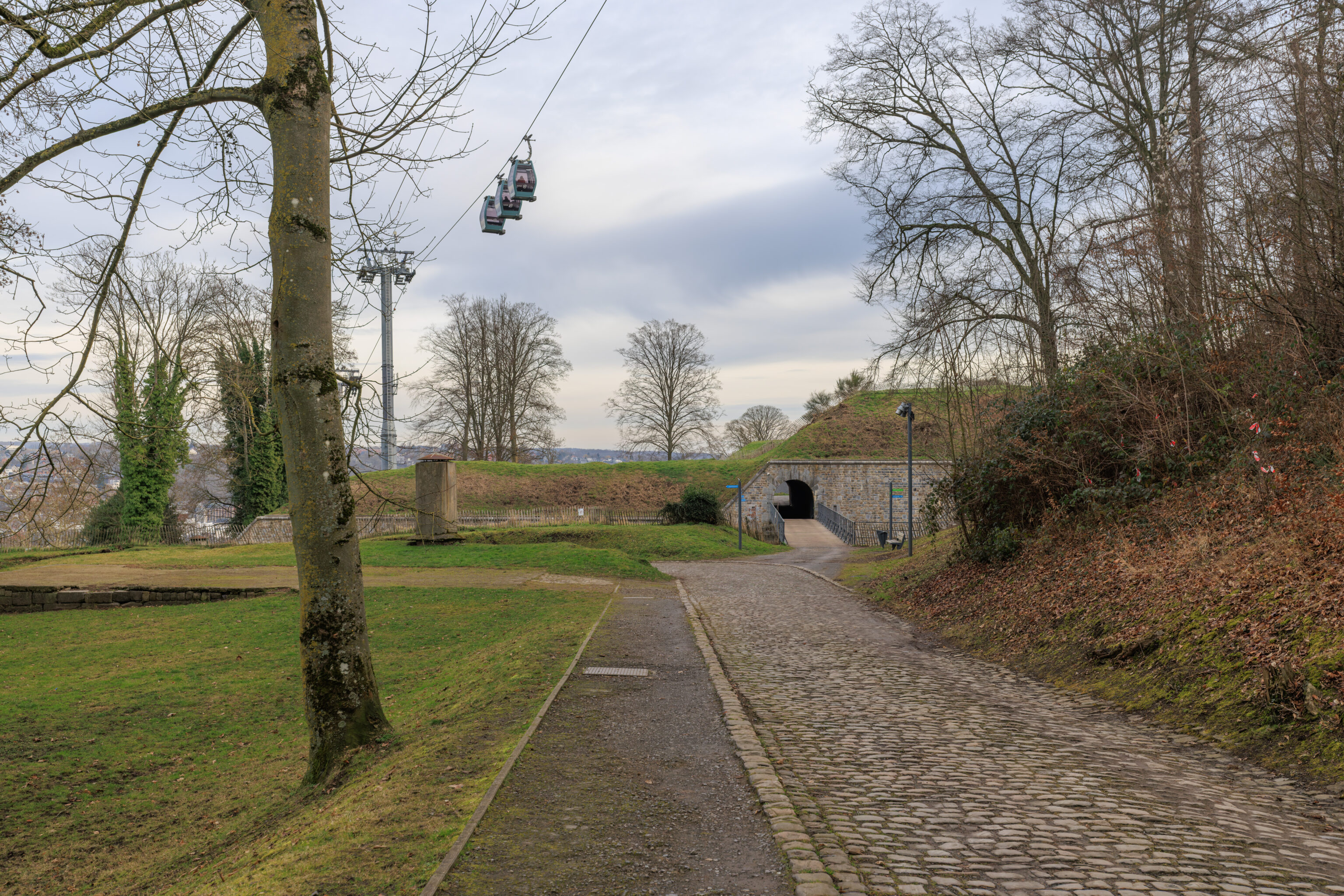
We followed a narrow road as it curved away and to the east from the museum’s west side, passing under the cableway above. We could see a pedestrian bridge ahead.
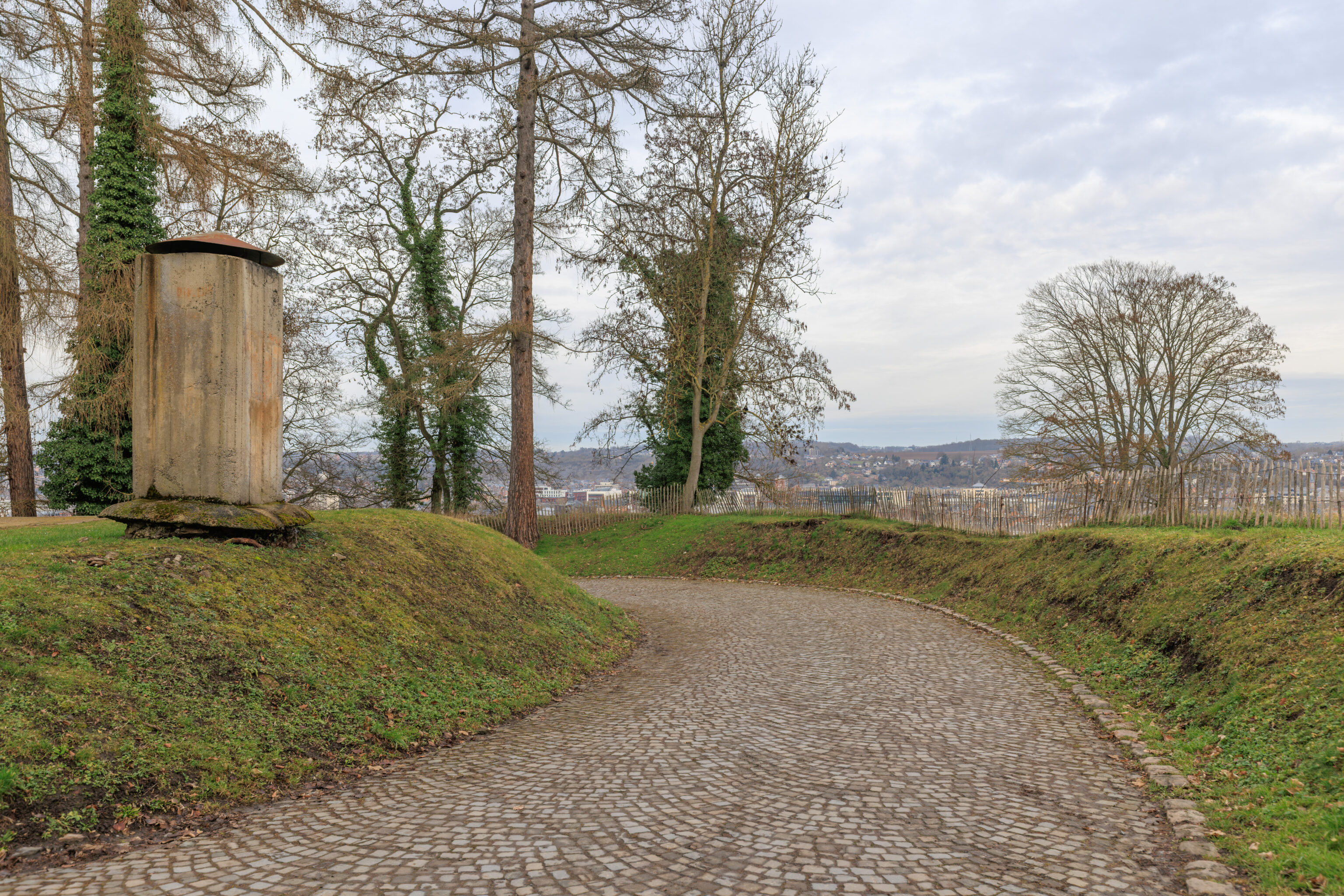
The road curved away to the left around what seems like an exhaust chimney for whatever is underground here.
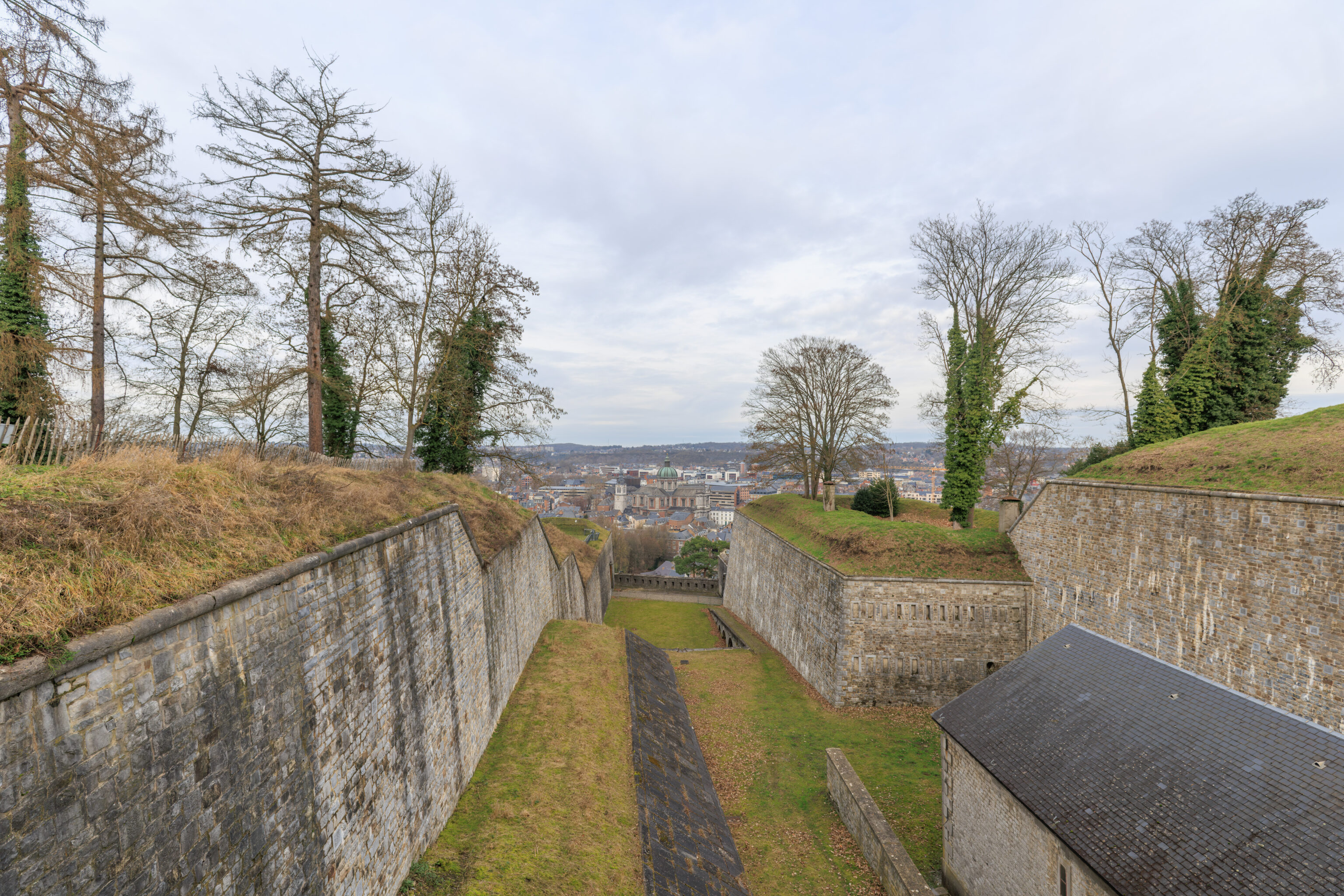
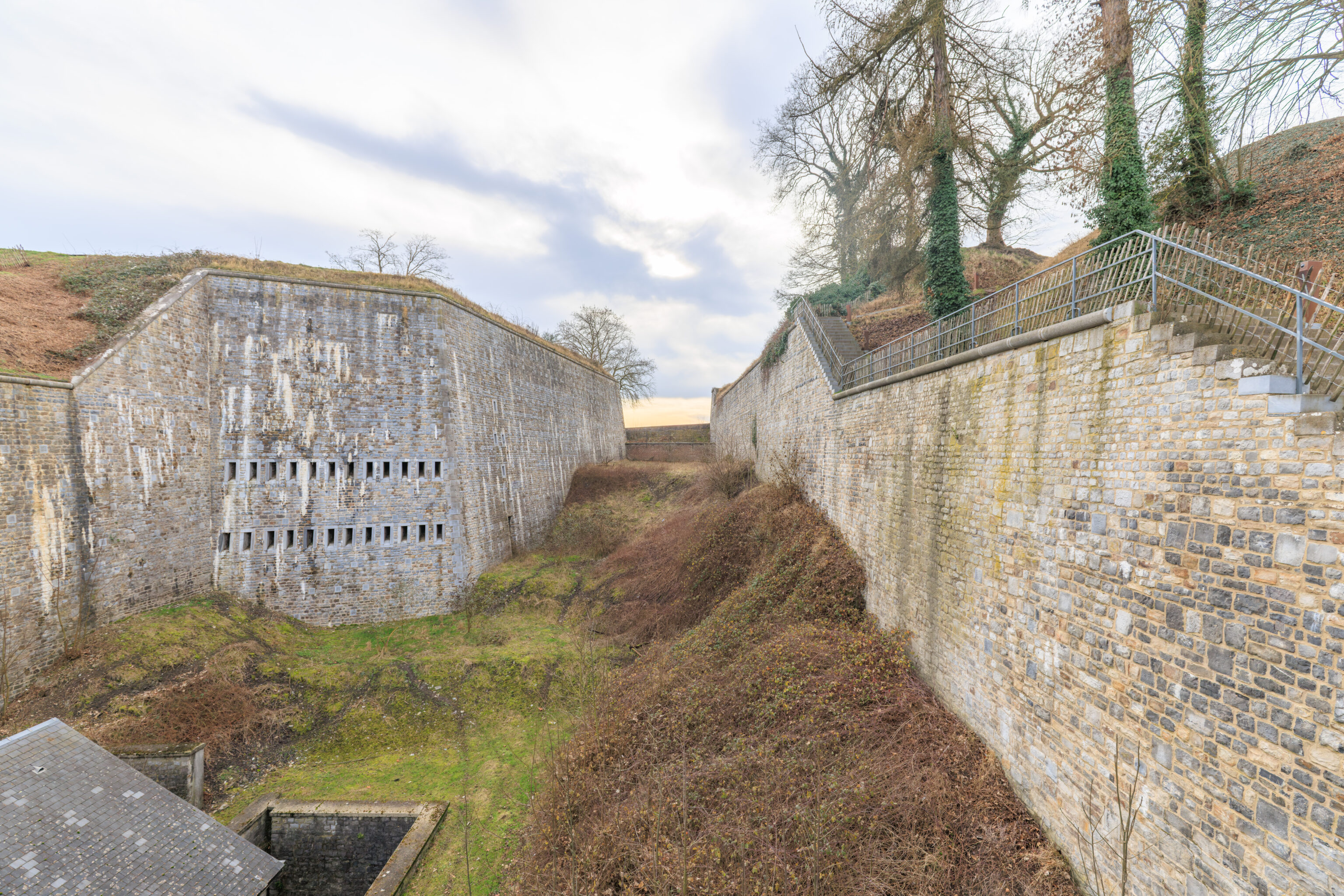
We didn’t follow the road though. We walked across over the bridge. There was a sign on the bridge that explained the use of sheep to control the grass here.
One, two, three sheep ...
From April to September, new inhabitants populate the Citadel. About fifteen sheep of the breed "Ardennais roux" are used to reinforce the teams that maintain the site.

The Citadel and its steep slopes offer visitors magnificent views, but also require much effort for their maintenance. Since 2003, an eco-grazing project has been implemented on the site. This involves using grazing animals to maintain and conserve natural areas without the use of mechanical equipment. This technique, which is both ecological and more economical, allows us to maintain hard-to-reach areas.

The breed we use for this eco-pasturage was not chosen by chance. Although its diet consists mainly of grass, the sheep also appreciate nettles, brambles and the bark of young trees, and adapt very easily to poorer land. Their wool plays a double role: it protects them from the cold and provides them with an efficient insulation against the heat. Our livestock, which is naturally resistant to disease, is regularly monitored by a veterinarian while the site's teams are in charge of its daily well-being.

This collaboration also makes it possible to honour a threatened breed. Once very widespread in our regions, the "Ardennais roux" is now one of the local breeds that are threatened with extinction in Wallonia, due to their small numbers.
– Text from a sign on the bridge.
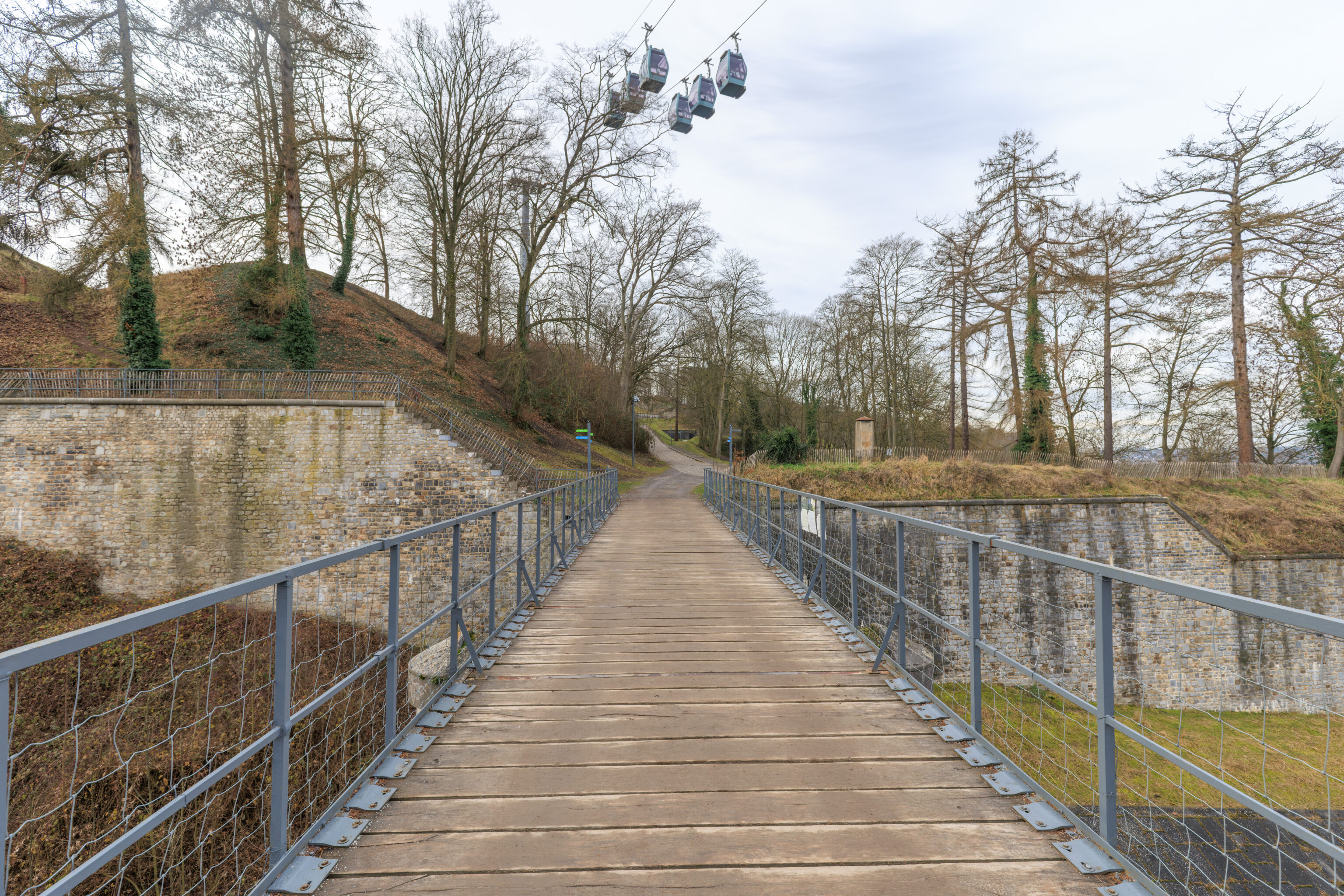
The view from the bridge looking back.
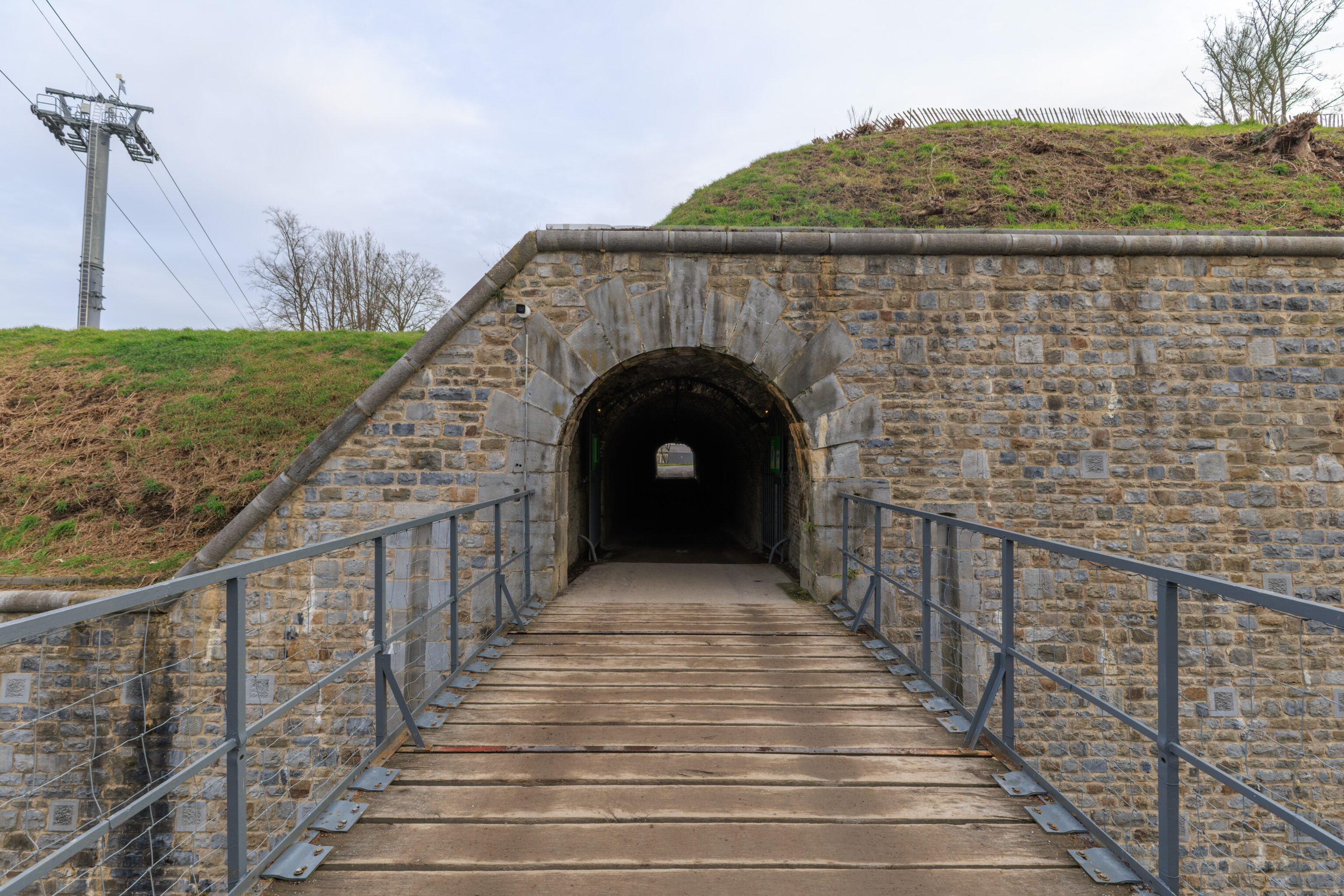
And ahead.
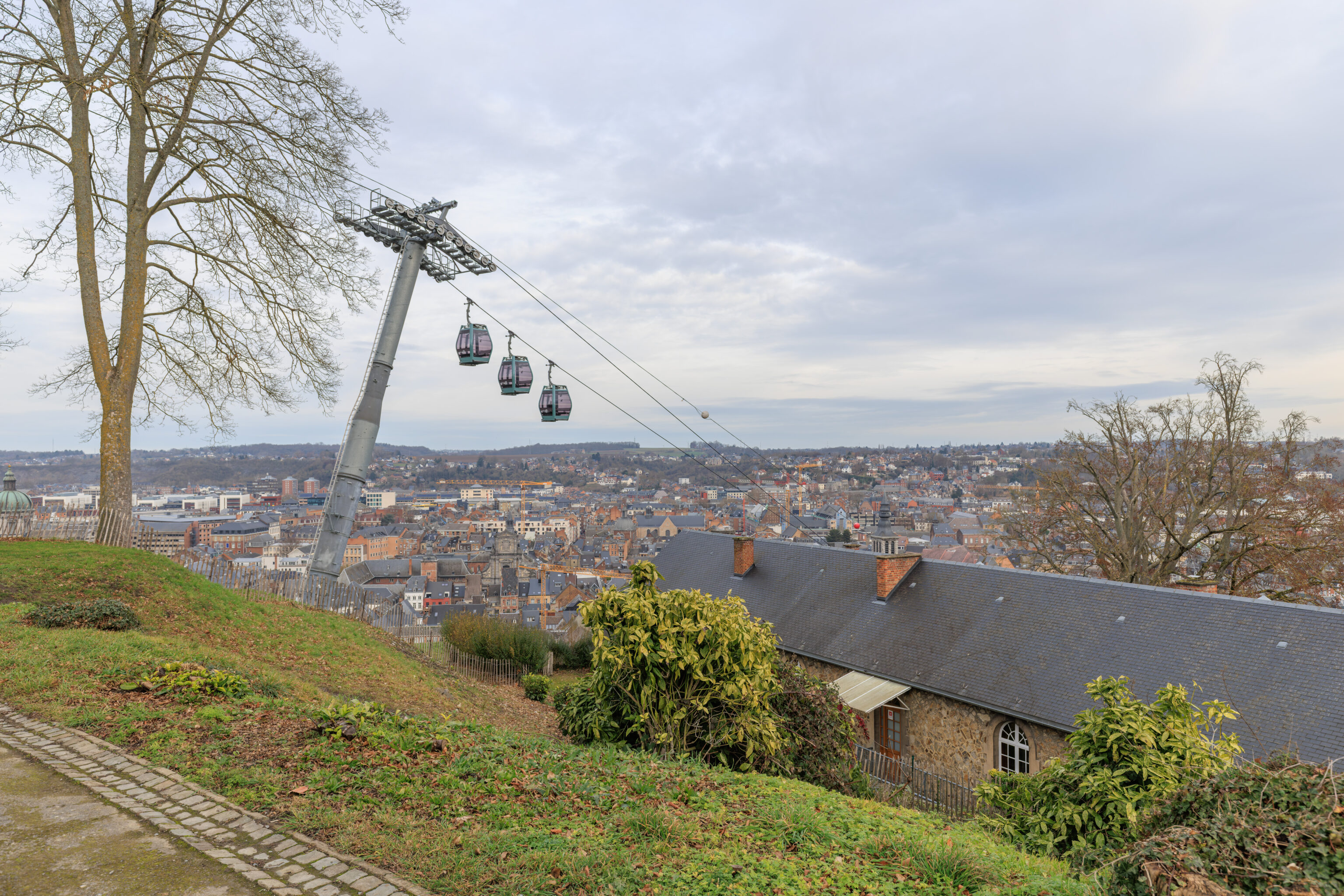
We walked through the tunnel. Upon exiting, we saw the cableway to our left. This was the point where it begins to descend.
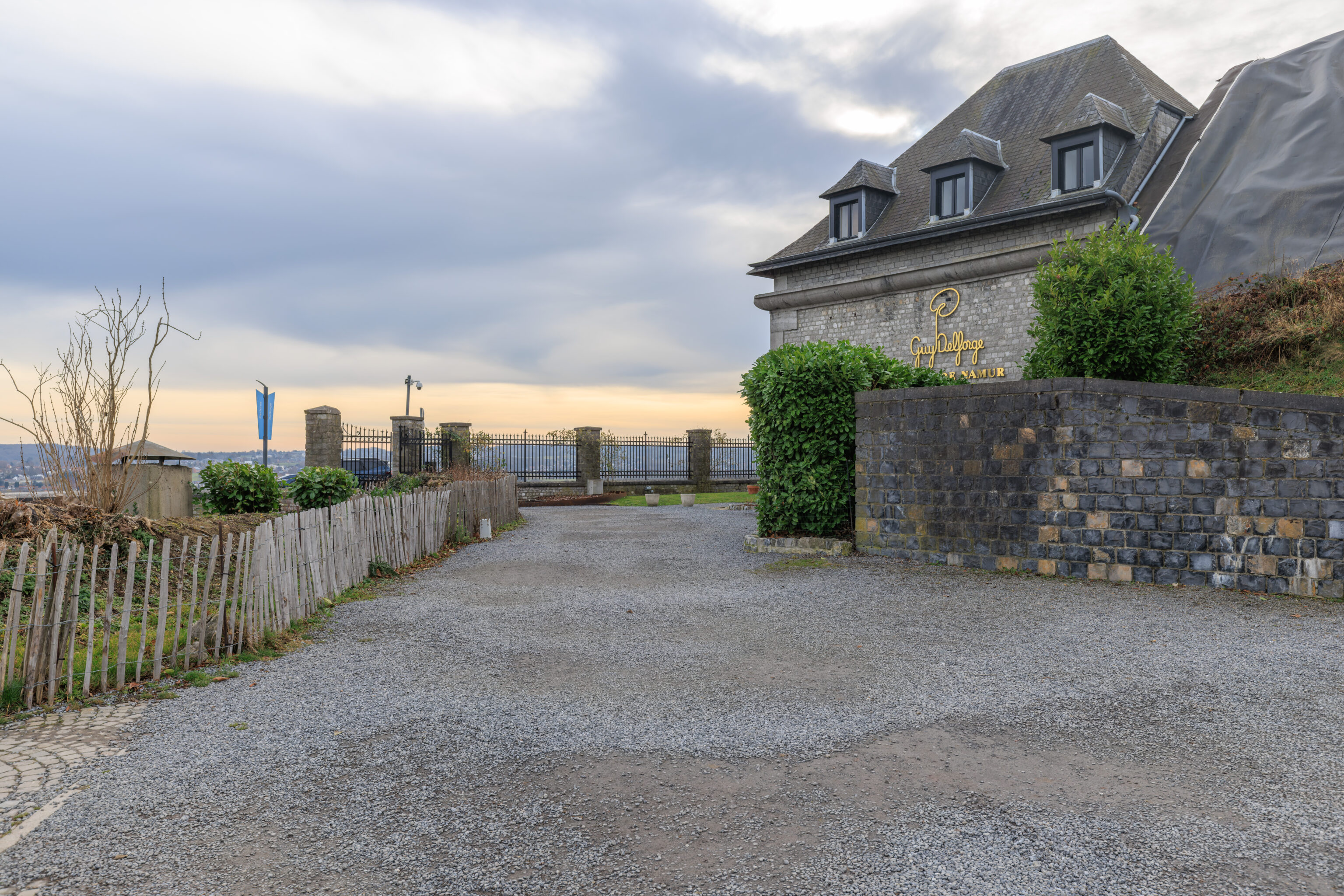
The building here on the right contains a perfume company, Maison Delforge. They have a perfume workshop down in the citadel’s tunnels below the building.
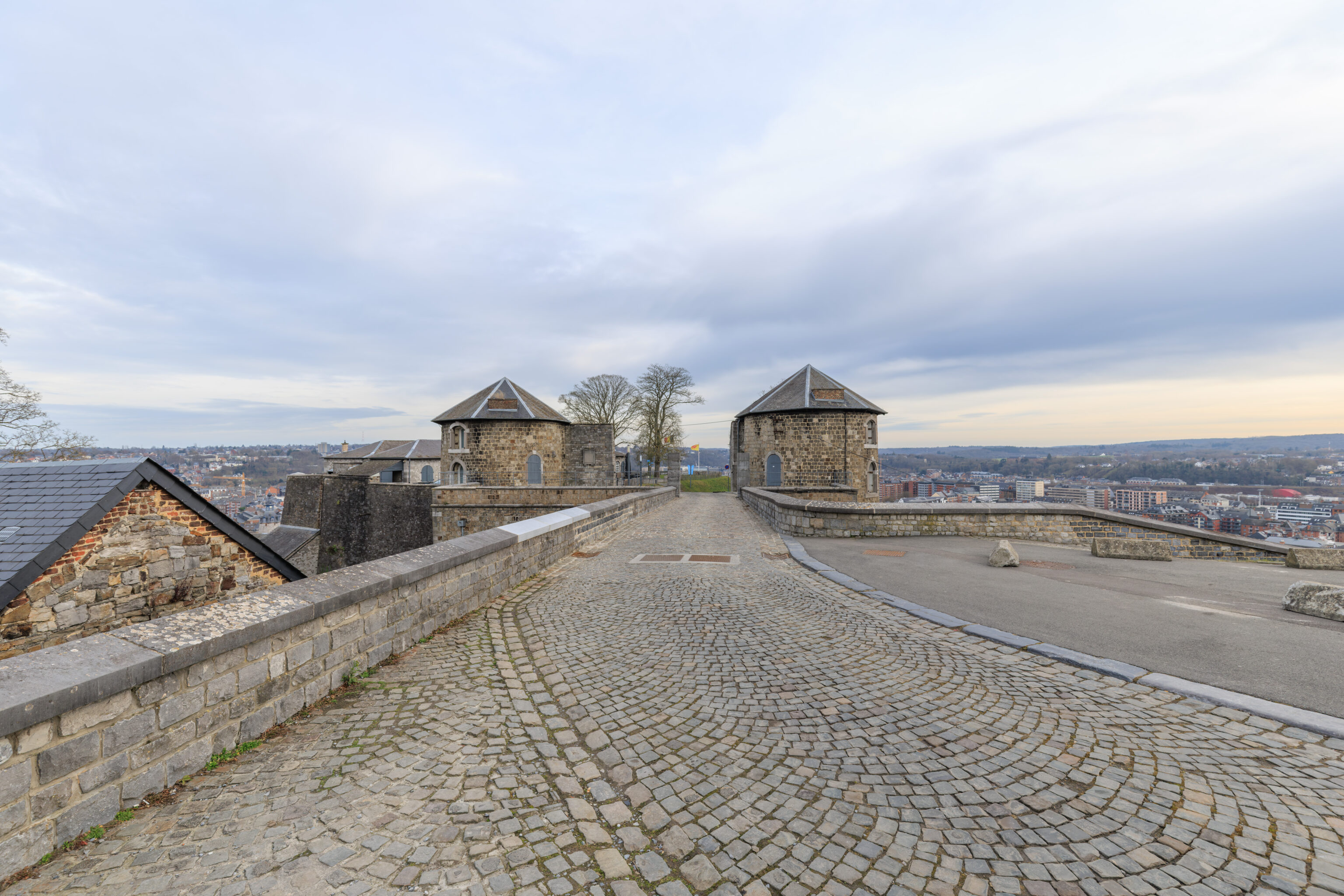
We turned left to continue to the east.
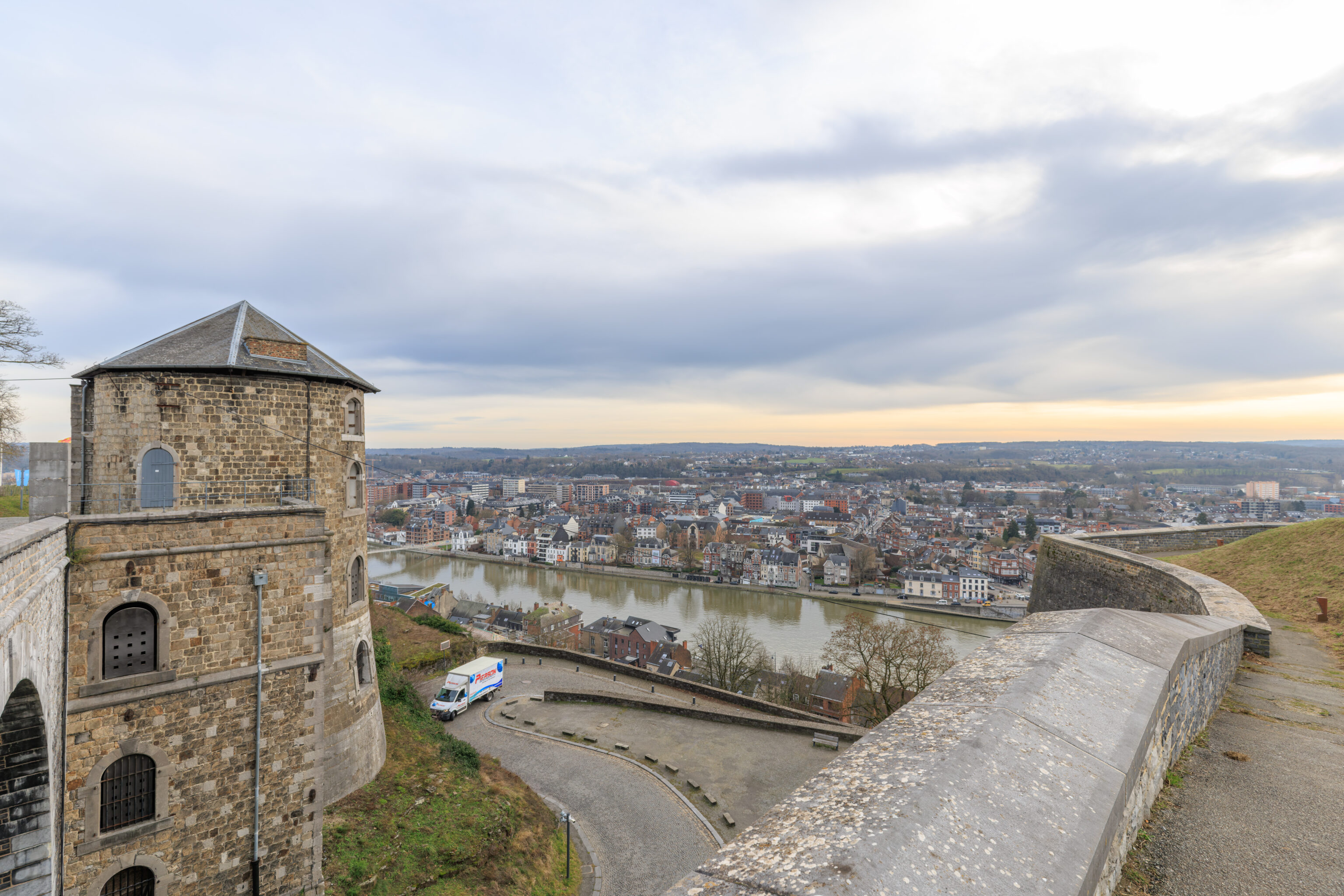
There was a road down below. This was the view to the southeast.
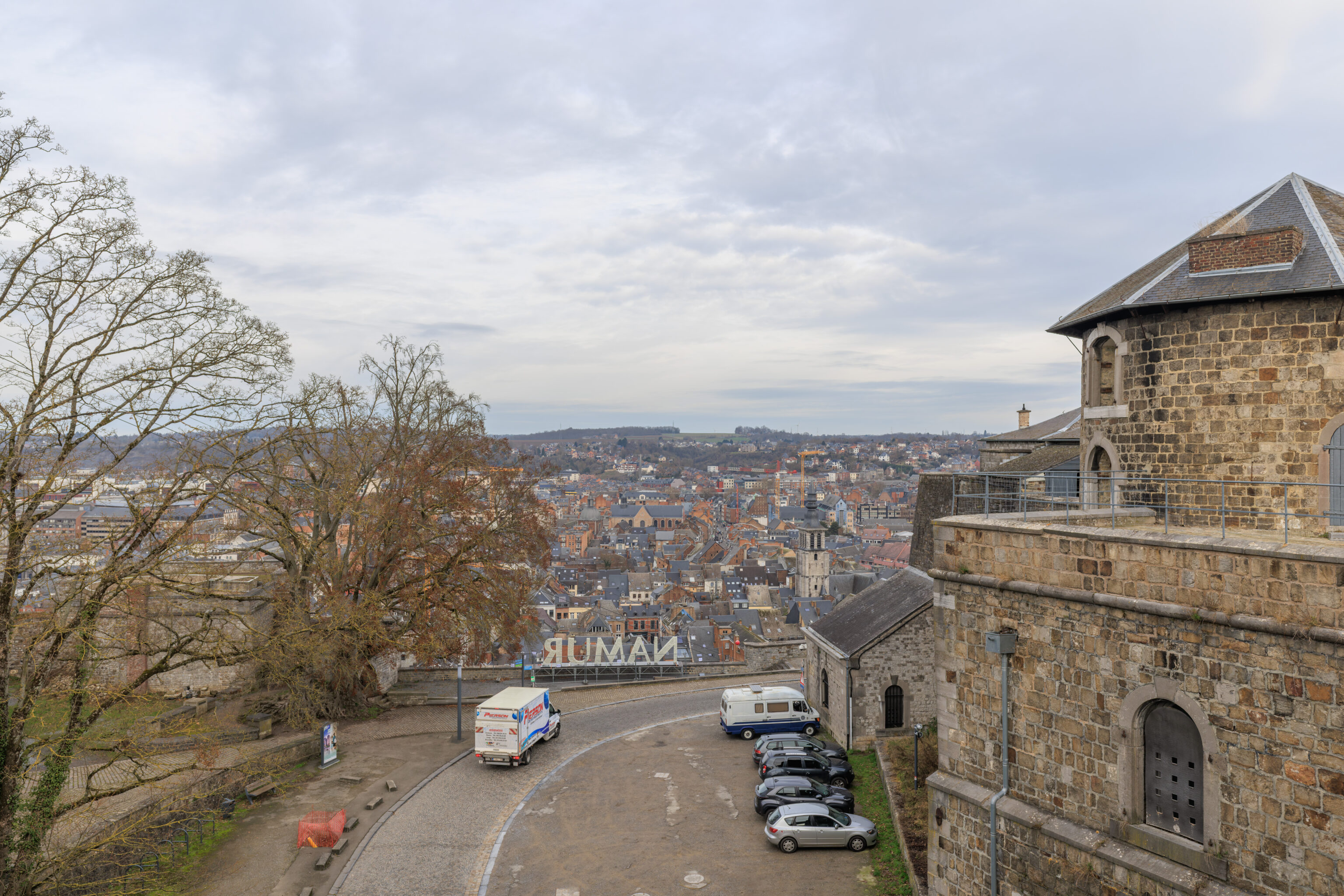
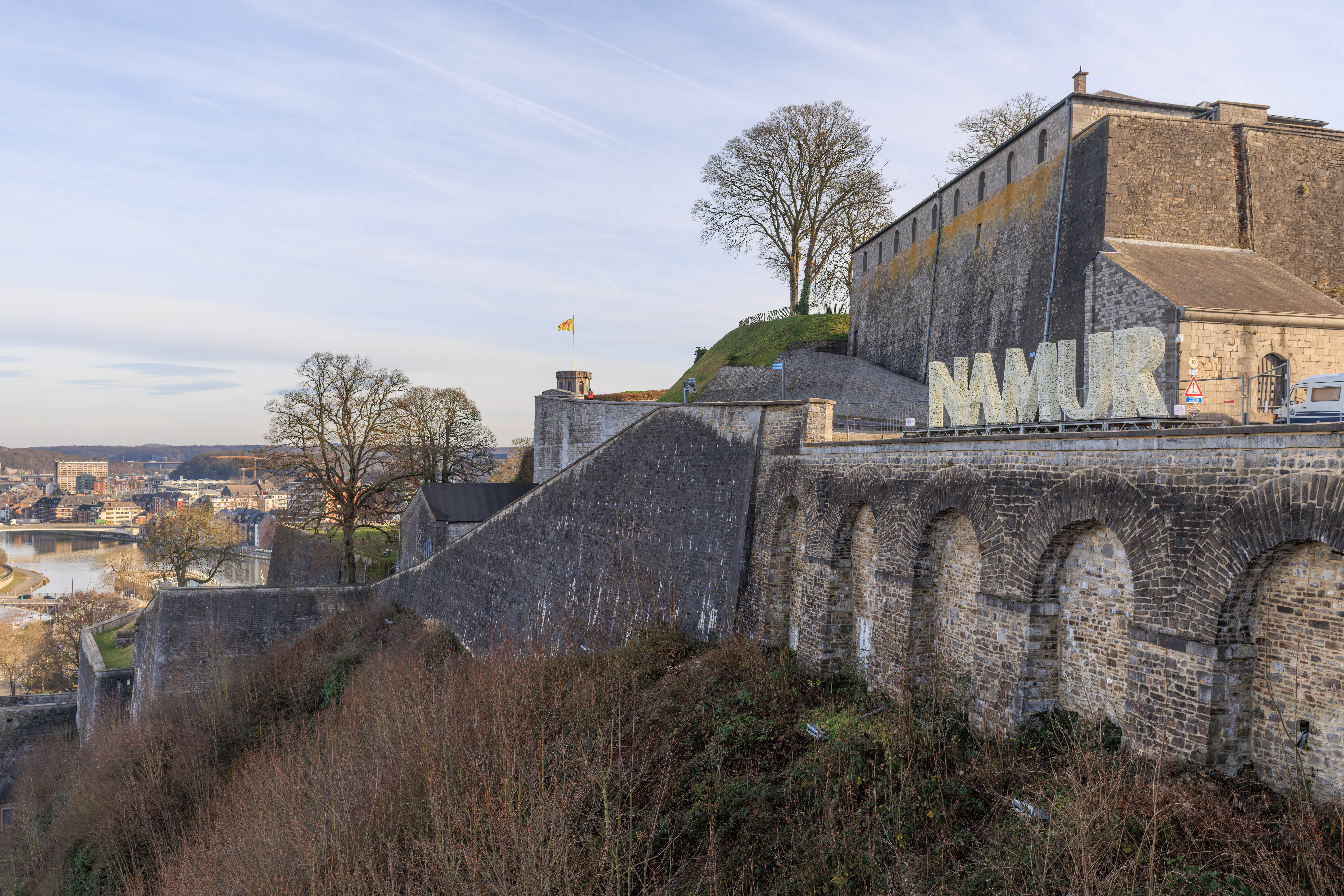
Looking to the north from the bridge that crosses the road below, we could see a large Namur sign.
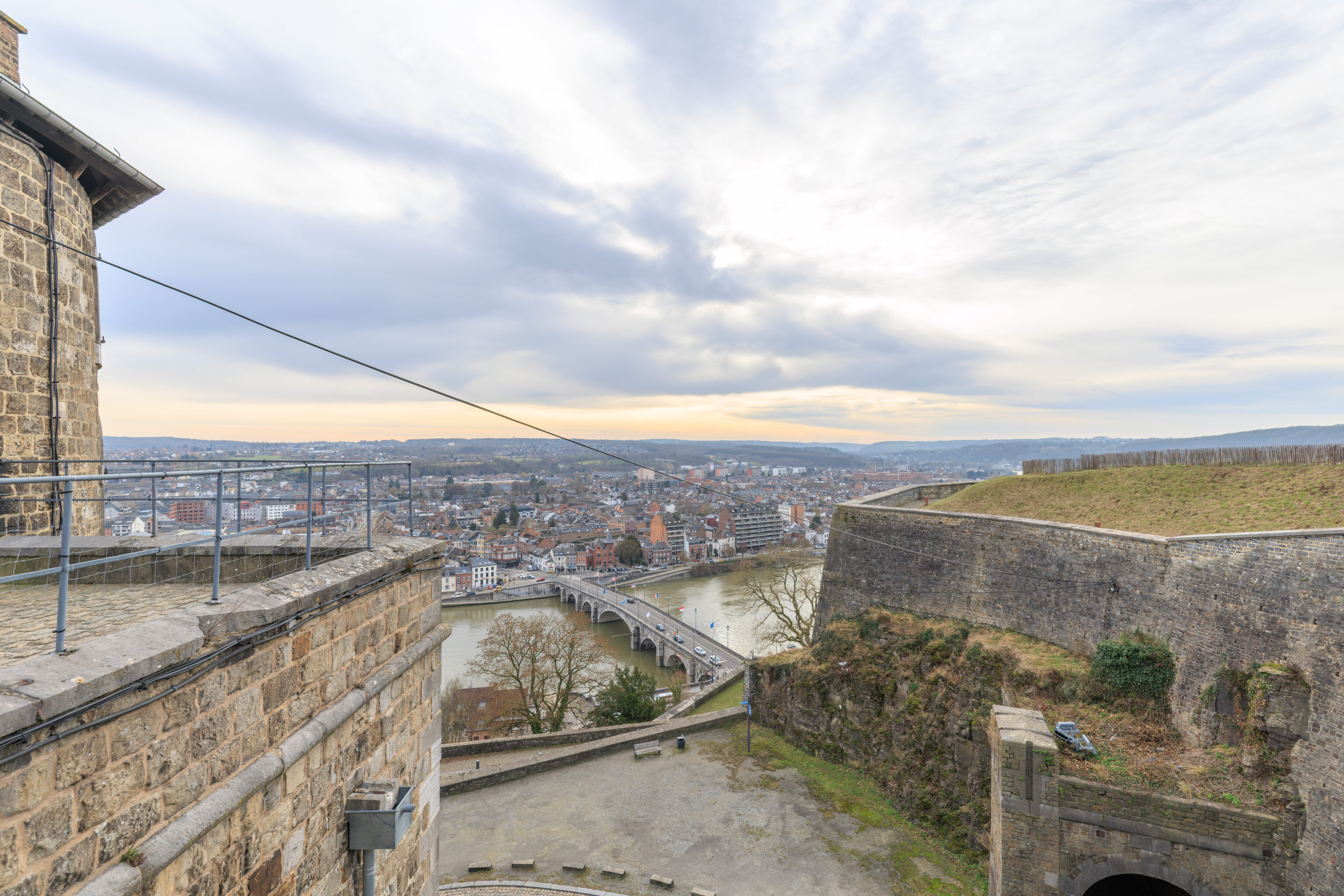
This was the view looking to the south from the bridge.
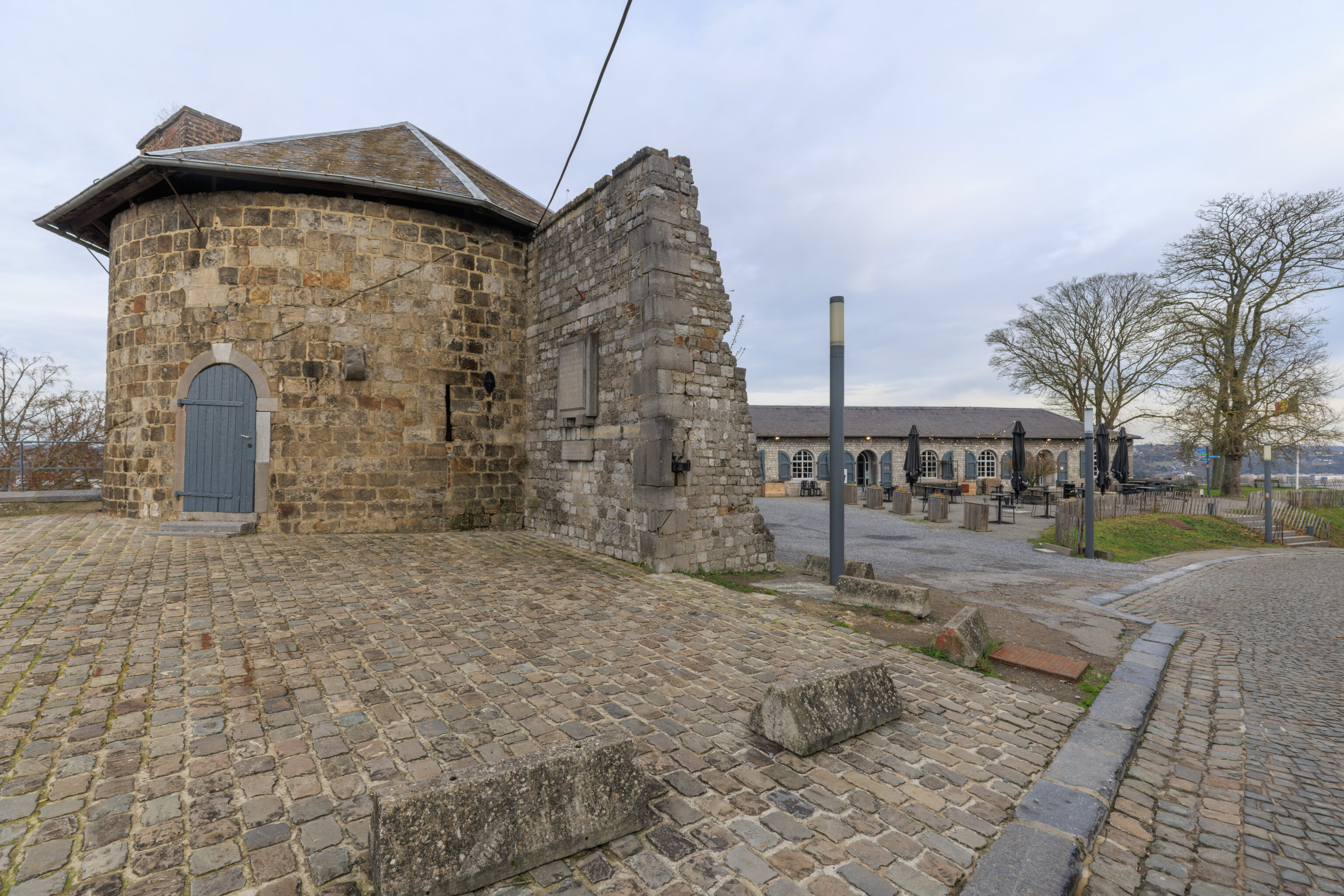
After crossing the bridge, there was a round tower on the left and what looked like the remnants of a wall, or maybe the side of a building. Just beyond, we saw the building that should contain the restaurant we were walking towards, Le Fief de Namur.
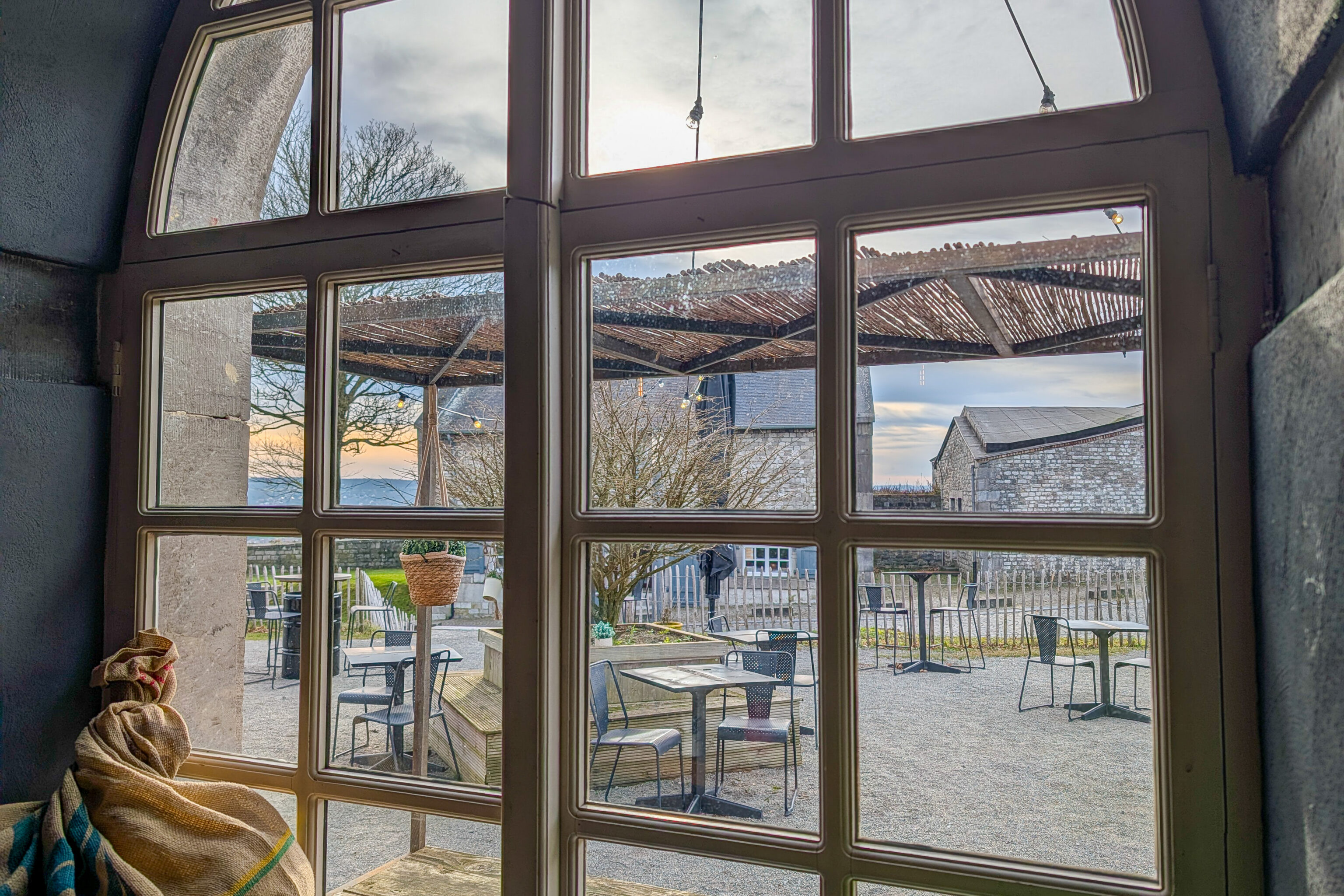
We got a table by the windows.
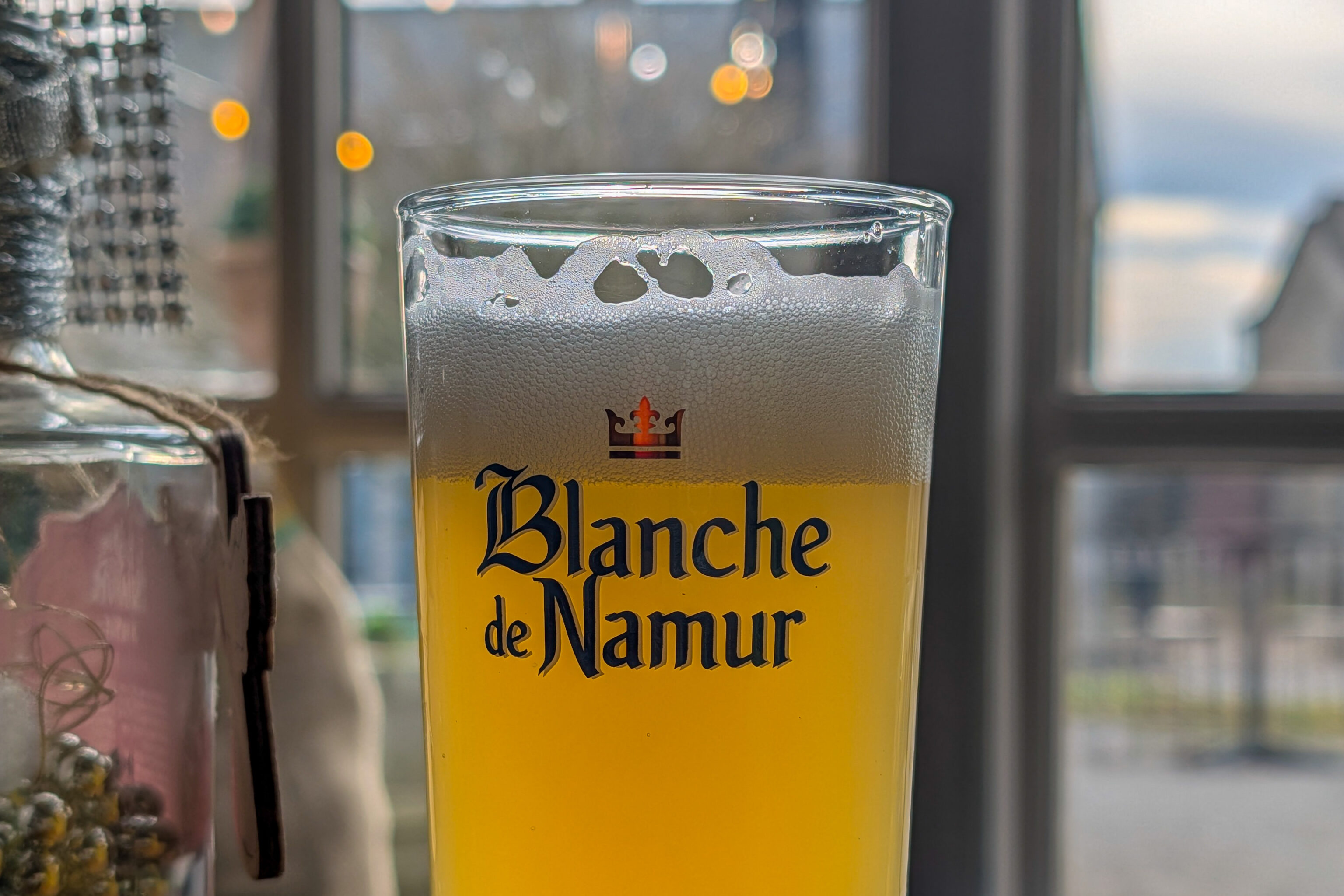
We had some of the local Blanche de Namur beer. It was decent and just a bit more expensive than water. Unfortunately, no carafe d’eau was available. While they do speak French in this region of Belgium, it is not France!
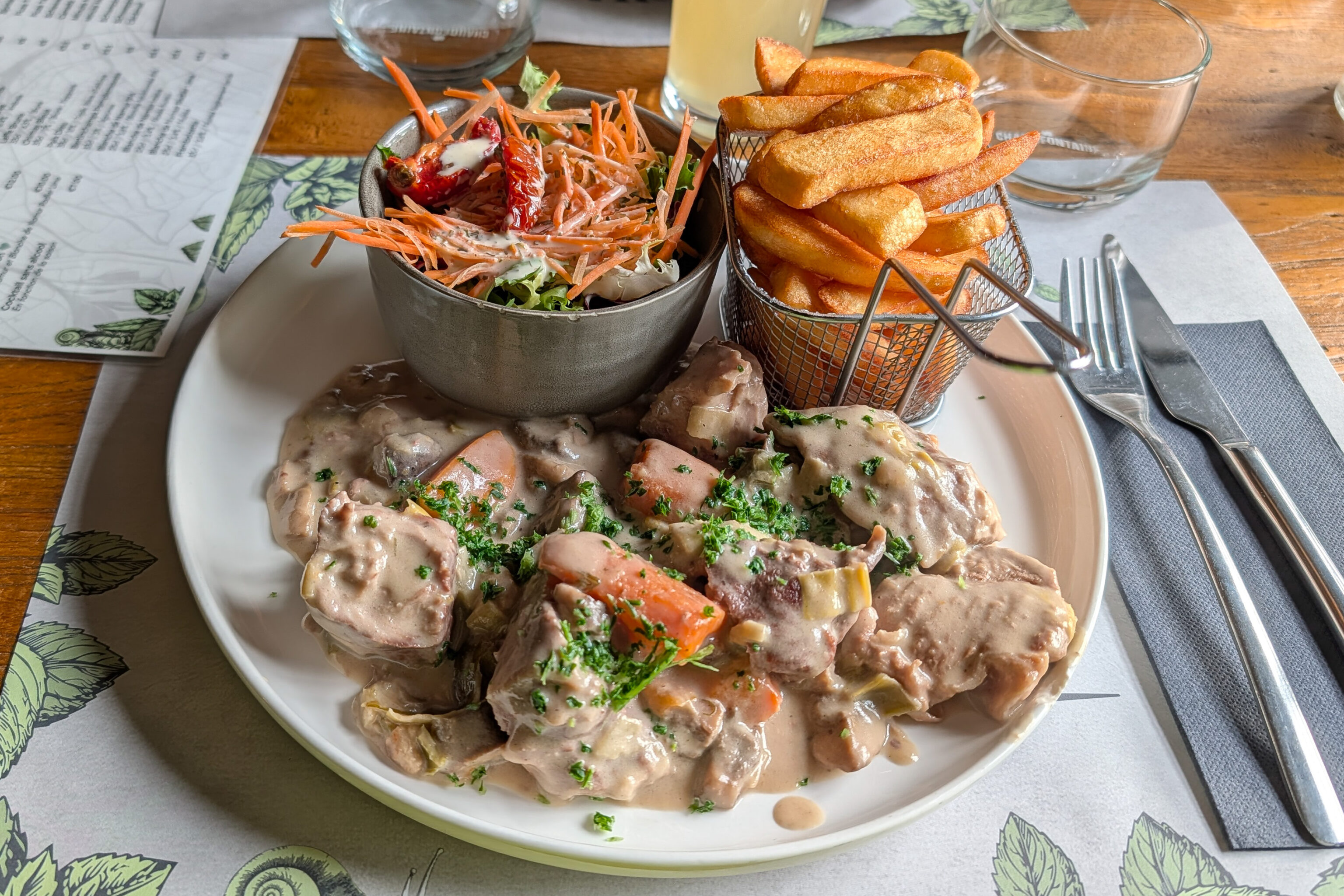
Frites
Veal Blanquette
French fries
We haven’t really been back from Japan for long. The stewed veal was pretty bad compared to the beef we had there. The mushroom based sauce was pretty good though, as were the fries.
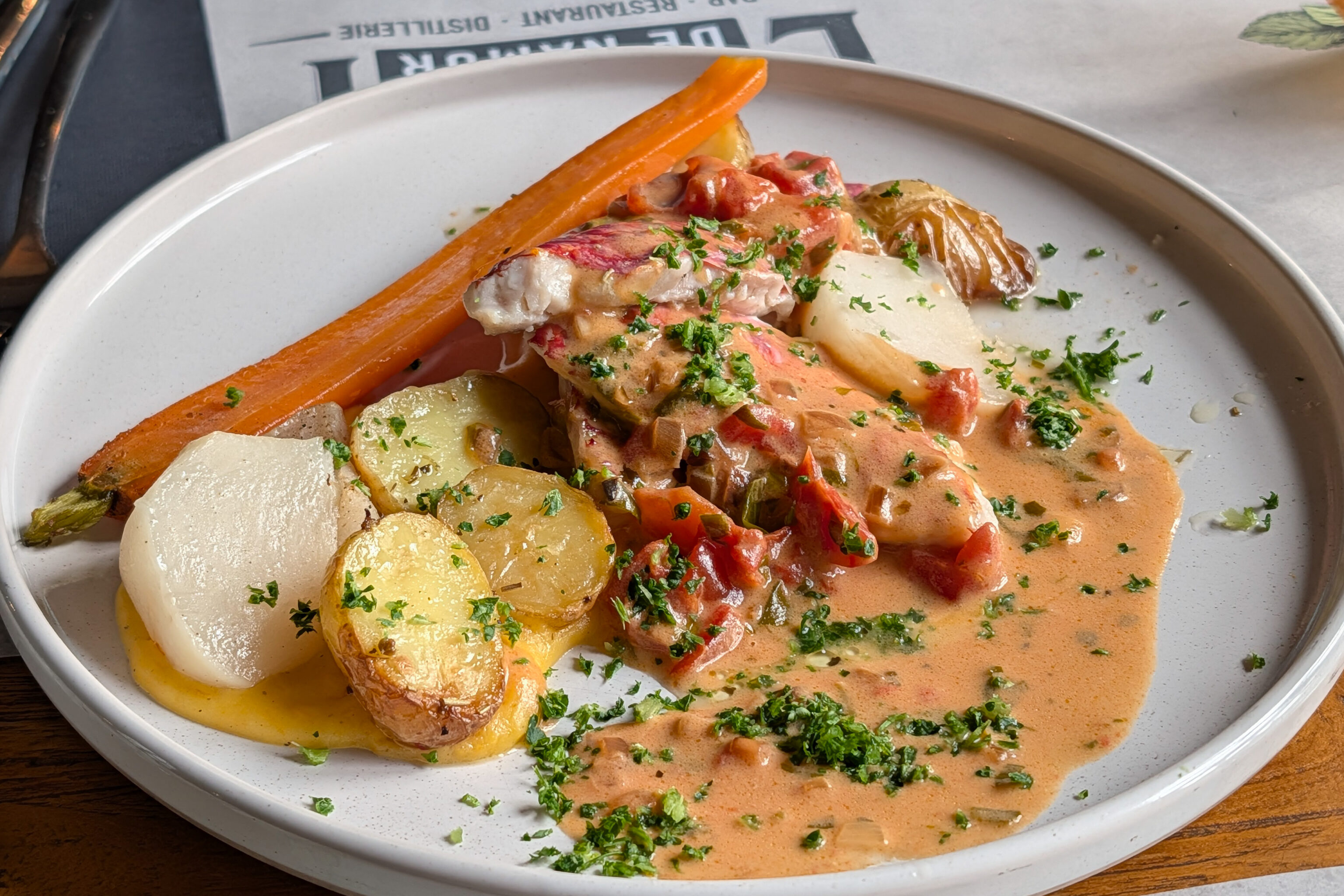
sauce Sambre et Meuse, légumes de saison, mousseline
Catch of the day
Sambre and Meuse sauce, seasonal vegetables, mousseline
The fish was pretty lacking in flavor. The sauce, named after the two rivers that join here by the citadel, was also pretty bland. The fish seemed like it might be good if steamed Chinese style.
After lunch, we still had some time before our tour. We decided to walk to the east a little bit where there seemed to be an overlook that was just a bit below our current location in elevation.
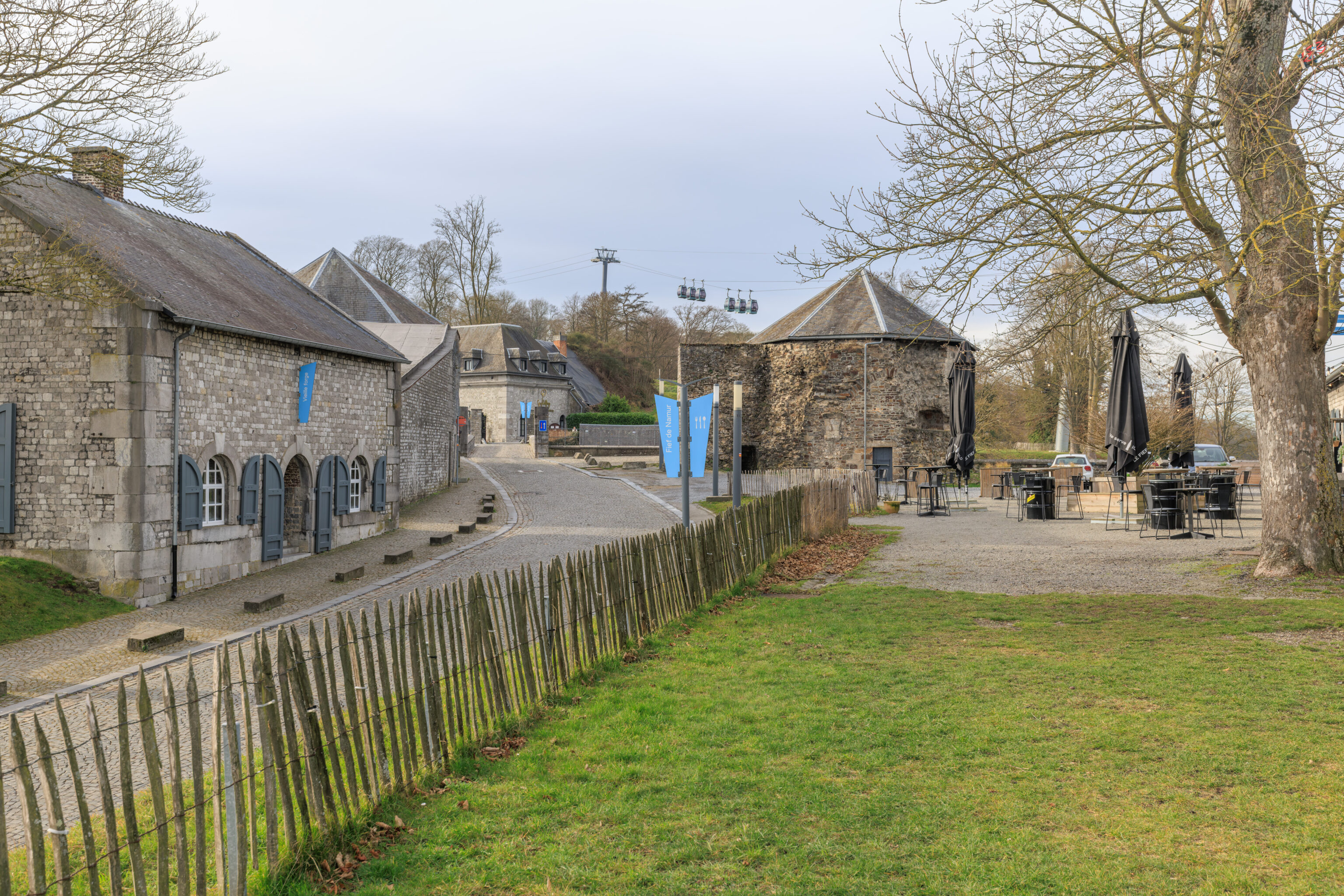
The view looking back.
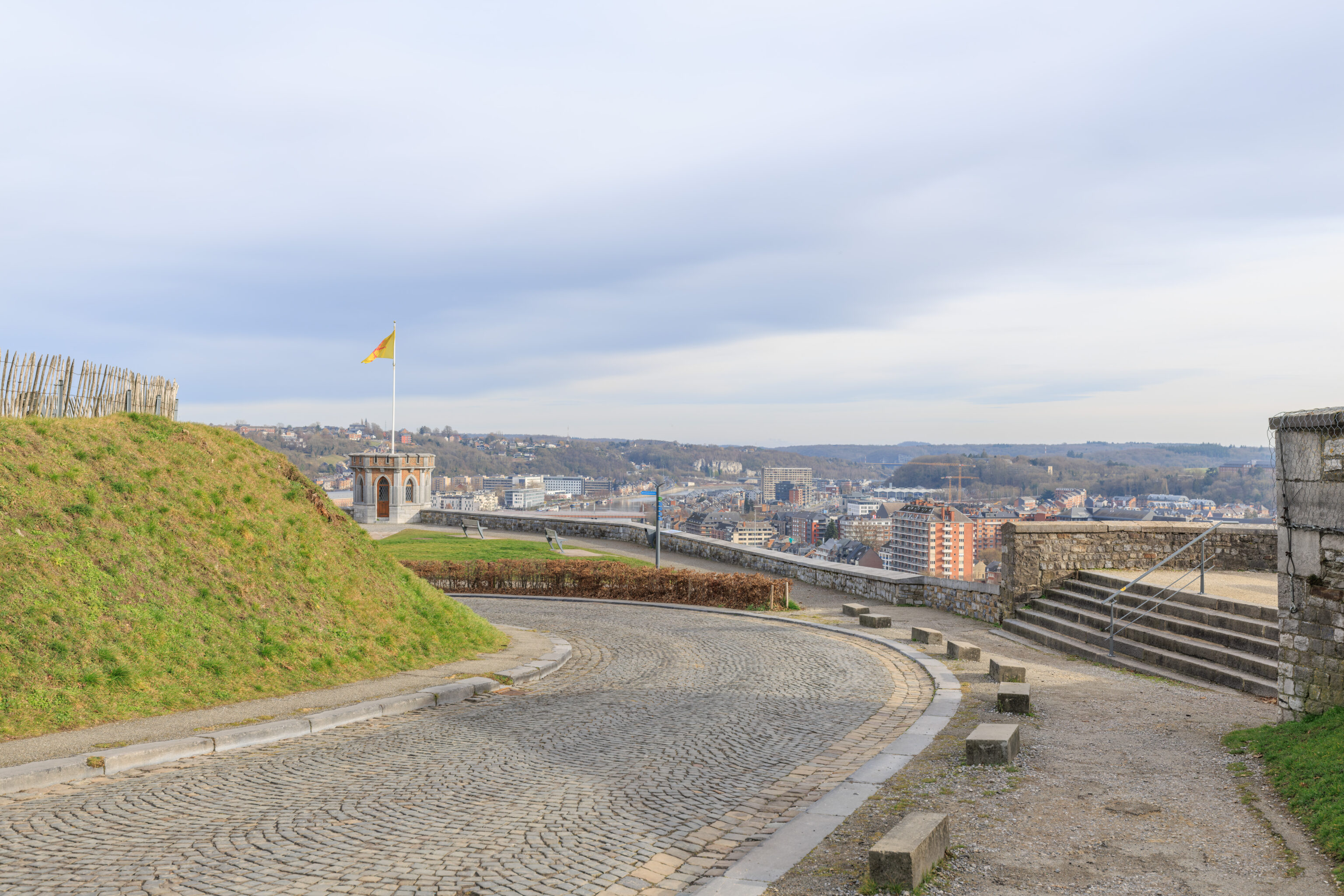
We walked down a bit onto the road that curves around and down behind the restaurant to get closer to the overlook.
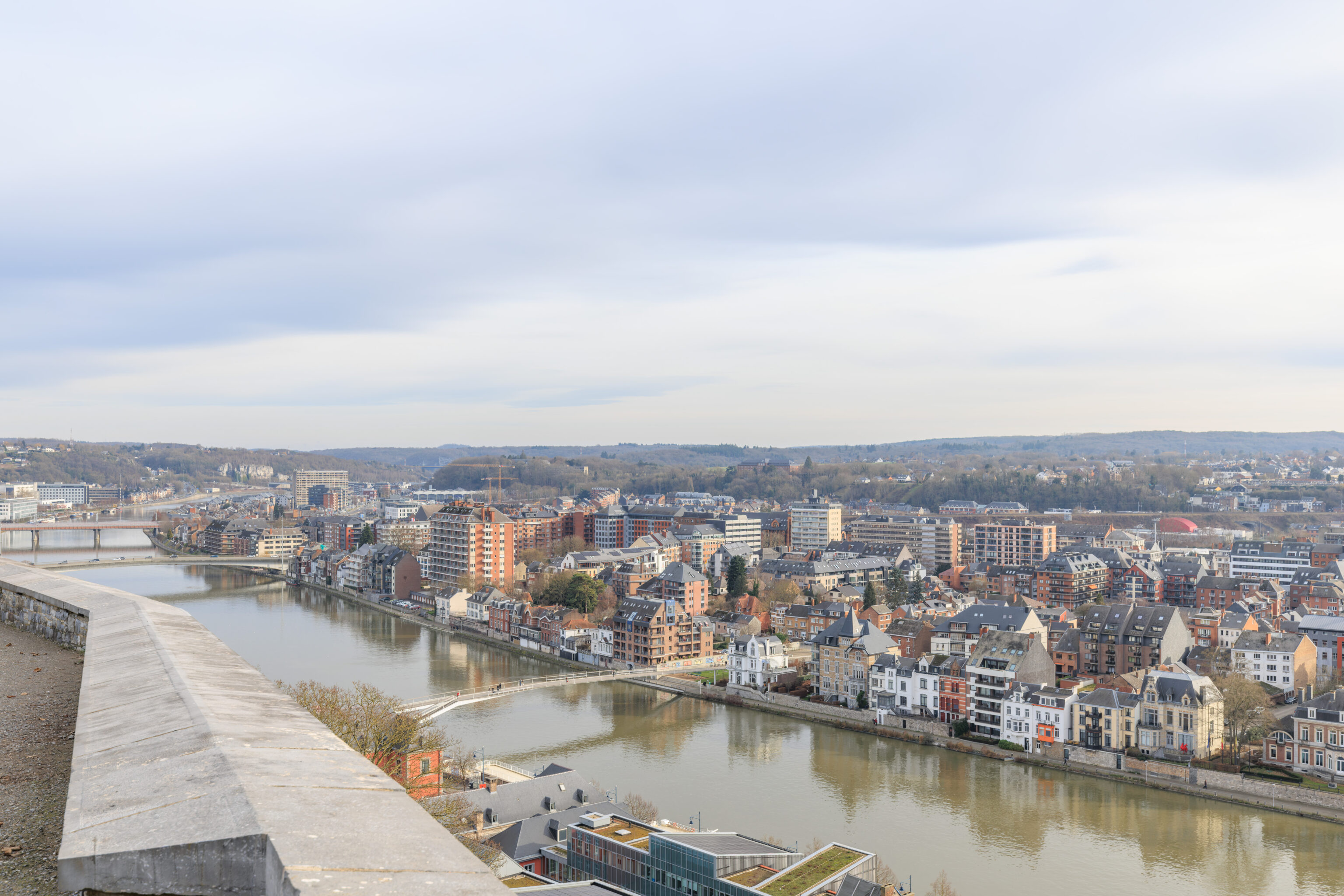
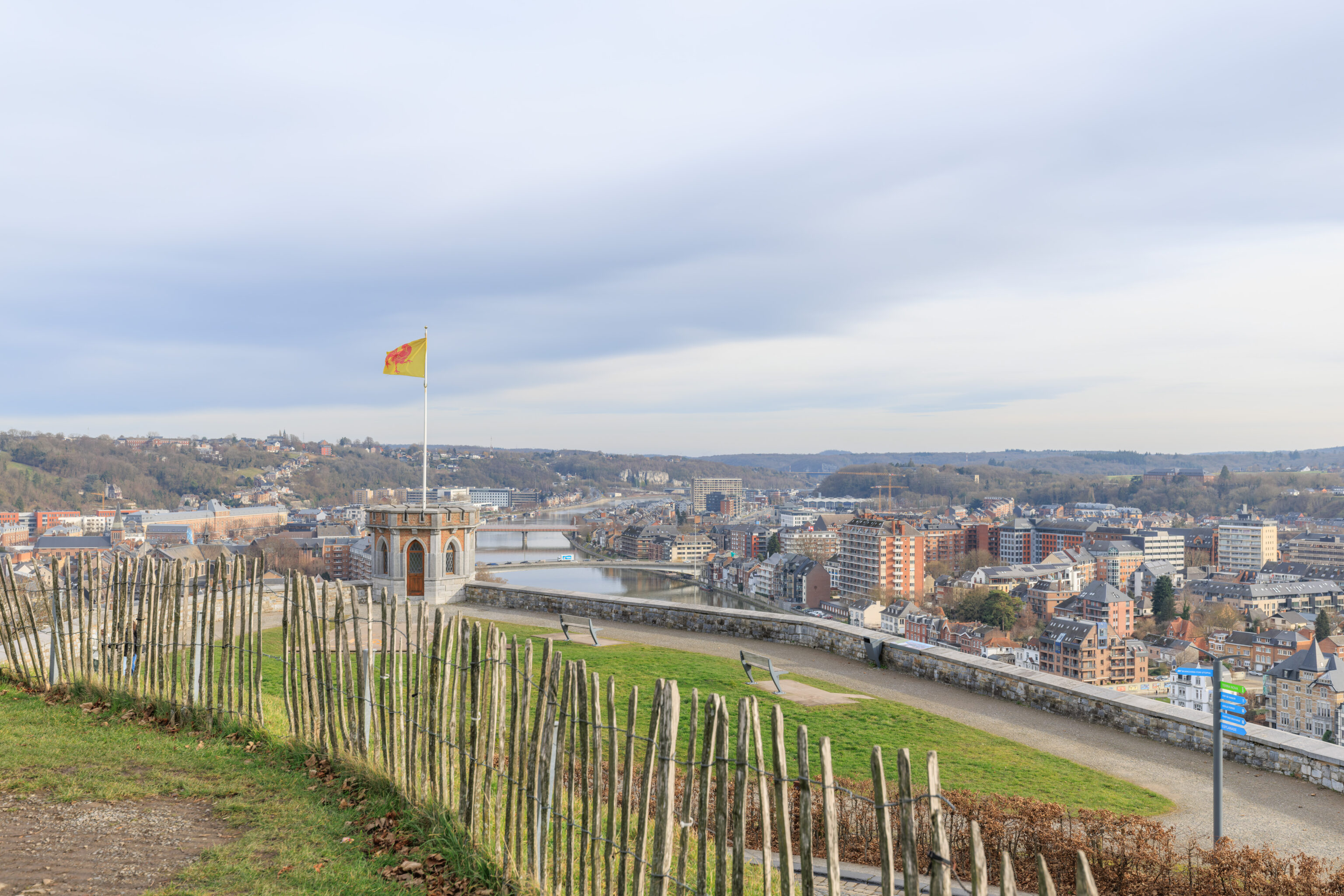
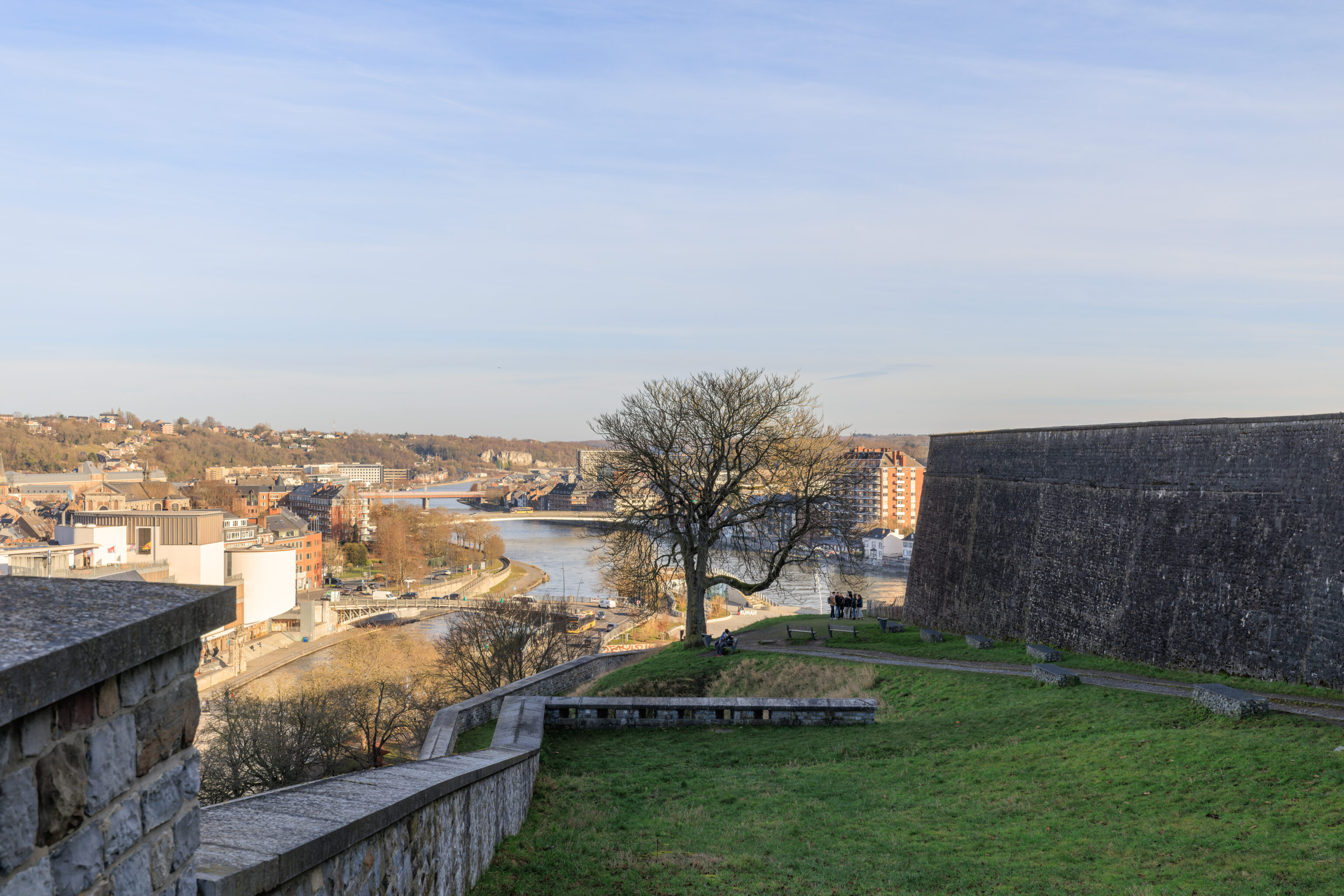
We were able to look over the citadel’s walls for an excellent view! Here, we are looking to the east. We noticed a pedestrian bridge over the Meuse.
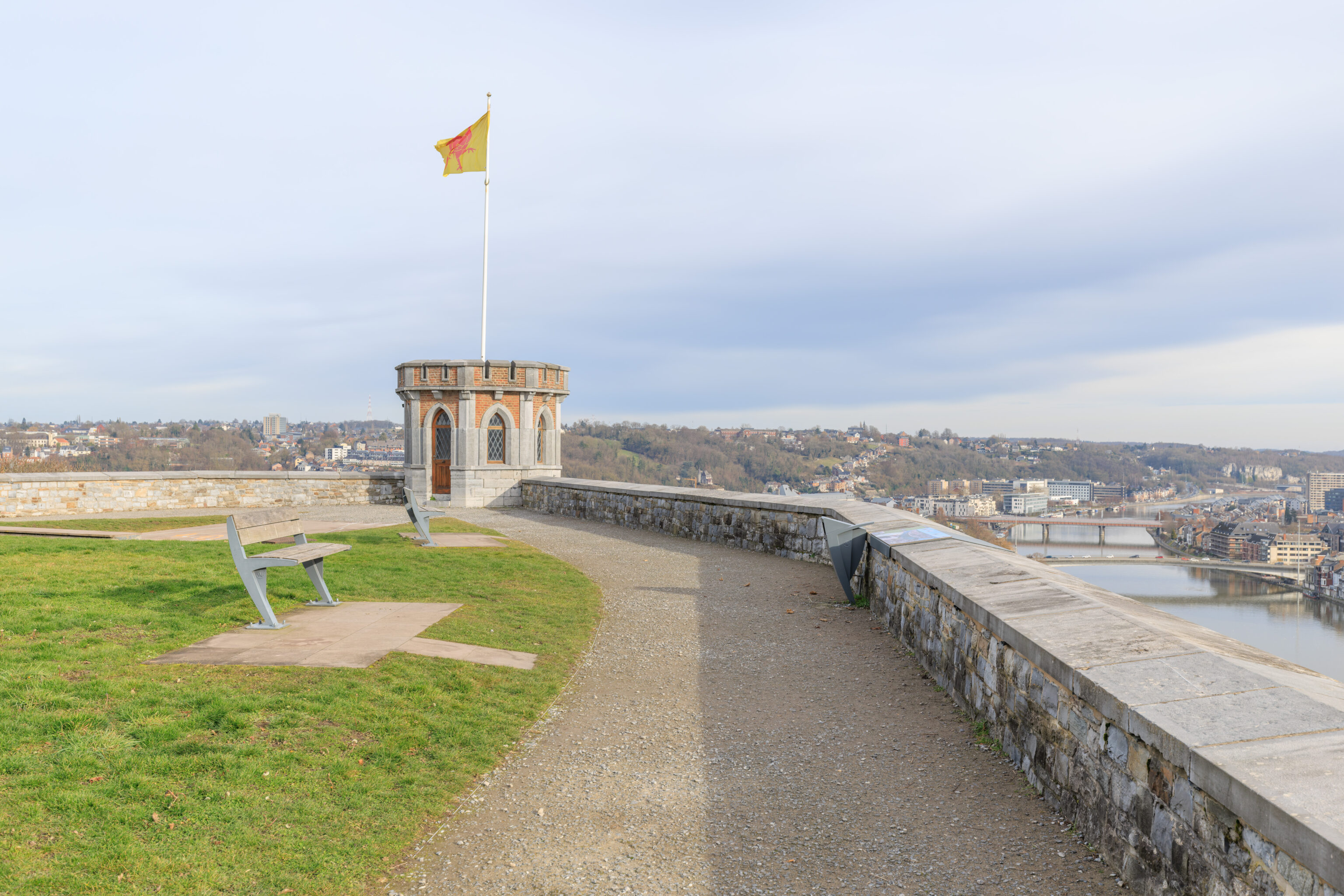
To the northeast, there was a small tower with large flag flying atop it. The flag seems to be of a chicken. It is. It is the flag of Wallonia, the Belgian region that contains Namur, basically equivalent to a state. Namur is actually the capital of Wallonia. Geographically, Wallonia is huge as it contains more than 50% of the land in Belgium! That sounds big, but it is not, at least at American scales. Belgium is slightly smaller than Maryland, which is a tiny state in the US.
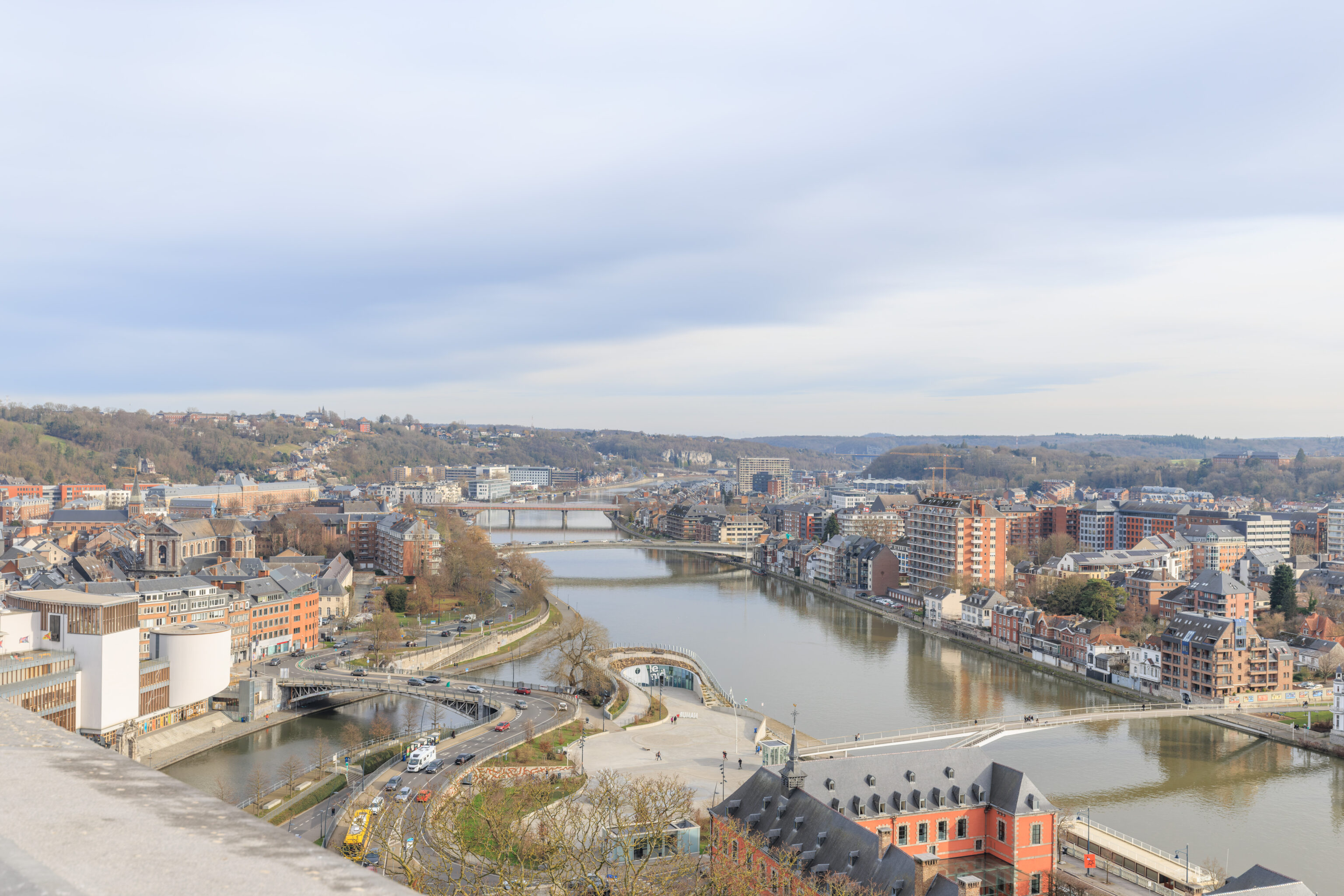
From near the flag, we were able to see the point where the Meuse and Sambre join. We should be able to walk down there via some path.
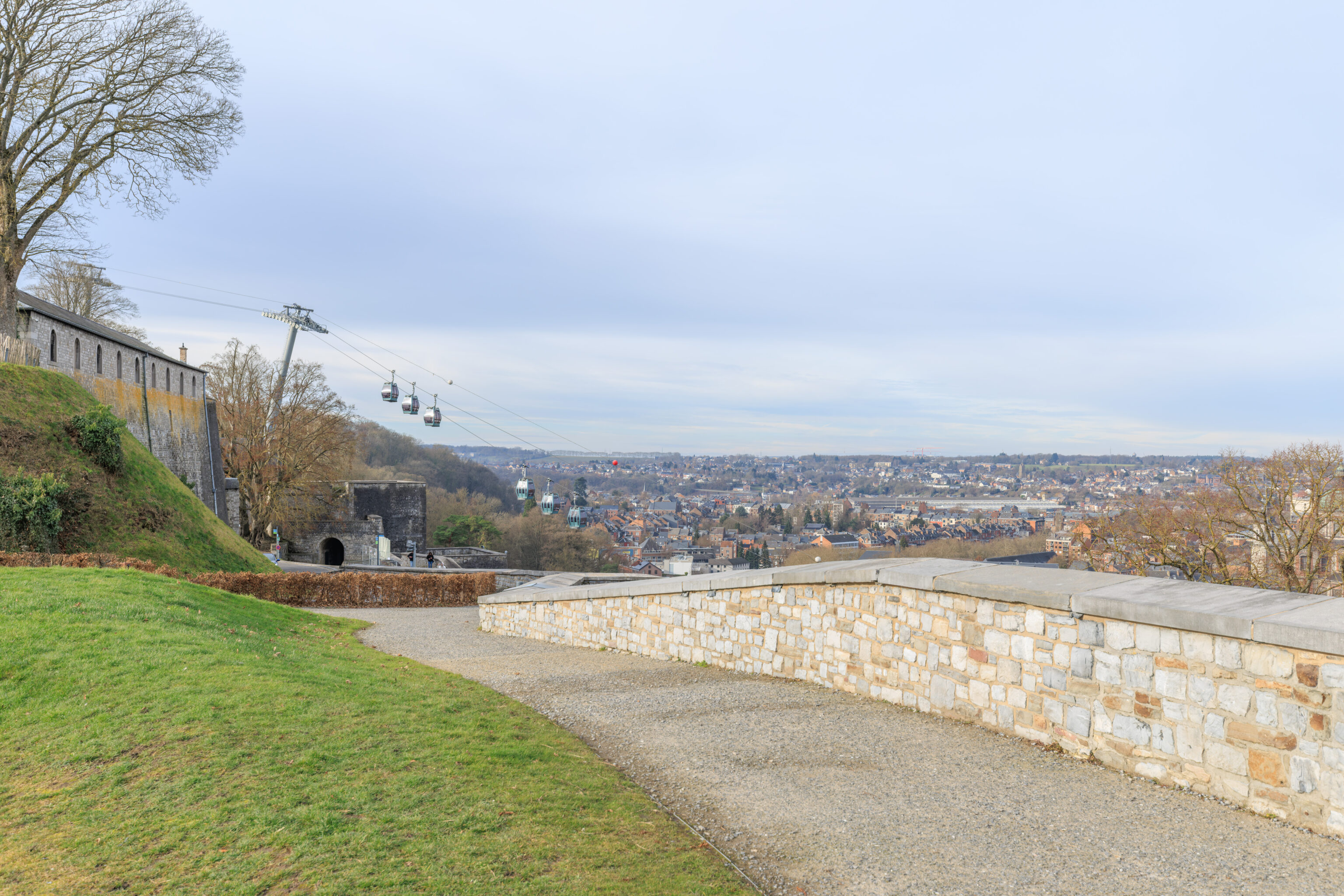
Looking to the west, we could see the cableway coming up from below.
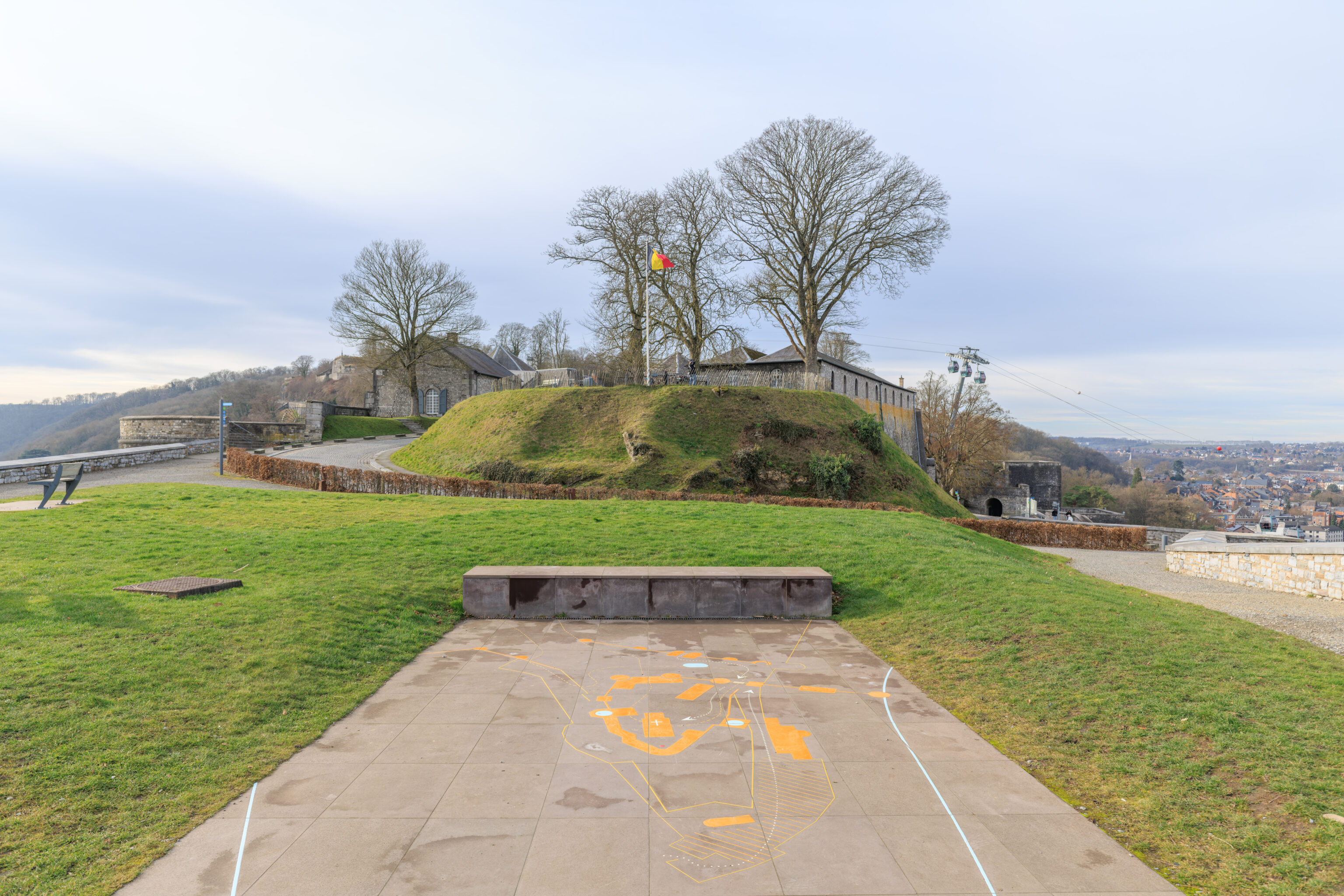
Looking back towards the restaurant, there was a Belgian flag.
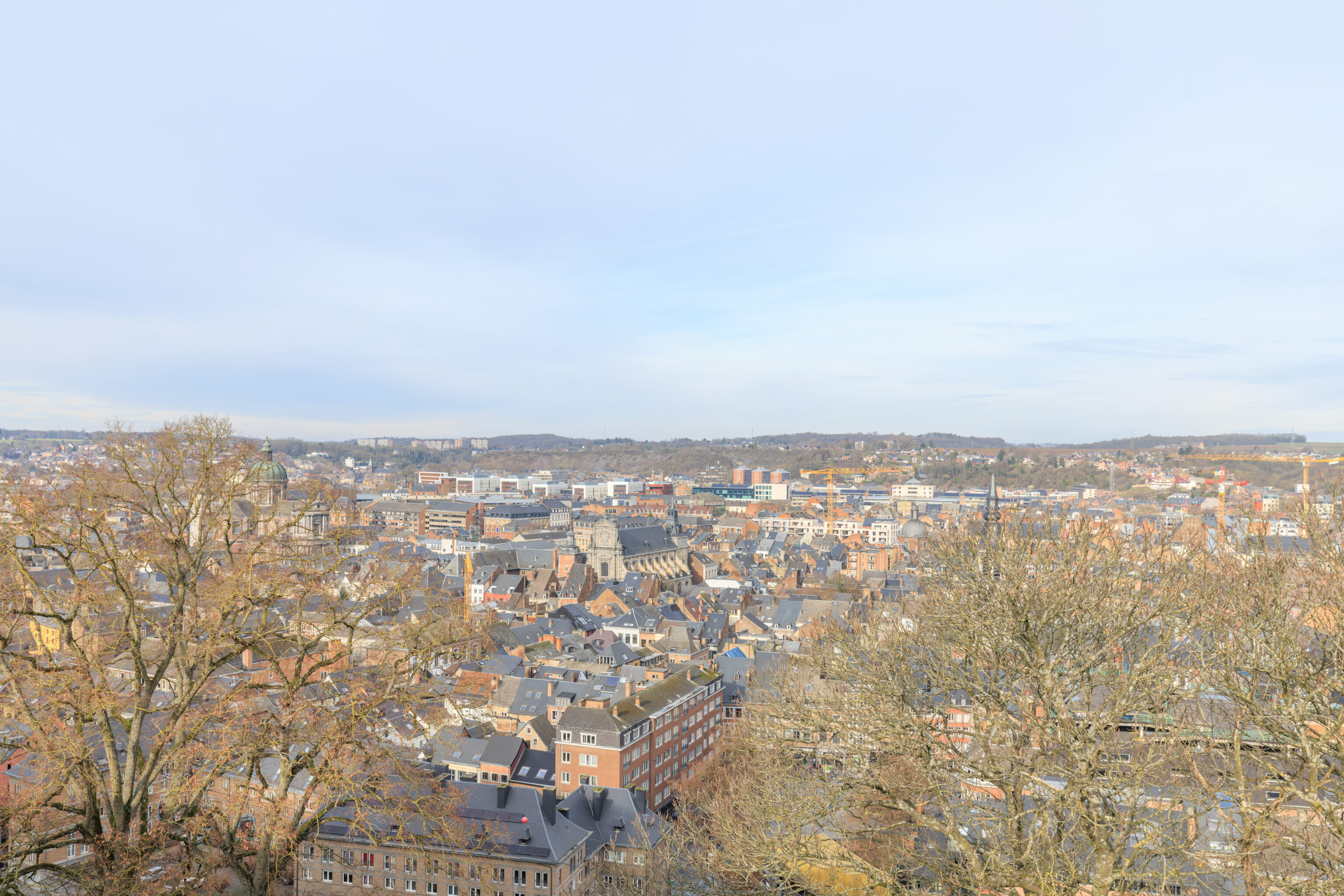
Looking to the north at the center of Namur, we could clearly see the Église Saint-Loup, which is taller and larger than the buildings around it.
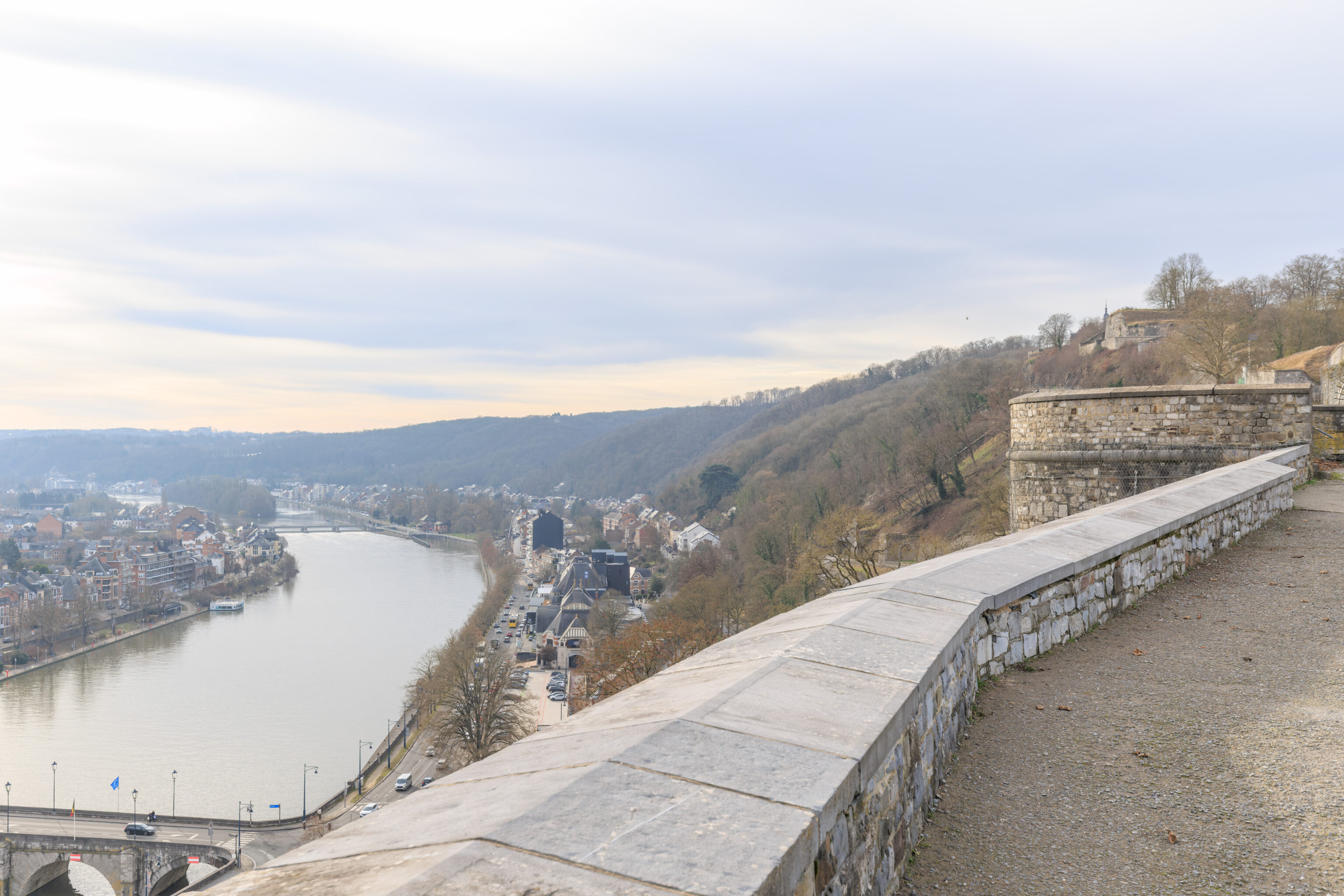
We started to head back to Terra Nova to begin our guided tour. This view looking to the southwest shows the southern slopes of the hill that citadel was built upon.
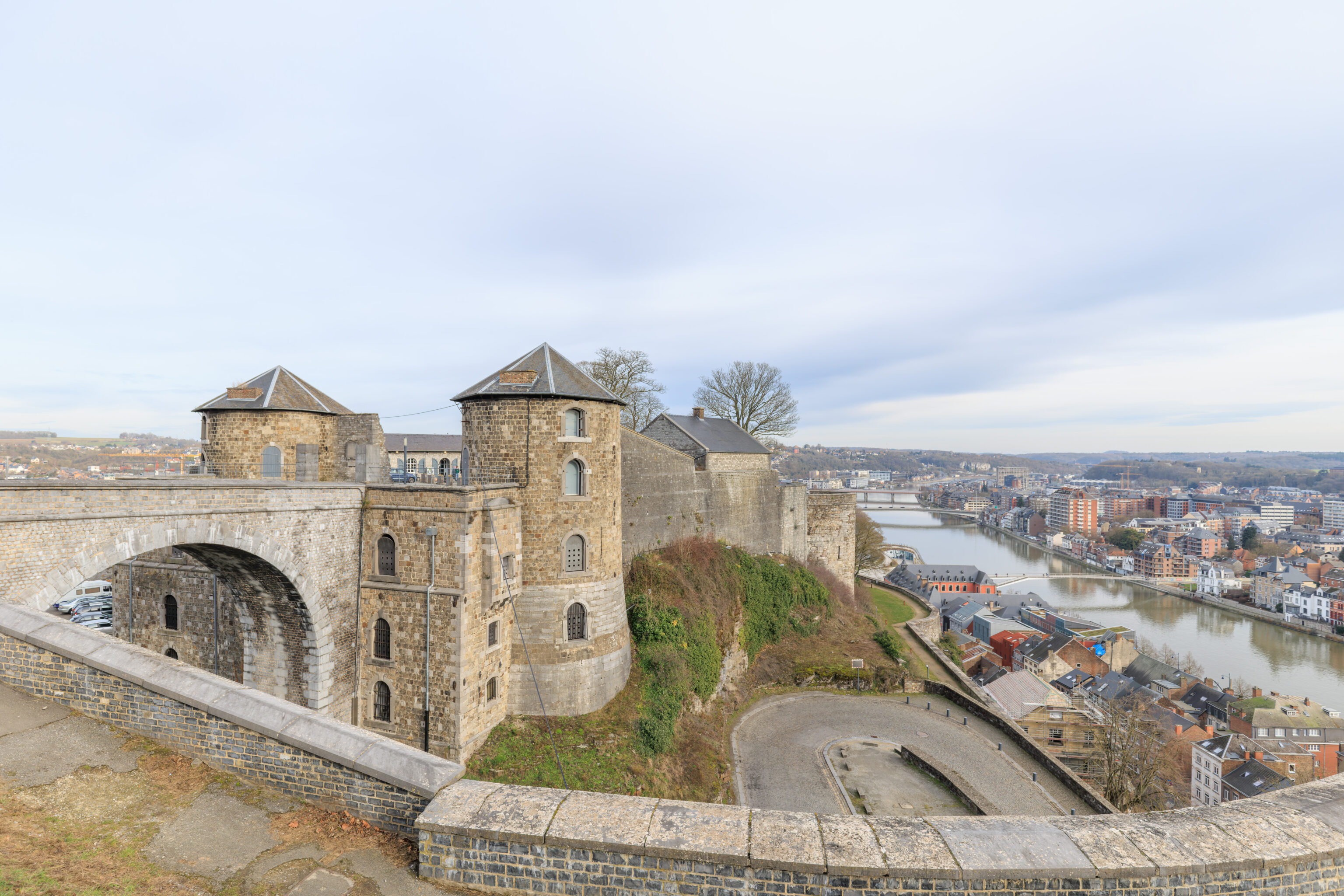
The area containing the restaurant actually has a bit of a castle appearance with the round towers on either side of the bridge that we just walked across.
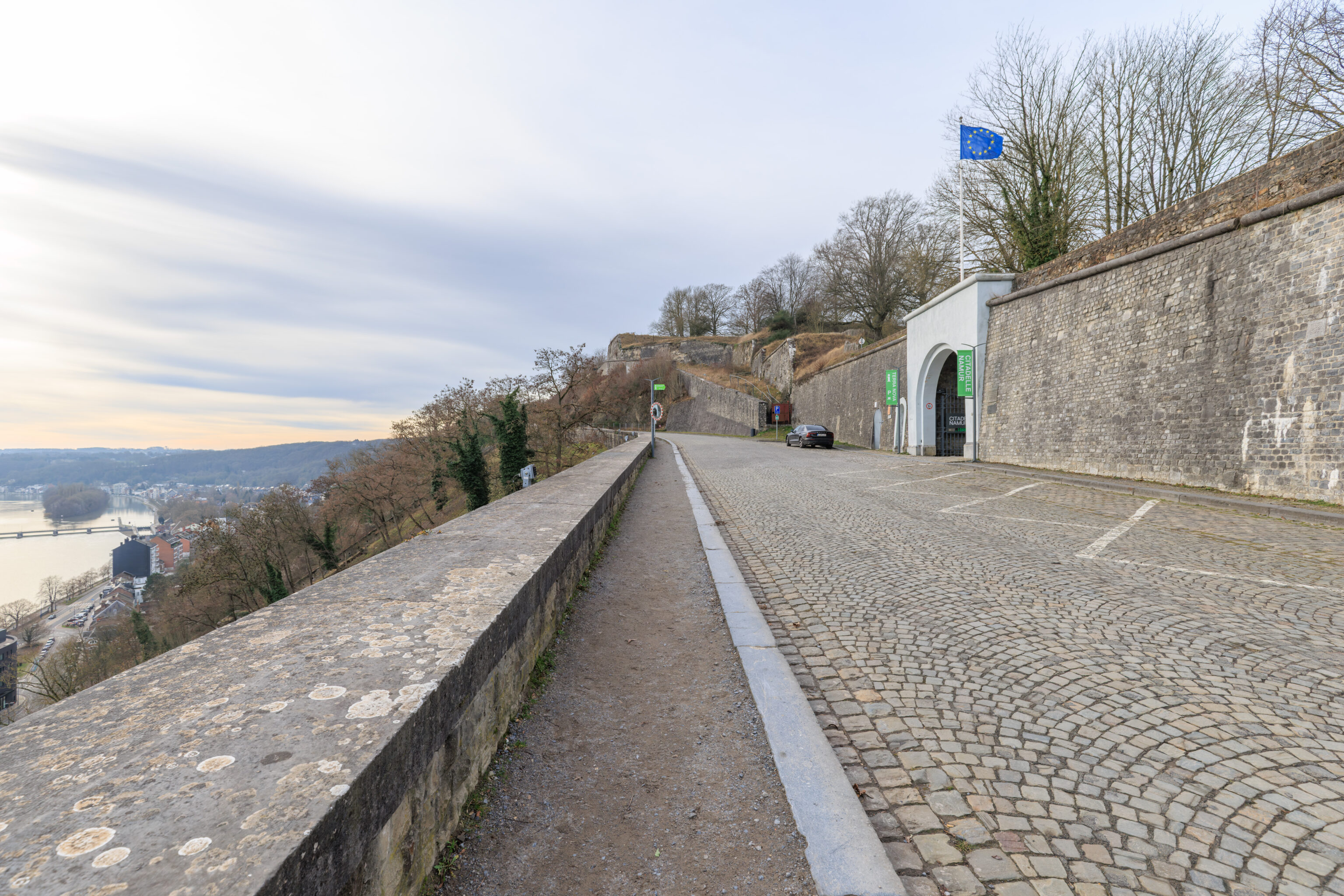
Rather than return by the same path that we took earlier, we stayed on the road and walked to the left past the perfume company. Up ahead, we saw an entrance with the EU flag above it. That should be the vehicular entrance into the Terra Nova parking lot.
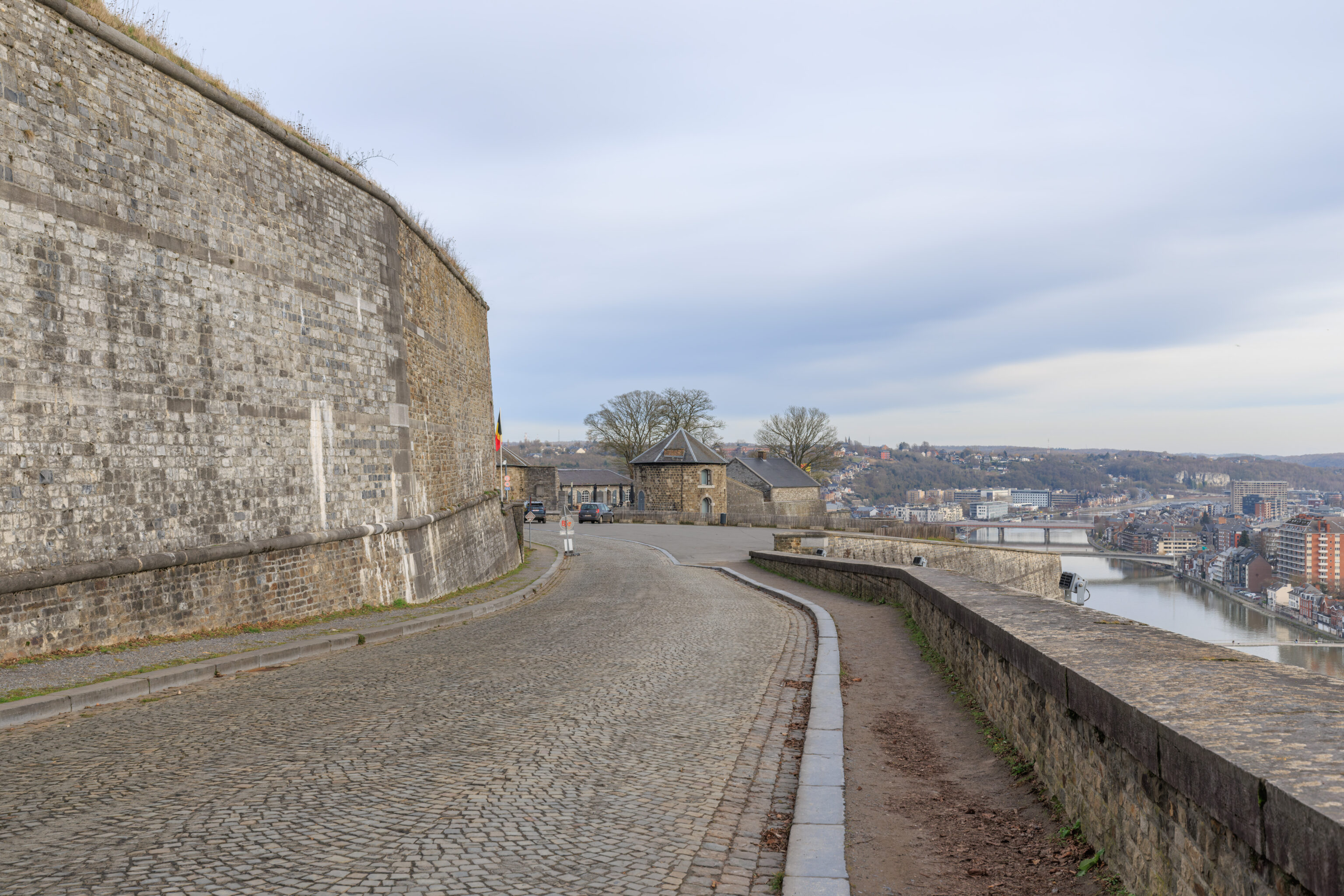
The view looking back.
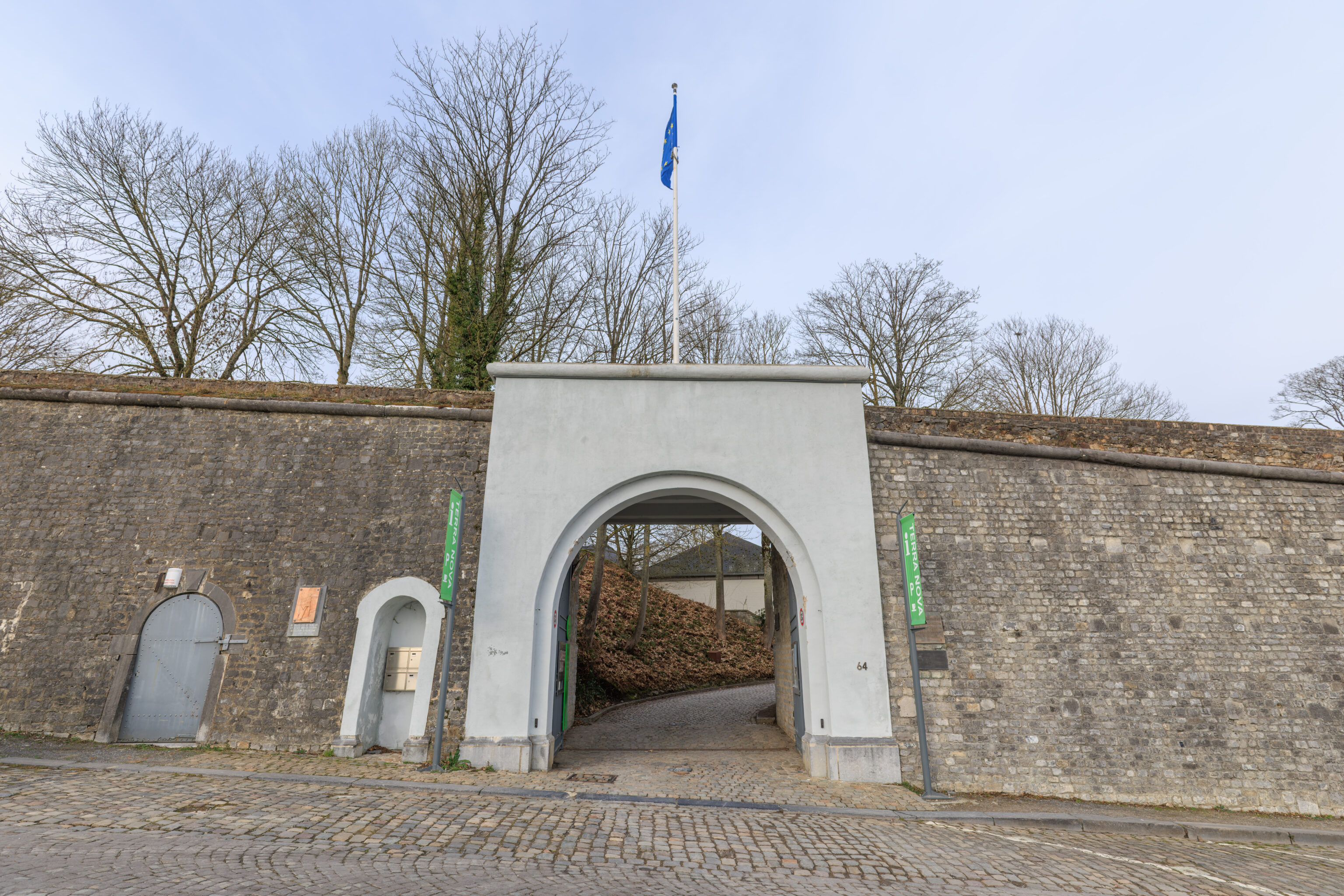
We walked through the open gate and returned to Terra Nova.
Guided Underground Tour
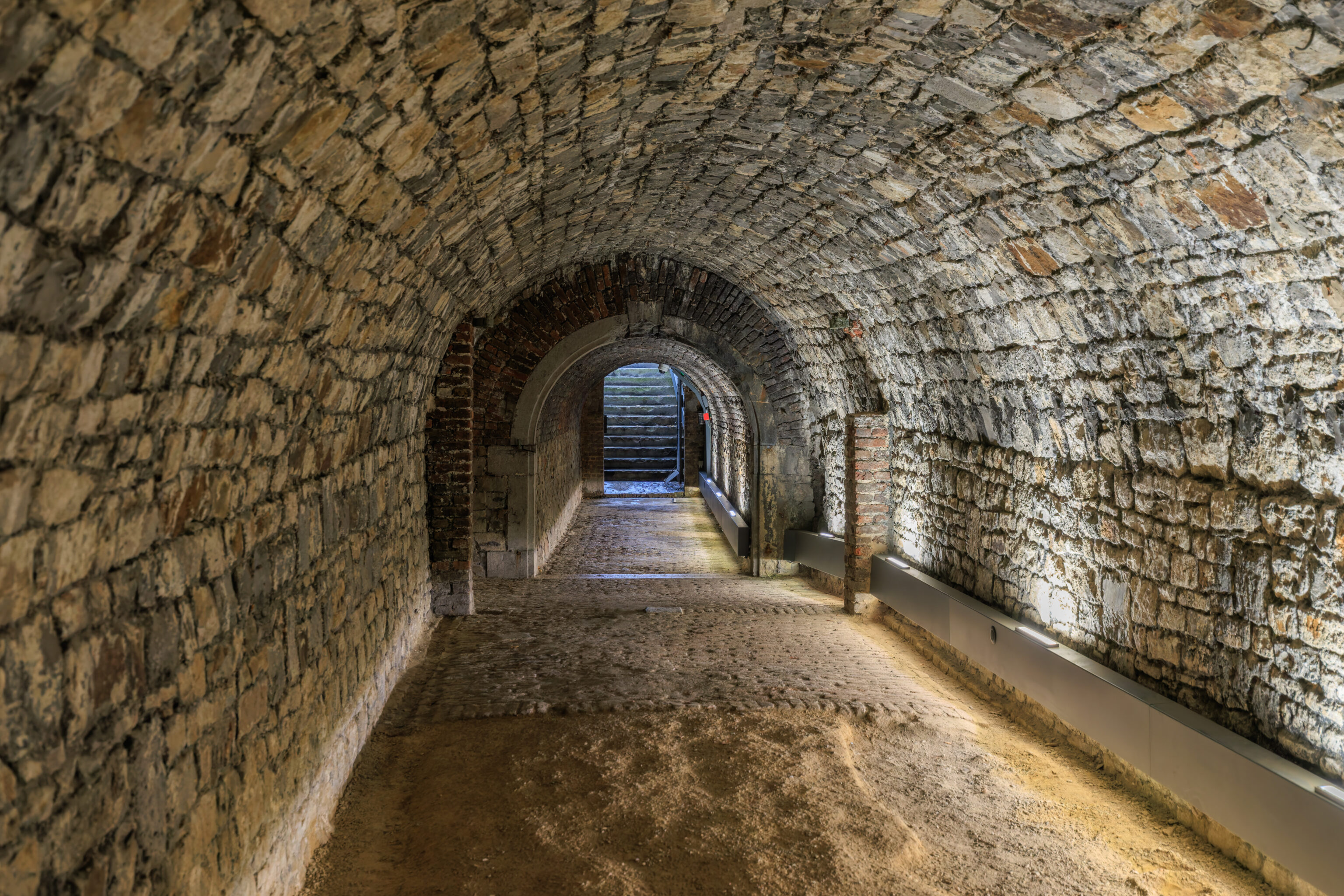
We were a bit surprised to be the only guests on this tour, but perhaps not so surprising as we’ve seen very few people overall here at the citadel today. The tour descended into the underground tunnels via a building at the southeast corner of Terra Nova.
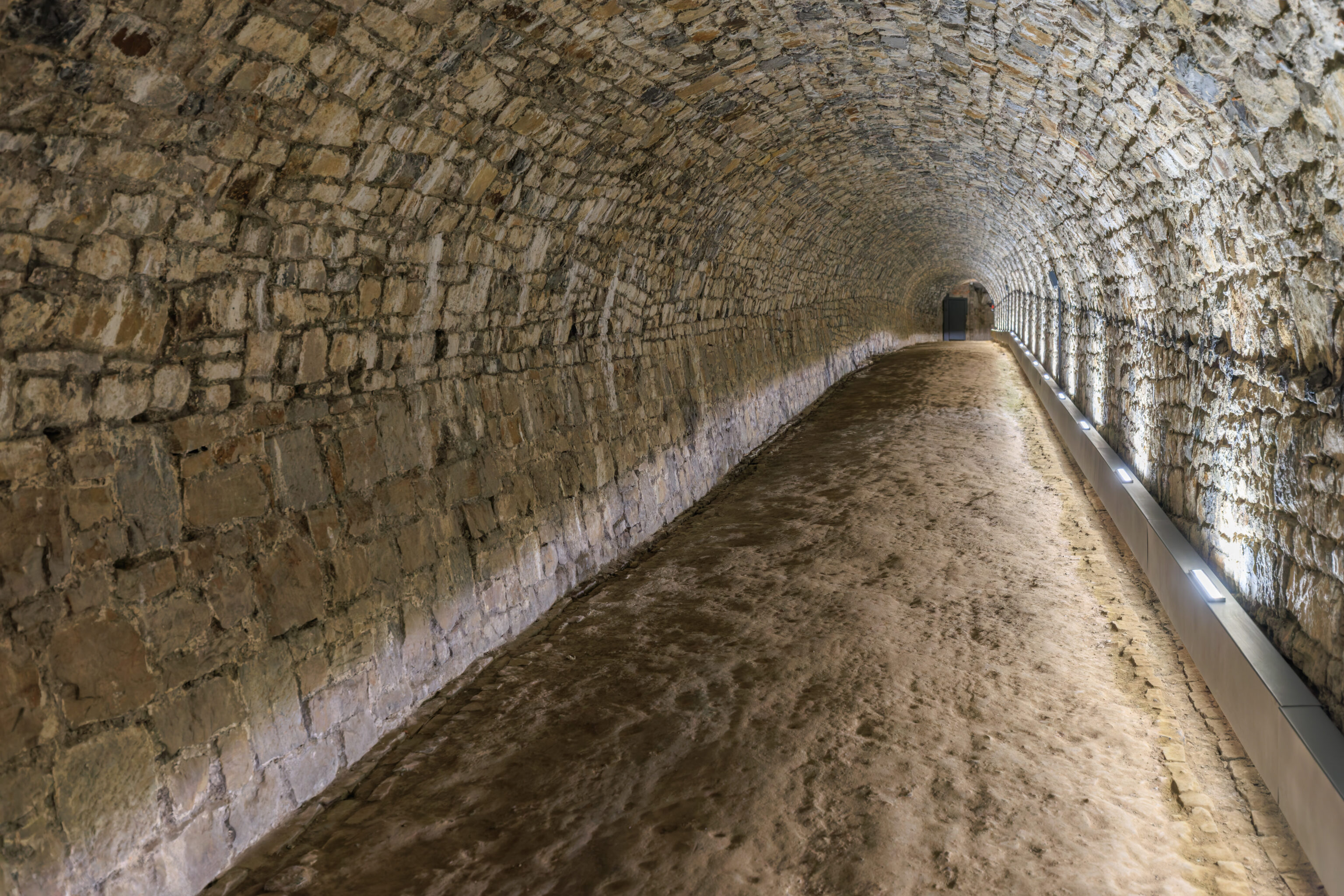
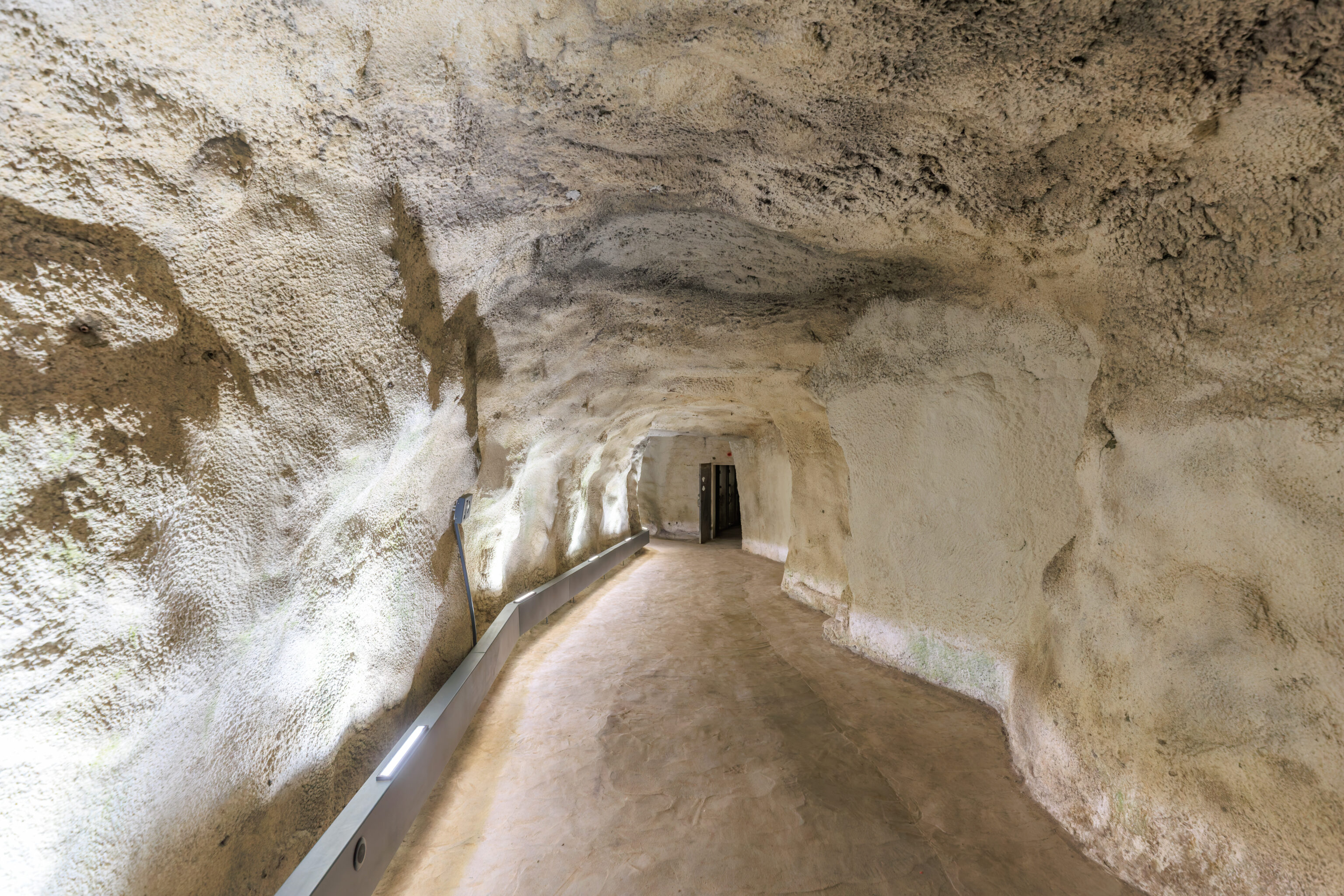
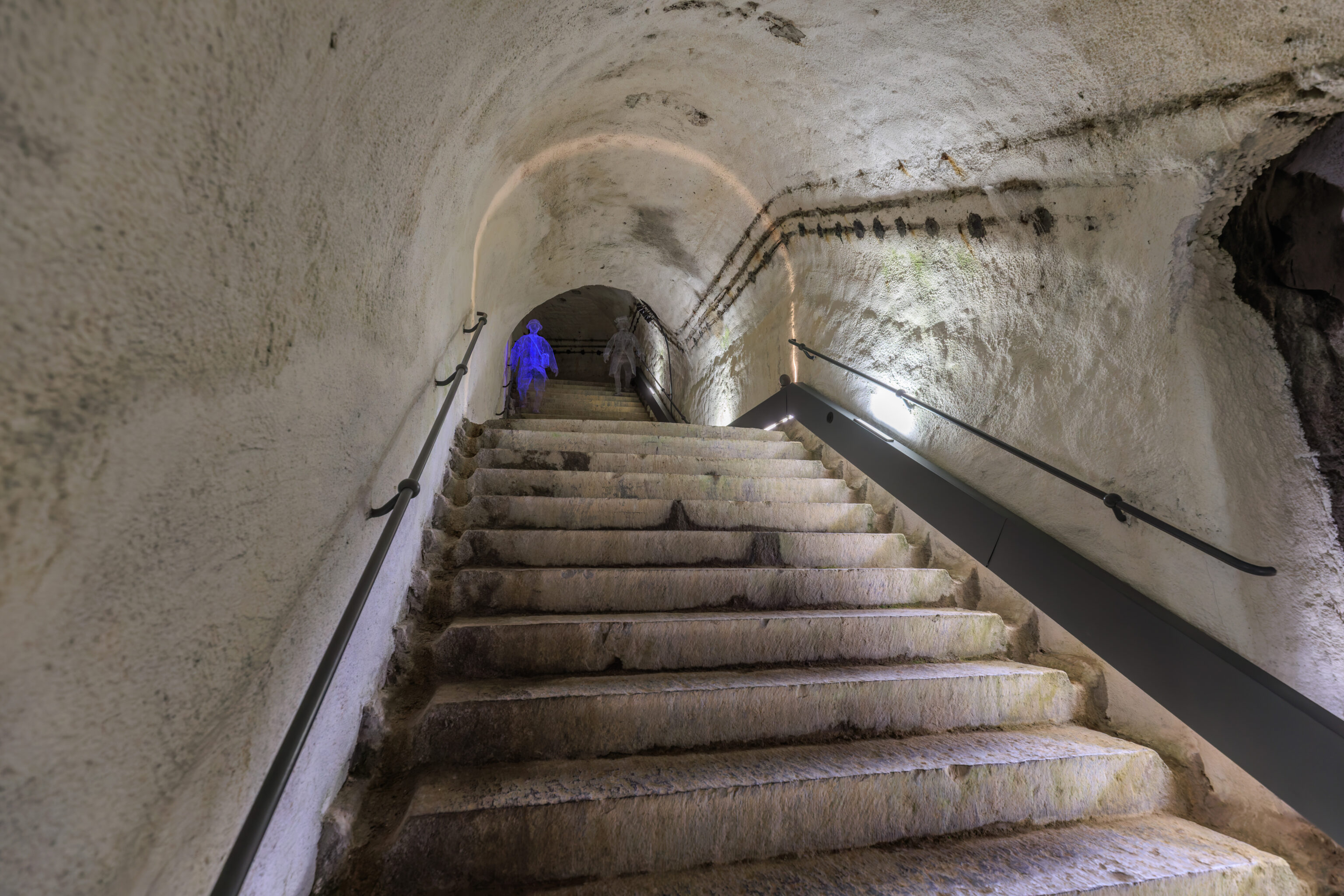
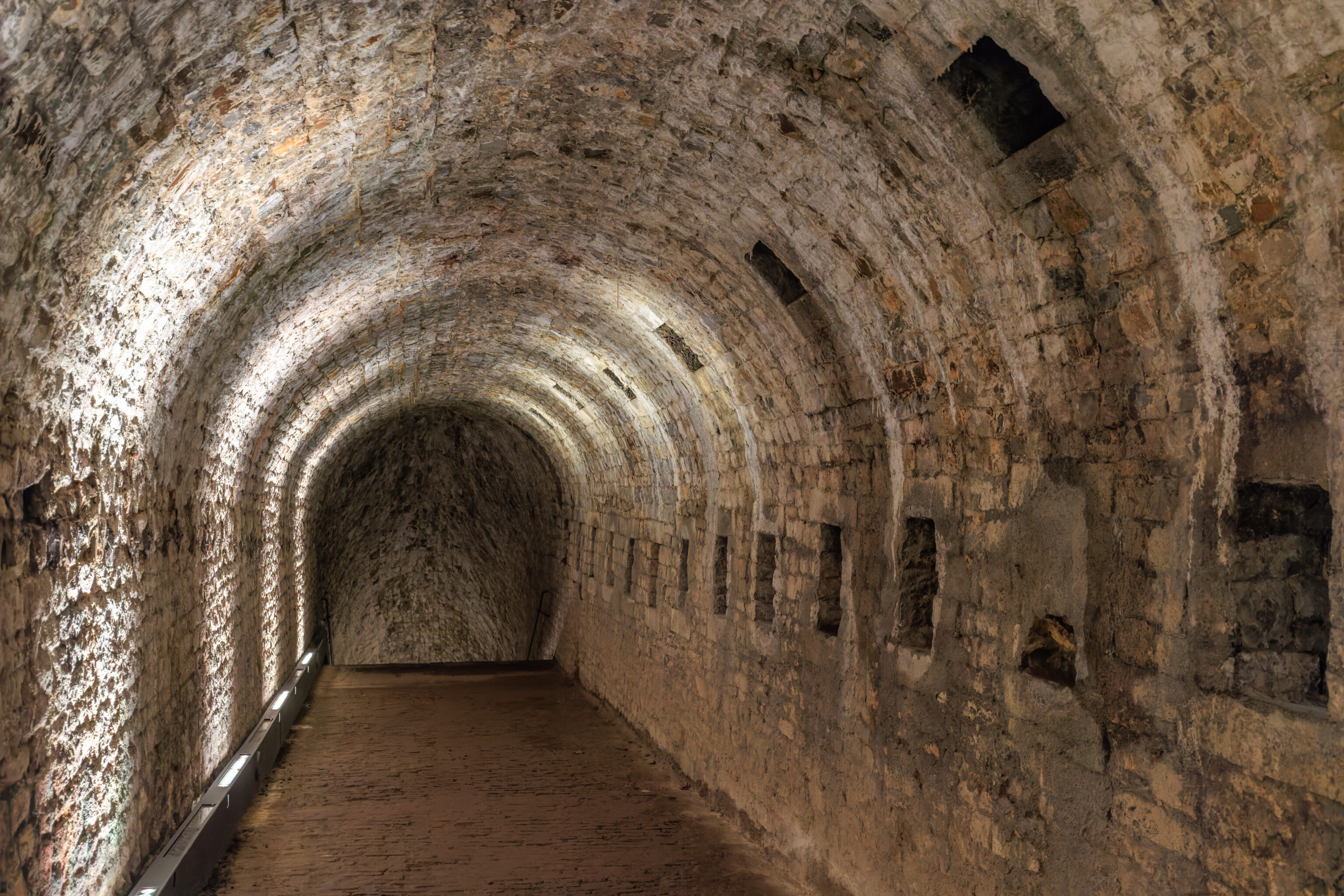
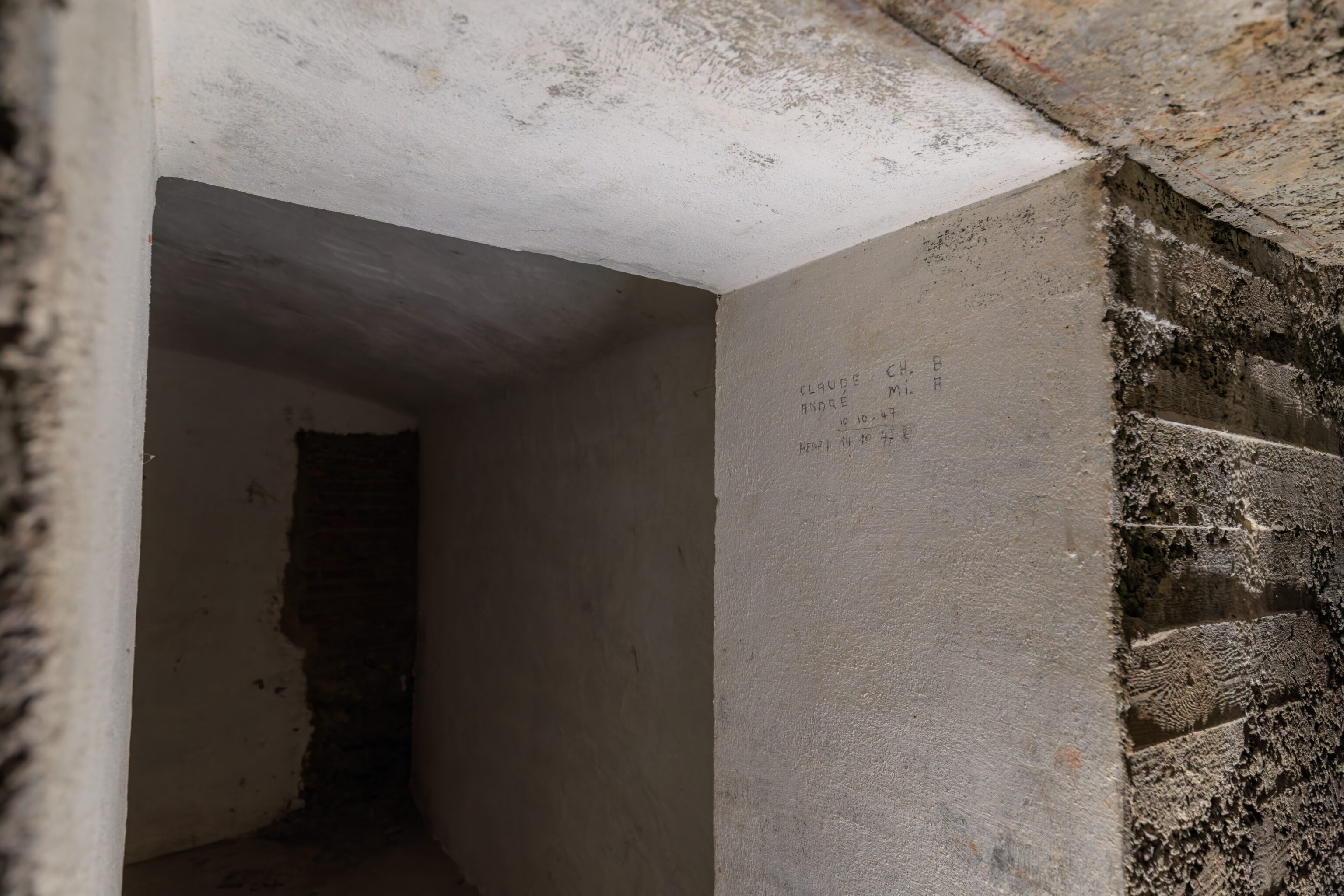
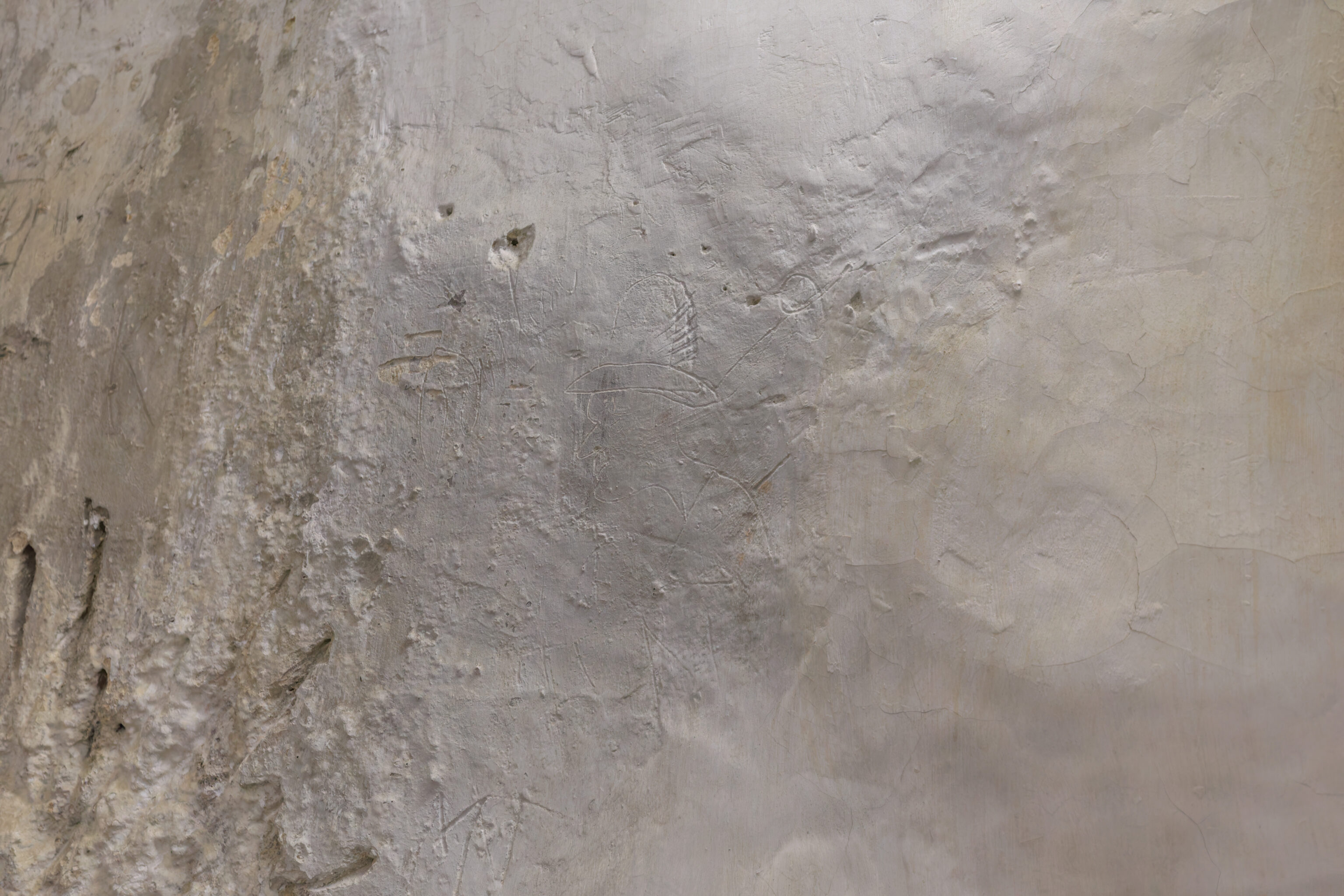
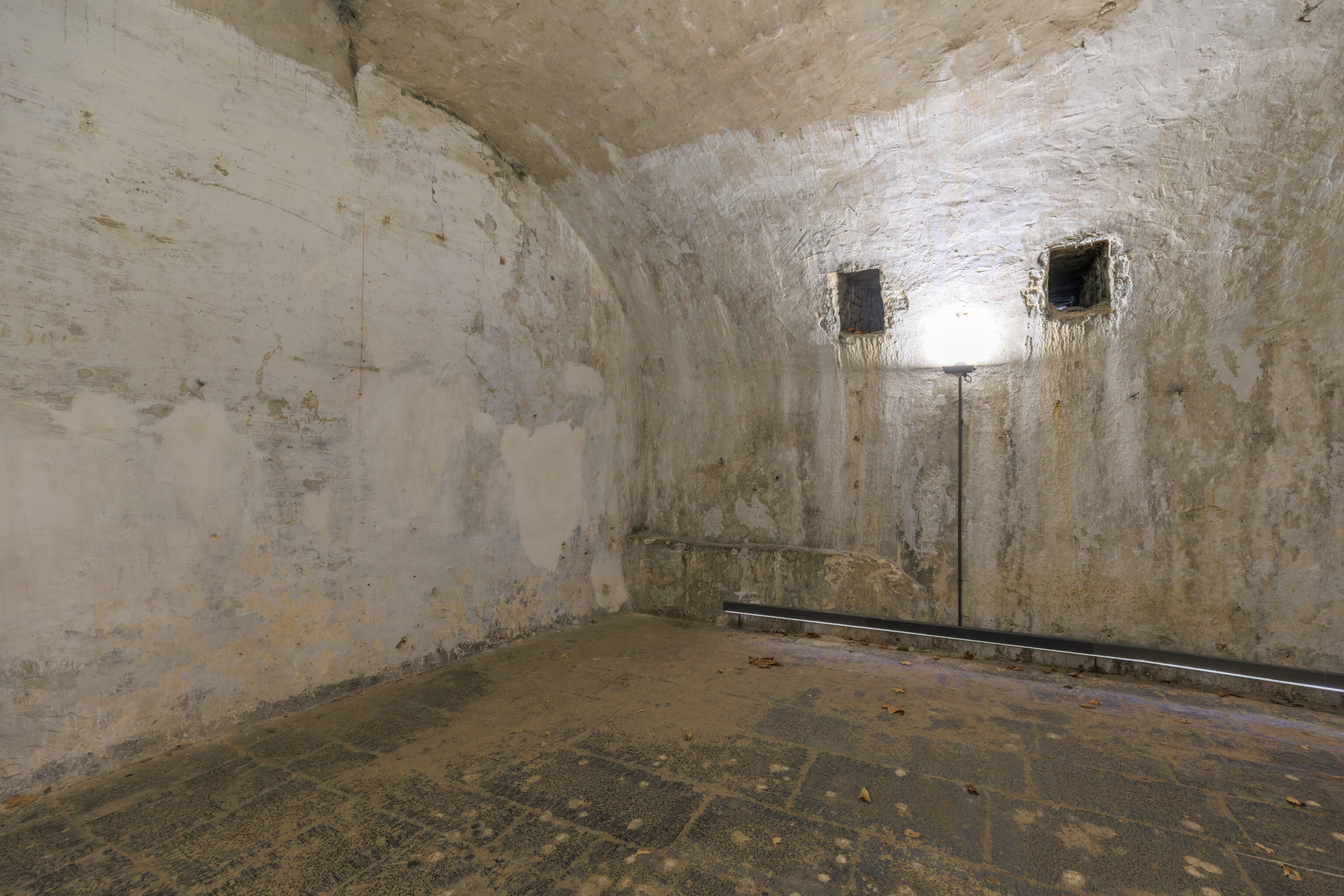
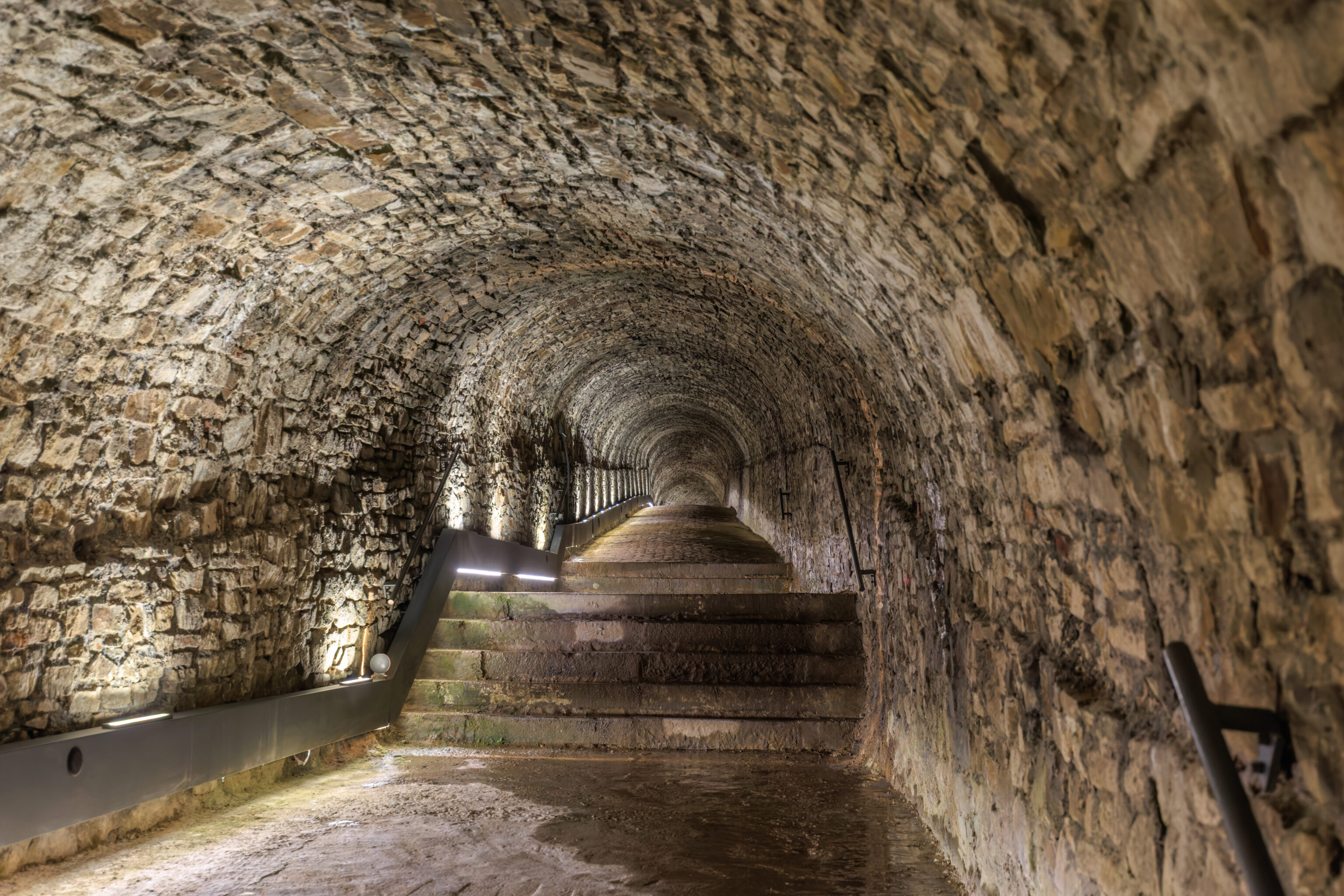
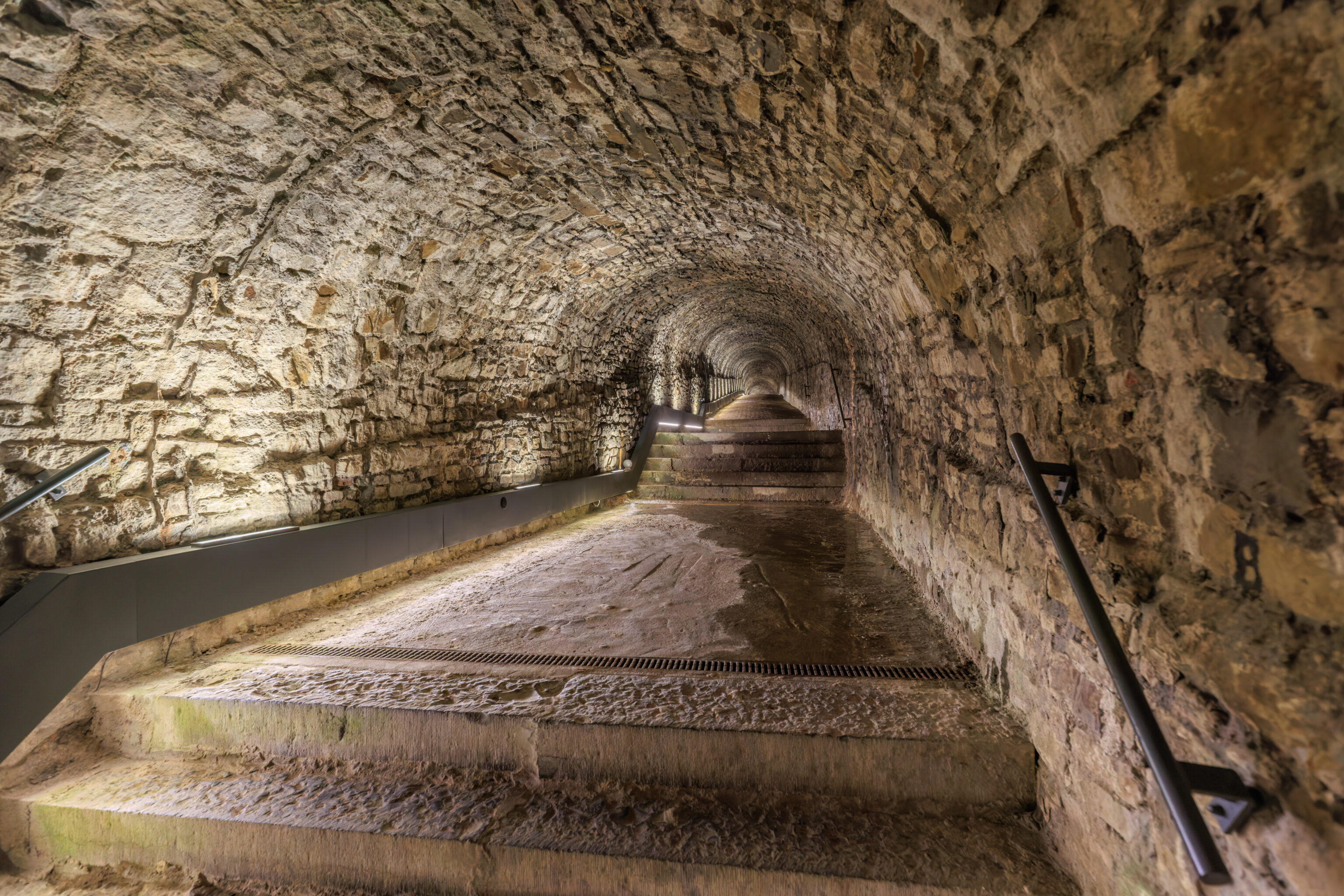
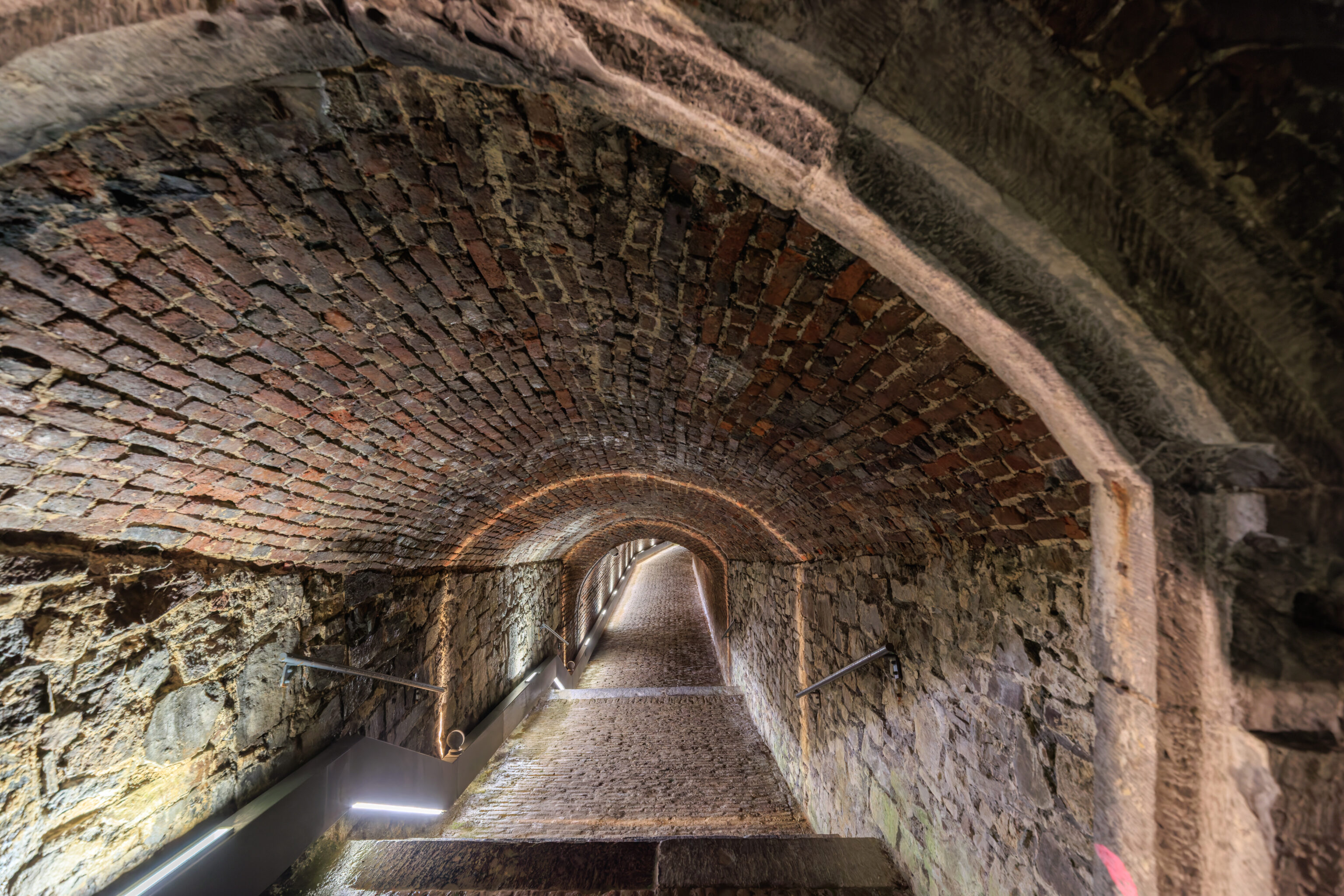
About 500 meters of the citadel’s vast tunnels were covered on the guided tour. The guide discussed the history of the citadel and the tunnels and explained how they grew over time and as the citadel passed between various European powers. Perhaps the most well known individual who contributed to the expansion of the fortress was Vauban, formally Sébastien Le Prestre, Marquis of Vauban, of France under Louis XIV, the Sun King.
The tour was interesting and the guide was knowledgeable. Definitely a worthwhile activity and much better than the Terra Nova museum!
Descent from the Citadel
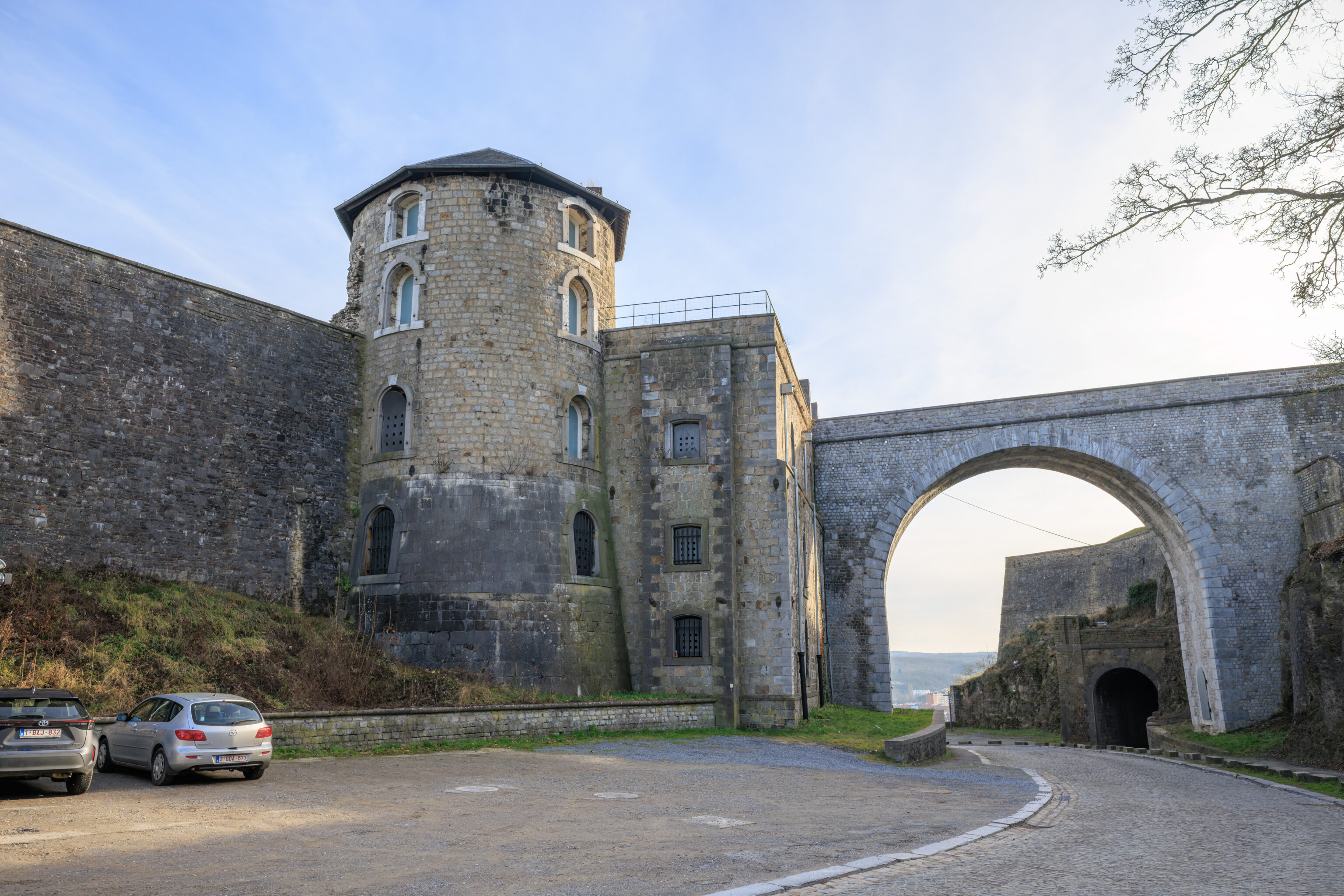
The tour ended around here, below the bridge that we crossed earlier to get to and from the restaurant where we had lunch.
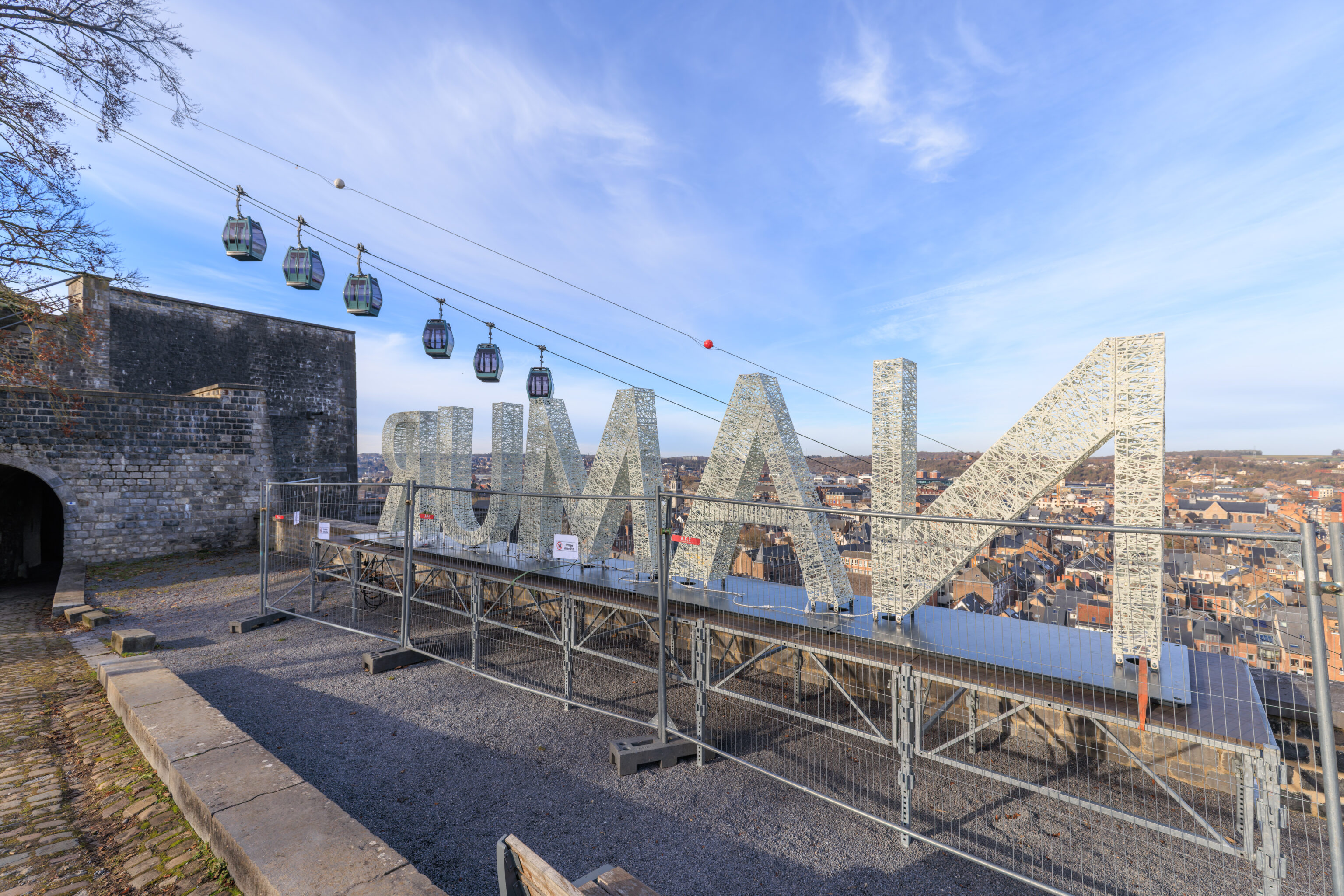
We walked over to the Namur sign that we saw earlier when we were above at the bridge.
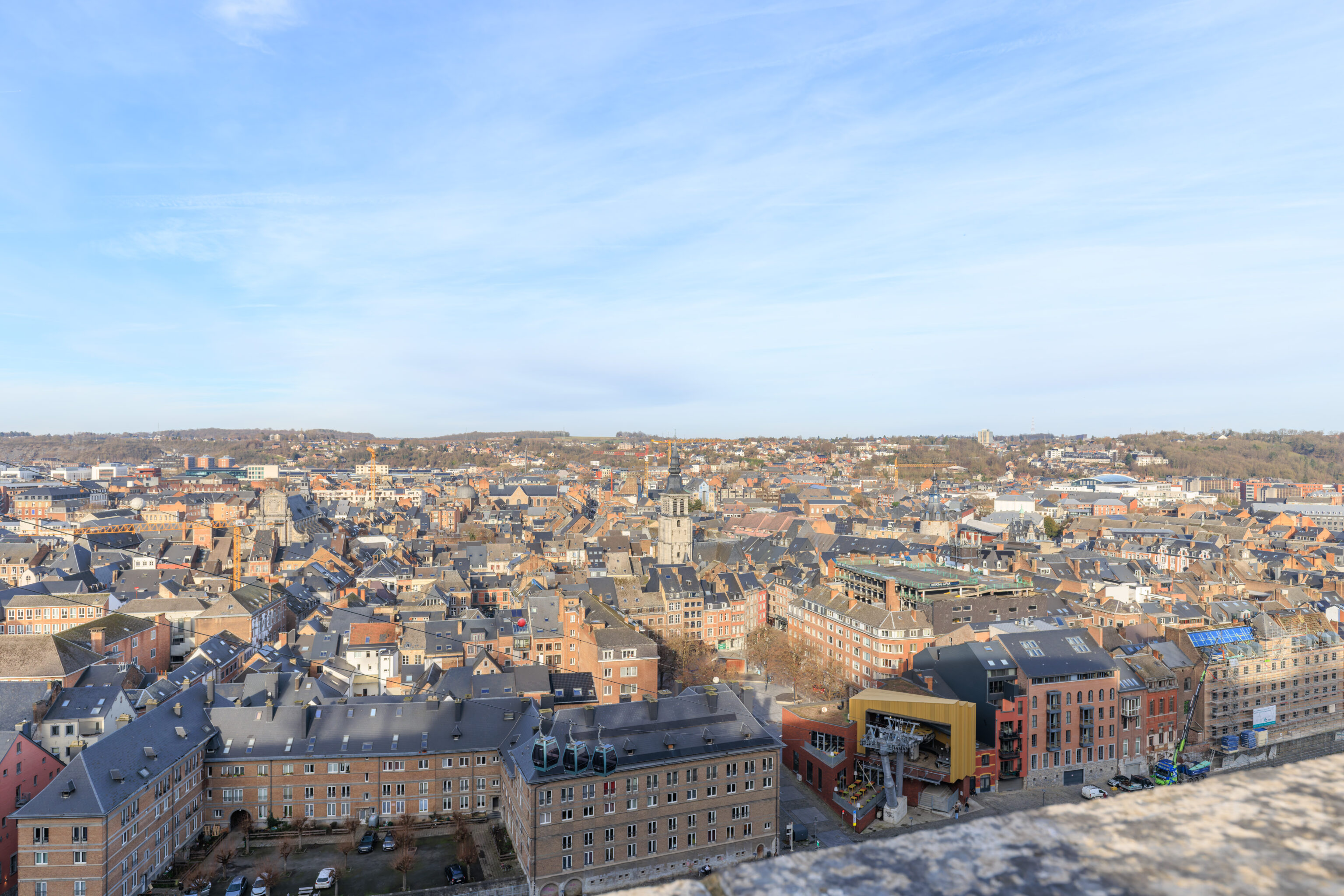
Looking down from here, we were able to see the gondola’s lower terminal at the edge of the Sambre, which is just out of view from this perspective.
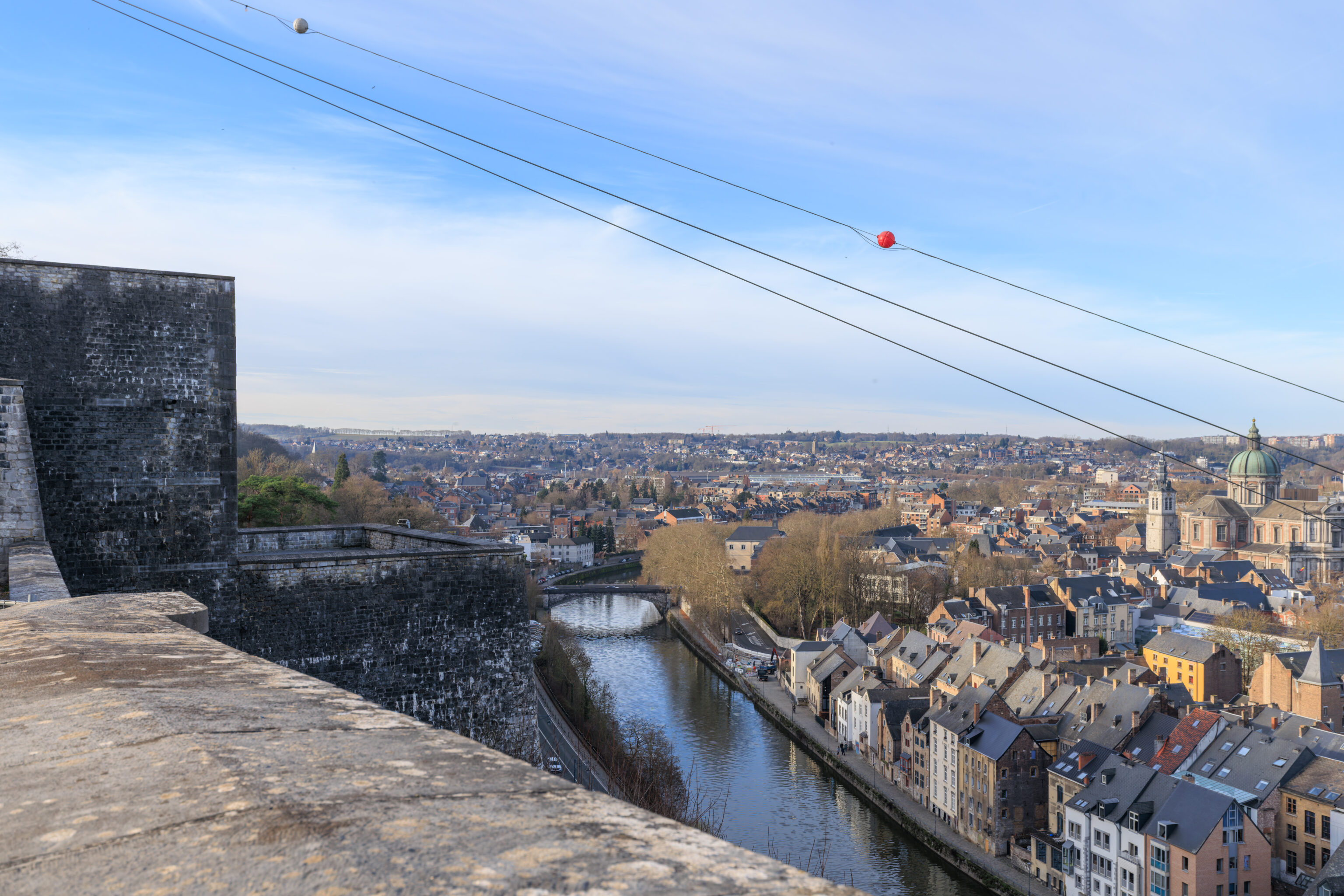
The view looking upriver to the west.
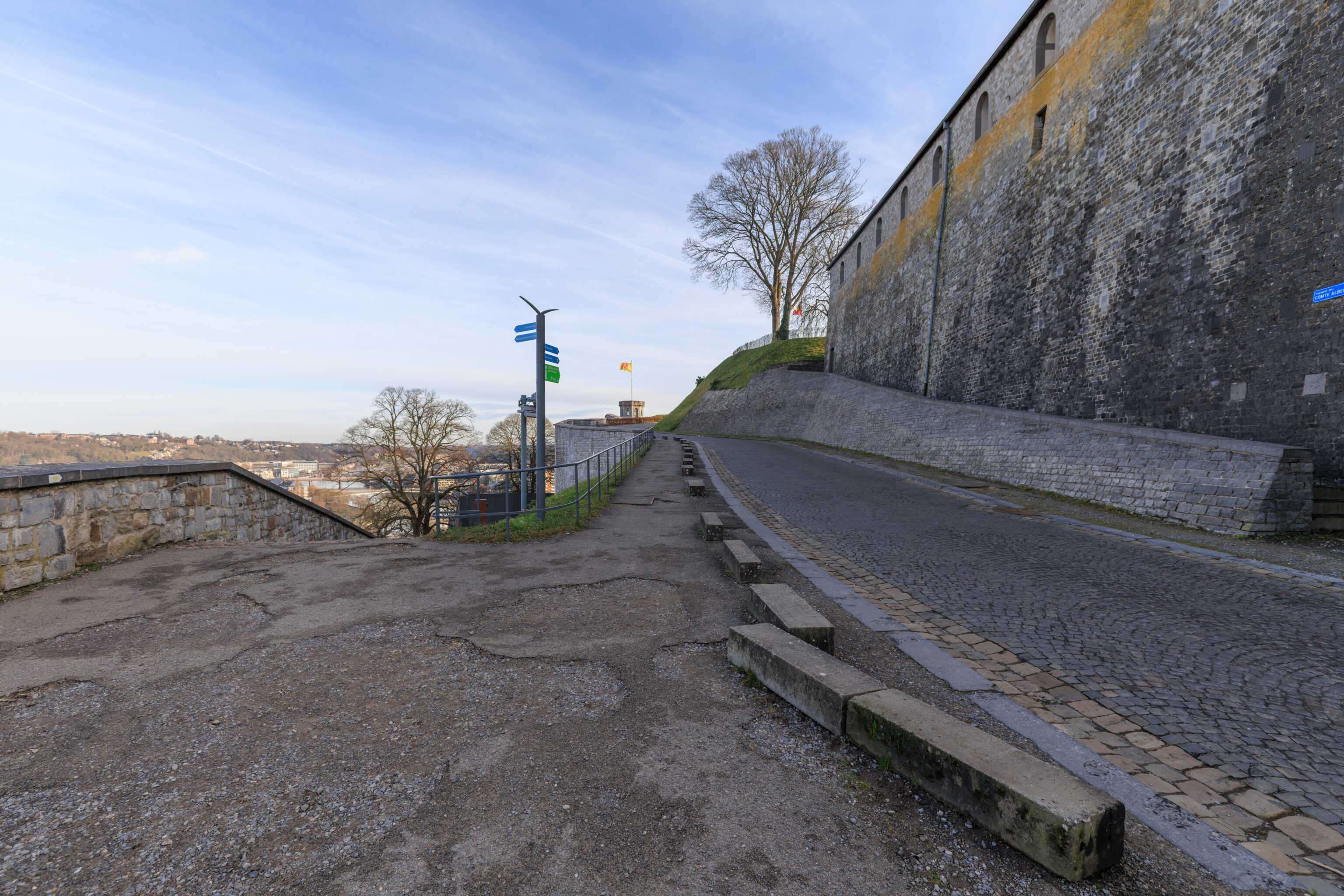
Looking to the east, we could see the Wallonia flag that we were near earlier. This road that we are on is the same road that goes across the bridge we were just below and leads past the gate by Terra Nova. The path to the left should pretty much lead directly down to the eastern point of land where the Sambre and Meuse merge together.
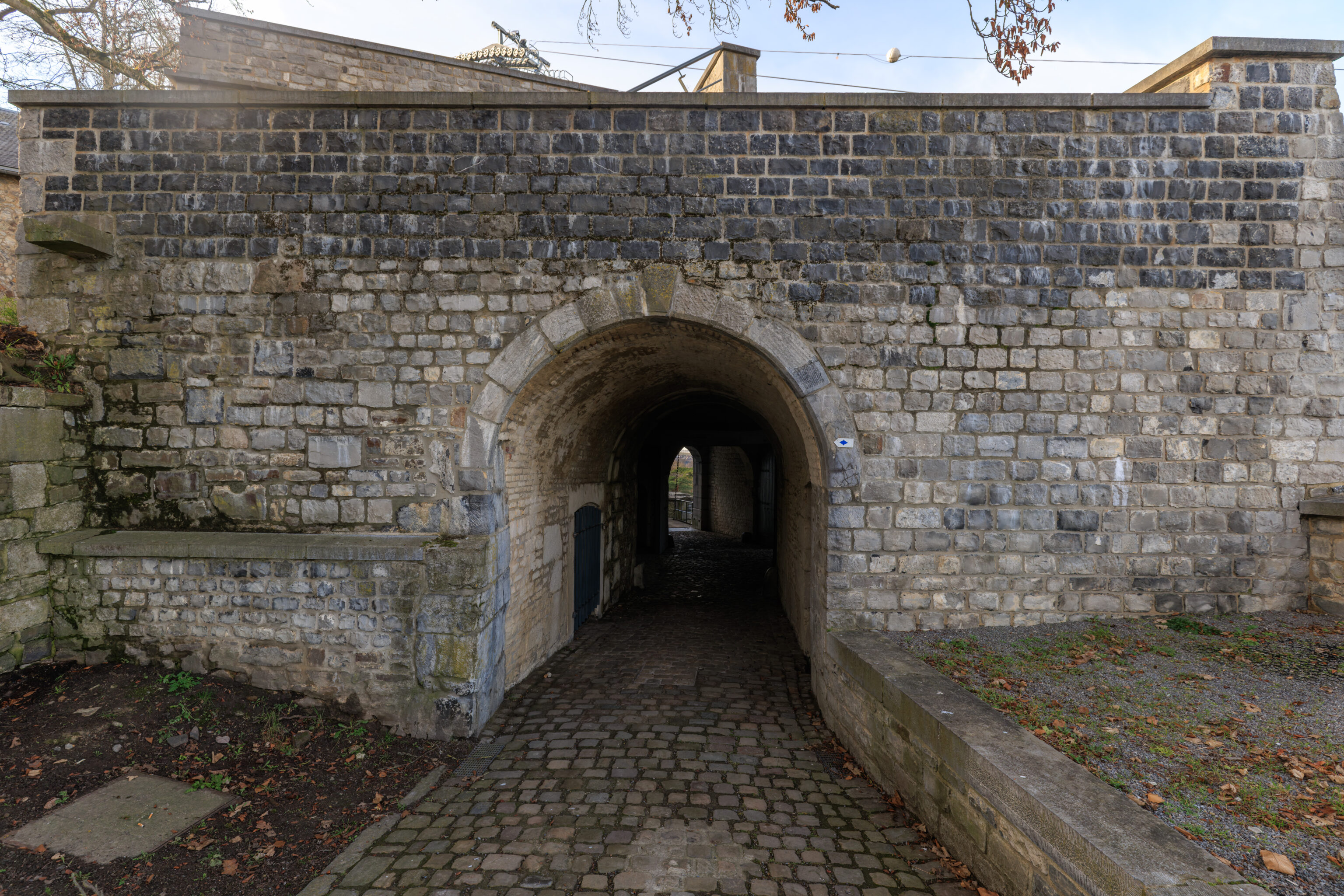
We went in the opposite direction, to the west through this little tunnel.
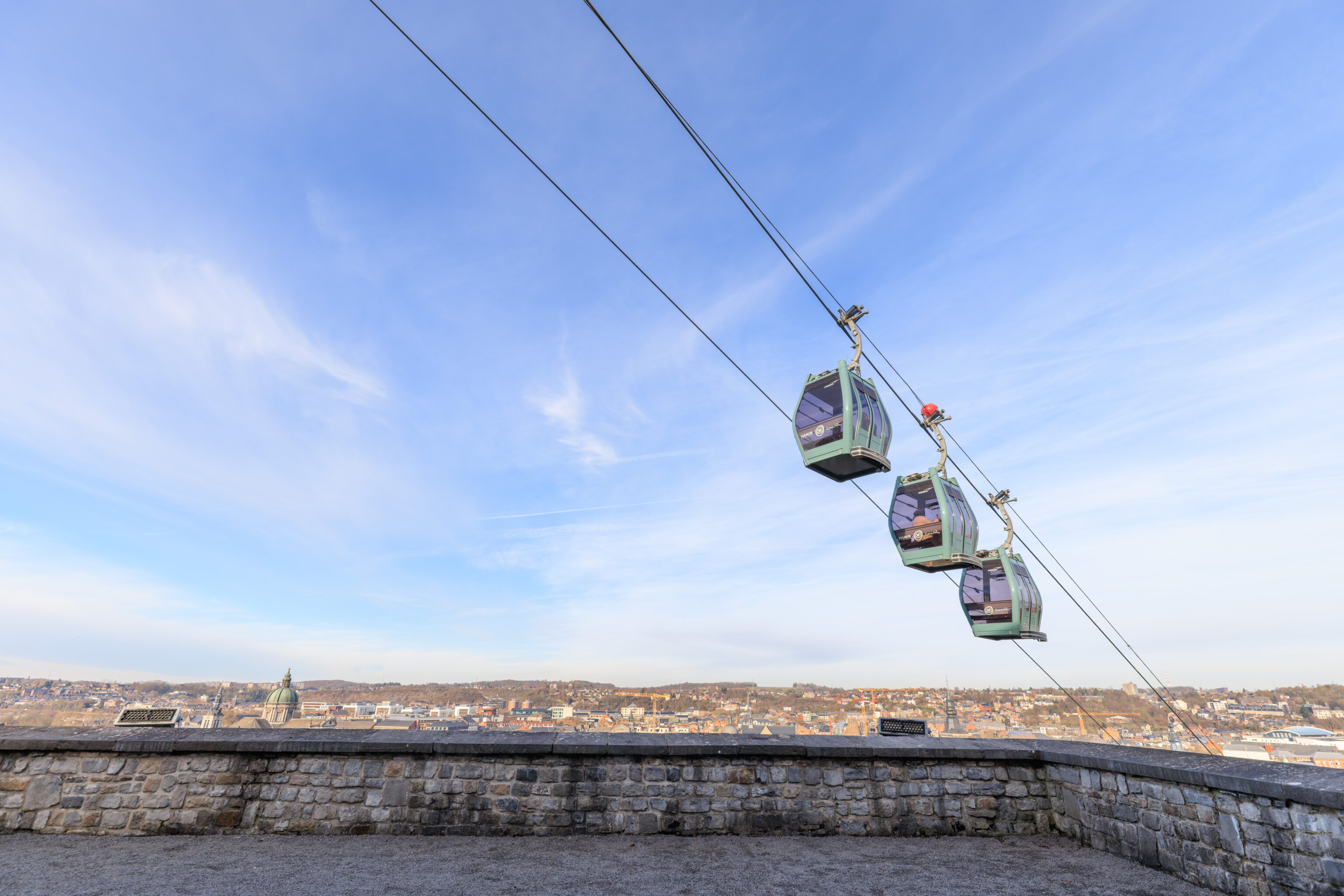
There was a side path that led to this three sided overlook that was almost exactly underneath the cableway above.
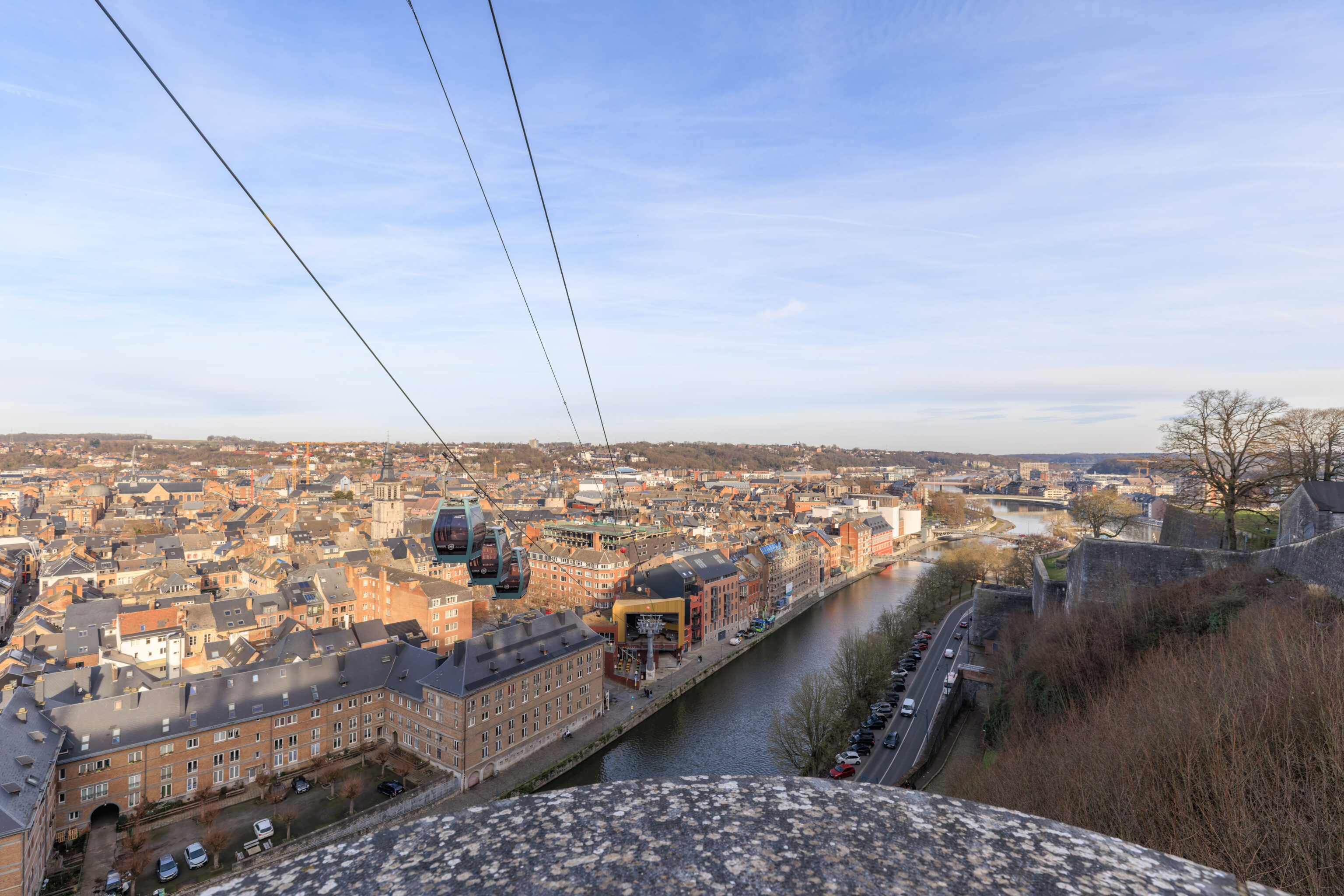
Looking to the northeast, we could pretty much look down the cableway at its lower terminal.
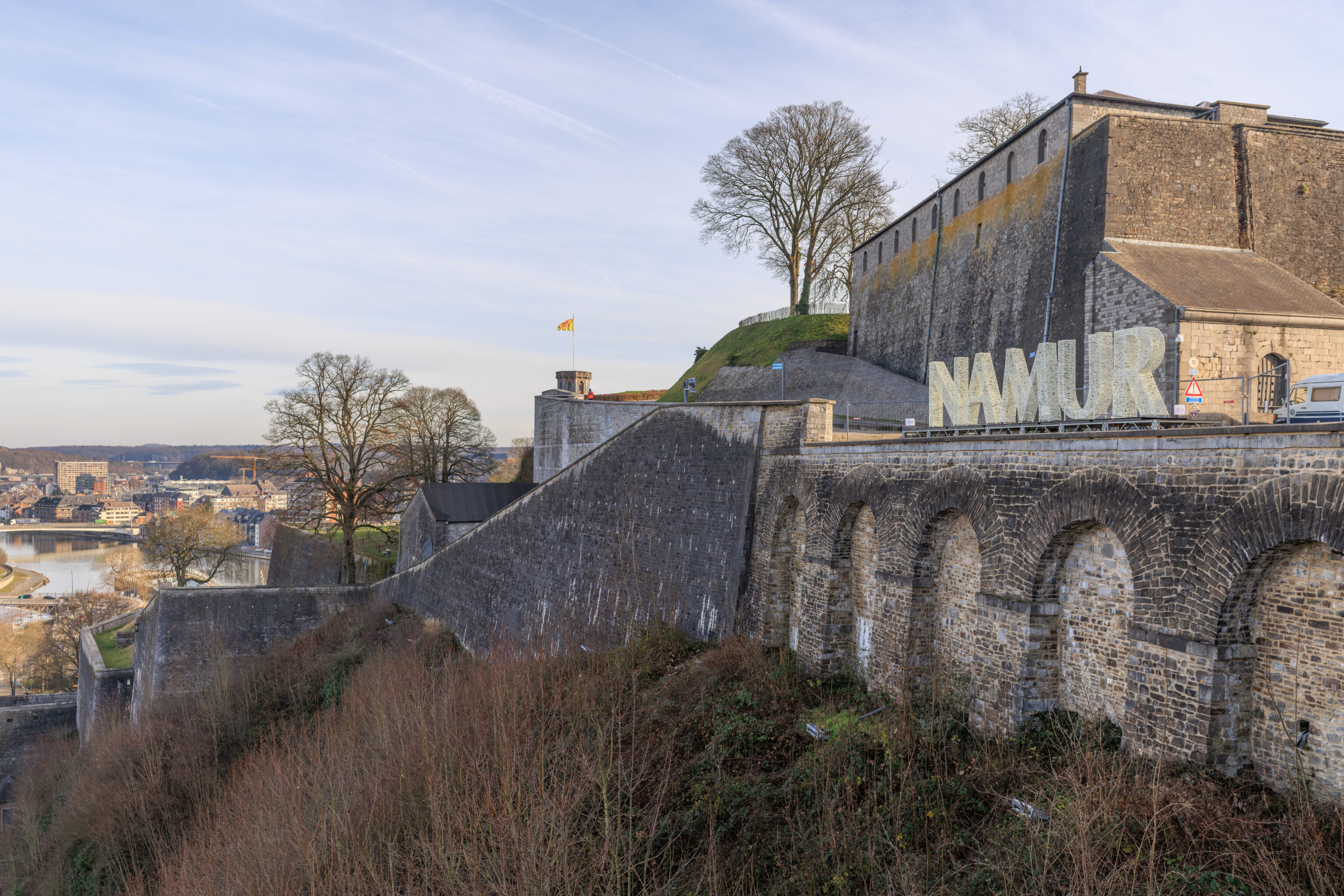
Looking to the east, we could see the path down. It seemed pretty steep!
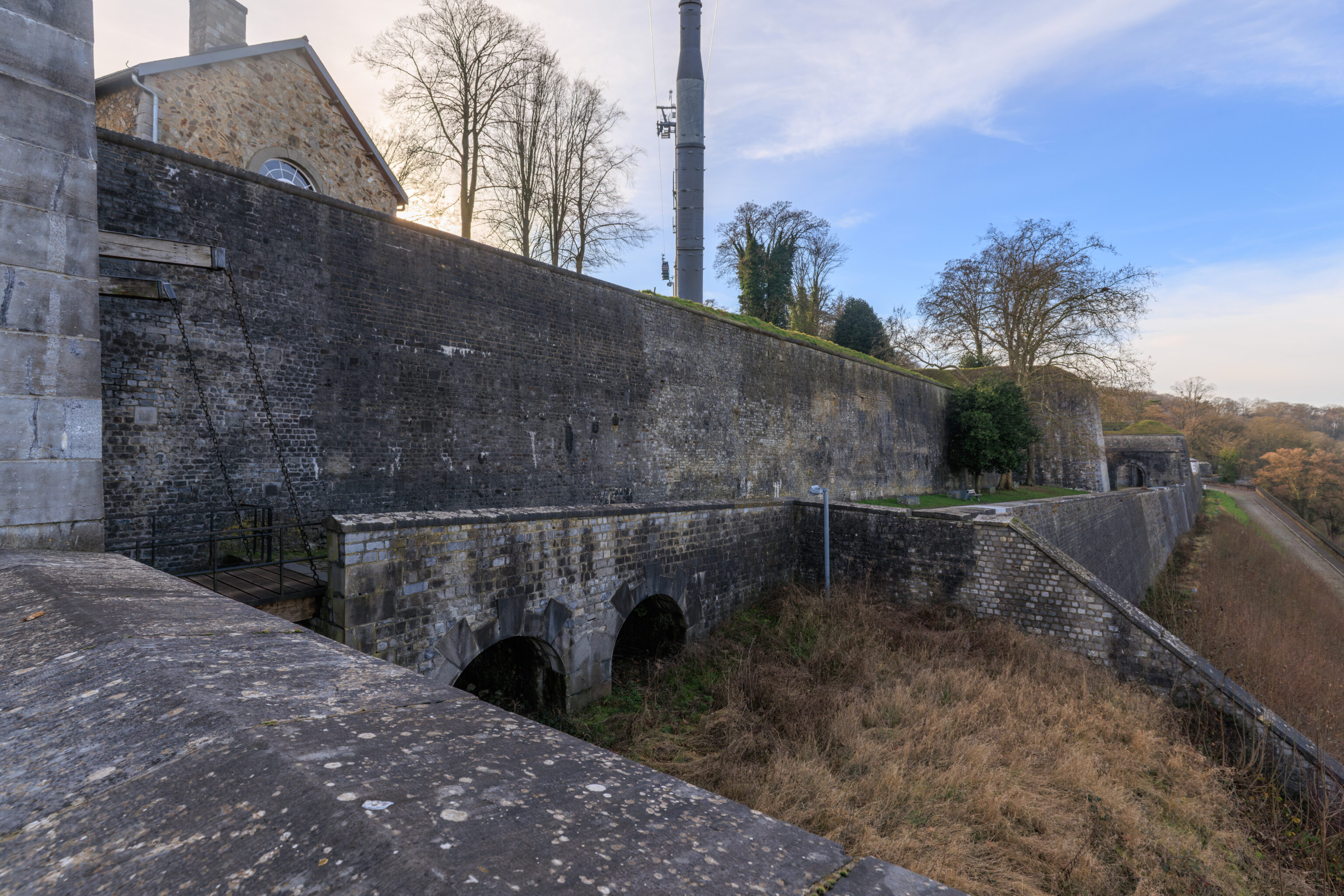
Looking to the southwest, we could see a portion of the citadel’s vast walls.
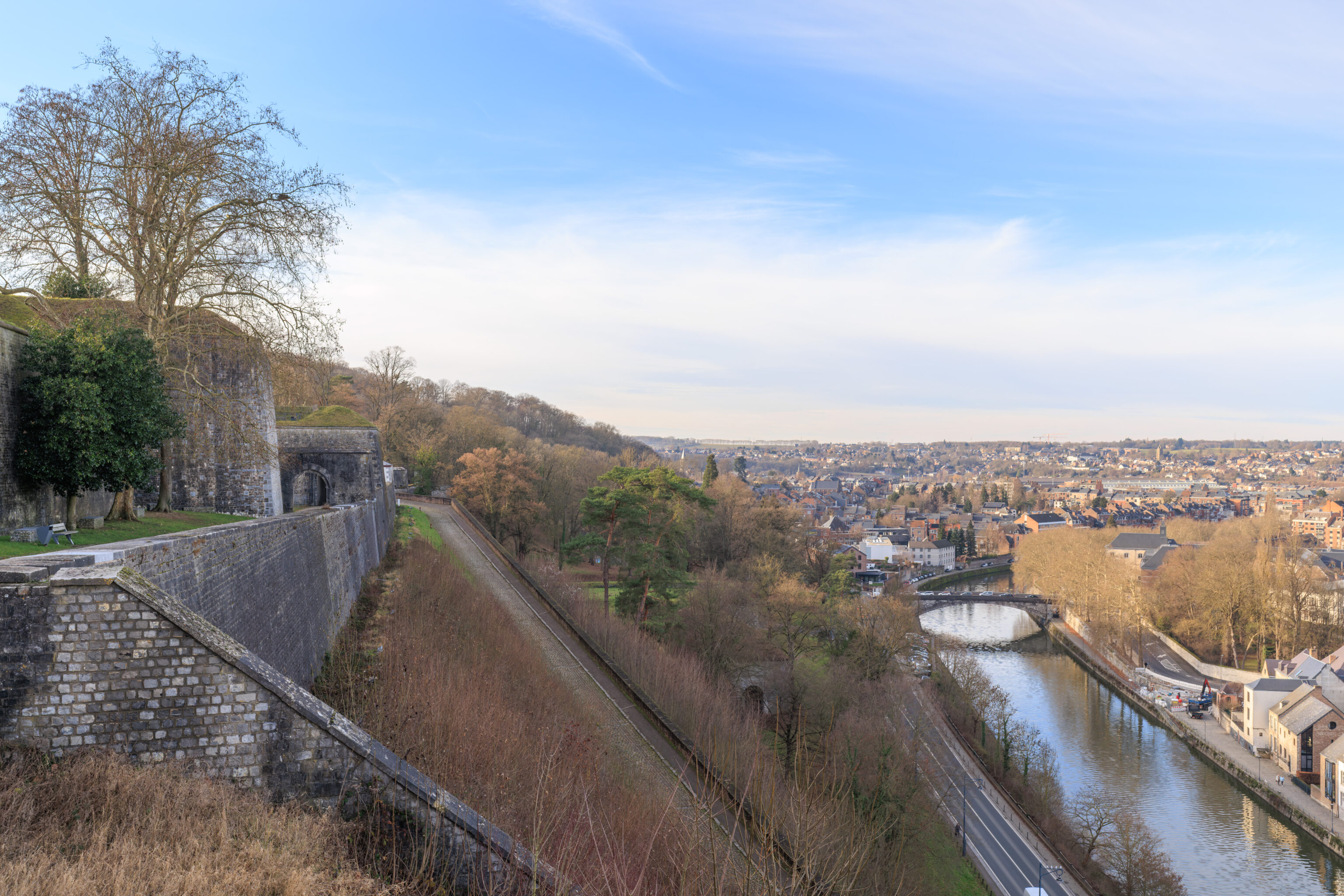
Looking to the west, there was another steep path that descends from the citadel.
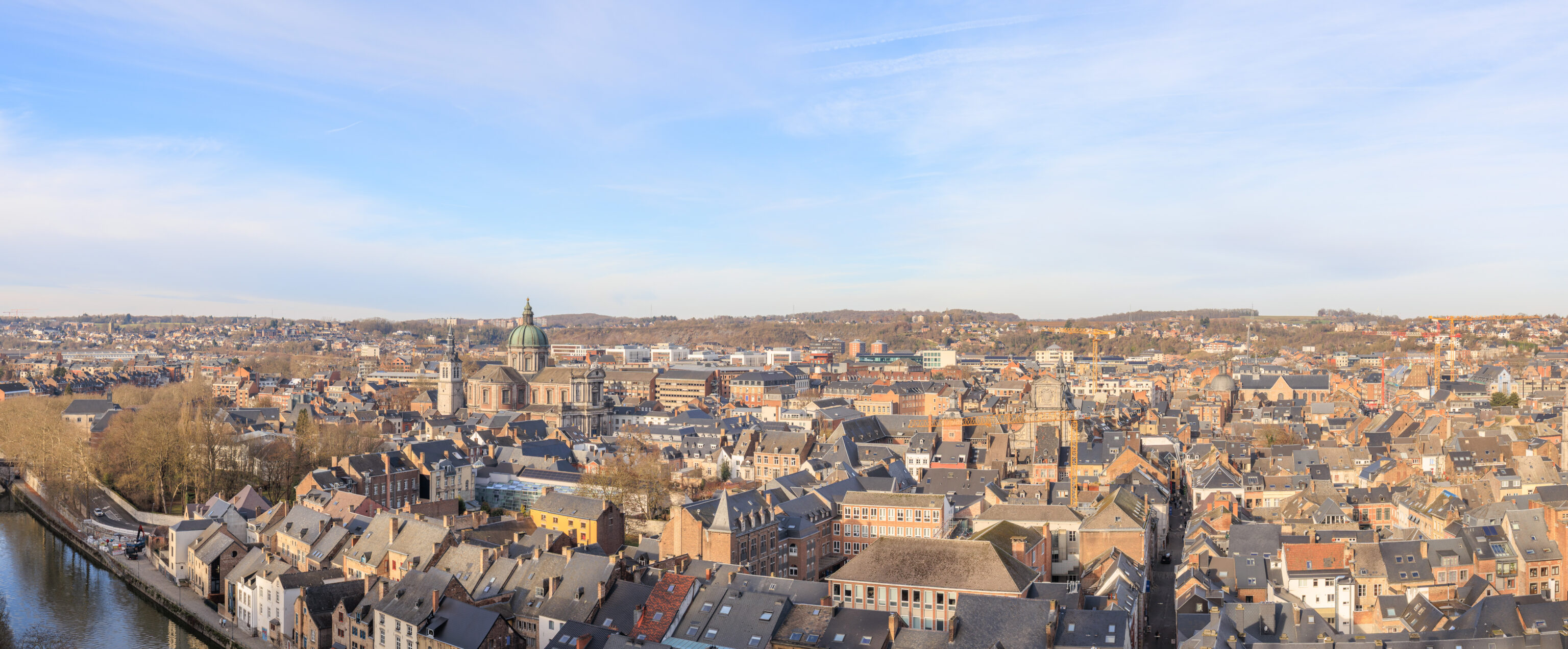
A panorama of the view looking at the center of Namur.
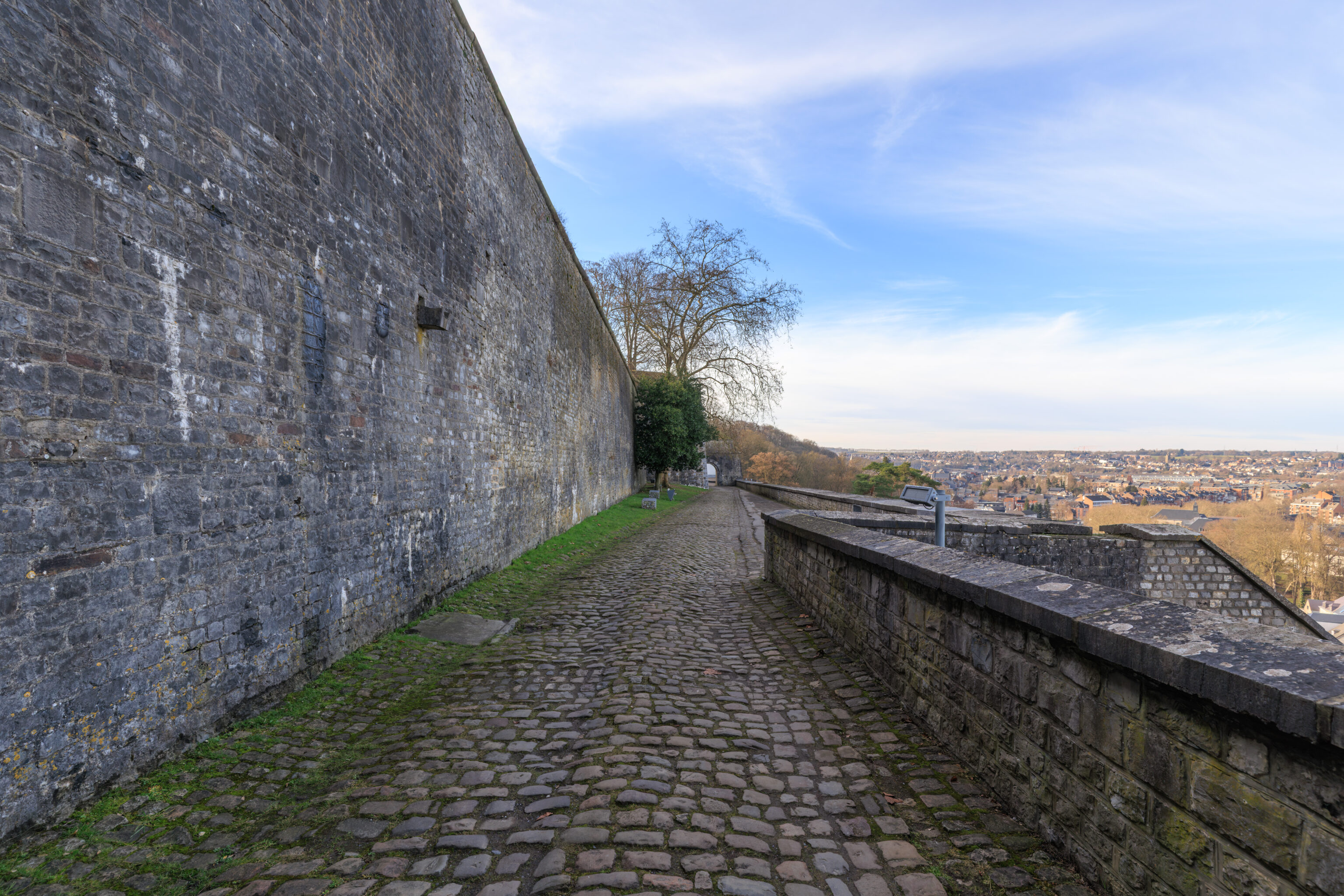
We went back into the tunnel and turned right, exiting to the west. We decided to not go any further in this direction.
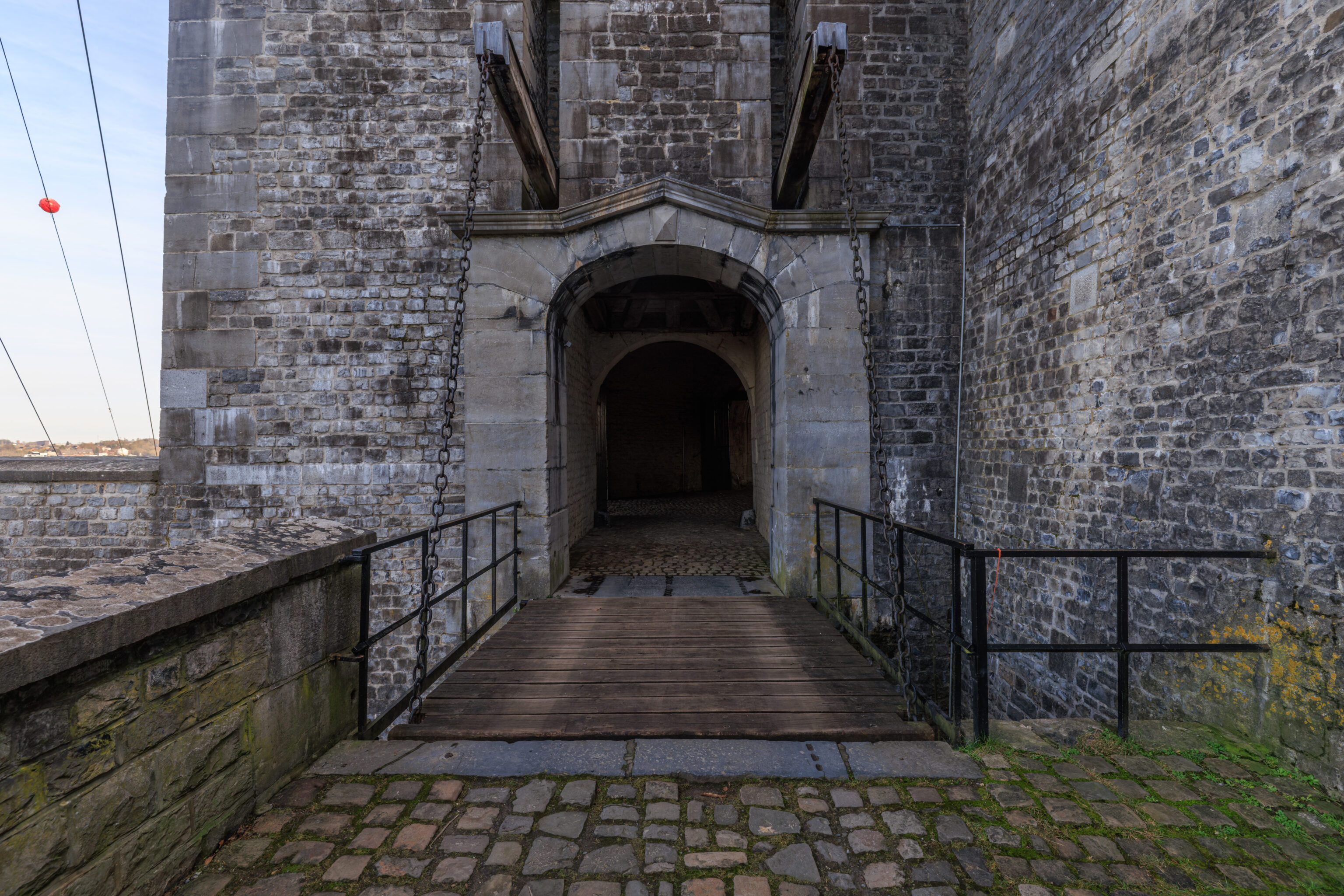
We had actually walked over a drawbridge when we exited the tunnel!
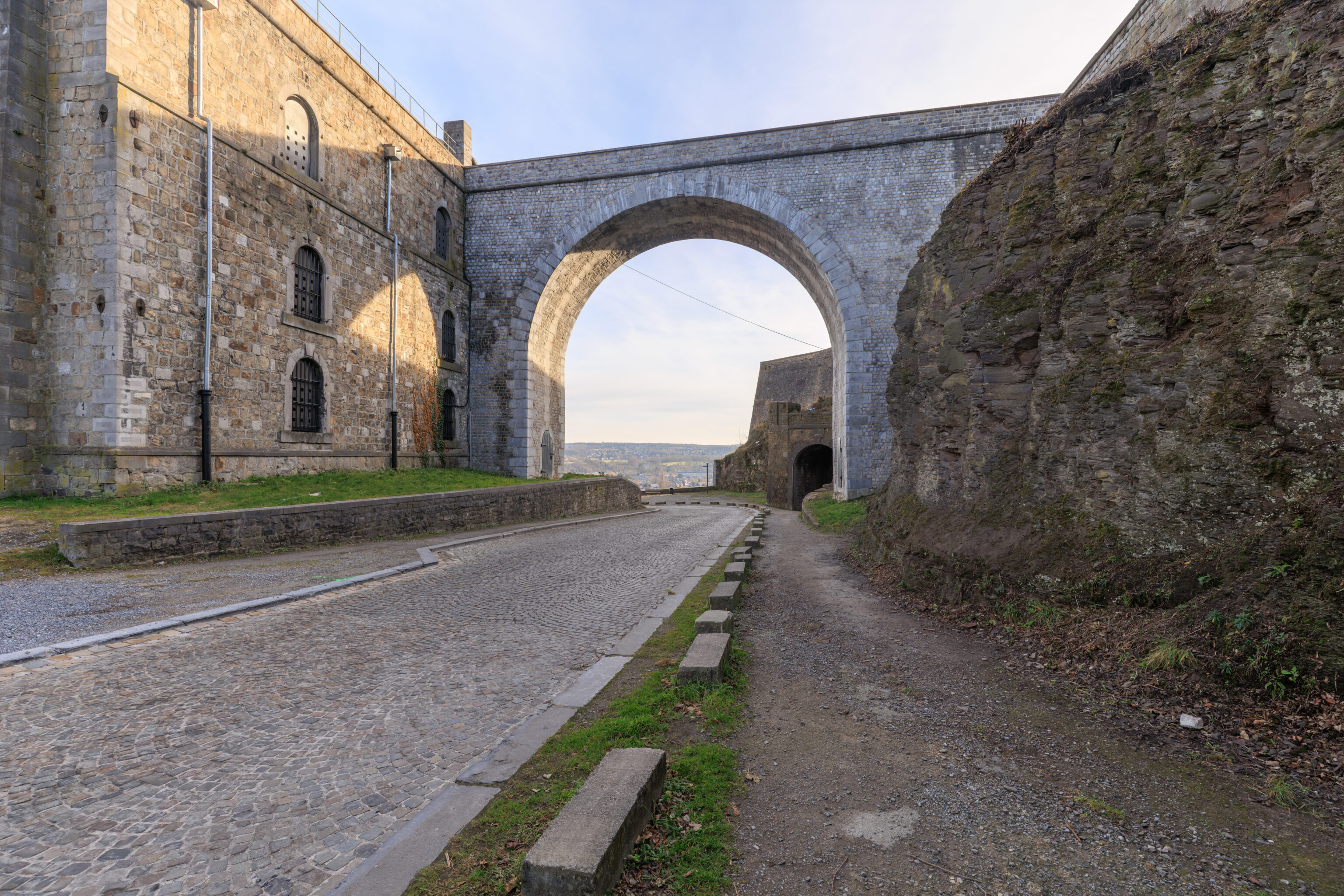
We decided to actually return to the bridge…
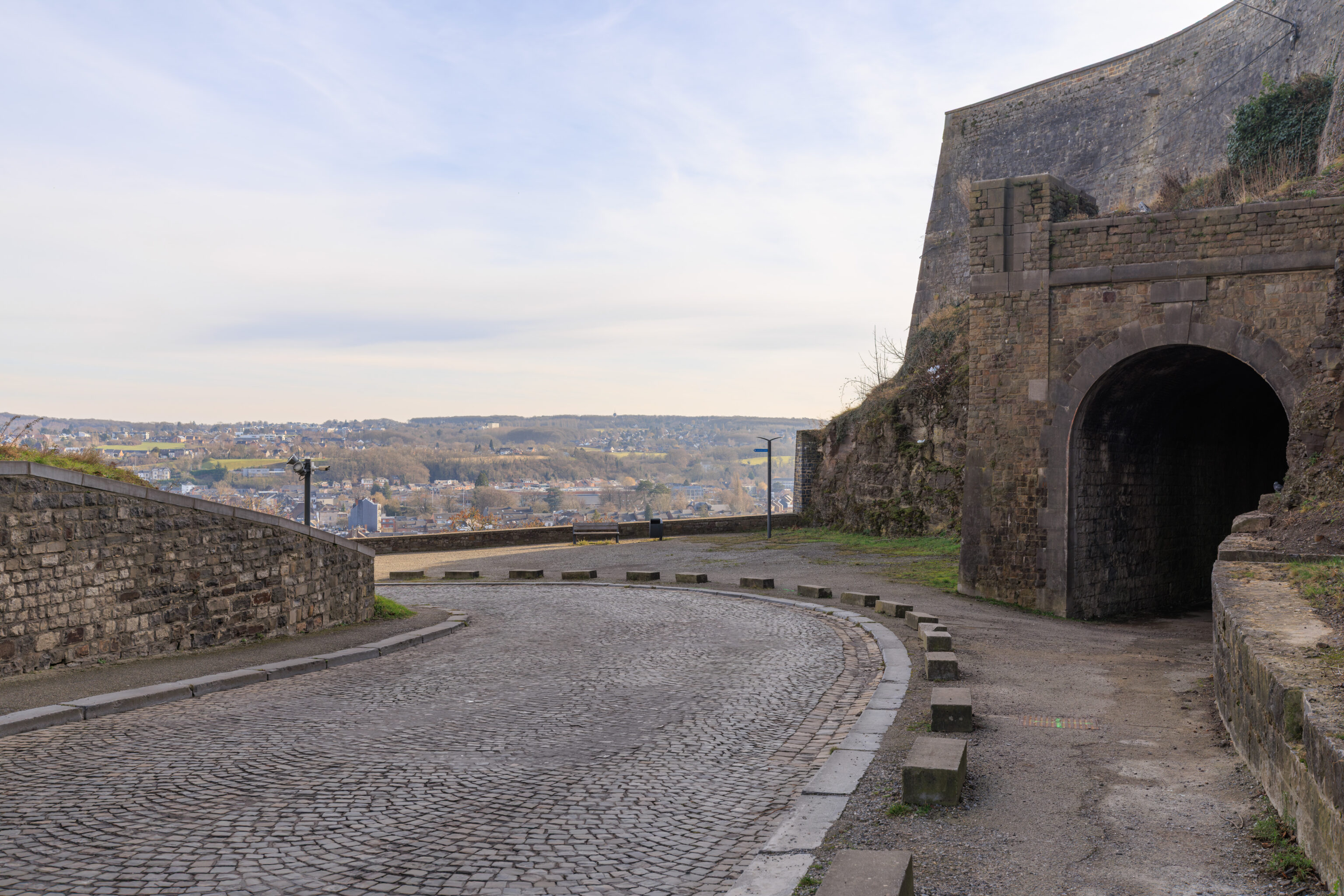
And we walked under the bridge.
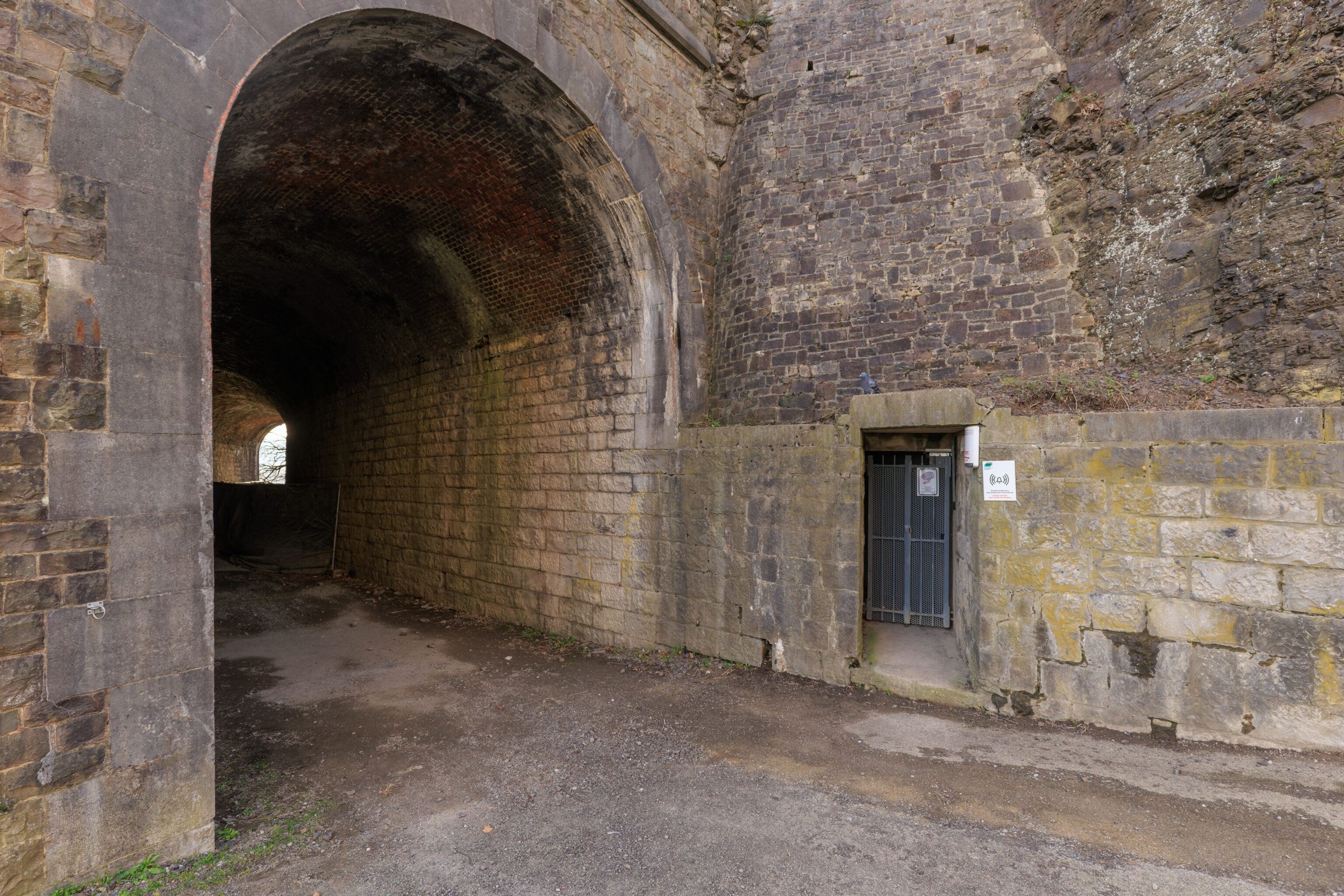
This tunnel to our right has a very high ceiling. Our tour guide explained it was because there used to be an electric tram, or what we’d call a streetcar or trolley, that ran through here.
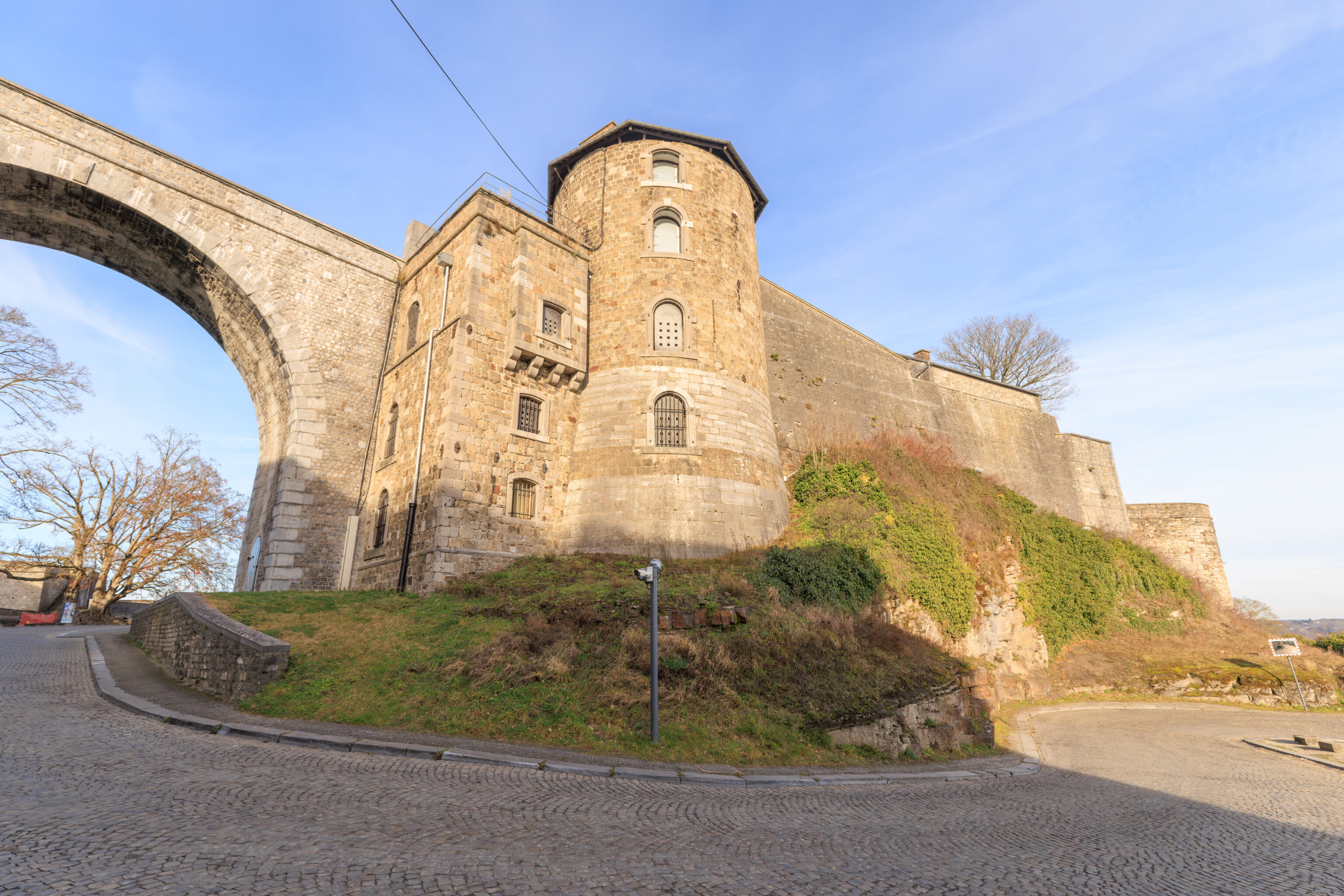
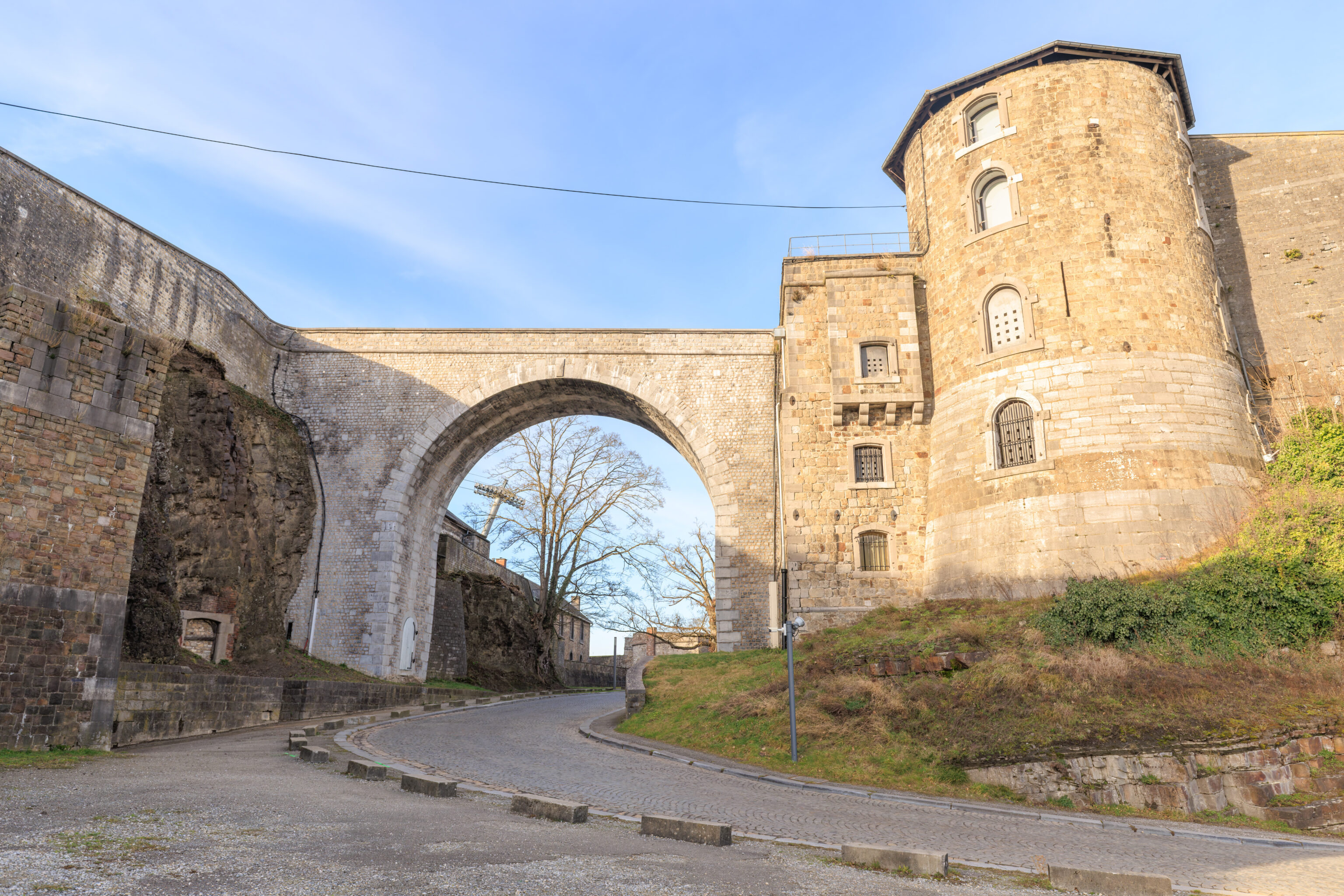
The view looking back up towards the bridge and the fortifications to the east of it.
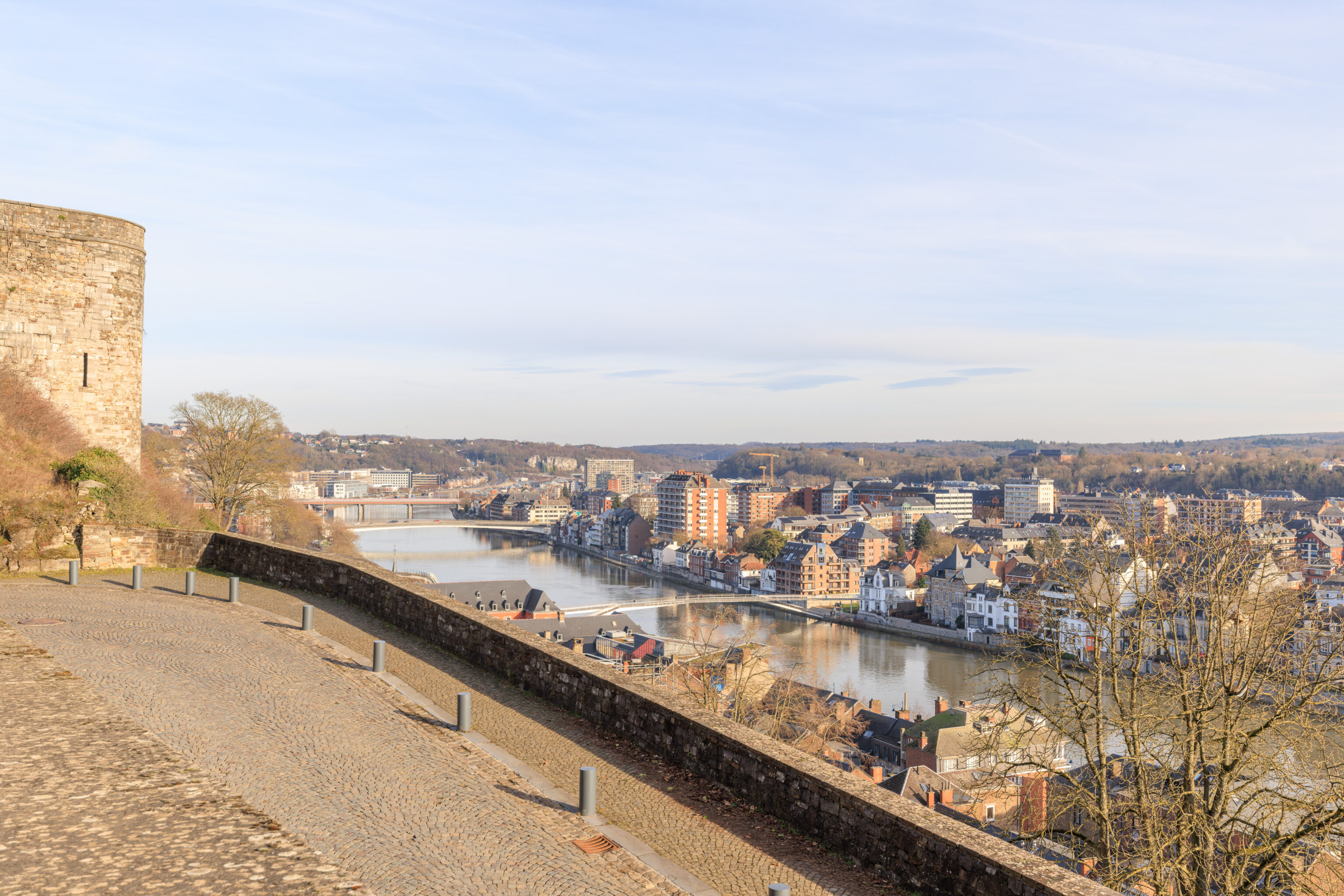
The road descends to the east and then makes a sharp turn to the west.
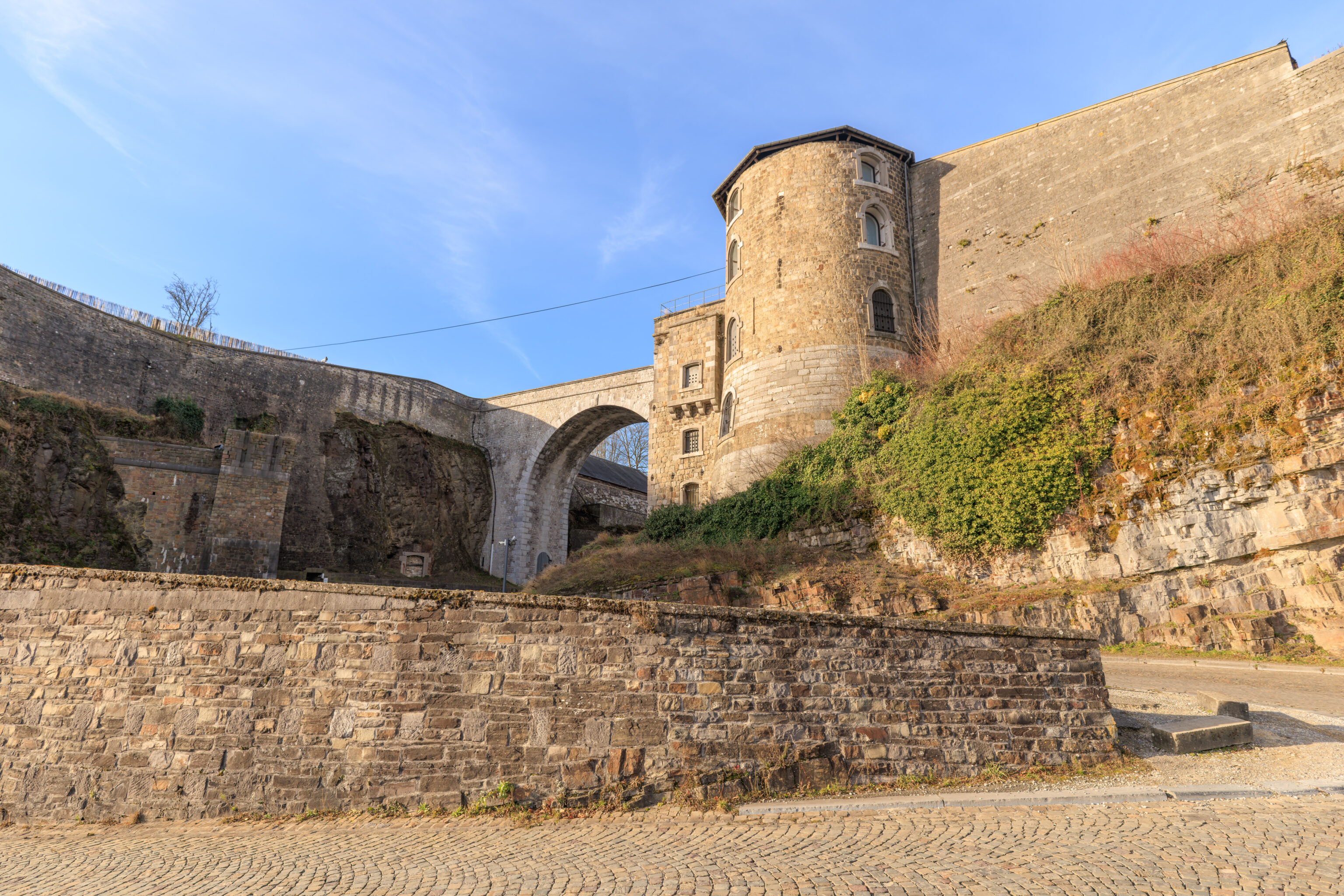
We followed the road down.
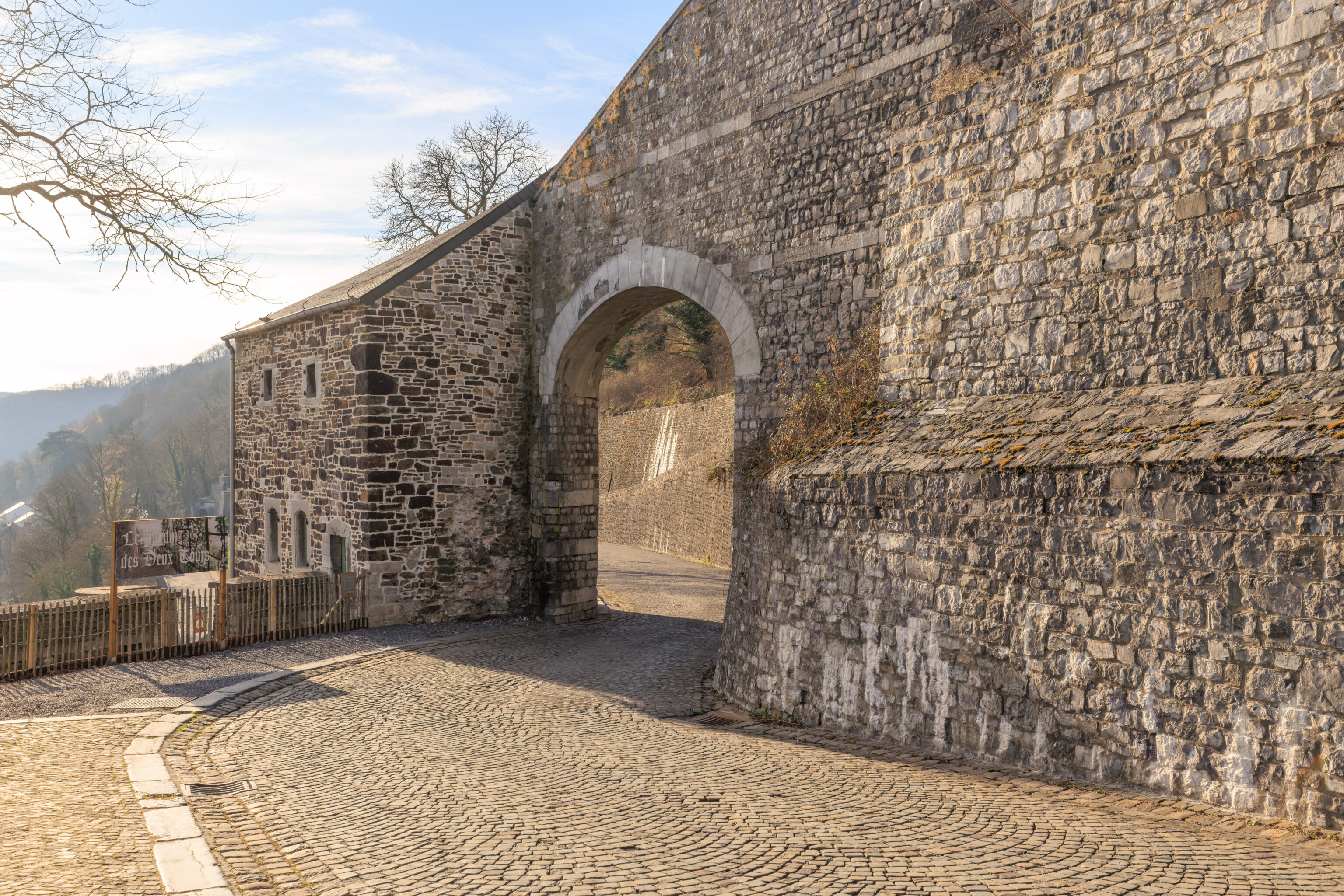
The road continues to the west after going through this gateless gate.
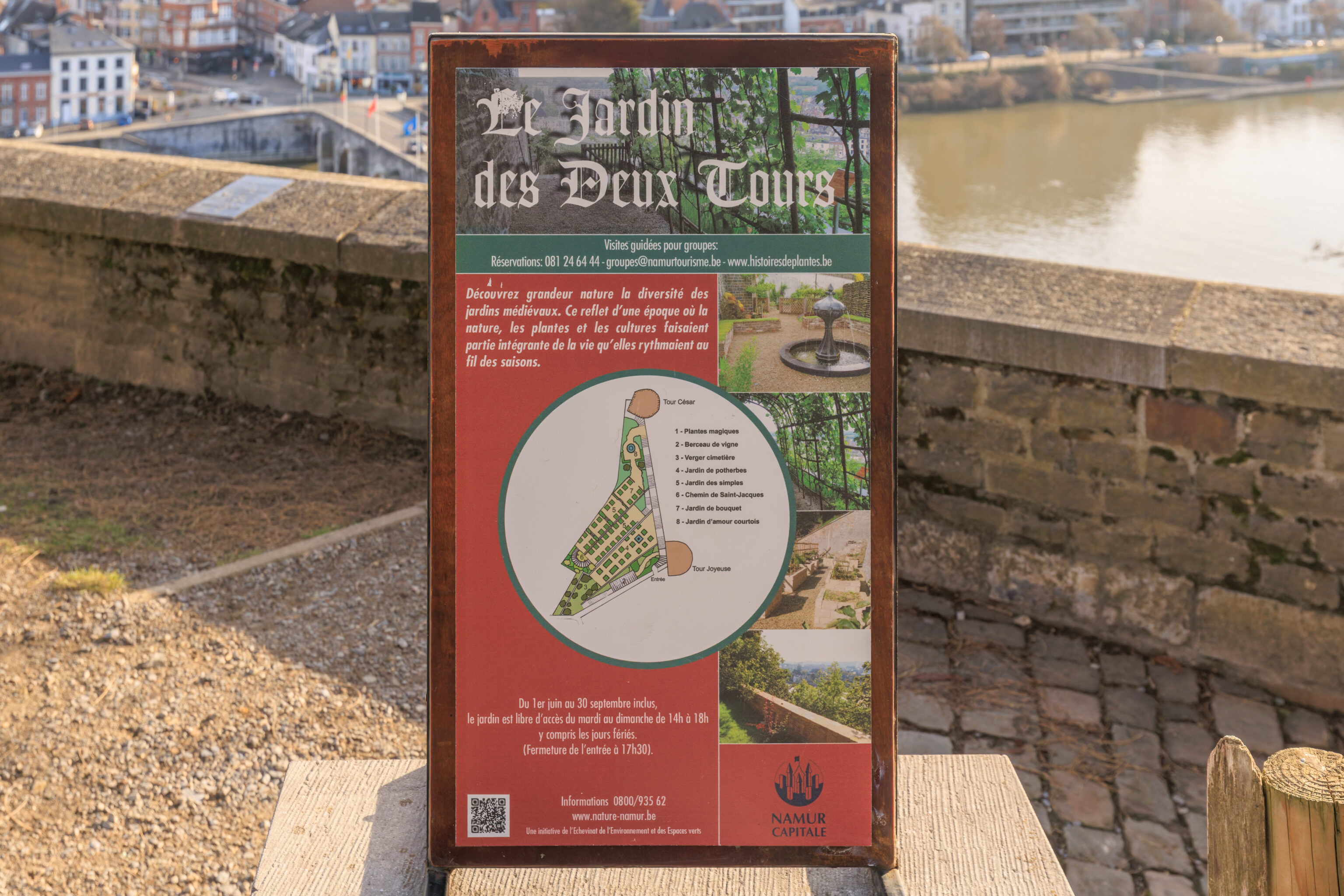
There is a garden below, The Garden of the Two Towers:
The Garden of the Two Towers
Guided tours for groups:
Reservations: 081 24 64 44 - [email protected]

Discover the diversity of medieval gardens in a life-sized setting. They reflect an era when nature, plants, and crops were an integral part of daily life, setting its rhythm through the changing seasons.

Caesar Tower
1 - Magical plants
2 - Vine arbor
3 - Orchard-cemetery
4 - Kitchen garden
5 - Medicinal herb garden
6 - Way of Saint James
7 - Bouquet garden
8 - Courtly love garden
Joyeuse Tower

From June 1st to September 30th inclusive, the garden is open to the public from Tuesday to Sunday, 2 pm to 6 pm, including public holidays. (Entrance closes at 5:30 pm).

Information: 0800/935 62
An initiative of the Department of Environment and Green Spaces

NAMUR
CAPITAL
– Text from the sign in the photograph above, translated using Google Translate.
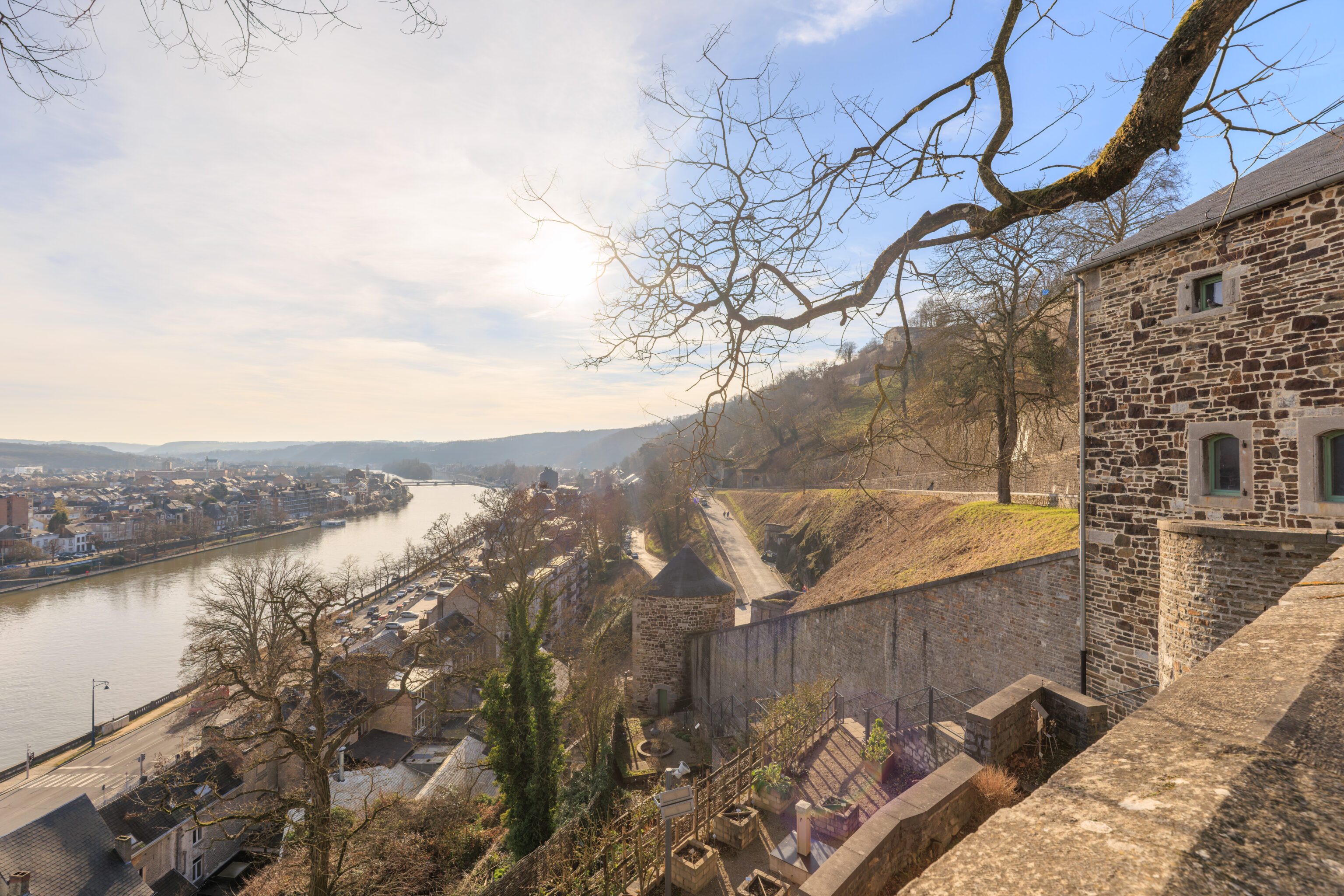
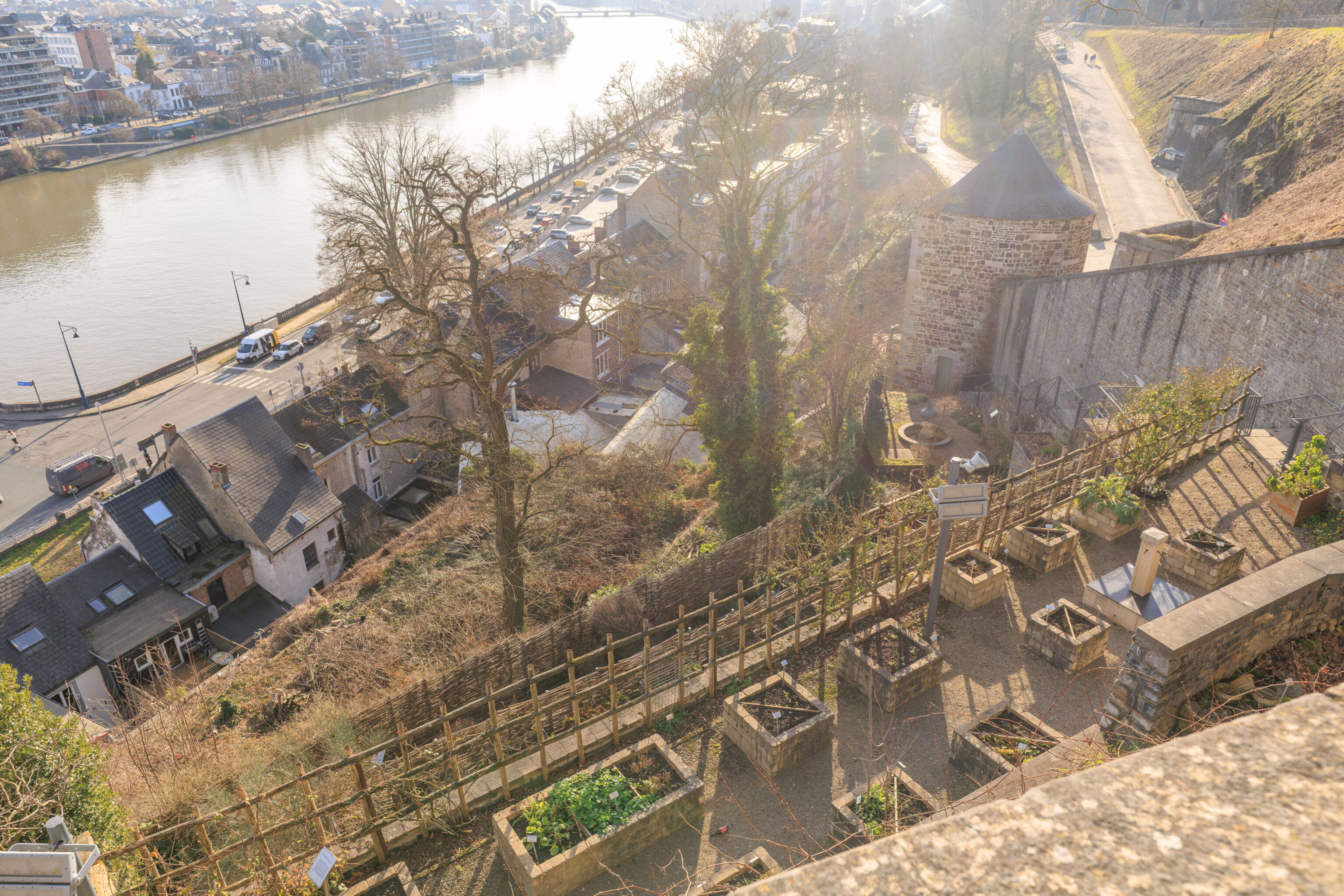
The garden was not open but we could see part of it from above. The name comes from its location between two of the citadel’s towers. One is very visible in both of the photographs above. The other tower is actually to our right here and was just to the left of the gate that the road goes through.
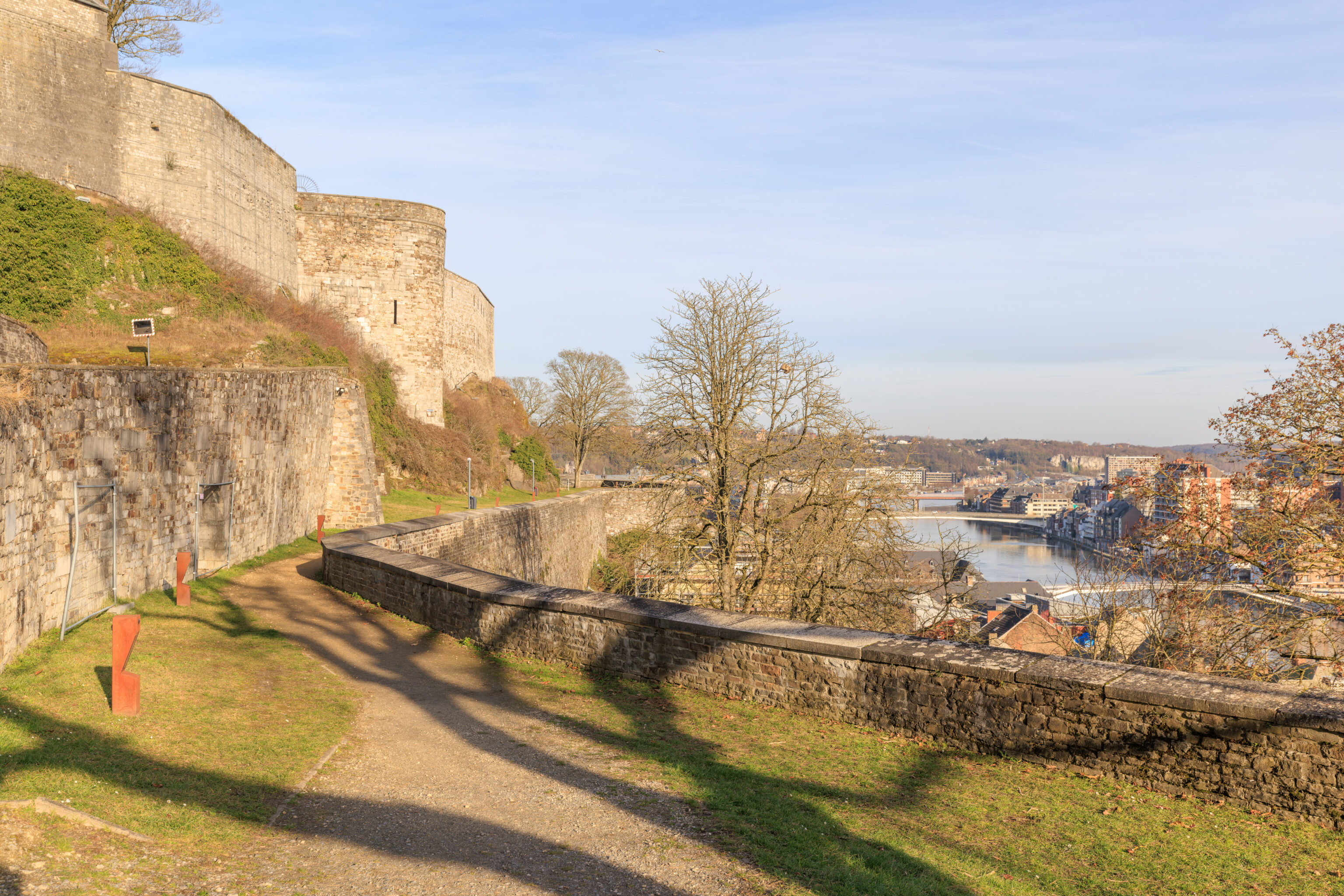
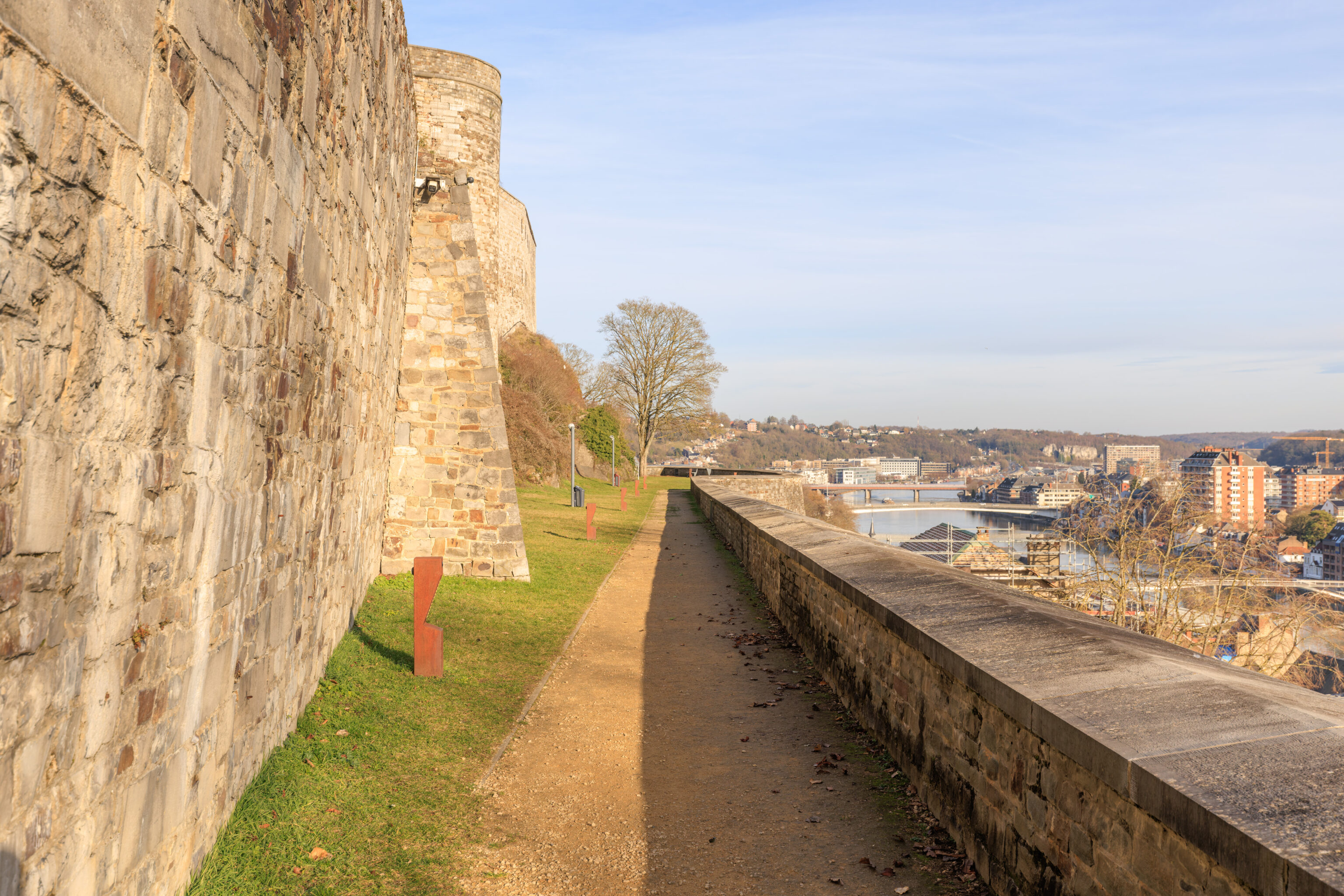
We turned around and walked to the east on a dirt path next to the wall on our right. Various sources, including Google Maps and OpenStreetMap, indicated that this path should lead us around to the path that goes down from the citadel.
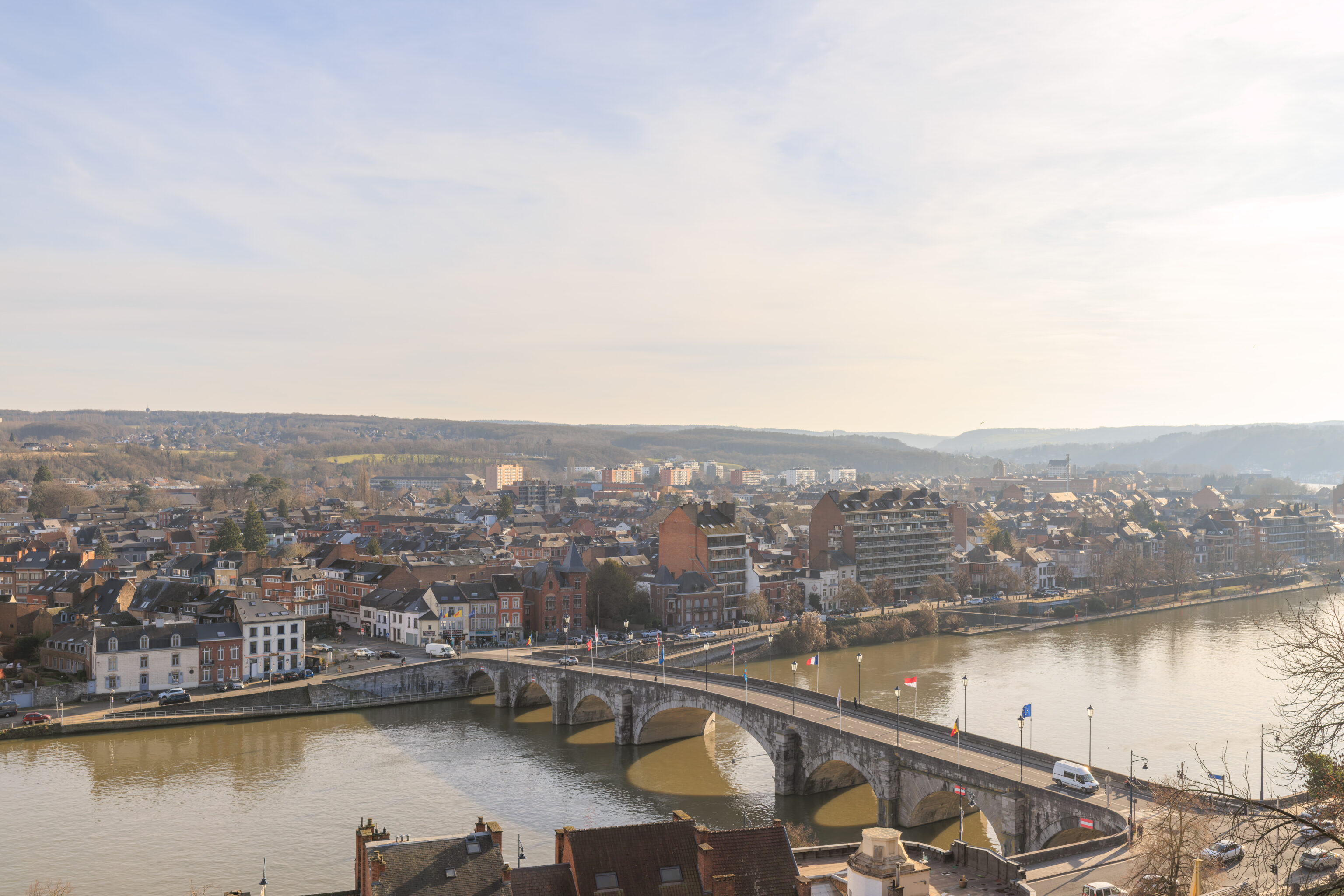
We noticed this bridge, the Pont de Jambes, to the south earlier. It has flags of various countries flying on both sides. We don’t know why these specific flags are present. As far as we can tell, the flags are of Japan, Canada, USA, France, Indonesia, EU, Belgium, something with lots of white, DR Congo, something with lots of blue, Vietnam, and Bulgaria.
Thanks to the Pavoisement page on Namur’s website, we now know that two flags we could not identify are Kosovo and Organisation Internationale de la Francophonie, which we really never would have been able to figure out on our own.
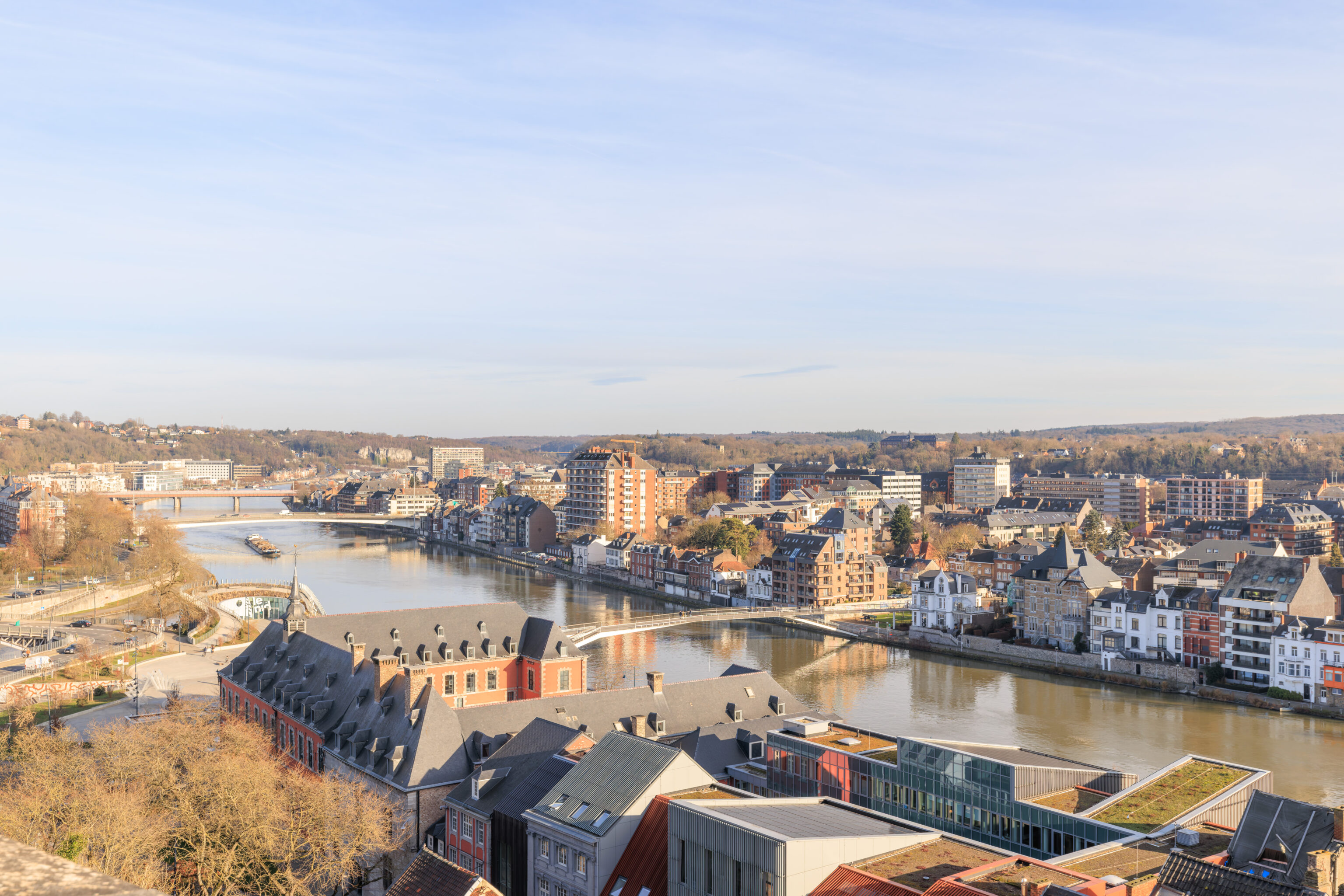
We continued walking to the east with this view more or less in front of us.
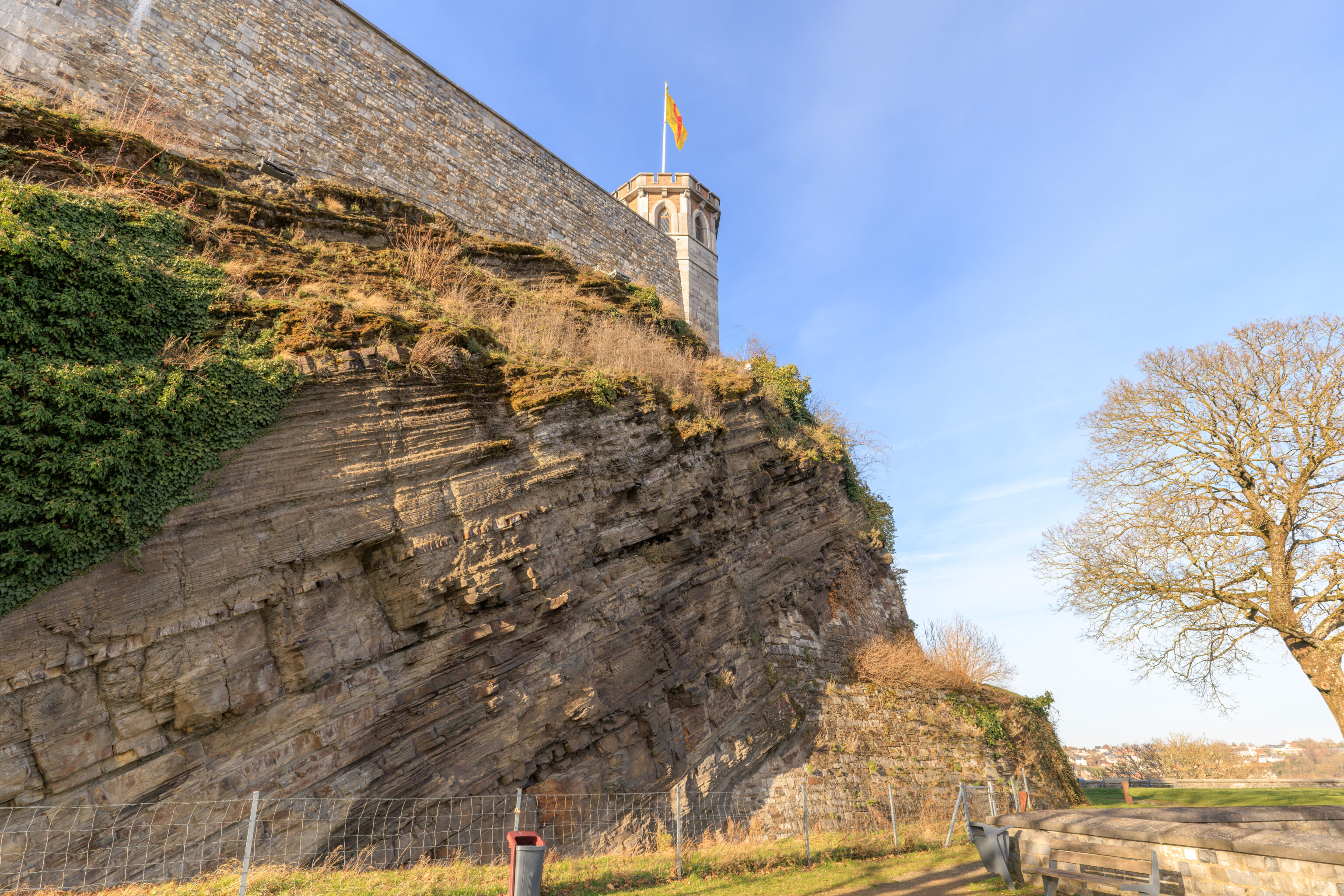
To our left, we could now see the tower with the Wallonia flag above us.
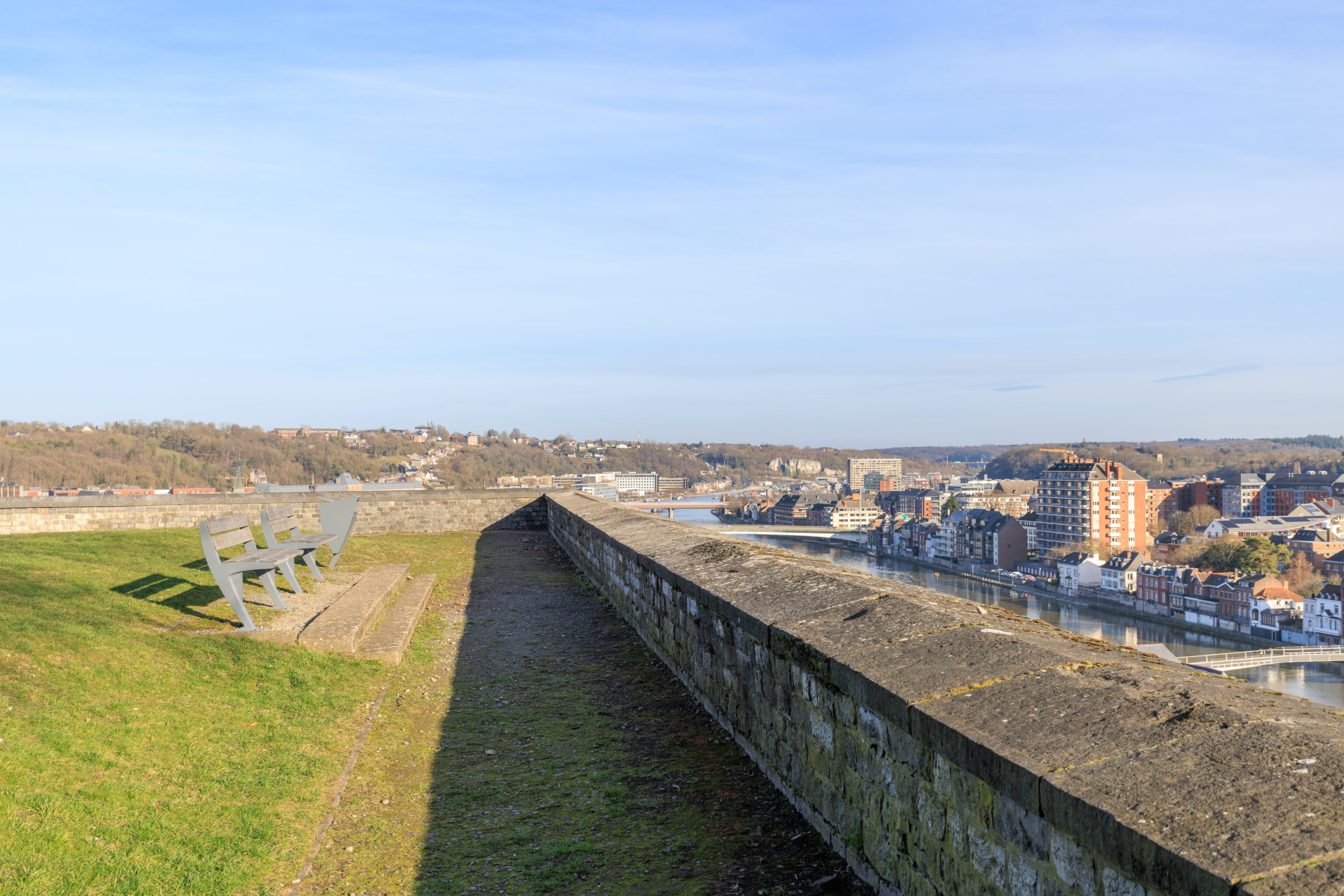
We continued walking as far to the east as we could.
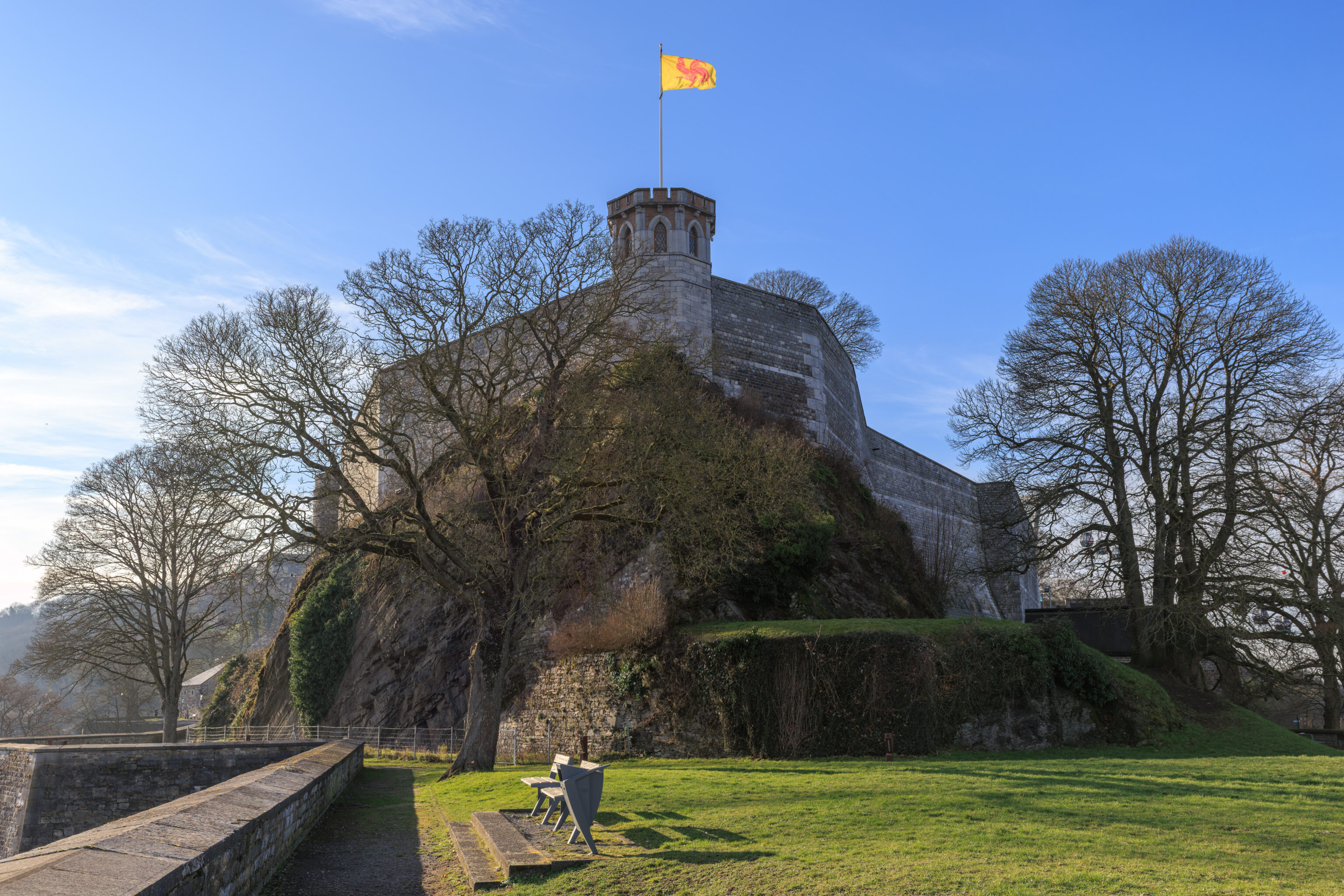
Looking back, we could see where we were before right after we had lunch.
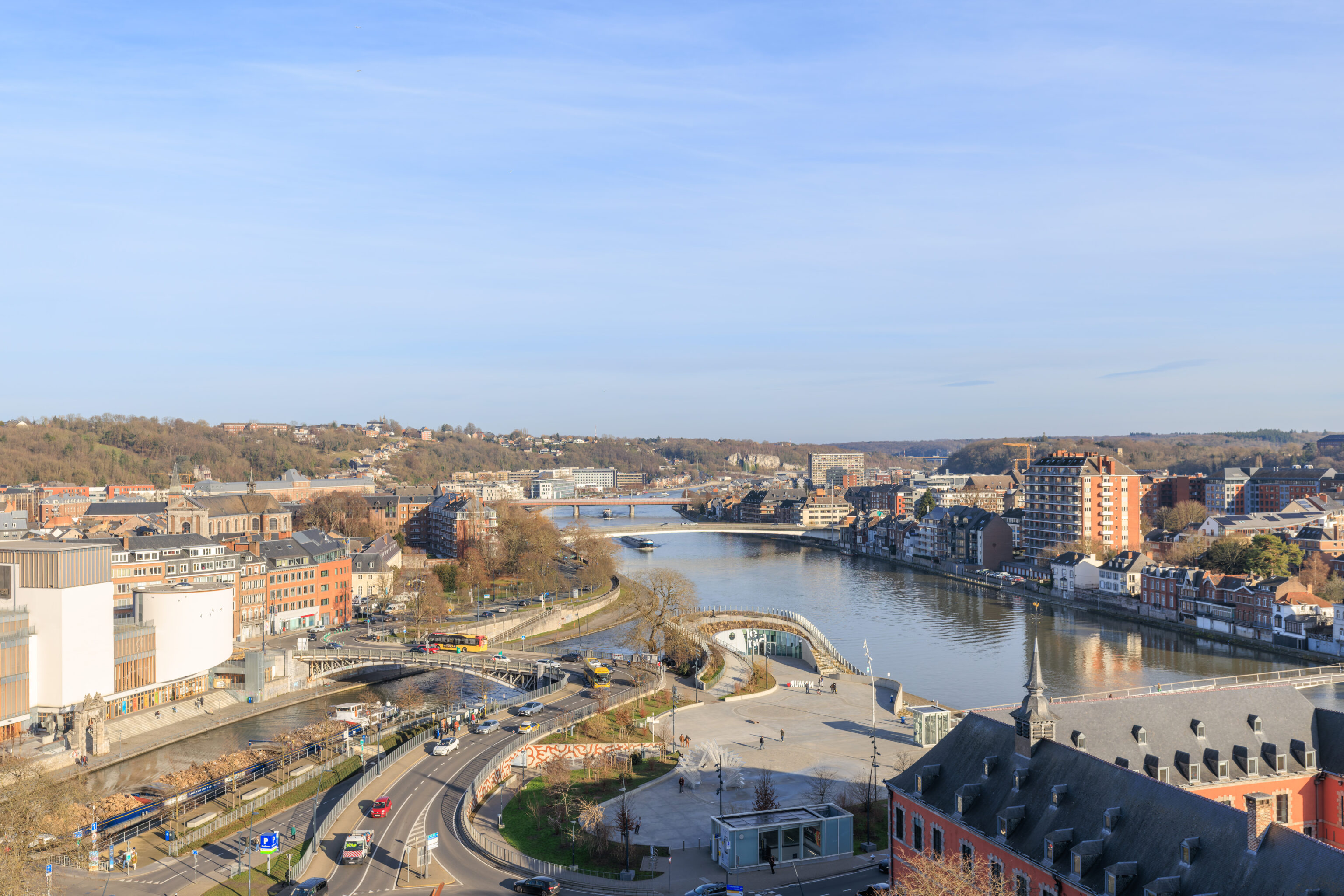
Looking to the east, a similar view to what we saw before but from a much lower elevation.
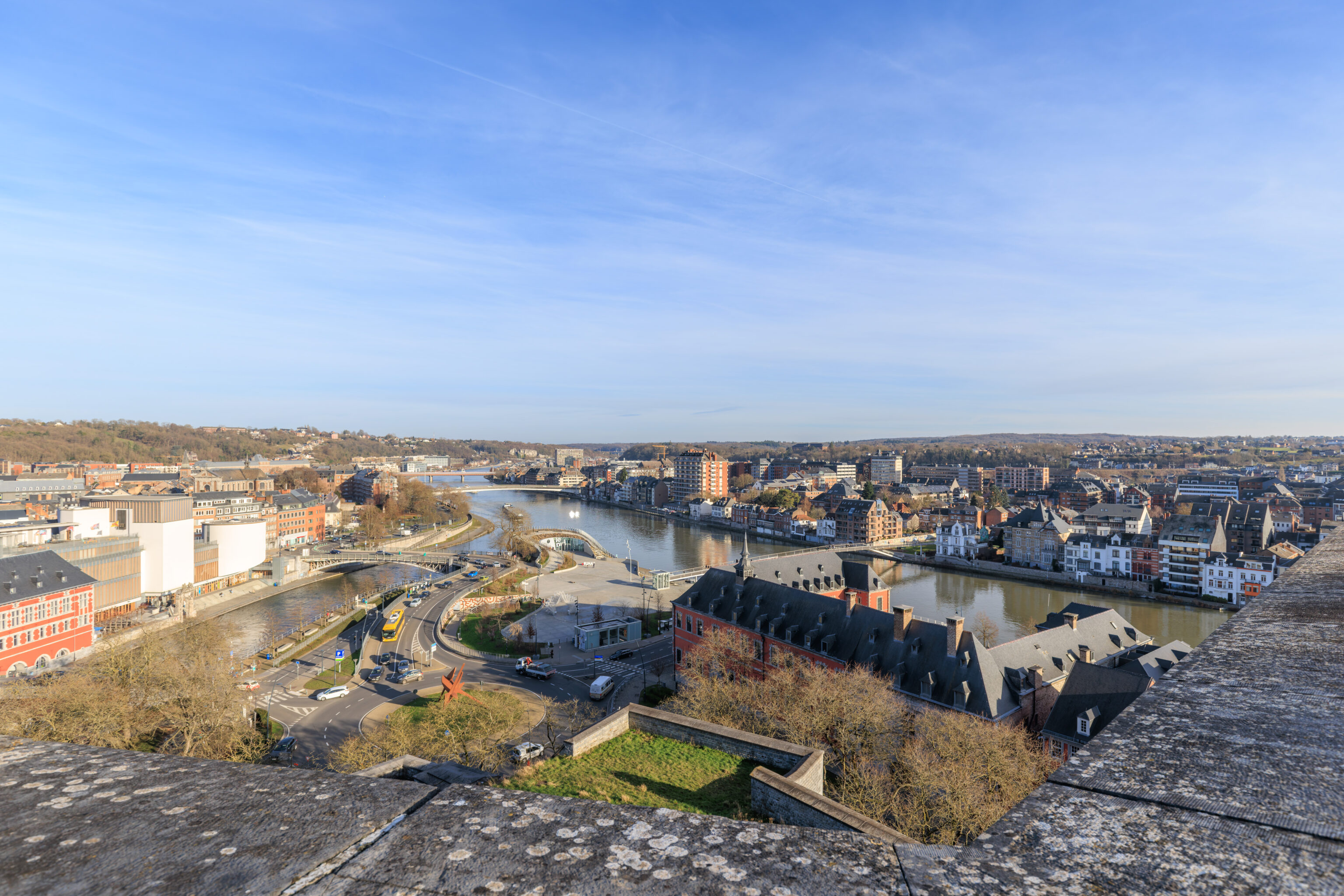
We walked to the north along the wall, giving us a slightly different perspective when looking east.
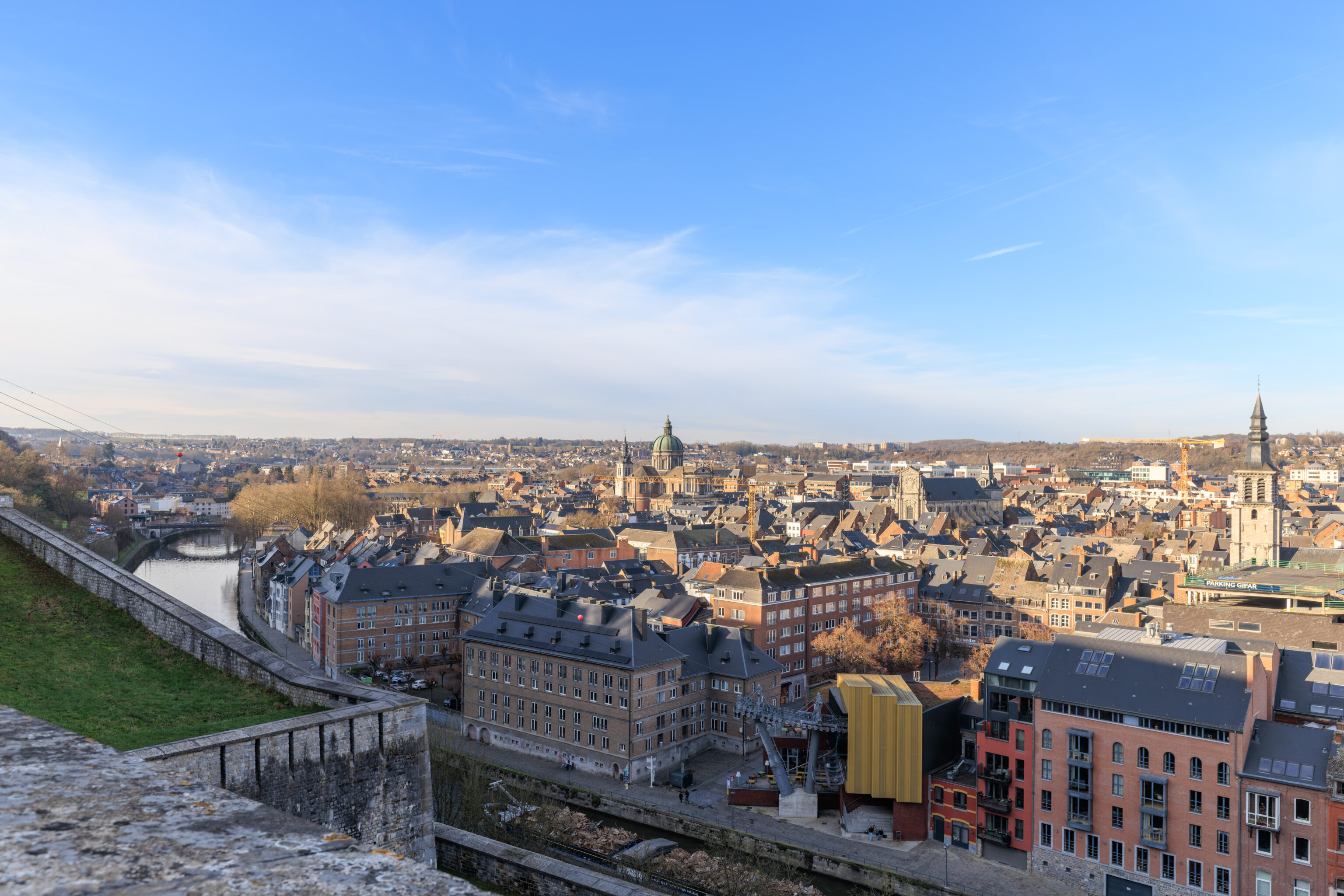
We continued following the wall, now walking to the west. We had a lower view of the center of Namur to our north.
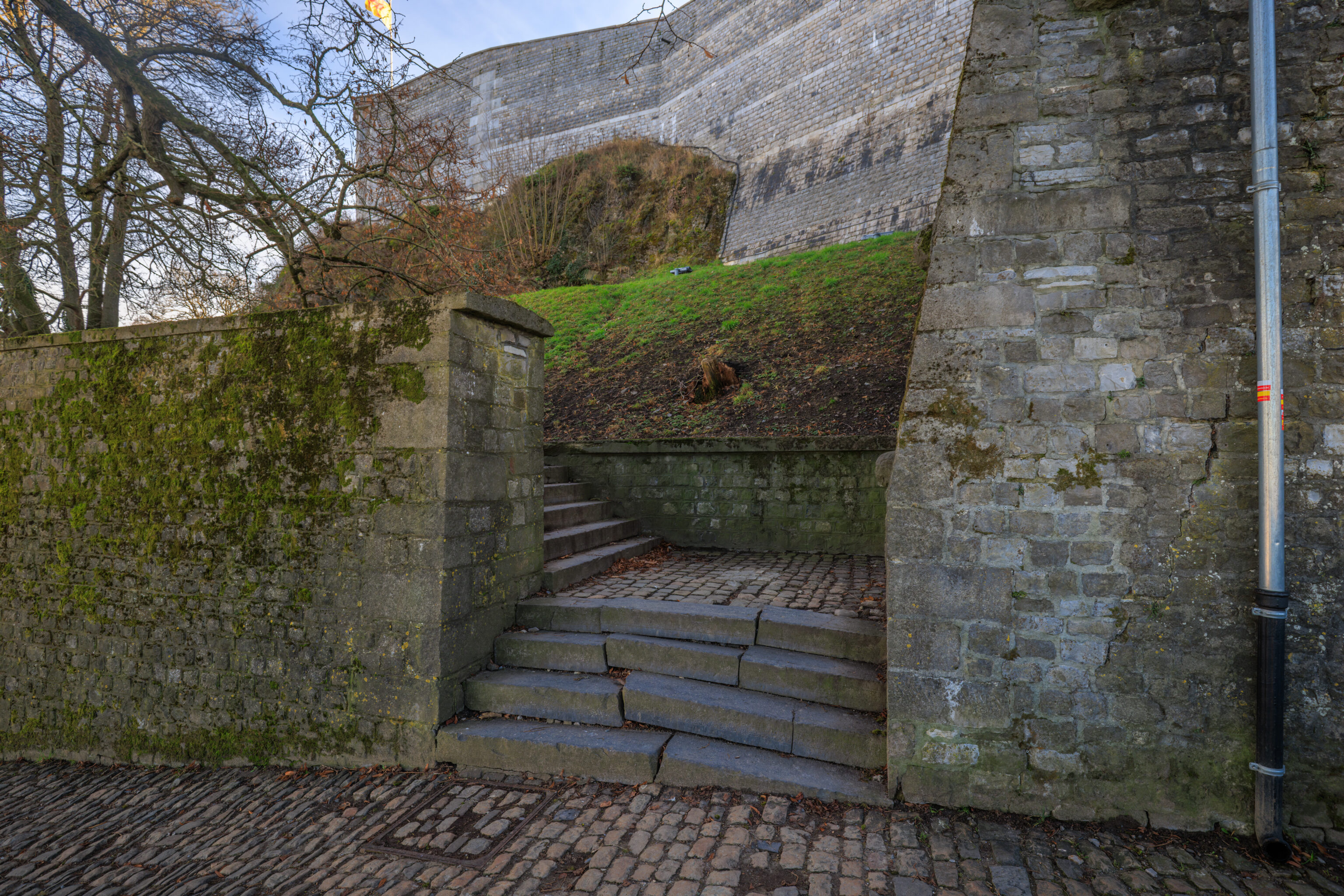
We continued following the wall and joined the steeply sloped path that we saw earlier. We came from the higher ground here.
This was the view downhill, looking east. There was a small cluster of people ahead. A tour group?
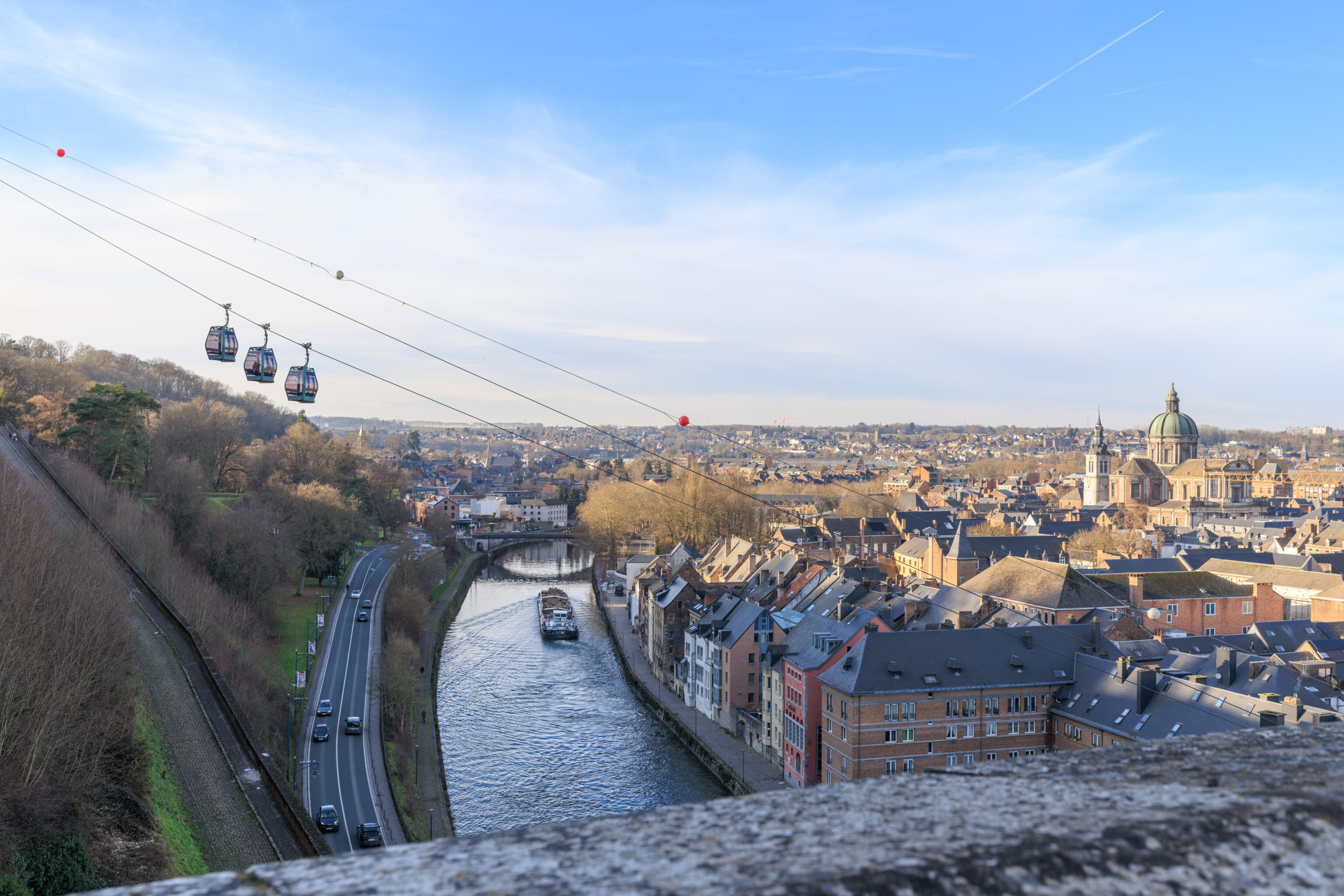
We were more or less level with the cableway, which we could see to the west.
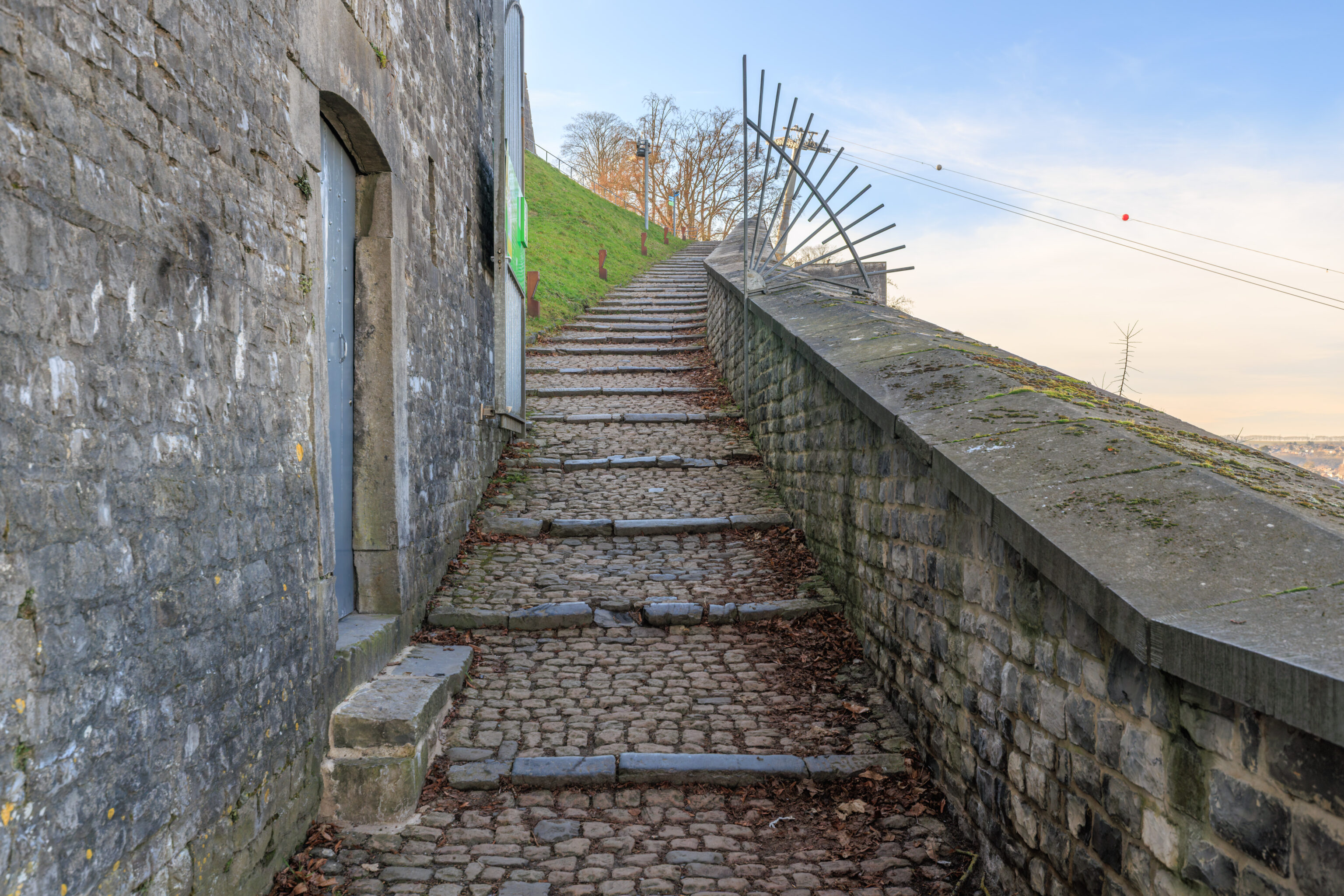
The view looking uphill. We were looking down from above earlier.
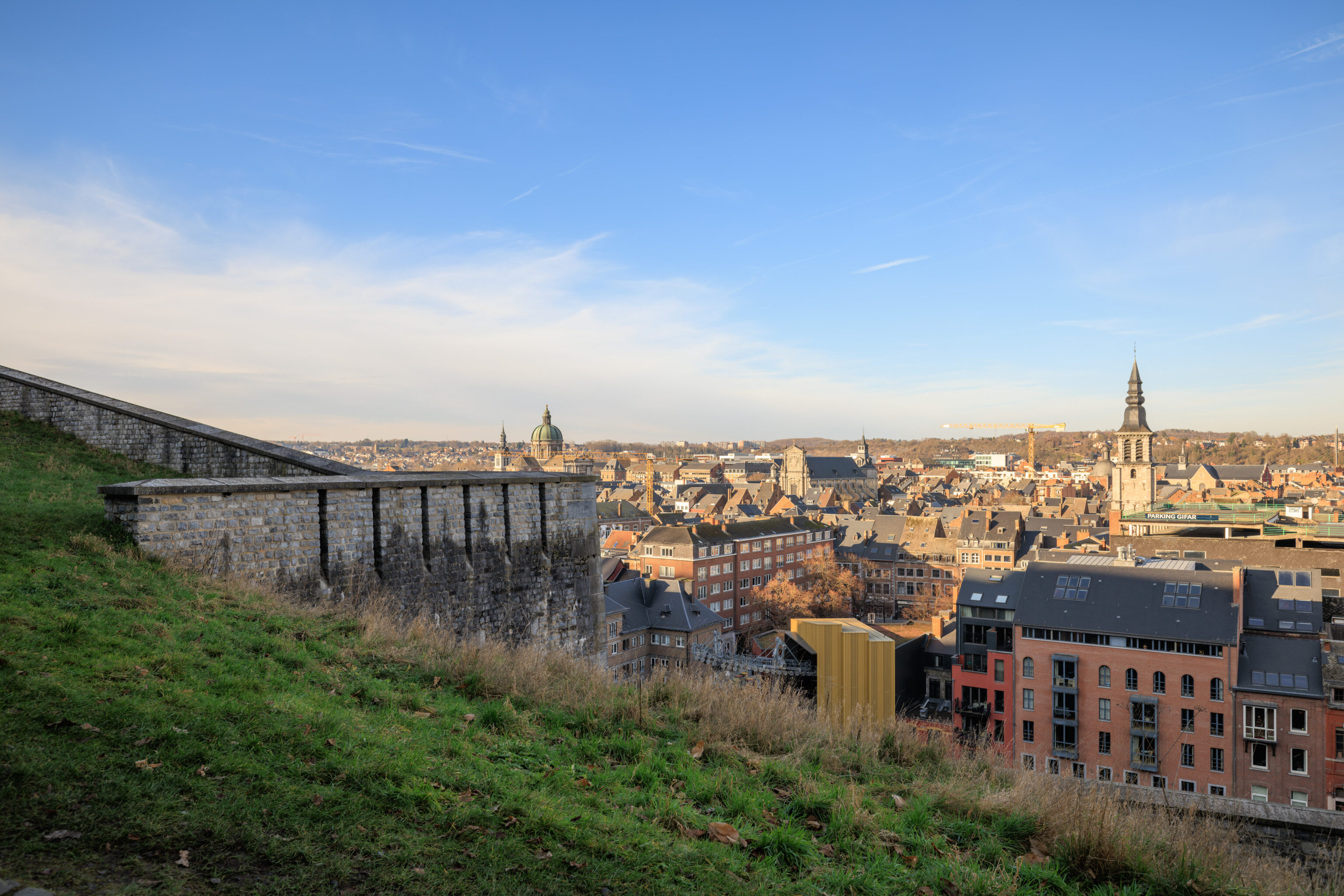
The view looking to the north as we descended along the path. It turns out that the clump of people seemed to be some sort of interview taking place. There was a cameraman, someone holding a boom microphone, and an interviewer or reporter.
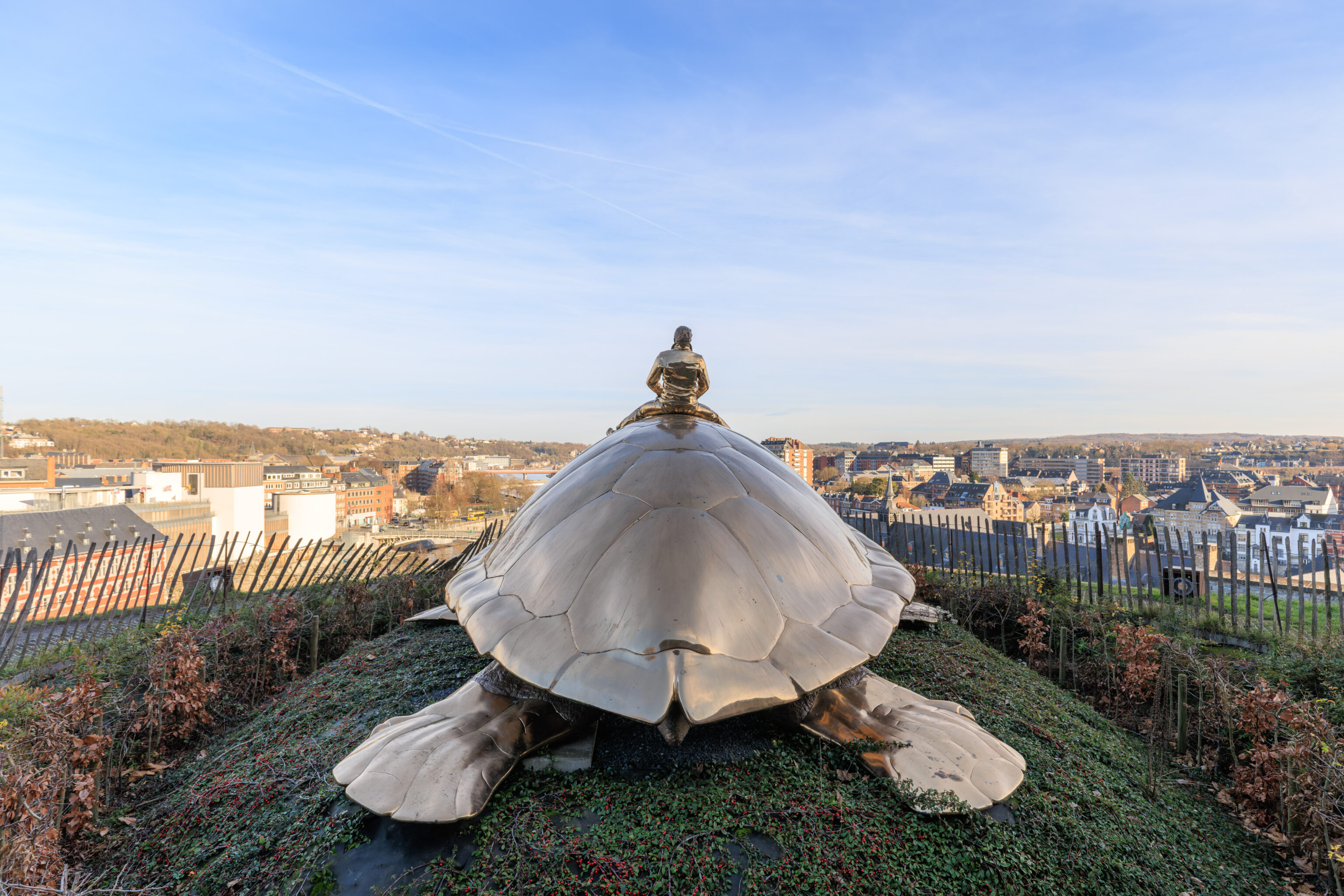
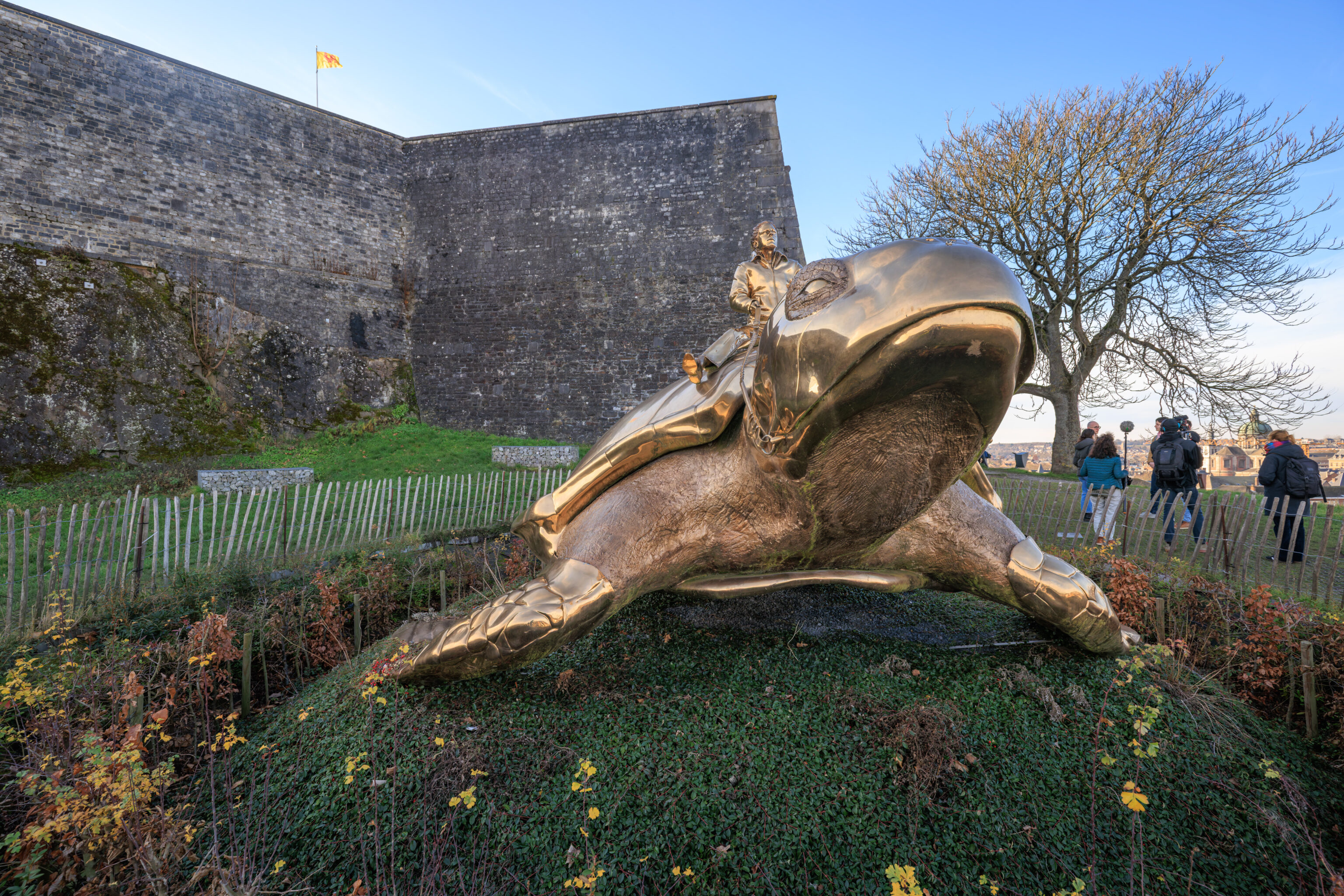
They happened to be right where we wanted to go as this sculpture was right next to them! We skirted around them when the camera wasn’t directly pointing in our direction to look at this sculpture, named Searching for Utopia, of a man riding a giant turtle.
This sculpture has some controversy behind it as the artist was convicted of various crimes against women, as explained by a nearby sign:
SEARCHING FOR UTOPIA
JAN FABRE

Jan Fabre is a Belgian artist born in 1958 in Antwerp. His internationally renowned work was the subject of a temporary exhibition in Namur in 2015, which was a great success.

«Searching for Utopia», which depicts the artist riding a turtle, refers to Thomas More's book «Utopia», in which the author describes an imaginary island with an ideal political system. The work was acquired with public, private and citizen funds following the success of the exhibition.

Jan Fabre was sentenced on 30 April 2022 to an 18-month suspended prison sentence for violence, harassment, inappropriate sexual behaviour in the workplace and indecent assault on a person.

The artist has also been deprived of his civil rights for five
years.

The City of Namur strongly condemns the acts referred to in this judgement and is more than ever committed to gender equality and the fight against all forms of violence. From today, the City of Namur is committed to ensuring that the end of gender-based violence is no longer a utopia, but a reality.

It is in this spirit that the City of Namur wishes to use the notoriety of this work to fight violence against women and to work towards gender equality. May this place serve the victims of such violence.If you experience or witness violence because of your gender and/or sexual orientation, there are resources available.

Call 0800 30 030 (Ecoute Violences conjugales) 0800 98 100 (SOS Viol) or scan the QR code bellow:
https://www.namur.be/fr/ma-ville/social/cohesion-sociale/publications-de-la-cohesion-sociale/folder-dinformation-dune-rive-a-lautre/view/++widget++form.widgets.fichier/@@download/folder-d-une-rive-a-l-autre-cliquable.pdf
– Text from a sign.
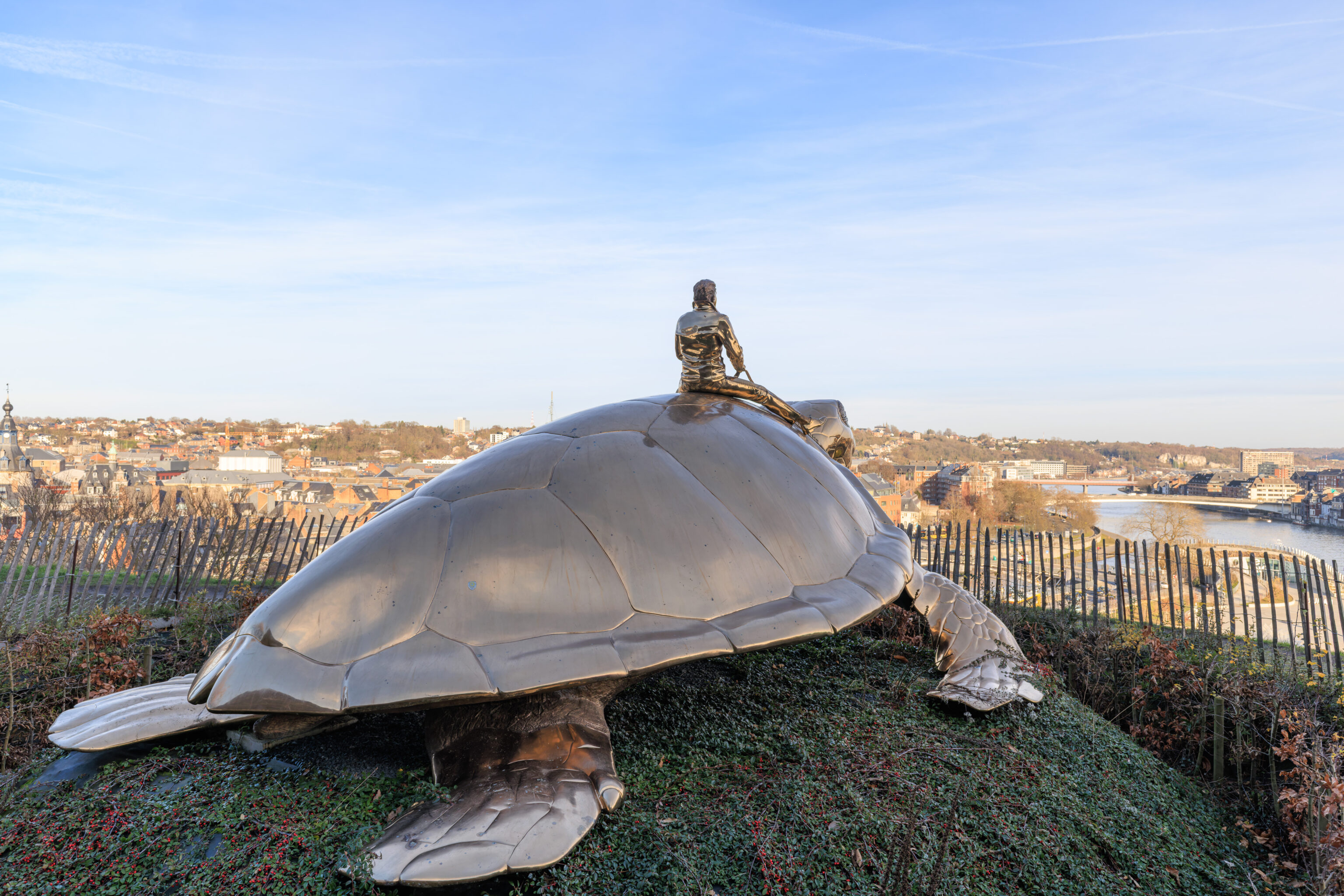
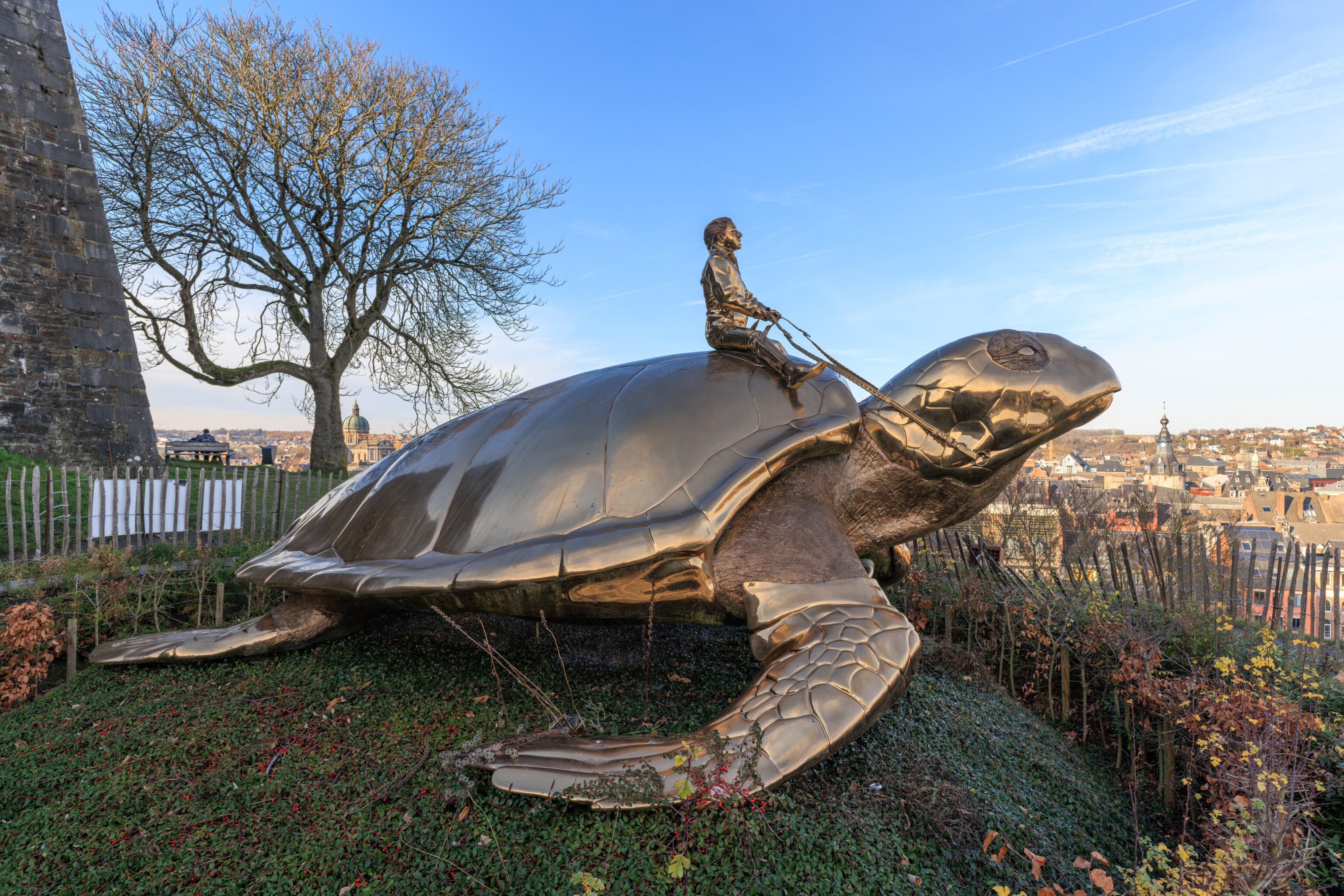
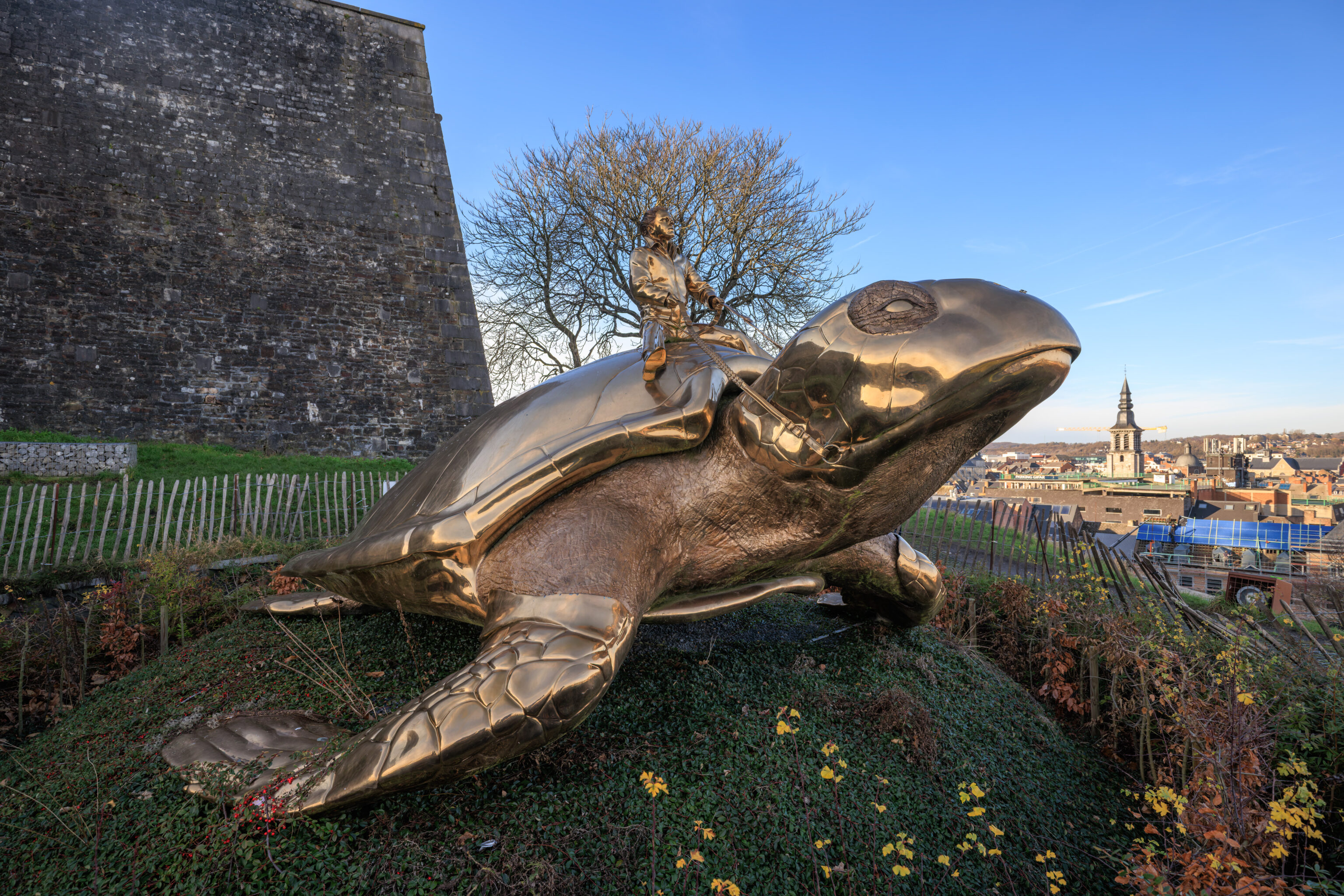
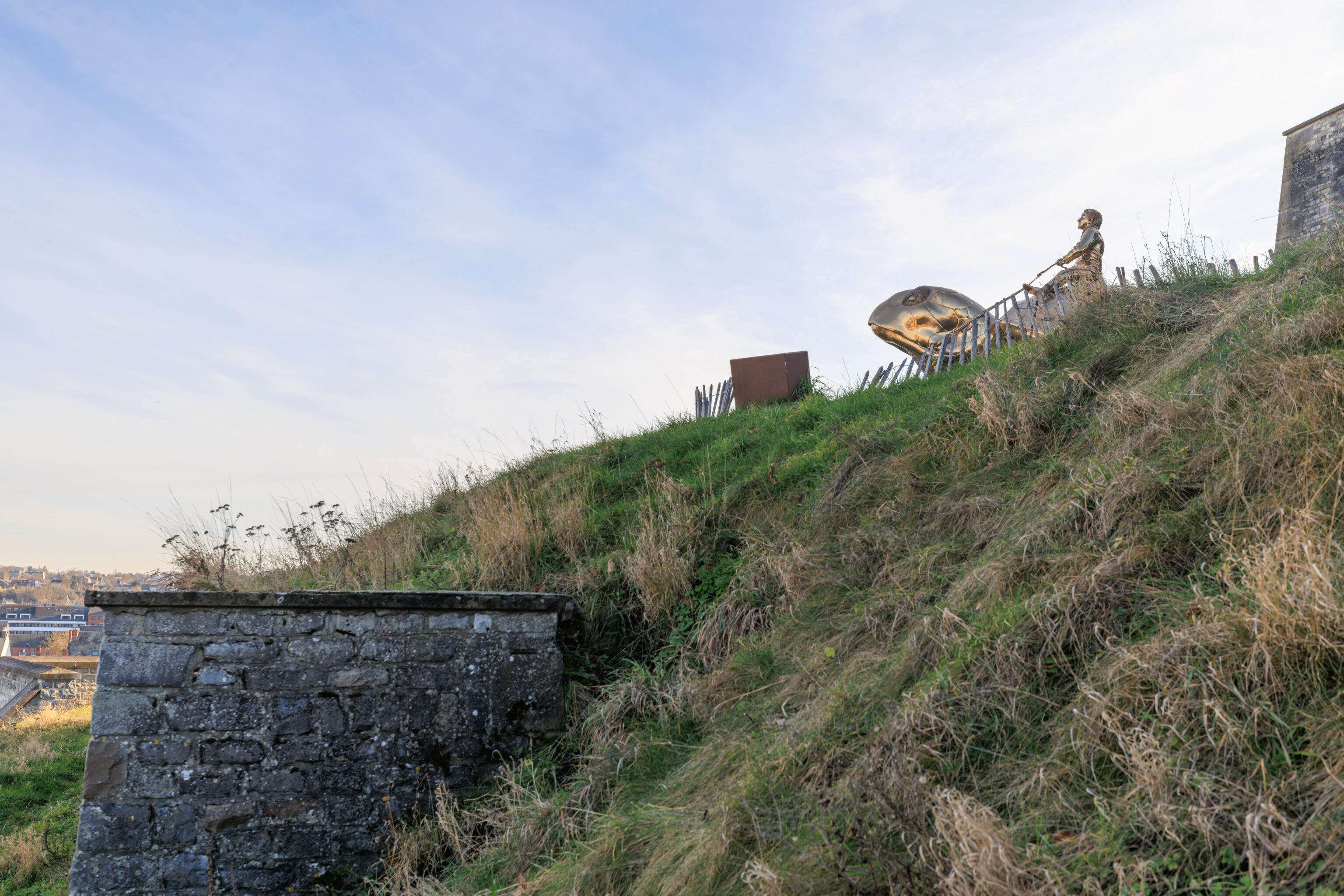
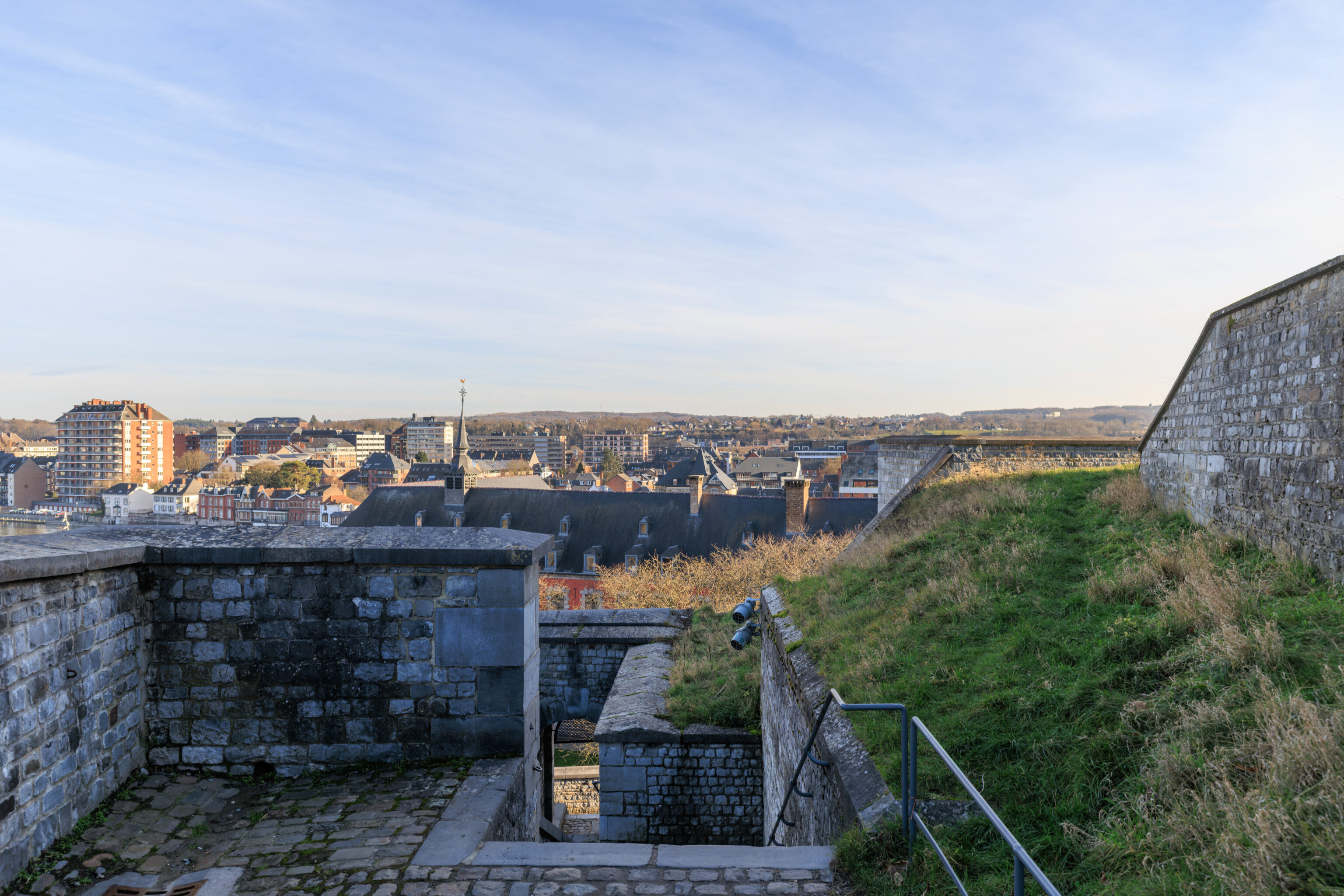
The sculpture, as seen from various angles.
The people involved in the interview are on the right side of this photograph.
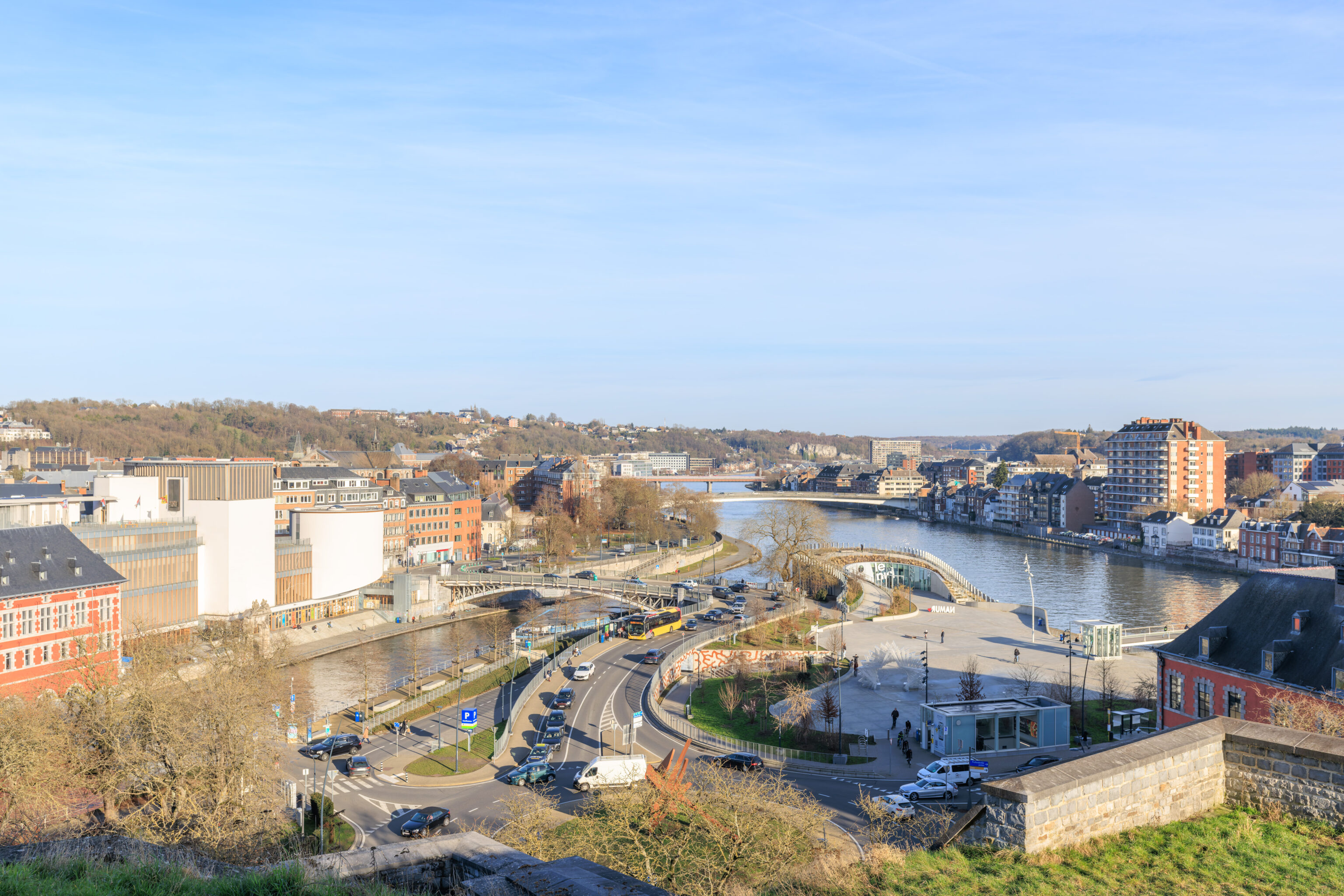
The view looking to the east from the sculpture. We’re definitely much lower than before!
We skirted around the interview again and continued following the path down.
Most of the route down has been a sloped path. Now, we had a section of actual stairs.
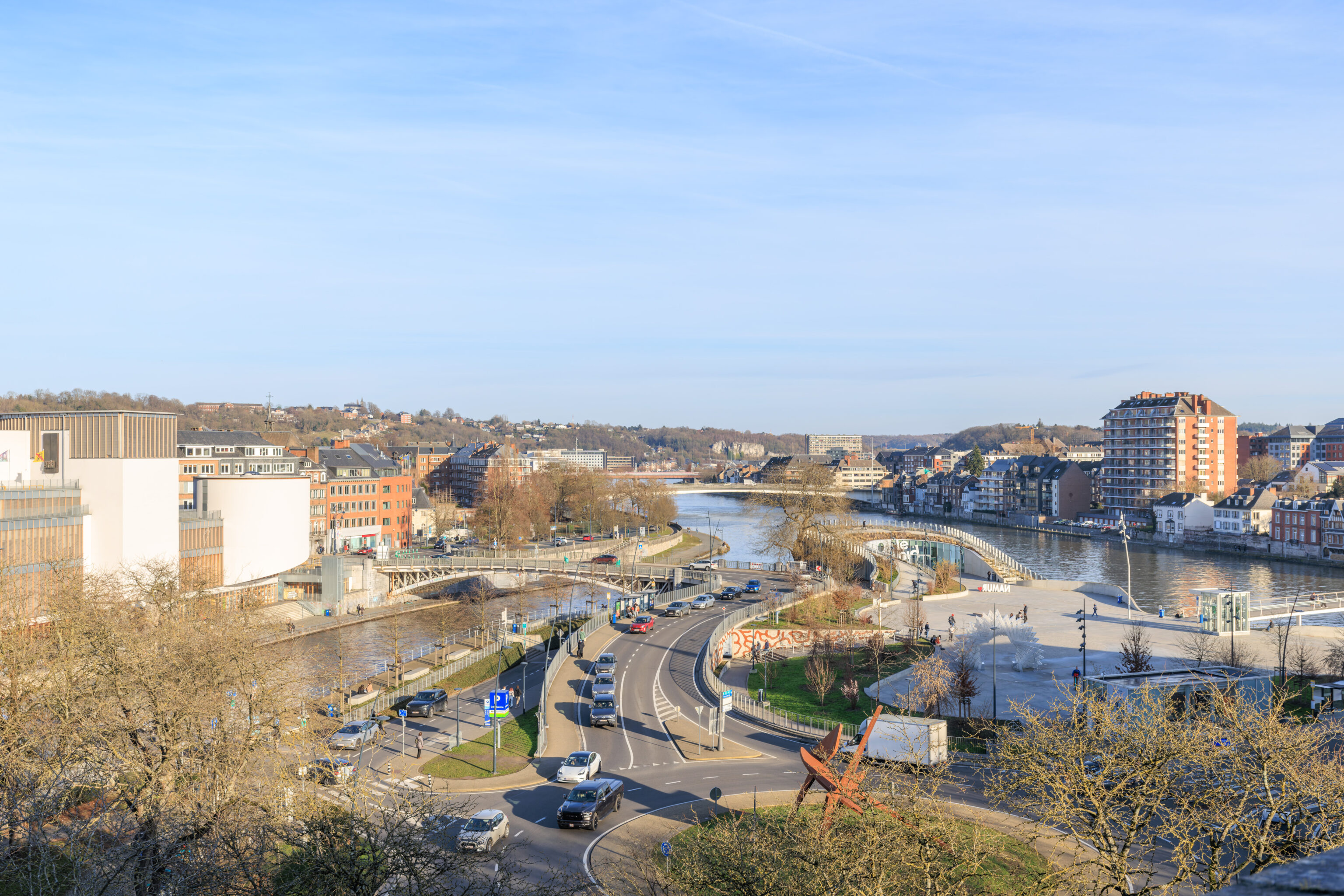
The view as we approached the bottom of the hill.
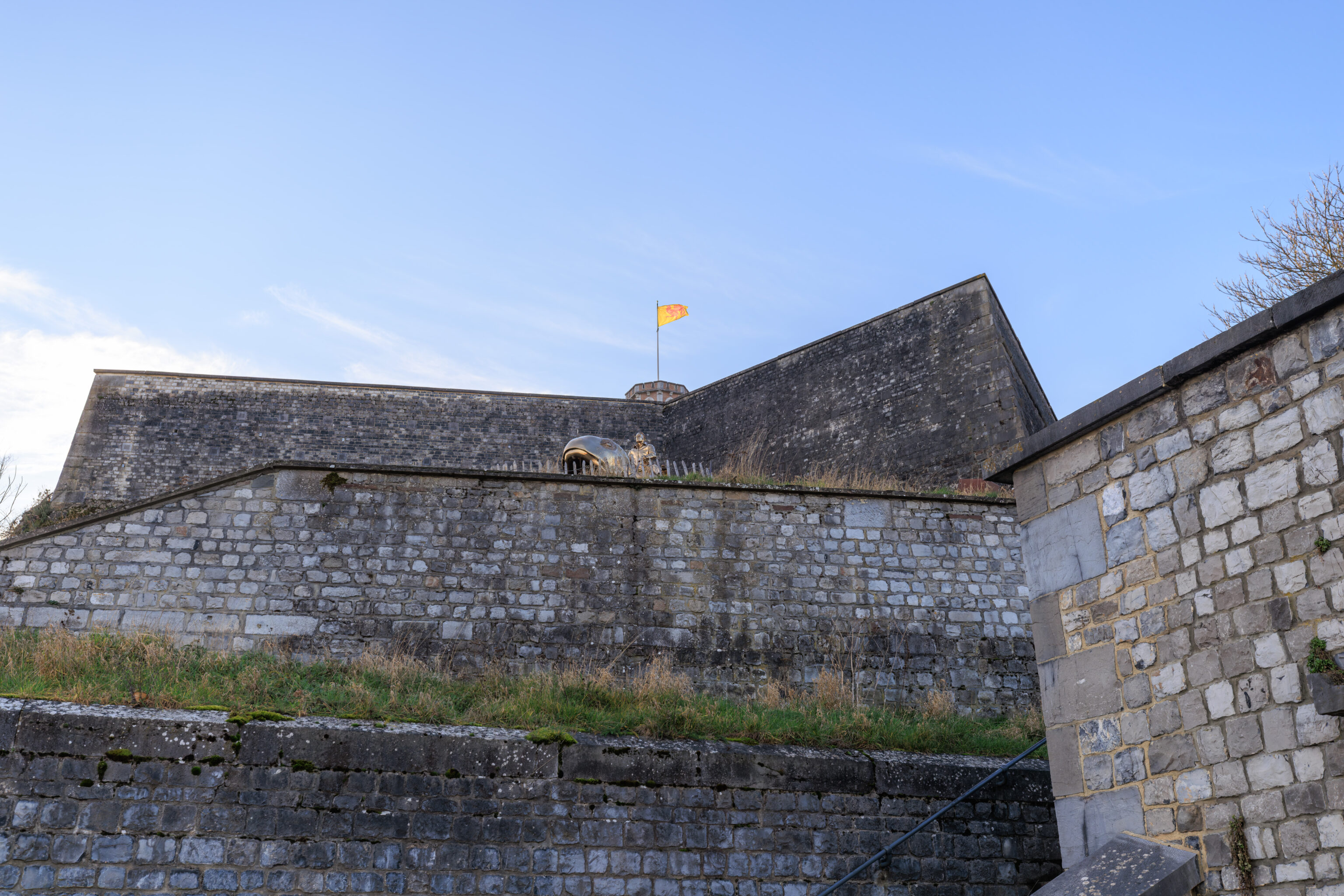
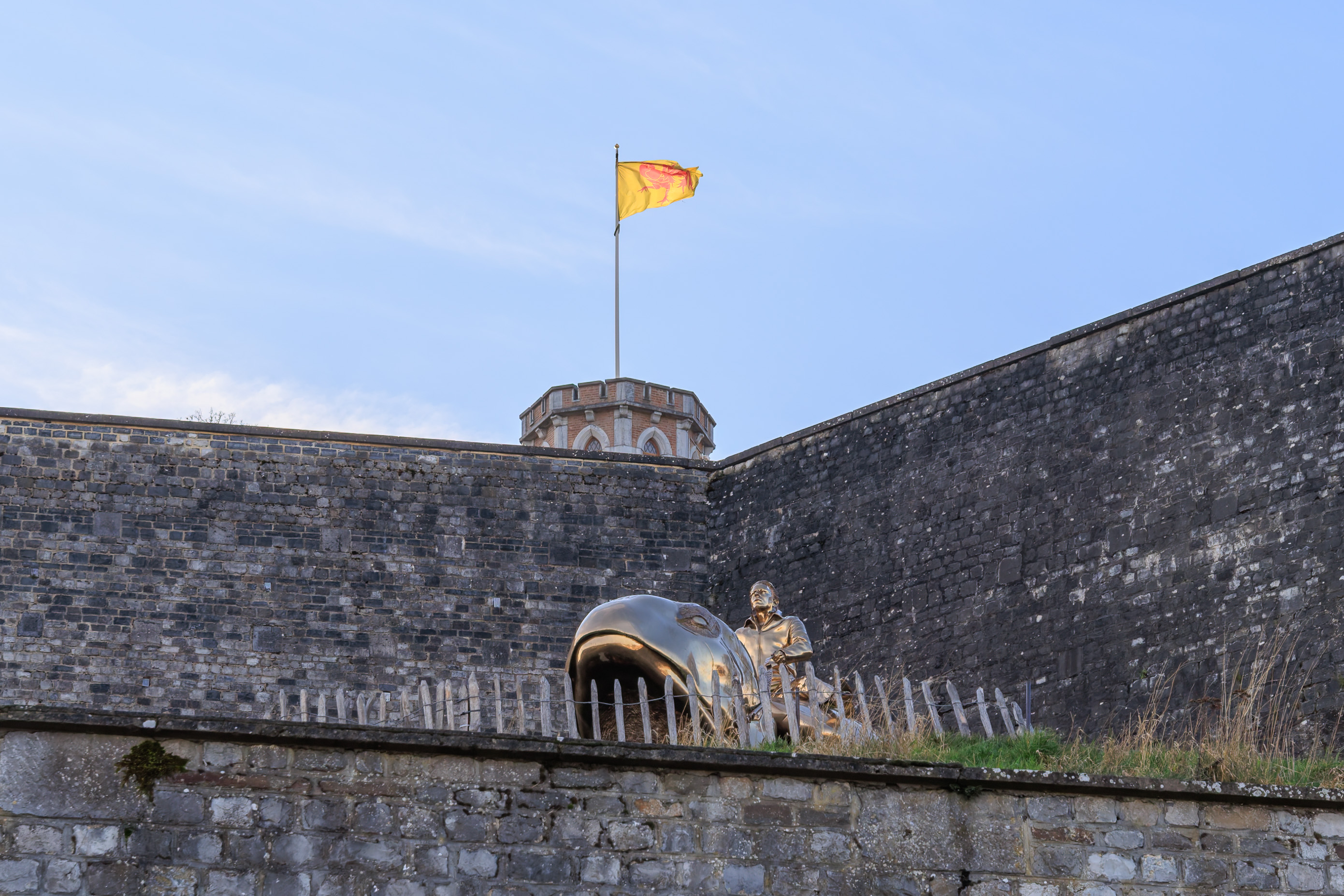
We could still see the turtle sculpture!
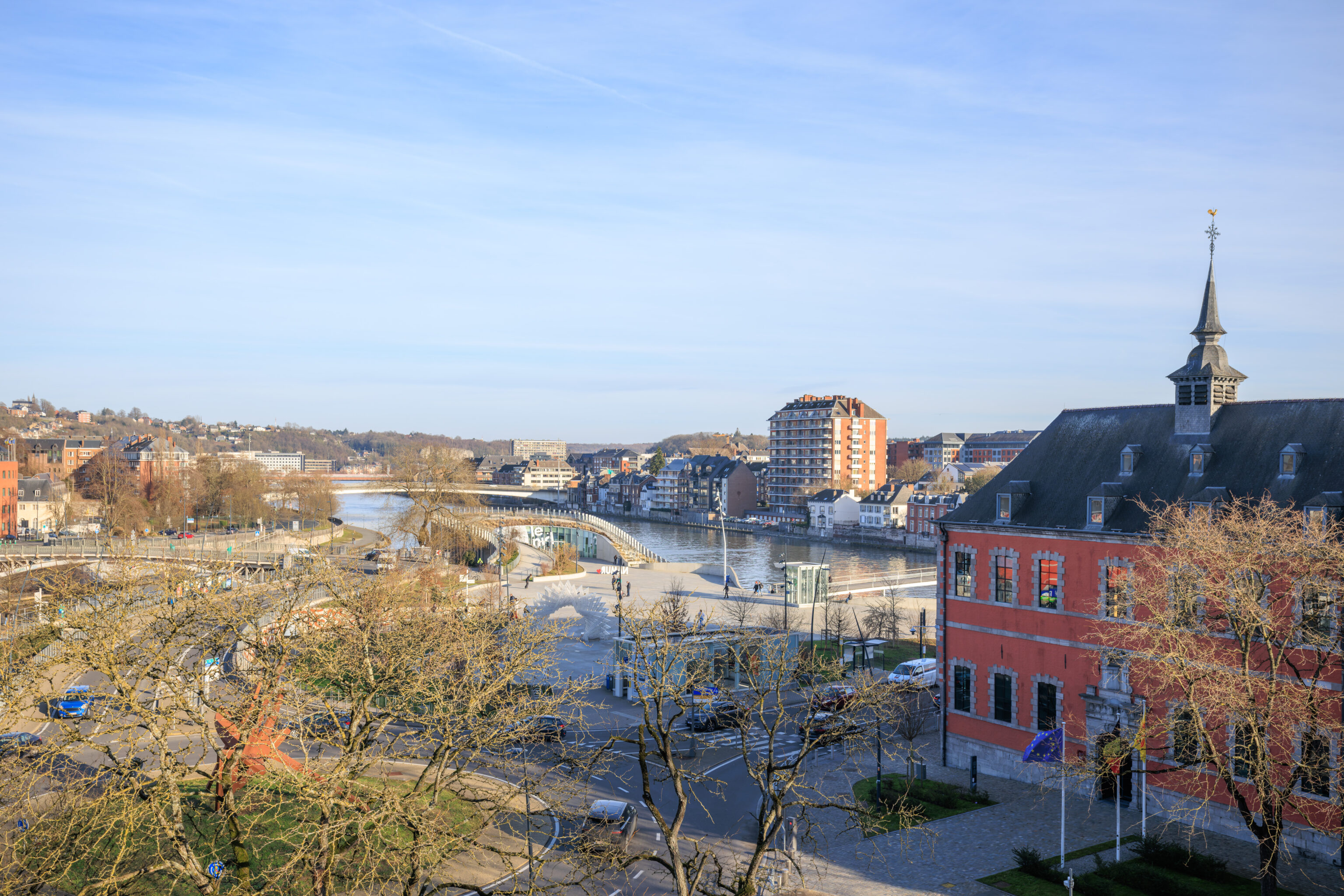
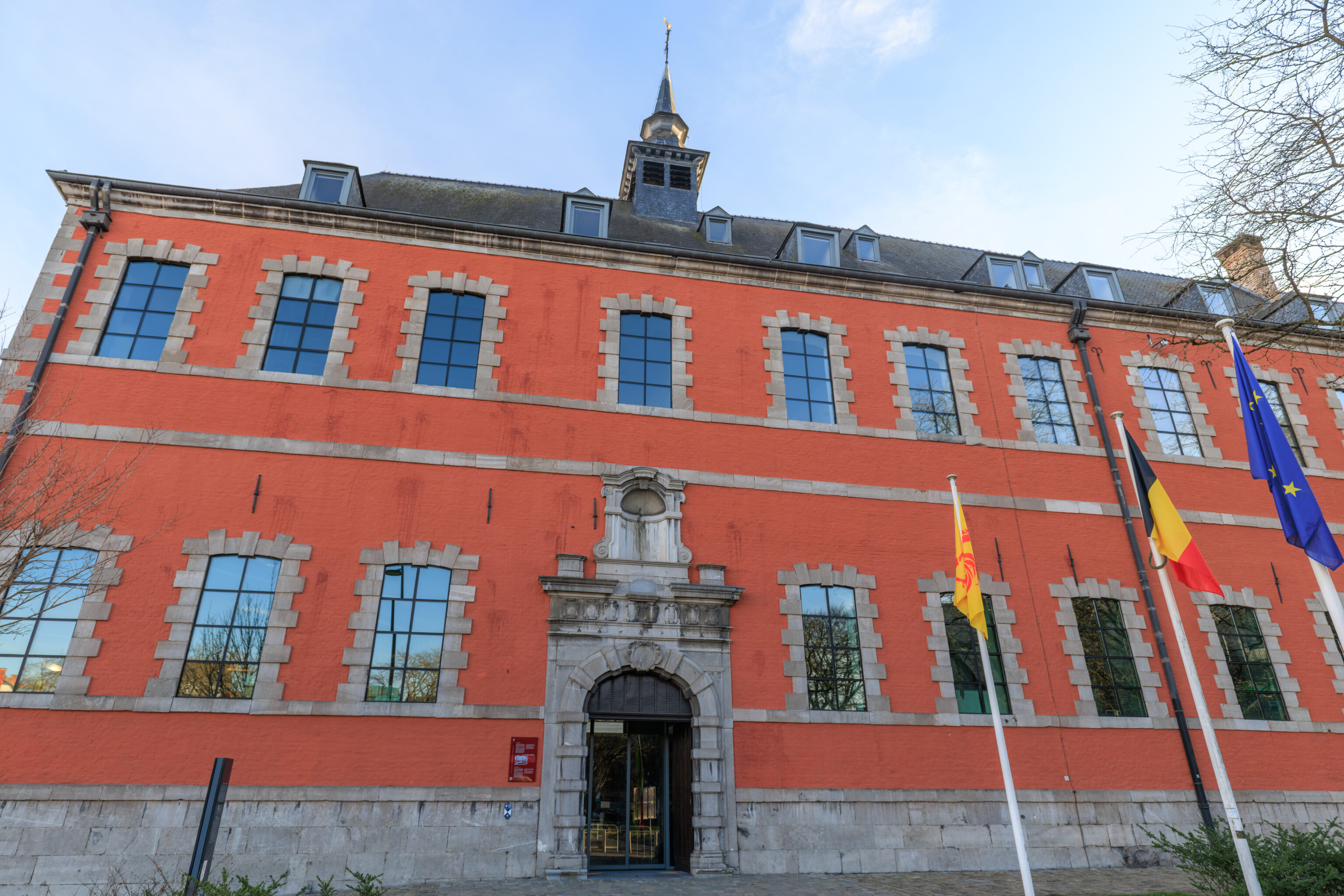
This building houses the Parliament of Wallonia.
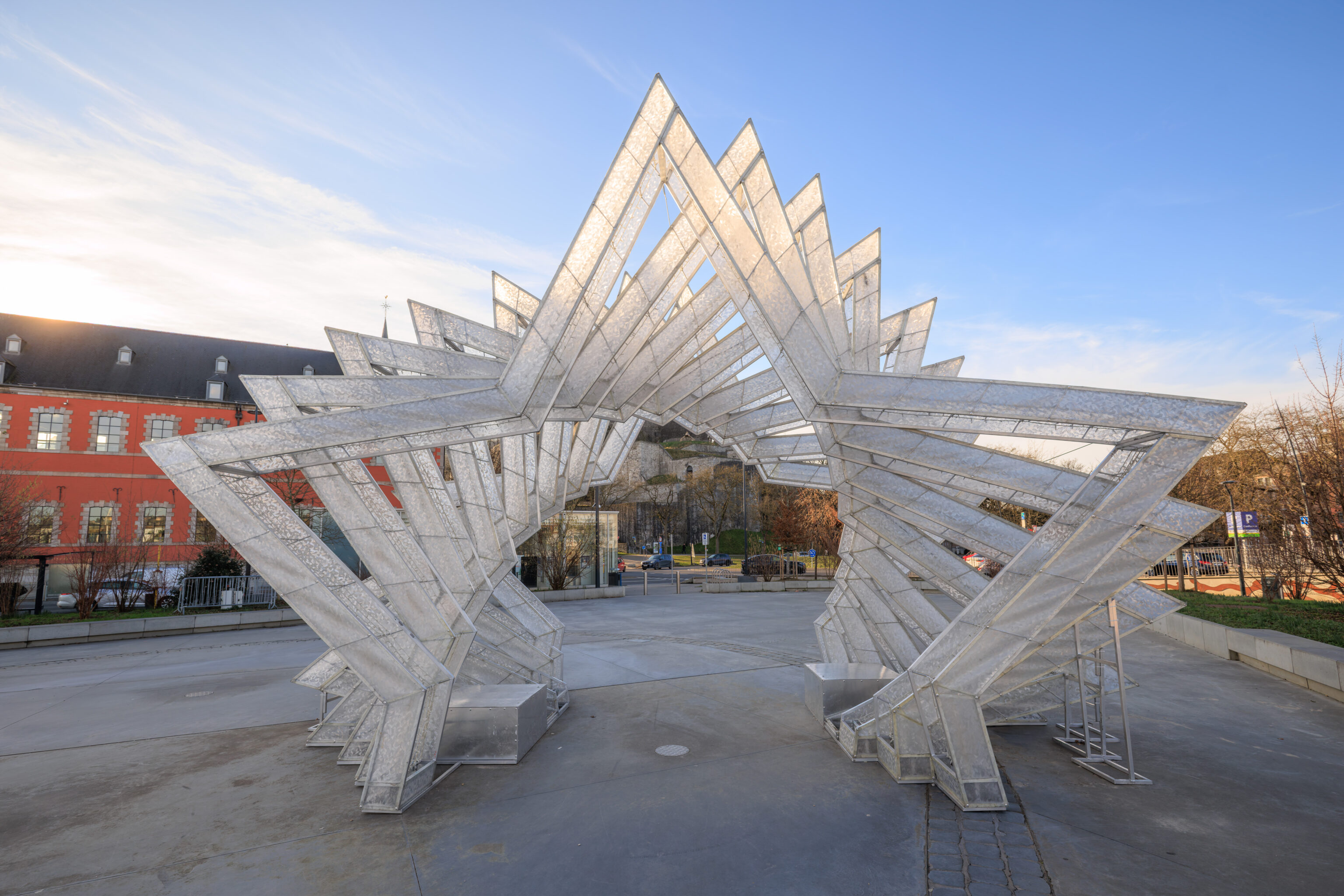
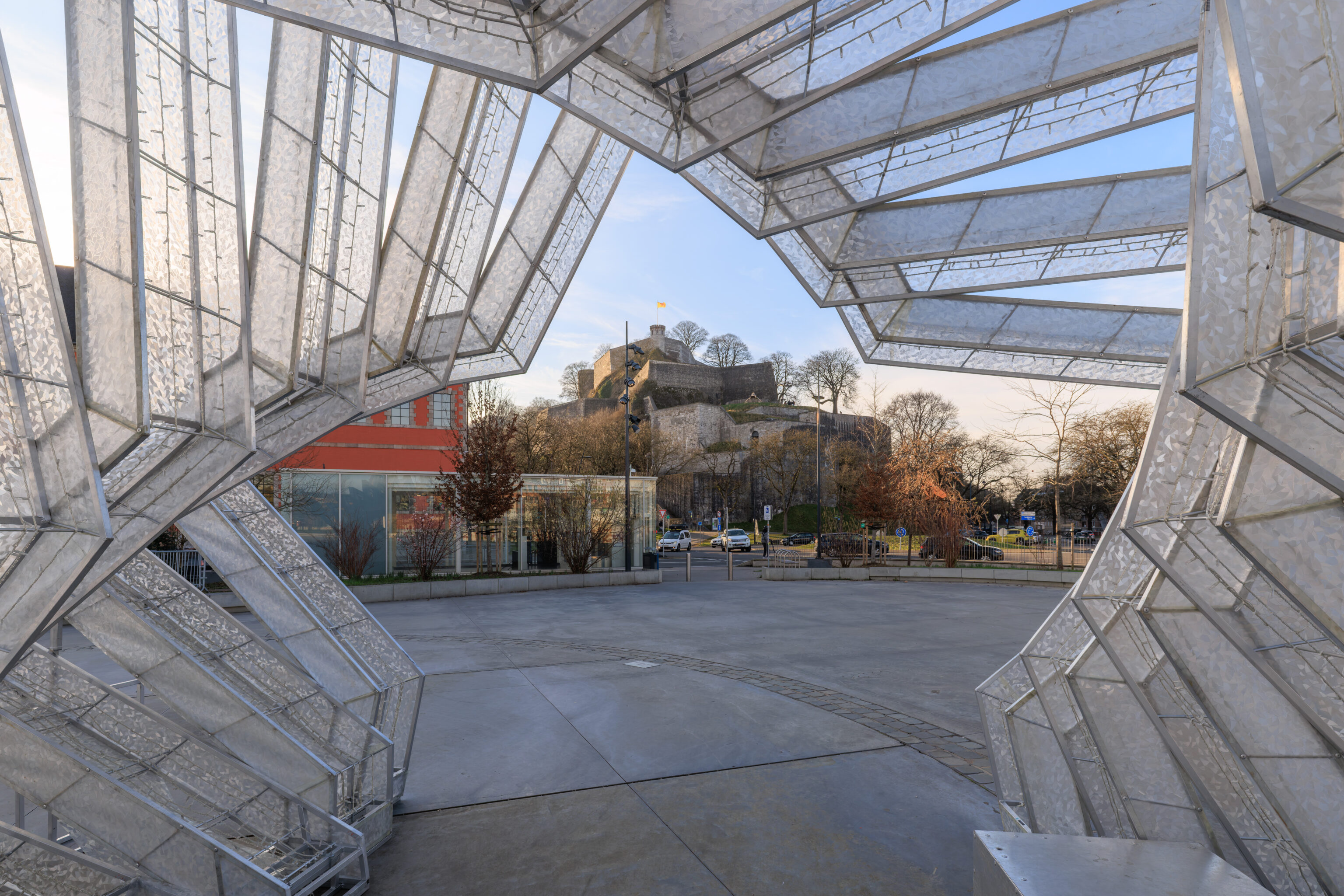
After descending from the citadel and its hill, we continued walking east. We walked past the Parliament building and across the street to a public square where there was a star shaped arch, or whatever this structure should be called!
This area here was recently redeveloped and opened in 2021. This area seems to historically have been called the Grognon and might now be referred to as the Confluence.
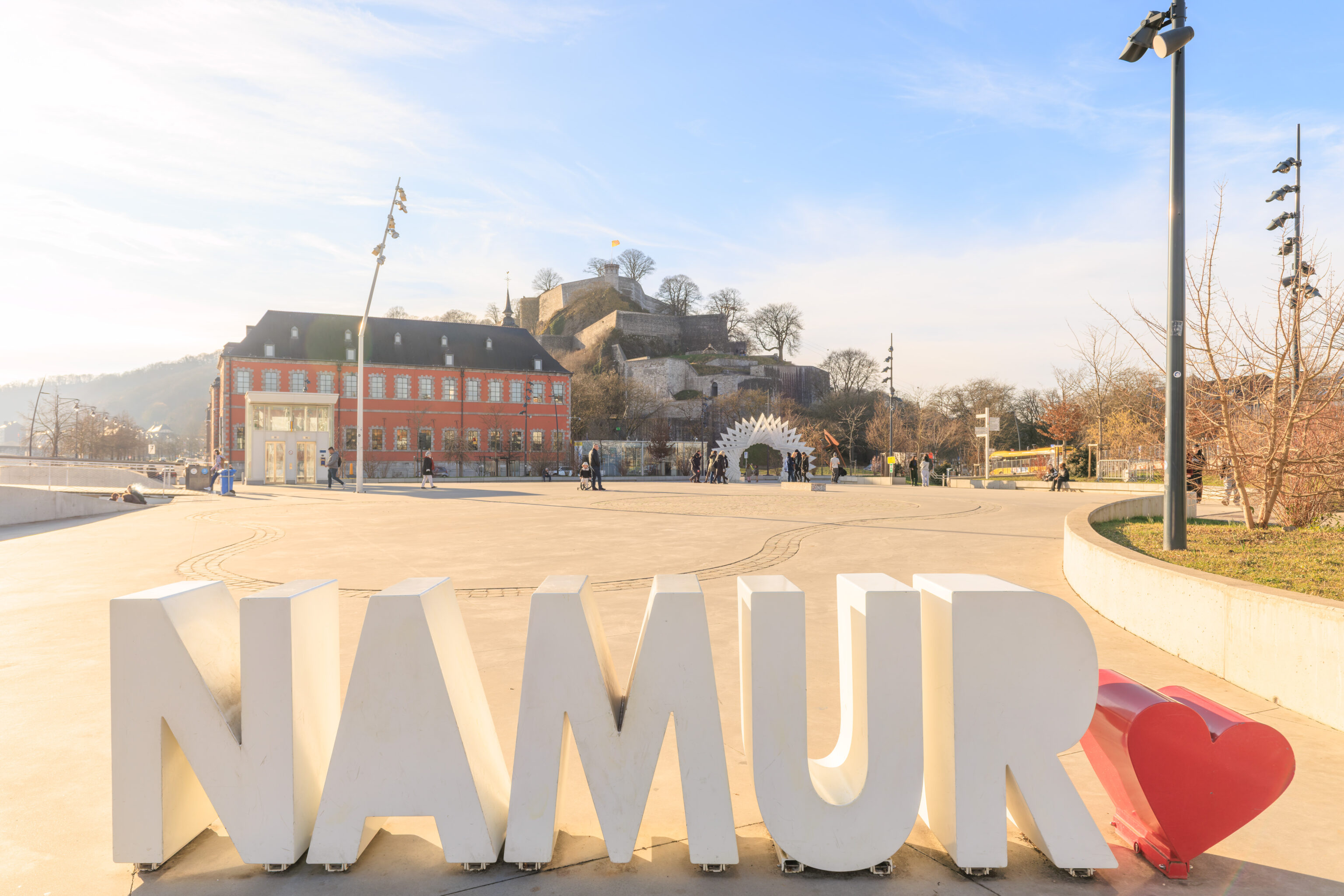
We got a bit of sunlight at just the right time! From here, we continued walking to the east. There was a modern looking building next to where the two rivers meet with stairs that led out onto its roof.
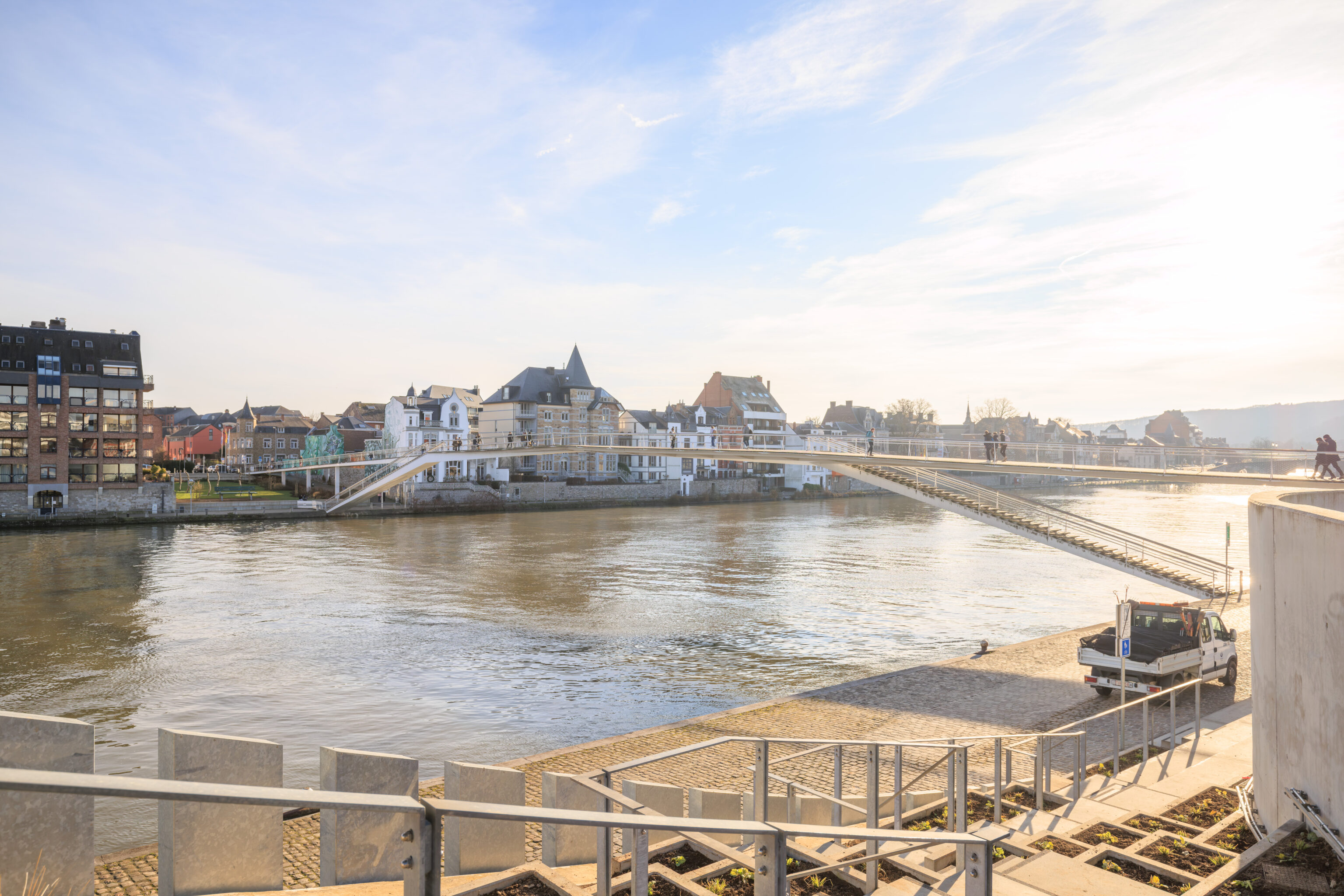
We saw this pedestrian bridge that goes across the Meuse earlier.
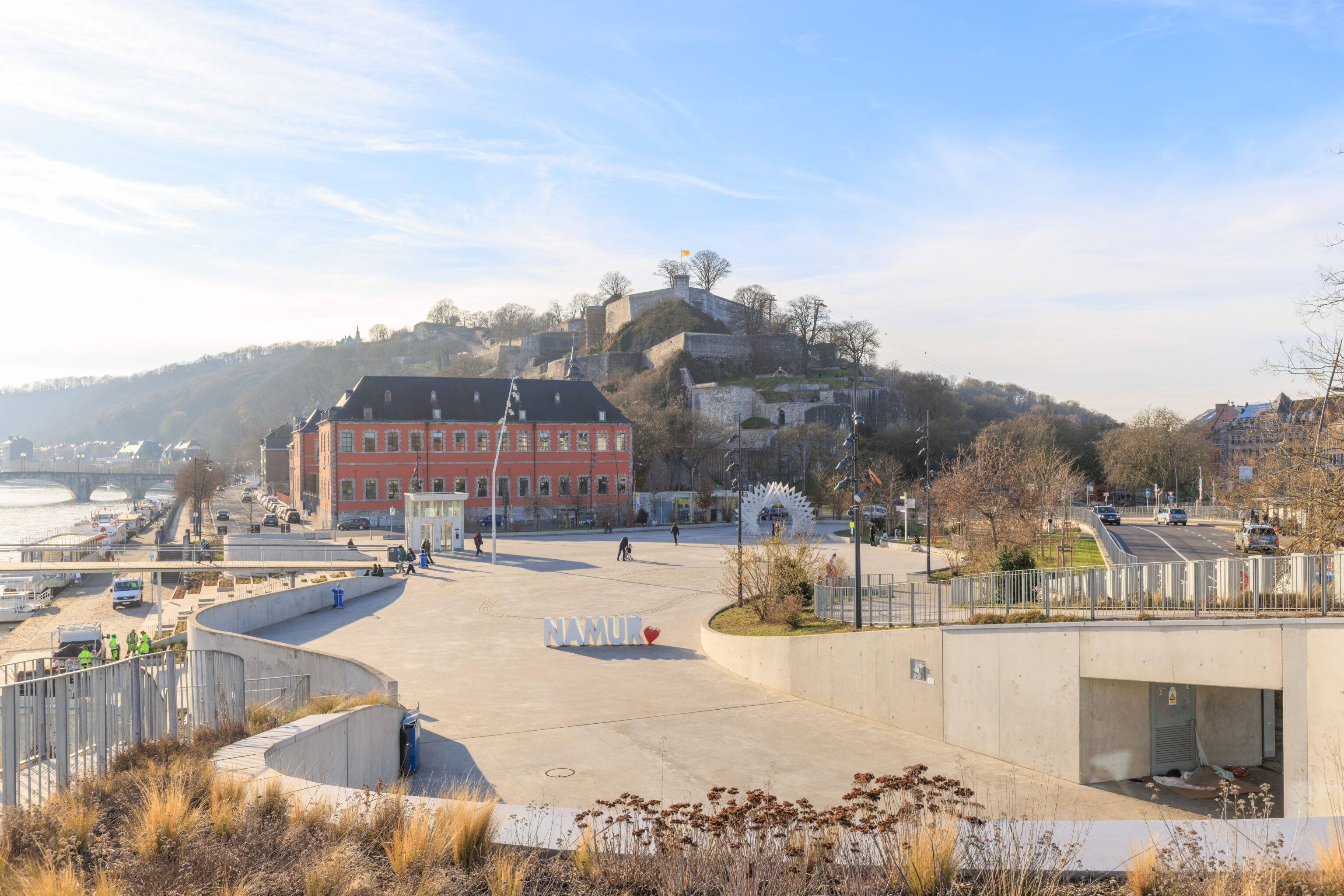
The view from the roof of the building. It is called Le NID and seems to house a restaurant and some sort of exhibition space.
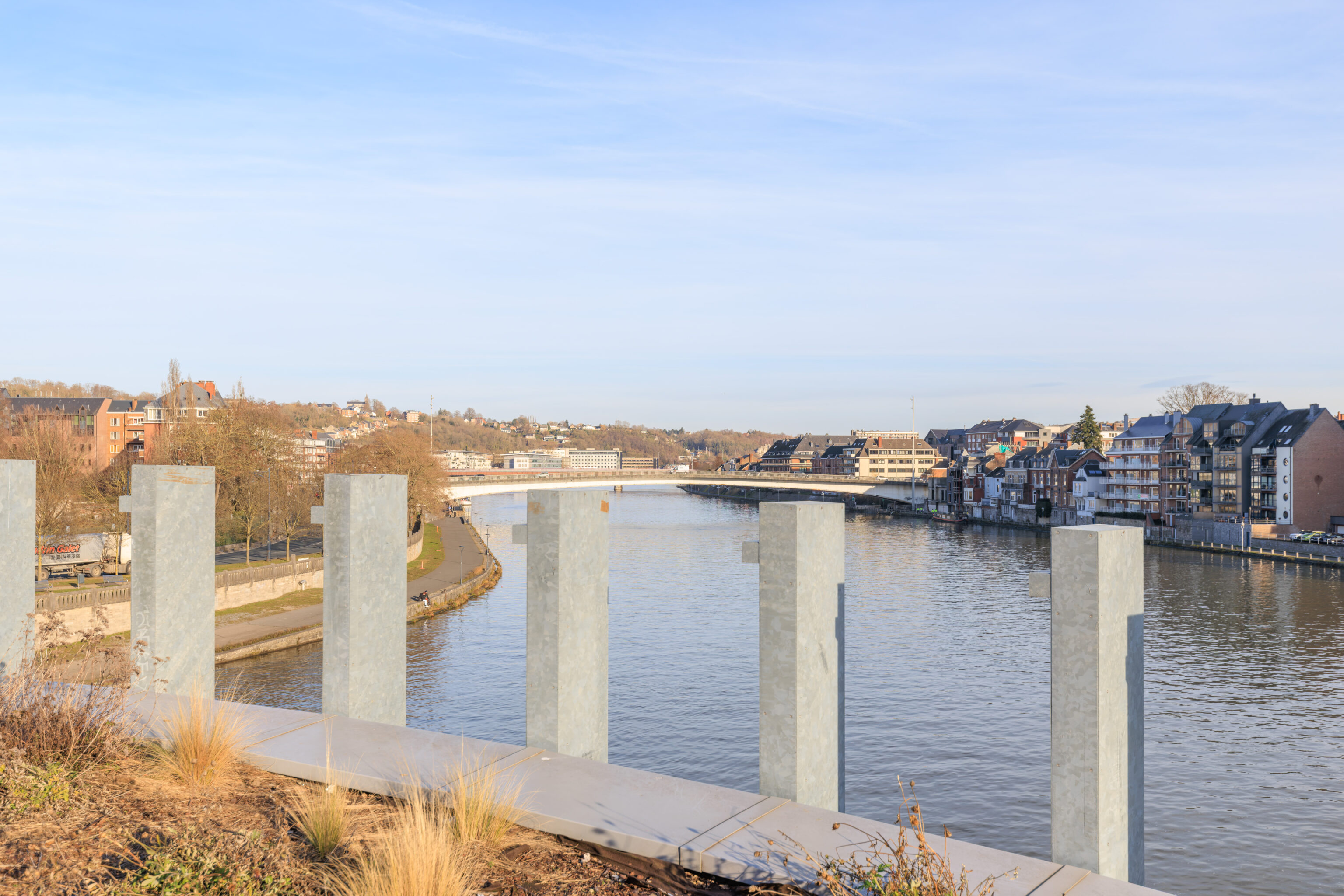
The view down the Meuse. The junction with the Sambre is right in front of us with the Sambre coming in from the left.
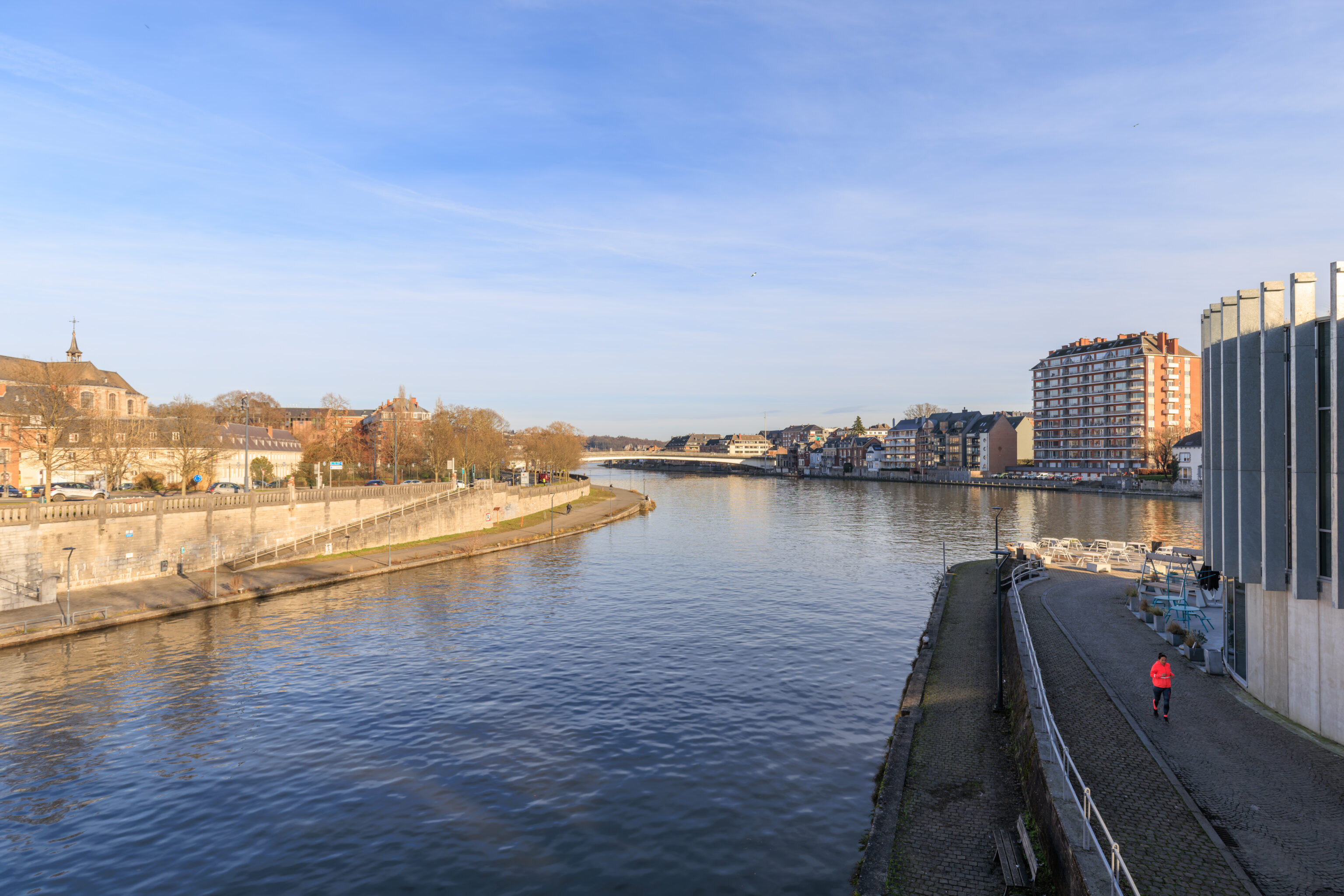
We walked over to a bridge to the north that leads to the north bank of the Sambre to start heading back into central Namur. This view from the bridge is looking towards the junction with the Meuse.
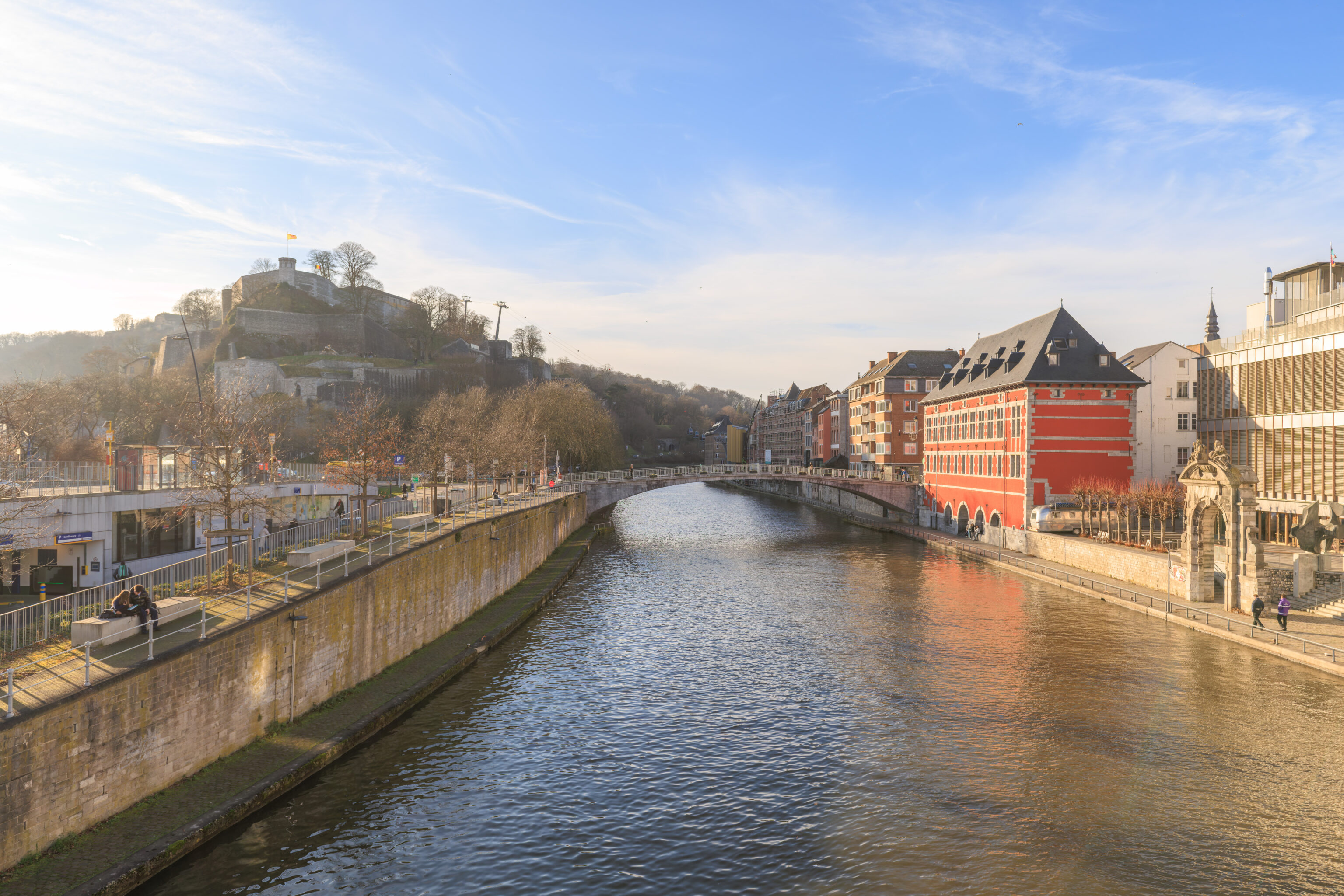
The view in the opposite direction up the Sambre. The interview, or whatever it was still seems to be going on by the turtle sculpture!
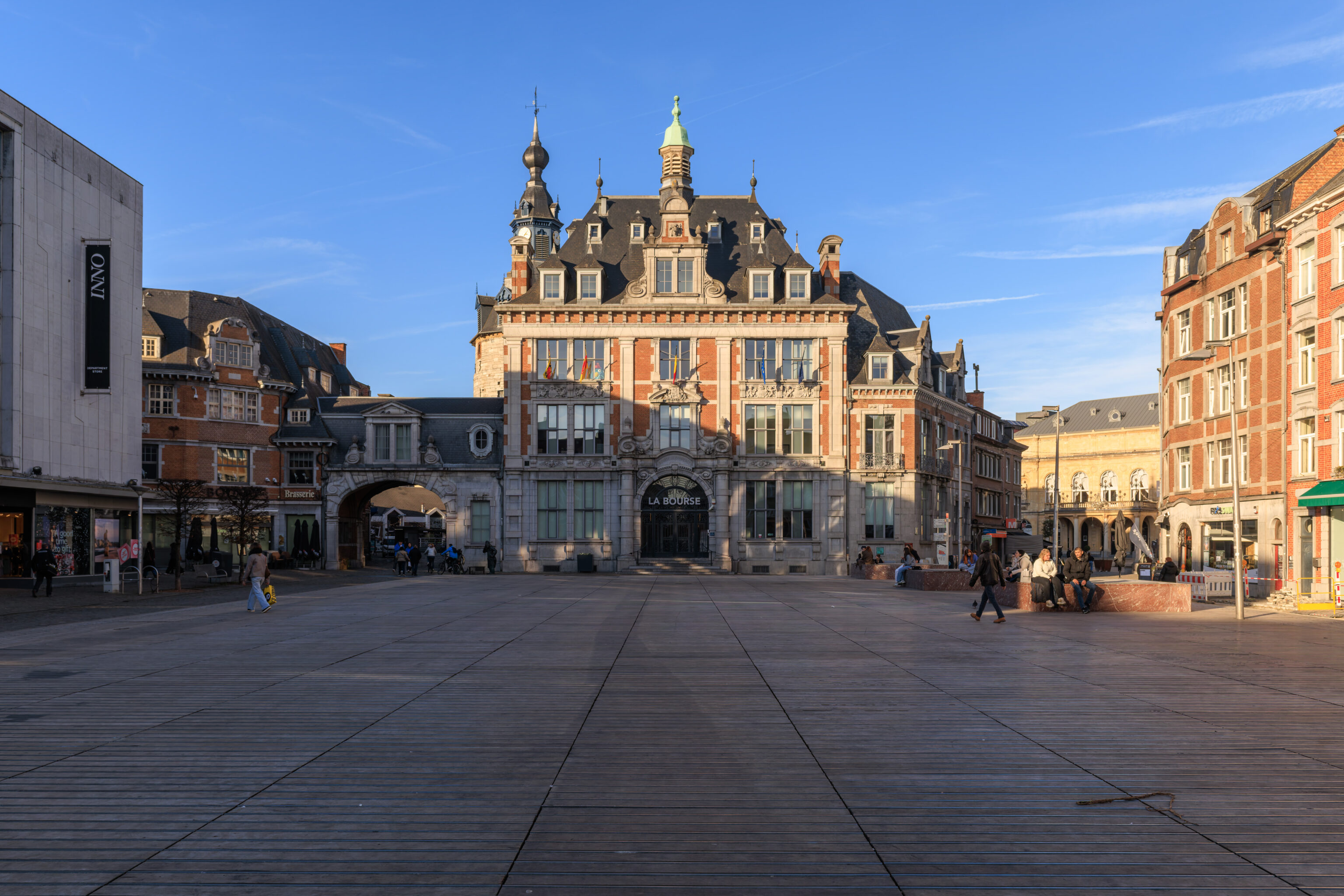
After crossing the bridge, we walked to the northwest, arriving at the Place d’Armes.
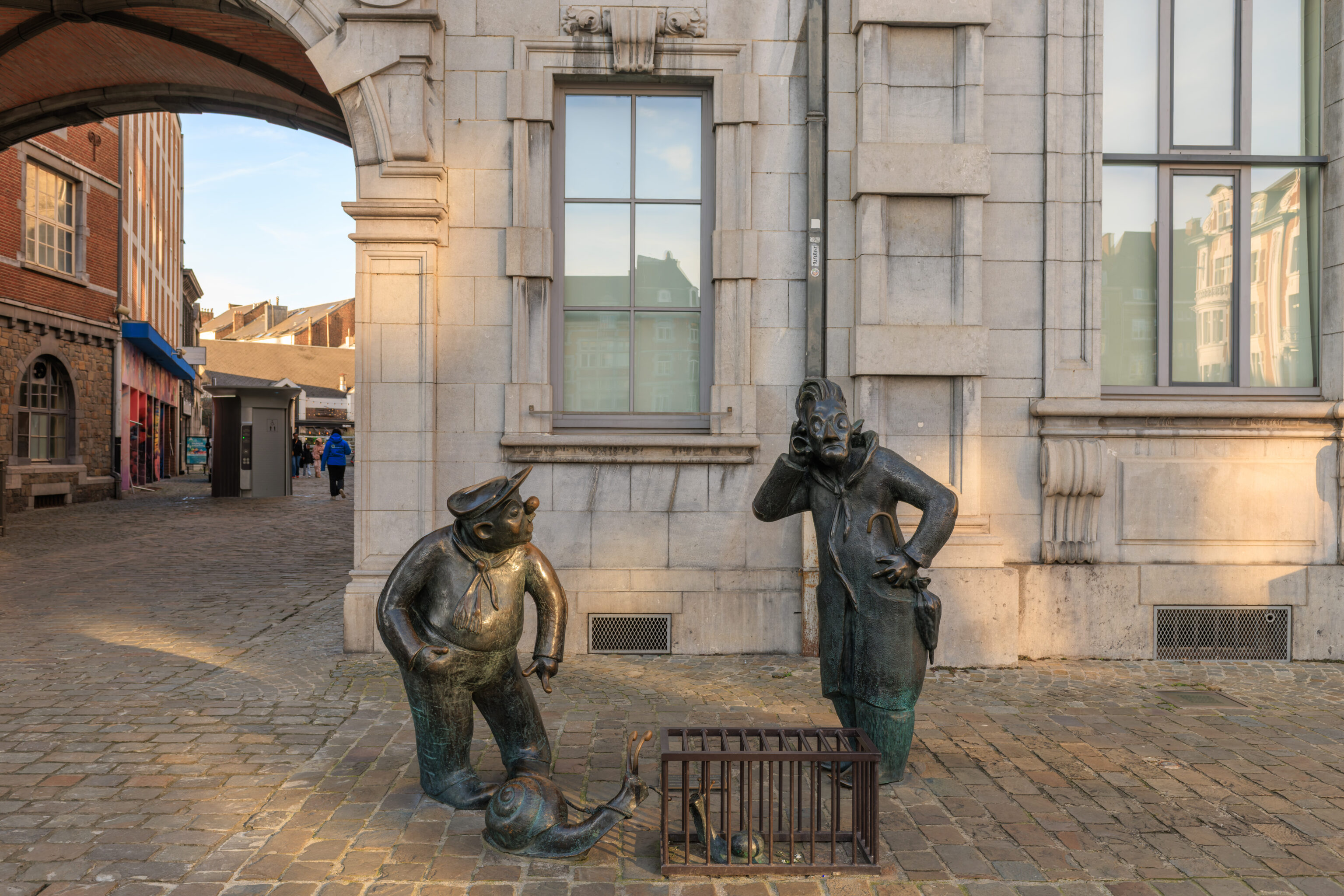
These figures depict Joseph (Djoseph) and Frank (Françwès) with two snails. The two men are comic characters created by Jean Legrand for a local newspaper, L’Avenir.
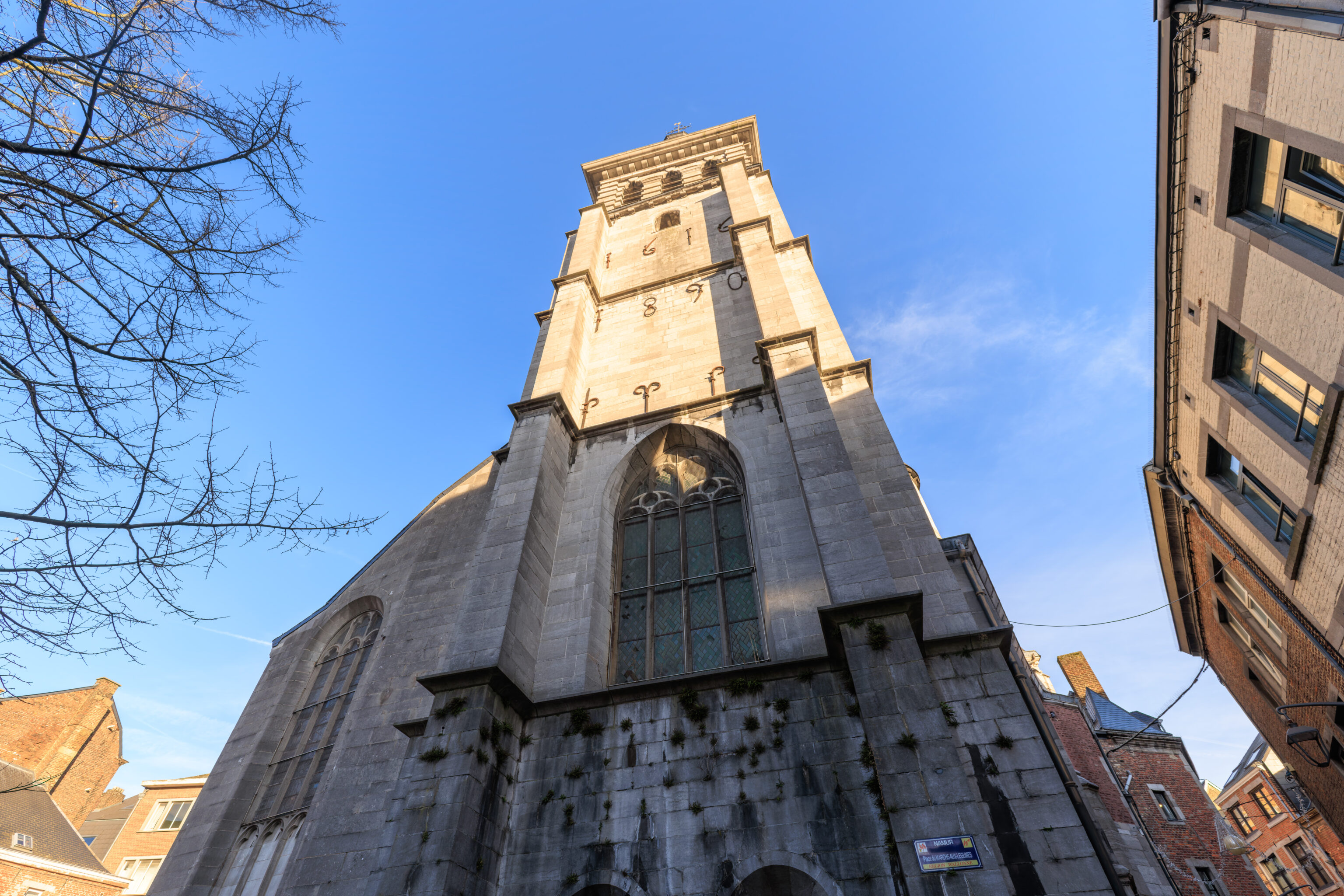
Two blocks to the west, we walked by the Église Saint-Jean-Baptiste de Namur, a church that is from the 16th century.
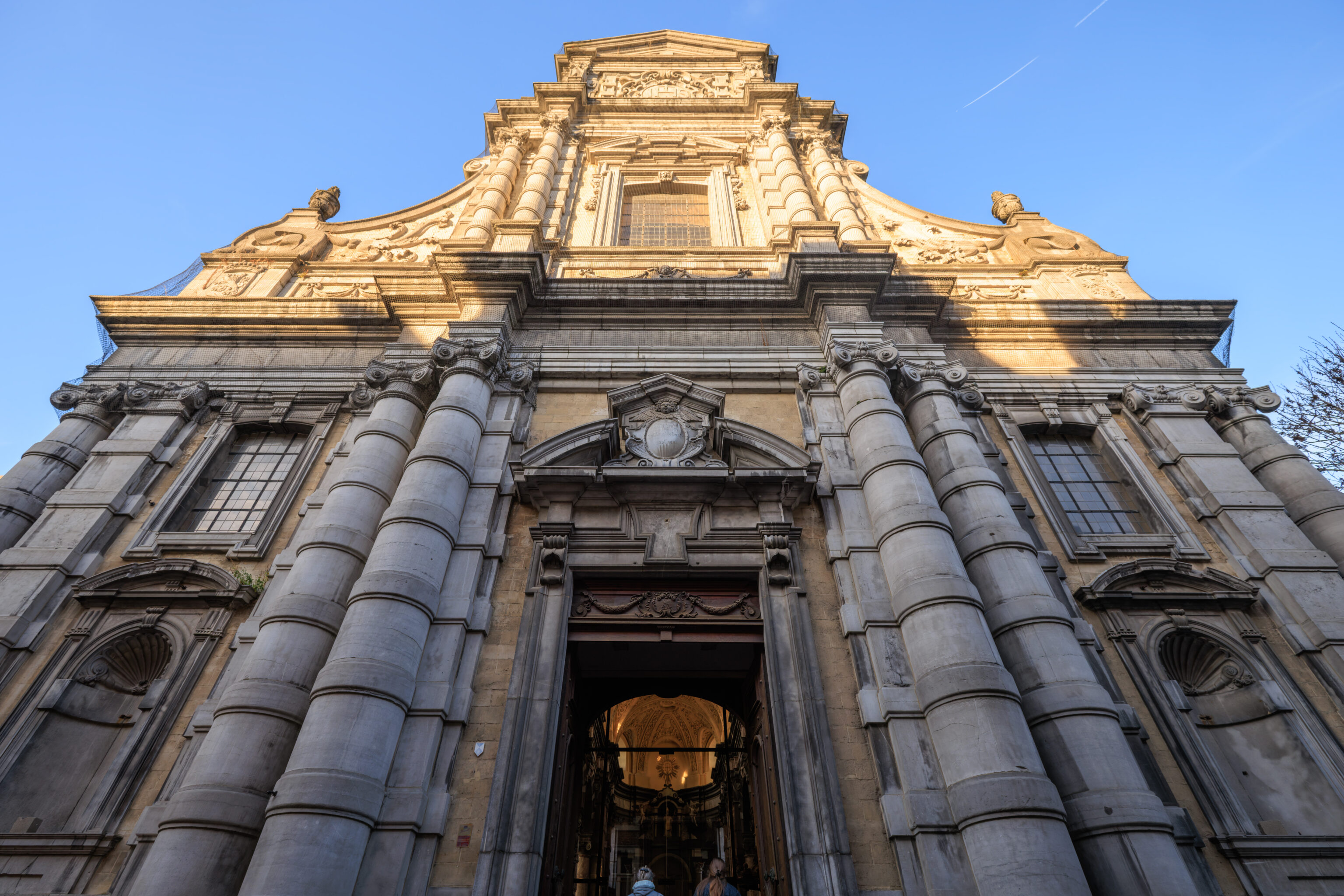
We continued another two blocks or so to the northwest to return to the Église Saint-Loup de Namur, the church that we tried to visit in the morning when we arrived in Namur.
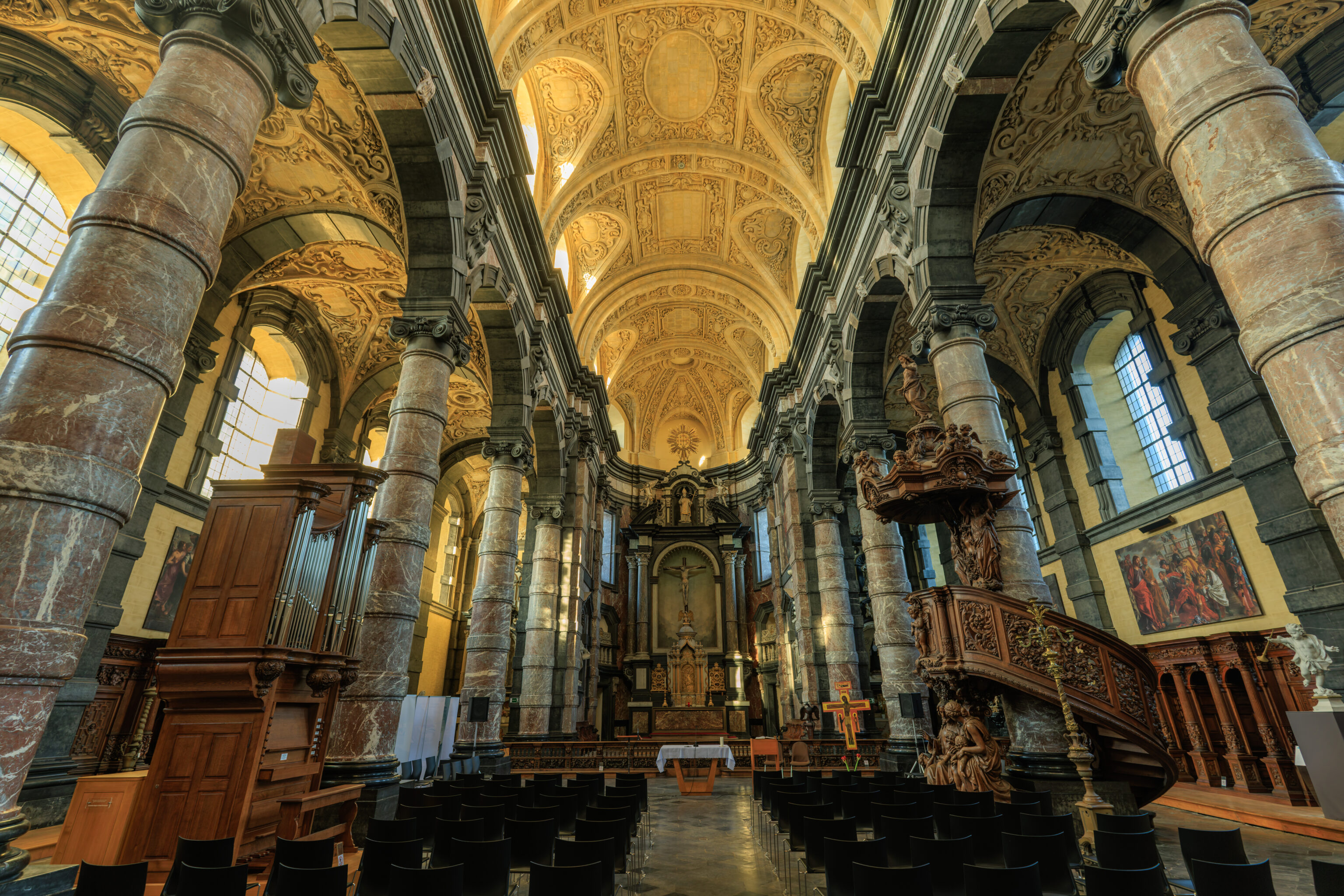
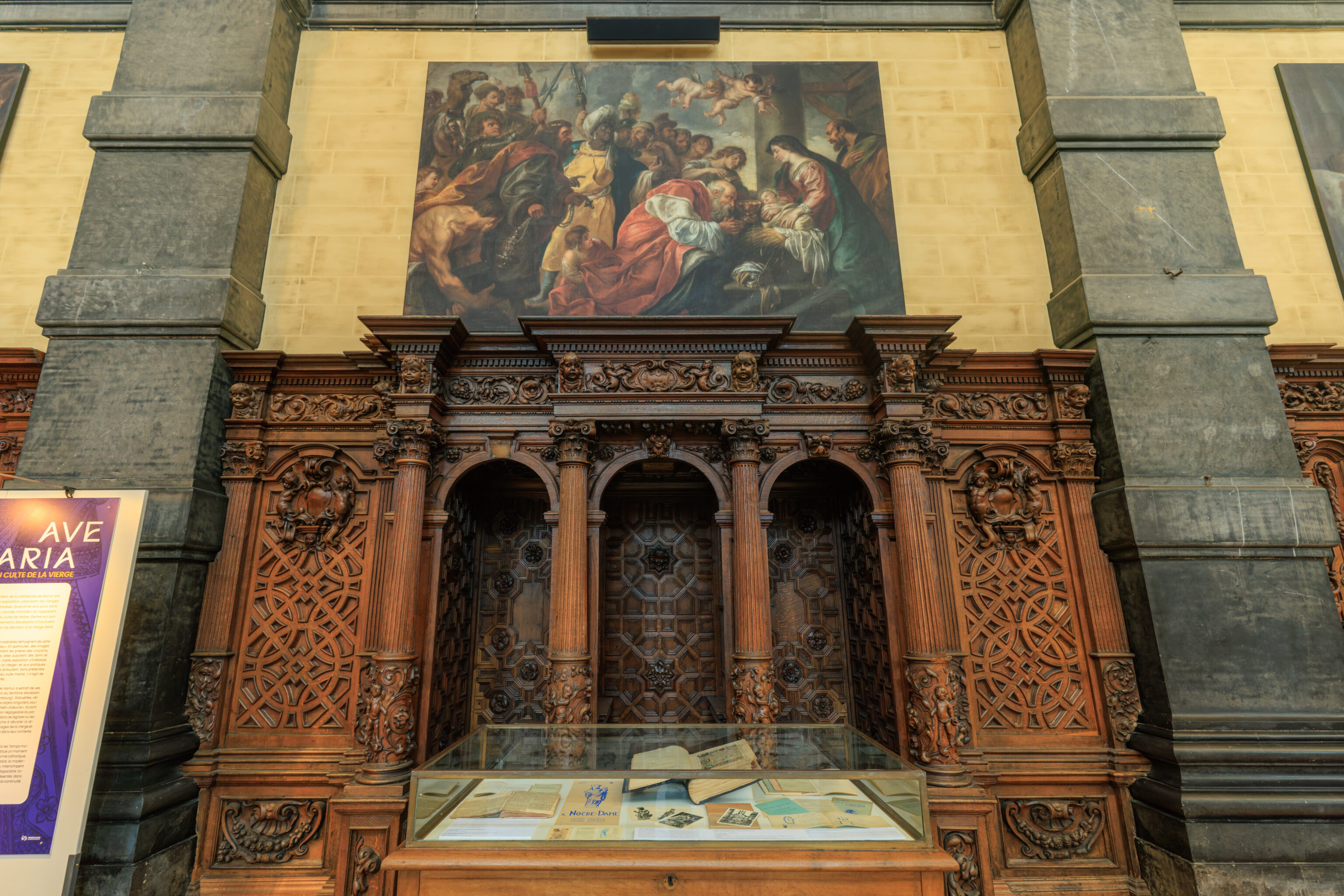
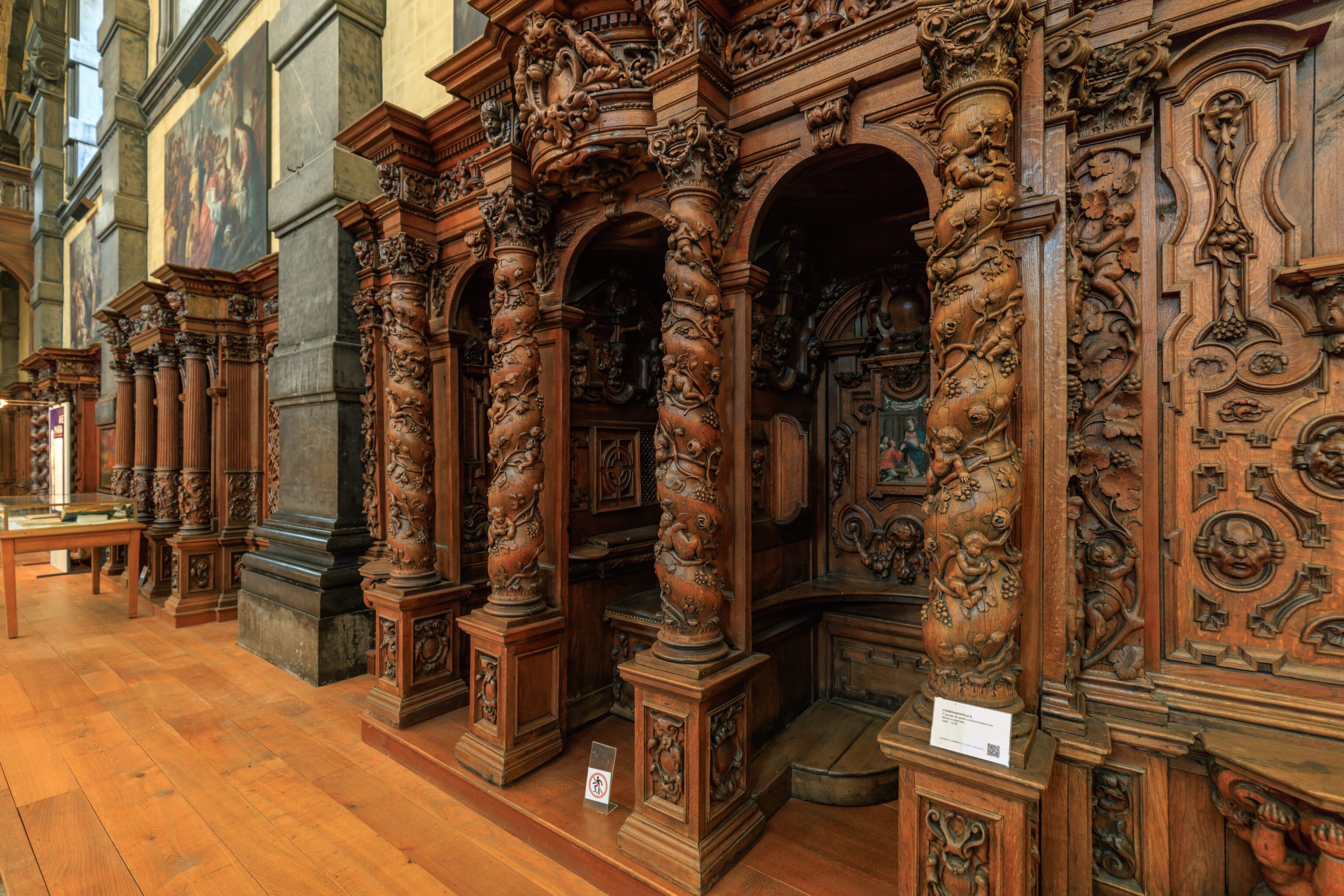
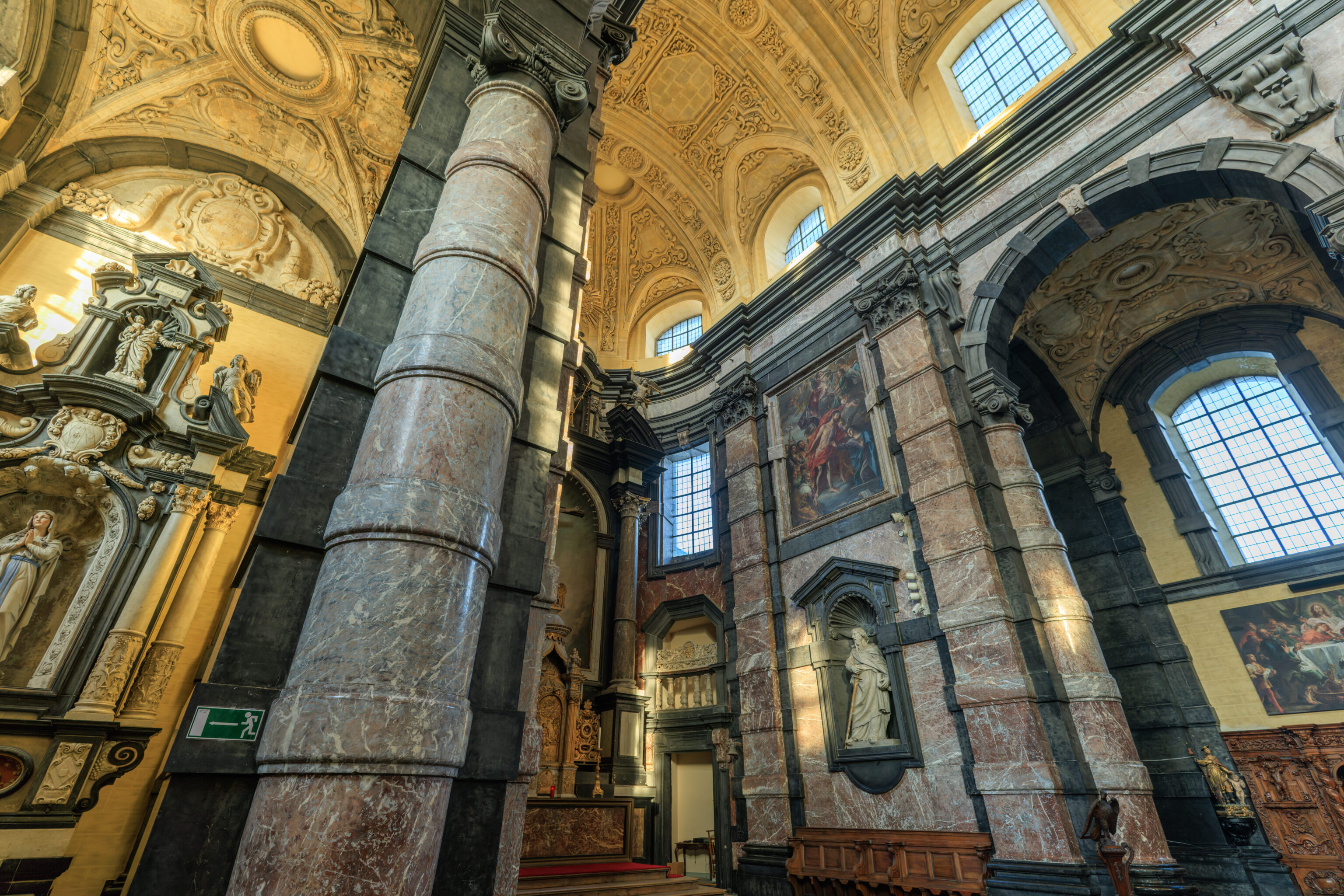
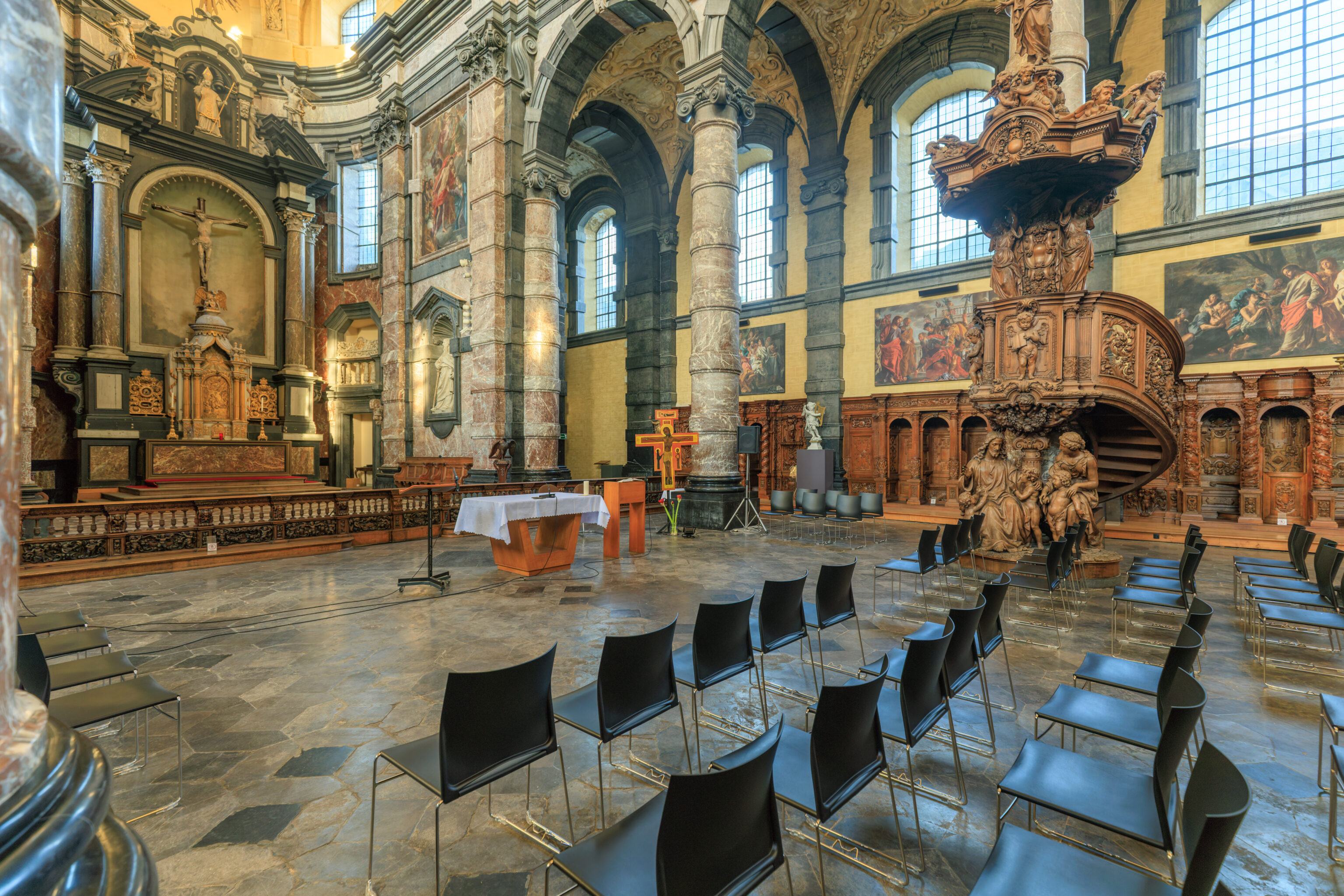
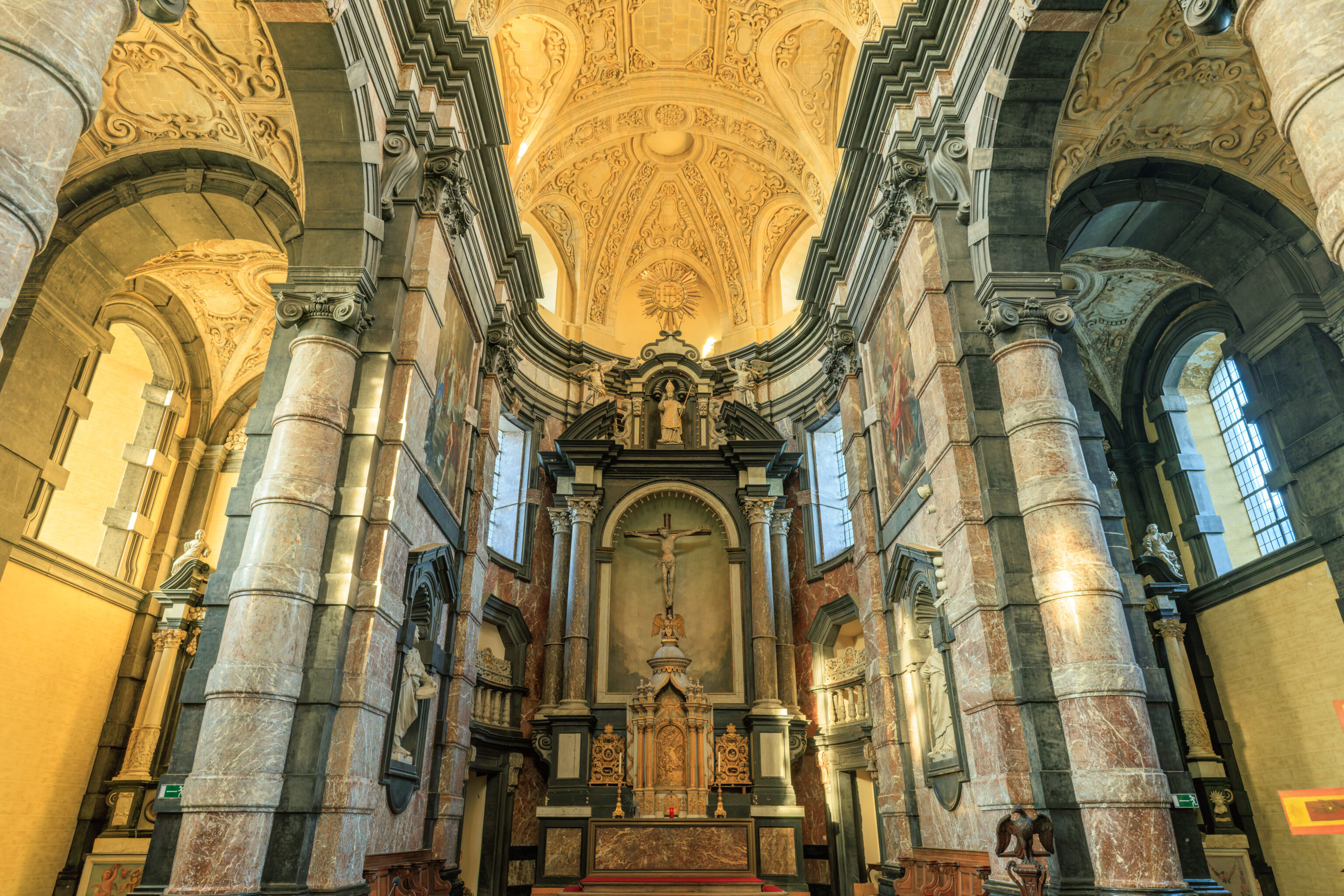
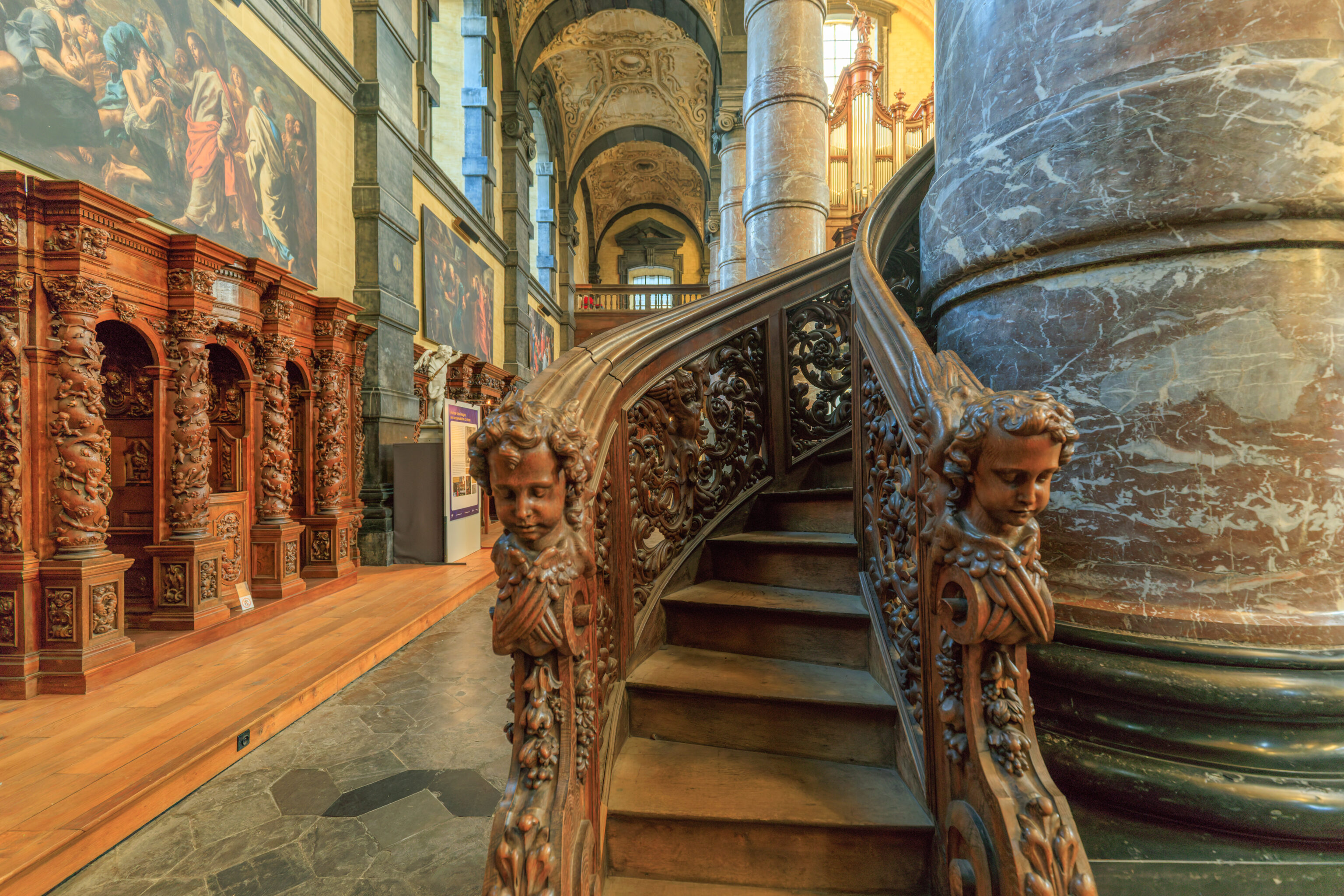
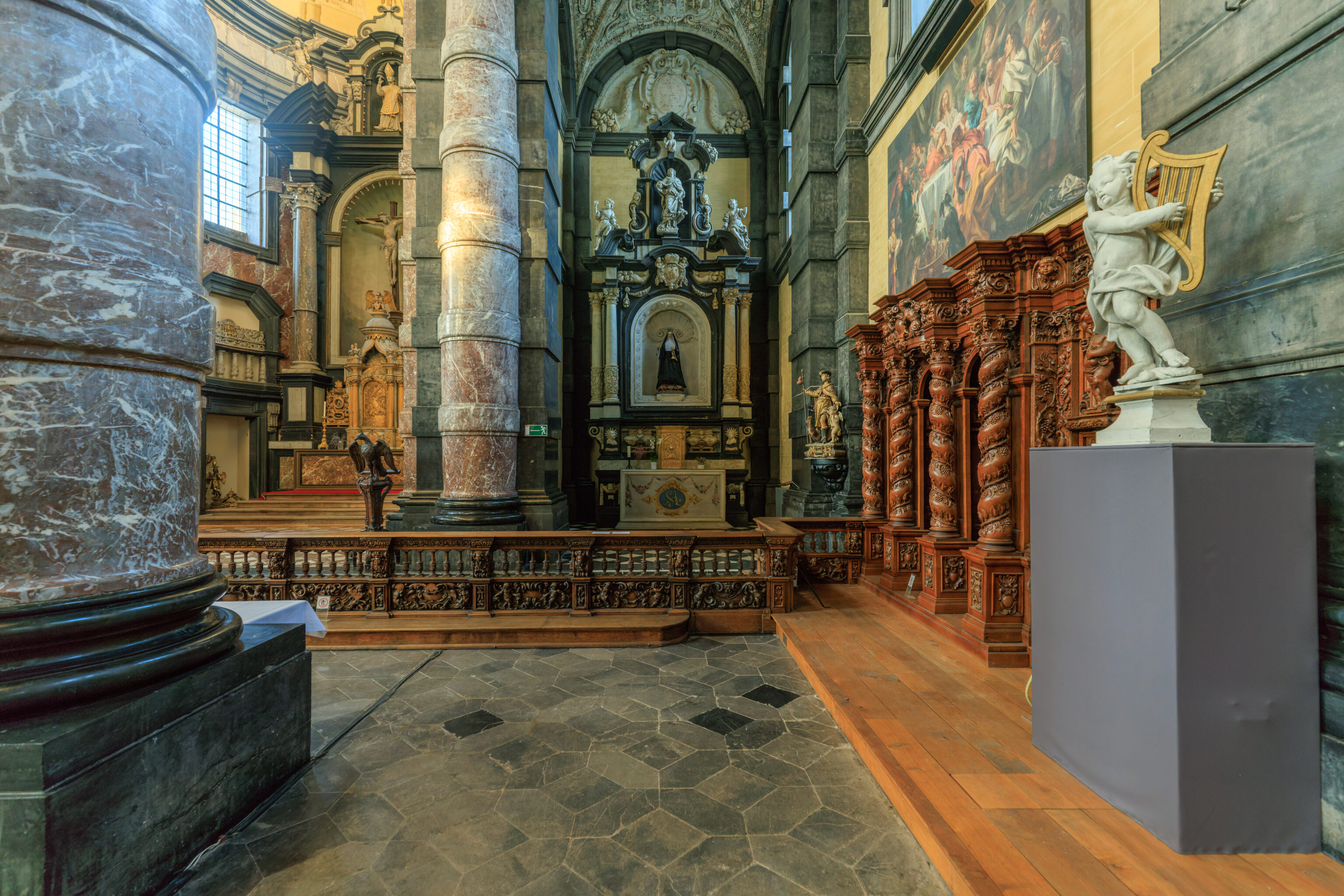
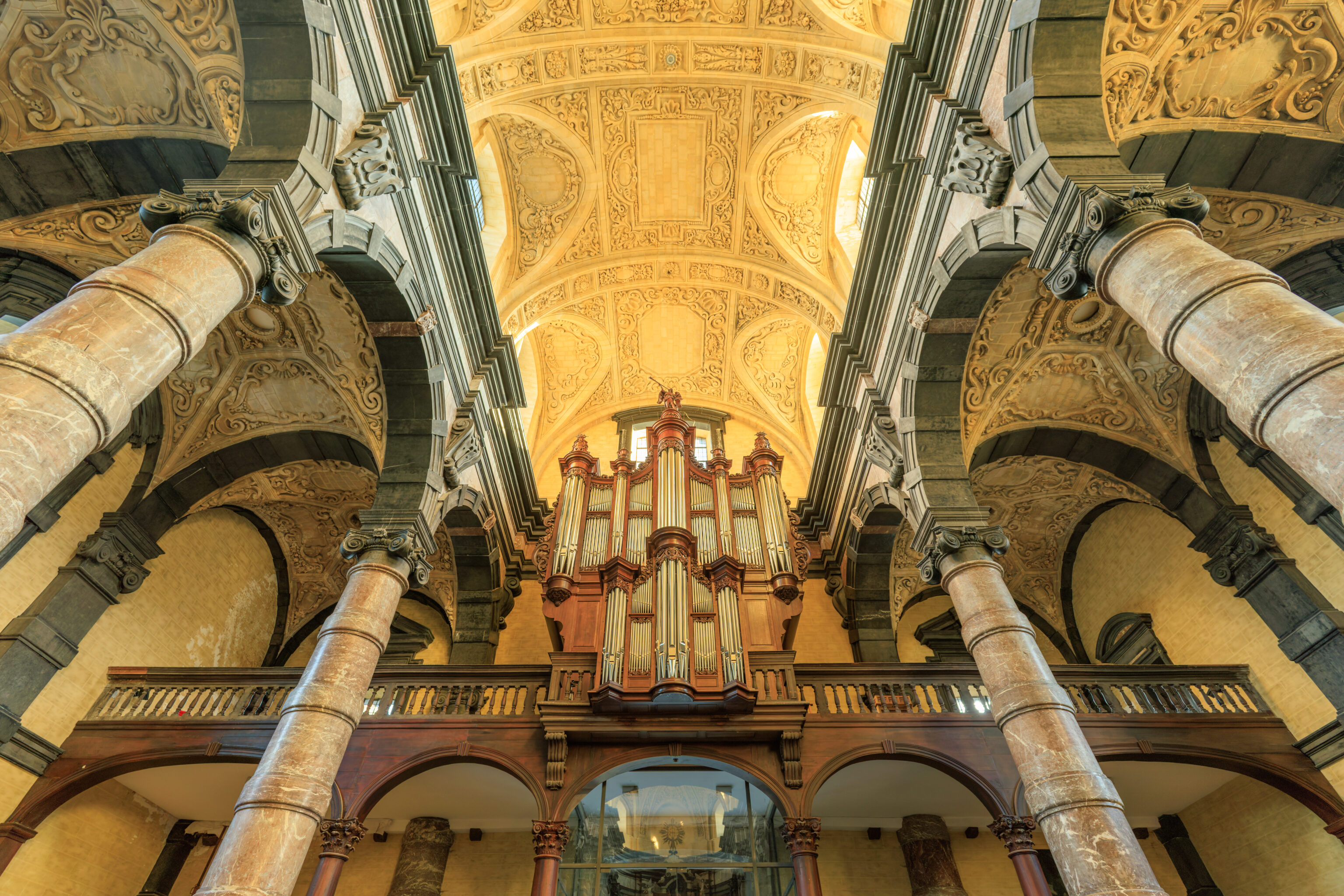
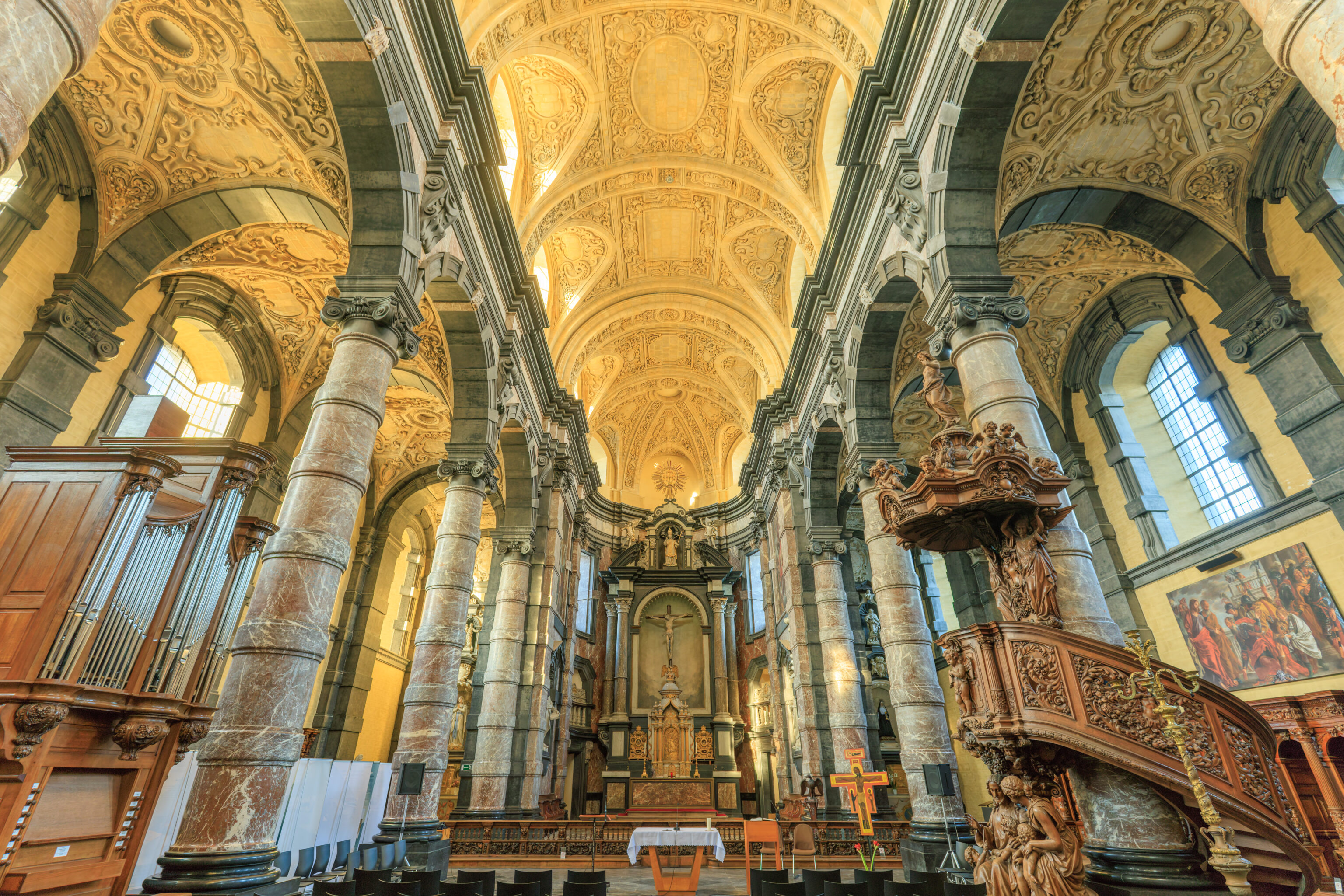
We took a quick look around the church’s beautiful interior.
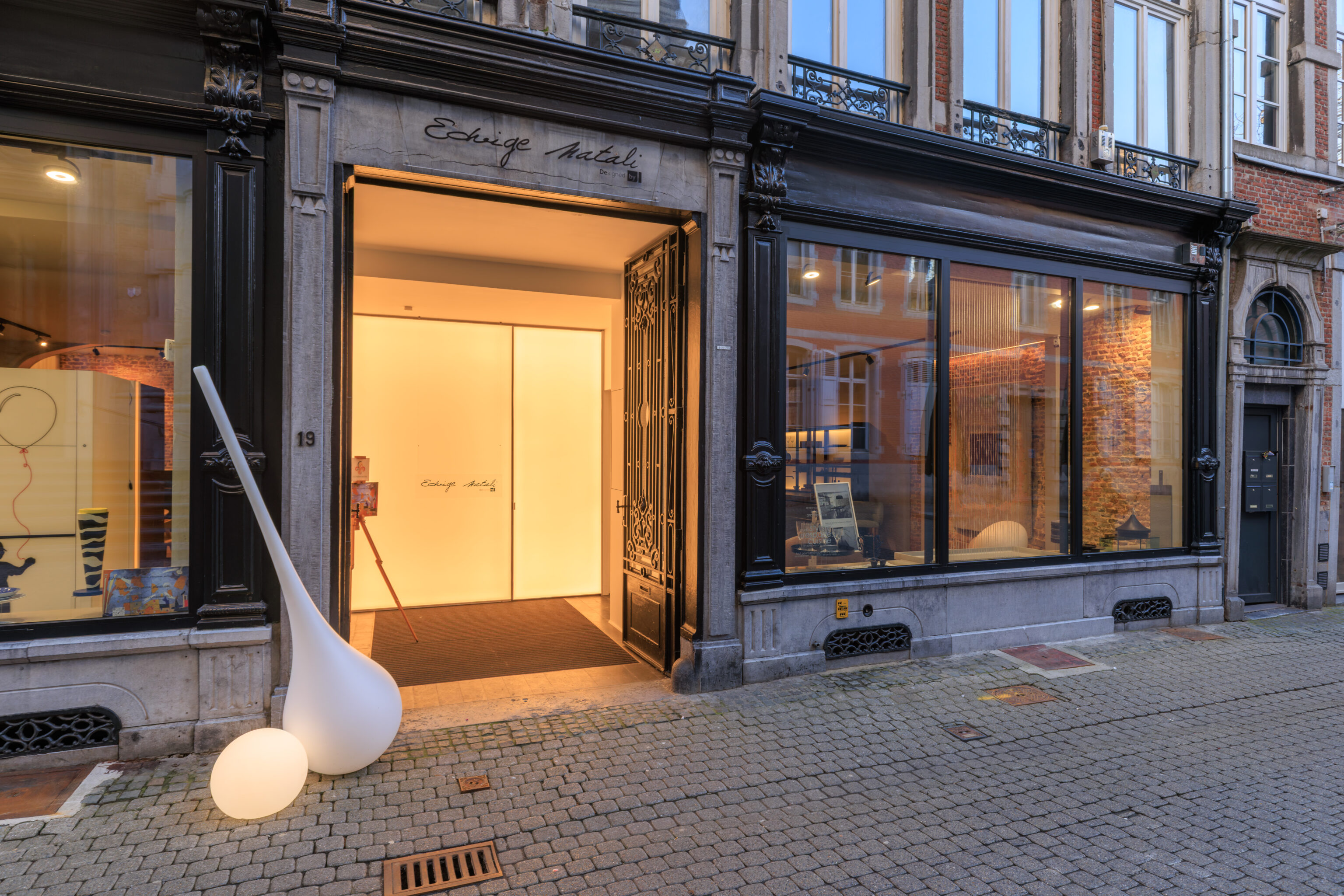
We then continued on to walk through Namur. We walked by this office of an interior designer. It was interesting and different enough to snap a photo before moving on!
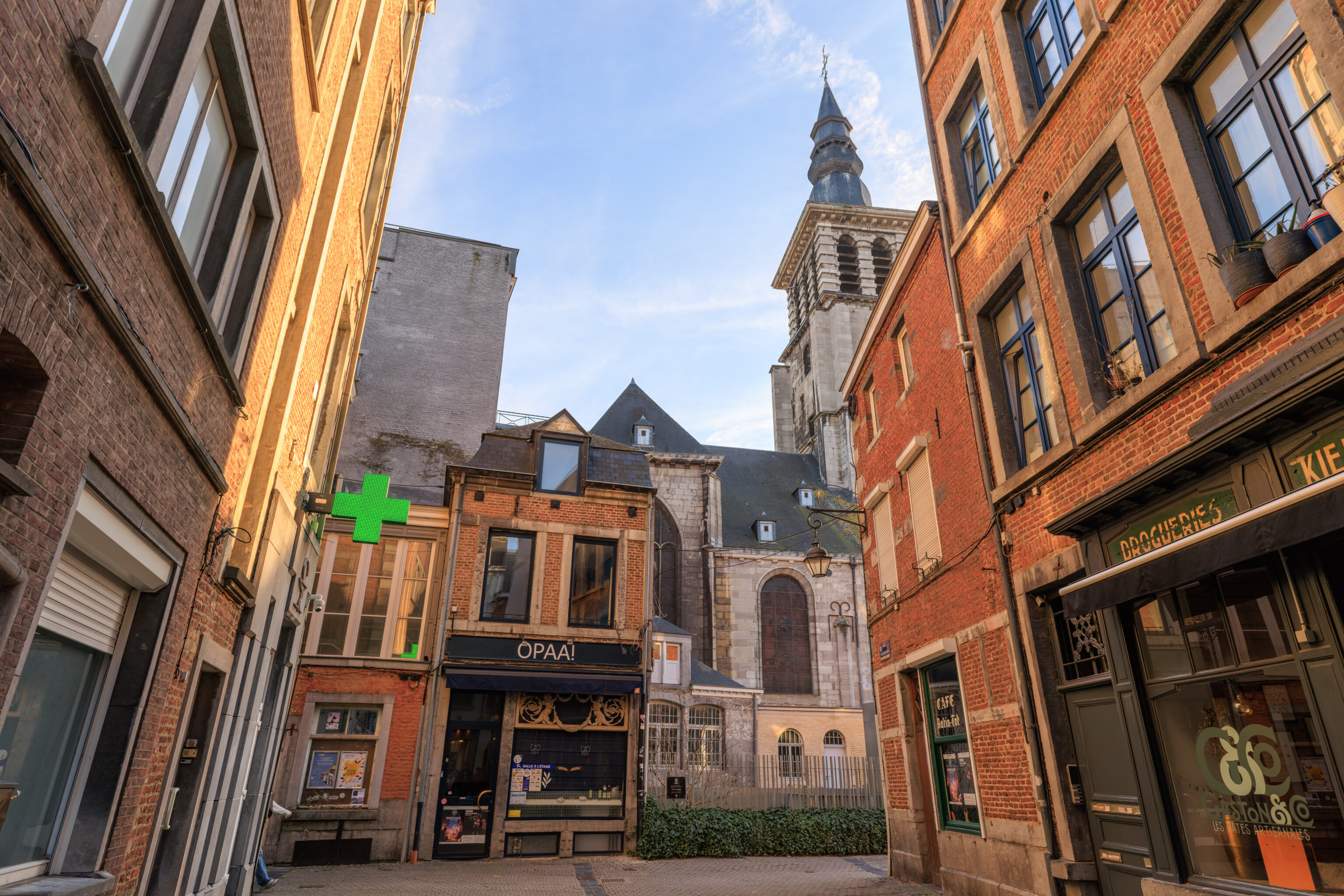
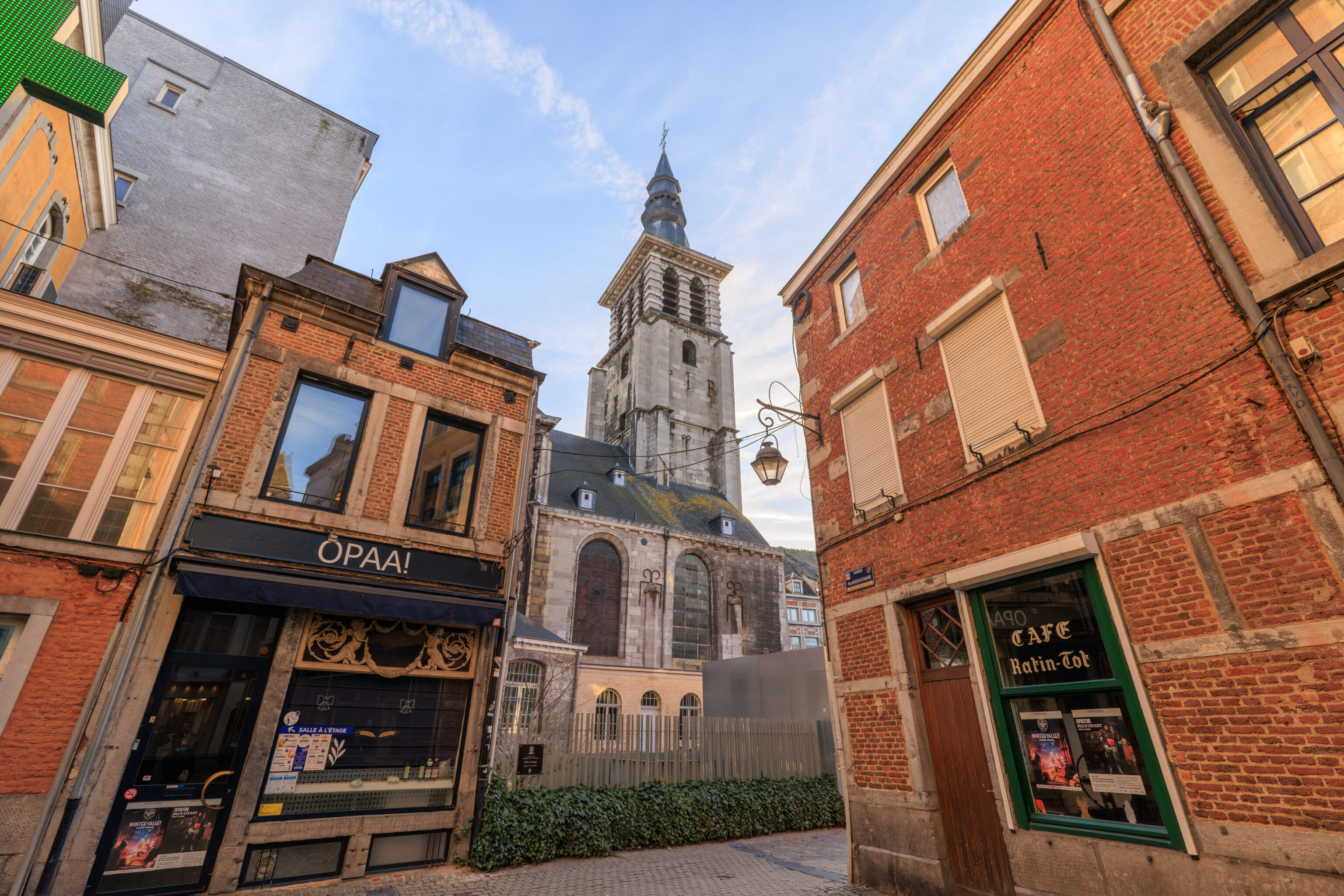
Both of the chocolate shops were near the Église Saint-Jean-Baptiste.
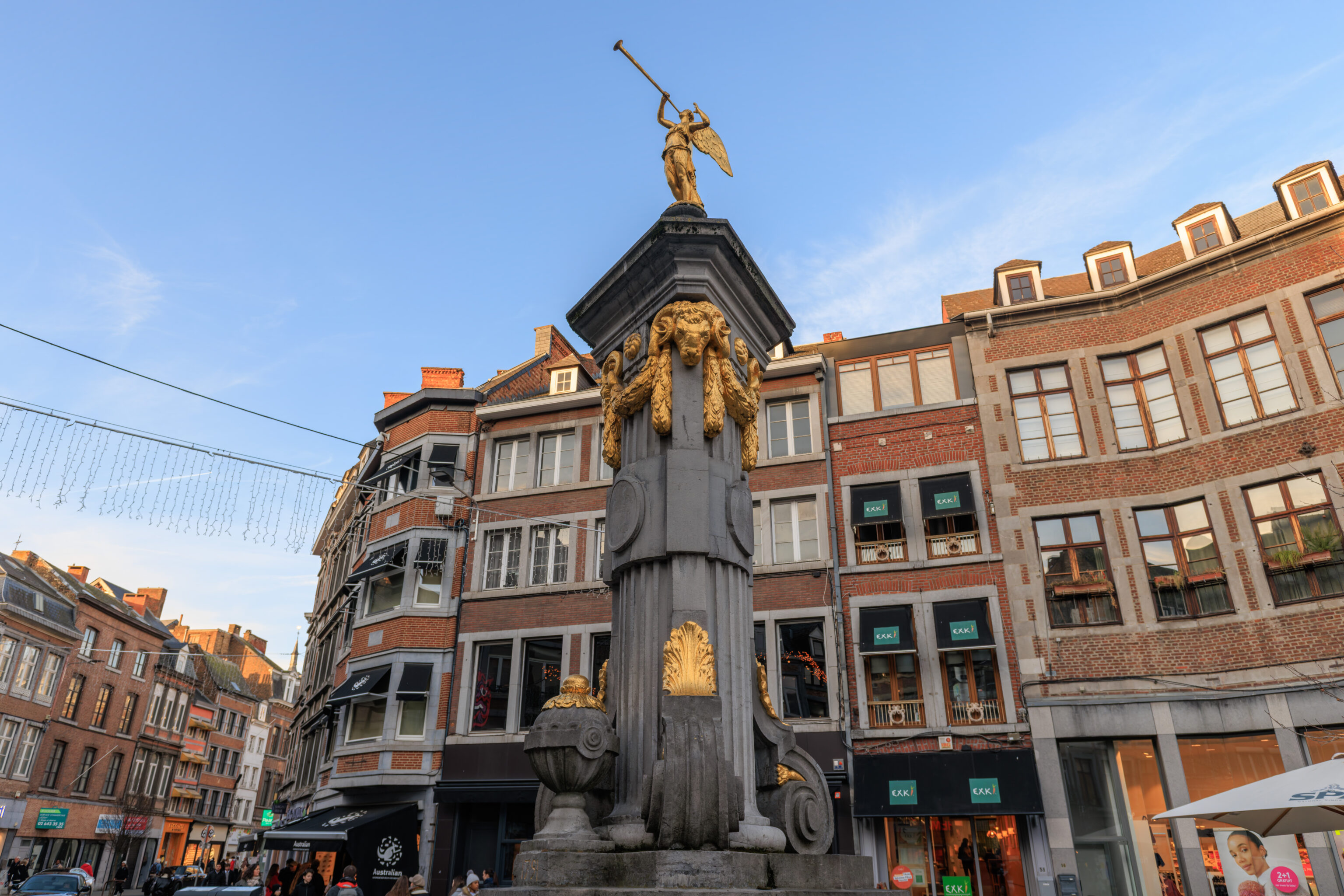
On the way back to the train station, we noticed this statue atop a column. It is the Pompe de l’Ange (Pump of the Angel), referring to its former function as a fountain.
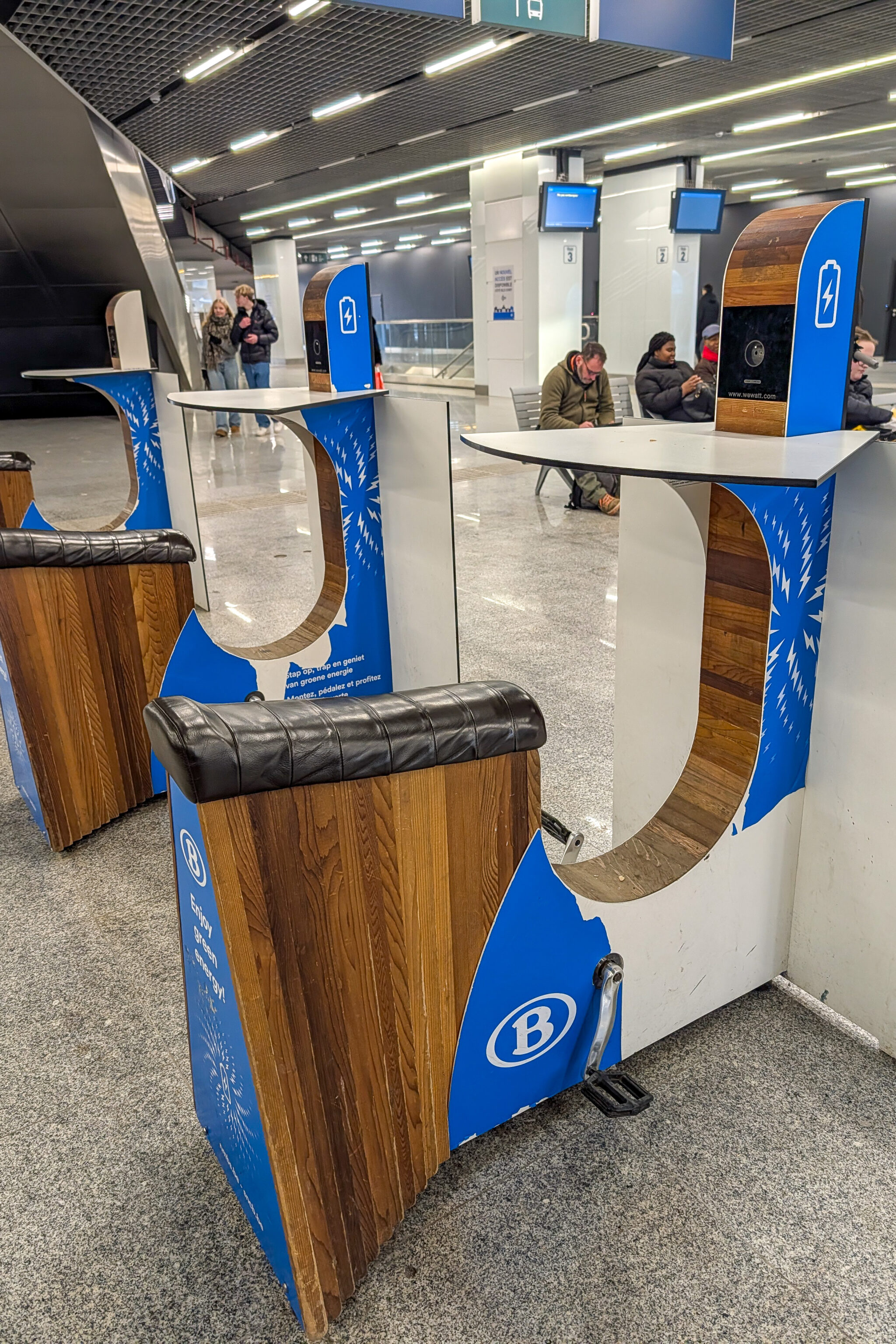
While going to the locker to retrieve our bags, we noticed these exercise bicycle charger seats! You gotta work to charge!
Luxembourg
After returning to the Gare de Namur, we caught the next train to Luxembourg.
Buying cross border tickets can be a bit annoying in Europe because you sometimes need to buy them from a different app, or there is a different workflow compared to domestic tickets. And there can be differences in pricing and availability depending on which transportation company or organization you buy from. In this case, we used the SNCB International app. The trip from Namur to Luxembourg cost €20.90 per person and took about two hours and required changing trains at Arlon in Belgium.
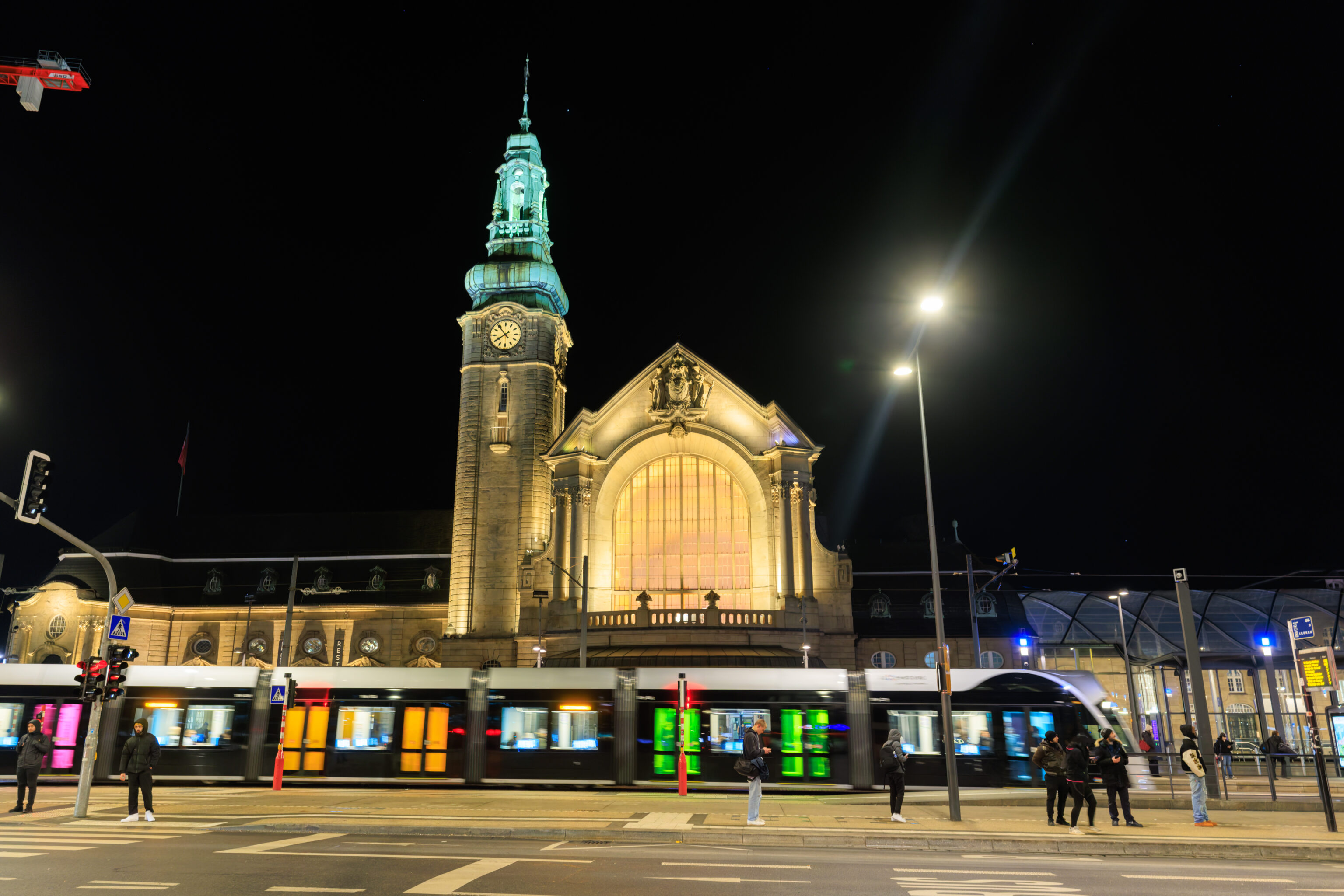
Our train arrived in Luxembourg a bit before 7pm. This photograph, which we actually took later in the evening, shows the church-like main hall of Luxembourg Station, or Gare Lëtzebuerg in the local Luxembourgish.
Our hotel, the Luxembourg Marriott Hotel Alfa, was just across the street from the northwestern corner of the station. Extremely convenient!
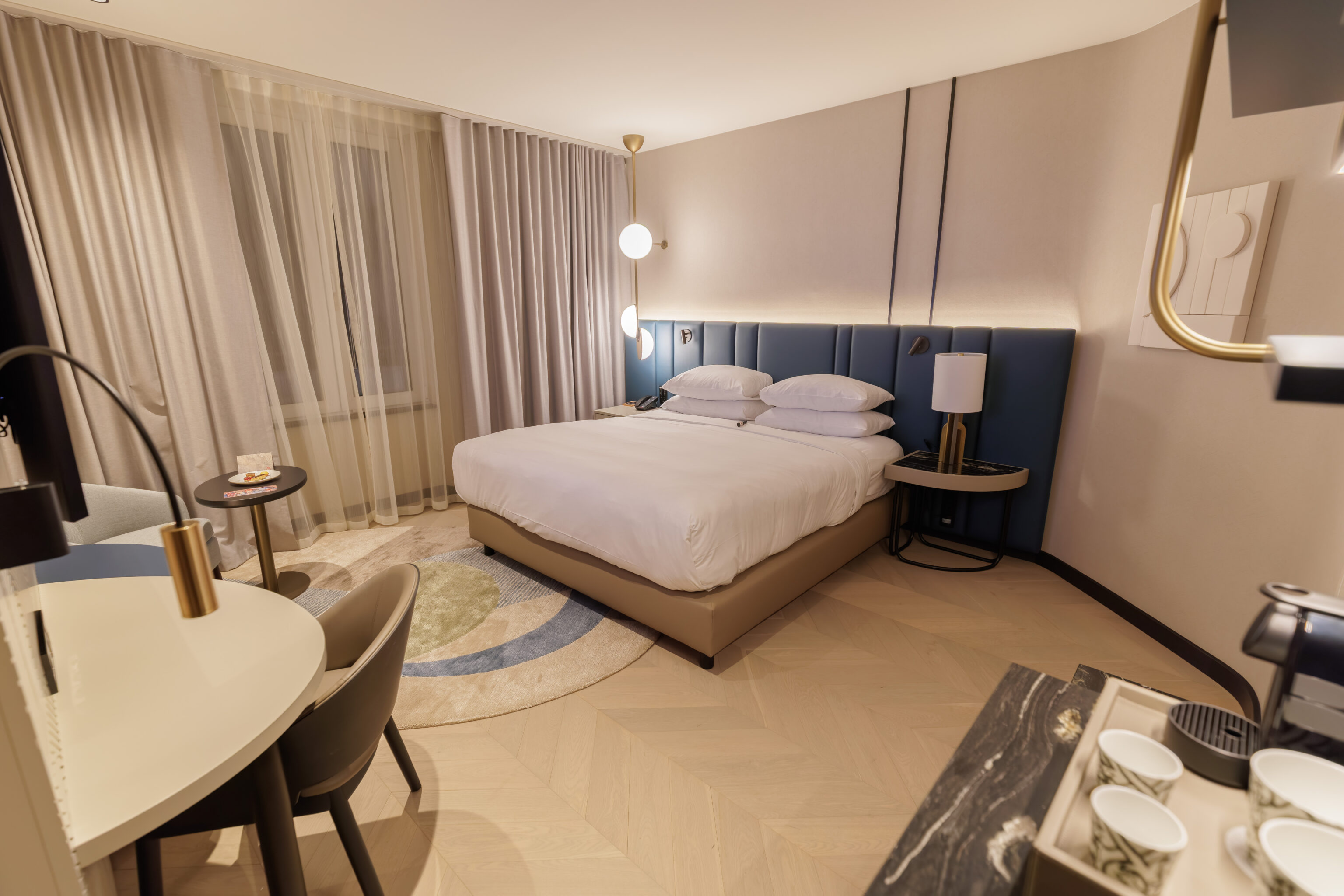
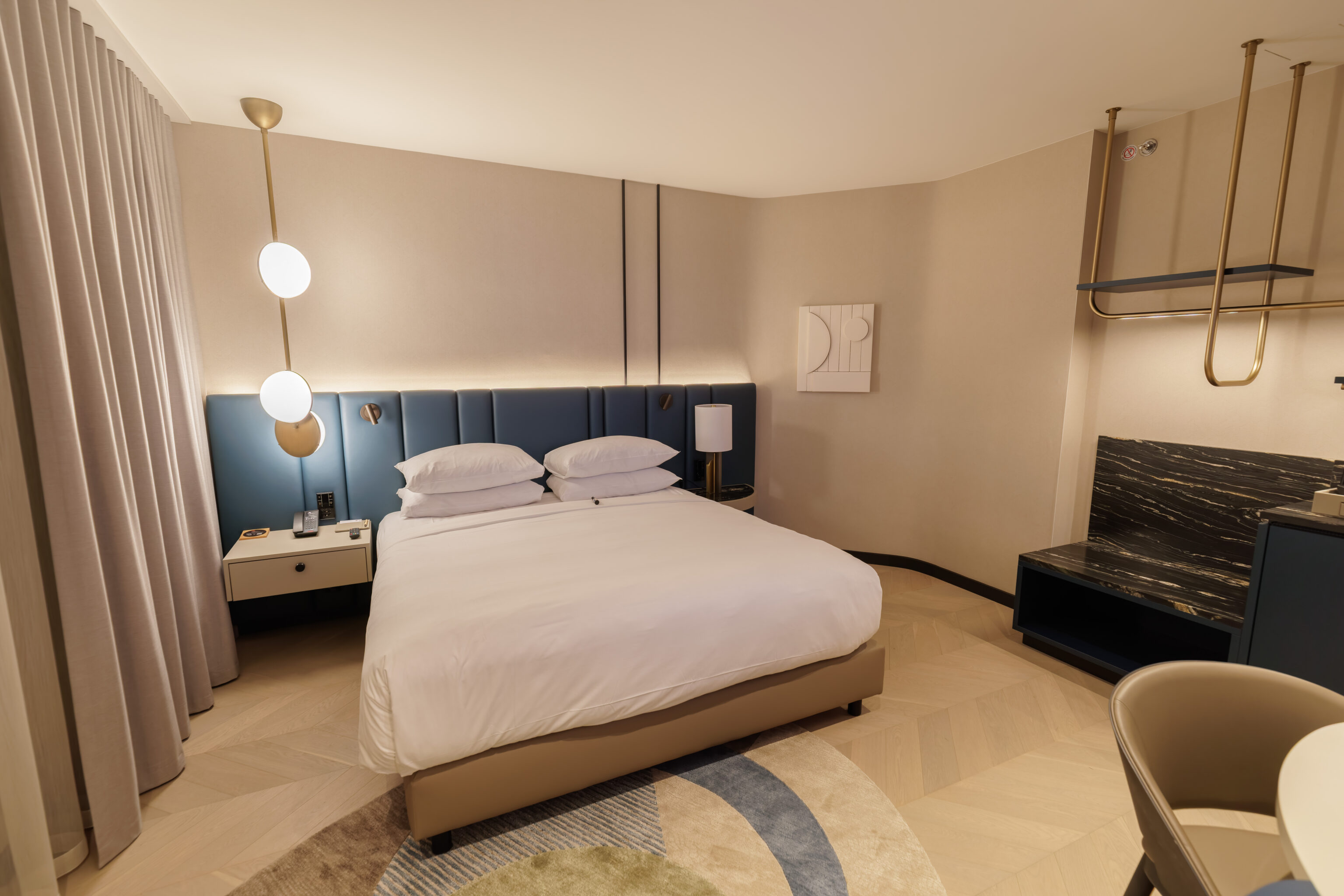
Our room was a good size and modern in appearance.
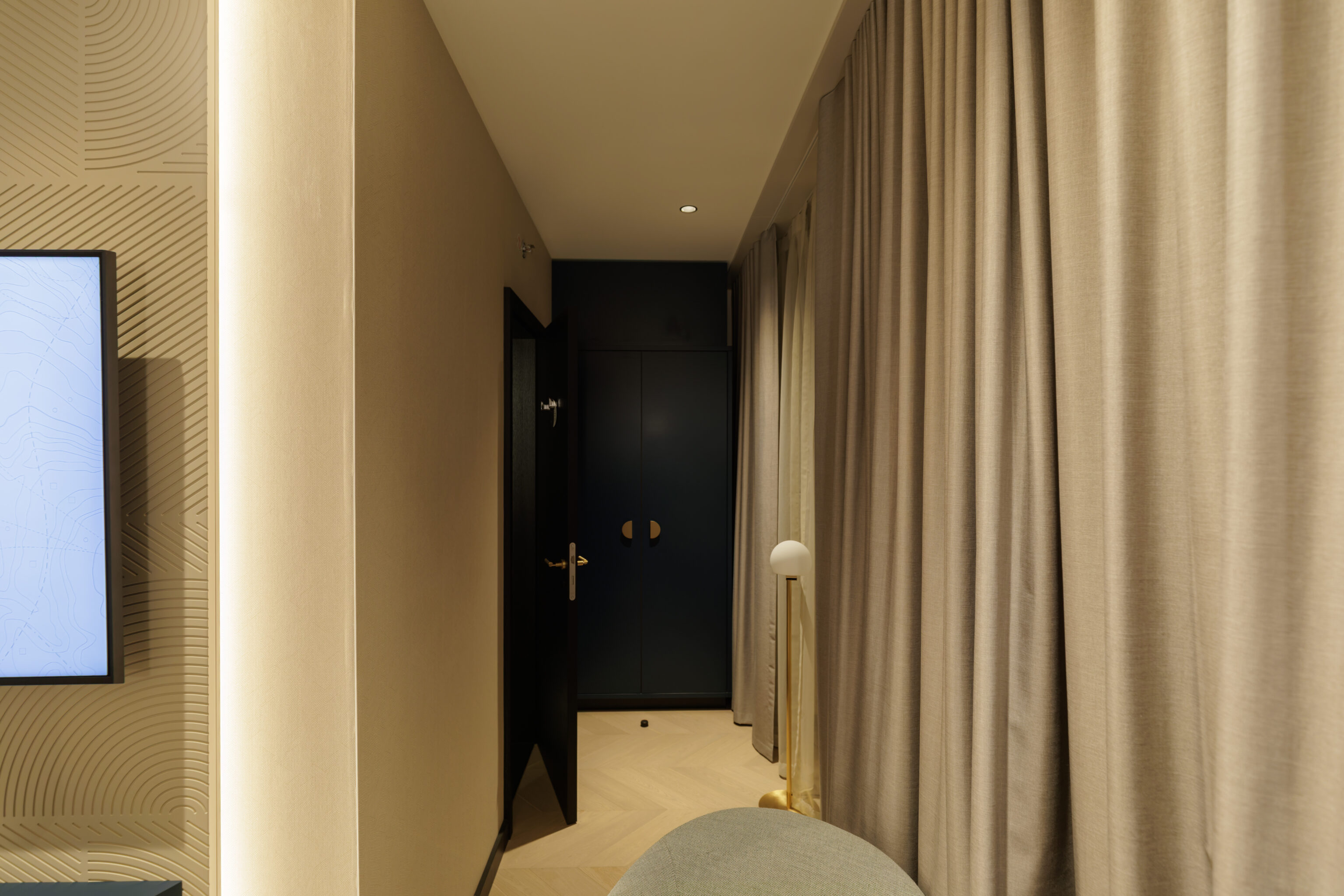
This looks a bit like it the entrance to the room but it is not! The two doors directly ahead are closet doors! The bathroom door is on the left and slightly ajar.
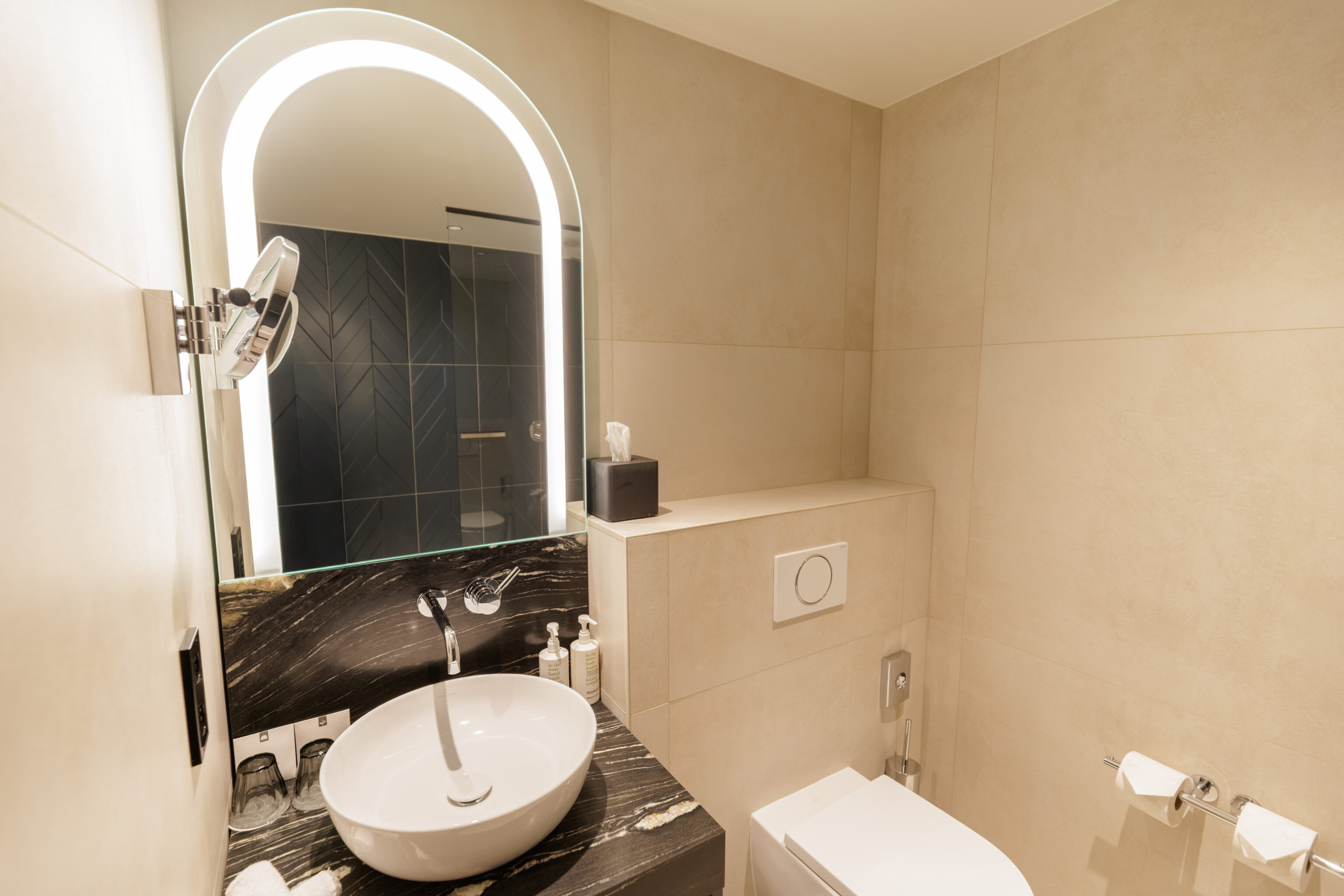
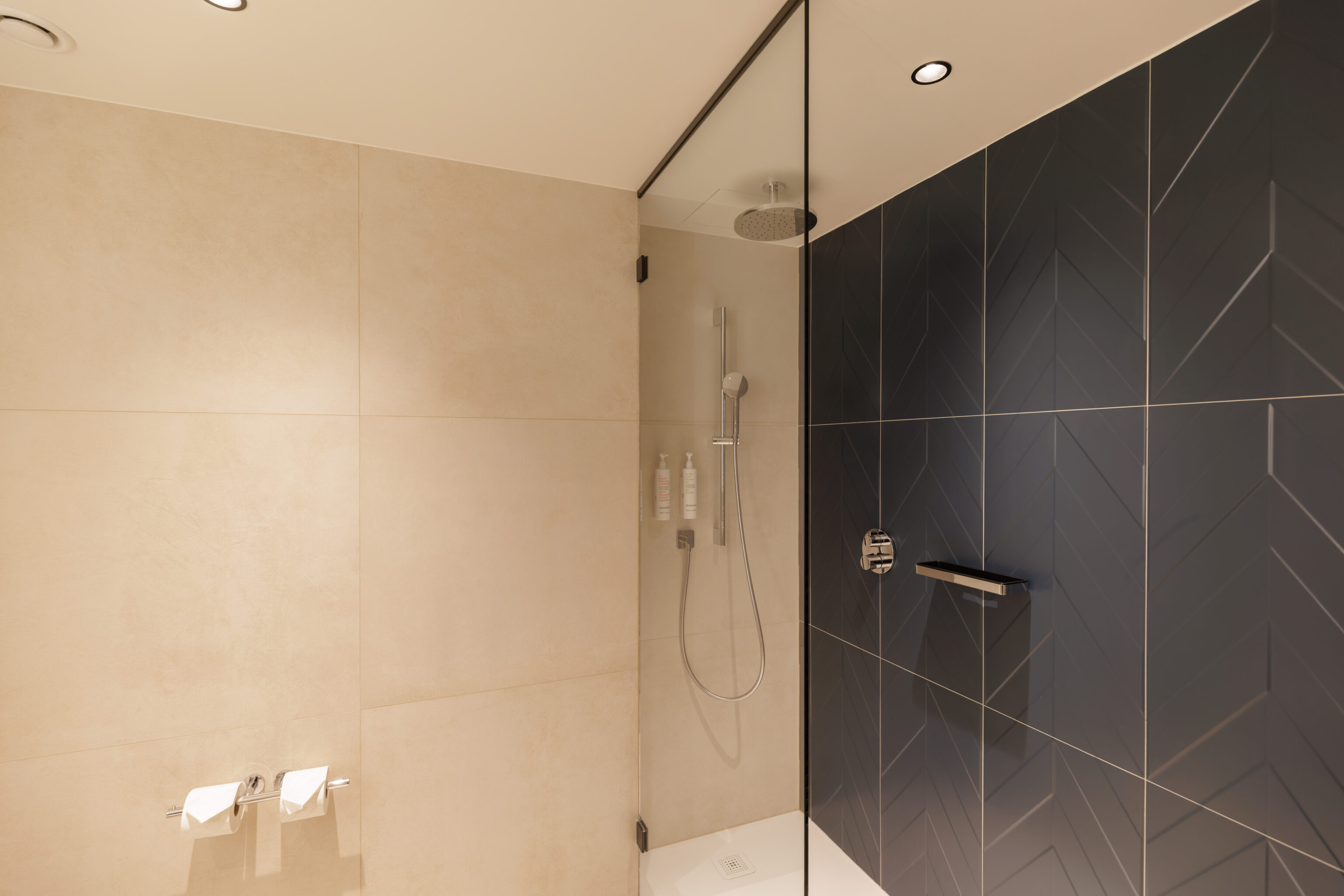
the bathroom was also nice and modern, although sink space was a tad limited. The only real negative of this room was the lack of a bathtub.
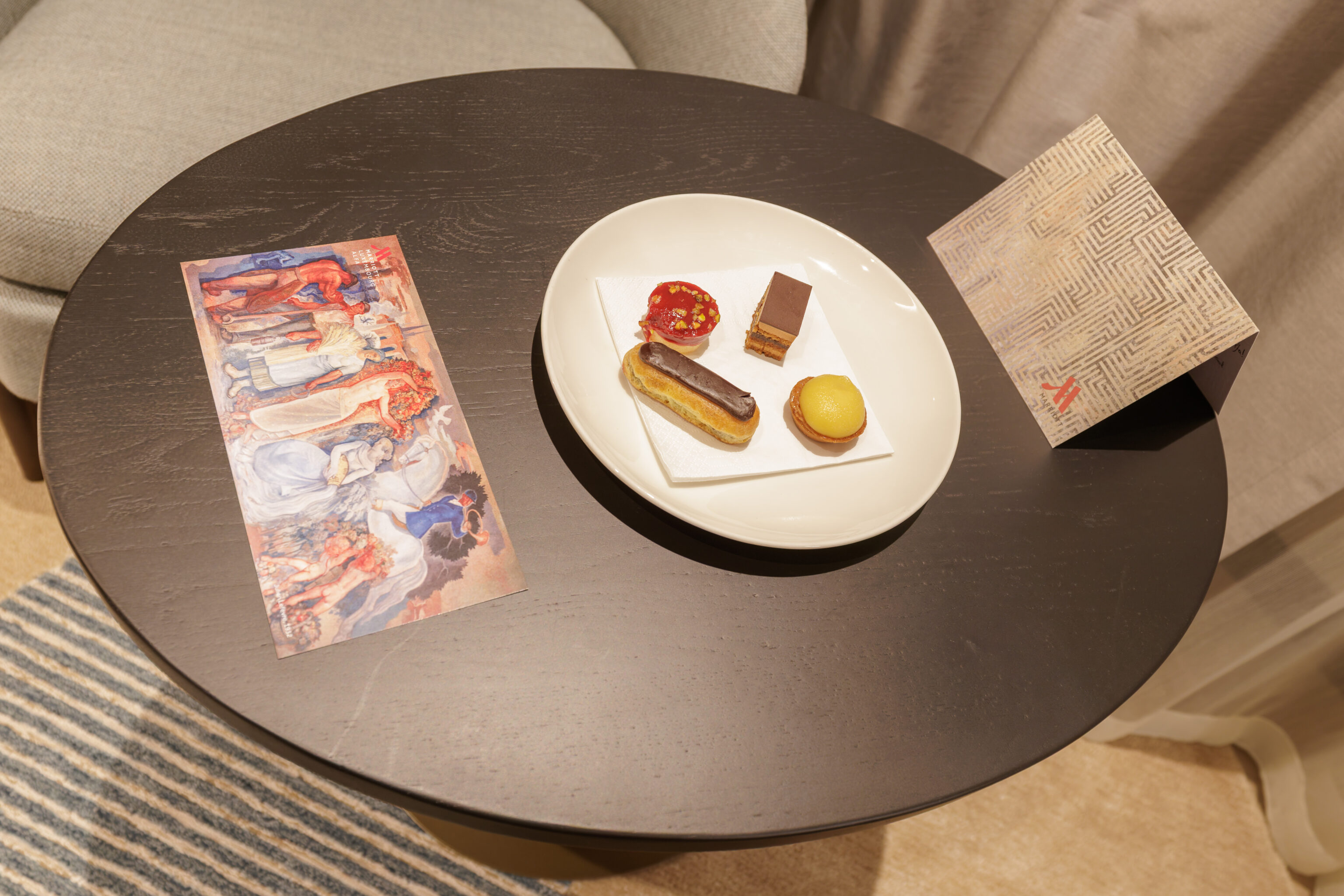
There were some welcome gifts on the table in the room! Some sweets and two cards.
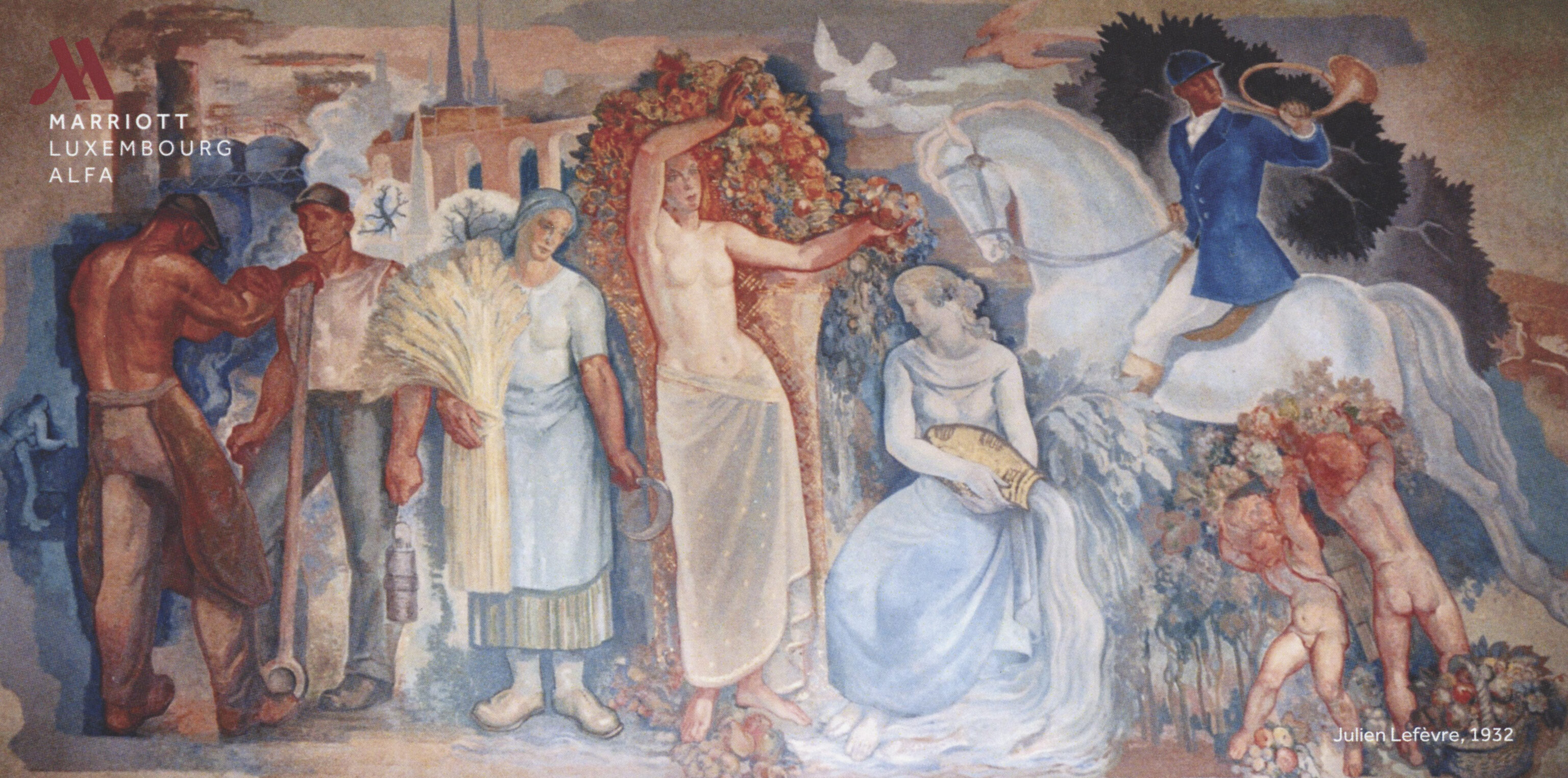
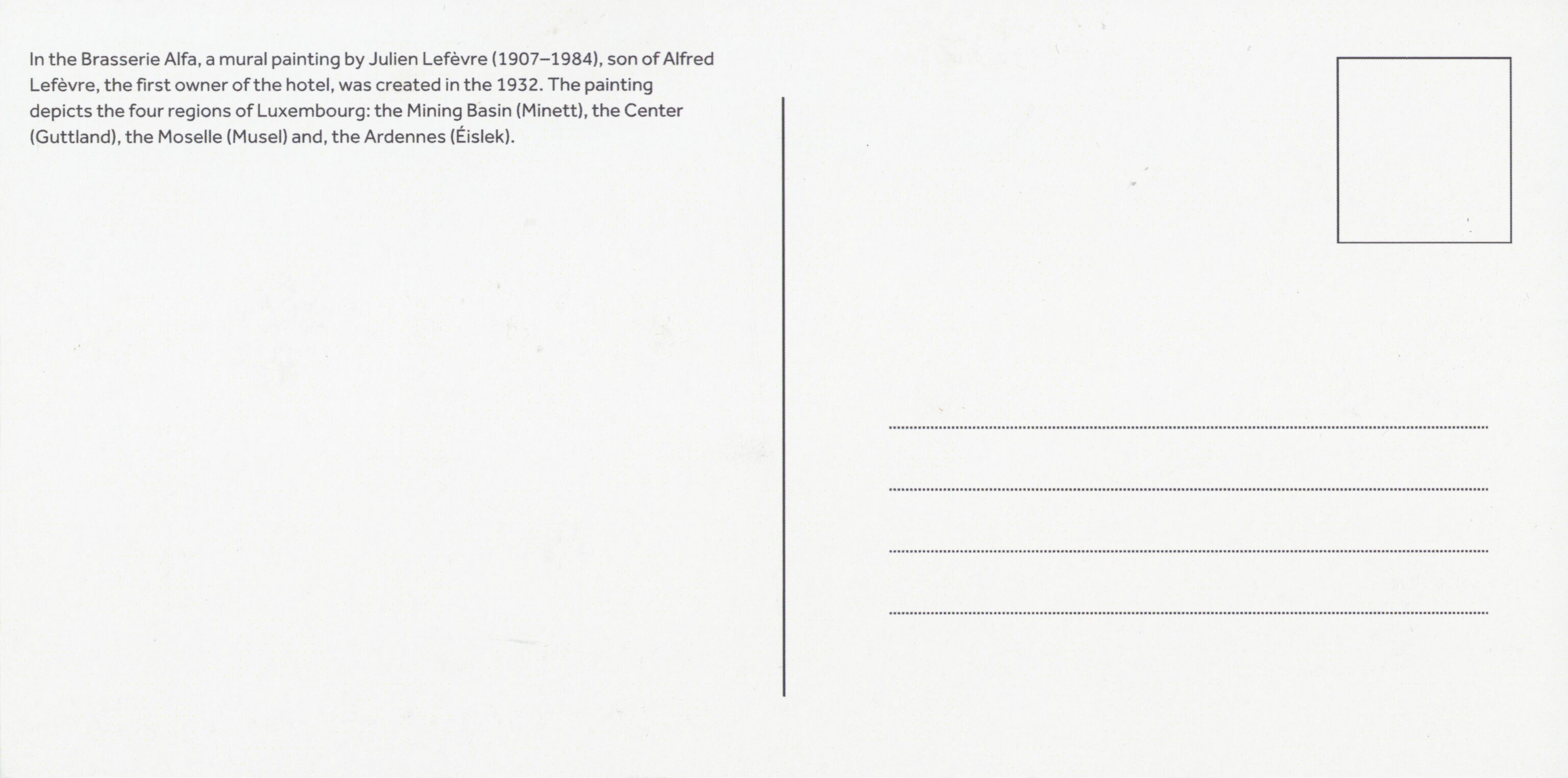
This postcard depicts a mural within the Brasserie Alfa, the hotel’s restaurant. Maybe we will see the actual mural tomorrow morning?
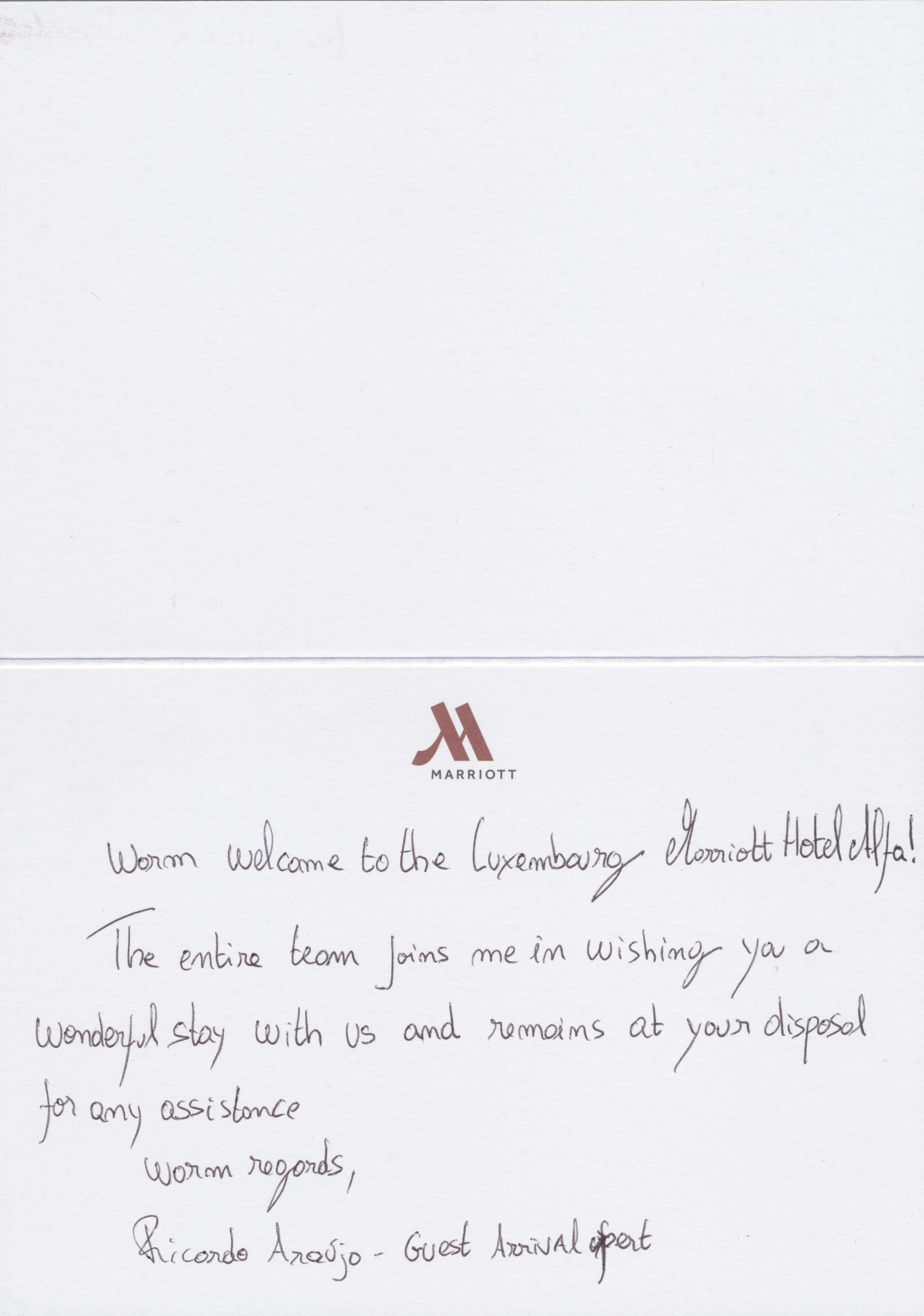
The other card contained a welcome note.
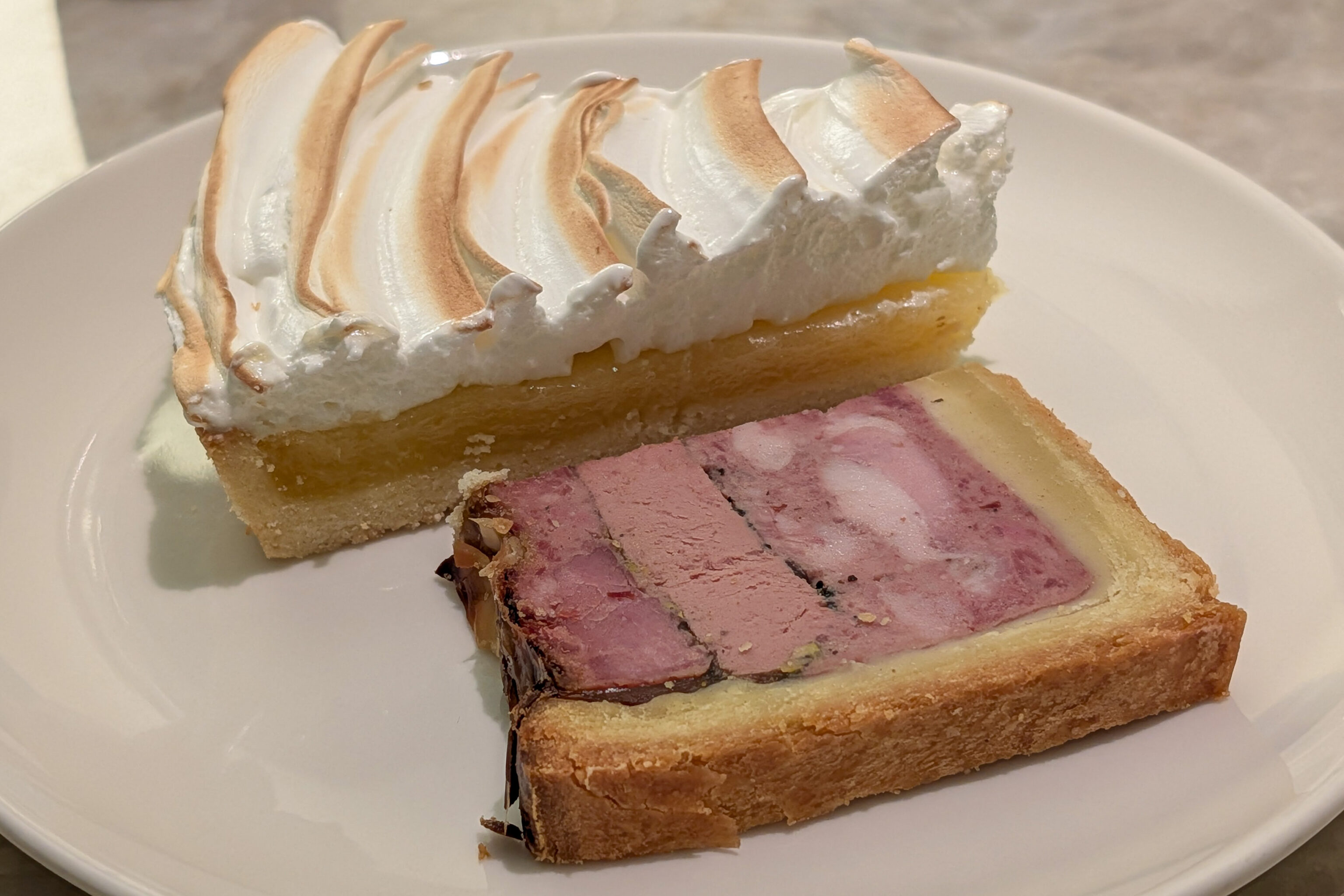
We went to the M Lounge to take a look at what snacks were available. We arrived as they were starting to put the items away for the evening. We got a bit of pâté as well as lemon meringue pie.
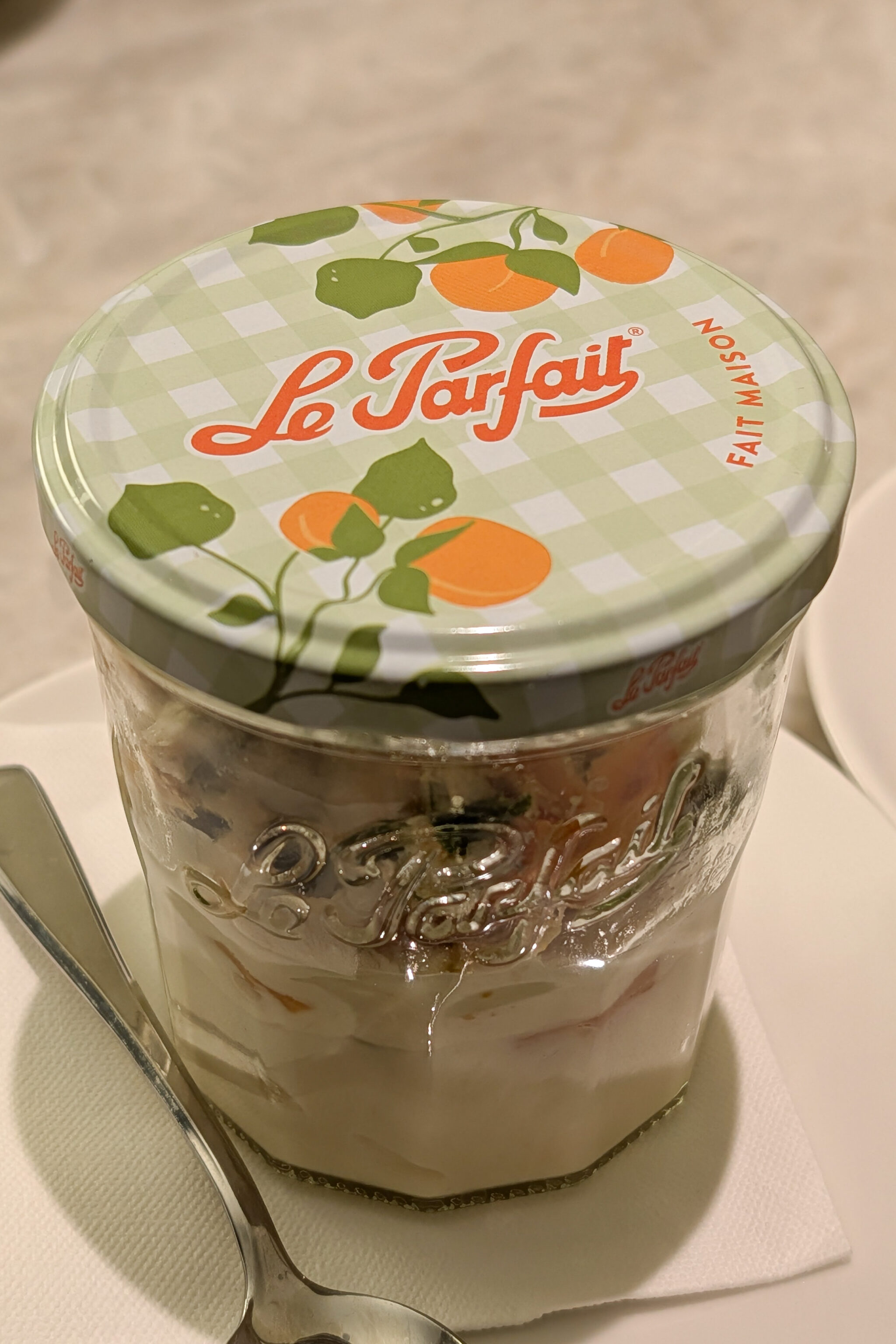
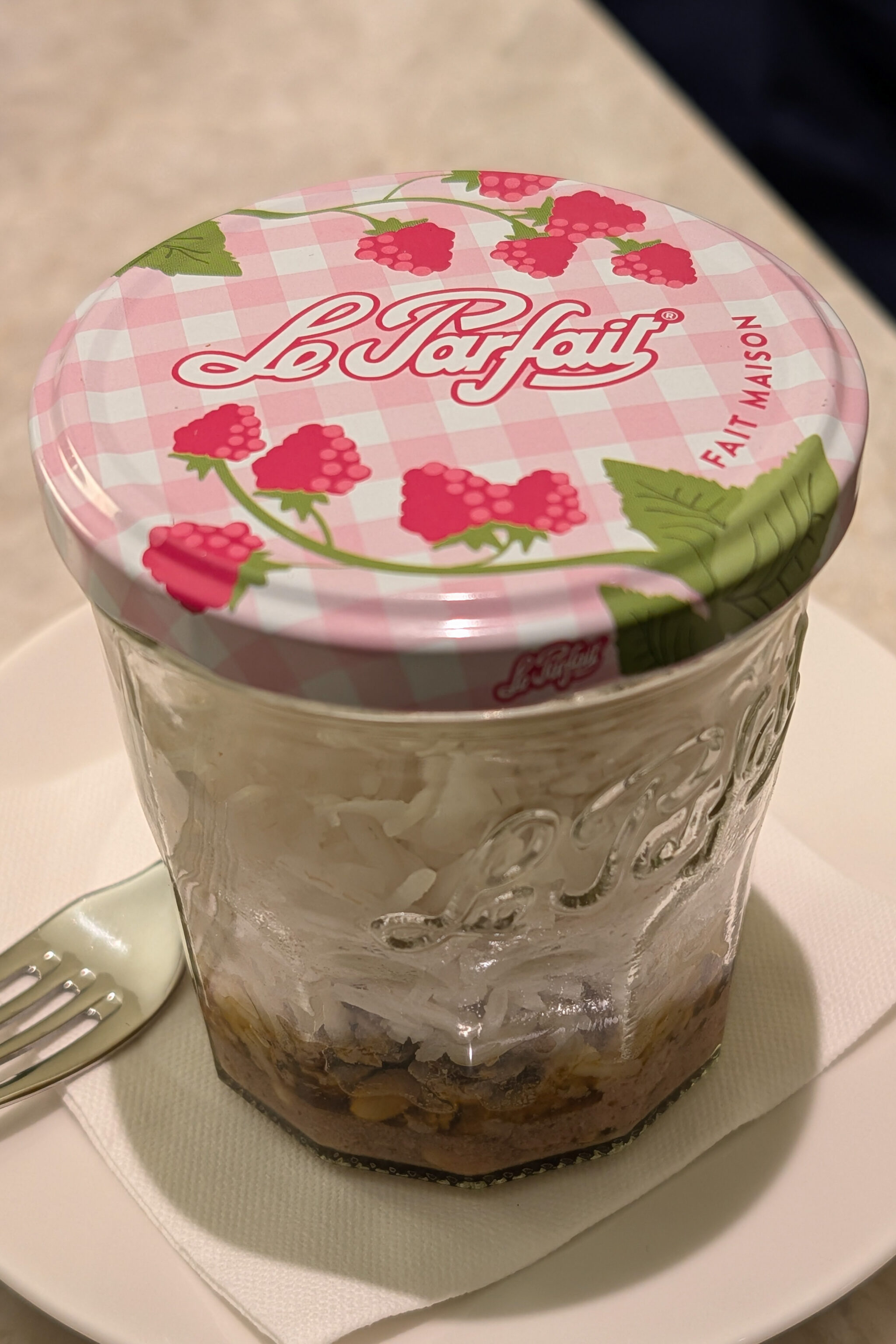
he lounge attendant offered two hot items from the restaurant, which we accepted. They were served in jars, which we found amusing.
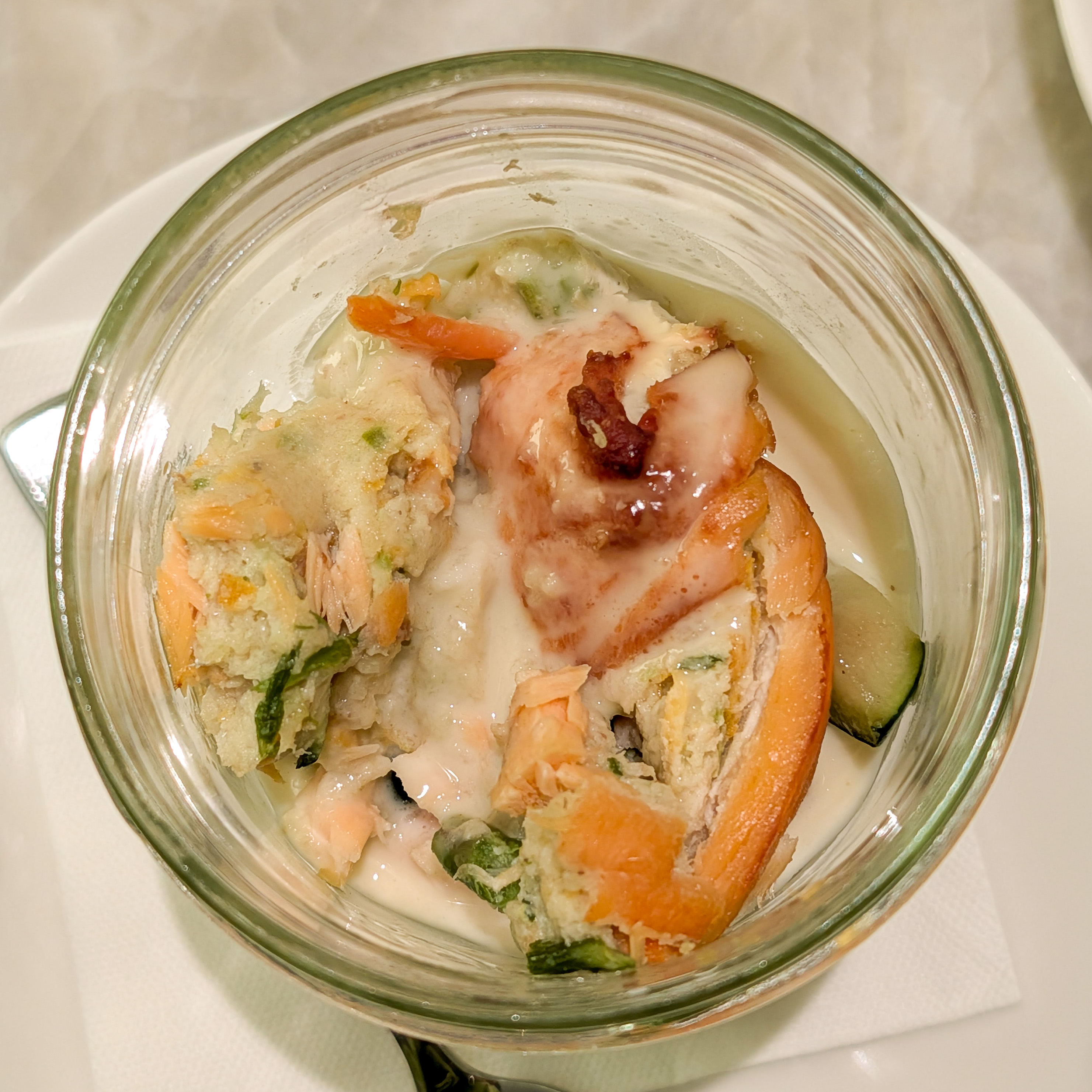
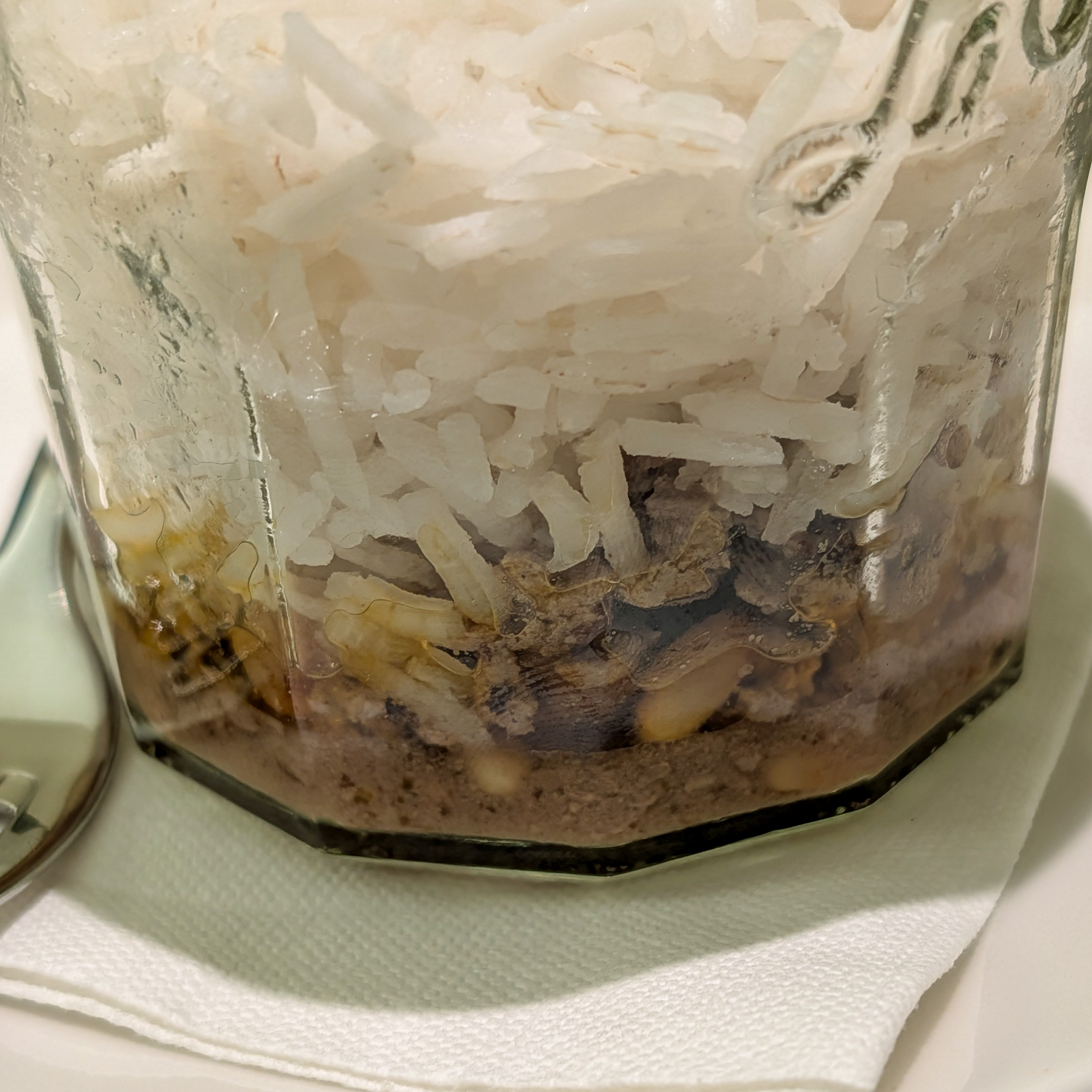
One was sort of like a cream soup with salmon and some other chunks of stuff, possibly also a bit of shrimp. The other jar had rice with seasoned ground beef. Both were decent, although they don’t really photograph well! We did see in the lounge that they also had small portions of salad served in jars.
The lounge also had bottled Belgian juice. We think we possibly recall the brand from our stay at the Marriott Hotel Grand Place in Brussels years ago.
After snacking in the lounge, we decided to head out and take a look around. And possibly eat some more…
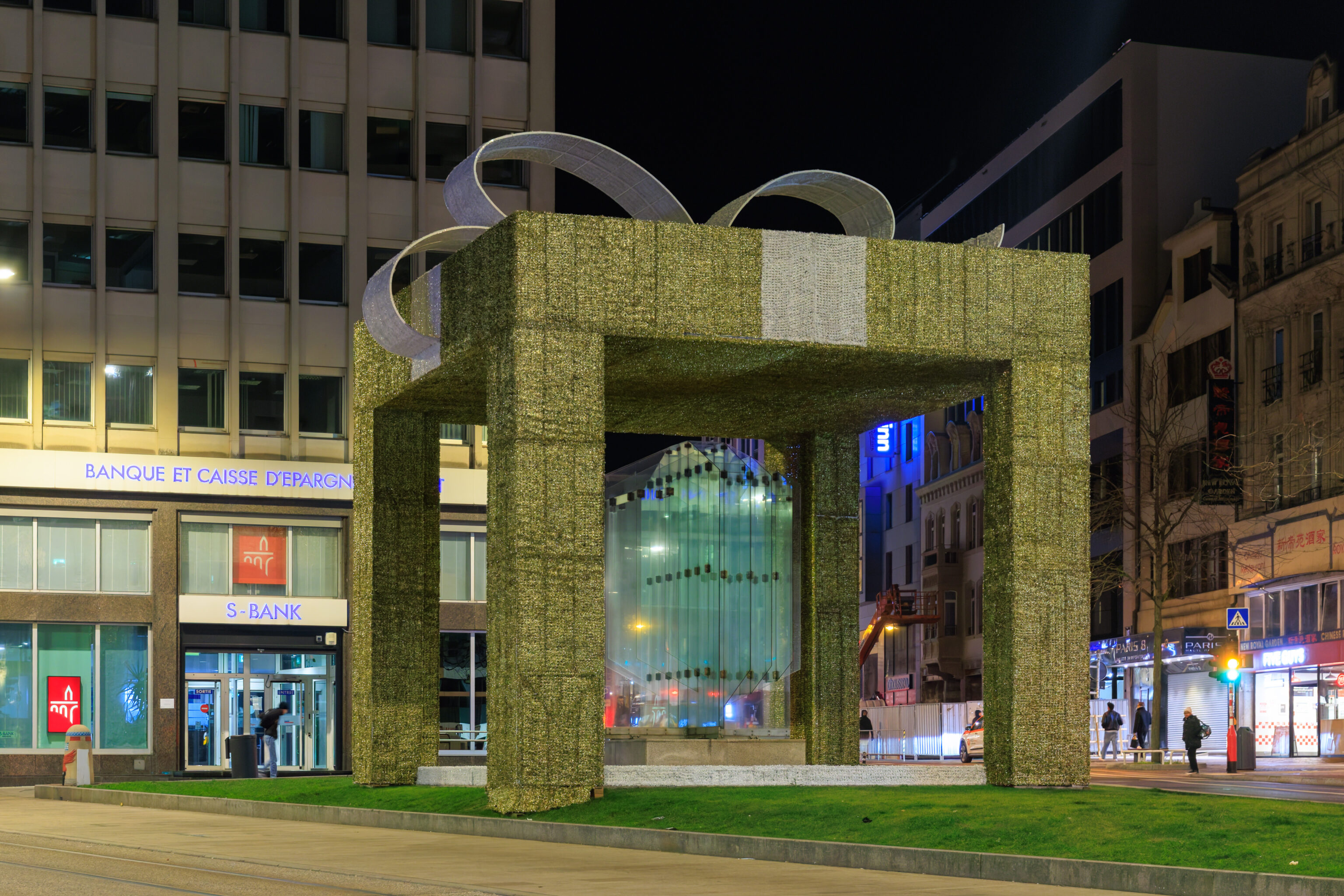
We noticed this Christmas present canopy on the opposite side of an X shaped intersection right by the hotel.
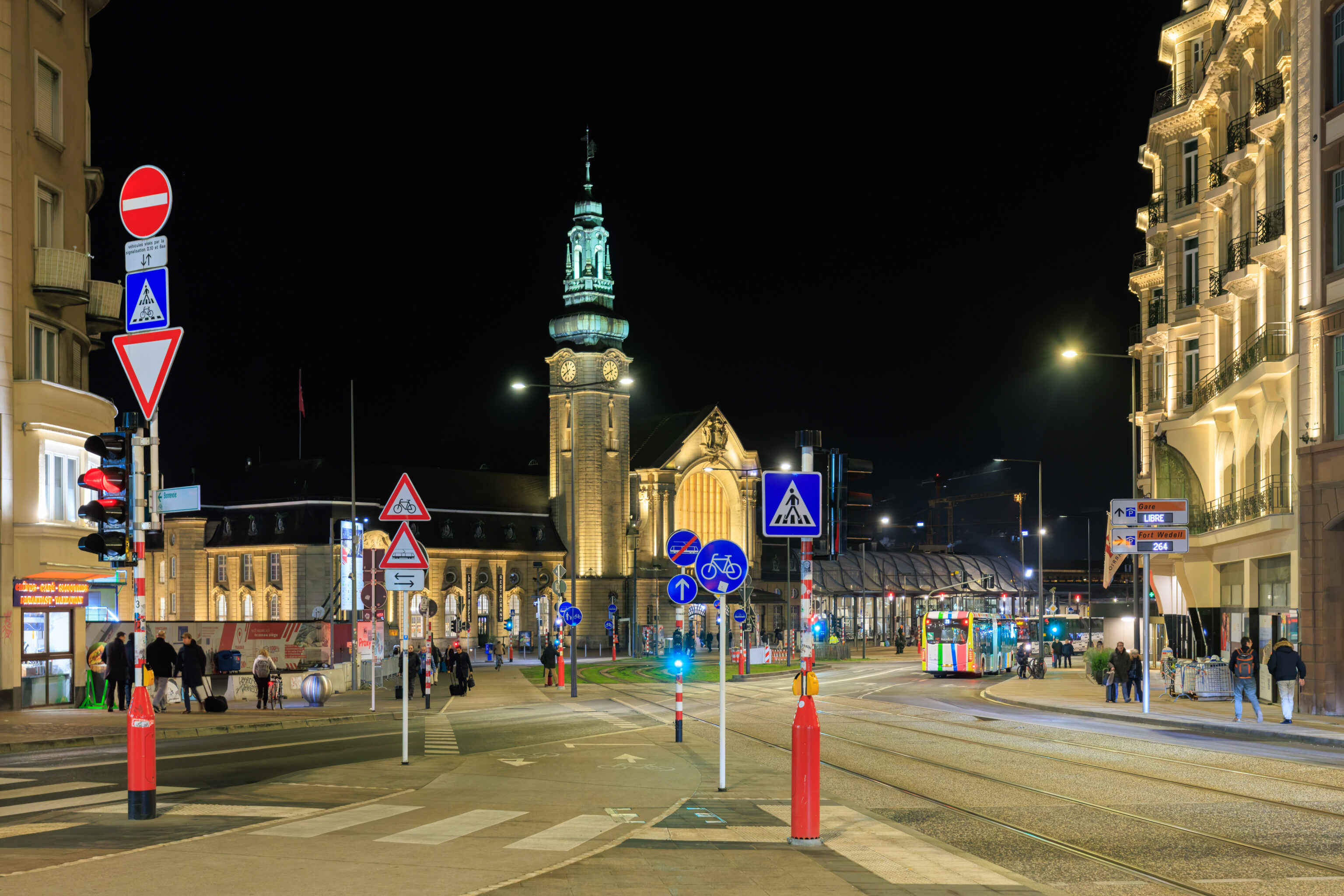
We crossed the nearest street by the intersection. This was the view looking towards the train station with the Marriott over on the right.
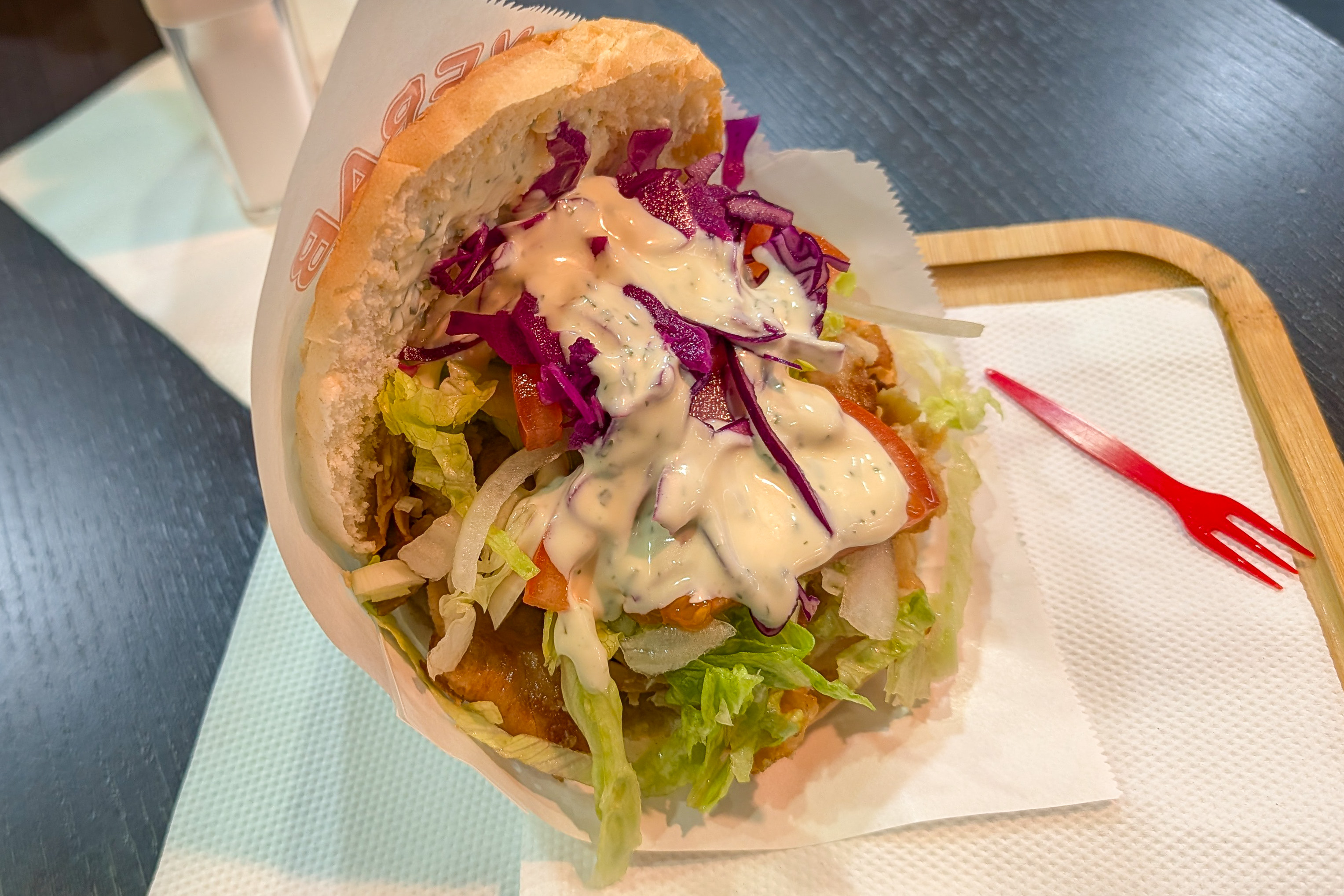
We got döner from Liam Food near the Marriott. There are a ton of döner shops here, although they don’t seem to use the German döner term here. Döner is always good and this was no exception.
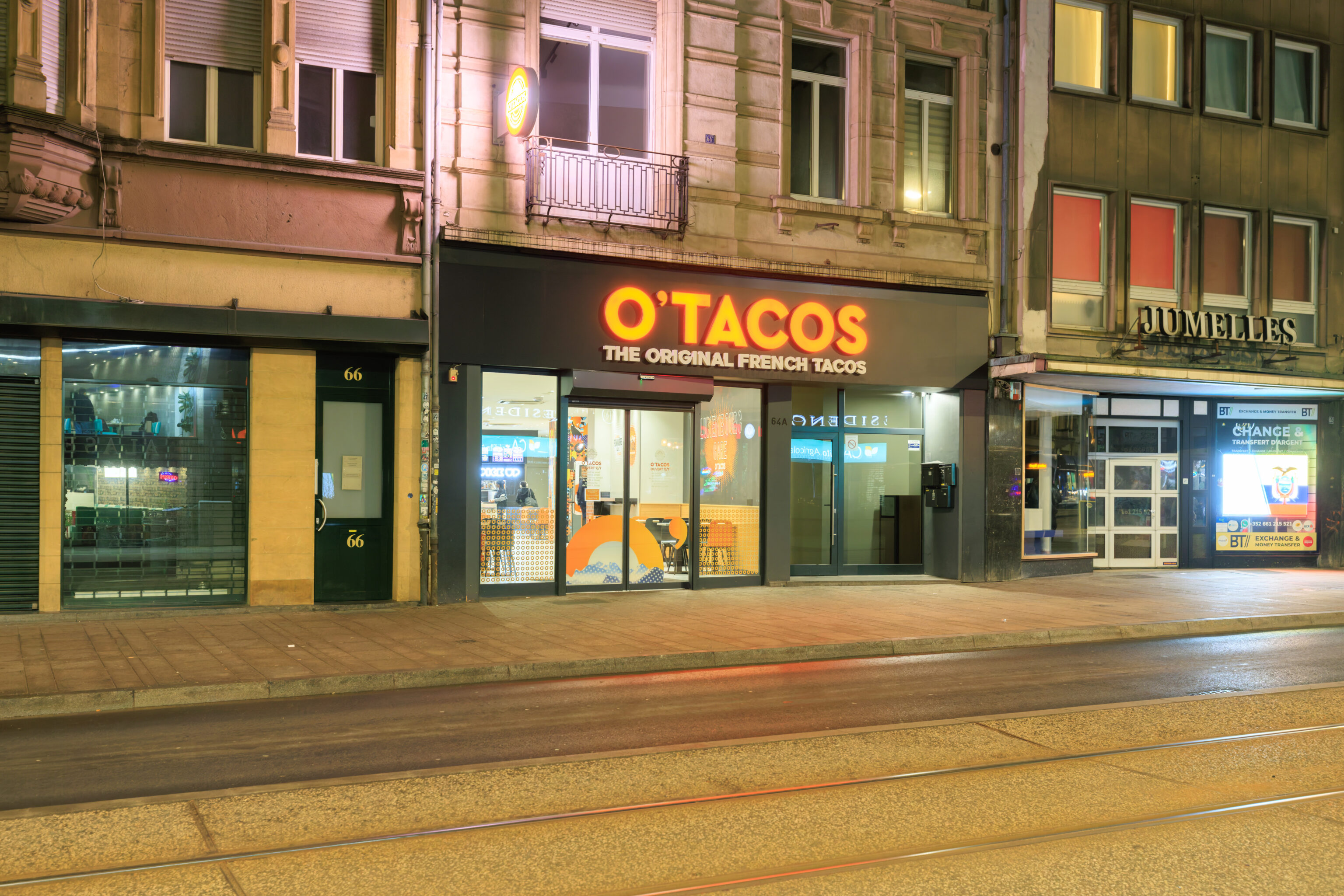
We found the presence of a French taco shop named O’Tacos to be amusing!
It turns out that this is actually a trendy brand in France. It turns out that the founders came up with this concept and started their first restaurant in Grenoble, a city we visited just two months a go!
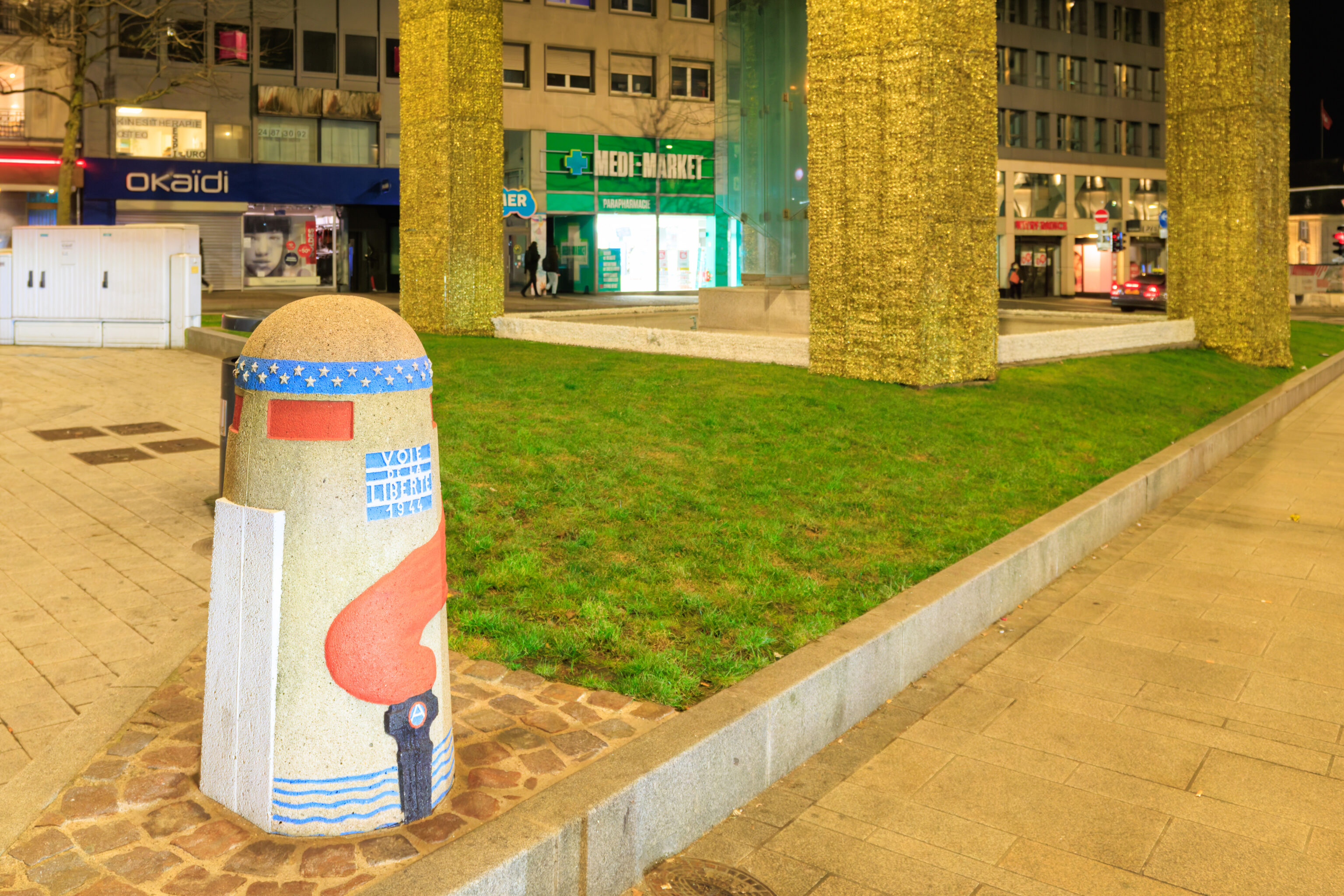
On our way back to the Marriott, we noticed this colorful Voie de la Liberte (Liberty Road) marker near the Christmas present canopy. There are 1,146 of these markers starting from Normandy and ending here in Luxembourg, with one per kilometer. They mark the path of General Patton, who apparently is still very well liked here in Luxembourg. He is actually buried in the American Cemetery on the east side of the city near the airport.
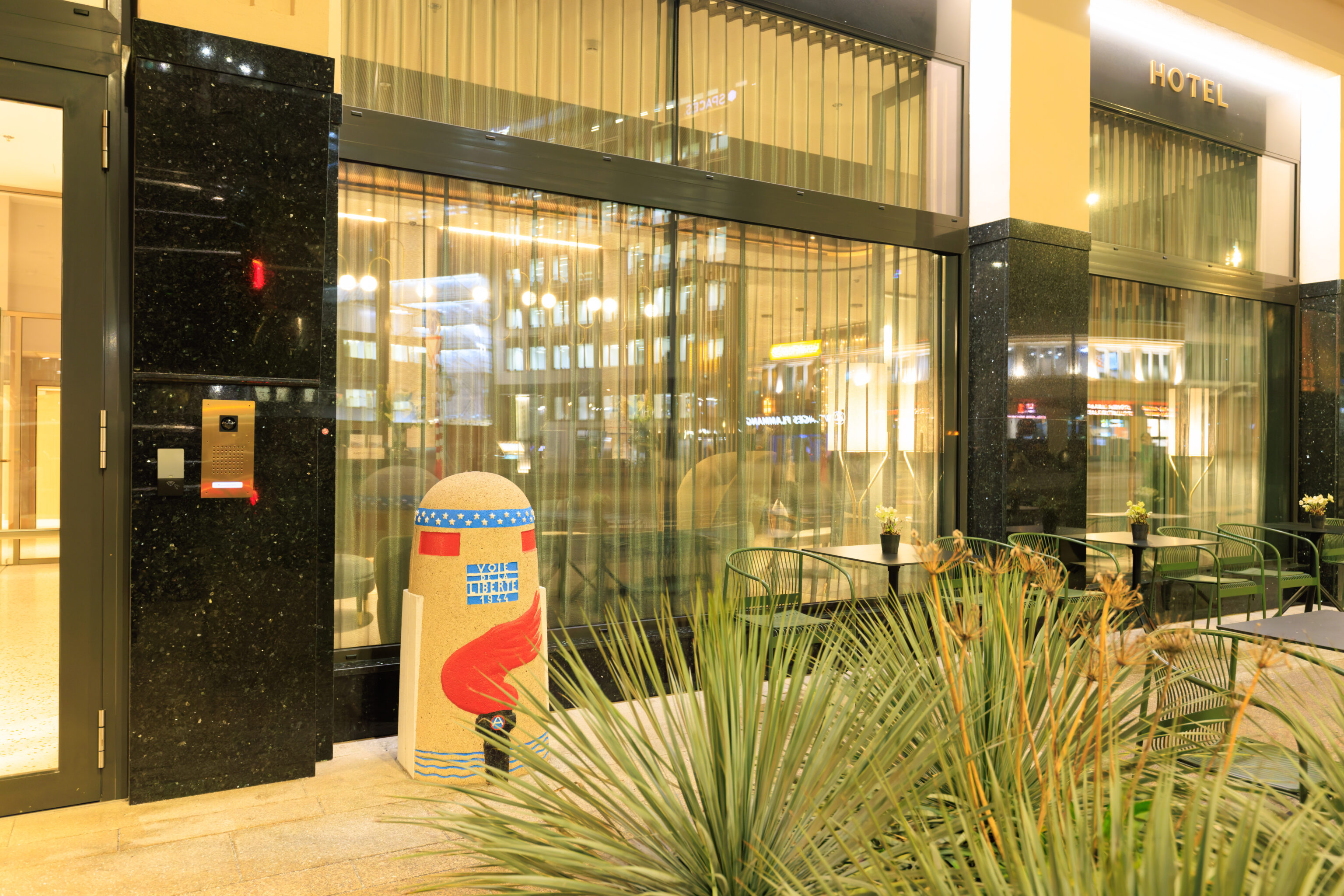
There was another one by the Marriott. They were significantly less than one kilometer apart!
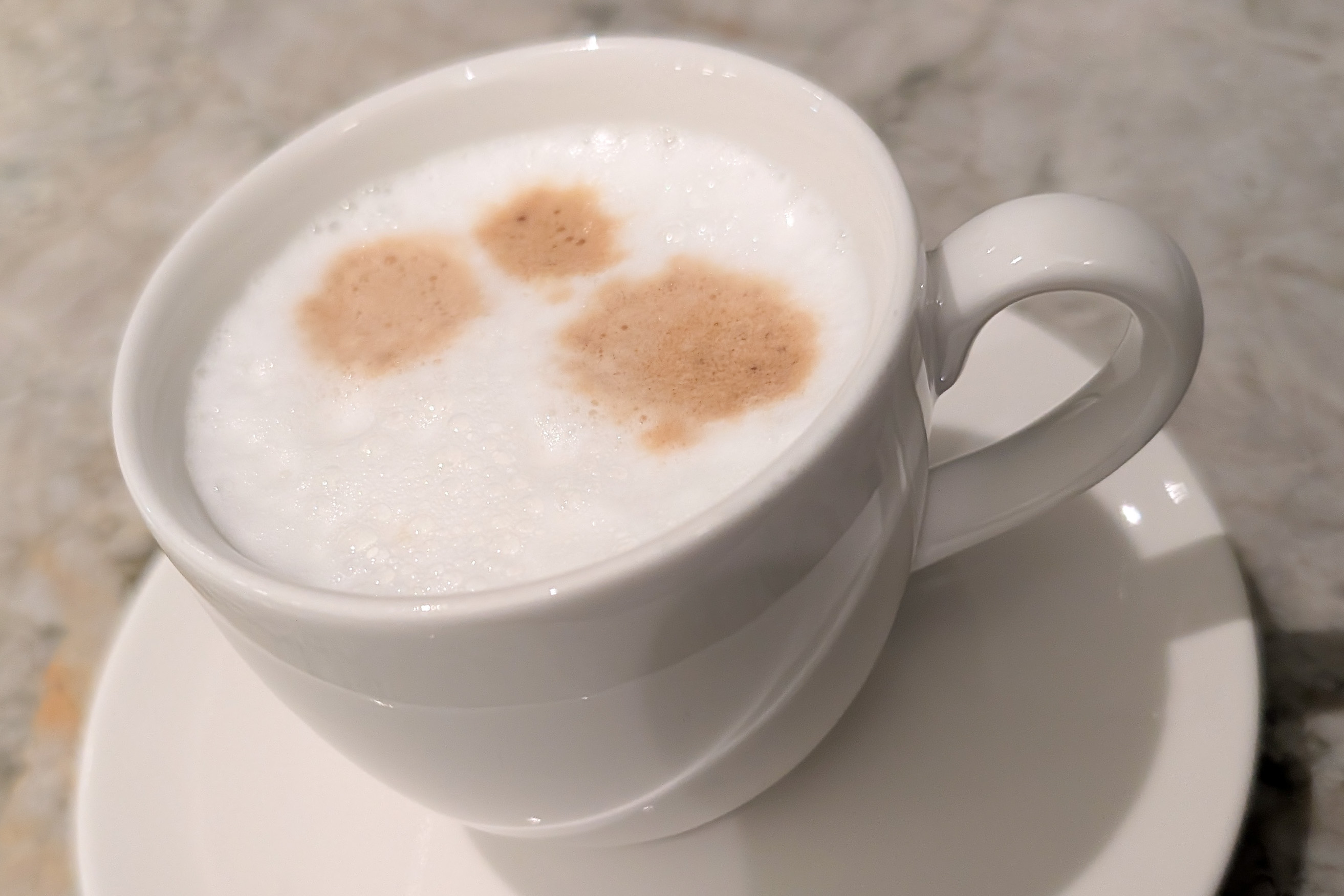
We went back to the lounge to try the coffee. Cappuccino and ristretto together from the machine was pretty good!
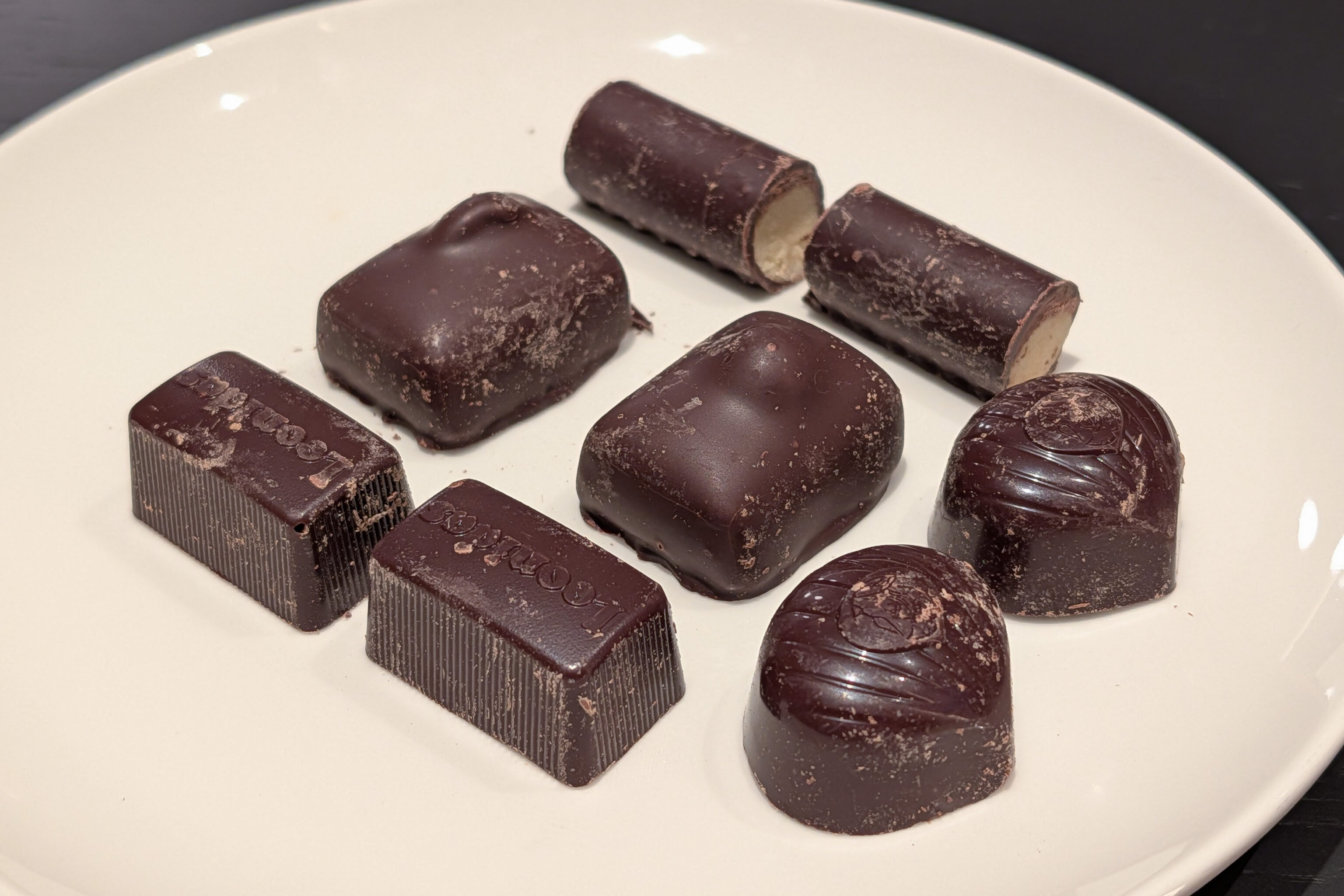
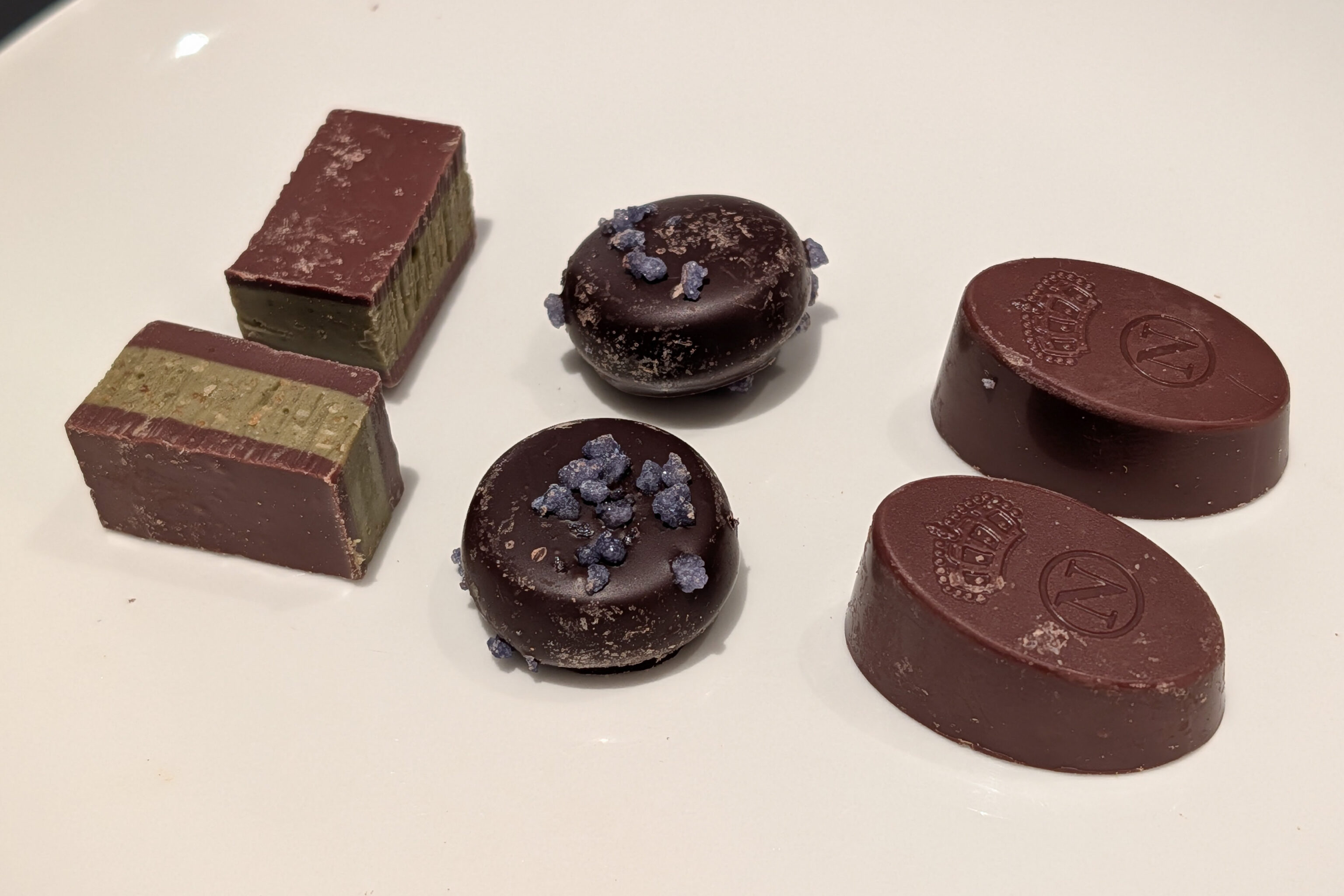
We also ate some of the chocolates we bought in Namur after staging them on the plate that in our room from the sweets that were in the room.
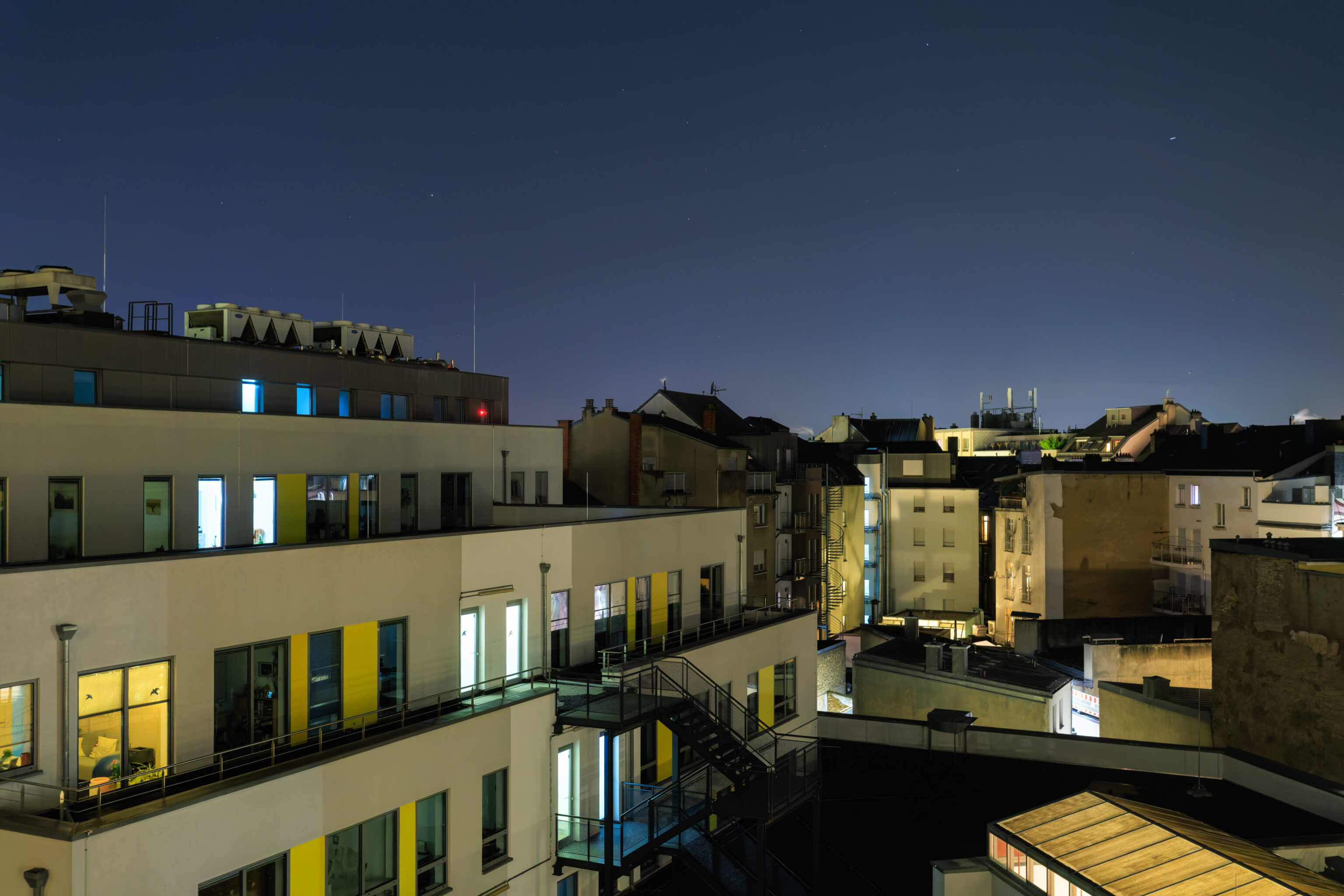
Our room was at the northwest corner of the hotel and faced north. Although our room faced out, it faced the rear of the other buildings on this irregularly shaped block.