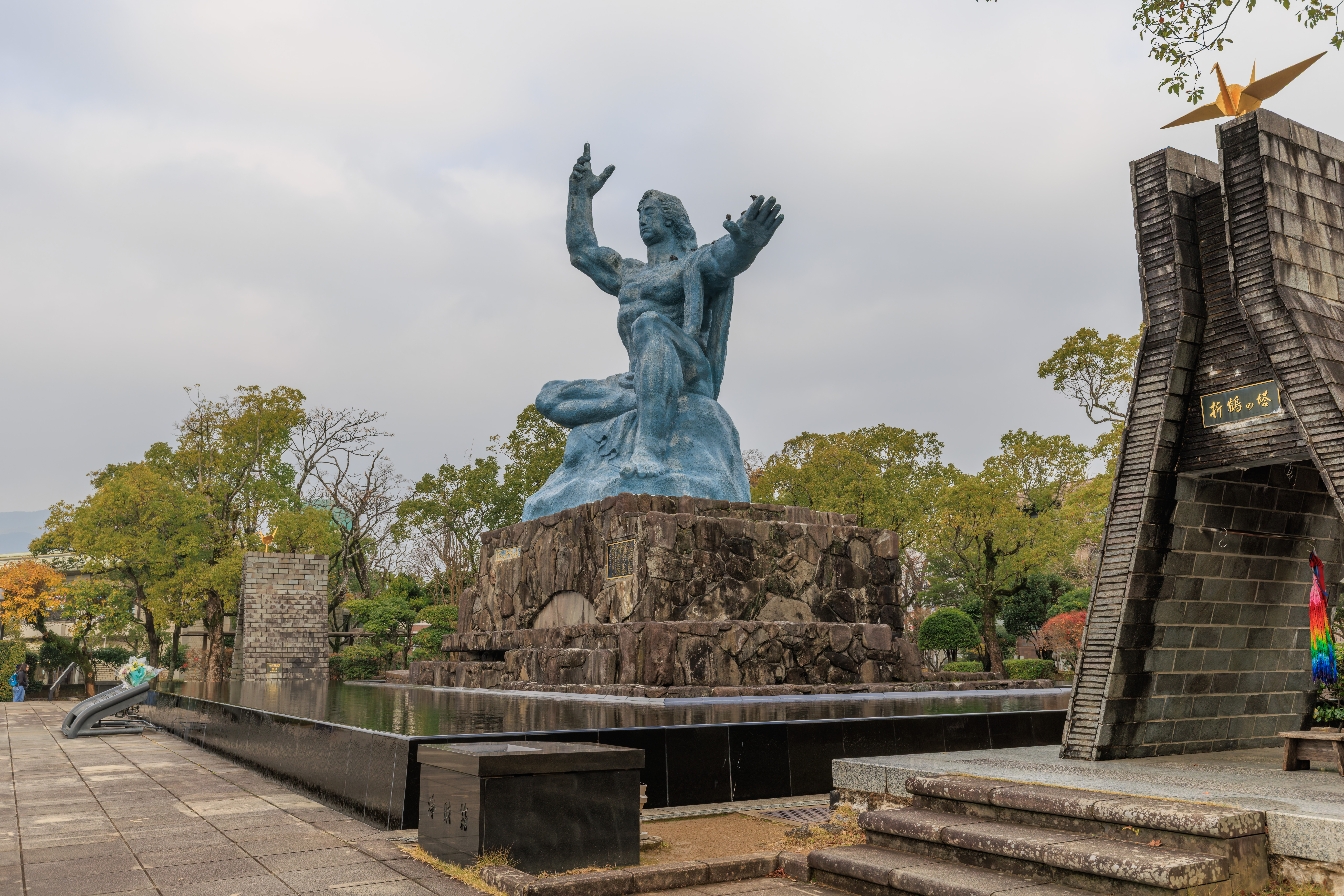
After breakfast at the 長崎マリオット Nagasaki Marriott, we headed north to visit the 平和公園 Peace Park and 浦上天主堂 Urakami Cathedral before lunch. After, we visited the atomic bomb hypocenter and the adjacent 原爆資料館 Atomic Bomb Museum and the 国立長崎原爆死没者追悼平和祈念館 Nagasaki National Peace Memorial Hall for the Atomic Bomb Victims. In the early evening, we returned to Nagasaki Station for dinner.
Morning
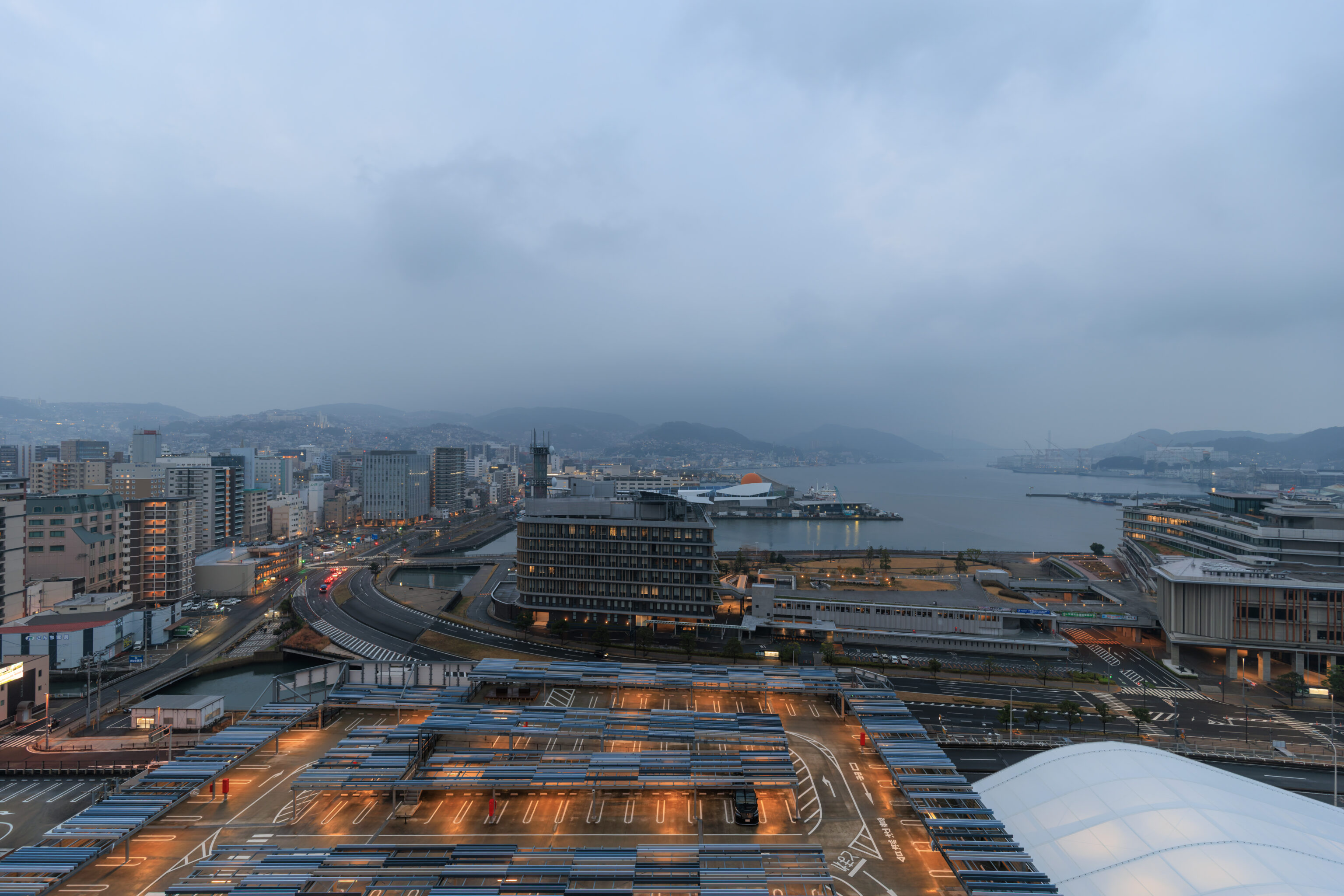
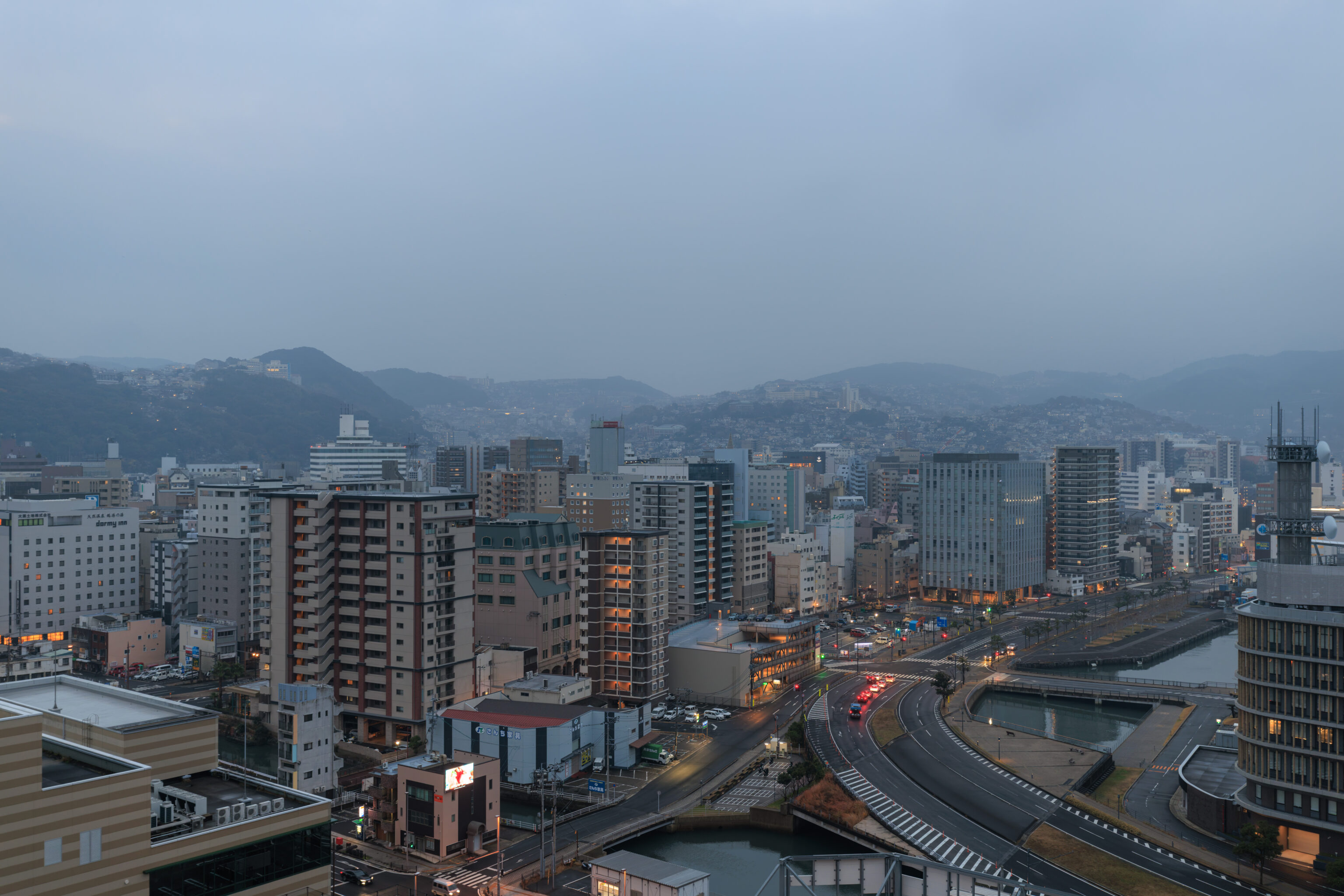
We woke up to a dark and cloudy scene.
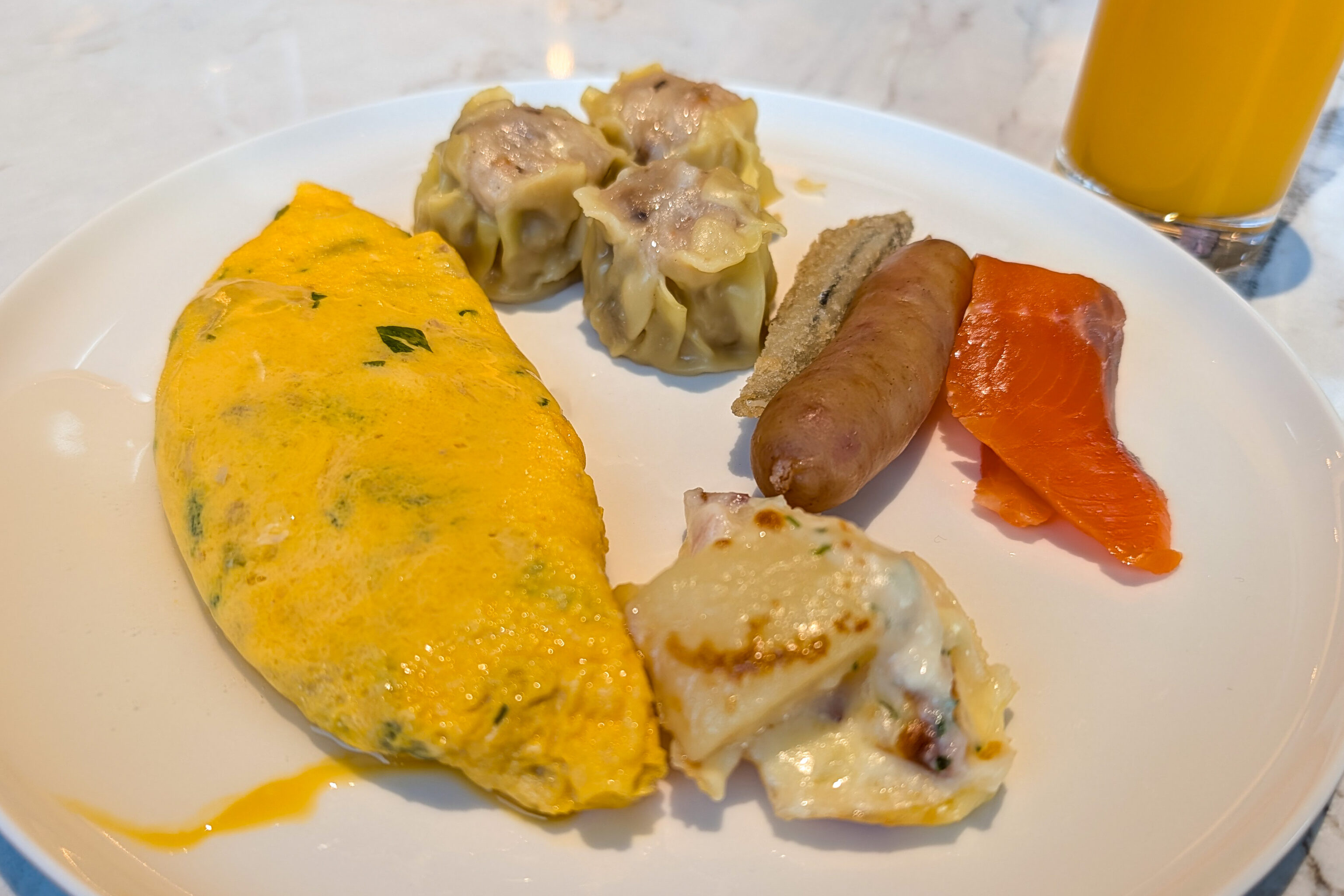
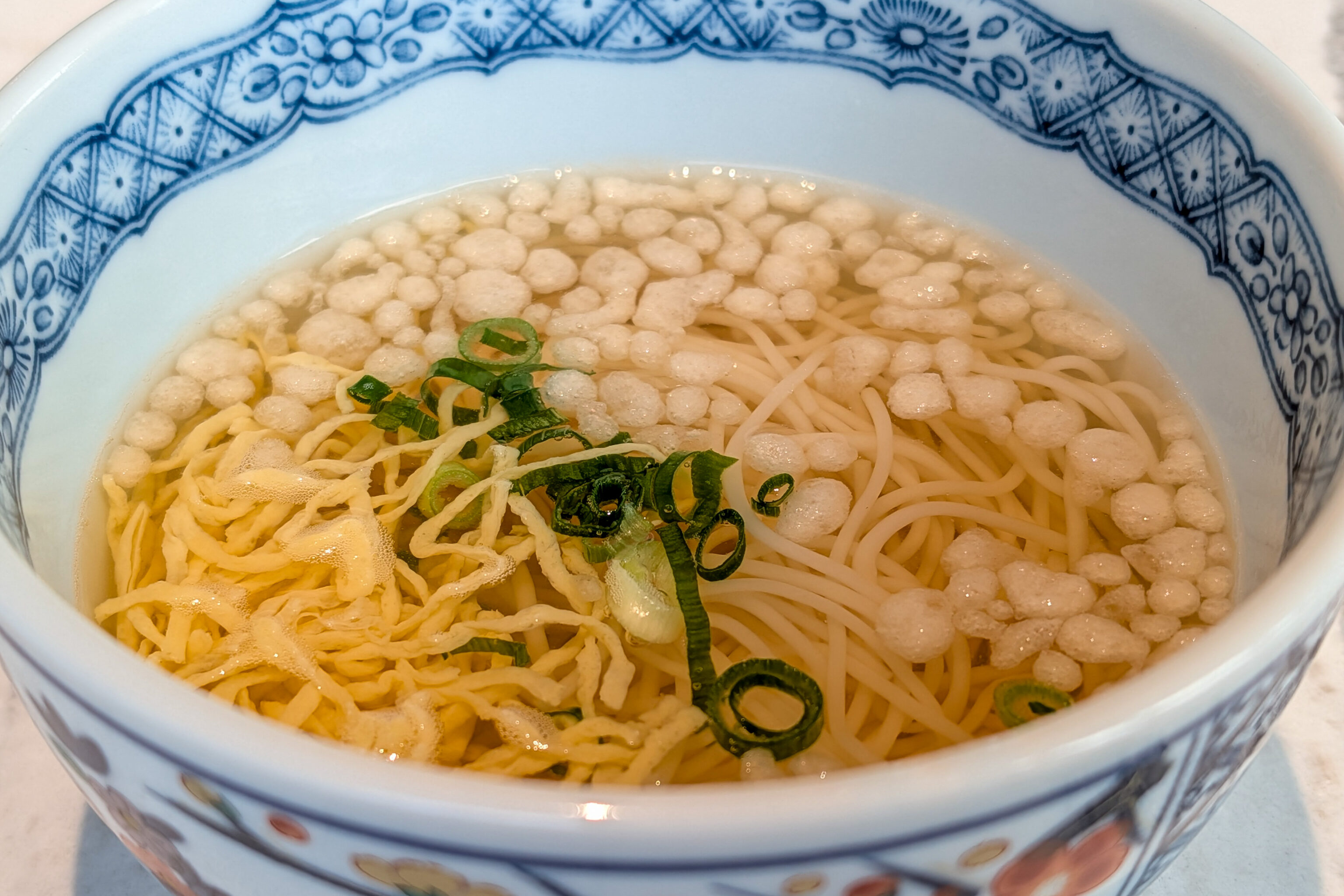
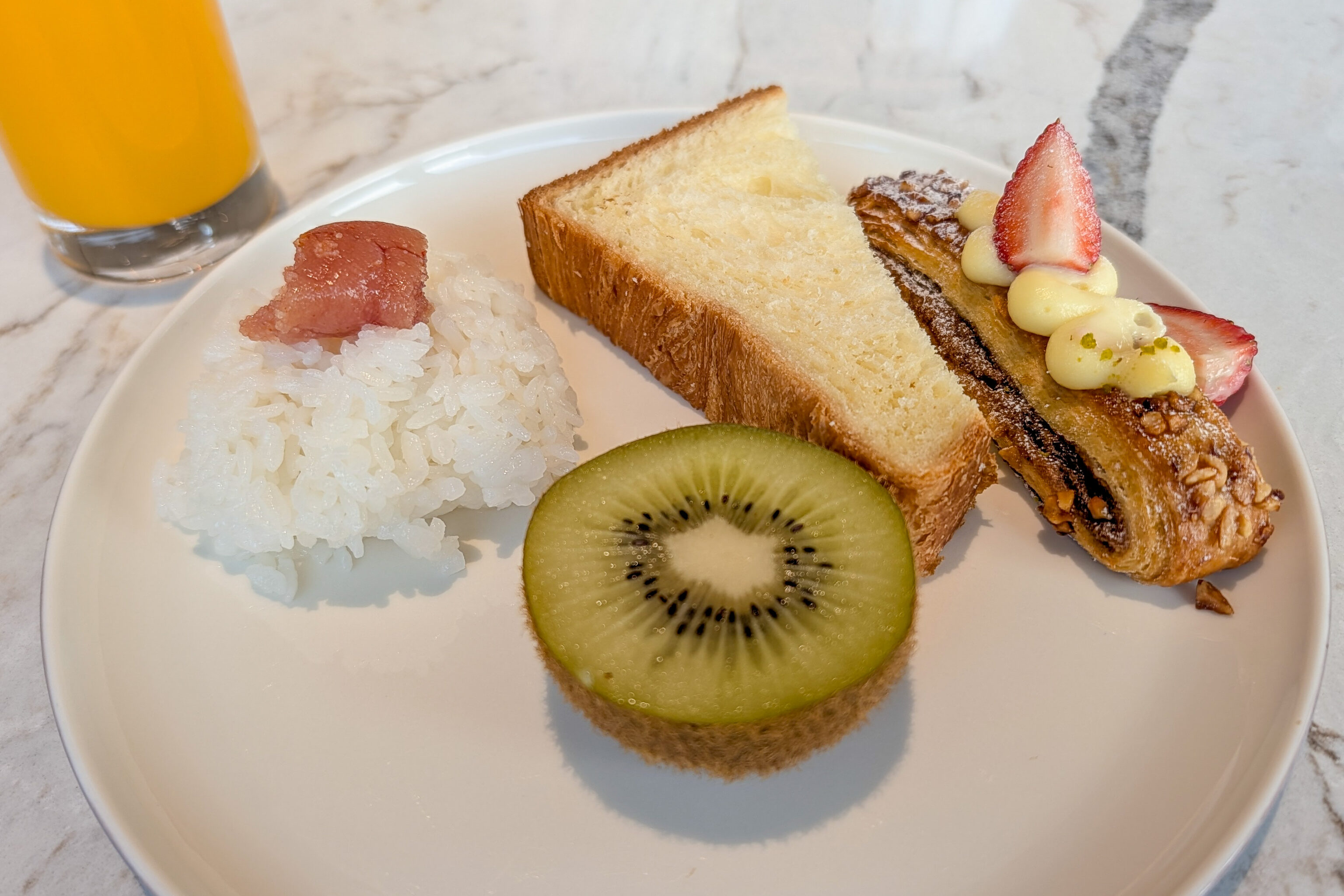
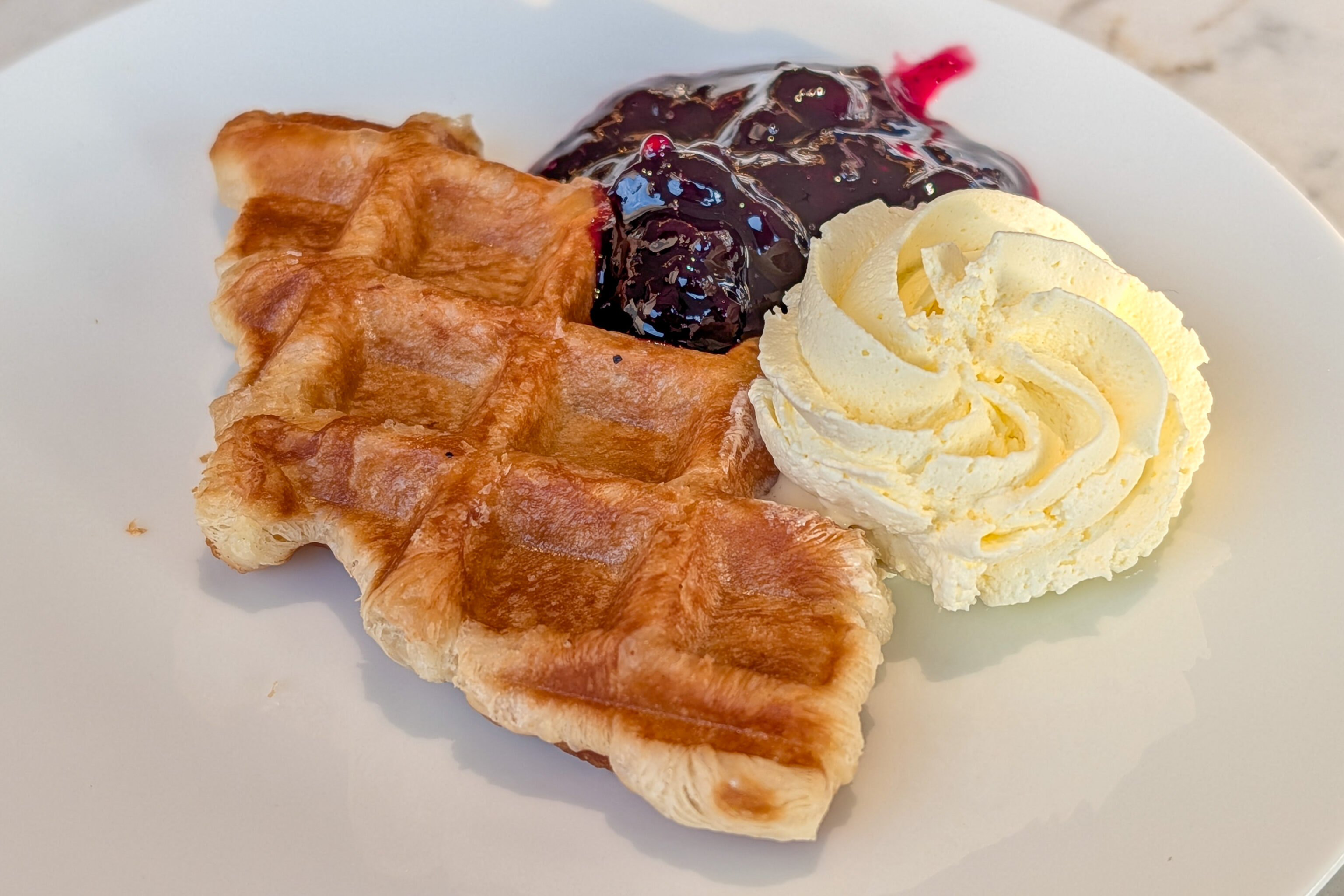
Breakfast at the Marriott was similar to yesterday with just a few differences. Unfortunately, they did not have any mikan today.
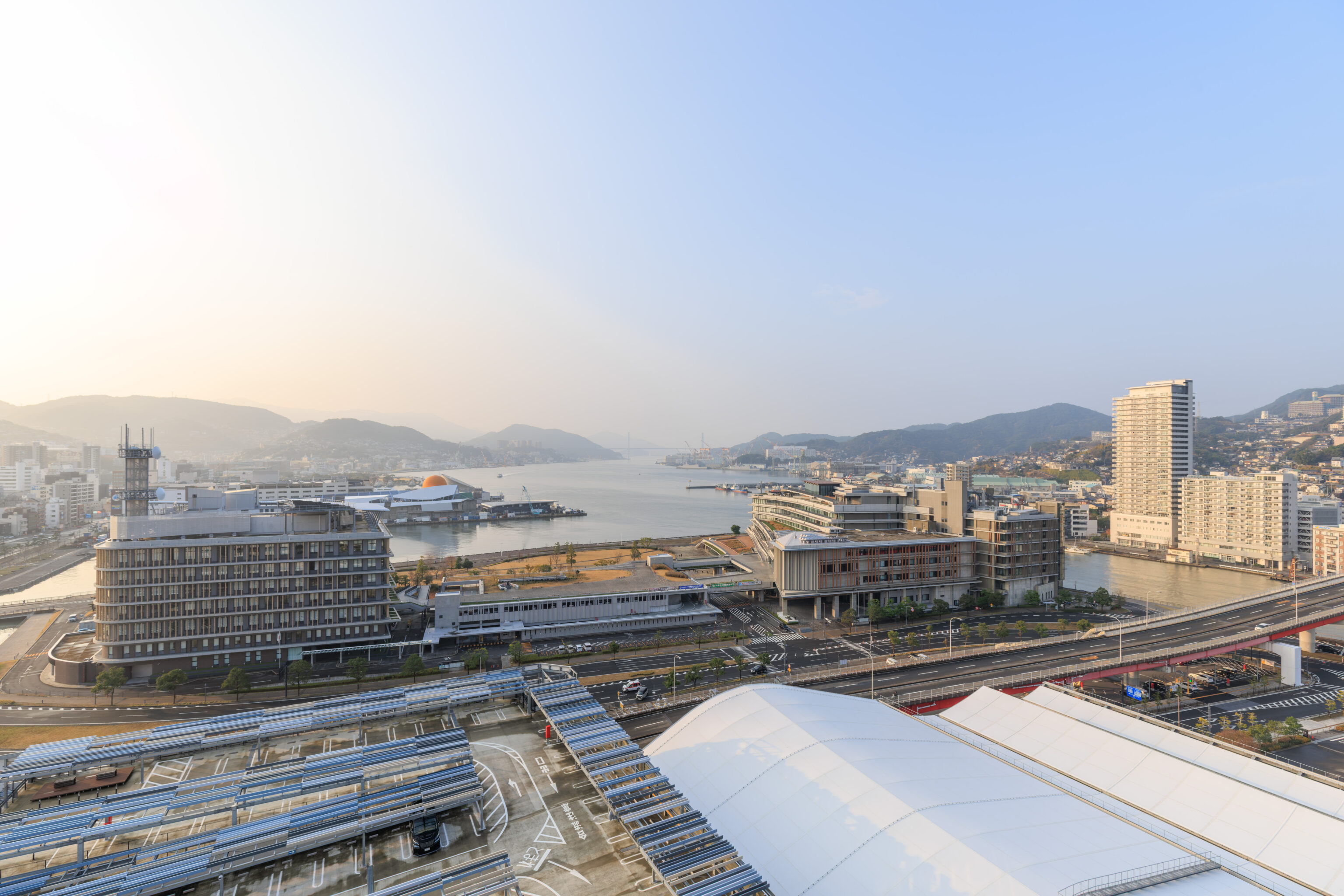
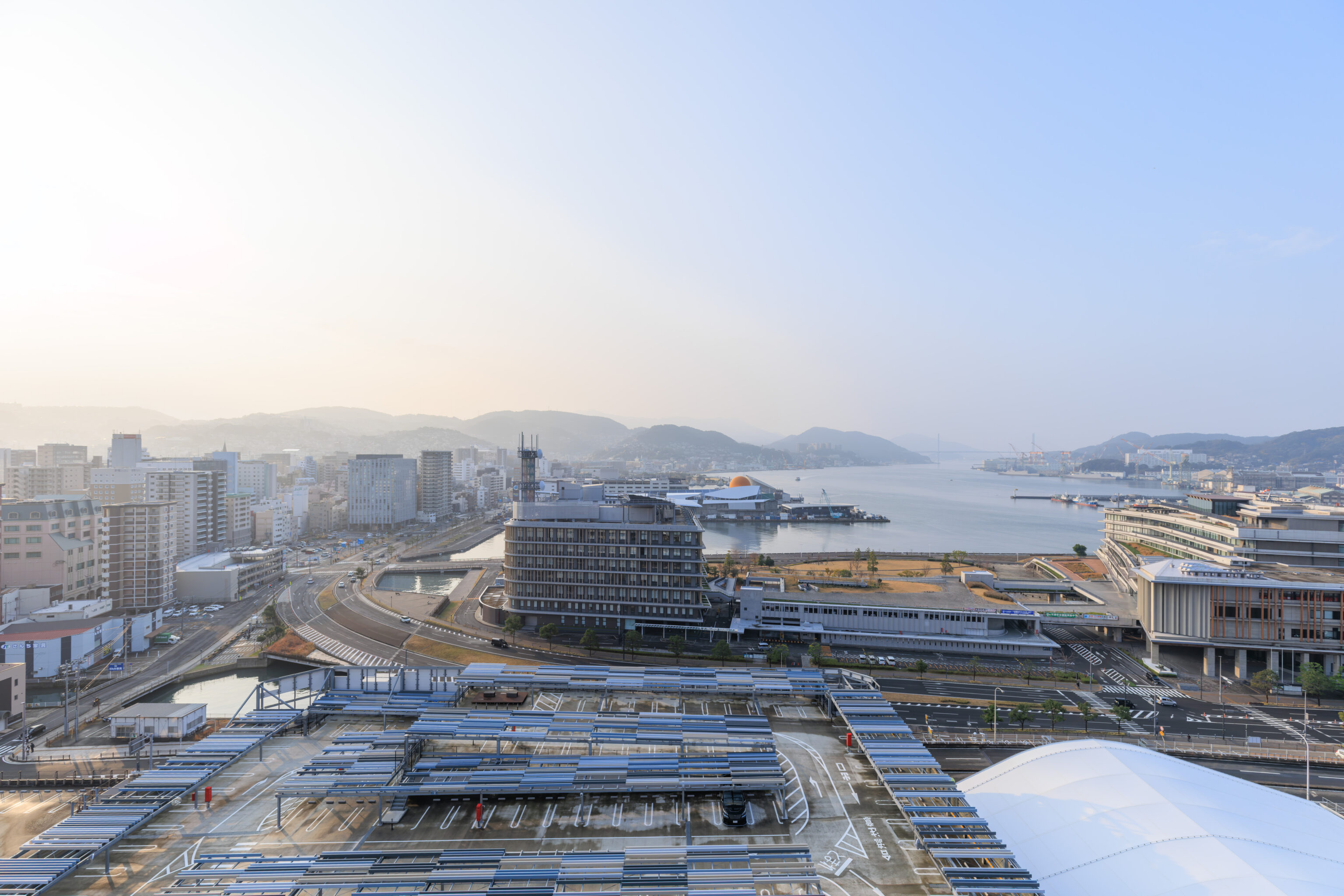
The weather looked pretty good after breakfast!
Nagasaki Peace Park
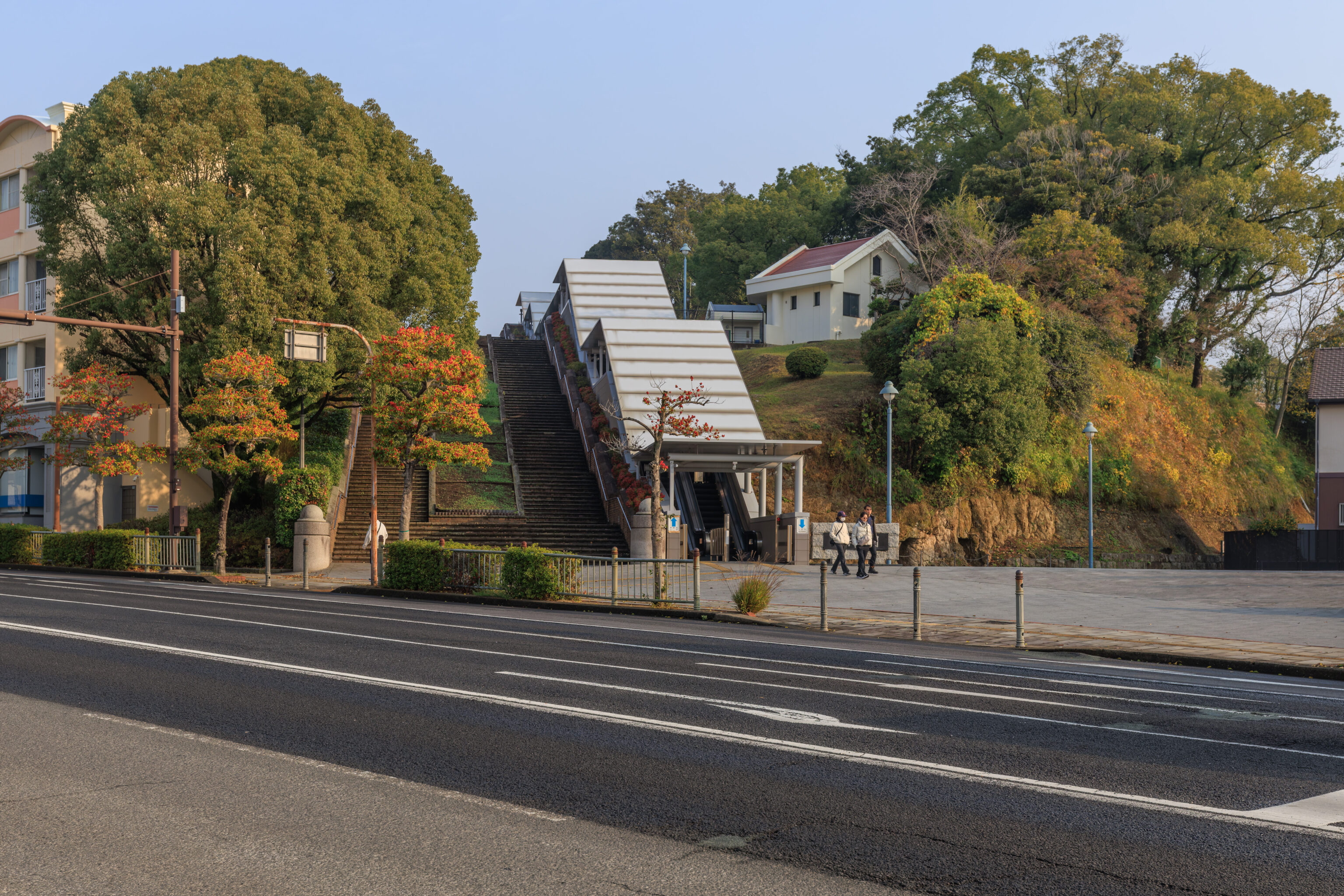
We headed north by bus to the Peace Park stop, a trip that takes less than 15 minutes. It is also possible to go by tram. The bus stop was directly across from the southwestern entrance to the park. We were surprised to see that there was an escalator going up the hill at the entrance!
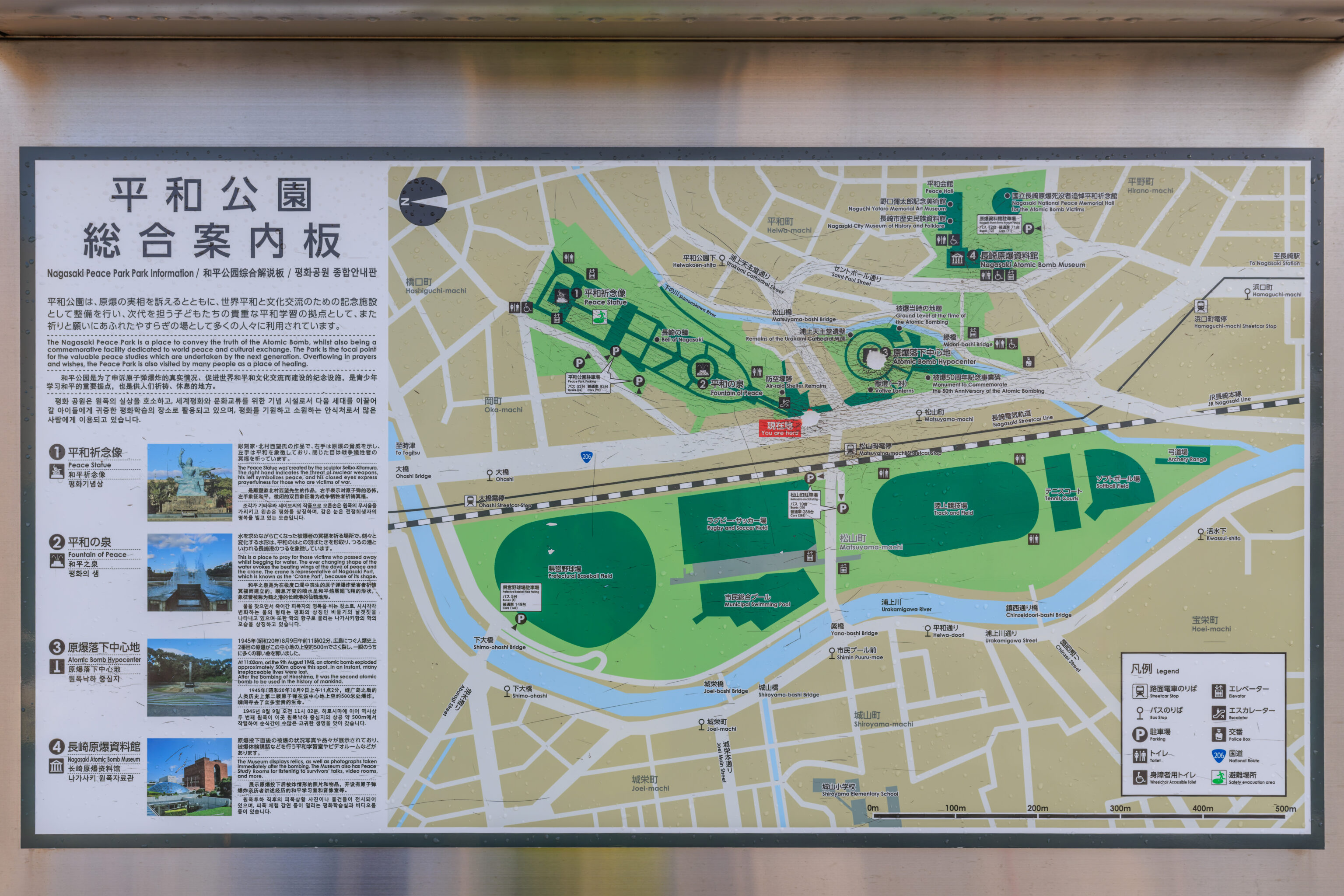
We crossed the street to enter the park. There was a sign with a map showing the various locations related to the atomic bombing of Nagasaki during World War II.
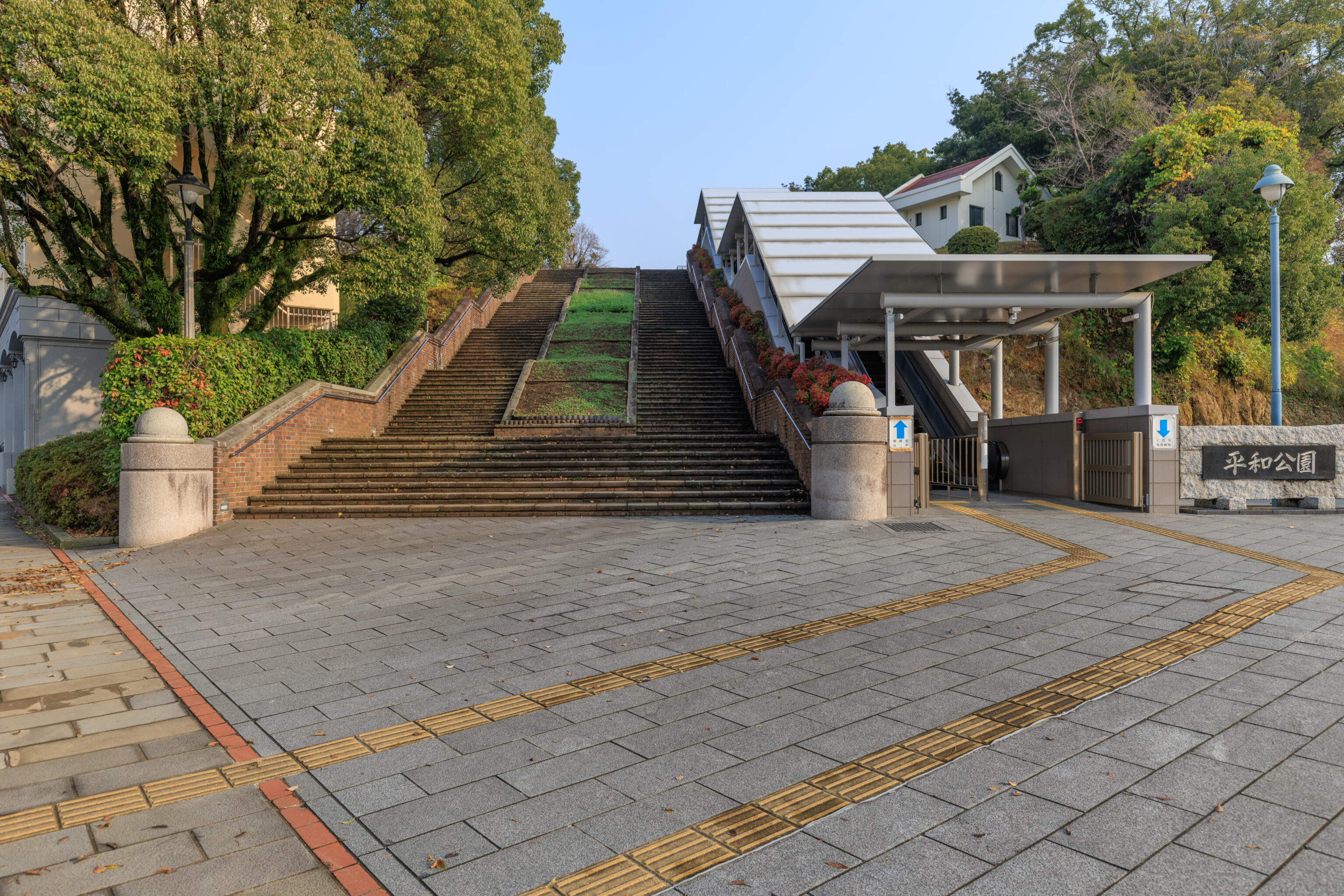
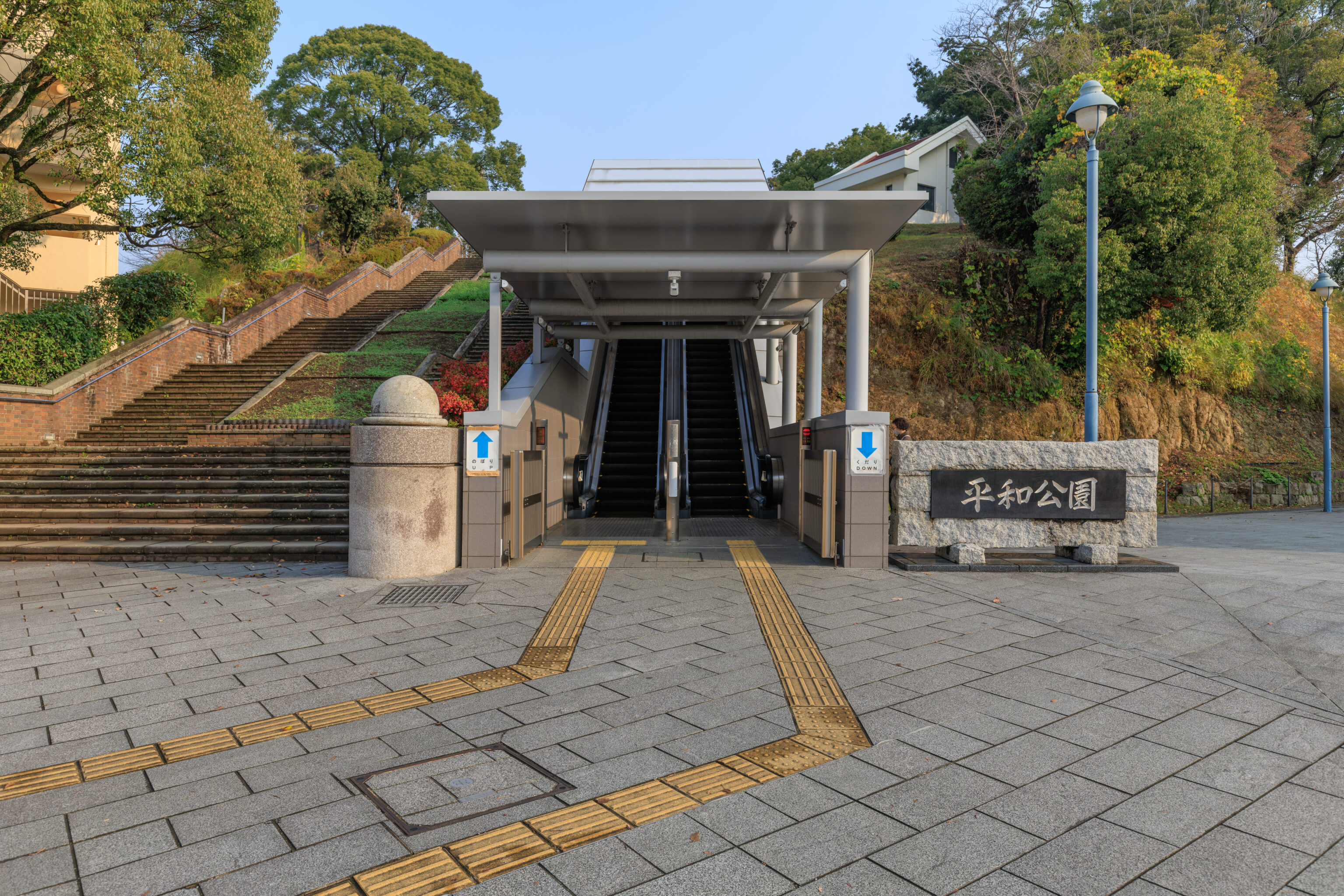
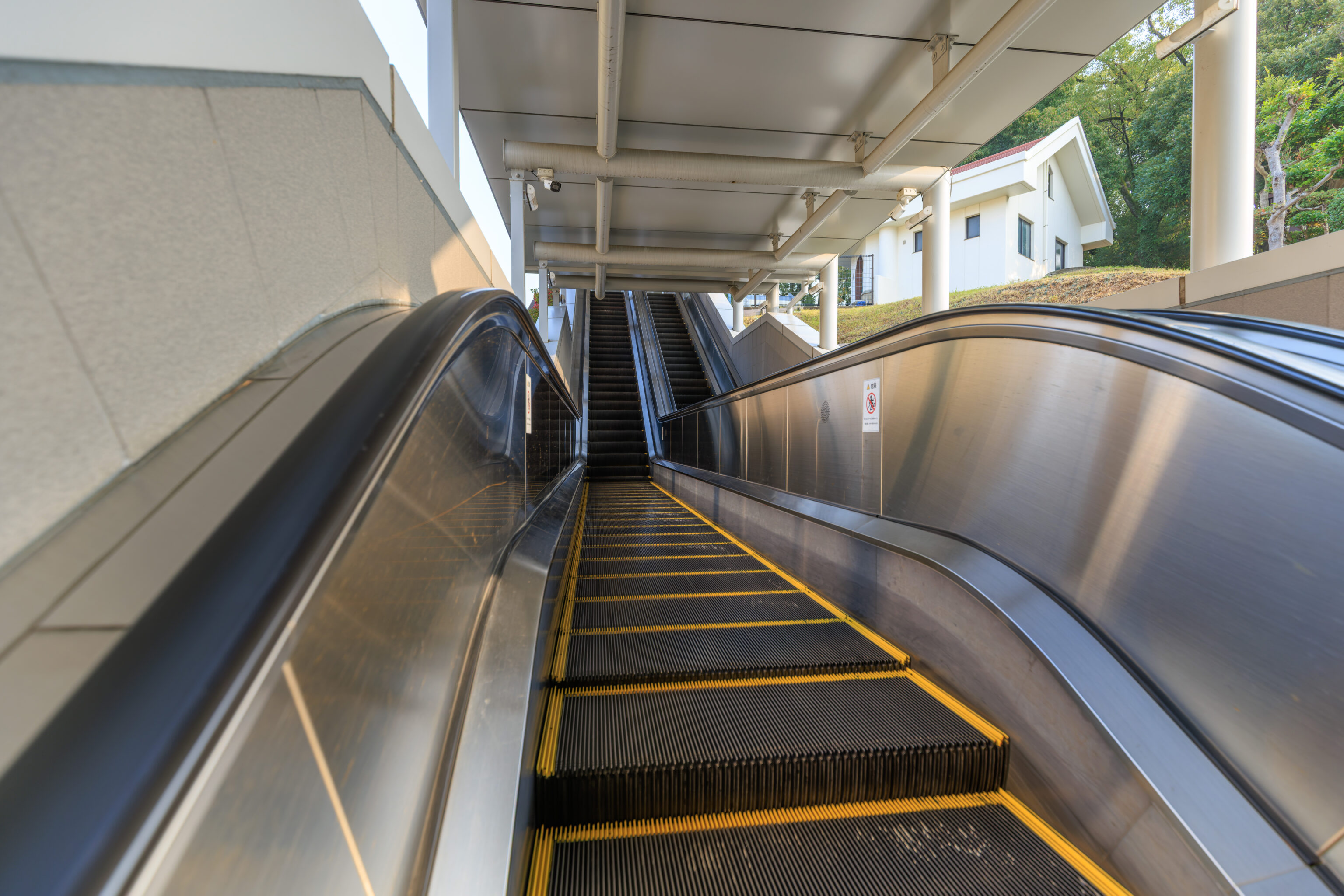
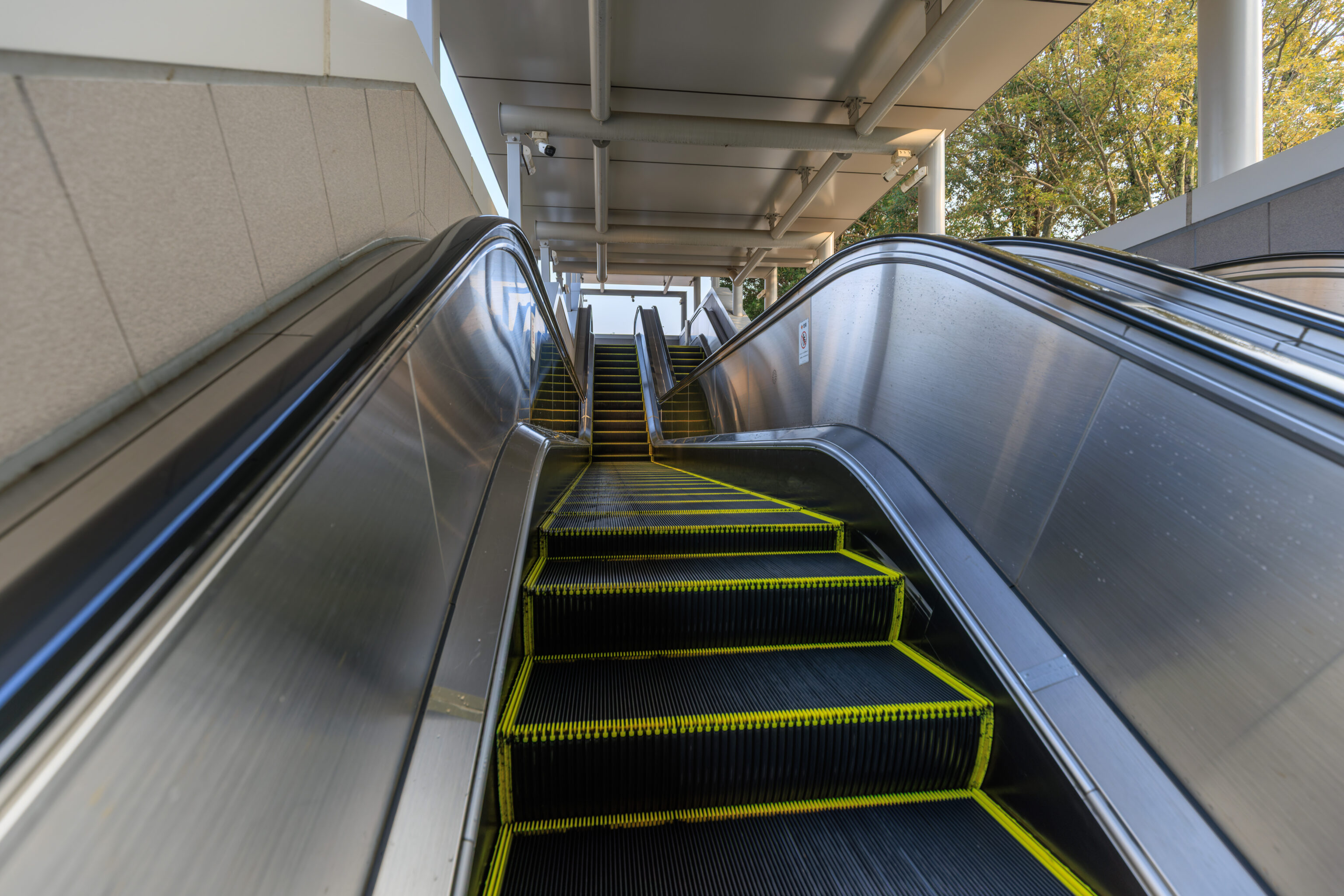
We, of course, took the escalator!
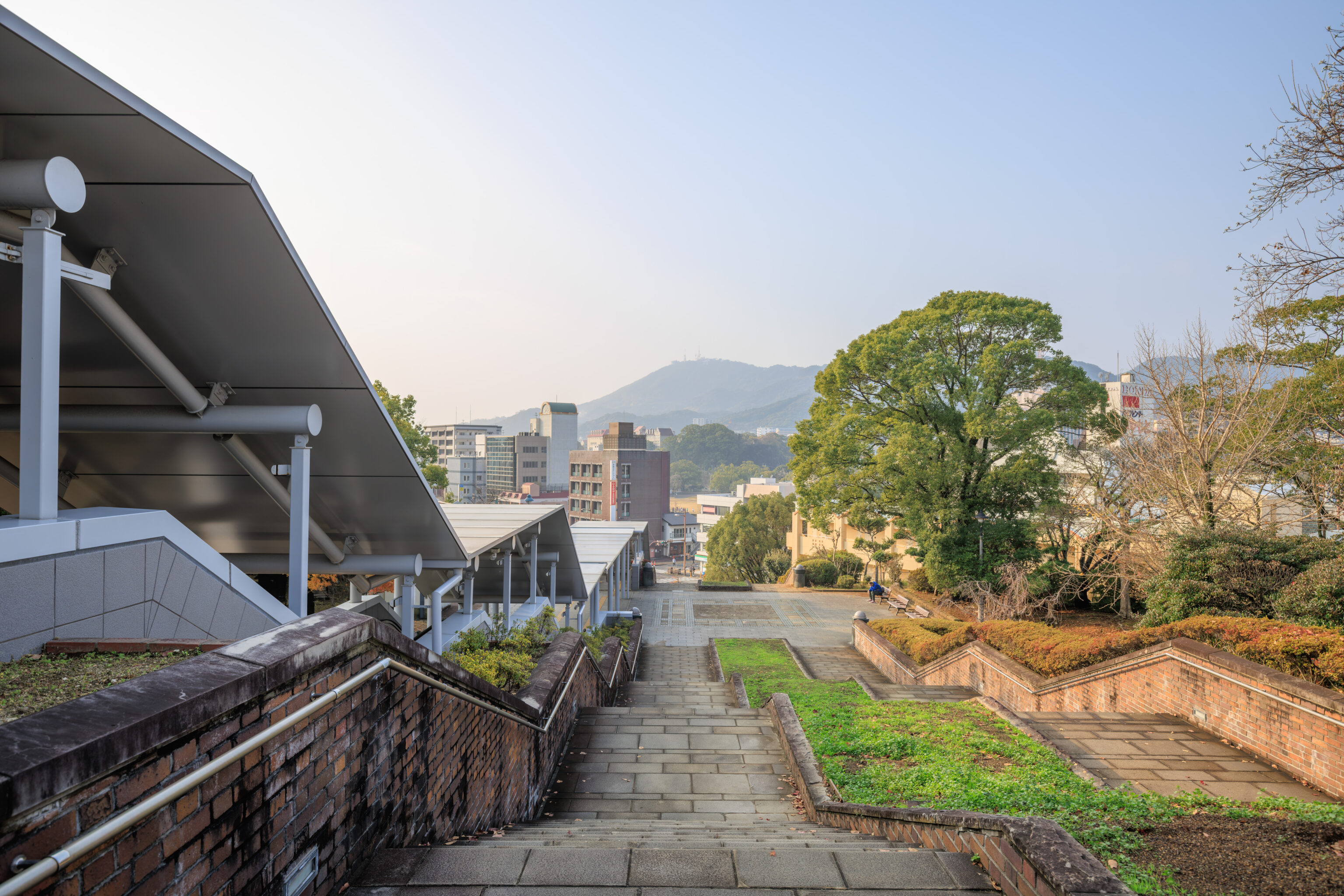
The view looking back from the top of the escalator and adjacent stairs. The path here was directly aligned with the peak of Inasa-yama.
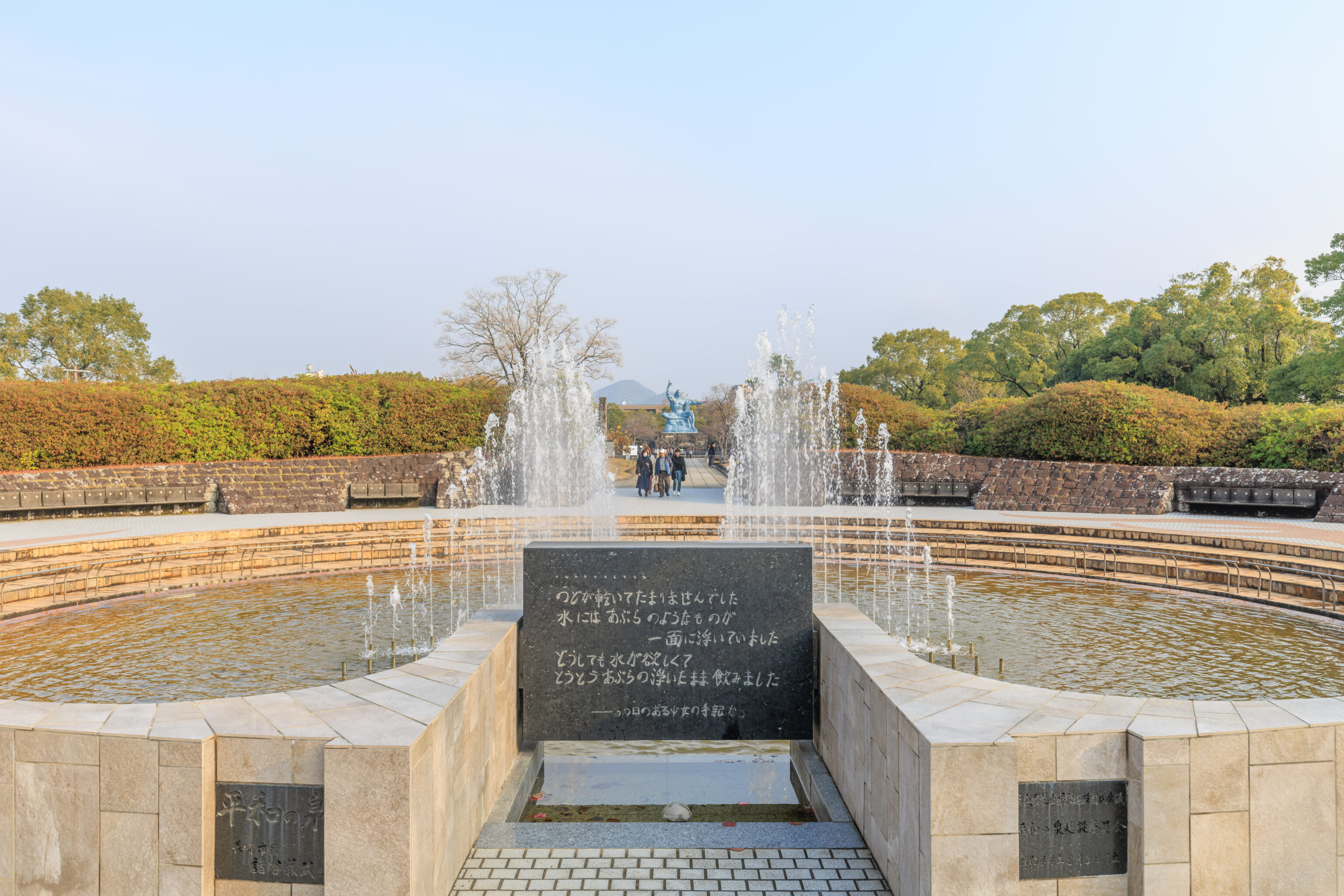
This is the fountain of peace. The memorial plaque at center contains a quotation:
I was unbearably thirsty. A film of something like oil was floating all over the surface of the water. I wanted water so badly that I finally drank it, oil and all.

— From the diary of a girl on that day
– Text from center, translated using Google Gemini and Translate.
This quotation is attributed to Sachiko Yamaguchi:
Desperately thirsty
"What on earth has happened?" said my mother, holding her baby tightly in her arms. "Is it the end of the world?" We knelt in the air-raid shelter, praying to God with all our hearts. Injured people came into the shelter one after another muttering, "Urakami is a sea of fire." What was going to become of us? Since the shelter was bad for the baby, we departed for the house of an acquaintance in Mikumi-gochi... But when we arrived in Mikumi-gochi we found that the houses in the valley had also been destroyed. Where could we go to find a house in which my mother and her newborn baby could rest? Large groups of people were huddling together, trembling in the shade of the mountain and other places. Desperately thirsty, I went to draw water but found an oil-like substance floating all over it. People told me that the oil had rained down from the sky... But I wanted a drink so badly that I gulped the water down just as it was.

Sachiko Yamaguchi
(nine years old at the time of the bombing)
This memorial fountain was created in 1969 with the center plaque being written by Yoshitake Morotani, the mayor of Nagasaki at the time.
Fountain of Peace
Calligraphy by Yoshitake Morotani, Mayor of Nagasaki
– Text on left, translated using Google Gemini and Translate.
National Conference for the Prohibition of Nuclear Weapons and for Peaceful Construction
The Fountain of Peace Construction Committee
Erected on August 3, 1969 (Showa 44)
– Text on right, translated using Google Gemini and Translate.
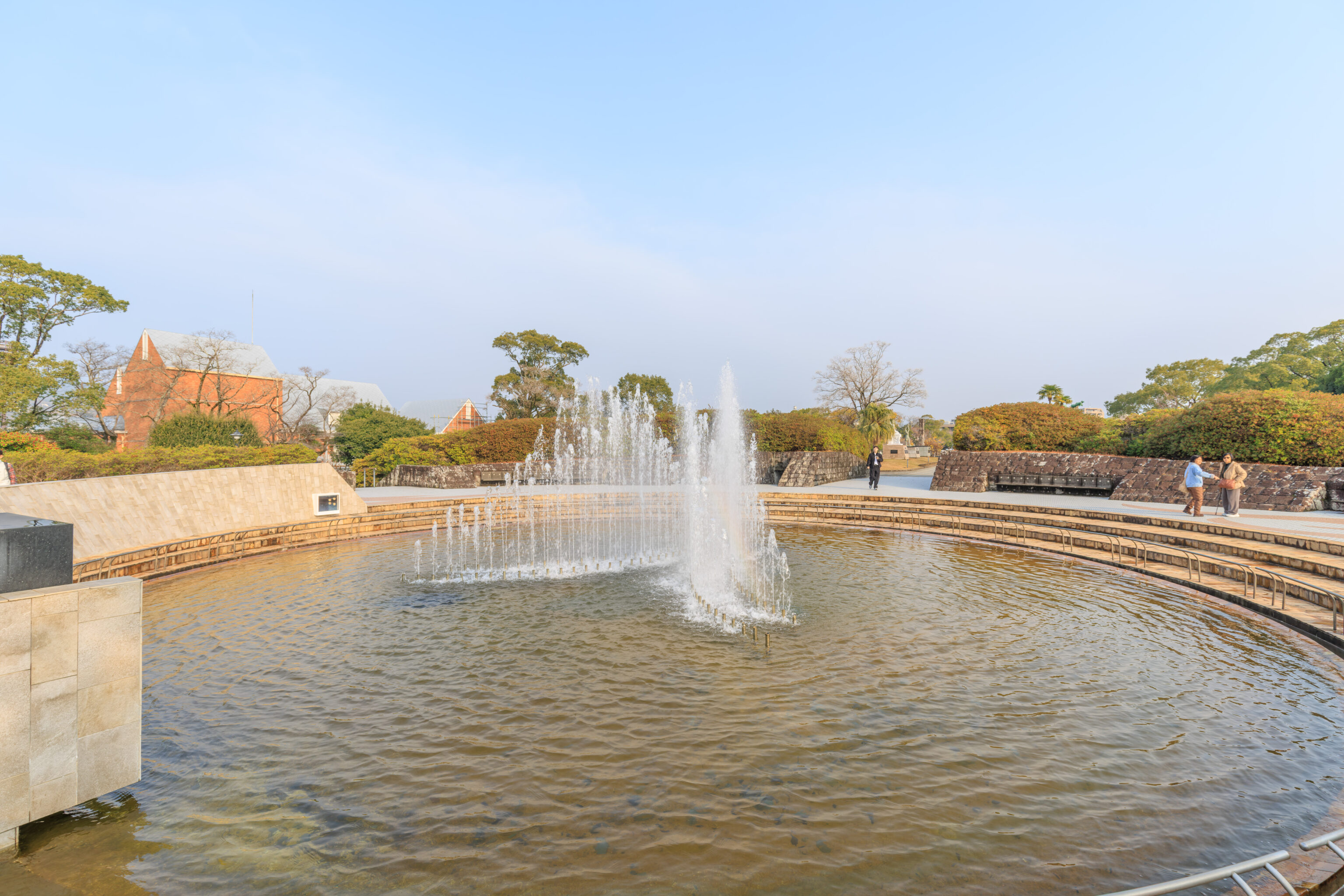
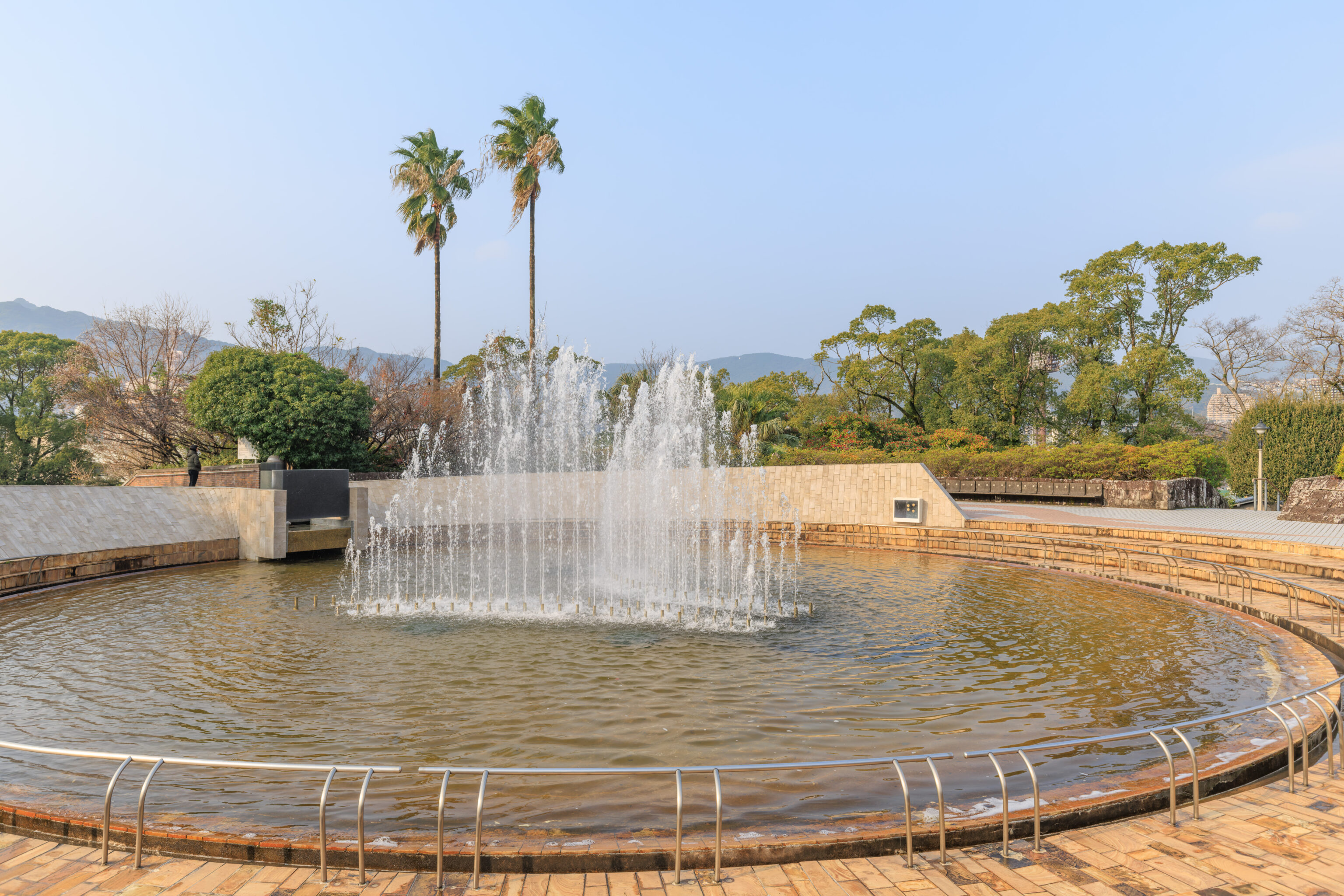
The jets of water in the fountain appear like they are wings, perhaps the wings of an angel or dove. A nearby sign provides a description of this fountain by an unidentified mayor of Nagasaki:
Fountain of Peace
When the atomic bomb exploded on August 9th, 1945, thousands of people suffered terrible burns, and died begging for water.

Nagasaki City and the National Council for Peace and Against Nuclear Weapons (Hereafter "KAKKIN") constructed this "Fountain of Peace" through donations received from all over Japan, dedicating the fountain as an offering of water to the victims of the atomic bomb, and as a prayer for both the repose of their souls and for the realization of everlasting peace.

It is our ardent wish that you will remember the departed victims while visiting this fountain, and that you will join us in striving for world peace.

Mayor of Nagasaki
Fountain Diameter: 18 meters
Height: 0.5 to 6 meters

The fountain's water takes the shape of a pair of wings, symbolizing the dove of peace as well as the crane, as Nagasaki Port is occasionally referred to as "The Crane Port" due to its shape resembling that of a crane.

Completed : August 1969
Repaired : August 1985
Repaired : August 2018
– Text from a sign.
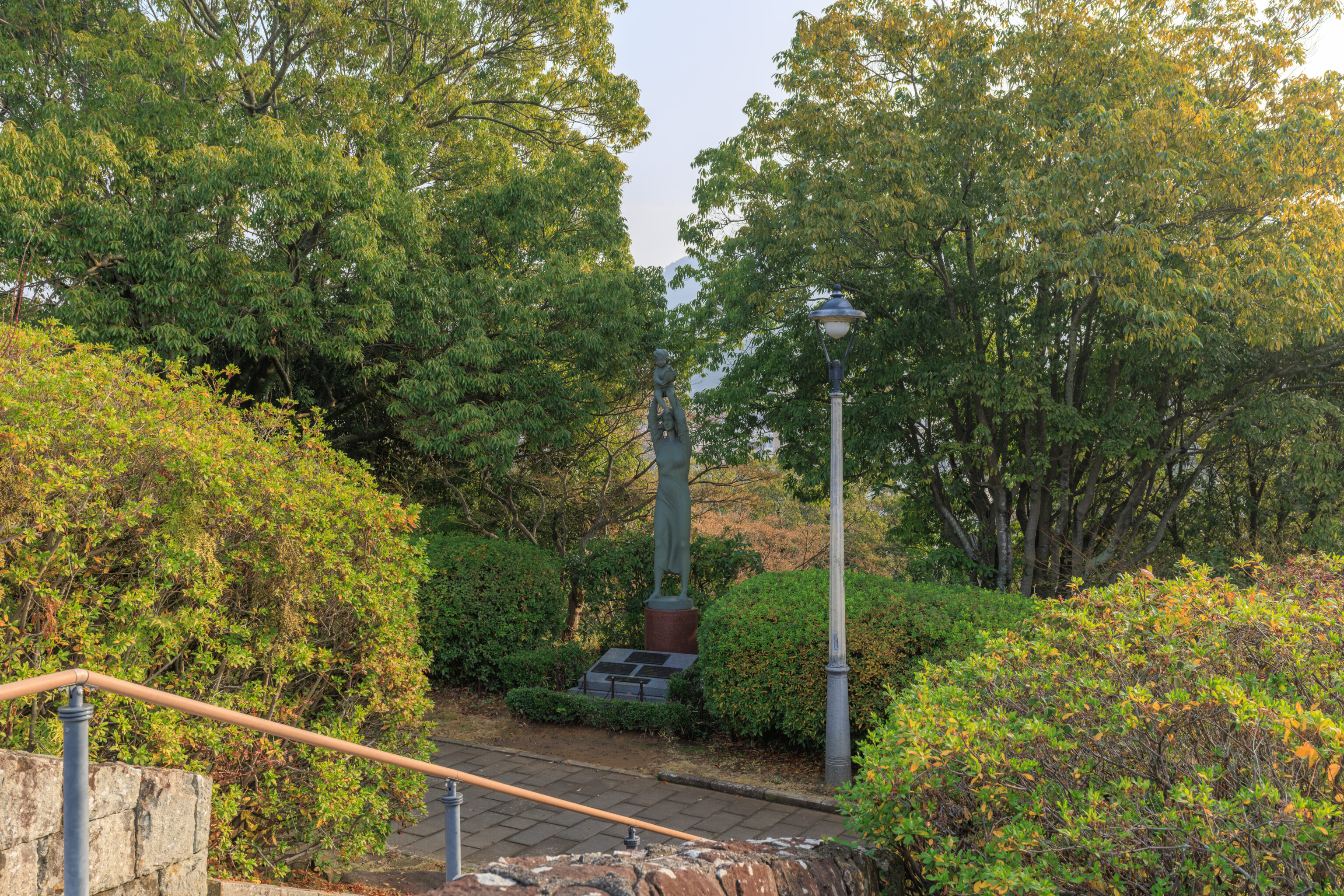
We noticed other memorials situated around the fountain.
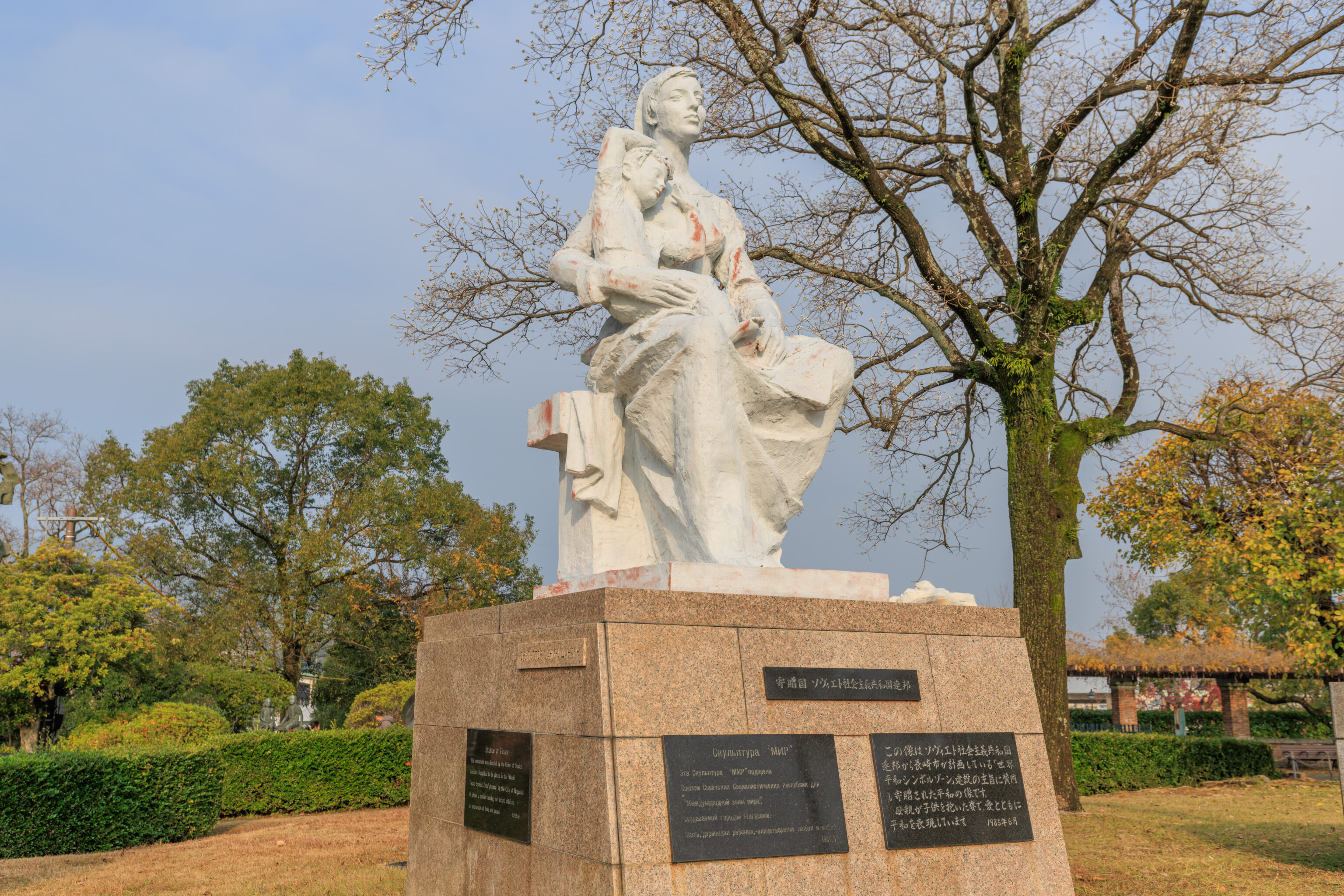
This statue was donated by the USSR!
Statue of Peace
This monument was donated by the Union of Soviet Socialist Republics to be placed in the World Peace Symbol Zone" planned by the City of Nagasaki. It shows a mother holding her infant child as an expression of love and peace.
1985.6
– Text from the English language plaque on the left.
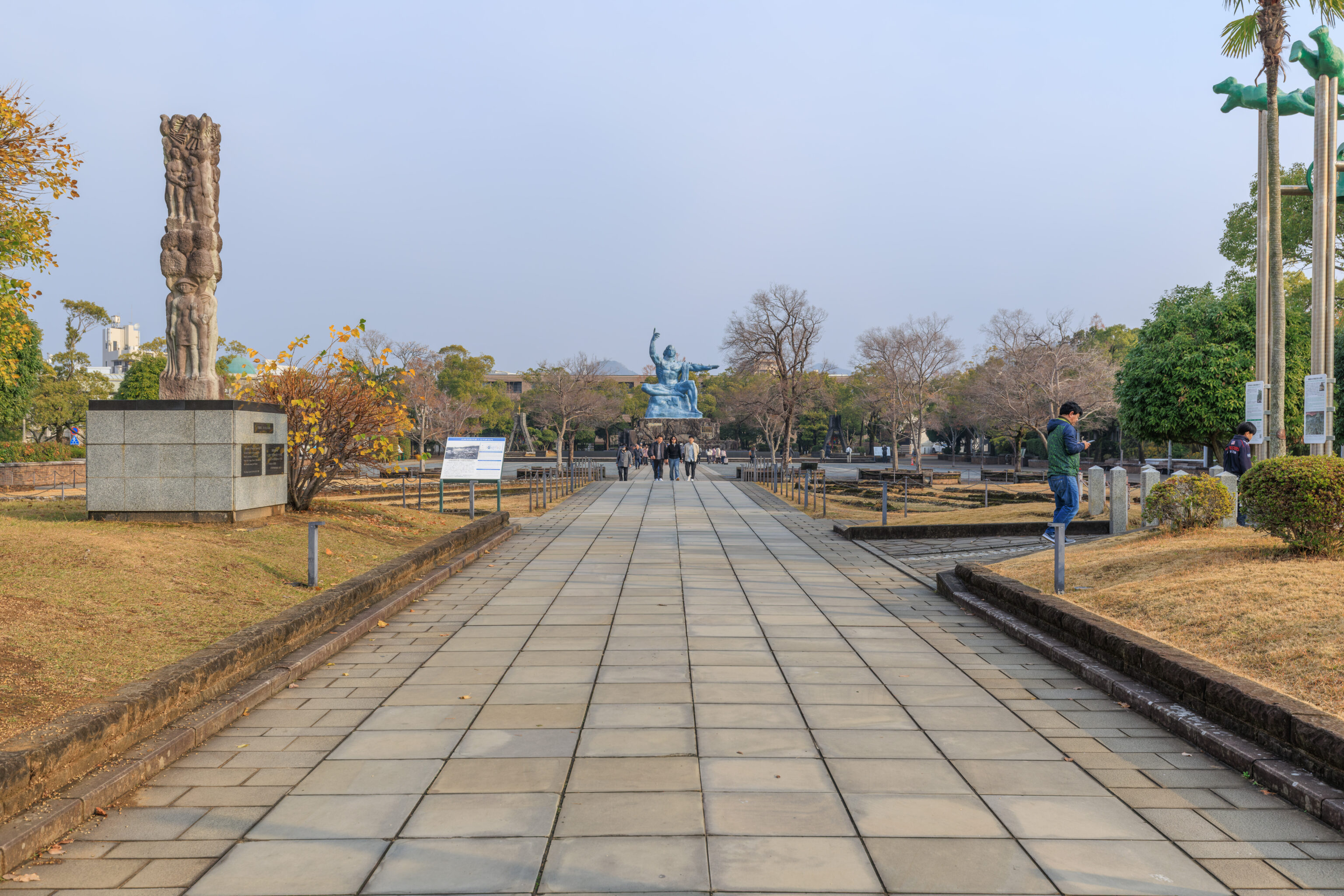
To the northeast, we could see the big blue Peace Statue at the other end of the Peace Park. But first, we decided to check out all the smaller memorials here.
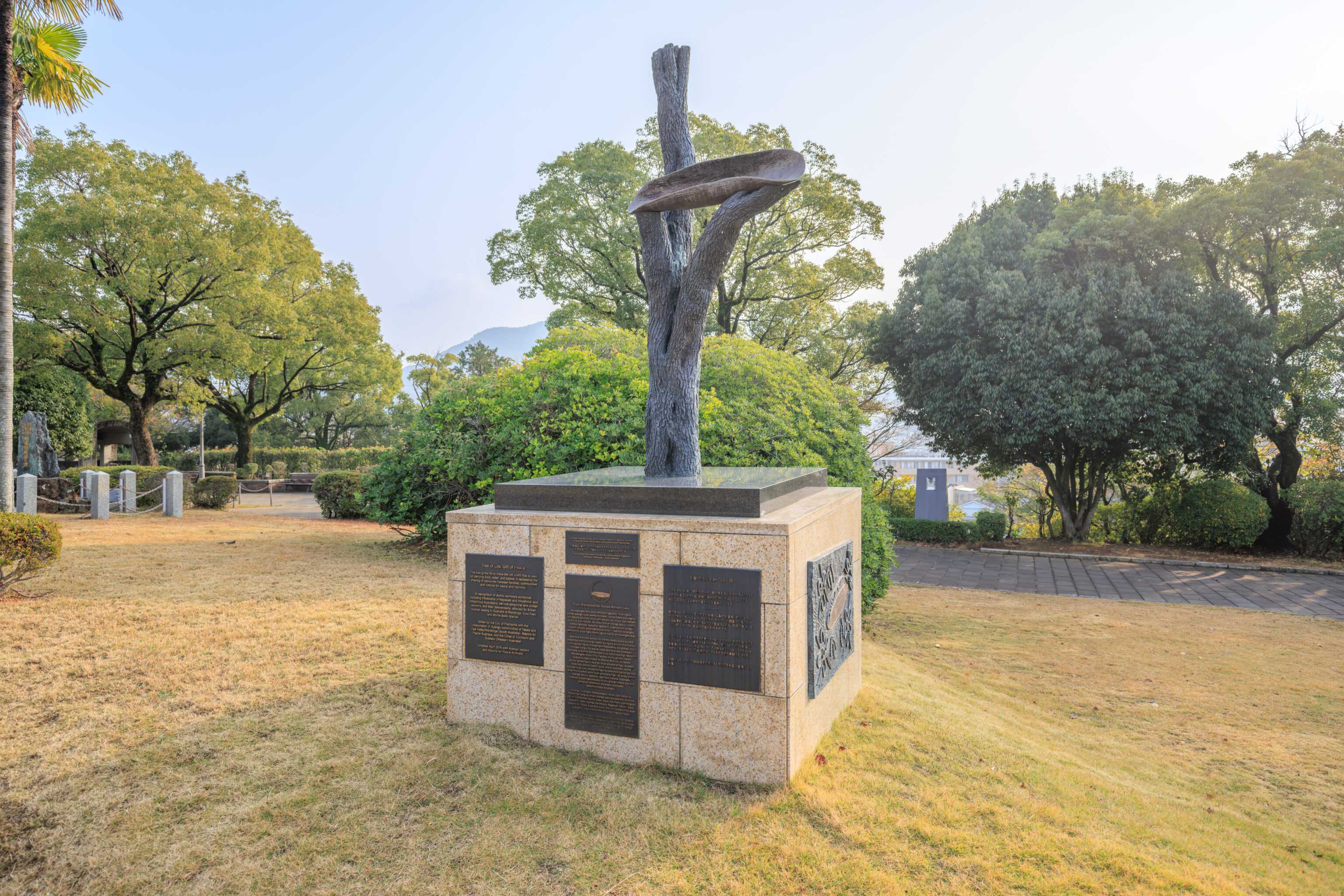
This memorial was donated by Freemantle, a city in Western Australia just to the west of Perth.
Tree of Life: Gift of Peace

The tree gives life to make the piti (dish) that is used for carrying food, water, and babies. It represents the sharing of resources between families, communities and nations for peace and harmony.

In recognition of atomic survivors worldwide, including Hibakusha of Nagasaki and Hiroshima; and Indigenous Australians, service personnel and civilian workers, and their descendants, affected by British nuclear testing in Australia at Maralinga, Emu Field and Monte Bello Islands.

Gifted by the City of Fremantle with the collaboration of Anangu communities of Yalata and Oak Valley/Maralinga (South Australia), Mayors for Peace Australia, and the Cities of Cockburn and Subiaco (Western Australia).

Unveiled April 2016 with Anangu leaders and Mayors for Peace Australia.
– Text from the English language plaque.
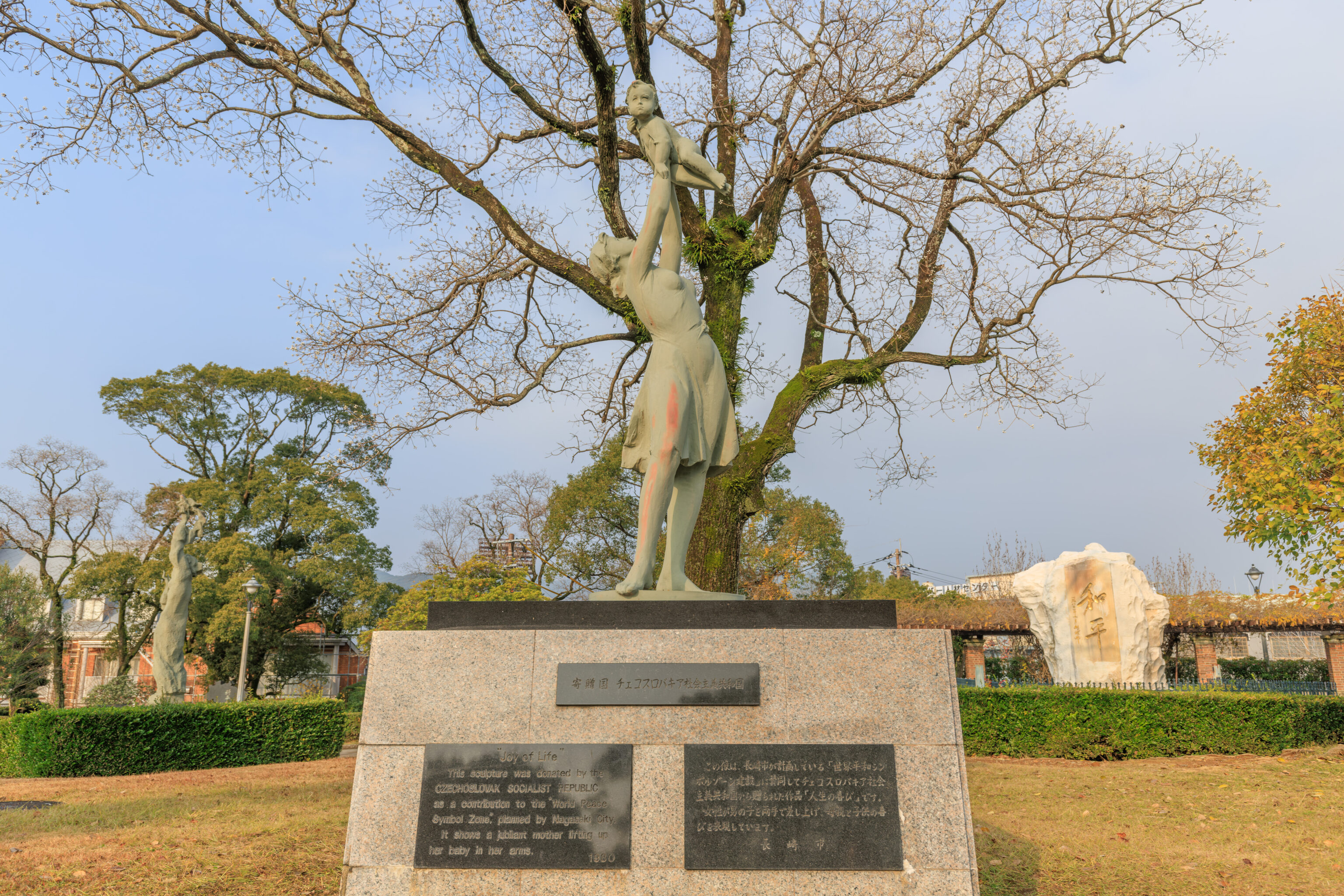
This statue was donated by the Soviet controlled Czechoslovakia.
Joy of Life
This sculpture was donated by the CZECHOSLOVAK SOCIALIST REPUBLIC as a contribution to the Worid Peace Symbol Zone, planned by Nagasaki City. It shows a jubilant mother lifting up her baby in her arms.
1980
– Text from the English language plaque.
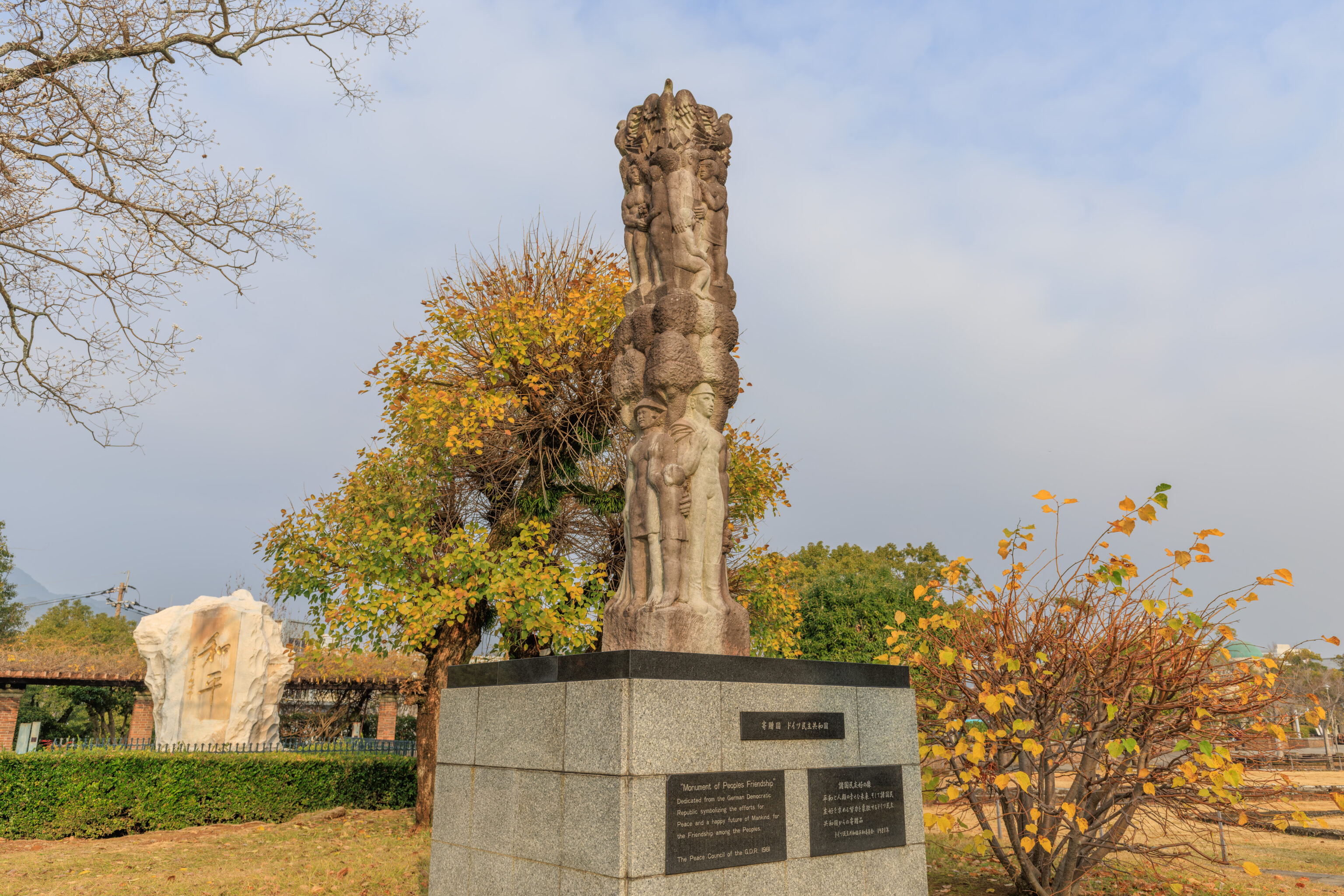
This memorial was donated by East Germany:
Monument of Peoples Friendship
Dedicated from the German Democratic Republic symbolizing the efforts for Peace and a happy future of Mankind, for the Friendship among the Peoples.

The Peace Council of the G.D.R. 1981
– Text from the English language plaque.
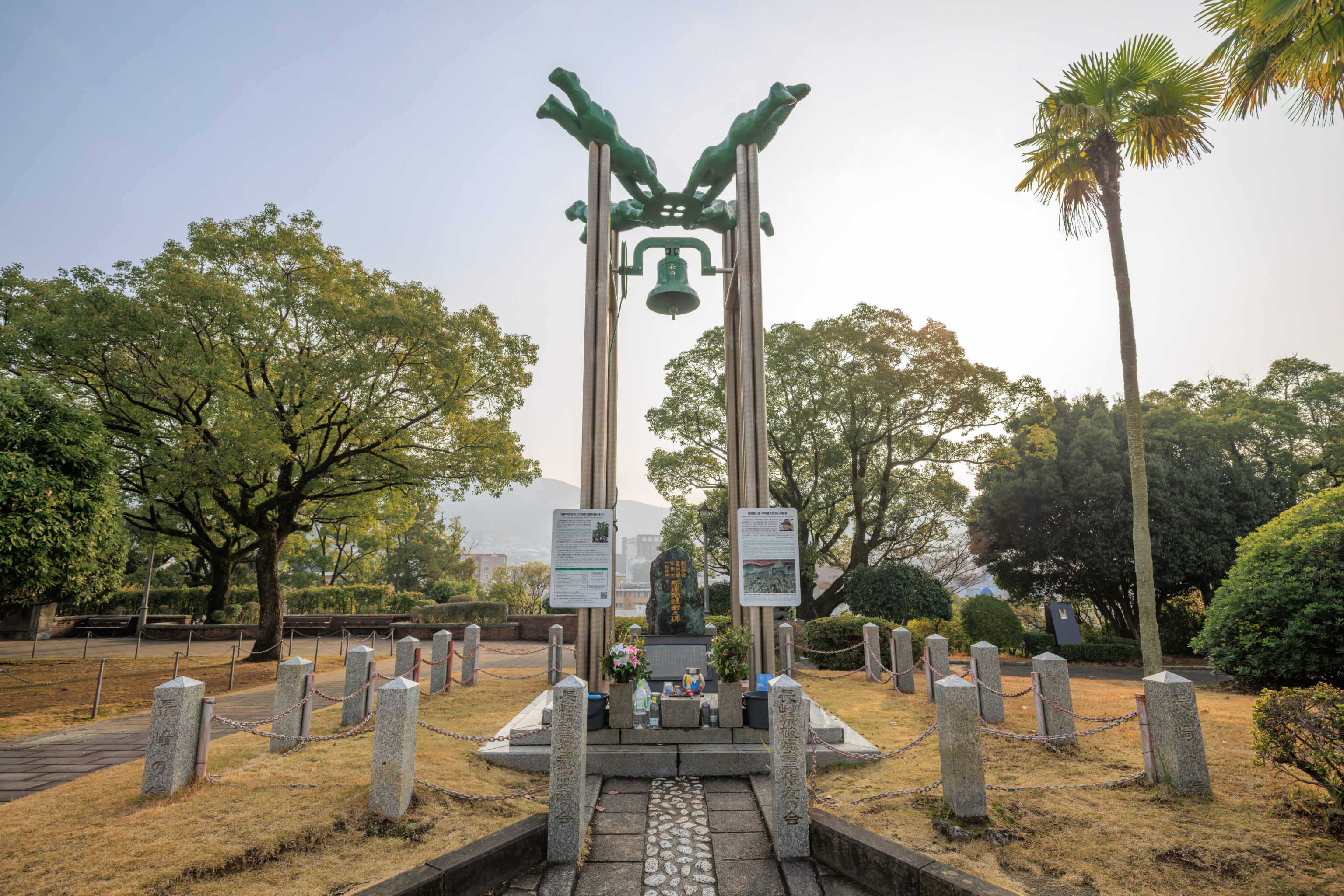
This is the 長崎の鐘 Nagasaki Bell, constructed in 1977. The text on the stone marker reads:
Mobilized Apprentices
Women's Volunteer Corps
Conscripted Workers
General Public

Monument to the Victims of the Atomic Bomb
– Text from the memorial stone, translated using Google Gemini and Translate.
The sign on the left side of the bell explains what it is and has a bell ringing schedule.
Let's ring the Nagasaki Bell for world peace!

Nagasaki Hibakusha Certificates Friend Association (established in 1967) erected this "Nagasaki Bell" on August 5, 1977, based on the Angelus bell of Urakami Cathedral, in order to mark Nagasaki as the last city to be hit by an atomic bomb.

In 1988, it was also donated to the city of Leningrad in the former Soviet Union, and in 1990 to the cities of Shenyang in China and Honolulu in the United States.

The "Nagasaki Bell" is a symbol of our oath never to cause war.

As the last city to experience an atomic bomb, we pray that peace will spread throughout the world in concentric circles from our city with the ringing of the Nagasaki Bell, and we hope that you will spread the word as well.

Date, Time, Location
1. every month 9
11:02
"Nagasaki Bell" in the Peace Park
On Aug.9 after the ceremony

2. from Aug. 6 to 9 in every year
Coop: Nagasaki Bell Ringing Association
11:02
11:12
11:22
11:32
"Nagasaki Bell" in the Peace Park
On Aug.9 after the ceremony

3. Sep.21 of every year(World Peace Day)
12:00
"Nagasaki Bell" in the Peace Park

4. Aug. 9 of every year
11:02
shrine, temple and church in Nagasaki city

Those who ring the bell will receive a "Nagasaki Bells" postcard.
Nagasaki Hibakusha Certificates Friend Association
Please send us a Peace Message to [email protected]
– Text from the sign on the left.
The sign on the right includes a first-hand account of the atomic bombing:
Testimony of Atomic Bomb Storyteller Inosuke Hayasaki
On August 9, 1945, I was 14 years old and working at the Mitsubishi Arms Ohashi Factory. It was 1.1 km north of the hypocenter.

That day, my boss was ordered to process parts, and at 11:02 a.m., when we moved to another technical building, the atomic bomb exploded.

I was in the shadow of a large pillar that blocked the heat rays and blast, but I was blown into a large refrigerator about 14 meters away and miraculously survived.

Of the 32 workers, only one colleague and I survived. My boss was killed instantly.

I would like to continue to convey the horror of the atomic bomb and the importance of peace. (Passed away in April 2023 due to atomic bomb disease)
– Text from the sign on the right.
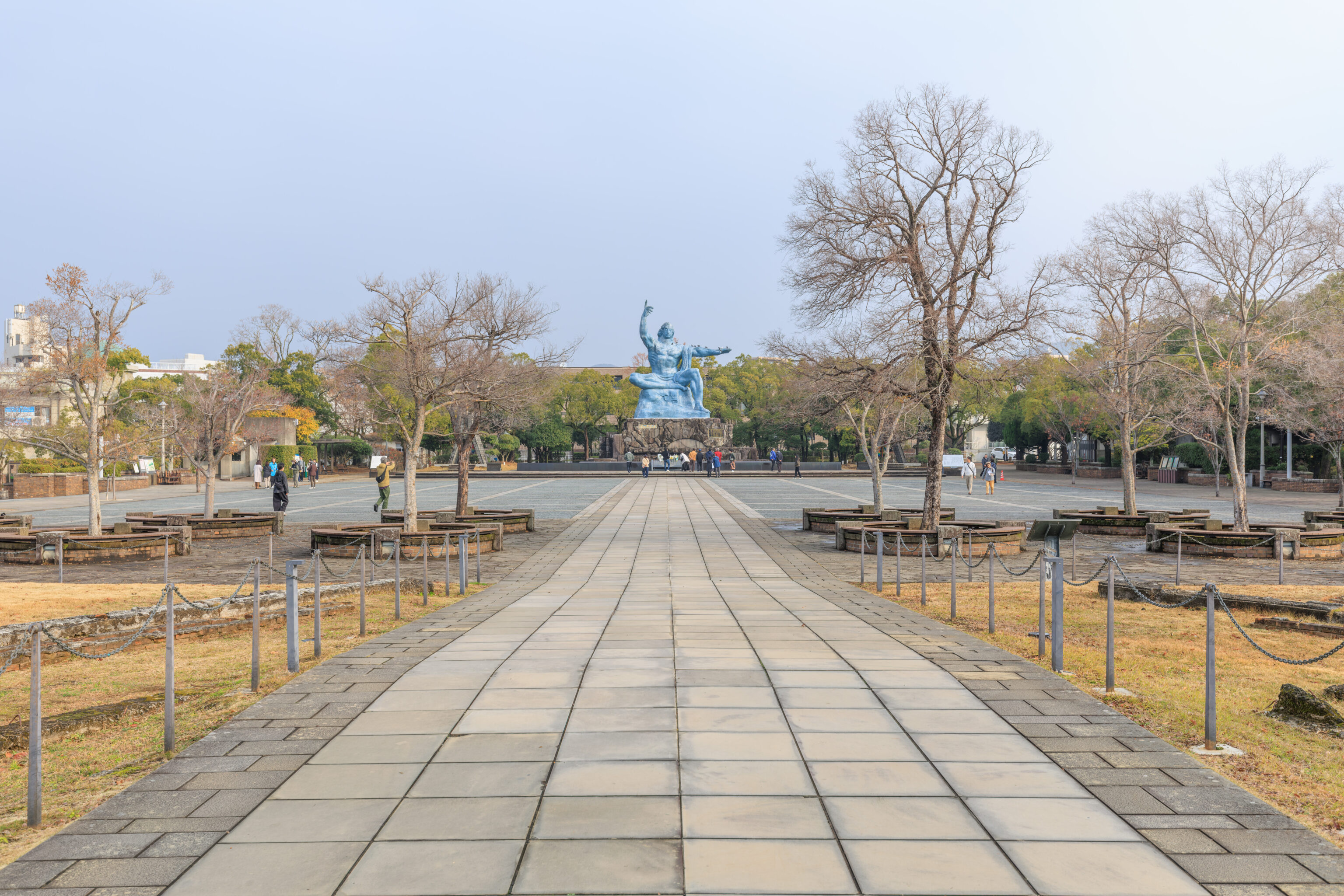
The bell was about half-way to the Peace Statue.
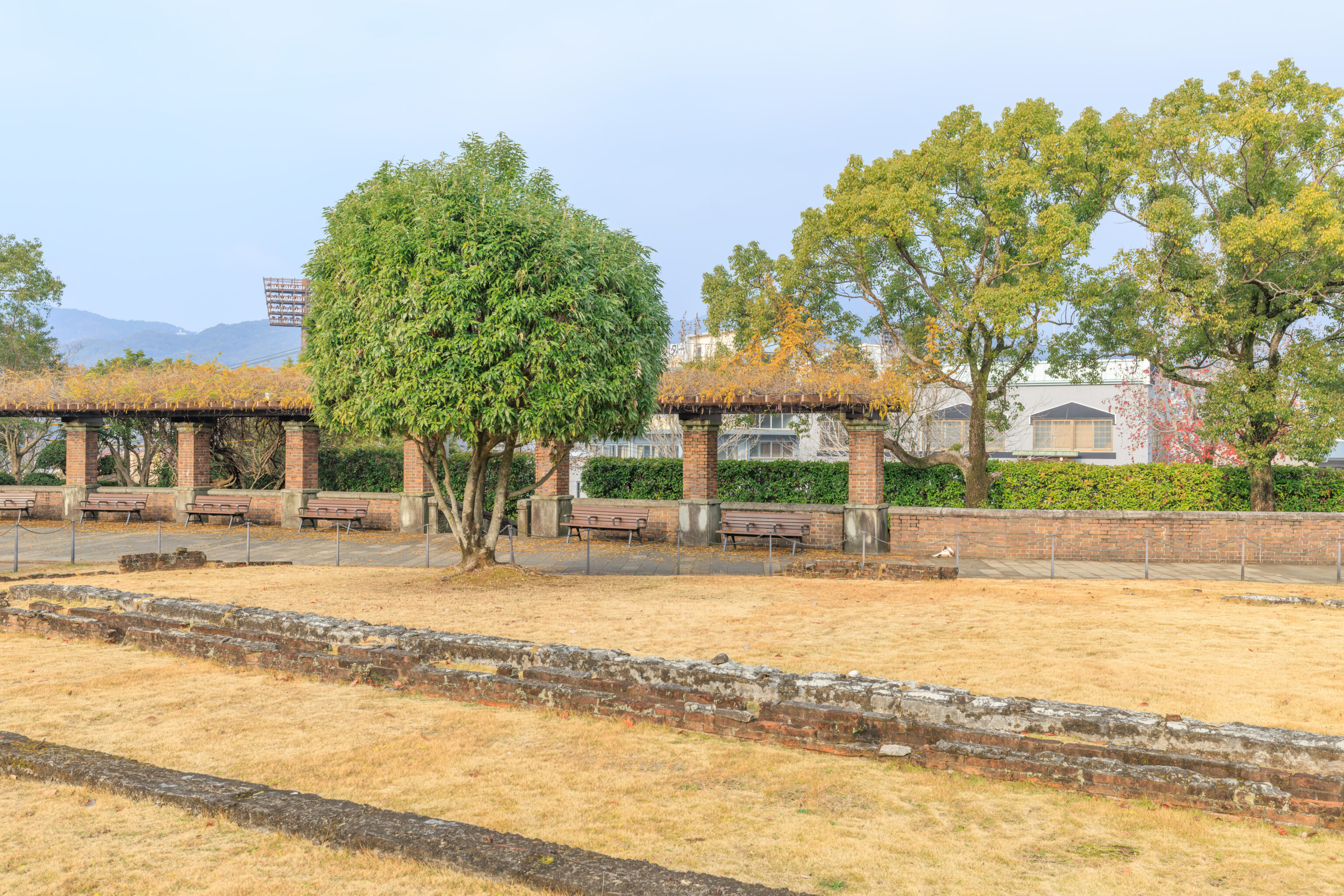
The area here near the bell formerly contained a prison:
Site of the Former Urakami Branch of Nagasaki Prison
The Urakami branch of Nagasaki Prison was built on a site of 20,000m, with its offices covering 13,000m. It was located between 100m and 350m north of the hypocenter of the atomic bomb, and was the closest public building to the hypocenter.

At 11:02 a.m. on August 9,1945, the explosion of the plutonium bomb killed 18 staff, 35 facility residents and 81 inmates (including 32 Chinese and at least 13 Korean inmates) at the prison. In total 134 people died here. The wall surrounding the prison was 4m high, 0.25m thick and made from steel-reinforced concrete; it was reduced almost to its foundations. The wooden office buildings and kitchen were blown apart and burned down completely, save for a single remaining chimney.

The "Memorial to the Chinese Victims of the Atomic Bomb at Urakami Prison" and the "Memorial to the Korean Victims of the Nagasaki Atomic Bombing" can be found in Nagasaki Peace Park. The "Memorial to the Martyrs of the Atomic Bomb at Nagasaki Prison" is located at Shiratori-machi detention centre.
– Text from a sign.
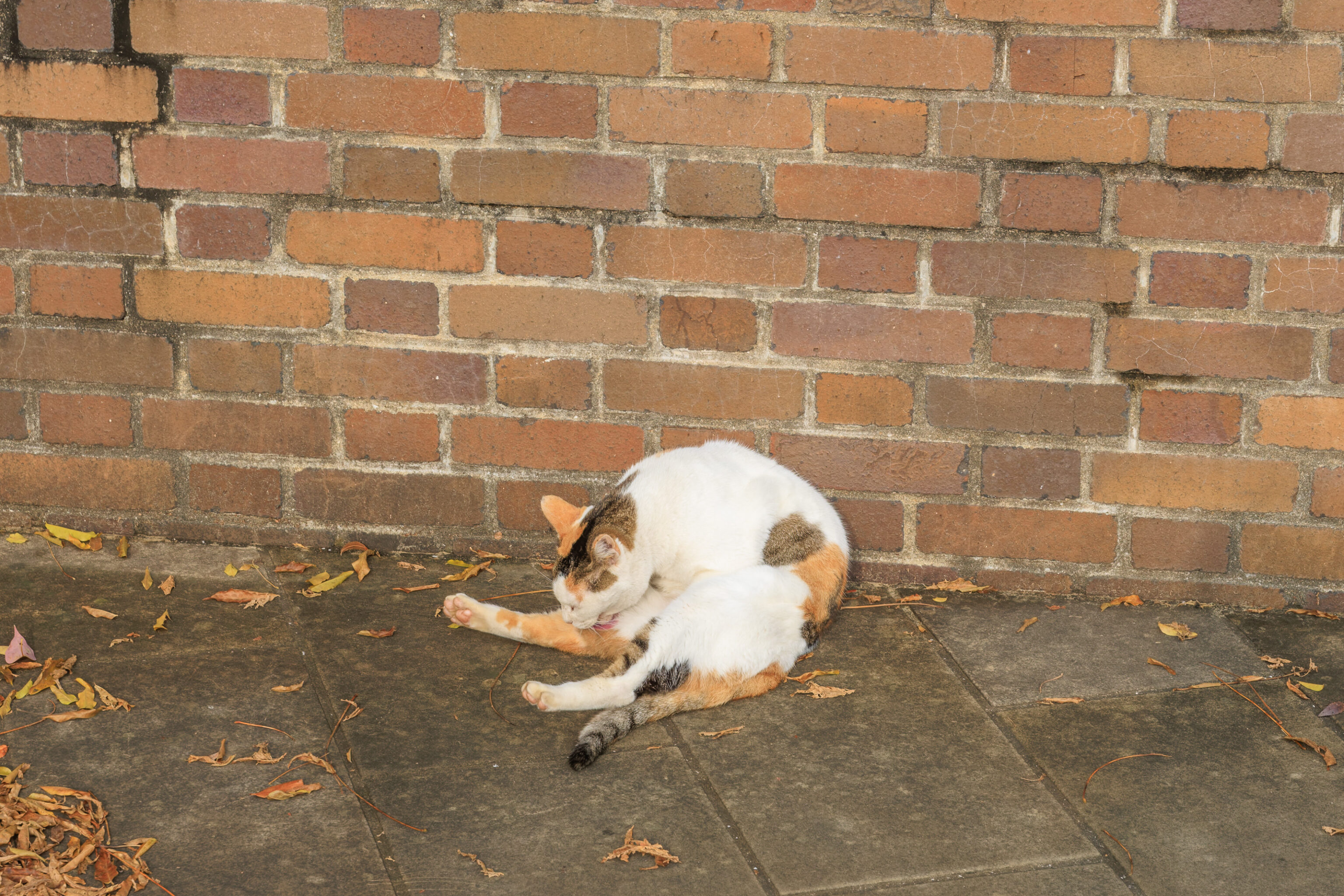
We found a cat grooming itself by the low wall on the western side of the Peace Park.
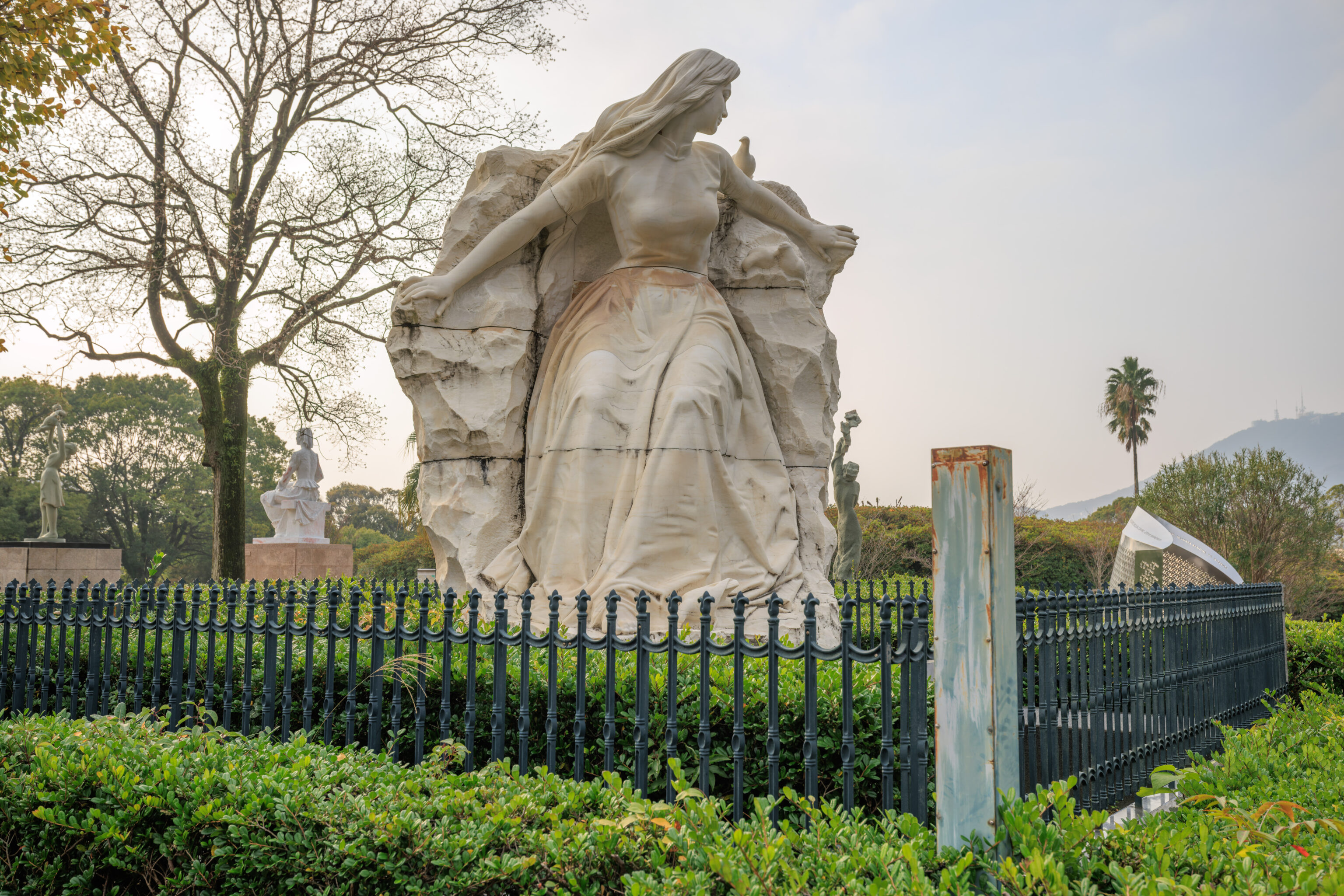
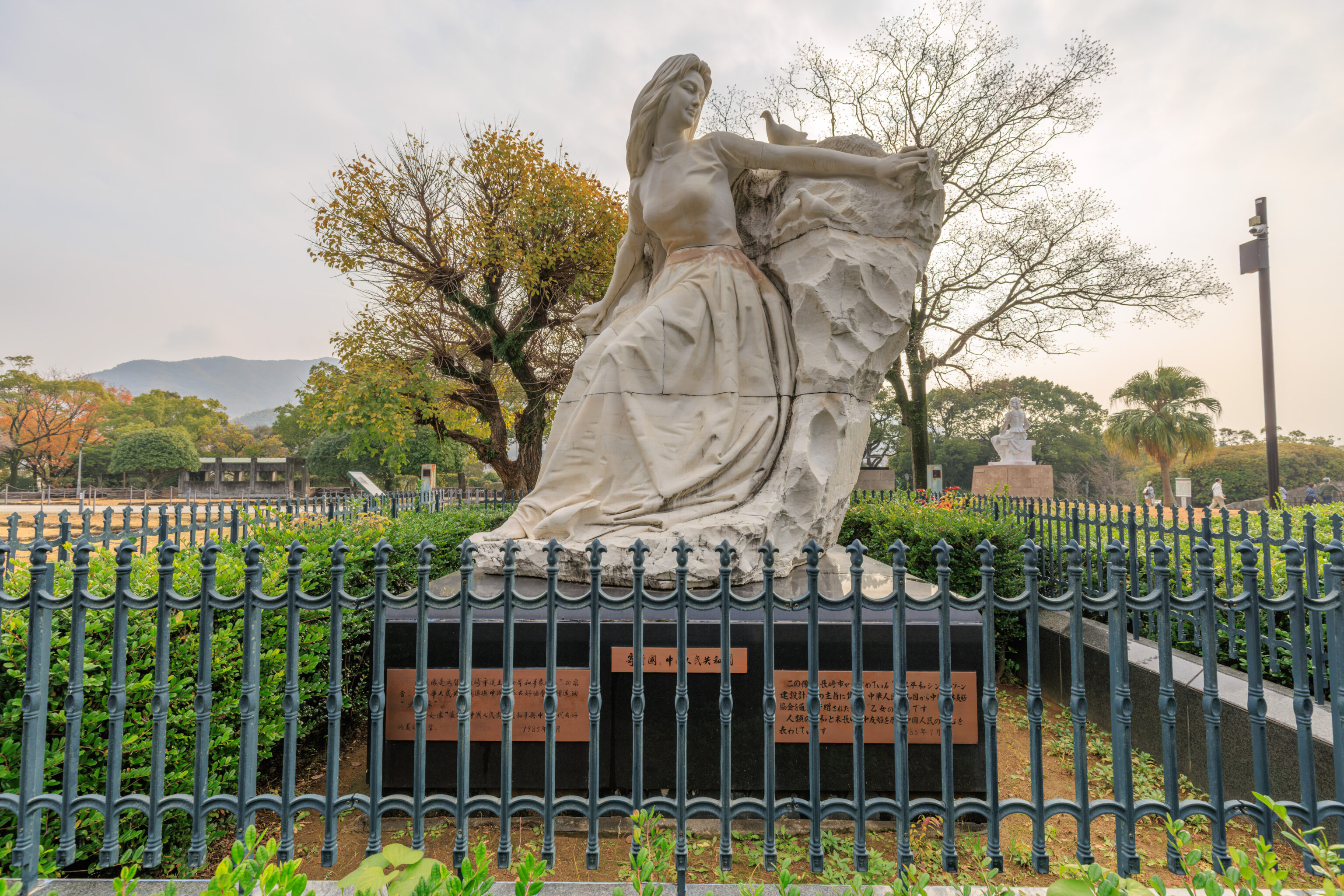
This large memorial statue, the 乙女の像 Statue of a Maiden, was donated by the PRC in 1985.
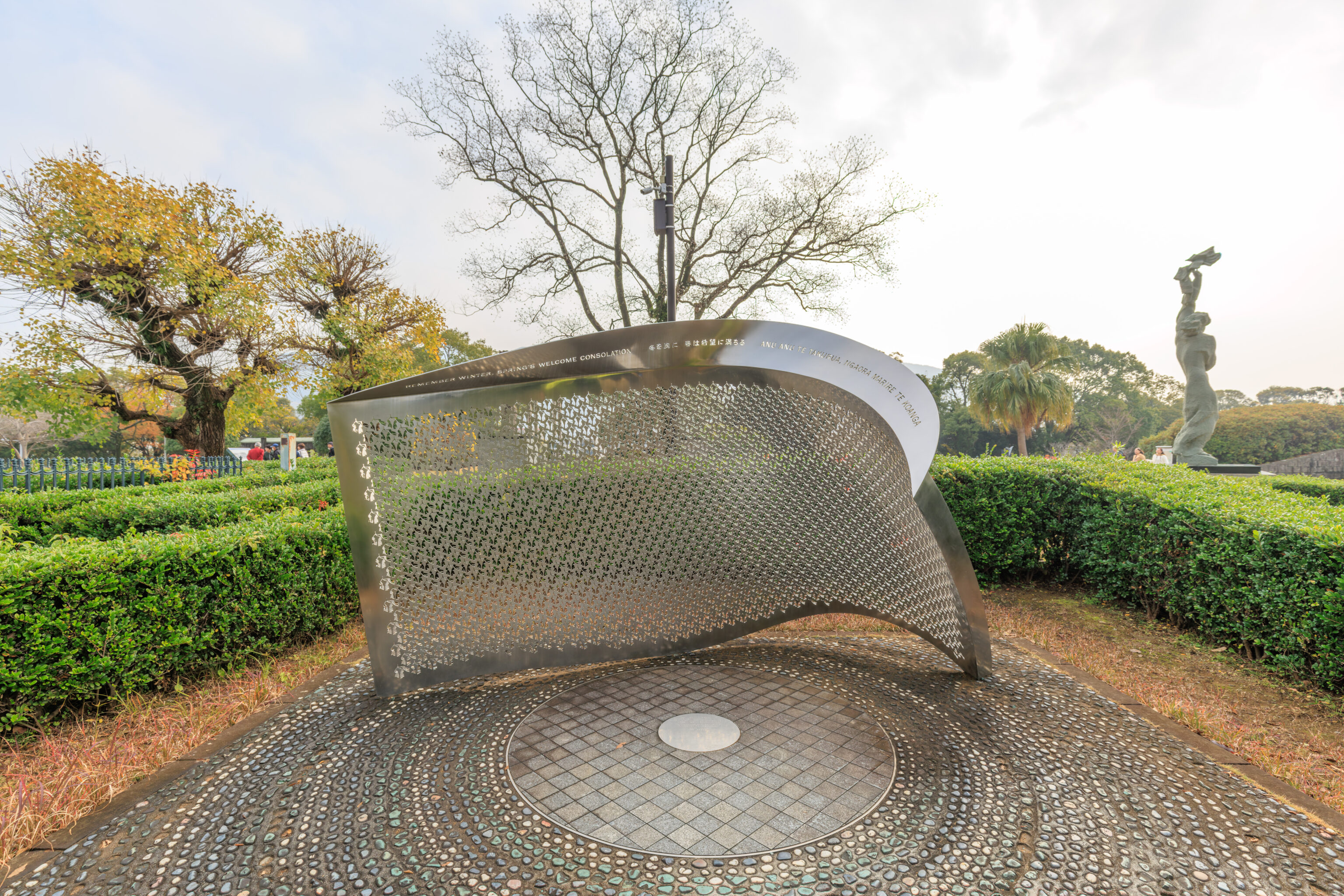
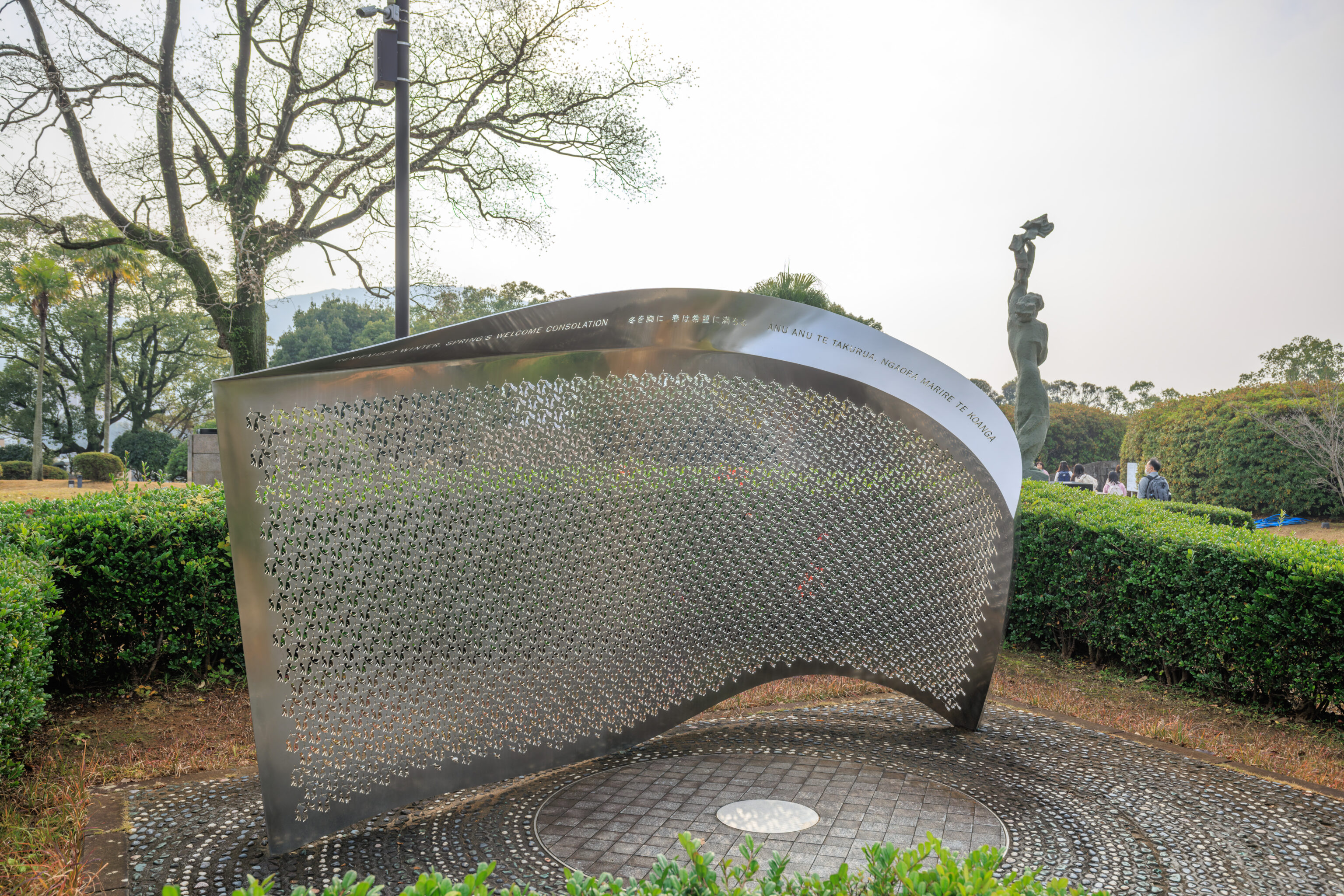
This odd looking sculpture was donated by New Zealand.
TE KOROWAI RANGIMARIE, THE CLOAK OF PEACE, IS A GIFT OF FRIENDSHIP TO THE PEOPLE OF NAGASAKI FROM THE PEOPLE AND GOVERNMENT OF AOTEAROA NEW ZEALAND AND THE CITIES OF CHRISTCHURCH, WELLINGTON, AUCKLAND, NAPIER, WAITAKERE, AND WHAKATANE.

THE CLOAK SYMBOLISES THE UNITY OF THOSE COMMITTED TO A PEACEFUL WORLD AND THE PROTECTION OF THOSE WITHIN ITS EMBRACE.

UNVEILED BY HON PHIL GOFF, MINISTER FOR DISARMAMENT AND ARMS CONTROL
21 OCTOBER 2006
– Text from a sign.
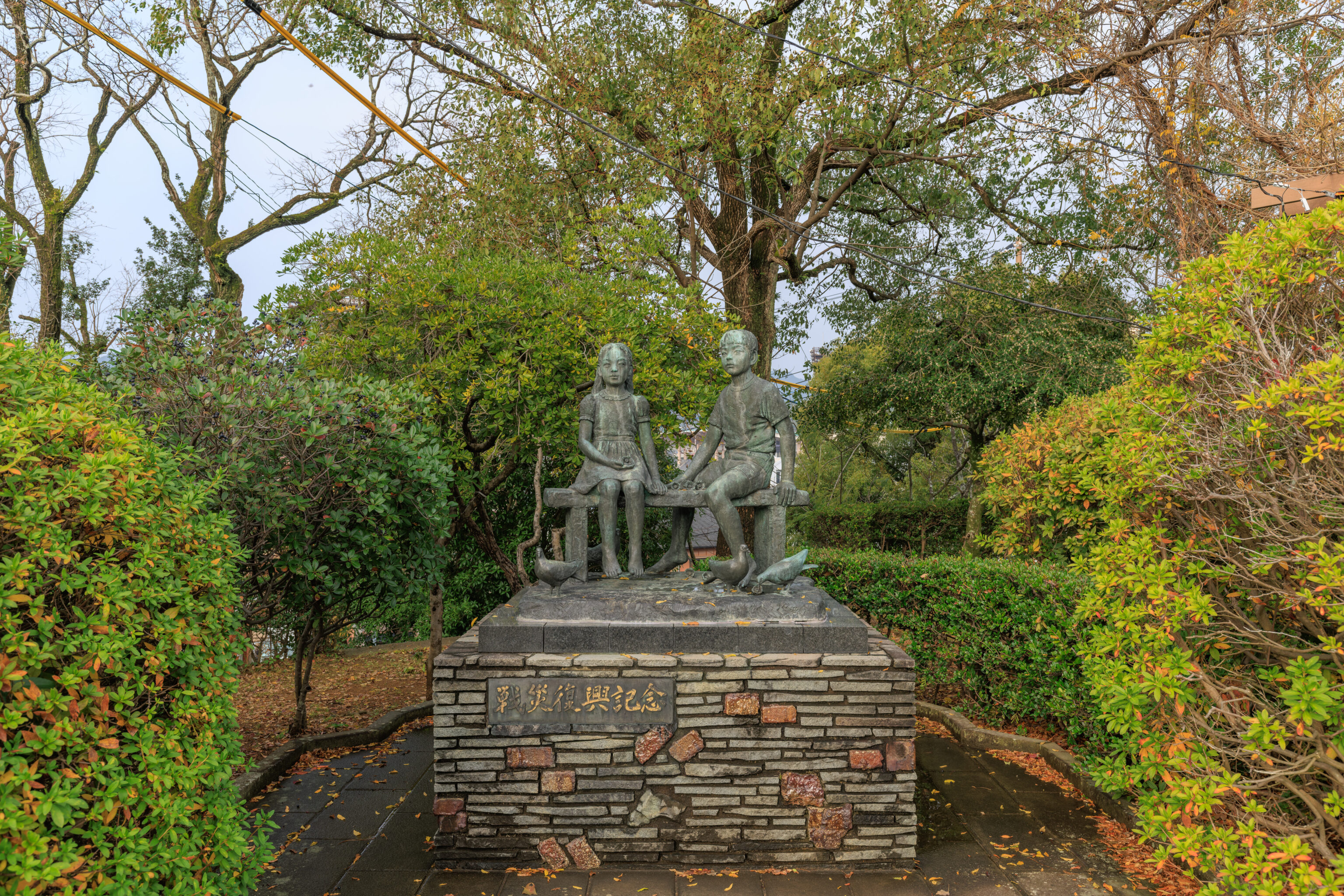
This memorial is titled, “Commemoration of Post-War Reconstruction”.
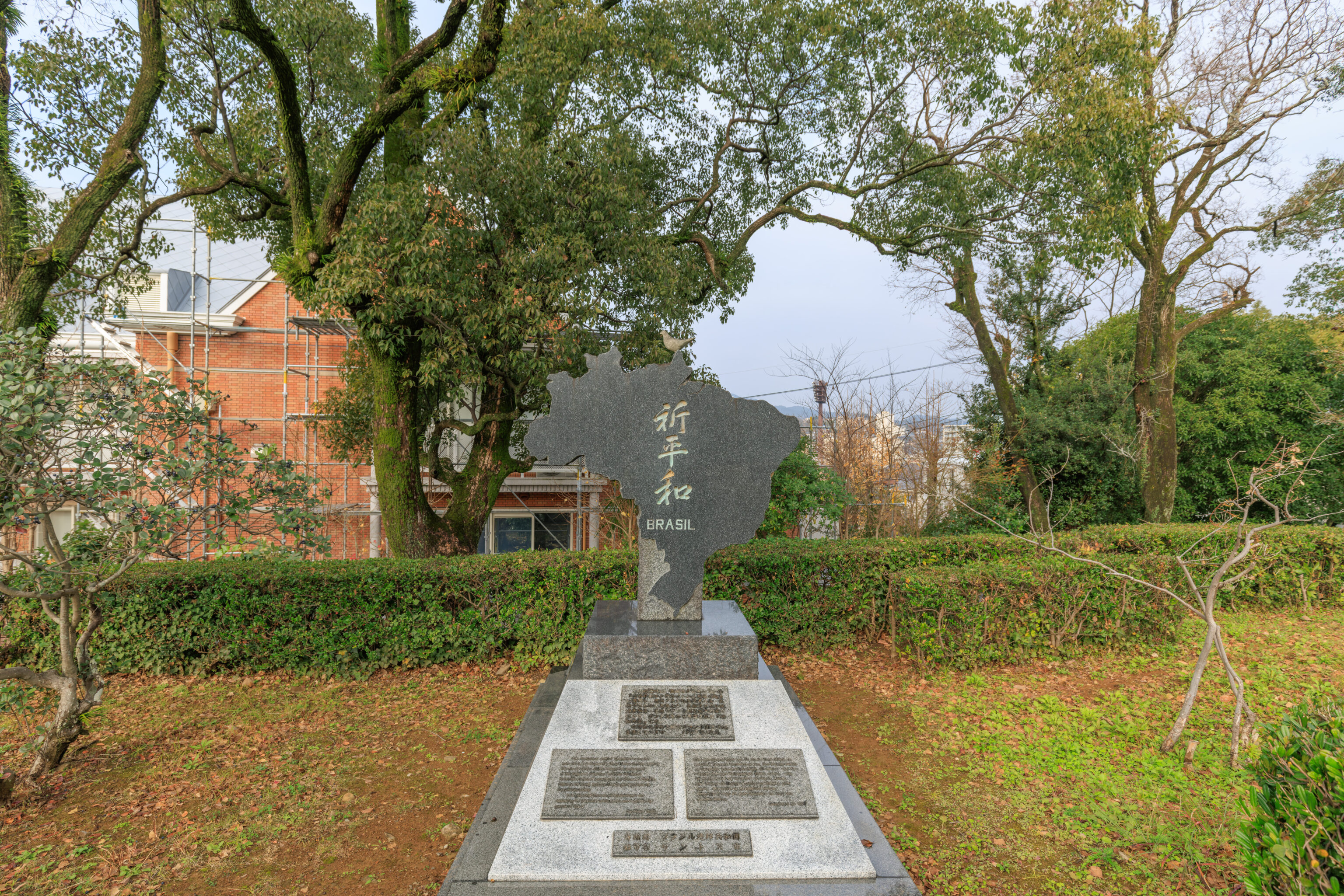
This memorial was donated by Santos, Brazil.
This monument, entitled "Dedicated to Peace," was donated to Nagasaki's World Peace Symbol Zone by the city of Santos, Brazil, through the cooperation of the Nagasaki Kenjinkai do Brasil, Hiroshima Kenjinkai do Brasil, Associação das Vítimas da Bomba Atômica do Brasil, and the Associação Brasileira de Assistência Mútua.

It is preserved here as an expression of the aspiration for perpetual world peace embraced by the people of Brazil.

December 1988
– English text from from the leftmost plaque.
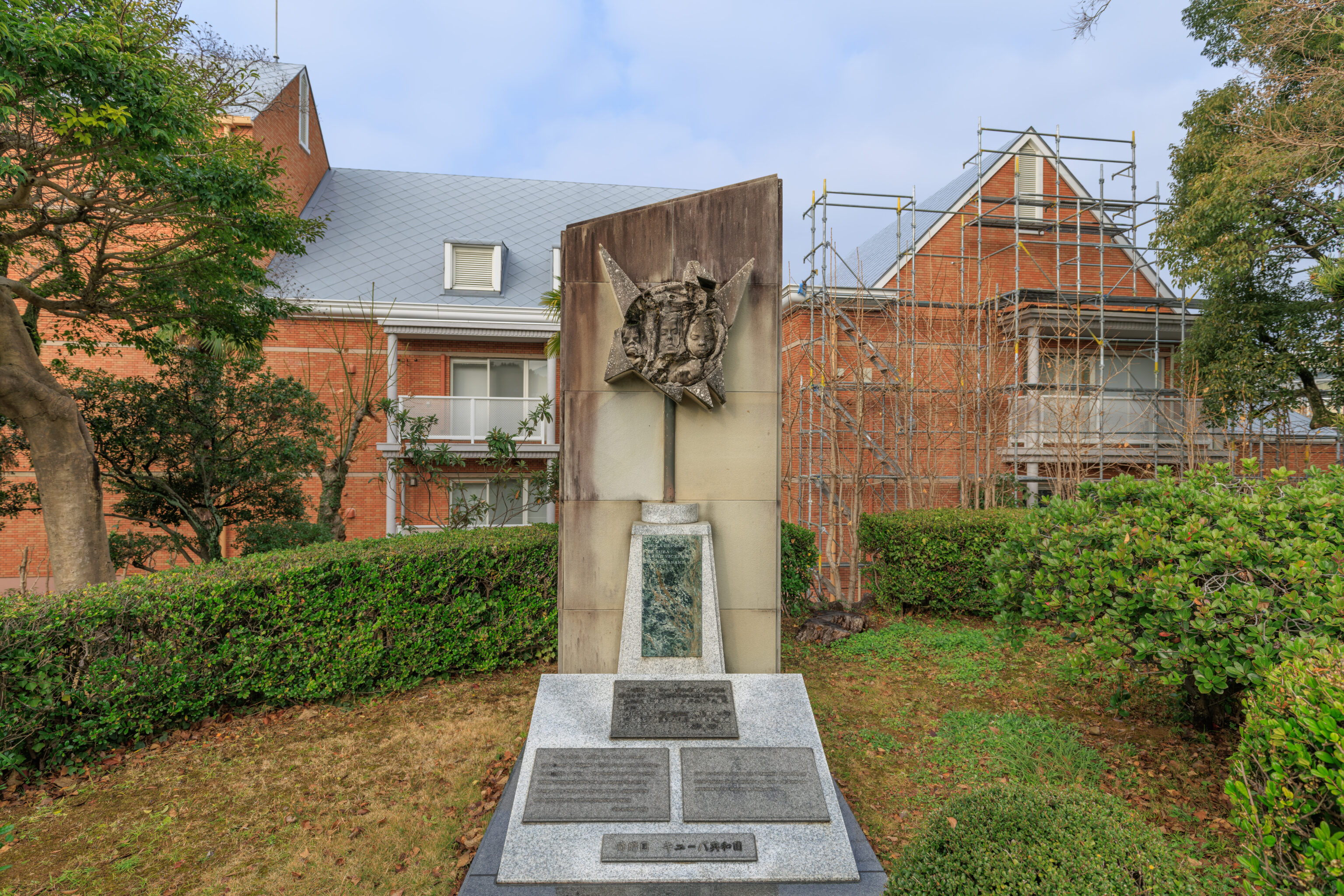
This memorial was donated by Cuba.
This sculpture, entitled "Sun-Crane of Peace," was donated to Nagasaki's World Peace Symbol Zone by the Republic of Cuba. The faces of the atomic bomb victims contained within the sun express the misery of war, while the rays of the sun form a paper crane and symbolize the vital importance of peace.
December 1988
– English text from the leftmost plaque.
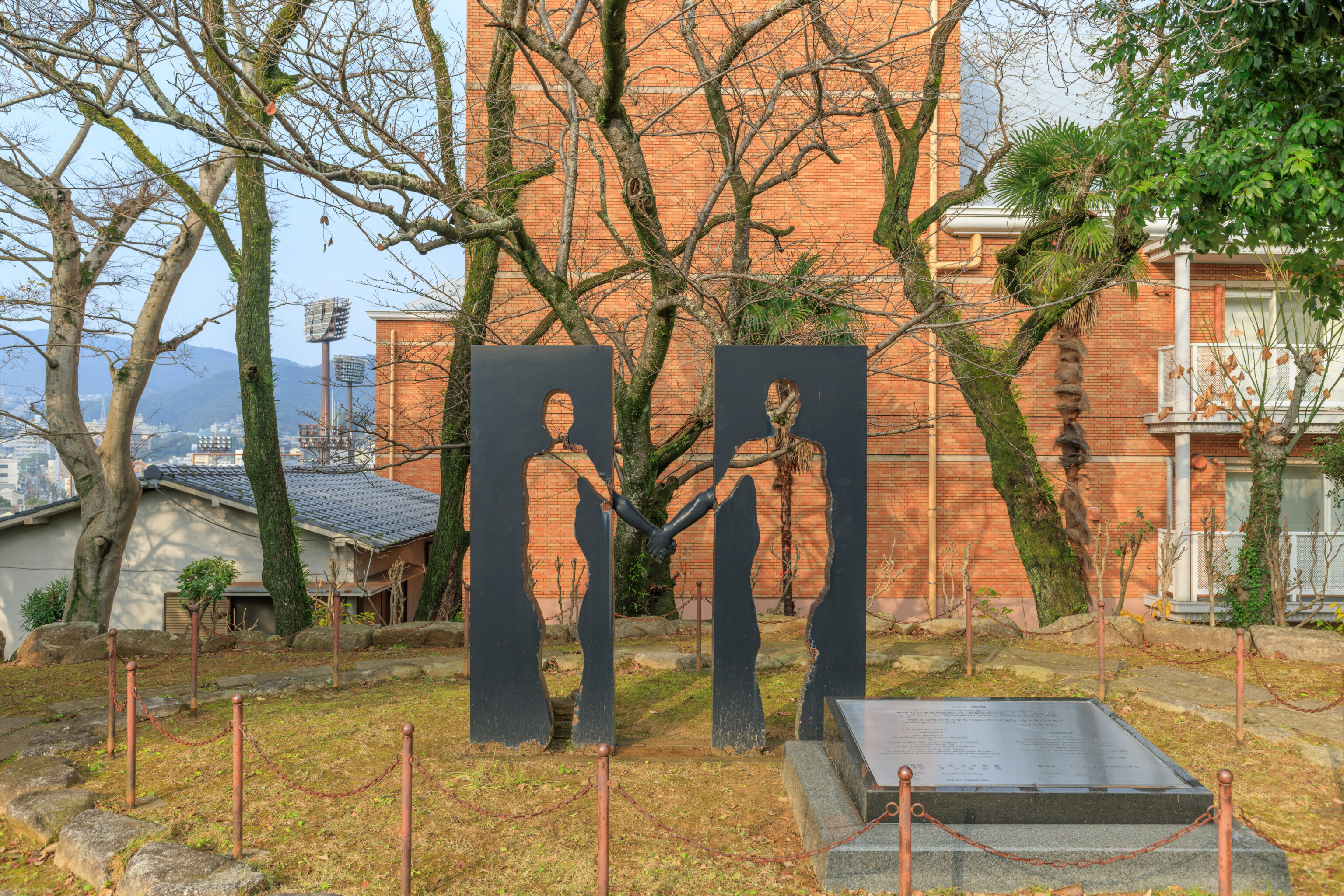
This memorial was donated by Ankara, Turkey.
This monument entitled " INFINITY" was donated to World Peace Symbol Zone of Nagasaki by Ankara, Capital City of the Republic of Turkey to commemorate the "100th Anniversary of Friendly Relations" between Turkey and Japan. The figure of a man and woman joined hand in hand symbolizes peace and harmony among the entire human race.
March 1991
Ankara, Capital City
Republic of Turkey
– English text from the large plaque at bottom right.
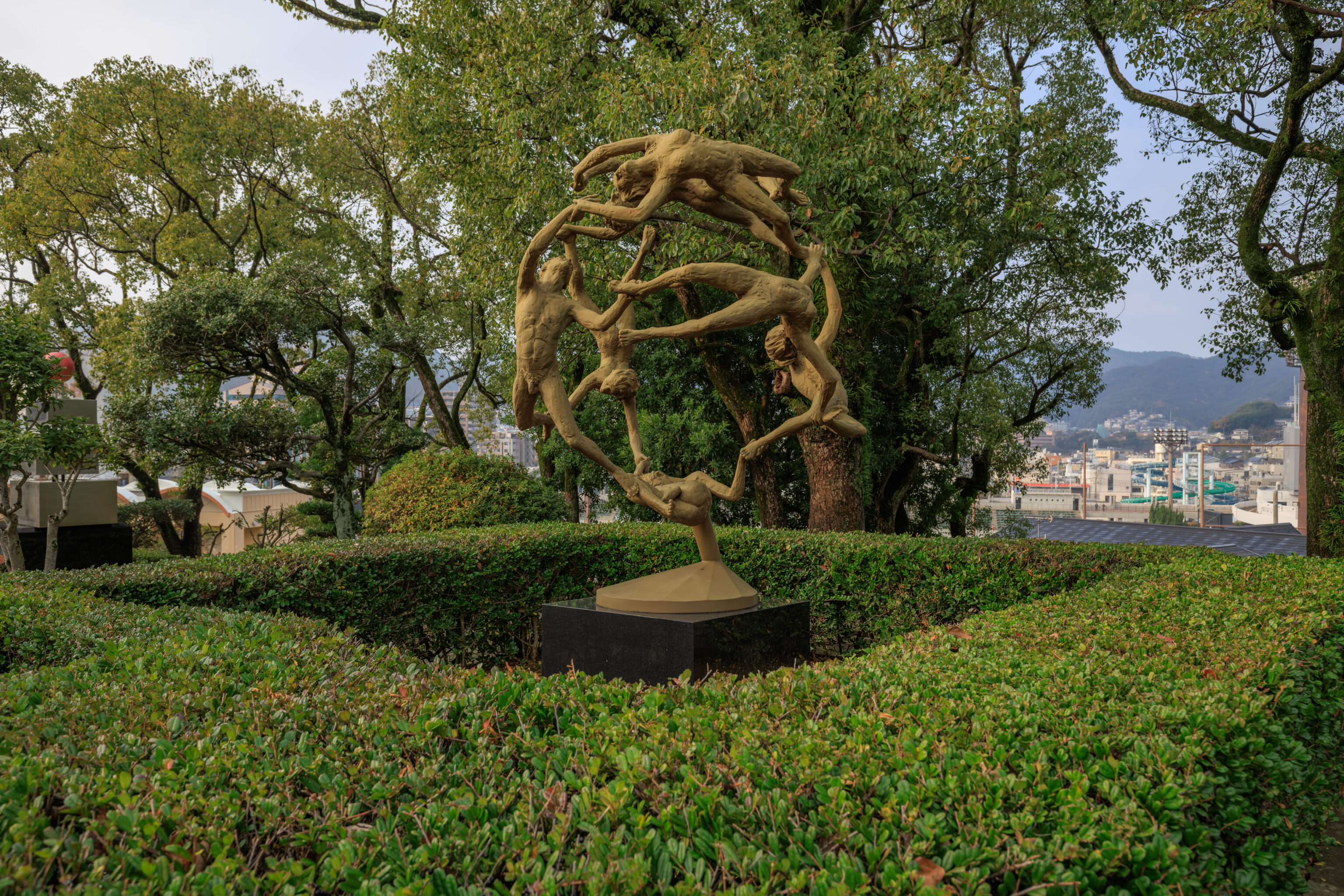
This memorial was donated by St. Paul, Minnesota, USA.
CONSTELLATION EARTH
Nagasaki and St. Paul, Minnesota, United States of America, share Japan's oldest sister-city affiliation. This sculpture was donated to the "World Peace Symbol Zone" by the citizens of St. Paul as an expression of friendship.

The seven human figures represent the continents. The interdependence
of the figures symbolizes global peace and solidarity.

October 1992

Donated by St. Paul, Minnesota, United States of America
Sculptor Paul T. Granlund
– Text from a plaque.
This memorial was donated by San Isidro, Argentina.
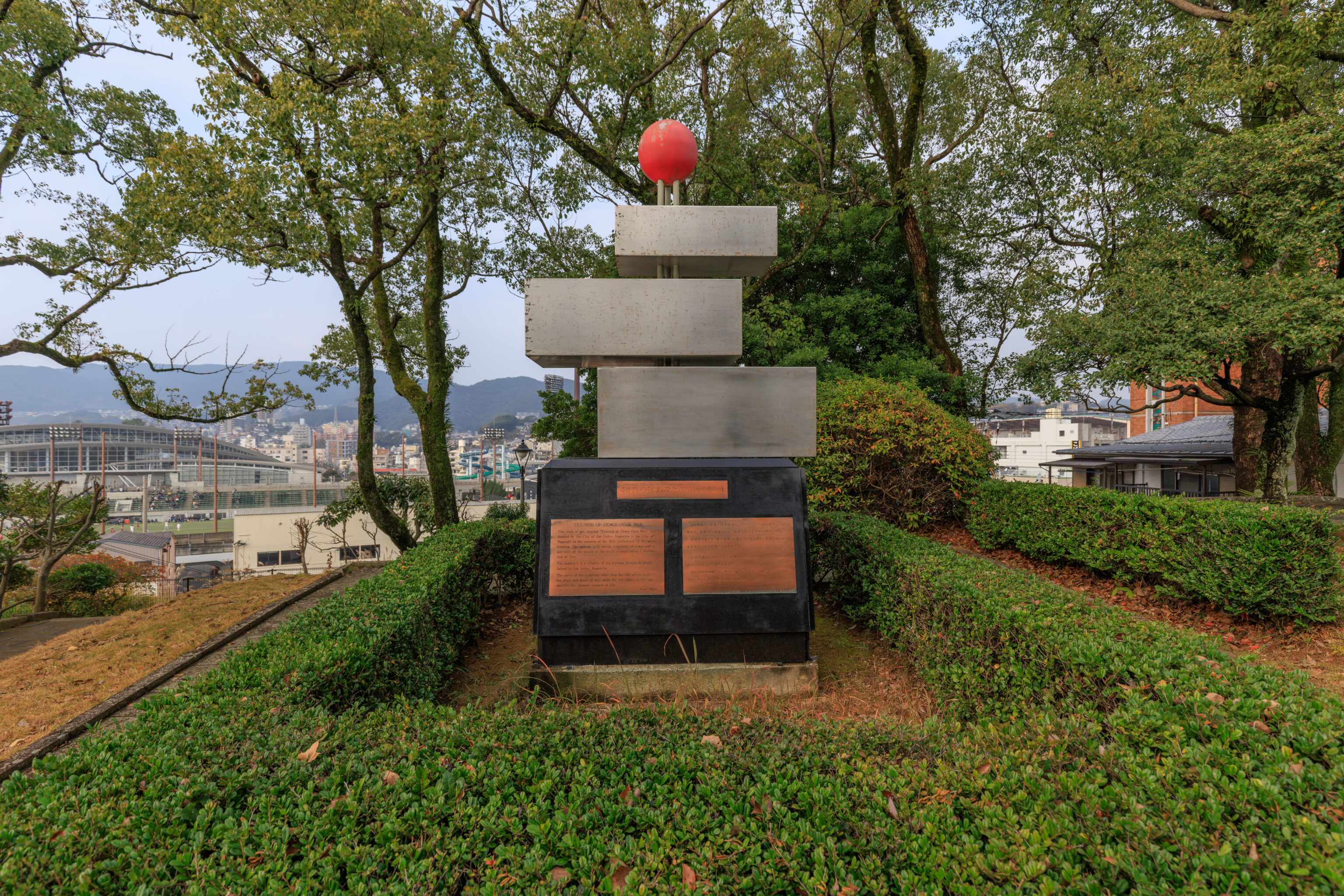
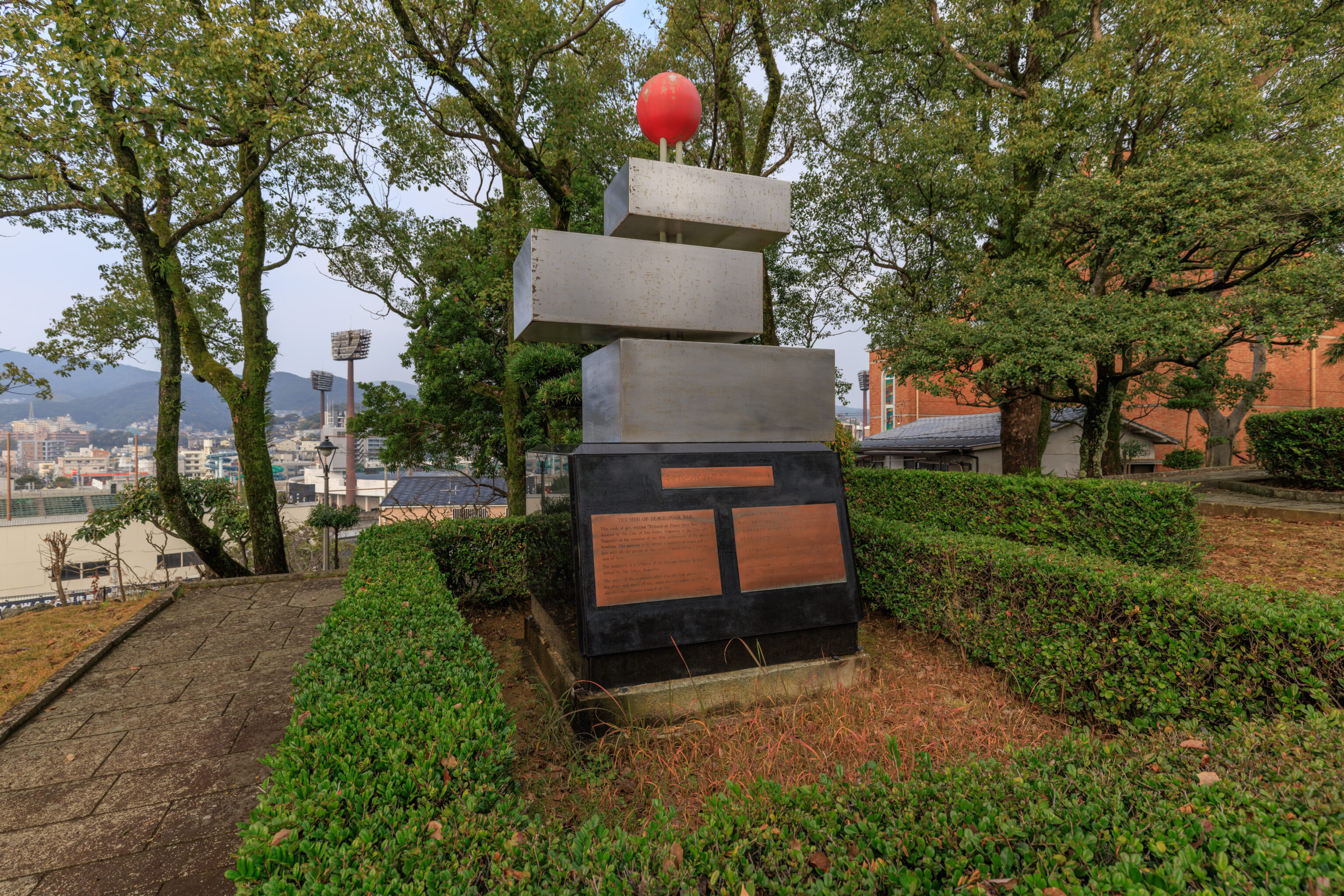
TRIUMPH OF PEACE OVER WAR
This work of art, entitled "Triumph of Peace Over War," was donated by the City of San Isidro, Argentina to the City of Nagasaki on the occasion of the 50th anniversary of the atomic bombing. The purpose is to convey a message of peace and to join with all the people of the world in establishing a civilization of love.

The sculpture is a creation of the Carmen Arriola de Marin School in San Isidro, Argentina.

The parts of the sculpture other than the red sphere symbolize the chaos and death of war, while the red sphere at the top signifies the ultimate triumph of life.

April 1996
– Text from the left plaque.
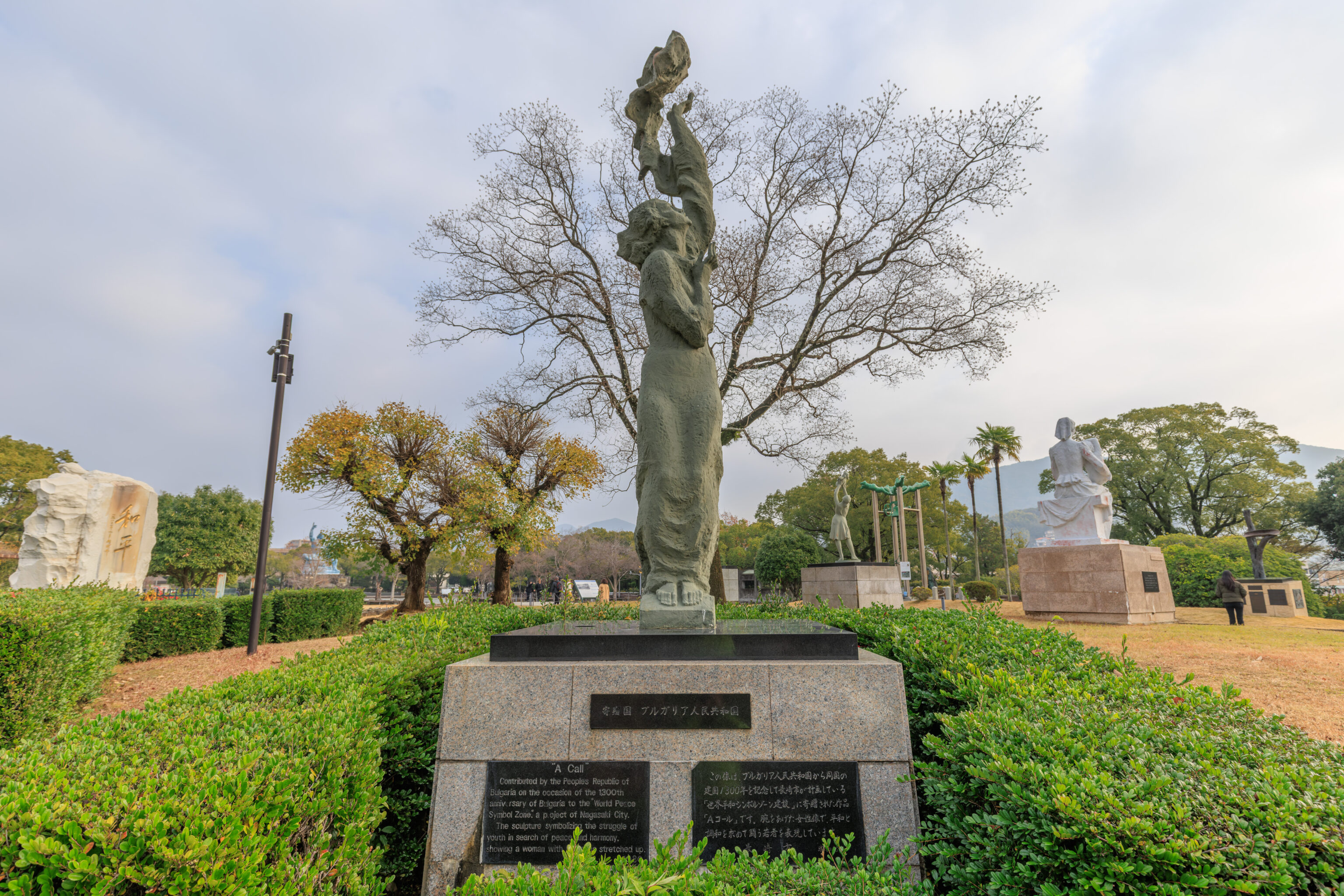
Another Soviet donation, this time from Bulgaria.
"A Call"
Contributed by the Peoples Republic of Bulgaria on the occasion of the 1300th anniversary of Bulgaria to the World Peace Symbol Zone, a project of Nagasaki City. The sculpture symbolizing the struggle of youth in search of peace and harmony, showing a woman with her arms stretched up.
1980
– Text from a sign, translated using Google.
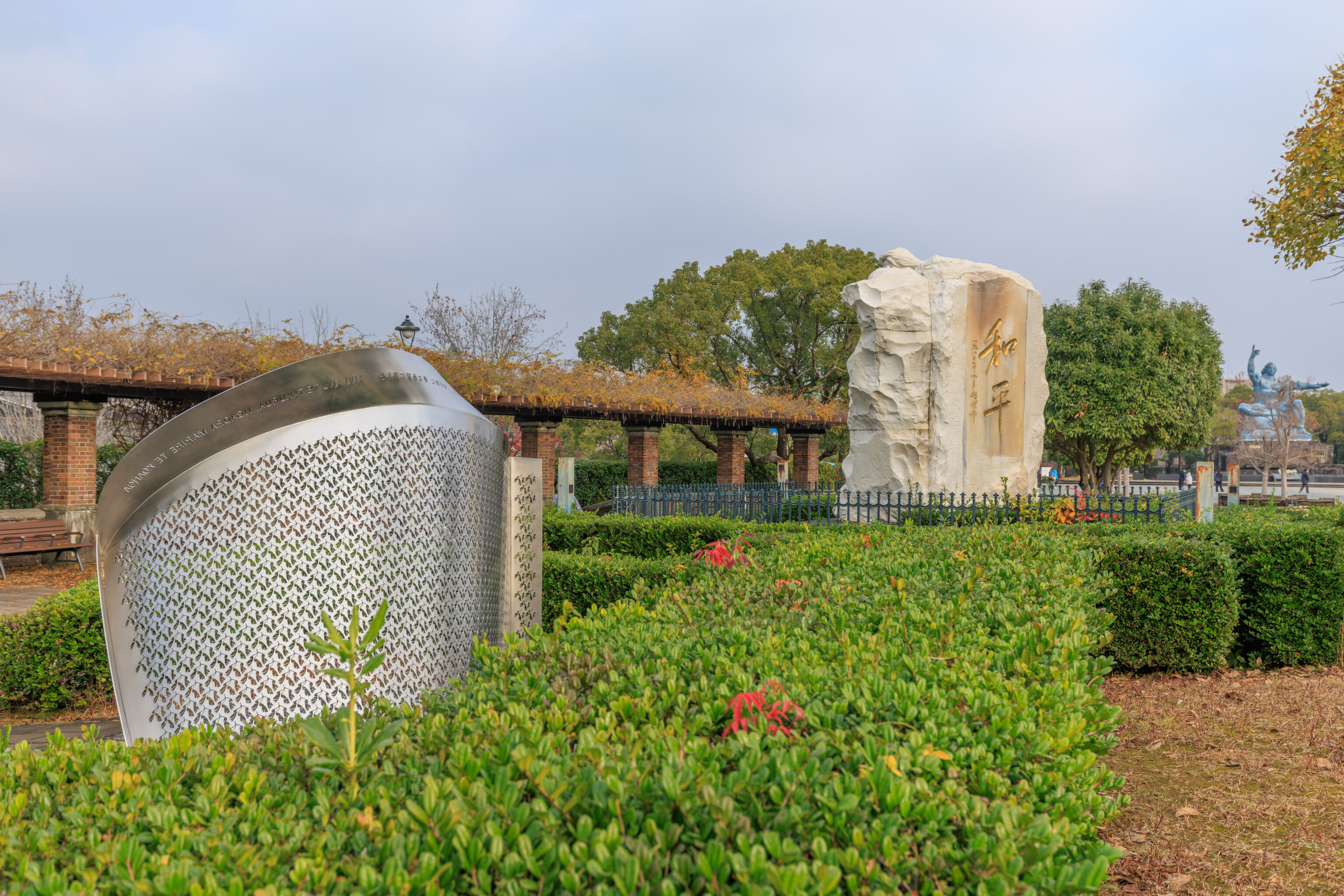
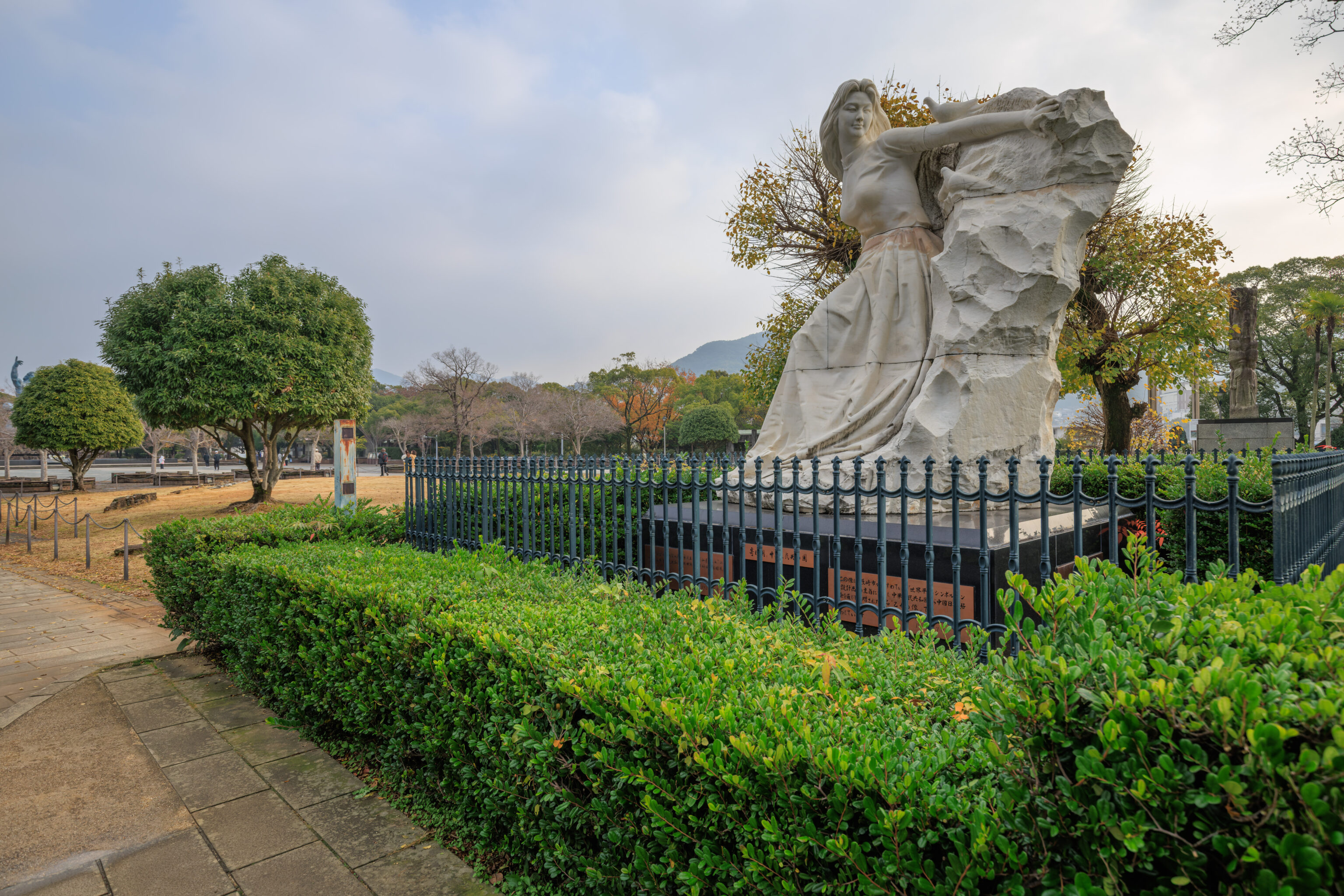
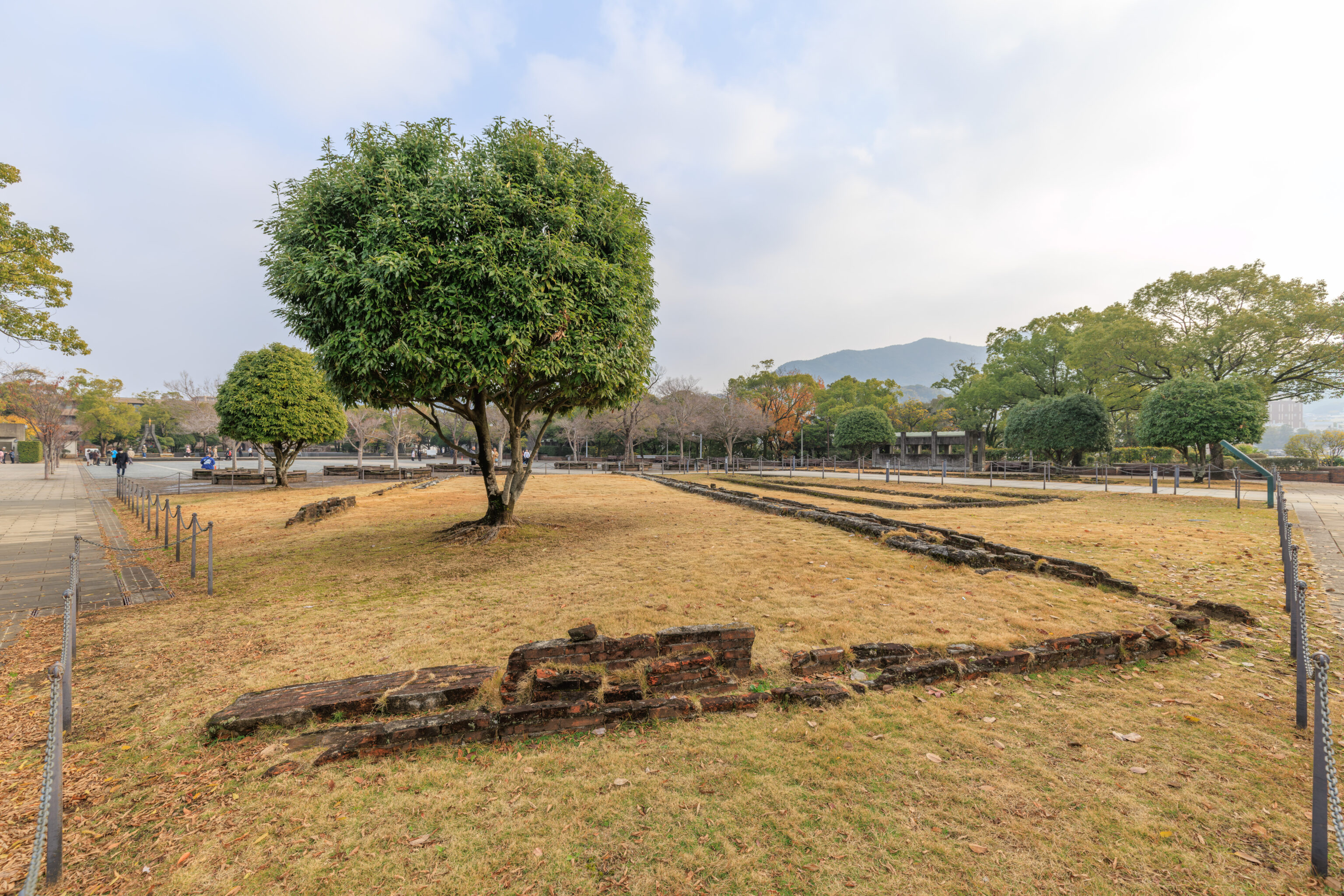
Having taken a quick look at all the memorials near the fountain and bell, we continued on to the northeast.
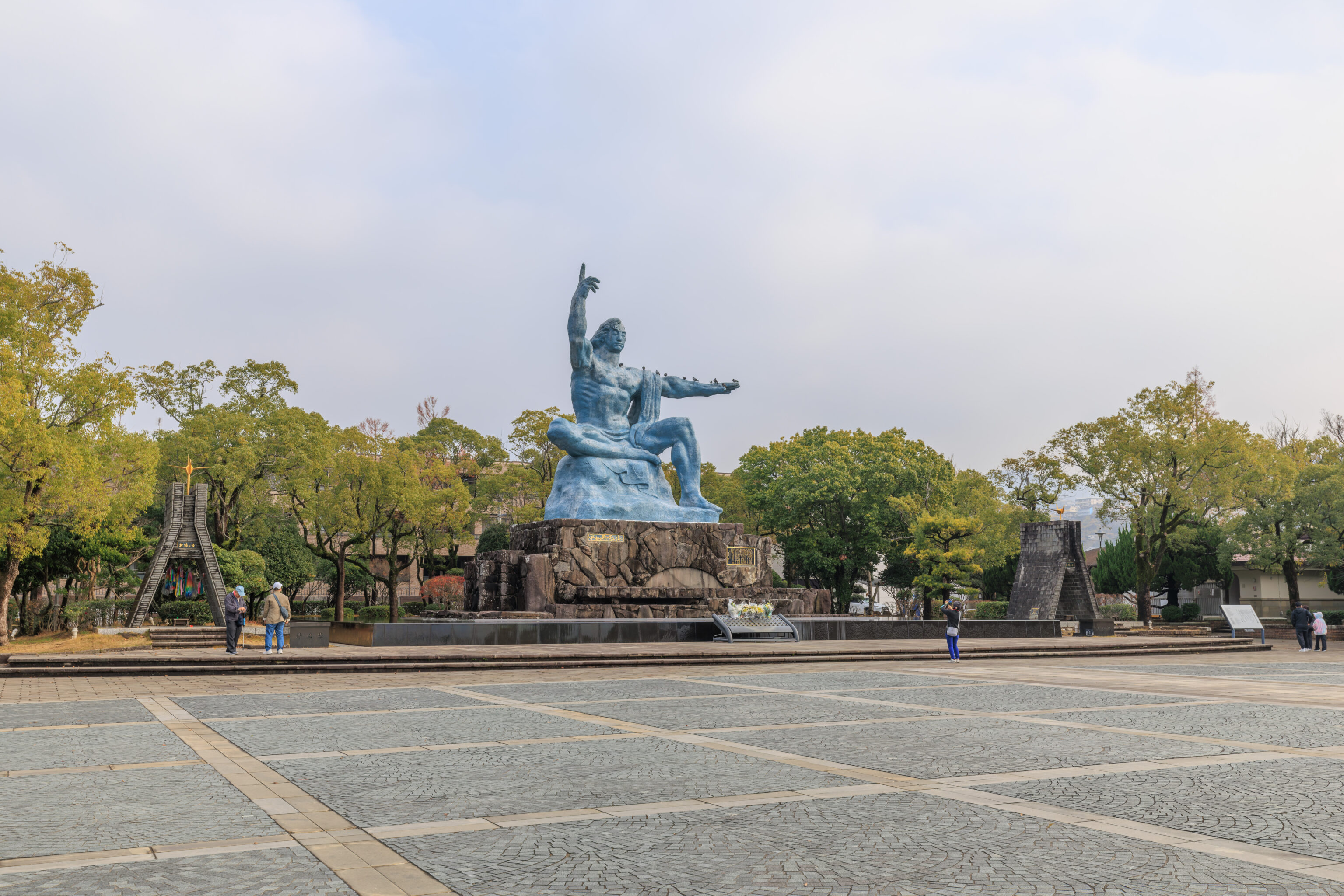
The big blue 平和祈念像 Peace Statue, perhaps more correctly the Peace Prayer Statue, is the most visible sculpture within the Peace Park and a symbol of Nagasaki.
The Peace Statue
This statue was erected by the citizens of Nagasaki in August, 1955, on the 10th anniversary of the devastation of this city by the atomic bomb. Thanks to contributions from Japan and abroad, the ten meter bronze statue, which was designed by Seibo Kitamura, was dedicated as an appeal for lasting world peace and as a prayer that such a tragedy would never be repeated.

The elevated right hand points to the threat of nuclear weapons, while the outstretched left hand symbolizes tranquility and world peace. Divine omnipotence and love are embodied in the sturdy physique and gentle countenance of the statue, and a prayer for the repose of the souls of all war victims is expressed in the closed eyes. Furthermore, the folded right leg symbolizes quiet meditation, while the left leg is poised for action in assisting humanity.

Nagasaki City
– Text from a sign.
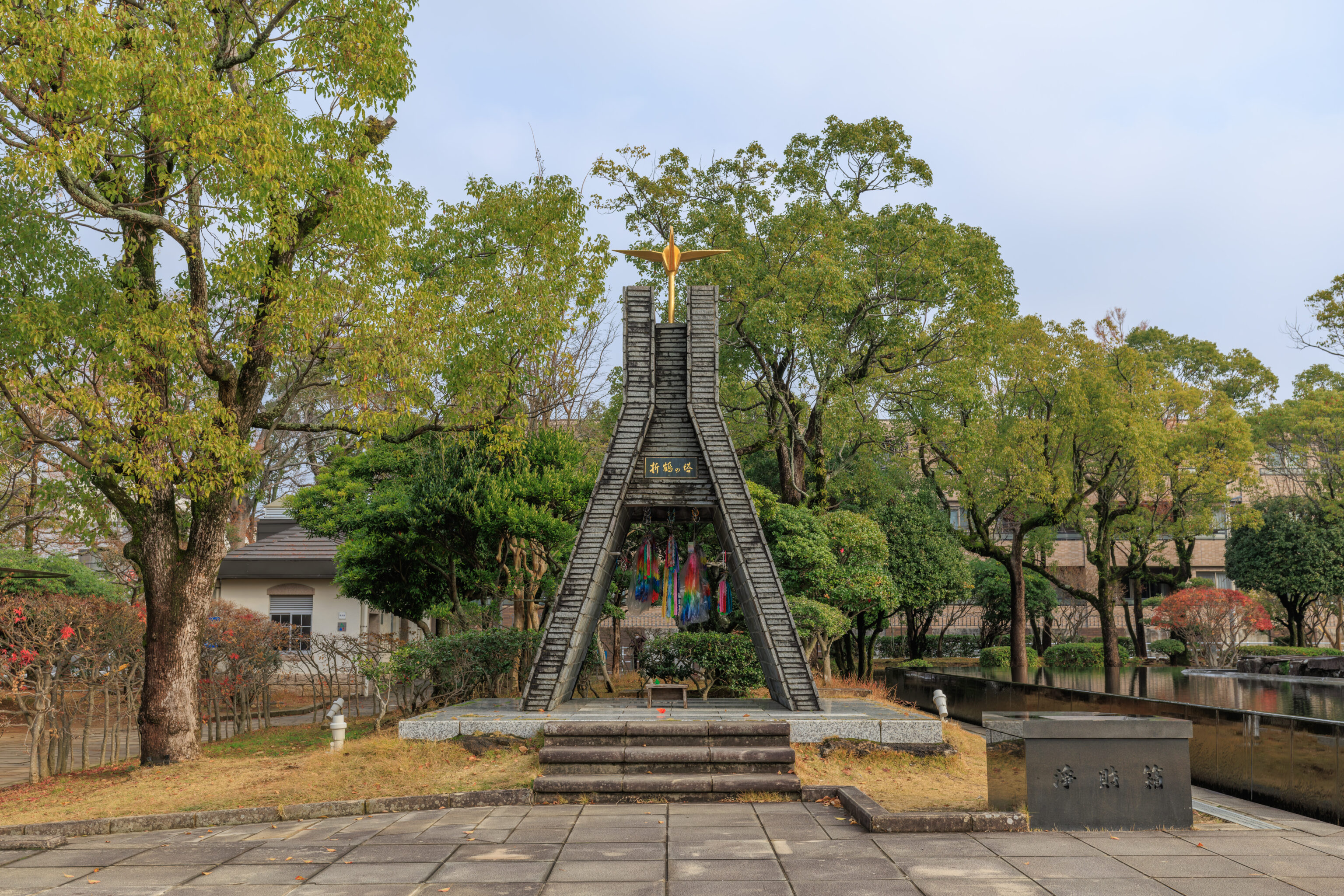
This is the 折鶴の塔 Tower of Paper Cranes. Paper cranes became a worldwide symbol for peace due to the efforts of Sadako Sasaki, a girl who survived the atomic bombing of Hiroshima but passed away at just 12 years old.
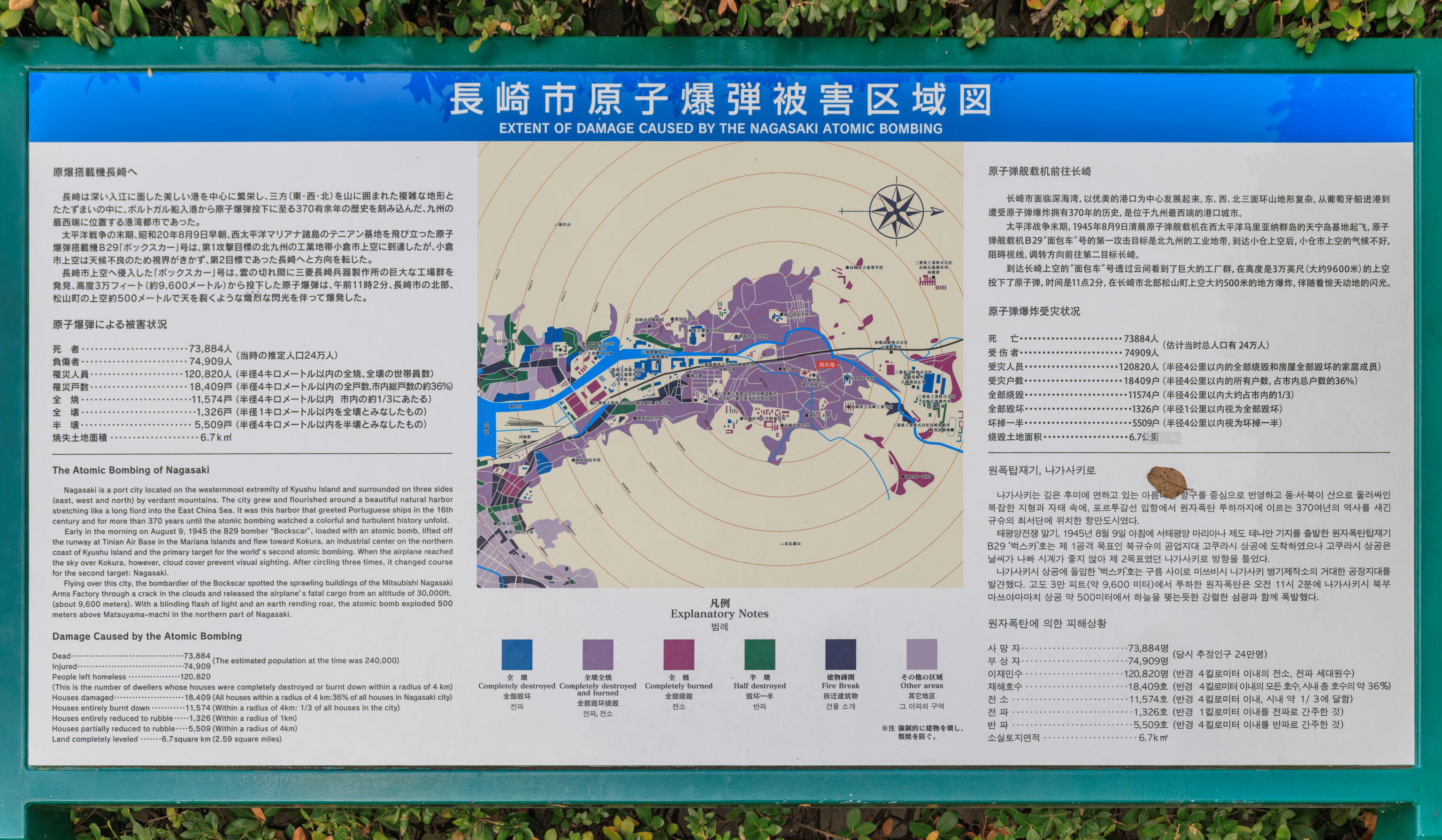
A sign illustrates the destruction caused by the atomic bomb.
The Atomic Bombing of Nagasaki
Nagasaki is a port city located on the westernmost extremity of Kyushu Island and surrounded on three sides (east, west and north) by verdant mountains. The city grew and flourished around a beautiful natural harbor stretching like a long fiord into the East China Sea. It was this harbor that greeted Portuguese ships in the 16th century and for more than 370 years until the atomic bombing watched a colorful and turbulent history unfold.

Early in the morning on August 9, 1945 the B29 bomber "Bockscar", loaded with an atomic bomb, lifted off the runway at Tinian Air Base in the Mariana Islands and flew toward Kokura, an industrial center on the northern coast of Kyushu Island and the primary target for the world's second atomic bombing. When the airplane reached the sky over Kokura, however, cloud cover prevent visual sighting. After circling three times, it changed course for the second target: Nagasaki.

Flying over this city, the bombardier of the Bockscar spotted the sprawling buildings of the Mitsubishi Nagasaki Arms Factory through a crack in the clouds and released the airplane's fatal cargo from an altitude of 30,000ft. (about 9,600 meters). With a blinding flash of light and an earth rending roar, the atomic bomb exploded 500 meters above Matsuyama-machi in the northern part of Nagasaki.

Damage Caused by the Atomic Bombing
Dead
73,884
(The estimated population at the time was 240,000)

Injured
74,909

People left homeless
120,820 (This is the number of dwellers whose houses were completely destroyed or burnt down within a radius of 4 km)

Houses damaged
18,409 (All houses within a radius of 4 km:36% of all houses in Nagasaki city)

Houses entirely burnt down
11,574 (Within a radius of 4km: 1/3 of all houses in the city)

Houses entirely reduced to rubble
1,326 (Within a radius of 1km)

Houses partially reduced to rubble
5,509 (Within a radius of 4km)

Land completely leveled
6.7 square km (2.59 square miles)
– English text from the sign above.
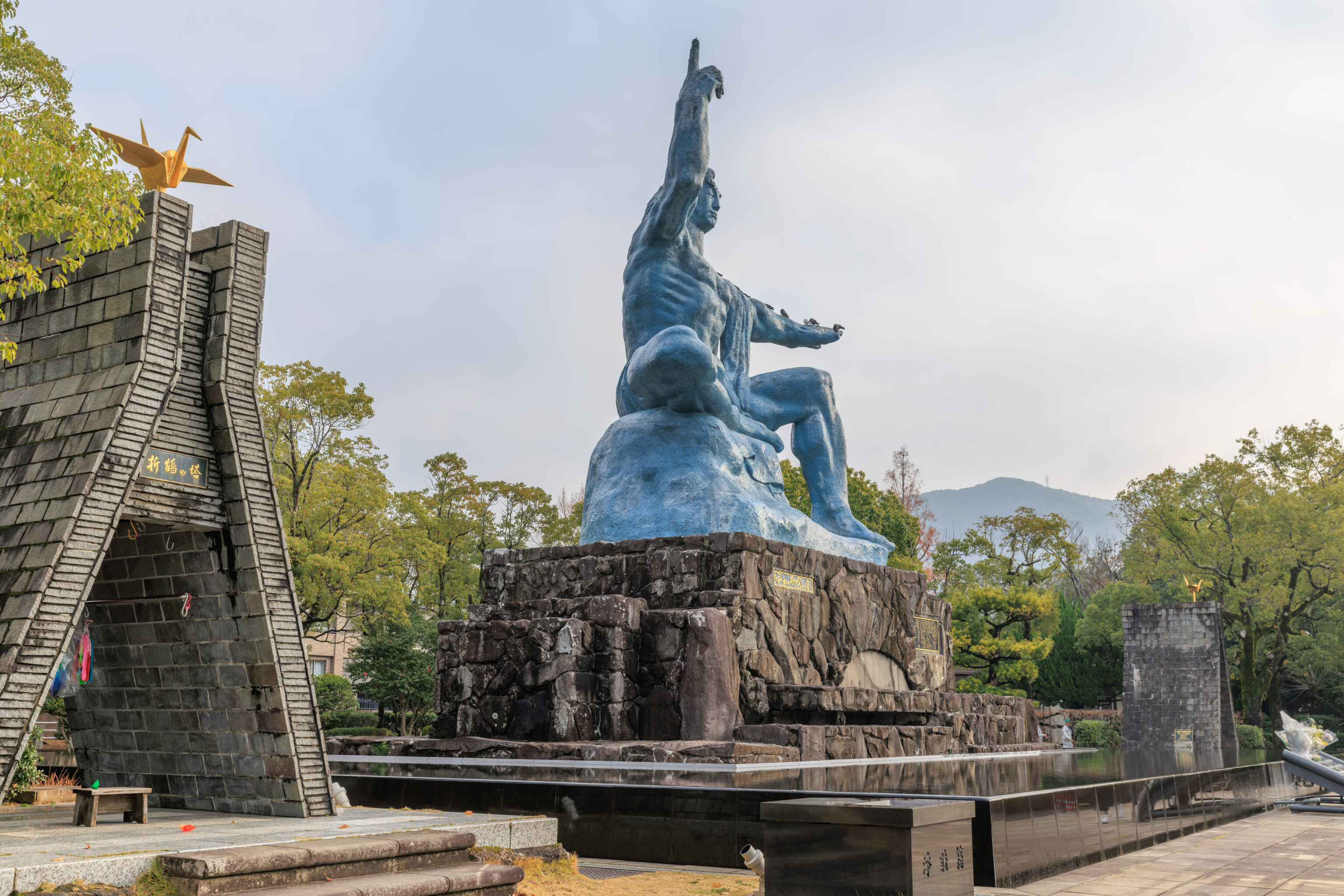
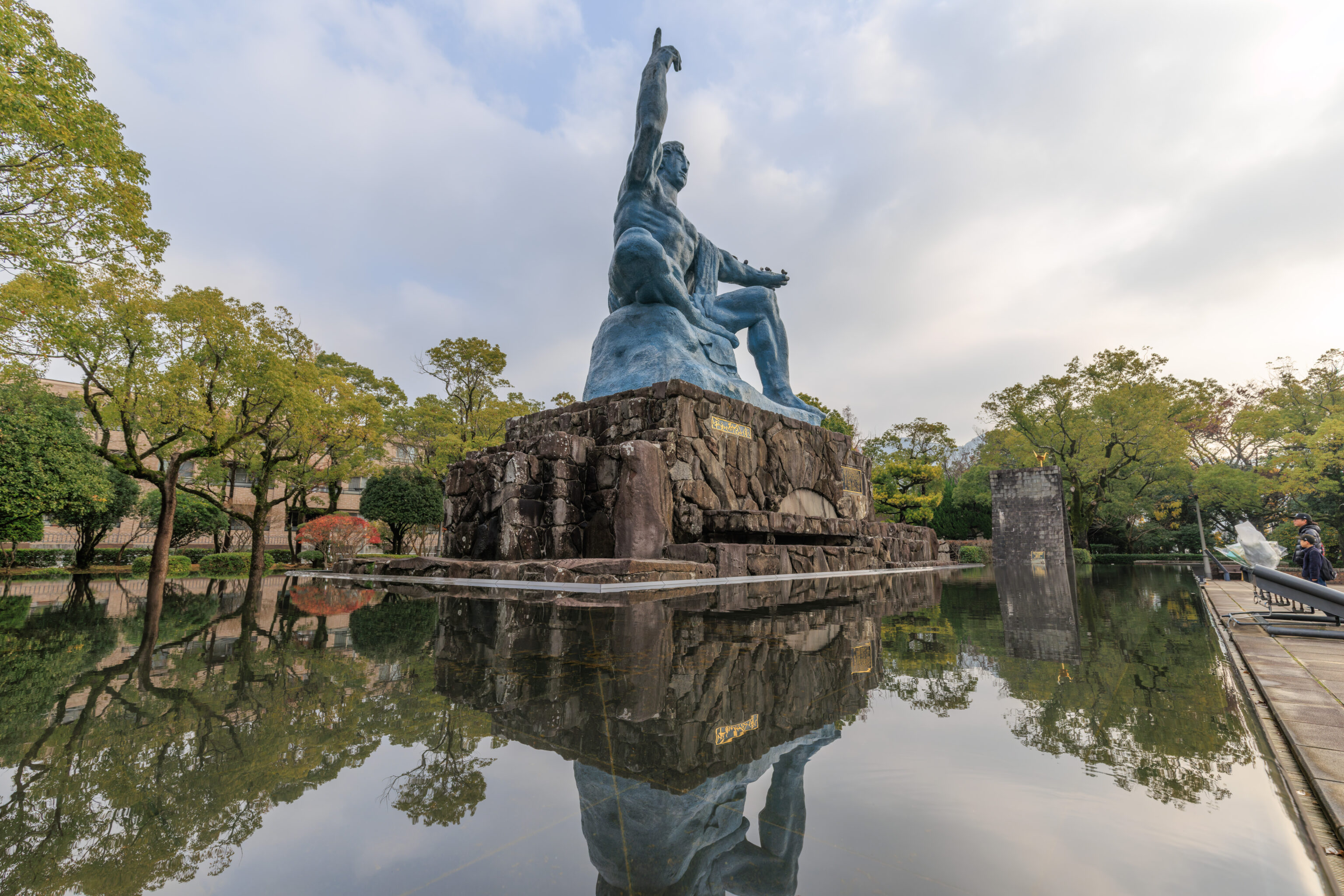
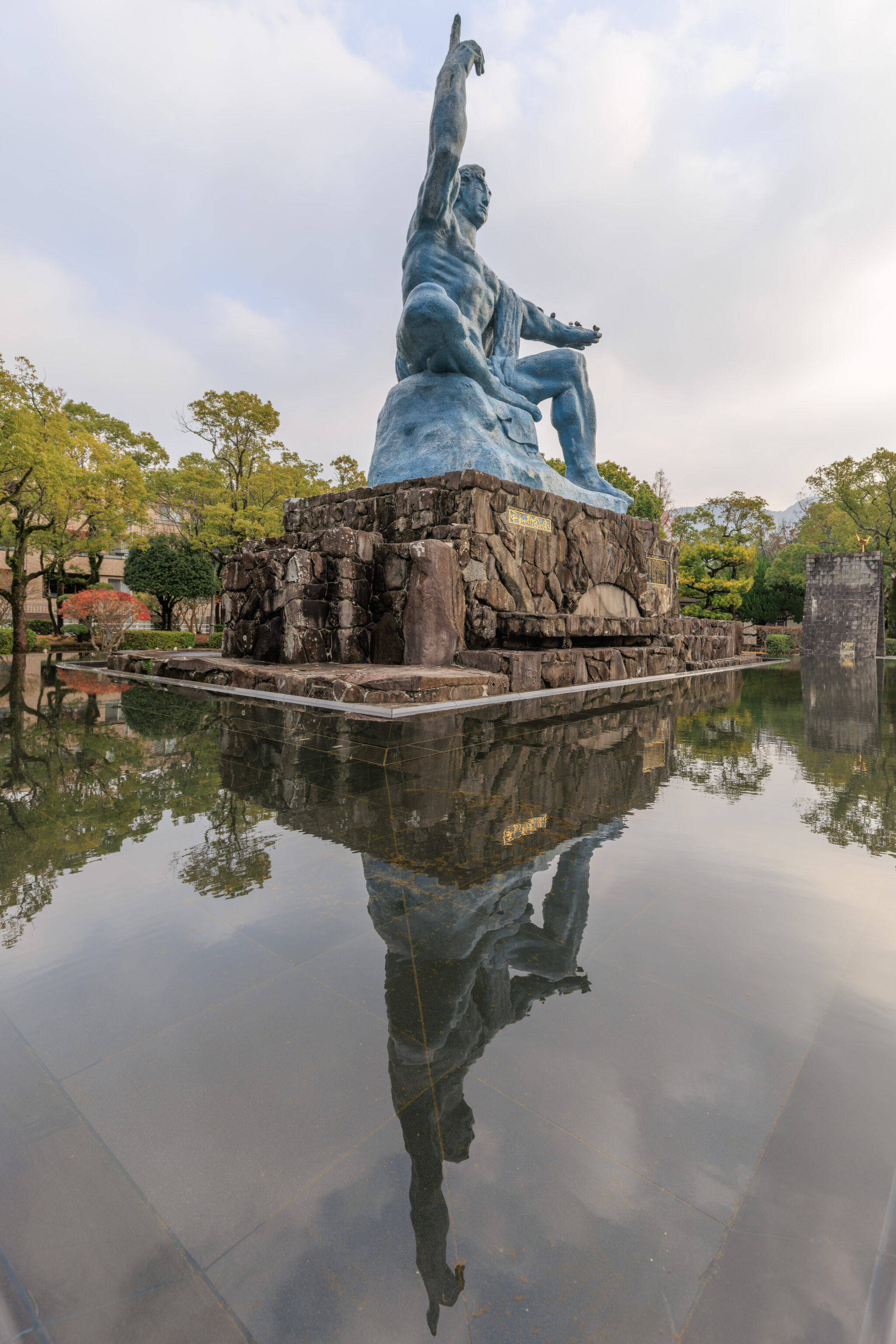
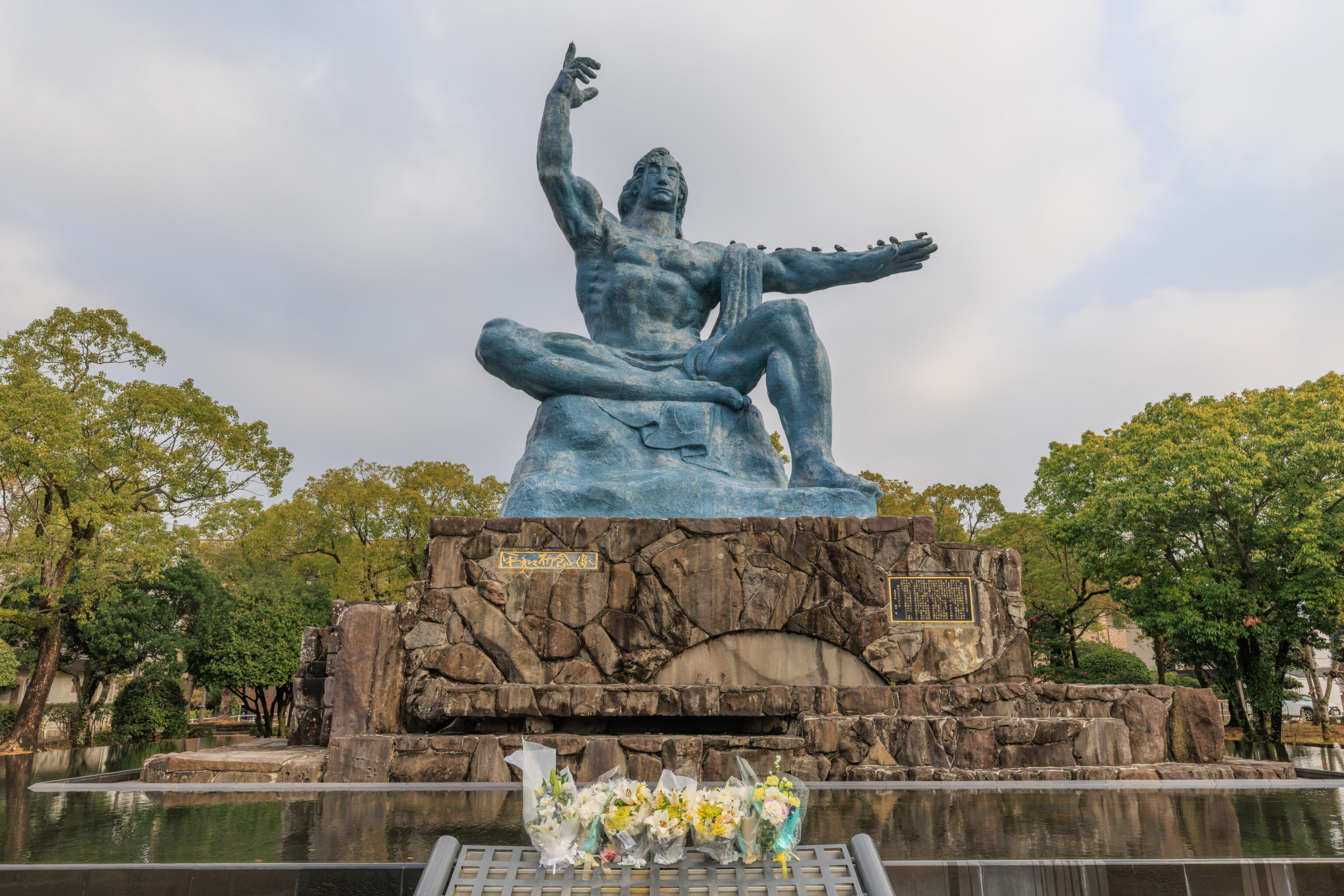
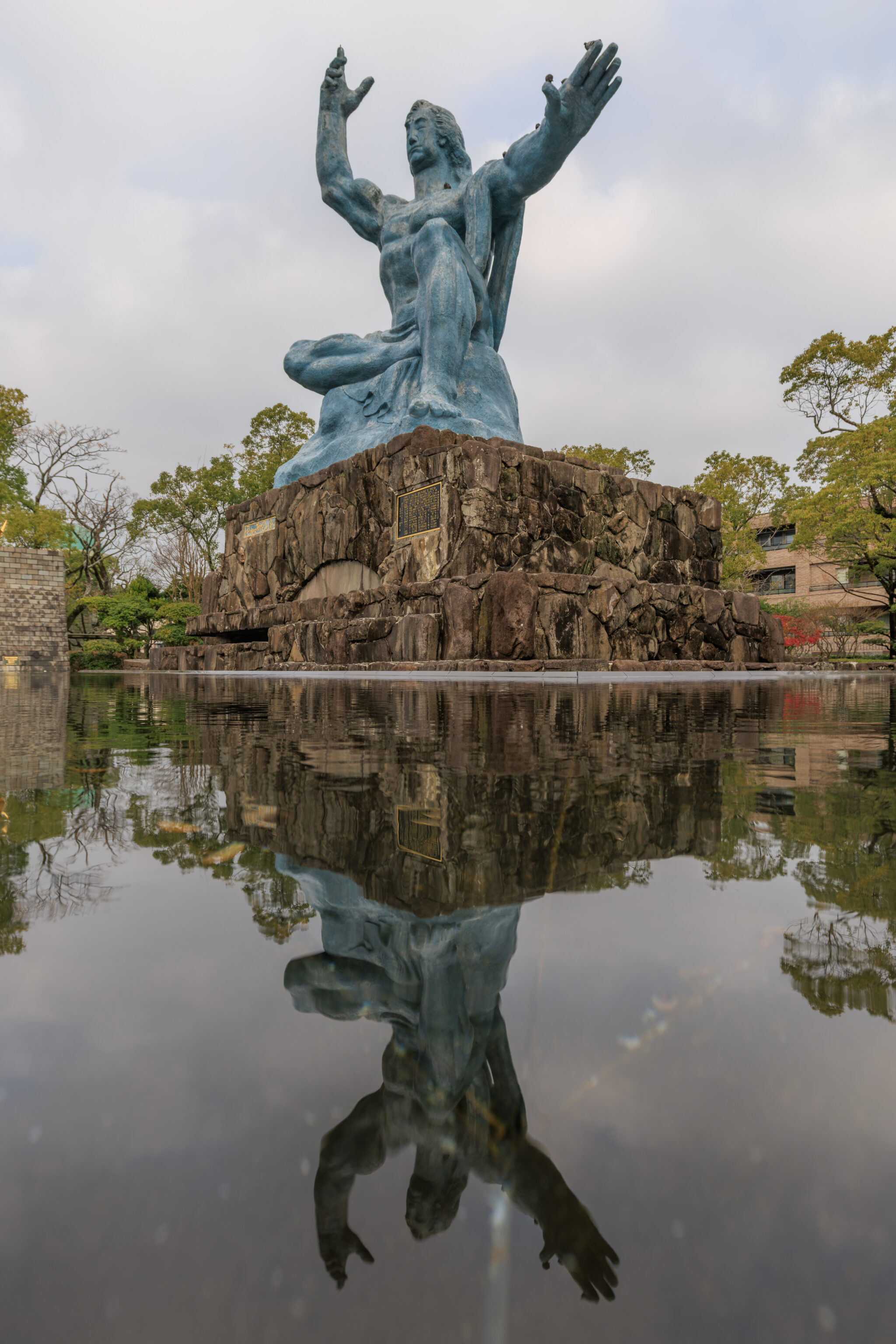
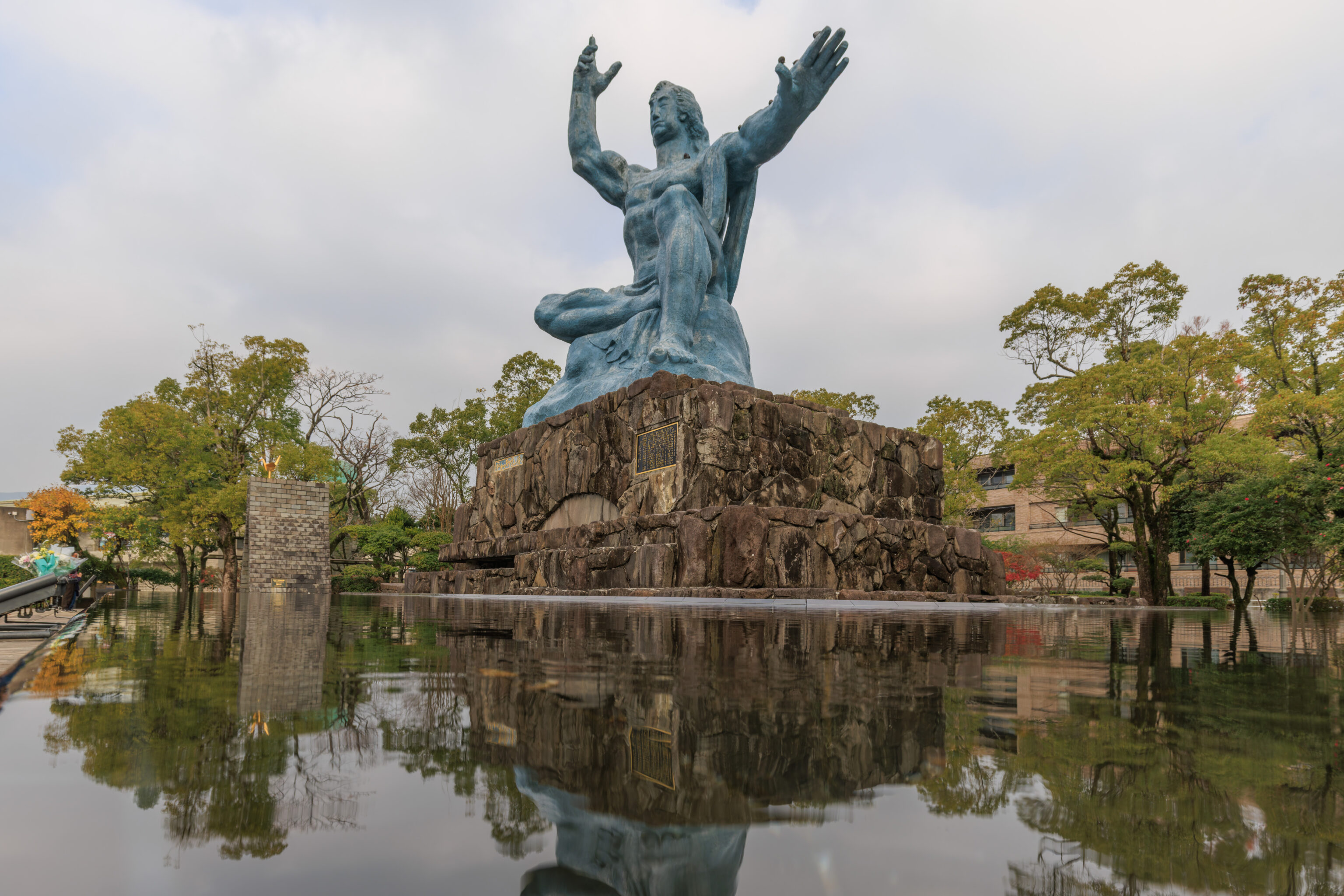
We walked from west to east in front of the Peace Statue.
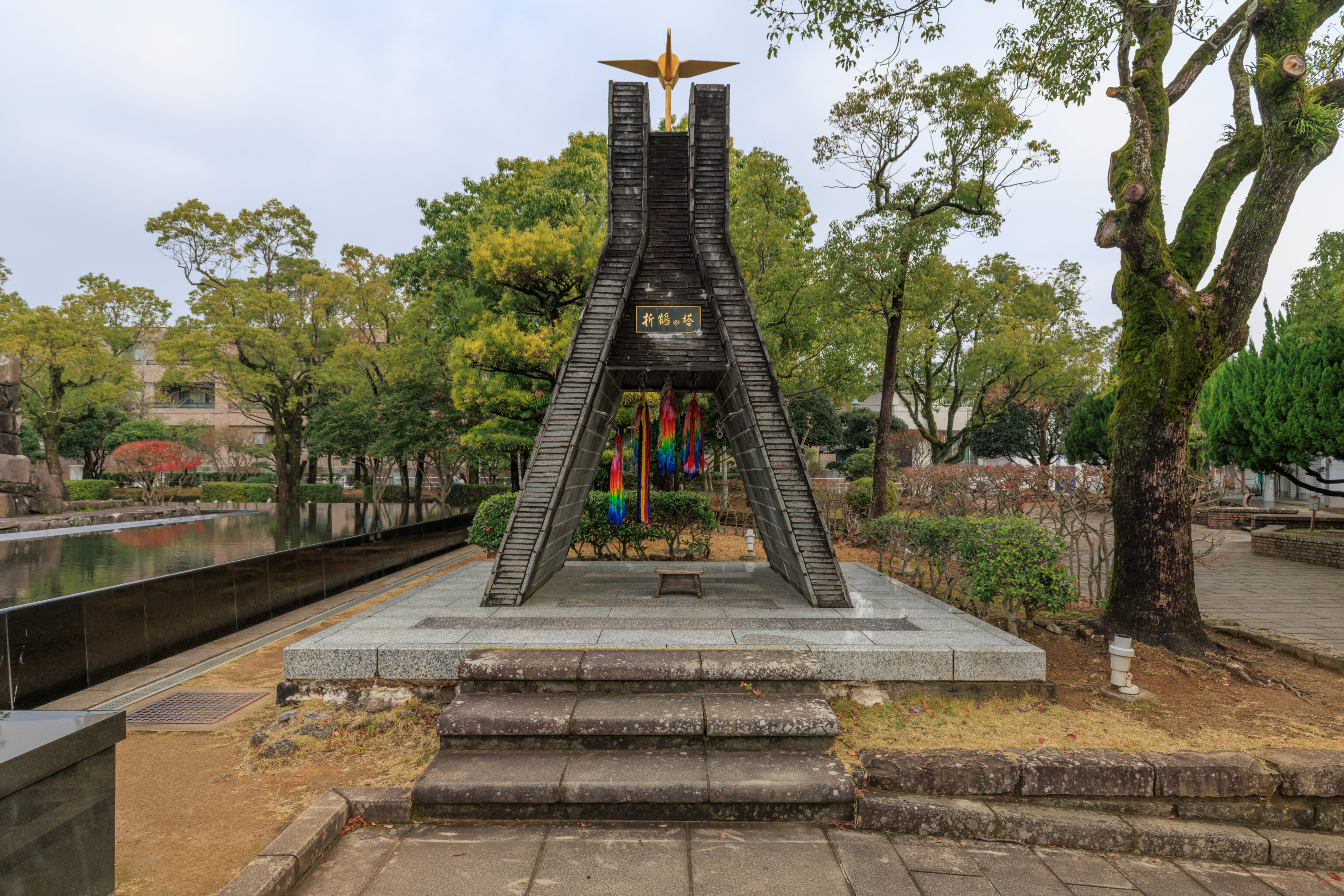
There was another Tower of Paper Cranes on the east side of the Peace Statue, just like the one to the west.
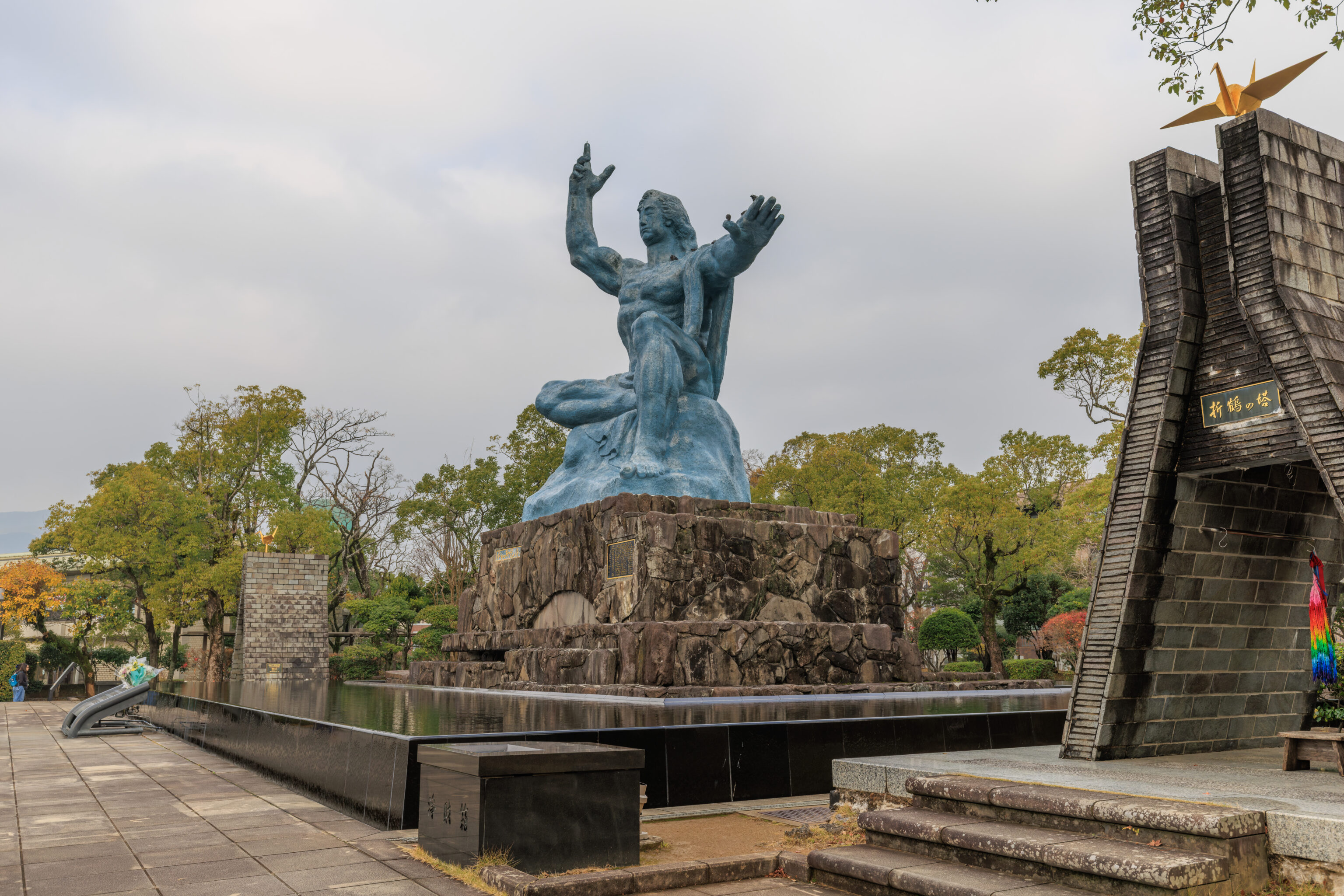
There was a message on a sign from Seibo Kitamura, the sculptor of the Peace Statue:
A Word from the Sculptor
After experiencing that nightmarish war, that blood-curdling carnage, that unendurable horror, who could walk away without praying for peace? This statue was created as a herald for the struggle for global harmony. Standing ten meters tall, it conveys the profundity of knowledge and the beauty of health and virility. The right hand points to the atomic bomb, the left hand points to peace, and the face is in solemn prayer for the victims of the war. Transcending the barriers of race and evoking the qualities of both Buddha and God, it is a symbol of the greatest determination ever known in the history of Nagasaki and of the highest hope of all mankind.

Seibo Kitamura
Spring 1955
– Text from a sign, translated using Google.
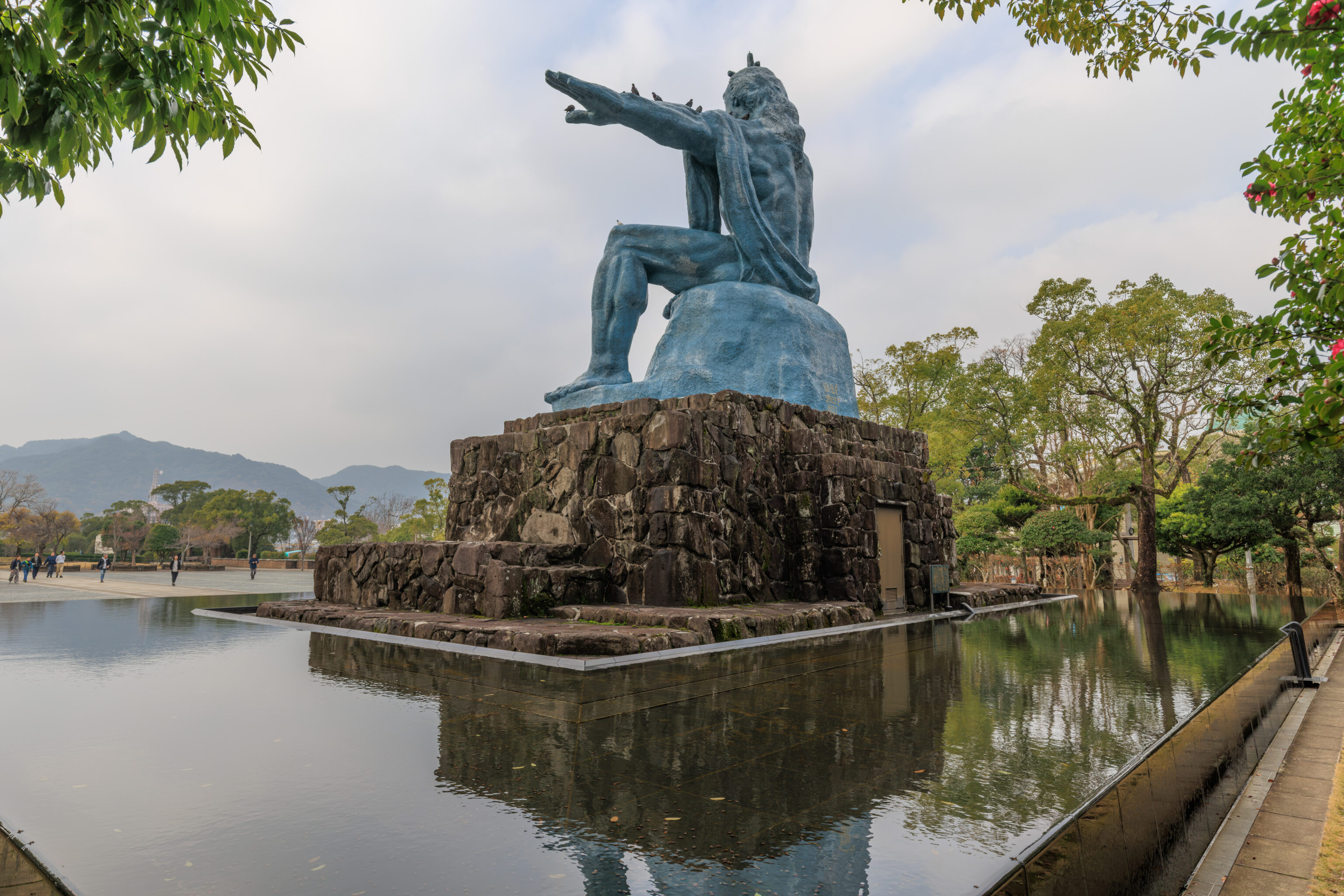
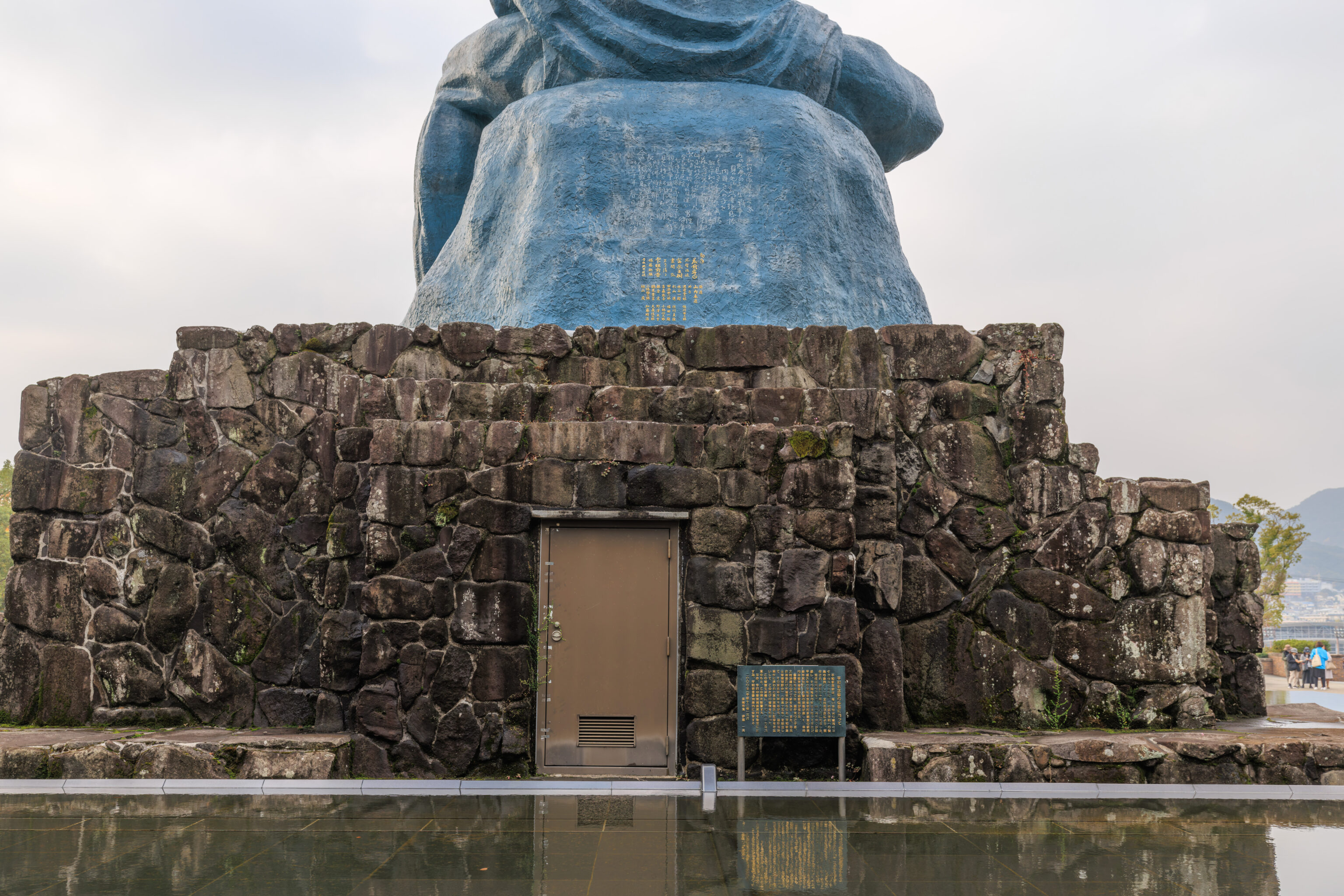
We continued on to the back of the Peace Statue. The text inscribed on the statue in white lettering is the same text we just saw on the A Word from the Sculptor sign. Below, in gold lettering, is a list of the people involved in constructing the Peace Statue:
Casting:
Shunzo Yamauchi

Assistants:
Ryokichi Goto (?)
Haruyoshi Kitamura
Naoki Tominaga
Hiroshi Hiruma
Toko Kubo
Yasukichi Nakagaki
Sukuo Sato
Tashiriku Sota
Kinjiro Watanabe
Ikki Mizutani
Susumu Sugiyama
Eihachiro Tazoe
Yakichi Yoshimori
Hikaru Tokura
Toyokichi Tsurumi
Umezaburo Kobayashi
Shigeru Soyama
Ichitaro Tsunekawa
Sadao Tsunekawa
Kazuo Fukuda
Shintaro Kobayashi
Yonekichi Nozawa
Denshiro Oizumi
Tokiji Kato
– List of names inscribed in gold on the rear of the Peace Statue, read and translated using Google Gemini and Translate.
The sign at ground level briefly details the restoration of the Peace Statue in March, 2000:
On the Restoration of the Peace Statue
The Peace Statue was created by Seibo Kitamura and completed on August 8, 1955, serving both to console the souls of the precious victims and as a symbol of the fervent desire for lasting world peace.

More than forty-four years have passed since its completion, and while various repairs were carried out during that time, a 1997 survey on the statue's condition revealed severe deterioration due to age, necessitating a comprehensive preservation and restoration project.

For this restoration, we obtained the consent of the creator's son, Haruyoshi Kitamura, and established the "Peace Statue Restoration Consultative Committee" (comprising fifteen members, including local neighborhood association representatives and experts). We proceeded with the work under the supervision of Naoki Tominaga—who had been involved in the statue's original creation—while incorporating the committee's insights and recommendations.

Marking this restoration, we erect this monument as an expression of our renewed commitment to peace. Furthermore, documents and materials related to this restoration have been placed within the statue's pedestal to preserve them for future generations.

March 2000
Itcho Ito, Mayor of Nagasaki
– Text from a the sign at ground level by the door, read and translated using Google Gemini and Translate.
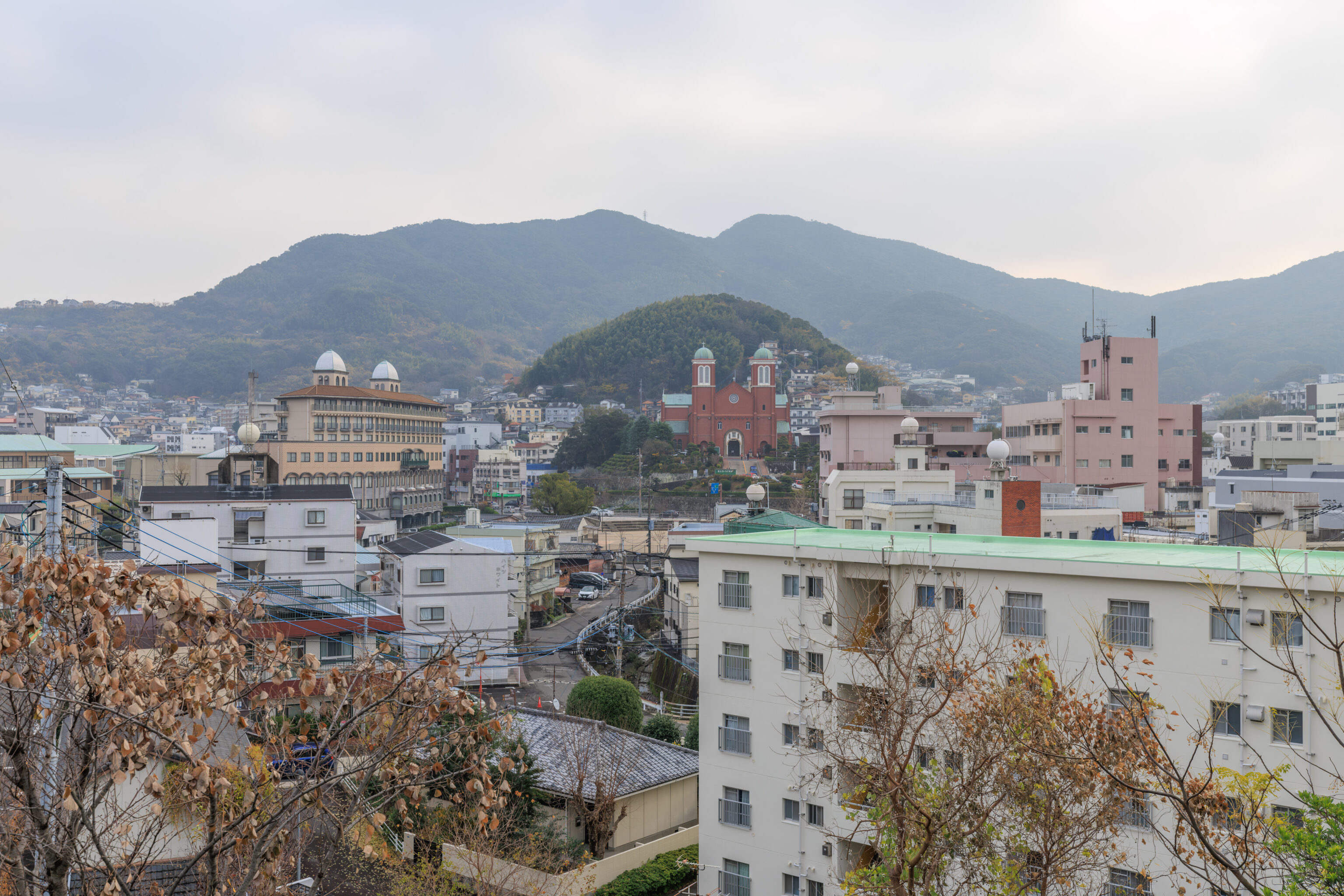
This is a little overlook at the very northeastern corner of the Peace Park. Looking to the east, we could see the nearby Urakami Cathedral. We decided to backtrack to exit the park from at the south where we entered.
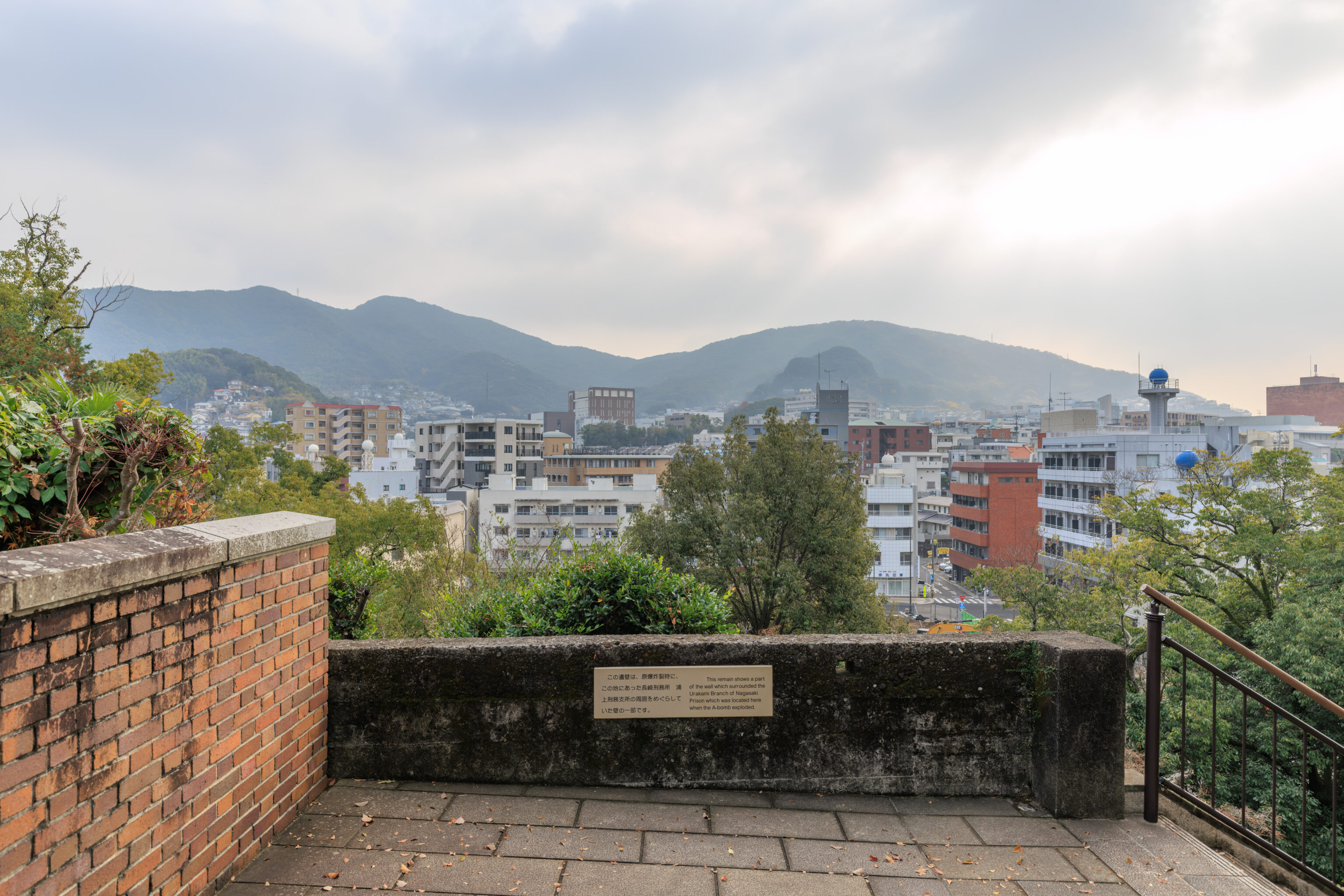
Near the Nagasaki Bell, we saw this wall, a remnant of the wall that surrounded the prison that was here during the war.
This remain shows a part of the wall which surrounded the Urakami Branch of Nagasaki Prison which was located here when the A-bomb exploded.
– Text from the sign in the above photograph.
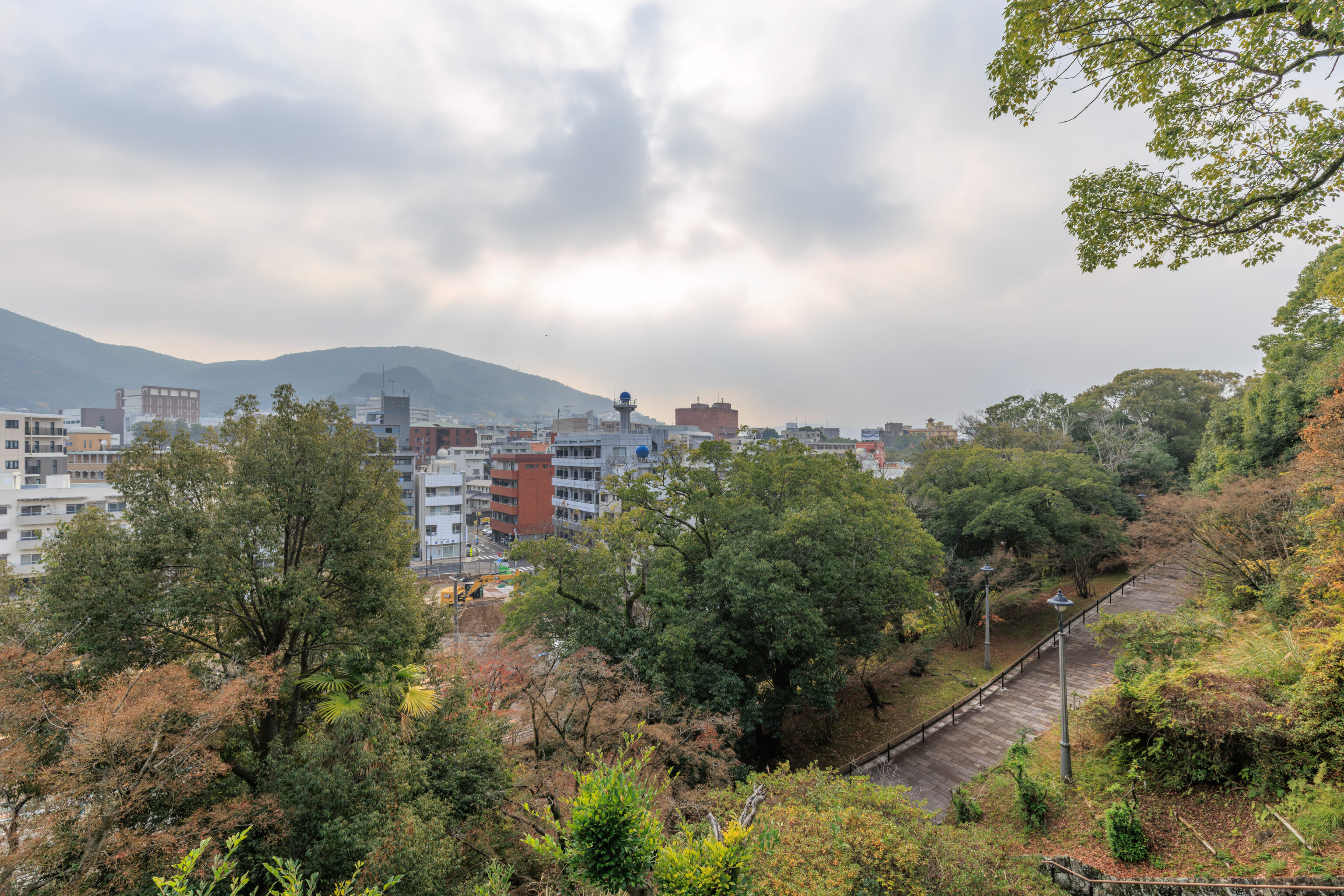
We could have exited the Peace Park here and descended to the path below. However, we continued on.
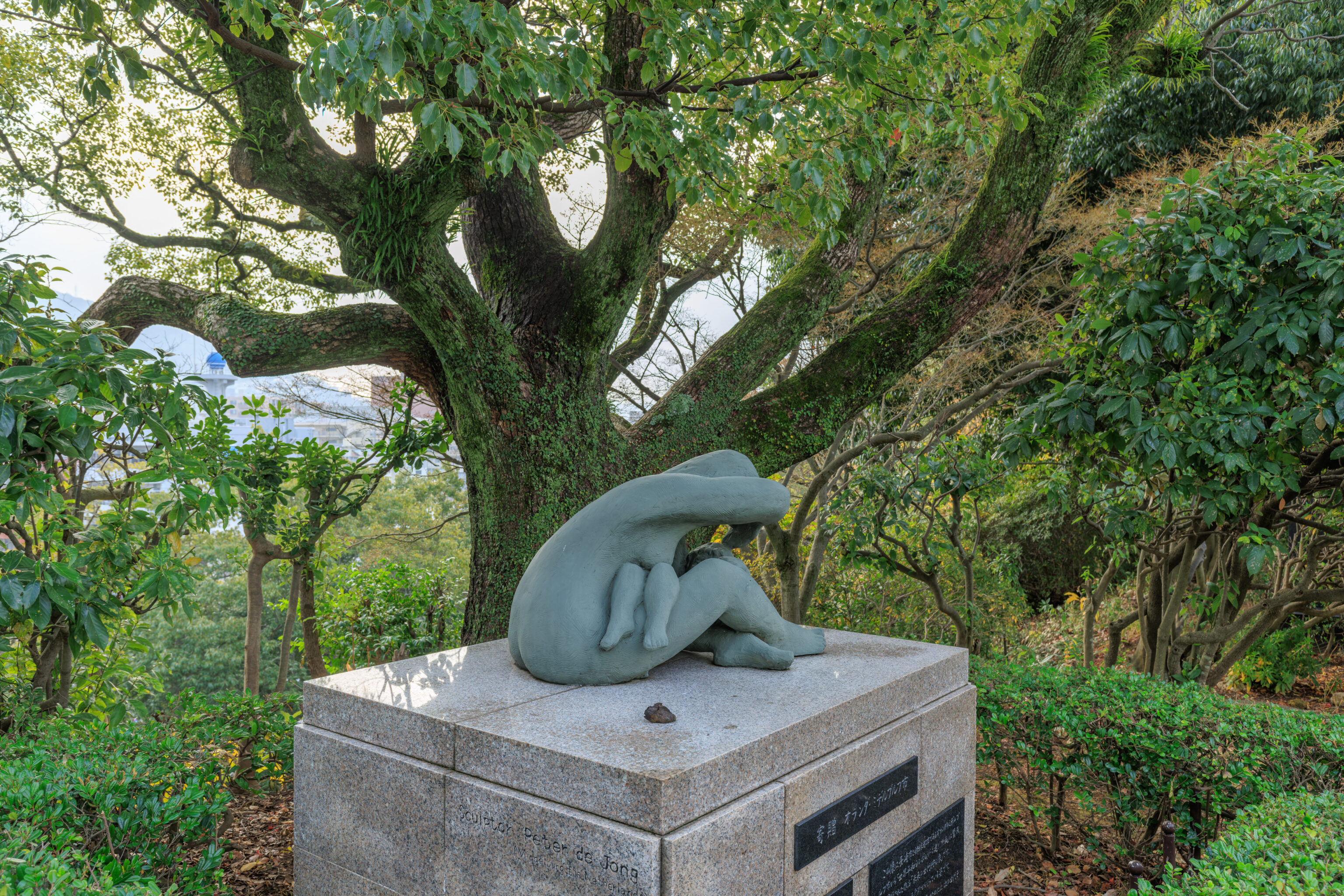
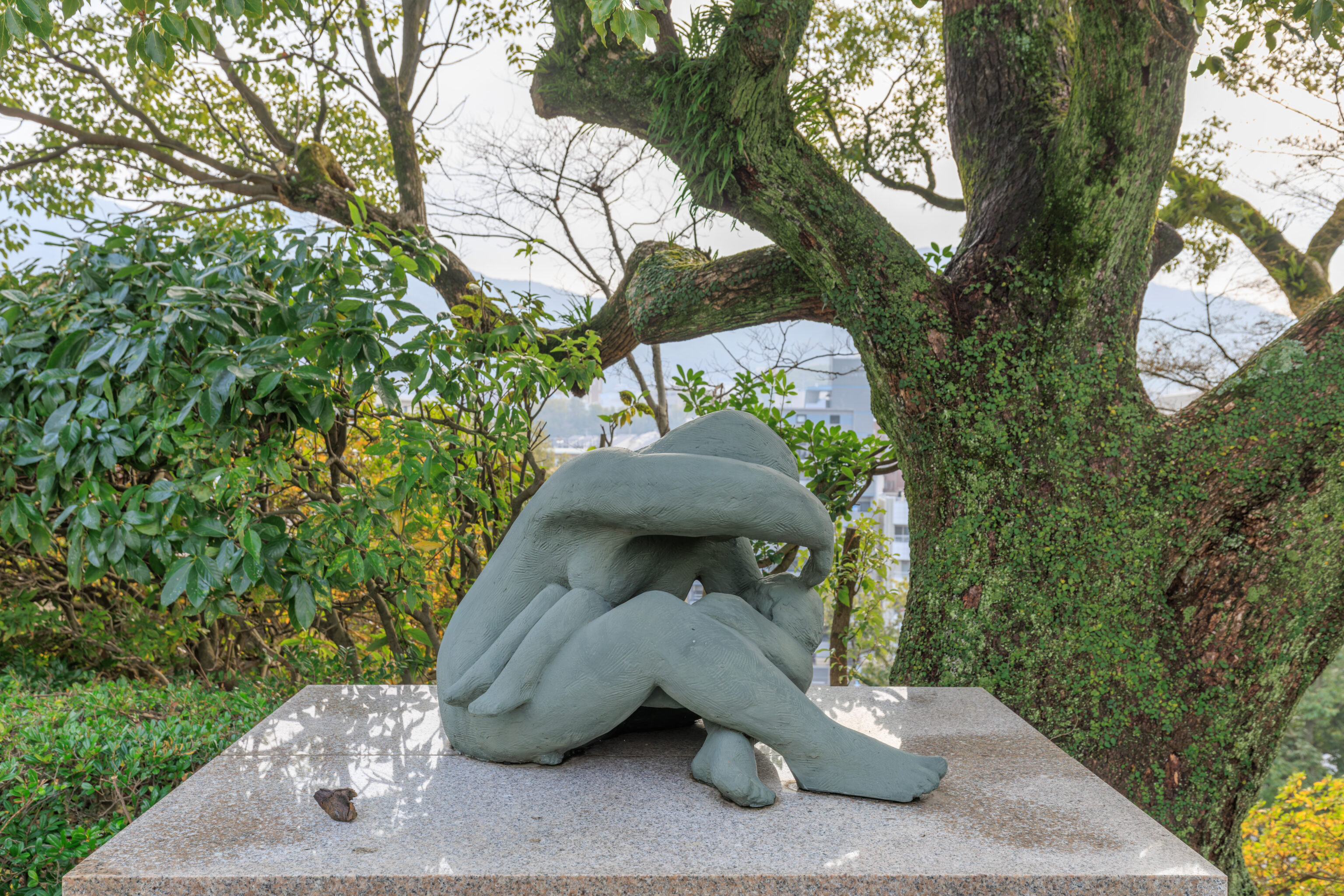
There were some additional memorials here that we didn’t see earlier. This one was from the Netherlands:
PROTECTION OF OUR FUTURE
This was presented by the City of Middelburg (The Netherlands), Nagasaki's sister city, as a contribution to the "World Peace Symbol Zone" planned by Nagasaki City.

The Statue shows a mother protecting her infant-child from danger, representing that we must protect not only the present generation but also the coming generation as well so that the people of the world can live in peace together.

1983
– Text from a plaque at the base of the memorial above.
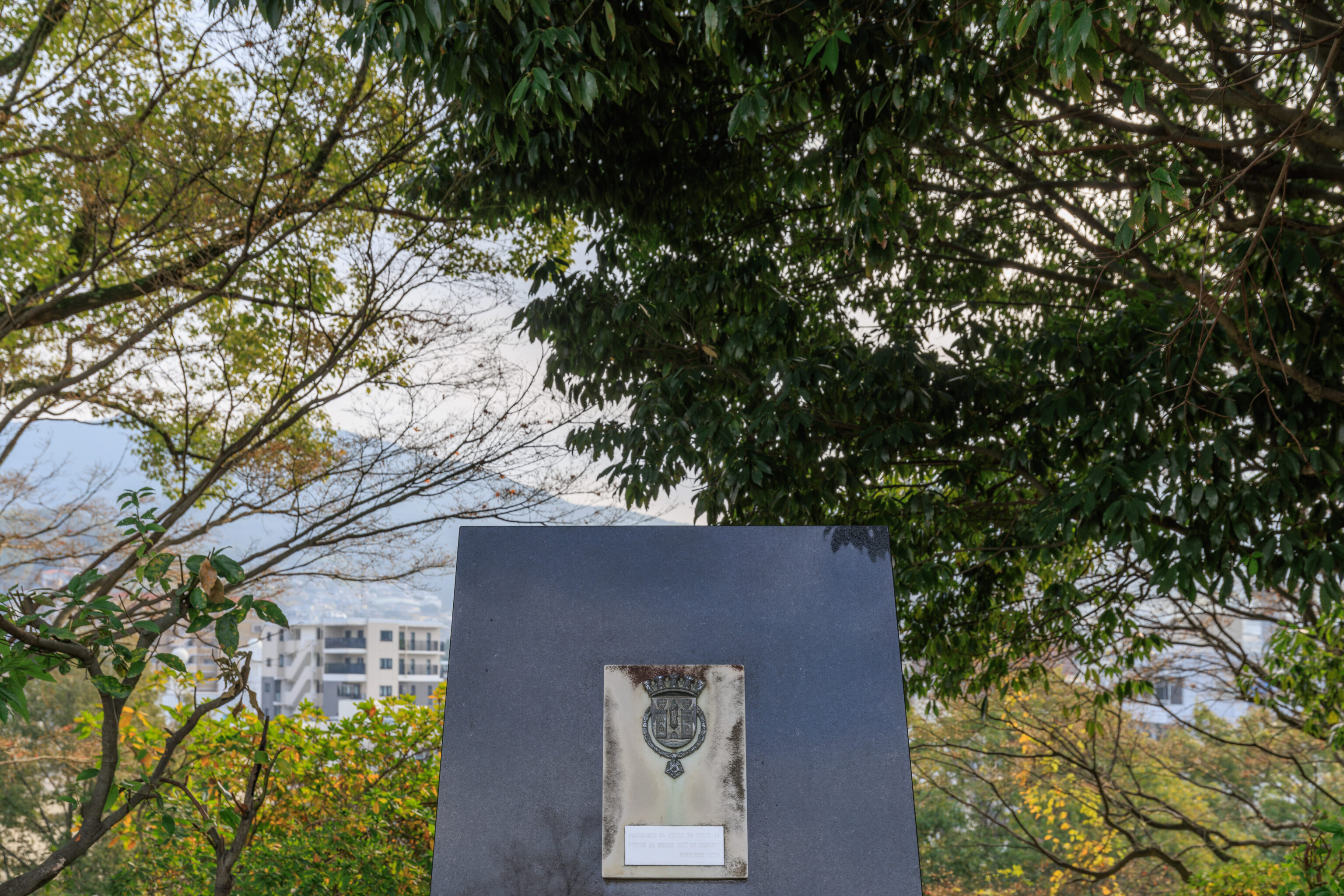
This memorial was from Porto, Portugal:
This monument was presented by the city of Porto, Portugal, in 1978 as a symbol of peace in commemoration of the sister city affiliation.

In the monument is inscribed "Homage of the City of Porto to the Atomic Victims of the Sister-City of Nagasaki — November 1978."
– Text inscribed at the base of the above memorial.
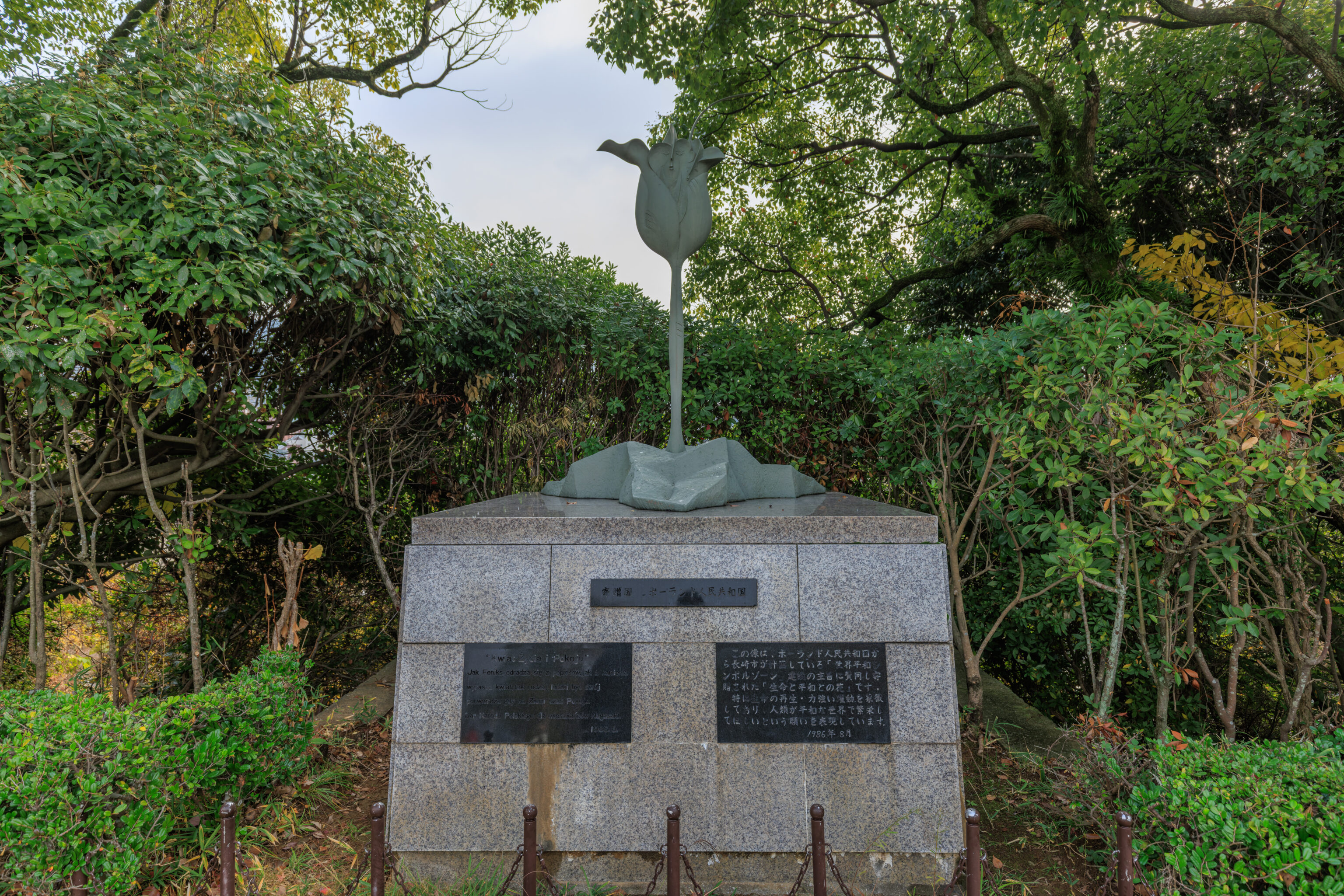
This memorial was from Poland, which at the time would have still been under Soviet control:
"Flower of Life and Peace"
As the Phoenix rises from the ashes, as a flower grows out of stone, so humankind reaffirms its existence when it is a time of Peace on Earth.

A Gift from the Polish Nation to the inhabitants of Nagasaki.
August 1986
– Text from the plaque on the left in the photograph above.
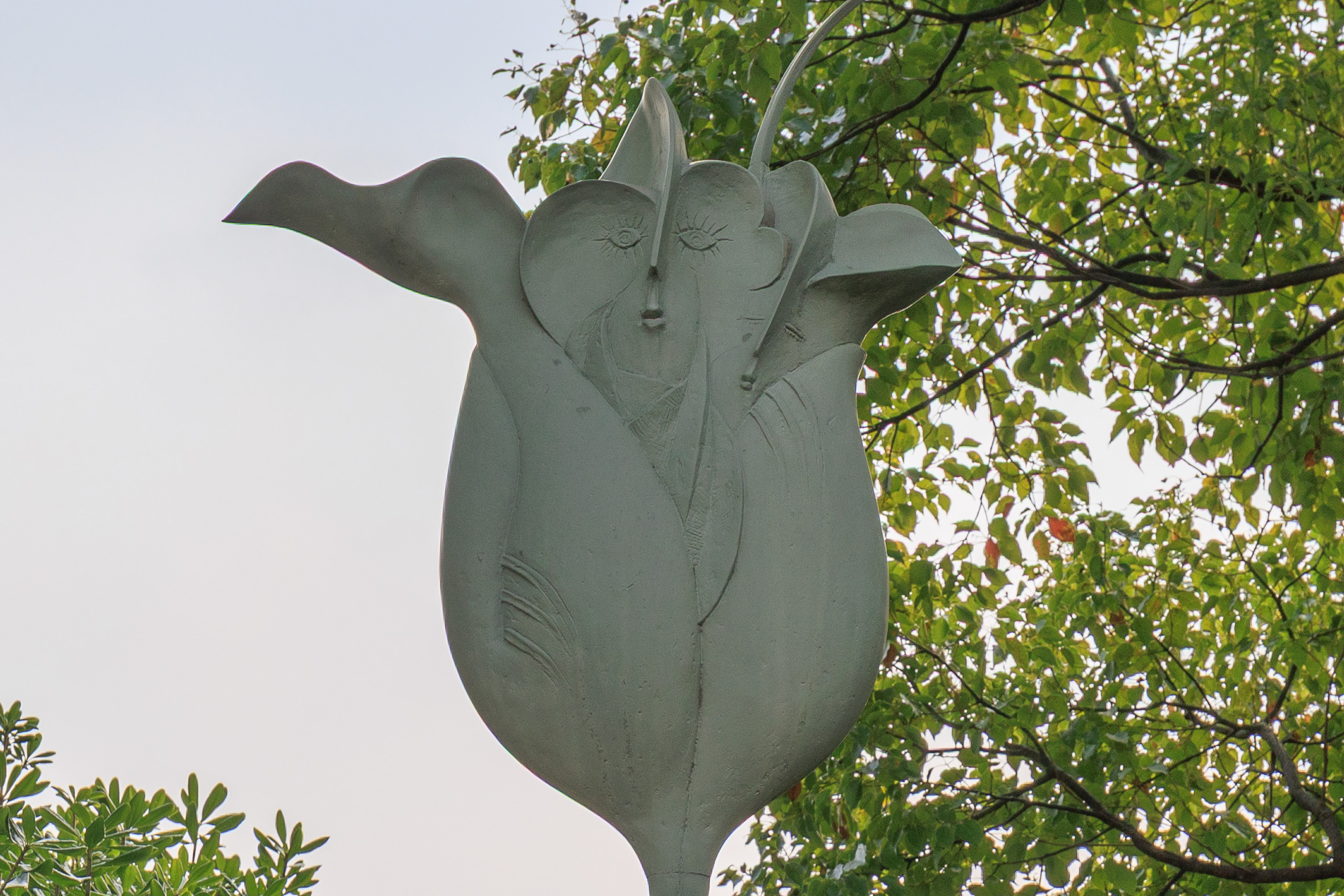
If you look closely at the flower, there are faces in the petals!
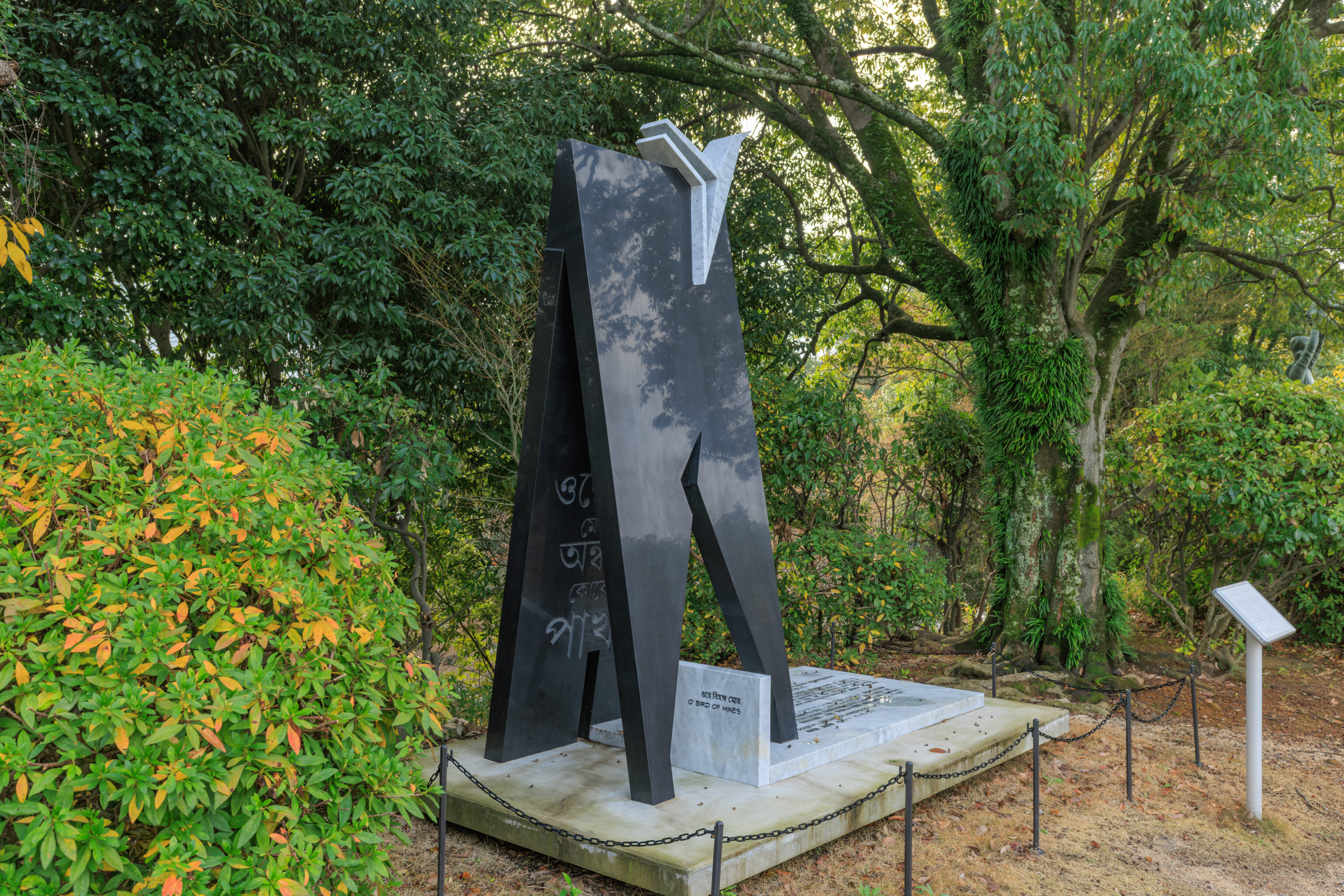
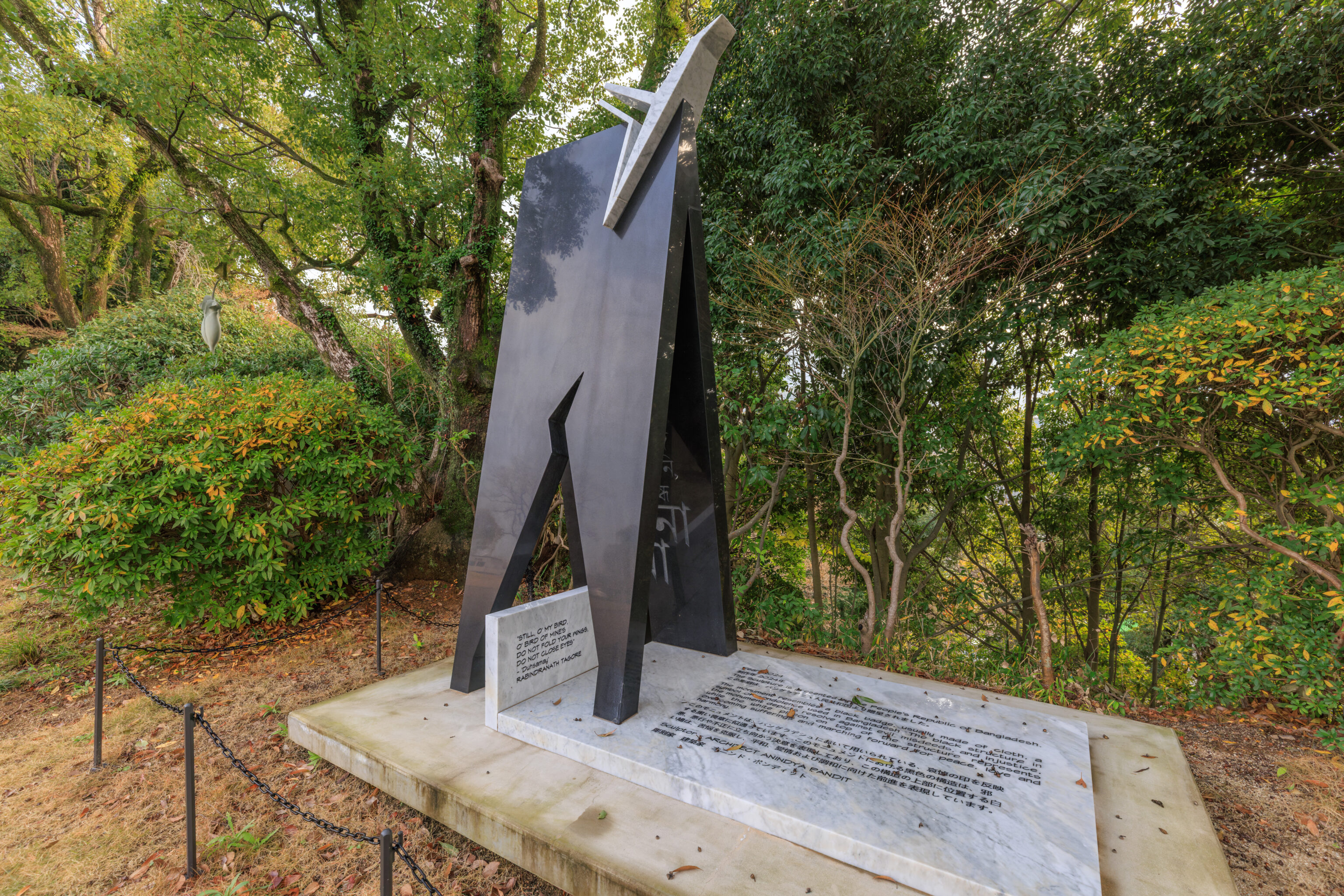
This next memorial is the newest one that we’ve seen! It was donated by Bangladesh last year!
O' BIRD OF MINE
This monument was donated by the People' s Republic of Bangladesh in order to show the importance of peace and harmony among all the countries and humanity.

The monument resembles a black badge of cloth to reflect the sign of condolence used in Bangladesh. The black structure in the monument represents resolve against evil, misdeeds, and injustice, while the white pigeon on top of the structure represents overcoming the sufferings and marching forward for peace, love and harmony.

May 2024
– Text from the sign seen in the first photograph above.
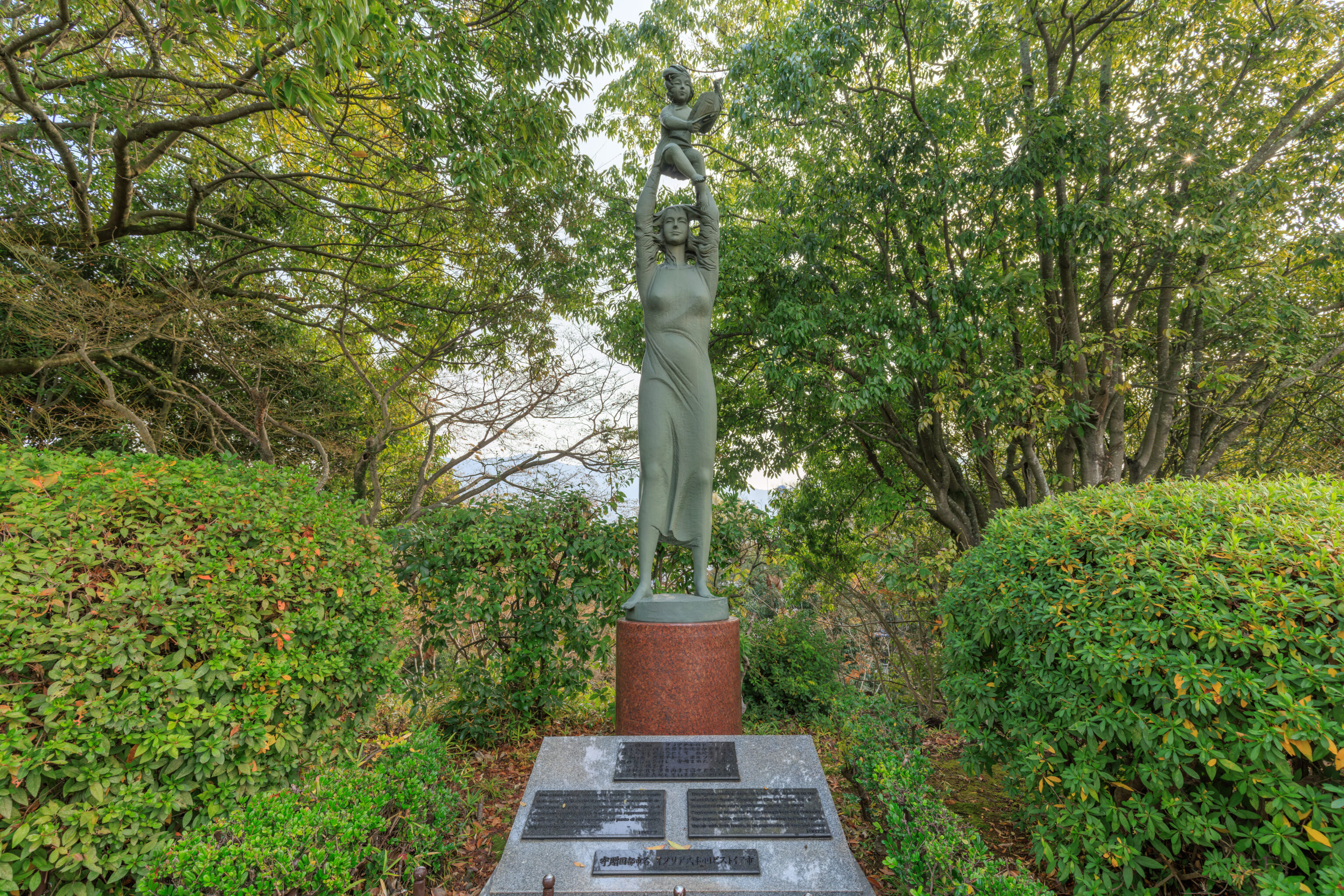
This was actually the first memorial statue that we photographed earlier. However, at the time we didn’t come to take a closer look.
This statue, entitled "Hymn to Life", was donated to the World Peace Symbol Zone by the City of Pistoia, Italy as a memorial to that city's participation in the 1st World Conference of Mayor for Peace through Inter-city Solidarity. The statue, which depicts a mother holding her baby high in the air with both hands, is an expression of love and peace.

1987.7
– Text from the English plaque at the base of the statue.
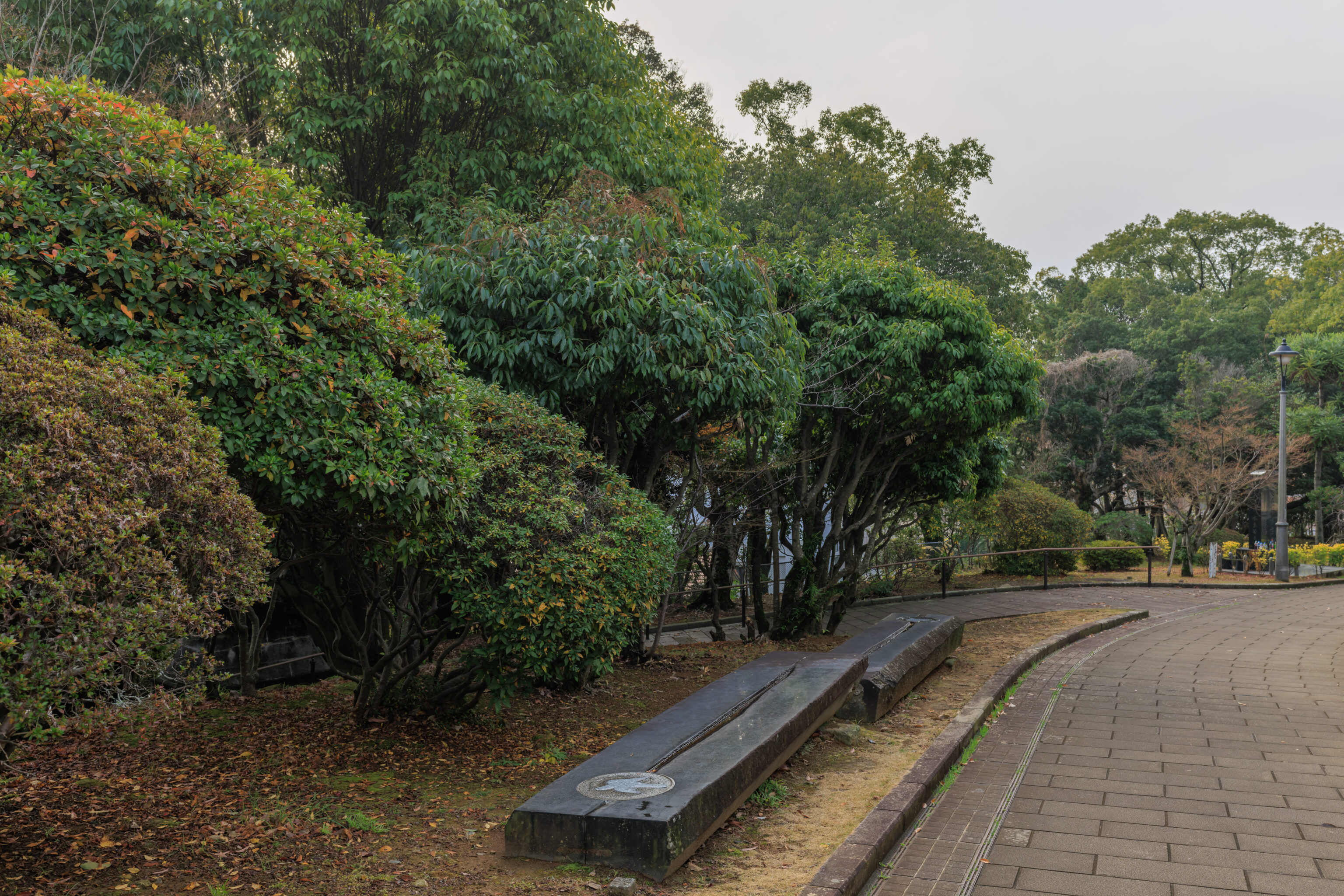
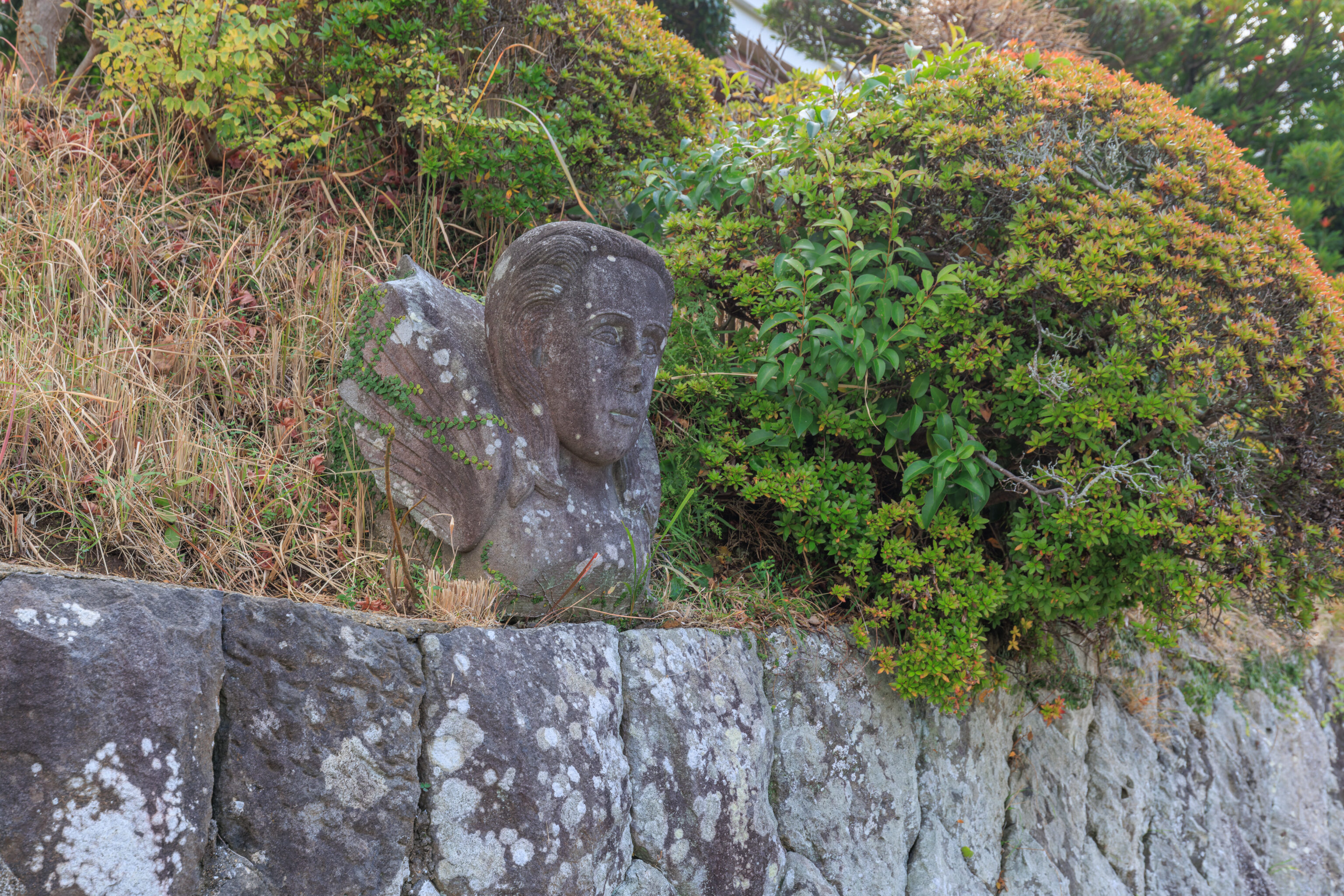
Unfortunately, we don’t know the significance of this sculpture other than it looks to be inscribed with the image of a dove.
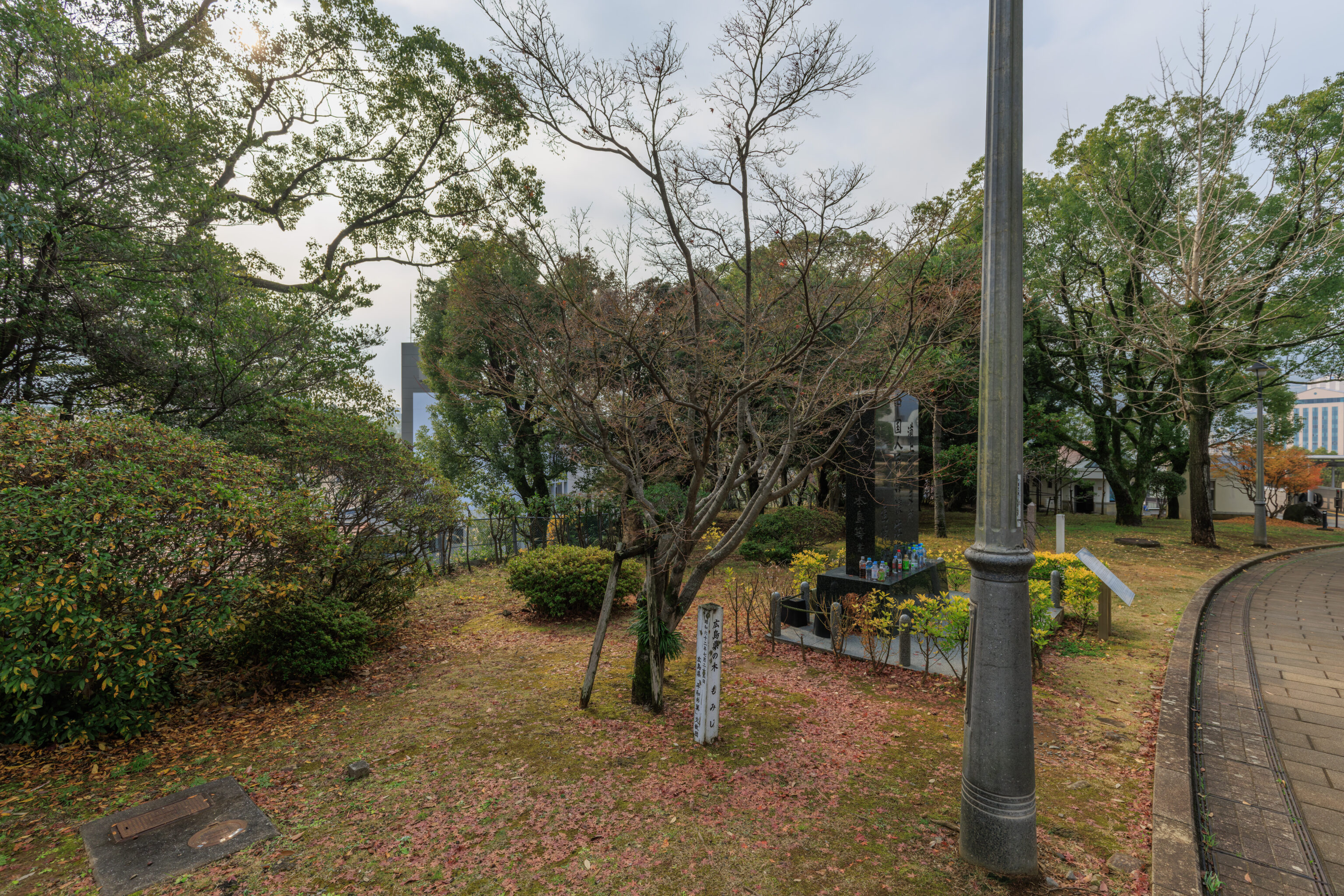
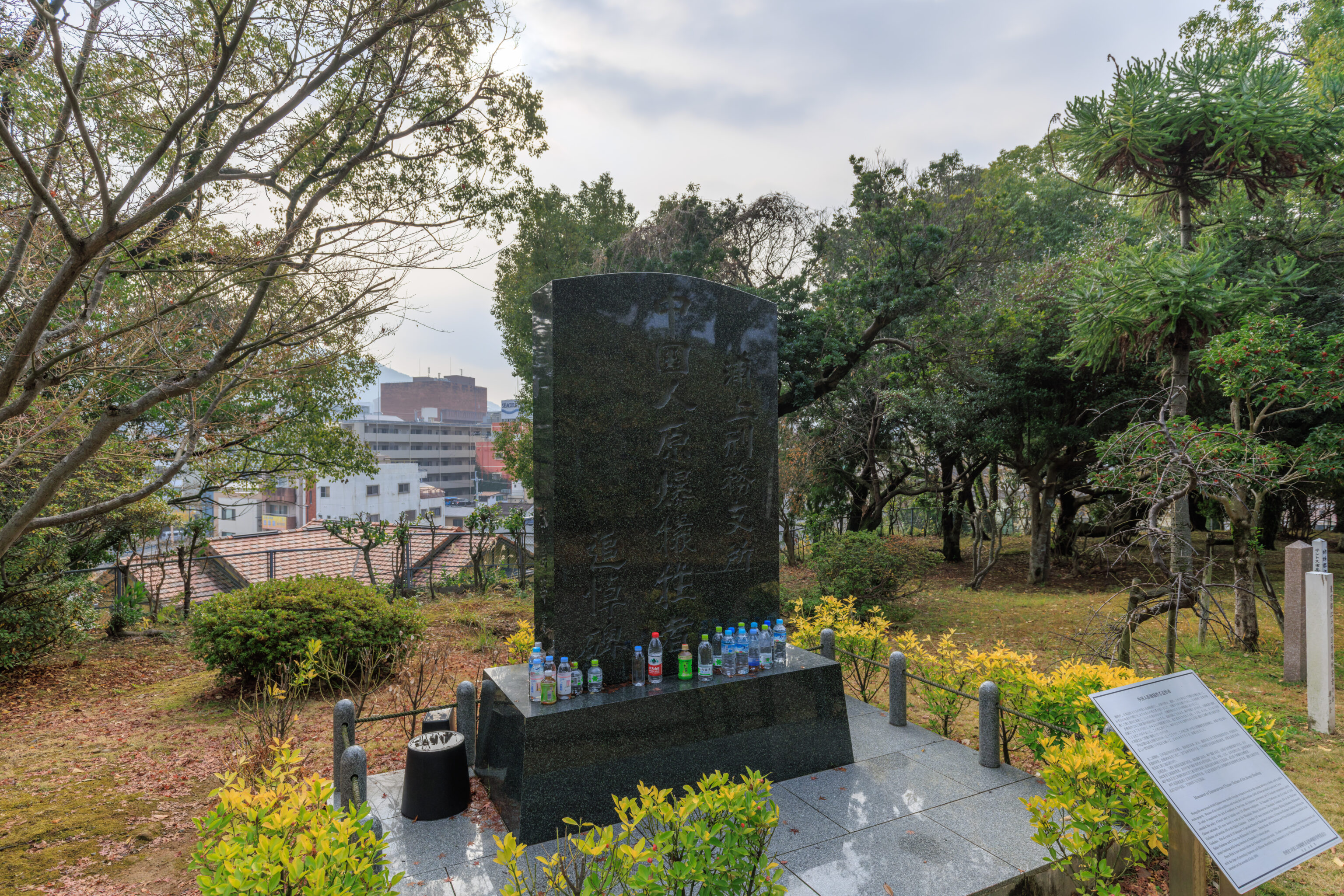
This final memorial is one to the Chinese who were brought here as slave labor and died during the atomic bombing.
Monument to Commemorate Chinese Victims of the Atomic Bombing
During the war around 40,000 Chinese were forcibly brought to Japan to work in the mining industry, in docks, and in public works projects. Because of the harsh conditions and cruelty they had to endure, 6,830 of them perished in just over 1 year.

In order to supplement the lack of workforce at that time, the Japanese government and 35 business corporations jointly extended this policy of forced labor to include over 135 different workplaces. In Nagasaki Prefecture, out of a total of 1,042 Chinese nationals, 205 were forced to work at the Mitsubishi Mining Industries Takashima Coalmine, 204 at the Hashima Coalmine, and another 436 at the Sakito Coalmine. A further 197 were interned at the Nittetsu Mining Industries Shikamachi Coalmine. Out of a total of 115 deceased, 15 perished from the Takashima Coalmine, 15 from the Hashima Coalmine, 64 from the Sakito Coalmine and 21 from the Shikamachi Coalmine. Among these, 26 from Sakito and 6 from Shikamachi were killed in the atomic bombing while being detained at Nagasaki's Urakami prison.

Peace Park is now situated where the Urakami Prison once stood. In order to correctly recognize these historical events, and with the hope of promoting Japanese and Chinese friendship, this monument to the Chinese victims of the atomic bombing was unveiled on the seventh of July, 2008.
– Text from the sign at the bottom right corner of the photograph above.
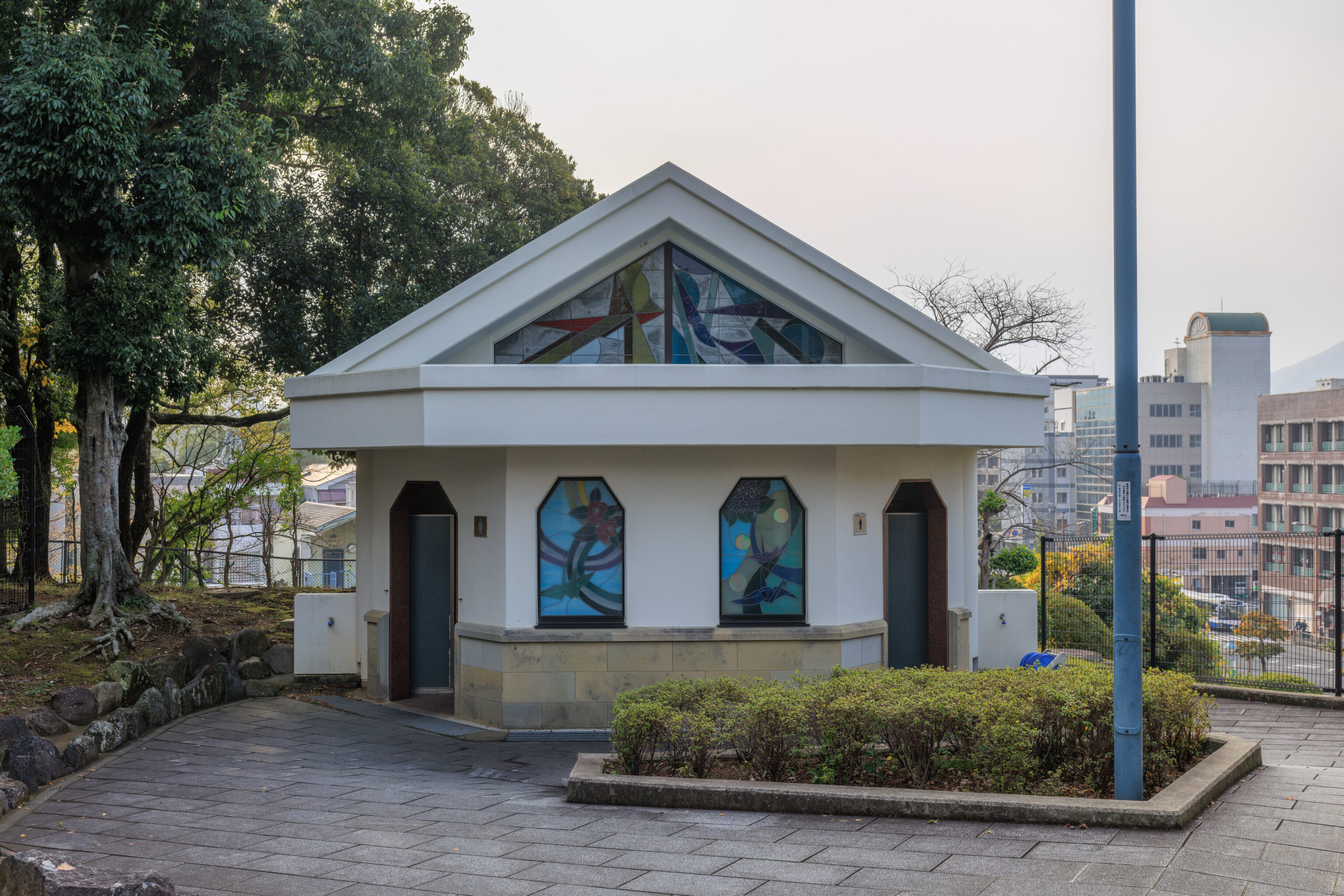
This building with its faux stained glasses windows actually contains bathrooms!
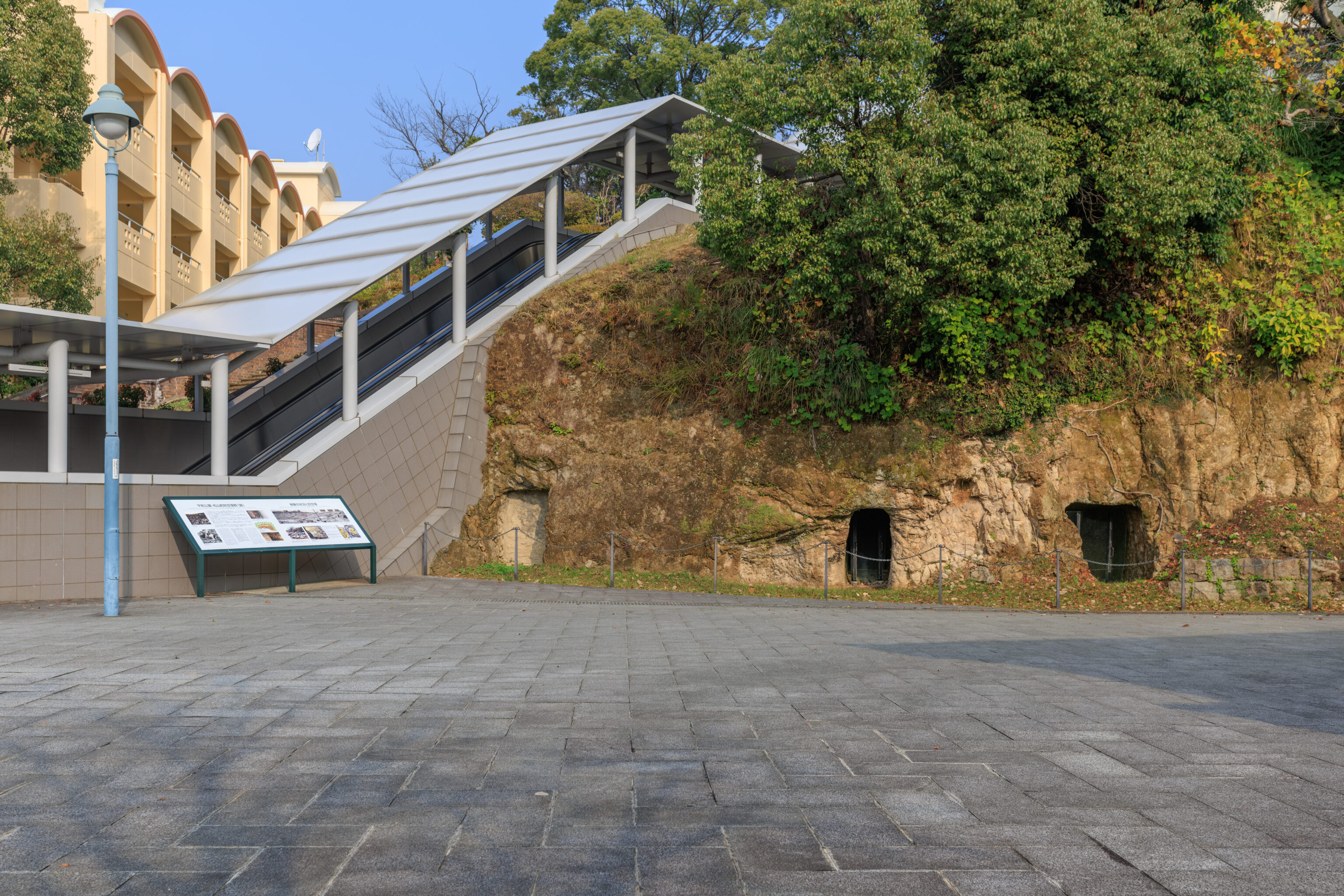
The cave-like holes on the right were entrances to air raid shelters.
Peace Park & Former Site of Air-raid Shelters in Matsuyama-machi
On December 7, 1941 (December 8 in Japan), Japan declared war on the United States, and the Pacific War began. From around 1944, as air raids on Japan's mainland intensified, air-raid shelters were constructed around the nation by community associations (neighborhood associations) and individual households under government instruction. In Nagasaki, some types of air-raid shelters were constructed by digging tunnels into hillsides using hilly and mountainous landforms, and then connecting those tunnels inside. When American aircraft came near, red alert sirens went off and people evacuated to those air-raid shelters.

On August 9, 1945 at 11:02 a.m., a plutonium implosion-type bomb, dropped from an American B-29 bomber, exploded approximately 500 m above Matsuyama-machi, Nagasaki City, instantly taking the lives of many people and burning the city down to just a field of ruins with intense heat, blast and radioactive rays.

In those days, many public and private cave-type air-raid shelters were constructed in hillsides in the vicinity of Peace Park, the location of the Urakami Branch of Nagasaki Prison. Although most people within 500 m of ground zero were killed instantly by the atomic bomb, many other people barely survived inside the shelters. However, most people who were exposed to the A-bombing sustained serious injuries due to fire and radiation, and died in agony one after another, not able to receive any treatment in the shelter they evacuated to.

After the end of the war, the damage done by the atomic bombing to the shelters located near ground zero was investigated by the U.S. military, which recorded in detail the internal configuration of the shelters and the positions where survivors and the dead were found. The survey's findings are said to have been used as a reference in constructing other nuclear shelters in preparation for nuclear wars after World War II.

According to a survey conducted in 2009 by the Ministry of Land, Infrastructure, Transport and Tourism, there were 193 air-raid shelters in Nagasaki during the war. Located very close to ground zero (approximately 100 m), shelters in Peace Park and Matsuyama-machi are valuable as remaining structures that convey the importance of peace, the power of the atomic bomb and the horrors of war, including how people lived before, during and after the A-bomb was dropped.
– Text from the large sign on the left side of the above photograph.
It was now almost 11am. We decided to get a snack at カフェグリーンドア Café Green Door, which was nearby and on the way to our next destination, the 浦上天主堂 Urakami Cathedral.
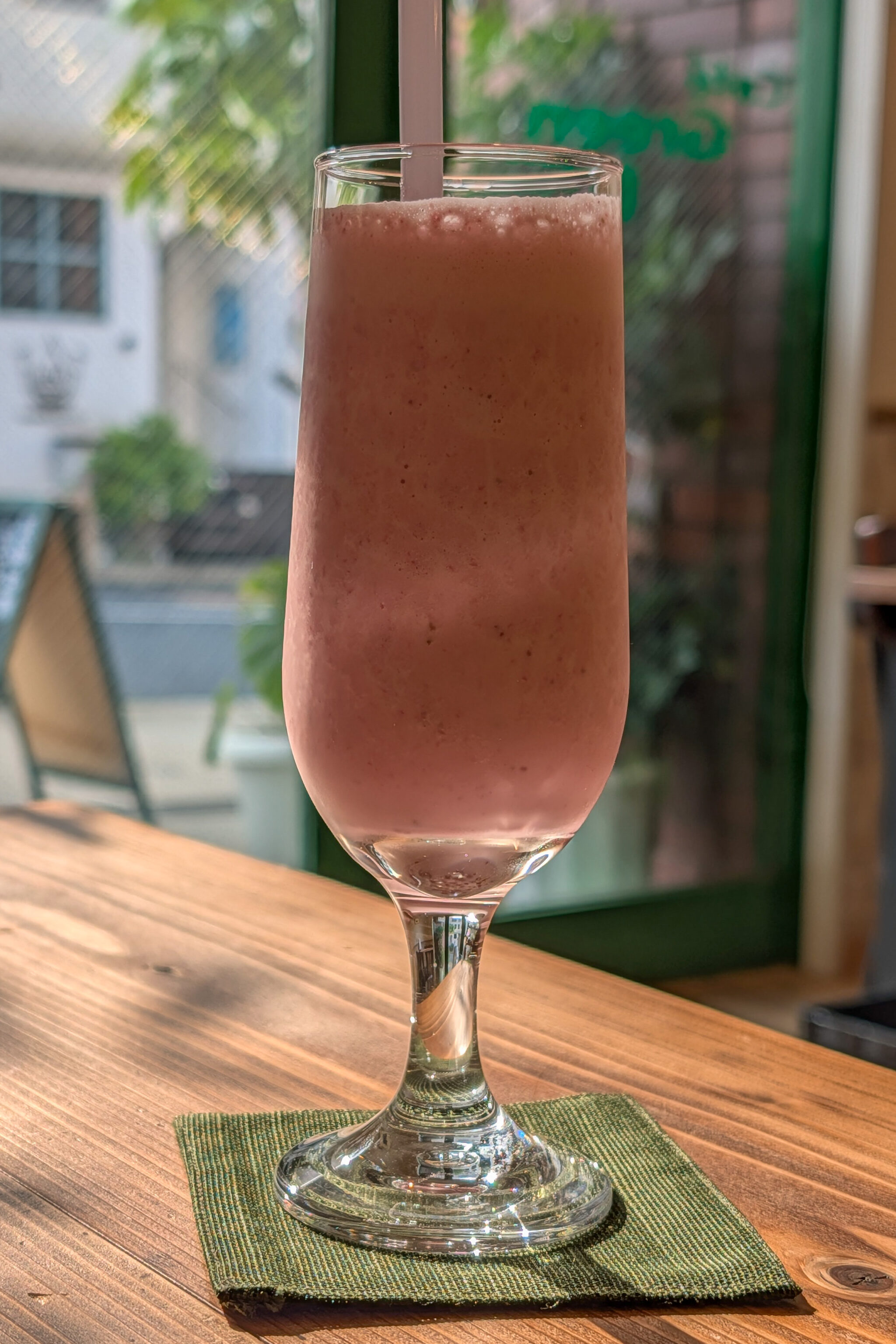
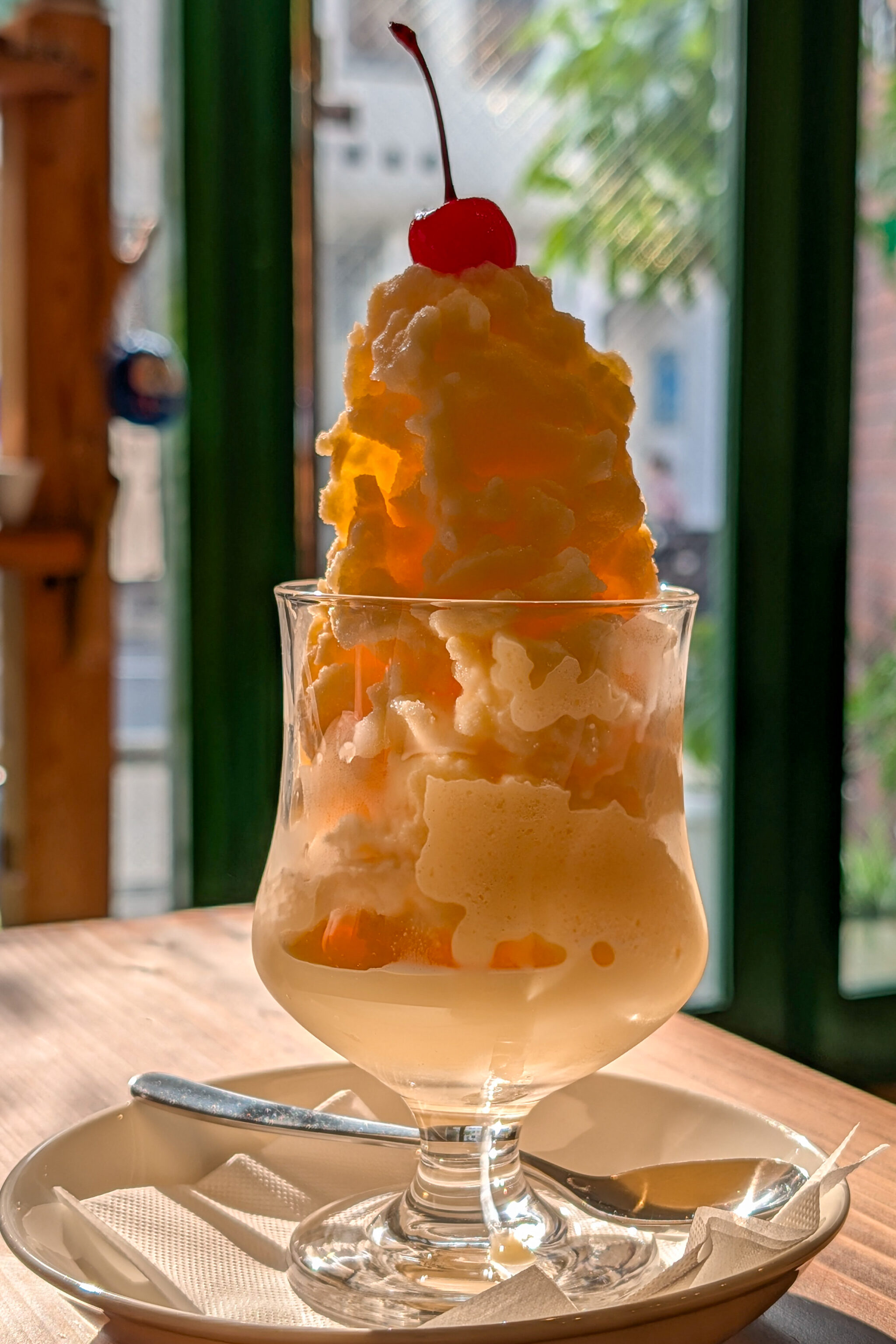
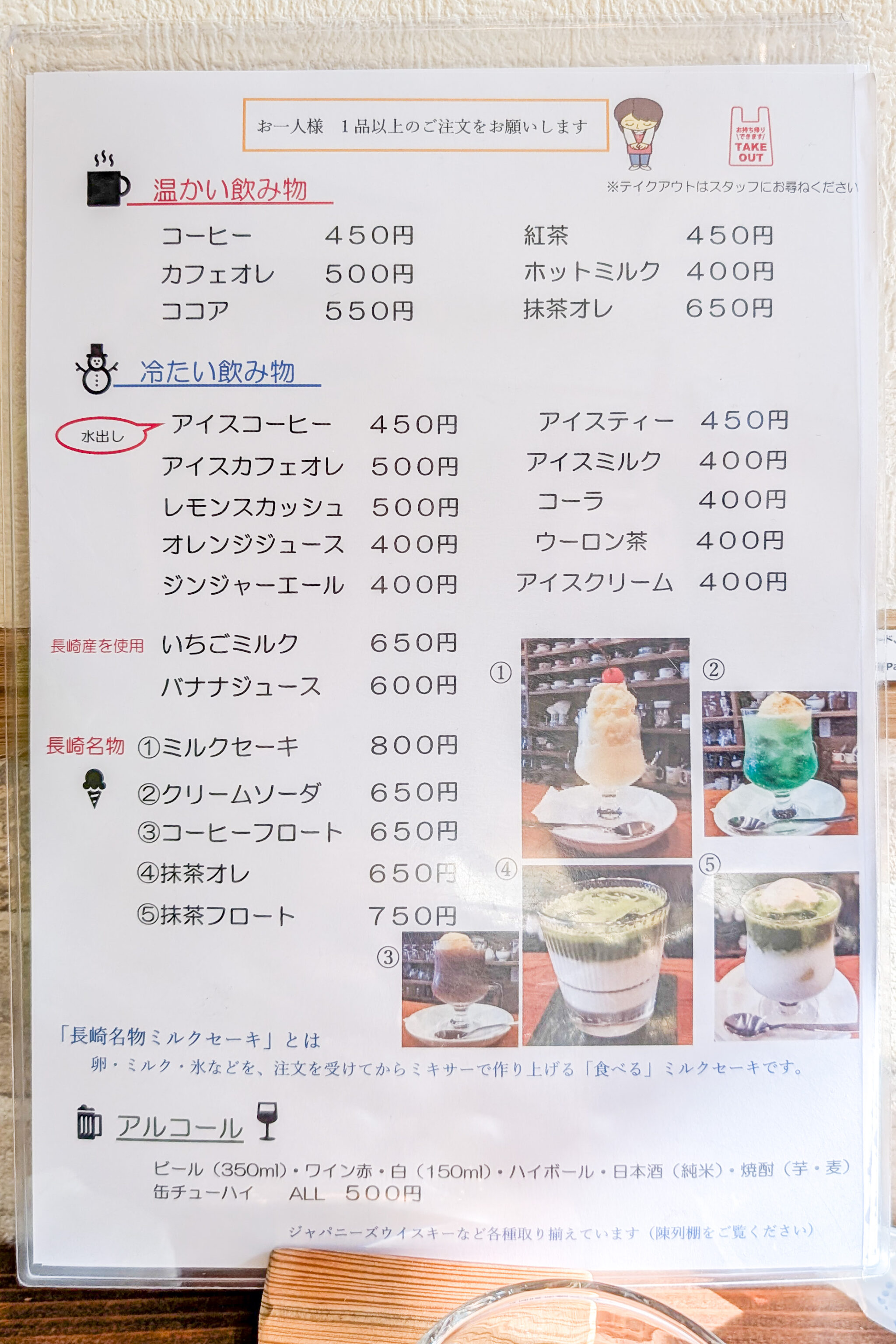
We got a strawberry milk and a milkshake. The strawberry milk would probably be considered a frappe in American English. It consisted of blended local strawberries, milk, and ice. The milkshake is blended ice, milk, and egg. So maybe also a frappe, although with more ice than usual so that it is almost more like a shave ice.
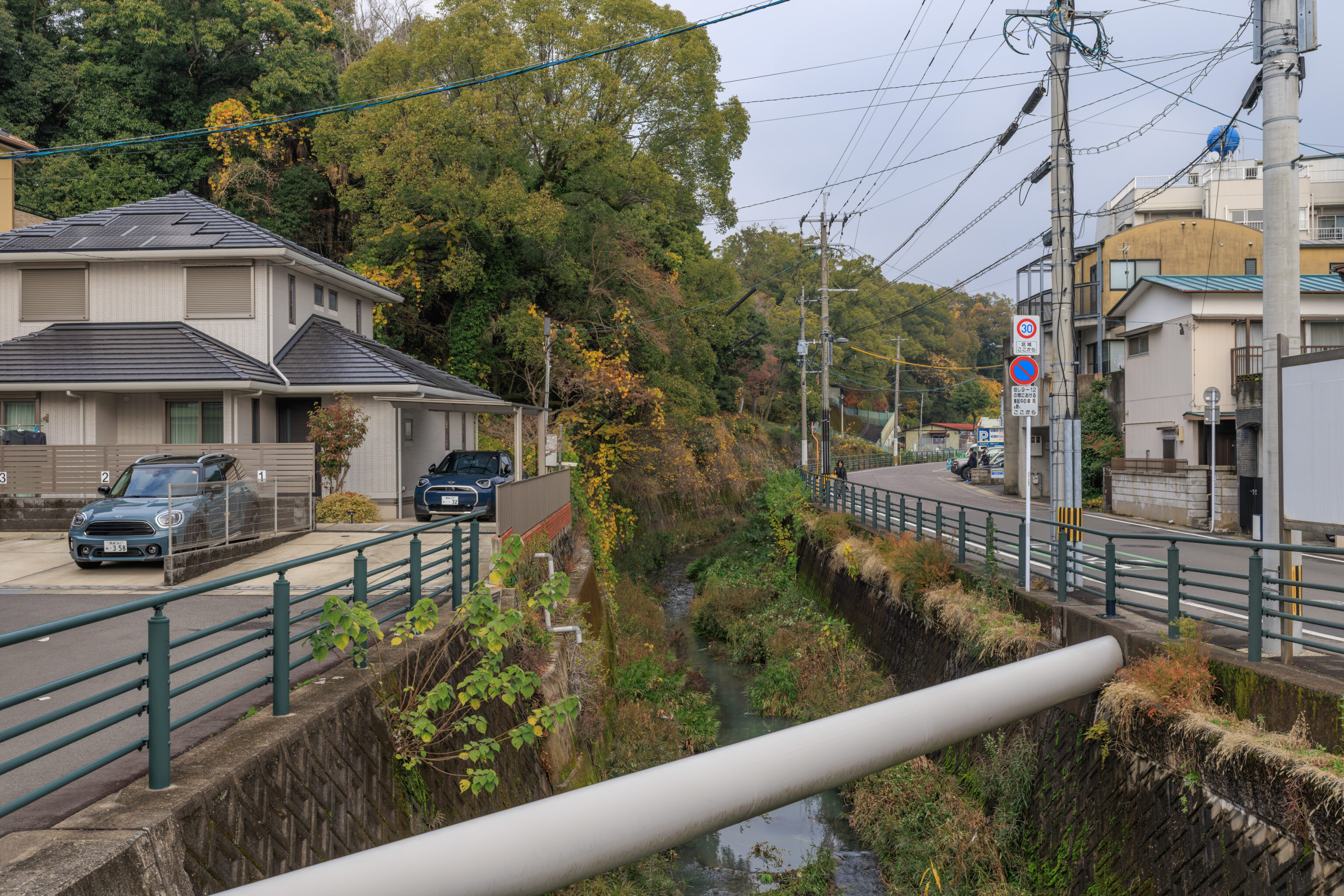
After our snack, we crossed over a small river.
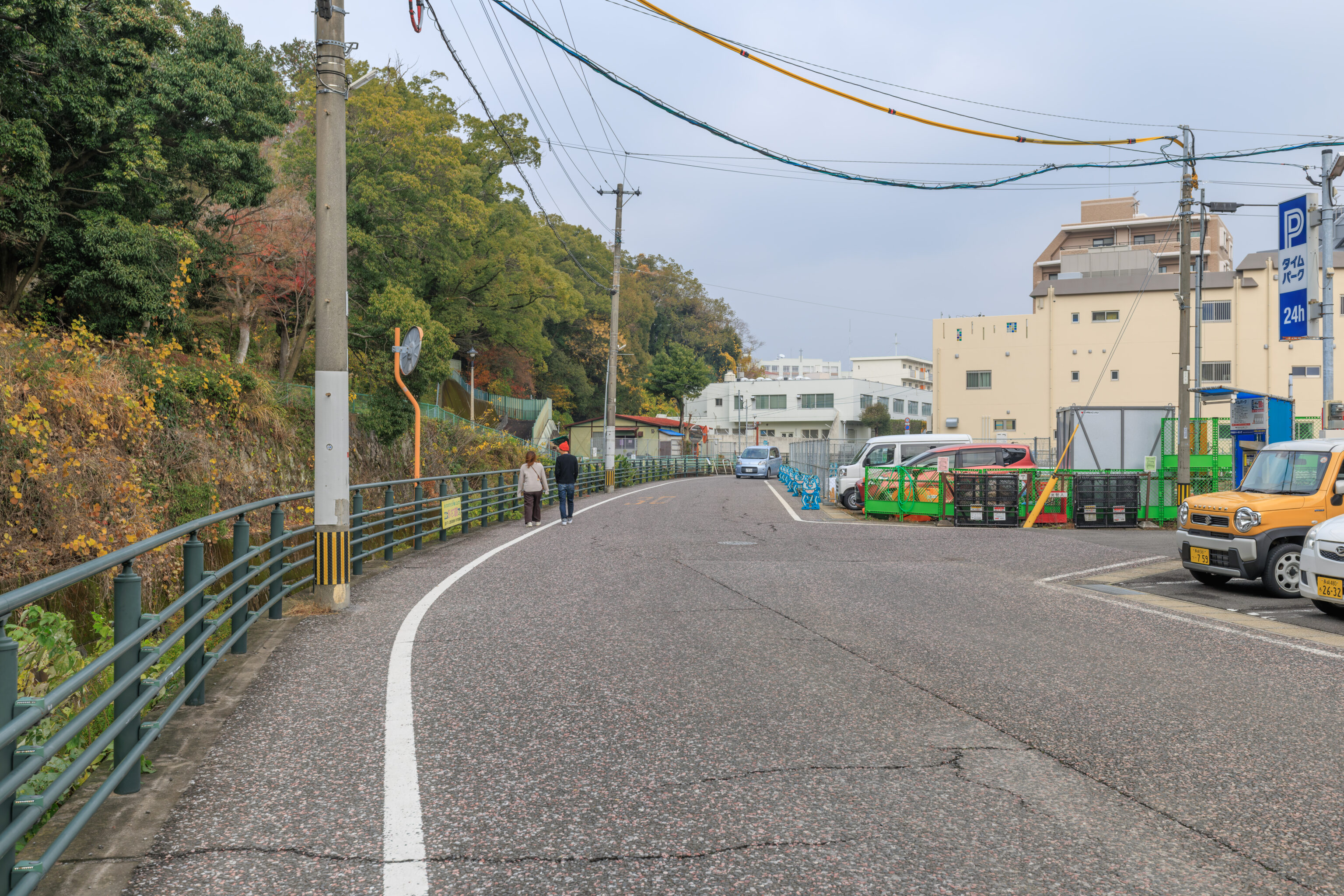
And turned left to start walking northeast. The Peace Park was on our left above the stream.
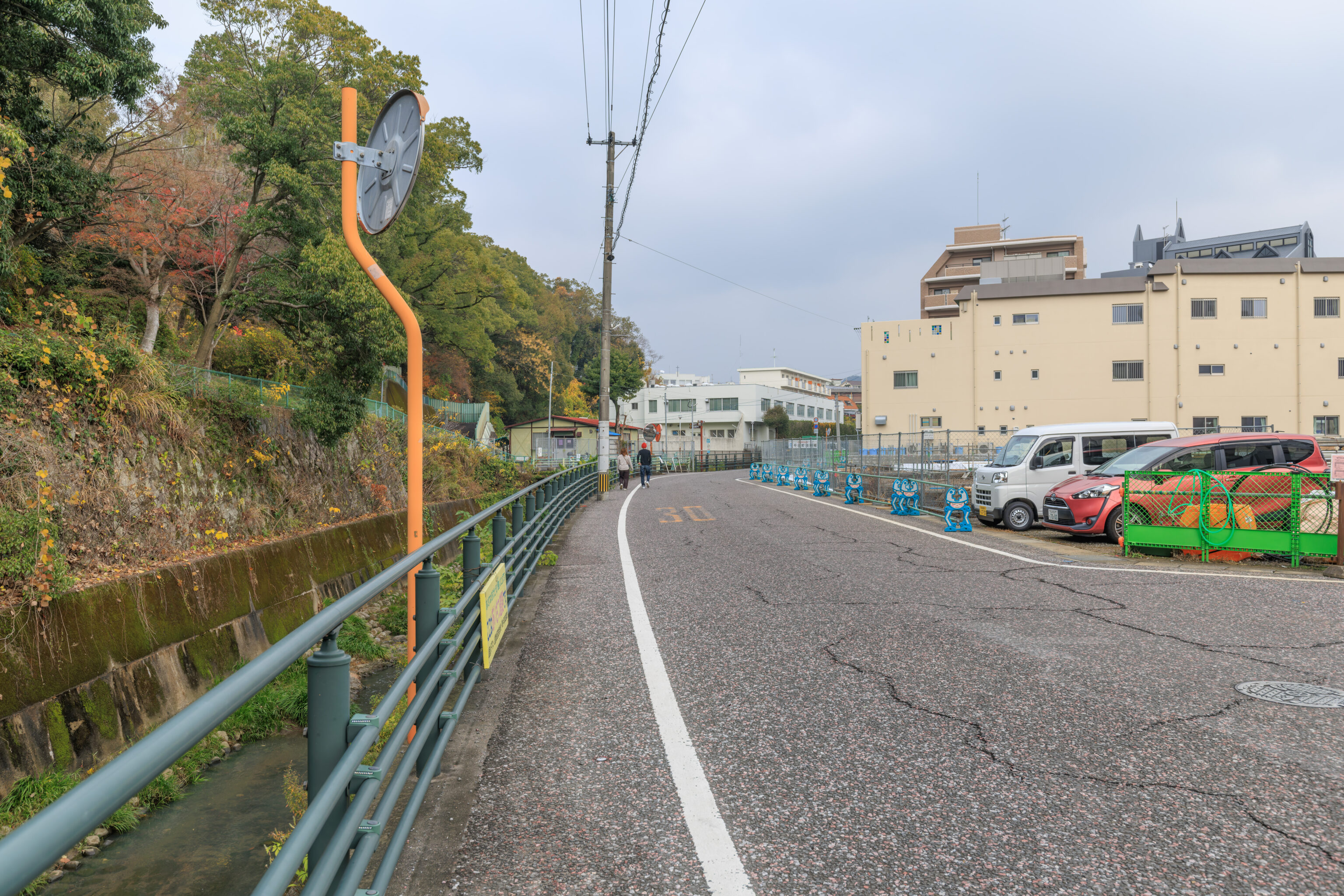
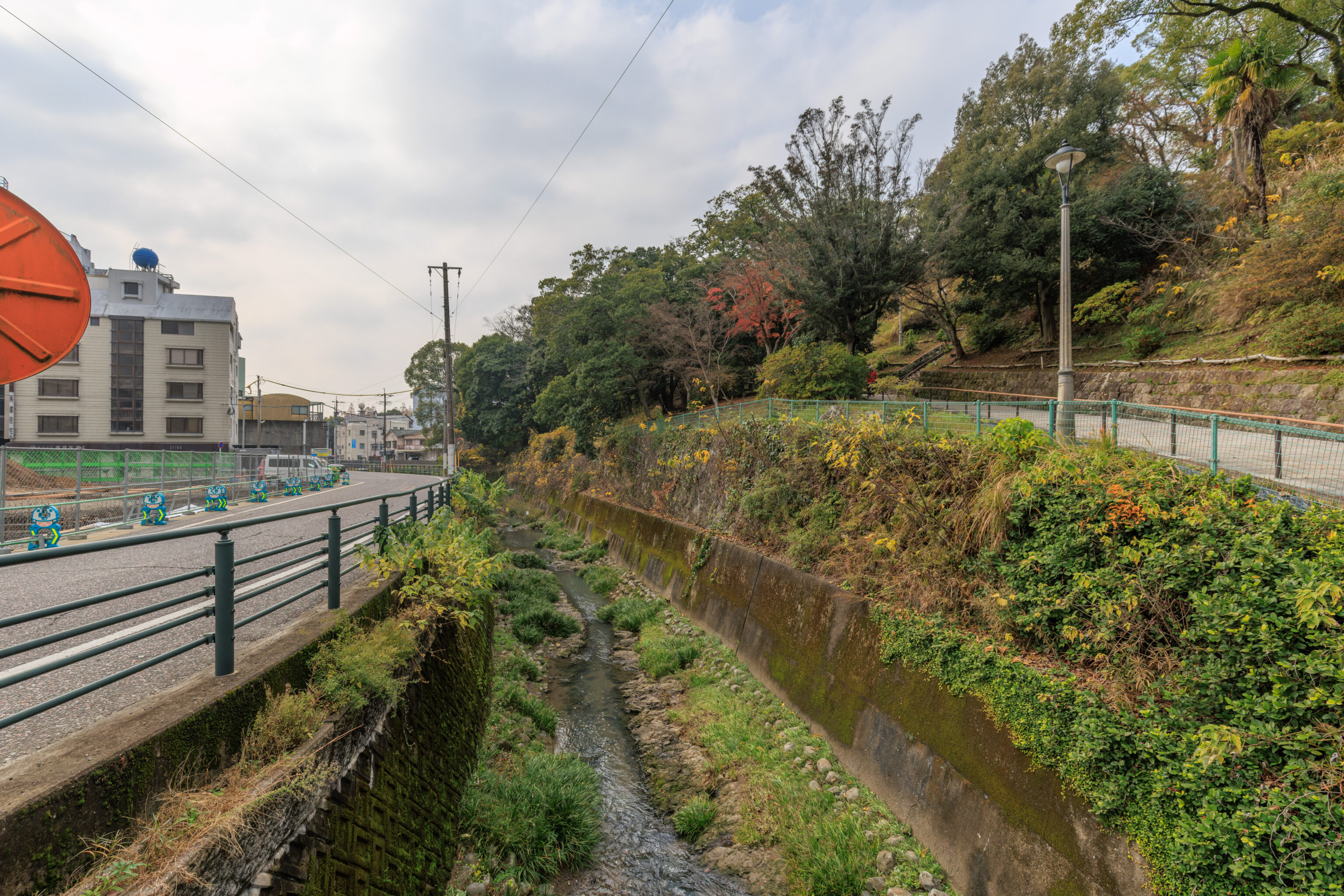
The view looking back from a bridge.
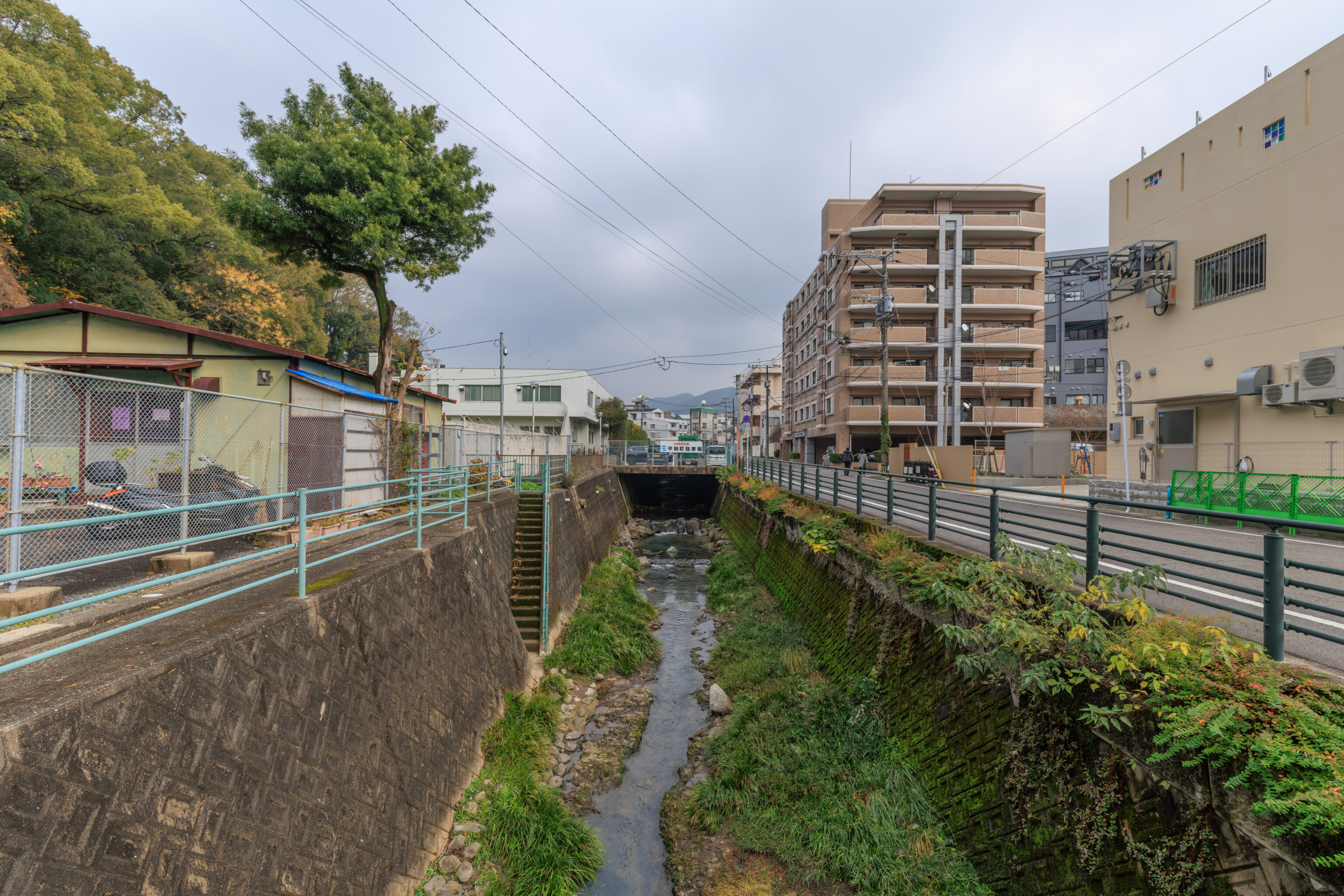
And the view looking ahead from the same bridge.
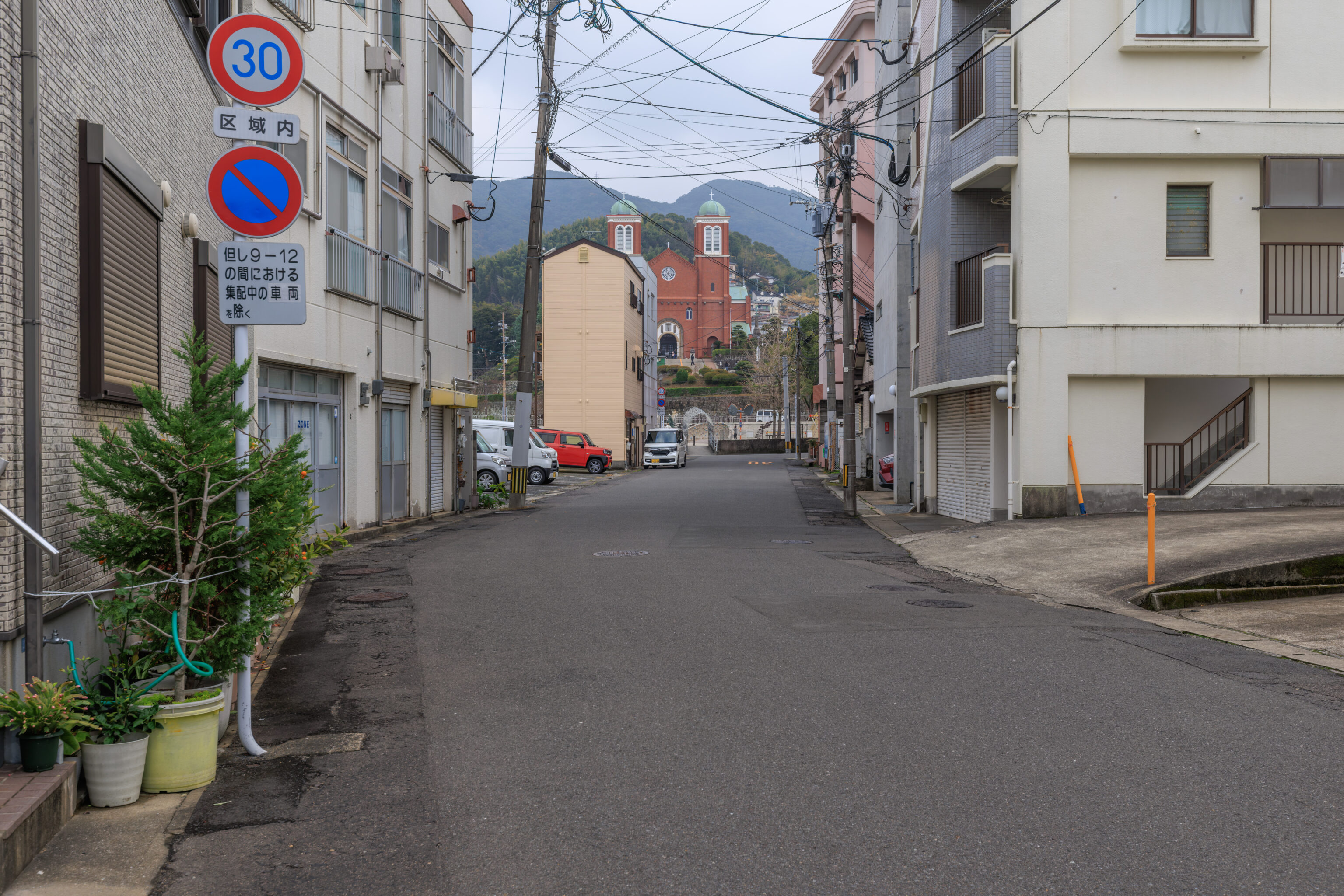
After walking for a bit less than ten minutes, we saw the cathedral up ahead.
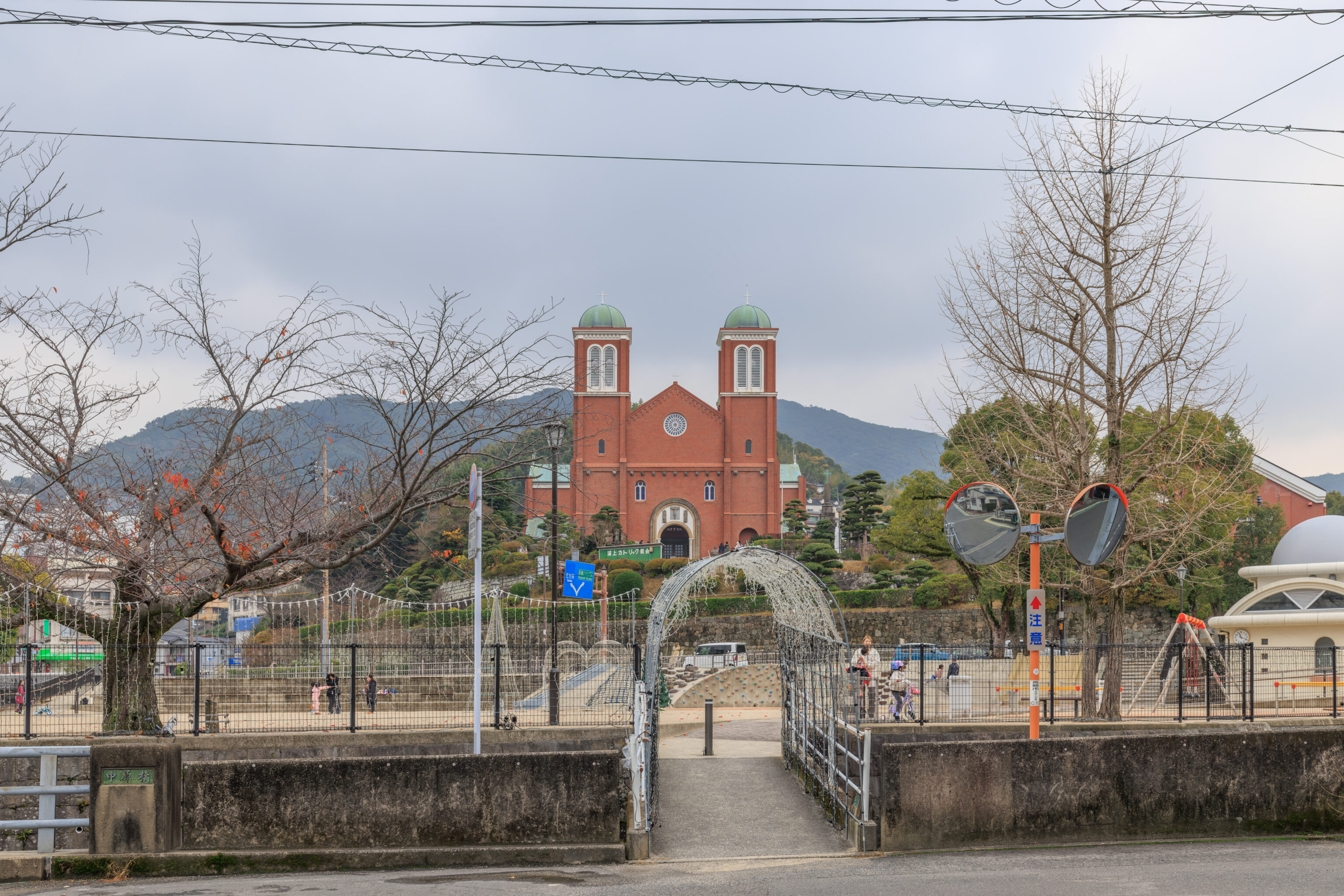
The most direct route was through a neighborhood park, the 天主公園 Tenshu Park.
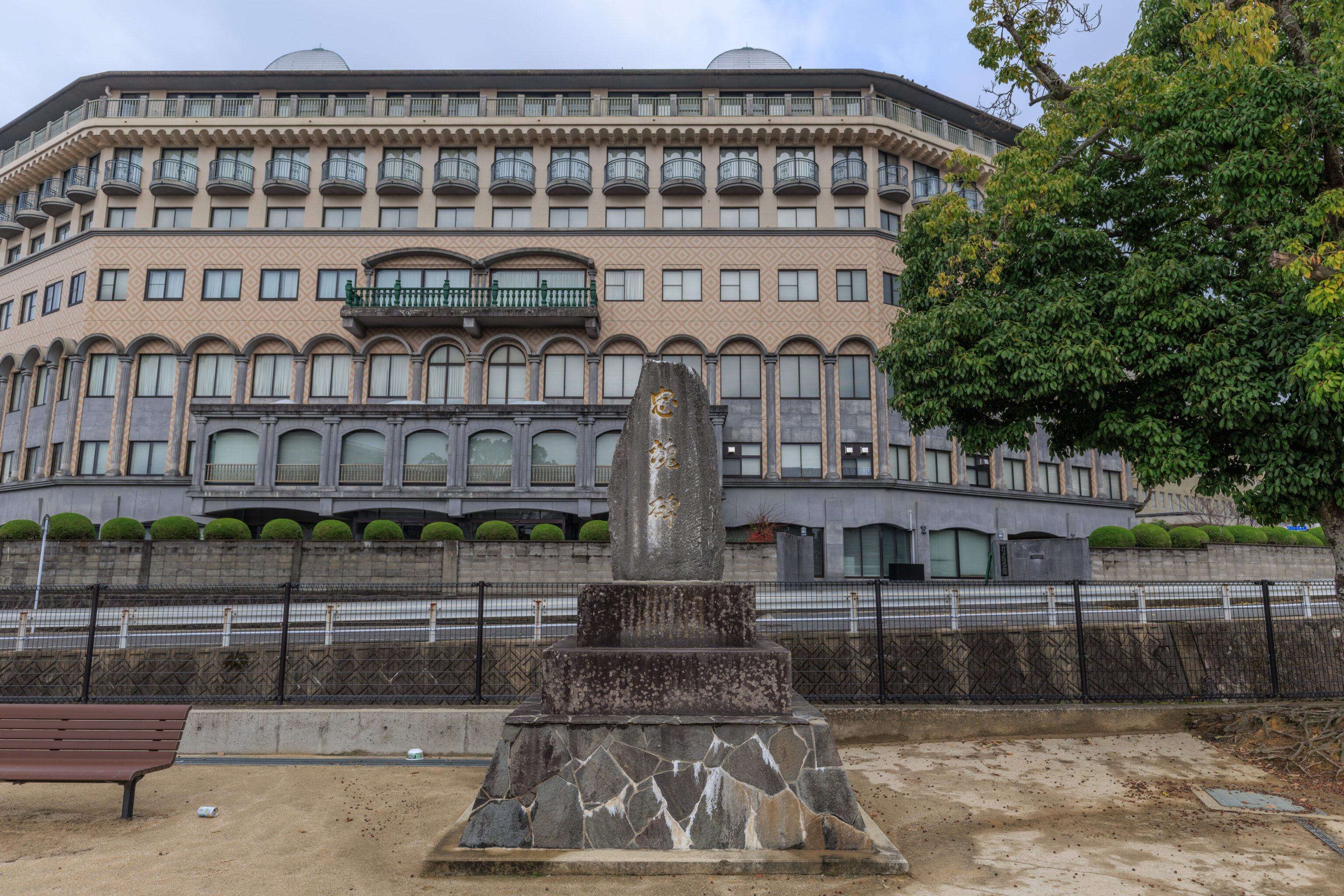
This is a 忠魂碑 Chūkonhi, a memorial for Japanese that died in war. We don’t know anything else about this specific one or much about these in general.
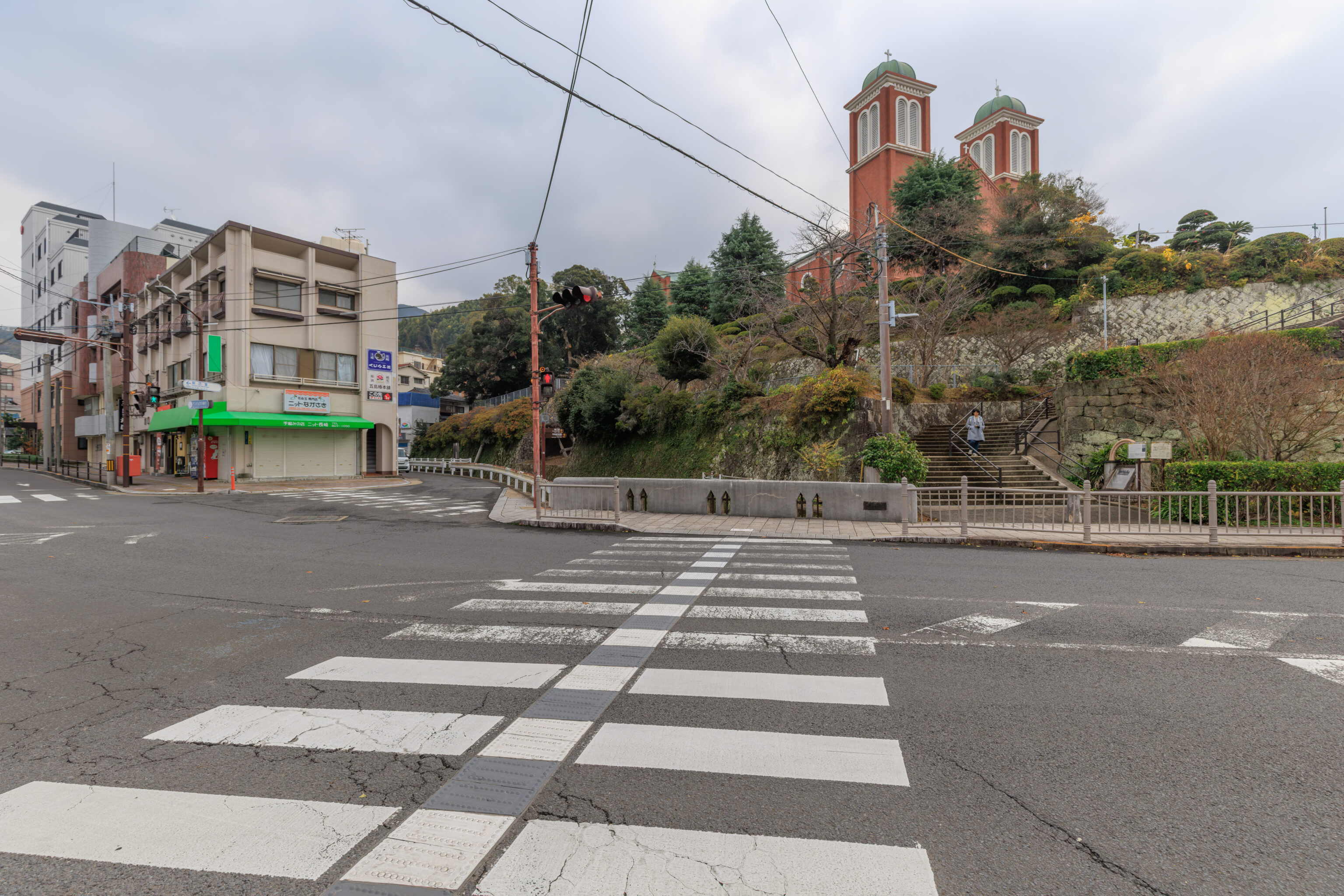
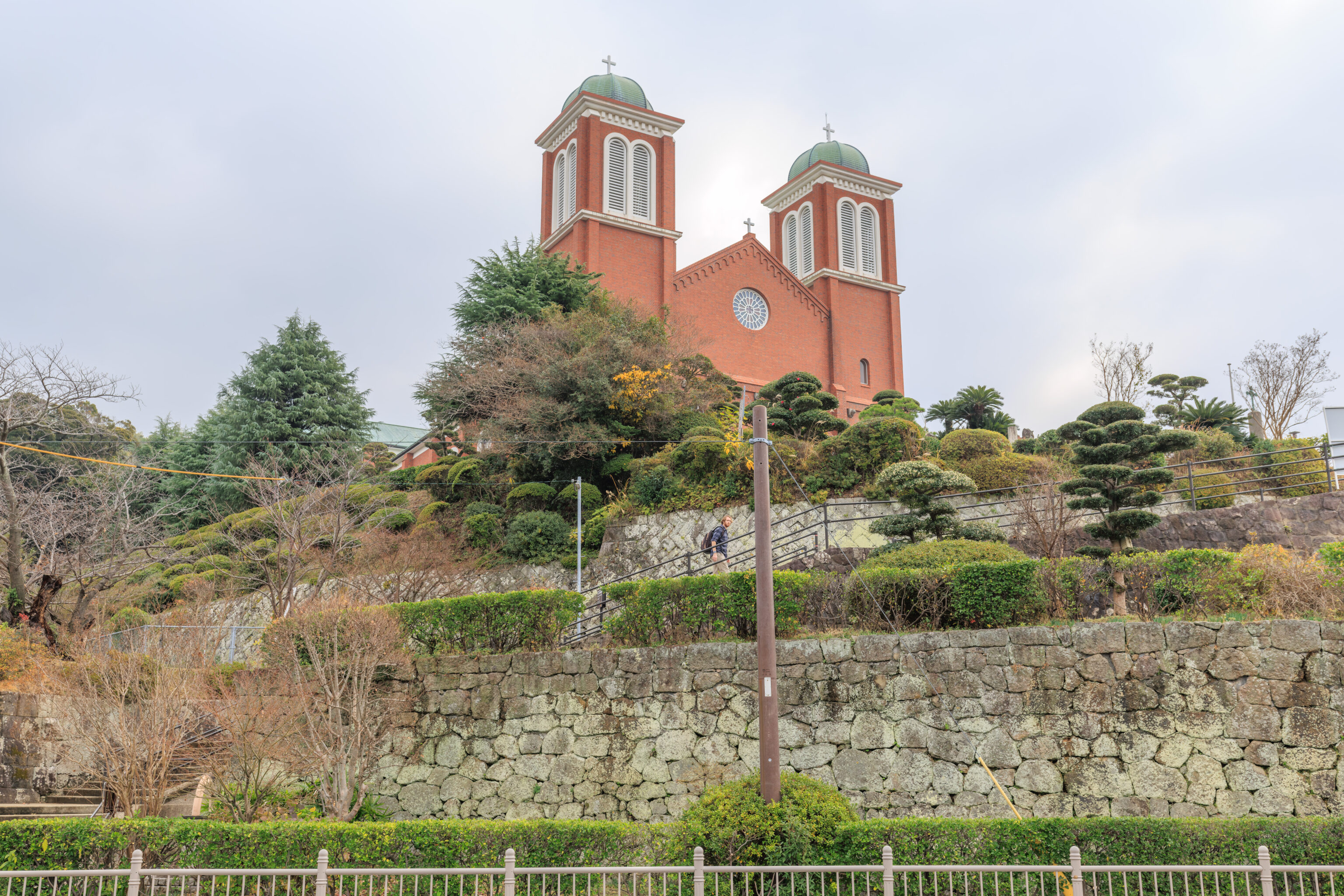
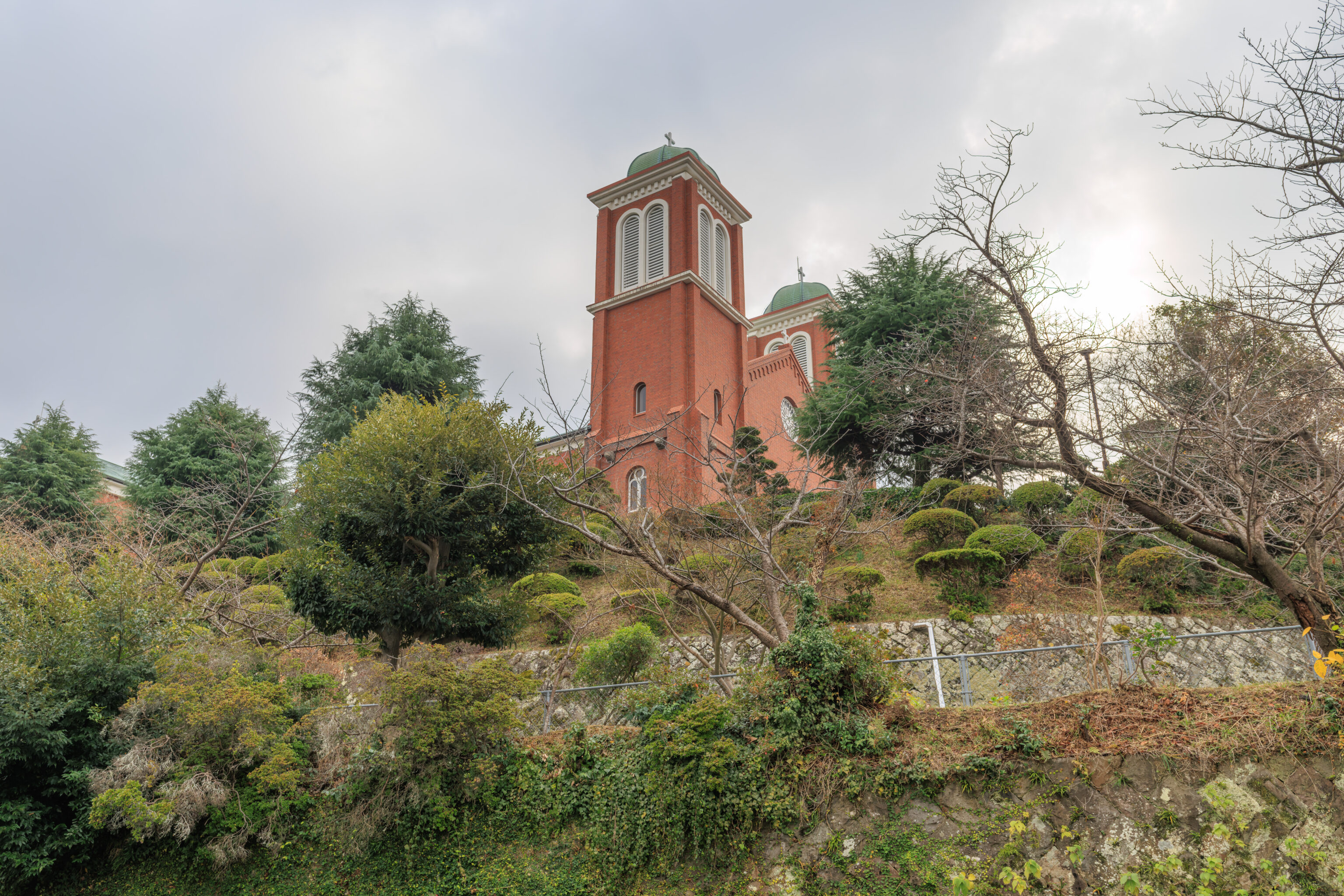
We continued on, reaching the base of the hill that the Urakami Cathedral sits upon.
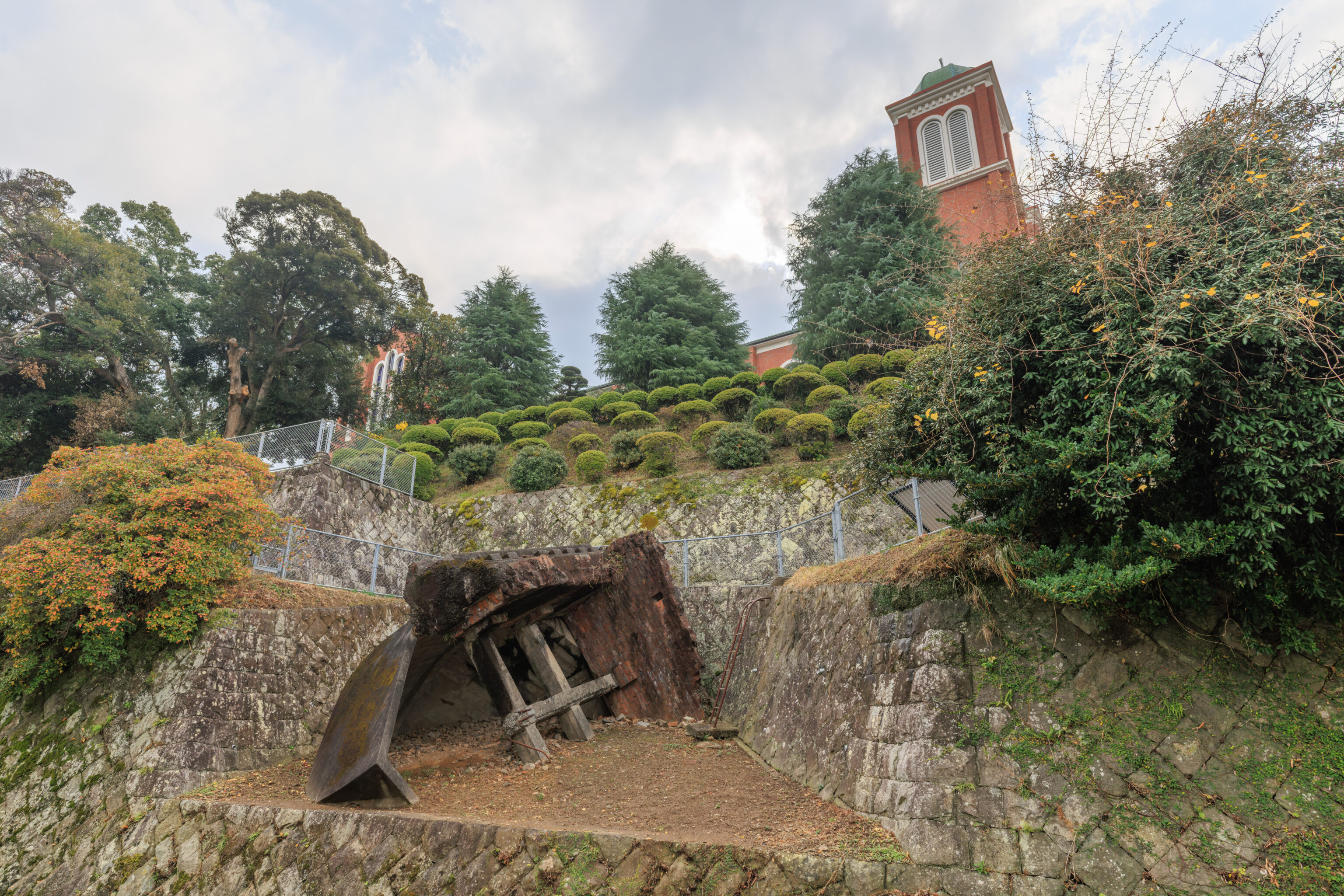
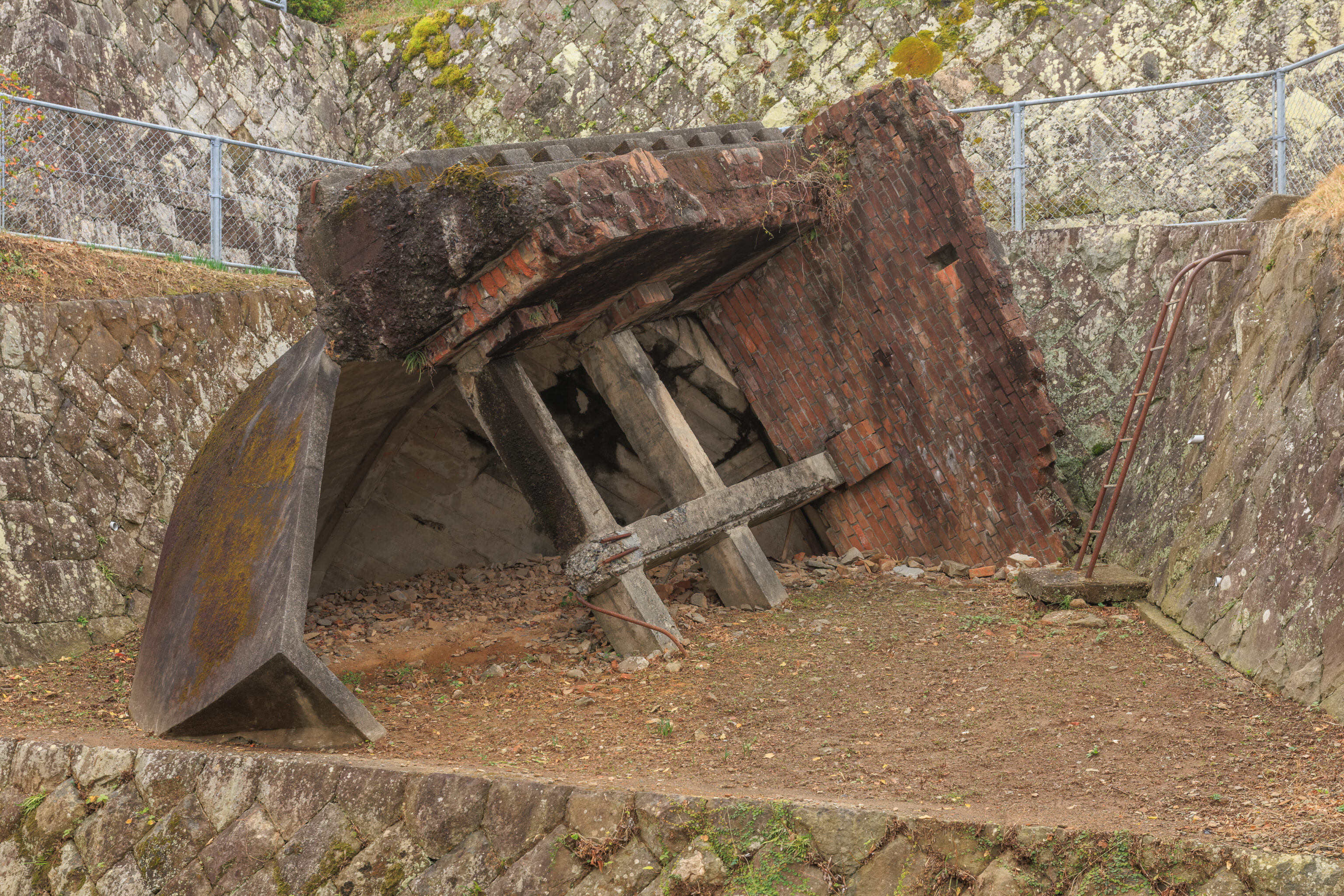
Before walking up to the cathedral, we took a brief detour along the northern edge of the cathedral’s hill. This ruin is the remains of one of the cathedral’s belfries.
Belfry in the Ruins of Urakami Cathedral
Urakami Cathedral was a grand red-brick church standing on an elevated stretch of land 500 meters northeast of the atomic bomb hypocenter. The Catholic faithful living nearby began the project in 1895 and erected the church one brick at a time over a period of three decades. Upon completion, Urakami Cathedral was one of the grandest churches in the Far East.

The explosion of the atomic bomb at 11:02 a.m., August 9, 1945 ravaged the building. The belfries and walls that remained upright collapsed soon after, leaving only a remnant of the church wall. One of the belfries (weighing about 50 tons) rests today on the spot where it fell that day. The Urakami district was populated from the early 17th century by Japanese Christians fleeing persecution after the ban on their religion. About 8,500 of the approximately 12,000 Christian followers living here perished in the atomic bombing.

Nagasaki City installs this plaque to pray for the repose of people who died here as a result of the atomic bombing and to ensure that this tragedy is never repeated.

August 1987
Nagasaki City
(Nagasaki Atomic Bomb Museum)
– Text from a sign.
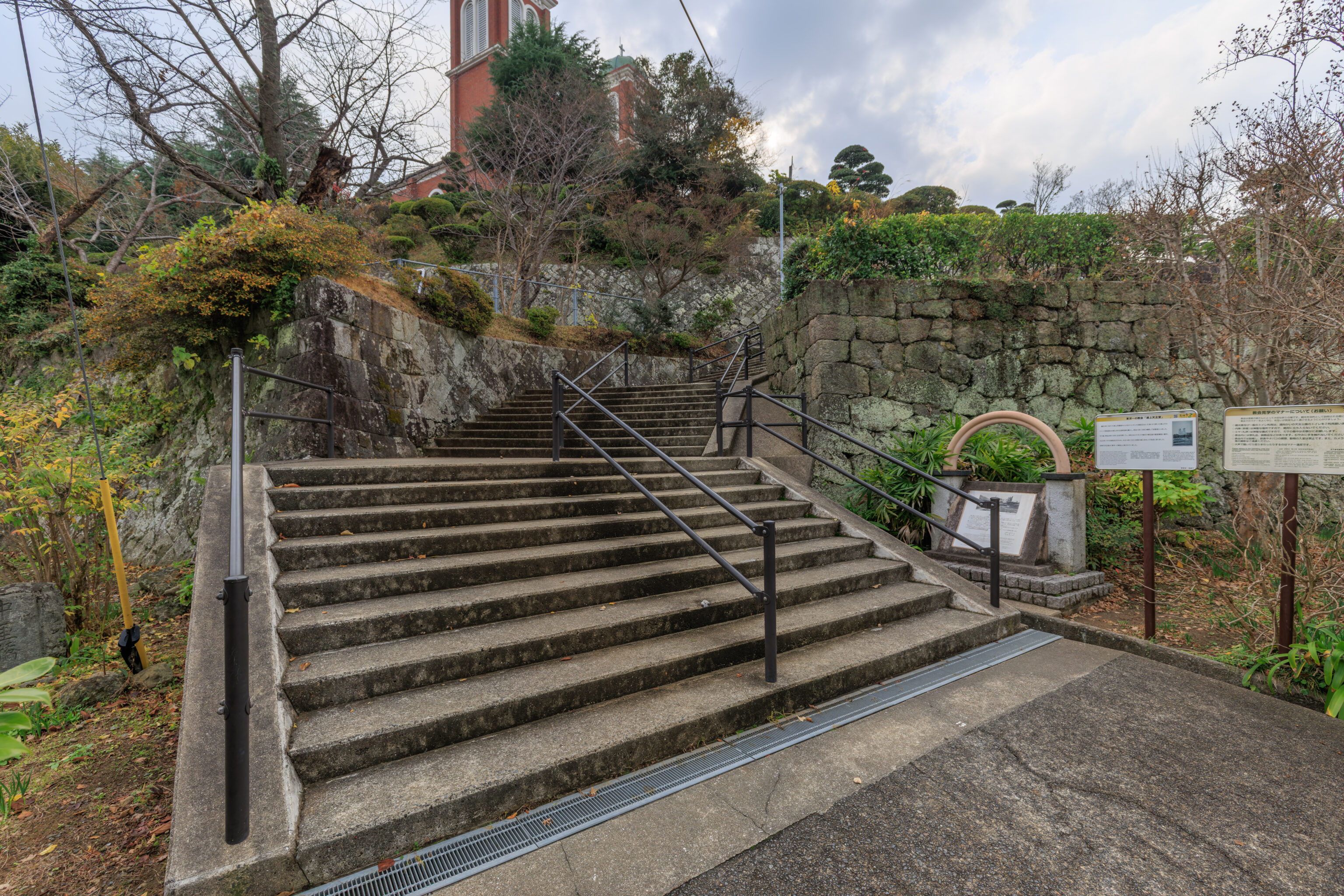
We backtracked a short distance to walk up the stairs that lead to the cathedral. A sign briefly detailed the creation of this church:
Asia's largest Catholic Church "Urakami Tensyudo"
The Catholics of Urakami returning from their rough passage of Christian expulsion "Urakami Yonbankuzure" in 1867 could establish the temporally cathedral on their newly purchased land where stood the former village governor's residence. In the year 1895 Father Theodore Fraineux, Archdiocese parish priest started to construct the cathedral in Romanesque style. Though the inauguration ceremony was made in 1925, the completion of the church was actually in 1925 with the completion of the belfry-towers. At that moment the church was said to be Asia's largest cathedral.
– Text the white sign in the photograph above.
The plaque in the photo above briefly discusses the stone retaining wall here:
Urakami Cathedral Stone Wall
Urakami Cathedral is located on a small hill about 500 meters northeast of the atomic bomb hypocenter. This stone supporting wall was part of property belonging to the leader of the former Yamazato village. The property was purchased in 1880 as the site for the construction of a Catholic church.

The explosion of the atomic bomb at 11:02 a.m., 9 August 1945 destroyed the church but left the stone wall intact. Safety precautions later made it necessary to reinforce the soil behind the wall and to replace broken or poorly fitting stones.

This wall began as part of a village elder's residence and served as the supporting wall for the church destroyed by the atomic bomb and for the new church that stands to this day, continuously conveying its message of peace.

Nagasaki City installs this plaque as a prayer for the repose of the souls of the people who died here and to ensure that this tragedy is never repeated.

Nagasaki City
(Atomic Bomb Museum)
March 2000
– Text from the plaque in the photograph above.
Finally, another sign lists some rules:
Please adhere to the following rules and respect parishioners who use this church for prayer:
Please use the public toilet in Tenshu Park across the street.
The altar is off-limits
Please be quiet during mass
Please do not touch any altar fittings.
Please remove all hats before entering the church and refrain
from eating, drinking and smoking. Please refrain from taking
photos and/or videos and please leave pets outside
Please do not allow children to talk loudly or run inside the church.
– Text from the slightly tan sign in the photograph above.
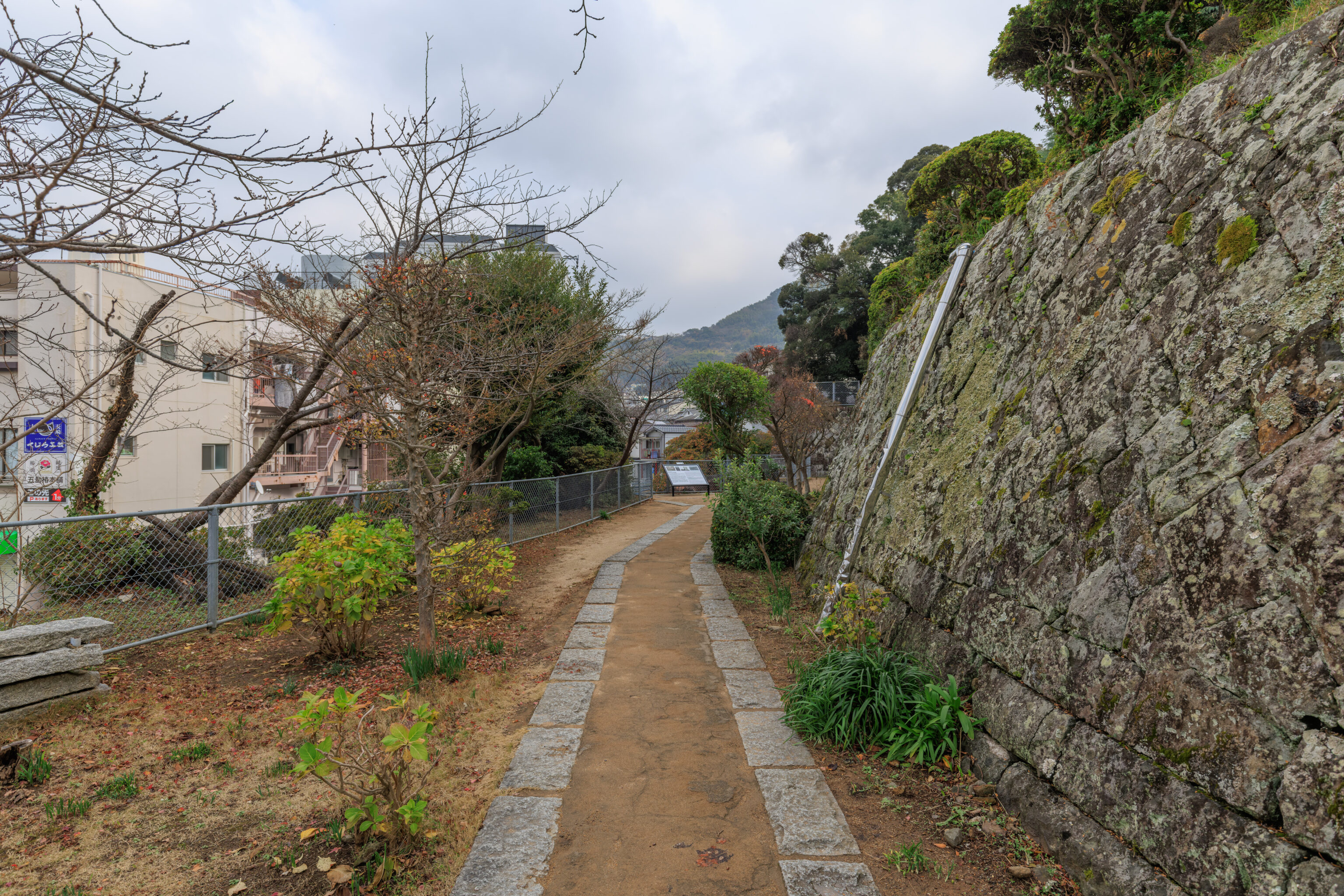
Near the top of the stairs, we turned to the left along a path that was still below the cathedral above.
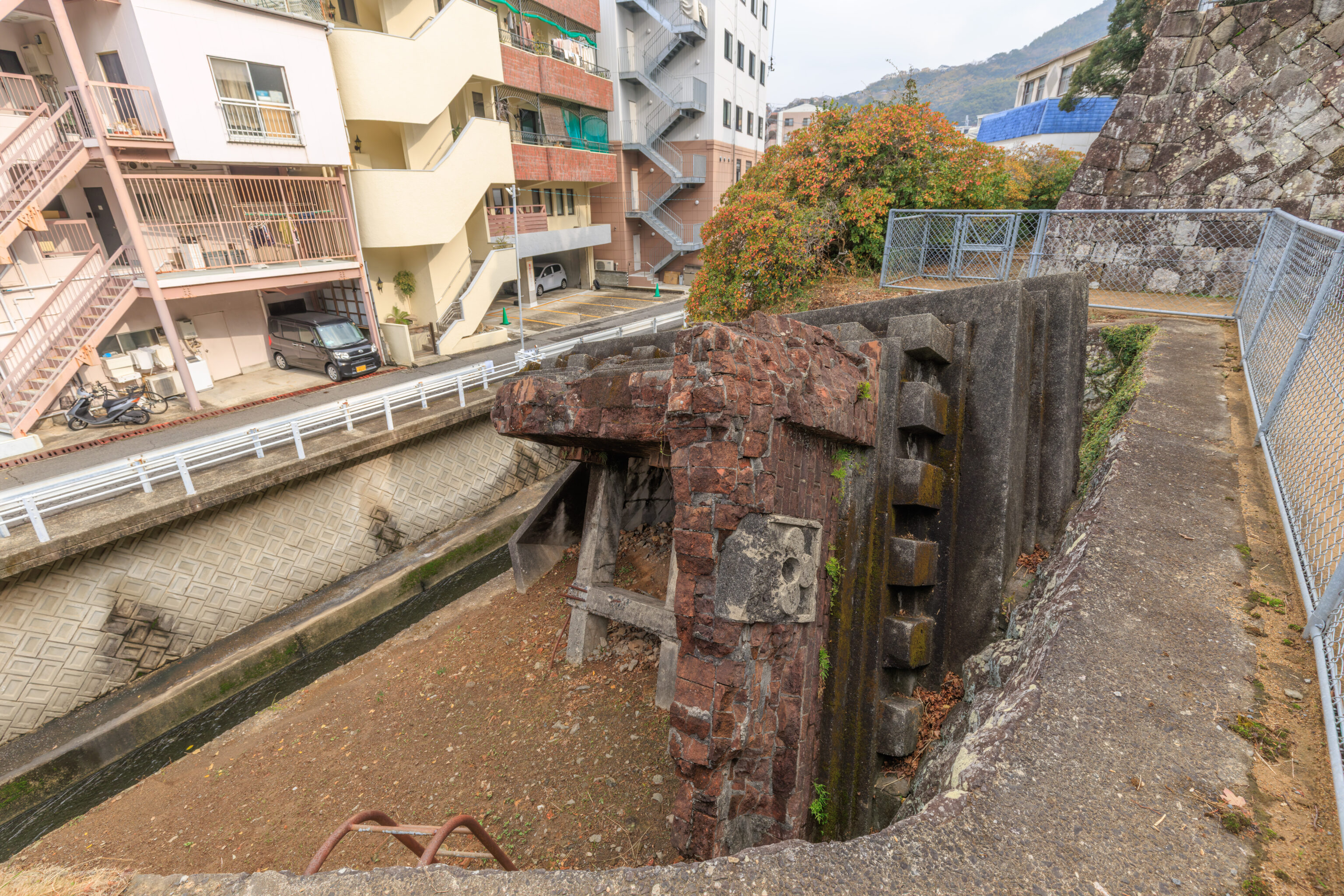
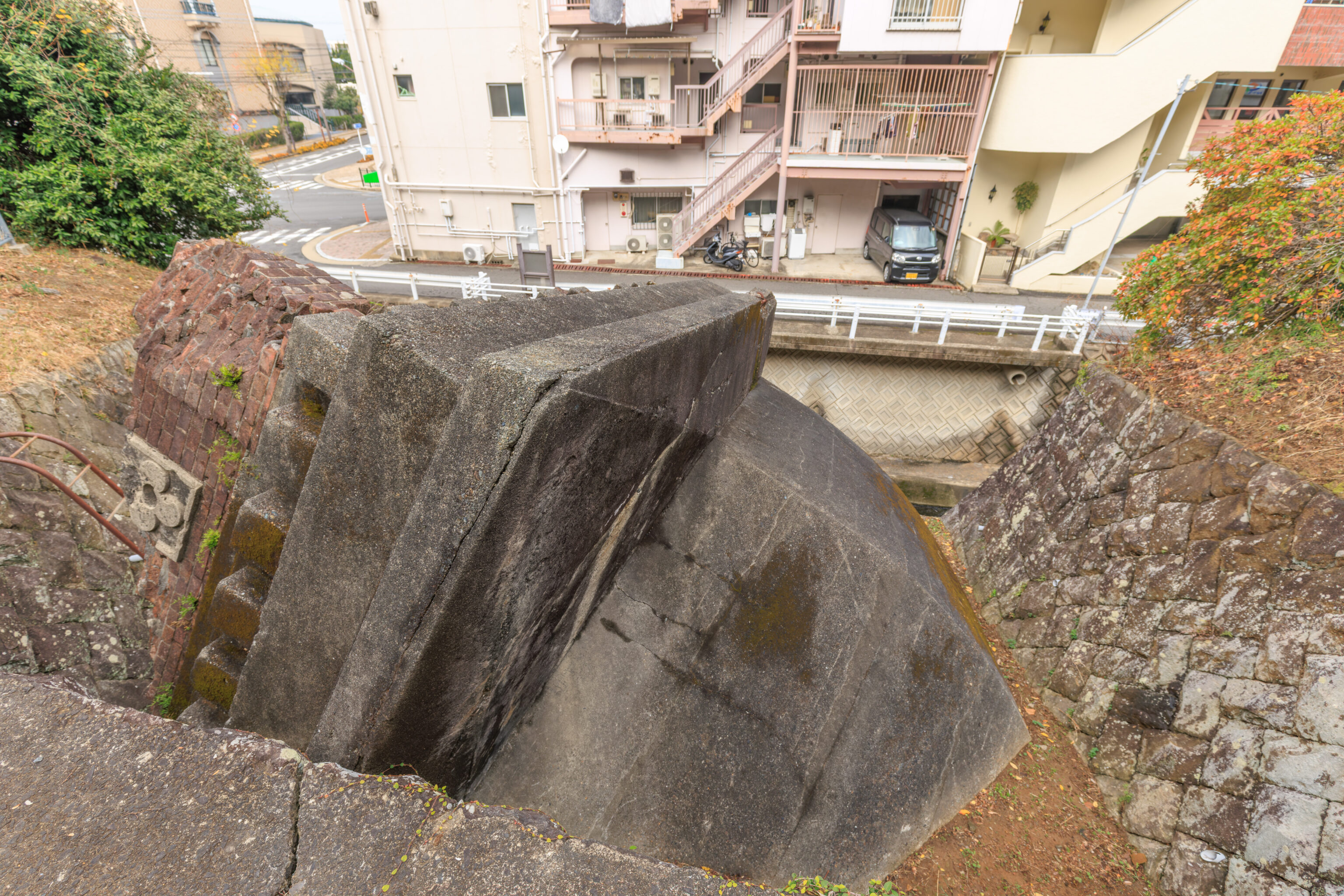
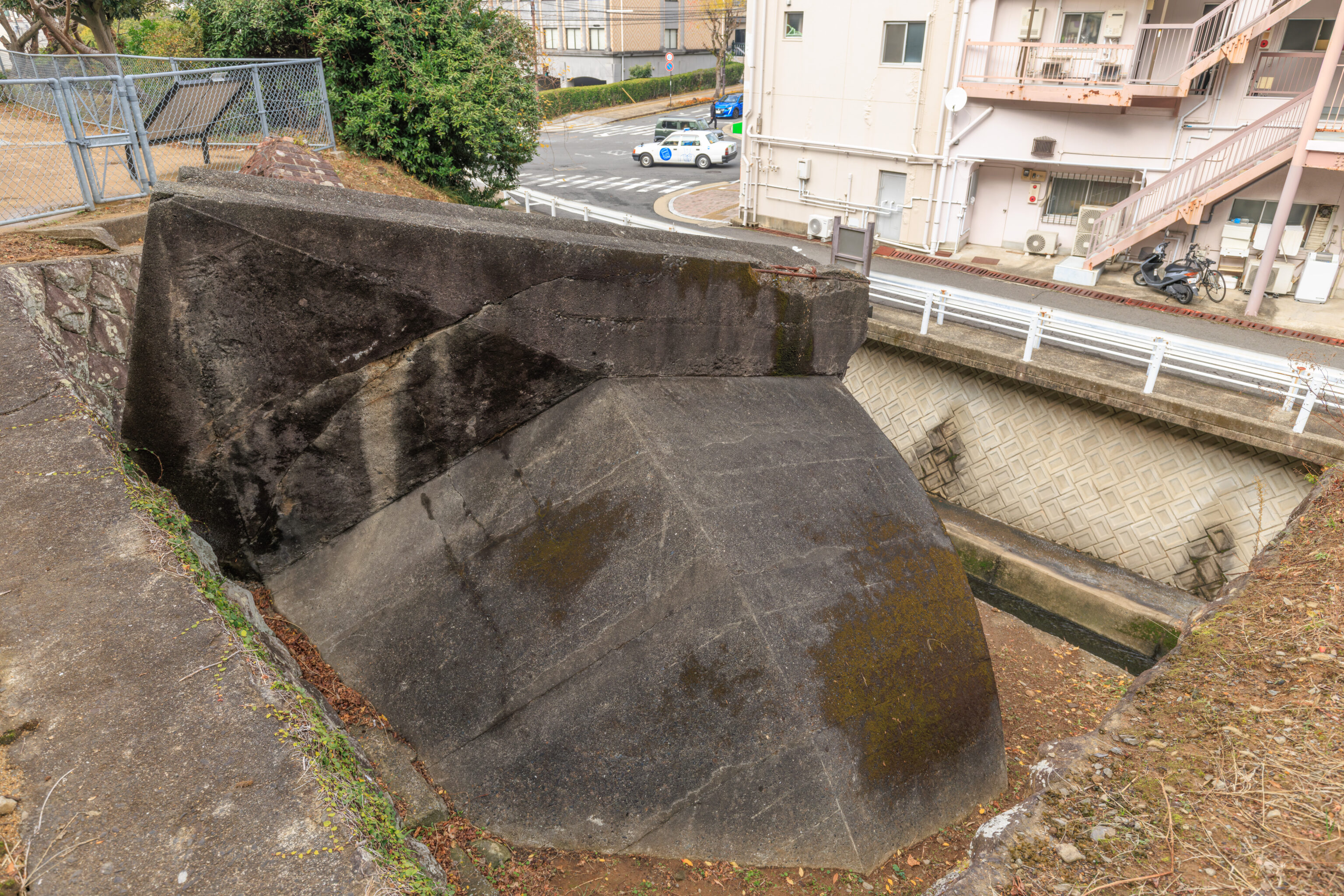
This path led to the belfry ruin, providing a view from a higher perspective.
Registered Monuments of Japan - The Original Bell Tower of the Urakami Cathedral
In 1867, Urakami Yonban Kuzure or the last crackdown on Christians in Urakami village began and believers of the Catholic faith in Urakami were sent into exile all over Japan. After they were freed in 1873, these Catholics began planning the construction of the Urakami Cathedral.

Work began on the cathedral in 1895 under the guidance of Father Fraineau. Construction was supported by the local Catholic population who, although they themselves were very poor, contributed money they obtained from selling produce, together with donations from foreigners. Stone and bricks were purchased with these donations and the Catholics of Urakami contributed their services for transportation and construction work. In 1914, the cathedral was finally completed 19 years after construction had first begun. As the cathedral did not have a bell tower, Father Heuzet, parish priest of Urakami at the time, drew up a plan and 1925 saw the completion of twin bell towers.

On August ninth 1945, however, the cathedral was destroyed by the atomic bomb dropped on Nagasaki. The North Bell Tower collapsed and tumbled down to the place where it is now. The Urakami Cathedral was rebuilt in 1959 and the North Bell Tower, still in the same place as when the cathedral was destroyed by the bomb, is all that remains left of the original structure to tell the story of the damage done to the Urakami Cathedral.
– Text from a sign.
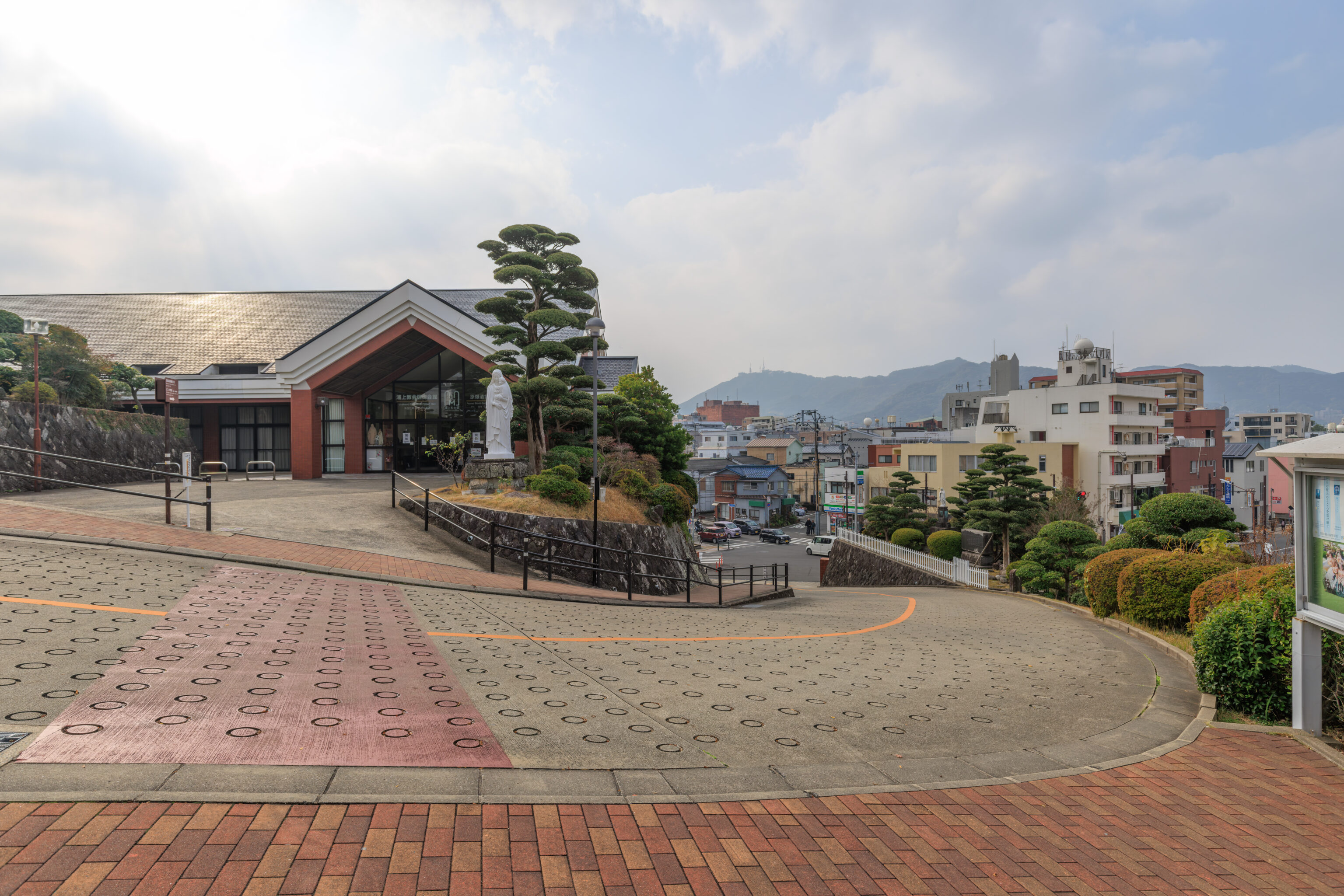
We backtracked a bit to return to the path that we were on. It led to the driveway that leads up to the cathedral.
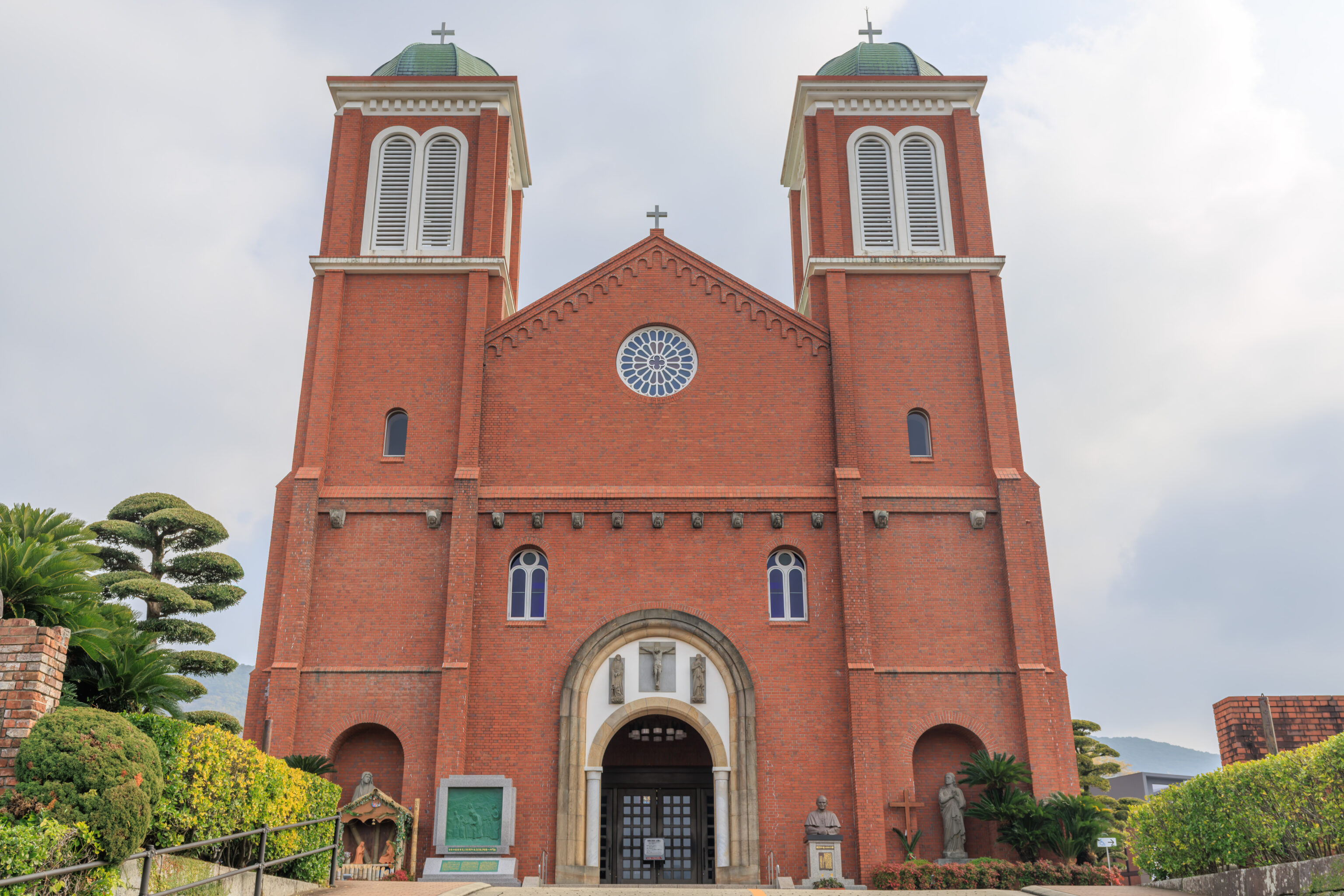
The cathedral, as seen from directly in front and still a bit below grade.
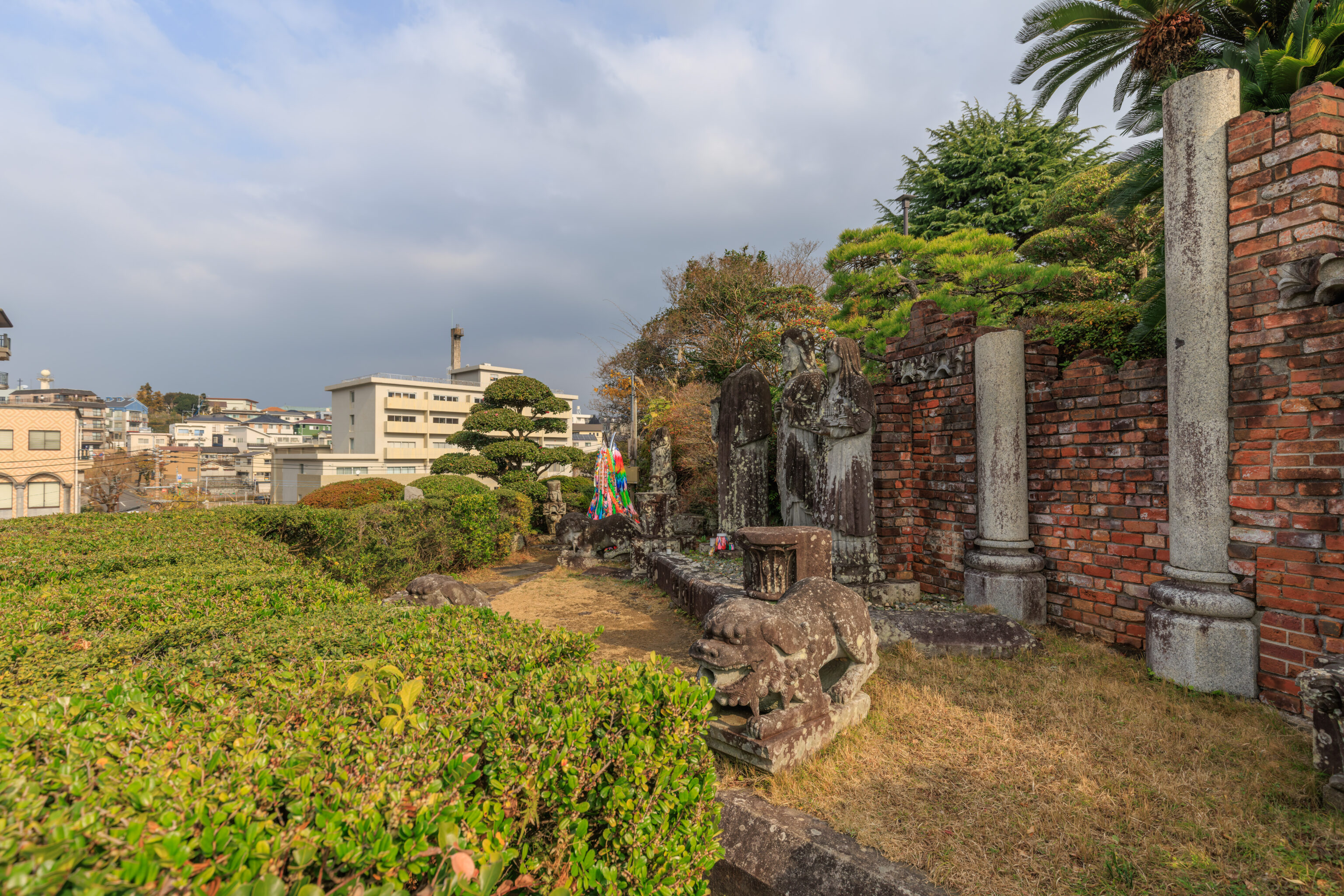
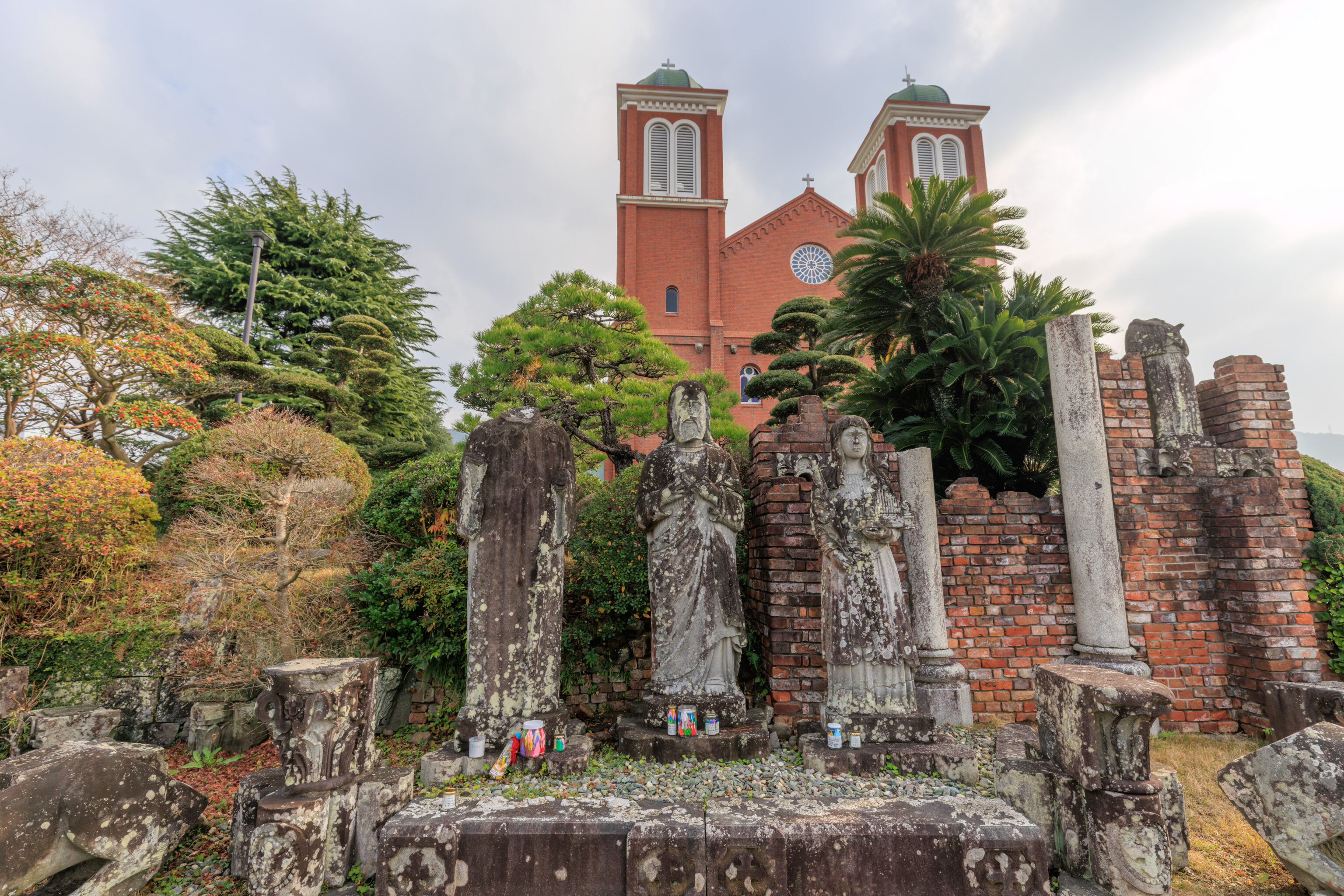
There were some ruins off to the left. A nearby sign discusses the cathedral after the atomic bombing:
Urakami Cathedral
Urakami Cathedral was destroyed by the atomic bomb in 1945, taking the lives of some 20 Christians and Father Nishida, the parish priest. It is reported that about 8,500 of the 12,000 Urakami Christians perished in the bombing. Those Christians who survived constructed a temporary wooden cathedral on the same site in 1946 and the new reinforced concrete structure was completed in 1959.

An ordination mass was celebrated by Pope John Paul II in 1981 when he visited Japan. At present, two statues, Saint Mary and Saint John, stand on either side of the entrance to the cathedral. The A-bombed wooden statue of the Virgin Mary was miraculously found amongst the rubble and now lays to rest in a small chapel next to the cathedral. Furthermore, the old church bell that was damaged in the bombing is exhibited in the nearby Church Hall along with panels outlining the horrors of the atomic bomb and the importance of peace.
– Text from a sign.
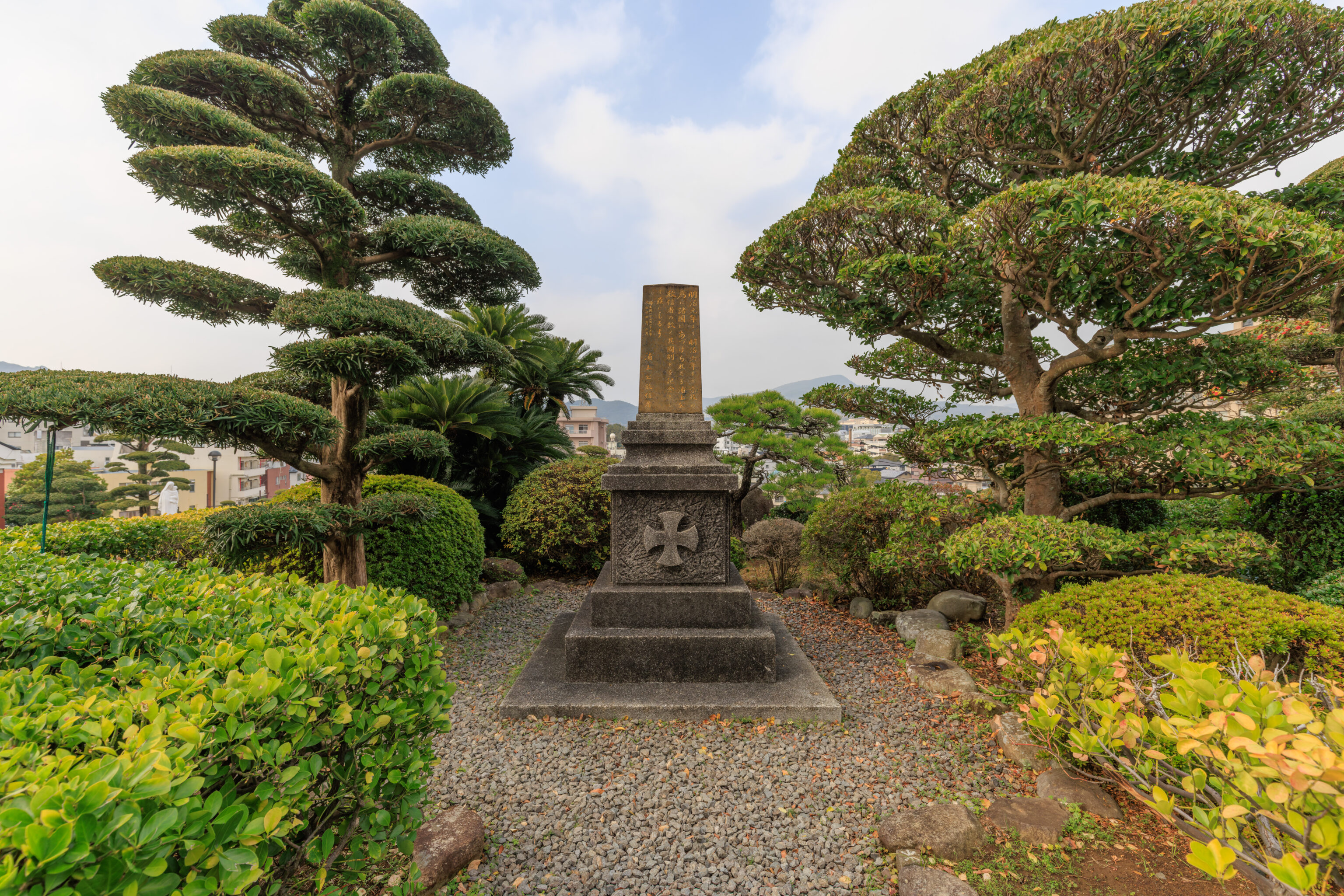
This is a memorial to the Catholics from Urakami that were exiled:
Herein recorded as a memorial are the numbers and regional distribution of the Catholic believers of Urakami who were entrusted to various provinces between the first and sixth years of the Meiji era.

Year of Our Lord 1925
June, Taisho 14
Catholic Believers of Urakami
– Text from the memorial, read and translated using Google Gemini and Translate.
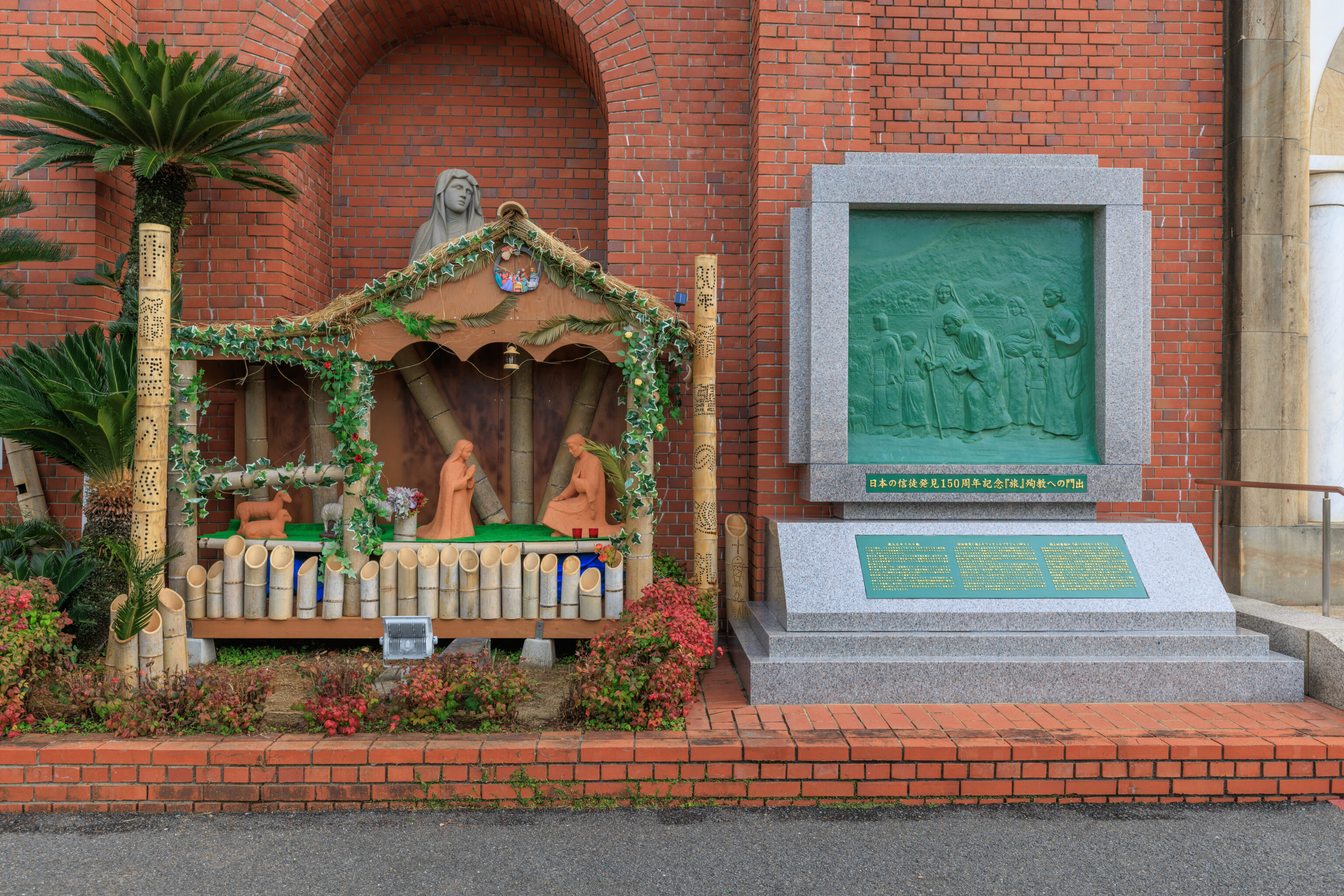
We walked up to the cathedral to take a closer look. There was a small nativity scene to the left of the entrance. The large green image on the right, which seems like it may be carved into stone and painted green, is titled “150th Anniversary of the Discovery of the Hidden Christians in Japan: 『The Journey』—Setting Out for Martyrdom”.
There is quite a bit of text on the plaque underneath. We didn’t photograph it closely enough to easily read it but Google Gemini claims to be able to do so:
Urakami and Christianity
Christianity was brought to Japan by the Spanish Jesuit missionary Francis Xavier, who landed in Kagoshima on August 15, 1549 (July 22, Tenbun 18).

In August of the following year, Francis Xavier left Kagoshima and traveled to preach the faith, stopping in Hirado, Hakata, and Yamaguchi along the way; after enduring many hardships, he arrived in Kyoto—the imperial capital—in mid-January 1551. Thus began the mission of Christianity in Japan.

Regarding Urakami Village (part of the Arima domain), records indicate that the missionary Luís de Almeida began his evangelism in the town of Nagasaki (part of the Omura domain) in 1567 (Eiroku 10). It is therefore inferred that Christianity was introduced to the neighboring village of Urakami around that time and subsequently spread among the villagers.

In 1584 (Tensho 12), the lord of Urakami—the *Kirishitan* (Christian) daimyo Arima Harunobu—donated Urakami Village to the Jesuit order as a fief. He did this to express gratitude for his victory in the Battle of Okitanawate against his long-standing rival, Ryūzōji Takanobu of Saga. As a result, Urakami Village became known in Rome and established itself as a Christian village in both name and reality.

The Discovery of the Believers: Urakami Christians and Father Petitjean
On July 14, 1853 (June 3, Kaei 6), the arrival of Commodore Matthew Perry of the United States, accompanied by four warships, shattered Japan's dream of national isolation.

On October 9, 1858 (September 3, Ansei 5), Baron Gros, the French special envoy, pressured Japan to sign a Treaty of Amity and Commerce and accompanying trade regulations on terms favorable to France; Article 4 of the agreement stipulated that the construction of a chapel for French nationals within the designated settlement areas would be permitted.

On February 19, 1865 (January 24, Genji 2), Oura Cathedral was consecrated. (The term *Tenshudo*—literally "Hall of the Lord of Heaven"—was a Chinese-style name for the church.) The people of Nagasaki at the time were awestruck by its grandeur, dubbing it the "French Temple" and flocking there daily to see it. Among the sightseers were farmers from Urakami.

Then, on March 17, 1865 (February 20, Genji 2), a woman named Isabelina Yuri (Yuri Sugimoto) quietly approached Father Petitjean, who was praying inside the cathedral, and whispered, "Our hearts are the same as yours," and "Where is the statue of Santa Maria?" These words made history. The "Hidden Christian" era of the Urakami community—which had lasted for seven generations and 250 years—came to an end as they placed themselves under the guidance of missionaries. This event astonished the world and is hailed as the "Resurrection of Japanese Christianity."

The Fourth Urakami Persecution: "The Journey" (1868–1873)
On April 5, 1867 (the first day of the third month of the third year of Keio)—roughly two years after the "Discovery of the Hidden Christians"—Mokichi of Motohara Village passed away. Following his funeral, the Urakami Christians took the decisive step of conducting their own burial rites; soon after, the vast majority of villagers submitted written declarations to the village headman announcing the severance of ties with their registered Buddhist temples and their refusal to participate in the *terauke* (temple-guarantee) system. This act of resistance—akin to a bombshell—challenged the religious control laws strictly enforced by successive Tokugawa shoguns and sparked a major crisis.

While the "Shiraban Incident" remained unresolved, the country underwent the *Taisei Hōkan* (Restoration of Imperial Rule) and the birth of the new Meiji government. Although Japan was entering a new era of "Civilization and Enlightenment," the new government’s response to the Urakami Christians—driven by policies of State Shinto nationalism—was a measure of unprecedented severity in world history: the exile of all 3,394 villagers to twenty-two locations across twenty-one domains (held by *daimyo* with stipends of 100,000 *koku* or more, west of Nagoya) and the forced renunciation of their faith. This event has been handed down to the present day as the "Urakami Fourth Persecution" (*Urakami Yonban Kuzure*); our ancestors referred to it simply as "the Journey."

While this "Journey"—the exile of an entire village—was a tale of cruelty that stands out in the history of modern Japan, the hearts of the ancestors who embarked upon it were filled with hope. To them, betraying God and their faith was the ultimate moral transgression; thus, embarking on this "Journey" of martyrdom—in order to remain true to their convictions and faithful to God—was the only path to true happiness left open to them.
– Text from the green plaque in the photograph above, read and translated using Google Gemini and Translate.
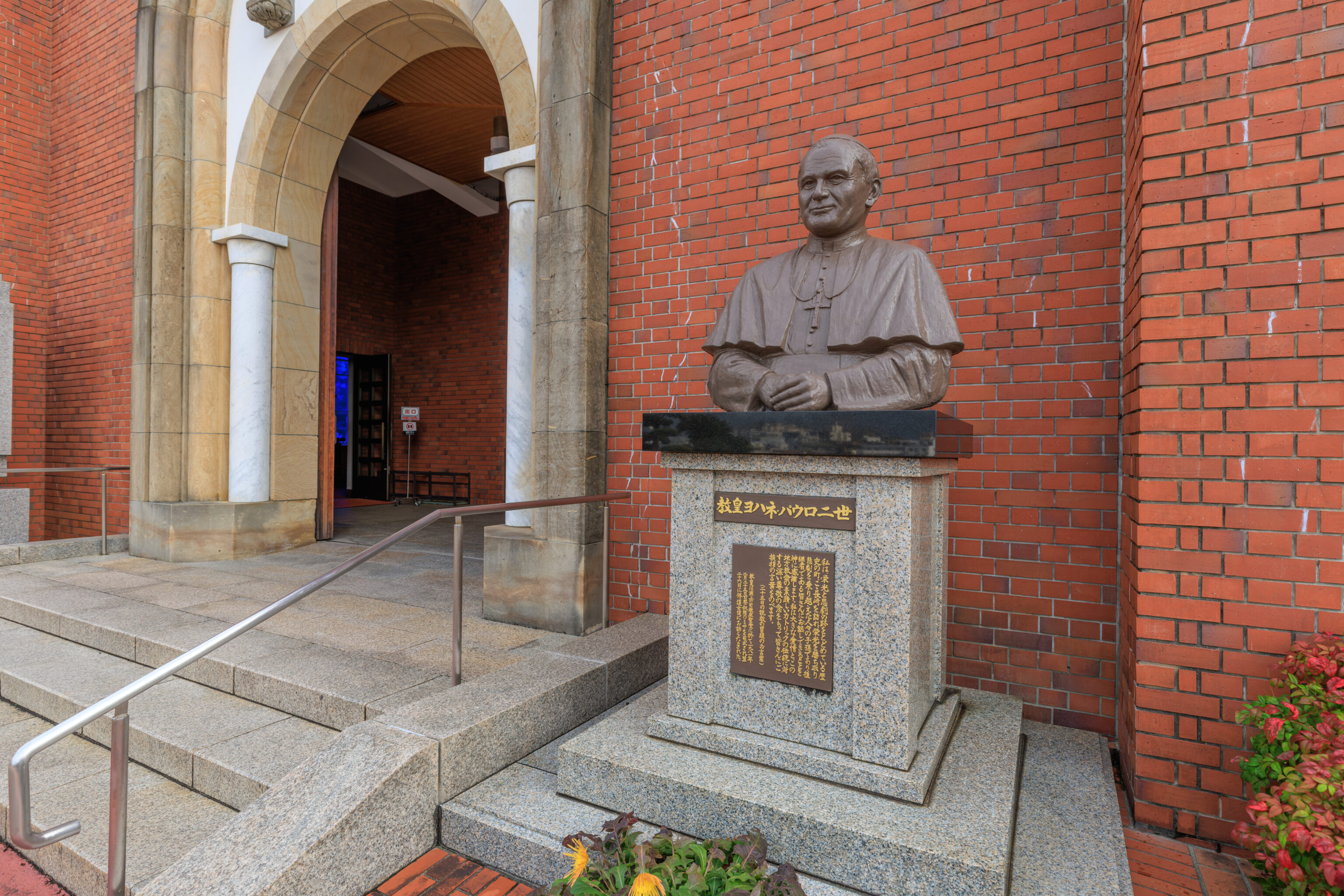
This statue is of Pope John Paul II and commemorates his visit in 1981.
Pope John Paul II
I thank God for the opportunity to visit Nagasaki—a city bearing the marks of both glory and tragedy—and to speak to you, the descendants and heirs of those who achieved glory and overcame tragedy. I offer you my greetings with great affection and deep respect for the magnificent Catholic tradition of this local Church.
(Opening remarks from the homily on the 25th)

At the Urakami Cathedral, the Pope presided over a Mass of priestly ordination on February 25, 1981, and addressed religious sisters on the following day, the 26th.
– Text from base of the statue, read and translated using Google Gemini and Translate.
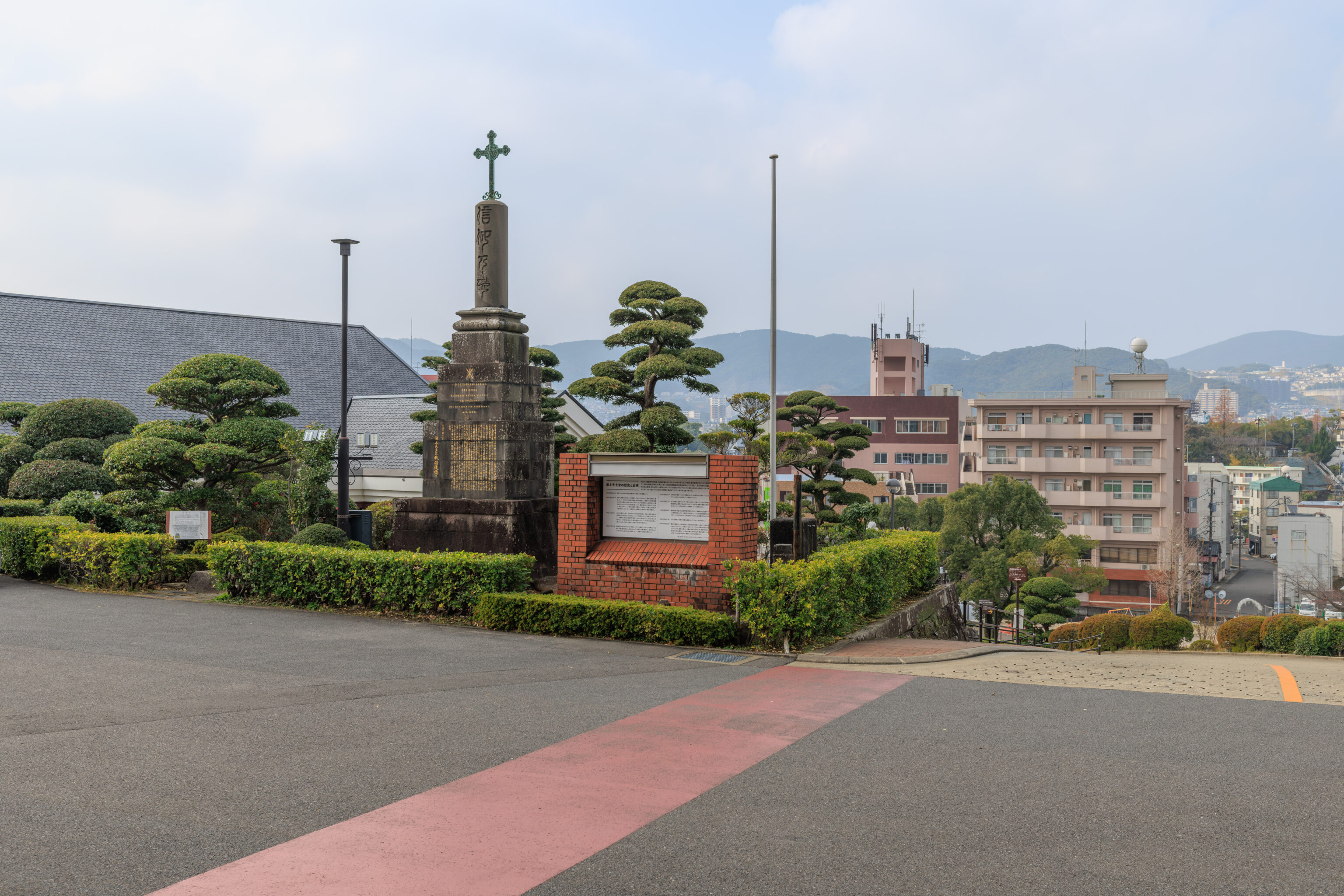
The view looking to the south away from the cathedral.
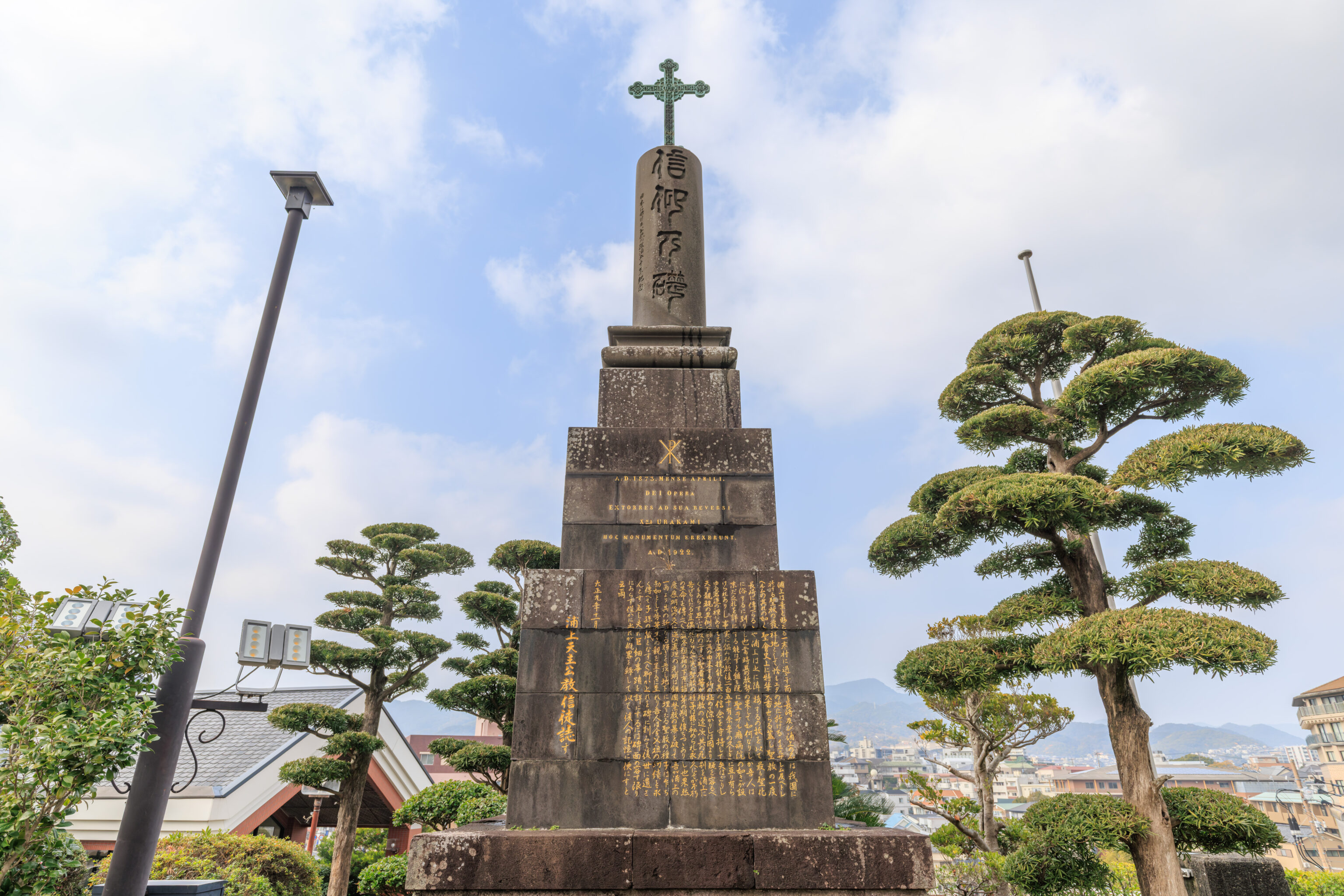
We walked over to this large stone monument which features text in both Latin and Japanese.
The Foundation of Faith
Commemorating the Fiftieth Anniversary of the Revival of the Catholic Church in Japan

A. D. 1873. MONTH OF APRIL.
GOD'S WORKS
THE EXILES RETURNED TO THEIR OWN
URAKAMI CHRISTIANS
THEY ERECTED THIS MONUMENT.
A. D. 1922.

Records of the Catholic believers of Urakami Cathedral
November, Taisho 9 (1920)
Masaharu Anezaki, Doctor of Letters Inscription

Urakami was originally nothing more than a humble, secluded village; yet, the names of Nagasaki and Urakami hold a place of singular prominence in the history of the Christian faith in Japan—much like Jerusalem and Bethlehem in the land of Judea. Once the faith was introduced to Nagasaki, Urakami—being adjacent to the city—was among the first to be deeply sanctified by its teachings. While the precise extent of the faith's influence at that time remains unclear, the establishment of institutions such as the St. Lazarus Hospital bears witness to its significance.

Furthermore, the believers demonstrated unwavering resolve, steadfastly upholding their faith despite enduring relentless persecution and hardship for over two and a half centuries—a truly extraordinary testament to their conviction. It is said that the Twenty-Six Martyrs, while on their final journey, bade their last farewells at Urakami; surely, it was no mere coincidence that the seeds of the faith were sown here, lying dormant beneath the biting frosts of winter, awaiting the moment to sprout and perpetuate an undying legacy.

Indeed, at the dawn of the Meiji era, the light of truth pierced the veil of national isolation and prohibition, radiating a new brilliance from this corner of Urakami; the long-buried seeds of the faith suddenly burst forth with vibrant life, blossoming into the community we see today. We hereby inscribe this monument to honor the achievements of our forebears and preserve their legacy as an inspiration for future generations. As the limited space of the monument precludes a detailed account of every event, we have recorded only the essential history to serve as a lasting reminder for posterity.
– Text from the memorial, read and translated using Google Gemini and Translate.
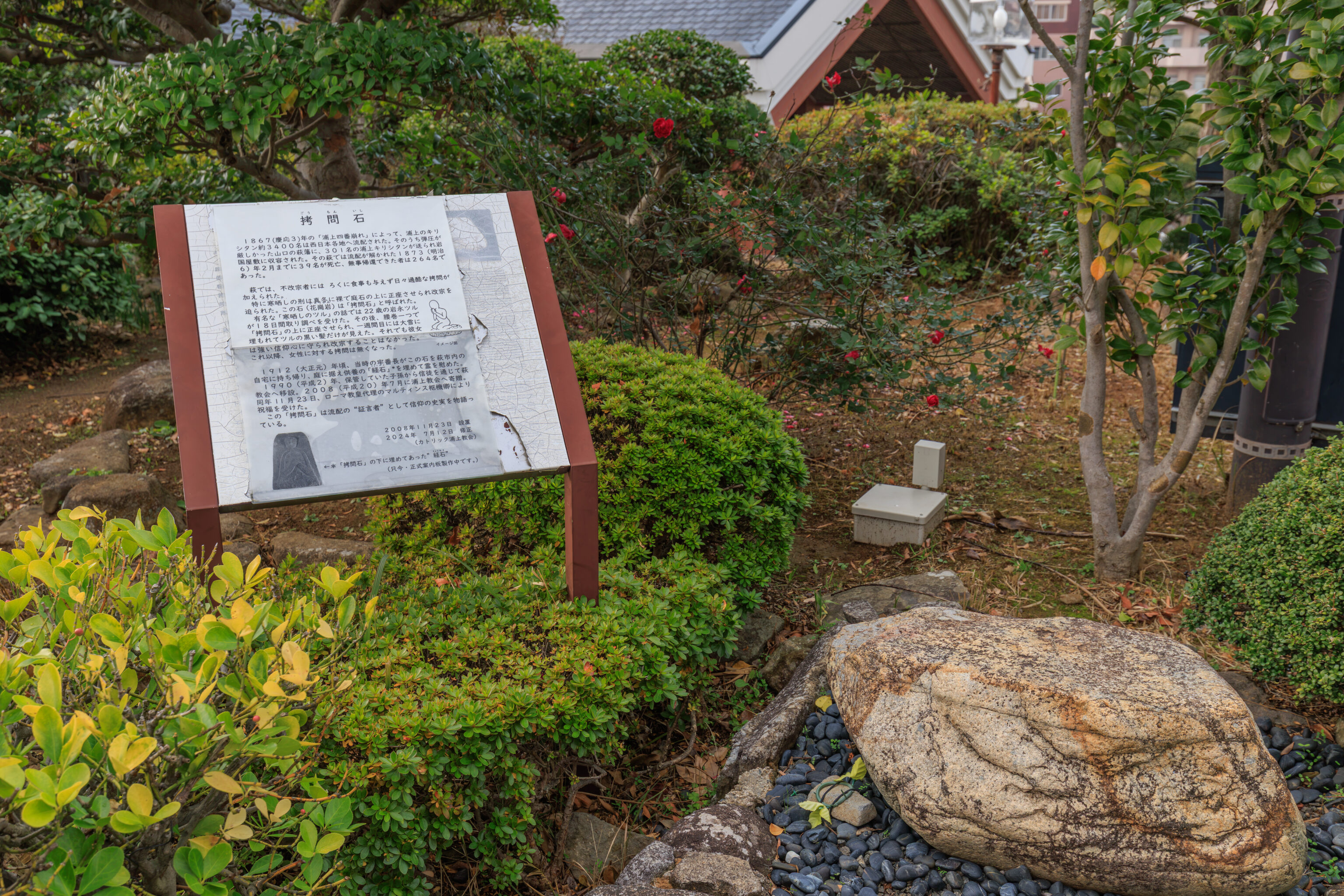
This was a stone used to torture the Catholic congregants of Urakami:
The Torture Stone
Following the "Urakami Fourth Persecution" (Urakami Yonban Kuzure) of 1867, approximately 3,400 Christians from Urakami were exiled to various locations across western Japan. Among them, 301 Urakami Christians were sent to the Hagi Domain in Yamaguchi—where persecution was particularly severe—and were confined at the domain's Iwakuni residence. During their time in Hagi, 39 people died before the exile order was lifted in February 1873, while 264 managed to return home safely.

In Hagi, those who refused to renounce their faith were subjected to daily, brutal torture and denied adequate food. One particularly cruel punishment involved forcing victims to sit in the *seiza* position (kneeling with legs tucked underneath) naked on a garden stone in the dead of winter, exposed to the freezing elements. This granite stone came to be known as the "Torture Stone."

A famous account tells the story of 22-year-old Tsuru Iwanaga, who underwent interrogation for 18 days. Afterward, she was forced to sit in the *seiza* position on the "Torture Stone" clad only in a loincloth; by the seventh day, she was buried under heavy snow, with only her black hair visible. Yet, sustained by her unwavering faith, she never renounced her religion. Following this incident, the practice of torturing women was discontinued.

Around 1912, the head prison guard at the time took the stone to his home in Hagi City and placed it in his garden. He buried a "sutra stone" (*kyōseki*)—a stone inscribed with Buddhist scriptures—beneath it to offer prayers and console the spirits of the victims.

In 1990, the stone was transferred from the guard's descendants to the Hagi Church through the local congregation. In July 2008, it was donated to the Urakami Church. On November 23 of that same year, it was blessed by Cardinal Martins, acting as the representative of the Pope.

As a "witness" to the exile, this "Torture Stone" stands as a testament to the historical reality of the faith.

Installed: November 23, 2008
Revised: July 12, 2024
(Catholic Urakami Church)

(A formal information sign is currently being produced.)
– Text from the sign on the left, read and translated using Google Gemini and Translate.
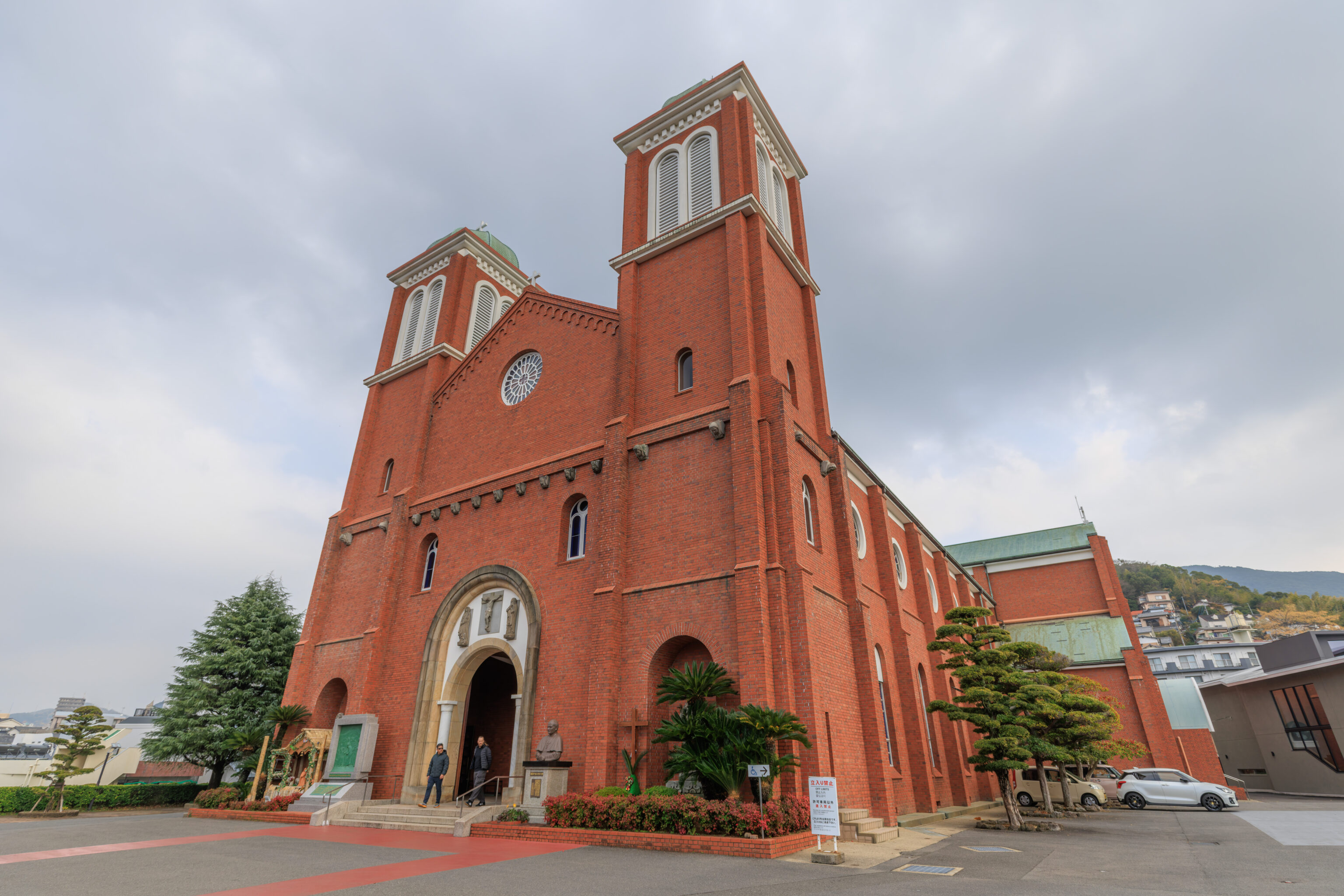
We didn’t actually enter the cathedral as there seemed to be a service in progress at the time.
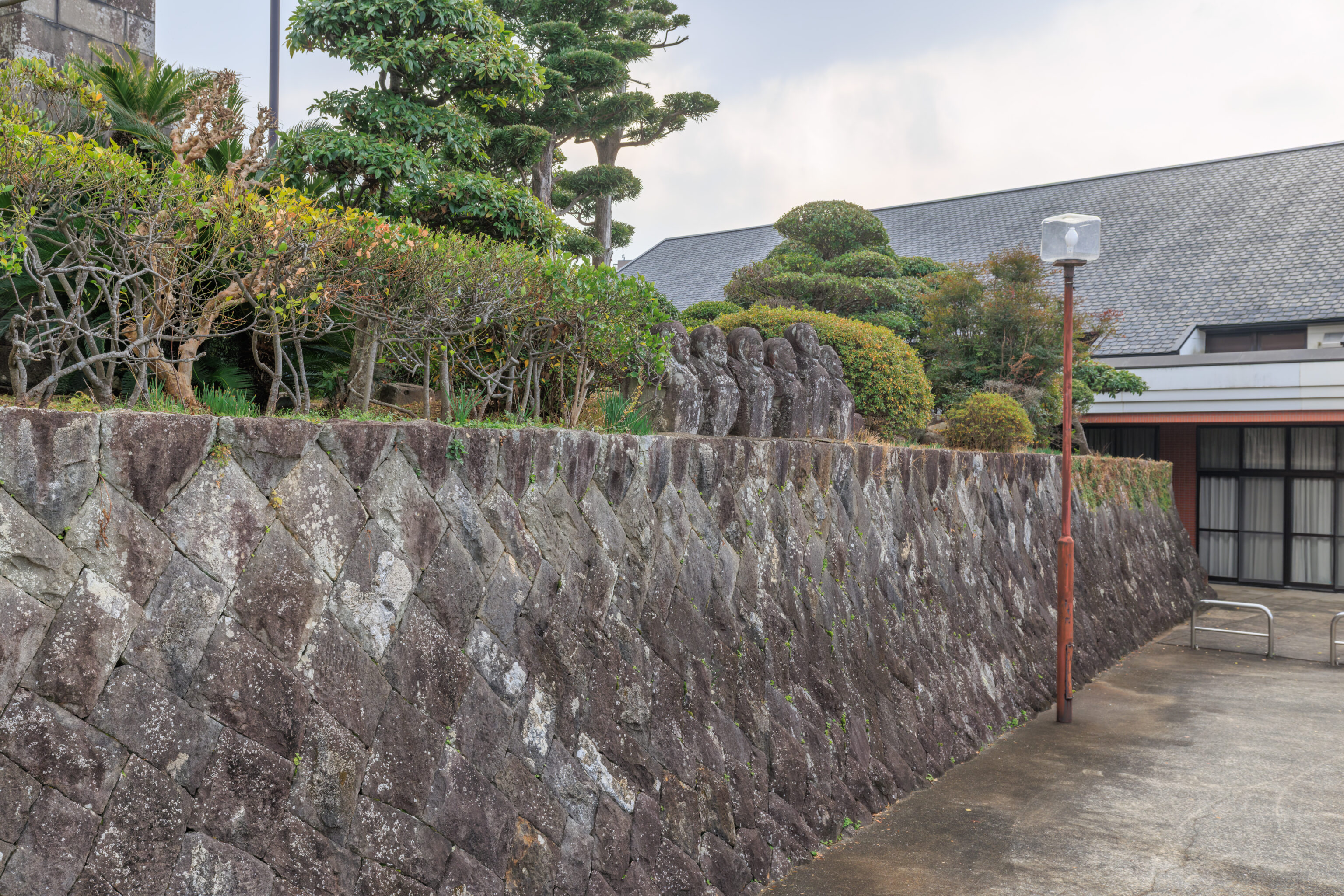
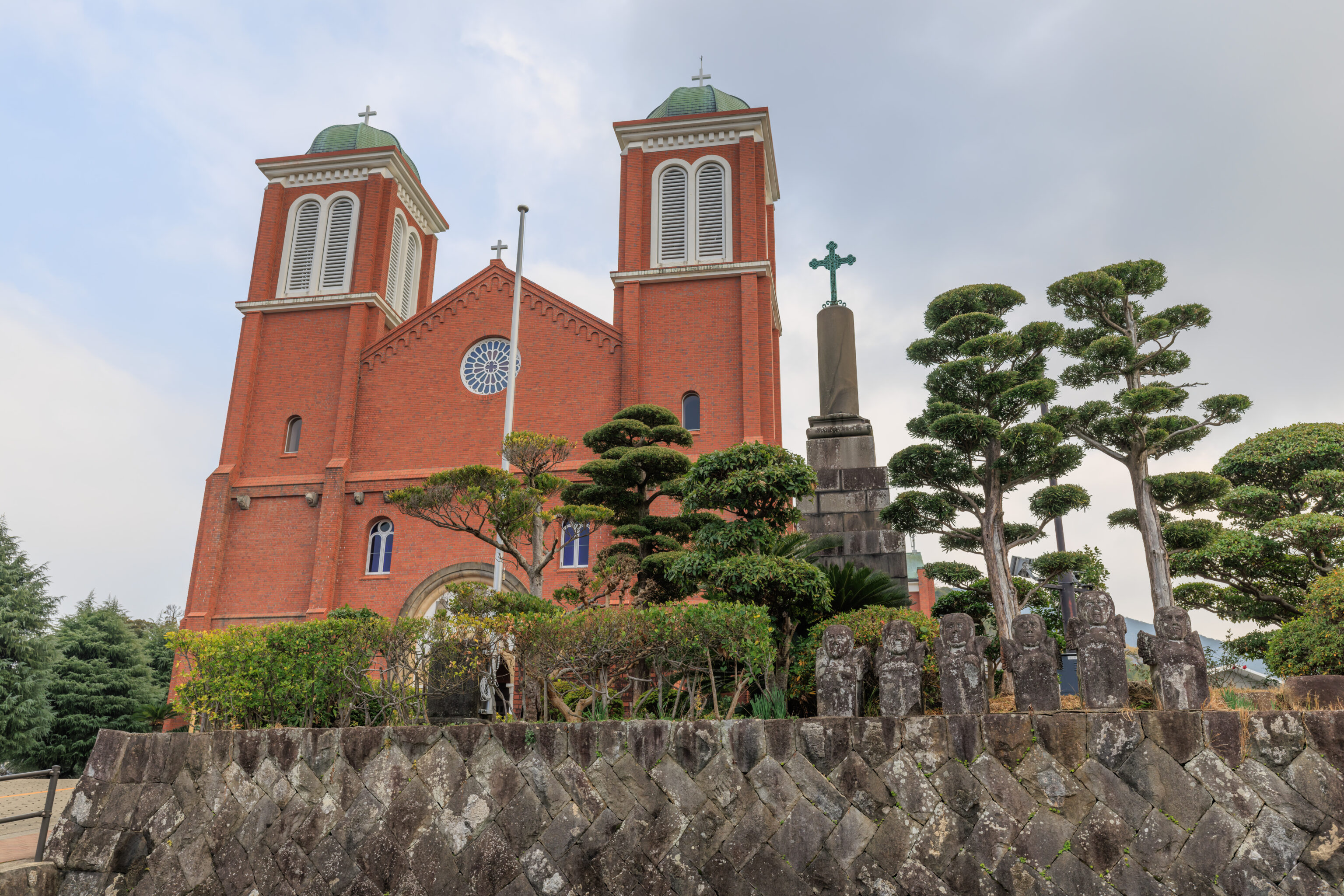
We decided to go take a look at the cathedral’s museum, which was just southwest of the cathedral building. We noticed a few small statues on a retaining wall.
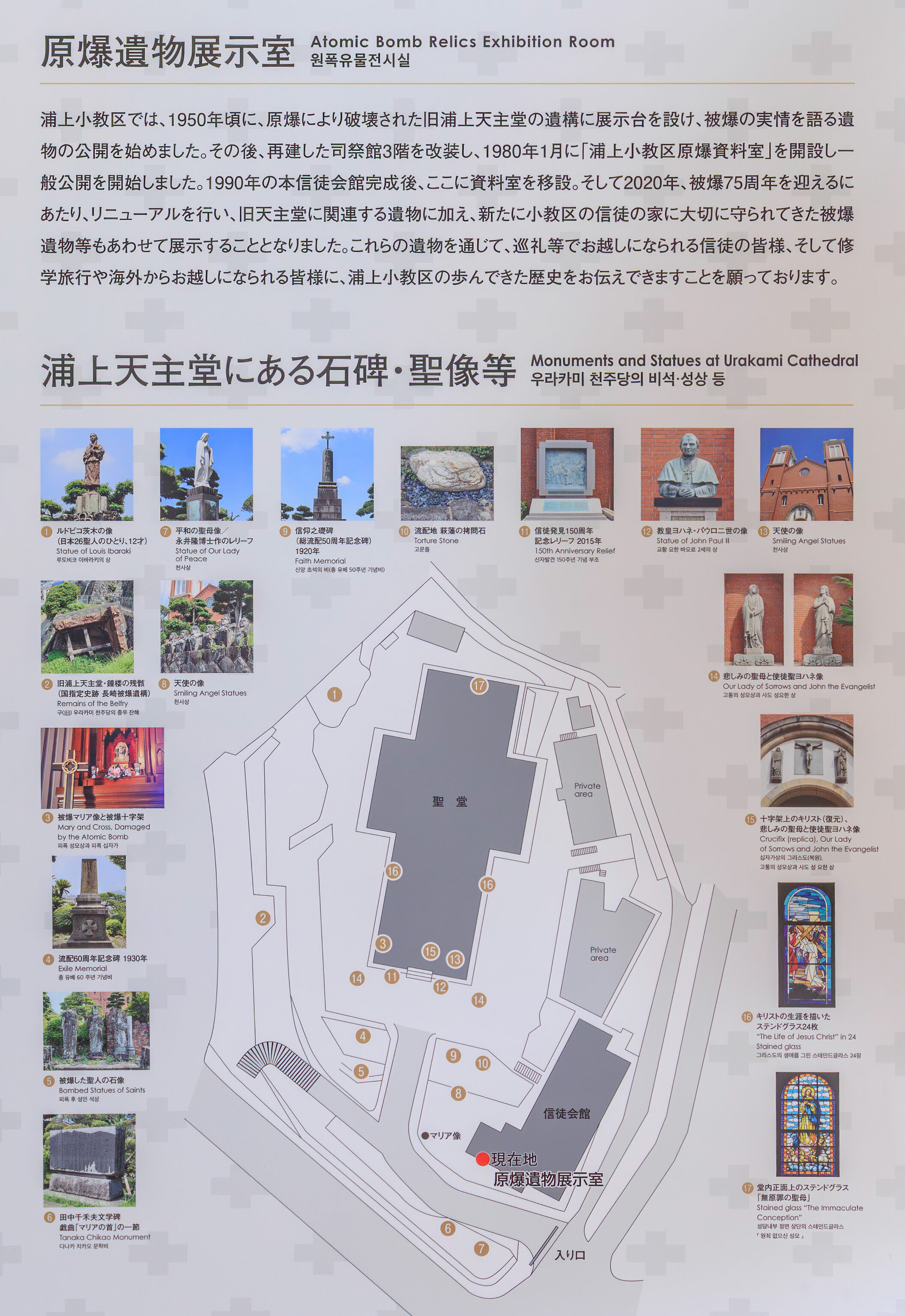
This map of the cathedral would have been nice to see outside! It identifies everything of interest.
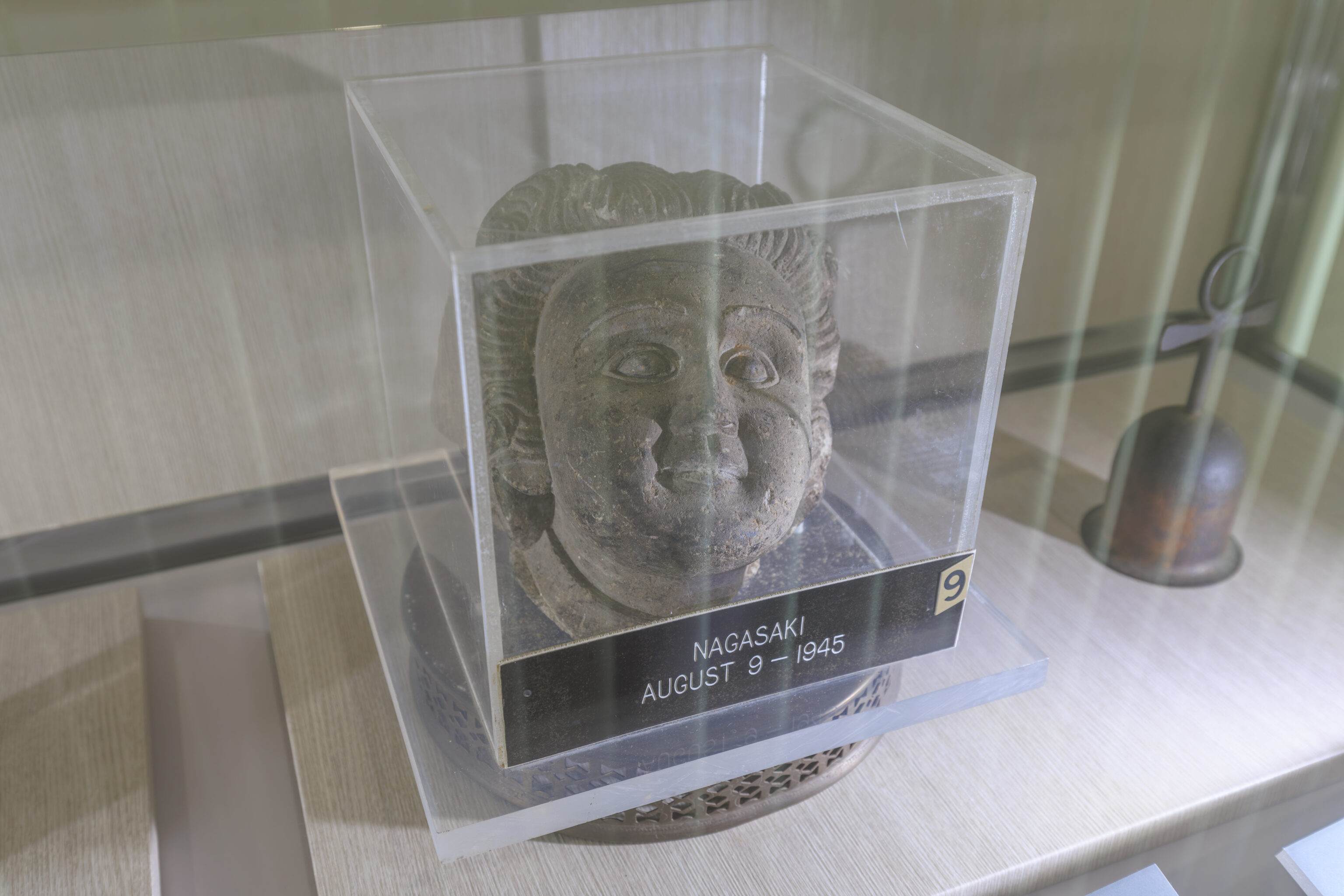
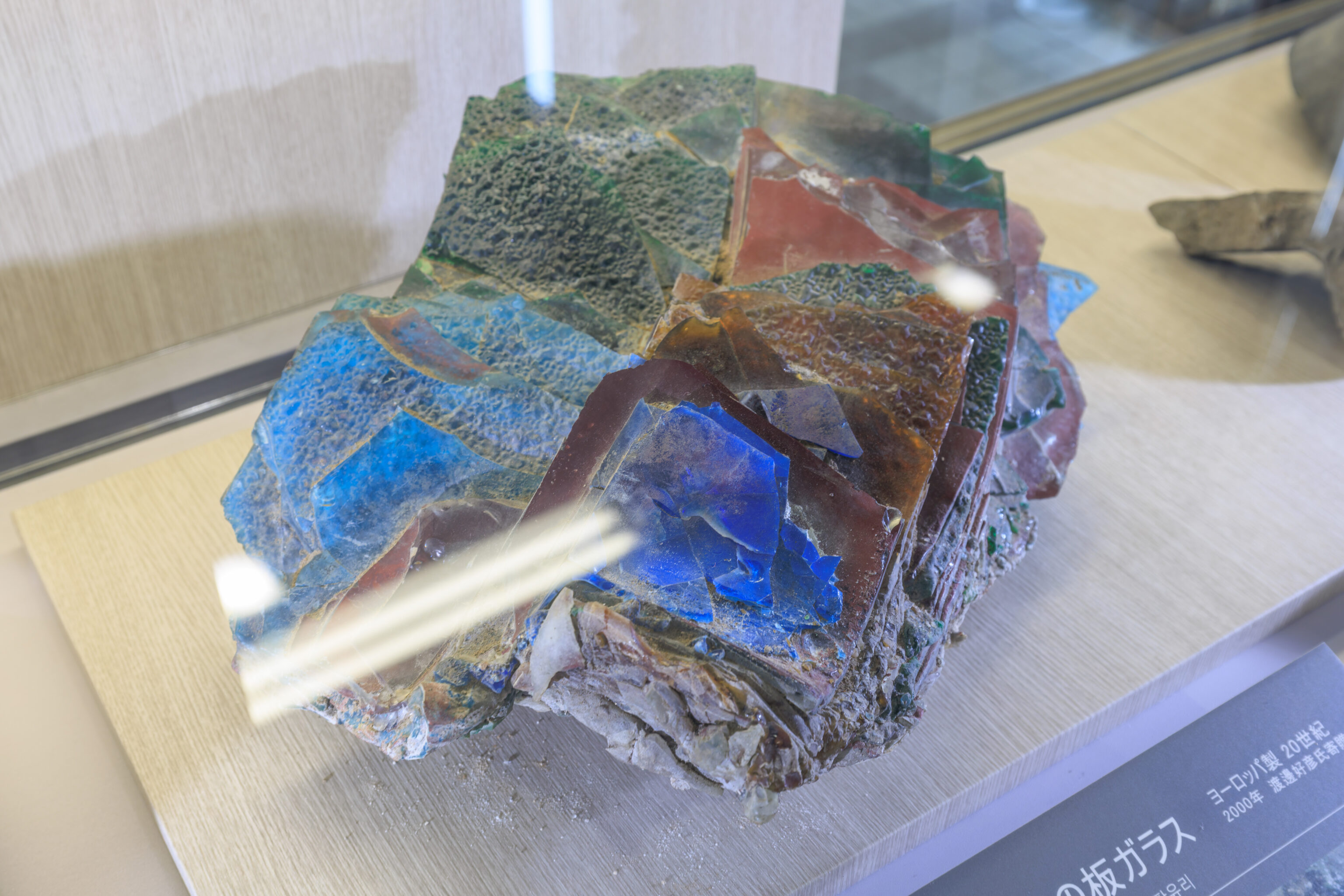
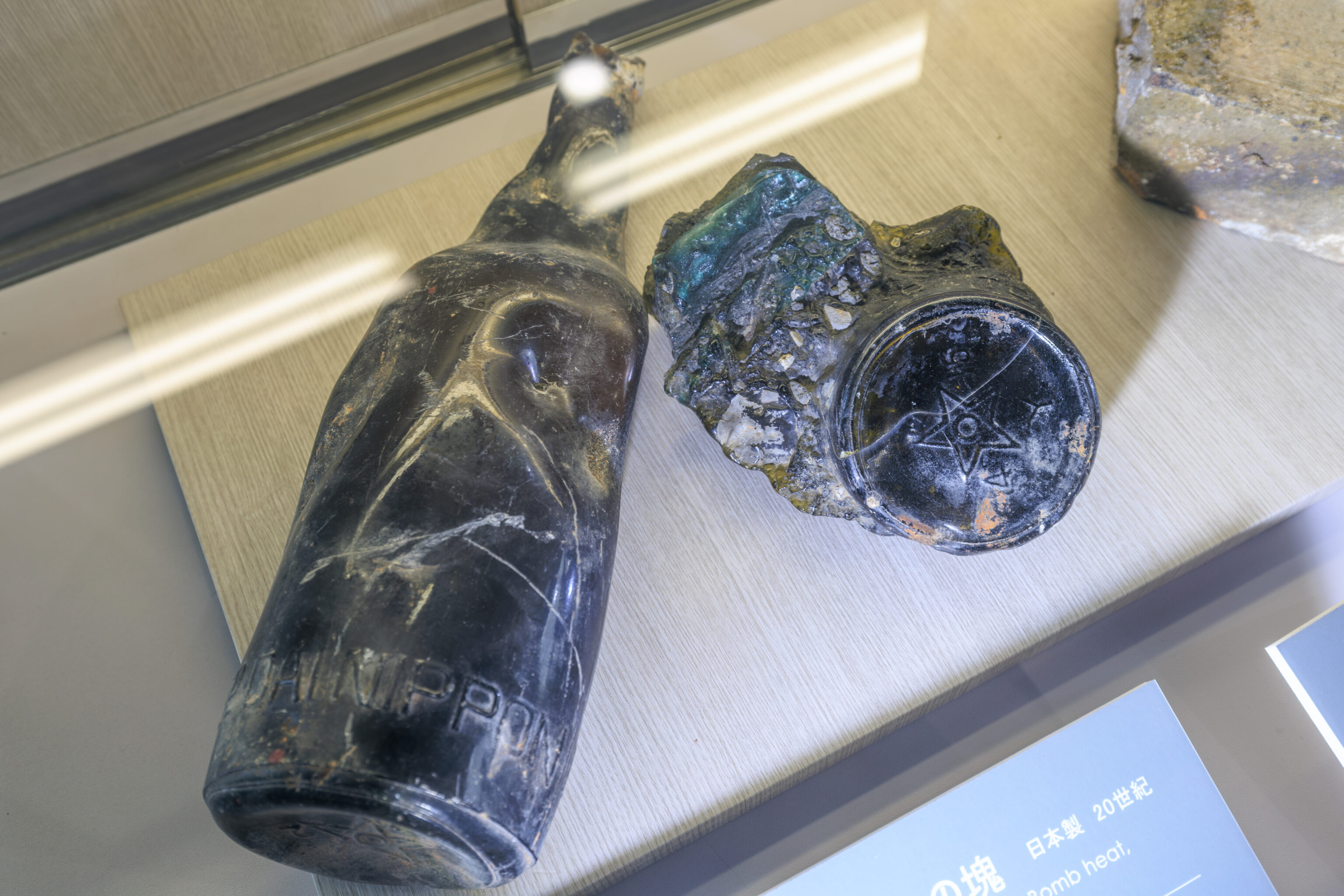
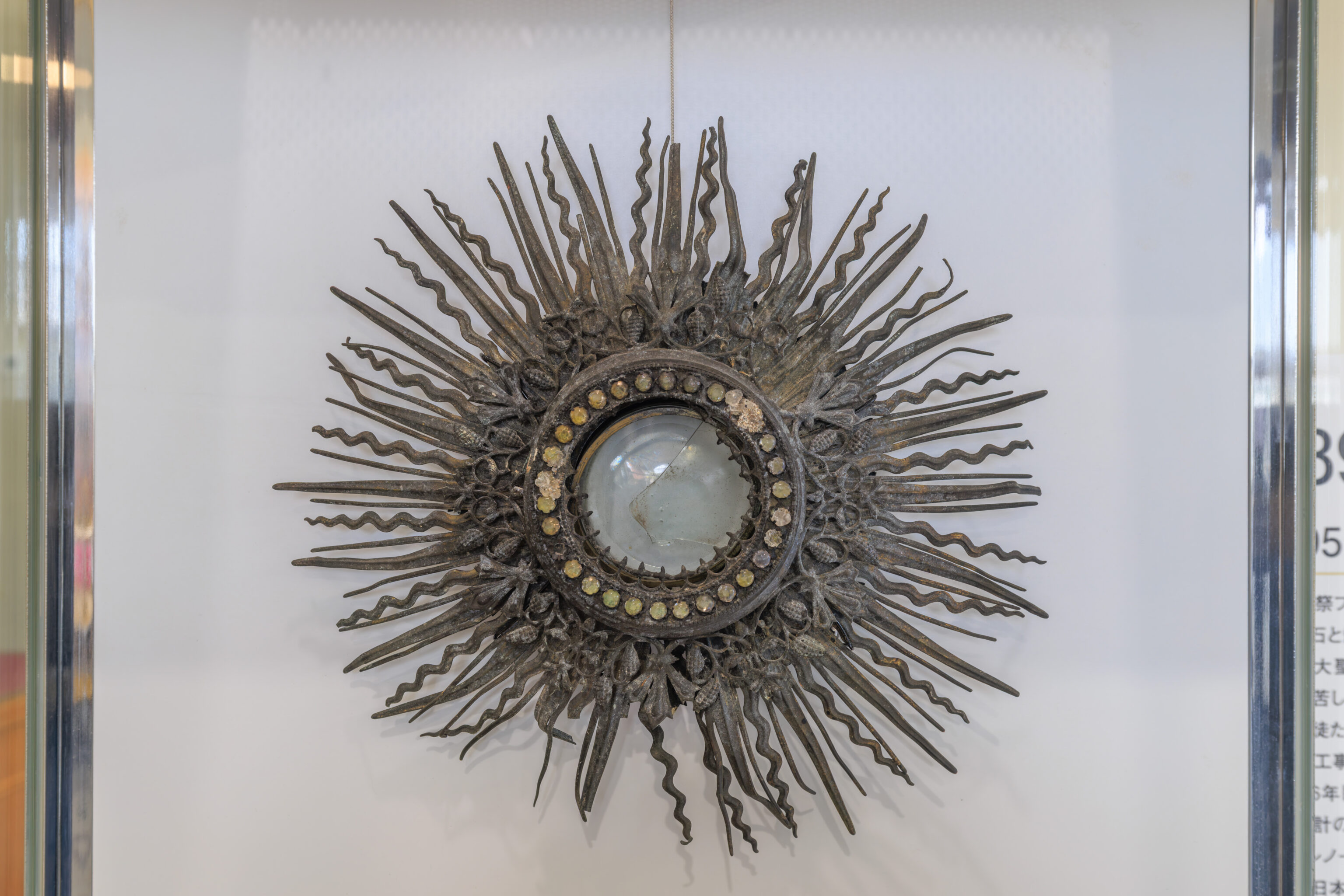
Various items were on display, showing the effects of the atomic bomb. Additionally, signs gave a chronological history of the cathedral:
1880 The Shoya Residence, a Temporary Church
For the returned exiles, freedom meant first of all a home for God. The Shoya Residence and property were purchased. On a hill and centrally located, the place had been a center of persecution from the beginning: it was there that Christians had been required to deny their faith by trampling on holy pictures(Fumie).

As the Fumie dilemma had weighed heavily on consciences for generations, the site was considered an ideal spot to ask forgiveness.

1895 Start of construction
Fr. Fraineau singlehandedly drew up plans for a new church and with the help of his parishioners began to build.

The plans called for a huge domed roof resting on a large Romanesque building; the walls were to be made of stone and brick. Lack of funds made progress painfully slow. By 1911,16 years after beginning, the walls were still only half their projected height.

On January 25th of that year, exhausted by his labors, Fr. Fraineau died. He had been in Japan for 38 of his 64 years.

1915 Dedication of church
The temporary church was filled with many people every mass. For the time being, Father Raguet held dedication ceremony of permanent church without waiting for completion of its twin bell towers.

It was dedicated to Our Lady of Immaculate Conception. The statue of Our Lady of Immaculate Conception, donated by Spanish Ambassador to Japan Don Ramiro Uribarri, was niched above the main altar.

1925 Complete
The towers were completed, and big bell with its smaller counterpart were to arrive from France and be set in place. Altogether, construction had taken thirty long years. The church at last was finished. The bell towers on either side were 24 meters tall and domed. There were three arched entrances, with an attractive rose window over the central one.

The church was cruciform, with 1162 square meters of floor space. It was said to have been the largest church in the Orient at the time.

1934
The main altar was renewed and the statue of Mary was niched at the center.

At two minutes after eleven on the morning of August 9th in 1945
The atomic bomb exploded 500 meters above the ground in the section of Nagasaki known as Matsuyama.  Of Urakami's 12,000 parishoners, 8,500 were dead.

The Bombed Mary and one of The Bells of Nagasaki
The severed head of Mary was found under the debris by Father Noguchi, a member of the Trappist Order.

The big bell of Nagasaki was miraculously intact, it was dug out and on Christmas Eve of 1945, it reverberated through the valley.

"In the desert waste a new day dawns: the Bells of Nagasaki."
Nagai Takashi

1946 Temporary Church after the atomic bomb
The temporary wooden church was built on the hill in the atomic field.  Father Nakata and survived lay people included carpenters permit their hard work and skill to build it. 1954, "Urakami Church Restorenation Commission" was set up and started to build permanent church.

1959 Rebuilding
On the feast of All Saints, November 1, 1959, the new church was
dedicated and consecrated. Both old and new church was dedicated to Our Lady of Immaculate Conception. The stained glass window of Our Lady of Immaculate Conception was displayed above the main altar. The Urakami Church became Urakami Cathedral on New Year's Day of 1962.

1980
The visit of John Paul II inspired parishioners. In October, 1980,
the building was renovated to resemble the pre-war cathedral.

1981 Pope John Paul II "came to Nagasaki"
Urakami is the place that people were enduring the pain of persecution and atomic-bomb, and they believed "Someday, messenger will come from Rome". 1981, they moved and are pleased that not messenger but Pope himself came from Rome. 15 people were ordained to priest and a meeting with religious sisters was held at the Cathedral, and mass was celebrated at Matsuyama field, next to the hypocenter.

1990 The Bombed Mary returned

2019 The Bombed Cross returned
The cross returned to the cathedral from Wilmington College in United States. This cross was on the top of alter which was destroyed by atomic bomb. The Bombed Mary and the Bombed Cross left from Urakami to each place, and came back. This is "The Tale of Journey" too. The Bombed Mary and the Bombed Cross are appealing to save all lives.
– Text from a sign.
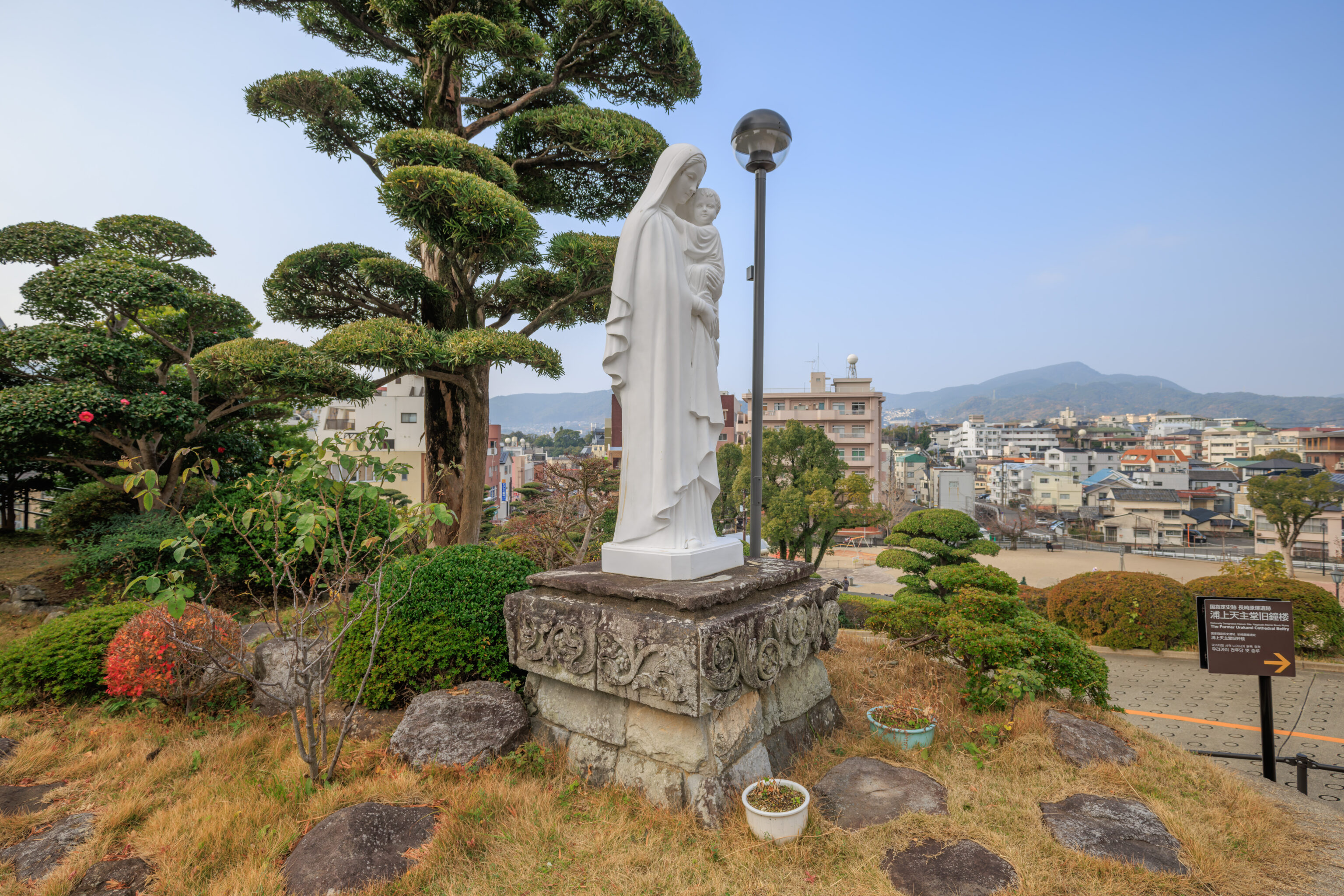
After briefly walking through the museum, we headed back outside to continue on.
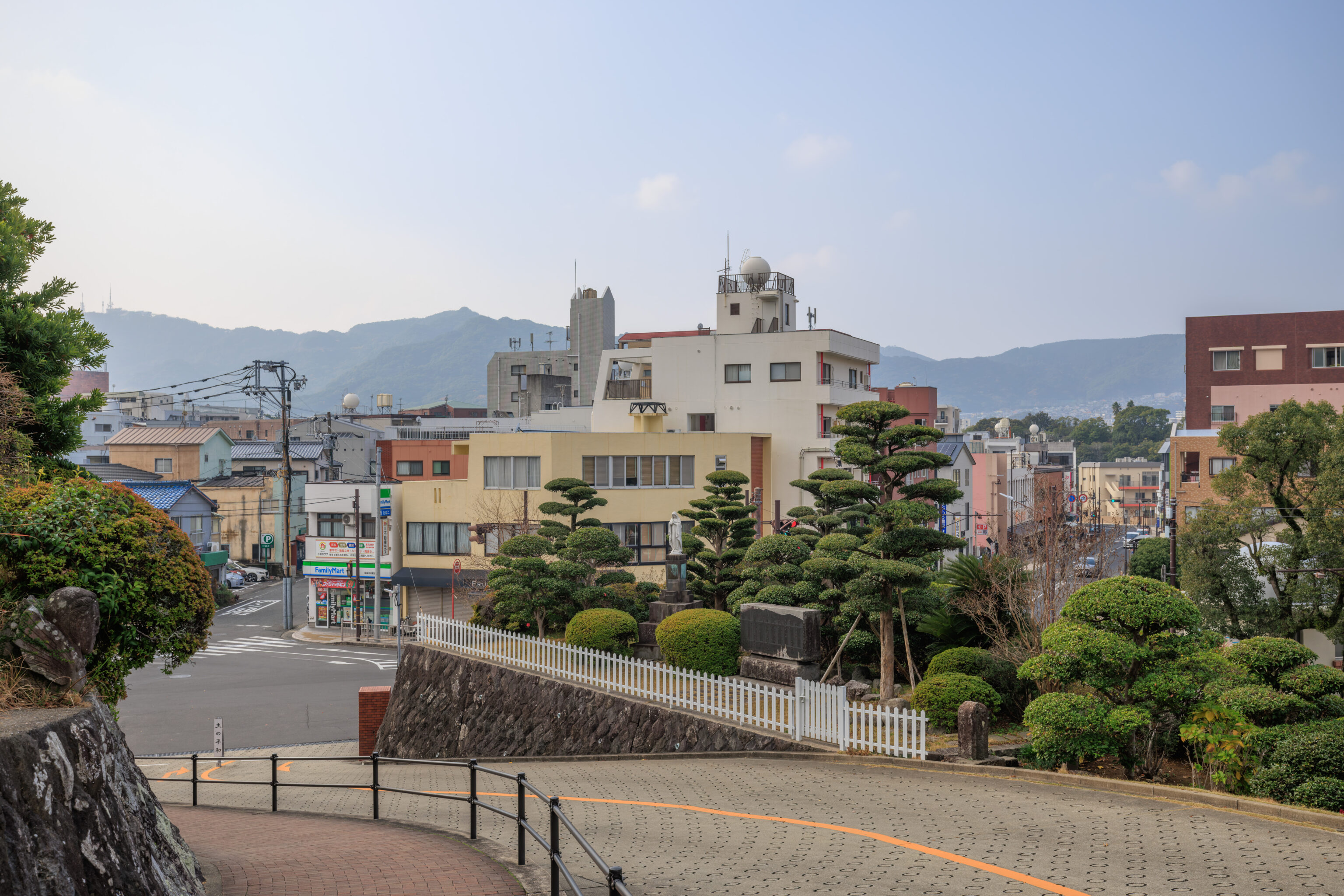
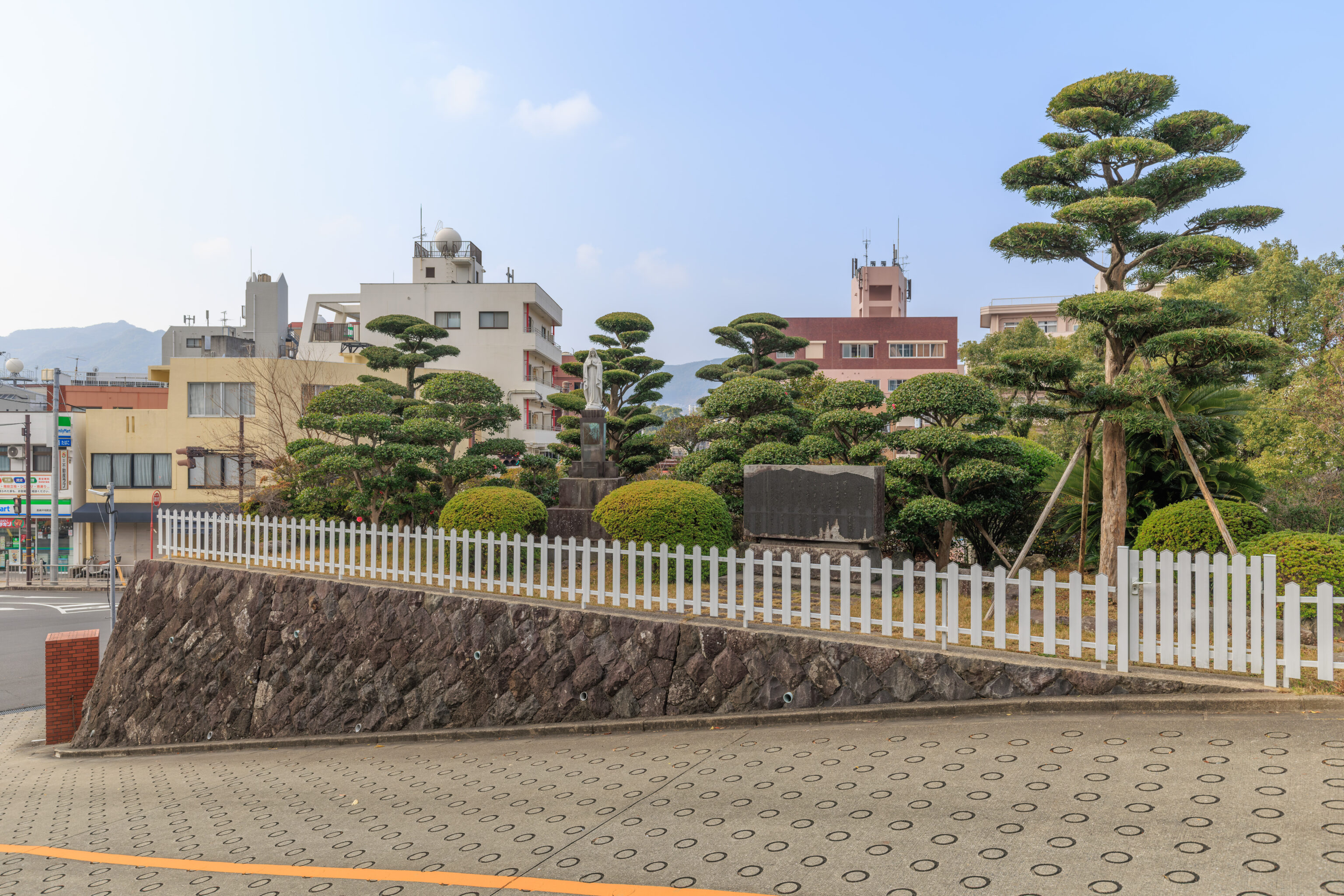
We left the cathedral via the sidewalk along the sloped driveway. We decided to try to get lunch at a nearby restaurant. There weren’t many options here though.
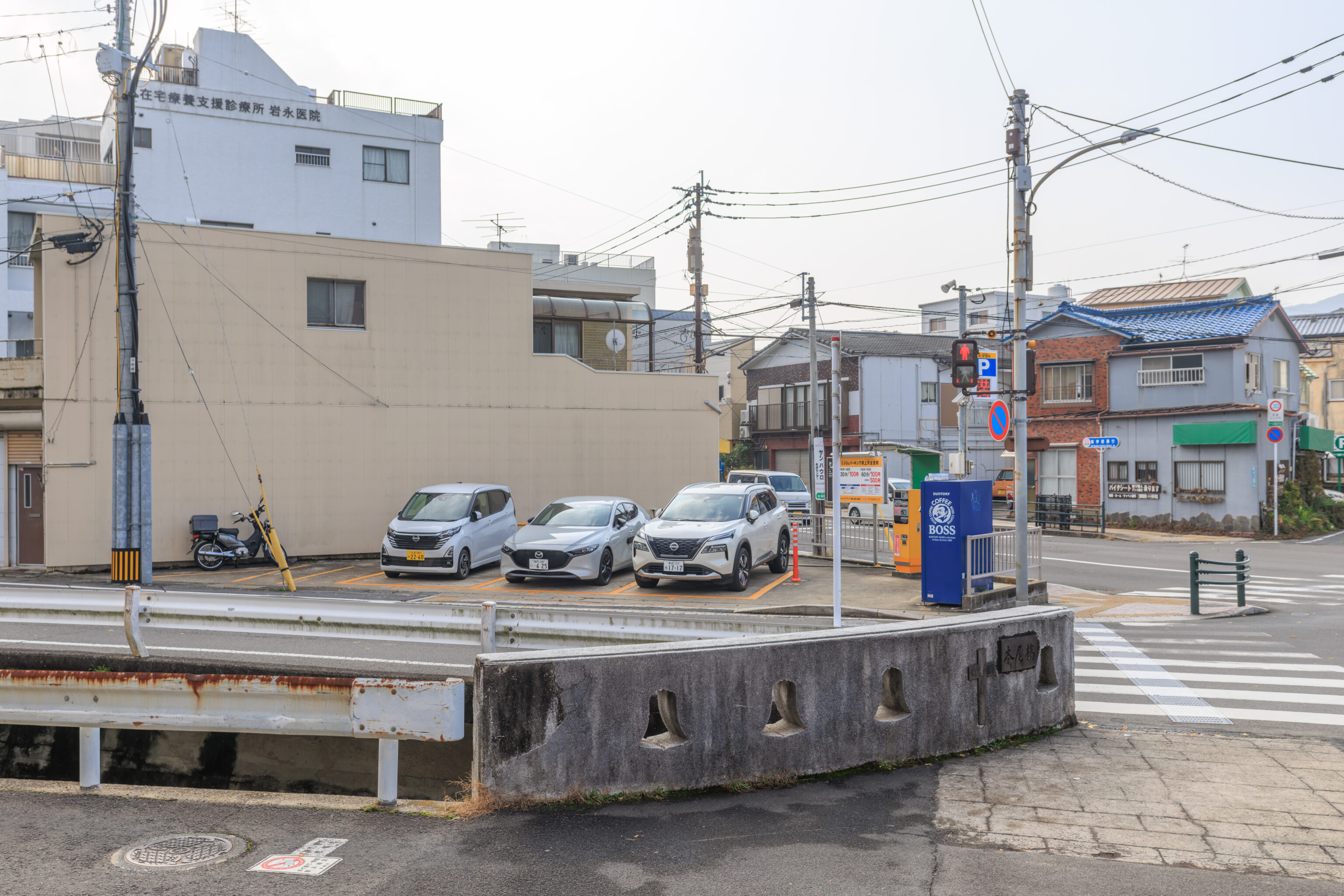
We noticed this bridge had images of bells cut into it. The text on the bridge identifies it as the 本尾橋 Motobashi.
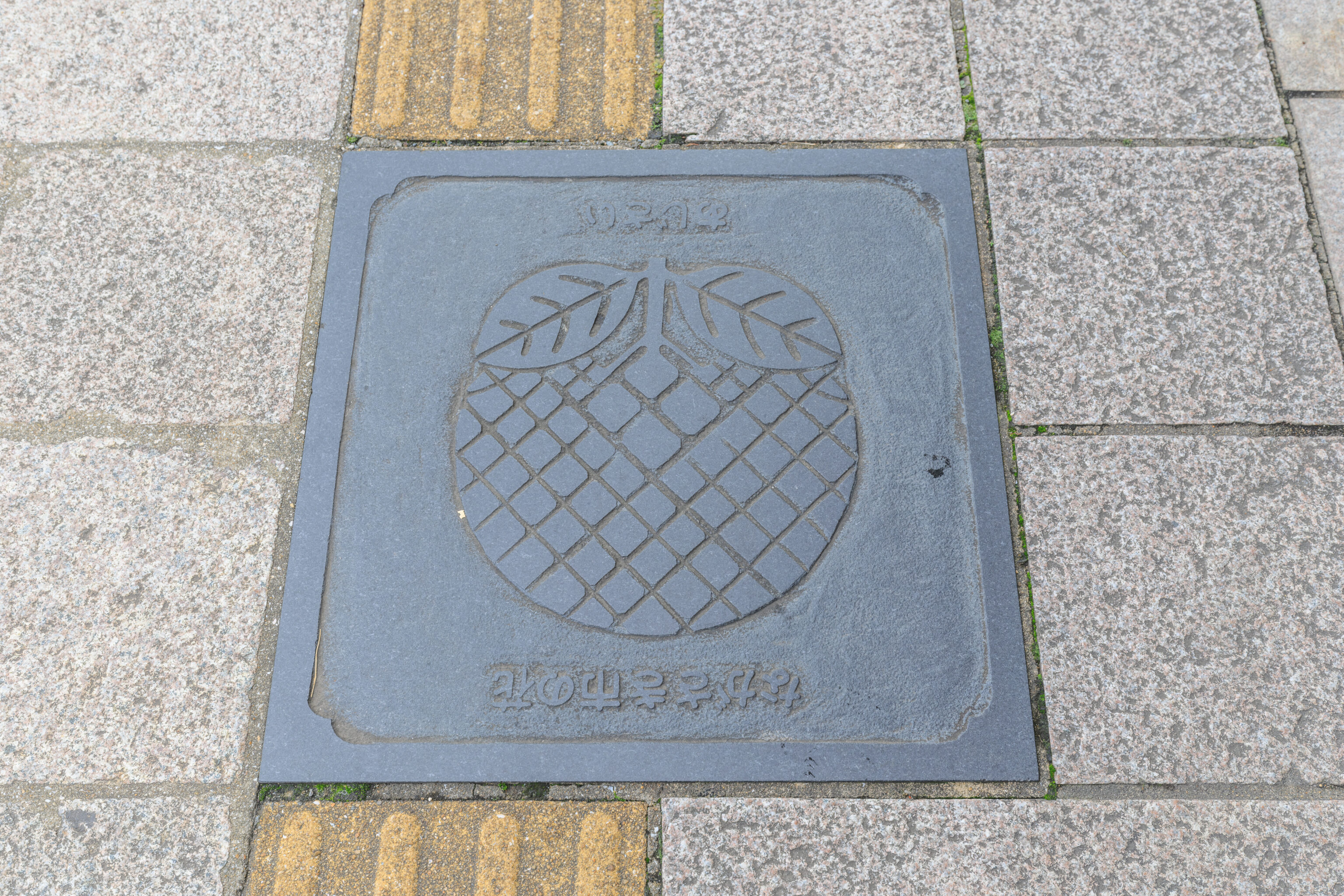
We mis-photographed this panel on the ground! It is actually upside-down! Rather than being something like a fruit hanging from a tree, it actually depicts a flower. We should have looked at the words before taking the photograph, or perhaps just edited it… The text identifies it as a hydrangea, the flower of Nagasaki City.
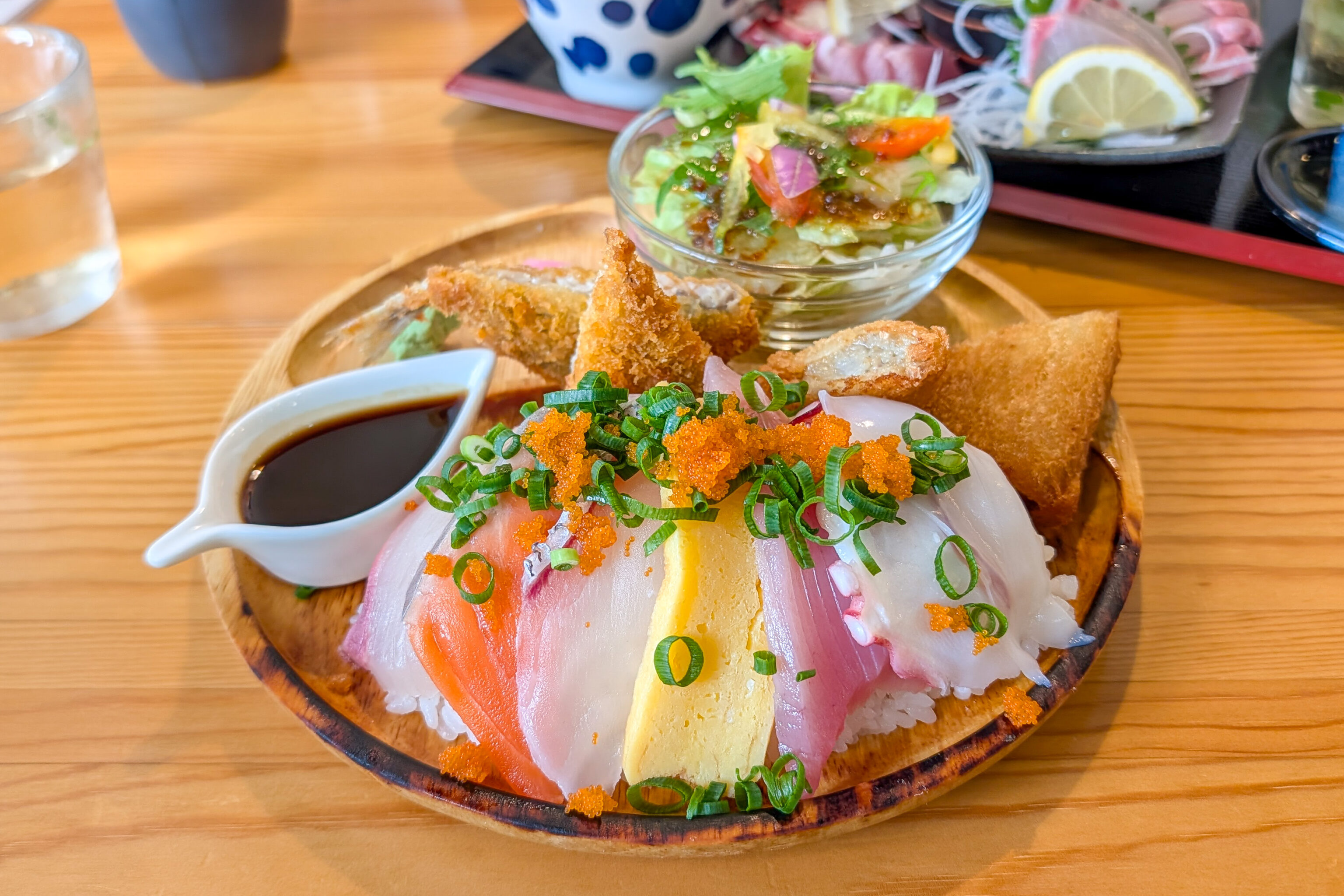
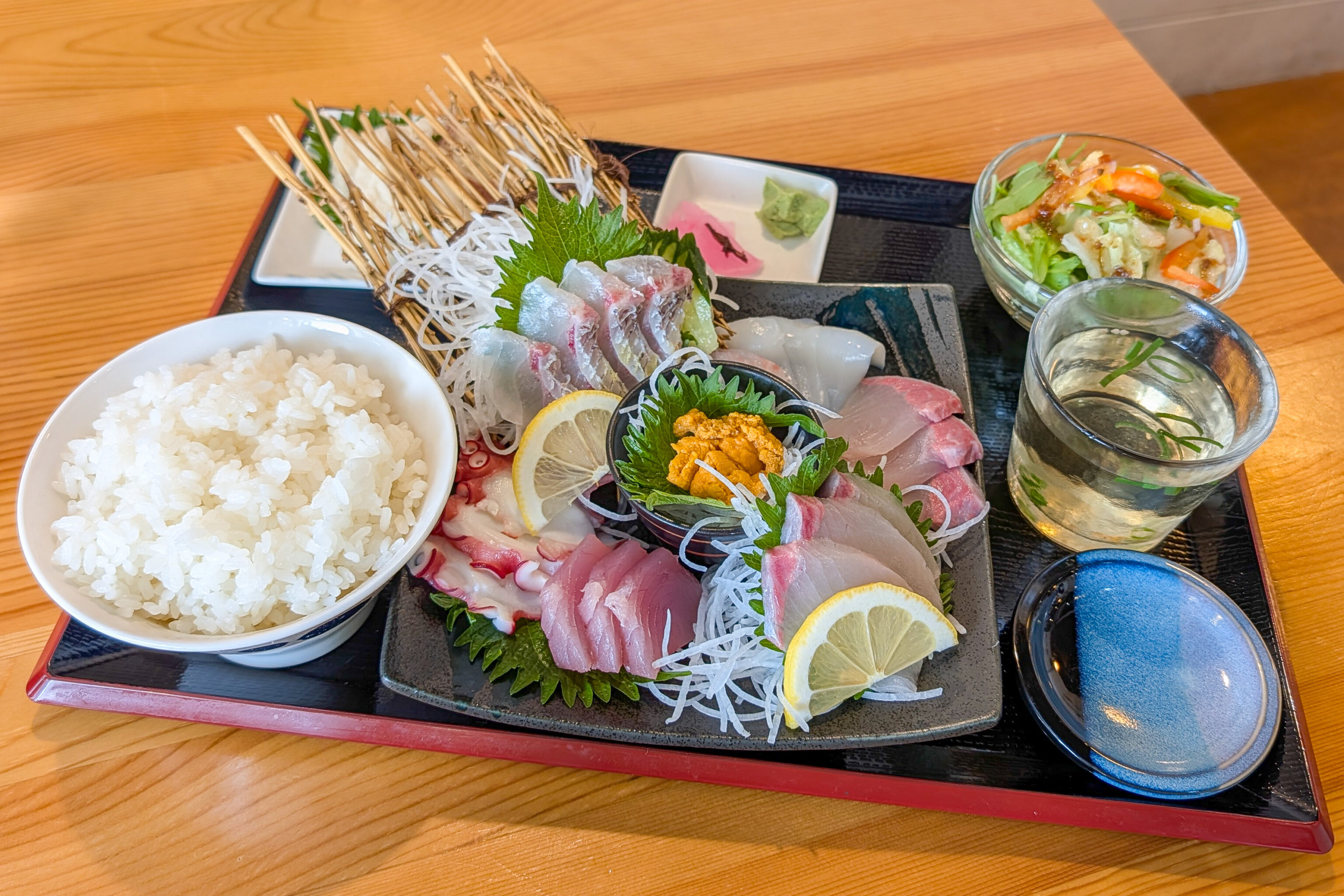
We had lunch at さかな屋 Sakanaya, a small seafood donburi restaurant that was basically just across the bridge that we walked over. We got the sashimi set, of which only six orders are available per day, as well as regular seafood donburi set. The fried seafood that came with the donburi set was unfortunately too greasy. The seafood was generally decent but overall it was expensive compared to eating at sushi restaurants with better fish.
Atomic Bomb Hypocenter
We decided to visit the 原爆落下中心地 Atomic Bomb Hypocenter next. It is to the southwest, just to the south of the Peace Park.
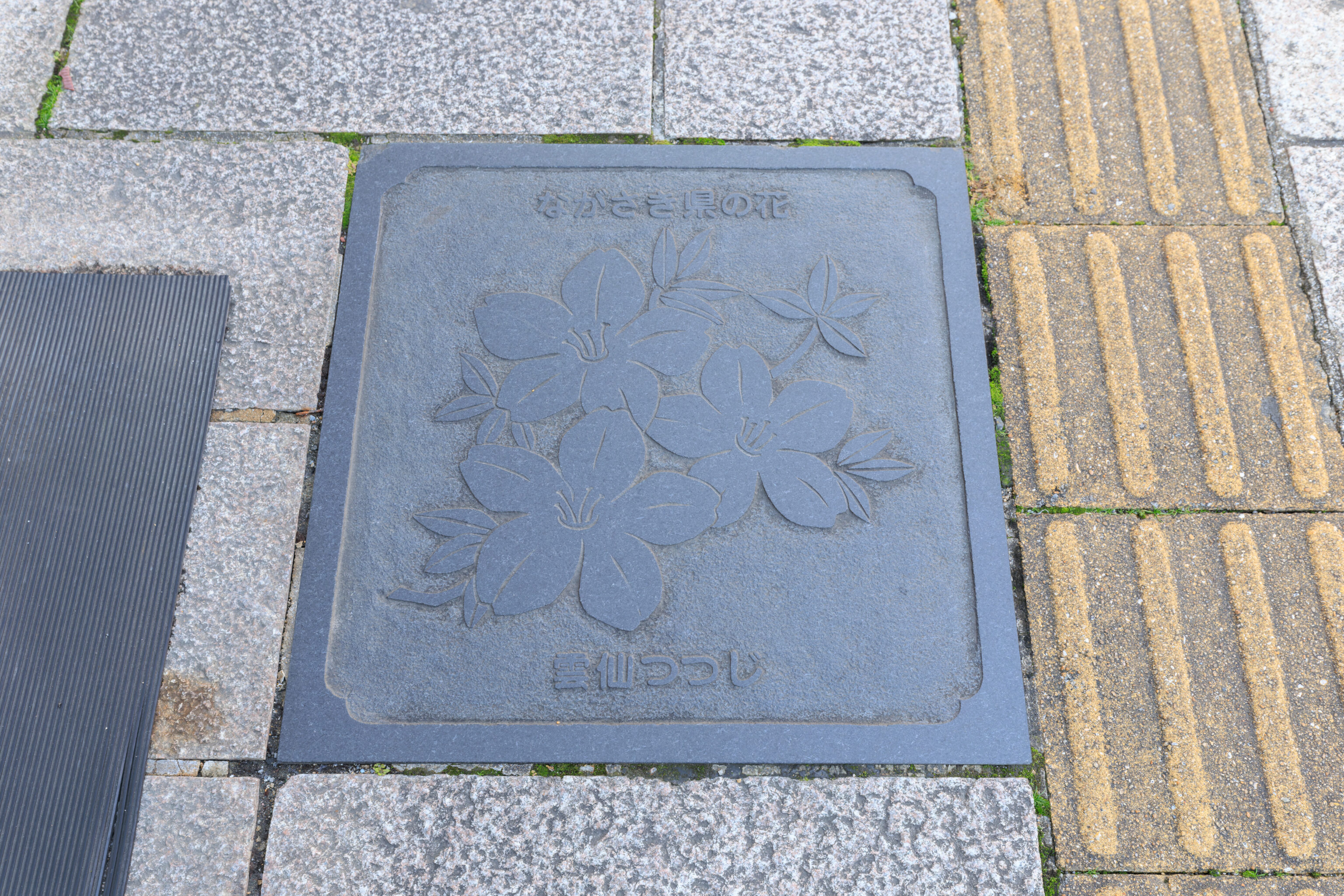
This tile on the ground depicts the Unzen Azalea, the flower of Nagasaki Prefecture.
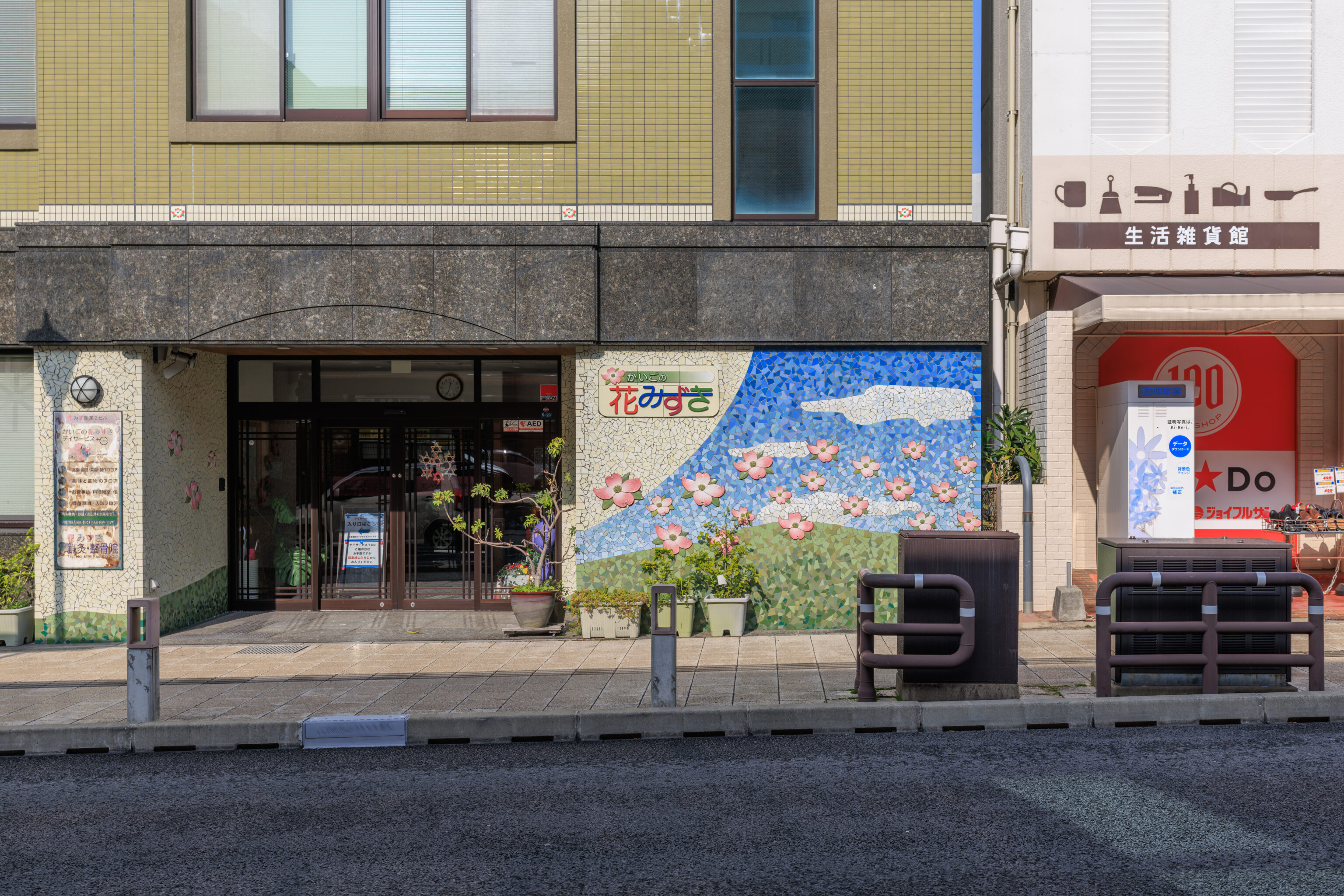
The exterior walls of this building depict dogwoods!
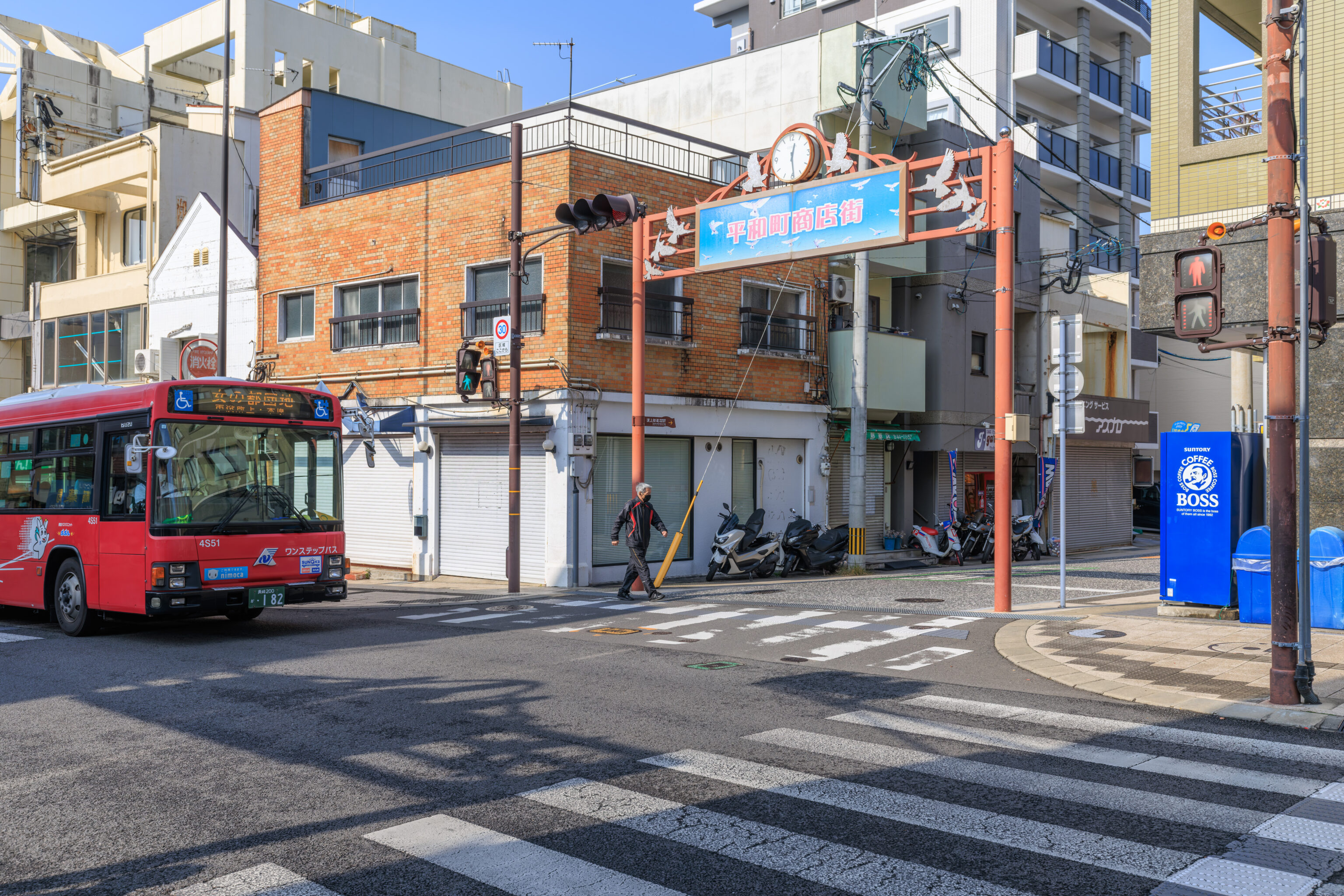
We passed by this small gate for the 平和町商店街 Peace Town Shopping District. There’s not much here though.
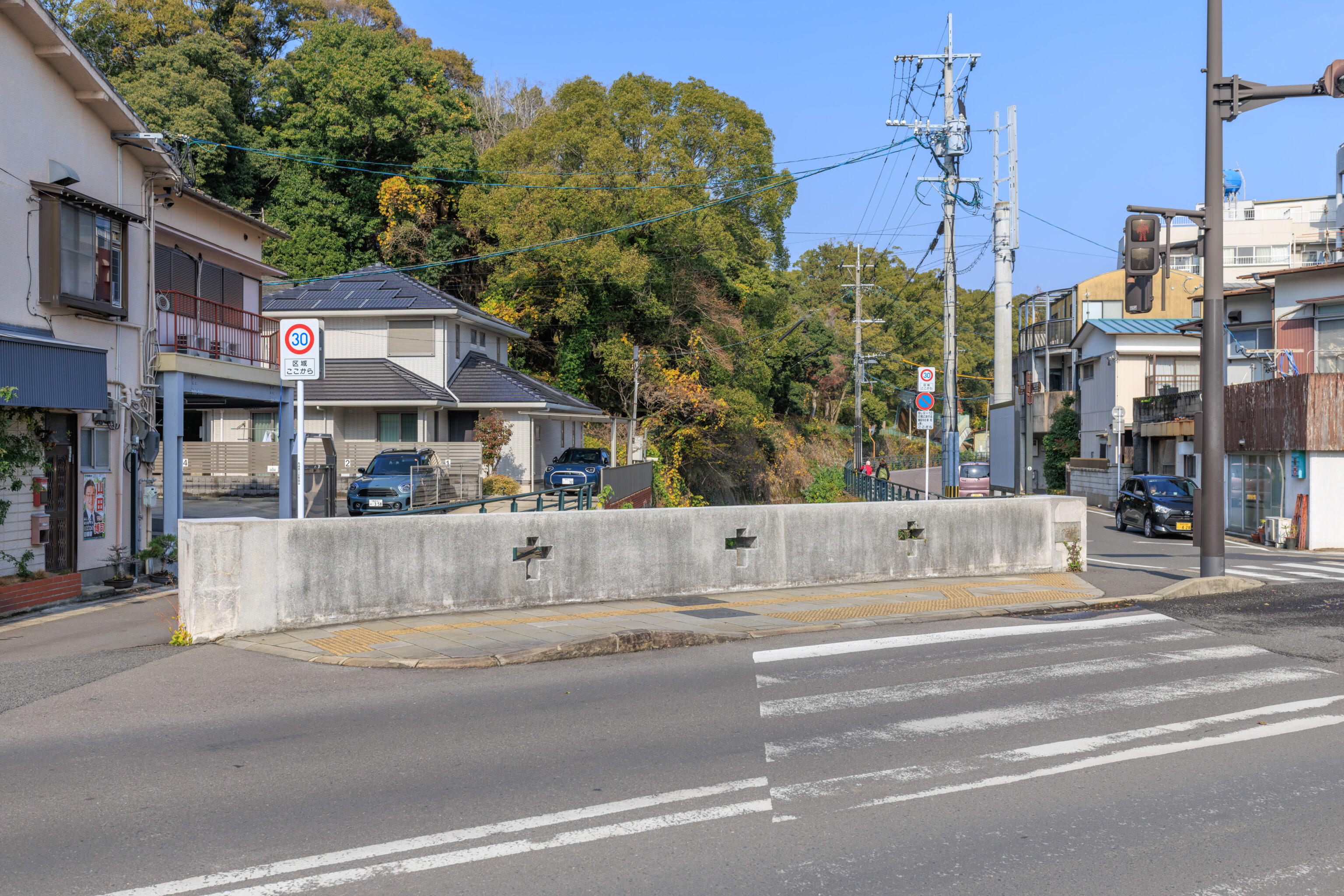
This bridge, featuring crosses, is the first one we walked across earlier after we left the Peace Park.
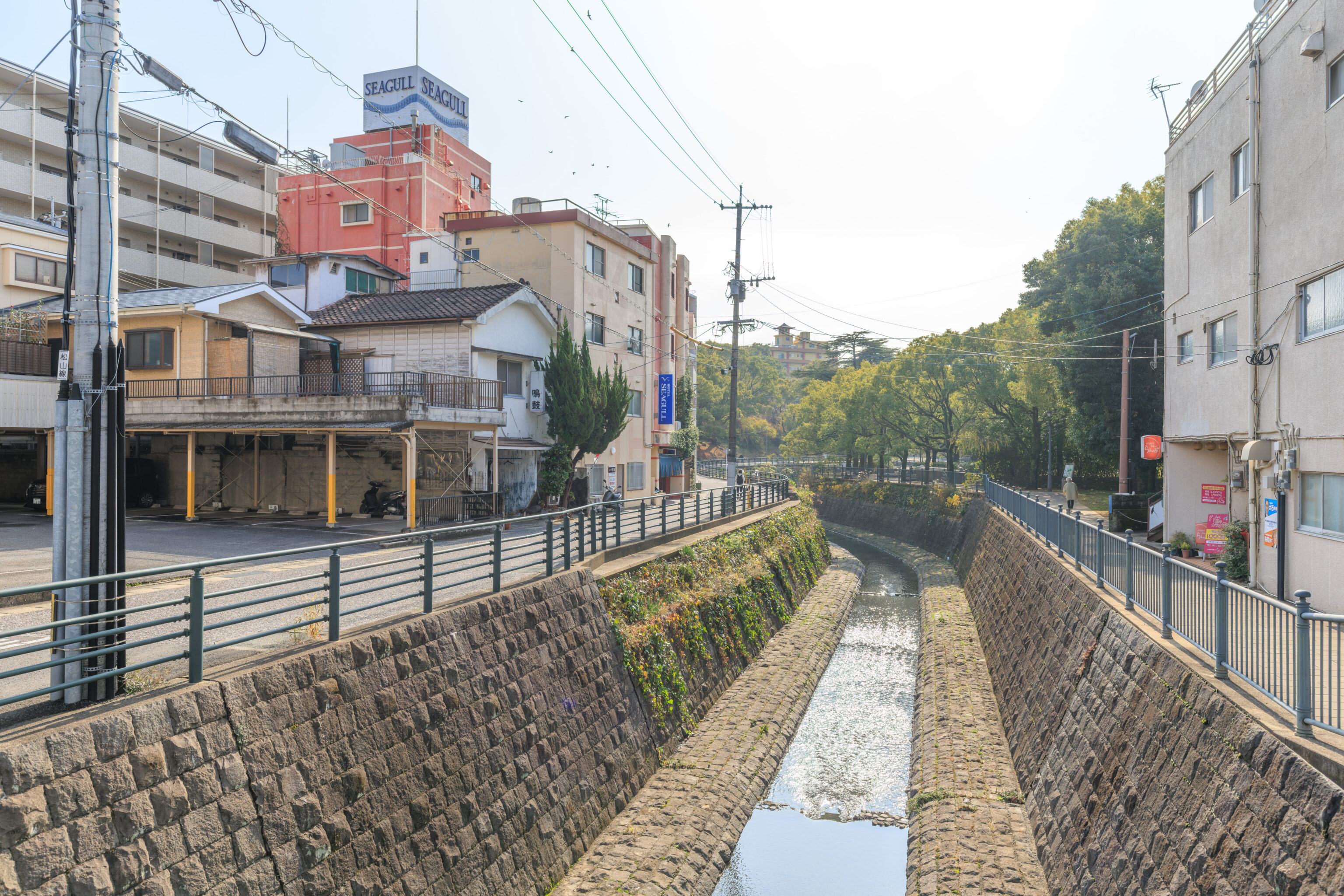
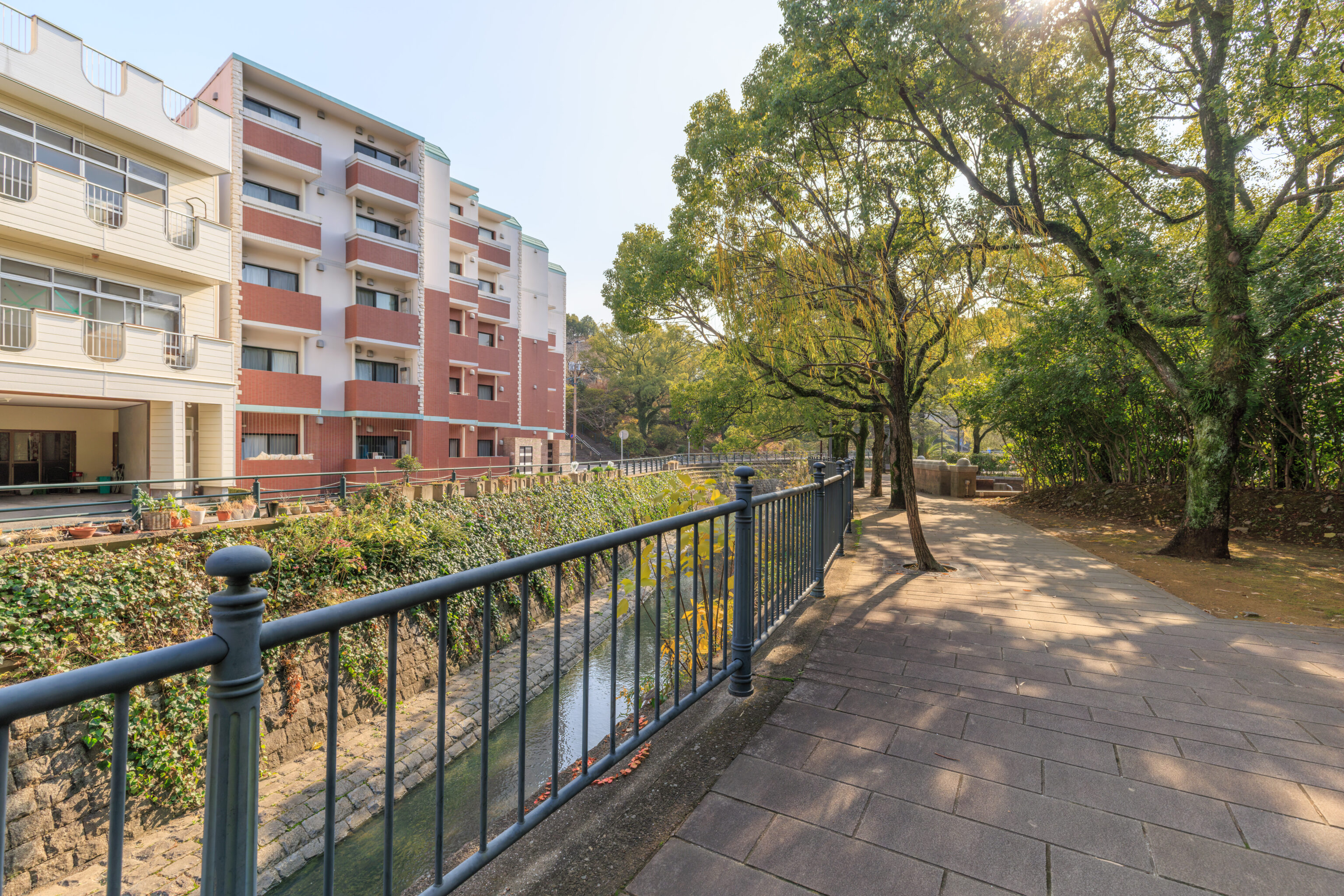
After crossing the small river, we immediately turned left to follow a pedestrian path.
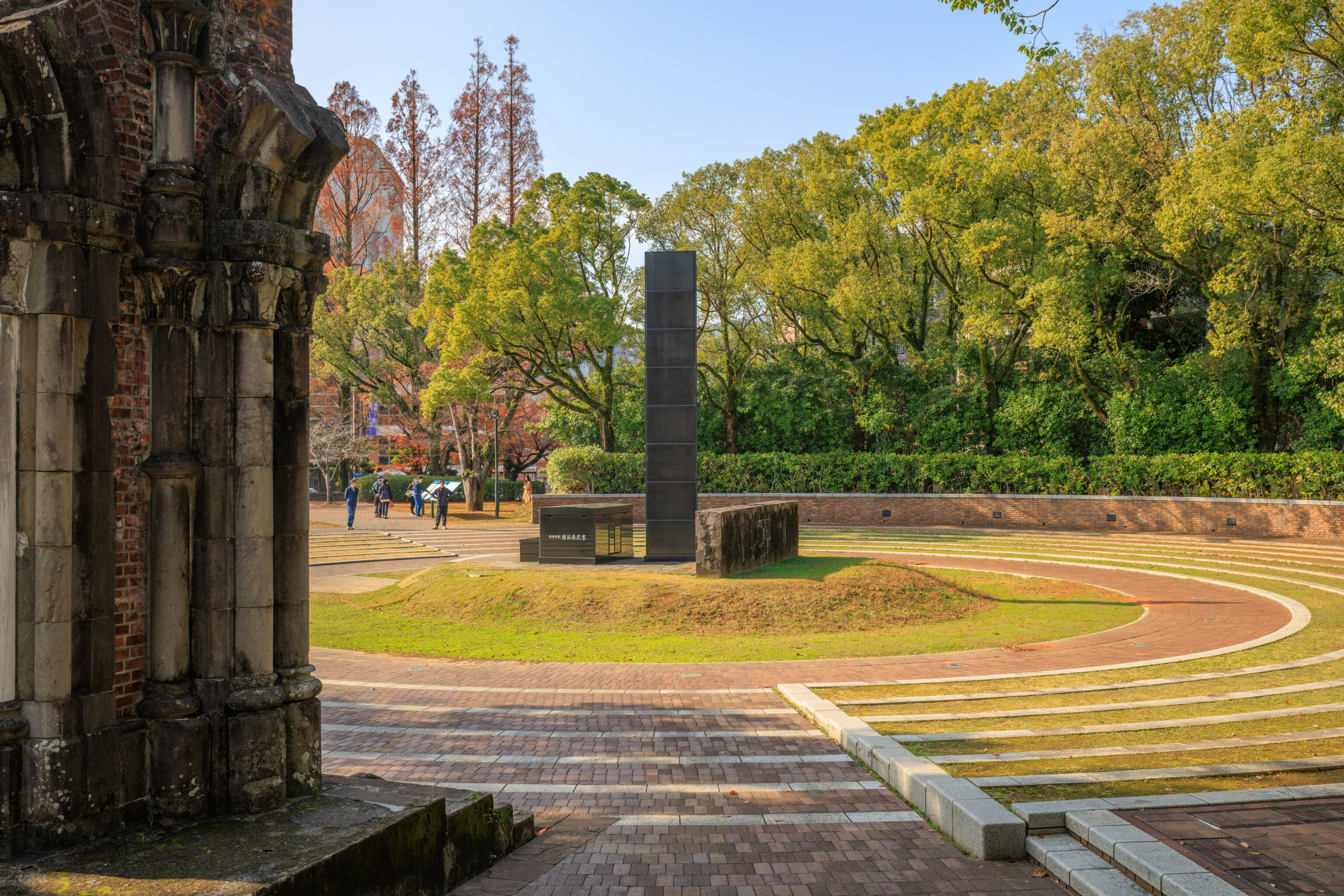
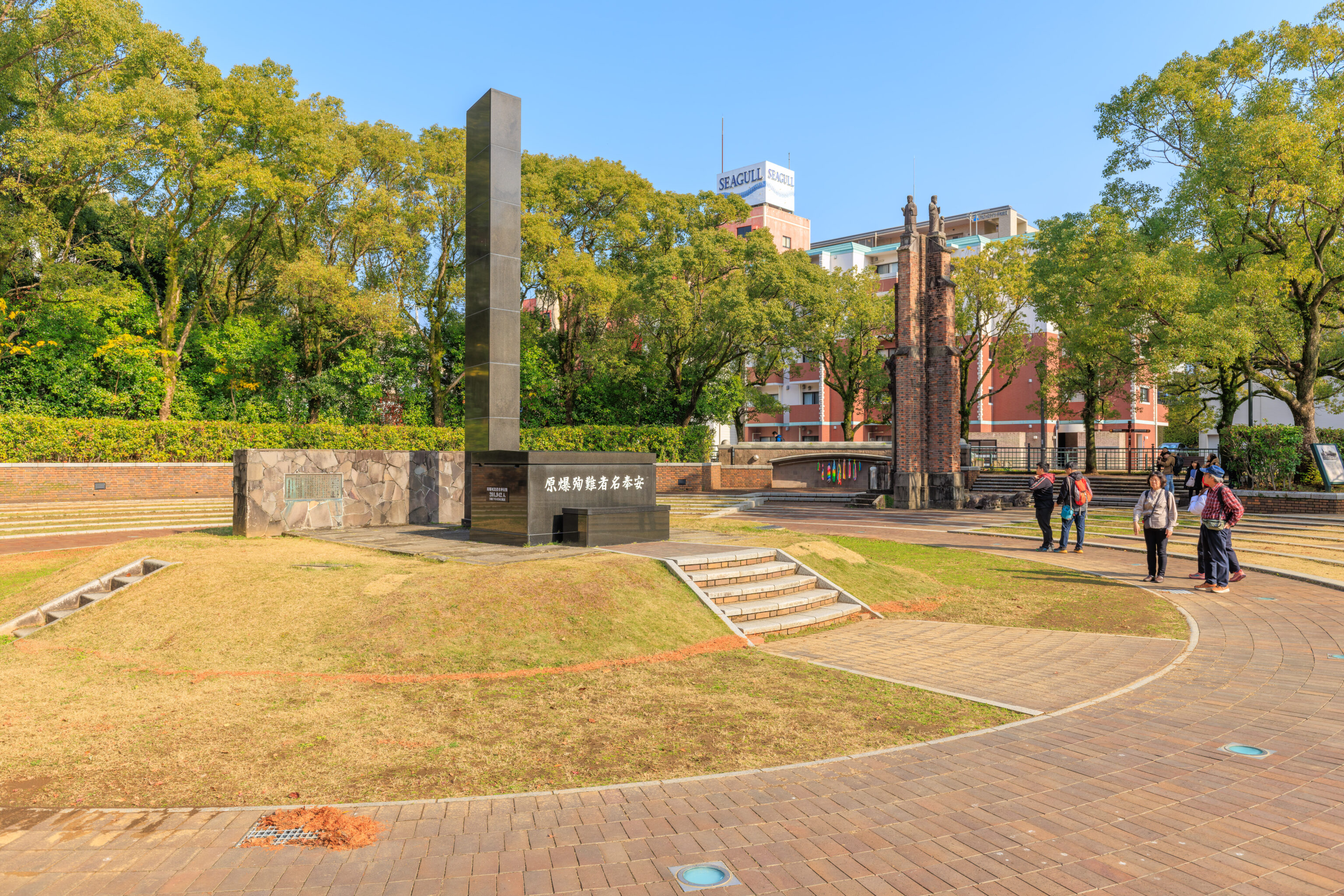
After walking a little bit further, the monument at the hypocenter of the atomic bombing came into view. The white text that is visible from here indicates that the inscriptions on the memorial were written by 諸谷義武 Yoshitake Morotani, the mayor of Nagasaki from 1967 to 1979.
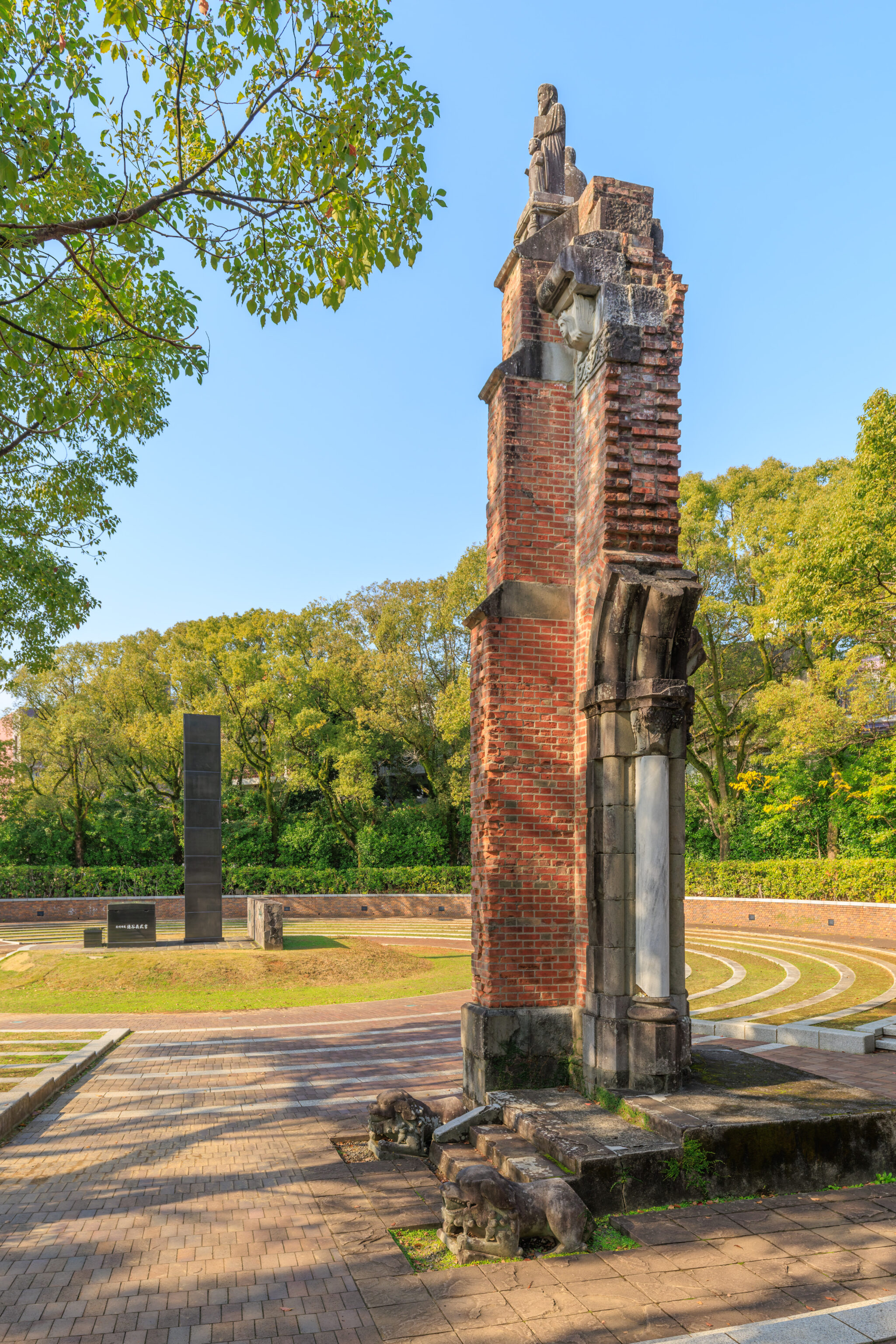
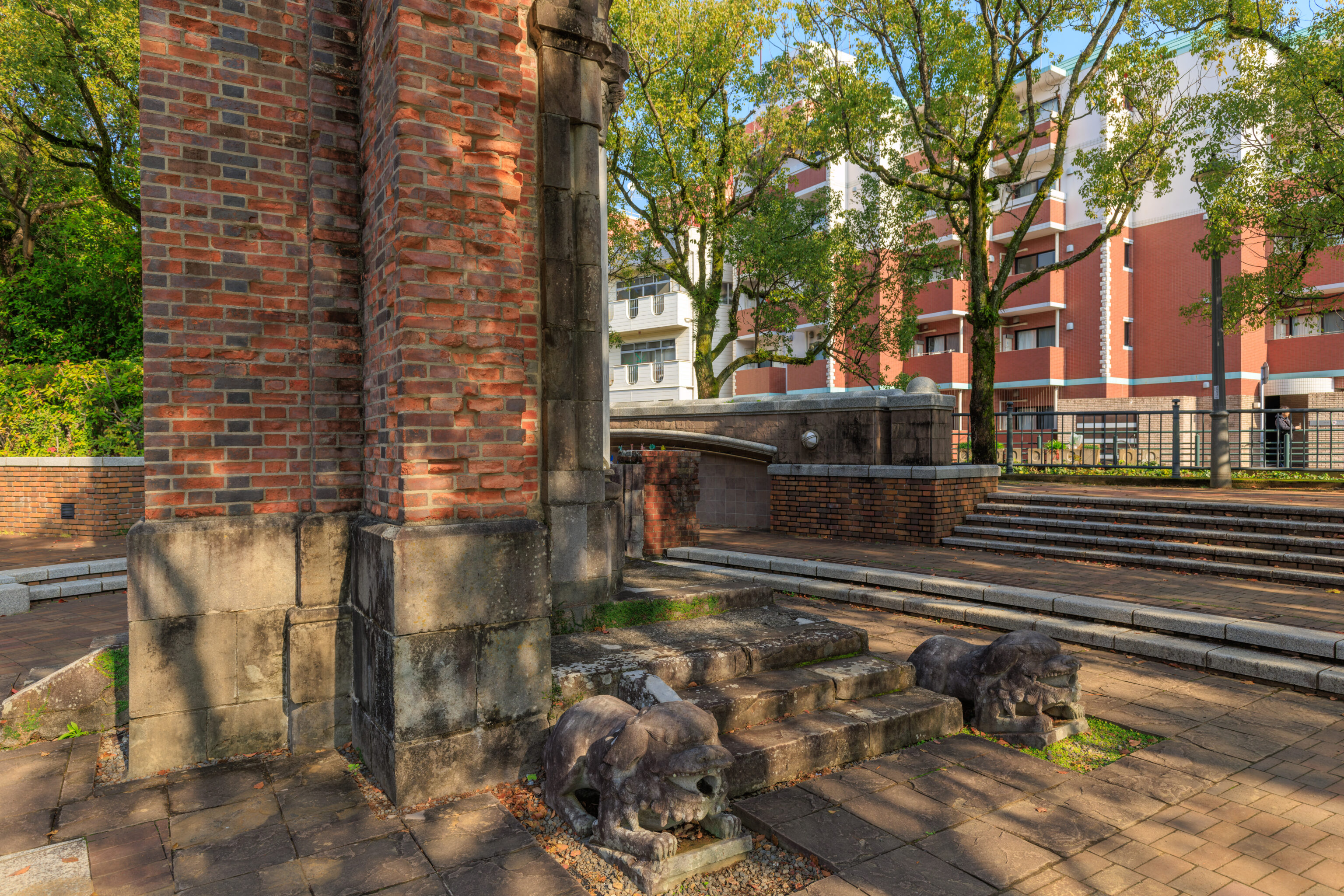
This piece of wall was part of the Urakami Cathedral. It was moved here as a memorial and to make room for the reconstructed cathedral that we just came from.
Urakami Cathedral Wall Remnant (Approx. 500m Northeast of the Hypocenter)
Urakami Cathedral was located on a small hill about 500 meters northeast of the atomic bomb hypocenter. Construction of the church was started in 1895 and completed in 1914 through donations and voluntary labor service by Catholic believers. In 1925, the bell towers at the church entrance also reached completion.

The explosion of the atomic bomb at 11:02 a.m., 9 August 1945 destroyed Urakami Cathedral, the grandest church in east Asia at the time. Only the broken church wall remained. A portion of the southern wall was brought here to make new way for the construction of a new church building in 1958. The stone statues on the column depict Francis Xavier and his apostles. Since the wall was weakened over time by exposure to the elements, the interior and surface of the wall were reinforced for safety.

Nagasaki City installs this plaque as a prayer for the repose of the souls of the atomic bomb victims and to ensure that this tragedy is never repeated.

March, 2001
Nagasaki City
(Nagasaki Atomic Bomb Museum)
– Text from a sign, translated using Google.
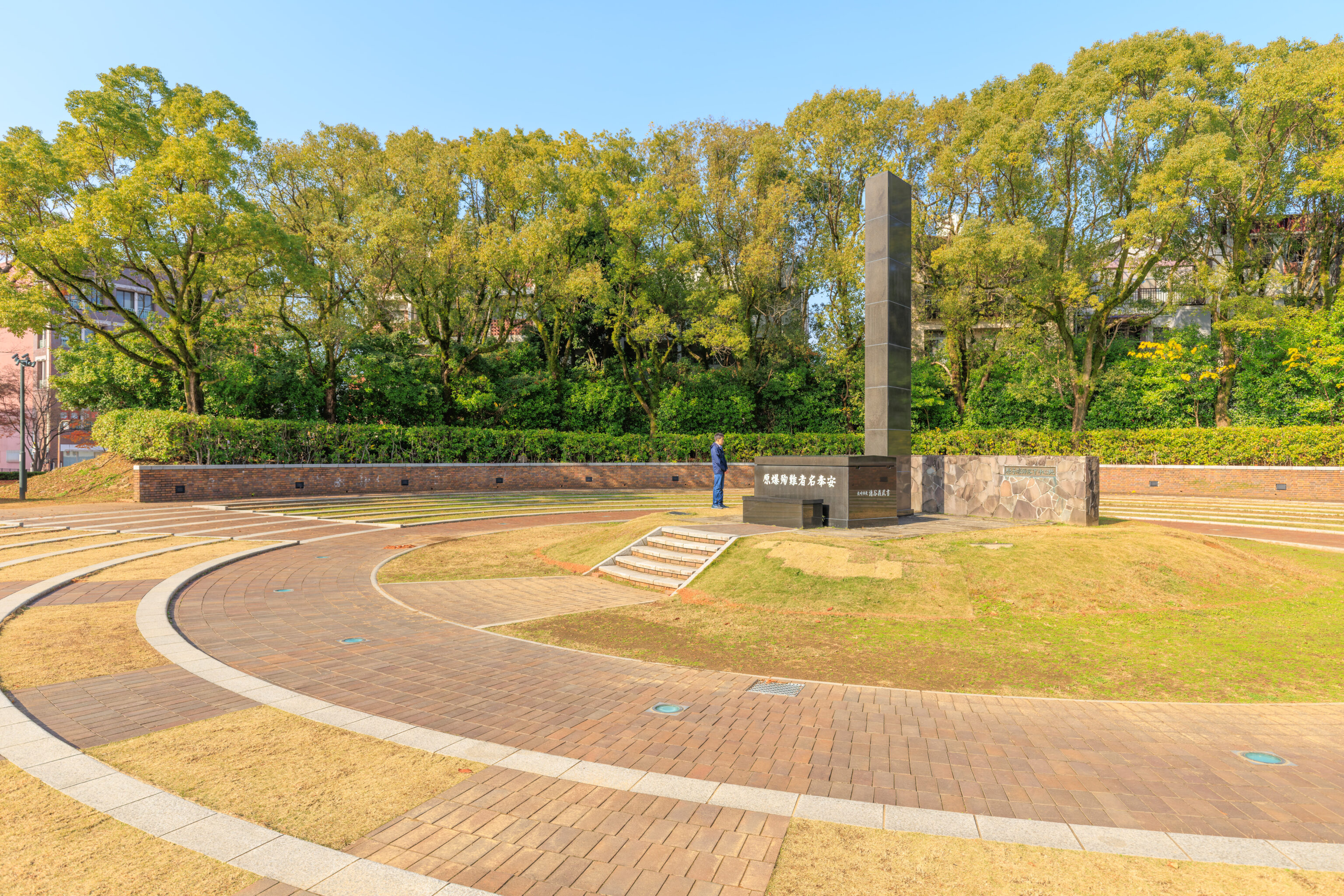
The text in the front of the memorial reads 原爆殉難者名奉安 Enshrinement of the Names of Atomic Bomb Victims.
Atomic Bomb Hypocenter
This is the hypocenter where the atomic bomb was dropped. The black granite pillar to the right of this information board marks the exact spot. At 11:02 a.m. on August 9, 1945, an atomic bomb dropped by a B-29 bomber detonated 500 meters above this location; the resulting blast, heat rays, and radiation reduced the city to ruins.
The entire northern area of Nagasaki City was incinerated, resulting in approximately 150,000 casualties. Although it was once said that "no vegetation would grow here for 75 years," this site has now become Peace Park—a place that conveys a message of lasting world peace to all who visit. (Materials documenting the devastation of that time are on display at the Nagasaki Atomic Bomb Museum.)
This photograph, taken in October 1945, shows the first marker erected at this site to indicate the atomic bomb hypocenter. The marker has been replaced several times since then, and the current monument is a pillar made of black granite.
– Japanese text from a sign, translated using Google.
The sign quoted above has text in Japanese, English, Chinese, and Korean. The English text has a translation error in the last paragraph, which is why the Japanese text was used above. The photograph mentioned shows a simple concrete post.
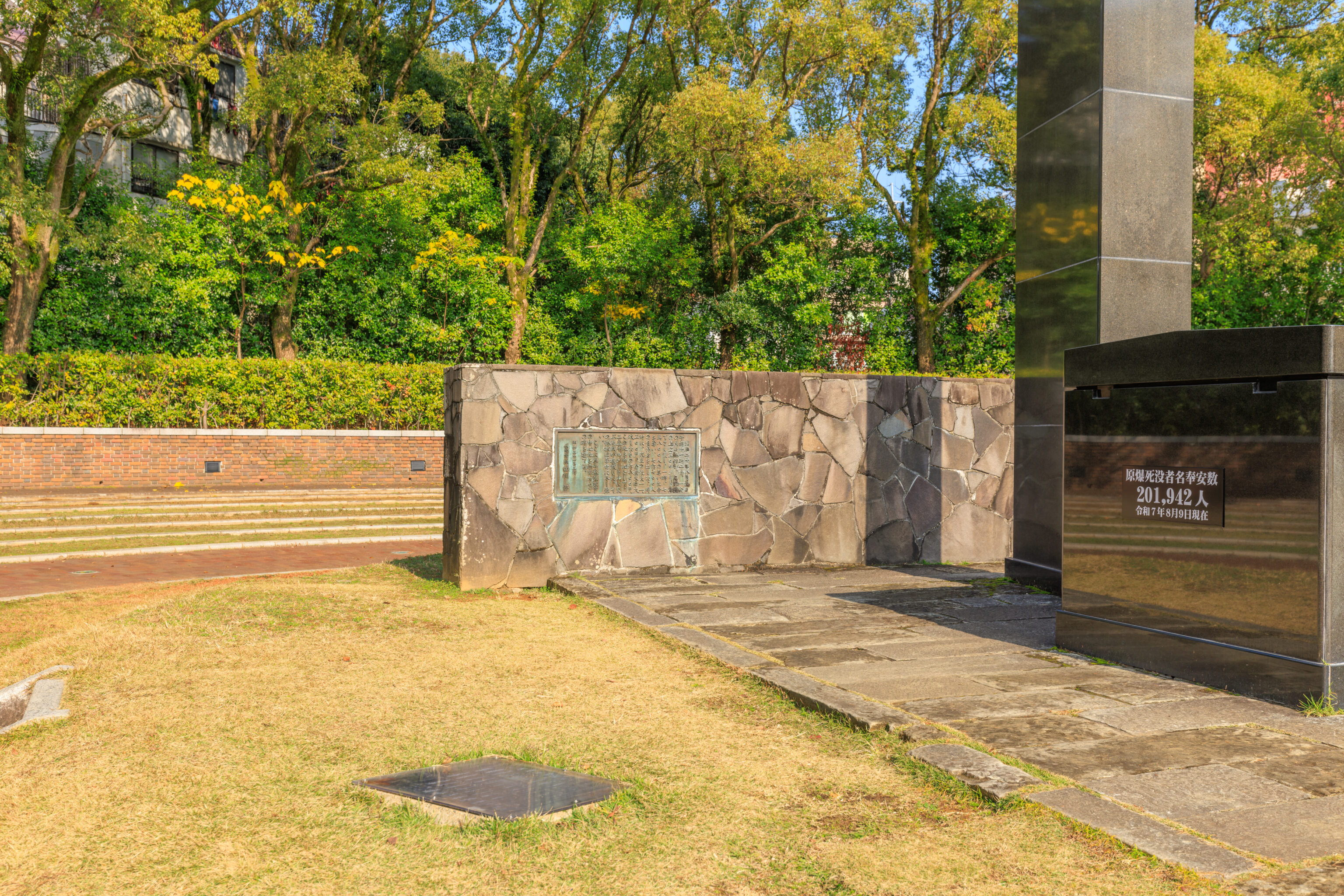
On the left side of the memorial, additional text indicates that 201,942 names are enshrined here as of August 9, 2025. The weathered plaque on the wall behind the memorial gives a concise explanation of what happened here:
At 11:02 a.m. on August 9, 1945, a single atomic bomb exploded 500 meters above this site, instantly claiming 73,800 precious lives and injuring 76,760 people. A total of 11,500 houses were burned down, and 6,800 were completely or severely destroyed; an area extending 2.5 kilometers around this spot was devastated. The scene of devastation defies description.

This monument is erected here to mark the hypocenter of the atomic bomb explosion.

March, 1956
Tsutomu Tagawa, Mayor of Nagasaki
– Text from the plaque, translated using Google.
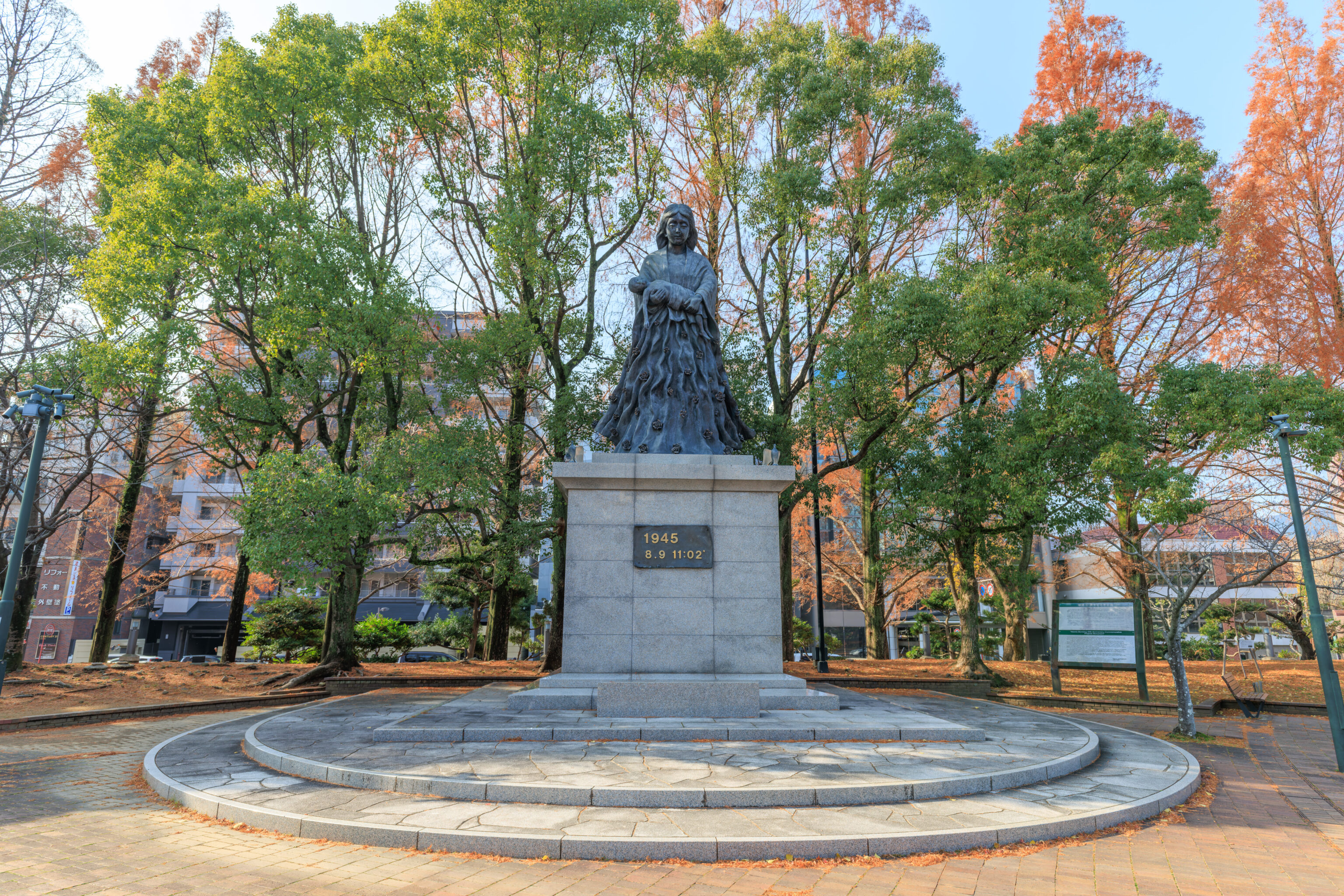
This memorial displays the exact time of the atomic bombing. It was installed here to commemorate the 50th anniversary of the event.
"Atomic Bombing 50th Anniversary Commemorative Projects Monument"
When considering the present prosperity and peace of Japan and the development of Nagasaki, we must never forget the fact that about 70% of the victims of the Nagasaki atomic bomb, which exploded over this city at 11:02 a.m., August 9, 1945, were children, women and senior citizens.

Created by Nagasaki-born sculptor Naoki Tominaga, this monument expresses the horror of the atomic bombing, prays for the repose of the souls of the victims from whose noble sacrifice the buds of peace grew, and - through the form of a stricken child sleeping in her mother's warm embrace - reaches with great motherly compassion and pleas for eternal peace toward a prosperous Japan of the 21st century.

Embodied in the monument is the sculptor's reminder that the child is like Japan on the day of the atomic bombing, while the mother represents the support provided by the countries of the world in Japan's efforts to build the peaceful nation that it has become today:

On the occasion of the 50th anniversary of the atomic bombing, the hypocenter area was refurbished and designated as a "prayer zone" a place to pray for the repose of the atomic bomb victims, to inform the world about the horror of the atomic bombing and to appeal for the abolition of nuclear weapons and for the realization of lasting world peace.

This monument was erected here as the "Atomic Bombing 50th Anniversary Commemorative Projects Monument" to enhance and strengthen the hypocenter area's role as a "prayer zone" and a hub for world peace.

Mayor of Nagasaki
July 1997
– Text from a sign, translated using Google.
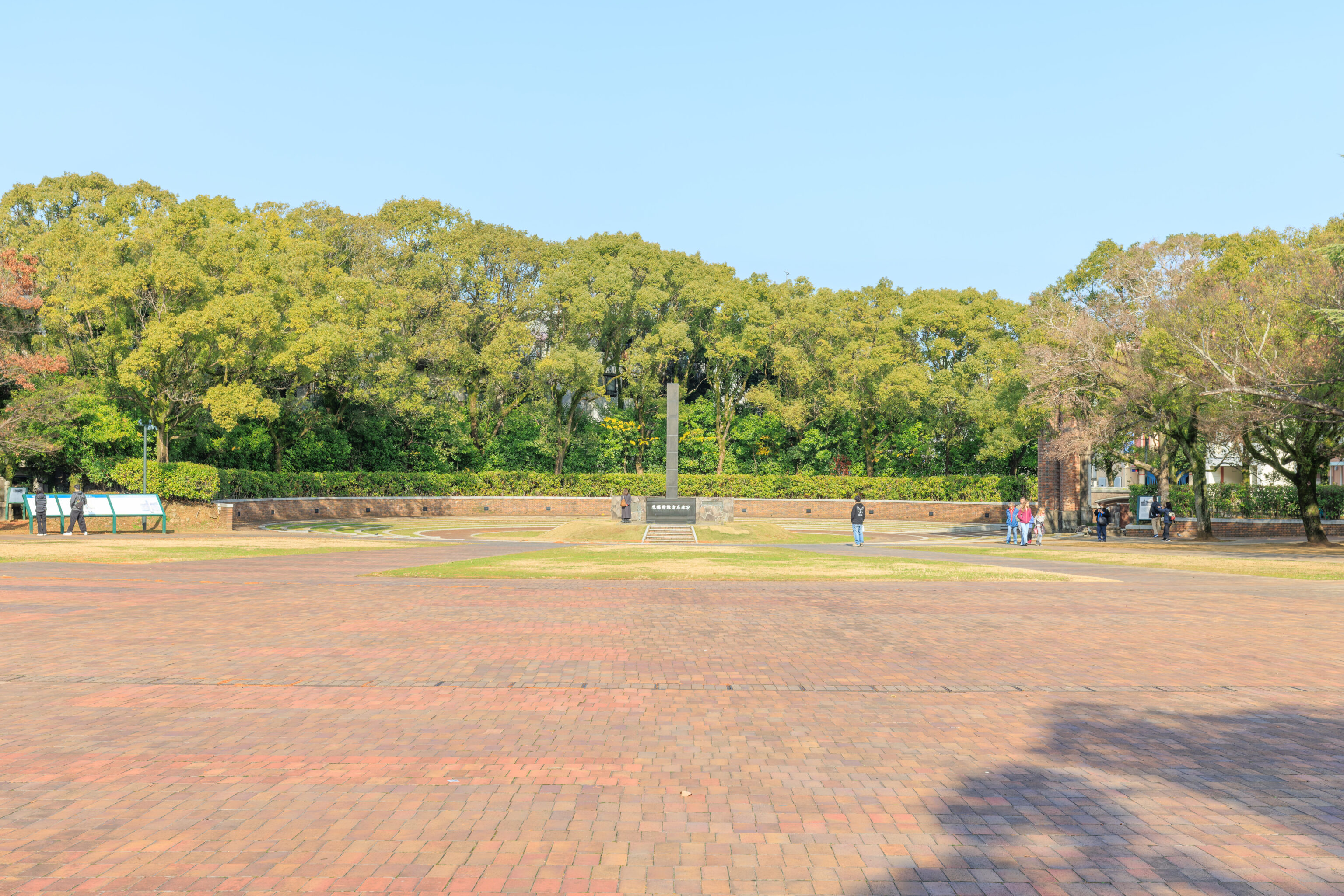
The hypocenter memorial, as seen from the south.
Atomic Bomb Museum
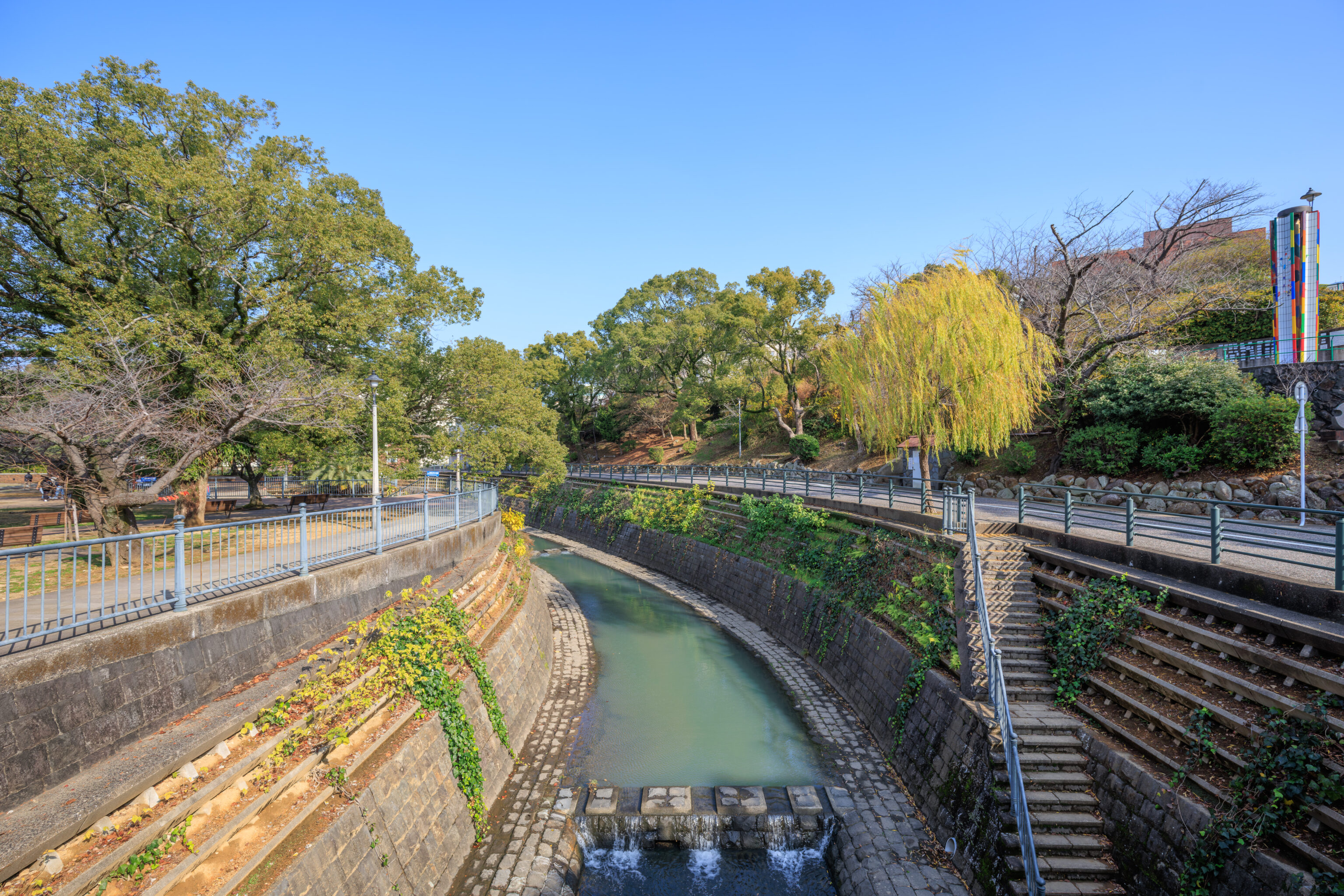
We crossed a bridge to the south of the hypocenter to head towards the 原爆資料館 Atomic Bomb Museum, which is to the southeast.
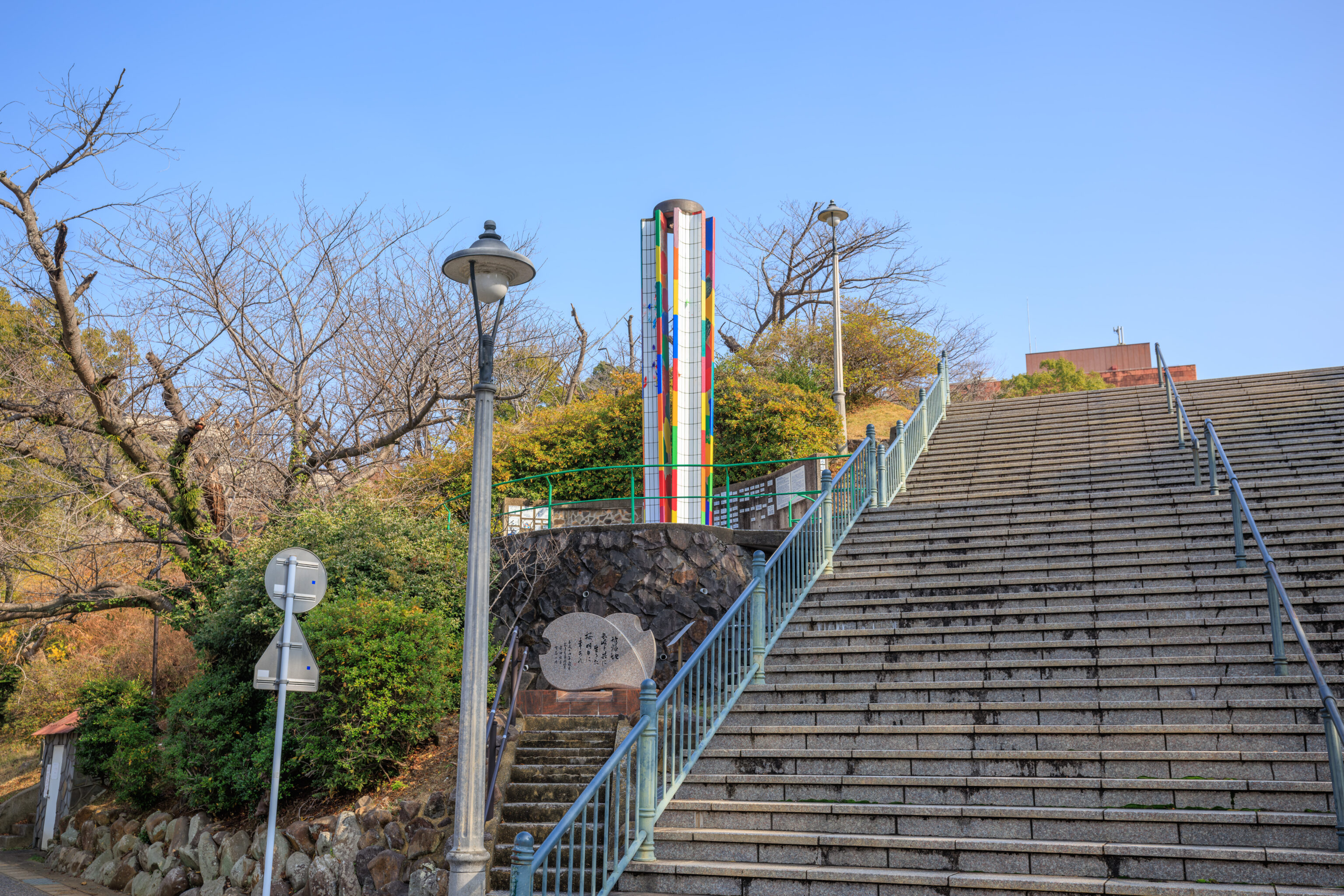
The museum is at the top of these stairs. There were various memorials here at the bottom.
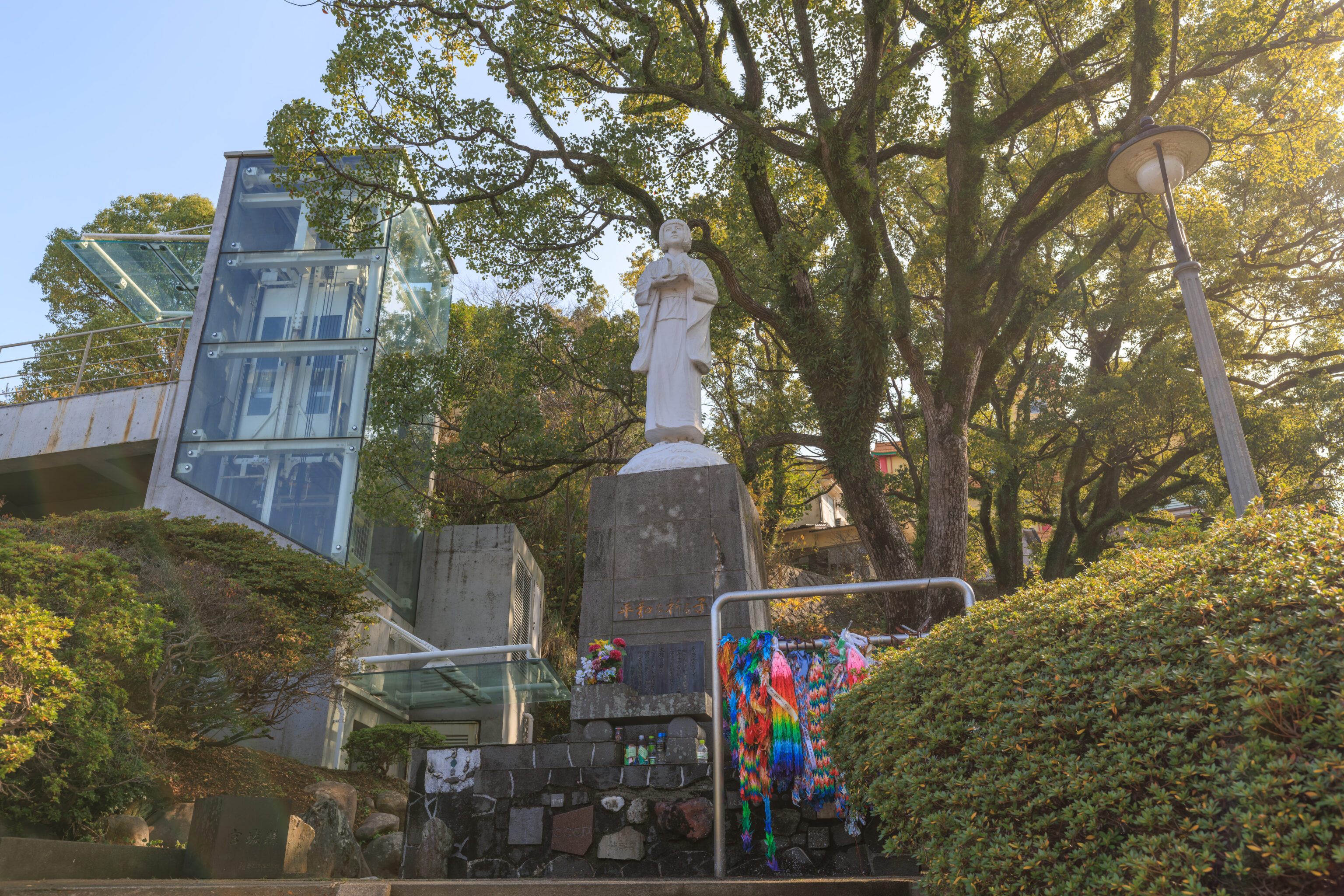
This memorial statue is inscribed with the text, 平和を祈る子 Child Praying for Peace.
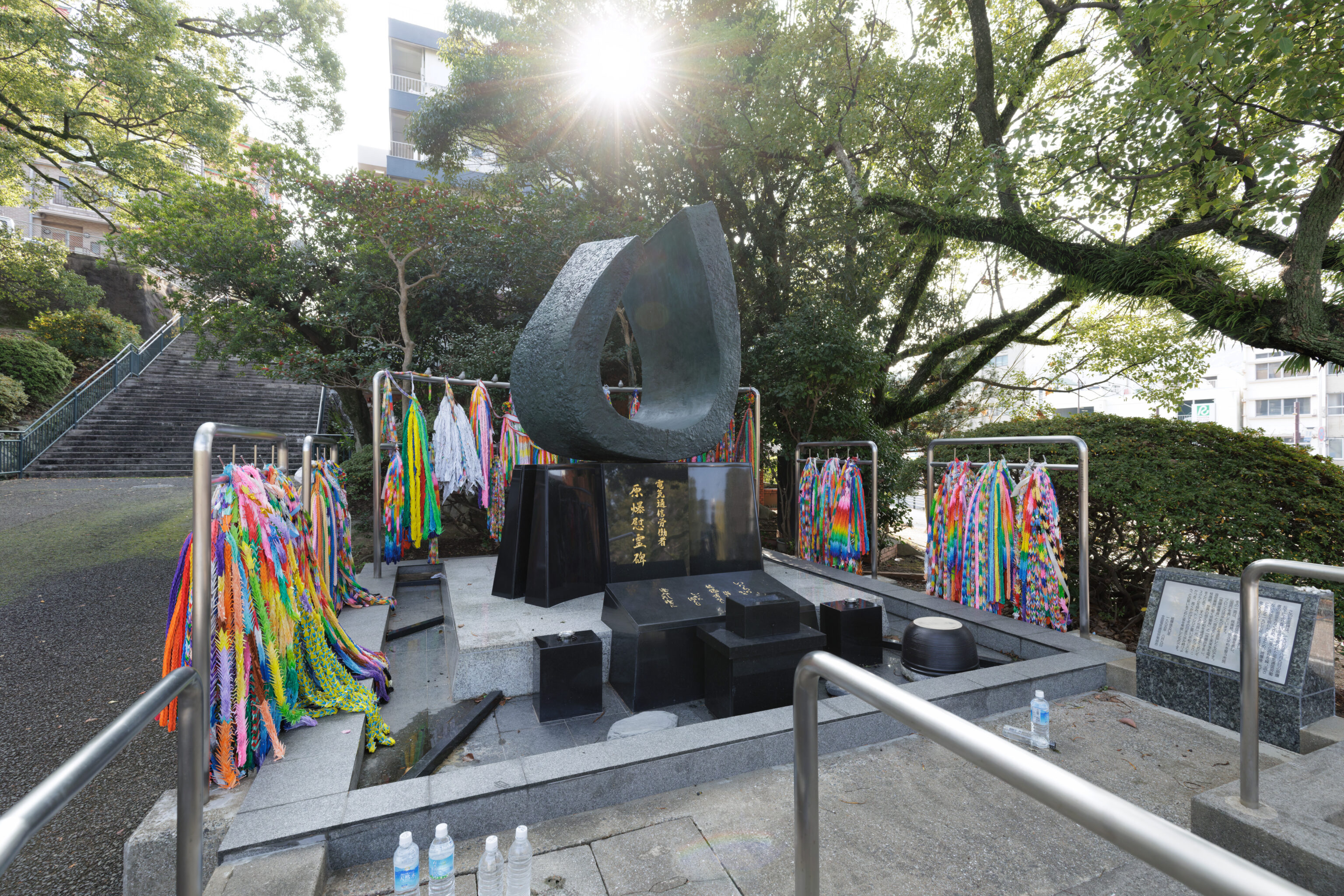
This memorial was erected by the 全国電気通信労働組合 National Telecommunications Workers’ Union, which became the NTT労働組合 All NTT Workers Union.
This memorial monument was erected in 1975—marking the thirtieth anniversary of the atomic bombing—through the voluntary contributions of telecommunications workers nationwide. It serves to console the spirits of the telecommunications workers whose precious lives were lost in the atomic bombing on August 9, 1945, and to declare a firm resolve never to repeat such a tragedy.

The pedestal is composed of three joined faces:
one representing atomic bomb survivors;
one representing telecommunications workers;
and one representing the citizens (and the nation) who pledge to achieve the abolition of nuclear weapons and lasting peace. The bronze sculpture depicts the "Flame of Peace."

It symbolizes a scene in which atomic bomb survivors, current and future telecommunications workers, and all citizens joining hands to reject the use of atomic bombs, abolish nuclear weapons, and achieve lasting global peace—all stand united in a solid formation, bearing the heavy "Flame of Peace" aloft and pledging to continue their march toward that day.

50th Anniversary of the Atomic Bombing
August 9, 1995
National Telecommunications Workers' Union
– Text from the plaque at bottom right in the photograph above, translated using Google Gemini and Translate.
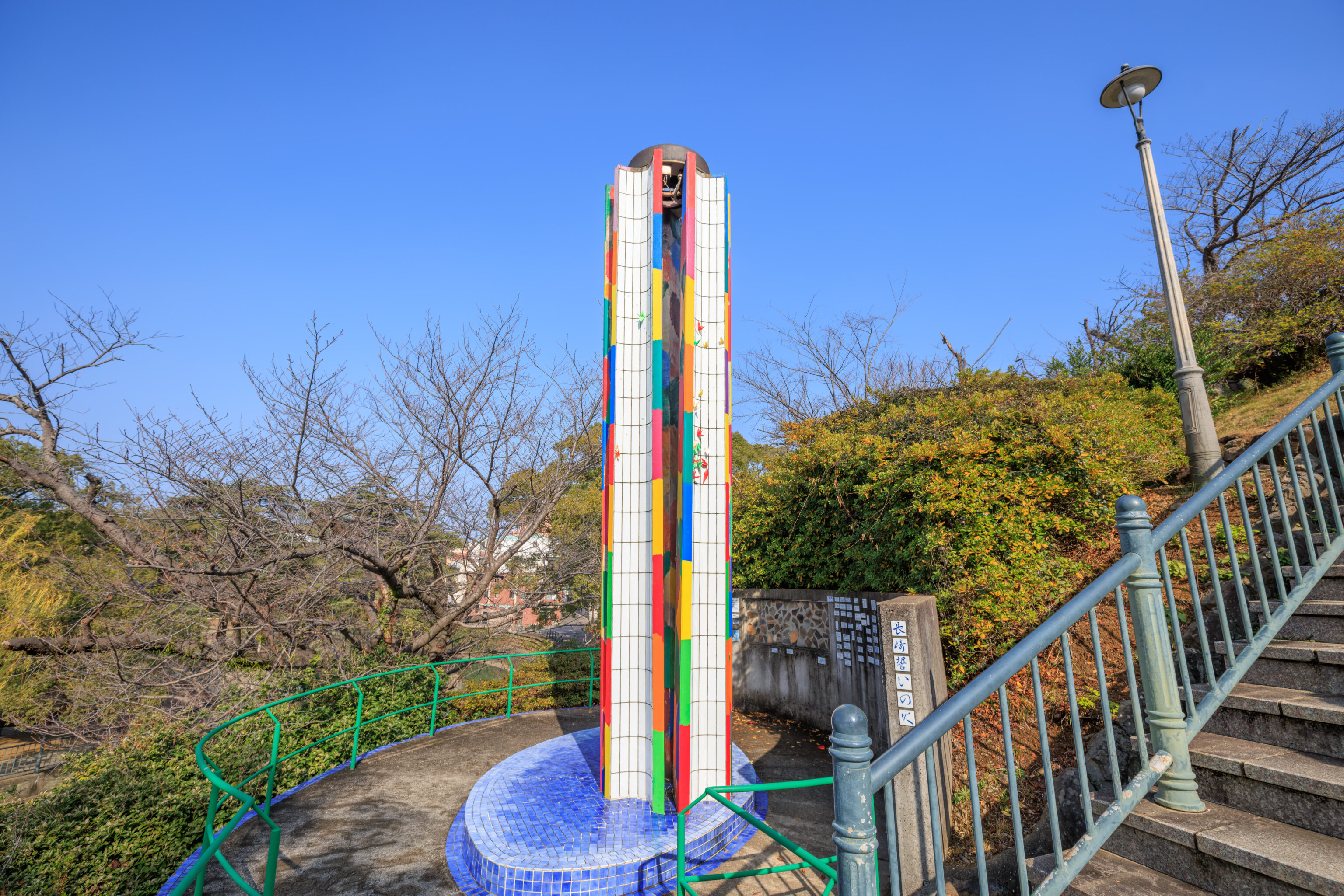
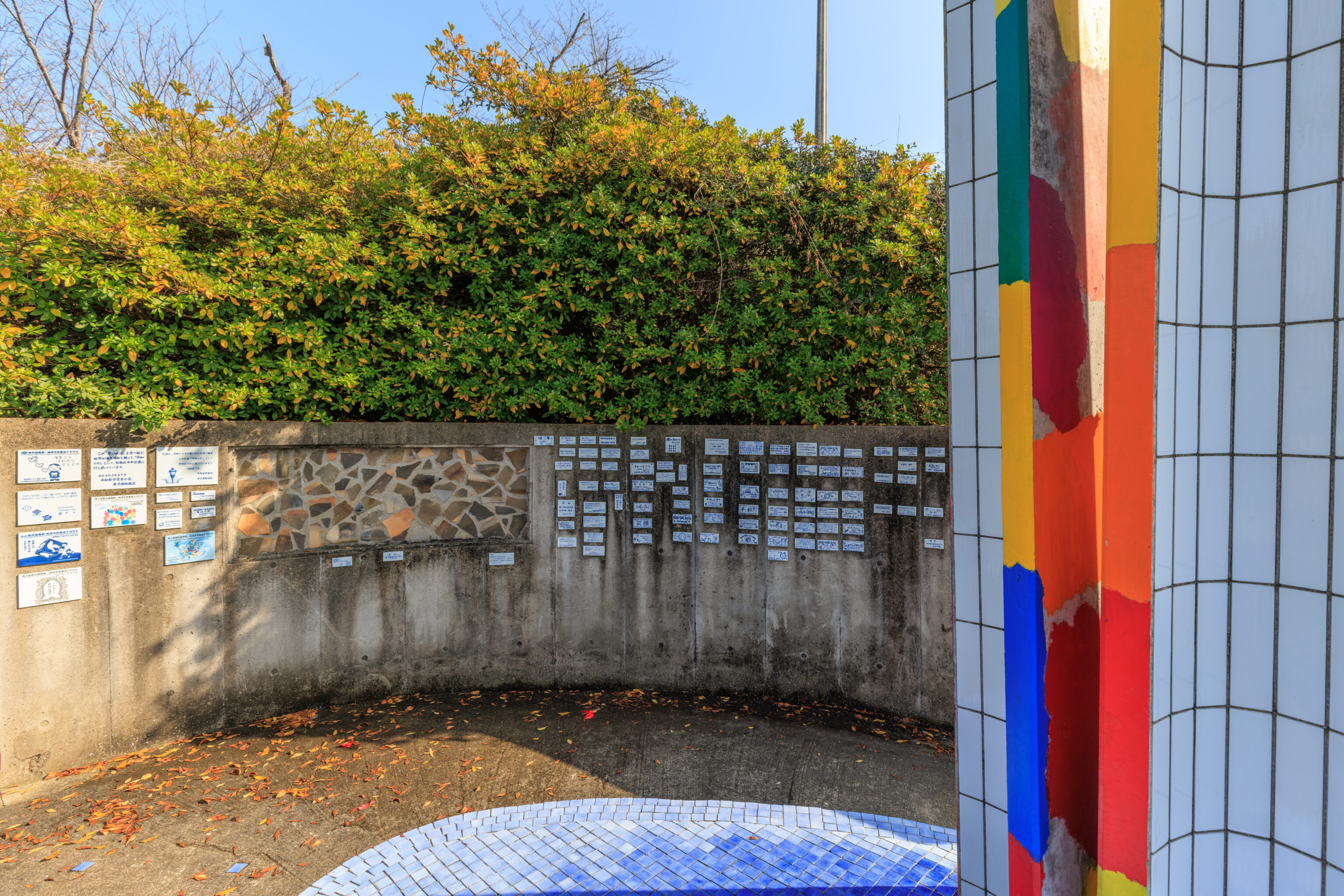
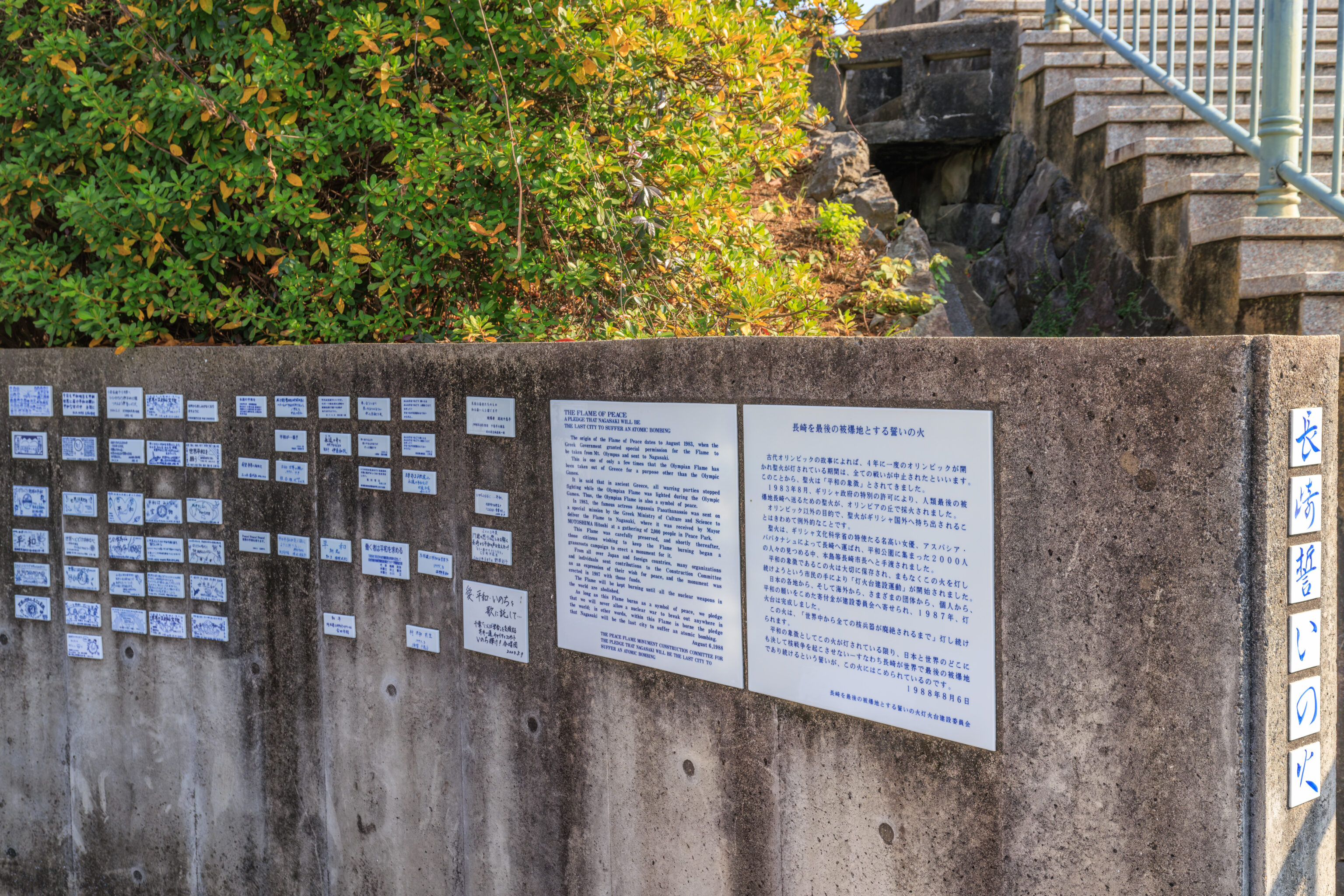
This is the Flame of Peace. It is supposed to be a flame that burns until nuclear weapons are no more and was lit using the flame from Mount Olympus in Greece, the same flame used for the Olympic Games. The flame here is no longer functional.
Unfortunately, the elimination of nuclear weapons isn’t going to happen until they’re either replaced with something even more destructive or rendered ineffective by some future technology.
THE FLAME OF PEACE
A PLEDGE THAT NAGASAKI WILL BE THE LAST CITY TO SUFFER AN ATOMIC BOMBING

The origin of the Flame of Peace dates to August 1983, when the Greek Government granted special permission for the Flame to be taken from Mt. Olympus and sent to Nagasaki.

This is one of only a few times that the Olympian Flame has been taken out of Greece for a purpose other than the Olympic Games.

It is said that in ancient Greece, all warring parties stopped fighting while the Olympian Flame was lighted during the Olympic Games. Thus, the Olympian Flame is also a symbol of peace.

In 1983, the famous actress Aspassia Paoathanassio was sent on a special mission by the Greek Ministry of Culture and Science to deliver the Flame to Nagasaki, where it was received by Mayor MOTOSHIMA Hitoshi at a gathering of 2,000 people in Peace Park.

This Flame was carefully preserved, and shortly thereafter, those citizens wishing to keep the Flame burning began a grassroots campaign to erect a monument for it.

From all over Japan and foreign countries, many organizations and individuals sent contributions to the Construction Committee as an expression of their wish for peace, and the monument was erected in 1987 with those funds.

The Flame will be kept burning until all the nuclear weapons in the world are abolished.

As long as this Flame burns as a symbol of peace, we pledge that we will never allow a nuclear war to break out anywhere in the world; in other words, within this Flame is borne the pledge that Nagasaki will be the last city to suffer an atomic bombing.

August 6,1988

THE PEACE FLAME MONUMENT CONSTRUCTION COMMITTEE FOR THE PLEDGE THAT NAGASAKI WILL BE THE LAST CITY TO SUFFER AN ATOMIC BOMBING
– Text from the English language plaque in the photograph above.
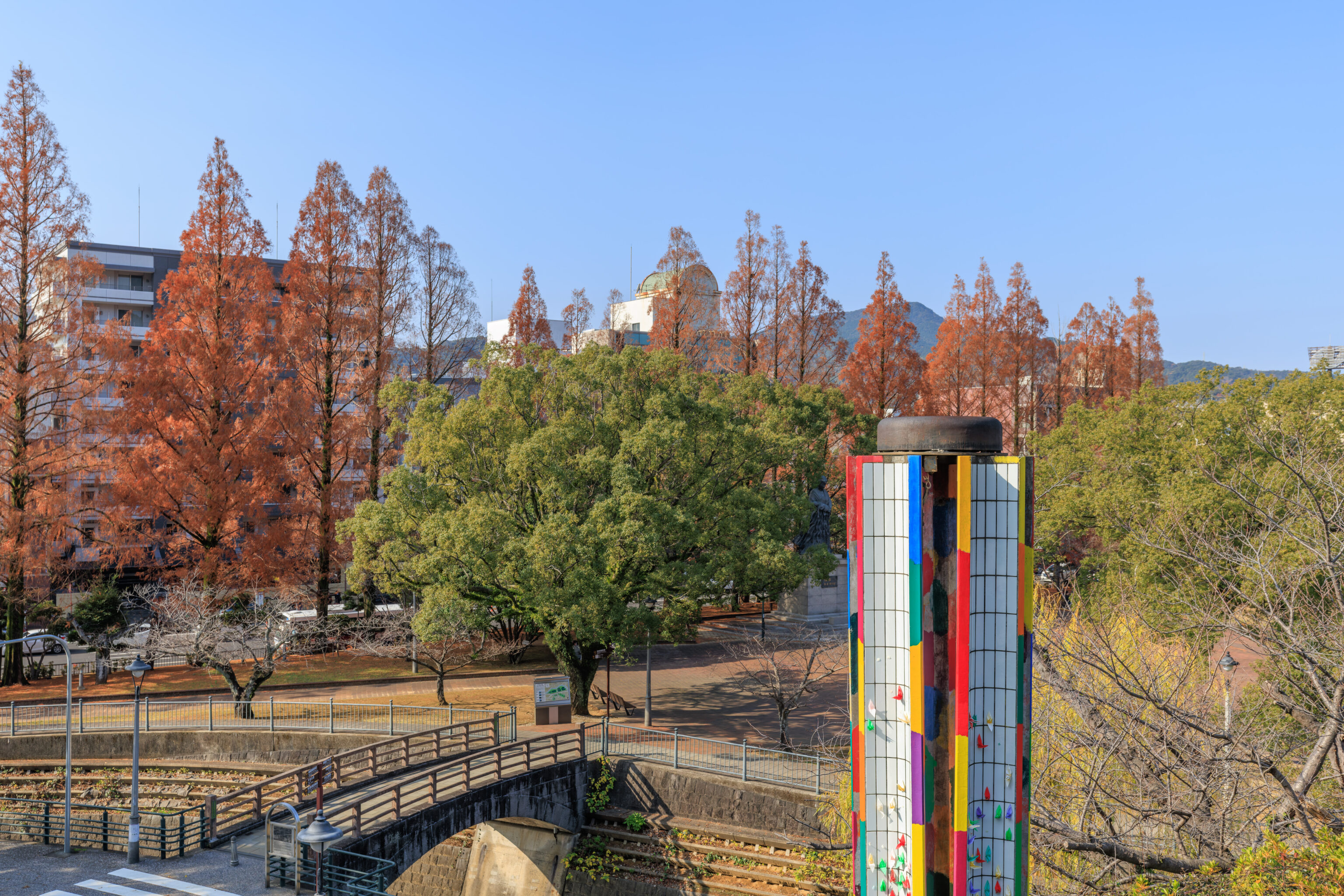
The view from the stairs with the Flame of Peace in the foreground.
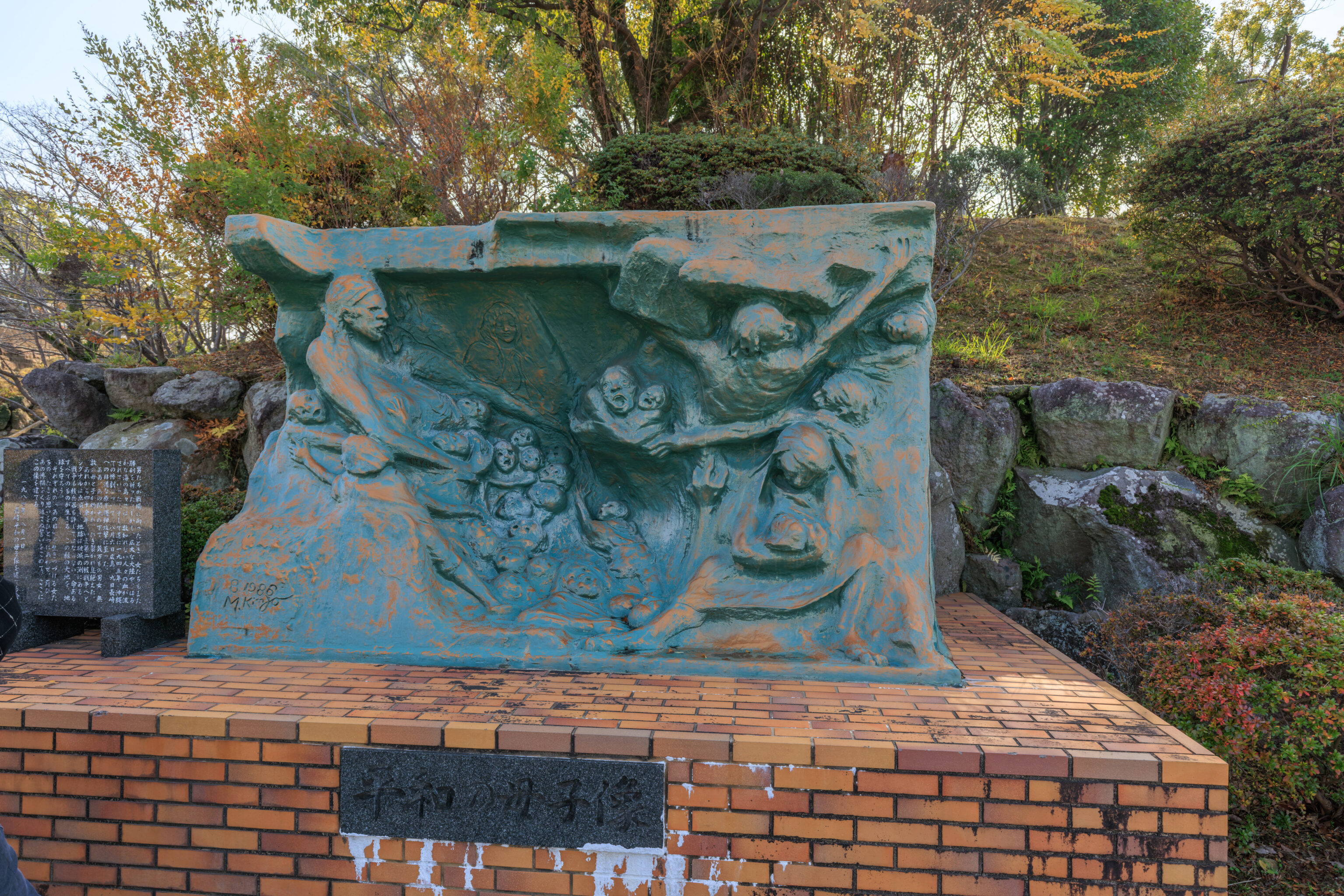
This memorial was created in 1987:
The women at home prayed for victory as their men departed for the battlefields. But then the blood of countless peoples was shed on the vast continents and the far away islands.

Finally, in 1945 as the war escalated, it brought the tragedies of the Okinawa islands followed by the inhuman atomic bomb attacks over Hiroshima on the 6th and Nagasaki on the 9th of August.

Ah! On that unforgettable day, in an instantaneous blast of indescribable heat, the bodies of tens of thousands of men and women, mothers and children were hideously torn and burnt to death.

After more than forty years, the agony continues even yet! Danger signs of a second nuclear war permeate our very existence. The earth stands at the brink of total oblivion.

We must not allow any more war! Nor the use of atomic weapons! Let us guard our precious green earth and preserve all life of every kind.

We erect this relief, still hearing the bursting cries on that day of each of those women long silenced in death. Bringing together all the turmoil from the depths of their tortured hearts and minds, we pledge ourselves never to repeat that disaster.

August 1, 1987
– Text from a stone plaque in English just out of frame on the left.
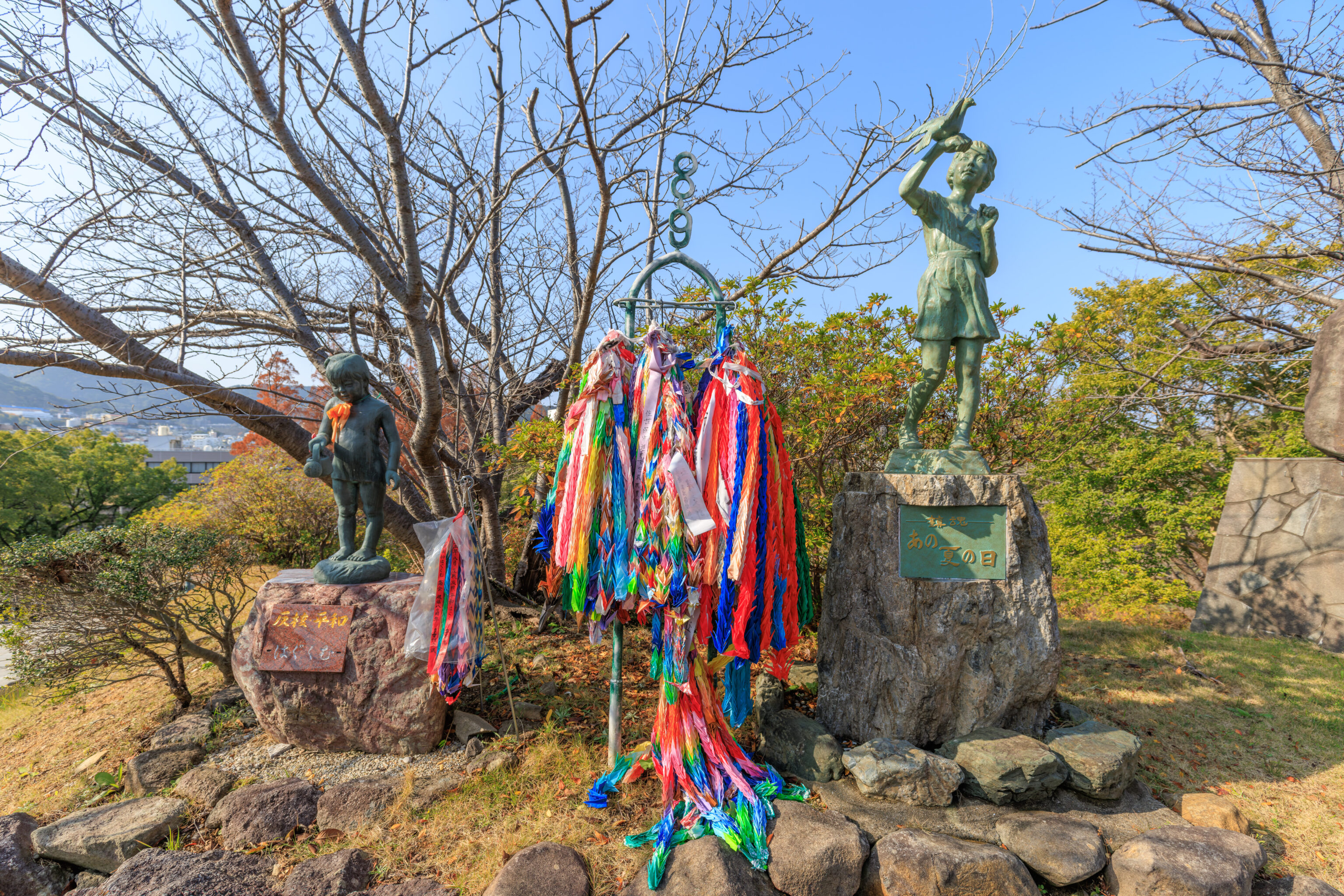
The plaque below the statue on the left is inscribed with the text:
Anti-Nuclear & Peace
Nurturing
– Text from the plaque below the statue on the left, translated using Google.
While the one on the right reads:
Requiem
That Summer Day
– Text from the plaque below the statue on the right, translated using Google.
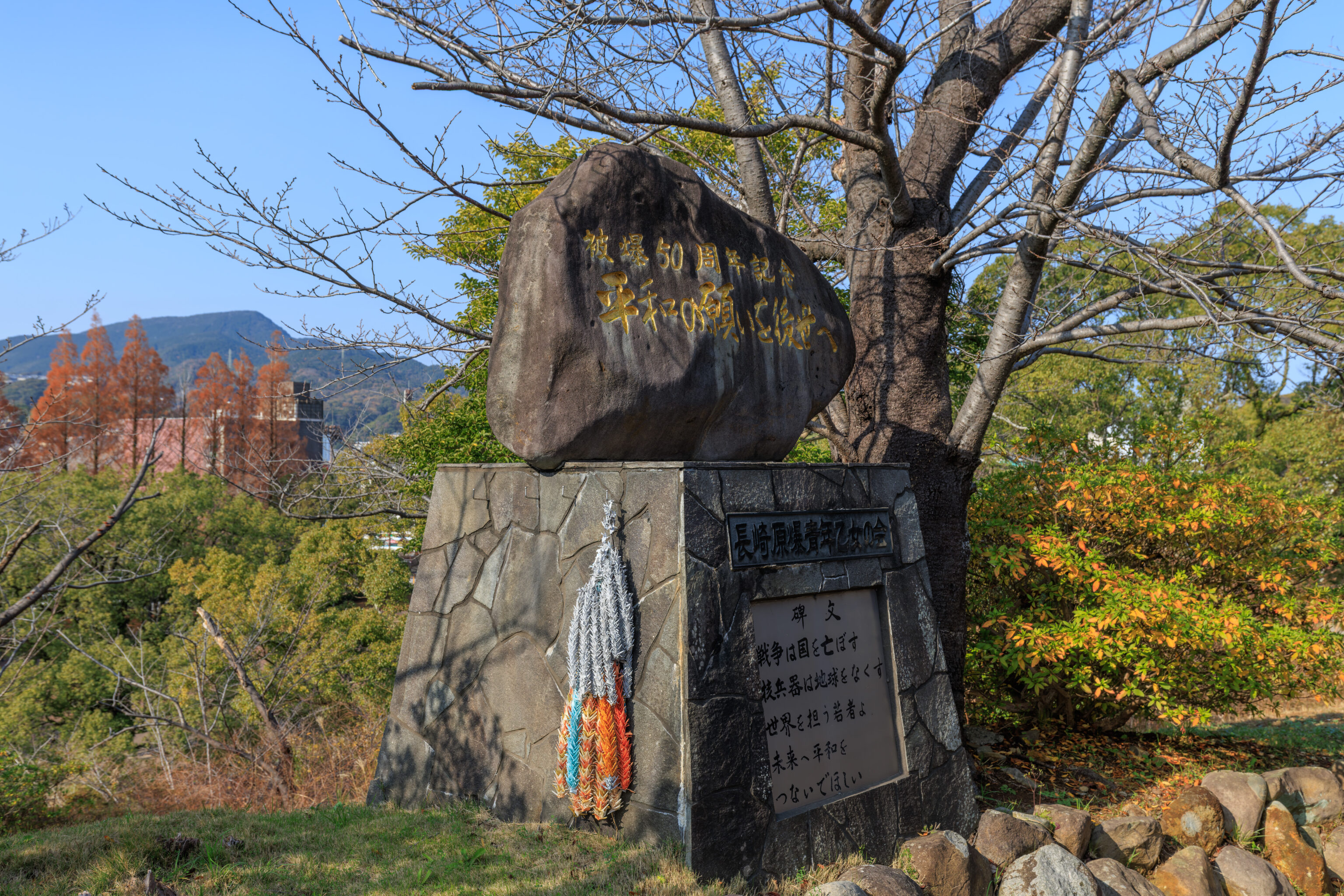
The stone is inscribed with the text:
Commemorating the 50th Anniversary of the Atomic Bombing
Passing on the wish for peace to future generations
– Text from the stone in the photograph above, translated using Google.
Below, the text reads:
Nagasaki Atomic Bomb Young Women's Association

Epitaph
War destroys nations. Nuclear weapons destroy the Earth. Young people who bear the future— please carry peace forward into the future.
– Text from below the stone in the photograph above, translated using Google.
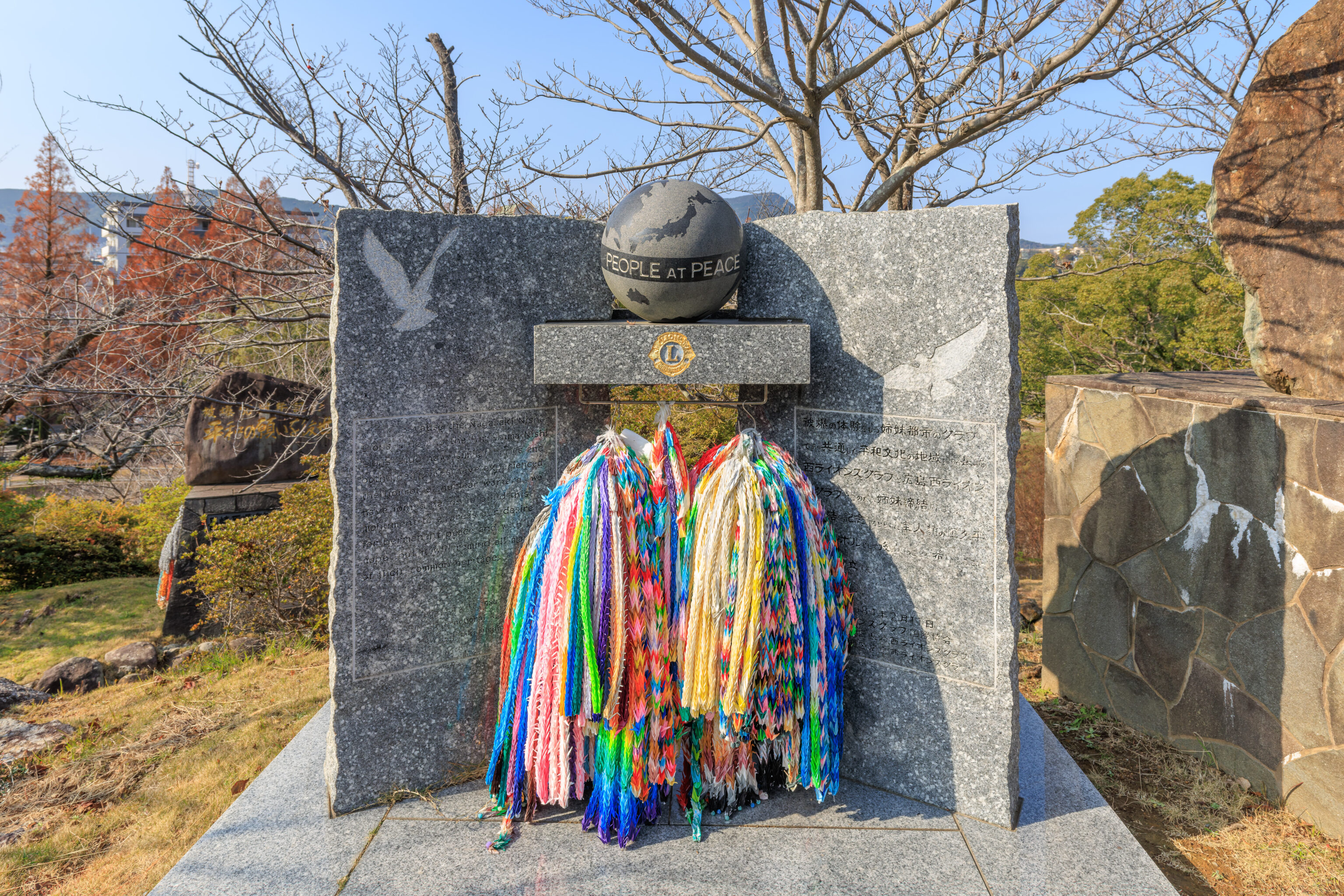
We can tell this memorial, People at Peace, was installed by the Lions Club. The same monument was erected by the Lions Club in Hiroshima.
Parts of the text are blocked by the folded cranes and the inscribed text also is just plain hard to read, however, it reads:
Because the Nagasaki Nishi Lions Club and the Hiroshima Nishi Lions Club have similar names and both their cities have experienced the horror of nuclear warfare, we have joined hands to build this monument to express our desire for permanent peace and with the hope that it will remind all mankind of their common heritage.

February 11, 1984
Lions Club International Association
337C District Nagasaki Nishi Lions Club
– Text from the memorial using a photograph from the US National Archives.
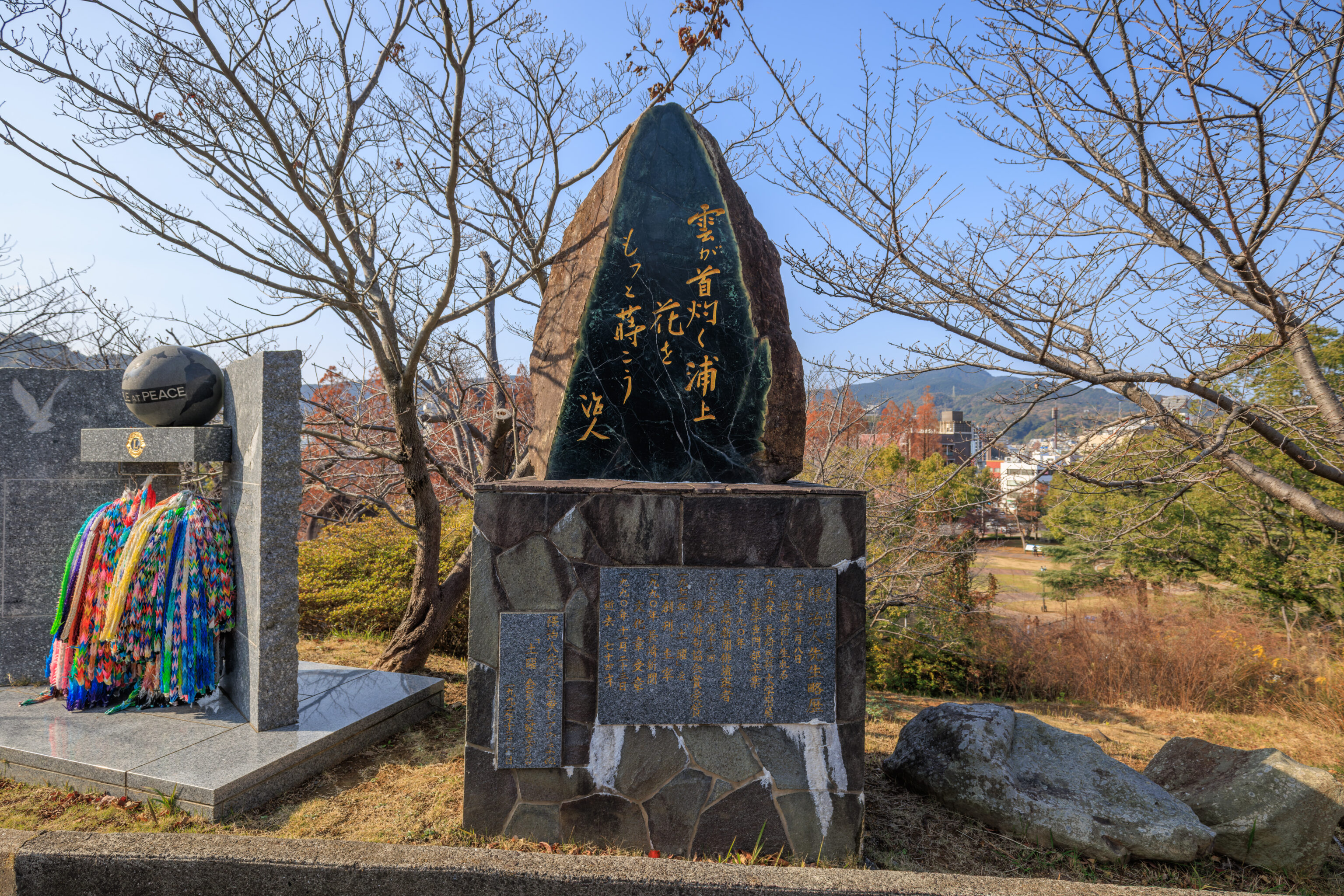
This adjacent memorial contains a poem inscribed on the stone:
Clouds scorch the neck at Urakami
Let us offer flowers in deeper silence.

Haruto
– Text from the stone, read and translated using Google Gemini and Translate.
Brief Biography of Dr. Haruto Kuma
1915 | November 8 | Born in Nagasaki City
1936 | Graduated from the Department of Pharmacy, Nagasaki Medical College
1959–1990 | Haiku selector for the *Nagasaki Shimbun*
1965 | Received the 12th Modern Haiku Association Award
1971 | Founded and presided over the haiku journal *Doyō* (Saturday)
1990 | Received the *Nagasaki Shimbun* Cultural Award
1990 | November 23 | Passed away; aged 74

Erected on November 23, 1992, by members of the "Doyō" group, who hold Dr. Haruto Kuma in deep respect and affection.
– Text from the plaques below the stone, read and translated using Google Gemini and Translate.
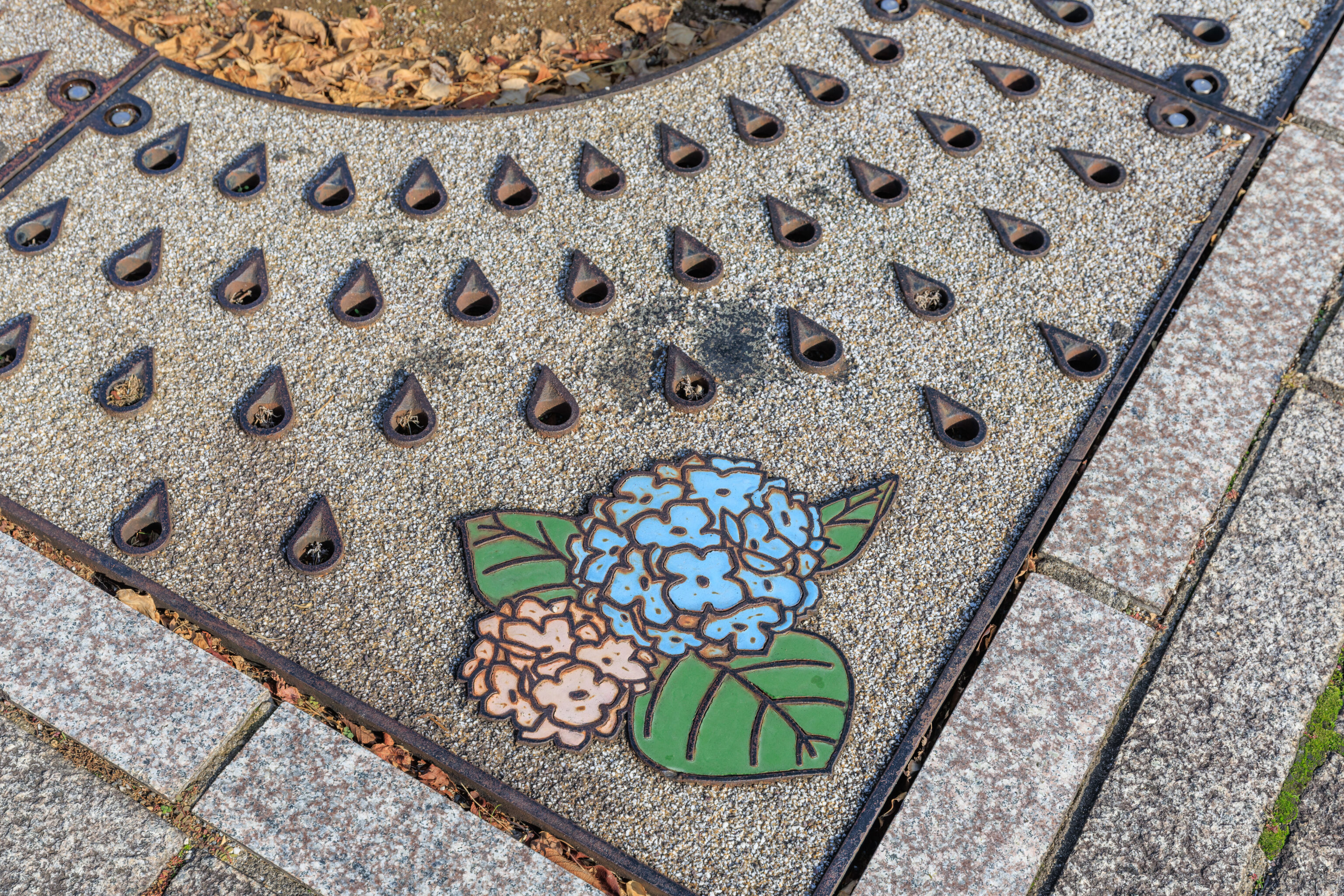
On the ground, we saw a colorful rendition of pink and blue hydrangeas.
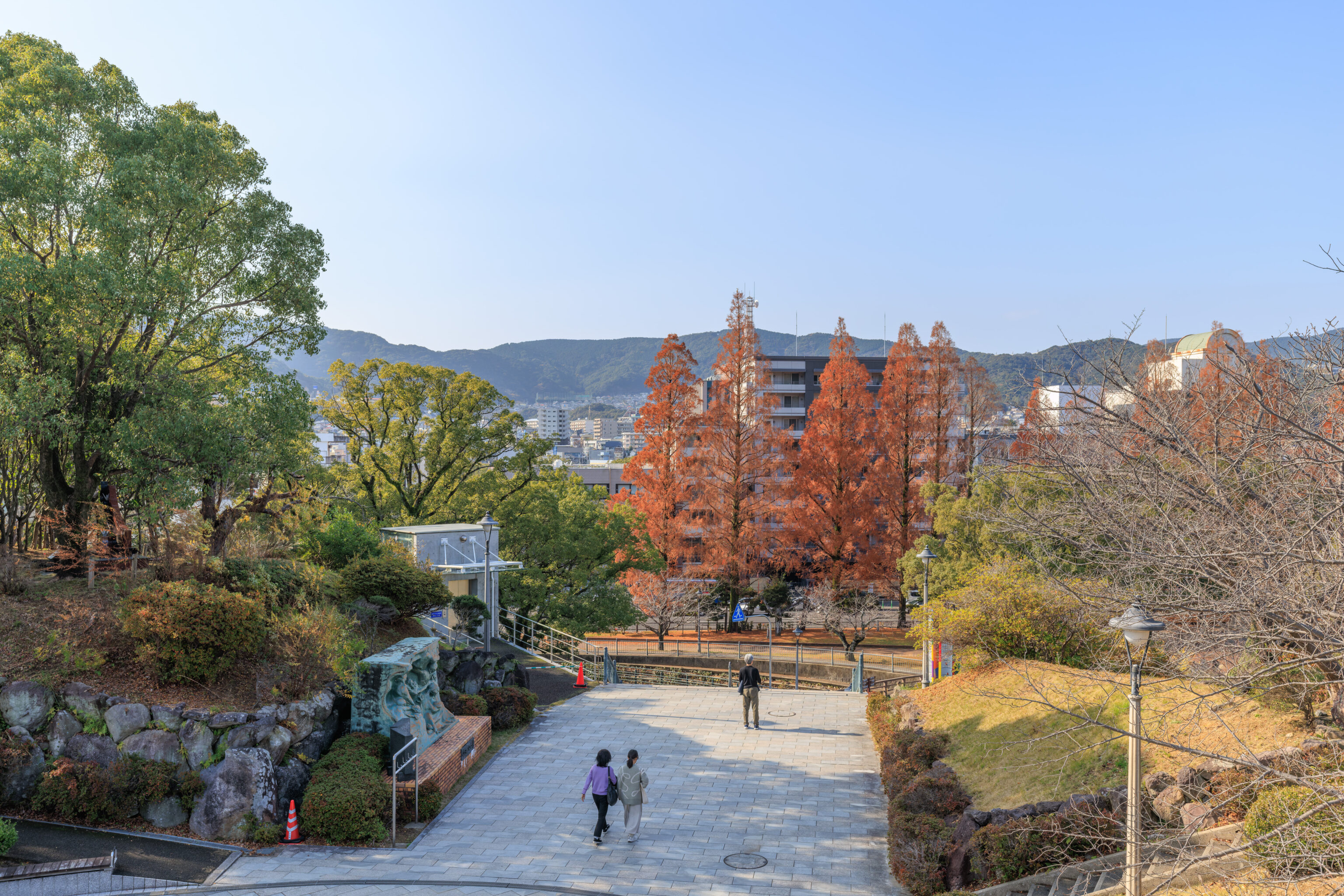
The view, looking back to the west at where we came from.
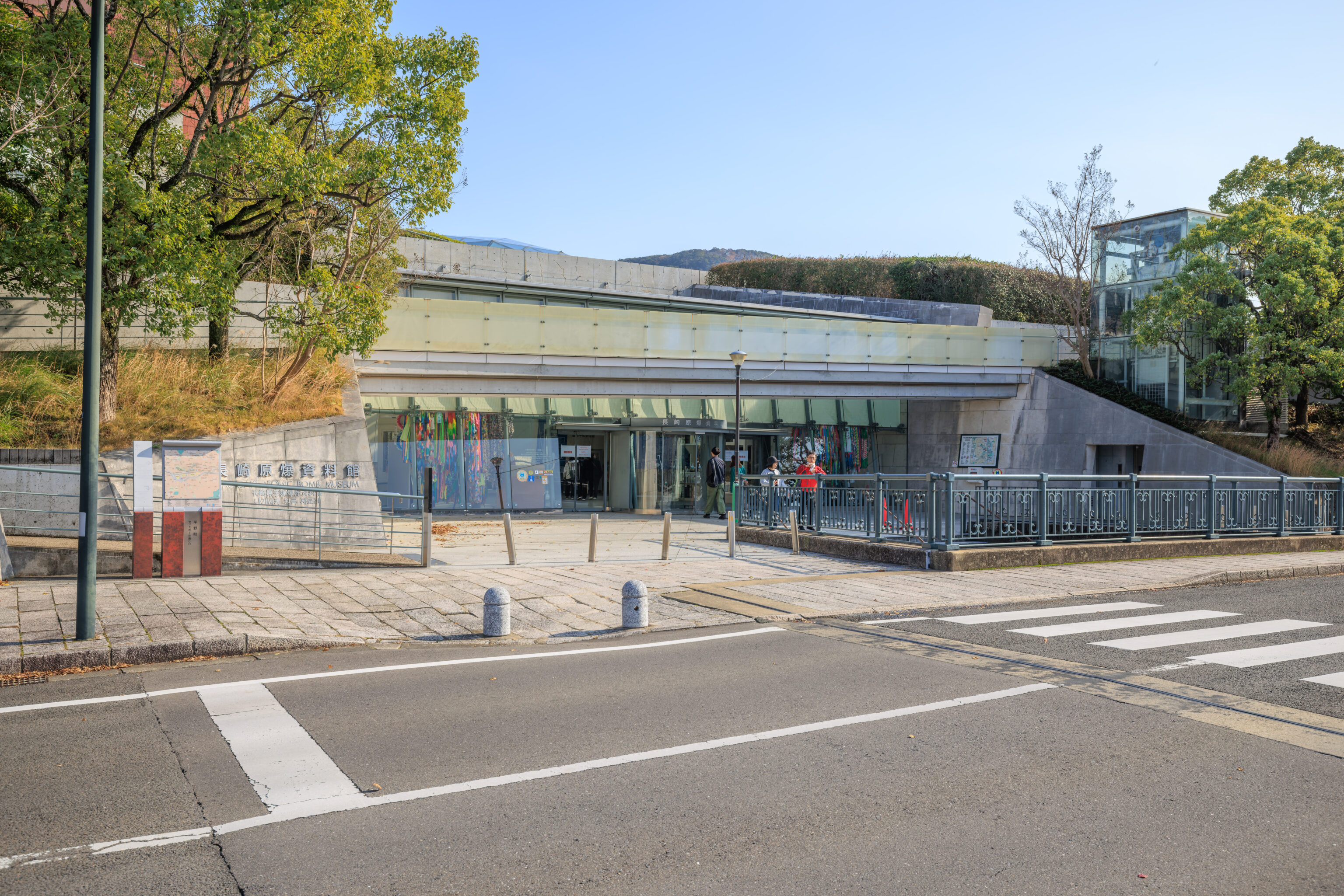
We crossed the street to enter the museum.
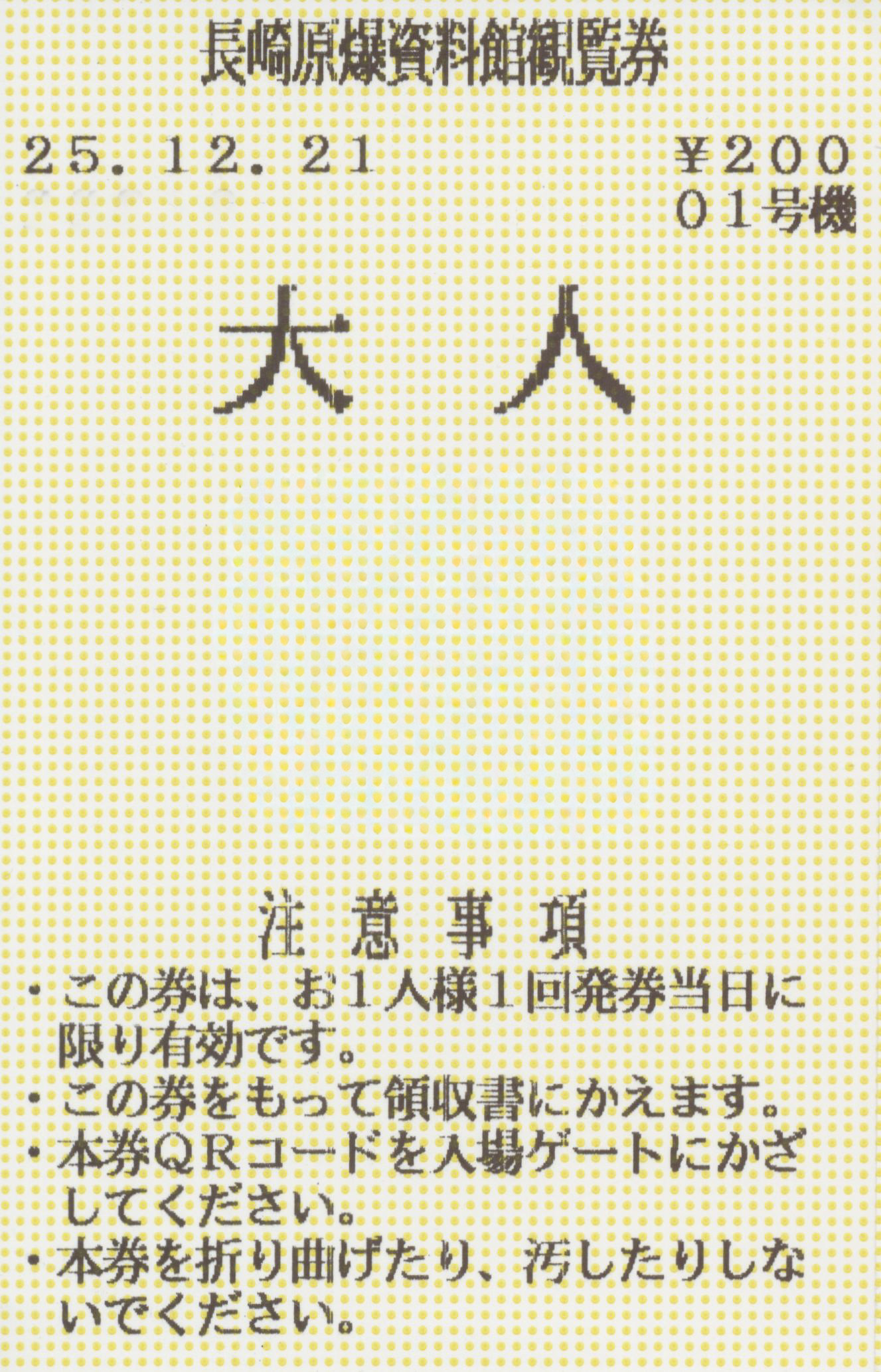
We purchased tickets for the museum upon entering.
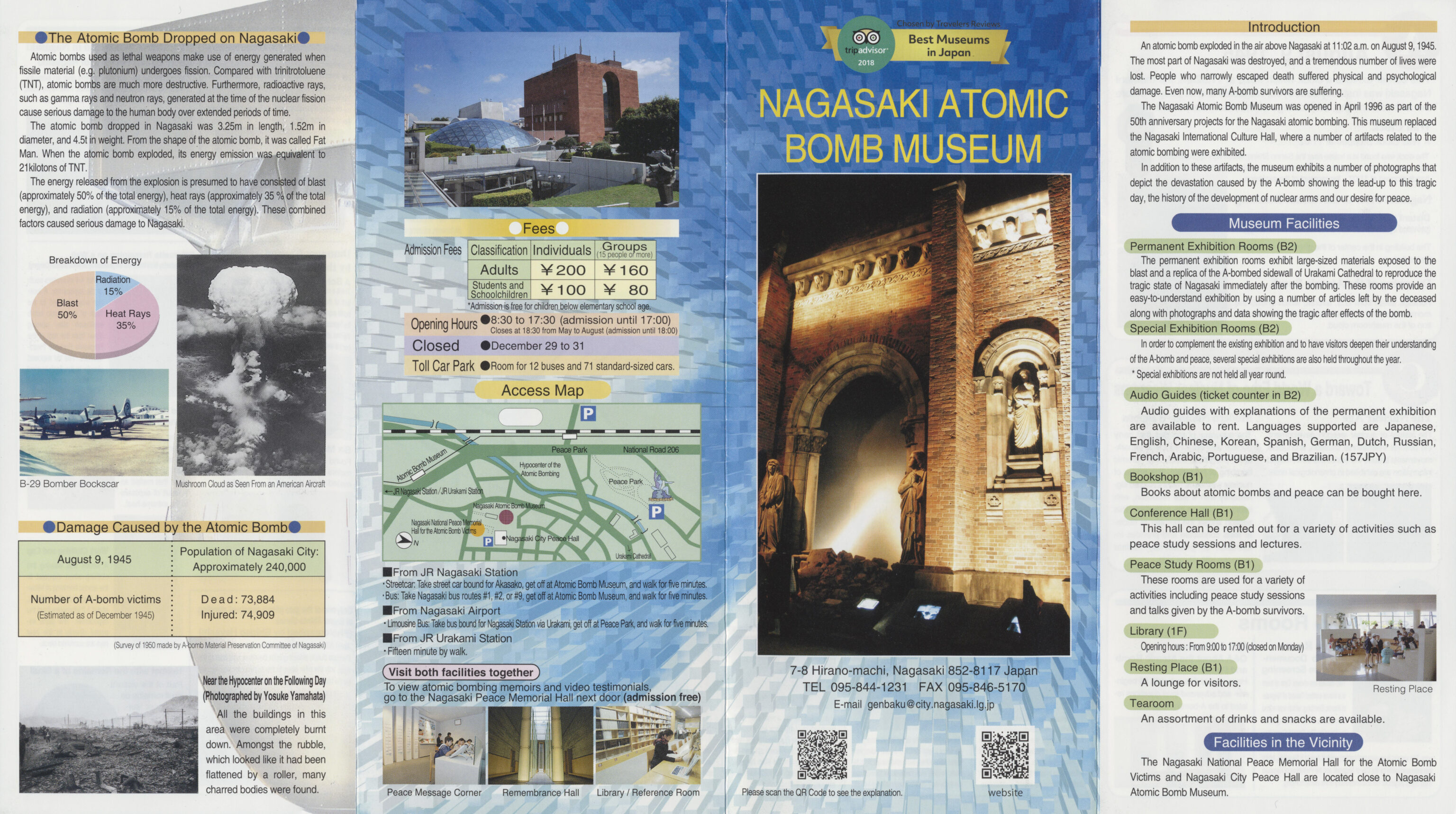
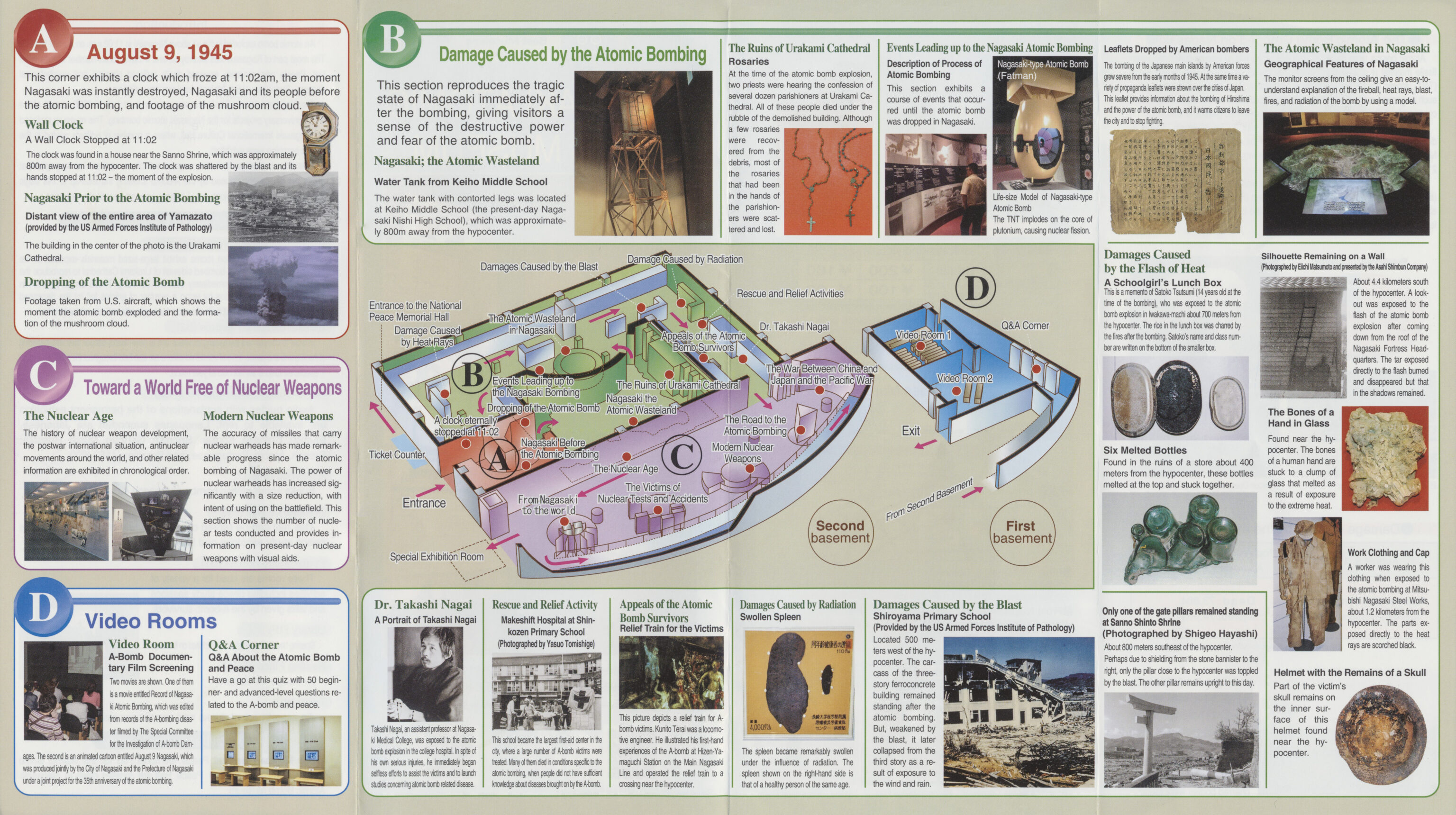
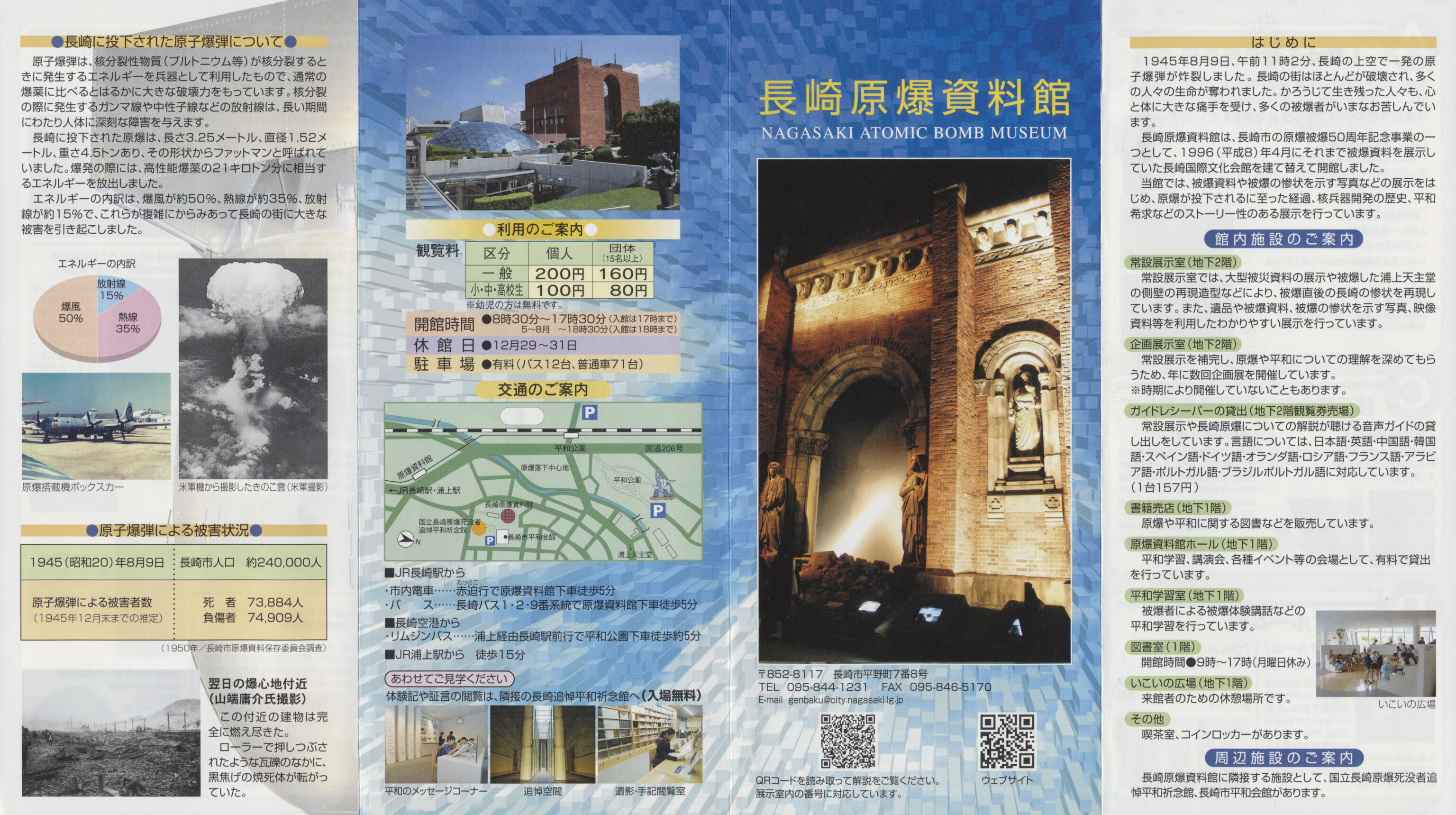
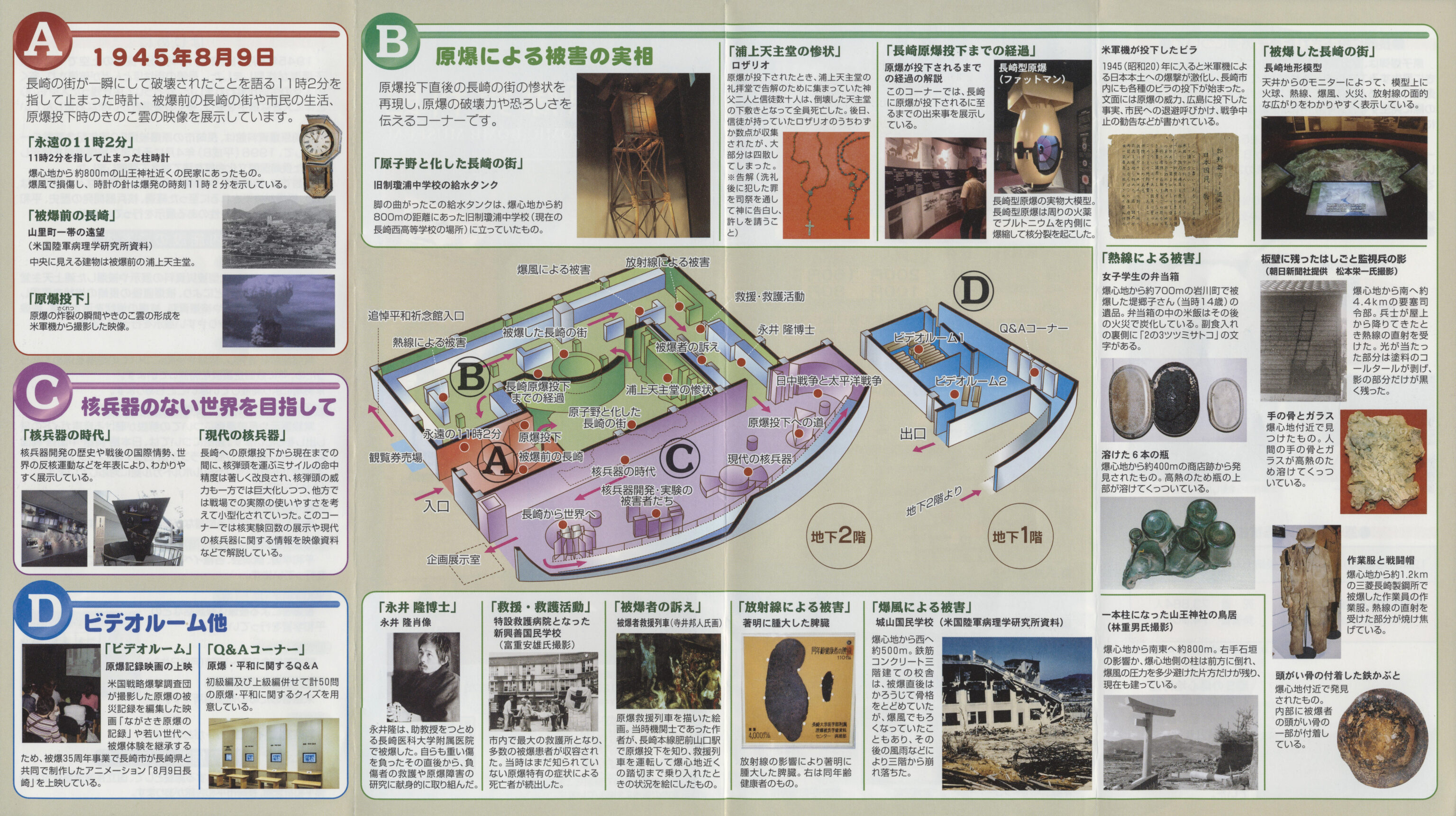
Informational pamphlets were available. We picked up English and Japanese versions.
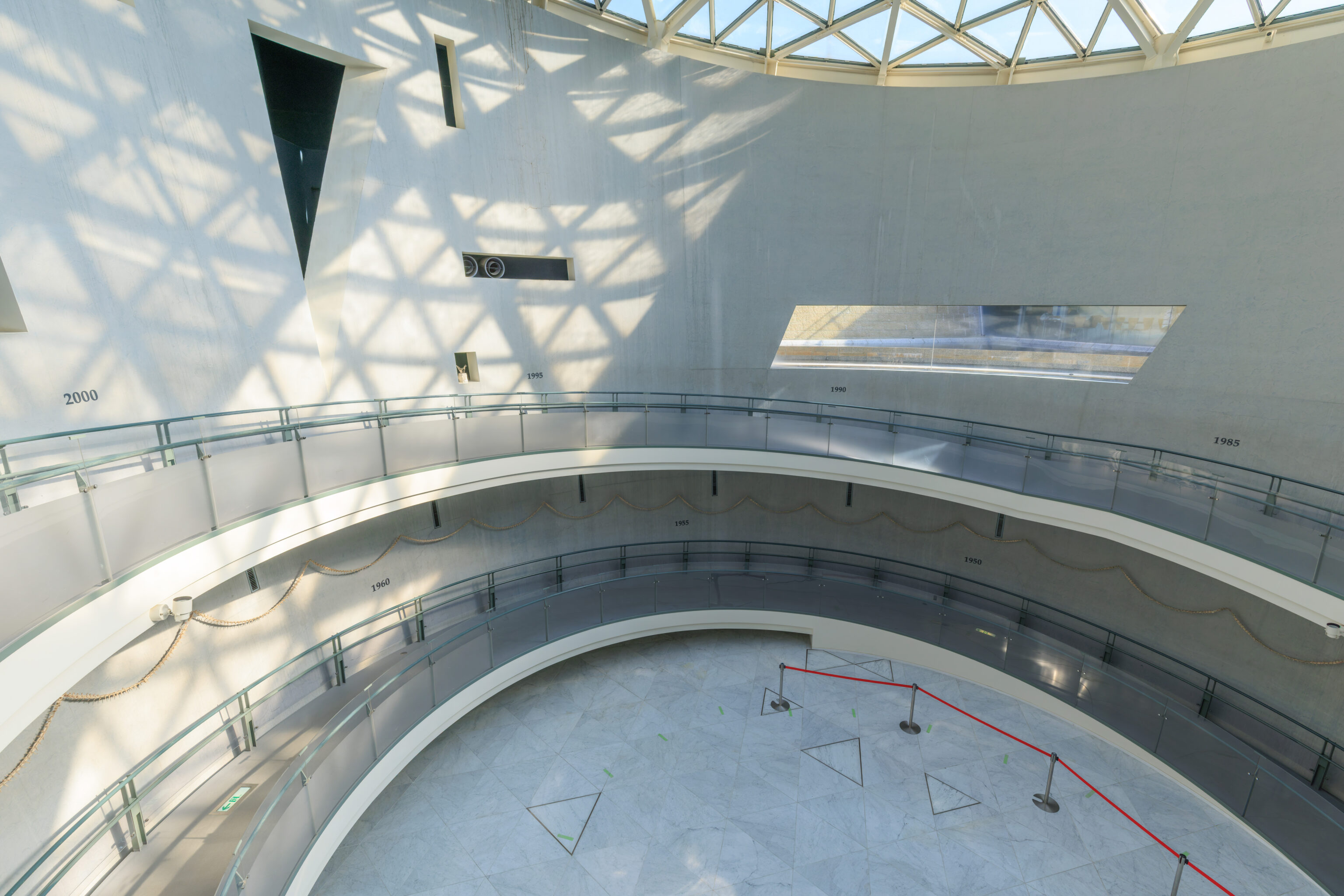
The entrance to the museum’s exhibition hall was down this circular ramp.
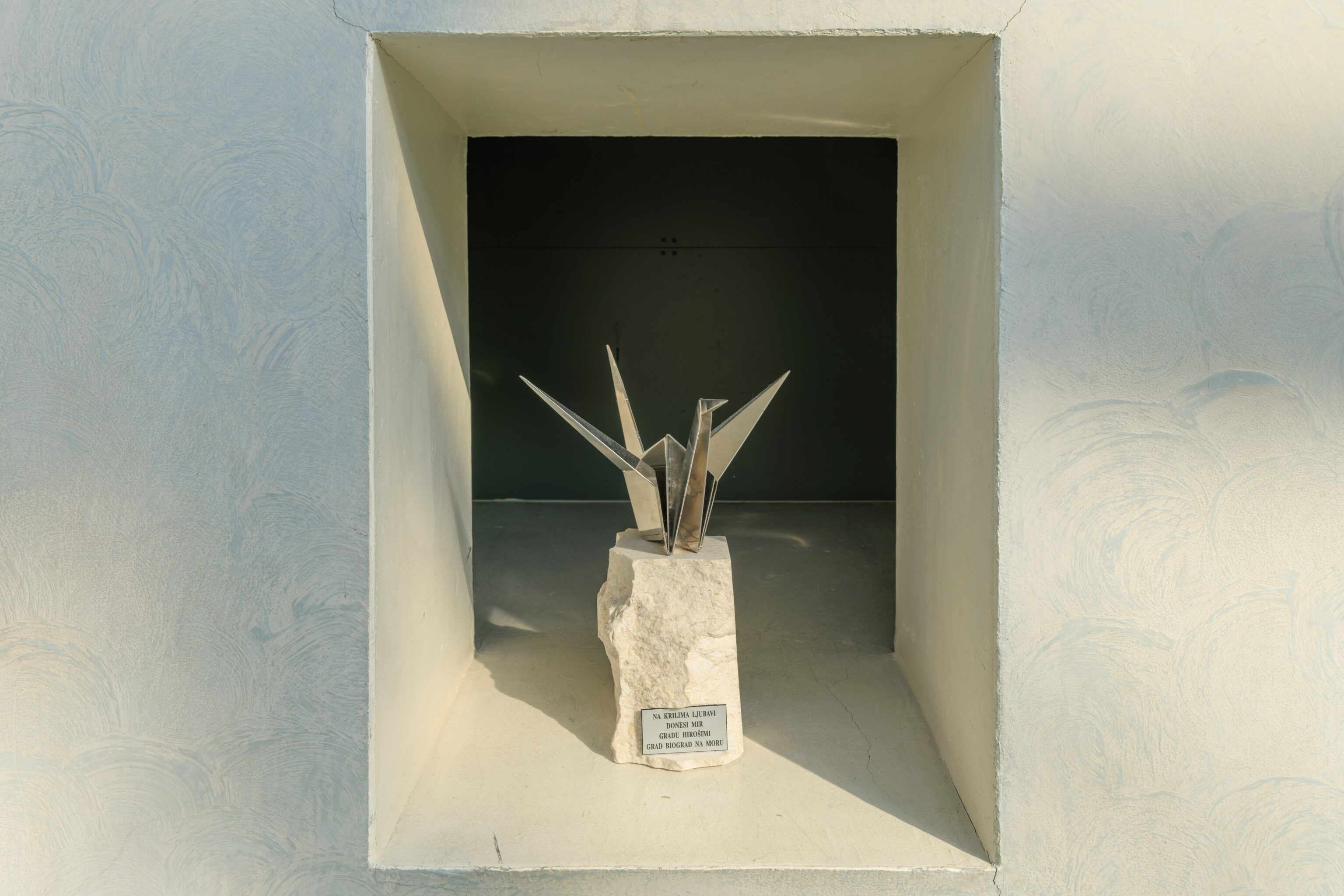
This crane was a gift from Biograd na Moru, Croatia:
ON THE WINGS OF LOVE
BRING PEACE
THE CITY OF HIROSHIMA
TOWN OF BIOGRAD NA MORU
– Croatian text from the plaque below the crane, translated using Google Translate.
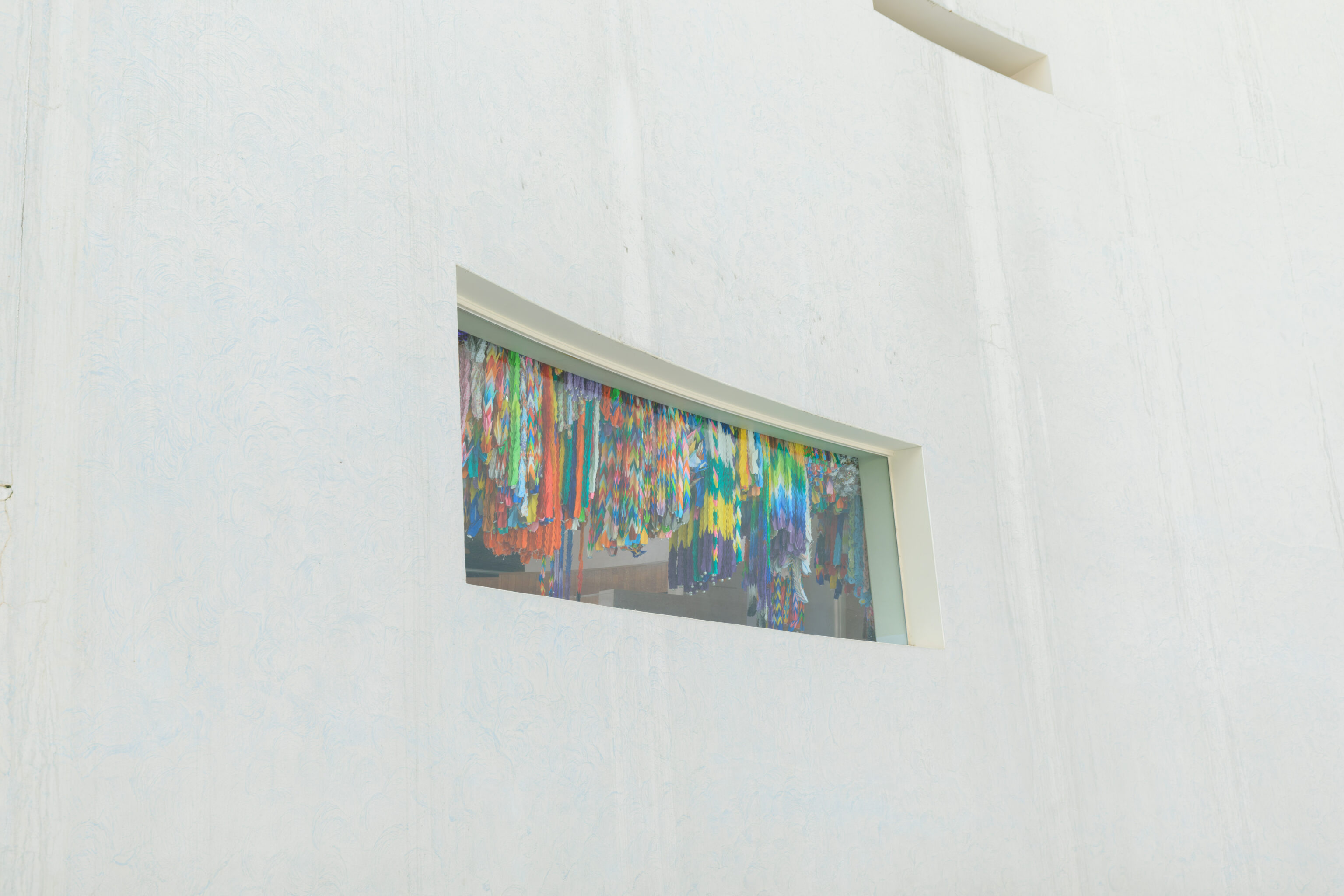
This window overlooks this circular room.
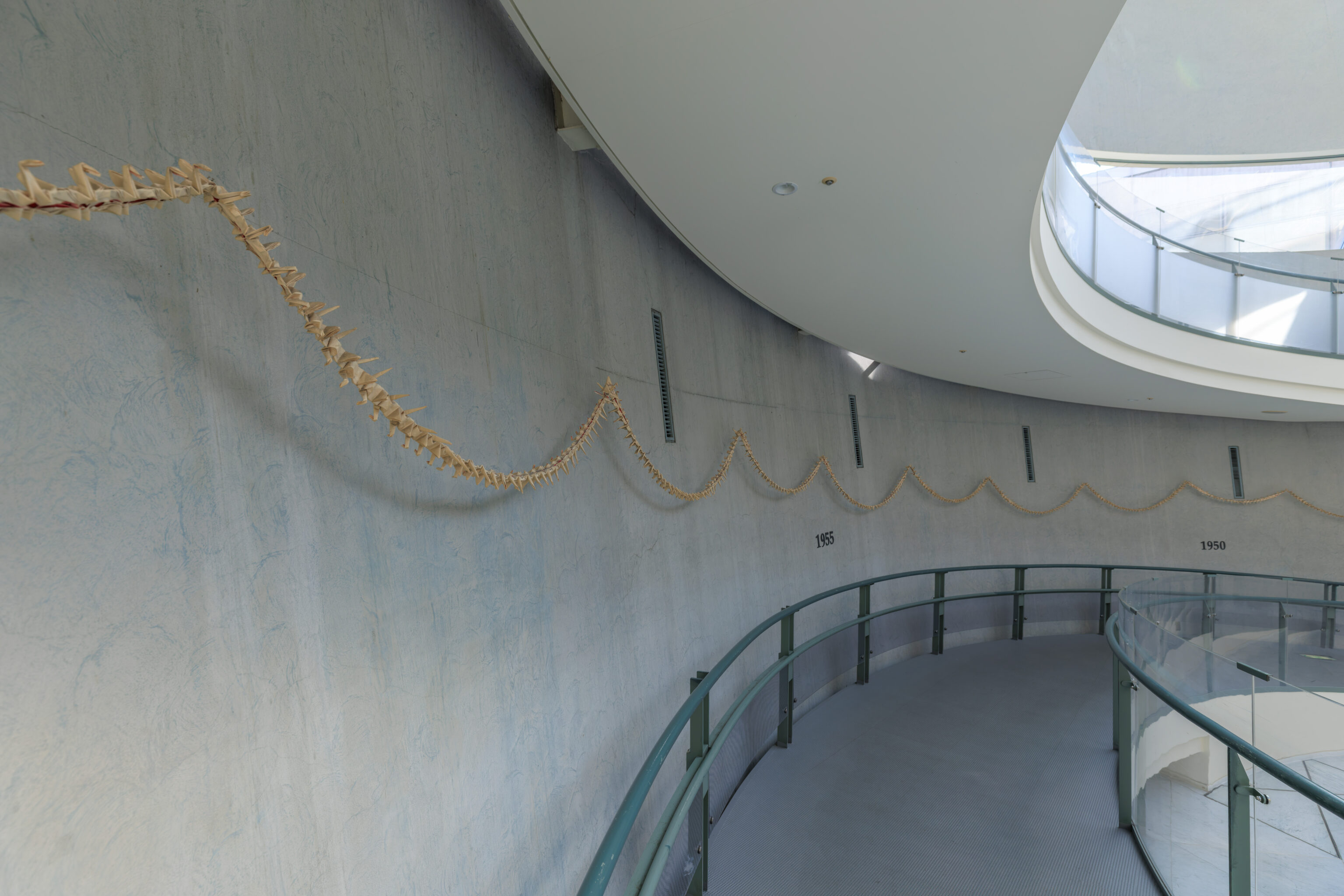
A string of paper cranes from the Netherlands was hung on the wall by the ramp.
"A string of thousand cranes"
Donated by Mr. Manna Ori, a Dutch paperfolding-artist on August 10,2010

("A string of thousand cranes" is created by using a piece of paper of 15cm wide and 150m long. )
– Text from a sign, translated using Google.
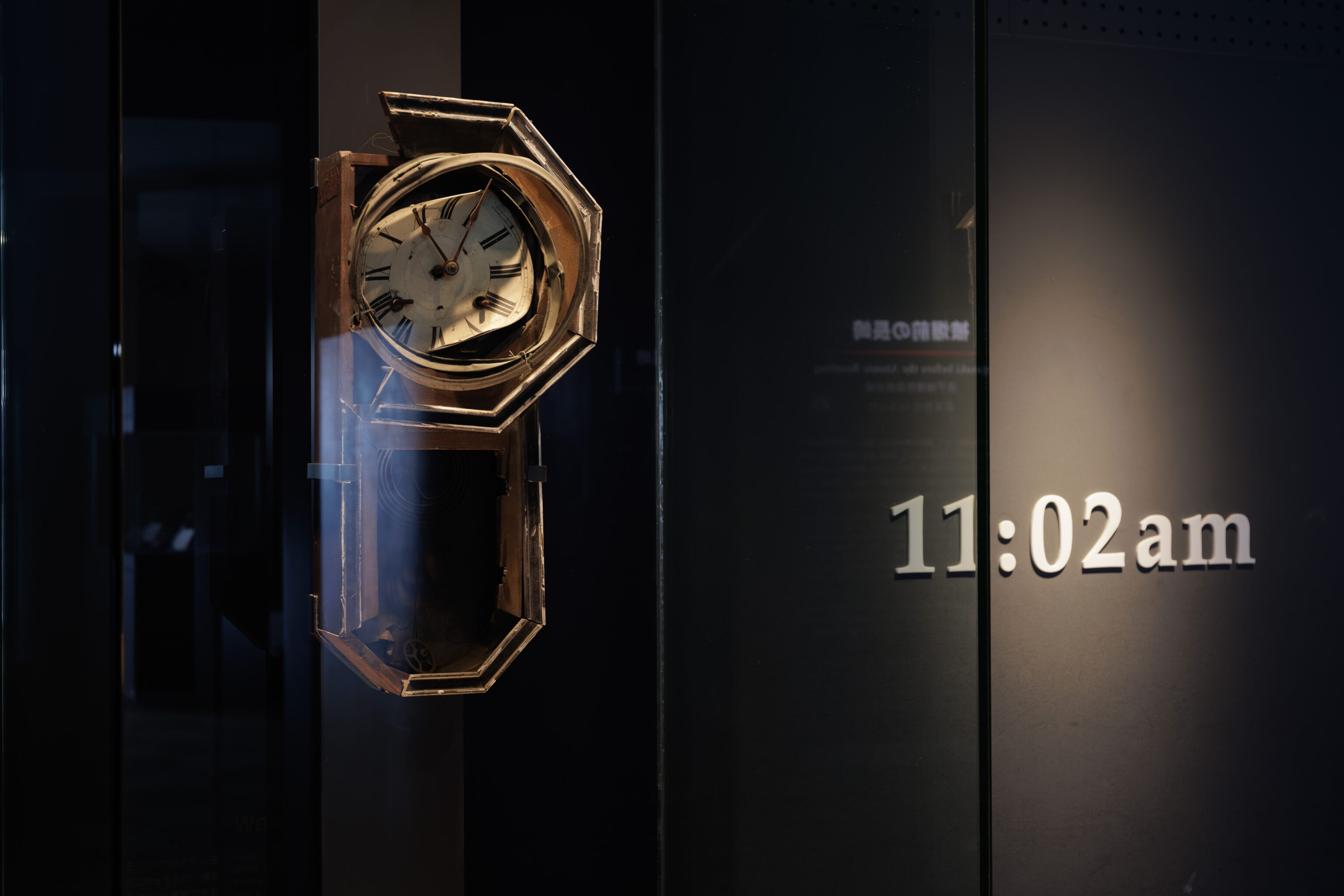
This clock shows the time when it was destroyed, 11:02am.
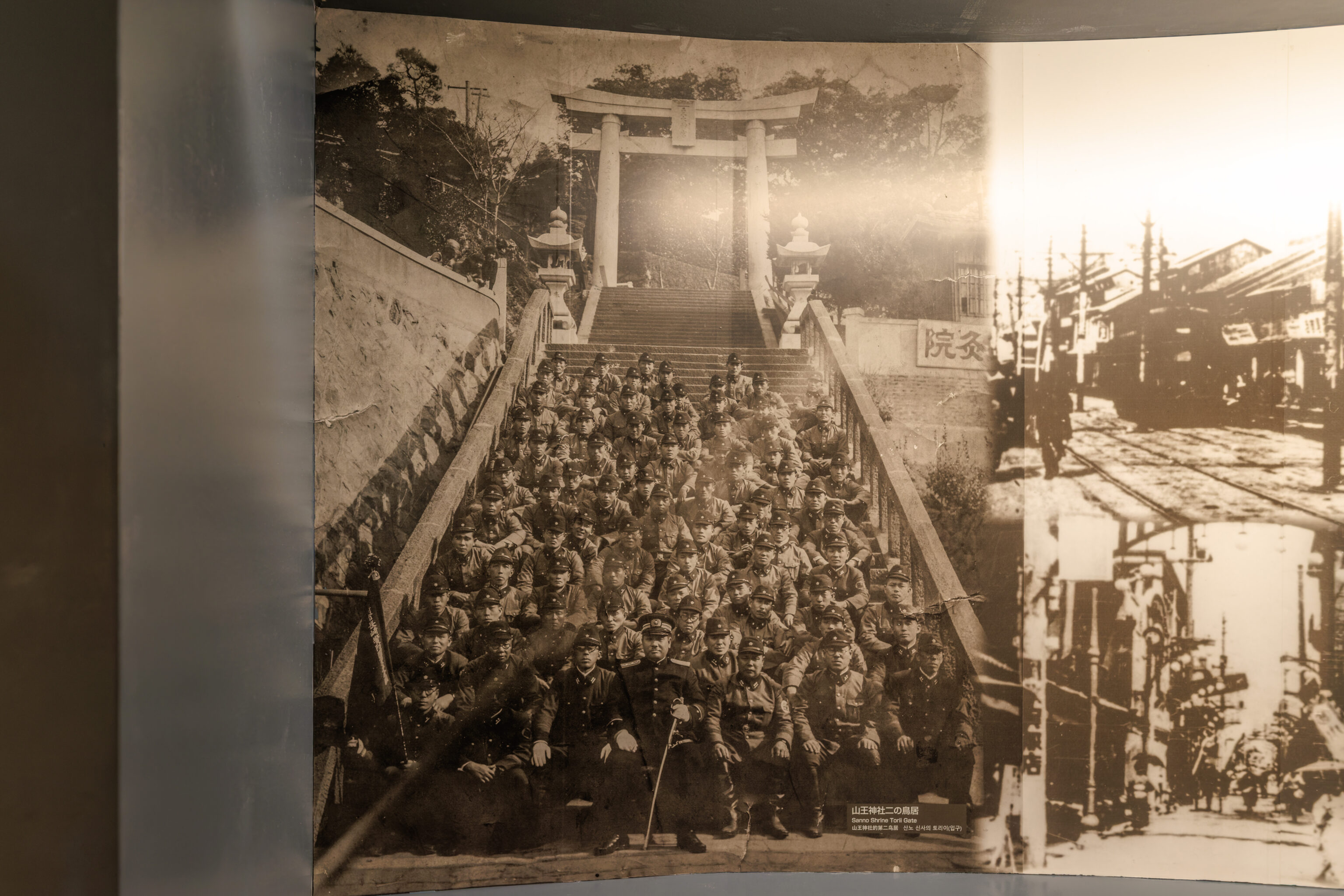
This enlarged photograph shows the torii at the 山王神社 Sanno-jinja. This torii was partially destroyed and currently stands on just one leg. We saw it two days ago.
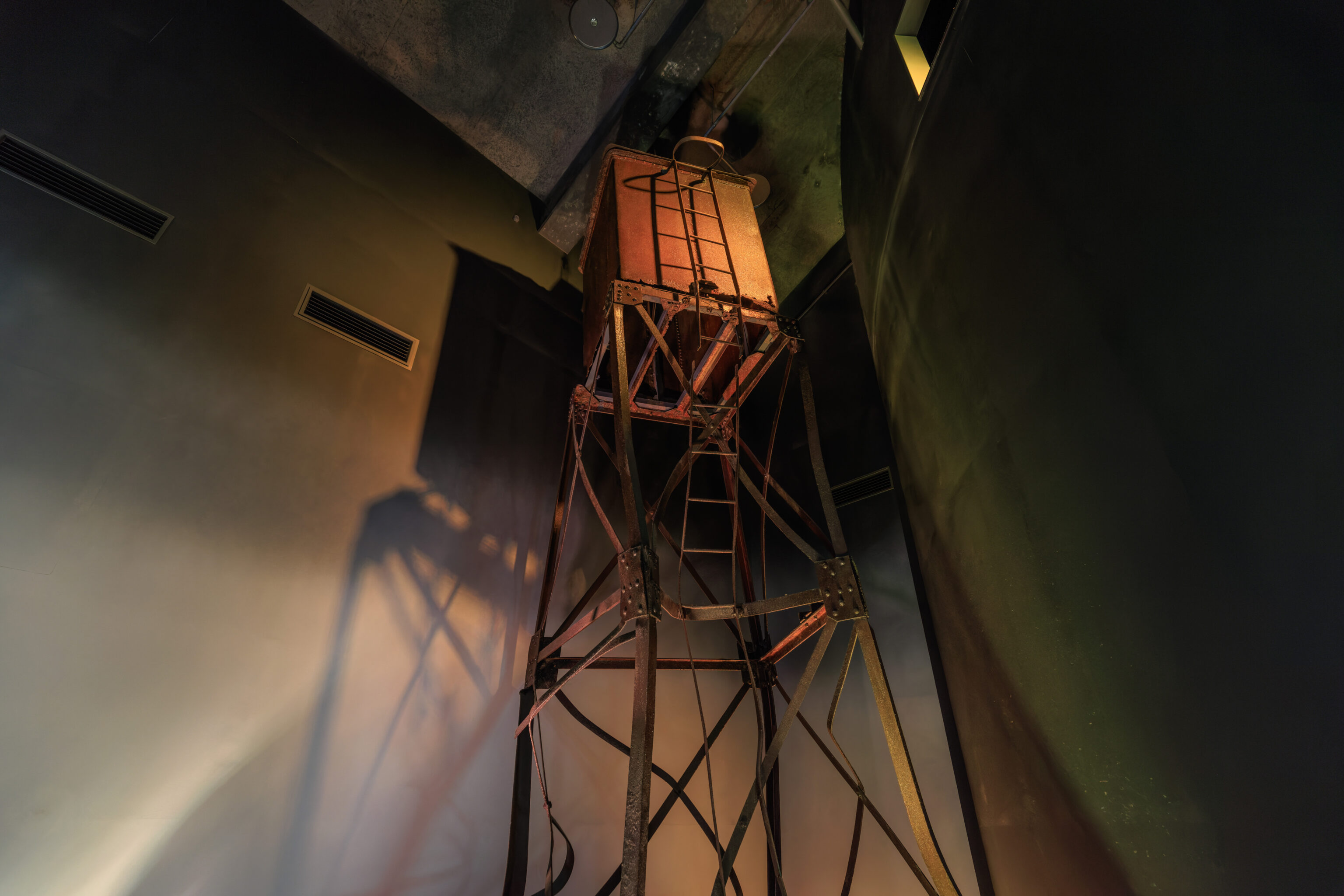
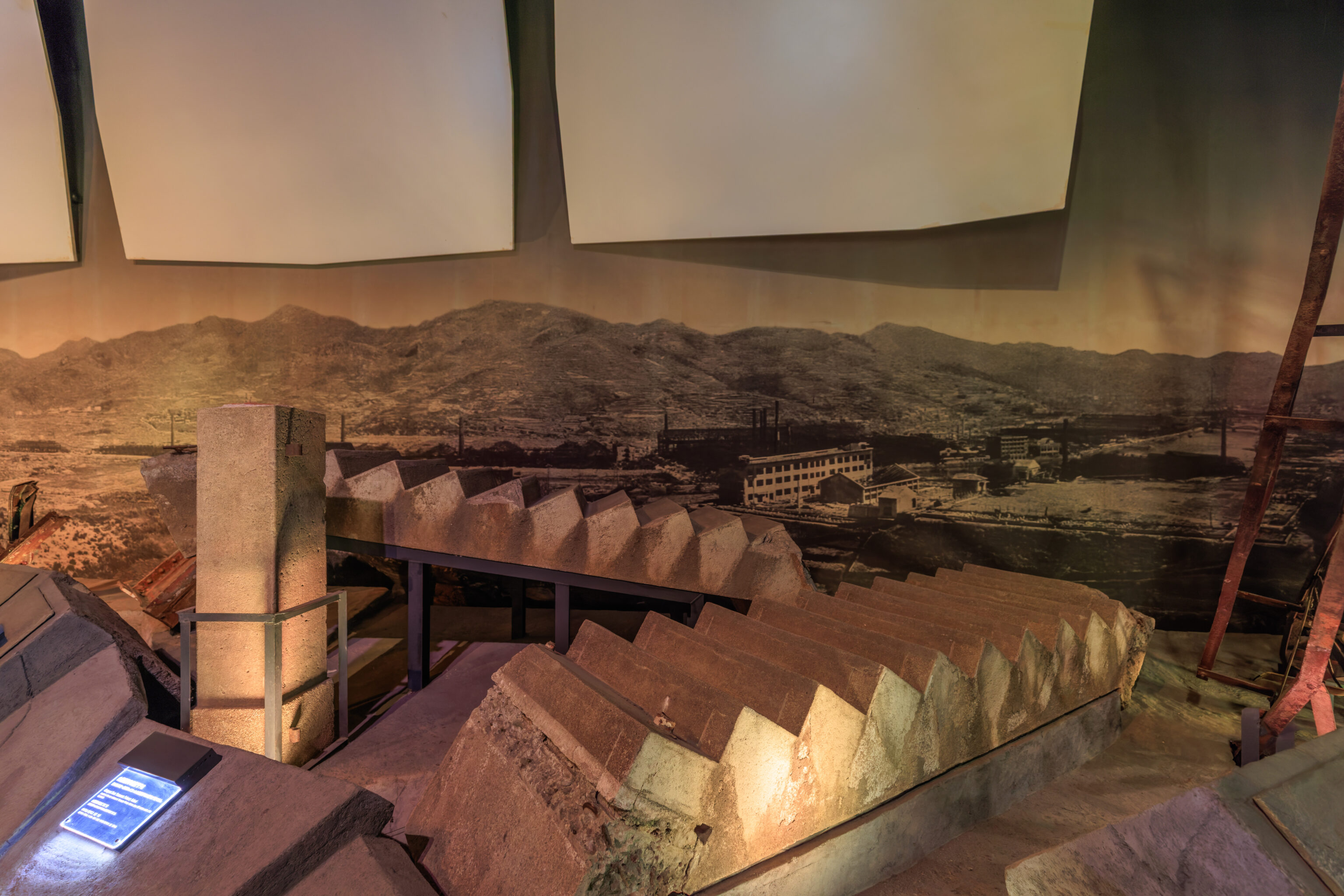
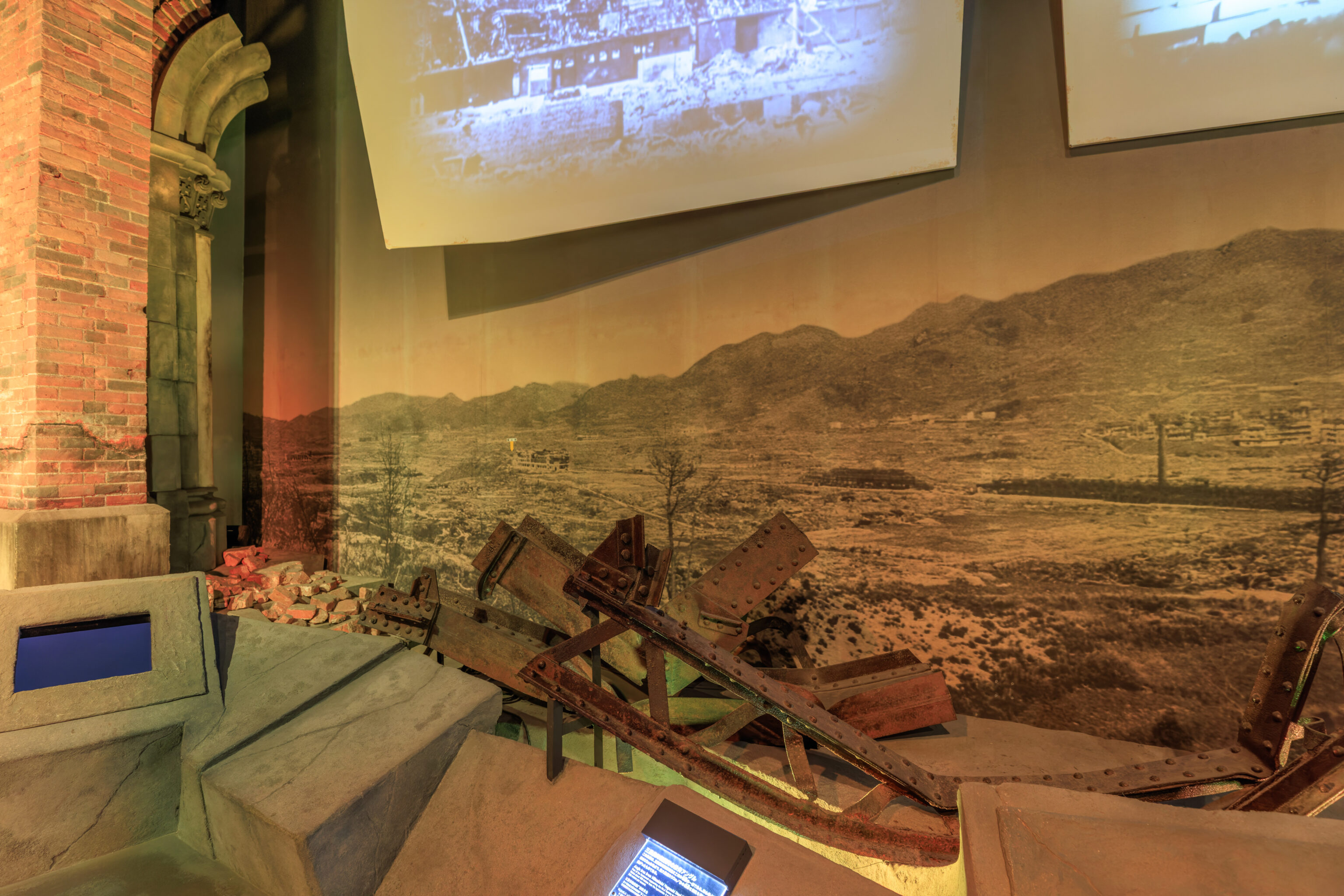
This room displays various artifacts, some of them very large, which were destroyed by the atomic bomb.
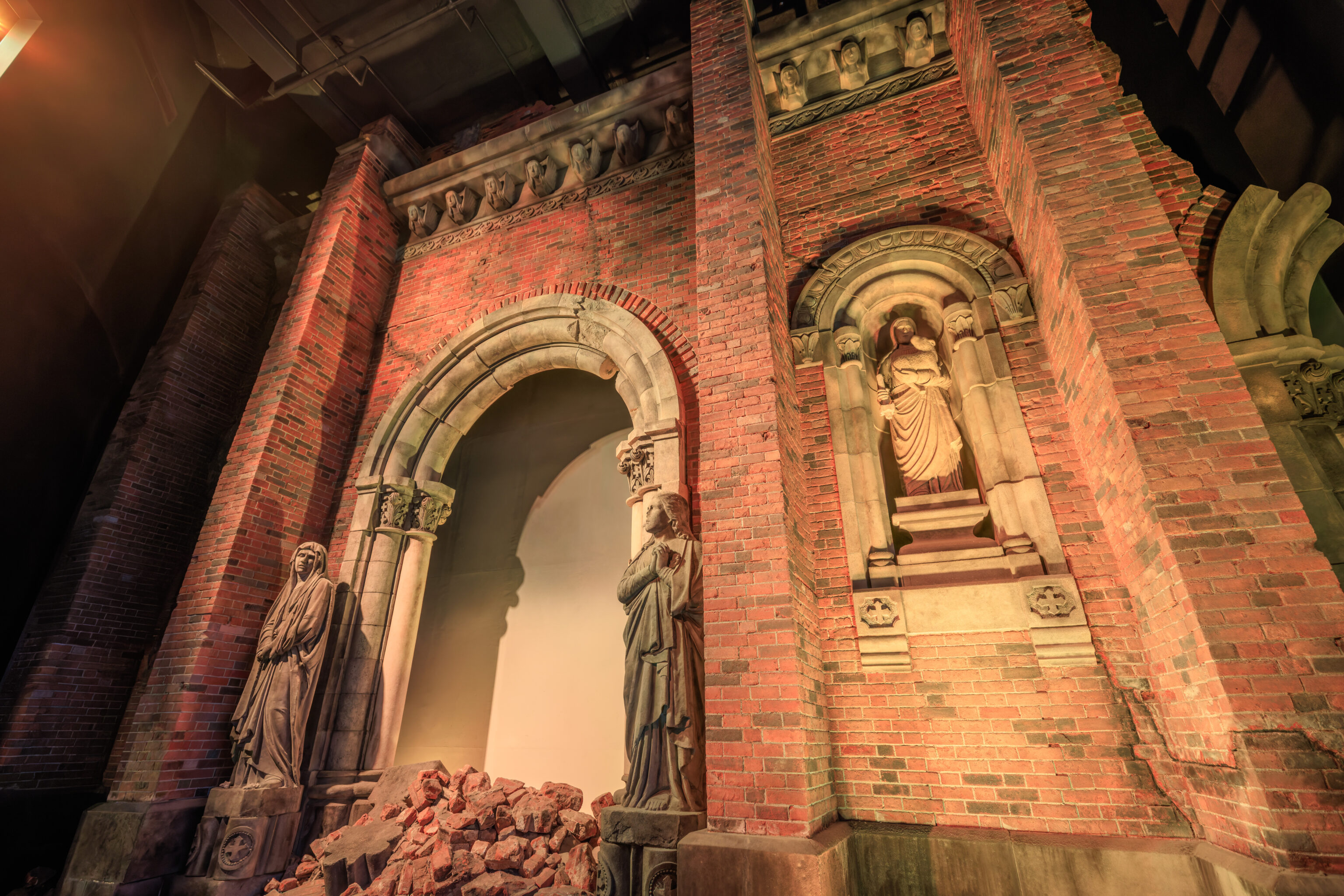
This is a reproduction of part of the Urakami Cathedral.
The Wall of Urakami Cathedral after the Atomic Bombing (reproduction)
One of the largest Catholic churches in East Asia at the time, Urakami Cathedral was located only some 500 meters northeast of the hypocenter and suffered almost complete destruction by the atomic bomb. This is a reproduction of part of the wall that remained standing on the southern side of the ruins (indicted by arrows in the photograph). The statues were blackened by the heat rays and fire, and the stone pillars were pushed out of alignment.
– Text from a sign.
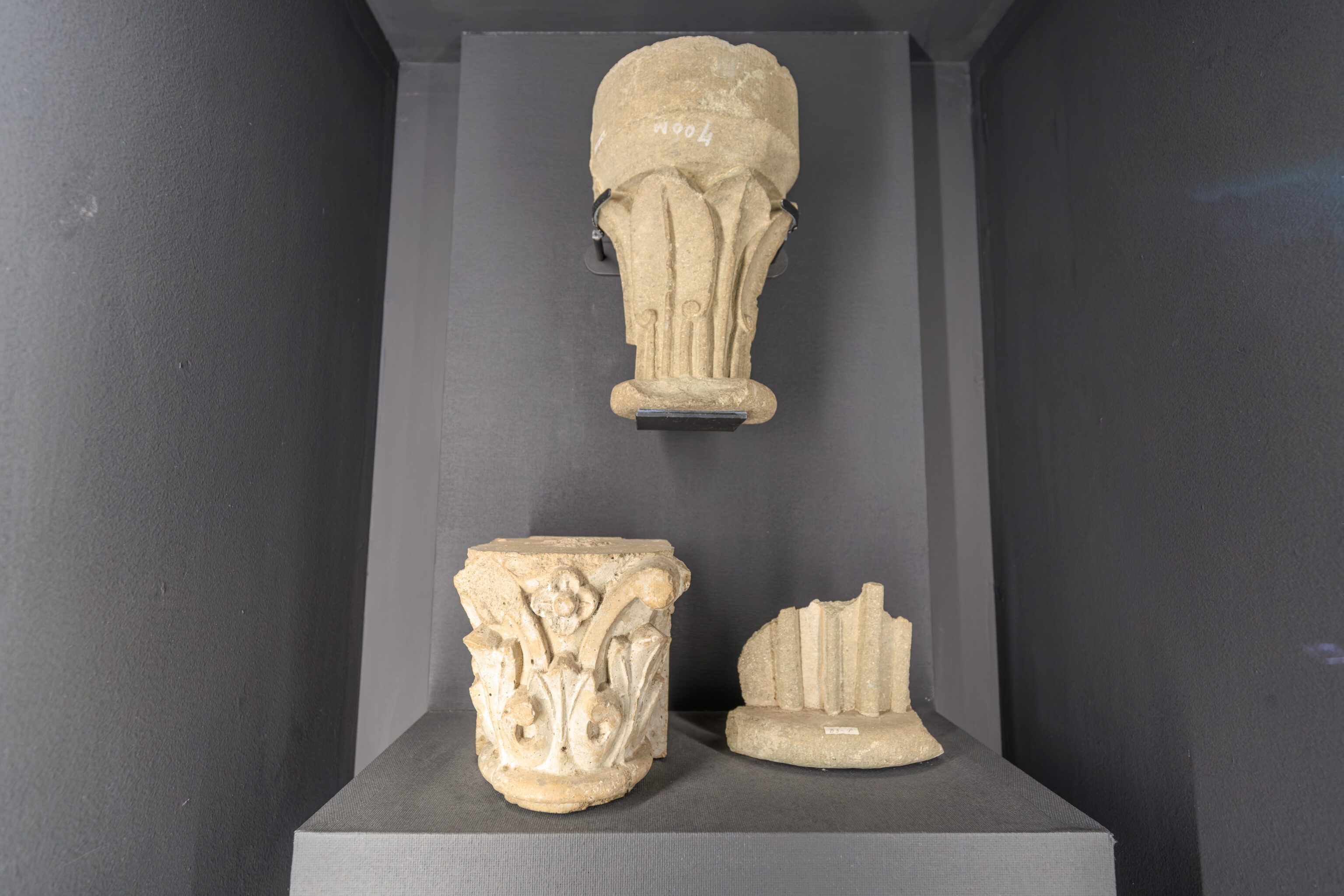
These are pieces from the cathedral.
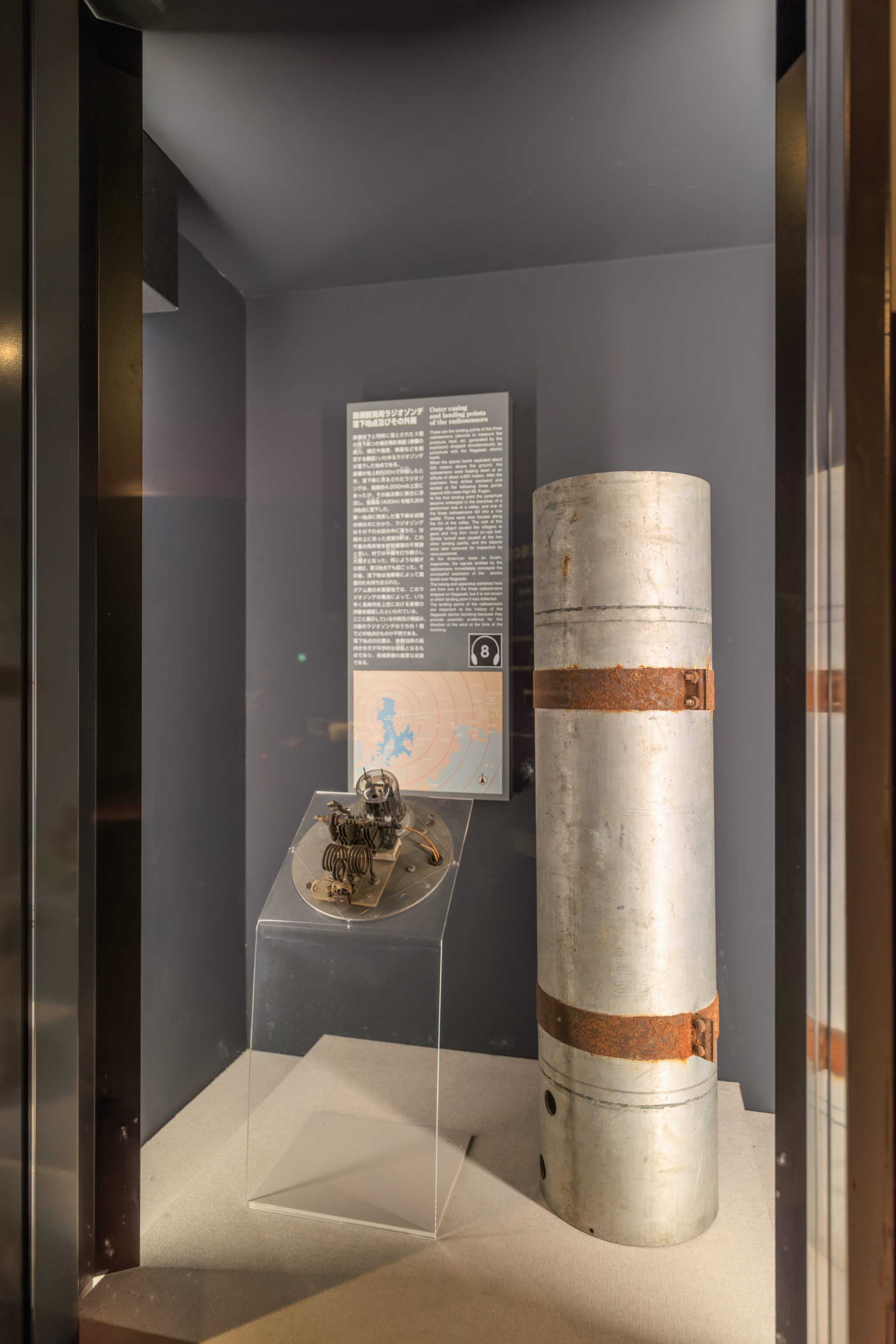
This is the outer casing of one of three devices dropped to measure the effects of the atomic bomb. It appears these devices were equipped with radio transmitters that were strong enough to be received in Guam, a distance of about 1600 miles.
Outer casing and landing points of the radiosensors
These are the landing points of the three radiosensors (devices to measure the pressure, heat, etc. generated by the explosion) dropped simultaneously by parachute with the Nagasaki atomic bomb.

When the atomic bomb exploded about 500 meters above the ground, the radiosensors were floating down at an altitude of about 4,000 meters. After the explosion they drifted eastward and landed at the following three points beyond 430 meter-high Mt. Fugen.

At the first landing point the parachute became entangled in the branches of a persimmon tree in a valley, and one of the three radiosensors fell into a rice paddy. There were nine houses along the rim of the valley. The visit of this strange object caused the villagers to panic and ring their local air-raid bell. Similar turmoil was caused at the two other landing points, and the objects were later removed for inspection by navy personnel.

At the American base on Guam, meanwhile, the signals emitted by the radiosensors immediately conveyed the successful explosion of the atomic bomb over Nagasaki.

The casing and apparatus exhibited here are from one of the three radiosensors dropped on Nagasaki, but it is not known at which landing point it was collected.

The landing points of the radiosensors are important to the history of the Nagasaki atomic bombing because they provide scientific evidence for the direction of the wind at the time of the bombing.
– Text from the sign at the rear of the display.
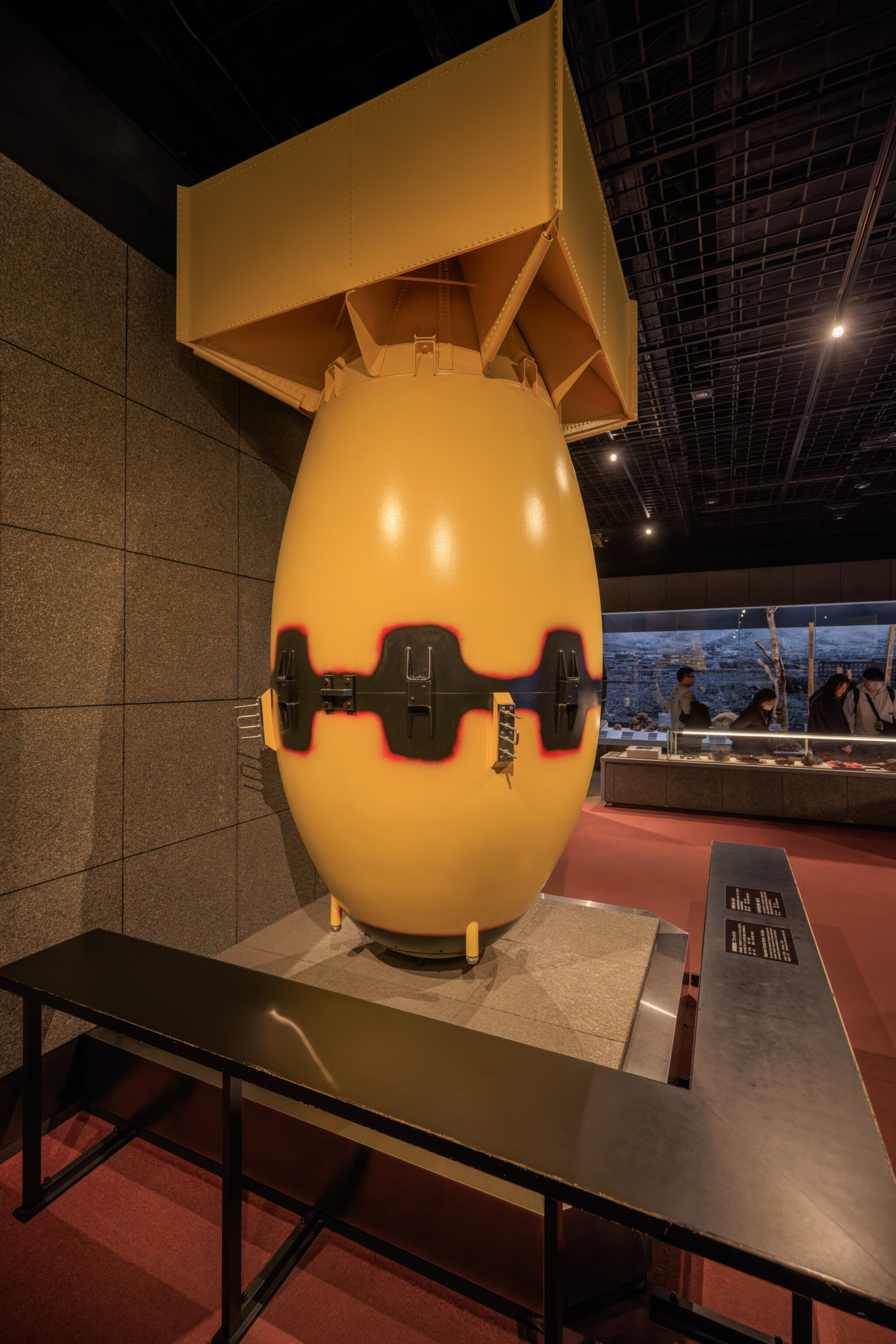
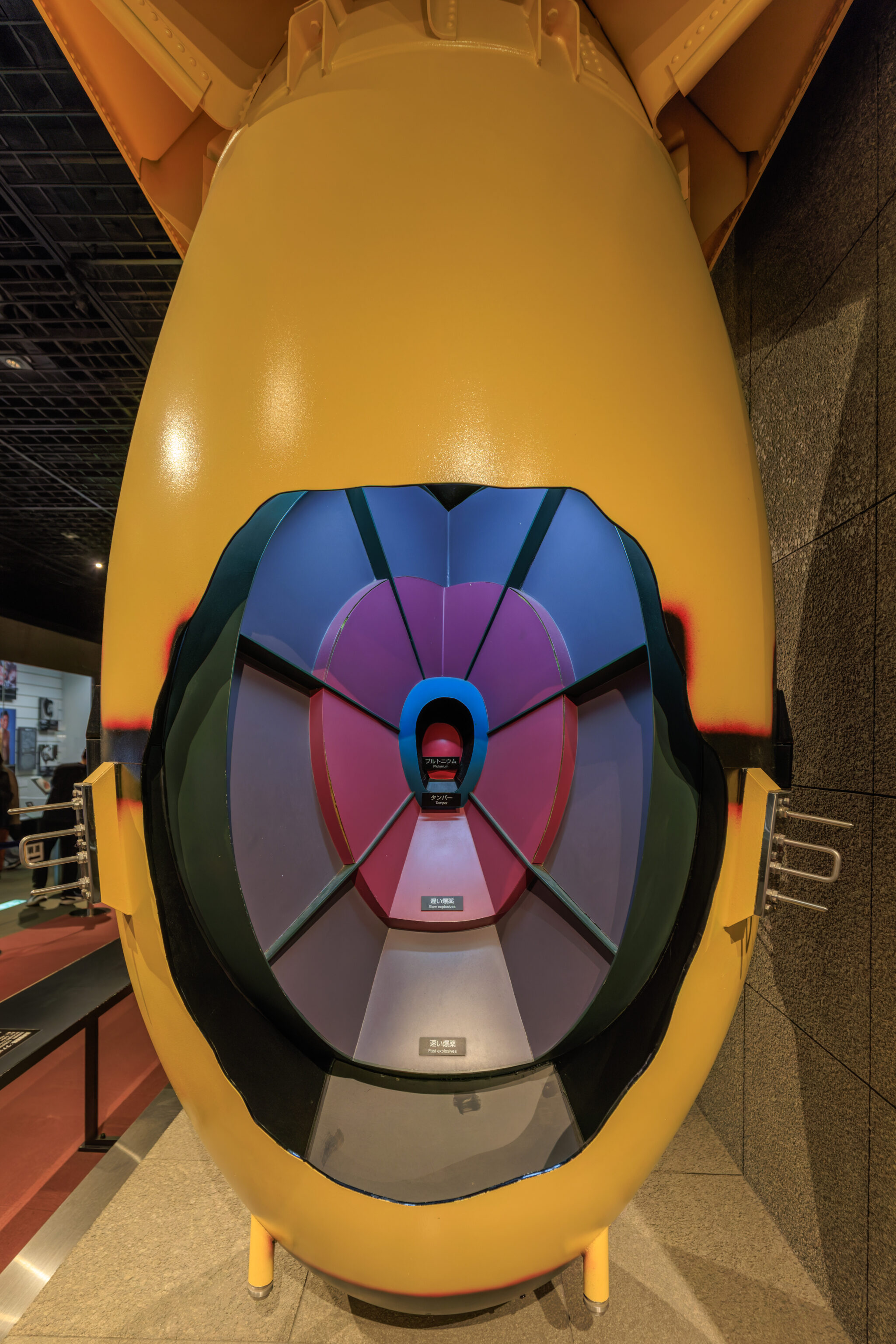
This is a model of Fat Man, the plutonium core atomic bomb dropped on Nagasaki.
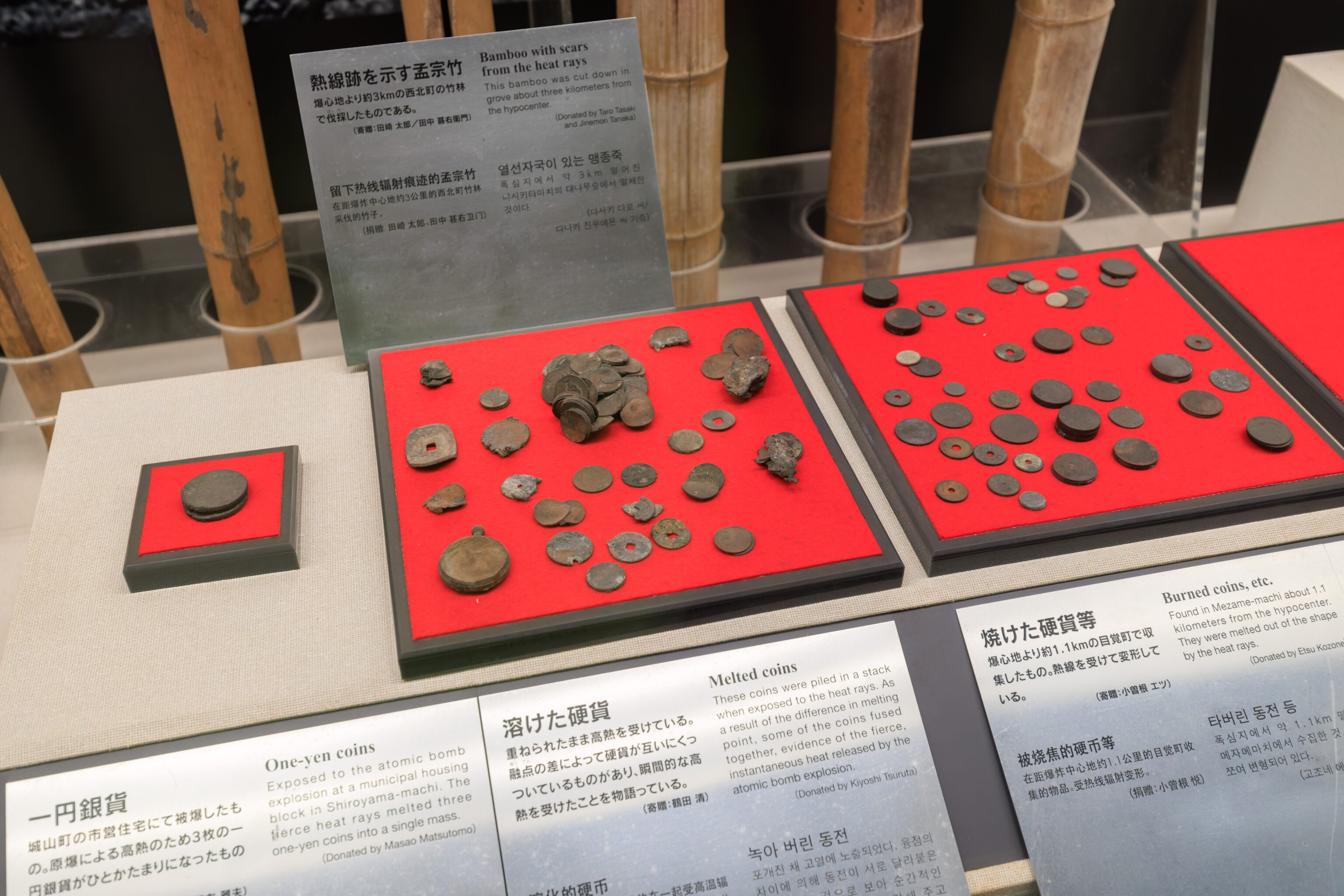
This display shows coins that were melted and burned by the atomic blast.
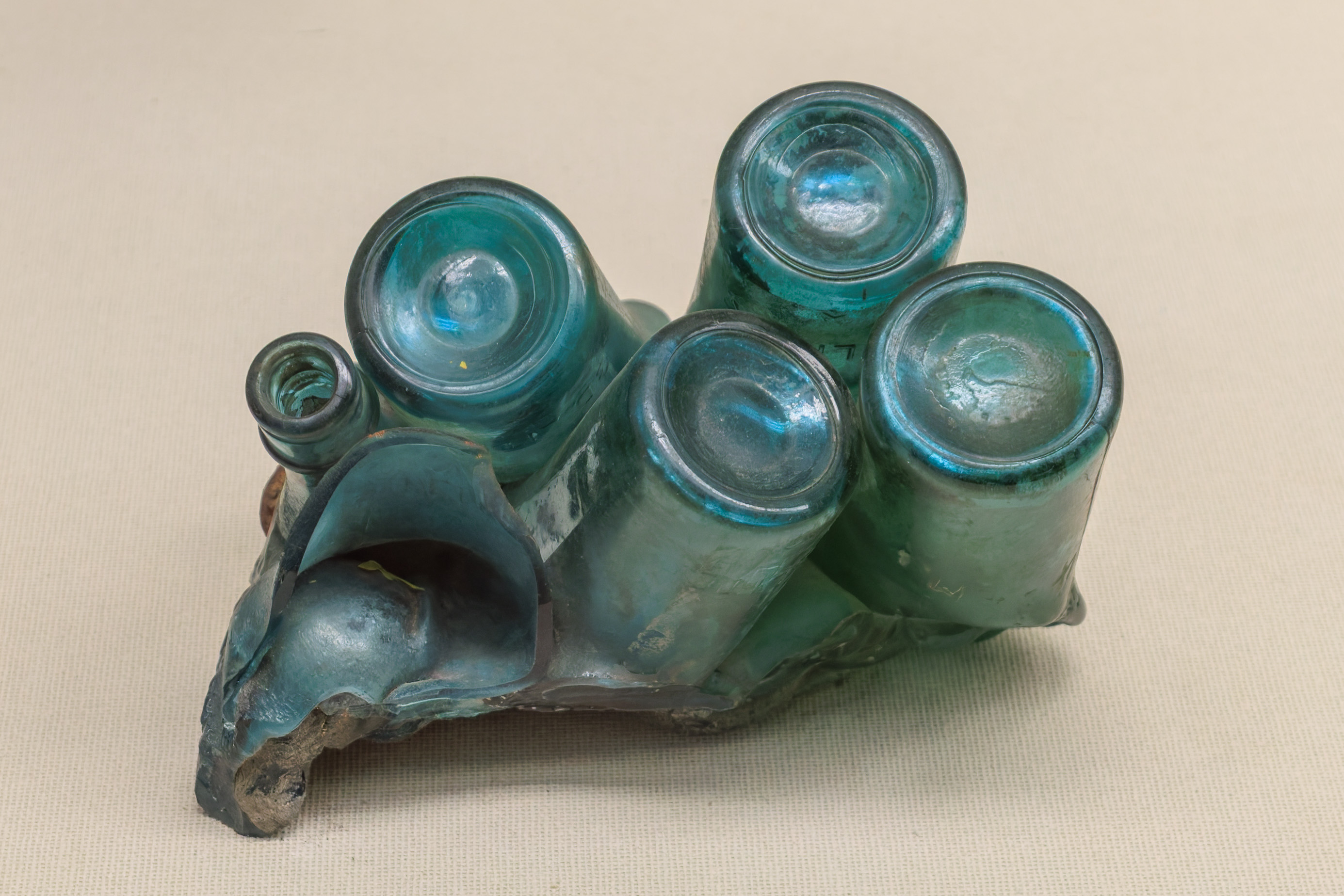
Here, six bottles melted together into one big chunk of glass.
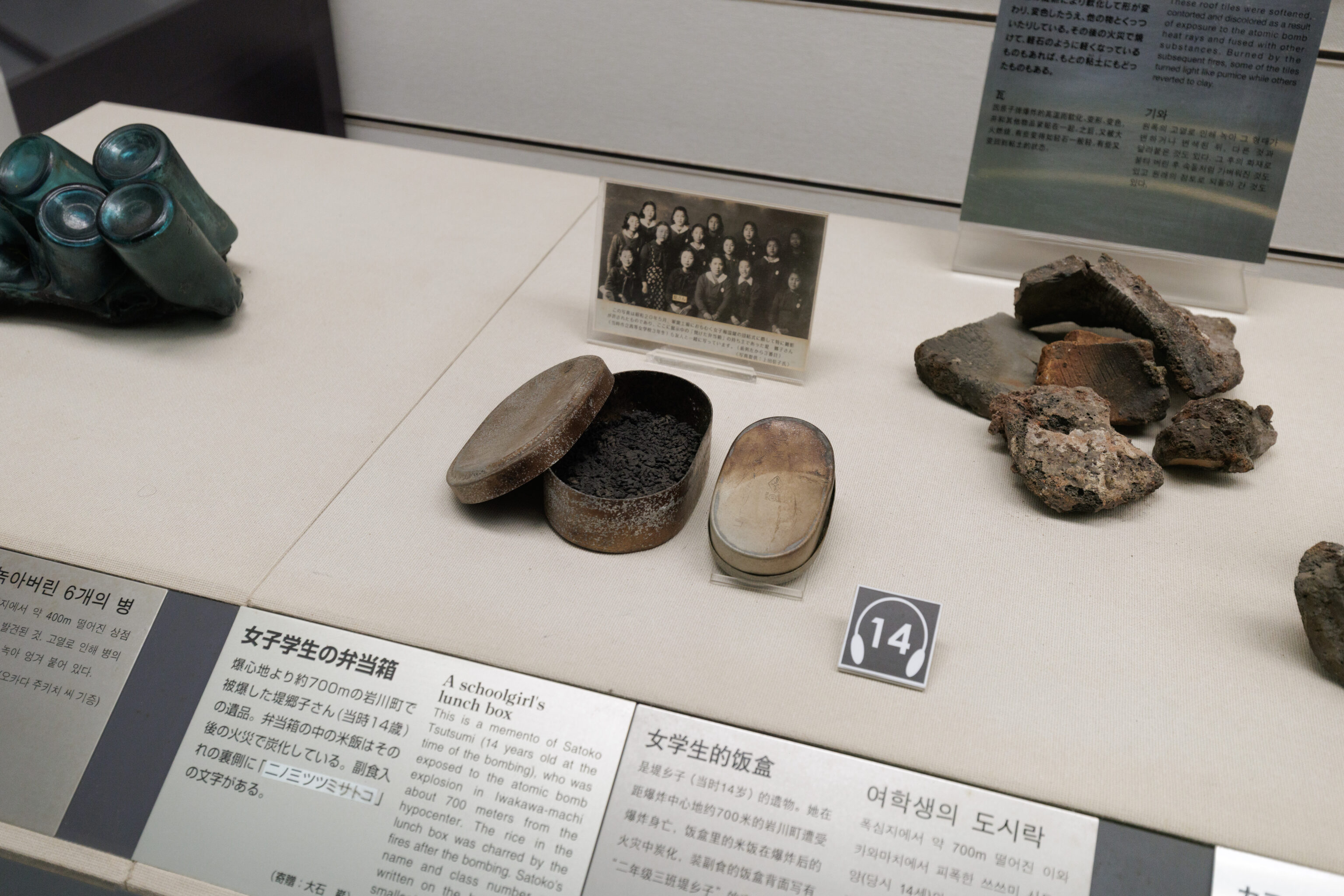
This was a girl’s lunchbox. The rice has been charred but is still identifiable.
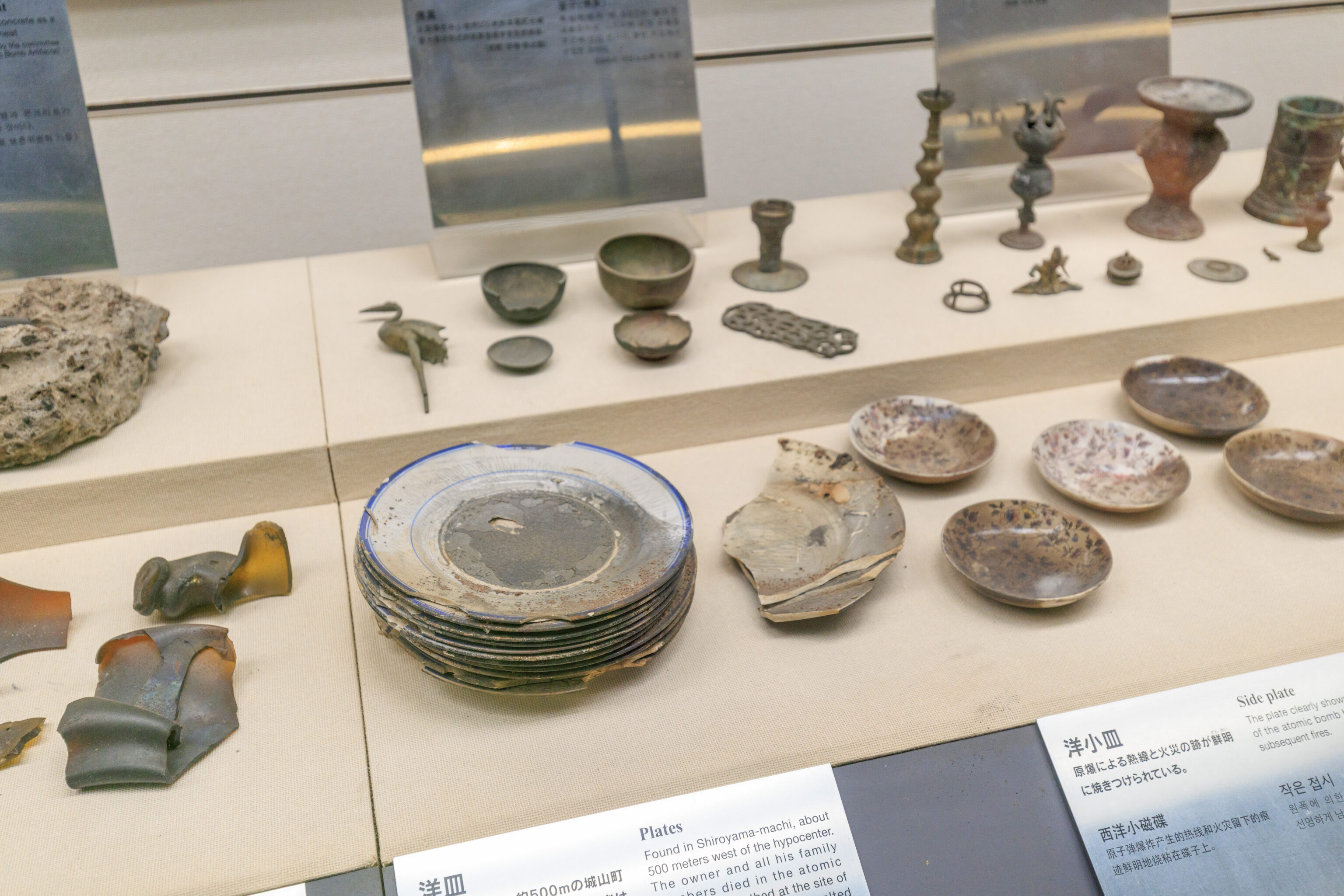
This display showed a variety of plates, bowls, and other common items.
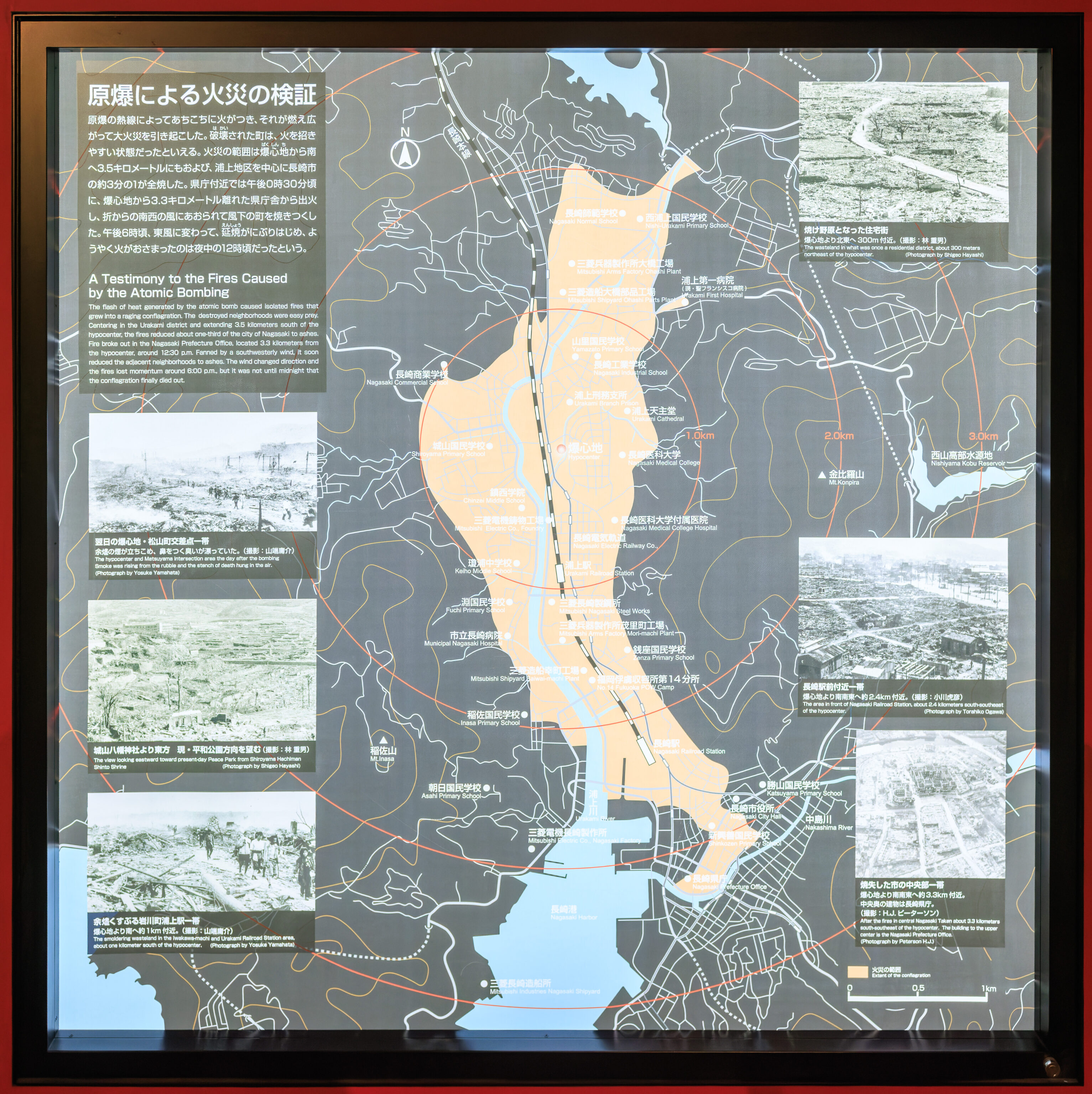
This map shows the area that was engulfed by fire after the initial blast of the atomic bomb.
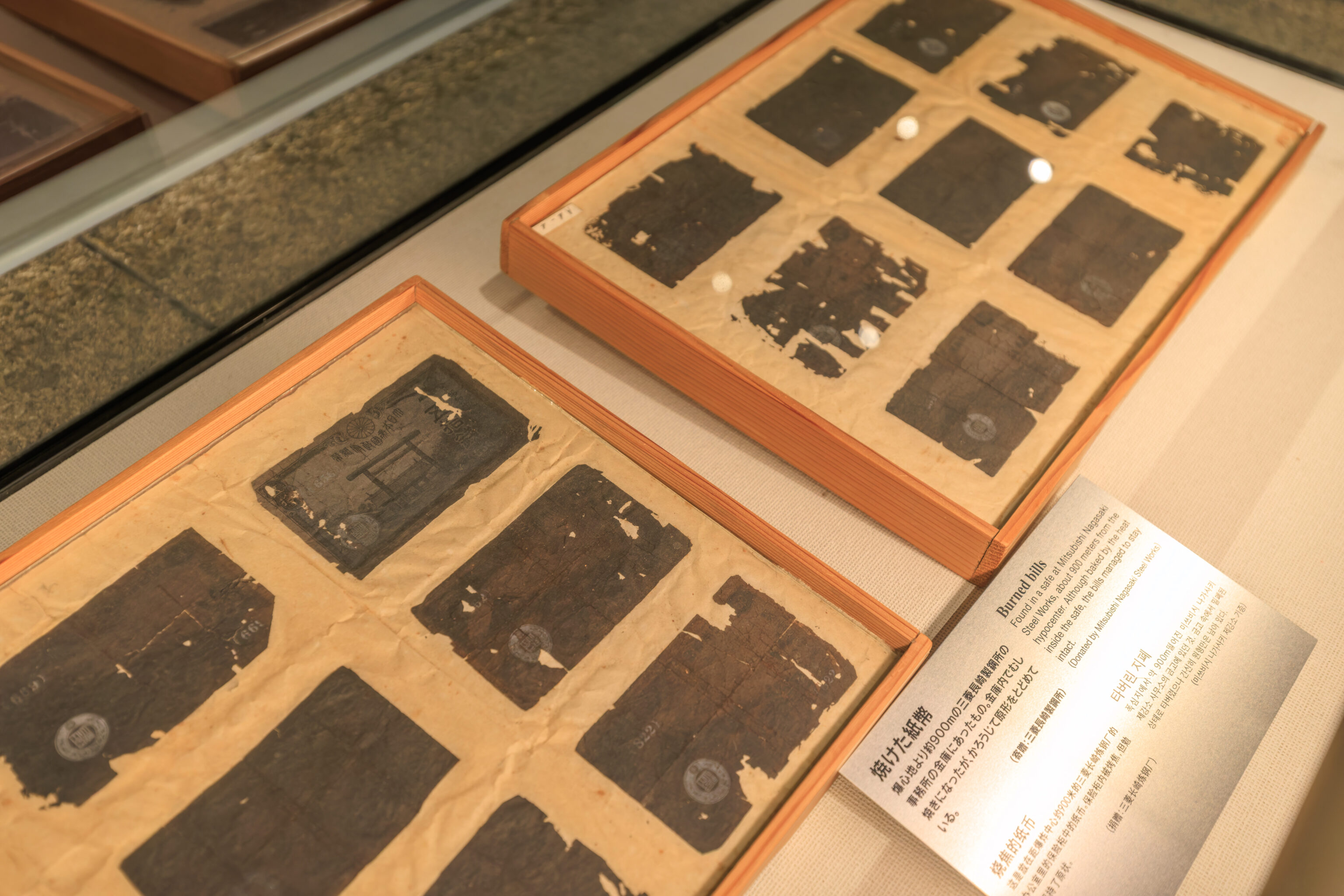
These are bills that were in a safe. The bills did not catch fire but they did burn from the heat.
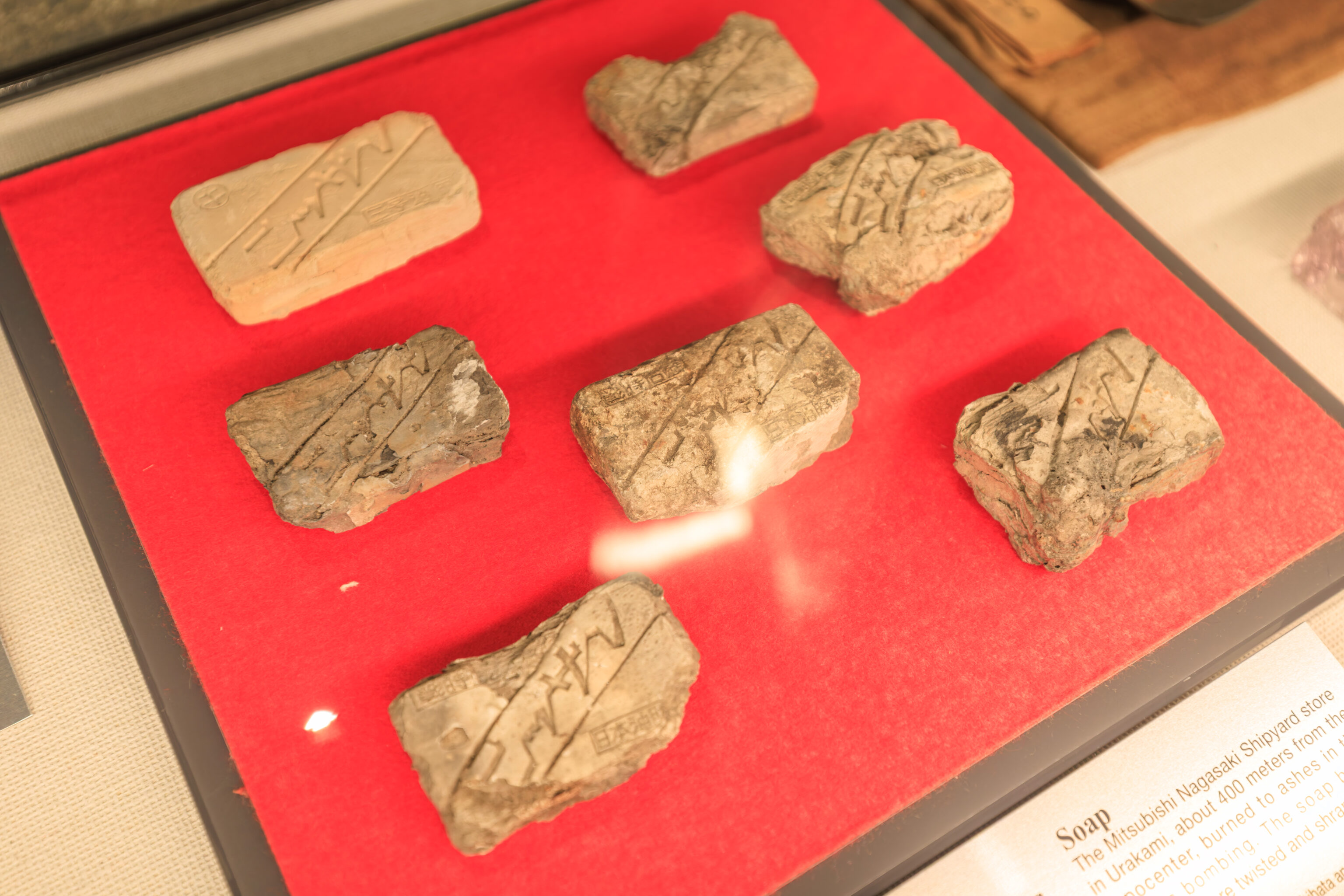
These rectangular objects are bars of soap.
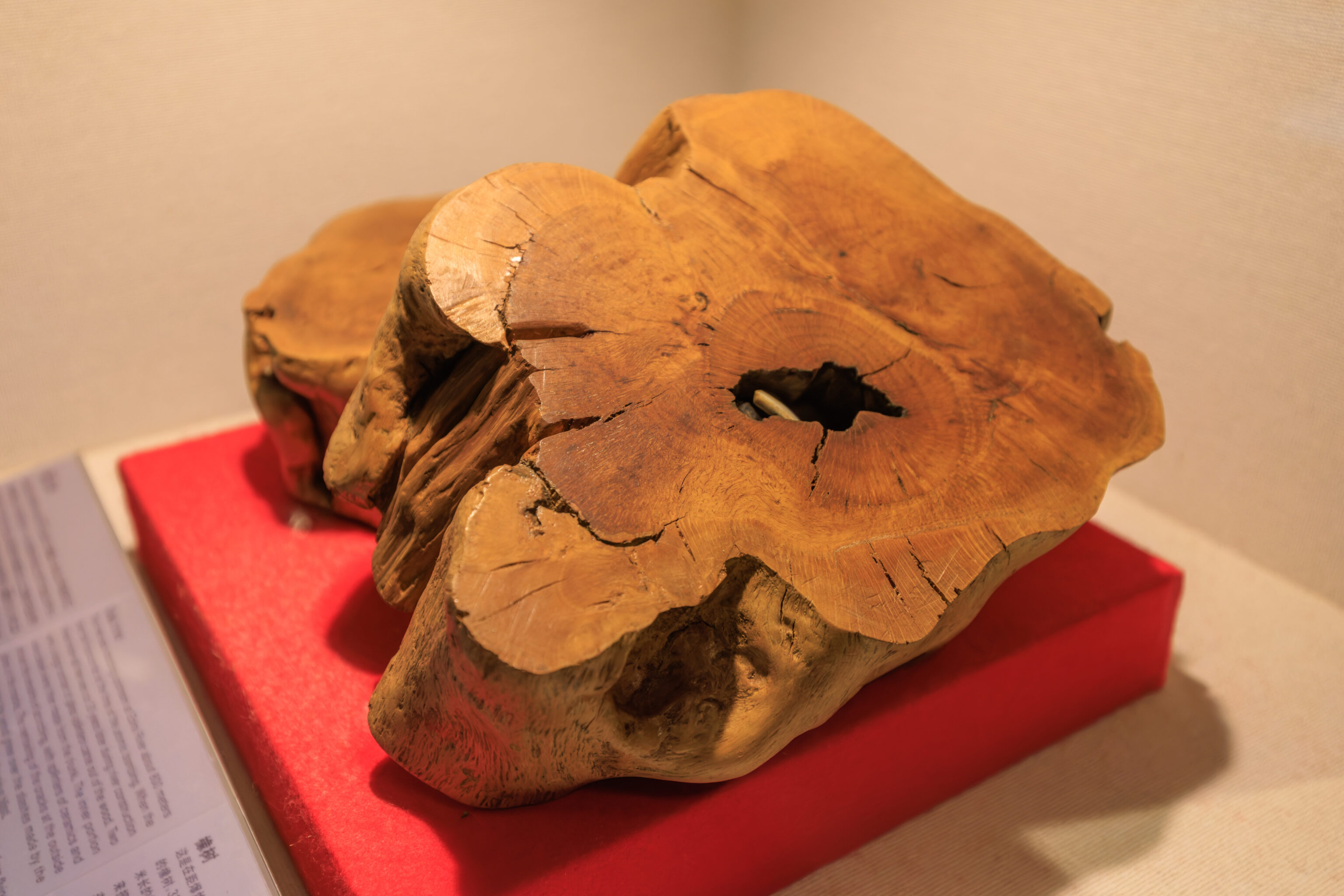
This slice of a tree trunk contains debris that was blasted into the tree by the atomic blast. The tree survived and grew around the damaged areas.
Oak tree
This tree was standing upstream at Ebira River about 800 meters from the hypocenter at the time of the atomic bombing. When the three meter-tall tree was cut 33 years later during river construction work, a large number of glass splinters came out of the wood. Two vase bases were then made from the trunk. The inner portion shows the remains of scorching, with splinters of ceramics and glass in the cracks. The narrowing of the cracks at the outside suggests that the wood grew over the slashes made by the splinters hurled at the tree by the ferocious blast.

Mr. Sugimoto himself suffered wounds all over his body from flying glass when exposed to the explosion at Mitsubishi Nagasaki Shipyard Ship Model Experiment Station, about 1600 meters from the hypocenter. He donated the wood to the museum saying, "I treasured it because it suffered the same fate as me, but I hope that it will help other people realize the horror of the atomic bombings."

(Donated by Yoshihiro Sugimoto)
– Text from a sign.
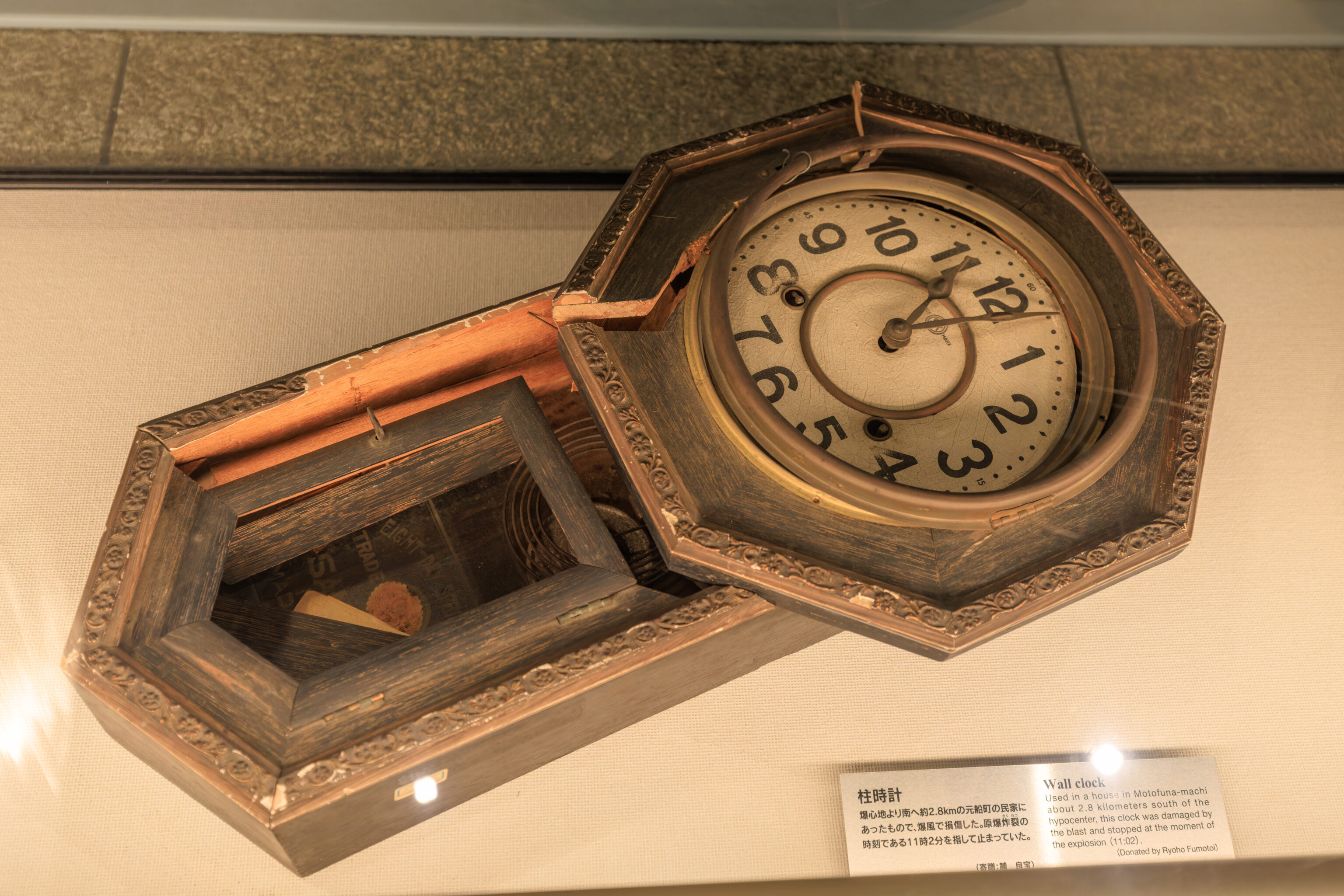
This is another clock that was stopped by the atomic bomb.
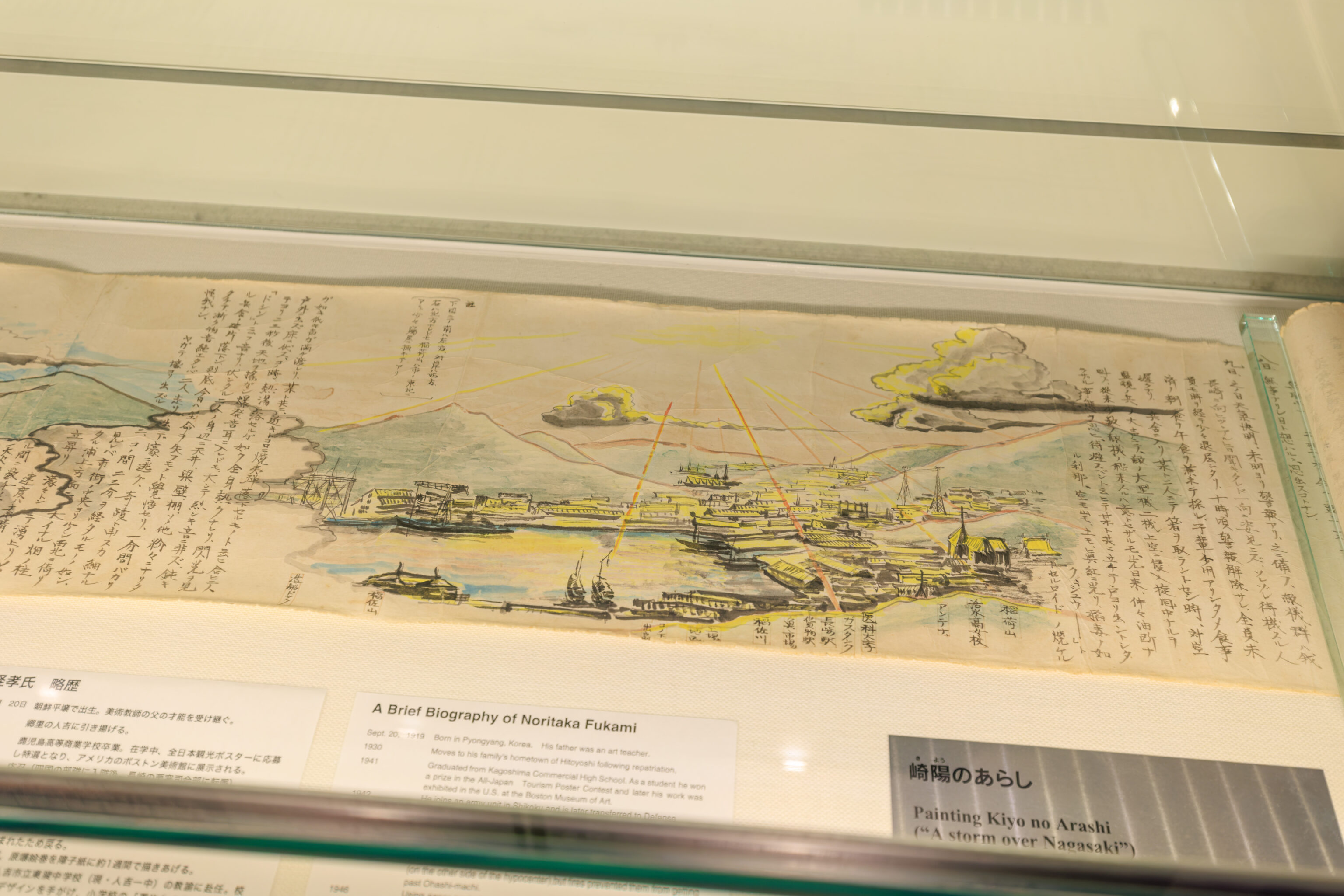
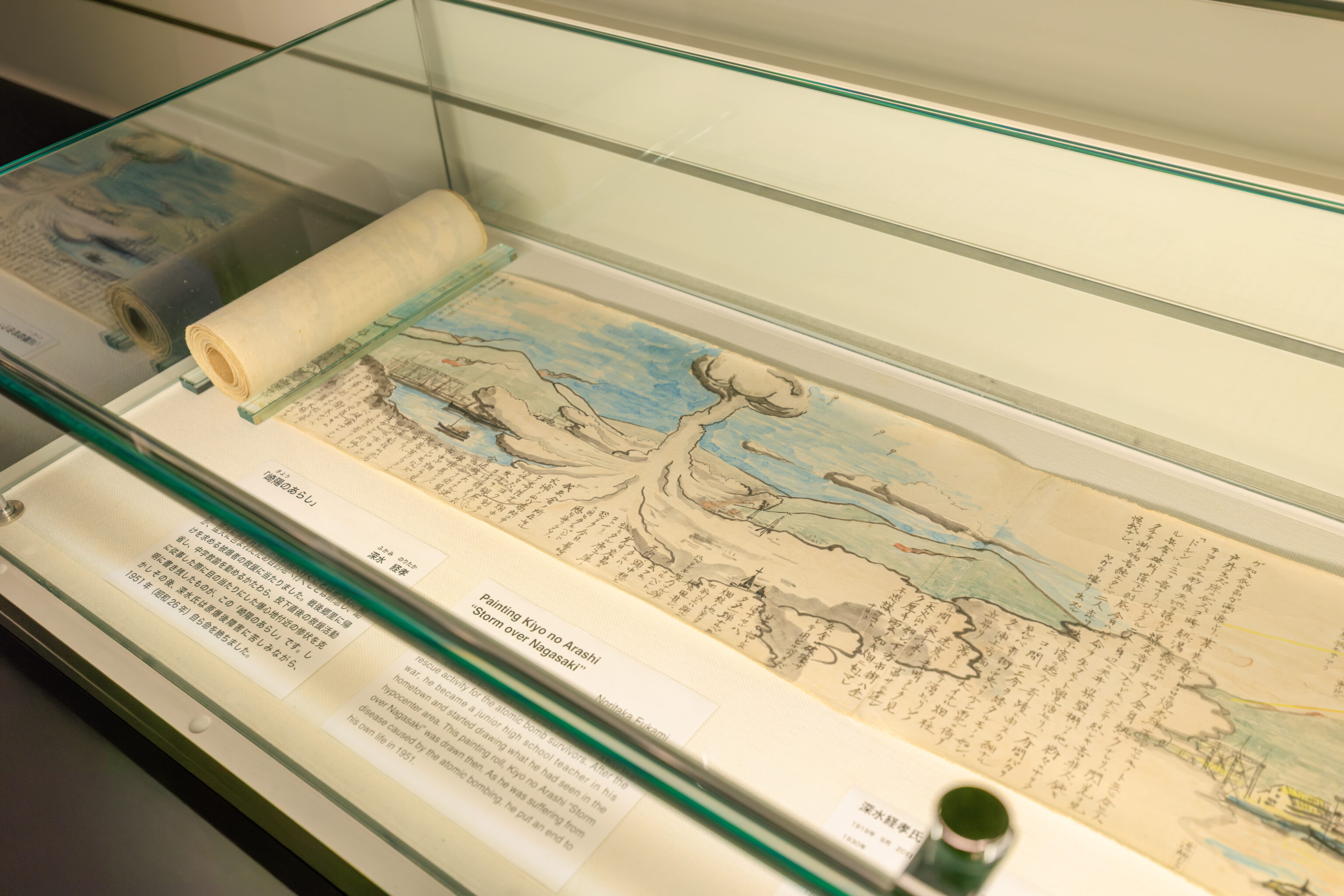
This scroll contains a painting, 崎陽のあらし Kiyo no Arashi, by Noritaka Fukami. We continued on through the exhibit space, which took about an hour. The museum goes into great detail about the terrible effects of the atomic bombing. But as expected, it does not discuss at all the causes of the war or what could be done in the future to prevent war.
Nagasaki National Peace Memorial Hall for the Atomic Bomb Victims
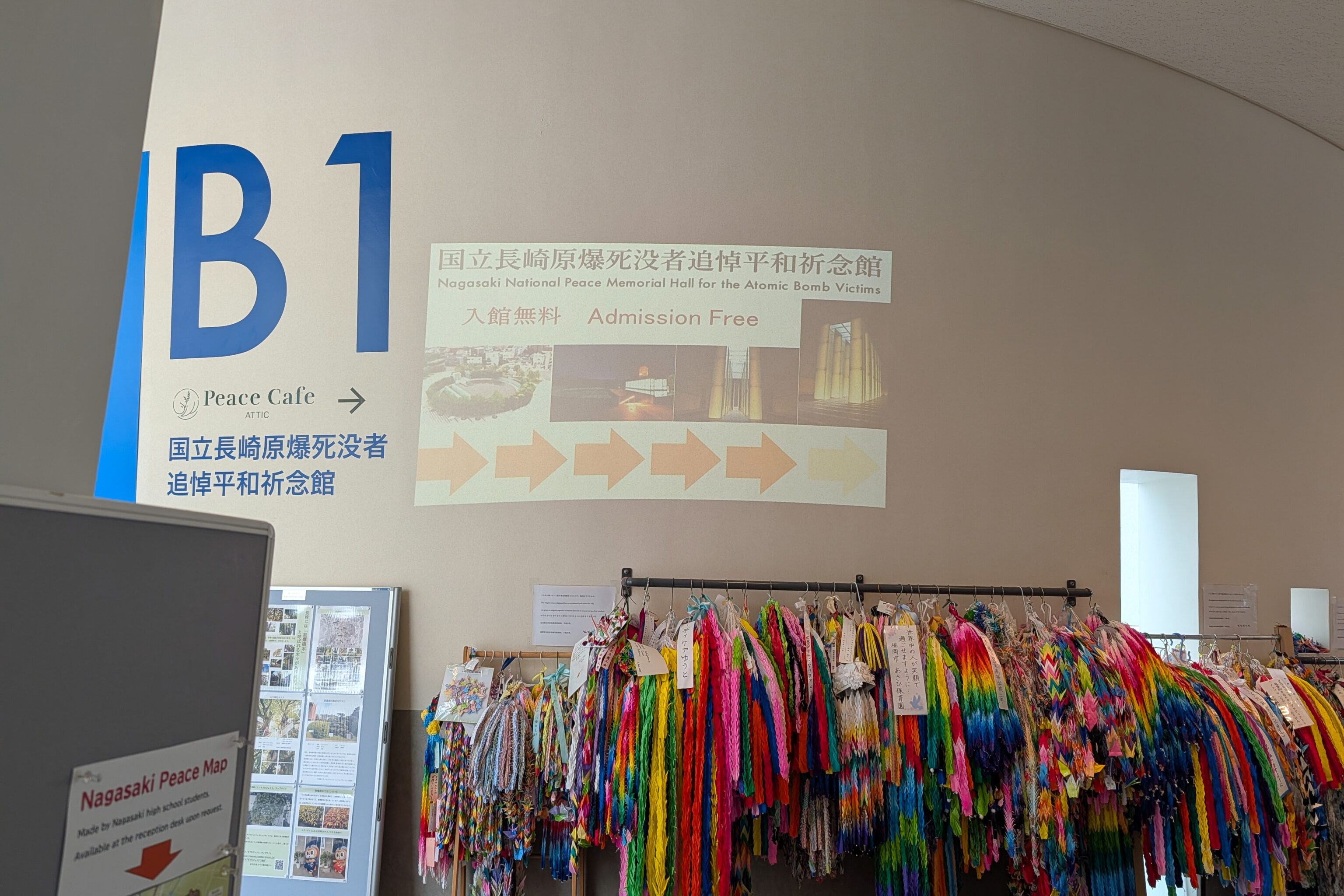
After returning to the floor that we entered on, we headed to the 国立長崎原爆死没者追悼平和祈念館 Nagasaki National Peace Memorial Hall for the Atomic Bomb Victims. This memorial hall is next door and can be reached without needing to go outside. The route to get there wasn’t obvious until we saw this projected sign!
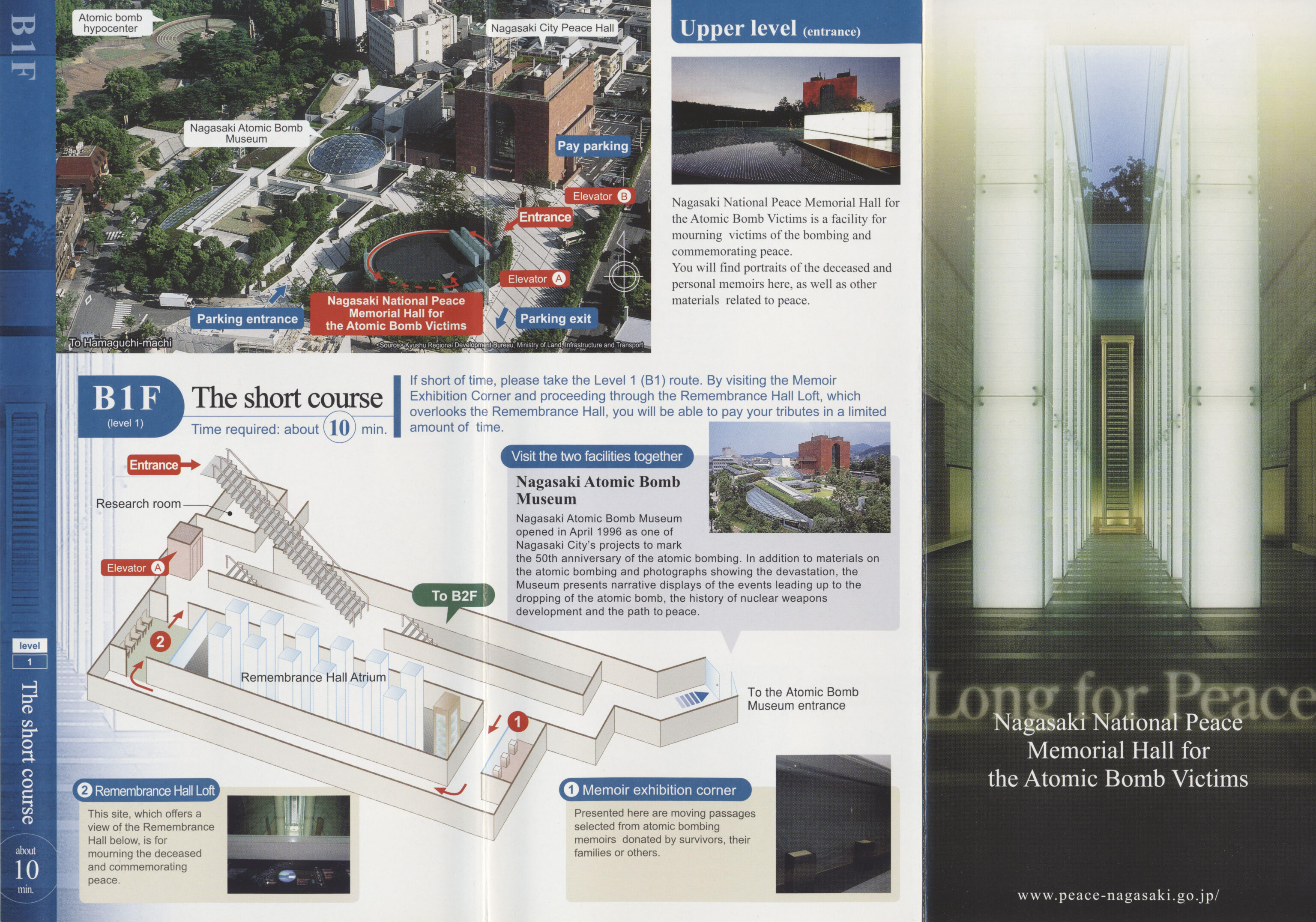
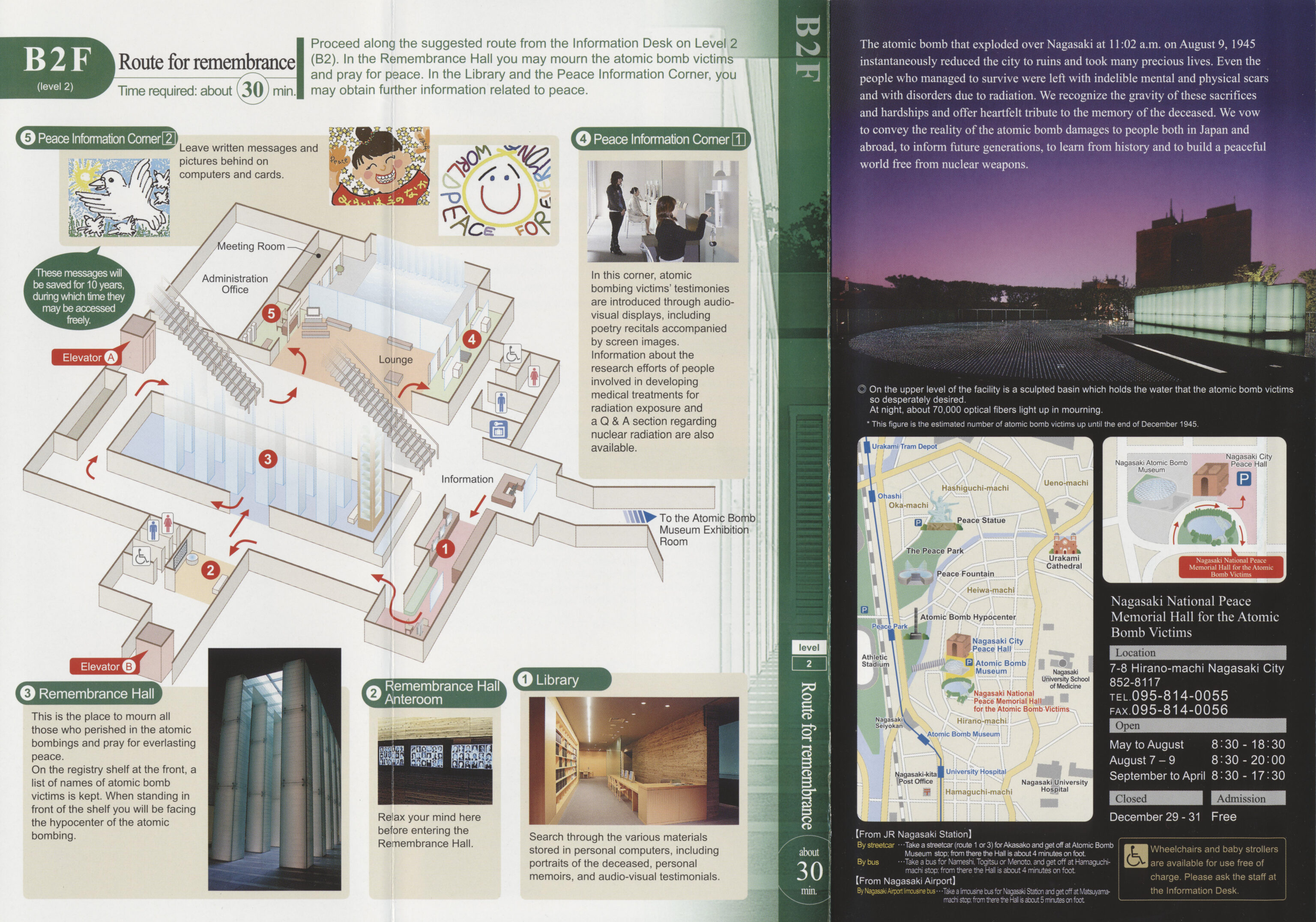
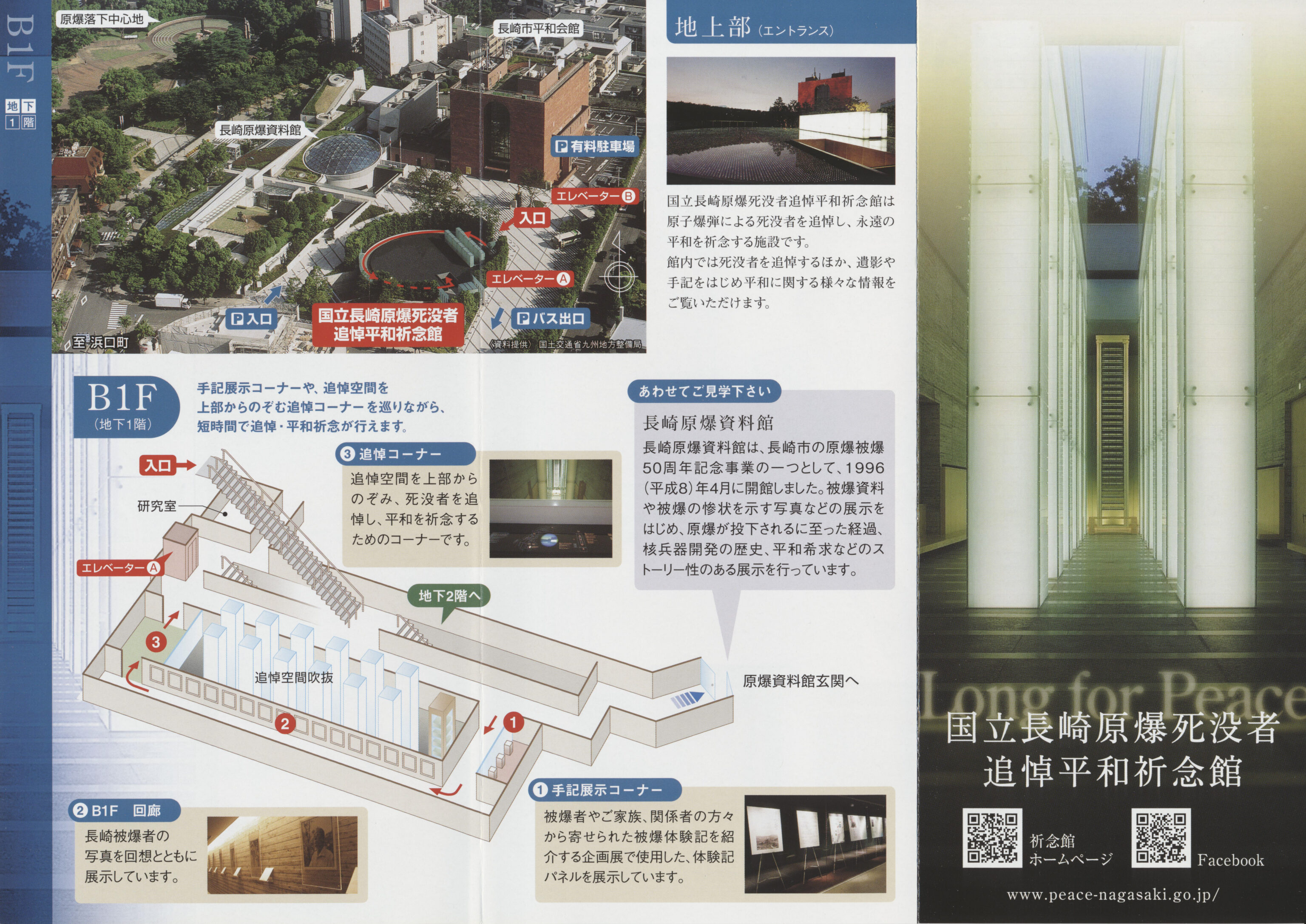
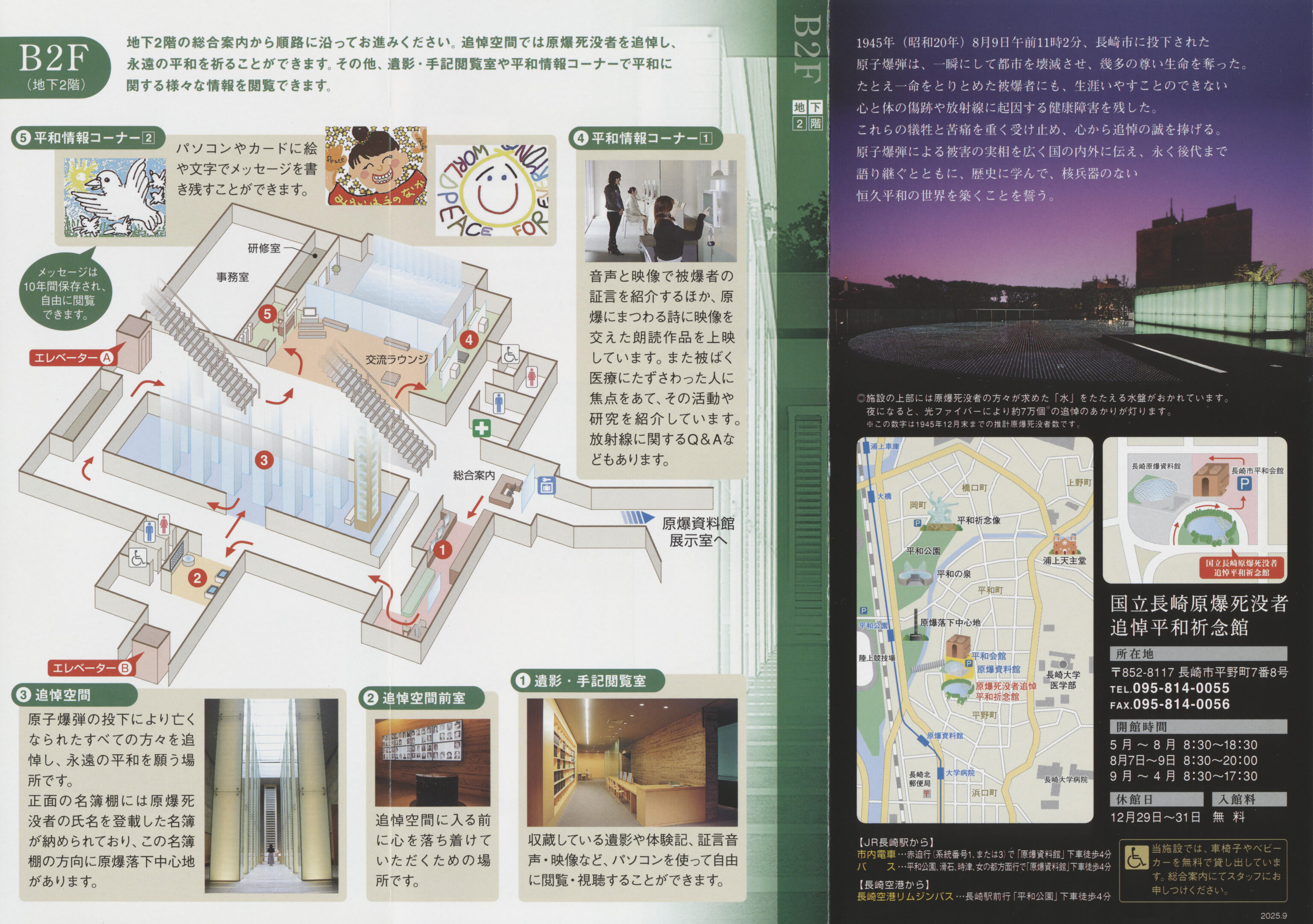
We picked up English and Japanese pamphlets for the memorial hall at some point… We arrived in the B1F, which in standard Japanese floor notation is the first basement floor below ground level.
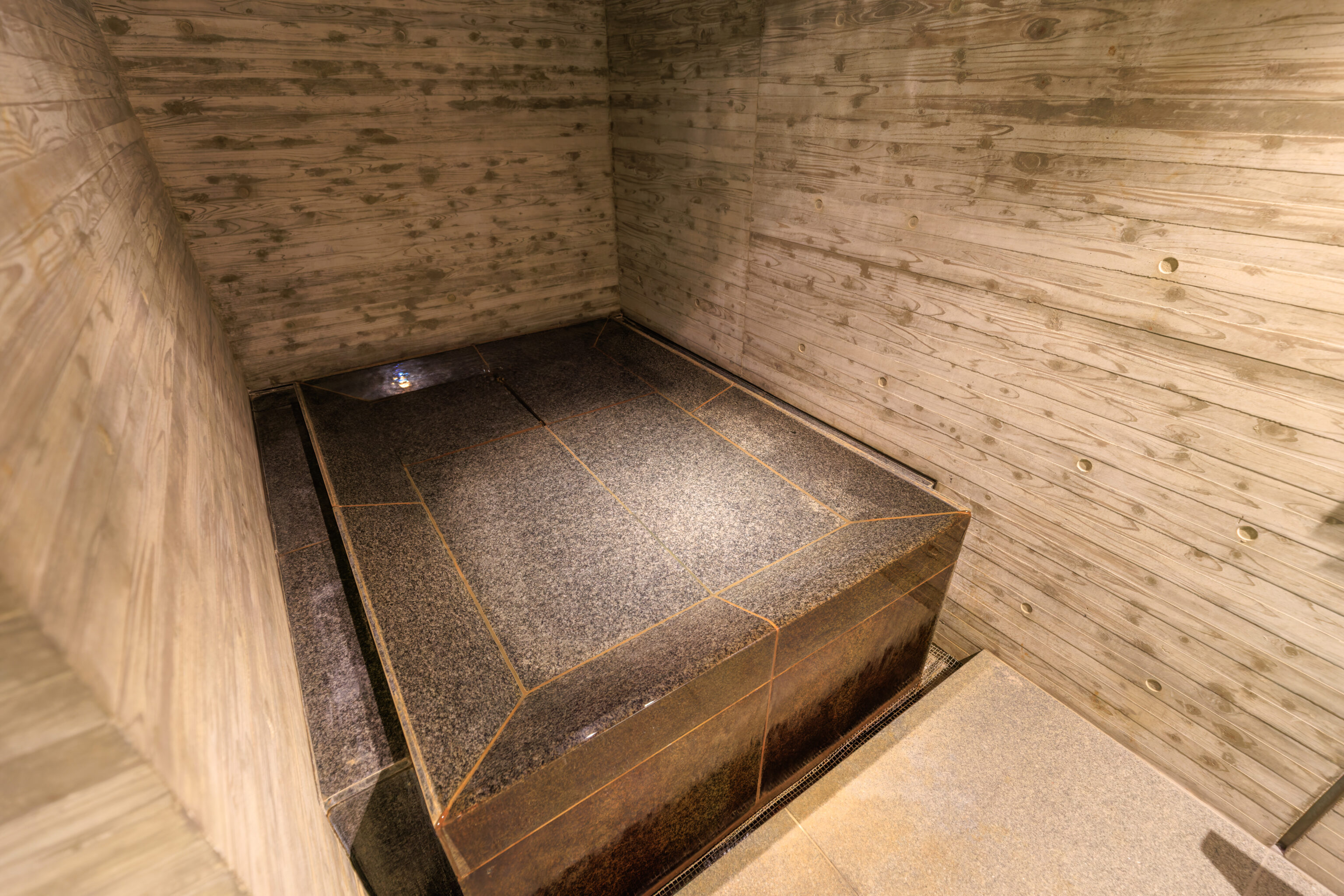
We came across this… Water feature? It is basically a shallow pool of water.
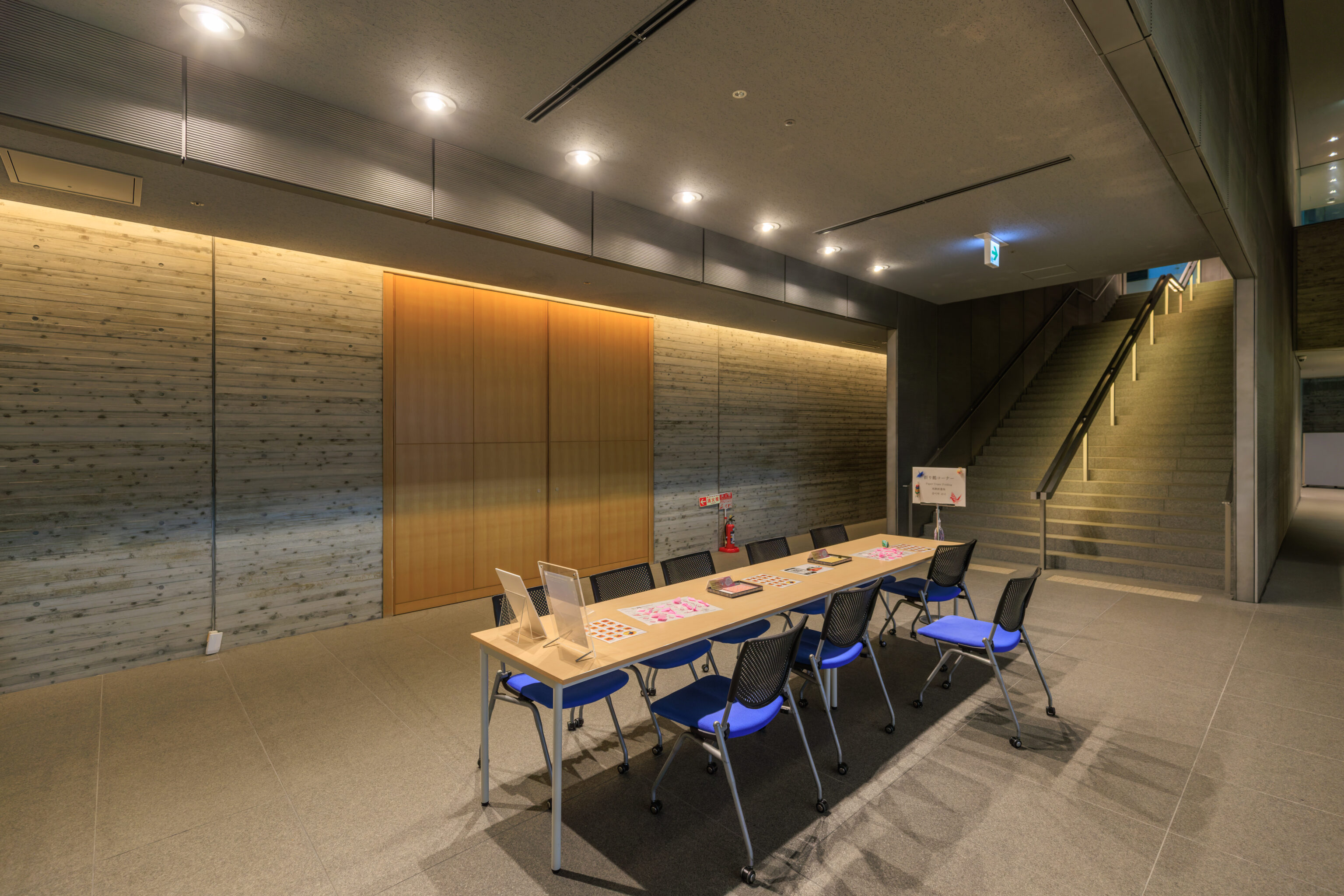
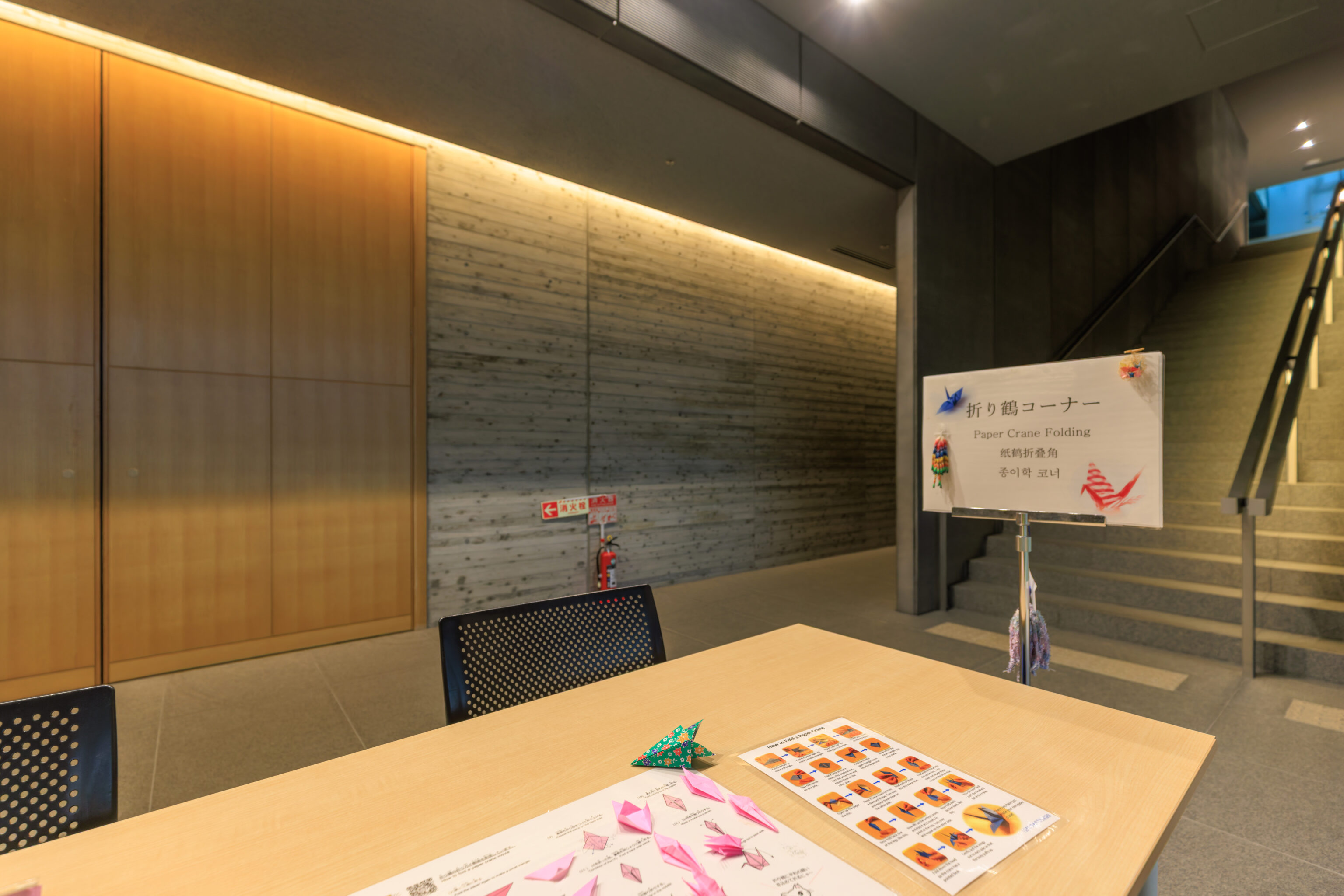
We then descended by stairs into an activity area with origami crane folding. Paper was provided as well as illustrated instructions. Although we’ve folded these things before, it isn’t something we remember how to do. The instructions were, well, lets just say, not intuitive.
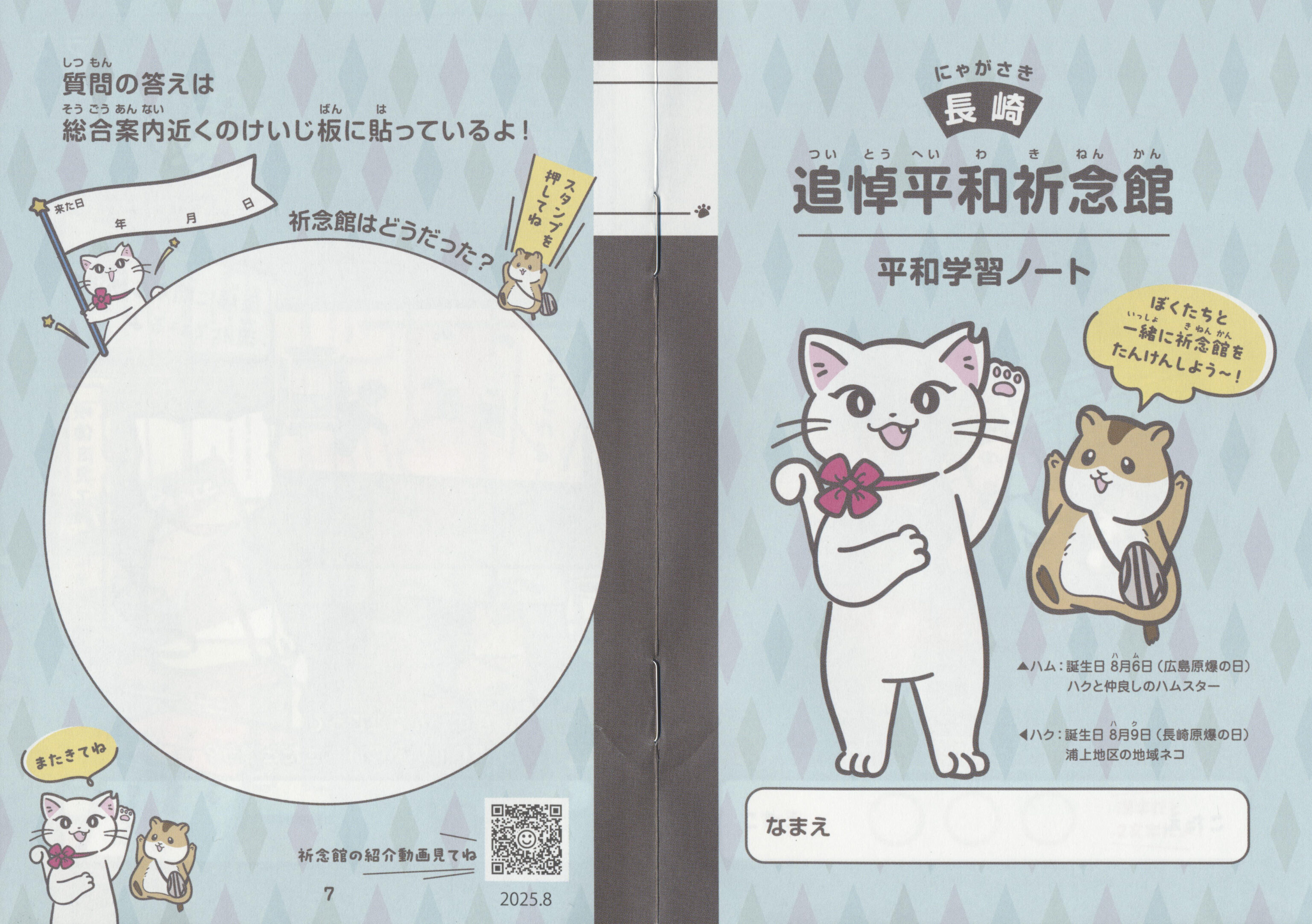
At some point, perhaps here, we picked up a booklet that was clearly indented for children. It’s pretty cute, which is a very Japanese thing, and would be weird to see in a memorial to people who died from the atomic bomb if this was anywhere but Japan!
Nyagasaki
Peace Memorial Hall Peace Learning Notebook

"Let's explore the Memorial Hall together with us~!"

Haku: Birthday is August 9th (Nagasaki Atomic Bomb Day). A community cat from the Urakami district.

Hamu: Birthday is August 6th (Hiroshima Atomic Bomb Day). A hamster who is close friends with Haku.

The answers to the questions are posted on the bulletin board near the General Information Desk!
– Text from the front and back covers of the pamphlet, translated using Google Gemini.
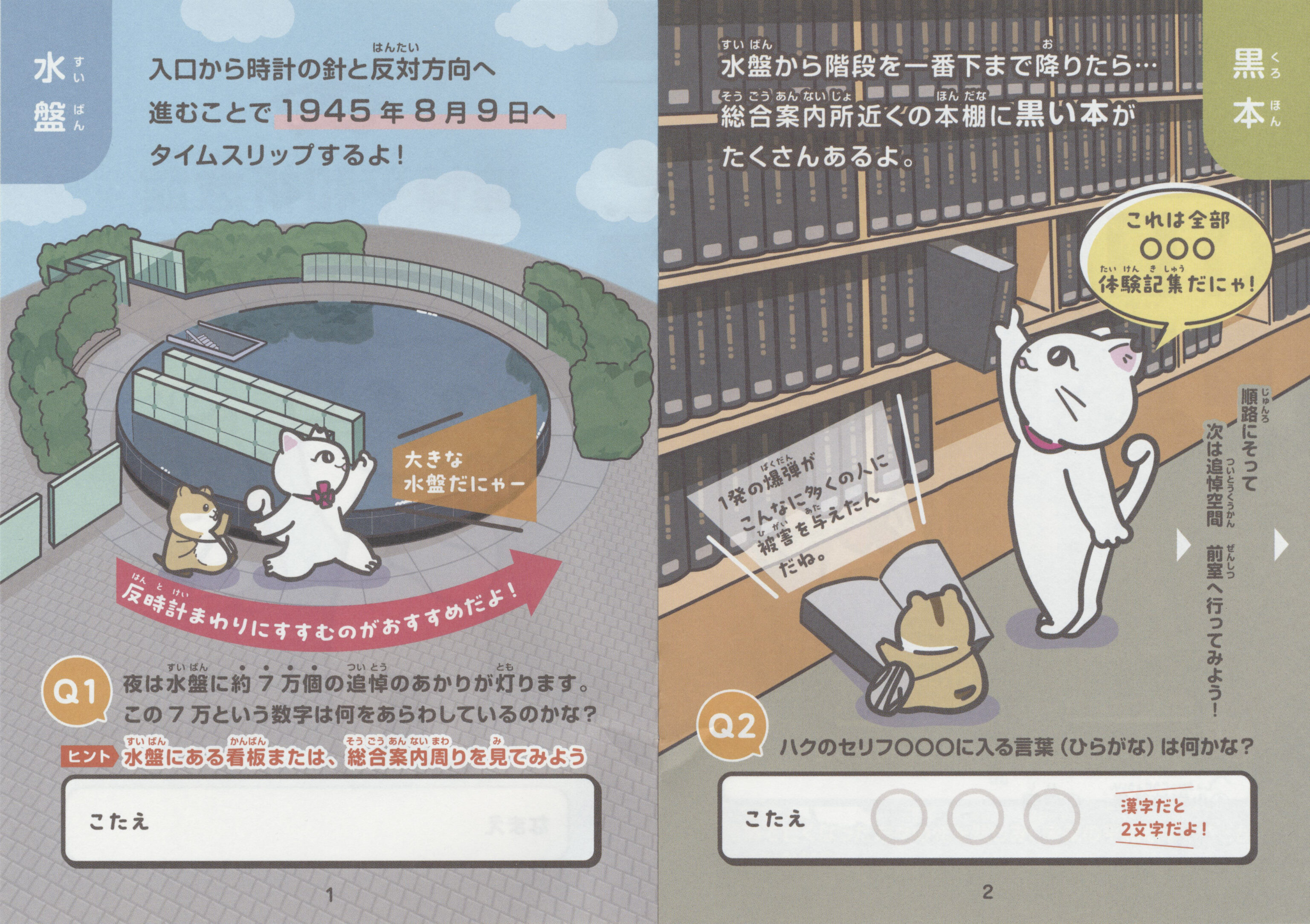
Water Basin
By walking from the entrance in a counter-clockwise direction, you will time-slip back to August 9, 1945!

"It's a huge water basin, meow~"

Q1
At night, about 70,000 memorial lights illuminate the water basin. What do you think this number '70,000' represents?

Hint > Take a look at the signposts by the water basin or around the General Information Desk.

Black Books
"These are all collections of 〇〇〇 personal accounts, meow!"

"A single bomb caused damage to this many people, didn't it."

Q2
What word (in hiragana) goes into the blanks 〇〇〇 in Haku's speech bubble?

Hint > In kanji, it's 2 characters!

Following the route, next let's go to the Ante-room of the Remembrance Space!
– Text from the first two pages of the pamphlet, translated using Google Gemini.
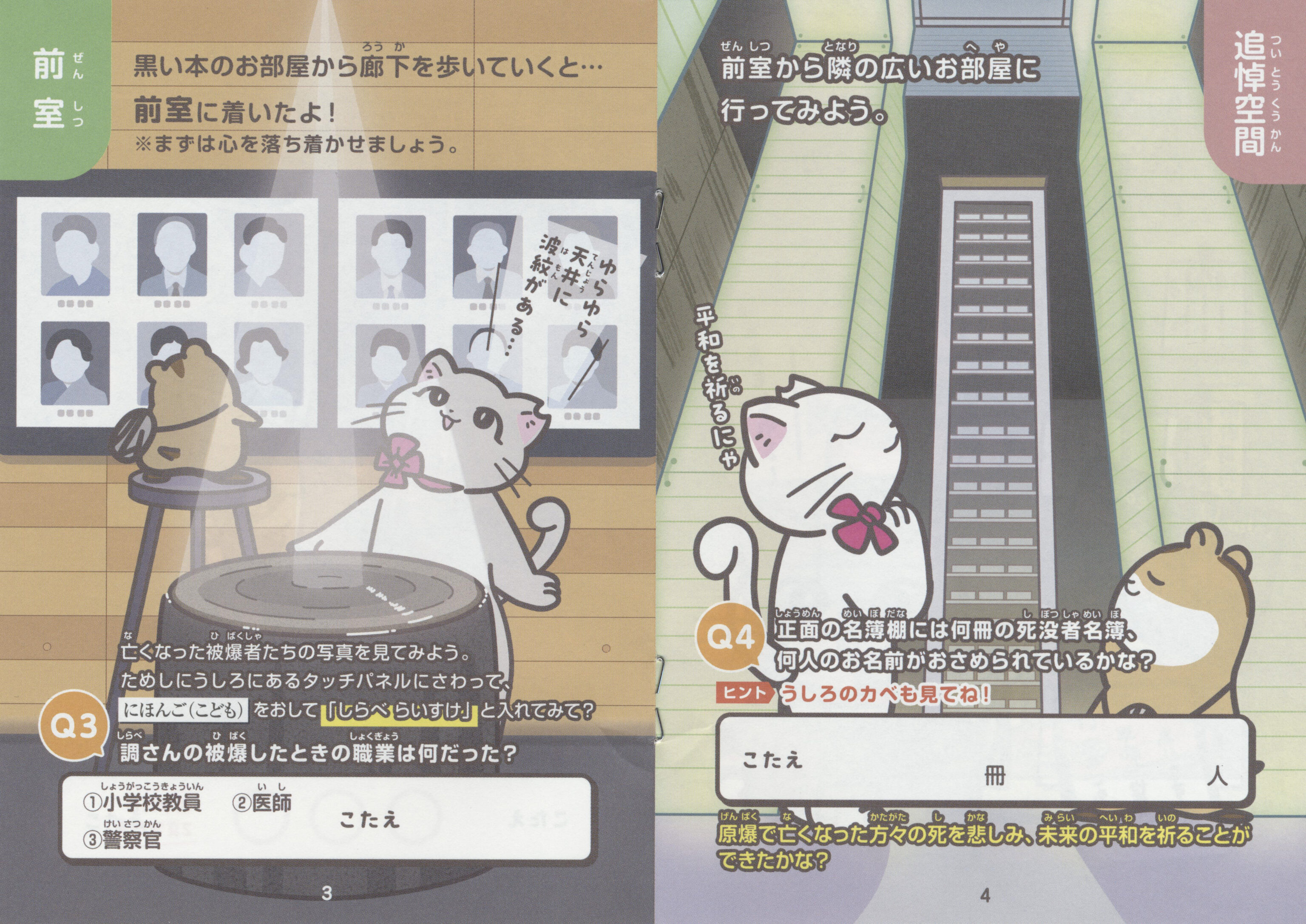
Ante-room
When you walk down the hallway from the room with the black books... you've arrived at the Ante-room!
※First, let's calm our hearts.

"There are rippling waves on the ceiling..."

Let's look at the photographs of the deceased atomic bomb survivors. Try touching the touch panel behind you, press 'Japanese (Children)', and try entering 'Shirabe-Raisuke'?

Q3
What was Mr./Ms. Shirabe's occupation when they were exposed to the bombing?

1. Elementary school teacher
2. Doctor
3. Police officer

Remembrance Space
Let's go from the Ante-room into the large room next door.

"Praying for peace, meow."

Q4
In the register shelf directly in front, how many volumes of deceased victim registries and how many people's names are enshrined?

Hint > Look at the back wall too!

____ Volumes / Books
____ People
– Text from pages 3 and 4 of the pamphlet, translated using Google Gemini.
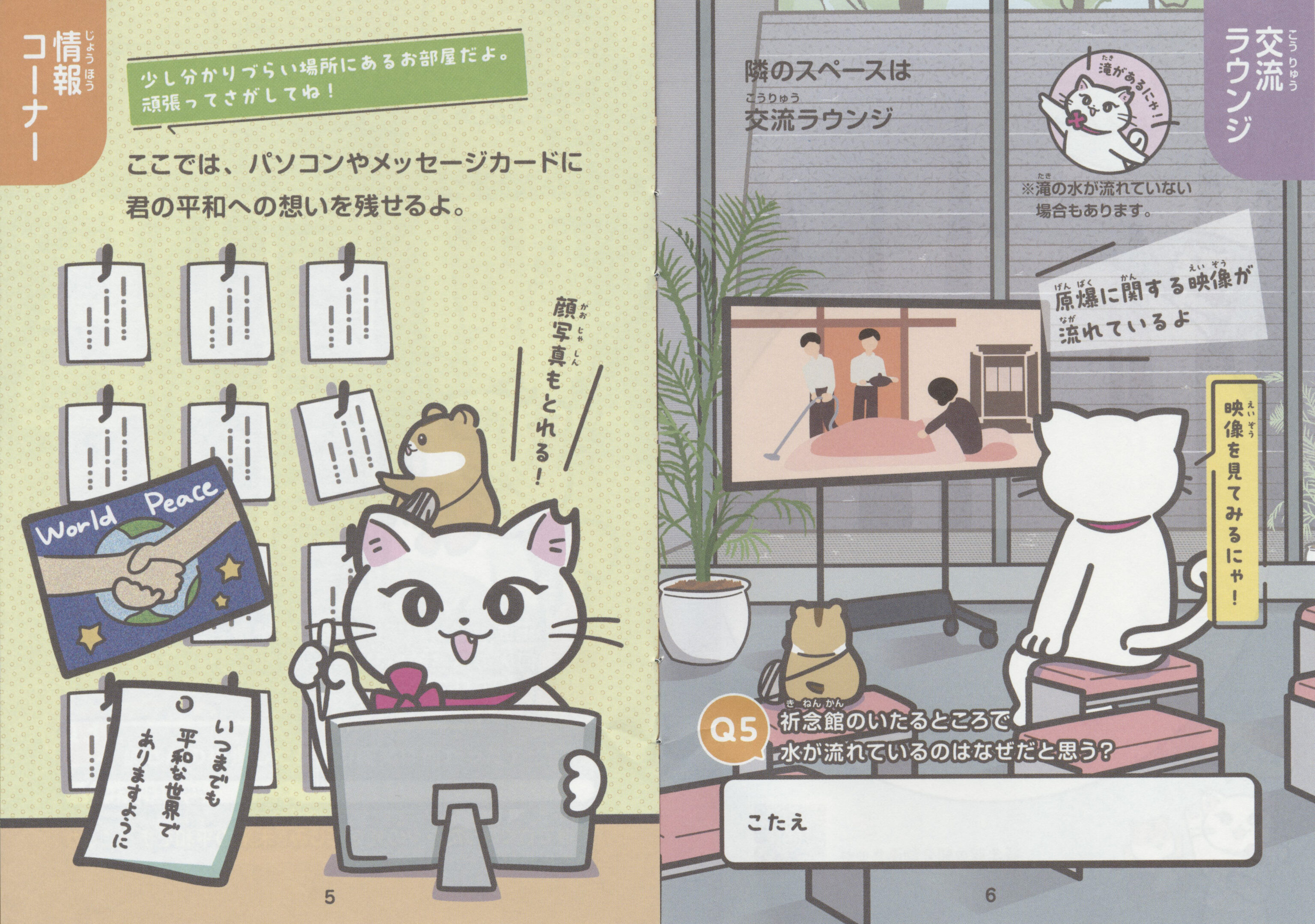
Information Corner
This room is in a slightly hard-to-find place. Do your best to find it!

Here, you can leave your thoughts and wishes for peace on computers or message cards.

"You can take a portrait photo too!"
"May it be a peaceful world forever."

Lounge for Peace Exchange
The neighboring space is the Lounge for Peace Exchange.

"There is a waterfall, meow!"
※There are times when the waterfall water is not running.

Videos regarding the atomic bombing are playing.
"Let's watch the video, meow!"

Q5
Why do you think water is flowing everywhere throughout the Memorial Hall?
– Text from pages 5 and 6 of the pamphlet, translated using Google Gemini.
We didn’t stamp our little booklet, instead, we used the stamp sheets that were provided!
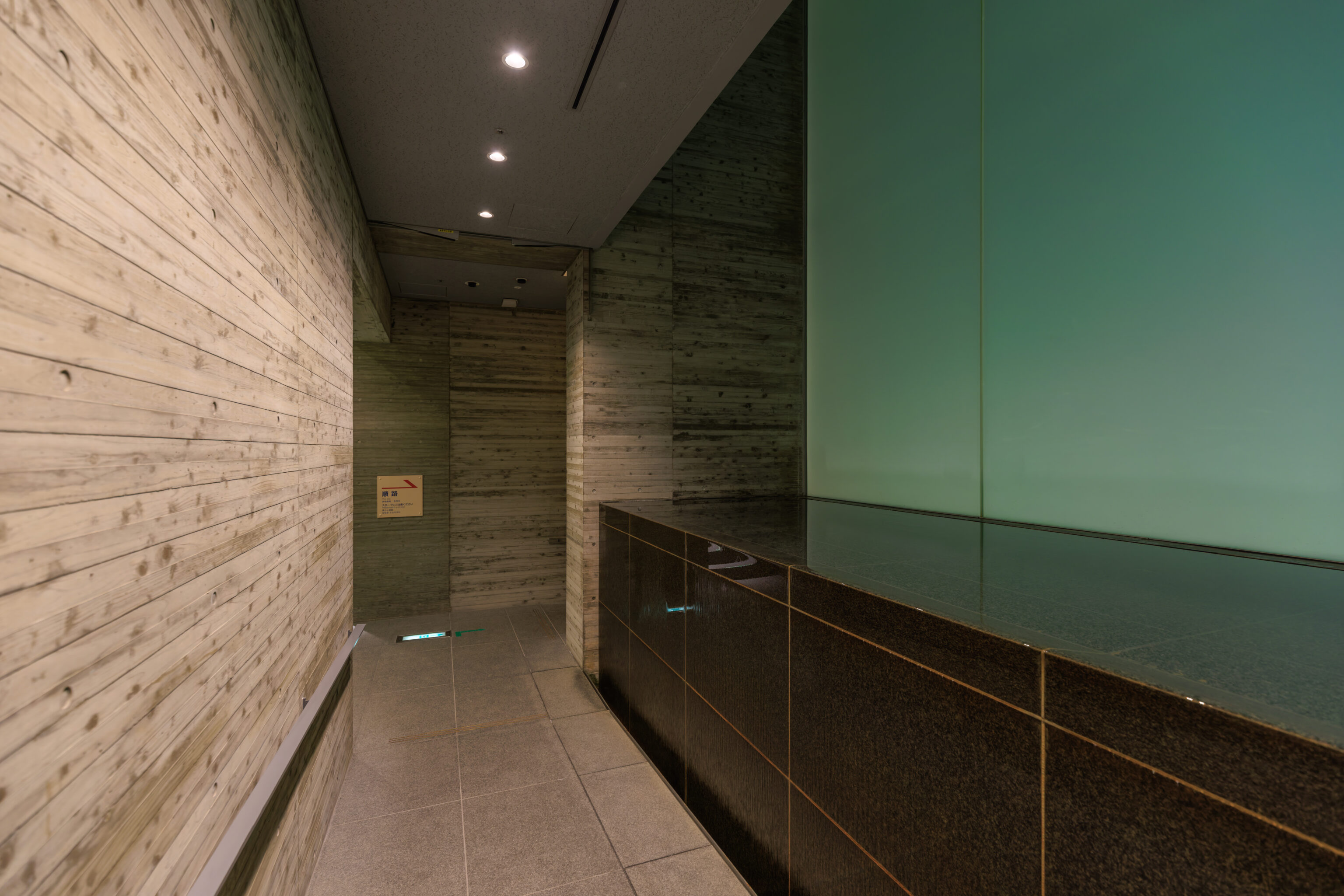
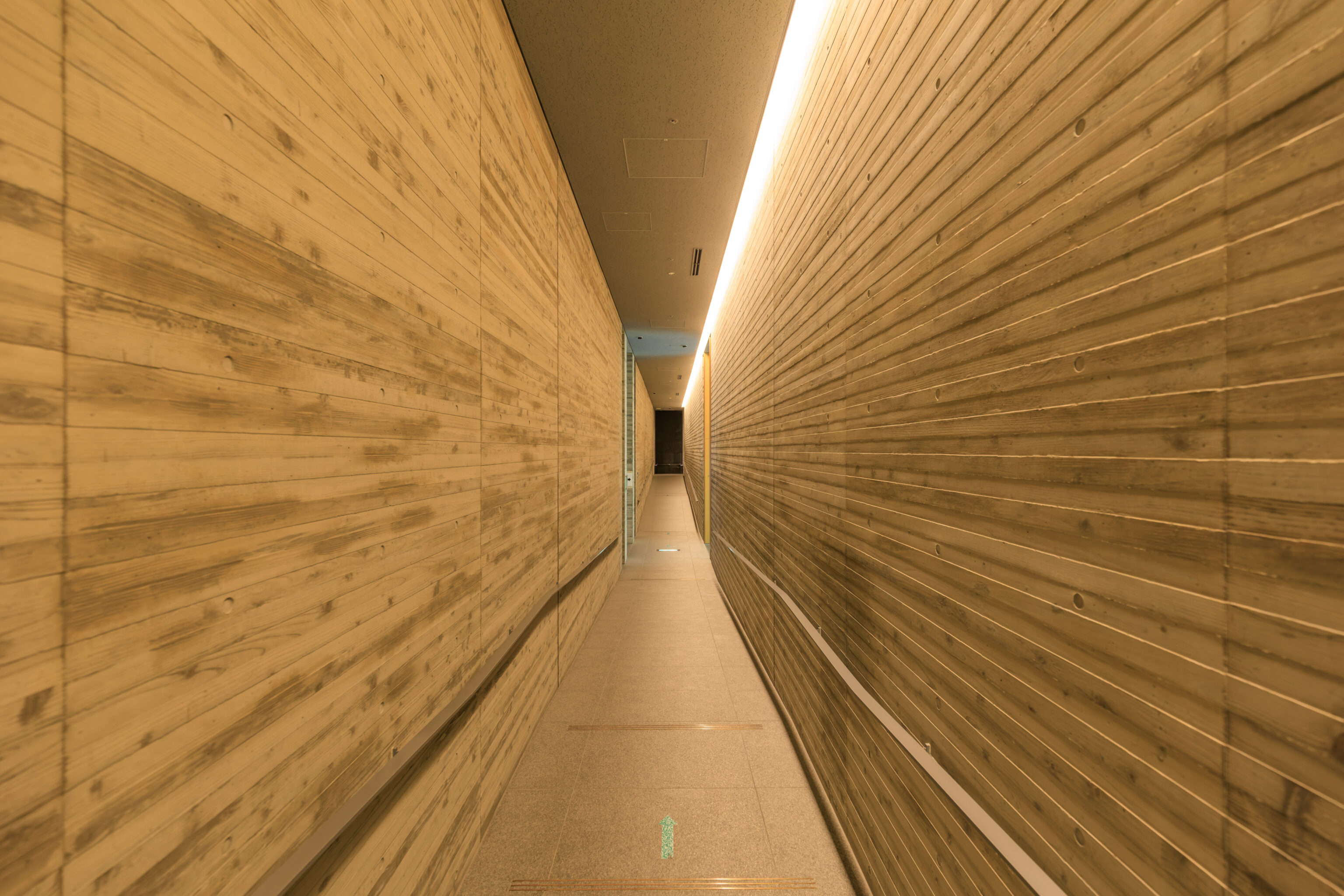
We continued on along the route. There was almost no one else around.
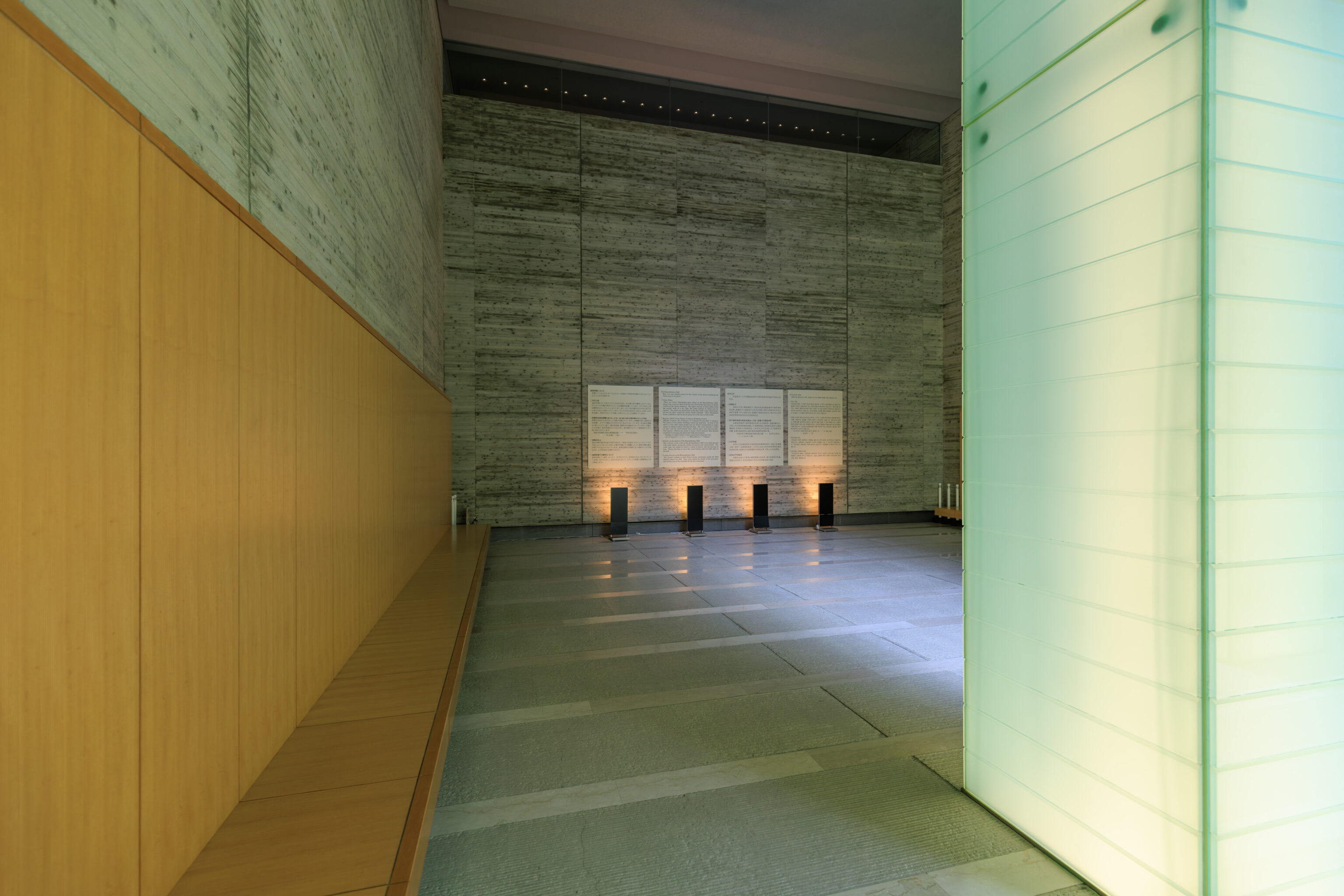
Finally, we entered the main hall of the memorial, the Remembrance Hall.
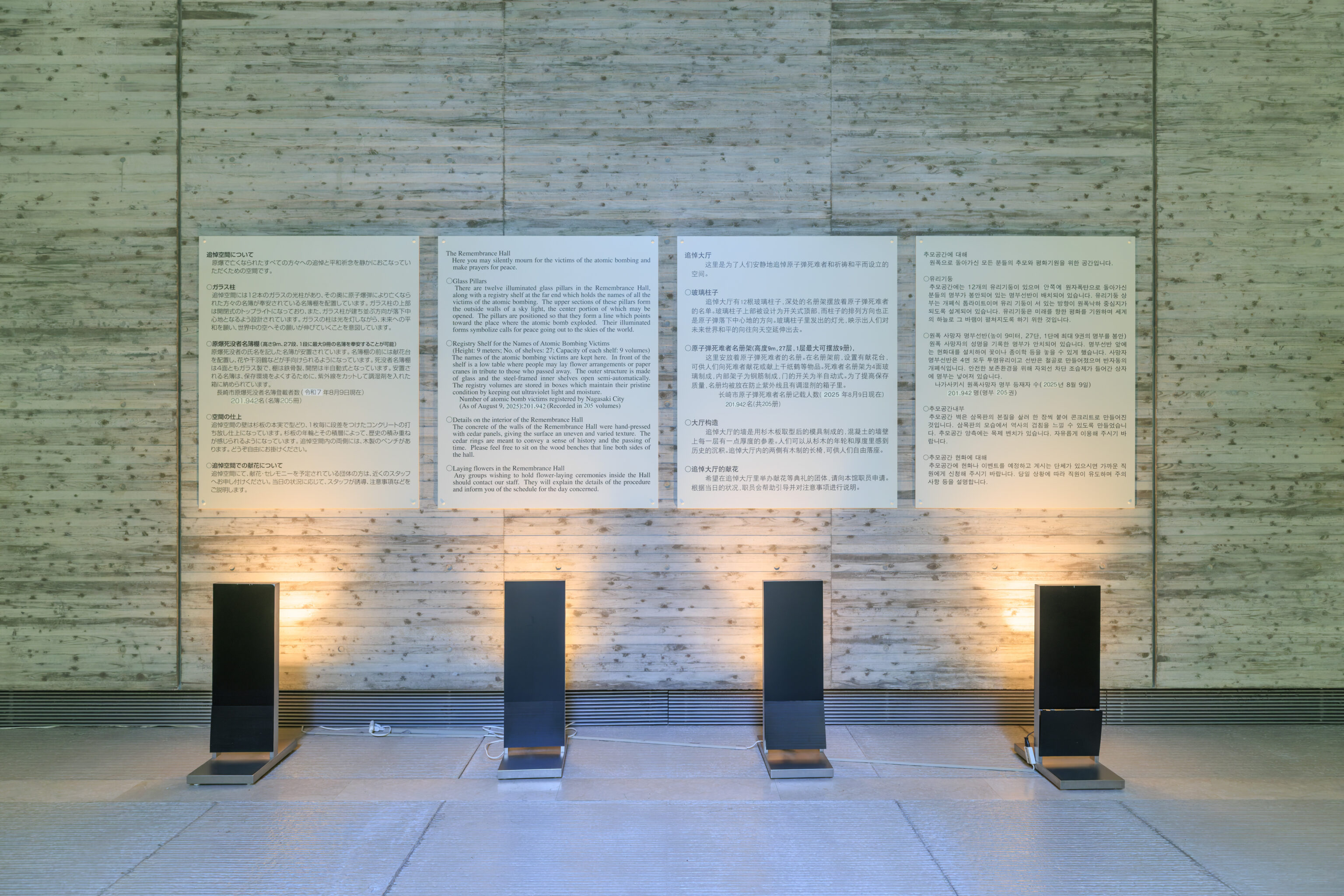
The Remembrance Hall
Here you may silently mourn for the victims of the atomic bombing and
make prayers for peace.

O Glass Pillars
There are twelve illuminated glass pillars in the Remembrance Hall, along with a registry shelf at the far end which holds the names of all the victims of the atomic bombing. The upper sections of these pillars form the outside walls of a sky light, the center portion of which may be opened. The pillars are positioned so that they form a line which points toward the place where the atomic bomb exploded. Their illuminated forms symbolize calls for peace going out to the skies of the world.

O Registry Shelf for the Names of Atomic Bombing Victims
(Height: 9 meters; No. of shelves: 27; Capacity of each shelf: 9 volumes)
The names of the atomic bombing victims are kept here. In front of the shelf is a low table where people may lay flower arrangements or paper cranes in tribute to those who passed away. The outer structure is made of glass and the steel-framed inner shelves open semi-automatically. The registry volumes are stored in boxes which maintain their pristine condition by keeping out ultraviolet light and moisture. Number of atomic bomb victims registered by Nagasaki City
(As of August 9, 2025):201,942 (Recorded in 205 volumes)

O Details on the interior of the Remembrance Hall
The concrete of the walls of the Remembrance Hall were hand-pressed with cedar panels, giving the surface an uneven and varied texture. The cedar rings are meant to convey a sense of history and the passing of time. Please feel free to sit on the wood benches that line both sides of the hall.

O Laying flowers in the Remembrance Hall
Any groups wishing to hold flower-laying ceremonies inside the Hall should contact our staff. They will explain the details of the procedure and inform you of the schedule for the day concerned.
– Text from the English language sign, second from left.
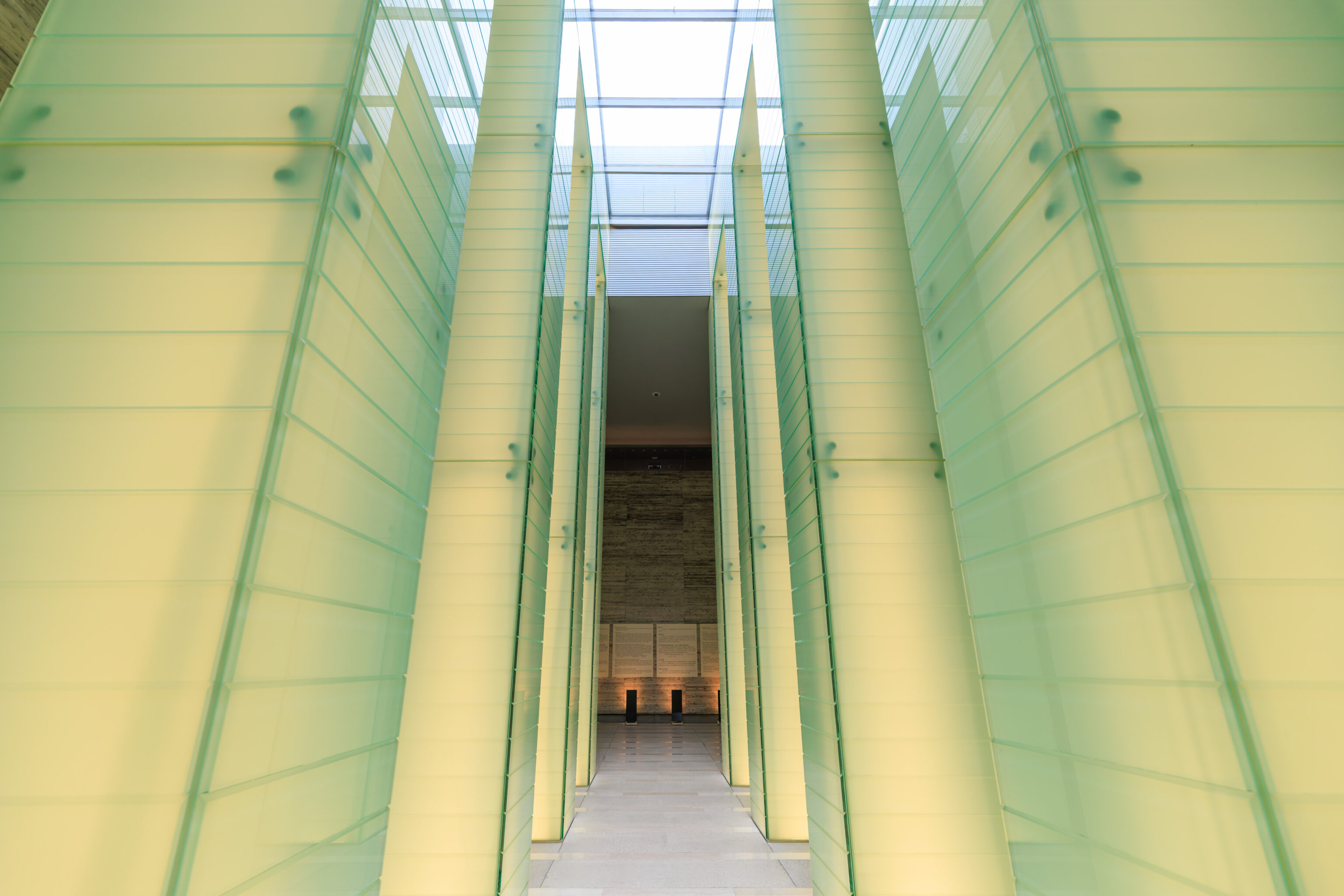
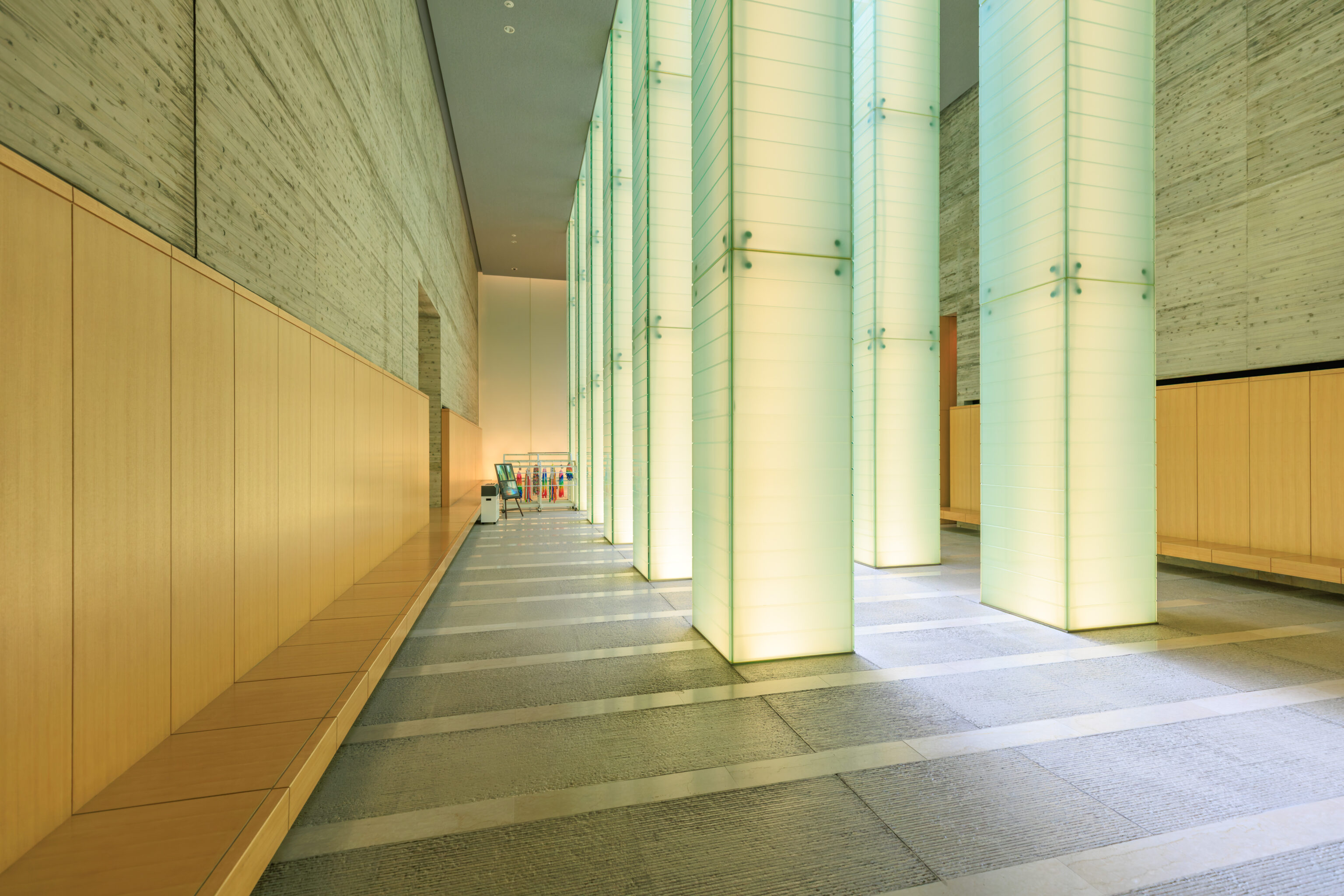
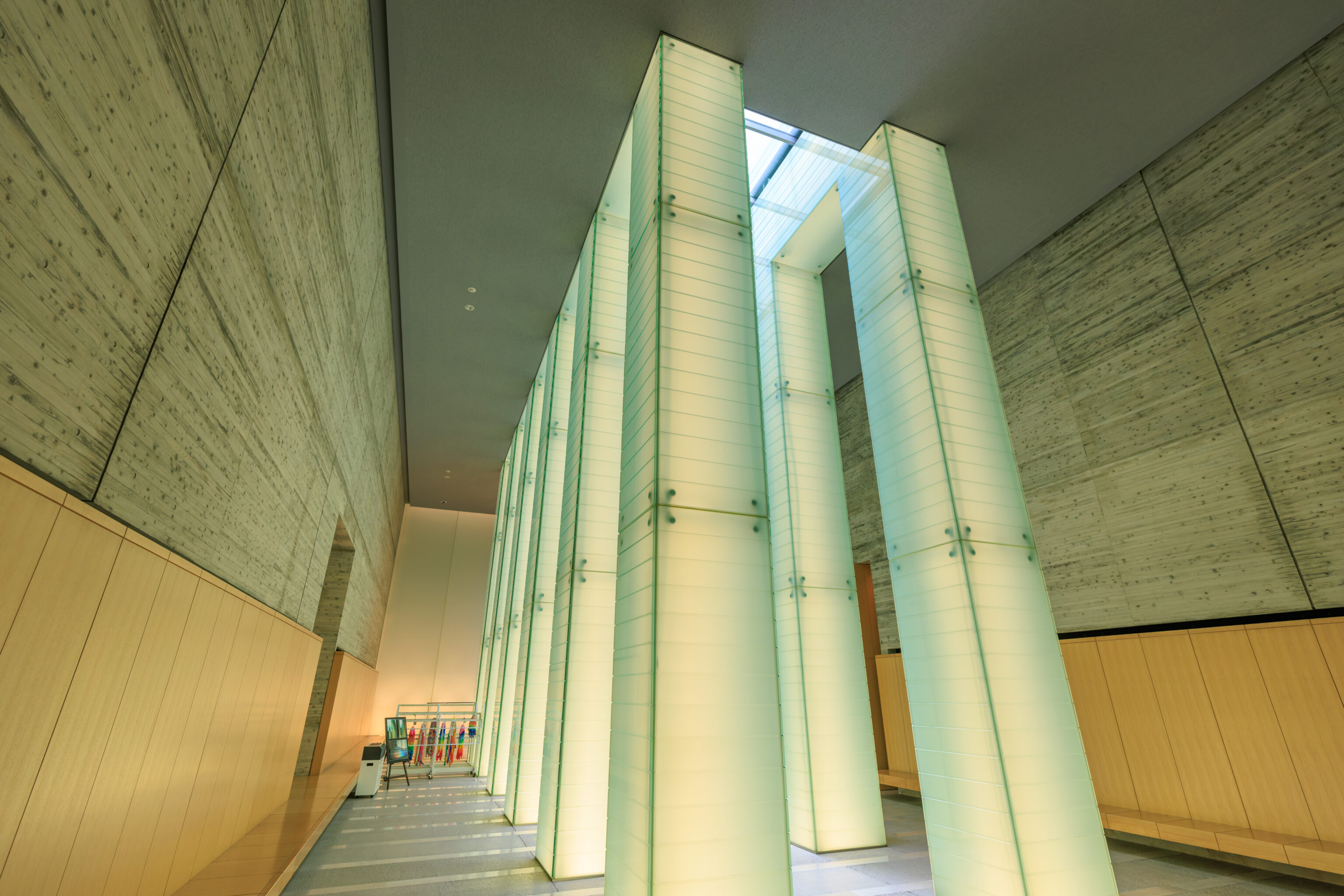
The Remembrance Hall had a simple and modern design.
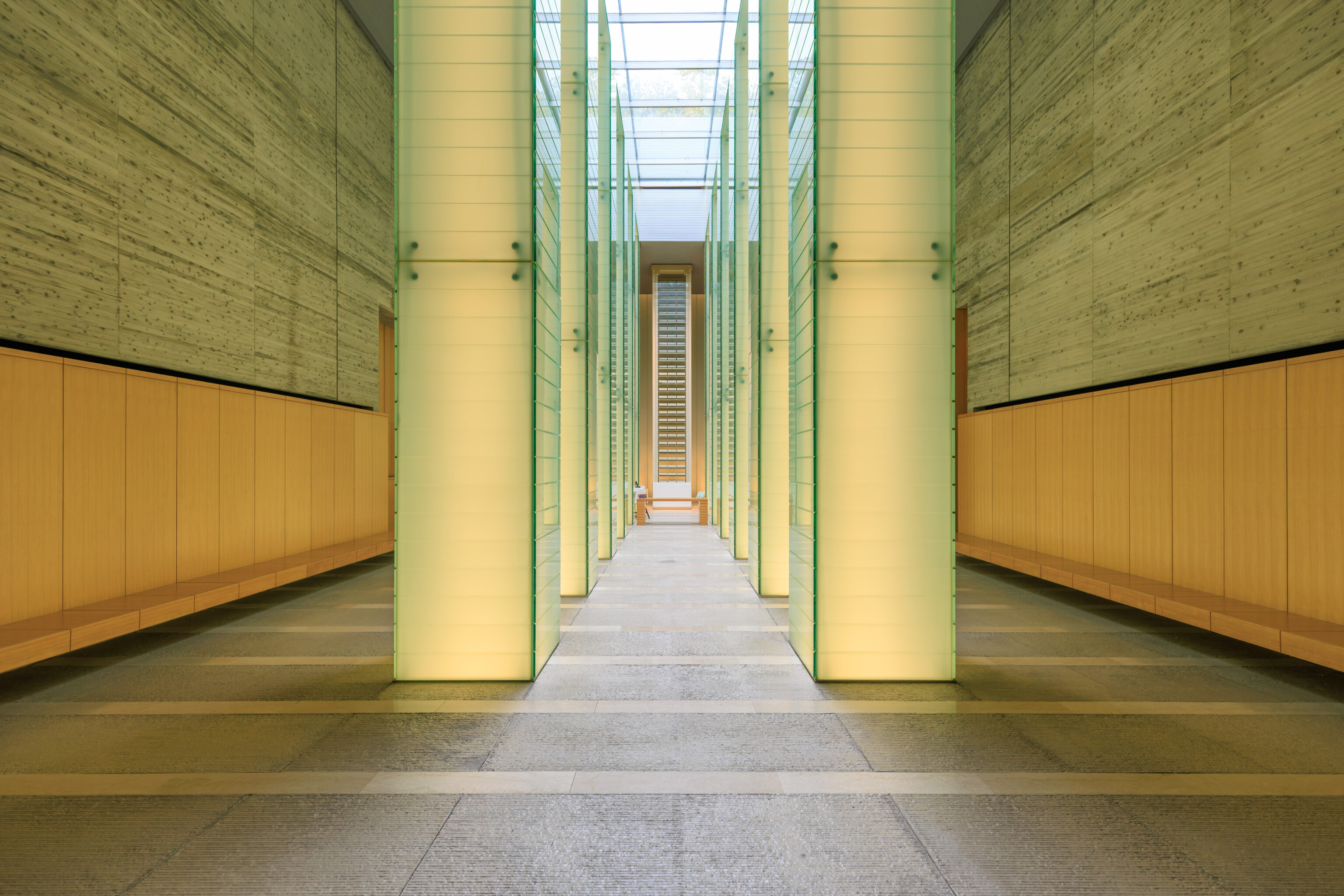
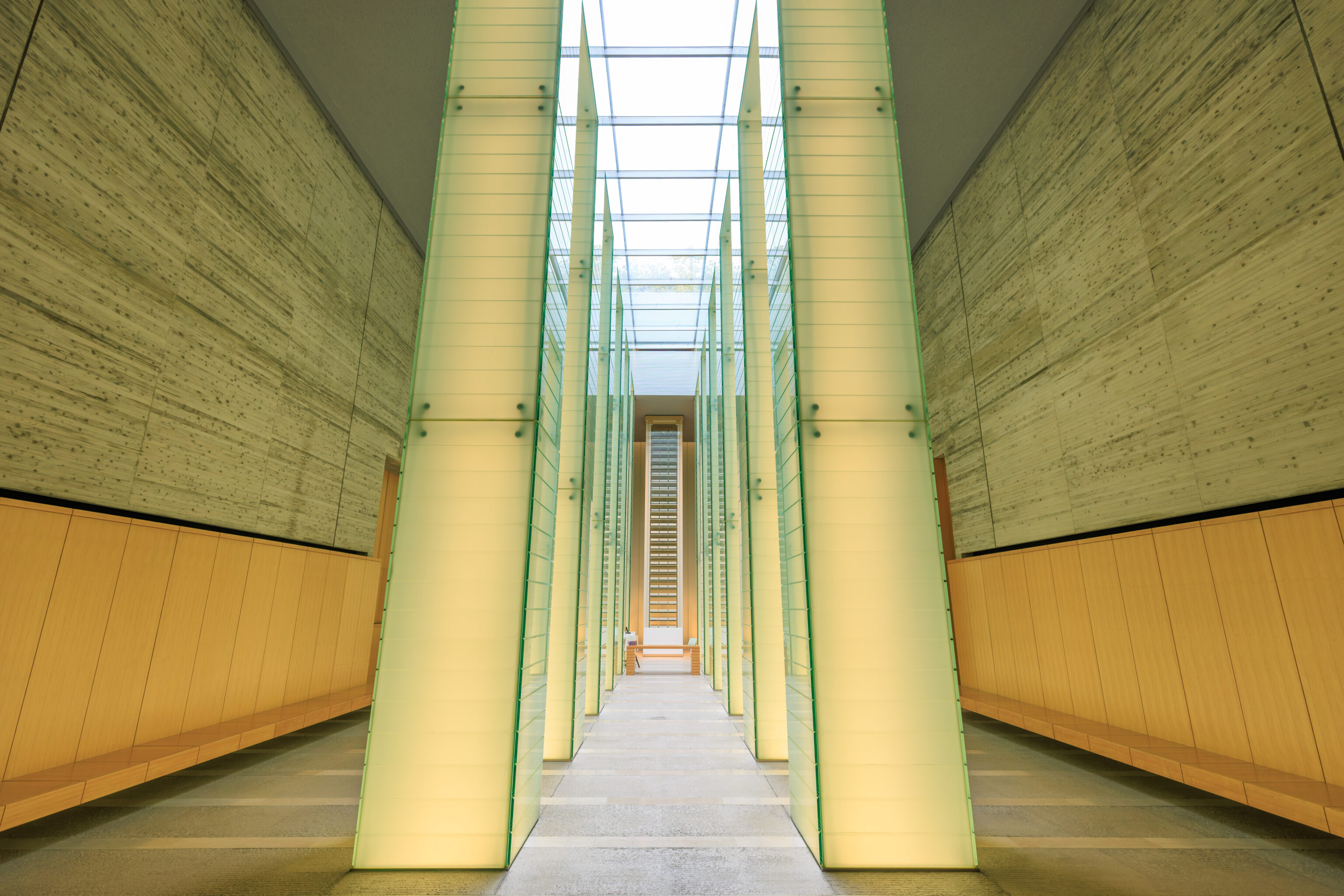
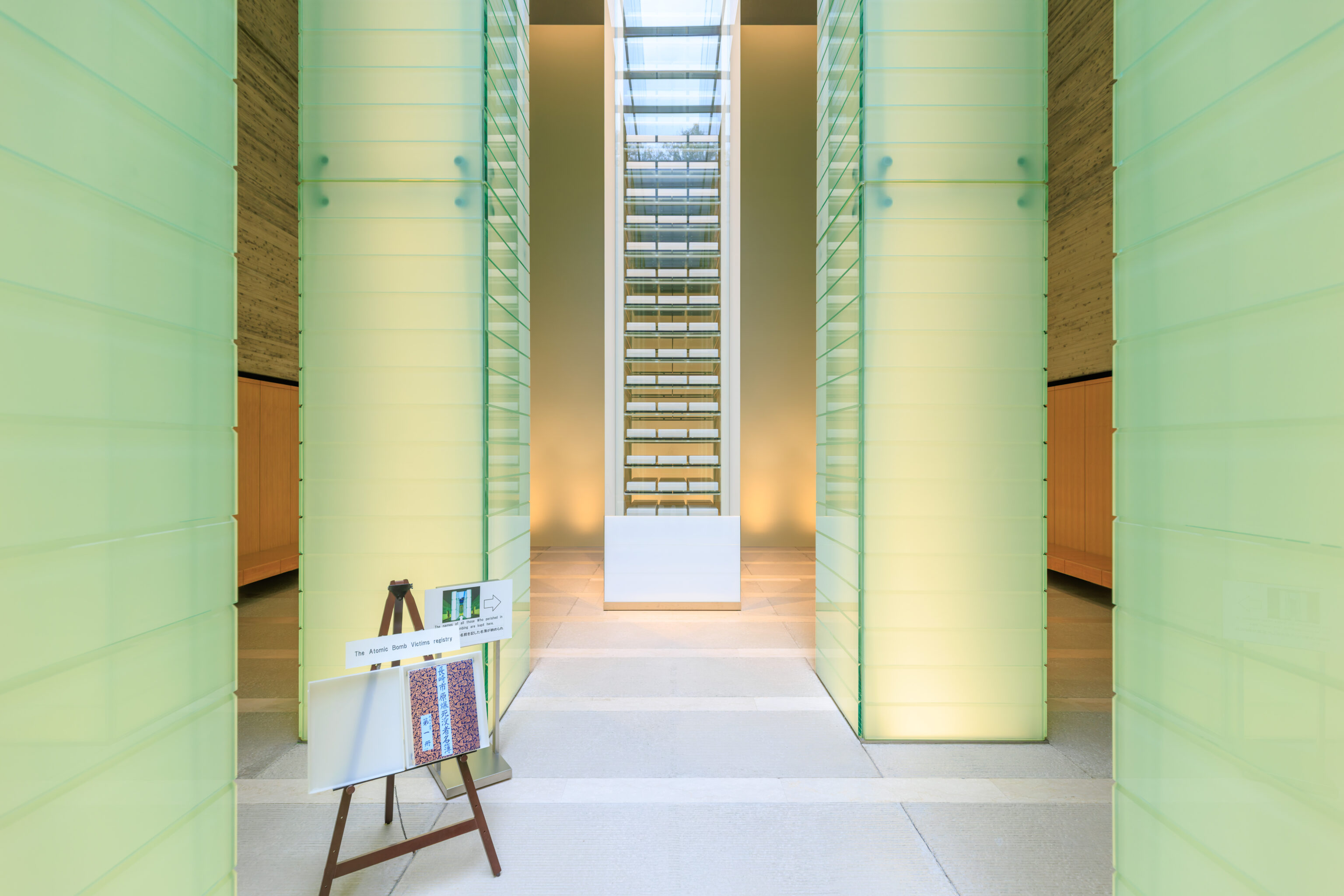
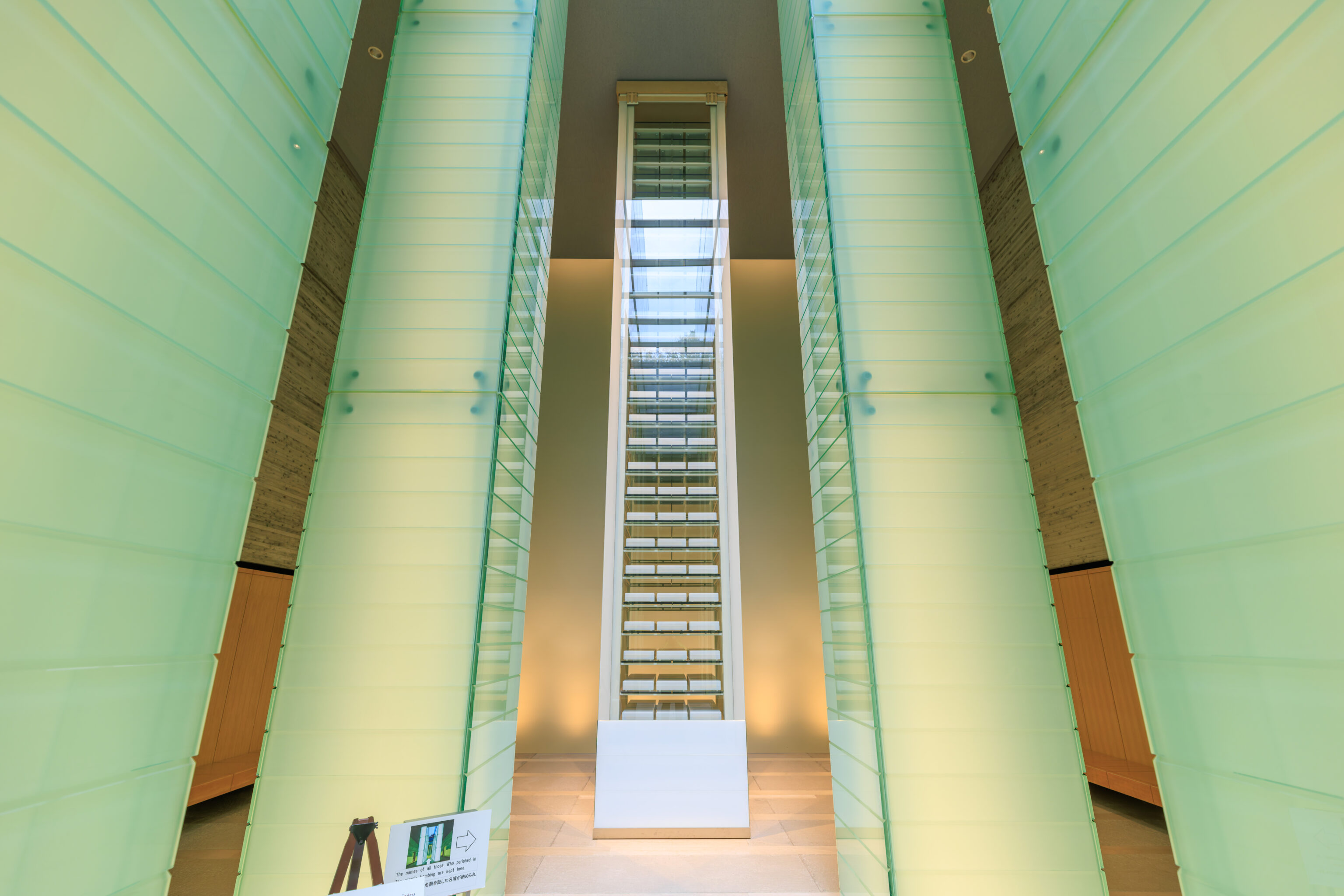
This shelf holds the names of everyone who died as a result of the atomic bombing here in Nagasaki.
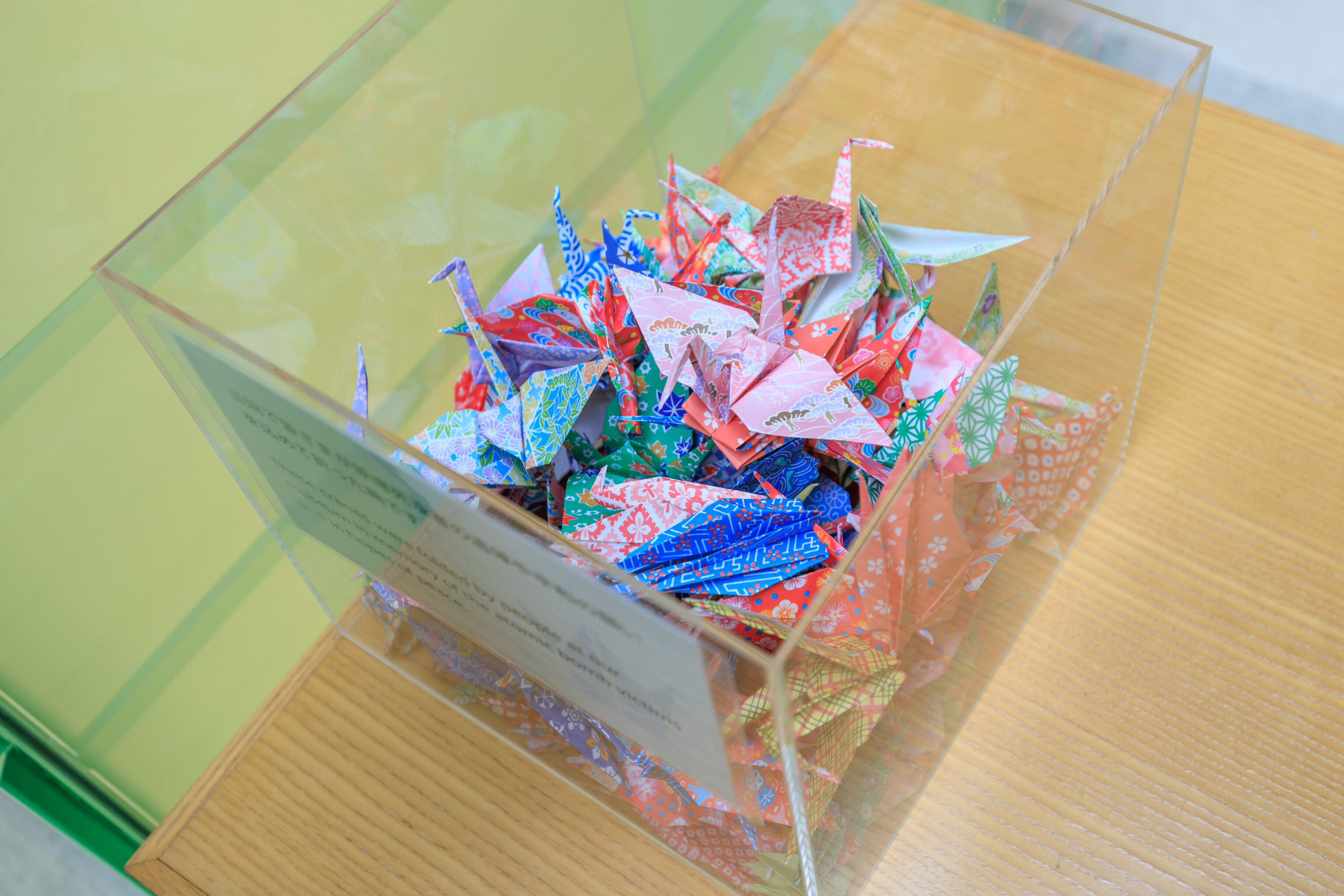
Paper cranes can be left here as a peace offering.
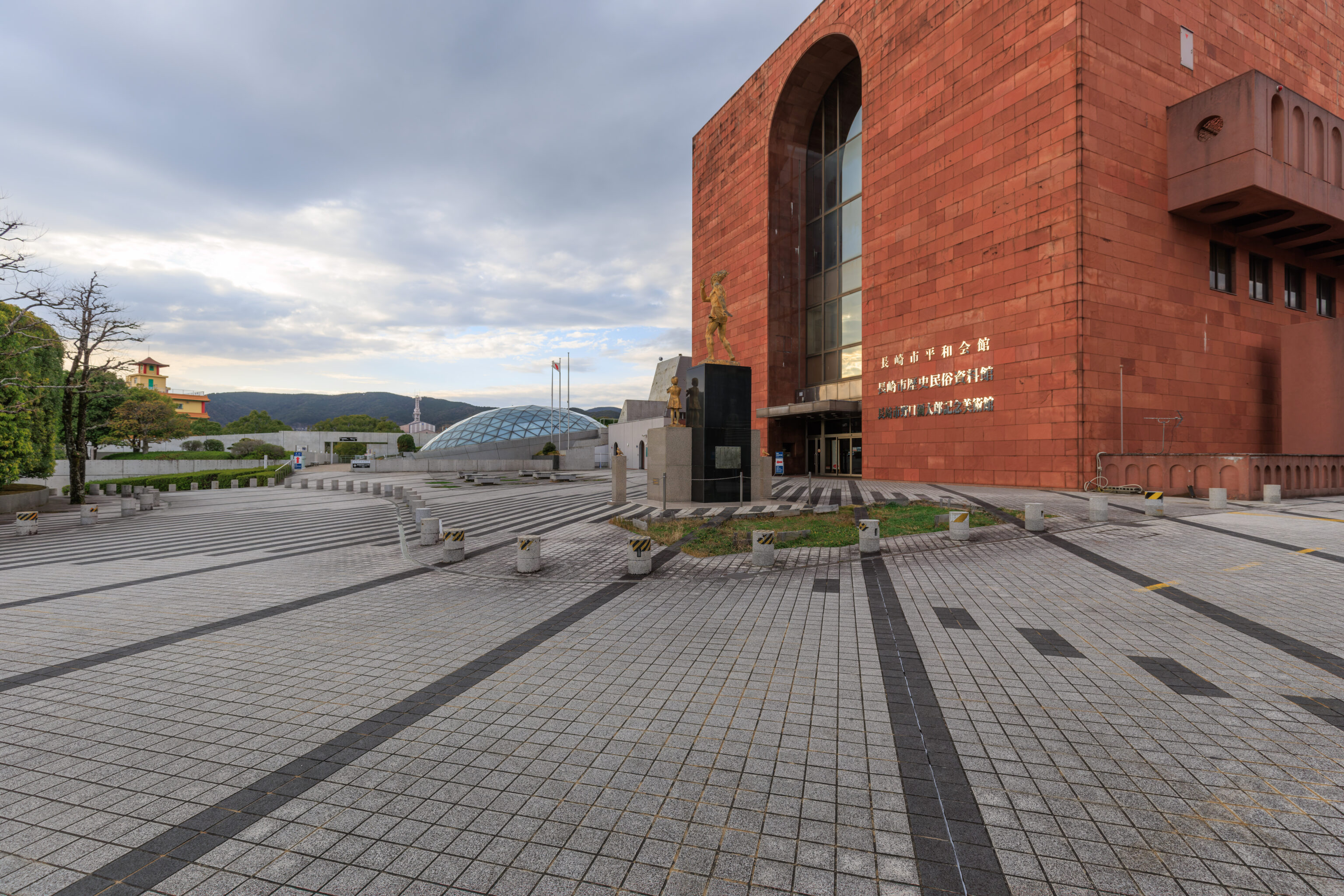
After our visit, we exited at ground level.
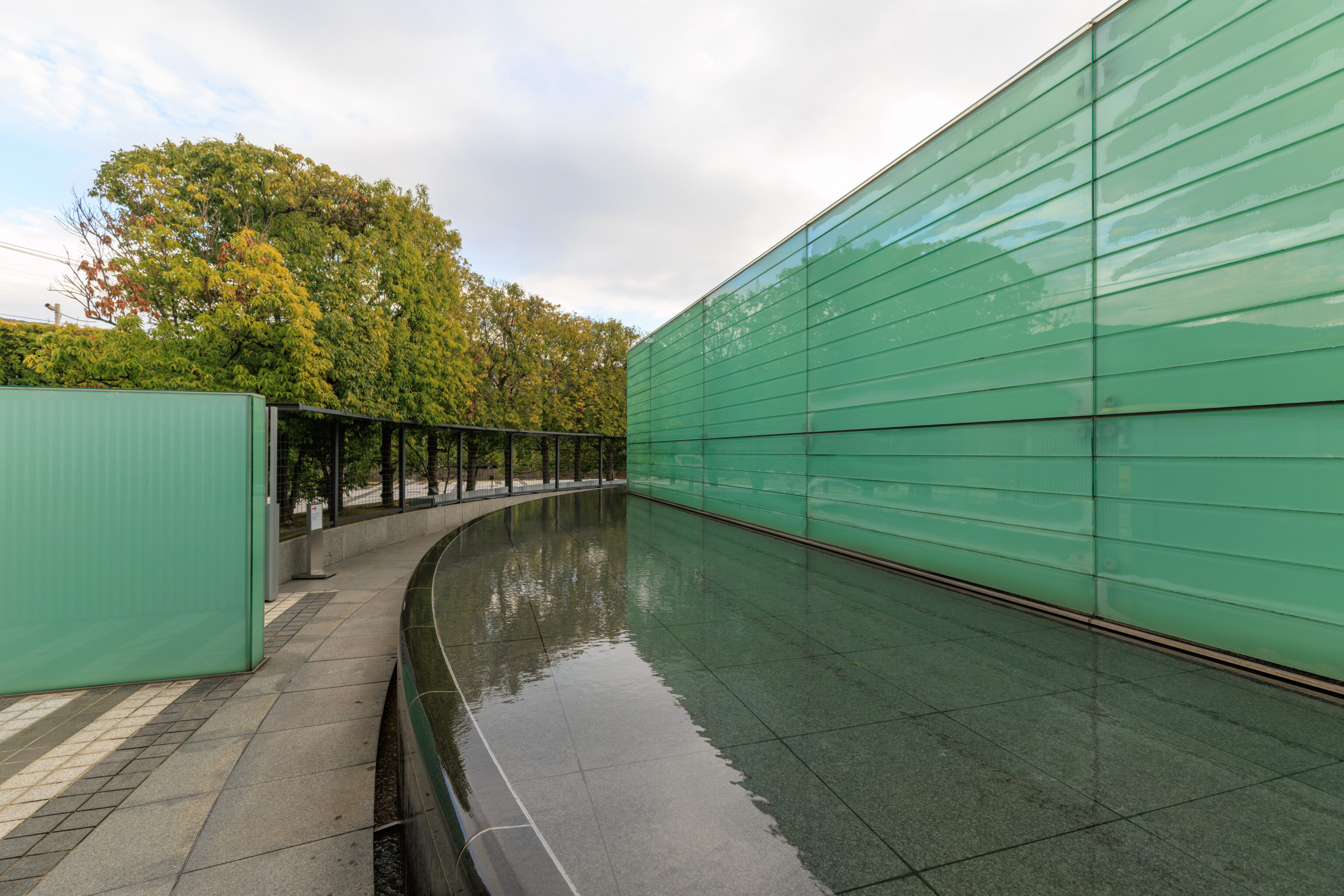
We realized we missed the above-ground portion of the memorial hall! The entrance is on the northeast side of the structure.
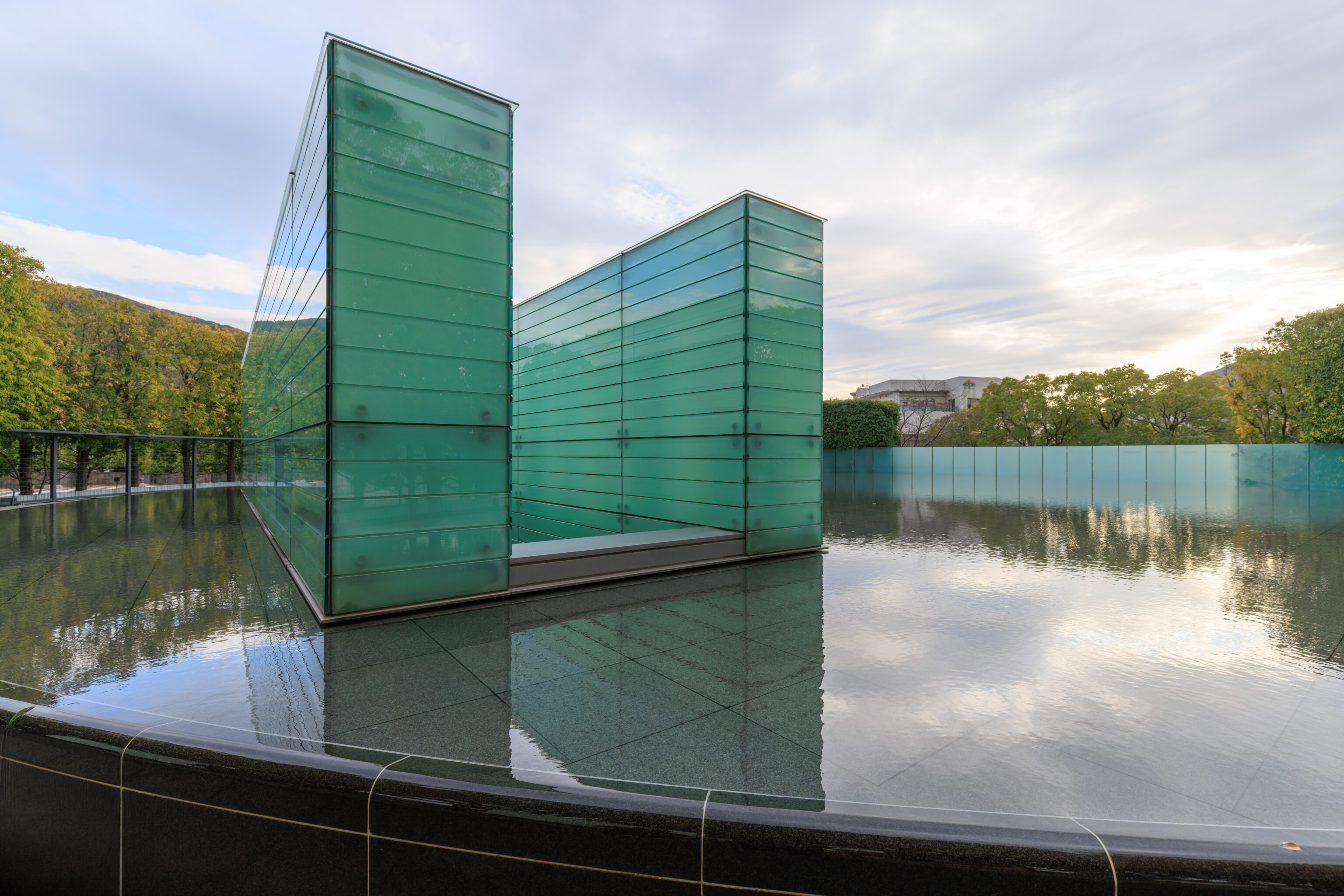
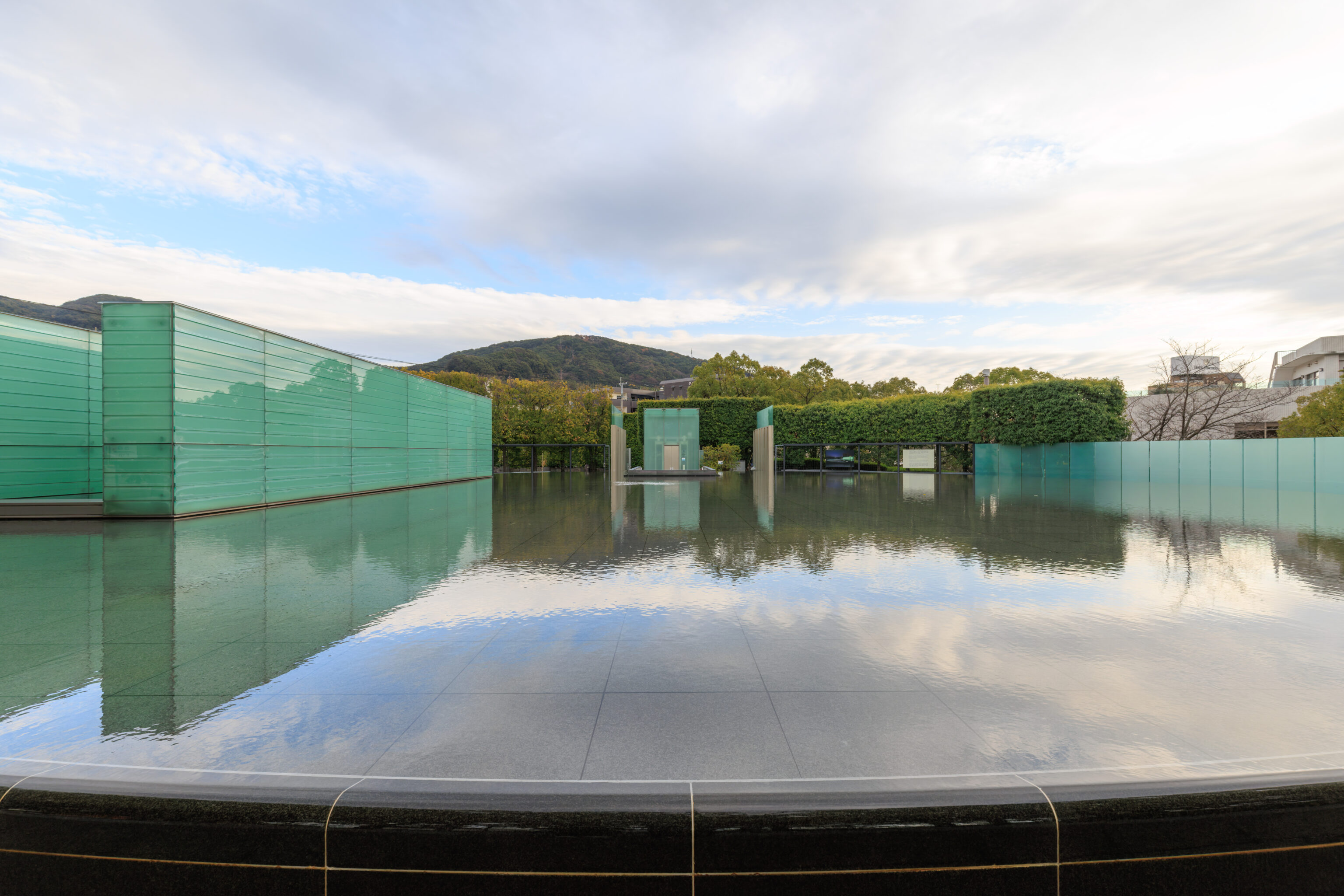
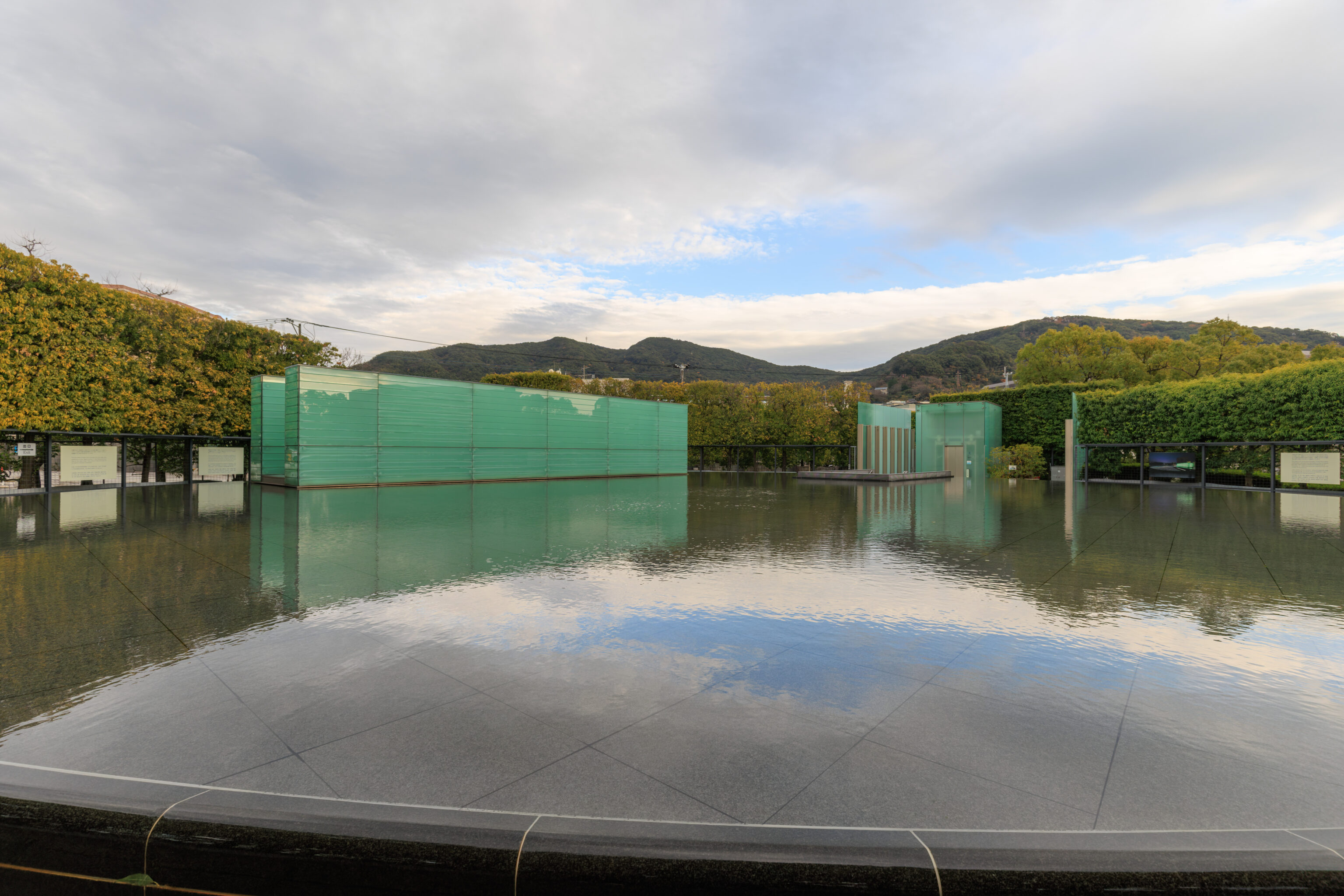
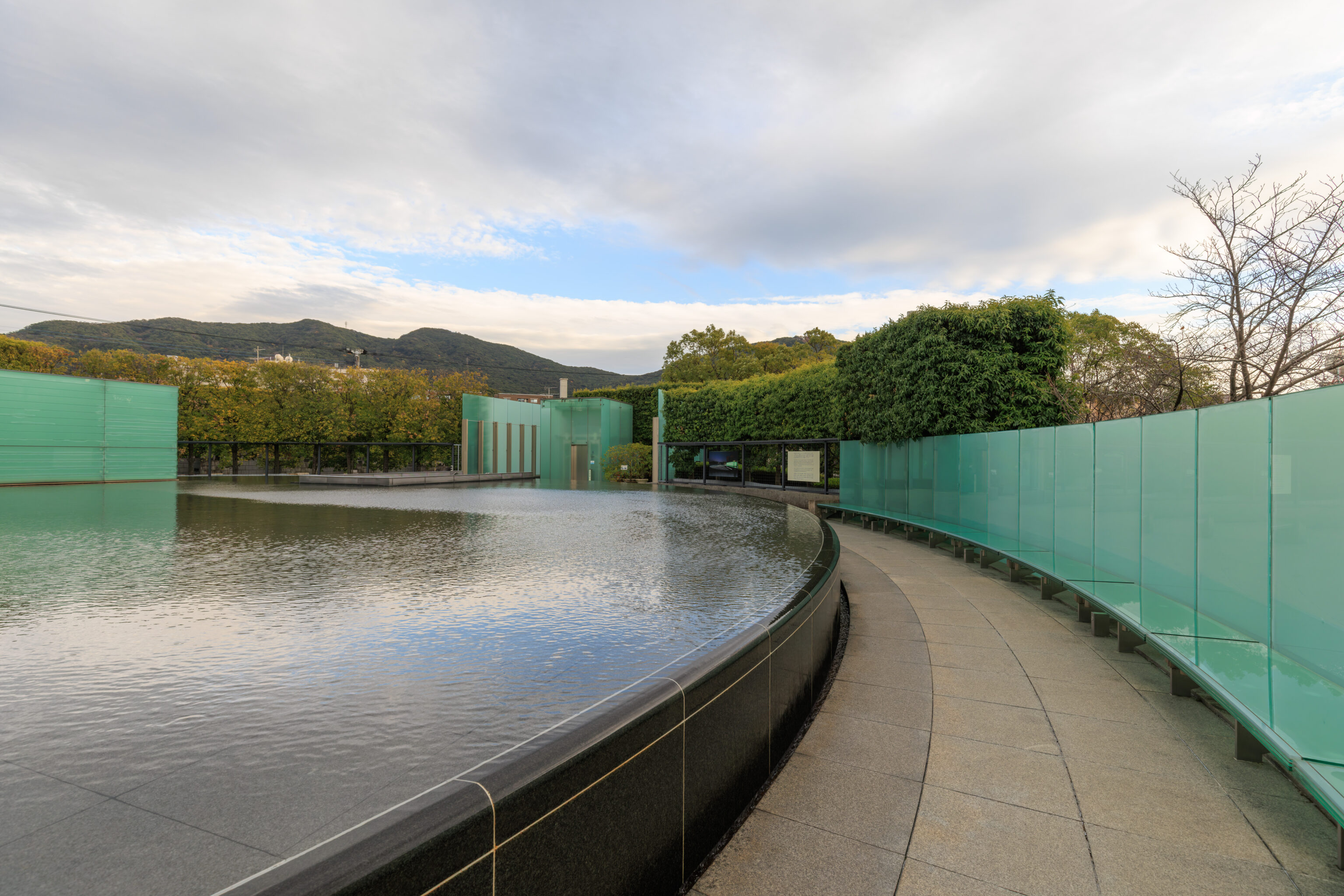
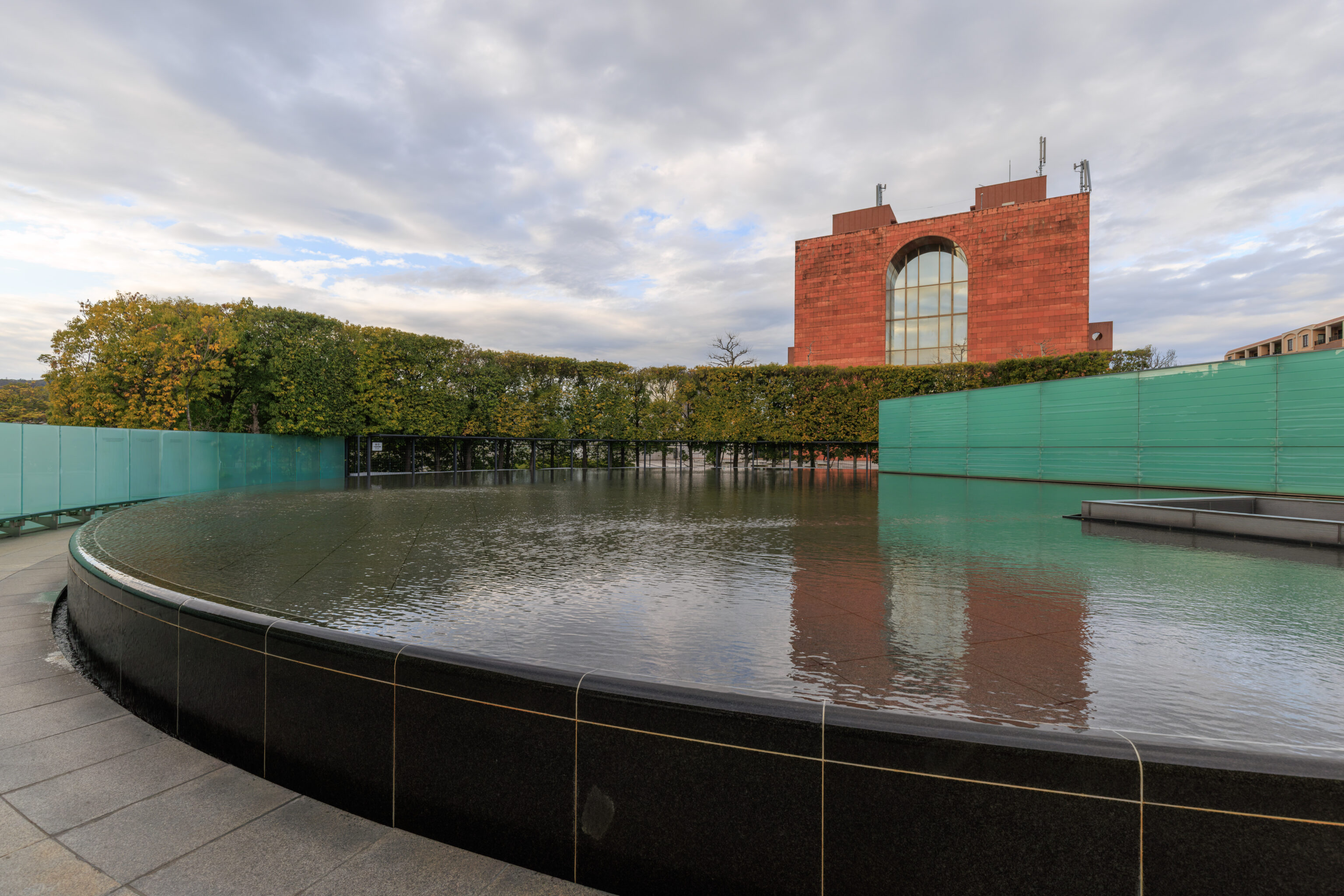
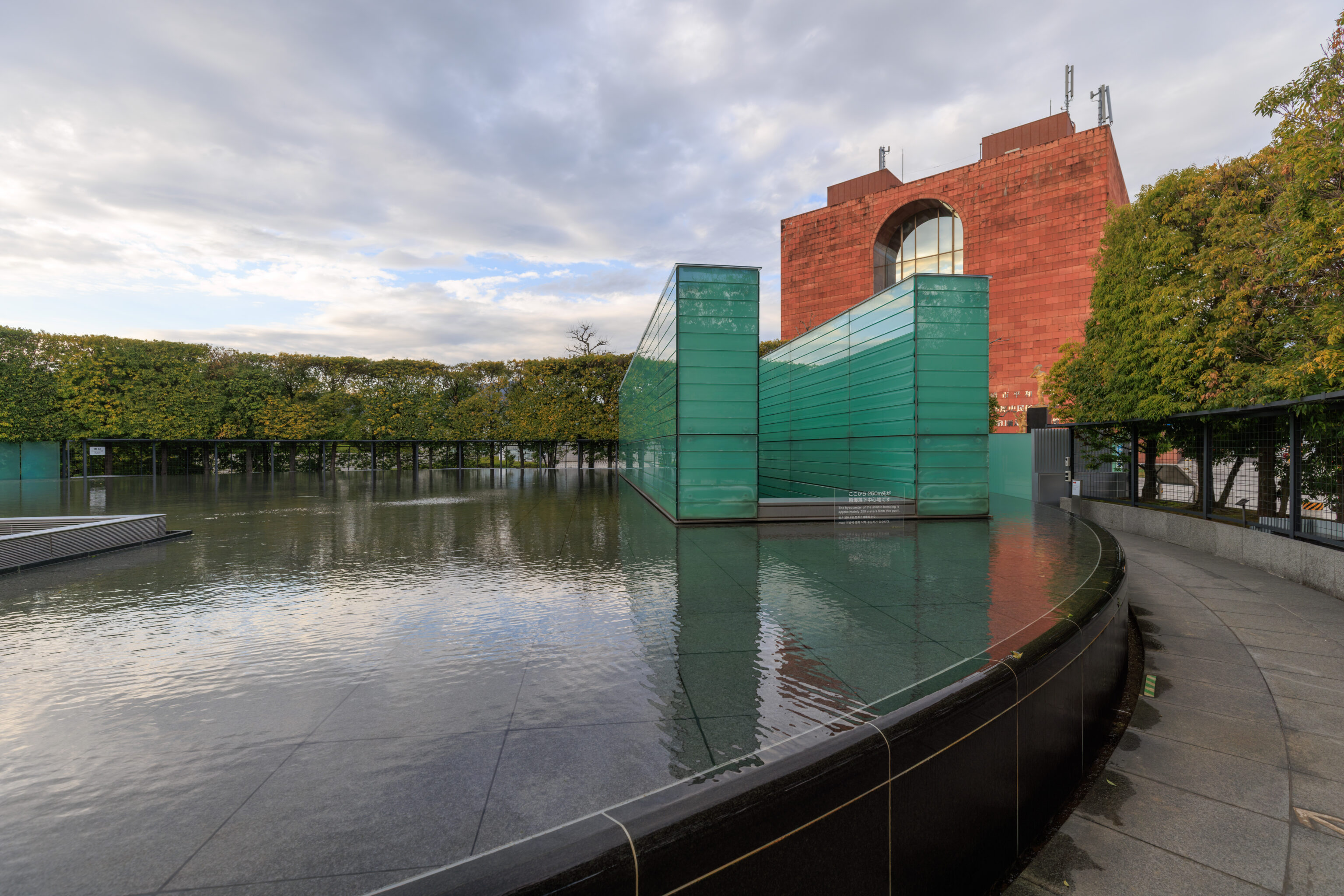
It consists of a shallow pool filled with water.
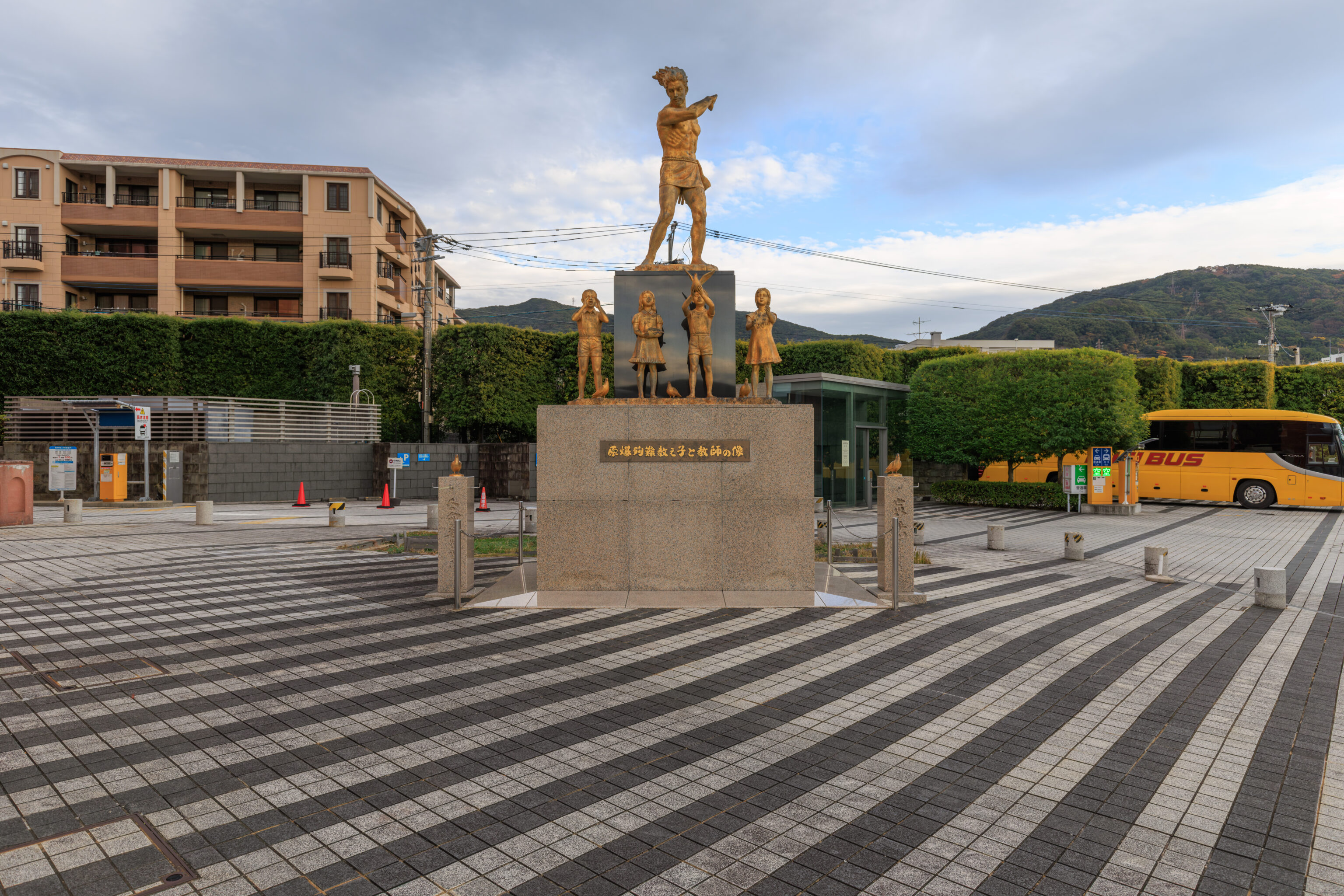
This nearby statue is inscribed with the text, 原爆殉難教え子と教師の像 Statue of Students and Teachers Who Perished in the Atomic Bombing.
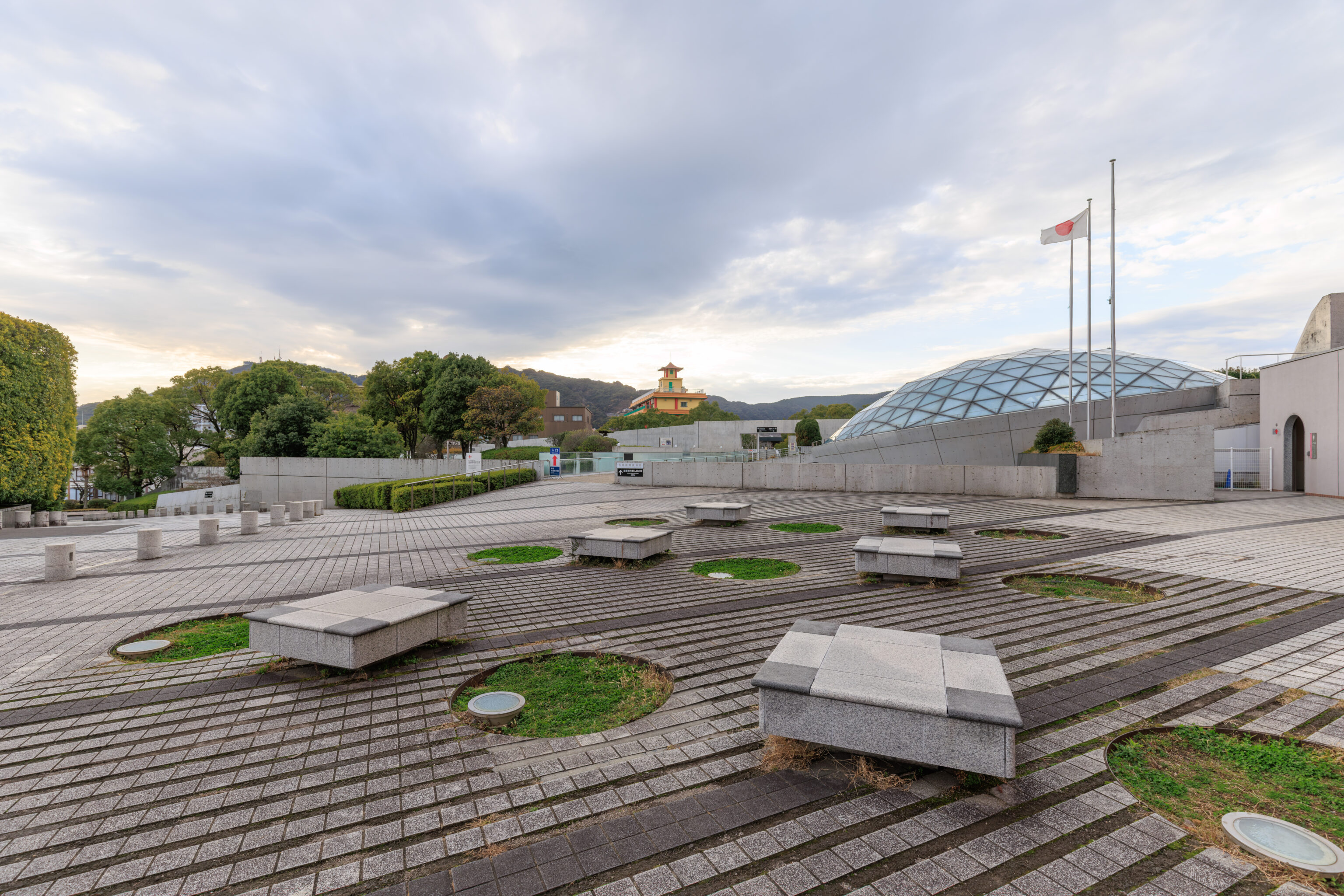
There was a plaza on the north side of the memorial hall with seating. The yellow building in the distance with what looks like a pagoda on its roof contains a Chinese restaurant. Its not really relevant to anything here but it does stand out.
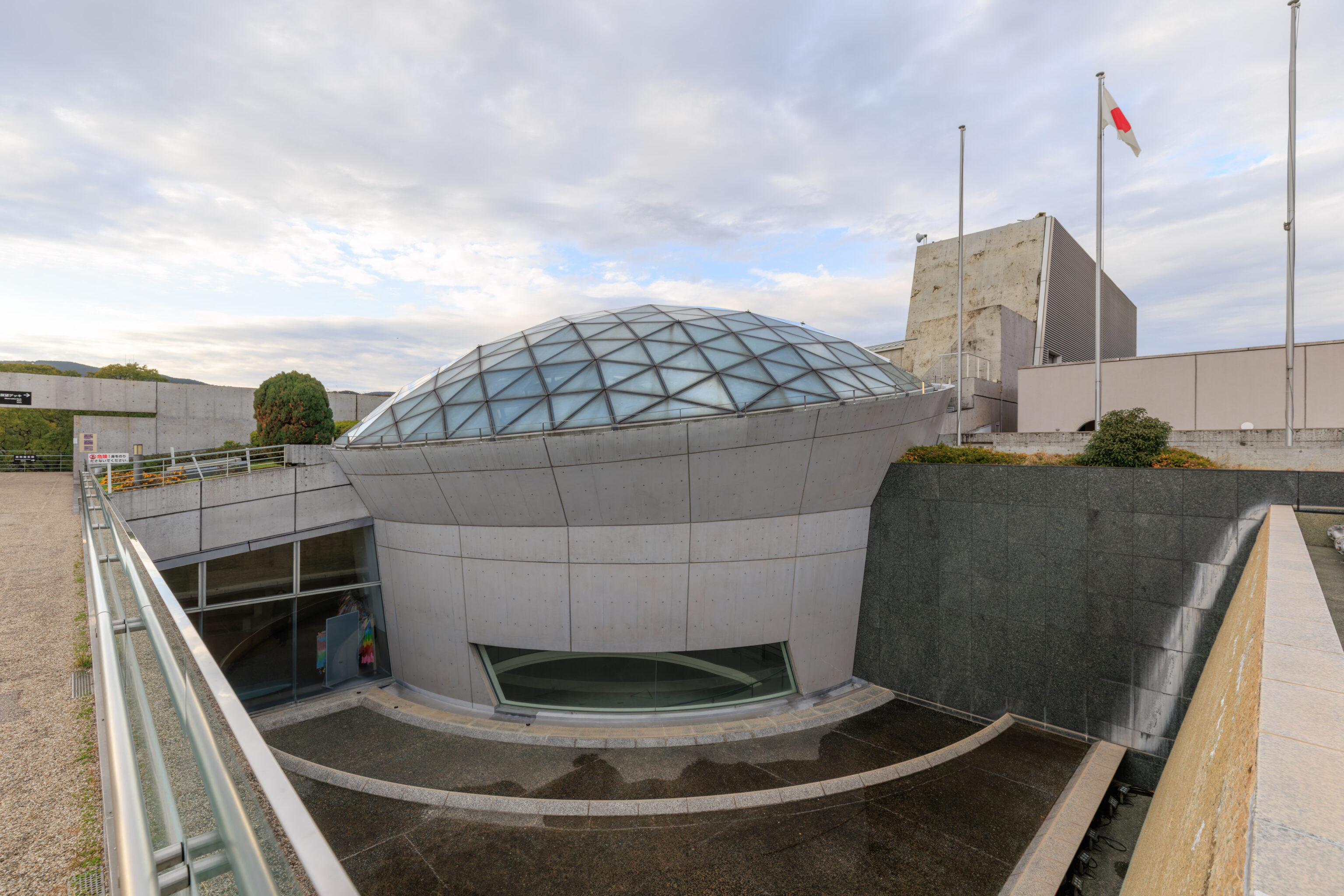
We walked back towards the Atomic Bomb Museum. The domed circular structure is the circular room that we descended to enter the museum’s exhibition space. The floor below is the ground floor on the building’s entrance side.
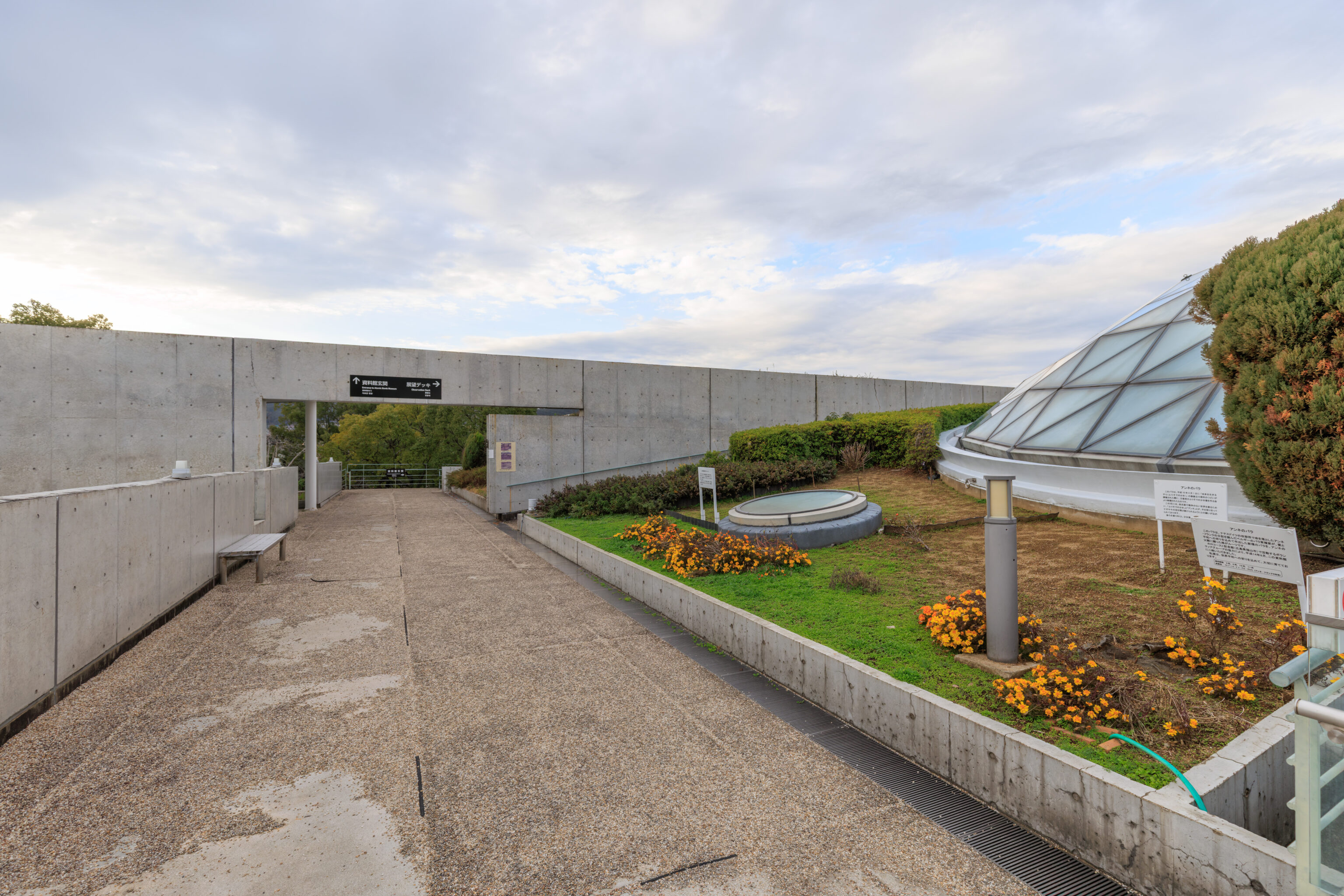
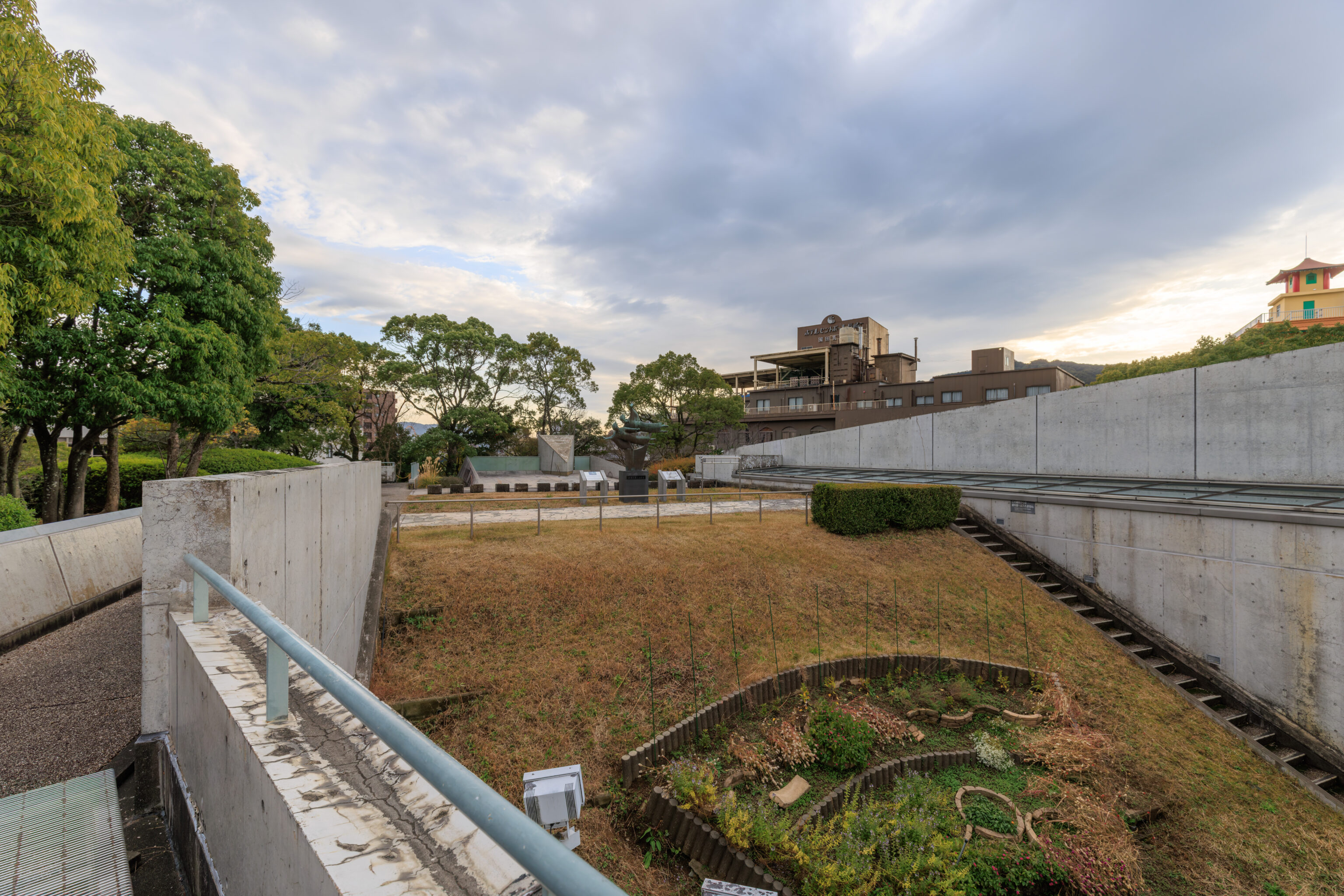
We ended up walking around this outdoor area above the museum.
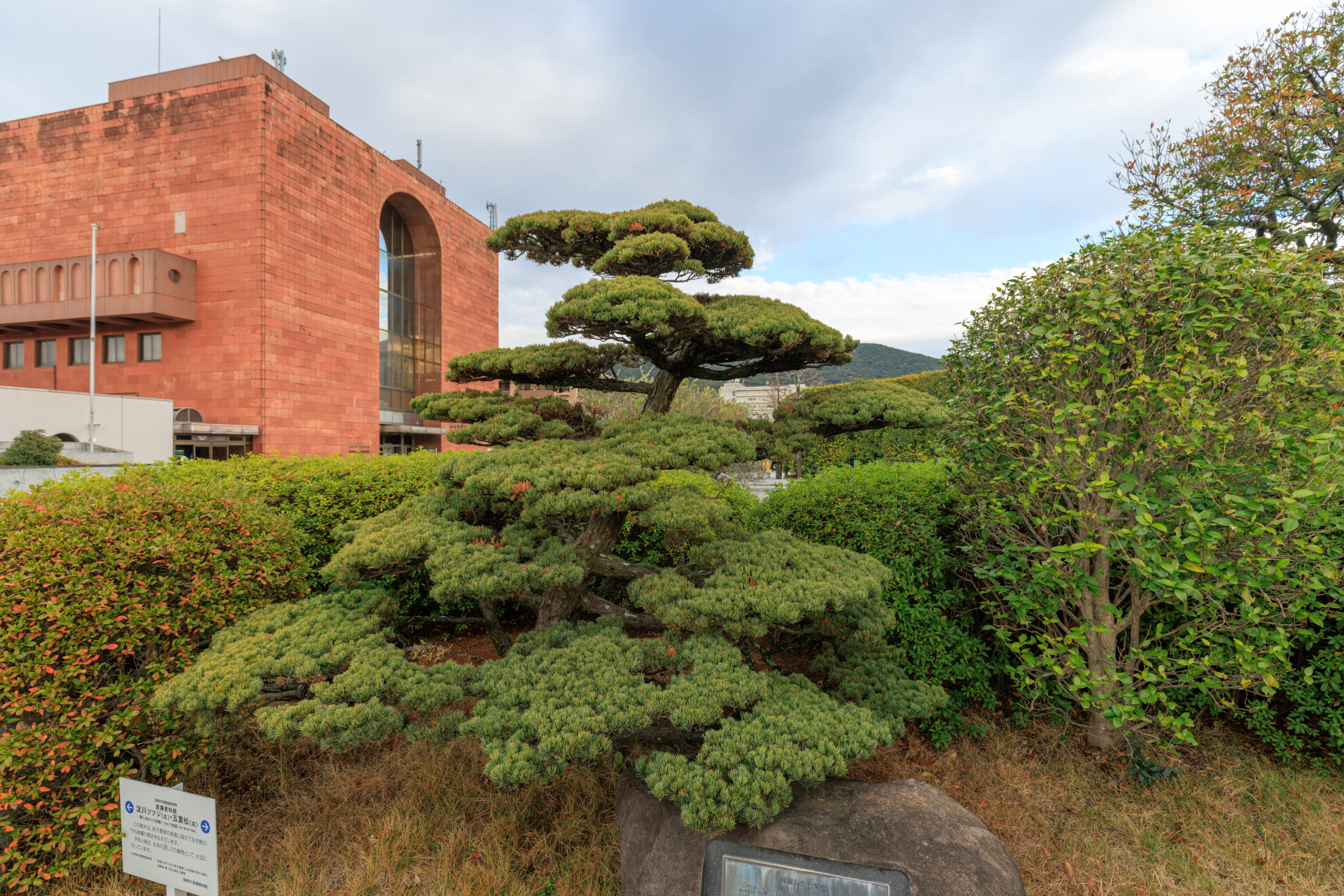
This tree survived the atomic bomb.
Japanese White Pine Exposed to the Atomic Bombing
This Japanese white pine was exposed to the atomic bombing on August 9, 1945 in Aburagi-machi, about 800 meters from the hypocenter. While the persimmon and other large trees in the donater's garden later died, this pine, which was 17 years-old at the time, has miraculously survived.

Returning from military service in China the following year, the donator treasured the pine as a memento of five family members killed by the atomic bomb but decided to donate it to the museum to allow many other people to see this tree that, like the human survivors, managed to escape death.

Now, more than half a century after the atomic bombing, the pine tree seems to be stubbornly appealing to young generations about the inhumanity of nuclear weapons and the futility of war.

Donated by Misao Ikeda
April 1996
Nagasaki City
– Text from a sign.
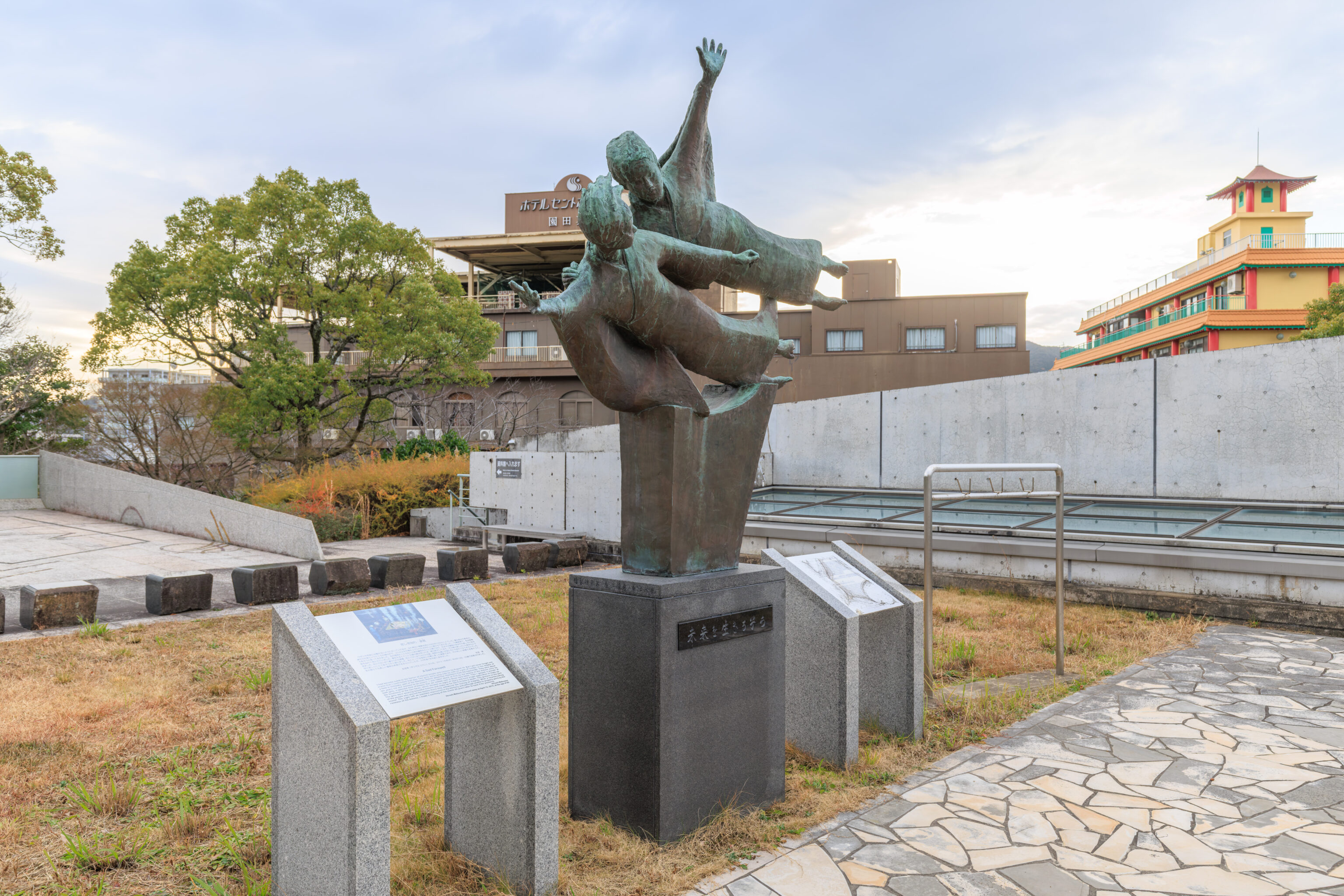
This sculpture is inscribed with the text, 未来を生きよう Let’s Live for The Future.
A Sad Farewell
I had become numb to the horror of injured people and corpses by August 19. But I will never forget one scene that I confronted that day. Two girls were lying side by side on a pile of lumber in the middle of a field in Uchizaka, part of the Nameshi district about four kilometers from the hypocenter. They were about ten years old and seemed to be sisters. I was taken aback at first by the beauty of the kimono worn by both girls, a splendid kind of kimono that we seldom saw in those hard times. Then I gasped in wonder at the loveliness of the two faces, which showed no signs of injury and bore a light application of make-up. The girls were wearing beautiful kimono and make-up for the first time in death. This gesture on the part of the people who placed the bodies there only enhanced the feeling of tragedy. What a heartbreaking scene! The sight left an indelible impression in my memory, and although unable to properly portray the richness of the kimono, I made a painting of the scene 29 years later to save it for posterity.

Hiroshi Matsuzoe
Hiroshi Matsuzoe passed away on April 13, 2014, at the age of 83.
– Text from the sign to the left of the sculpture.
An article in The Asahi Shinbun, “The Cremation of Two Young Girls in Their Best Kimonos“, discusses this sculpture of the two girls mentioned on the sign.
Children Trusting in the Future
This statue is erected in tribute to the young people of Asia who suffered in the fires of war while trusting in the future and to all the peace-loving people of the world who aspire for a world free of war. One spring day in 1995, the Ayabe Junior High School student council received a letter from 93-year-old Ms. Shina Fukutome, mother of Minako, one of the girls portrayed in the painting "A Sad Farewell" In the letter Ms. Fukutome, who lives in Ayabe City, Kyoto Prefecture, expressed her wish to build a peace monument in Nagasaki. A mother who lost her daughter to the atomic bomb, she had been folding her grief for years into paper cranes and giving these to us to take to Hiroshima on our school excursion. Deeply moved by her wish and by the facts of history, junior and senior high school students, parents, teachers and other citizens of Ayabe gathered to form the "Association to Build the Statue of a Kimono-clad Girl in Nagasaki" and to collect funds. The statue reached completion with the efforts of the people involved in the project and with the support of the many other people moved by our aspiration "not just to build a statue but to expand the wish for peace around the world." All of these people were united by two girls who disappeared into the sky over Nagasaki praying for a peaceful world free of nuclear weapons. We are confident that the road taken in building this statue is the road of truth along which humankind will build a peaceful future.

March 31, 1996 Association to Build the Statue of a Kimono-clad Girl in Nagasaki.
Shina Fukutome passed away on November 29, 2009 at the age of 107.
– Text from the sign to the right of the sculpture.
The organization that was created to build the statue, ふりそでの少女像をつくる会 Association for Creating the Statue of the Girl in a Furisode, appears to still exist today as they have a website with additional information. A furisode is a type of kimono.
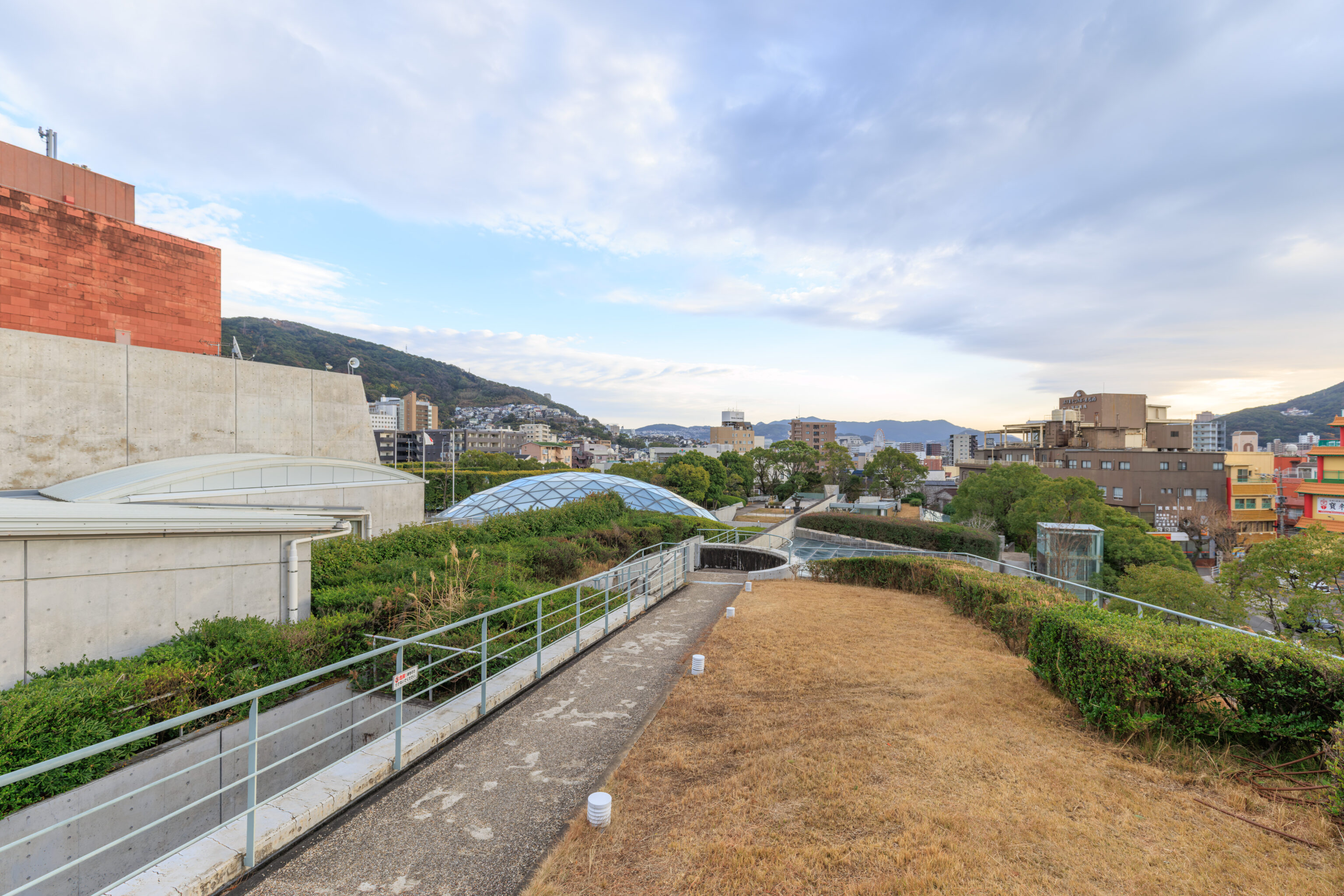
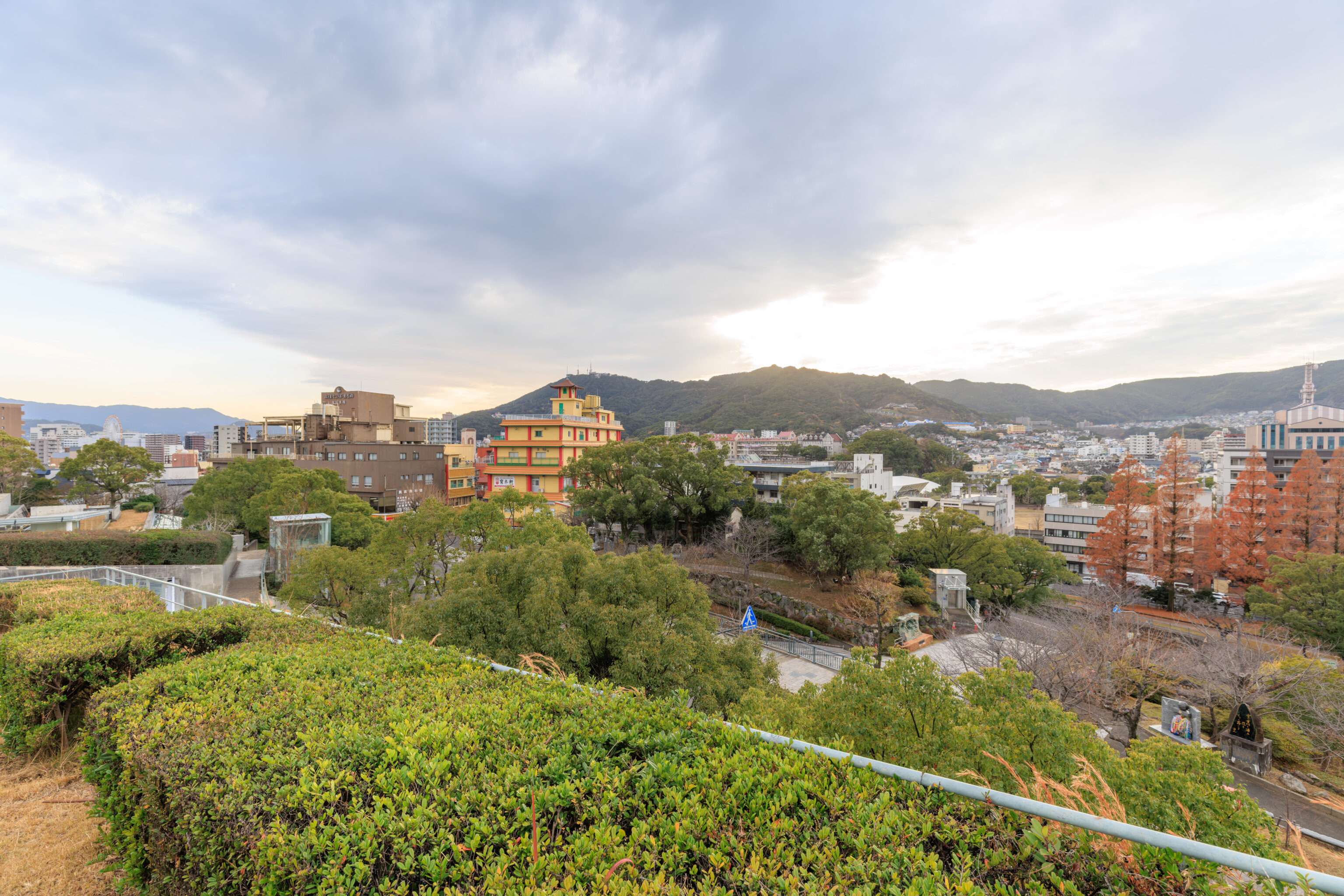
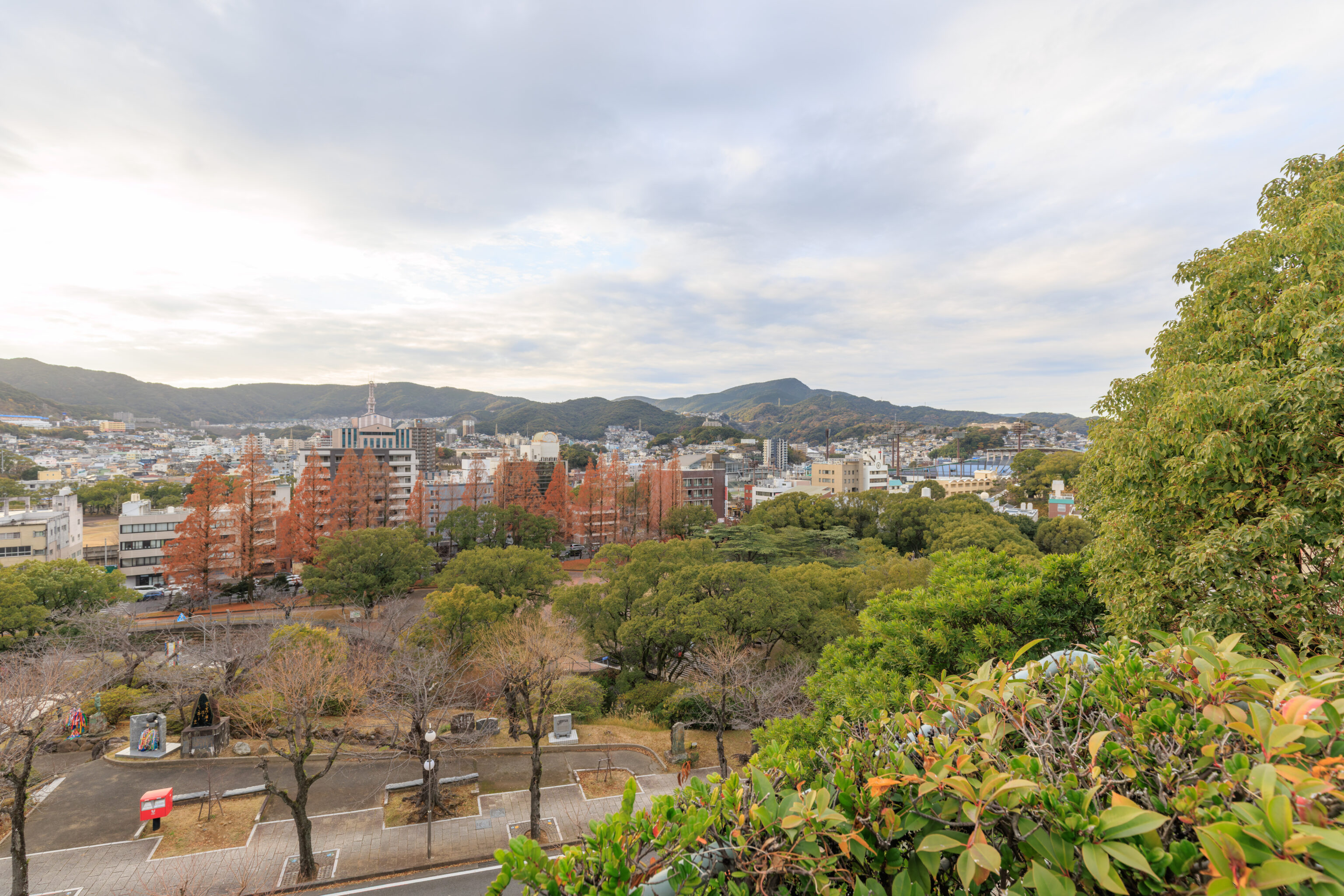
There was a small overlook at the highest part of the museum’s rooftop area.
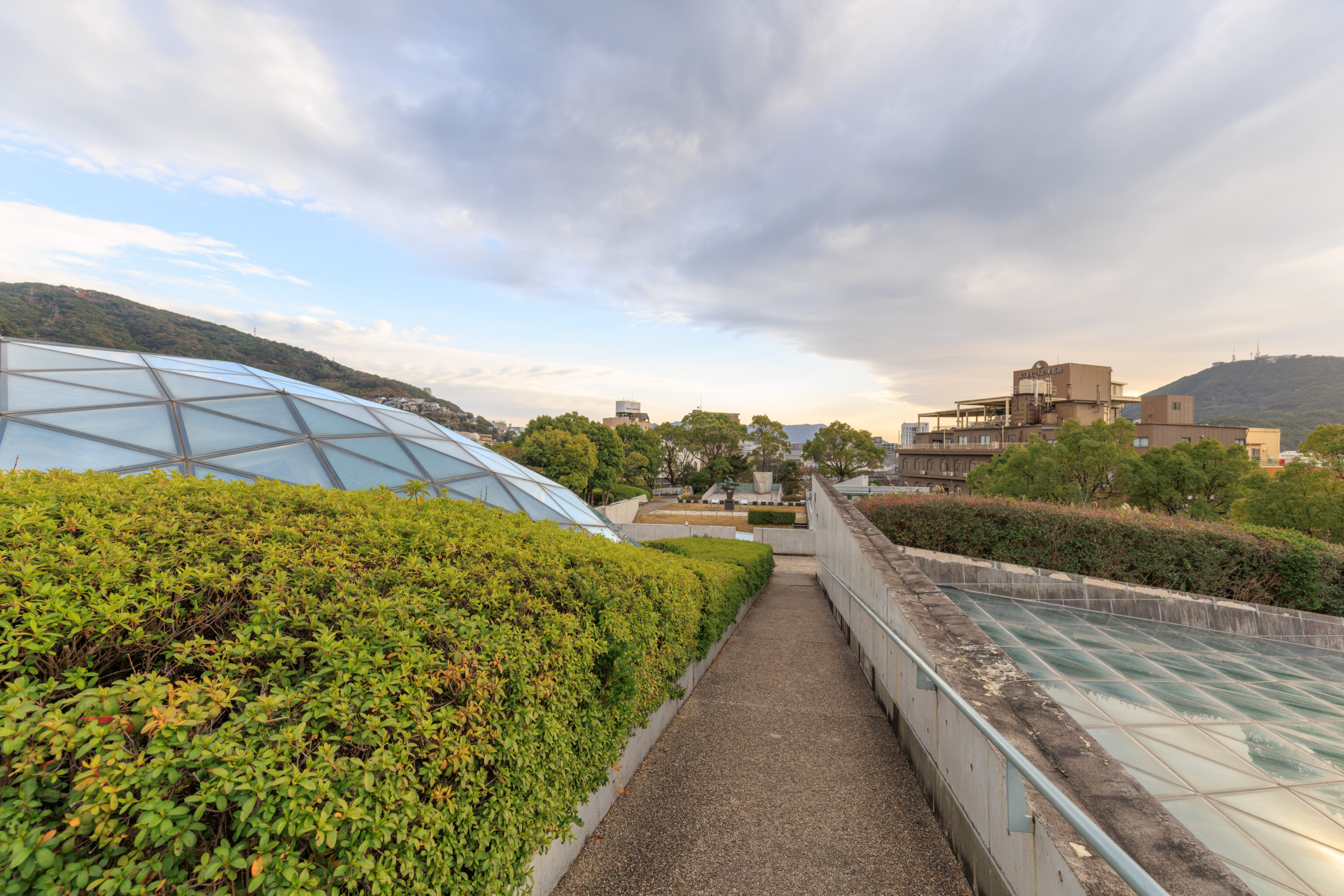
We headed back to the entrance to end our visit.
Evening
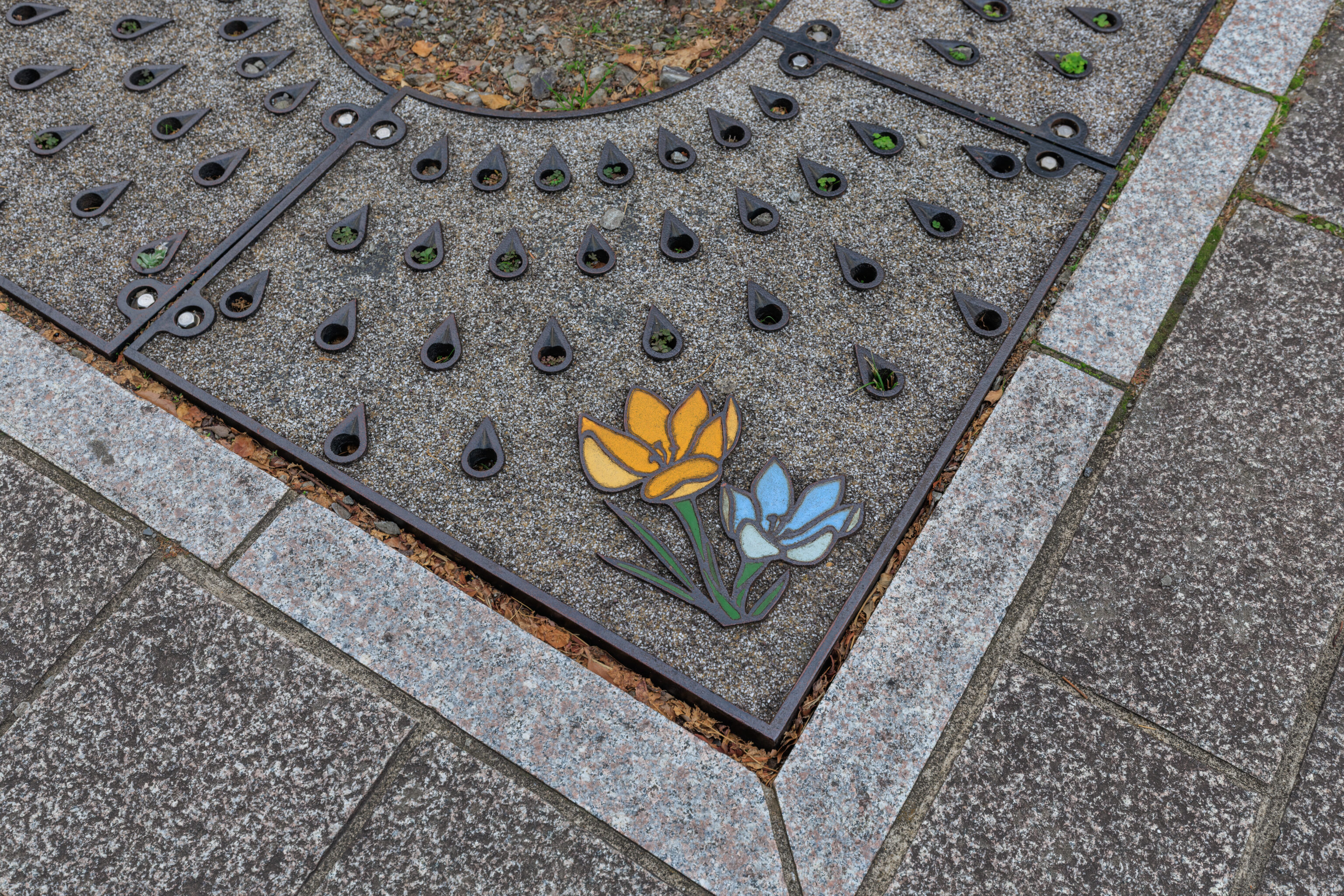
We walked to the south to catch a bus from the Atomic Bomb Museum bus stop. We don’t know what these two flowers may be.
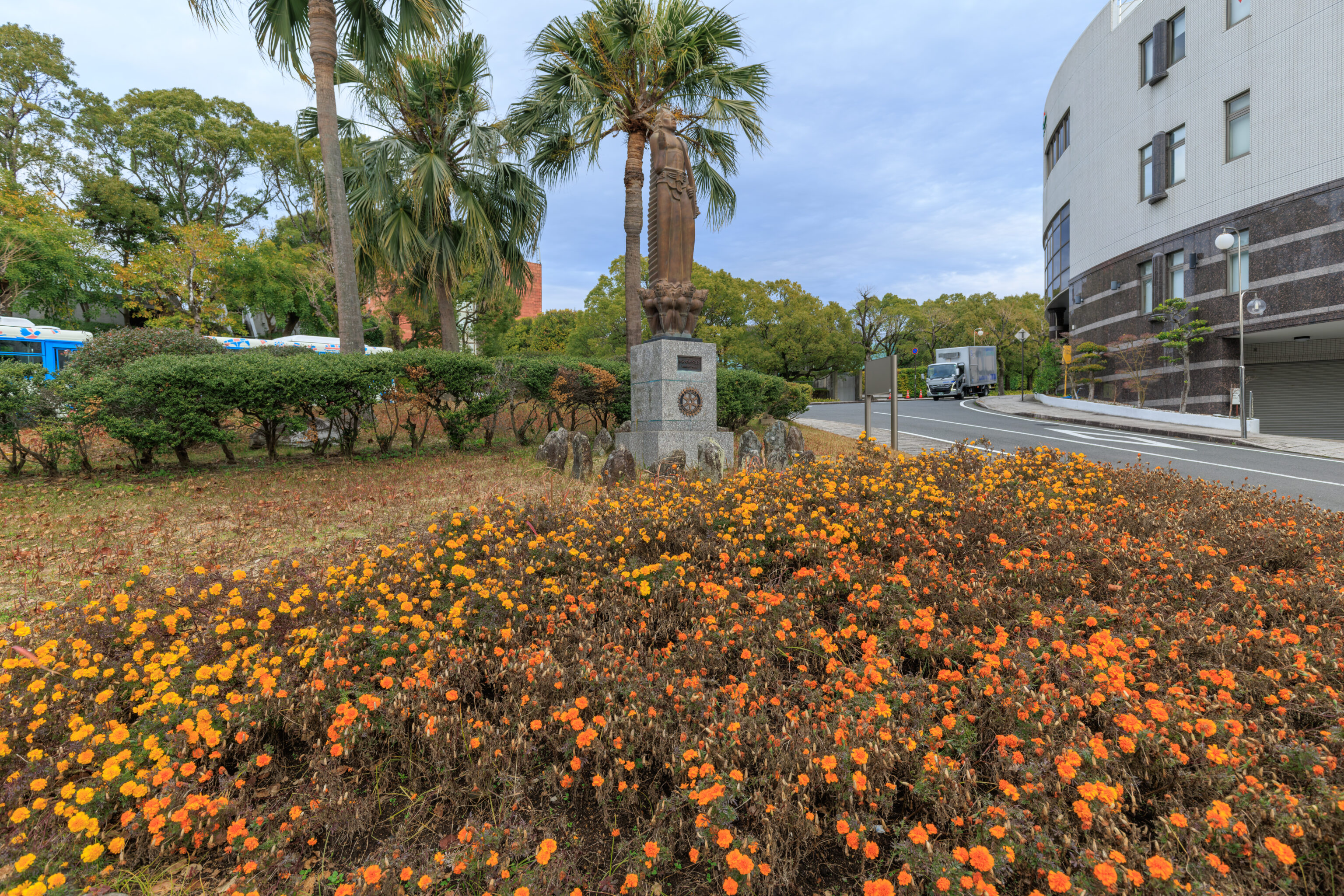
We passed by this colorful field of flowers with a Rotary Club sculpture in the background. The inscription at the base of the sculpture seems to read, 平和のビジョン Vision of Peace.
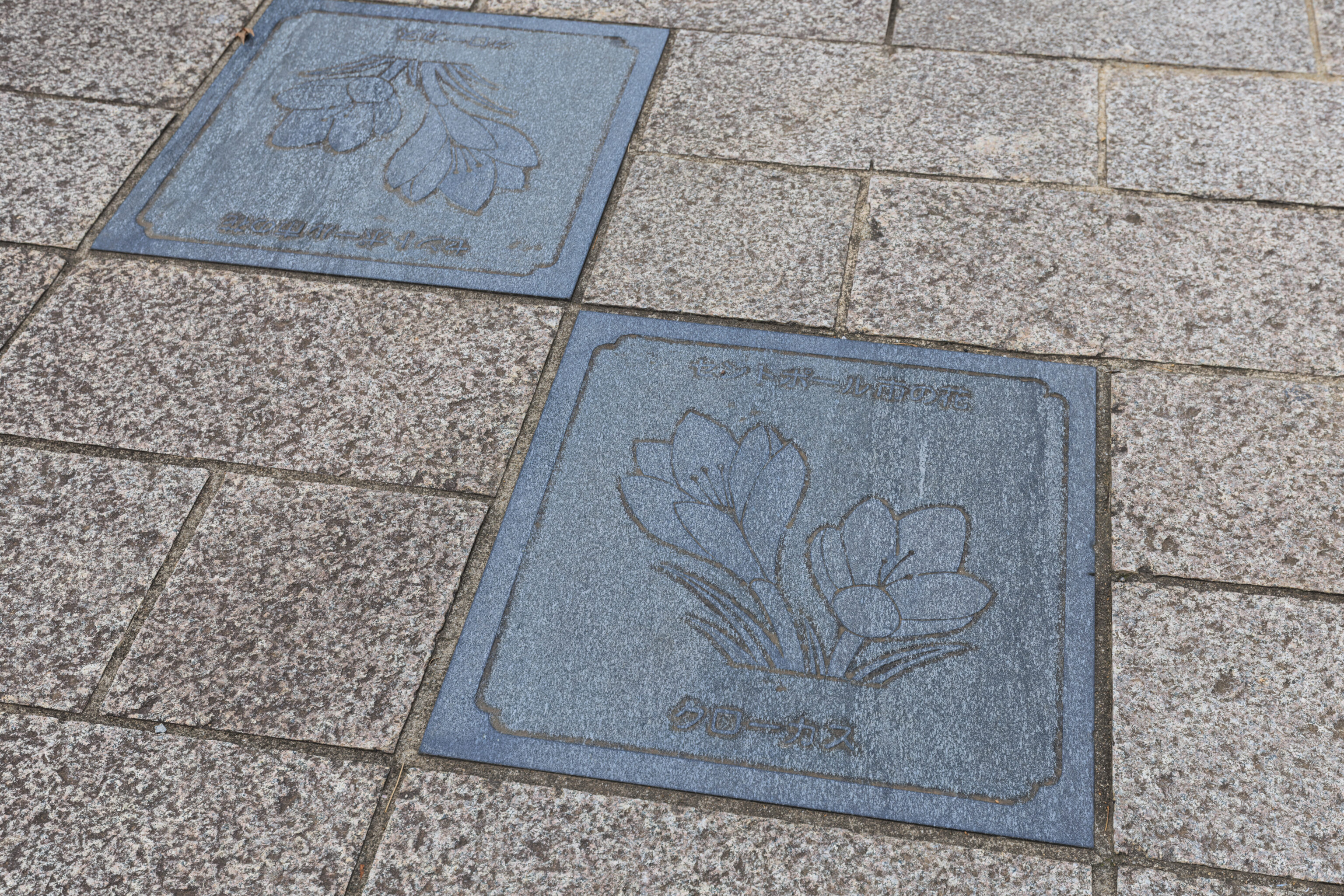
These tiles seem to depict the colorful flower art we just saw! It turns out that these flowers are クロッカス Crocus, identified as セントポール市(し)の花 The Flower of St. Paul City. We learned earlier at the Peace Park that St. Paul and Nagasaki are affiliated as sister cities. However, there isn’t any easily searchable evidence that St. Paul has an official city flower.
Upon returning to Nagasaki Station, we had an early dinner at 若竹丸 Wakatake Maruu, the same sushi restaurant we ate at two days ago.
Once again, the quality to price ratio was excellent!
They even had a little step stool to help customers get out of the slightly elevated booths!
We discovered that there is supposed to be an illuminated garden area somewhere atop the AMU Plaza here at the station. So, we went to try to find it. We ended up walking through a food court area. We found this restaurant, ブルズキッチン Bull’s Kitchen, selling dishes made with American beef amusing. What do Japanese typically think about American beef?
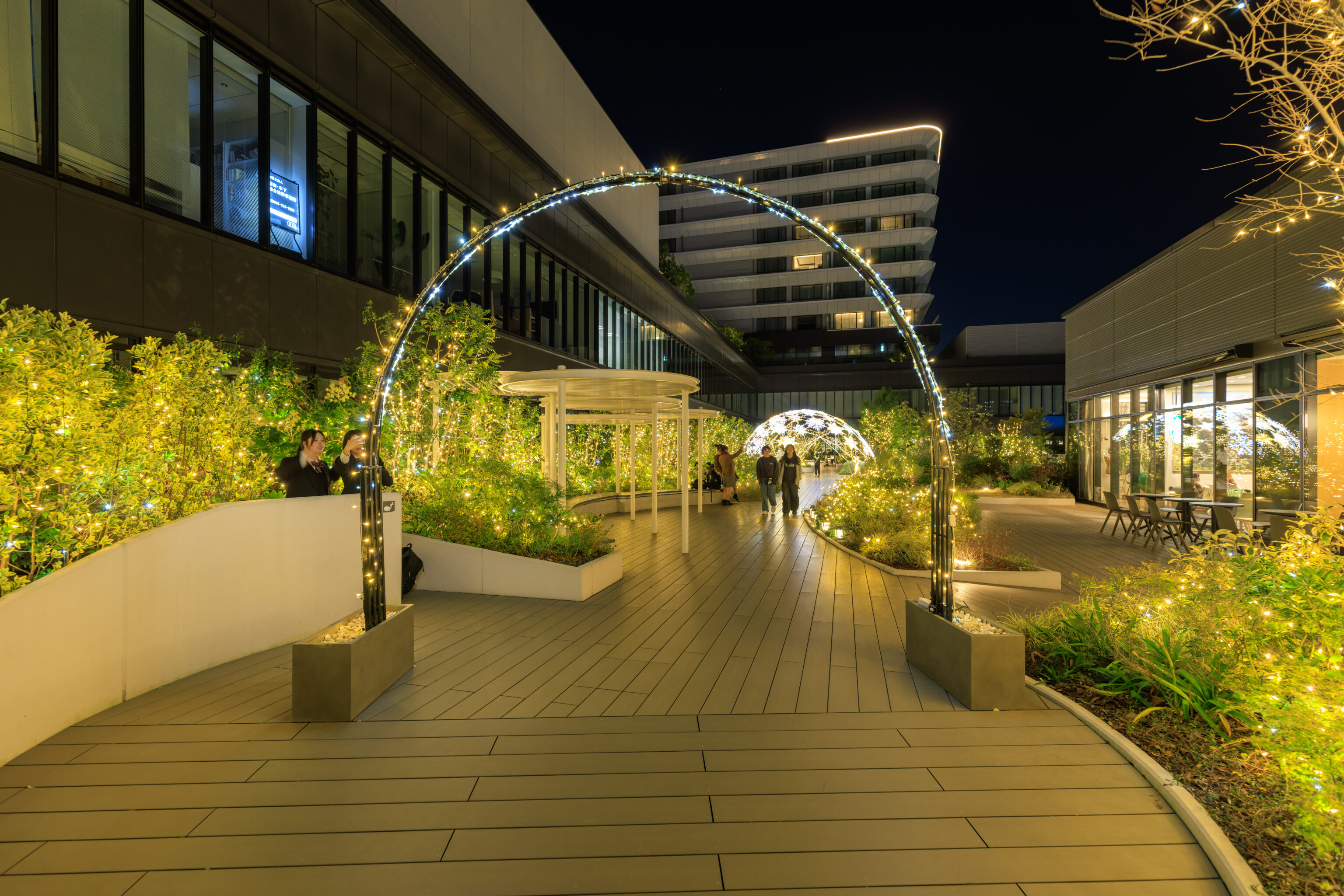
The illuminated rooftop garden was a bit underwhelming. It was nestled in a courtyard-like space near the Marriott and had various little nooks with seating. It wasn’t particularly busy but many groups of kids were out doing TikTok or whatever is popular with kids in Japan!
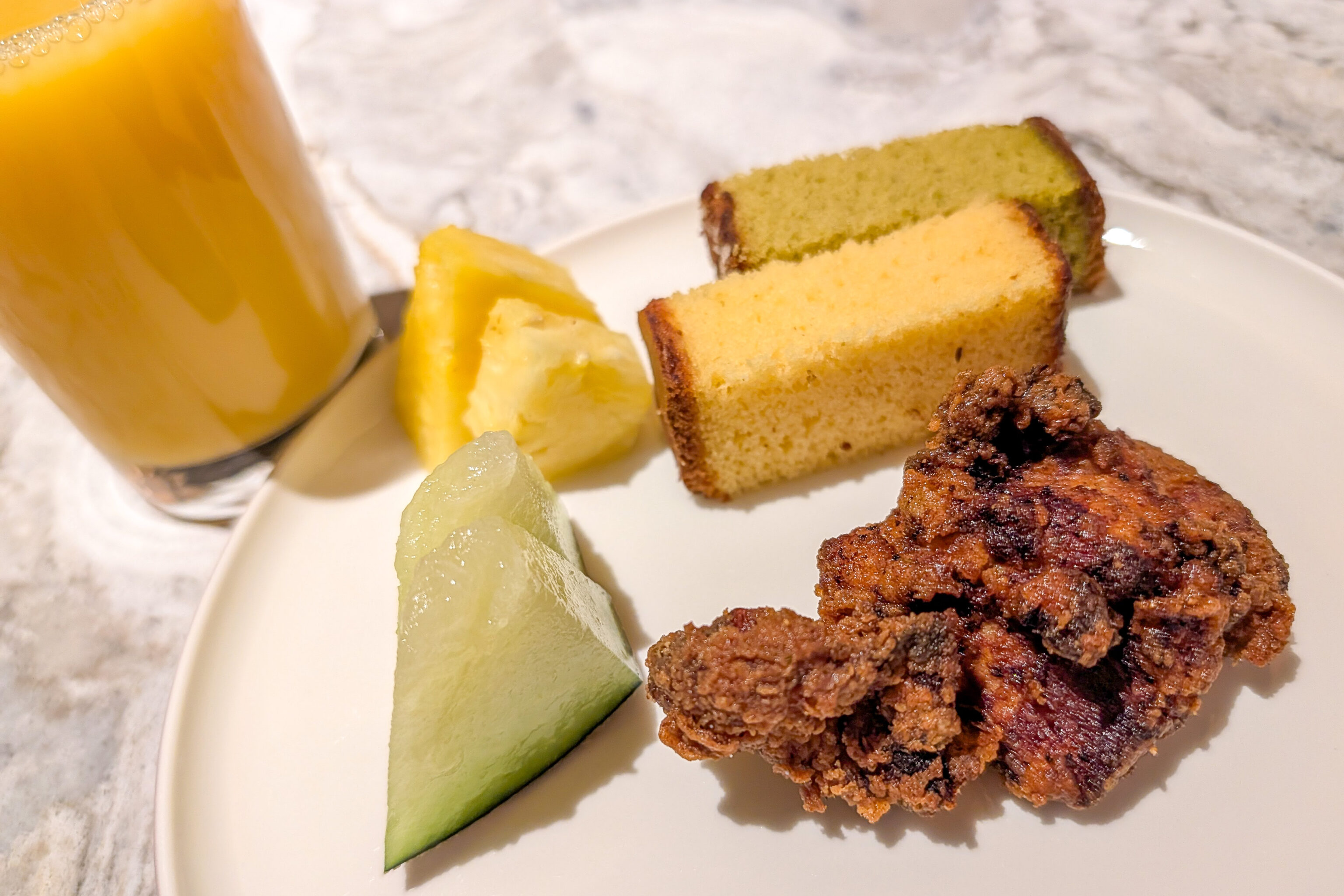
After returning to the Marriott, we briefly visited the lounge for some snacks.
We also ate one of our two castellas that we received when checking in two days ago. It was good and extremely well packaged, as is typically the case with Japanese omiyage items.
The castellas are from a local shop, 福砂屋 Fukusaya, which has been making them since 1624 after learning from the Portuguese. Their logo kind of looks like the Batman logo. The bat logo and shop name is a play on words in Japanese.