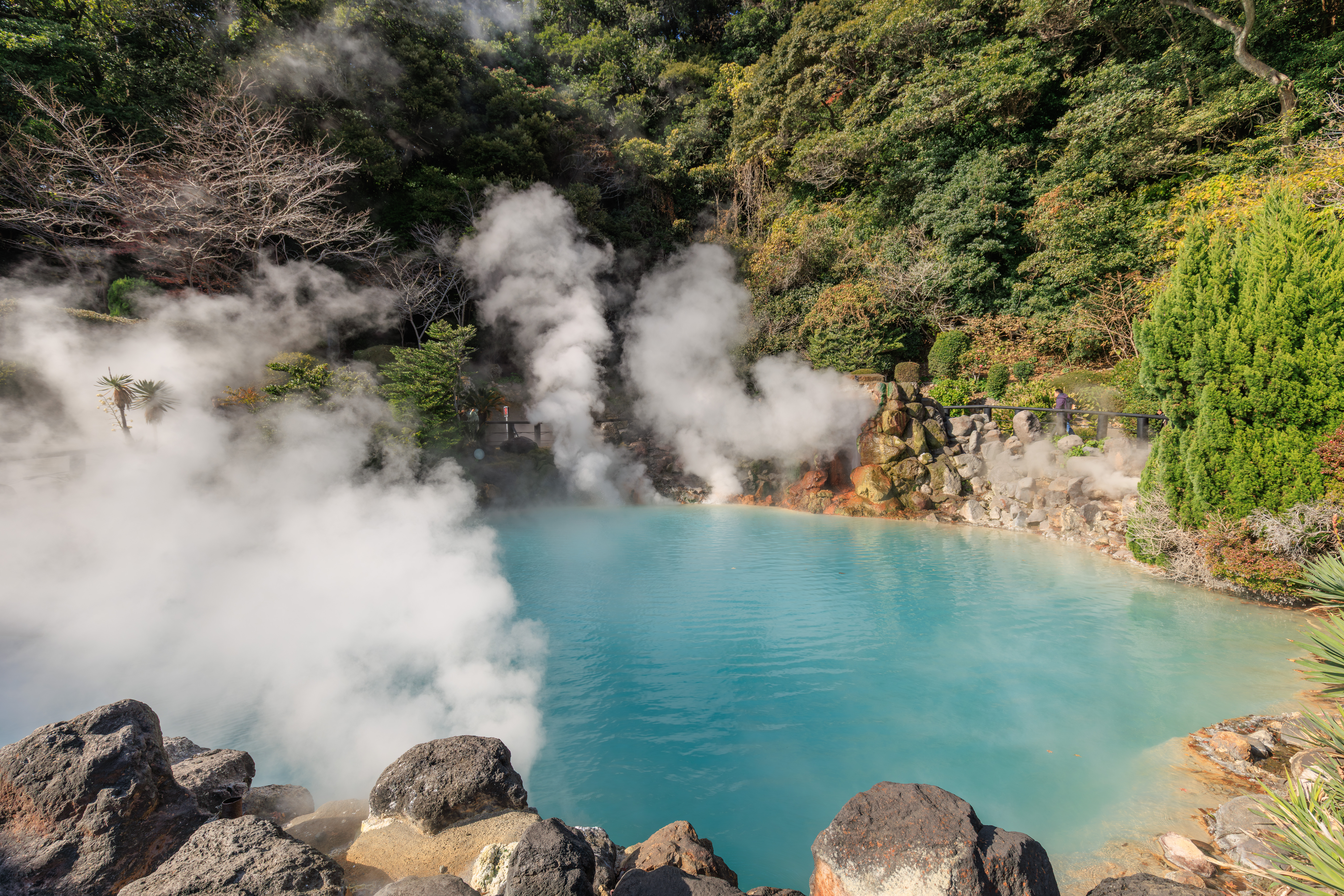
We enjoyed the onsen and had breakfast before leaving the ゆのひら上柳屋 Yunohira Kamiyanagiya and taking the train over to 別府 Beppu. We visited this onsen city’s famous 地獄 jigoku and checked in to the アマネリゾート ガハマ Amane Resort Gahama. In the evening, we relaxed in our room and enjoyed the in-room private onsen.
Morning
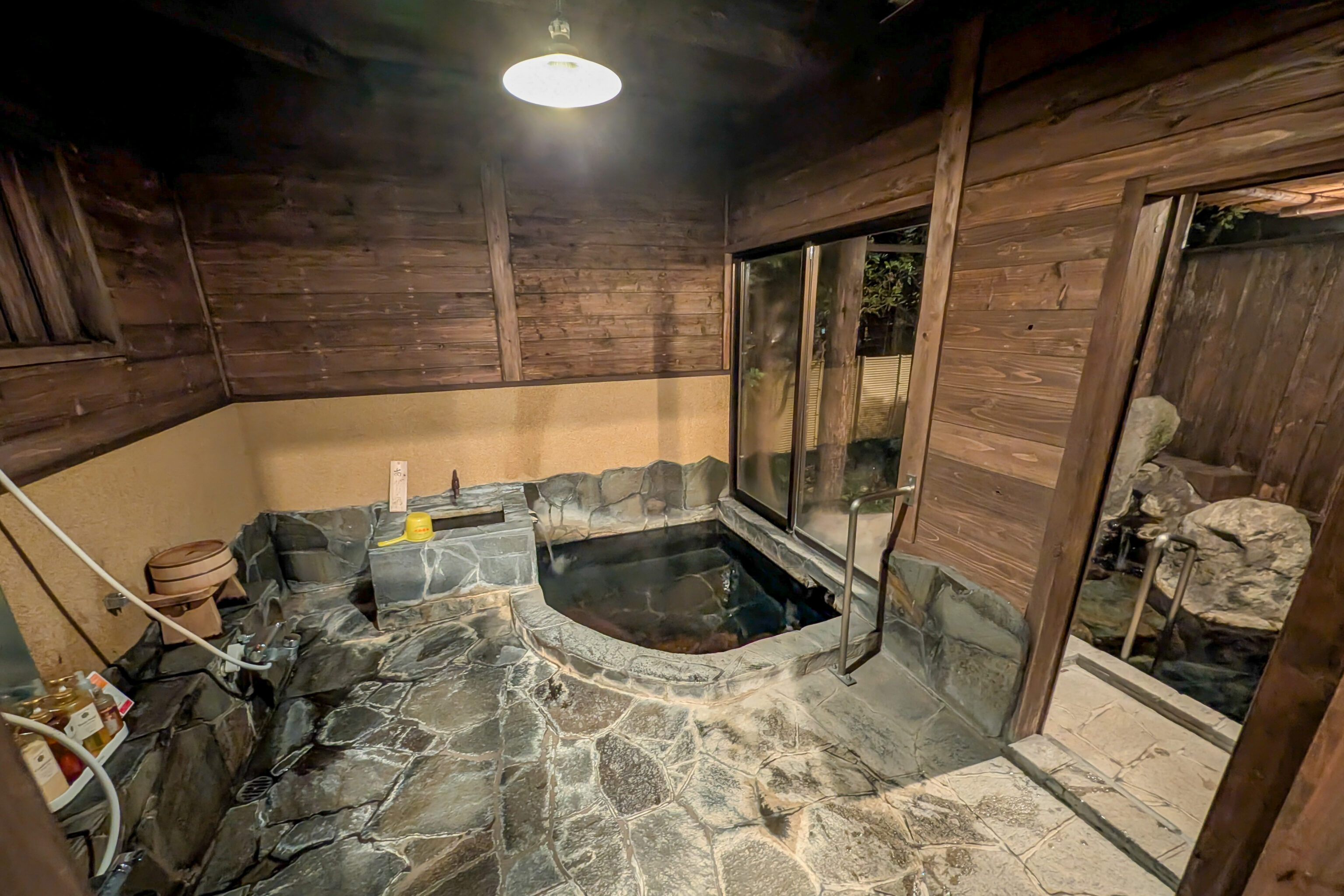
After waking up early at the ゆのひら上柳屋 Yunohira Kamiyanagiya, we headed downstairs to use one of the private onsen rooms. We actually went down early and were able to use one of the outdoor onsen before it officially opened. This was our first time in this room as we always ended up using the one that was closer to the main building. And by closer, we mean just a tiny bit closer.
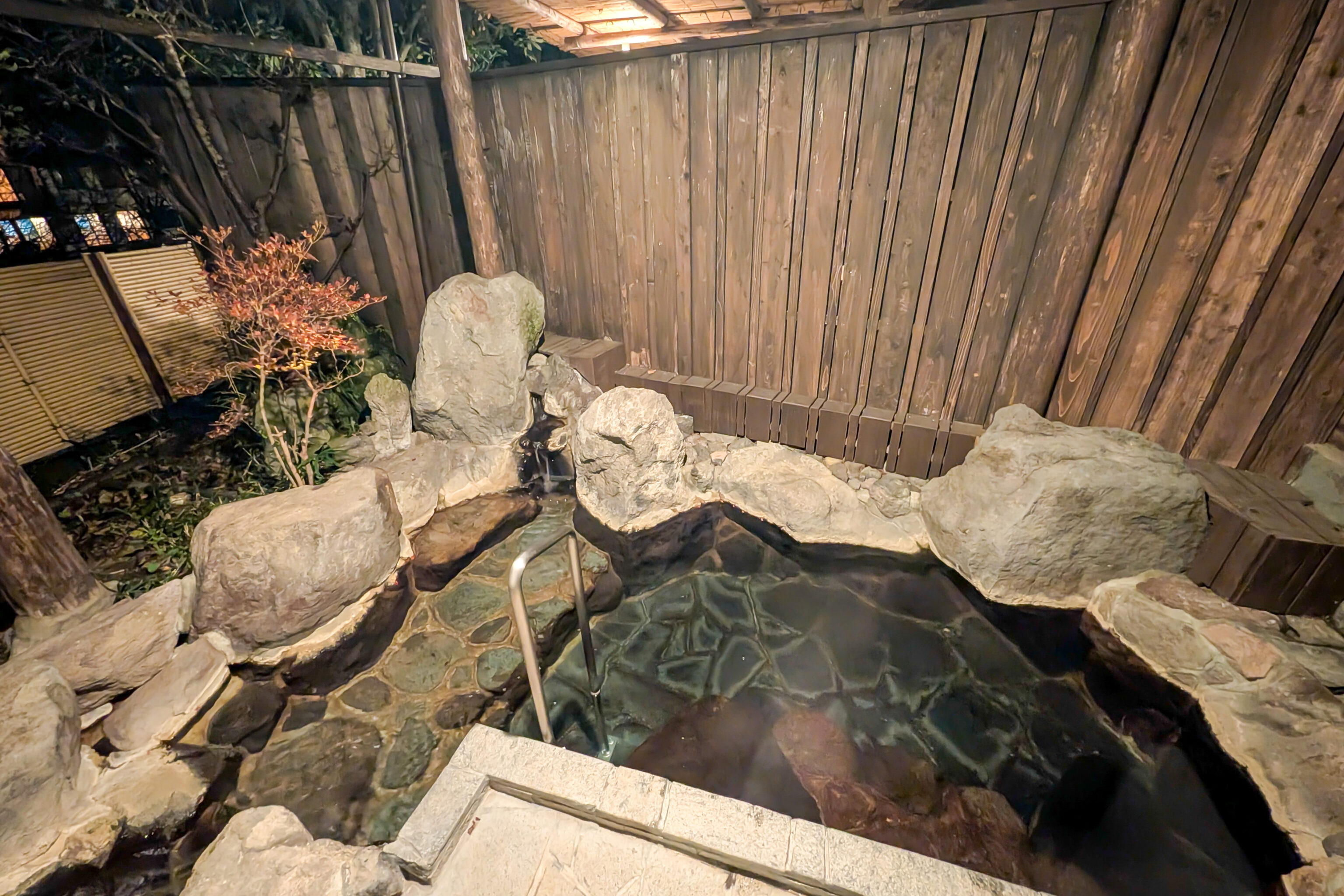
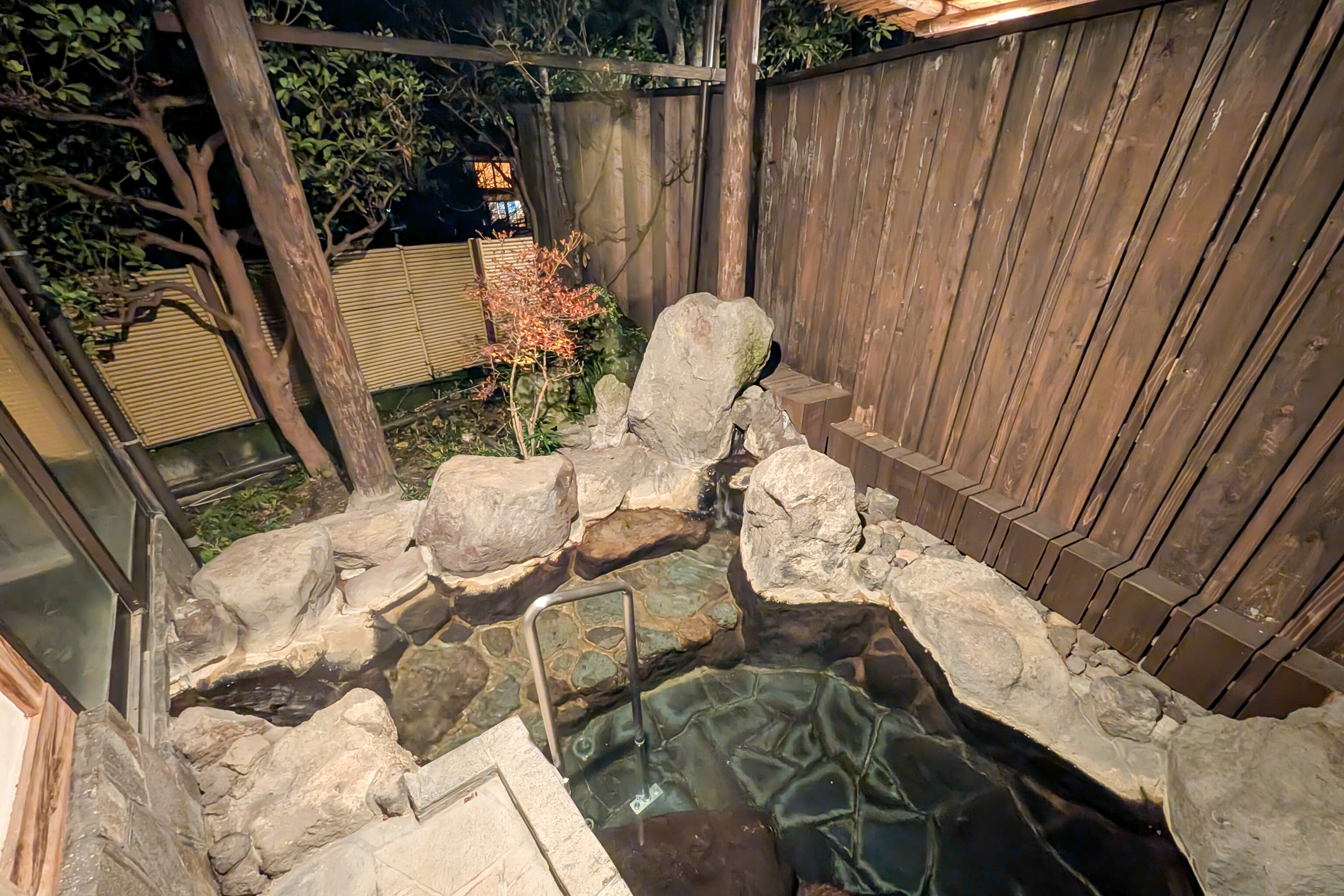
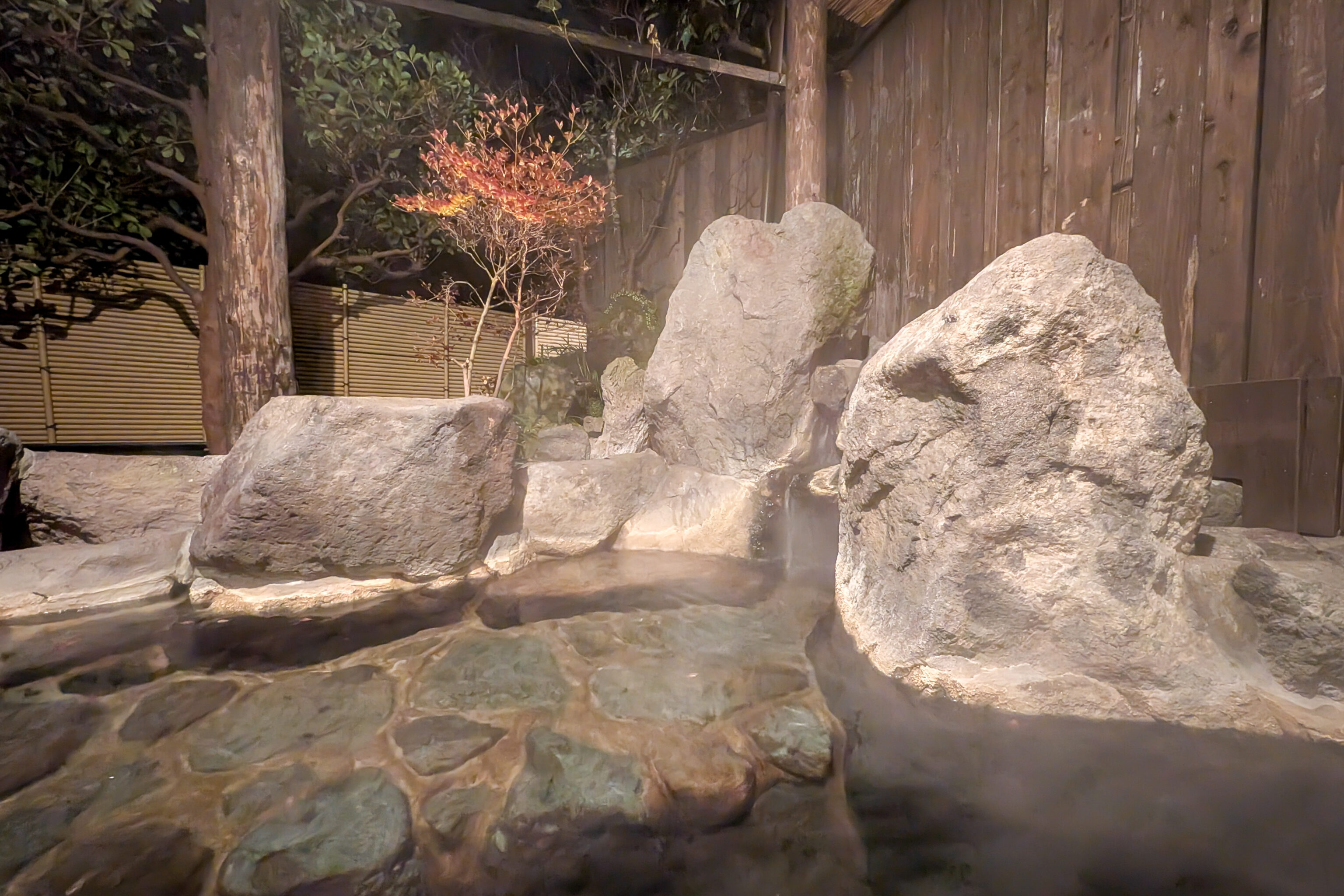
This bath was shaped differently from the other room, which is just on the other side of the fence. It also seems to be a bit smaller. But otherwise, they were pretty comparable and just as enjoyable.
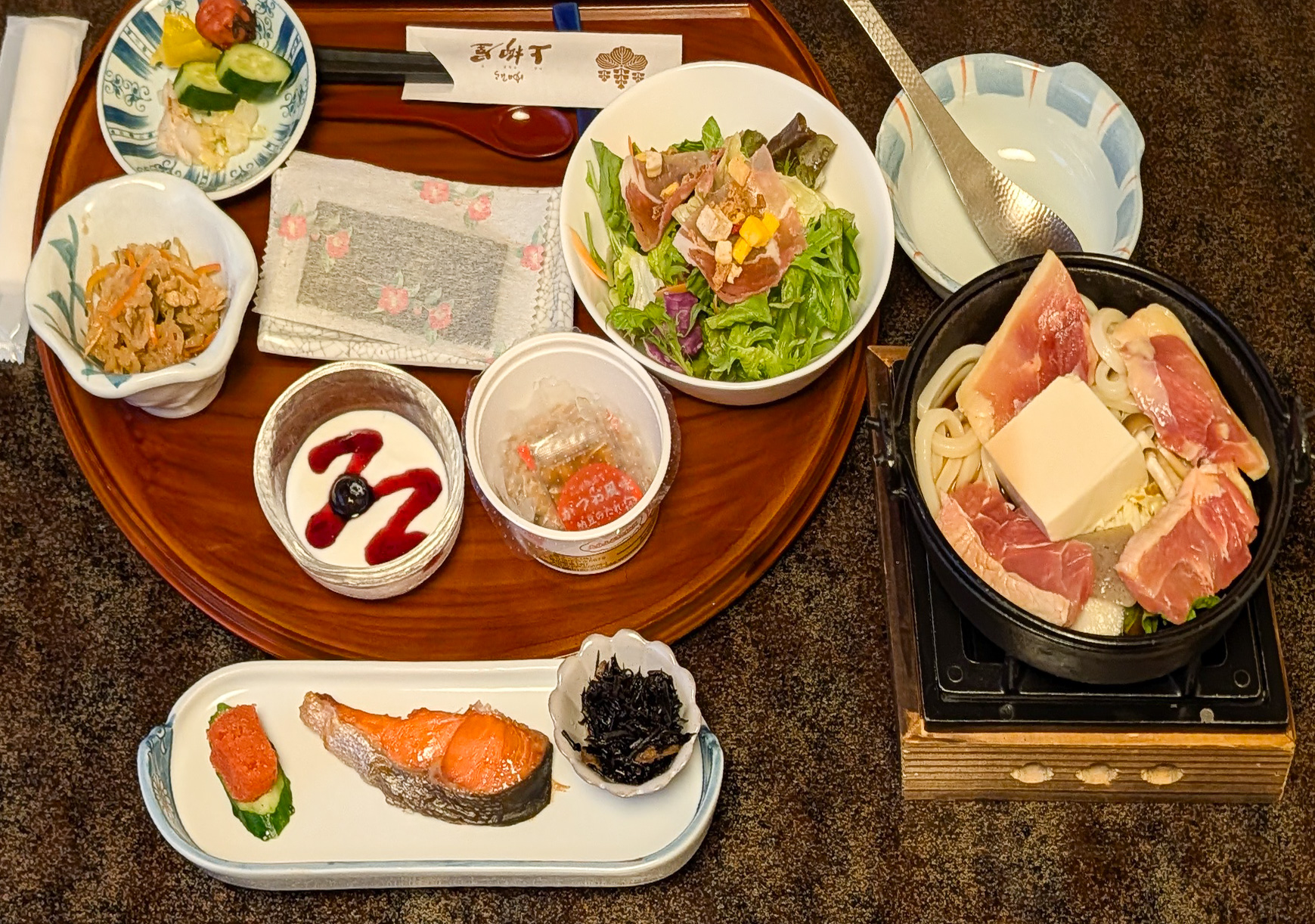
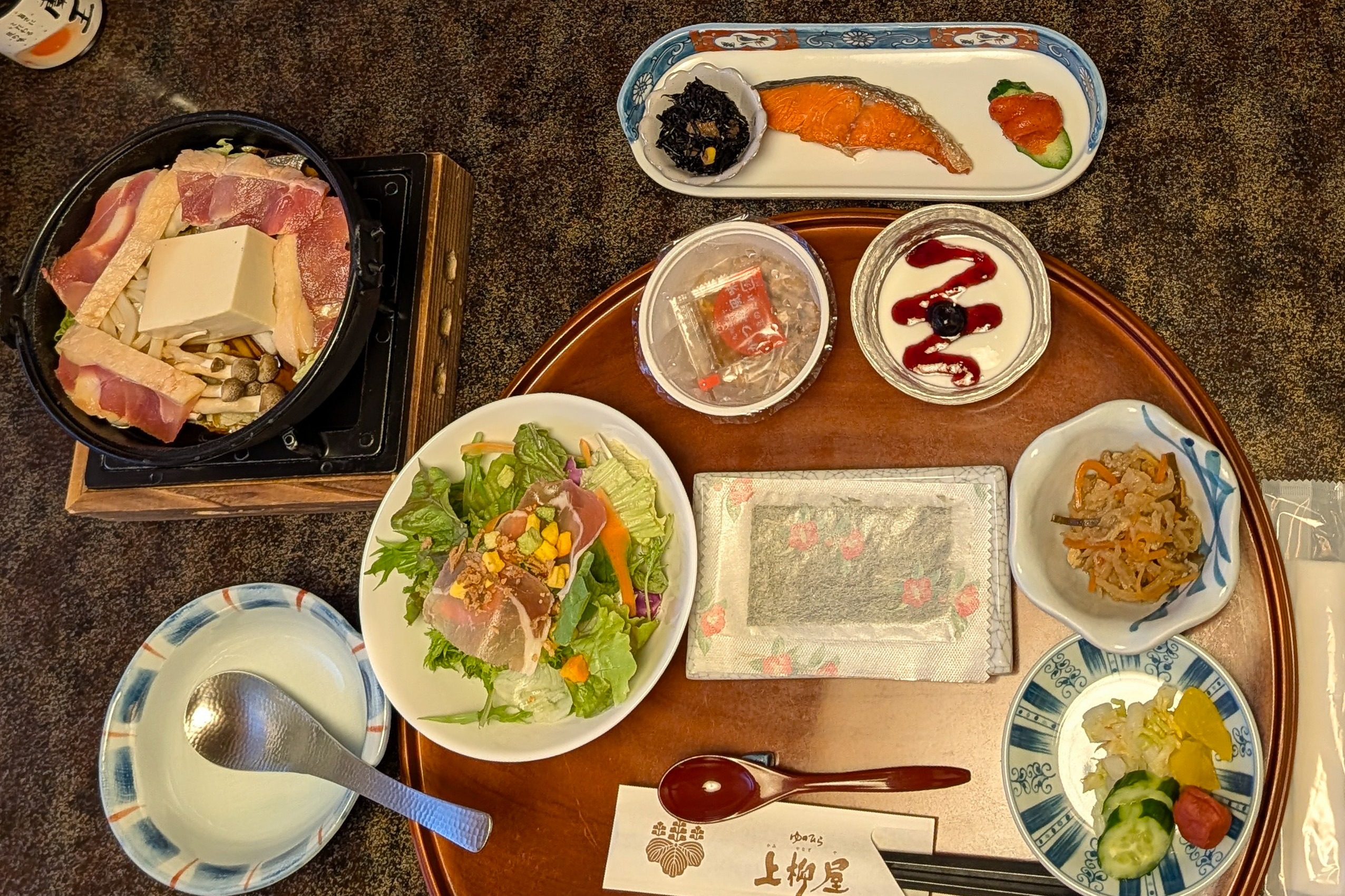
We headed down at 7:30am for breakfast. Our fourth and final meal here at this ryokan was served in the same location as the previous three meals.
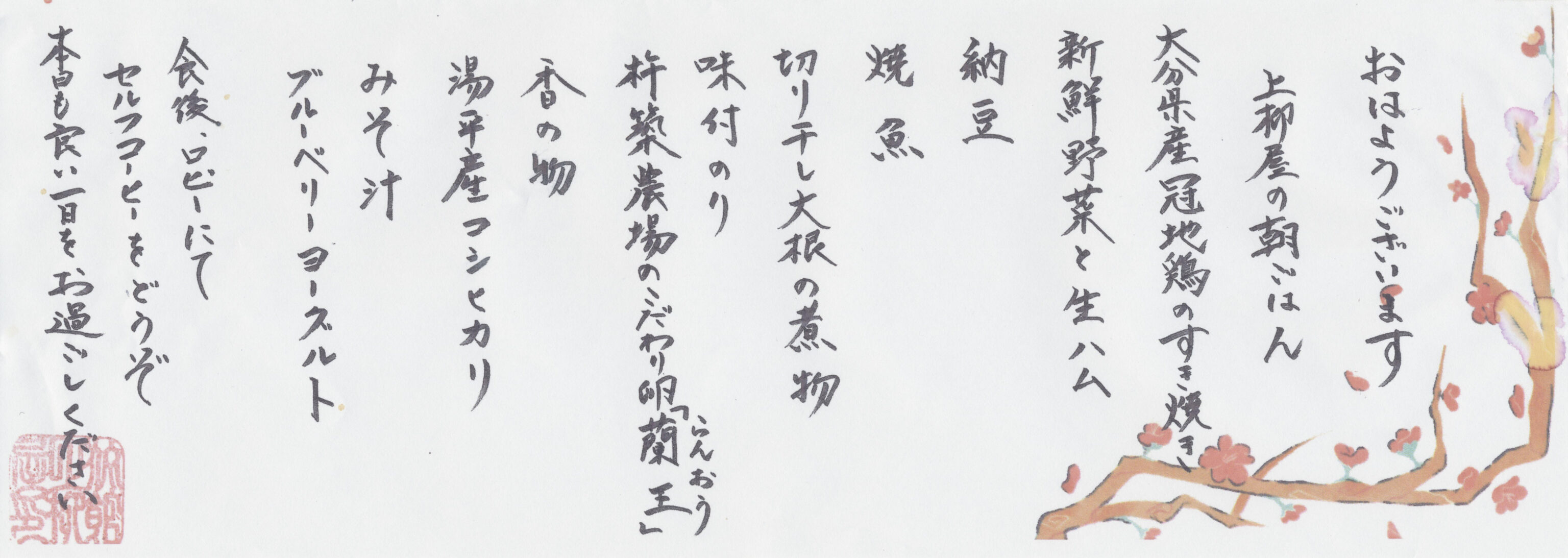
Good morning. Breakfast at Kamiyanagiya.

Sukiyaki with Kanmuri Jidori Chicken from Oita Prefecture
Fresh Vegetables and Prosciutto
Natto
Grilled Fish
Simmered Dried Daikon Radish
Seasoned Seaweed
Kitsuki Farm's Premium Eggs: "Ran-Oh"
Tsukemono
Yunohira-grown Koshihikari Rice
Miso Soup
Blueberry Yogurt

After your meal, please feel free to enjoy complimentary self-service coffee in the lobby.  We hope you have a wonderful day!
– Text from the menu, translated using Google Gemini and Translate.
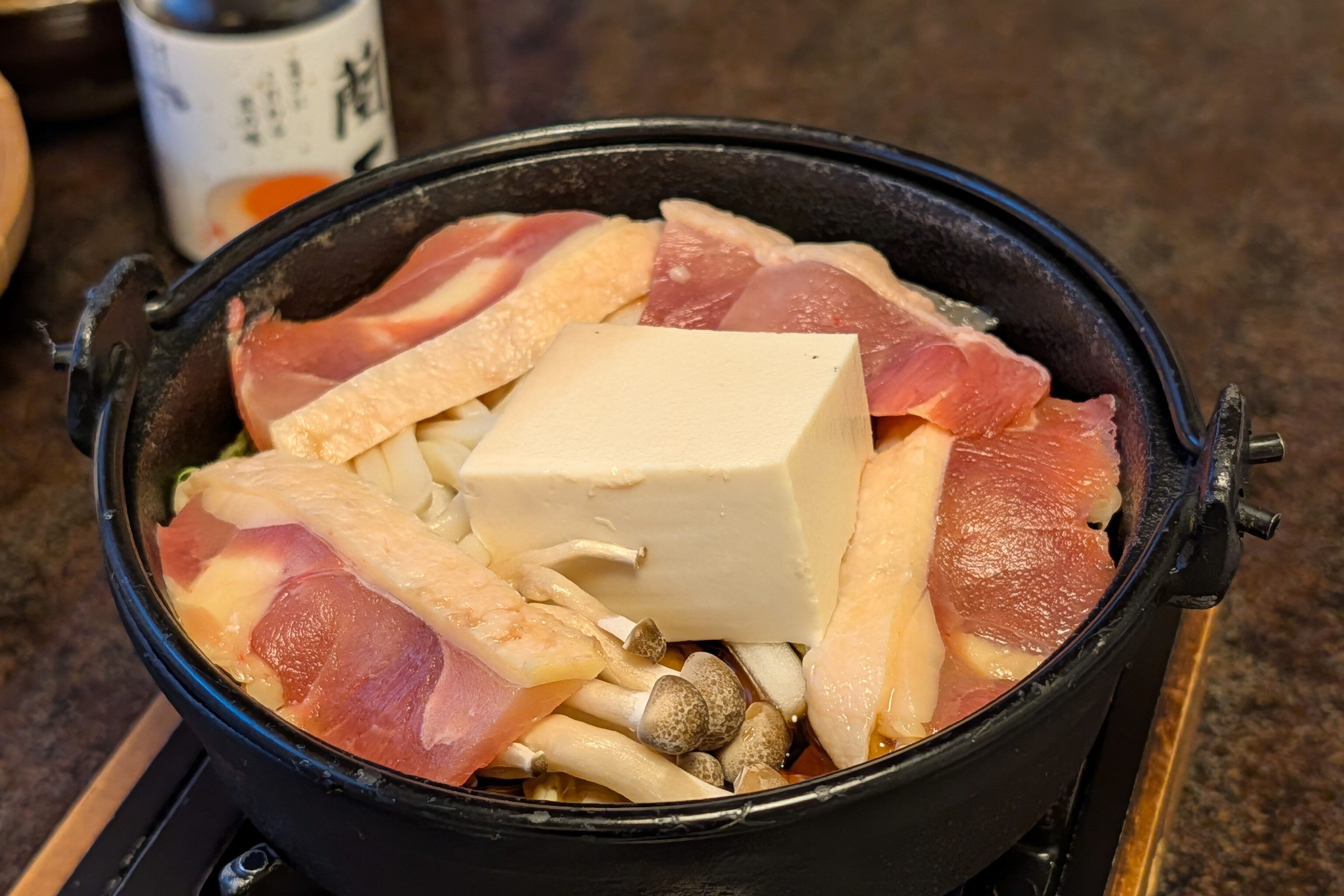
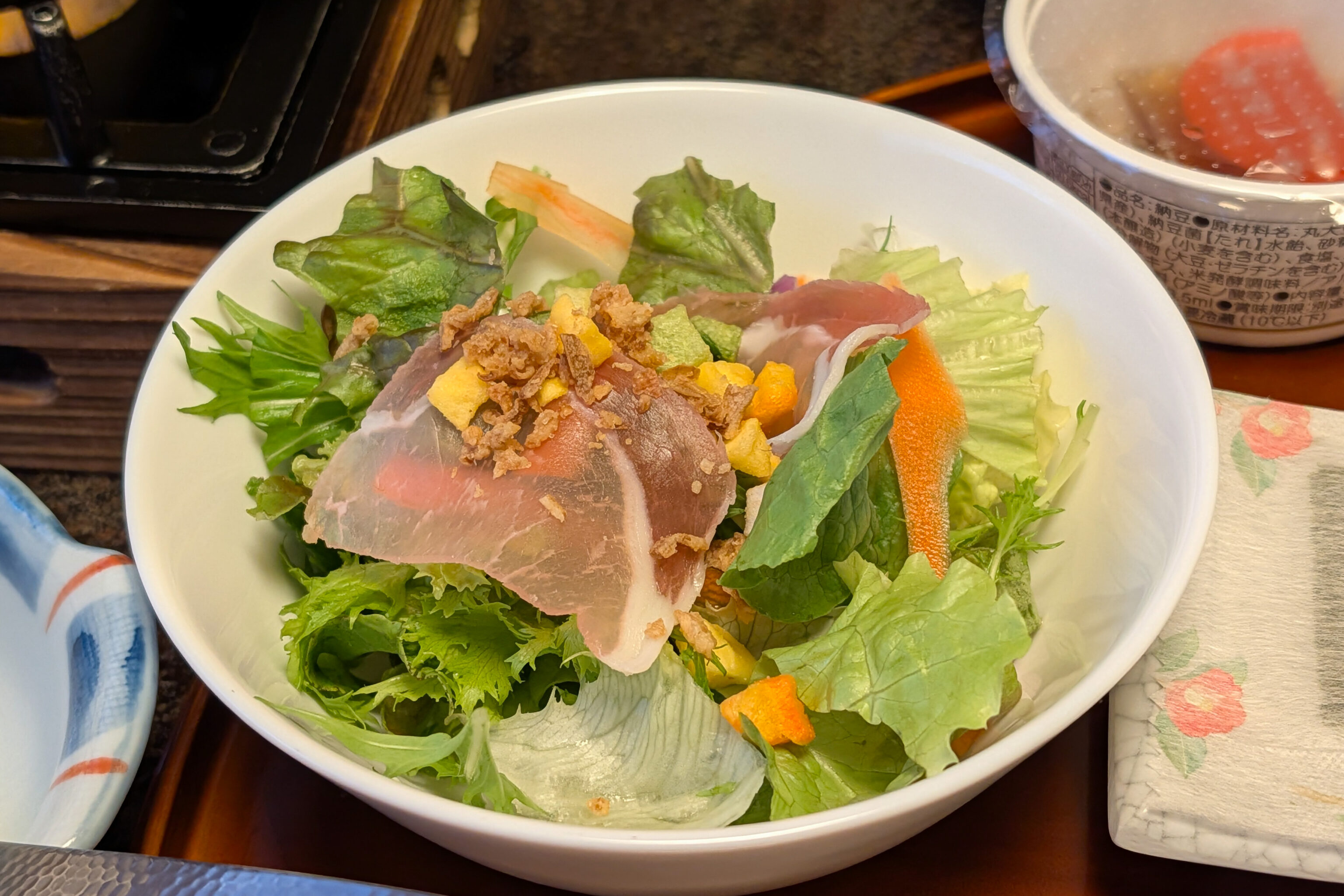
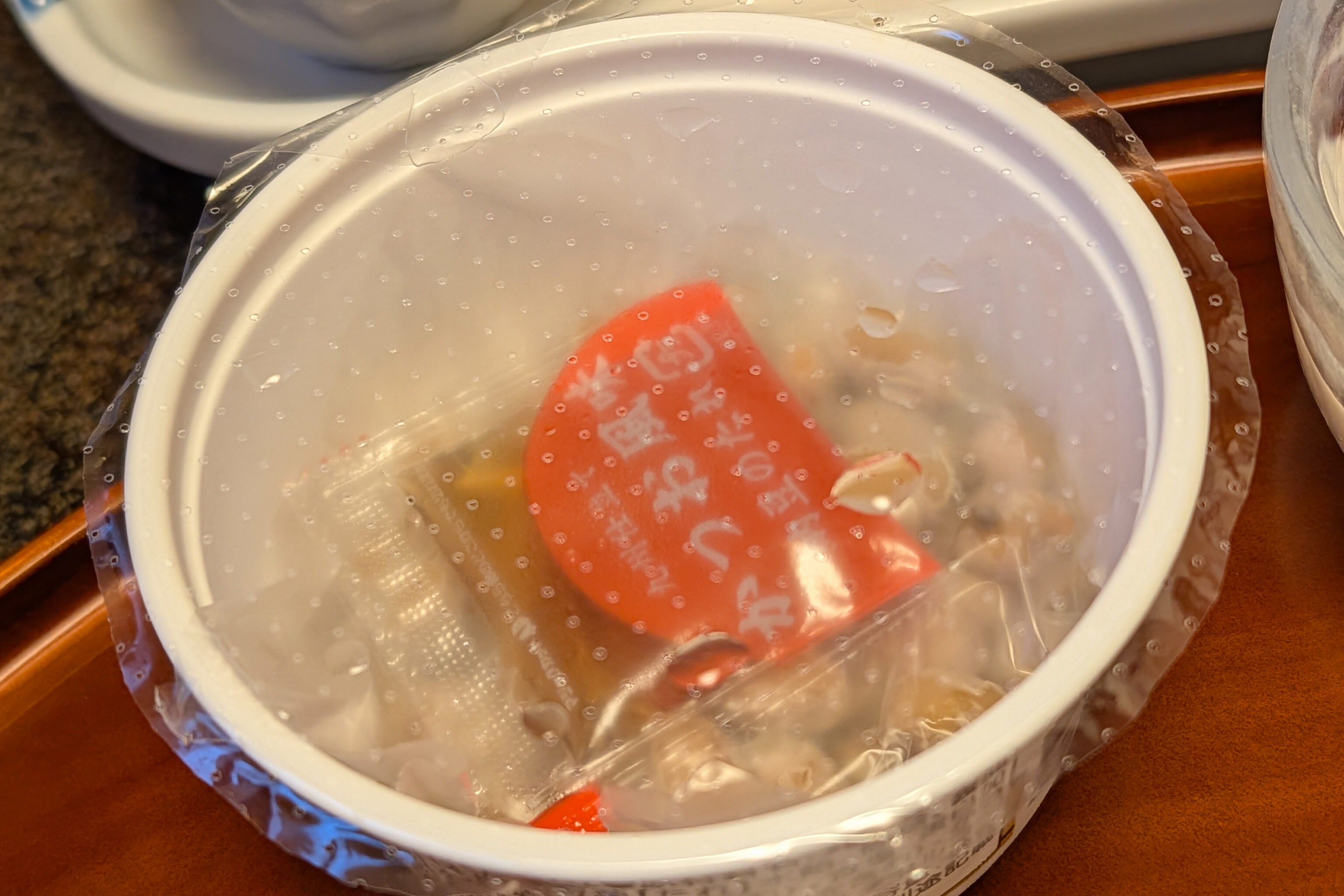
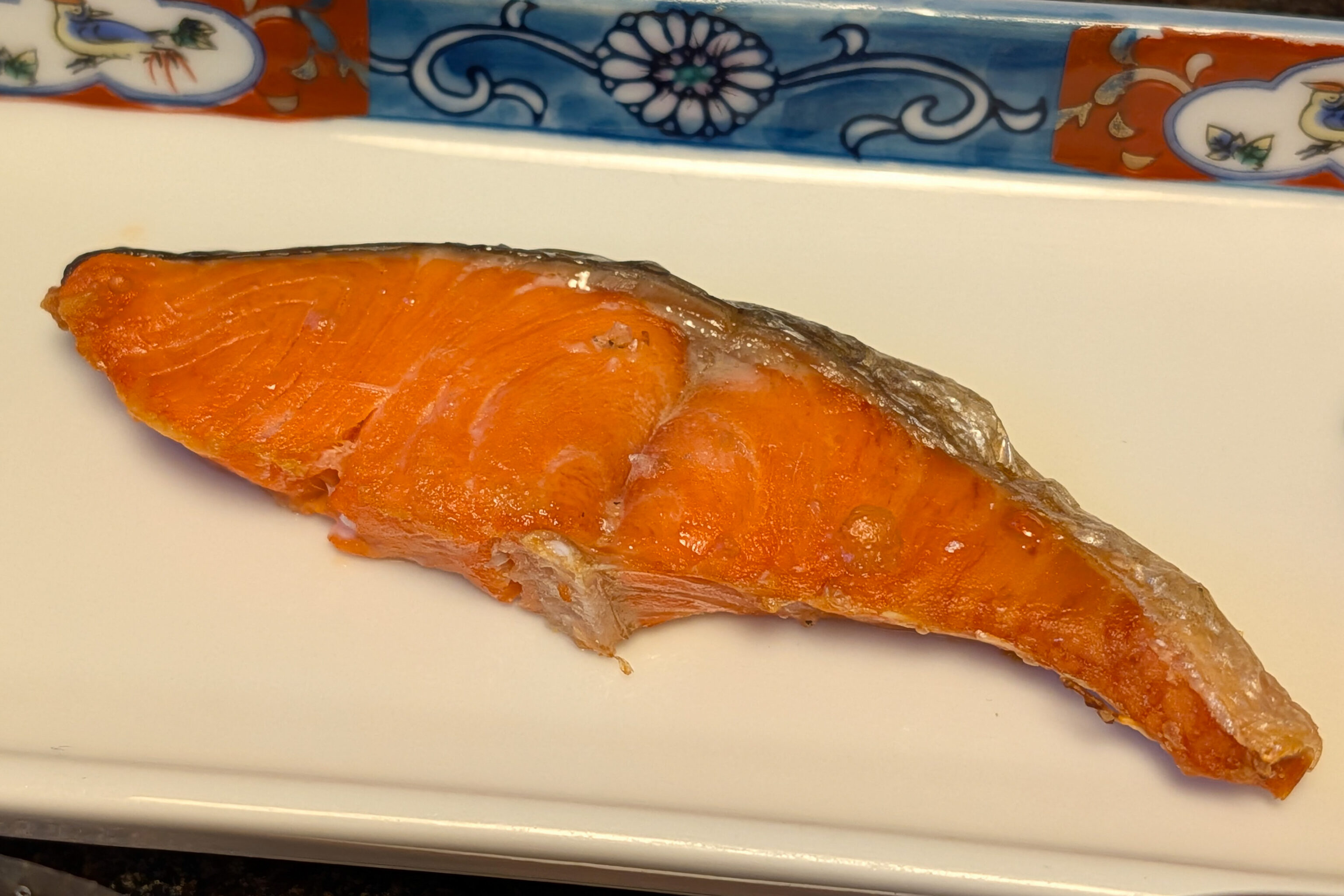
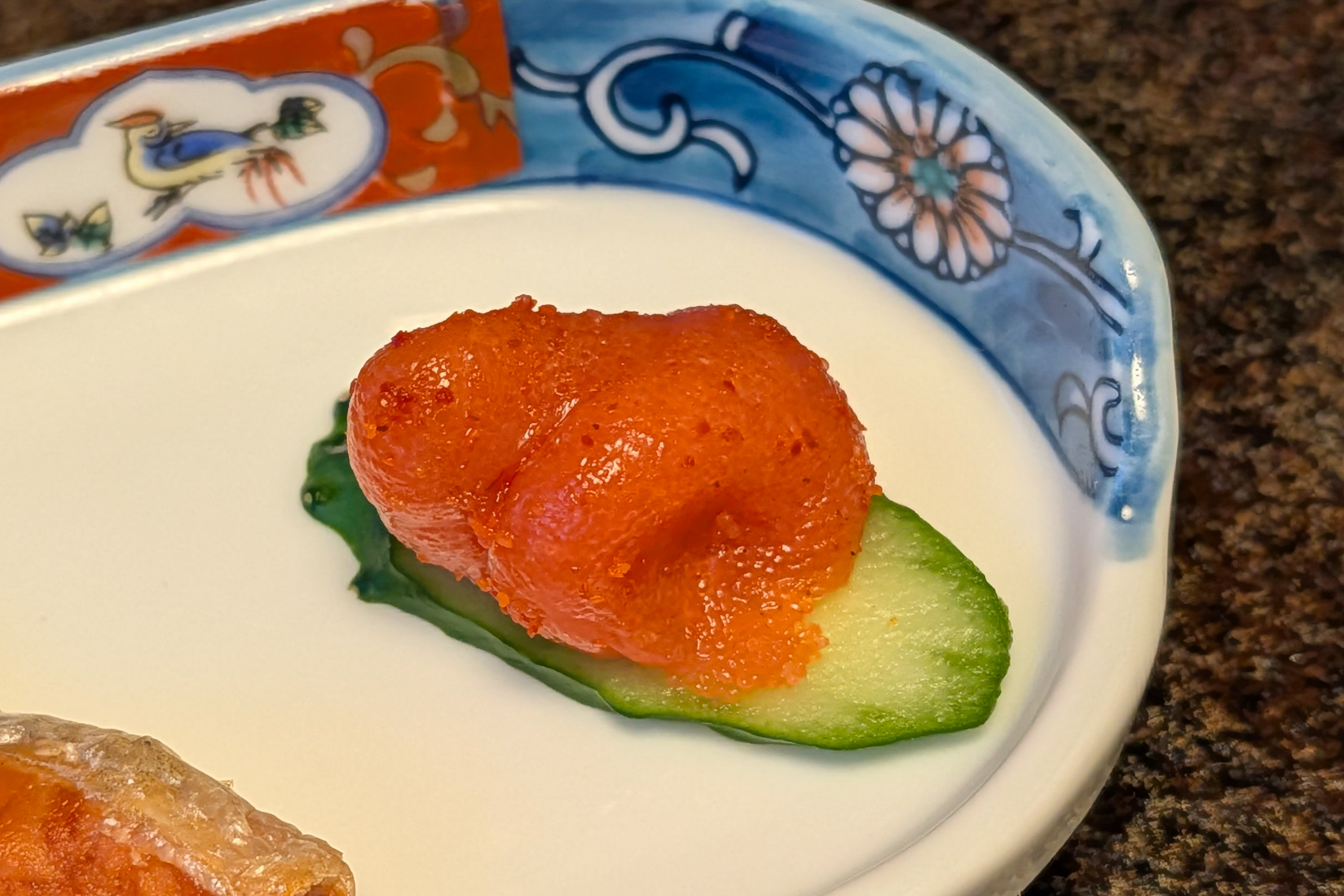
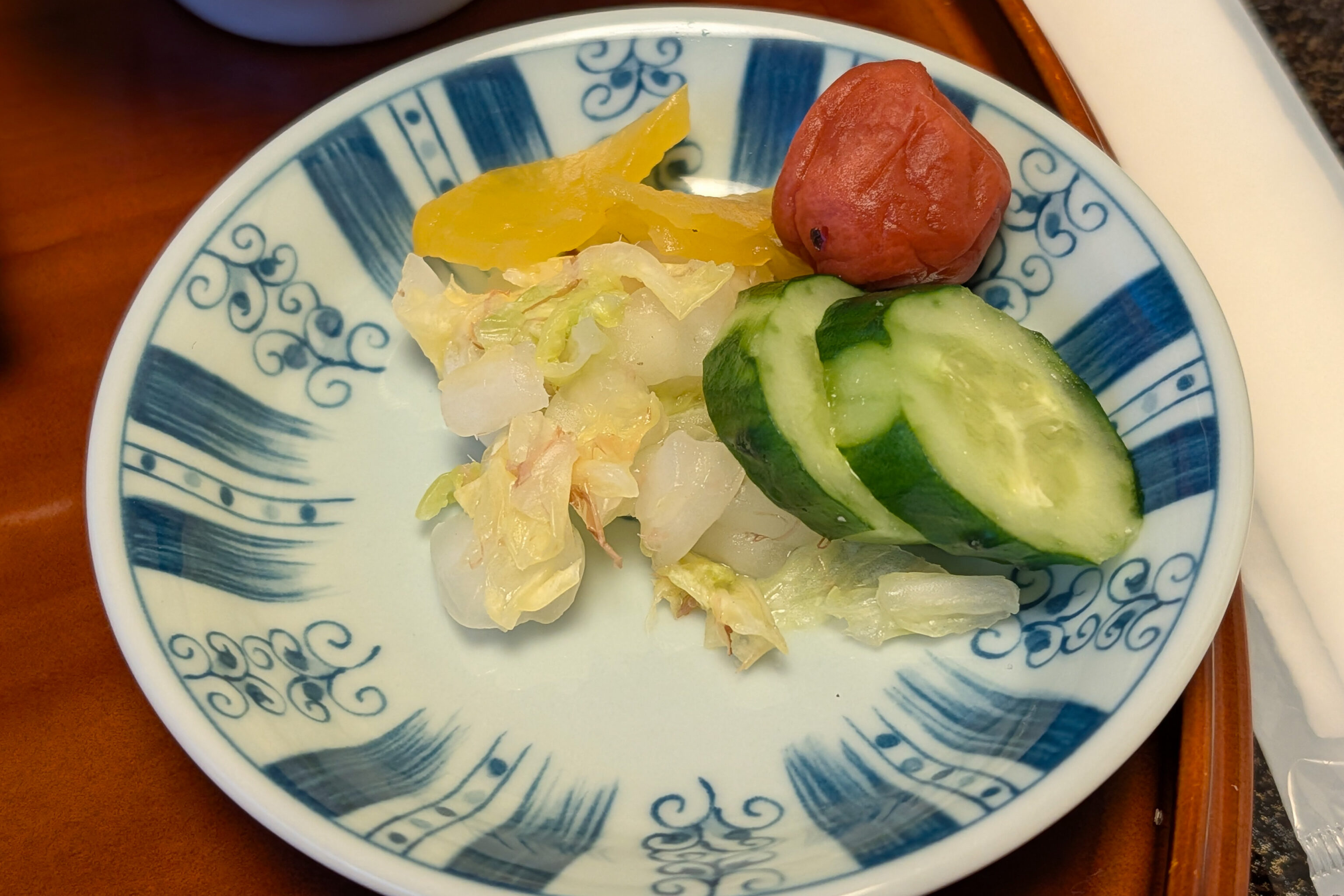
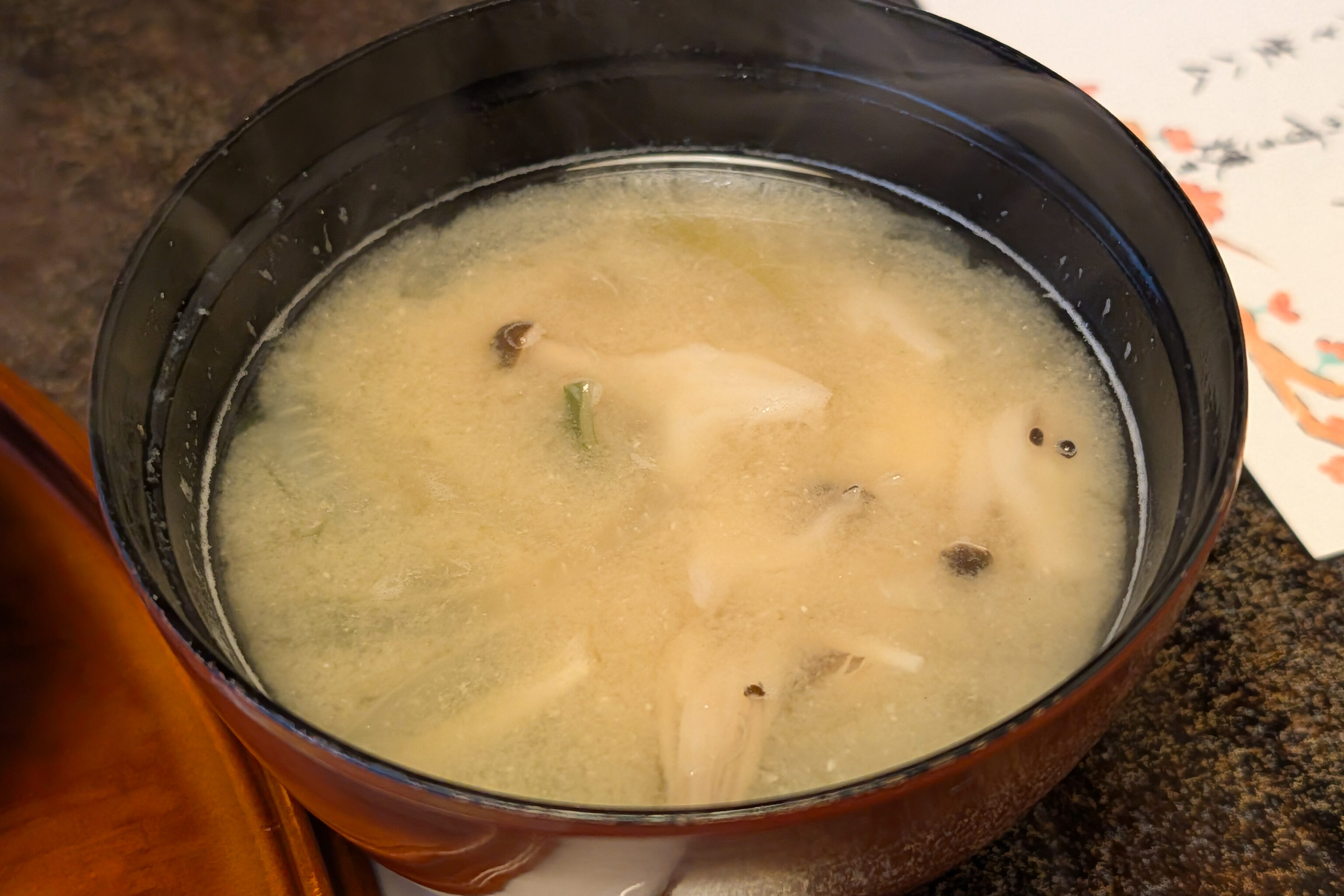
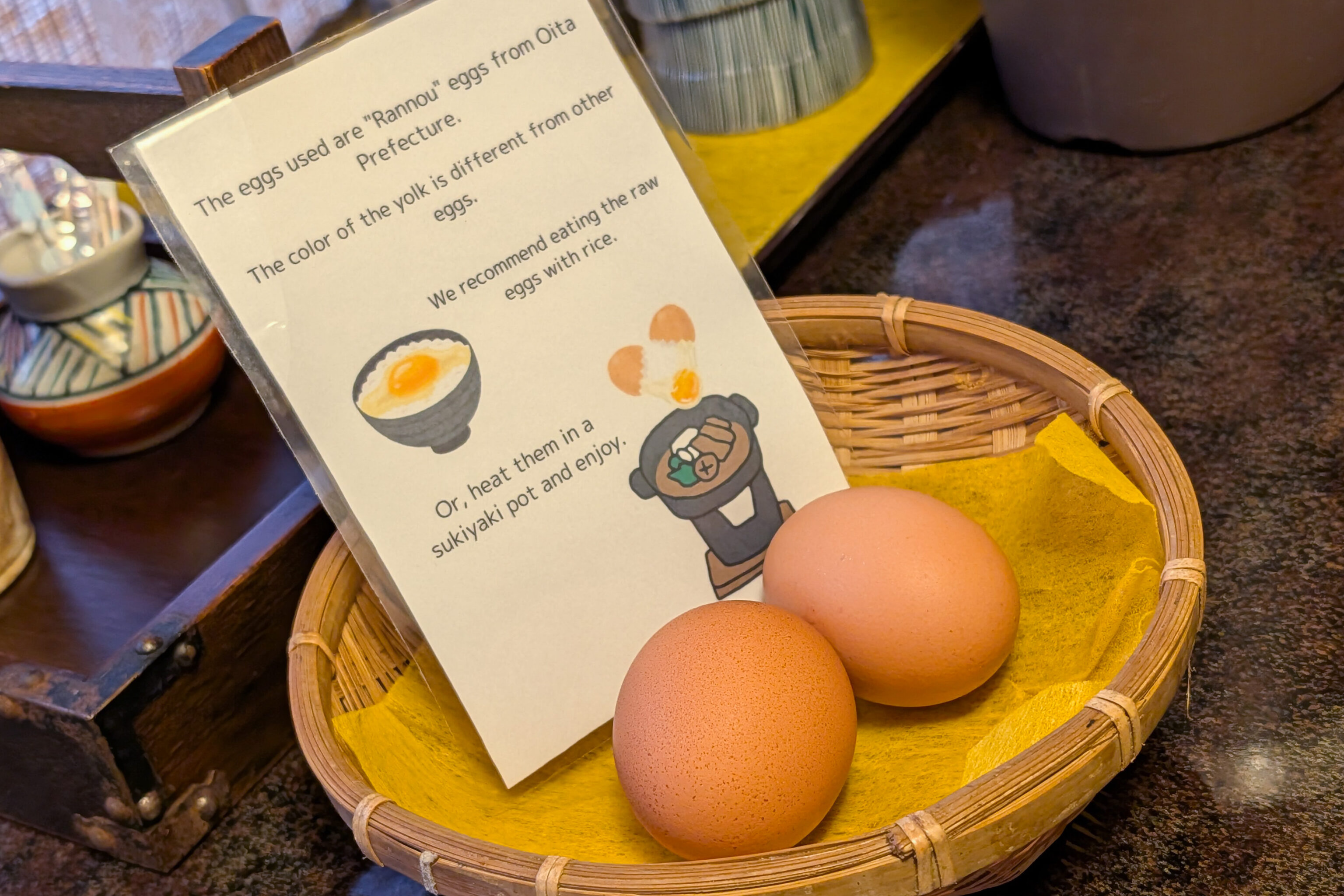
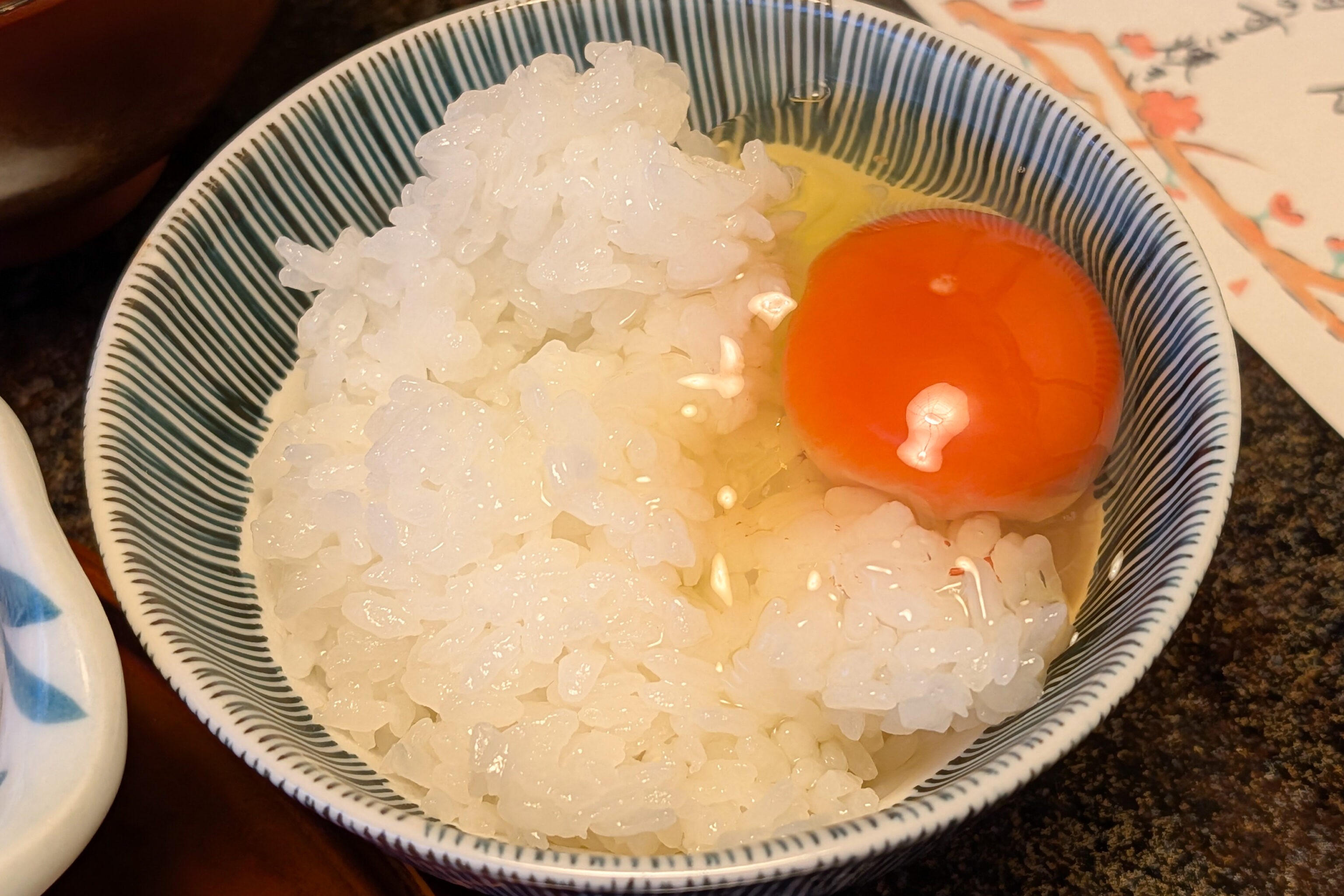
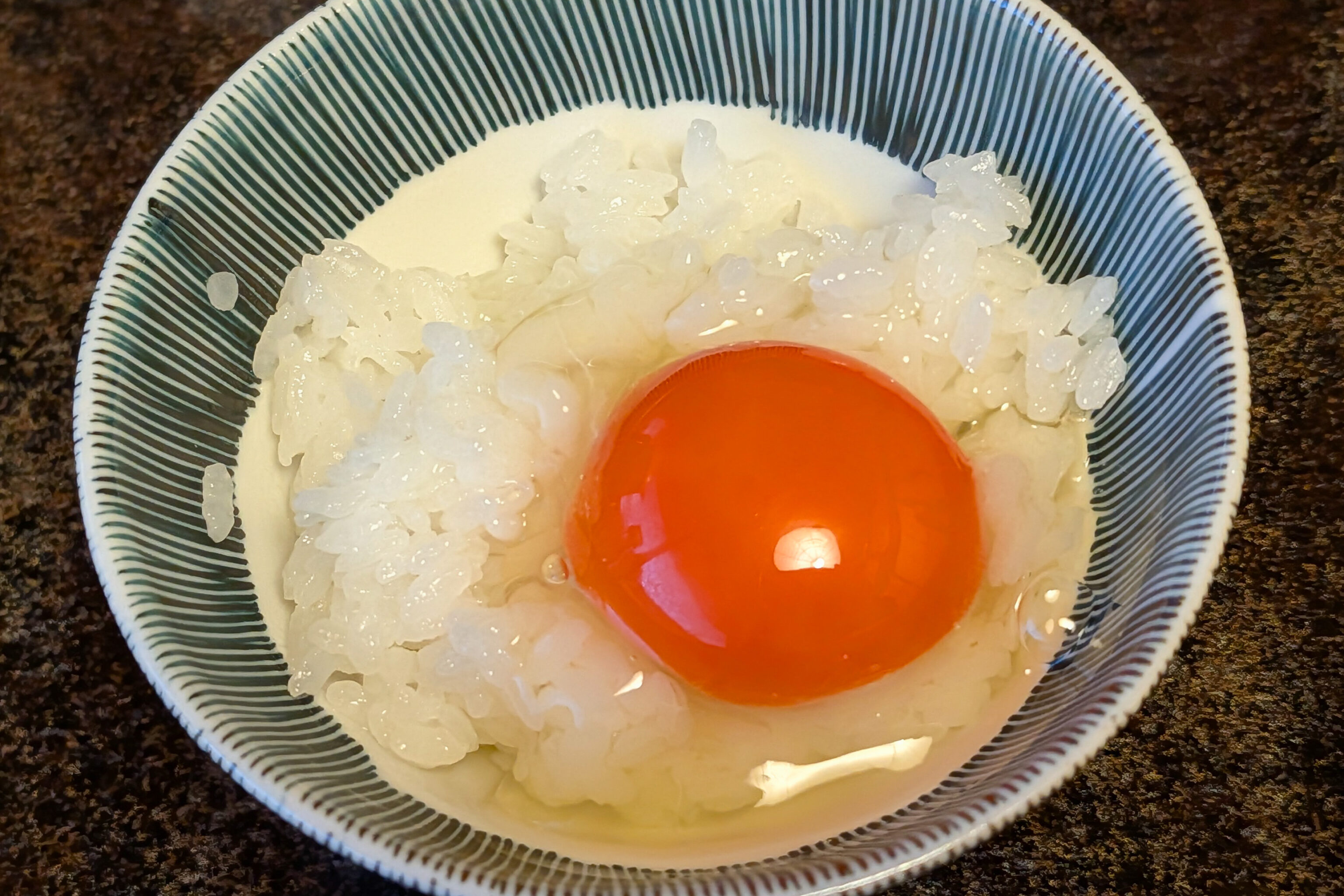
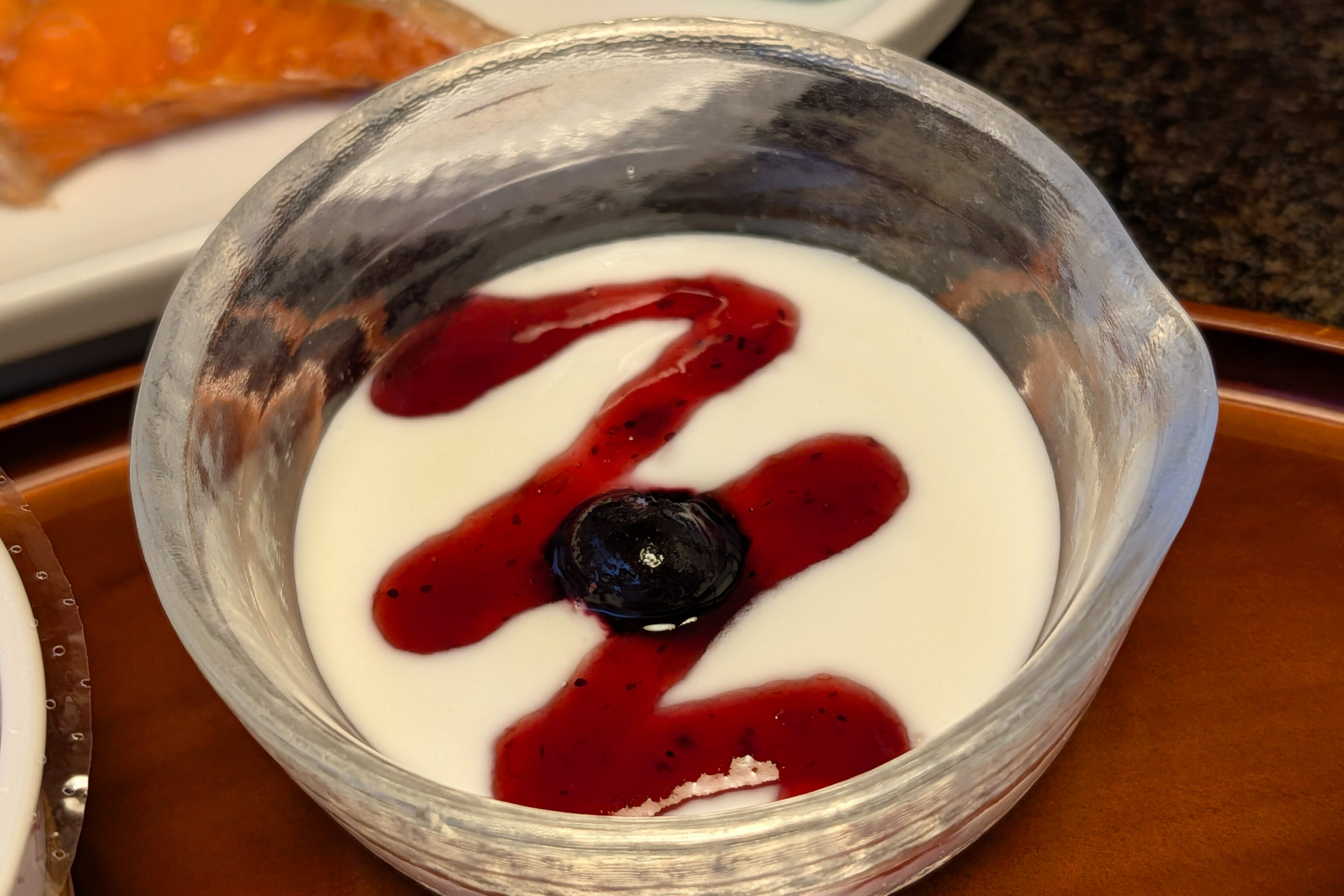
Breakfast was again excellent, even though there was natto. Natto is definitely an acquired taste, one that most will not acquire!
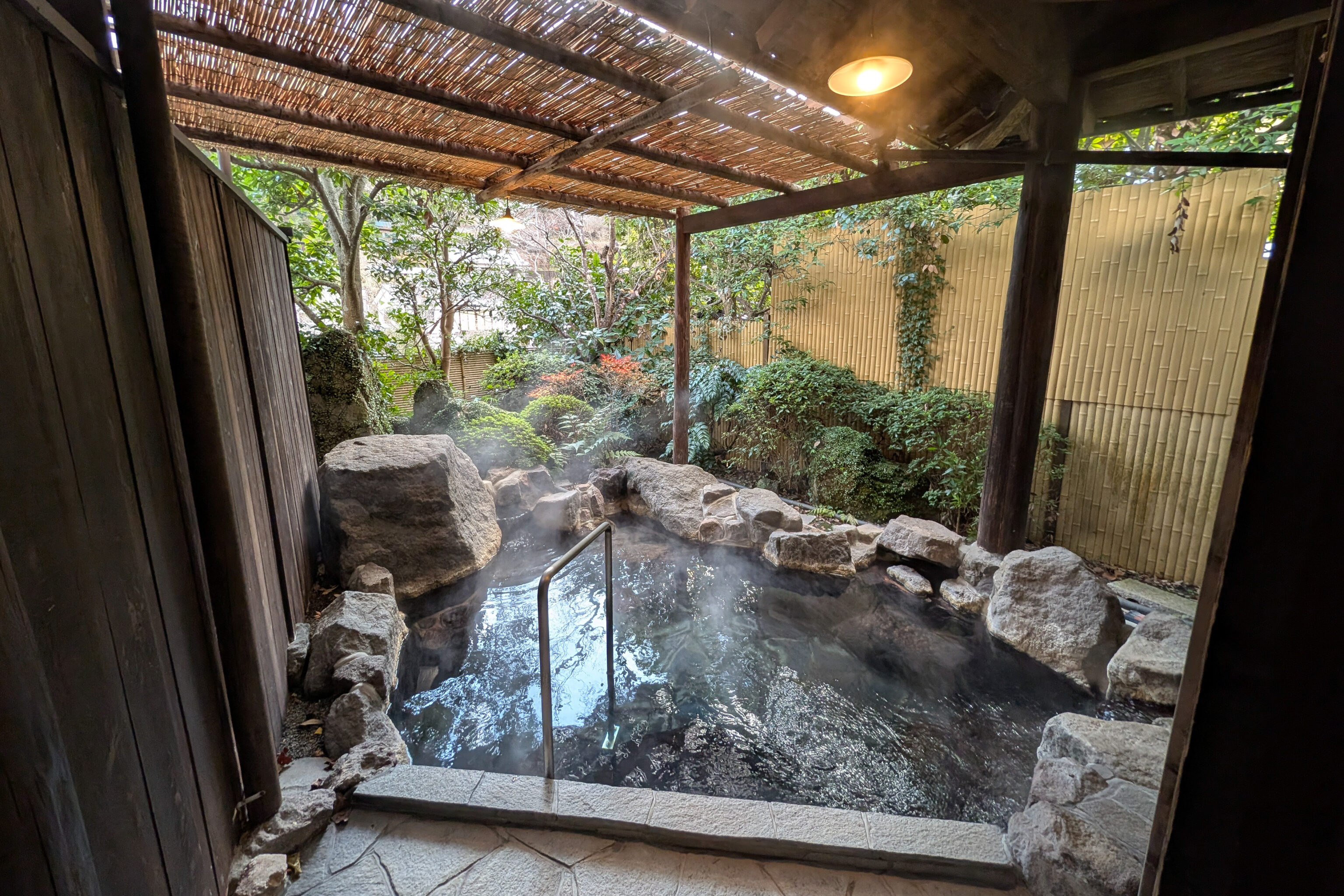
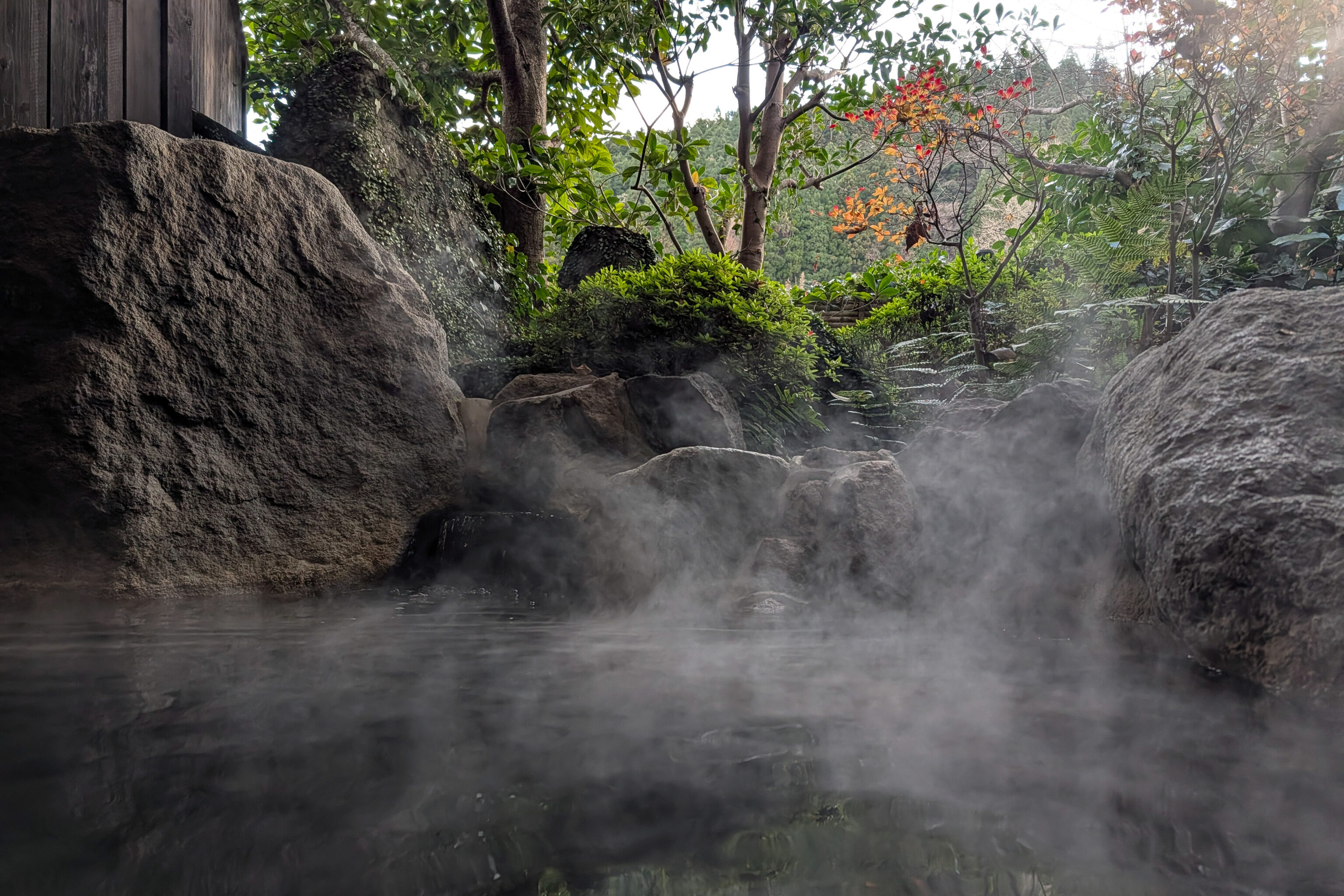
We went to enjoy the onsen again after lunch. This time, back to the closest outdoor onsen.
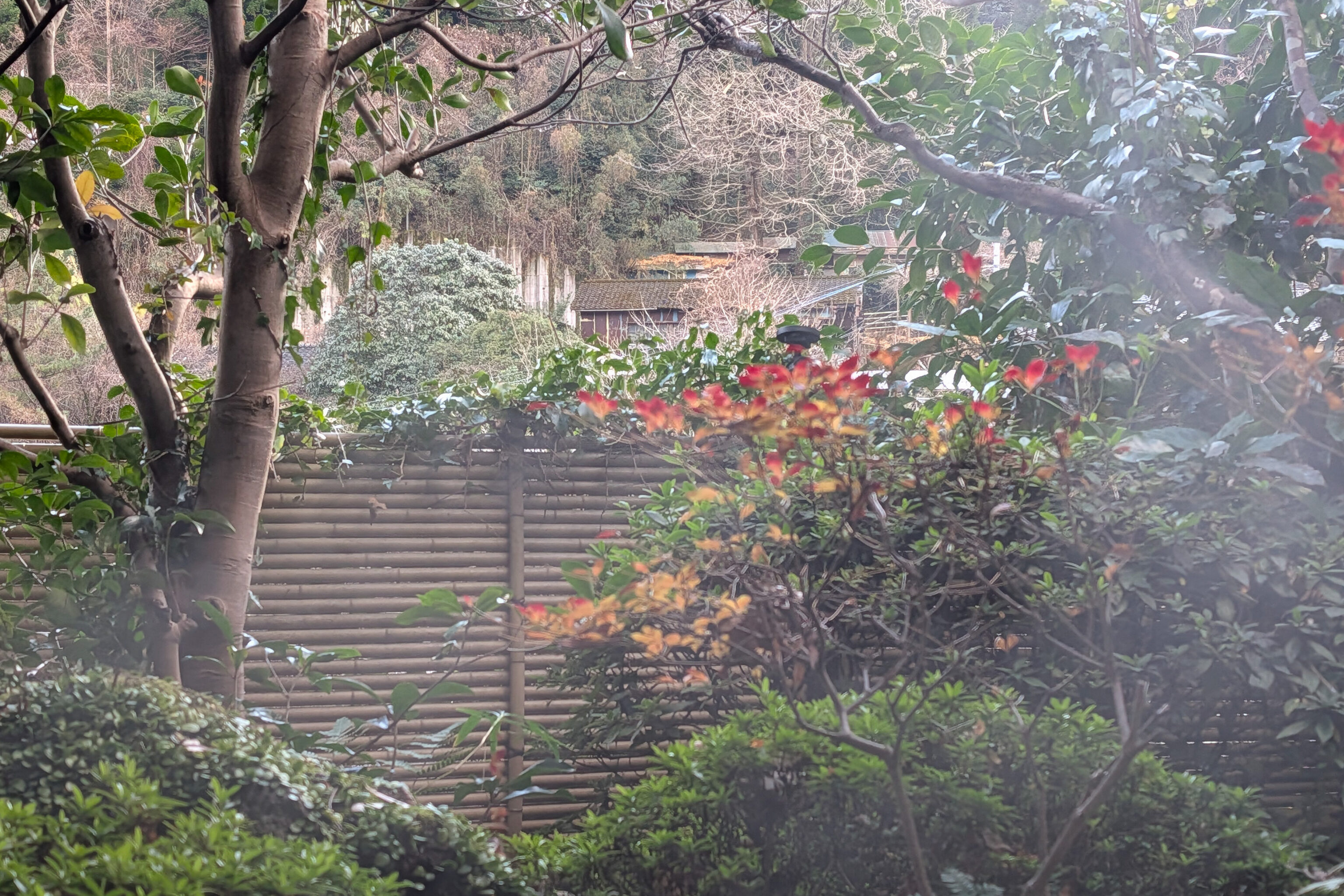
A little bit of color adds quite a bit to the scene!
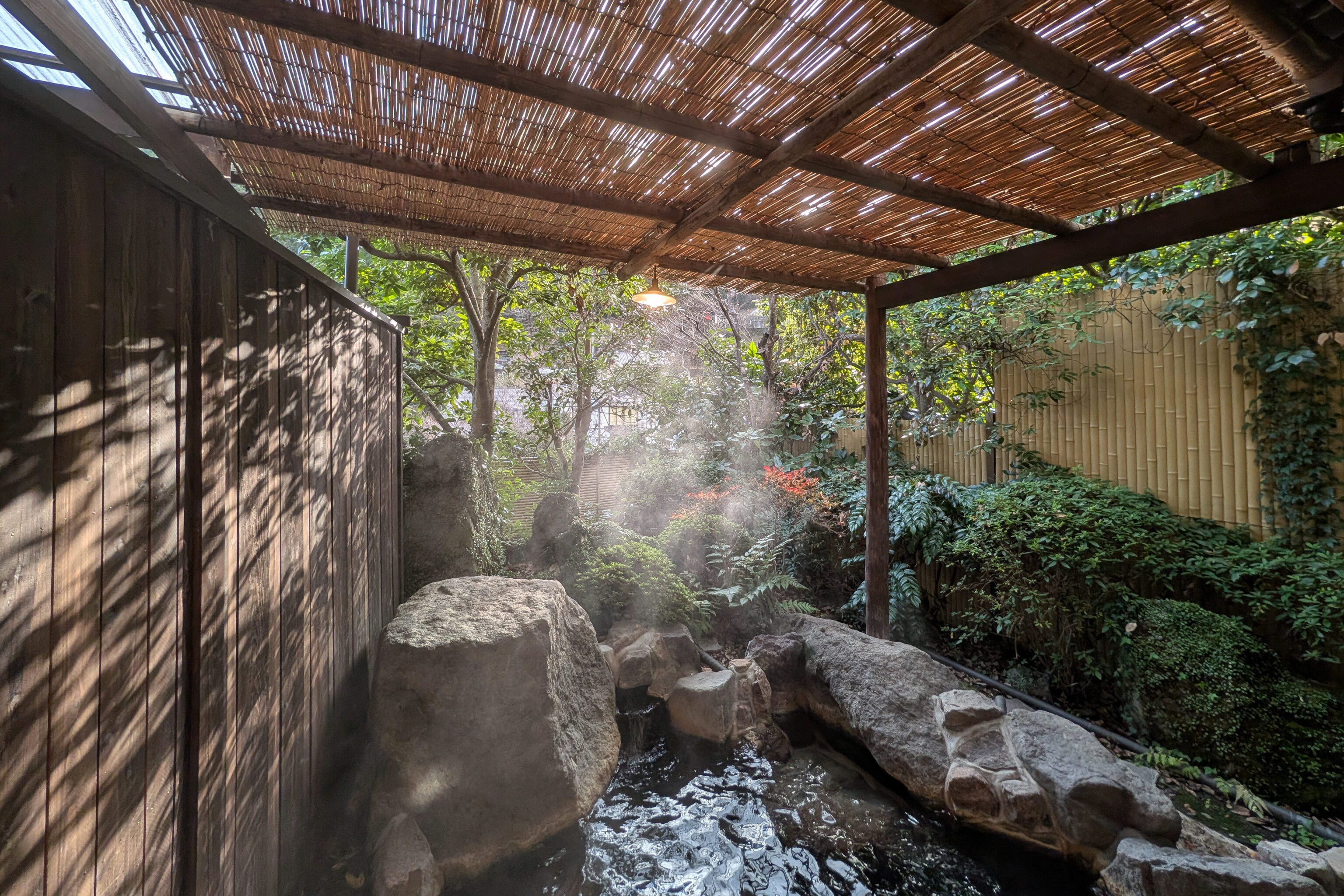
There were some rays of sunlight shining on the steam as we were getting ready to leave.
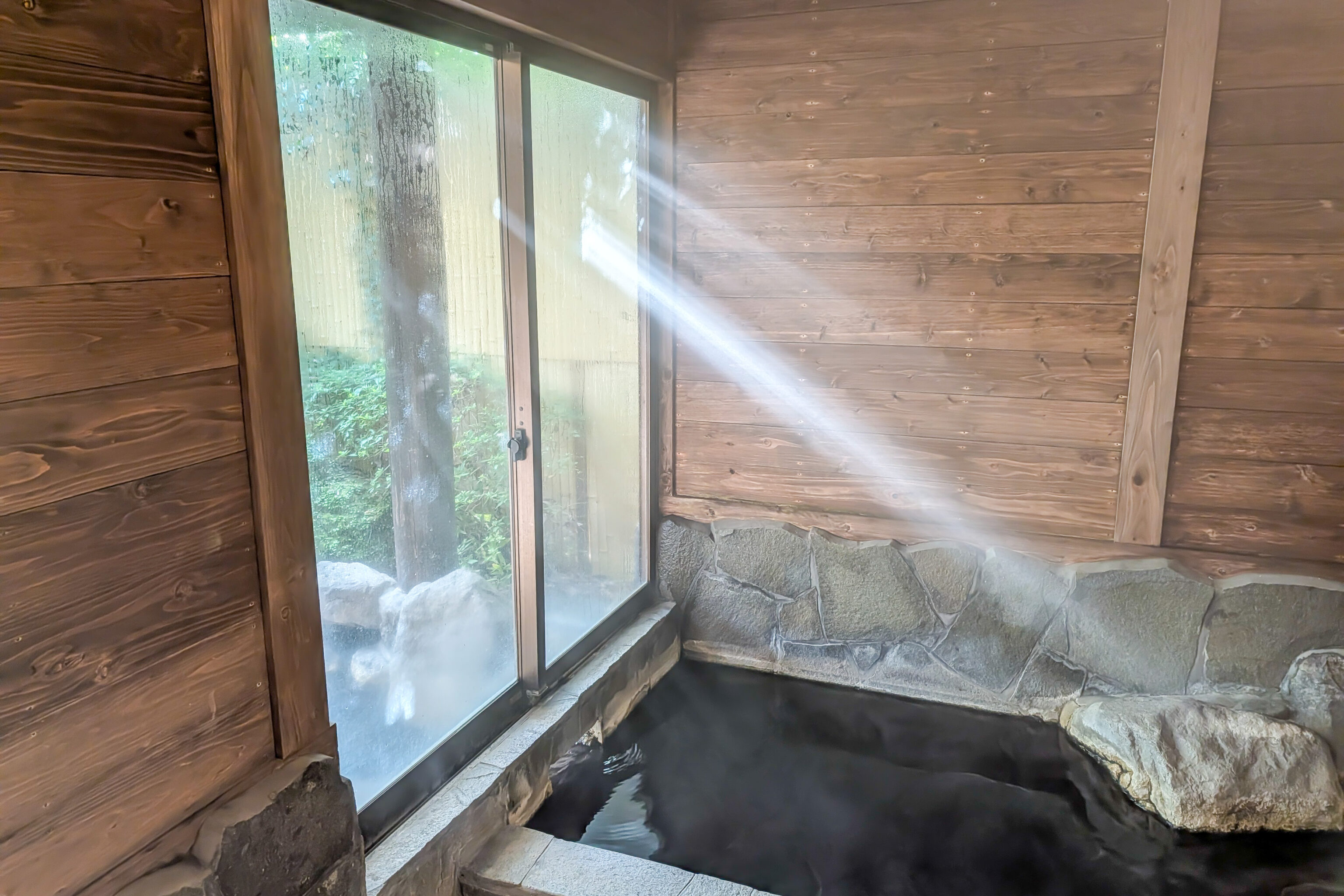
It was inside too!
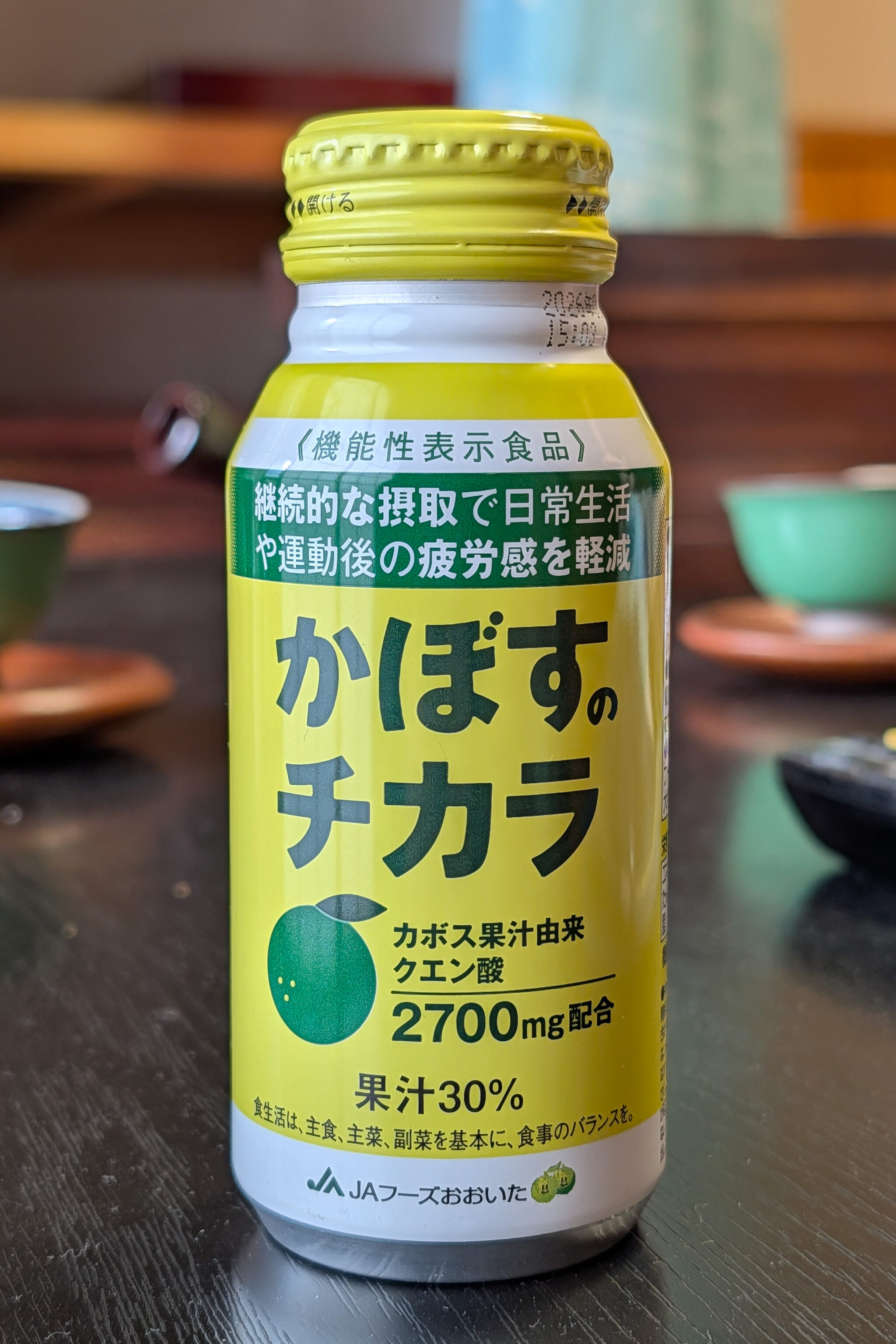
We actually bought this yesterday while in Yufuin. It is 30% juice from kabosu, a citrus that is grown locally.
(Food with Functional Claims)
With continuous intake, helps reduce fatigue experienced in daily life or after exercise.

Kabosu Power
Derived from Kabosu Juice
Contains 2,700 mg Citric Acid
30% Fruit Juice

Maintain a balanced diet based on staple foods, main dishes, and side dishes.

JA Foods Oita
– Text from the can, translated using Google.
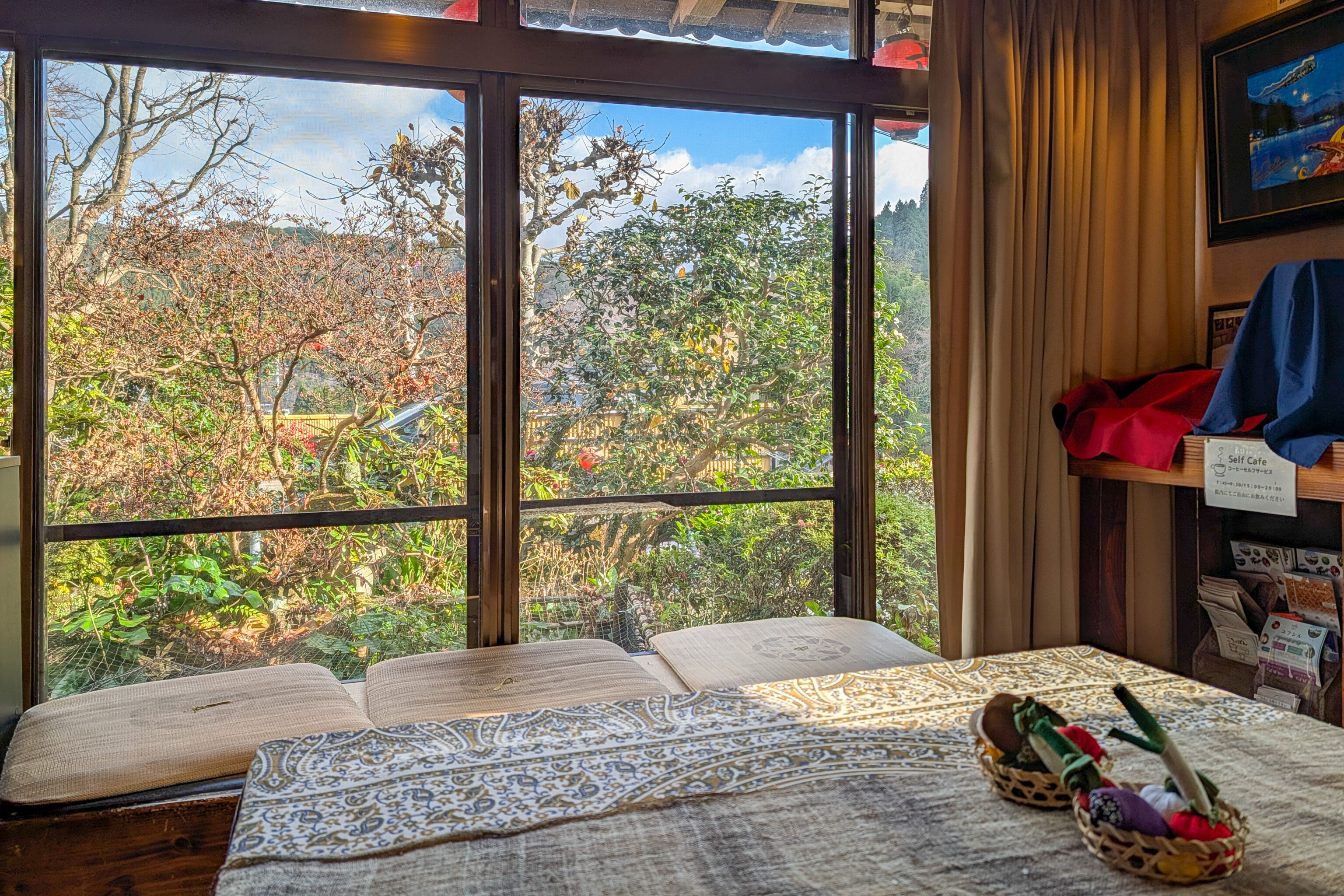
The view from the lobby as we were checking out. Yunohira Kamiyanagiya was everything we wanted in a stay at a ryokan. It felt very traditional and was in a small quiet onsen town. The service was excellent as was the food. And it was convenient with the shuttle service that was provided to the JR station.
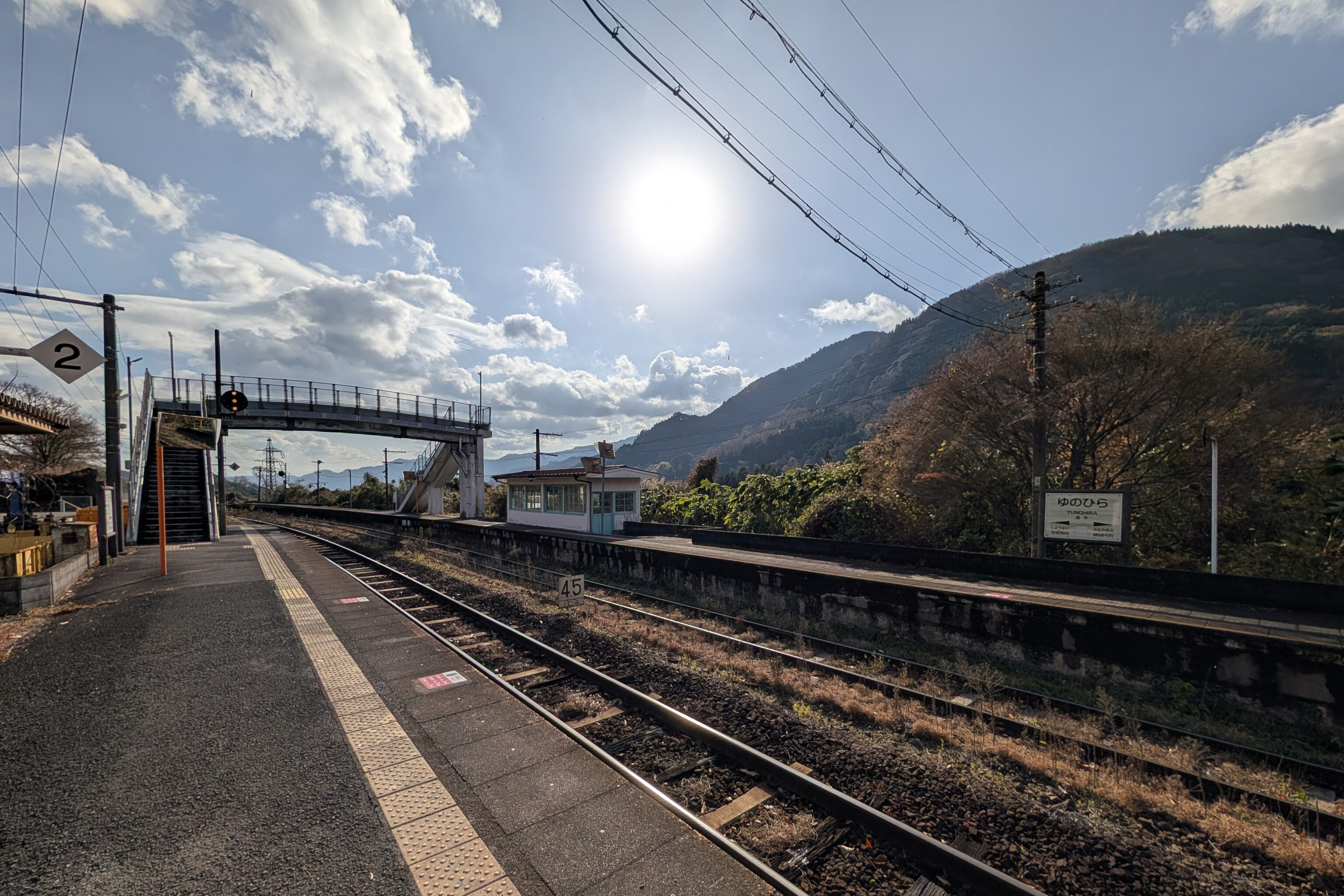
The shuttle dropped us off at Yunohira Station with plenty of time to spare.
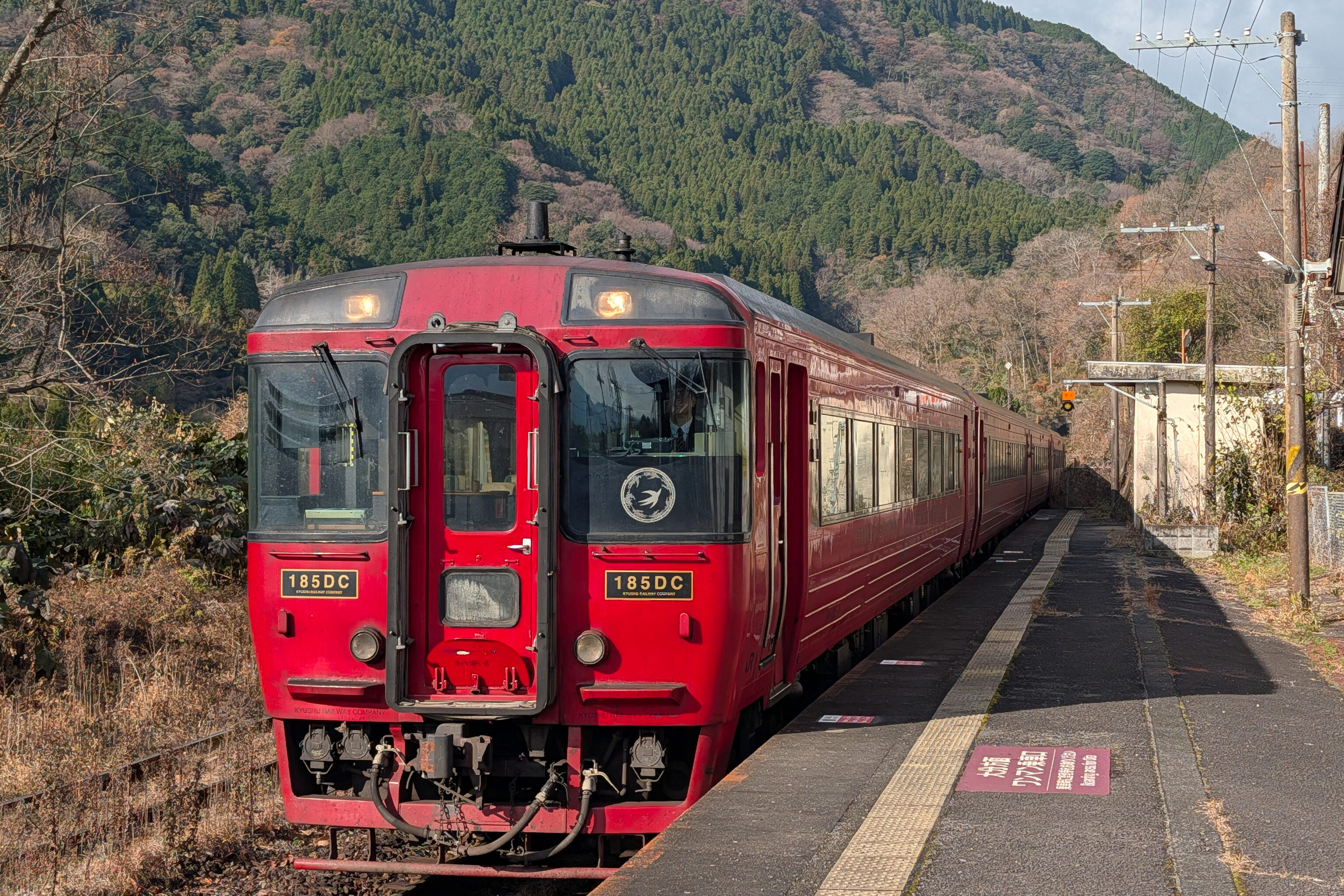
The Yufu soon arrived to take us to Beppu.
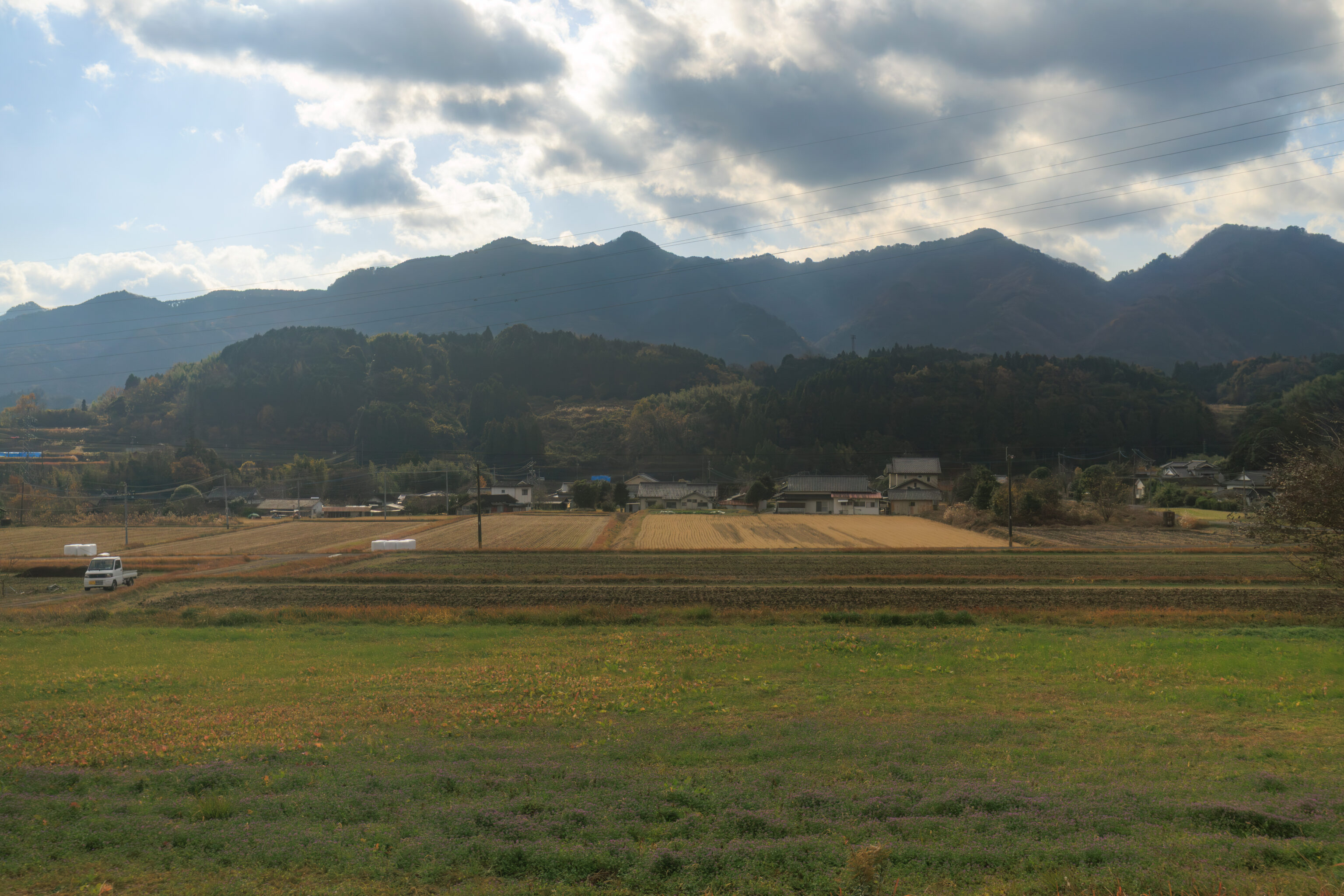
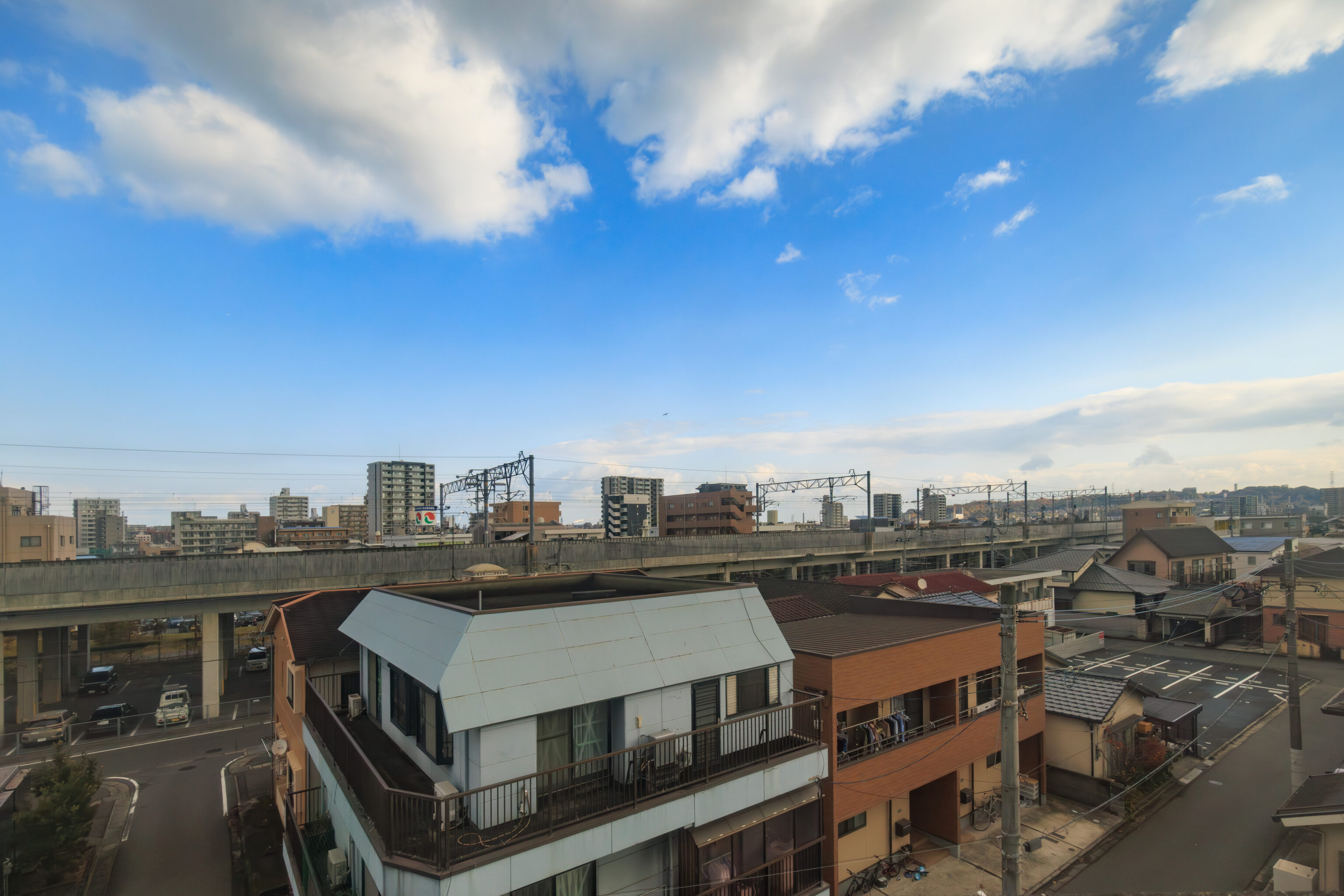
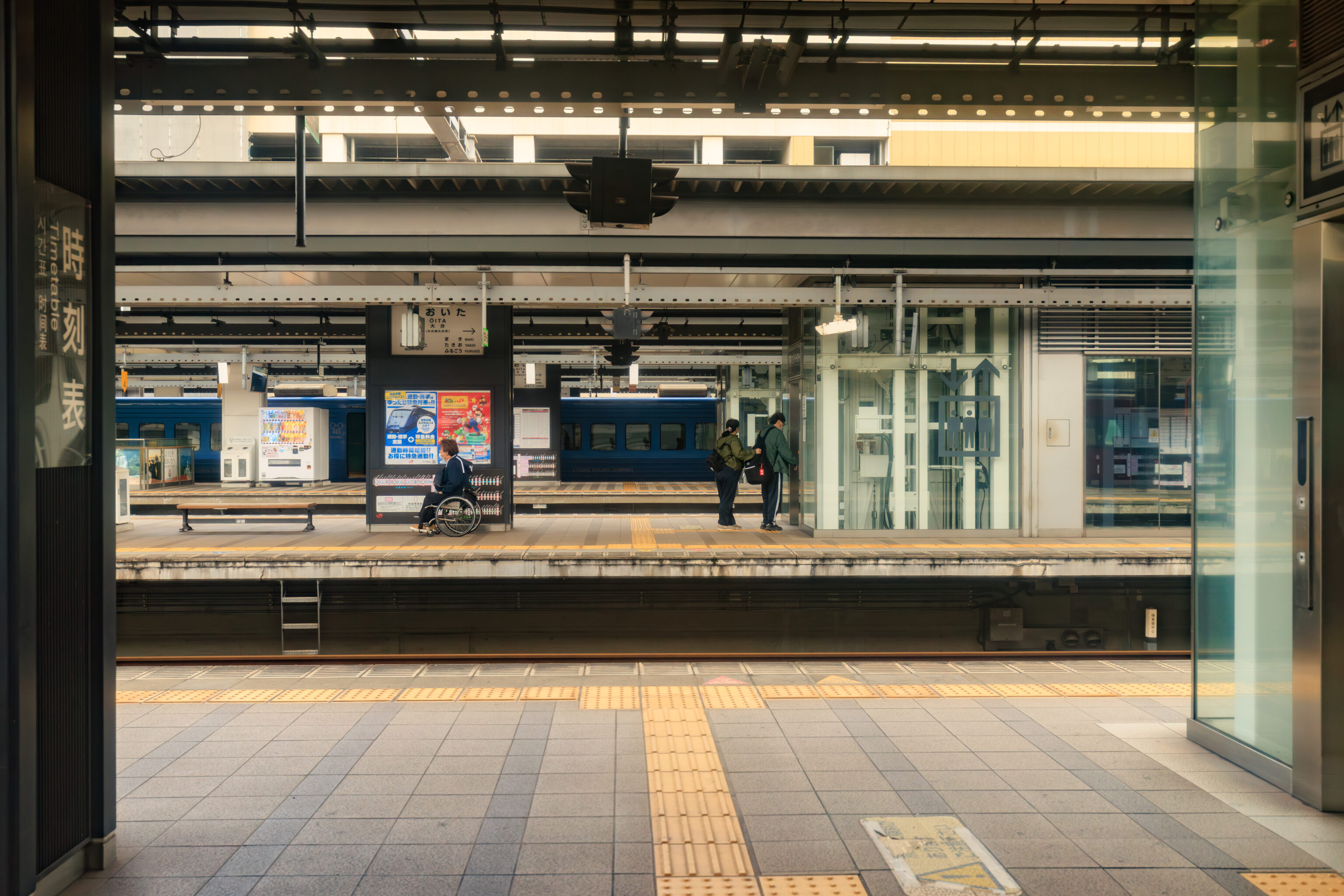
The windows of the train were unfortunately a bit dirty and not great for photography when the Sun was shining directly at us. That ended up being much of the trip to Oita. We got there at around 10:55am.
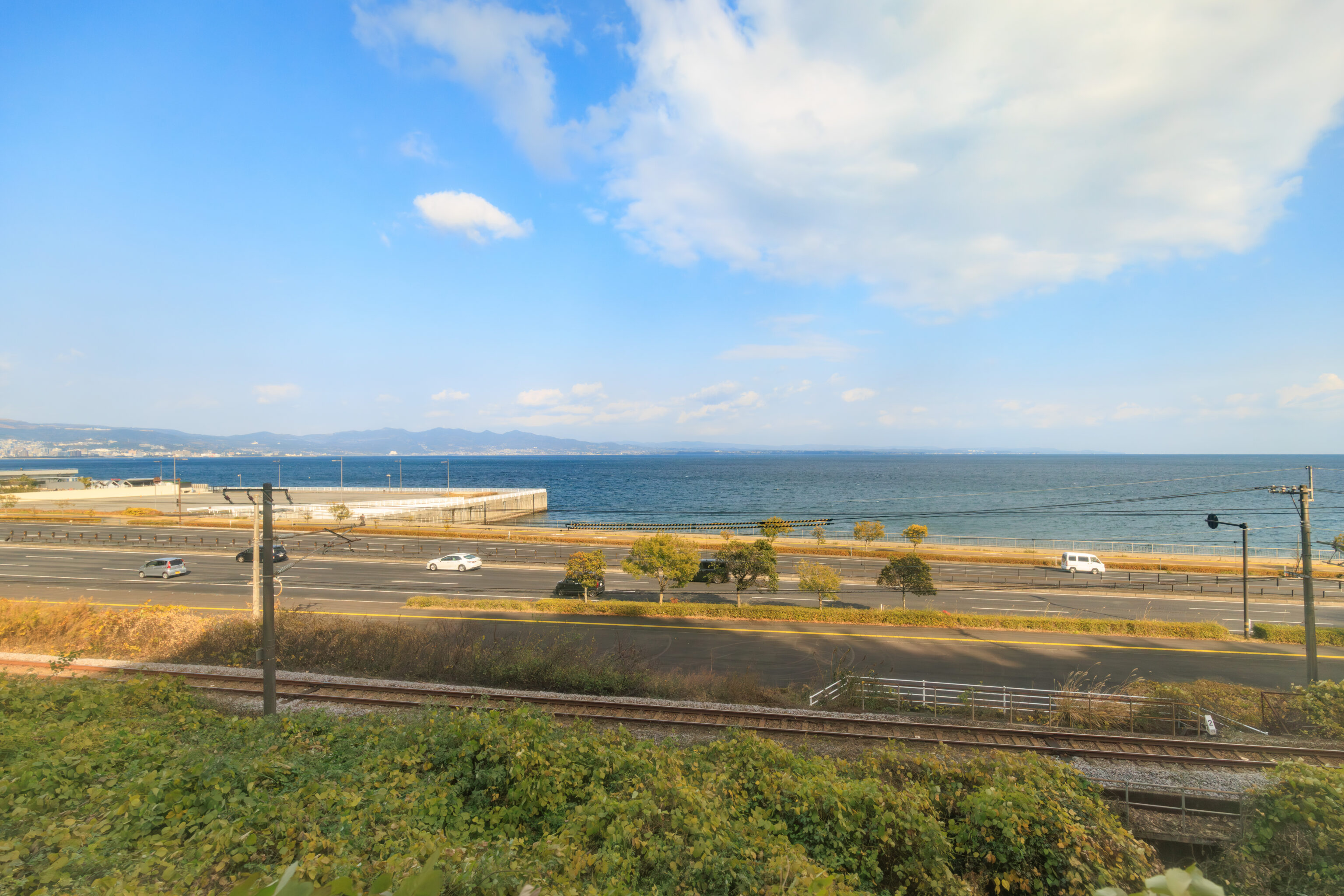
After Oita, the route follows the coast on the southwest side of Beppu Bay up to Beppu.
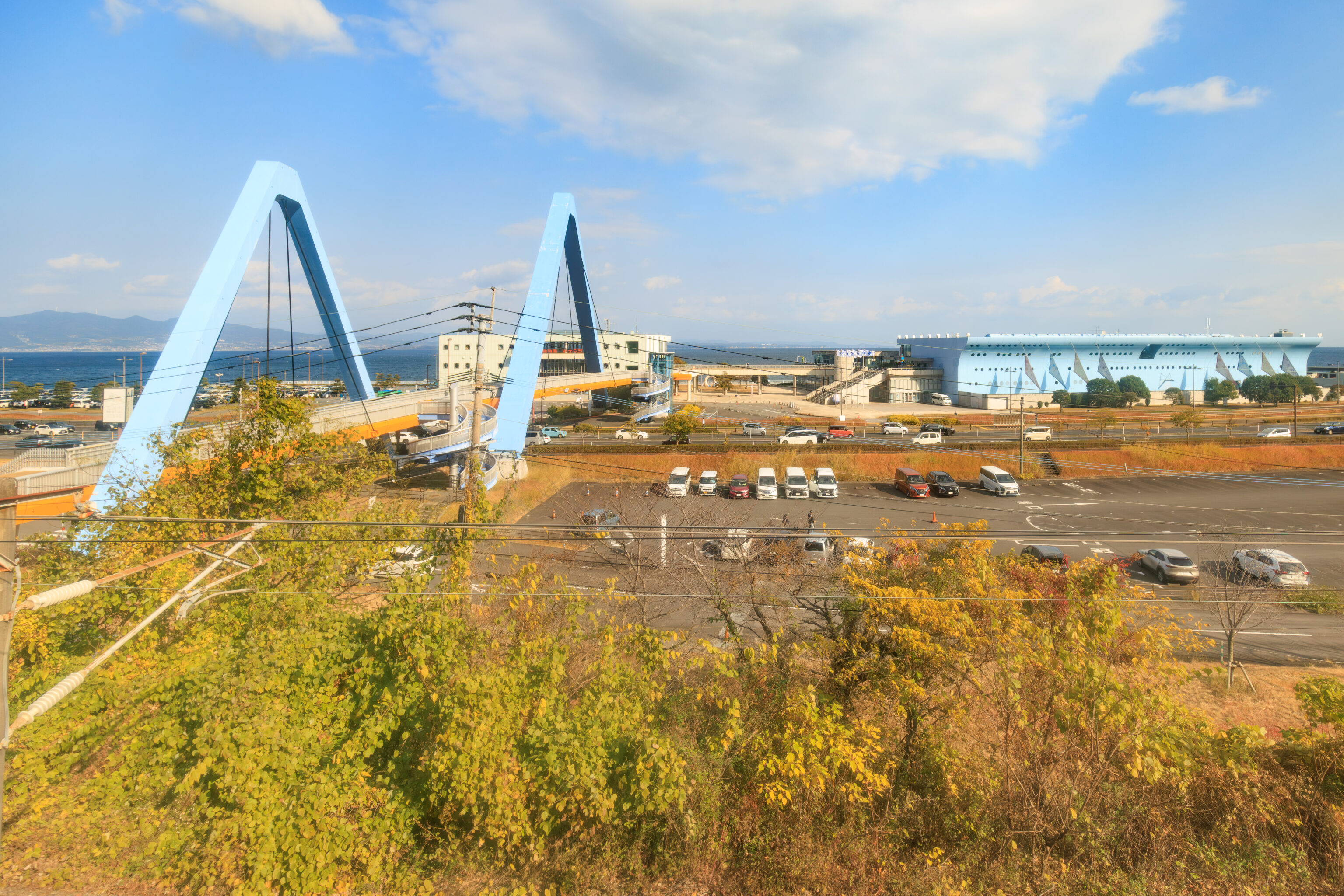
This interesting looking pedestrian bridge links the Oita Marine Palace Aquarium “Umitamago” with what seems like additional parking.
Beppu
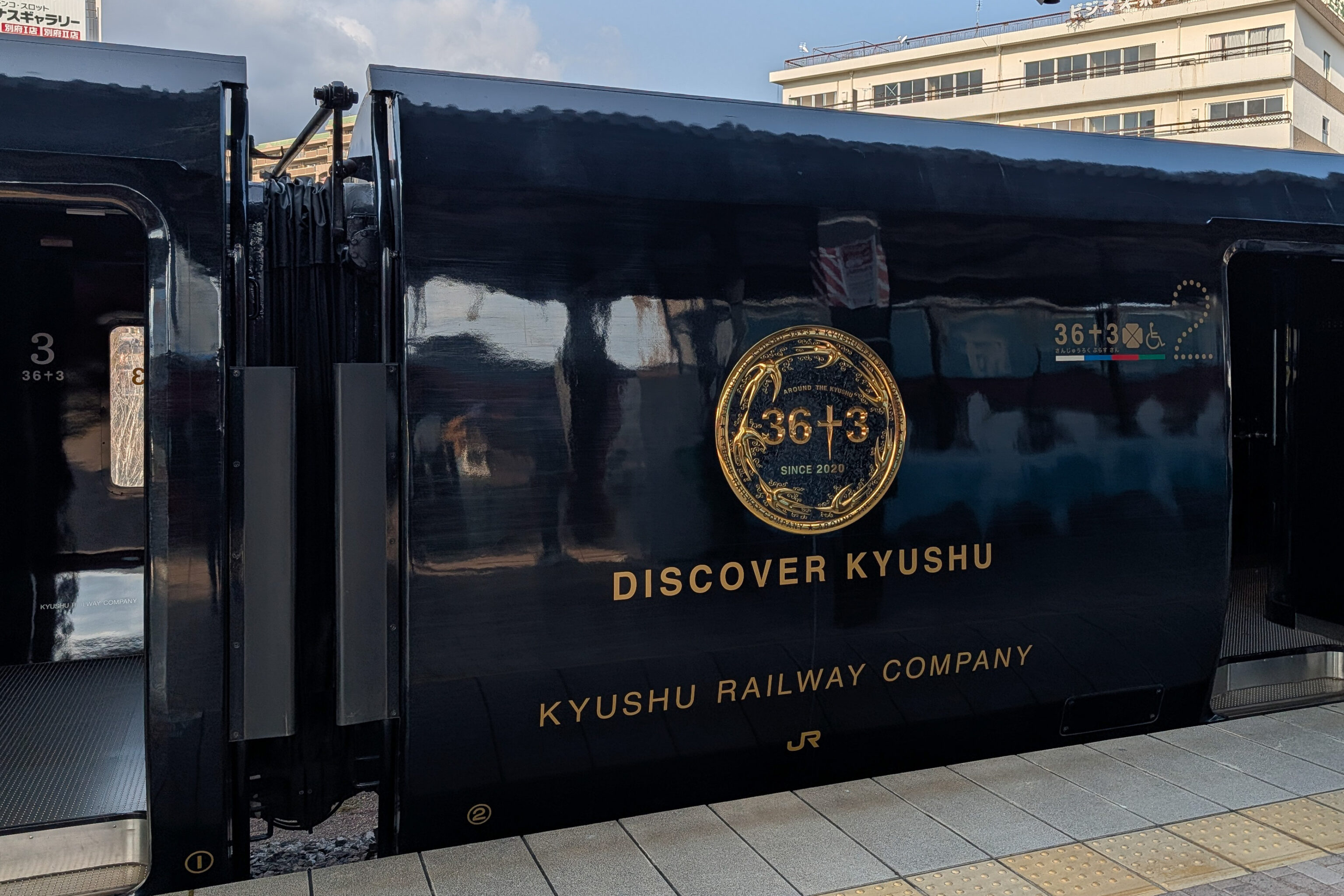
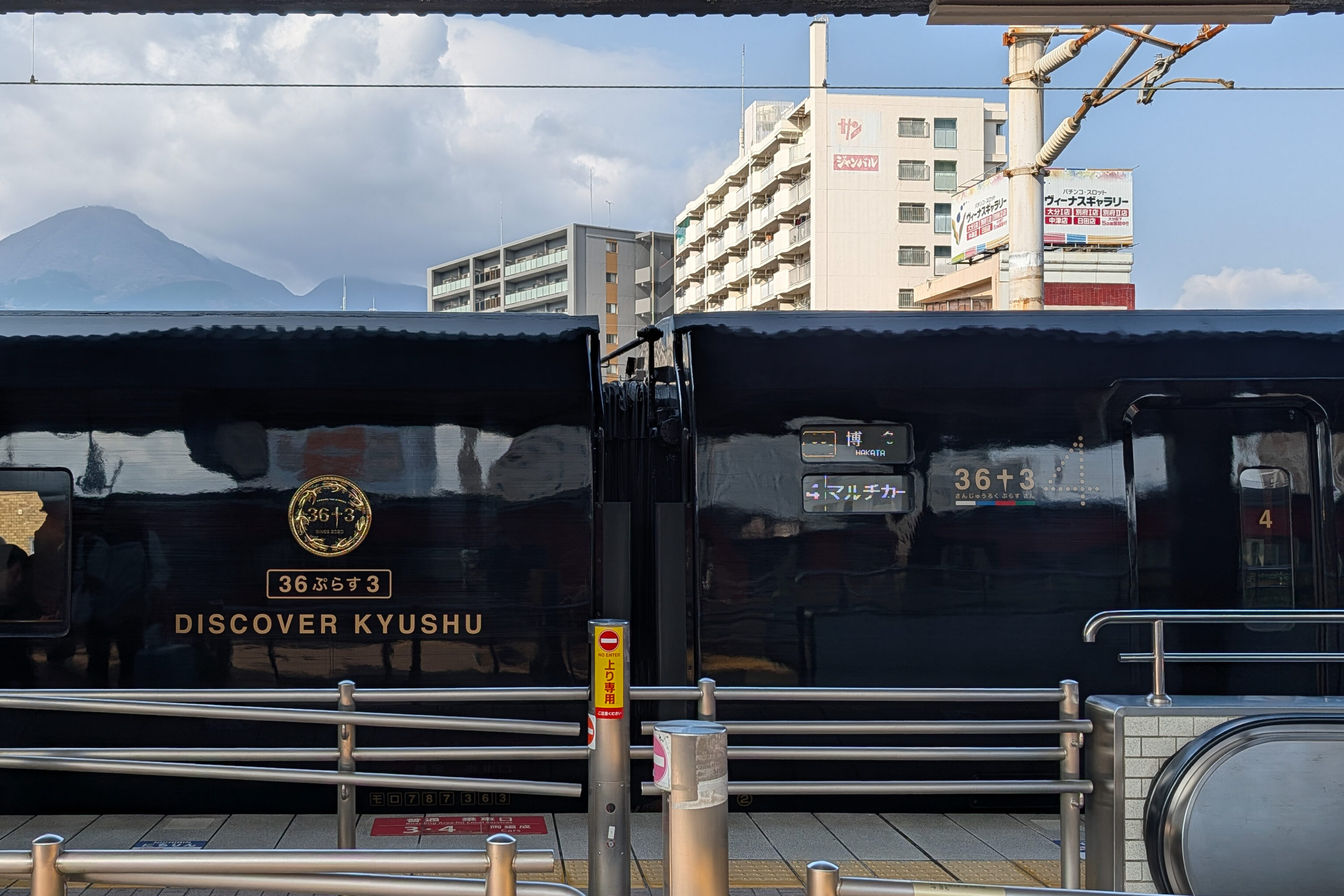
Upon arriving at Beppu Station, we noticed this sleek black train on the platform across from us. It is the 36ぷらす3, Sanju-Roku Purasu San, literally 36 + 3. The English language page for the train on JR Kyushu’s main website helpfully explains that Kyushu is the 36th largest island in the world, which is where the 36 comes form. The +3 refers to “Surprise, Impression and Happiness”.
This train operates five days a week, each day on a different route. This ends up circling around Kyushu as well as with a one day detour out to Sasebo, which is near Nagasaki and basically on a large peninsula relative to the rest of Kyushu. It is effectively all green car, the Japanese train equivalent to first class, with some carriages having private rooms.
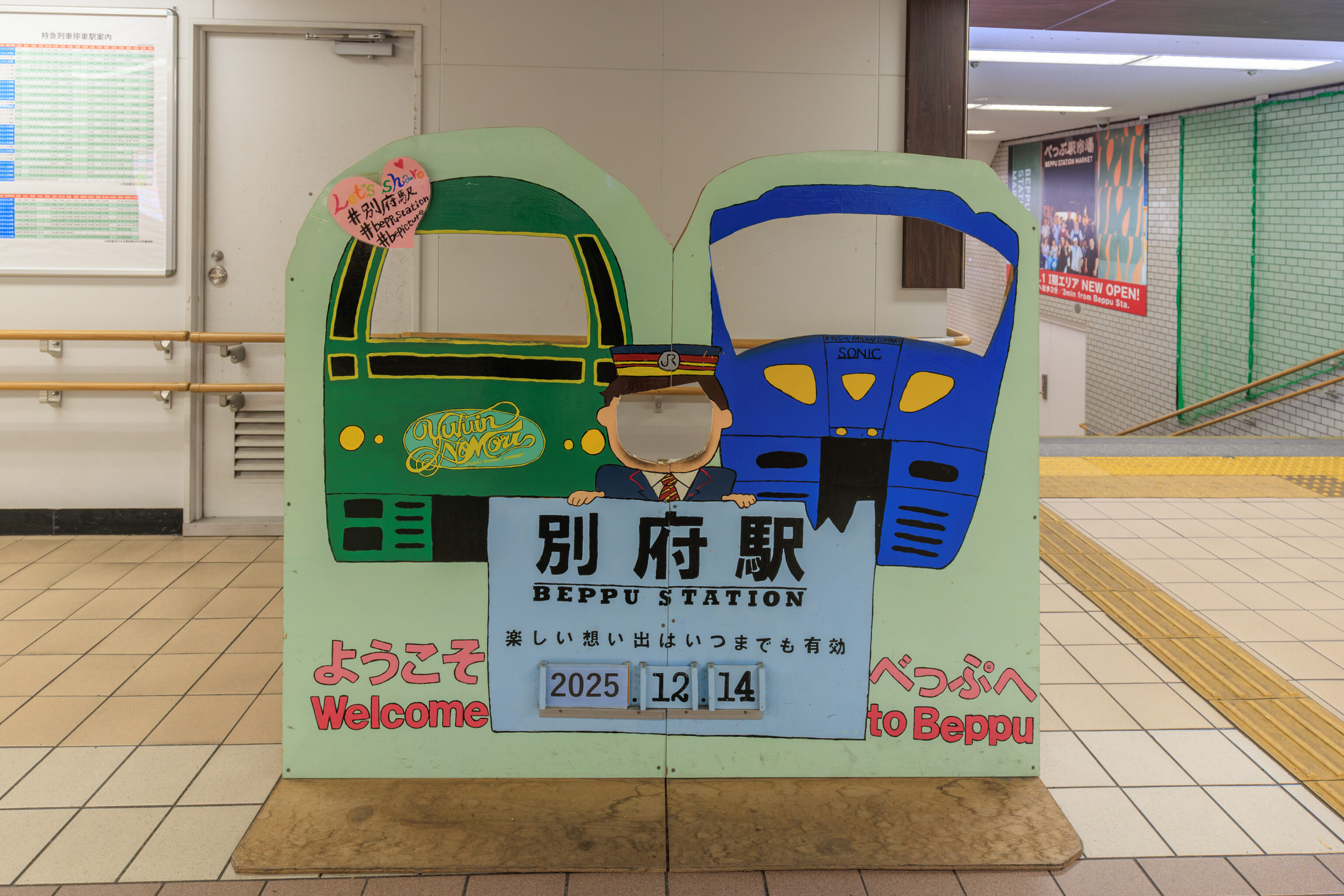
Beppu Station is the last stop for the Yufu. However, to get to our hotel, we actually need to go to the next station to the north, 別府大学駅 Beppu Daigaku Station (Beppu University Station). So, we hand to change platforms to take a local train.
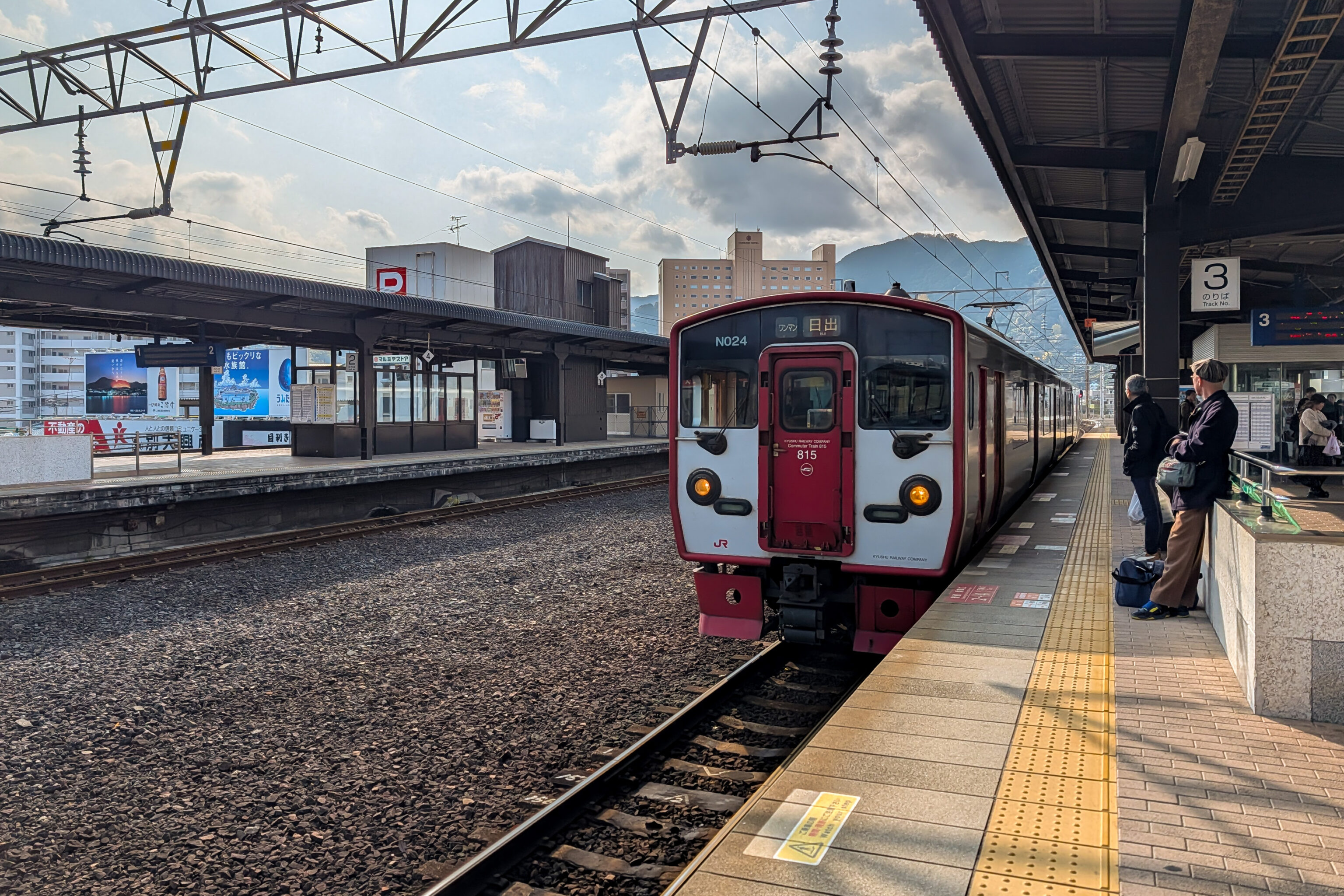
Our train bound for 日出 Hiji. The ワンマン one man indicator means that there is only one person operating the train. It effectively operates like a bus, except for some added complexity involving manned vs. unmanned stations. Having a rail pass that covers the route basically eliminates the complexity.
After arriving at Beppu Daigaku, we walked to the northeast to reach our hotel, the Amane Resort Gahama. It was actually difficult to locate the proper entrance to the hotel because there wasn’t any good signage.
Our room was not ready yet so we left our bags and headed back out.
Beppu Jigoku Meguri
As it was noon, with half the day remaining, we decided to do the 別府地獄めぐり Beppu Jigoku Meguri. Jigoku translates to hell in English and is the Japanese word for thermal features like hot springs, like what you’d go to Yellowstone to see. Meguri is translated to tour in English but in this context, circuit seems like a better choice. Basically, Beppu has many hot springs that can be visited. Seven of them can be visited with the same ticket, resulting in the Beppu Jigoku Meguri.
While it would be possible to walk to see the jigoku, it would be a long walk with an ascent of 450 feet over three kilometers. We decided to take the bus. We crossed a six lane street via the nearest pedestrian crossing to reach the Amane Resort mae bus stop, right in front of a KFC. It felt like a pretty long wait for the bus, although that’s always the case when a bus doesn’t show up right away!
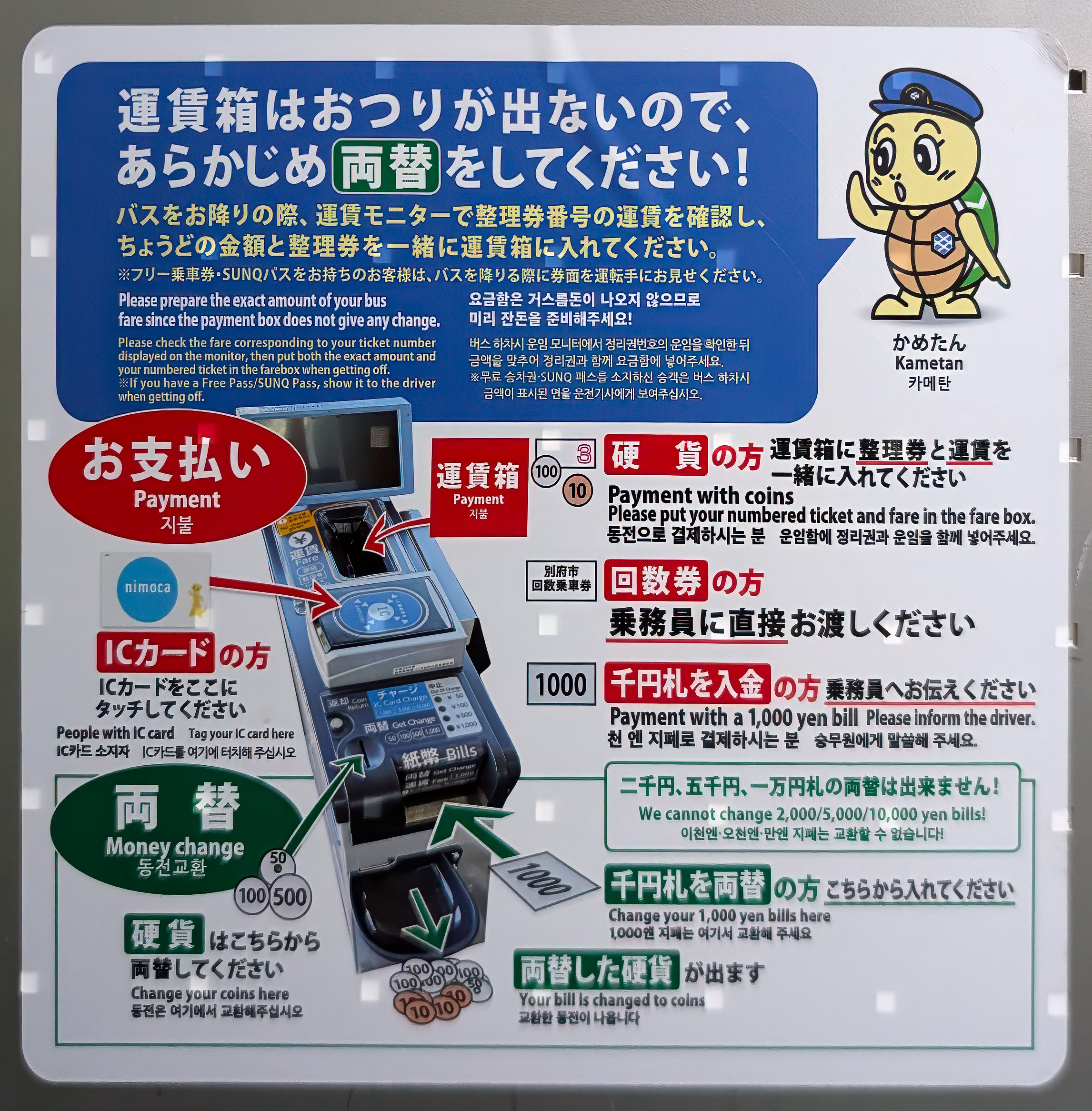
There is a handy graphic in the bus in case you were wondering how the payment machine in front of the bus works. It is basically multiple separate functions that don’t interoperate with each other. This is a pretty typical configuration for a bus in Japan.
Luckily, our Pasmo IC cards work here.
There are multiple bus stops that are near the seven jigoku. We decided to go to 海地獄前 Umijigoku-mae, which is basically the furthest stop out of all the sensible options.
Umi Jigoku
There is actually a temple here near the bus stop and the jigoku. However, we walked past it to start at the 海地獄 Umi Jigoku (Sea Hell).
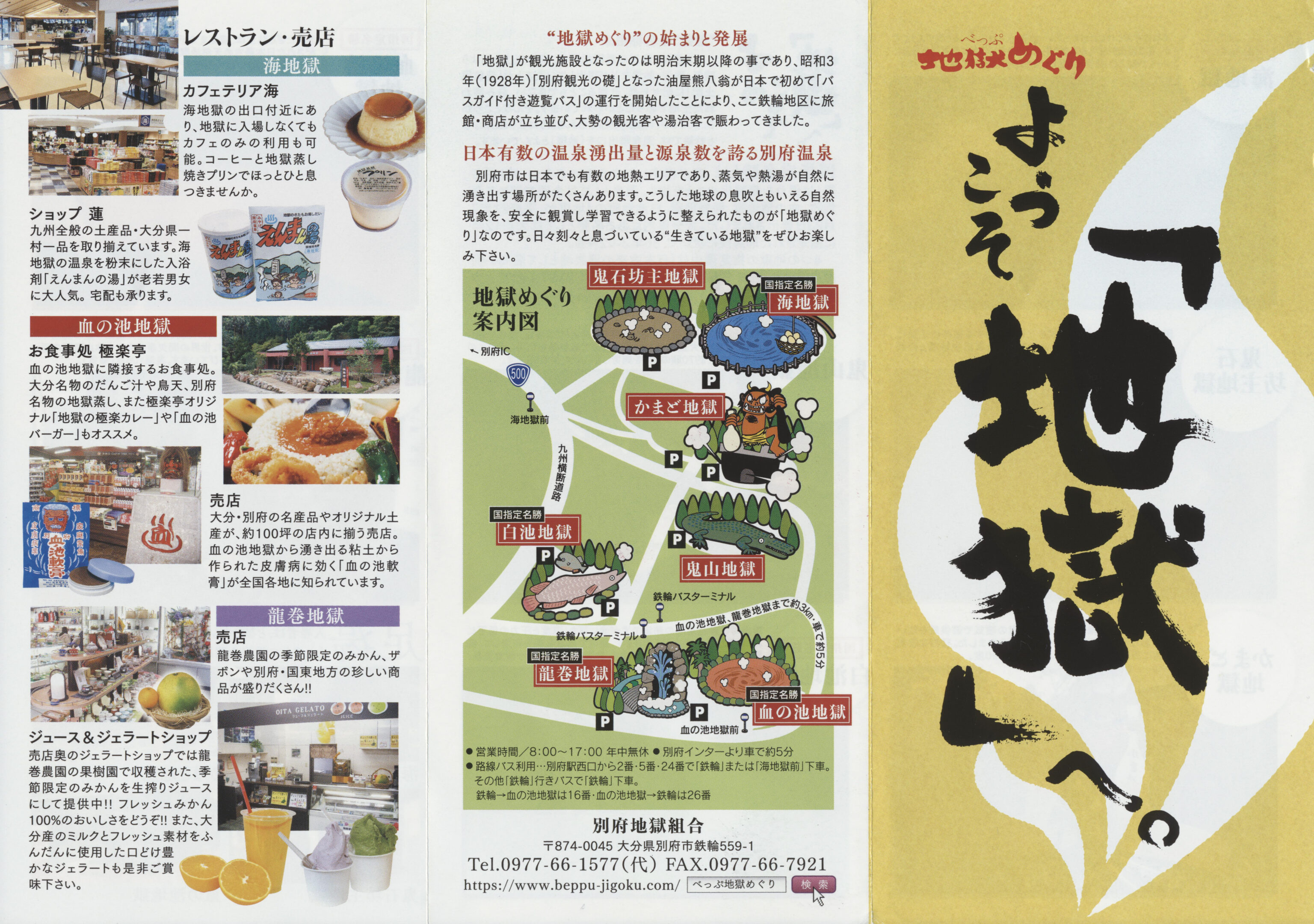
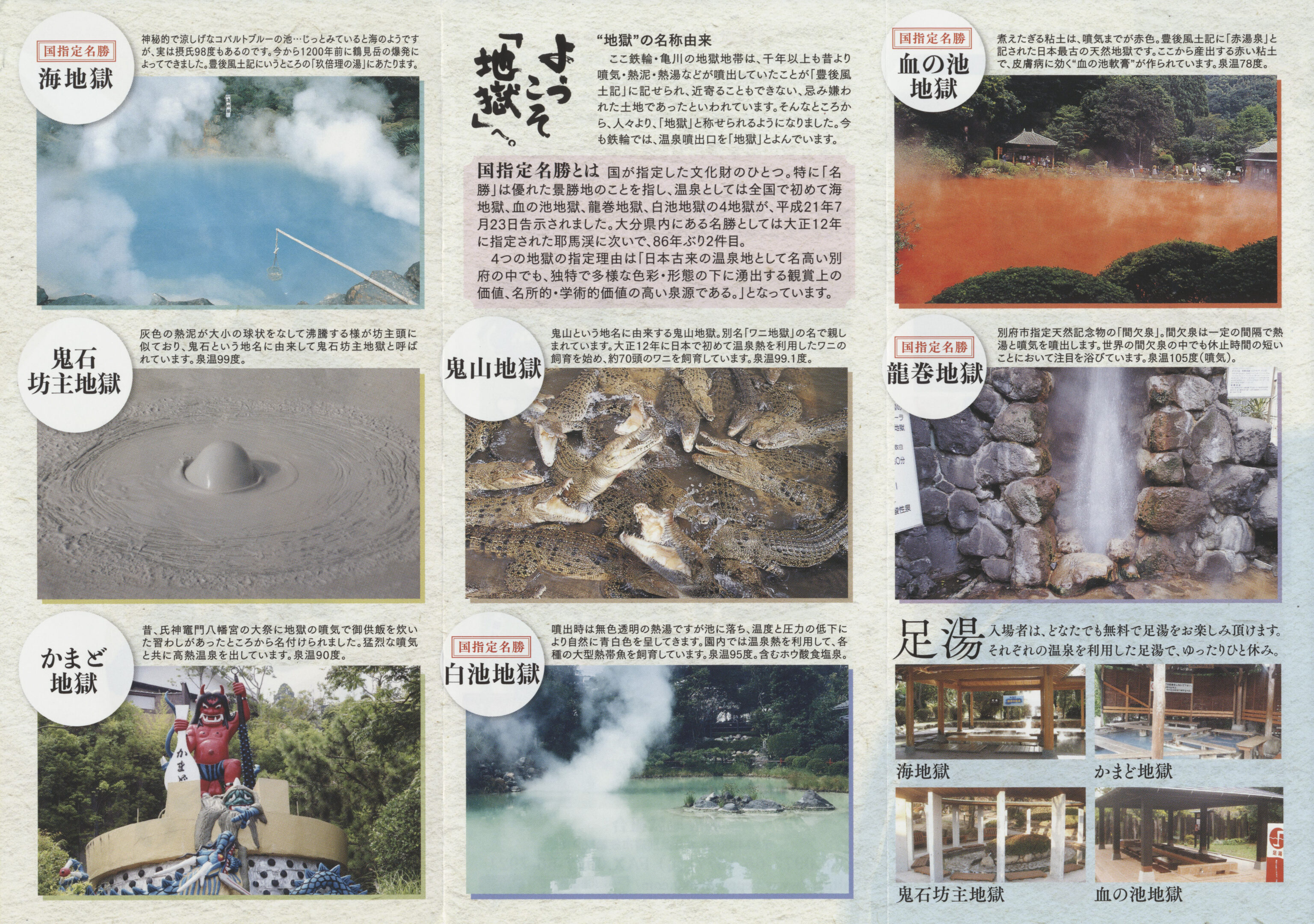
We picked up a pamphlet in Japanese.
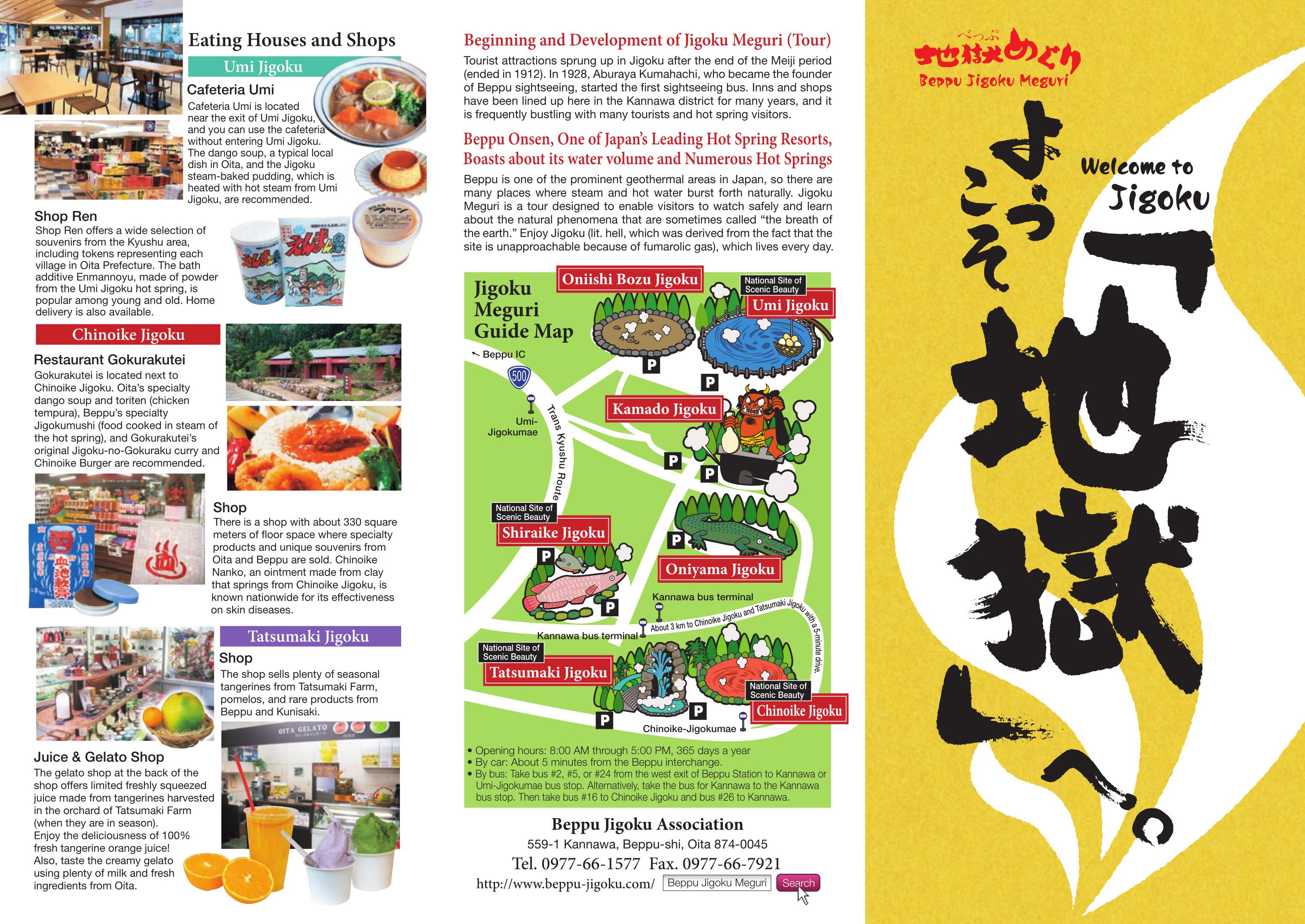
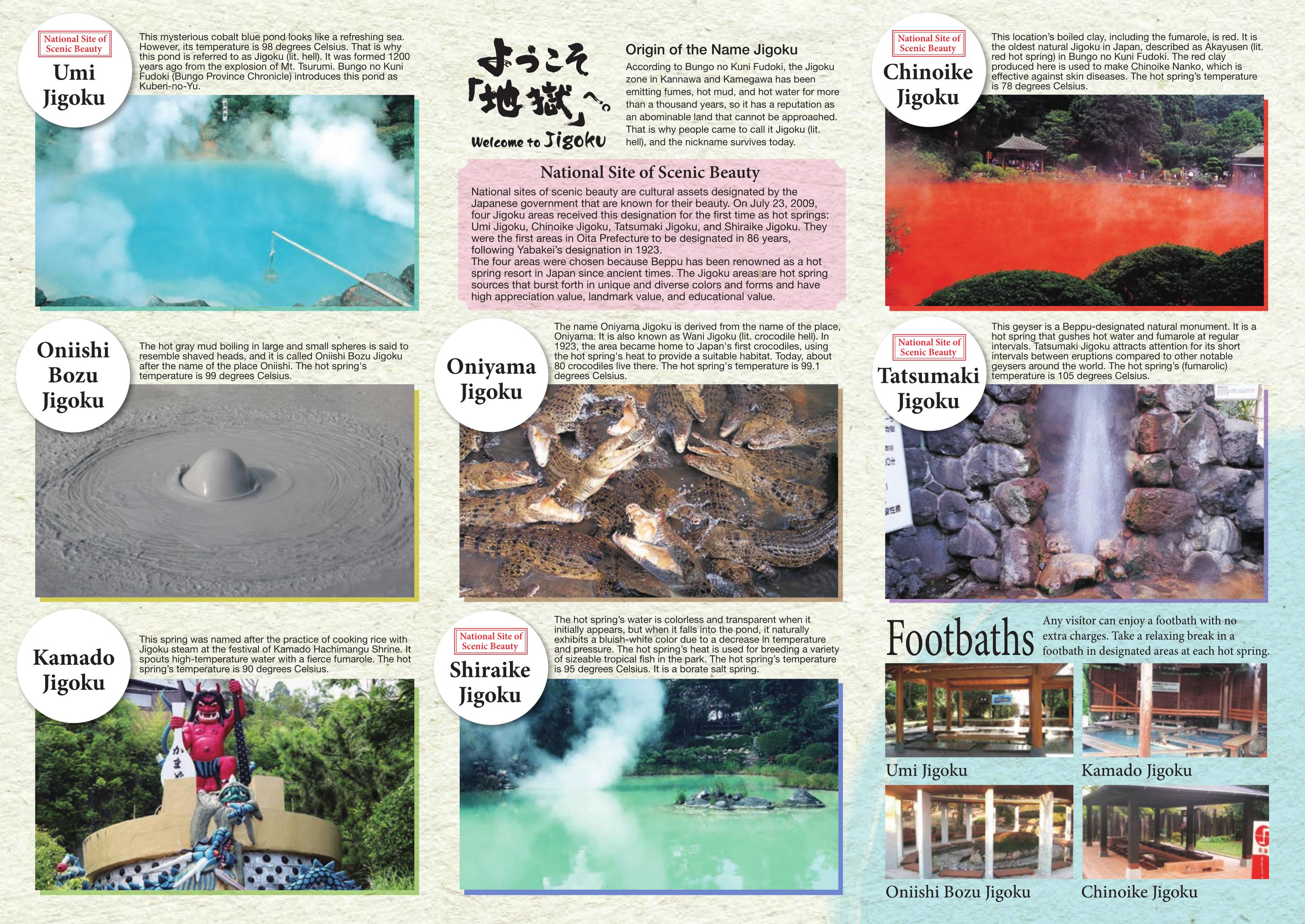
The website has pamphlets in other languages, including English.
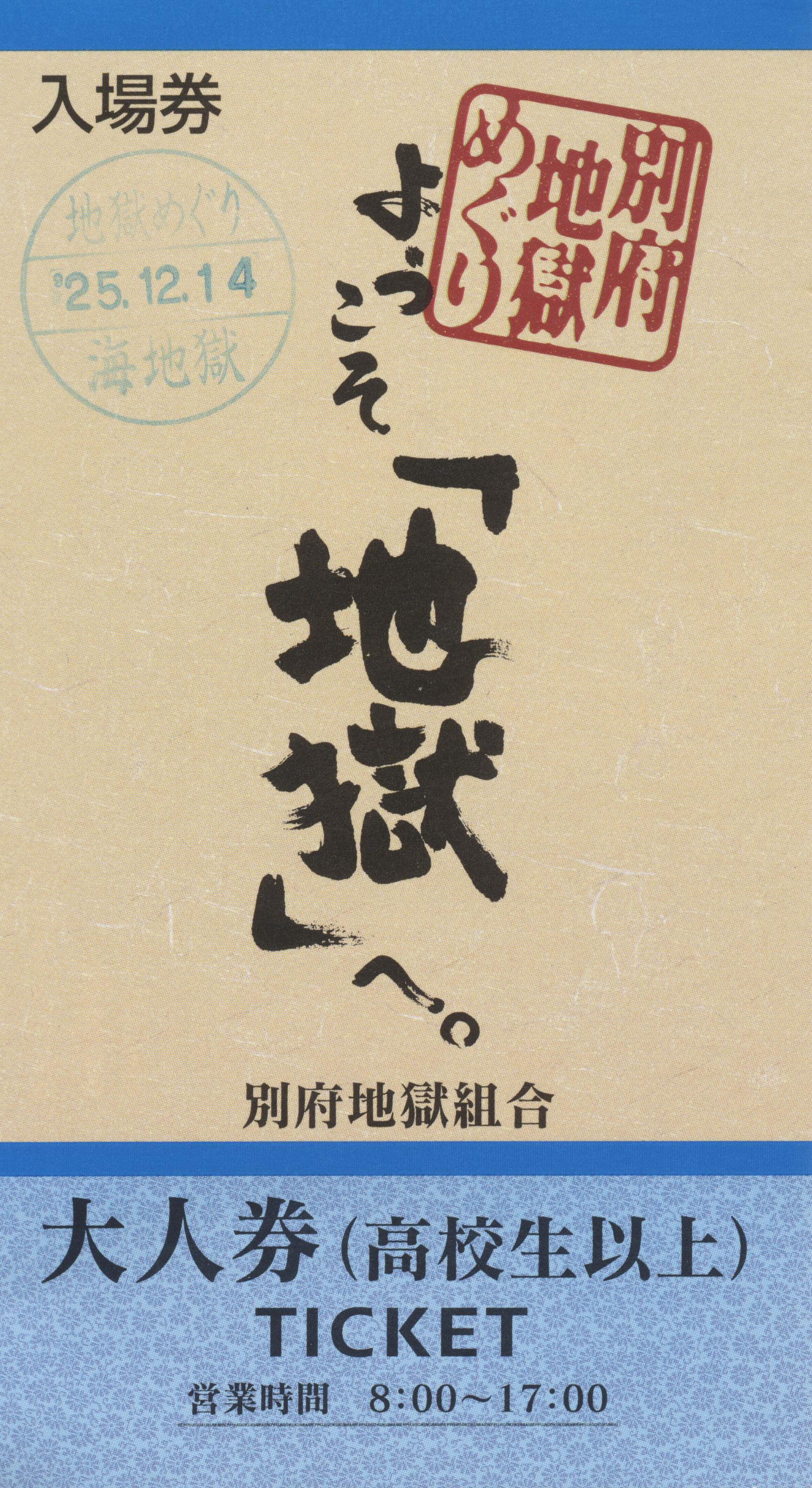
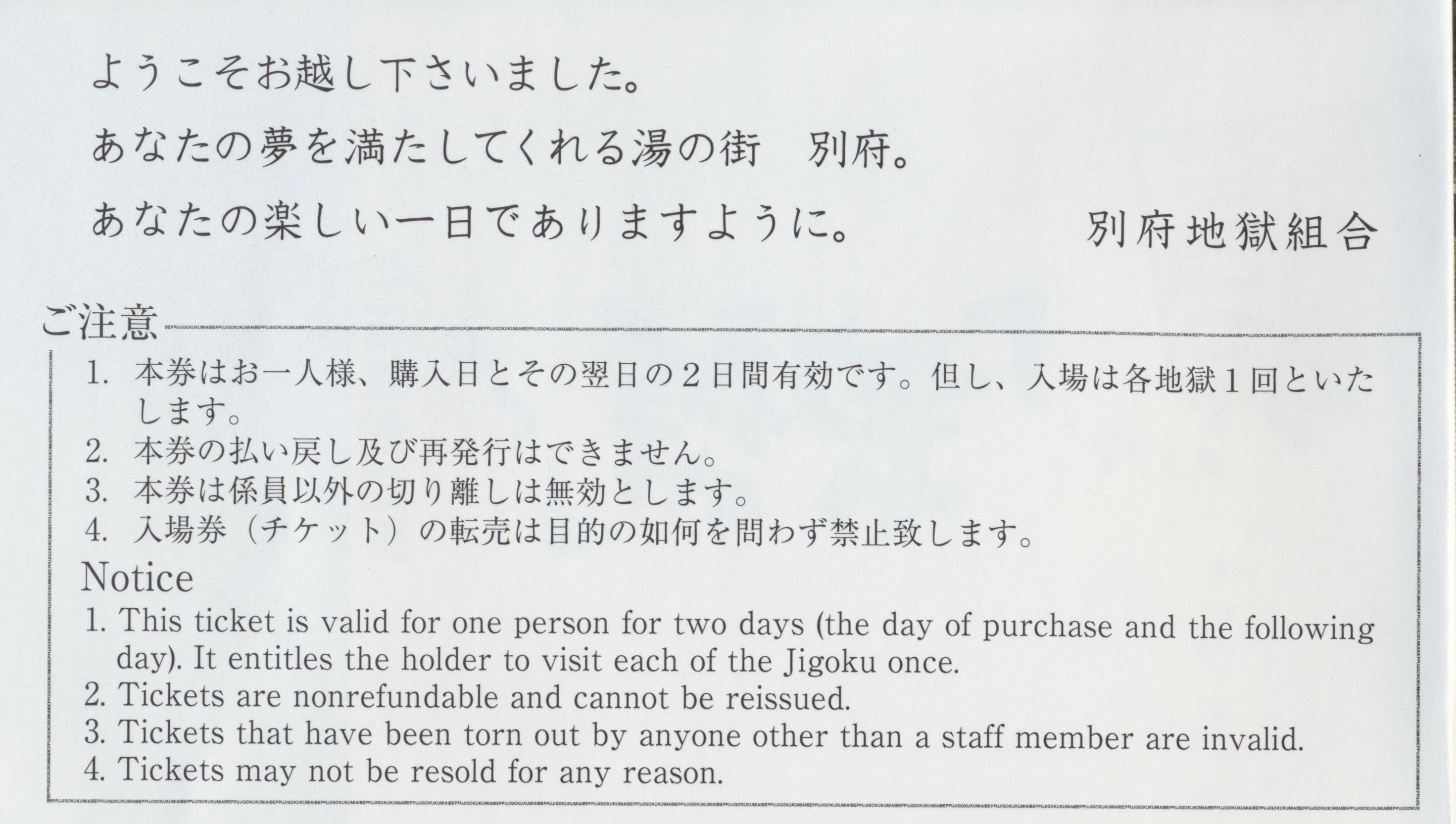
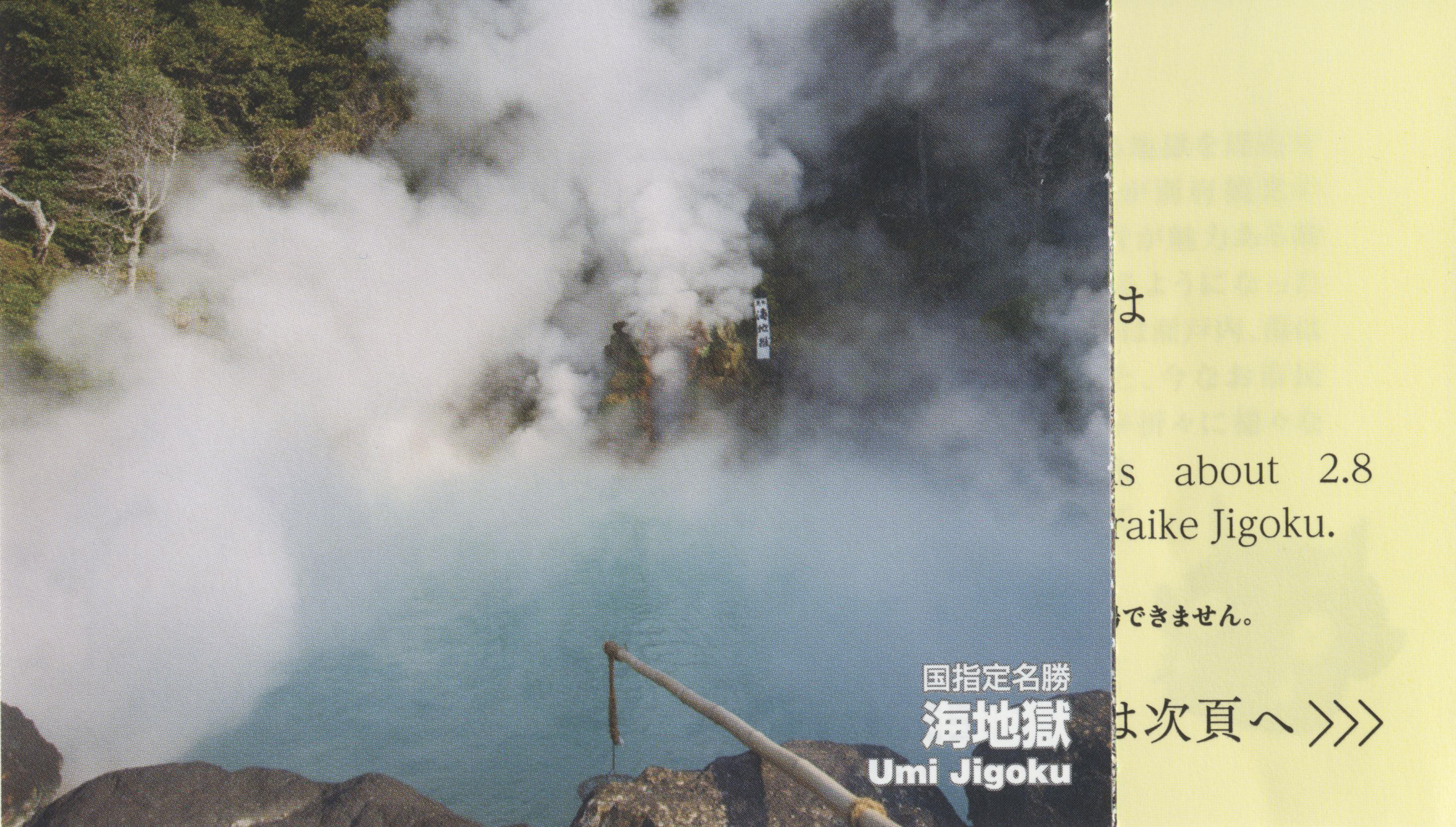
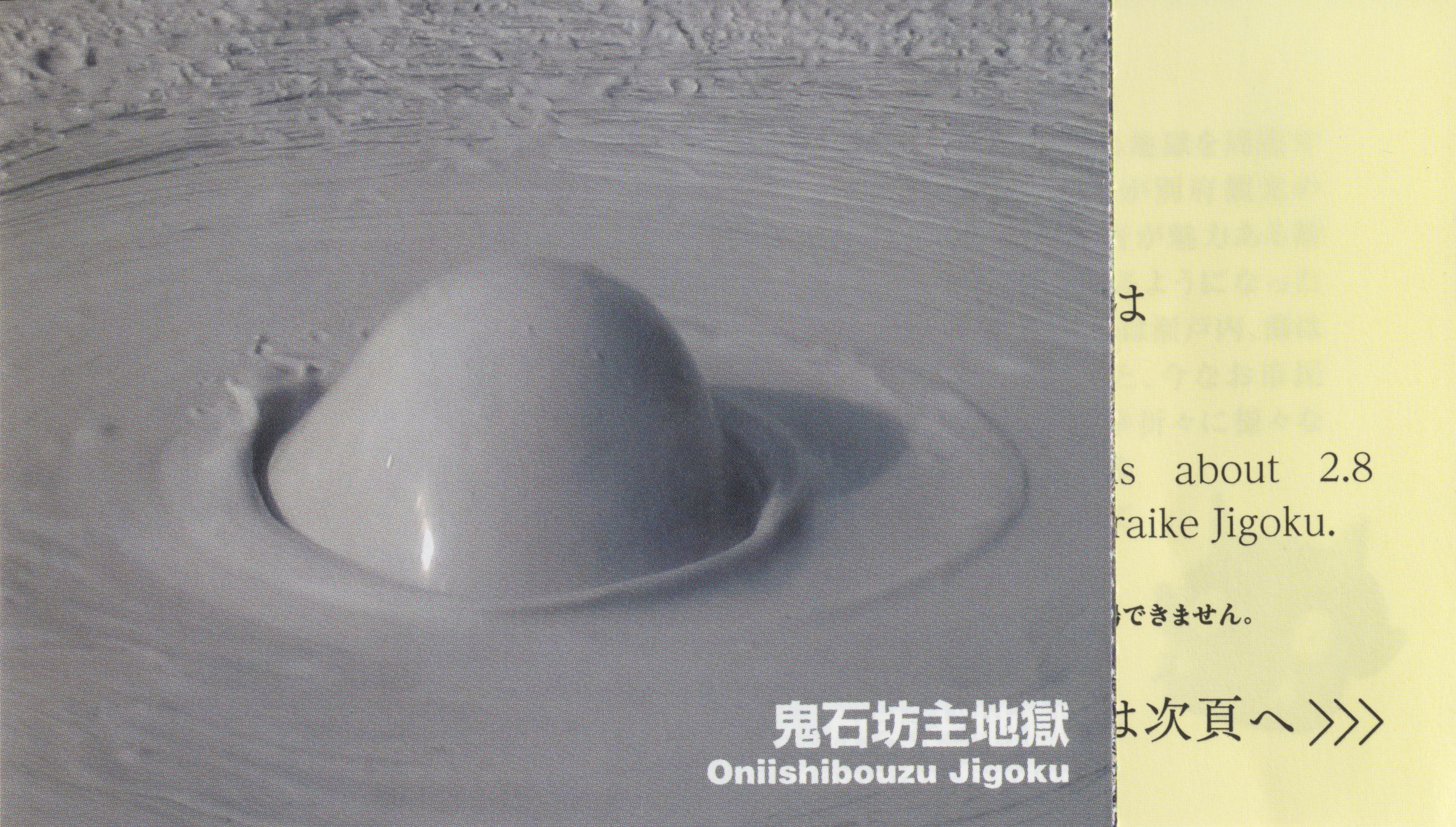
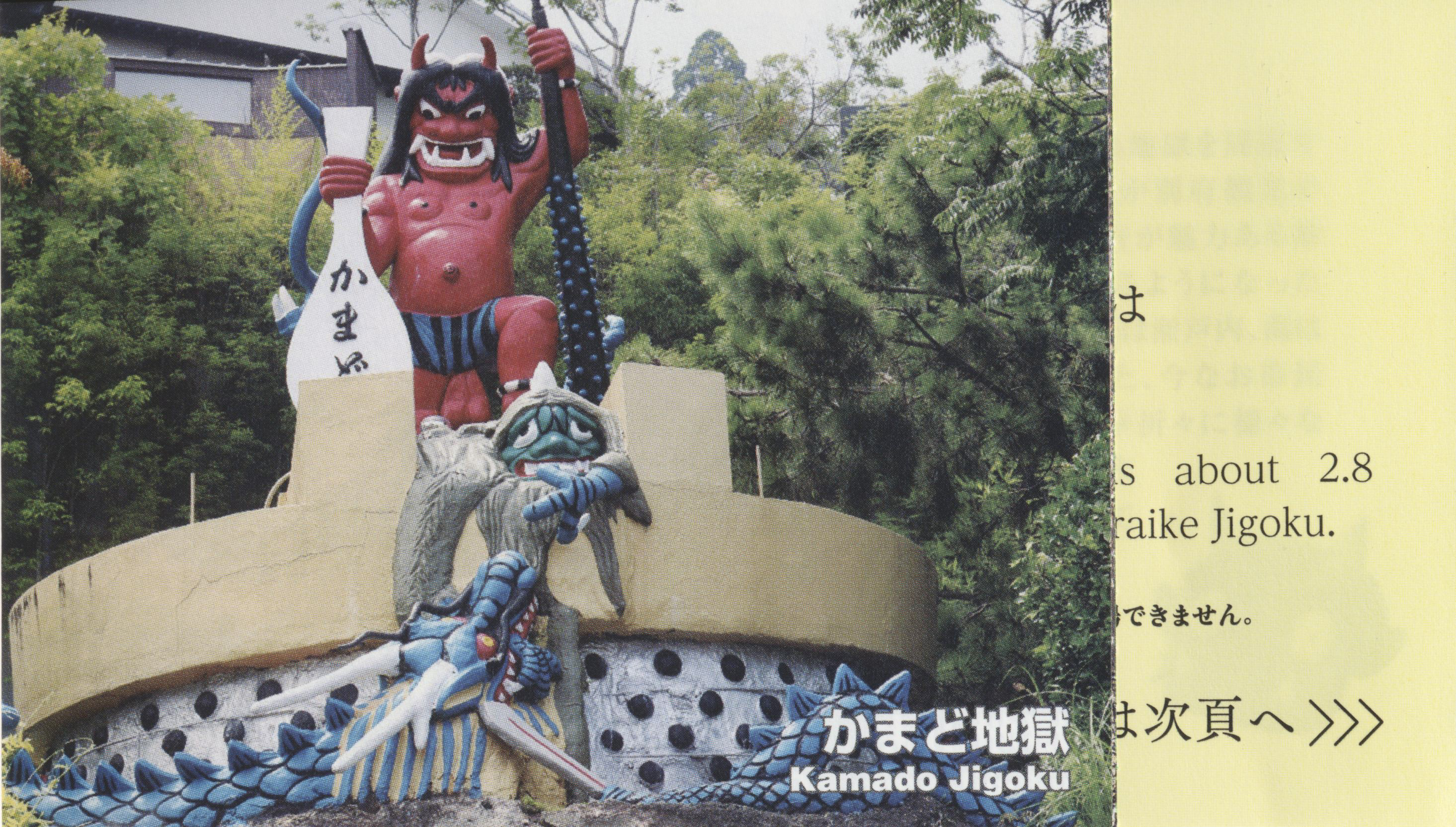
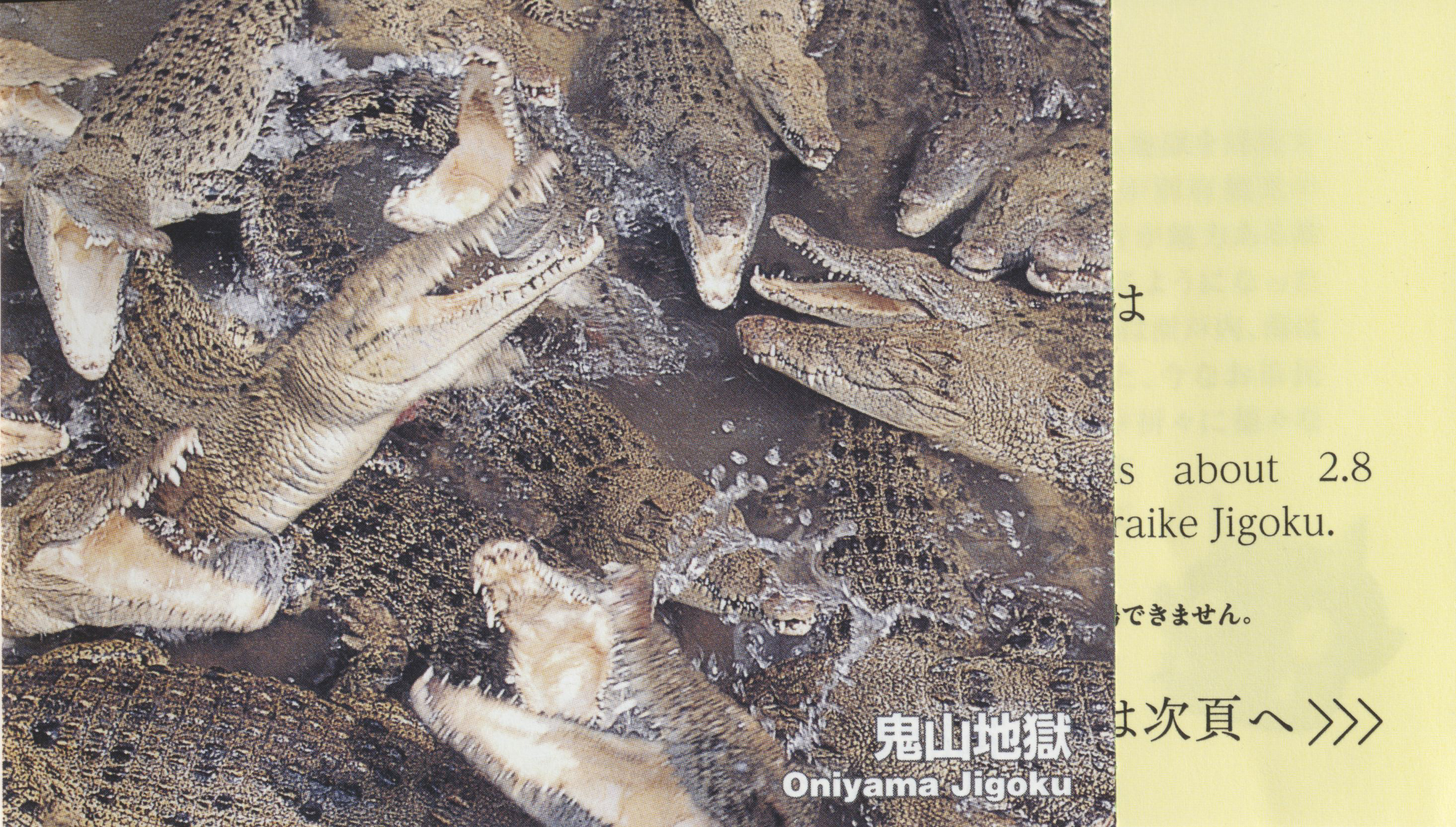
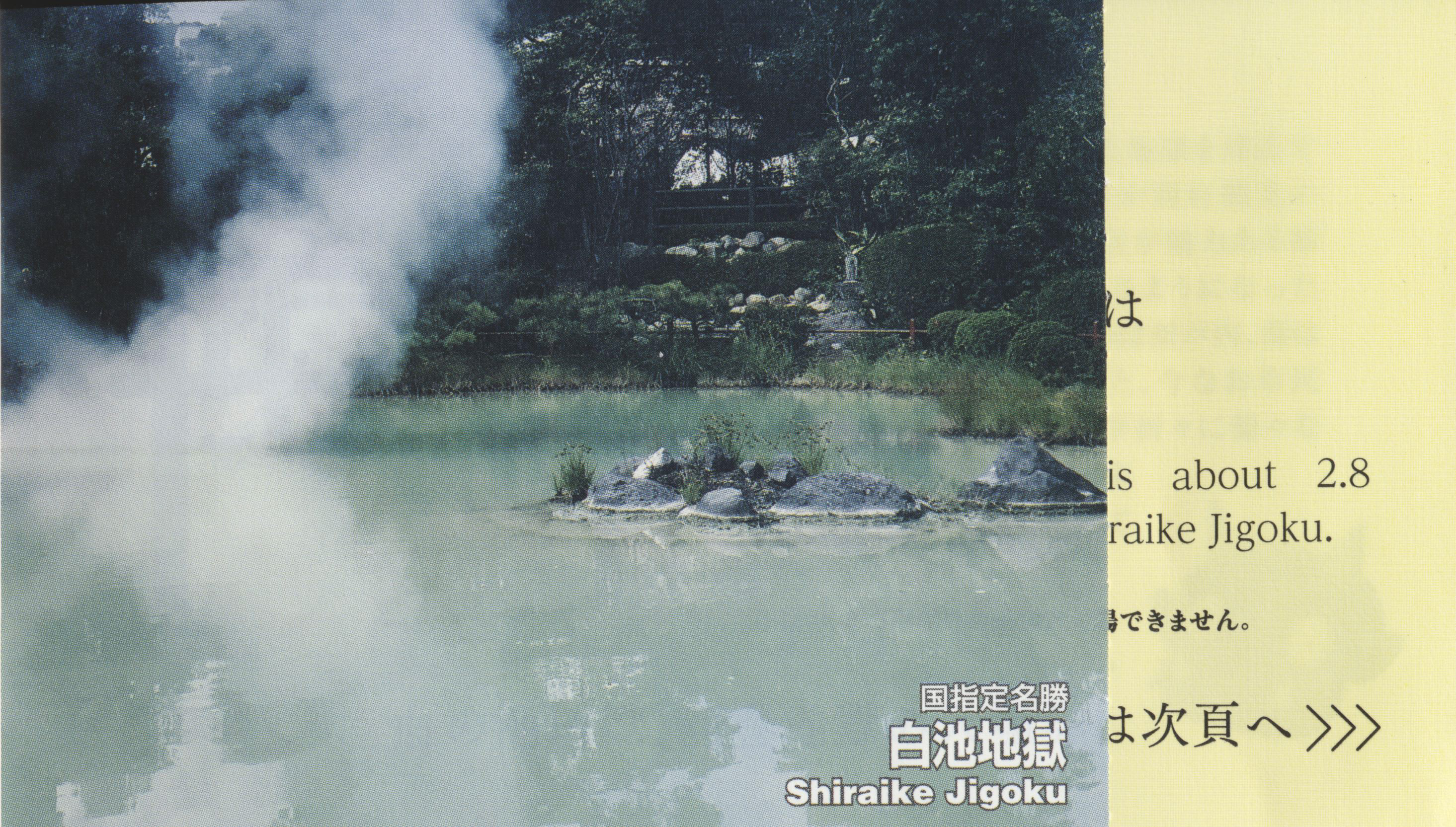
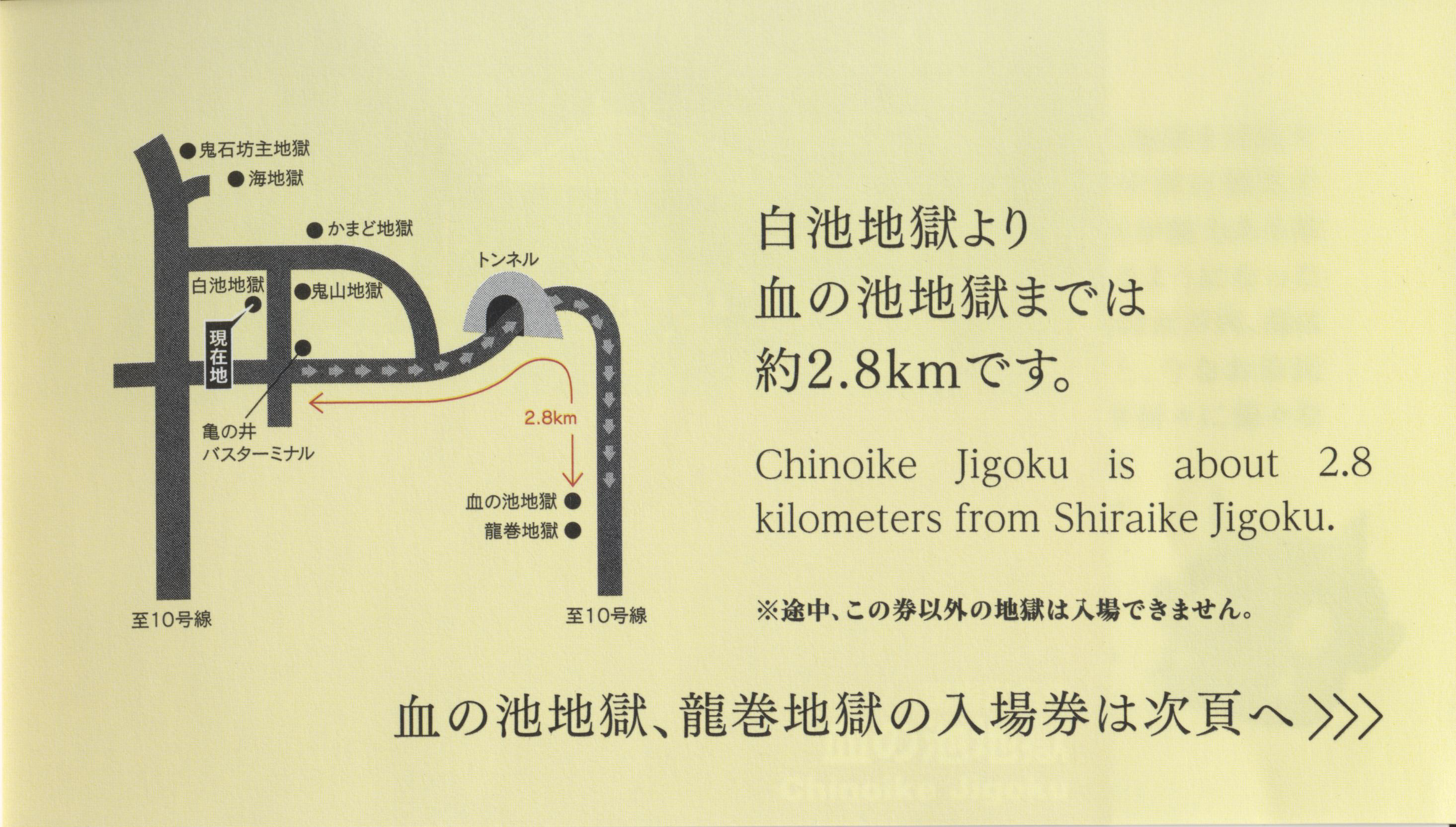
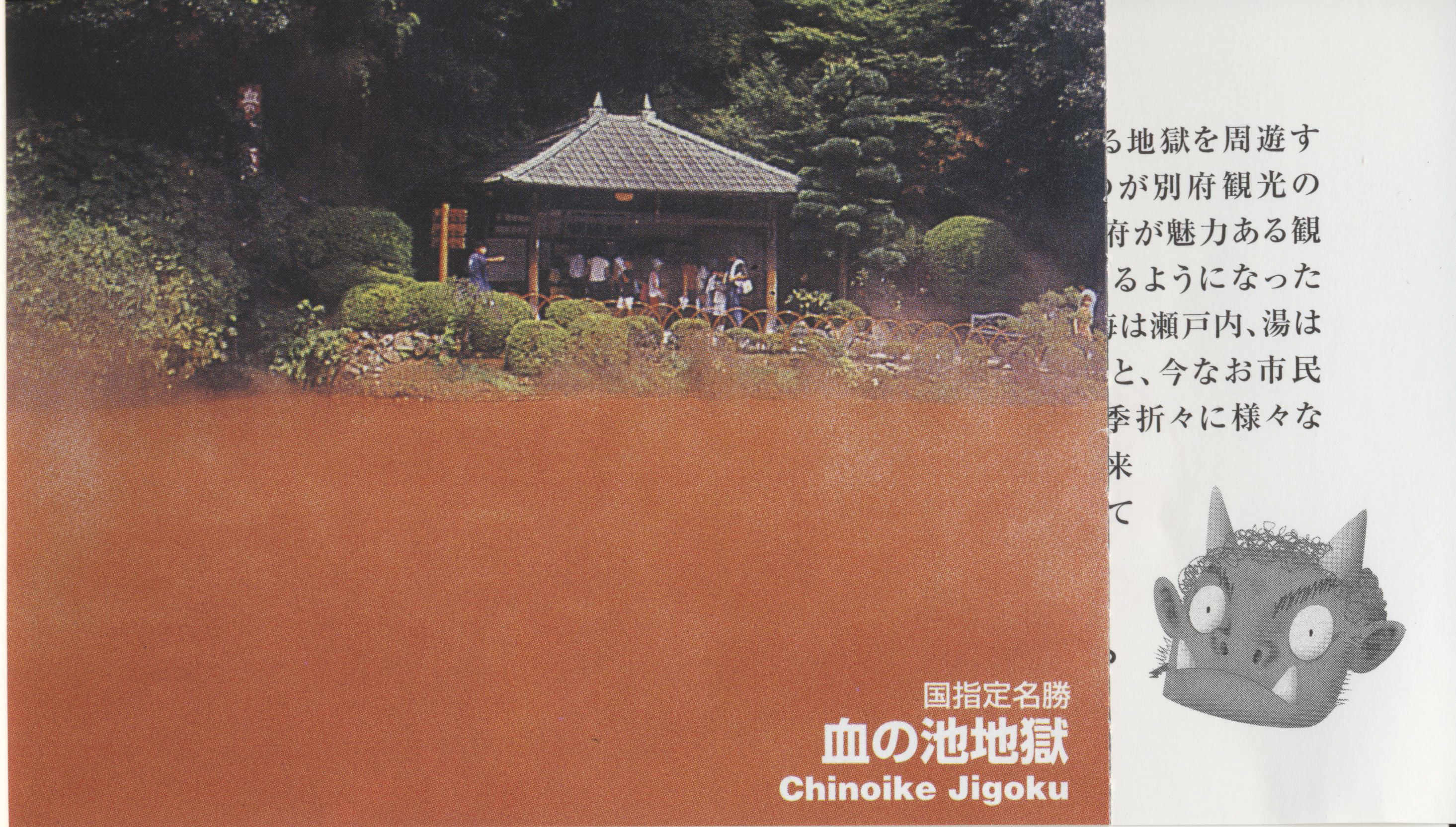
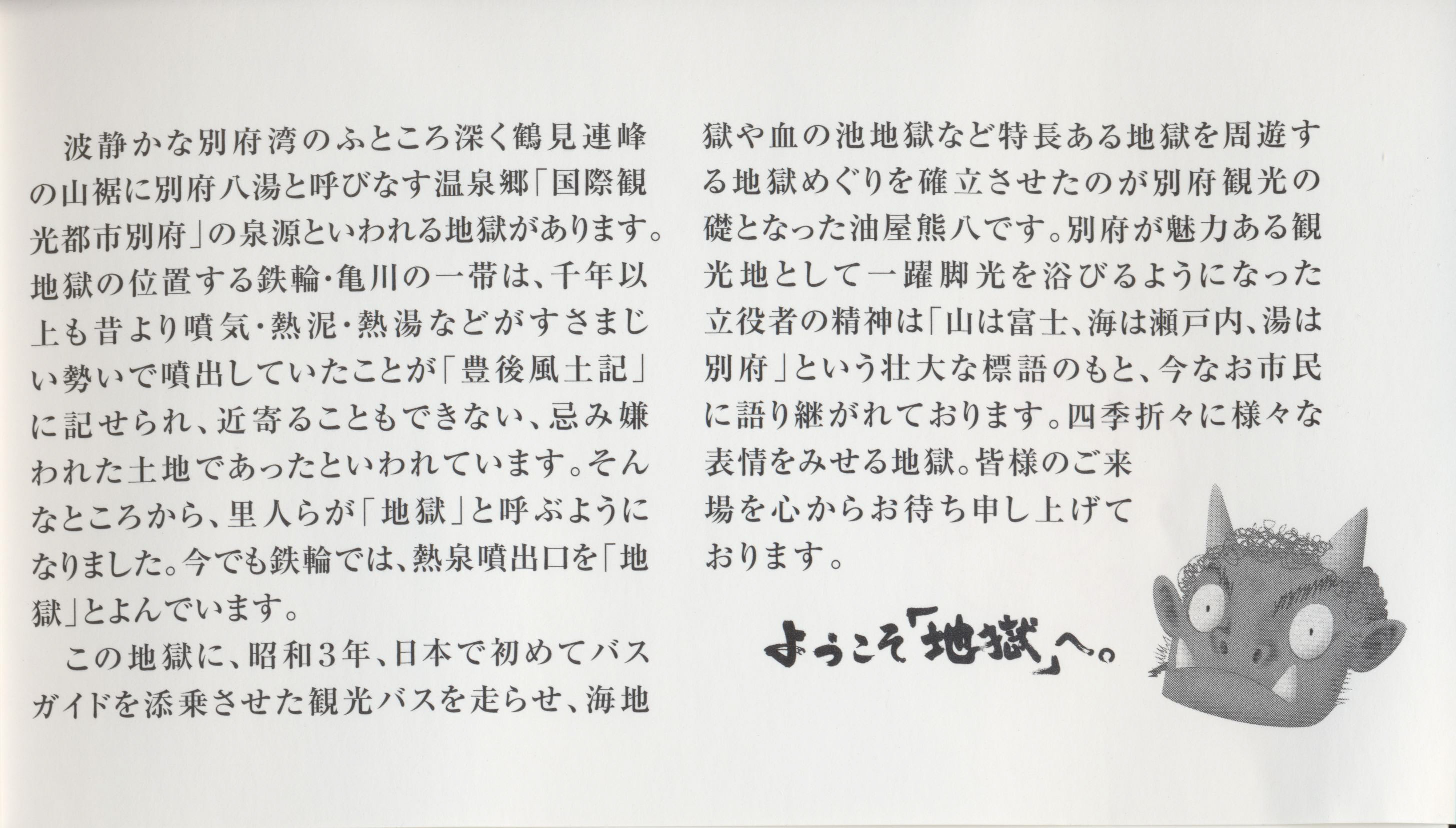
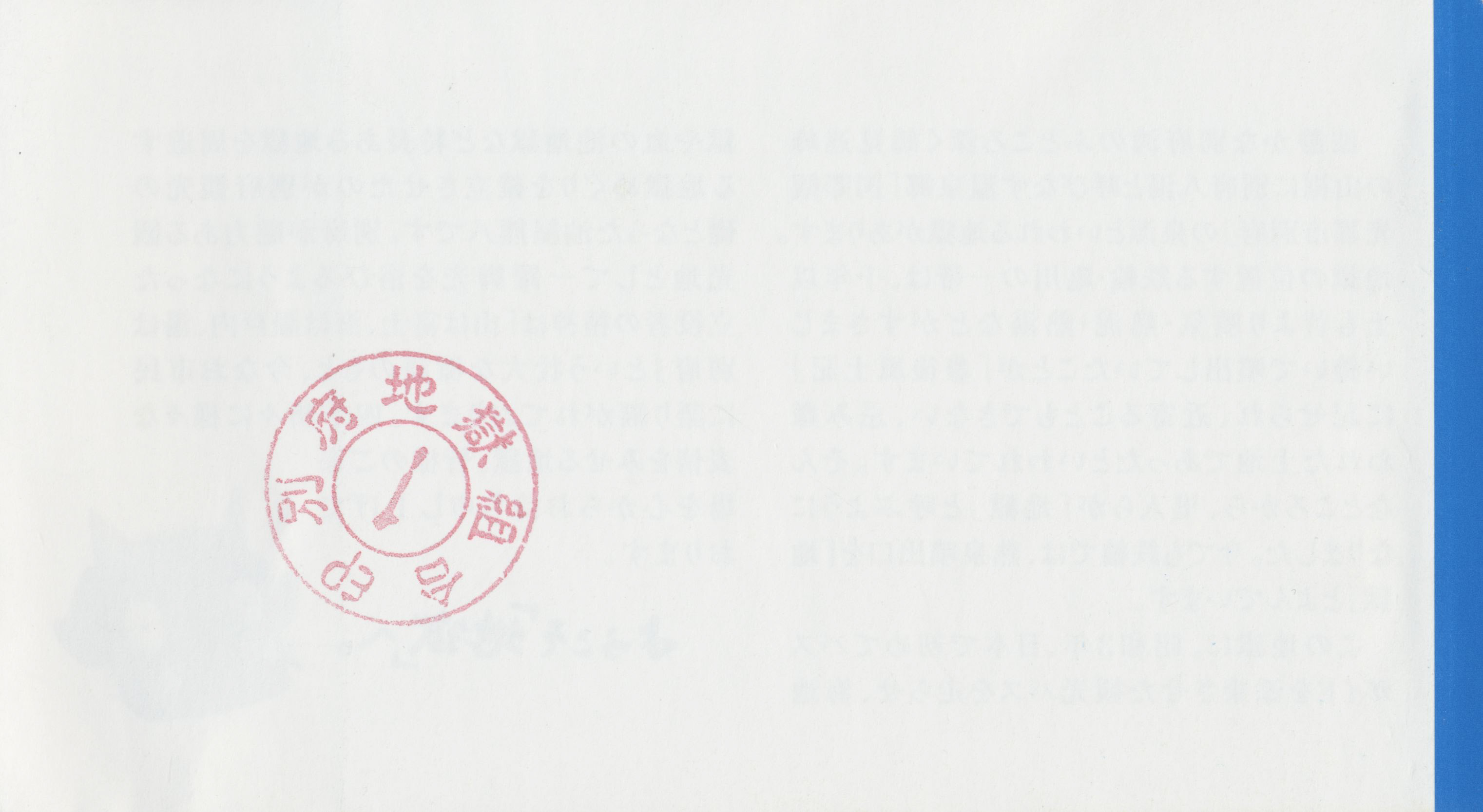
The ticket for the full seven jigoku circuit comes in a little ticket booklet. It is also possible to pay to enter each separately, but is cheaper to buy the set of tickets if you plan on visiting most of them.
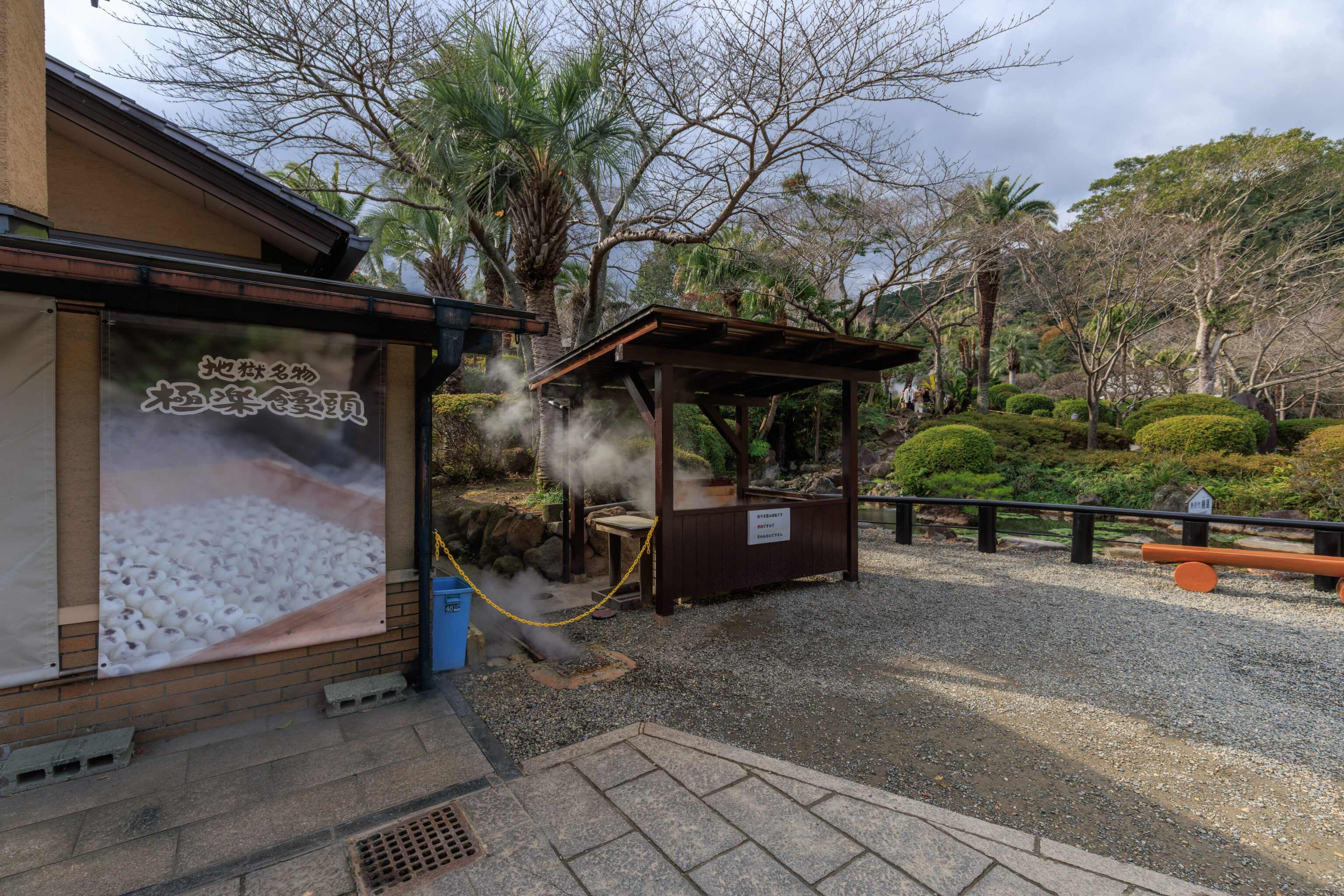
One common thing at Japanese jigoku is that they will cook something using the hot spring water.
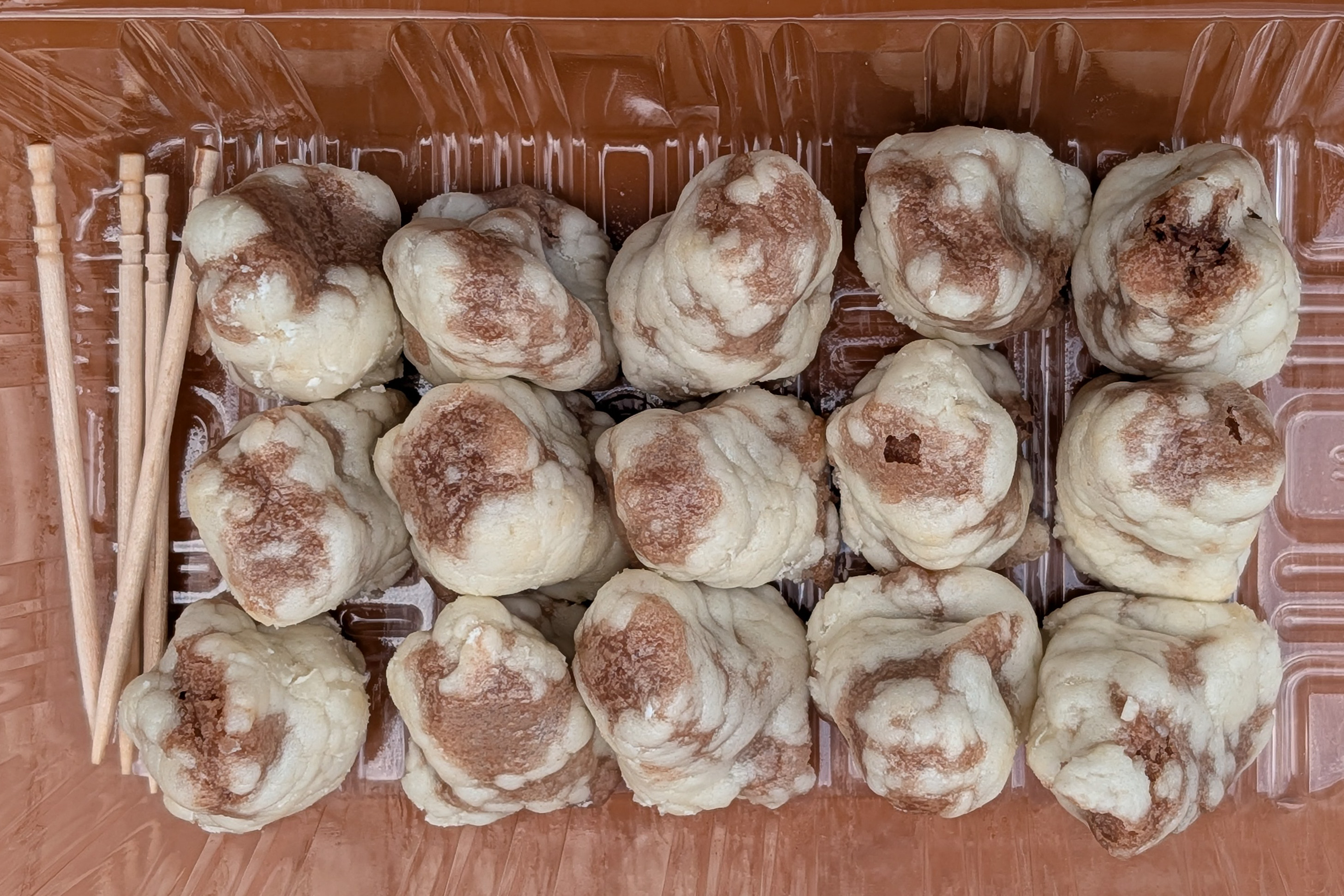
These are described on the sign in the previous photo showing where they are made as 地獄名物極楽饅頭 jigoku’s famous product paradise manju. They actual product that we got didn’t look as pretty as the ones on the sign. They don’t really look like manju at all and the red bean seems to not be contained at all. As food, they weren’t exactly bad, but they weren’t good either.
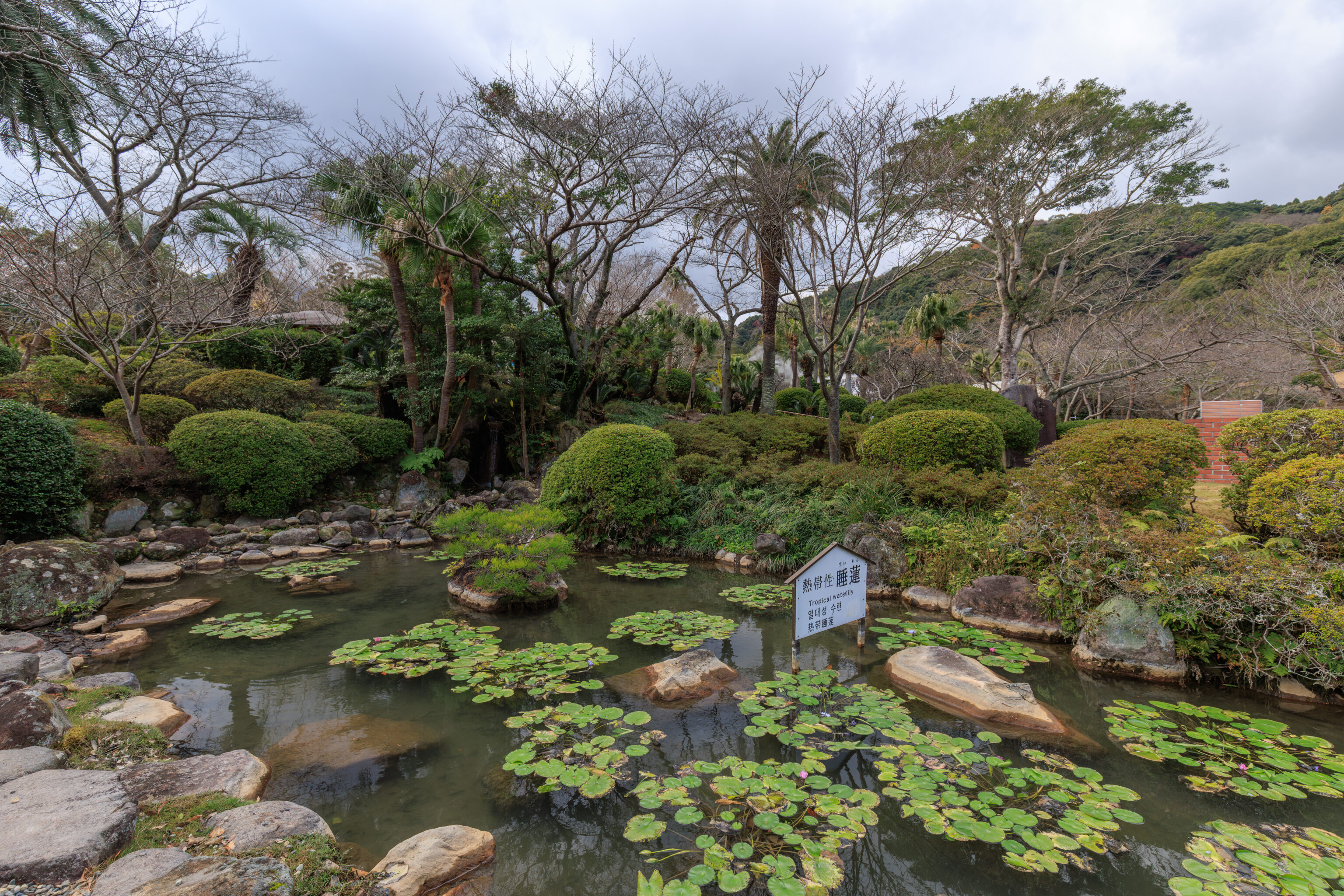
This little pond near the entrance contains tropical waterlily according to the multi-lingual sign.
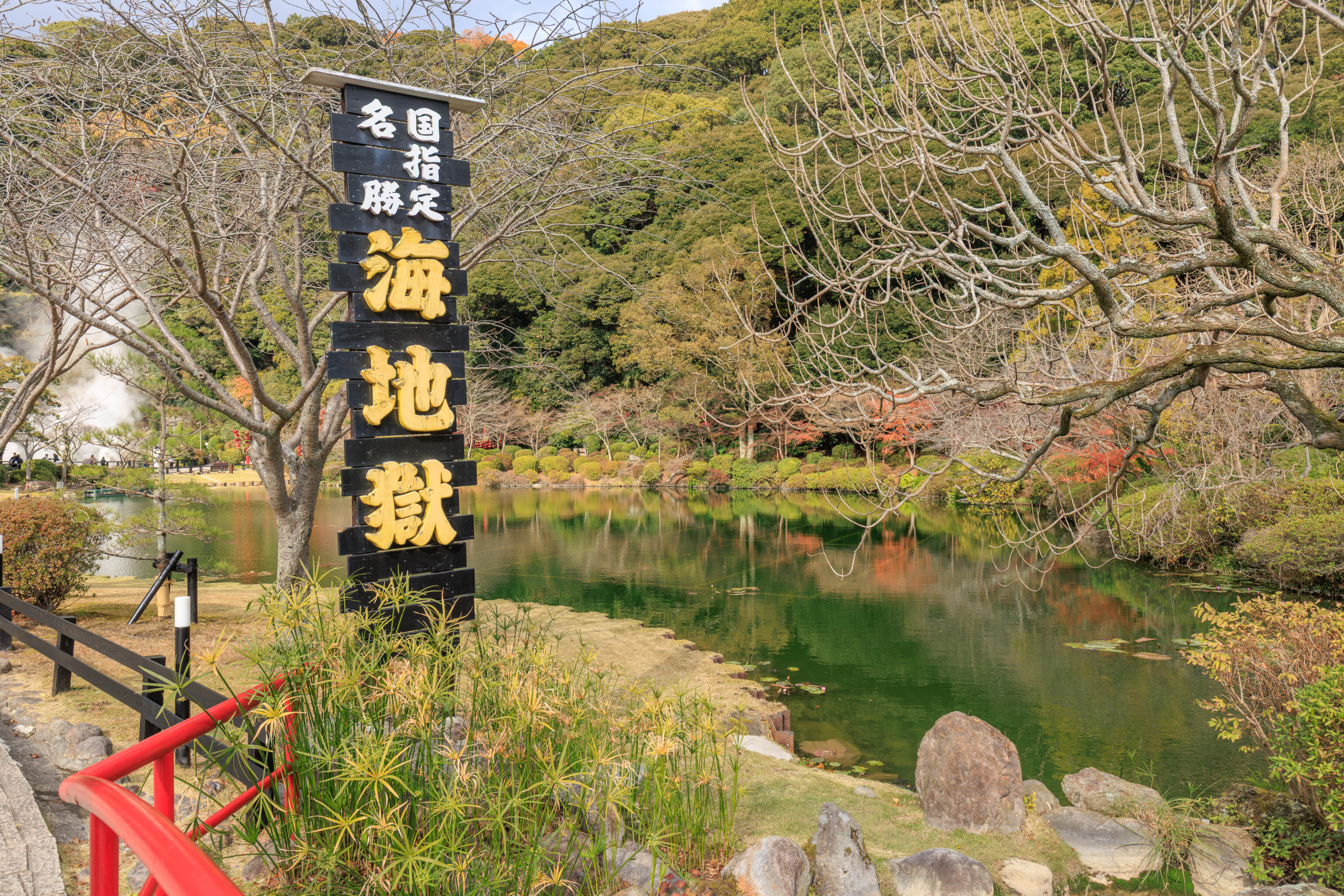
In case you weren’t sure where you are, this is the nationally designated scenic spot Sea Hell.
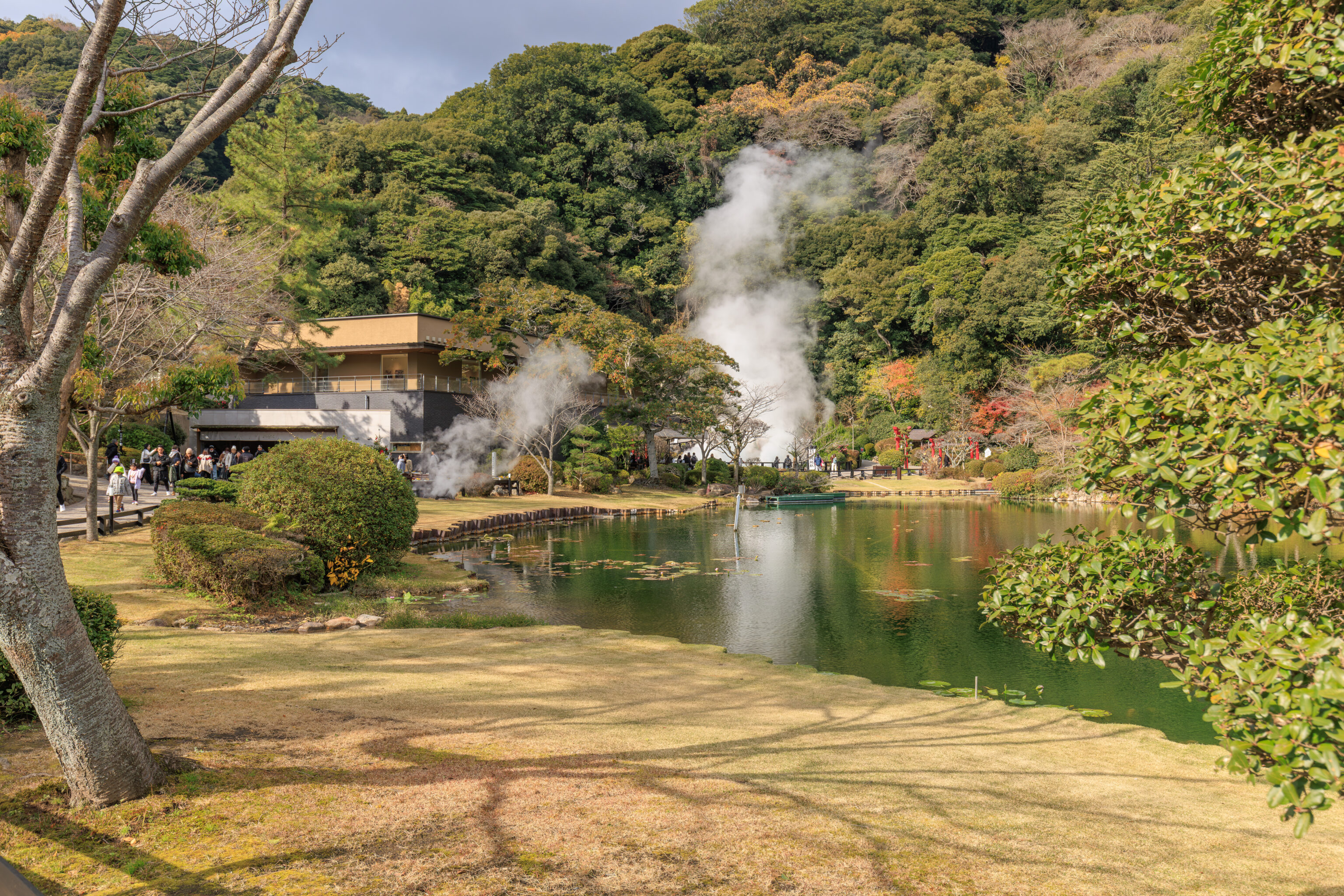
We could see steam coming out of a thermal pool in the distance. We headed in that direction.
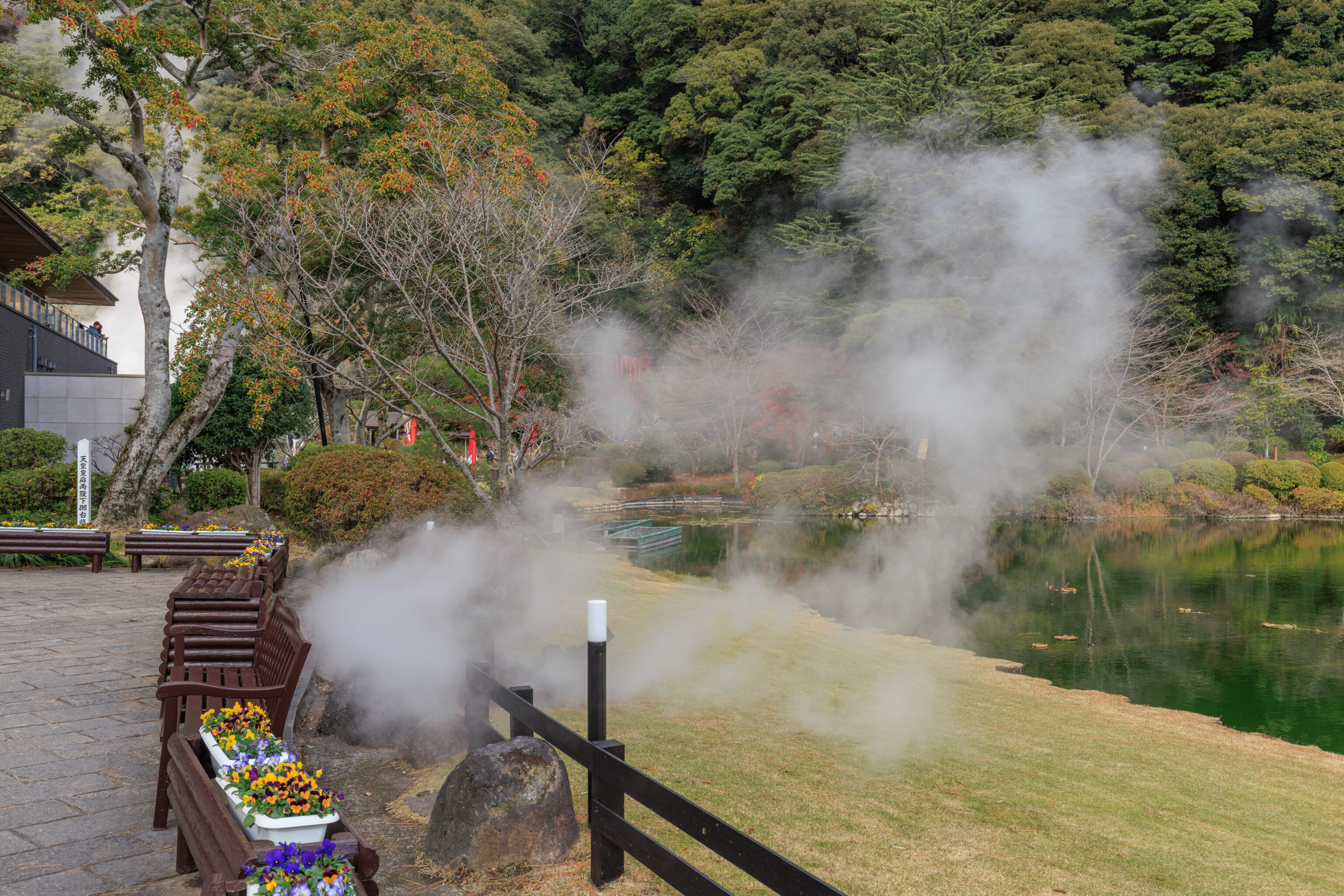
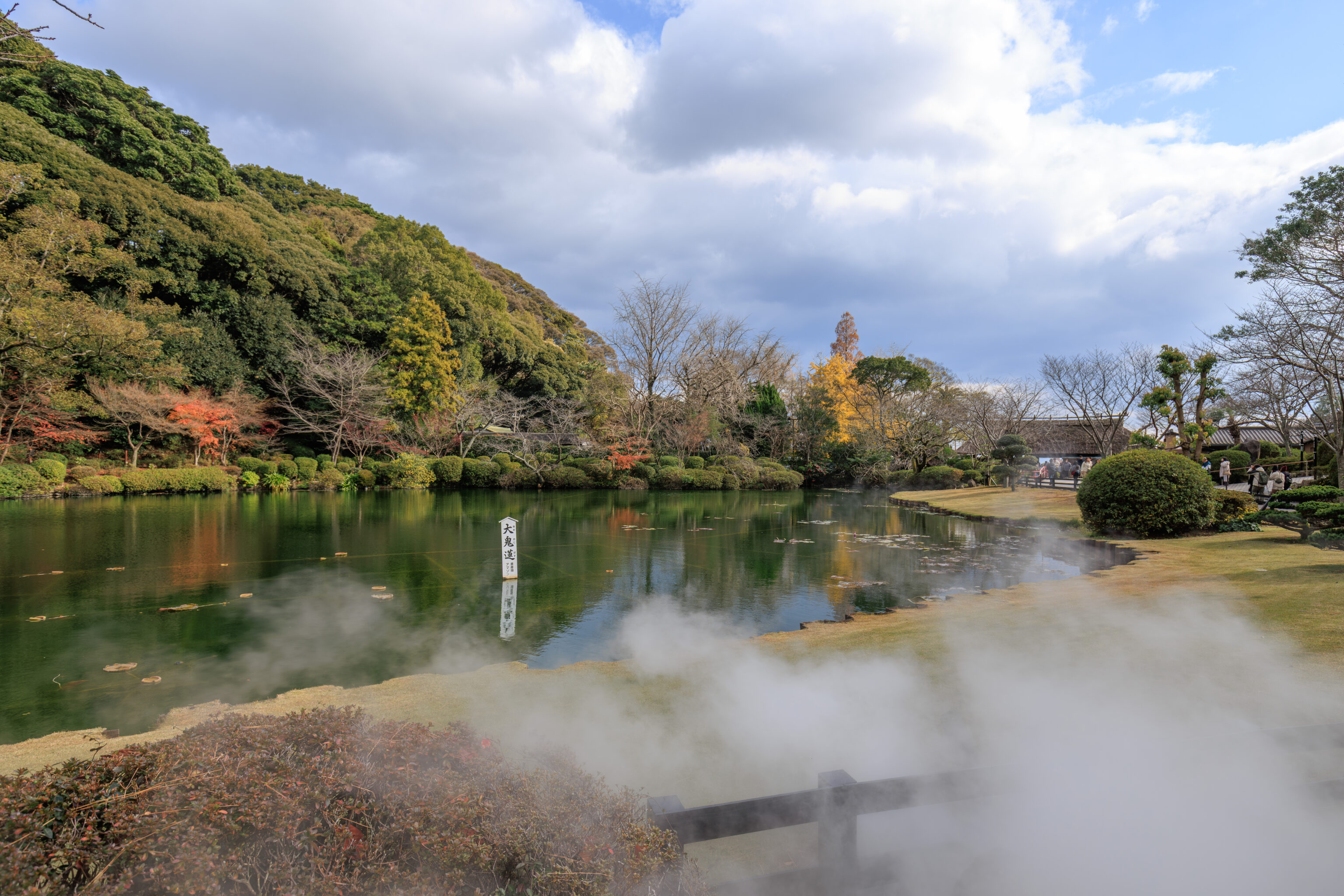
There was steam coming out of vents between the path and pond. According to the white sign in the pond, it contains 大鬼蓮 Ōonibasu (Giant Water Lily) from the Amazon. The real Amazon.
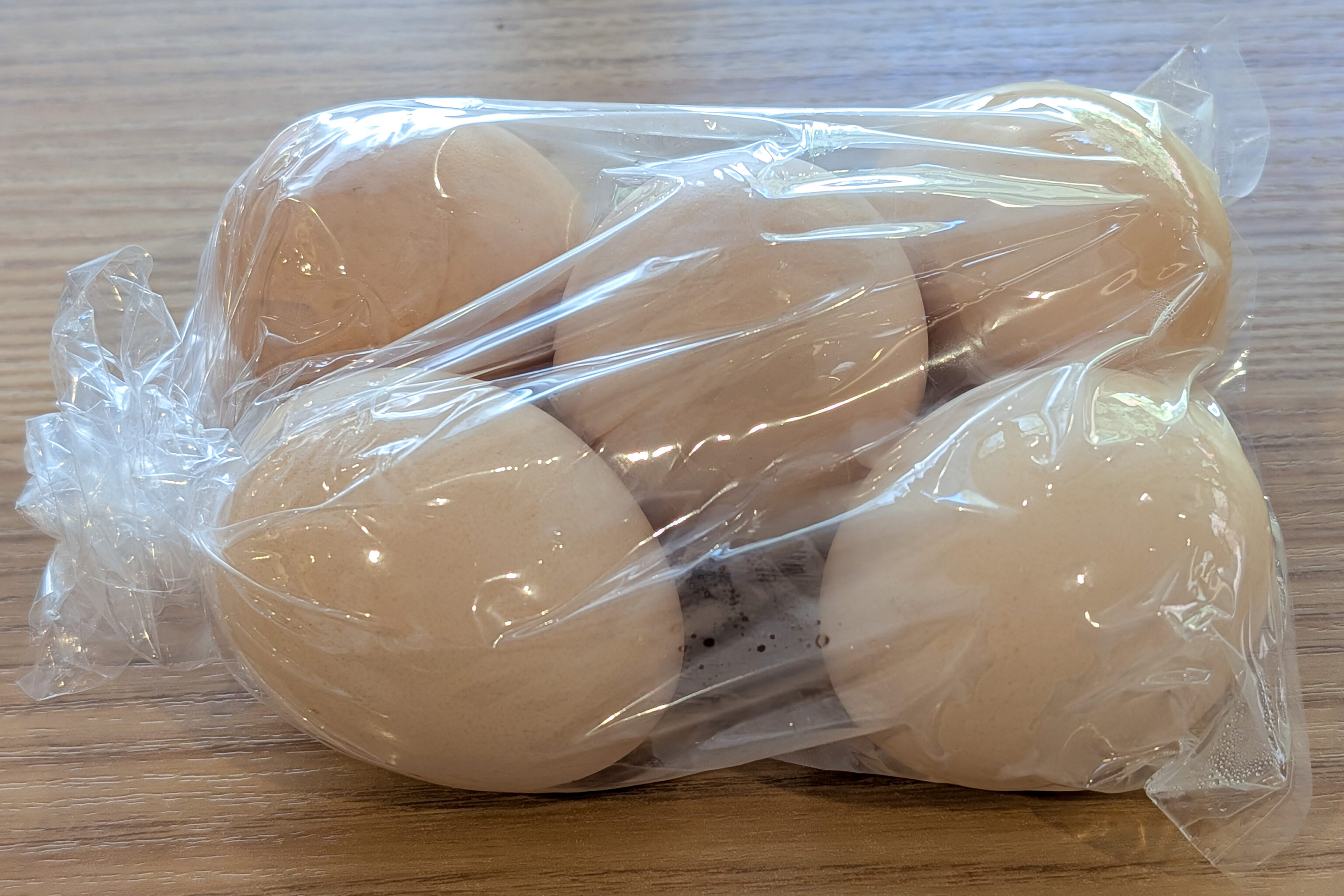
There was a huge gift shop on the way to the steaming thermal feature ahead. We went in and took a quick look around to see if they were selling anything interesting. We ended up buying these soft boiled eggs that were cooked in hot spring water. They tasted better than the ones from Owakudani in Hakone, although they don’t add seven years to your life. So, maybe the Owakudani eggs are still better…
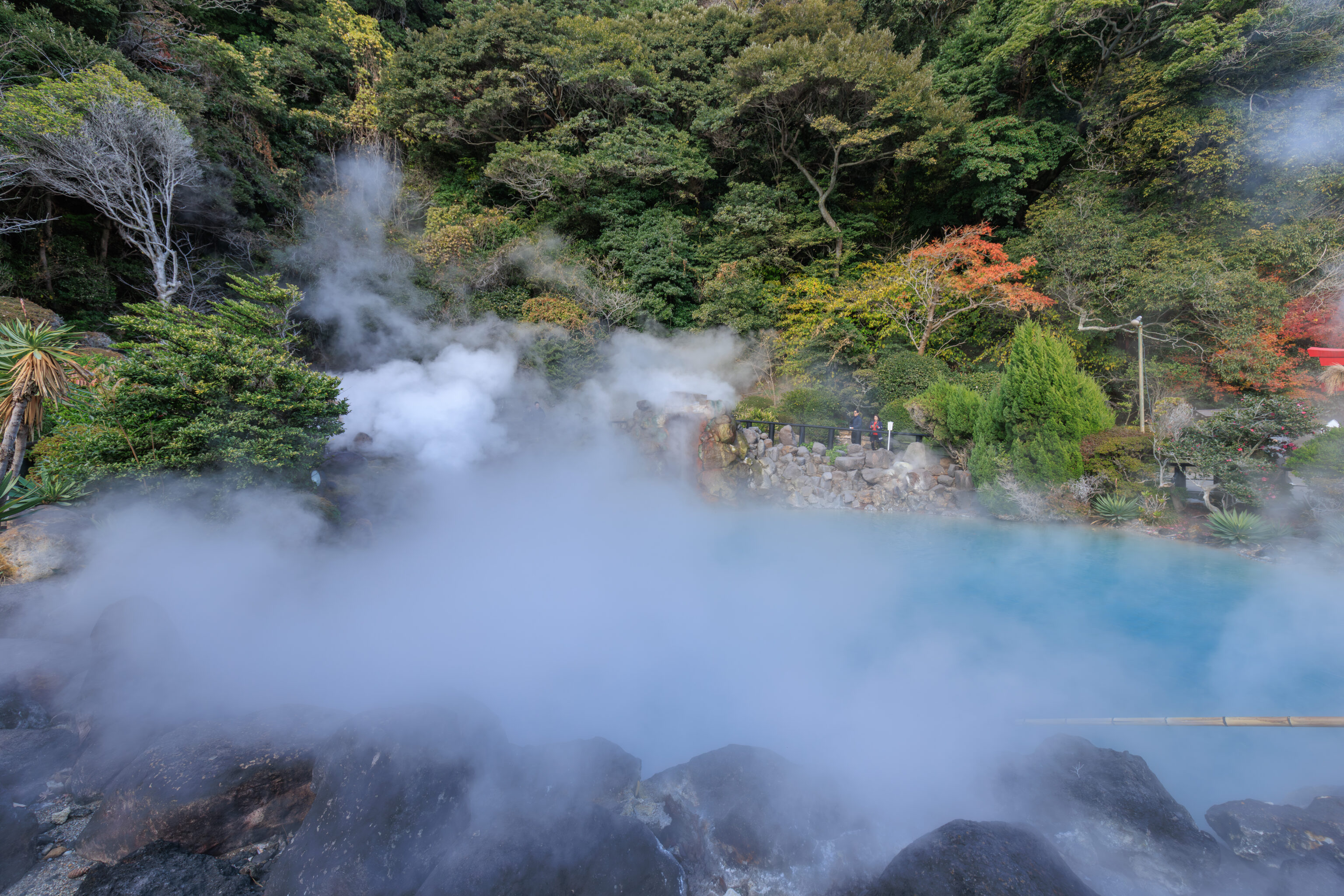
After our snack, we walked outside to look at the Sea Hell, the thermal pool that this place is named after.
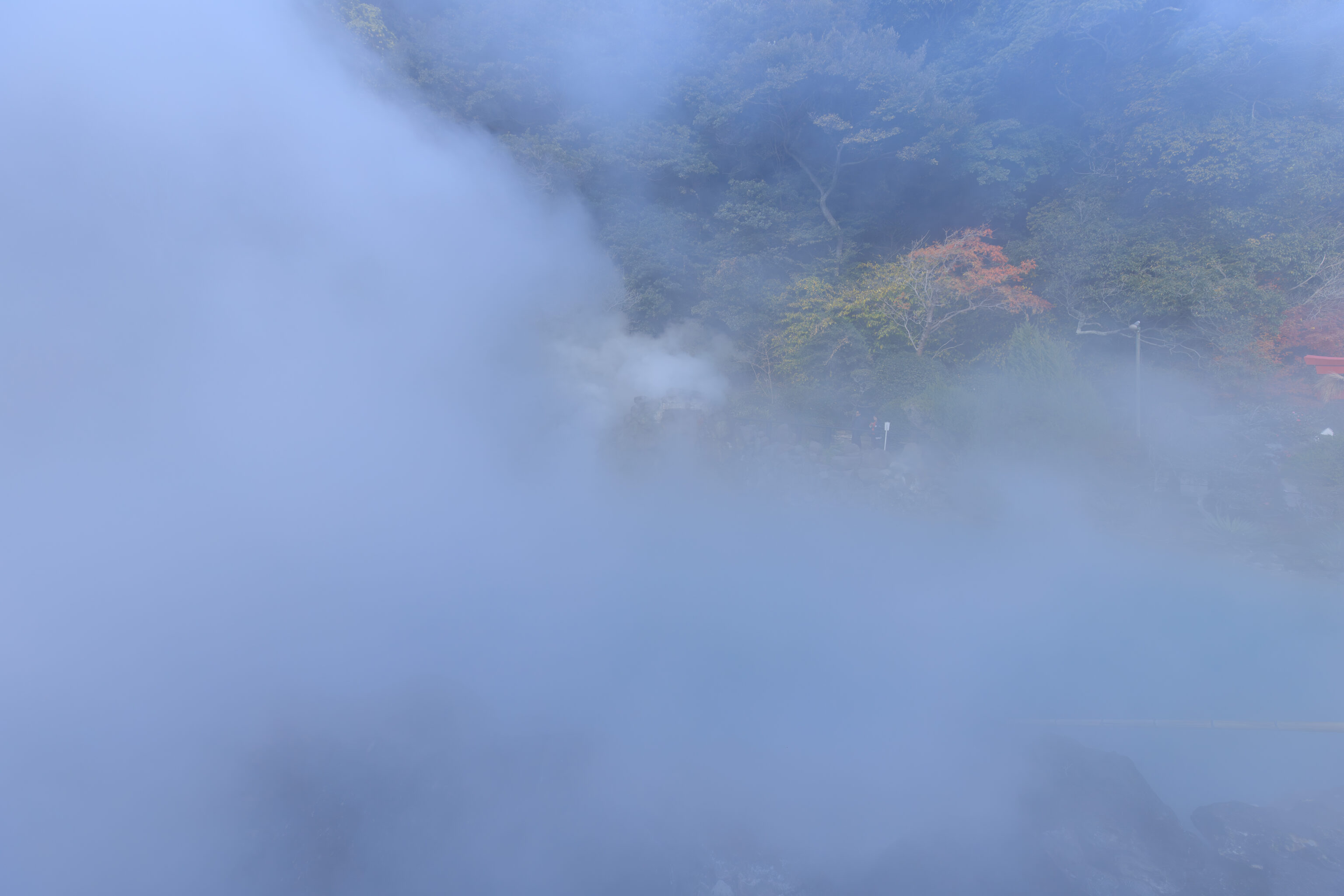
Everything became covered with steam!
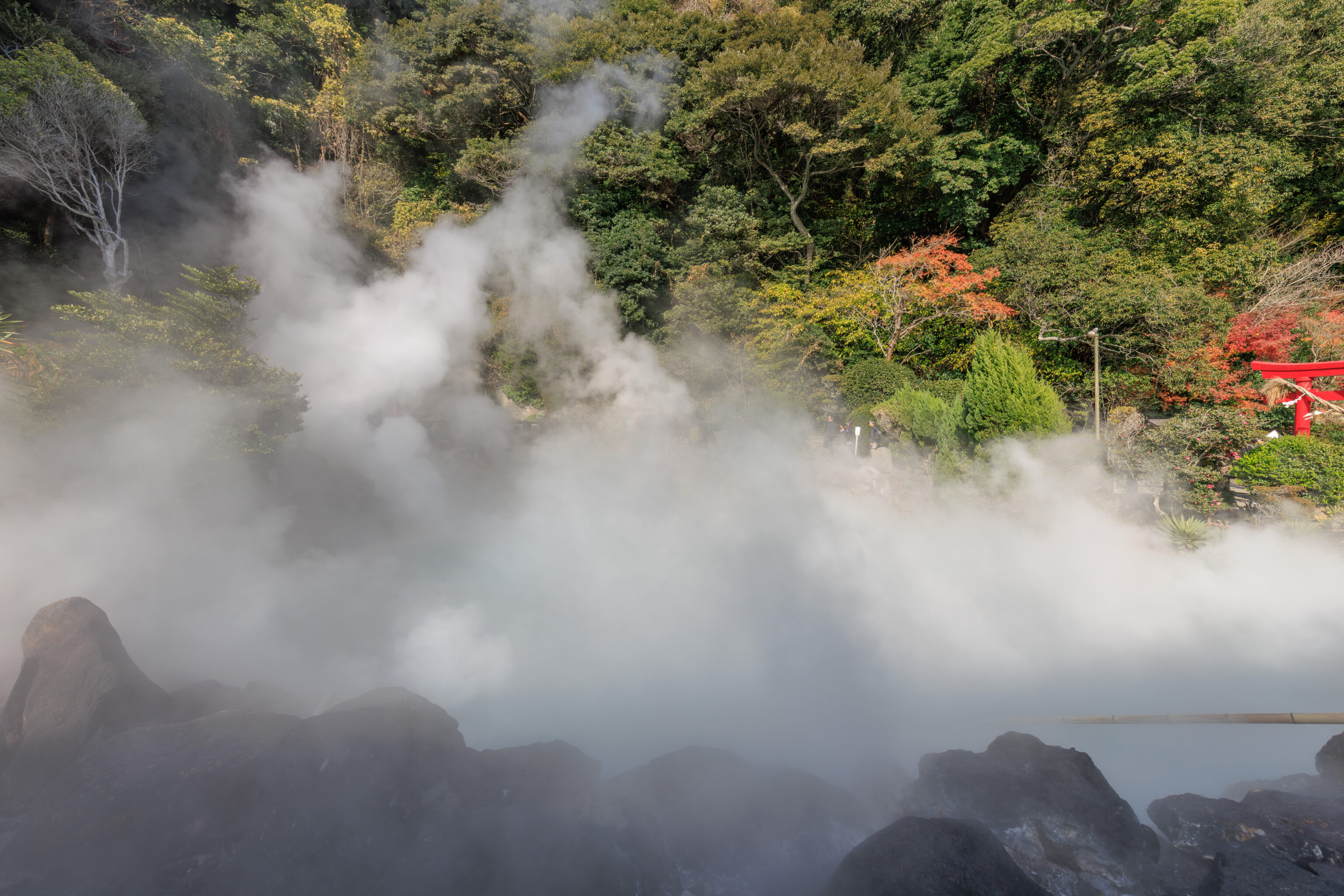
But it quickly cleared along with a bit of sunshine!
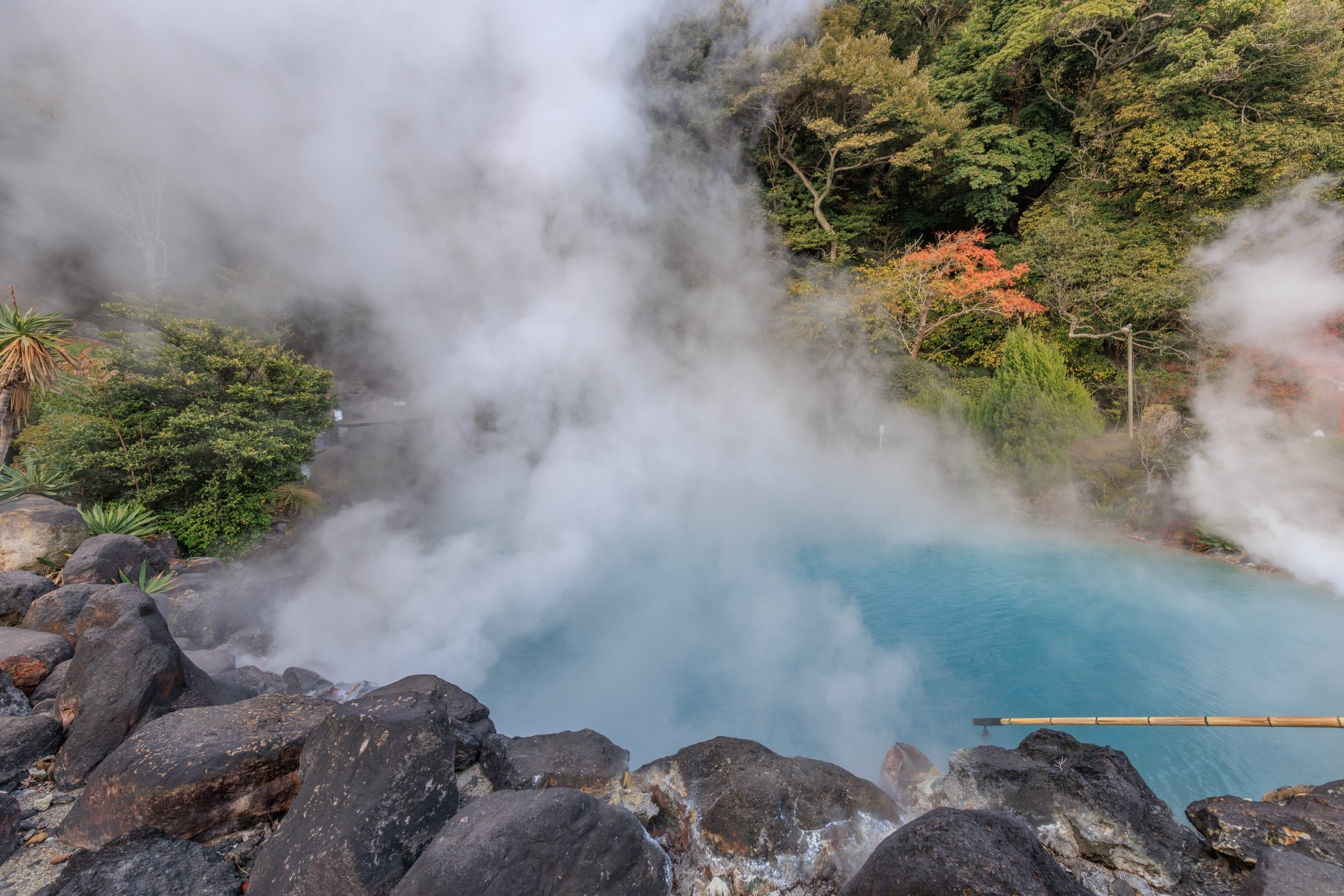
Soon, we got a better view of the Sea Hell’s beautiful blue color.
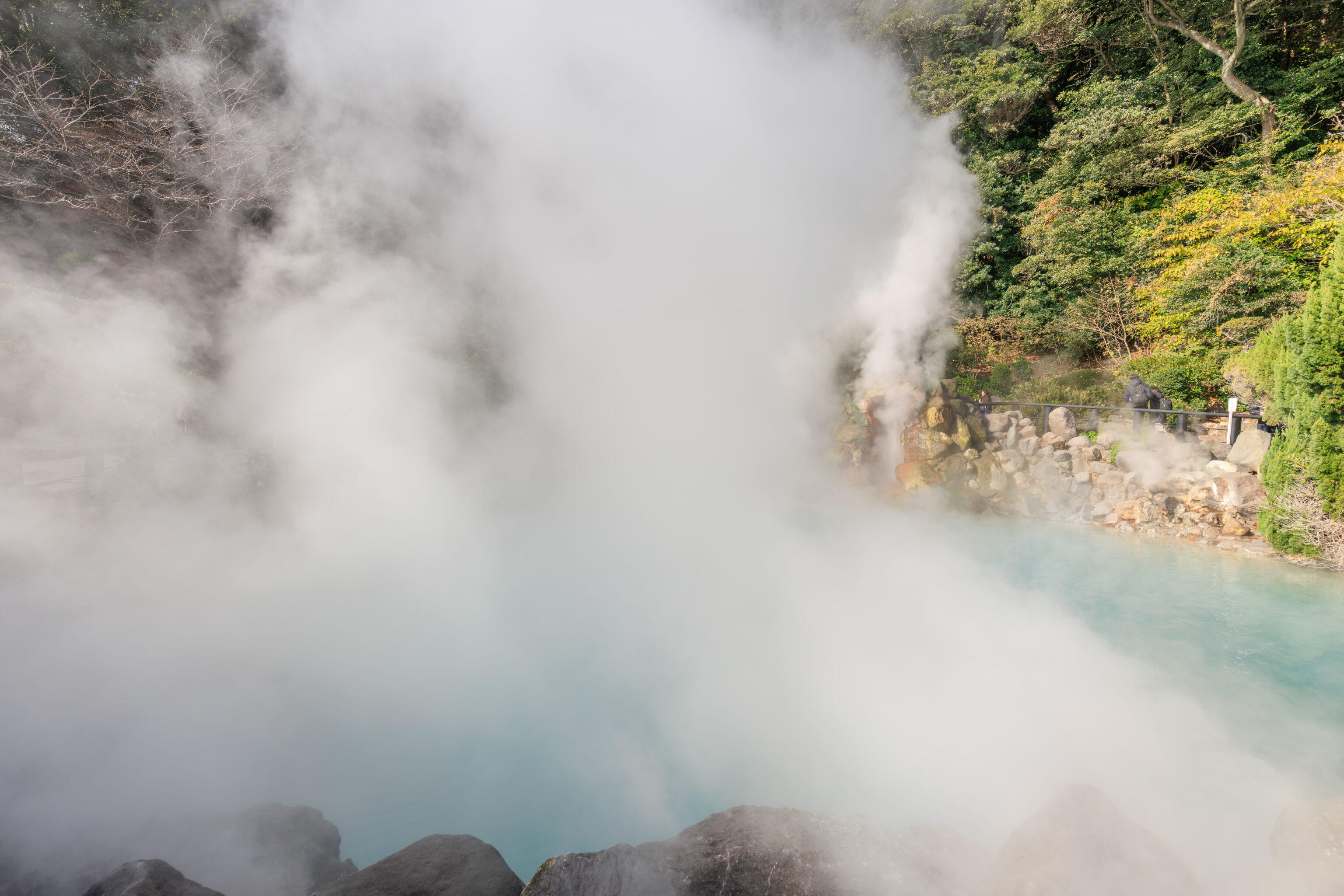
And then, it was gone…
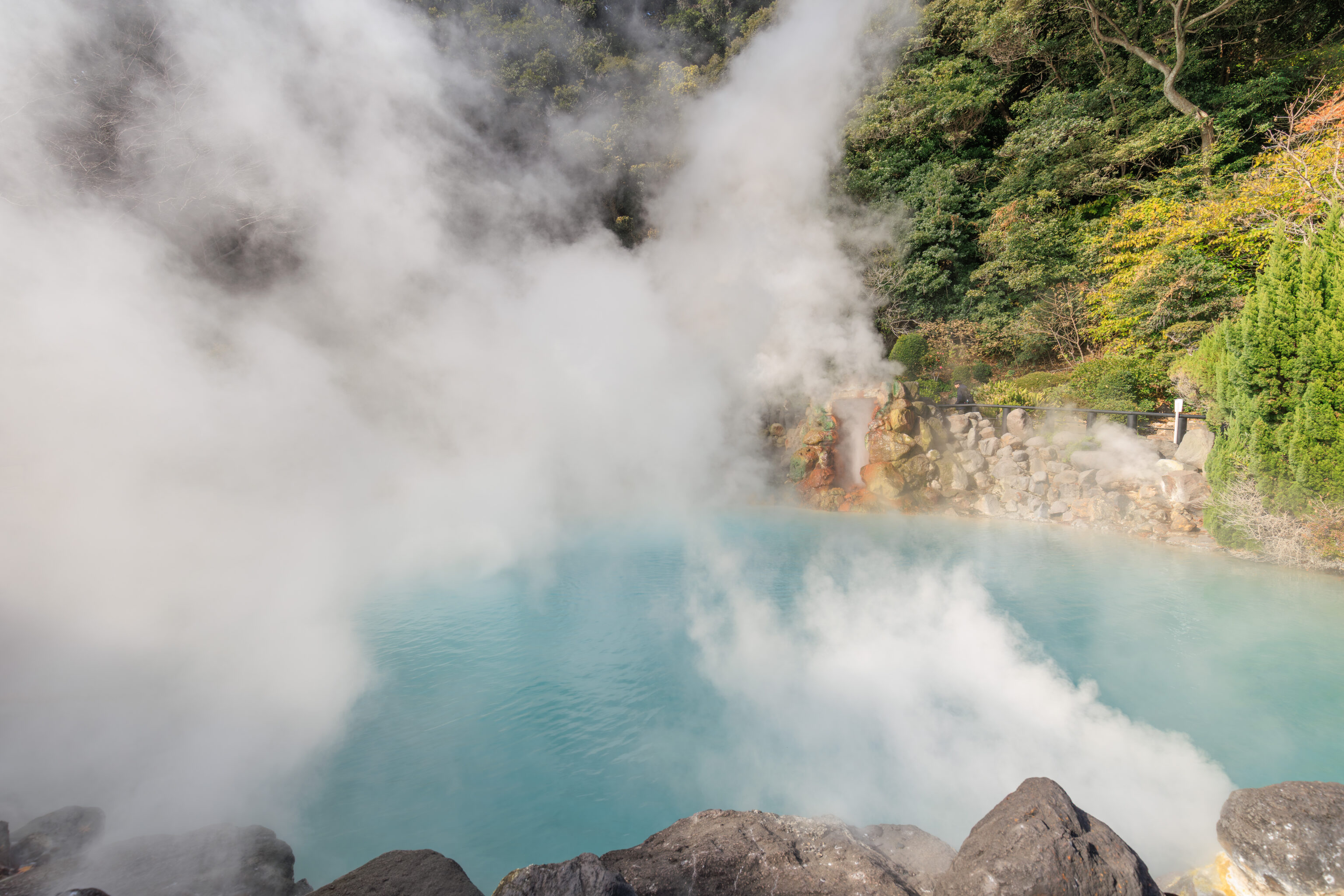
And back…
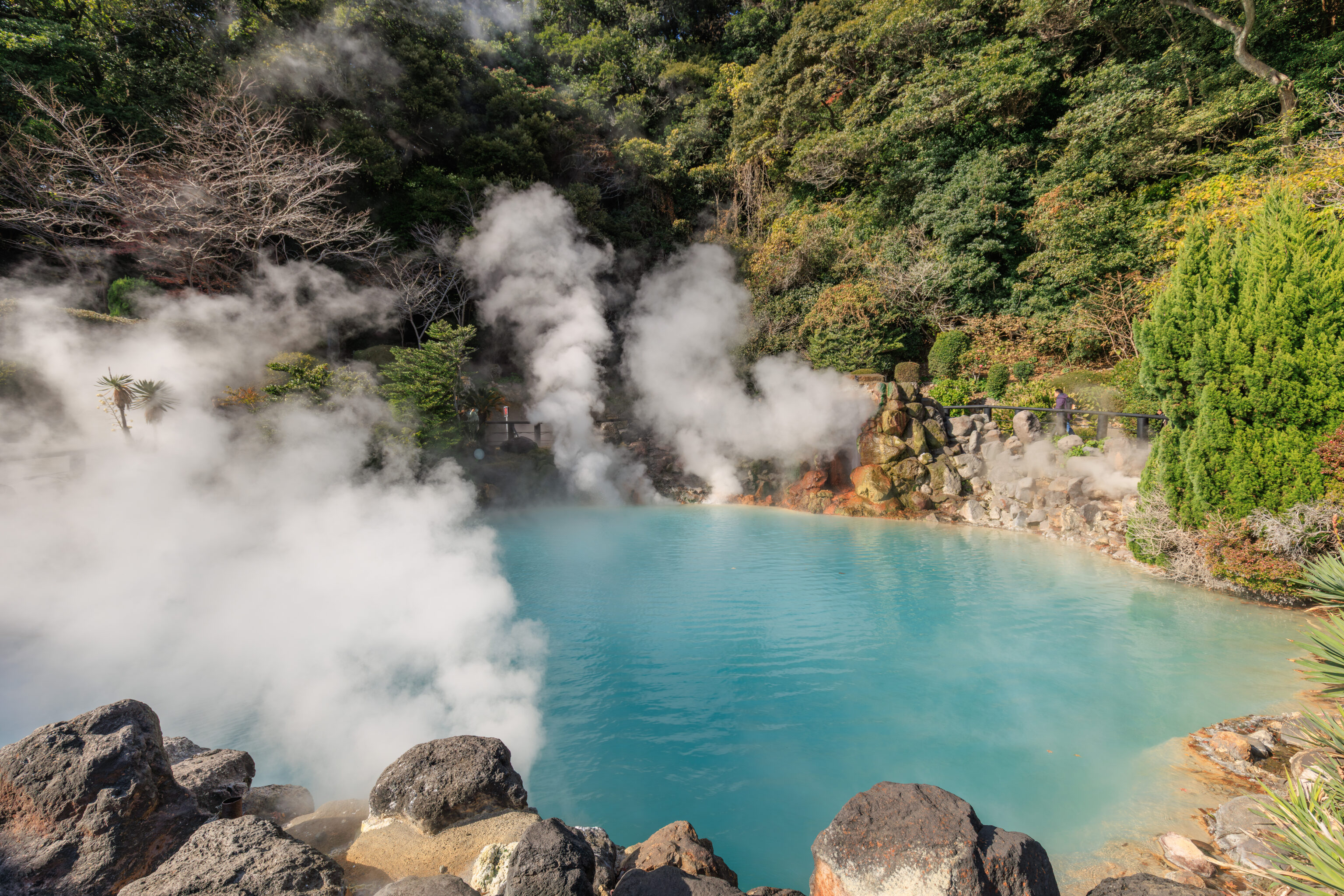
And it cleared even more! It definitely looks the best when there is adequate sunshine.
We recorded a video which really shows how quickly the view changes.
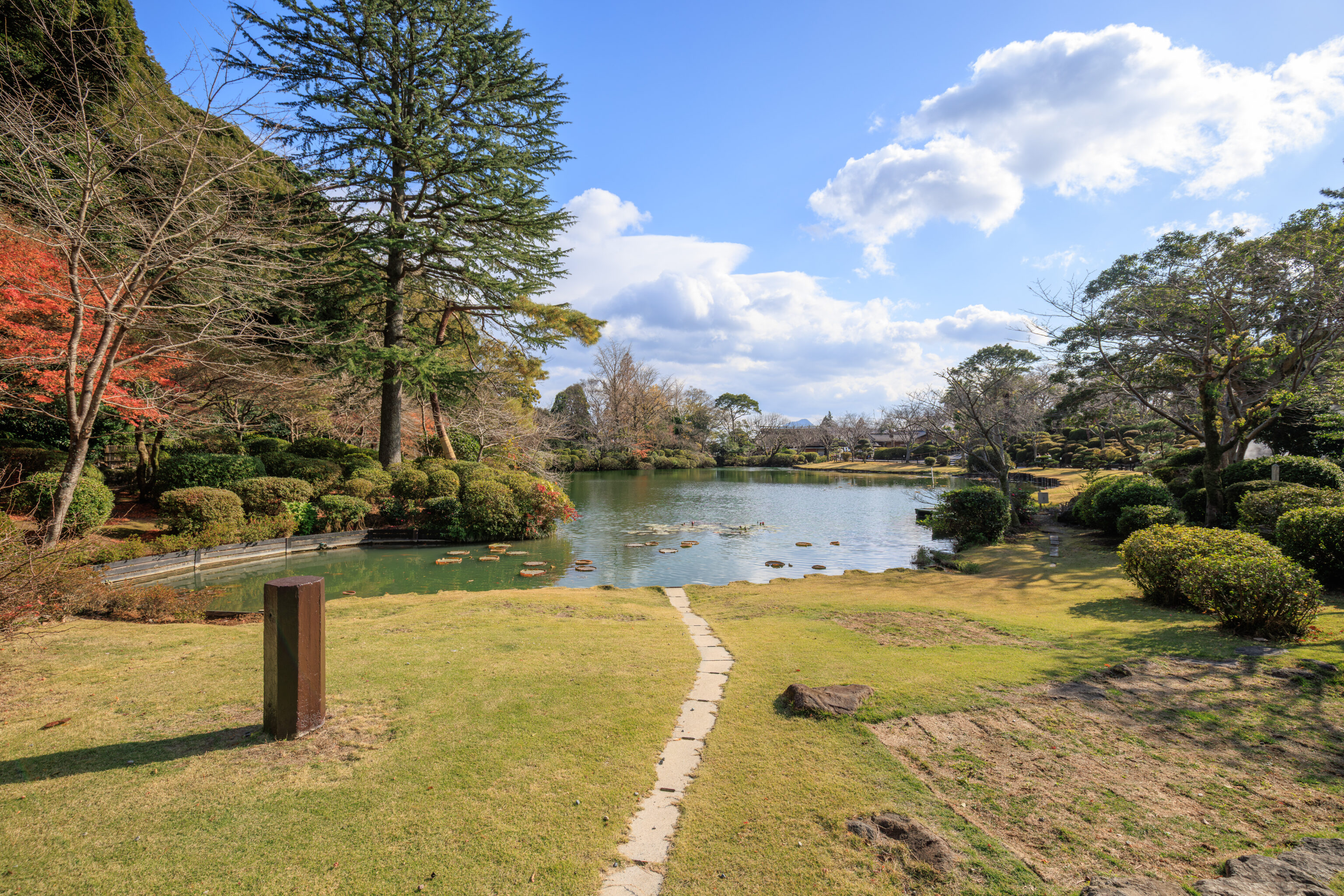
We noticed that there was a path that goes up the hill behind the Sea Hell. So, we decided to go take a look. This is not the path, the path is to the left, but we walked by this view.
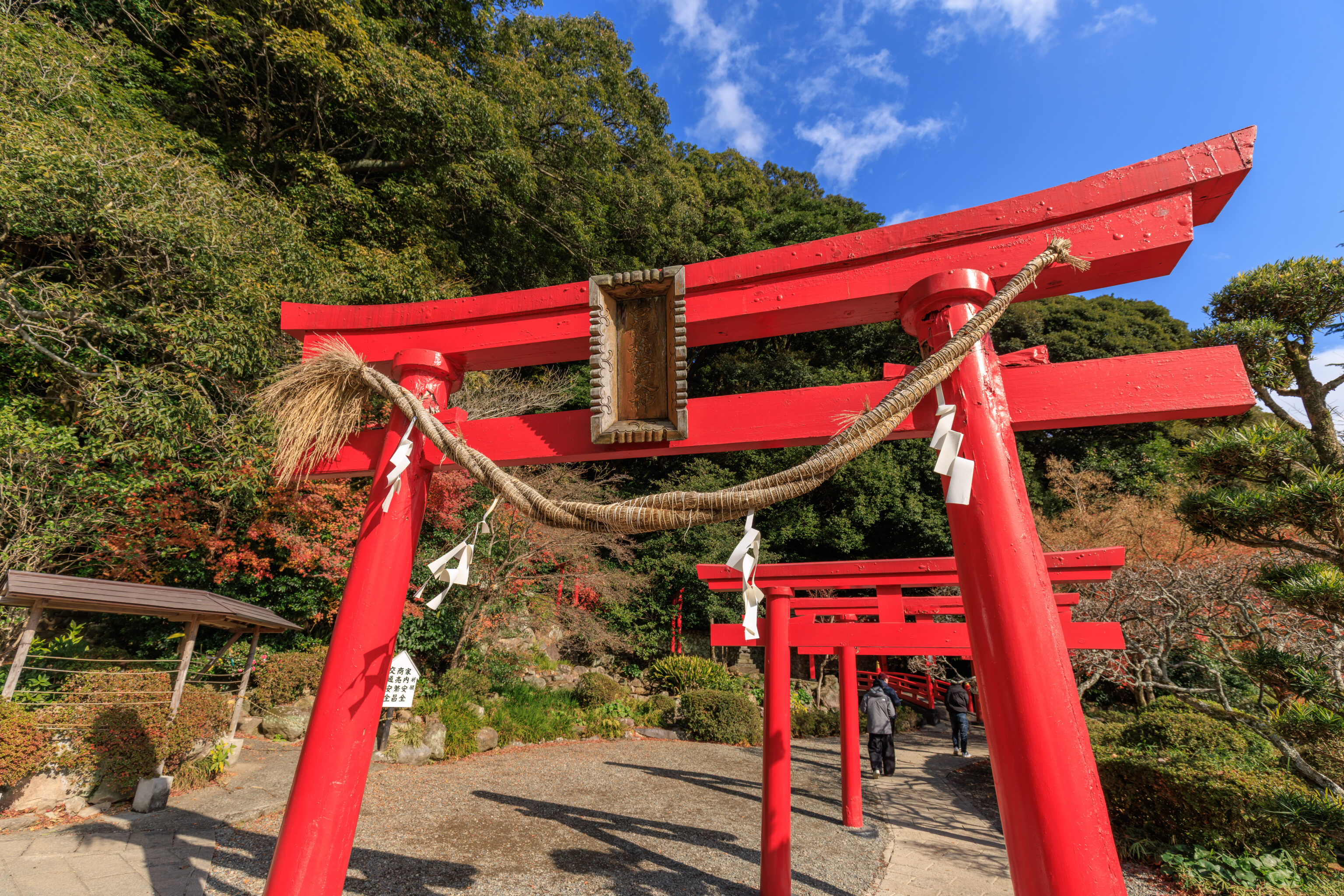
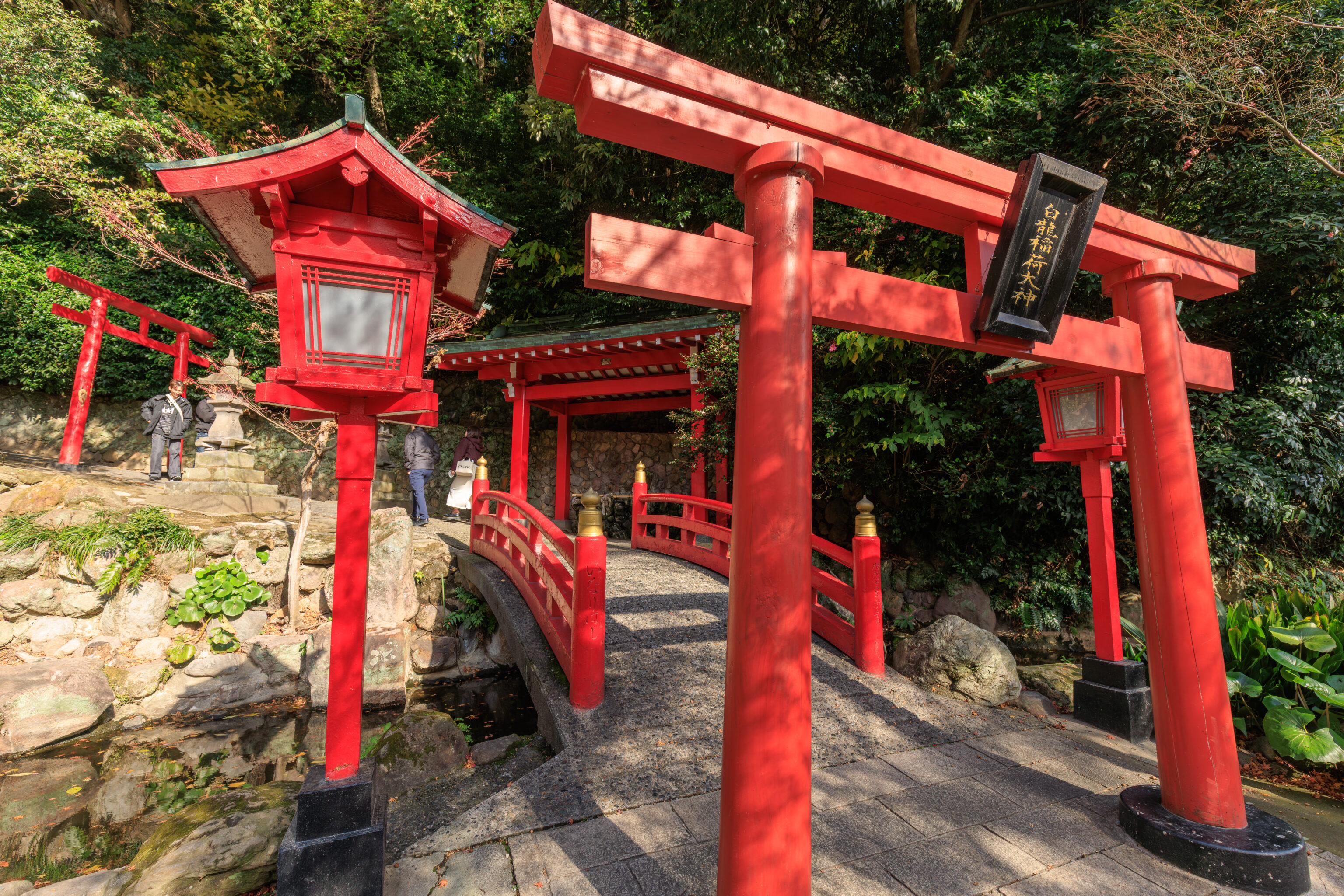
The signs on the torii say: 白龍稲荷大神 Hakuryu Inari Okami (White Dragon Inari Great Deity).
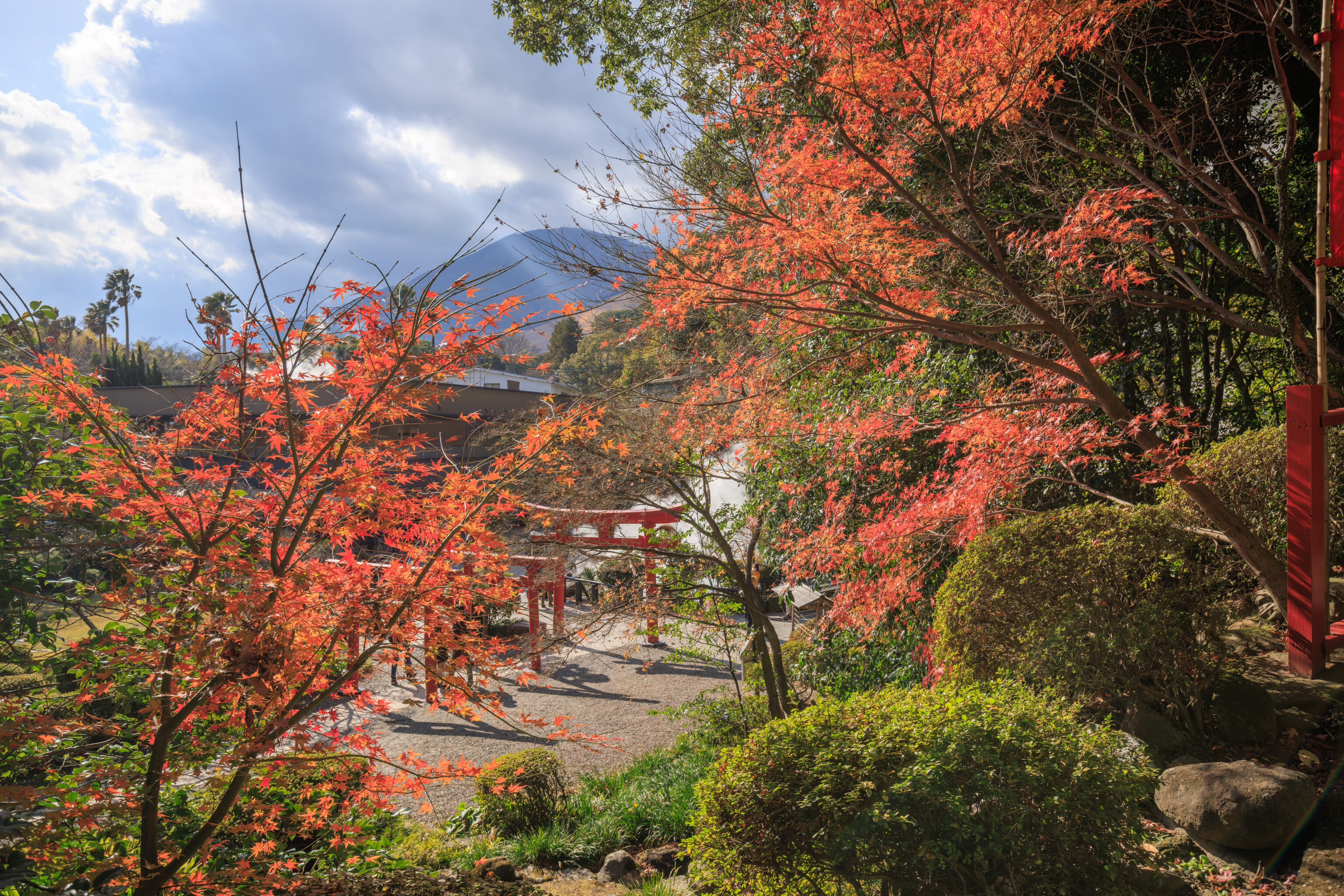
From the path, looking back down we could see the torii that we walked through. In the foreground, there were a few pretty momiji.
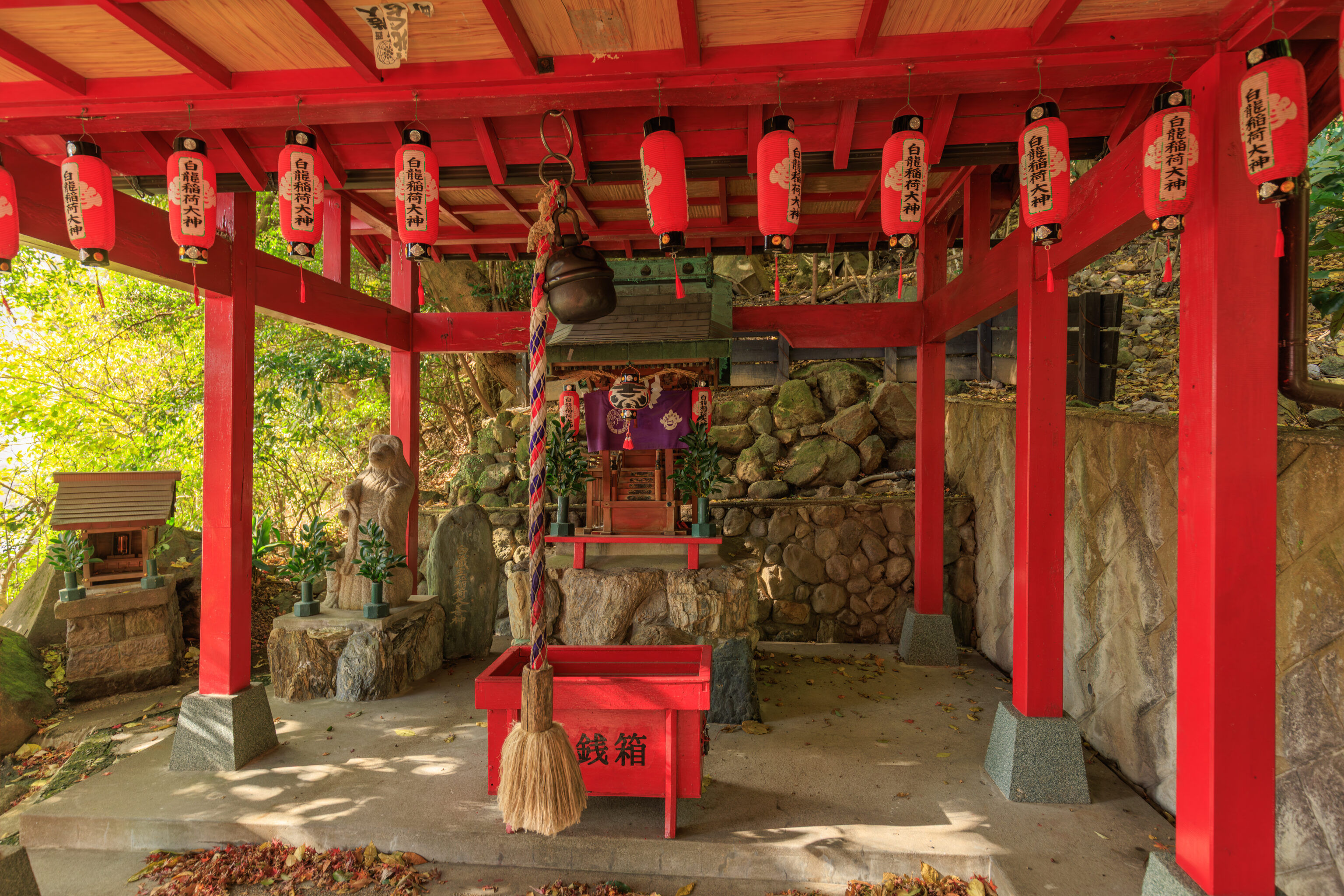
The path was pretty short and led to this small shrine at the highest point.
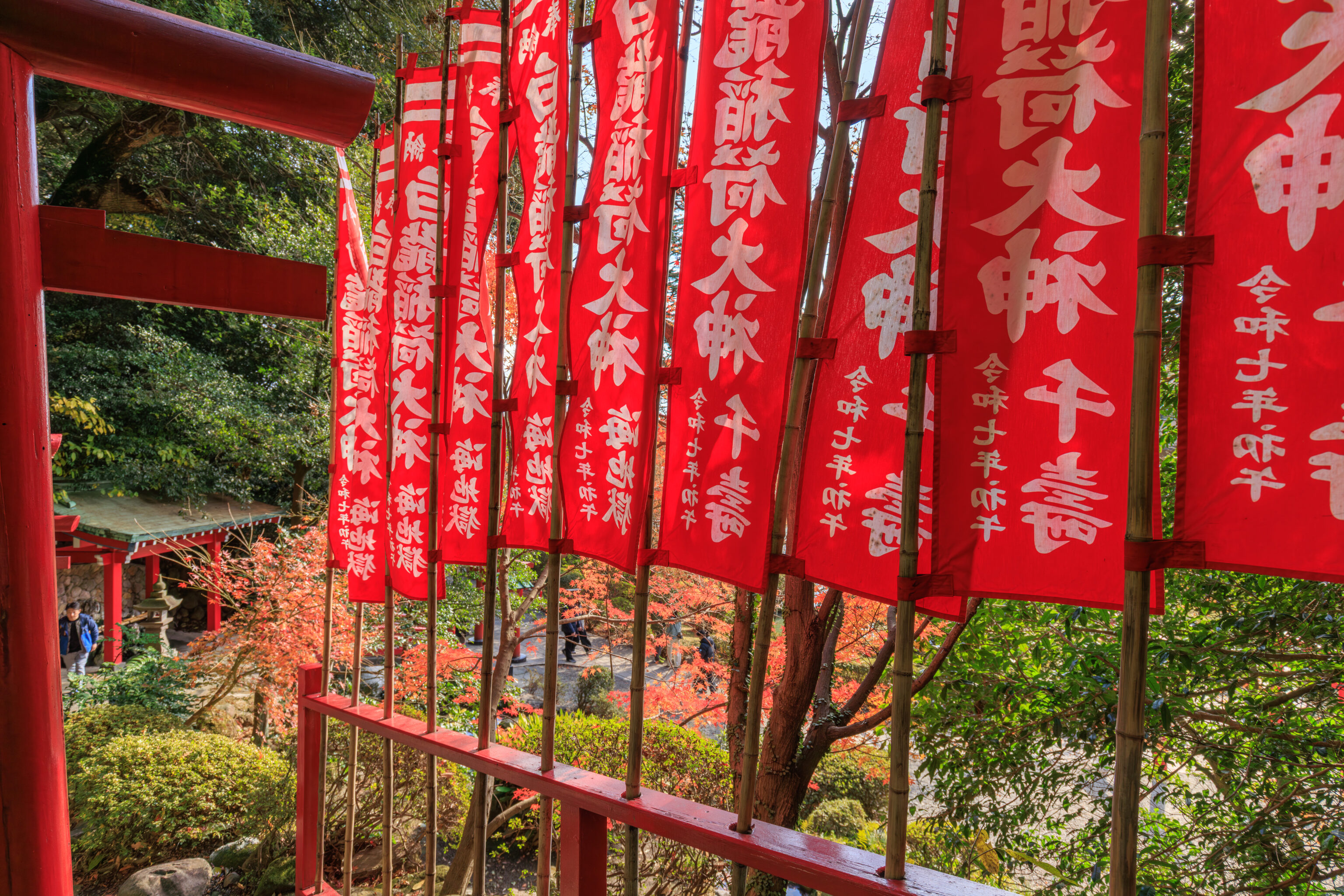
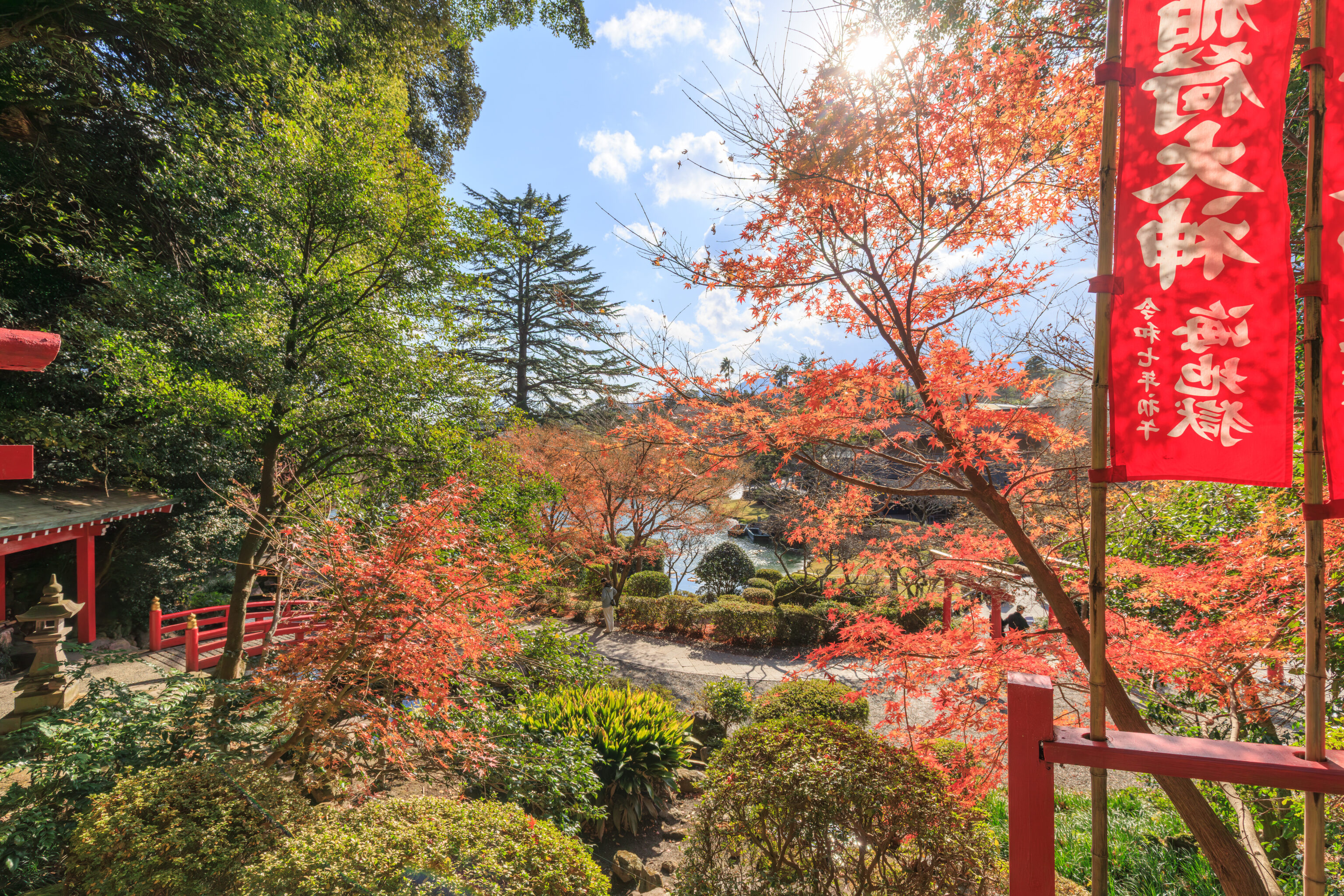
After our brief visit, we started to backtrack.
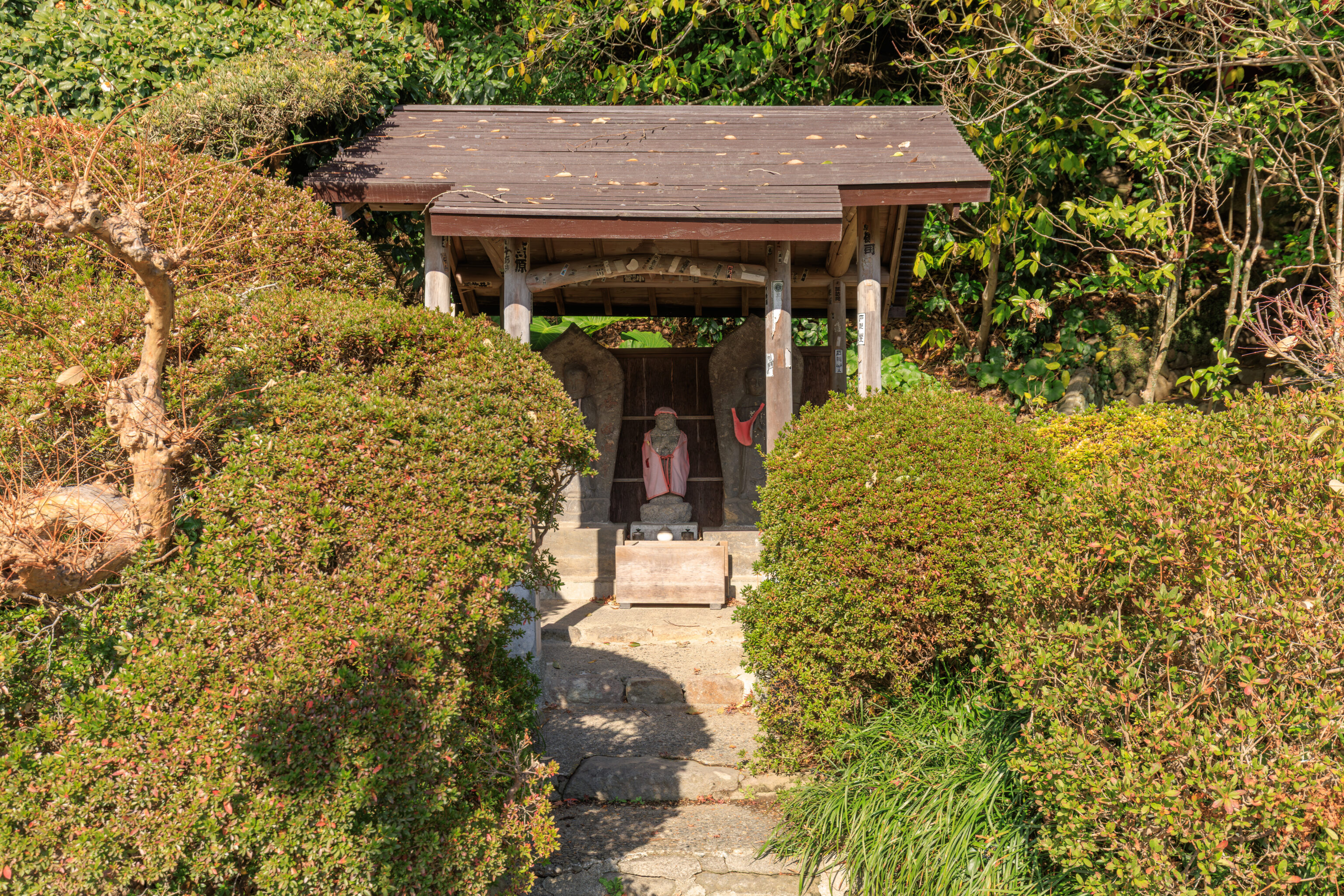
We passed by this small Buddhist shrine.
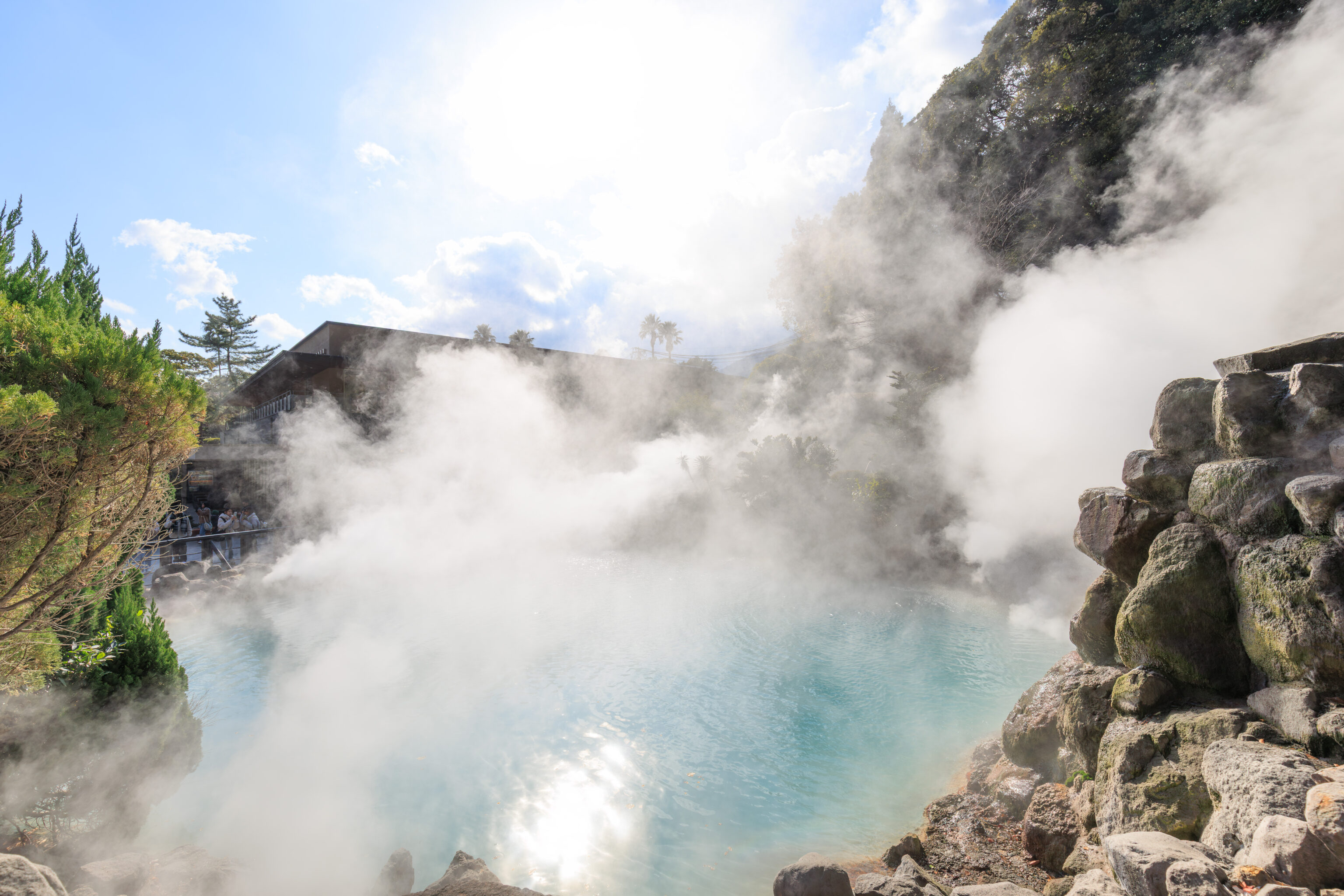
We went back to the Sea Hell to walk on the path that goes around it. It ascends a bit on the north side. Quite a bit of steam comes out of a vent here on the right.
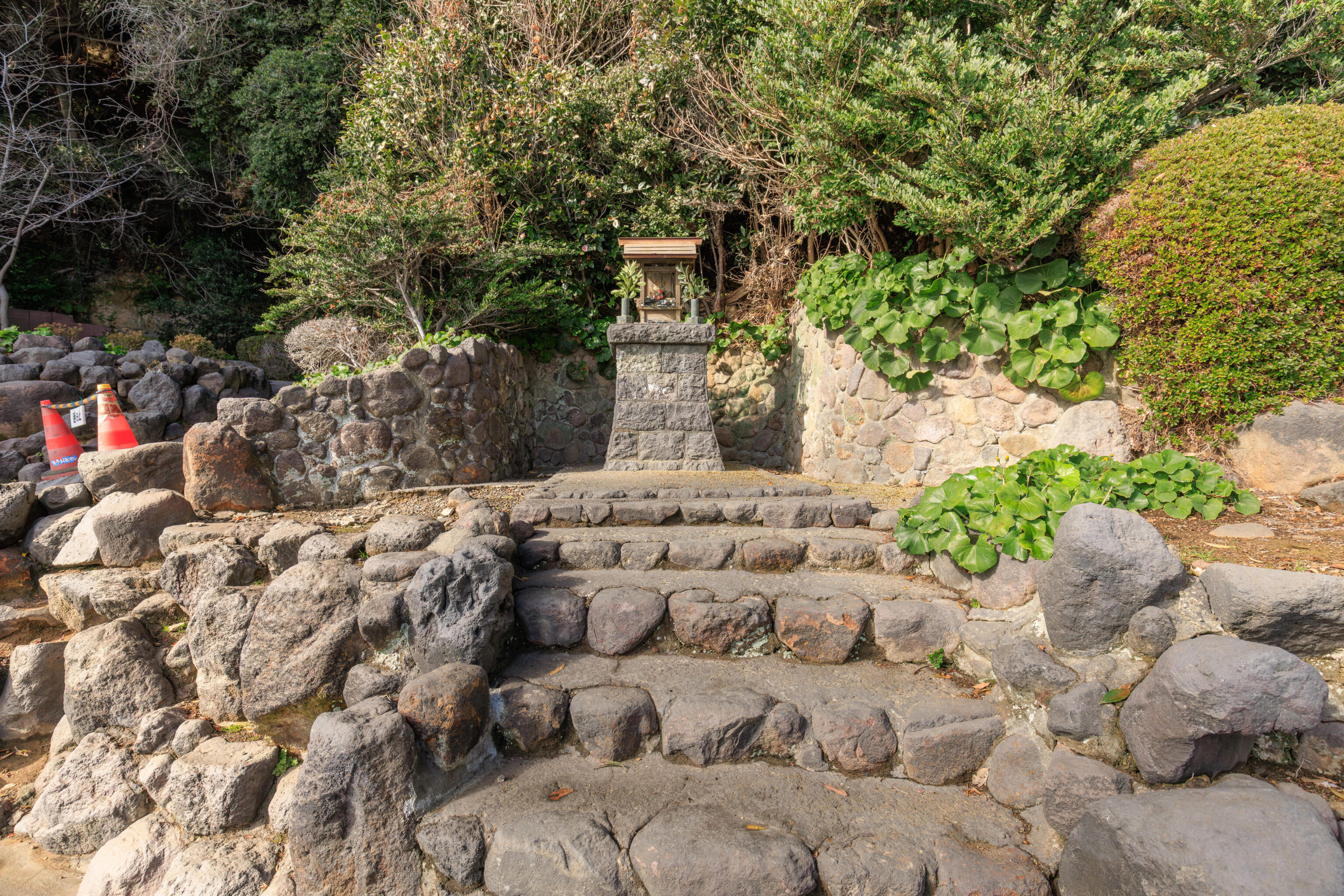
A tiny shrine.
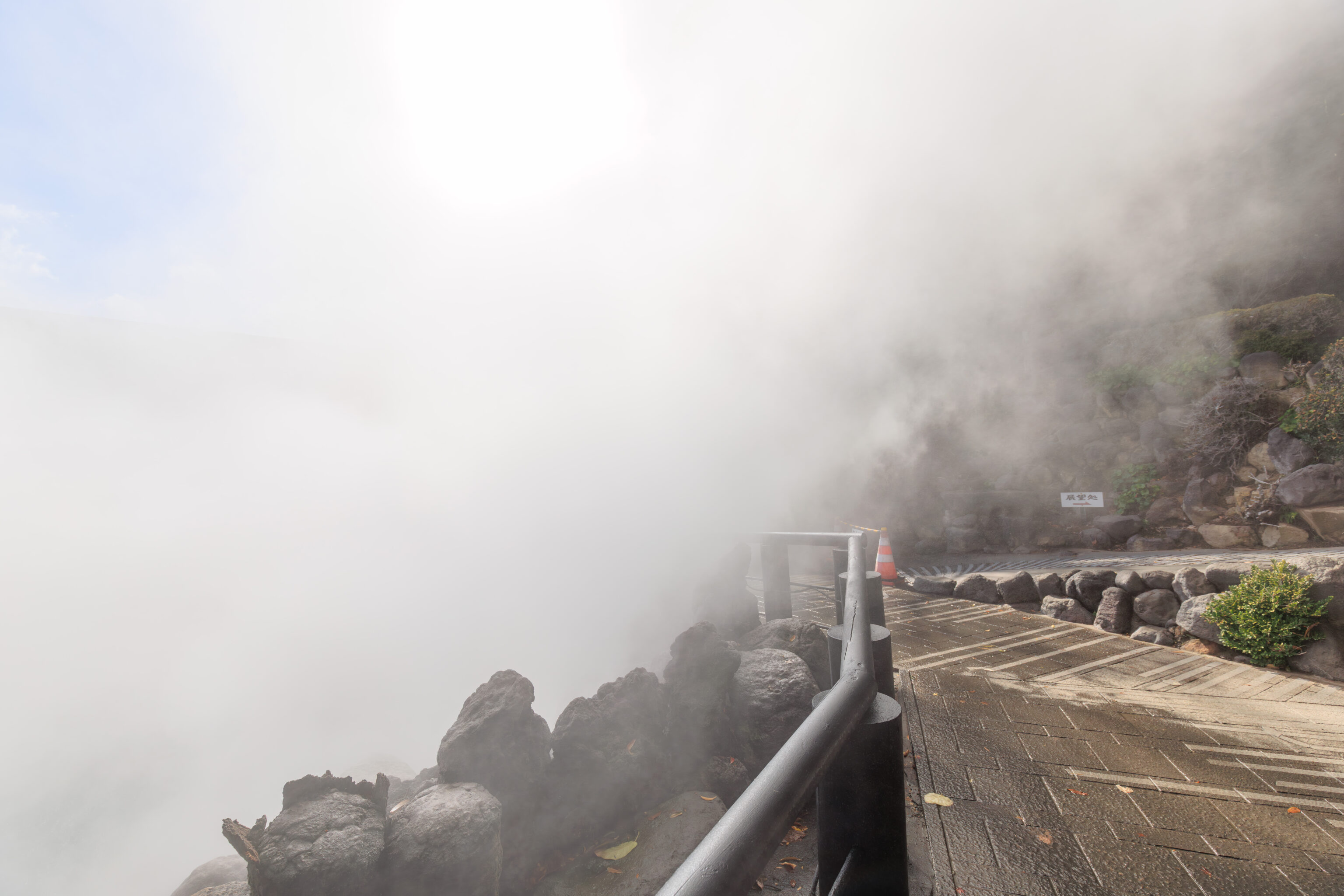
It became very wet when the wind blew the steam across the path!
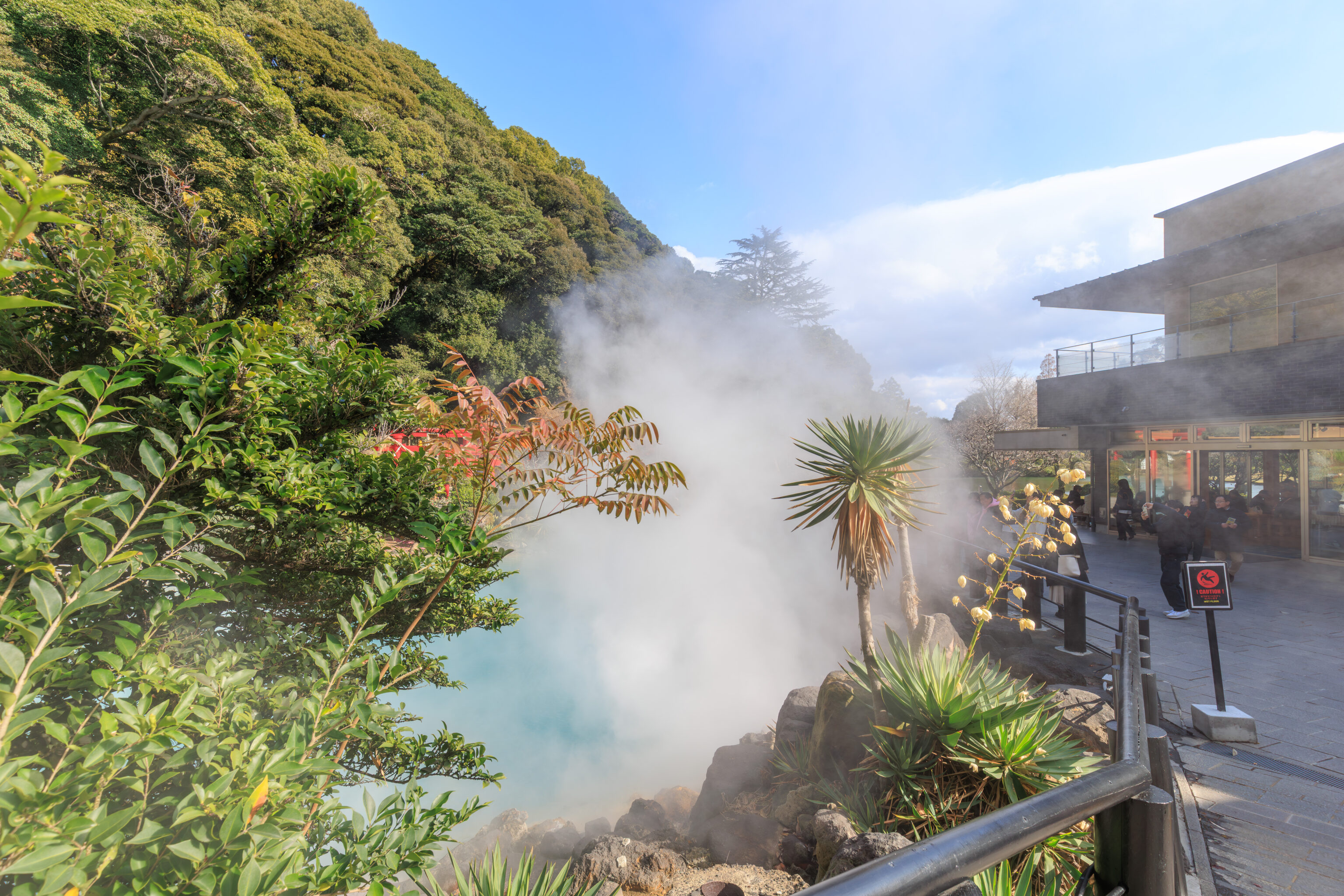
Continuing on, we returned to where we started from.
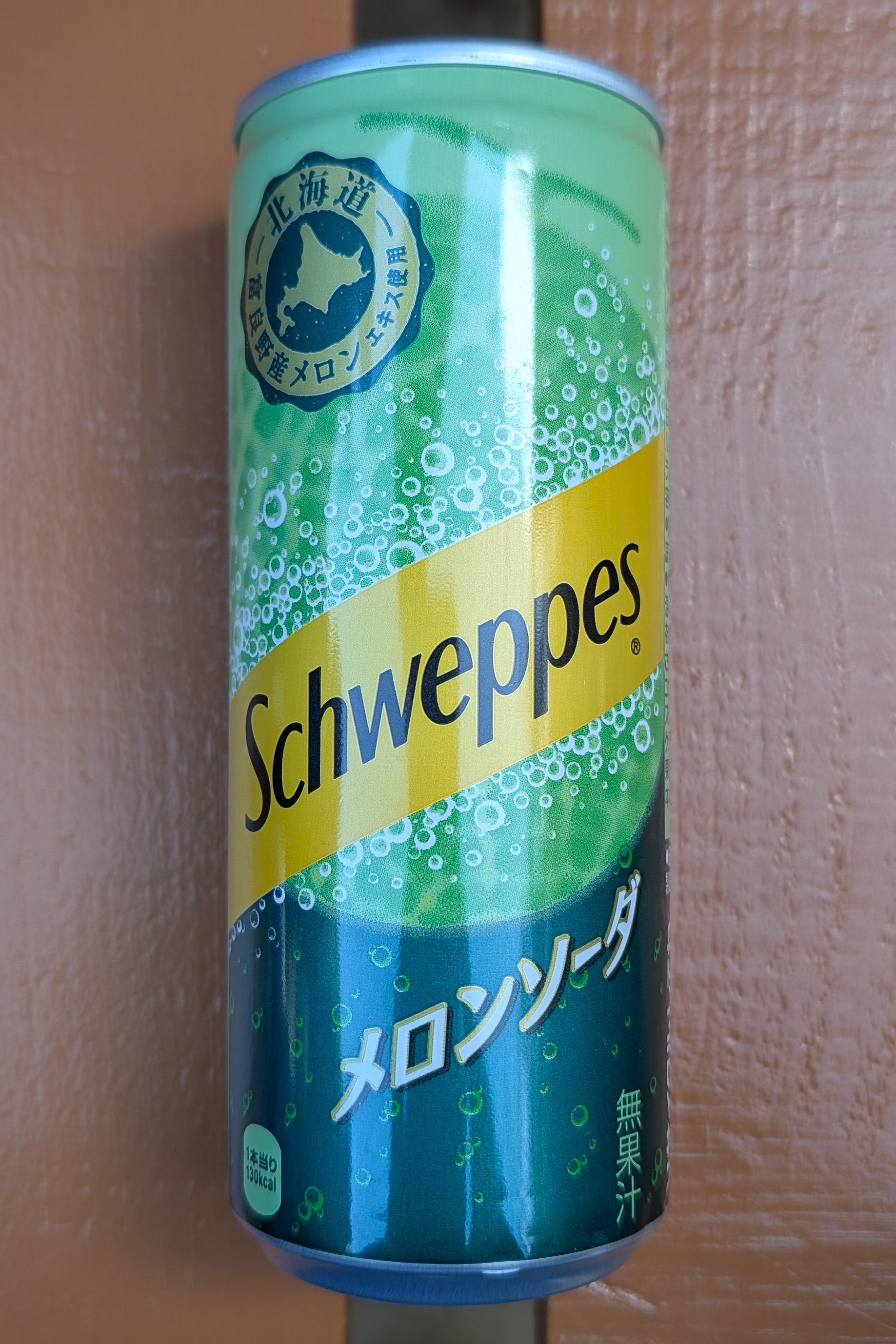
We got this Schweppes melon soda from a vending machine because it contained melon extract from Hokkaido and we visited Hokkaido last year.
The Schweppes brand has some interesting history detailed on its Wikipedia page. Here in Japan, this is a Coke product. If you can’t beat ’em, buy ’em!
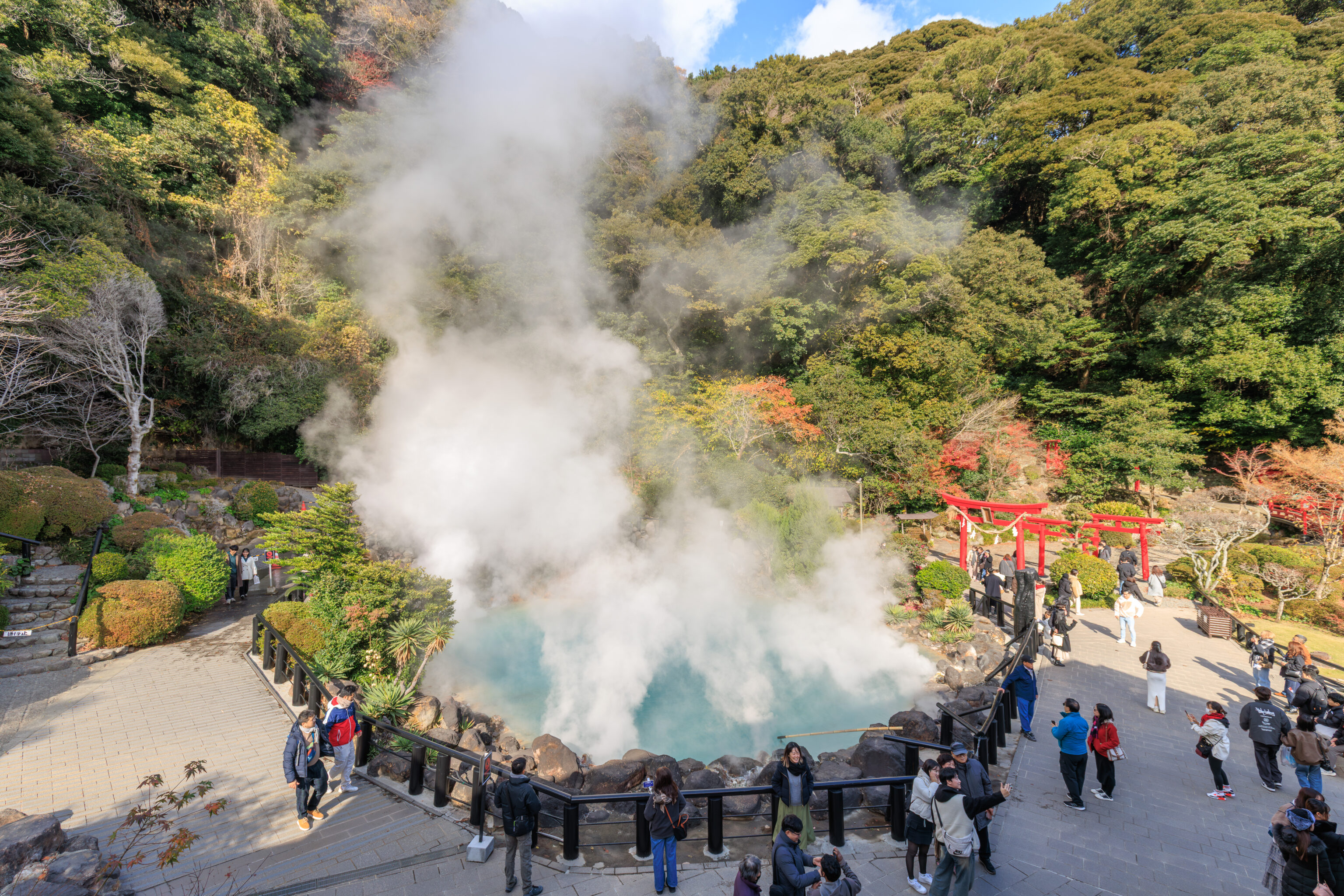
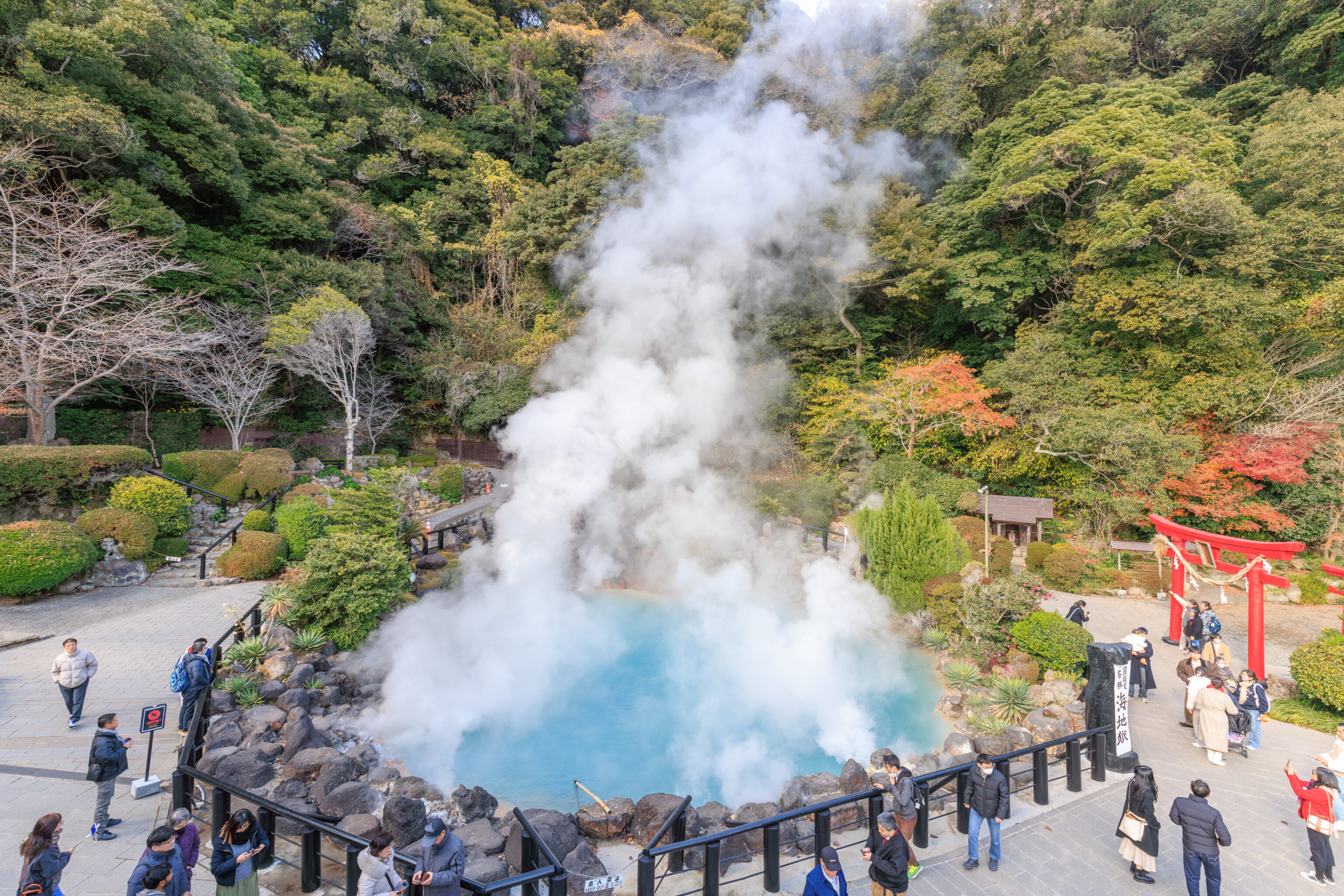
We went up to the second floor of the gift shop building to take a look at the view from there. This is, apparently, the place to be!
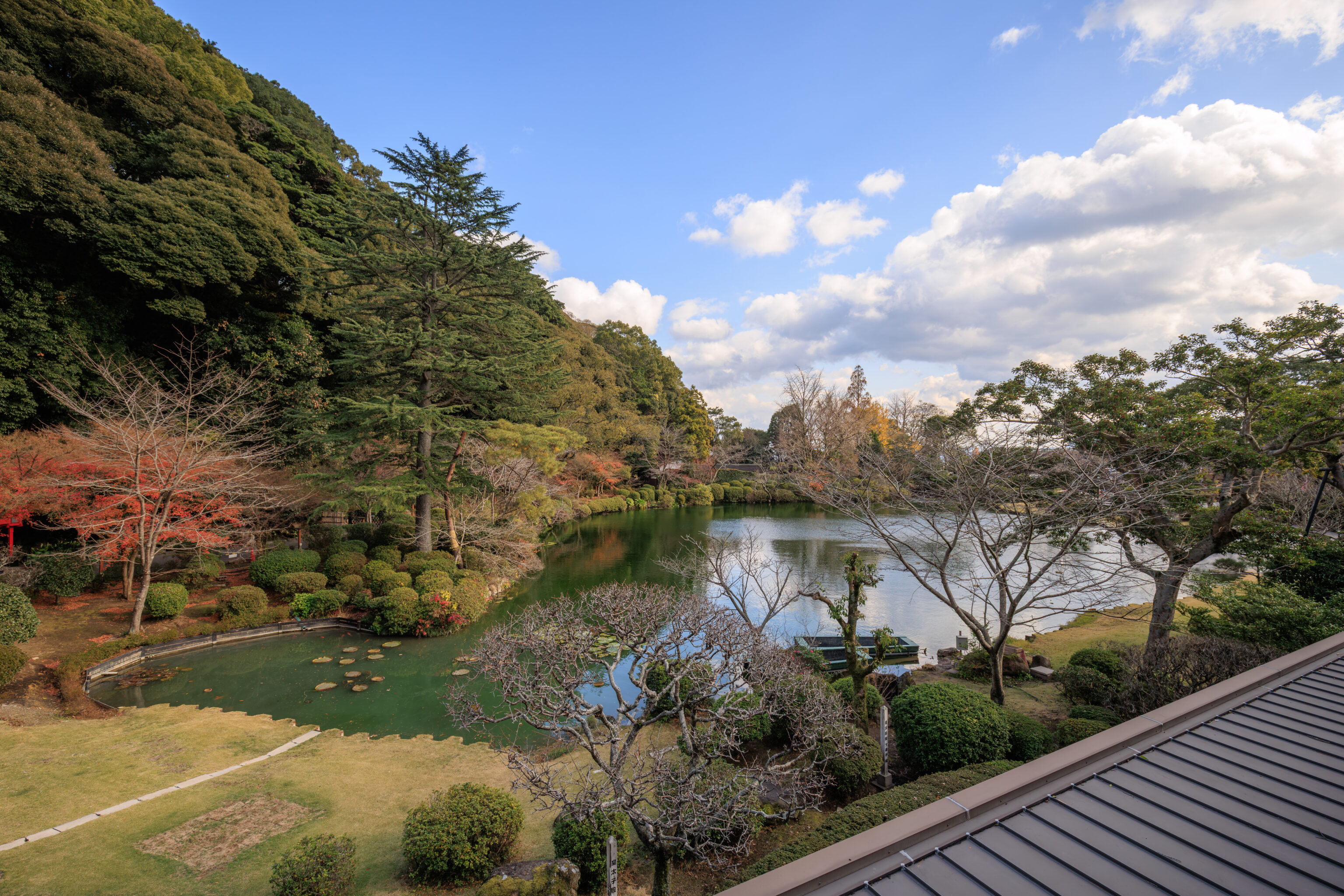
The outdoor area on the second floor also had a view of the large lily pond.
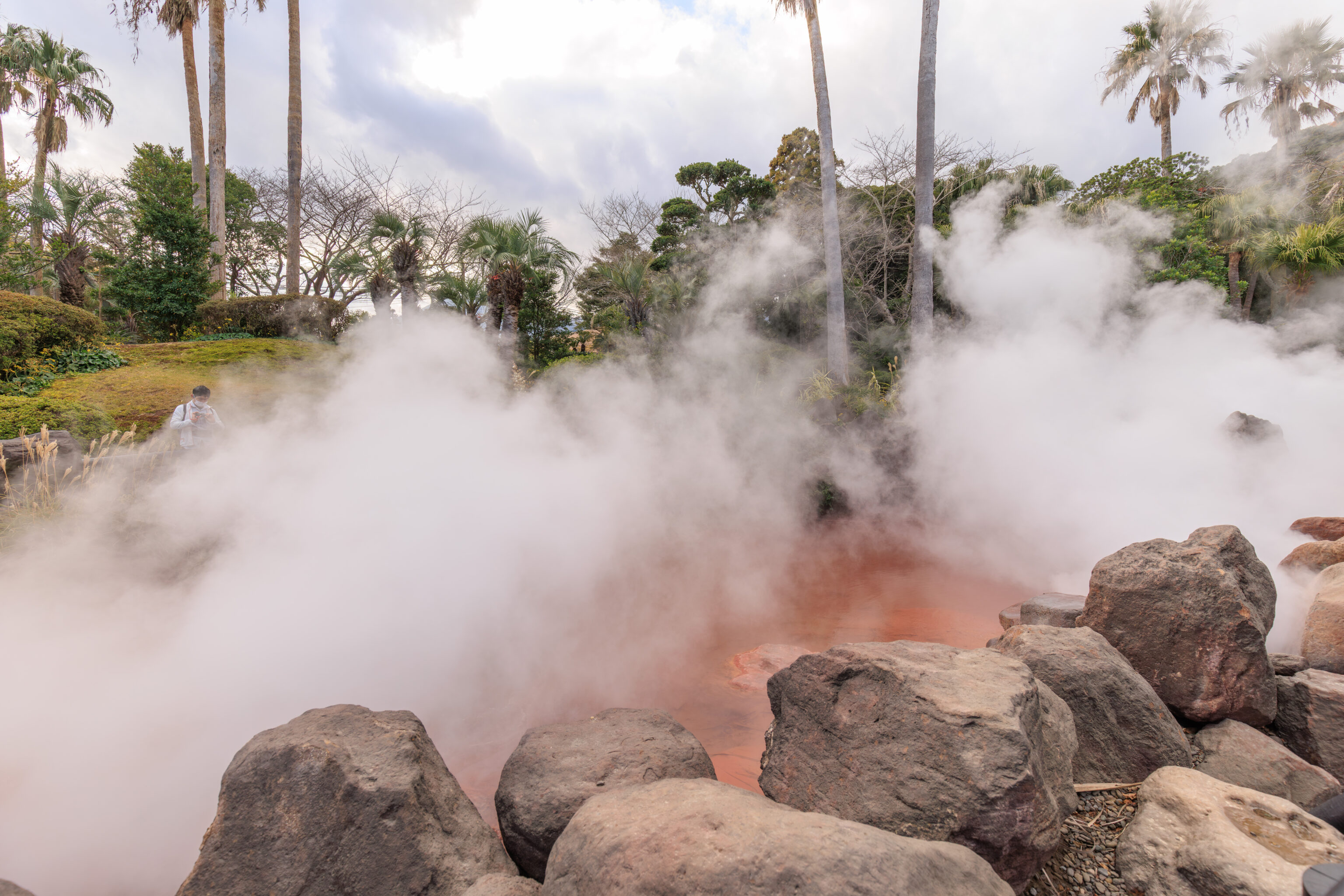
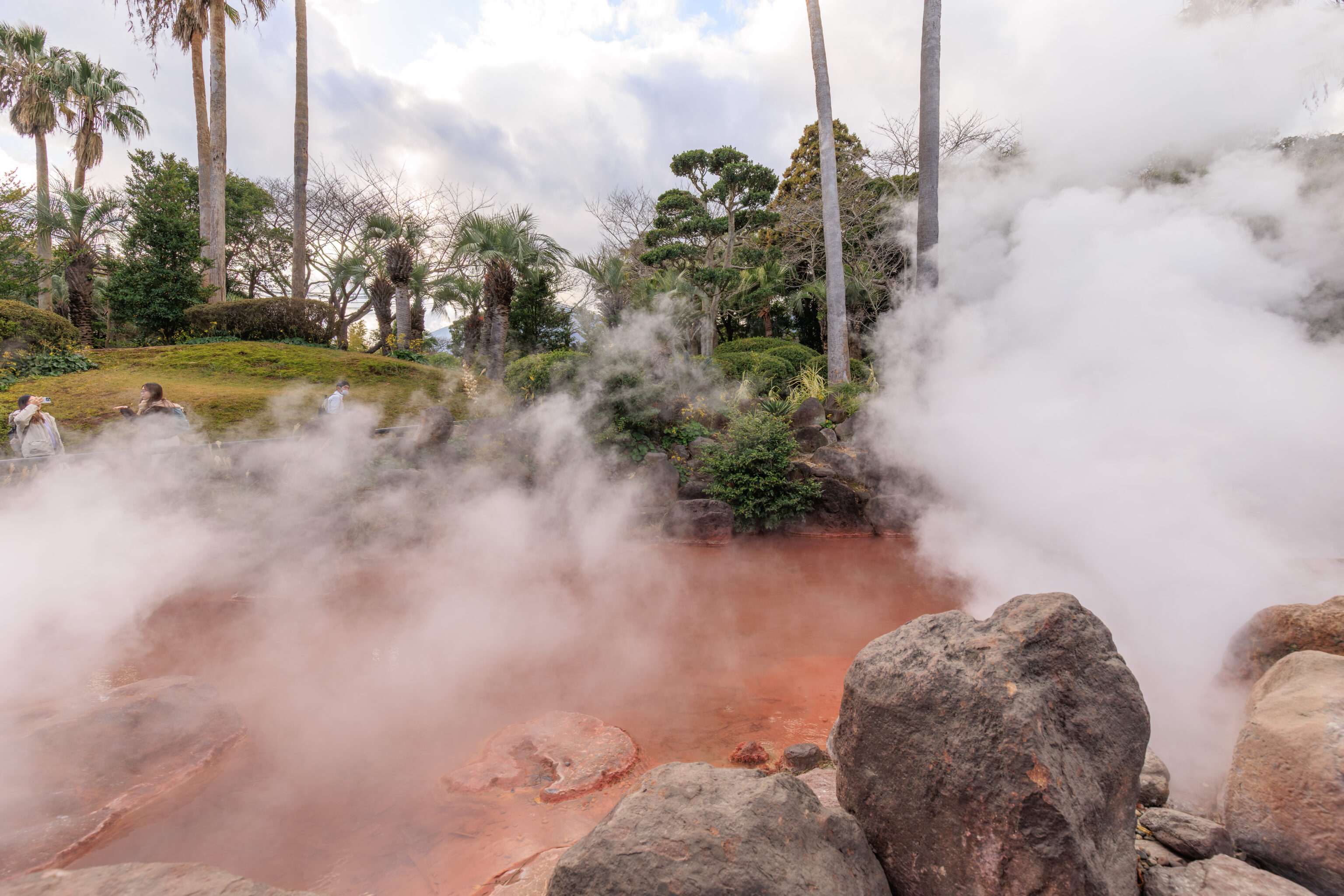
Although the Sea Hell is the primary attraction here, there is actually another thermal pool here. We walked on a path to the south of the gift shop which led here to the 赤池 Akaike, or simply Red Pond. Because it was red…
The Akaike emitted quite a bit of steam like the Umi Jigoku. Of course, the color was completely different!
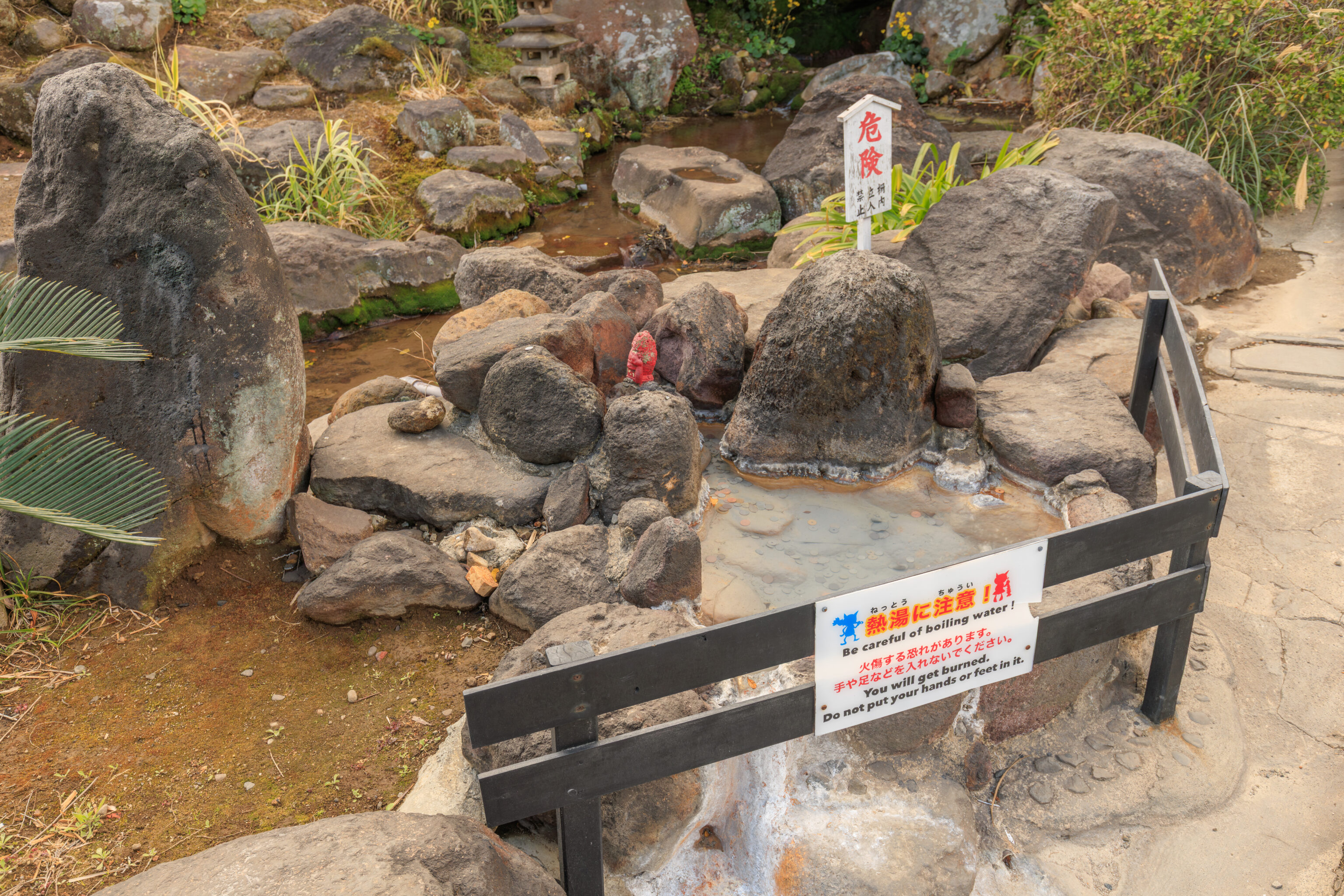
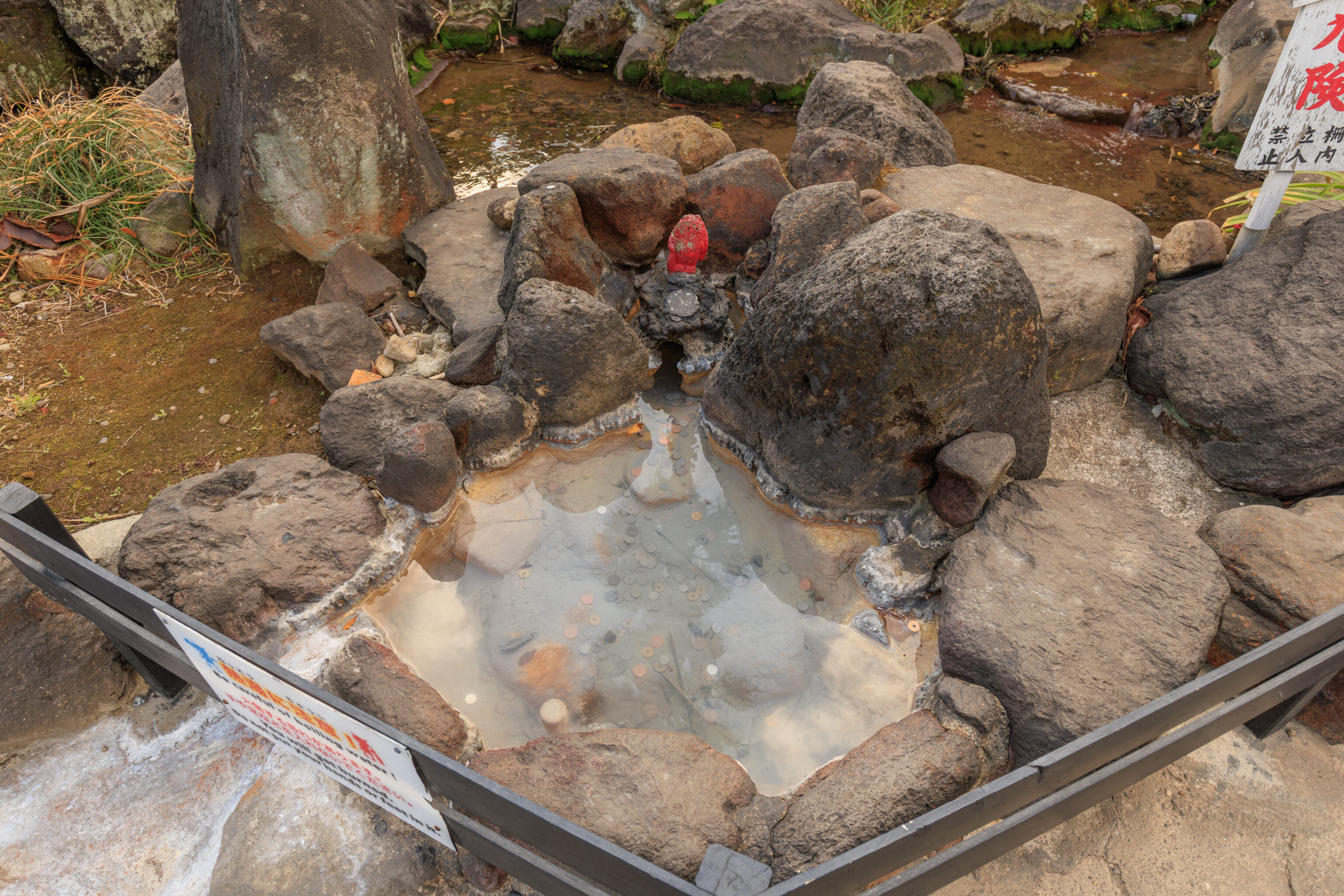
There was a warning specifically at this spot with what seems like a tiny landscape.
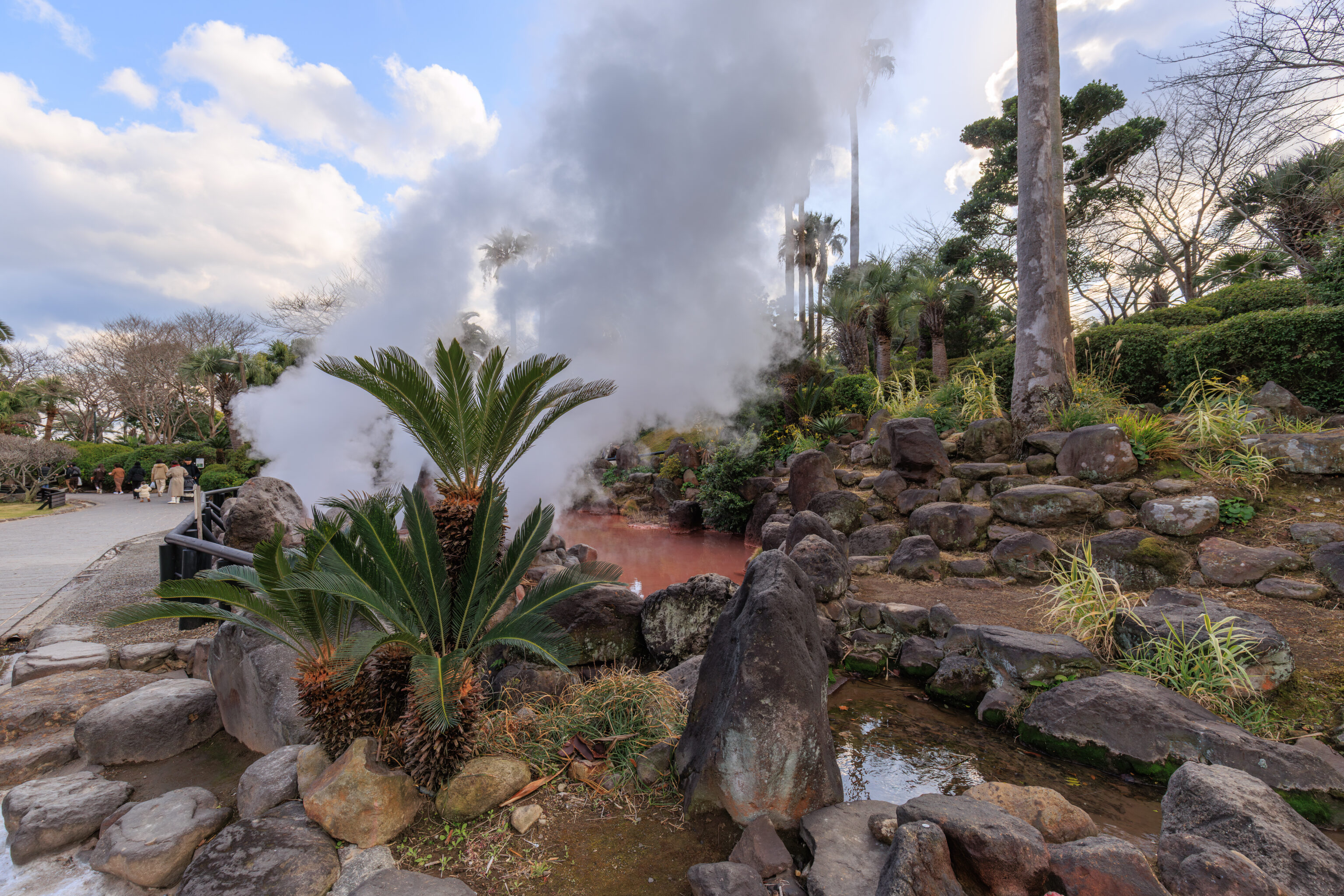
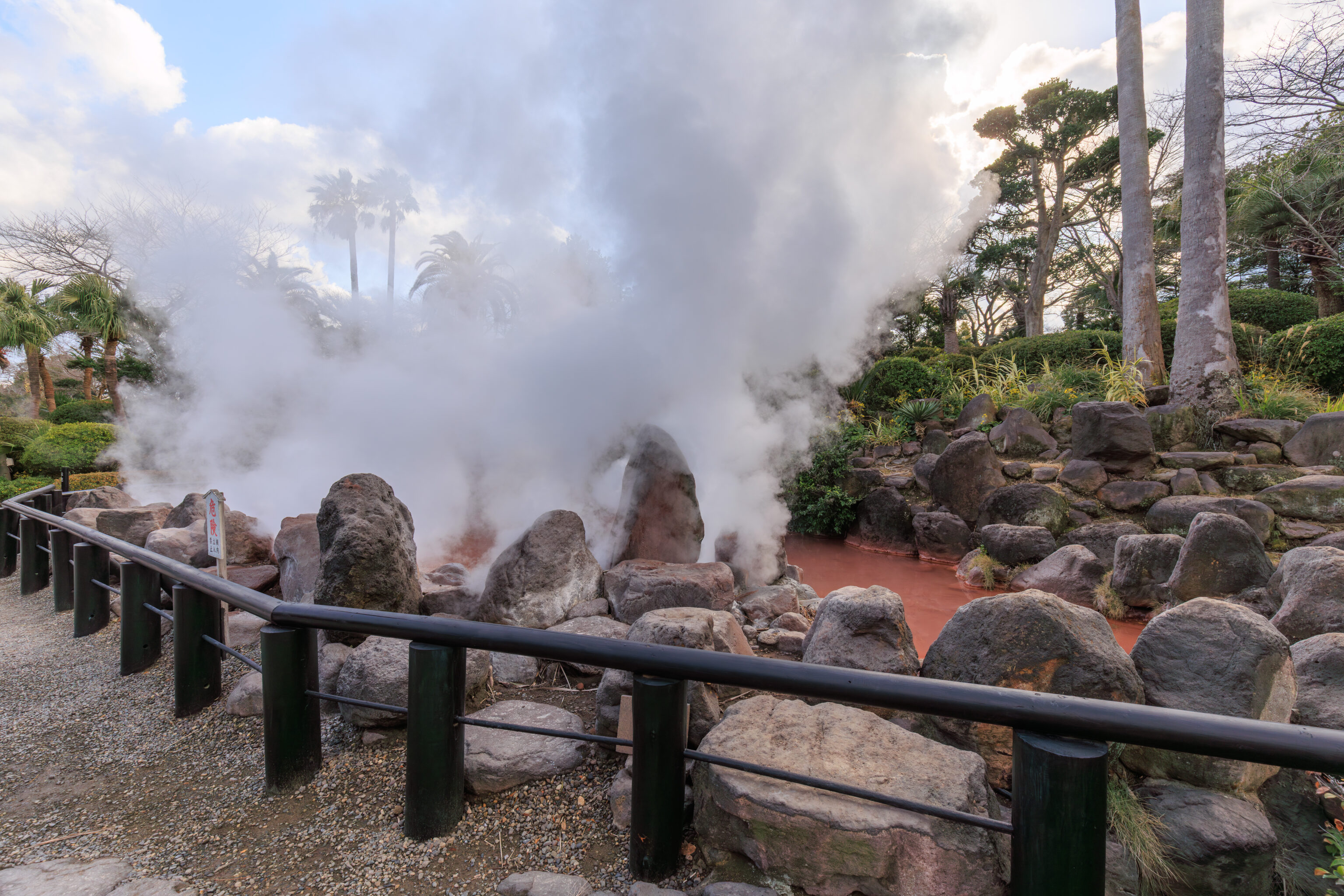
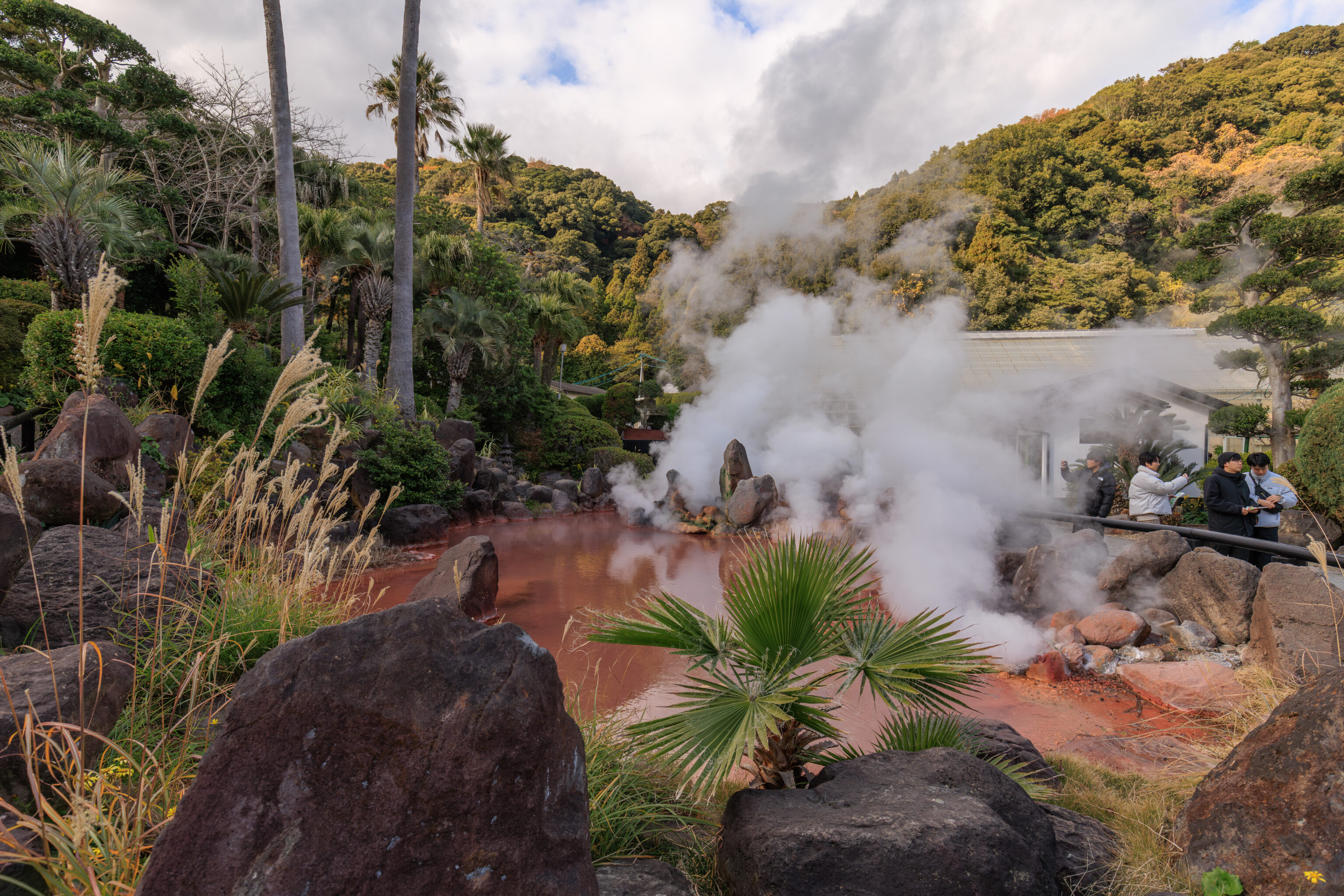
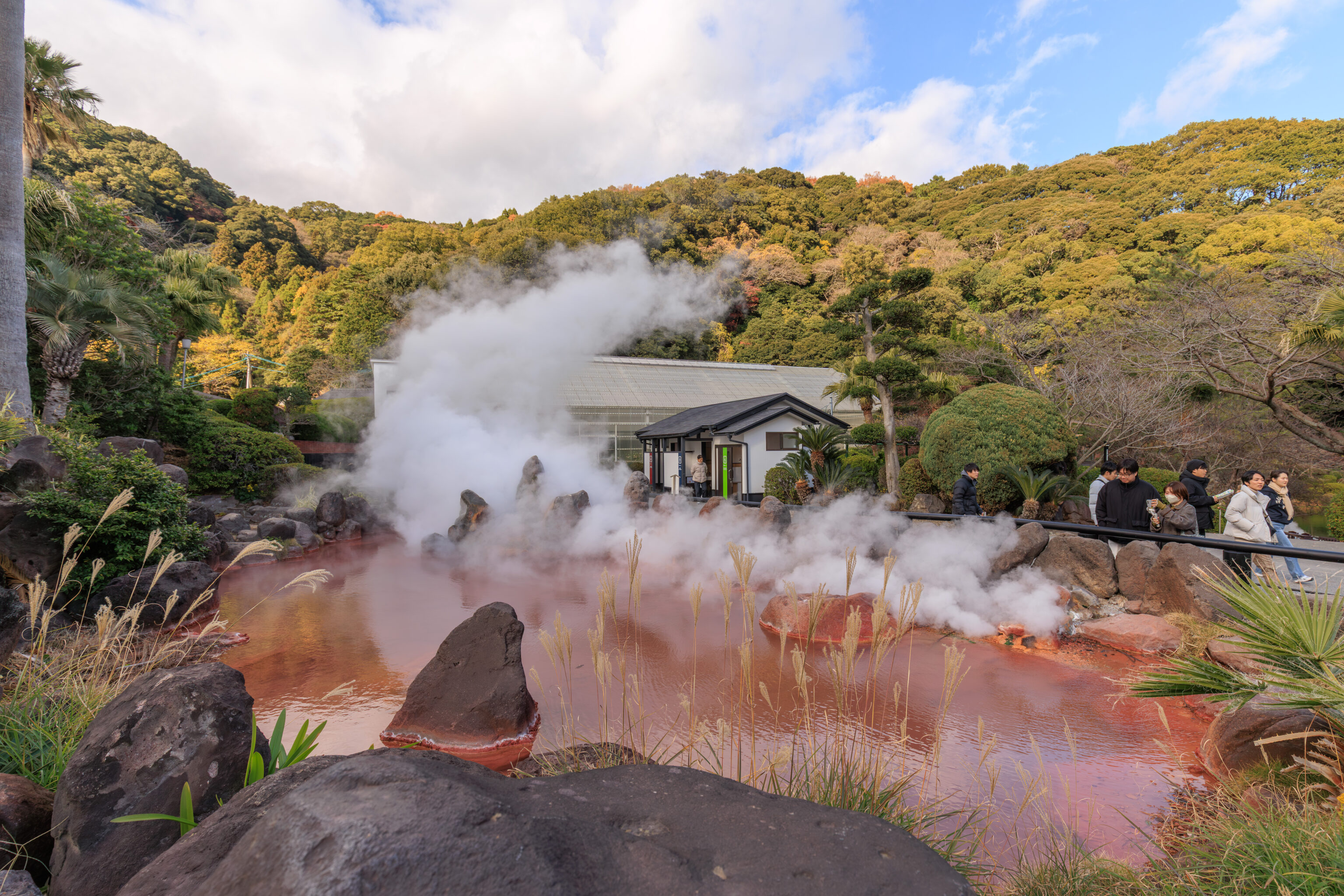
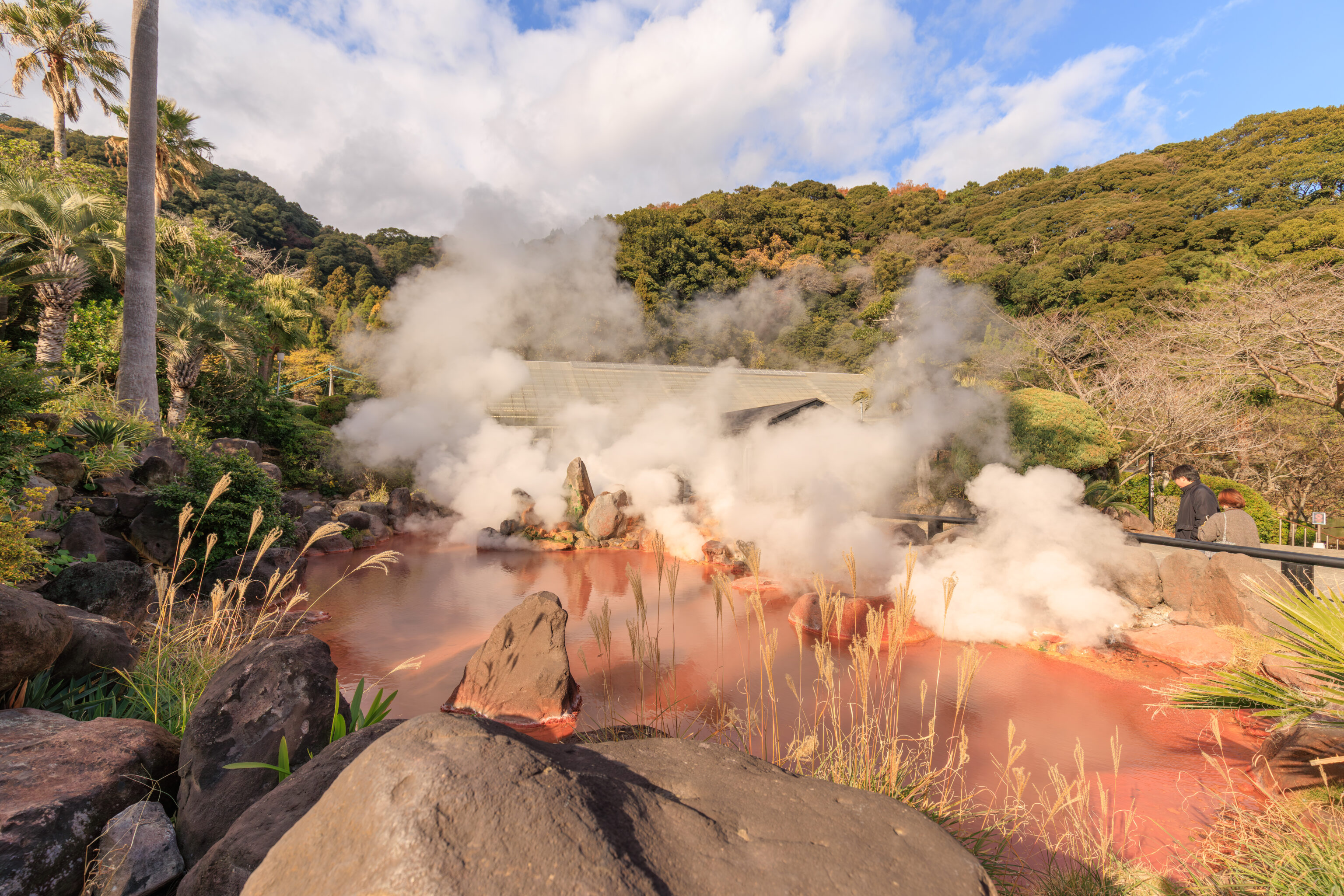
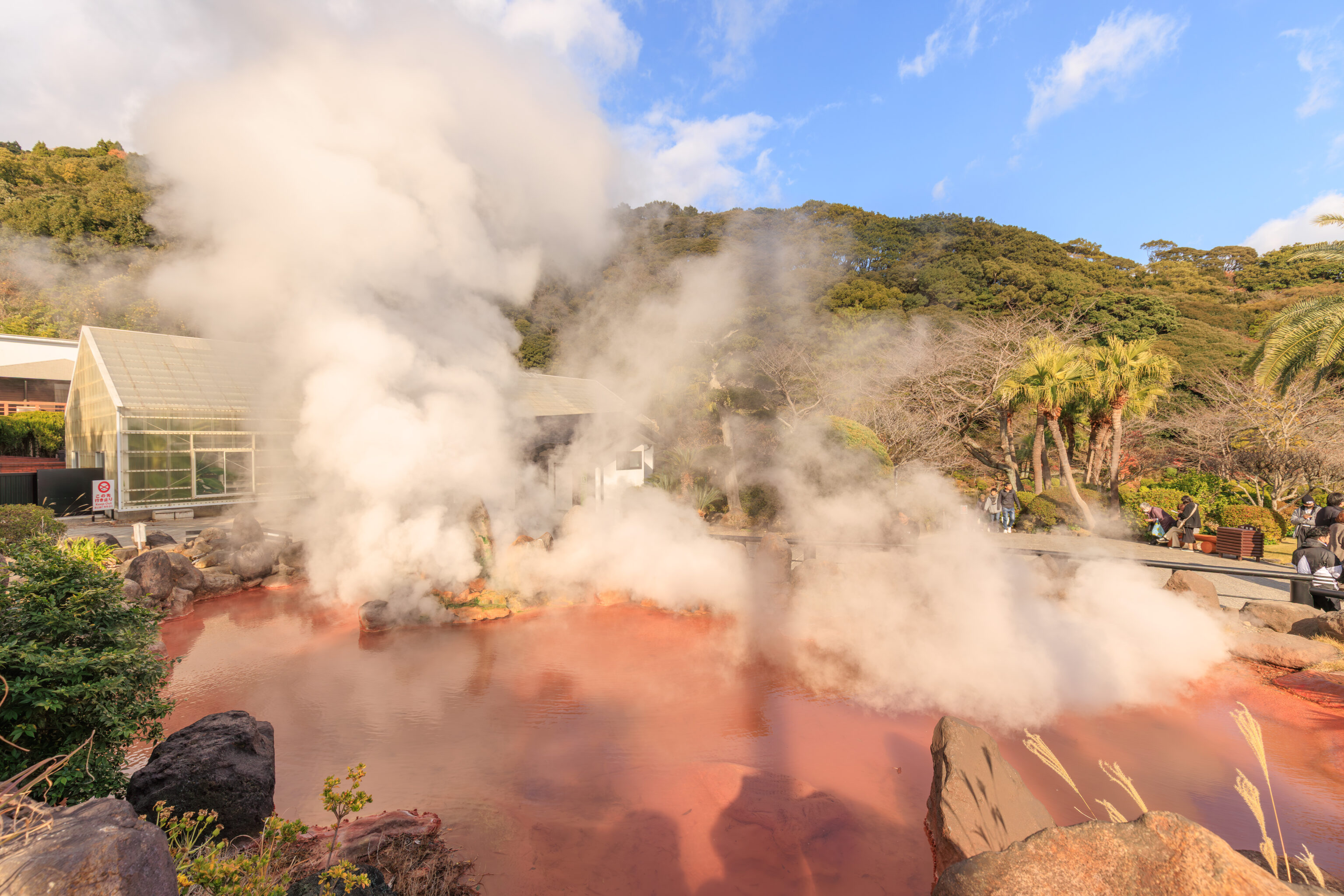
We walked clockwise around the Red Pond. The Sun came out when we were about to head away, greatly improving the color of the thermal water below!
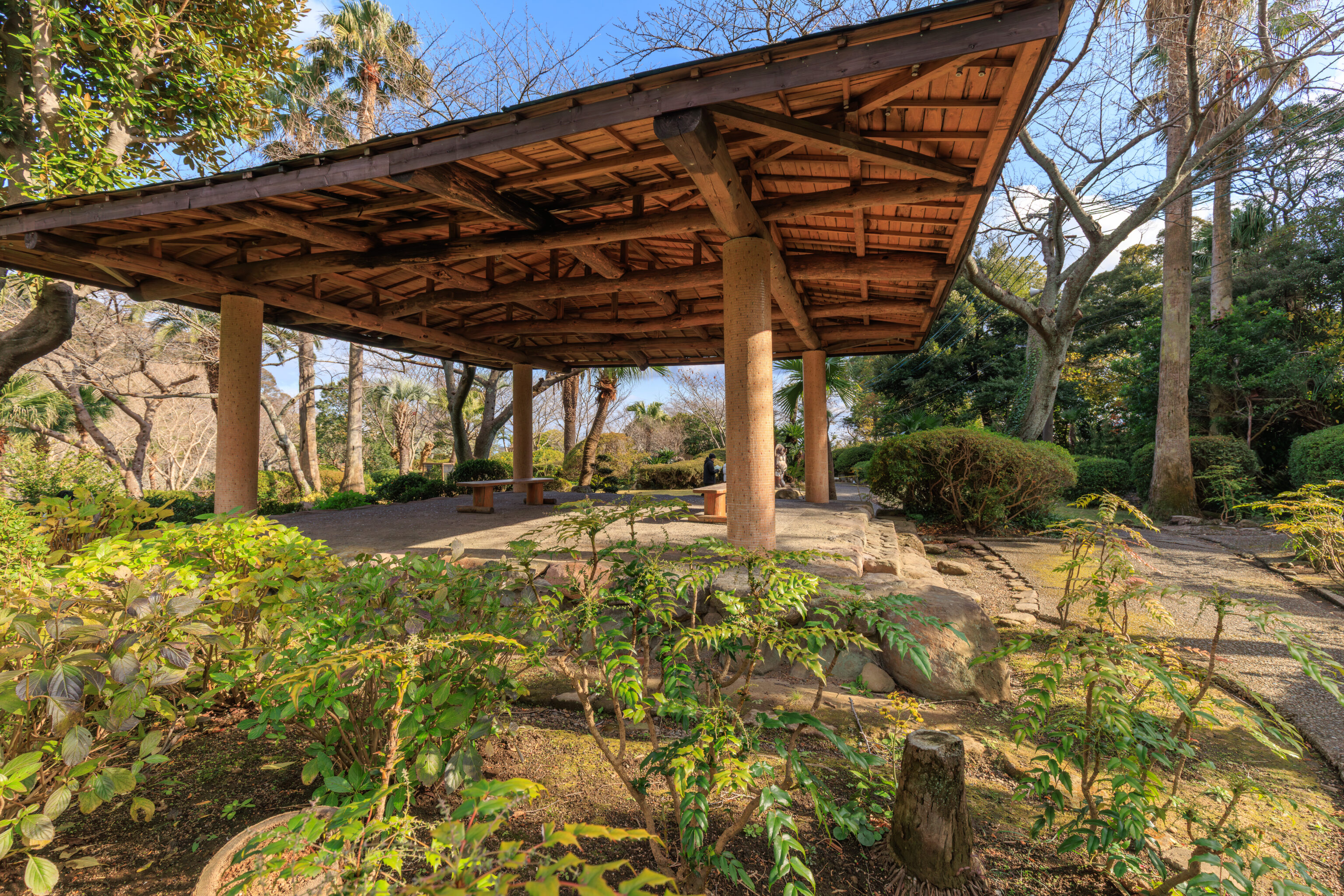
We followed the path which lead to this open pavilion as well as a nearby foot bath. But there wasn’t too much interesting here. So, we moved on.
Oniishi Bozu Jigoku
After leaving the Sea Hell, we walked over to the adjacent 鬼石坊主地獄 Oniishi Bozu Jigoku. The intended meaning of this jigoku is unclear, however, it may be something like Demon Stone Monk Hell.
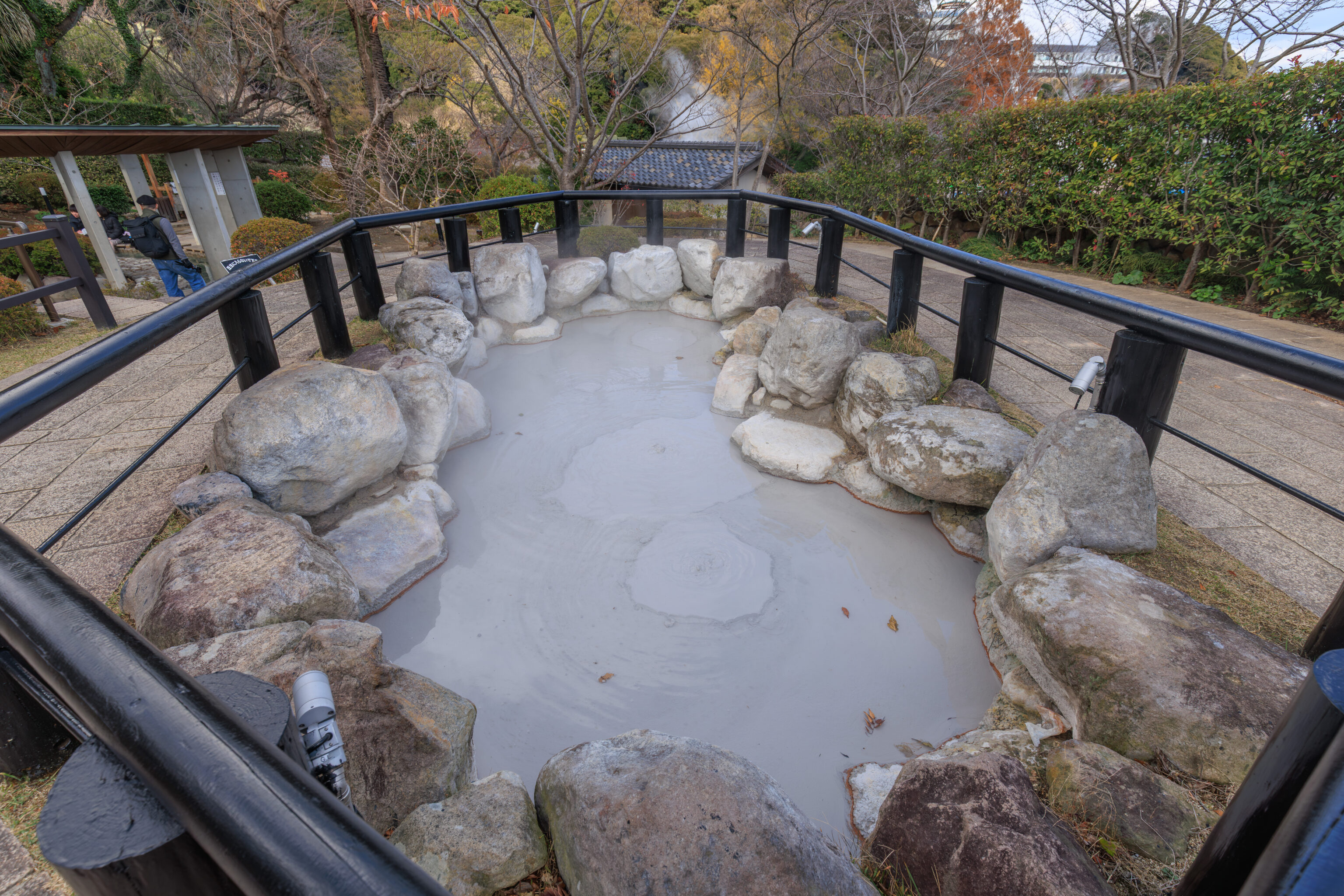
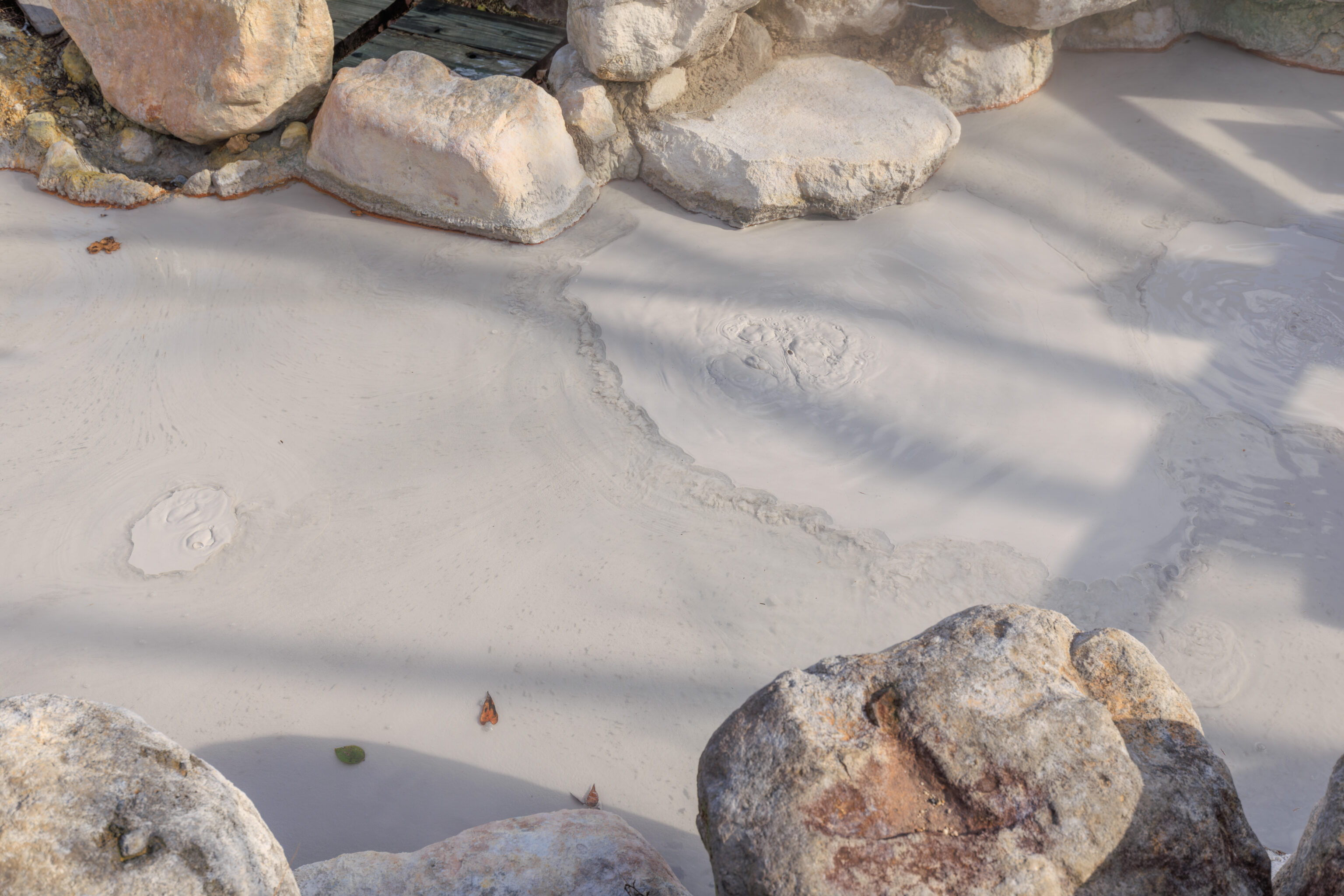
We first came across this thermal feature which reminded us of Yellowstone. The hot spring water just gently comes out into the thick almost clay-like thermal pond, resulting in bubbles and circular patterns on the surface.
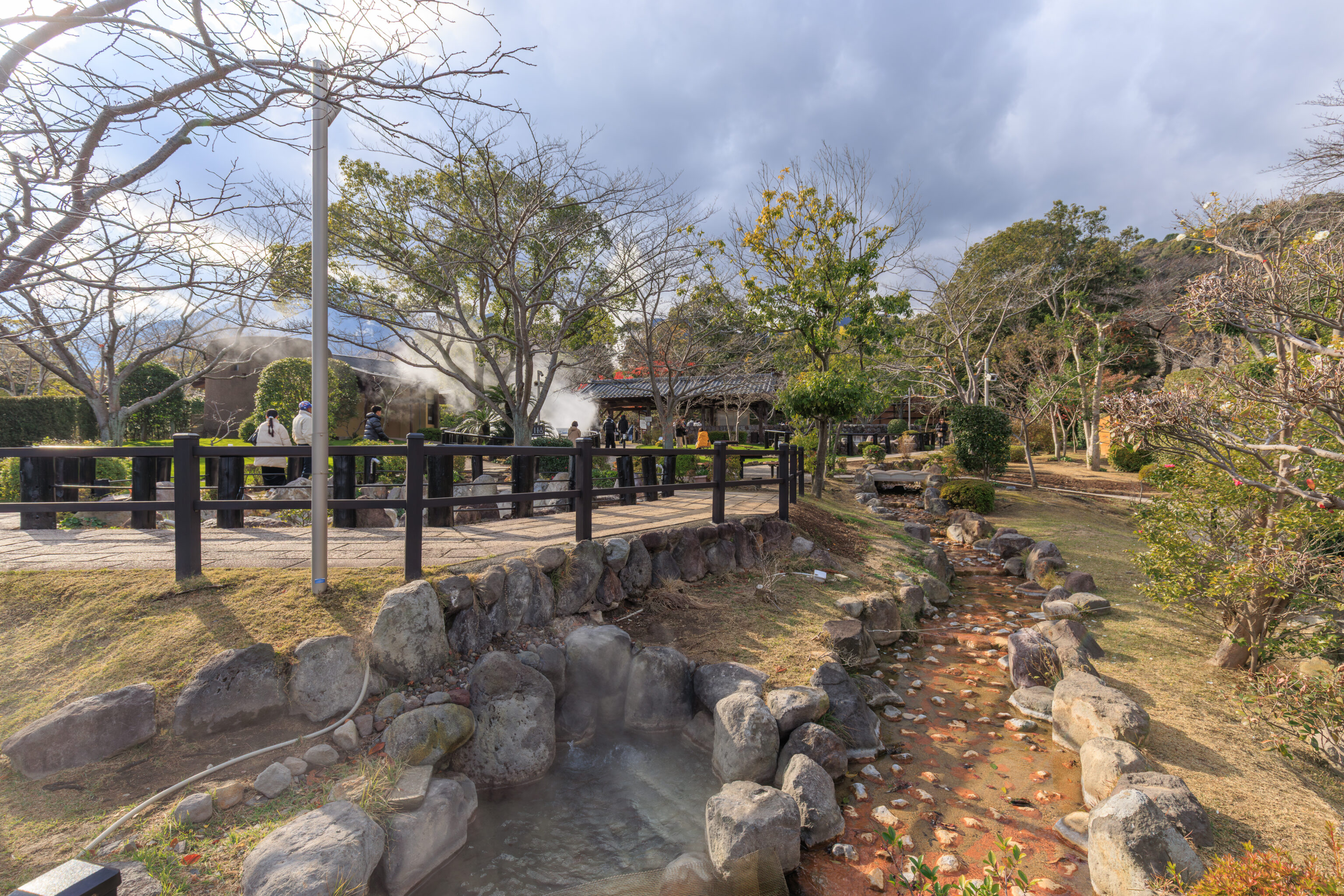
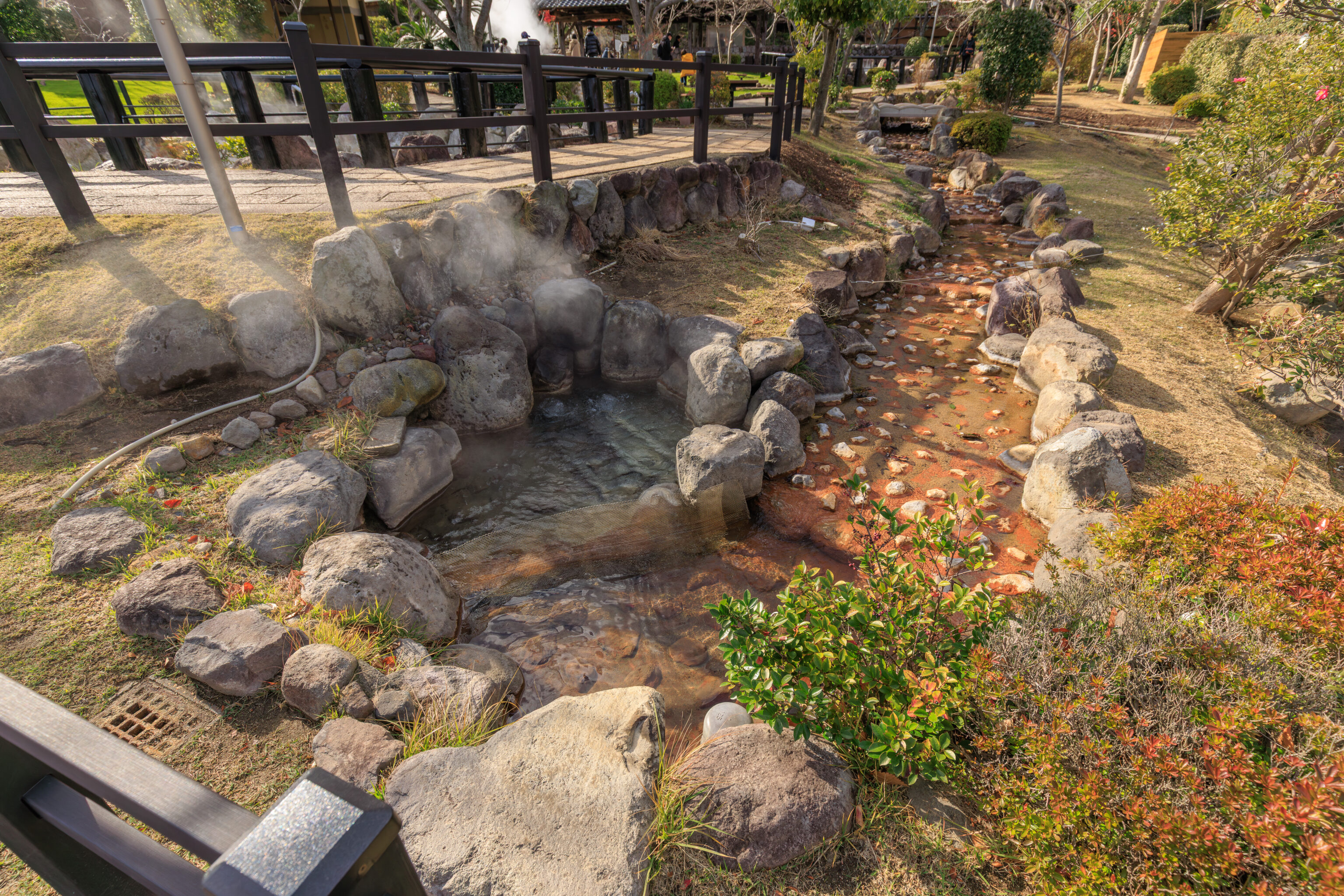
There was a small bubbling pool of water nearby as well as a hot spring stream.
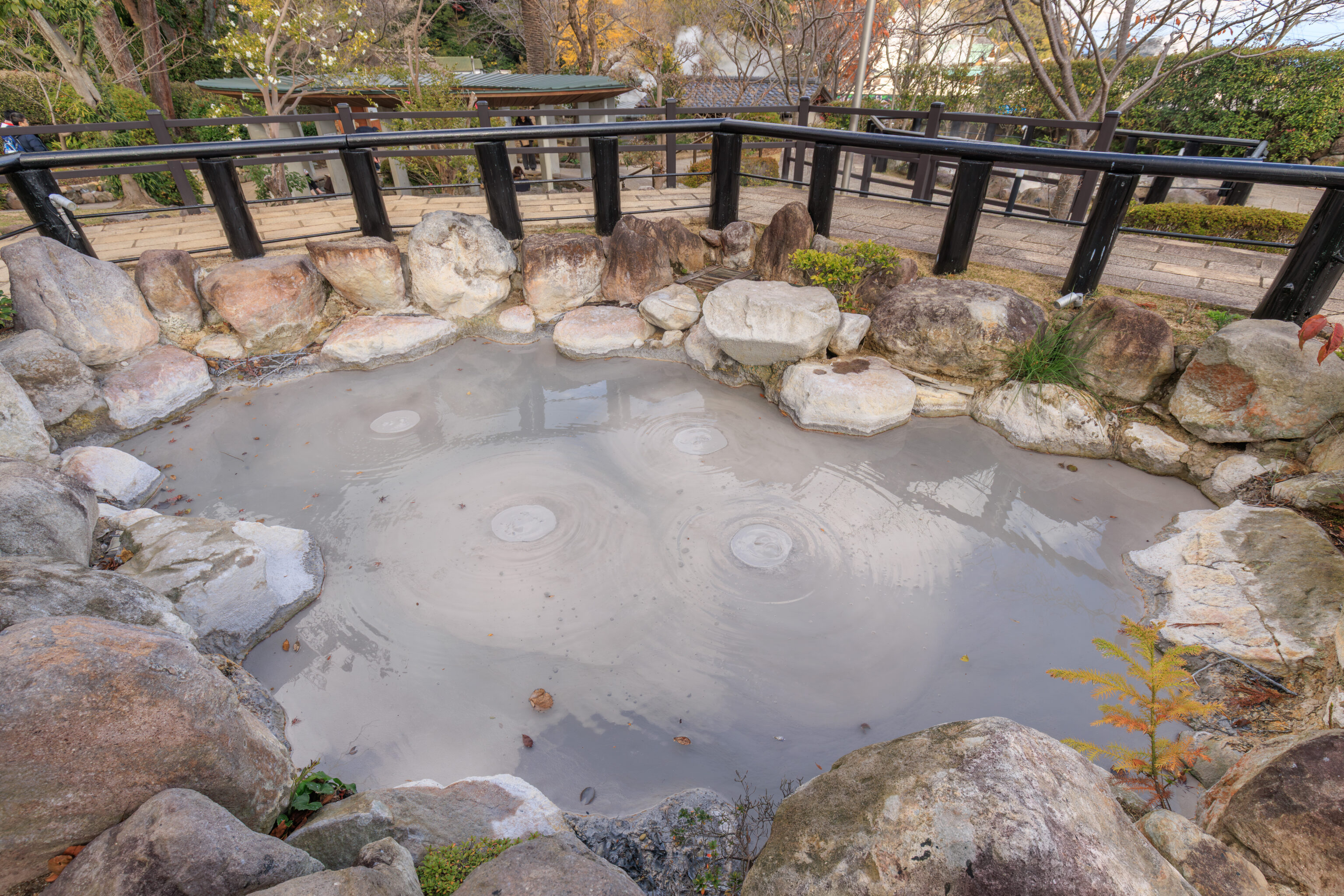
We continued on to another pool filled with clay-like water.
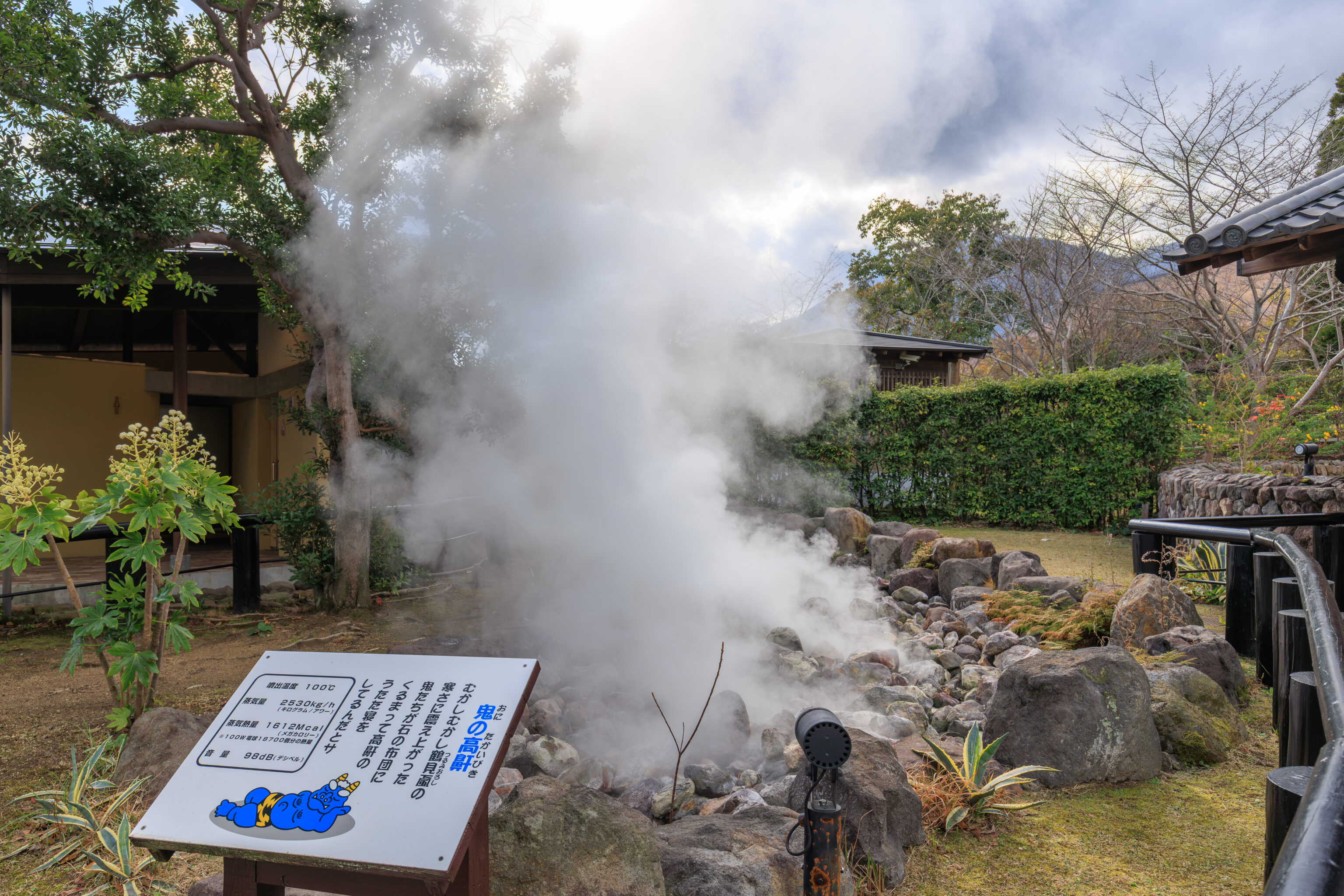
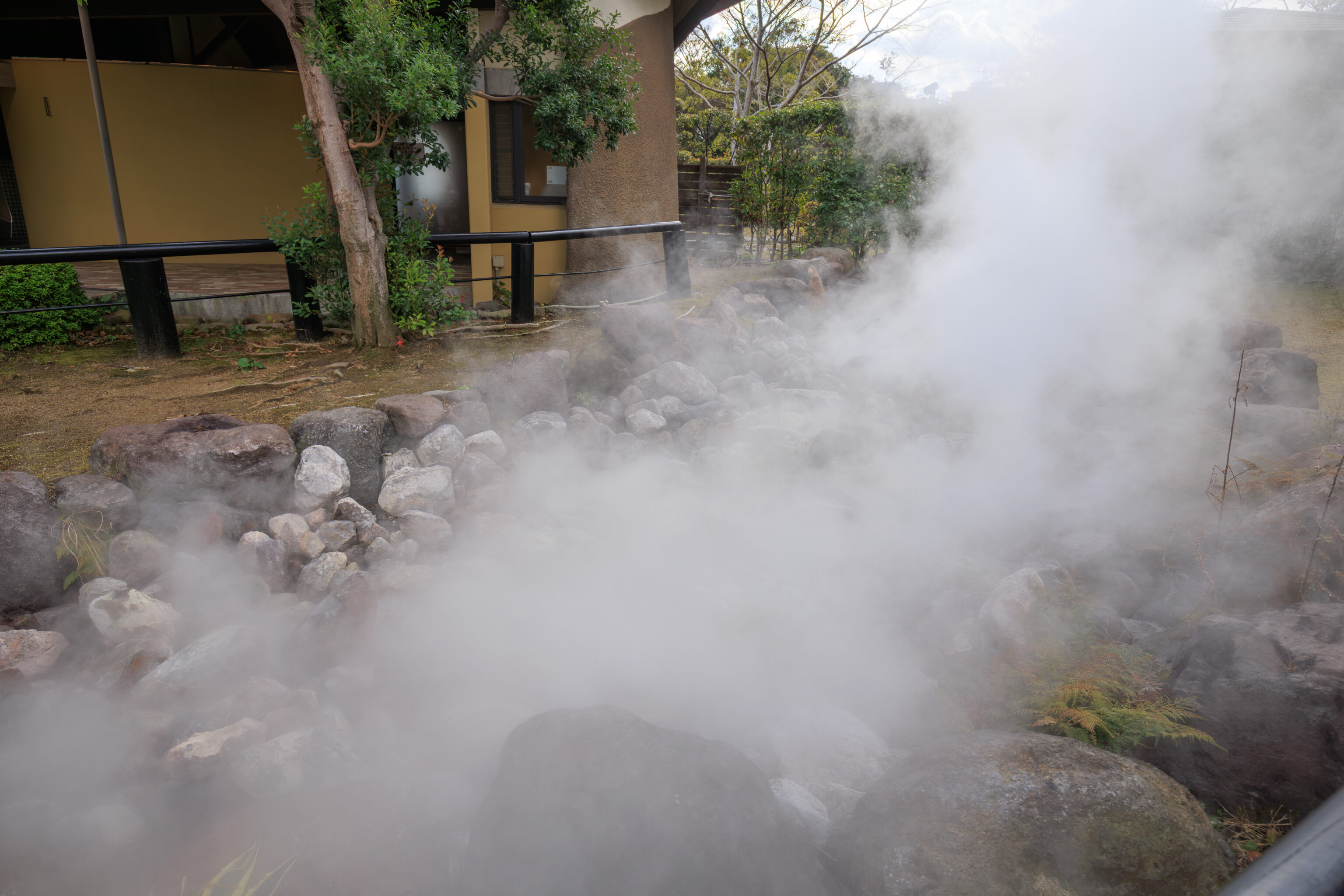
And then we continued on to this very steamy thermal pool.
The Demon of Takano: The Great Snore
Long, long ago—when the "Tsurumi-oroshi" (the biting wind of Tsurumi) blew down from the peaks—

The demons, shivering from the bitter cold, wrapped themselves in stone blankets to catch a quick nap.  And it is said that the sound you hear Is simply the loud snoring Of those very demons!

Eruption Temperature: 100°C
Steam Output: 2,530 kg/h (kilograms per hour)
Steam Heat Energy: 1,612 Mcal (megacalories)
*Equivalent to the heat generated by 18,700 100-watt light bulbs
Sound Level: 98 dB (decibels)
– Text from the sign above, translated using Google.
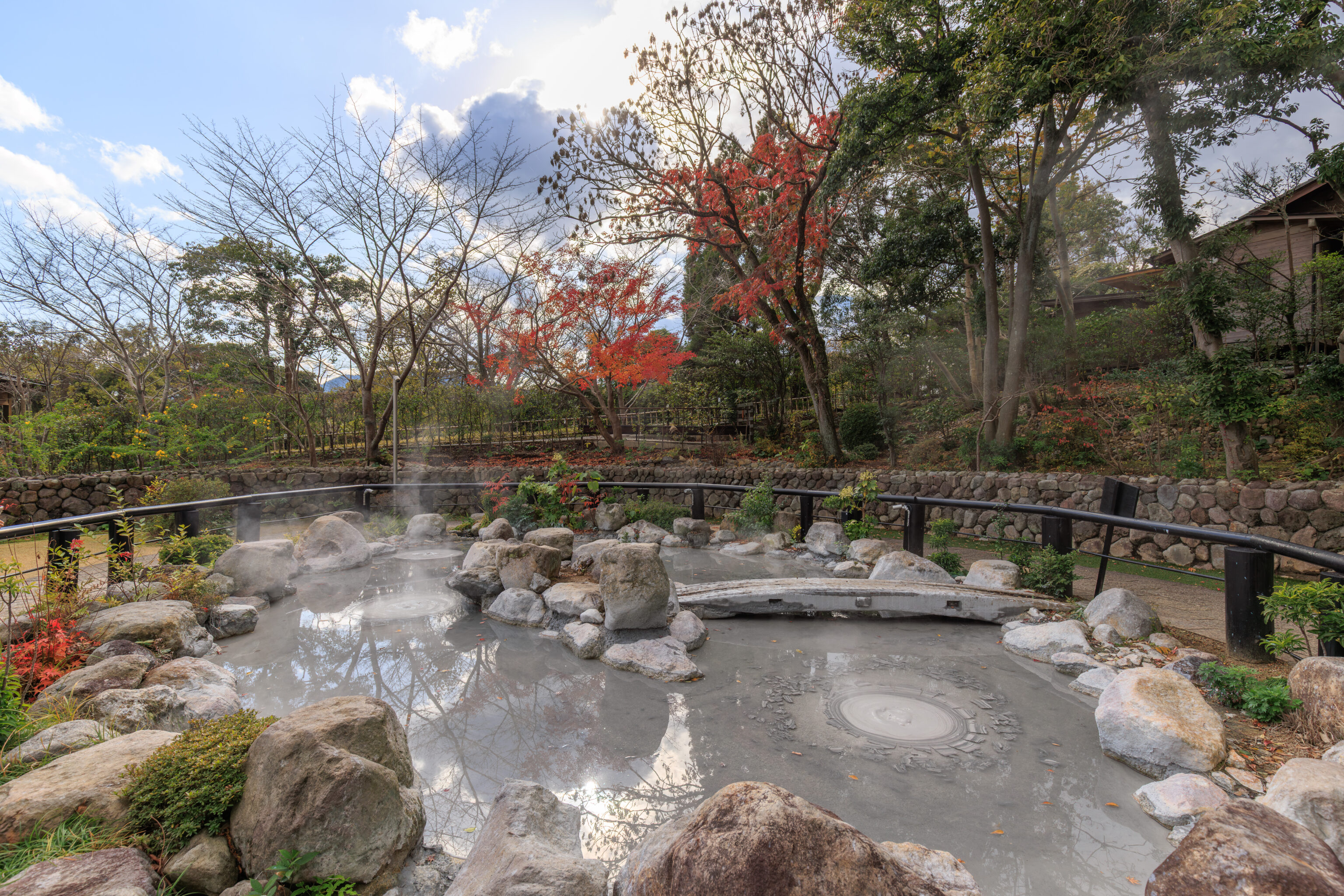
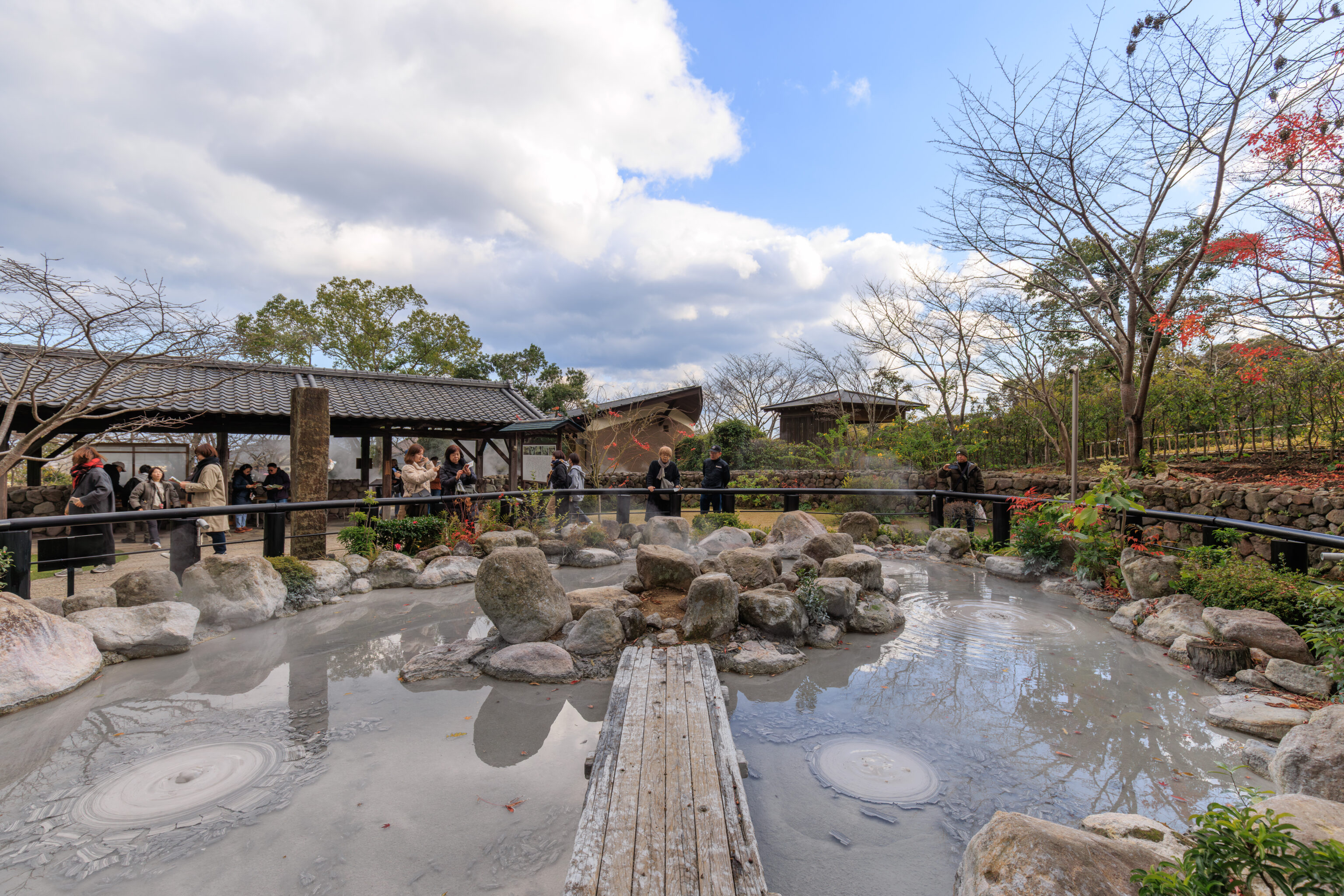
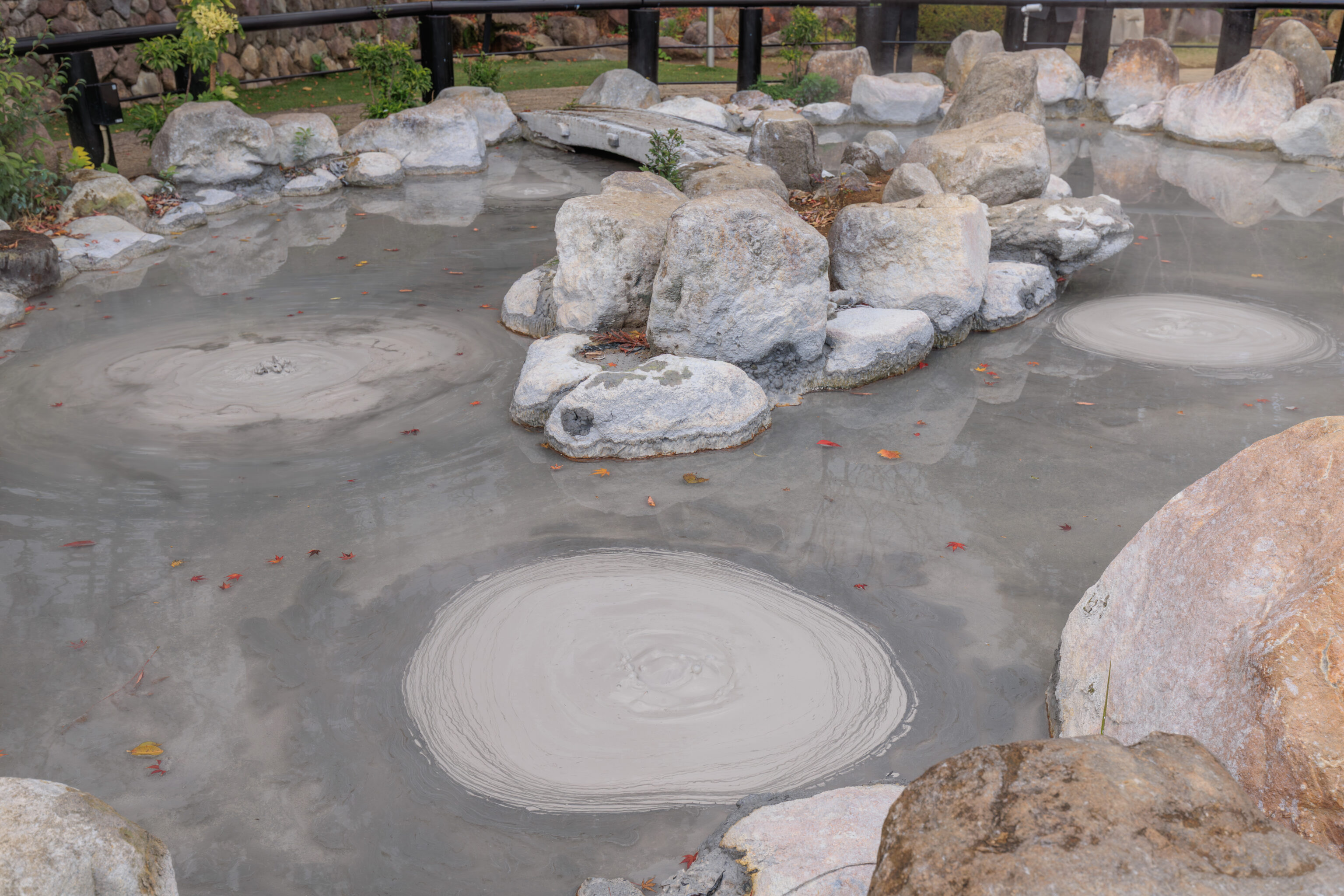
The furthest pool from the entrance again had clay-like water. A large sign in this area provided a bit of background on this particular jigoku as well as the other jigoku in Beppu:
Oniishi Bozu Jigoku Origin
The history of Onishi Bozu Jigoku is ancient; its earliest appearance in written records dates back to around the year Tenpyo 5 (733). In the section regarding "Kuberi-yu" within the *Bungo Fudoki* (Records of the Culture and Geography of Bungo Province), it is described as having an opening "measuring over one *jo* (approx. 3 meters) across, with black-colored water and mud that flows intermittently."
Later, in Genroku 7 (1694), Kaibara Ekiken visited the site and noted in his *Hokoku Kikou* (Travelogue of Bungo Province): "There exists a hot spring known as Ennaibo Jigoku; it consists of scalding water and muddy earth." Subsequently, in Kansei 7 (1795), Waki Ranshitsu wrote in his *Kaigyo-dan* (Tales of Sea Creatures): "The mud seethes and the water surges."
The "hells" of that era—described in such vivid terms—were scattered throughout the local fields and farmlands. However, the scalding mud prevented rice crops from growing and rendered the land uninhabitable for people; it was, quite literally, a hellish terrain. Yet, these bizarre natural phenomena had the opposite effect: they captured the public's imagination, and sightseers began walking along the narrow field paths to tour the sites. This marked the very beginning of the practice known as "Jigoku Kembutsu" (Hell Sightseeing).
Following the Russo-Japanese War, the popularity of these sites surged. In Meiji 43 (1910), the "Umi Jigoku" (Sea Hell) located in this region became the first attraction in Japan to charge an admission fee (set at two *sen*) for "Hell Sightseeing." This initiative was soon followed by other sites—including "Chi-no-ike Jigoku" (Blood Pond Hell), "Bozu Jigoku" (Monk Hell), "Hachiman Jigoku," and "Koya Jigoku"—which also opened their doors for tours. These attractions garnered immense popularity, eventually evolving into a comprehensive "Hell Tour" circuit encompassing as many as several dozen distinct sites. Here at Onishi Bozu Jigoku, bubbles of hot water continuously rise through the clay-rich mud.
In those days, the site featured a specific type of "Jigoku" (Hell)—an attraction also known at the time as "Shin Bozu Jigoku"—which consisted of a "Hot Mud Hell" and a "Geyser" that vigorously spewed forth steam.
The photograph above captures the appearance of Onishi Bozu Jigoku during the late Taisho era.
Automobile access became available during that period, and with the arrival of the Showa era, sightseeing bus services were introduced. Consequently, the site blossomed into a major tourist destination, attracting a multitude of visitors from both within Japan and abroad.
Although the site was temporarily closed at a later date due to changing times, it was able to reopen thanks to the support of many people—both domestic and international—who earnestly wished for its revival.
In December 2002 (Heisei 14), the park officially reopened under the name "Onishi Bozu Jigoku," marking the resurrection of this historic "Hell."
We also invite you to enjoy the "Footbath" located within the park grounds, as well as "Onishi-no-Yu" in the annex building.
Auspicious Day in December 2002
– Text from a sign, translated using Google.
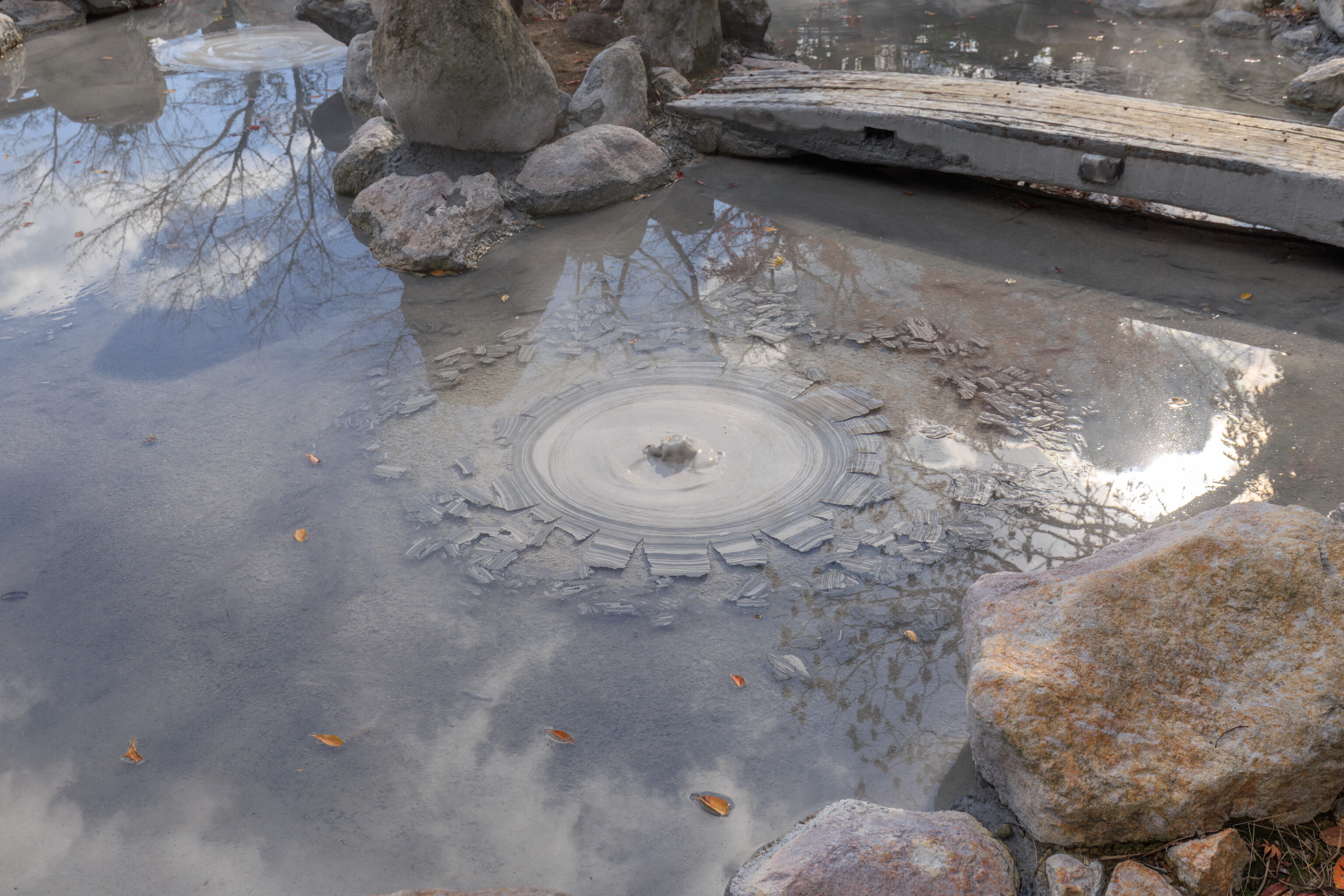
The pattern here was excellent with clay-like material solidifying and then breaking apart as hot spring water constantly came out from below.
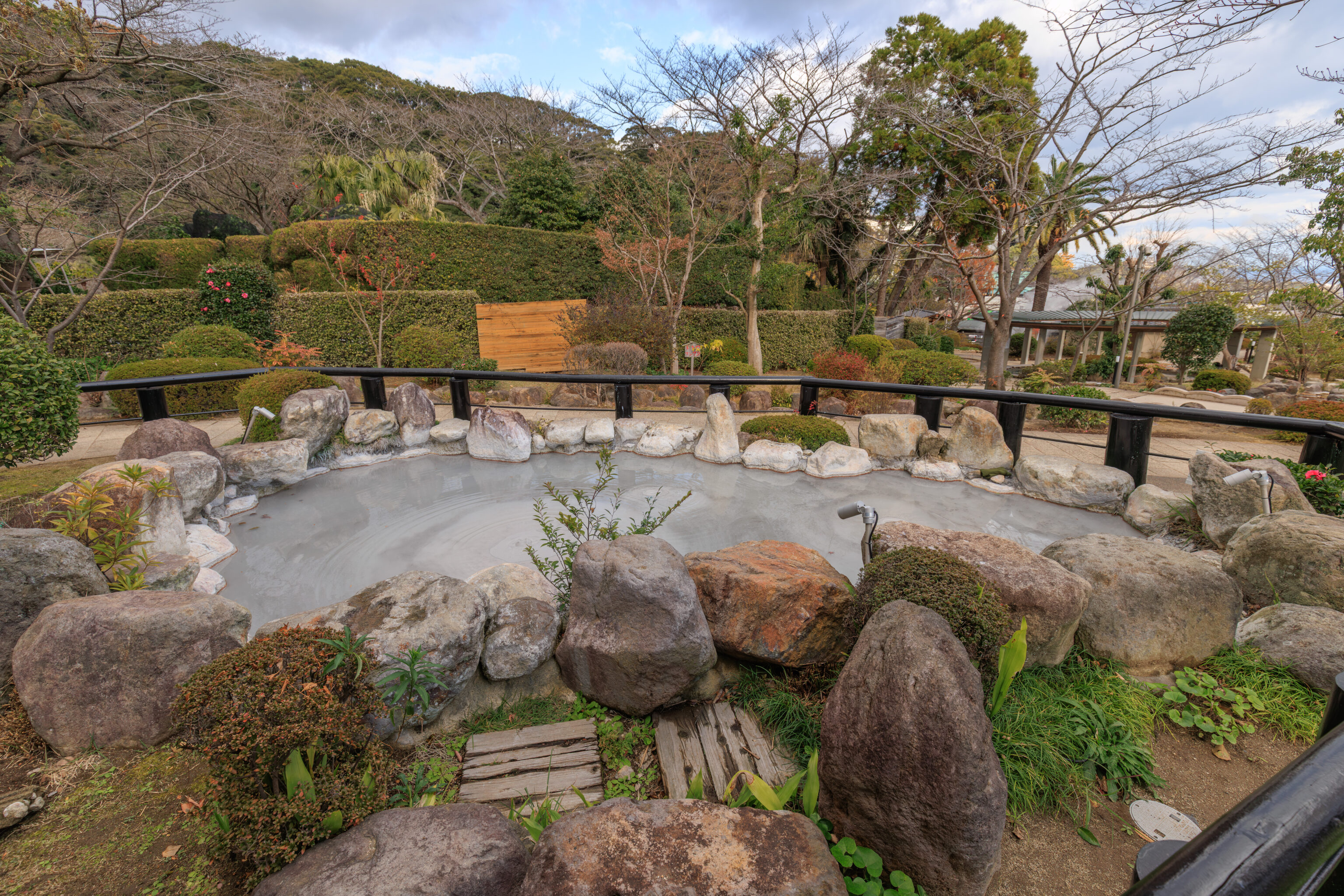
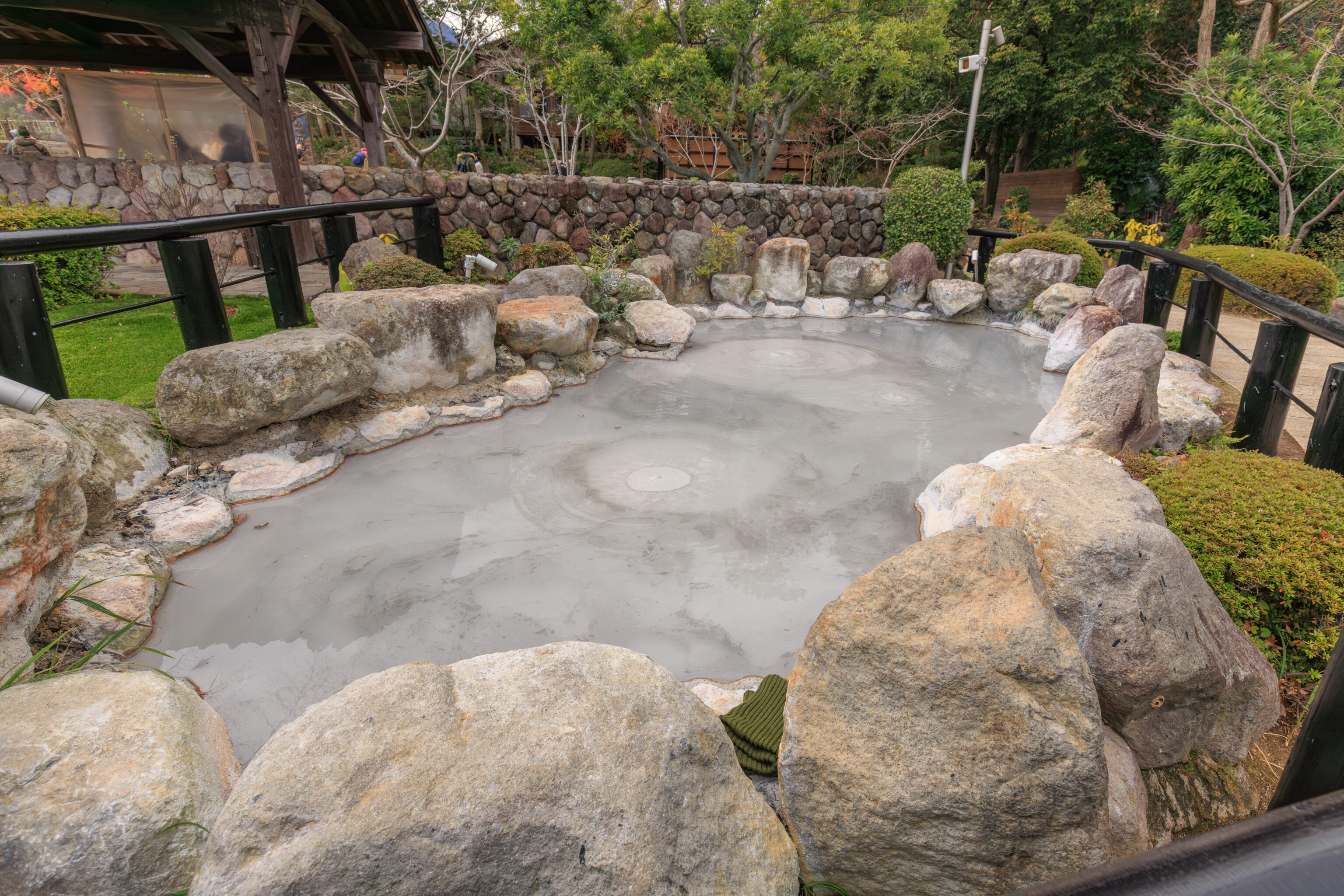
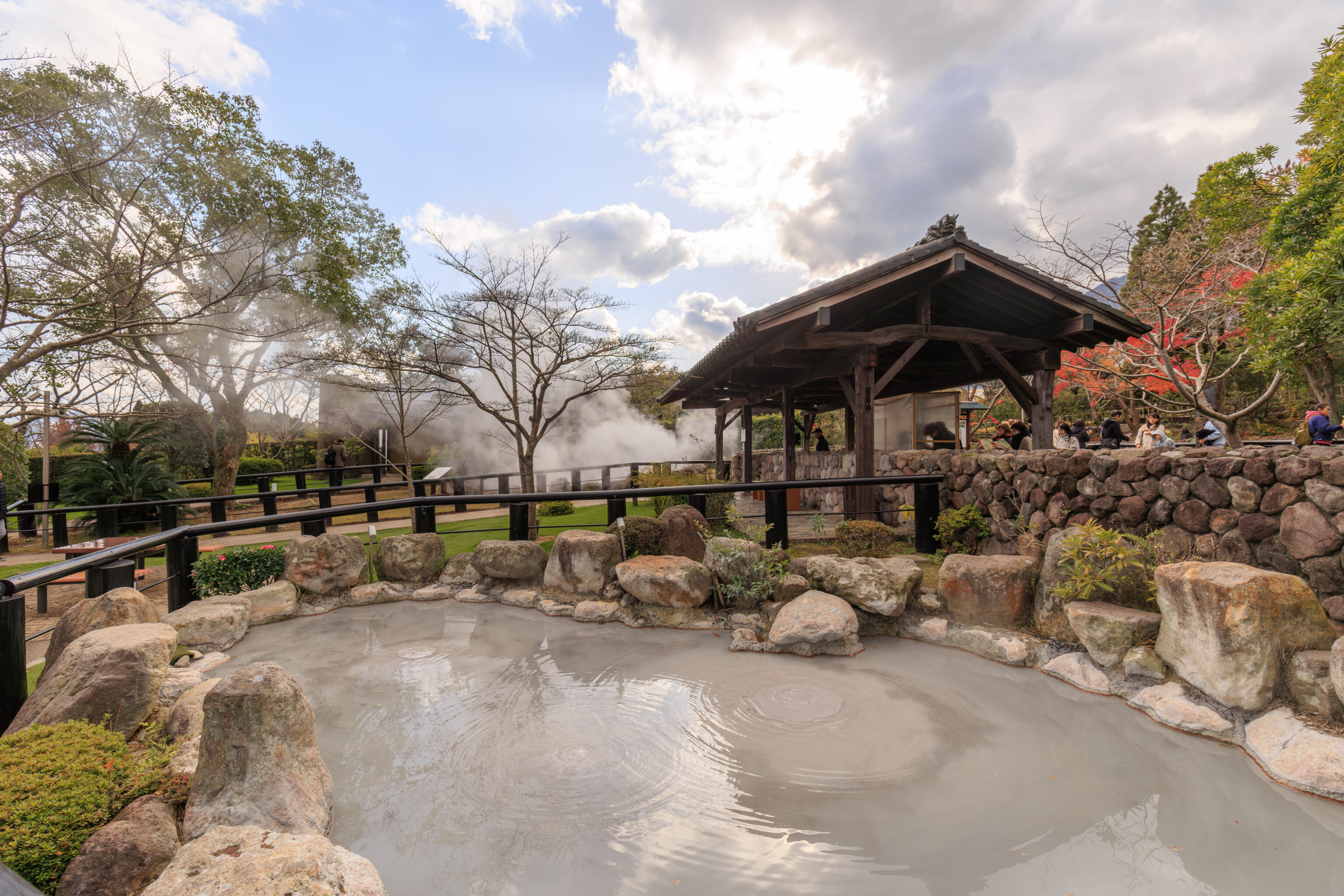
Another pool! That’s four of this kind here.
The clay pots slowly doing their thing…
Kamado Jigoku
We continued on to visit the next nearby jigoku, かまど地獄 Kamado Jigoku (Hearth Hell). It was a bit to the east on the other side of a large onsen hotel.
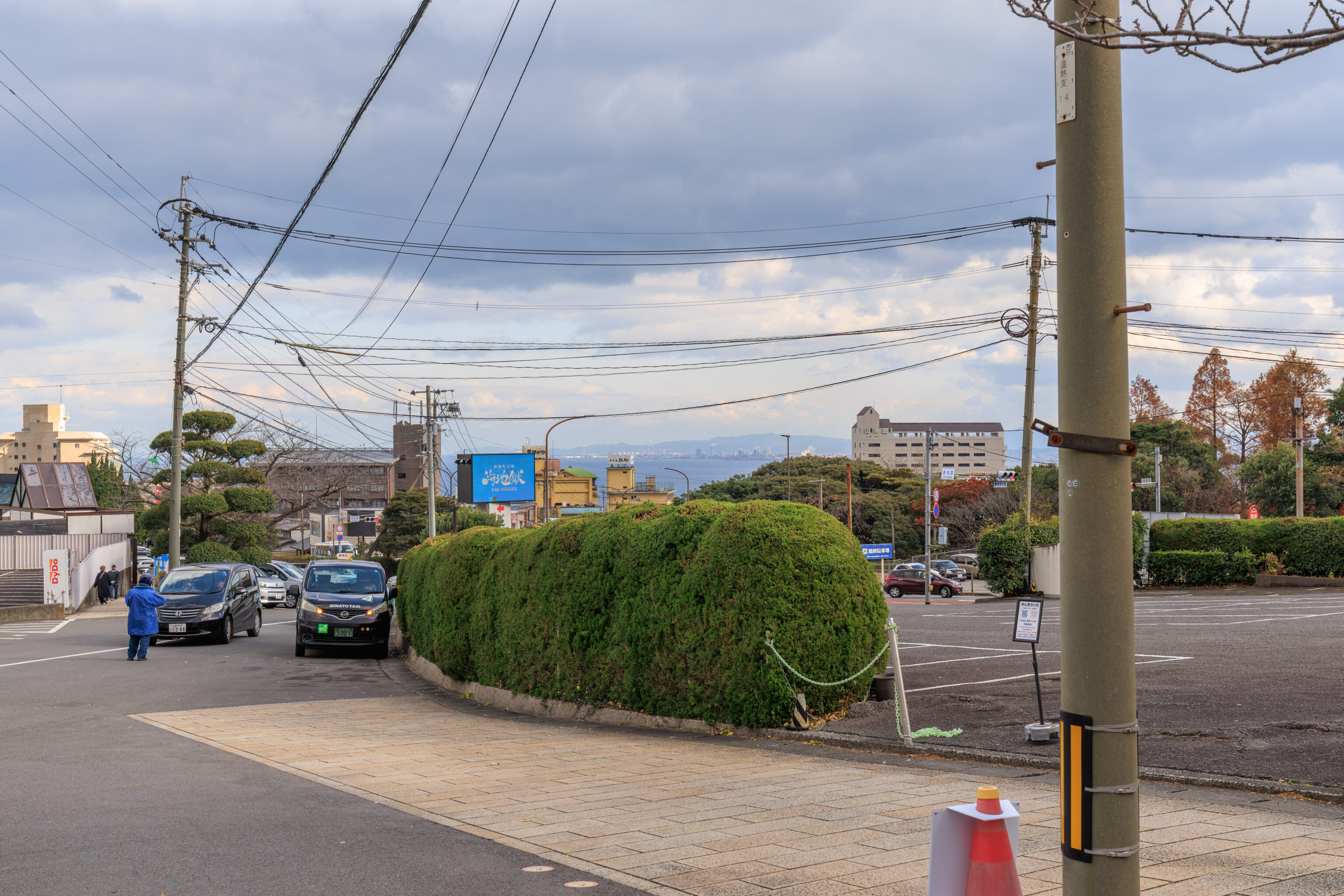
Walking down the road to the east, we had a view of Beppu Bay and industrial facilities in Oita.
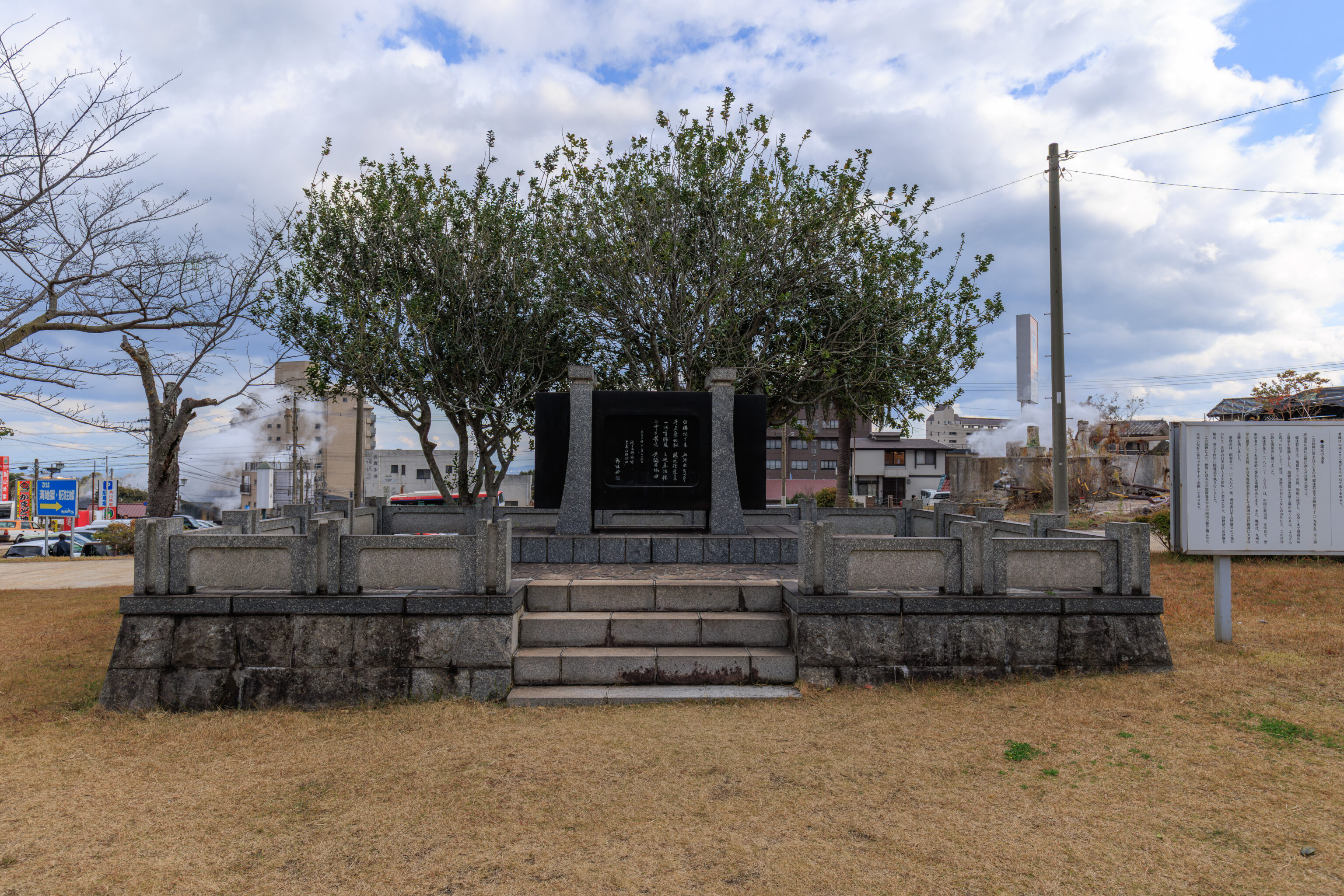
We came across a number of monuments, or perhaps memorials, as we got closer to Kamado Jigoku. This one had a large explanatory sign:
Regarding the Poetry Monument of Mr. Guo Moruo

*As if Dante himself had come to roam...*
*The waters of the Blood Pond boil and surge...*
*A curious name that startles even Hell itself...*
*Yet a scenic wonder rivaling the paradise of Penglai.*
*One dip in the waters, and the evening grows warmer still...*
*Three times around the springs, and one's heart is filled with the essence of spring.*
*The white clouds drift on with the spirit of ages past...*
*And the yellow crane, reluctant to take flight, circles low in blissful ease.*

Origins of the Monument

Inscribed upon this monument is a poem penned in his own hand by Mr. Guo Moruo during his visit to the Beppu Hot Springs in Showa 30 (1955).

After touring the "Hells of Beppu" (Jigoku Meguri), Mr. Guo Moruo stayed in the city, where he savored Beppu's local cuisine and hot springs to his heart's content. The stark, dramatic scenery of the "Hells"—contrasted with the soothing warmth of the thermal waters—must have left a profound impression upon him. Some time later, as a gesture of gratitude for the hospitality he received in Beppu, he presented this original poem to the individuals and organizations involved in his visit.

Mr. Guo Moruo (1892–1978) was a prominent Chinese statesman and man of letters, renowned globally for his distinguished contributions as a historian. Prior to the war, he studied abroad at Kyushu University; subsequently, serving as the President of the China-Japan Friendship Association, he left an indelible legacy in fostering friendship and goodwill between the two nations.

In Showa 53 (1978)—with the cooperation of the Beppu City China-Japan Friendship Association—the City of Beppu gathered donations for the monument's construction from individuals, organizations, and corporations across various sectors dedicated to China-Japan friendship. The monument's unveiling ceremony was held the following year, in Showa 54. Through this poetry monument, it is our earnest hope that Beppu Onsen—a source of pride for the world—may serve as a bridge between Japan and China, contributing to an enduring friendship between our two nations.
– Text from the sign partially visible on the right, translated using Google.
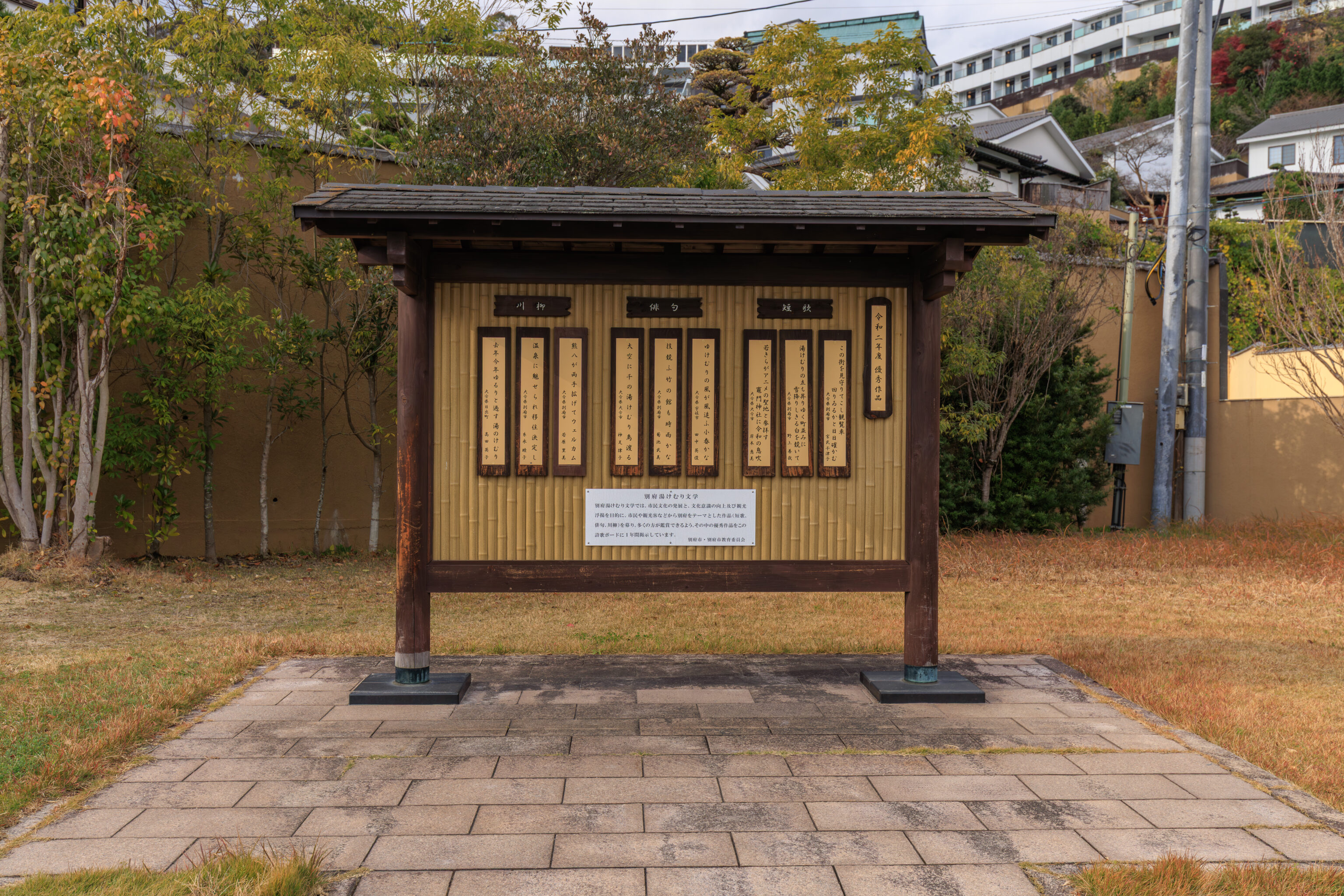
This display board is interesting in that it showcases three selections of three forms of Japanese poetry every year. Anyone can submit a poem.
Outstanding Works of the Reiwa 2 Fiscal Year

Tanka

The Ferris wheel that has watched over this town
I check every day to see if it is still turning
Chizuko Miyatake, Beppu City, Oita Prefecture


In the townscape where steam rises from the hot springs
Competing with the white of the falling snow
Zenya Nogami, Beppu City, Oita Prefecture

Young people visit the sacred site of anime
The breath of the Reiwa era at Kamado Shrine
Emi Kishimoto, Oita City, Oita Prefecture

Haiku

A wind of rising steam
chasing after the breeze—
a mild autumn day.
Hidetoshi Tanaka, Usa City, Oita Prefecture

Even the Bamboo Hall,
where skills are put to the test—
caught in a passing shower.
Takemi Kikuchi, Beppu City, Oita Prefecture

Across the vast sky,
amidst a thousand plumes of steam—
birds take flight.
Ritsuko Koutari, Oita City, Oita Prefecture

Senryu

Kumahachi
With arms spread wide—
A warm welcome.
Satomi Wakahara, Beppu City, Oita Prefecture

Captivated by the hot springs,
I made this my home.
Mutsumiko Itonaga, Beppu City, Oita Prefecture

Last year, this year—
Passing the days in gentle ease,
Amidst the rising steam.
Eiko Takada, Hiji Town, Oita Prefecture

Beppu Steam Literature

The "Beppu Steam Literature" initiative aims to foster the development of civic culture, heighten cultural awareness, and boost tourism. To this end, we invite citizens and visitors alike to submit literary works—specifically *tanka*, *haiku*, and *senryu*—themed around the city of Beppu. Outstanding entries are selected and displayed on this Poetry Board for one year, allowing a wide audience to enjoy and appreciate them.

Beppu City / Beppu City Board of Education
– Text from a sign, translated using Google.
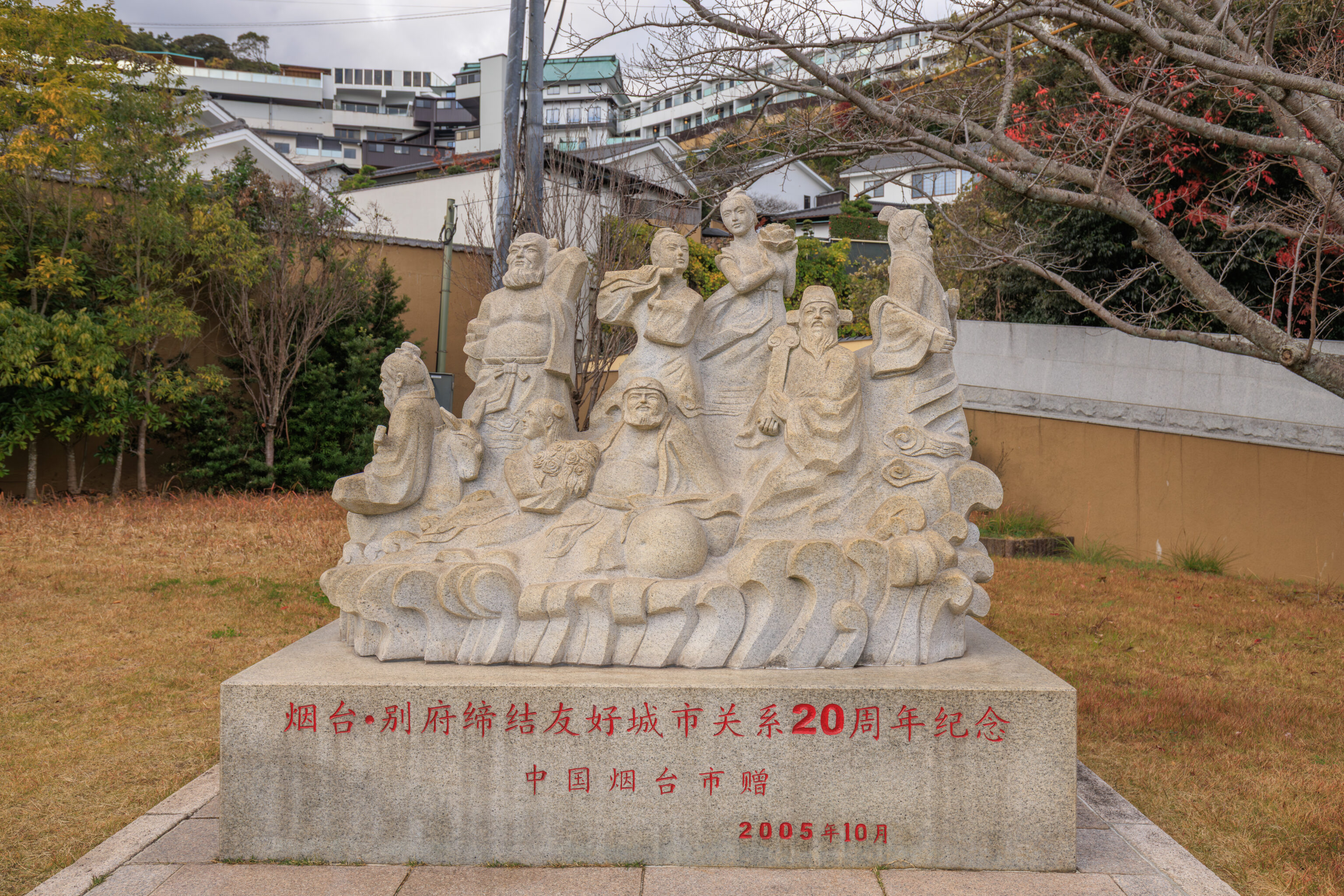
Thus sculpture was donated by the Chinese city of Yantai for the 20th anniversary of their sister city agreement with Beppu.
To commemorate the 20th Anniversary of the Beppu City-Yantai City Friendship Alliance

The Eight Immortals Sculpture

Donated by Yantai City
October 2005

The Legend of the Eight Immortals

The Eight Immortals are eight characters of legend widely known to the Chinese populace. There were 7 men and 1 woman, and their names were Kanshöri, Chōkarō, Kanshōshi, Ritekkai, Sōkokukyū, Ryodōhin, Ransaiwa and Kasenko.

The Legend of the Eight Immortals are found in the "Ba Xian Tu" and "Ba Xian Zhuan" of the early Tang Dynasty, but at that time the names of each Immortal had not yet been established. It is said that the names first appeared in the novel "Dong You Ji" (also called "Toyuuki" in Japanese), written by Wu Yuan Tai.

The Eight Immortals punish the wicked and help the poor. Among the many legends about them, the most famous one is "Ba Xian Guo Hai" (which tells the story of the Eight Immortals crossing the sea).
– Text from a sign.
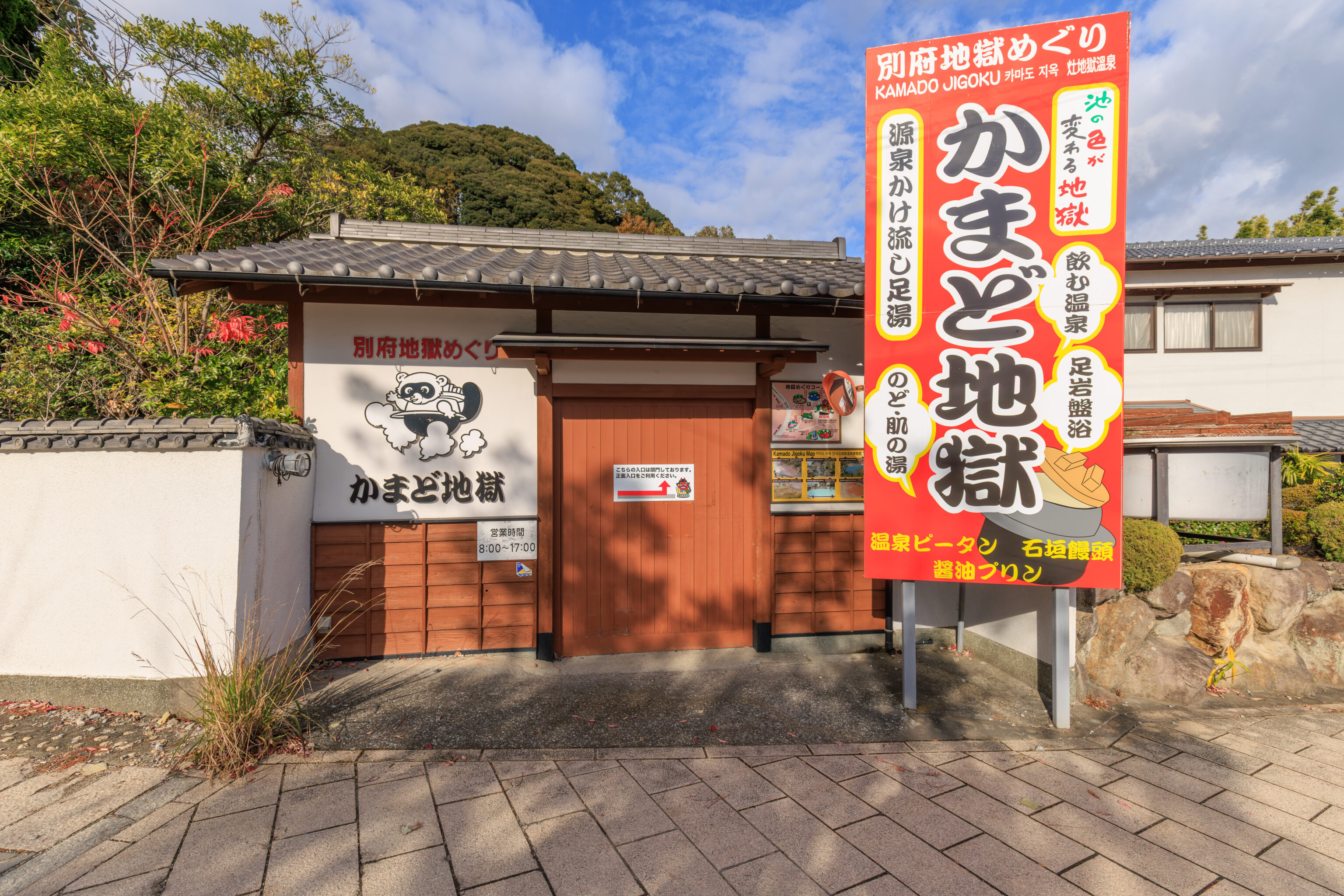
The entrance is around the corner.
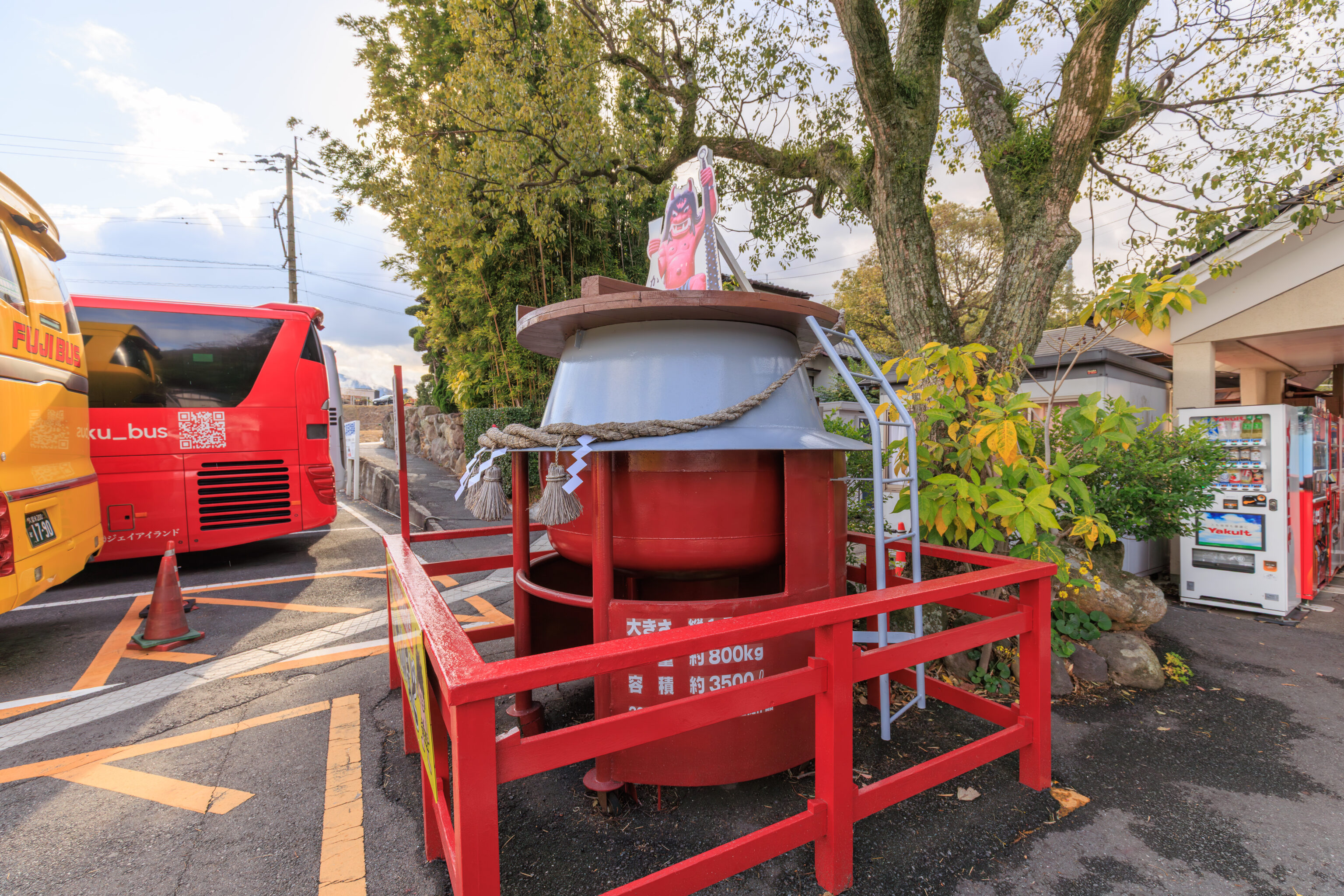
Probably should have photographed the sign to know what is going on here!
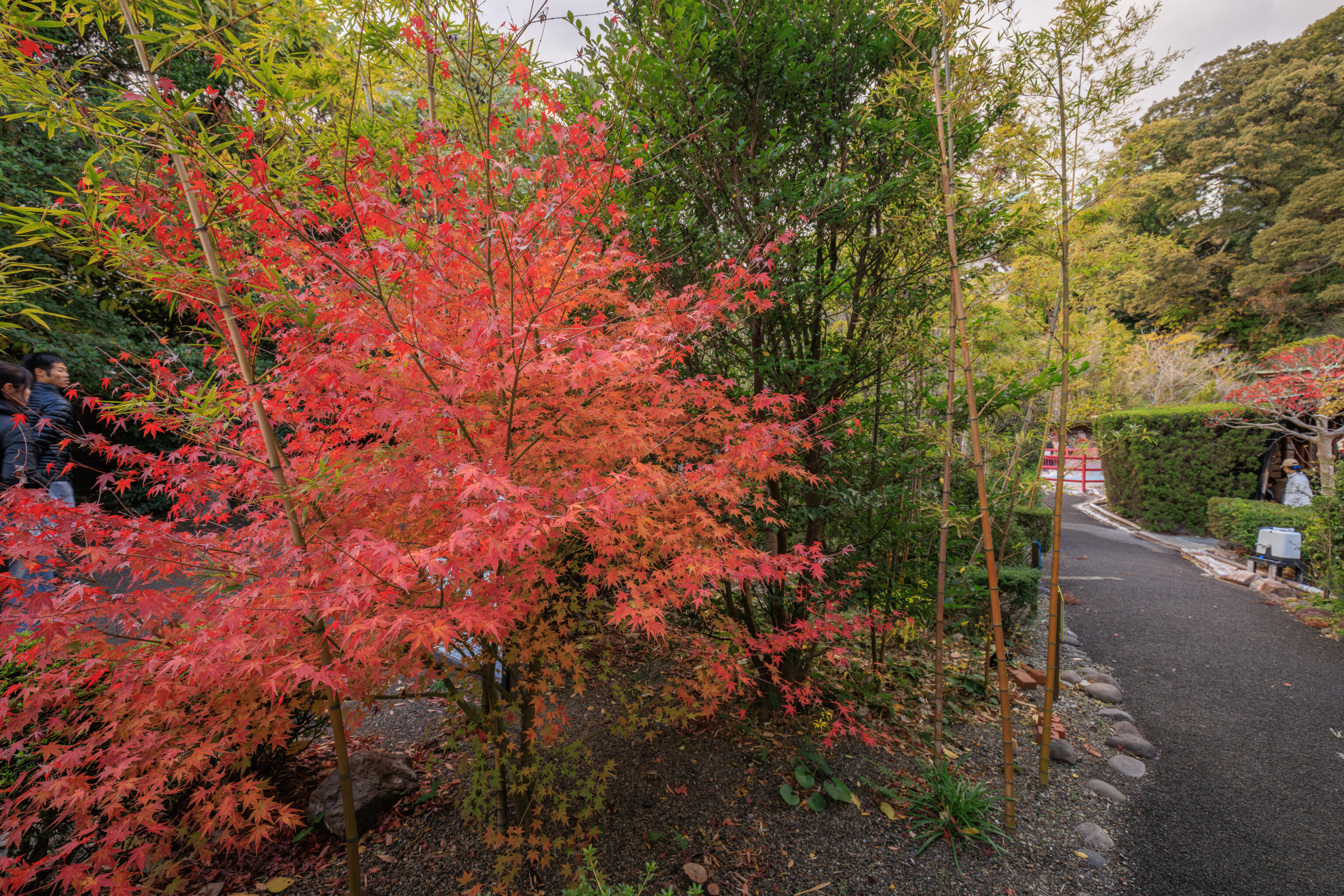
After entering, we walked by a small but pretty momiji.
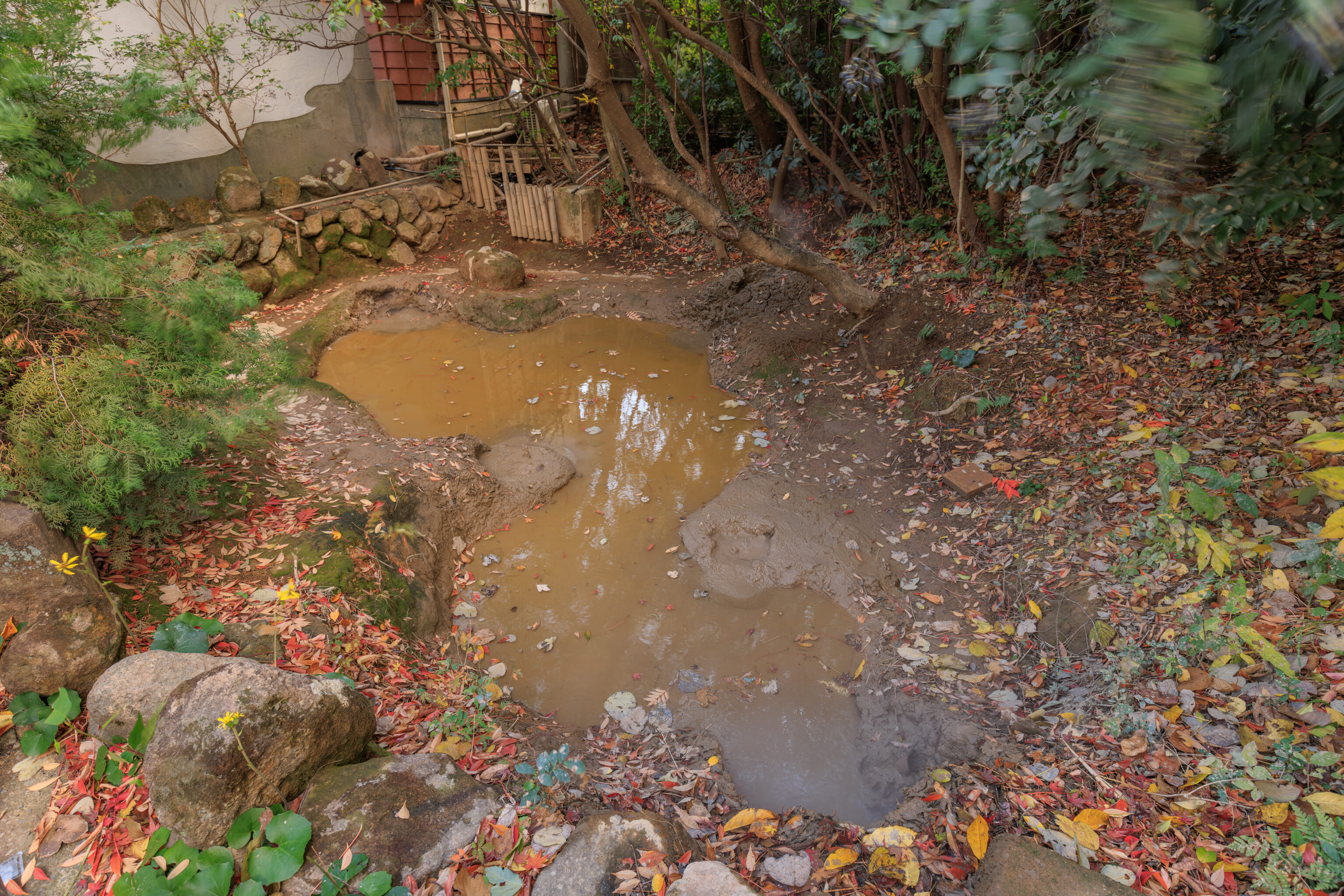
This thermal pool was pretty small and muddy!
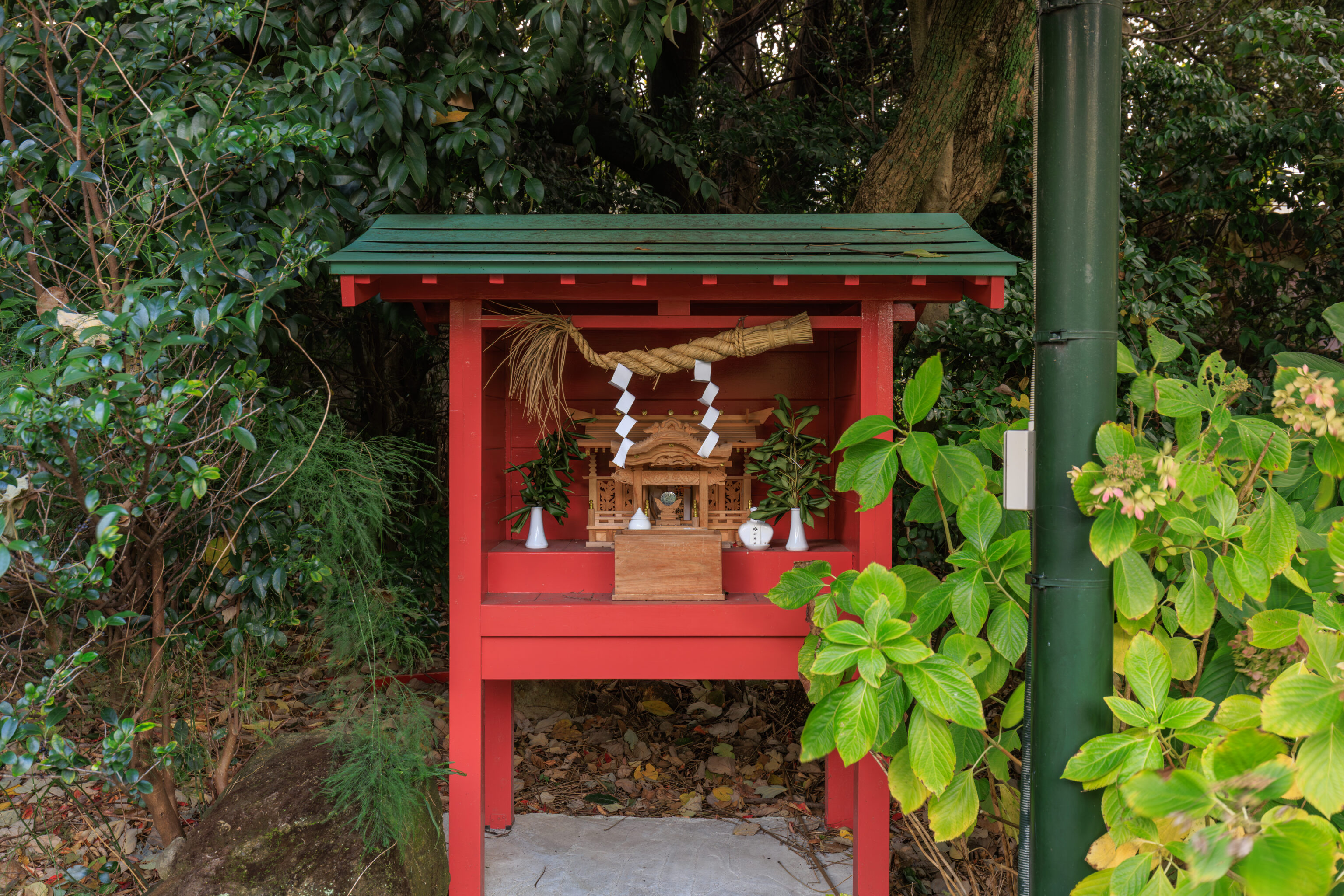
We walked by a small shrine.
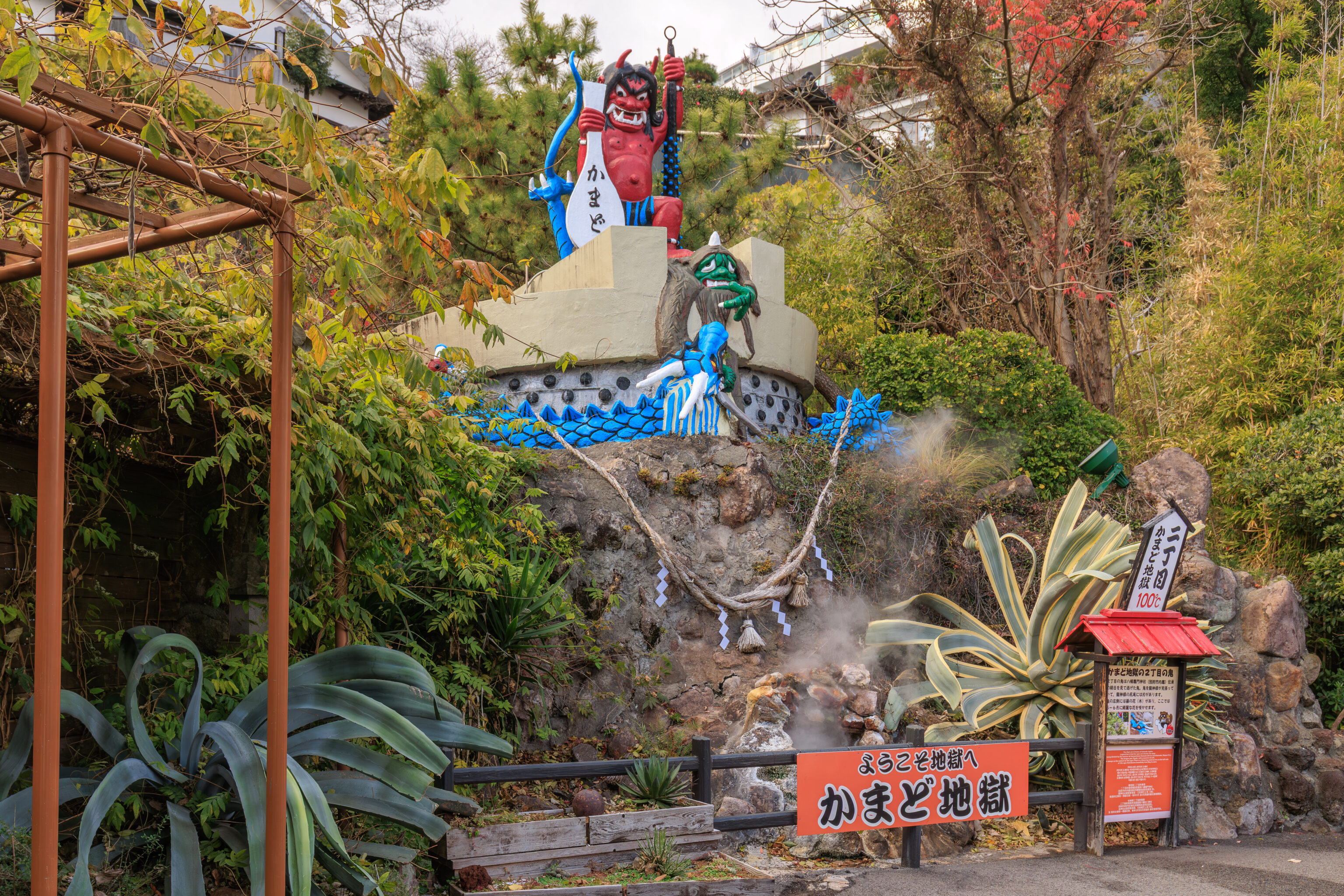
“Welcome to Hell. Kamado Hell”
The Demon of Kamado Jigoku (District 2)
The demon of District 2 is the subject of a legend passed down at Hachiman Kamado Shrine (located in Uchigama, Beppu City)—the tale of a demon who fled at the sight of the rising sun. The demon is kept under watch by the Dragon God, whose tail is tipped with a blade. To the demon's left stands a wisteria tree, which bursts into bloom with beautiful flowers during the months of May and June.
– Japanese text from the sign on the right, translated using Google.
The Ogre at 2-Chome of Kamado Jigoku
Legend has it that the ogre at 2-chome ran away after being blinded by the sunrise at Hamachiman Kamado Shrine (Uchikamado, Beppu City). The dragon god, Ryujin, with a sword in its tail, is always on the outlook for the ogre.  There is a flowerng wisteria tree on the left side of the ogre that blooms beautifully from May to June.
– English text from the same sign.
The red character at the top of the sculpture is the 鬼 oni described in the text. The English text refers to it as an ogre while the text translated by Google refers to it as a demon. Maybe demon ogre would be the best description!
In fact, this may be a very good depiction of an oni. The oni Wikipedia page actually has a photograph of this exact sculpture here and a description:
This oni (ogre) tramples a hapless villain in Beppu, Oita, Oita Prefecture, a famous onsen hot springs resort on the island of Kyushu in Japan.
– Wikipedia, Oni, https://en.wikipedia.org/wiki/Oni
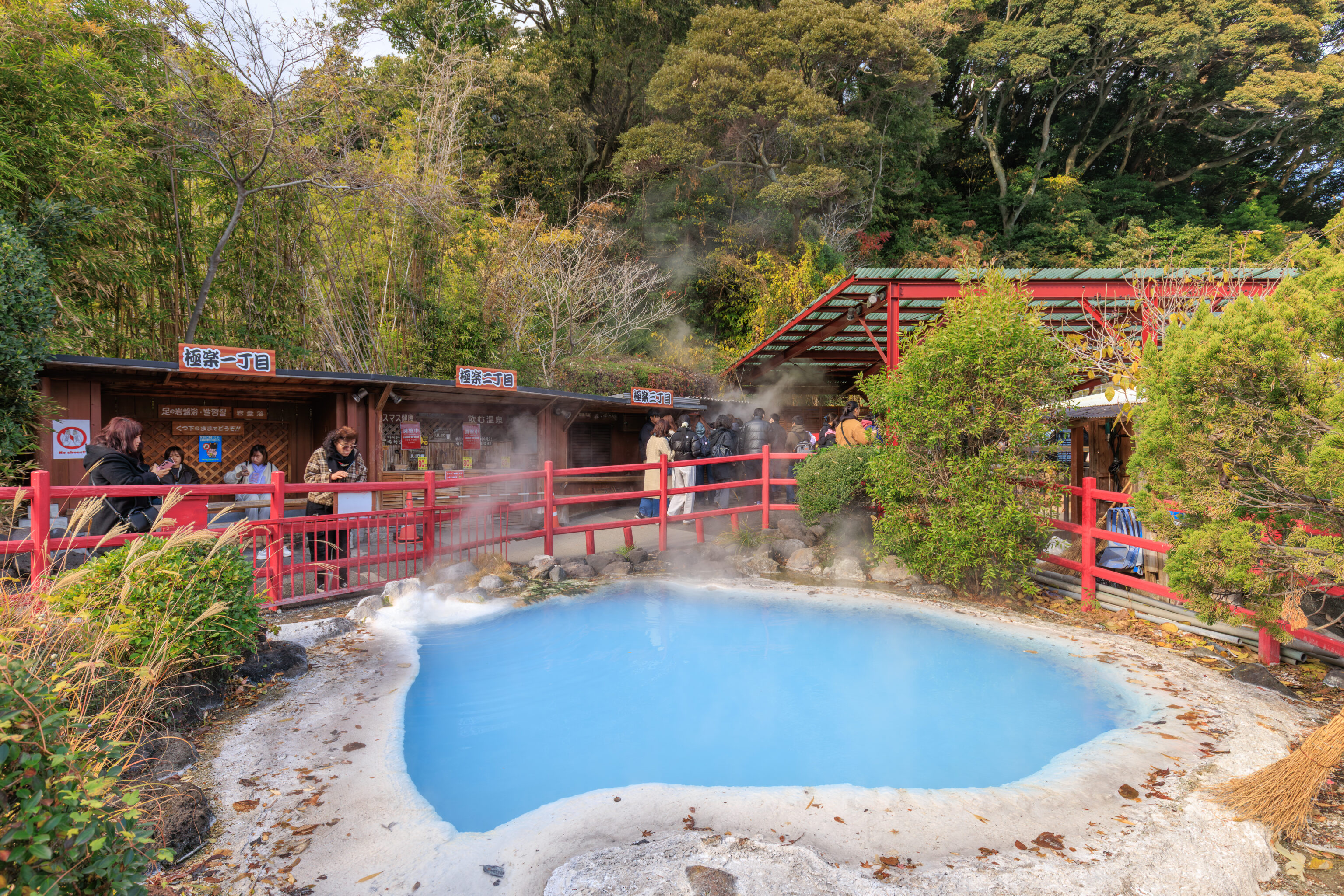
We then came to a blue pool.
The Mystery of Kamado Jigoku?

The hot springs of Kamado Jigoku are said to contain a substance called amorphous silica (SiO2), which reflects light and gives the hot springs their blue appearance. The white material surrounding the pond in the 3rd district is a deposit of this silica. It is estimated that the silica in this 3rd district pond, a hot spring deposit known as siliceous sinter, took around 70 years to form.
– Text from a nearby sign.
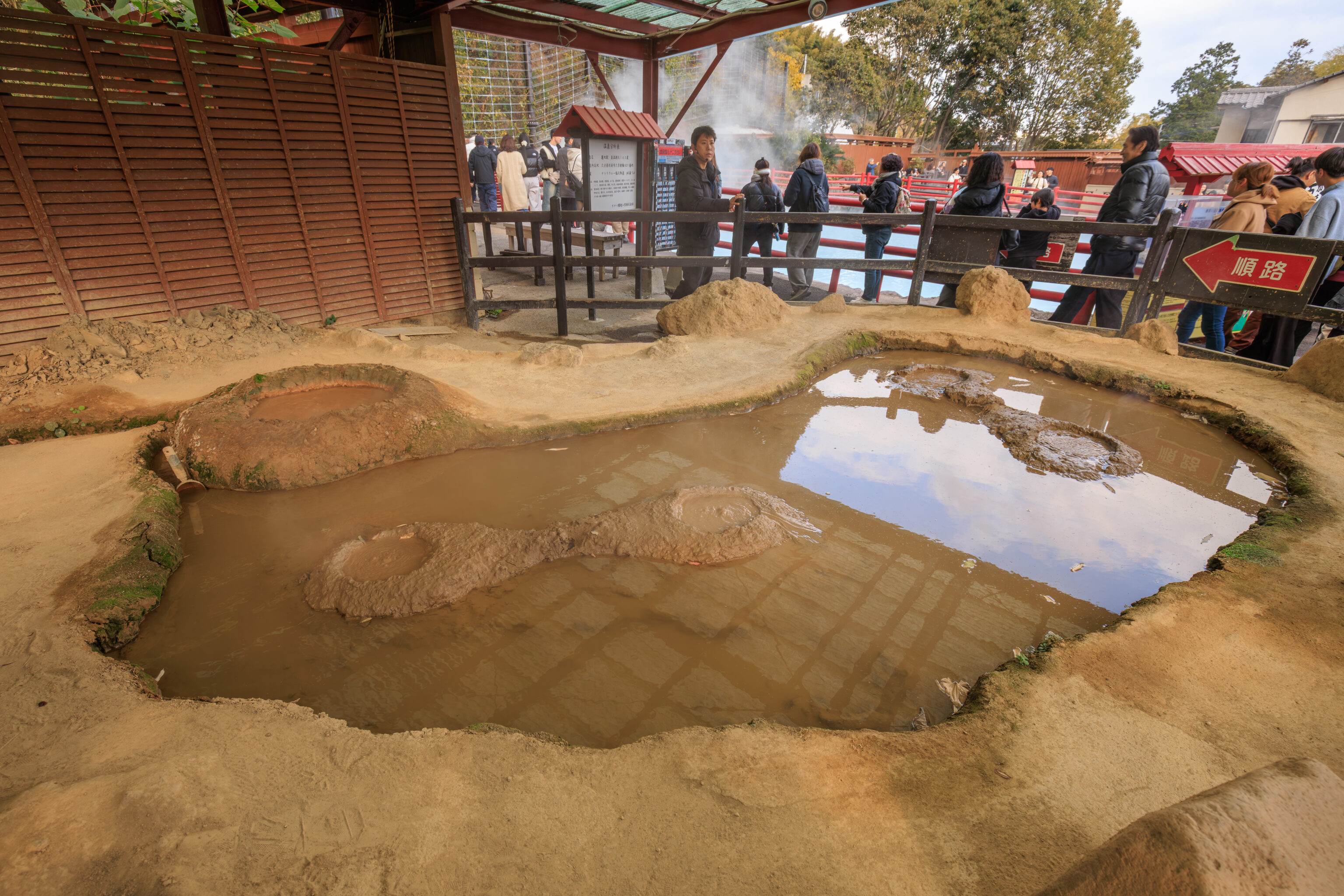
We noticed that there were many tour groups here. We saw one that was next to this pool. The guide was saying something about it…
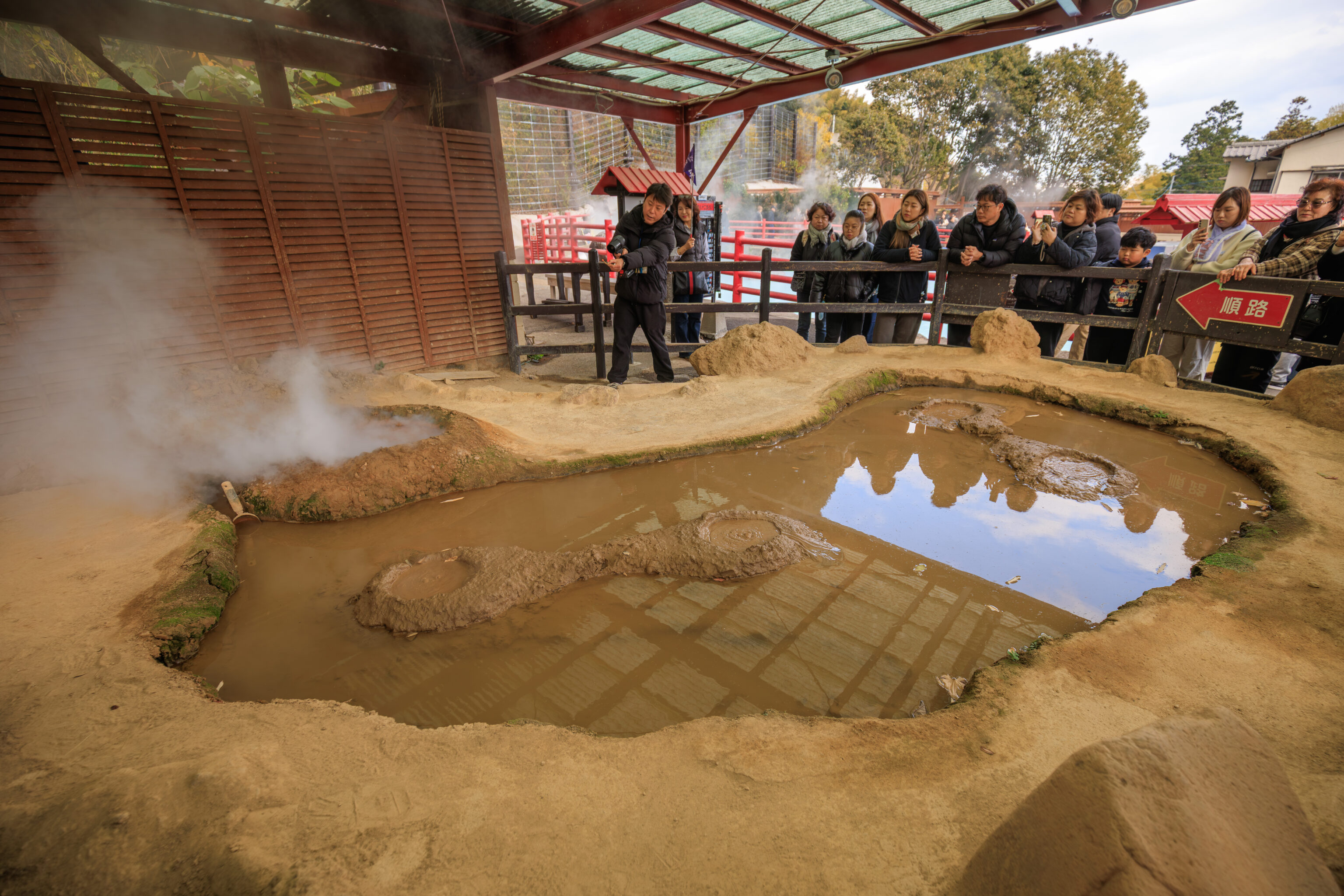
The Mystery of the 4th District?
This pond was formed by various types of clay erupting from underground along with the hot spring water. The thick, brown clay solidified, naturally creating its current shape.
– Text from a sign.
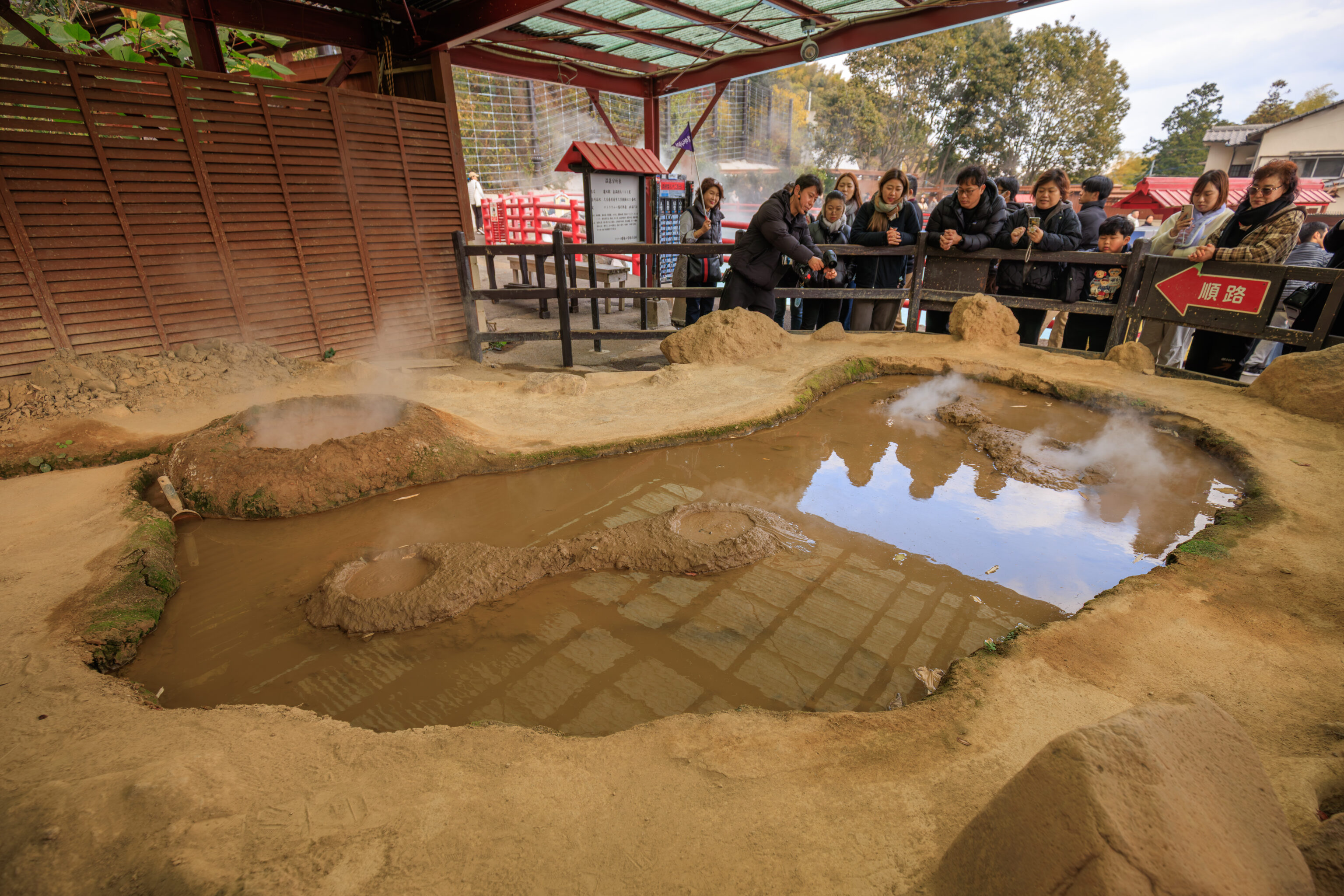
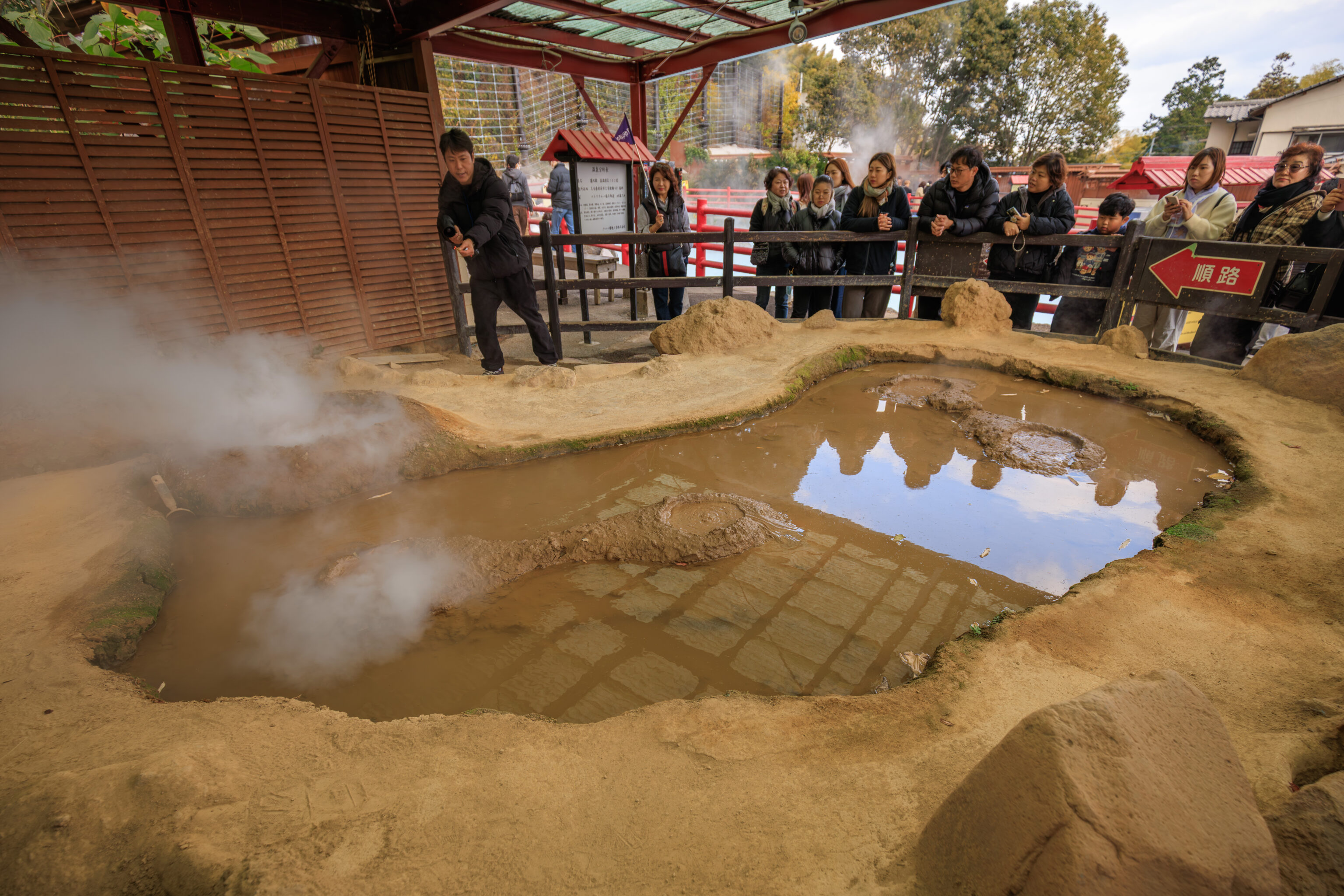
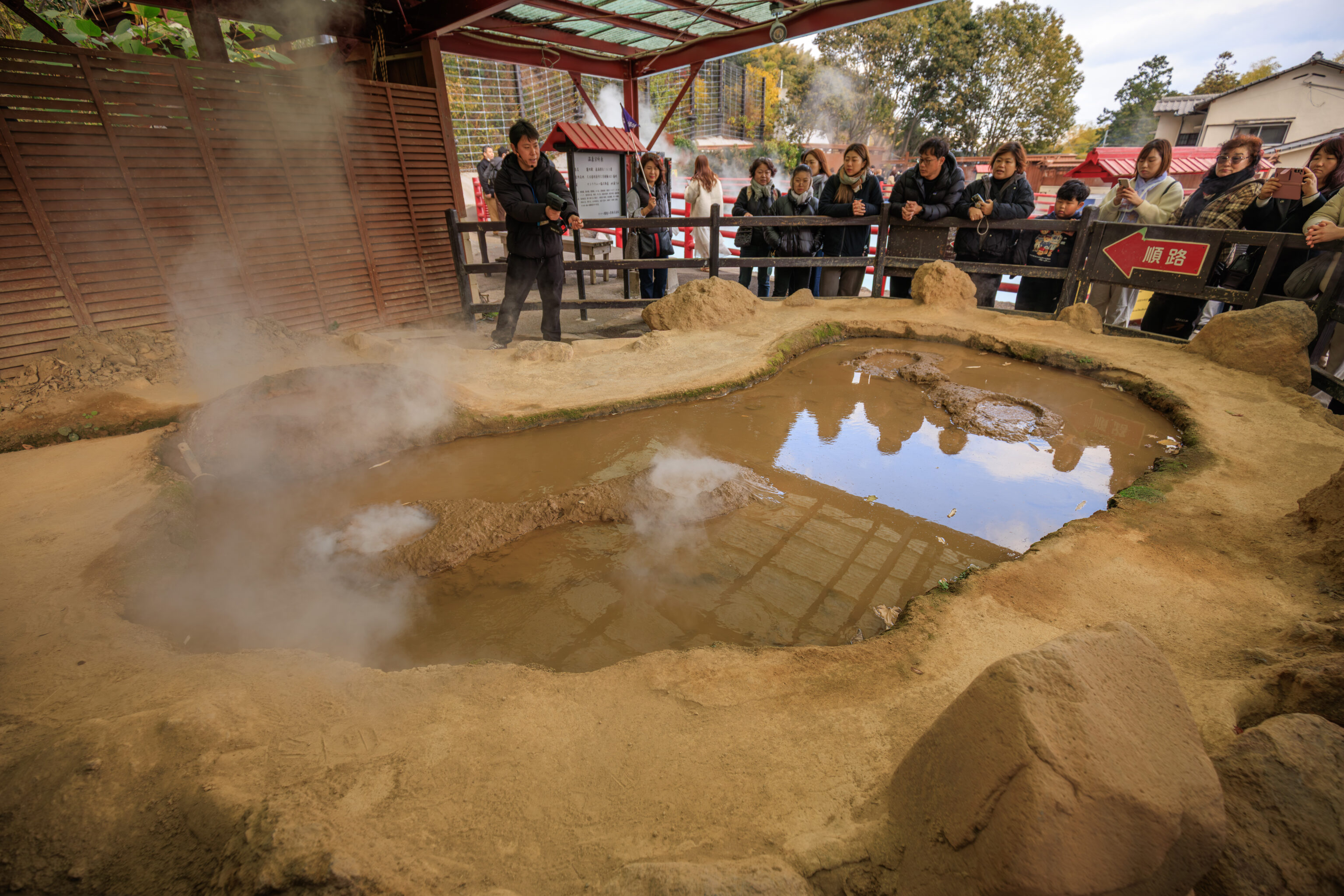
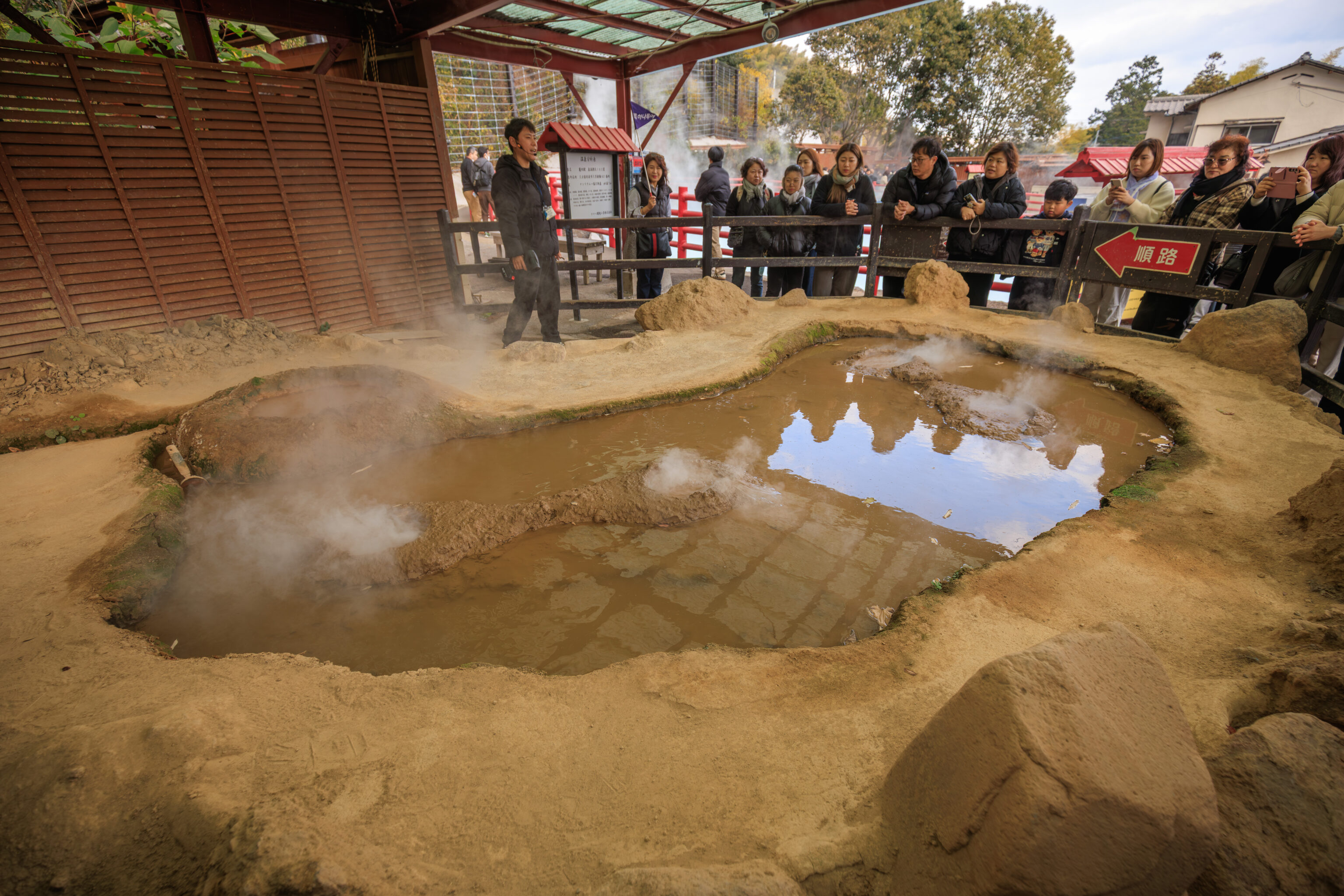
The gimmick here is that by blowing burning particulate matter into the thermal pool, it seems to cause it to emit steam.
A video explains this better than still photography and text…
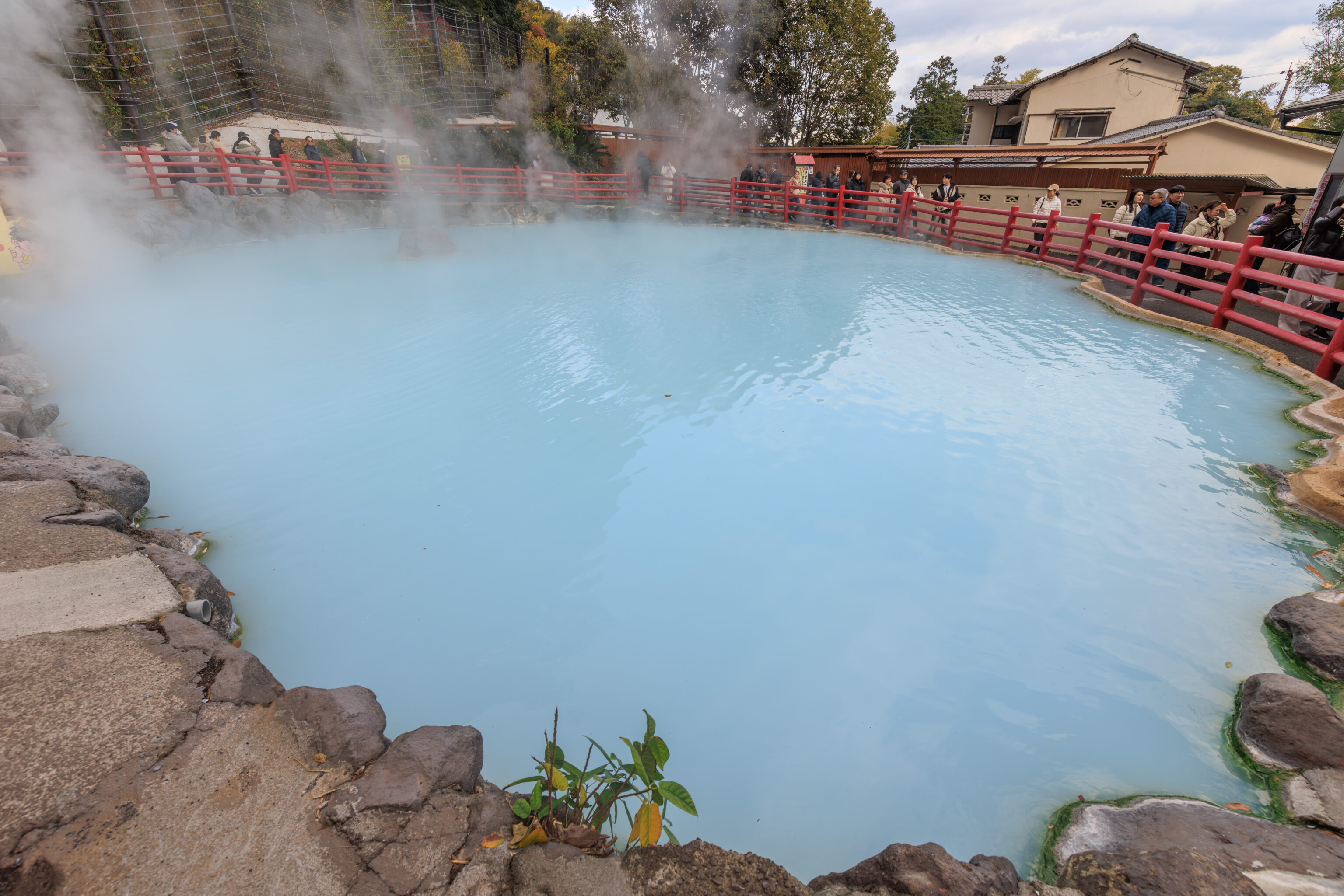
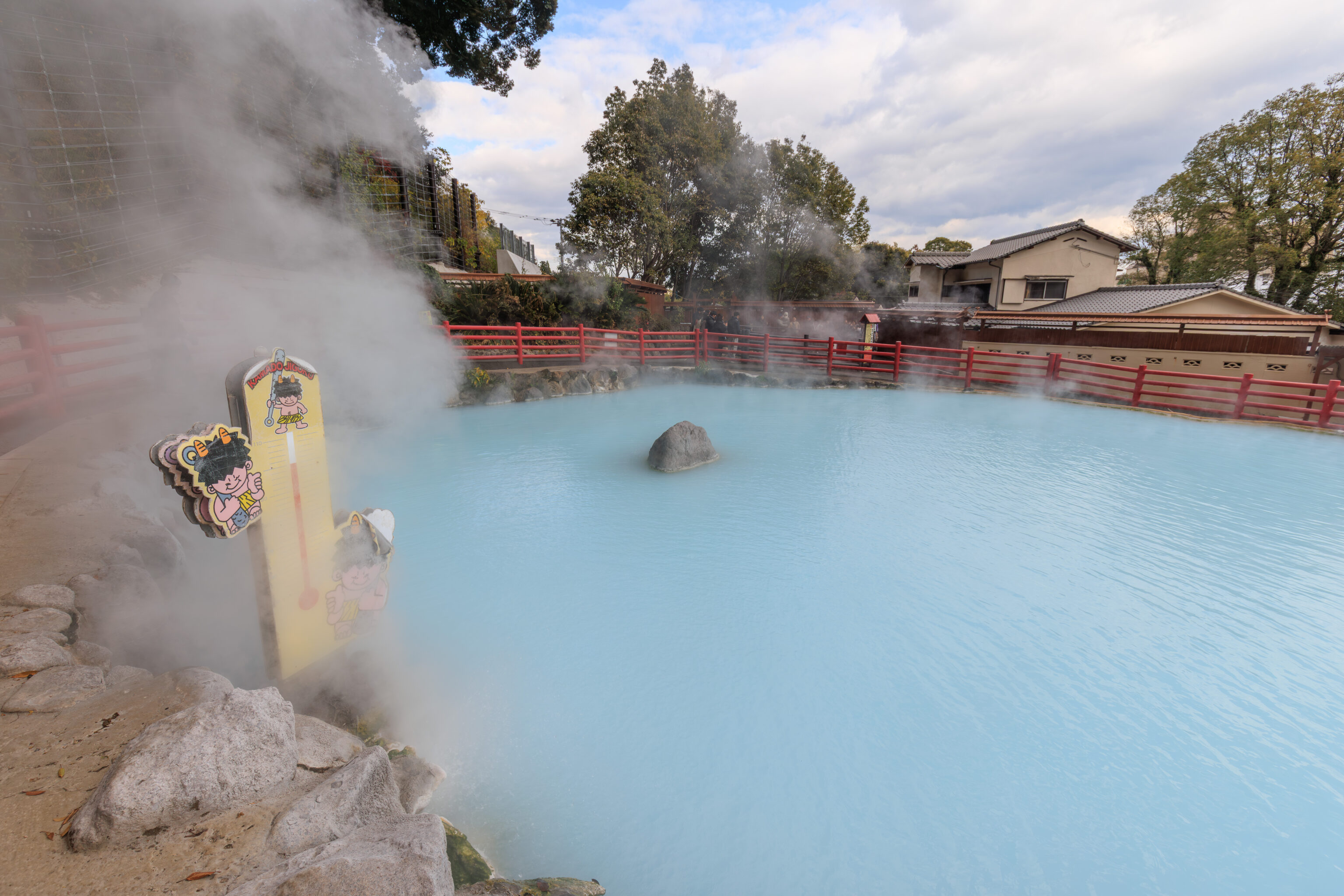
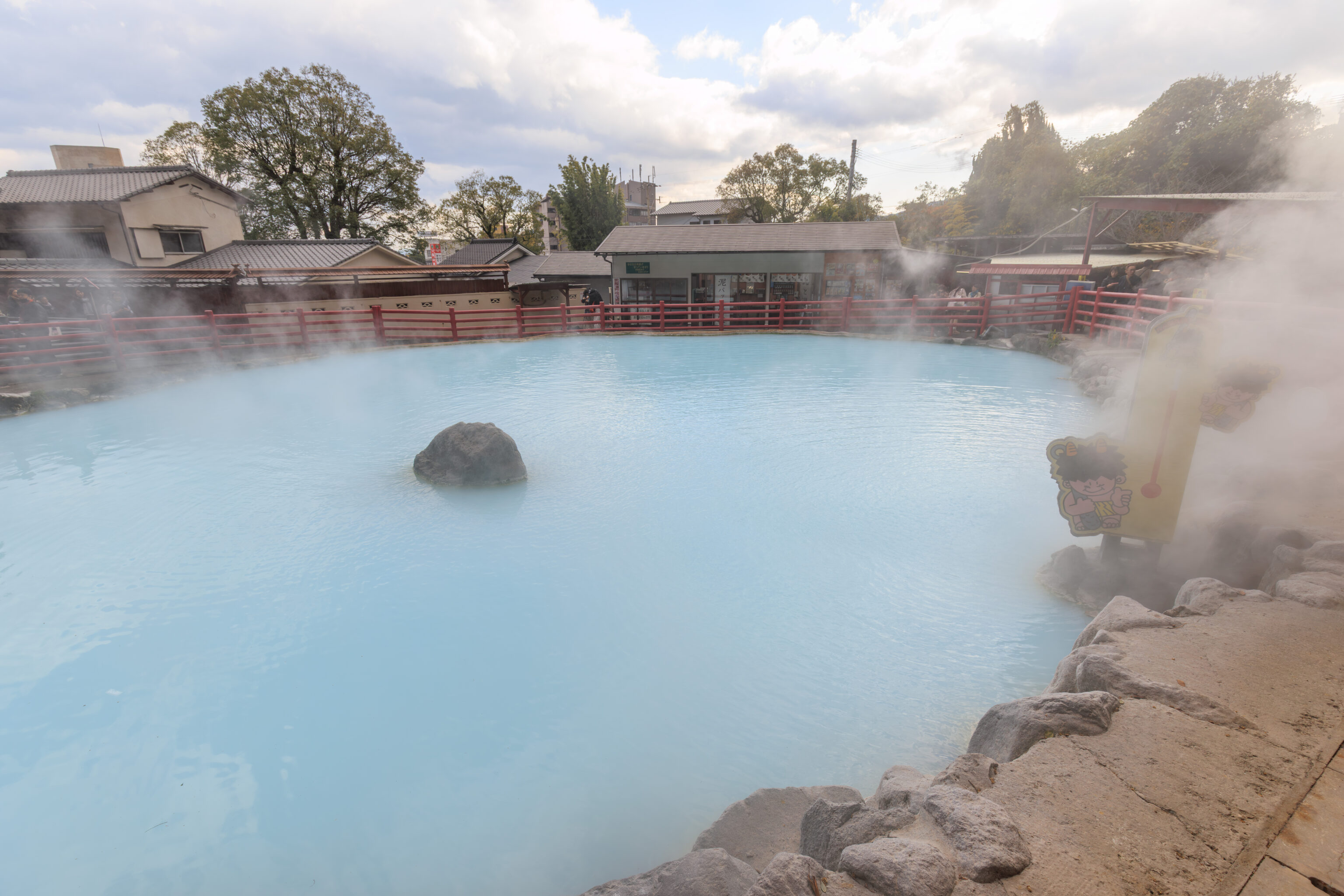
The next pond had a beautiful light blue, almost milky blue, color.
The pond in the 5th district usually boasts a beautiful pale blue color, but after prolonged rain, it transforms into a shade of green. With a few days of clear weather, it gradually returns to its pale blue hue, showcasing the mysterious power of nature.
– Text from a sign, translated using Google.
The white substance found on the twig collected from the bottom of the 5th district pond is identified as amorphous silica (SiO2) hot spring deposits, known as sinter, which likely took around 50 years to form. The terrace-like white deposits surrounding the pond are also composed of amorphous silica.

Geophysics Research Facility,
Kyoto University College of Science
Shinji Osawa, Ph.D.
– Text from another sign, translated using Google.
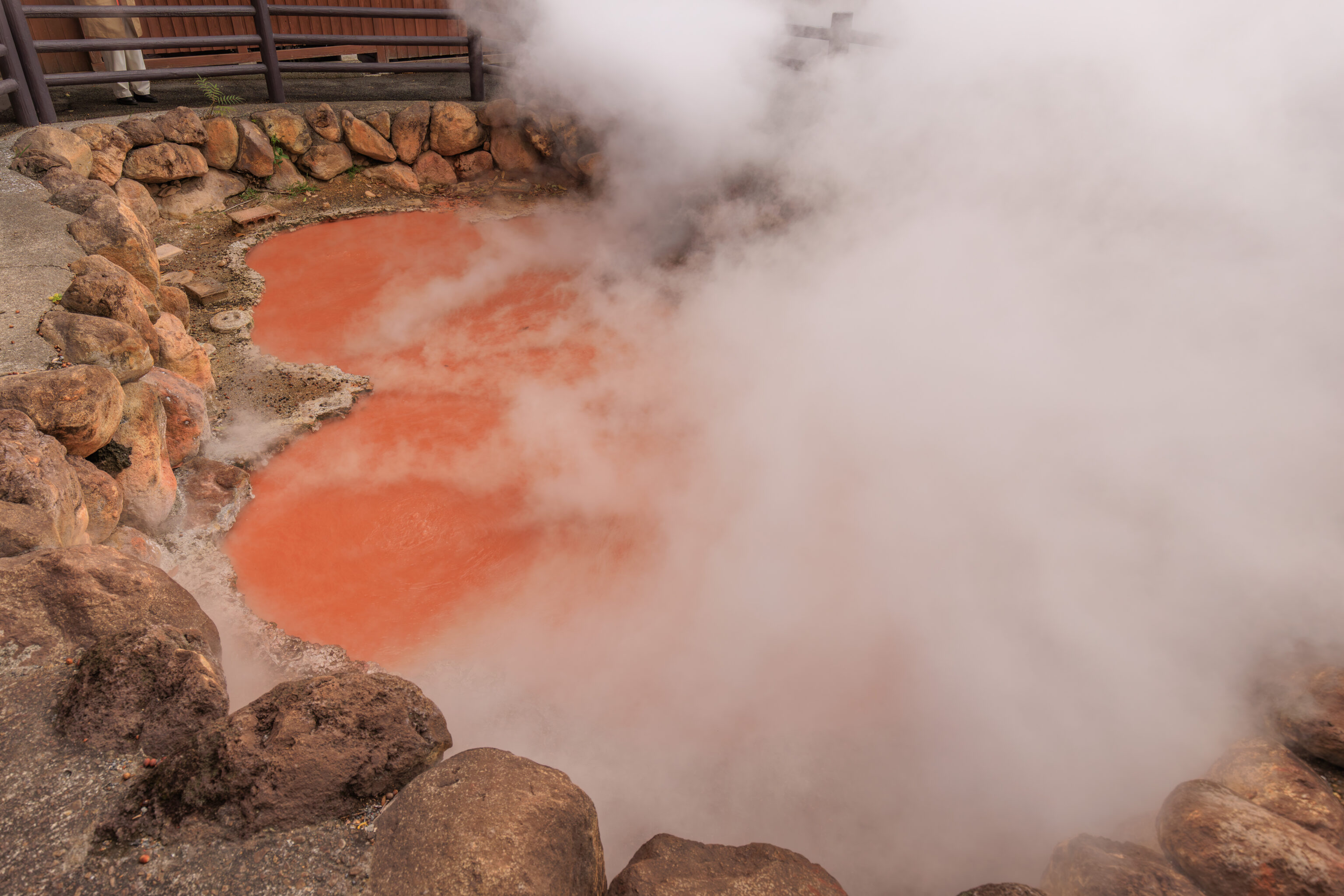
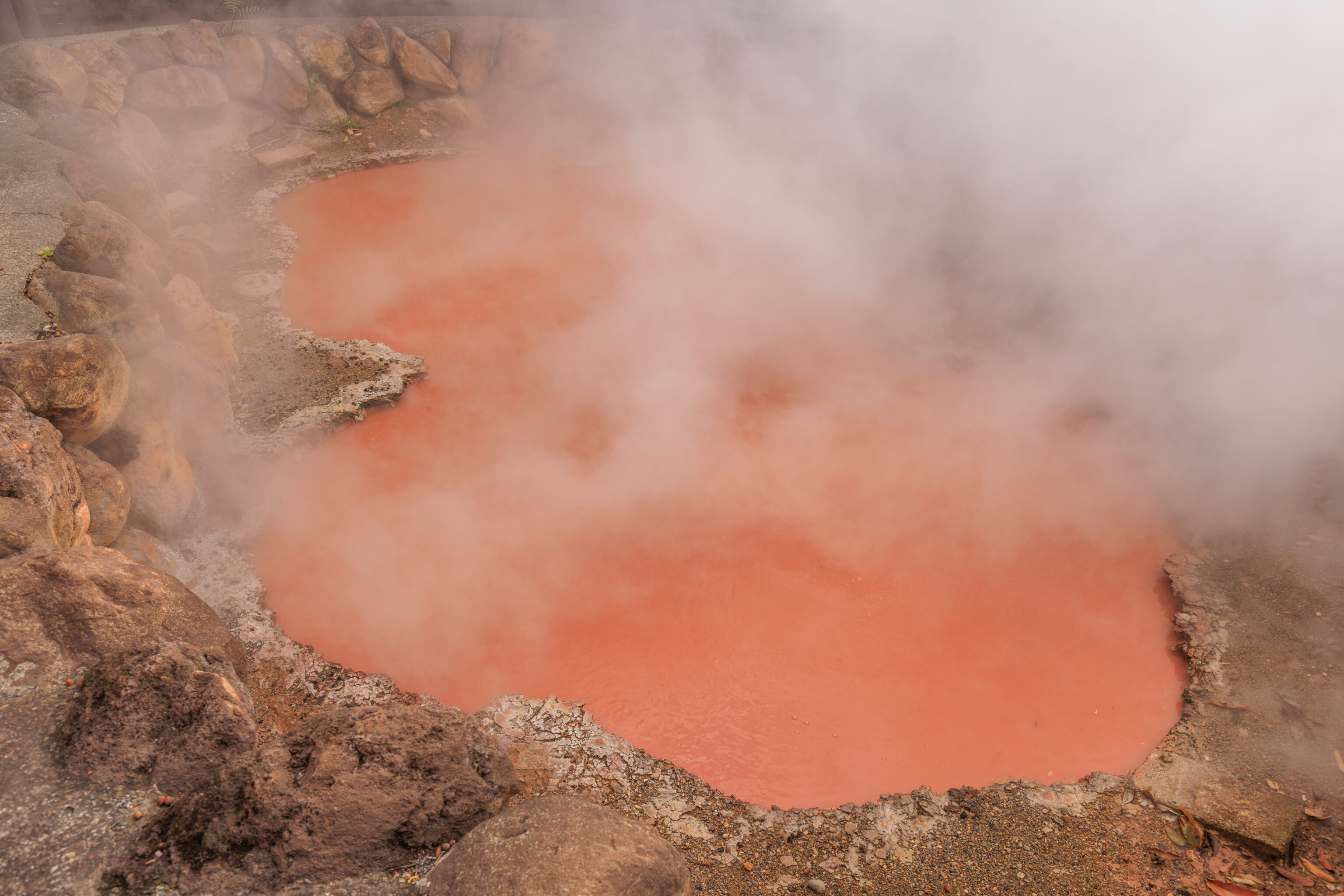
The next and final pool was very reddish.
Kamado, 6-chome
The Mysteries of 6-chome

The distinctive color of the pond here is derived from the bedrock lying beneath the surface.  Specifically, it is the color produced by the dissolution of various types of viscous clays—formed by geothermal heat—that have seeped into the water.  Because steam and hot spring water emerge simultaneously at this location the mixture takes the form of thermal mud.

Regarding the Color Variations at 6-chome

Upon measuring the intensity of the green coloration at 6-chome, a value of 510 was recorded—a figure significantly higher than those observed at the other two survey points. Based on this finding, it is hypothesized that the coloration is predominantly caused by iron compounds (Fe).

Furthermore, given that the temperature of the hot spring source at 6-chome is below 203°C, it is believed that the water—which was originally classified as a "6-chome type"—underwent a chemical transformation, subsequently taking on the specific characteristics and coloration observed today.
– Text from a sign, translated using Google.
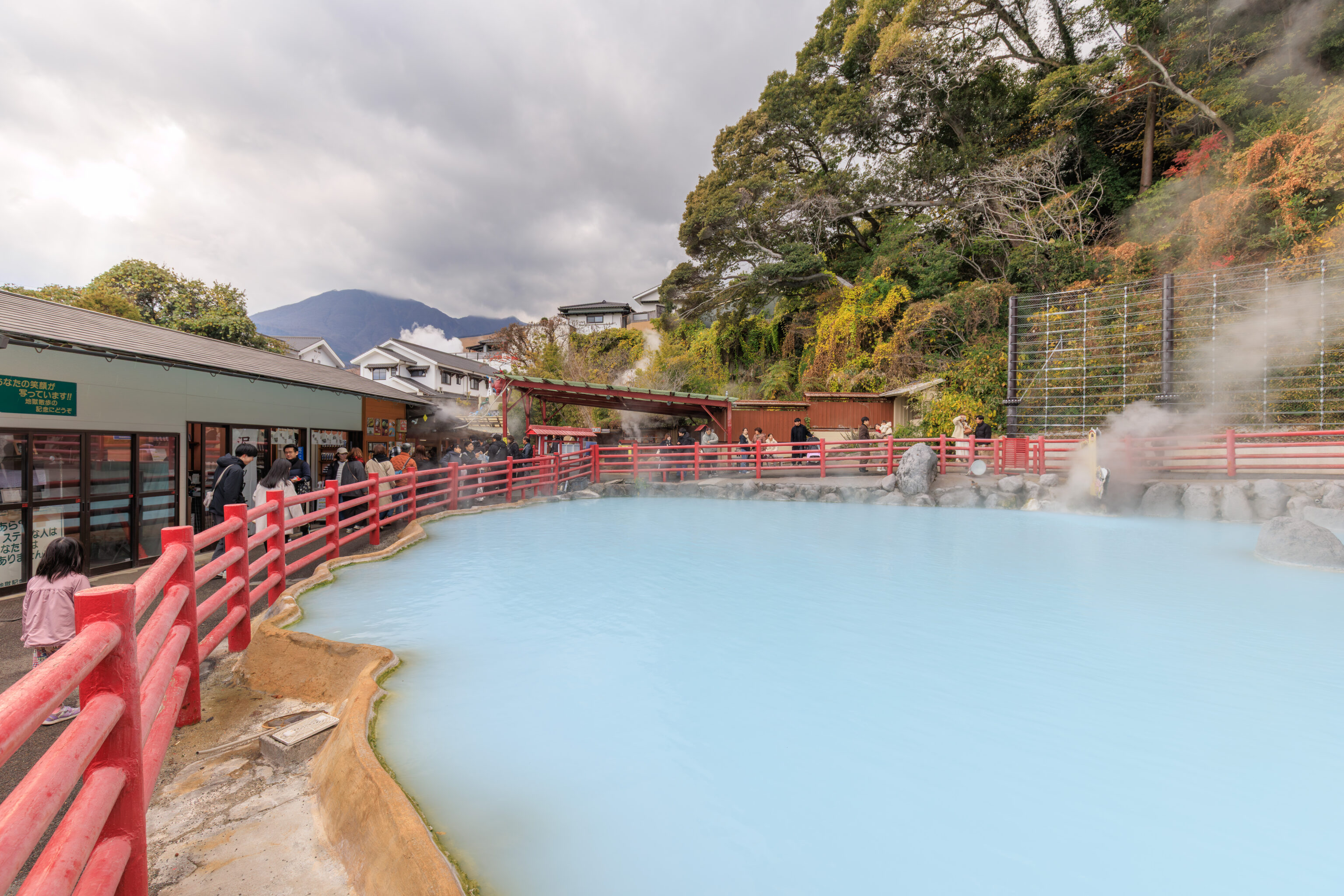
We started to head to the exit, which led us back by the light blue 5th pool.
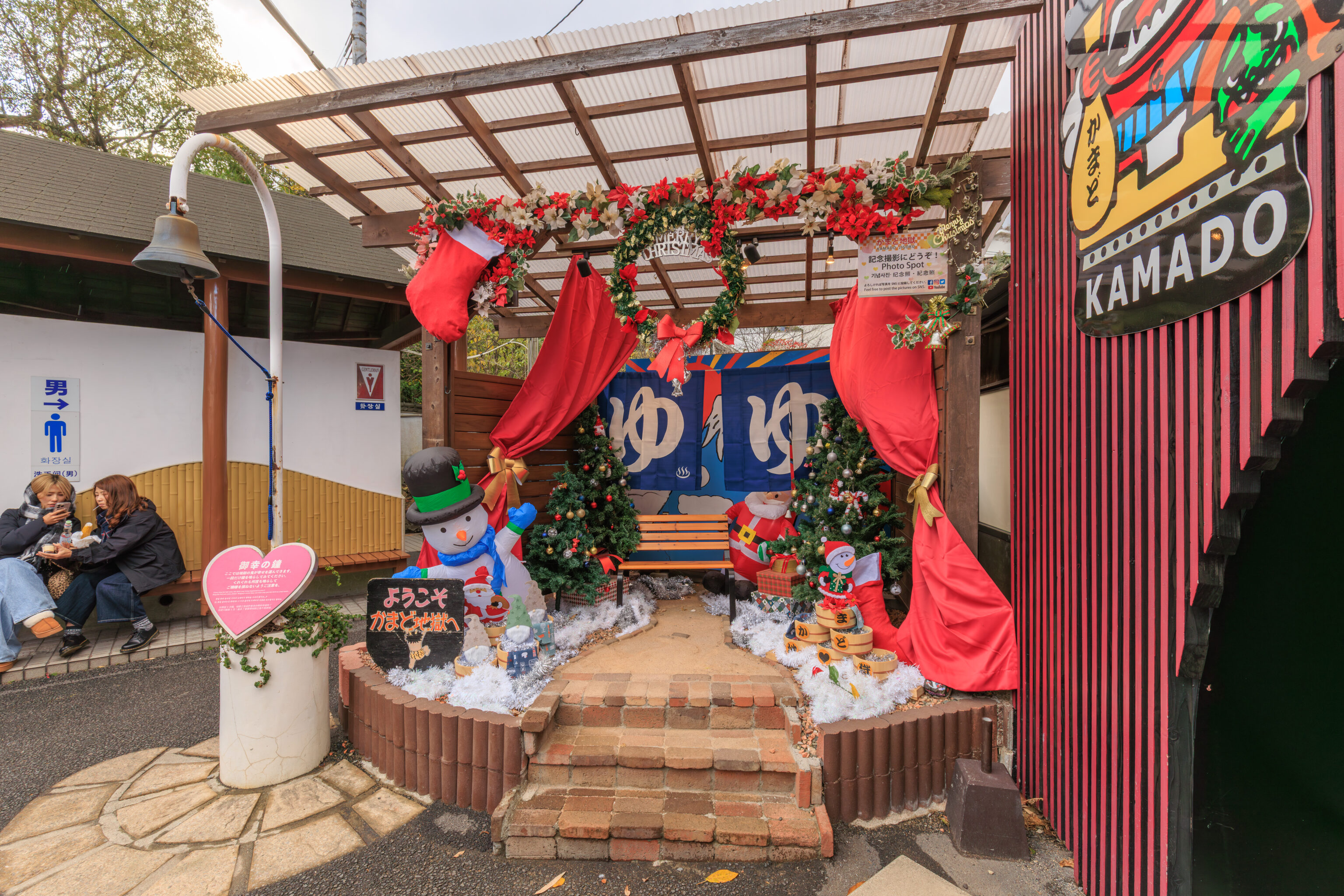
The area selling jigoku cooked foods was pretty busy. We walked past that towards the exit, passing by this photo spot on our way out.
Oniyama Jigoku
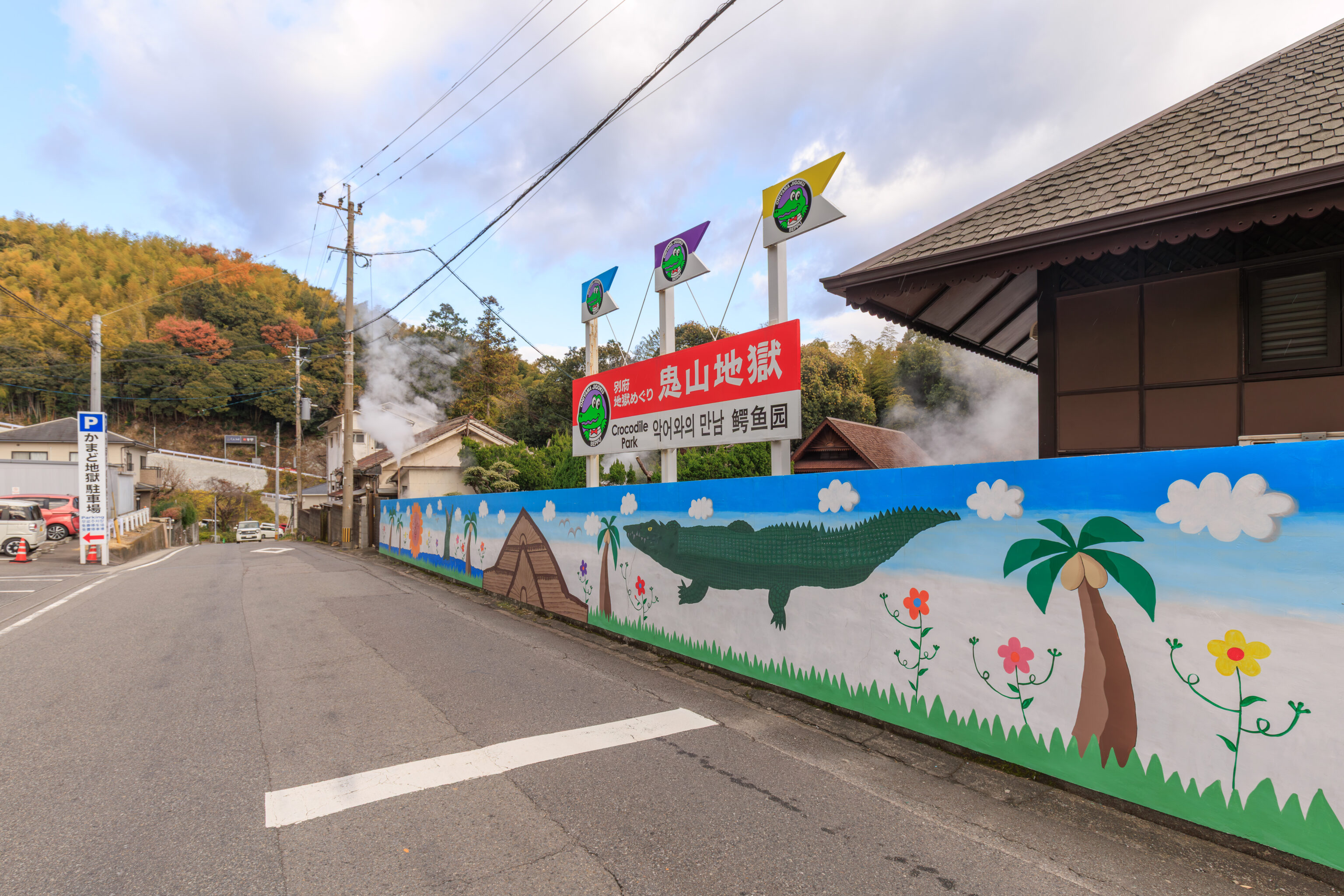
We walked across the street to the east to reach 鬼山地獄 Oniyama Jigoku, meaning demon, or ogre as we’ve determined previously, mountain hell.
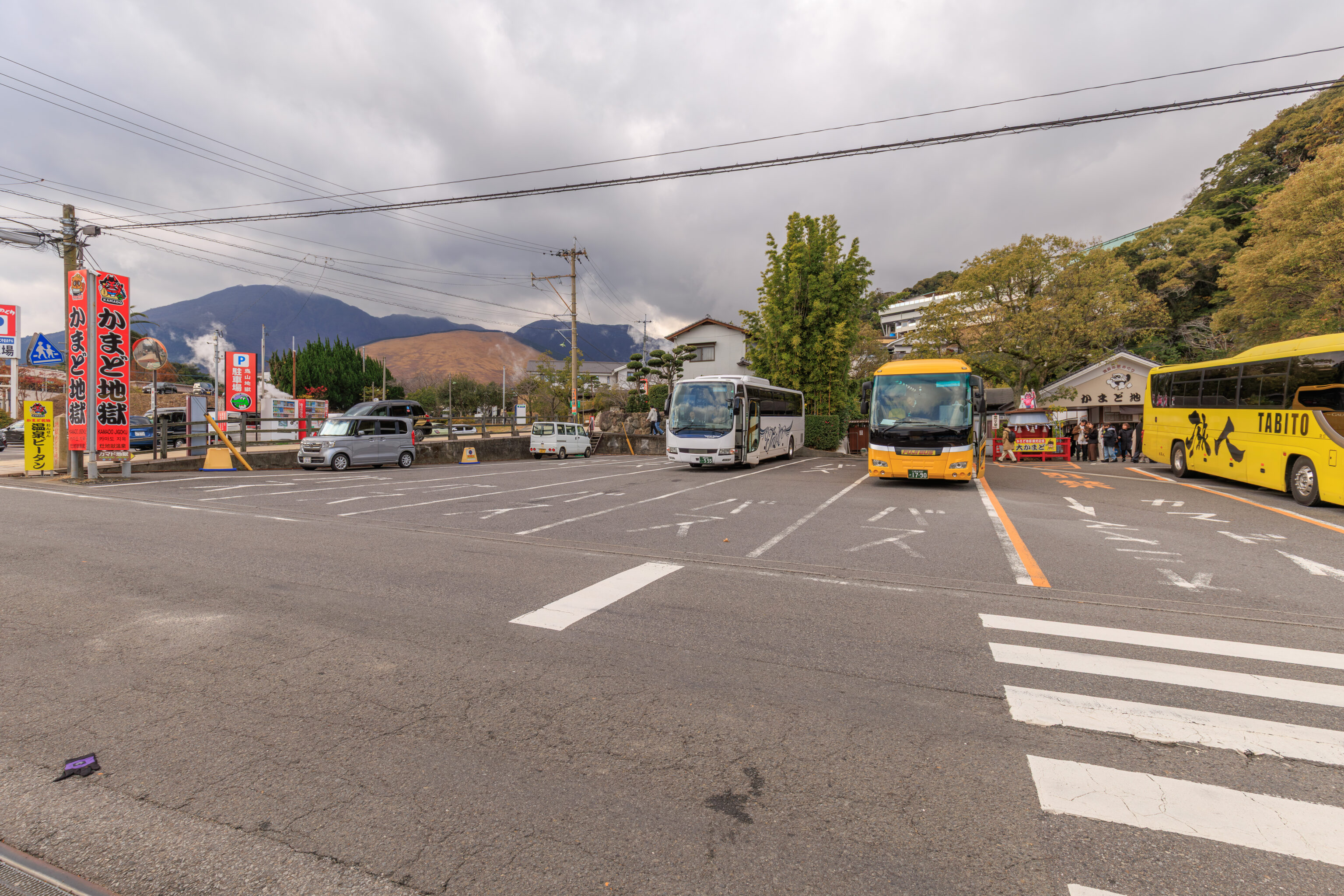
This was the view looking back at Kamado Jigoku.
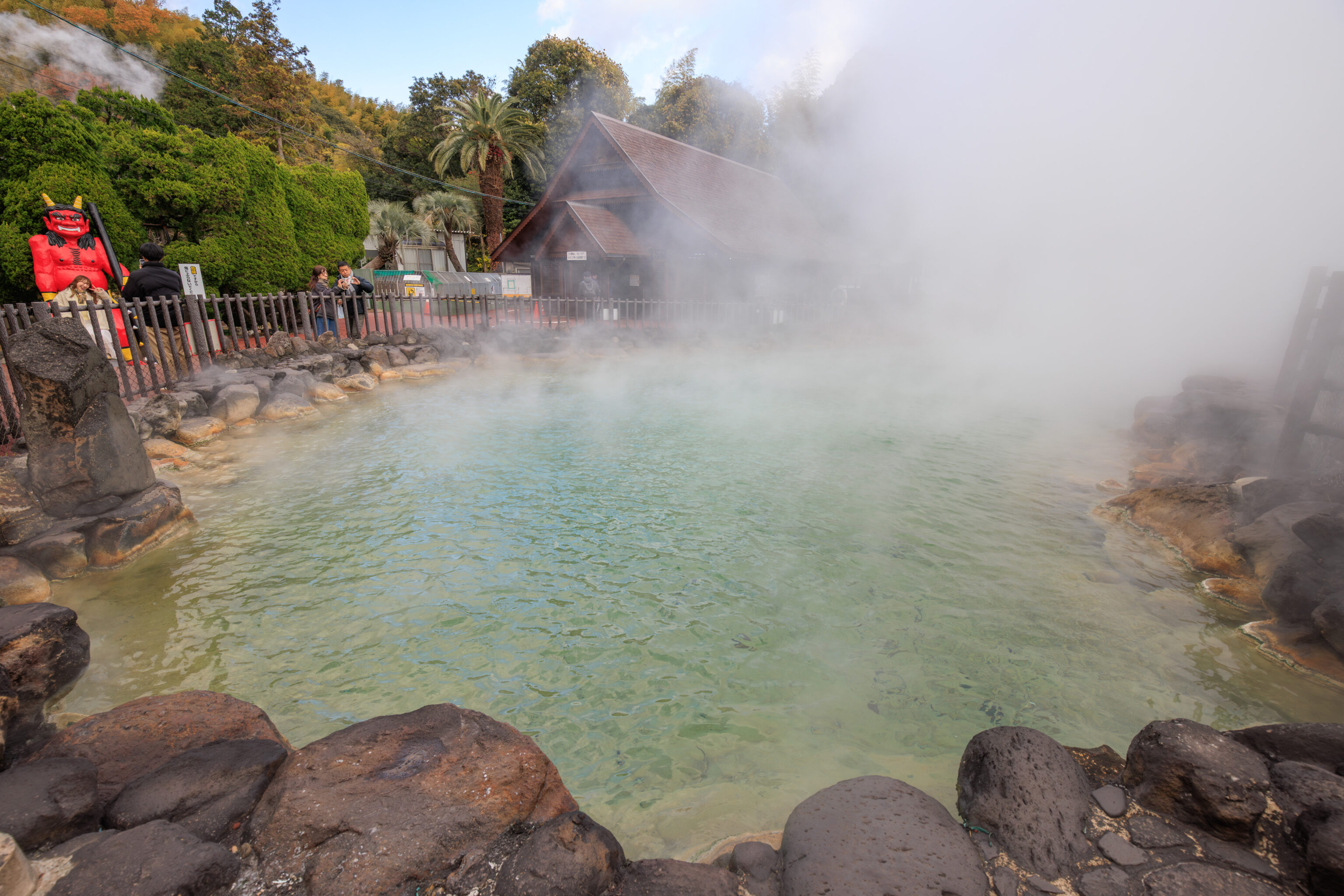
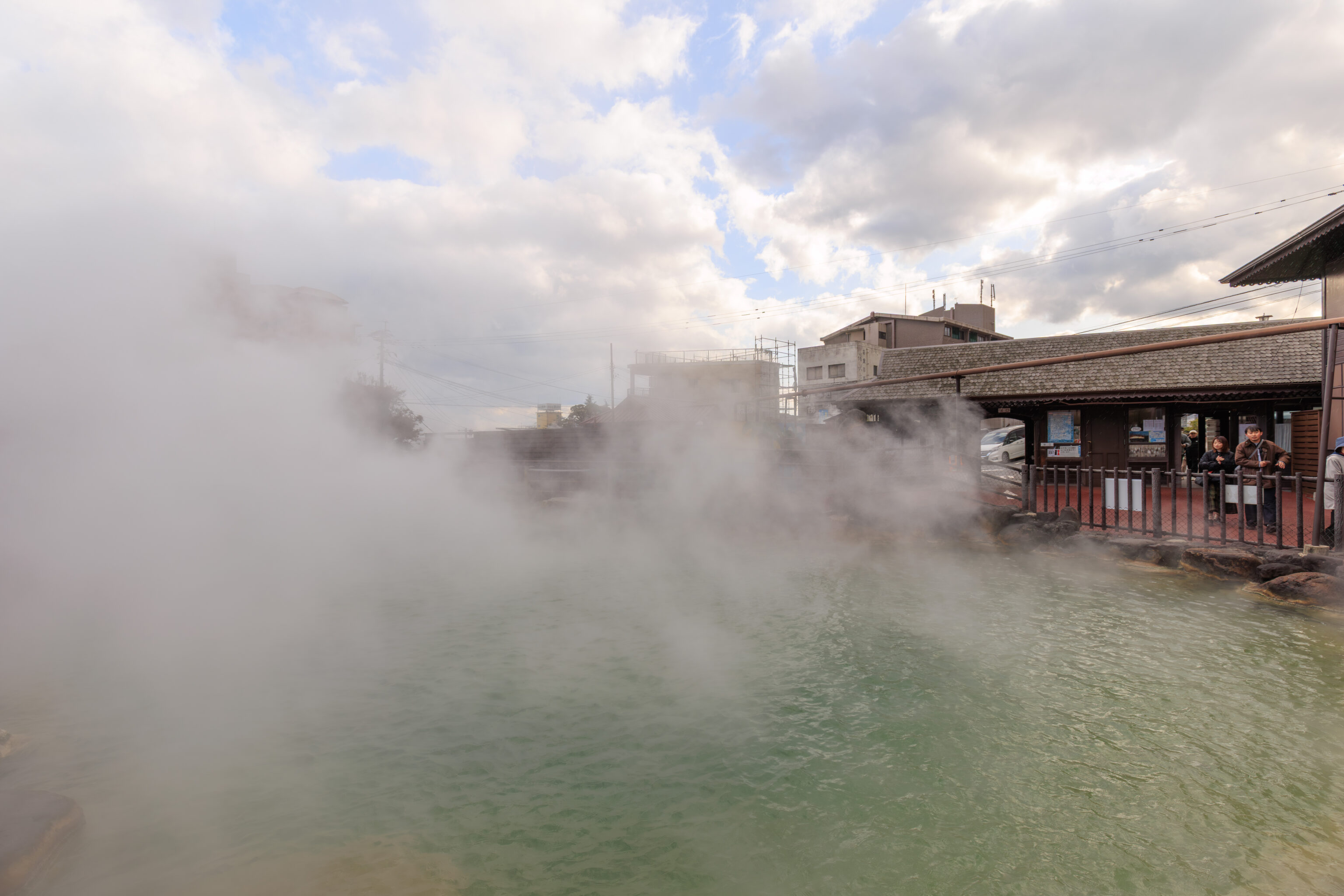
Upon entering Oniyama Jigoku, we came upon this pool emitting a large amount of steam.
ONIYAMA JIGOKU (Oniyama Hell)
The force of the steam is so strong here that about one and a half train cars can be pulled by its pressure, and it creates ideal conditions for breeding crocodiles.
– Text from a sign.
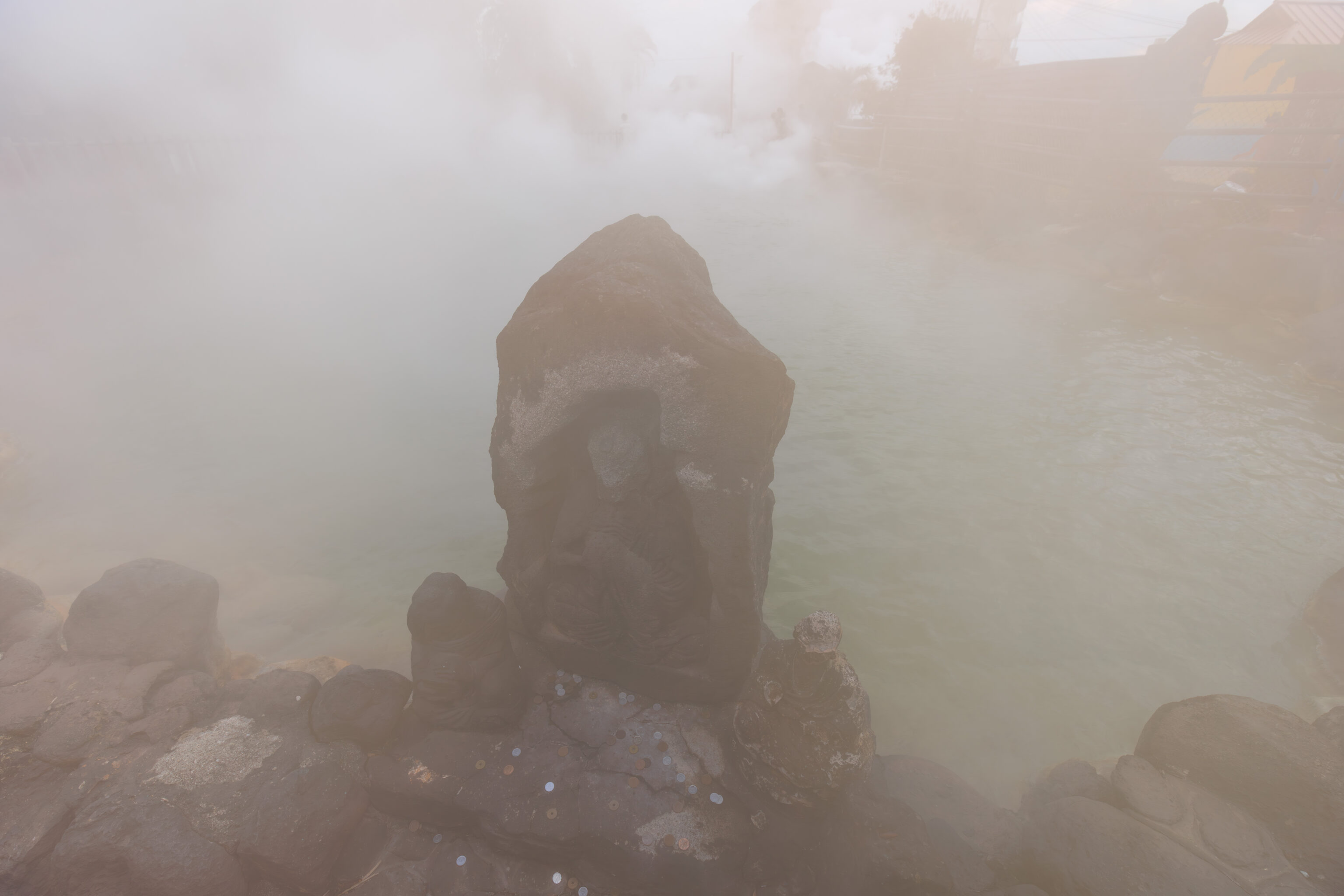
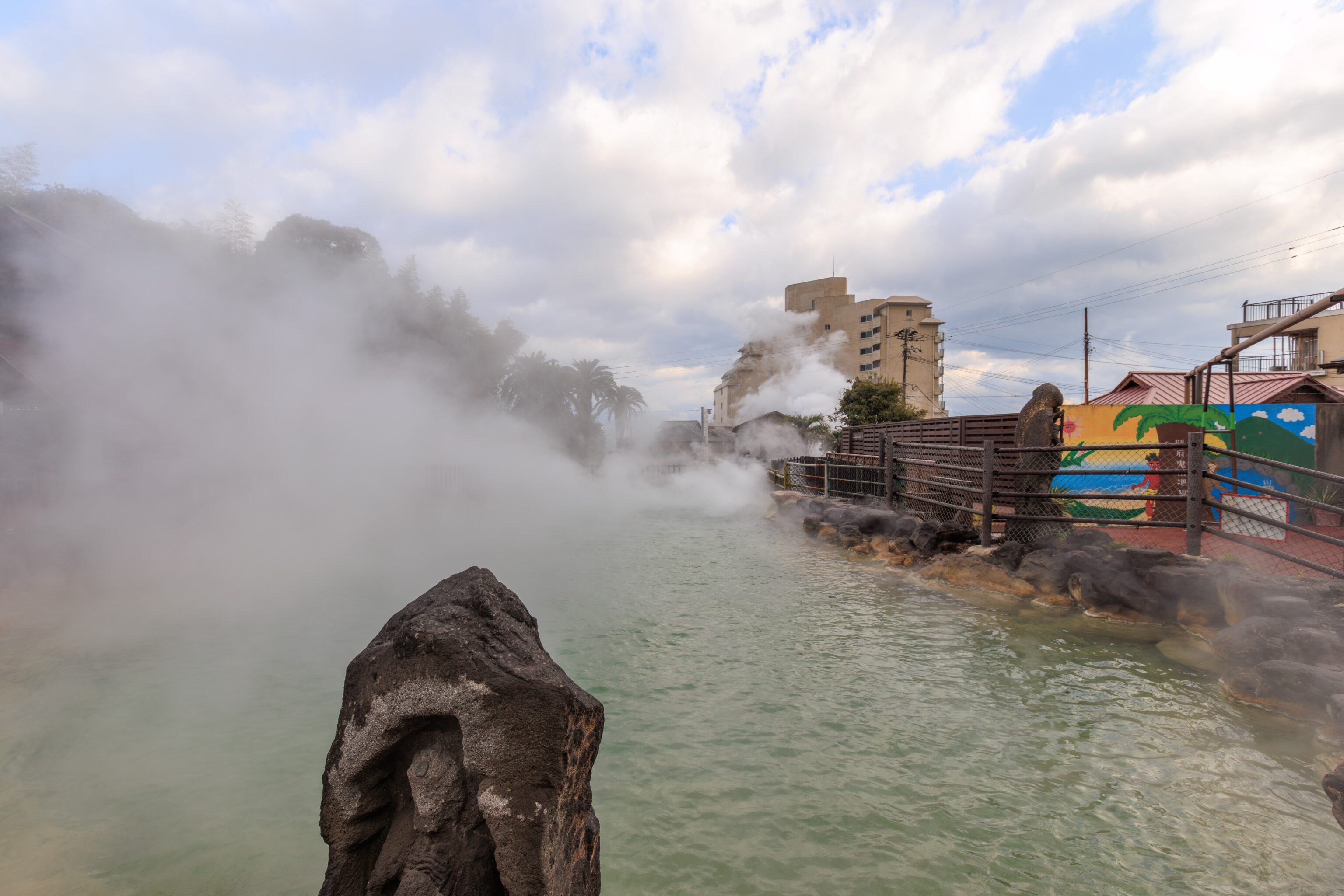
There was a little sculpture, like a shrine, at the edge of the pool.
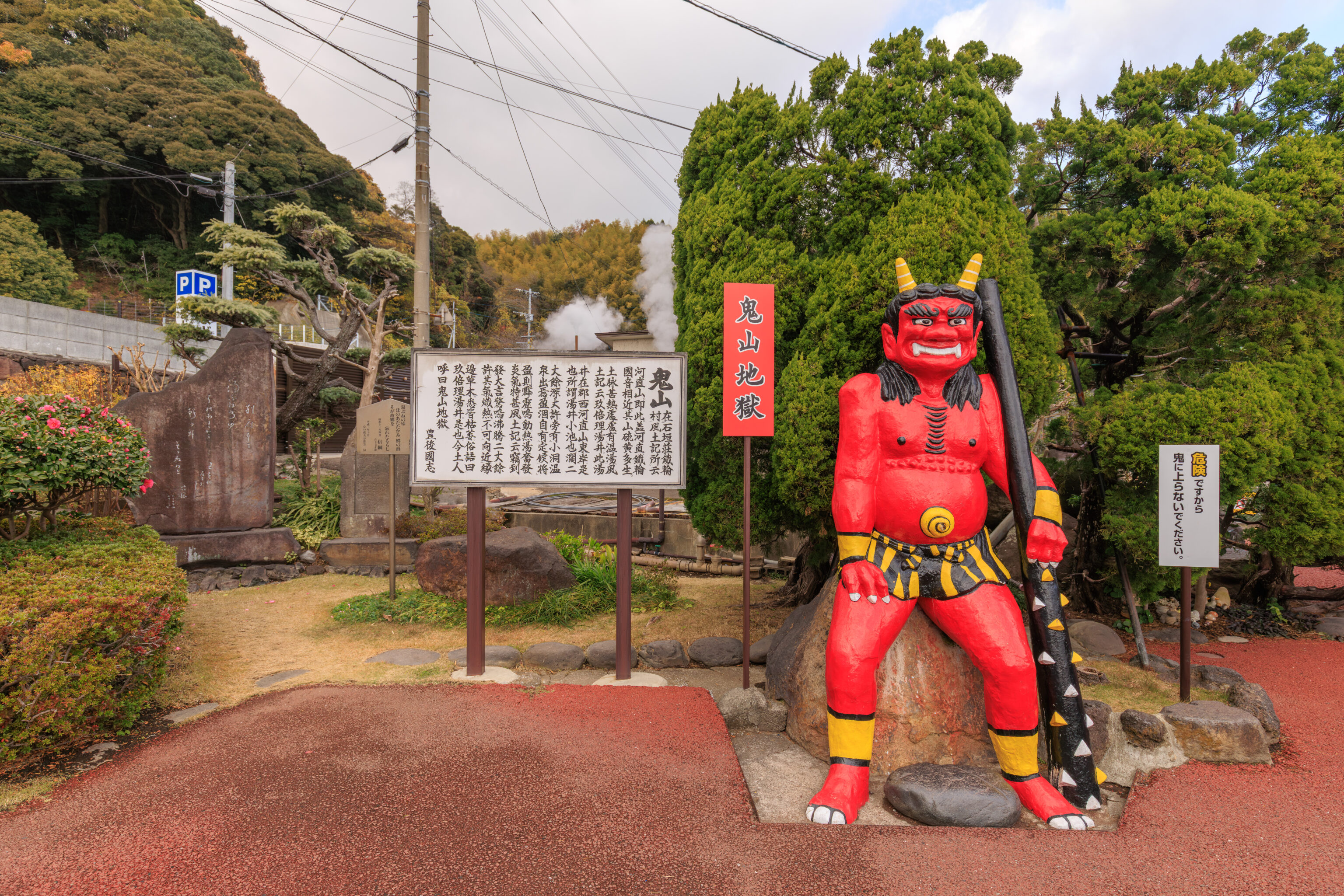
We saw a oni standing with his club, much like the one we saw at Kamado Jigoku.
Oniyama (Ogre Mountain) is located in Kannawa Village within Ishigaki Estate. It is what the Fudoki calls "Kawana-yama" (Mount Kawana).

This is indeed that very place.

The names 河直 Kawana and 鐵輪 Kannawa are phonetically very close in the local dialect.

The mountain produces a massive amount of sulfur. The veins of the earth are extremely hot, and hot springs (onsen) gush out everywhere.

The Fudoki states:

"Kuberu-yuui (Kuberu Hot Spring Well). This hot spring well is located on the eastern bank of the Nishi River, at Mount Kawana."

This refers to this exact spot. The so-called hot spring well is a small pond. It is over two jo (approx. 20 feet / 6 meters) in circumference, and about one jo (approx. 10 feet / 3 meters) deep. Beside it is a small cave where the hot spring water flows out.

Its rising and falling have their own fixed schedules. When it is about to overflow, a sound like a clap of thunder rumbles and shakes the ground. The boiling water erupts violently, and the hot steam is exceptionally intense.

The Fudoki further states:

"If anyone approaches stealthily or speaks loudly, it roars, alarms, and boils up to a height of over two jo (approx. 20 feet / 6 meters). Its steam is intensely hot, making it impossible to get close. The grass and trees along its edges are entirely withered and dead."

In the local vernacular, it was called "Kuberu-yuui."

This is it.

Today, the locals call it Oniyama Jigoku (Oniyama Hell).

— From the Bungo Kokushi (Chronicles of Bungo Province)
– Text from the large sign in the photo above, translated using Google Gemini.
鬼山
在石垣莊鐵輪
村風土記所云

河直山.即此.盖河直鐵輪
國音相近.其山硫黄多生.

土脉甚熱處處有温湯.風
土記云.玖倍理湯井.此湯

井在那西河直山東岸.是
也.所謂湯井小池也.潤二

大餘.深大許.旁有小洞温
泉出焉.盈涸自有定候将

盈則霹靂鳴動.熱湯奮發
炎氣特甚.風土記云.竊到

發大言.警鳴沸騰二大餘
許.其氣熾熱.不可向近緣

邊草木.悉皆枯萎.俗語日
玫倍理湯井.是也.今土人

呼曰鬼山地獄.
豊後國志
– Text from the same sign.
The translation does not seem perfectly reliable, but comparing the output of Google Gemini with Proton Lumo, the general ideas seem likely to be sound. The 鐵輪 Kannawa referenced in the text is the thermal district of Beppu where we are now and encompasses all the jigoku that we’ve seen so far.
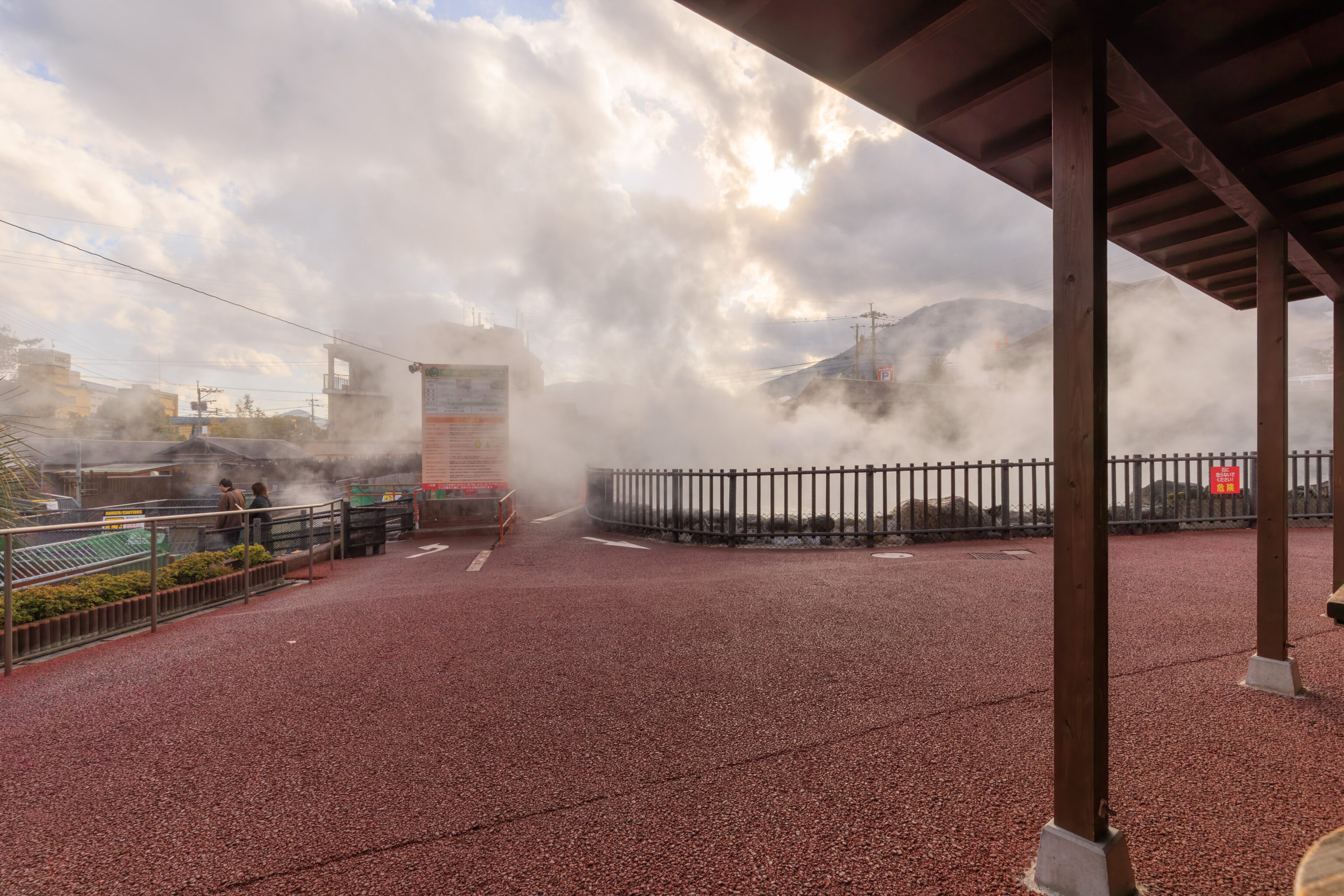
There was an indoor museum next to the thermal pool. The museum area wasn’t particularly compelling. It actually started raining so we ended up hanging out here for a bit.
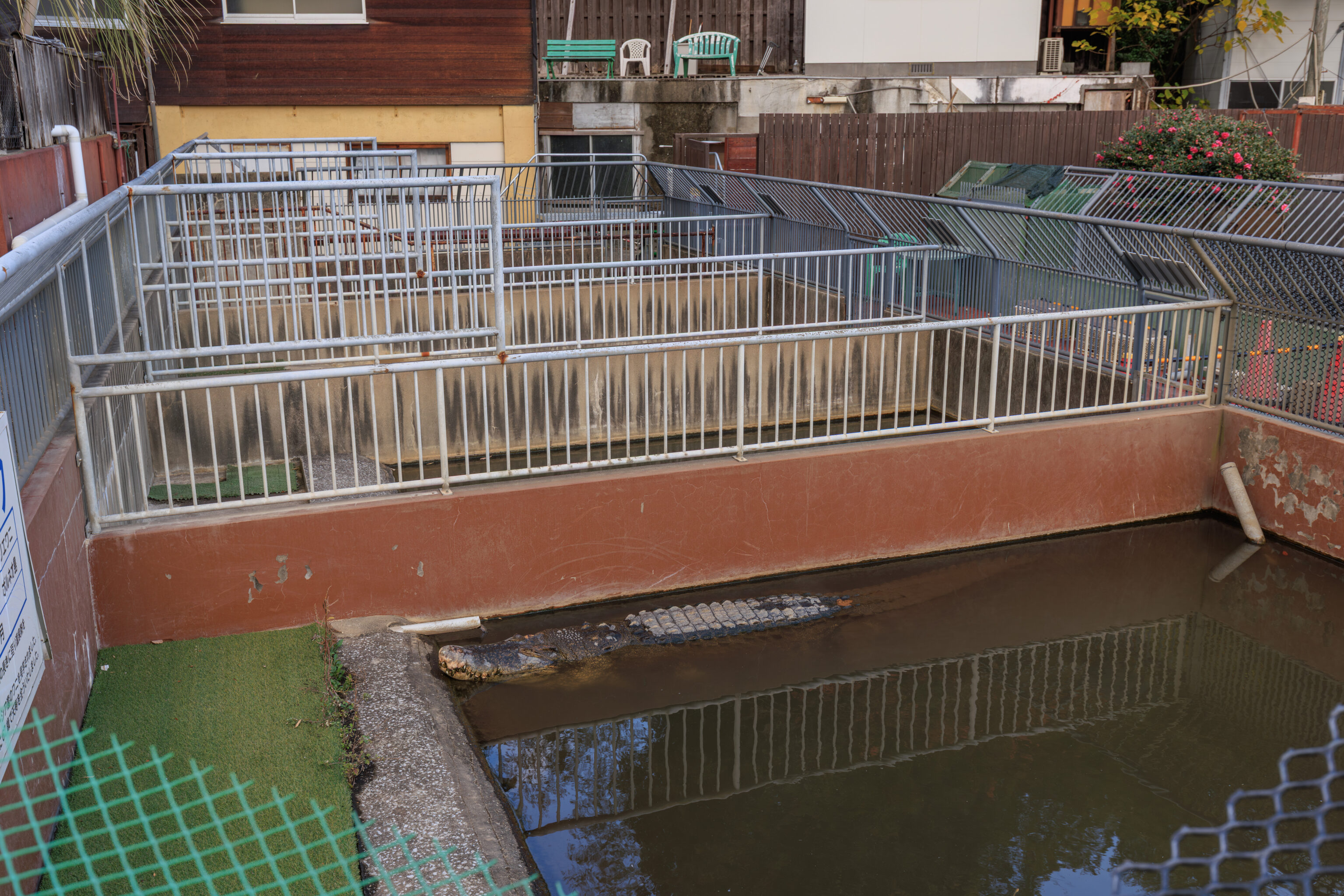
Continuing on, one of the main attractions of this jigoku is their crocodile farm…
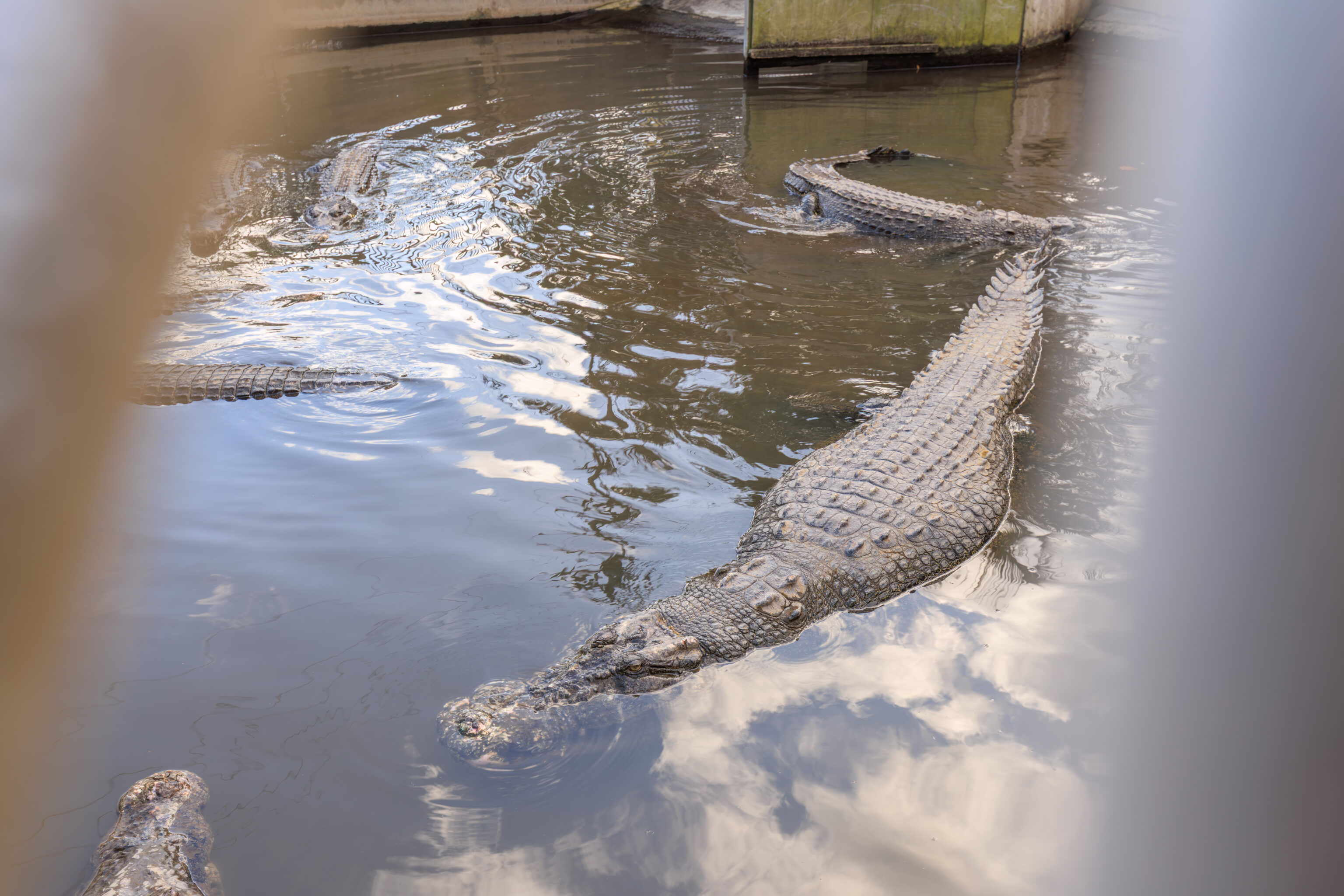
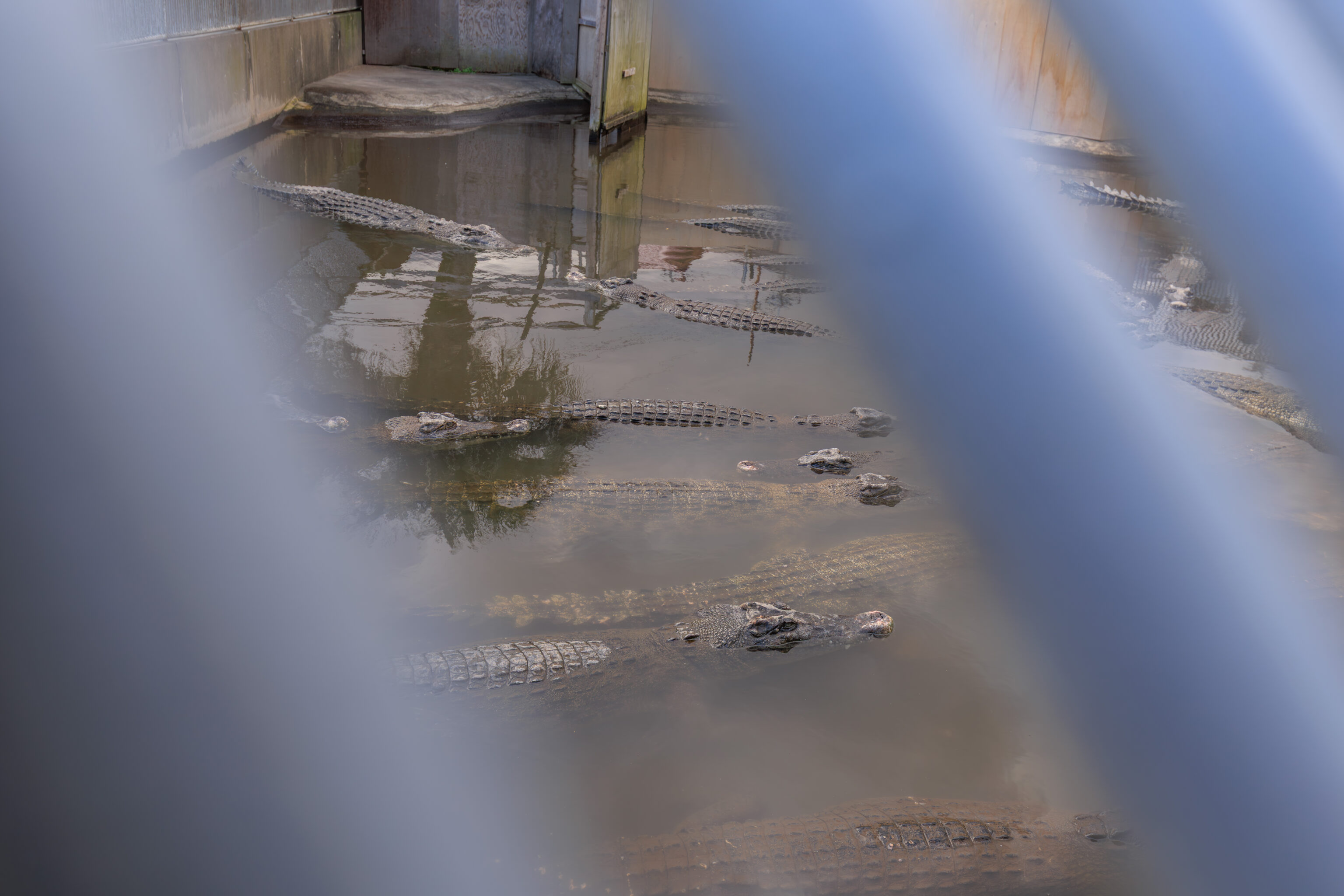
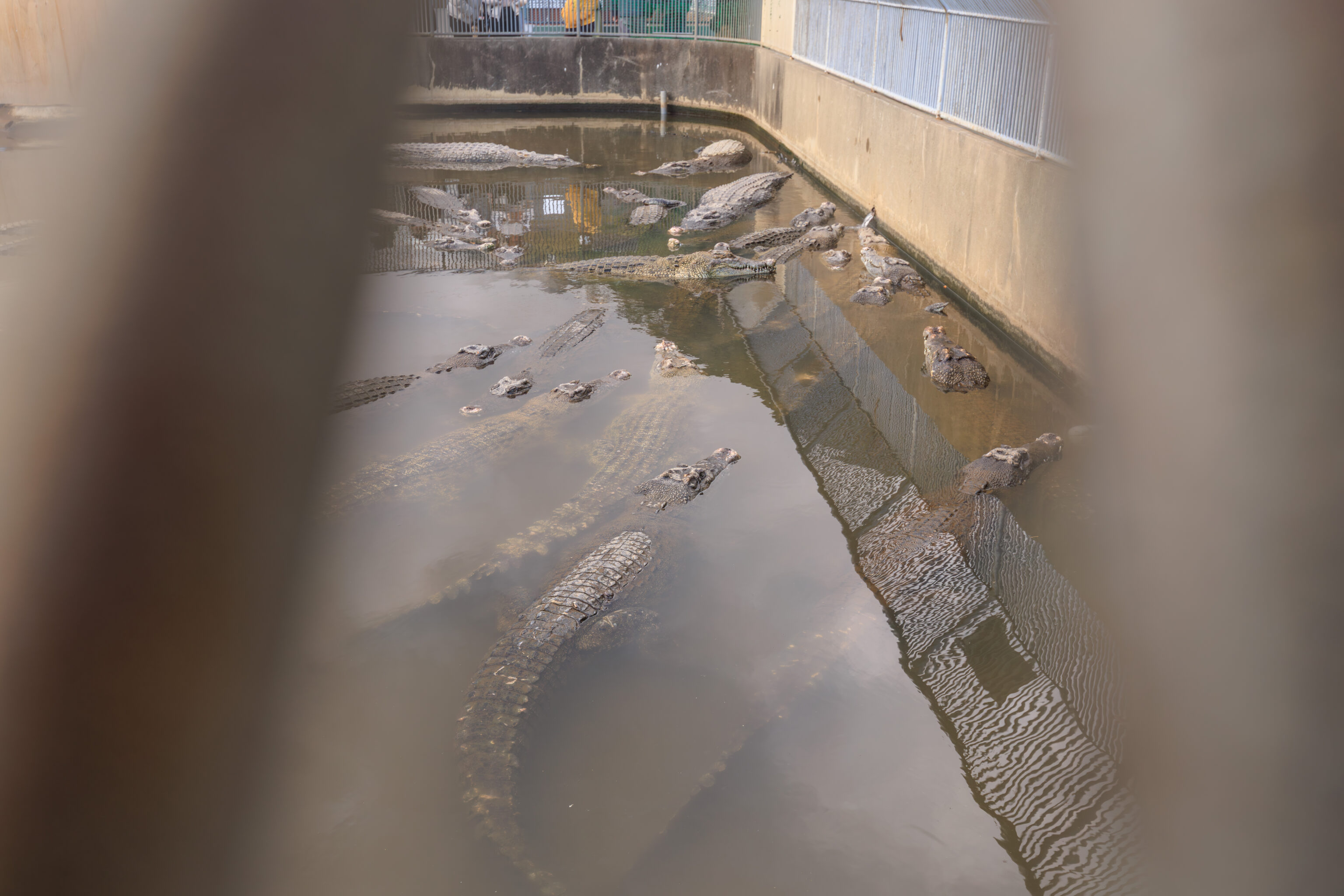
There are basically pools filled with crocodiles. It wasn’t clear to us why crocodiles are kept here, other than that this is described as the first facility in Japan where crocodiles are kept using hot spring water.
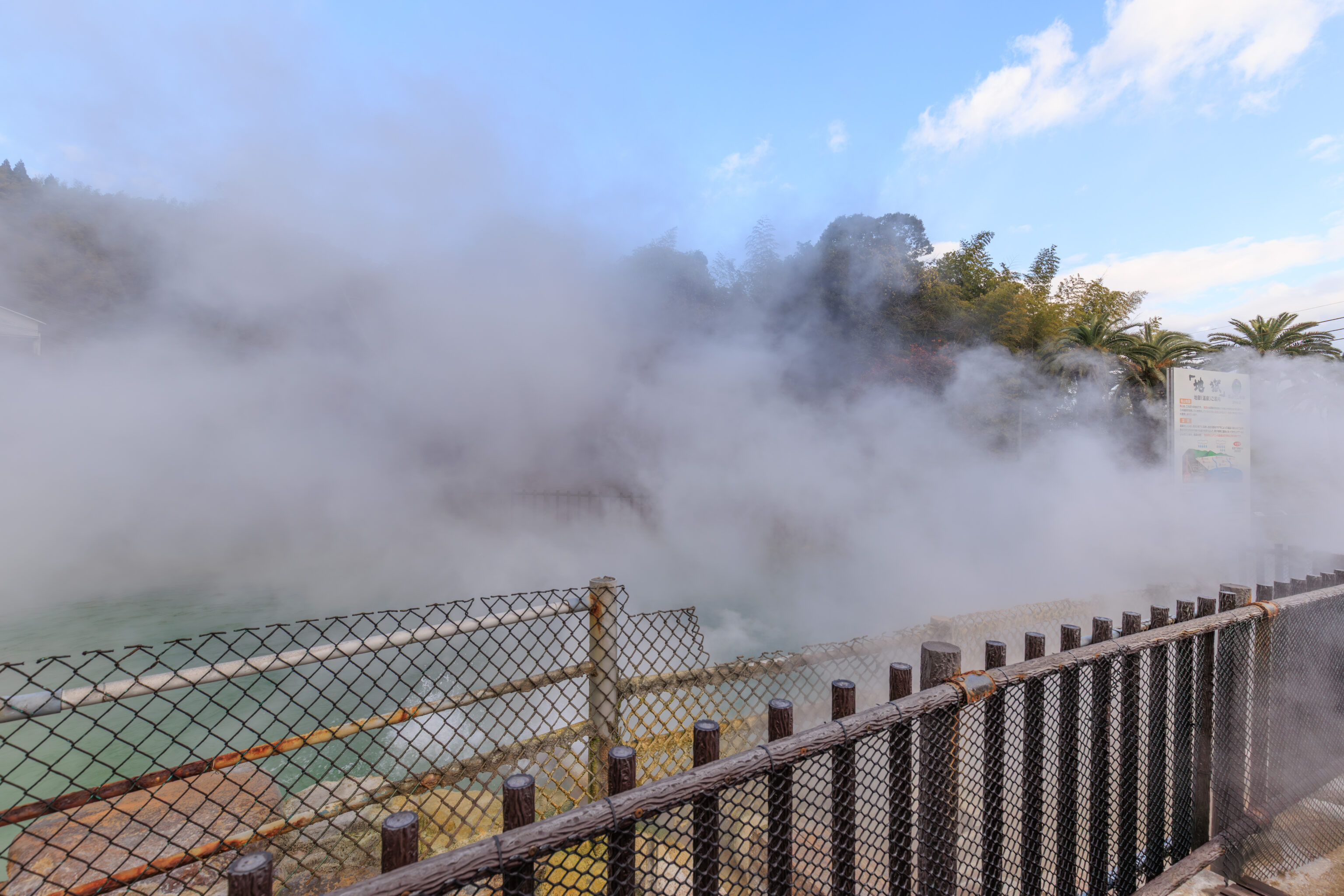
After quickly walking through the crocodile area, we continued on.
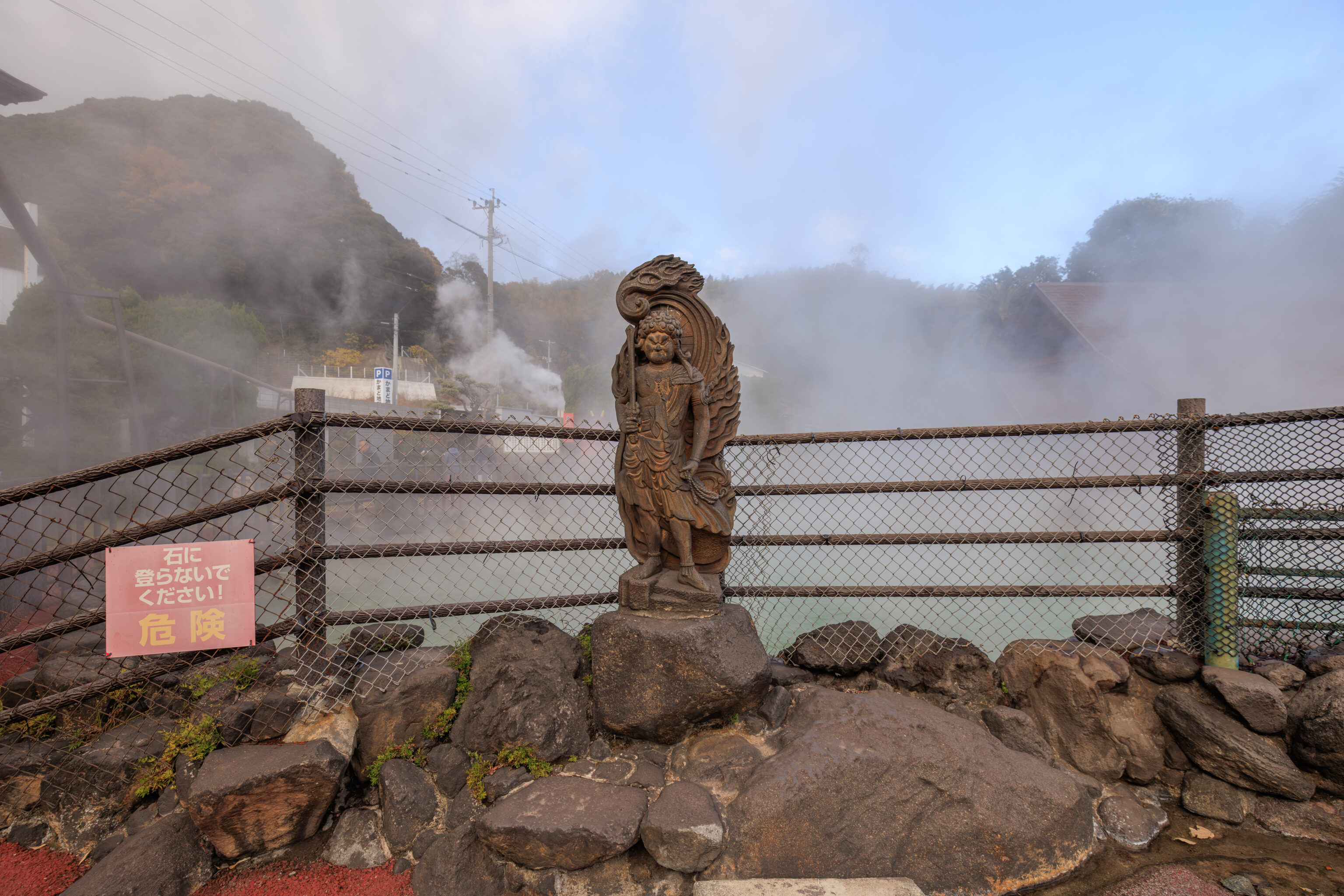
The path took us back to the jigoku’s large thermal pool.
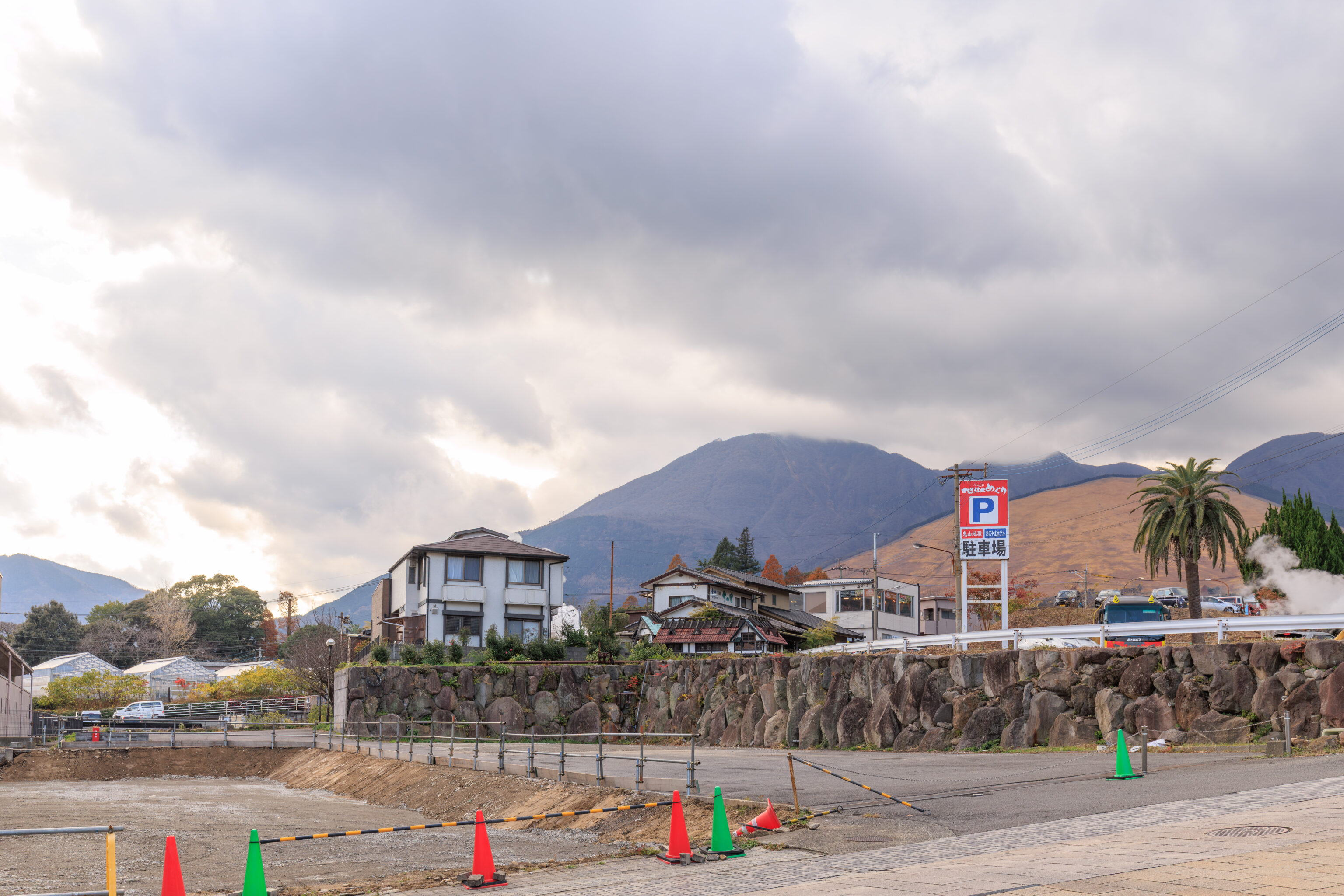
This was the view looking to the west after we left the Oniyama Jigoku.
Shiraike Jigoku
We walked a bit further to the east to reach 白池地獄 Shiraike Jigoku (White Pond Hell).
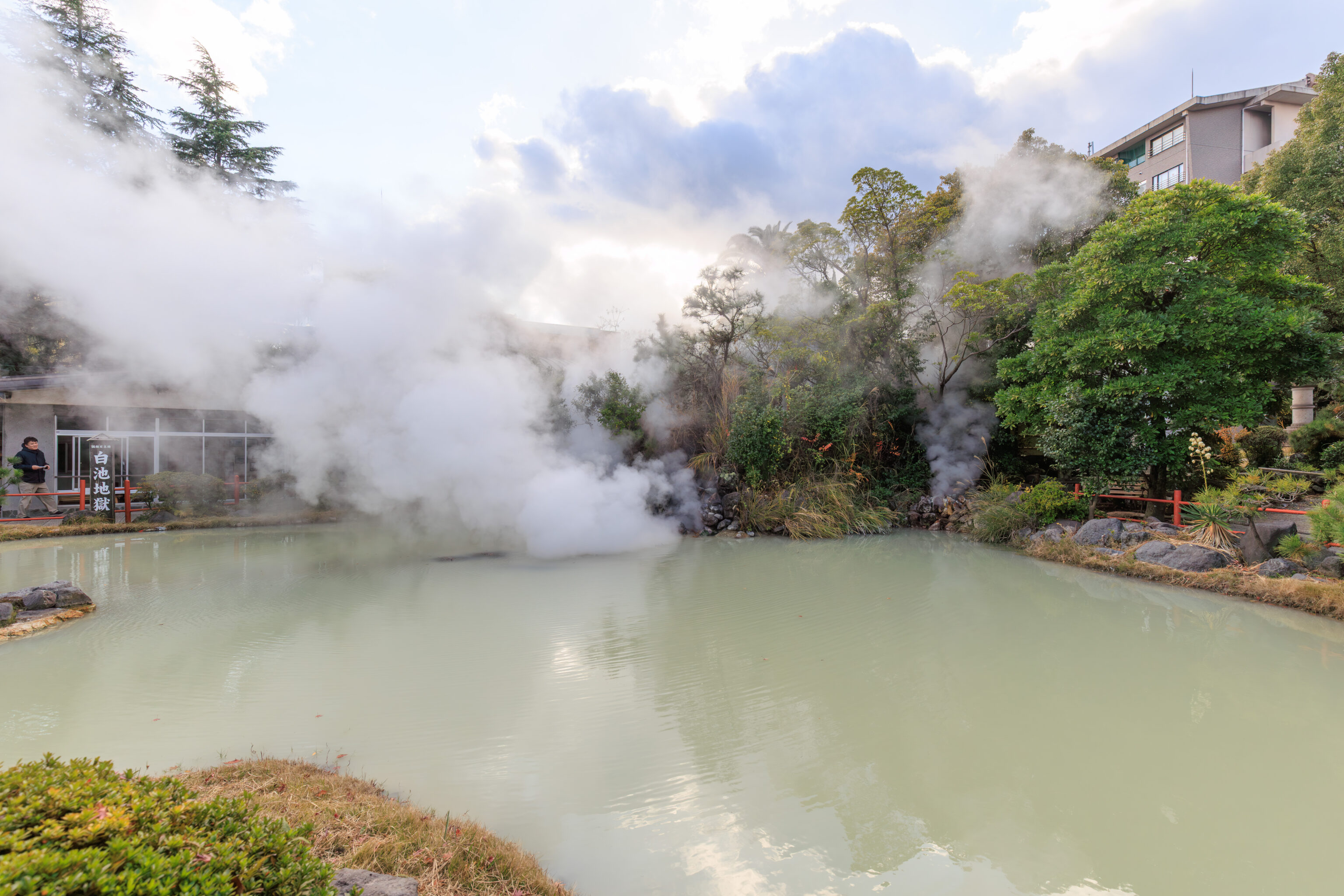
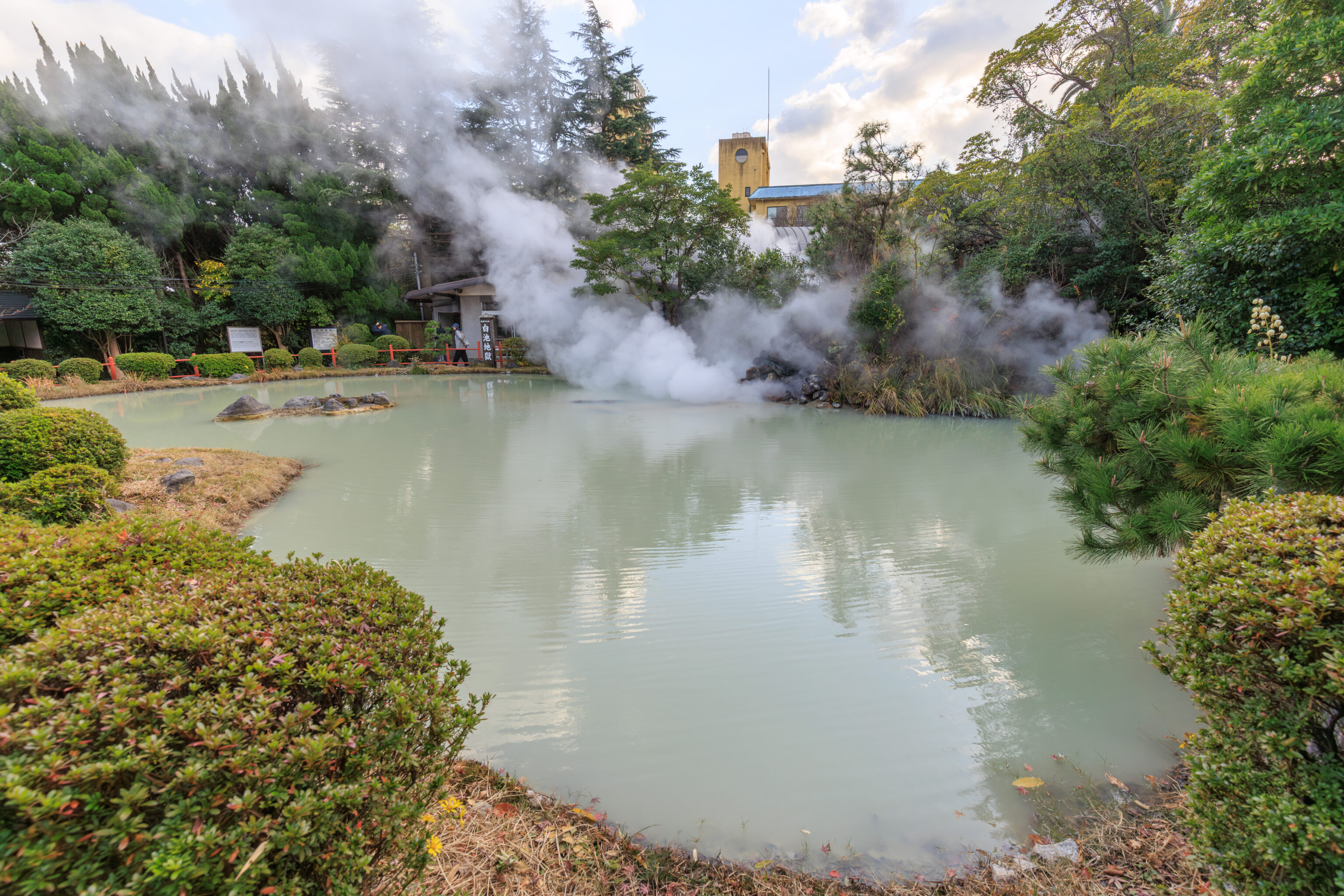
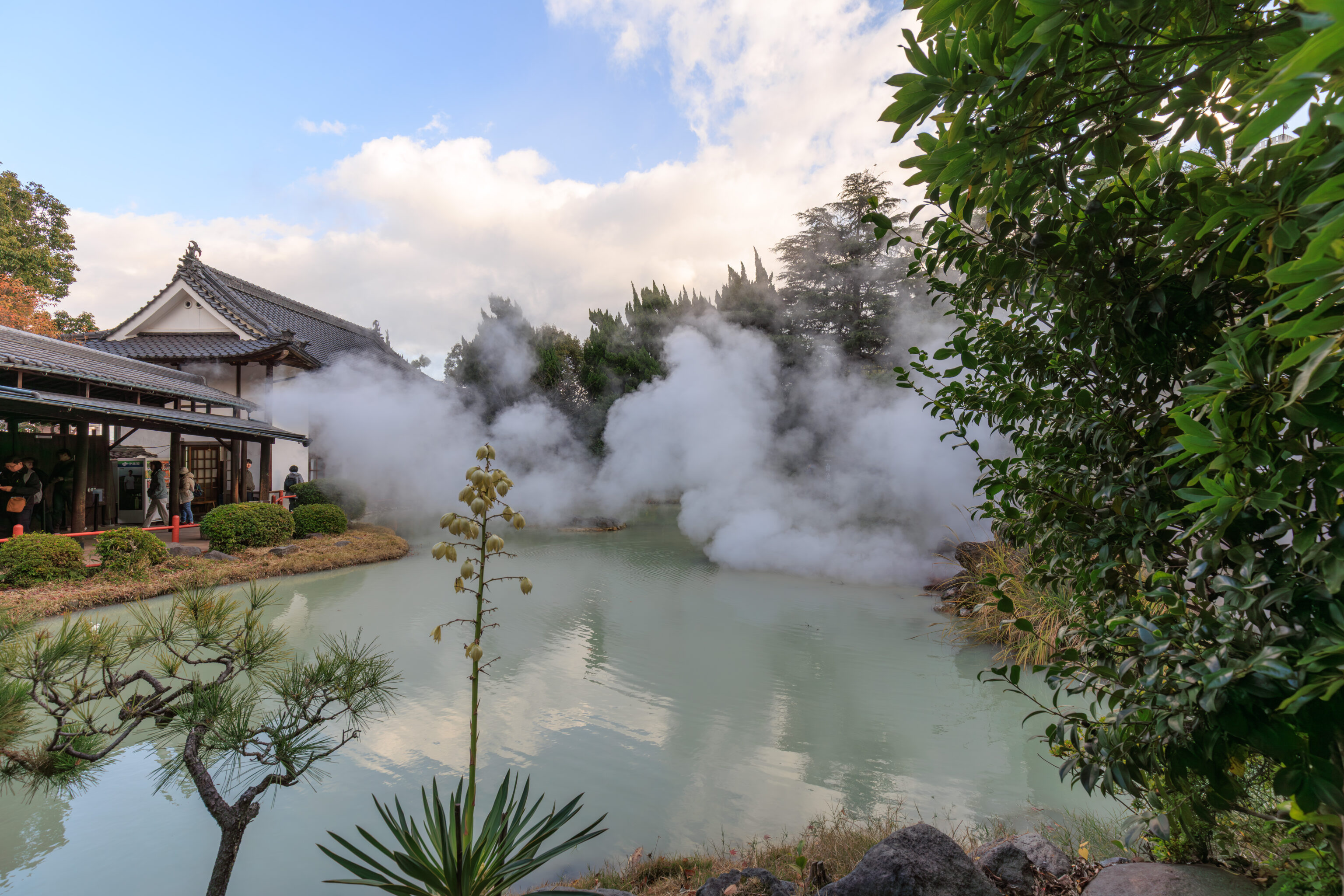
Upon entering, we immediately saw a large thermal pool, the Shiraike Jigoku. Steam was emitted from the far end.
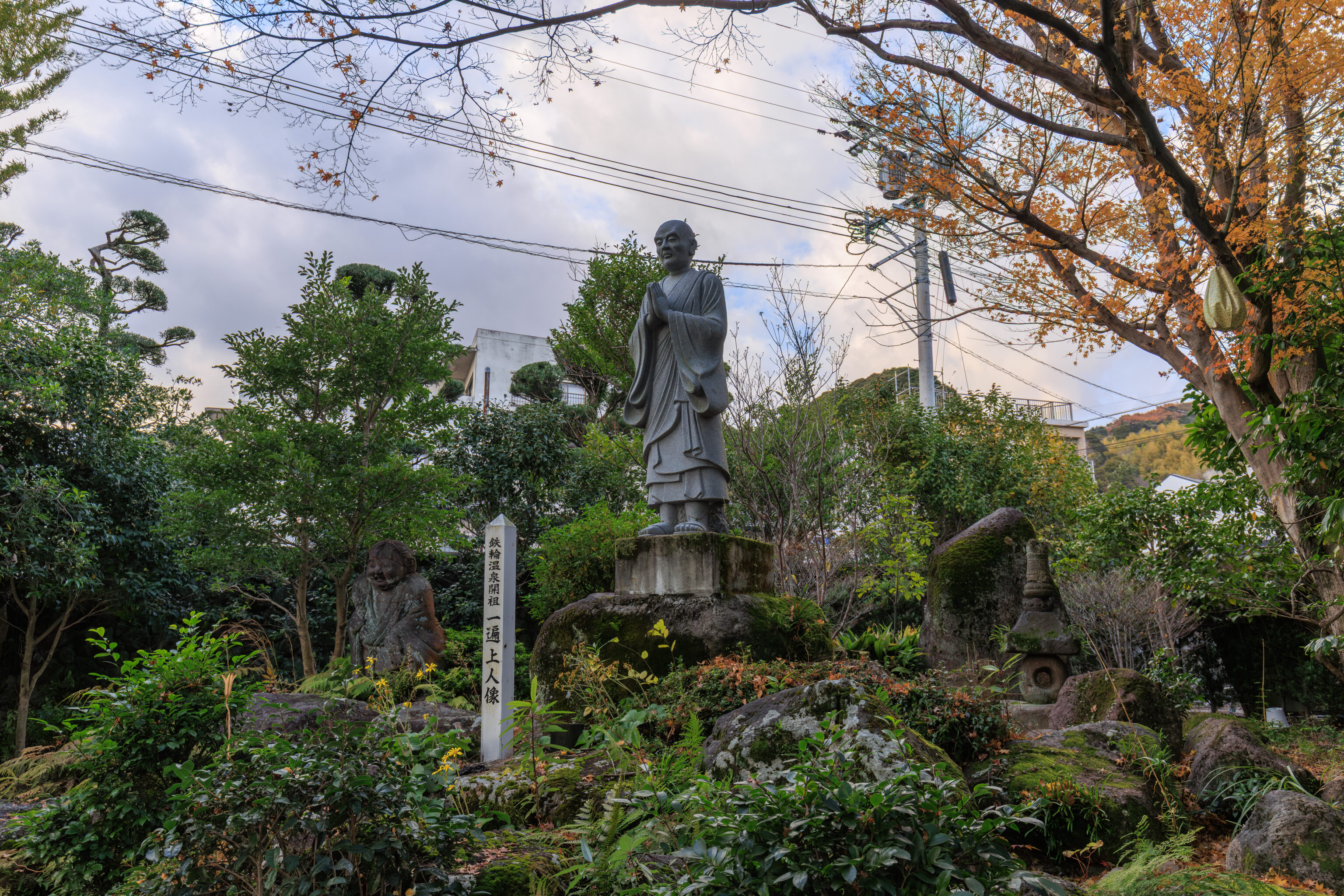
Statue of Ippen Shonin, Founder of Kannawa Onsen
– Text from the marker in the photograph above, translated using Google Gemini.
After reading a sign at the Oniyama Jigoku, we know that 鉄輪 Kannawa refers to the district where we are now. The Kannawa Onsen referred to here specifically seems to refer to the 鉄輪むし湯 Kannawa Steam Bath, which still exists today. It seems to be operated by the Beppu city government and is about a 5 minute walk to the east from here.
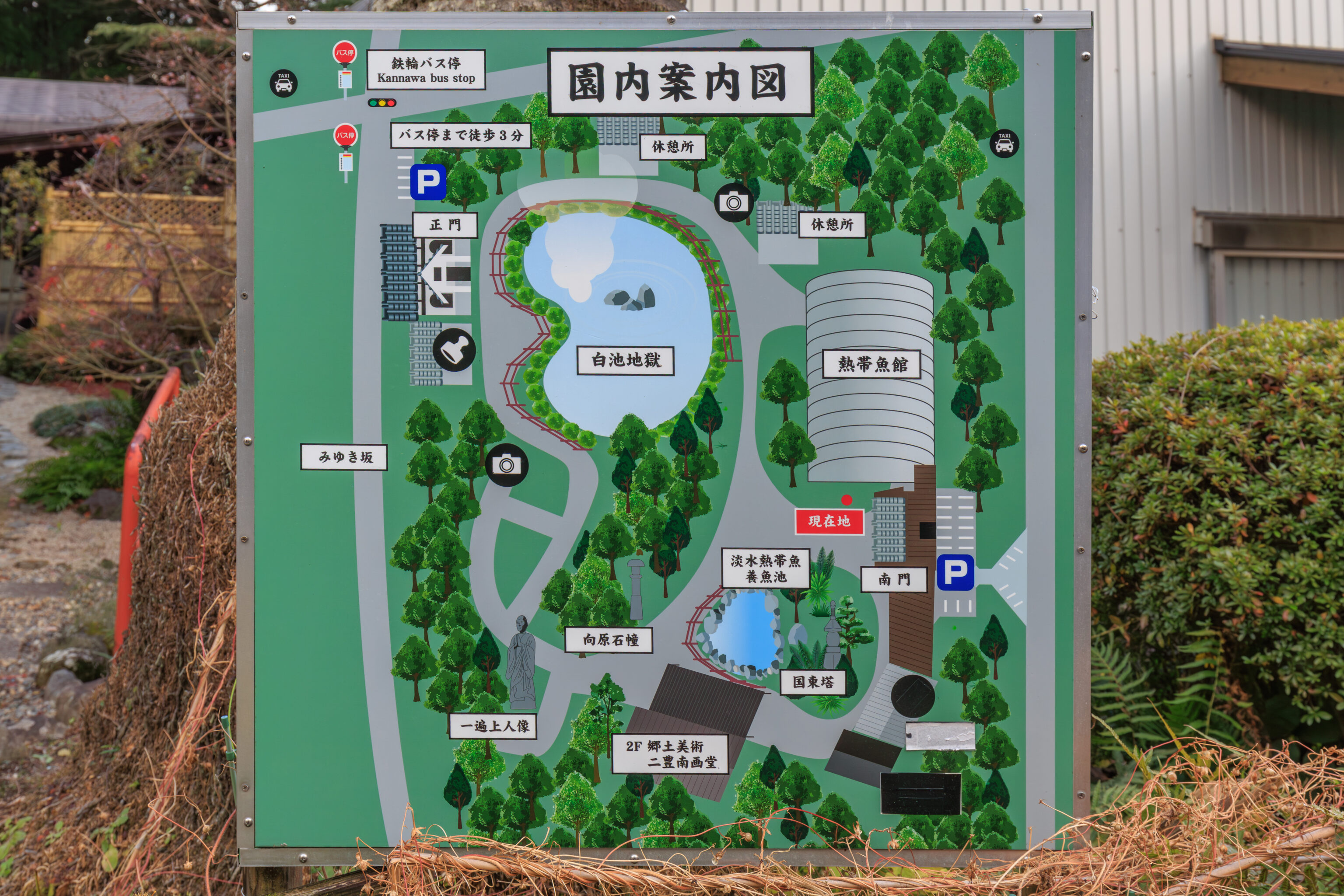
There was a map on the opposite side of the thermal pool. We entered via the main gate and this sign was by the south gate, marked in red on the map. The large building next to us is a tropical fish house.
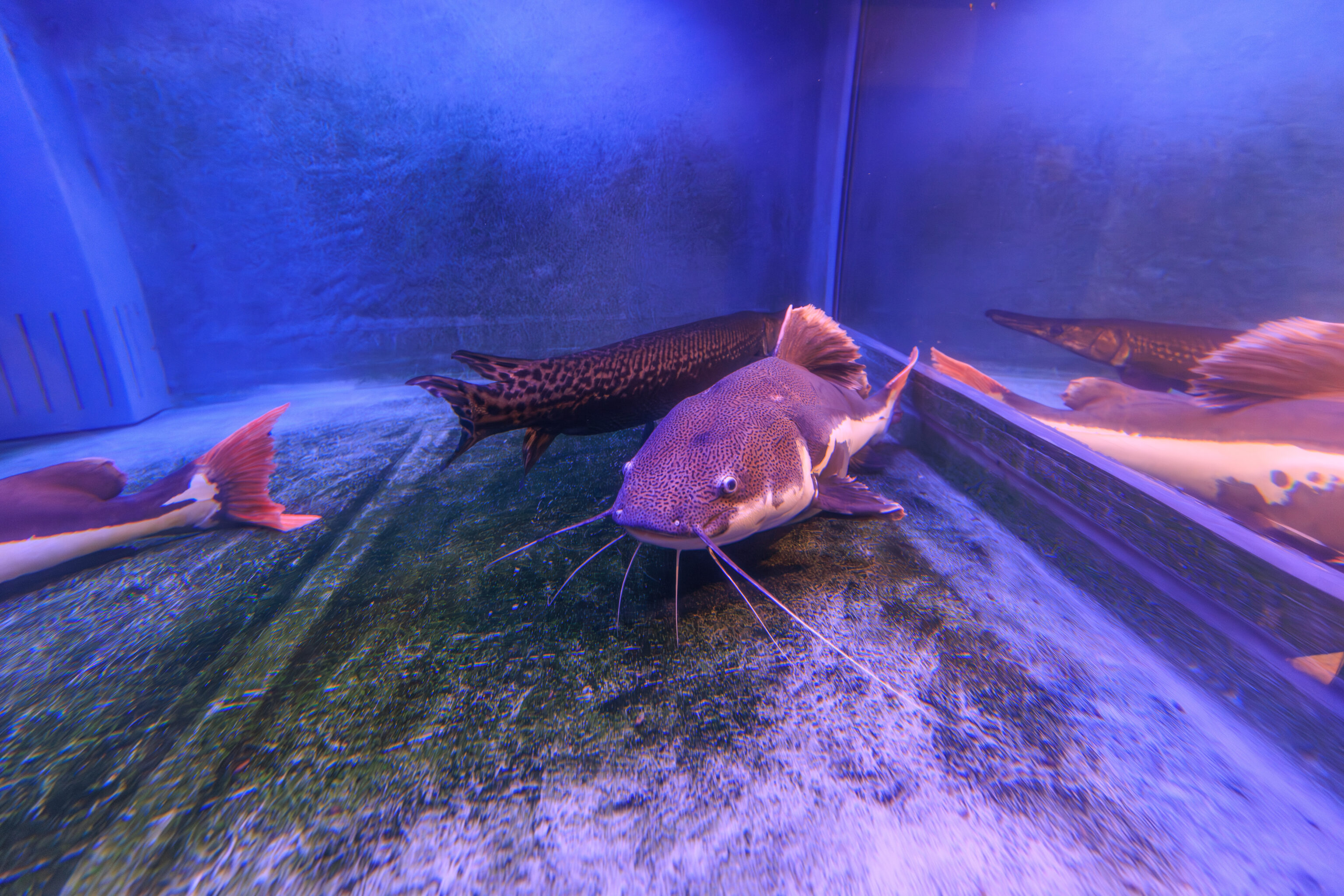
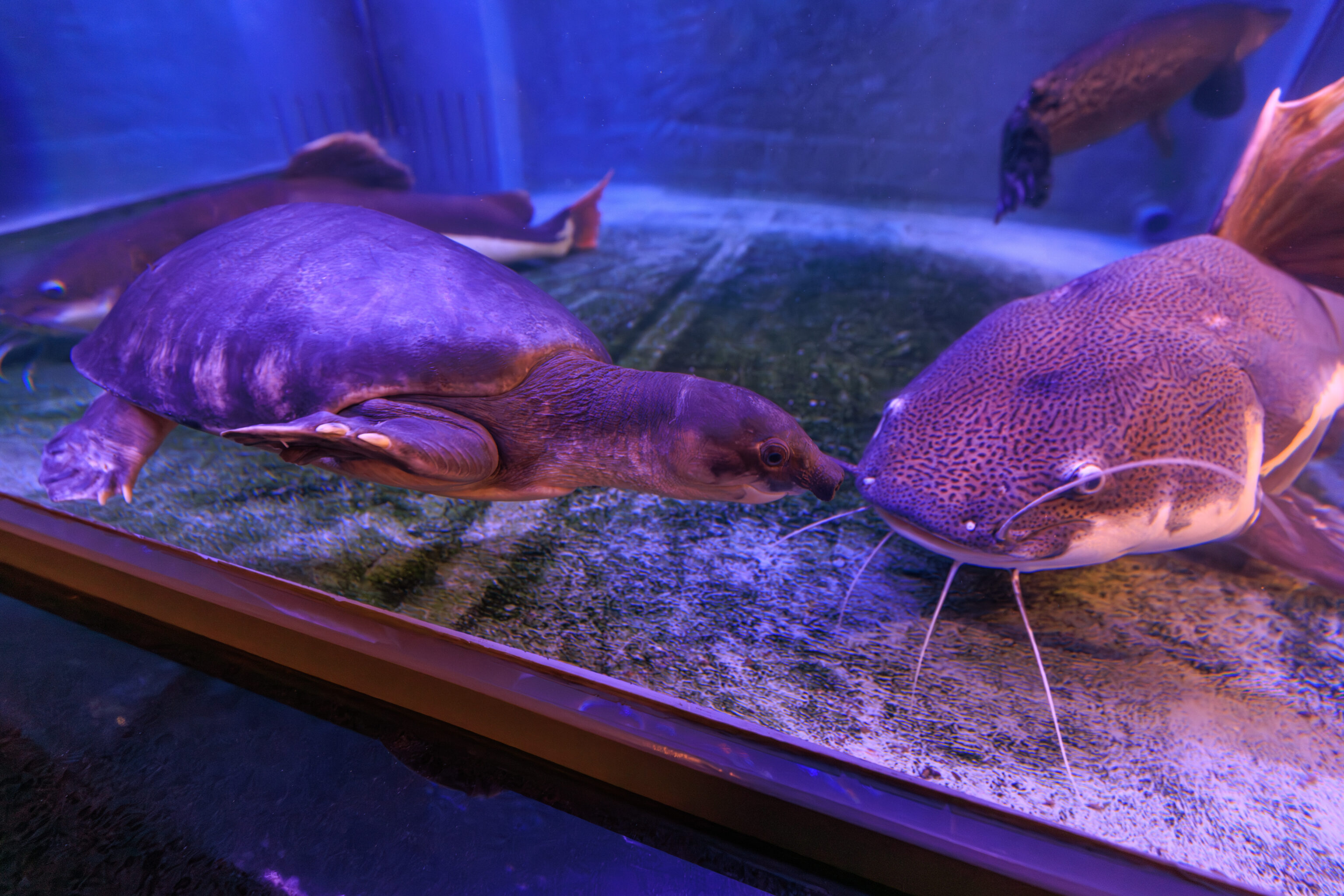
We went inside to take a look. Conditions seemed to be poor, to put it politely.
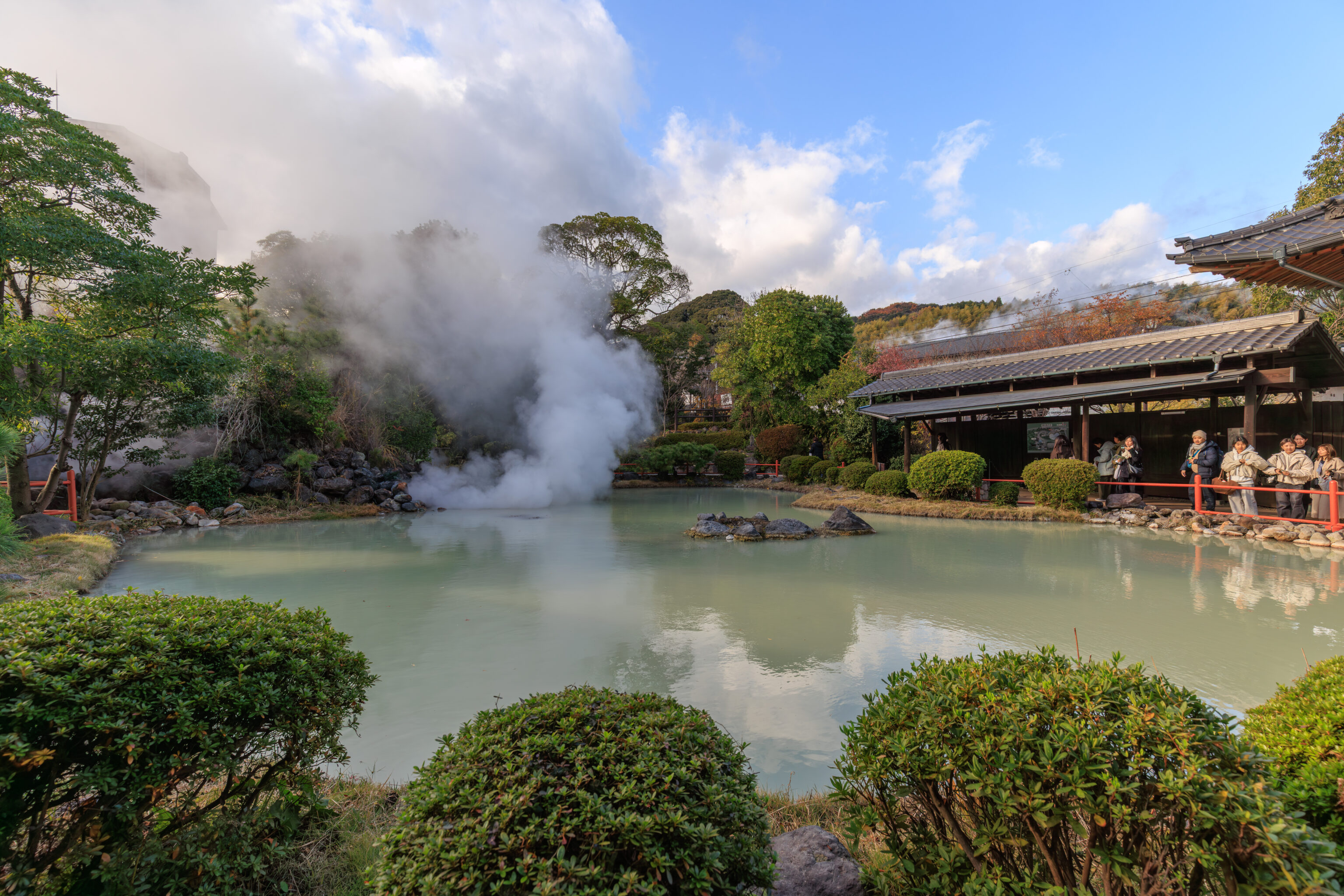
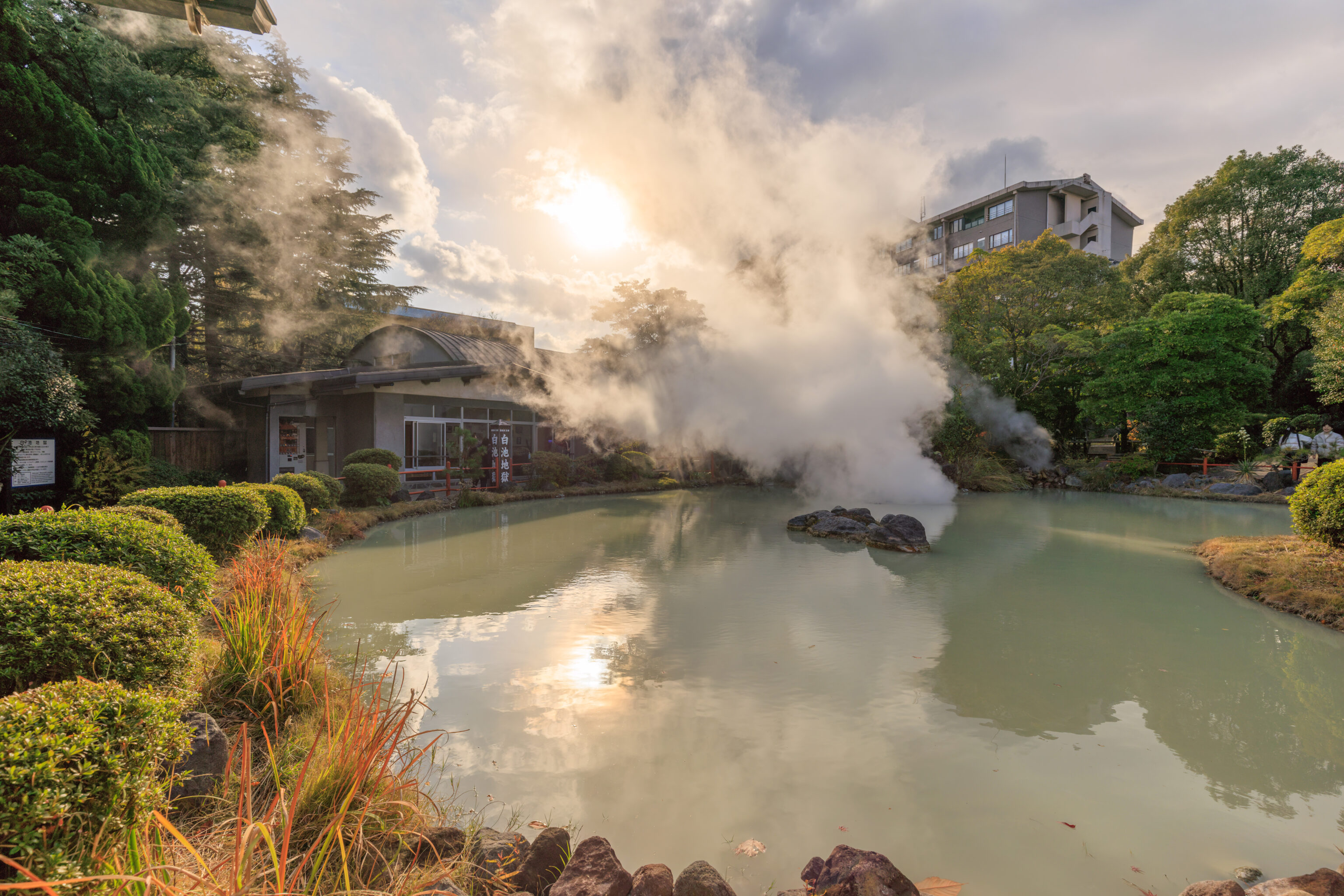
We walked back around the Shiraike Jigoku to return to the main entrance.
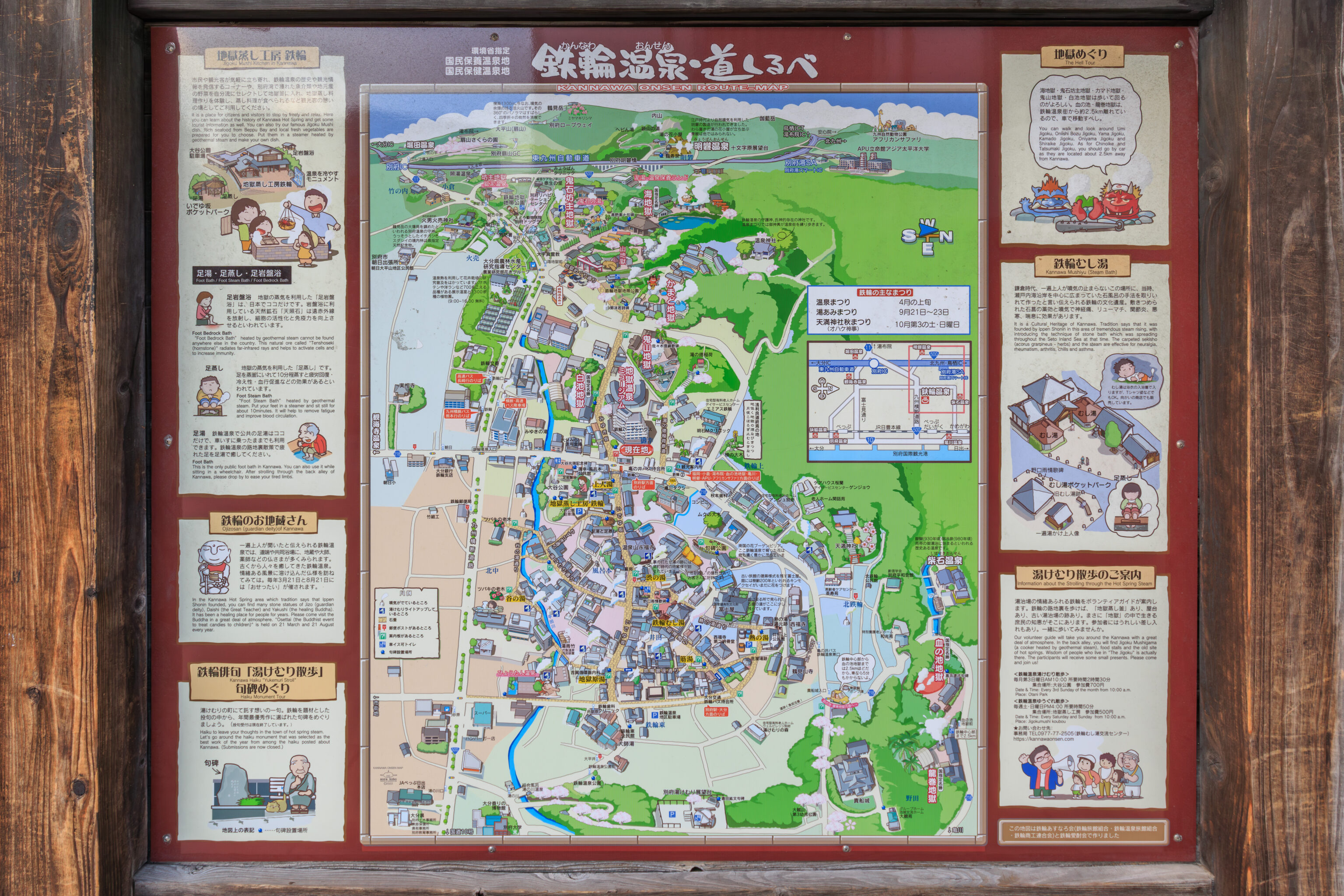
By now, we had visited five of the seven jigoku. The other two are actually about 2.5km or so away. On this map, we started near the top and are now a bit above and to the left of the center. The area we’re going to next is at the bottom right. The easiest way to get there is to take a bus.
Tatsumaki Jigoku
We walked a block or so to reach the 鉄輪 Kannawa bus stop, which actually has a building and is basically a small bus terminal for the Kannawa area. We took the bus to the 血の池地獄前 Chinoike Jigoku Mae bus stop. 龍巻地獄 Tatsumaki Jigoku (Tornado Hell) was just a little bit to the southeast of the bus stop.
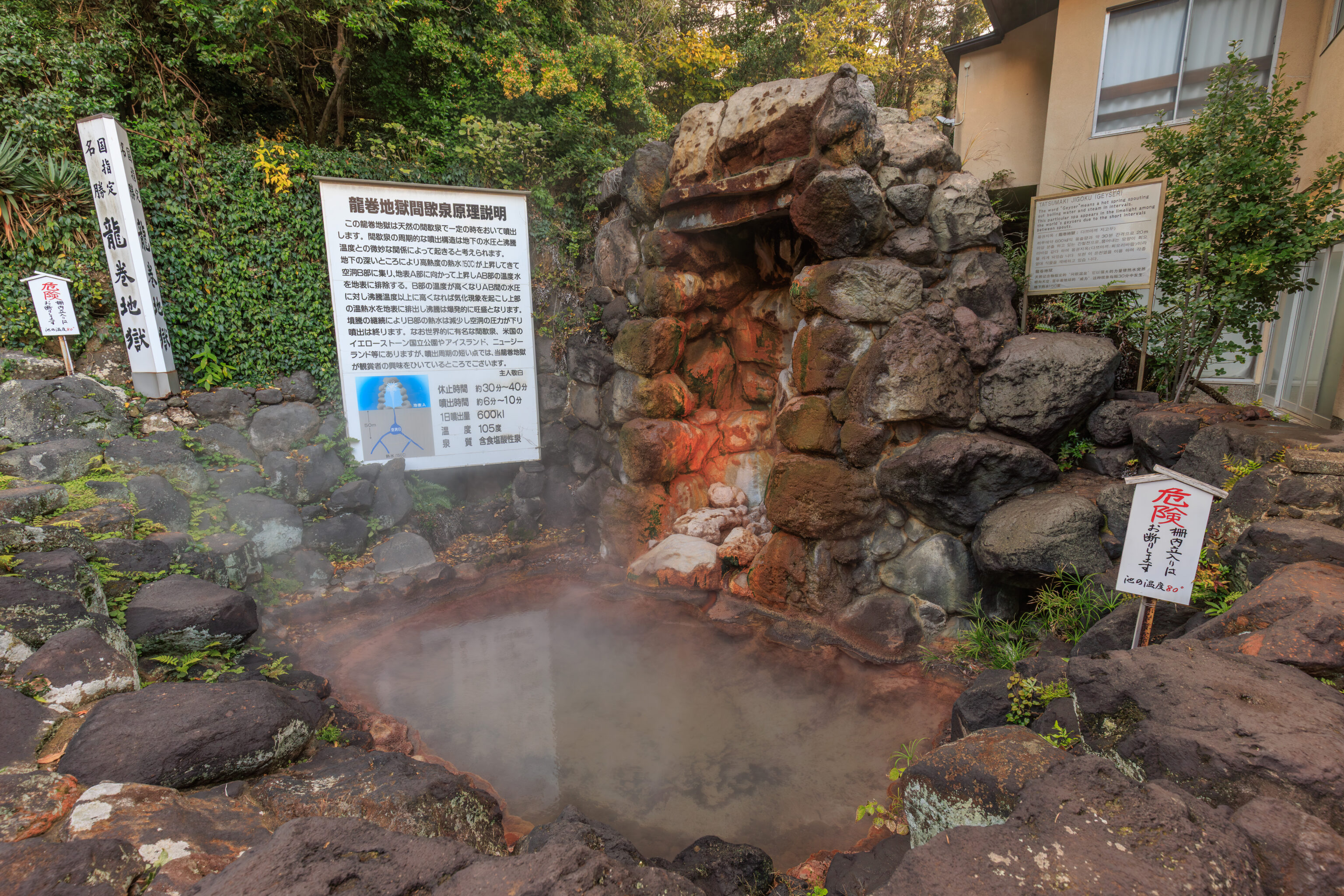
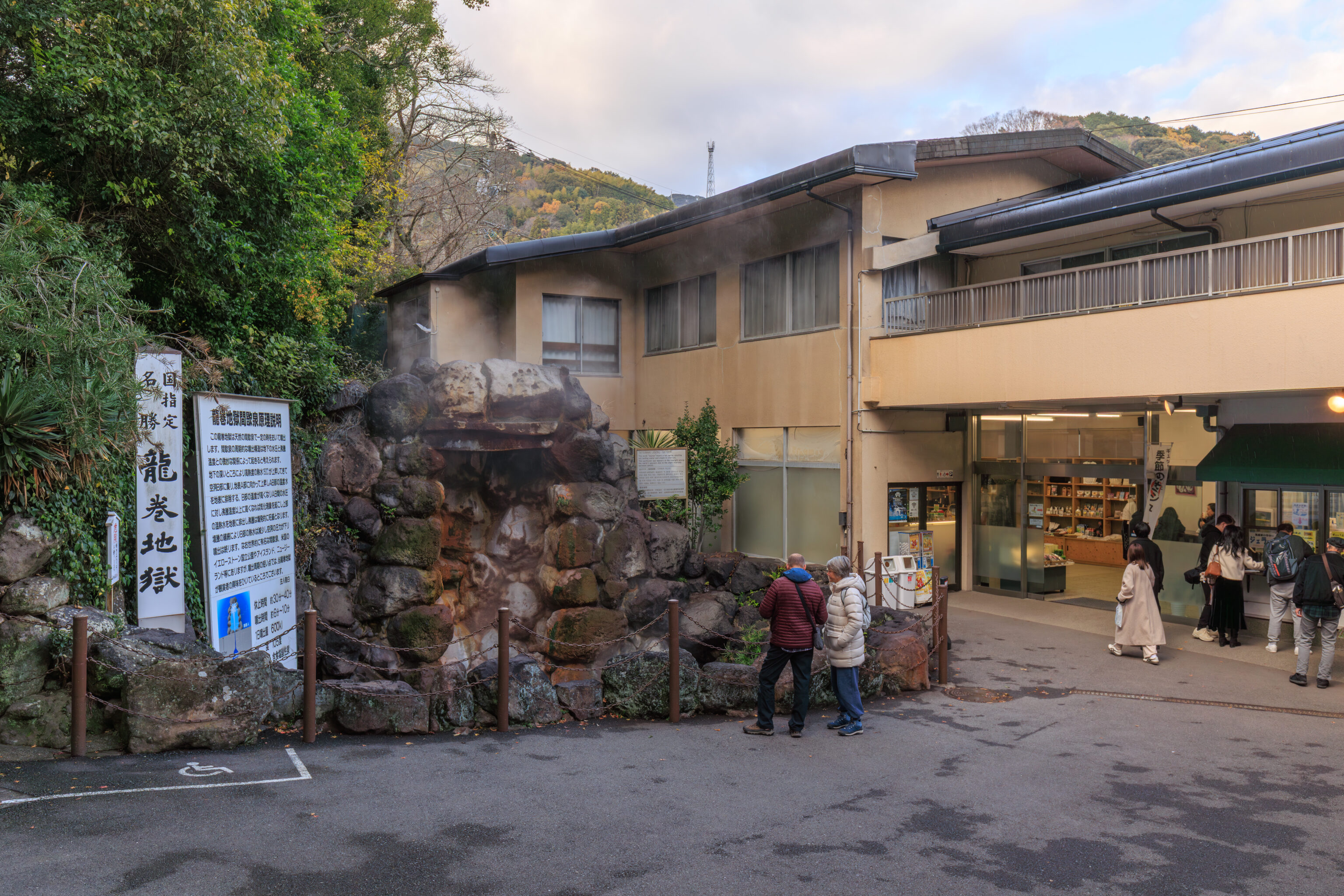
The main feature of Tatsumaki Jigoku is its geyser, seen here while it was idle.
Explanation of the Principles Behind the Tatsumaki Jigoku Geyser

Tatsumaki Jigoku is a natural geyser that erupts at regular intervals. The mechanism behind a geyser's periodic eruptions is believed to result from a delicate interplay between underground water pressure and the boiling point of the water.

Extremely hot water (reaching 150°C) rises from deep within the earth, accumulates in underground Cavity B, and then ascends toward the surface (Point A), displacing the warmer water currently occupying the column between A and B. As the temperature within Cavity B rises—eventually exceeding the boiling point relative to the water pressure in the column above—a rapid vaporization process occurs. This expels the overlying hot water to the surface, triggering a vigorous, explosive eruption.

As the eruption continues, the volume of hot water in Cavity B diminishes, causing the pressure within the cavity to drop; consequently, the eruption ceases. While world-renowned geysers can be found in locations such as Yellowstone National Park (USA), Iceland, and New Zealand, Tatsumaki Jigoku draws particular interest from visitors due to its remarkably short eruption cycle.

—From the Proprietor

Resting Period: Approx. 30–40 minutes
Eruption Duration: Approx. 6–10 minutes
Daily Eruption Volume: 600 kiloliters
Temperature: 105°C
Spring Type: Acidic Spring Containing Sodium Chloride
– Text from the large white sign in the photographs above, translated using Google.
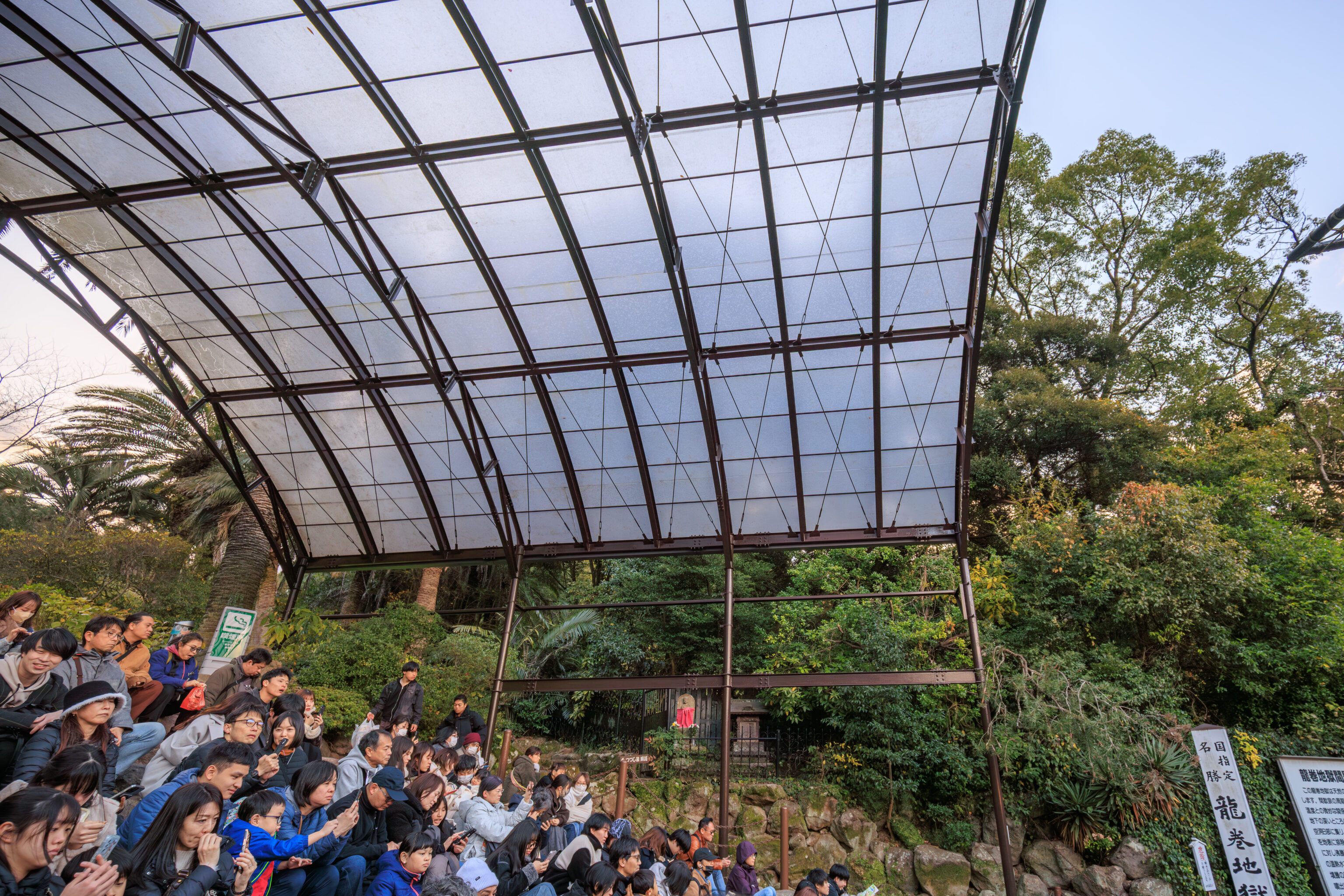
There was a large seating area to observe the geyser. The geyser is supposed to be reliable but a bit unpredictable.
It is a bit underwhelming as the geyser isn’t allowed to spray up into the air. That is probably for the best given how close the viewing area is to the geyser, but of course they could have just put a wider fence around it all.
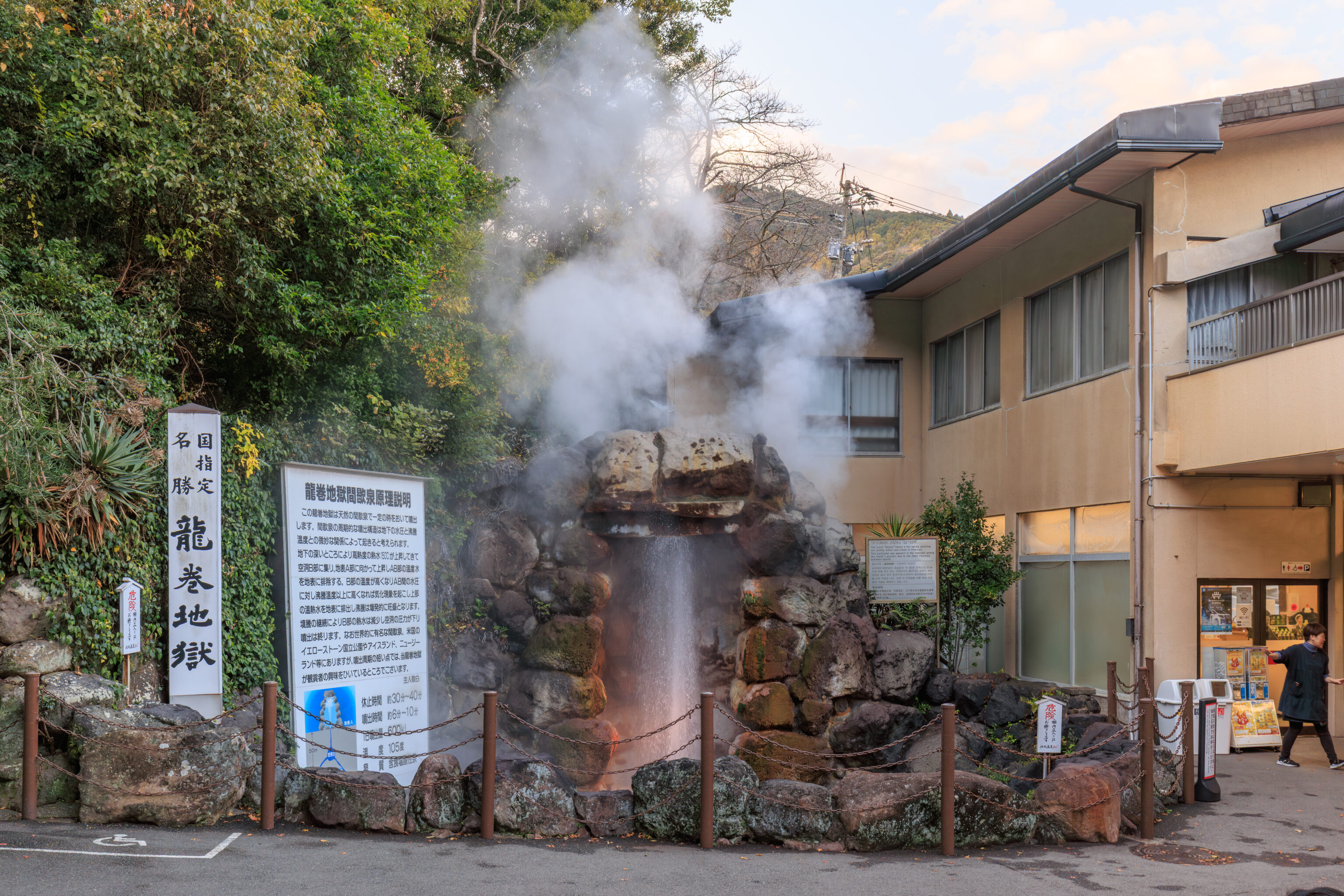
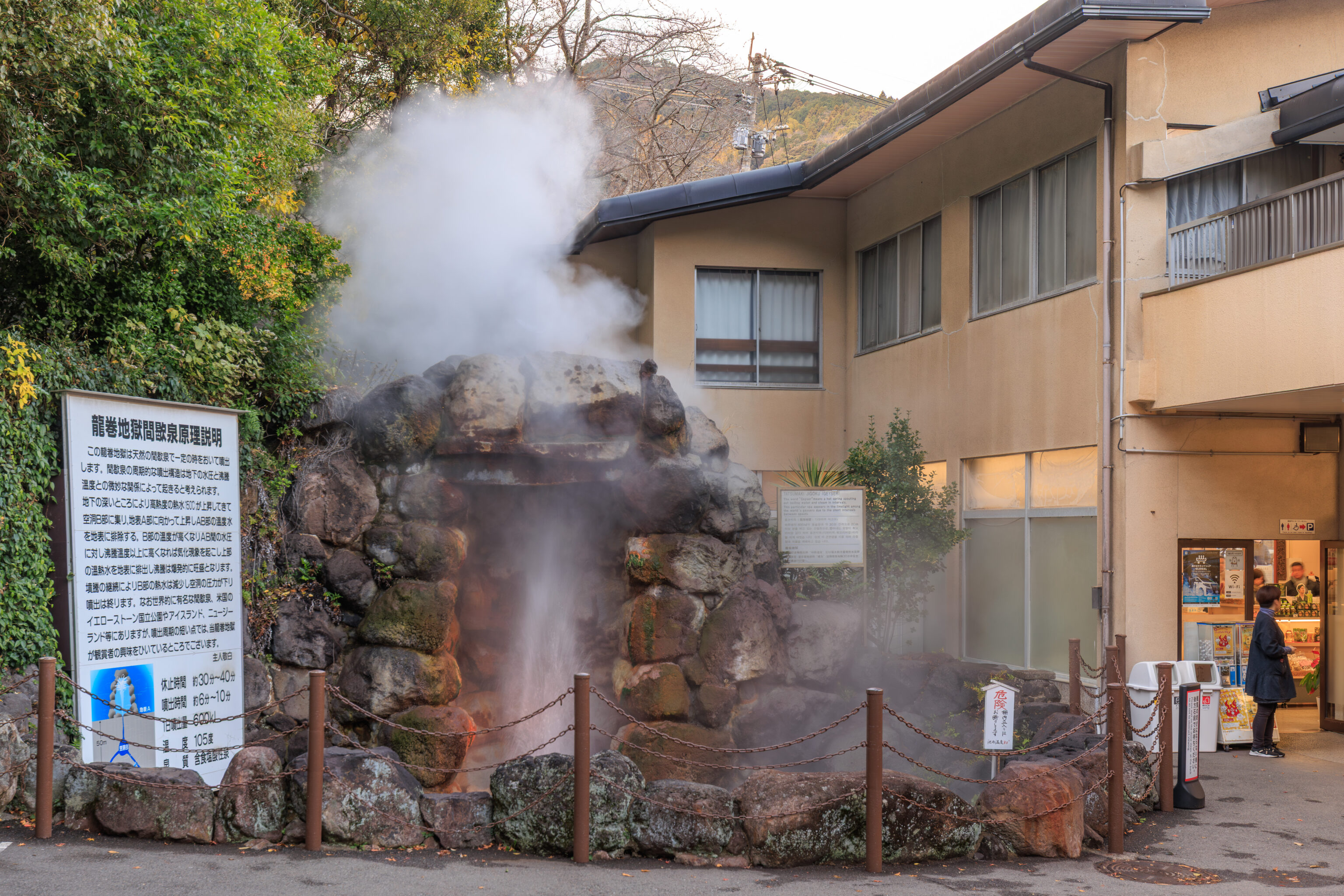
The geyser actually erupts for a pretty long time. Most people seem to be here in tour groups leave after a minute or two, rushing to get to the next destination.
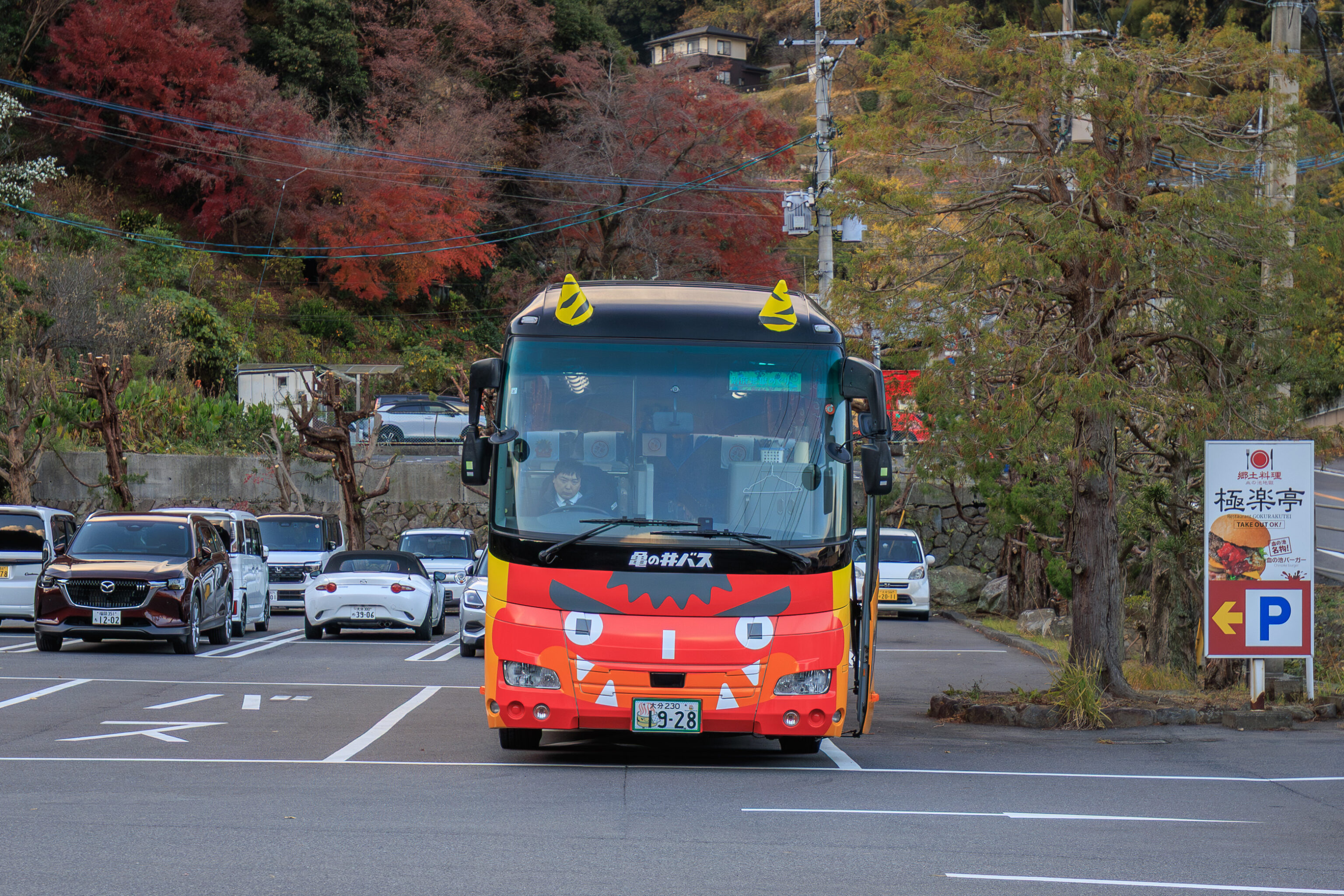
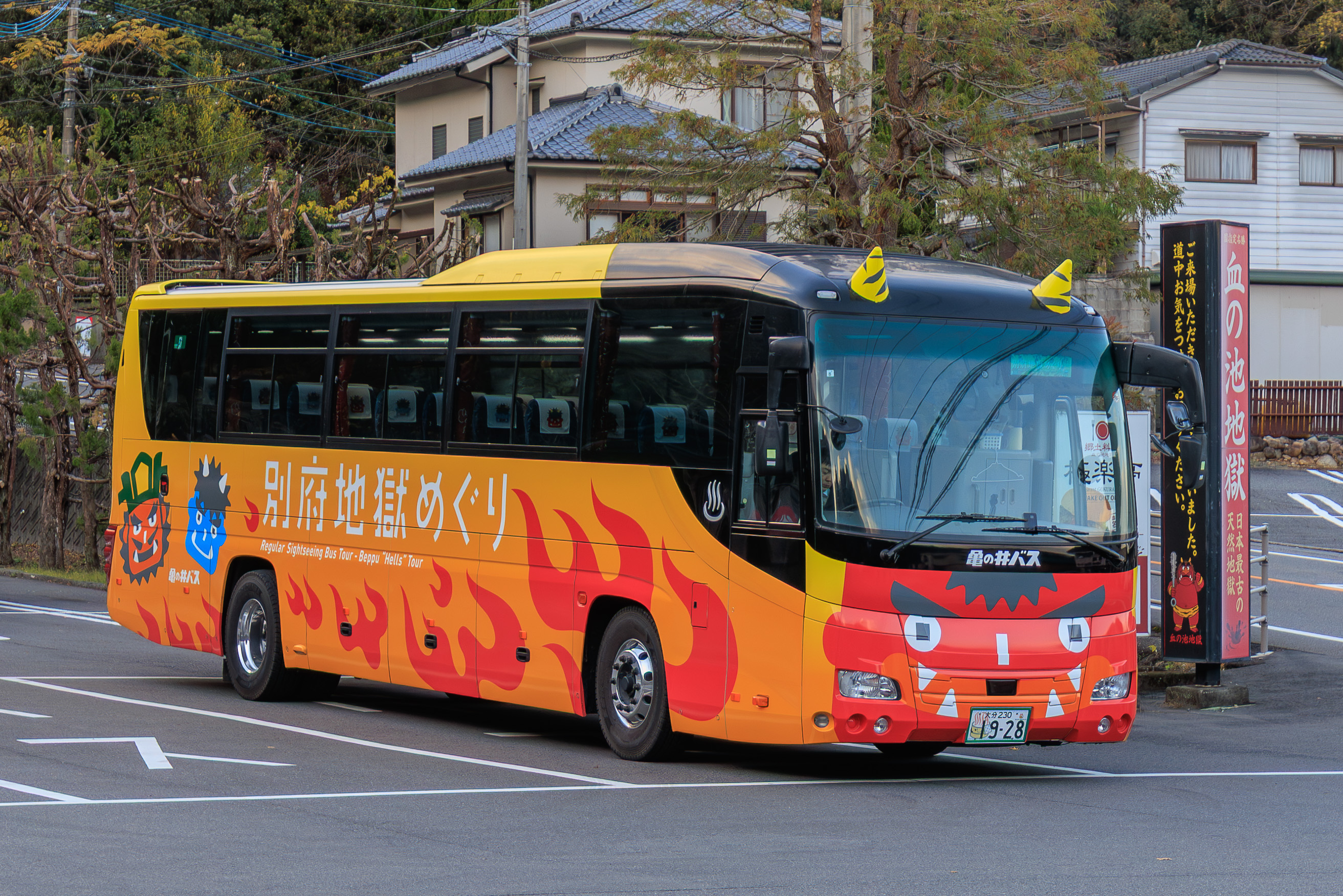
We noticed this oni themed tour bus outside!
Chinoike Jigoku
The final jigoku, 血の池地獄 Chinoike Jigoku (Blood Pond Hell), was right next to the Tatsumaki Jigoku.
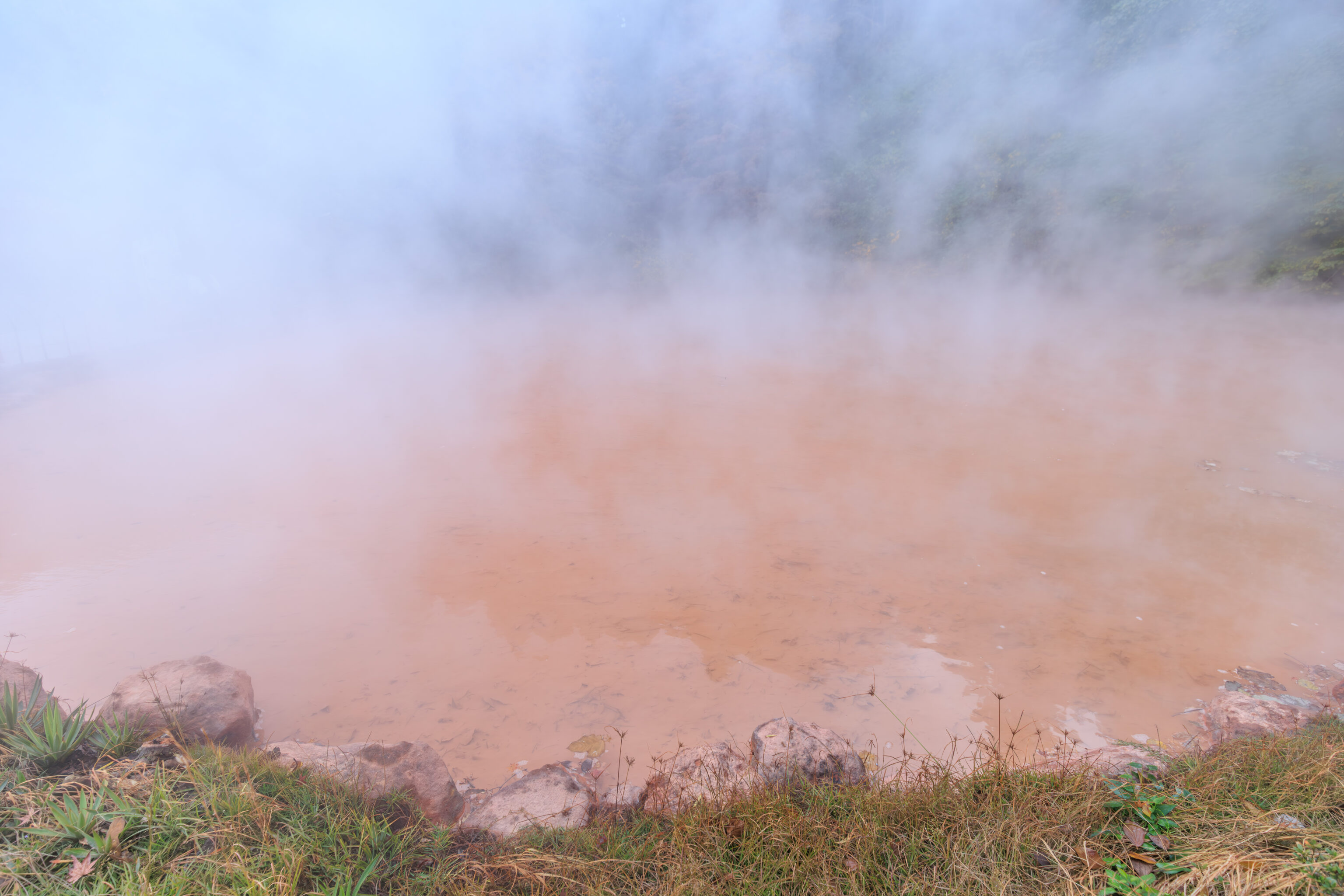
The entrance to the Chinoike Jigoku is through a big gift shop, although it wasn’t as large as the Umi Jigoku. It’s primary feature is one large reddish thermal pool.
CHINOIKE JIGOKU(Blood Pond Hell)
This jigoku is the oldest natural jigoku in Japan, and the pond is blood-red in color because this place is a red-colored clay area, and the red clay dissolves in boiling water. This boiling red-colored water is used as a dye and is also good for skin diseases.
– Text from a sign.
The claim of this being the oldest jigoku is an interesting one. How does one actually determine this? It may be the oldest one that is in recorded Japanese history? Unfortunately, we didn’t photograph the Japanese text. But, there was Korean text under the English text which had a few extra details:
Blood Pond Hell (Jinoike Jigoku)
This is a place where red clay erupts and even the steam appears red. It is the oldest natural hell in Japan, described as the "Red Pond" in the *Manyoshu*.
It covers an area of 1,300 m² and has an eruption volume of 1,800 ke. The red clay is said to be effective for skin diseases, so it is made into an ointment and sold.
– Korean text from a sign, translated using Google.
It seems like it is probably the oldest documented jigoku.
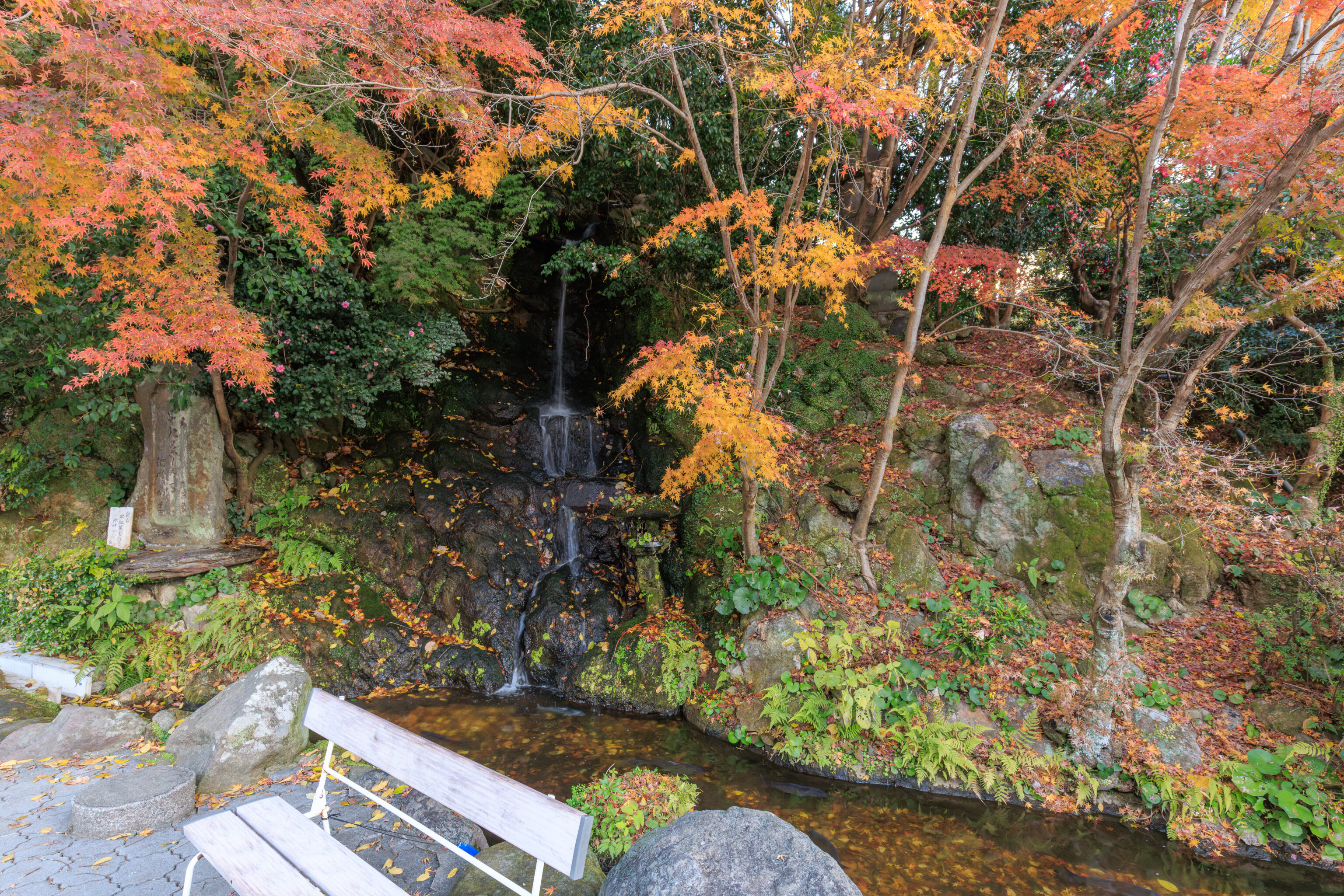
We noticed this small waterflal nestled in among some colorful momiji.
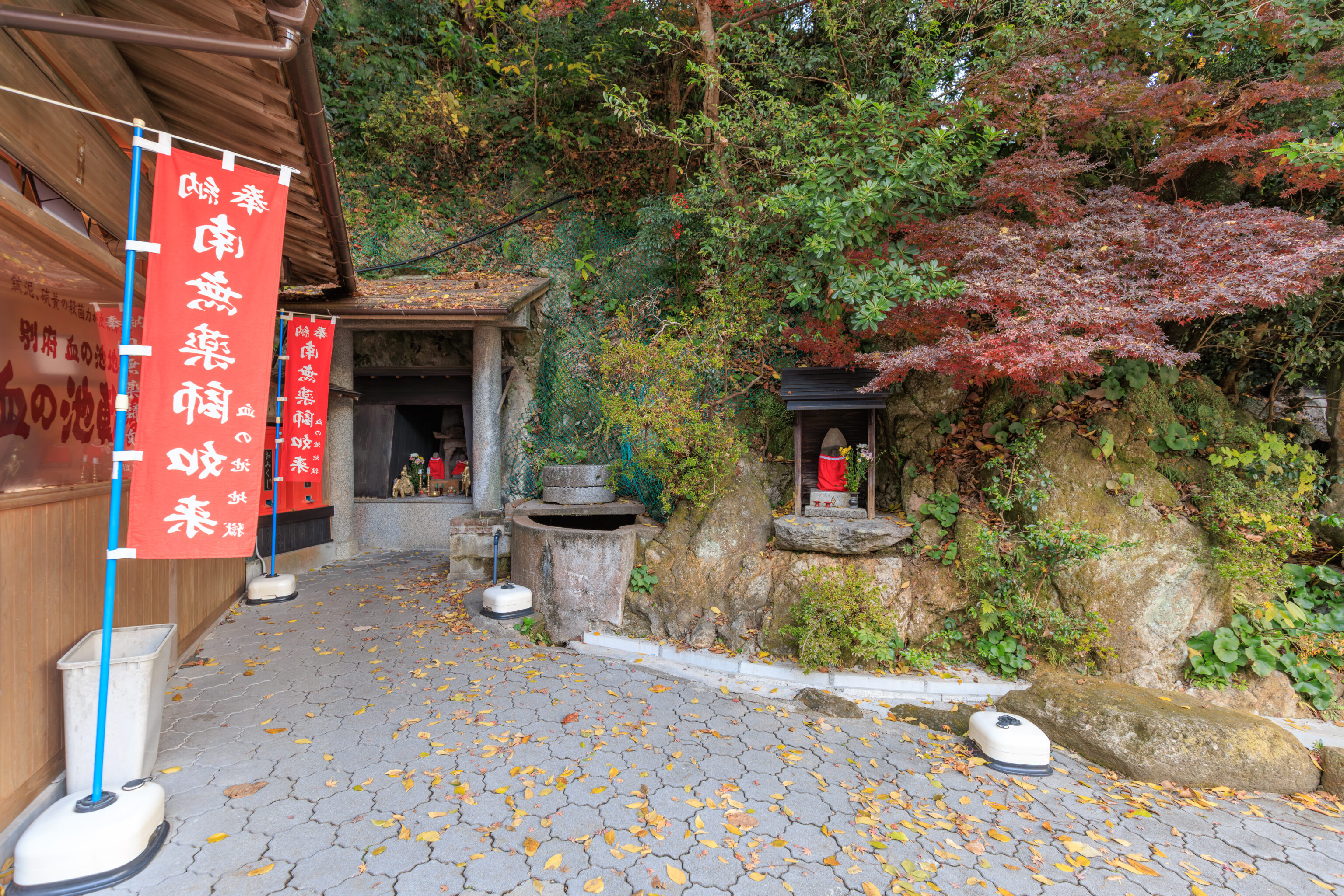
There were some small shrines by the thermal pool.
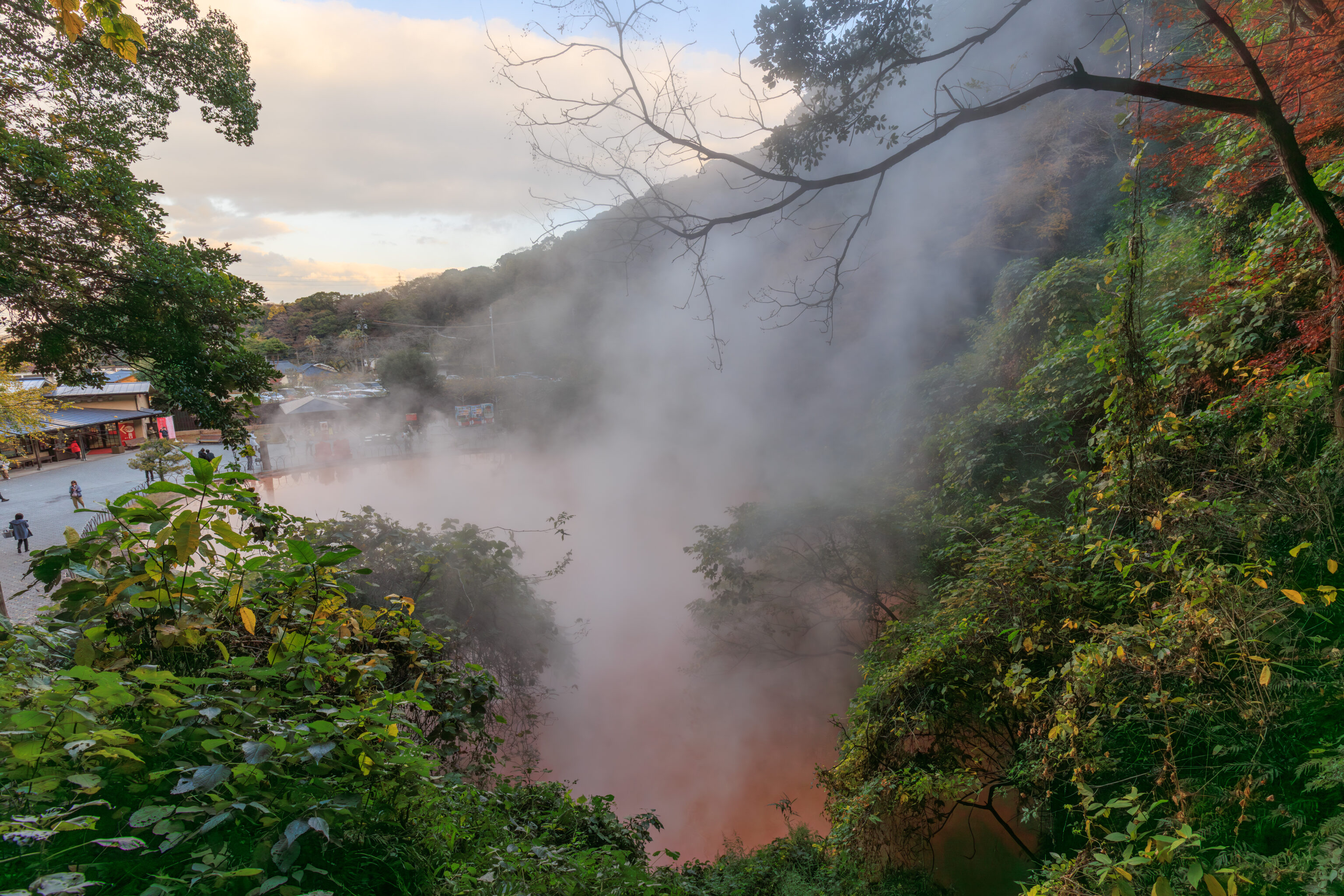
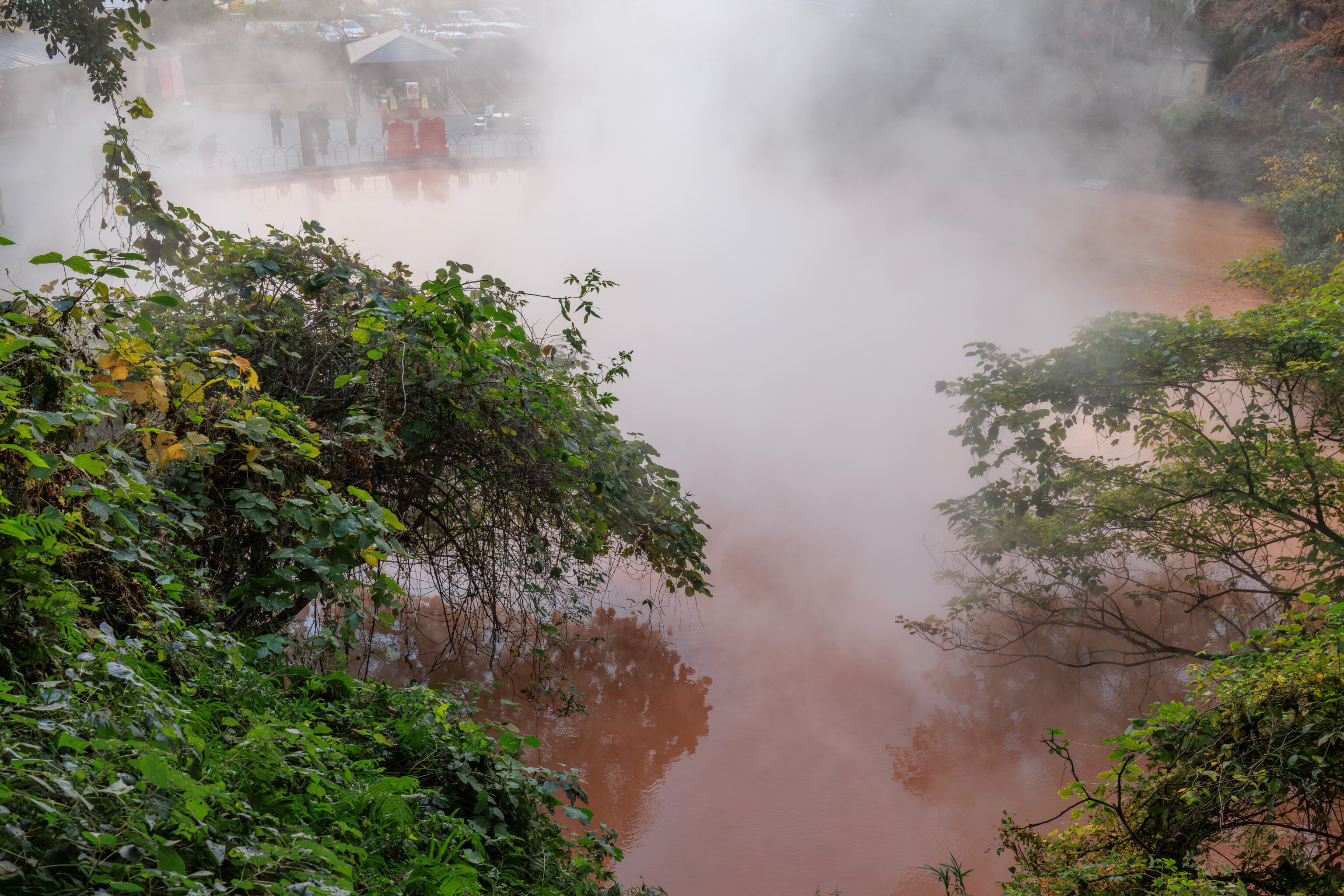
We walked up a small hill to the west of the thermal pool. The viewing area was unfortunately a bit limited.
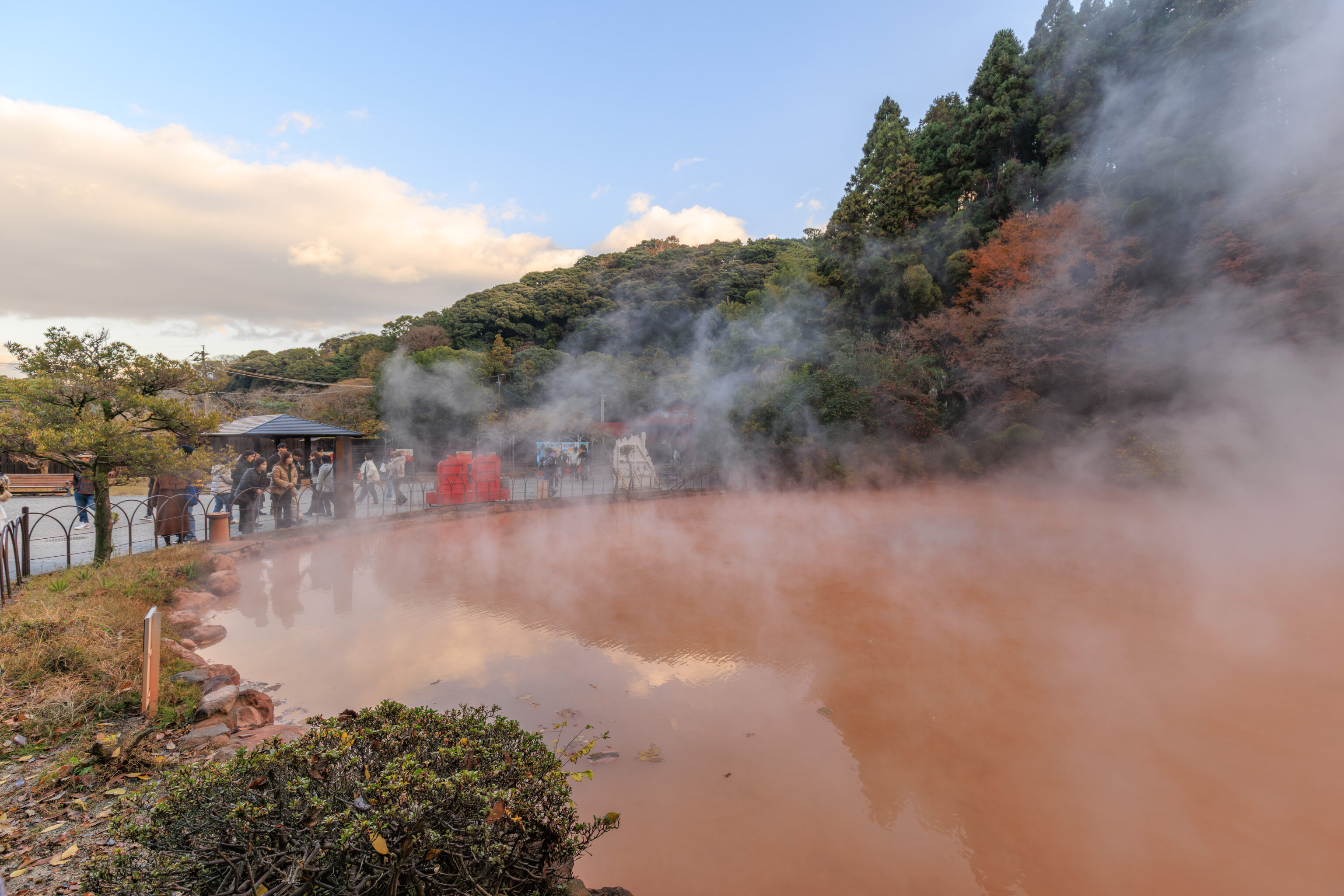
We walked back down to check out the thermal pool from the east where we saw a large sign.
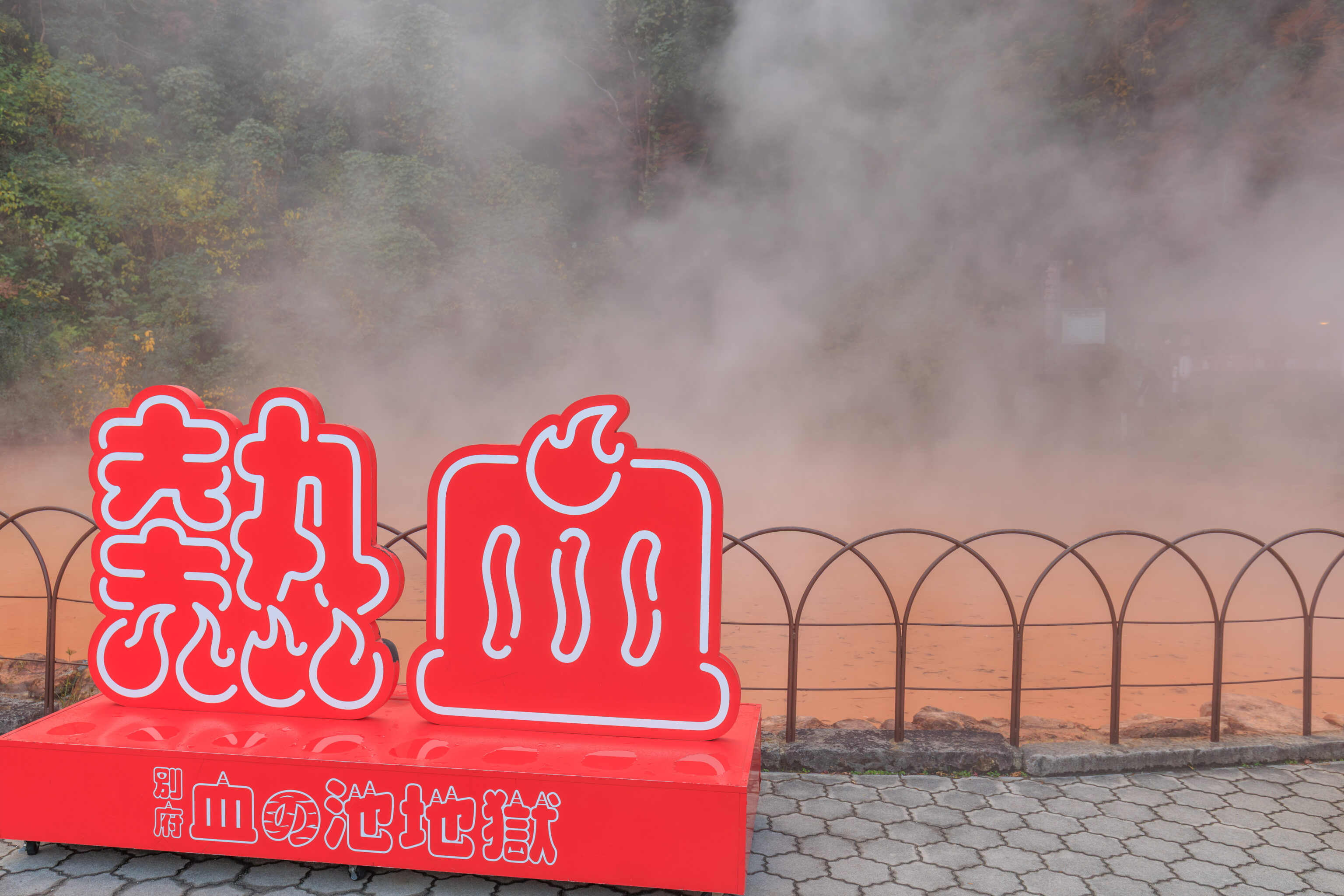
This two large characters on this sign say 熱血 nekketsu, which literally means hot blood. This can mean hot blooded or passionate. The text on the bottom identifies the location, Beppu Chinoike Jigoku. The characters are all written creatively . There’s references in the design to fire, heat, oni, and water.
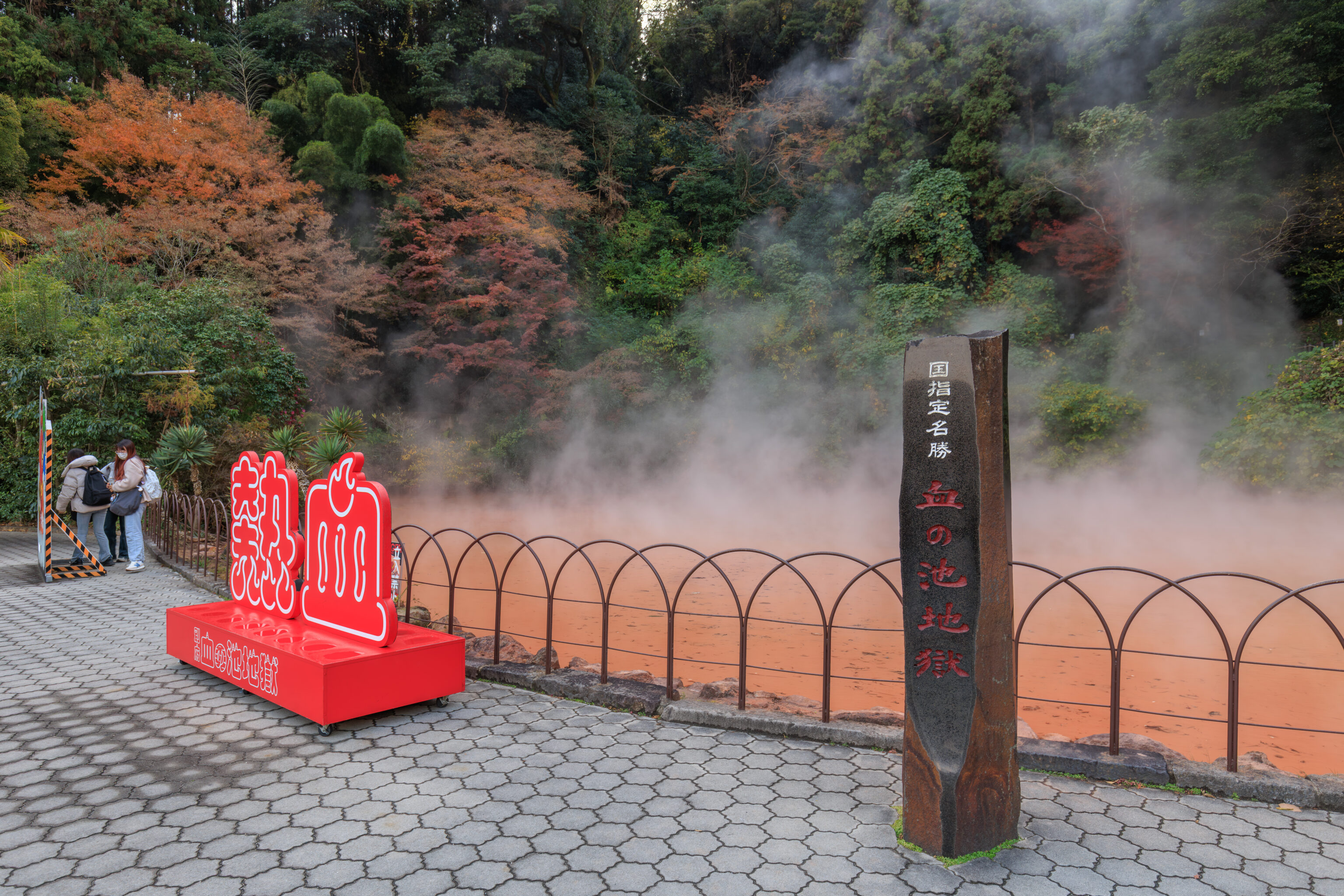
The marker on the right says 国指定名勝 立の池地獄 Nationally Designated Place of Scenic Beauty Chinoike Jigoku.
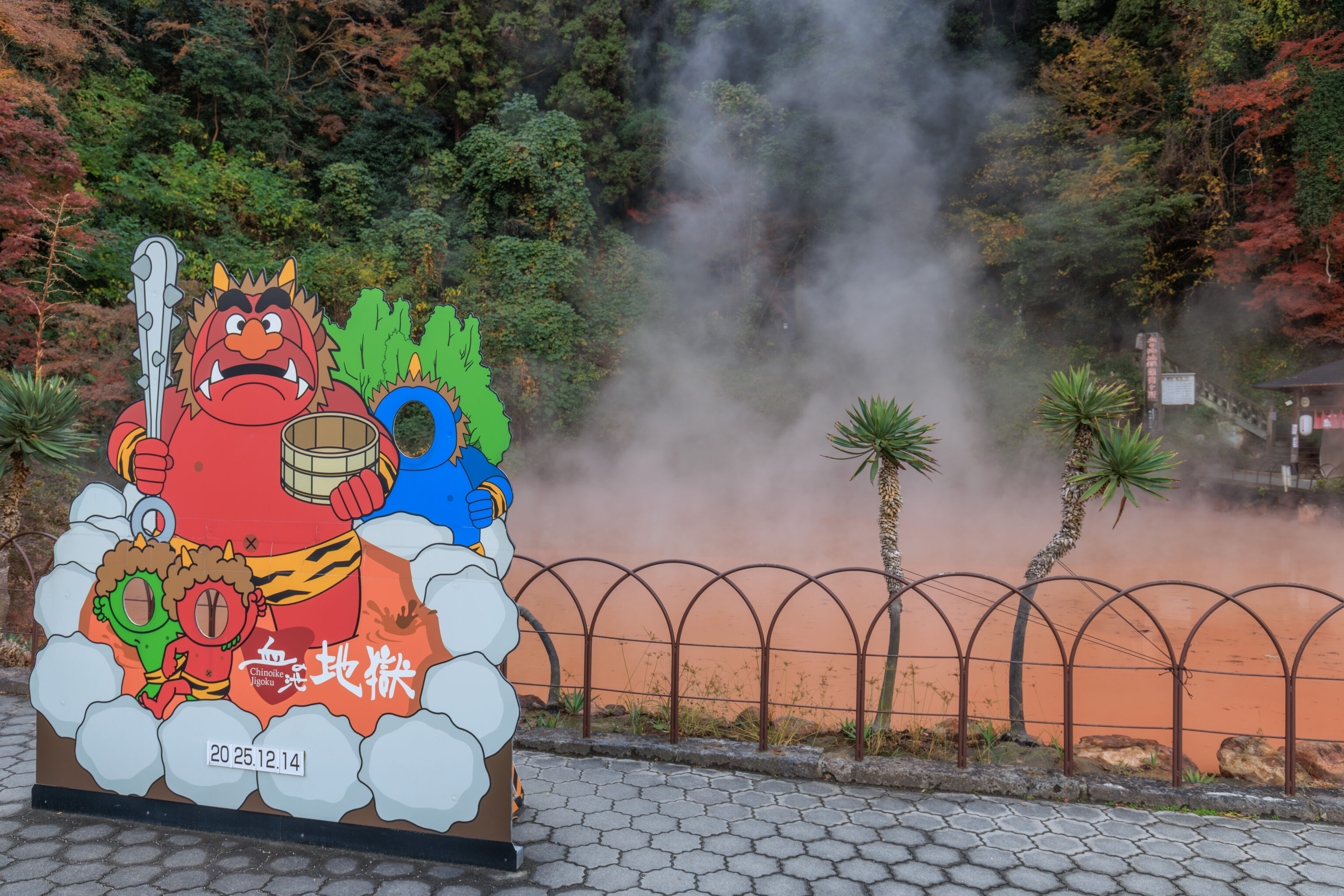
This oni themed photo spot even has the date!
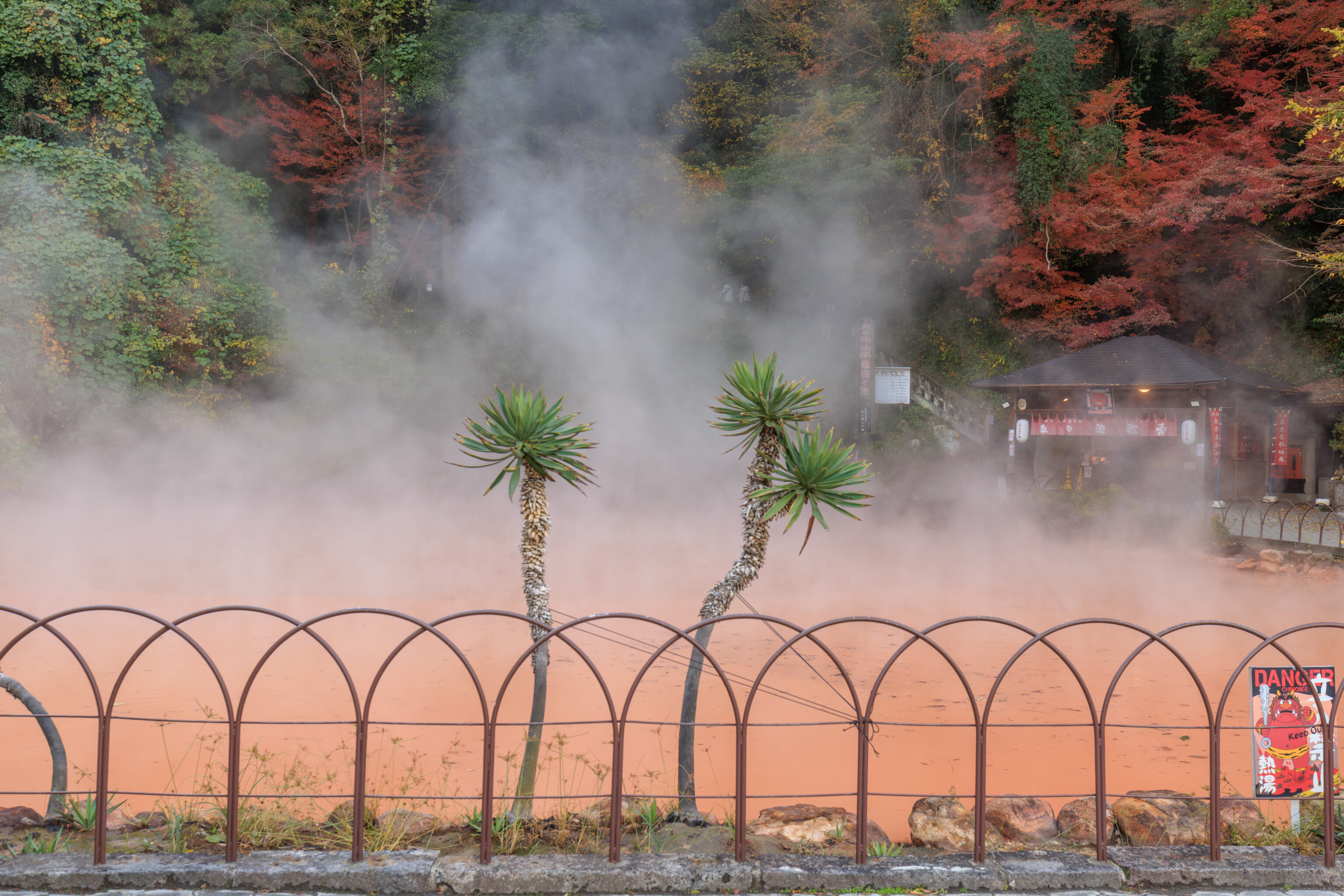
The danger sign here at bottom right is pretty cutely drawn, very Japanese!
Early Evening
After finishing at the seven jigoku, we decided it was time to return to the Amane Resort Gahama to check in. We went back to the Chinoike Jigoku Mae bus stop to catch the next bus back to the Amane Resort mae bus stop. It’s worth nothing that there is nowhere to top up an IC card near the pair of jigoku that we just visited. This is pretty rare as we definitely expected there to be a convenience store in the area!
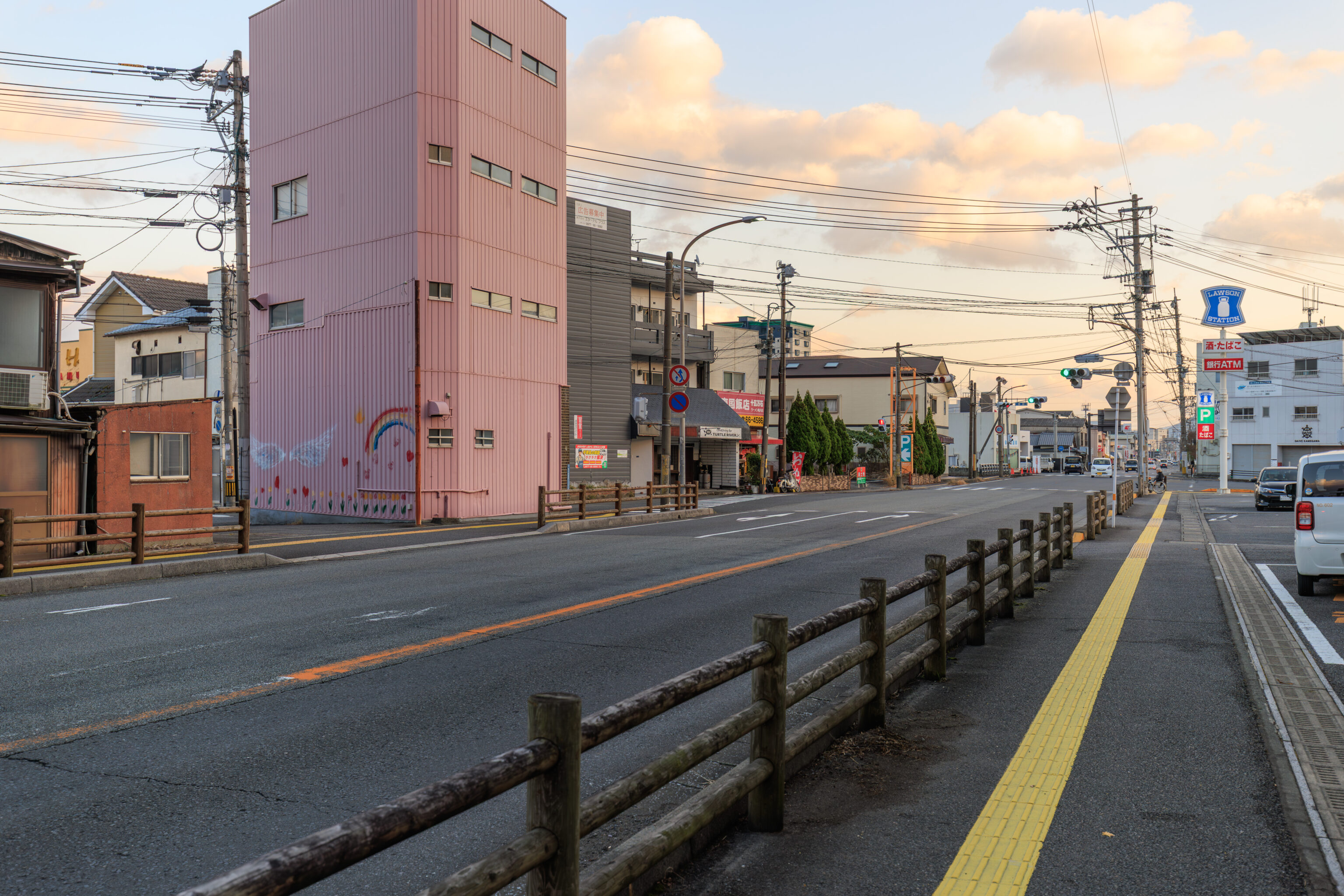
We ended up taking the bus to the 亀川新川 Kamegawa Shinkawa bus stop as we decided we wanted to try a restaurant here. And, there was a Lawson on this corner!
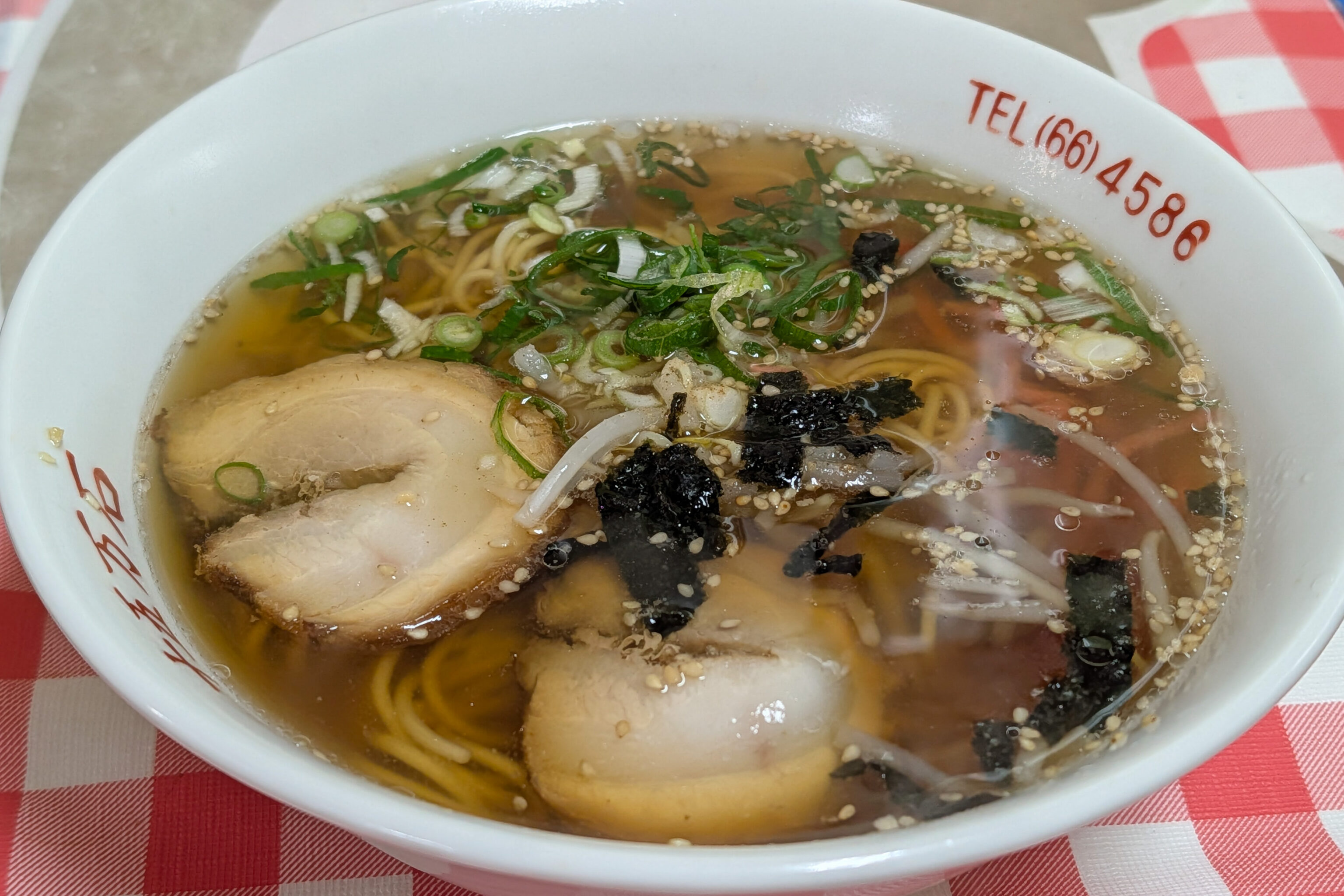
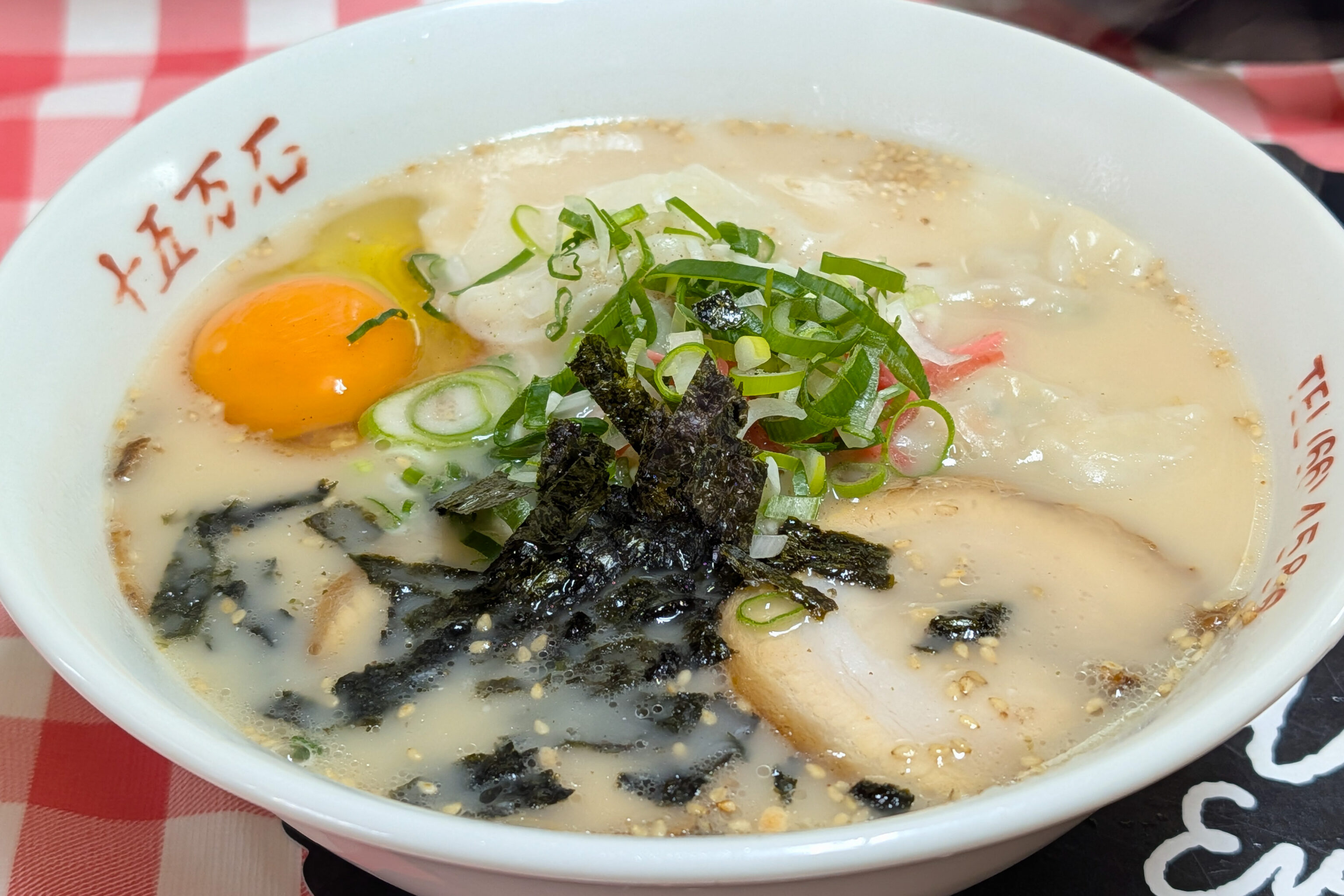
We visited 十五万石 Jugomangoku, a small old ramen shop near Kamegawa Station. It kind of felt like stepping back in time. Maybe this is what the late Showa era was like?
The name means 150,000 石 koku, a unit of volume based on the Chinese 石 dan. It seems that in Japan, this unit is one ten-thousandths of a 合 go, which is based on the size of a serving of rice, presumably uncooked. Google supports converting the modern koku unit into gallons. It is about seven million! Quite a large volume. During the Edo period, production of 10,000 koku was required to be considered a 大名 daimyo. We don’t know why this restaurant’s name is this specific quantity. It must mean something!
As for the ramen, it was decent, though not particularly special.
Amane Resort Gahama
After finishing our ramen, we took the bus back to the アマネリゾート ガハマ Amane Resort Gahama and checked-in.
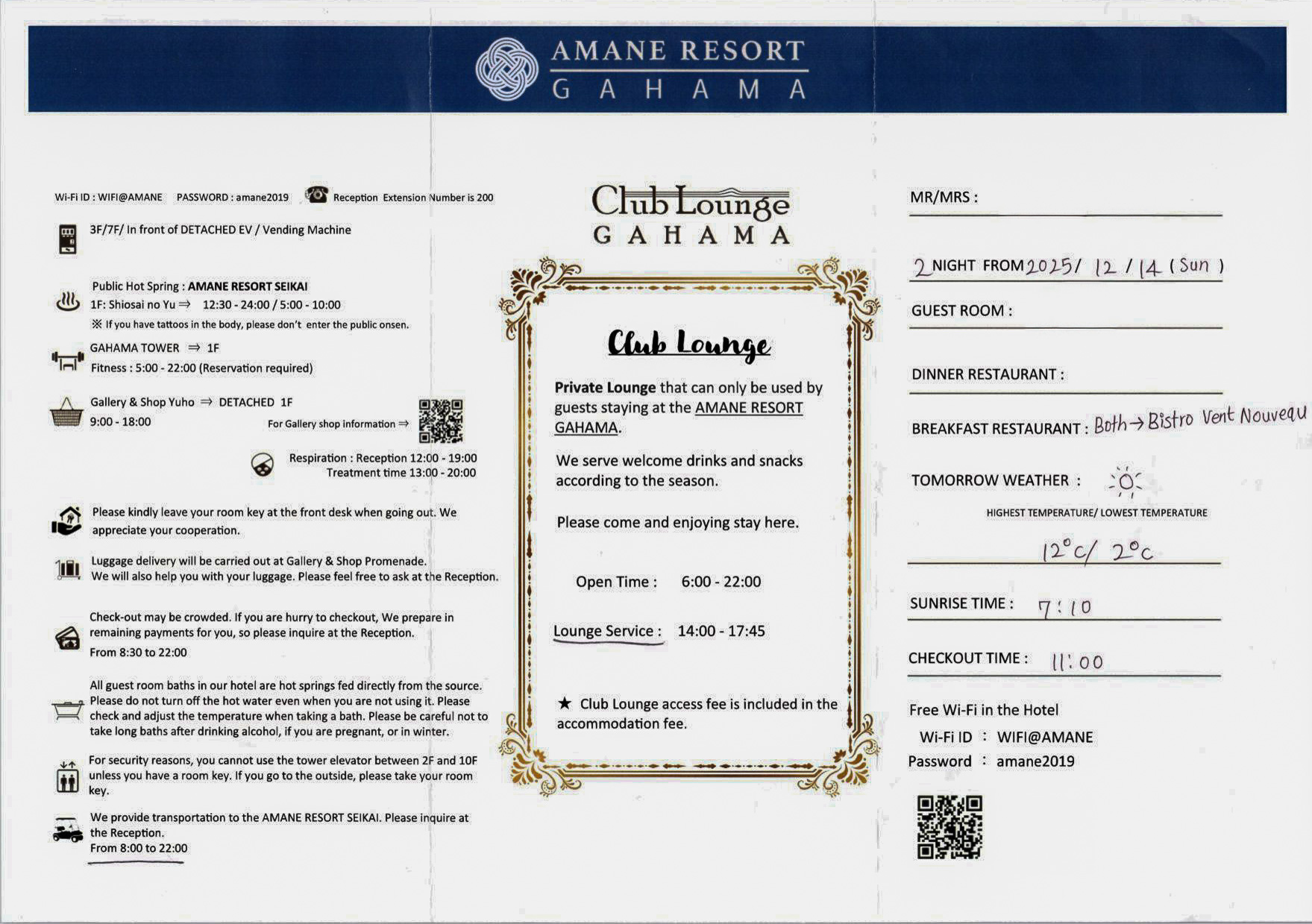
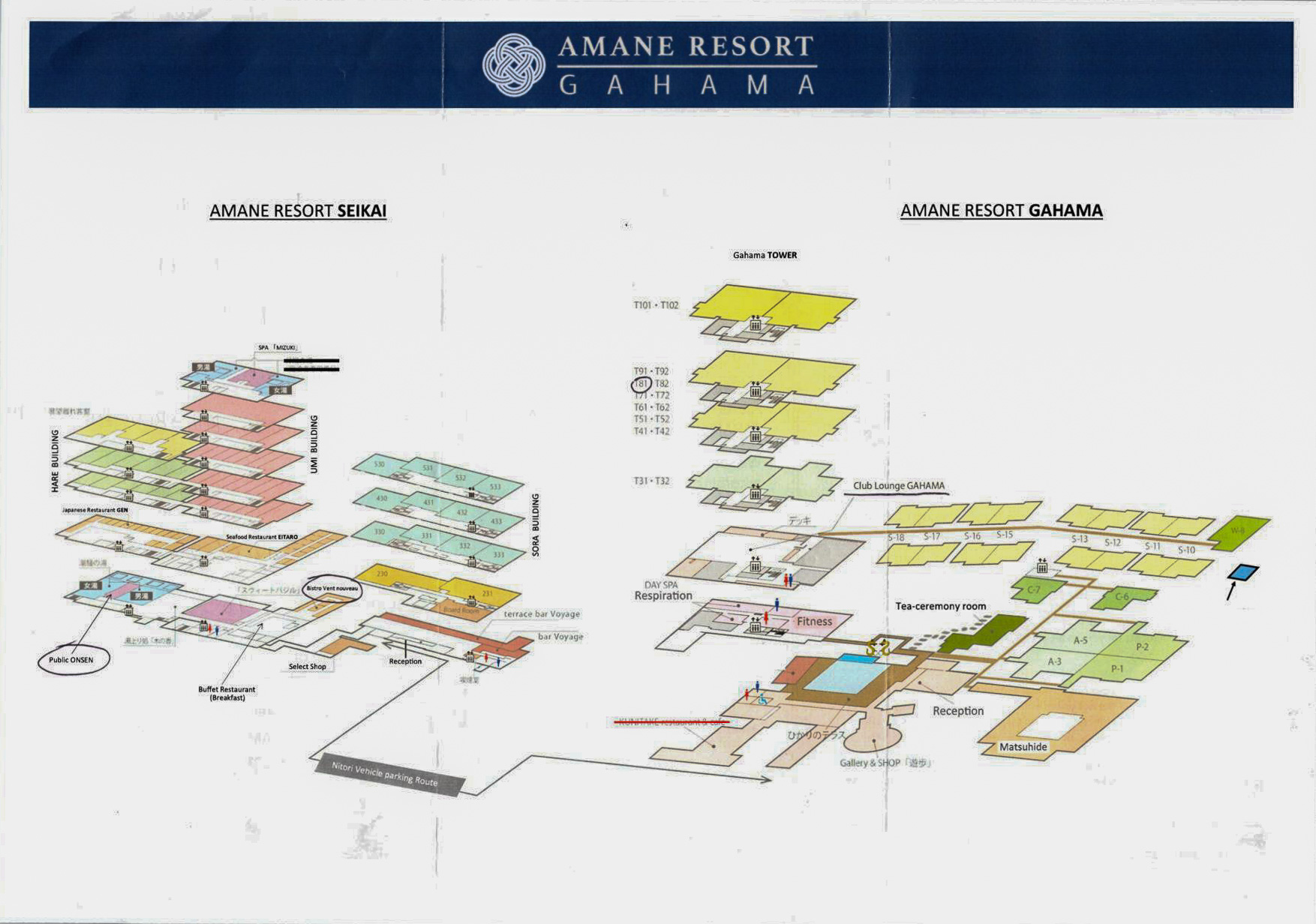
The Amane Resort has two separate properties, Seikai and Gahama. Gahama, where we are staying, was originally a villa built in 1927 and was named Gahama Terrace upon its conversion to an onsen hotel in 20161. It seems that the tower building, where we are staying, was built in 2019 with Gahama Terrace being renamed to simply Gahama.
The two properties are separated by a large furniture store with a shuttle service available. Breakfast is at the Seikai so we will have to go over there in the mornings.
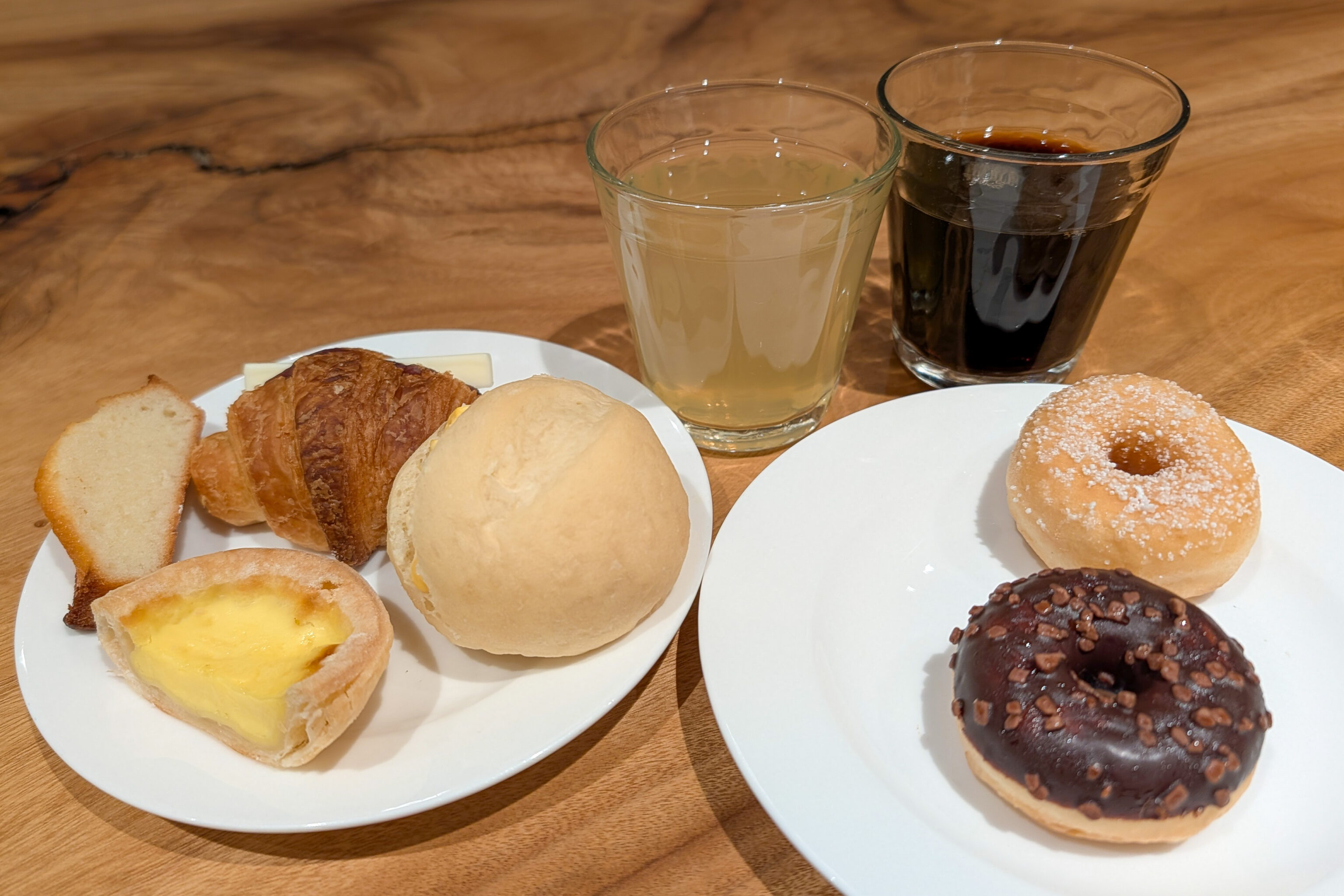
We actually ended up going to the lounge on the second floor of the tower building first due to a bit of confusion with the front desk staff. We had some snacks before we were able to access our room. We didn’t photograph the lounge but it felt a bit like a lounge at the airport.
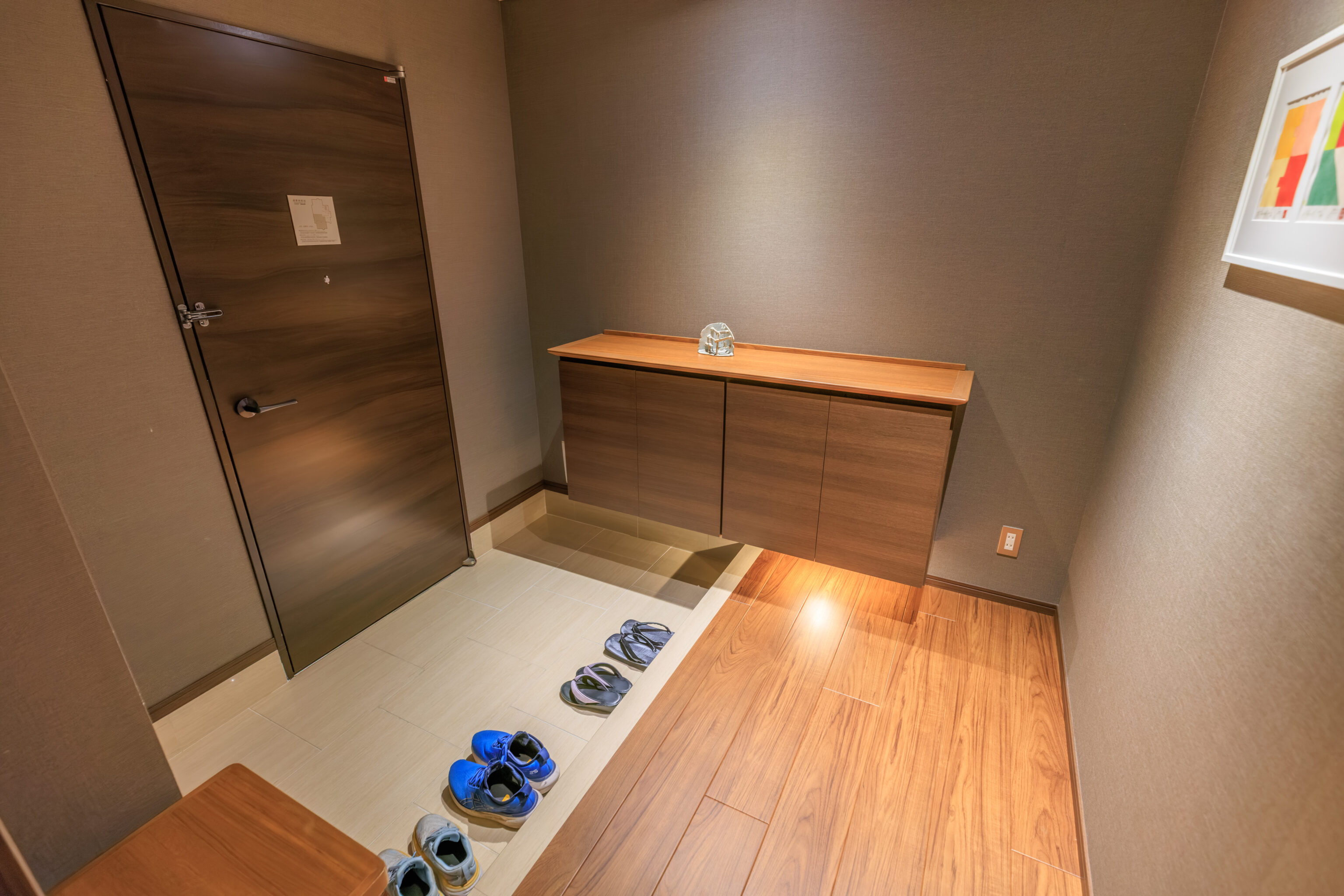
The entrance to our room. The slippers here are for use outside of the room as an alternative to wearing our regular shoes.
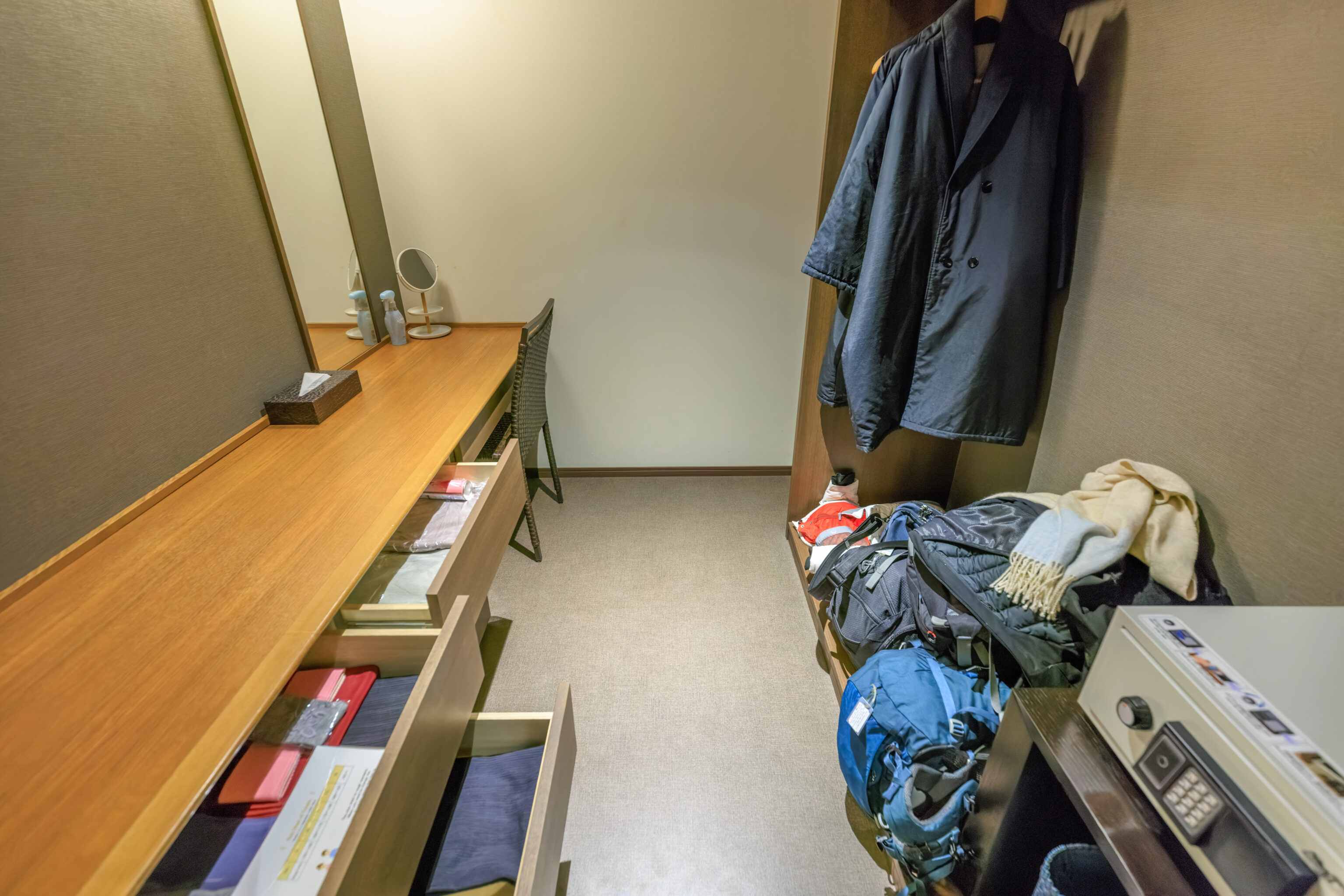
There was a large walk in closet.
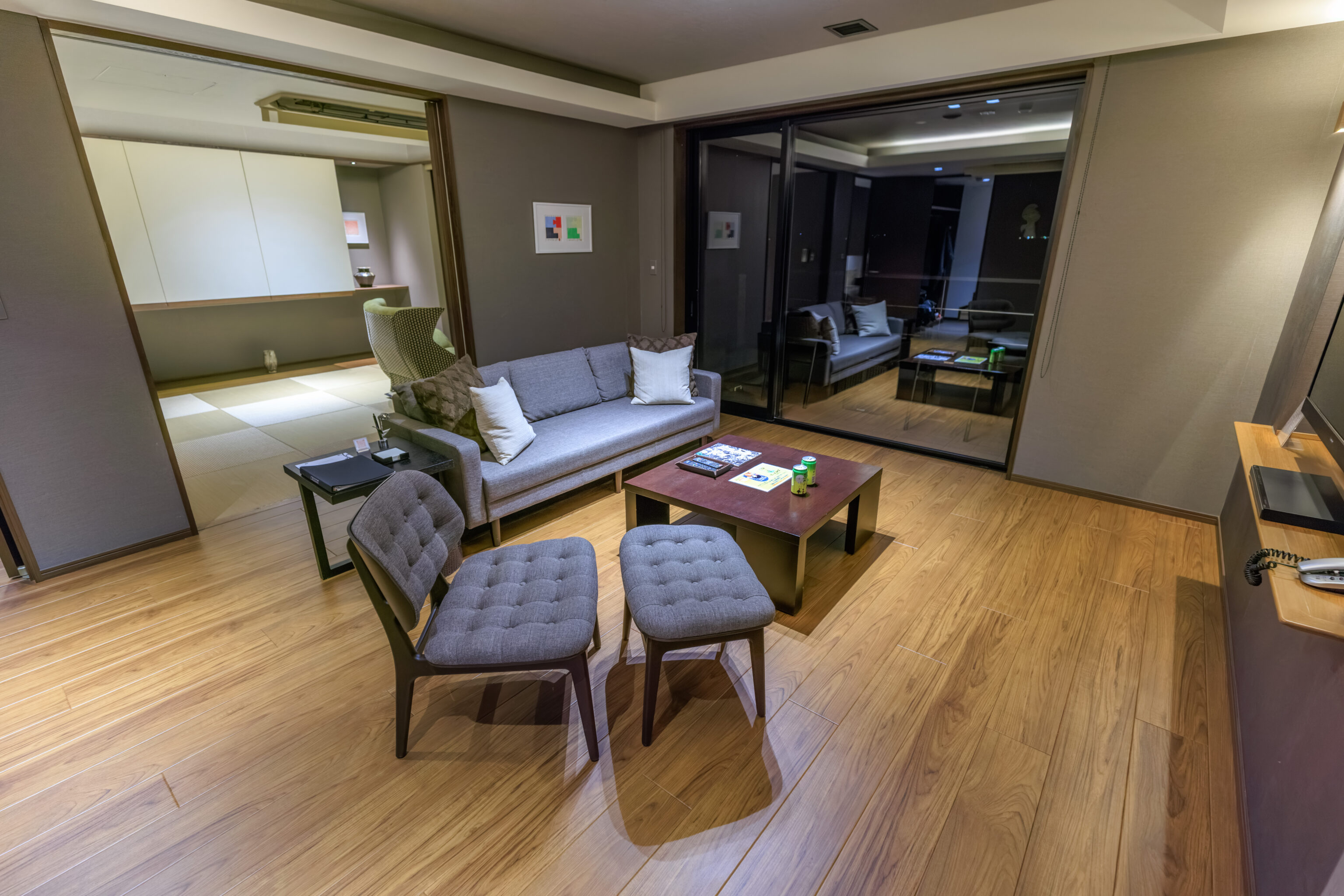
The living room was quite spacious with access to a balcony that faces Beppu Bay.
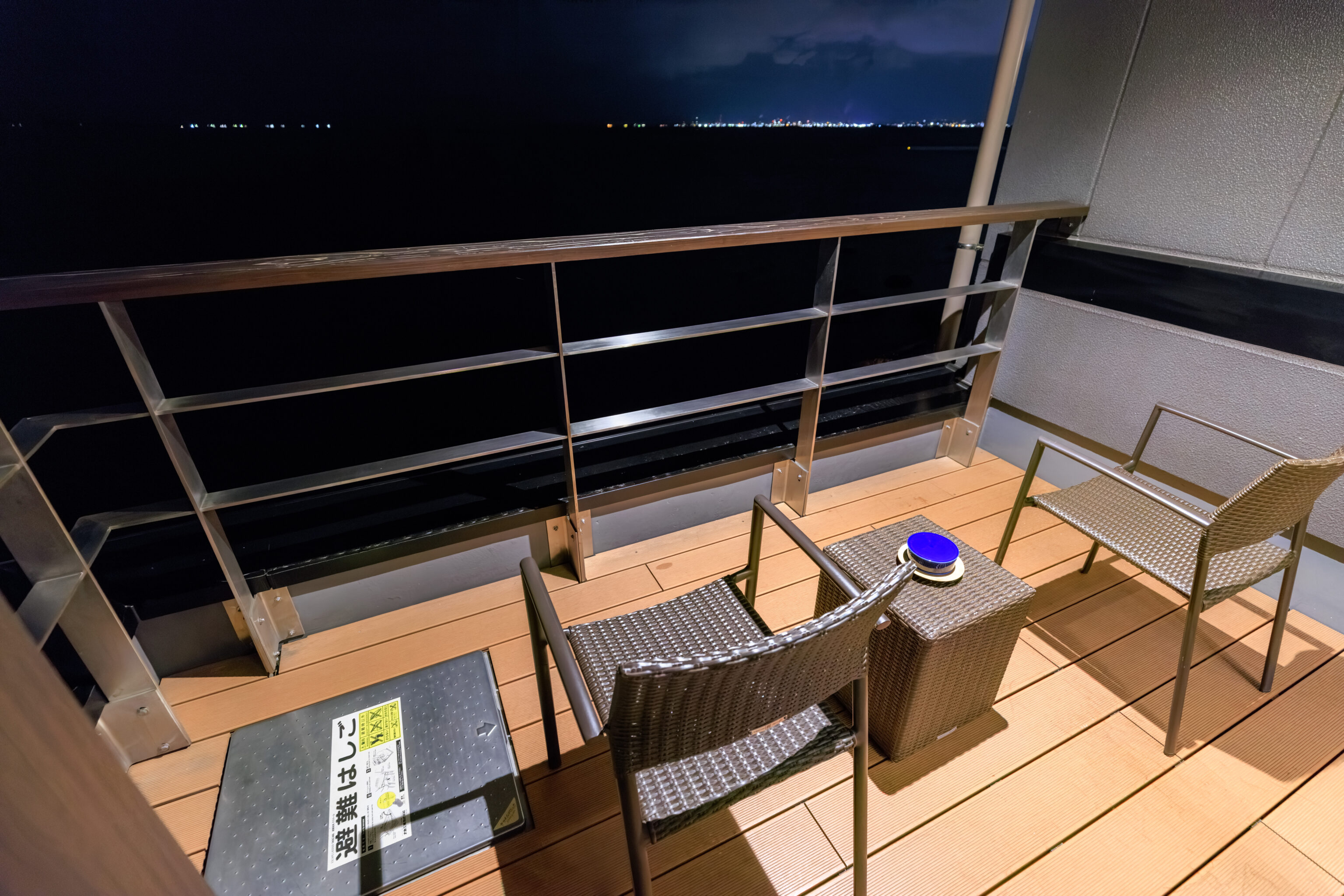
The balcony was equipped with two chairs and a small table.
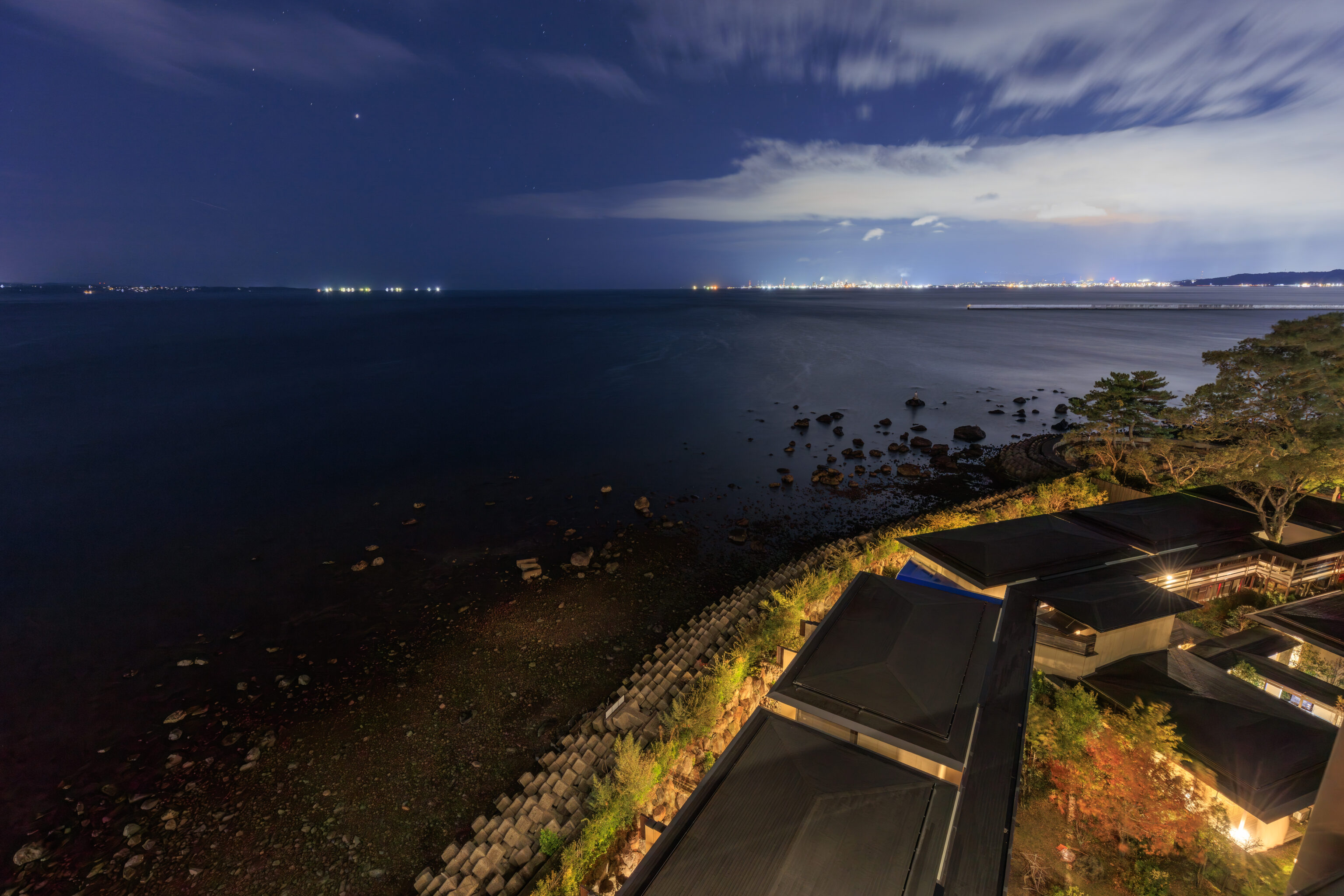
Looking to the east and slightly south, we could see the bright lights of Oita‘s industrial area along Beppu Bay. This is the same area we saw earlier today while walking from Umi to Kamado Jigoku.
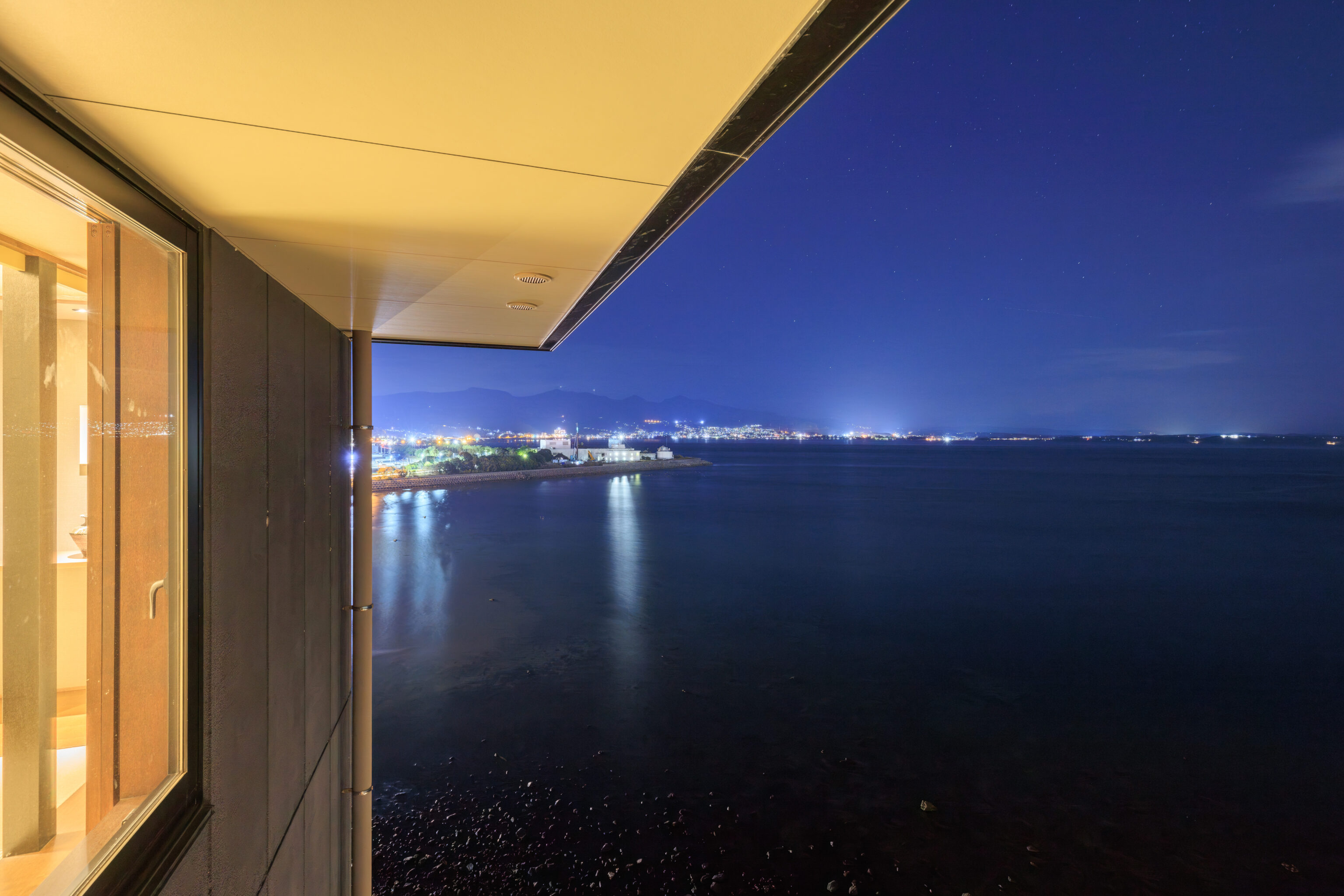
Looking to the north, the lights in the distance are in Hiji.
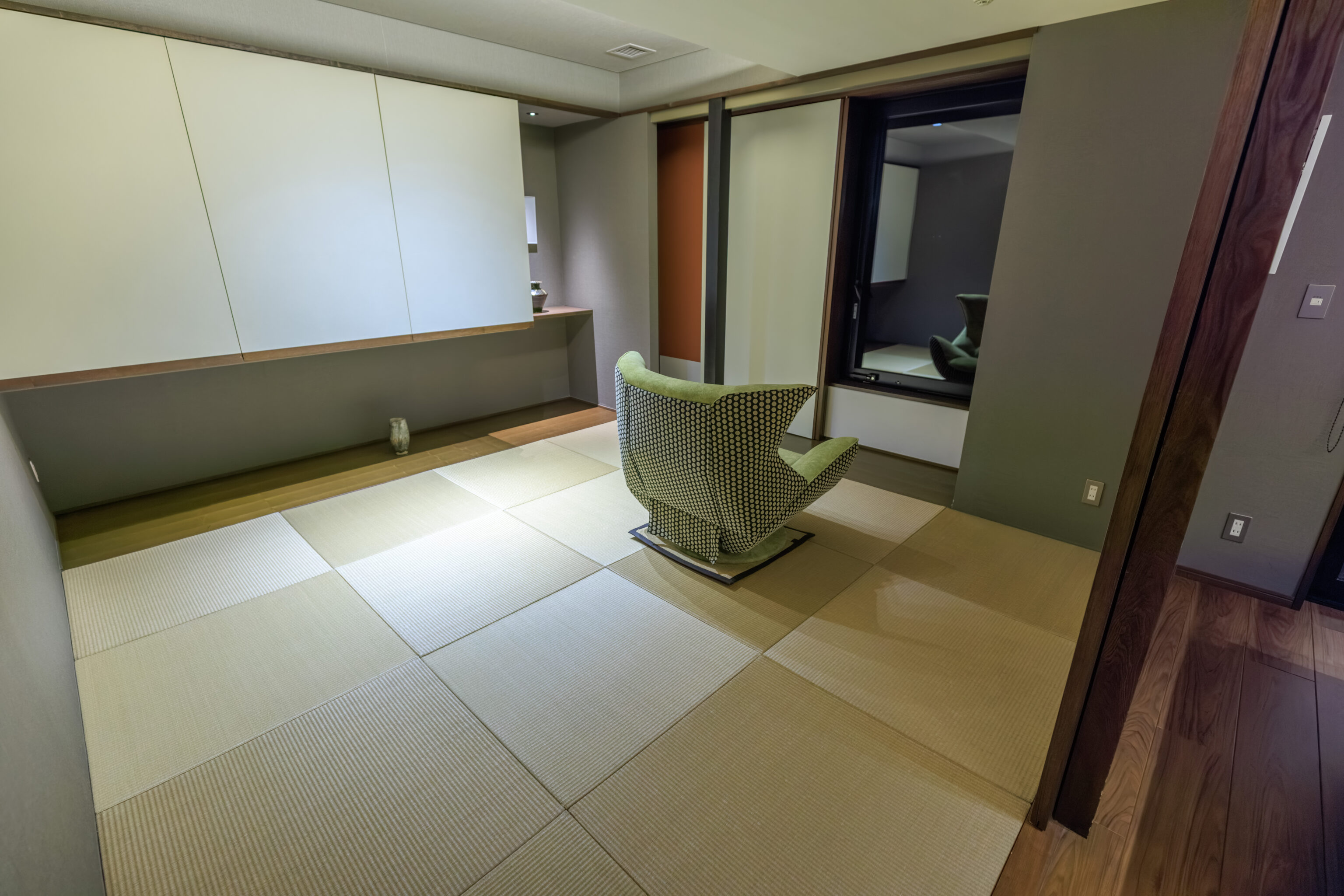
There was also a room equipped with tatami and a single chair. Presumably, this room could be used as a traditional bedroom with the futon that is in the storage cabinets along the wall. The single chair facing the window felt a bit like the captain’s chair of a starship from Star Trek.
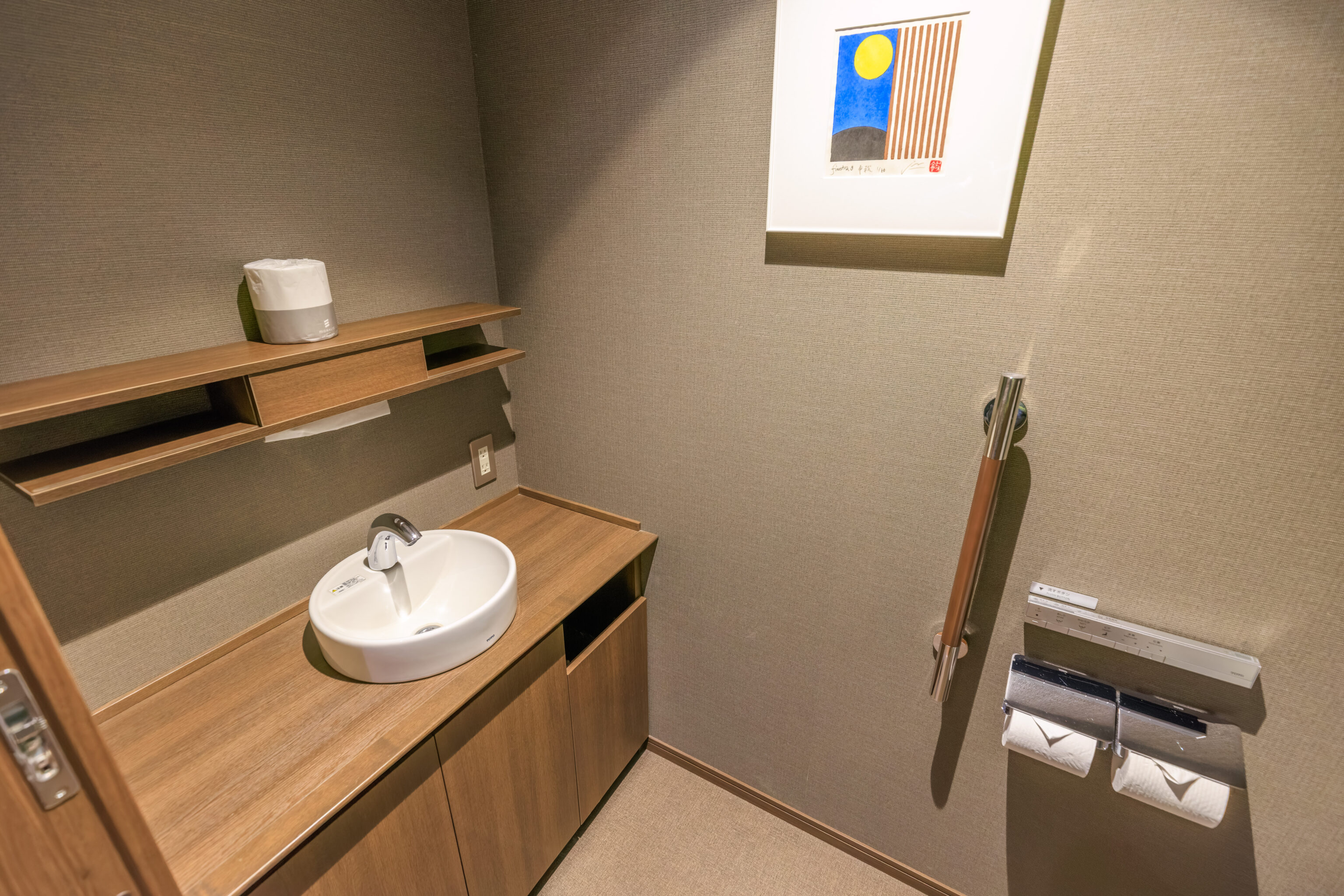
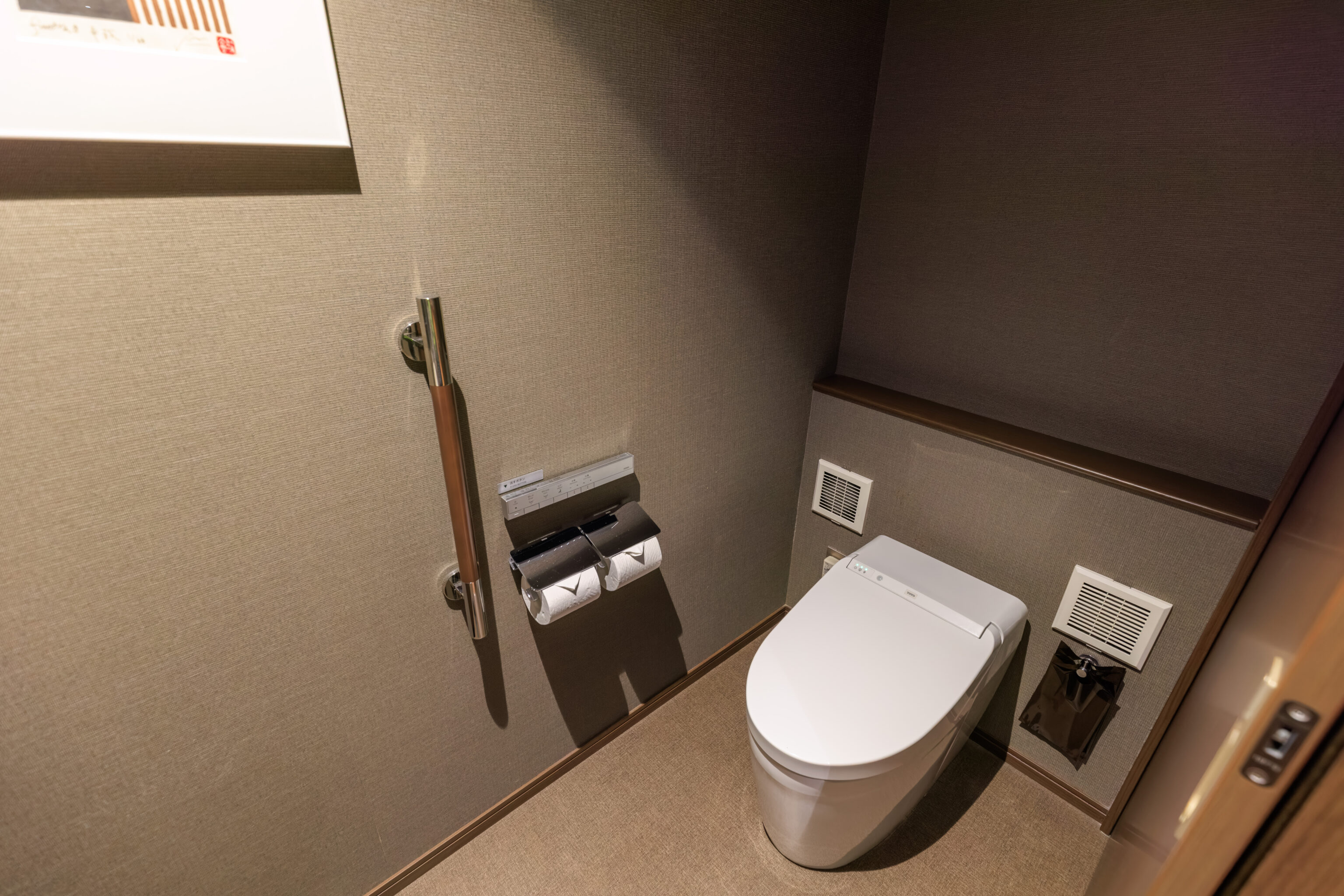
There was a bathroom with toilet and small sink.
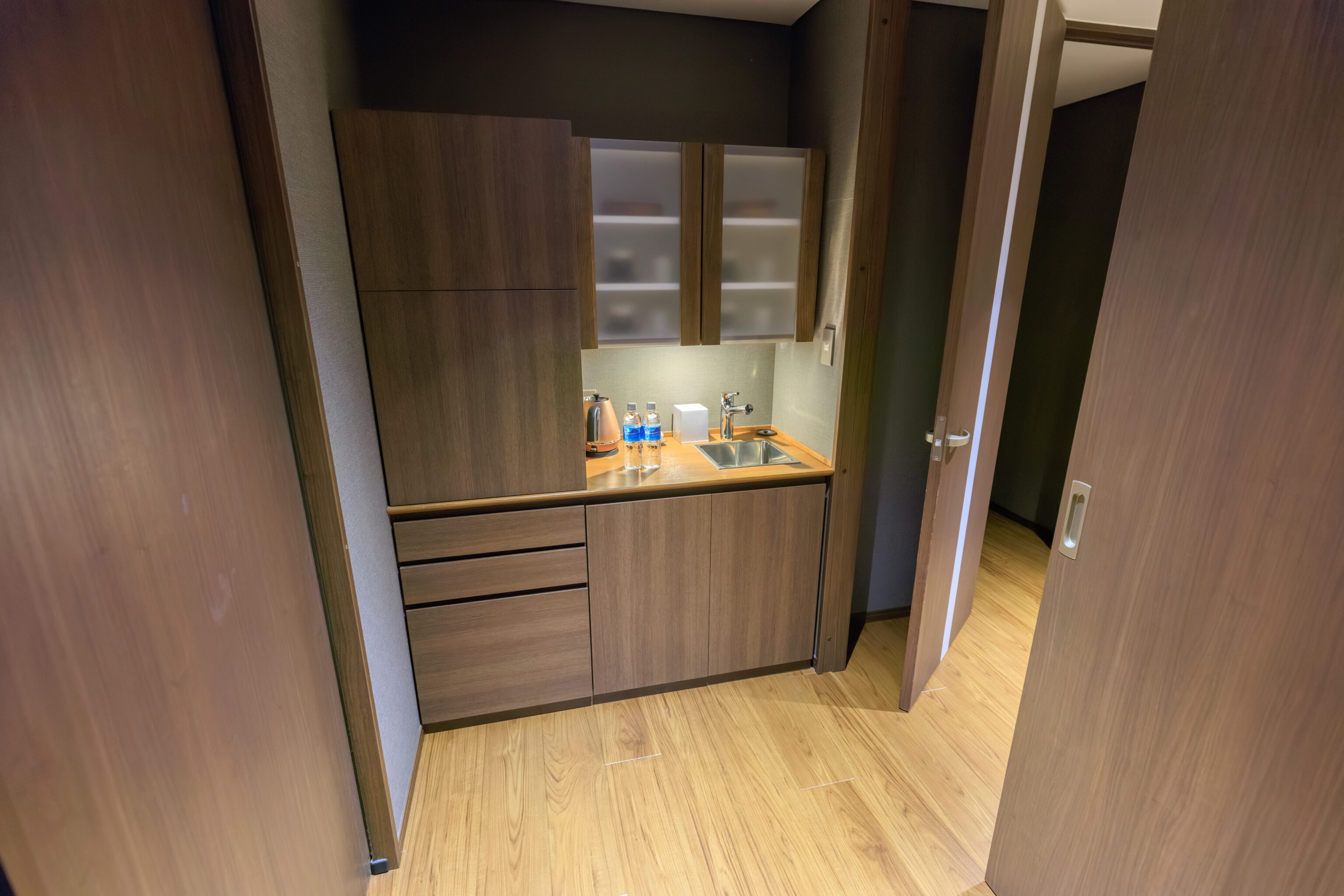
As well as a small room with another sink and kettle, basically like a tiny kitchen area.
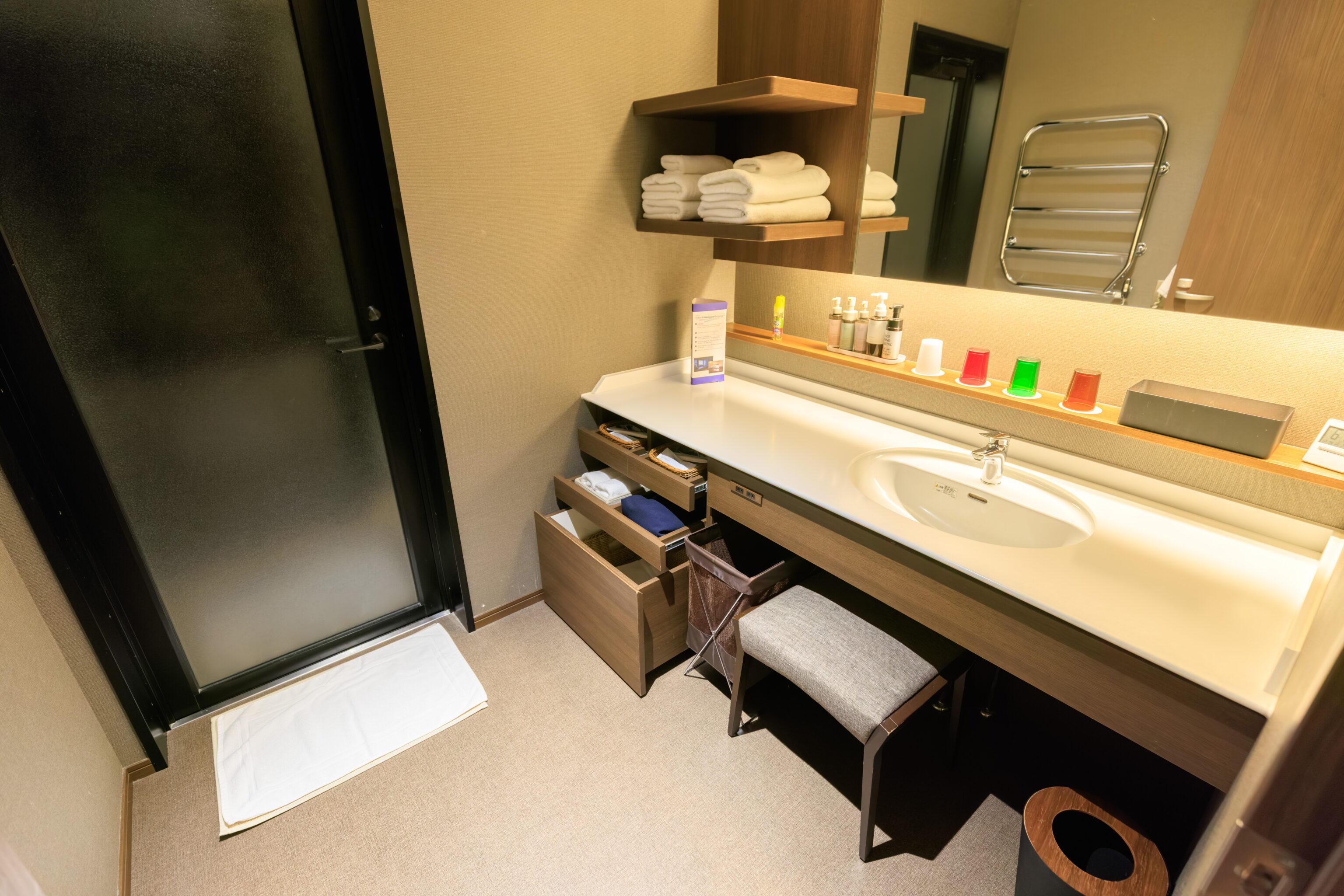
And there was a larger bathroom…
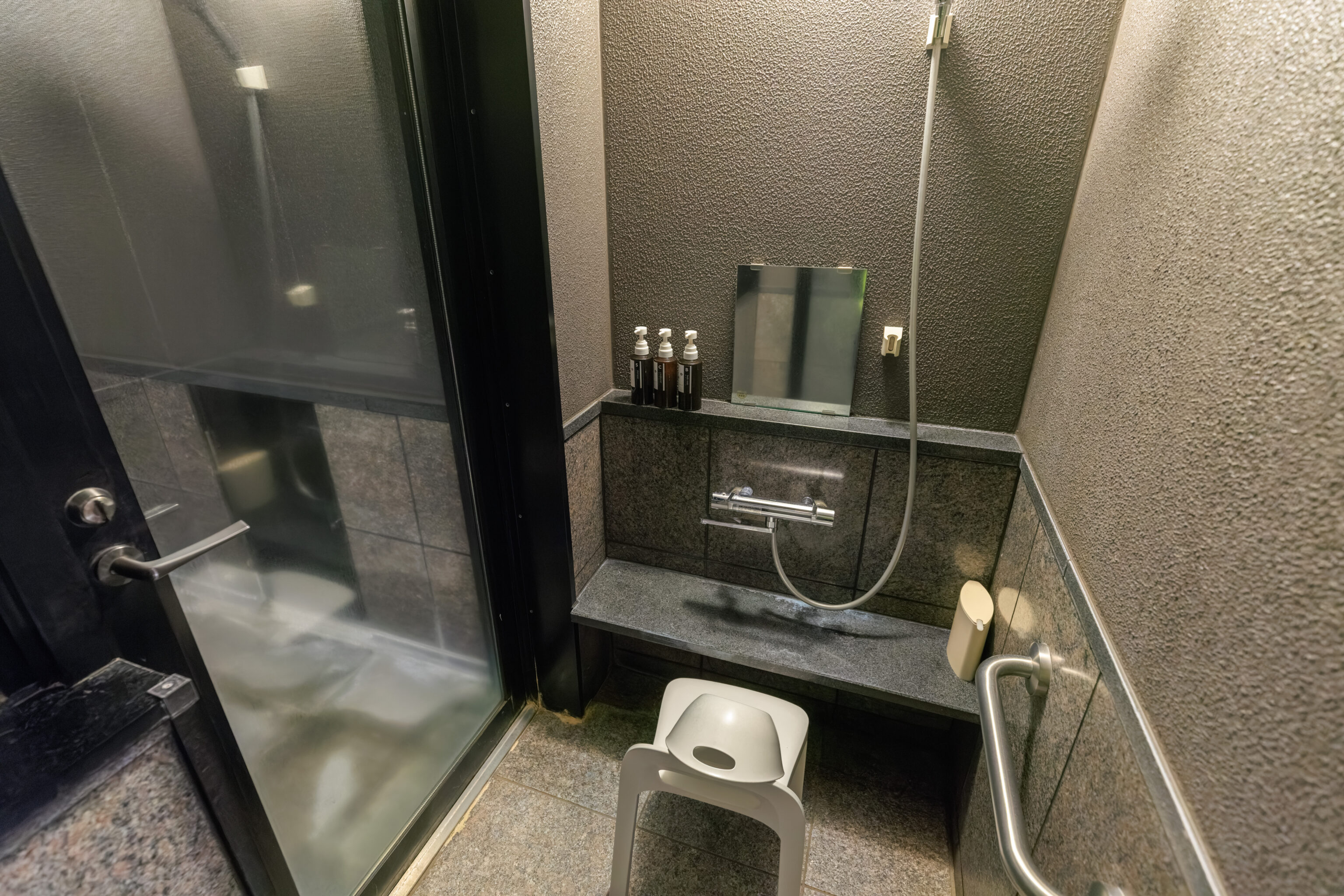
Along with shower…
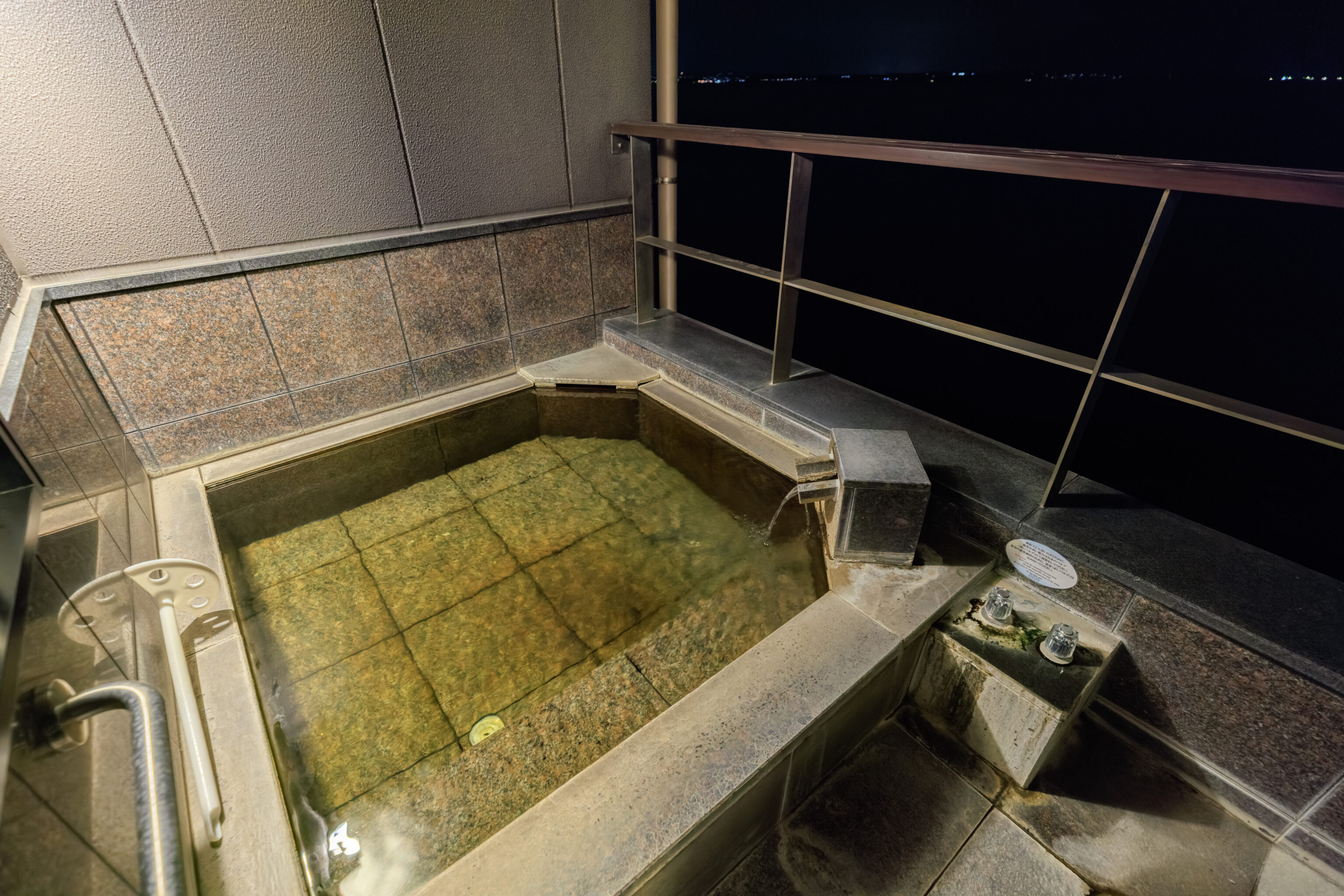
And of course, the private in-room onsen!
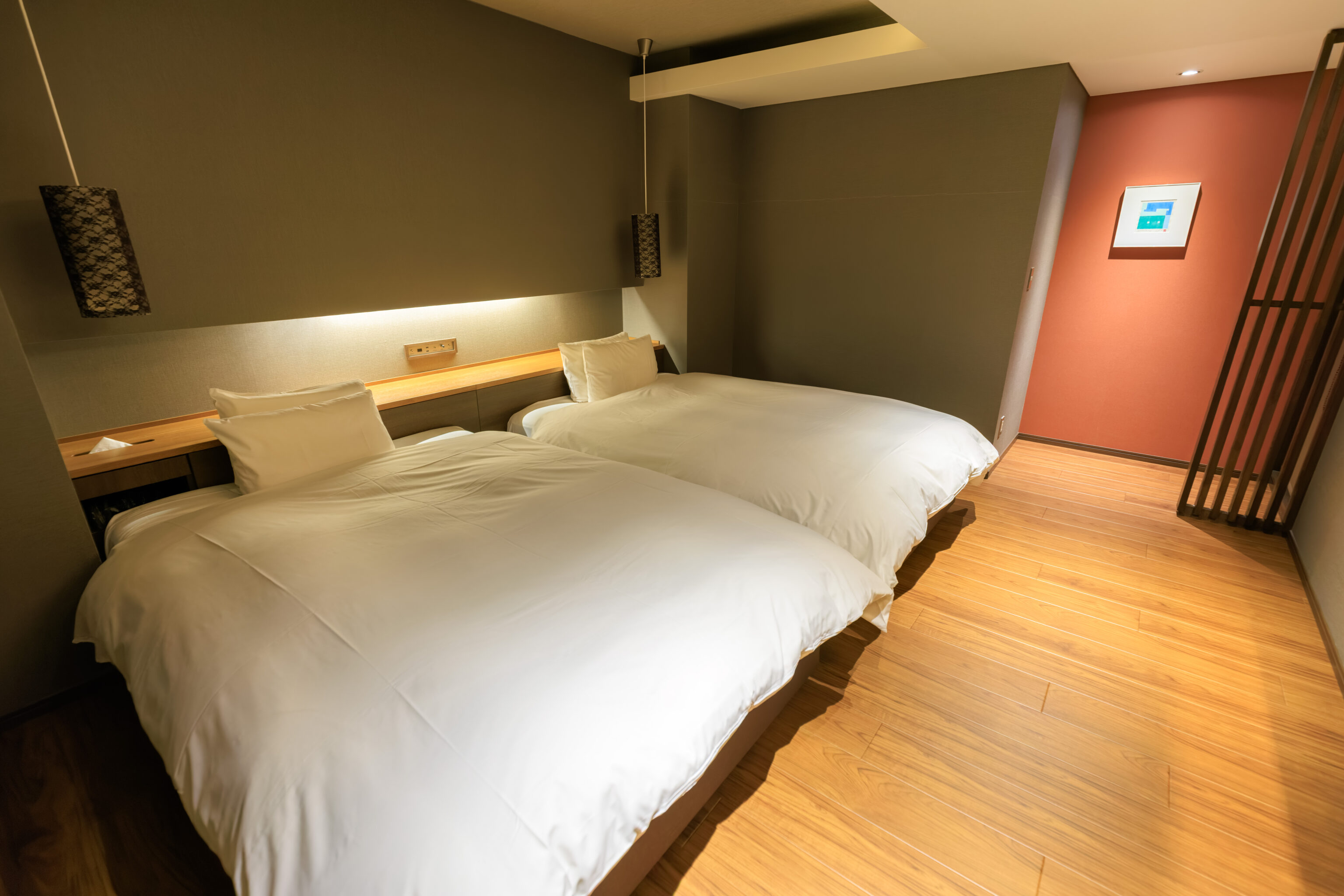
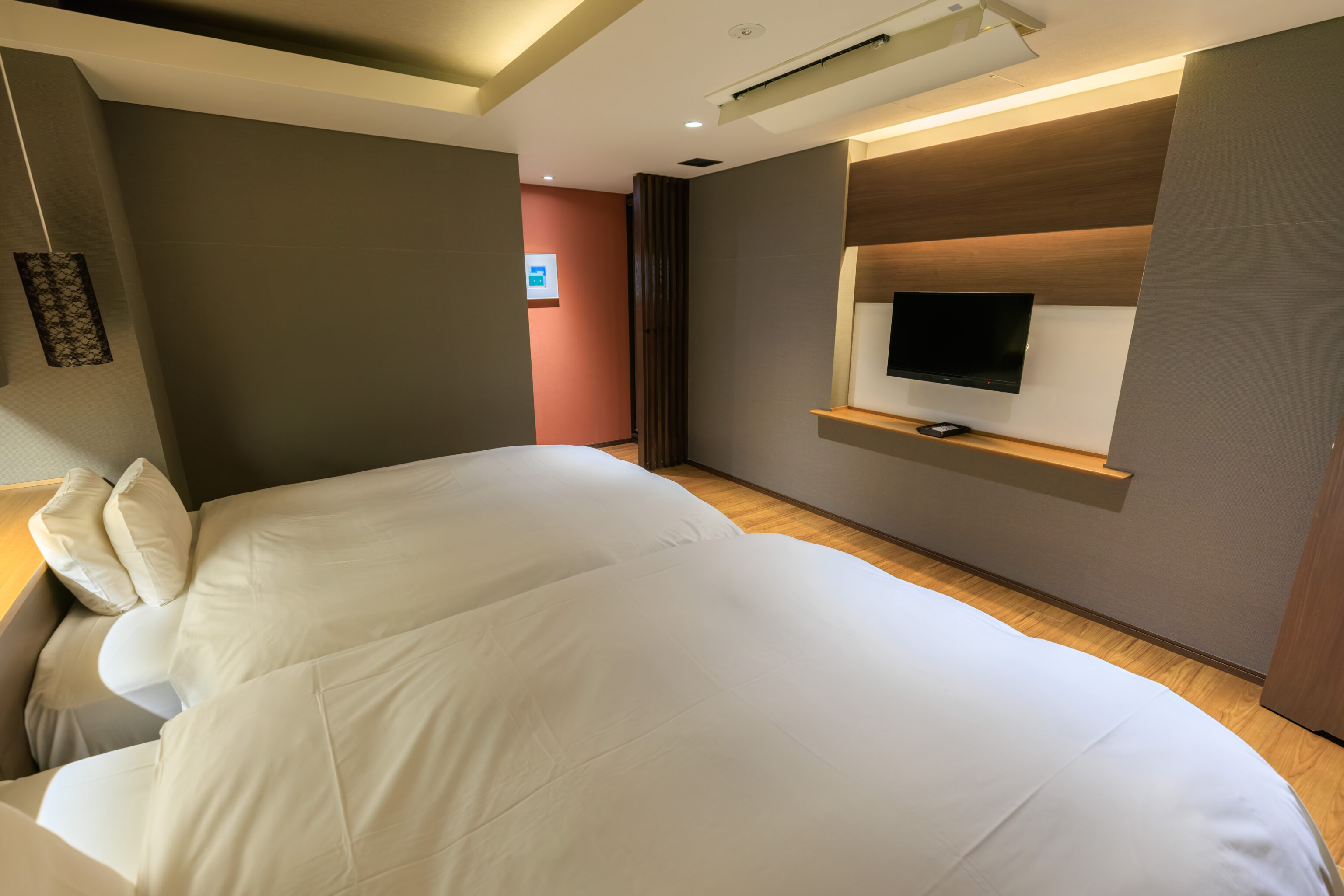
And finally, there was a bedroom.
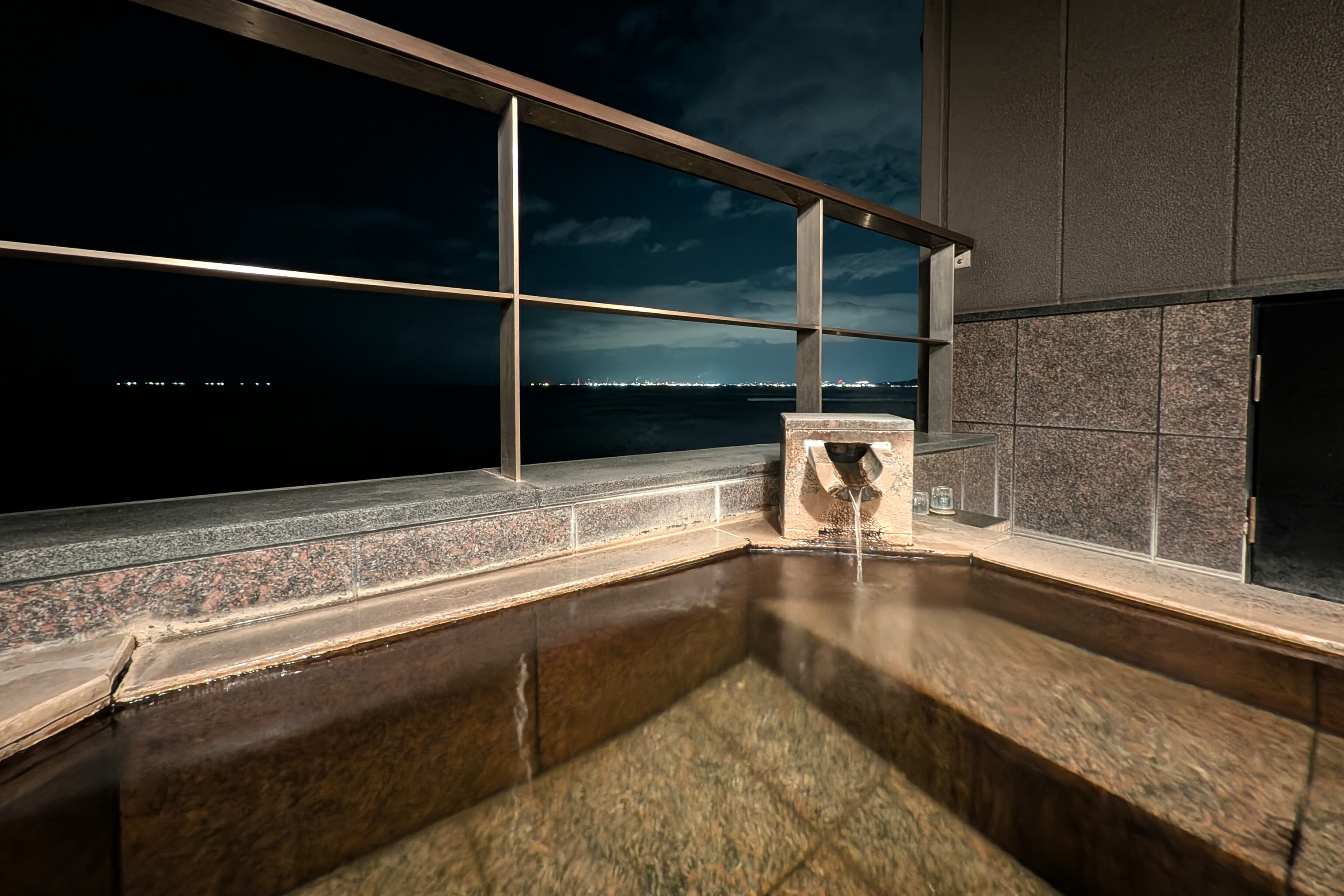
We, of course, spent some time in the evening enjoying the onsen! Given the height of the tower building and its location so close to the bay, it is unlikely anyone can see into the balcony area unless they are pretty far away, as long as you aren’t standing right by the edge!
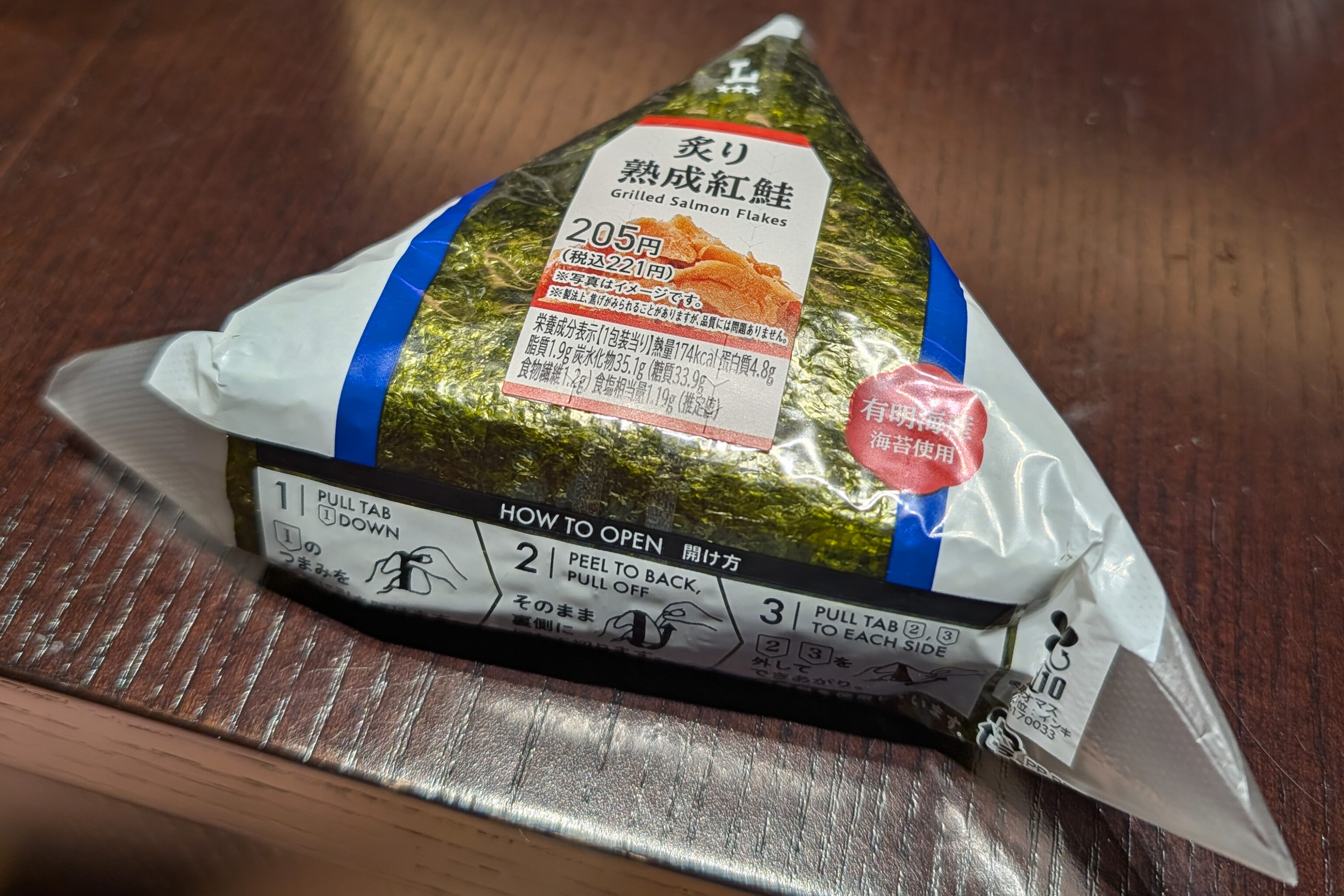
We bought this onigiri earlier today while at the Lawson, a good little snack as we didn’t each too much today.
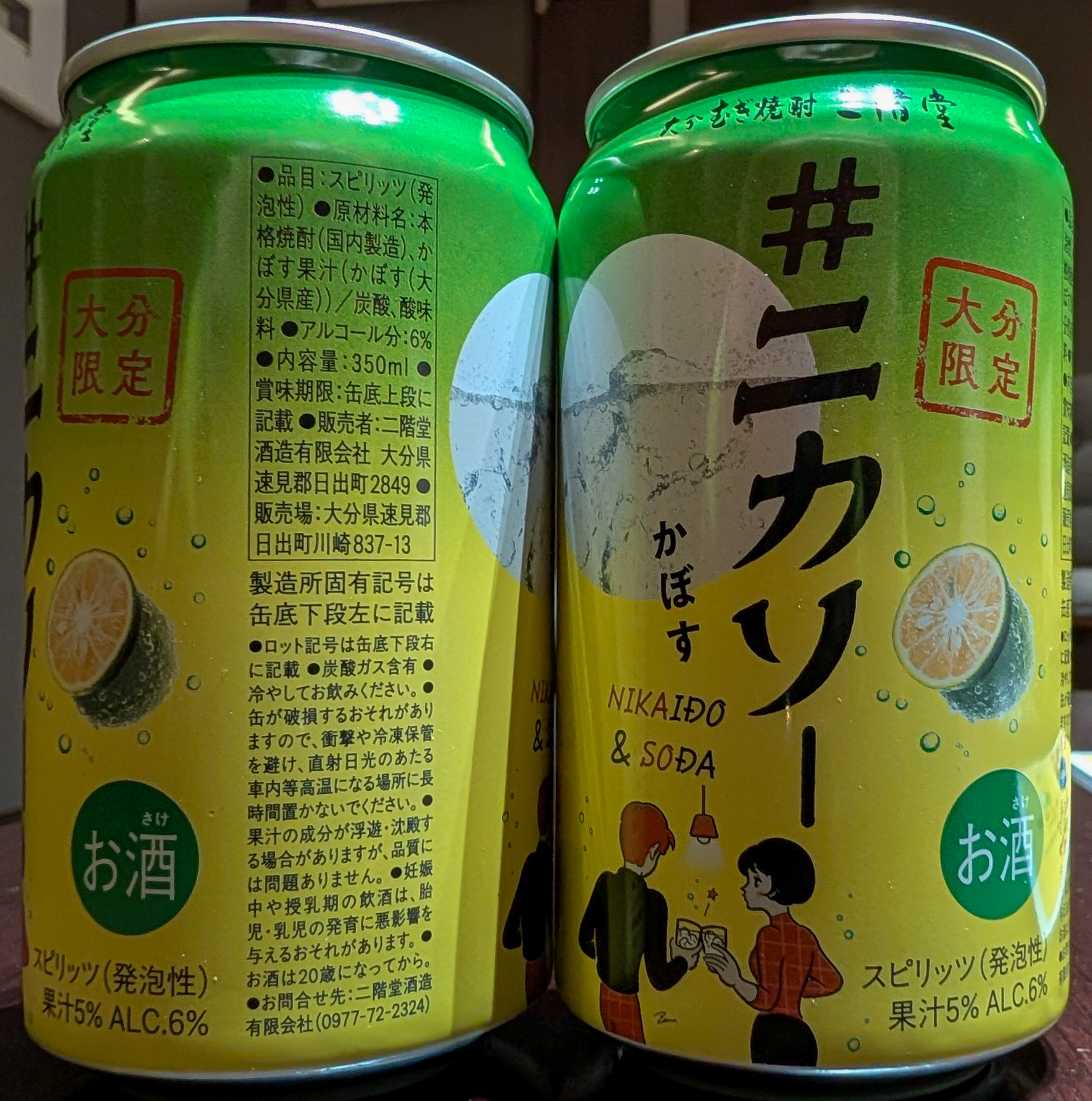
These two cans contain domestic shochu with kabosu juice from the local Oita Prefecture. They were complimentary from the hotel.
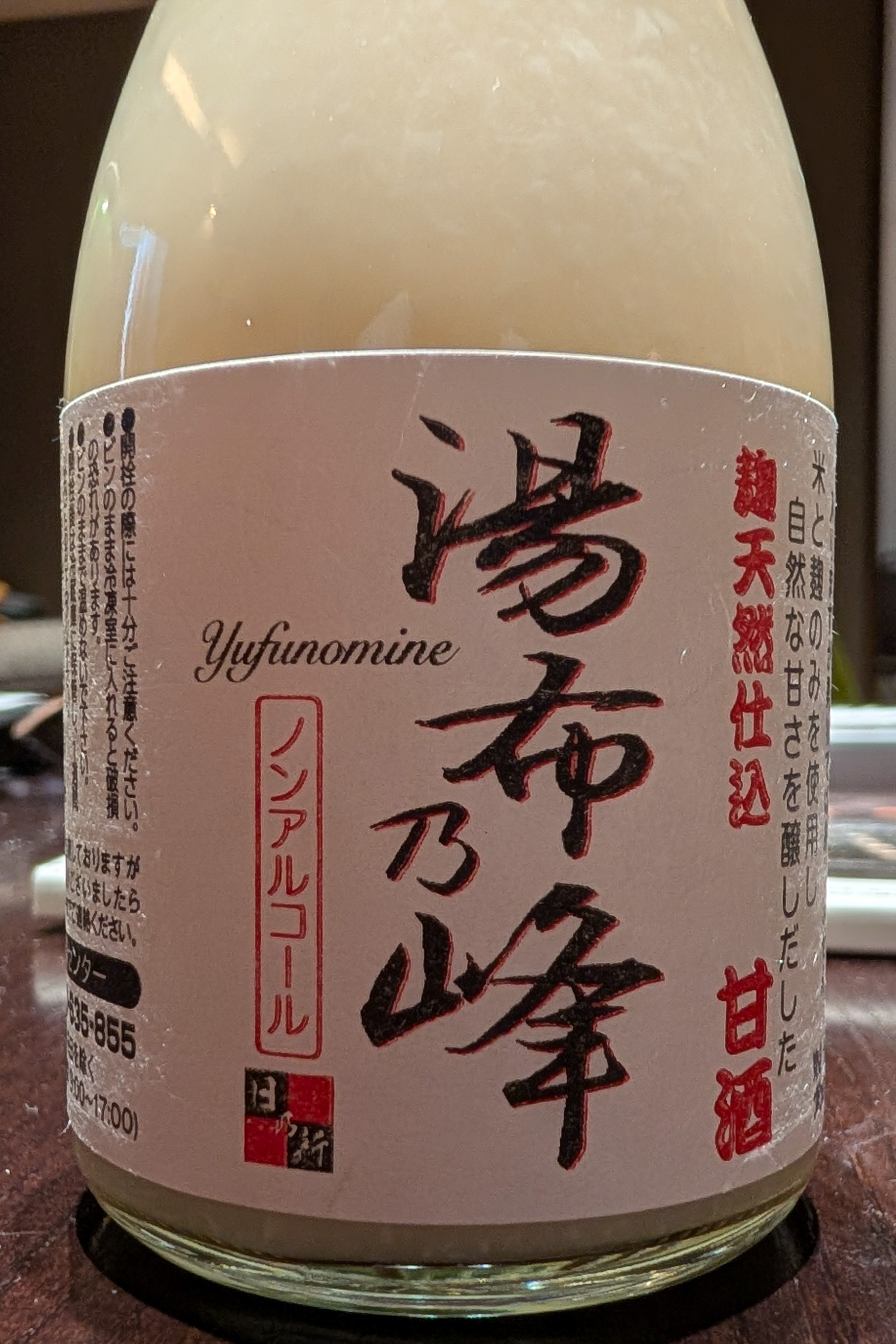
We bought this non-alcoholic amazake yesterday from Yufuin. The product is from Toyama, which we’ve been to.
- Amane Resort Gahama: A Beppu Seaside Onsen Oasis. Tokyo Weekender. https://www.tokyoweekender.com/travel/amane-resort-gahama-a-beppu-seaside-onsen-oasis-with-traditional-japanese-soul/ ↩︎