
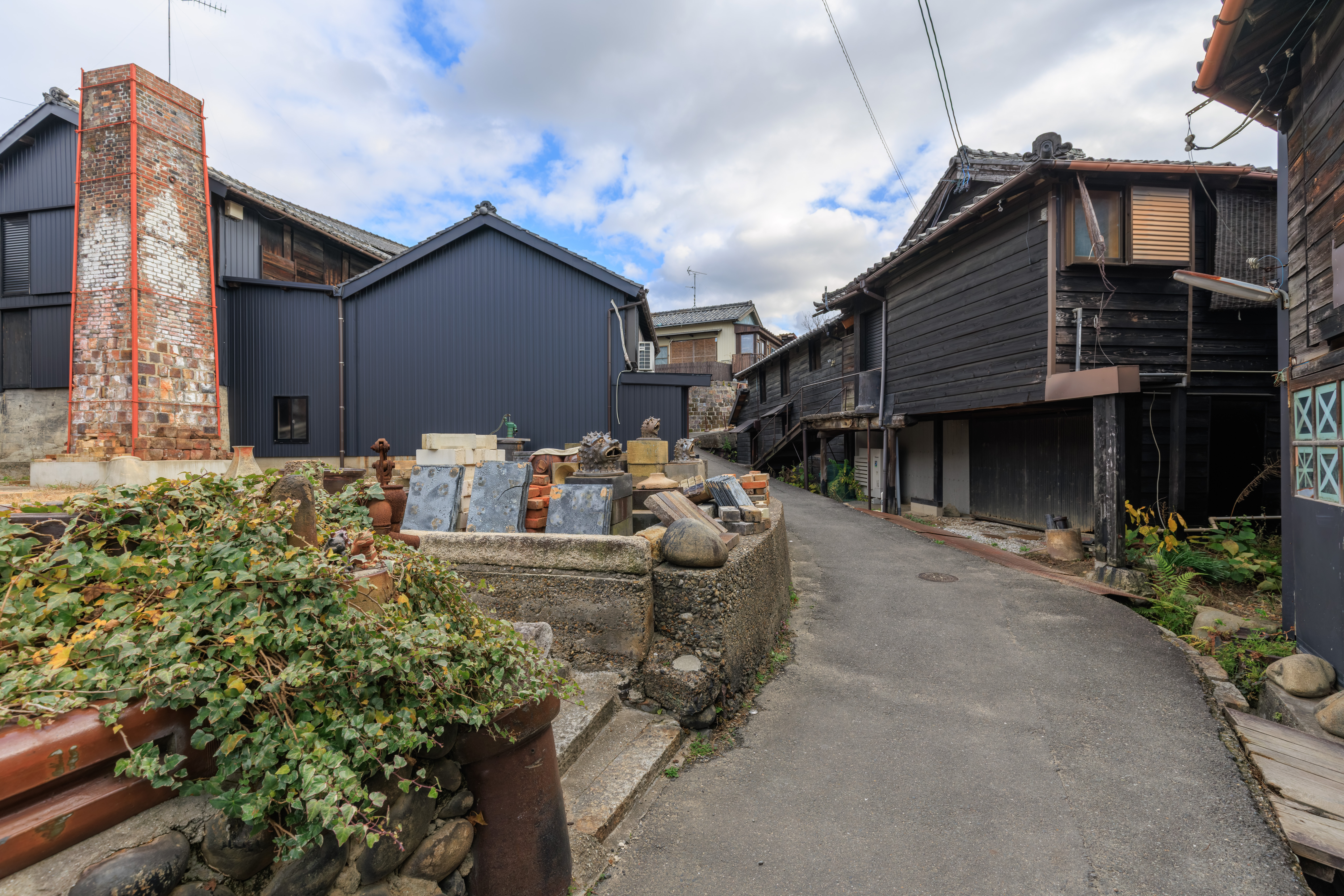
After checking out of the メルキュール東京羽田エアポート Mercure Tokyo Haneda Airport in the morning, we took the Shinkansen from Shinagawa Station to Nagoya Station and left our bags at the 名古屋マリオットアソシアホテル Nagoya Marriott Associa Hotel. We then took the train down to 常滑市 Tokoname, one of Japan’s 六古窯 Six Ancient Kilns. We walked around this historic town, browsed some of the pottery shops, and bought a tea pot before returning to Nagoya.
Tokyo to Nagoya
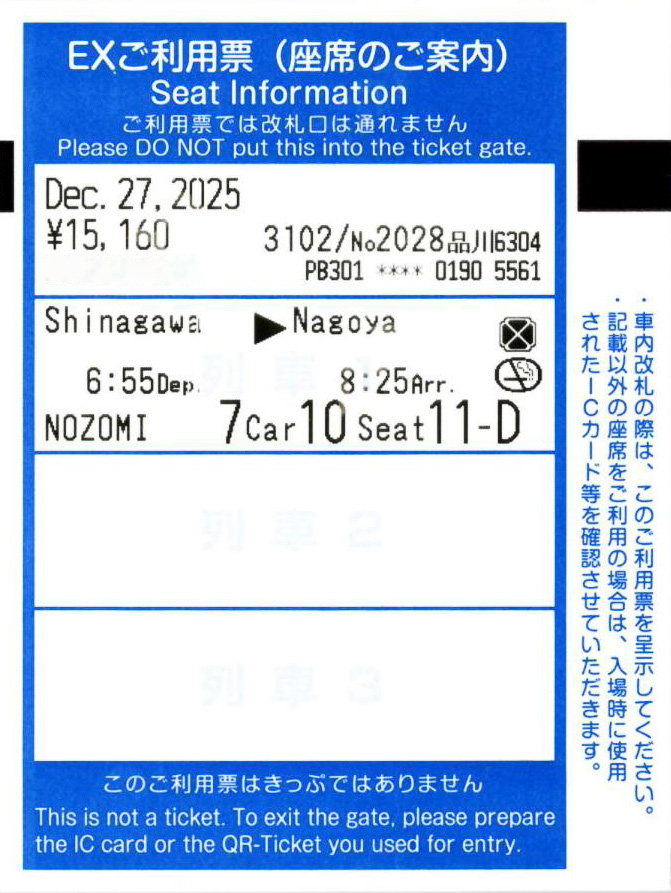
We woke up early at the メルキュール東京羽田エアポート Mercure Tokyo Haneda Airport in order to catch the 6:55am Nozomi from Shinagawa Station to Nagoya Station. We already bought our tickets on the SmartEX app so all we had to do was show up.
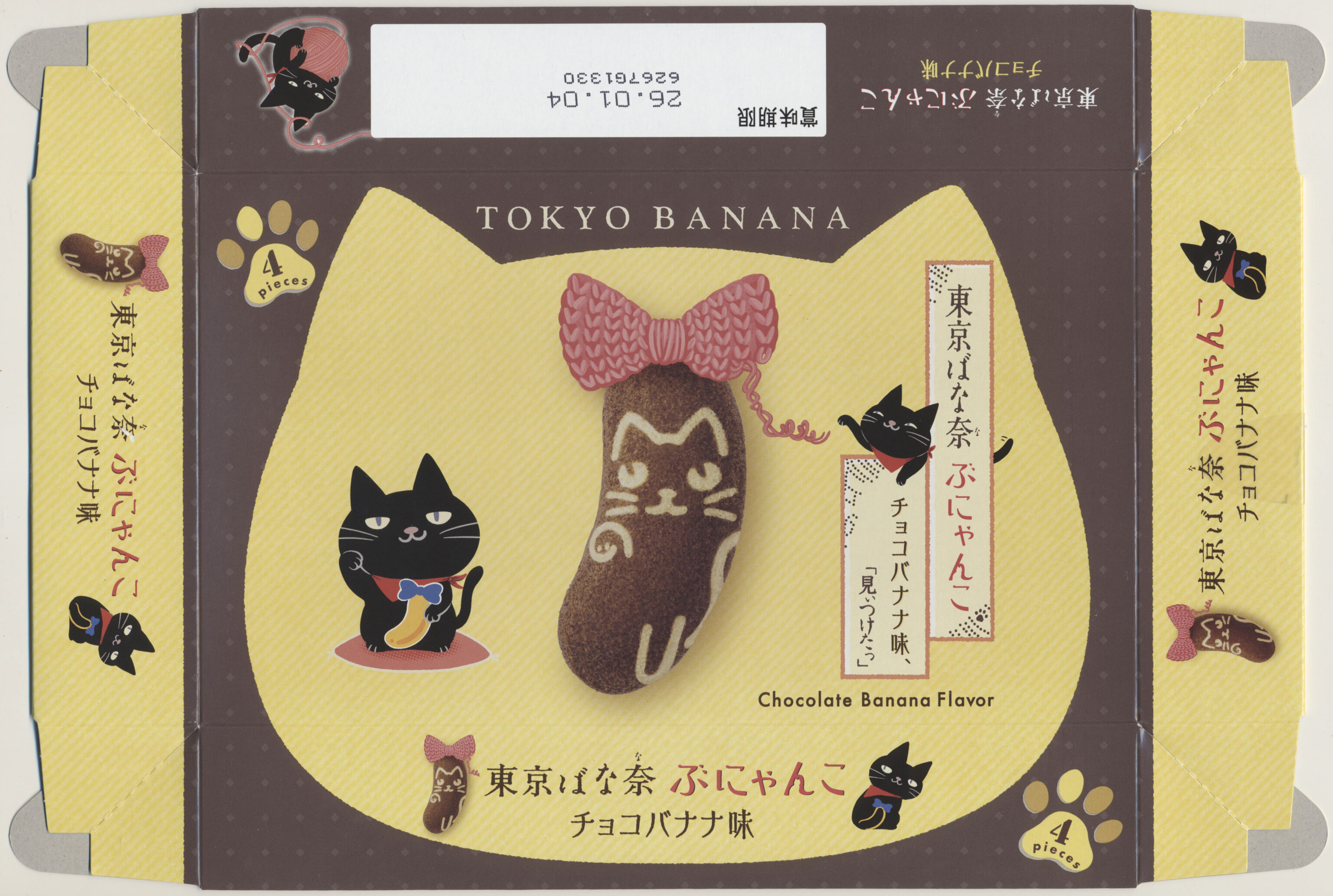
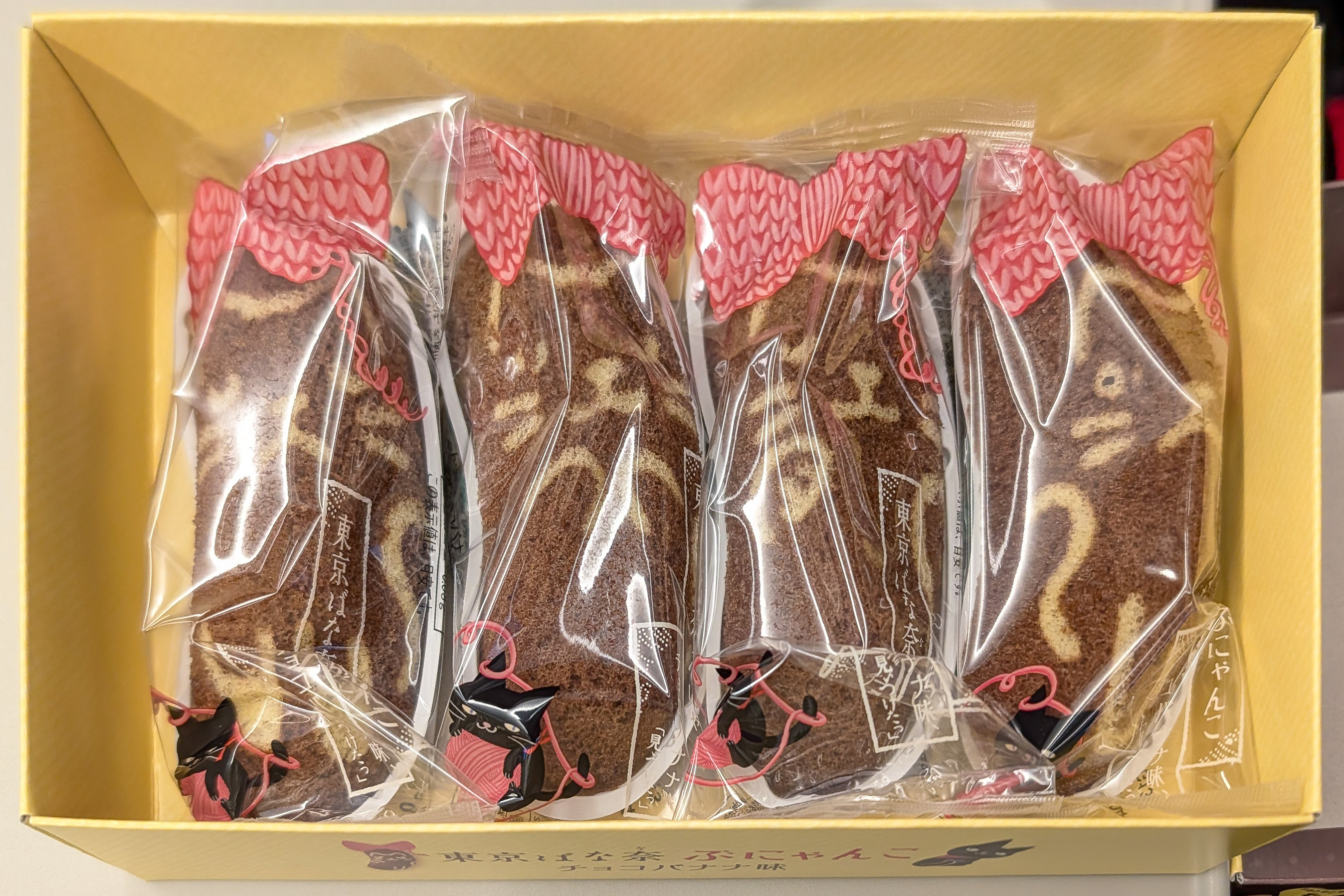
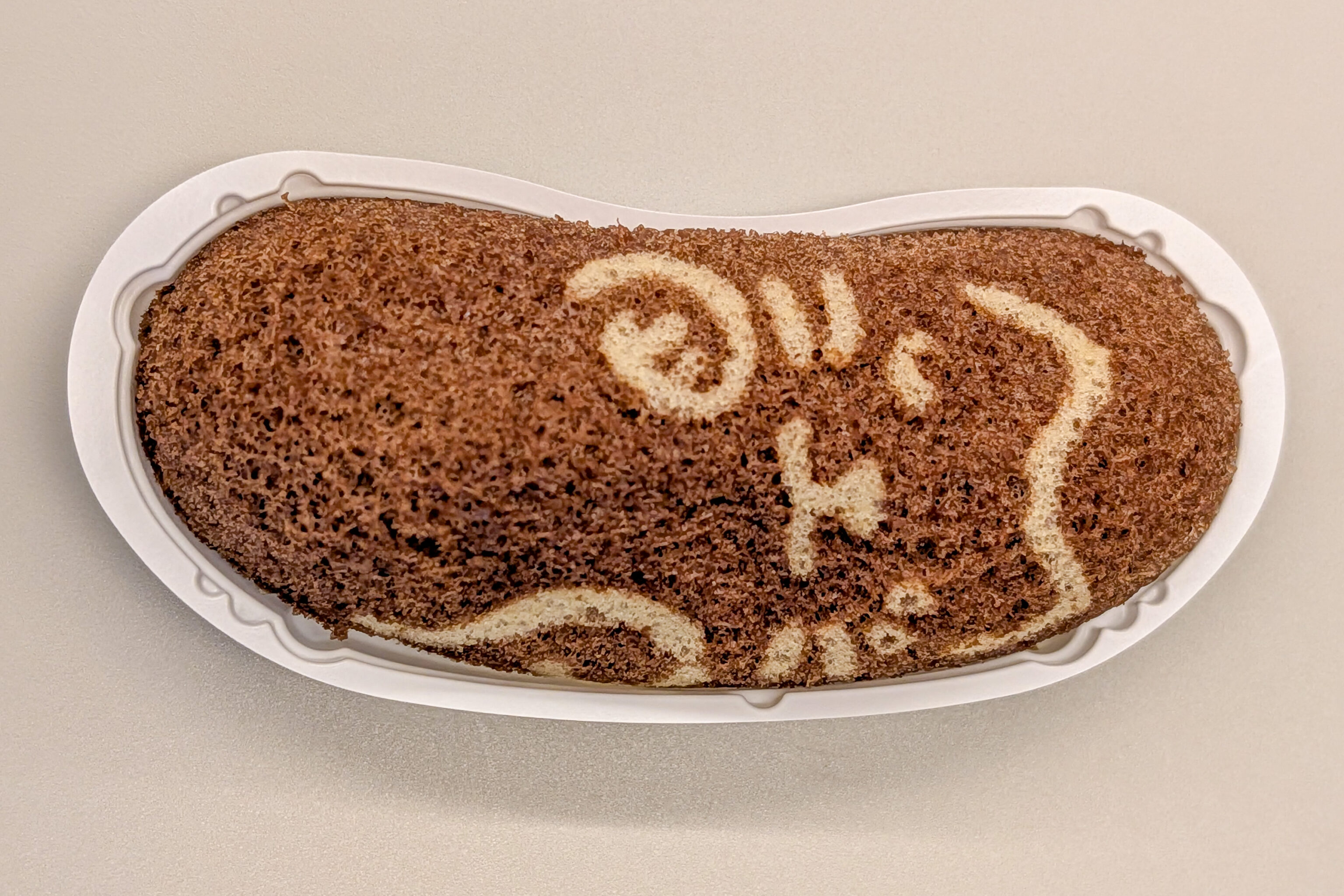
There wasn’t much open when we arrived at Shinagawa Station. We ended up buying a box of chocolate banana flavored 東京ばな奈 Tokyo Banana. Tokyo Banana is a very popular omiyage item, however, we’ve never actually bought it before either as a gift or for ourselves. It turns out that it is actually quite good! It is a bit pricey though if you’re buying it to eat by yourself as a snack! Now that we know it is good, maybe we will buy some as omiyage in the future!
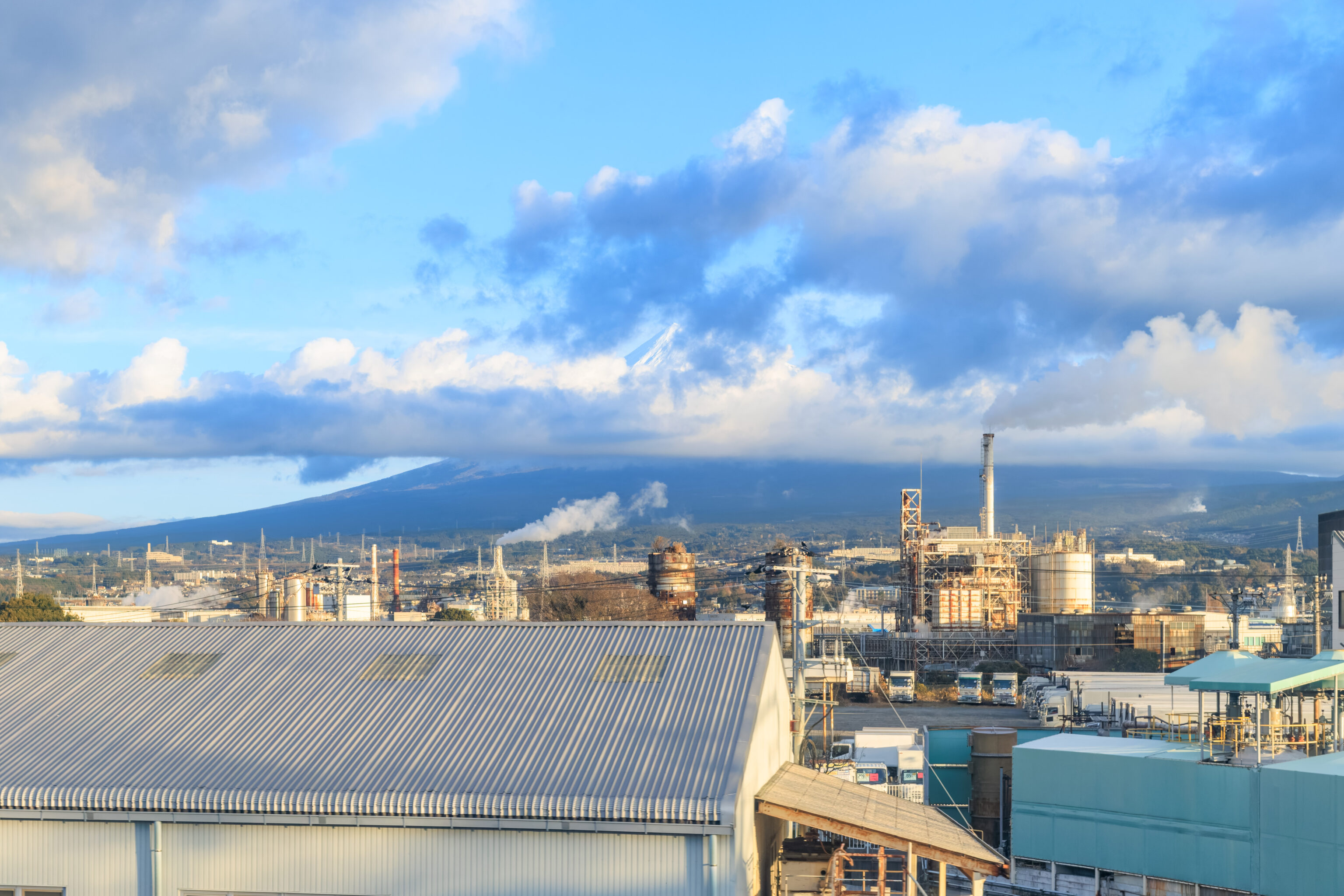
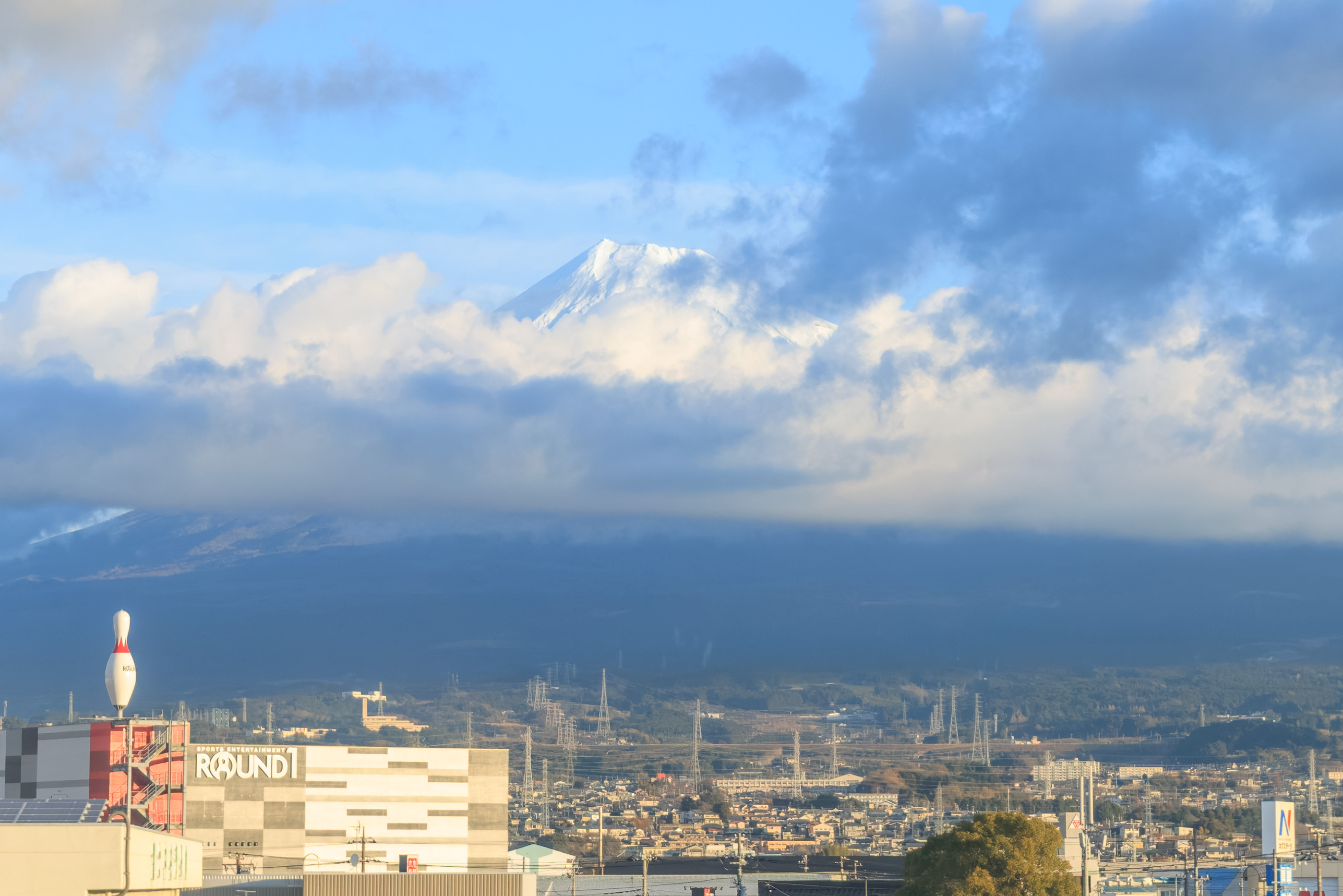
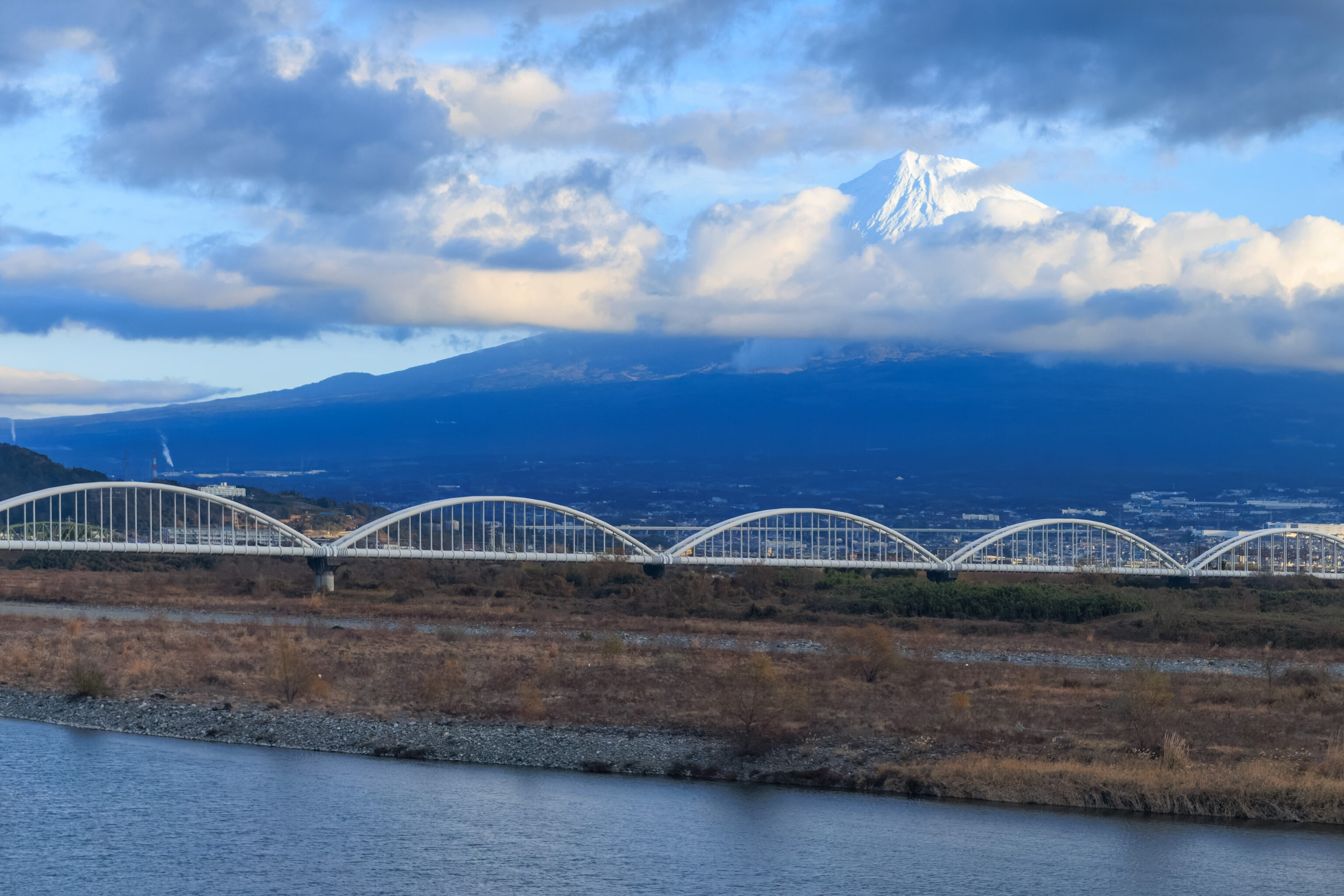
One of the highlights of taking the 東海道新幹線 Tokaido Shinkansen is being able to see Mount Fuji to the north. Although it was a little cloudy, we were able to see its peak today!
After arriving at Nagoya, we went up to the Nagoya Marriott Associa Hotel and dropped off our bags as our room was not ready yet.
We then took Meitetsu‘s 常滑線 Tokoname Line to Tokoname. All trains on this line except for the μSKY Limited Express stop at Tokoname, although it seems some μSKY Limited Express might stop there as well. Riding the regular limited express trains does not requires a supplemental fare, however, riding in a first class car does. The μSKY Limited Express only contains first class carriages and thus riding it always requires a supplemental first class ticket.
Tokoname
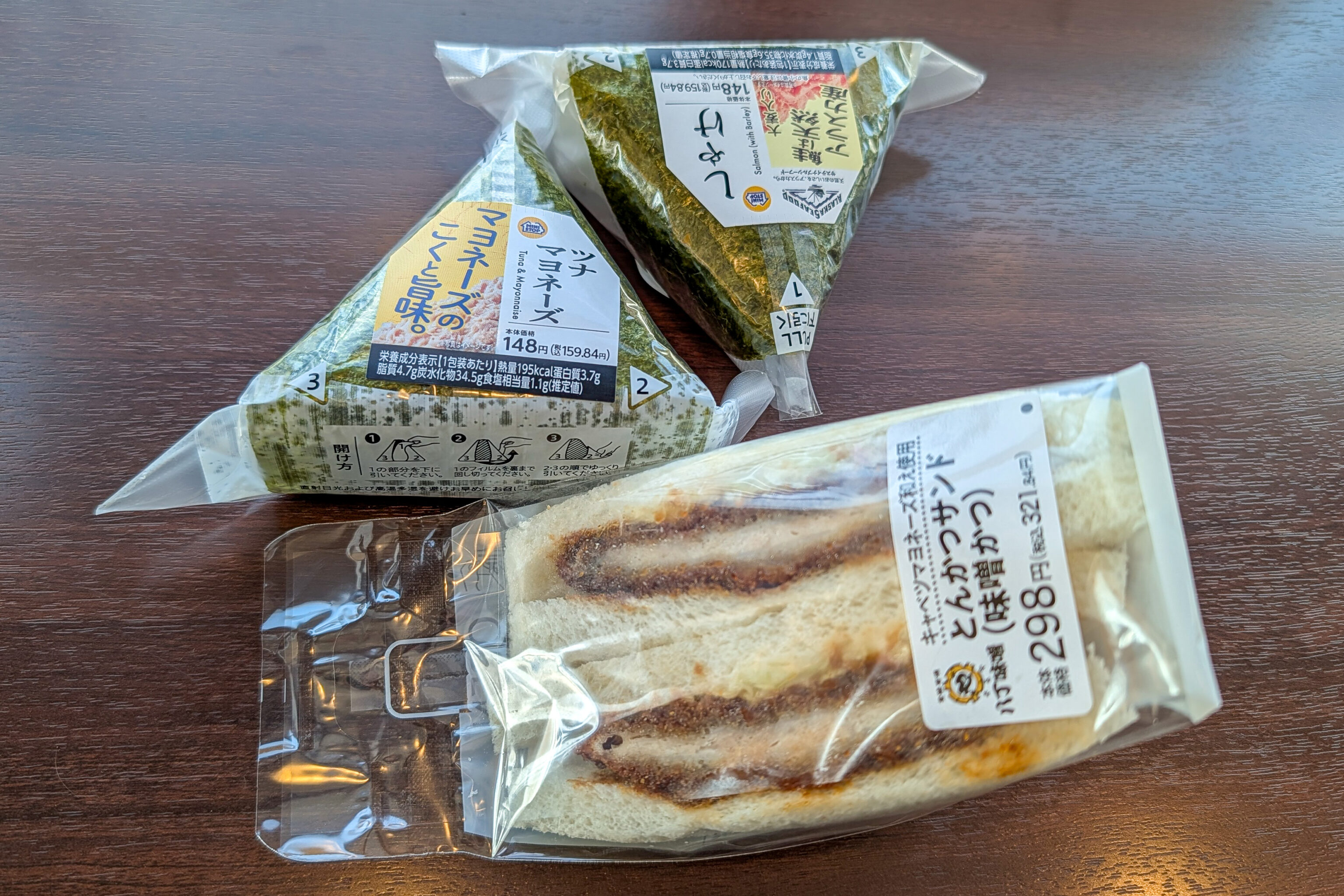
After arriving at 常滑駅 Tokoname Station, we got two onigiri and a miso tonkatsu sando from Ministop, the only konbini at the station.
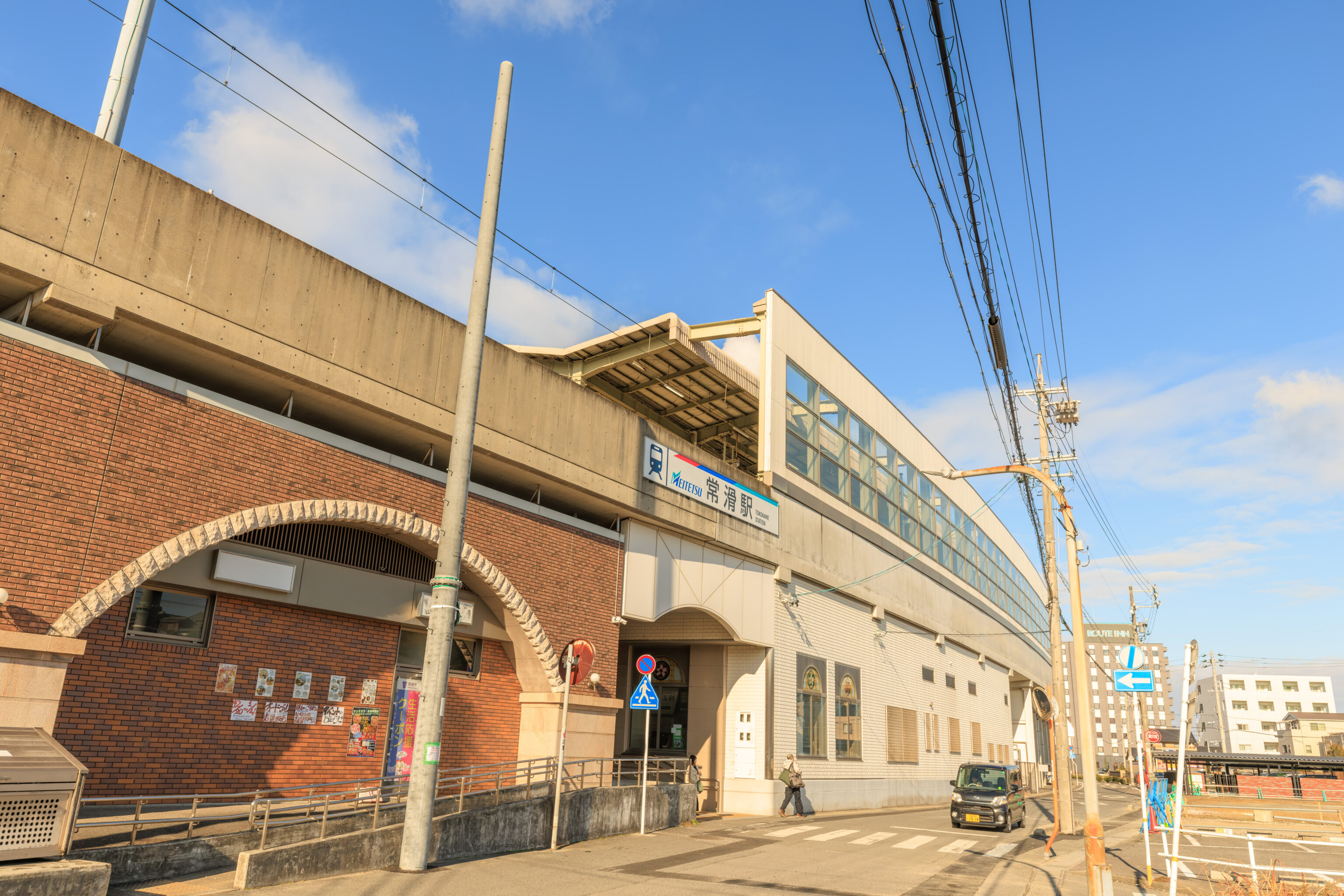
After exiting the station, we started to head to the east to head to the 陶磁器会館 Ceramic Hall.
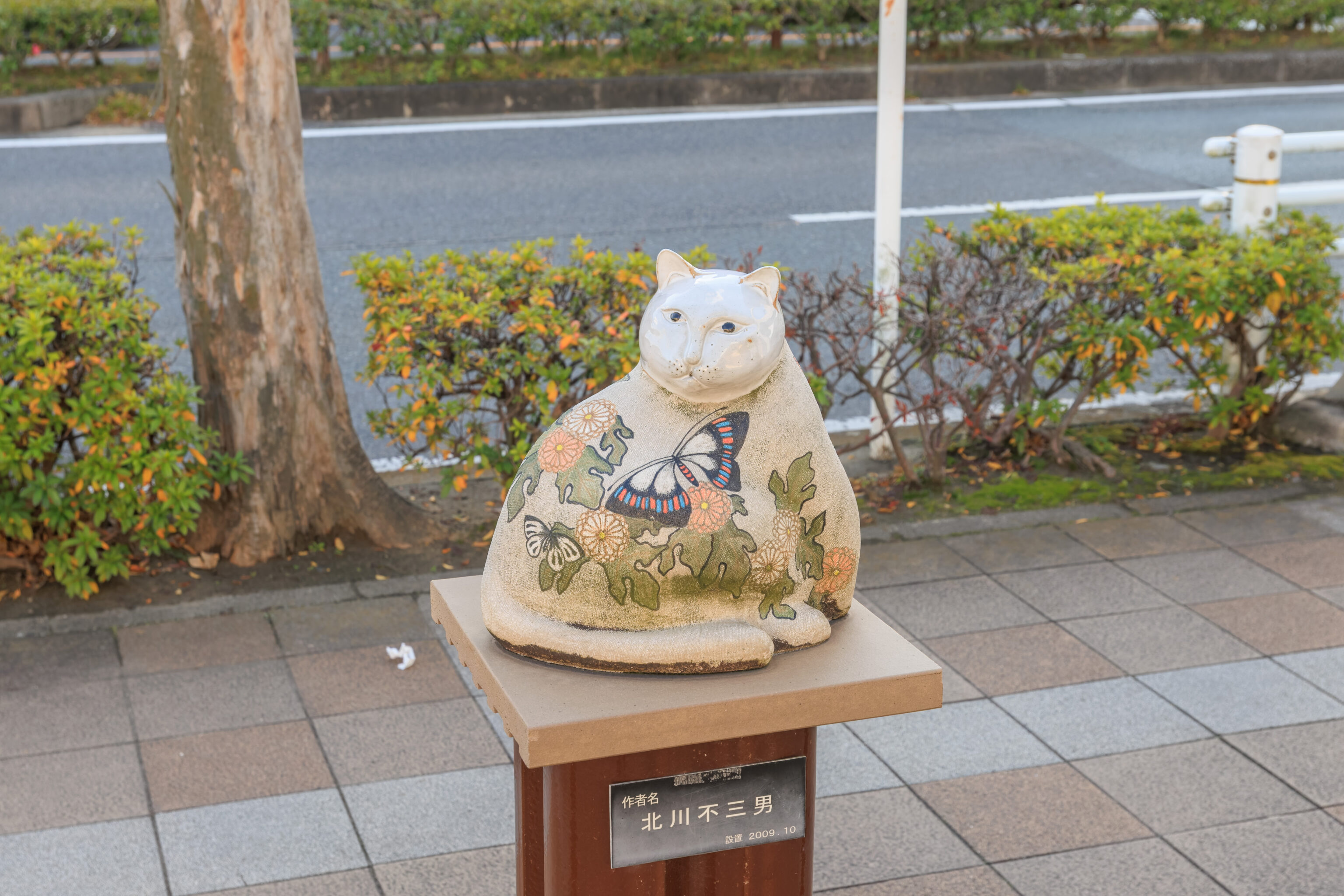
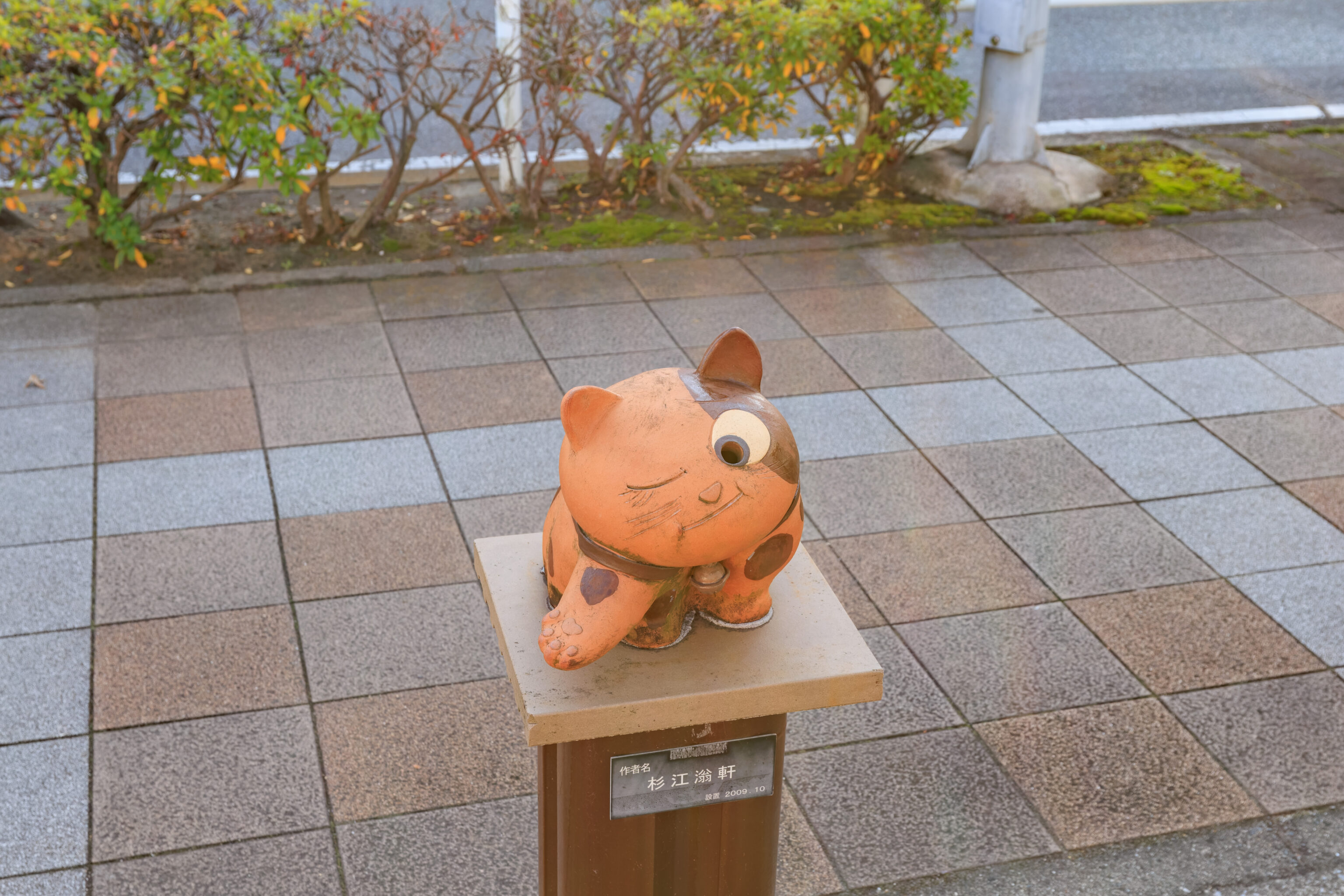
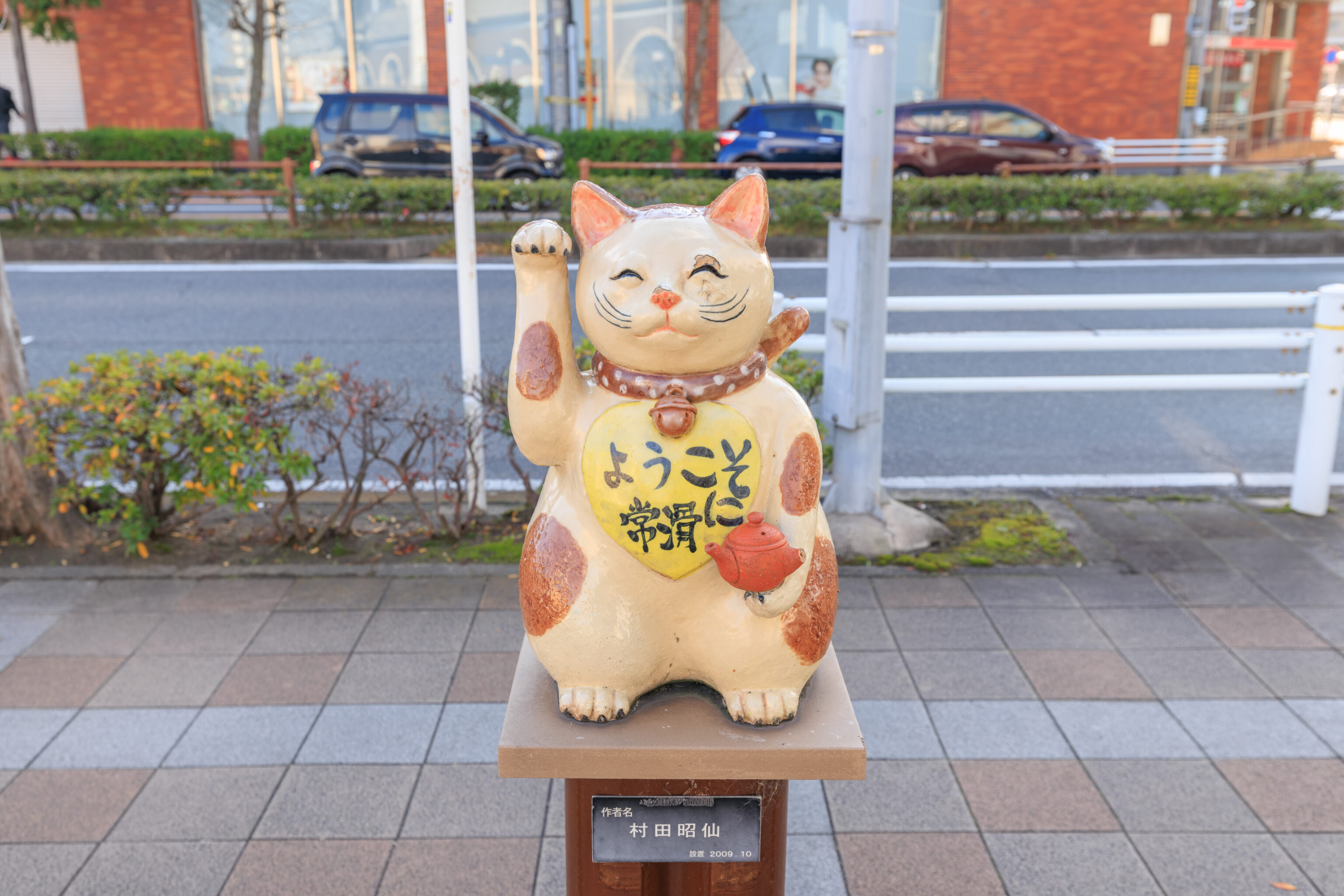
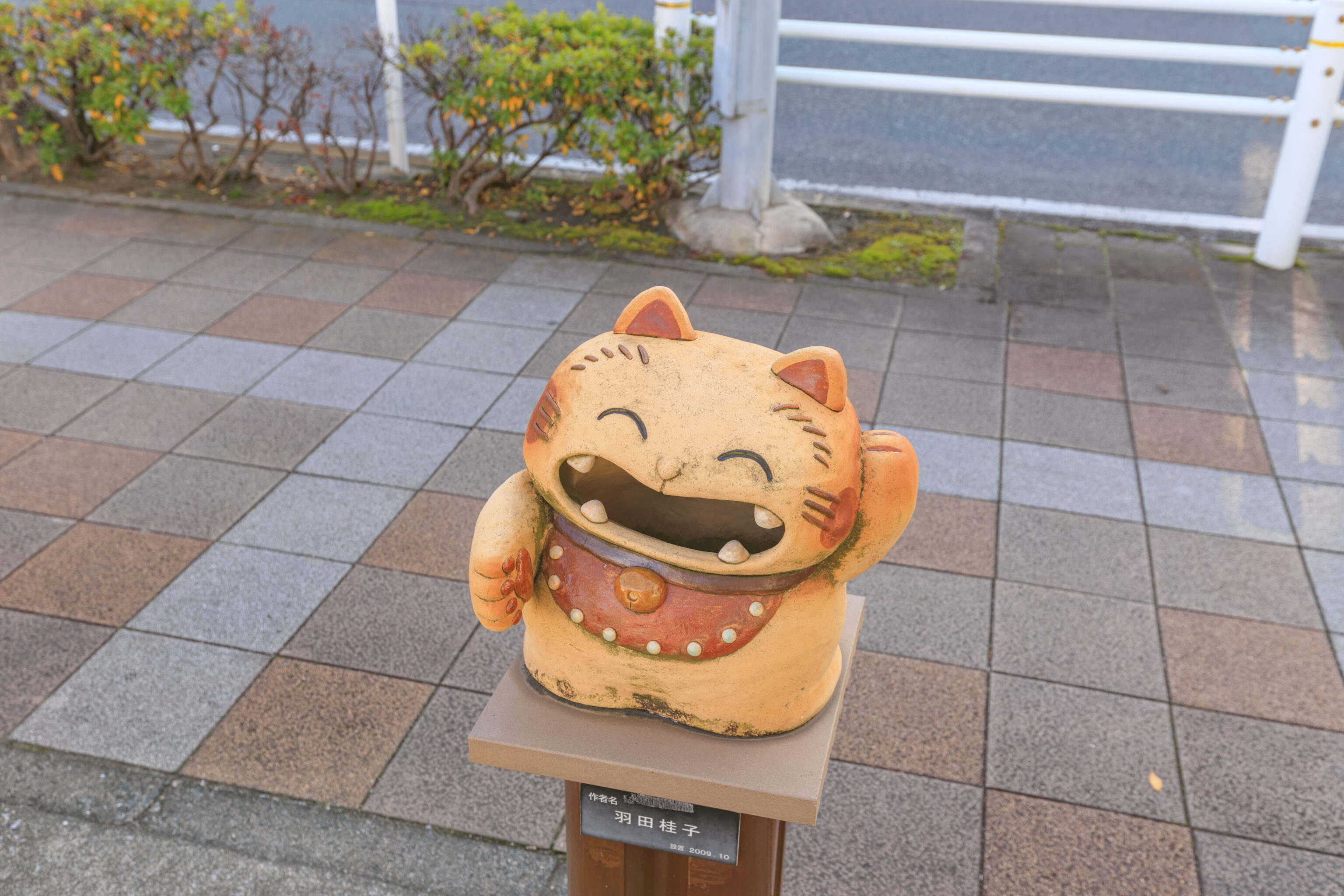
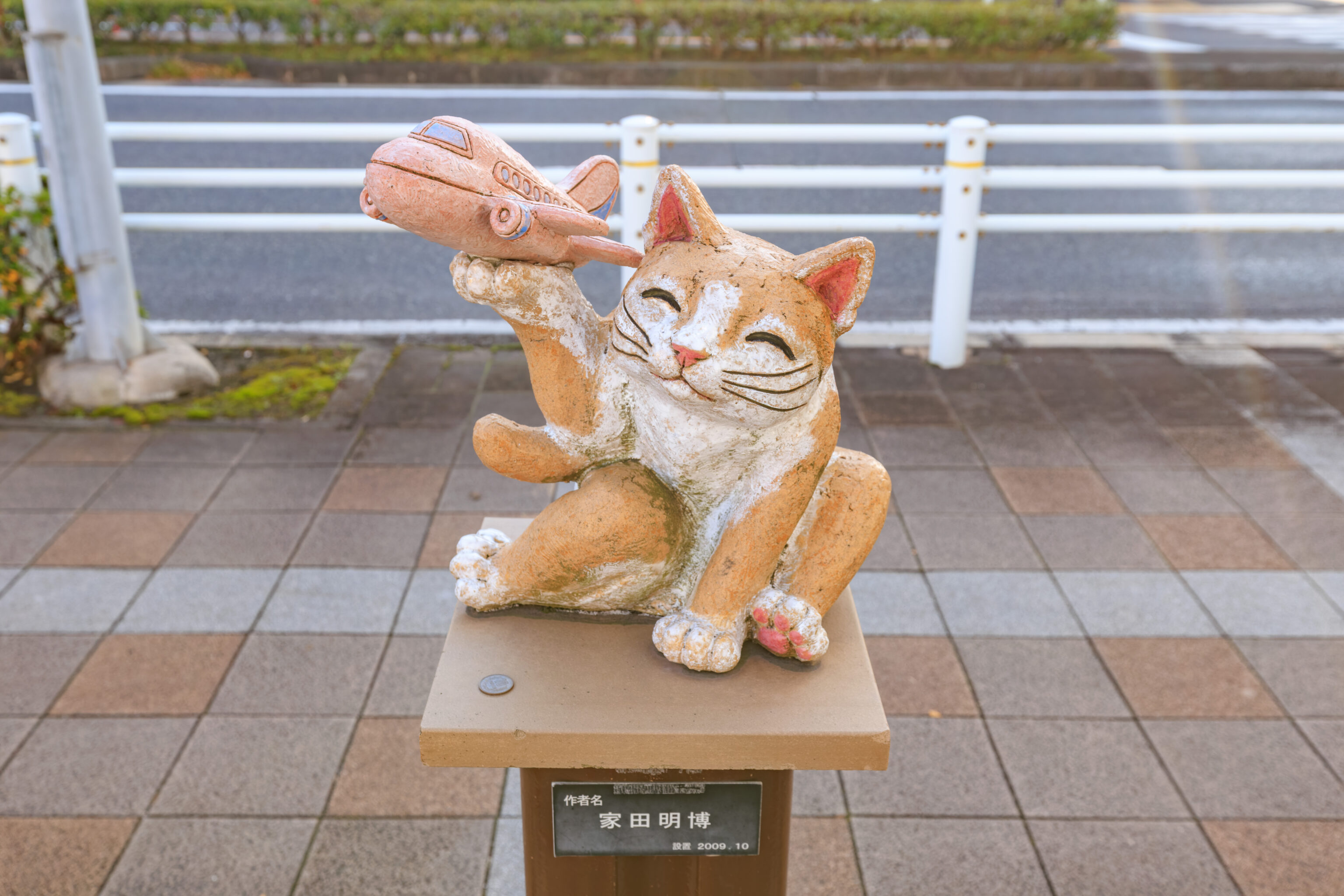
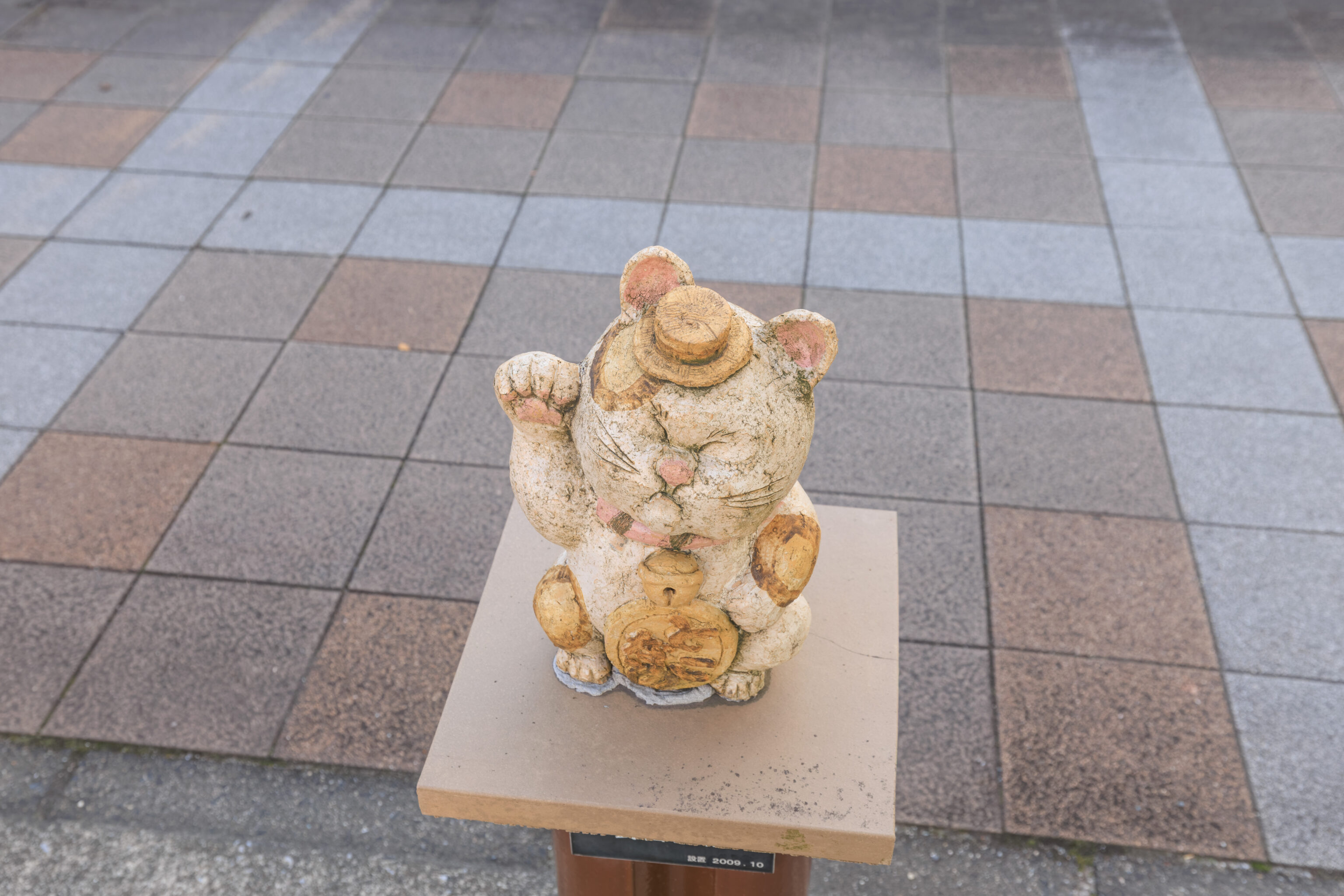
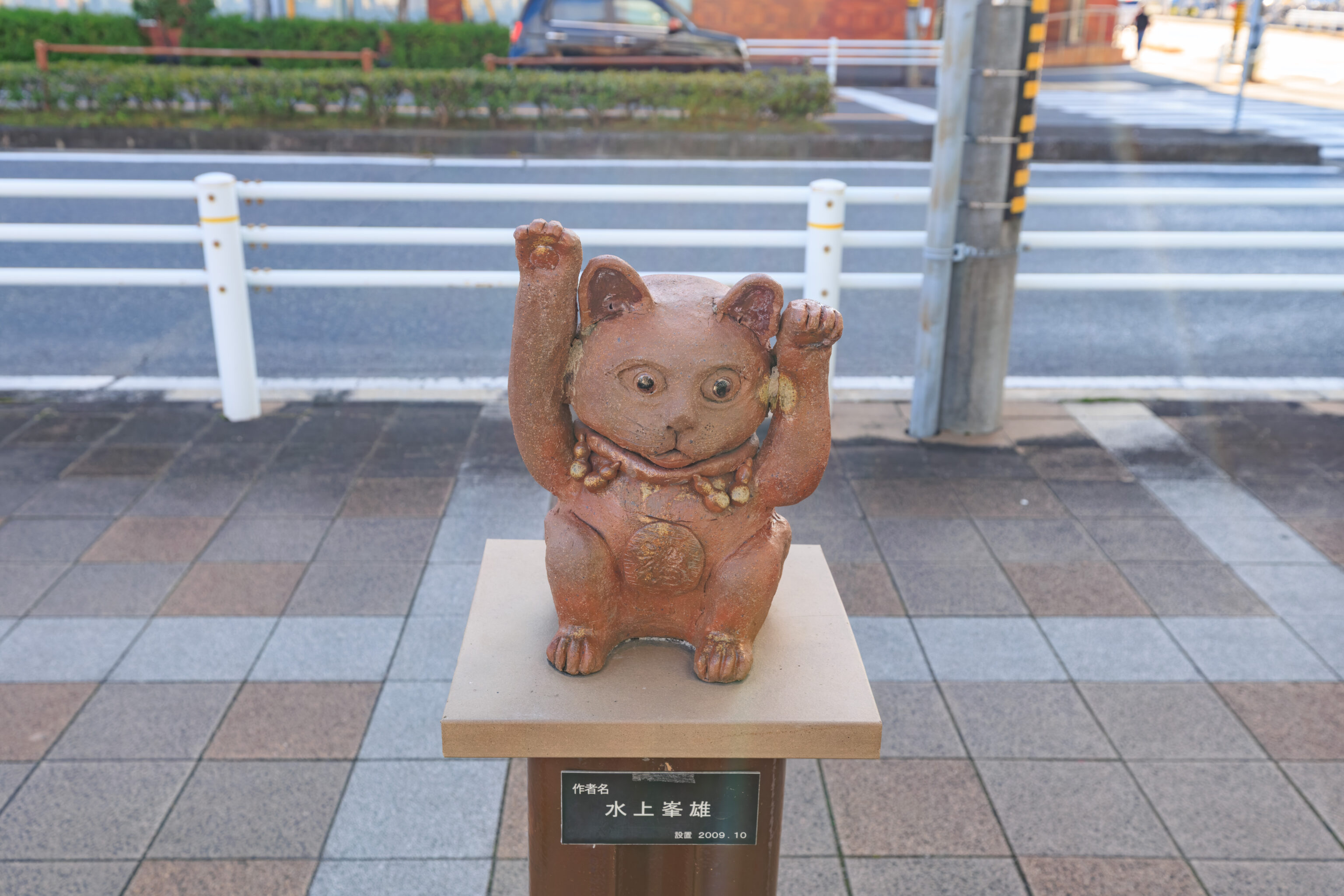
At the southeastern corner of the station property, we saw these cute porcelain cat sculptures! Already a good start to our visit!
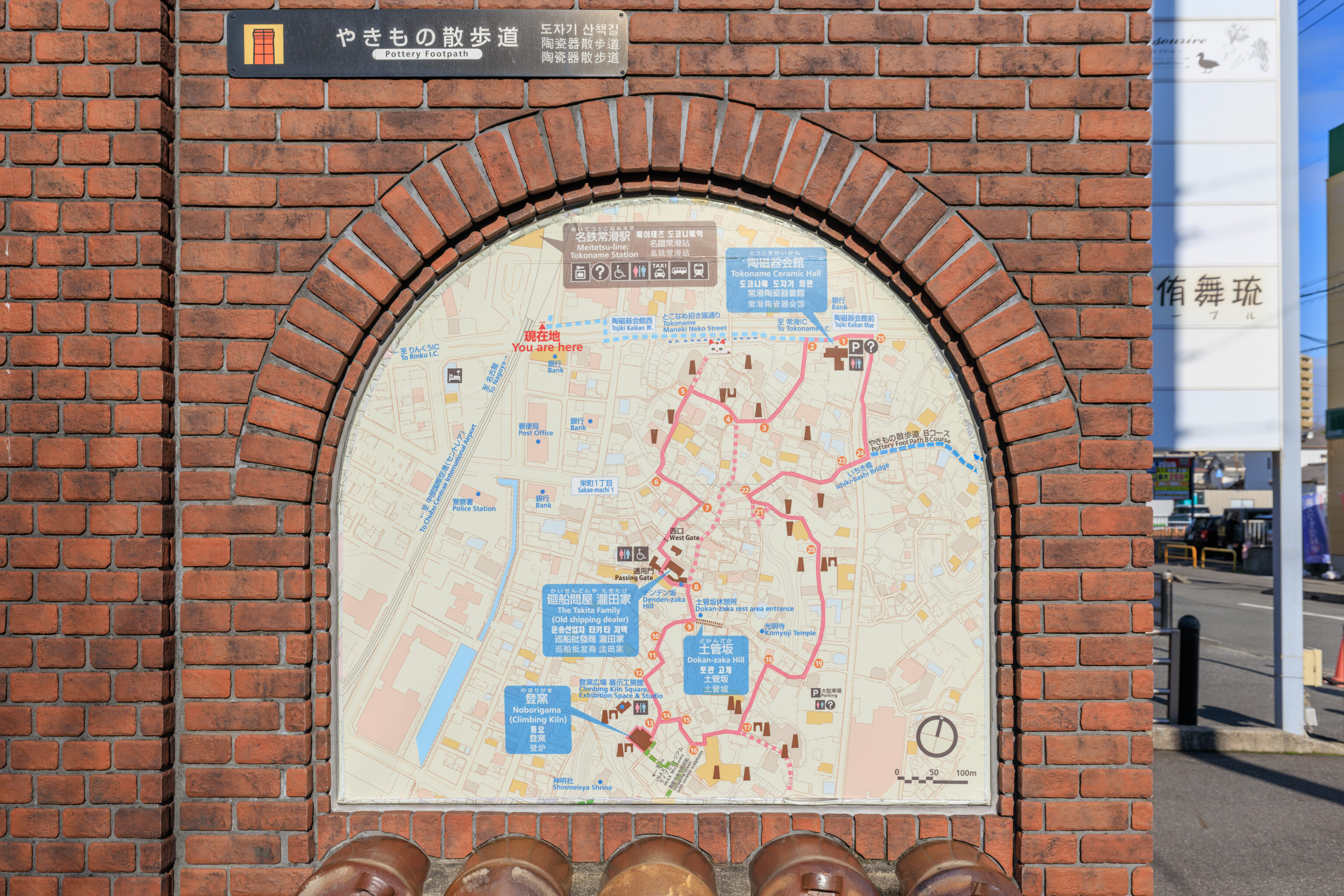
More practically, there was also a map of the historic ceramic kiln district of Tokoname. The Ceramic Hall that we are headed to is at the upper right corner of the map and has a big blue label.
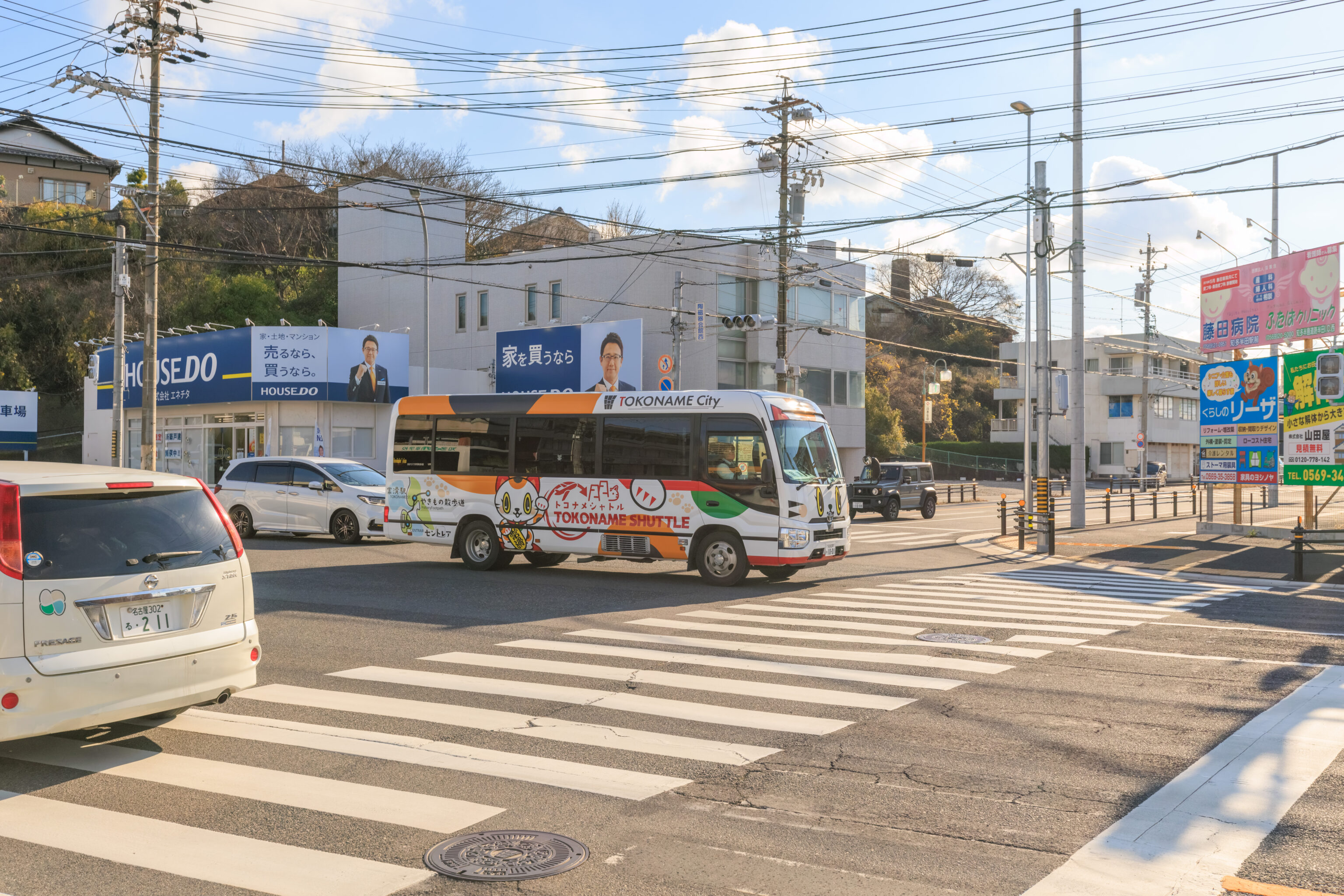
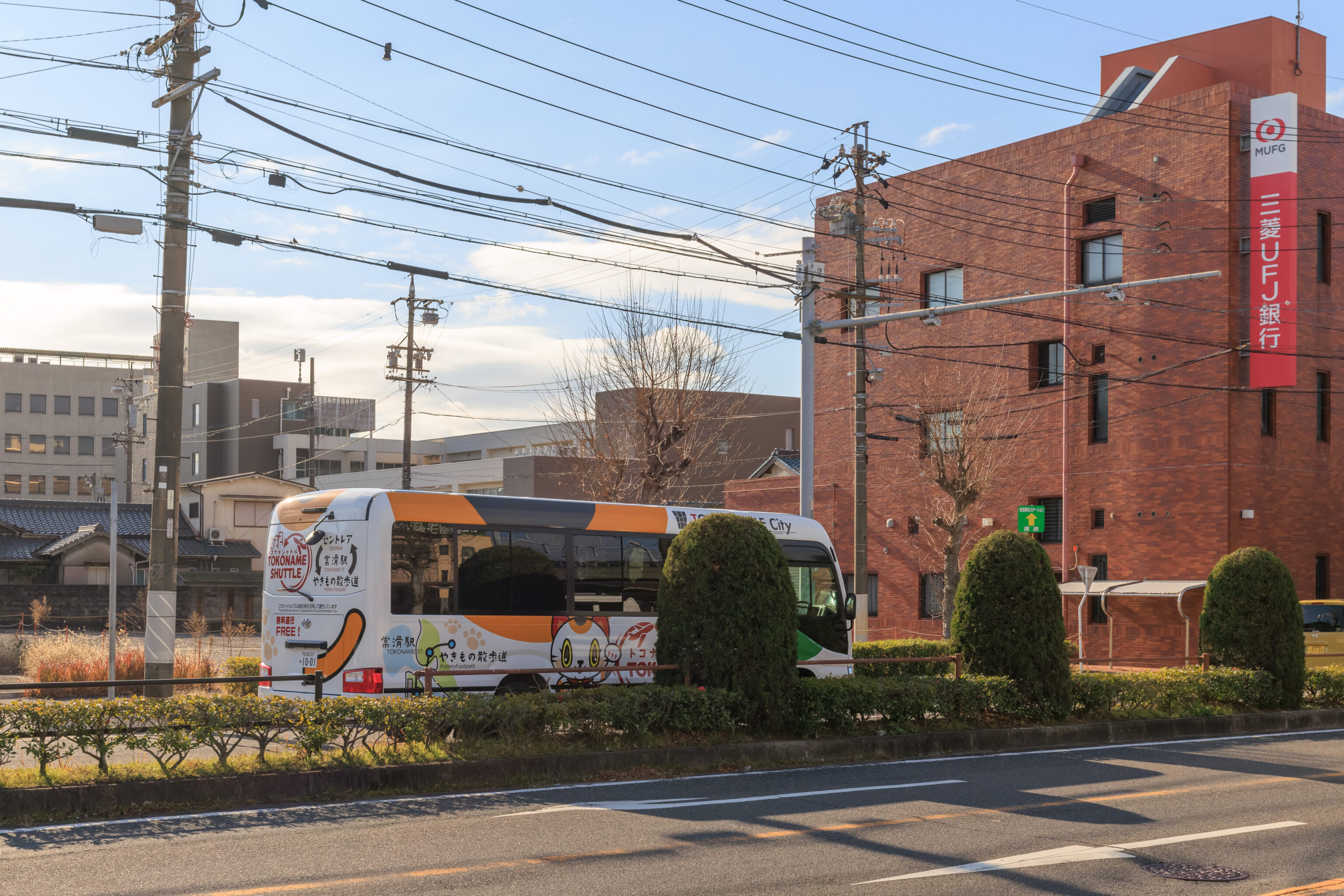
There is, apparently, a cat themed shuttle bus! It even has a tail!
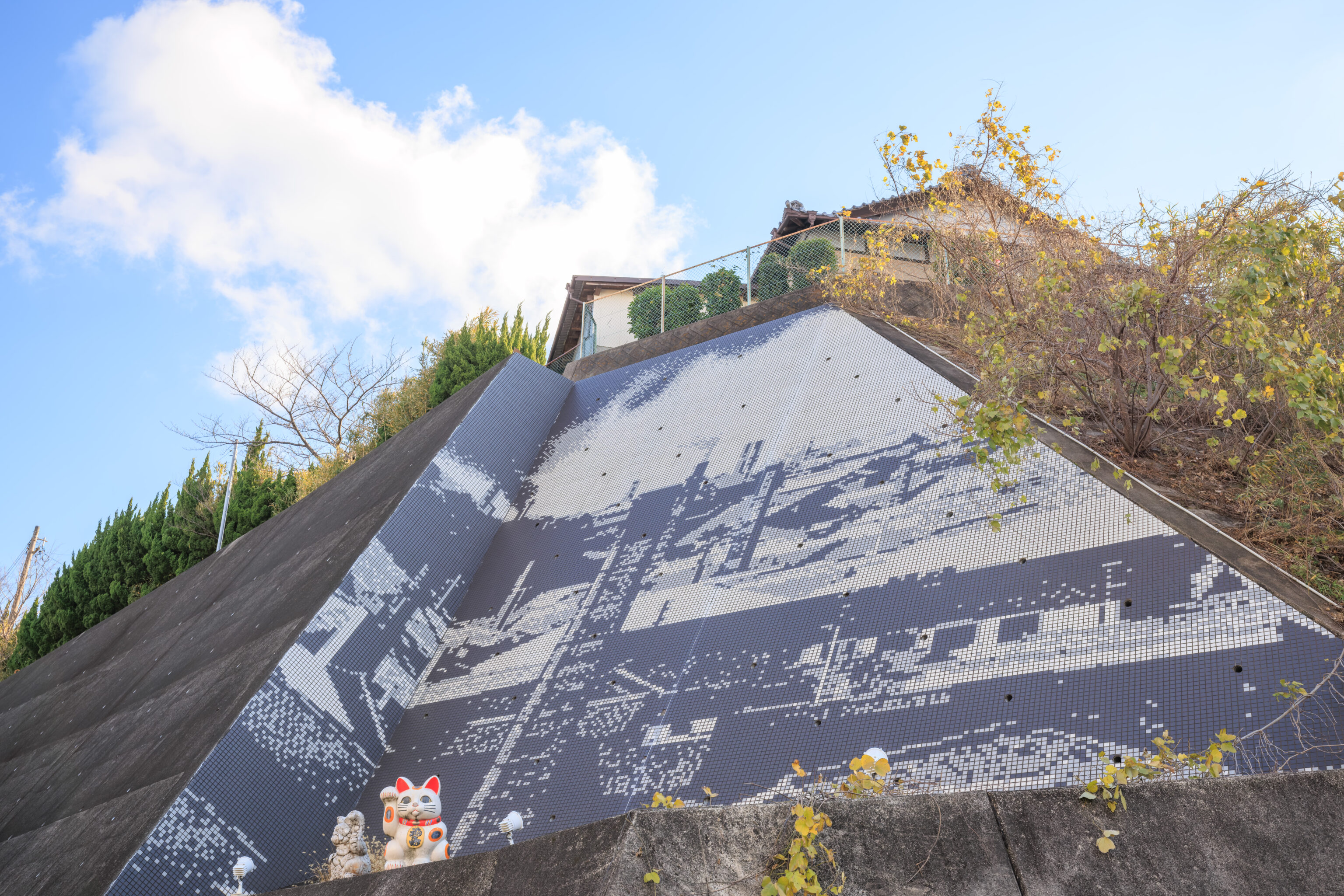
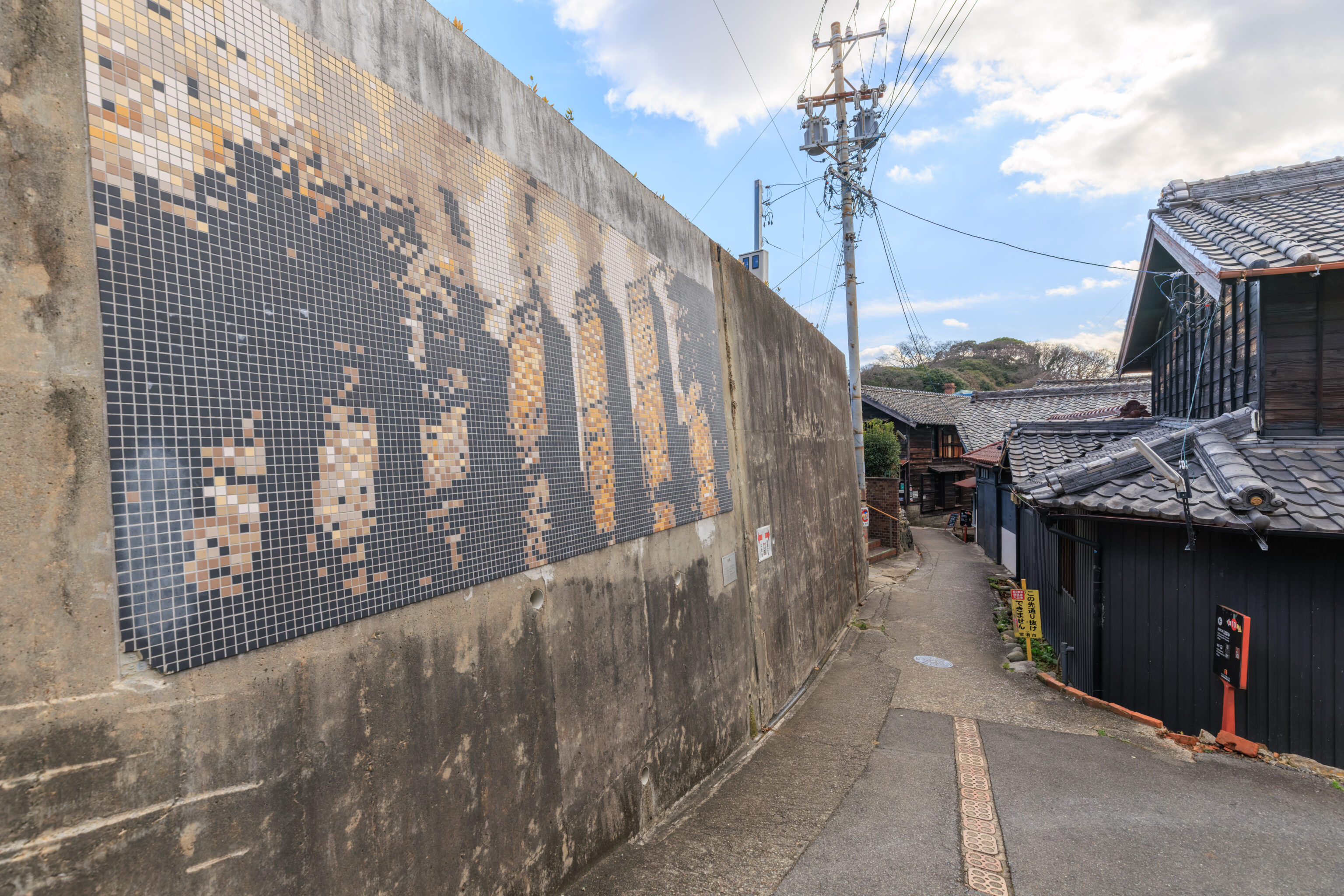
About a block away, we saw this tiled depiction of Tokoname’s kilns on the side of a large retaining wall. And, there was a maneki neko!
山本武士 Yamamoto Takeo
家田 六ツ枝 leda Mutsue
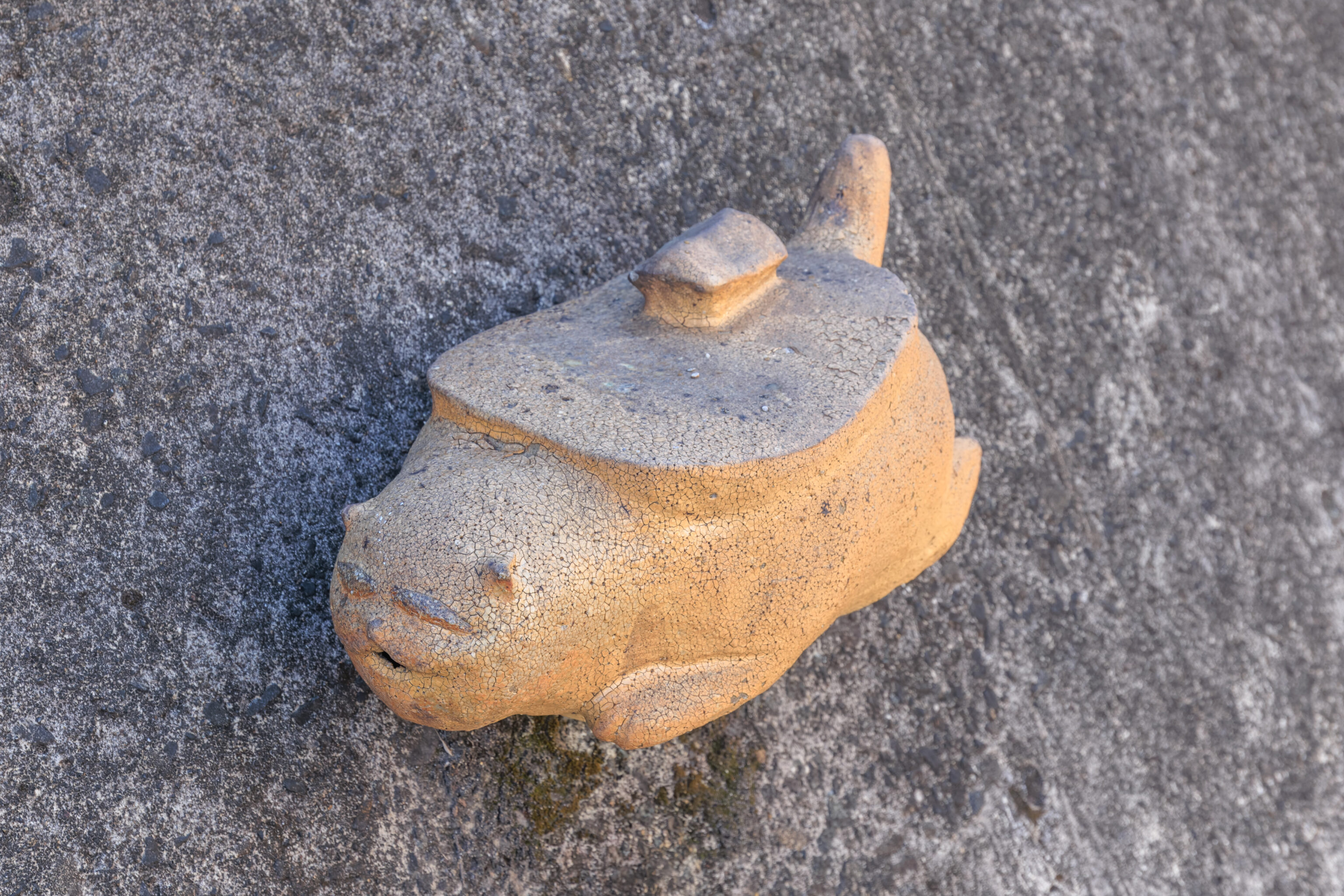
大原 光一 Ohara Koichi
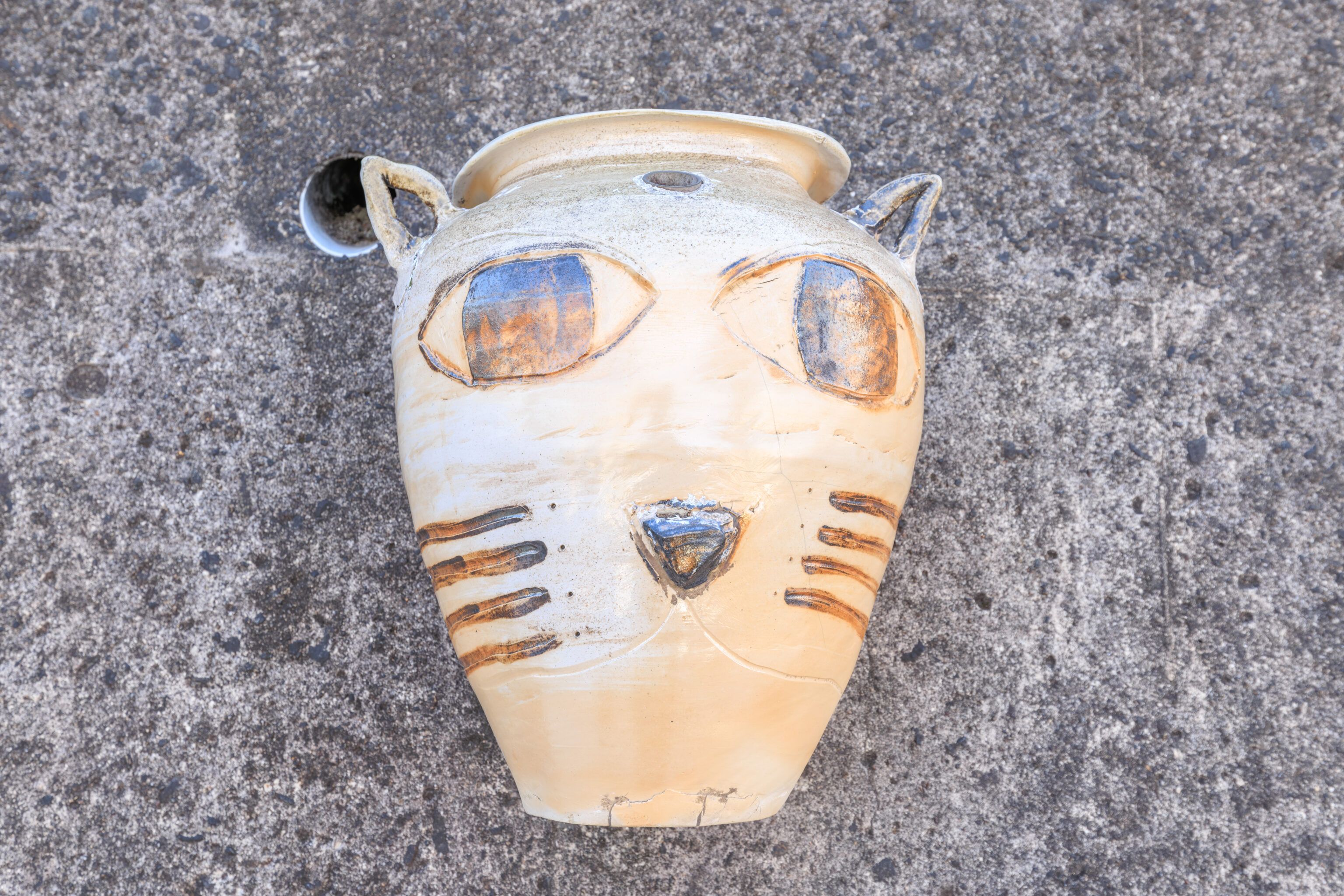
鯉江 明 Koie Akira
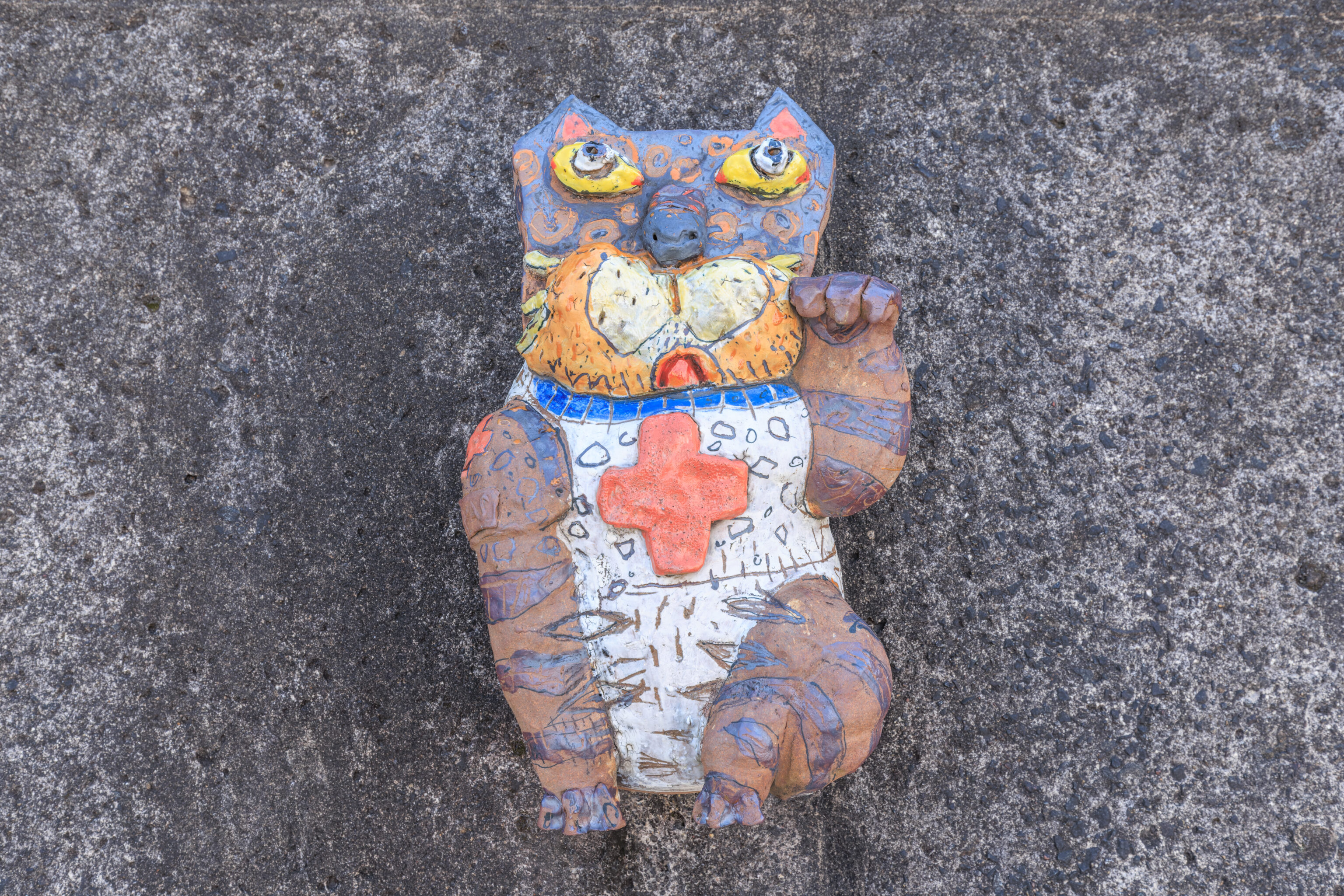
ラファエル· ナバス Rafael Navas
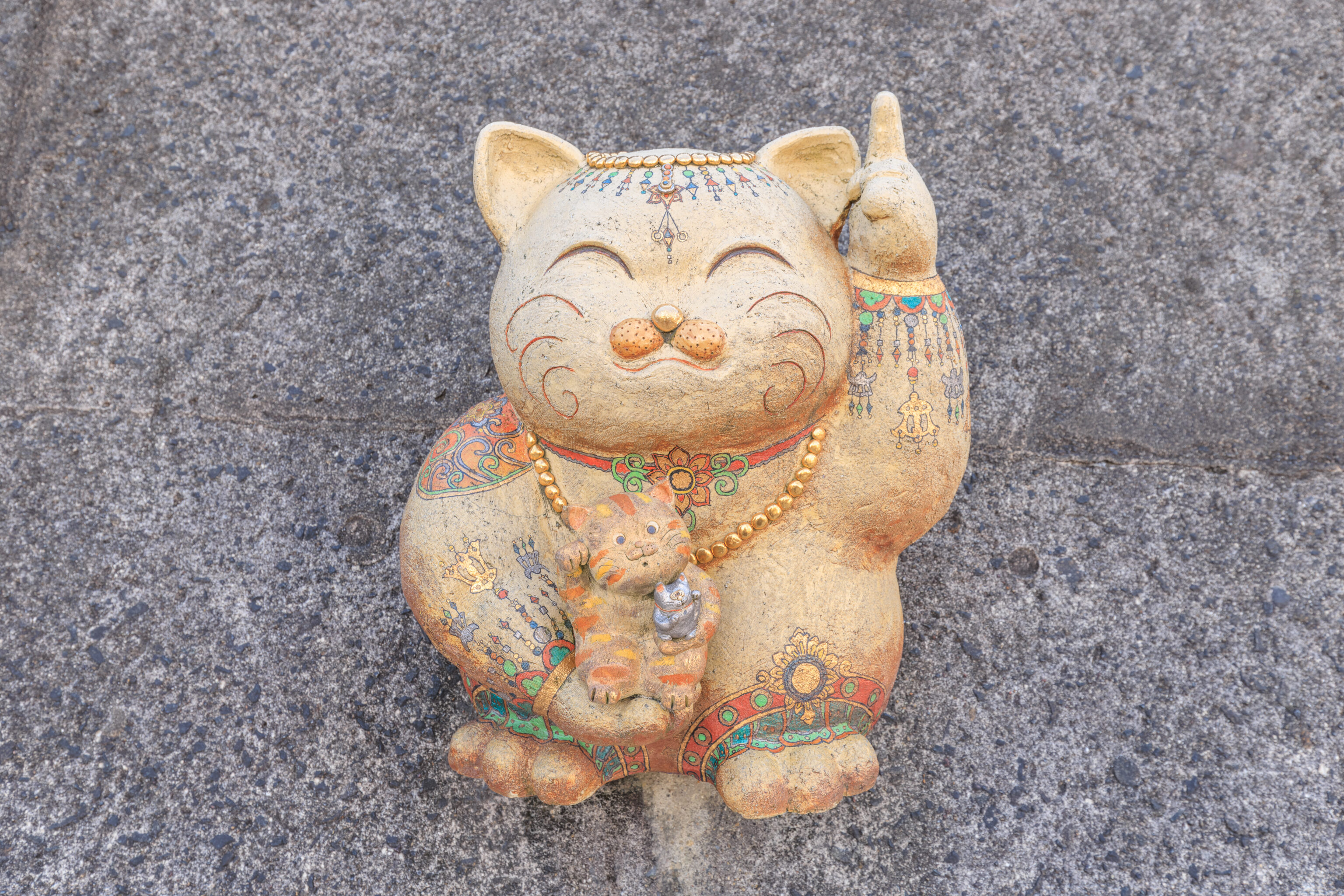
森遊子 Mori Yuko
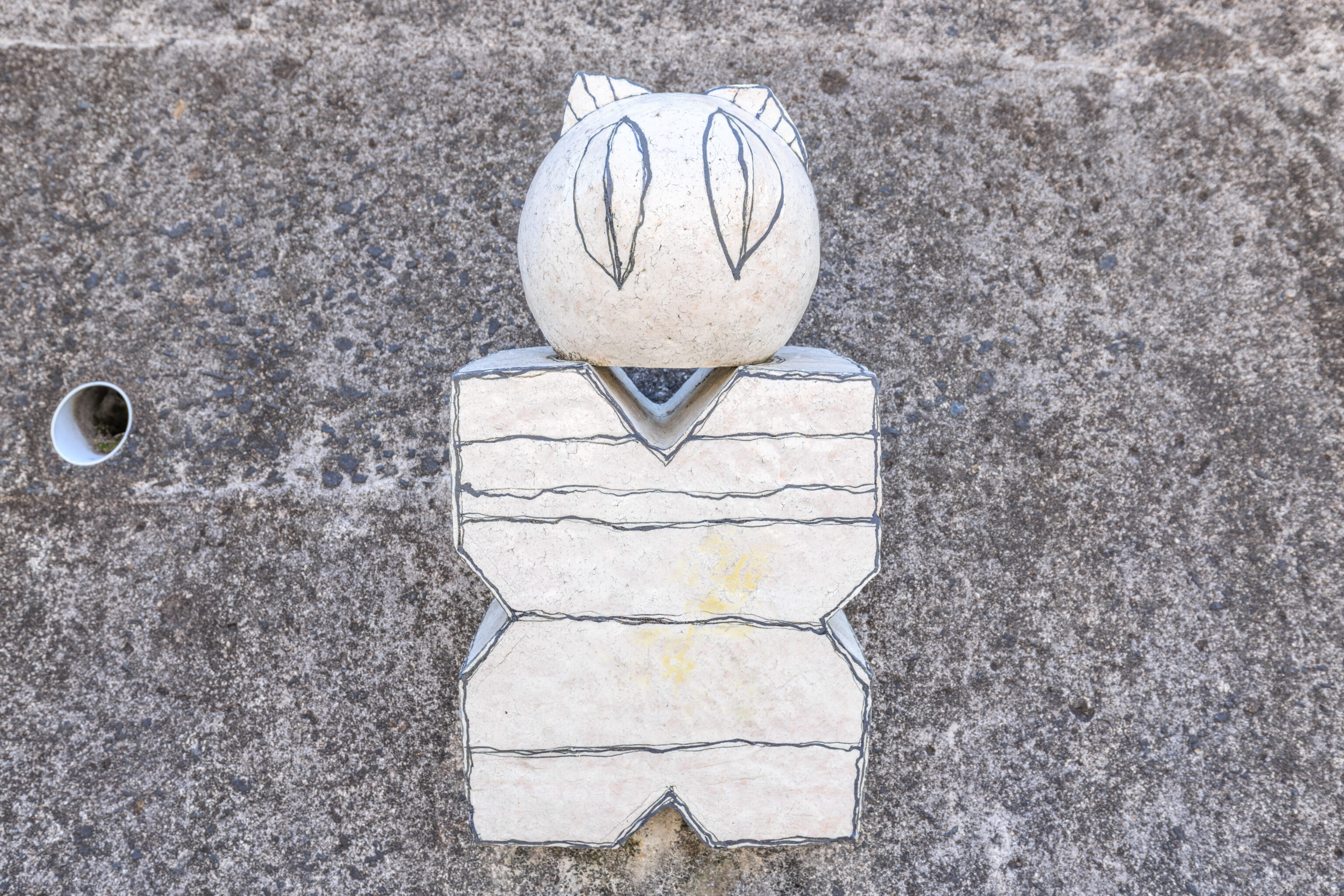
吉川 正道 Yoshikawa Masamichi
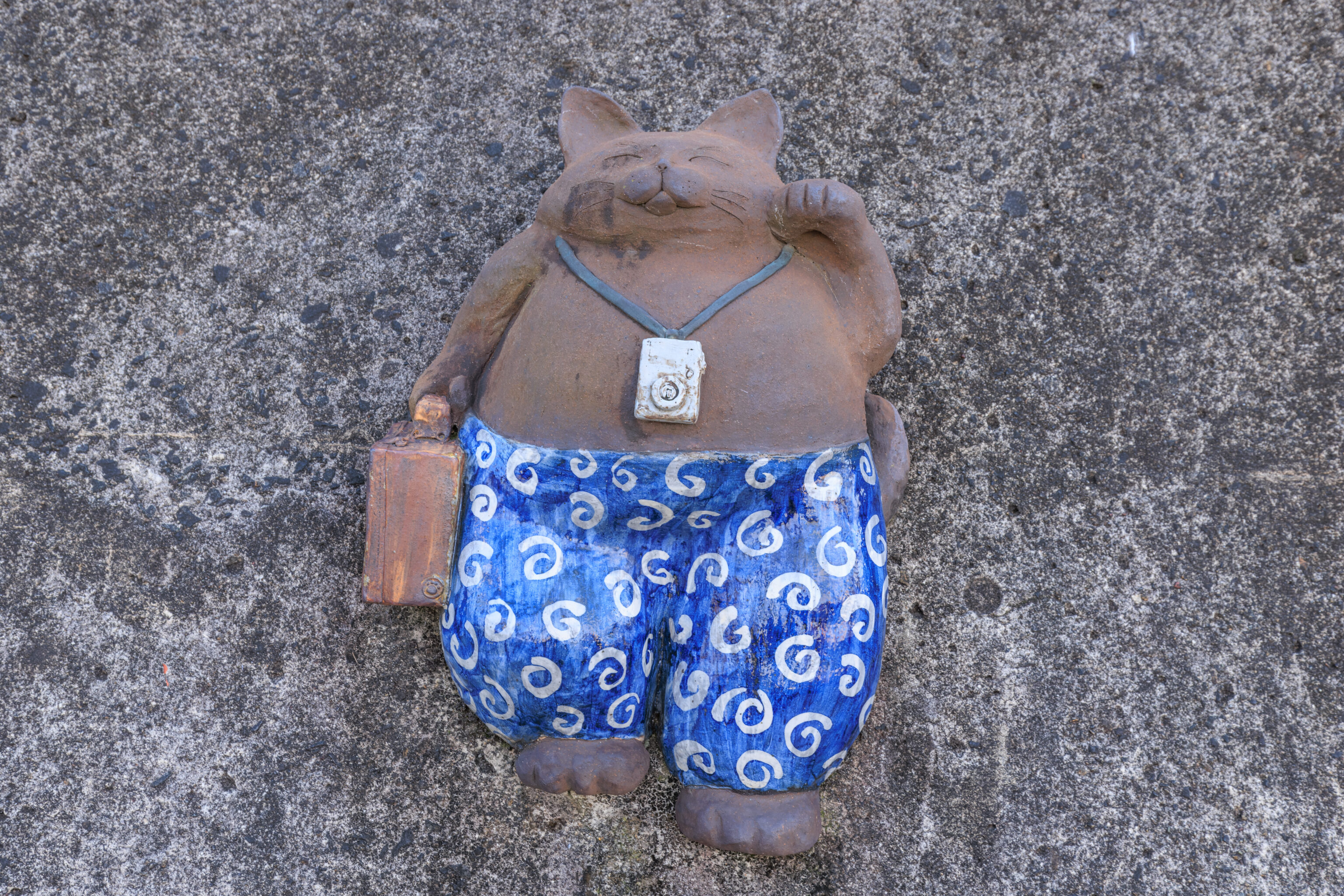
山田 知代子 Yamada Chiyoko
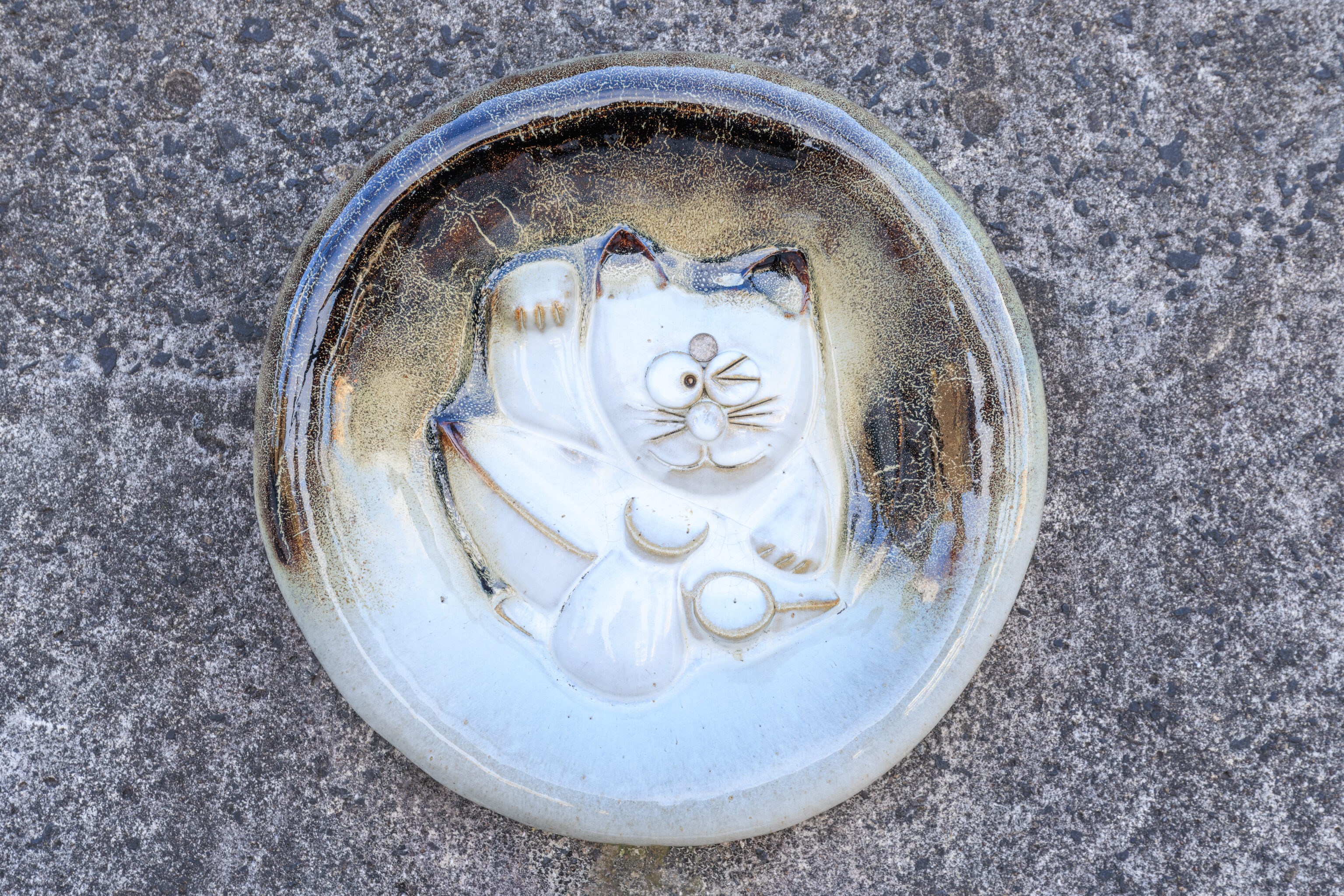
水野 真澄 Mizuno Masumi
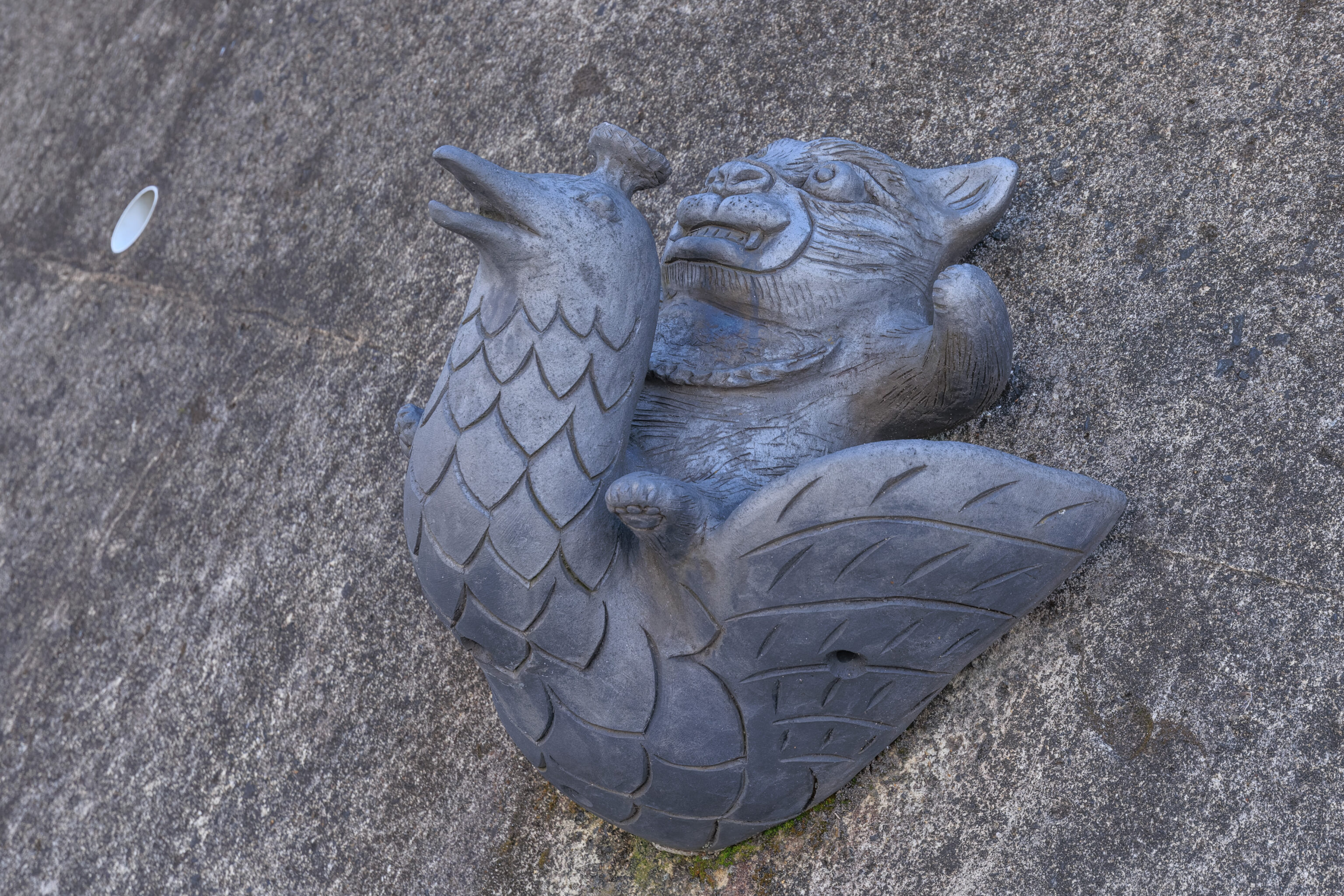
浜比嘉 詩子 Hamahiga Utako
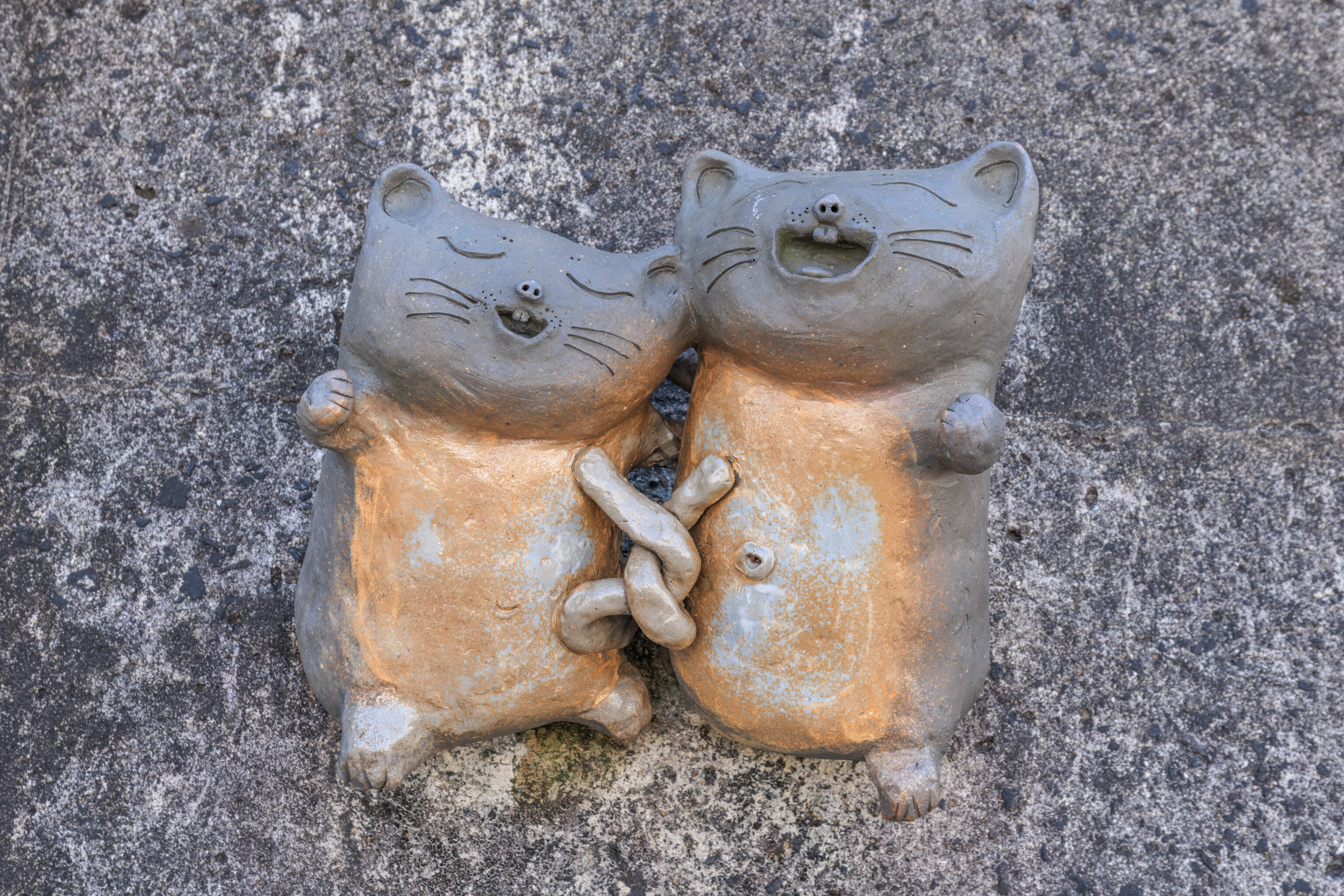
近藤 てるみ Kondo Terumi
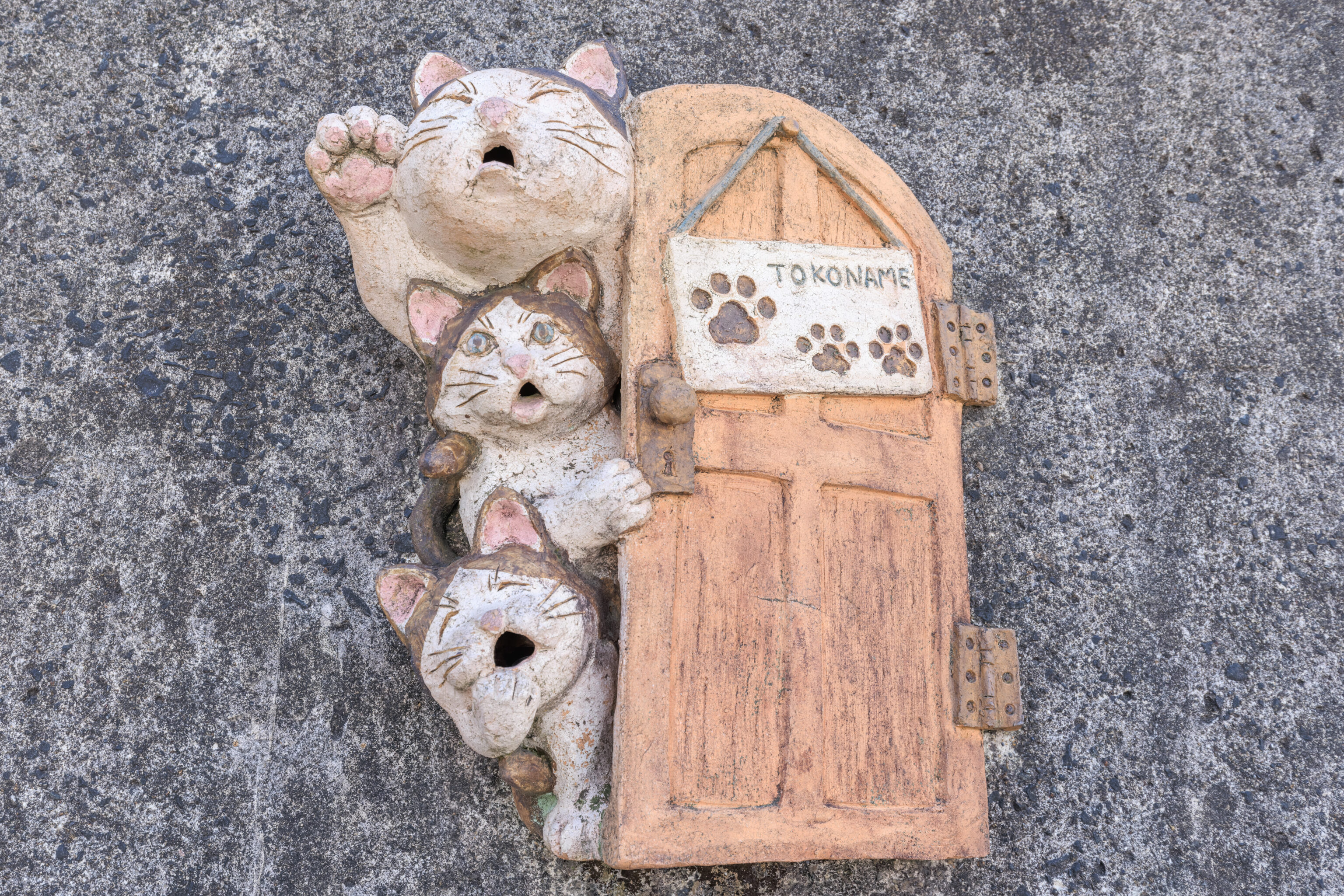
武山 宗憲 Takeyama Munenori
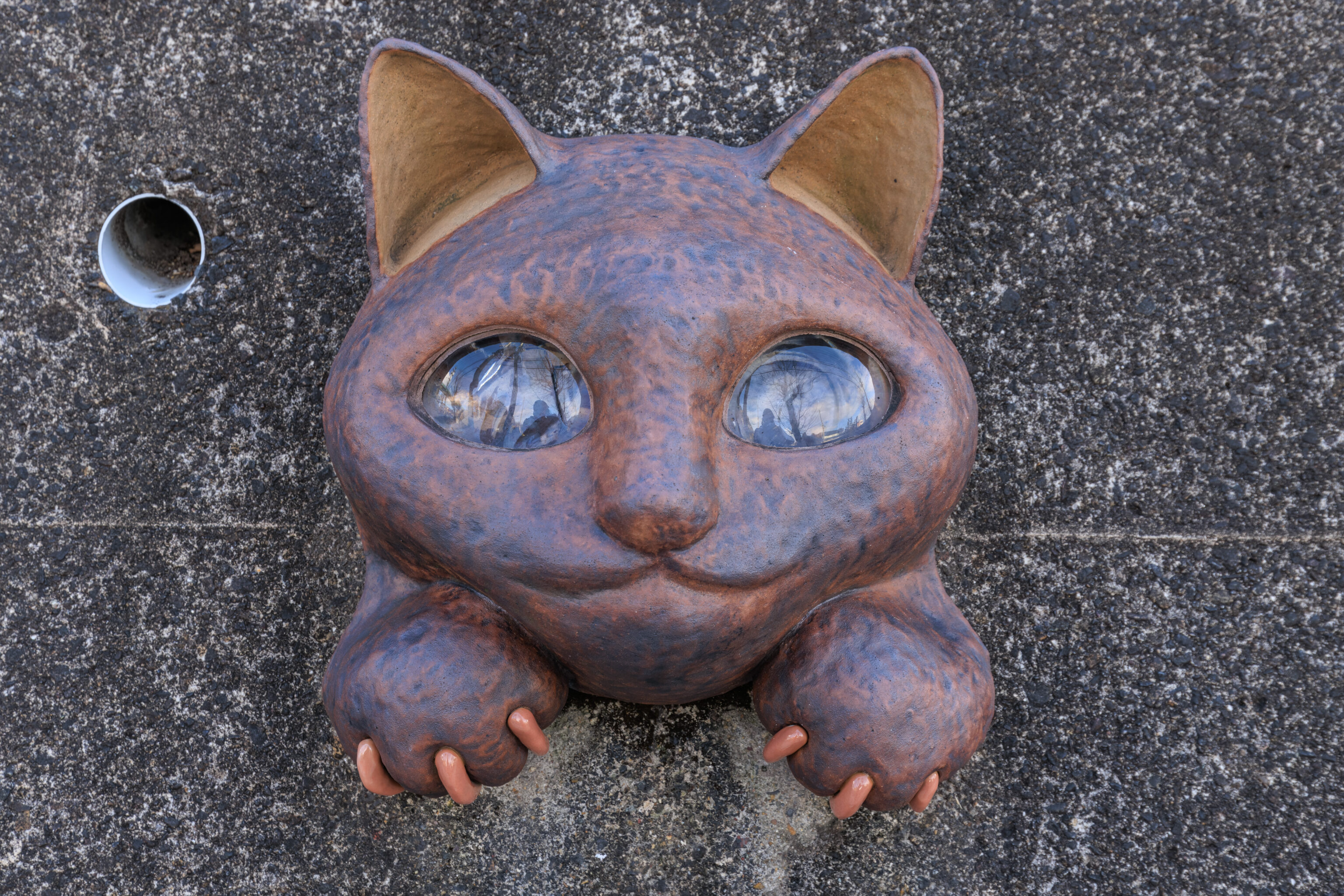
ミヤチャスヨ Miyachi Yasuyo
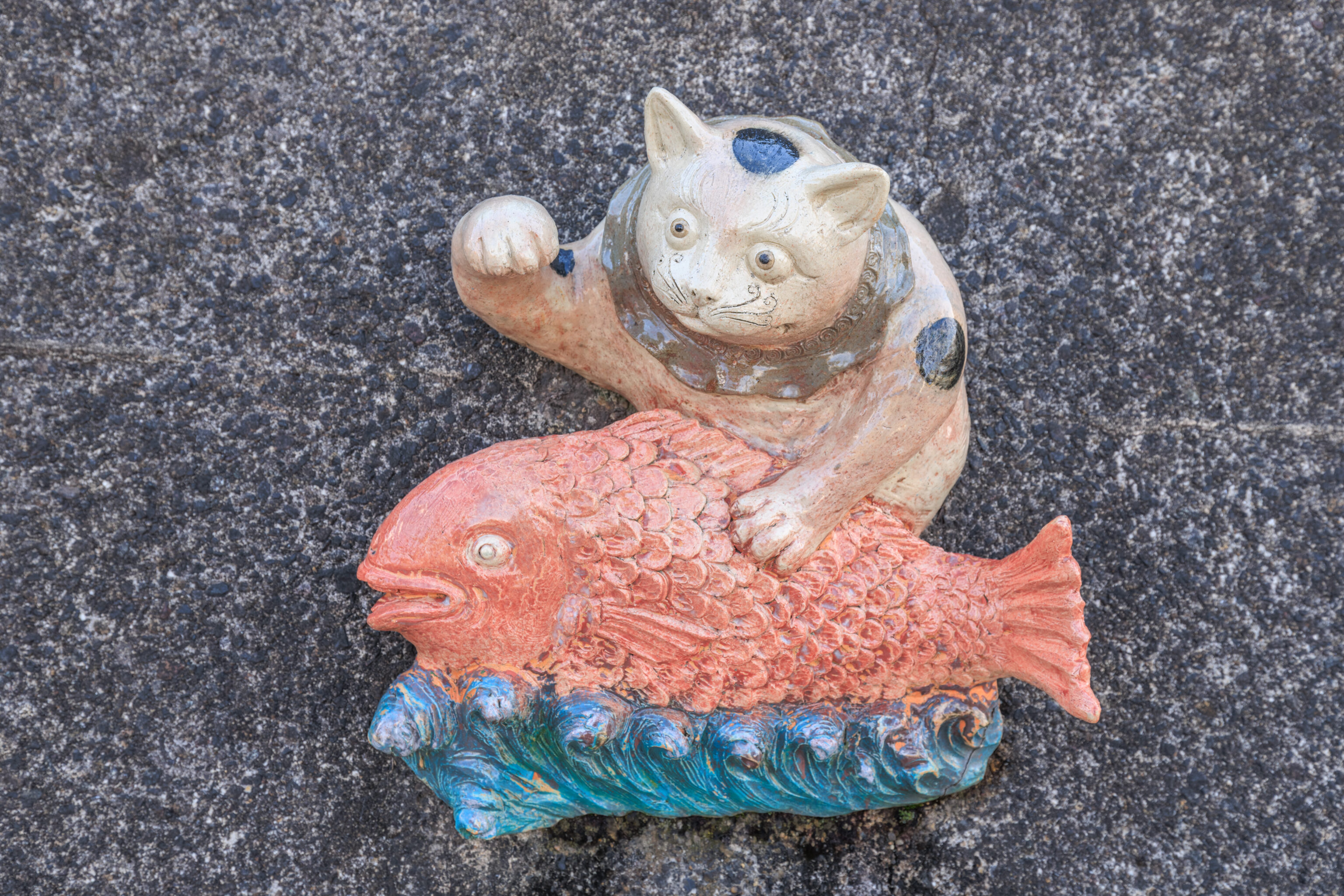
松下昌司 Matsushita Masashi
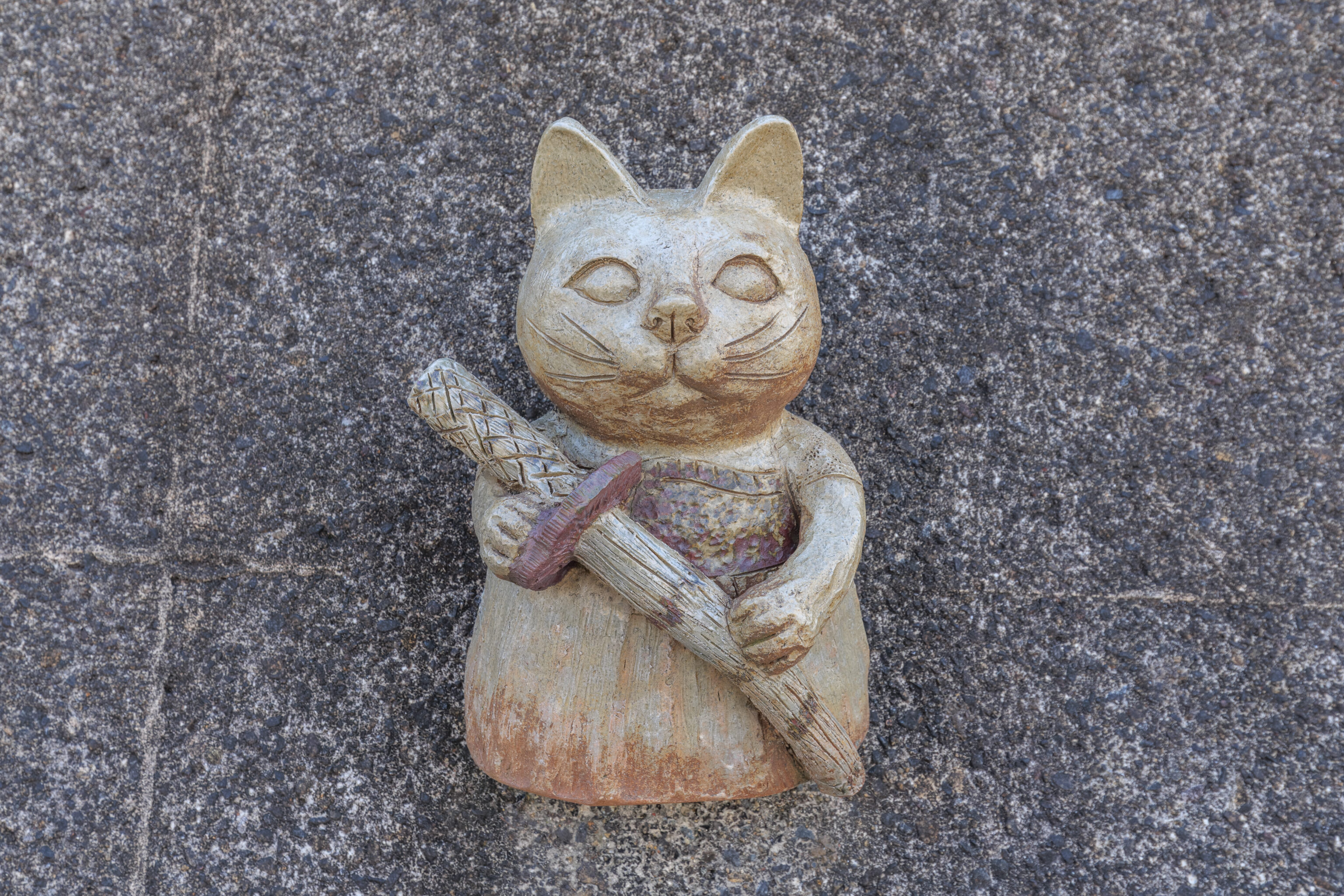
柴山庄山 Shibayama Shozan
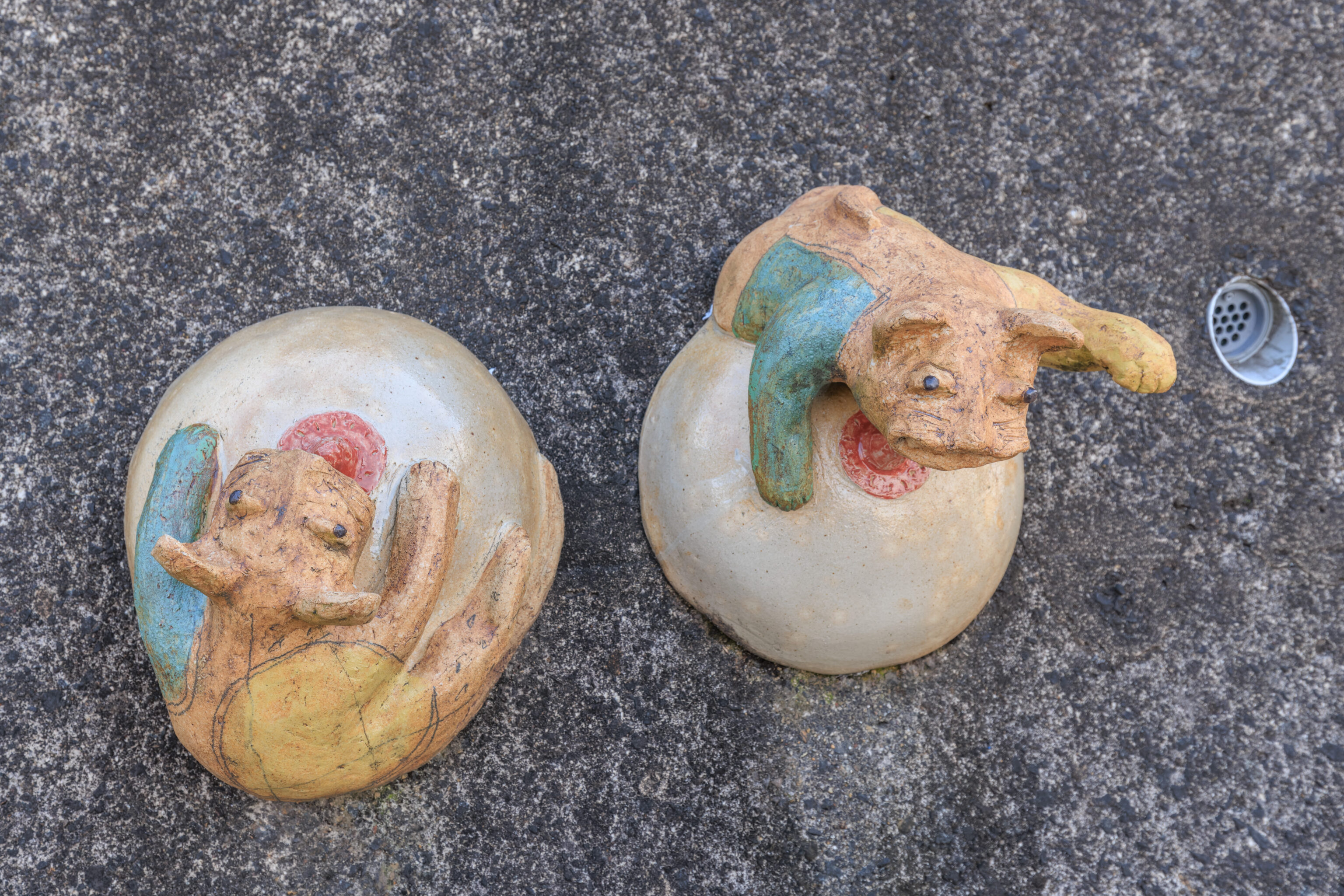
国島文 Kunishima Aya
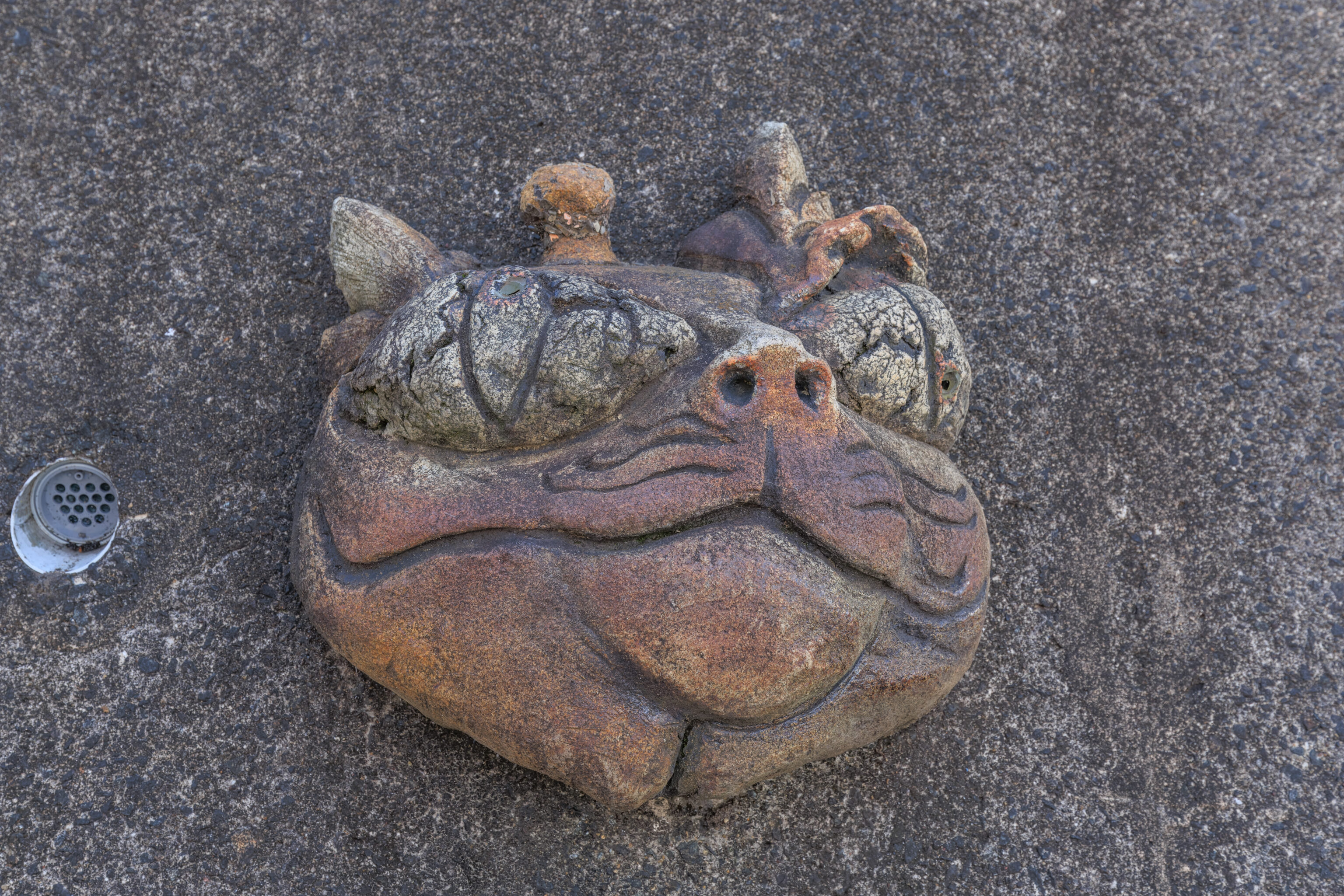
ヒメナ· エルゲダ Ximena Elgueda
スティーブン フォード Steven Ward
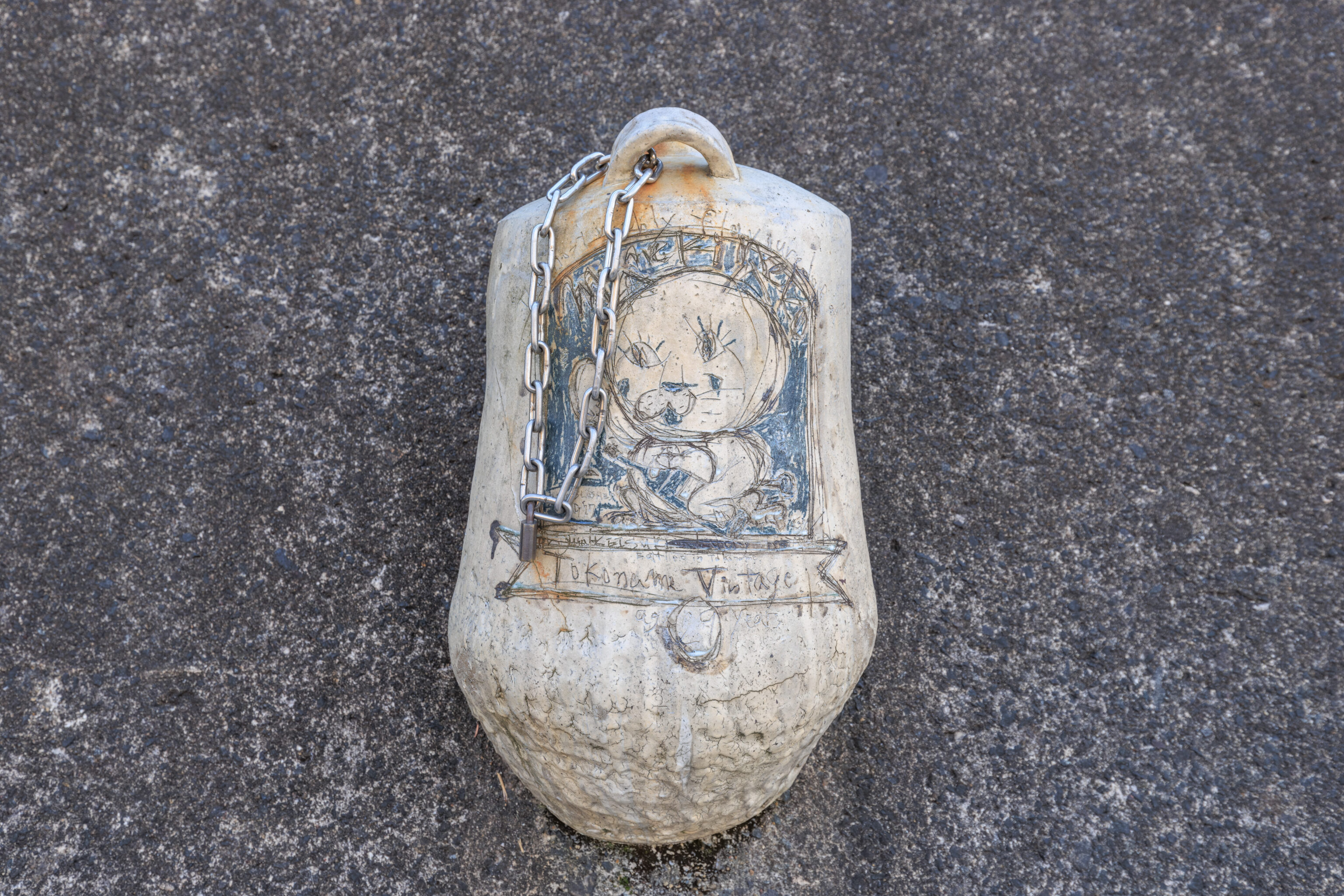
畑中 圭介 Hatanaka Keisuke
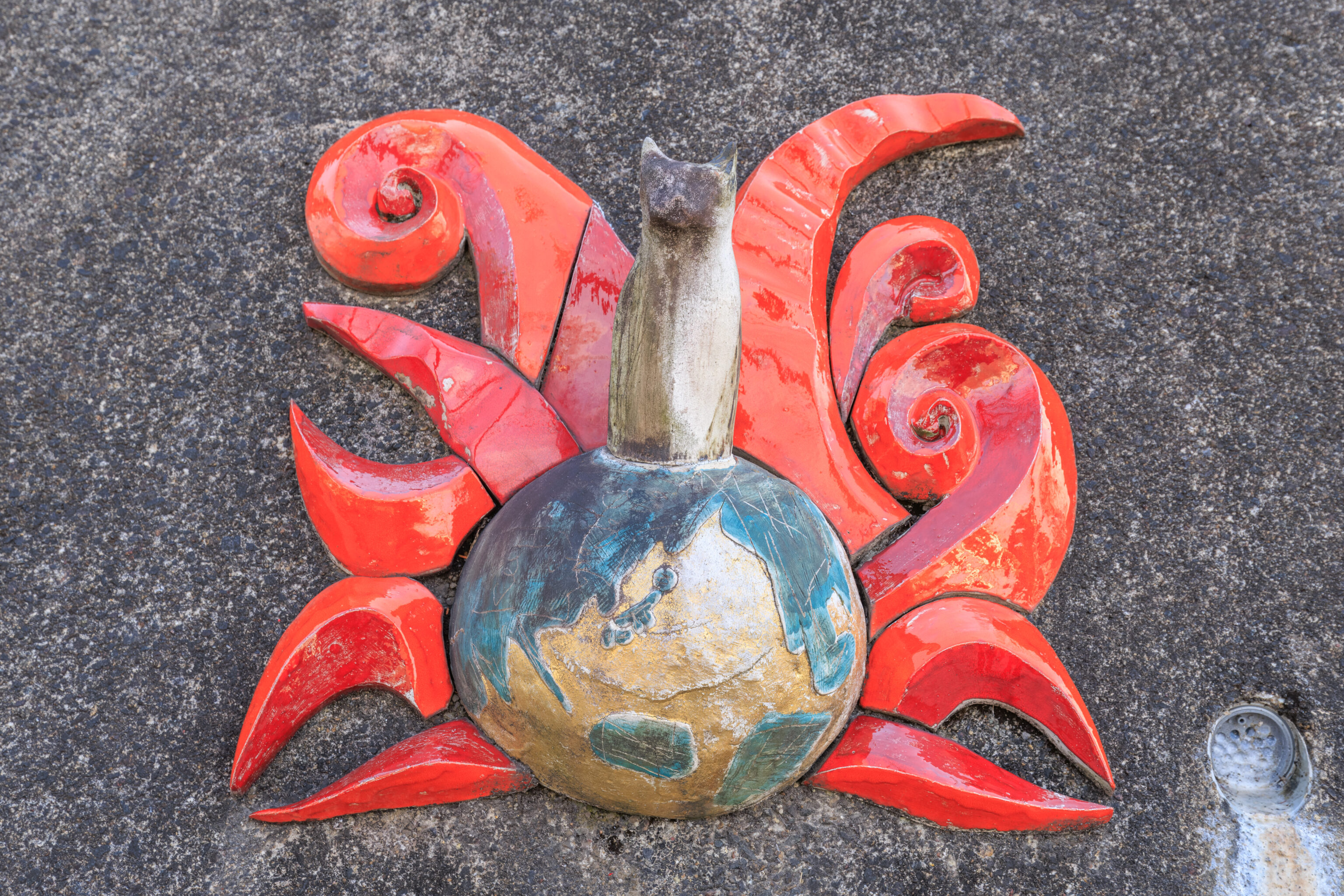
富本 敏裕 Tomimoto Tóshihiro
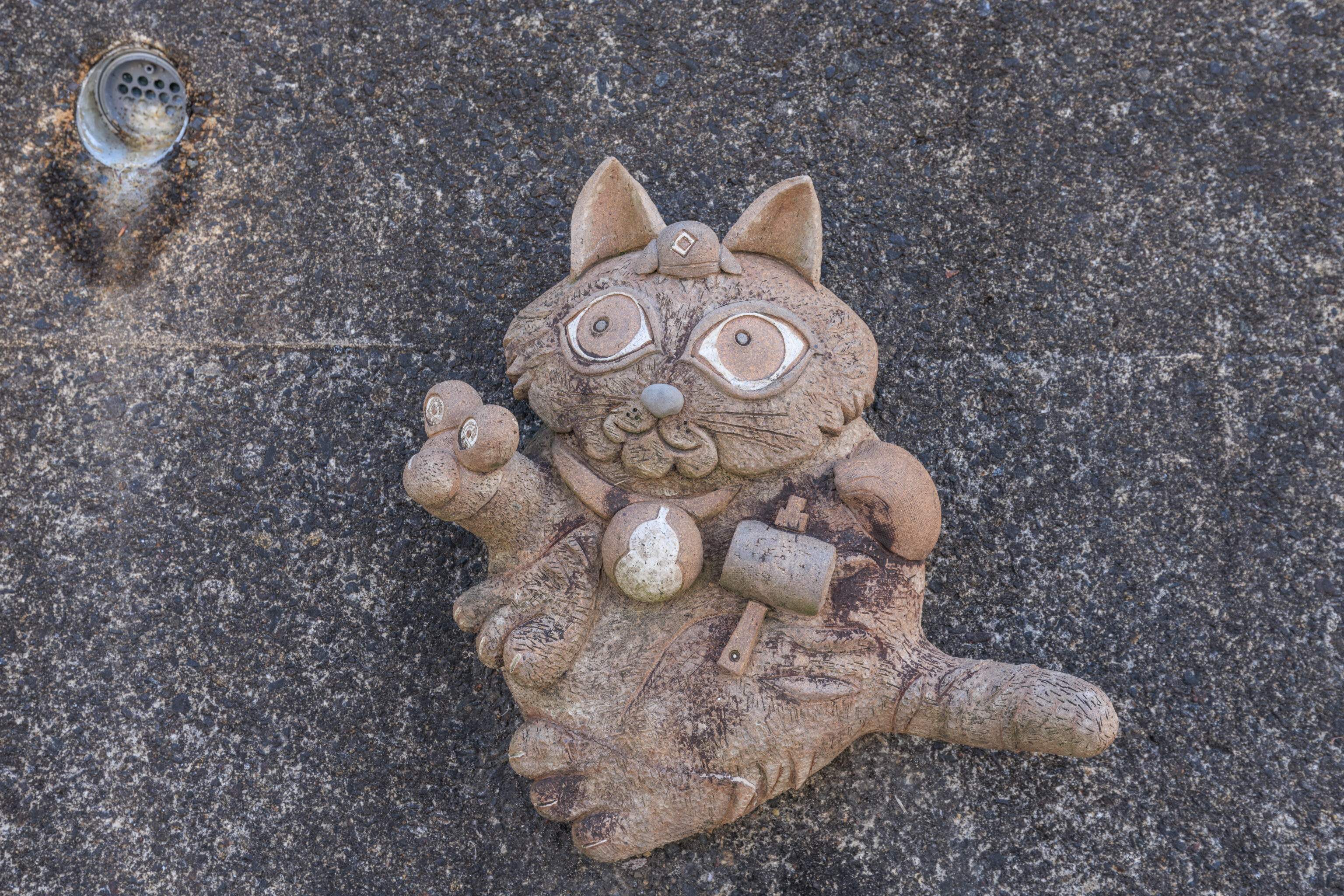
福田 能久 Fukuda Yoshihisa
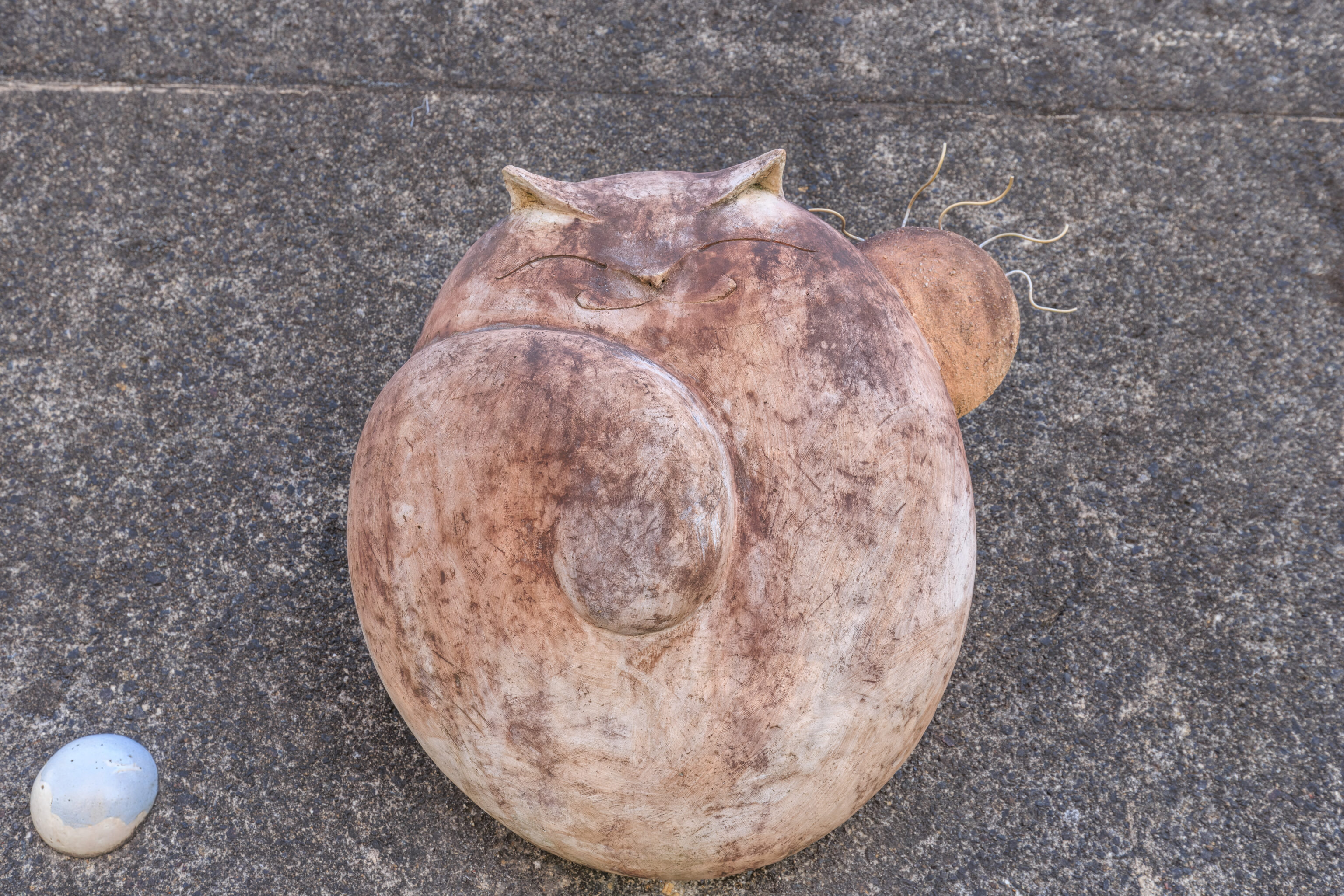
山田 のや Yamada Noya
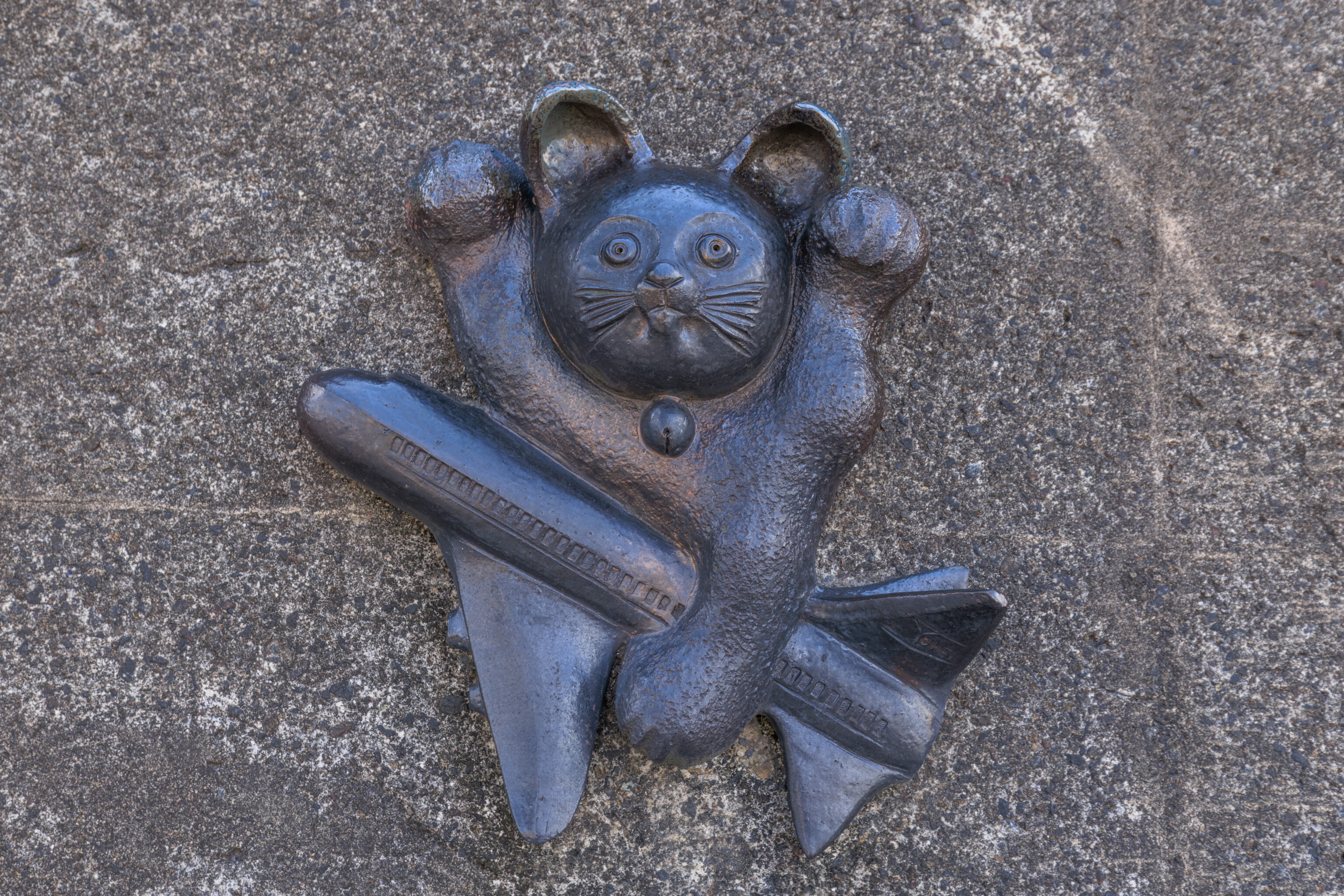
小西 洋平 Konishi Yohei
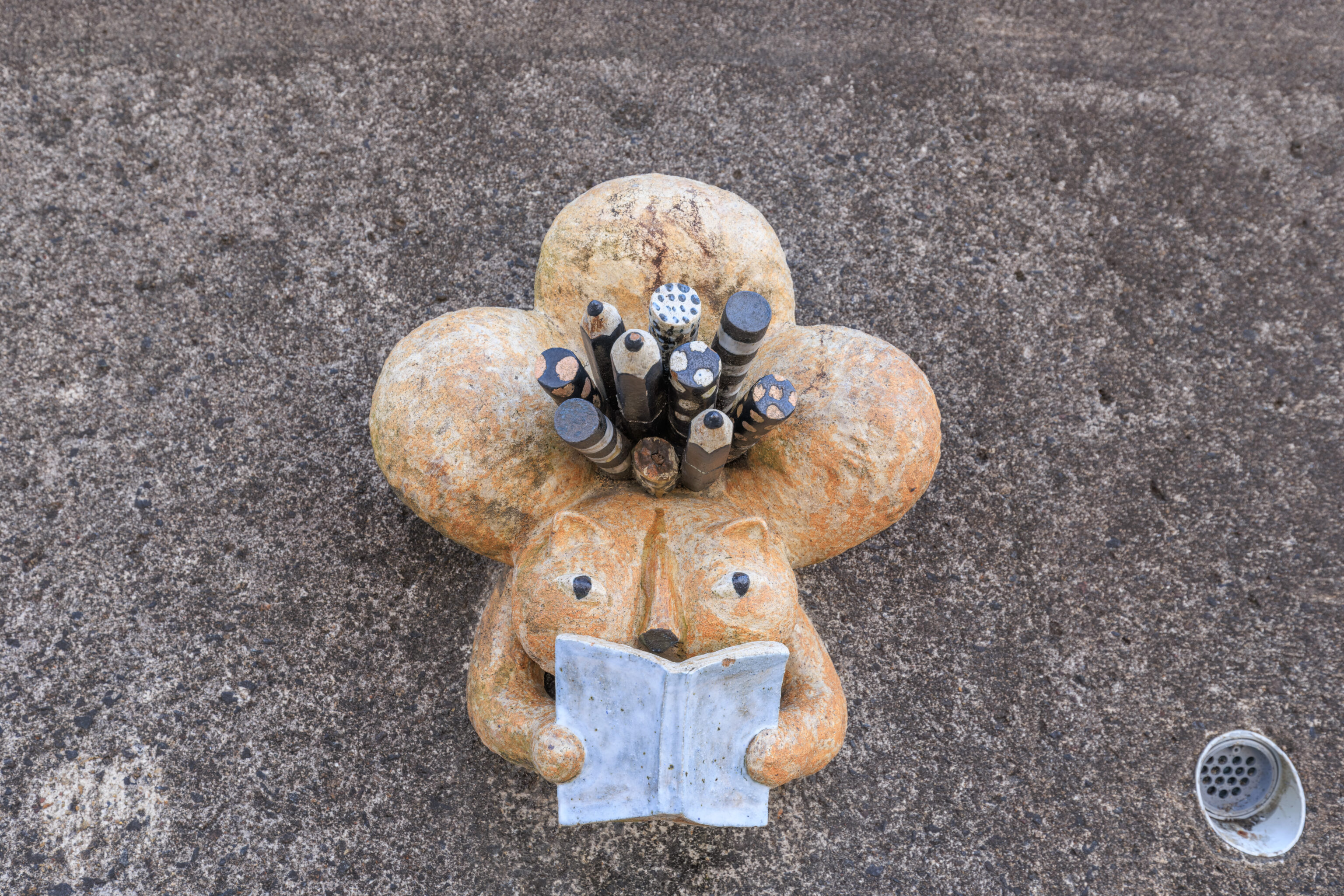
岩本 理枝 Iwamoto Masae
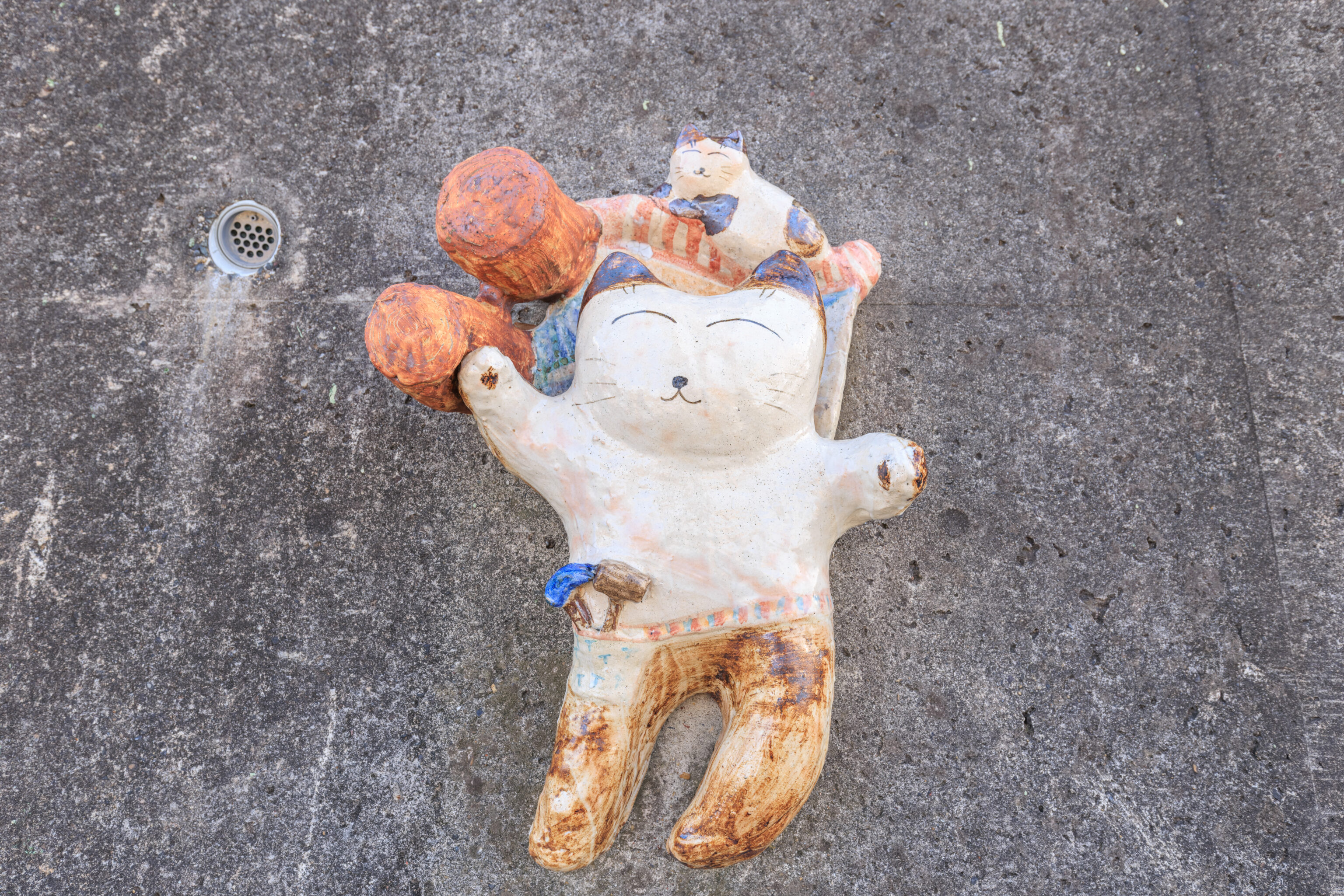
伊藤 敦子 Ito Atsuko
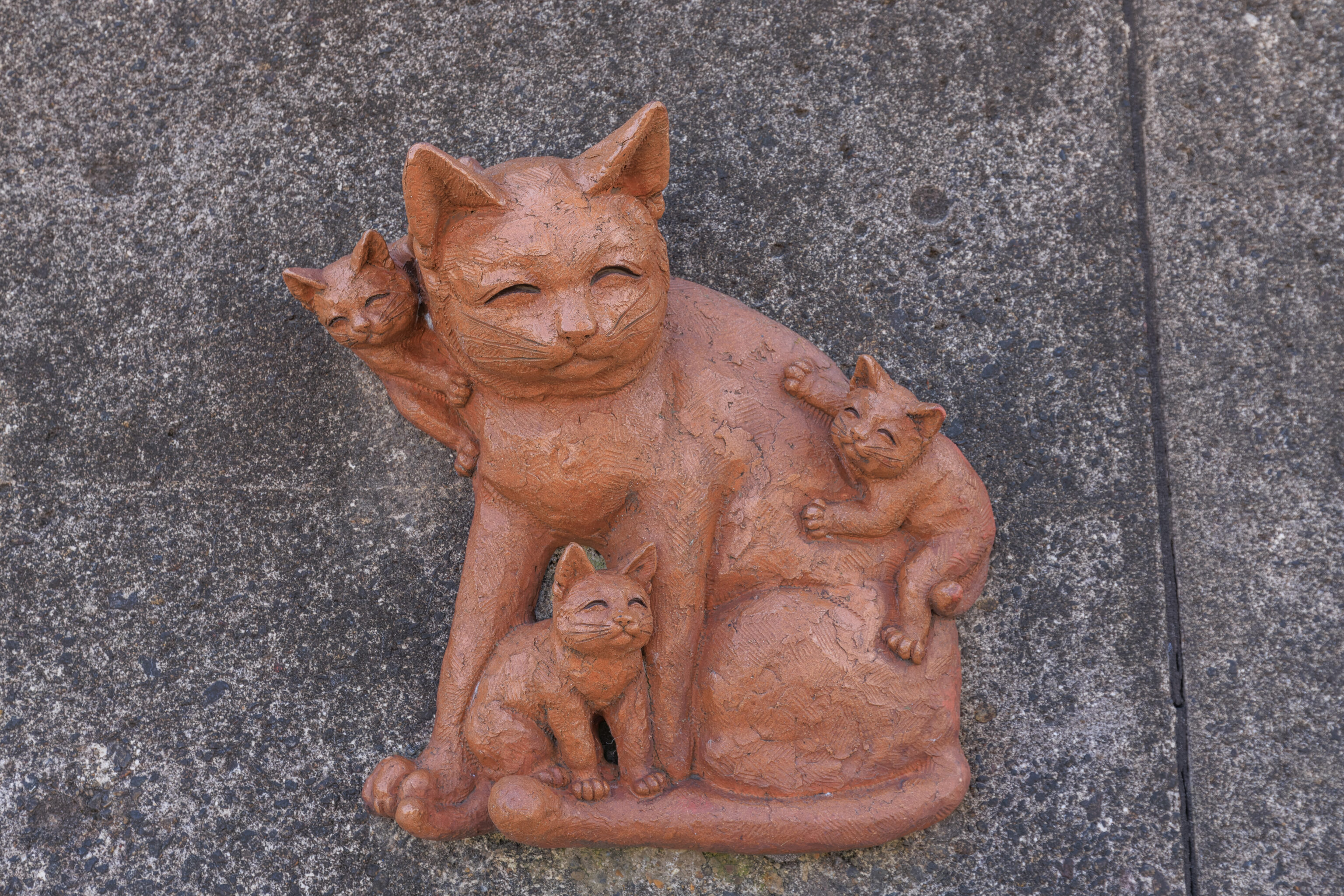
家田 明博 leda Akihiro
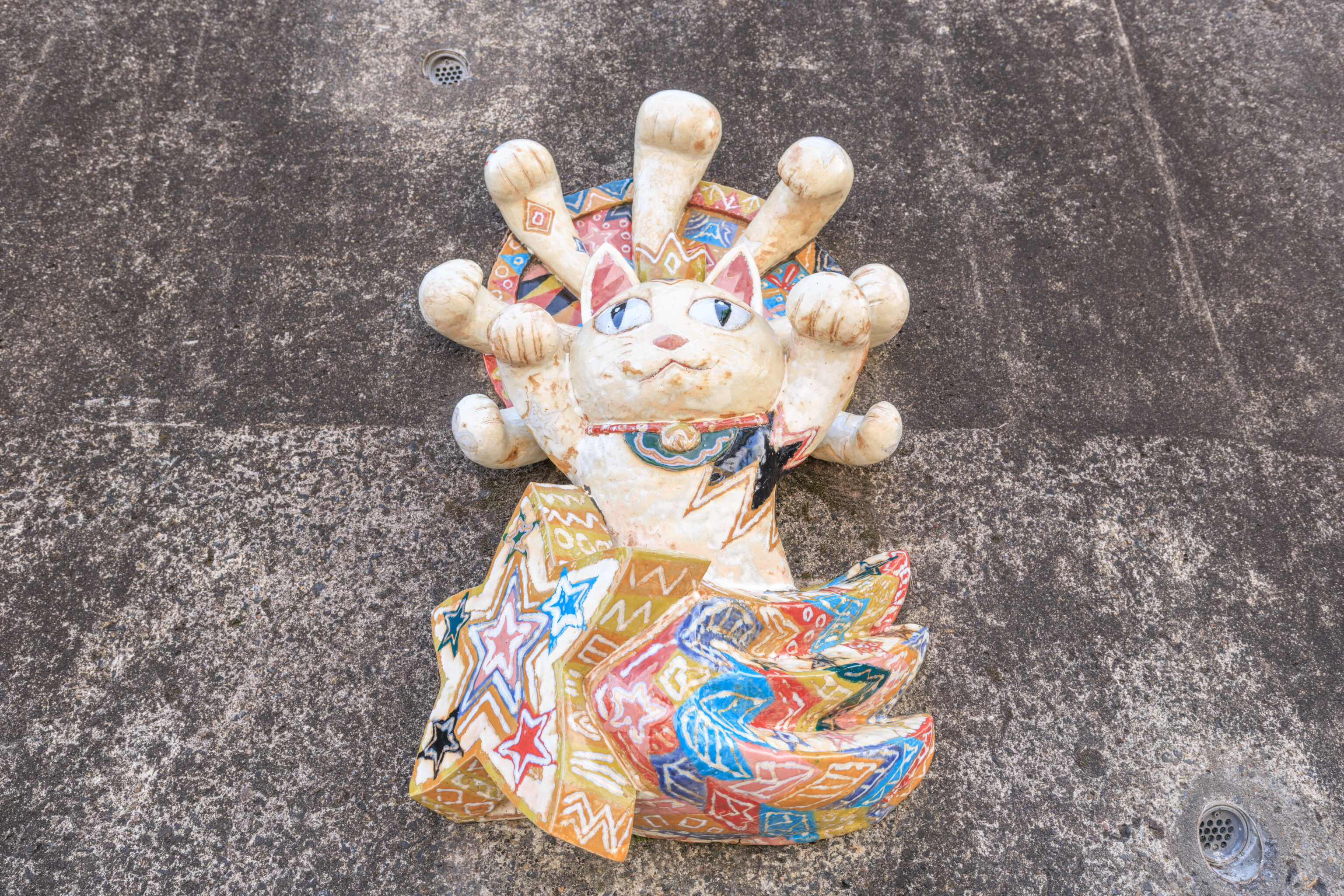
柏野 紀文 Kayano Norifumi
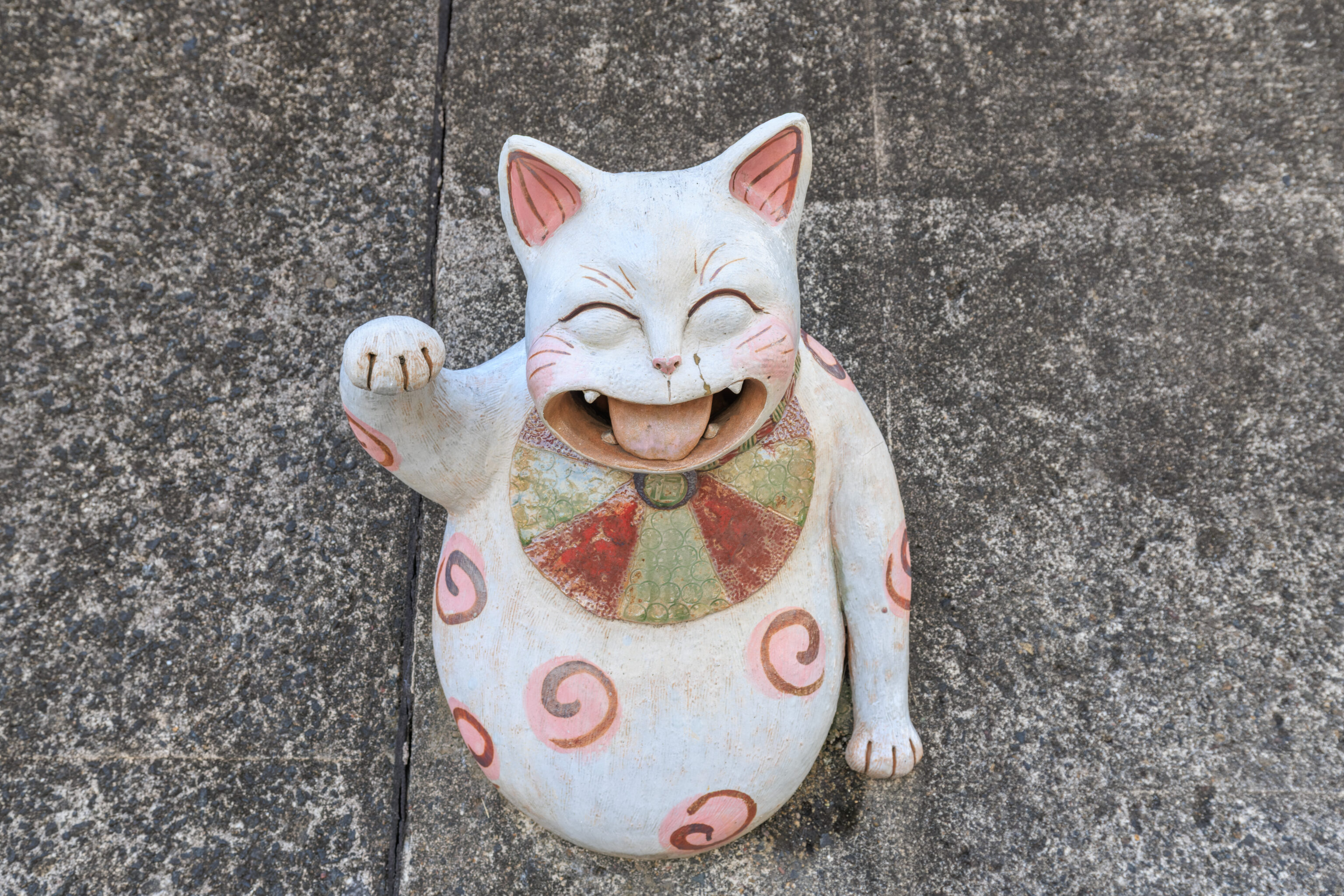
早川 さとみ Hayakawa Satomi
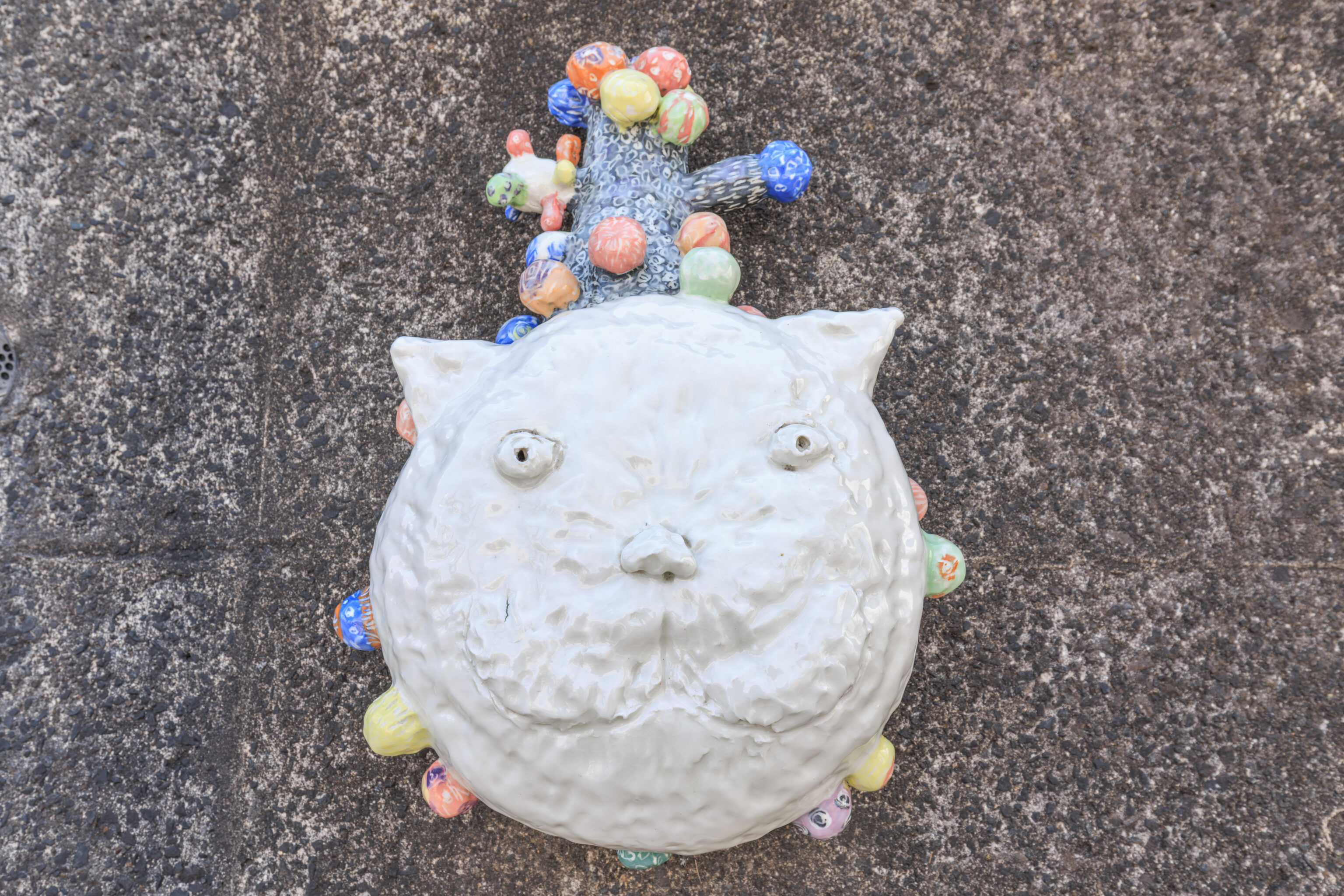
浜坂 尚子 Hamasaka Naoko
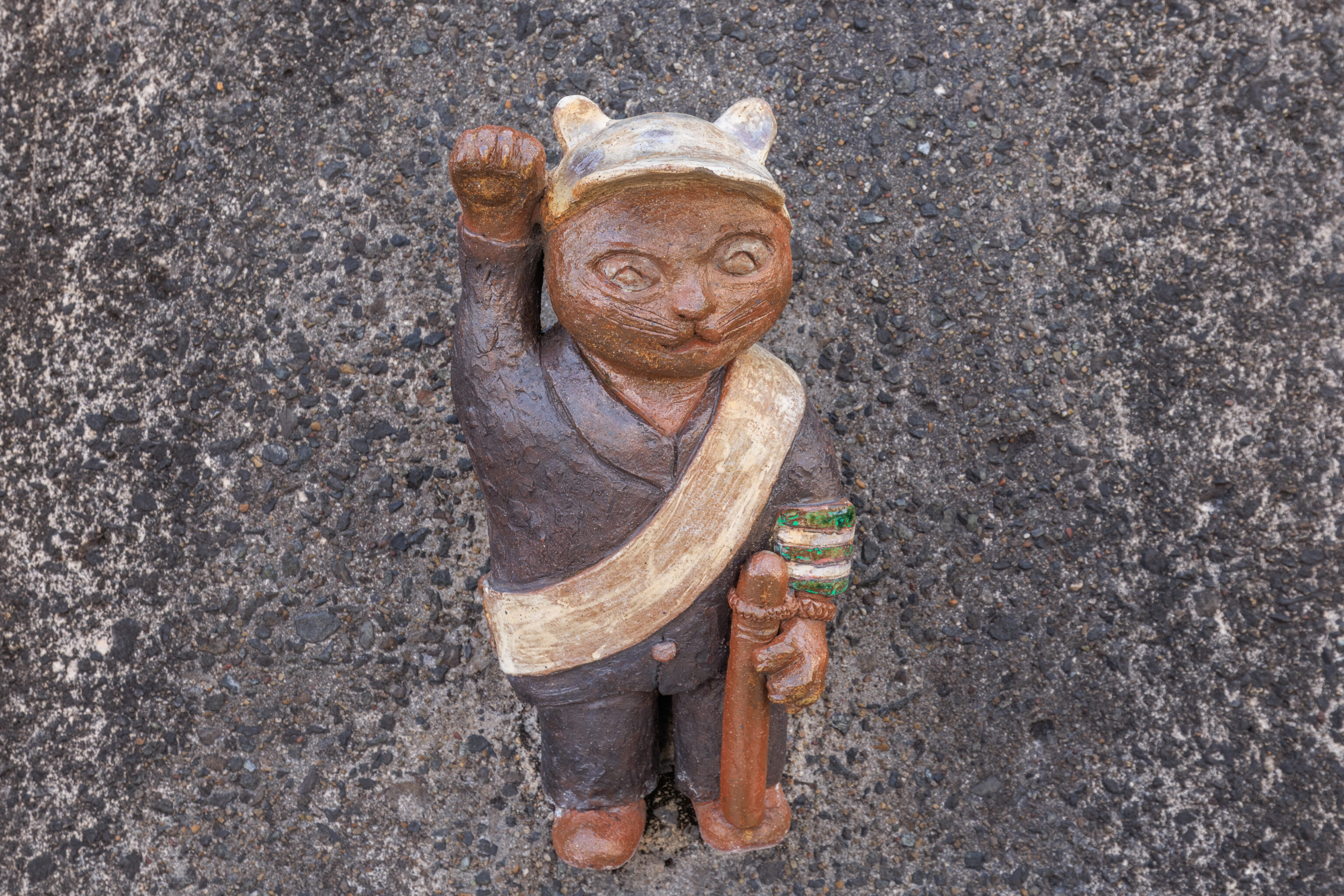
水上 峯山 Mizukami Hozan
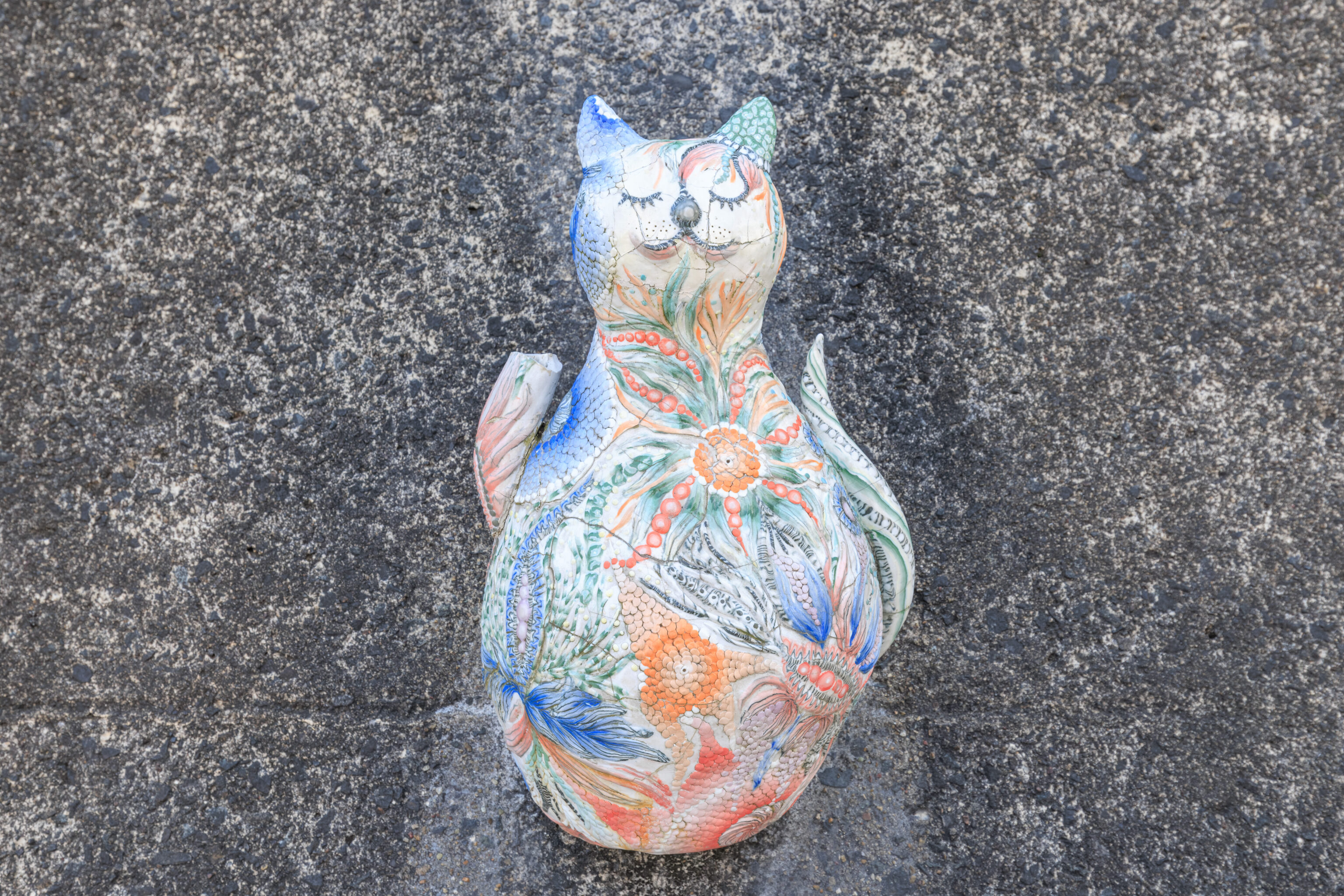
今野 朋子 Konno Tomoko
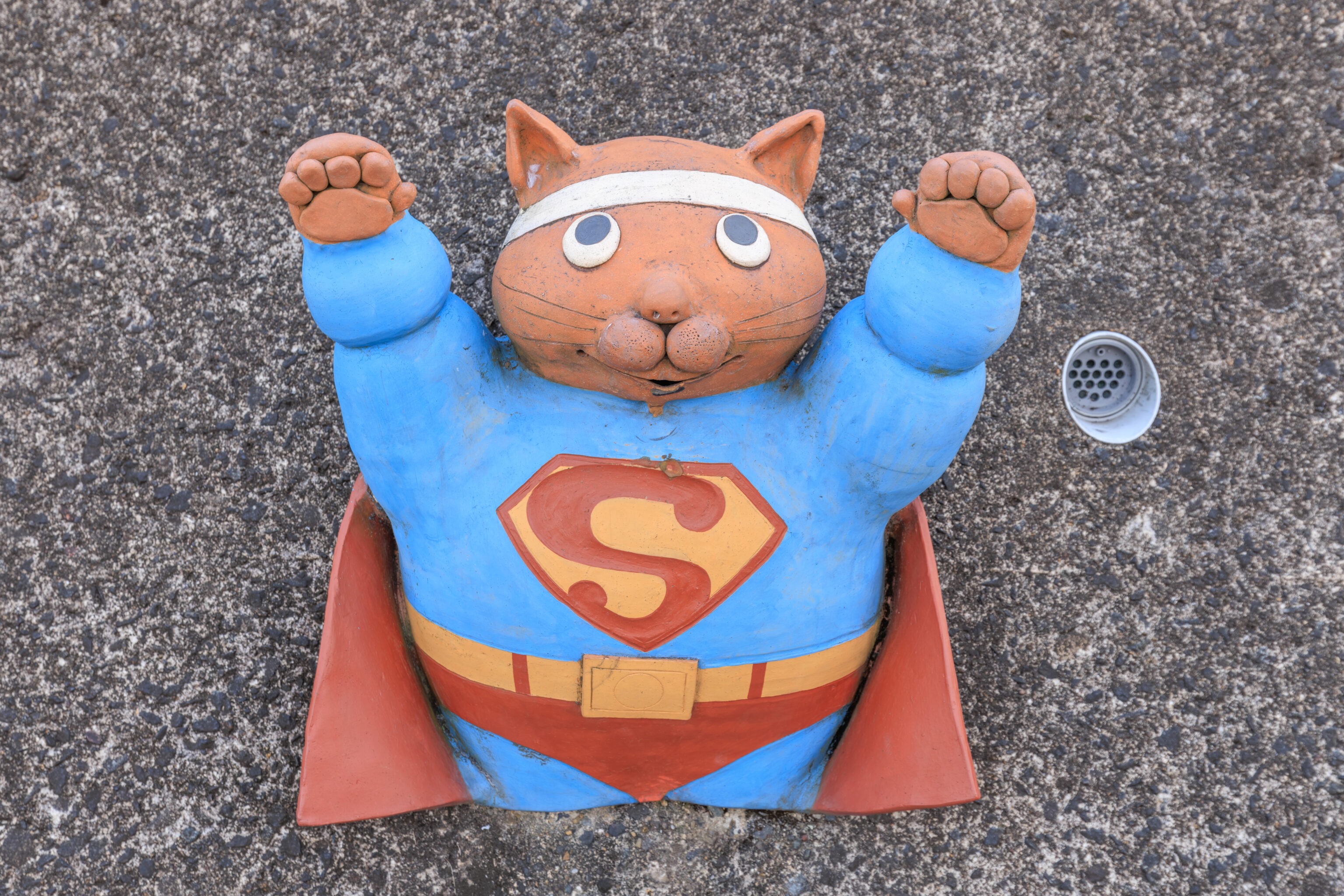
間野 文子 Mano Fumiko
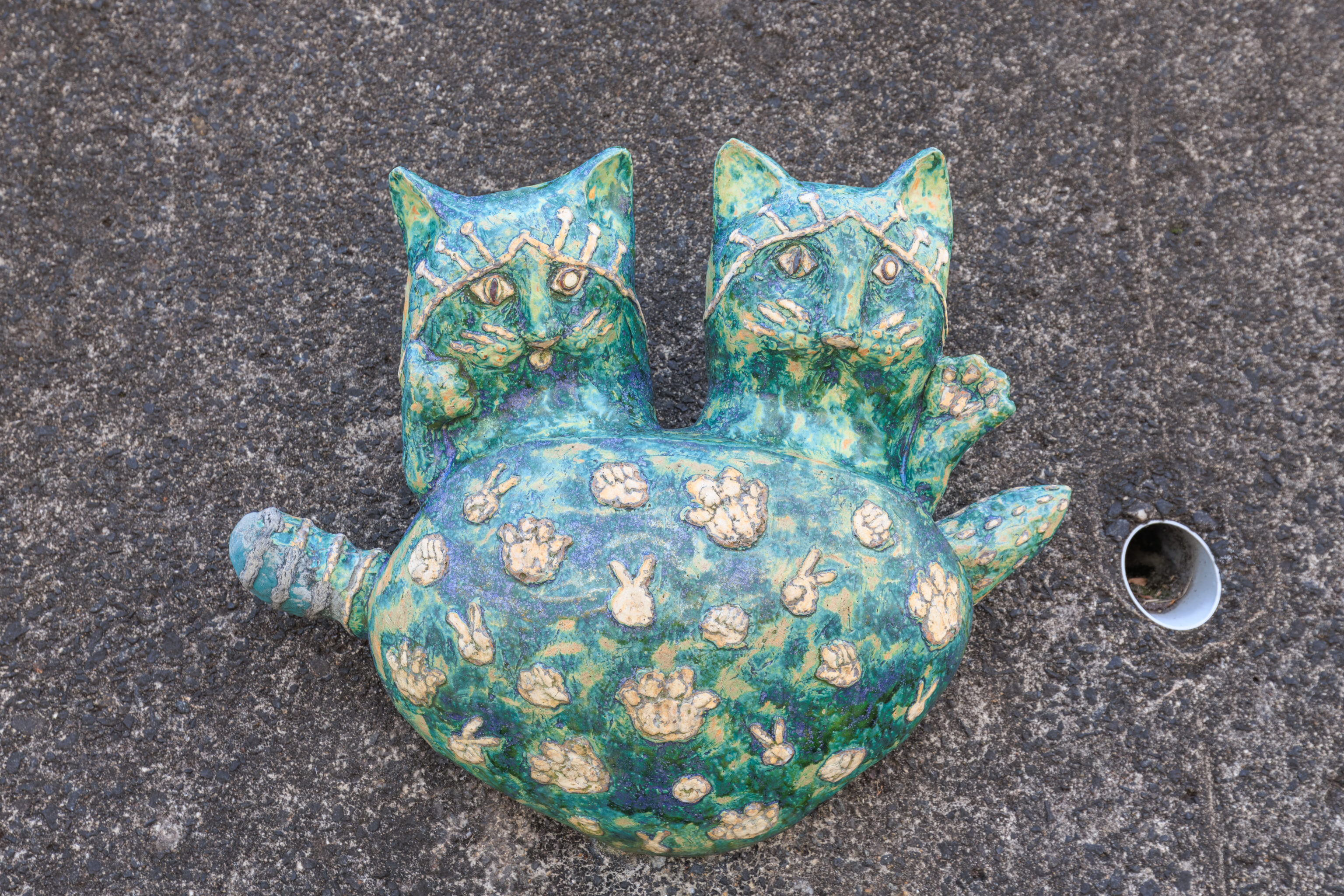
太田 亜矢子 Ota Ayako
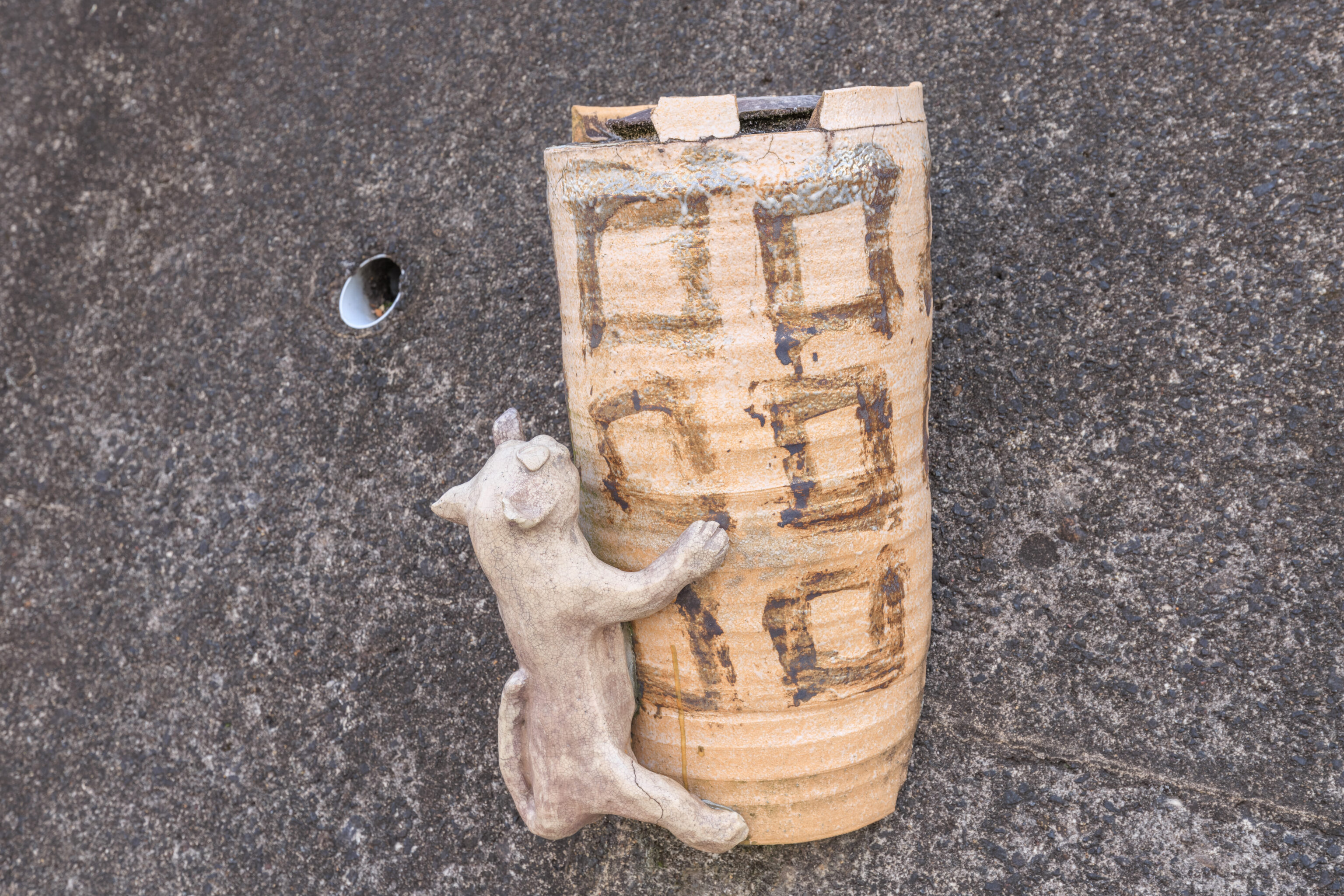
冨本 タケル Tomimoto Takeru
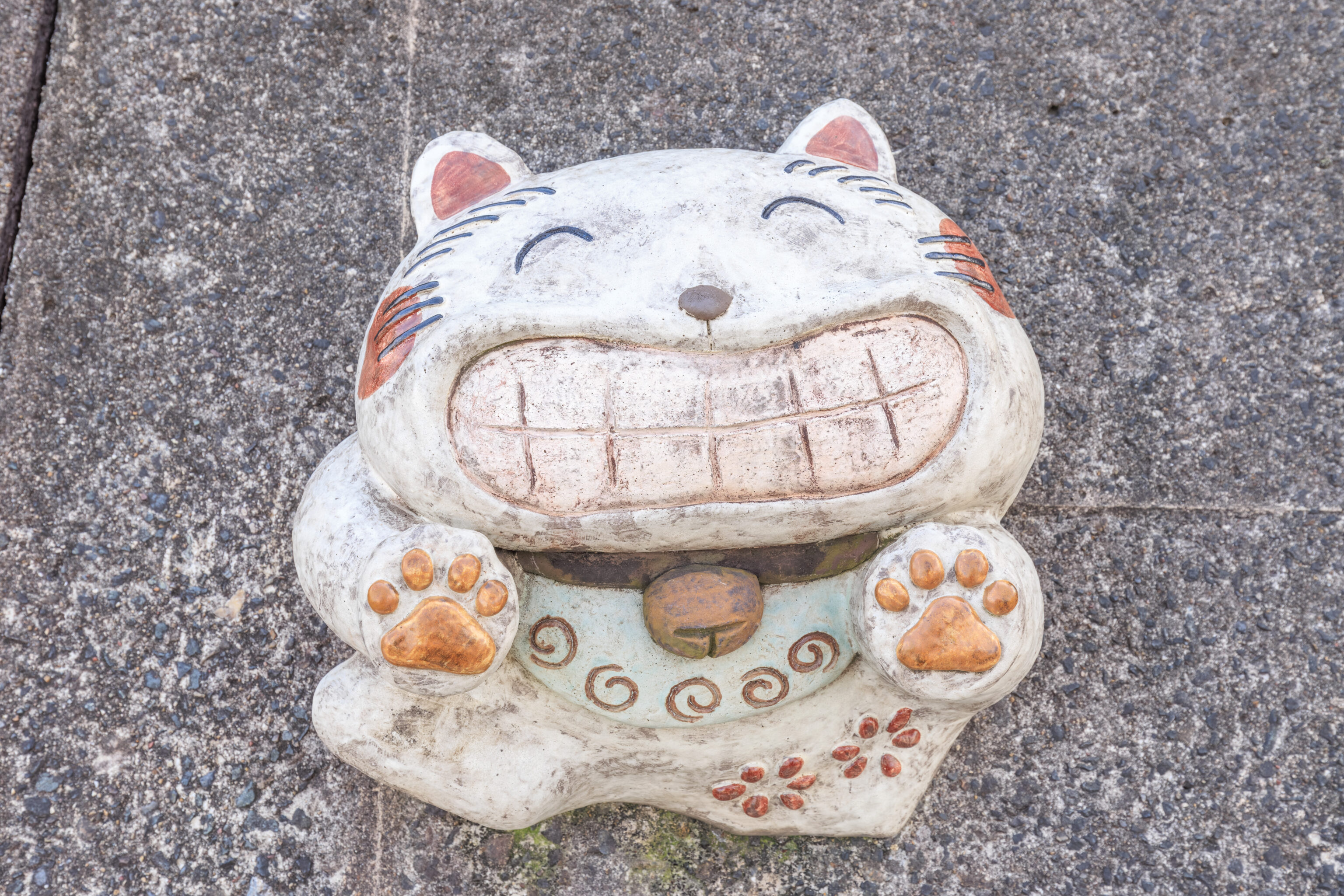
羽田 桂子 Haneda Keiko
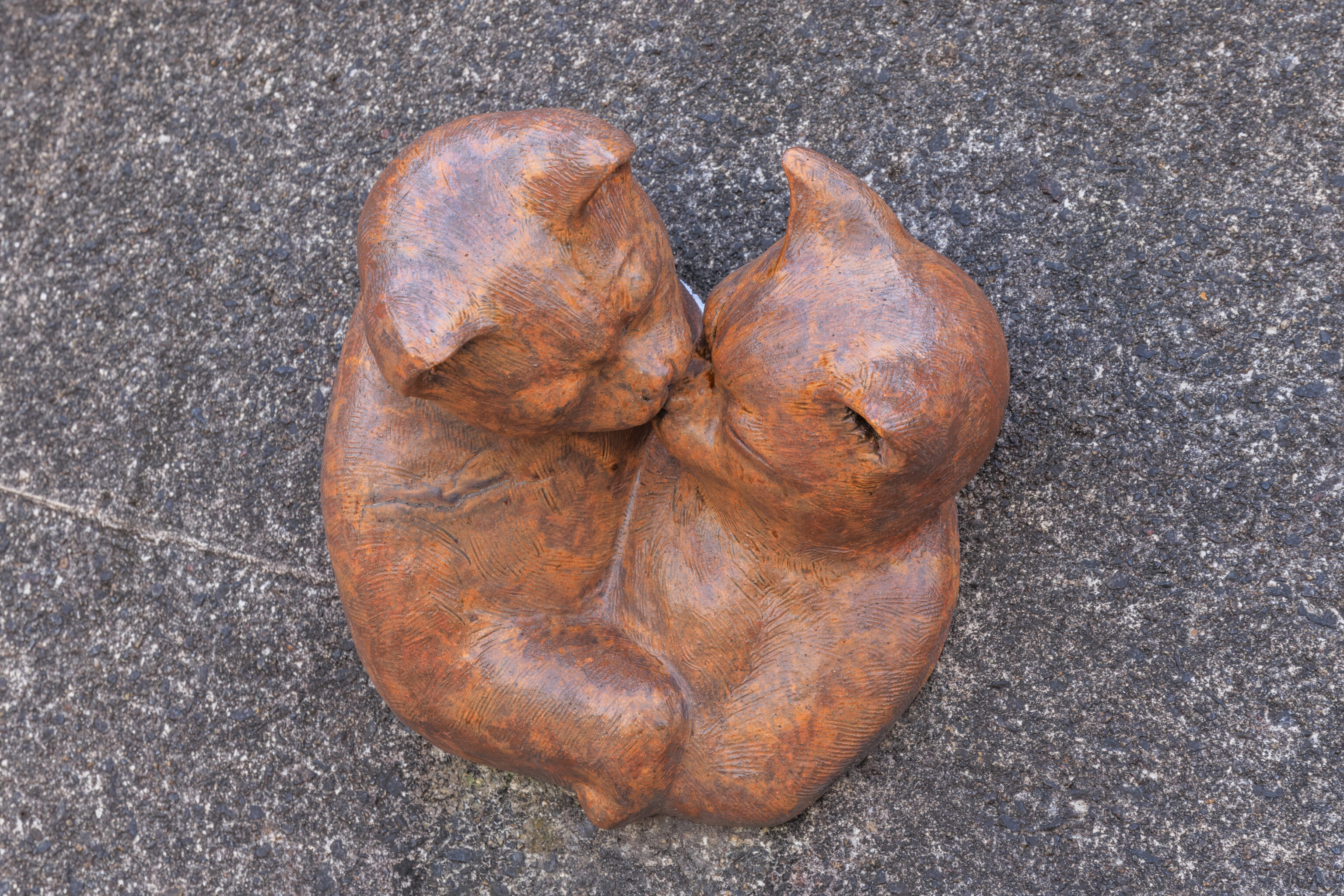
杉江 滃軒 Sugie Oken
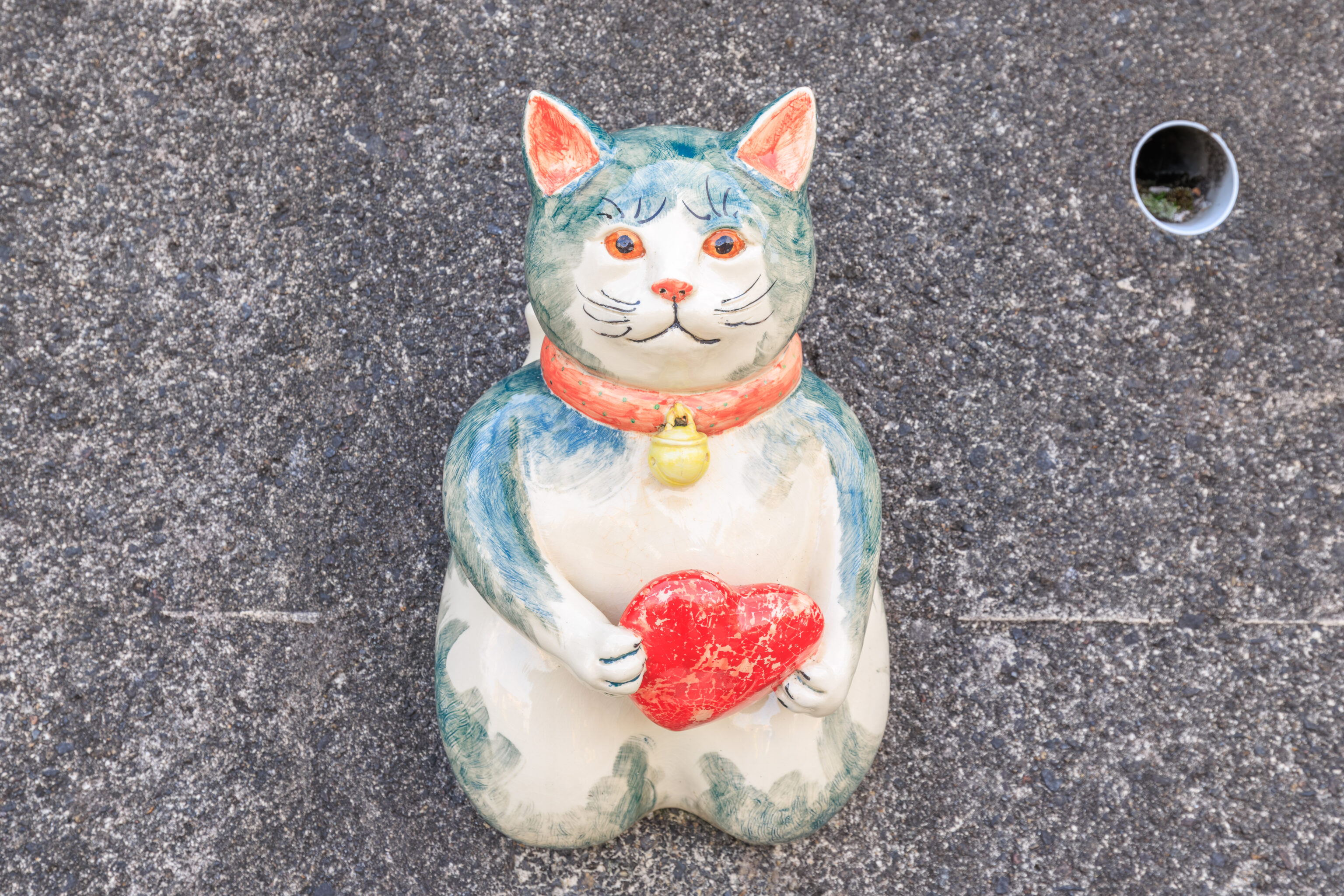
村田 昭治 Murata Shoji
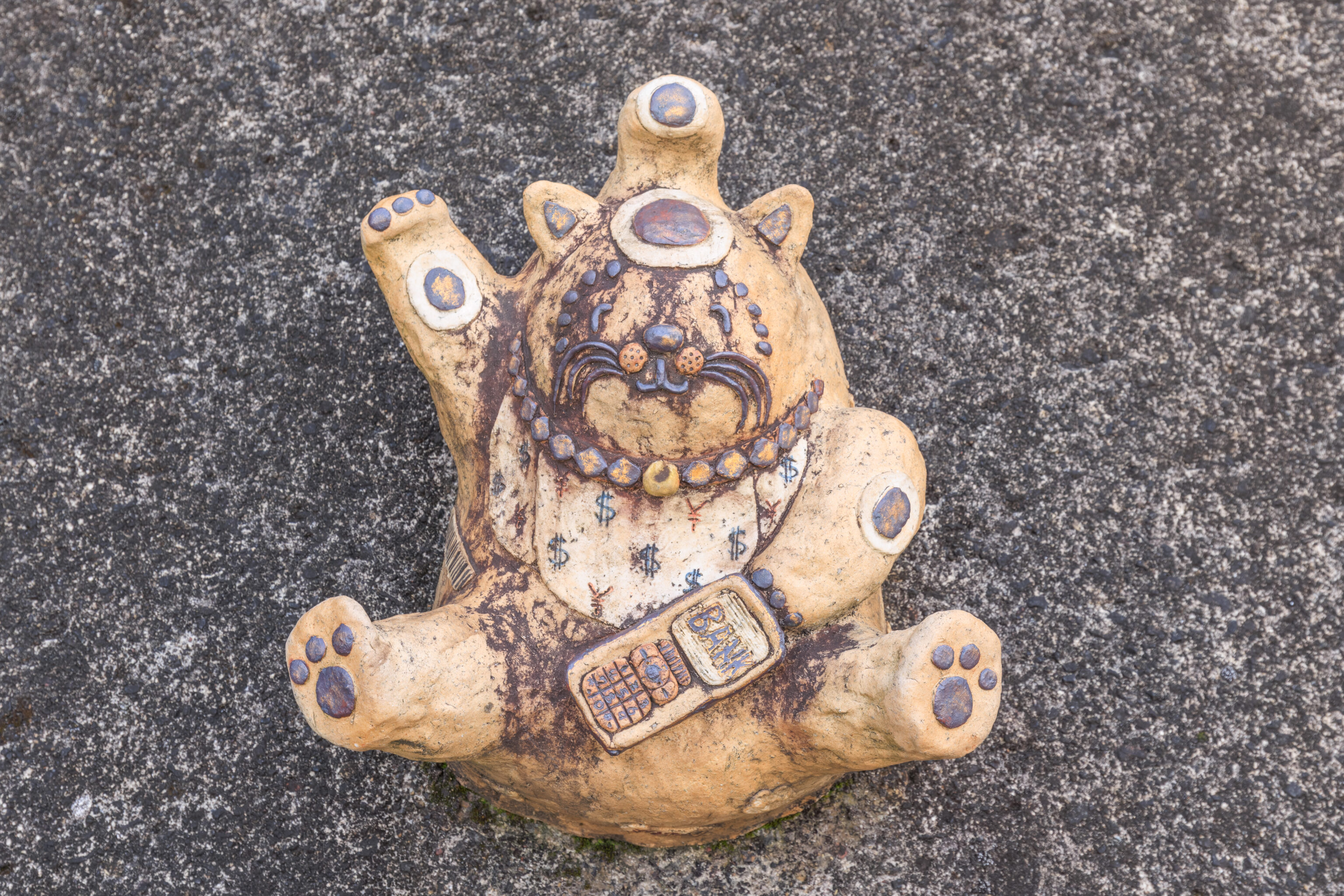
たかはし さだこ Takahashi Sadako
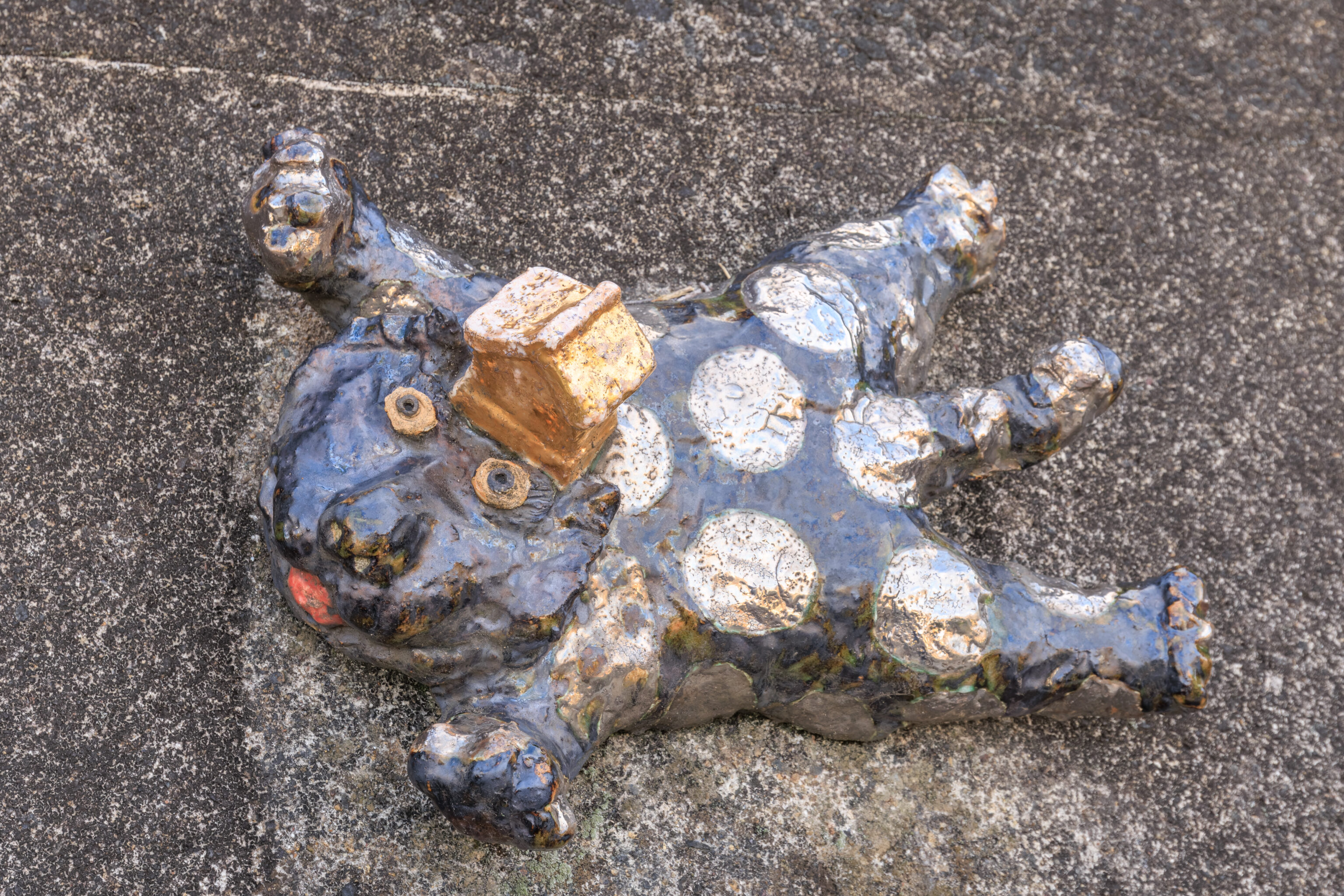
吉川 千香子 Yoshikawa Chikako
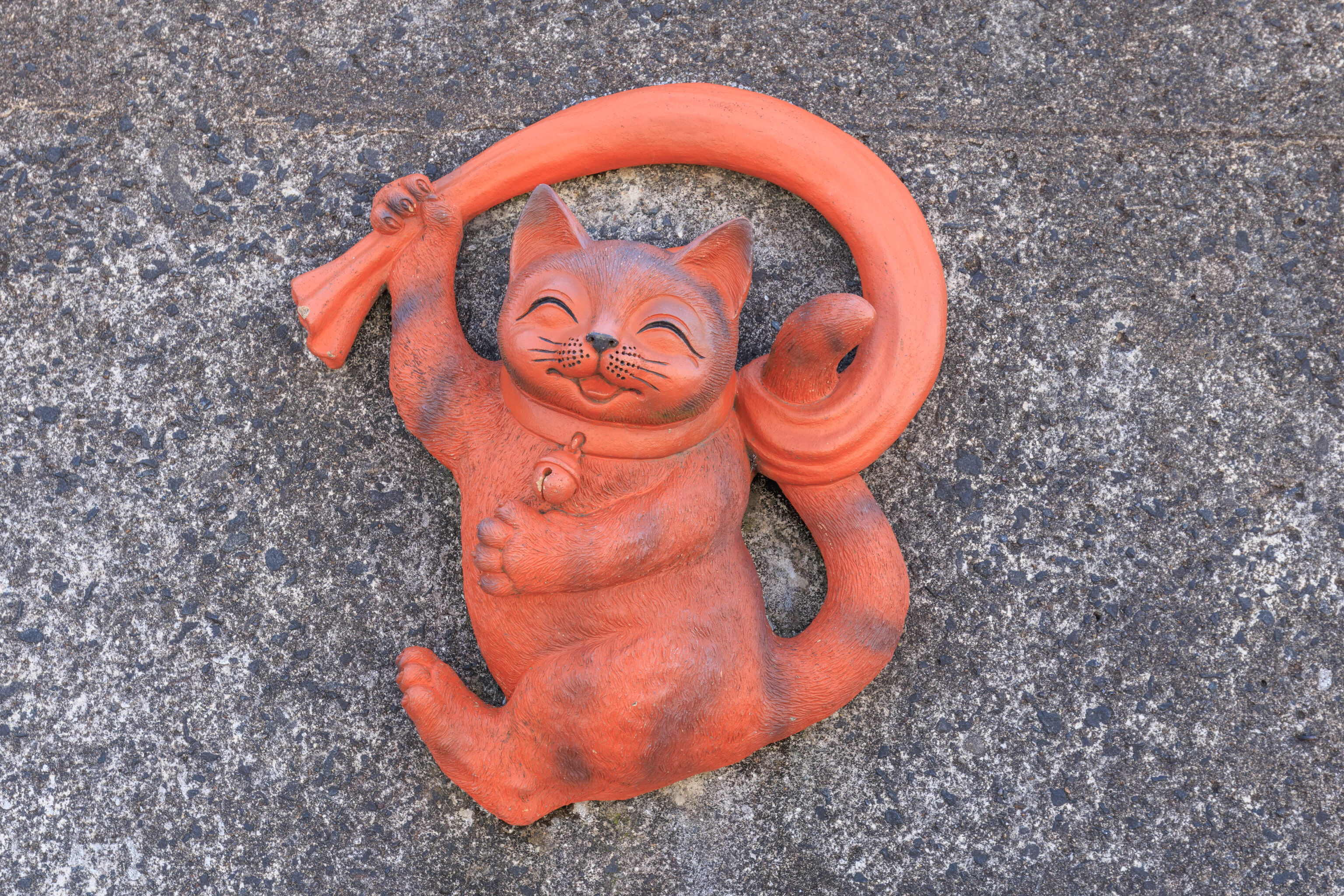
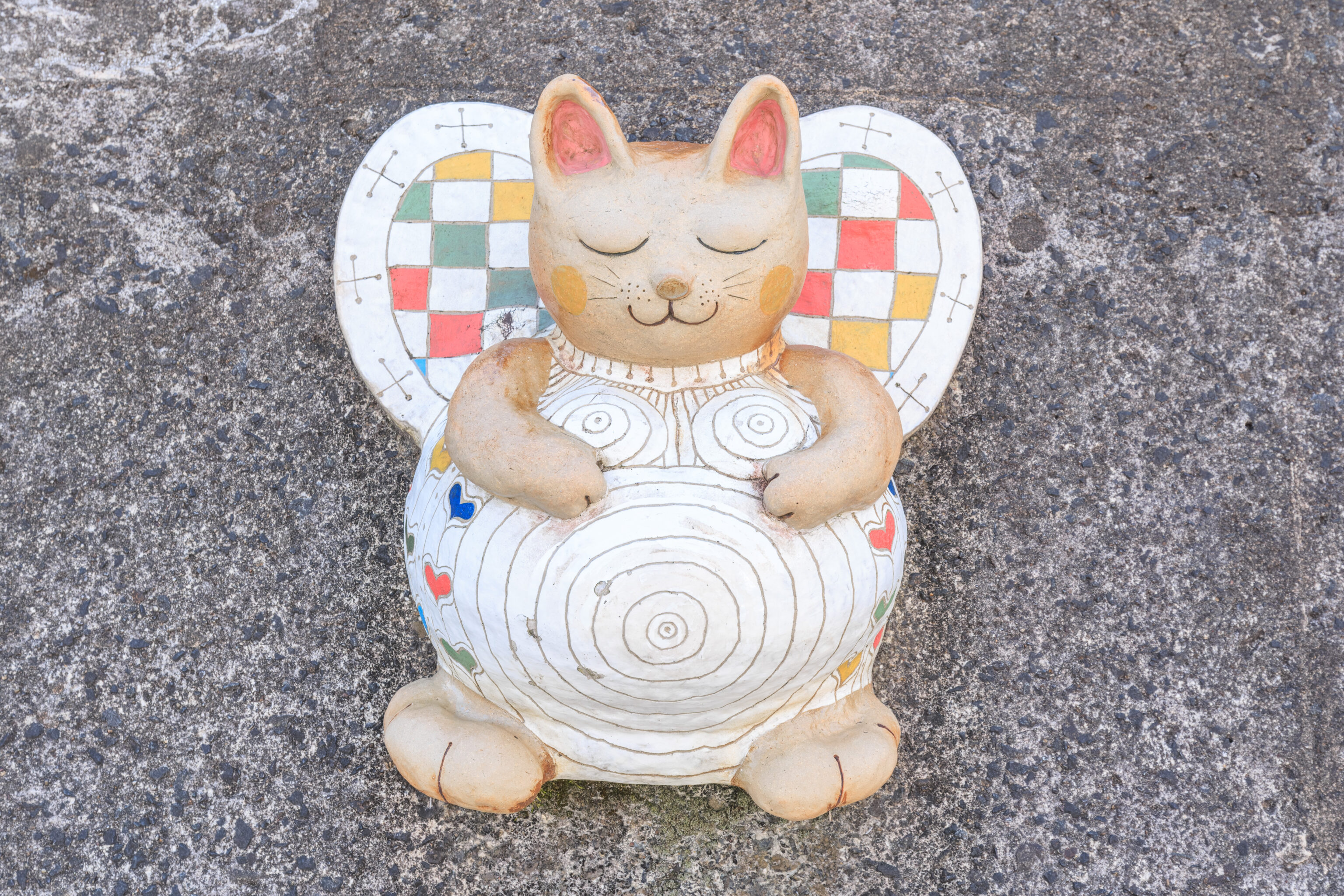
As we continued walking, there were many ceramic cat sculptures affixed to the retaining wall! Well, they all looked like cats except for the last one…
とこなめ招き猫通り Tokoname Manekineko-dori

About the Hojo-Mukoyama Line Retaining Wall Landscape Improvement Project

Objective
This project is being implemented to realize the vision for Tokoname’s central urban area— "A town open to the world where the spirit of ceramics and craftsmanship thrives." It aims to improve the access route from Tokoname Station to the "Ceramic Footpath" (Yakimono Sanpo-michi) while highlighting the town's appeal as a production center for *Maneki-neko* (beckoning cat) figurines.

Implementation Year
Fiscal Year 2006

Implementing Body
Tokoname City

Planning Committee
Tokoname City Central Urban Area Revitalization Promotion Council

Project Details
● Ceramic Lucky Cat (Maneki-neko) for Good Fortune – Maker/Artist: Indicated on the nameplate.
● Tokoname-style Giant Beckoning Cat (West of Kitayama Bridge; 3.8m high, 6.3m wide)
● Ceramic Cat — Creators: Takehachi Ina, Tomoo Saito, Isamu Morita

Coordination
Hisaya Kojima

Granting Organization
Japan Lottery Association

Copyrights for all works belong to their respective creators.
– Text from three signs on the retaining wall, translated using Google Translate.
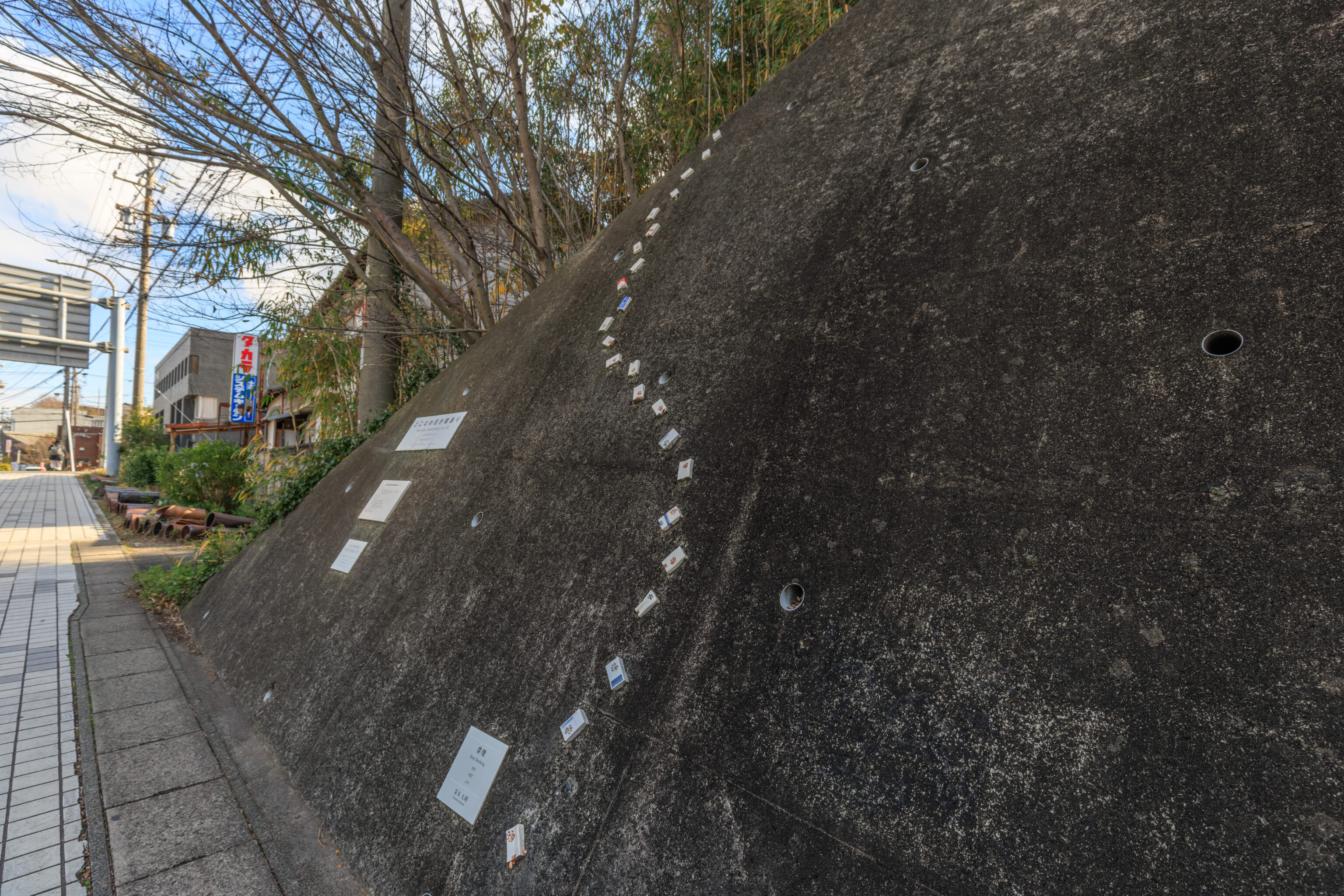
冨本 大輔 Tomimoto Daisuke
This sculpture is a bit different from all of the others. It looks like it is a path made up of cat footprints. But looking closely, these are all cigarette boxes! Like Europeans, many Japanese love to smoke so this is going to be an uphill battle…
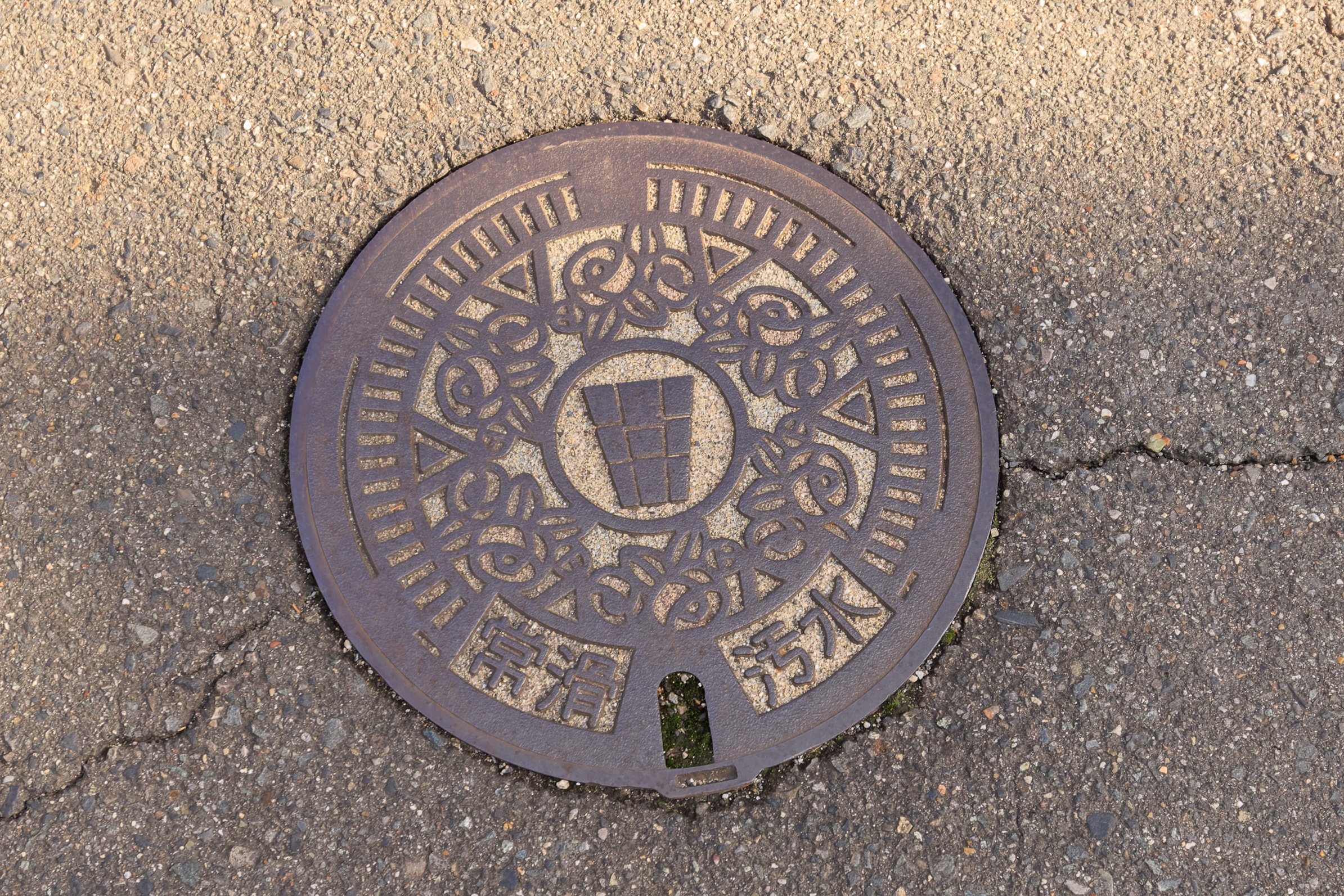
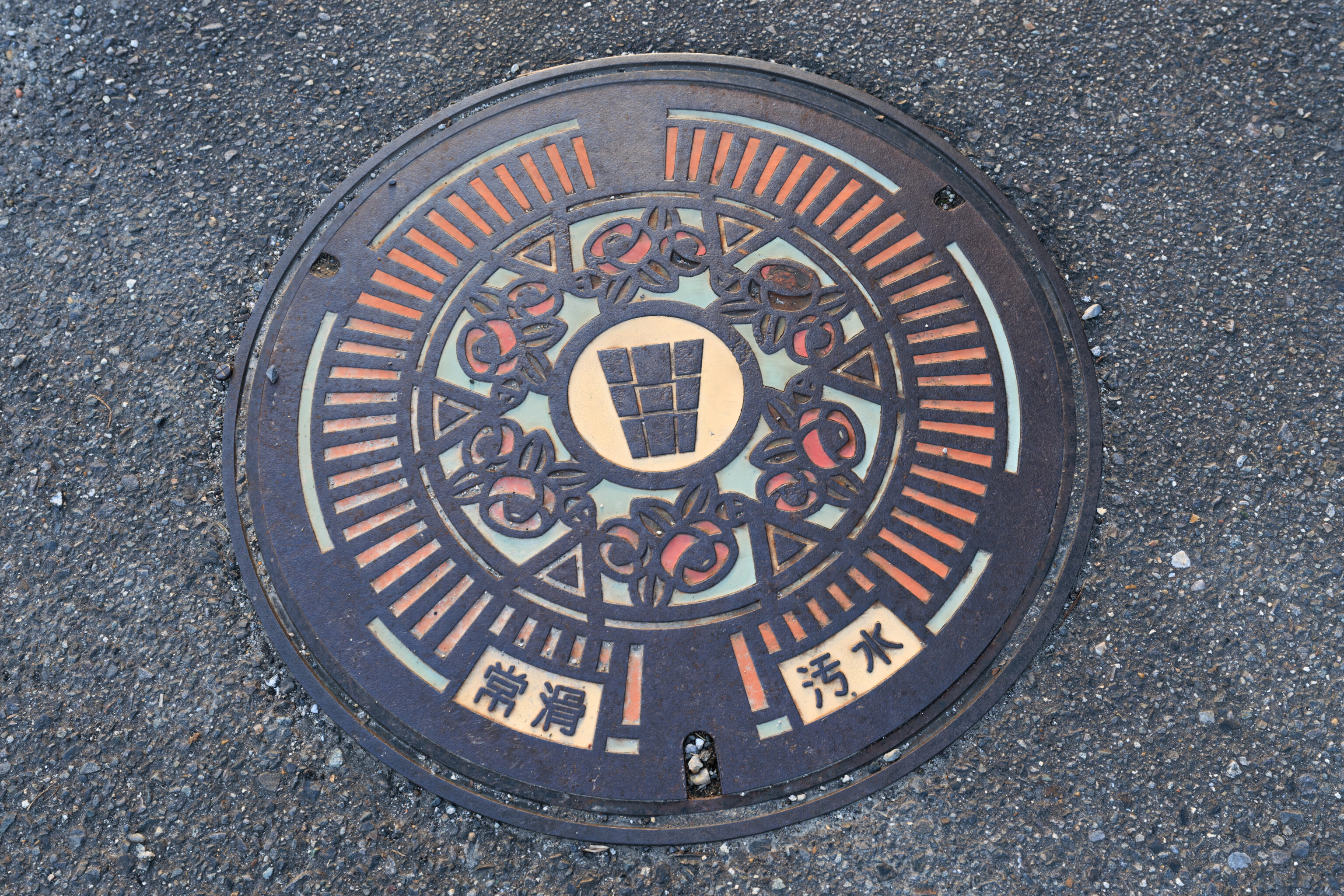
Tokoname’s emblem is featured at the center of this utility cover. It is a stylized representation of the 常 toko from Tokoname:
It was established in June of the 30th year of the Showa era. The character of "常" in Tokoname City was designed by the painter Kenkichi Sugimoto, and represents the unity of citizens and the development of the city.
– Text from Tokoname City’s Summary of the City page , translated using Google Translate.
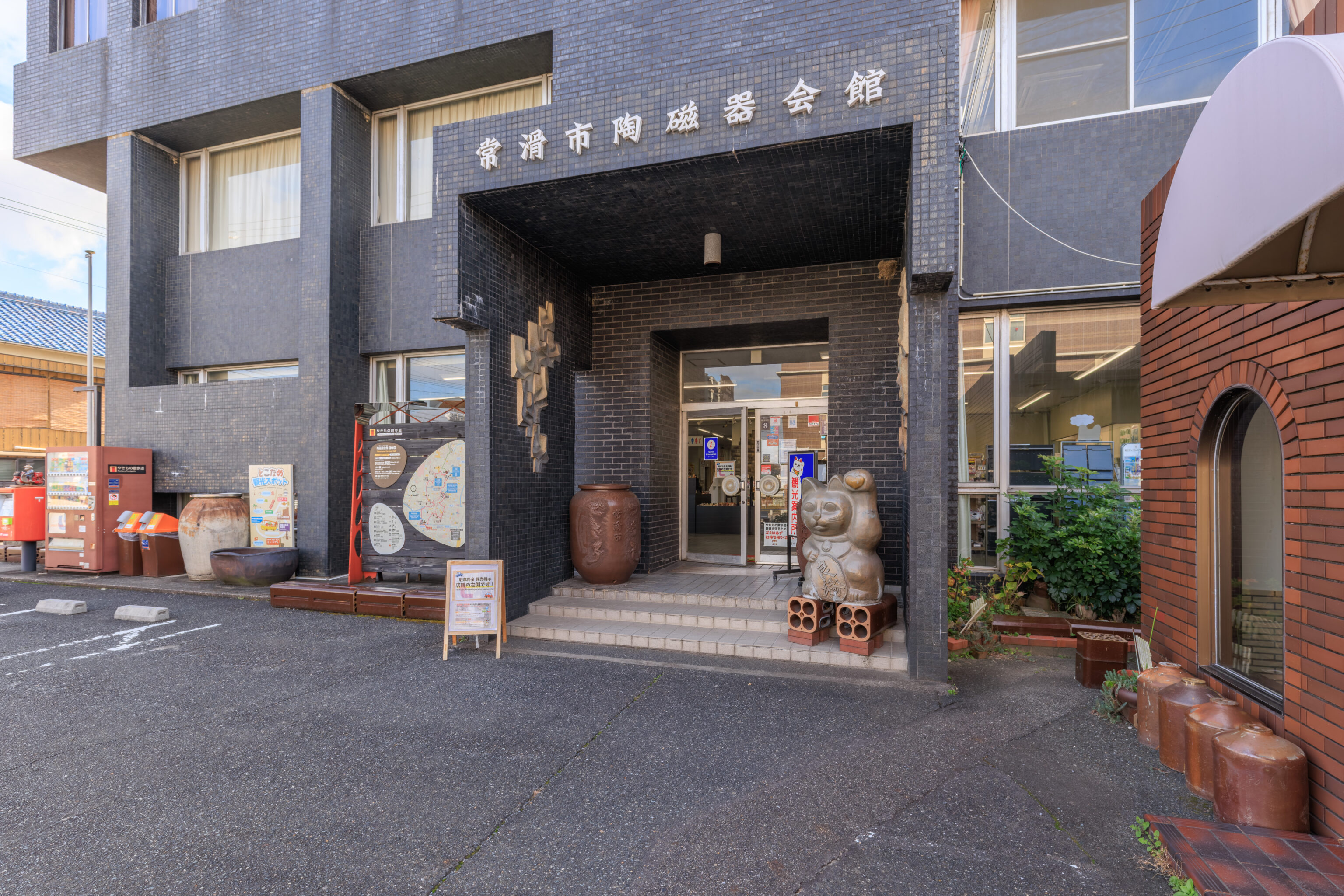
It took us about 20 minutes to reach the 常滑市陶磁器会館 Tokoname City Ceramic Hall. Inside, there was a good sized shop that sold various locally produced ceramics. There was also a bit of information, including about the local ceramics known as 常滑焼 Tokoname-yaki, translated to English as Tokoname Ware.
Tokoname Ware
Tokoname is known as one of Japan' s "Six Ancient Kilns," all areas with pottery-making traditions dating back over 1,000 years. Consequently, the city' s history and economic development are closely linked to its pottery (Tokoname ware).

Conditions around Tokoname were excellent for pottery production. High-quality clay was in plentiful supply, and the soft soil and gentle hills made it easy to dig anagama (tunneled sloping kilns). In addition, its location on the Chita Peninsula allowed easy access to the ocean to transport finished goods.

Tokoname ware originated in the early twelfth century when potters began producing large storage jars and cooking utensils that soon found their way around the country. In the nineteenth century, techniques imported from China led to the creation of Tokoname's signature kyusu (teapots) made with iron rich red clay.

The arrival of noborigama (climbing kilns) around 1830 facilitated the energy-efficient mass production of pottery. When Japan started rapidly modernizing in the second half of the nineteenth century, Tokoname produced roofing tiles and pipes for carrying water and drainage. Large-scale ceramics production peaked in the 1950S.

In recent decades, changing lifestyles and rising interest from overseas have led to further diversification of Tokoname ware. Artisans adapted to new tastes, embracing both traditional techniques and modern innovation to ensure that local ceramics continued to flourish. Maneki neko (lucky cat) figurines, bonsai pots, and red-clay kyusu are among today' s most popular products.

Visitors can learn about Tokoname ware in detail at the Tokoname Tou no Mori Museum (part of Course B on the Pottery Footpath).
– Text from a sign.
Another sign describes the Pottery Footpath, which we will walk along next:
Pottery Footpath
Walking the Pottery Footpath (Yakimono Sanpomichi) is one of the best ways to learn about Tokoname' s heritage. There are two routes, both of which begin here at Tokoname Tojiki Kaikan (Ceramics Hall). Course A is 1.6 kilometers long and includes several of Tokoname' s most popular and scenic attractions. Course B is 4 kilometers long and outlines the city' s pottery history. Suggested walking times are around one hour for Course A and two-and-a-half hours for Course B, but visitors may wish to spend longer to experience the many attractions. Pick up a map and look for the signboards in English along the way.

The Pottery Footpath centers on the Sakaemachi district, where many well-preserved homes and kilns remain. The narrow, winding streets retain a traditional atmosphere and pass by historical sites. Residents have added to the area' s appeal by beautifying the streets and gardens with Tokoname ware, while new generations of artisans and entrepreneurs have transformed vacant buildings along the route into pottery studios, art galleries, and cafes.

The Pottery Footpath was launched in 1972 and has contributed to the preservation of the historical townscape and Tokoname's emergence as a tourist destination. As you make your way along the footpath, please respect the privacy of residents, and take care during wet weather, as the route may be slippery.
– Text from a sign.
There was also a description of Tokonyan, a large maneki-neko that is nearby:
Tokonyan, the Guardian Cat of Tokoname
Tokonyan is the giant maneki neko (lucky cat) figure that peeks over an embankment halfway along Tokoname Maneki Neko-dori (Lucky Cat Street). The name "Tokonyan" is a combination of "Tokoname" and the meowing sound made by a cat (nyan) in Japanese. Since its creation in 2008, the statue has become a beloved symbol of the city and a popular subject for photographs.

Tokonyan is 3.8 meters high and 6.3 meters wide, making it one of the country' s largest maneki neko. Even though Tokonyan is only a head and a raised left paw, it welcomes everyone from its prominent position. A careful search along the wall near the statue reveals that Tokonyan is accompanied by 11 small and realistic figurines of cats.

Tokoname Maneki Neko-dori, which connects Tokoname Tojiki Kaikan (Ceramics Hall) and Tokoname Station, is lined with 39 modern interpretations of maneki neko made by artists with links to Tokoname. Each cat is said to offer a specific blessing, such as a happy marriage, good health, or the successful completion of a task.
– Text from a sign.
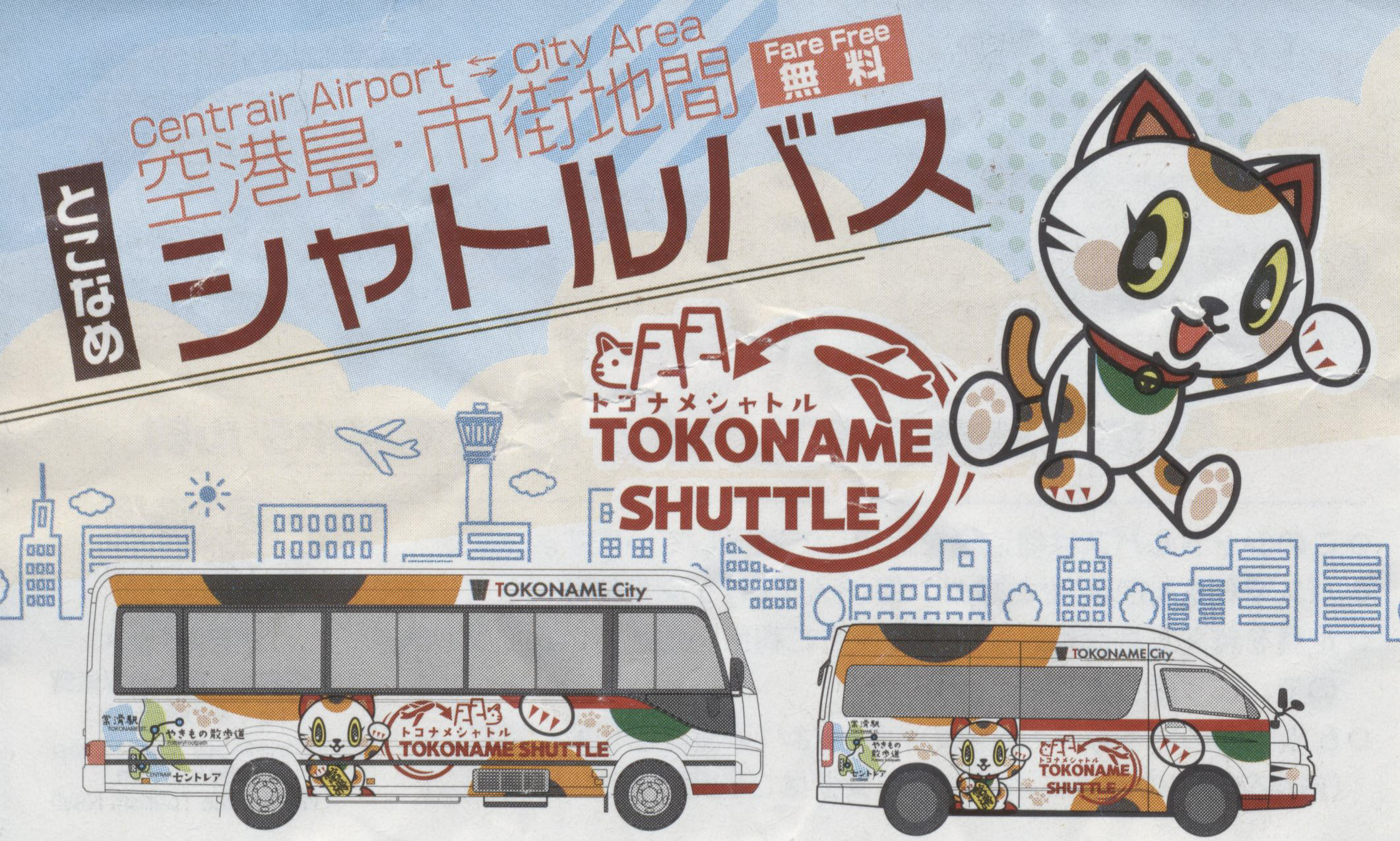
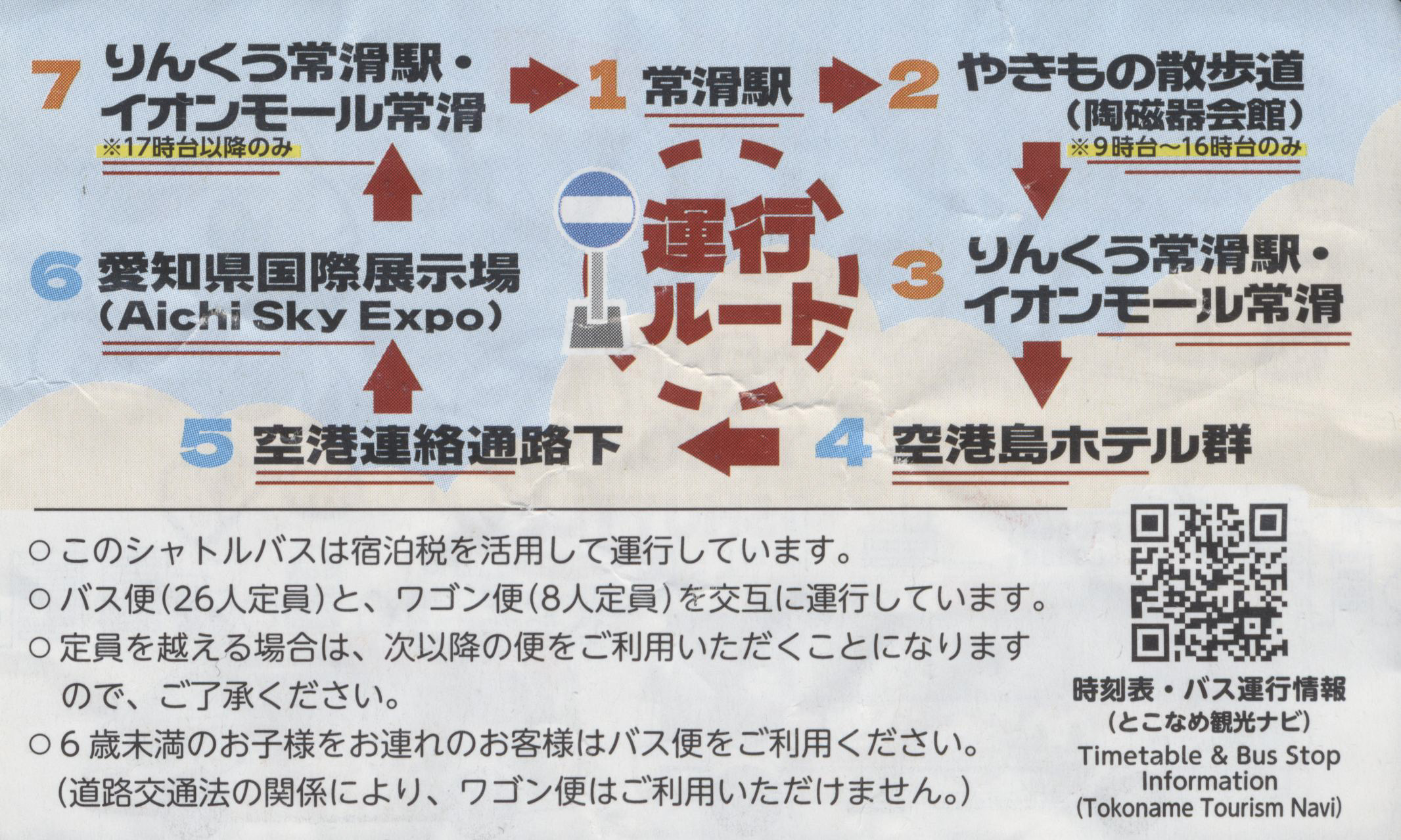
We also found some information about the Tokoname Shuttle that we saw driving by.
Service Route
1. Tokoname Station
2. Pottery Walk (Ceramics Center) *9:00 AM – 4:59 PM only
3. Rinku-Tokoname Station / AEON MALL Tokoname
4. Airport Island Hotel Cluster
5. Under the airport connecting walkway
6. Aichi International Exhibition Center (Aichi Sky Expo)
7. Rinku-Tokoname Station / AEON MALL Tokoname *5:00 PM hour and later only

○ This shuttle bus service is funded by the accommodation tax.
○ Bus services (26-passenger capacity) and van services (8-passenger capacity) operate alternately.
○ Please note that if the vehicle reaches capacity, you may be required to wait for a subsequent service.
○ Guests traveling with children under the age of 6 must use the bus service.
(Due to Road Traffic Act regulations, the van service cannot be used.)
– Text from the Tokoname Shuttle information sheet above, translated using Google Translate.
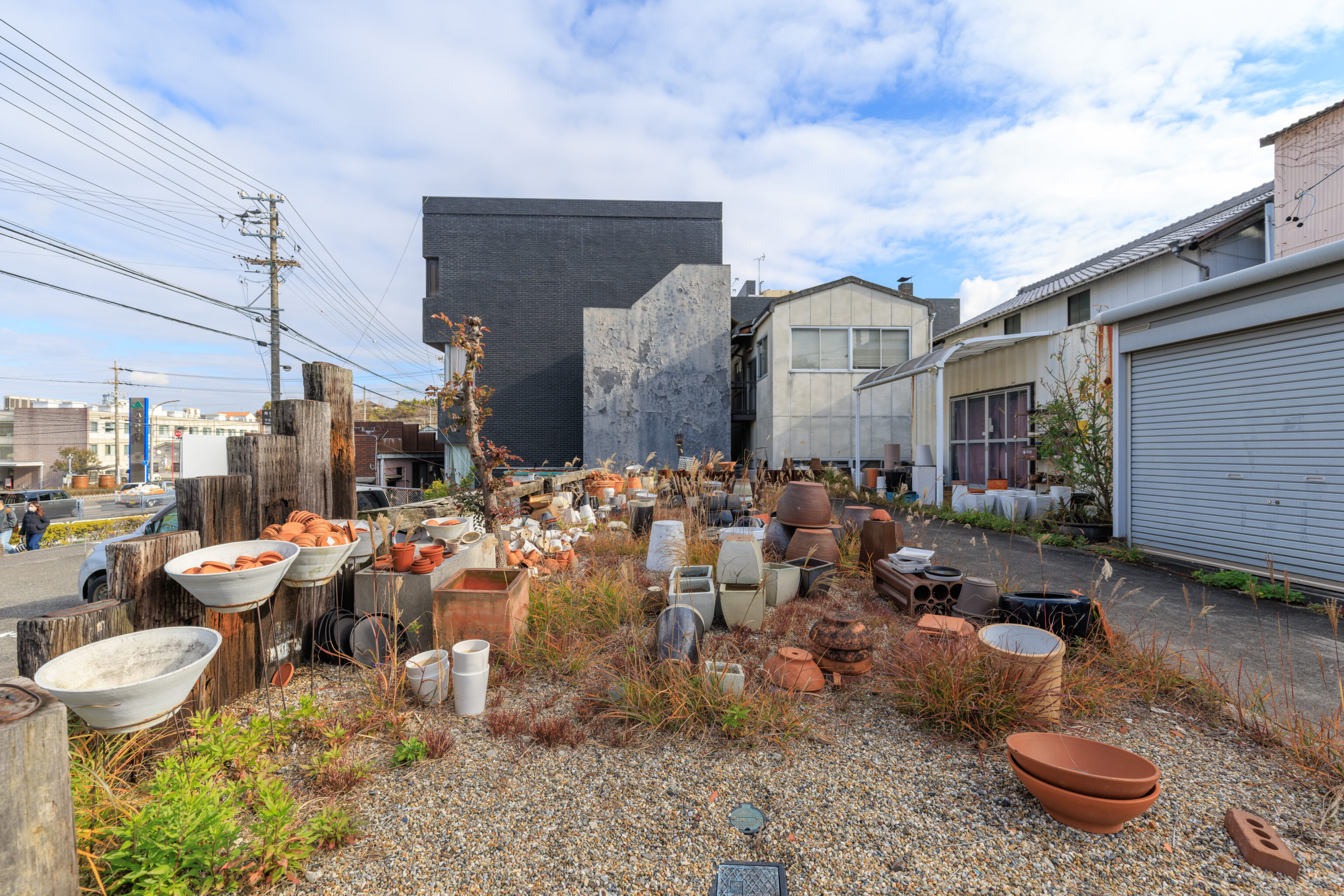
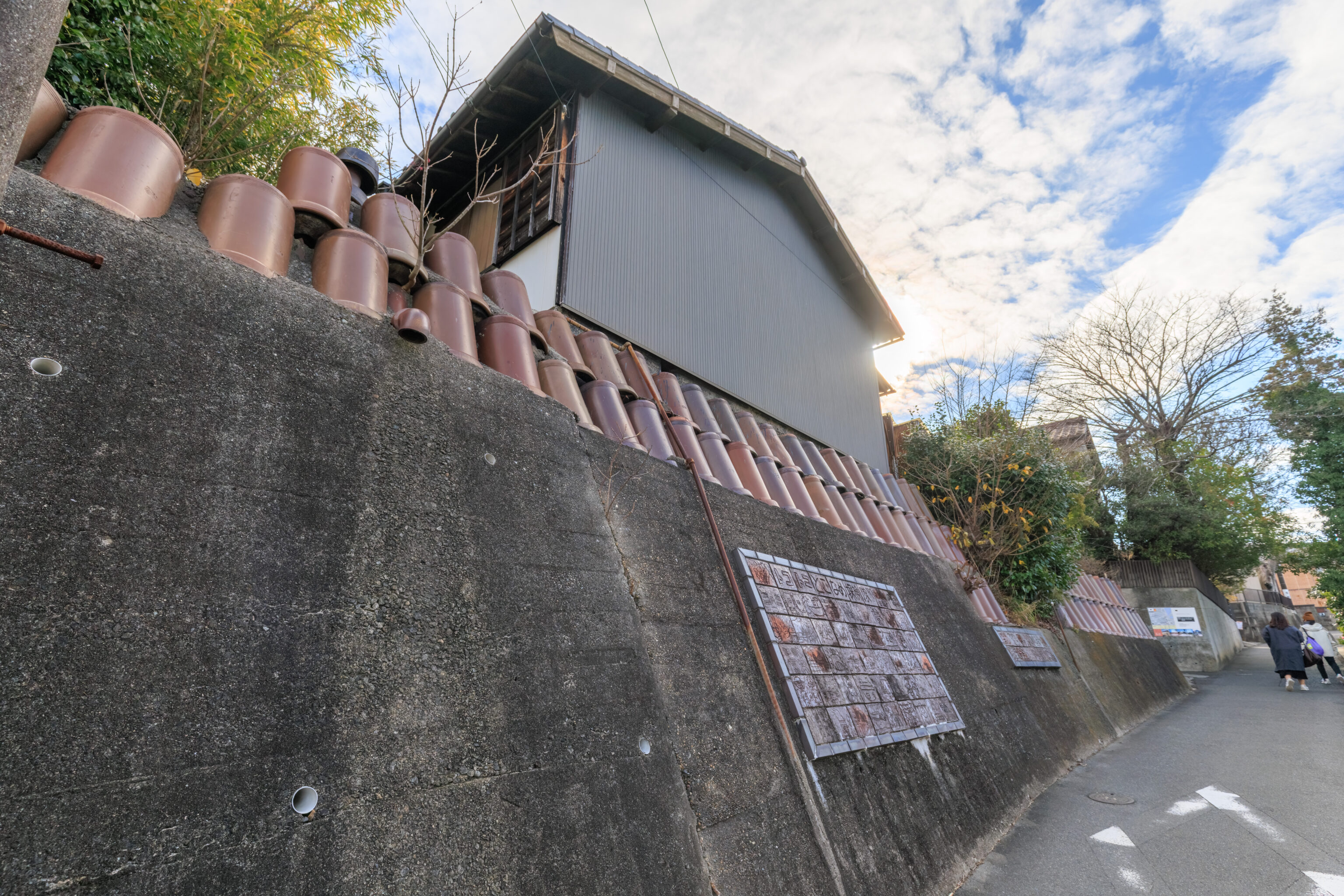
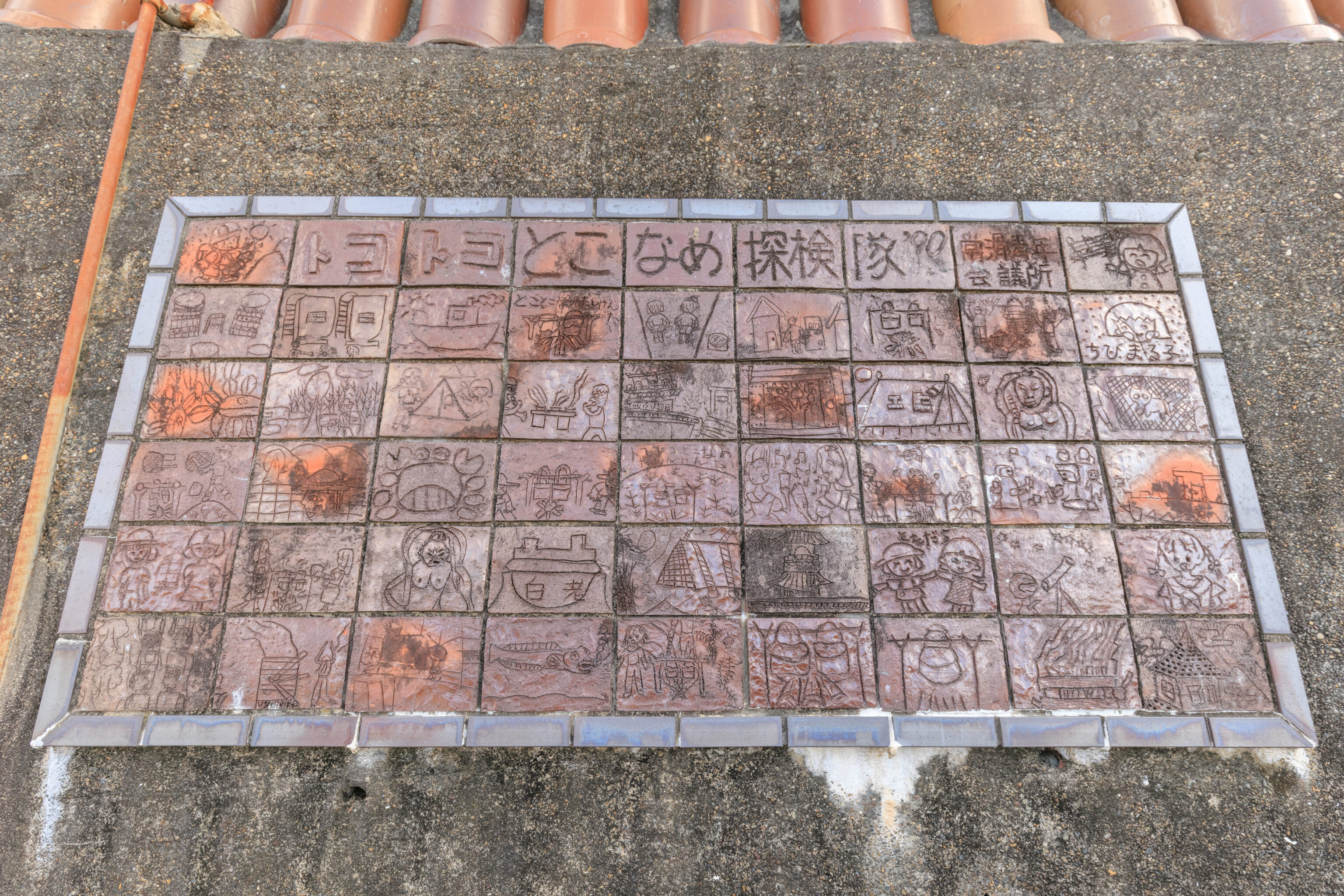
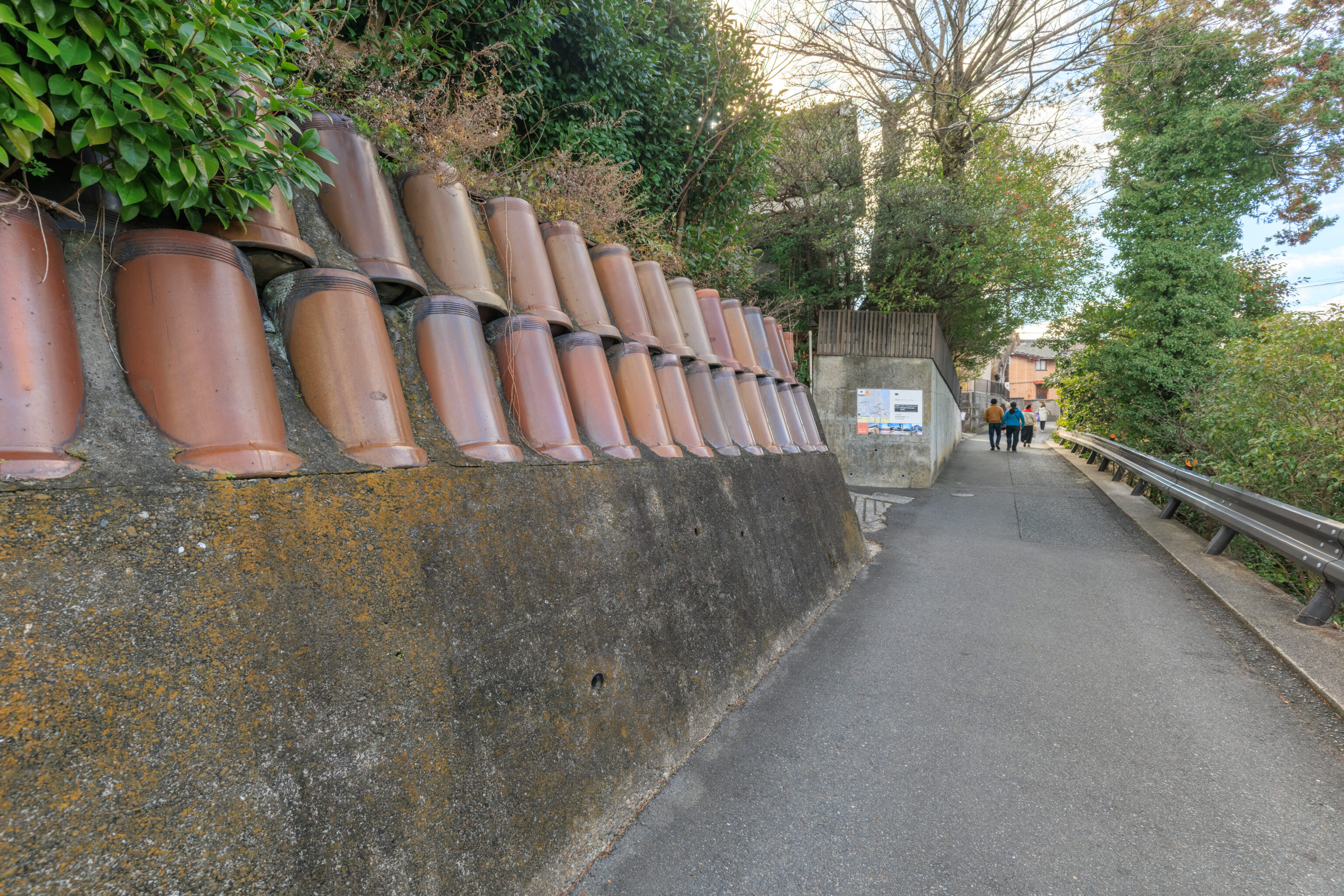
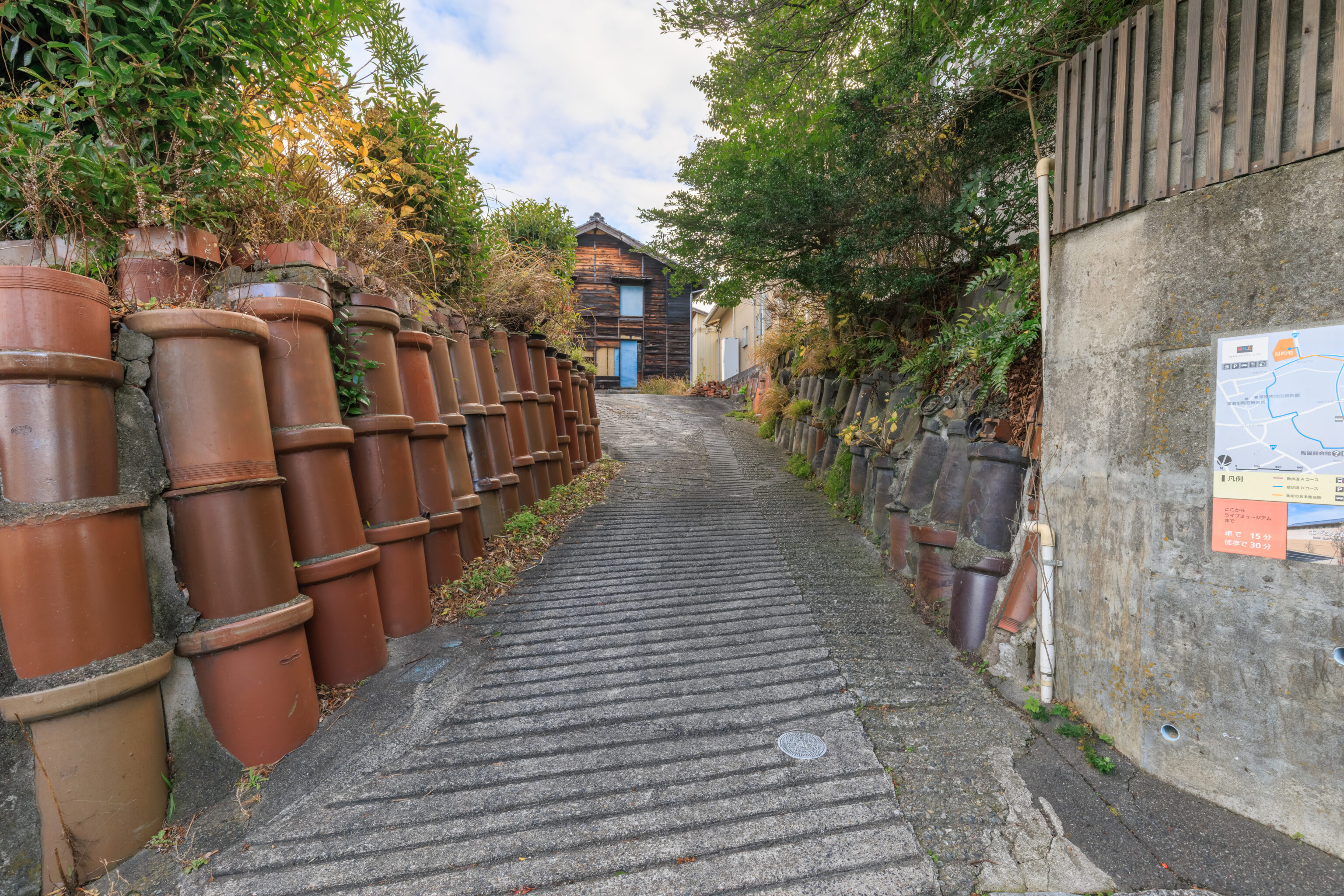
We backtracked a very short distance to begin walking counter clockwise along the Pottery Footpath. The initial part of the route was up a hill.
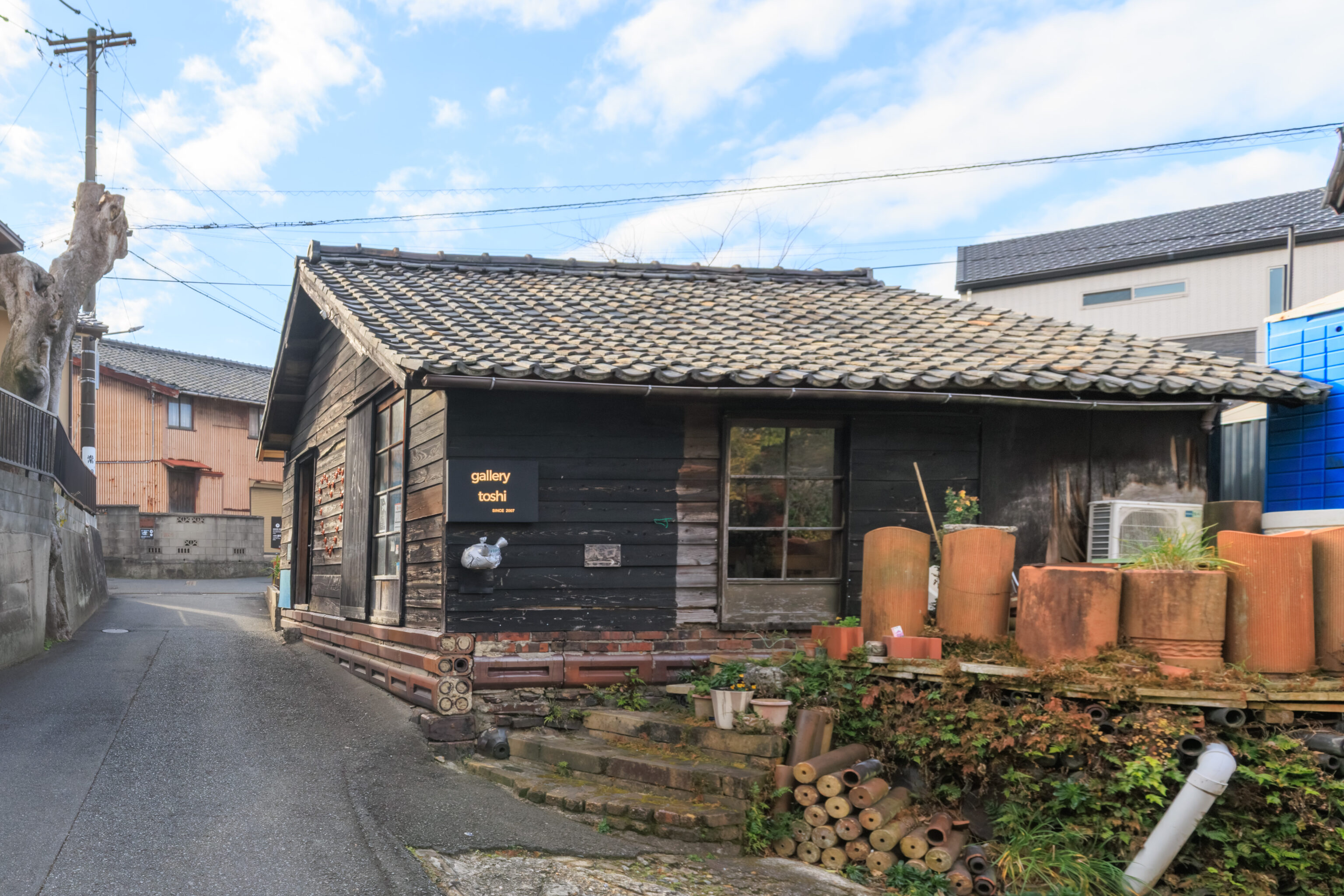
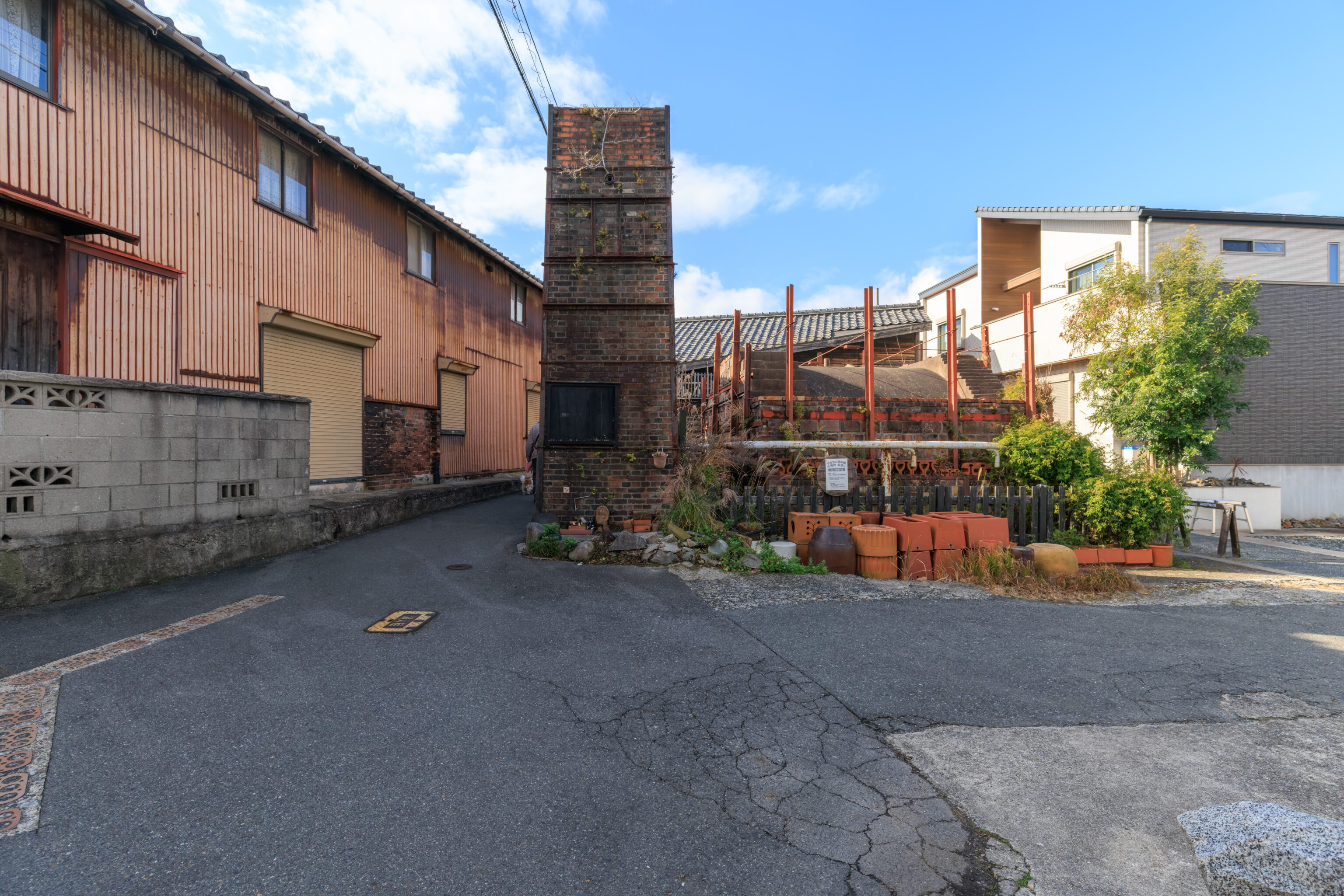
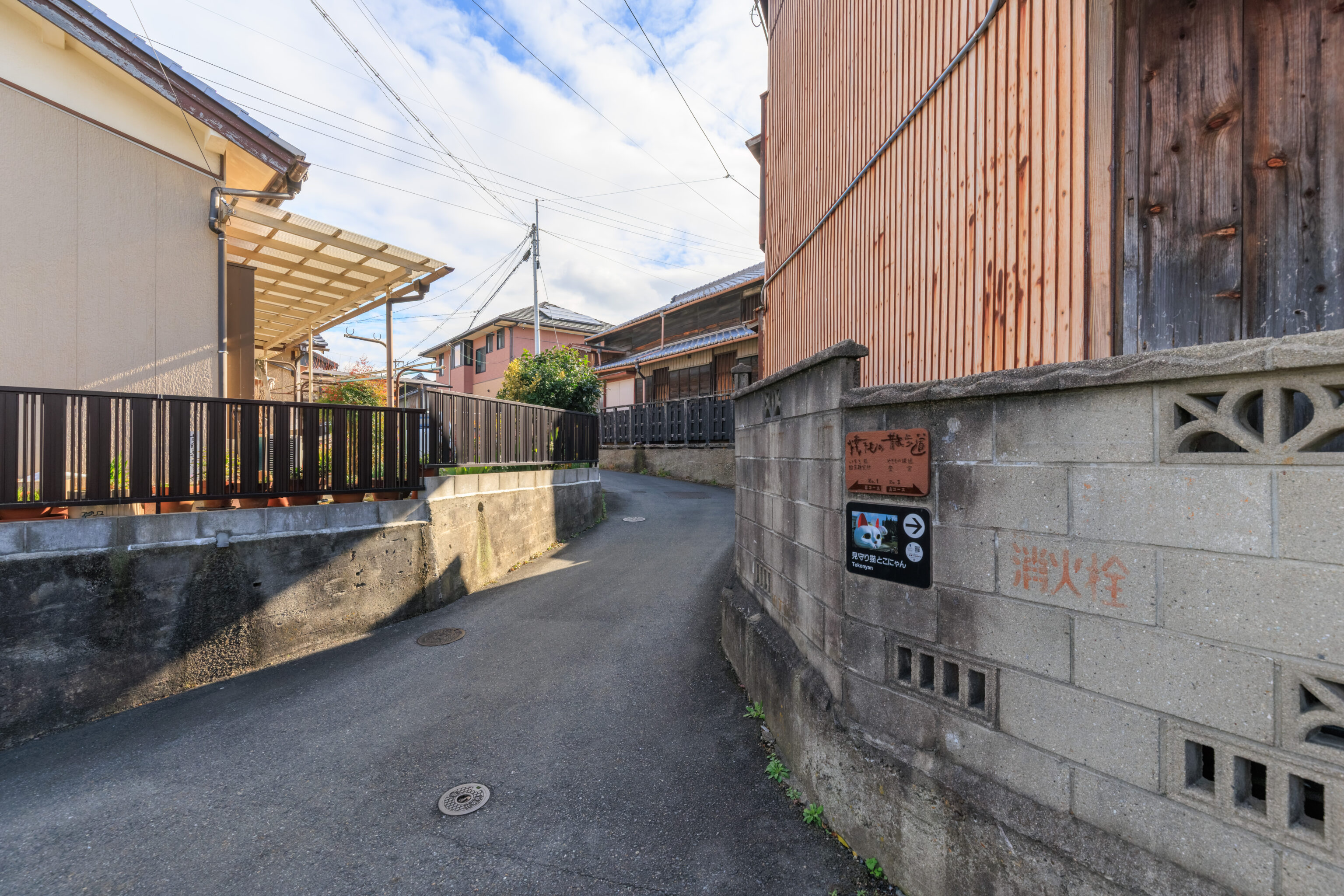
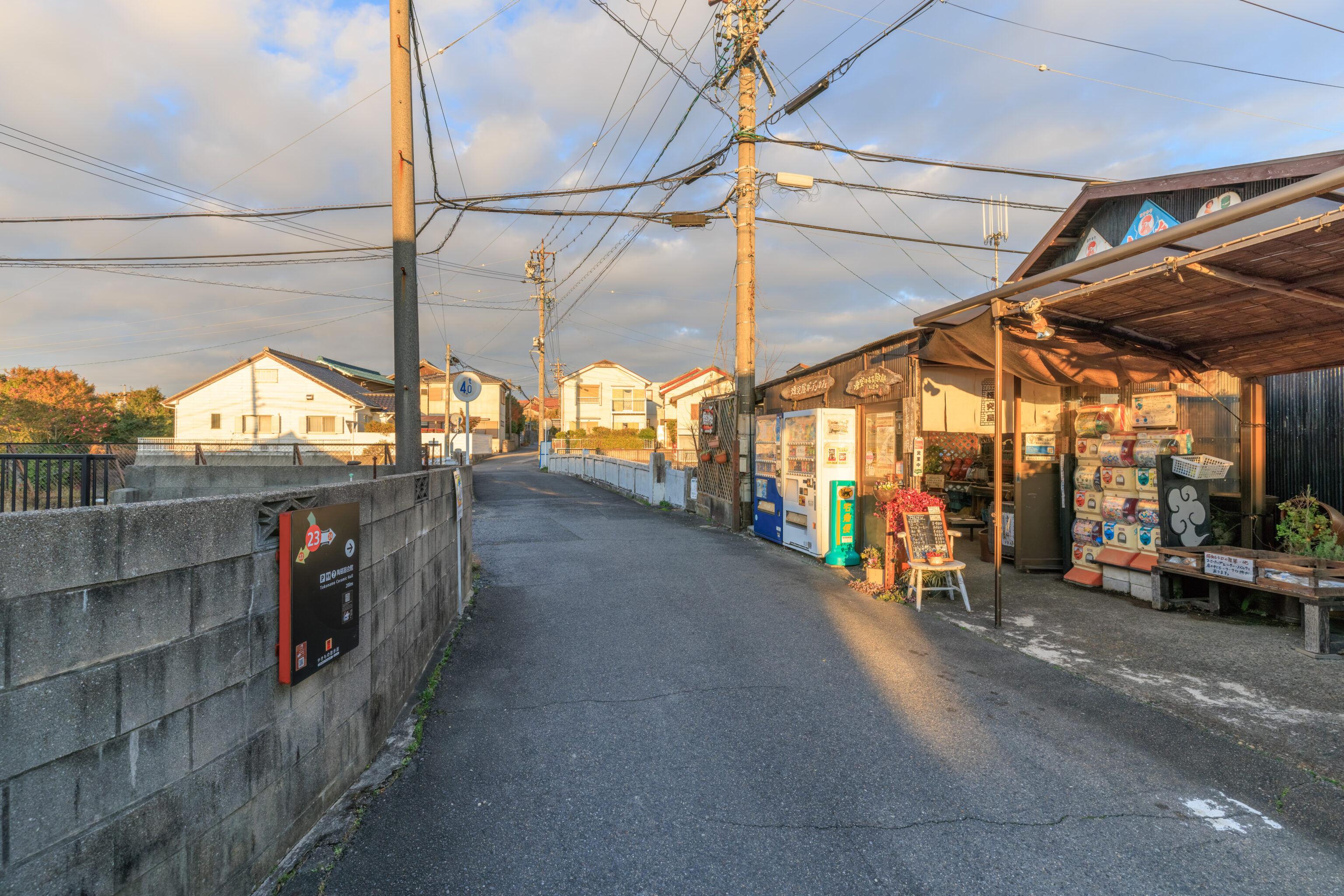
Once we reached the top of the hill, we saw various buildings, including a pottery shop and what seemed like kilns. A helpful sign indicated the way to Tokonyan. So of course, we headed to the left here!
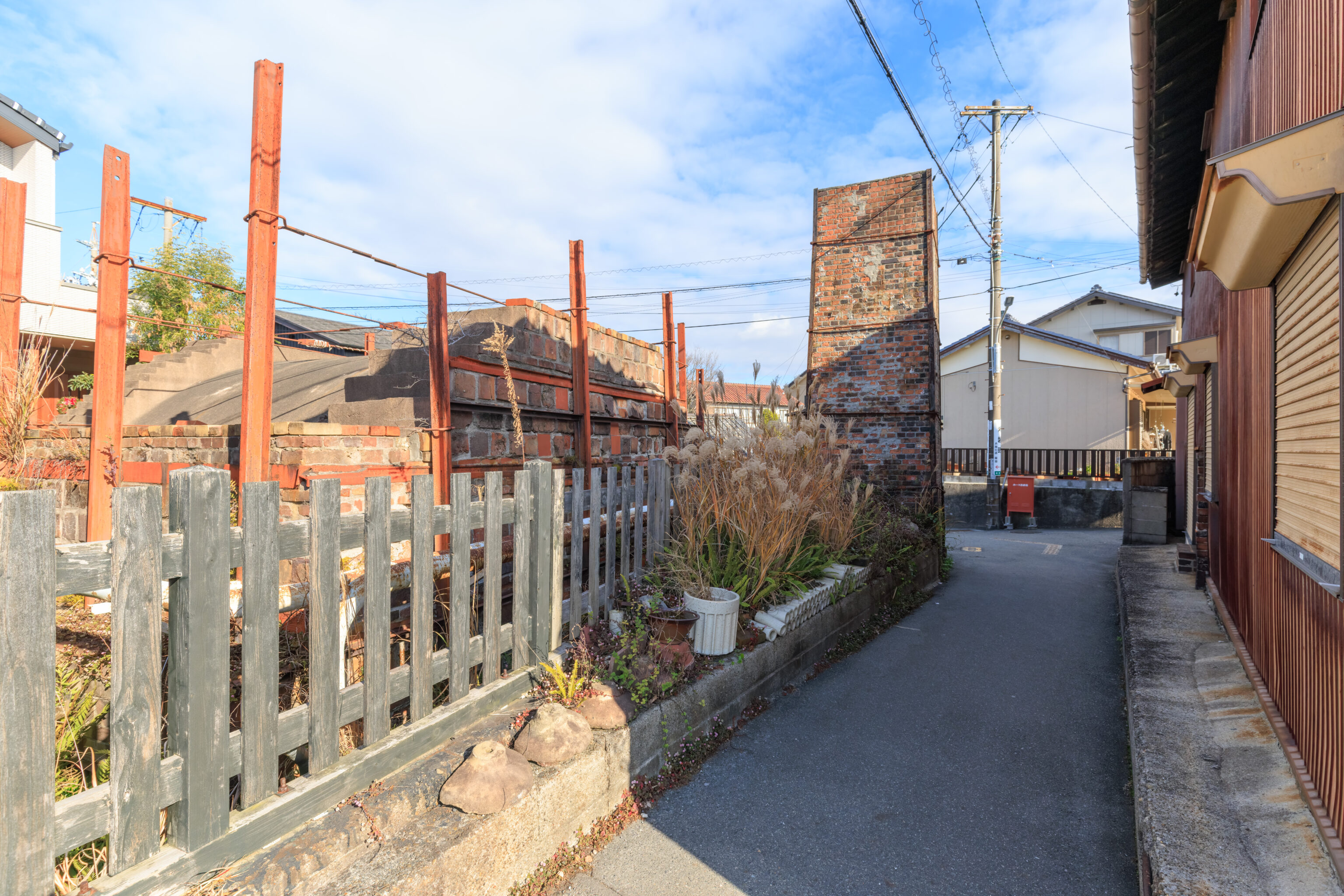
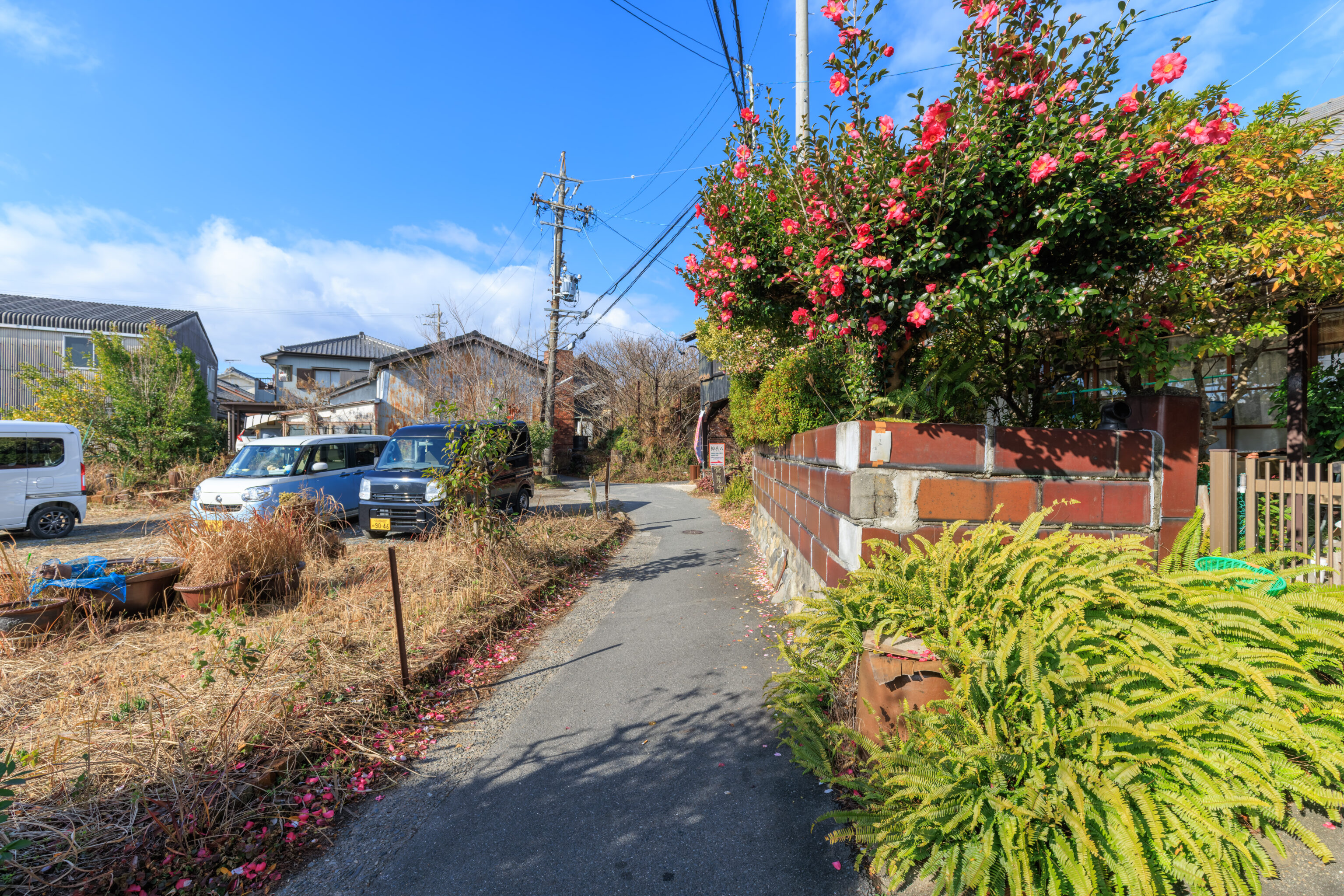
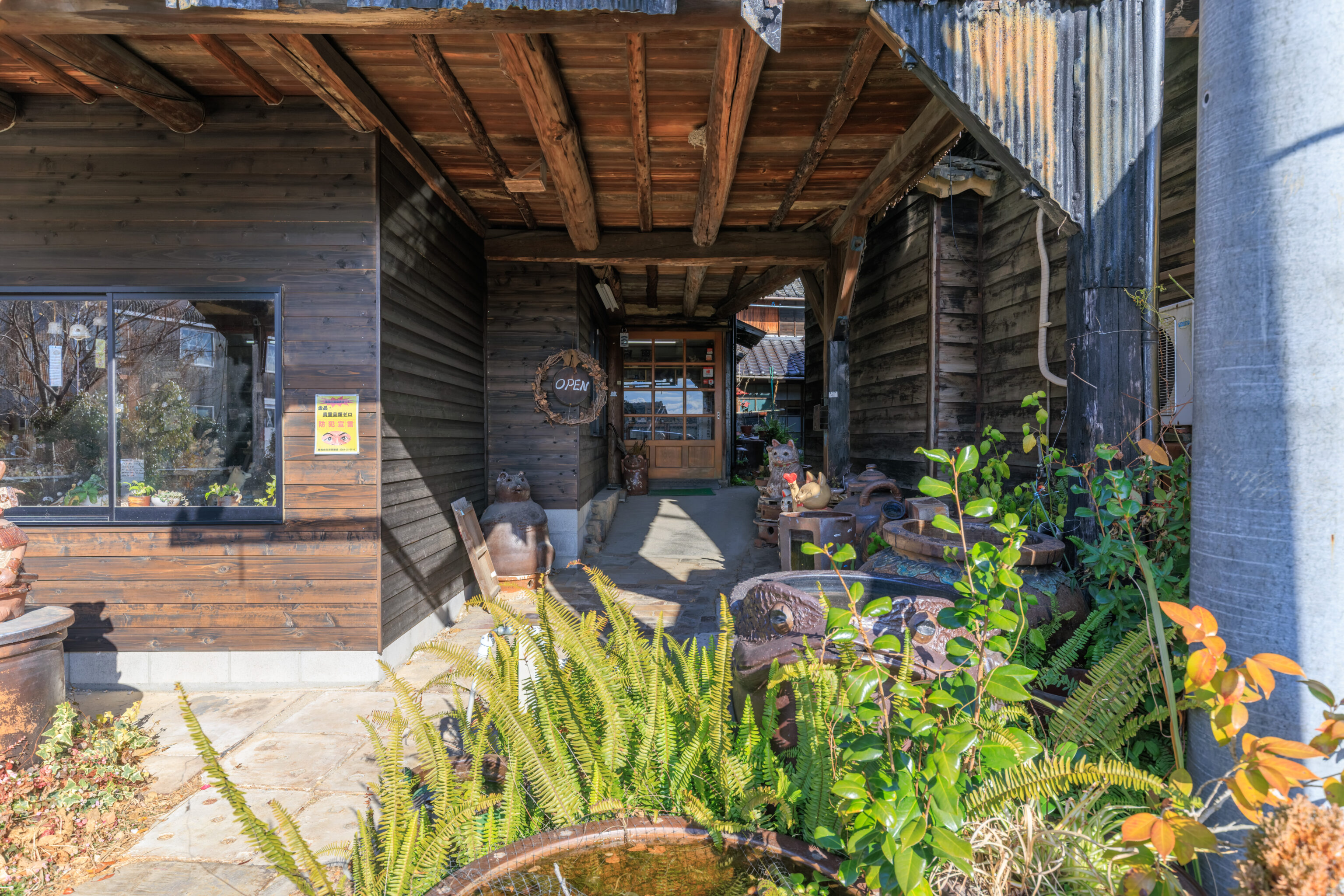
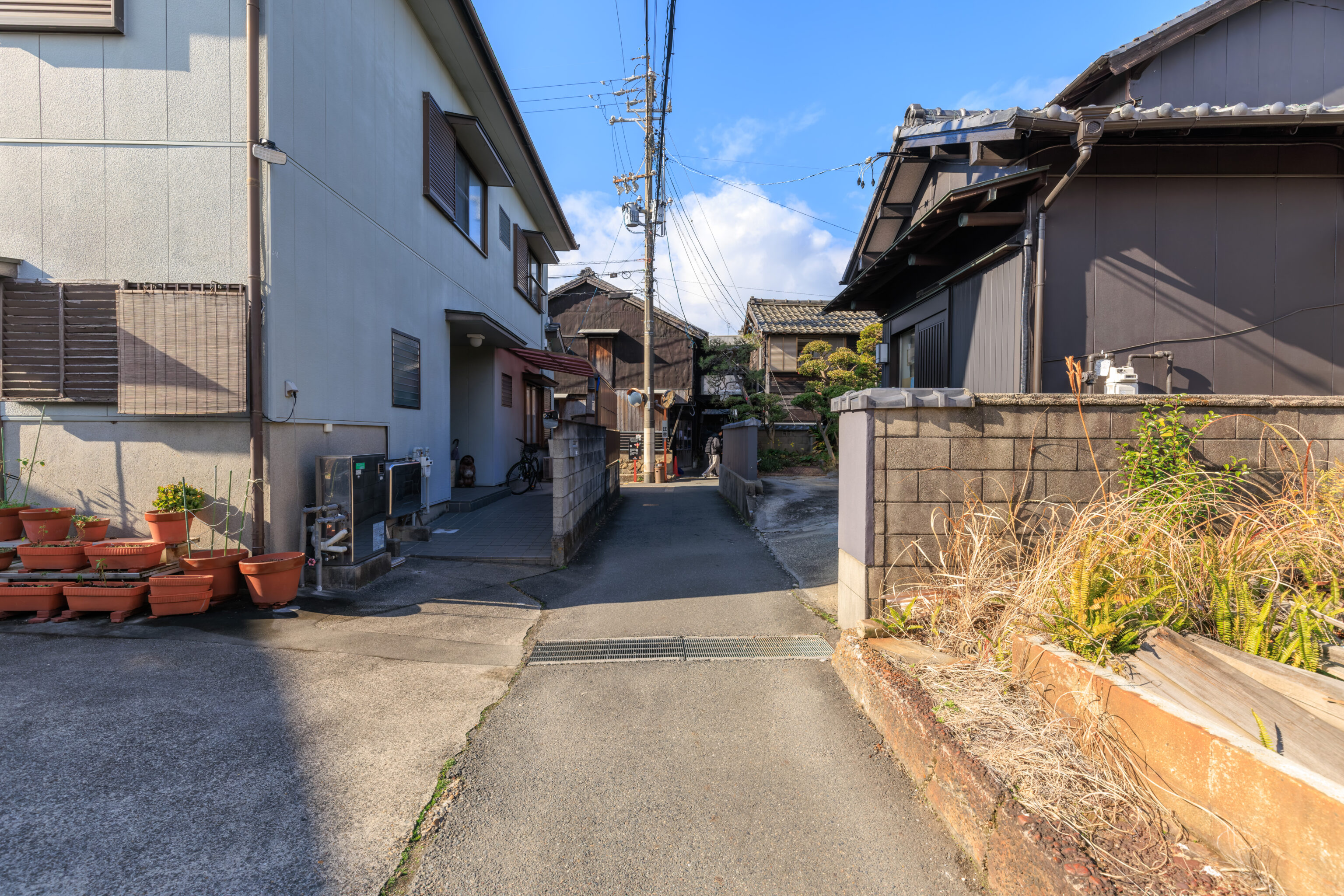
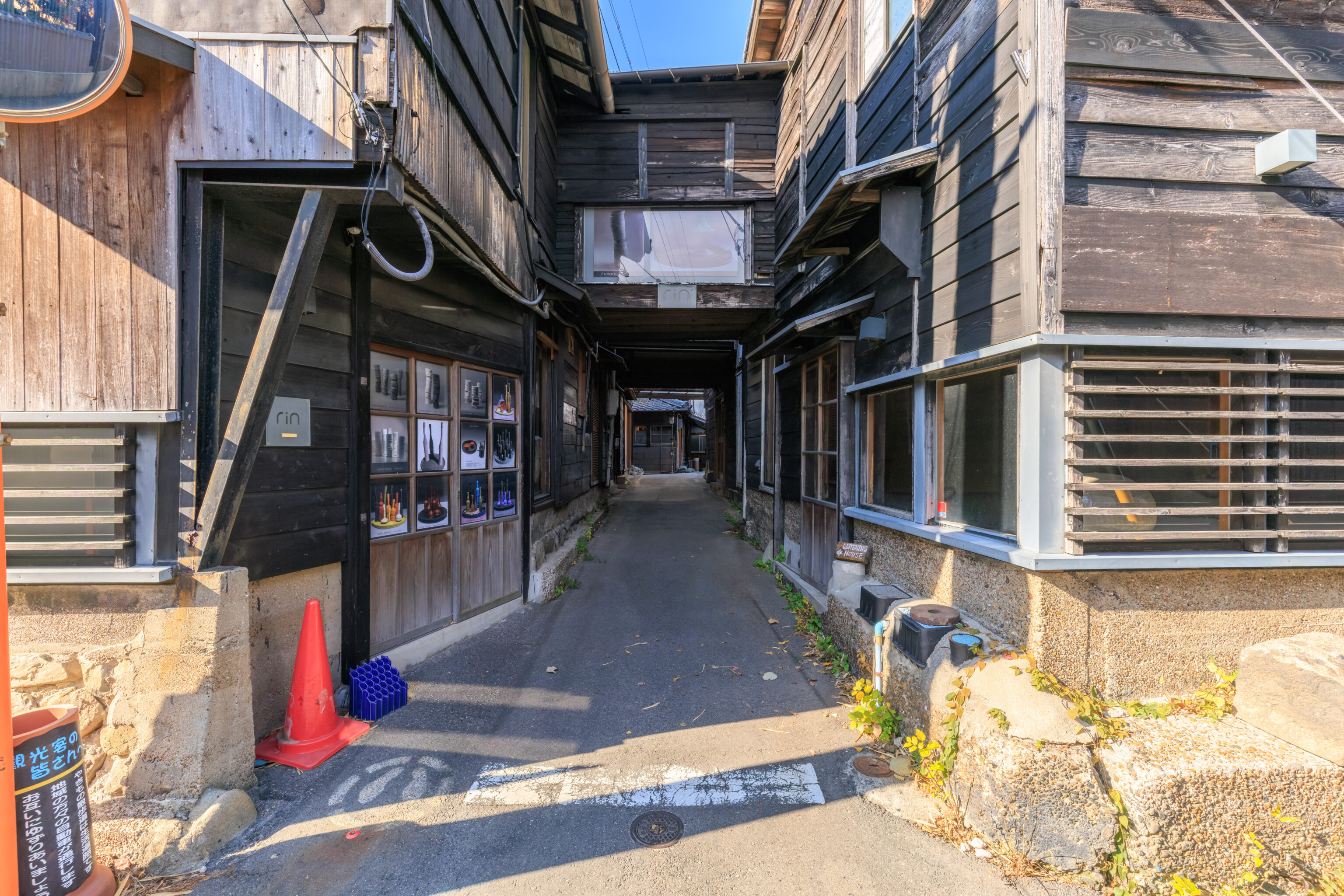
We followed the path to head towards Tokonyan…
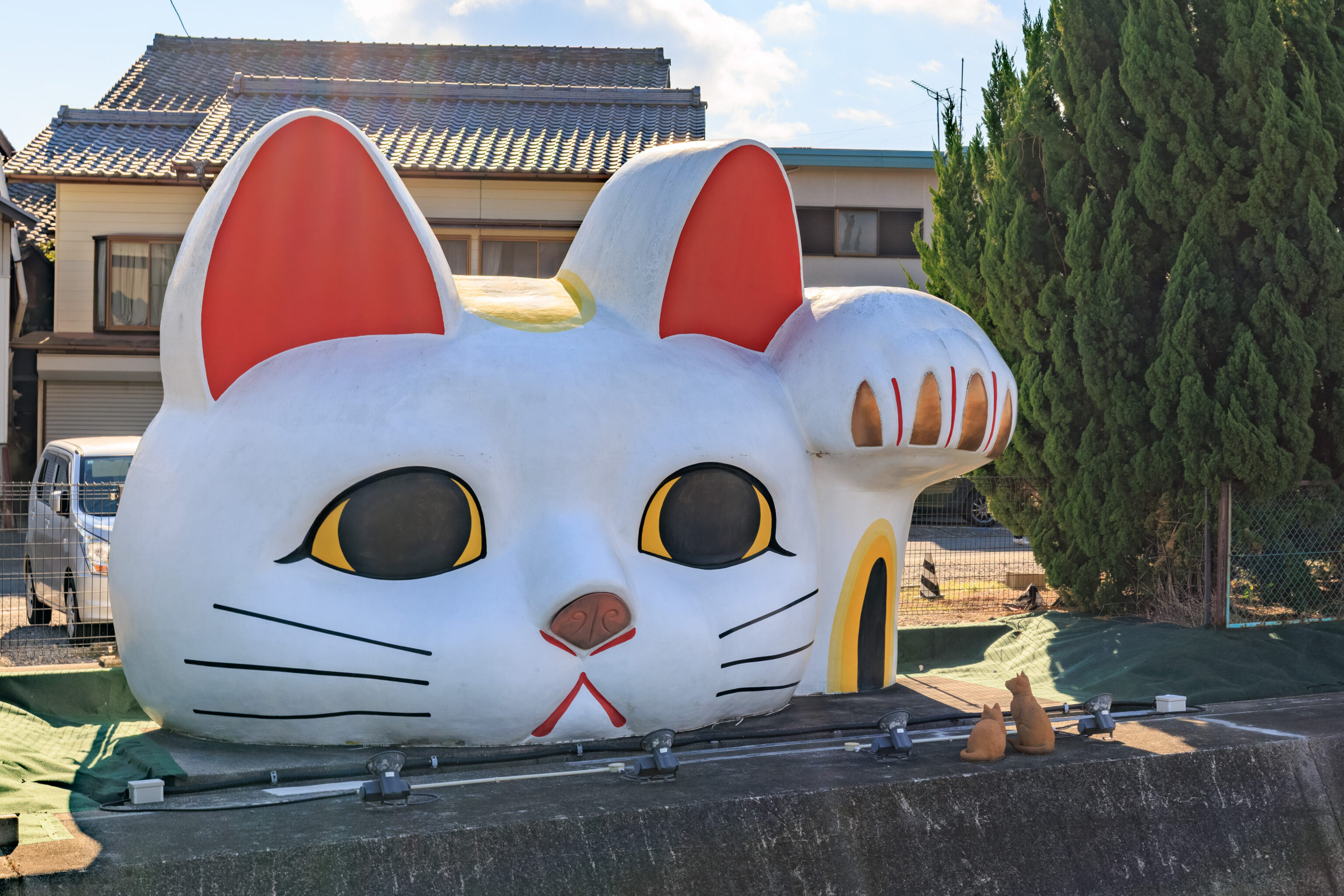
After walking through a small parking lot, we found とこにゃん Tokonyan! This large maneki-neko is perched at the side of a hill. The retaining wall that Tokonyan sits atop is the same one we walked past on our way to the Ceramic Hall.
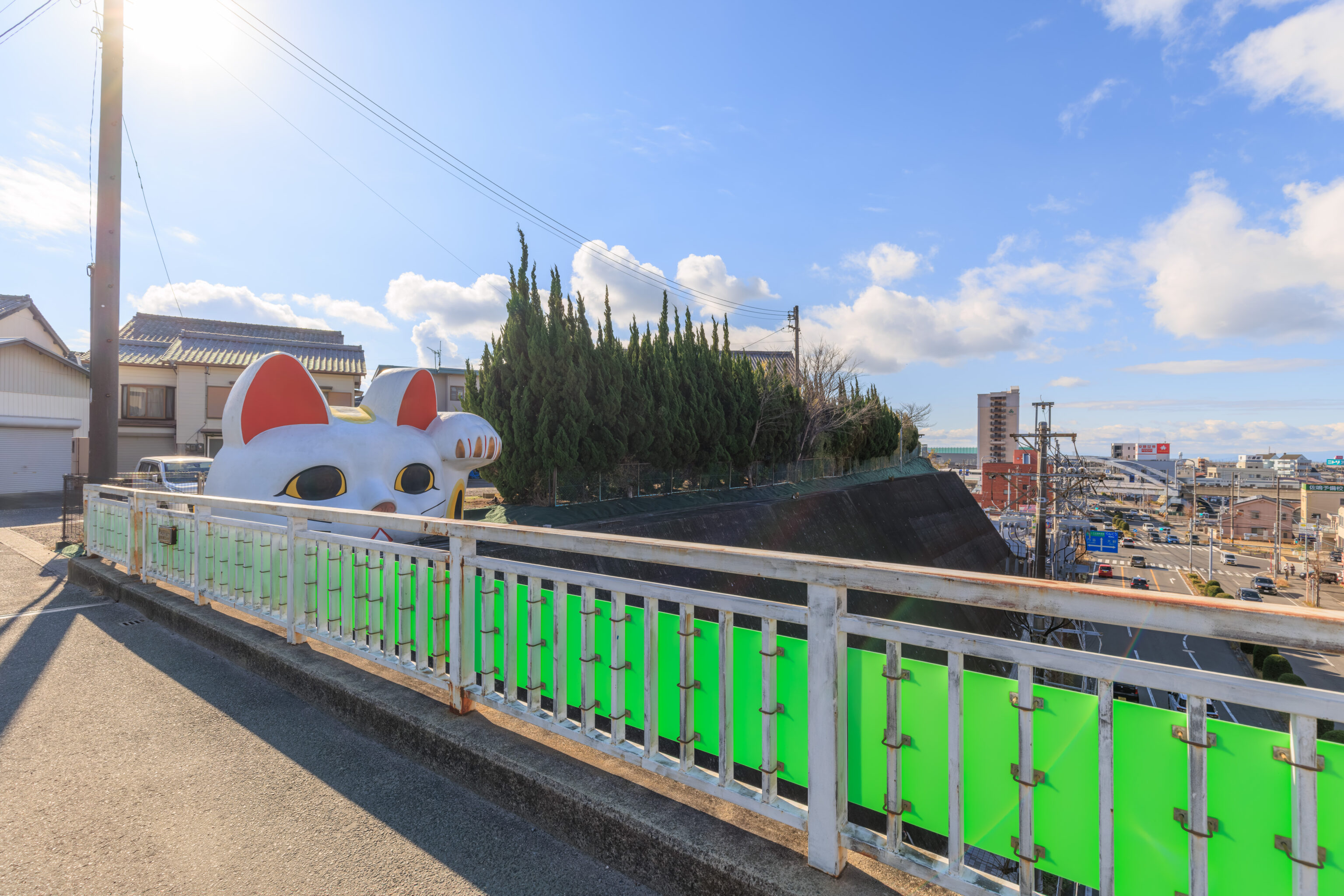
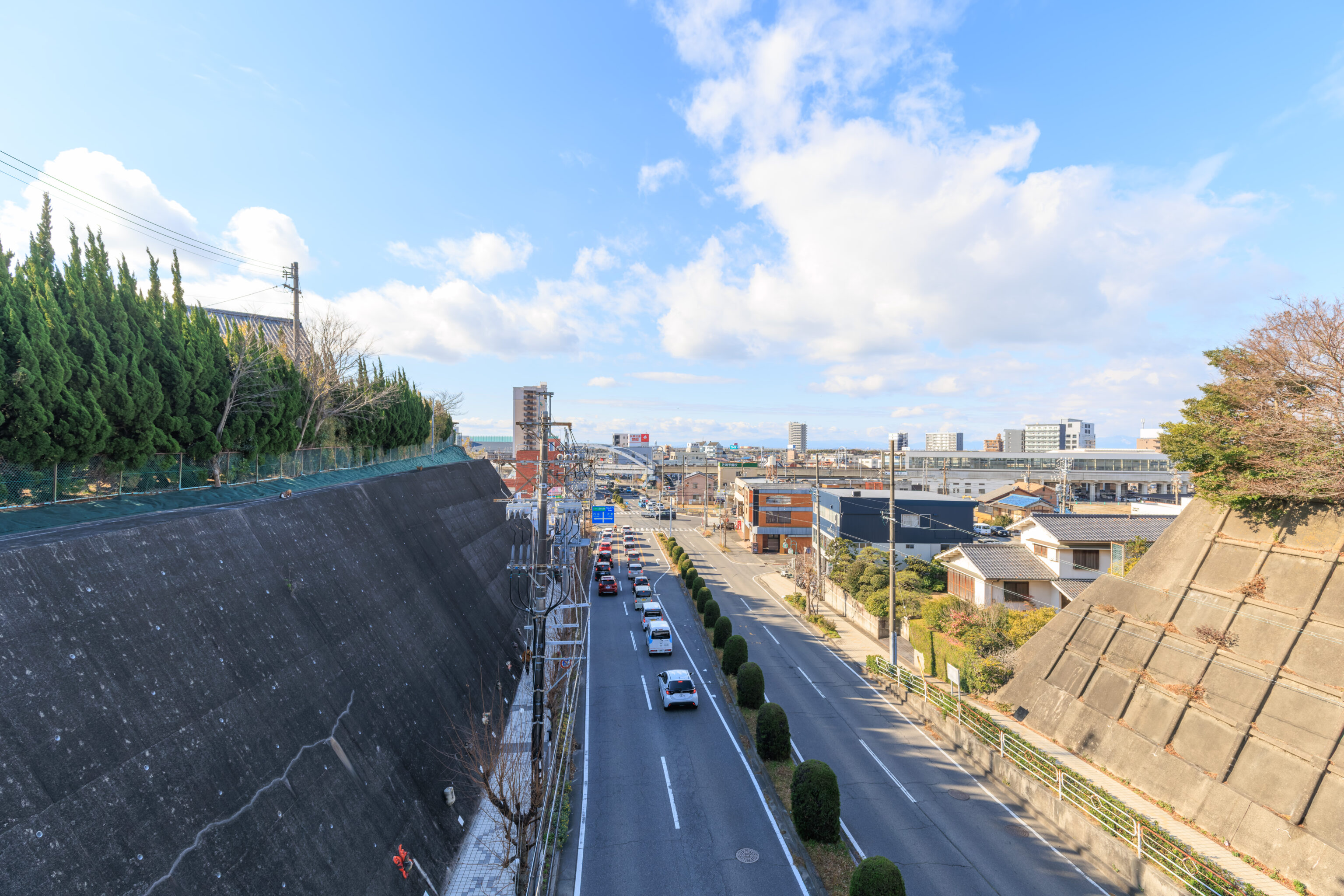
There is a bridge in front of Tokoynan which leads to a hill on the other side of the road below. Well, it was probably the same hill before the road below was built!
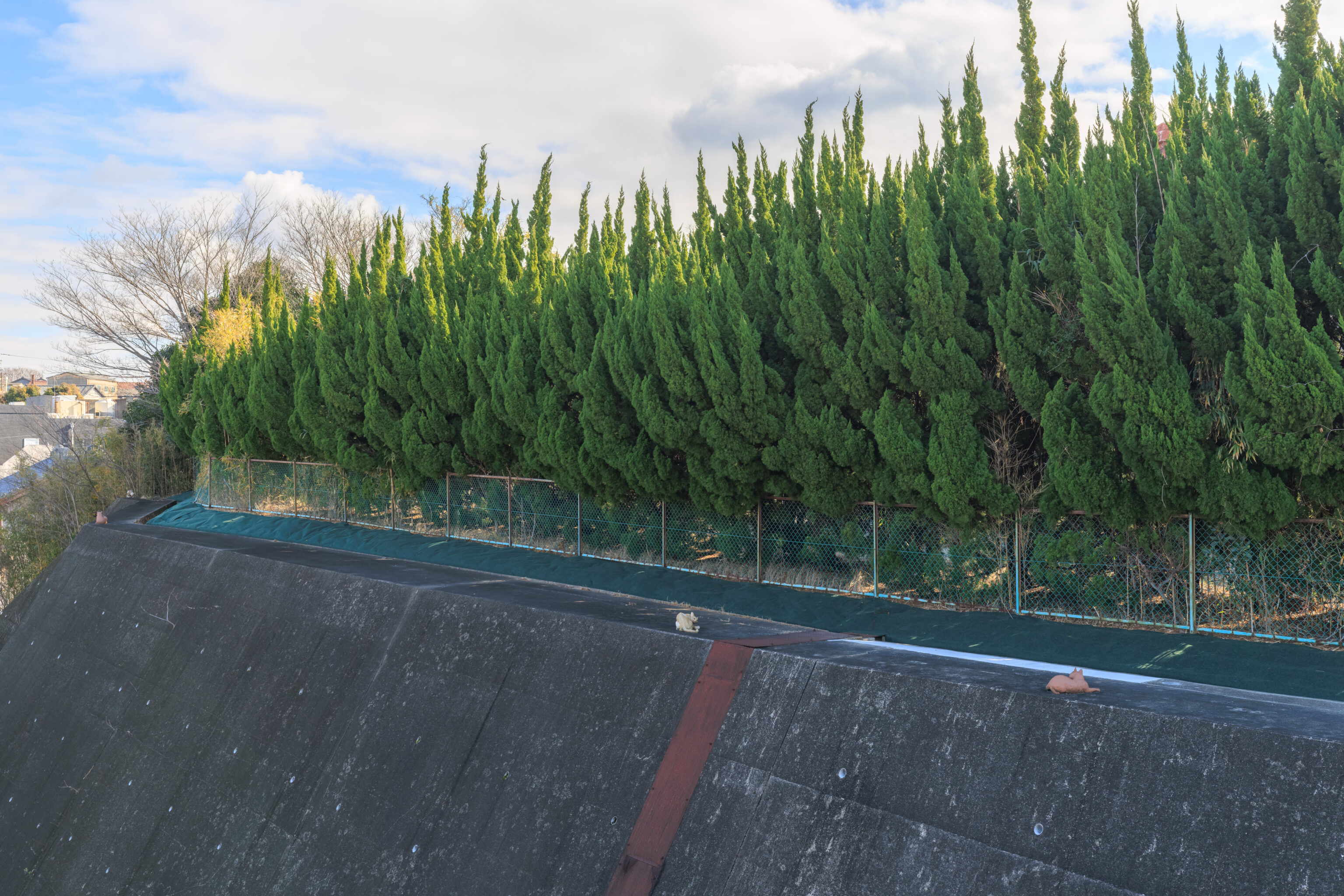
According to the sign we saw at the Ceramic Hall, there are supposed to be 11 small cat sculptures here. We didn’t actually try to find them all…
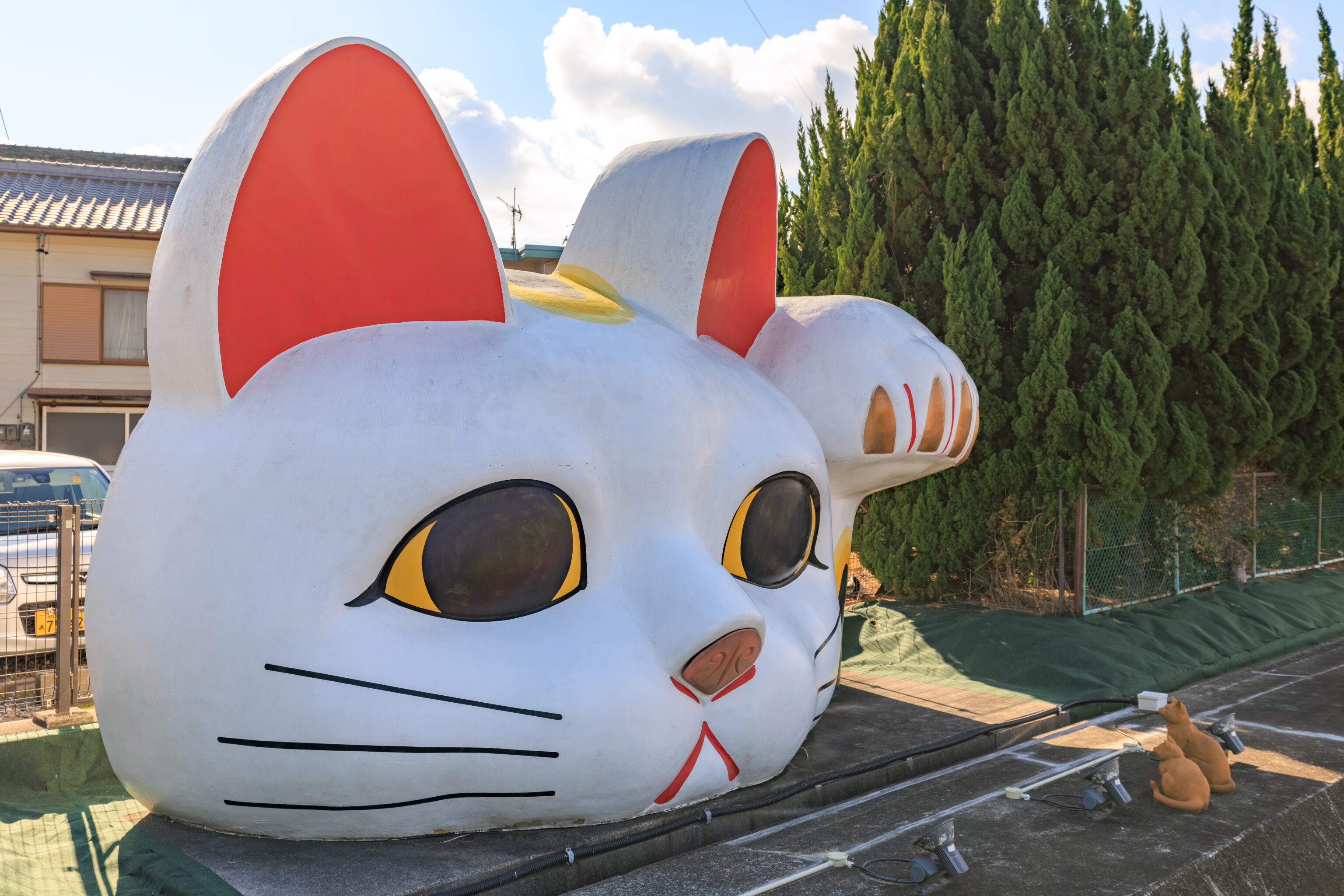
So kawaii!
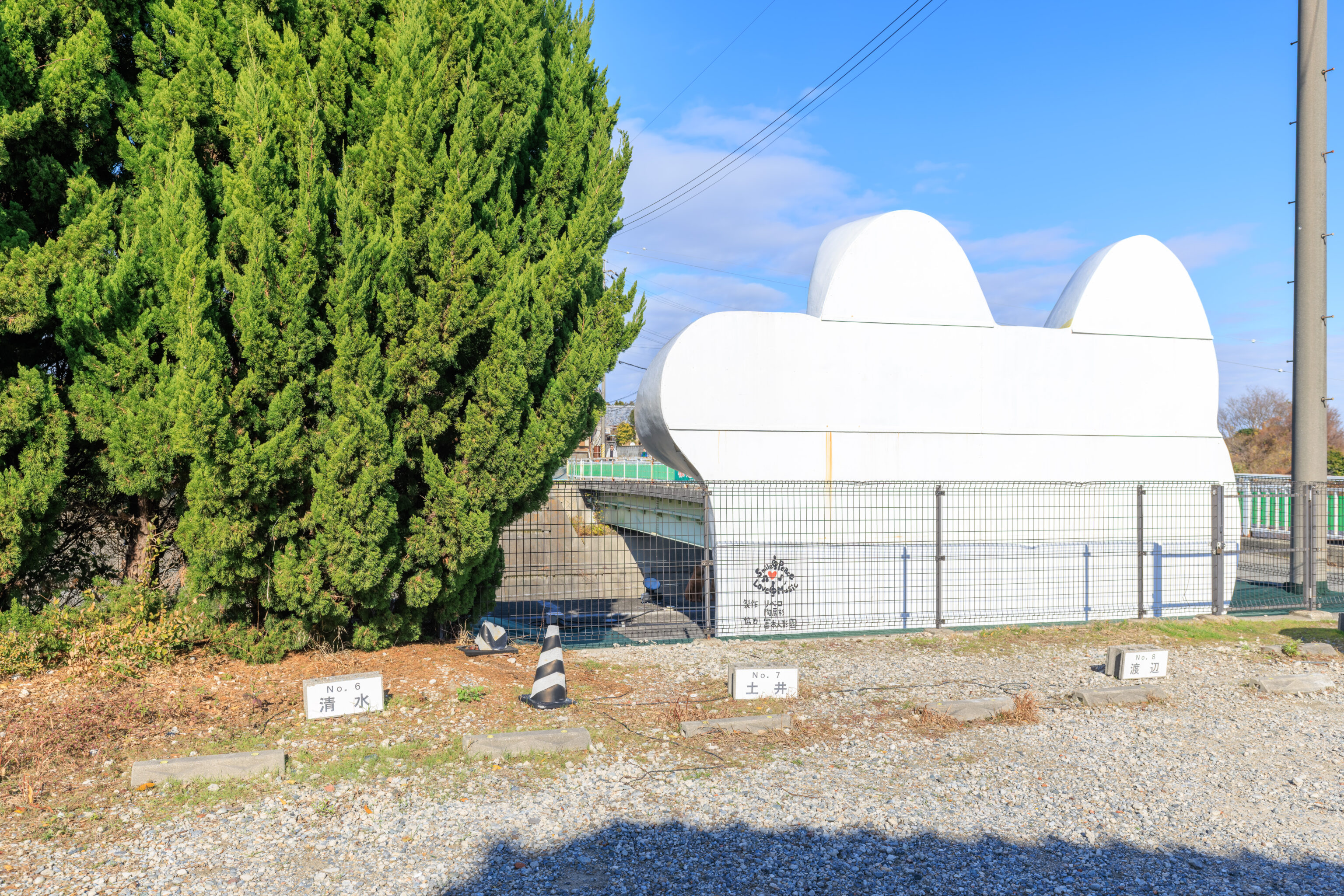
As we started to backtrack to continue along the Pottery Footpath, we noticed some text at the bottom left corner of Tokonyan:
Smile & Peace
Love & Music

Production
リベロ Ribero
陶房杉 Tōbō Sugi

Cooperation
冨本人形園 Tomimoto Ningyōen
– Text from the bottom left corner of the back of Tokonyan, read using Google Gemini and translated using Google Translate.
冨本人形園 Tomimoto Ningyōen is the kiln that created Tokonyan. According to their website, this 80 year old local company is responsible for 80% of the global production of ceramic maneki-neko!
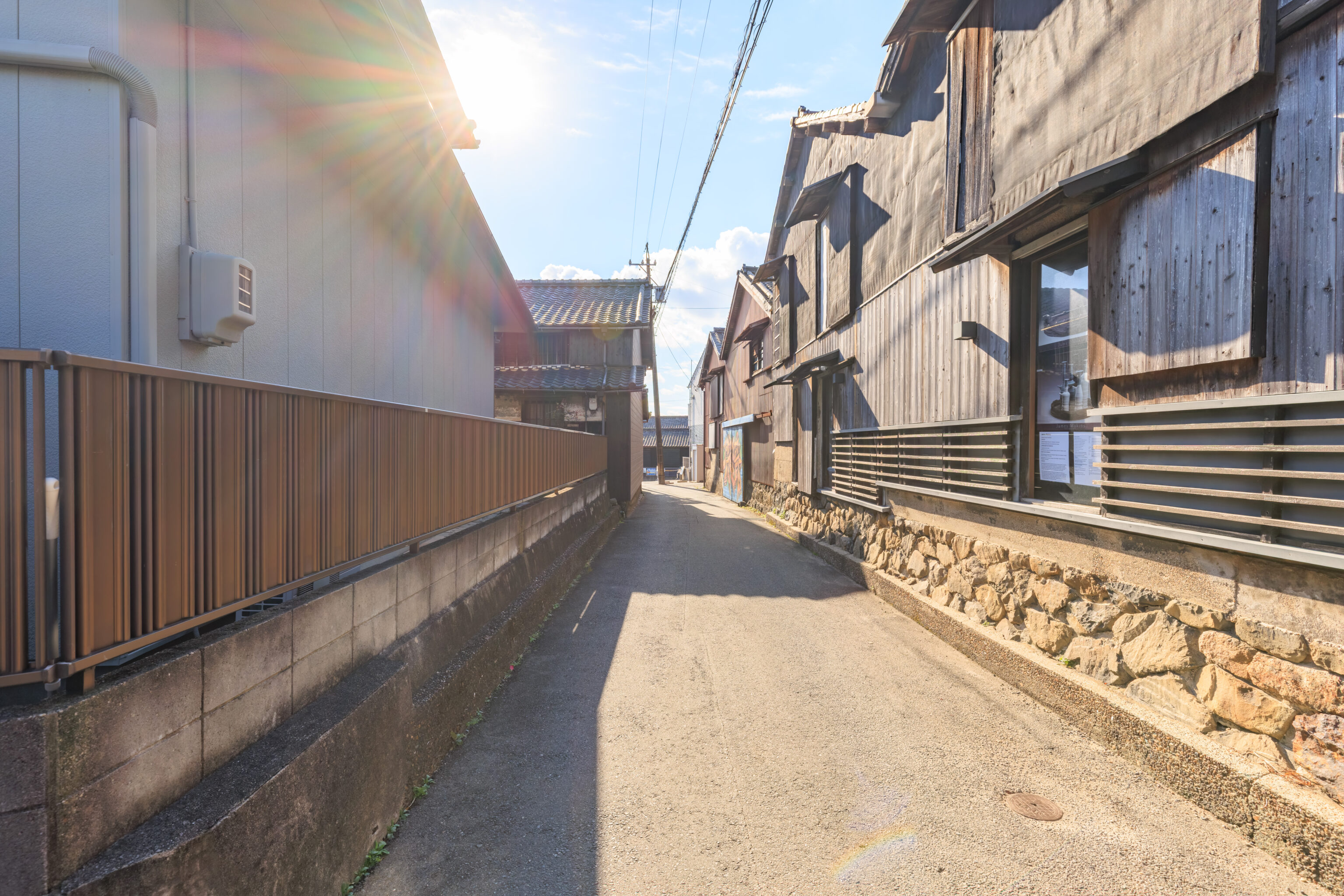
As we walked to the south, we noticed a sign on one of the pottery galleries. It was for James Makins who is from Johnstown, Pennsylvania! We found that interesting. How did he end up here?
James Makins’ CV
James Makins
1946 Born Johnstown, Pennsylvania

EDUCATION
1968 BFA Philadelphia College of Art, Philadelphia, Pennsylvania
1973 MFA Cranbrook Academy of Art, Bloomfield Hills, Michigan

APPRENCICESHIPS AND RESIDENCIES
-Apprentice to Byron Temple
1993 Resident artist, Togei no Mori, Shigaraki Ceramic Cultural Park, Shigaraki, Japan

PRIMARY WORK EXPERIENCE
1989-1994 Associate Professor of Art, Philadelphia College of Art and Design, University of the Arts, Philadelphia, Pennsylvania
1994 Professor of Art, Philadelphia College of Art and Design, University of the Arts, Philadelphia, Pennsylvania

BIOGRAPHY
James Makins work moved from porcelain dinnerware and serving pieces to sculptural work. The latter works can be monumental vessel forms or compositions of multiple functional forms placed on thrown trays in carefully arranged groupings. The pieces are either painted or airbrushed resulting in dense, deep colors that absorb rather than
reflect light. These compositions range from monochromatic to multi colored.

Makin's apprenticeship with Byron Temple gave him insights into the blending of eastern and western pottery traditions. This theme has guided his work throughout his career. Makins studied with Richard DeVore at Cranbrook and began to explore the characteristics of porcelain. He found it rigid, restrictive, and able to be pushed and
pulled out of shape yet retain the extreme ridged surfaces of his throwing technique. These throwing rings are characteristic of his work.
– Text from a sign.
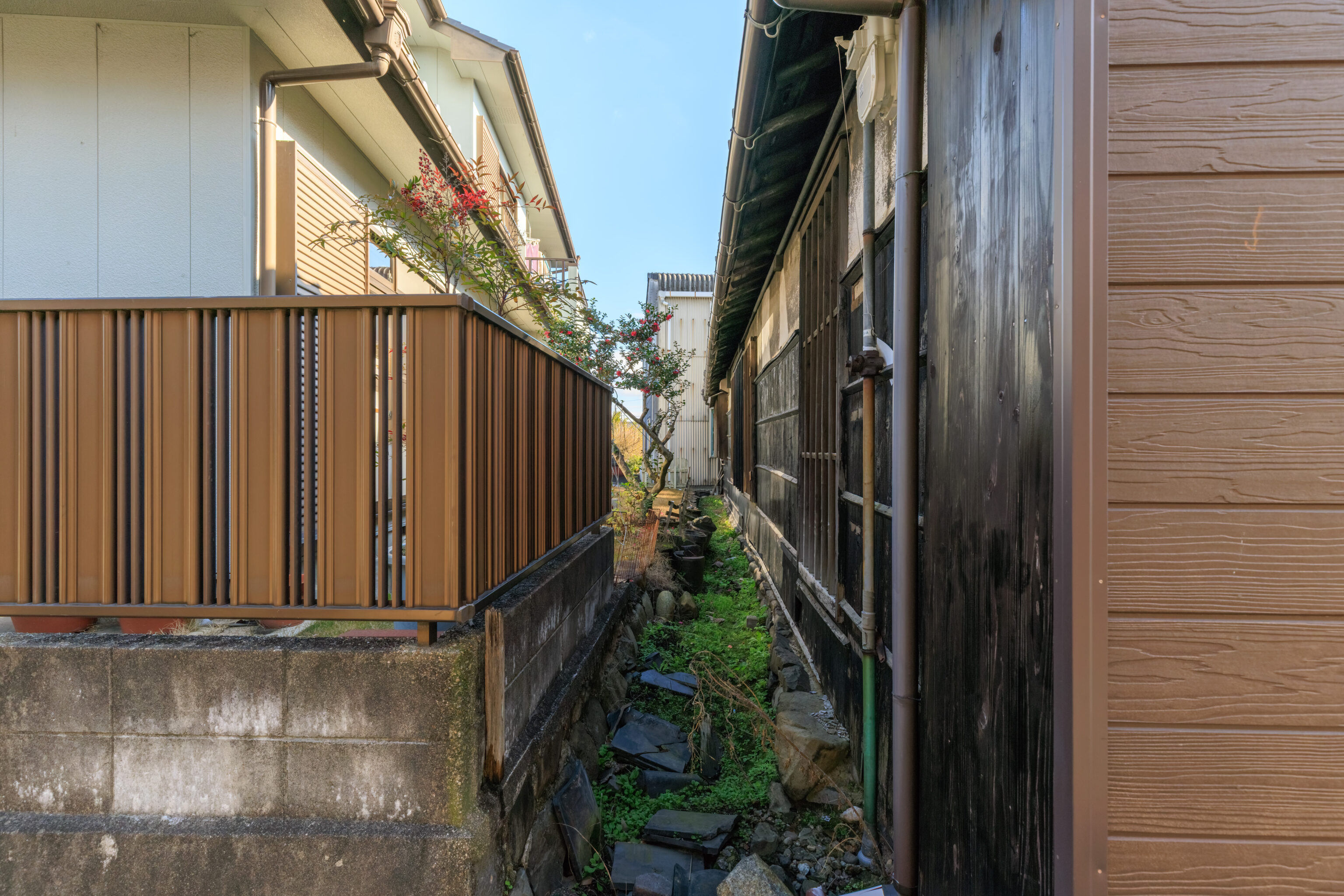
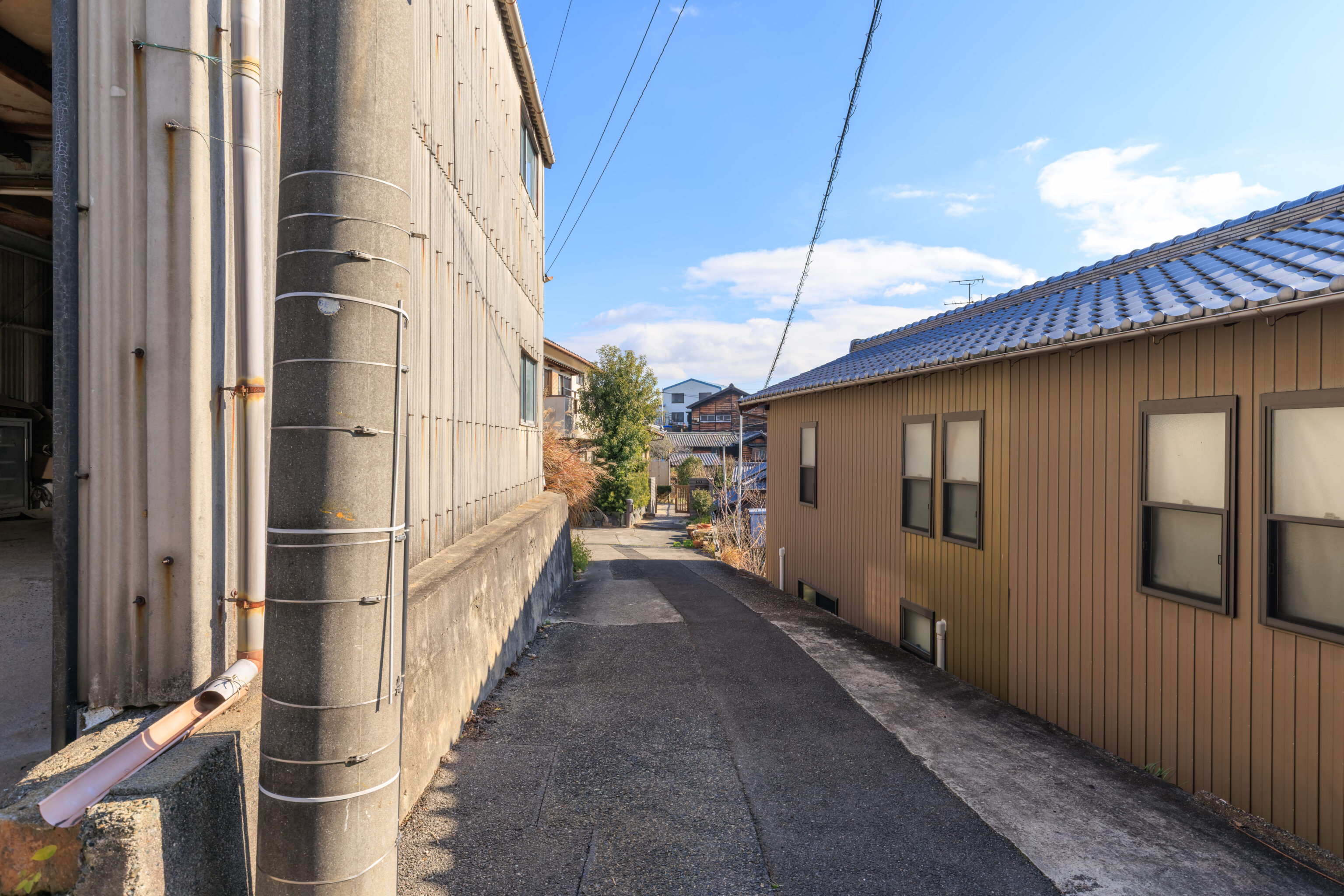
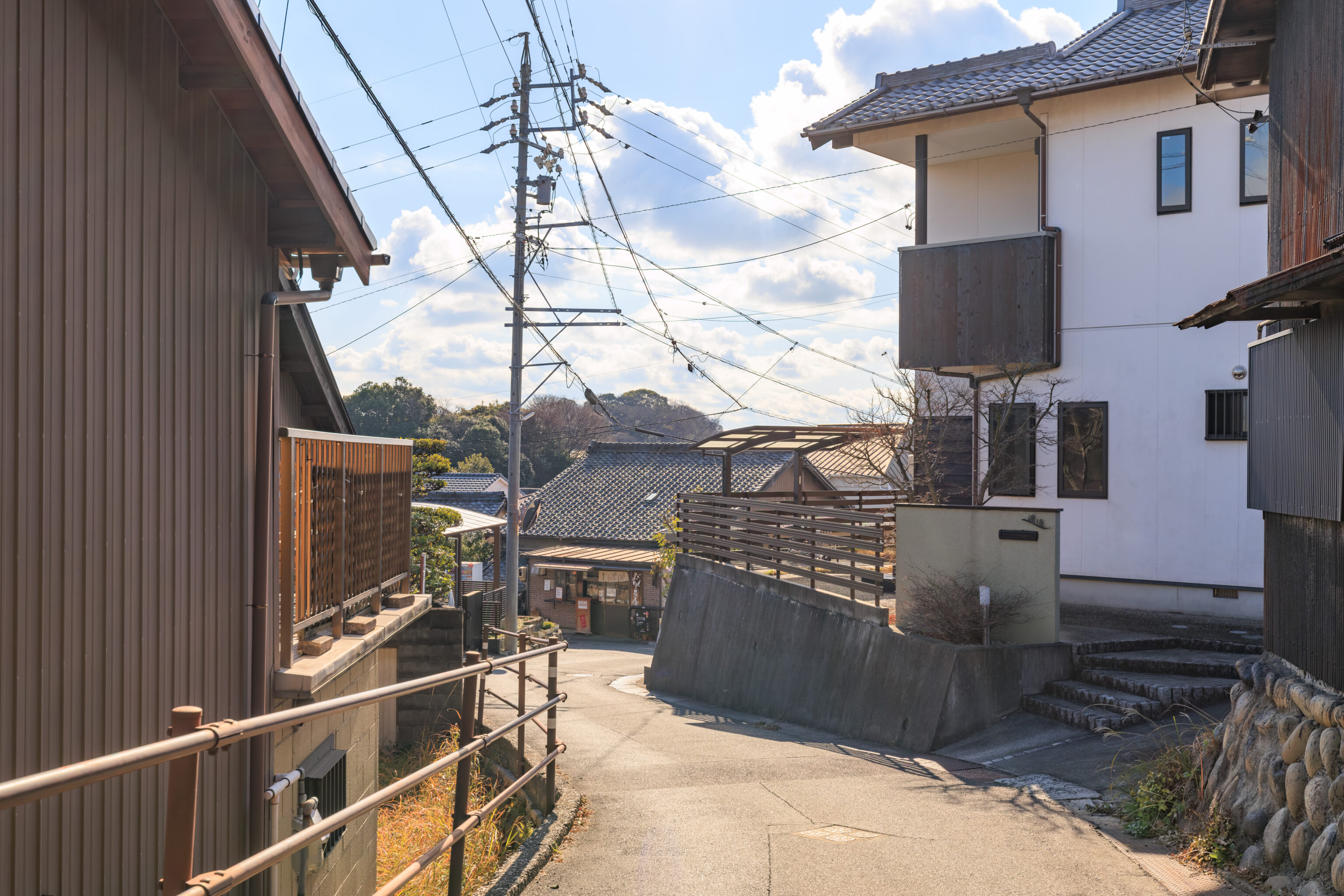
We continued walking to the south along the path…
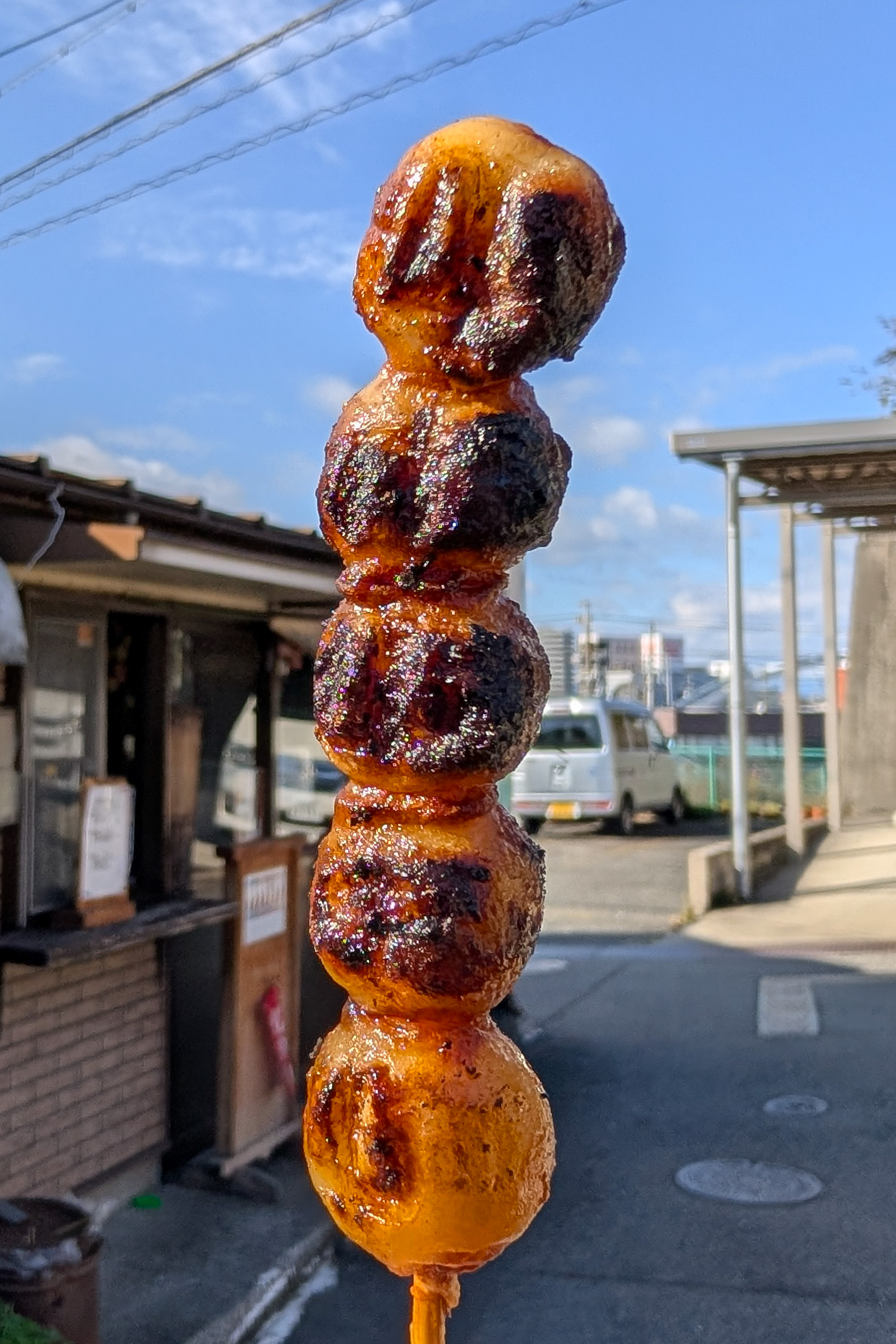
We got this dango from what is labelled as the だんご茶屋 Dango Chaya on Google Maps. It was run by an older couple. Amusingly, they realized the dango they initially gave us was missing one piece so they gave us this one instead which has five pieces!
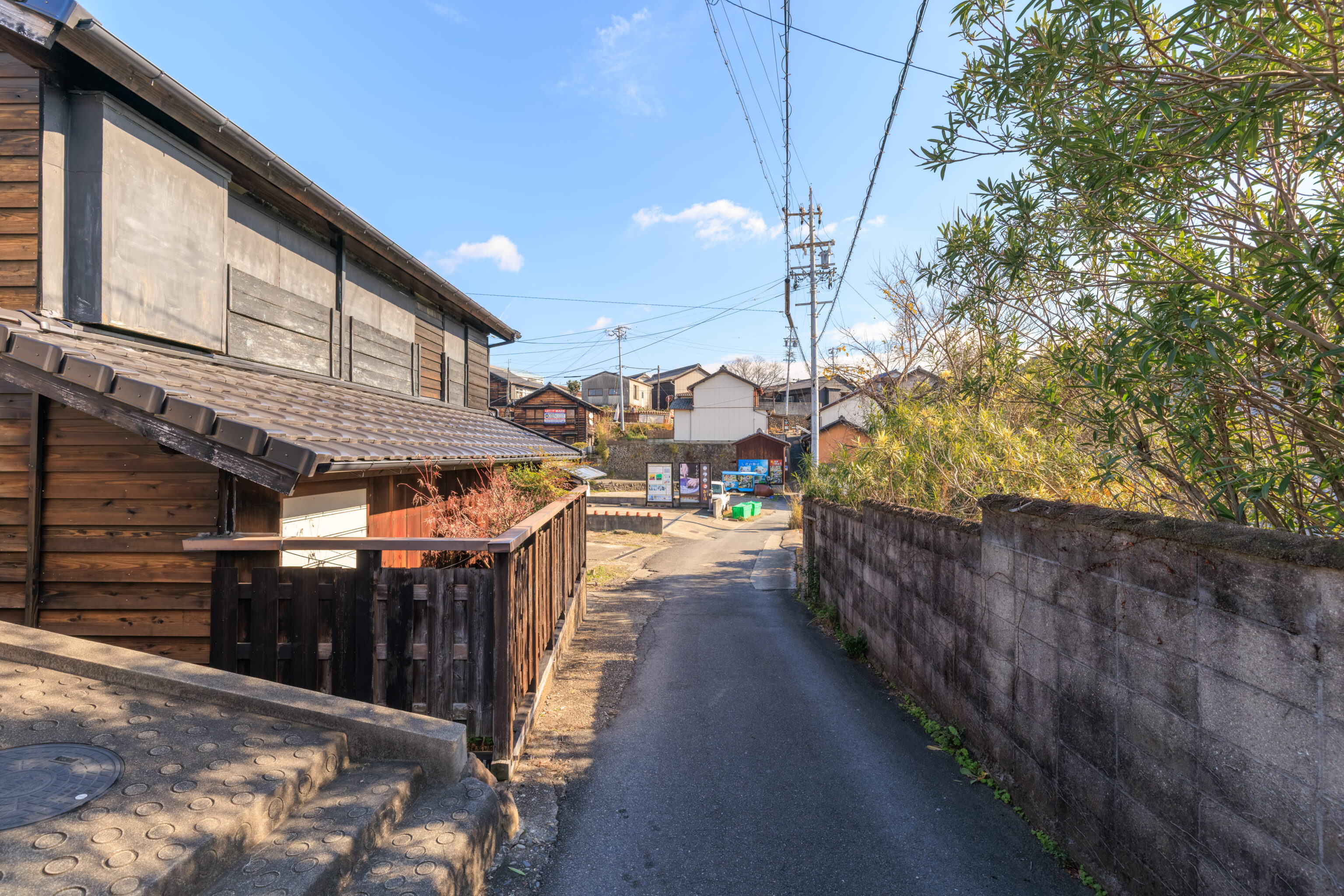
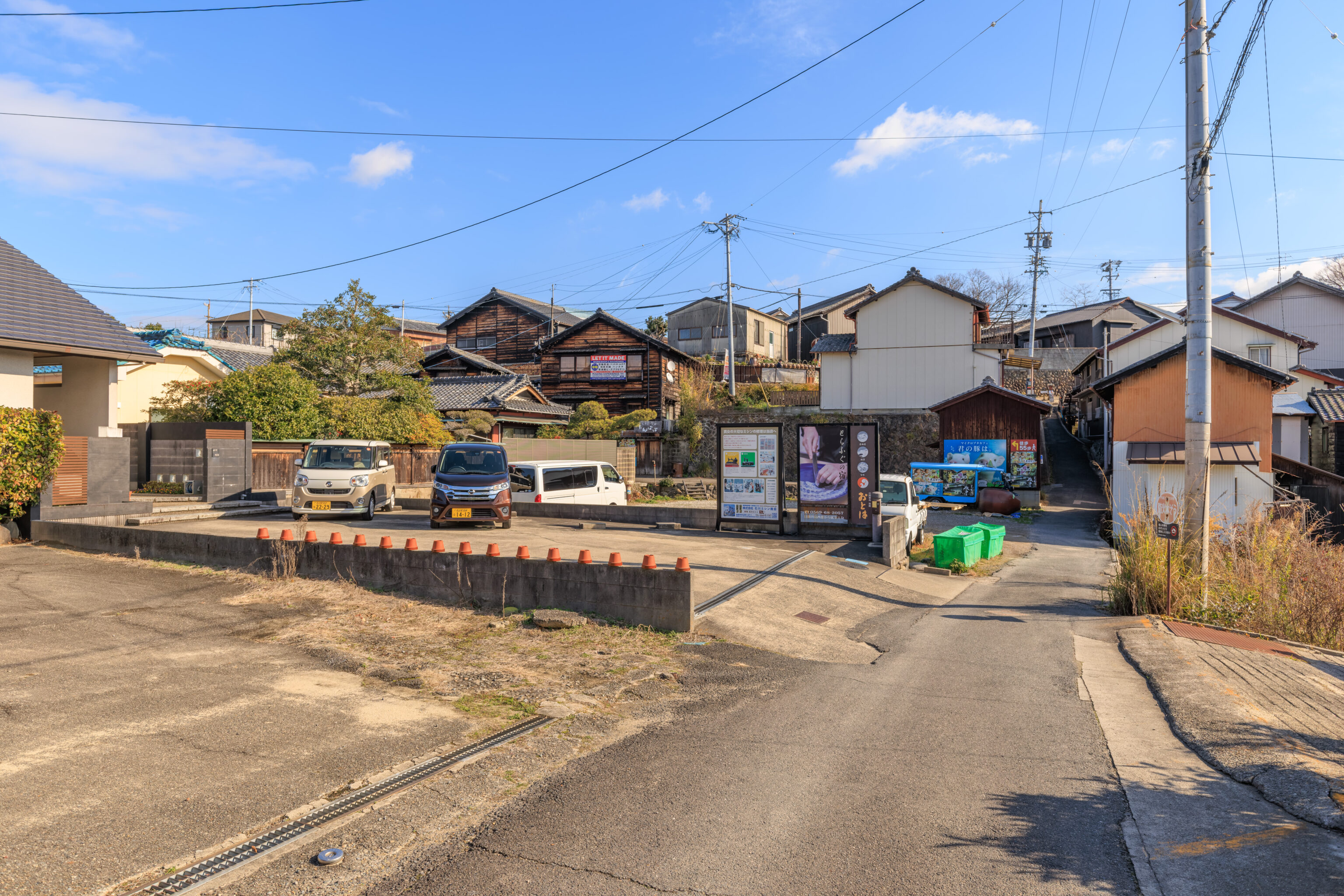
The path turned to the east in front of the Dango Chaya.
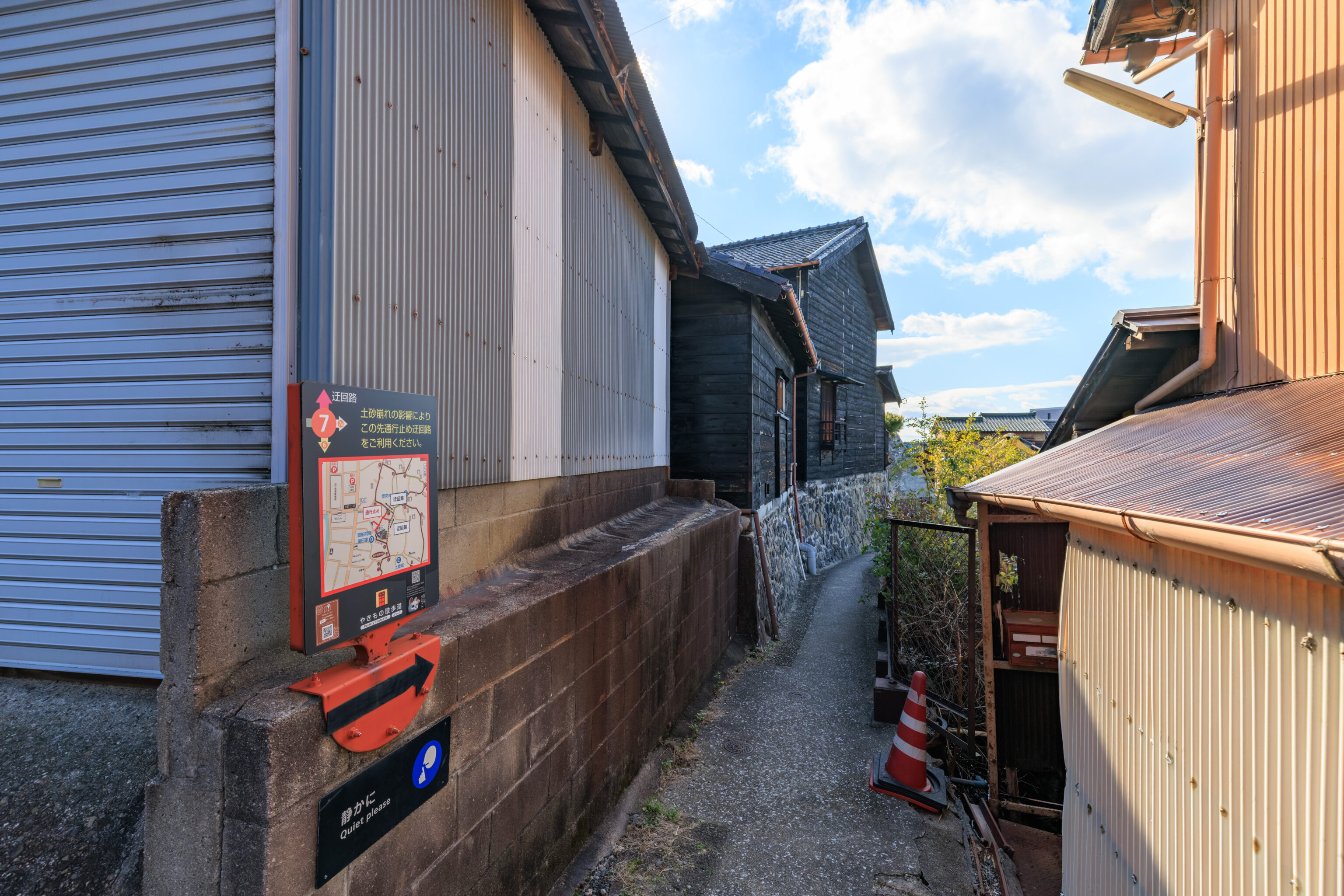
There are multiple possible ways to go here.
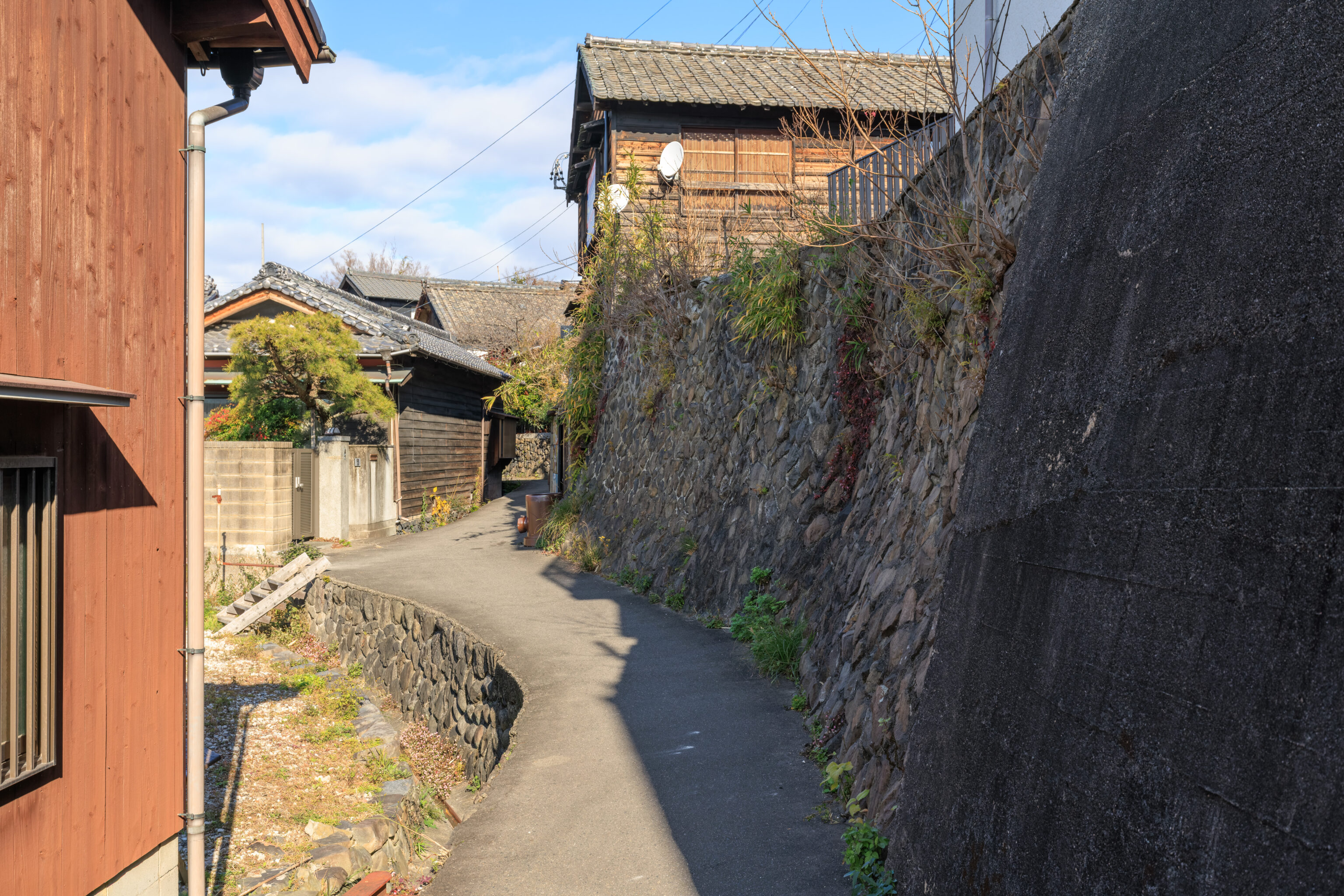
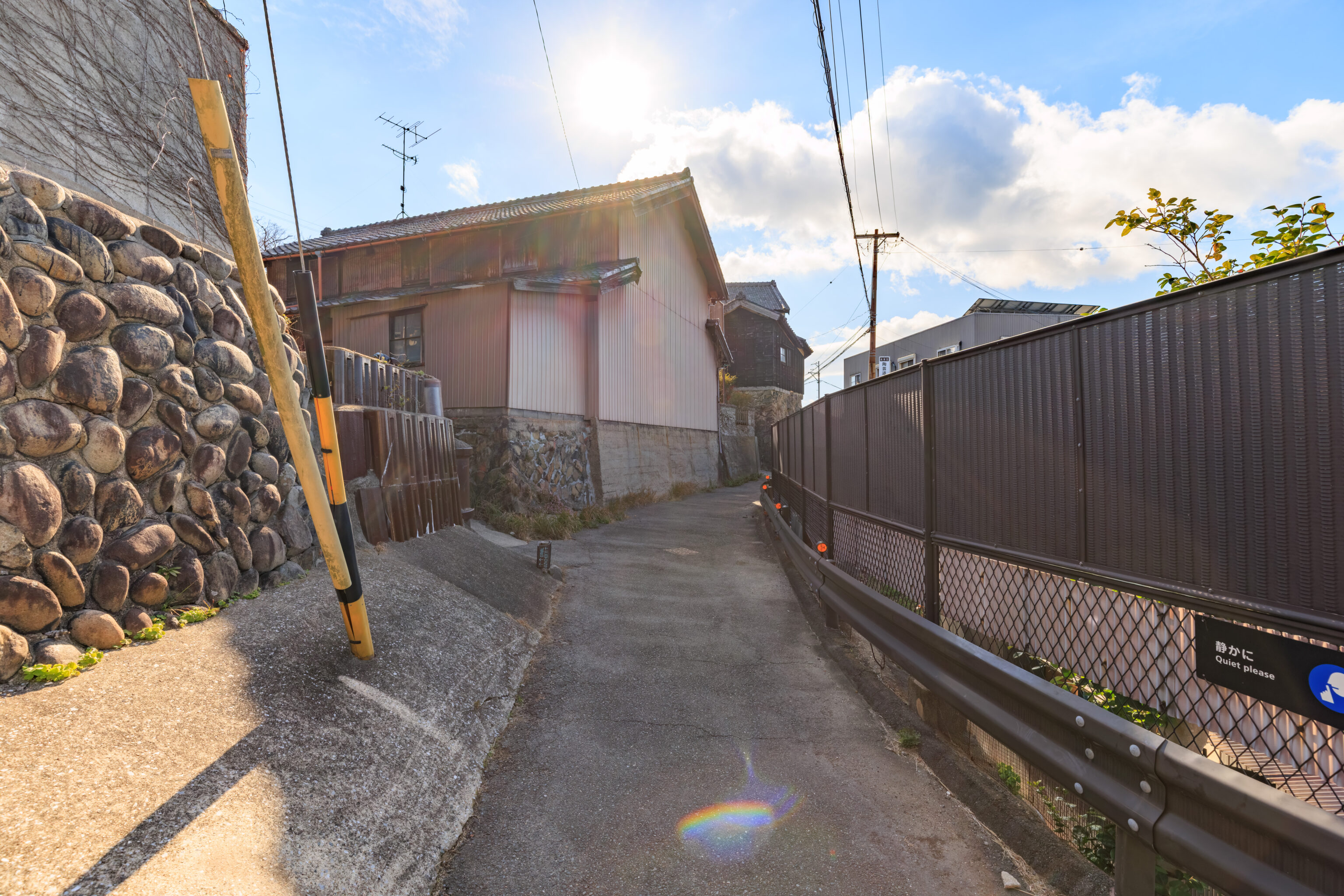
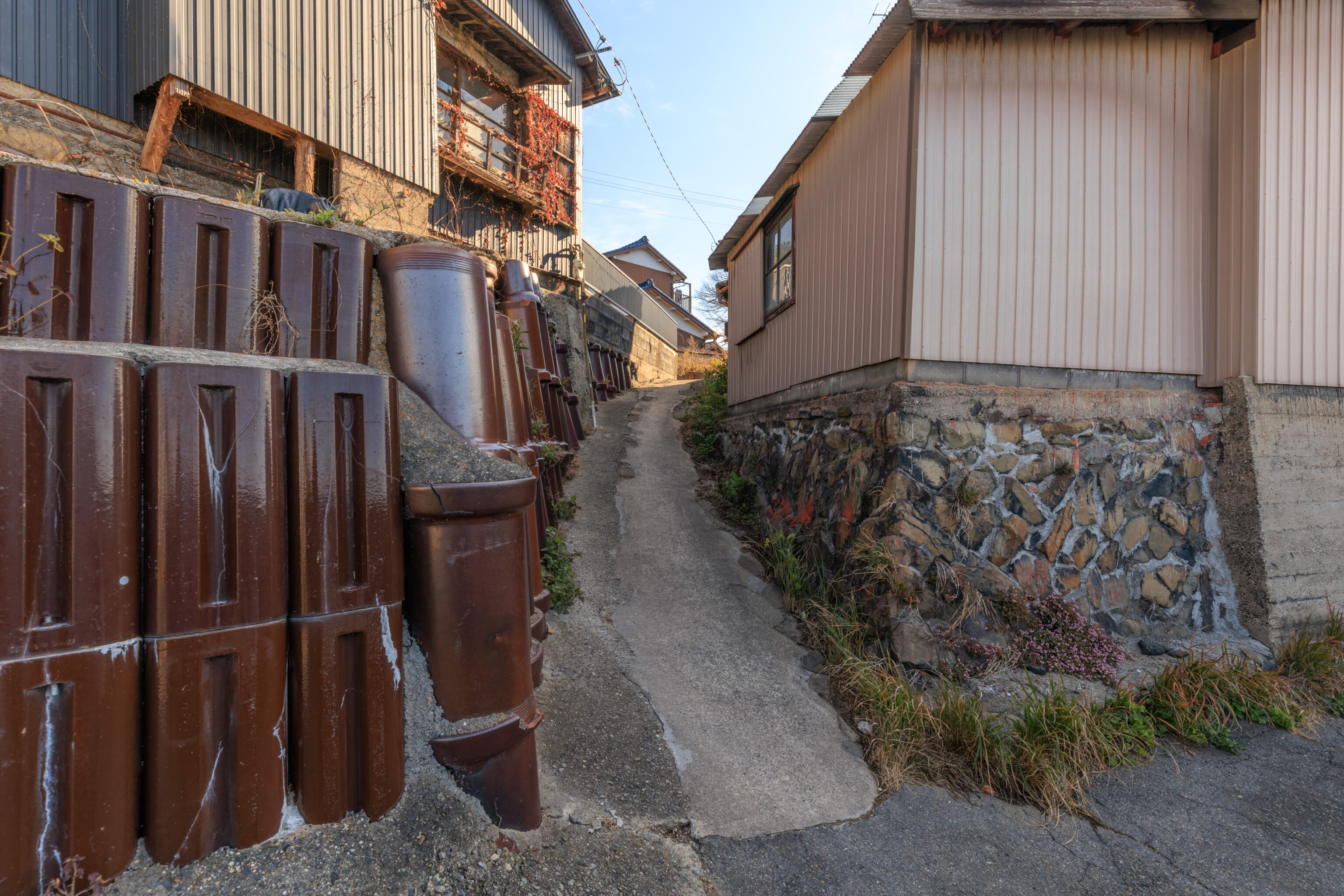
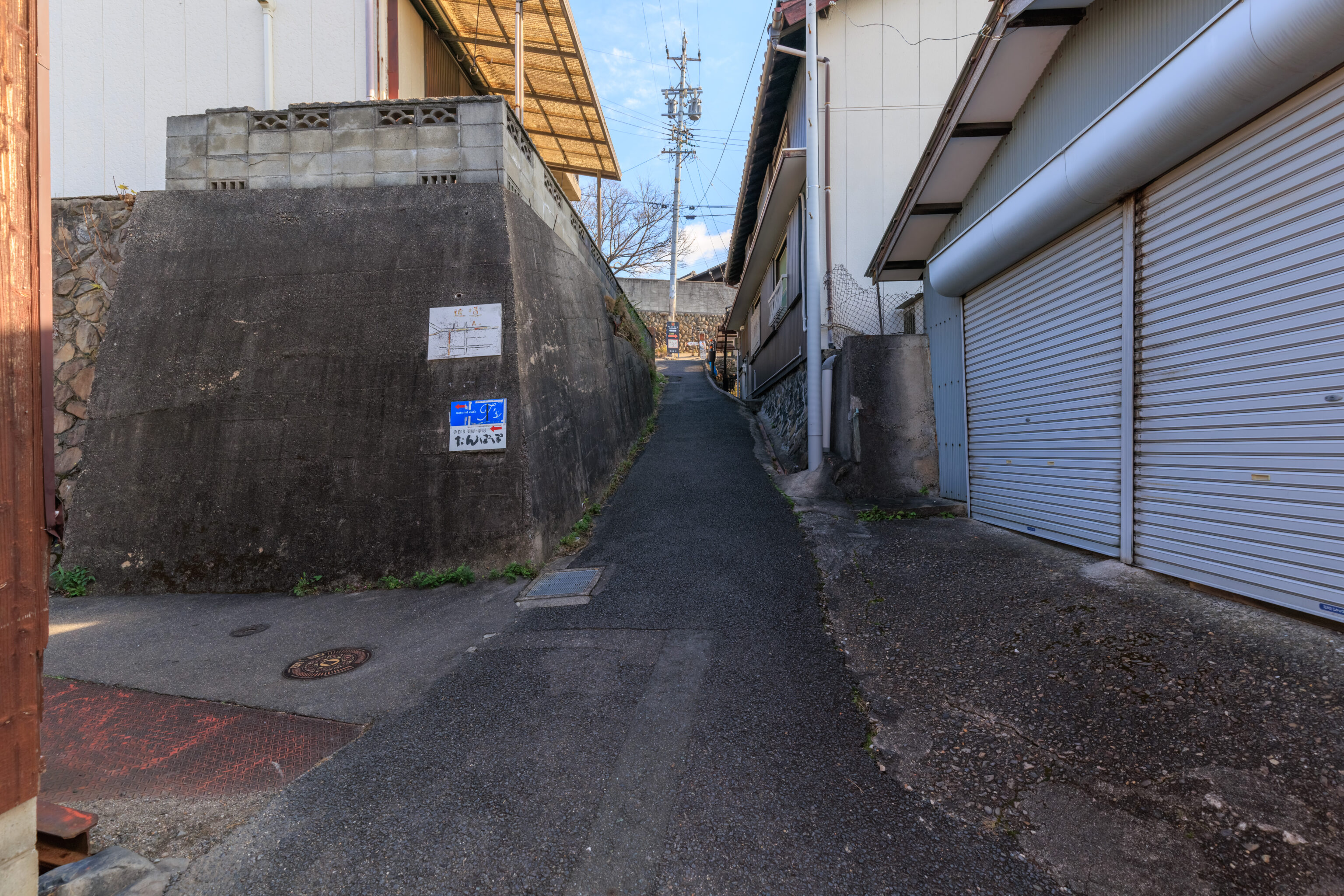
We ended up walking past this very steep incline!
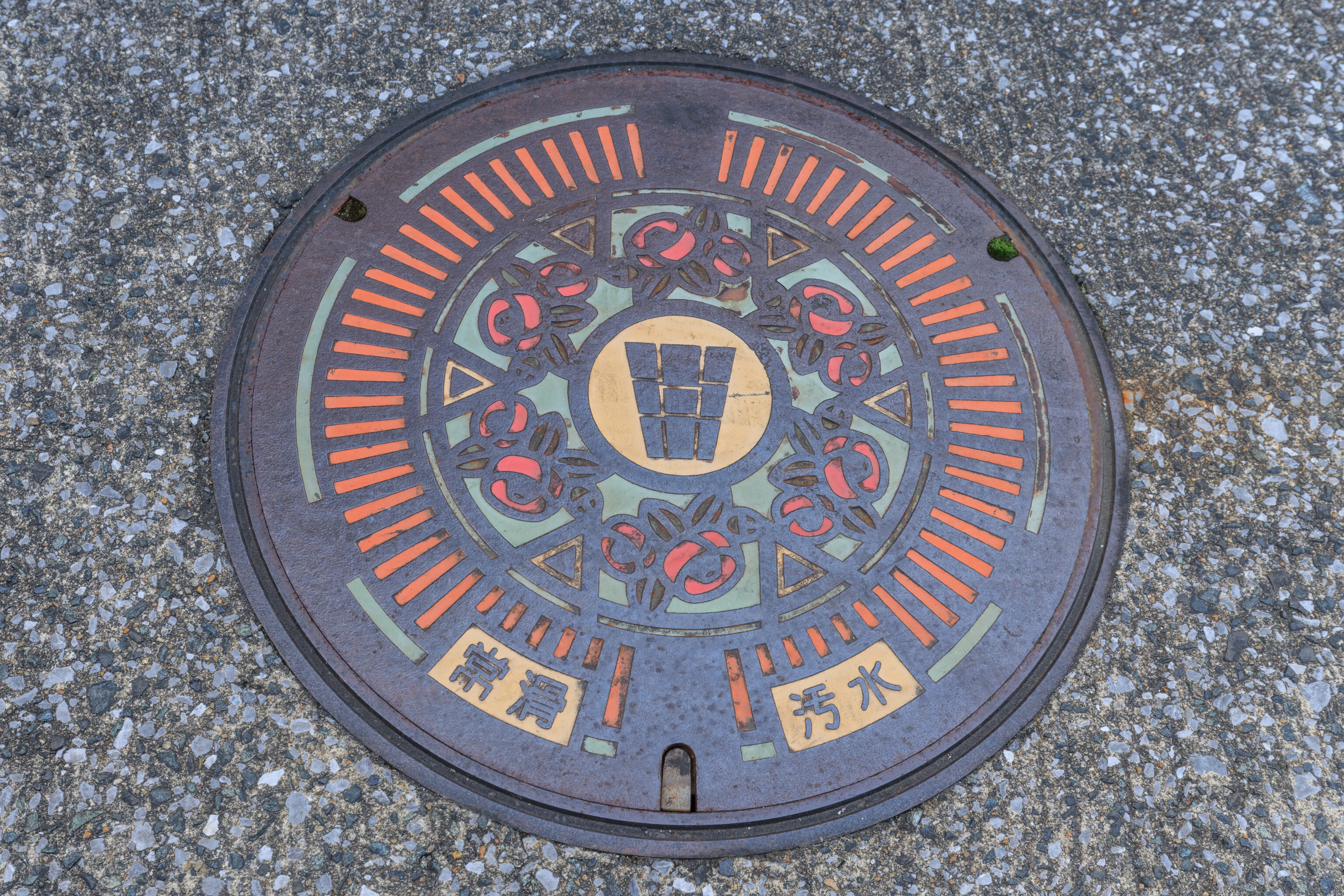
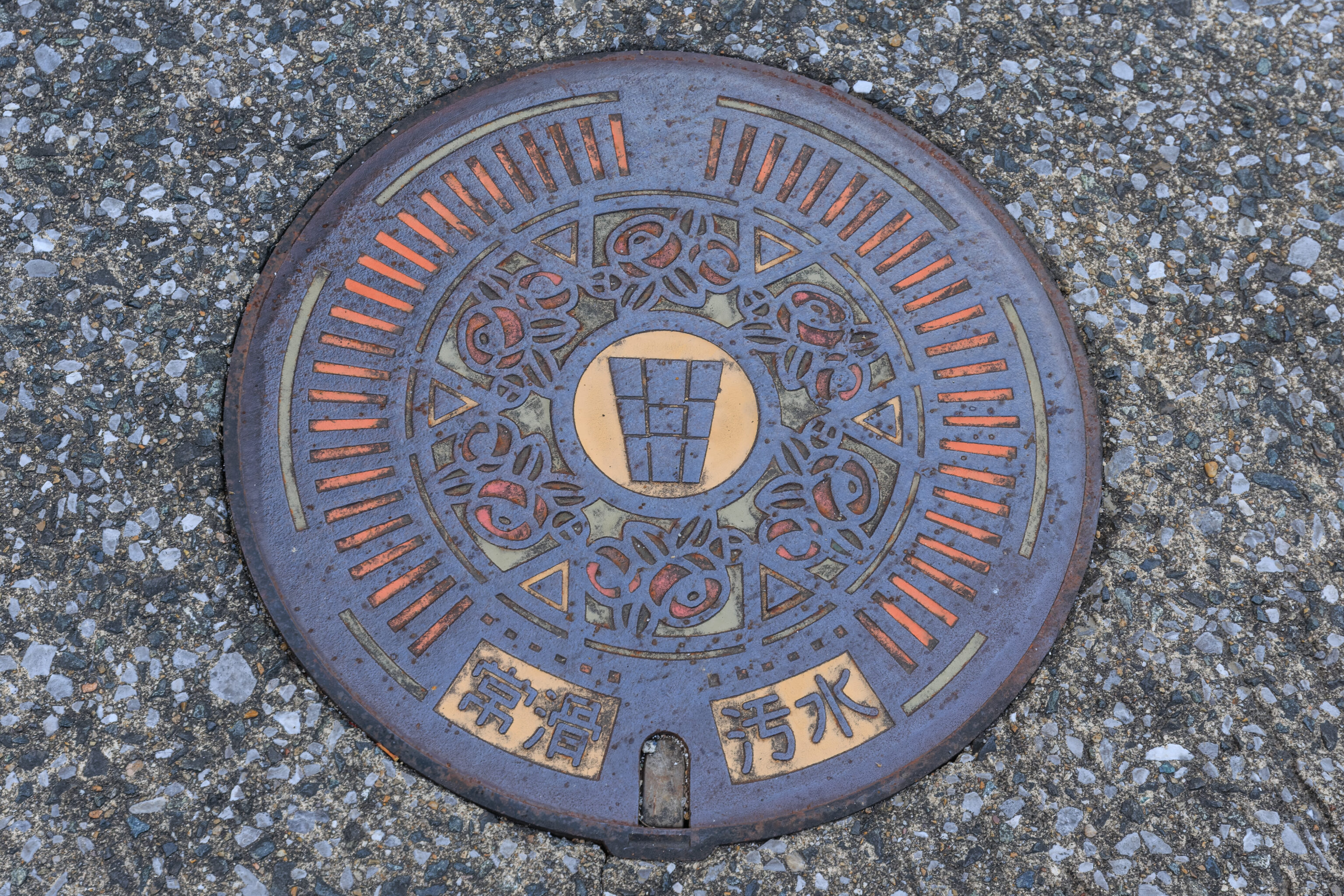
We came across two different utility covers featuring the Tokoname emblem.
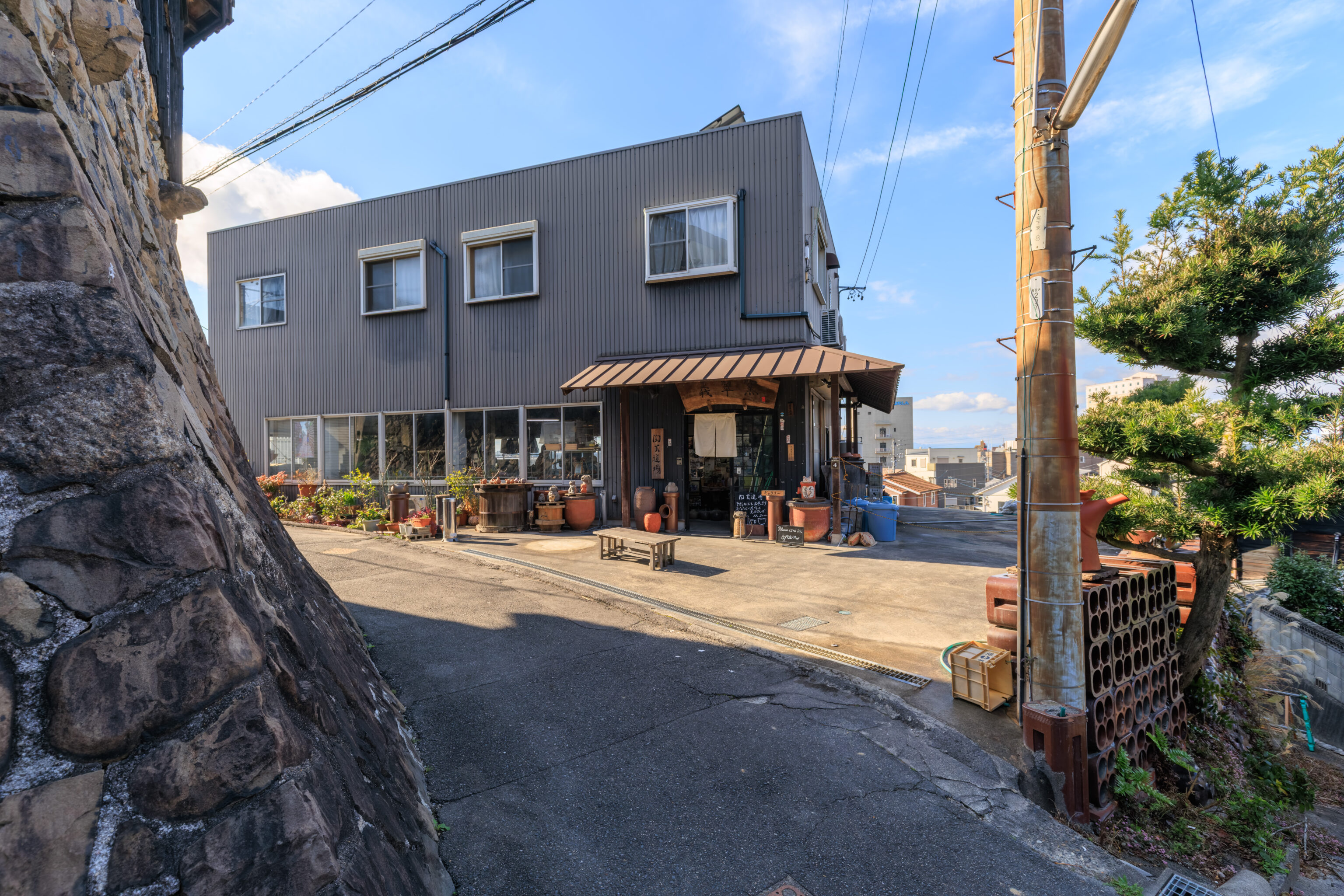
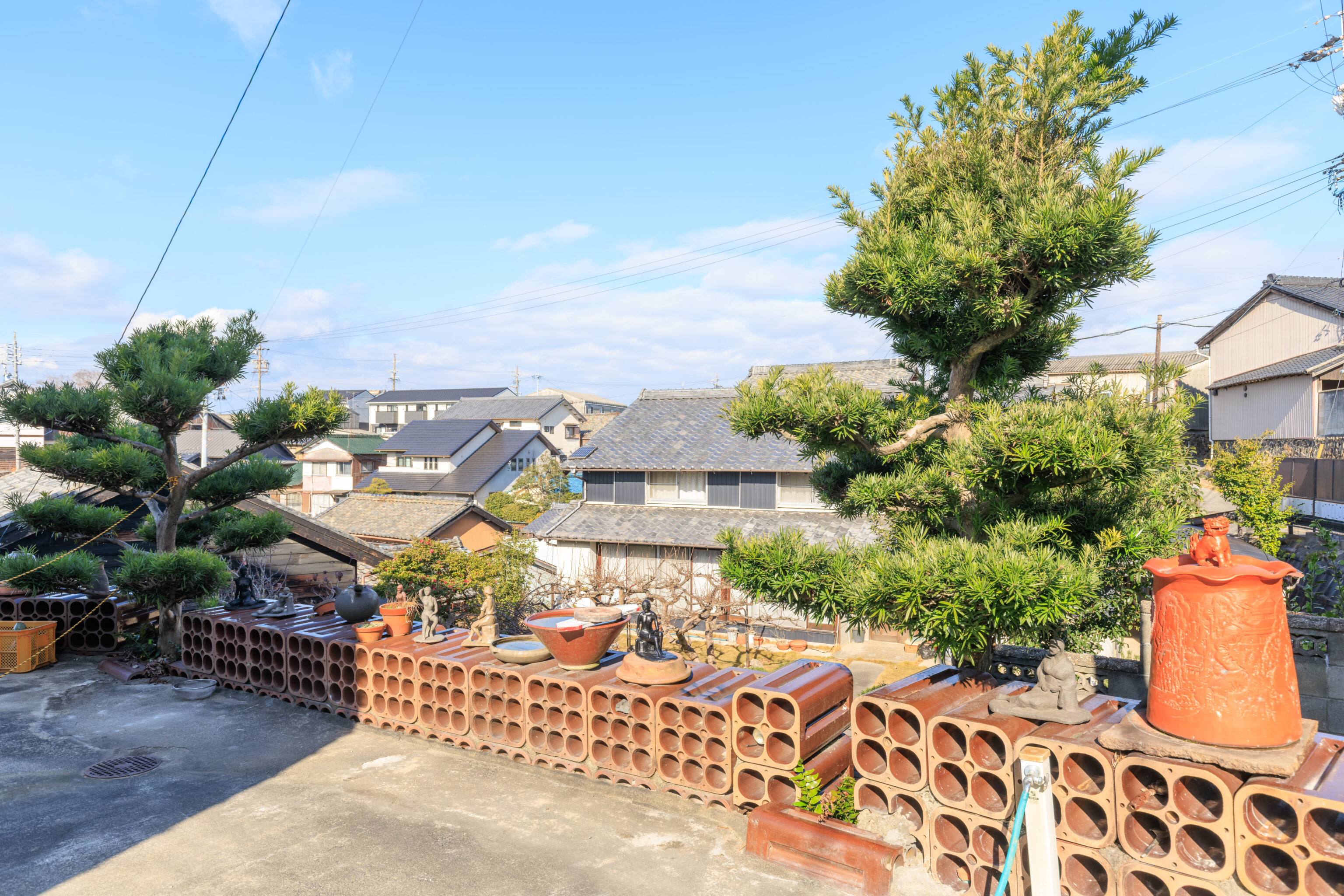
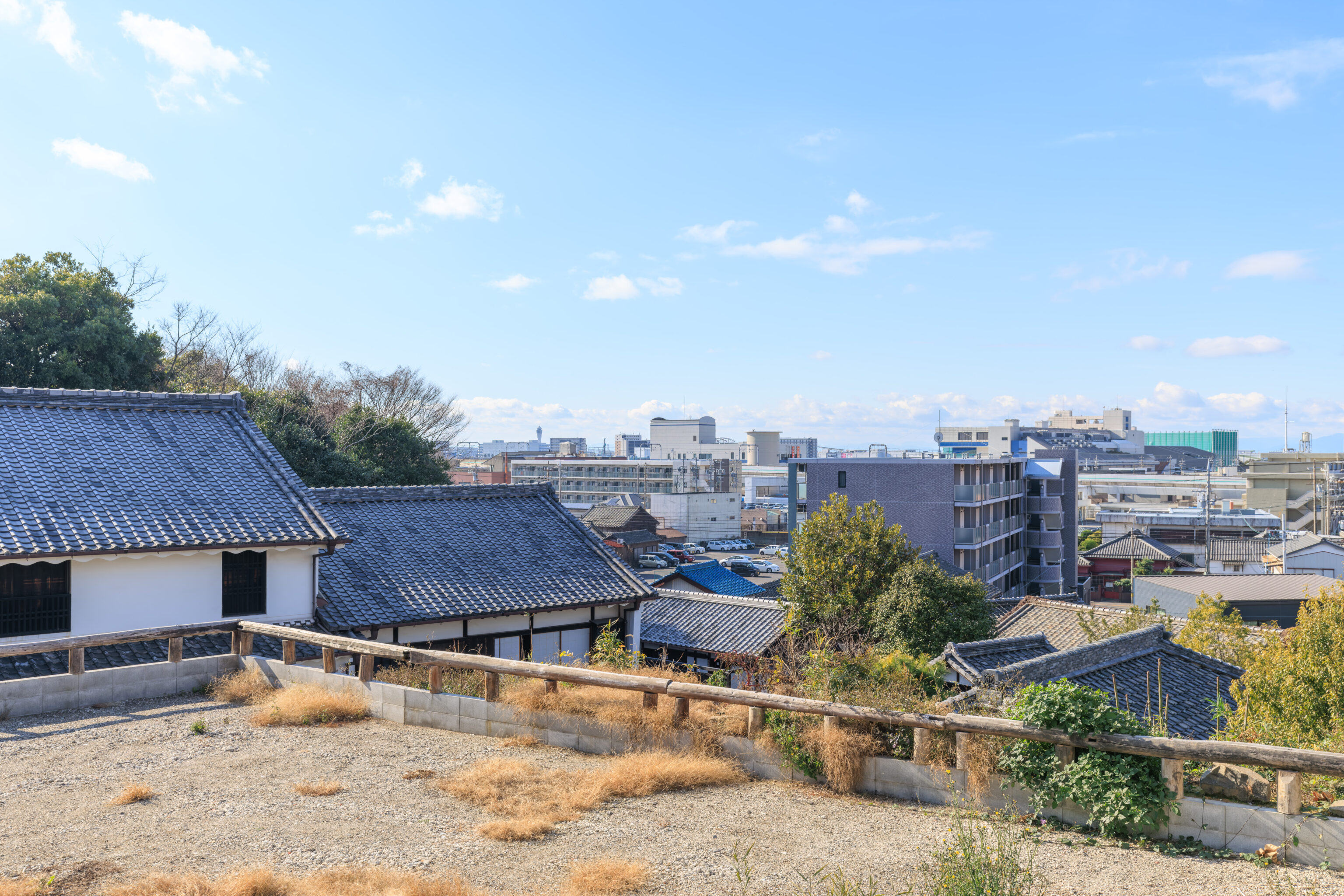
This gallery had a nice view from an open spot on the side of the hill.
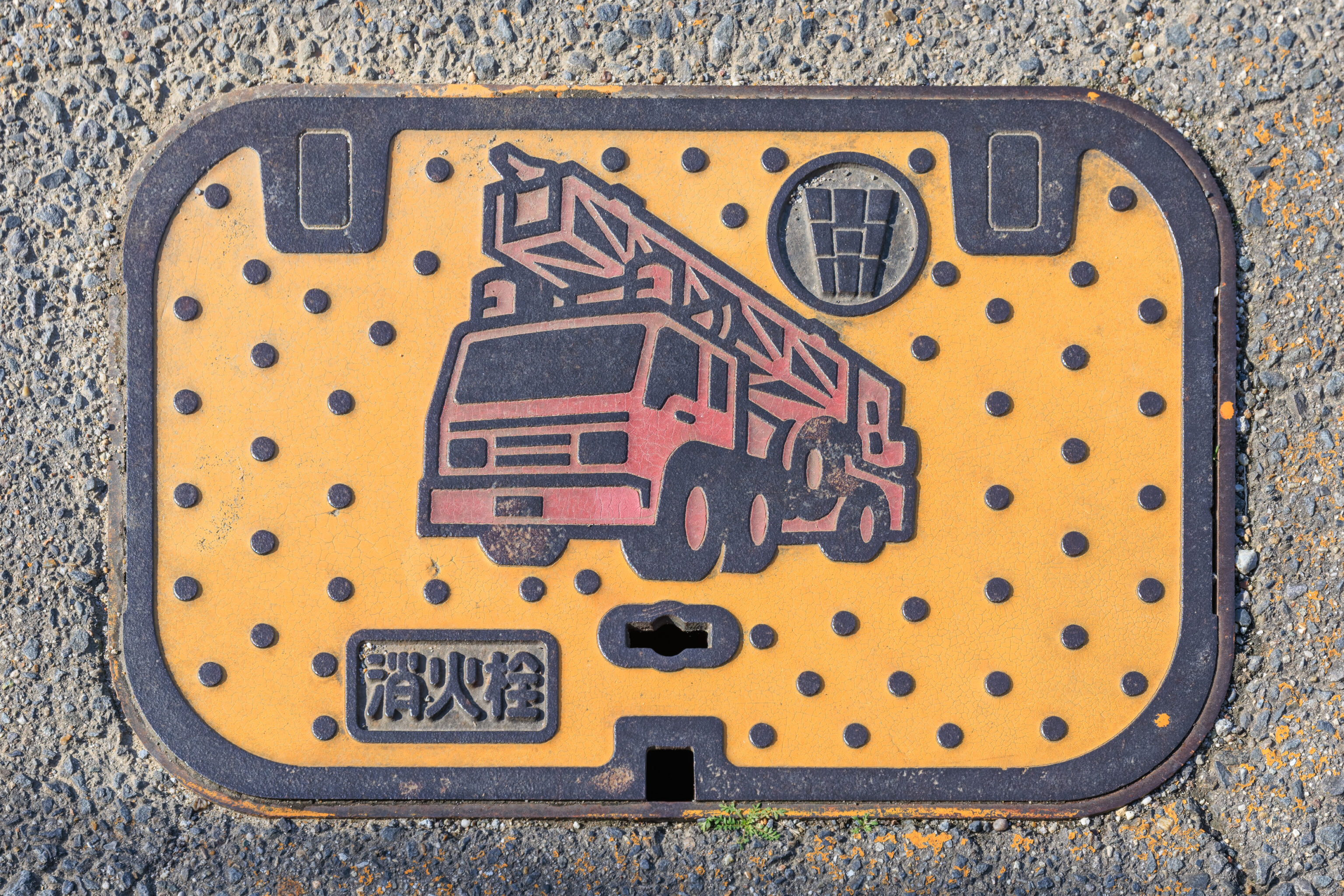
This seems to be kind of a standard depiction of a fire truck. It does include the Tokoname logo though!
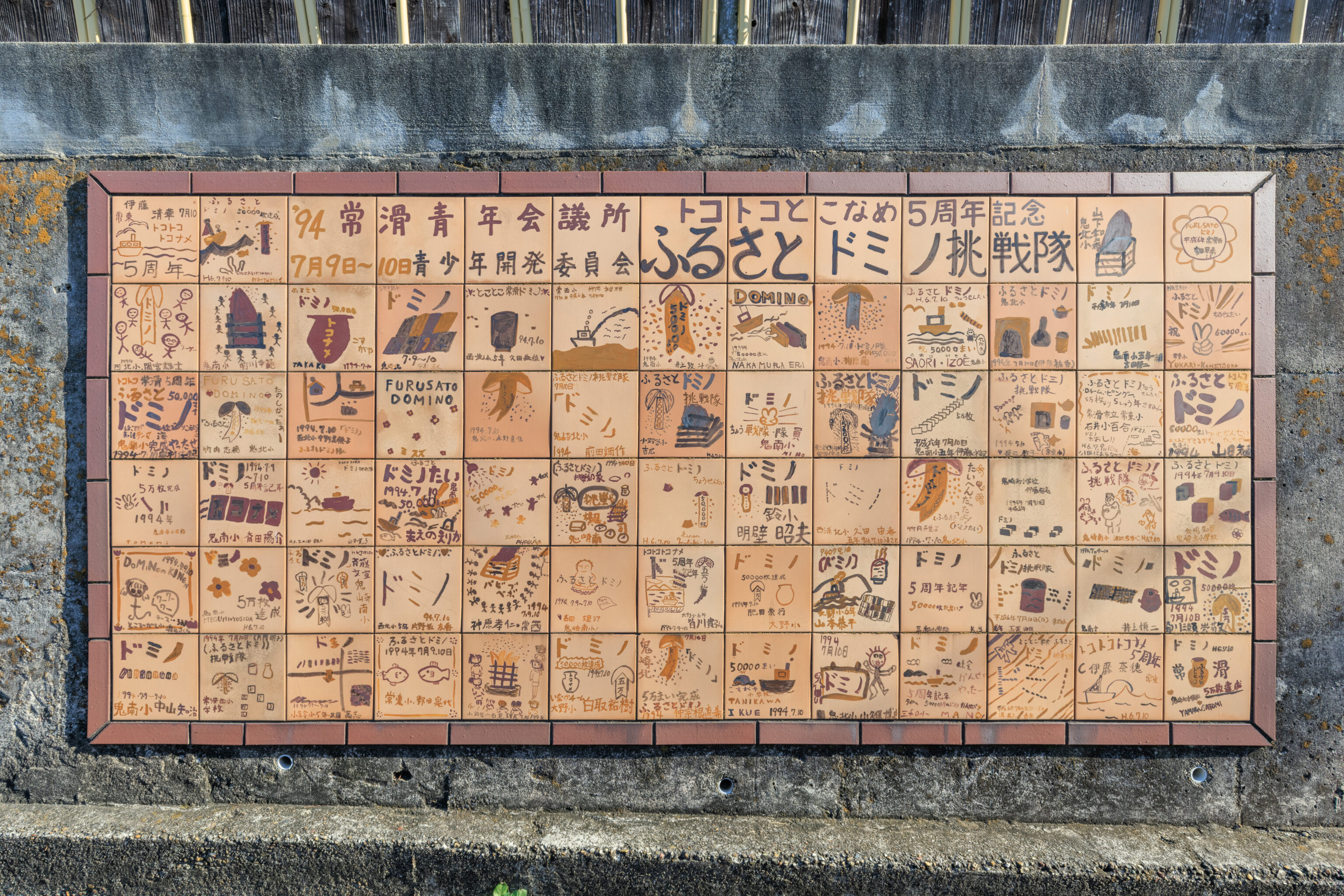
The text here indicates that this display of ceramic tiles was created in 1994:
Tokotoko Tokoname 5th Anniversary
Hometown Domino Challenge Team

1994 Tokoname Junior Chamber
July 9–10 Youth Development Committee
– Text from the top of the tiles above, read using Google Gemini and translated using Google Translate.
It is a bit unexpected that this was created by a domino team! Some of the tiles do depict dominoes and use the word domino in English so it checks out!
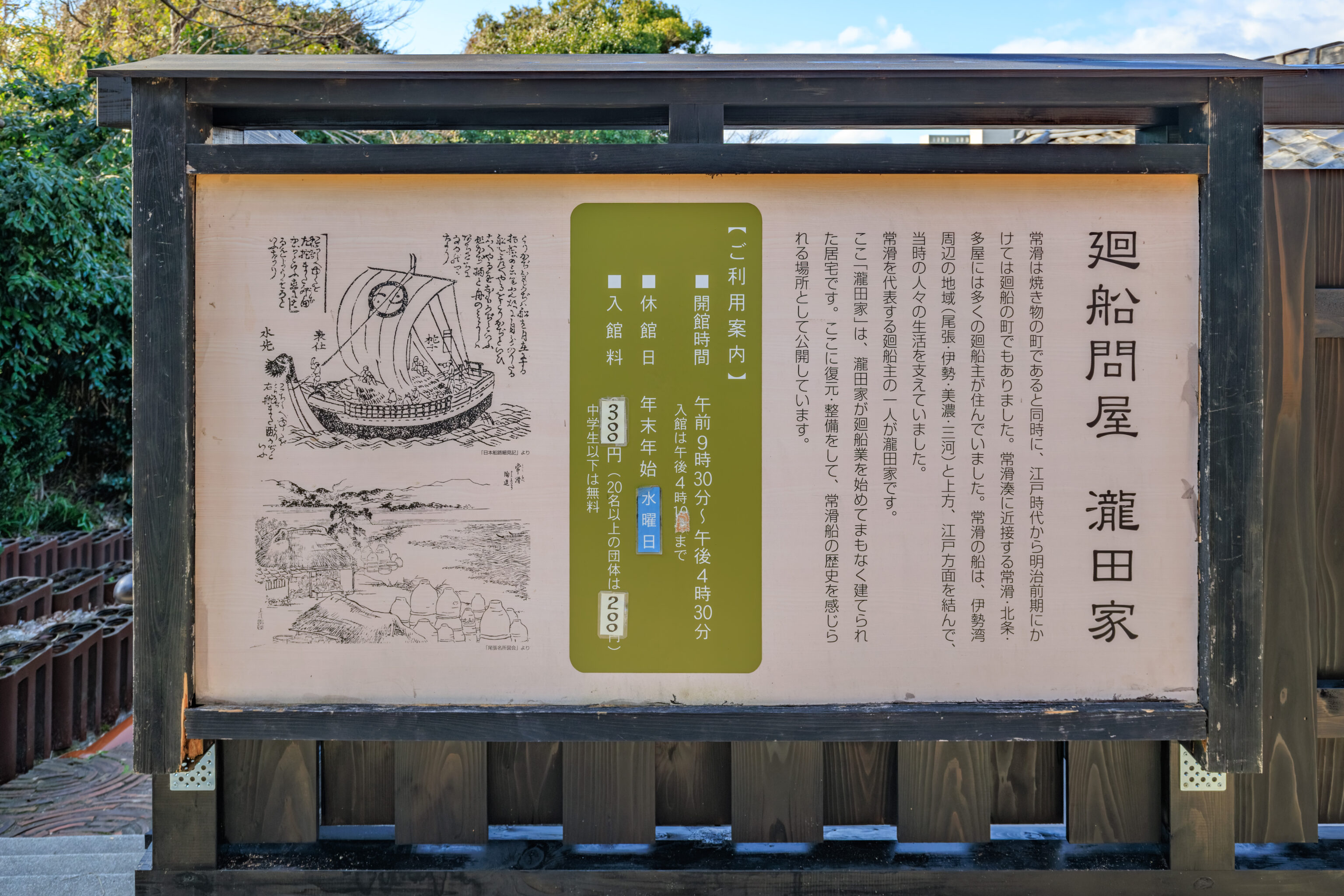
We turned here by this sign to visit the Takita House. This was the former residence of the Takita family which was in the shipping business. Today, it is a museum.
The Takita Family Shipping Agency
Tokoname is a town renowned for its pottery, but from the Edo period through the early Meiji era, it was also a thriving hub for coastal shipping. Many shipping merchants resided in the Tokoname, Hojo, and Taya districts, all located near the Tokoname port. Their vessels connected the regions surrounding Ise Bay—Owari, Ise, Mino, and Mikawa—with the Kamigata (Osaka-Kyoto) and Edo areas, playing a vital role in supporting the lives of the people at the time.

The Takita family was one of the most prominent shipping merchant families in Tokoname.

The "Takita House" standing here is the family's residence, built shortly after they launched their shipping business. The property has been restored and preserved, and is now open to the public as a place where visitors can experience the history of Tokoname's shipping trade.
– Text from the sign above, read using Google Gemini and translated using Google Translate.
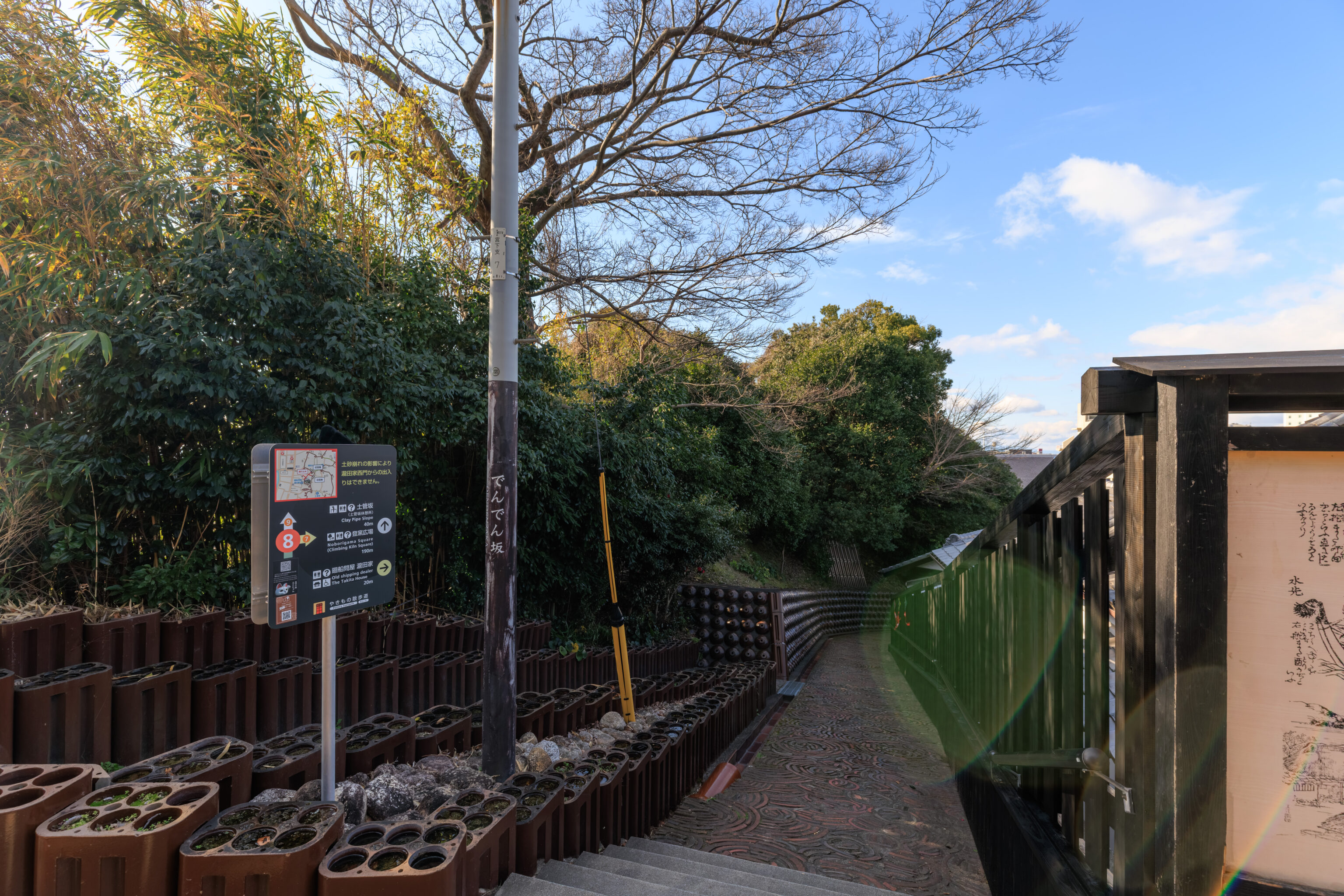
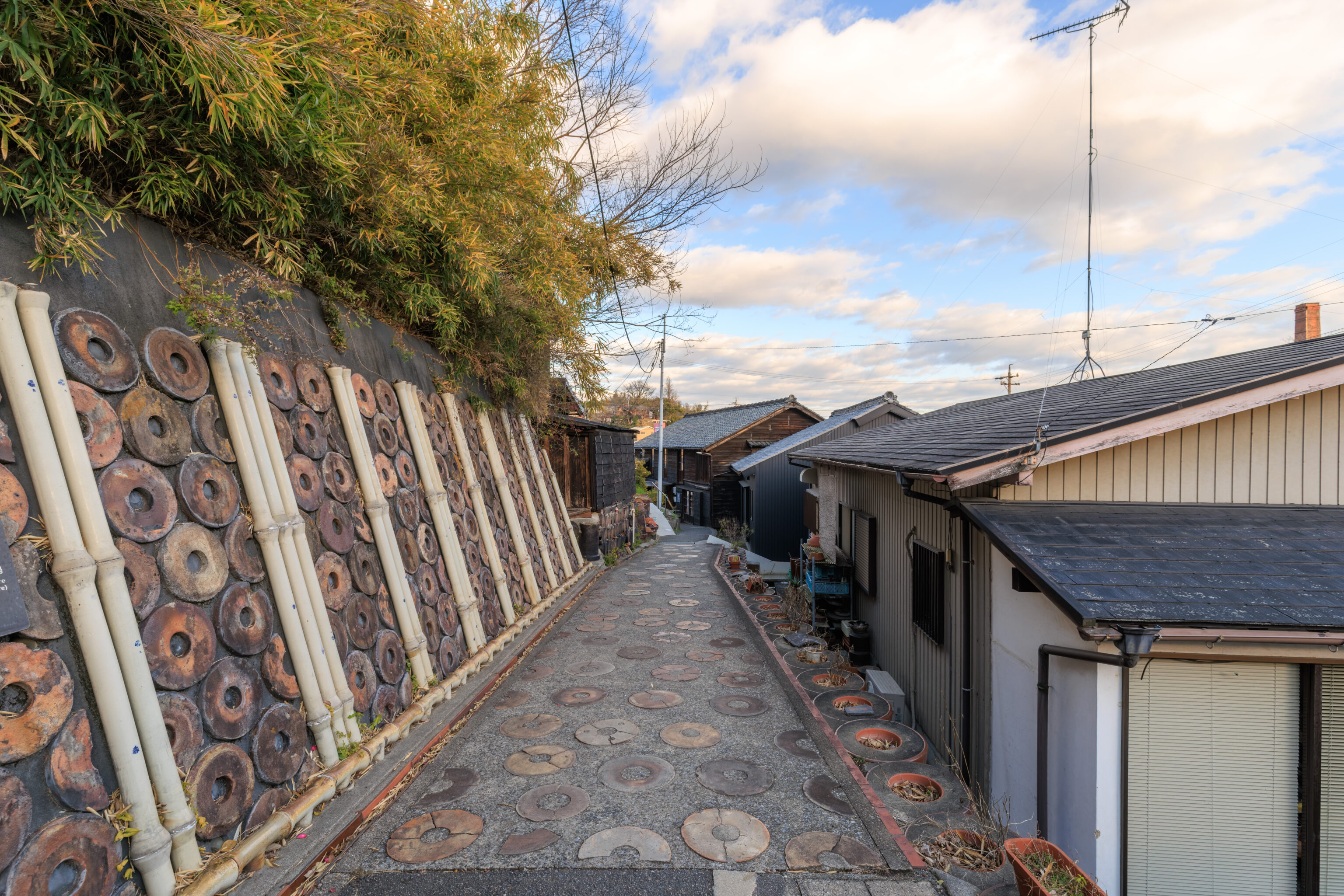
We walked down a steep slope with a fence on one side and a ceramic retaining wall on the other.
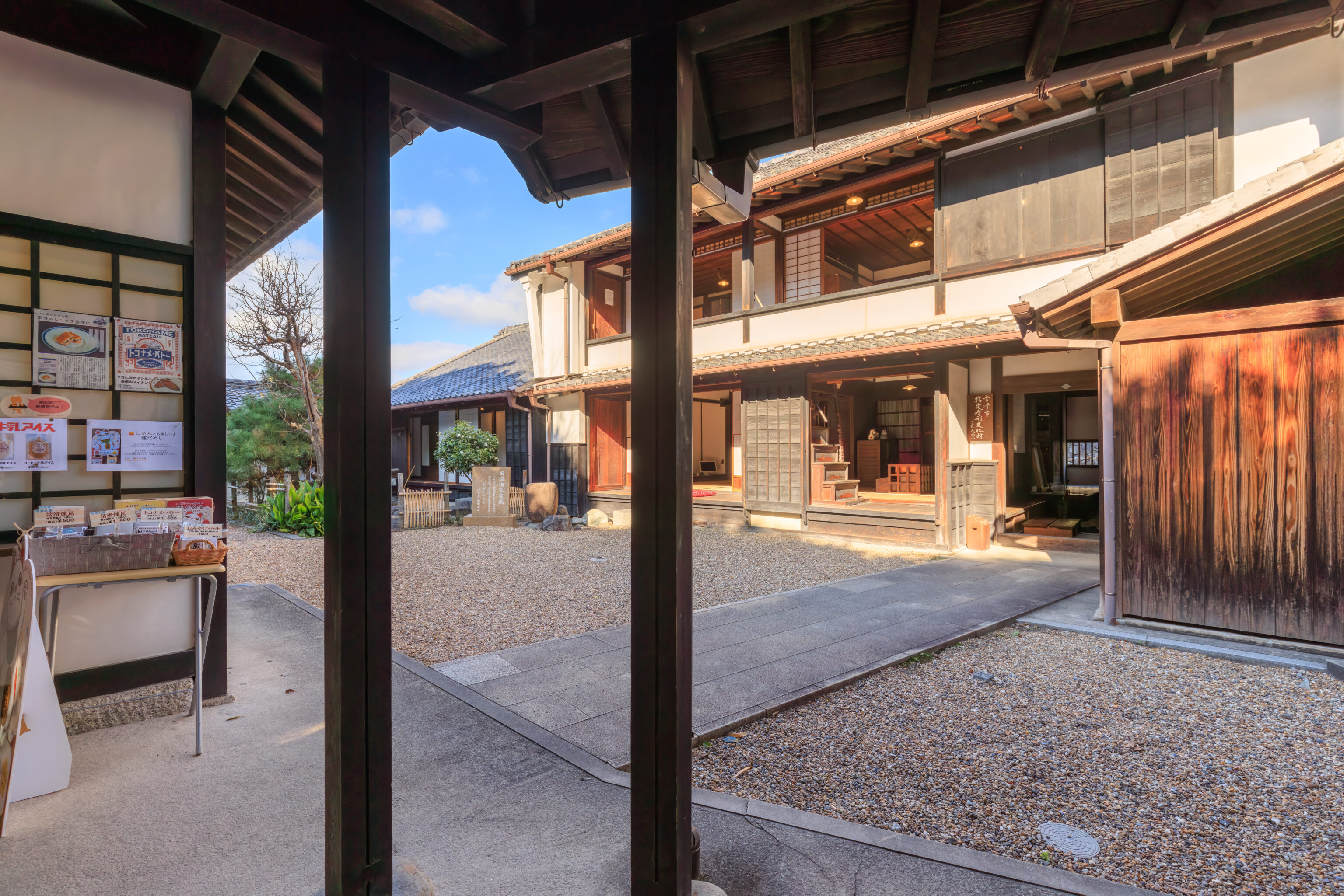
We sat for a bit here in the shade while we waited for the staff to return to the ticket office to sell us entry tickets.
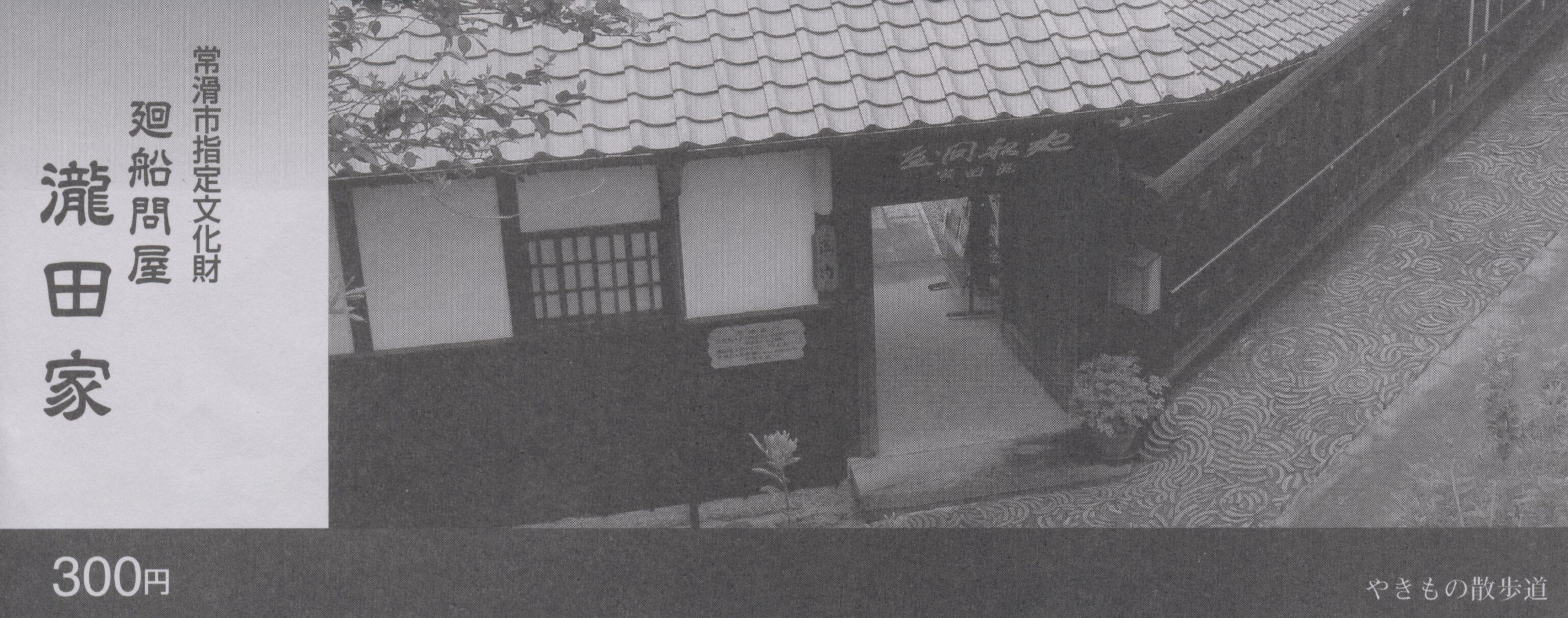
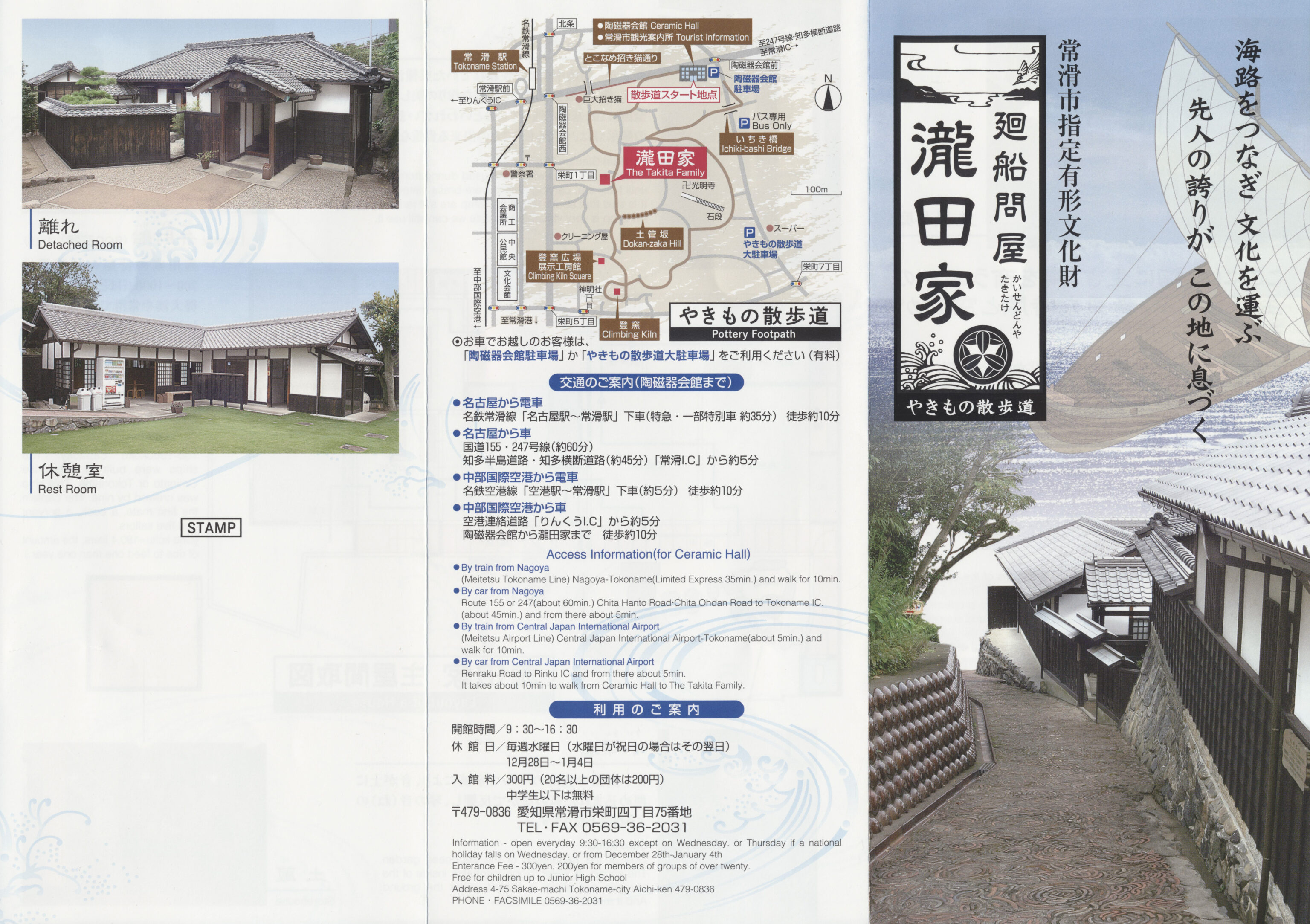
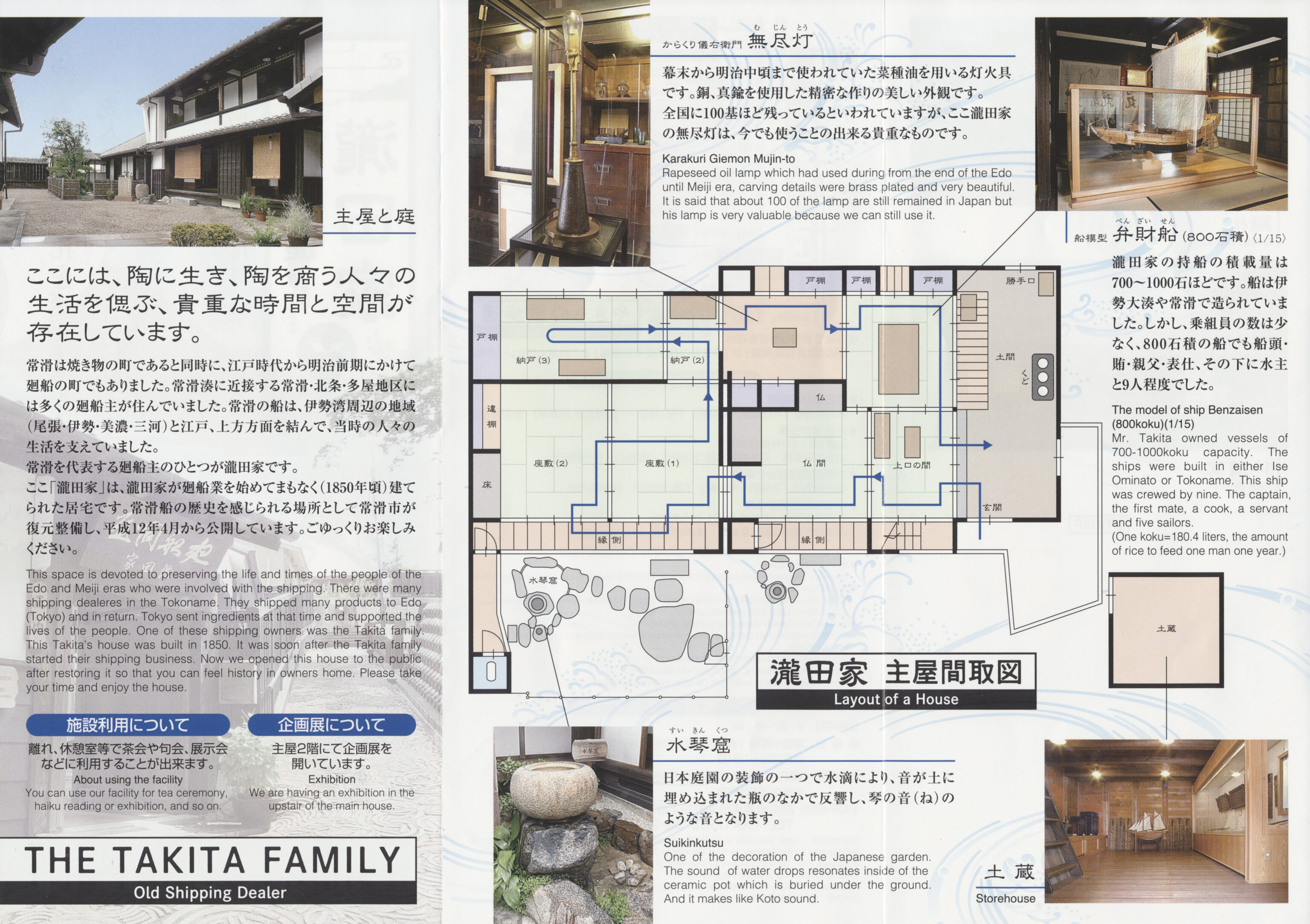
An informational pamphlet in both English and Japanese was provided along with our tickets.
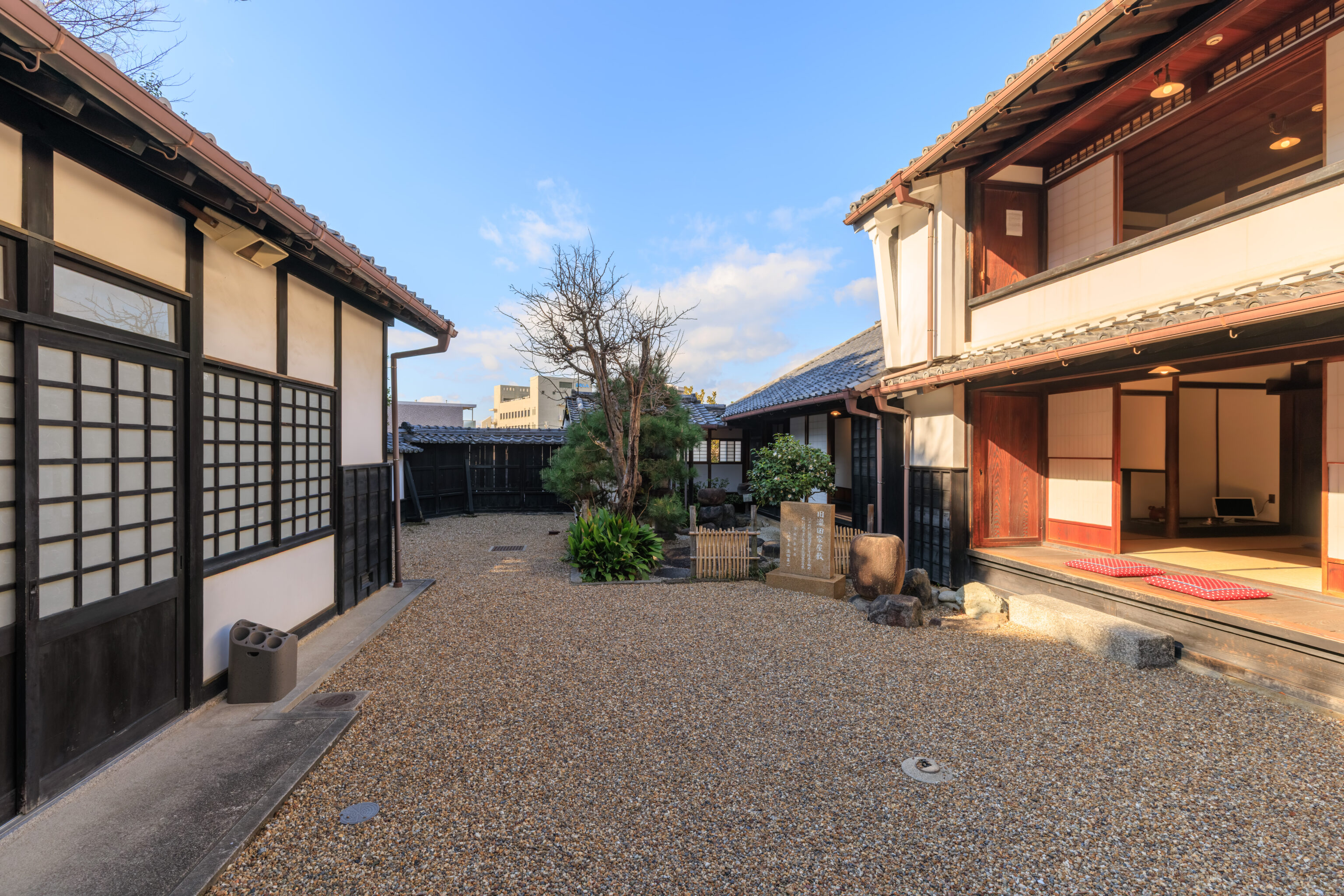
The Takita House consists of a two story structure and a small fenced yard.
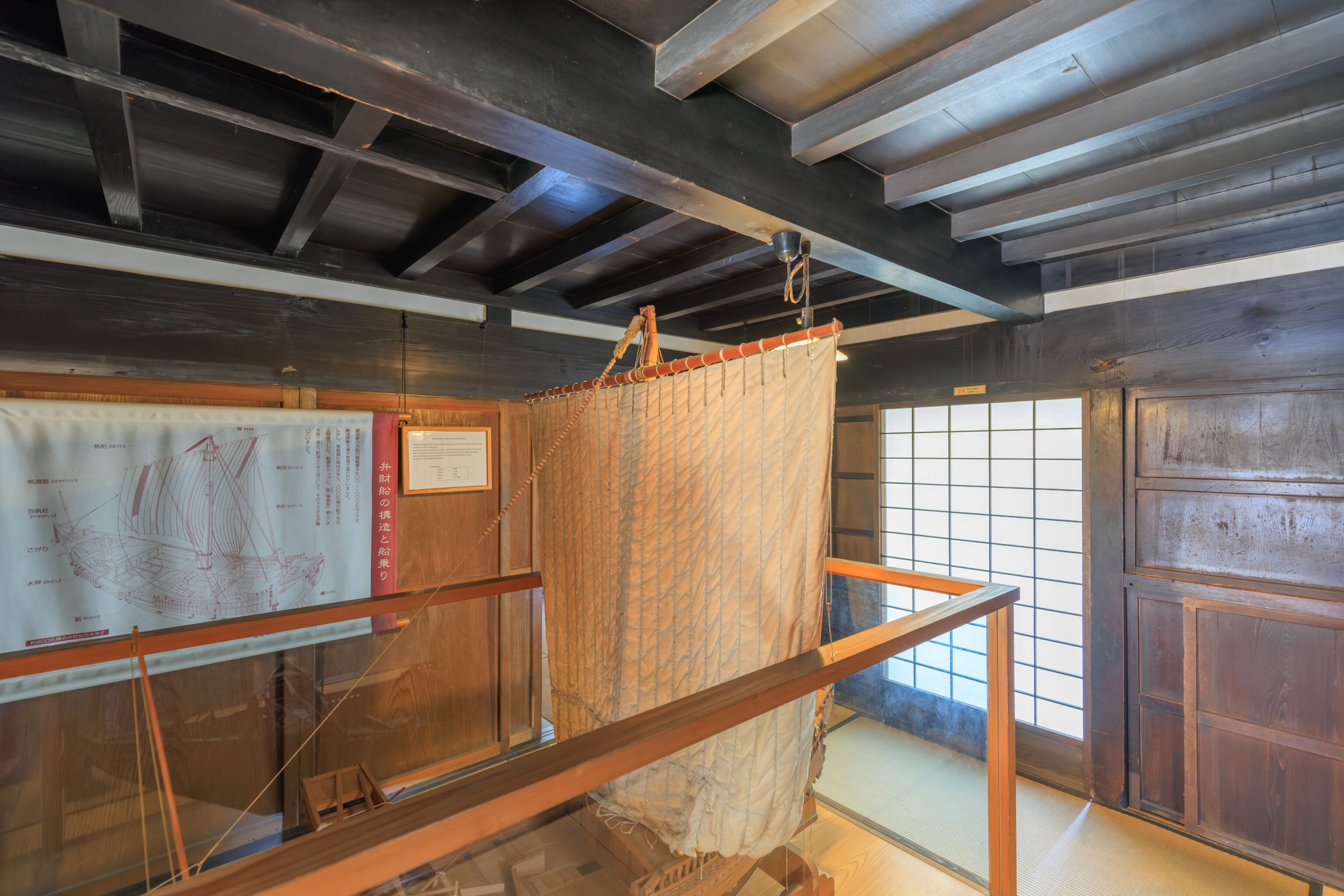
We went inside to take a look.
Structure of Bezai-sen & Sailors
The ships belonged to the Takita Family could carry a load of 105- 150 tons and were built in Ohminato, Ise or Tokoname. However, the size of the crew was small ... only 9 crew members for the 120-ton freight ship. Sendo, the captain, was the top and there were three key positions under the captain, such as Makanai as a purser, Oyaji as a boatswain, and Omoteshi as a mate. The sailors were working under them.
– Text from a sign.
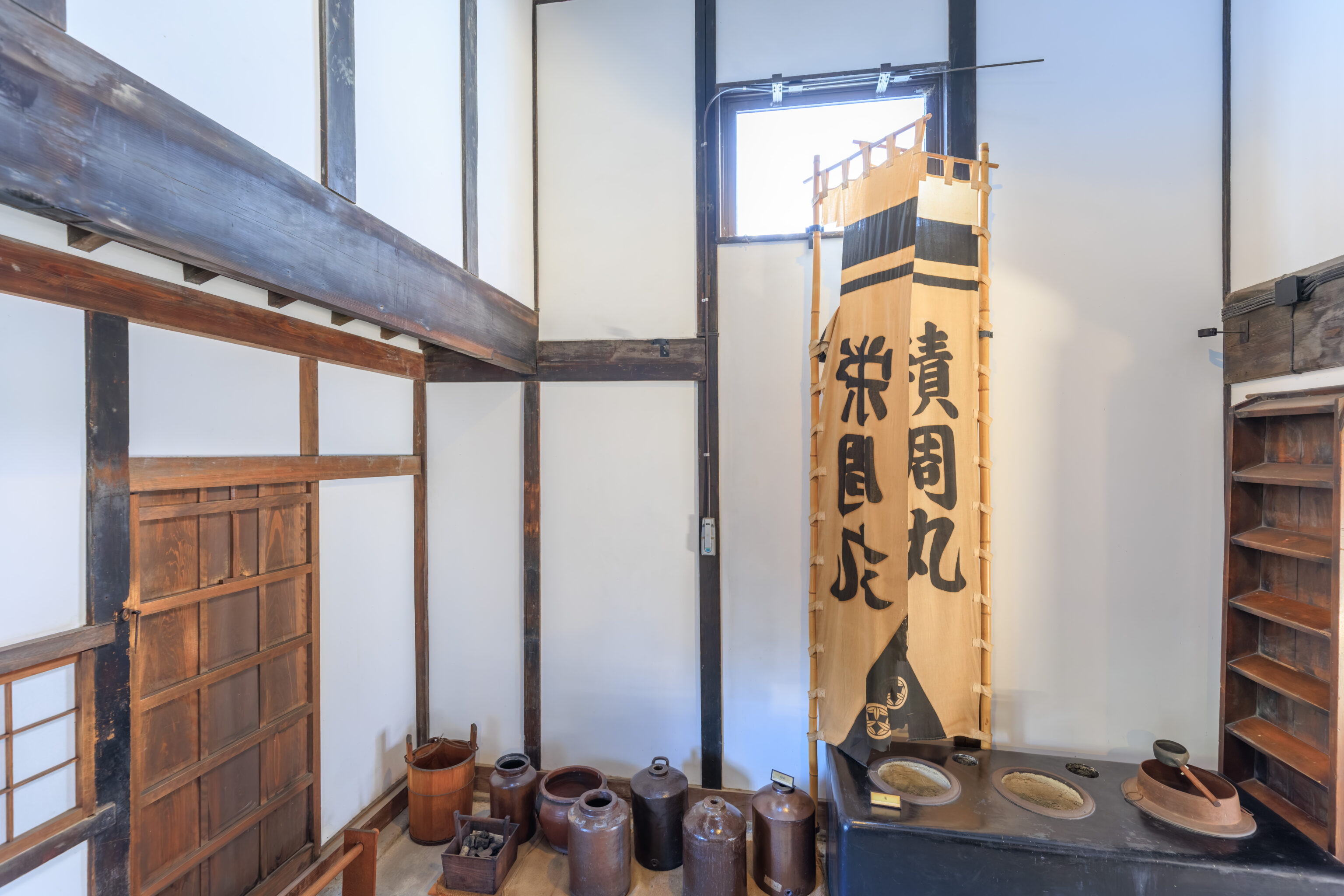
There were various items on display in the house.
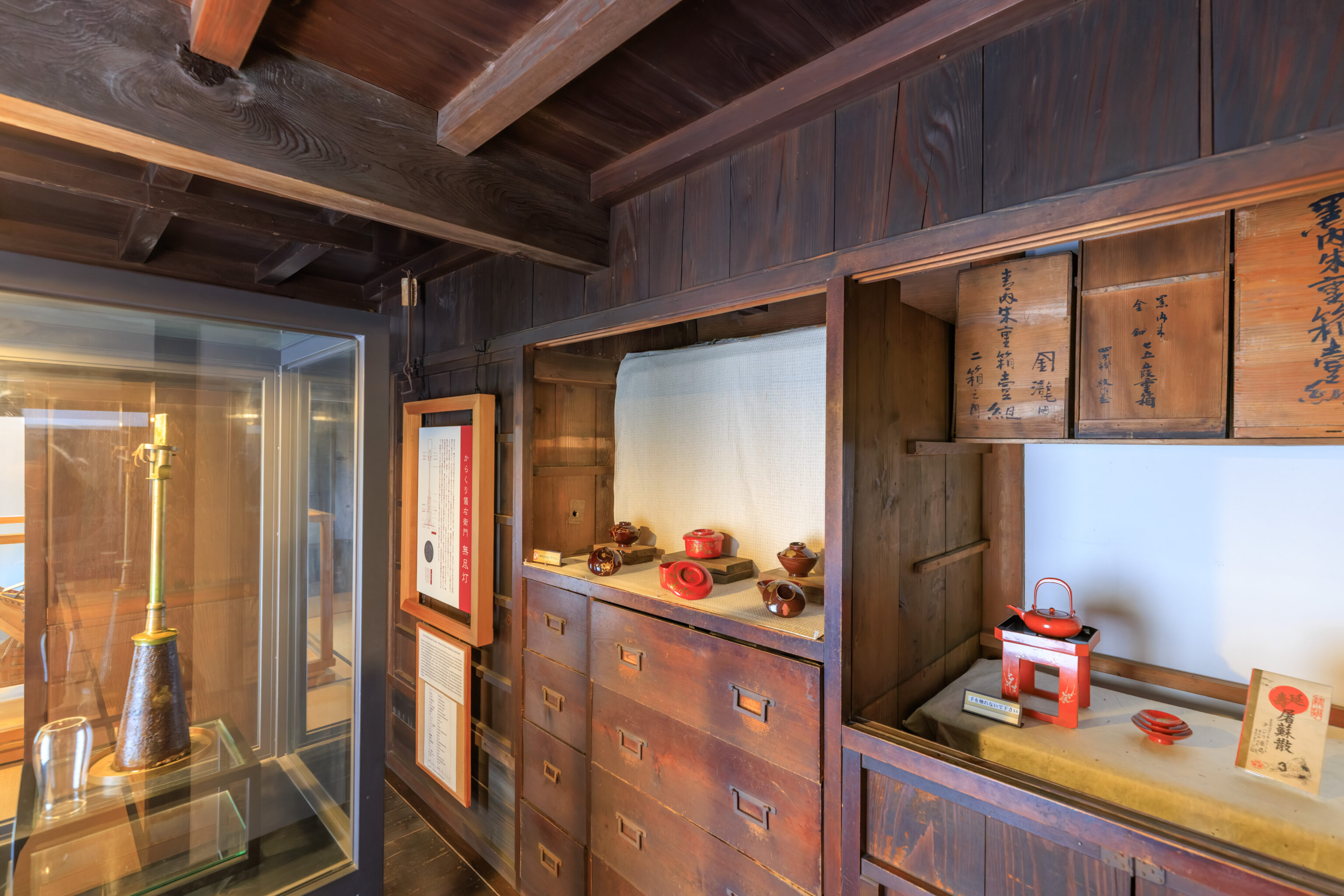
The artifact on the left in the glass display case is an automatic refueling lamp stand:
Karakuri Mechanical Giuemon Mujinto (Automatic Refueling Lamp Stand)
Mujinto is a lamp stand by using rape-seed oil and was used in the 19th-20th century. It was an epock-making invention, such as the flame lasted for a long time by pouring out oil and adding pressure, the flame was light and high enough to illuminate wide area, and it's a precision machine with beautiful shape by using copper and brass. It was disappeared because of the domestic production of oil lamps and increasing of supply of imported oil lamps in the late 19th century. However, the creativity was highly important.

Mr. Hisashige Tanaka (1799 - 1881) is a maker. He was born in Kurume as a remarkable talented child for craft and devoted himself to study in younger days in Osaka and Kyoto. He created Mannendokei (the masterpiece perpetual clock), now property of the National Science Museum, Tokyo. The Mujinto was made when he established a shop called Kikou-do(the Hall of Automata) in Kyoto. He learned western cutting-edge technology at the naval training center at age of 55 and founded the firm, Tanaka Engineering Works, the telegraphic instrument factory designated by the Ministry of Technology, in Tokyo at age of 75. The factory in Shibaura, extended by his successor, Hisashige Tanaka II, was merged into today's Toshiba group by the Mitsui Zaibatsu.
– Text from a sign.
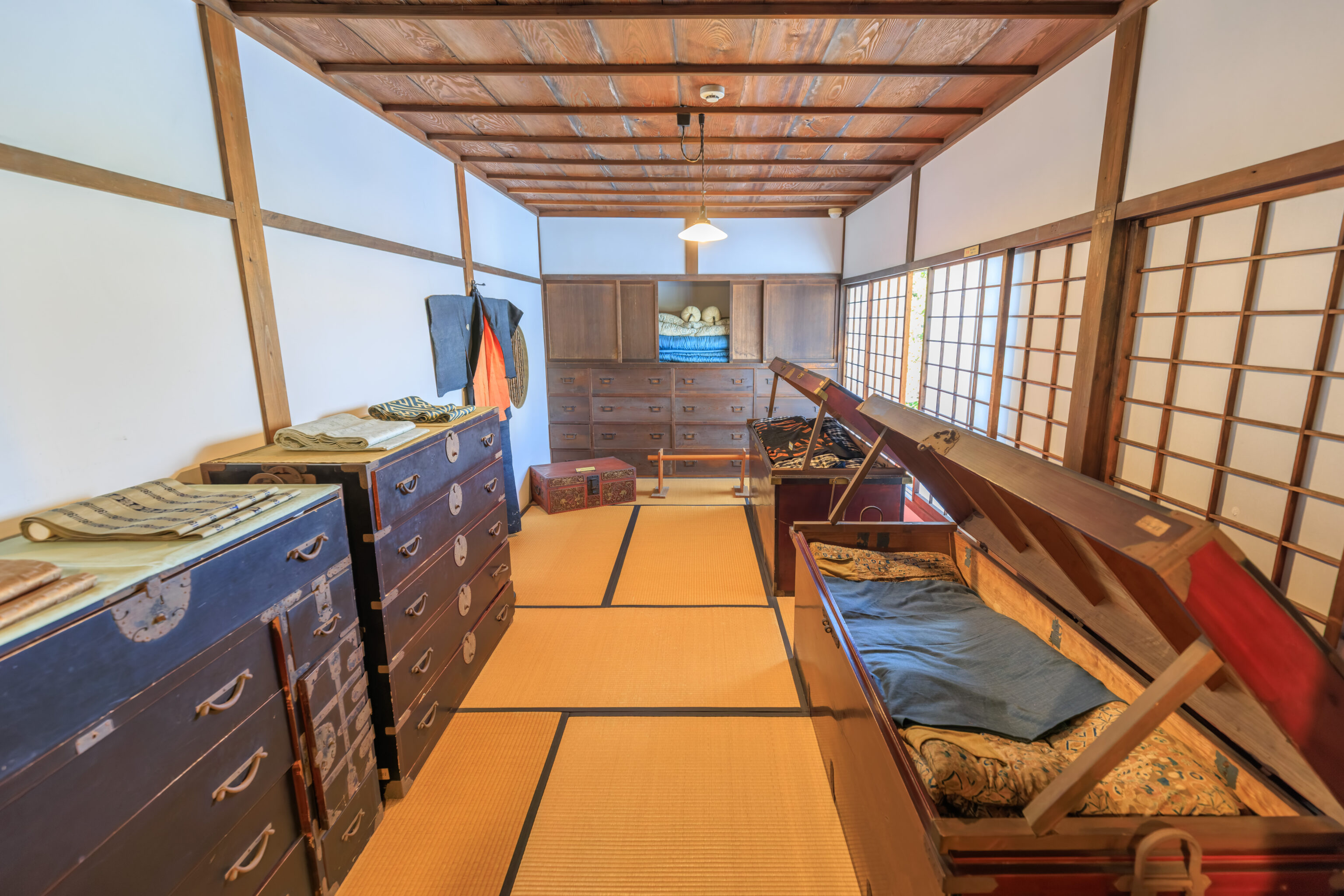
…
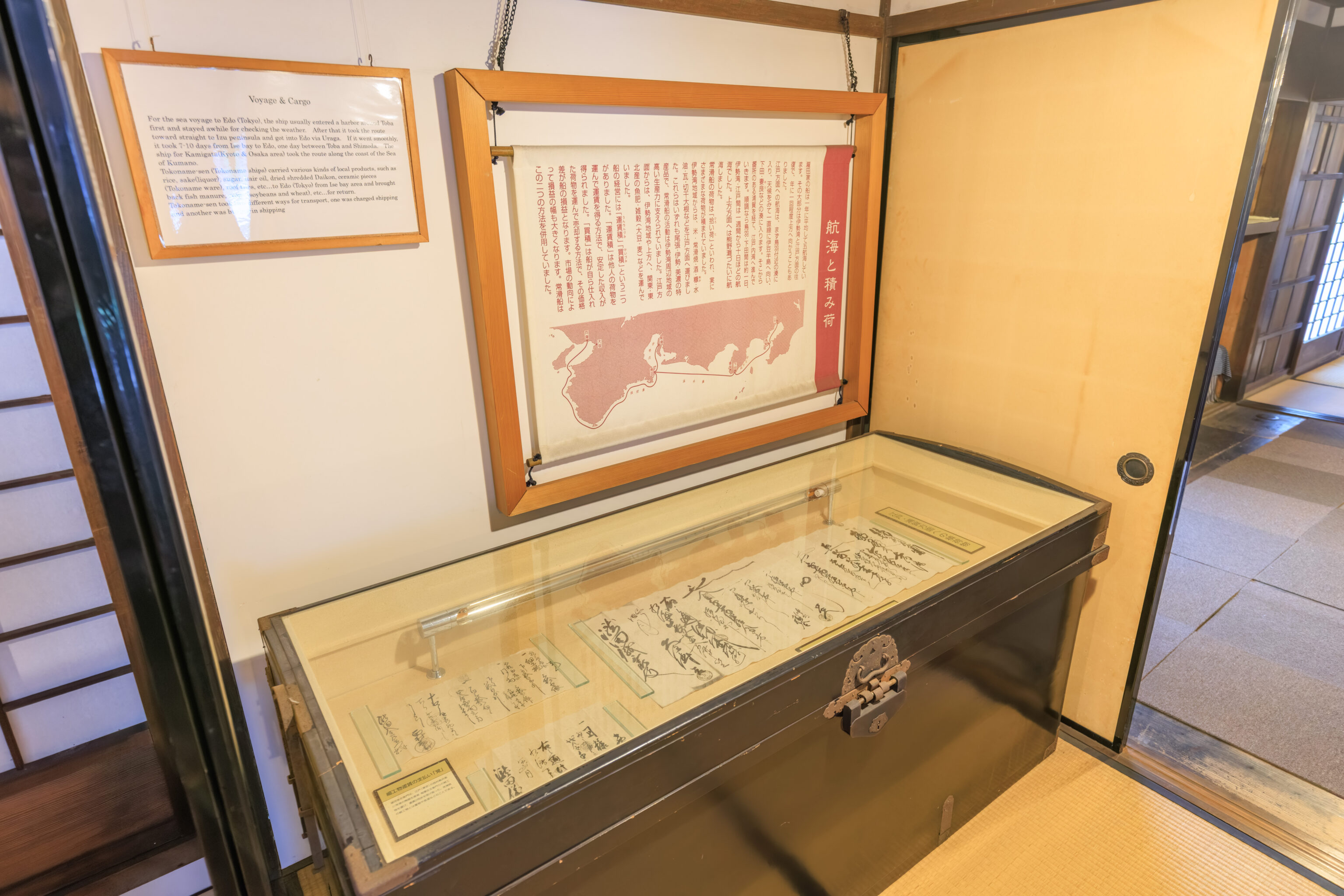
The sign here discusses the Takita family’s shipping business:
Voyages and Cargo
The Takita family's ships made an average of five voyages per year. Most of these were round trips between Ise Bay and the Edo region, though they would also sail toward the Kamigata region (the Kyoto-Osaka area) about once a year.

For voyages to Edo, the ships would first enter a port near Toba; after checking the weather, they would sail directly toward the Izu Peninsula, stopping at ports such as Shimoda and Mera. From there, they passed through Uraga—where a maritime checkpoint was located—and proceeded into Edo Bay. Under favorable conditions, the voyage between Toba and Shimoda took about one day, while the trip between Ise Bay and Edo took roughly a week to ten days. Voyages to the Kamigata region followed the coastline along the Kumano-nada Sea.

The cargo carried by Tokoname ships was known as *hiroi-ni* ("collected cargo") and consisted of a wide variety of goods.

From the Ise Bay region, they transported items such as rice, Tokoname ware, sake, rice bran, vegetable oil, roof tiles, and dried daikon radish to Edo. All of these were specialty products of the Owari, Ise, and Mino provinces; the operations of Tokoname ships were supported by the high productivity of the area surrounding Ise Bay. On the return leg from Edo, they transported goods such as fish fertilizer and miscellaneous grains (soybeans and wheat) from the Kanto and Tohoku regions to the Ise Bay area and Kamigata.

There were two methods of managing the shipping business: *unchin-zumi* (freight transport) and *kai-zumi* (trading/speculative transport). *Unchin-zumi* involved transporting cargo owned by others in exchange for a shipping fee, providing a stable income. *Kai-zumi* involved transporting and selling goods purchased by the ship operator themselves; the difference between the purchase and sale prices determined the profit or loss. This method carried a greater risk of profit or loss fluctuations depending on market trends. Tokoname ships utilized a combination of these two methods.
– Text from the sign above, read using Google Gemini and translated using Google Translate.
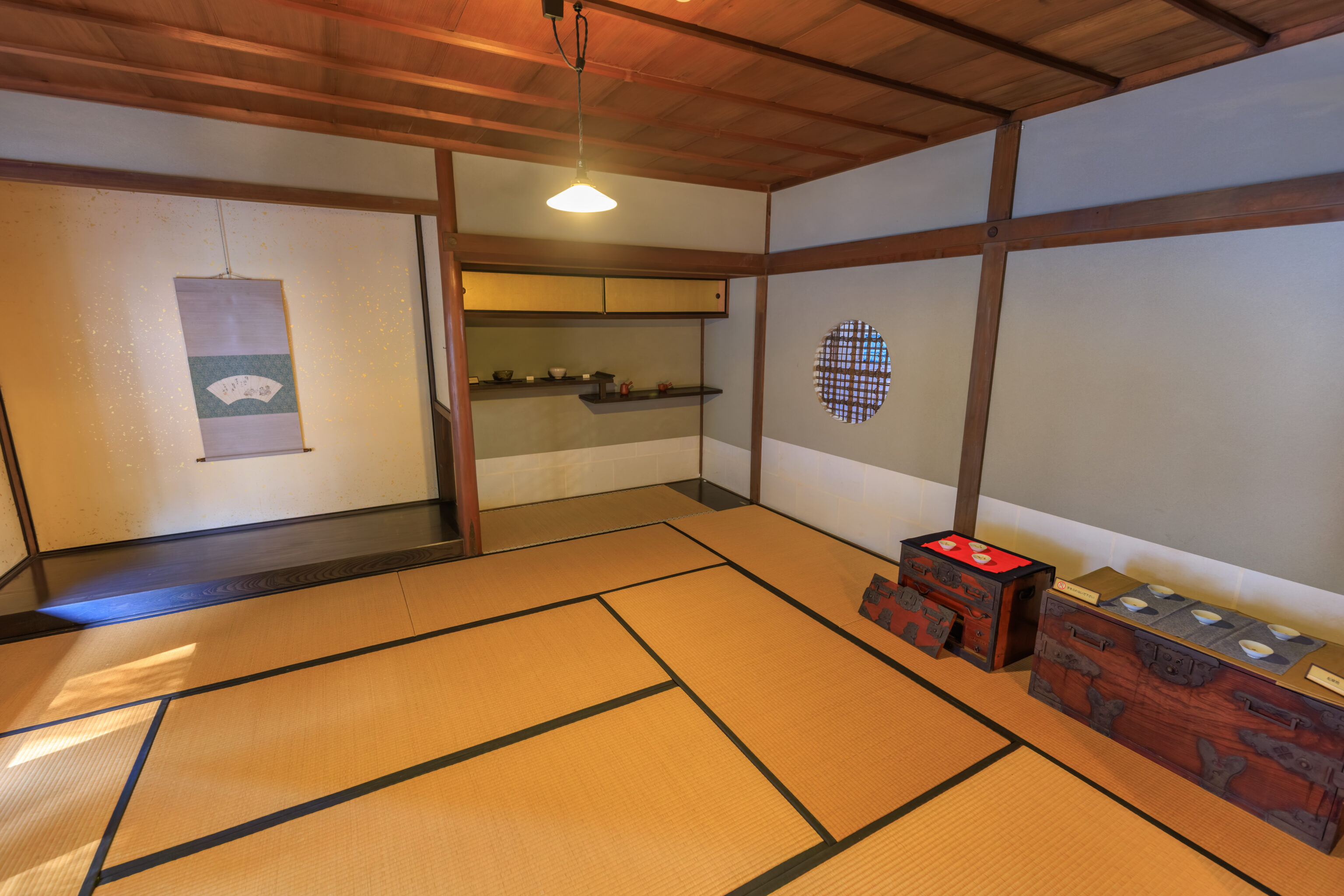
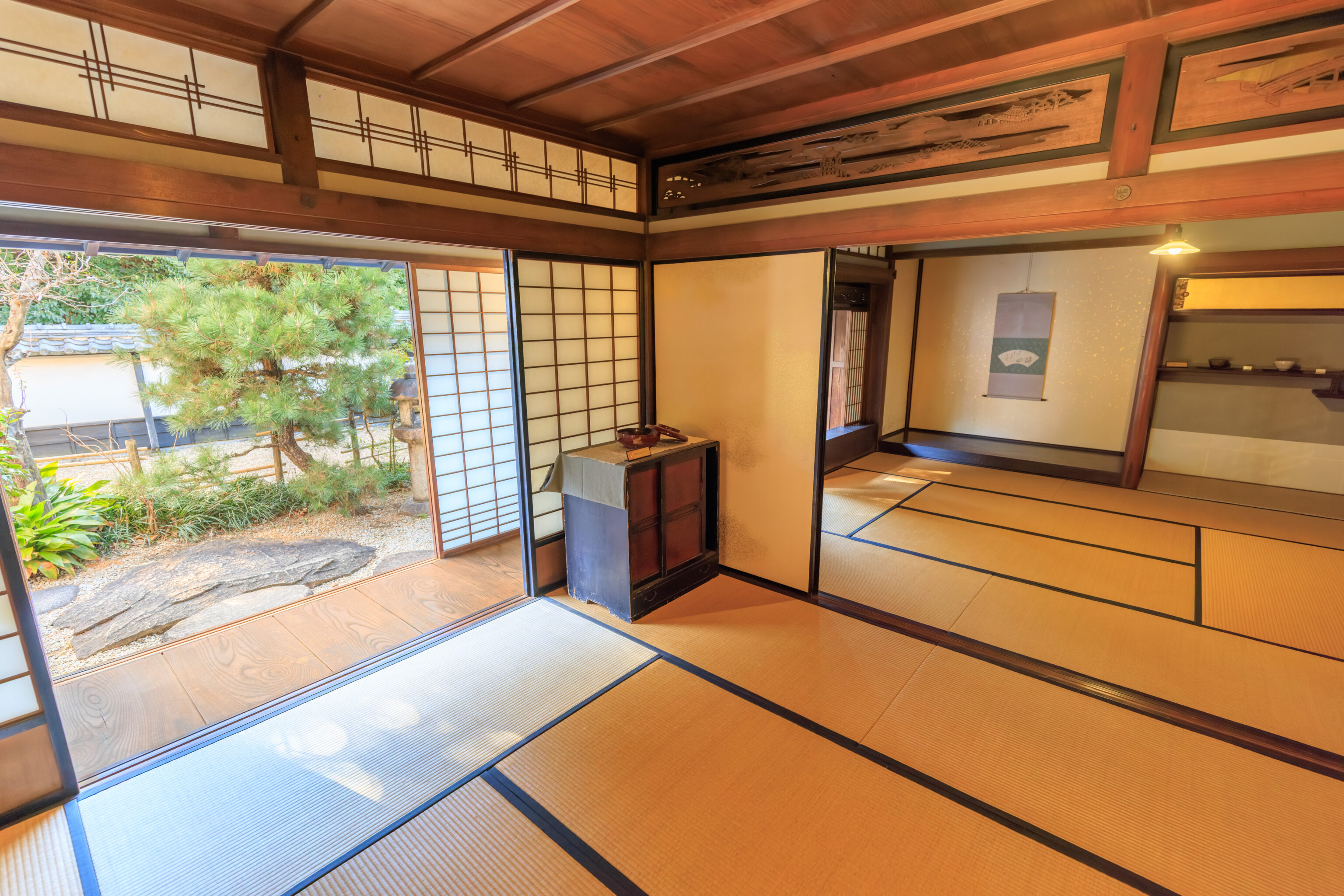
…
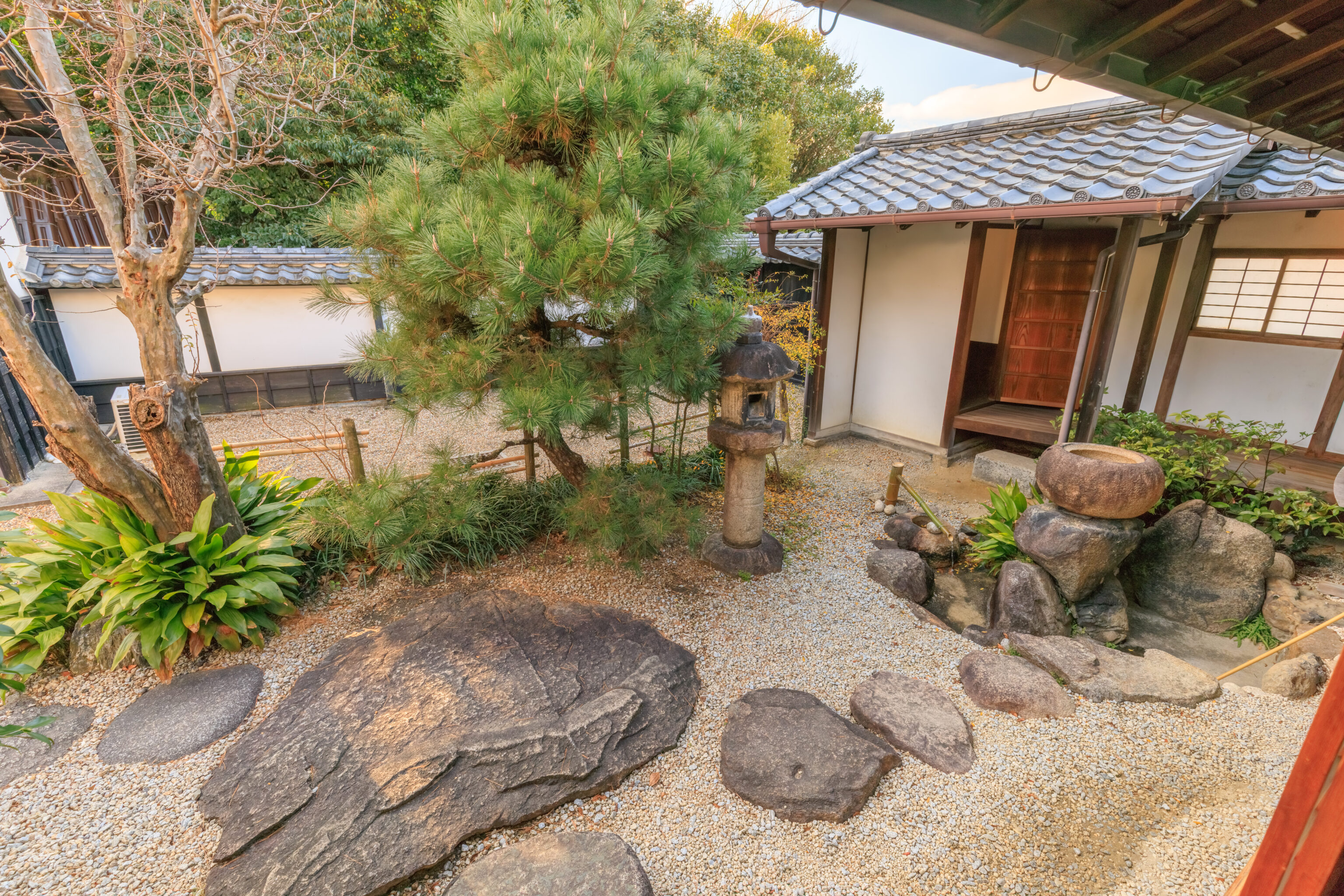
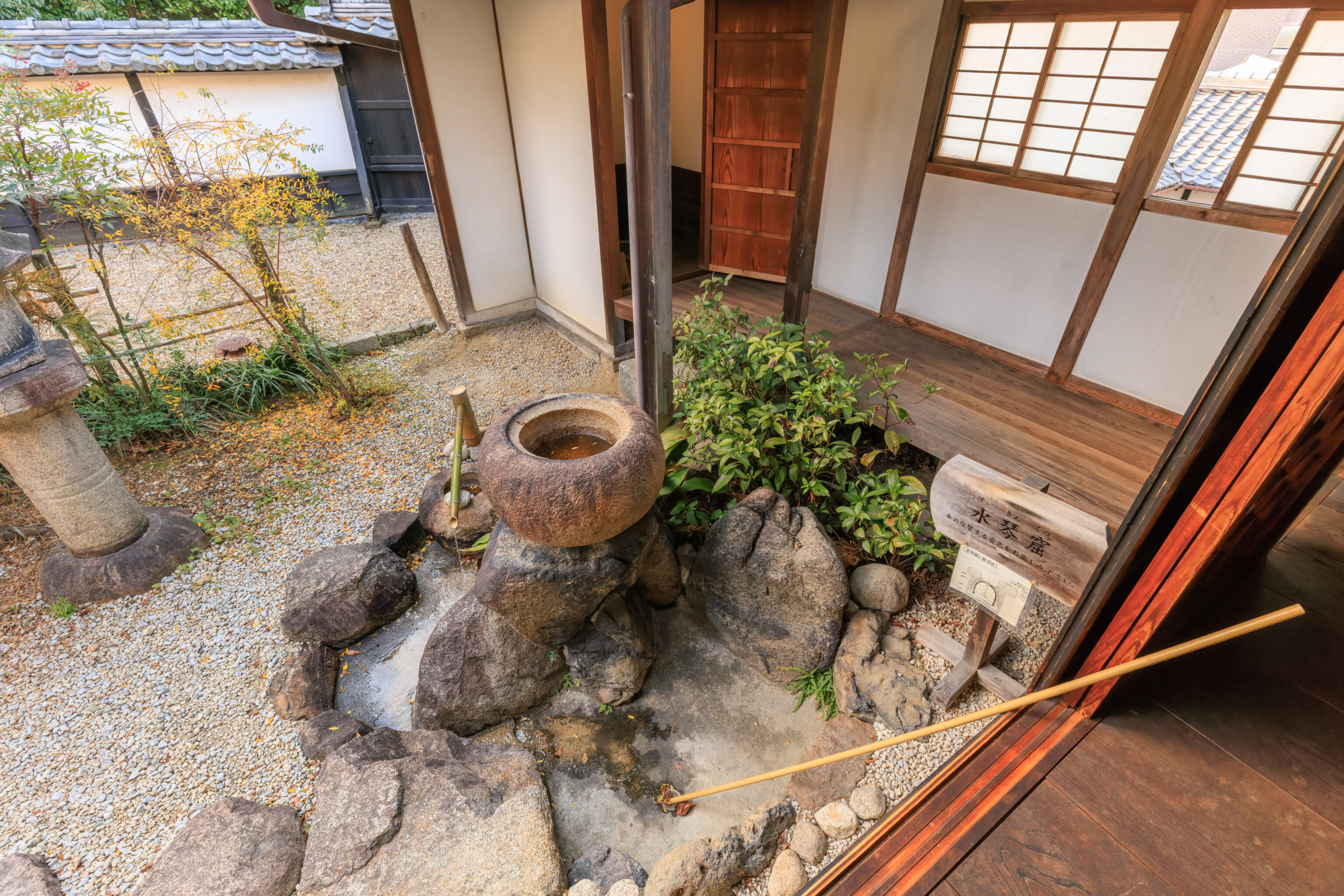
There was a small garden area on the southwest side of the house. Thanks to our visit at the beginning of this trip to Joju-in at Kiyomizu-dera in Kyoto, we recognized one of the garden features as a 水琴窟 Suikinkutsu!
The way the Suikinkutsu works is that water drips down into an underground basin. As each drop falls down and hits the pool of water below, it makes a sound. This sound can be heard through the long pole sticking out of the ground.
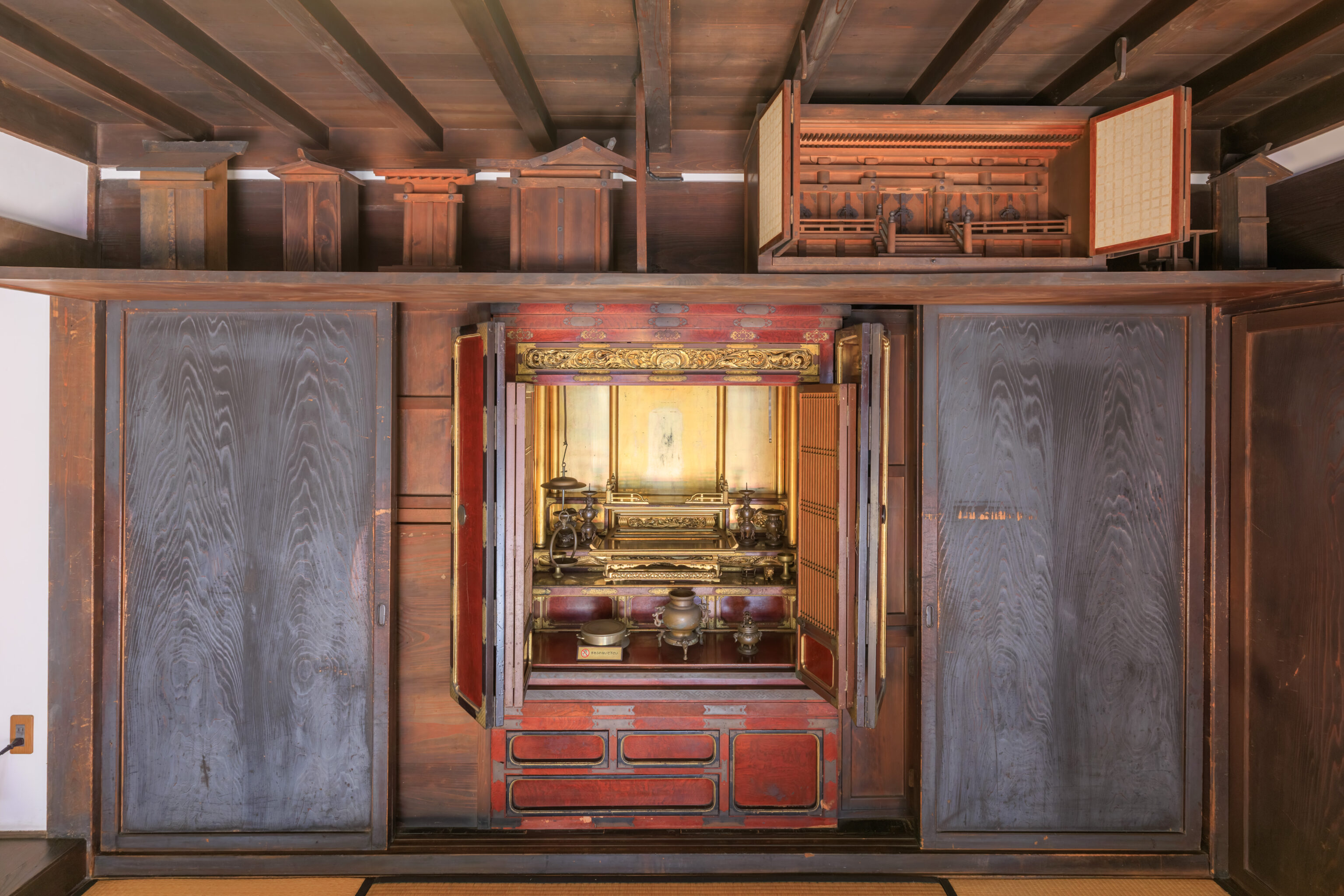
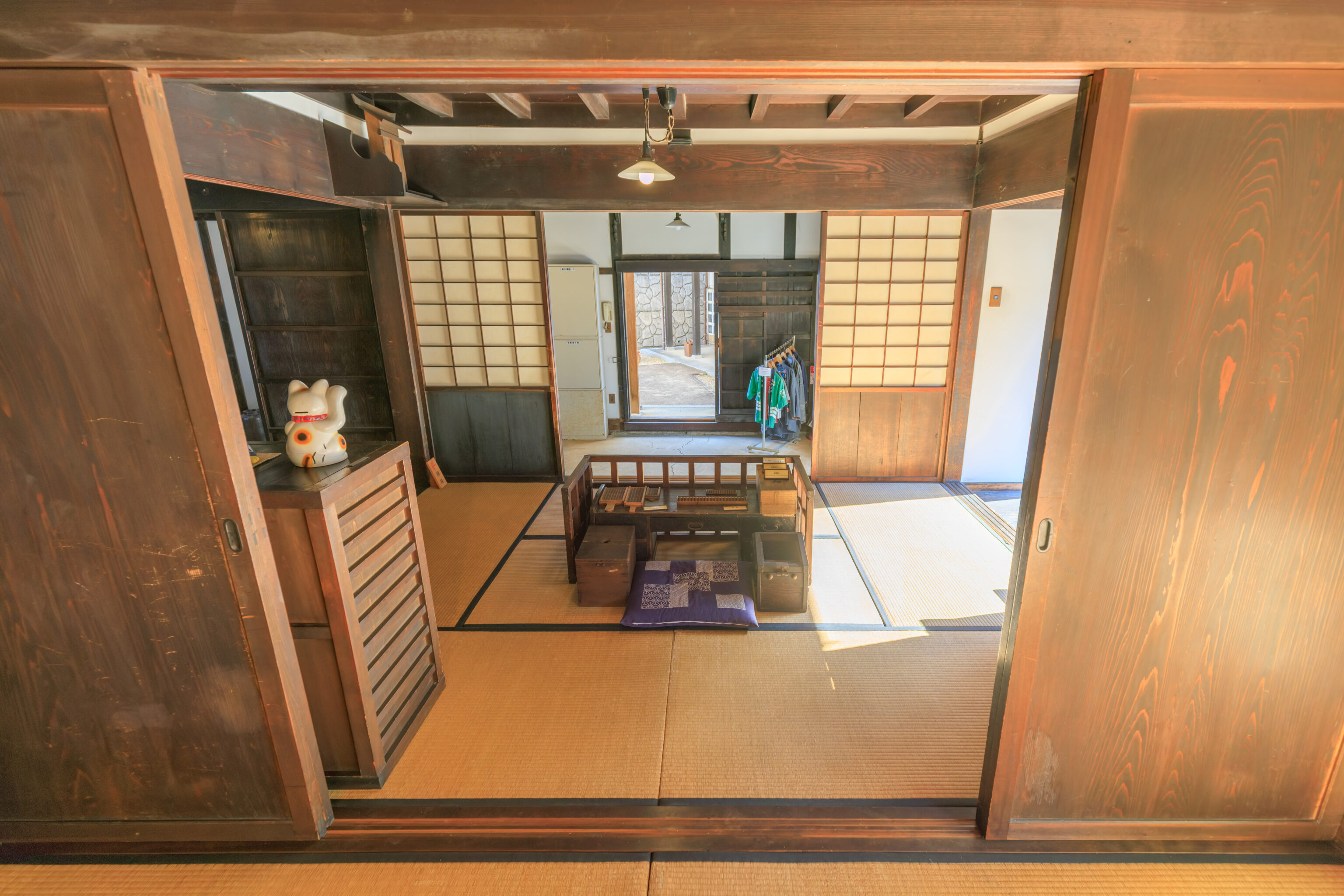
…
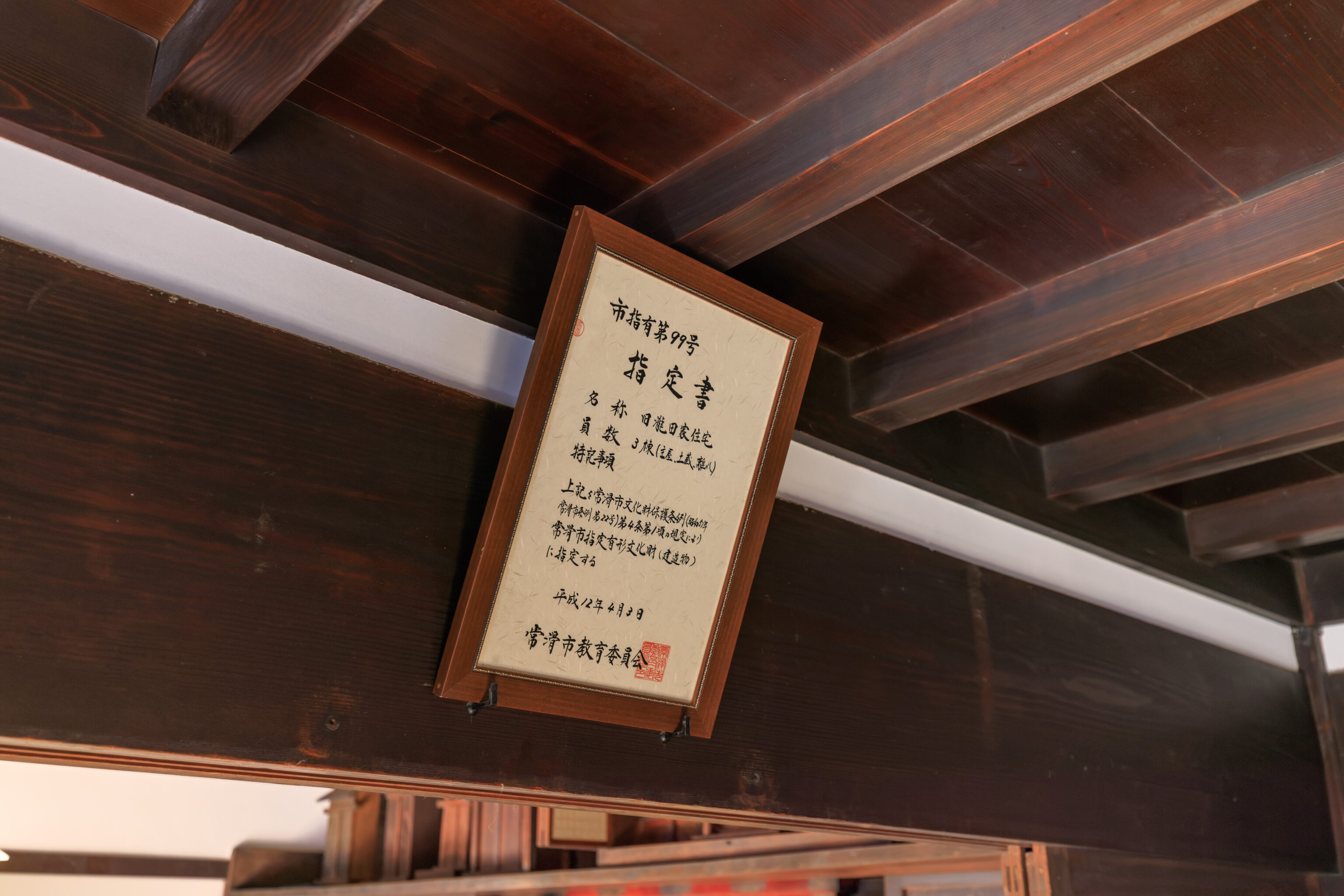
This certificate indicates that this house is Municipal Designated Tangible Cultural Property #99.
City Directive No. 99
Designation Certificate

Name: Former Takita Family Residence
Quantity: Three buildings (main house, storehouse, and detached building)
Special Notes:

The above is designated as a Tangible Cultural Property (Structure) of Tokoname City pursuant to the provisions of Article 4, Paragraph 1 of the Tokoname City Ordinance on the Protection of Cultural Properties (Tokoname City Ordinance No. 22 of 1976).

April 3, 2000
Tokoname City Board of Education
– Text from the certificate in the photograph above, read using Google Gemini and translated using Google Translate.
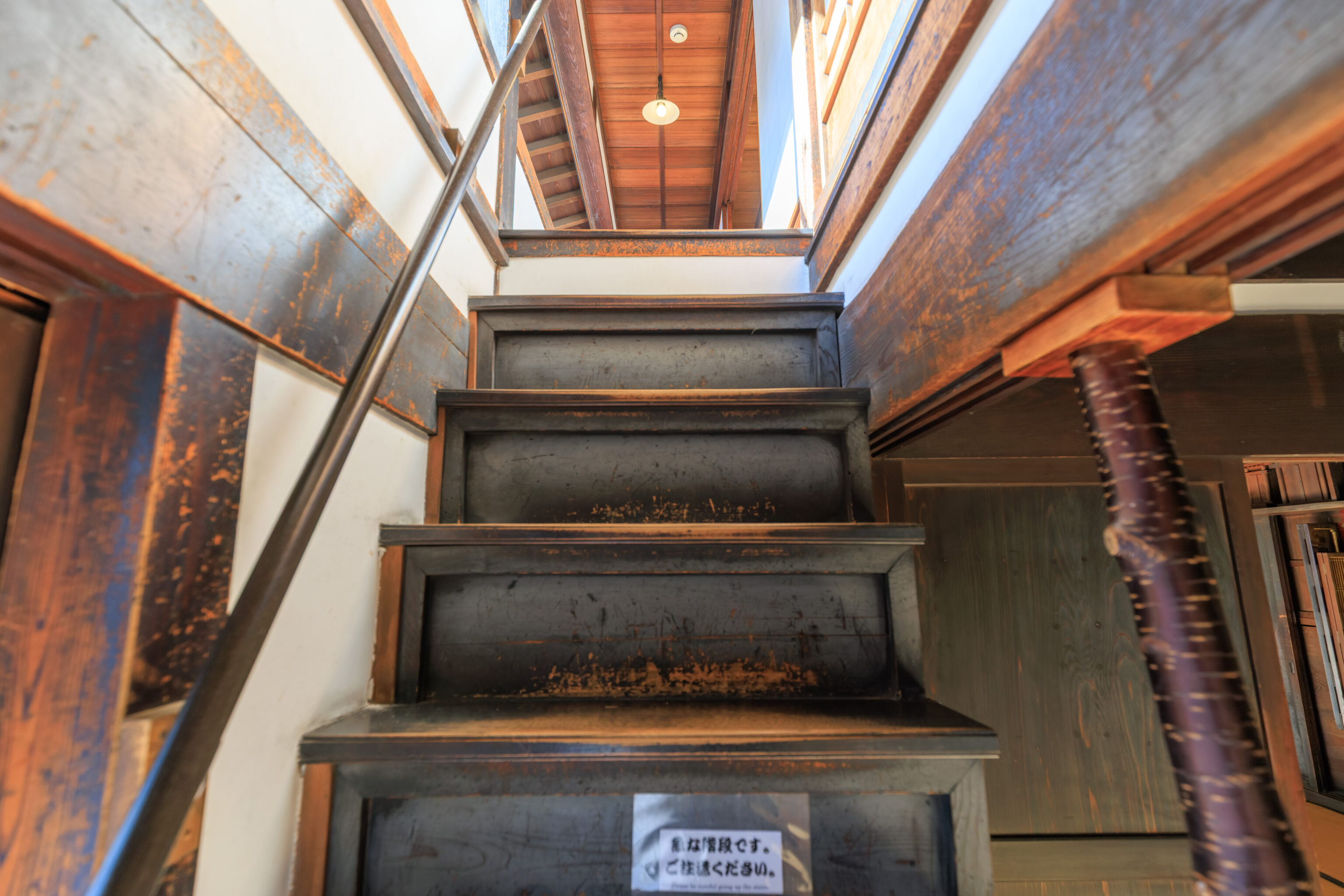
We walked up the stairs to the second floor. Or first floor if you’re European!
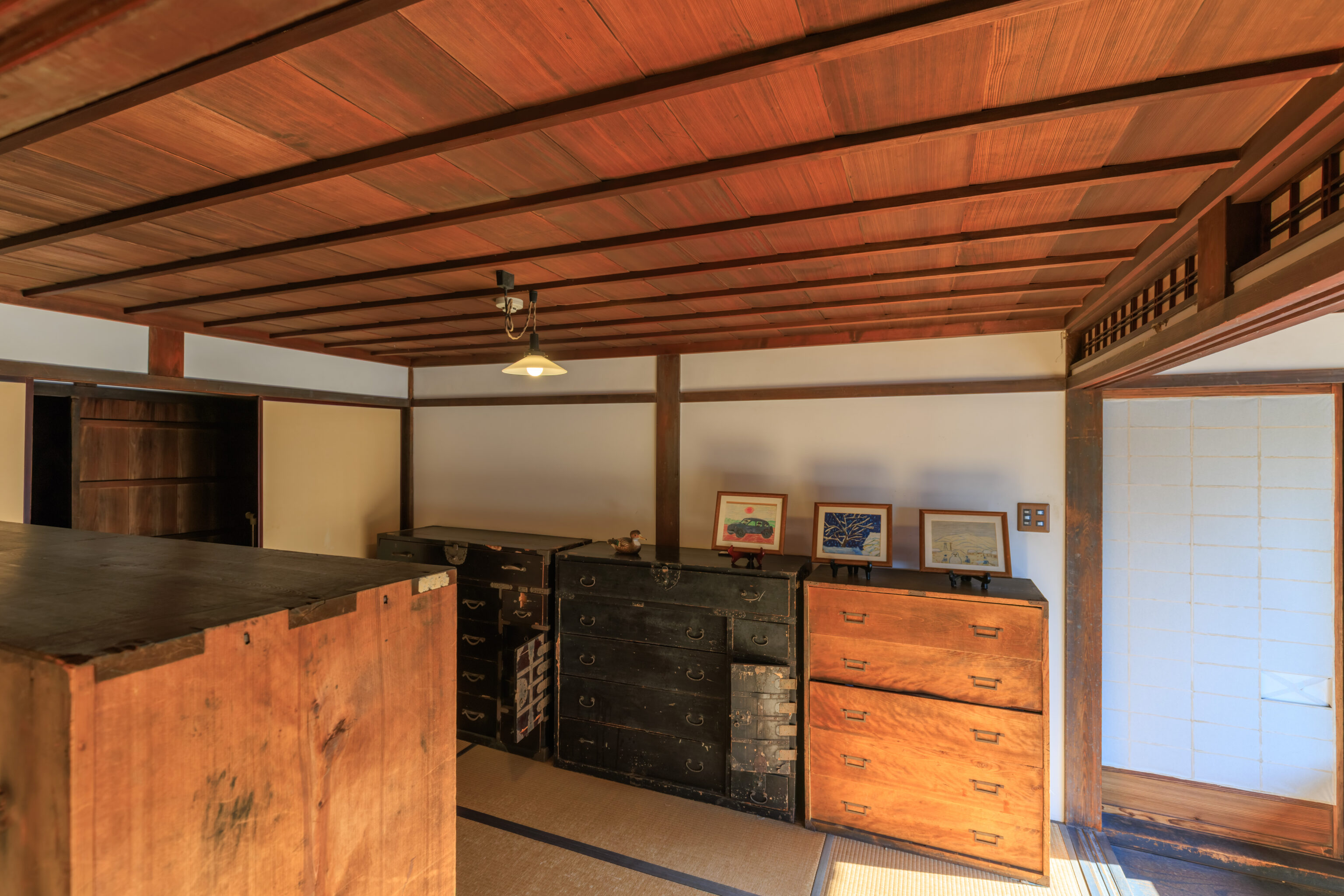
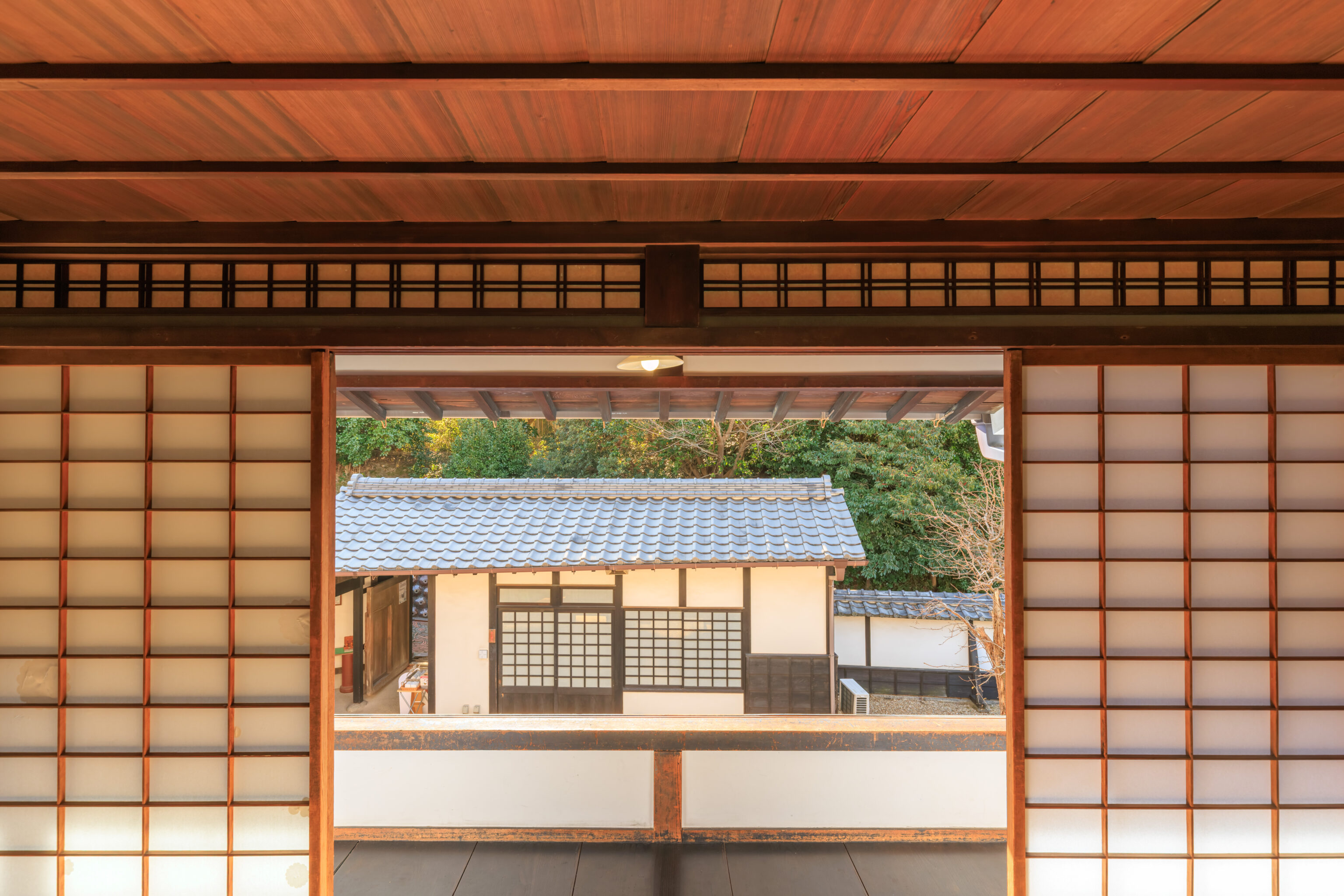
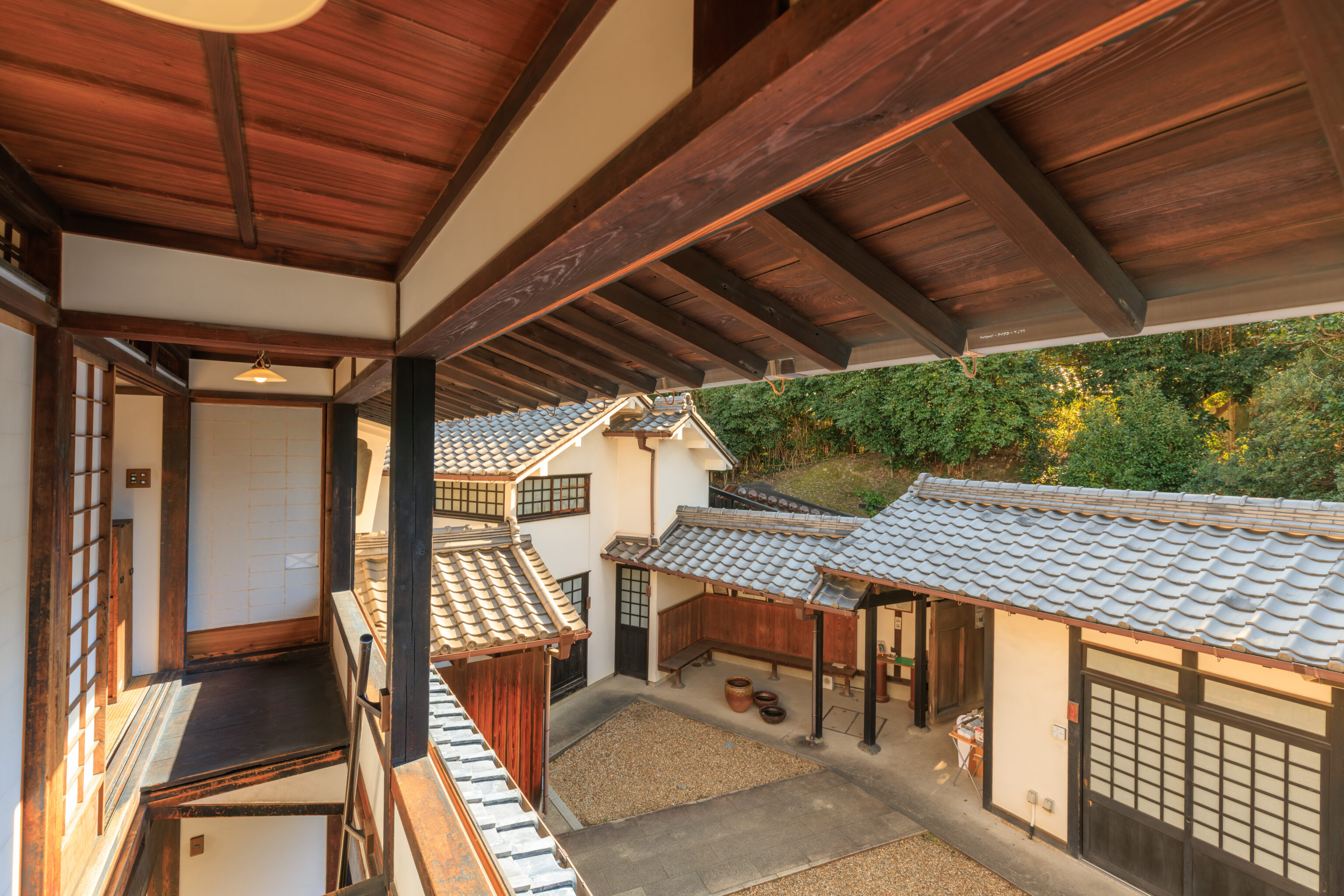
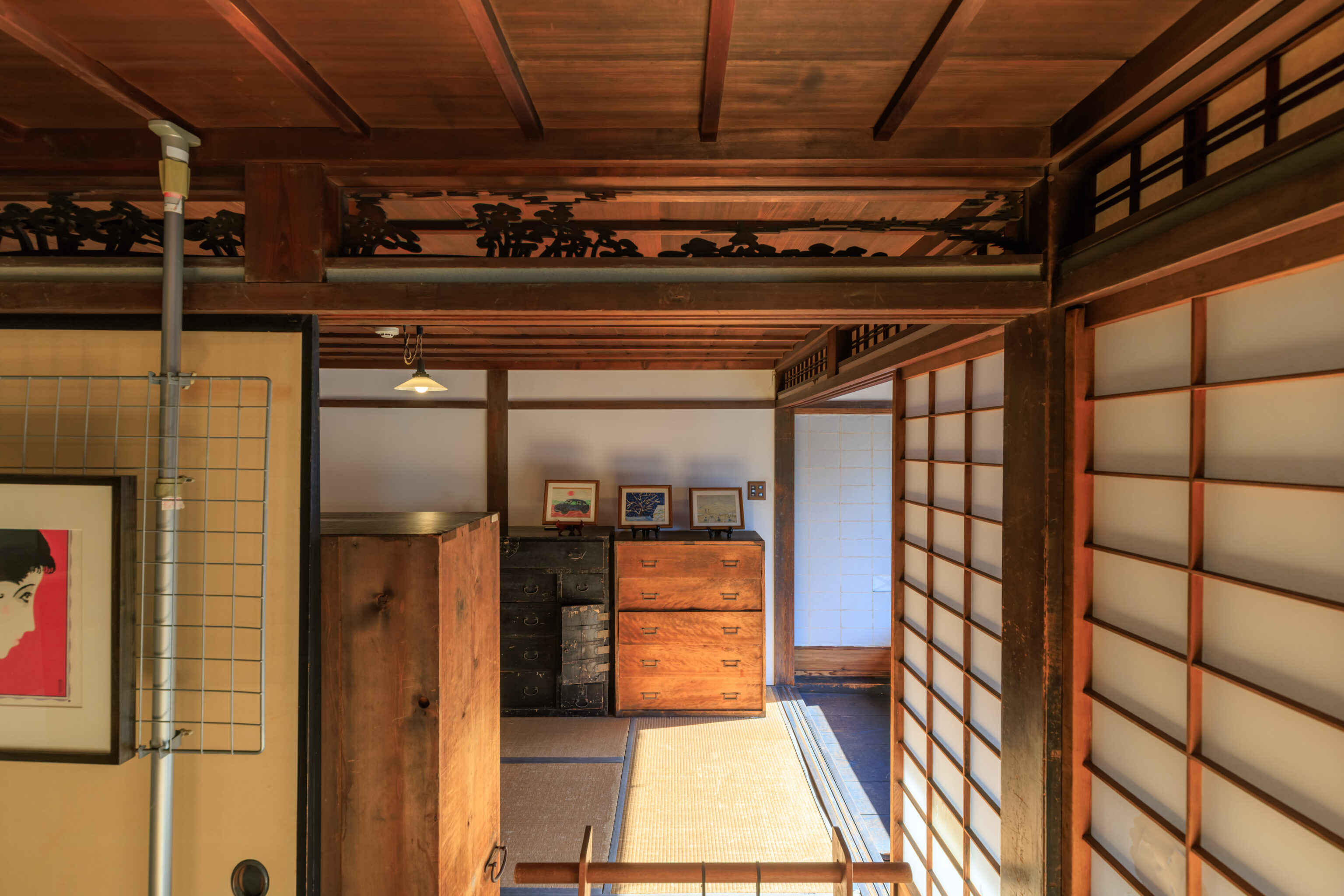
…
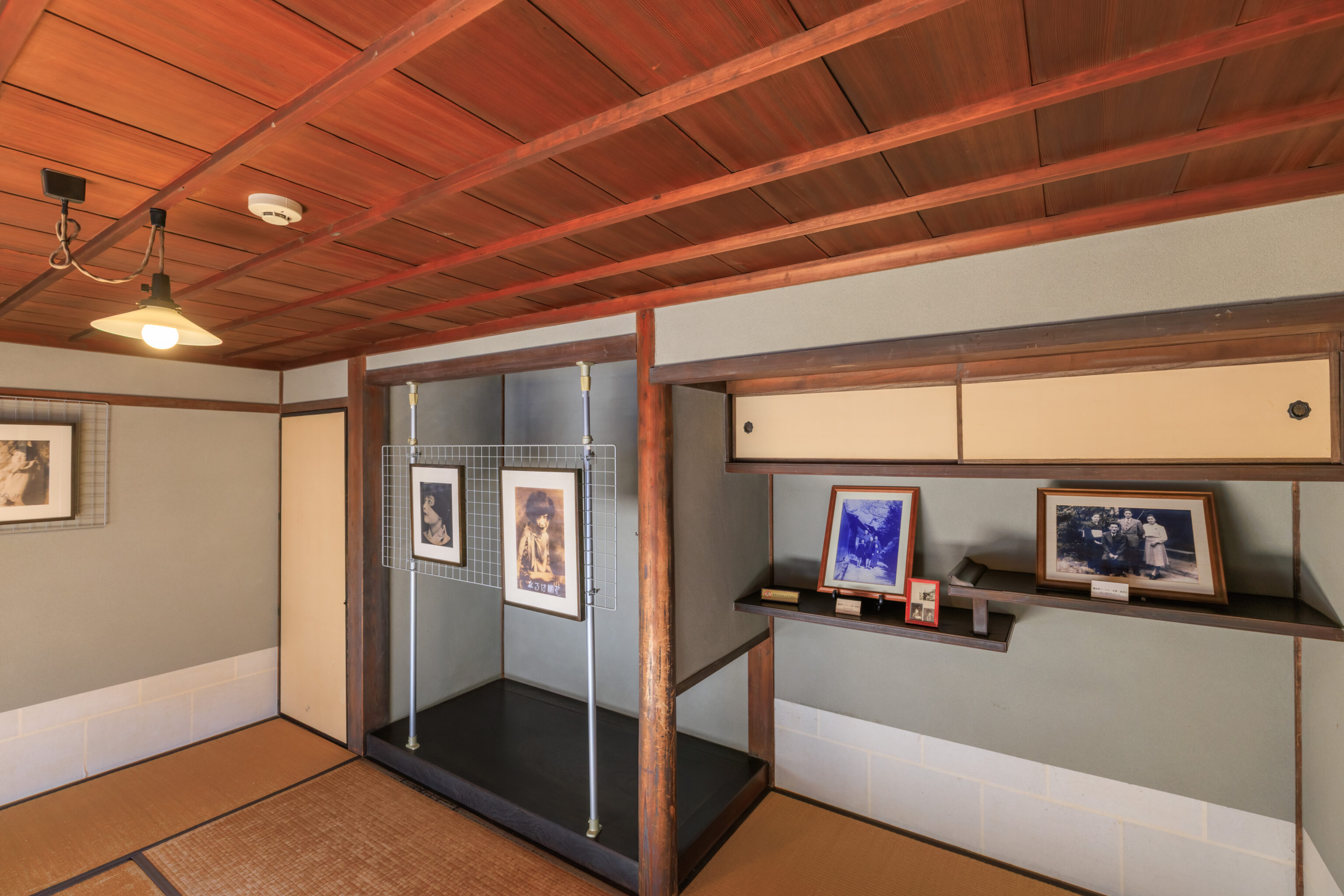
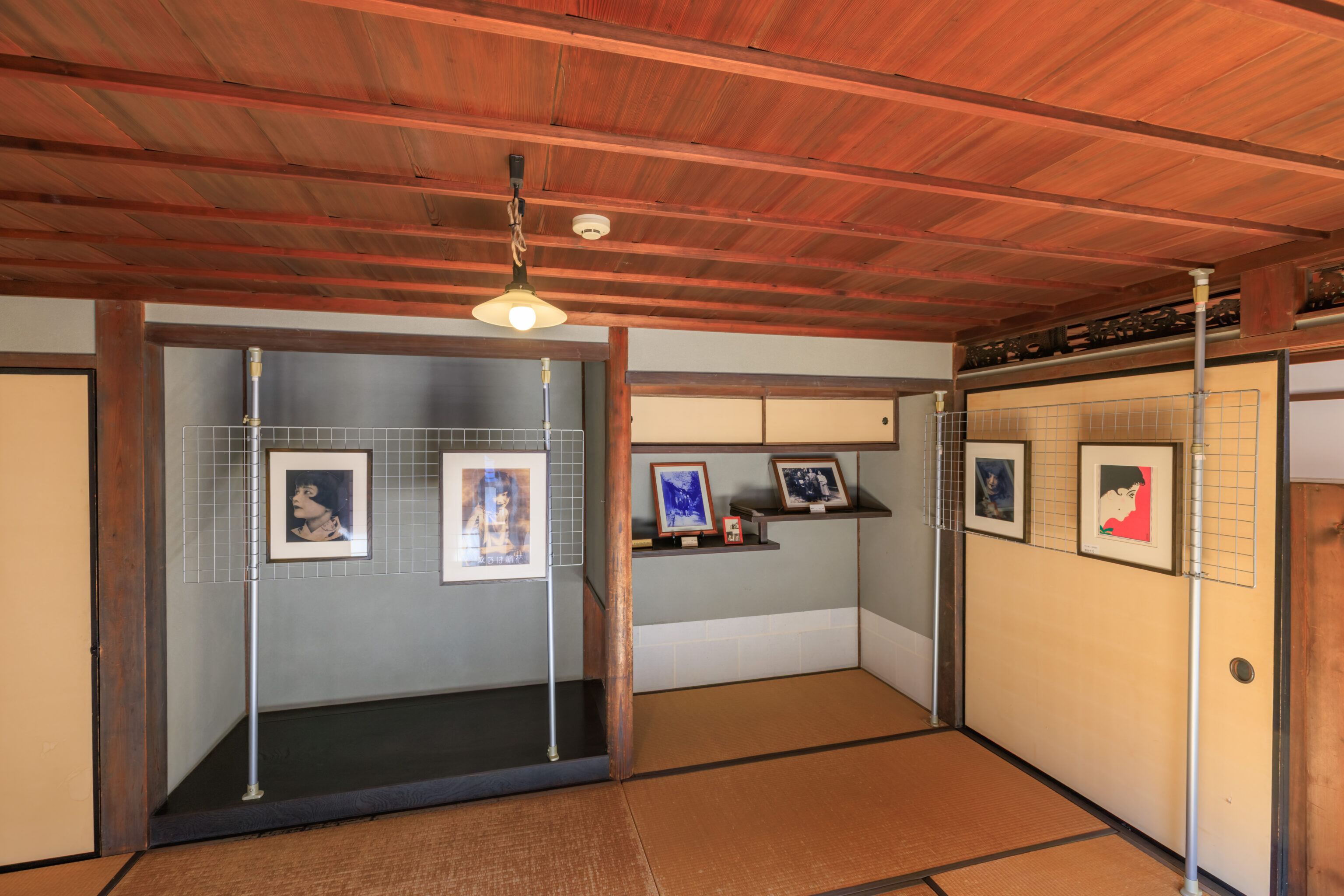
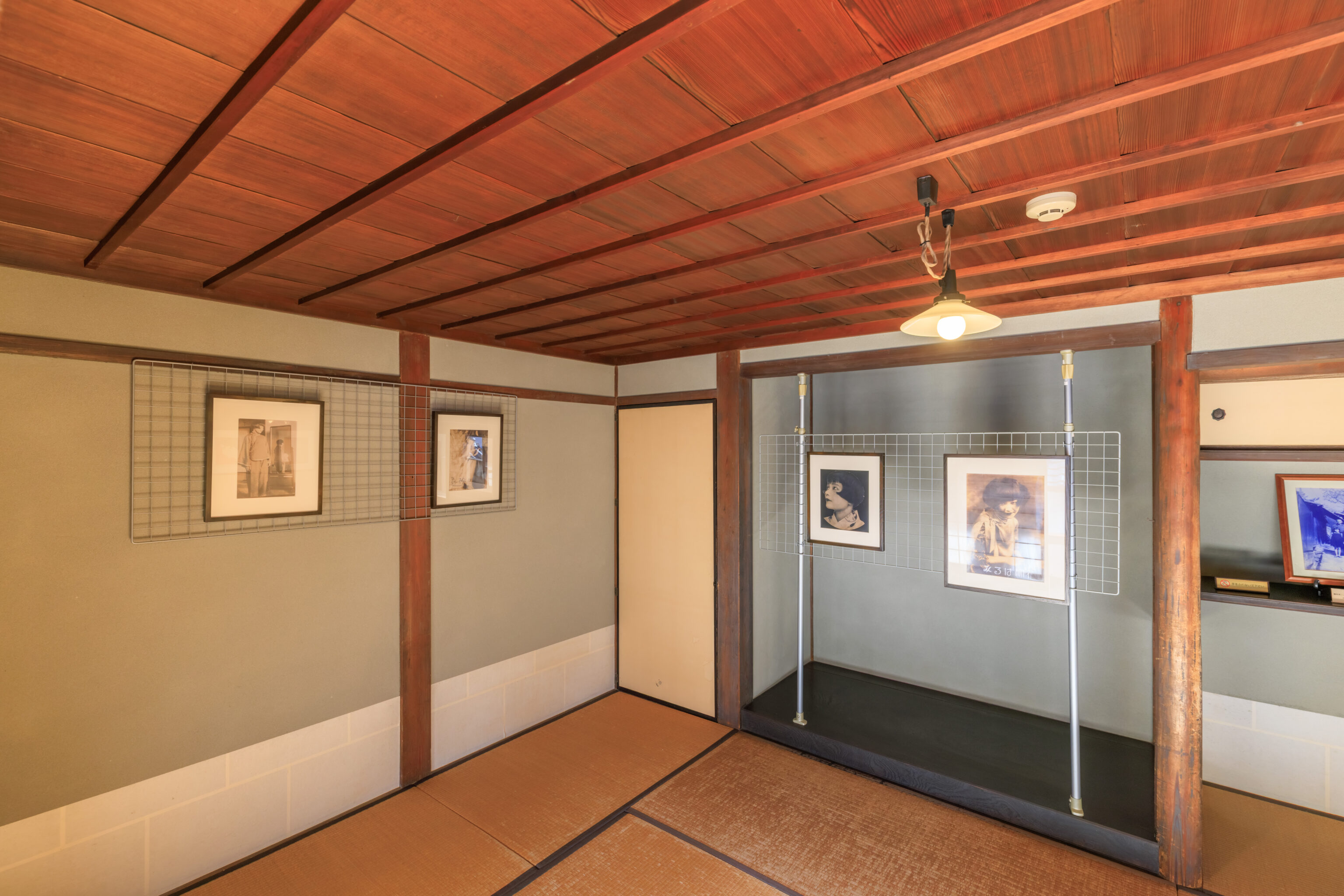
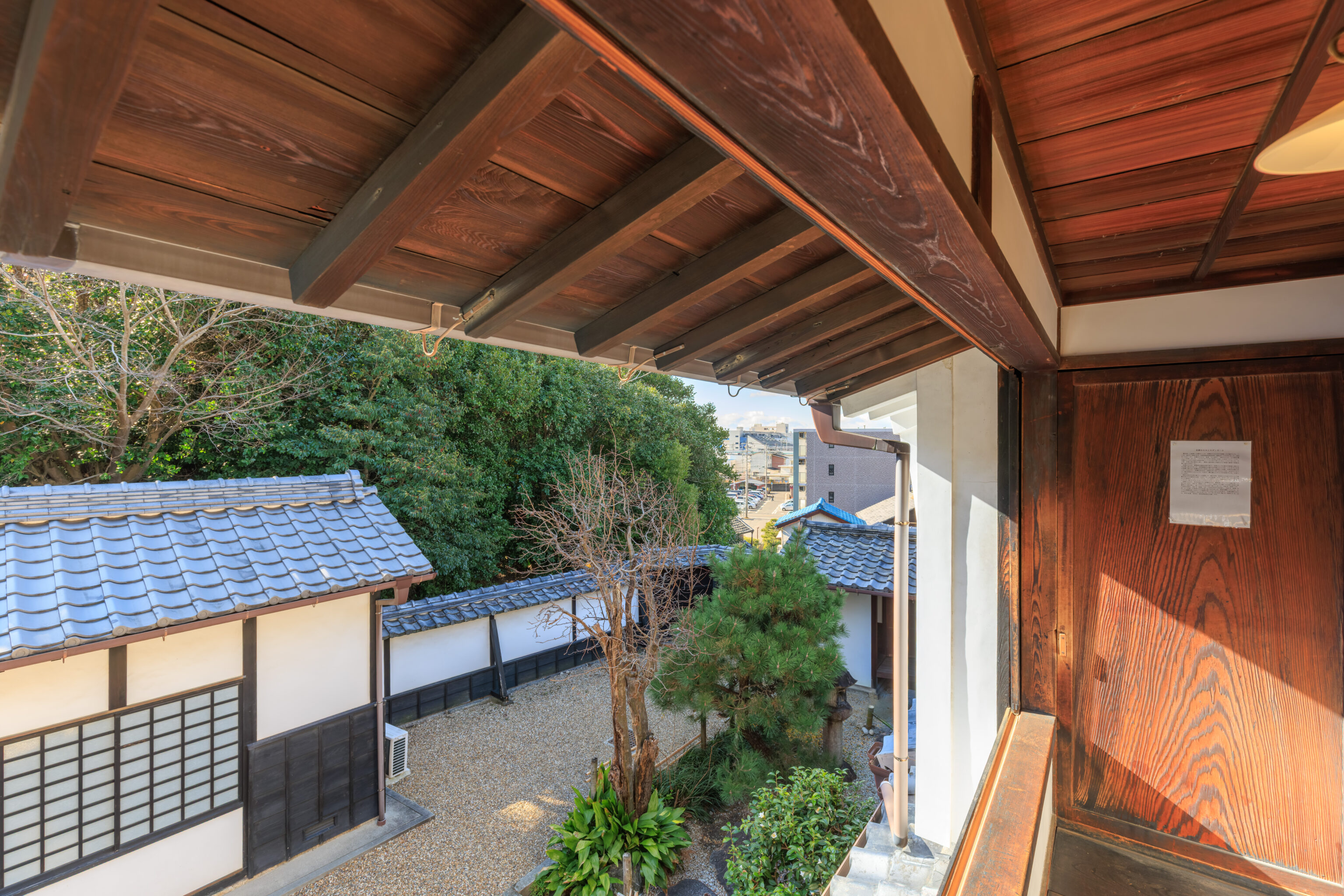
This room, which looks out to the south, contains various pictures of 糟谷いし Ishi Kasuya, known as 花柳 はるみ Harumi Hanayagi, and described as the first Japanese film actress.
Harumi Hanayagi and the "Modern Girl"
Ishi Kasuya, who married Eiji Takita, was an actress known by the stage name Harumi Hanayagi. She was born in 1896 in Toyotsu-machi (now part of Kashima City), Kashima District, Ibaraki Prefecture. In 1918, Hanayagi starred in the films *Sei no Kagayaki* (The Radiance of Life) and *Miyama no Otome* (Maiden of the Deep Mountains). These marked the first instances of a woman appearing in a Japanese film, and she became known as Japan's first film actress. Later, she shifted her focus to the stage, establishing herself as a leading actress at the Tsukiji Little Theatre, which was rebuilt following the Great Kanto Earthquake.

Hanayagi was characterized by her passionate acting style and was described as an actress who projected a strong female presence. Raicho Hiratsuka, an advocate for women's liberation, took note of Hanayagi, who defied the conventional norms expected of women at the time. In her book *Genshi, Josei wa Taiyo de Atta* (In the Beginning, Woman Was the Sun), Hiratsuka wrote: "Harumi Hanayagi was what was known then as a 'Modern Girl'—or rather, a person with a strong 'flapper' personality; she was, indeed, a new type of woman."

The 1920s saw Western culture permeate daily life, giving rise to the "Modern Girl"—a cutting-edge woman influenced by Western lifestyles. A hairstyle that became popular among Modern Girls was the short bob. It is said that Hanayagi adopted this hairstyle around 1923.

Hanayagi met Eiji Takita, who was studying theater at Tokyo Imperial University and was a frequent theatergoer. She retired from the theater world after her final performance in *Isamashiki Shufu* (The Brave Housewife) in July 1929 and went on to live in Nagoya with Takita. She gave birth to her eldest son, Fumihiko, in 1930 and her eldest daughter, Ayuchi, in 1932; in 1939, the family moved to Tokoname, where Eiji’s family home was located. After leaving Tokyo, she had little contact with her former theater colleagues, and consequently, the name of the actress Harumi Hanayagi faded from public memory. She passed away in October 1962 at the age of 66. Her posthumous Buddhist name is "Kaku-shunshitsu-bishin-daishi."
– Text from a sign in the last photograph above, translated using Google Translate.
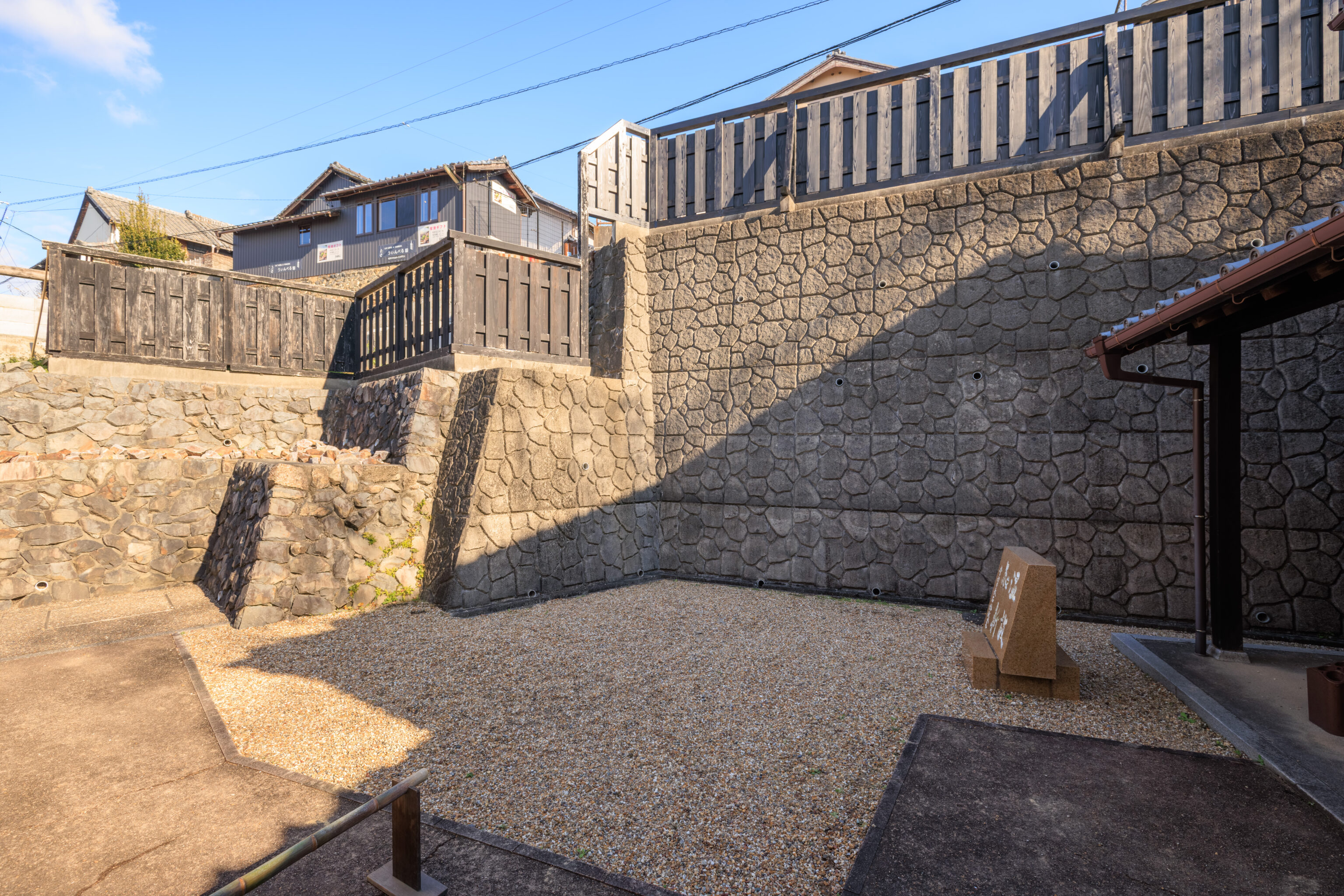
We headed back outside and went over to the eastern end of the property. Here, there is a modern retaining wall below the path we were on before we arrived here.
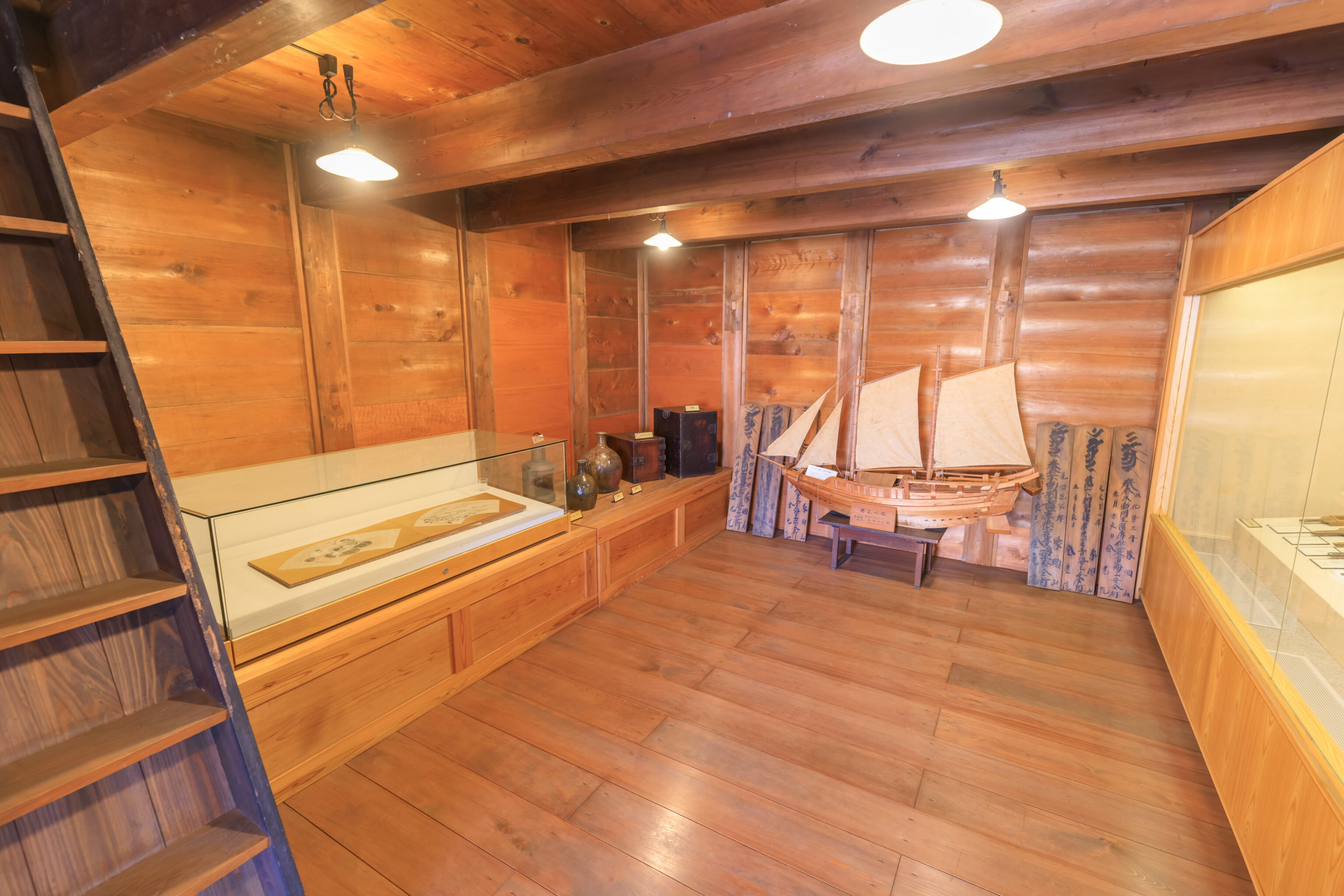
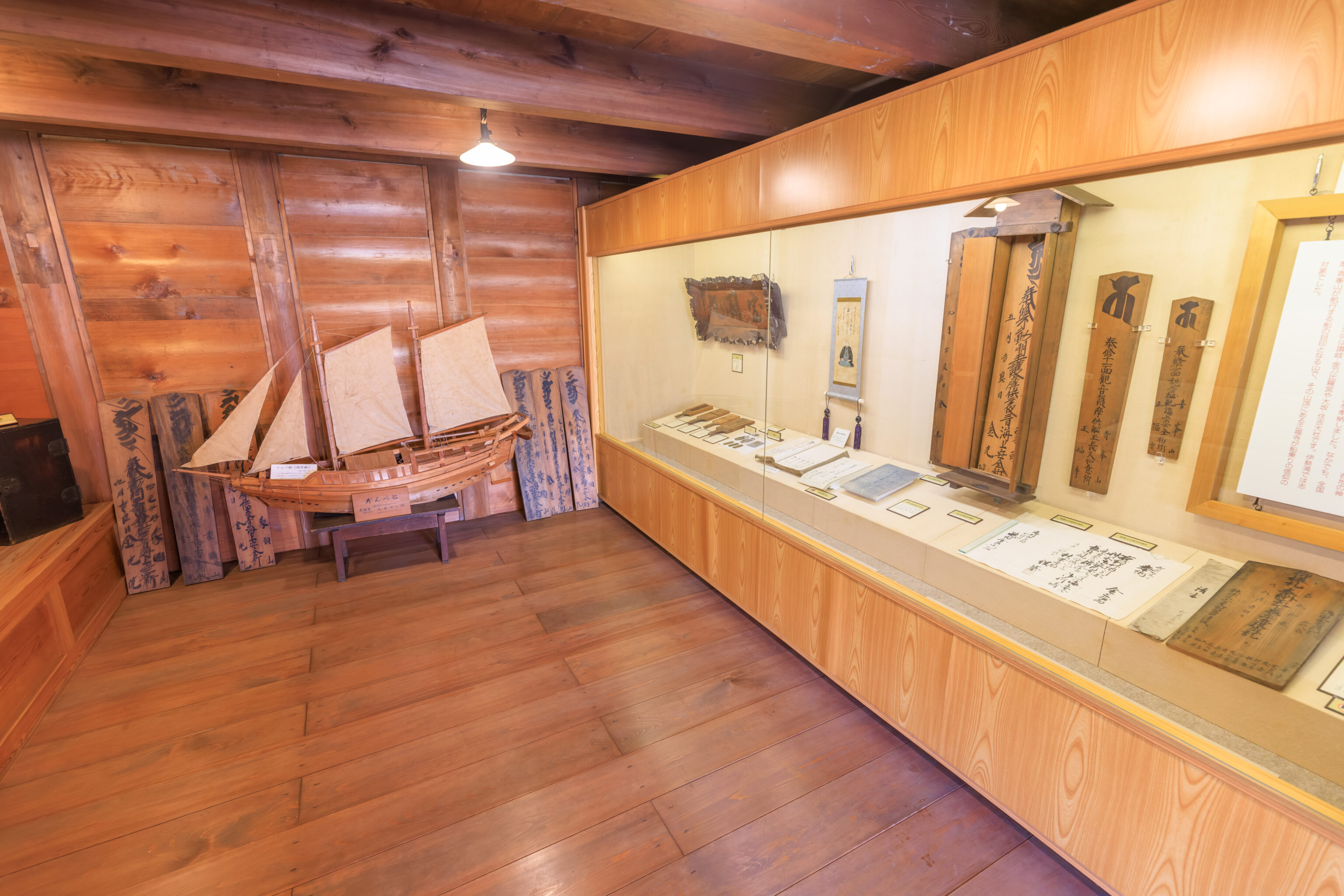
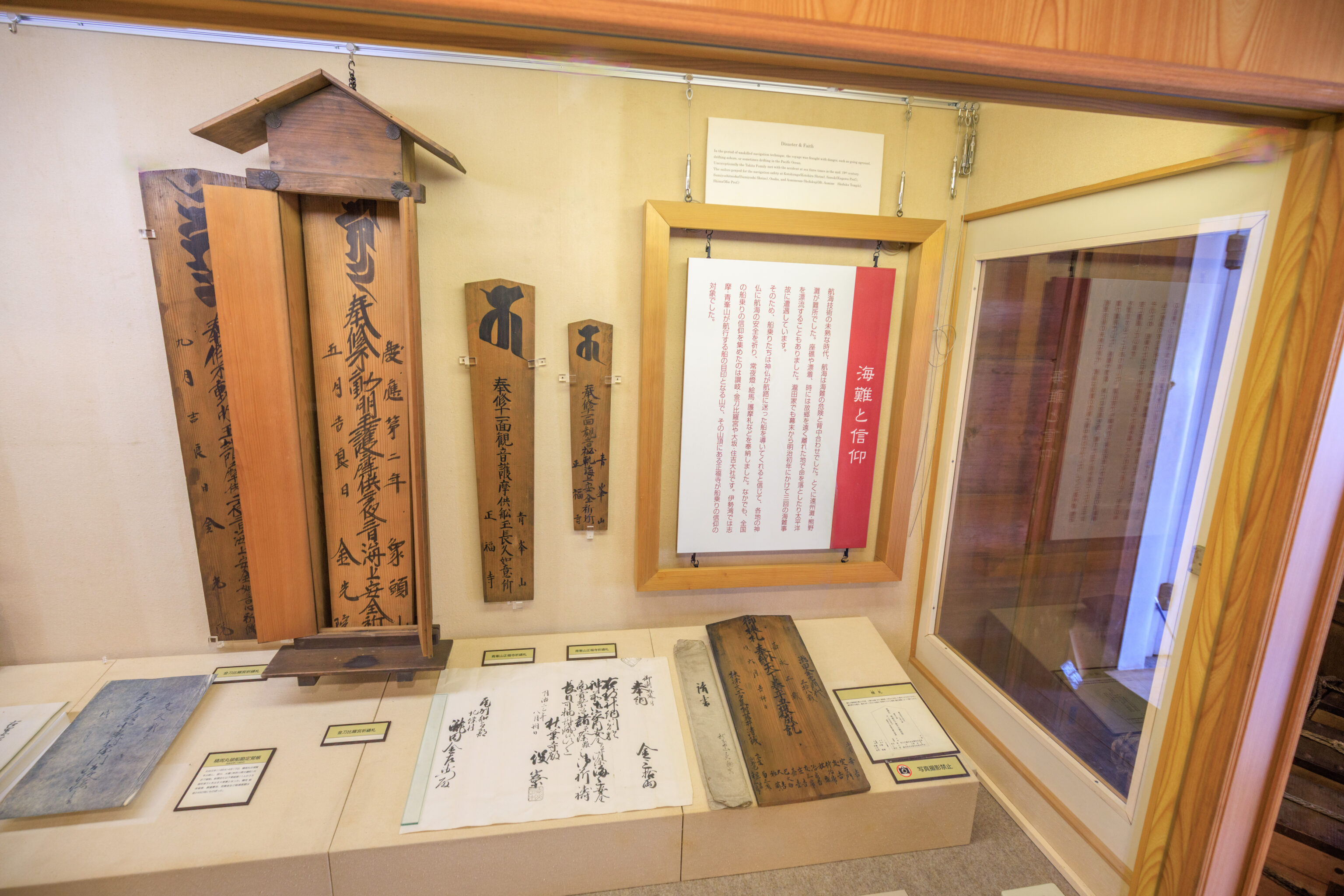
Another room at the eastern end of the property held some additional artifacts and displays.
Maritime Disasters and Faith
In an era when navigational technology was still rudimentary, voyages were fraught with the constant danger of maritime disaster. The waters off Enshu-nada and Kumano-nada were particularly treacherous. Sailors faced risks such as running aground or drifting ashore; in some cases, they lost their lives far from home or found themselves adrift in the vast Pacific Ocean. The Takita family, too, experienced three such maritime accidents between the final years of the Edo period and the early Meiji era.

Believing that deities and Buddhas would guide ships that had lost their way, sailors prayed for safe passage at various shrines and temples, dedicating offerings such as *joyato* (stone lanterns that burned all night), *ema* (votive plaques), and *goma-fuda* (consecrated prayer tablets). Among these sites, Kotohira-gu Shrine in Sanuki and Sumiyoshi-taisha Shrine in Osaka commanded the devotion of sailors from across the country. In the Ise Bay area, Mount Aomine in Shima served as a vital landmark for passing vessels, and Shofuku-ji Temple, located at its summit, was a focal point of sailors' faith.
– Text from the red sign in the photograph above, read using Google Gemini and translated using Google Translate.
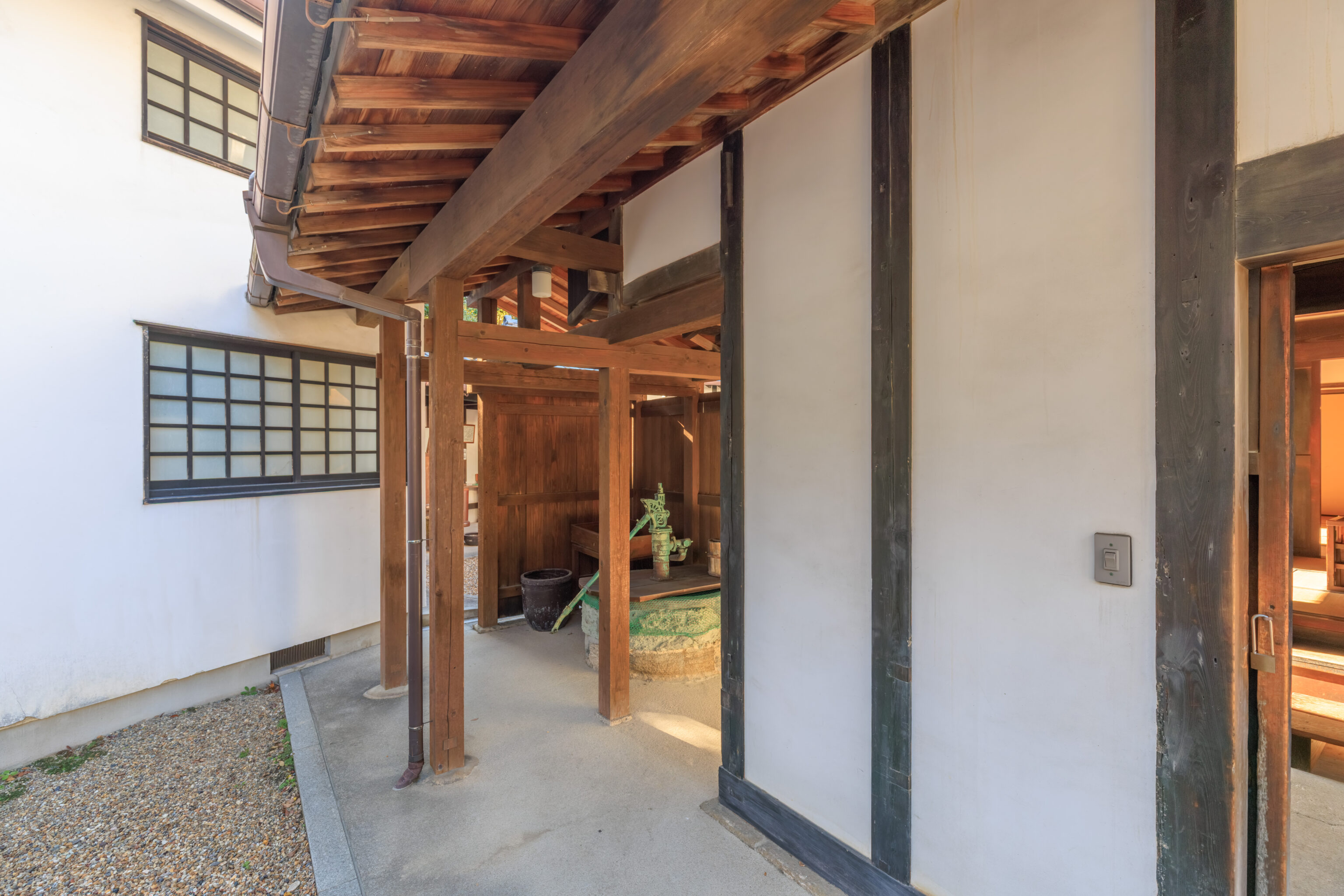
There was a well here by the entrance.
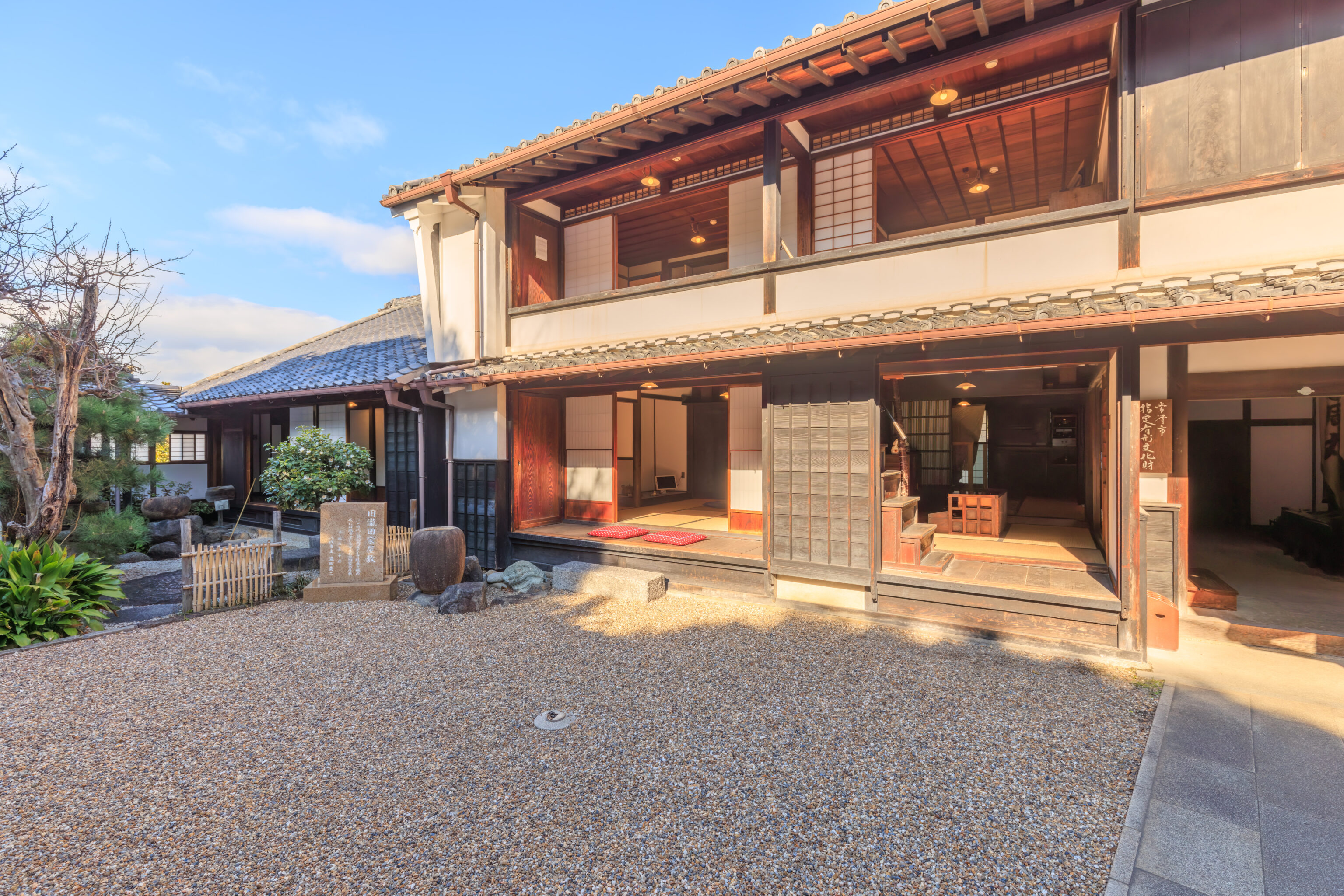
One last look at the house before leaving!
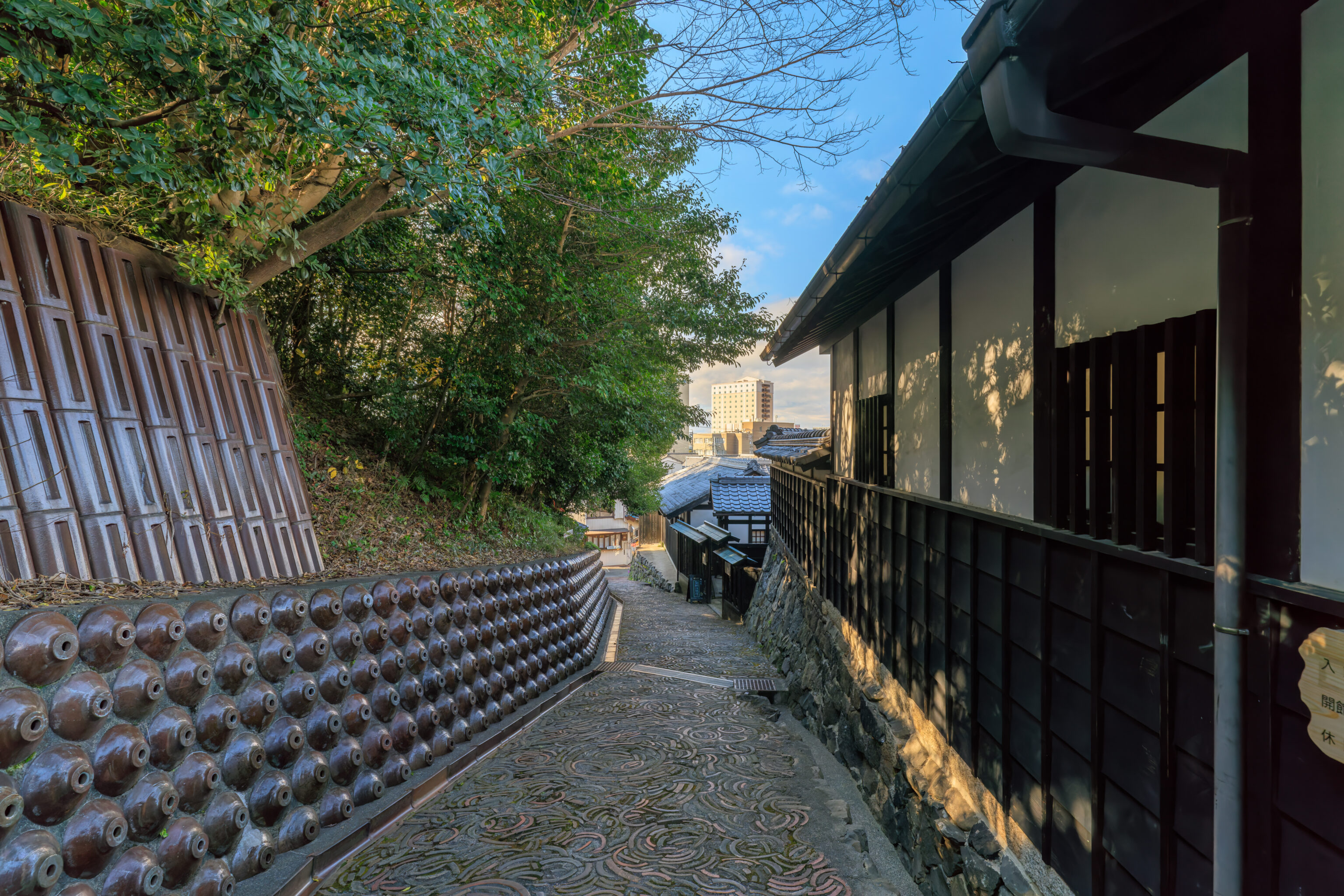
The path by the entrace continued down the hill. However, we turned around to go back up to continue walking on the Pottery Footpath.
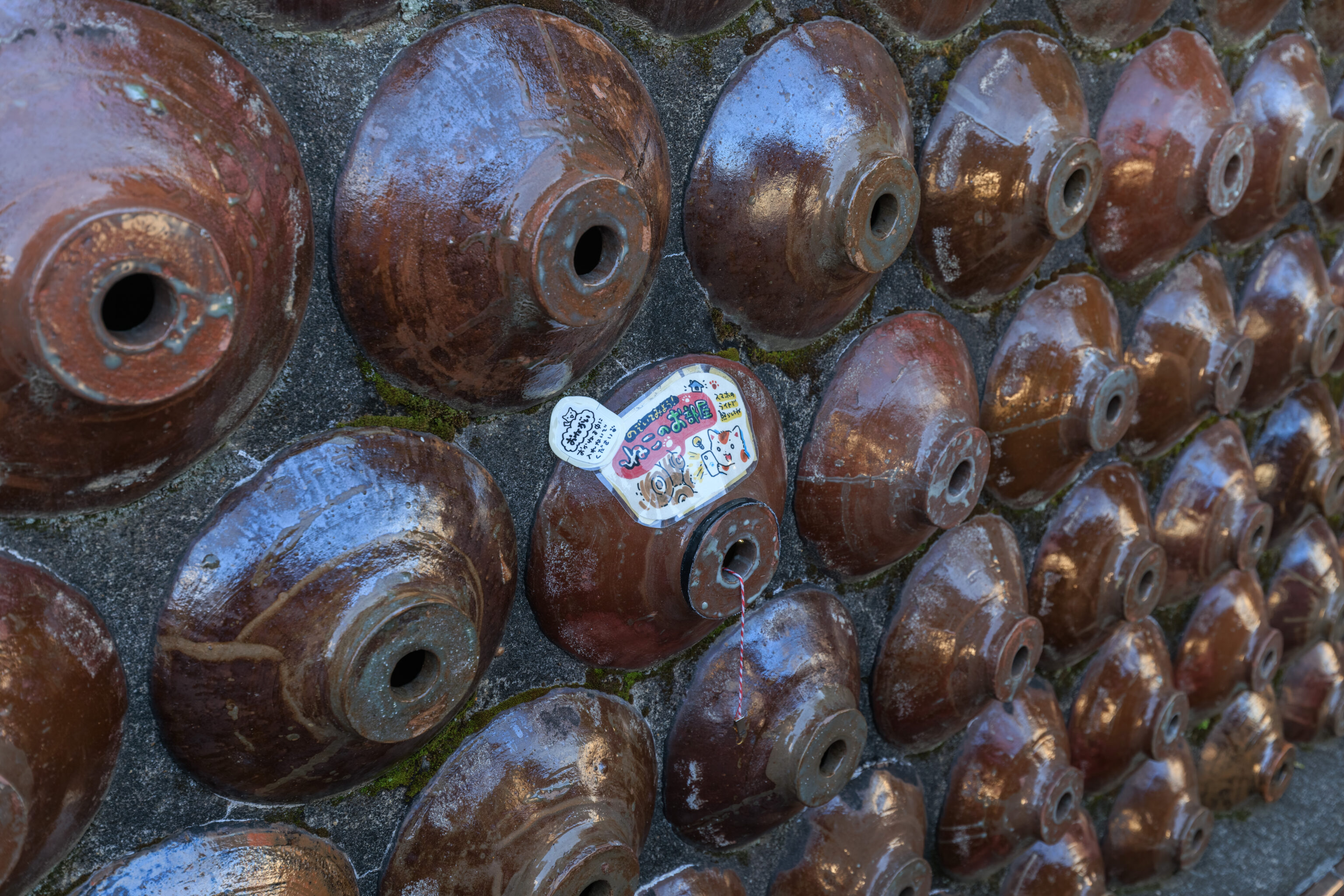
We noticed this label taped onto one of the ceramic pieces that was part of the retaining wall along the path.
Take a peek!
The Cat's Room
Shine your smartphone light inside.

Please
Do not put money inside. 🐾
– Text from the label in the photograph above, read using Google Gemini and translated using Google Translate.
What is inside?
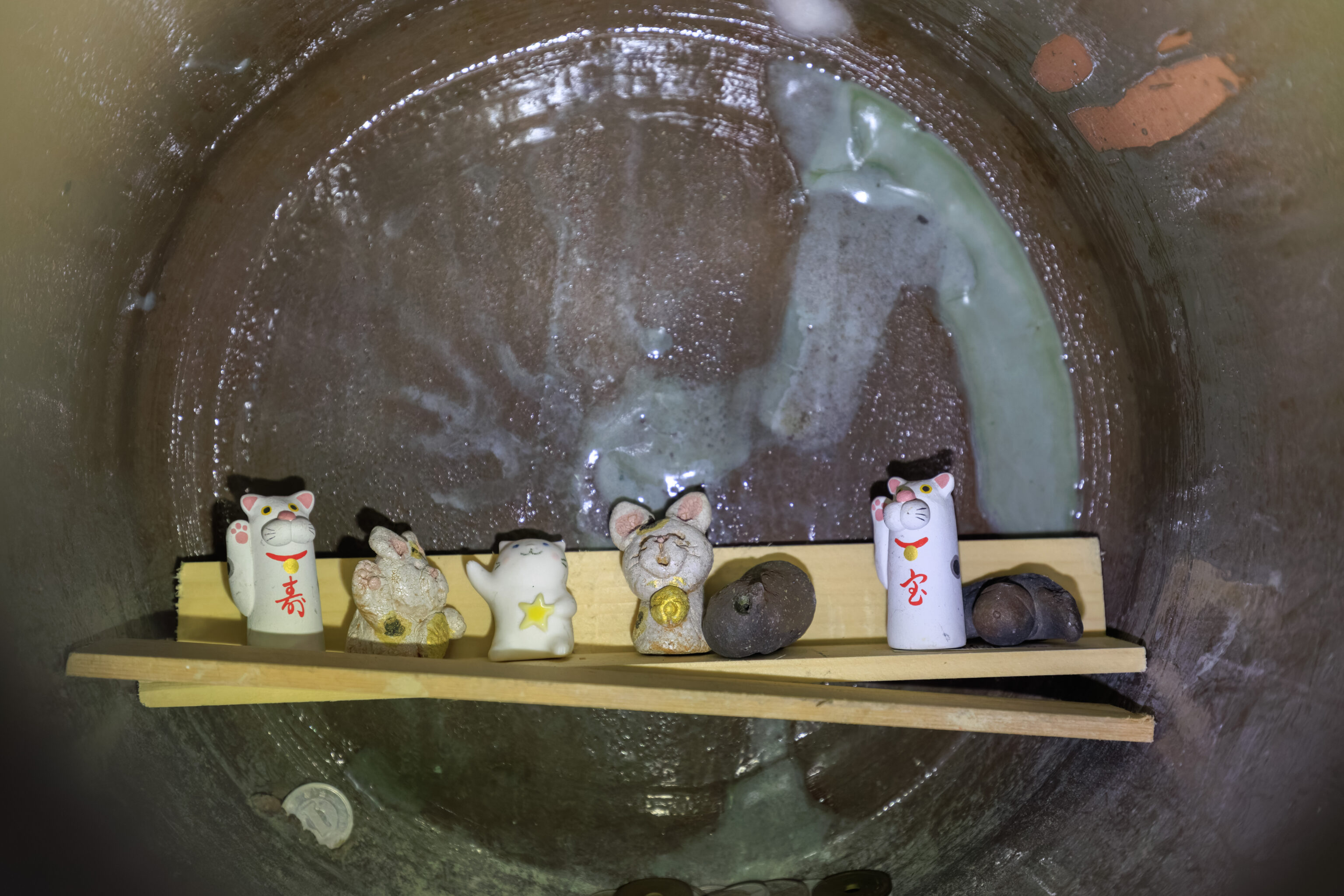
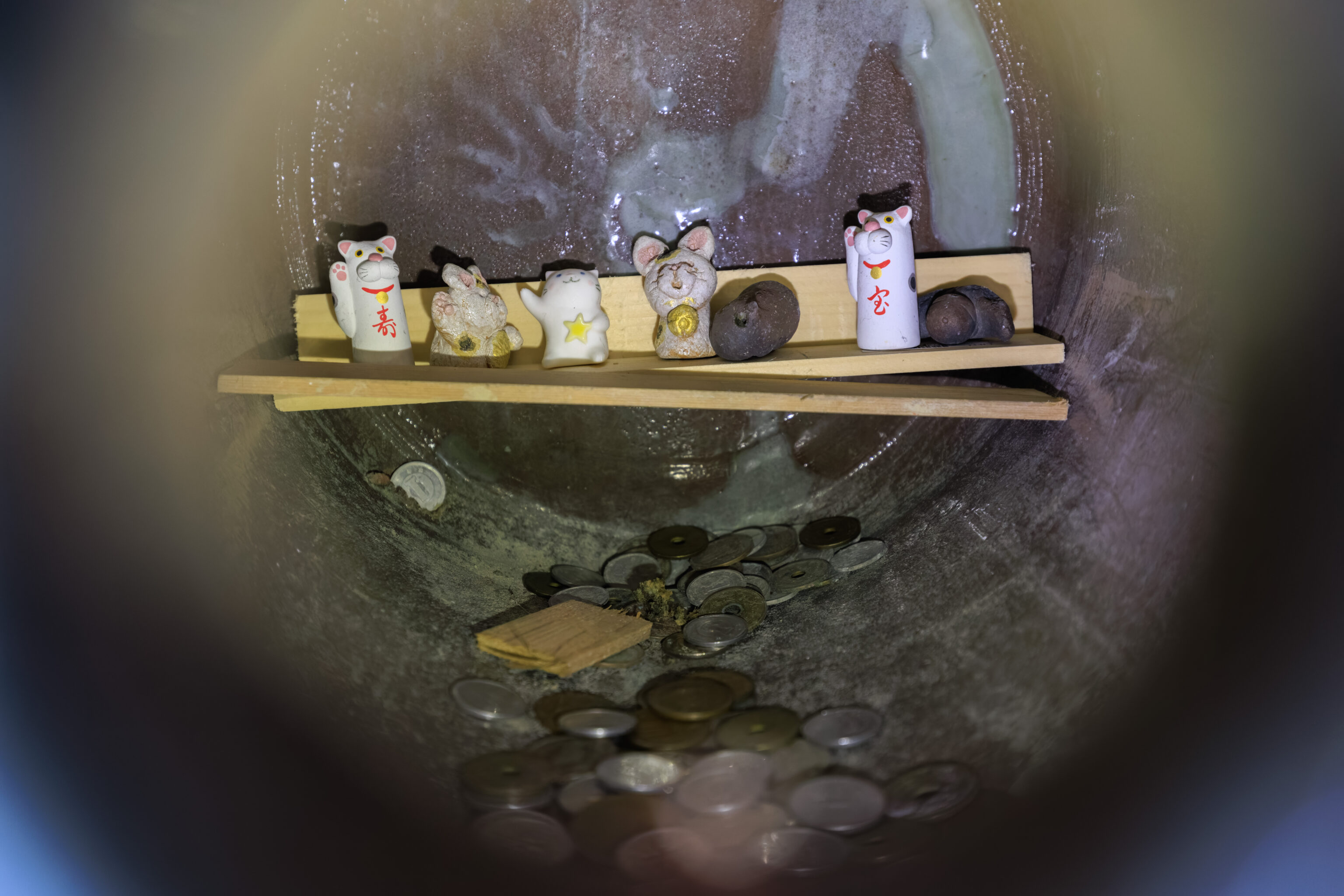
Cats! And money…
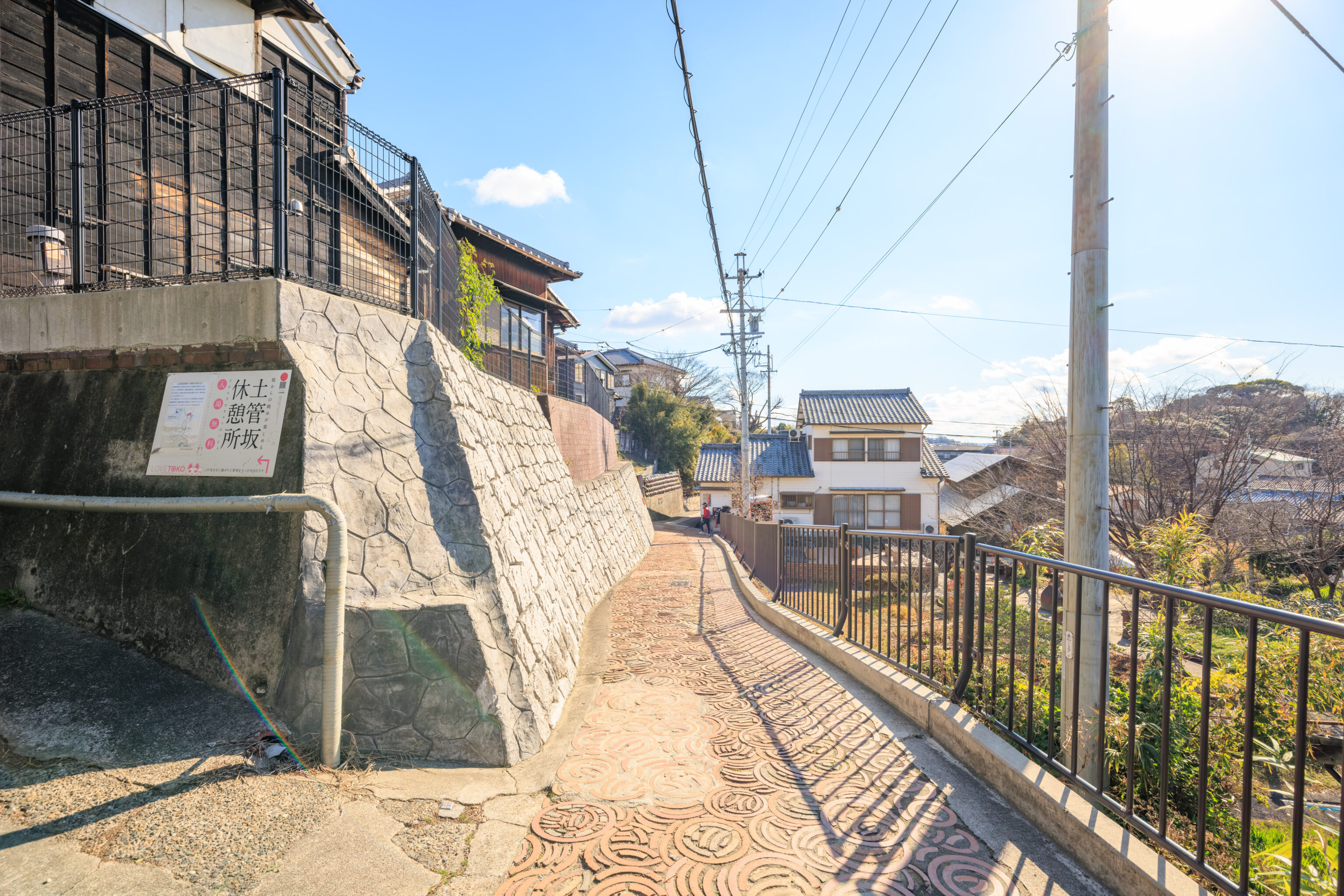
We continued on along the Pottery Footpath…
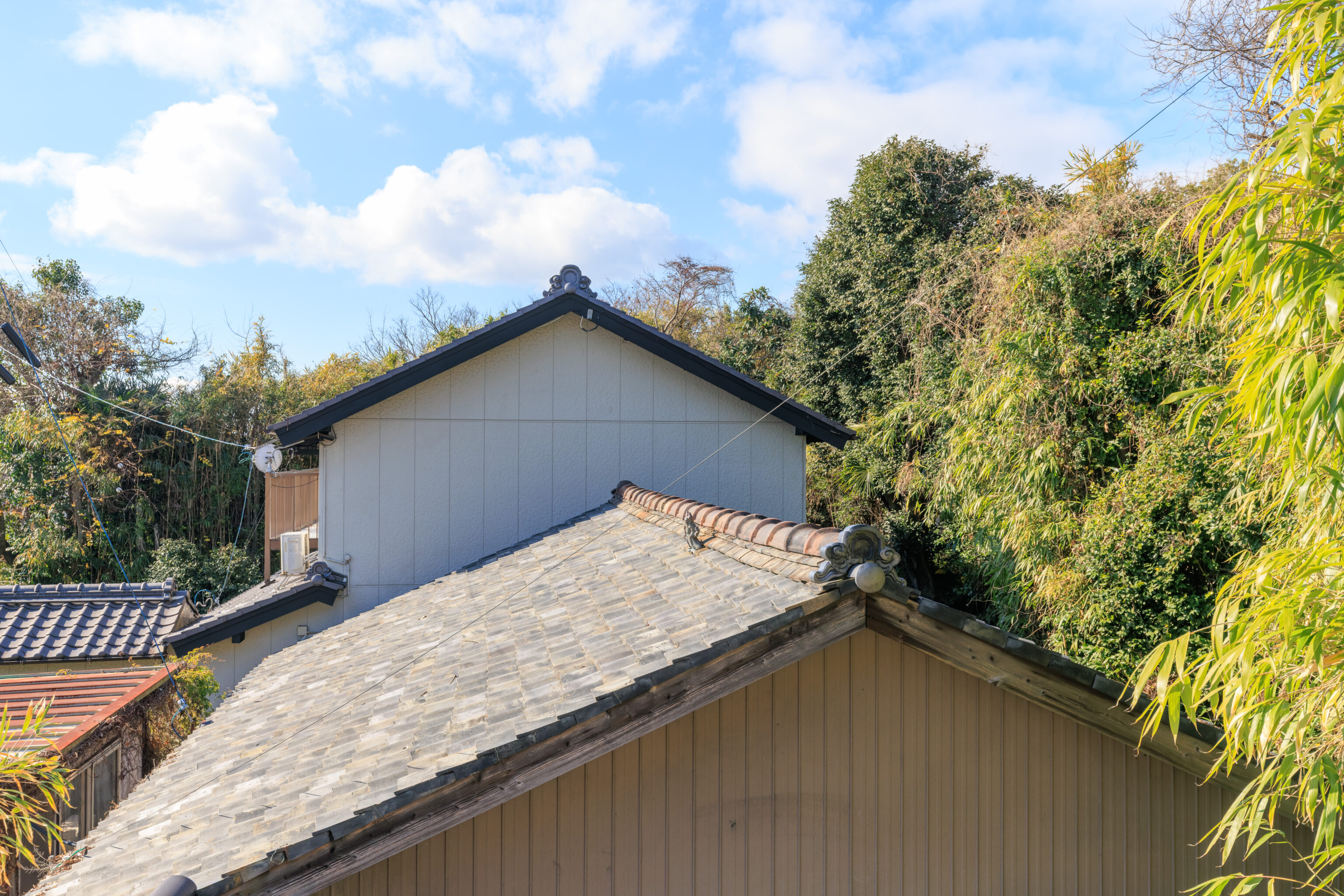
There is a cat on this roof!
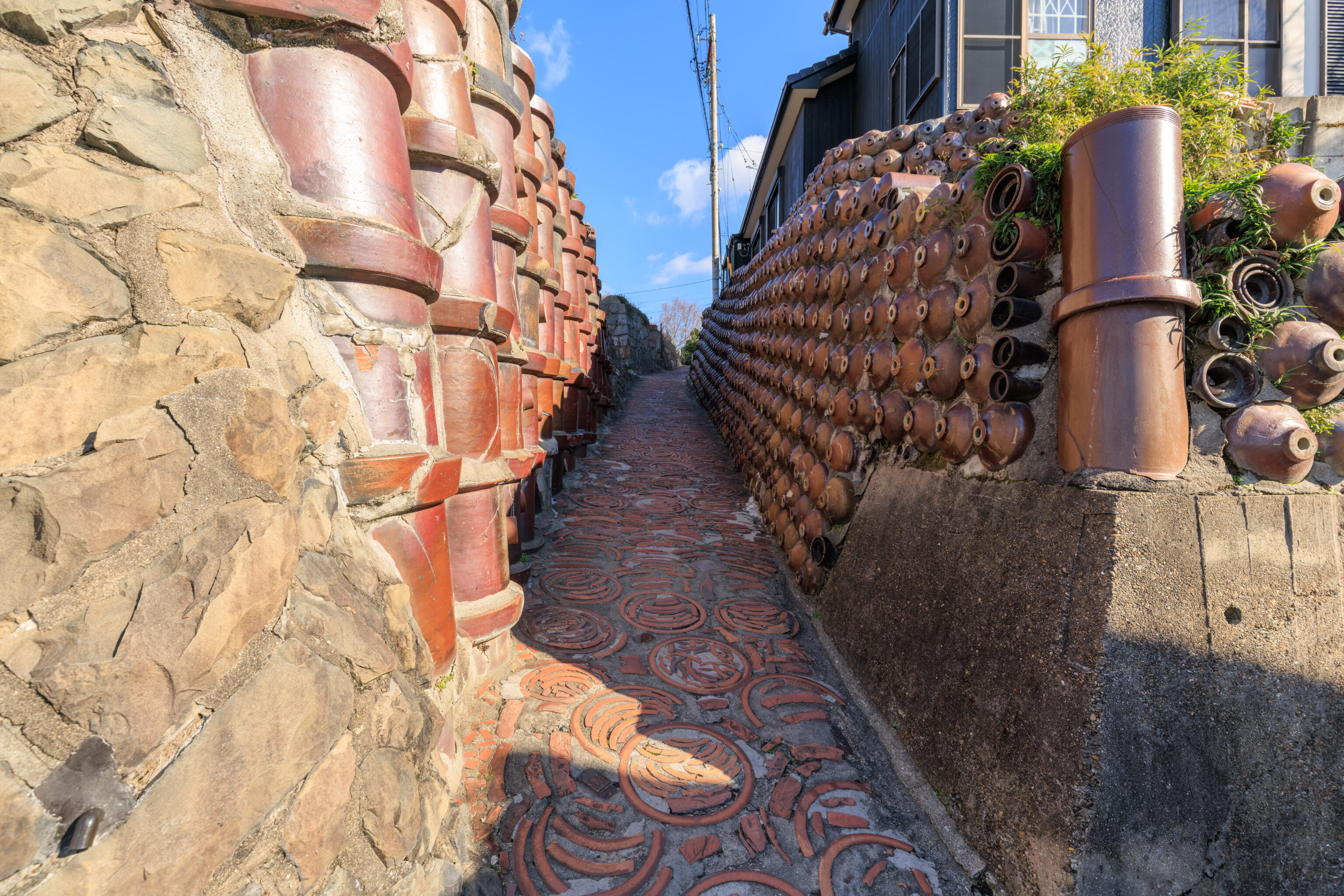
We came upon a junction with a steep and narrow path heading further uphill. The path is made up of ceramic pieces!
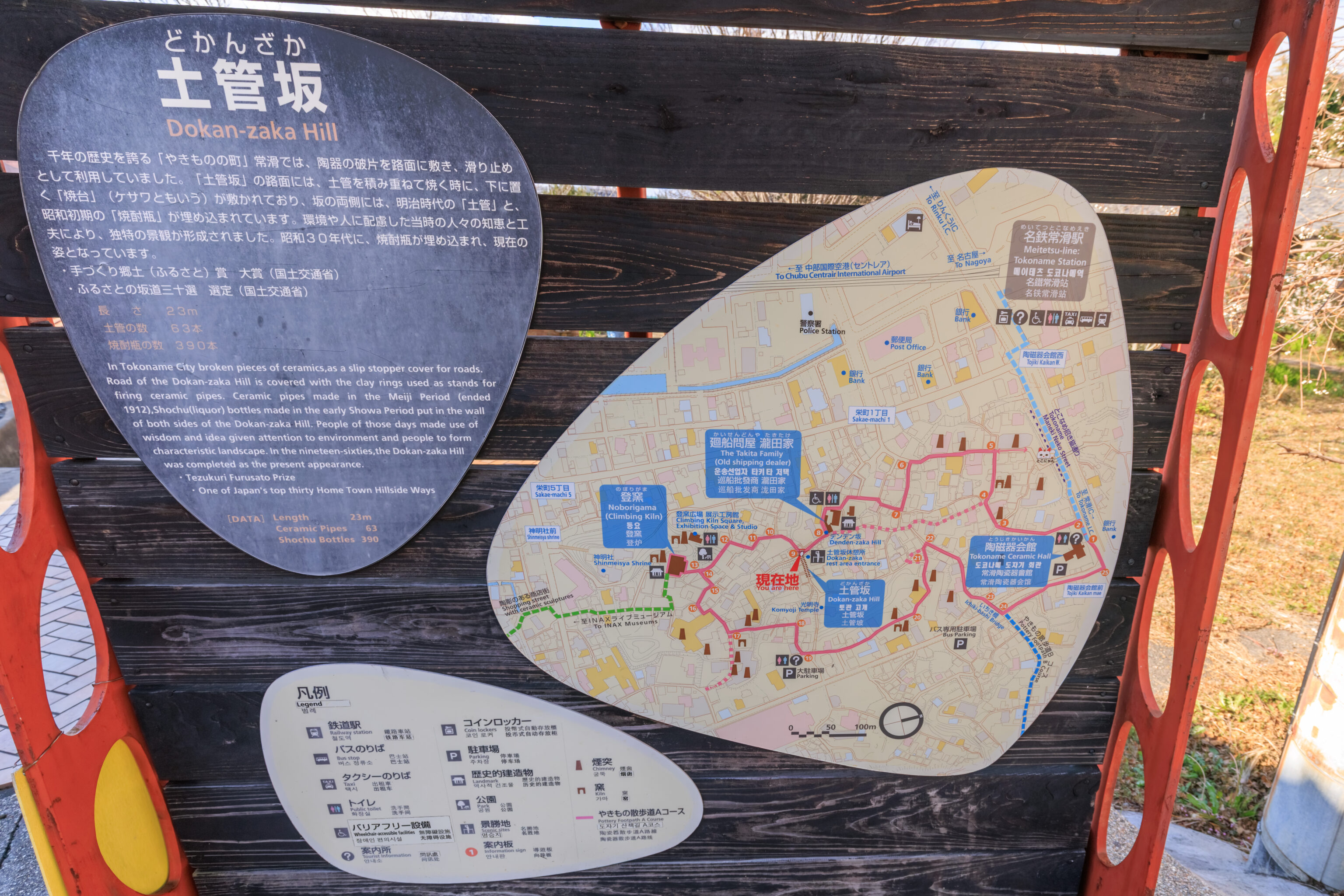
There was also a map here indicating that this is the Dokan-zaka and that there is a rest area at this corner, possibly on the hill right above us.
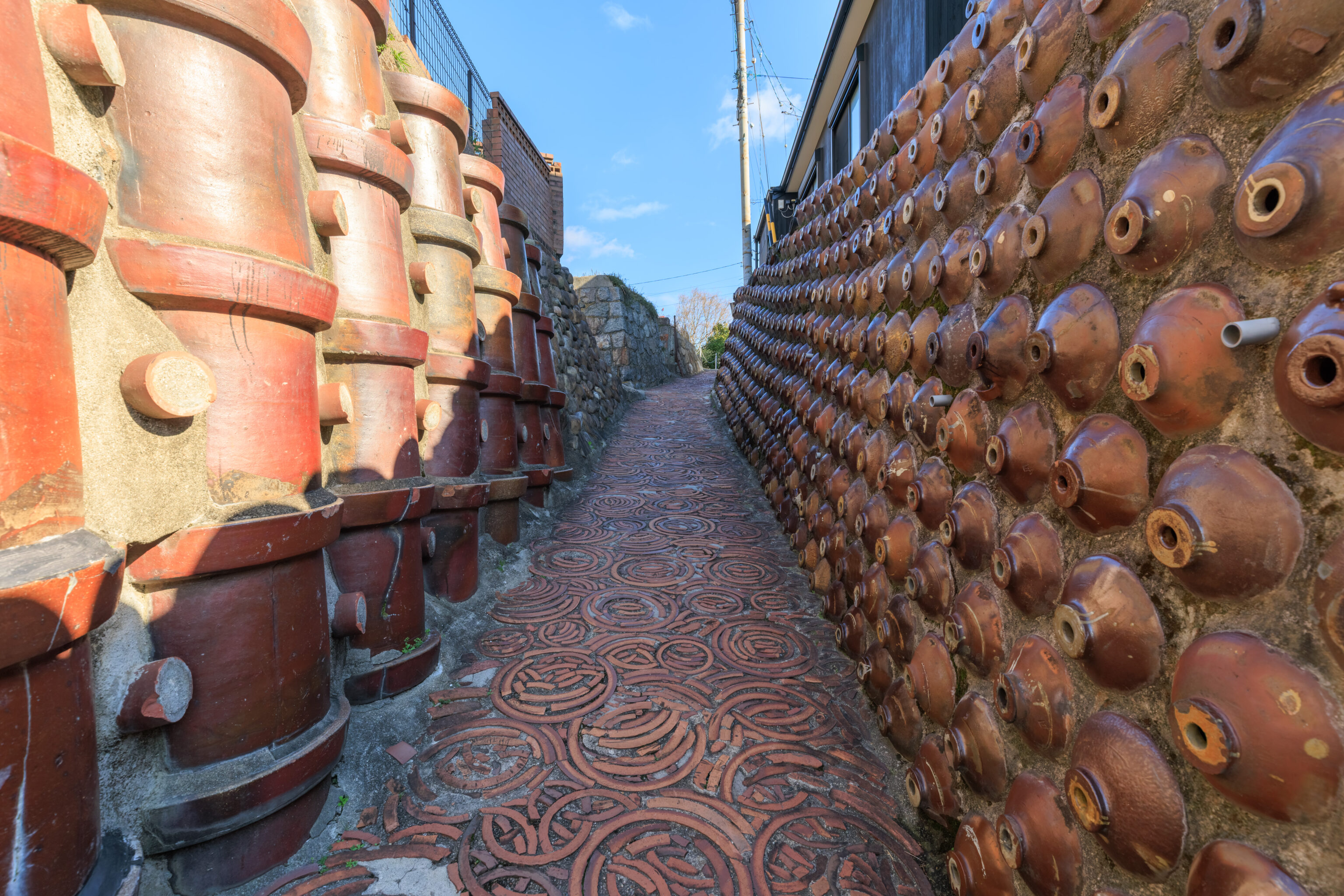
We decided to walk up the hill to take a look.
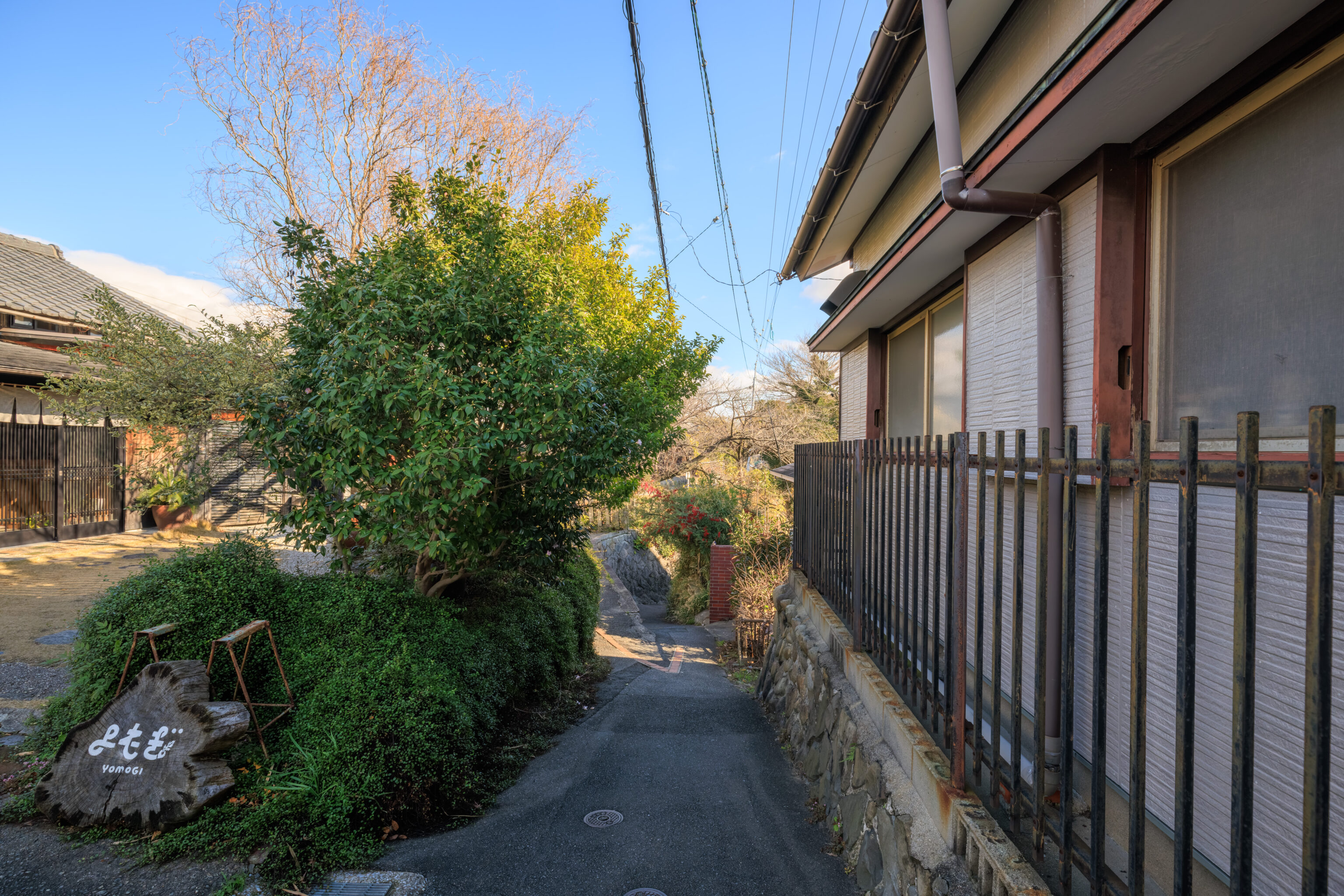
The path leveled out and continued downhill.
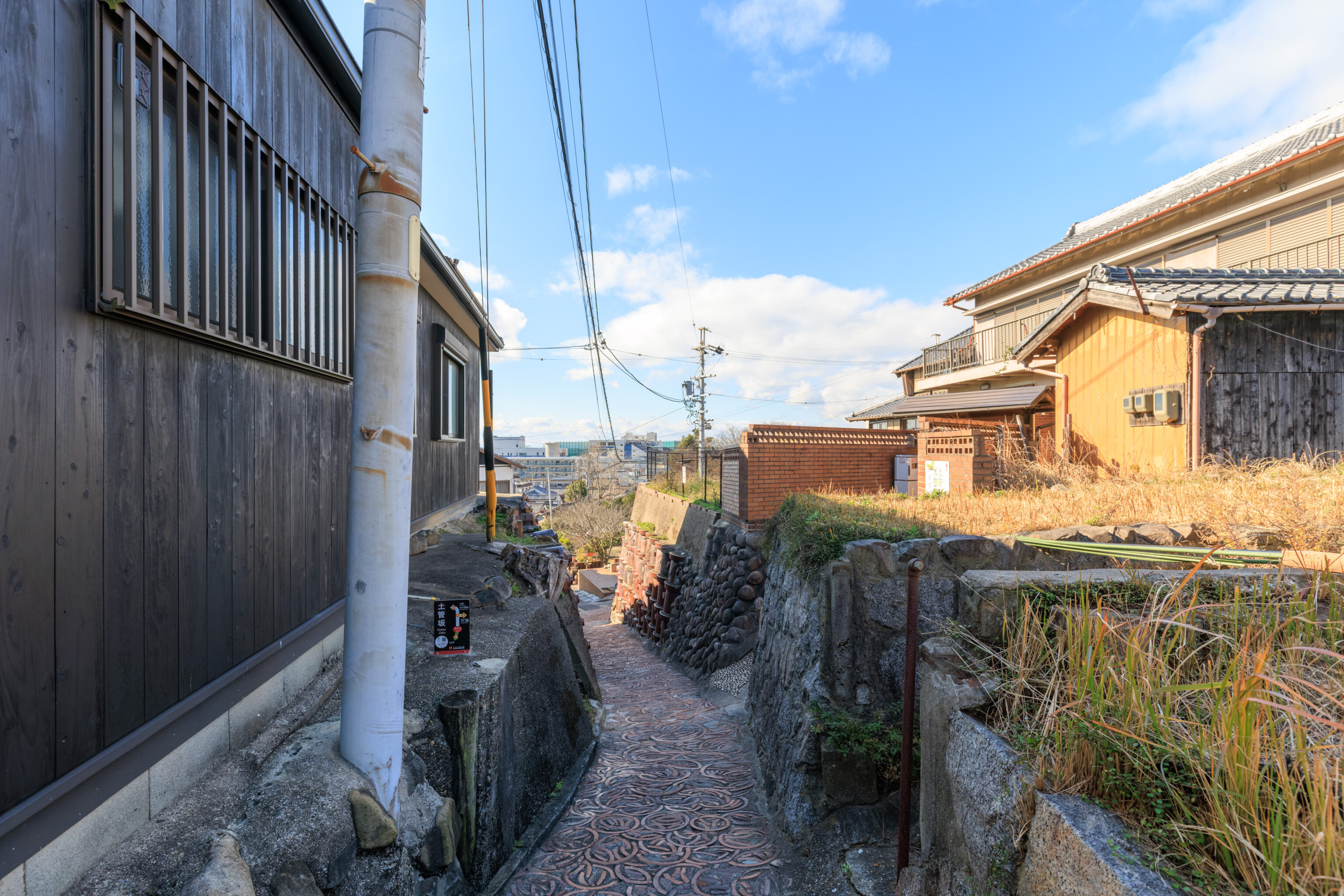
We didn’t really see anything of interest so we turned around and headed back to the main path.
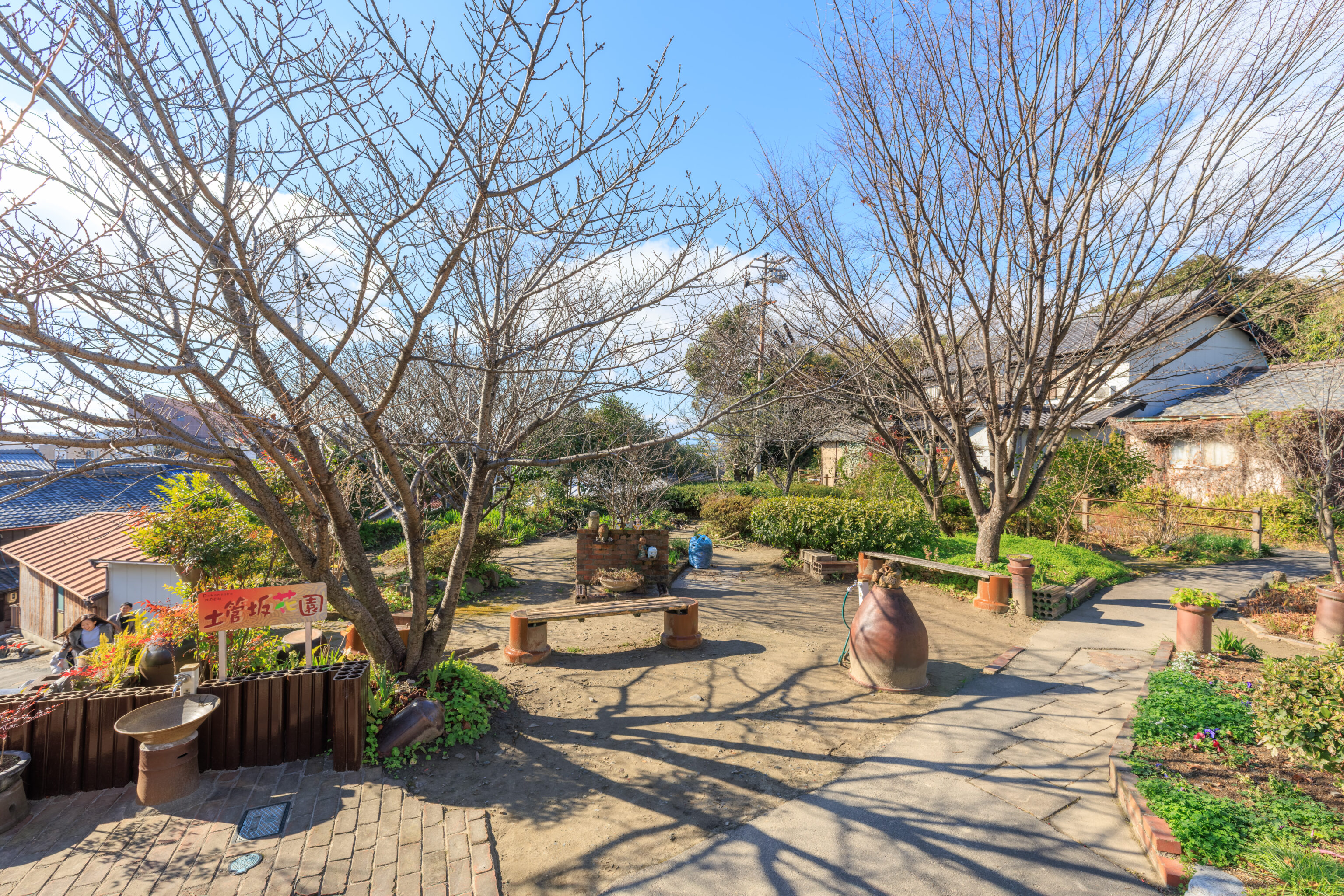
Although we didn’t find anything up the hill, there was actually a little park at the corner. It, of course, used pottery everywhere! At this point, it was around noon and all we had to eat was Tokyo Banana and some konbini snacks. We decided to try and find a place to eat nearby as there didn’t seem to be much further ahead.
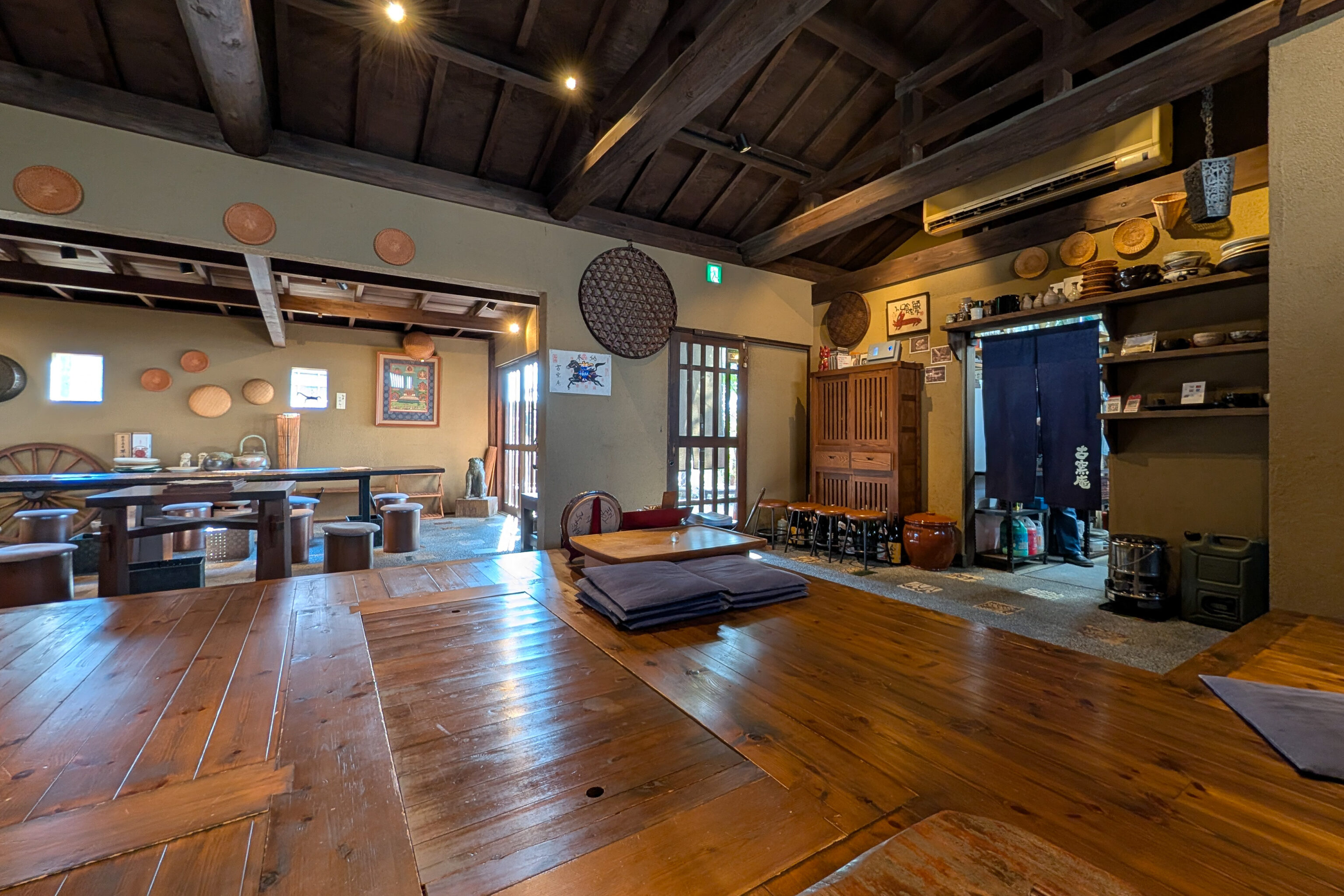
We backtracked a short distance to visit 古窯庵 Koyoan, a soba restaurant. It was actually a bit hard to find in that from the outside, it seems like you’re just walking into some random house!
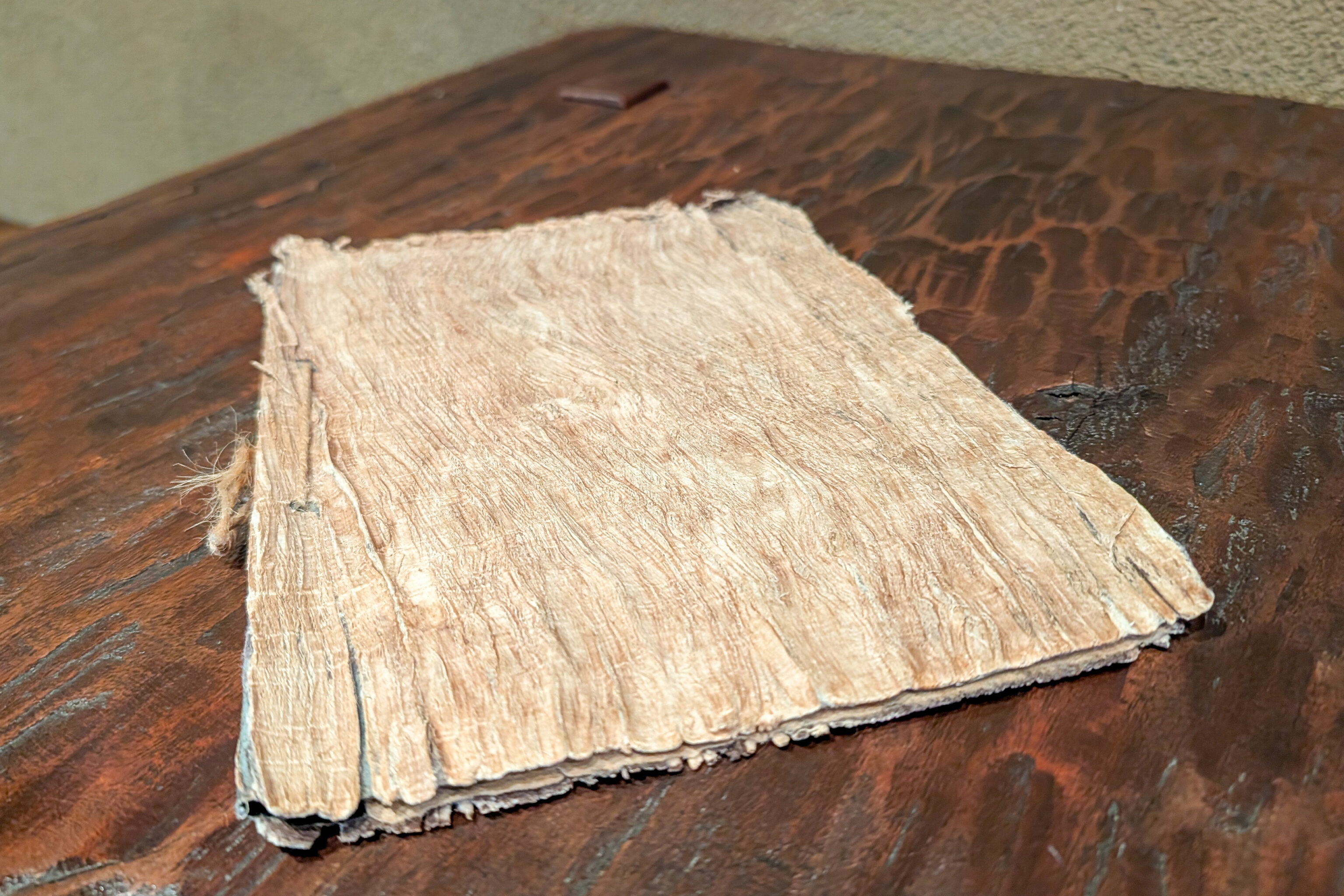
The menu!
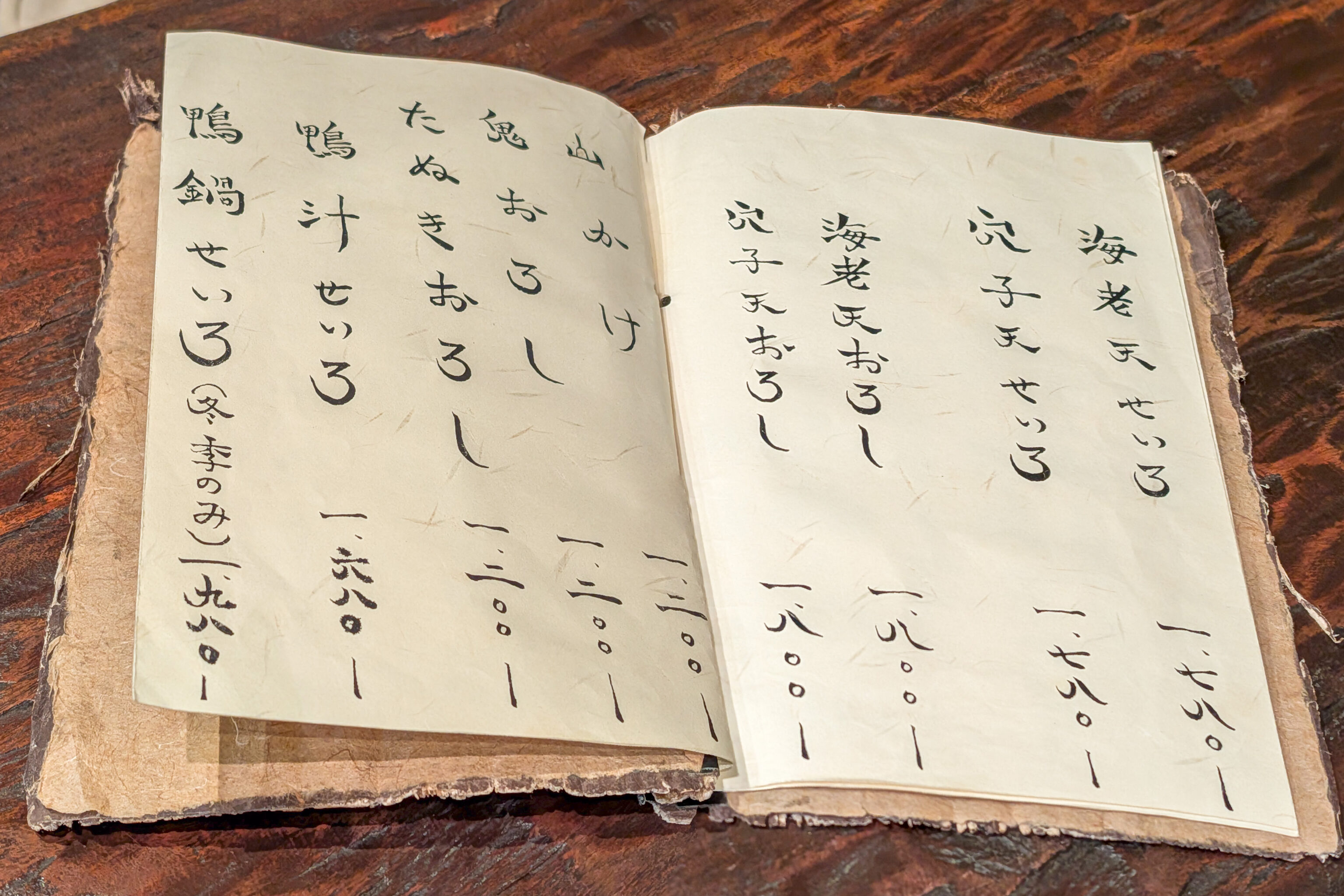
海老天せいろ (Ebi Ten Seiro) — 1,780円
Shrimp Tempura Seiro Soba

穴子天せいろ (Anago Ten Seiro) — 1,780円
Conger Eel Tempura Seiro Soba

海老天おろし (Ebi Ten Oroshi) — 1,800円
Shrimp Tempura Soba with Grated Daikon

穴子天おろし (Anago Ten Oroshi) — 1,800円
Conger Eel Tempura Soba with Grated Daikon

山かけ (Yamakake) — 1,200円
Soba topped with Grated Yam

鬼おろし (Oni Oroshi) — 1,200円
Soba topped with Coarsely Grated Daikon

たぬきおろし (Tanuki Oroshi) — 1,200円
Soba with Tempura Bits and Grated Daikon

鴨汁せいろ (Kamo-jiru Seiro) — 1,680円
Seiro Soba with Warm Duck Dipping Soup

鴨鍋せいろ(冬季のみ) (Kamo-nabe Seiro [Tōki nomi]) — 1,980円
Duck Hot-Pot Seiro Soba (Winter Season Only)
– Text from the menu, translated using Google Gemini.
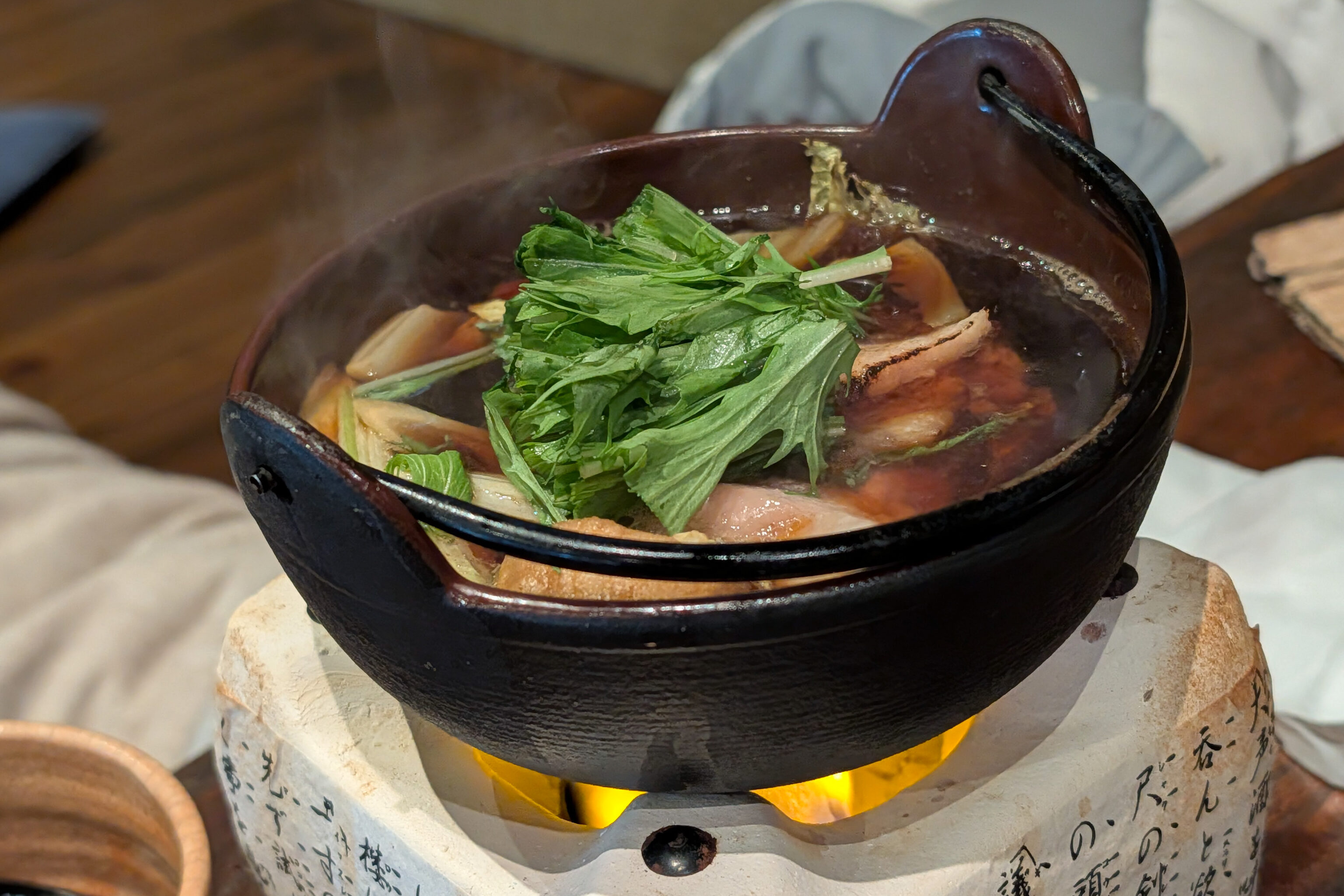
We ordered the kamo-nabe beause it was a seasonal winter item.
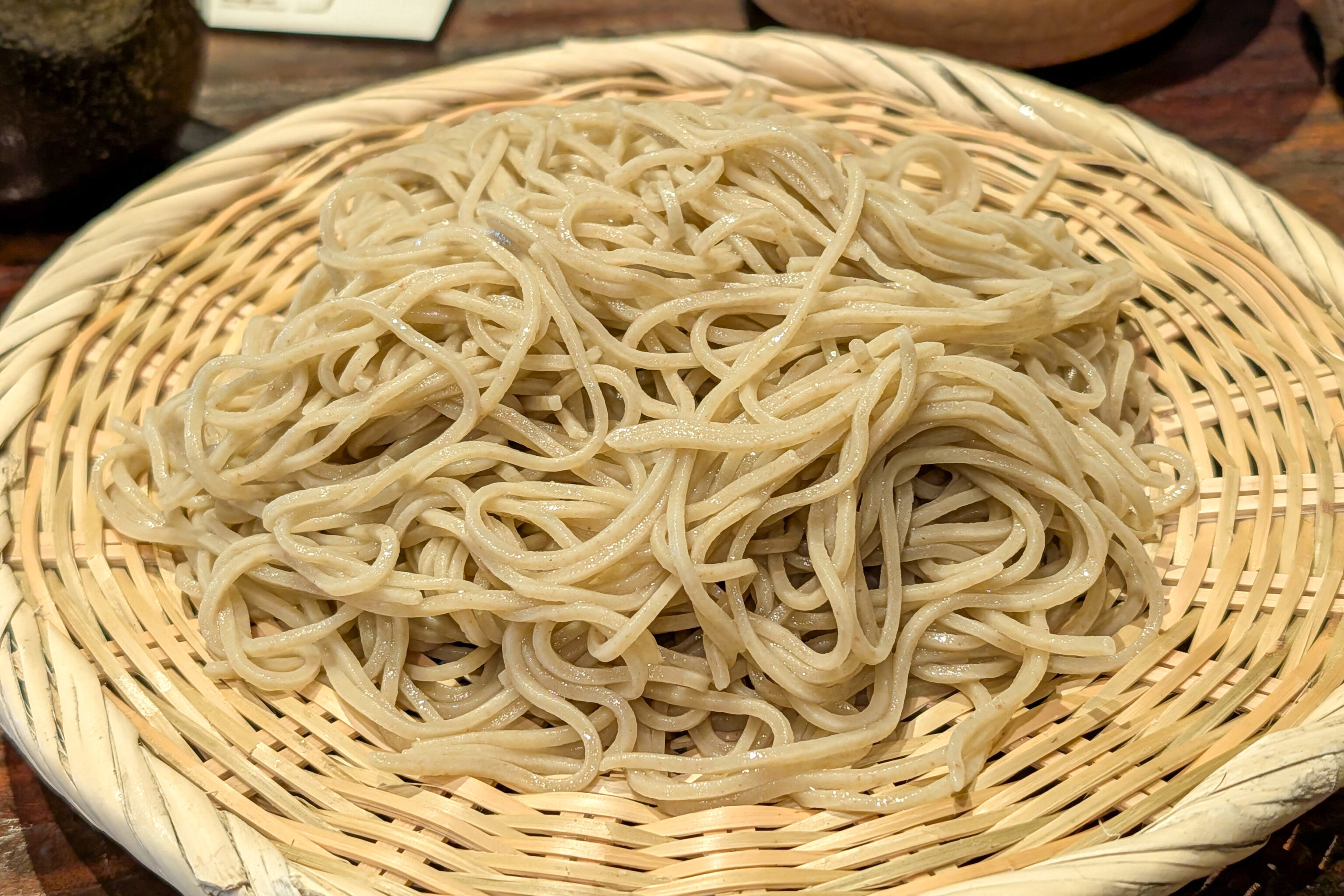
The soba that comes with the kamo-nabe is consumed by dipping it into the soup. Although this dish was nice as it was hot and it was a bit cold outside, the kamo (duck) was pretty terrible.
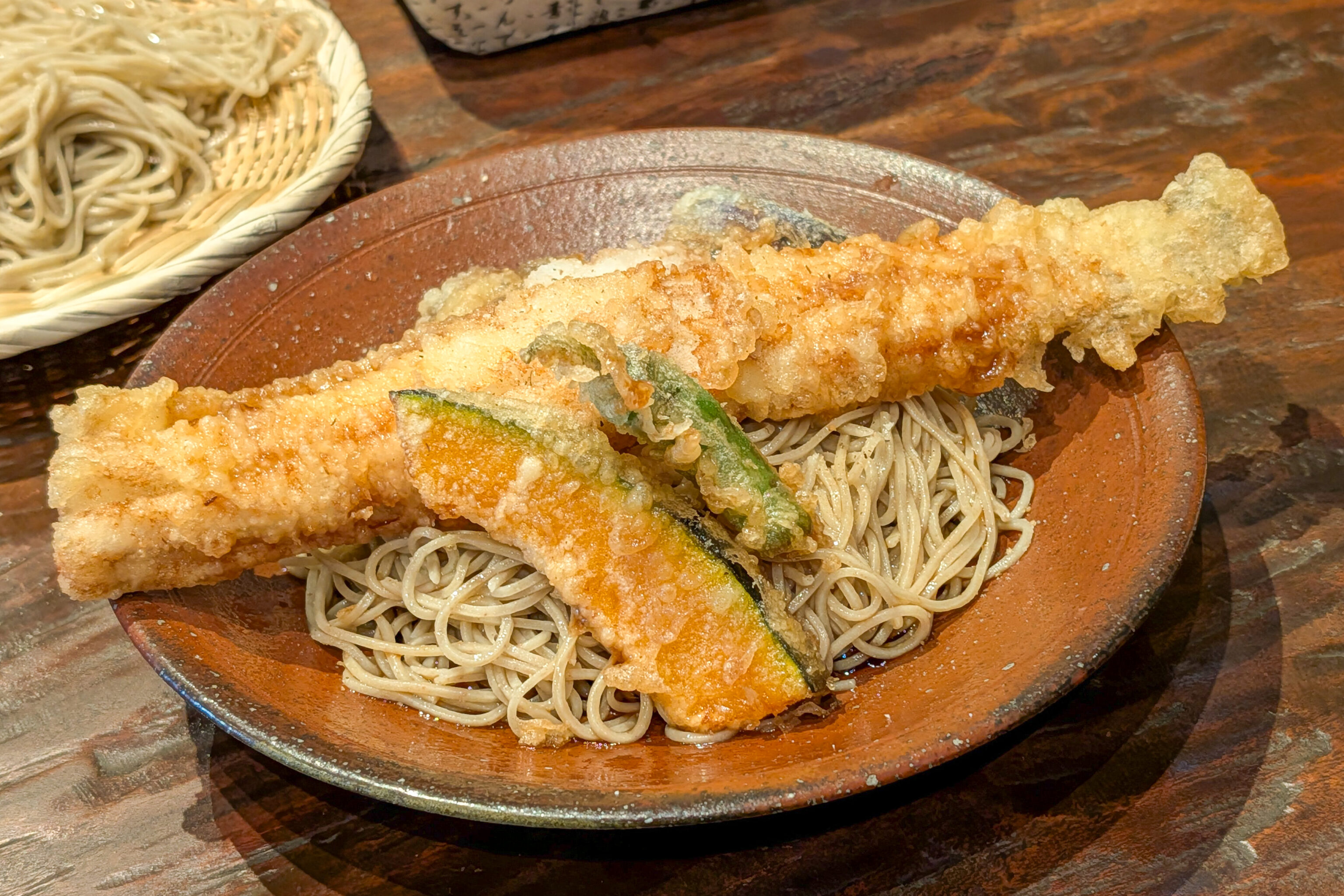
We also ordered the anago oroshi soba. In this dish, the anago tempura sits atop cold soba.
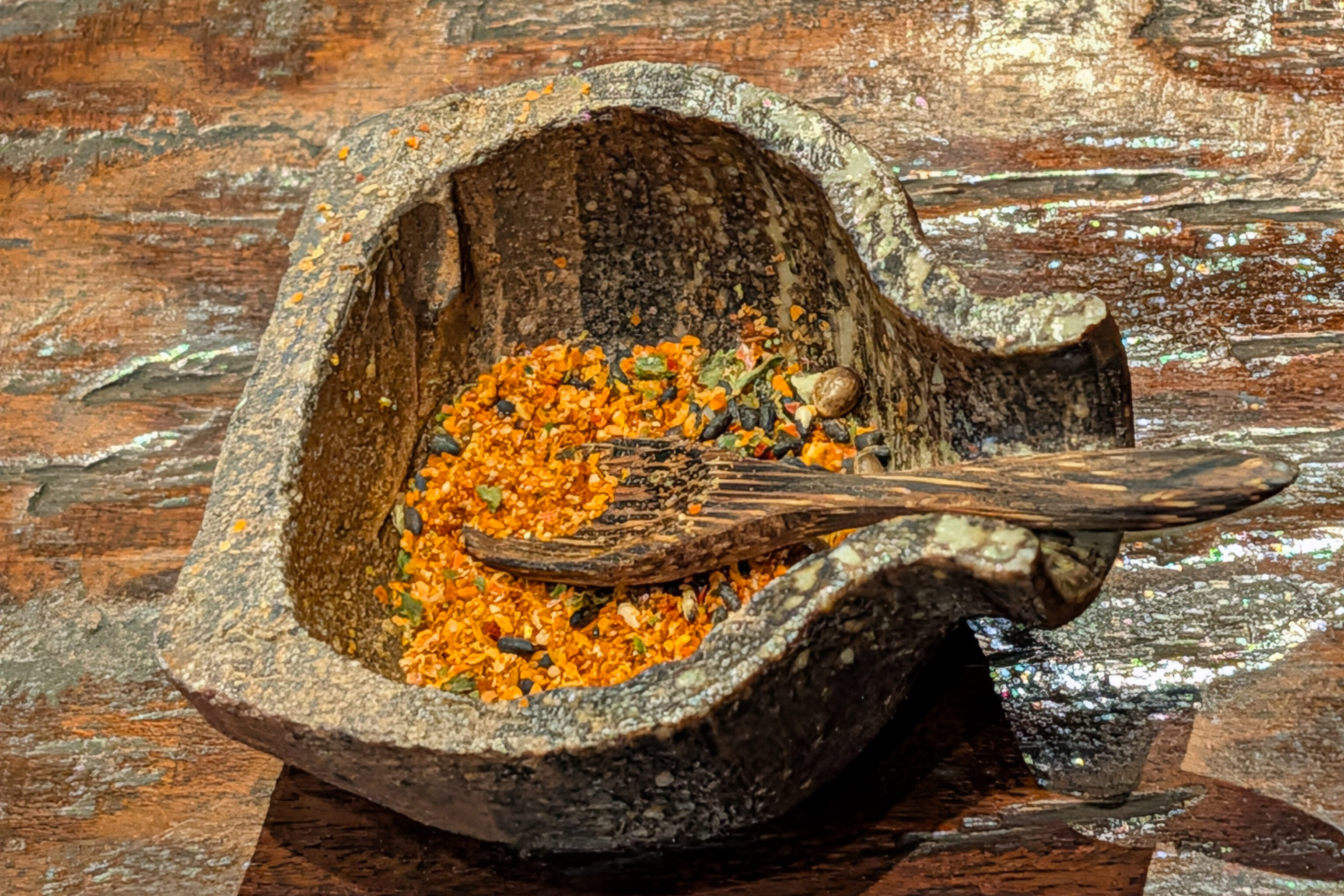
Some easoning was available.
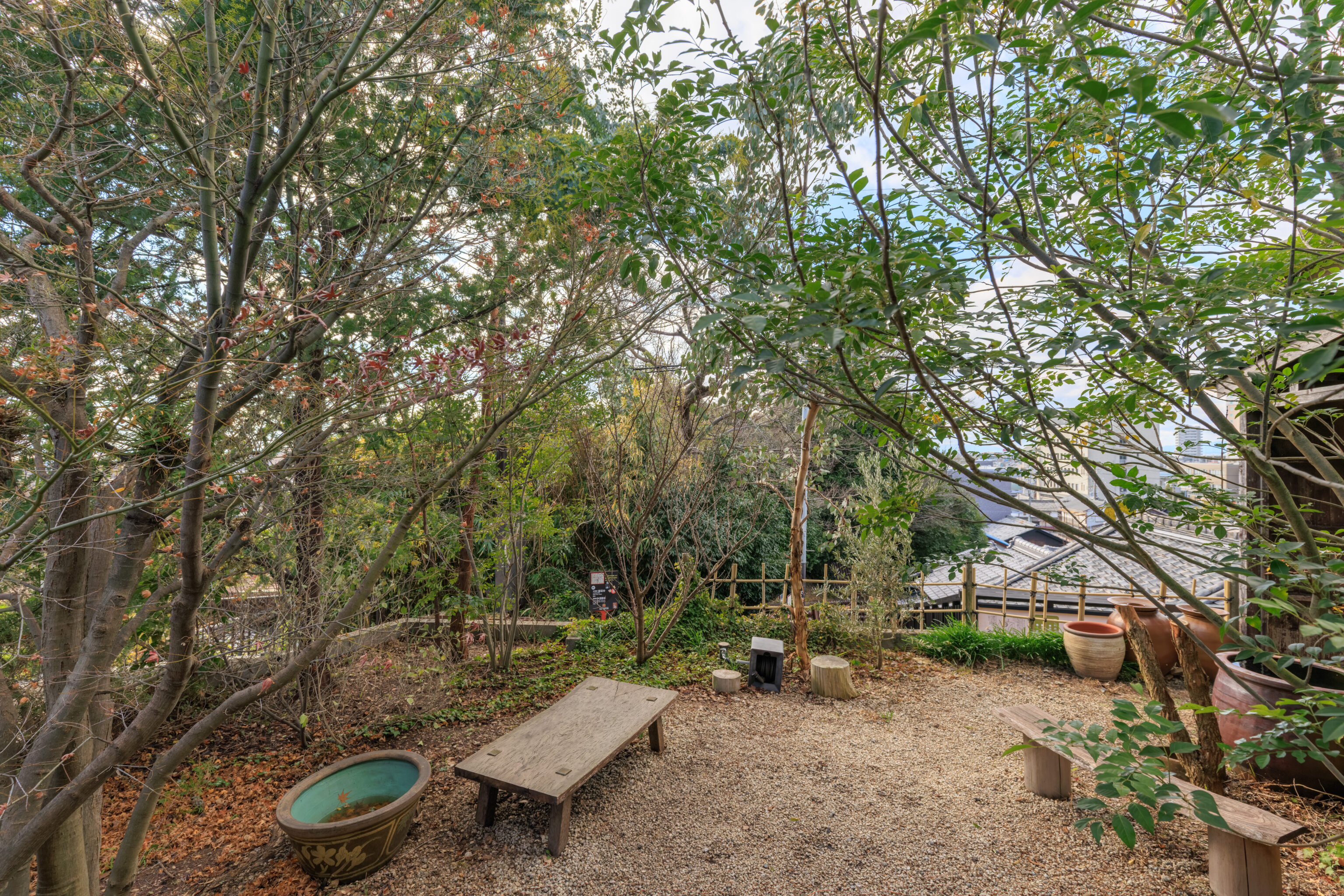
There was a little outdoor area with benches by the restuarant.
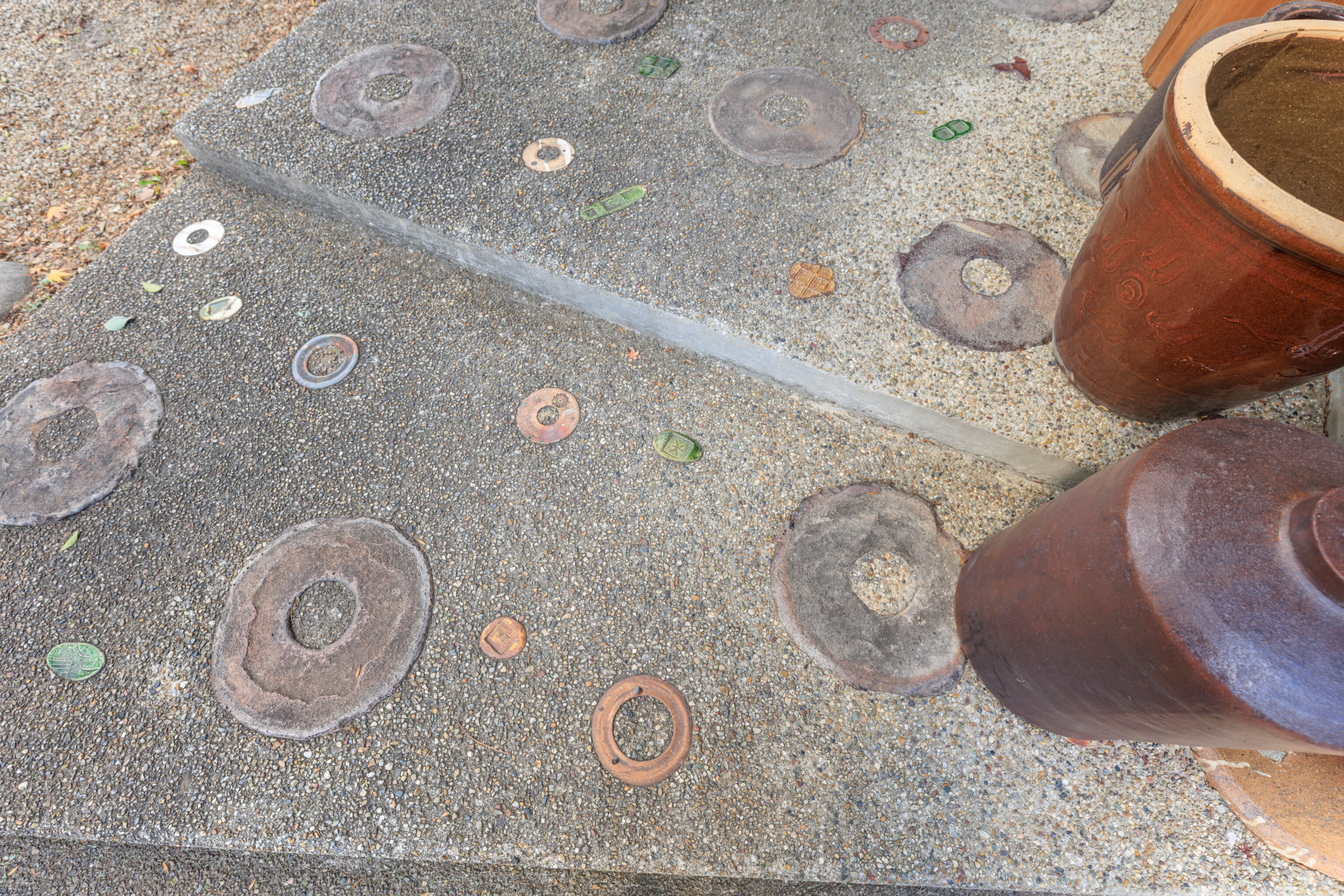
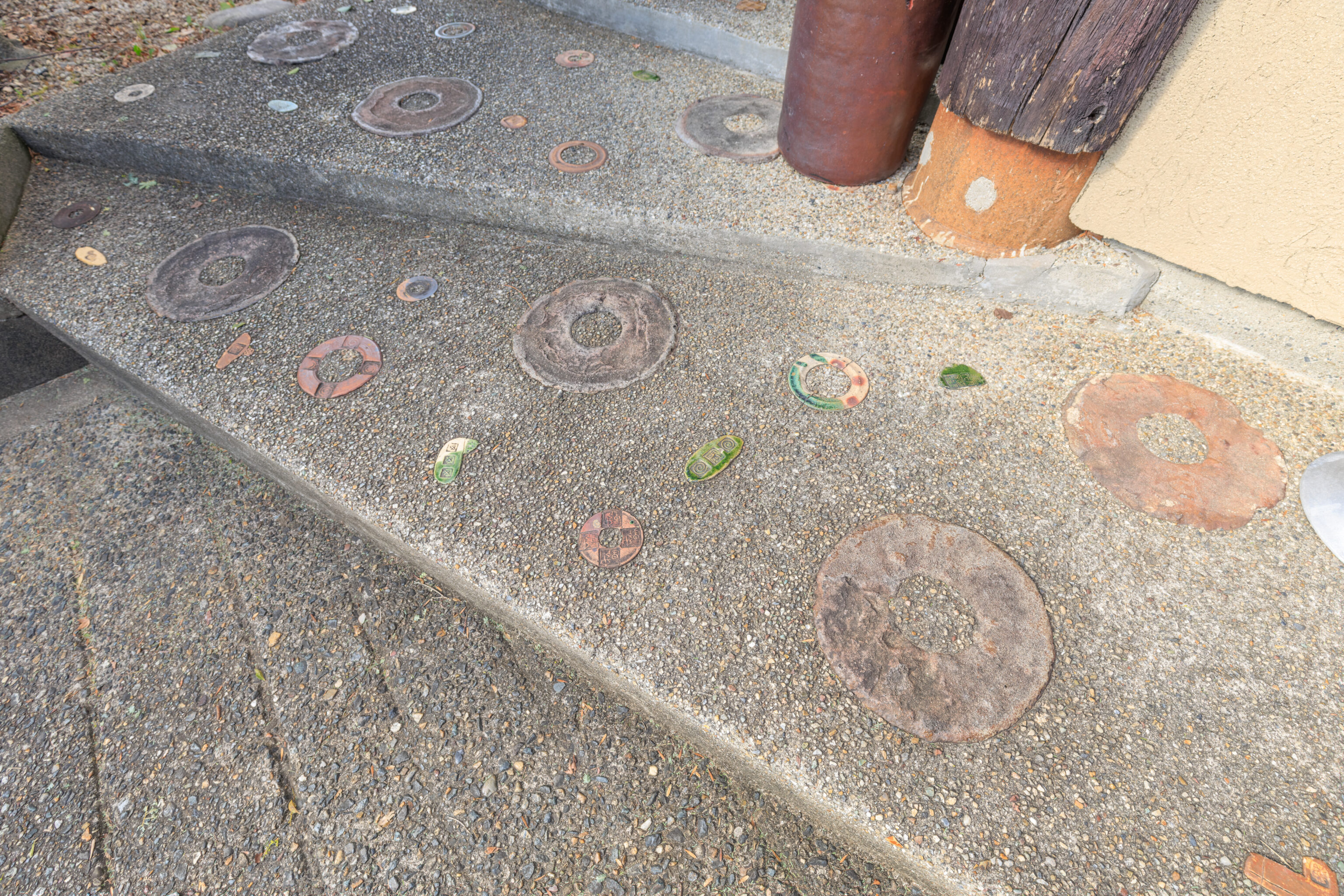
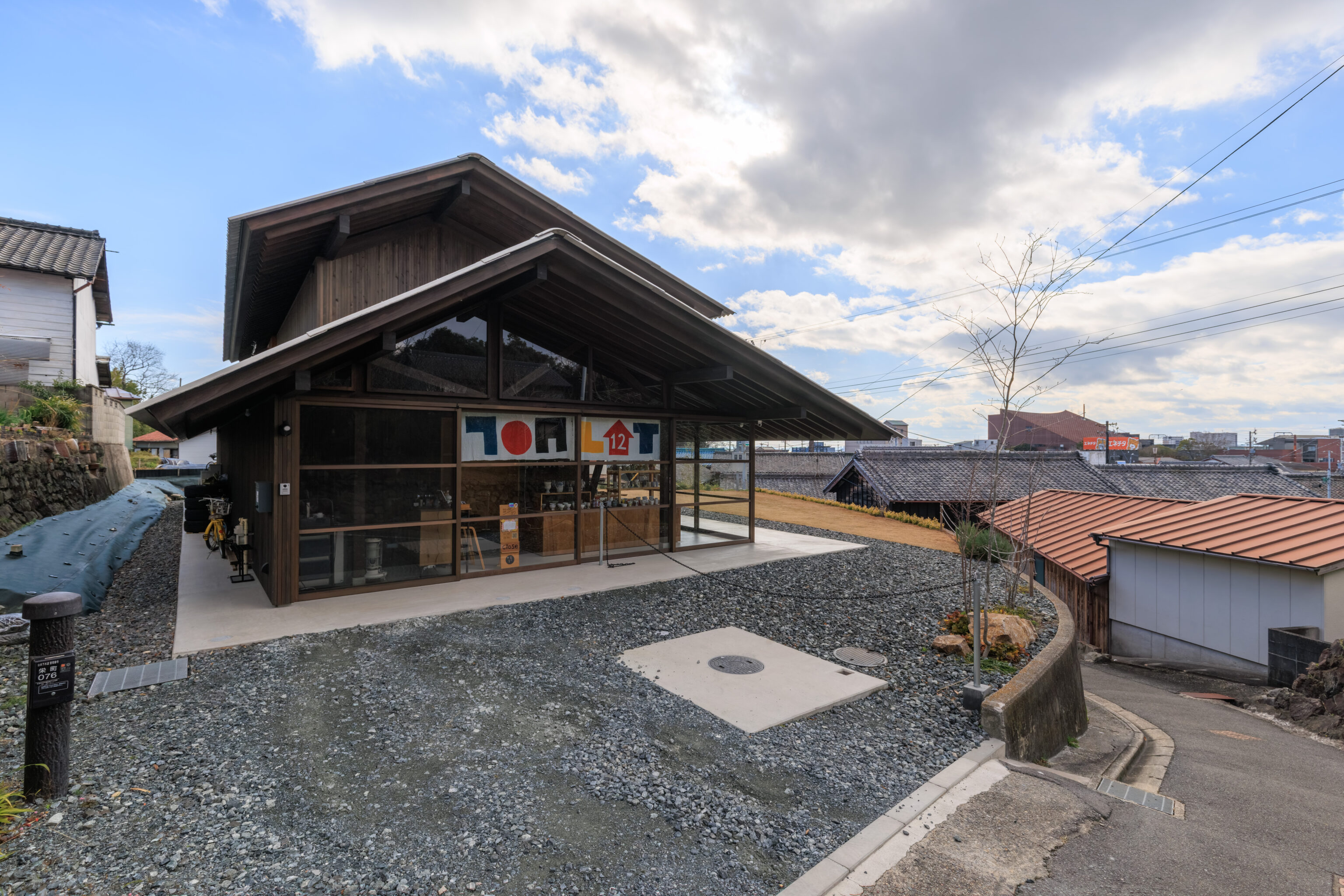
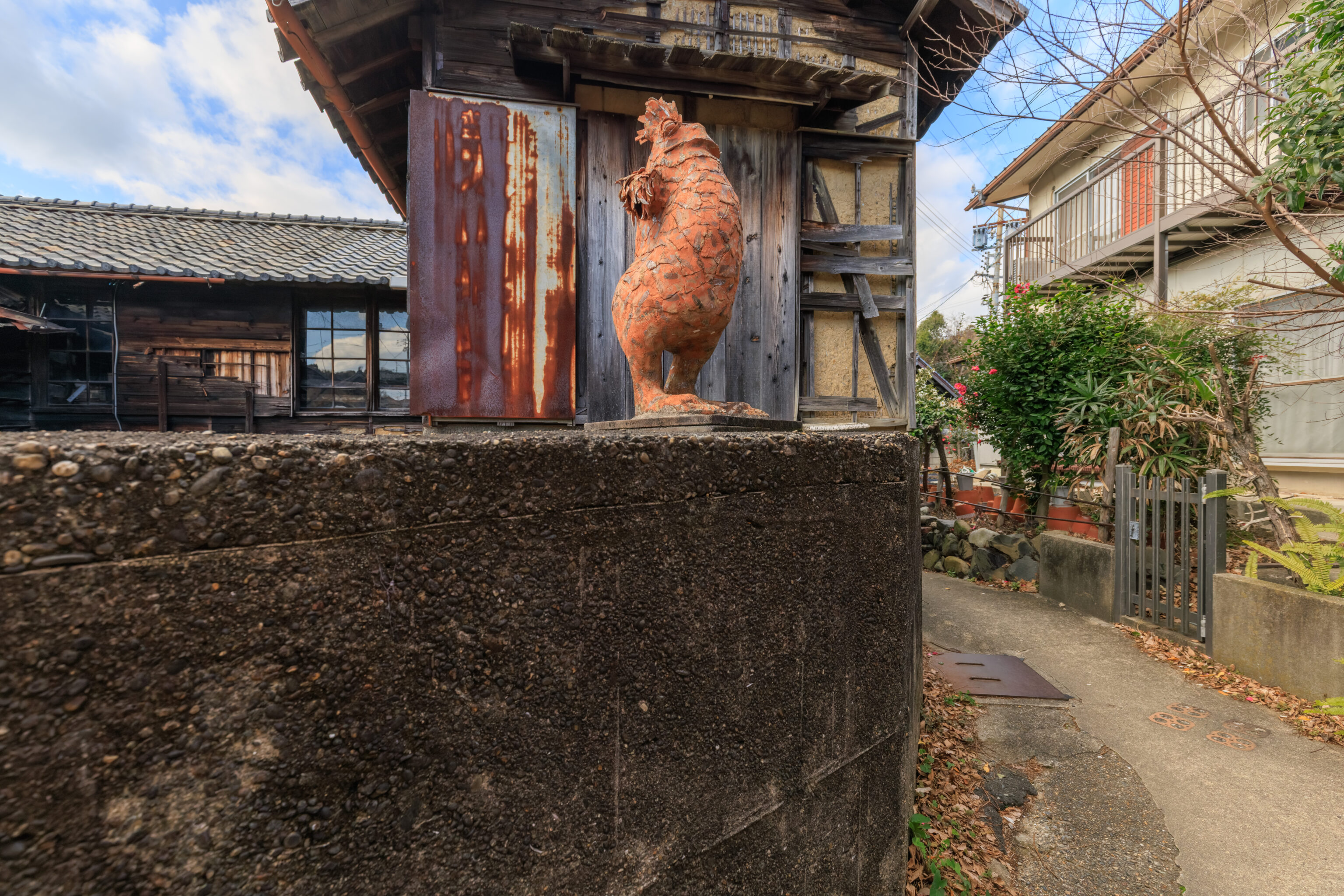
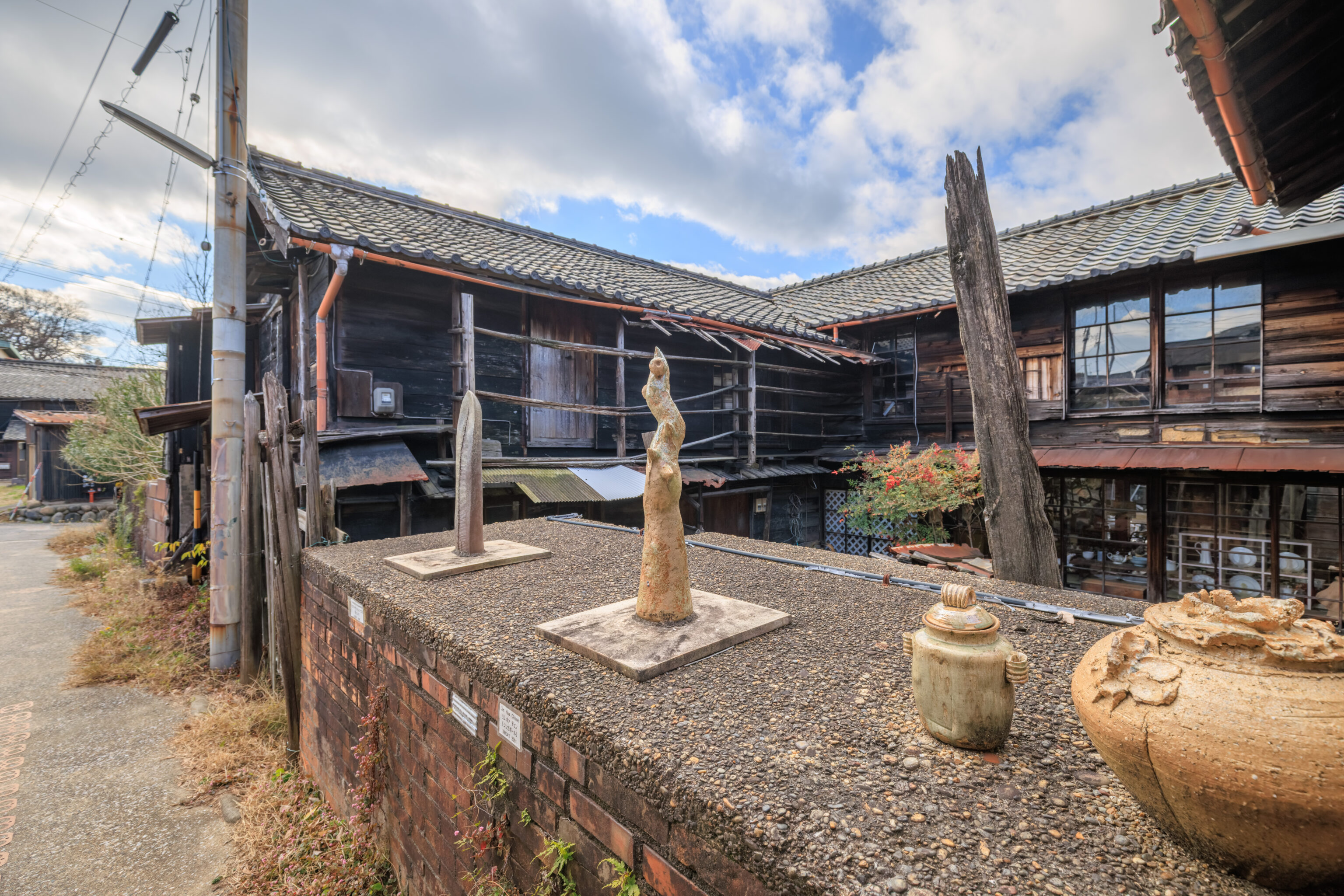
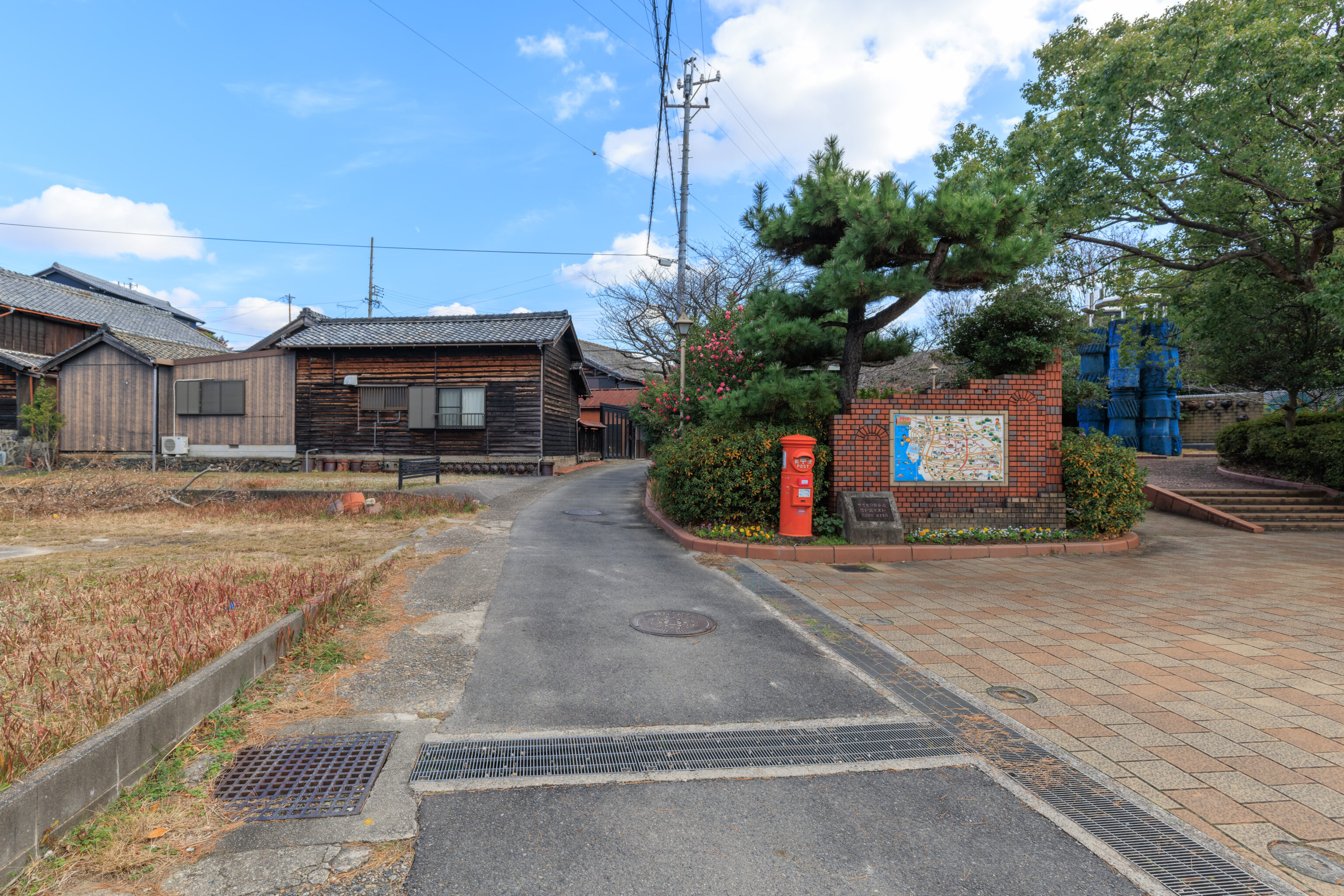
We continued on until we reached the 登窯広場 Noborigama Plaza (Climbing Kiln Plaza).
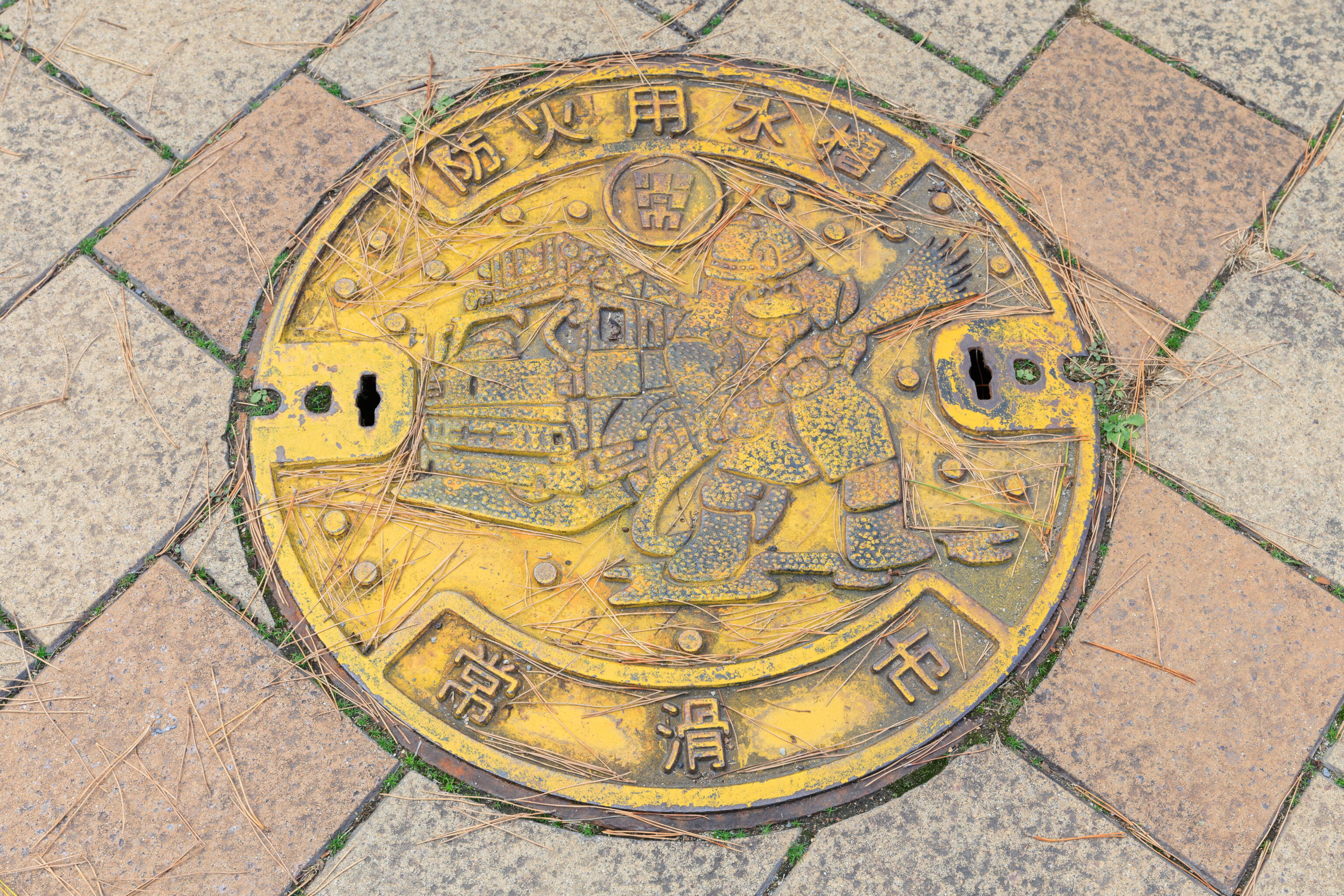
This yellow fire department utility cover is a bit different than the ones we’ve seen before. Maybe?
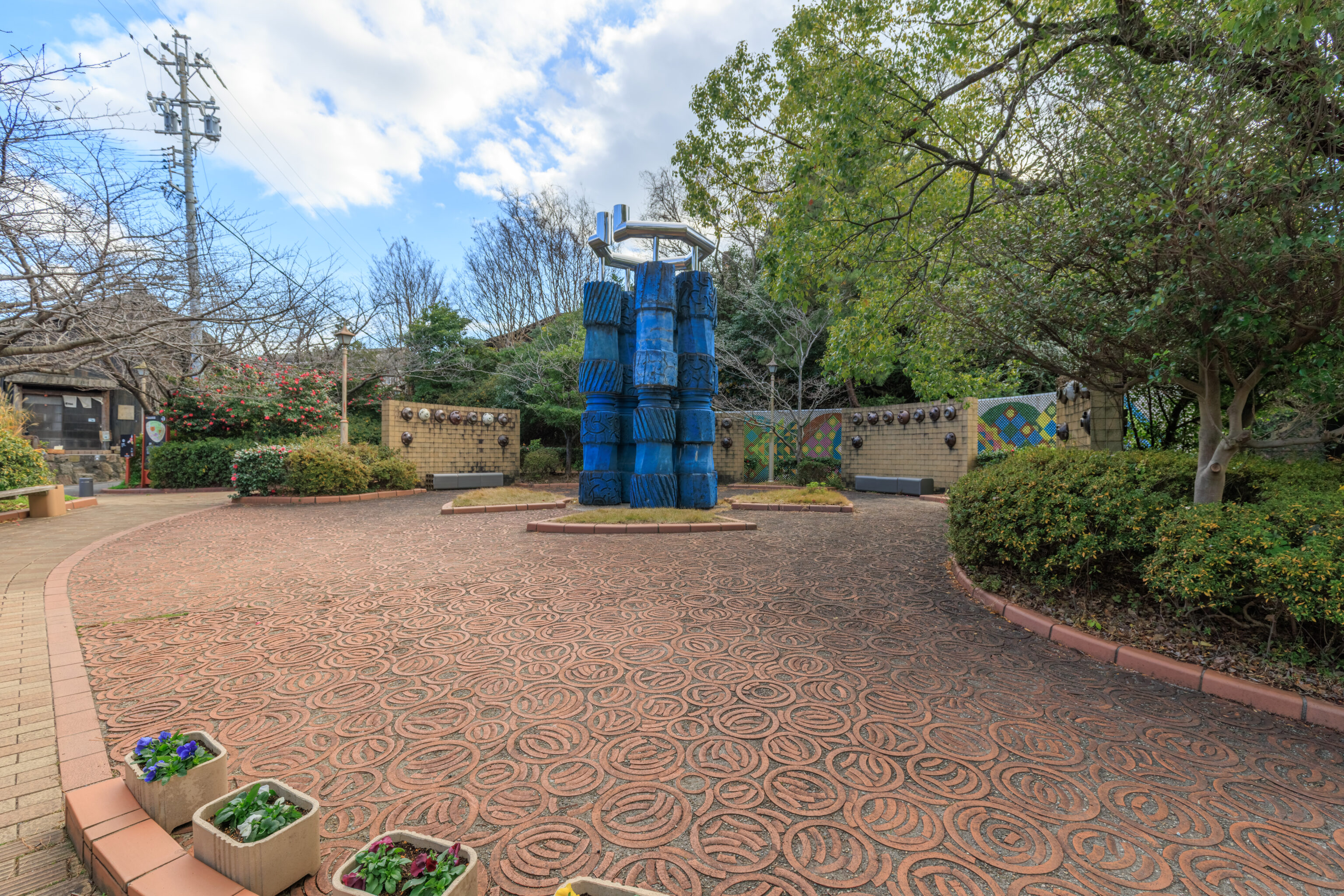
A very blue sculpture of some sort!
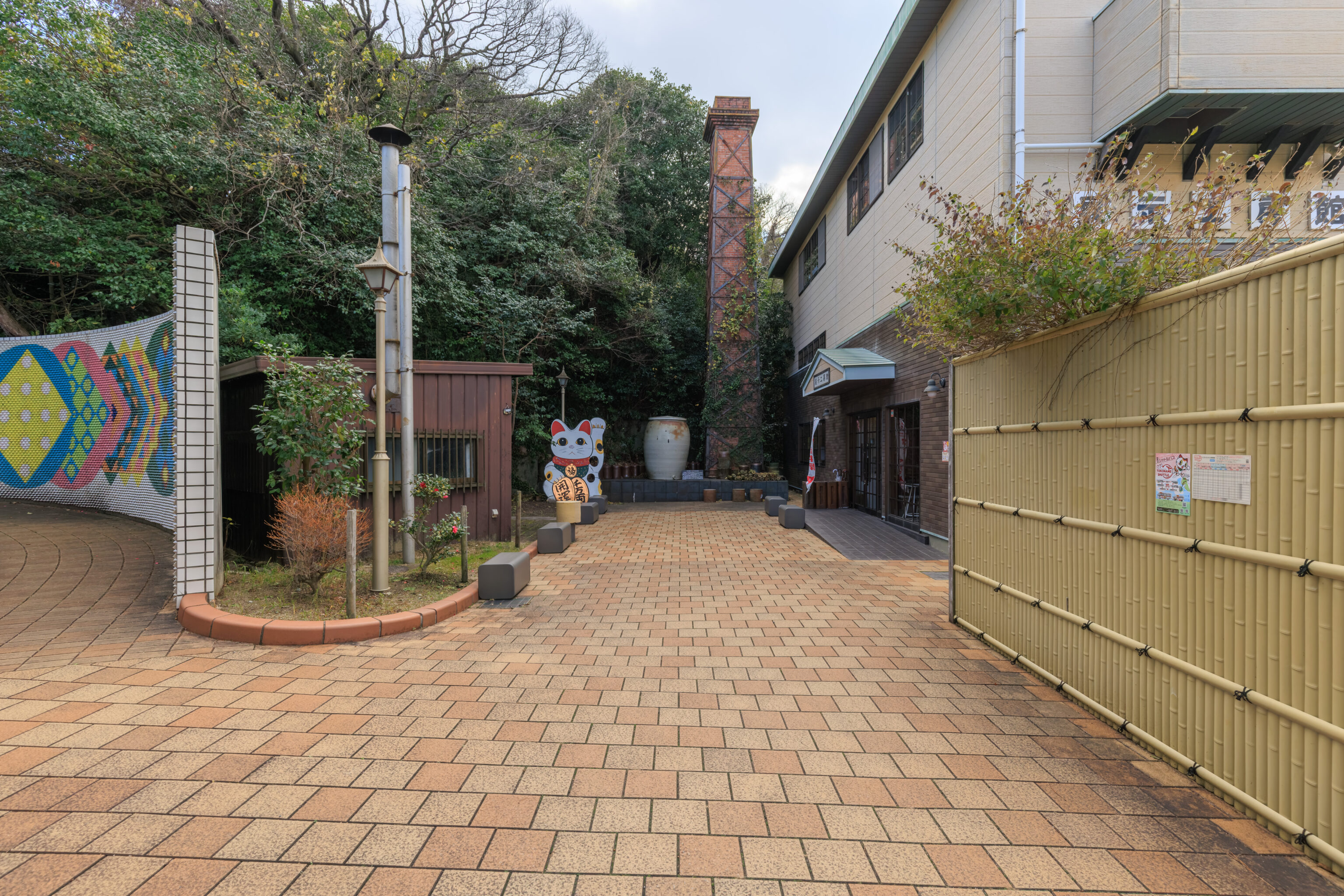
The main thing here is the 常滑市登窯広場展示工房館 Tokoname City Climbing Kiln Plaza Exhibition & Workshop Hall, which is in the building on the right.
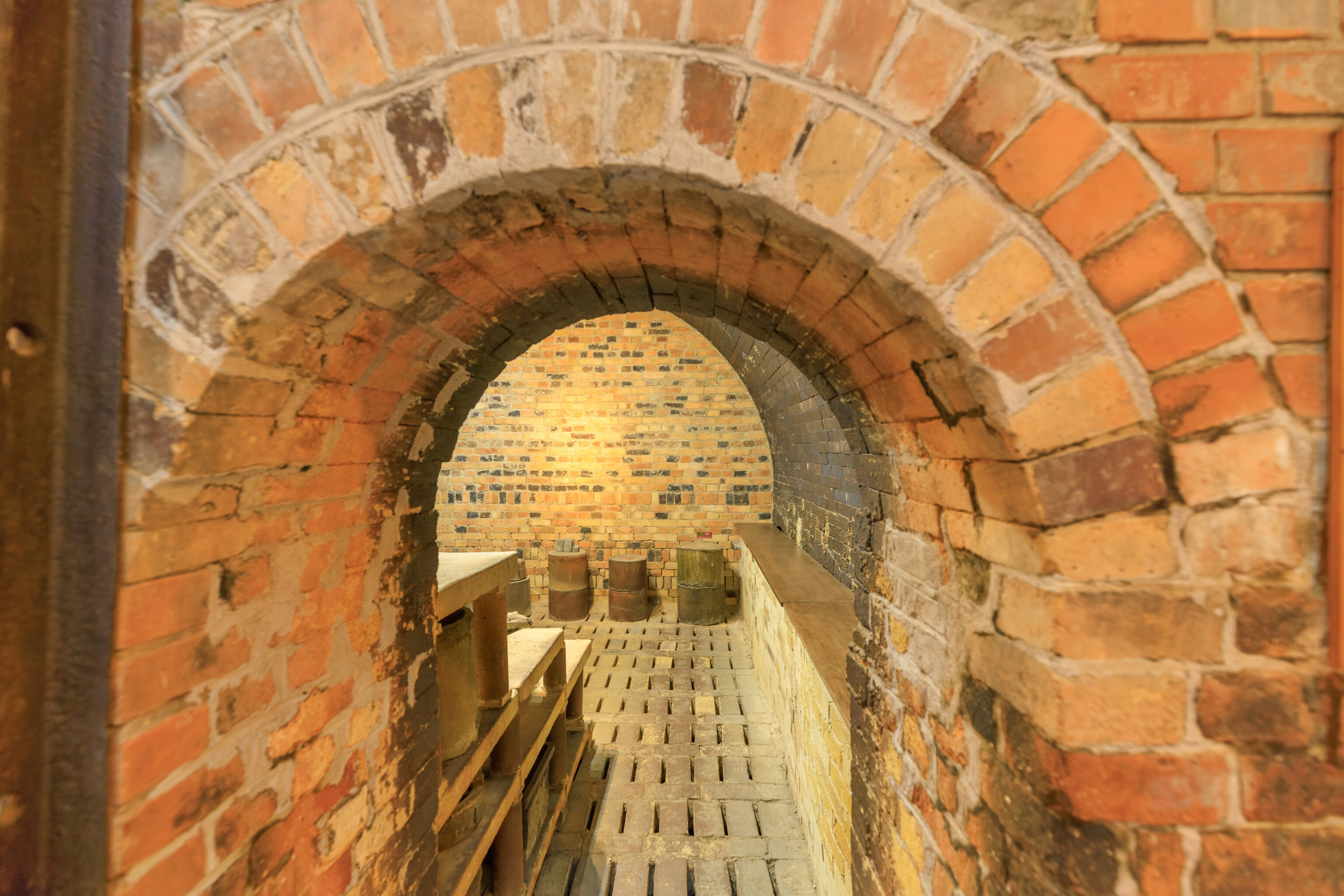
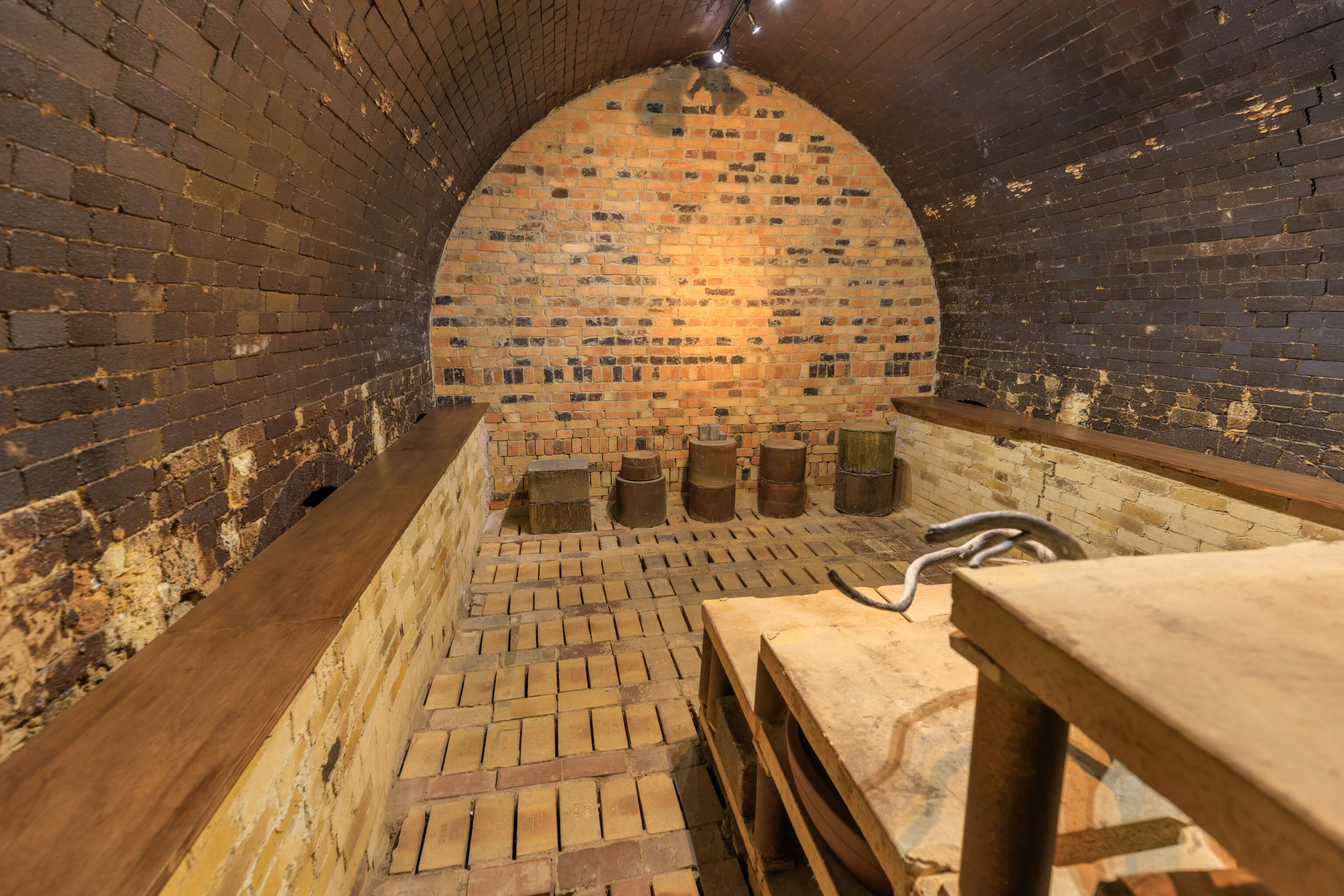
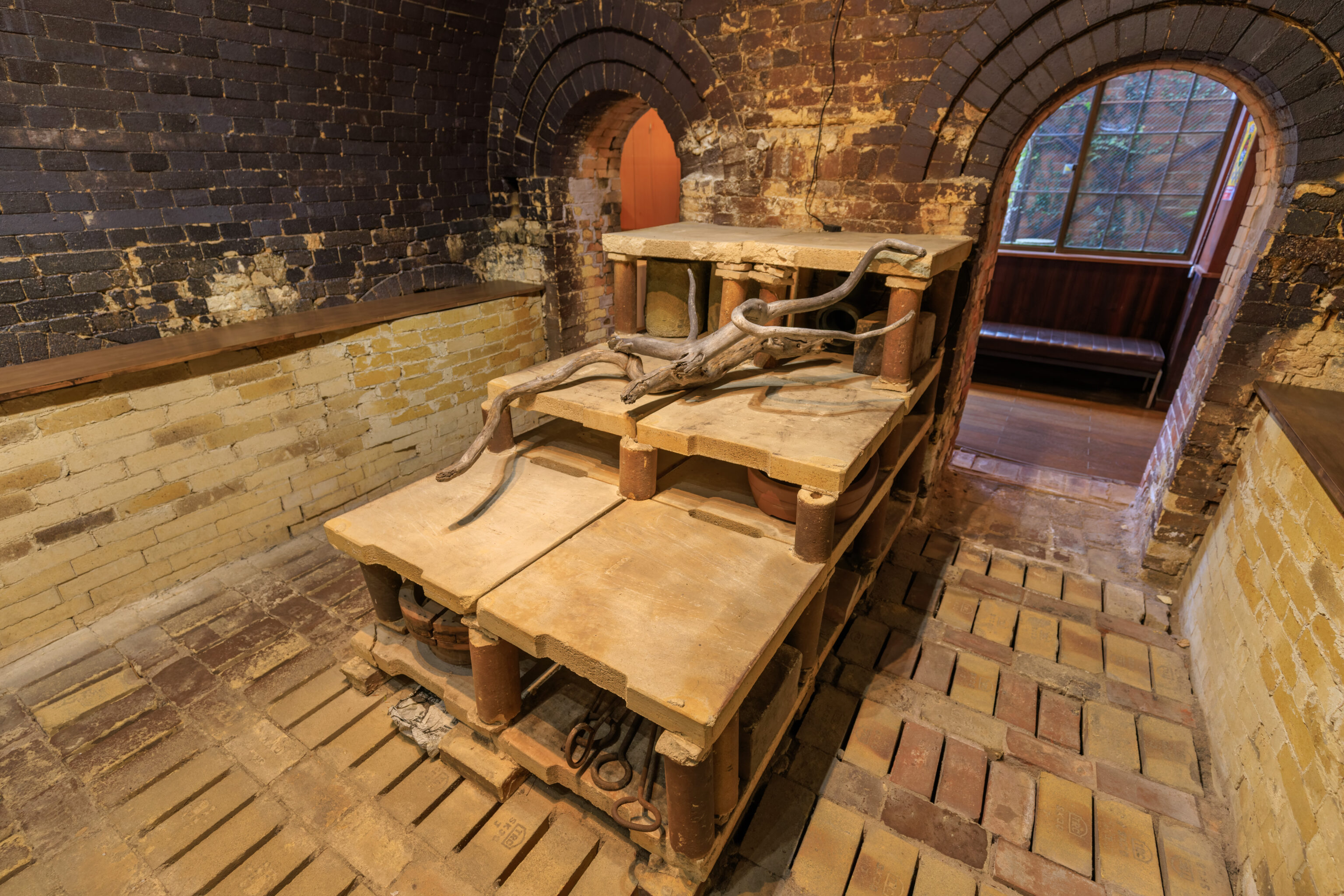
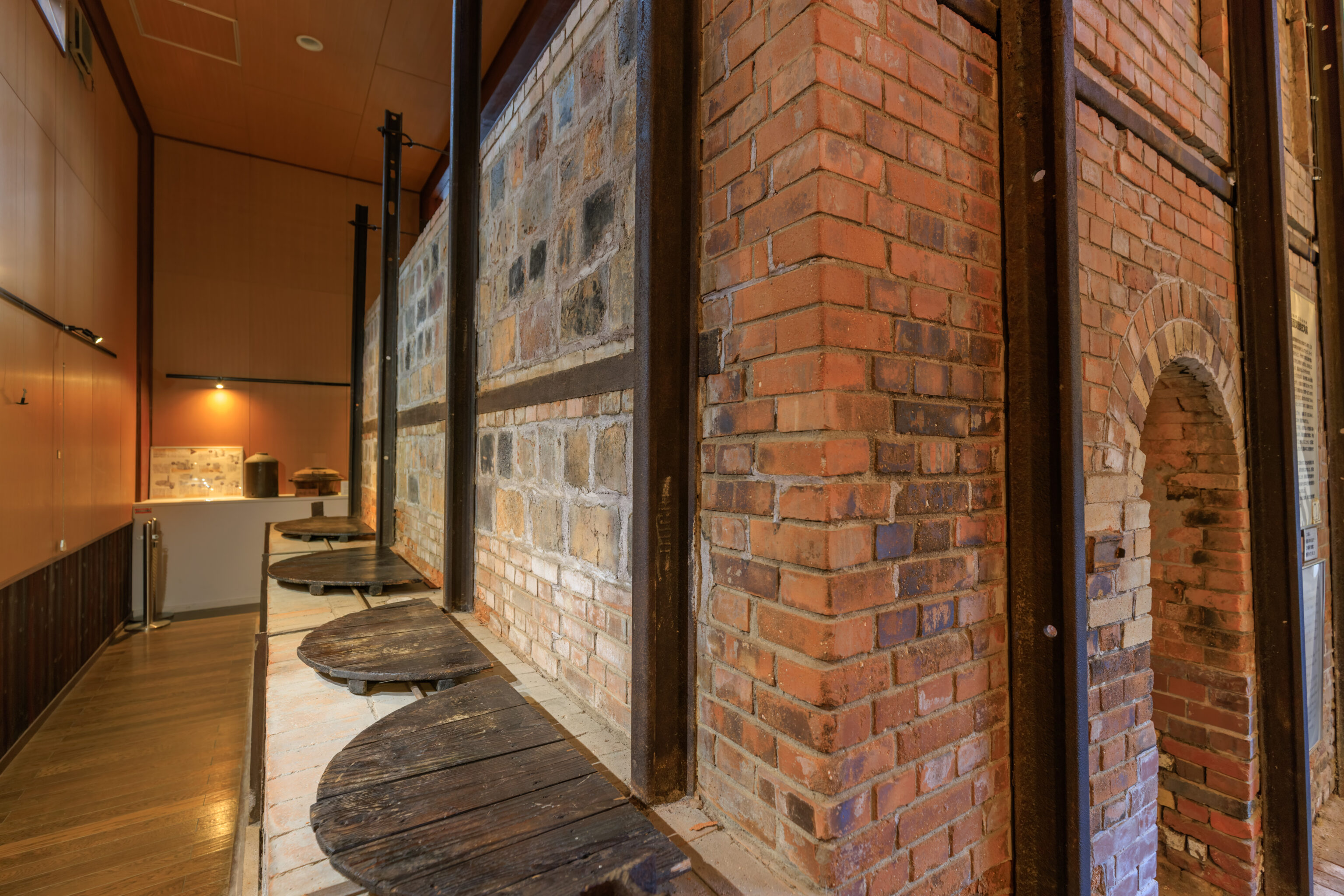
This is a somewhat modern diesel fired kiln that was in use until 1982:
The kiln
This is a diesel oil-fired down draught type, square kiln, which has six burners, three to each side. During firing the flame at first shot up to the top of the kiln, on both sides, and then down through the stacks of pots, saggars etc, before exiting the kiln through the floor and finally via a short tunnel to the chimney.

This type of kiln started to be used in the late Meiji era-late 19th century-replacing the older Noborigama style kiln. During the Taisho era (1912-1925) the building of this type of kiln spread rapidly, and by 1929 about 86 of them had been built in Tokoname. This particular kiln was built during the Taisho era, rebuilt about 1950, and was in use firing mainly bonsai pots and hibachi, large pots used for warming hands, until about 1982.
– Text from a sign.
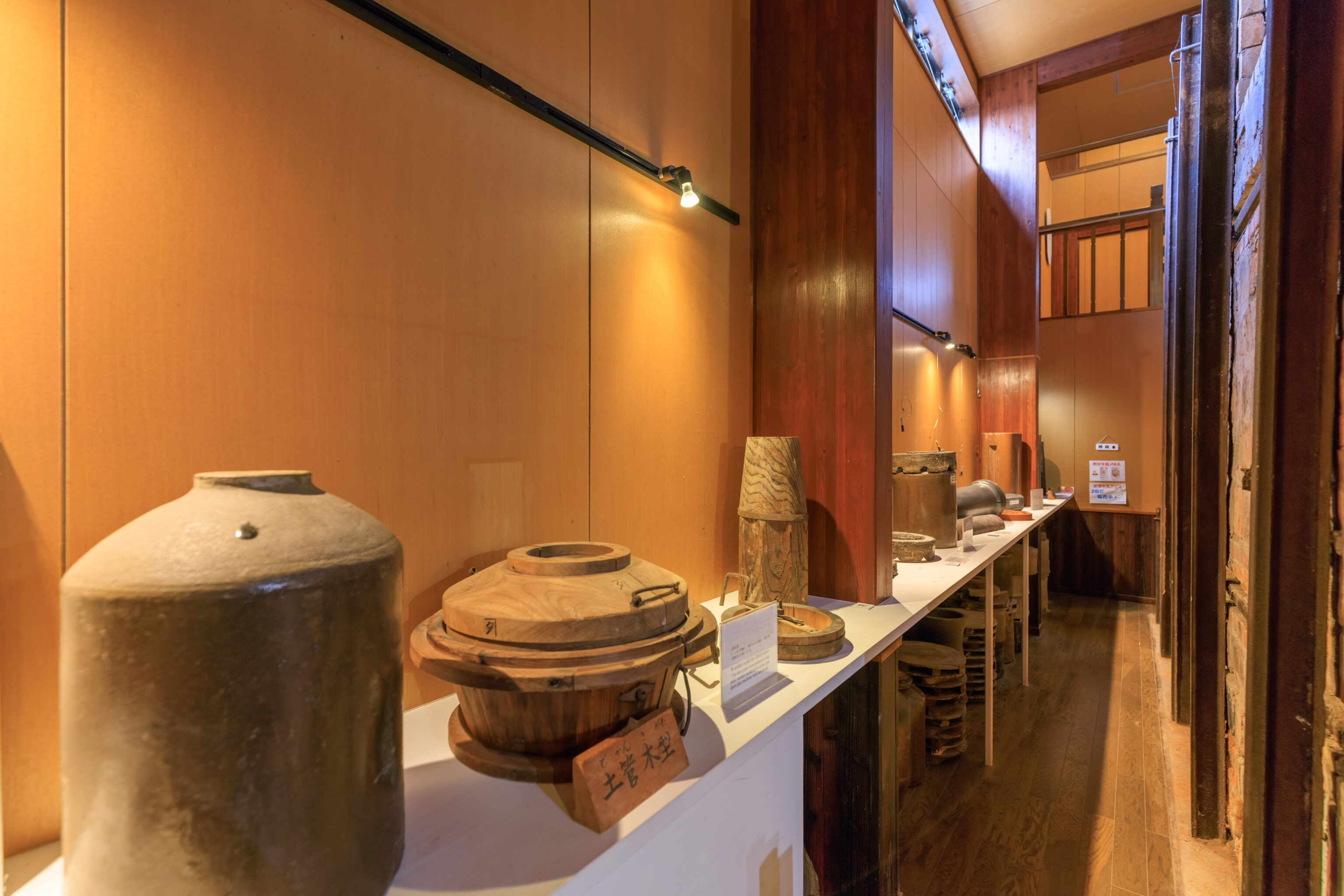
The highlight of this facility was being able to walk into a kiln and take a look around. The other exhibits weren’t particularly compelling. They do offer pottery painting classes in the second floor workshop space.
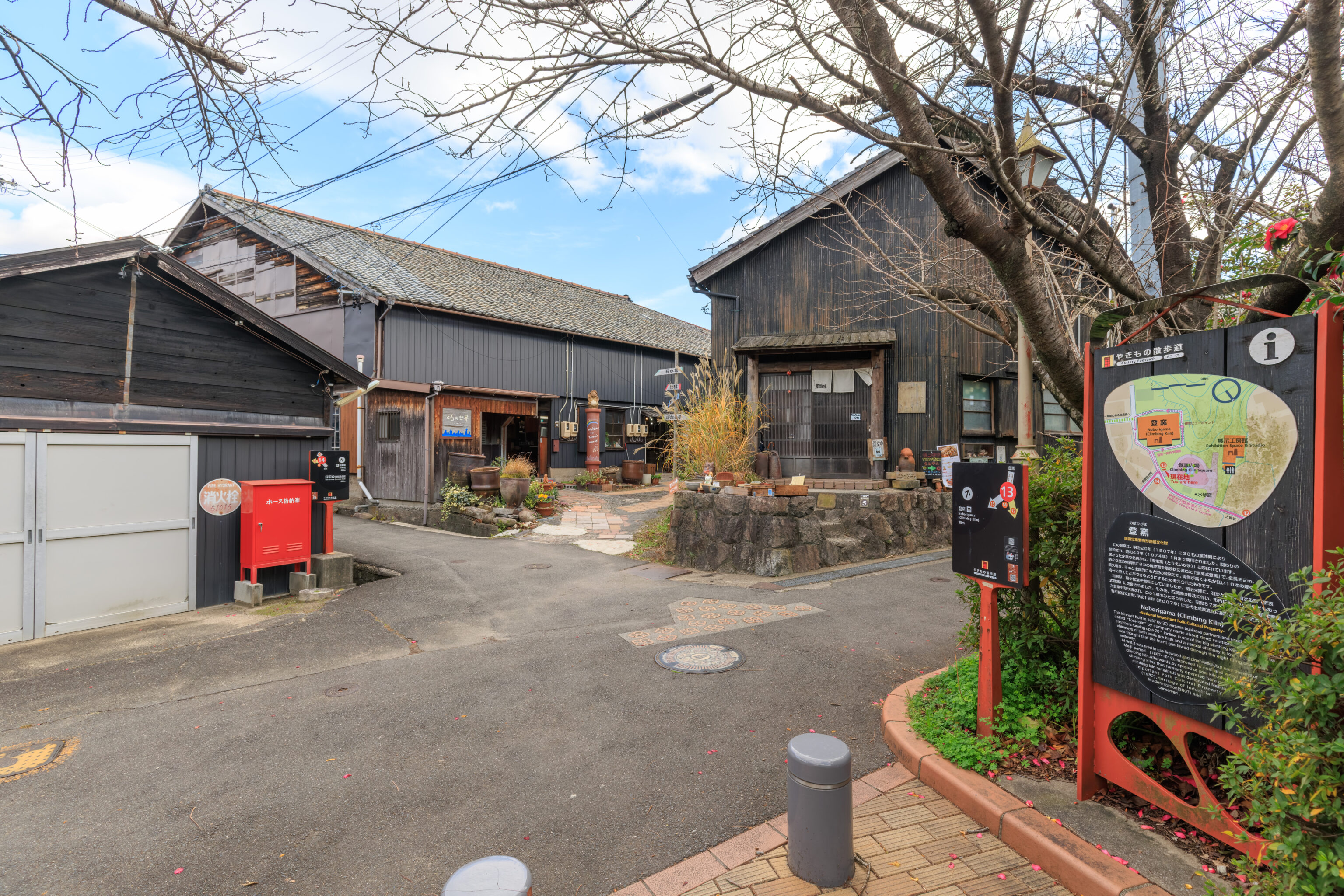
We continued on to find the Noborigama, which is ahead as indicated by the signs on the right:
Climbing Kiln (Noborigama)
Nationally Designated Important Tangible Folk Cultural Property

This climbing kiln was established in 1887 by a group of 33 potters and remained in use until January 1974. It is known as the "Toeigama" (Toei Kiln), named after a company with which it had close ties. It is a "multi-chamber climbing kiln" featuring eight firing chambers arranged in a stepped formation on a slope of approximately 20 degrees; with a total length of 22 meters and a maximum width of 9.6 meters, it ranks among the largest climbing kilns in Japan. The ten chimneys—tall on the sides and shorter in the middle—were designed to ensure even firing throughout the kiln.

While firewood and pine needles were initially used as fuel, the kiln was modified in the late Meiji era to a hybrid type that utilized both coal and firewood. Later, as coal-fired kilns became widespread, the climbing kilns that once numbered up to 60 in the city were demolished, leaving this single kiln as the sole survivor. It has been preserved and designated as a Nationally Designated Important Tangible Folk Cultural Property (1982) and a Heritage of Industrial Modernization (2007).
– Japanese text from the sign on the right, translated using Google Translate.
Although the sign above has both English and Japanese, the English is pretty rough. The Japanese text translated using modern translation tools is much more understandable!
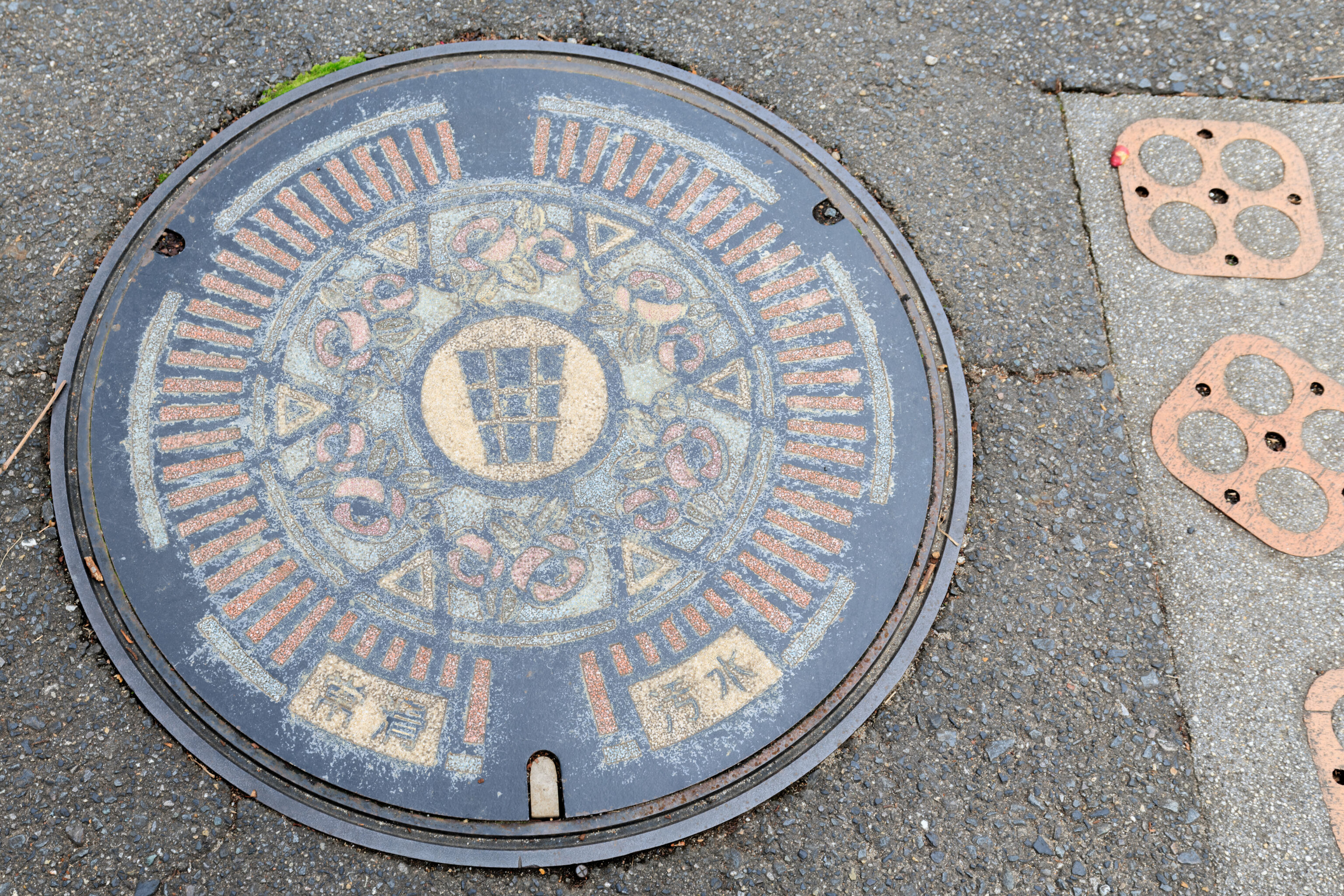
We saw a utility cover like this earlier today.
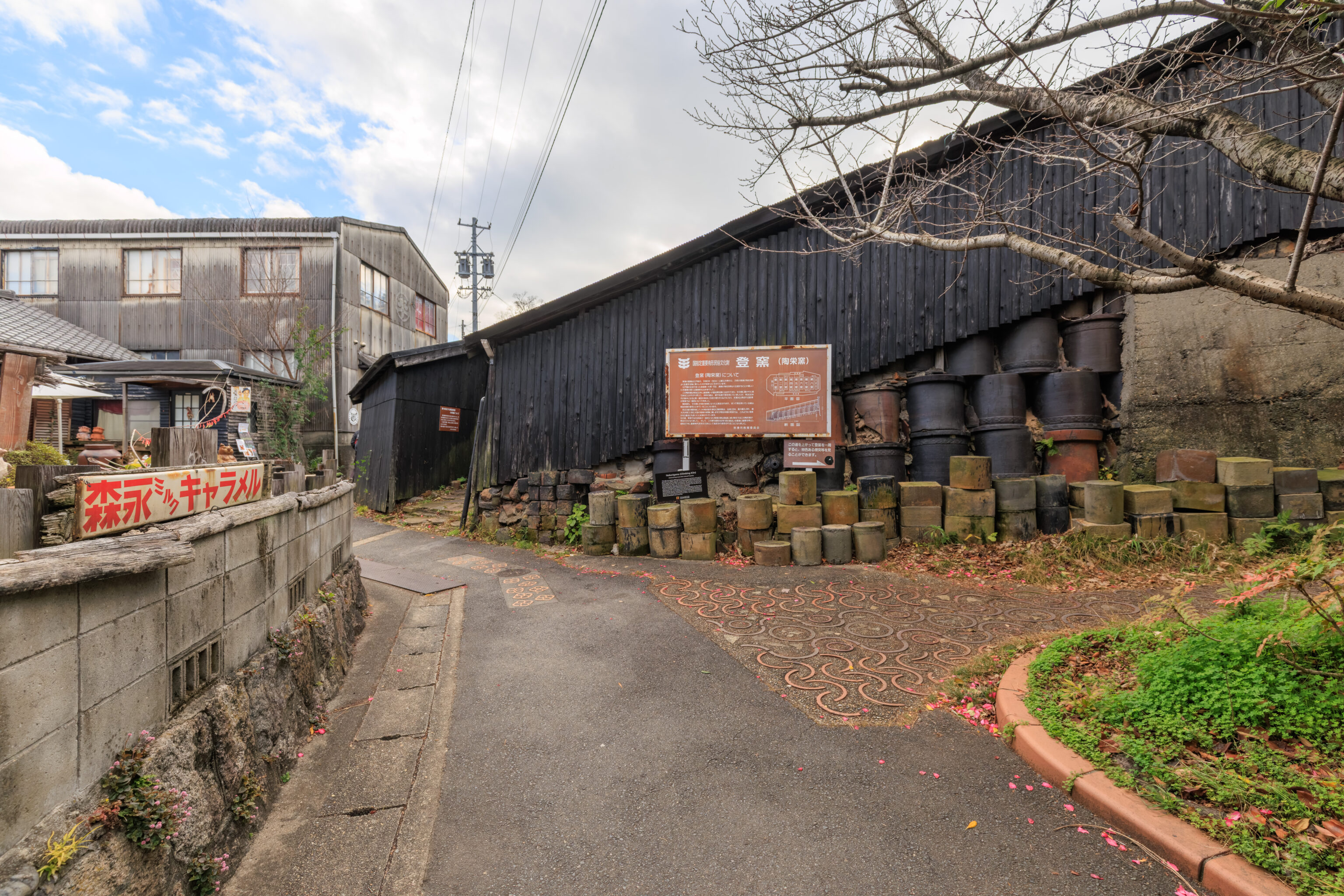
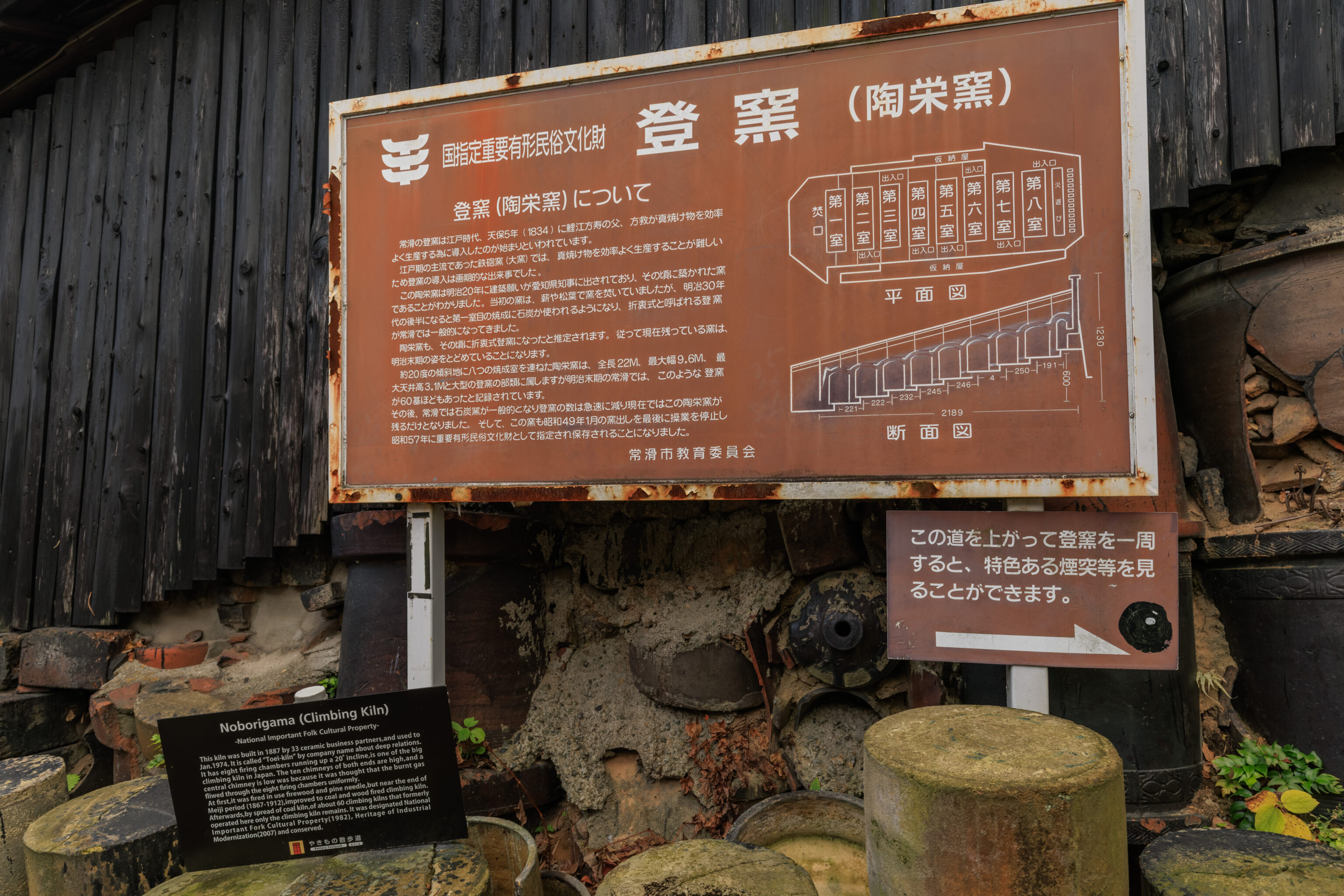
We found the Noborigama! The sign in front of the kiln provides a description of this type of kiln as well as this specific one. The diagrams on the right side show how the interior was used.
Nationally Designated Important Tangible Folk Cultural Property
Noborigama (Toei Kiln)

About the Climbing Kiln (Toeigama)
The introduction of the *noborigama* (ascending kiln) in Tokoname is said to have begun in 1834 (the fifth year of the Tenpo era) during the Edo period, when Masasuke Koie—father of Katahisa Koie—introduced it to enable the efficient production of *mayake-mono* (high-fired stoneware).

The introduction of the ascending kiln was a groundbreaking development, as the "teppo-gama" (gun-barrel kiln or *o-gama* / large kiln)—which had been the mainstream type during the Edo period—made the efficient production of *mayake-mono* difficult.

Records show that an application to build the Toei-gama kiln was submitted to the Governor of Aichi Prefecture in 1887 (Meiji 20), indicating that the kiln was constructed around that time. While the kiln was initially fired using firewood and pine needles, coal began to be used for firing the first chamber in the latter half of the 1890s (late Meiji 30s), and the "hybrid-style" ascending kiln became common in Tokoname.

It is presumed that the Toei-gama was also converted to this hybrid style during that period; consequently, the kiln that remains today preserves the form it took at the end of the Meiji era.

Built on a slope with an incline of approximately 20 degrees and featuring a series of eight firing chambers, the Toei-gama—measuring 22 meters in total length, 9.6 meters in maximum width, and 3.1 meters in maximum ceiling height—falls into the category of large-scale ascending kilns. Records indicate that there were once around 60 such kilns in Tokoname during the late Meiji era.

Subsequently, as the use of coal became widespread in the local industry, the number of ascending kilns declined rapidly, leaving the Toei-gama as the sole survivor. Operations at this kiln ceased following the final unloading of fired ware in January 1974 (Showa 49), and in 1982 (Showa 57), it was designated as an Important Tangible Folk Cultural Property for preservation.

Tokoname City Board of Education
– Text from the sign in front of the kiln, translated using Google Translate.
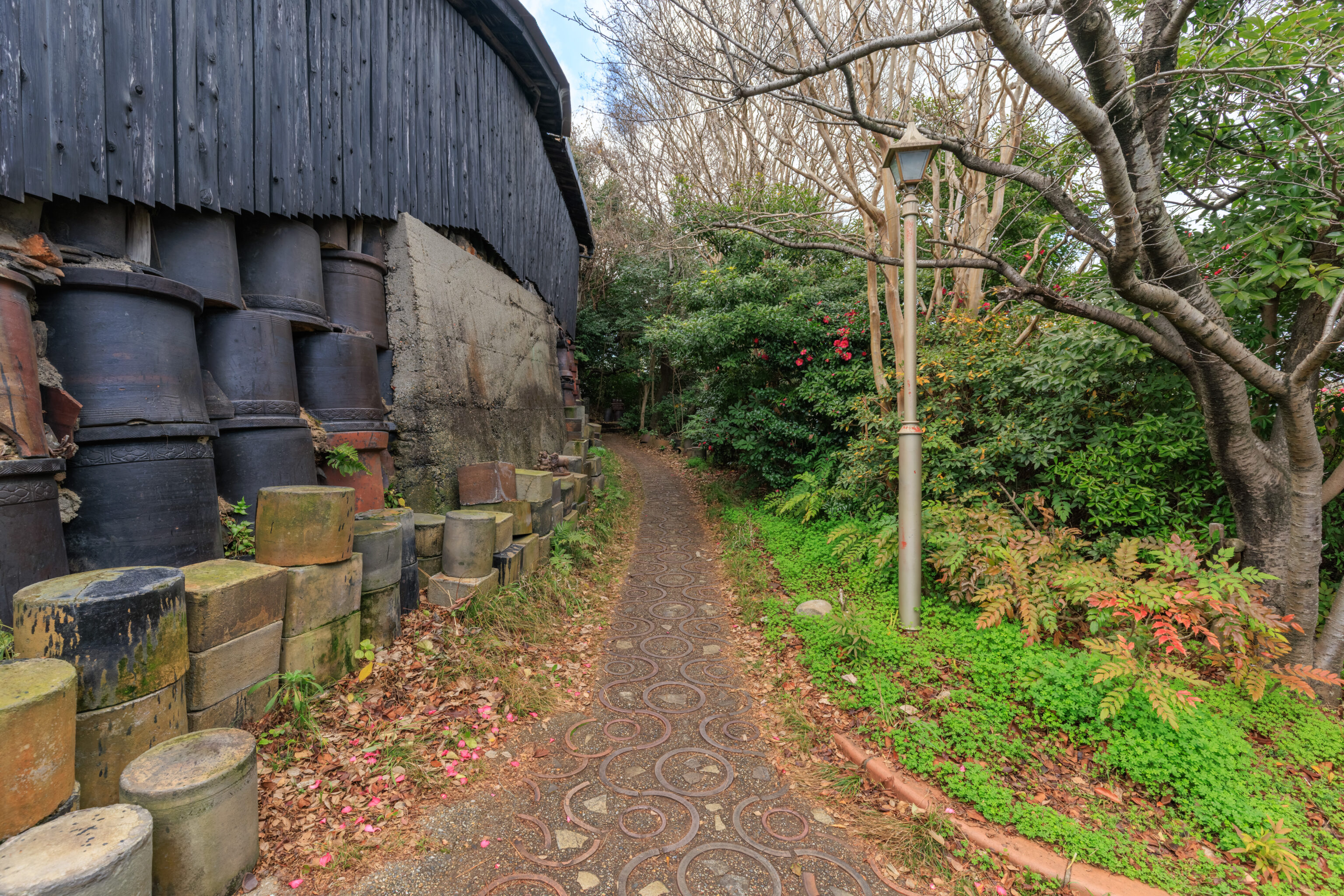
It appears that it is possible to walk behind and around the kiln.
If you walk up this path and circle the climbing kiln, you can see distinctive features such as the chimneys.
– Text from the sign, below the larger sign in the previous photograph, pointing in this direction, translated using Google Translate.
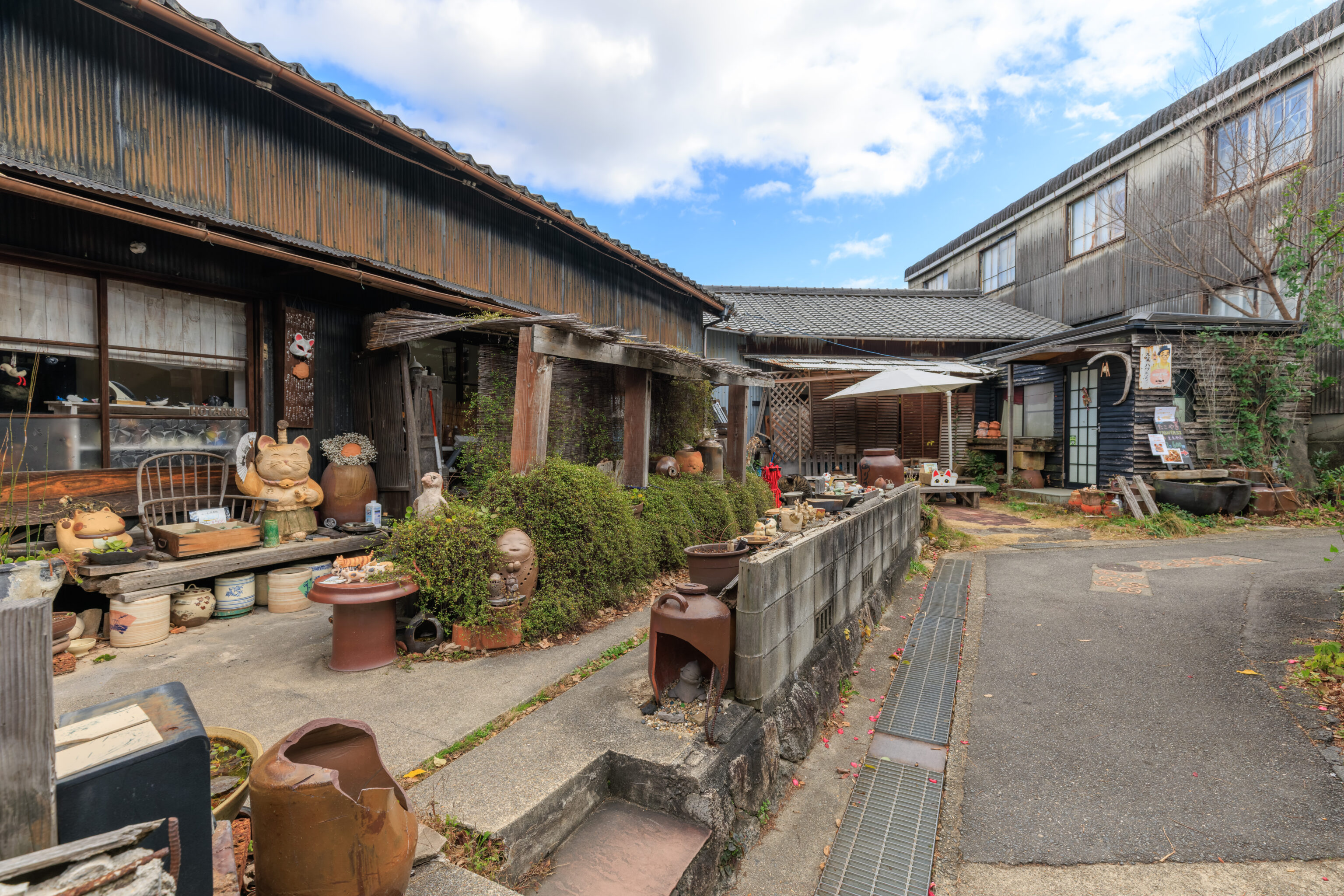
We walked via the kiln’s lower side instead. There were many pottery galleries around the kiln with some items on display outside.
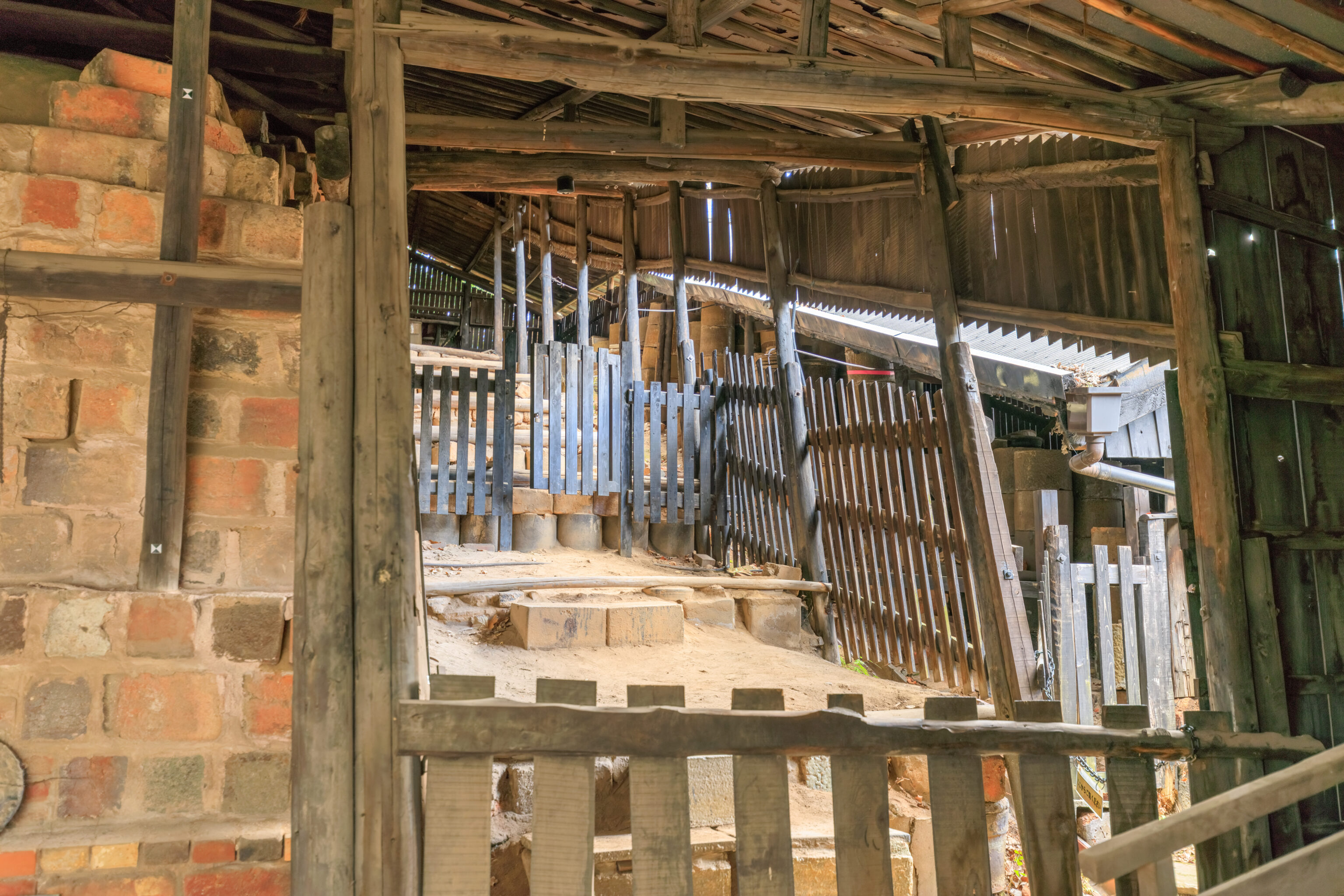
The kiln had covered external areas along the sides.
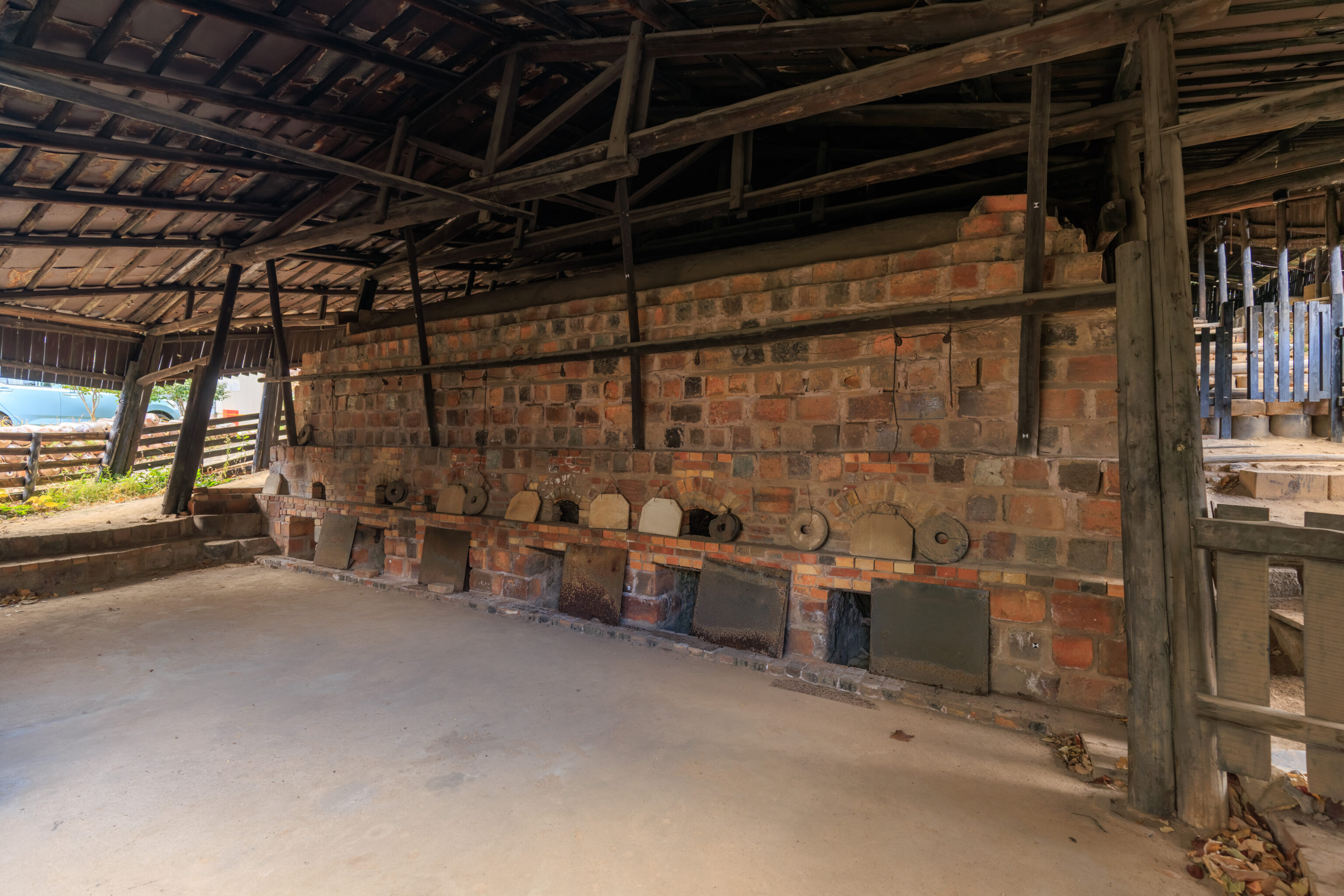
This was the lower end of the kiln where the fire for the kiln was created.
Firebox
While the original climbing kilns relied on firewood and pine needles for fuel, rising demand in the latter half of the Meiji era led to a shortage of these materials, prompting a shift toward coal as an alternative fuel source. However, constructing dedicated coal-burning kilns required significant capital; consequently, potters sought to cut fuel costs by adapting existing climbing kilns for coal use. This modification involved replacing the single firebox of the first chamber with multiple fireboxes—each equipped with a grate to facilitate coal combustion—thereby creating a hybrid firing system: the first chamber was fired using coal, while the subsequent chambers utilized firewood and pine needles. The firing process for the first chamber took approximately four days and nights, with the entire kiln cycle spanning about eleven days.
– Text from a sign, translated using Google Translate.
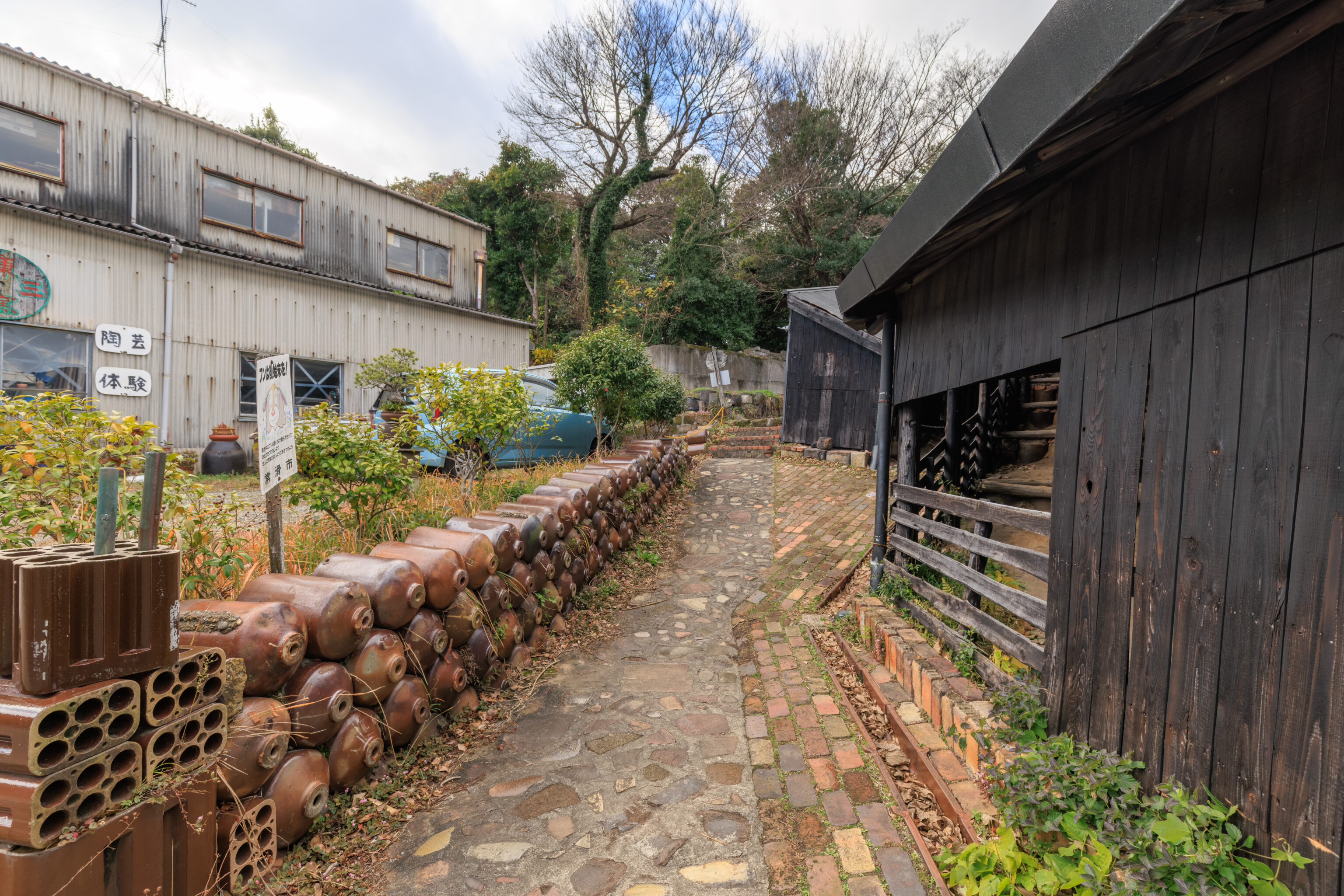
We walked around to the kiln’s southern side.
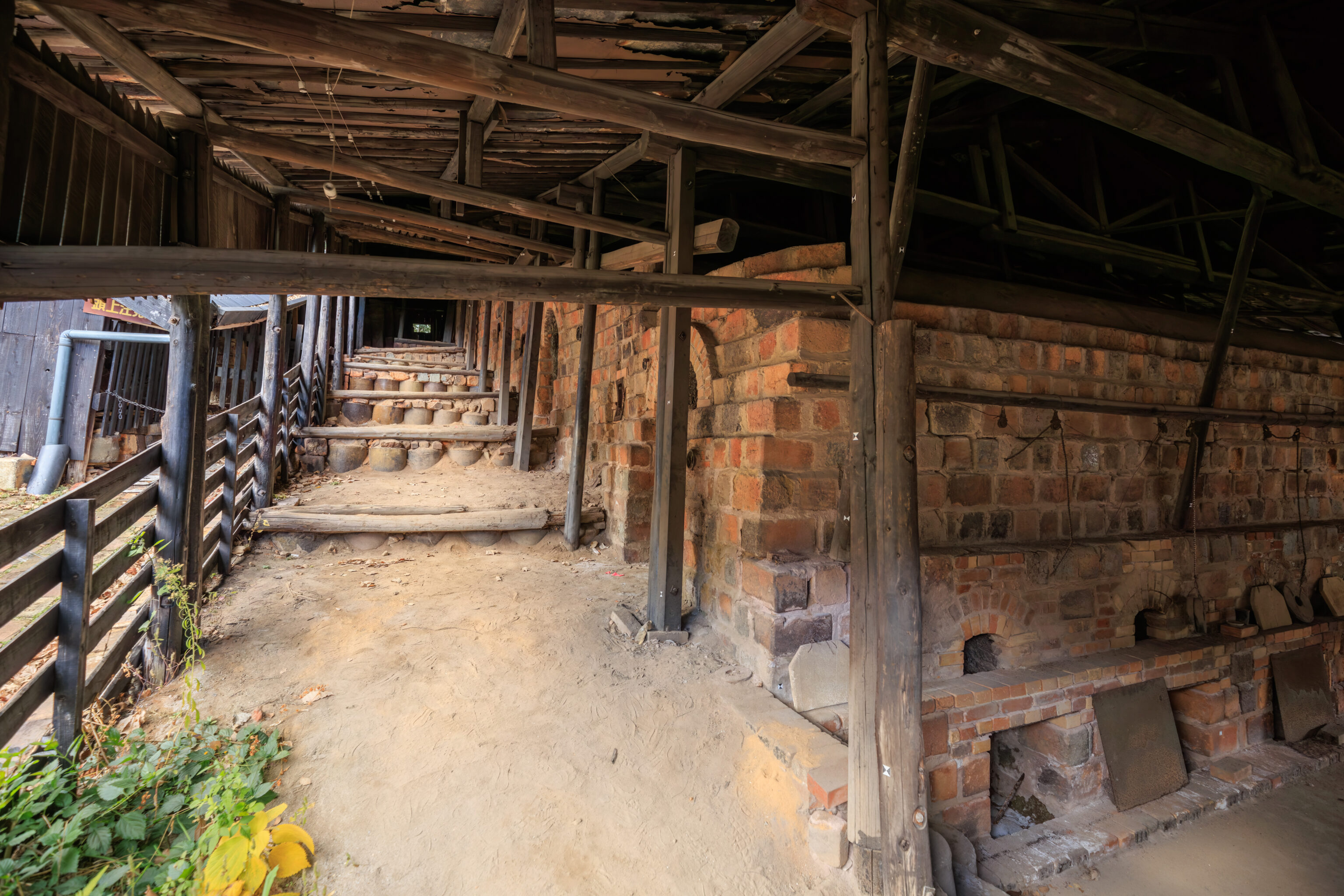
On this side, we were able to walk through the covered area next to the kiln.
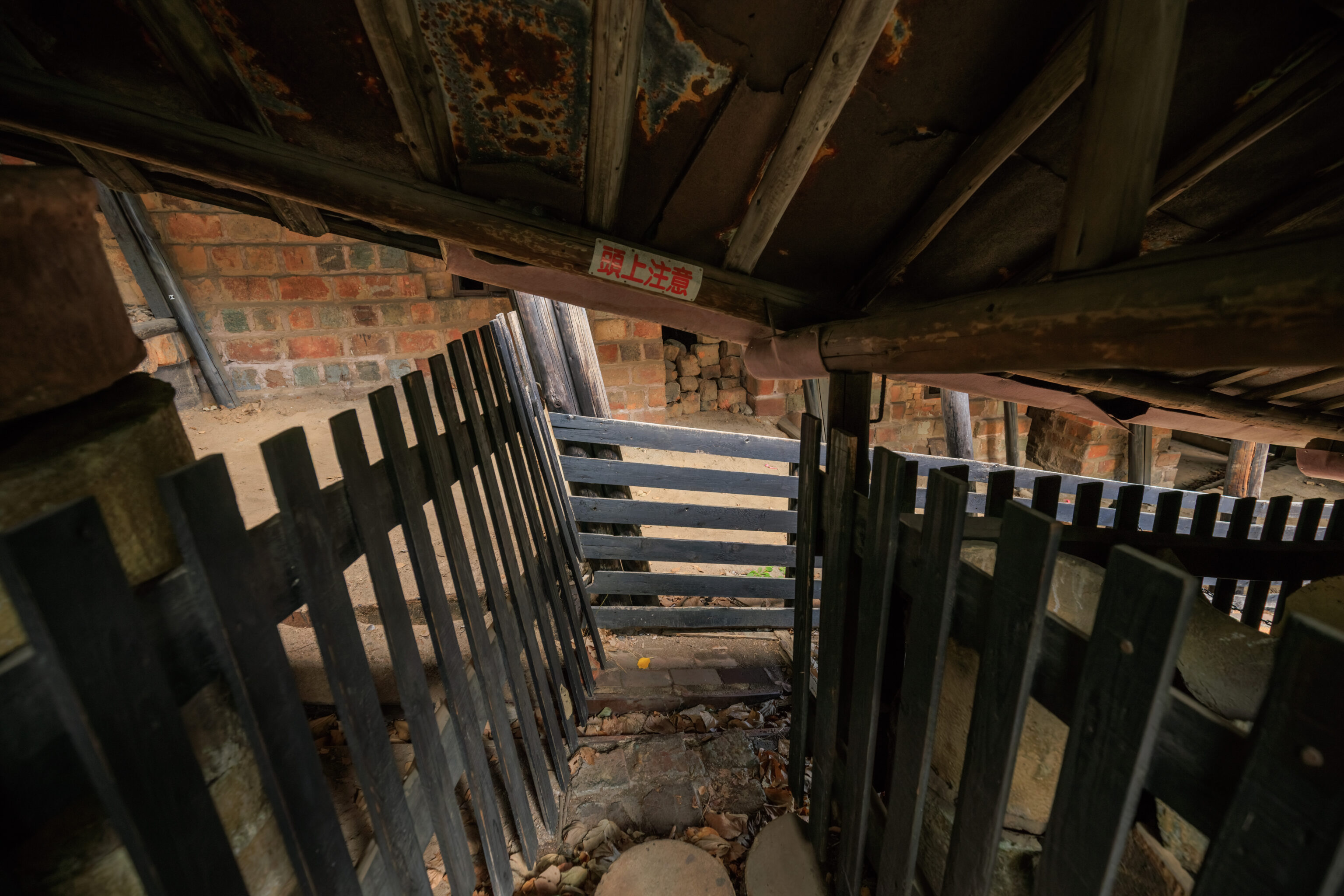
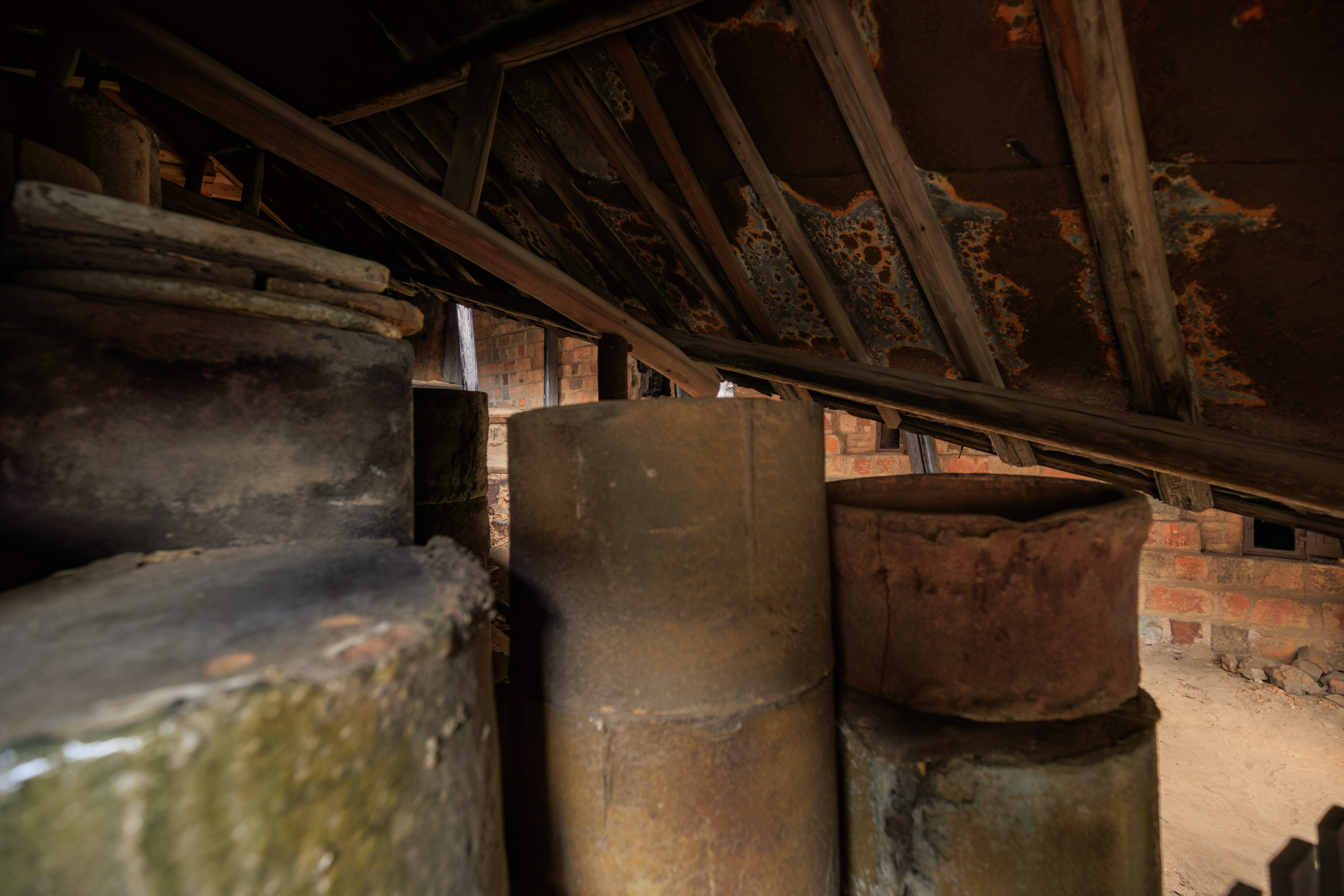
Although we were able to look into the kiln, visibiltiy wasn’t great.
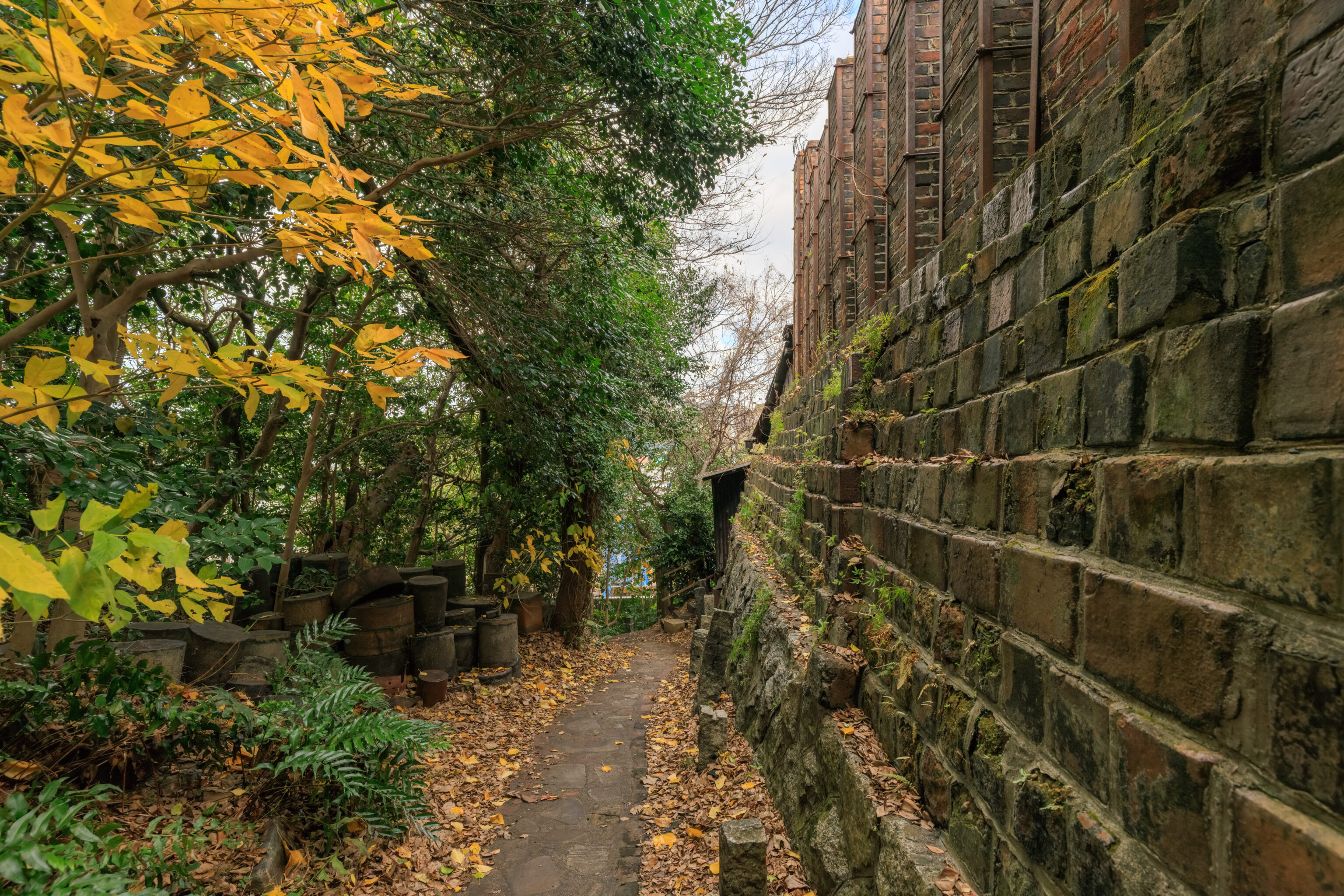
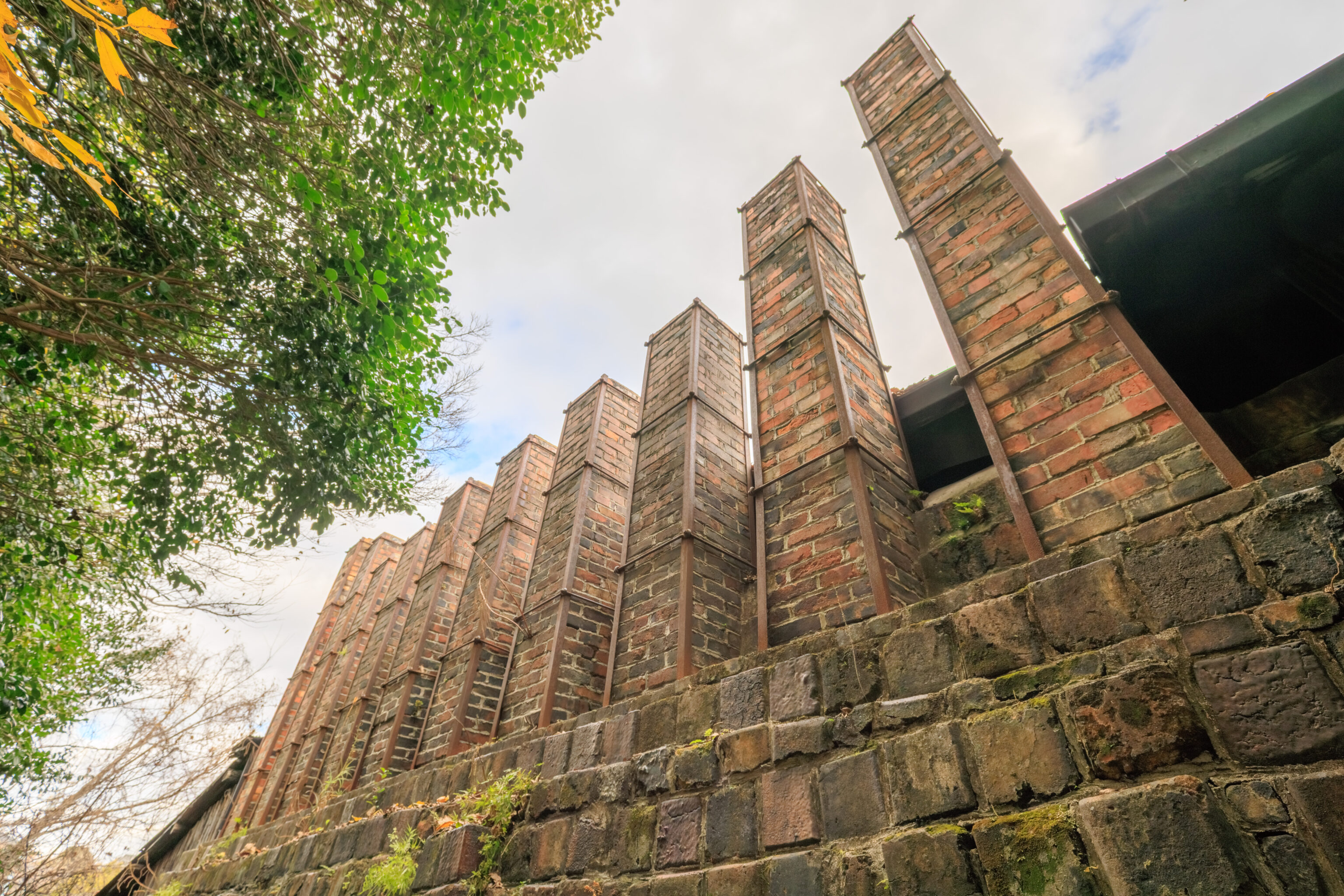
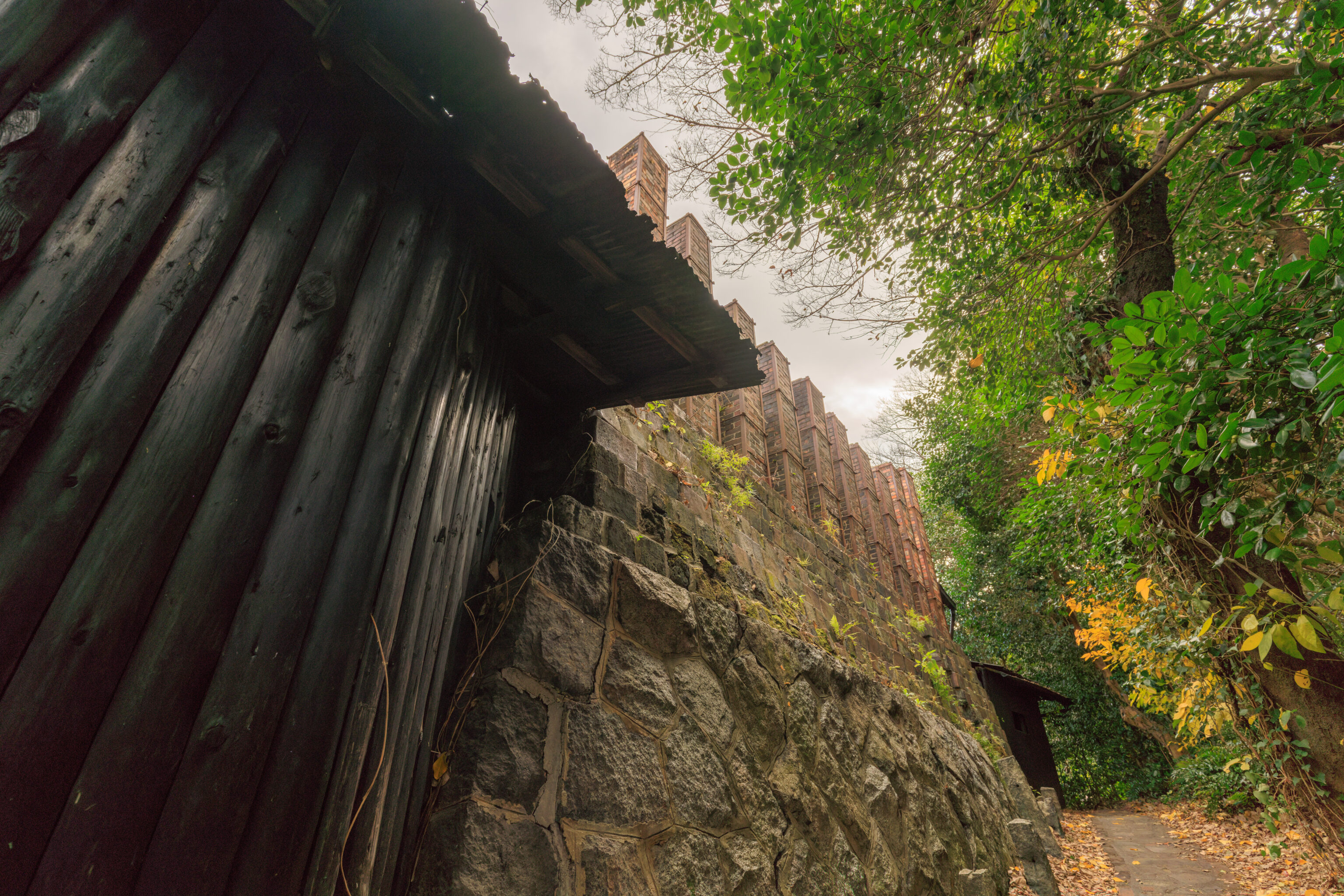
We reached the back of the kiln on its west side.
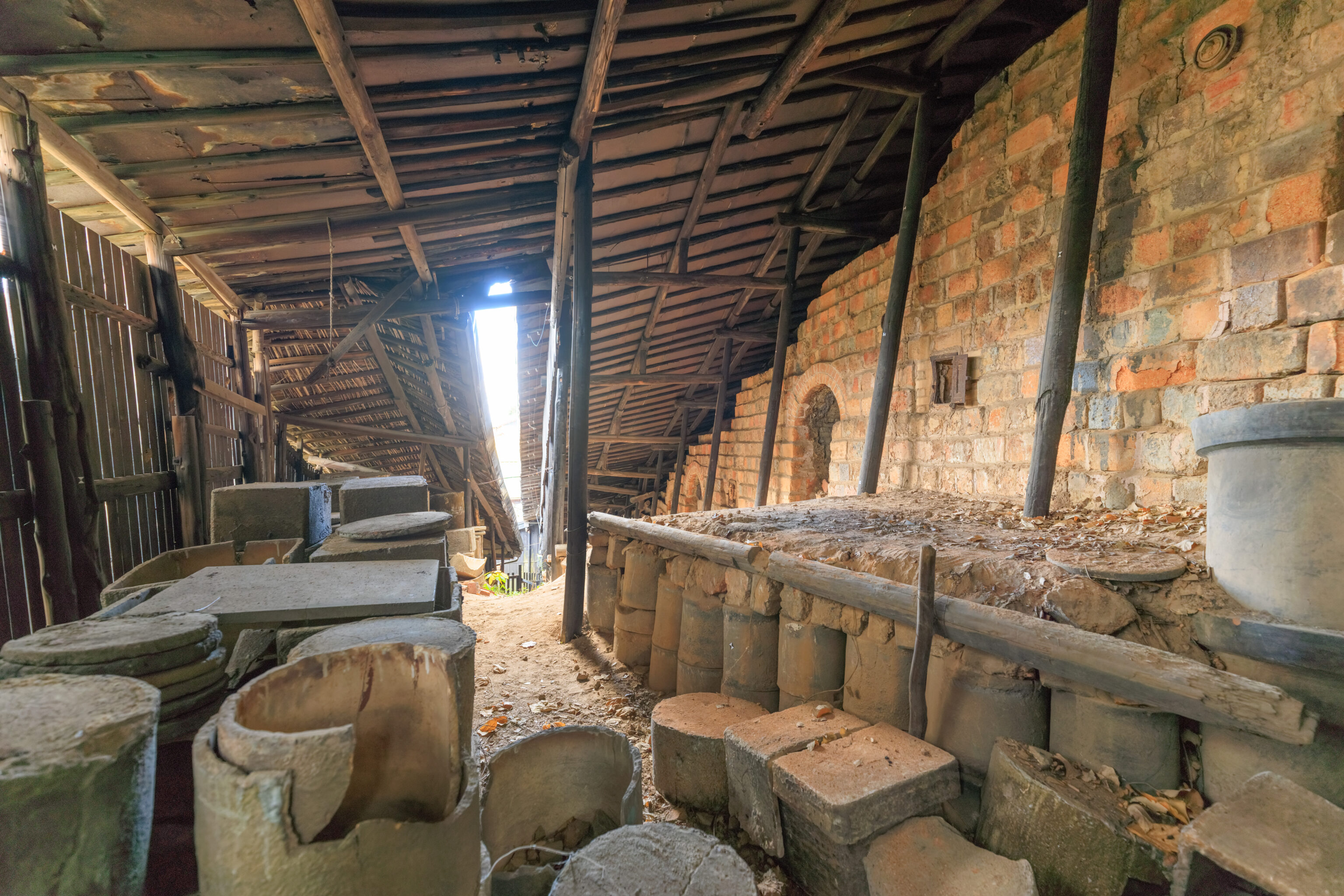
On the north side, we were able to look through the covered area next to the kiln. The roof here had an open spot down the middle.
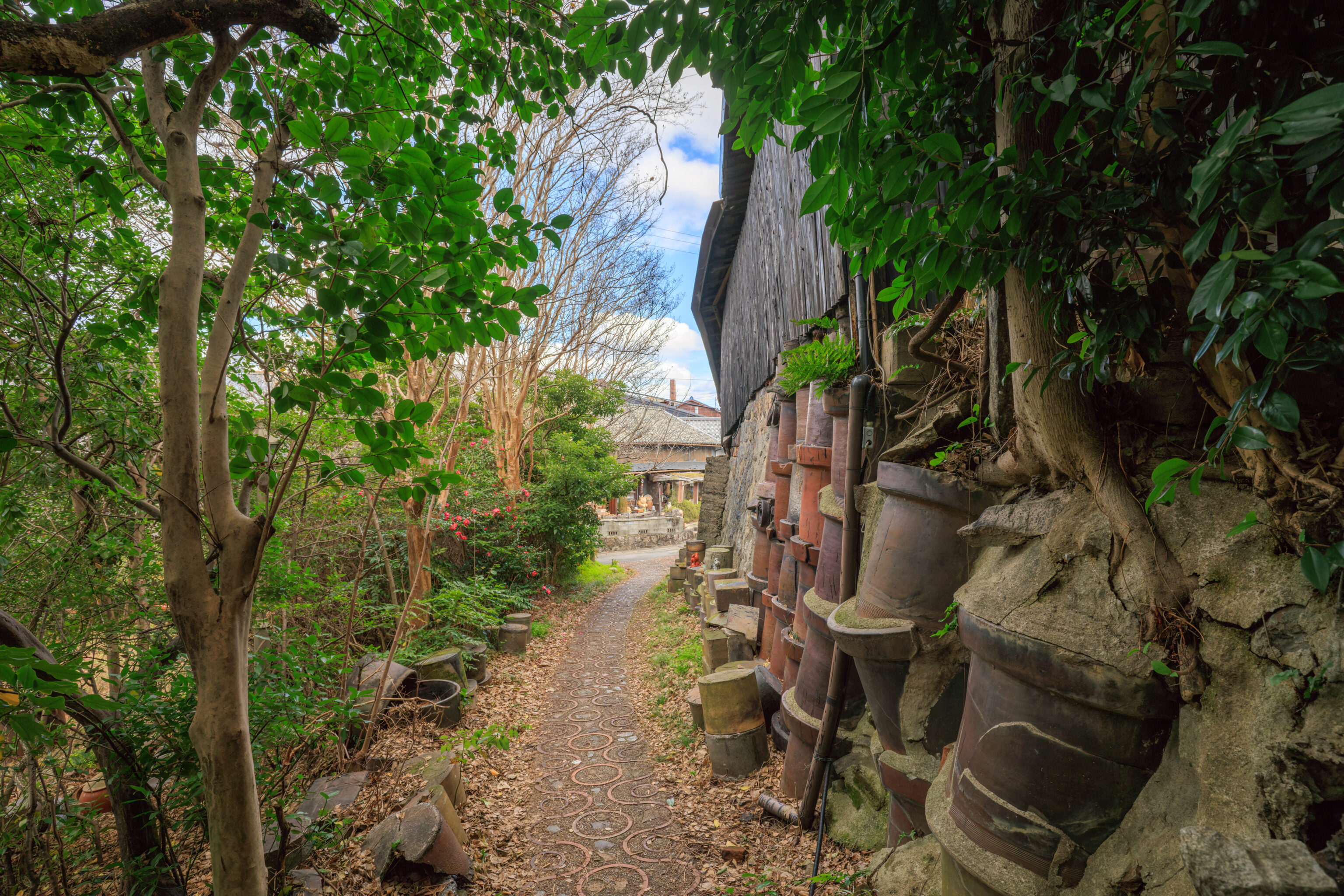
We walked back down along the north side of the kiln. This was the path that we didn’t take earlier when we arrived at the kiln.
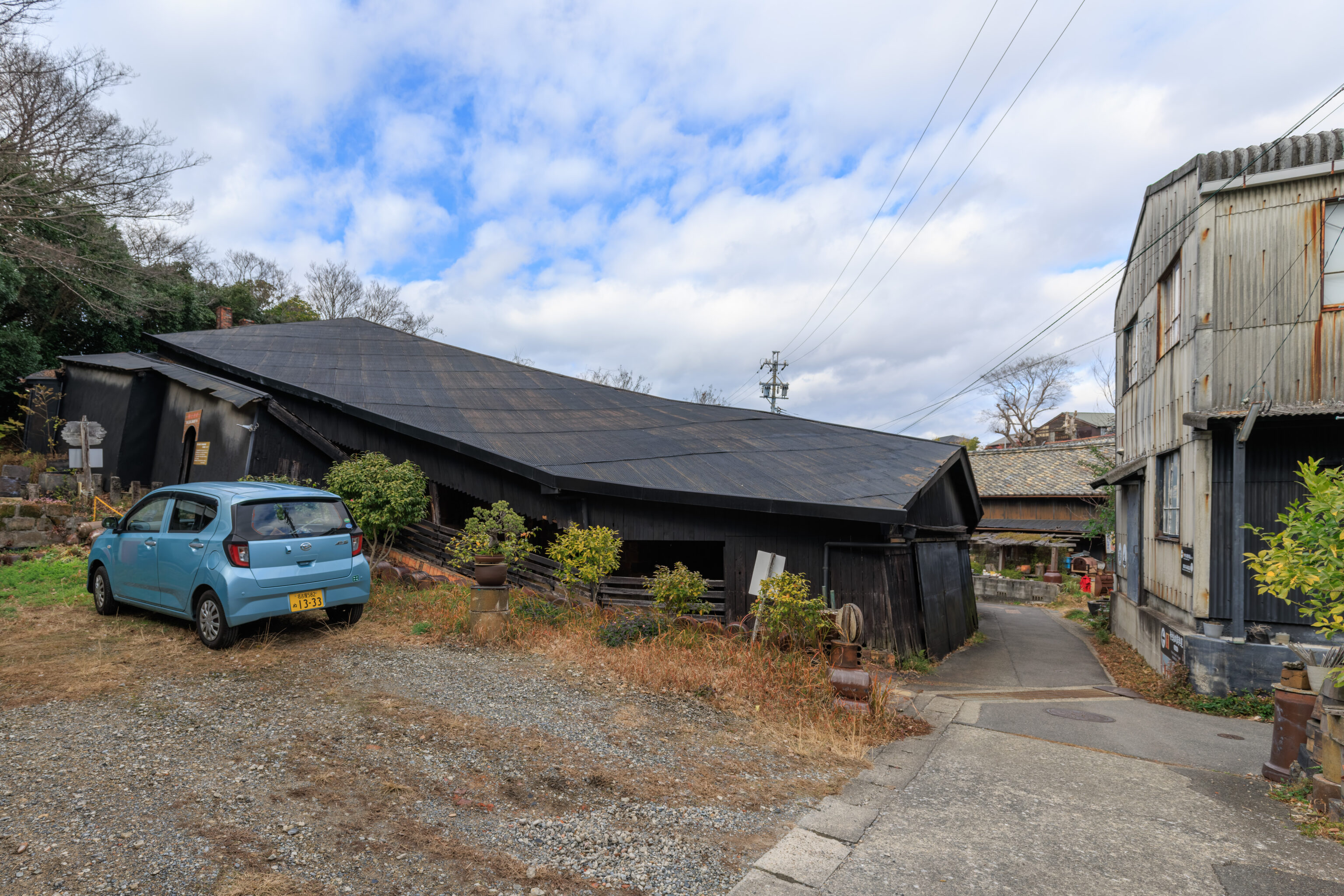
We continued on to the south past the kiln.
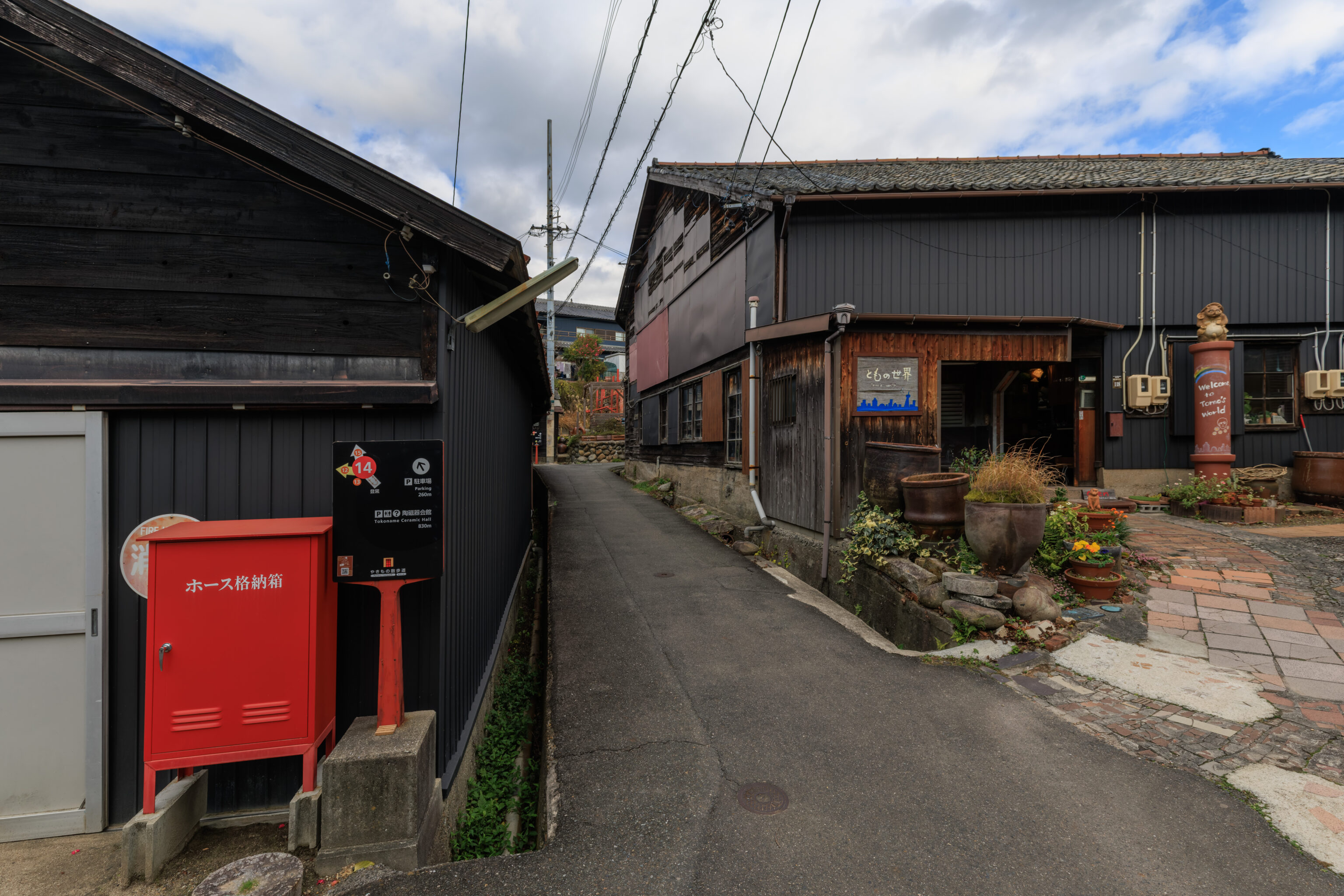
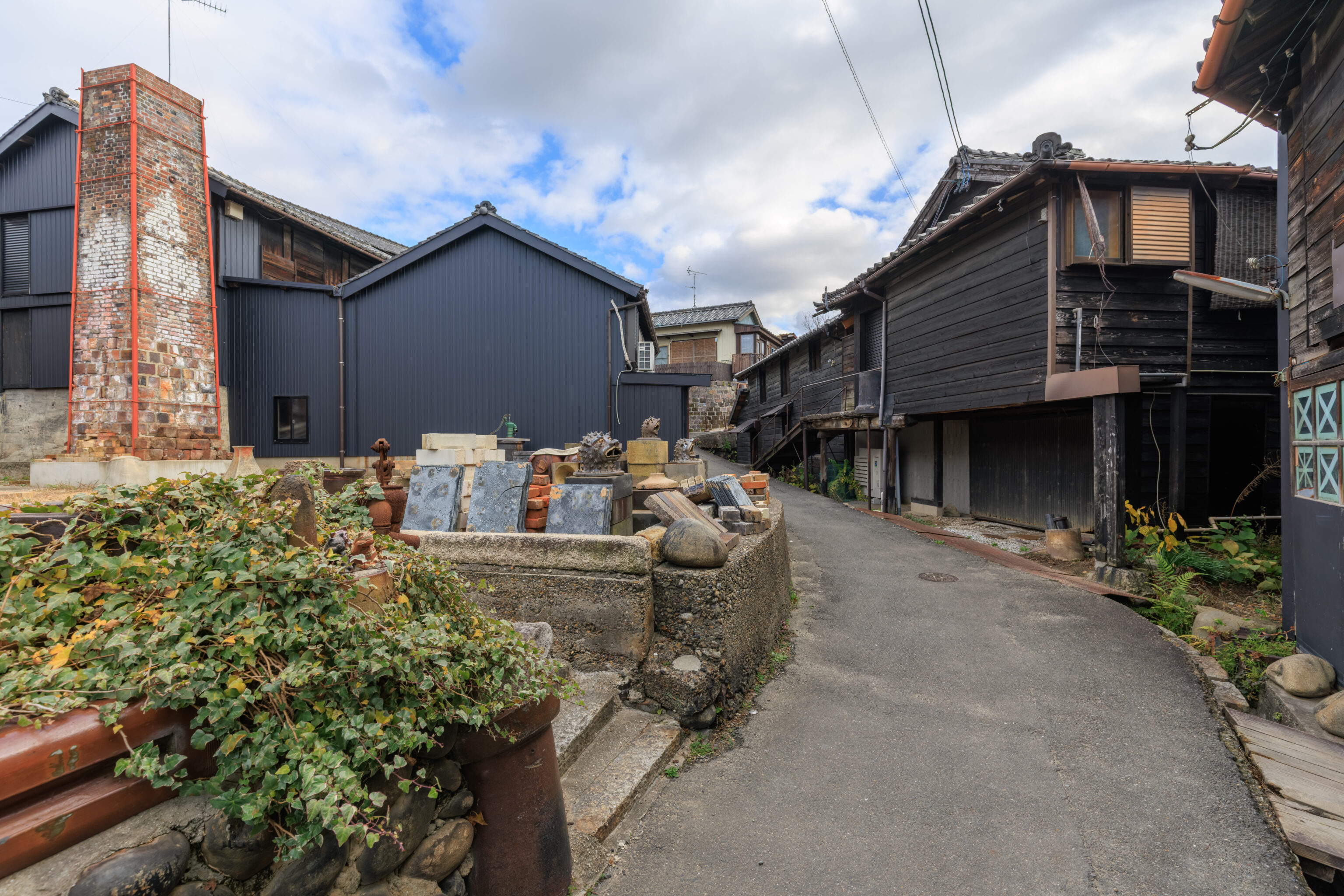
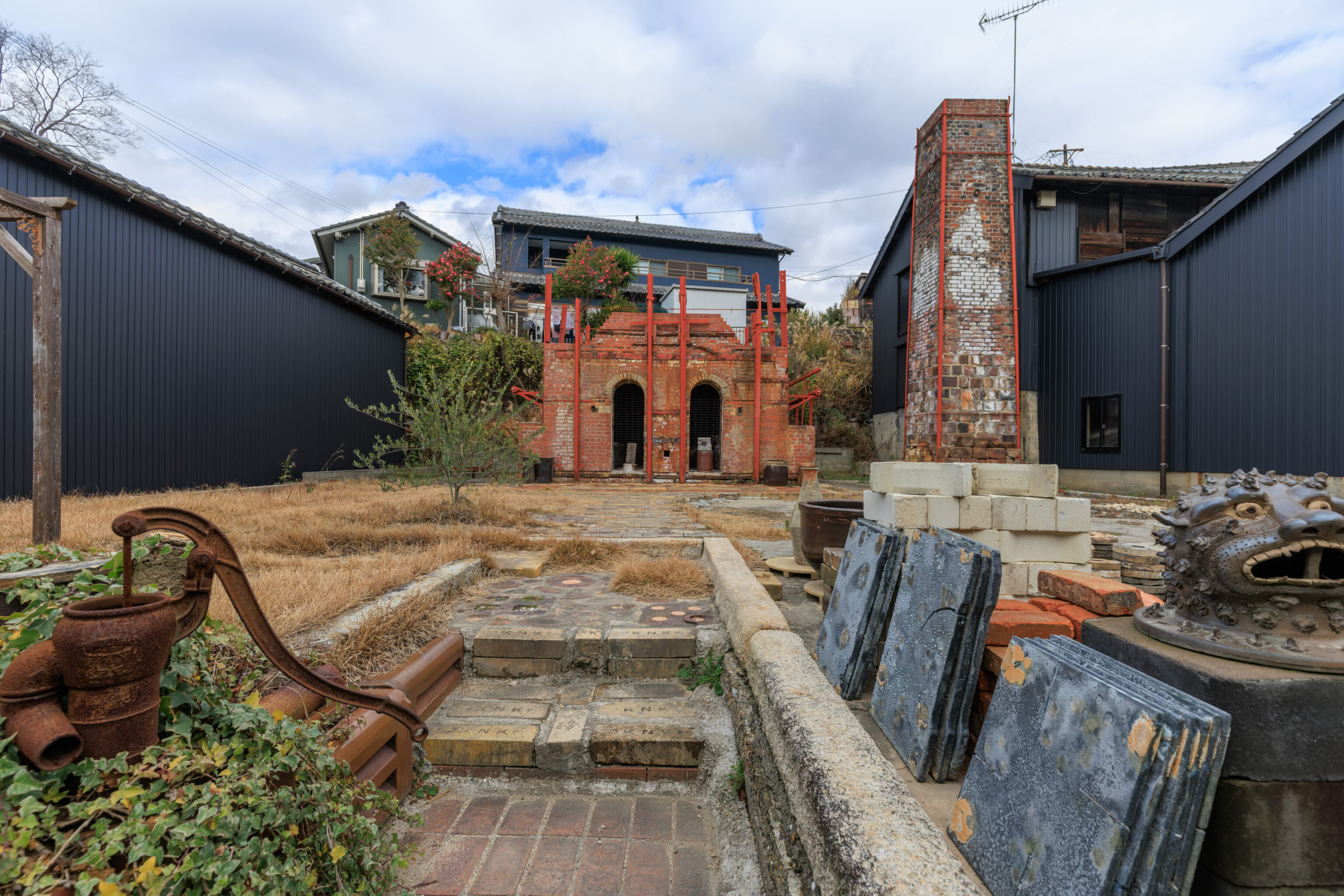
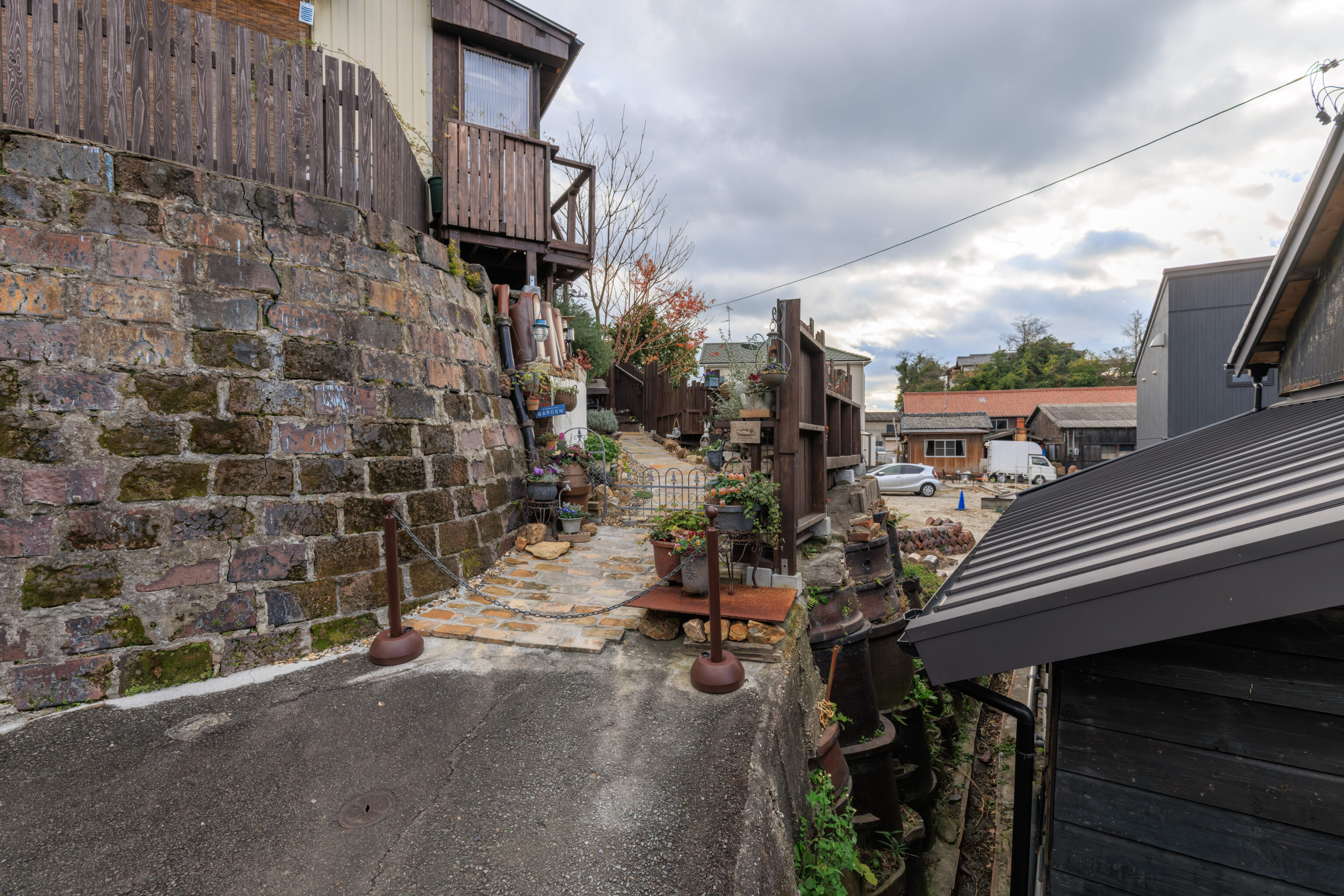
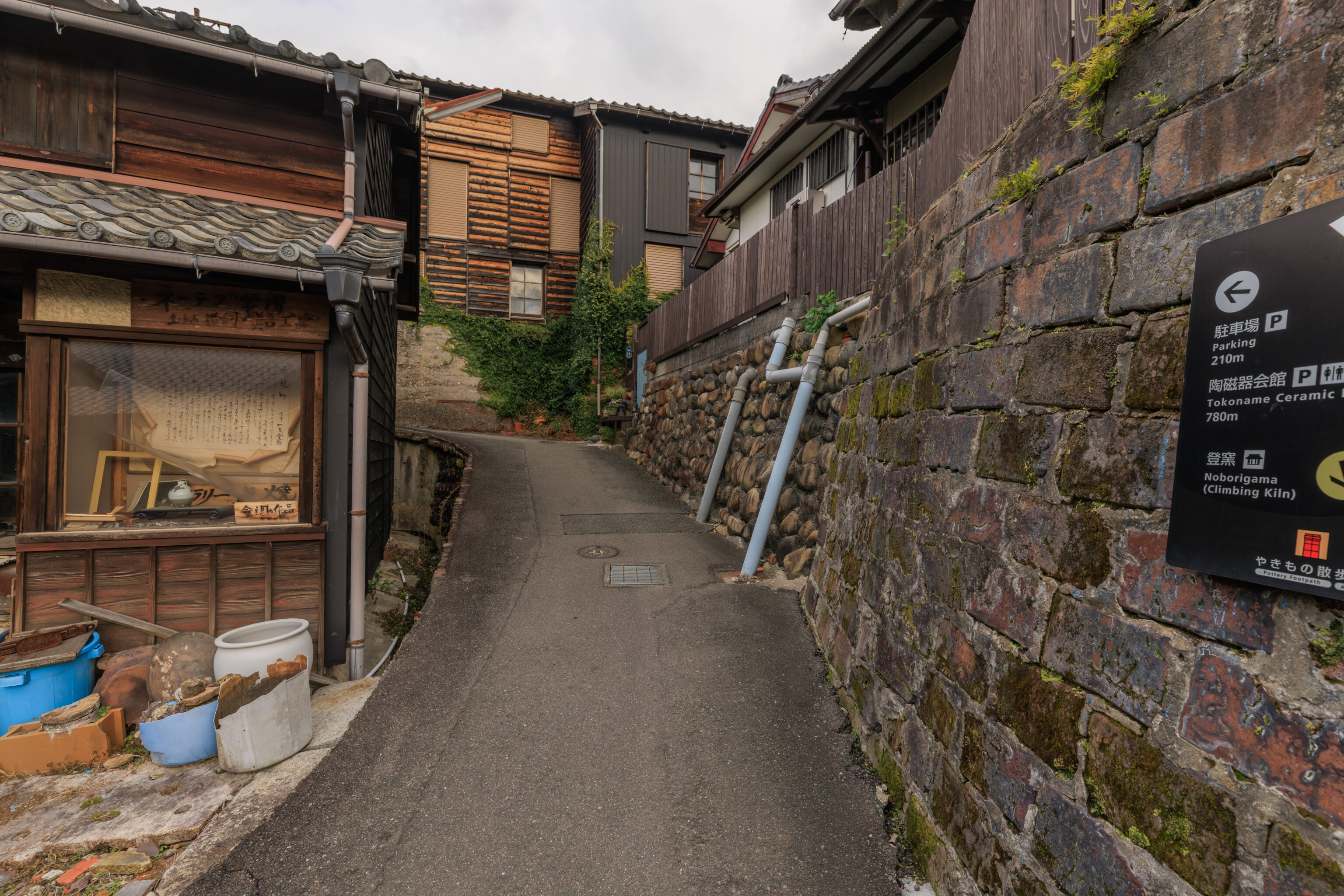
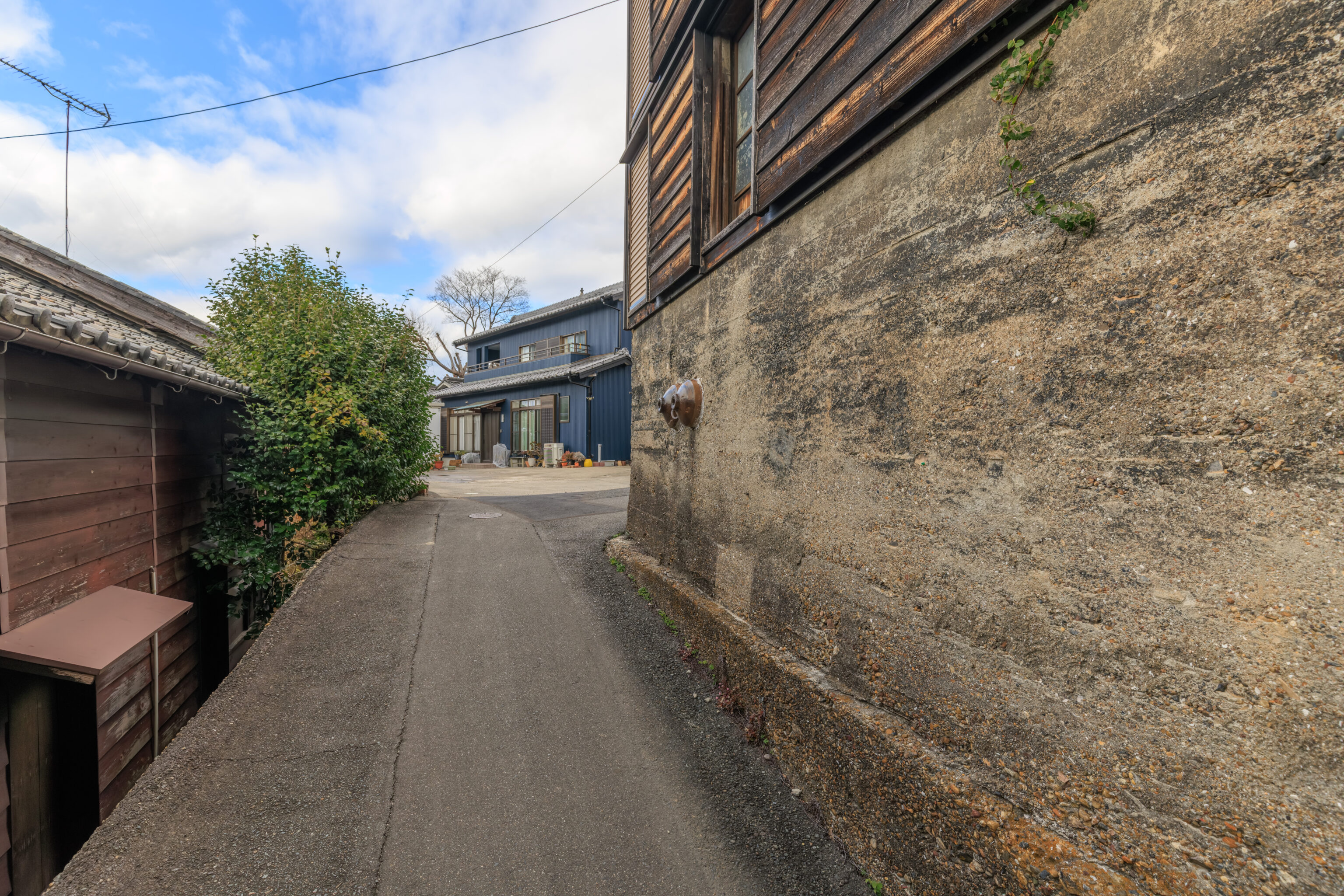
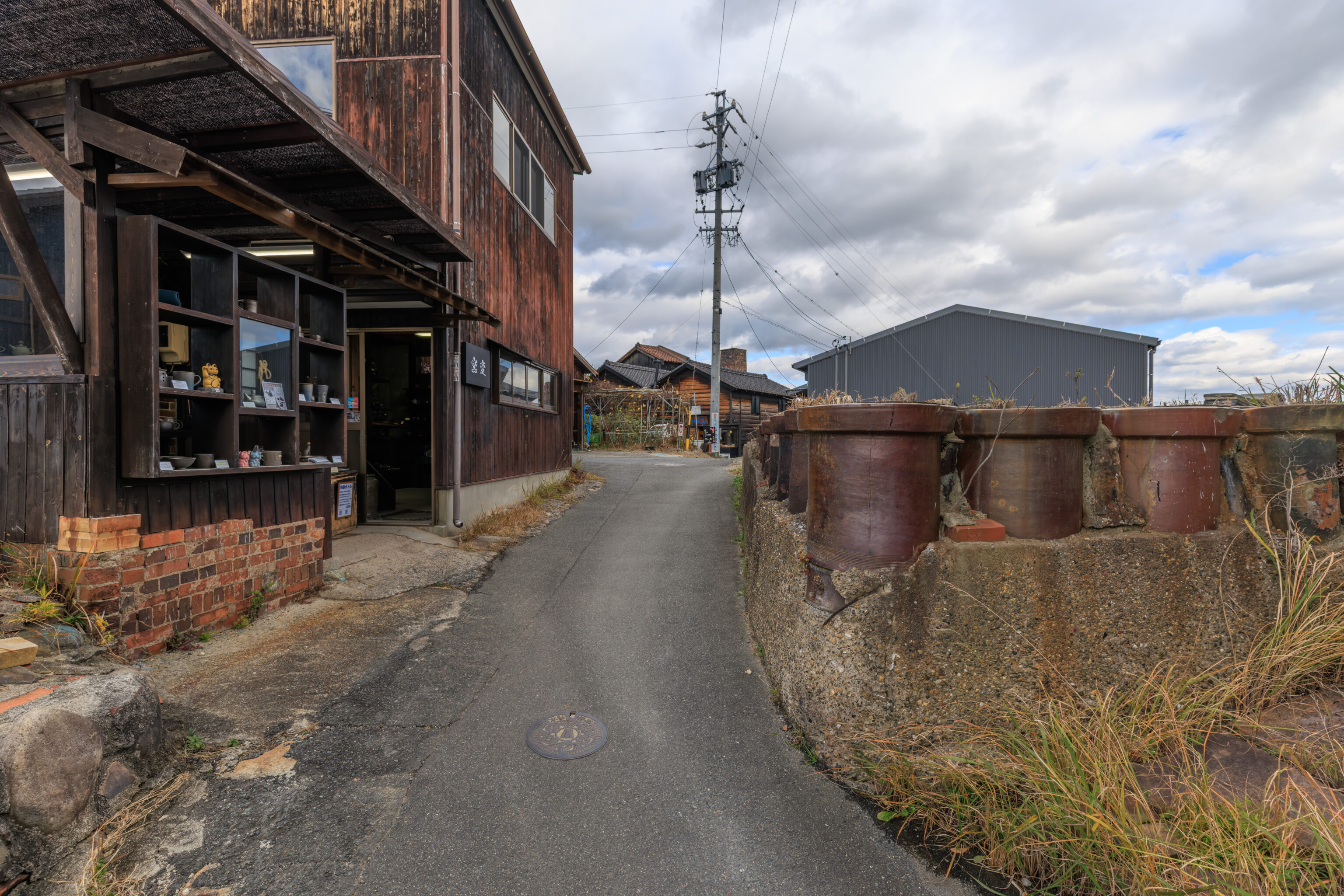
We ended up looking through a few of the pottery galleries near the kiln. We then followed the path as it led to the east.
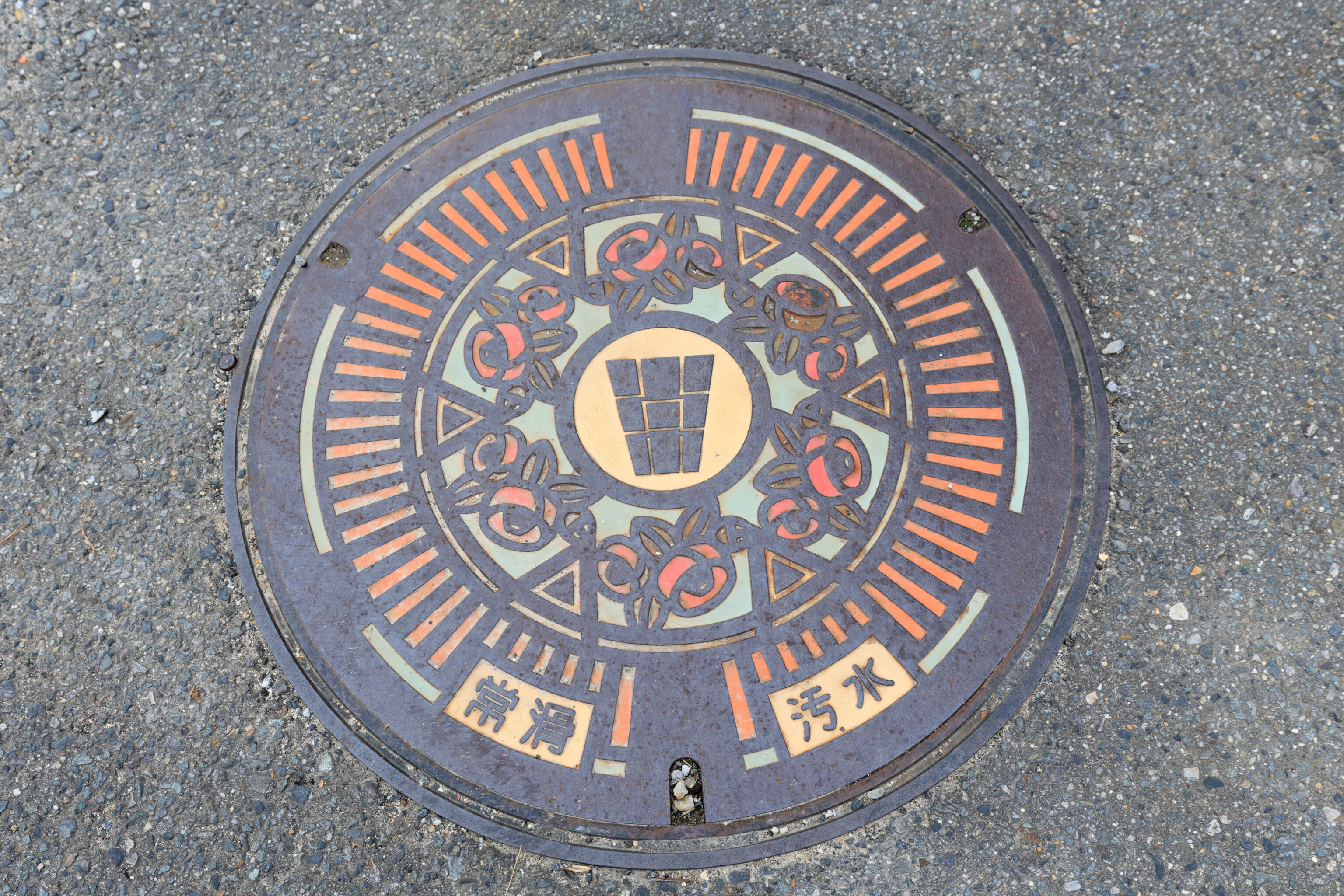
This one was in really good condition!
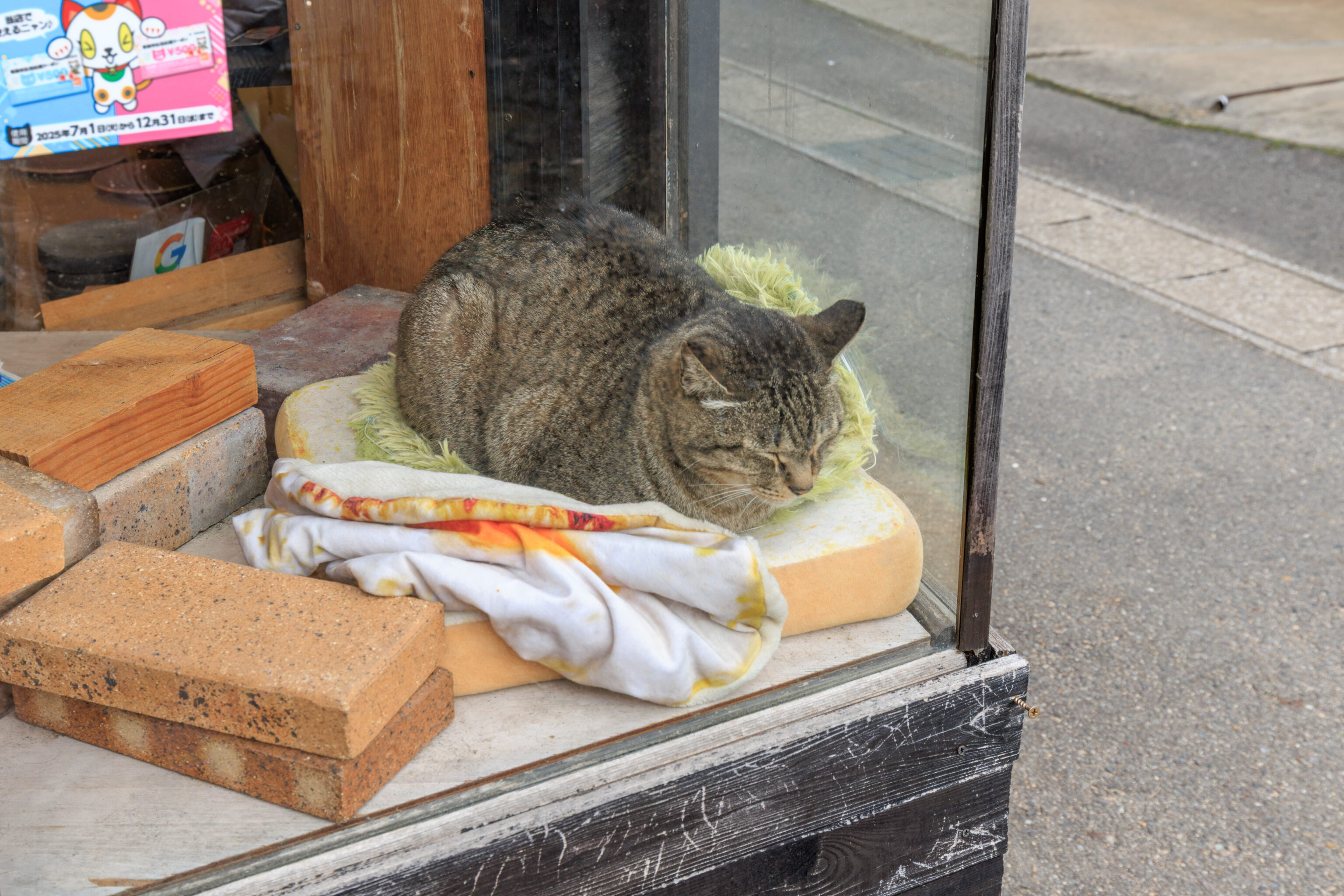
There was a cat resting in one of the shops!
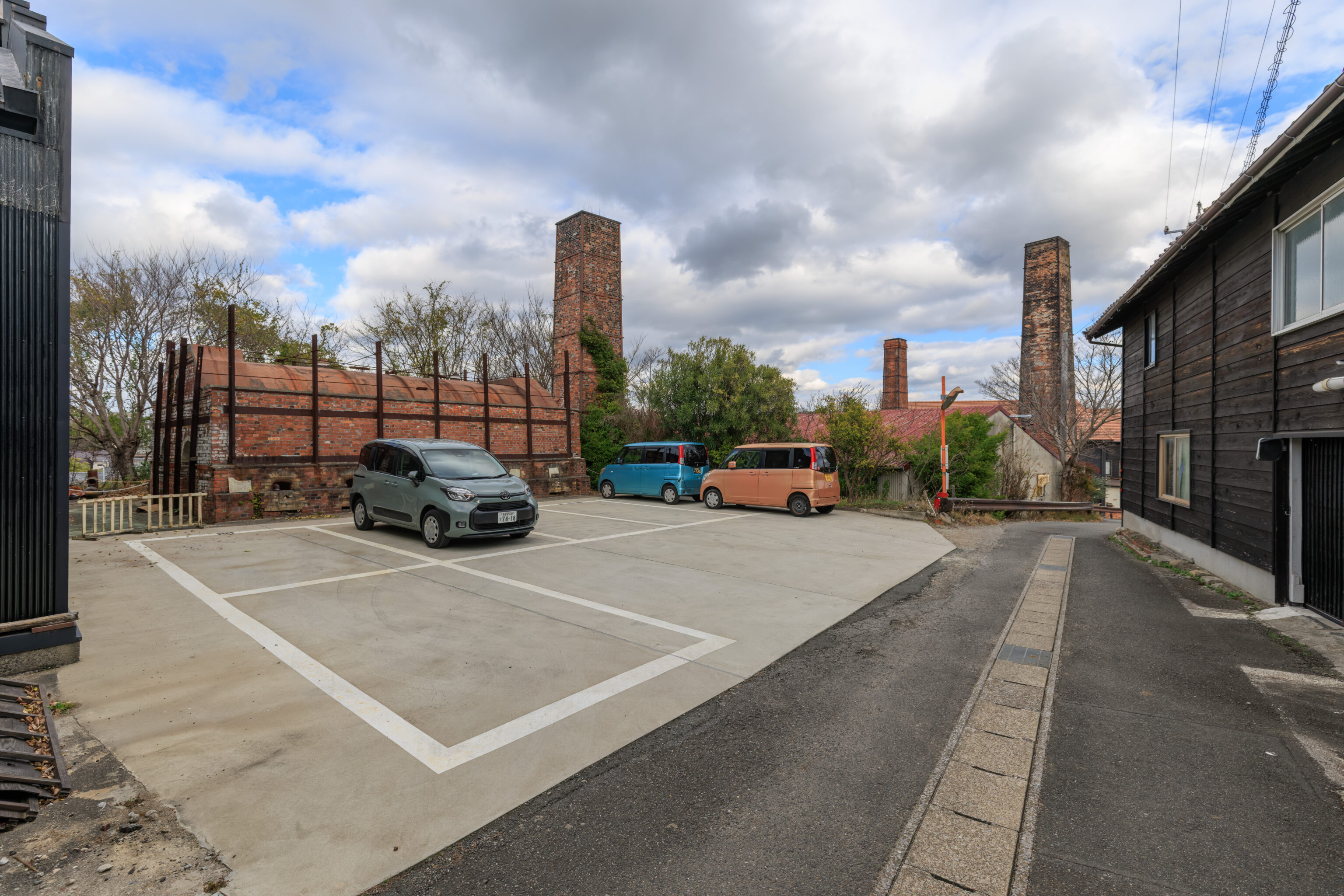
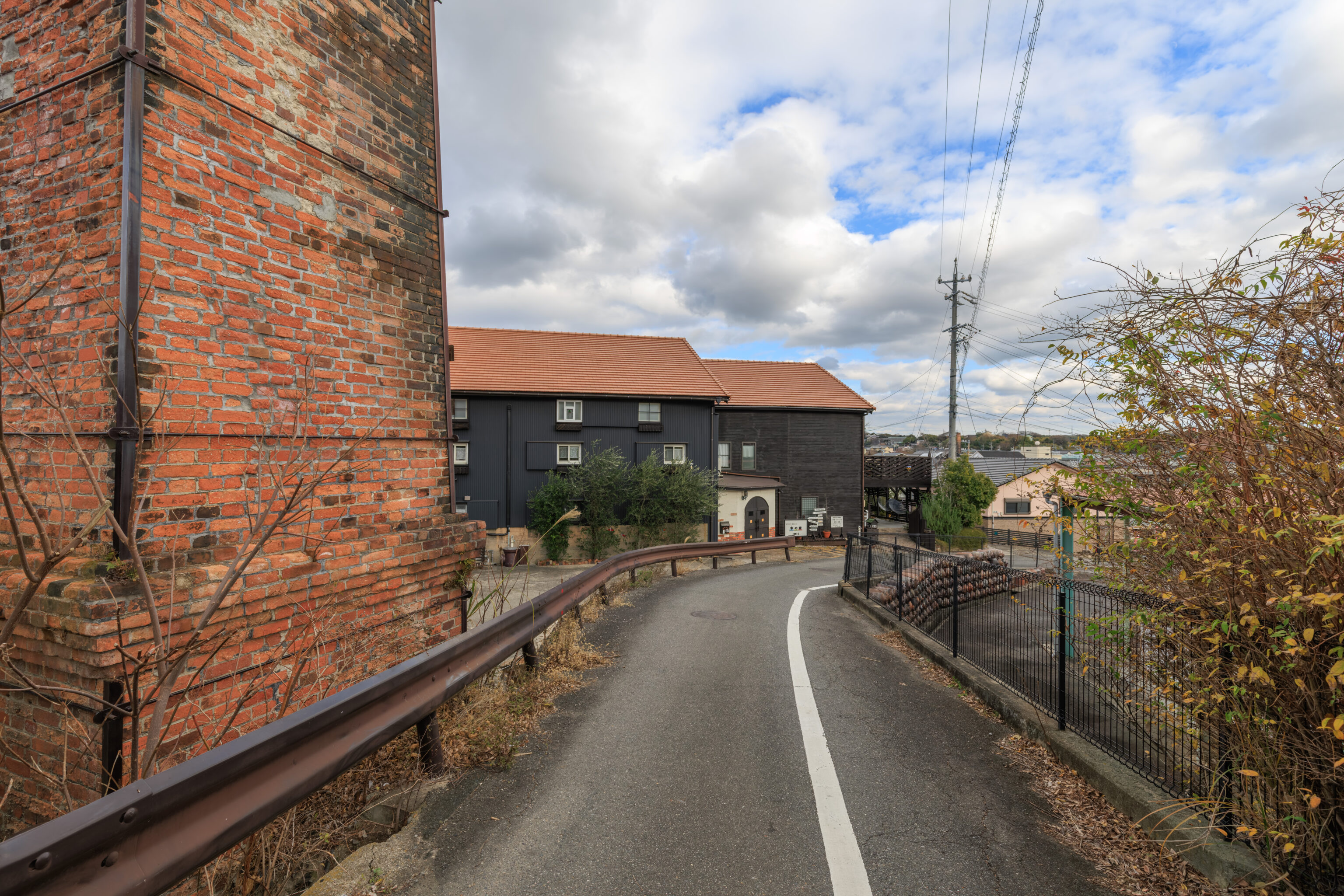
We decided to deviate from the Pottery Footpath to visit the INAXライブミュージアム INAX Live Museum.
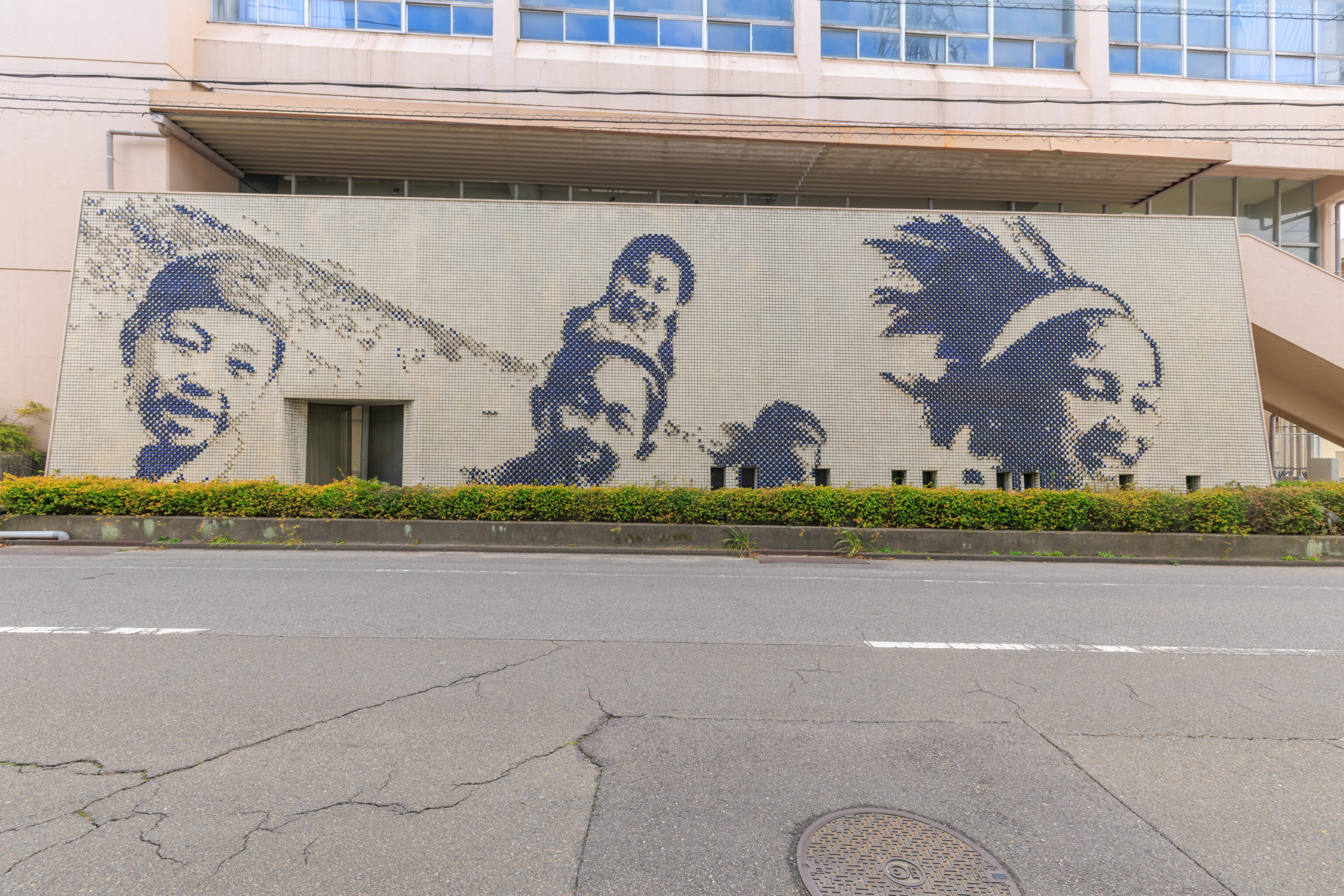
After descending from the hill that contains Tokoname’s pottery district, we started walking to the south along a two lane road. We passed by an elementary school which had a nice tile mosaic on the side of a building.
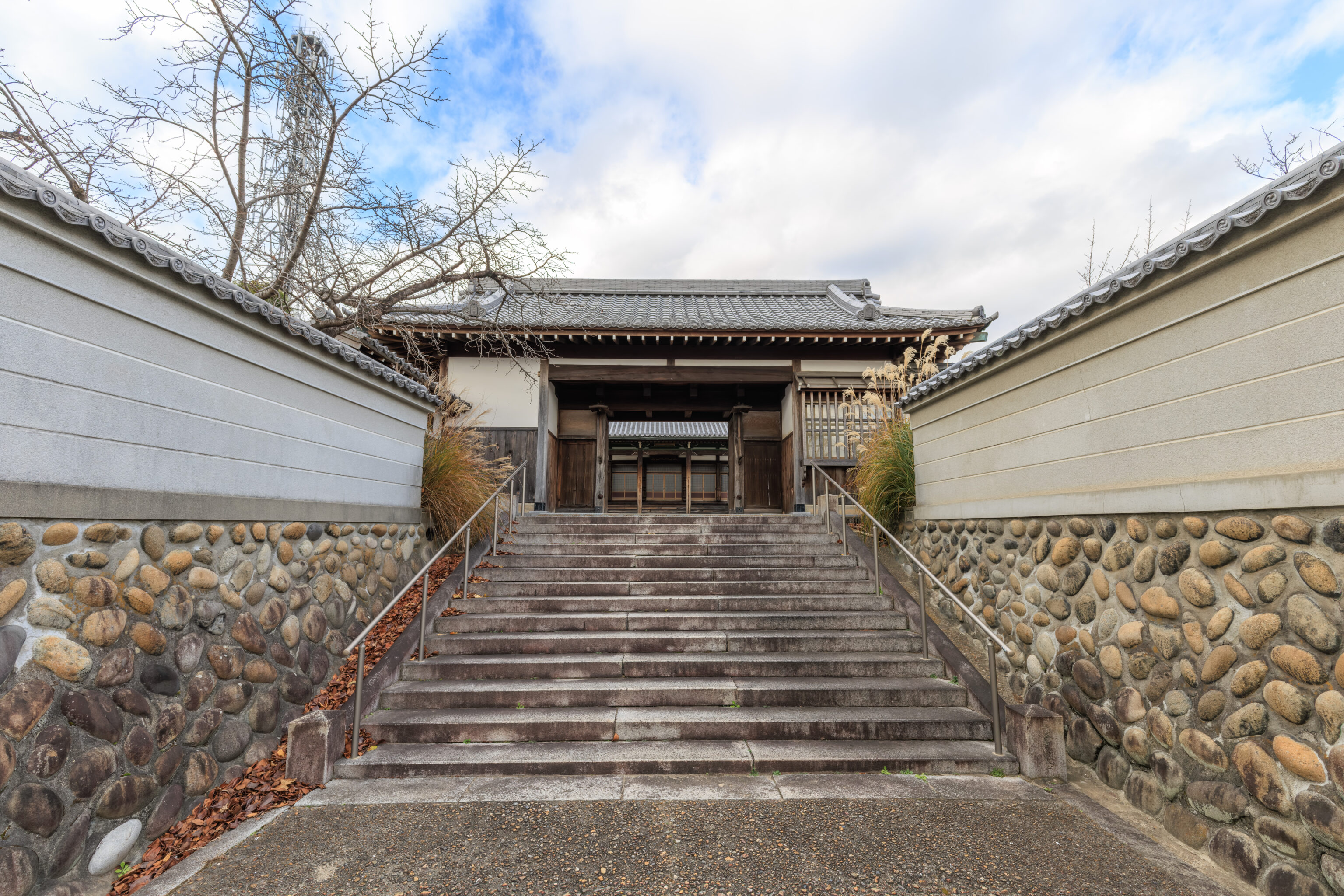
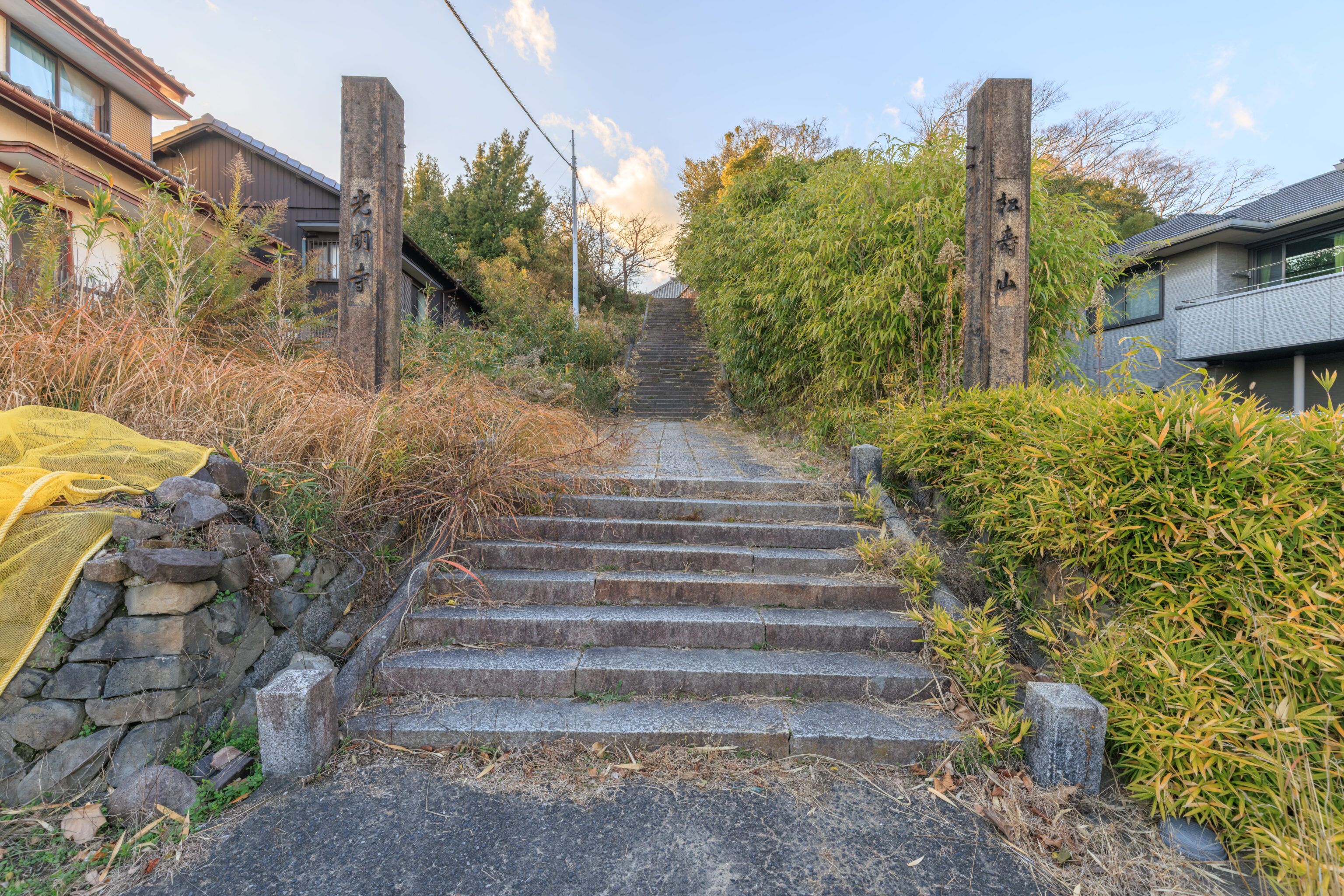
We turned left just past the elementary school to head to the east. We went to take a look at a temple, 宝樹院 Hoju-in, that happened to be here.
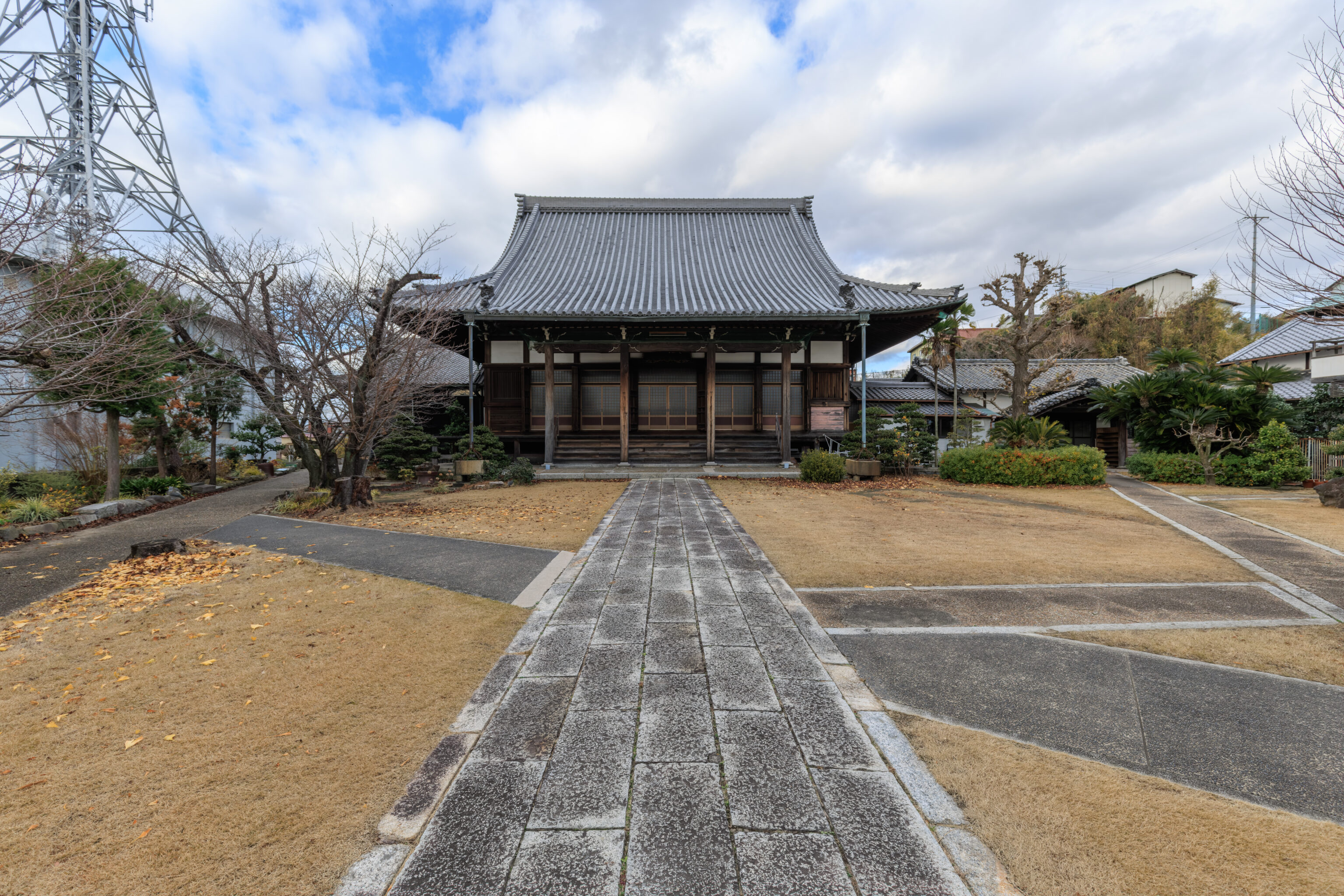
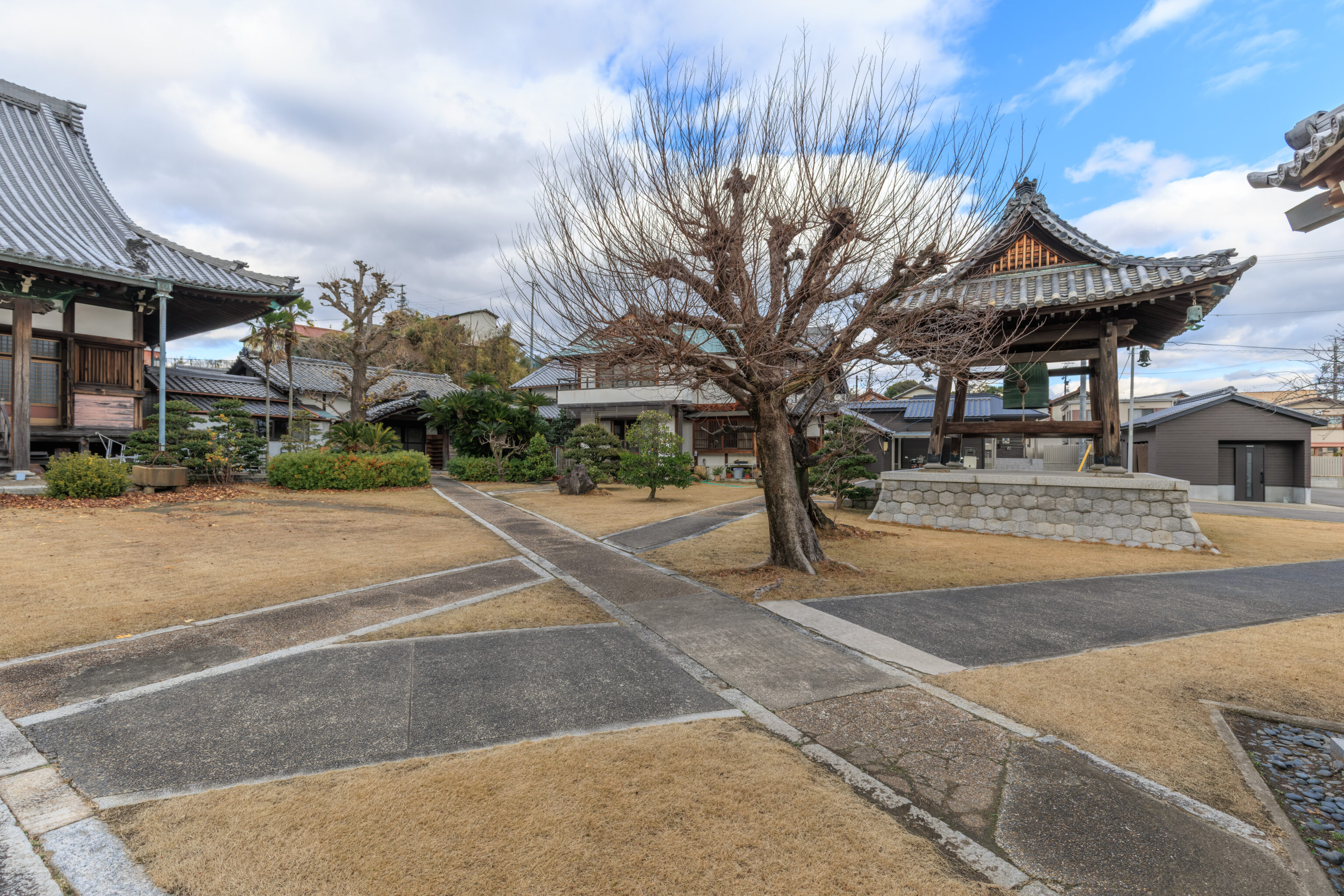
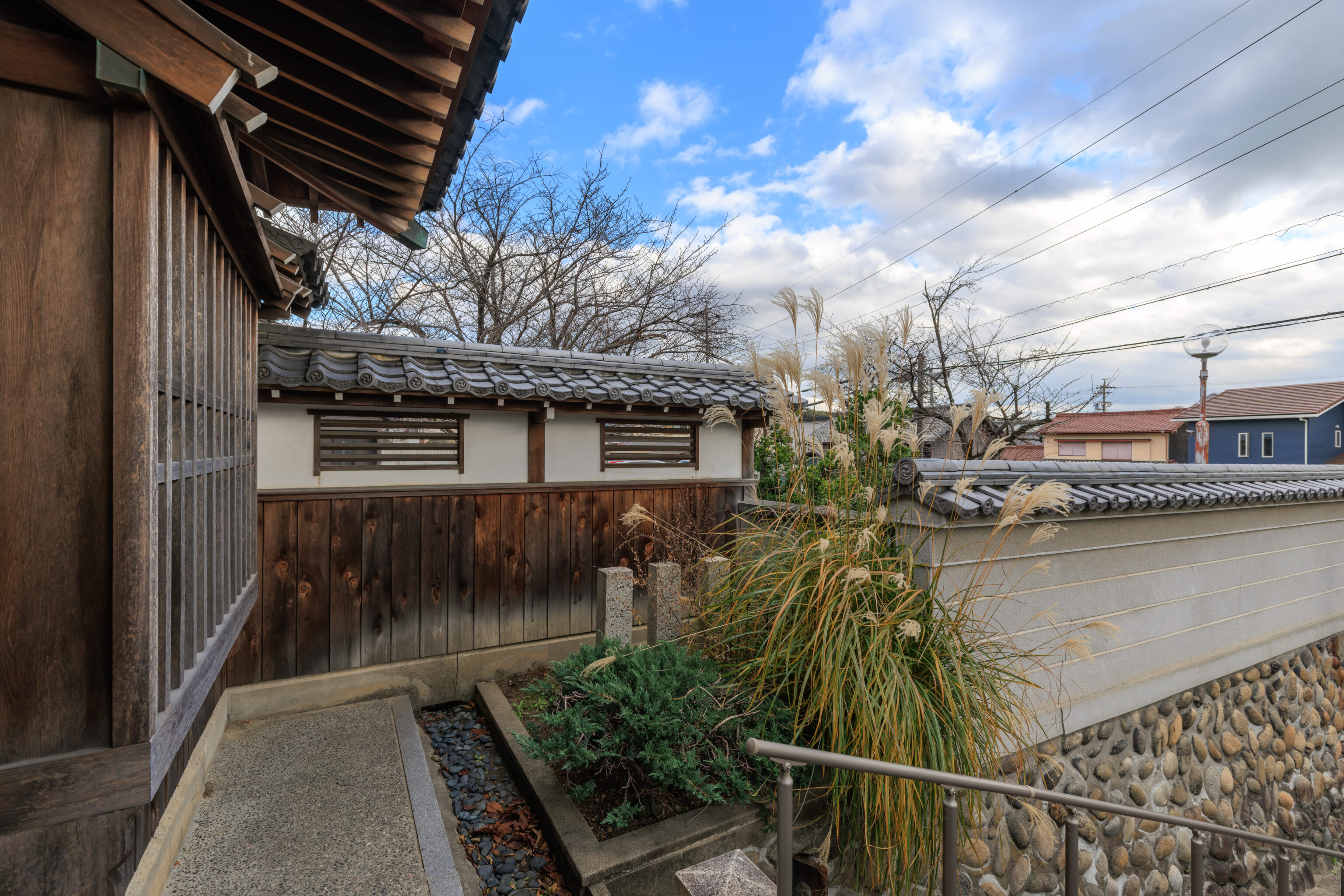
We briefly looked around past the temple’s gate before continuing on. This was basically a local temple, not one that would be usually visited by tourists like us.
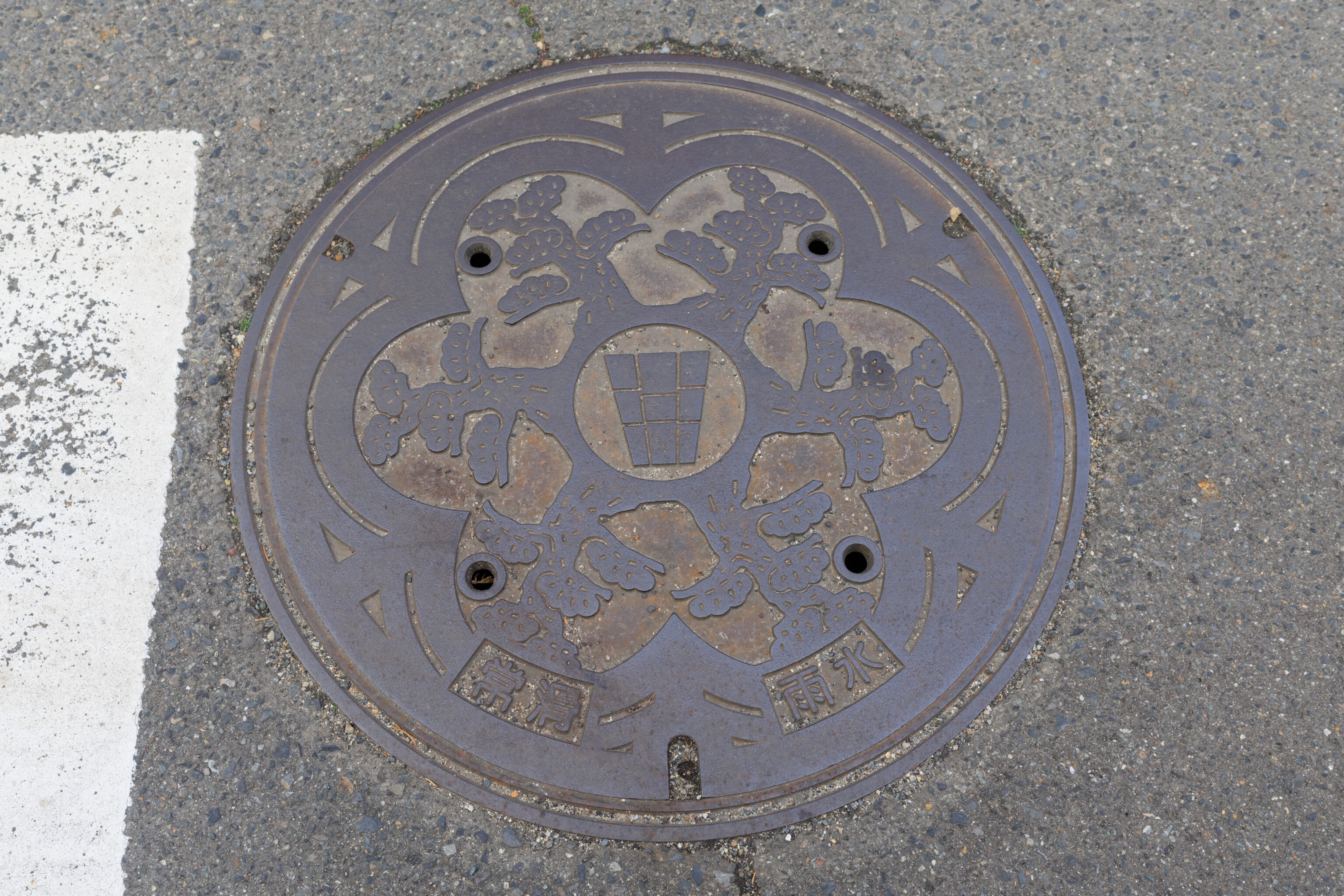
A different utility cover design compared to the others that we’ve seen in Tokoname.
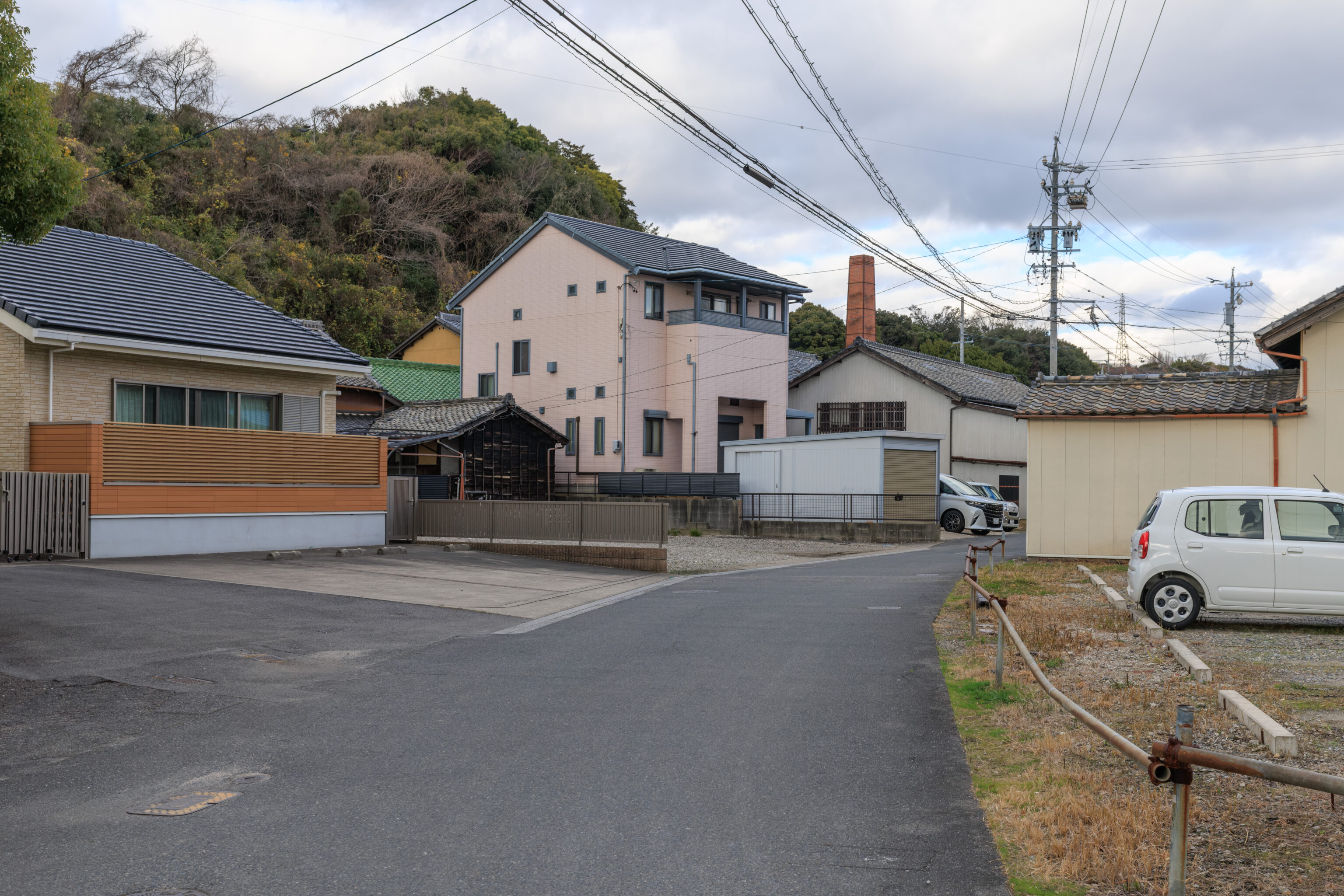
We continued on, zigzagging to the southwest through a residential neighborhood. This area would probably be considered low density in Japan.
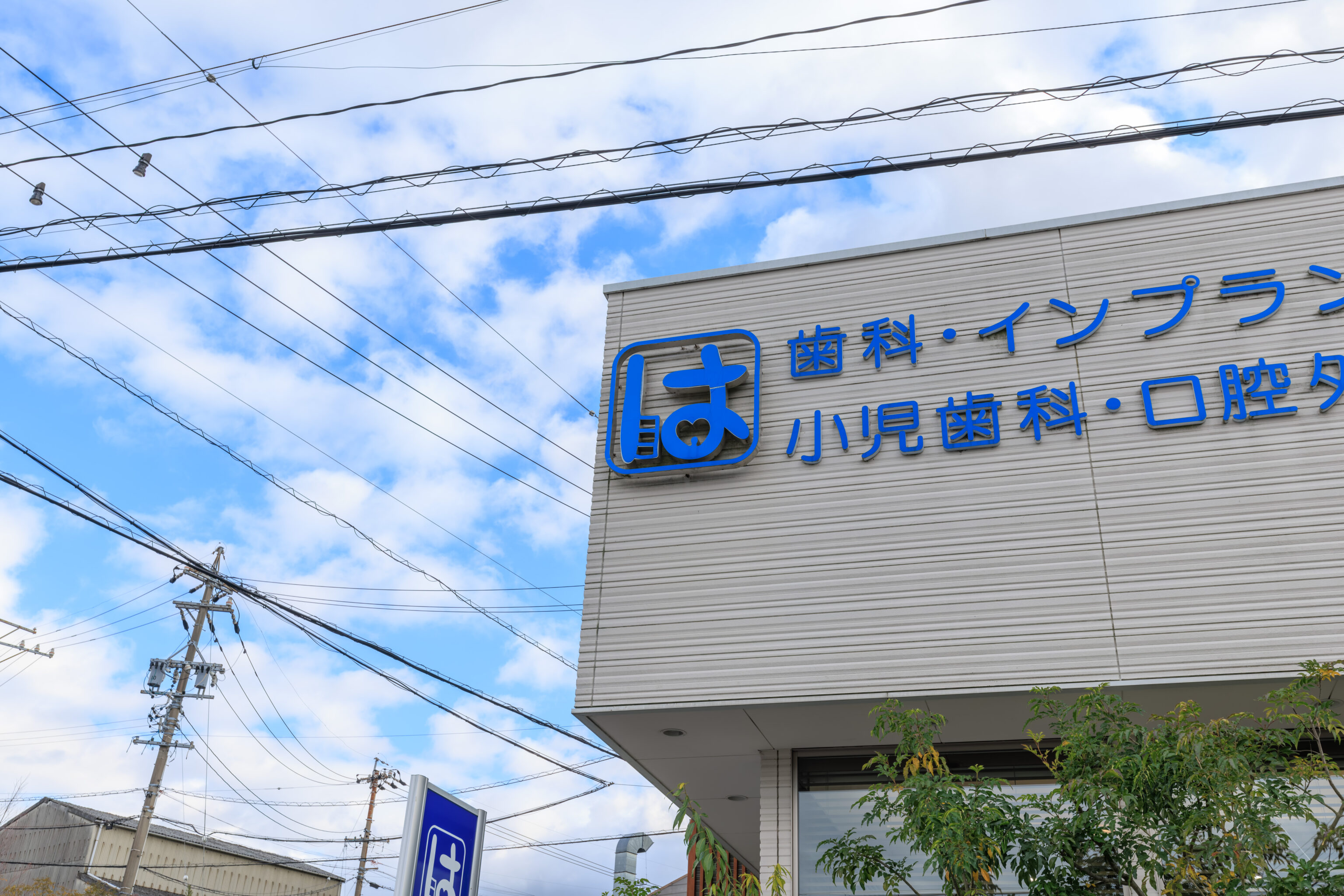
This is just a plain old dental office. Why did we photograph it? Look at their logo! 歯 is tooth, it is pronounced as は ha, the hiragana character used in the logo.
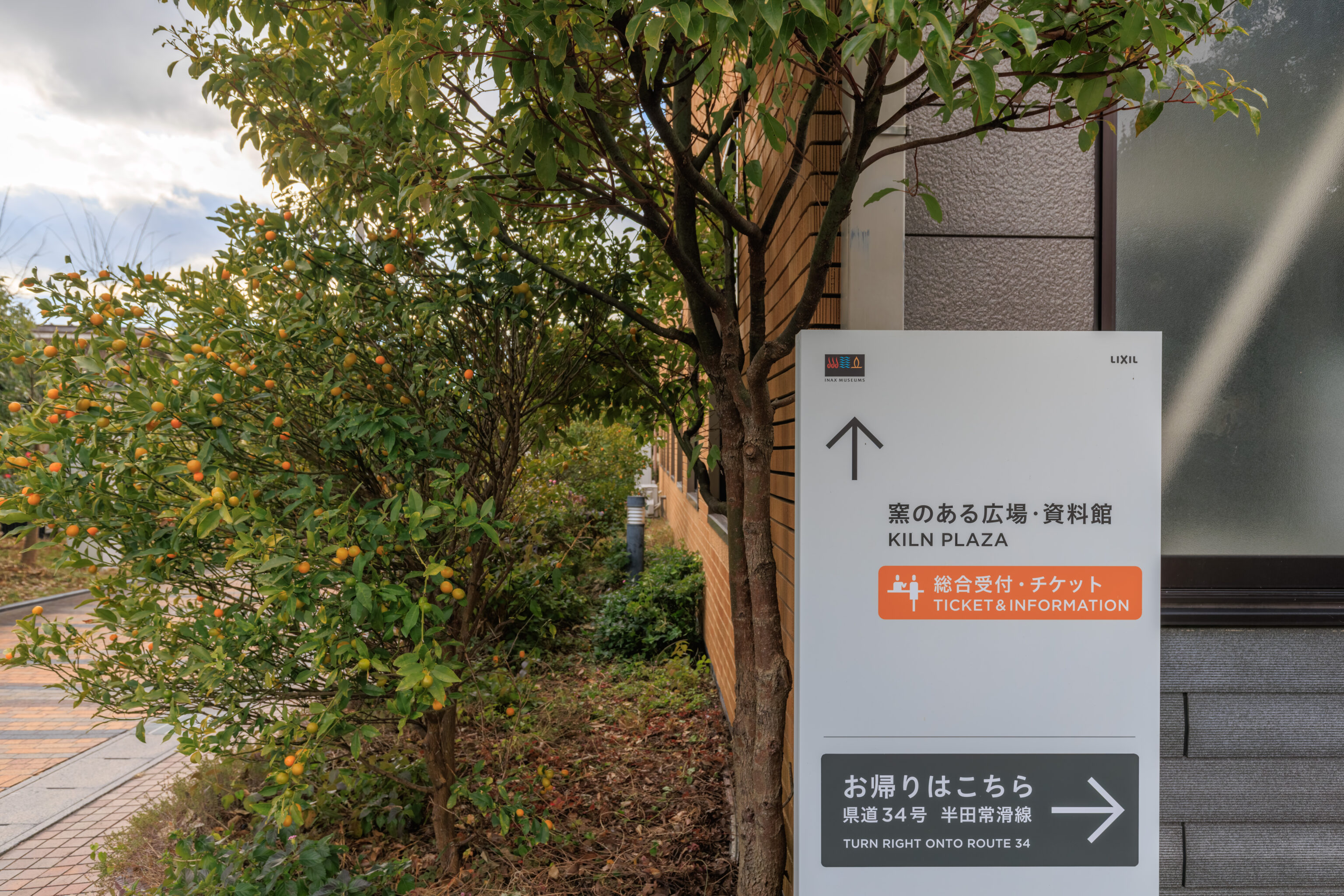
It took us about 30 minutes to reach the INAX Live Museum. This museum is operated by INAX, a company that was founded here in Tokoname around 1887. The modern INAX is a producer of various ceramic products including tiles and toilets. Currently, INAX is part of LIXIL, a Japanese company that owns various related brands including American Standard.
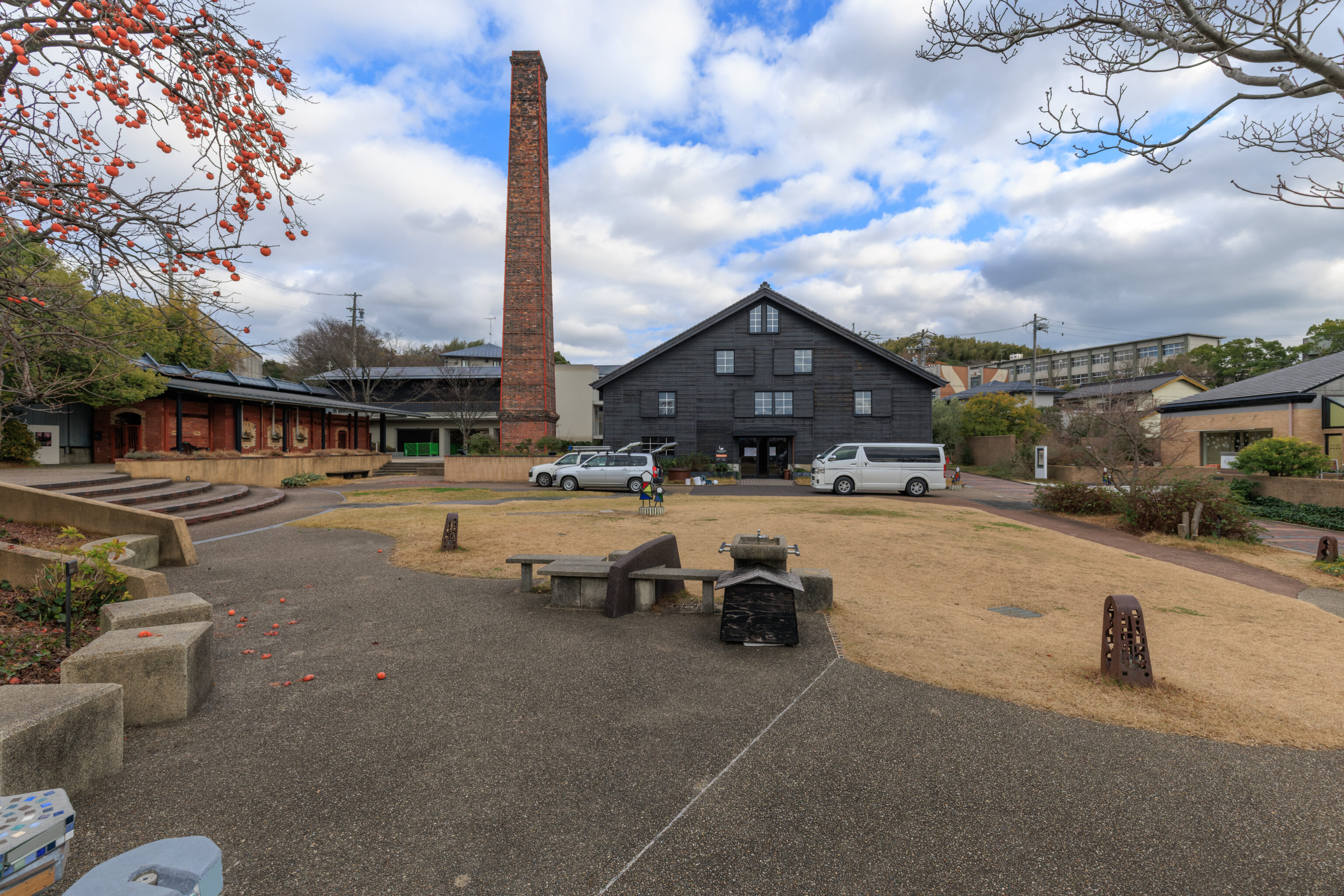
We quickly realized that the museum was not open! It was last open two days ago on Christmas but is now closed until Saturday, January 4th for 正月 Shogatsu, the Japanese New Year holiday.
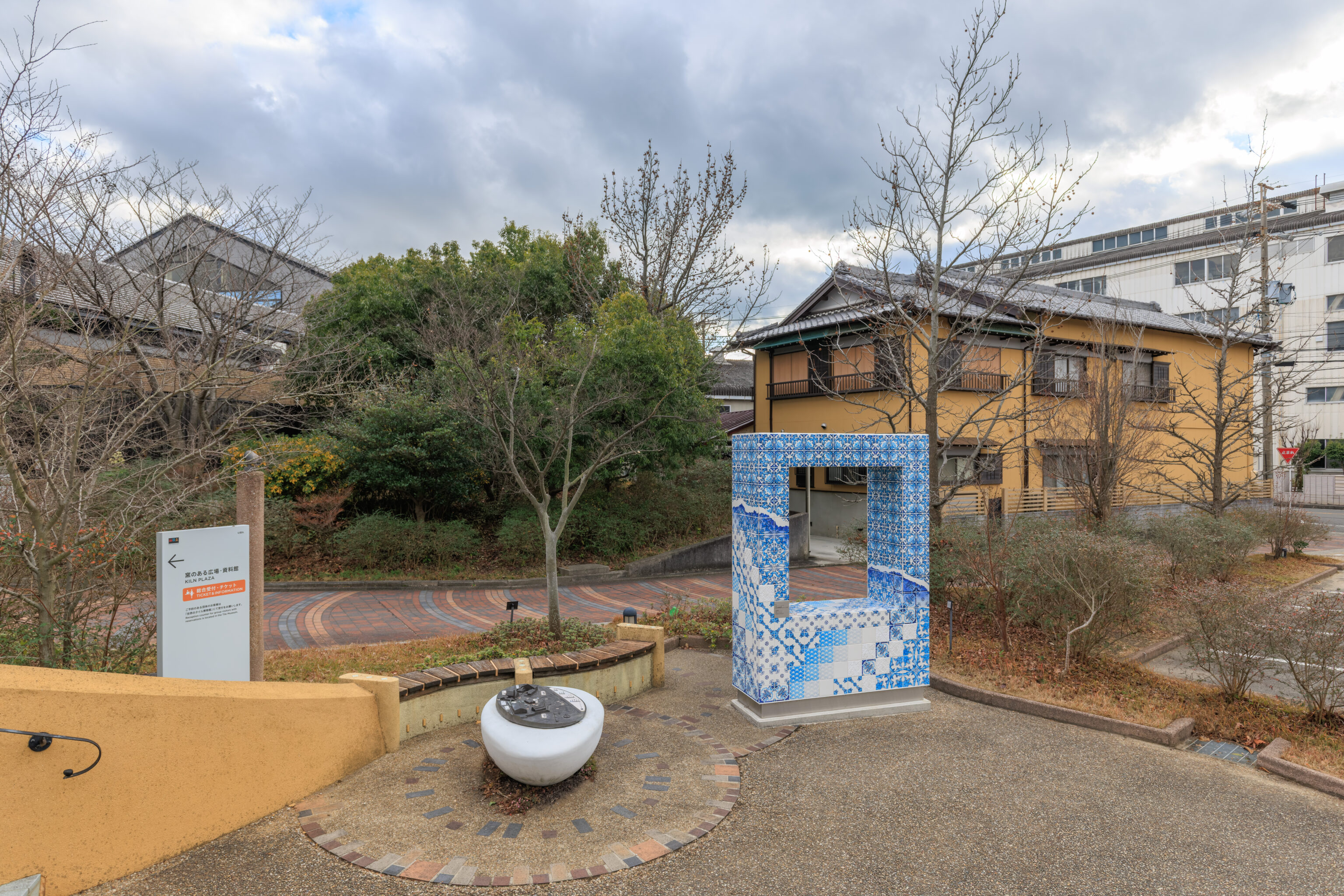
A pretty ceramic tile frame, perfect for Instagram or whatever, along with a small model of all the museum buildings that we aren’t going to be able to see today!
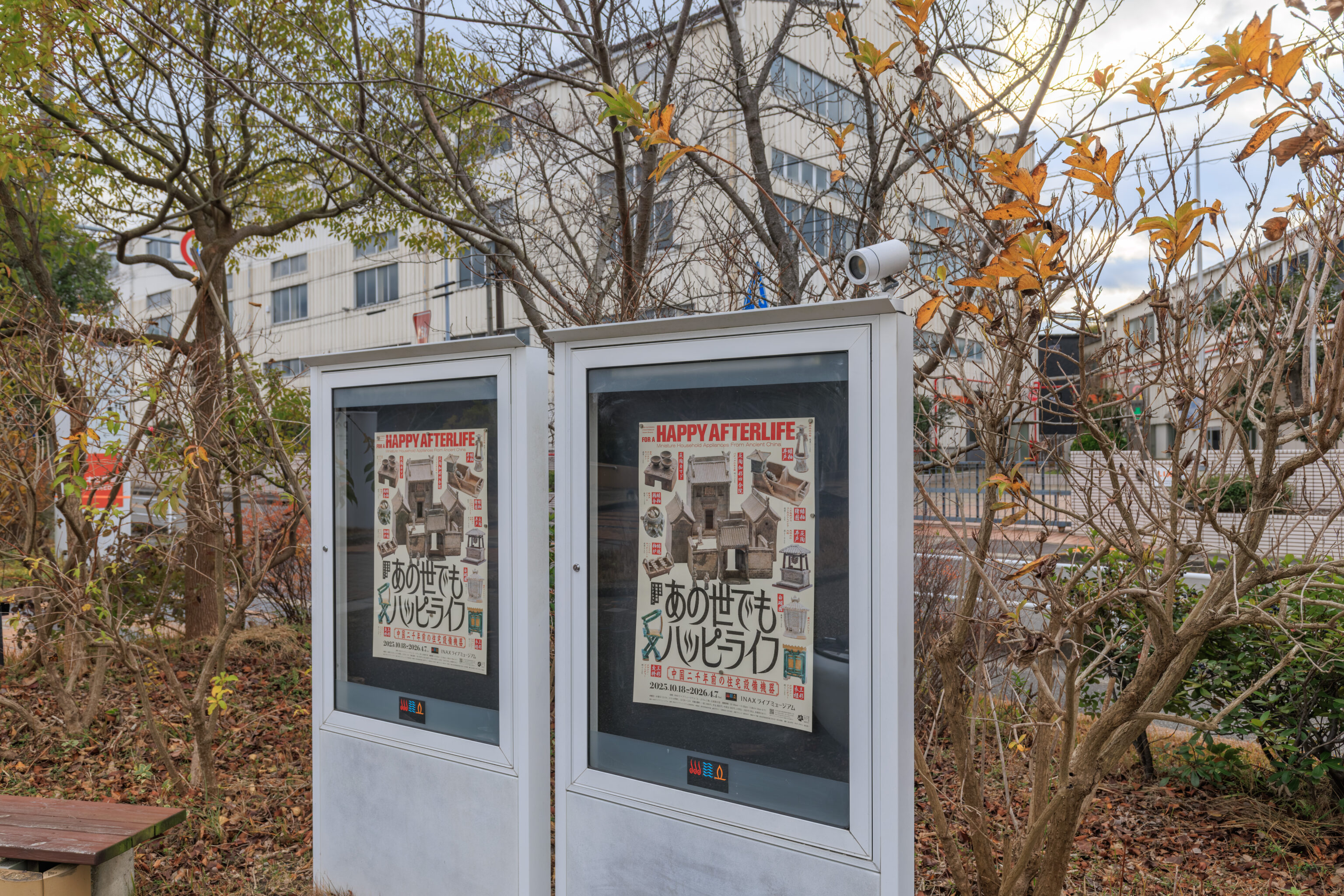
It looks like there is currently an exhibition featuring minature sculptures of household items from ancient China.

This map, which is unfortunately not oriented north up, shows some suggested walking routes. We’ll probably take the green path back to the pink Pottery Footpath as the map indicates it passes by some ceramic sculptures.
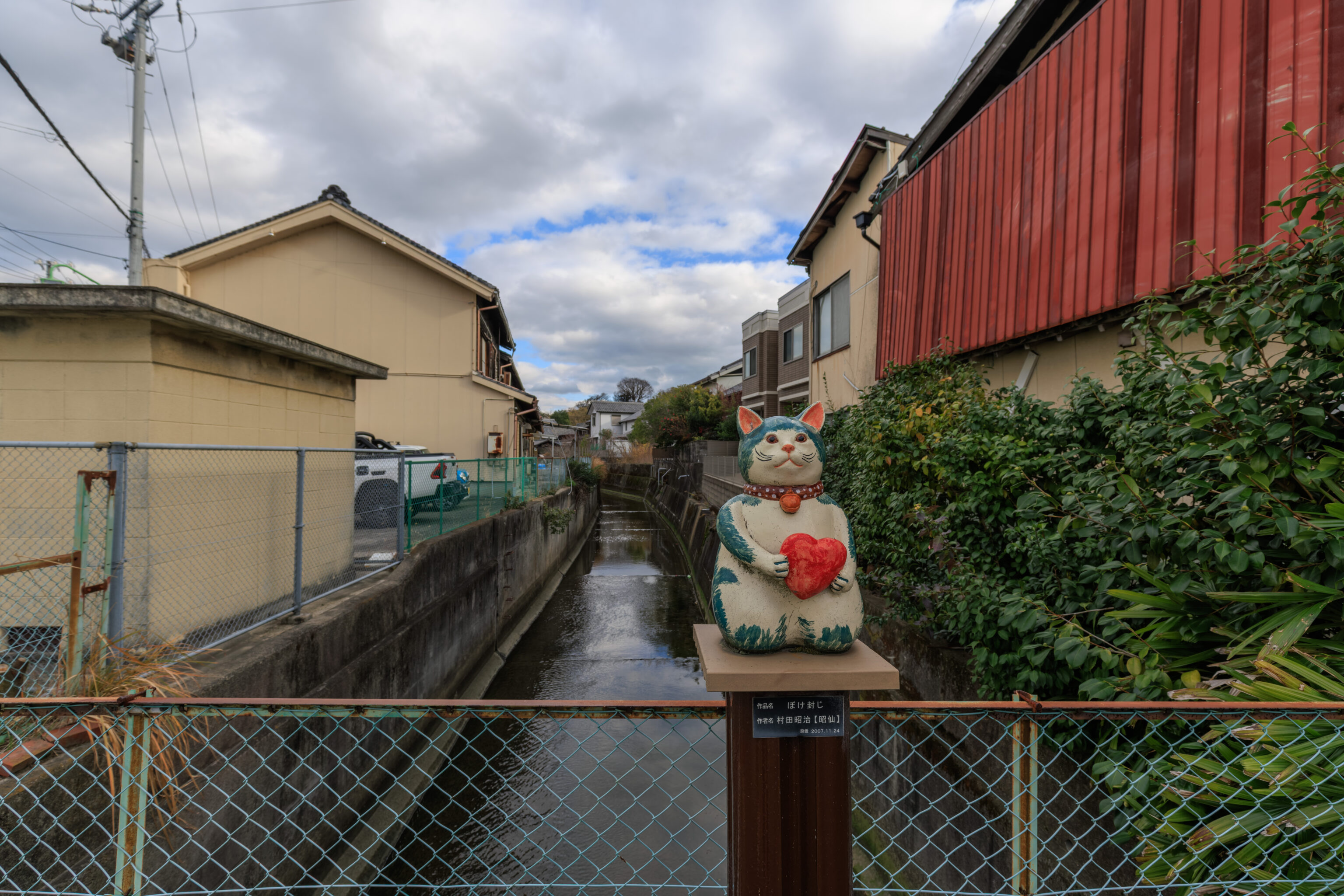
As we walked to the west away from the INAX Live Museum, we came across a cat sculpture on a bridge.
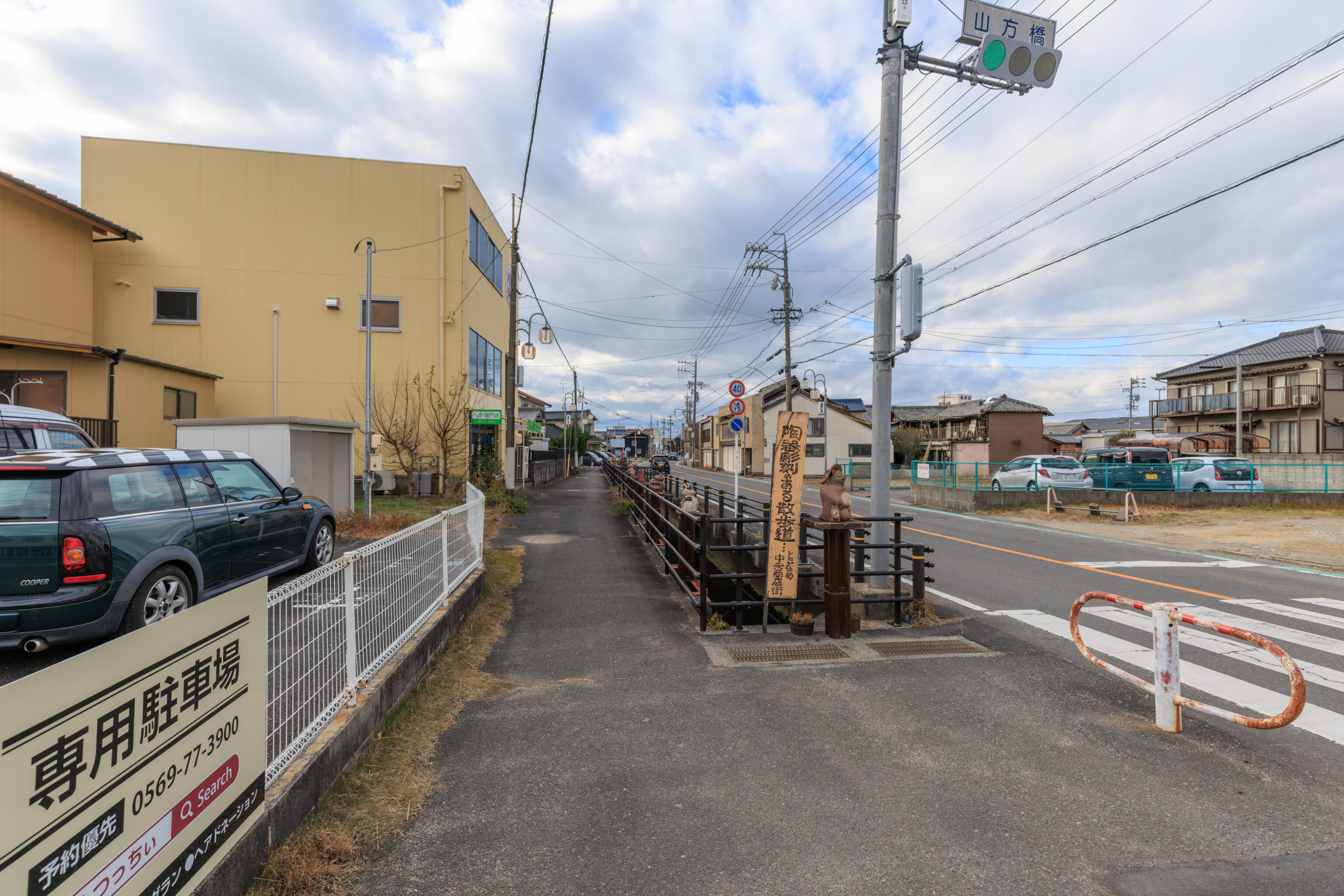
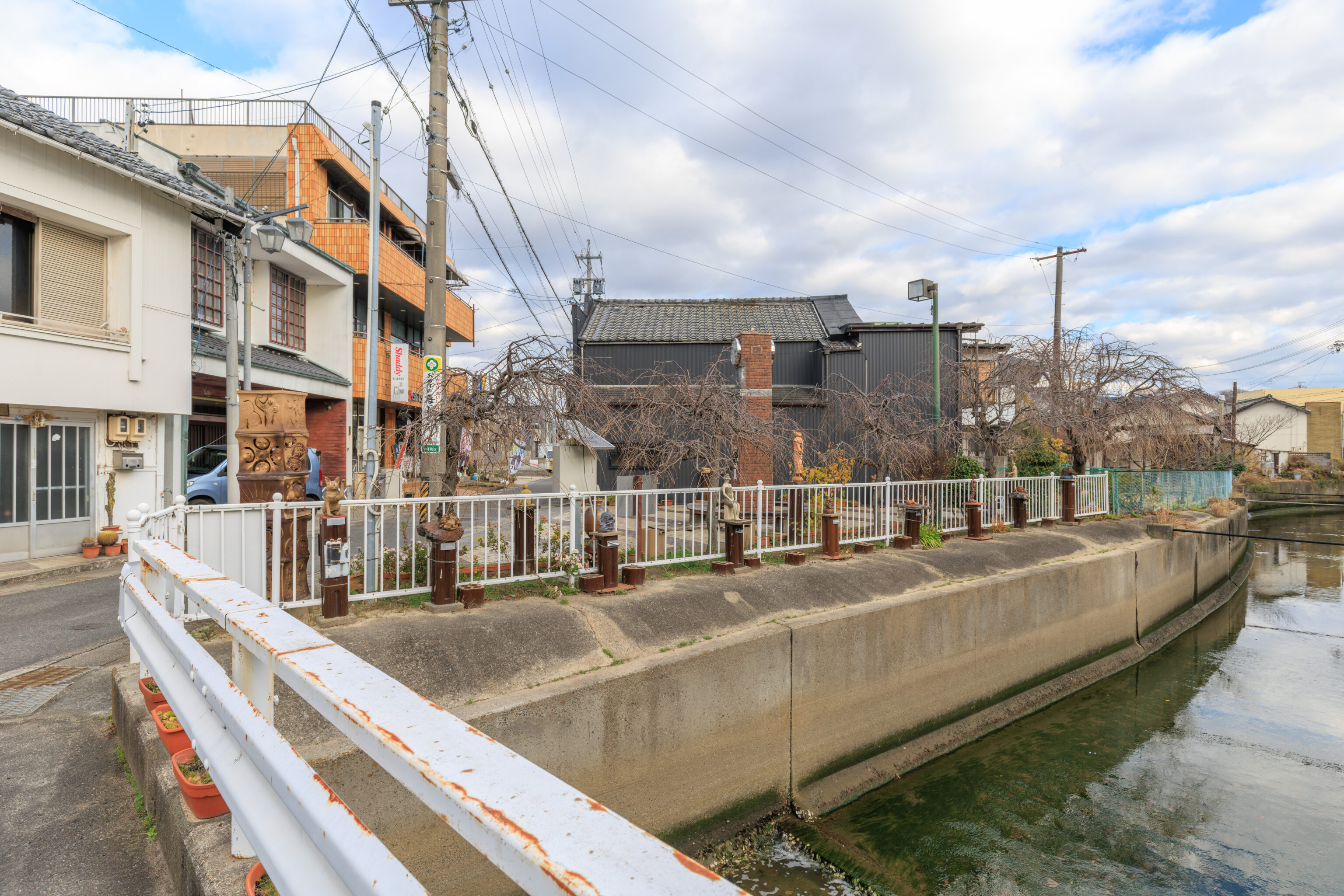
The river runs between the road and sidewalk to the west of the bridge we just crossed. Ahead, we could see more sculptures!
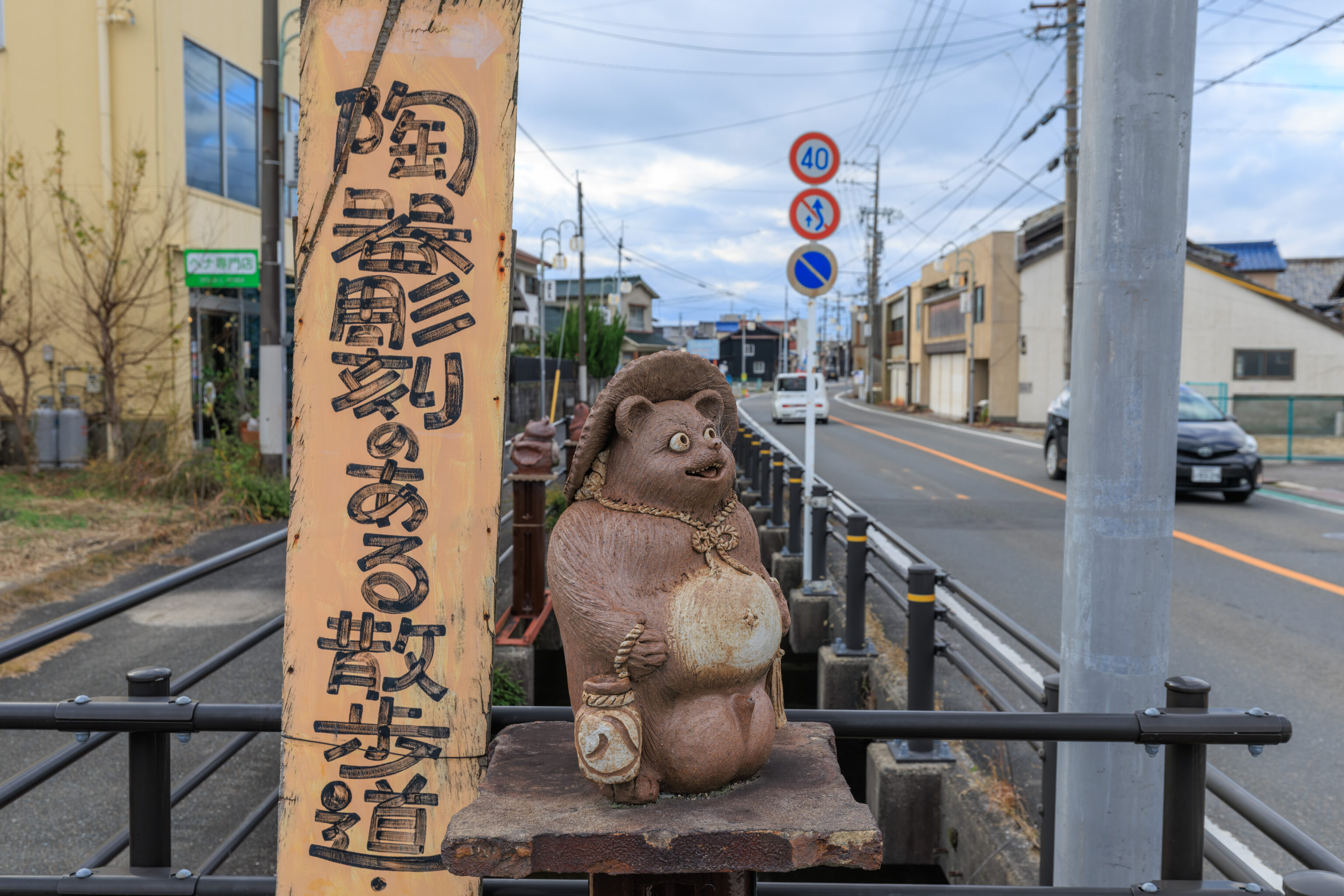
A Promenade Featuring Ceramic Sculptures...
Tokoname
Central Shopping District
– Text from the sign in the photograph above, read using Google Gemini and translated using Google Translate.
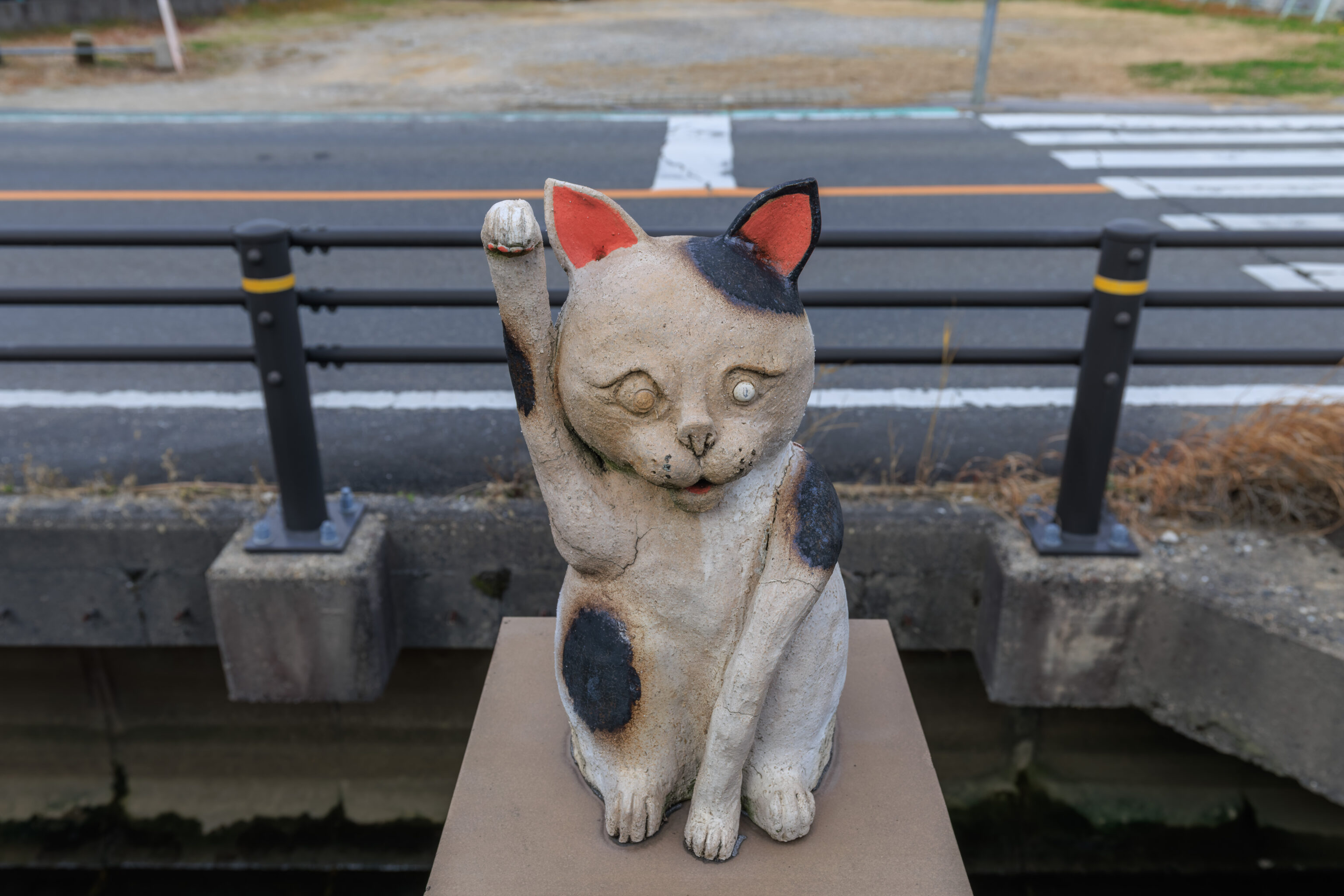
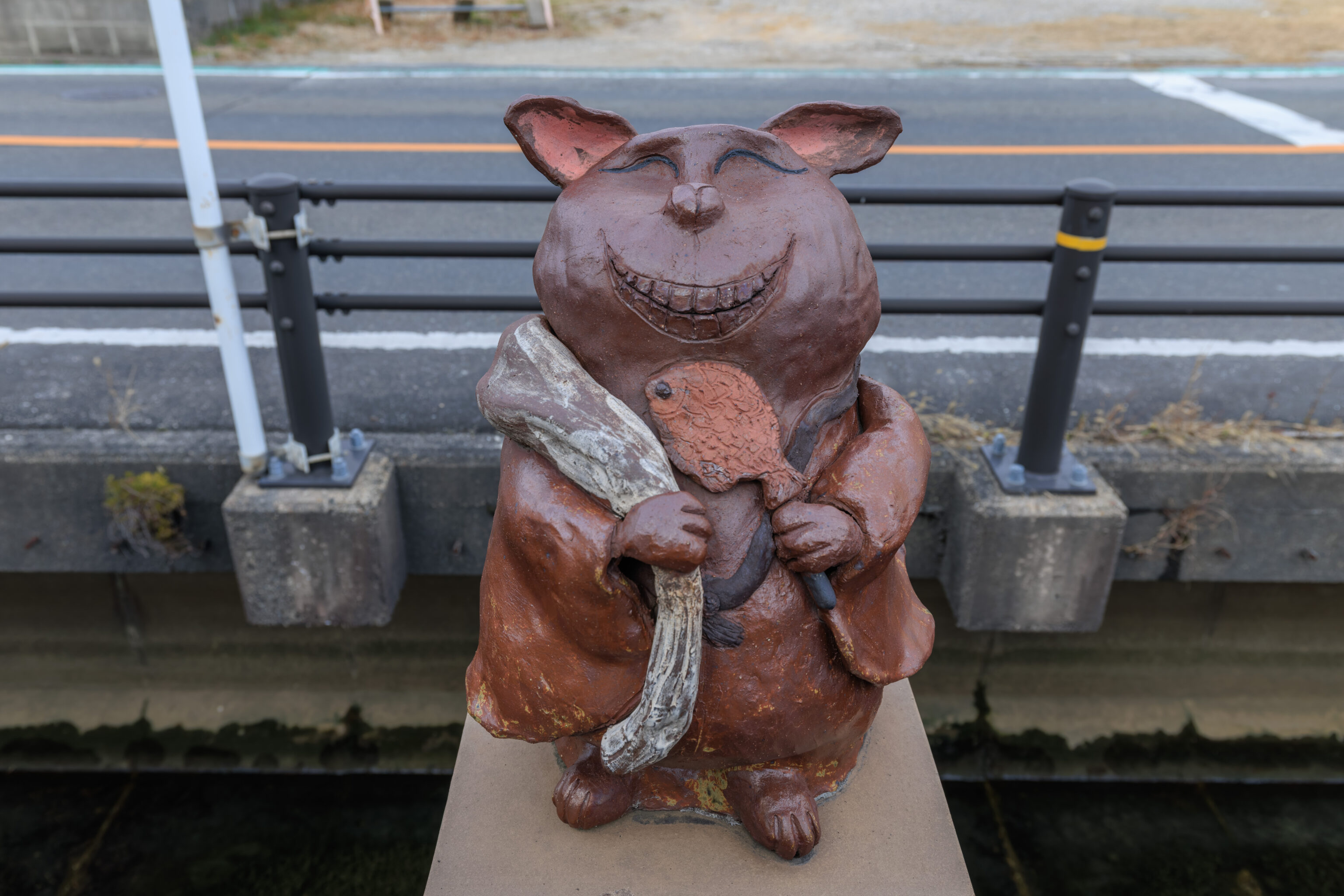
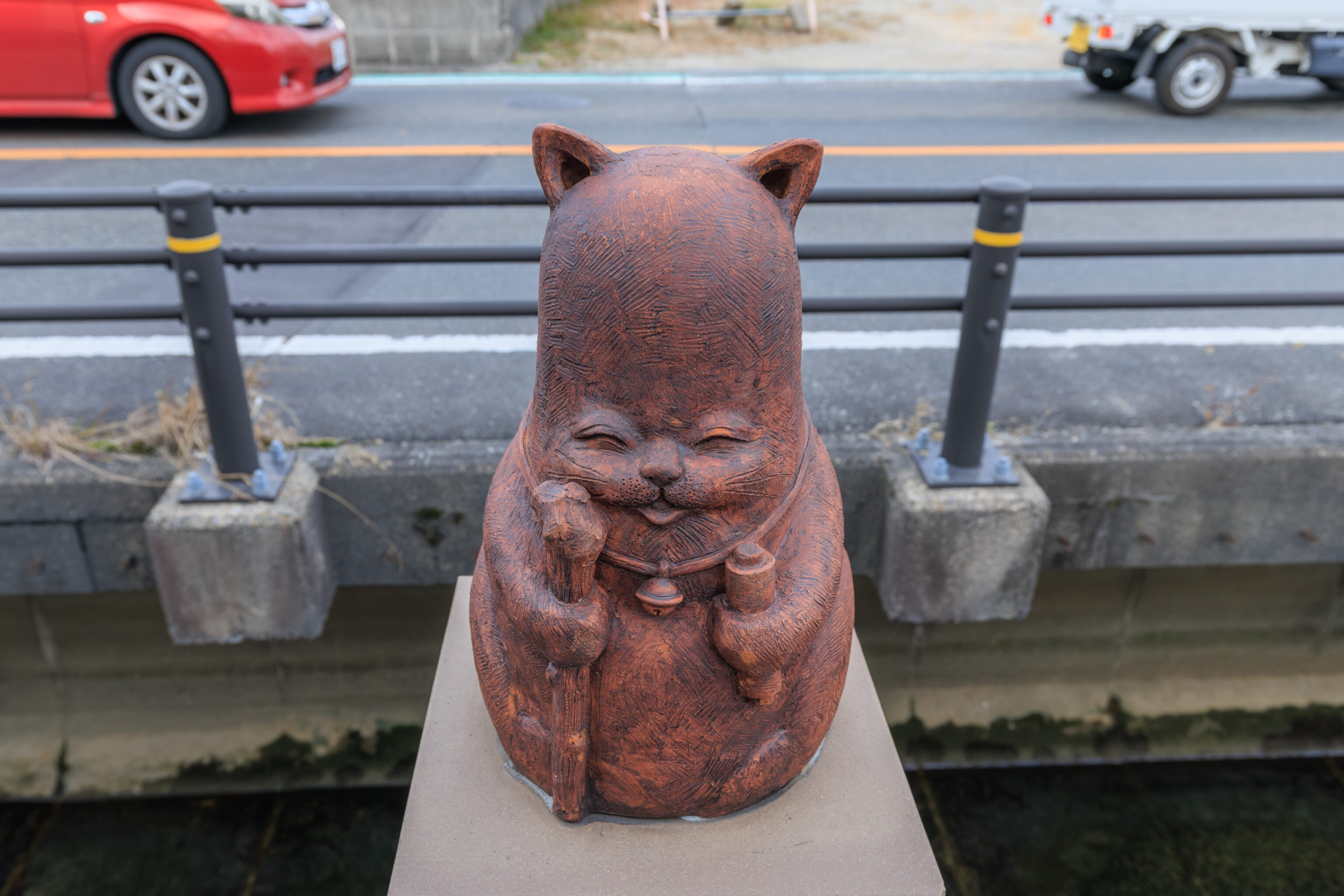
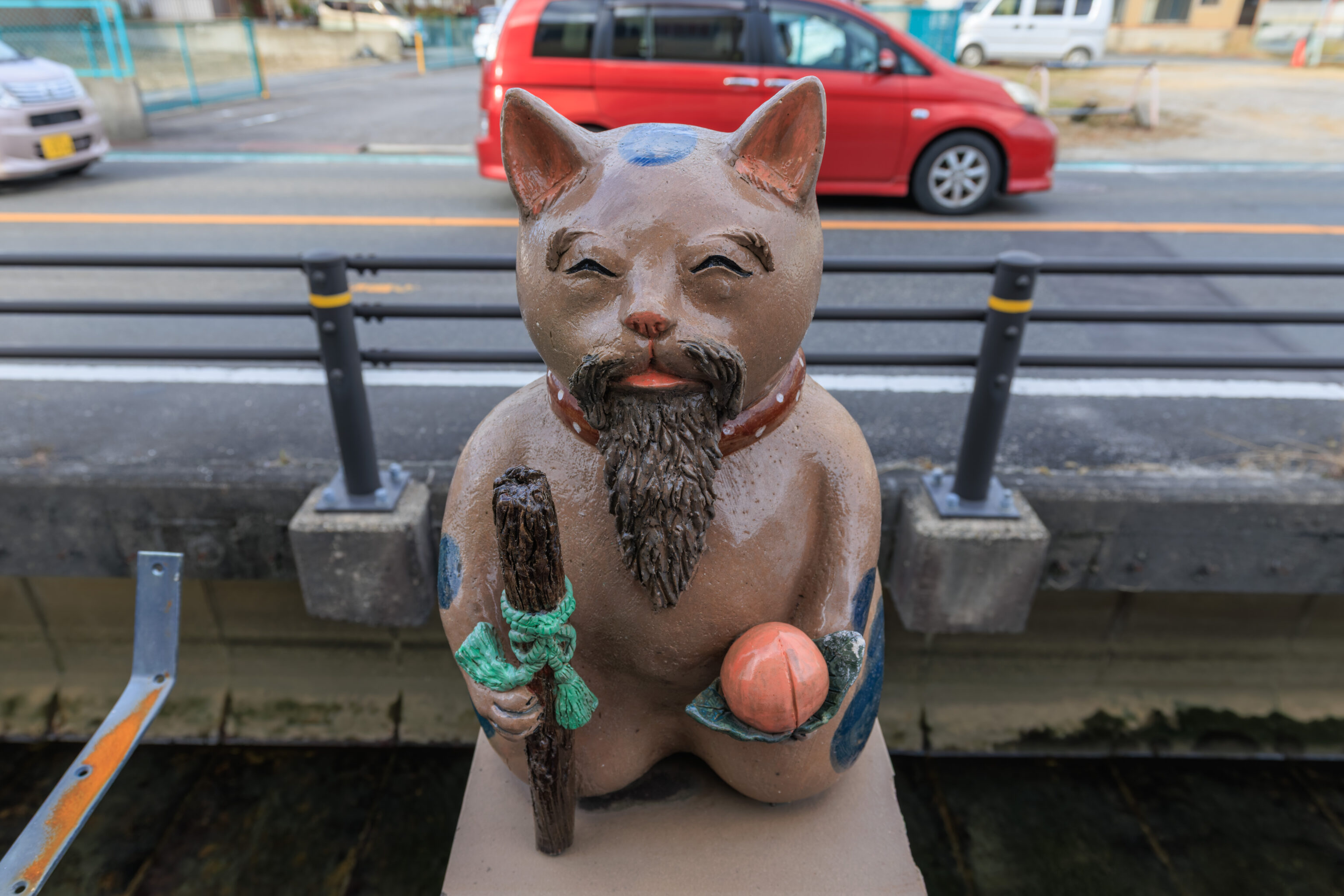
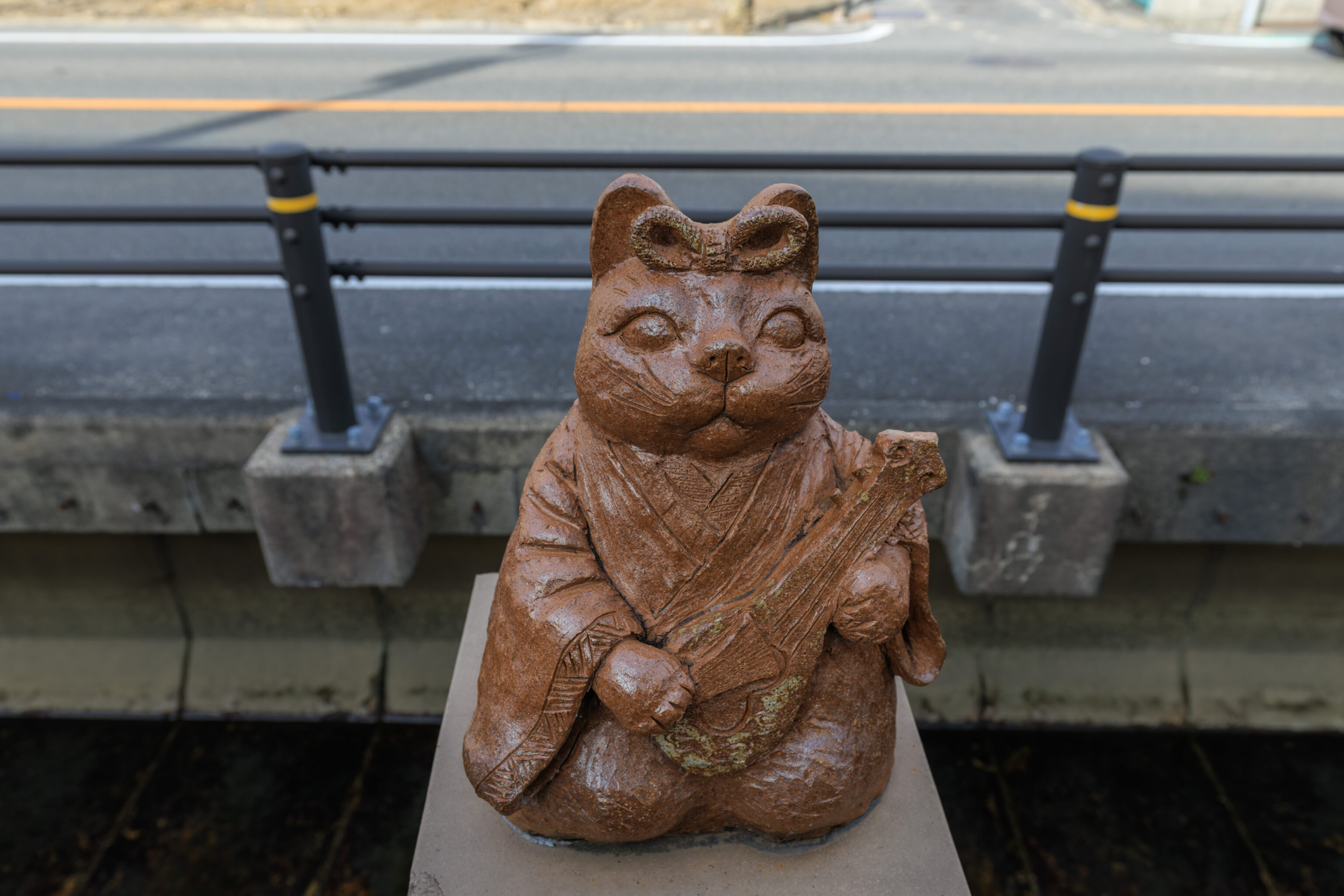
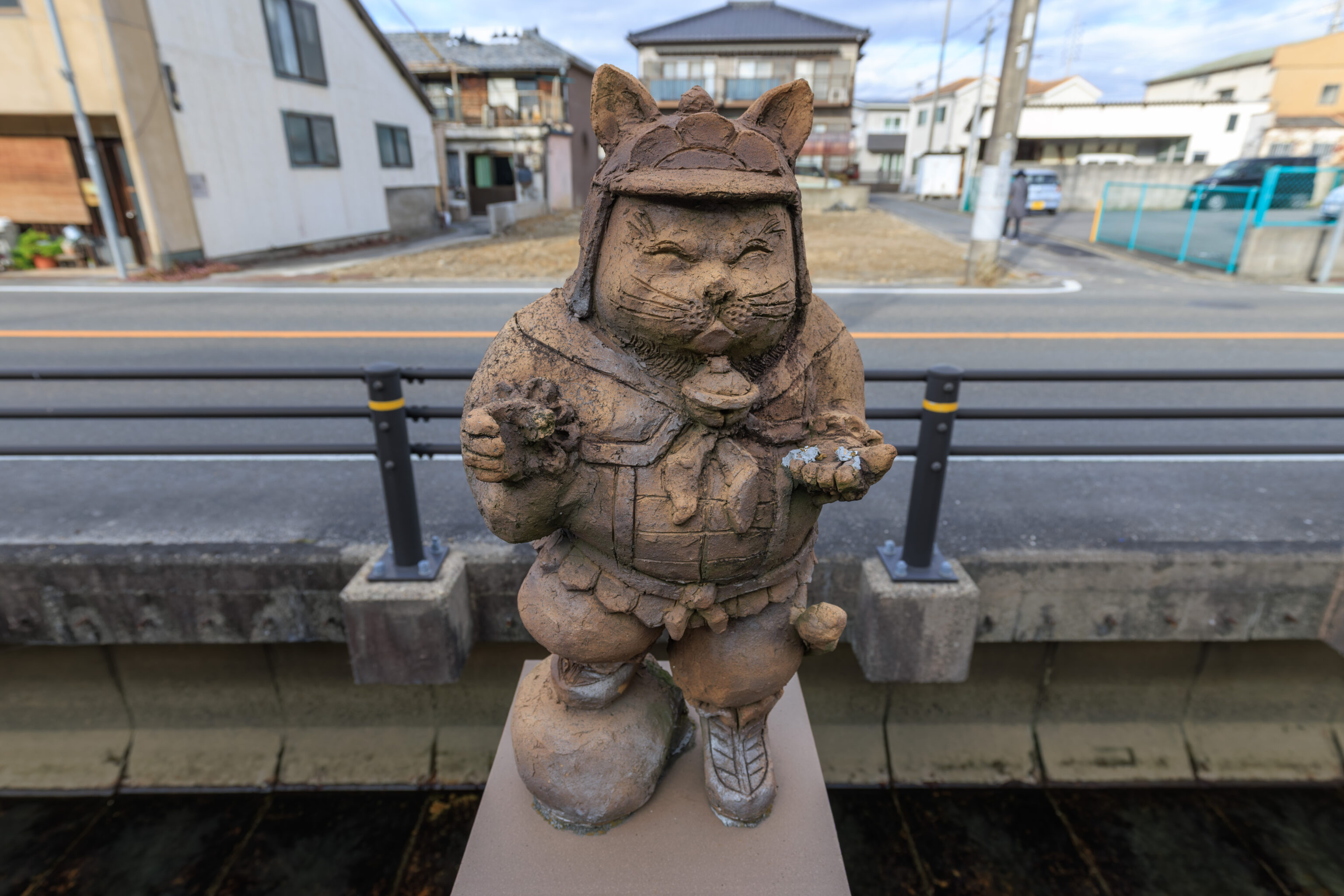
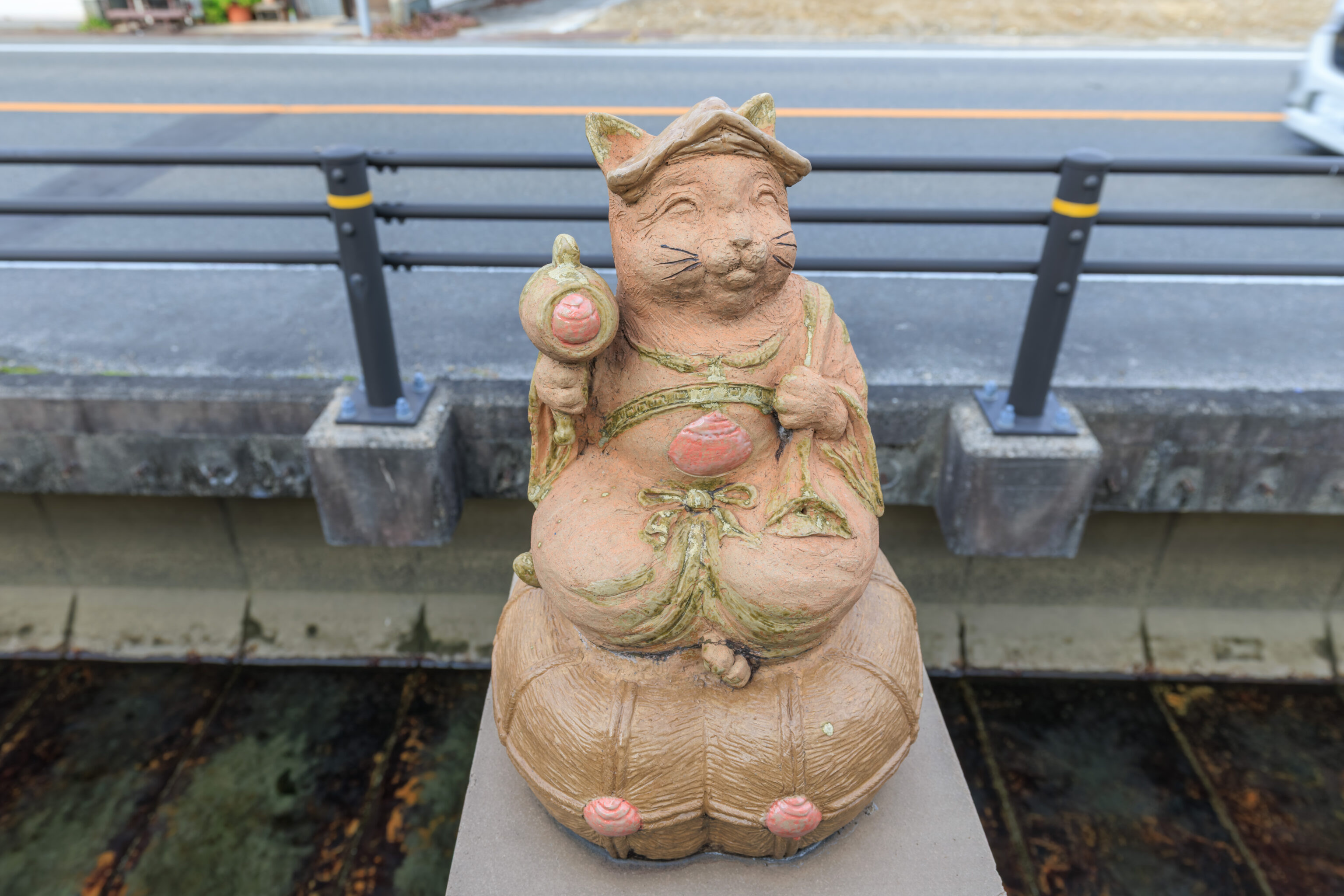
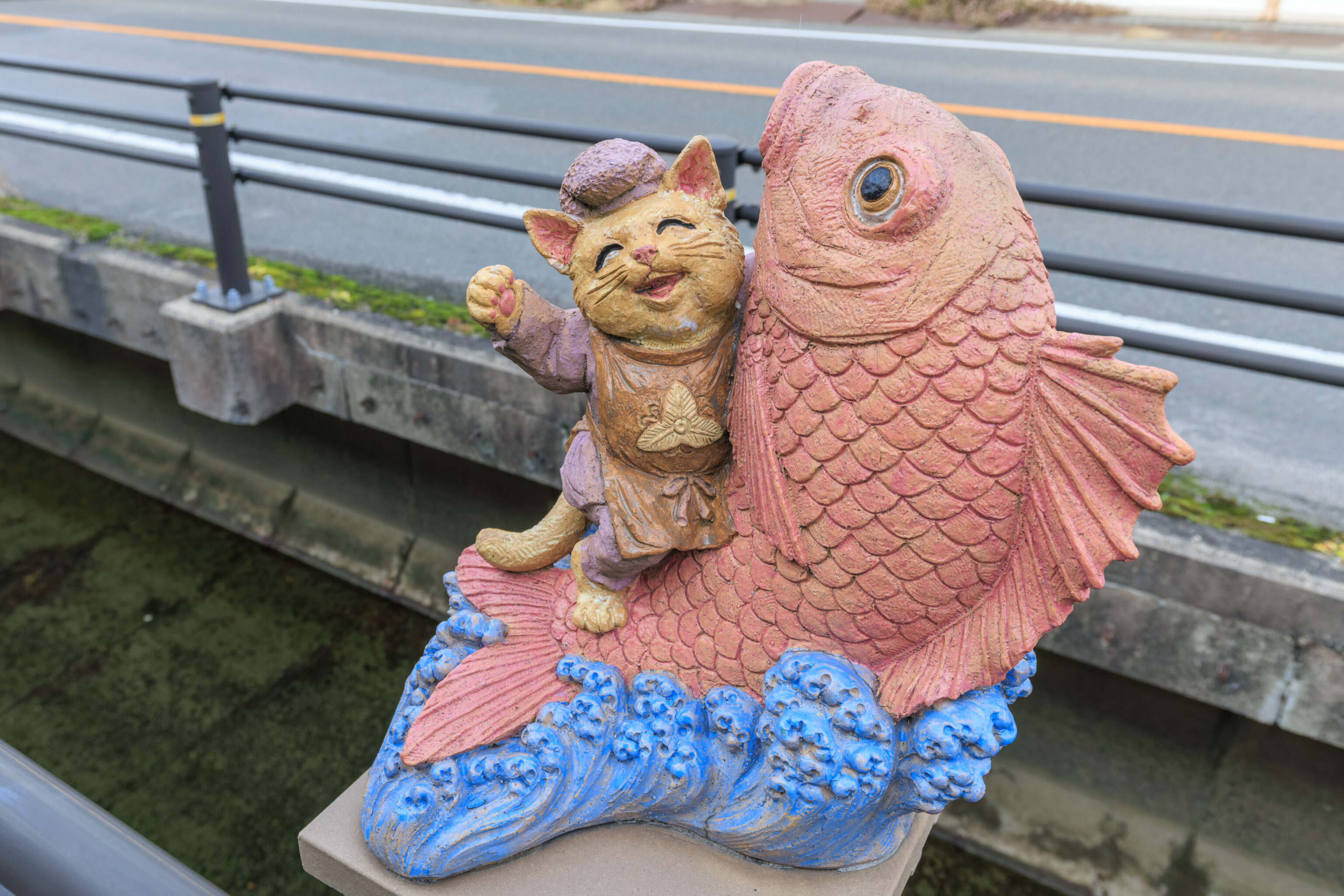
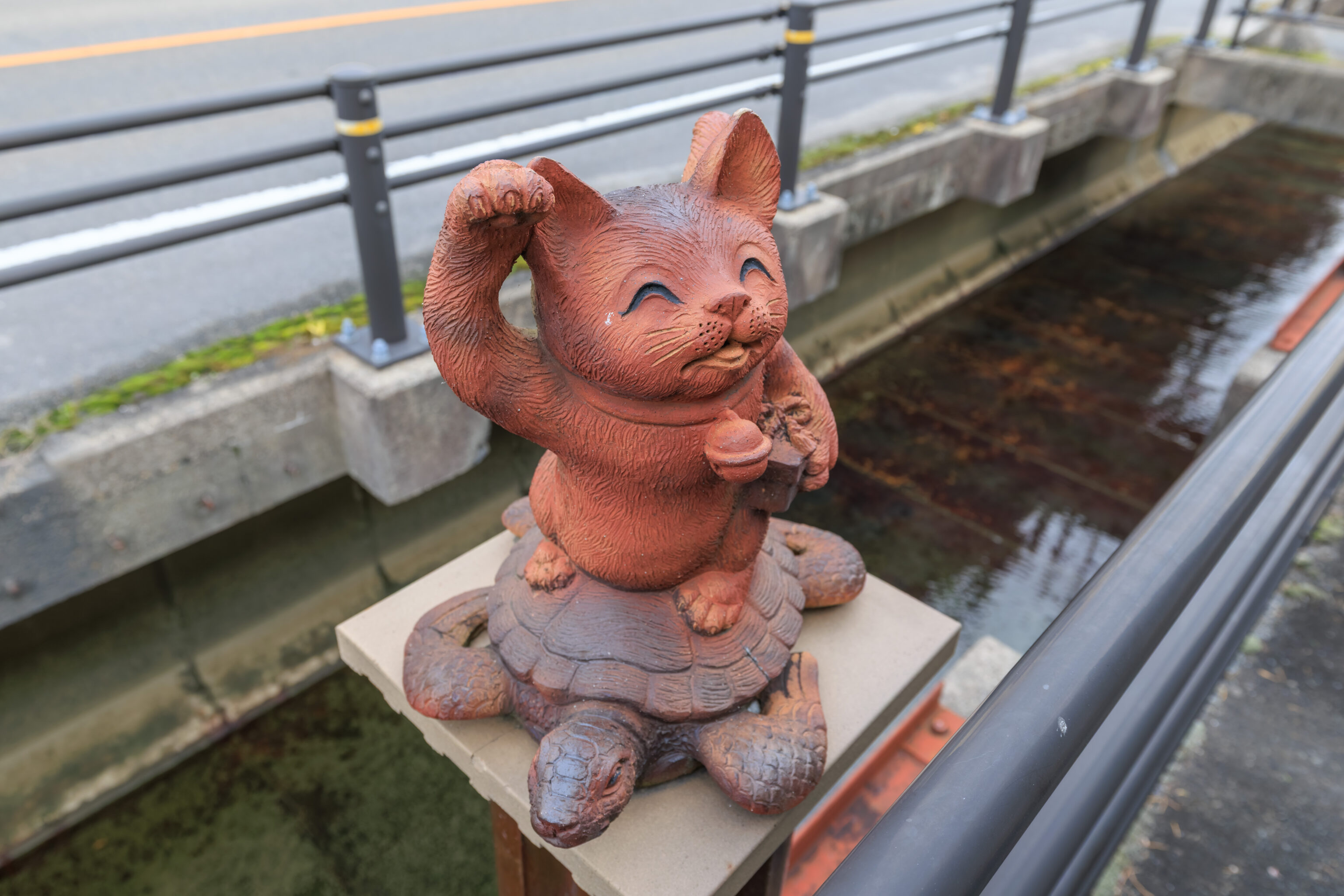
Other than the tanuki sculpture at the east end, the remainder of the sculptures primarily depicted cats!
After the row of sculptures, the river deviated to the northwest away from the road. We were able to walk one block further and turn right to return to the river. We noticed that there was another section of sculptures.
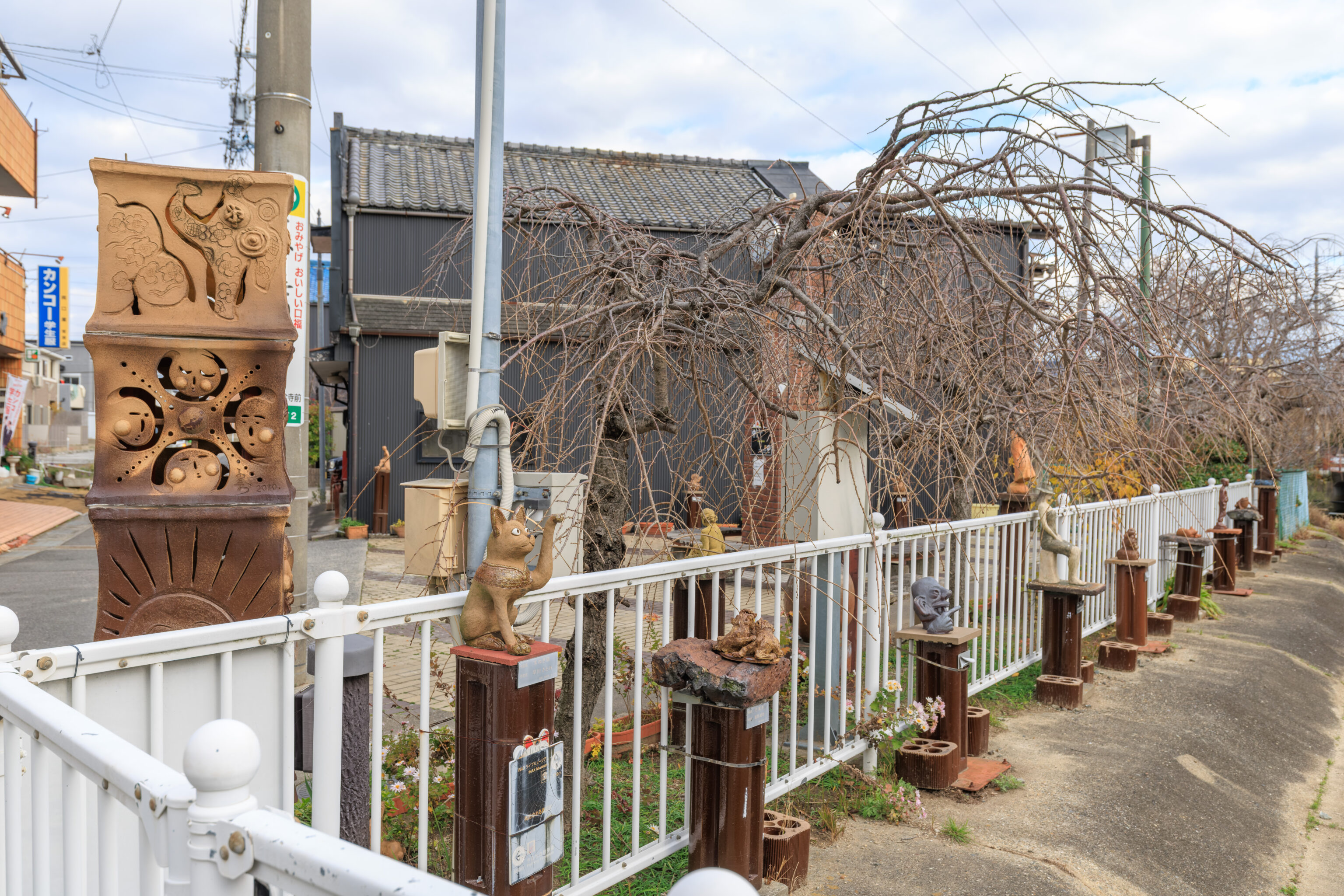
However, these sculptures were all facing the other river, making them hard to look at!
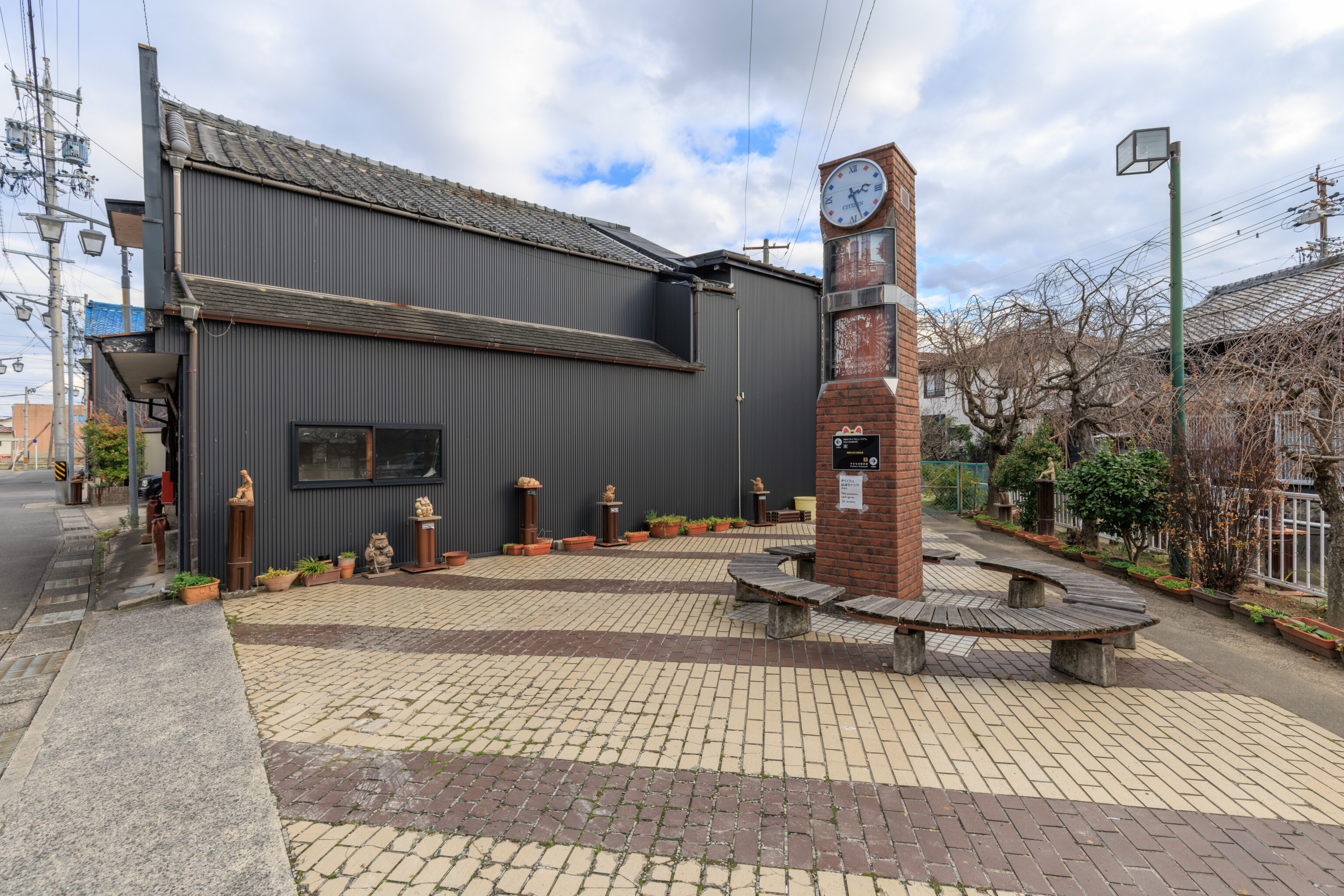
This clock was labelled as the からくり時計 Mechanical Clock on the map at the INAX Live Museum. Unfortunately, the paper sign taped to the front of it indicates that it is broken.
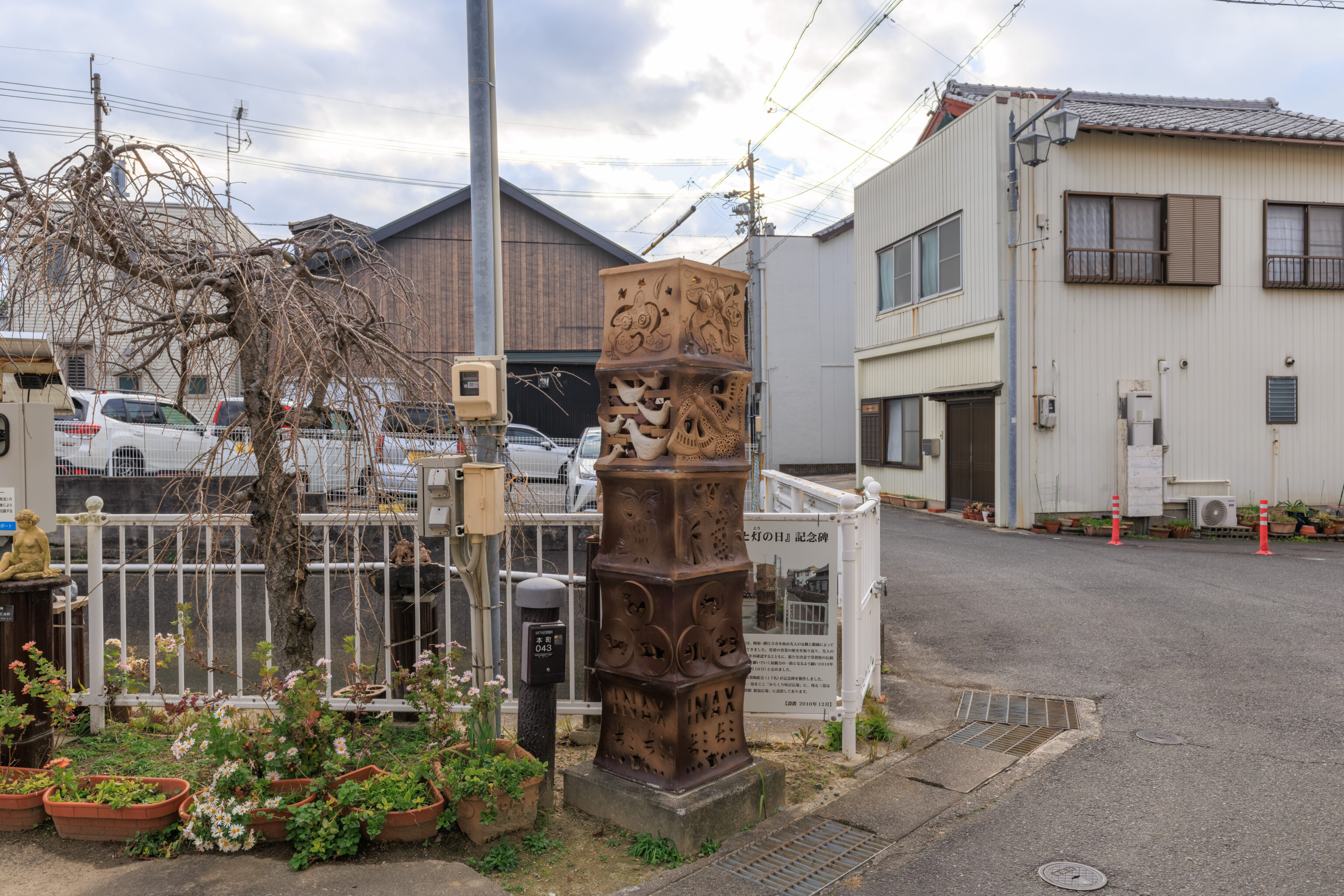
This sculpture has some interesting animal elements. The bottom section indicates that it is perhaps made by INAX? Unfortunately, we failed to photograph the sign that is partially hidden behind the sculpture. However, there is an identical sign at Tokoname Station along with three similar sculptures. The sign reads:
"Day of Ceramics and Lights" Monument
The thousand-year history of Tokoname ware has been continuously passed down through the spirit and dedication of our forebears, beginning with the founding potter, Hōju Koie. In 2010, we designated October 10th as "Day of Ceramics and Light" (Tō to Akari no Hi). This initiative aims to reflect on the history of Tokoname’s ceramic industry—reaffirming the achievements, great deeds, and artisan spirit of those who came before us—and to serve as a driving force for passing on the traditions and culture of Tokoname ware to the next generation with renewed resolve.

As a commemorative project, the Tokoname Ceramic Sculpture Association (comprising 17 members) created a series of monuments. Three of the four monuments are installed here in front of Tokoname Station, while the fourth is located at the Karakuri Clock Plaza in the Tokoname Central Shopping District (Ichiba-cho, Tokoname City).

[Established December 2010]
– Text from a photo posted to Google Maps of the same sign at Tokoname Station, translated using Google.
The sign mentions that this sculpture is indeed one of four with the other two at Tokoname Station.
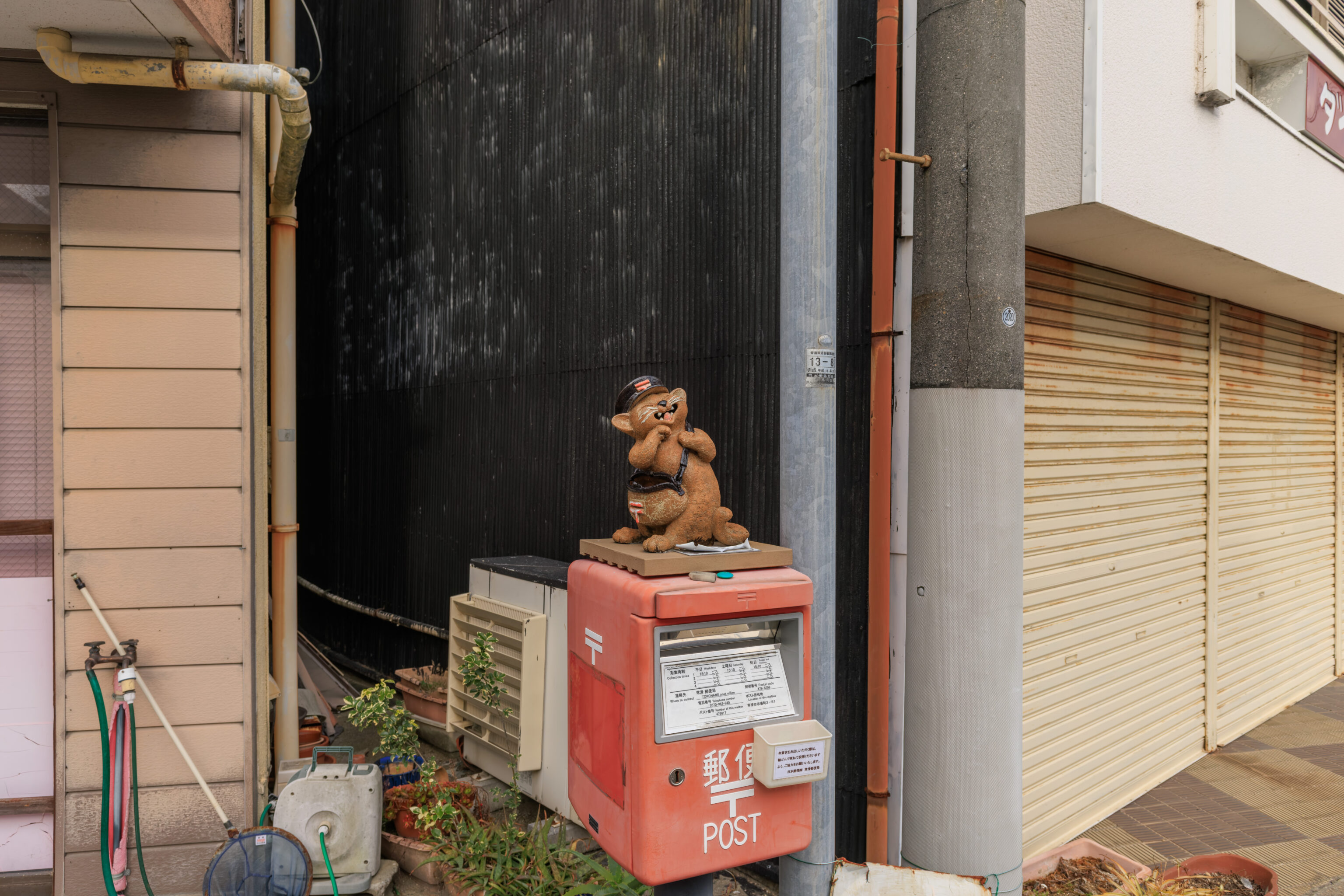
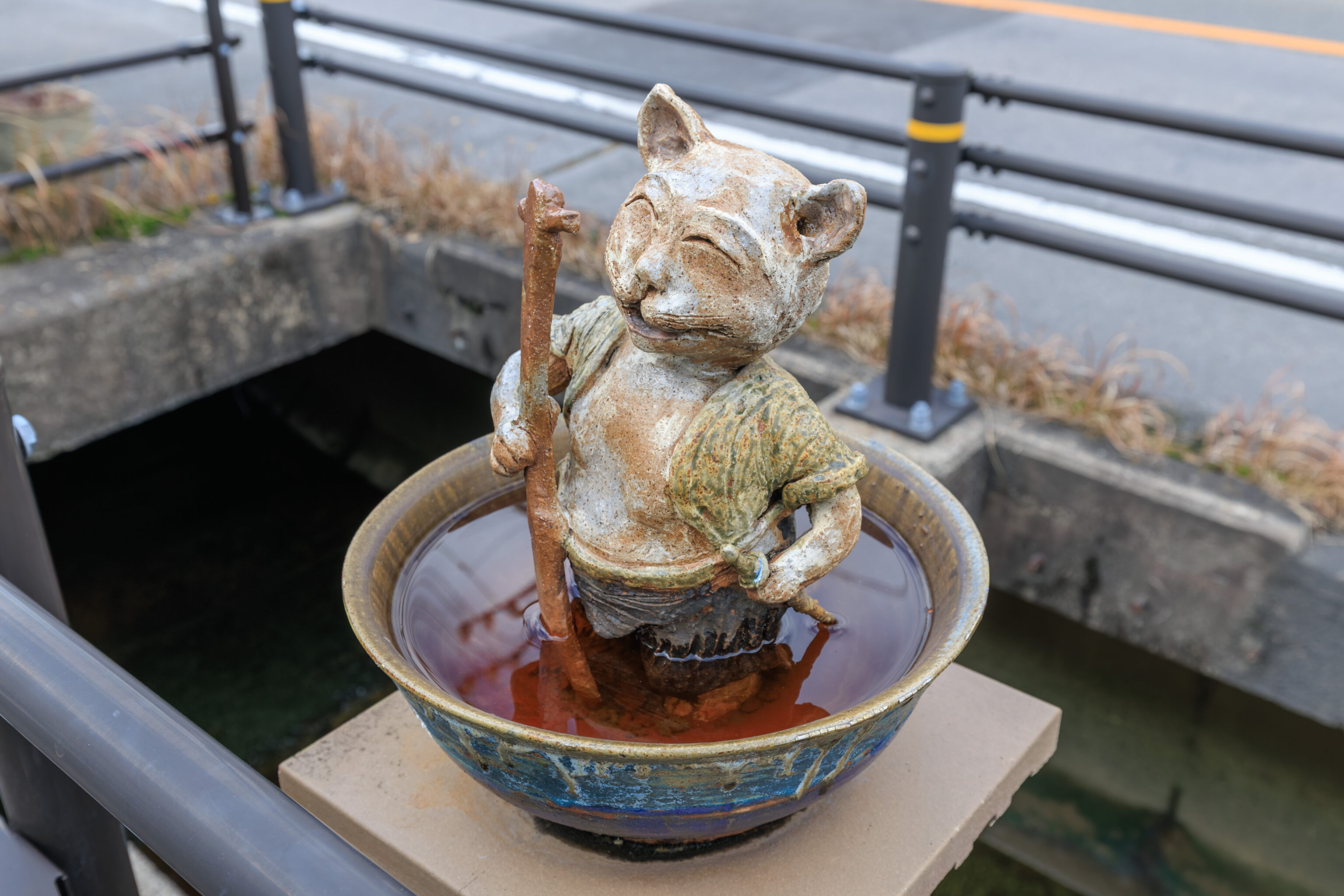
There was also a post box with a post cat!
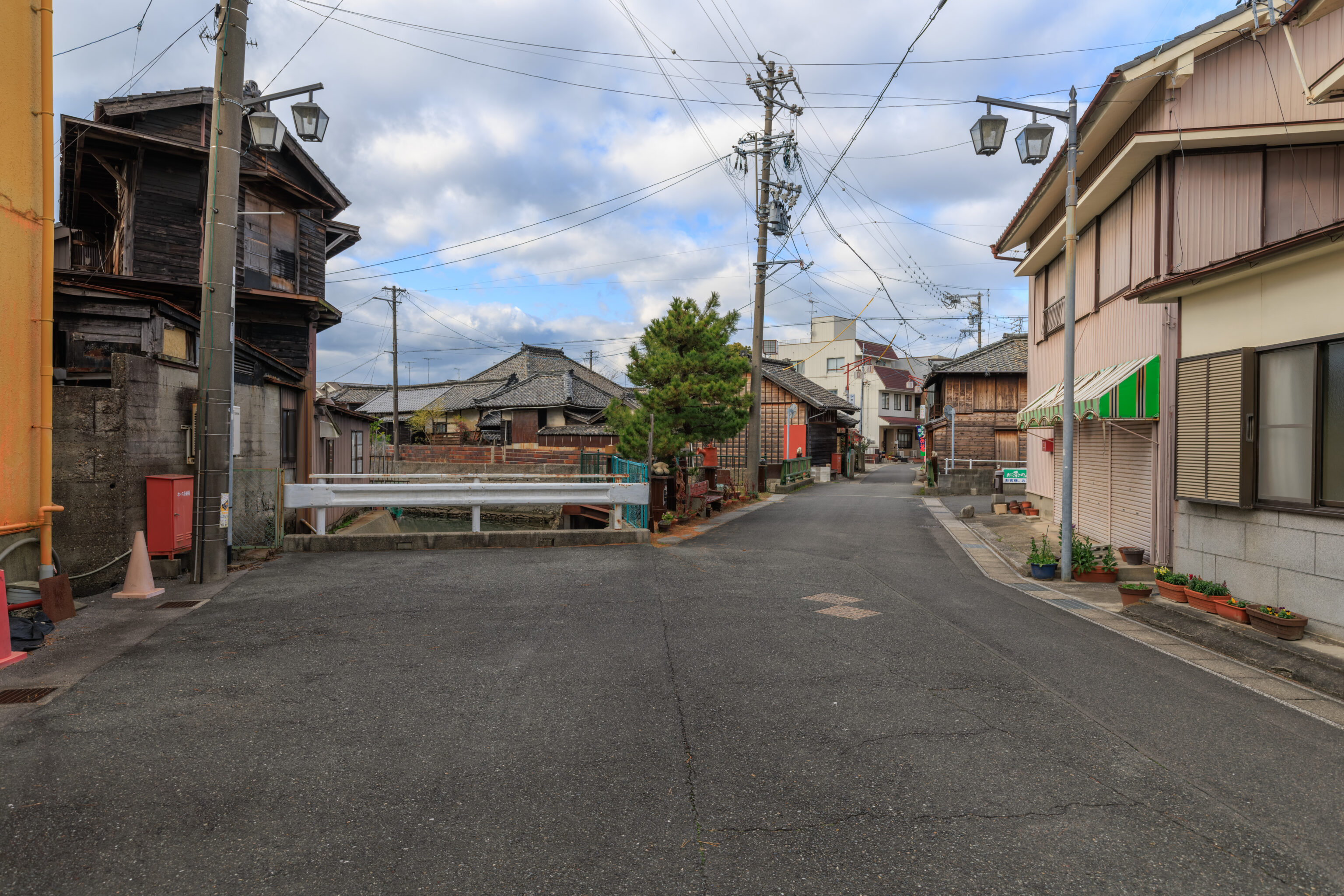
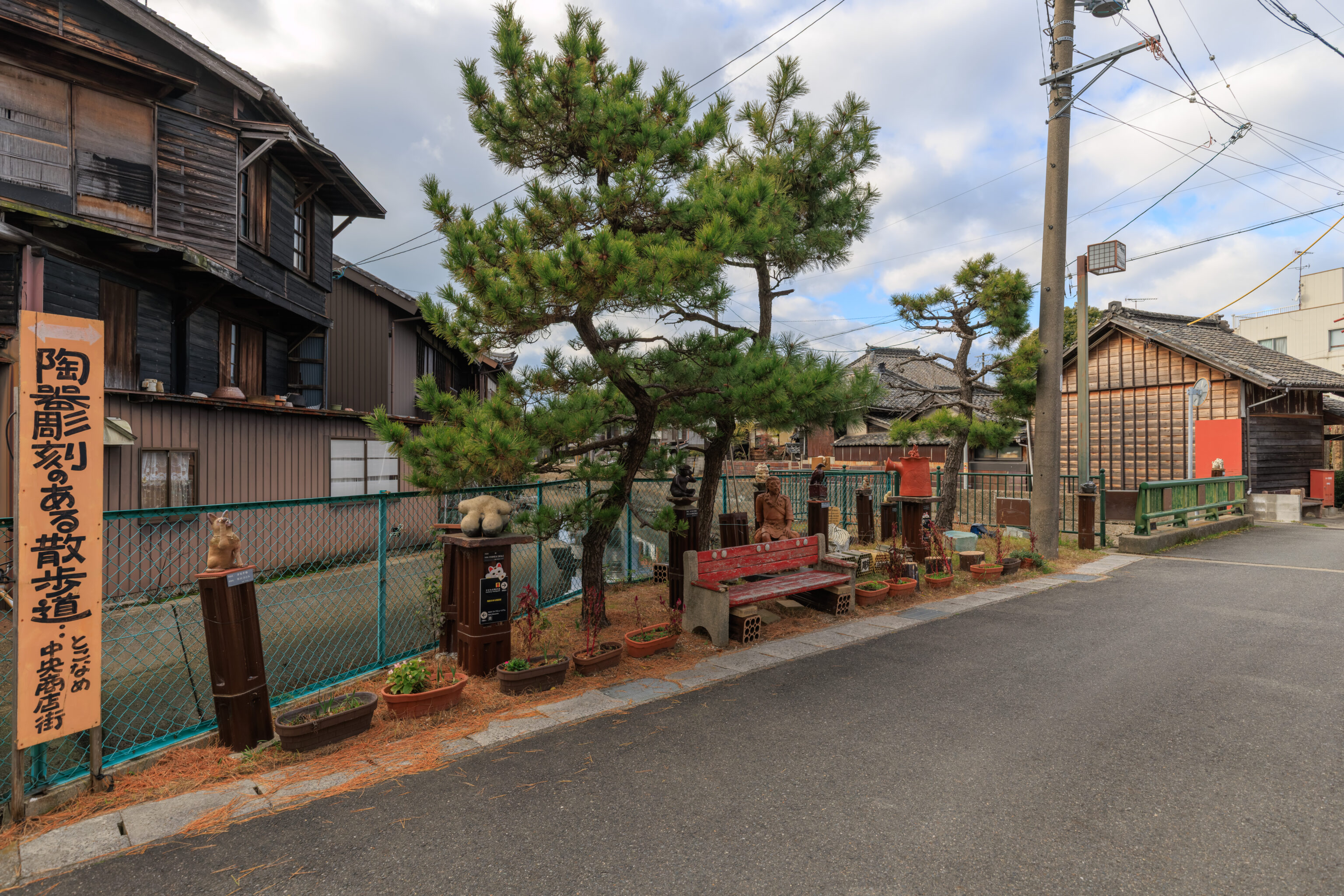
Another river joins the river we’ve been walking along here. There was a nice bench by the junction along with some more sculptures.
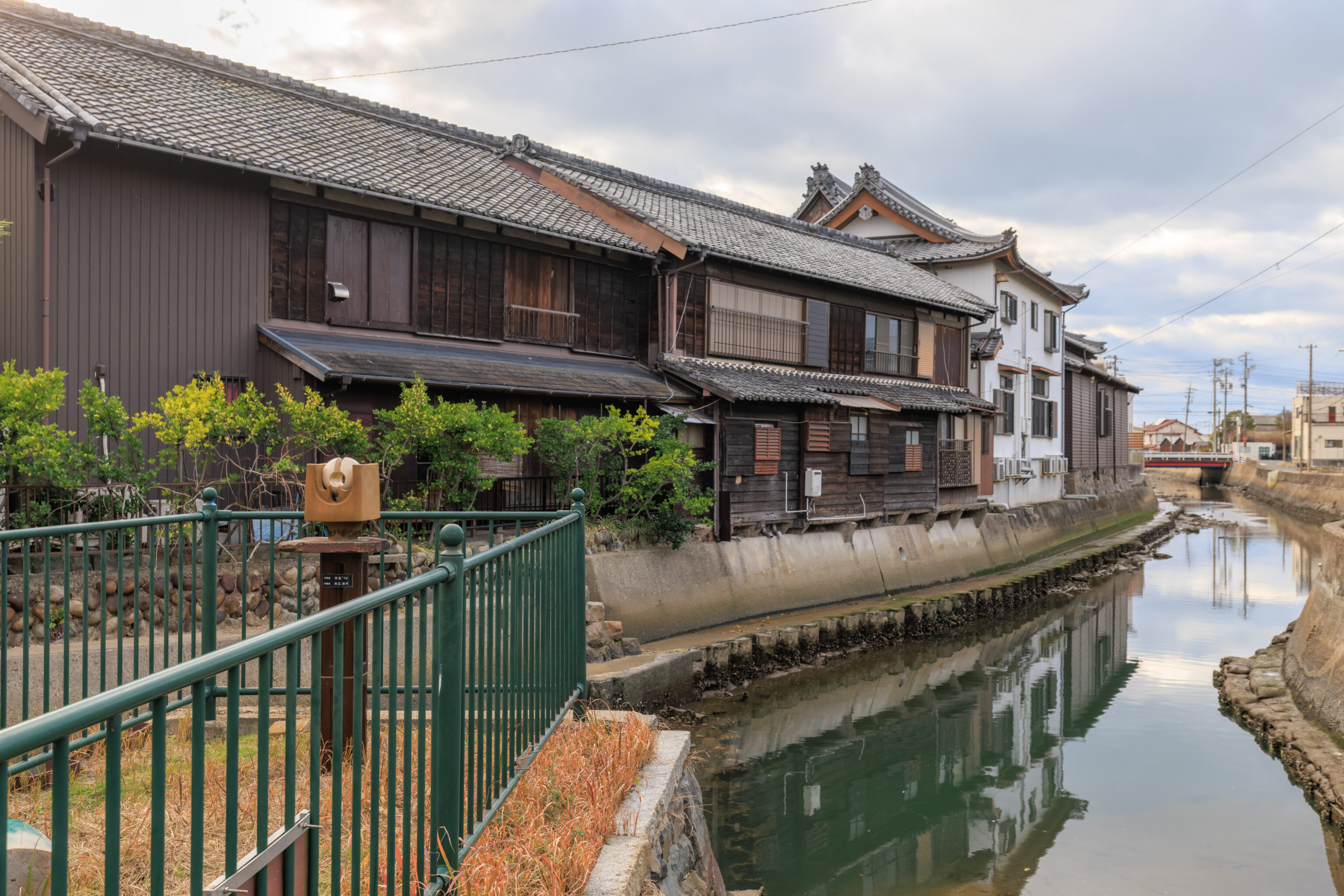
There was an eyeball-like sculpture at the point where the rivers merge. Is it supposed to have something to do with the Sun?
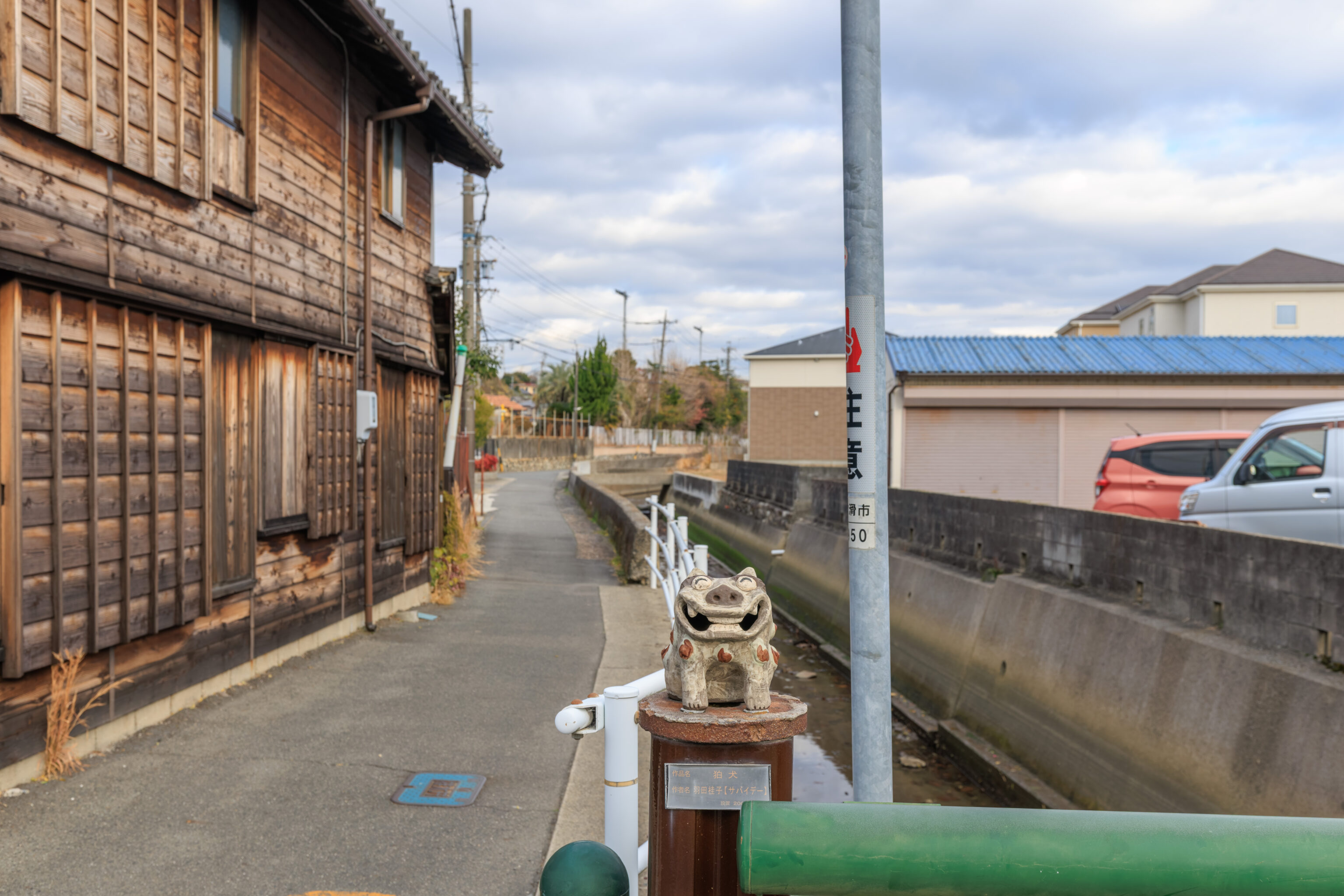
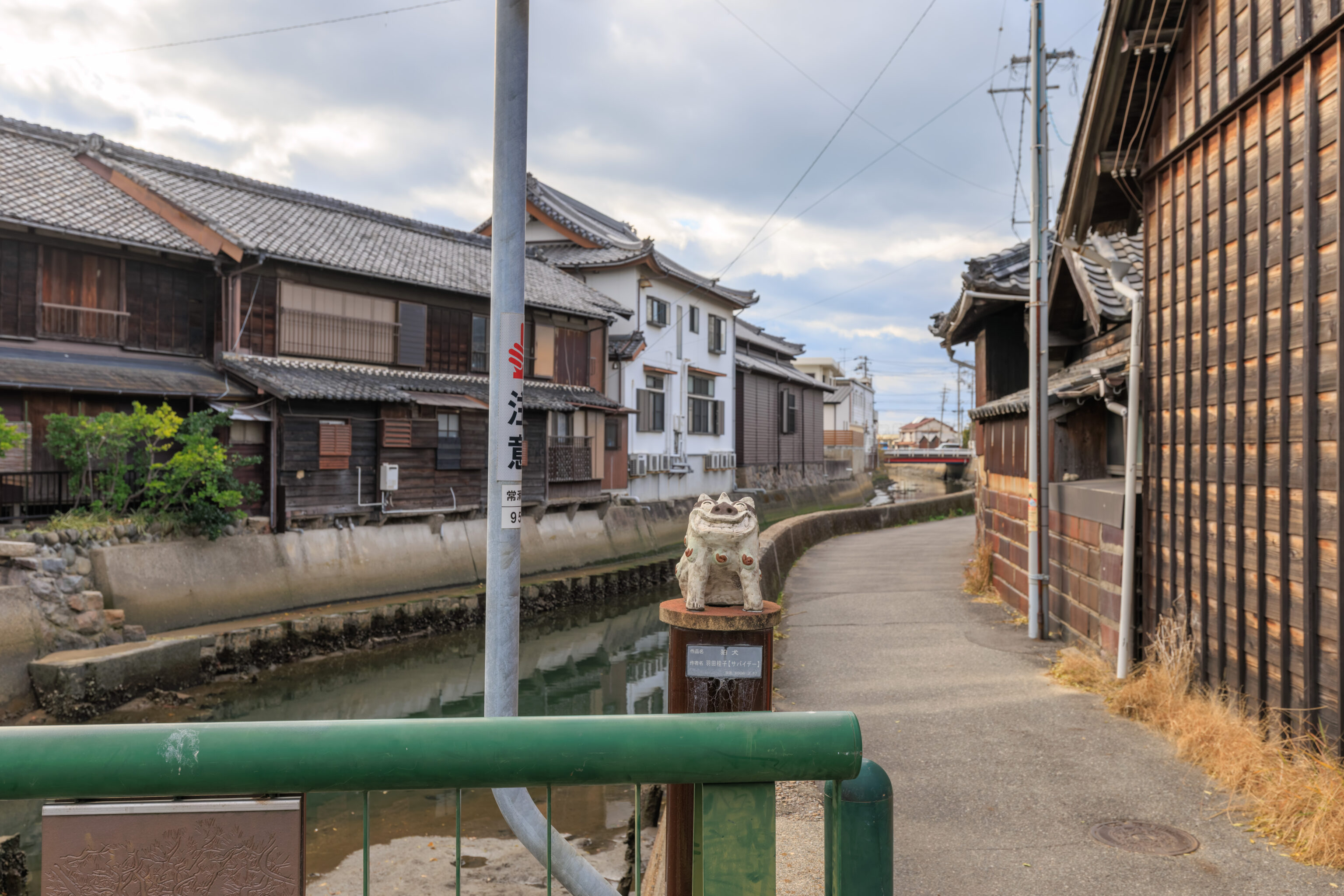
These two sculptures depict Komainu, traditional temple guardians.
Title of Work: Komainu
Artist: Keiko Haneda [Sabaidee]
Installed: February 17, 2006
– Text from the plaque below the sculpture above, translated using Google Translate.
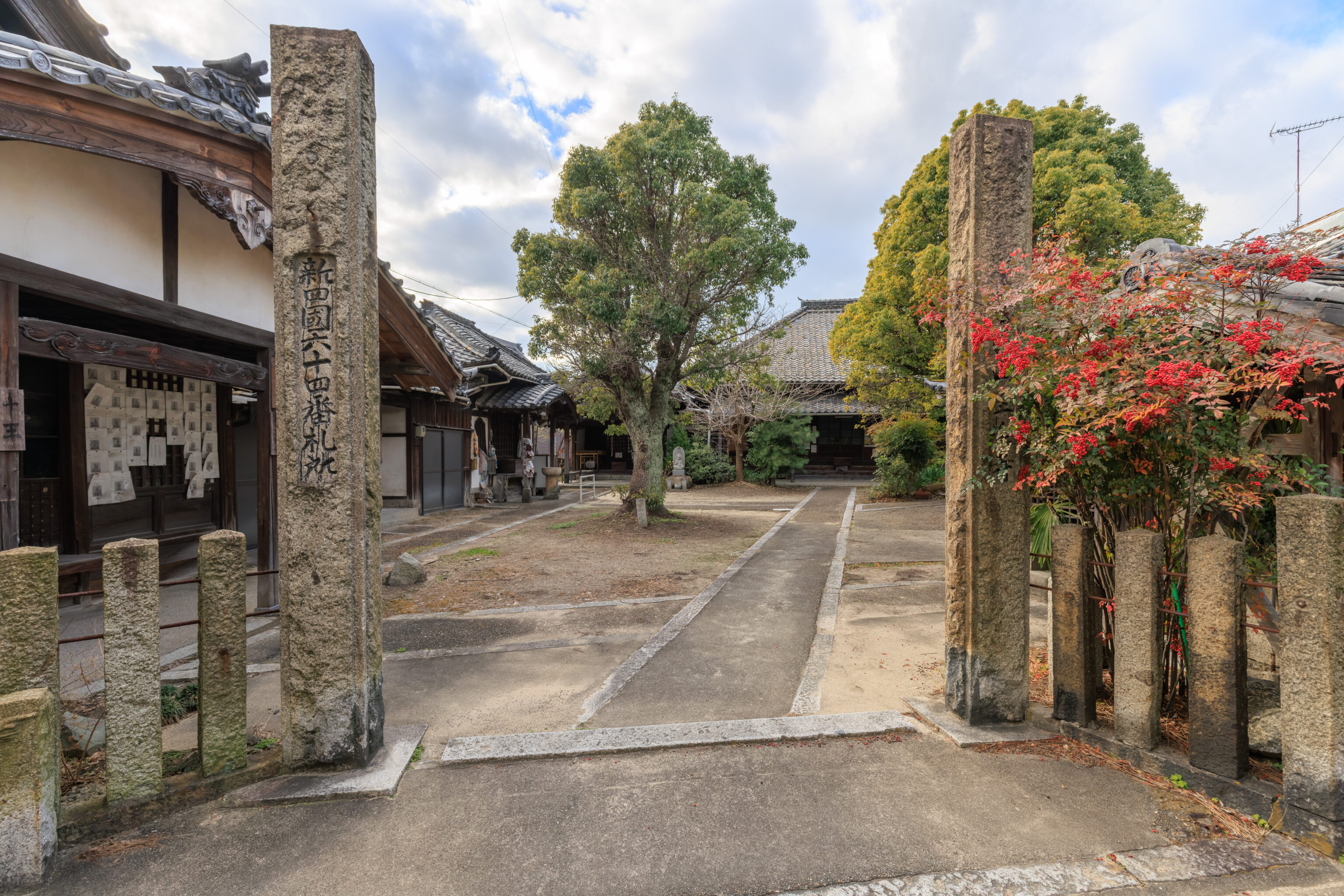
We walked by another temple, 宝全寺 Hozenji. The column on the right indicates that this is 新四國六十四番札所 Shin-Shikoku 64th Temple. The Shin-Shikoku referenced here is based on the 四国遍路 Shikoku Pilgrimage, an 88 site pilgrimage route through Shikoku, one of the four main islands of Japan. The shin prefix here simply means new, implying that this is a new version of the original pilgrimage route.
More formally, this seems to be referred to as the 知多四国 Chita Shikoku. Chita is a city to the north about half the way between Nagoya and Tokoname.
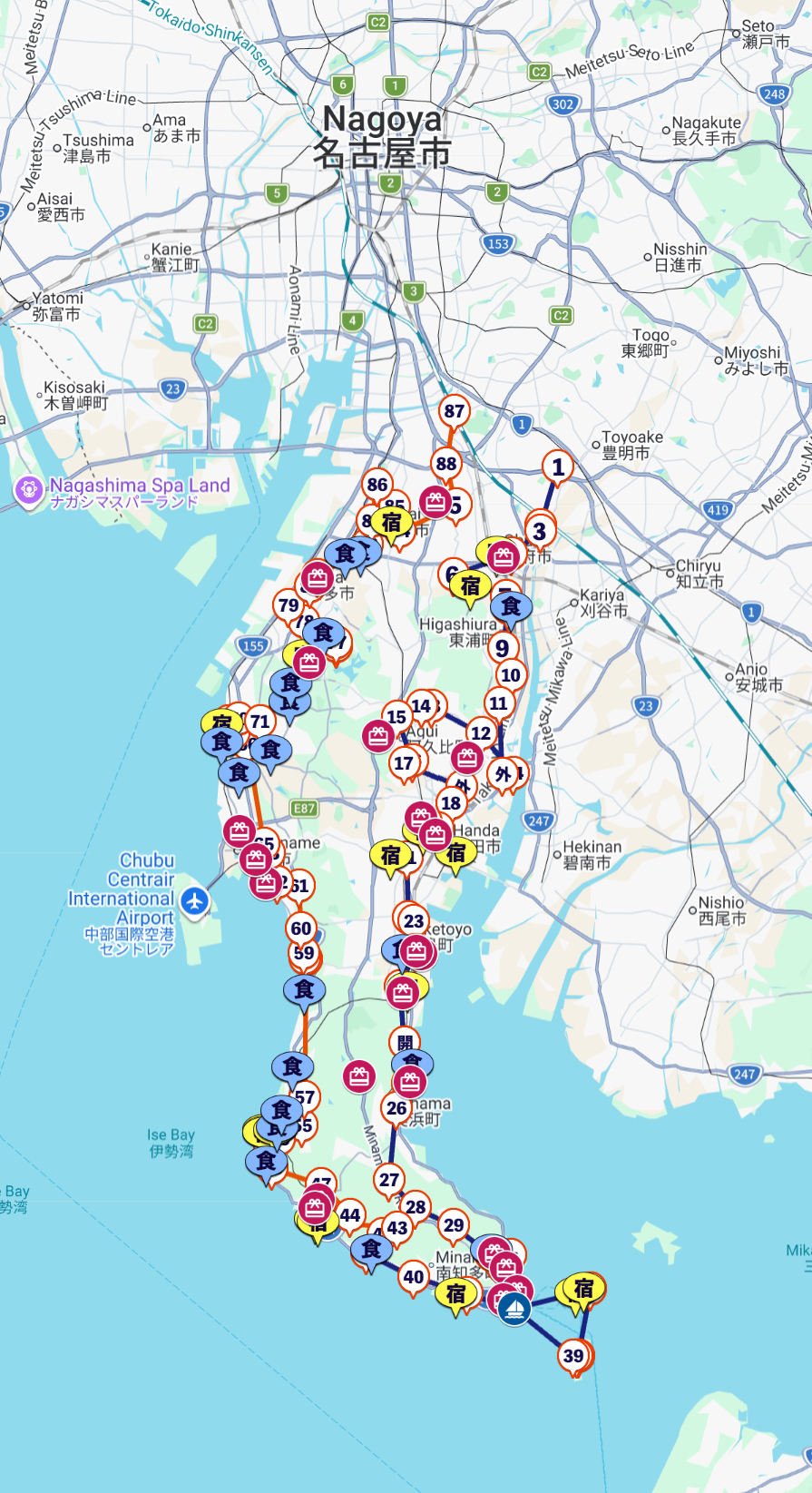
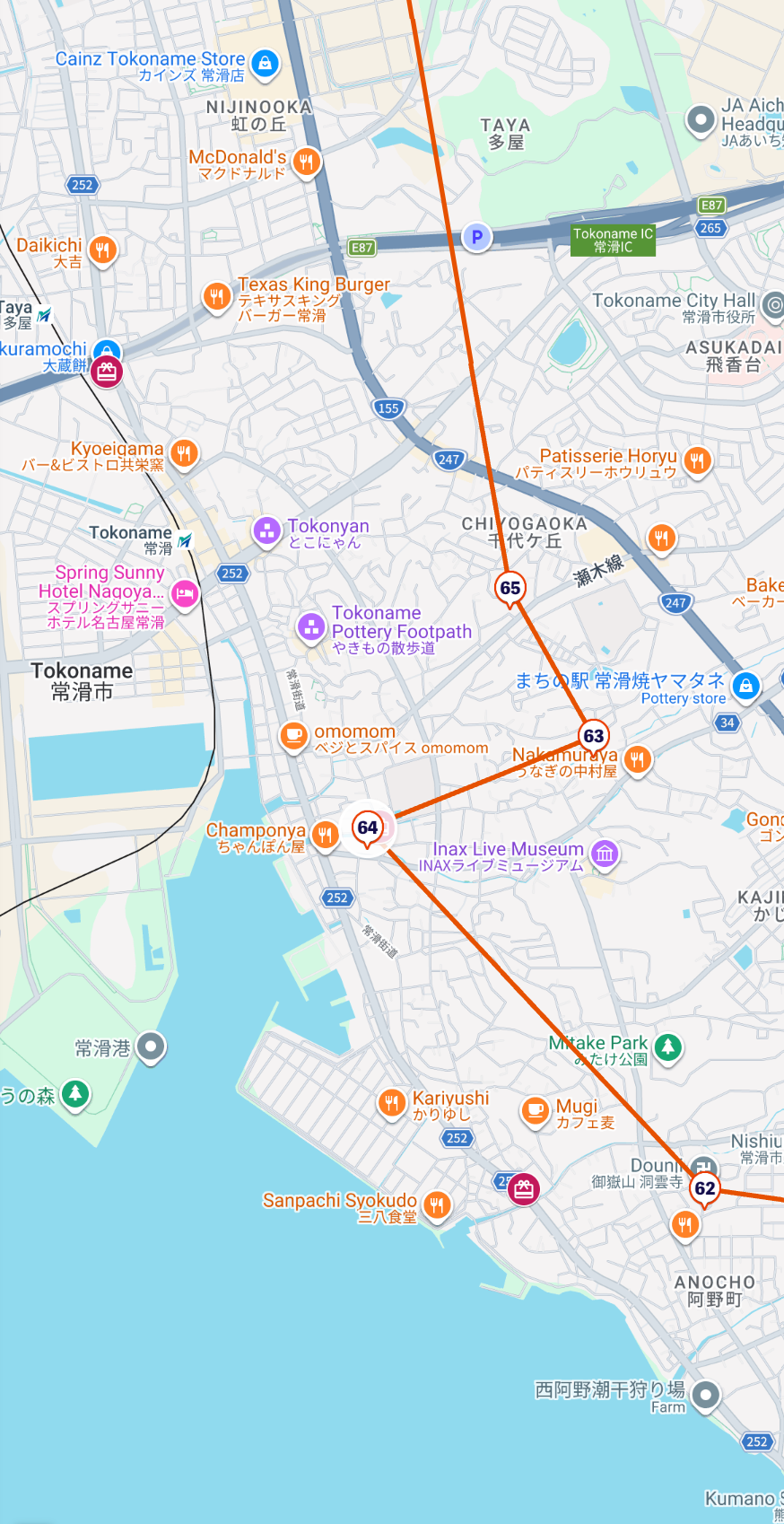
The Chita Shikoku website lists all 88 pilgrimage sites and includes a nice map with many marked waypoints. The points oddly aren’t all sequential. However, #64 is indeed right here where we are!
This is one of those things that AI is sometimes good at. Give it a picture of a sign, let it figure out what it says, and then ask for more details and see if it can come up with actual real references. It worked out pretty well this time. Sometimes it just comes up with facts that can’t be verified though.
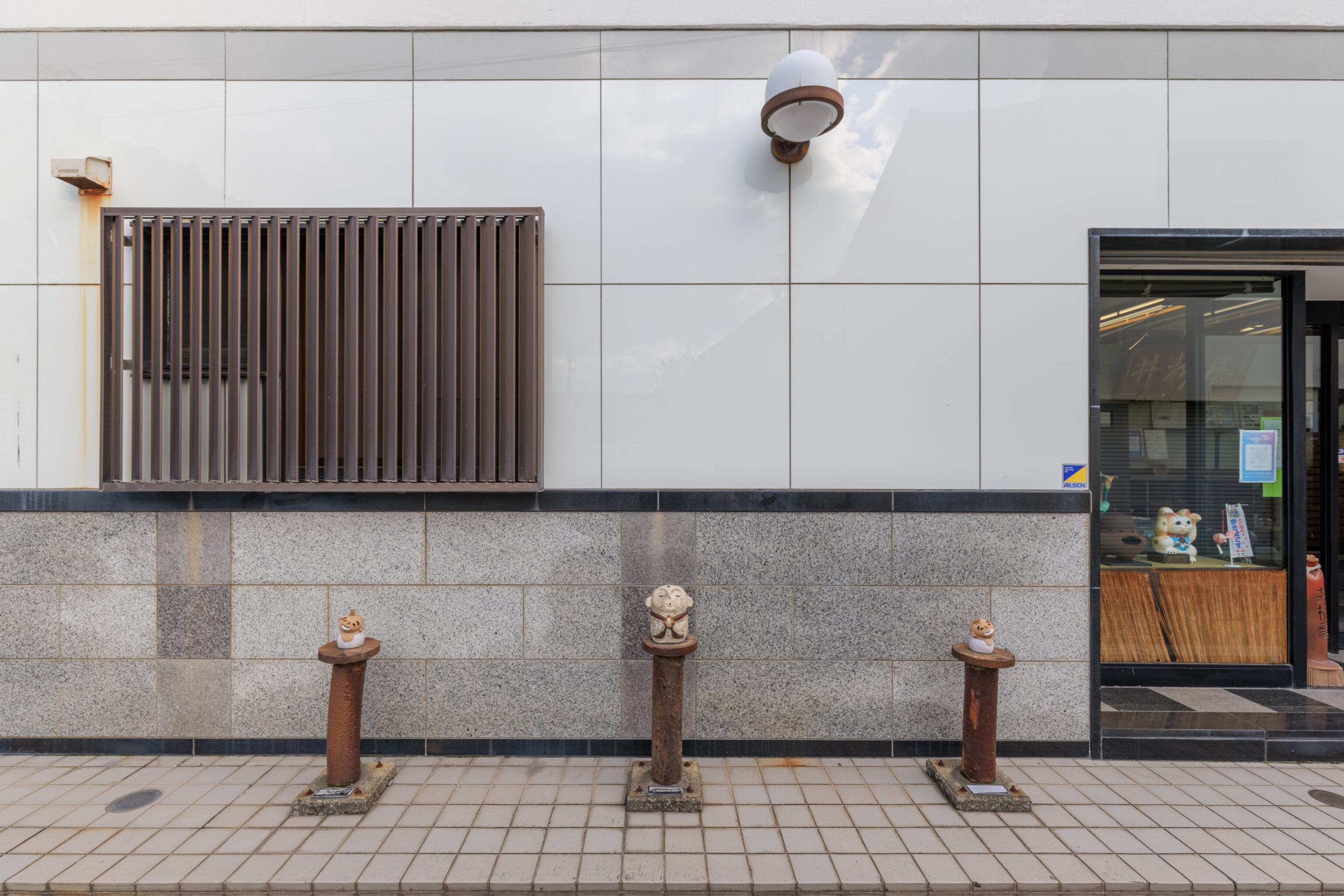
We continued walking to the north to return to the Pottery Footpath…
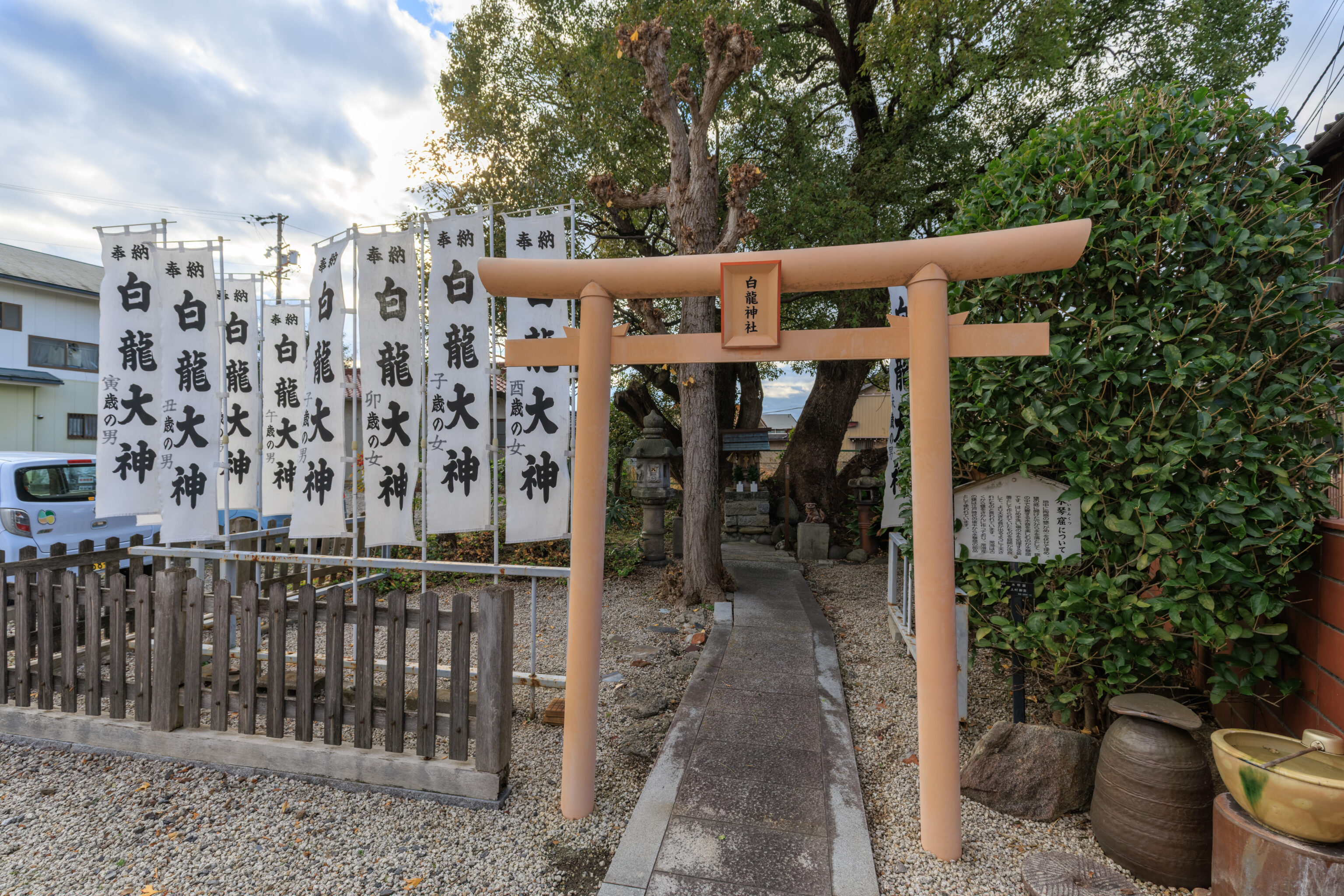
We walked by a small Shinto shrine, the 白龍神社 Hakuryu-jinja (White Dragon Shrine).
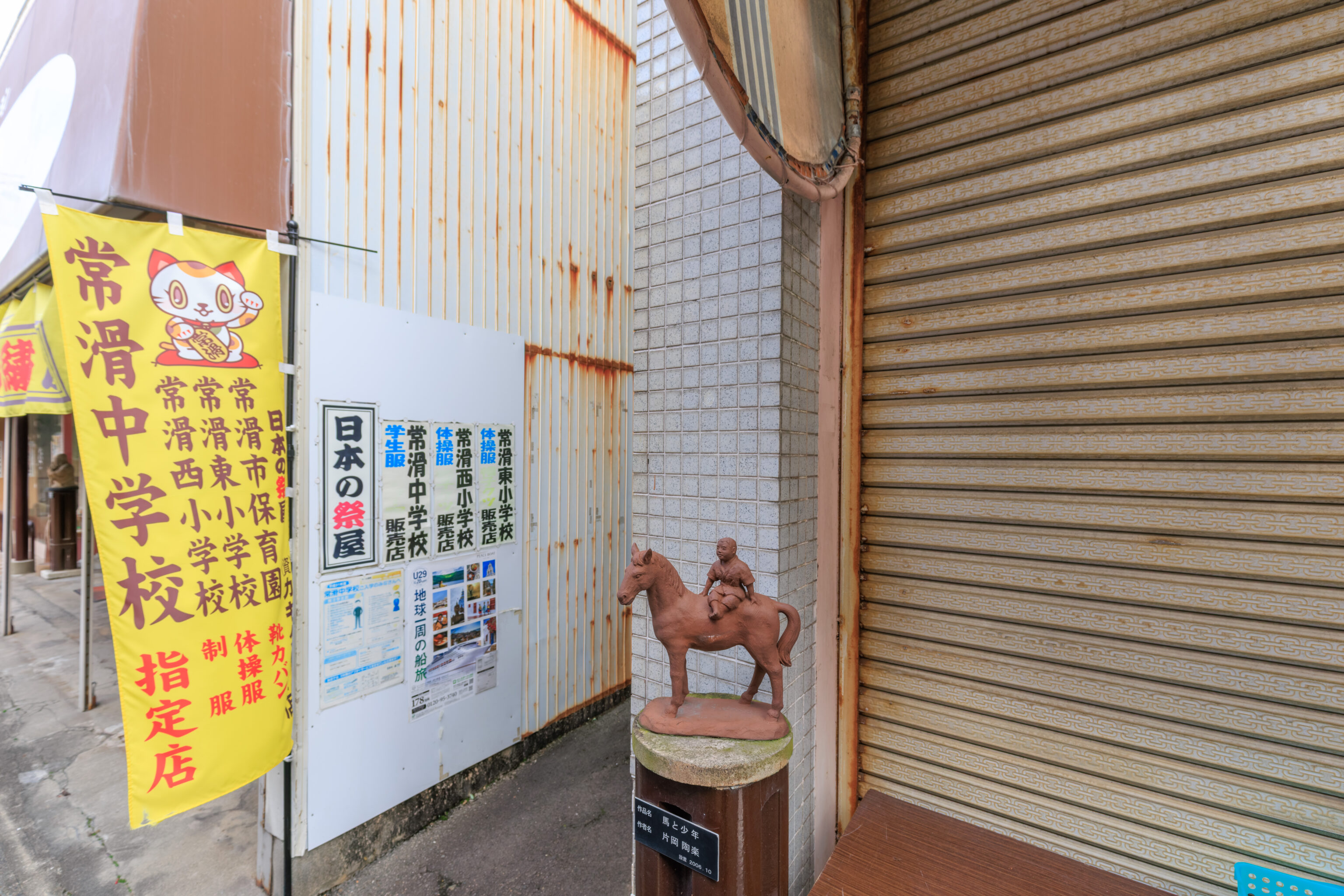
Artist: 片岡陶楽 Toraku Kataoka
Installed October 2006
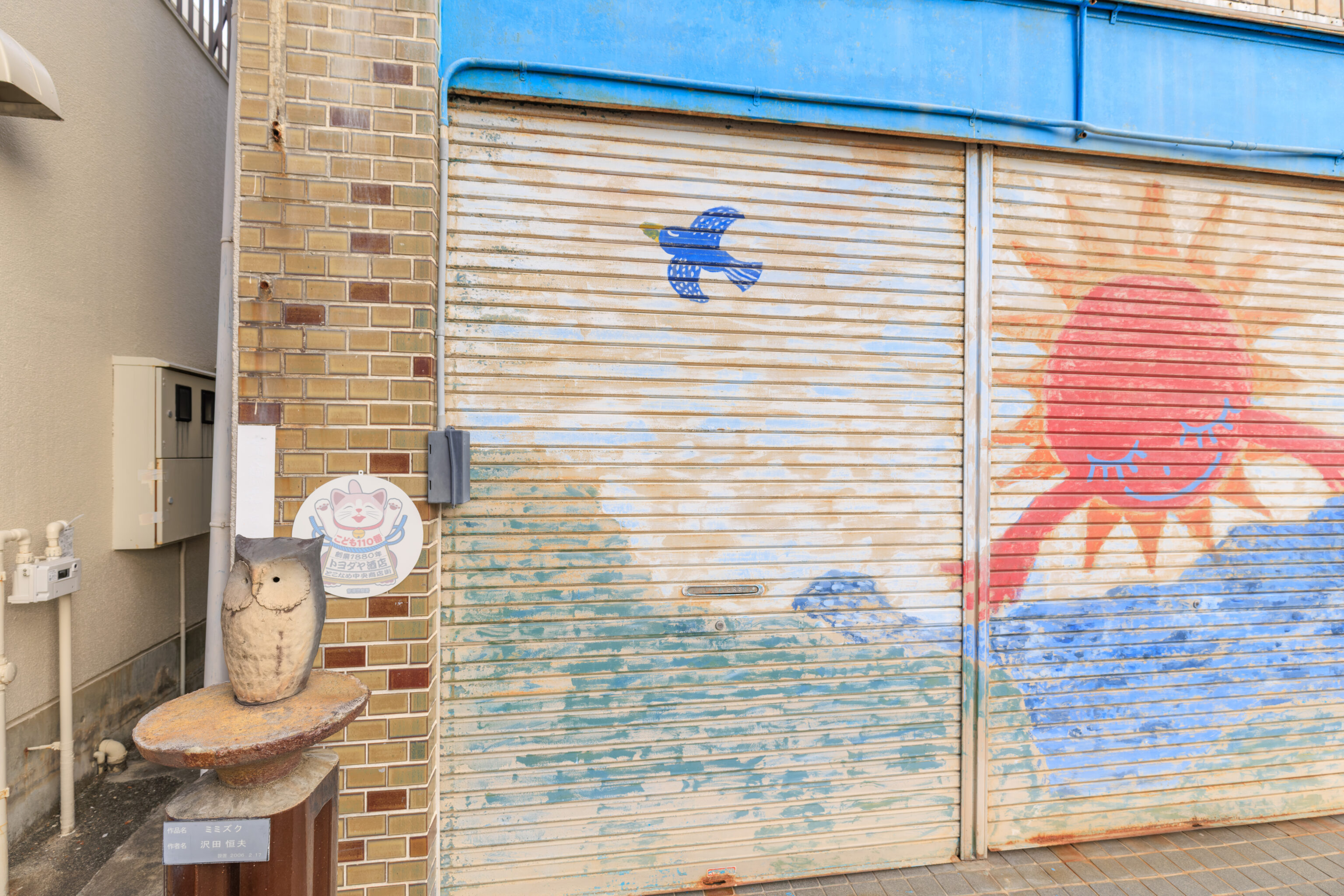
Artist: 沢田恒夫 Tsuneo Sawada
Installed: February 17, 2006
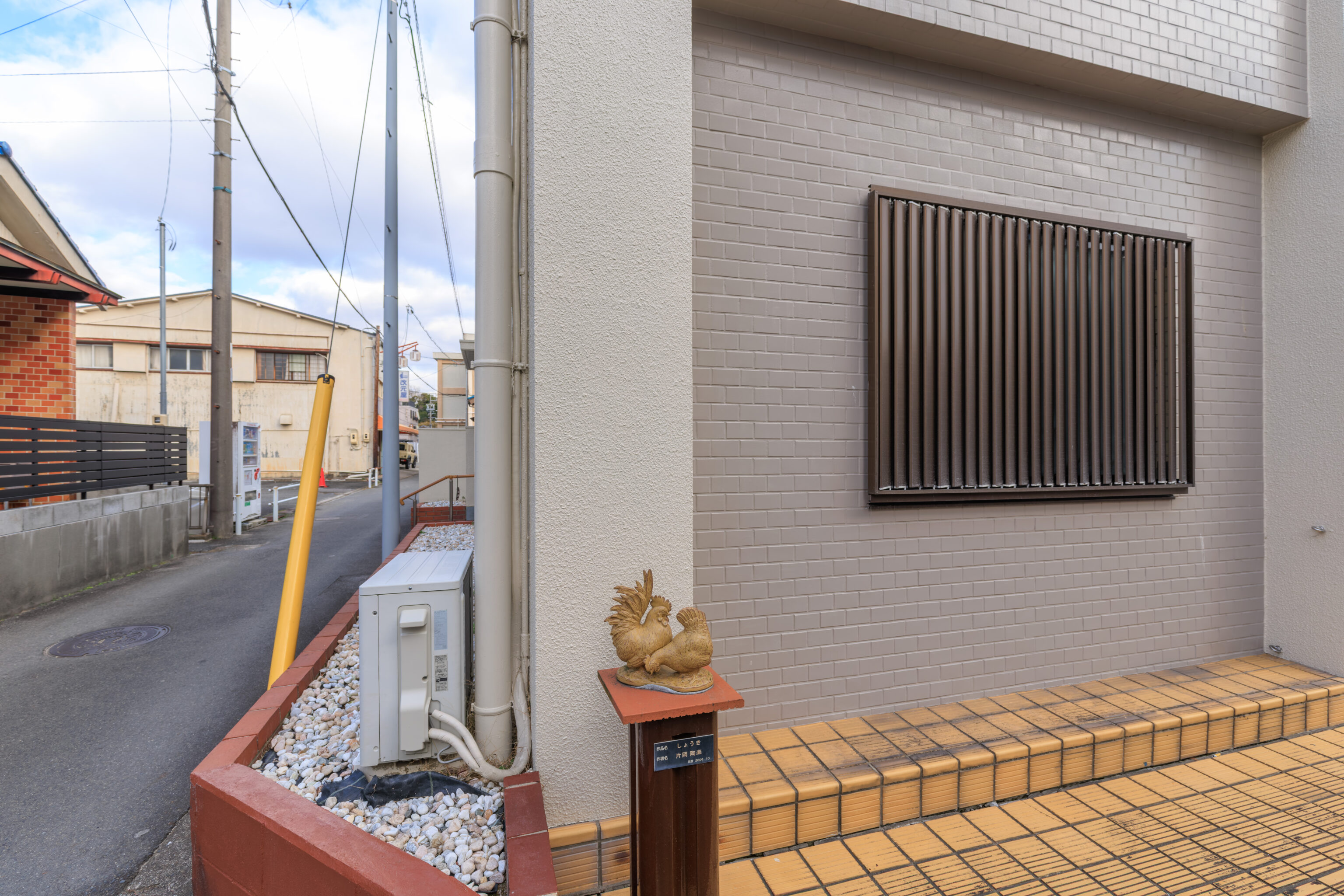
Artist: 片岡陶楽 Kataoka Tōraku
Installed: October 2006
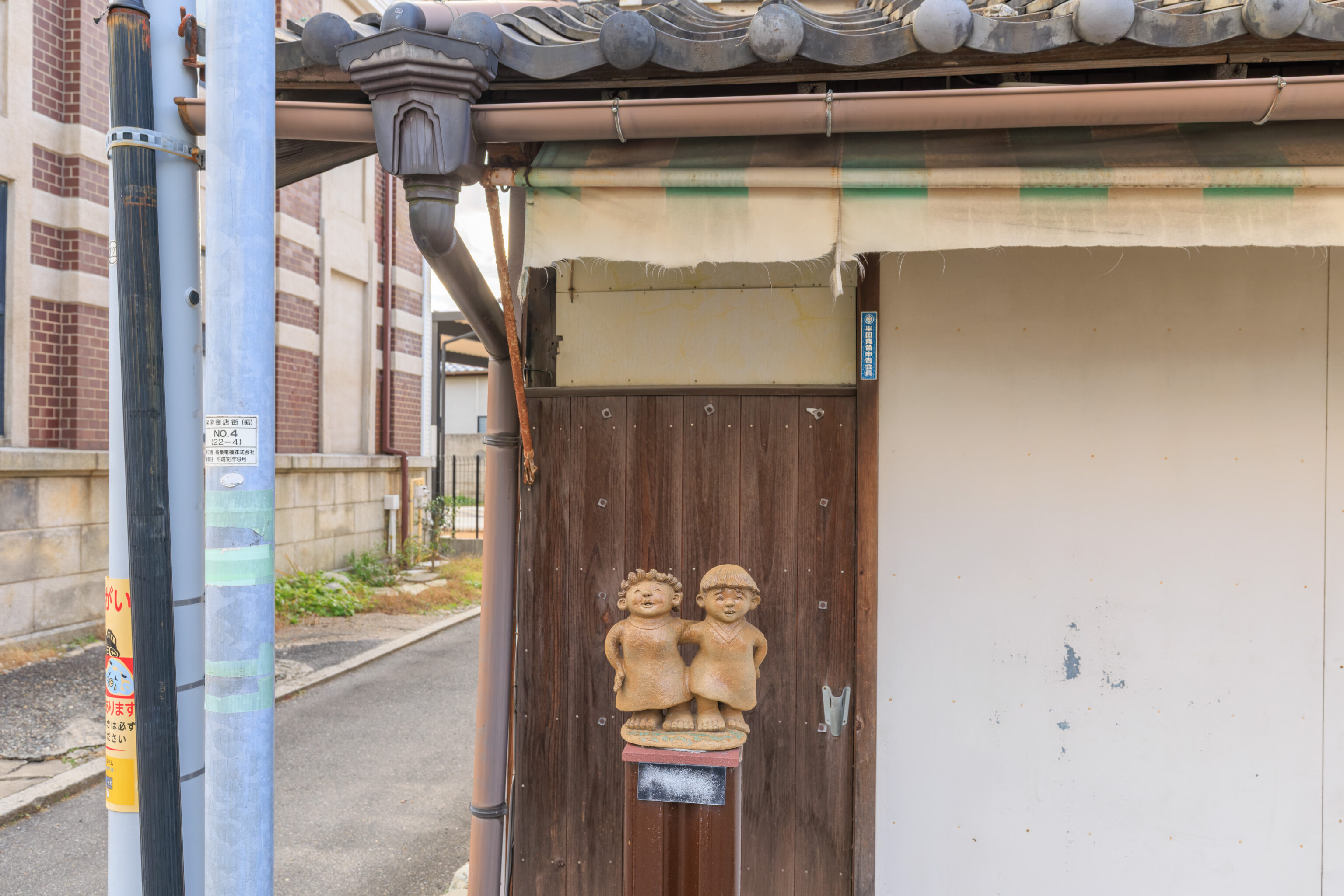
There were many small sculptures along the road as we continued heading north…

What are these two things supposed to be? Unfortunately, the photograph was out of focus, making the plaque for it unreadable. I was able to clean up the image with AI sharpening but it generally doesn’t do anything useful on small out of focus text.
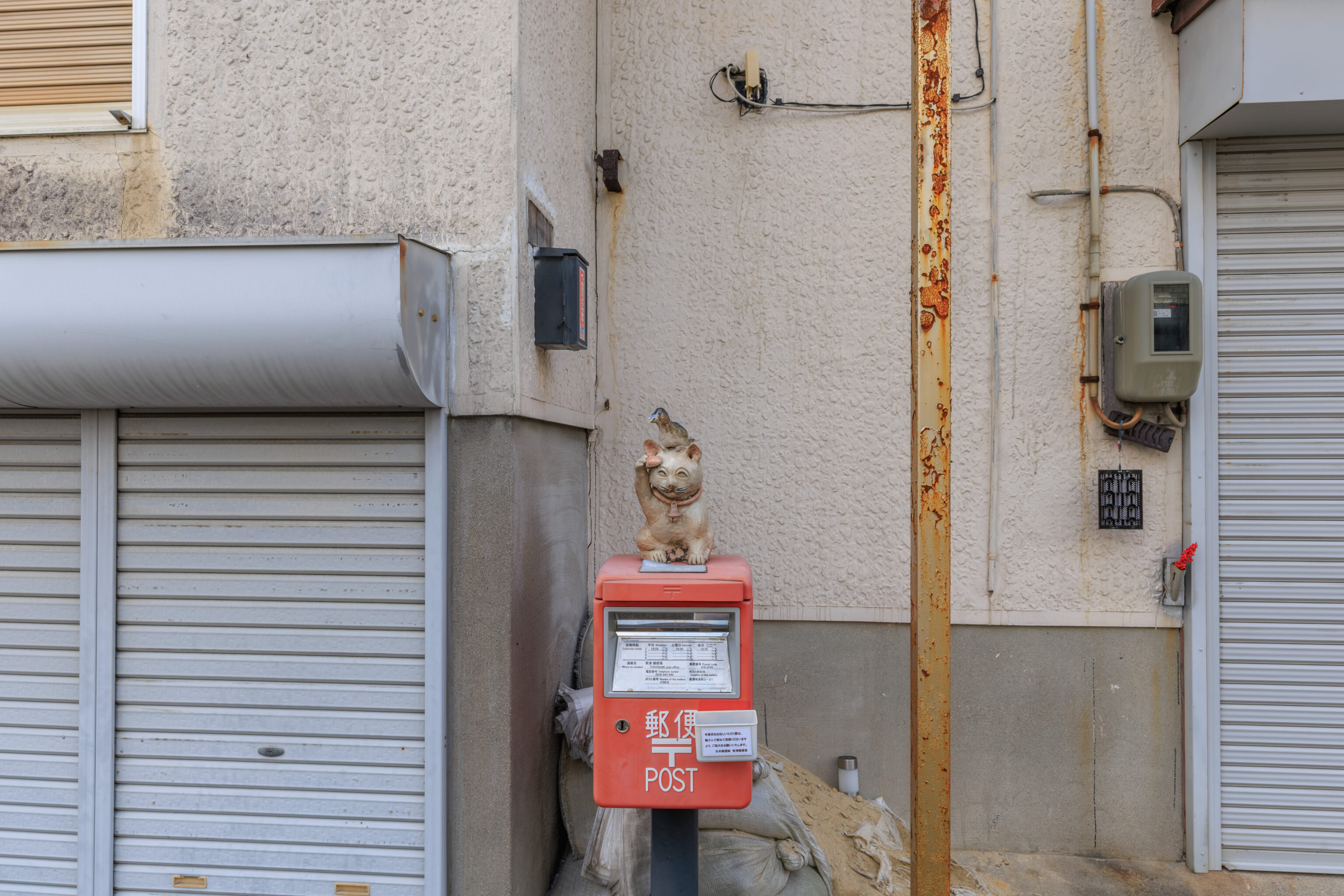
Another cat atop a post box!
About 30 minutes after leaving the INAX Live Museum, we made it back to the Noborigama. It only took that long because we took many pictures of all the sculptures on the way!
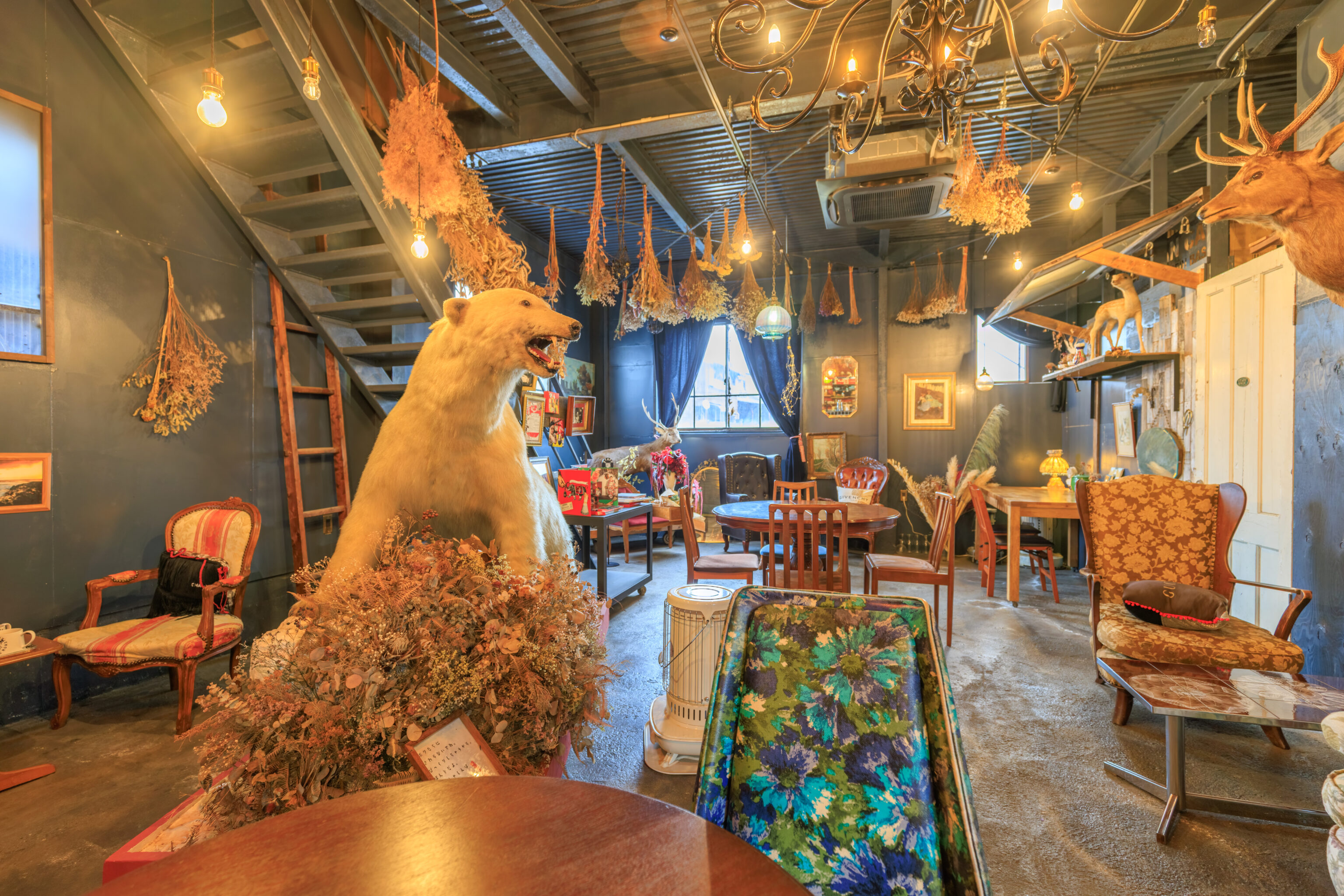
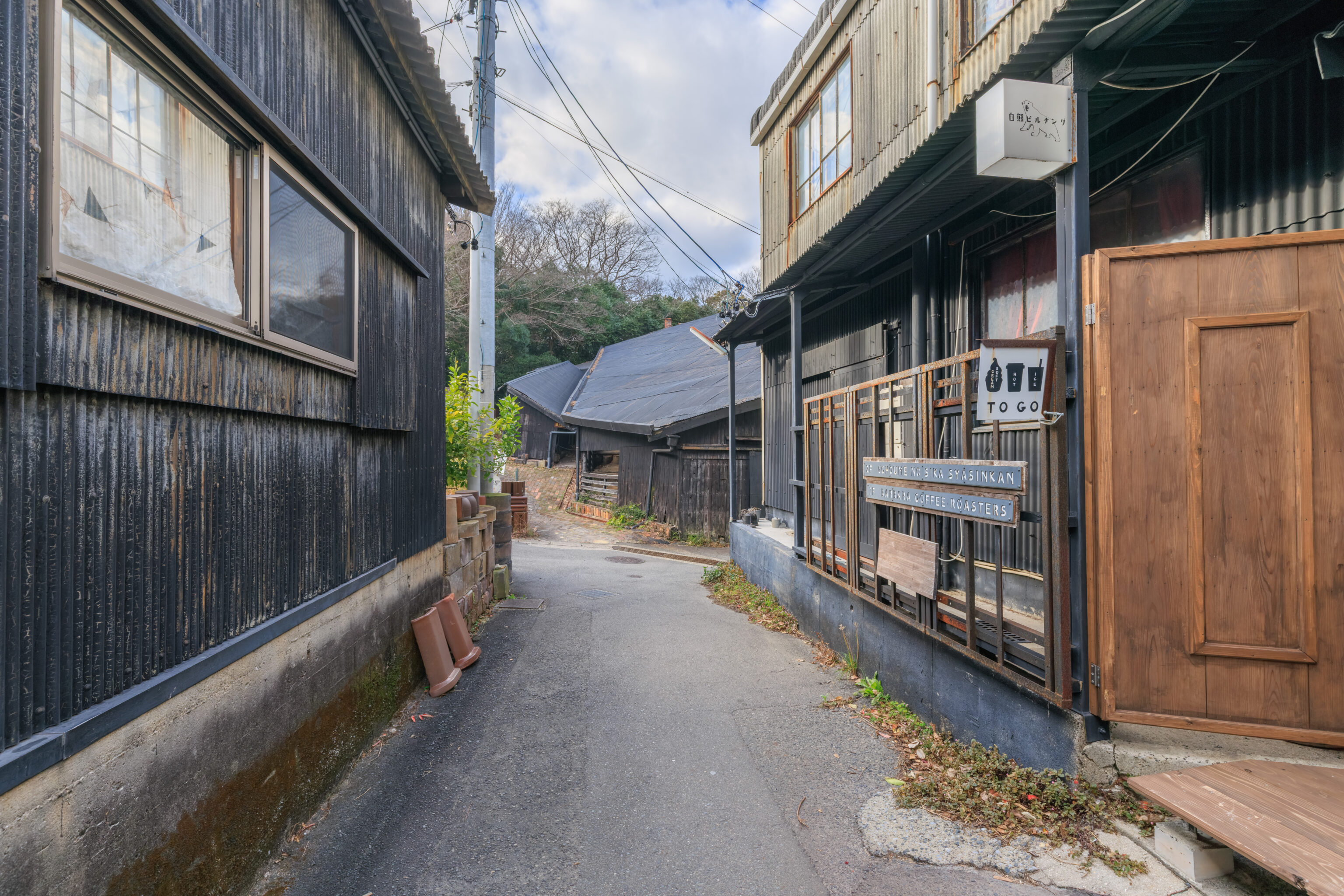
We stopped at Barbara Coffee Roasters, which was right by the kiln, to get some coffee. The interior was… interesting… and even included a polar bear! Upstairs, there was a guitar lesson going on!
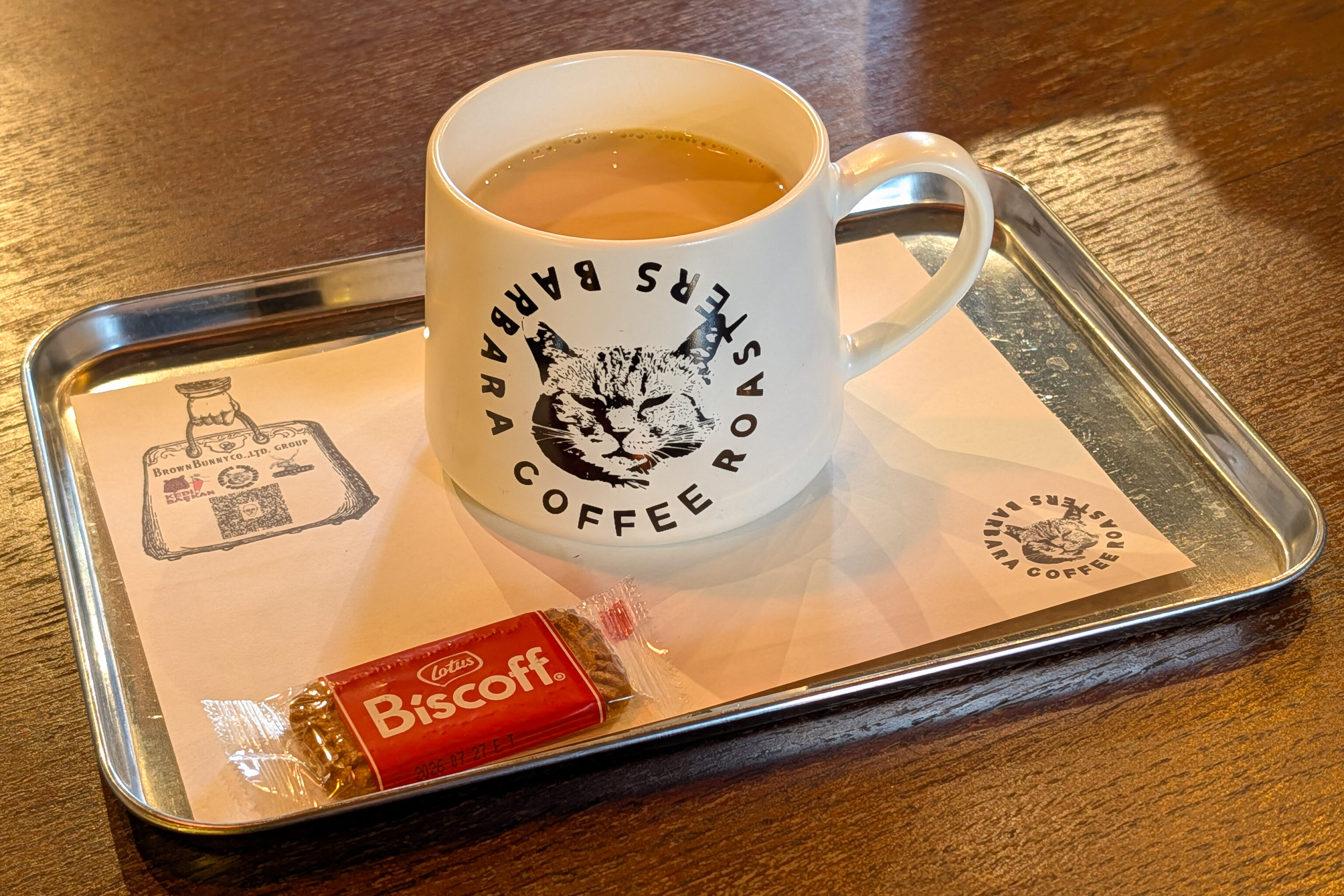
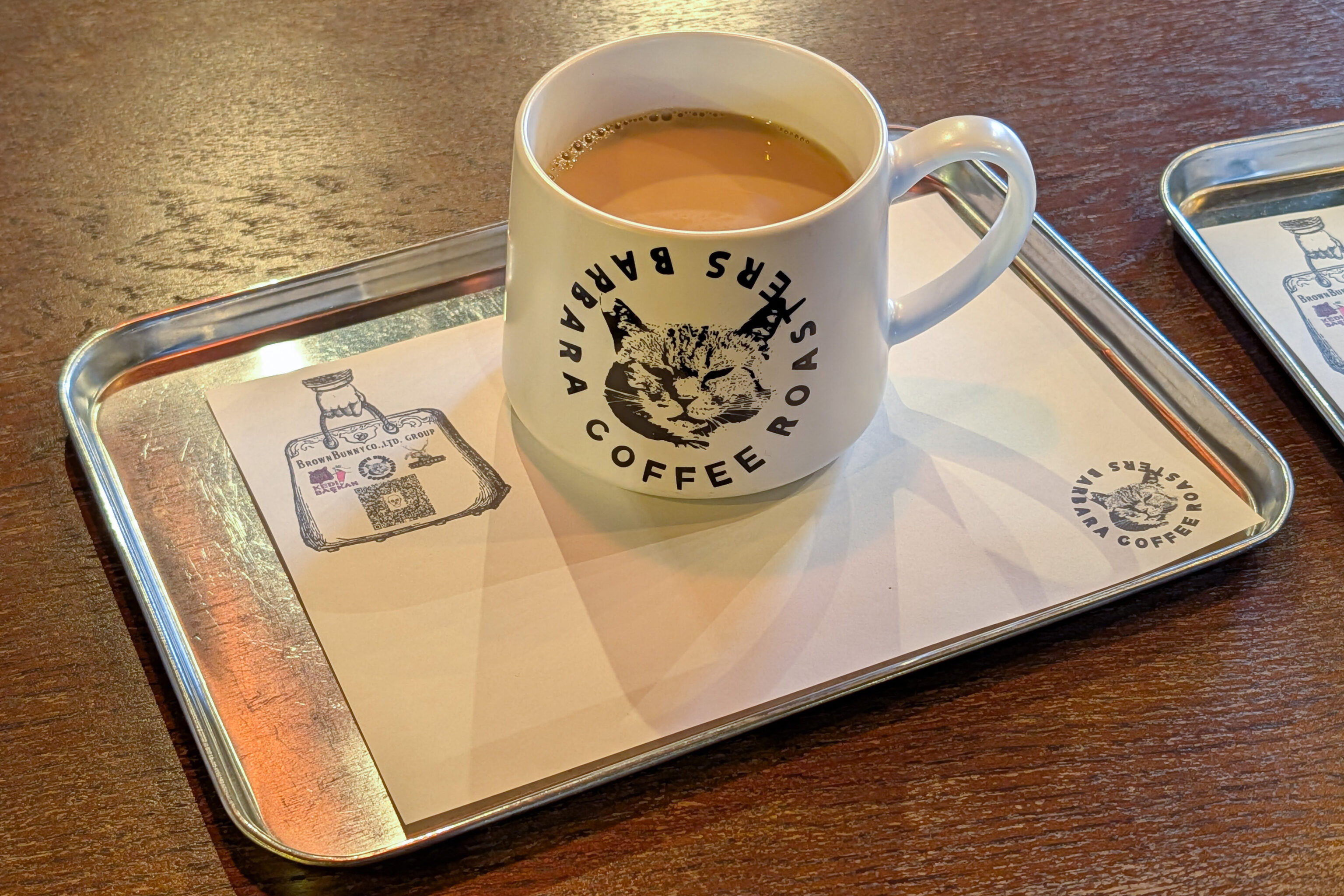
The coffee was decent, though not as enjoyable as the % ARABICA that we had two days ago in Tokyo.


Some stickers from the coffee shop…
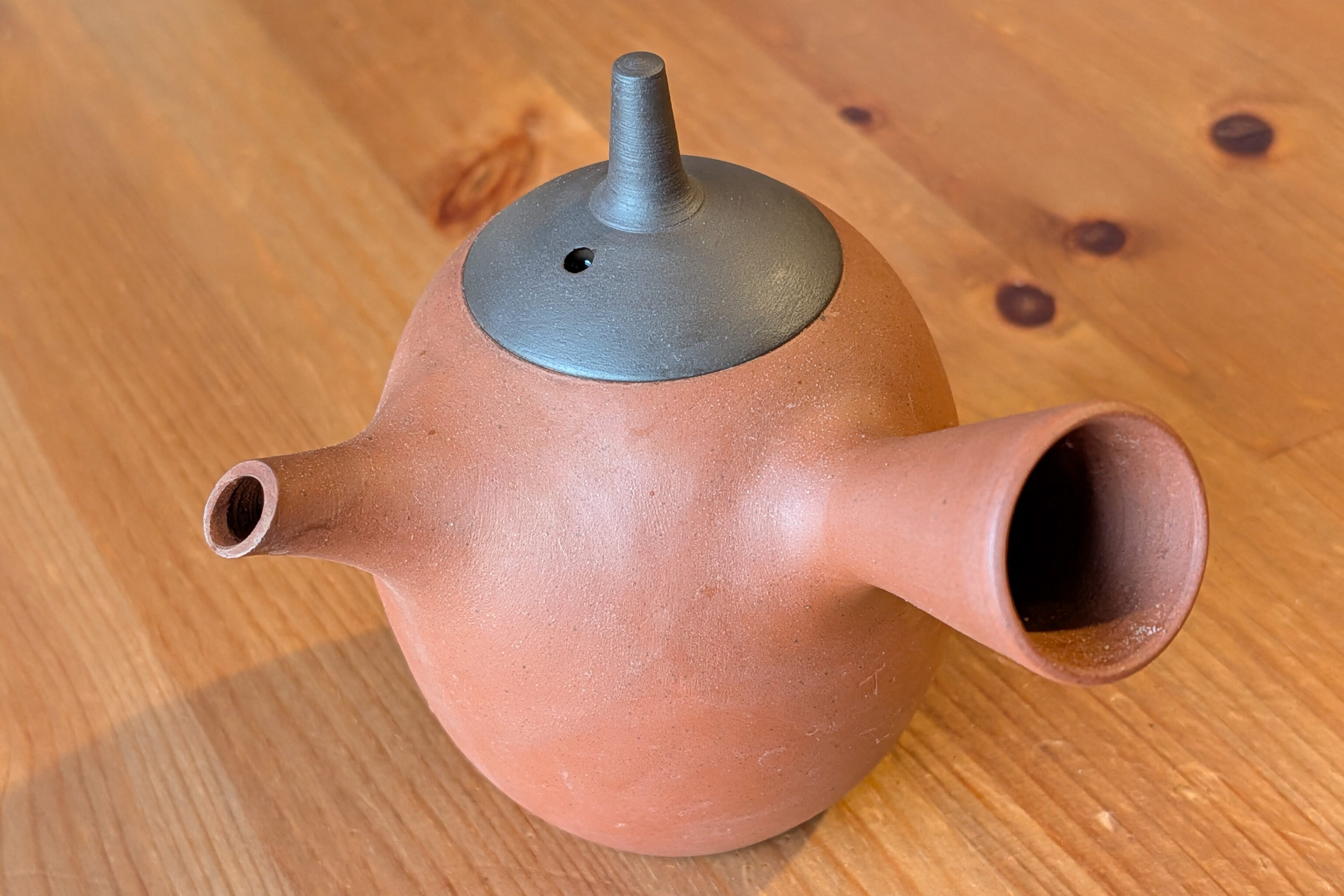
After looking through a few of the galleries in this area again, we ultimately decided to buy a little tea pot!
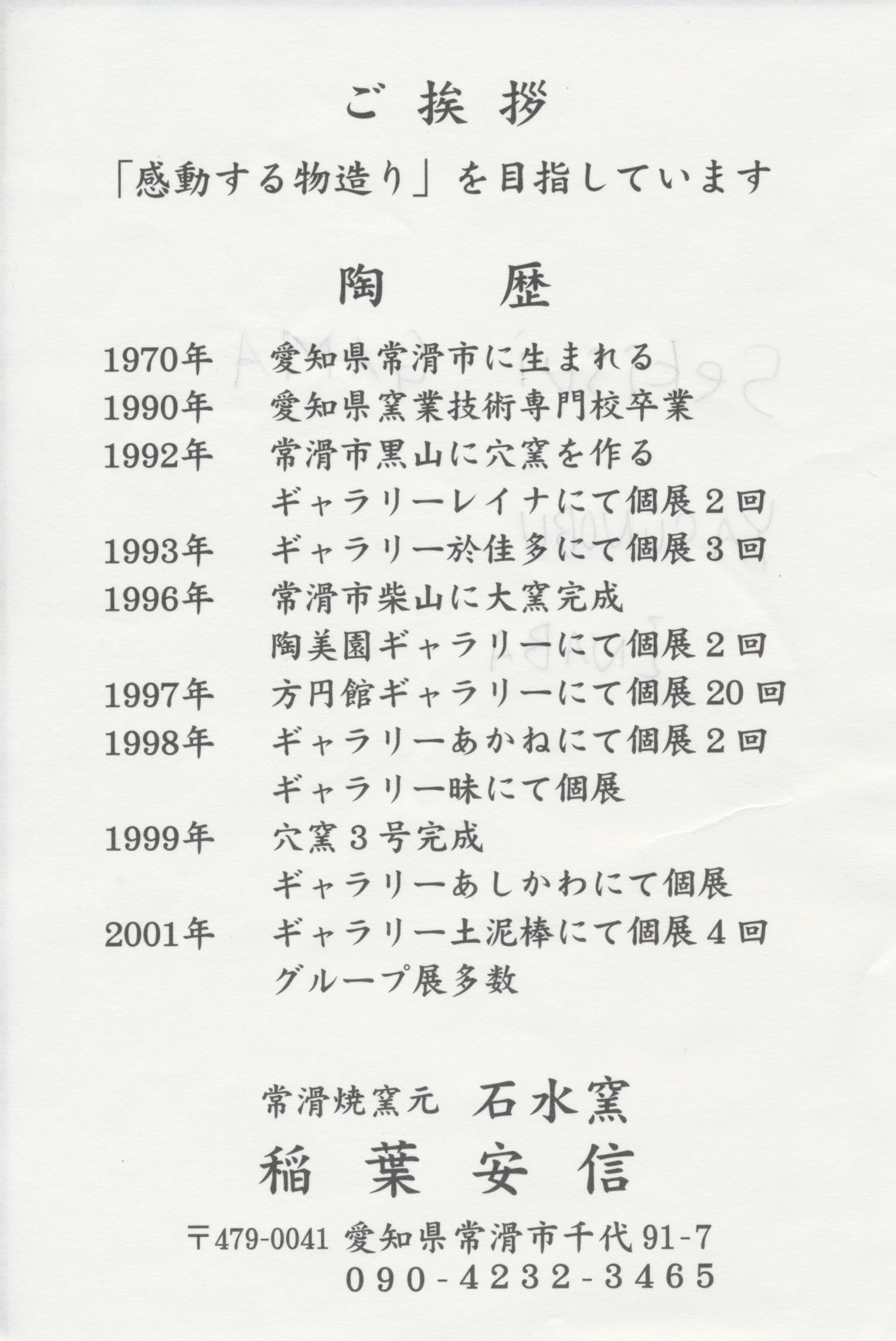
Message
We aim to create products that inspire and move people.

Ceramic Career
1970: Born in Tokoname City, Aichi Prefecture
1990: Graduated from the Aichi Prefectural Ceramic Technical School
1992: Built an *anagama* (tunnel kiln) in Kuroyama, Tokoname City
Held two solo exhibitions at Gallery Reina
1993: Held three solo exhibitions at Gallery Okata
1996: Completed a large kiln in Shibayama, Tokoname City
Held two solo exhibitions at Tobien Gallery
1997: Held twenty solo exhibitions at Hōenkan Gallery
1998: Held two solo exhibitions at Gallery Akane
Held a solo exhibition at Gallery Aji
1999: Completed *anagama* kiln No. 3
Held a solo exhibition at Gallery Ashikawa
2001: Held four solo exhibitions at Gallery Tsuchidorobo
Participated in numerous group exhibitions

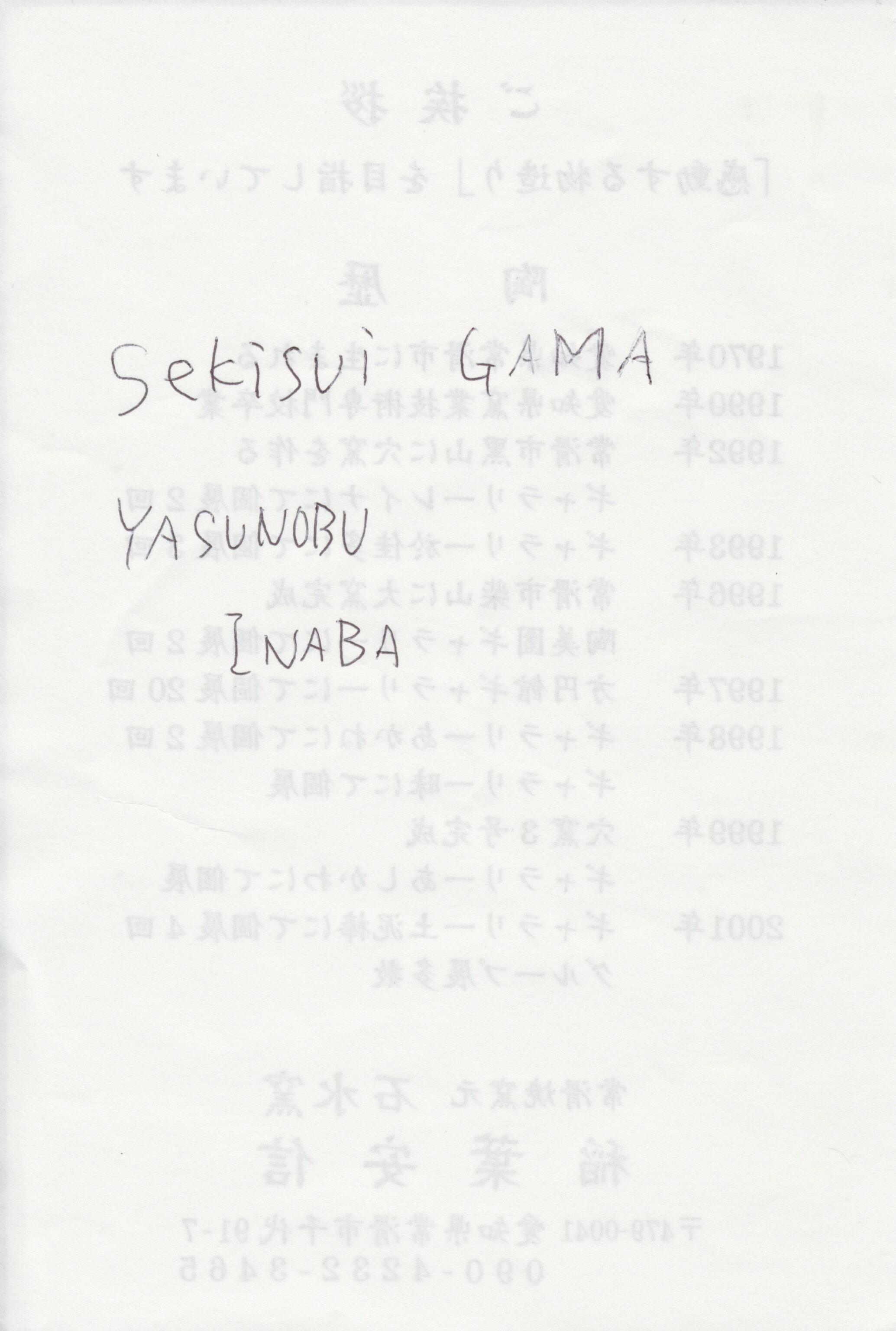
Tokoname-yaki Kiln: 石水窯 Sekisui-gama
稲葉安信 Yasunobu Inaba
91-7 Chiyo, Tokoname City, Aichi Prefecture 479-0041
090-4232-3465
– Text from the sheet above, translated using Google Translate.
We bought the tea pot from 稲葉安信 Yasunobu Inaba’s 石水窯 Sekisui Kiln.
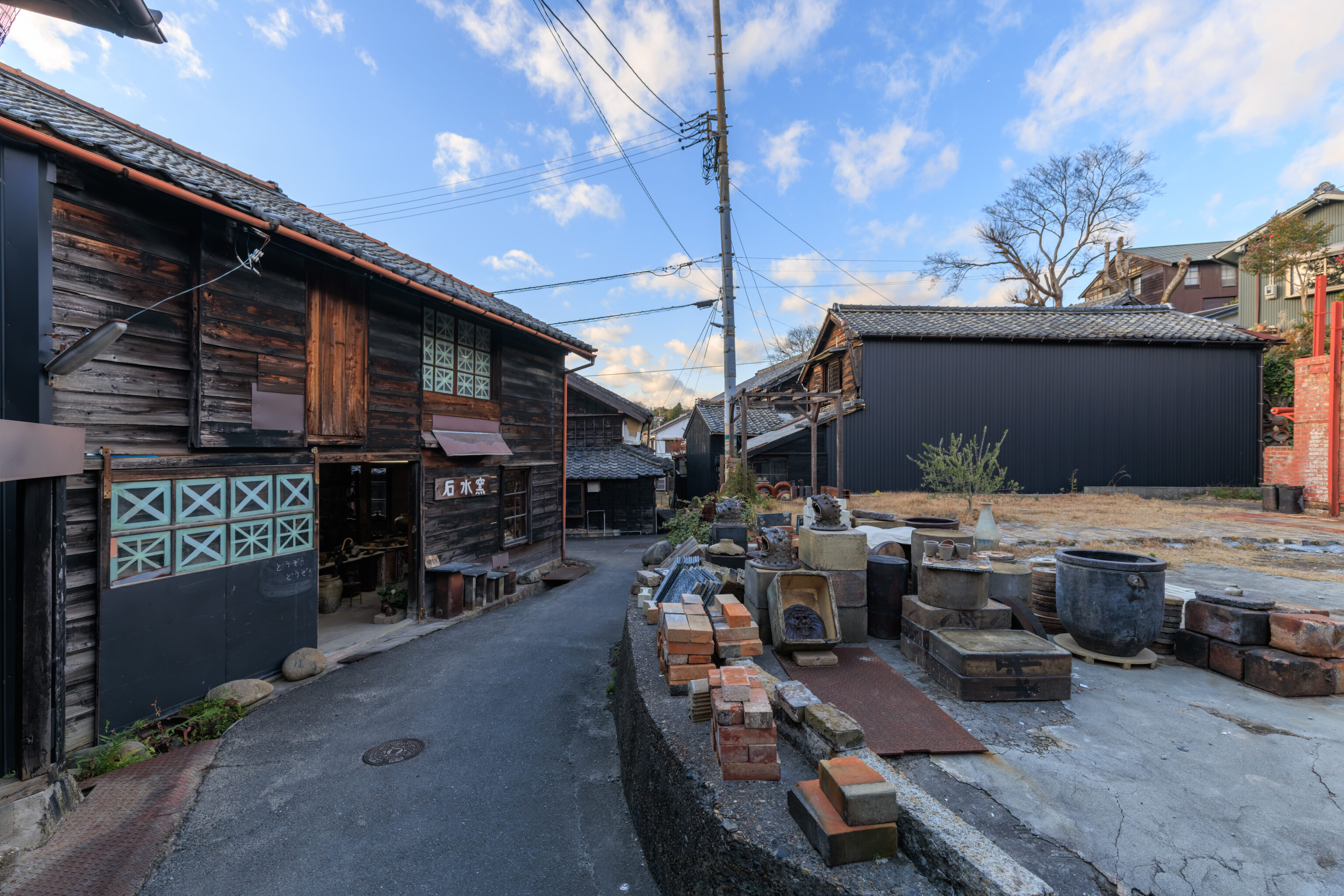
By now, it was 4pm, the Sun was lower on the horizon, and it wasn’t nearly as bright out as it was before. Time to start heading back to Tokoname Station!
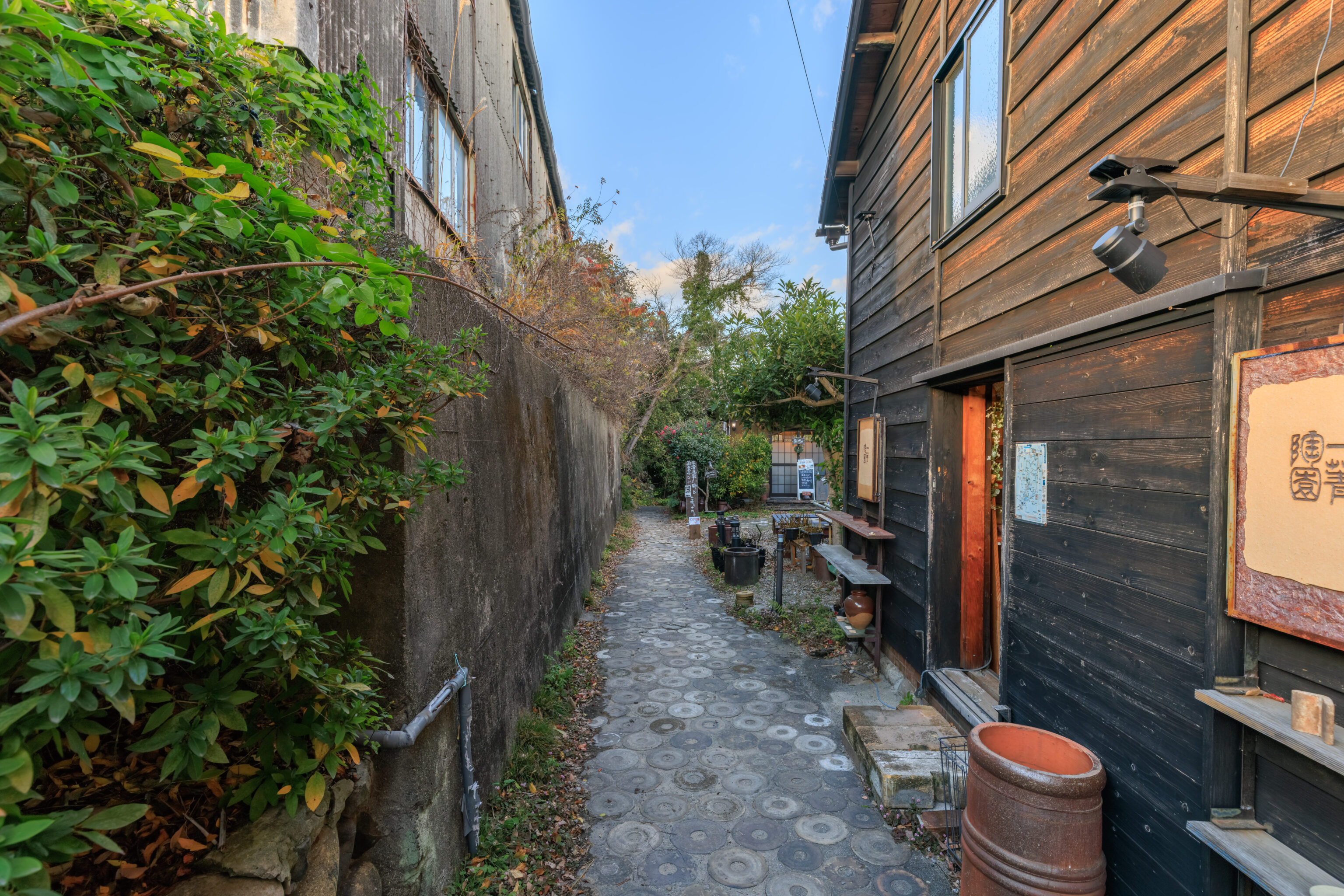
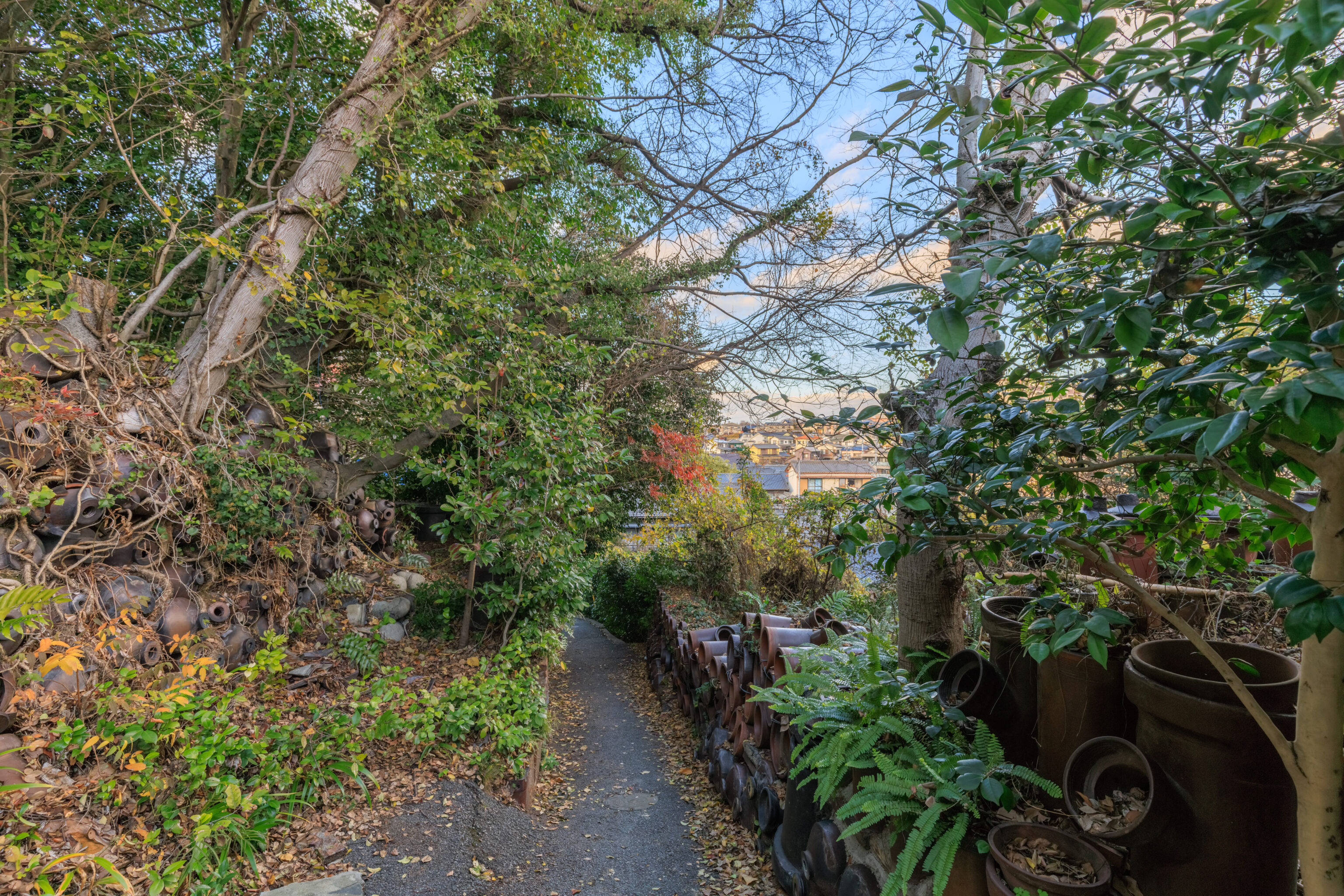
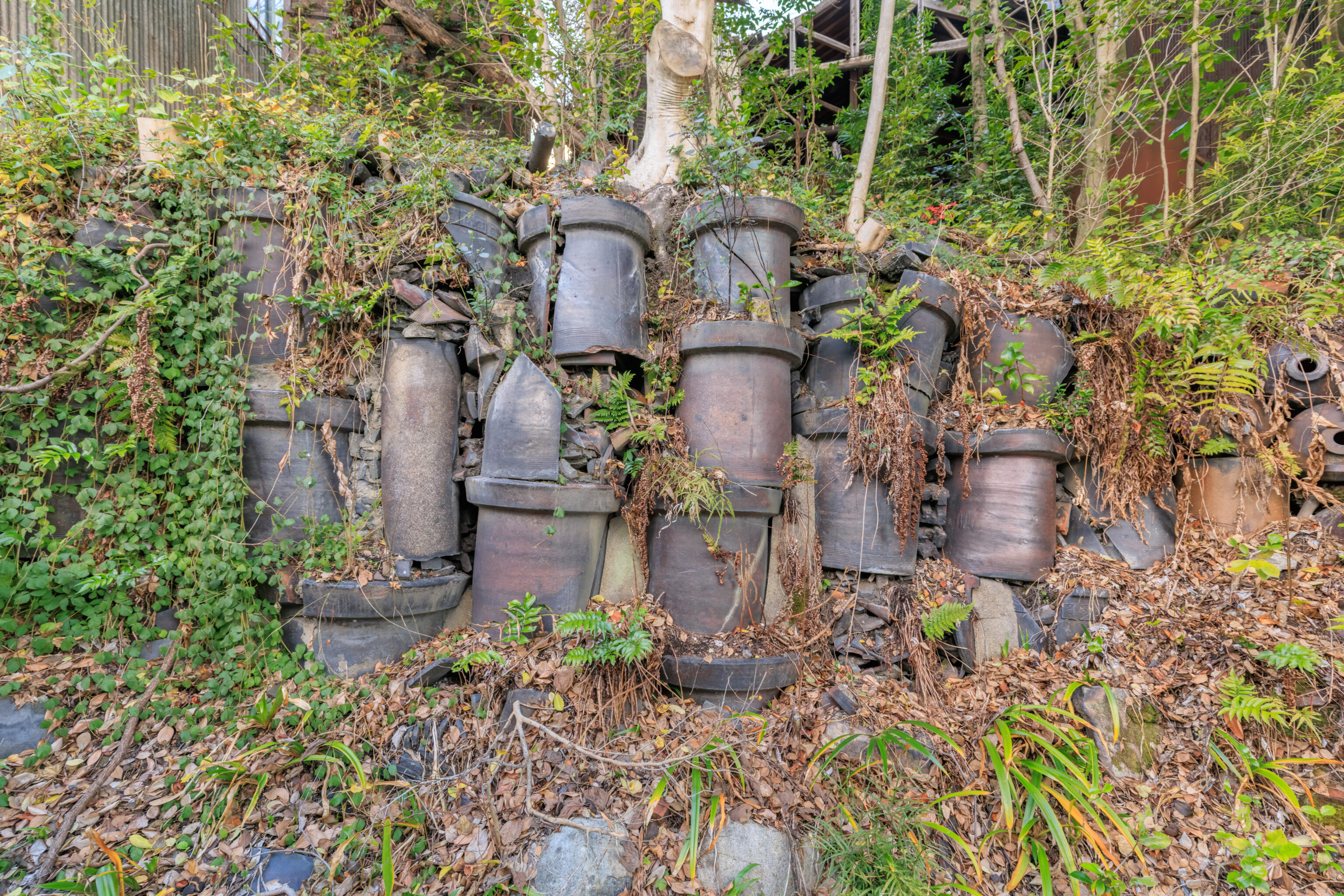
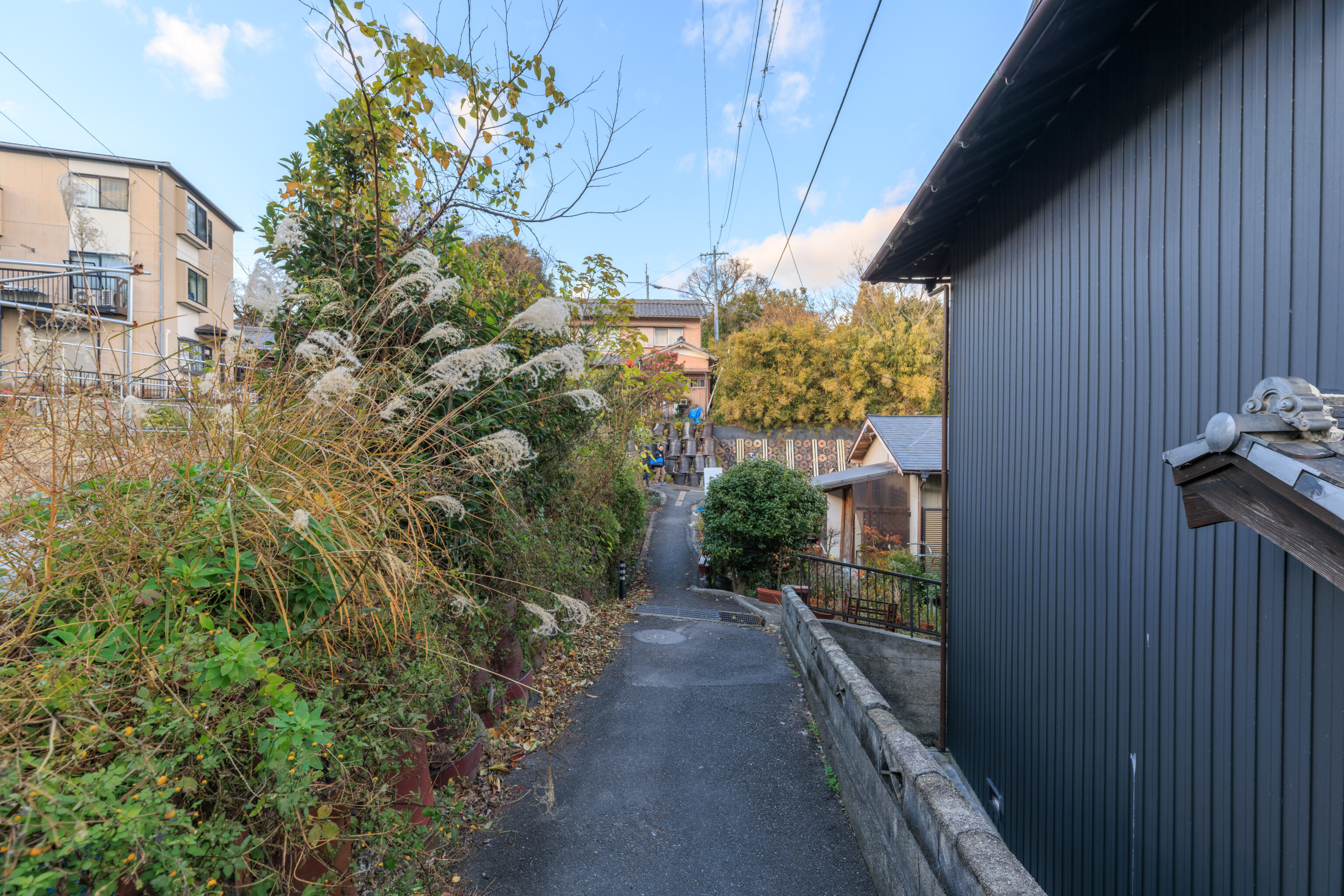
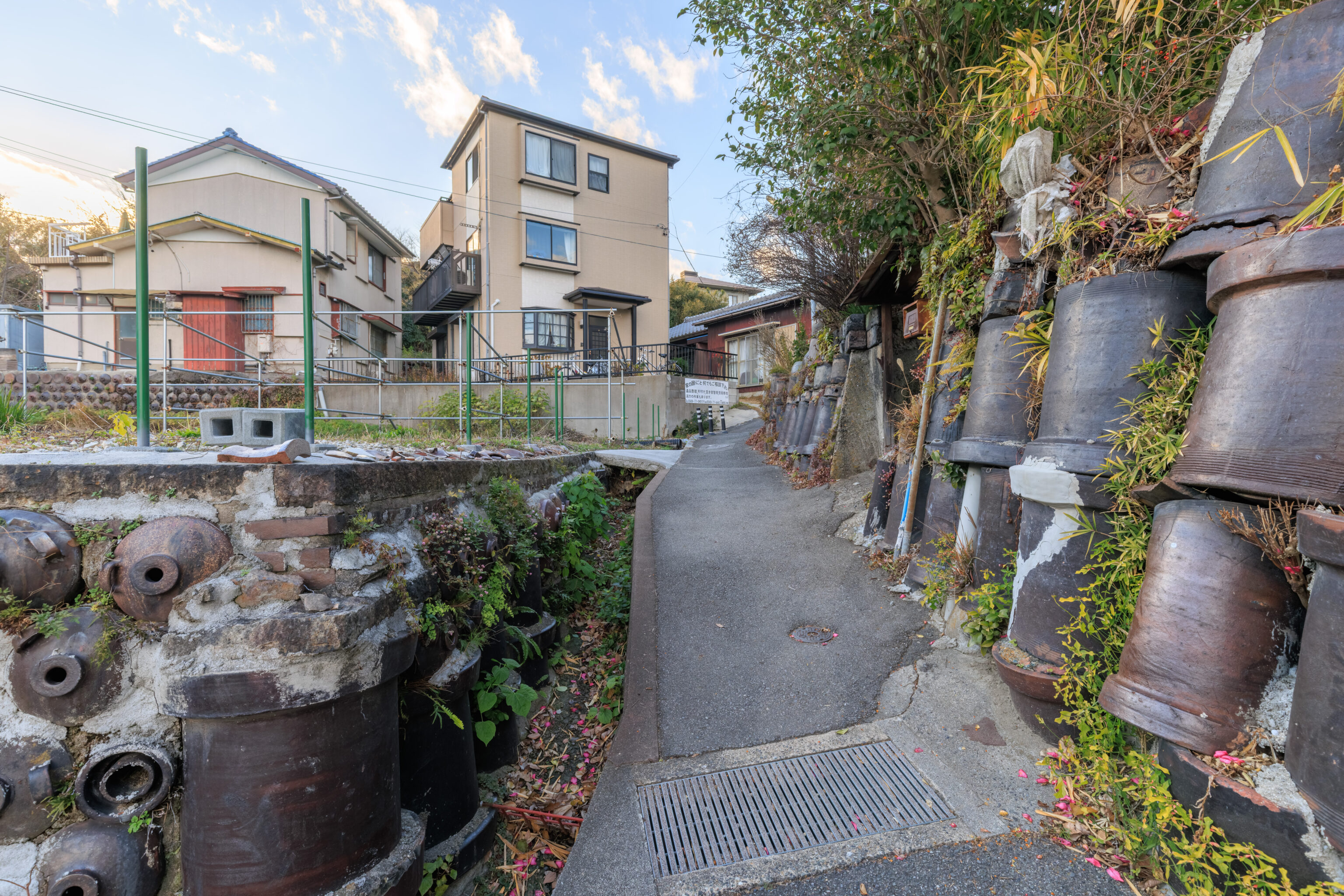
We continued walking to the east and then the north along the Pottery Footpath.
Another pretty utility cover in excellent condition!
The path took us partly down along the east side of the hill. This path to our left led back up the hill. We didn’t take it as it goes back to what is probably the highest point of this hill, the area we walked to before turning around to get lunch earlier today.
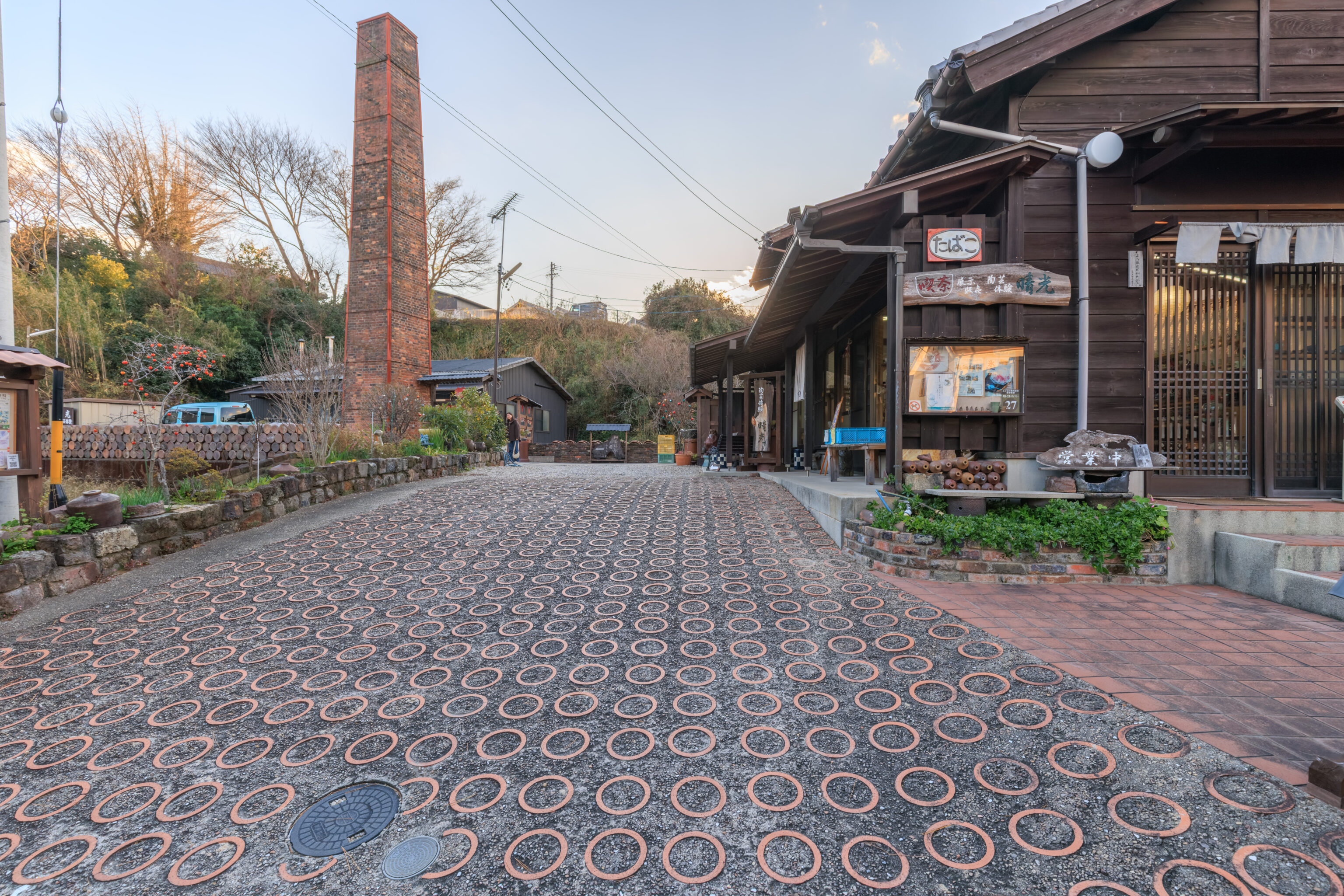
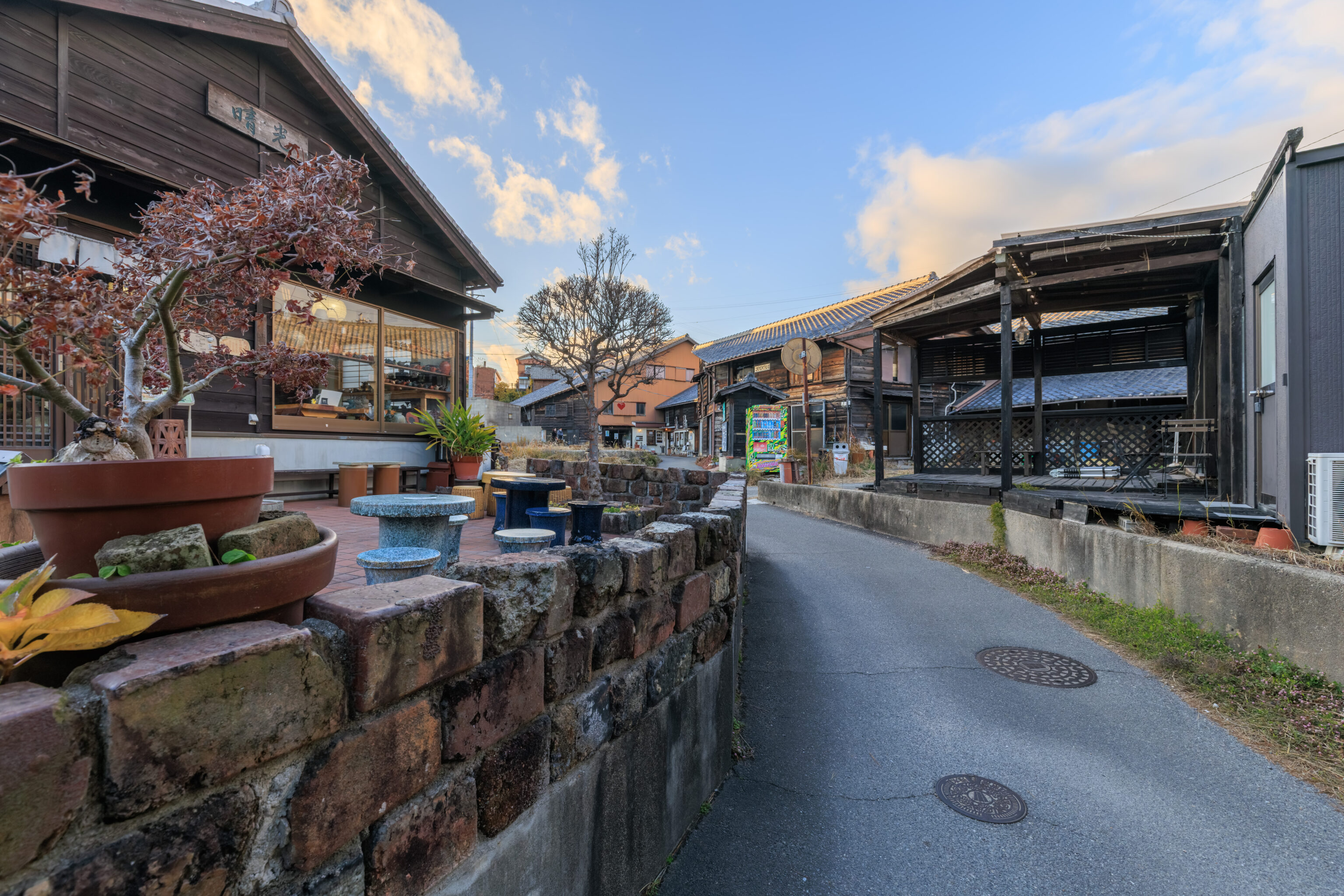
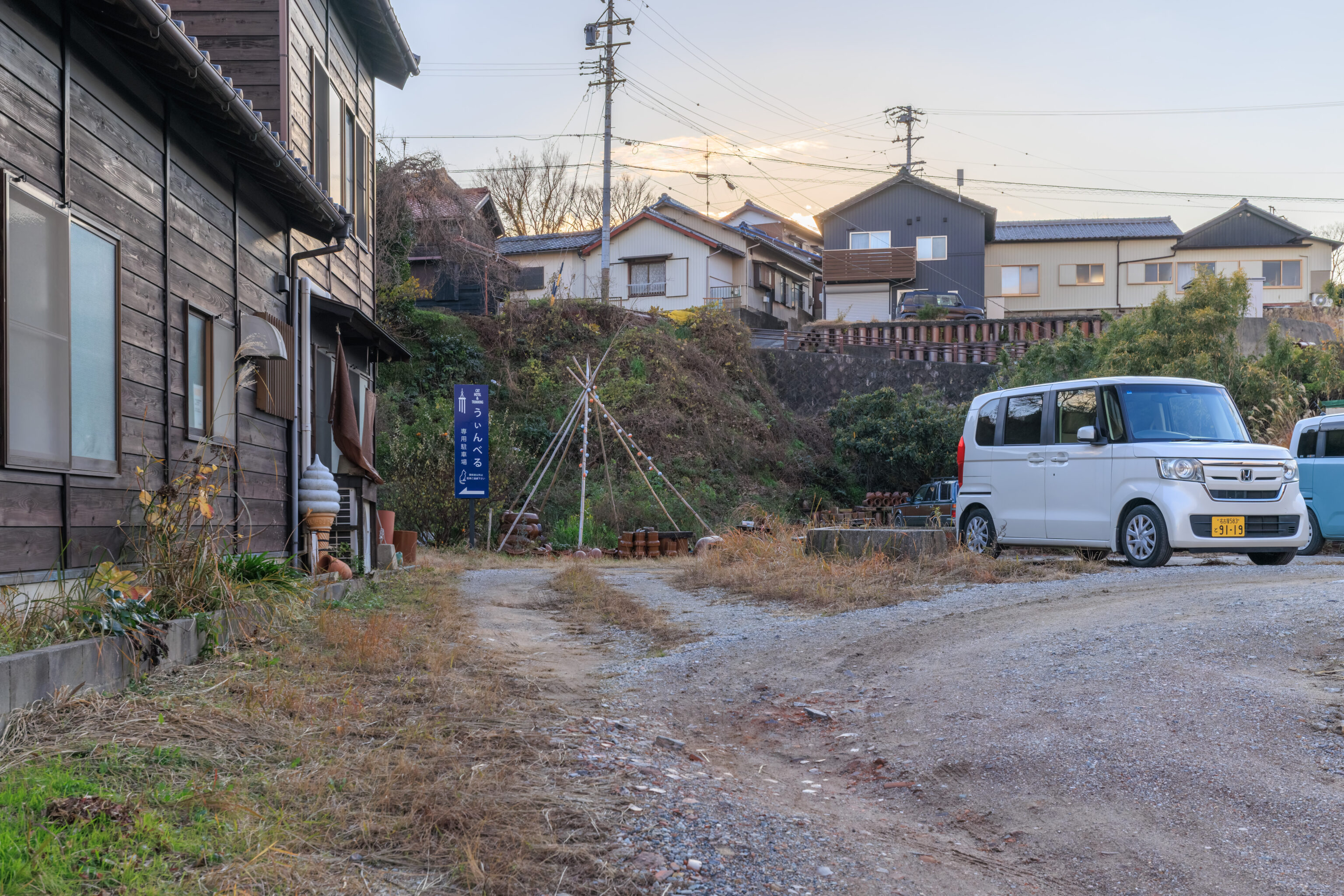
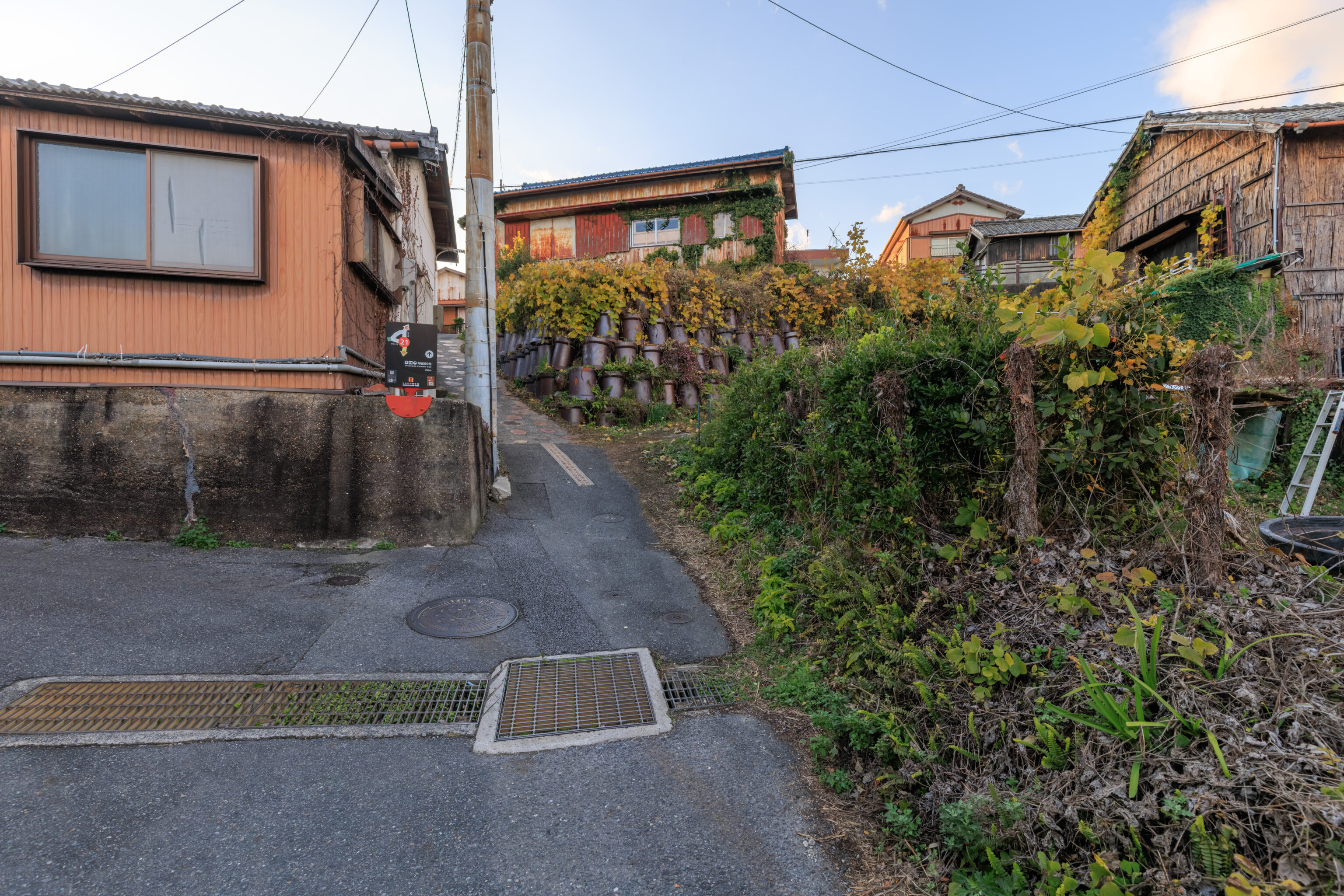
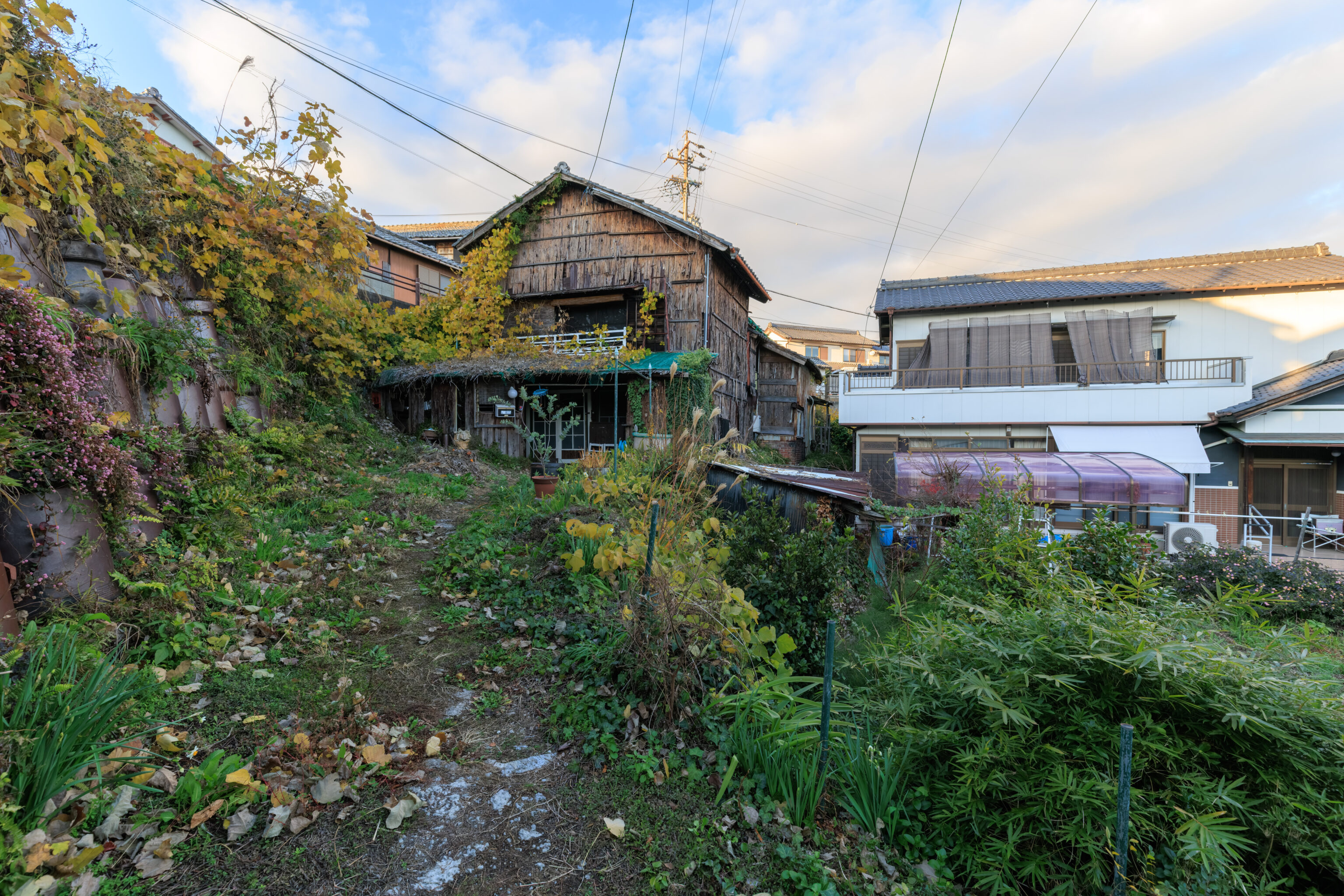
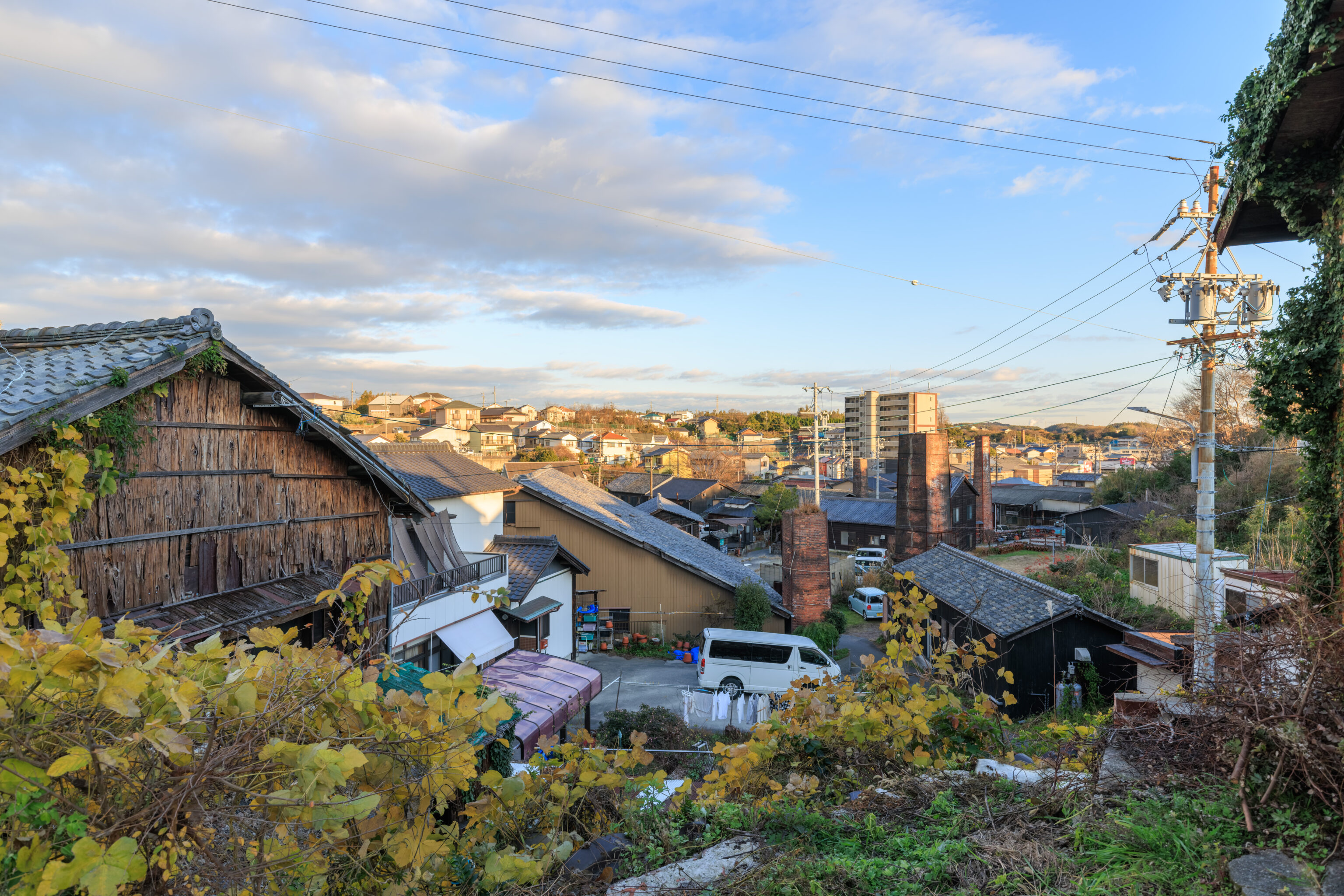
We continued following the path to the north and then to the west as it once again started to ascend.
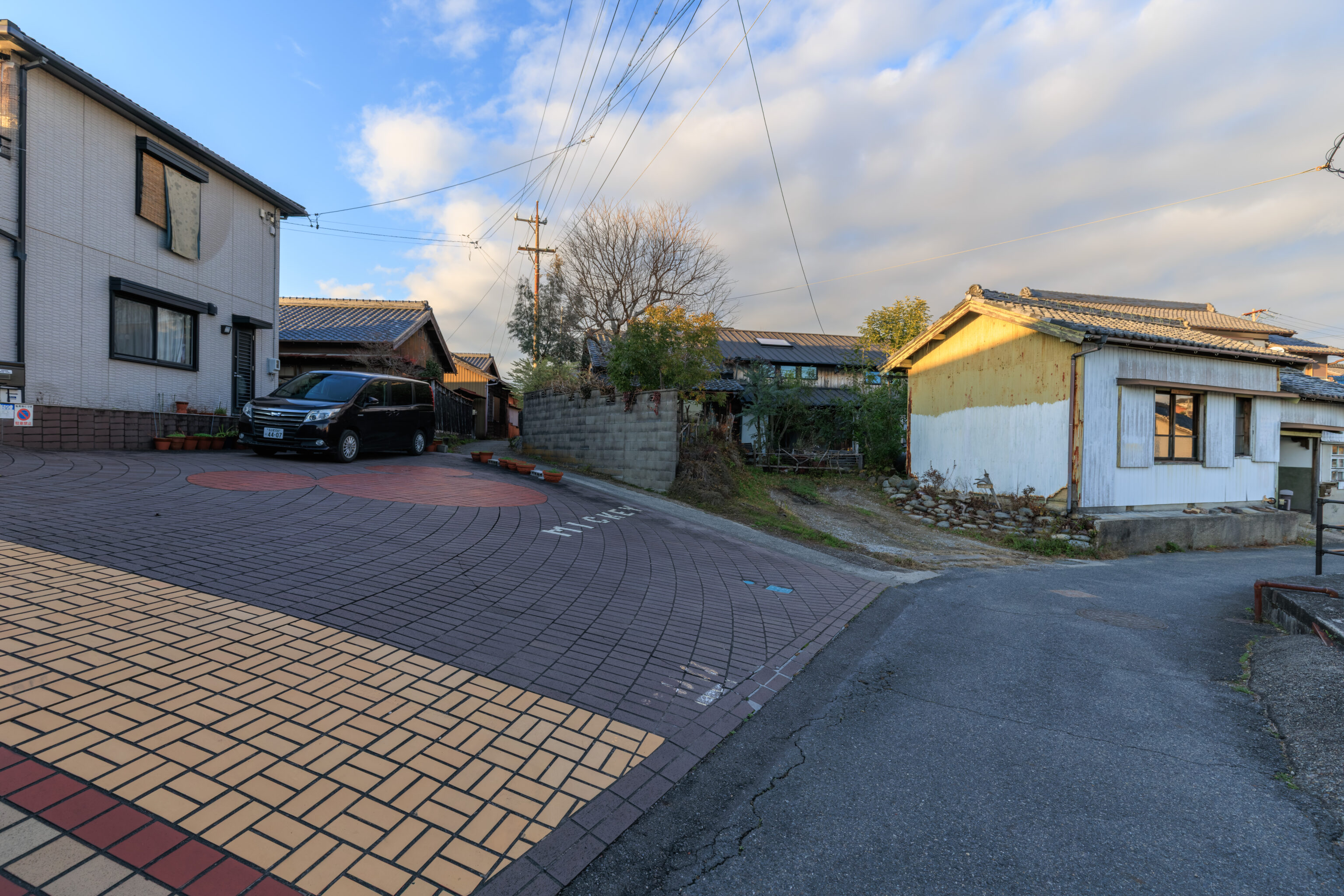
Someone created a giant Mickey Mouse head on their driveway! If you look closely, it isn’t painted but actually tile!
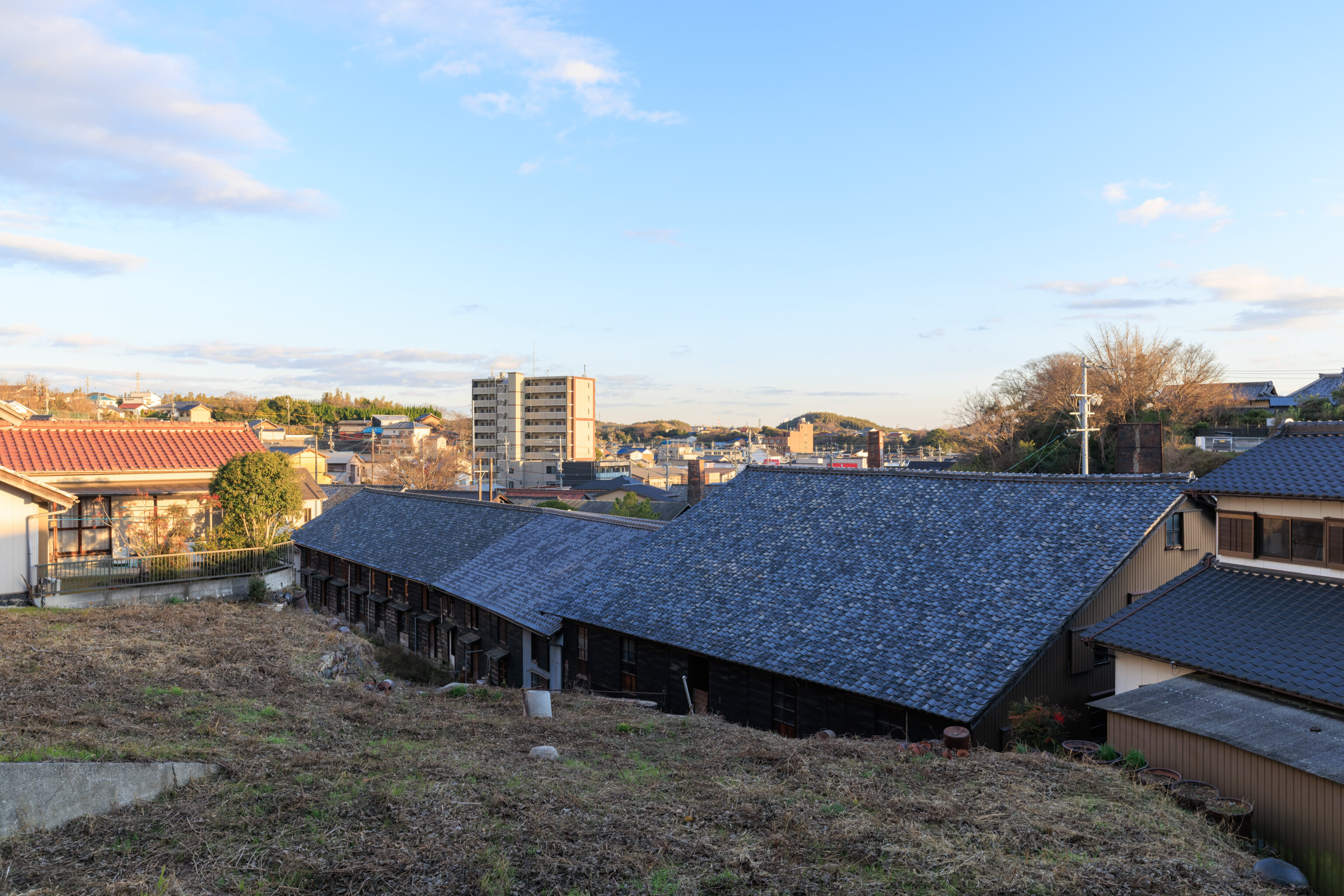
We followed the path as it turned and led to the east.
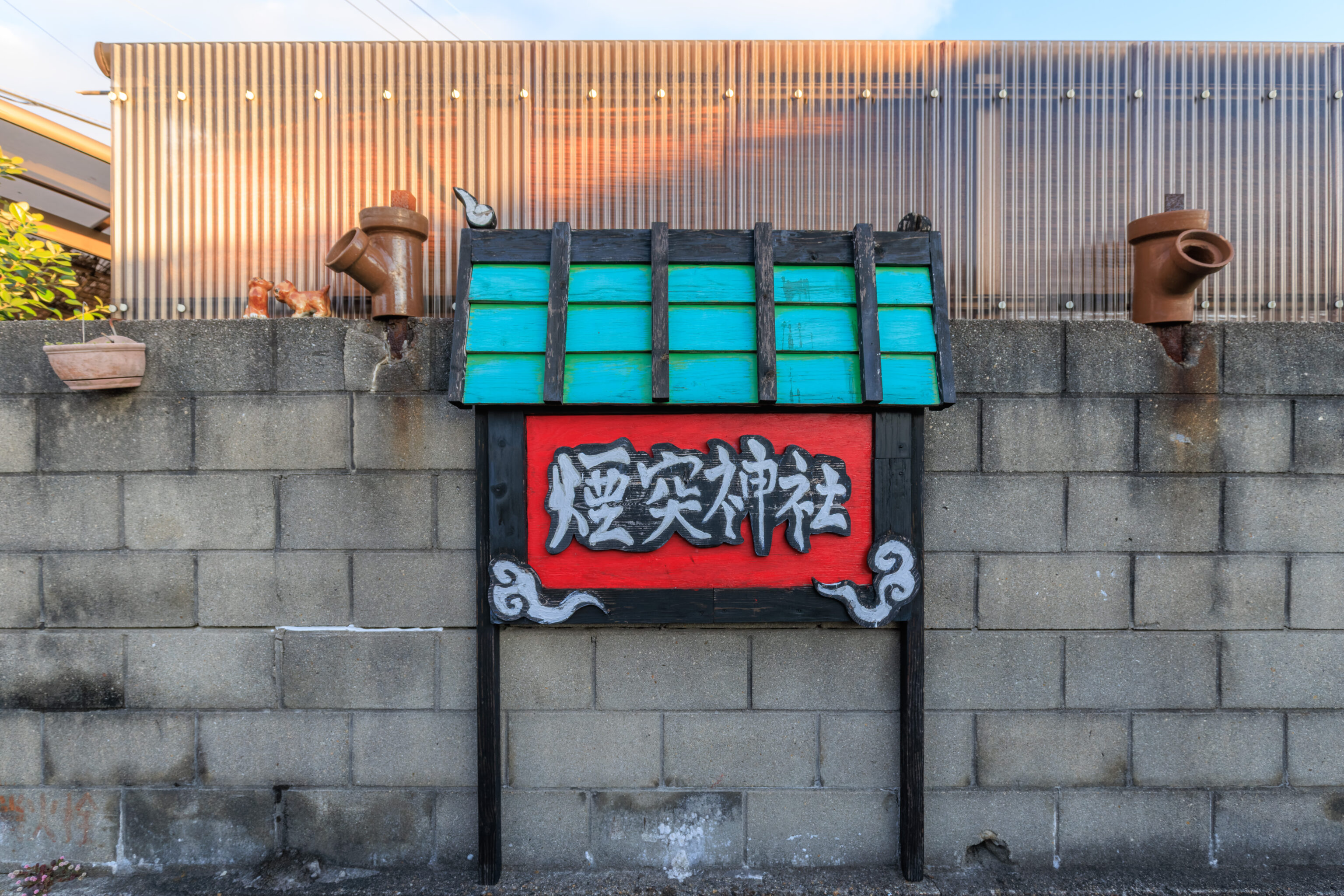
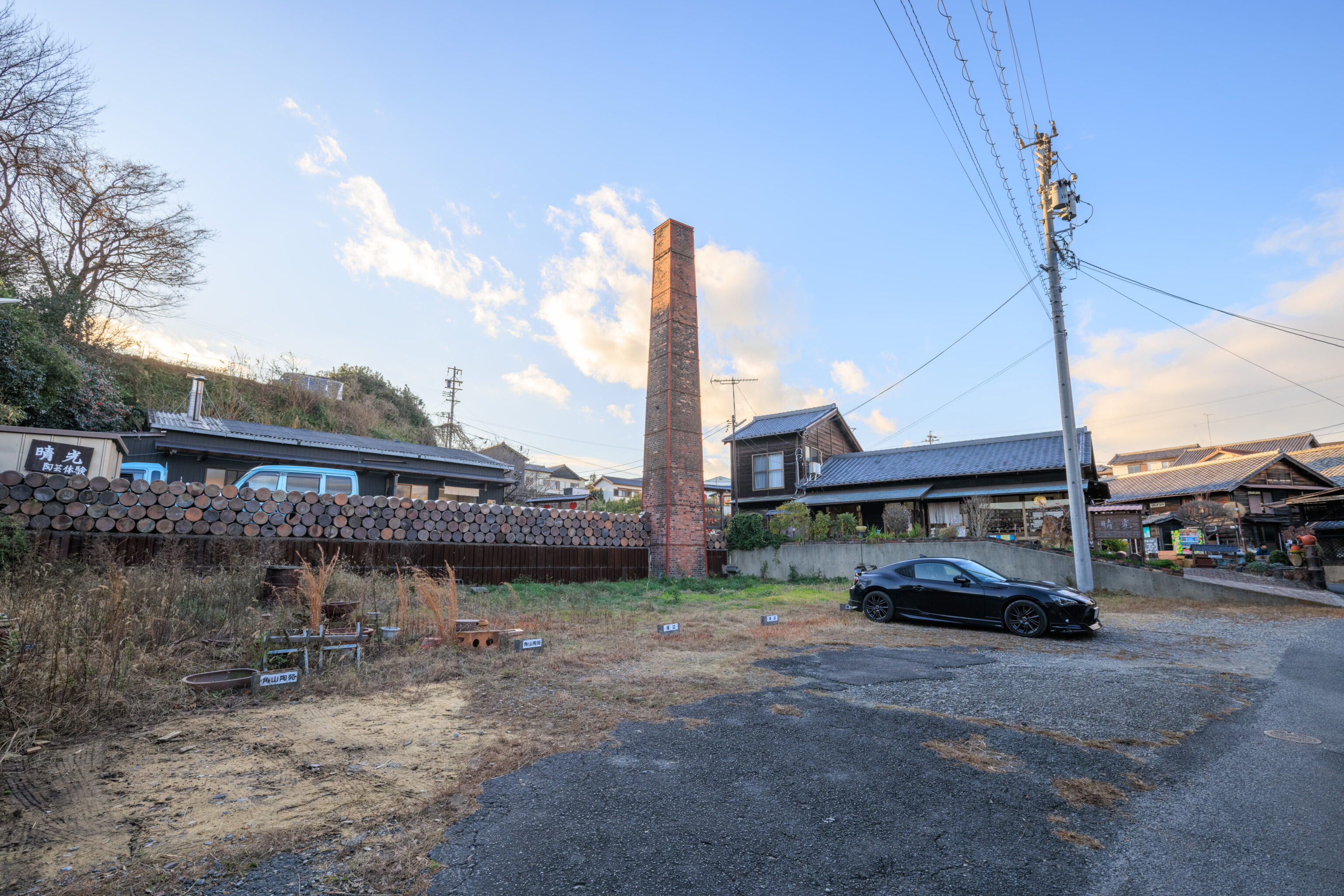
This sign indicates that this is the 煙突神社 Chimney Shrine.
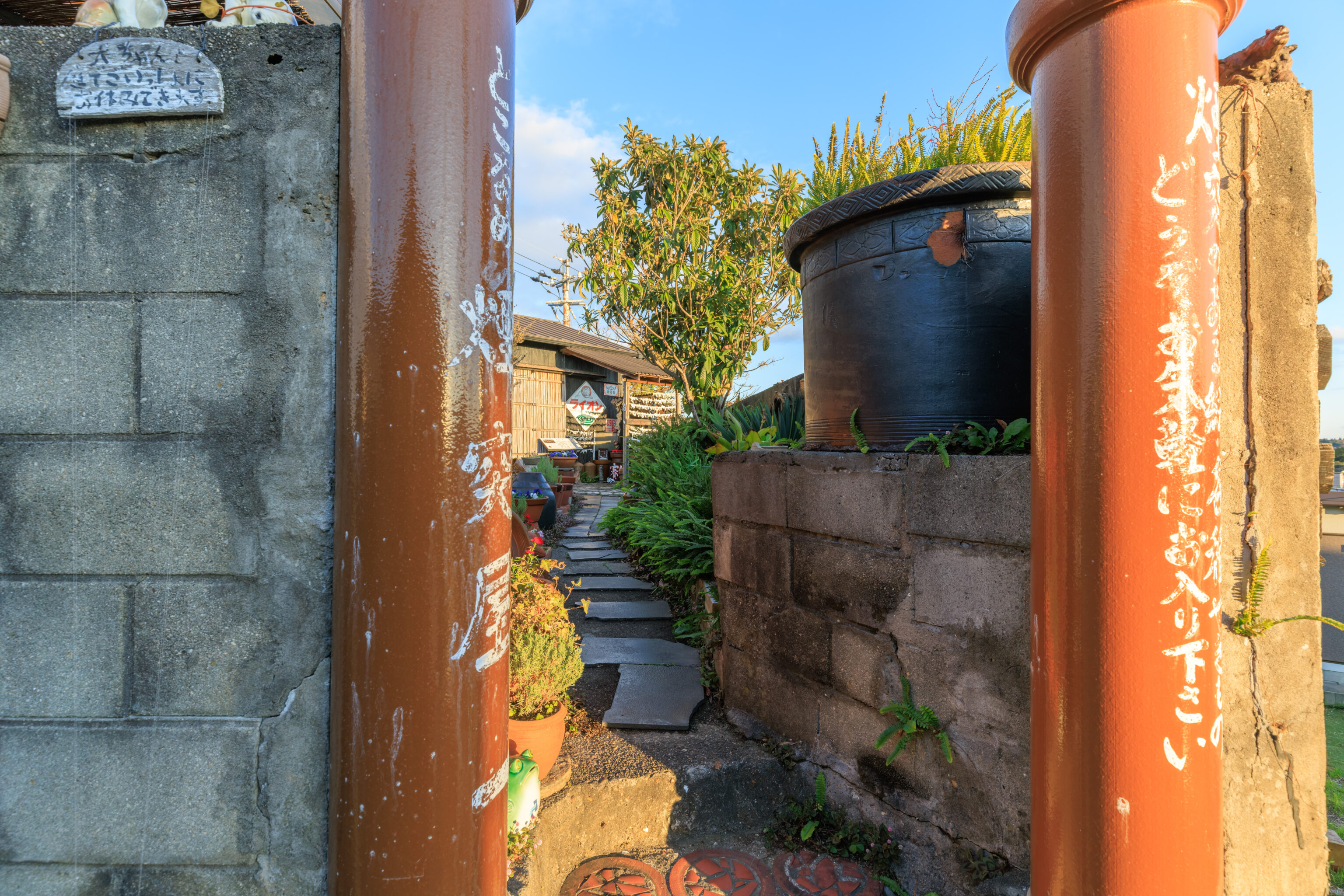
We went in through this gate to take a look at whatever would be inside.
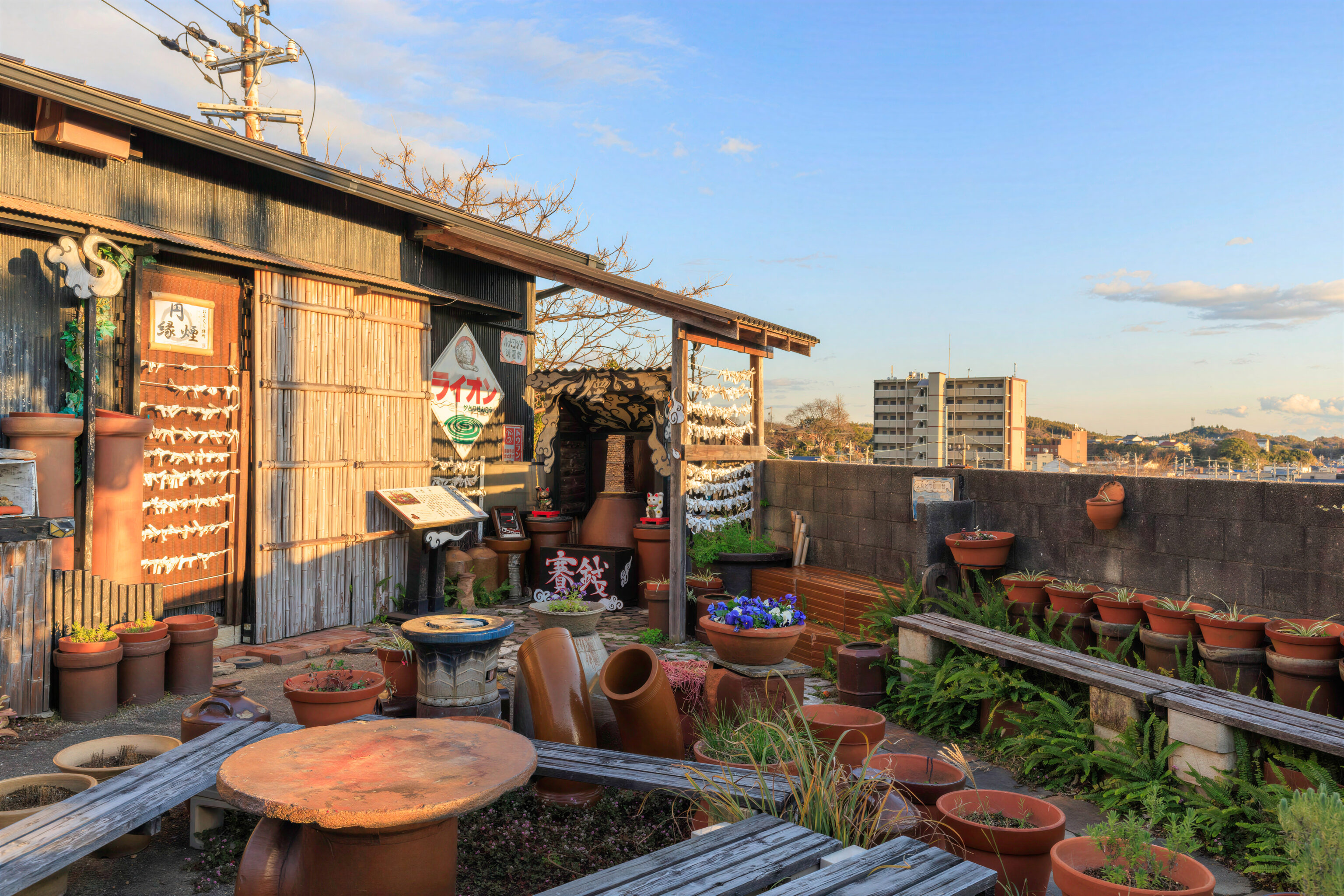
It was a nice little ceramic garden. The Chimney Shrine is in front of us here and features a little chimney! The actual business here appears to be a small cafe.
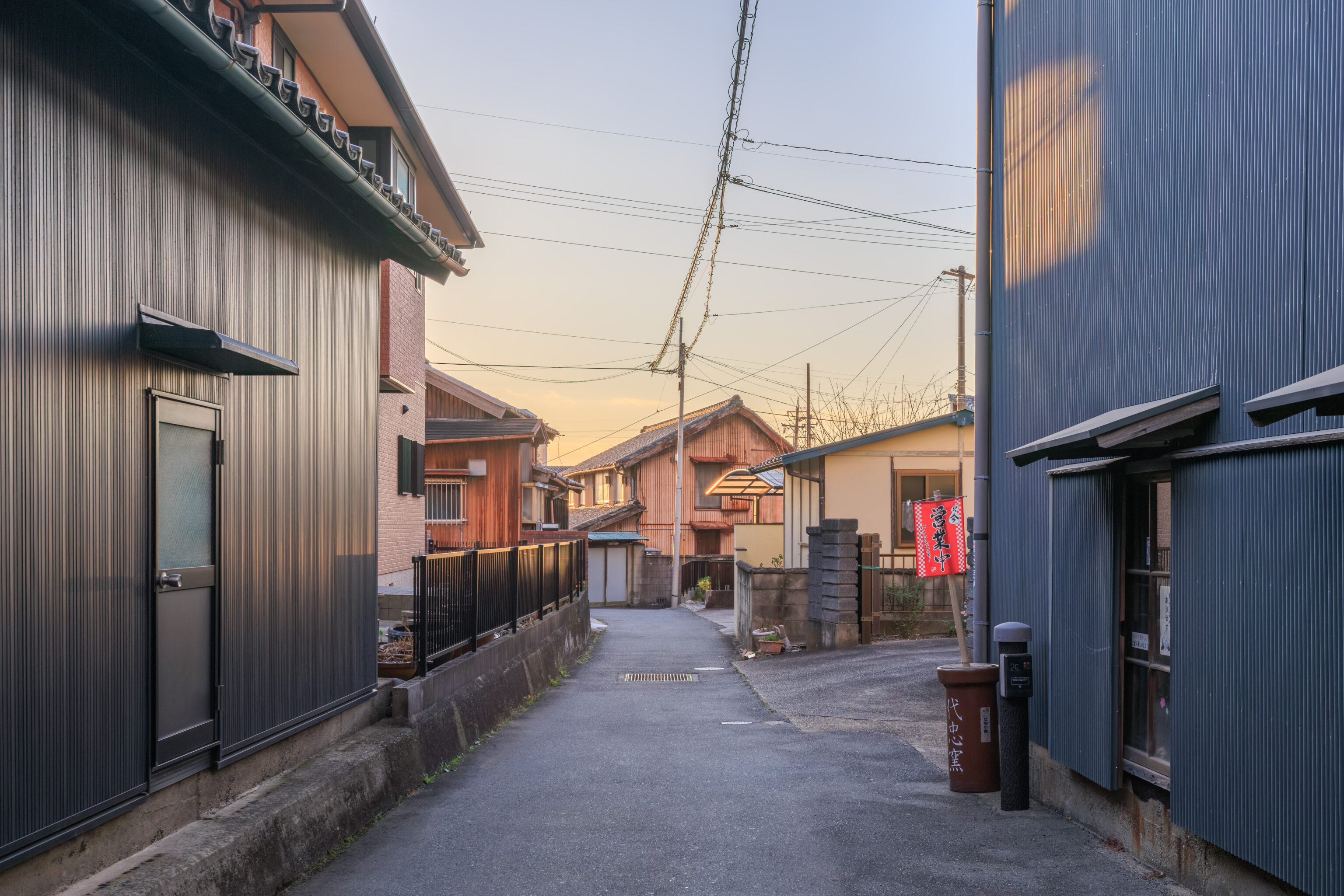
Initially, we went continued past a junction to the northwest.
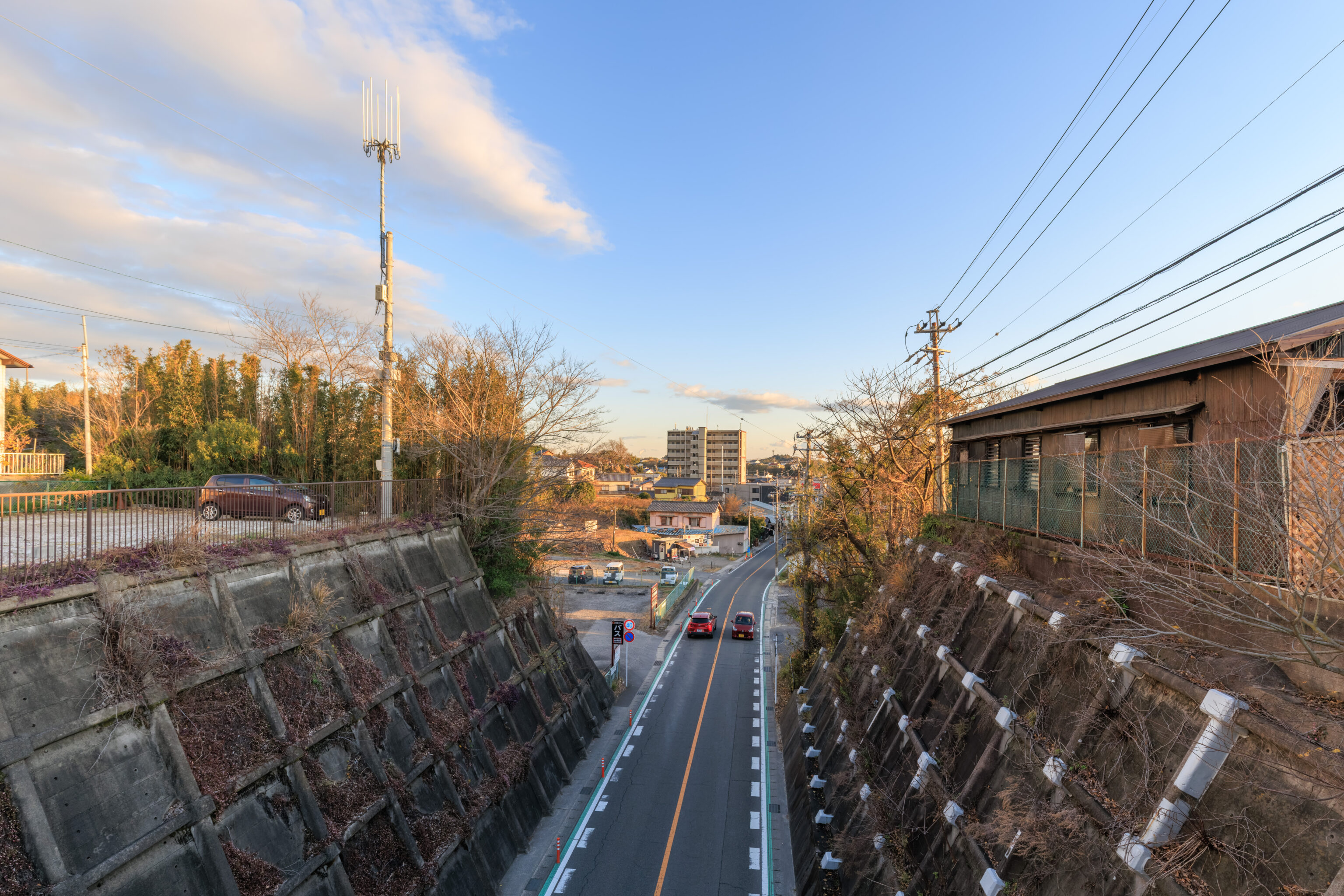
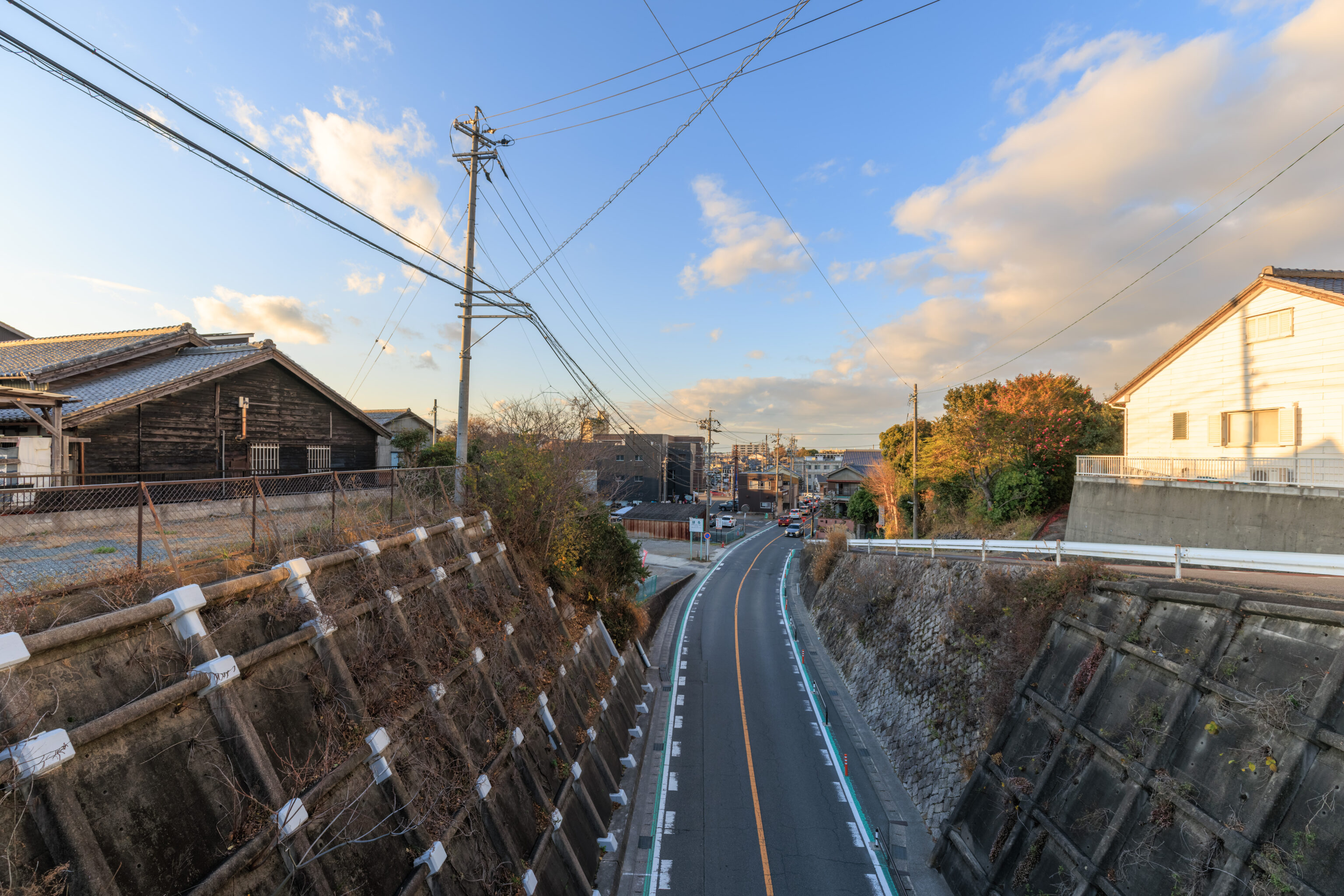
But, we ended up turning around and taking a path that went east over a road.
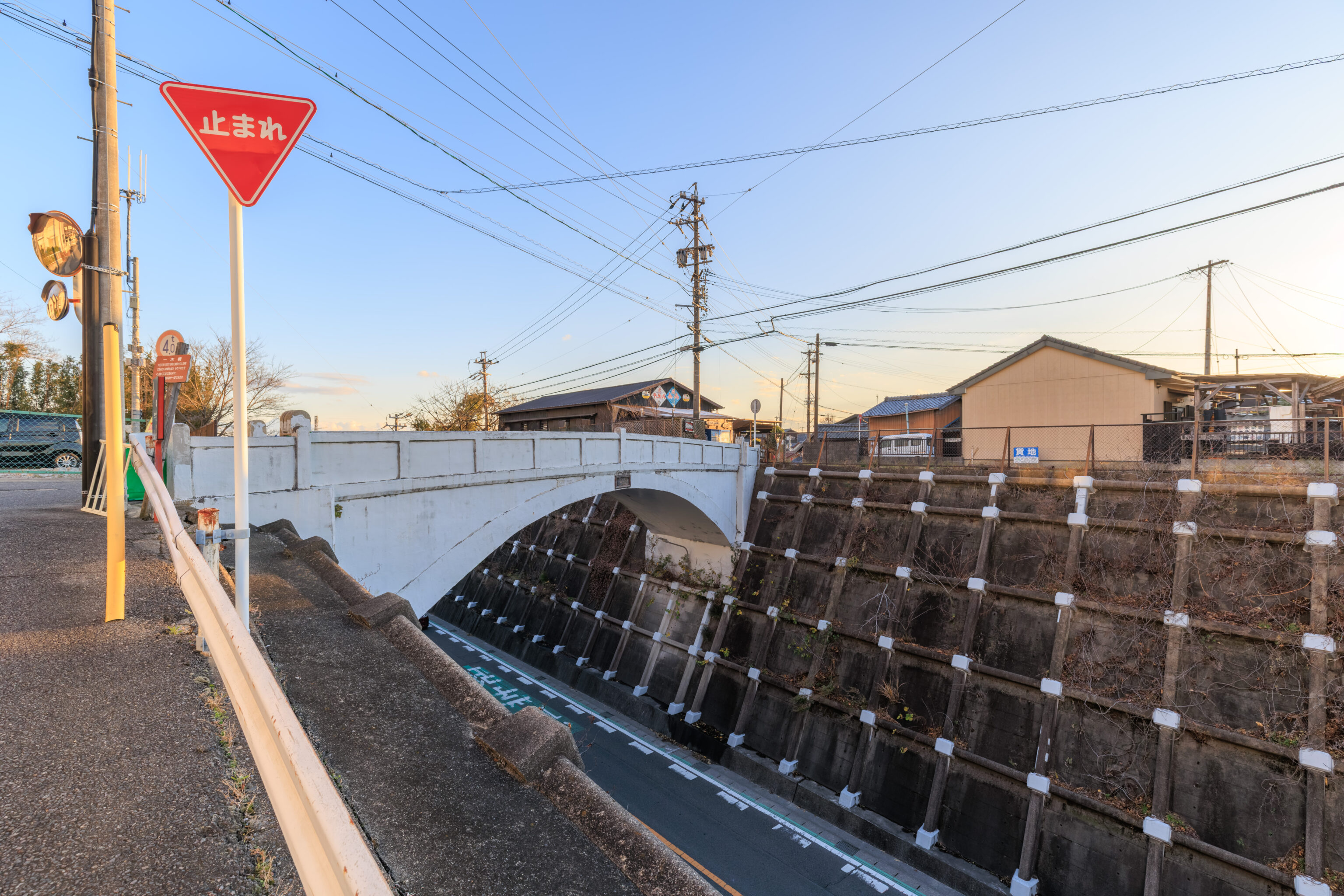
We then walked down from the bridge to the road below and started walking to the north.
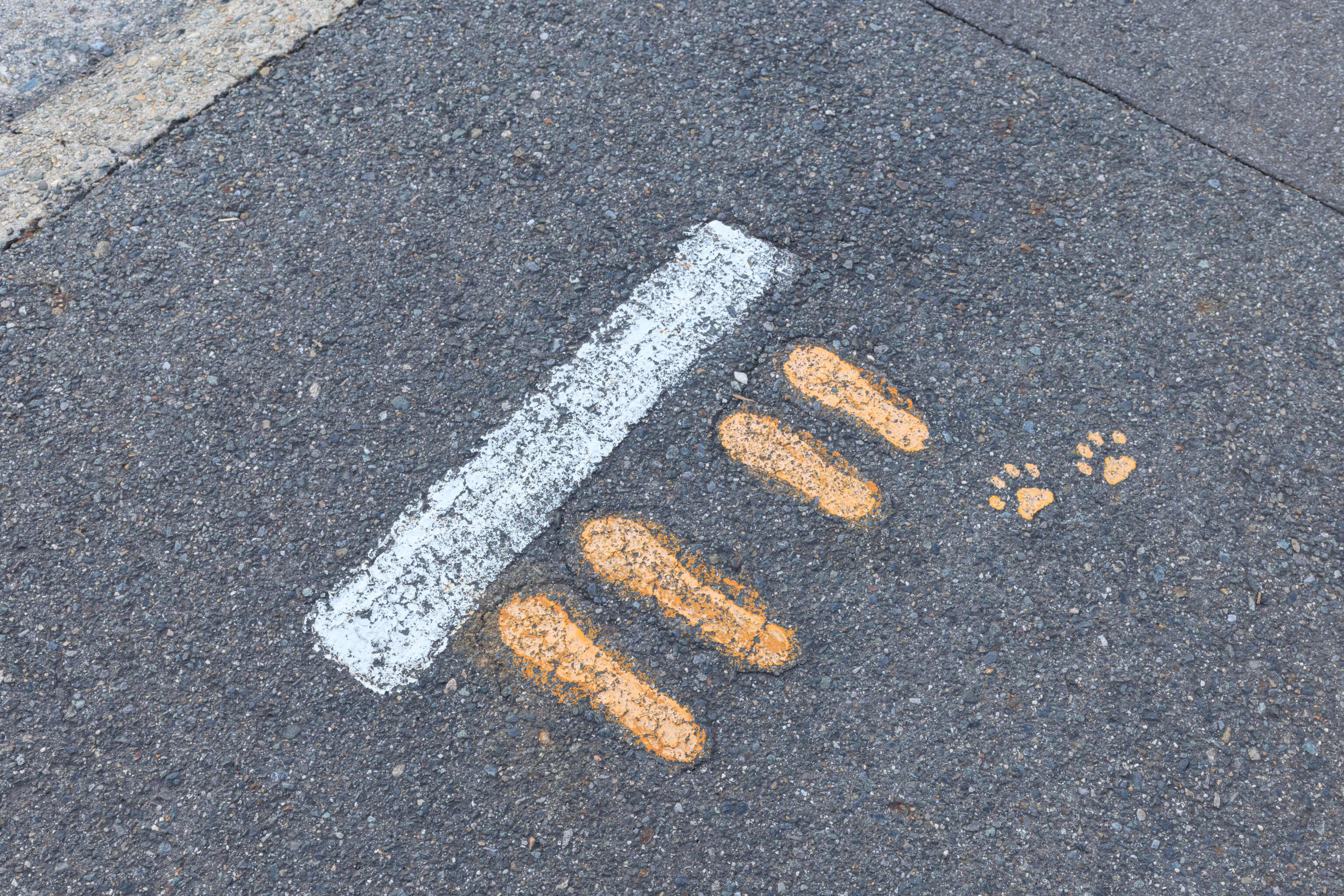
Very kawaii! After walking past the eastern end of the Ceramic Hall, we crossed over the four lane street that runs between Tokoname Station and the Ceramic Hall.
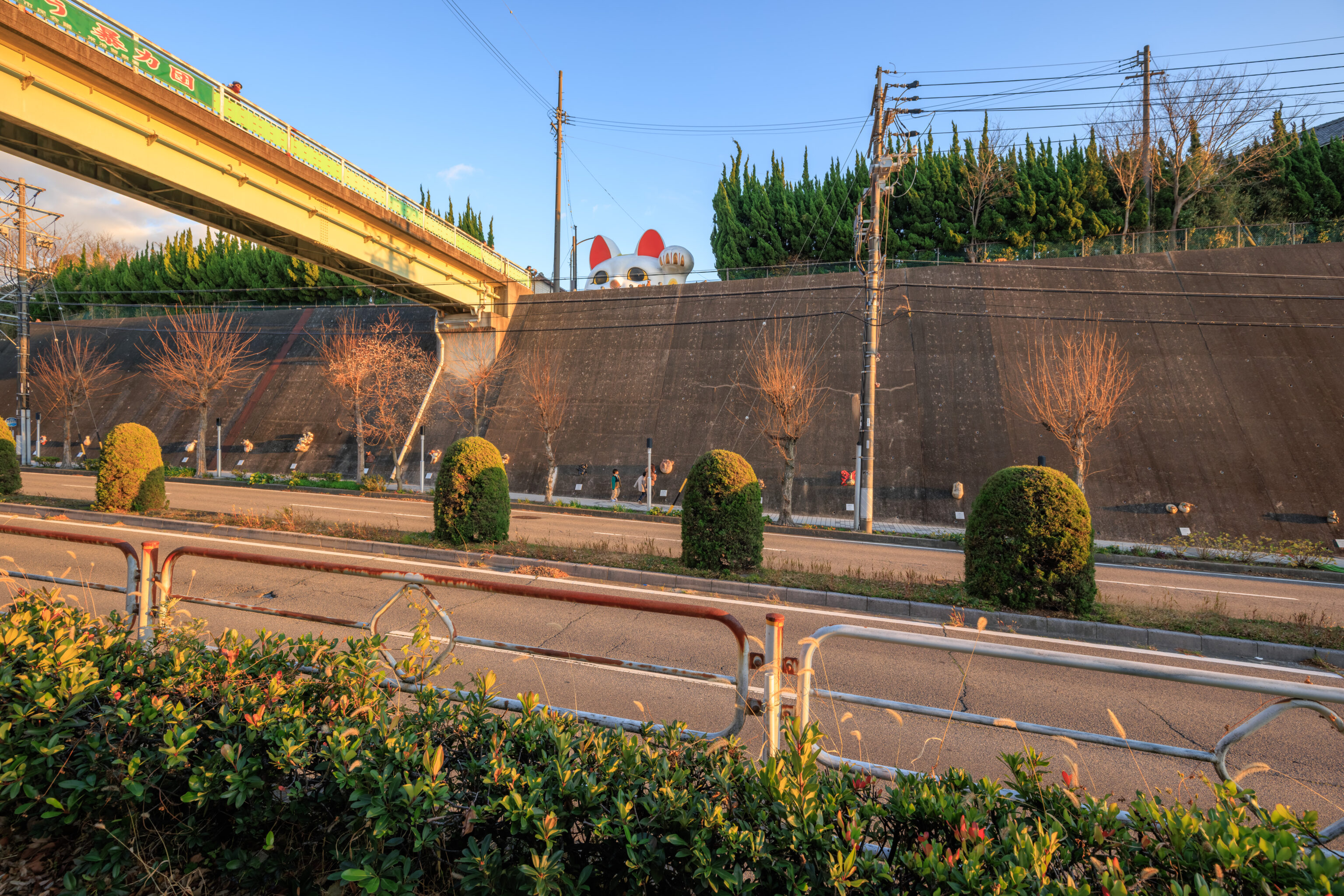
We then headed in the direction of Tokoname Station. Looking to the south, we could see Tokonyan up above! We could also see all the smaller cat sculptures that we walked by in the morning.
Evening
We rushed a little bit to catch the next train back to Nagoya Station. We made it with a little bit of time to spare.
We decided to have dinner at 鳥開 Torikai, a restaurant at the エスカ ESCA underground shopping mall at the west side of Nagoya Station.
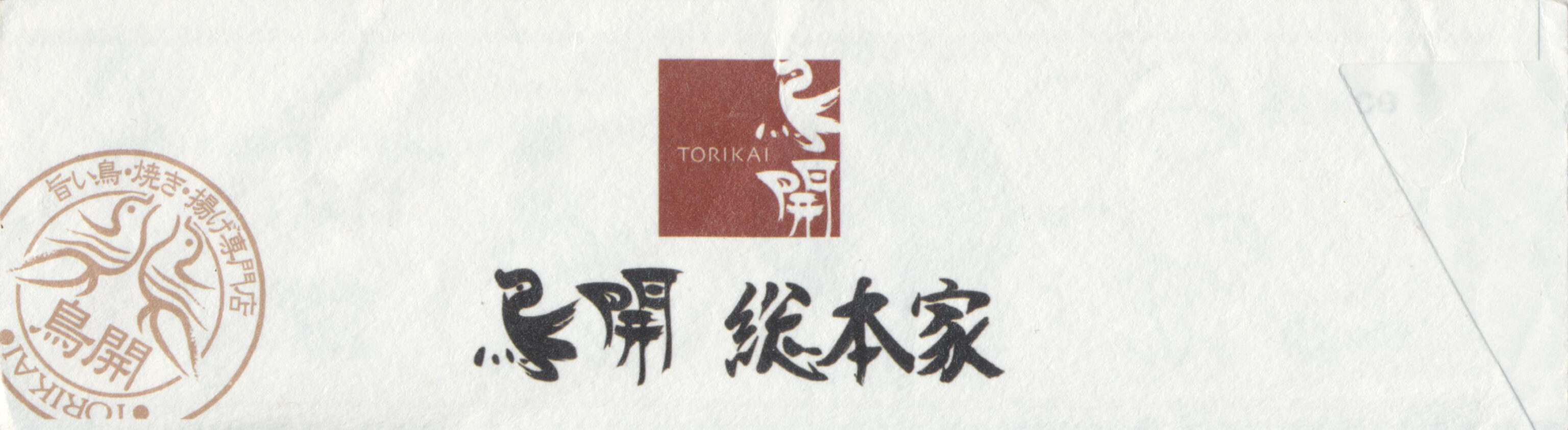
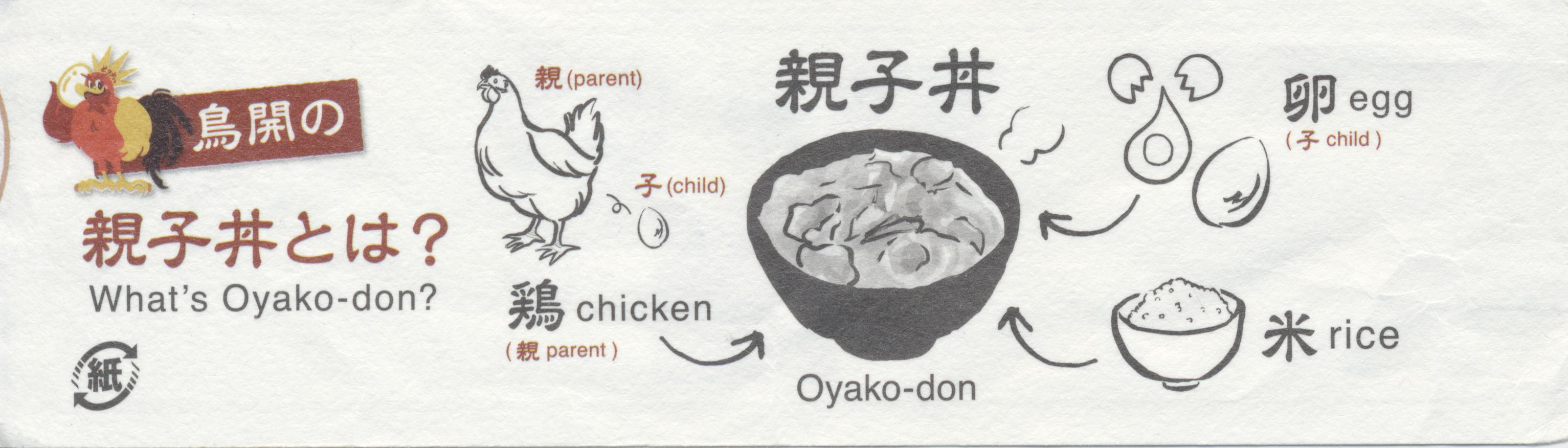
This restaurant specializes in chicken, more specifically, the local 名古屋コーチン Nagoya Cochin chicken. They serve it in various forms, including 親子丼 oyakodon. The chopstick sleeve humourously expains oyakodon.
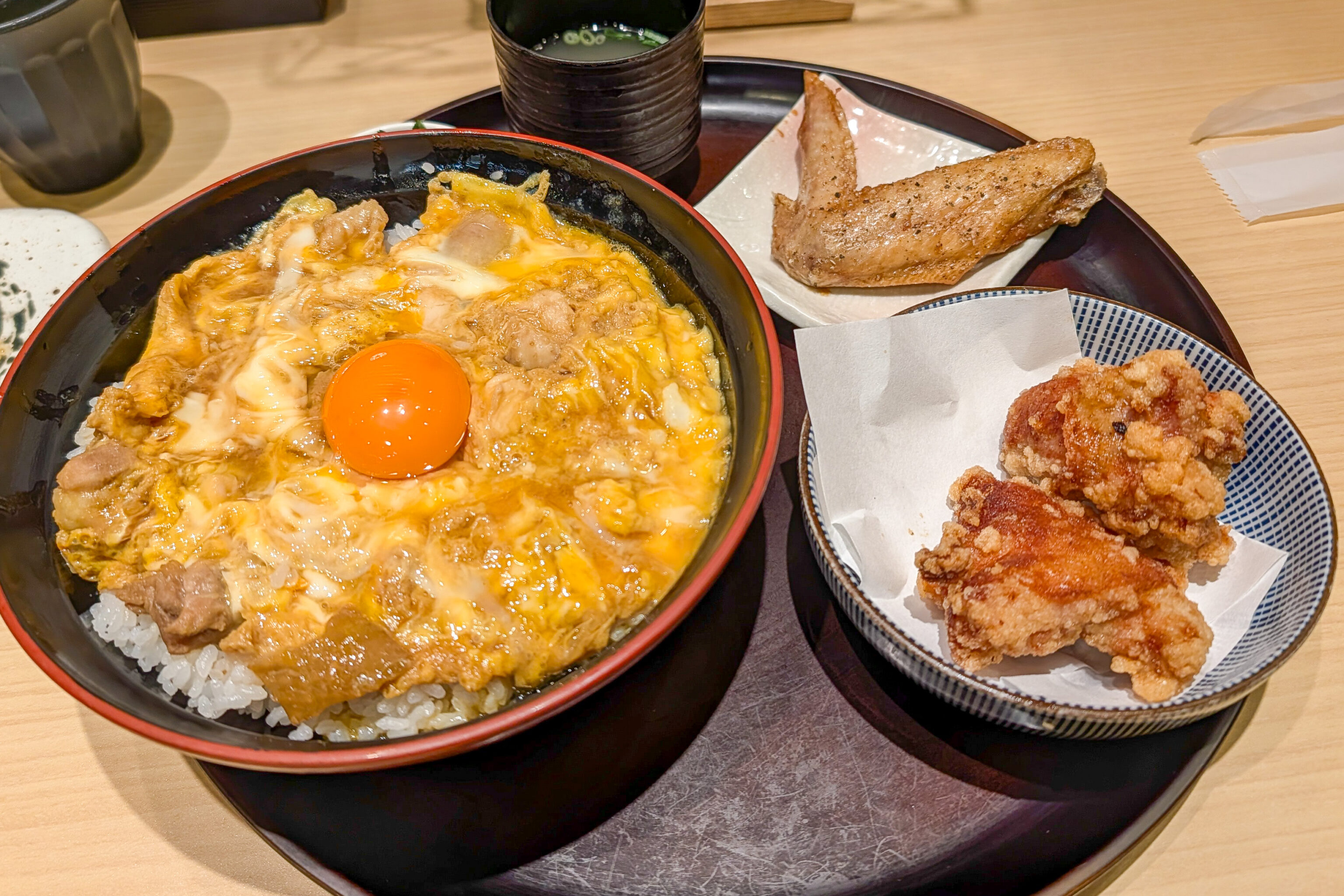
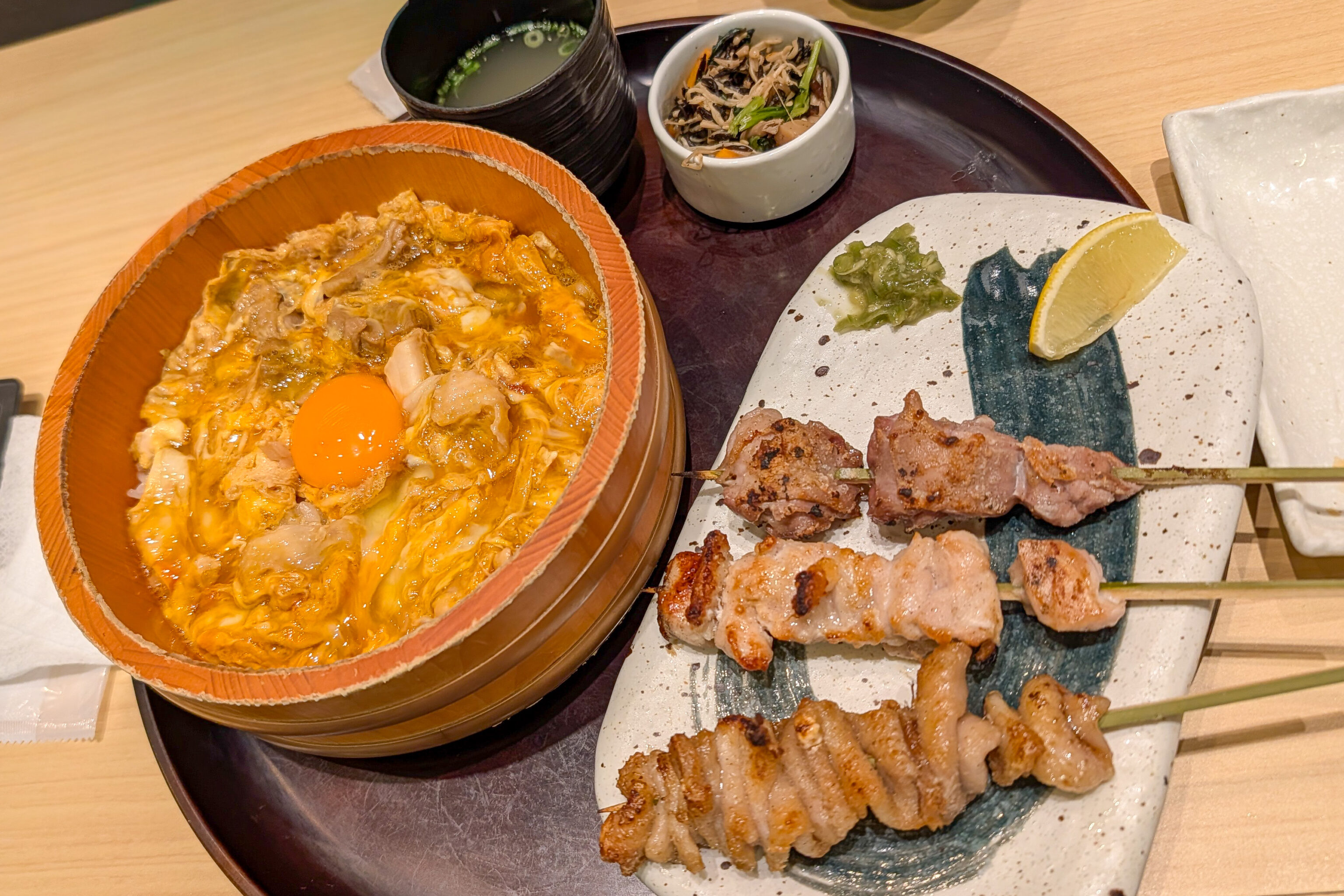
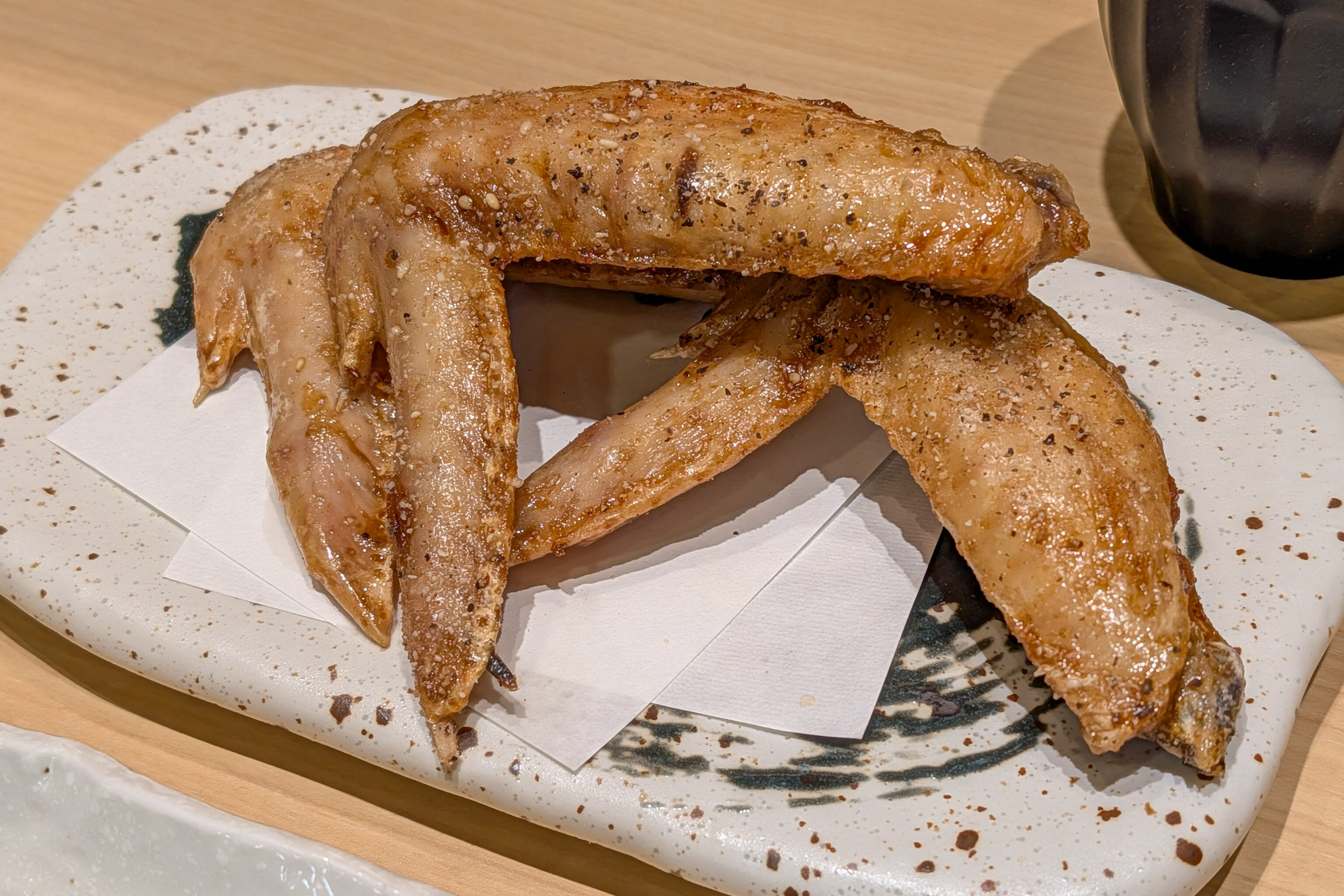
We got two oyakodon sets as well as three additional chicken wings. Everything was well prepared. However, we weren’t really fond of the actual chicken. It’s hard to describe but a bit like the difference between beef tongue and other cuts of beef.
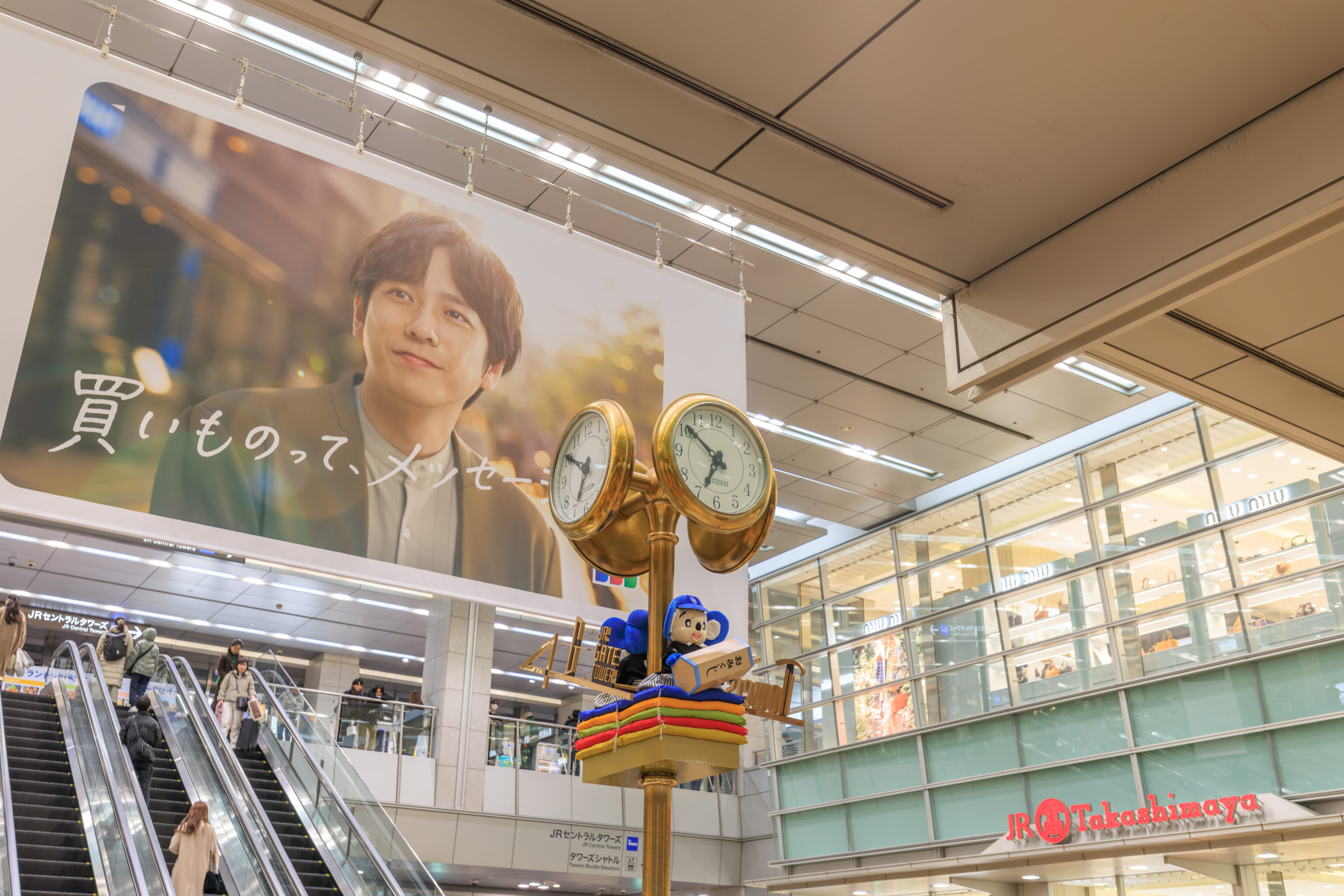
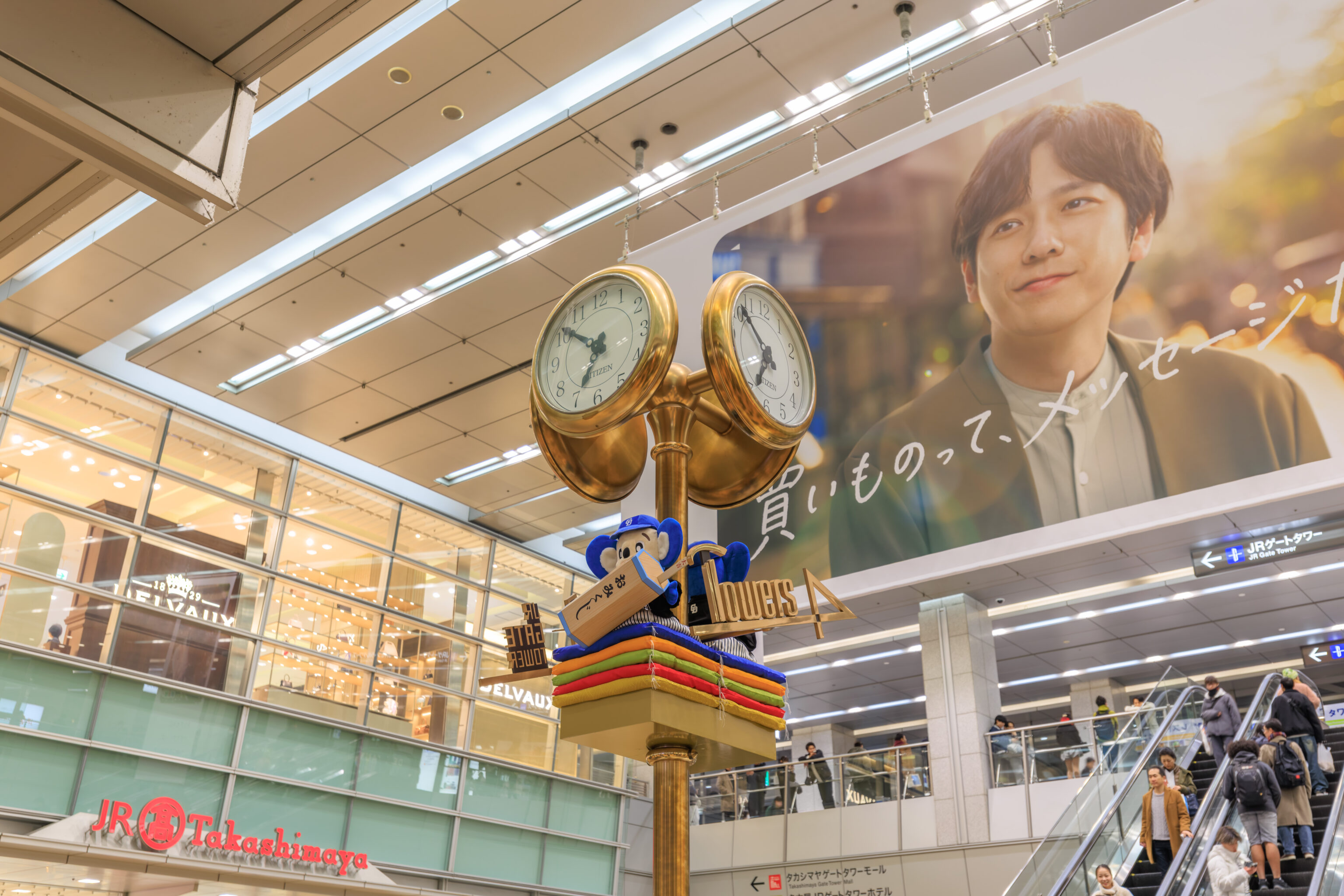
We then headed back in the direction of the Marriott to finally check in. This large space with clock was pretty busy with many people walking in all directions along with people waiting around, perhaps for other people.
The 名古屋マリオットアソシアホテル Nagoya Marriott Associa Hotel is directly attached to Nagoya Station, making it one of the most convenient places to stay in Nagoya. I stayed here once before about eight years ago. At the time, the hotel felt a bit dated with a weird Western aesthetic. But, the rooms are clean and large and the location is fantastic. So, here we are!
Getting to the lobby requires taking an elevator up to the 15th floor. Once there, it is a short walk over to the front desk.
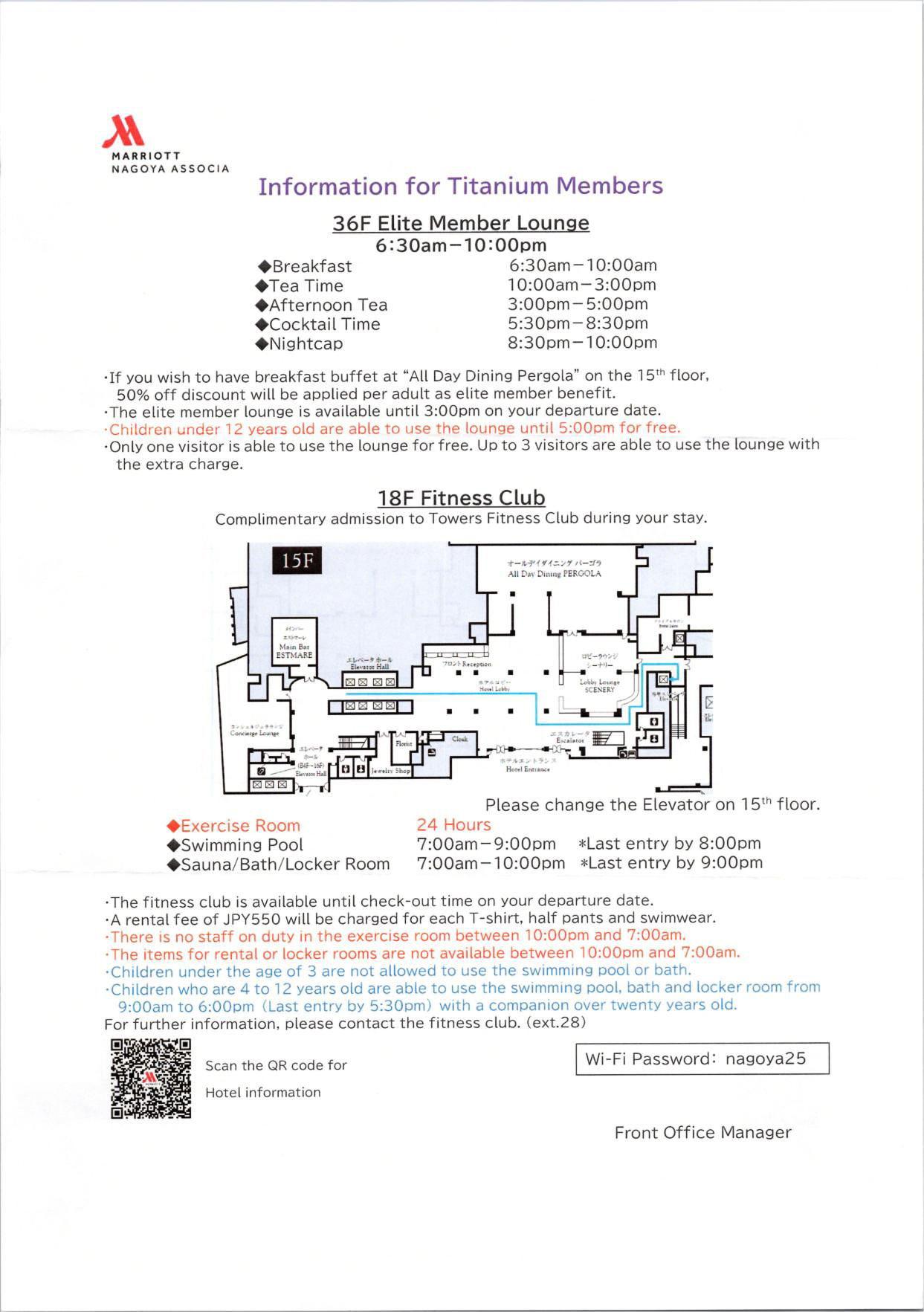
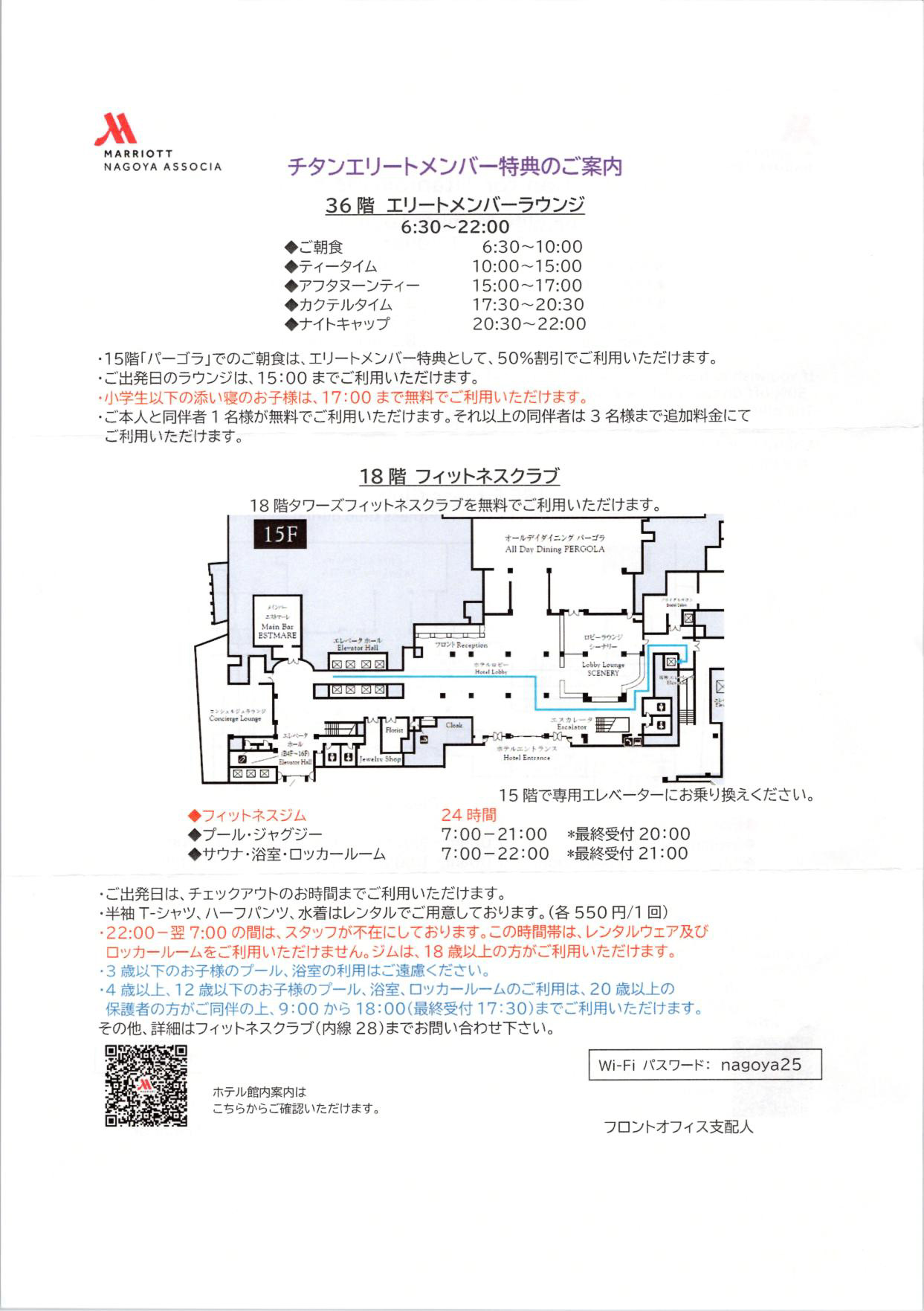
An informational sheet was provided for Titanium level members of the Marriott Bonvoy program. Breakfast is in the lounge up on the 36th floor. There is actually a higher end lounge on the 15th floor. Access is complimentary for guests who are staying in a suite, have Ambassador status with Marriott, or have paid for a room that includes access.
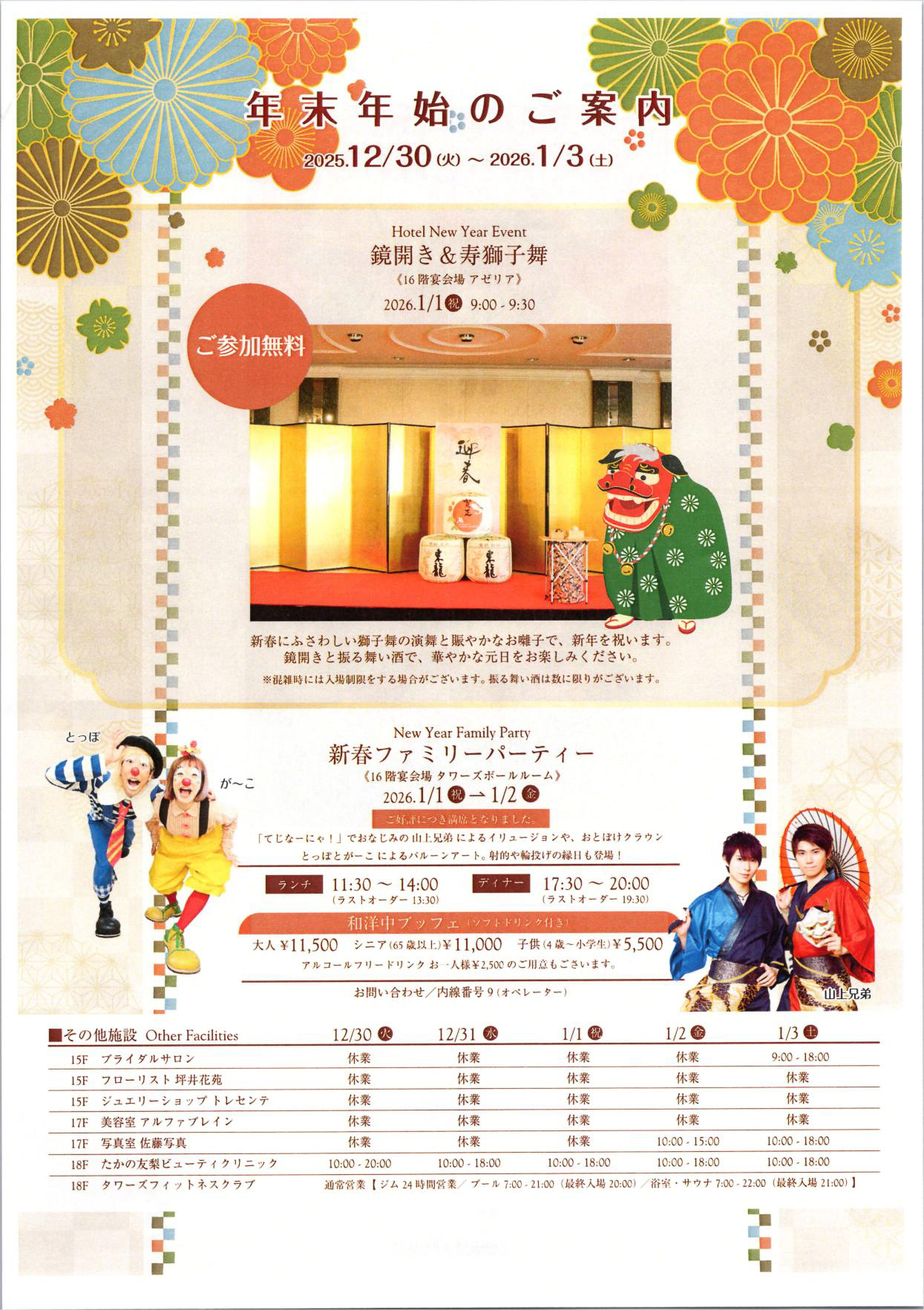
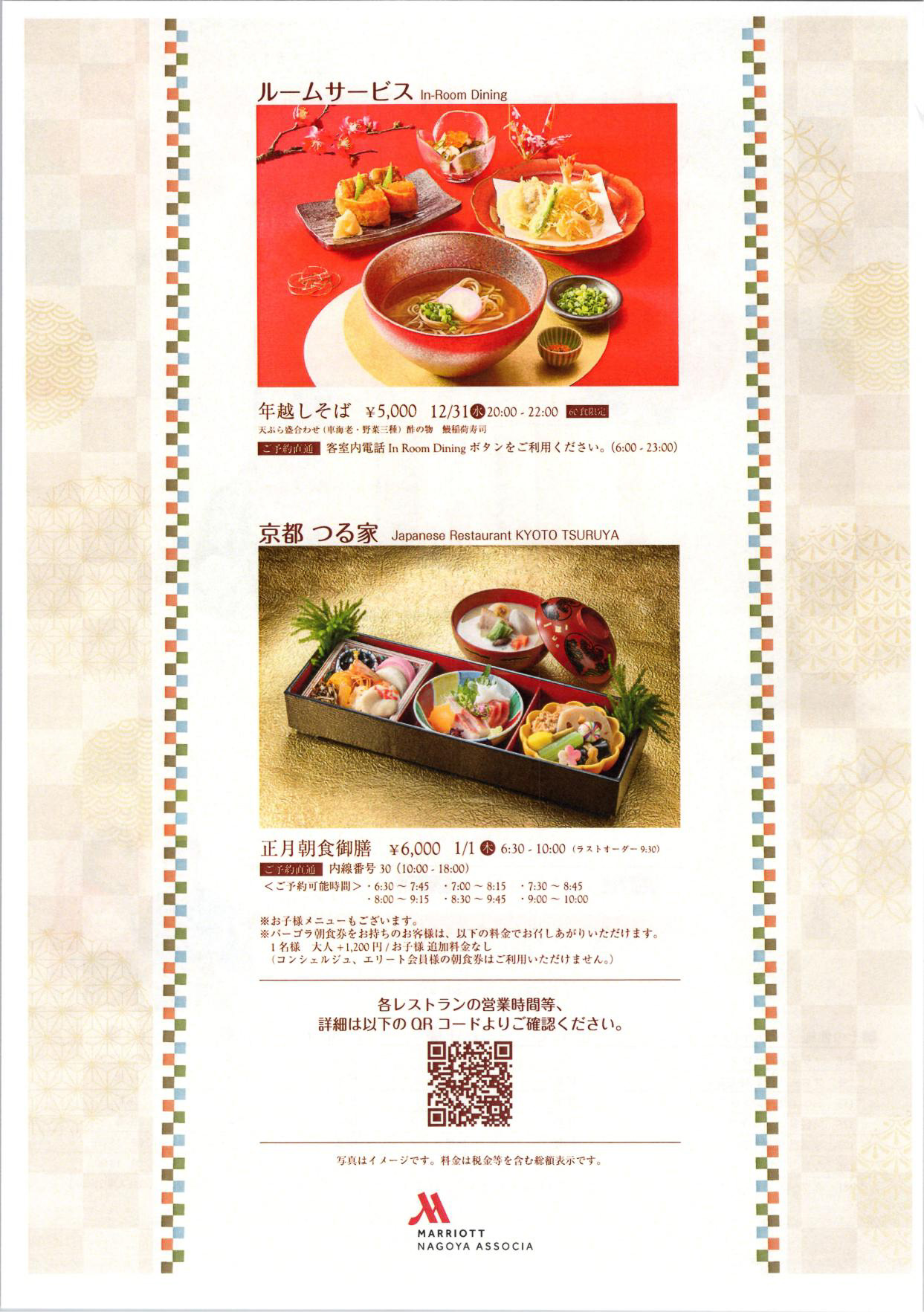
This sheet provided information about the New Year events at the hotel as well as two special dining options.
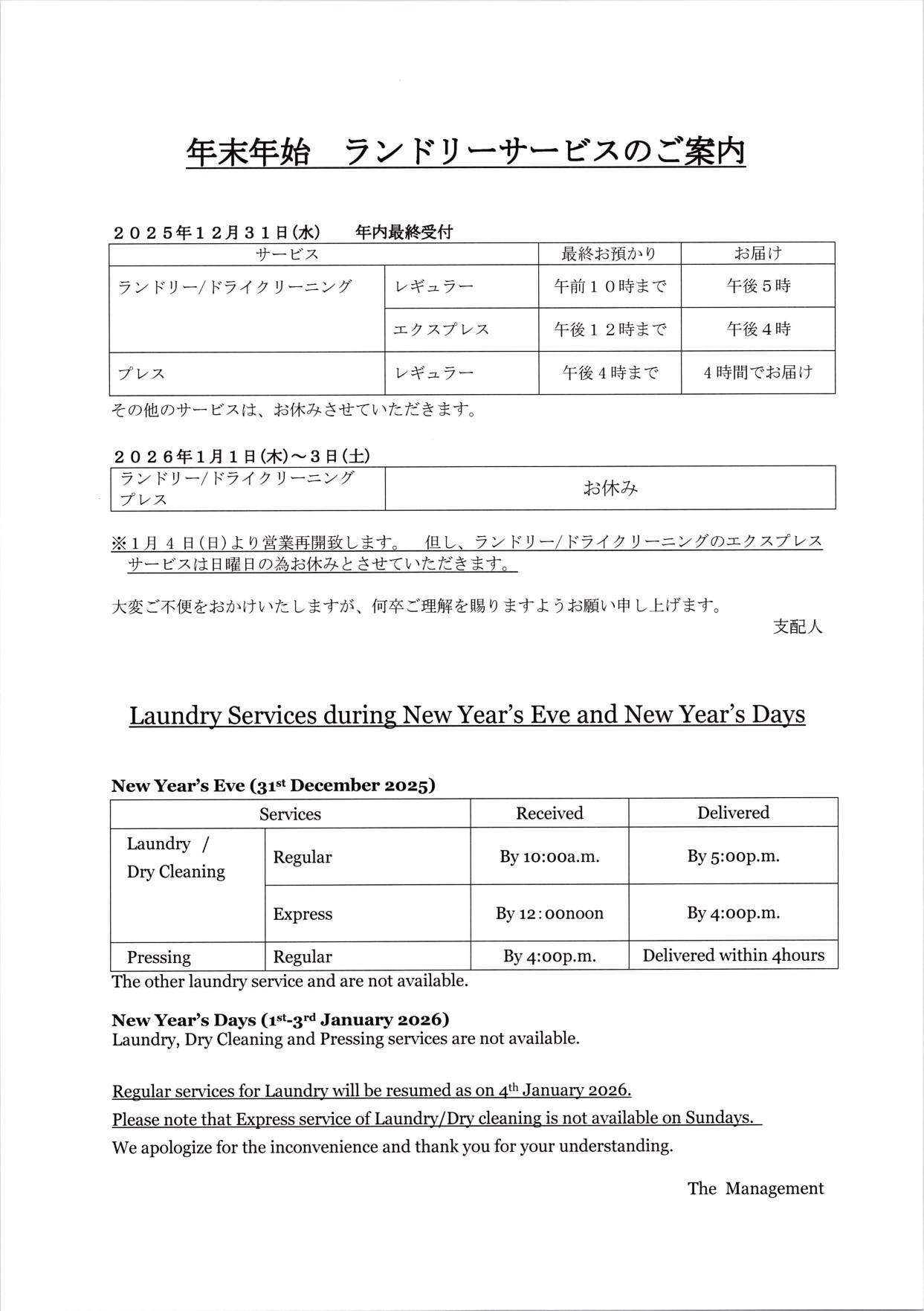
There was also information about laundry services, which are almost never sensible unless you can expense it, during the New Year holiday.
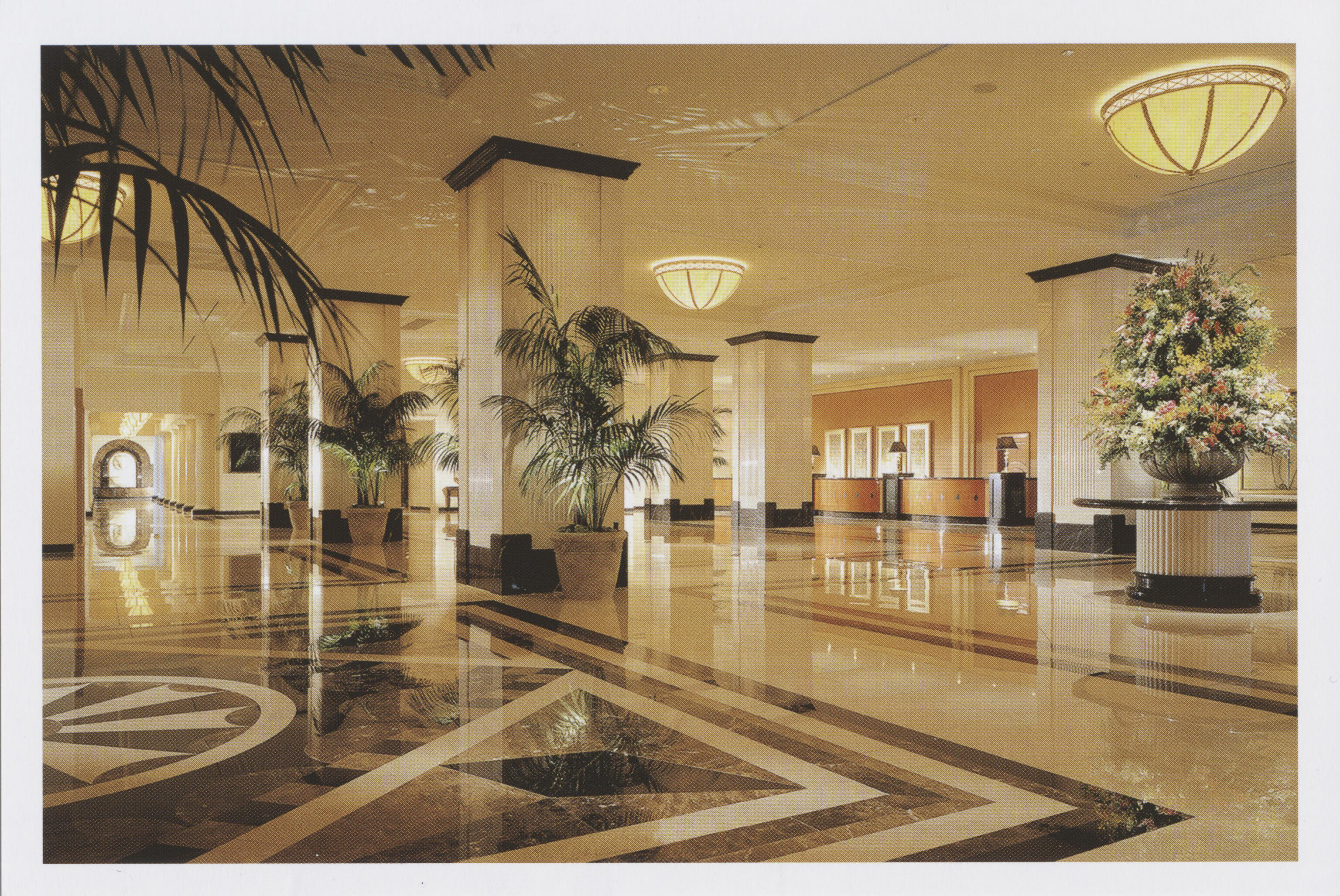
We failed to photograph the lobby. This postcard shows what it’s like. Doesn’t look like apan does it?
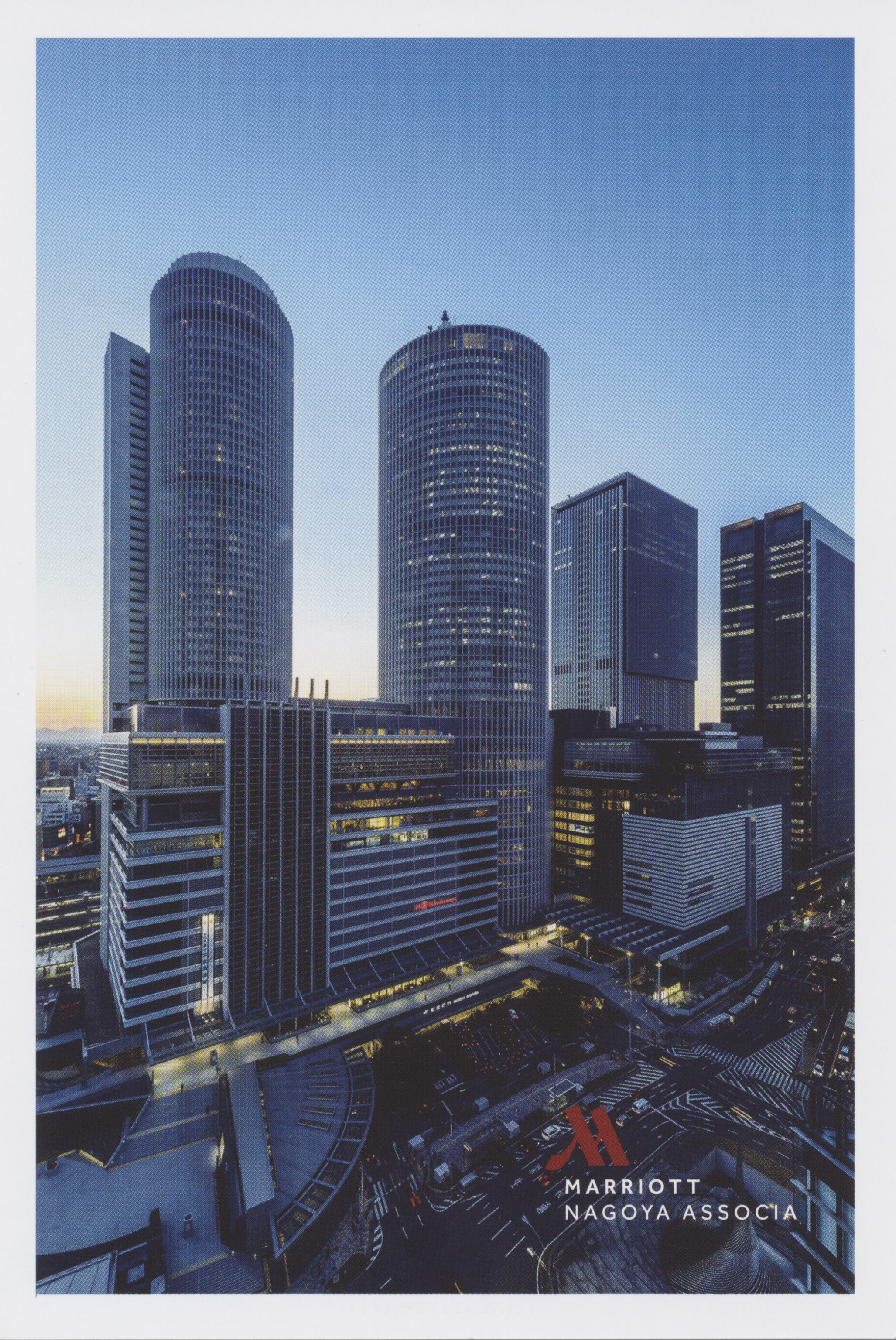
This postcard shows the exterior of the hotel. It is the tower on the left. Maybe.
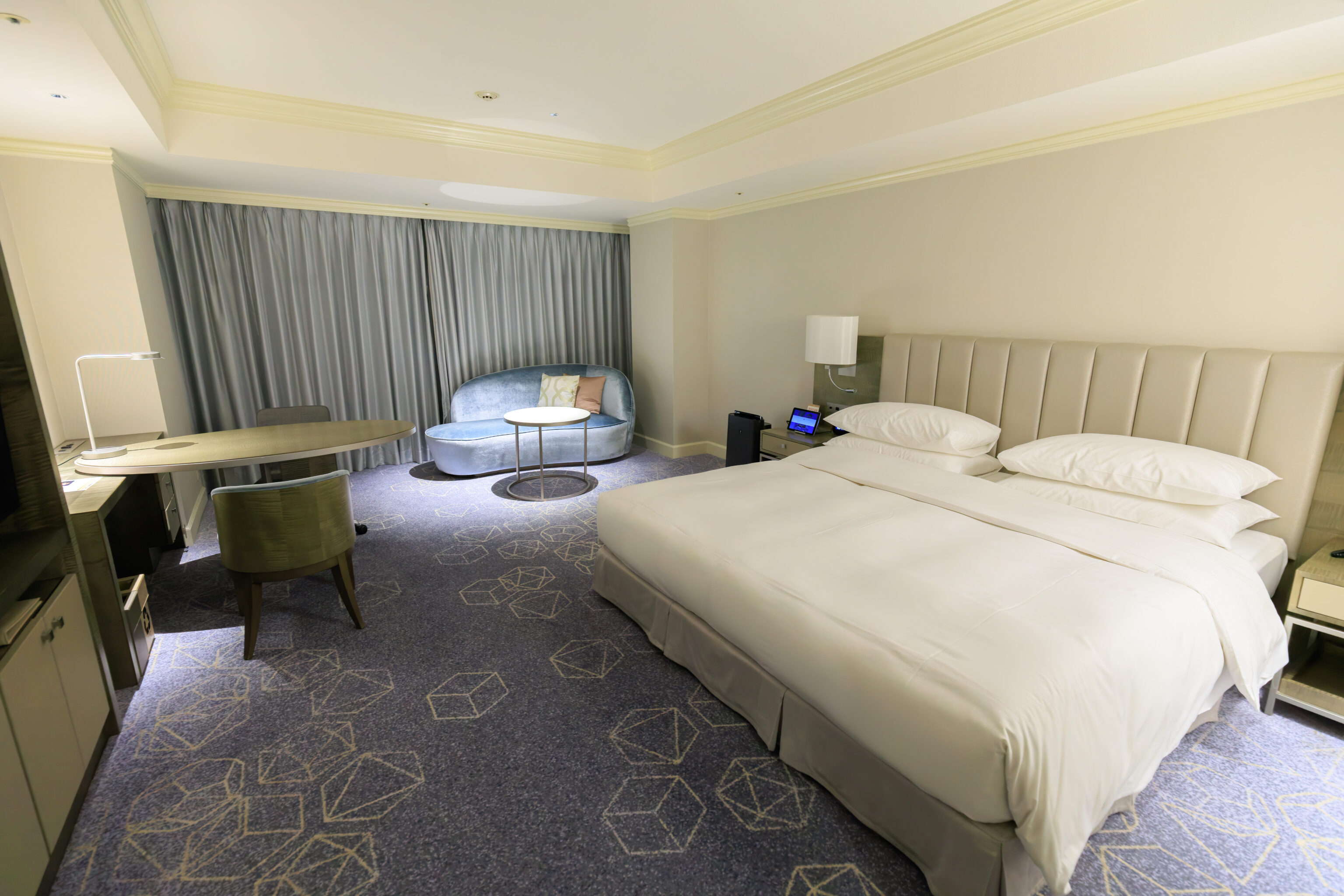
Our room was nice and spacious. The room has a more modern look and feel compared to my previous stay.
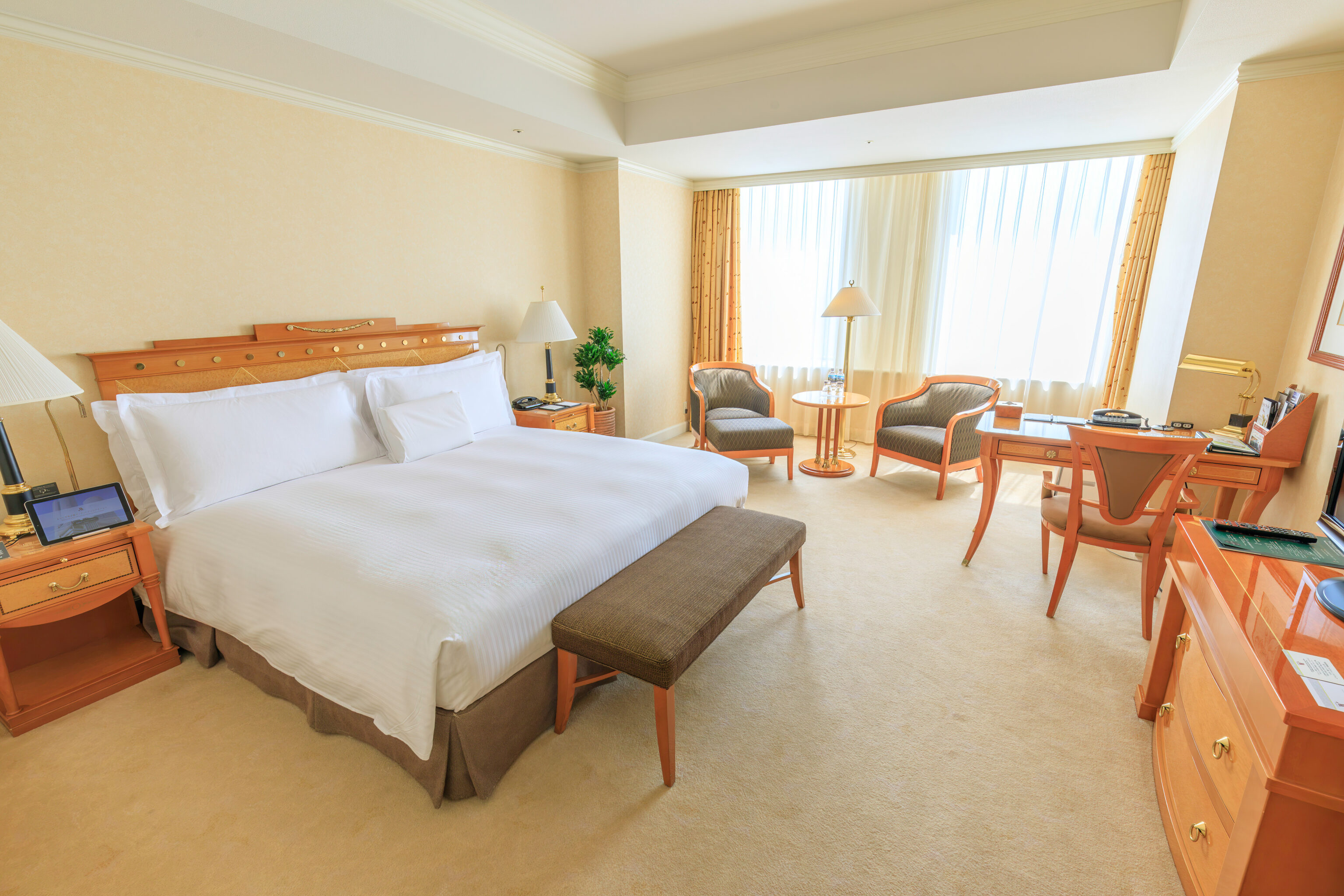
The older room designed used plenty of glossy wood furniture.
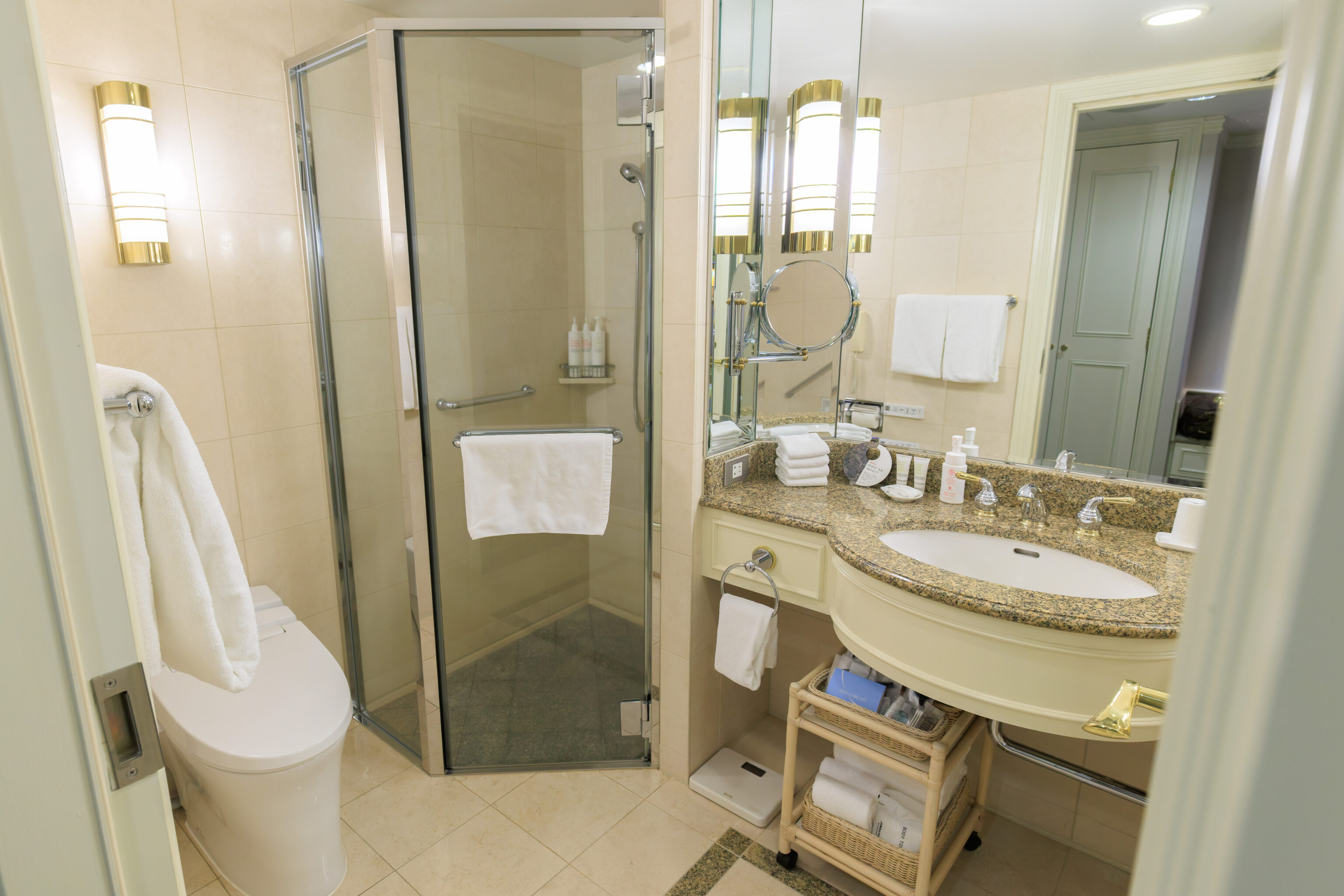
The bathroom was largely unchanged, other than having a newer toilet.
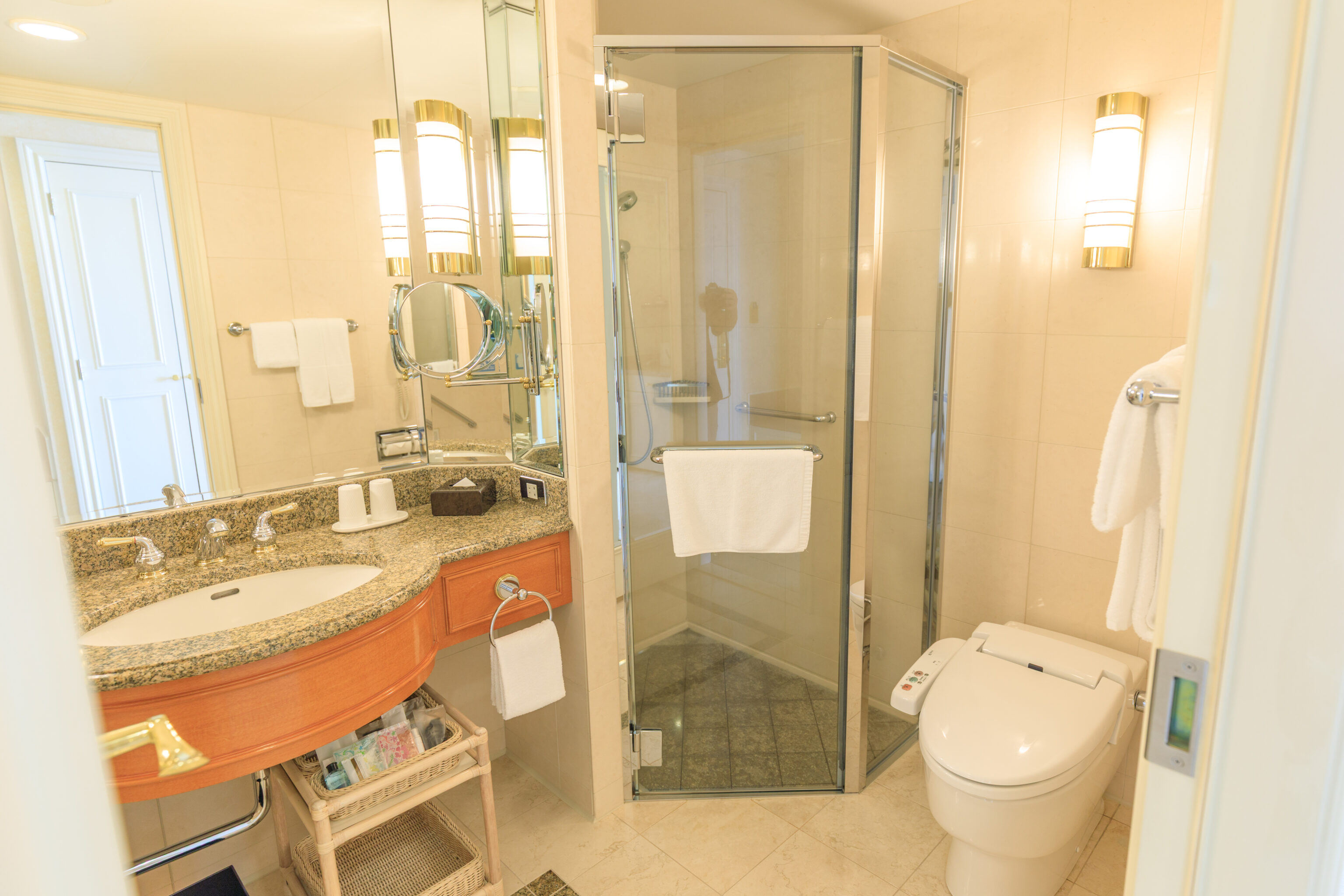
Basically identical!
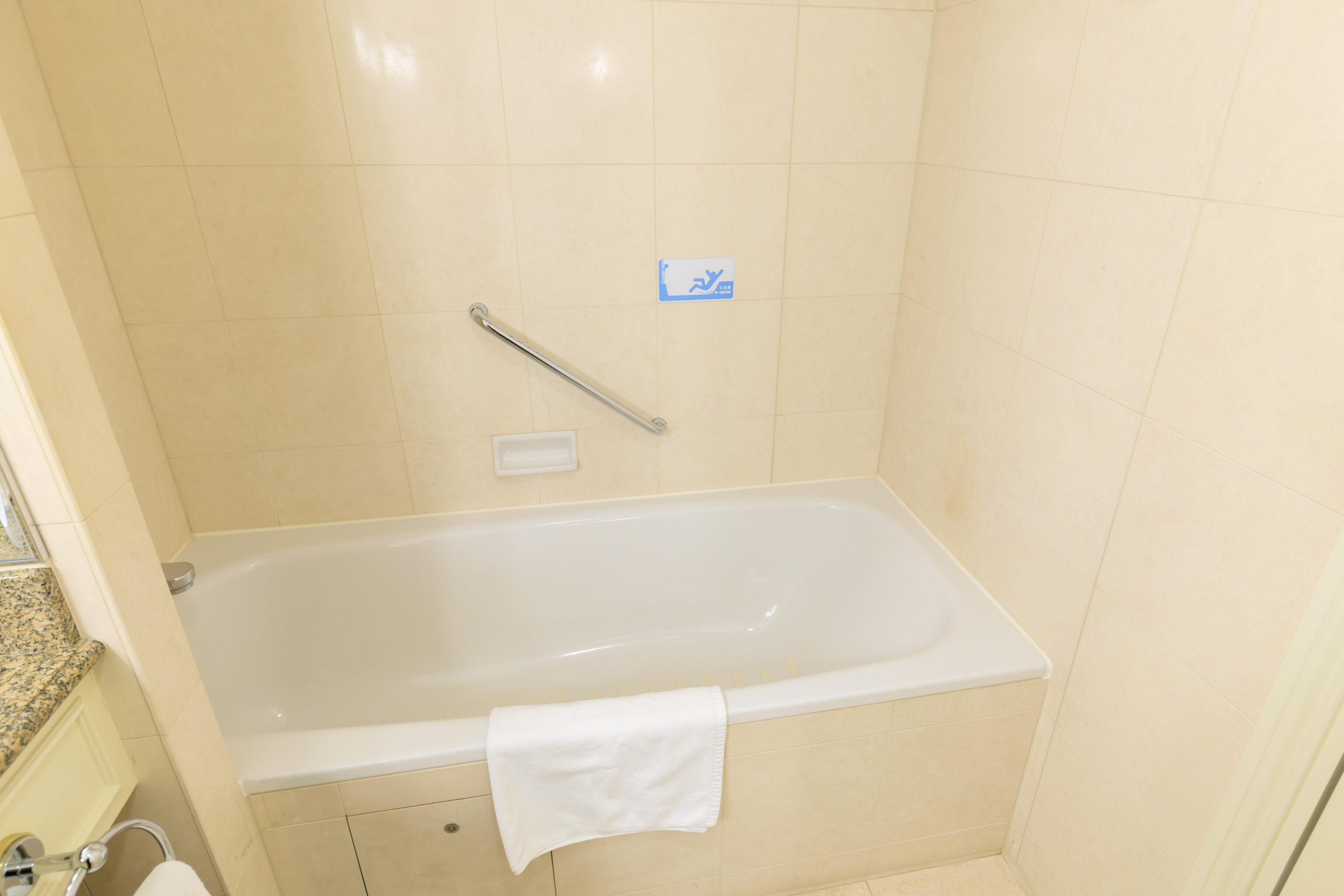
It was nice having a bathtub in this room though!
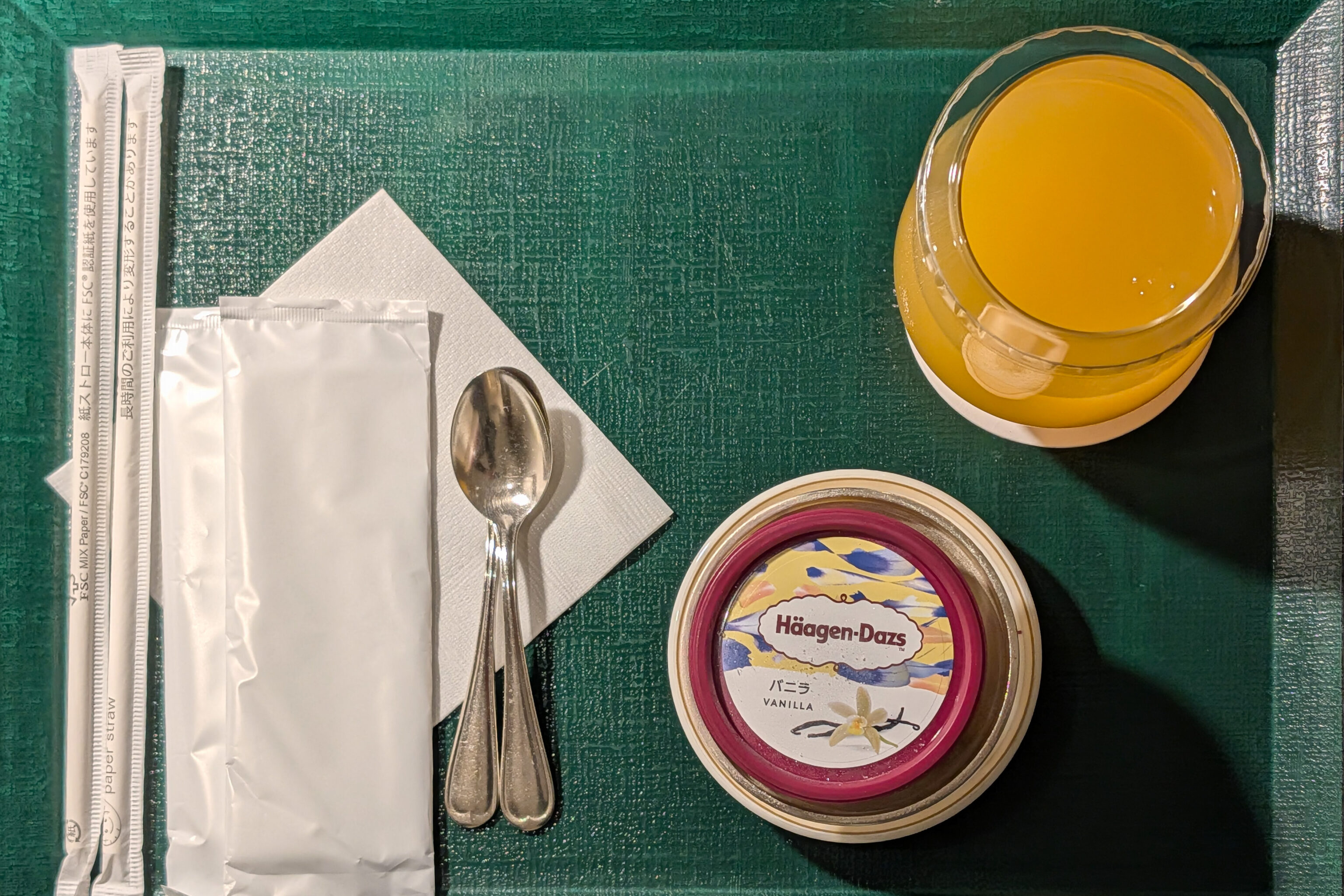
We got ice cream and orange juice as the welcome amenity. The ice cream turned out to be a tiny bit of Häagen-Dazs. The Häagen-Dazs here is made from Hokkaido cream and is excellent. There is basically no similarity to American Häagen-Dazs other than the branding.
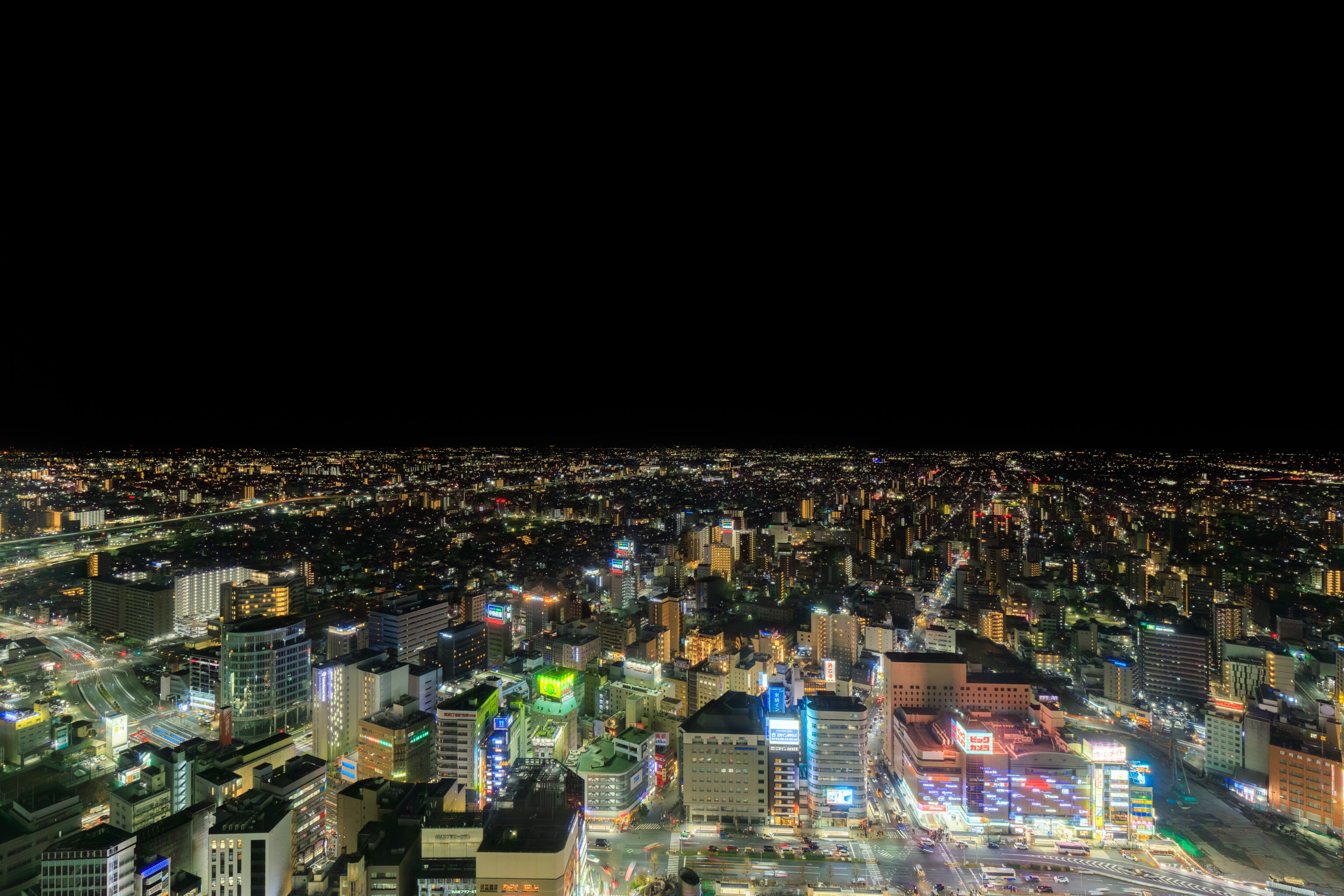
The night view from our room high up above everything else!