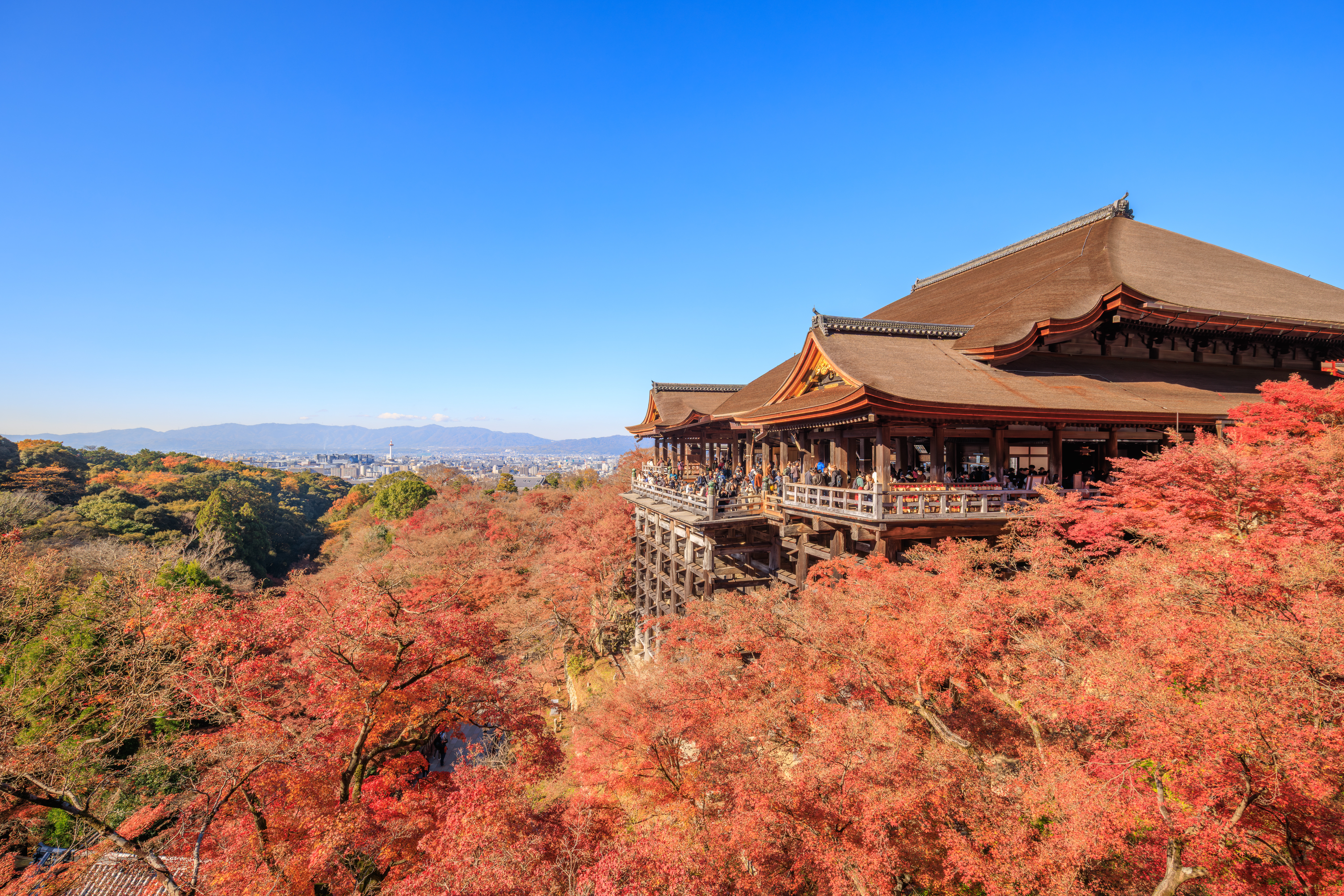
After waking up at the Courtyard, we headed over to Kiyomizu-dera to see the fall foliage and the special viewing of the garden at Joju-in. We then had gyukatsu for lunch and headed over to Heian-jingu to take a look around the shrine and garden. We ended the day with excellent parfaits at Gion Tsujiri before walking back to the hotel via Nishiki Market.
Morning
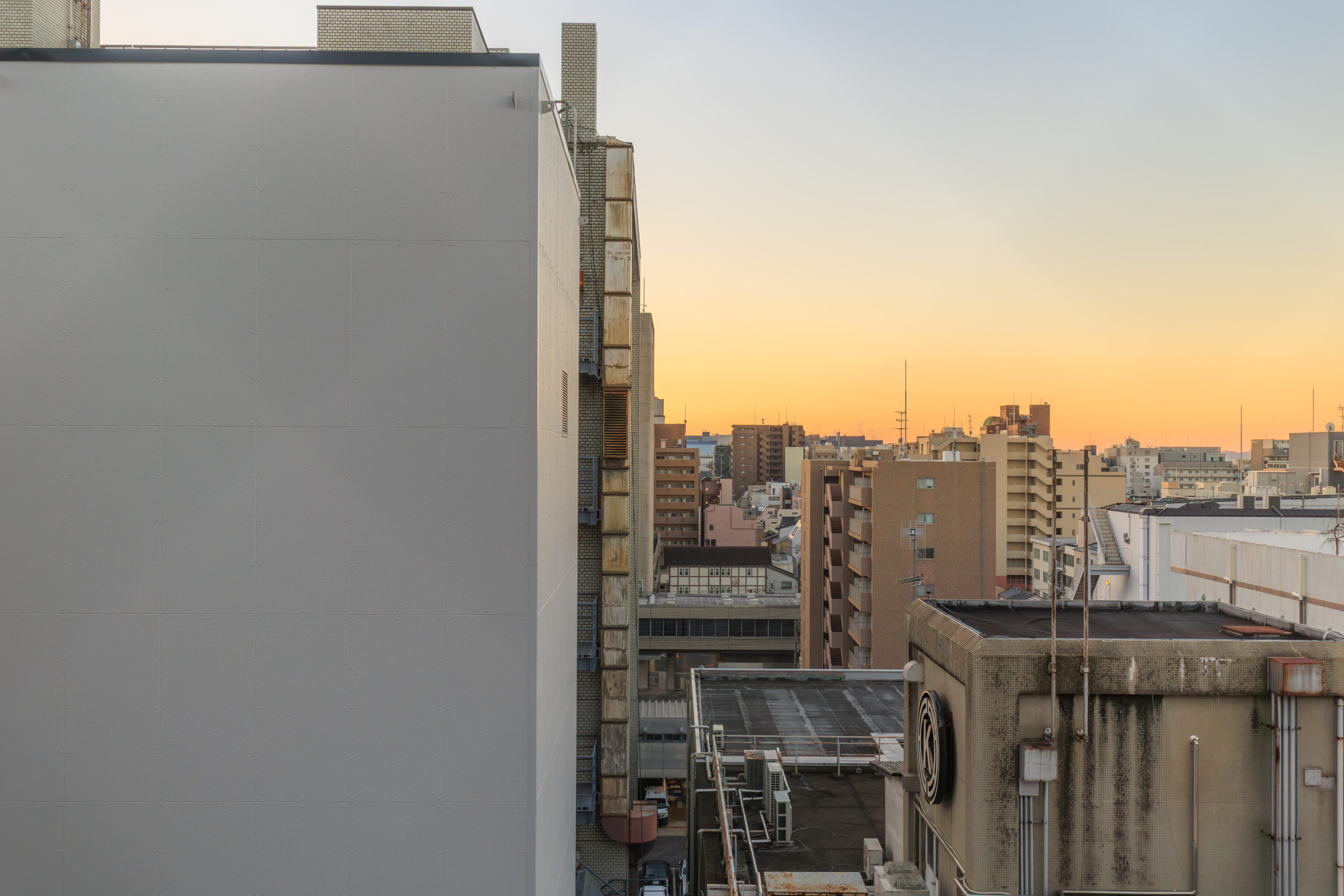
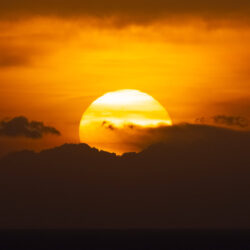
We managed to catch a glimpse of sunrise in the morning as we woke up at the Courtyard by Marriott Kyoto Shijo Karasuma. The view from our room wasn’t particularly great but at least we could see the sky!
Normally, at a Courtyard hotel, we would have breakfast using the $10 per person breakfast credit given to Marriott Bonvoy Platinum level members and above. There is usually something that can be ordered in that price range. At some foreign hotels, like the Courtyard next to Shin-Osaka Station, there is also complimentary lounge access.
At this property, the full buffet breakfast seems to cost ¥3,400. The lowest cost option seems to be the French breakfast at ¥1,700. The breakfast benefit only offers ¥1,000 per person, which at current exchange rates is roughly $6.50 USD. The breakfast benefit here is largely worthless. We did know this going in though so it was not a surprise.
Generally, paying for hotel breakfast is a poor value at a place like this unless your only goal is to fill up on the buffet. There’s plenty of much better food to be had during other times of the day, particularly in Japan where food standards are high and prices are cheap.
The view of a wall as we headed to the elevators.
So, we opted to just visit 7-Eleven. We bought an spicy roe onigiri for a tiny breakfast. Unfortunately, they didn’t have the black pepper beef onigiri that we really liked on past visits to Japan. Hopefully, they were simply out of stock.
After our quick breakfast, we headed to a nearby bus stop to take the bus over to visit Kiyomizu-dera.
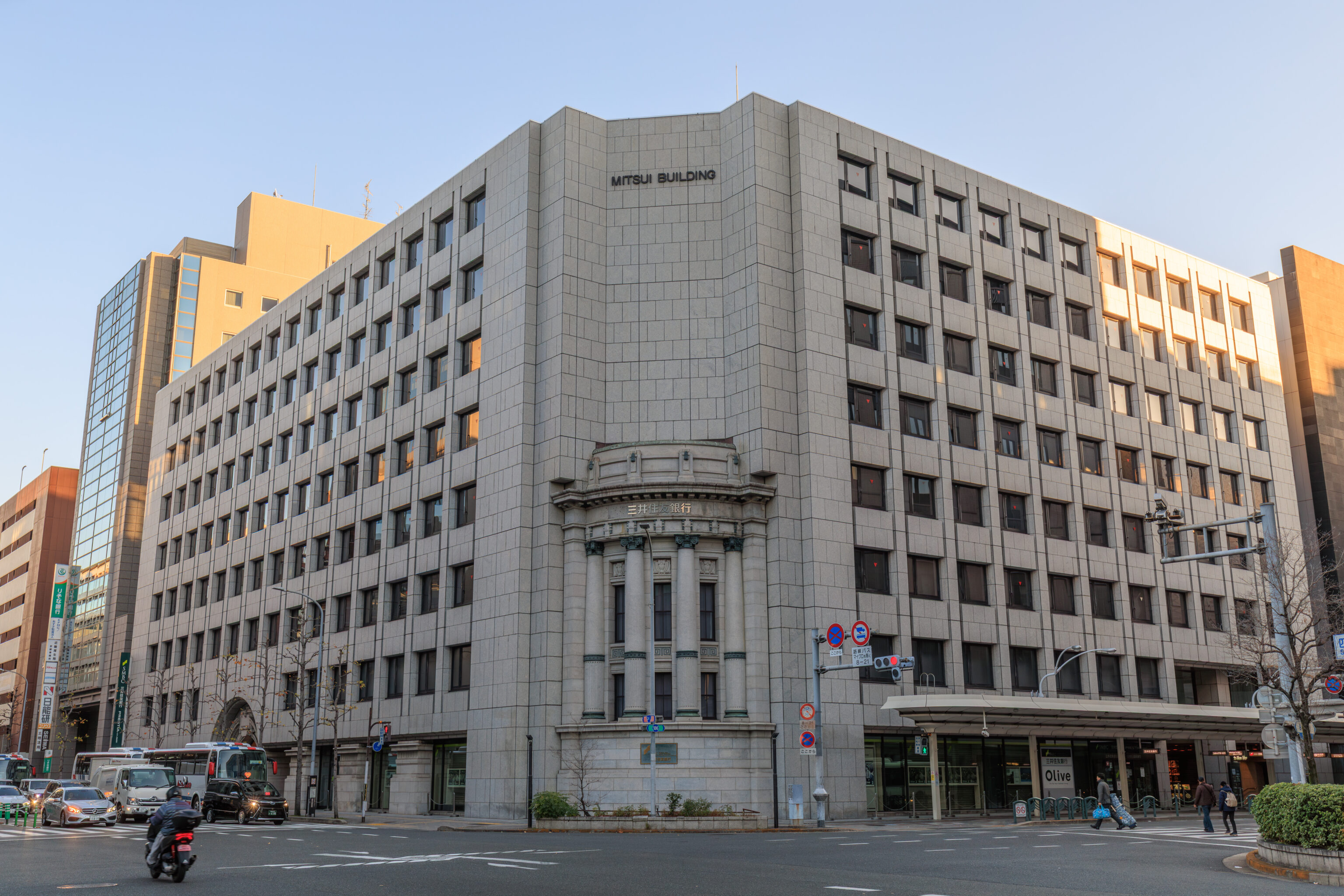
This Mitsui Fudosan building has a historic looking facade on its southwestern corner. The building was built in 1984 with no mention of any historical elements.
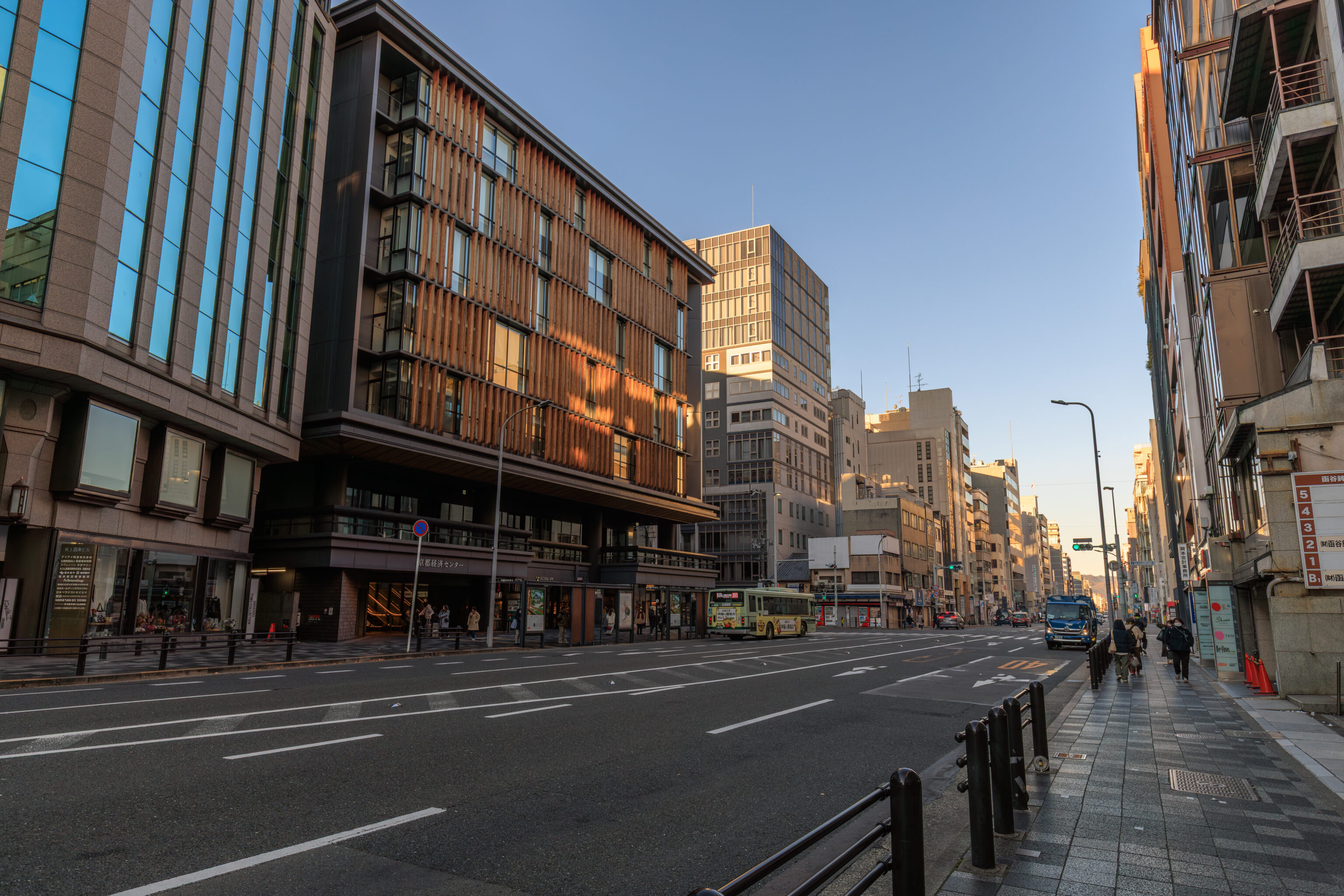
We waited here, above the Shijo subway station, for the next bus.
Kiyomizu-dera
The bus routes that go near Kiyomizu-dera all stop on the closest major road to the temple, very roughly one kilometer away.
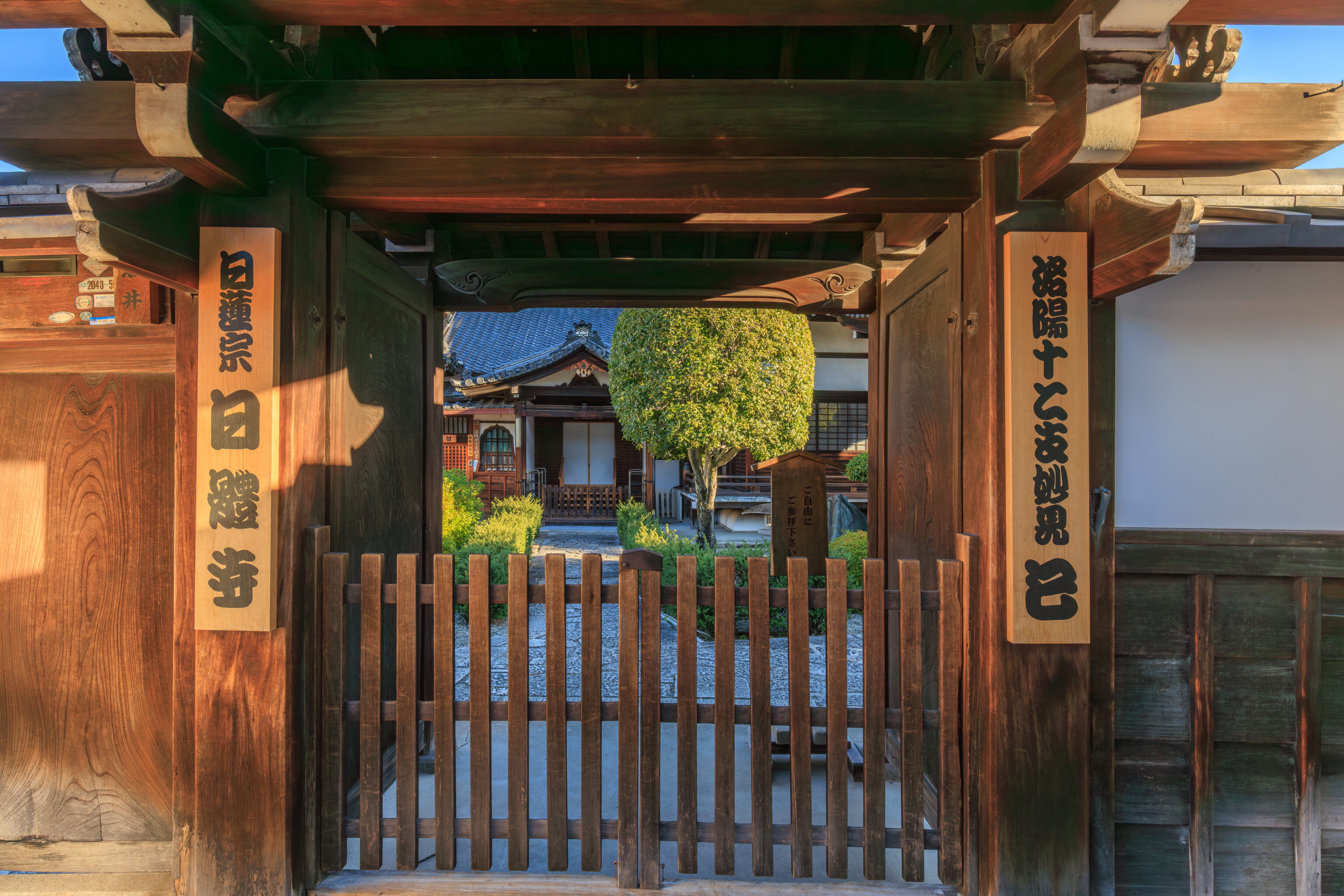
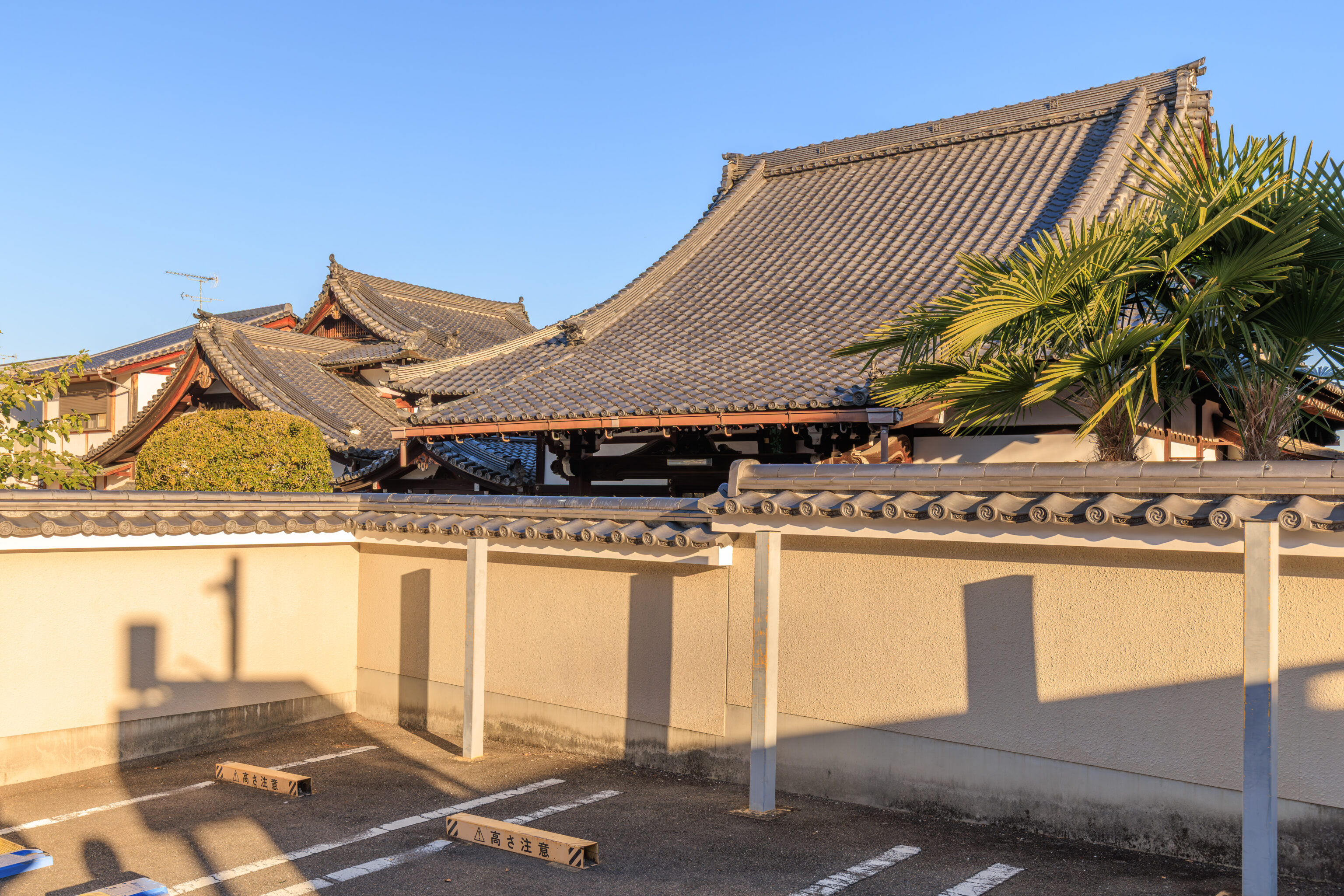
This temple that we walked by is Nittai-ji. Its one of many temples in Kyoto that aren’t famous like our destination, Kiyomizu-dera.
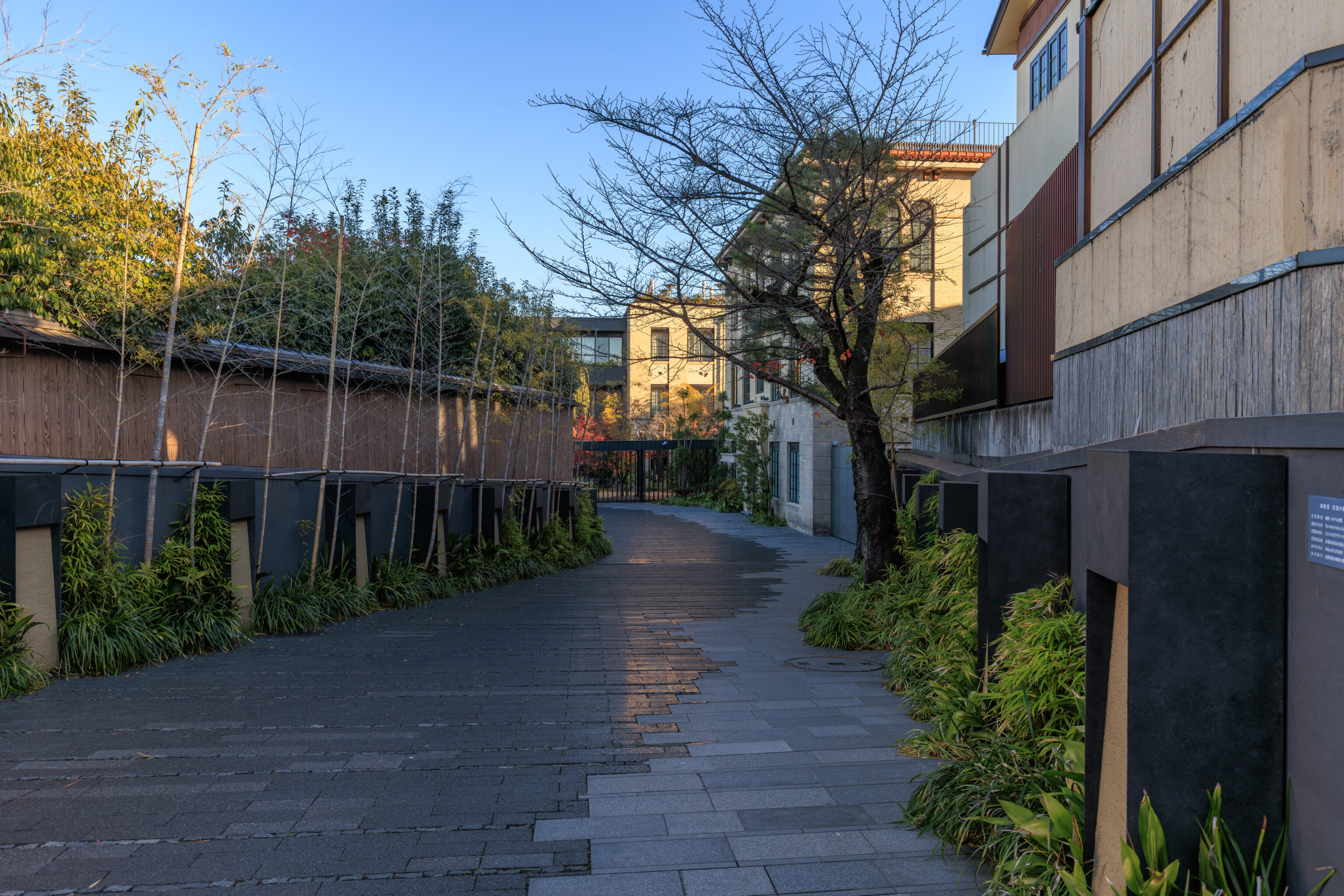
We also walked by this entrance to The Hotel Seiryu Kyoto Kiyomizu, a luxury hotel by the Japanese Prince Hotels company.
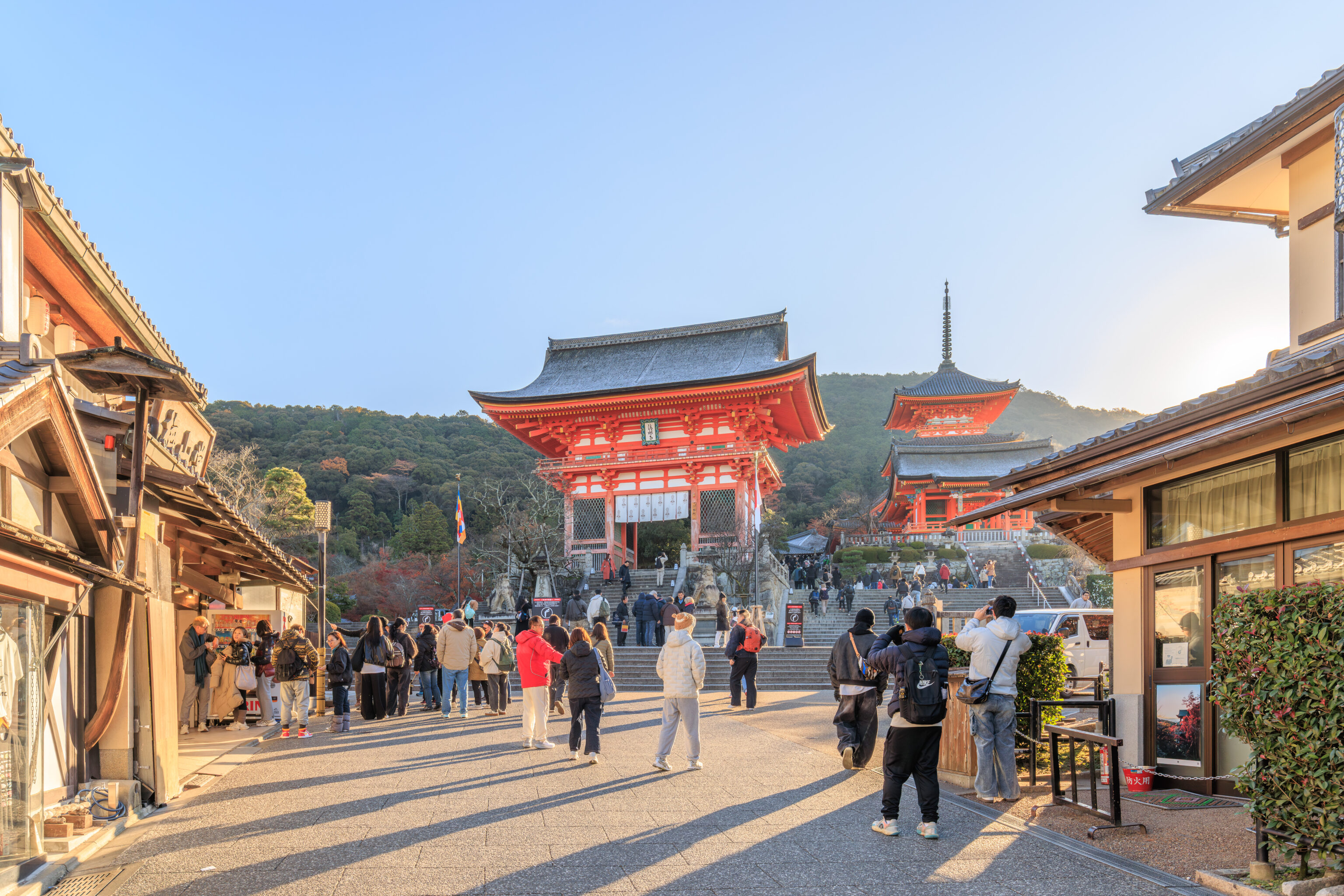
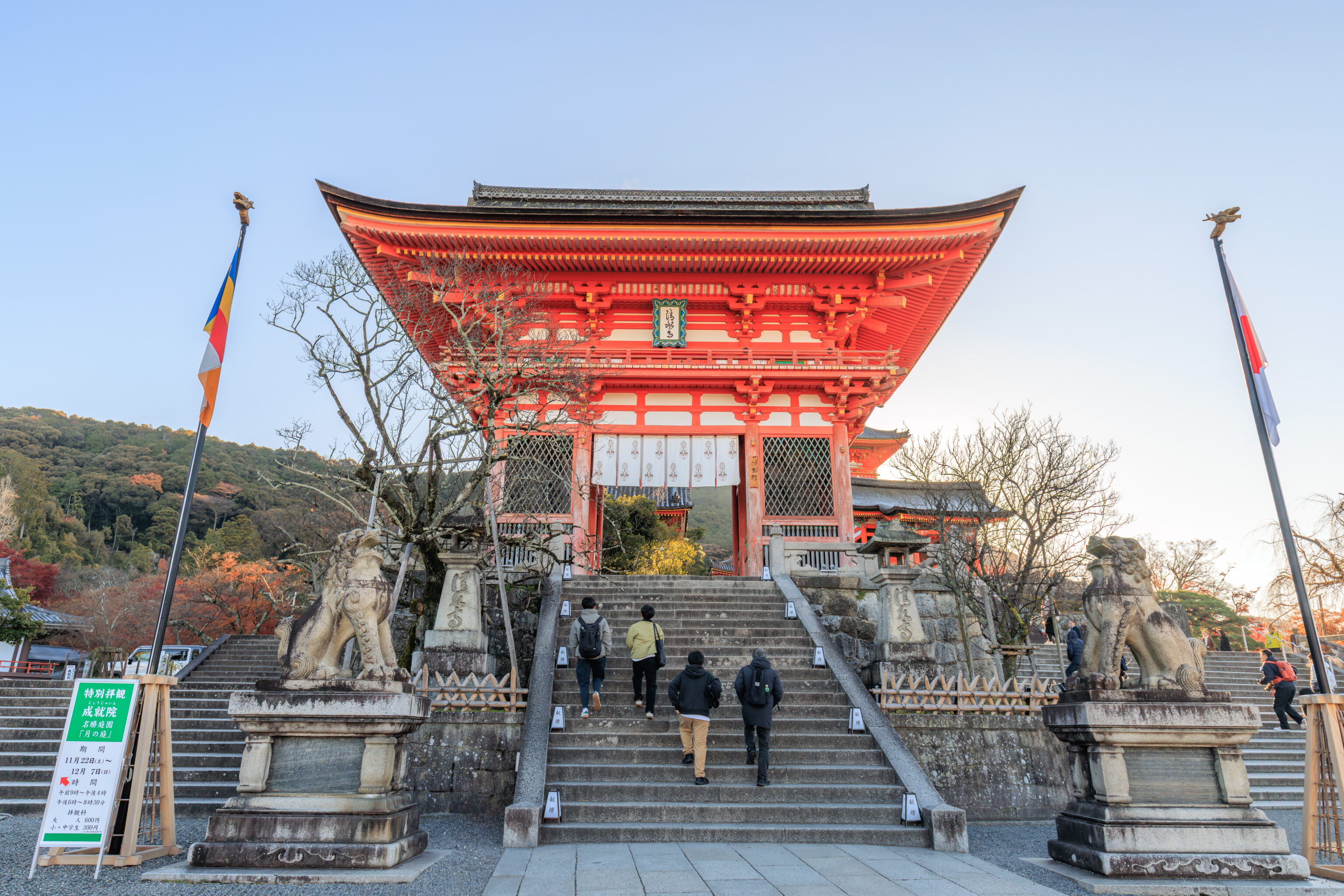
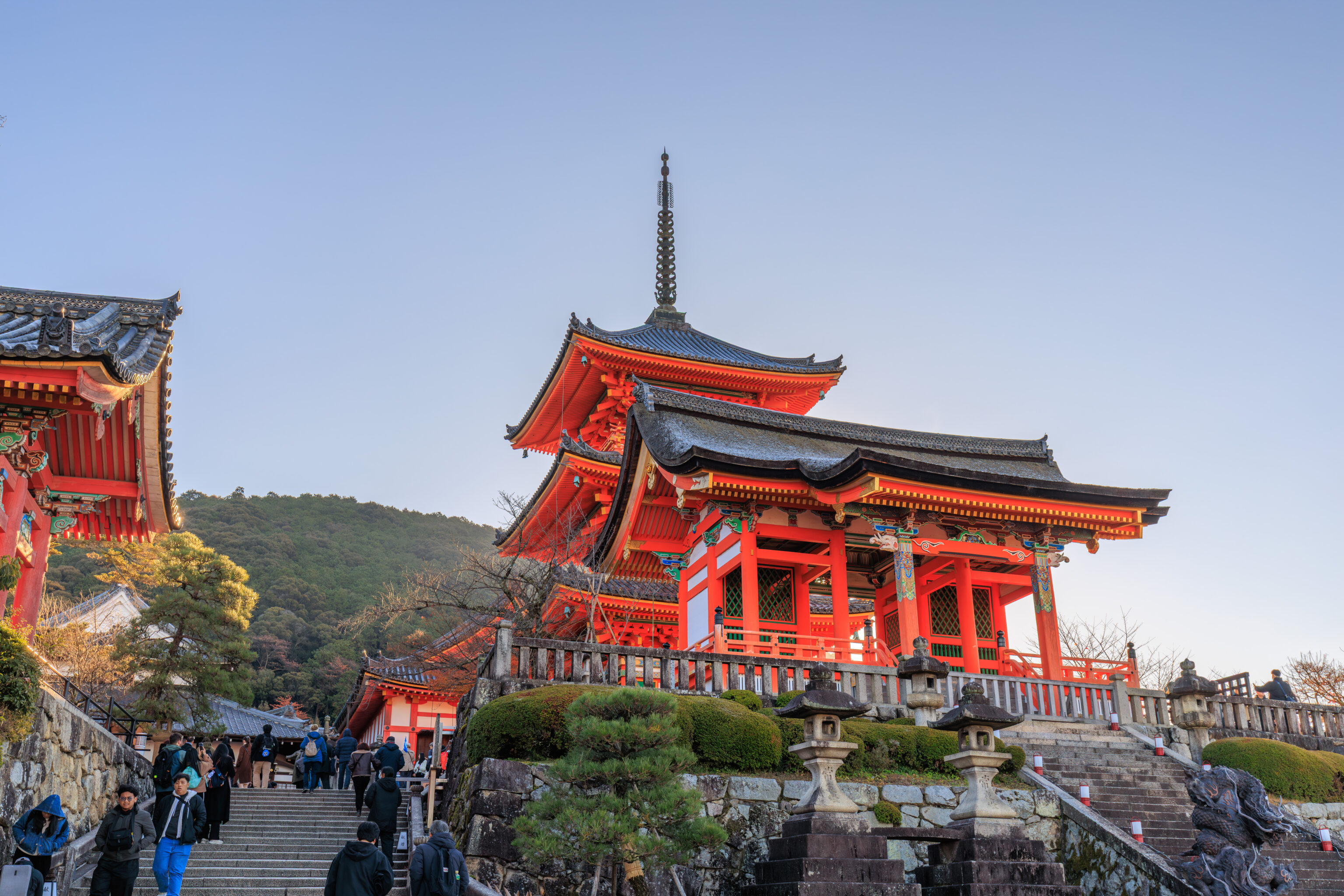
We walked up to the entrance to Kiyomizu-dera just before 8:30am.
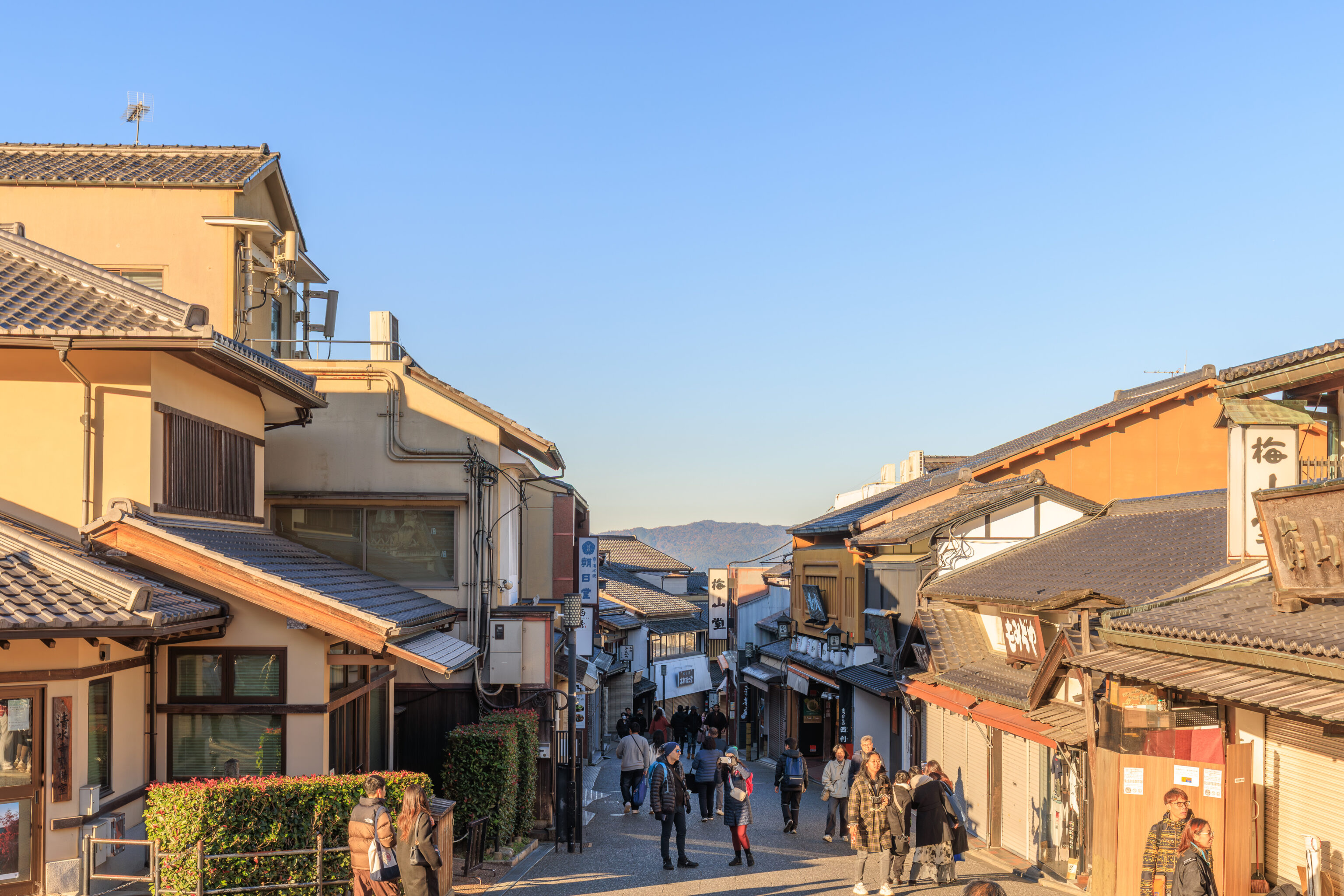
The view looking back to the west towards the road we arrived on. Although its not very busy this early in the morning, there were still plenty of people around. It will be a zoo later on in the day!
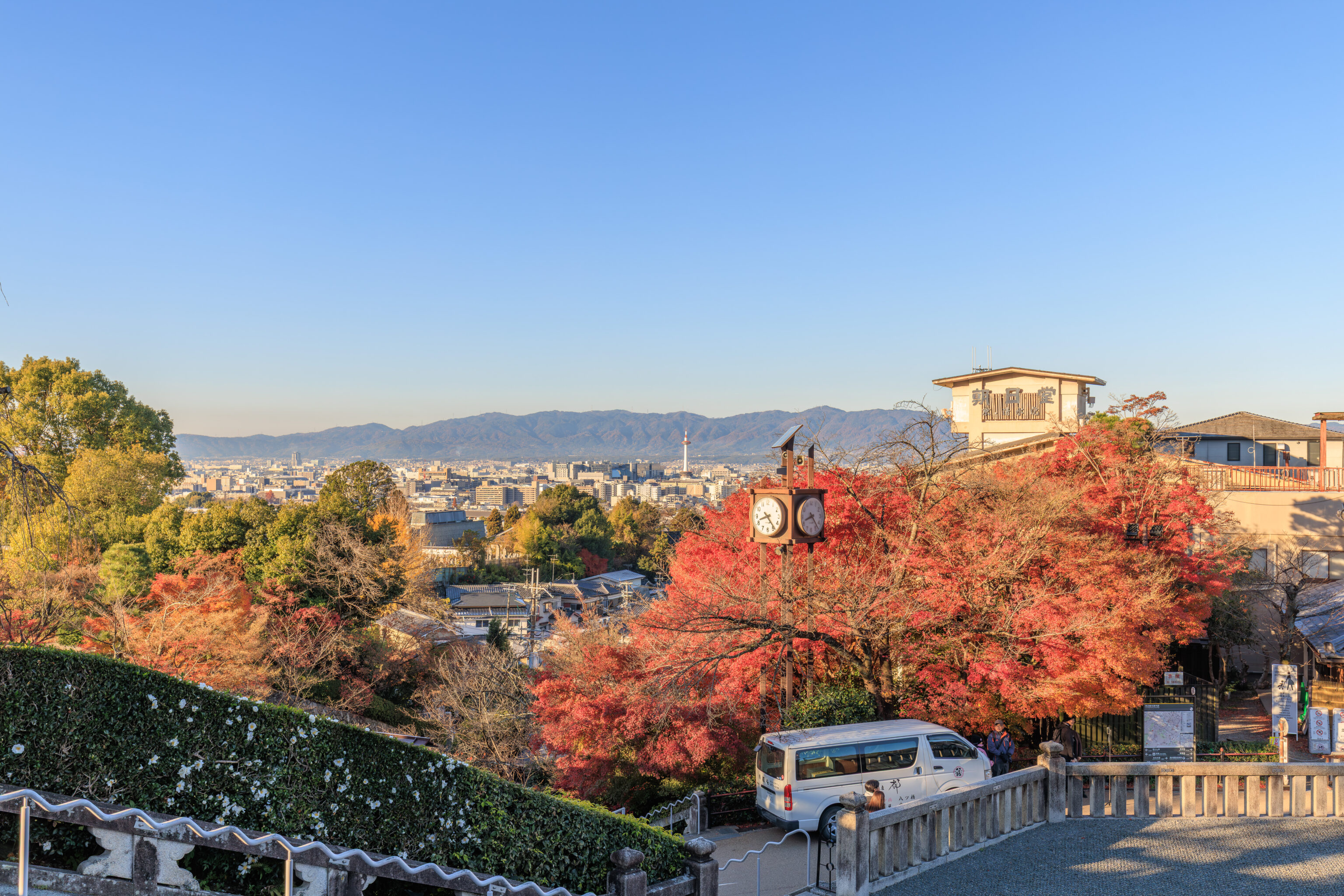
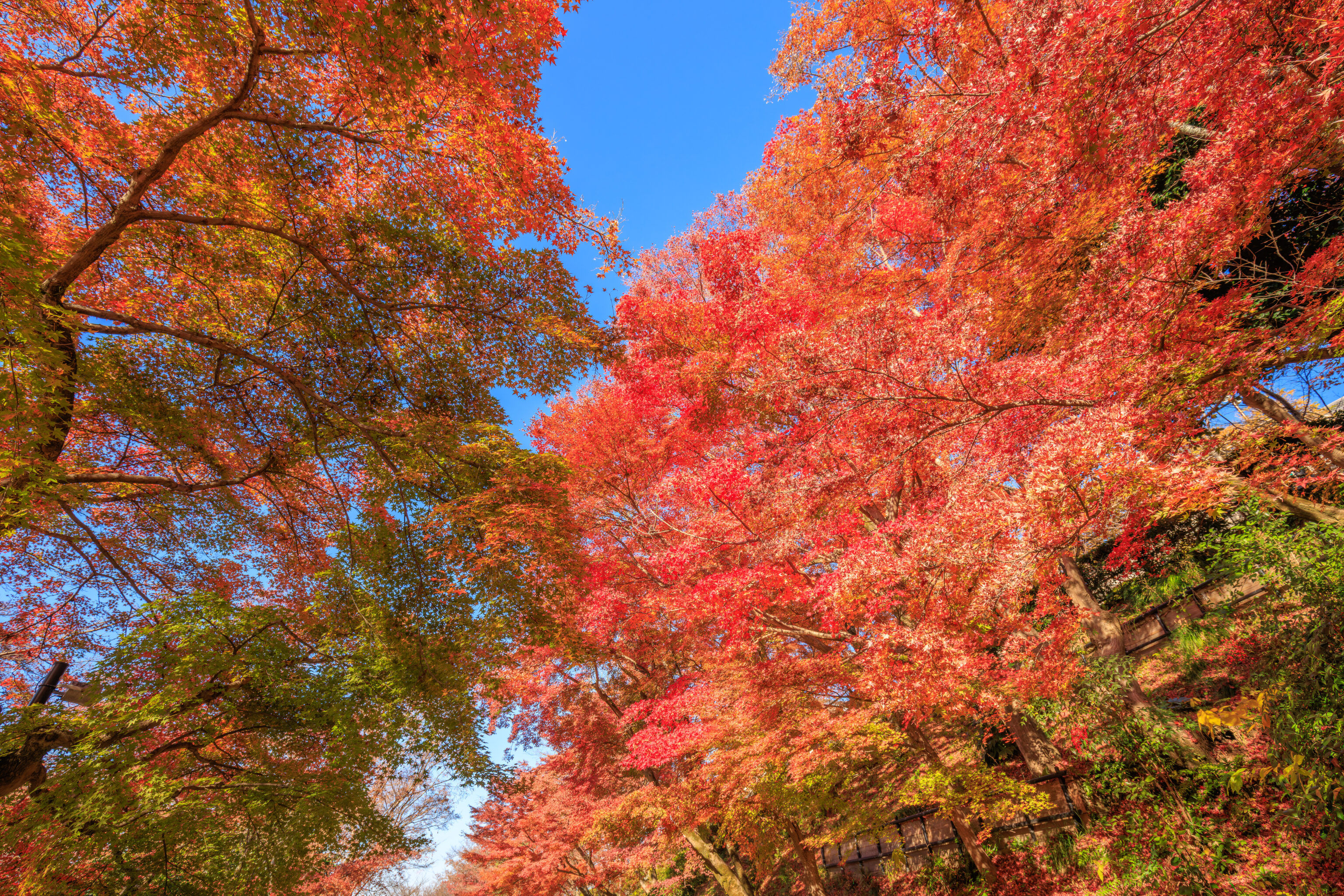
We partly came here to see the fall foliage. However, we’ve been here before during this season. The primary reason is to visit the garden at Joju-in. It is only open during very limited dates each year. We had some time before it opens for the day so decided to walk through Kiyomizu-dera first.
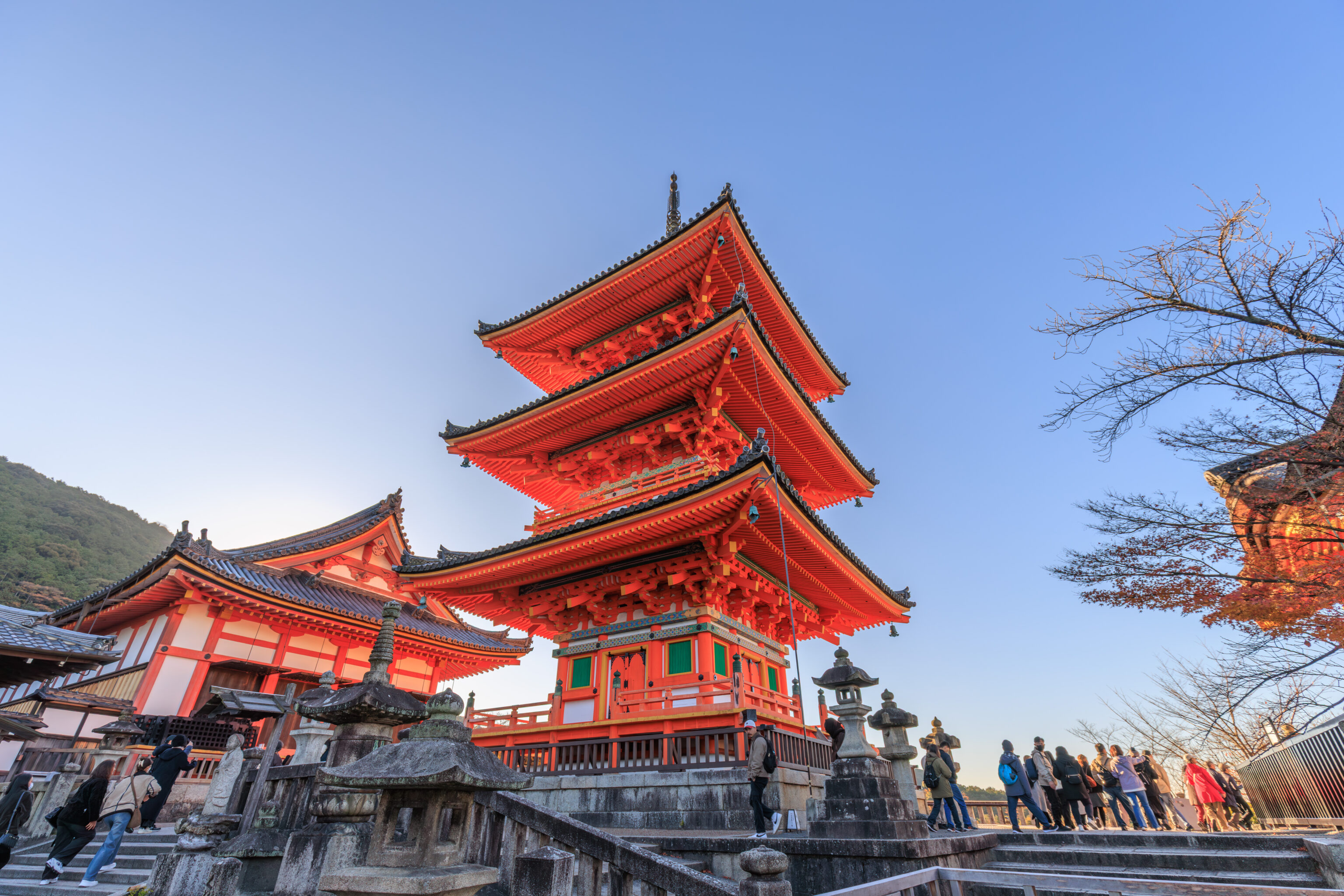
We continued on into the temple grounds. The ticket office is just beyond the 三重塔 Three Story Pagoda.
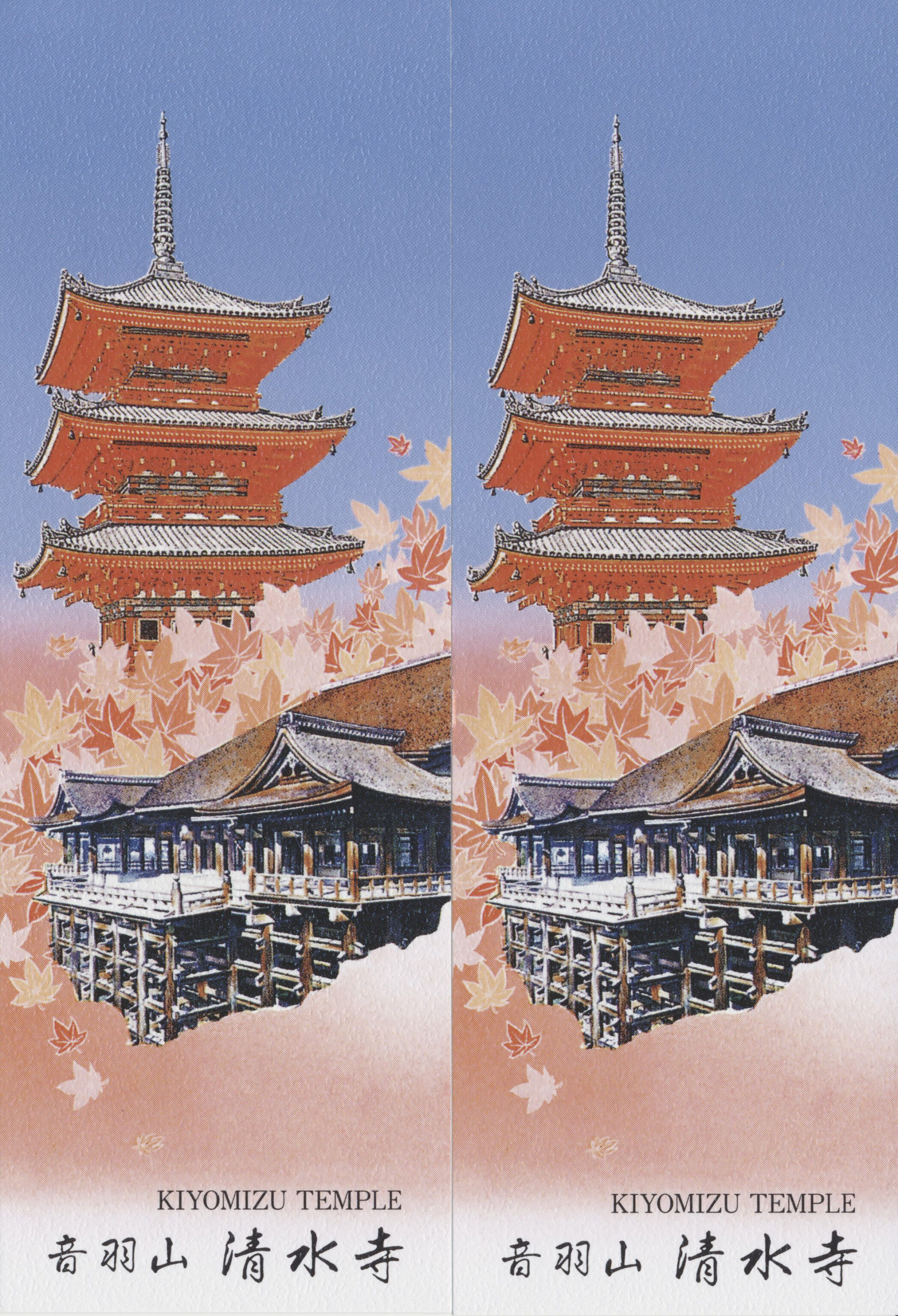
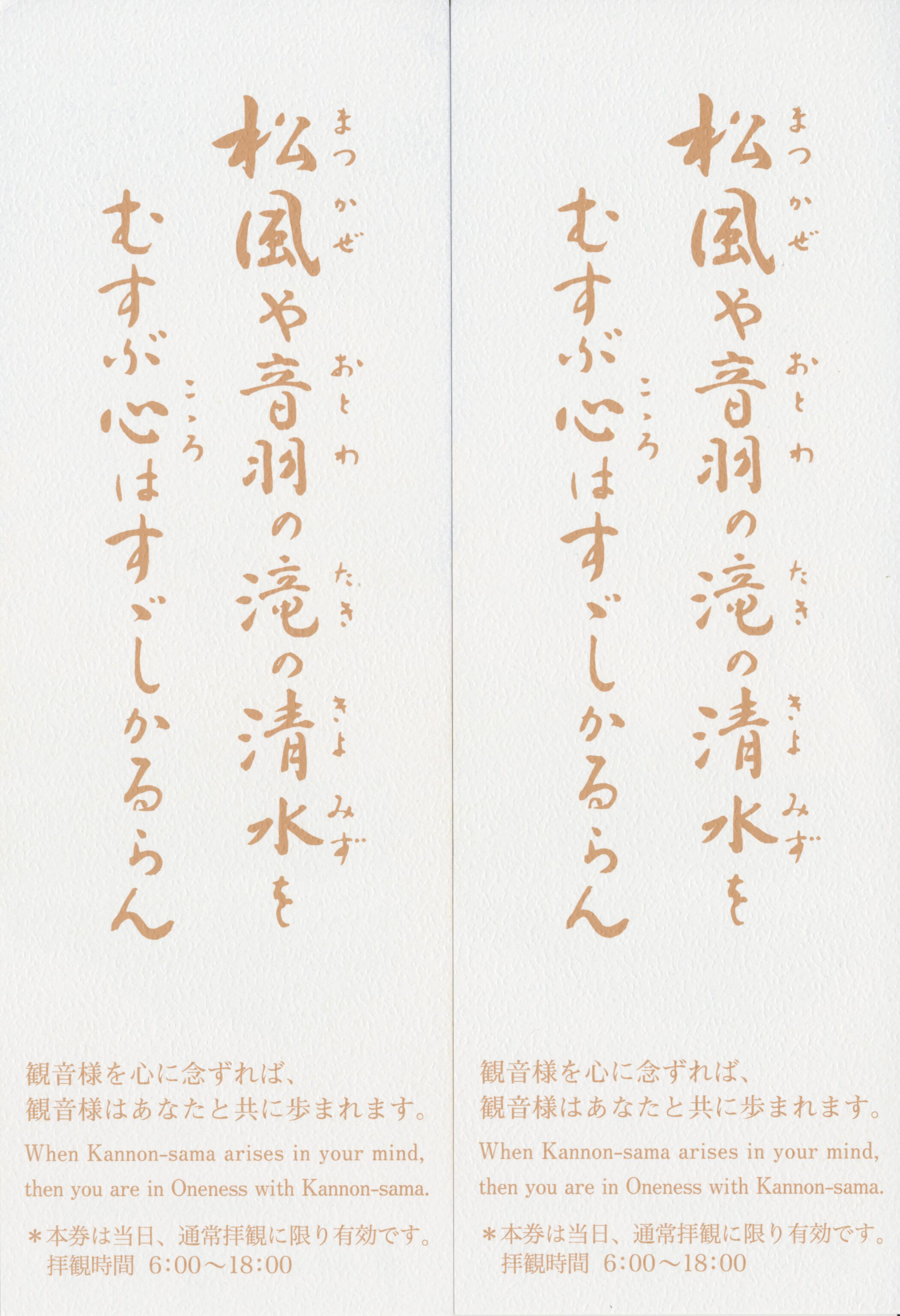
The pagoda is featured on the entry tickets!
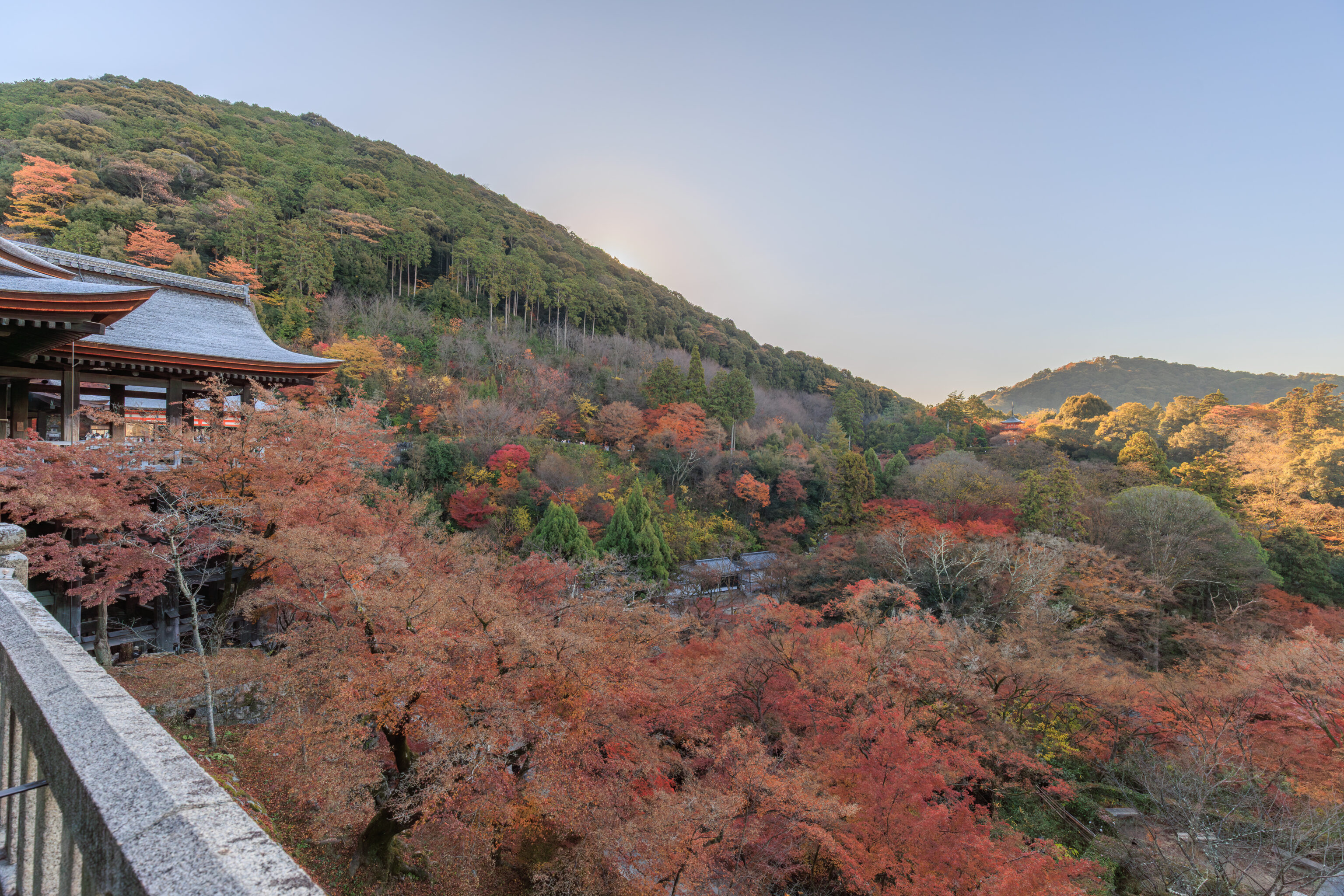
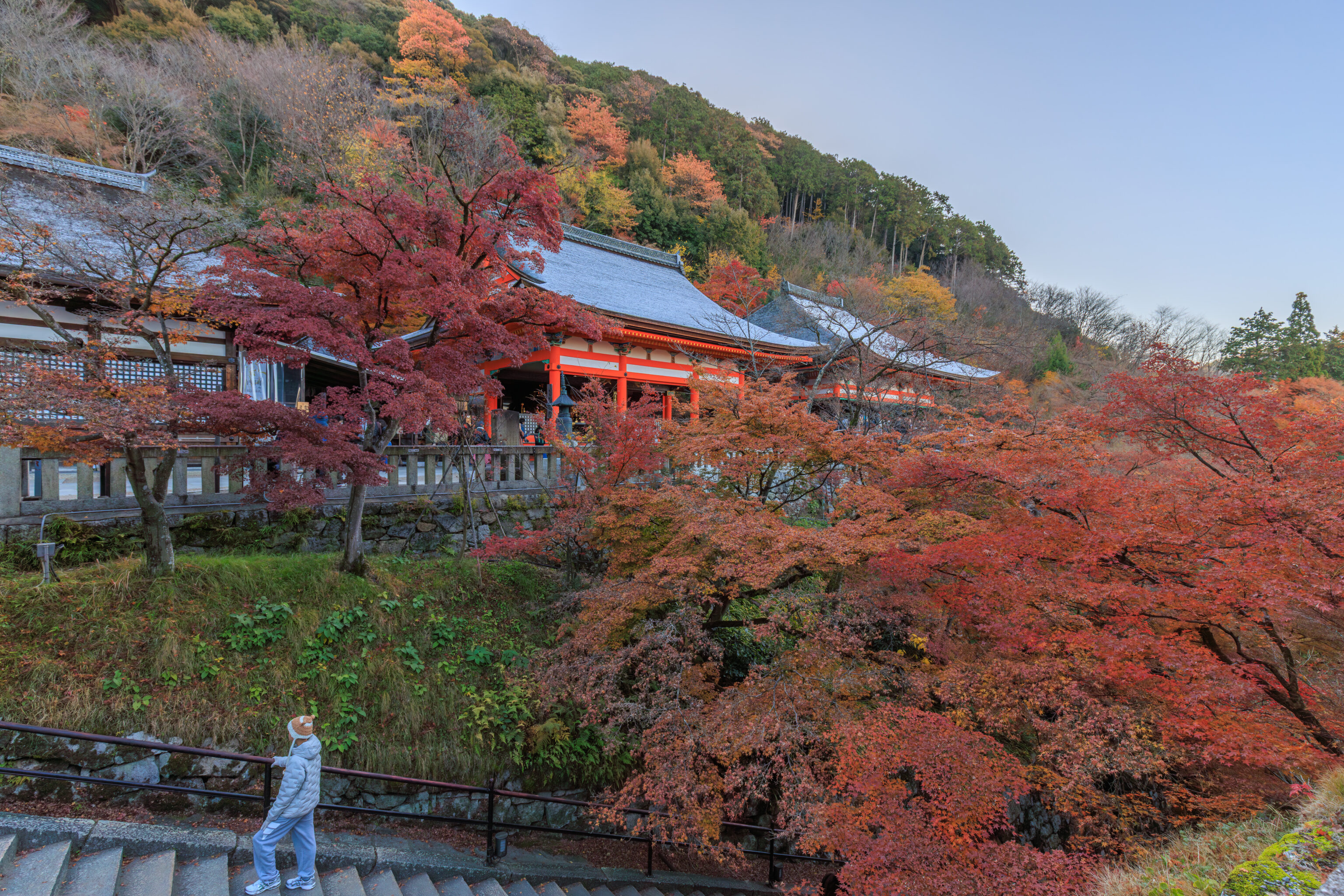
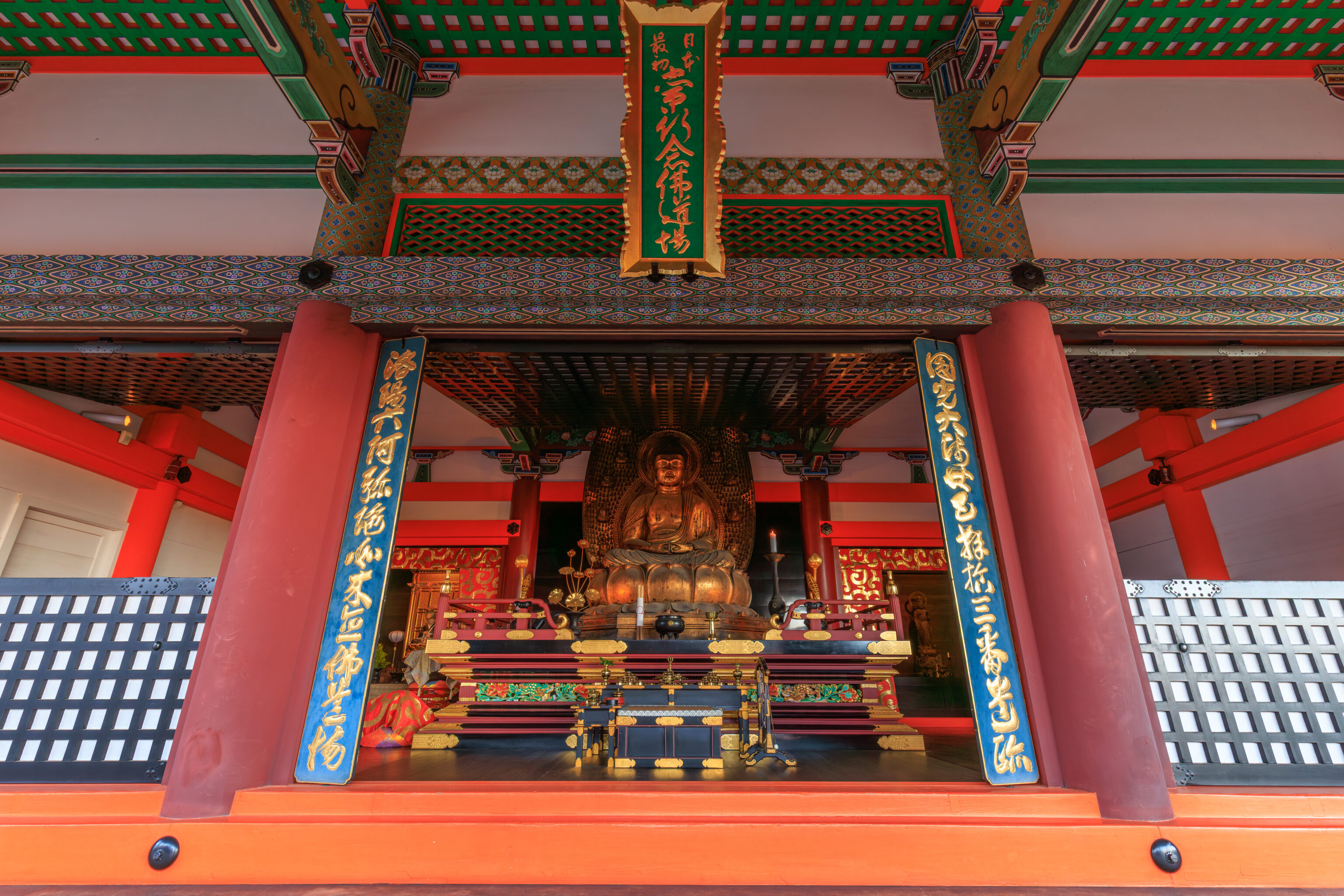
We headed towards the 本堂 Hondo (Main Hall), which overlooks numerous momiji (Japanese Maple). It was immediately apparent that the foliage here was well past peak.
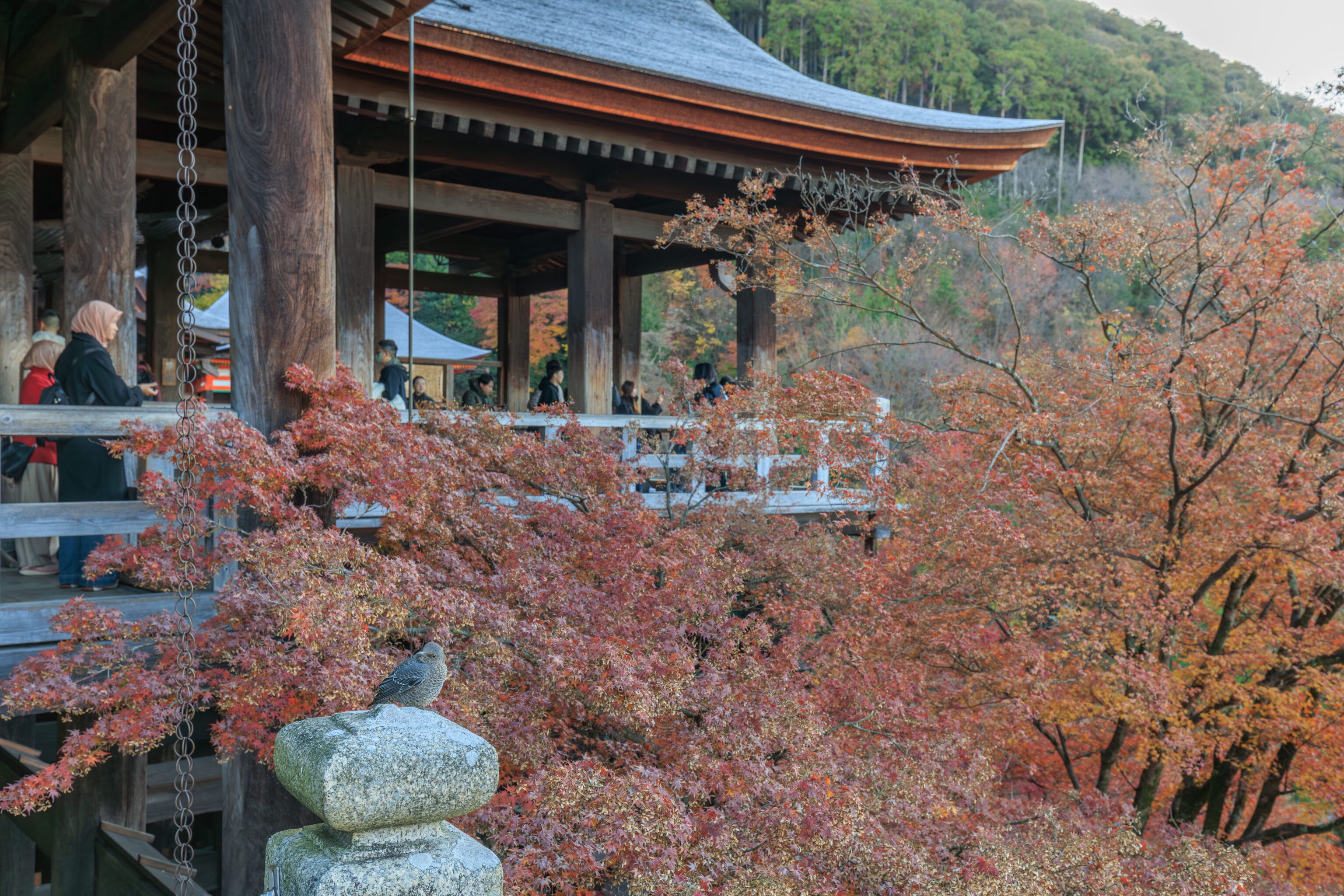
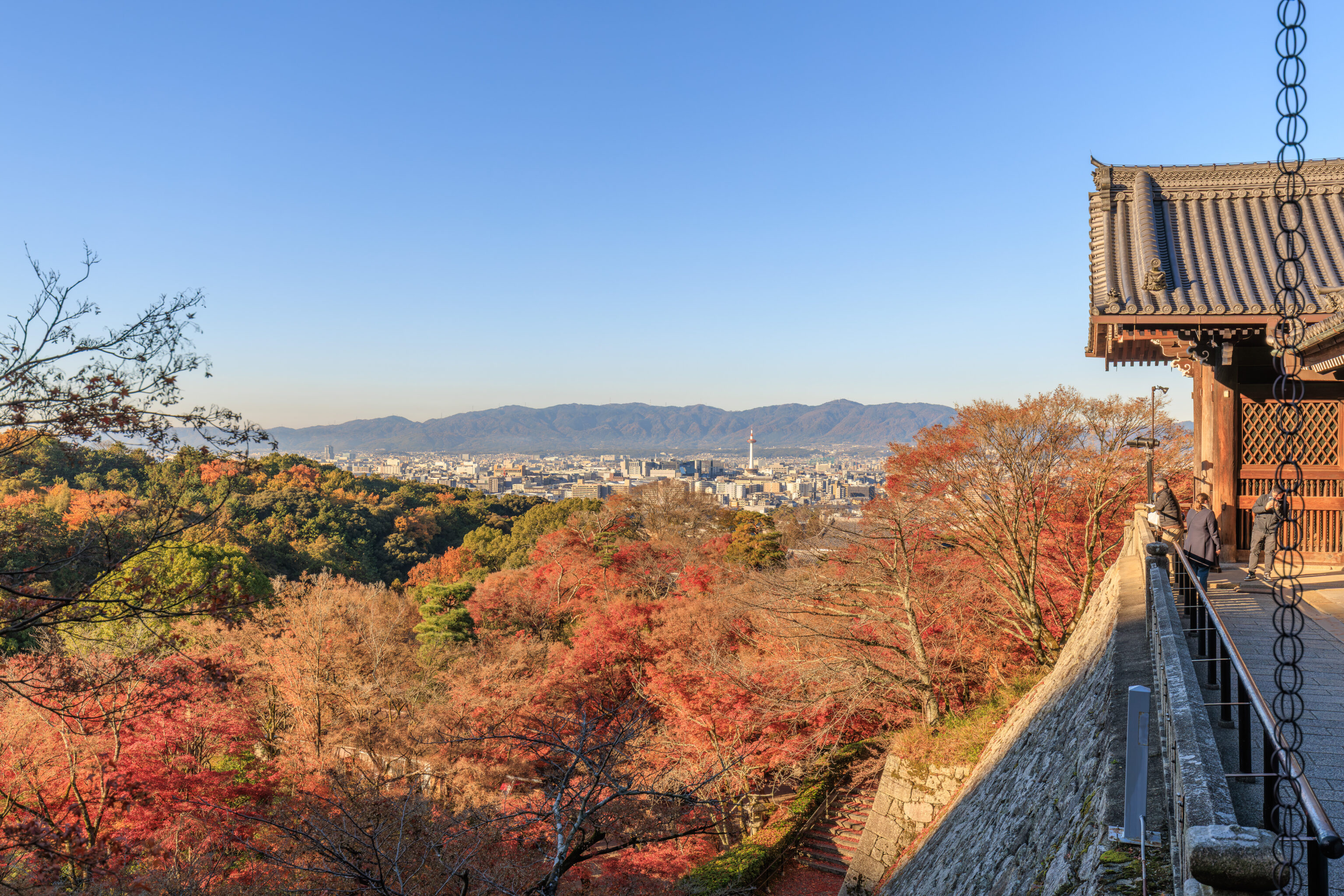
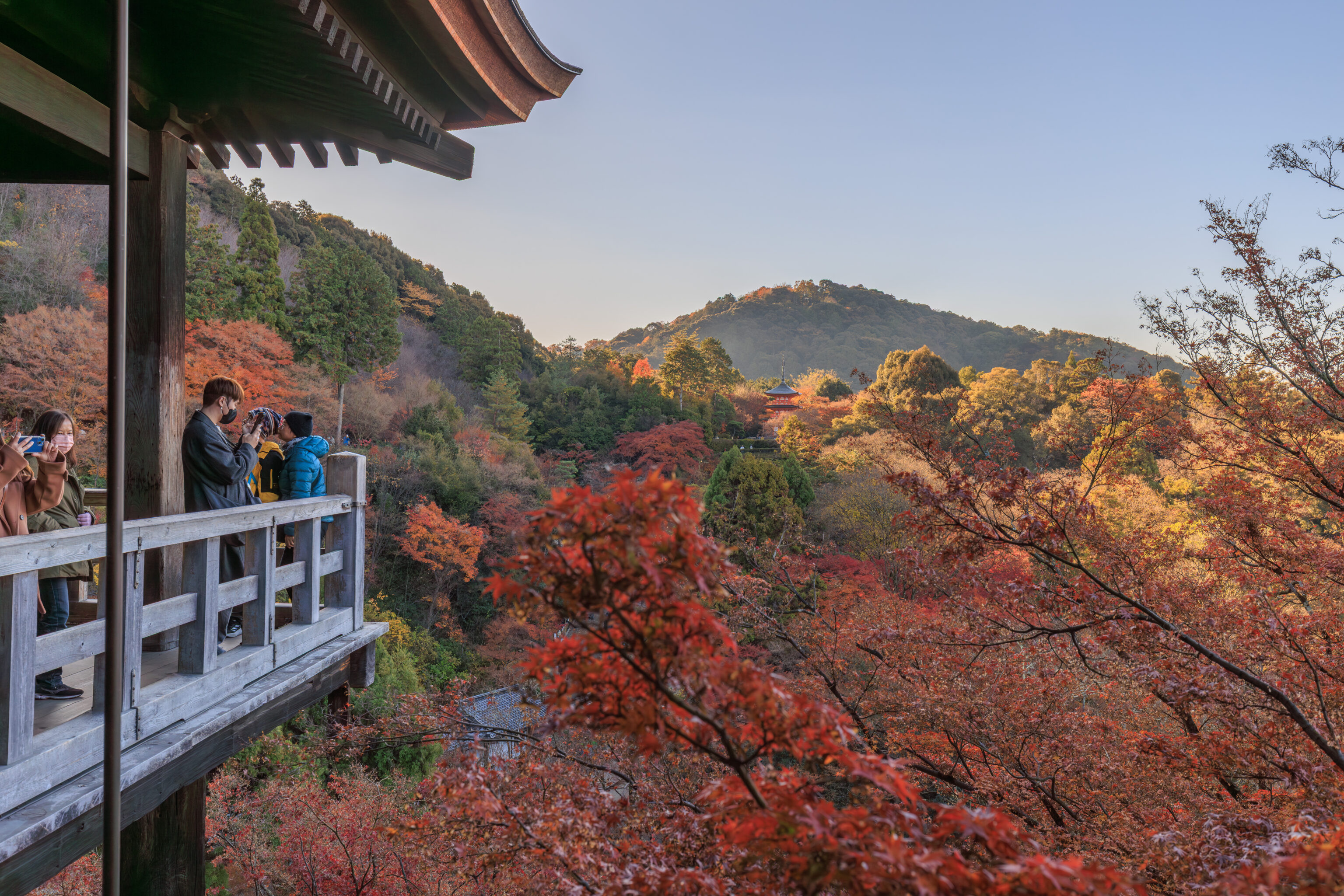
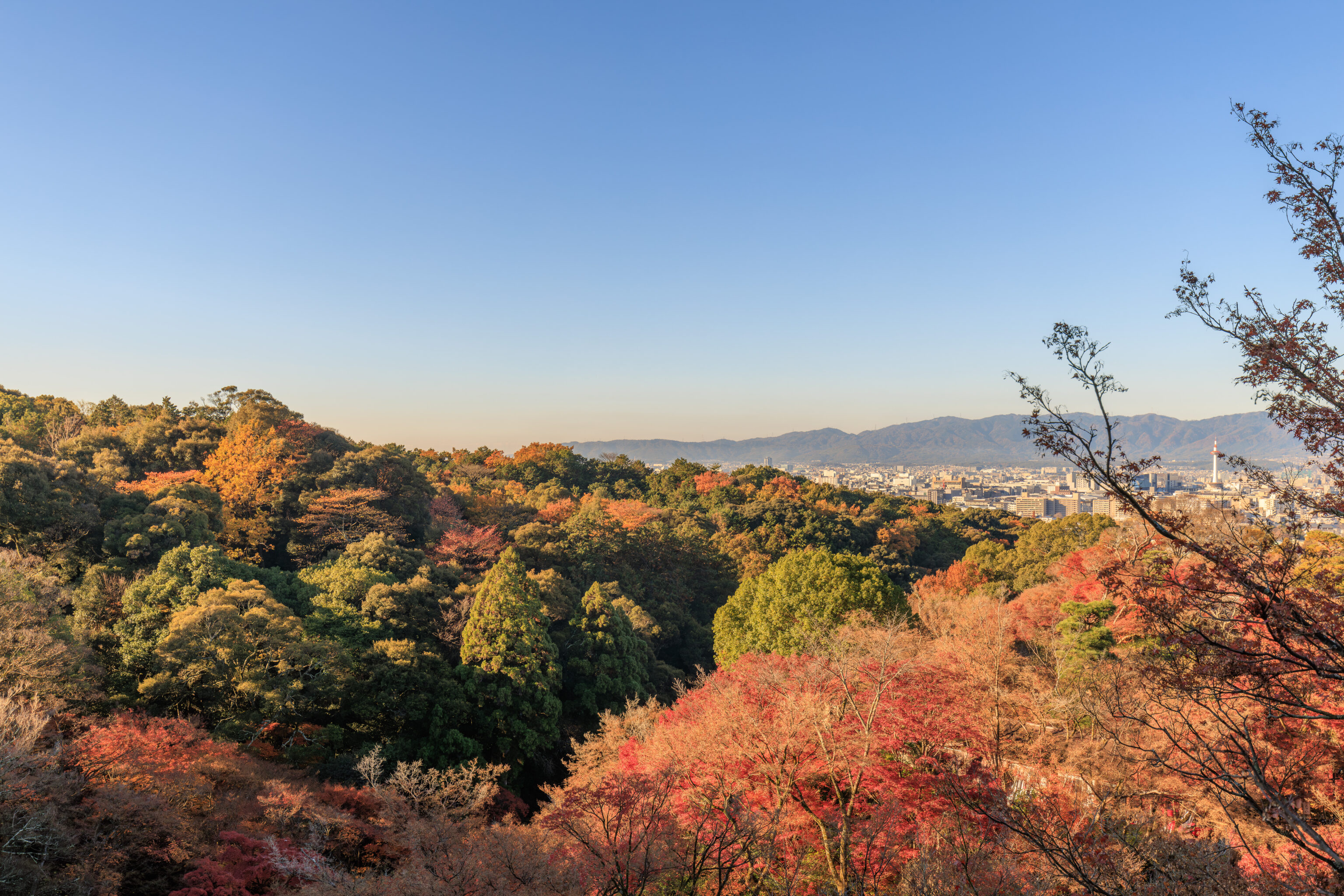
We knew that it was likely to be like this given that we are here at the end of the fall foliage season here in Kyoto.
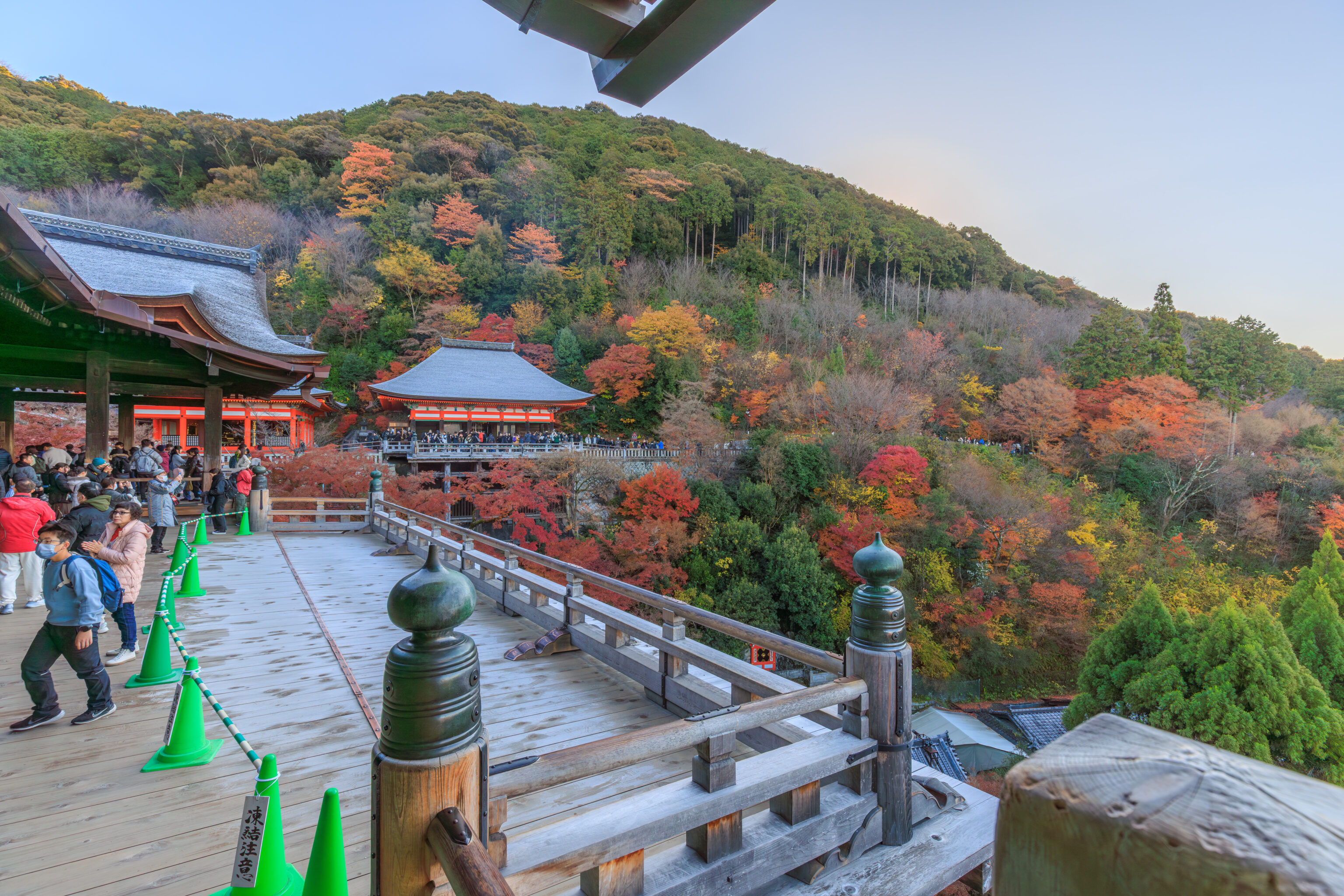
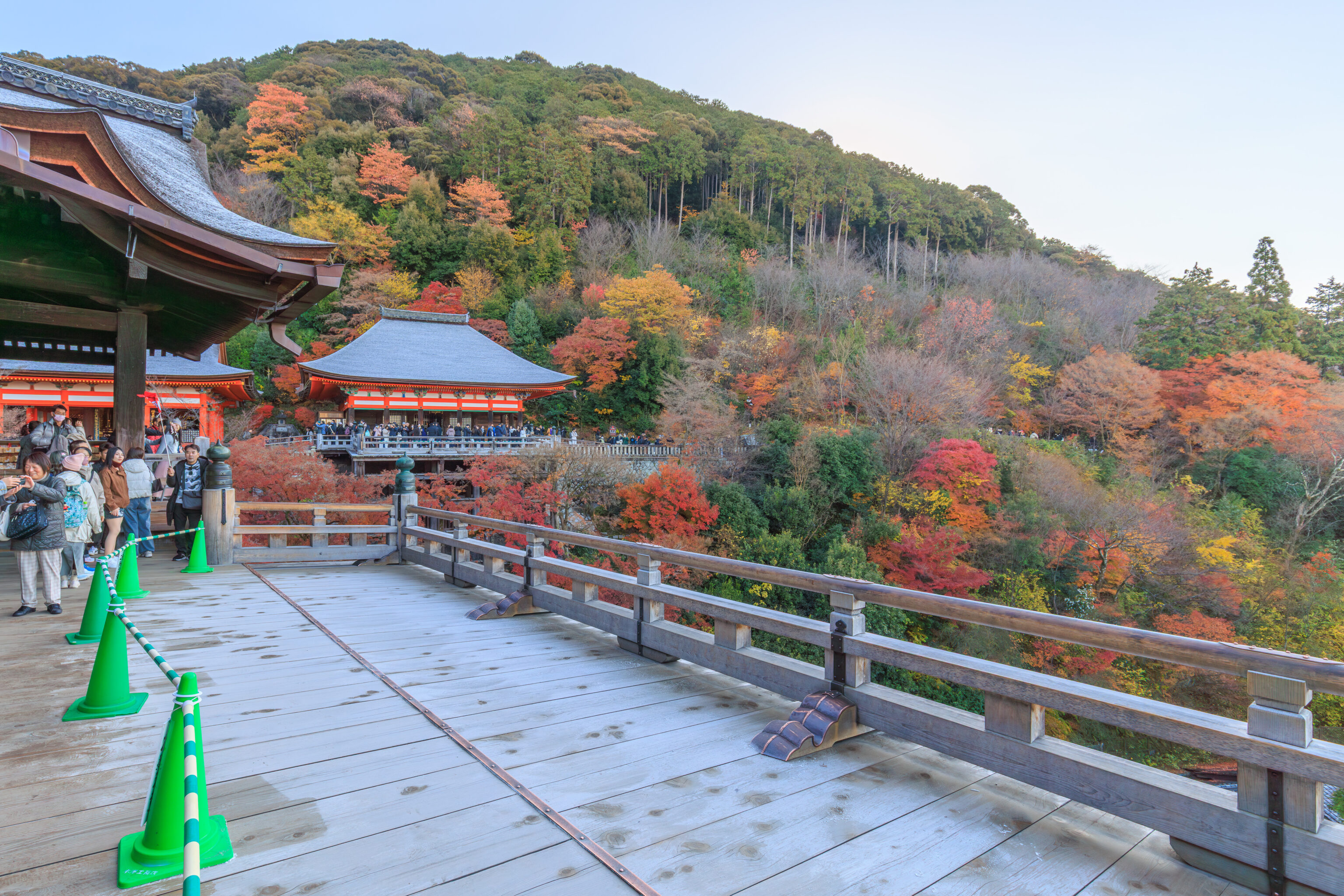
This area of the “stage” in front of the Main Hall was closed due to frost.
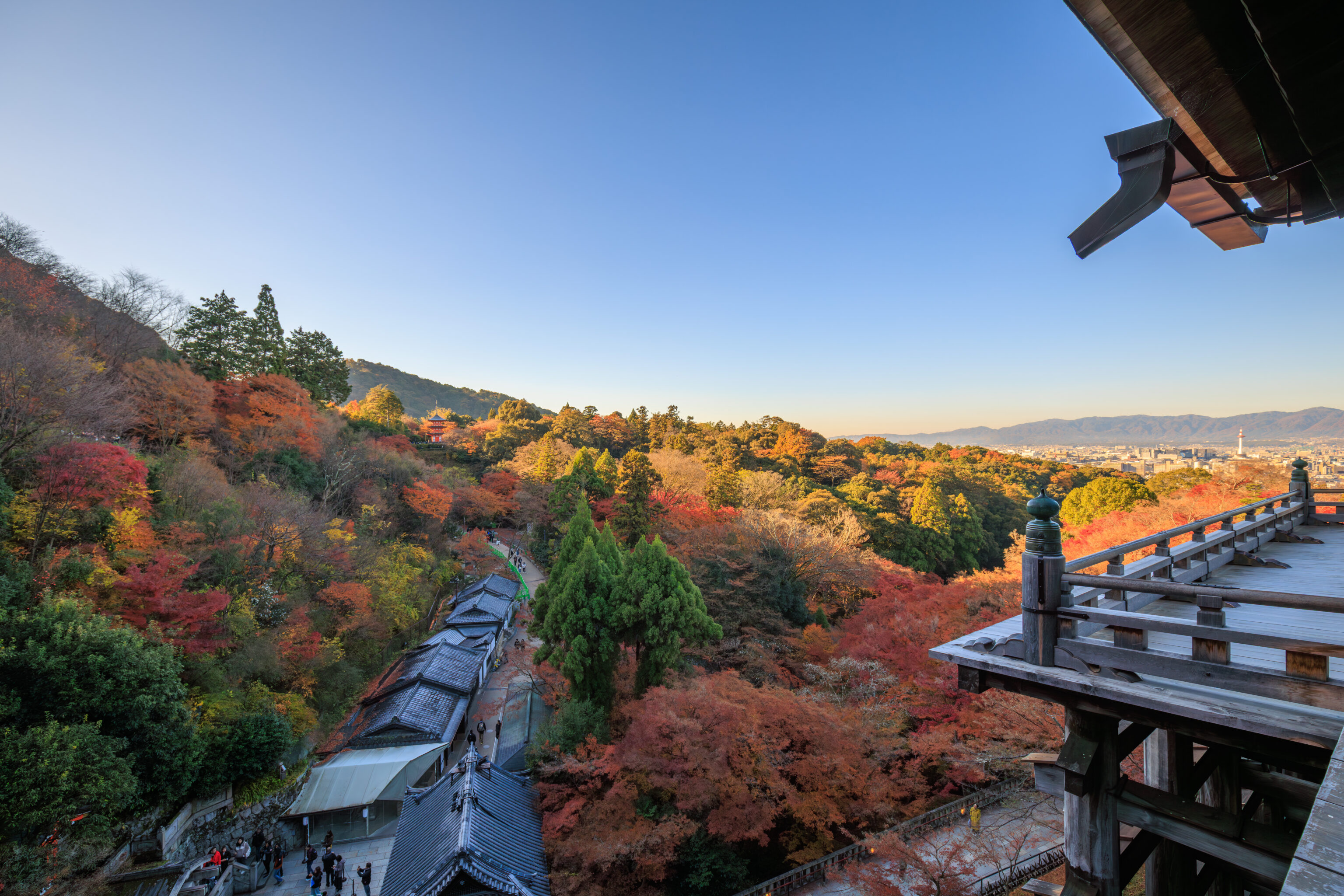
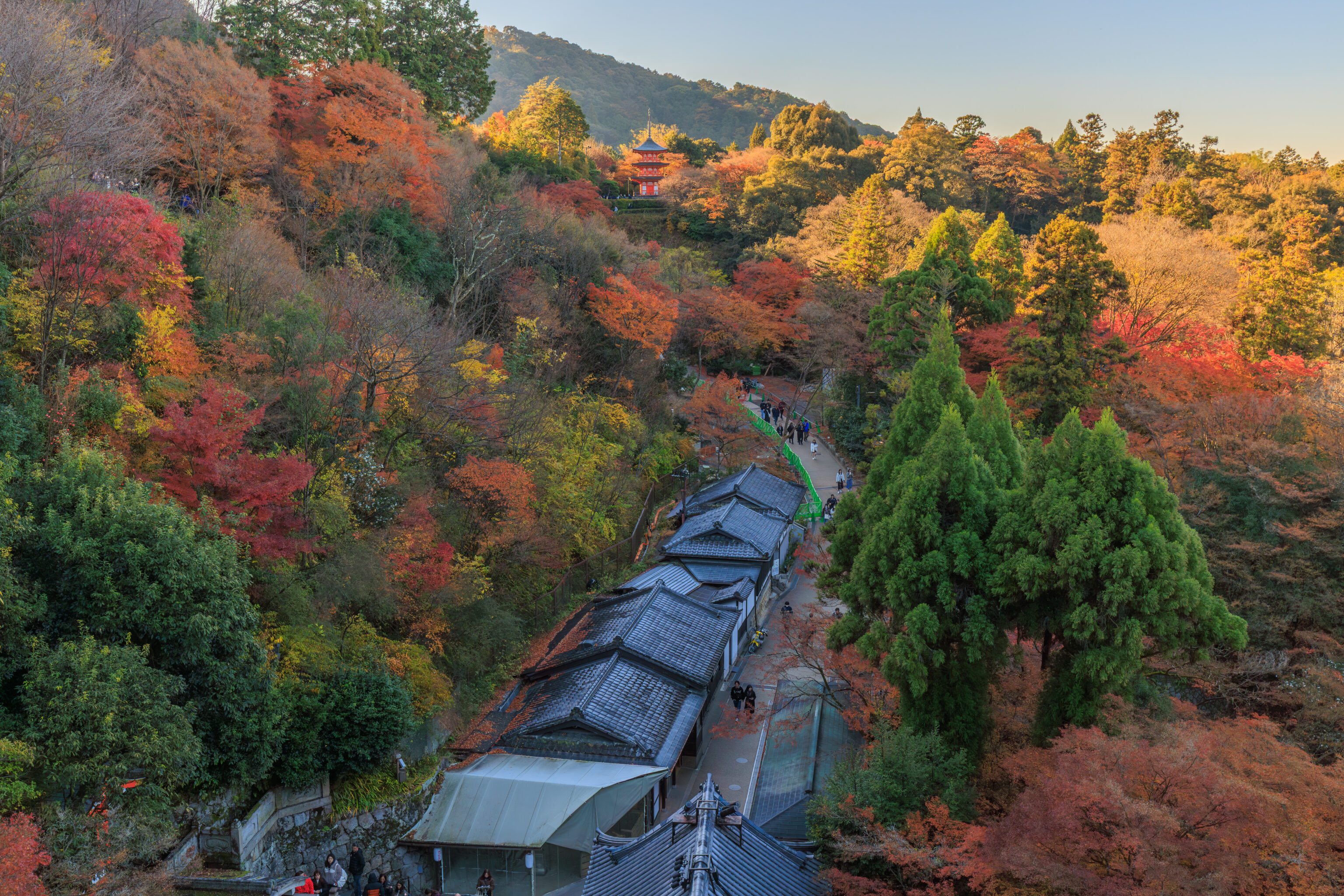
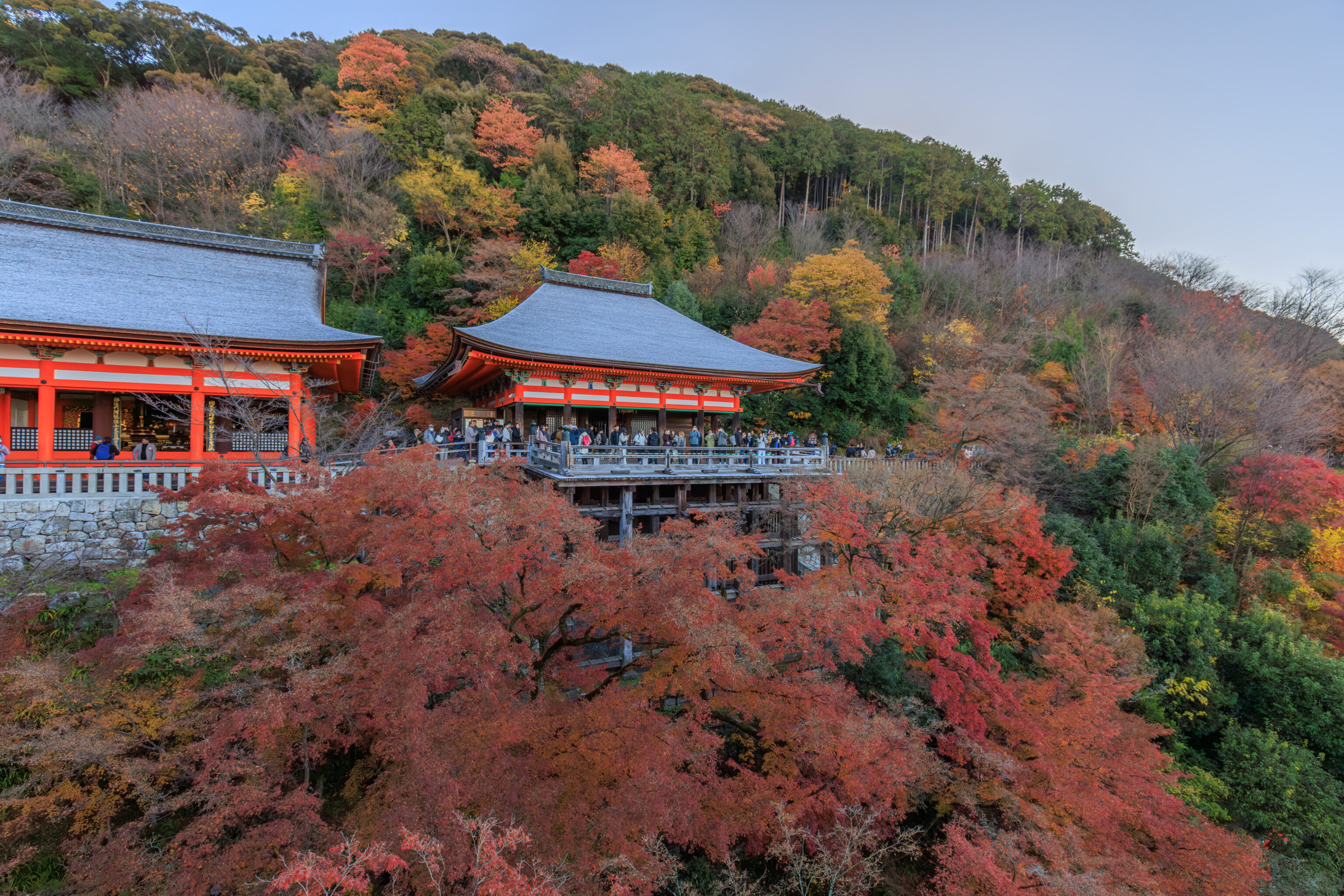
We sat around for a bit before continuing to walk through the temple.
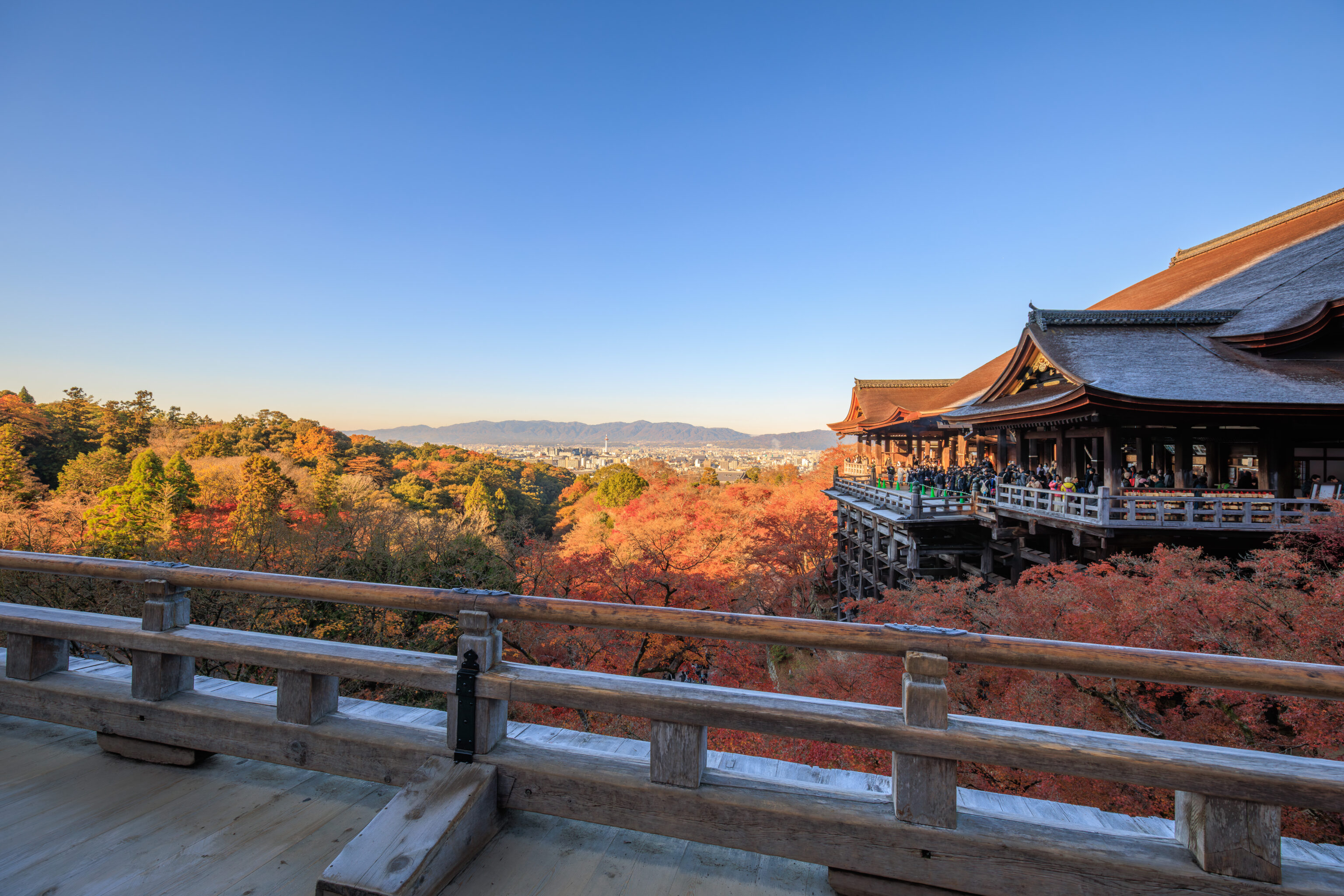
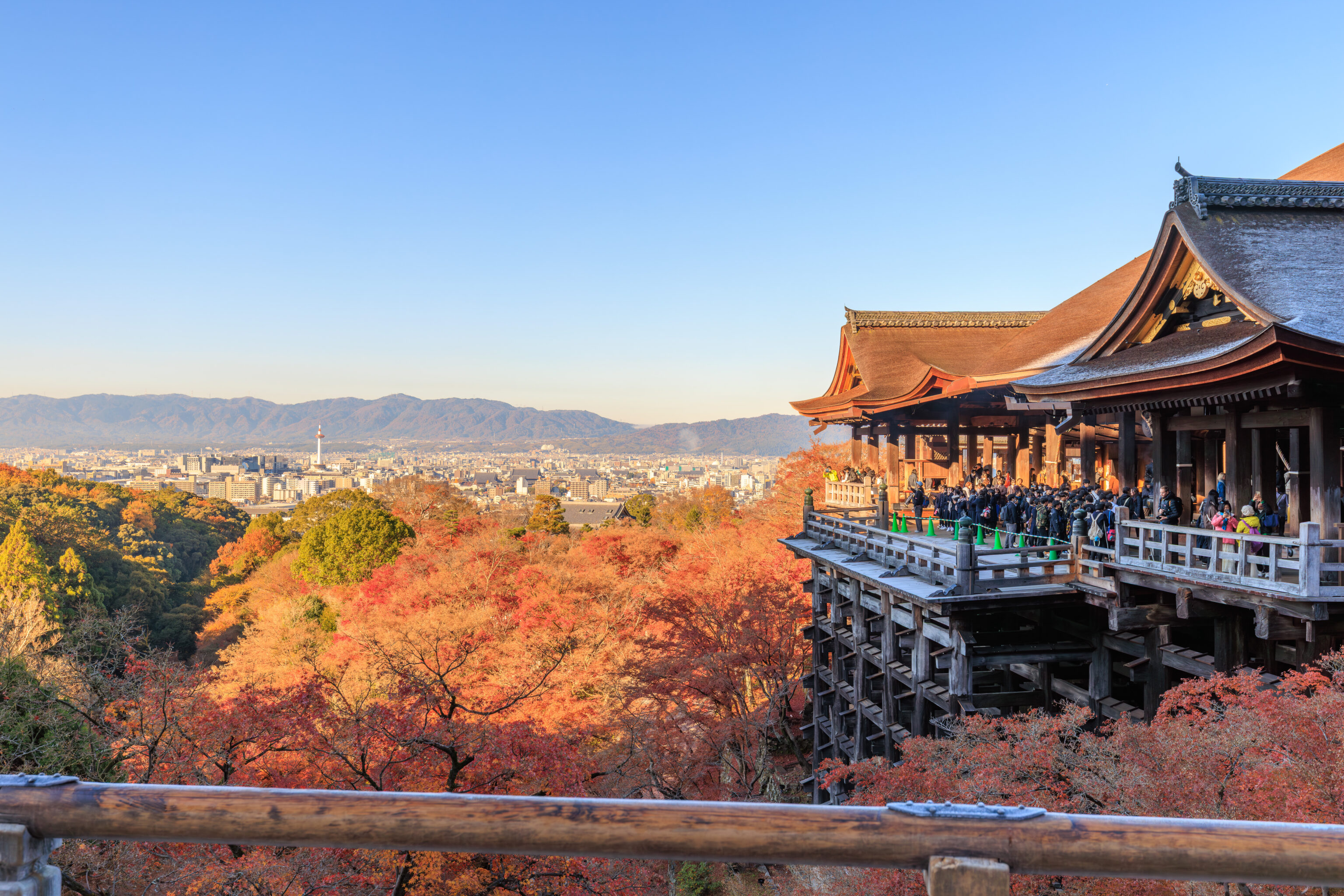
The most famous fall views are actually from this point in front of the 奥の院 Okuno-in (Inner Sanctuary). From this perspective, the Main Hall is over on the right above a sea of momiji below. The city of Kyoto can be seen in the distance. The most prominent landmark in the city that can be easily identified is Kyoto Tower.
Although the leaves are well past peak, the scene does look better with the illumination from the Sun. We know from our experience last year that it takes awhile for the entire area to be lit up though due to the shape of the mountains.
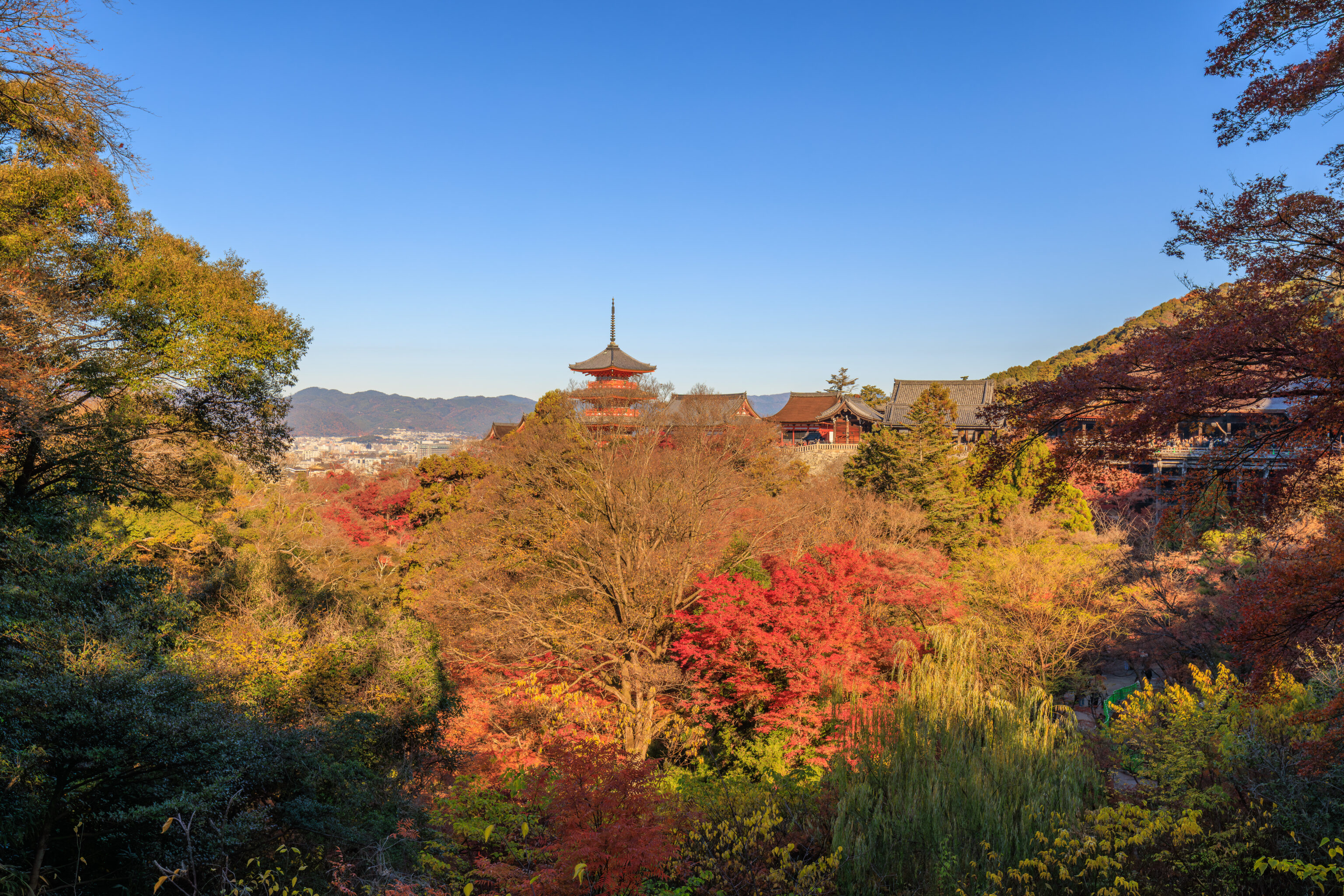
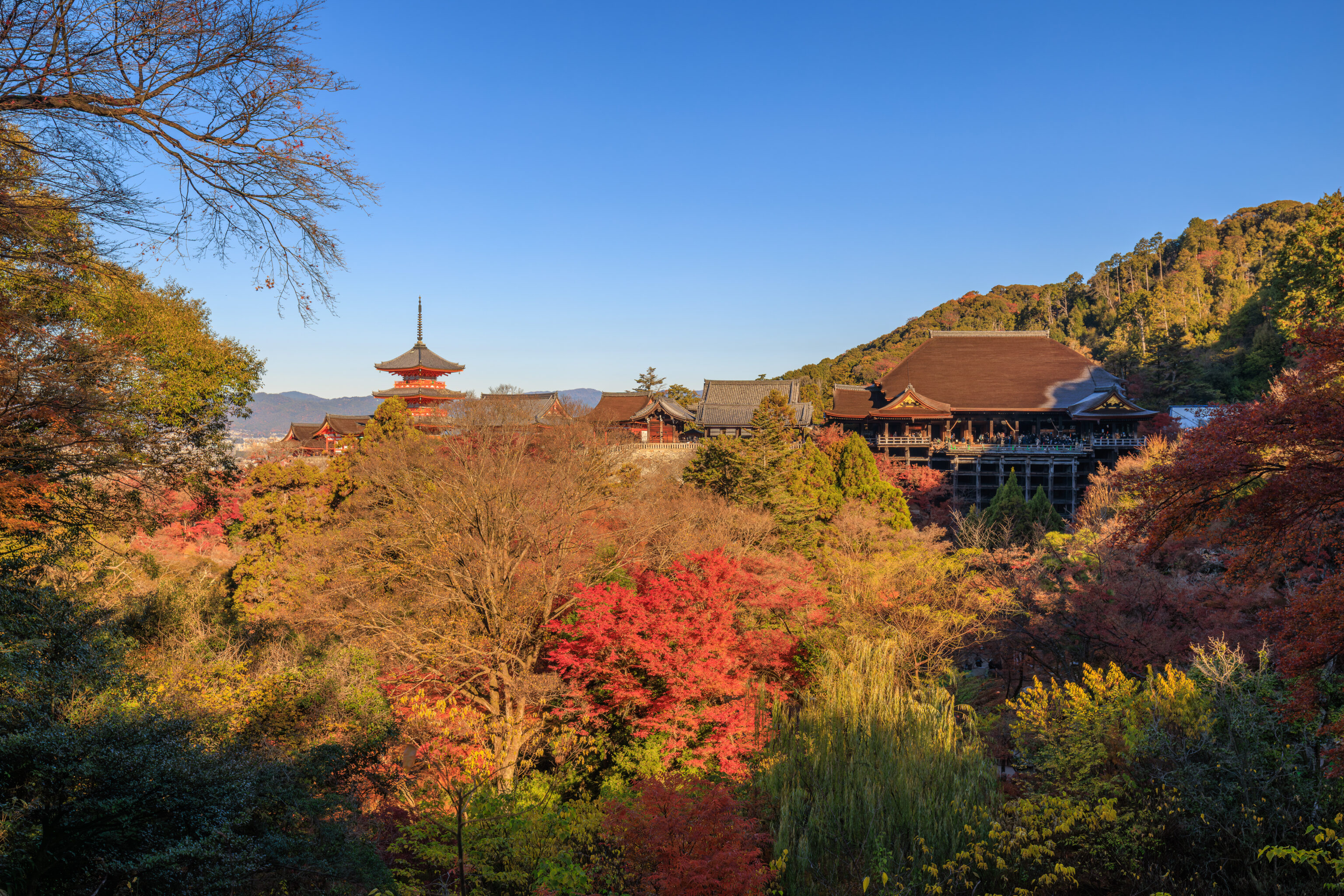
We decided to walk over to the 子安塔 Koyasu Pagoda, which is at the end of a short spur at the furthest point of the main path through the temple grounds.
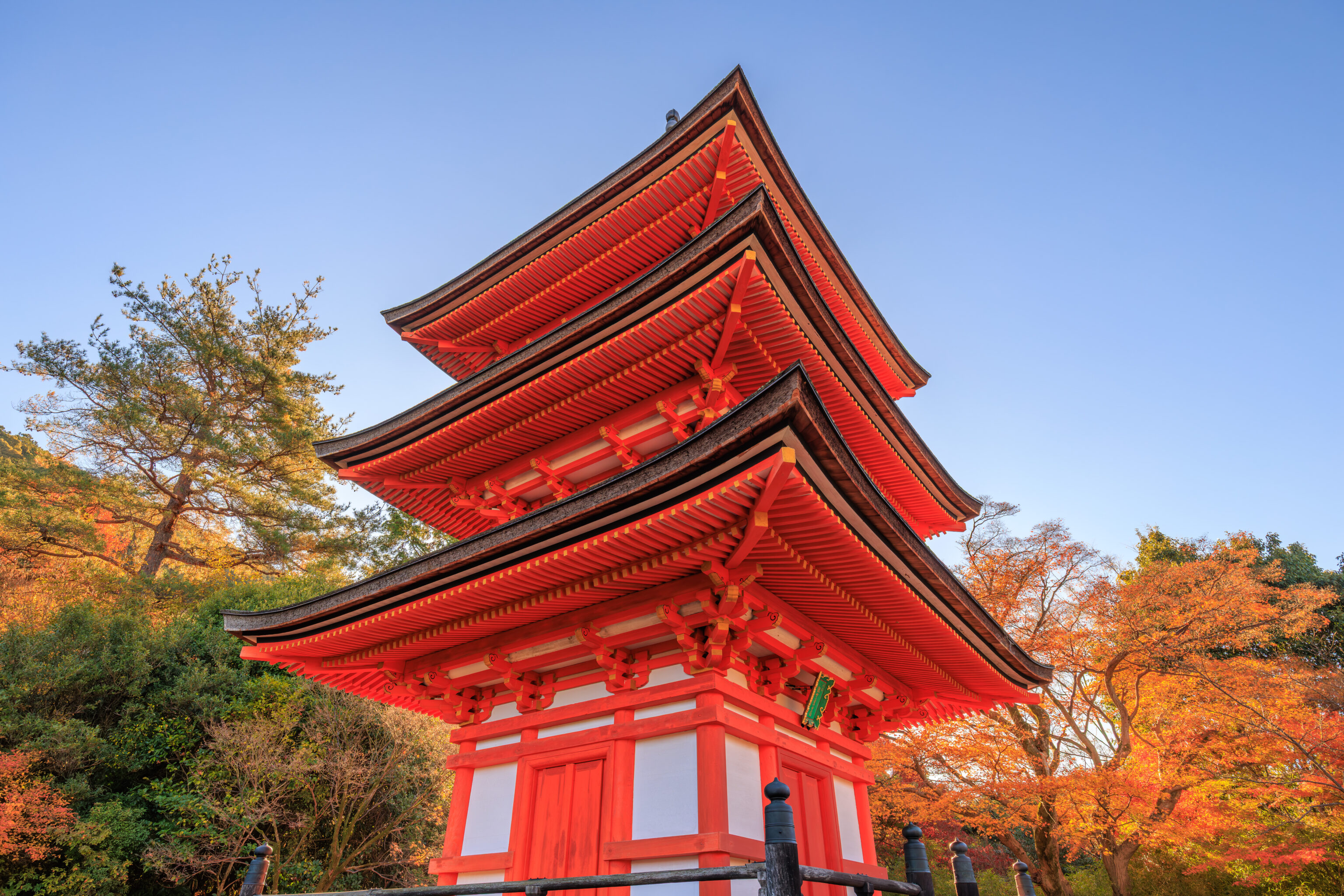
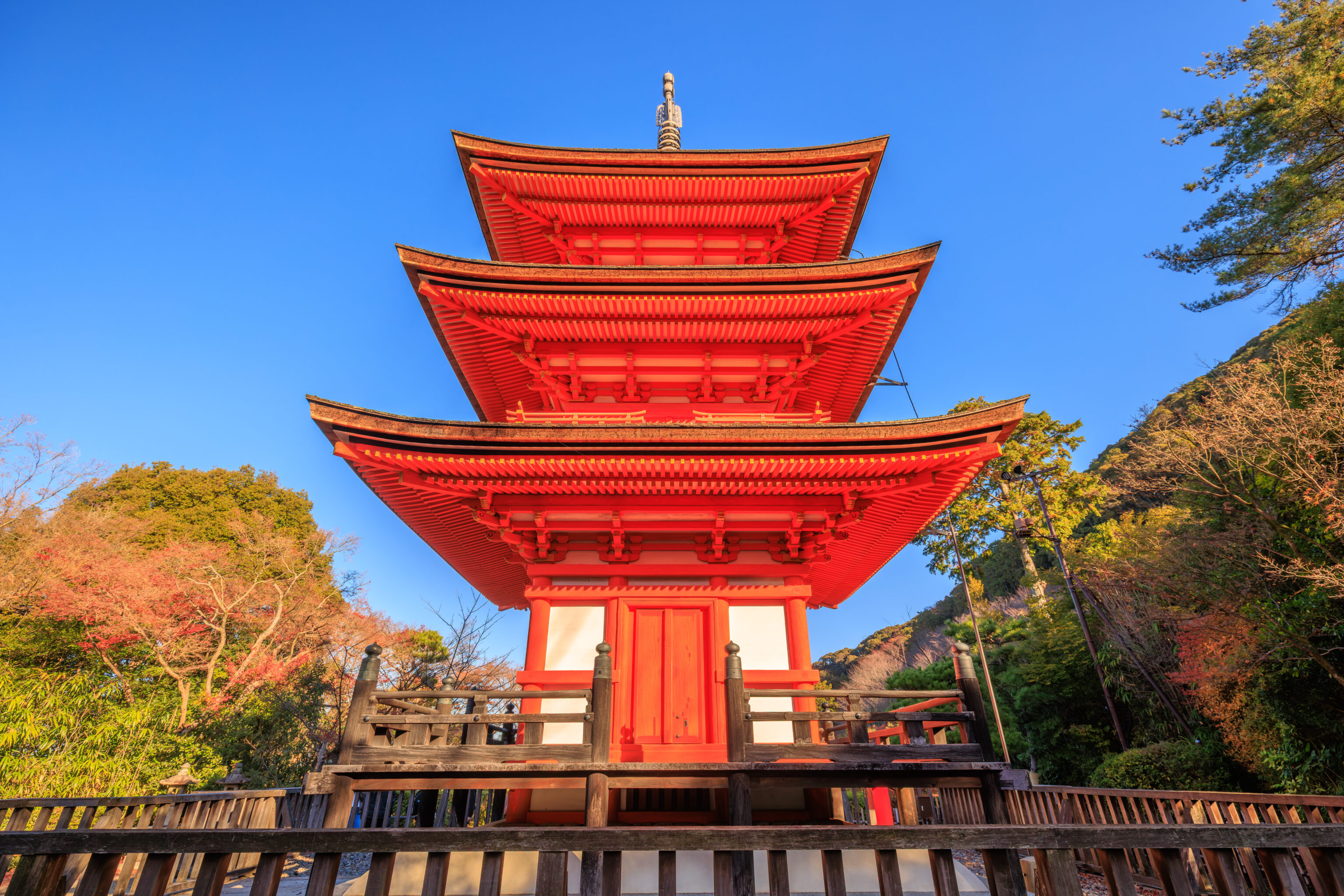
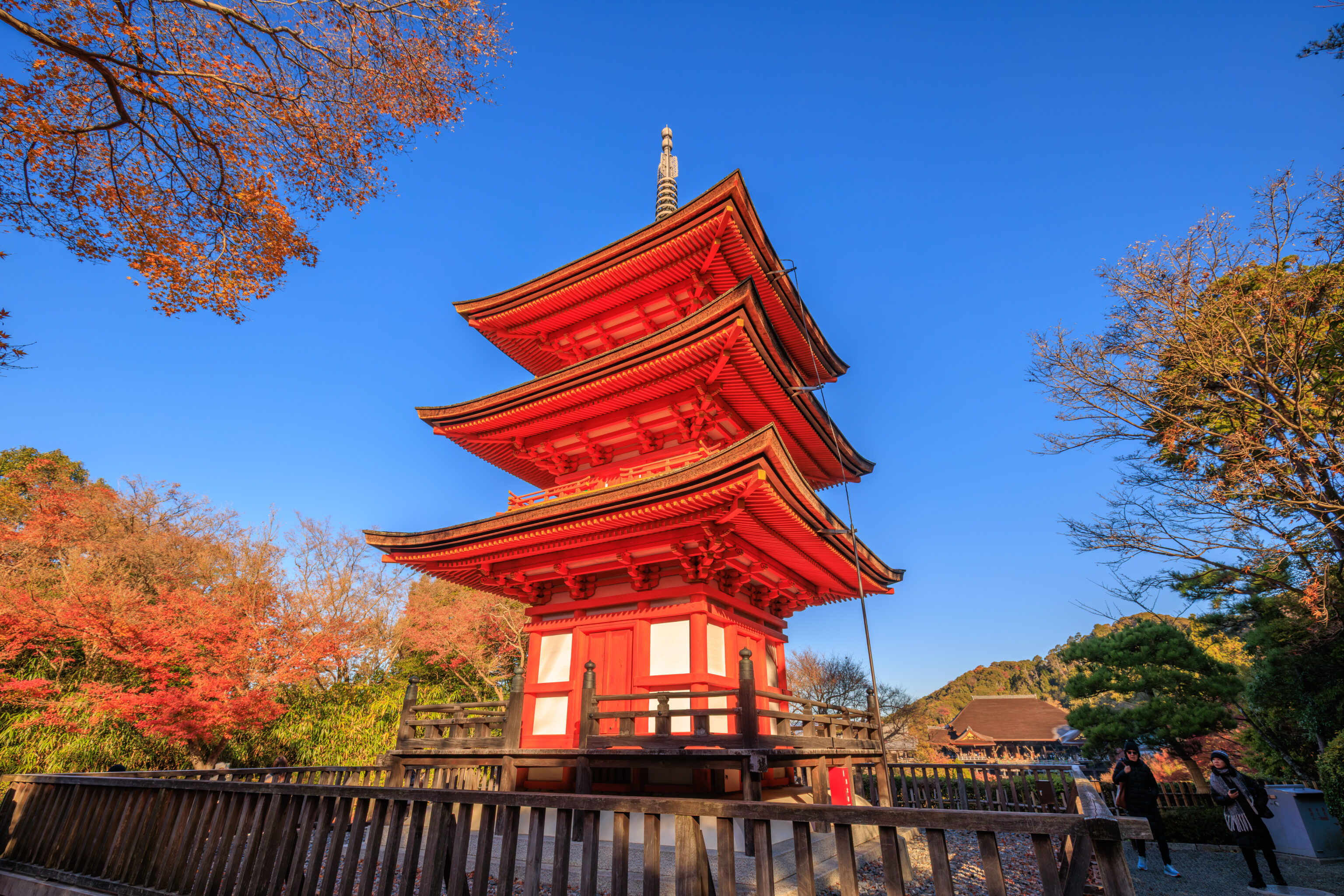
The Koyasu Pagoda contains an enshrined image of Koyasu Kannon. This Japanese form of Kannon is worshiped for safe childbirth. The pagoda is officially cited as being reconstructed in 1500, although other online sources indicate it was built in the 17th century.
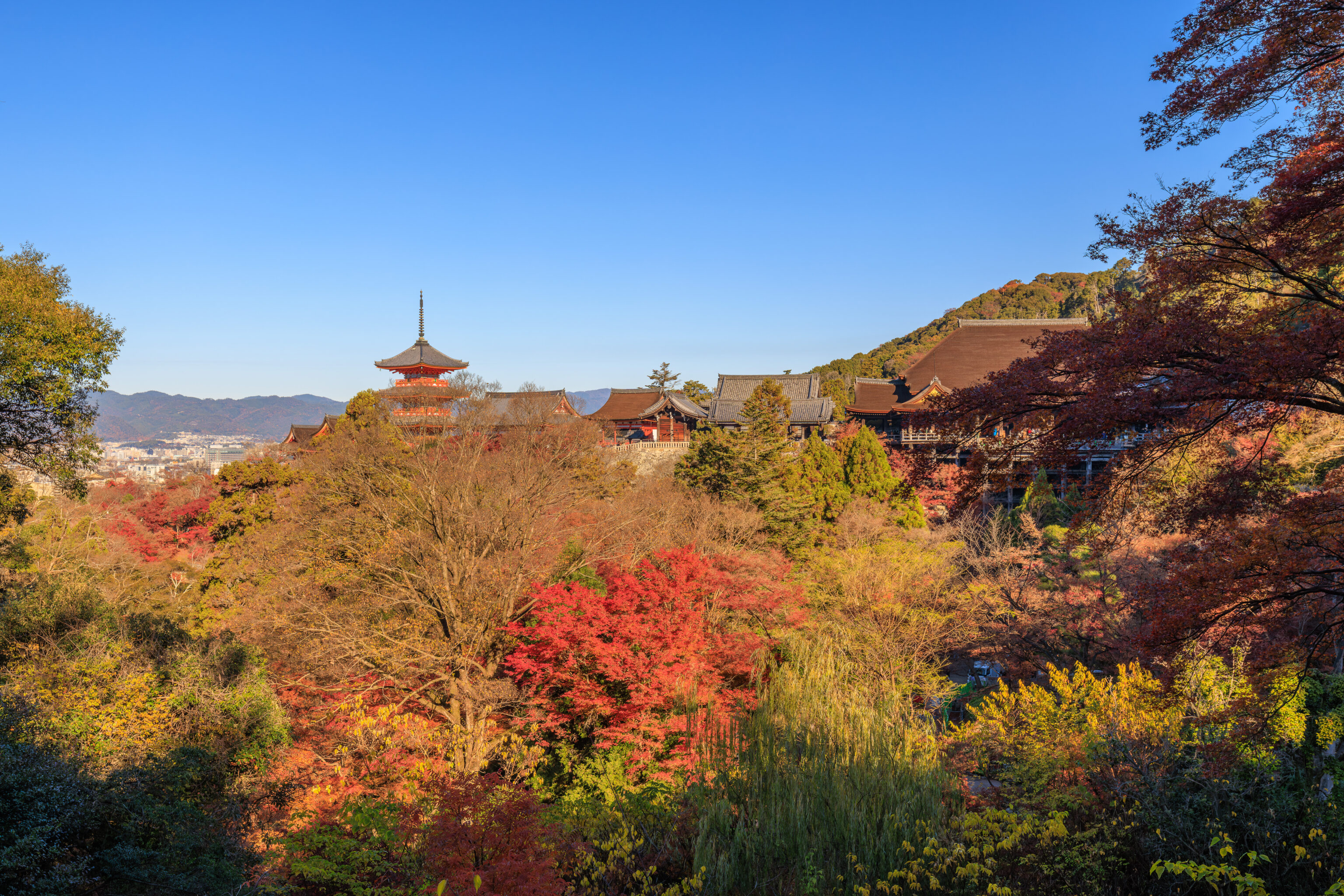
After a brief walk around the pagoda, we continued back to the main route through Kiyomizu-dera.
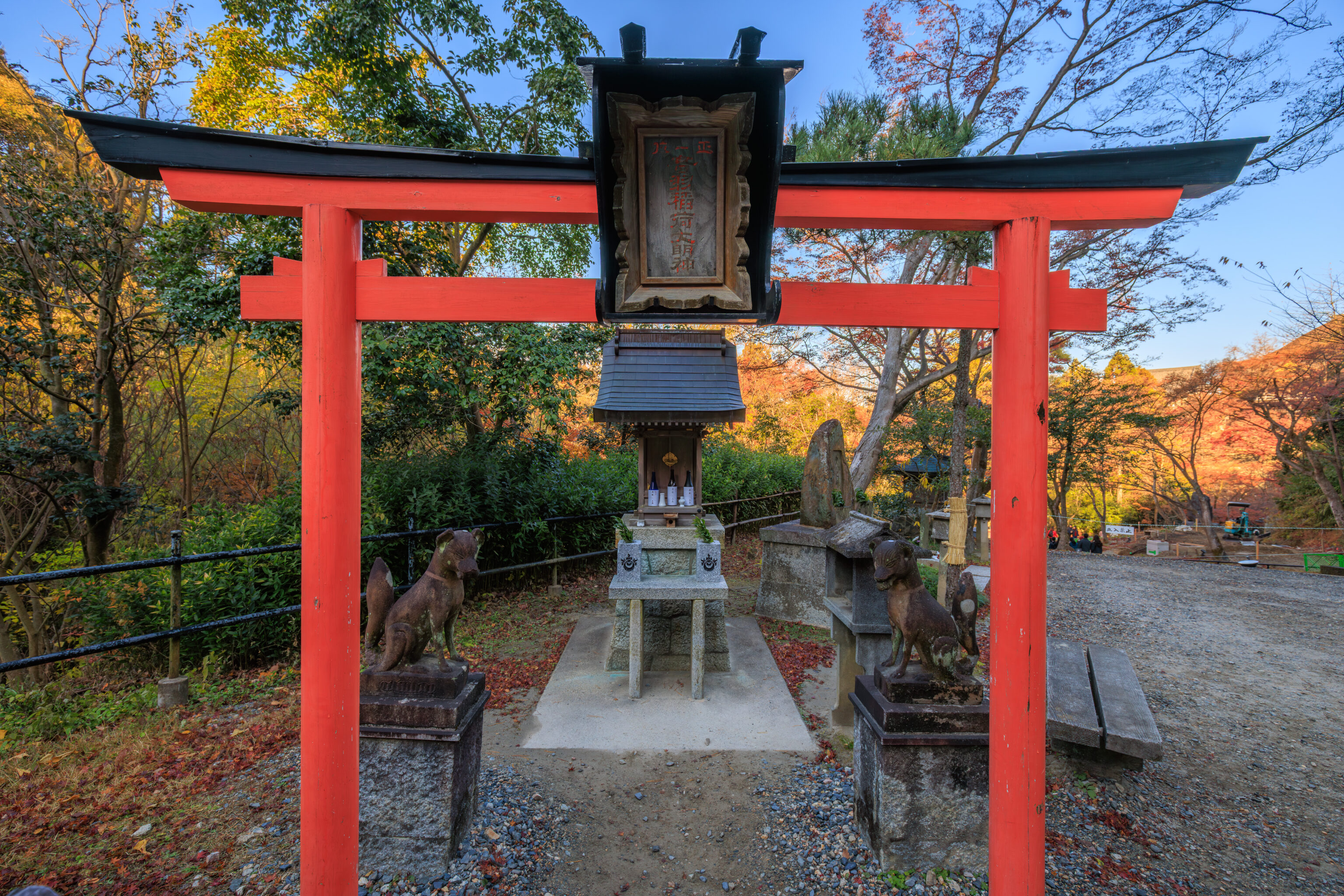
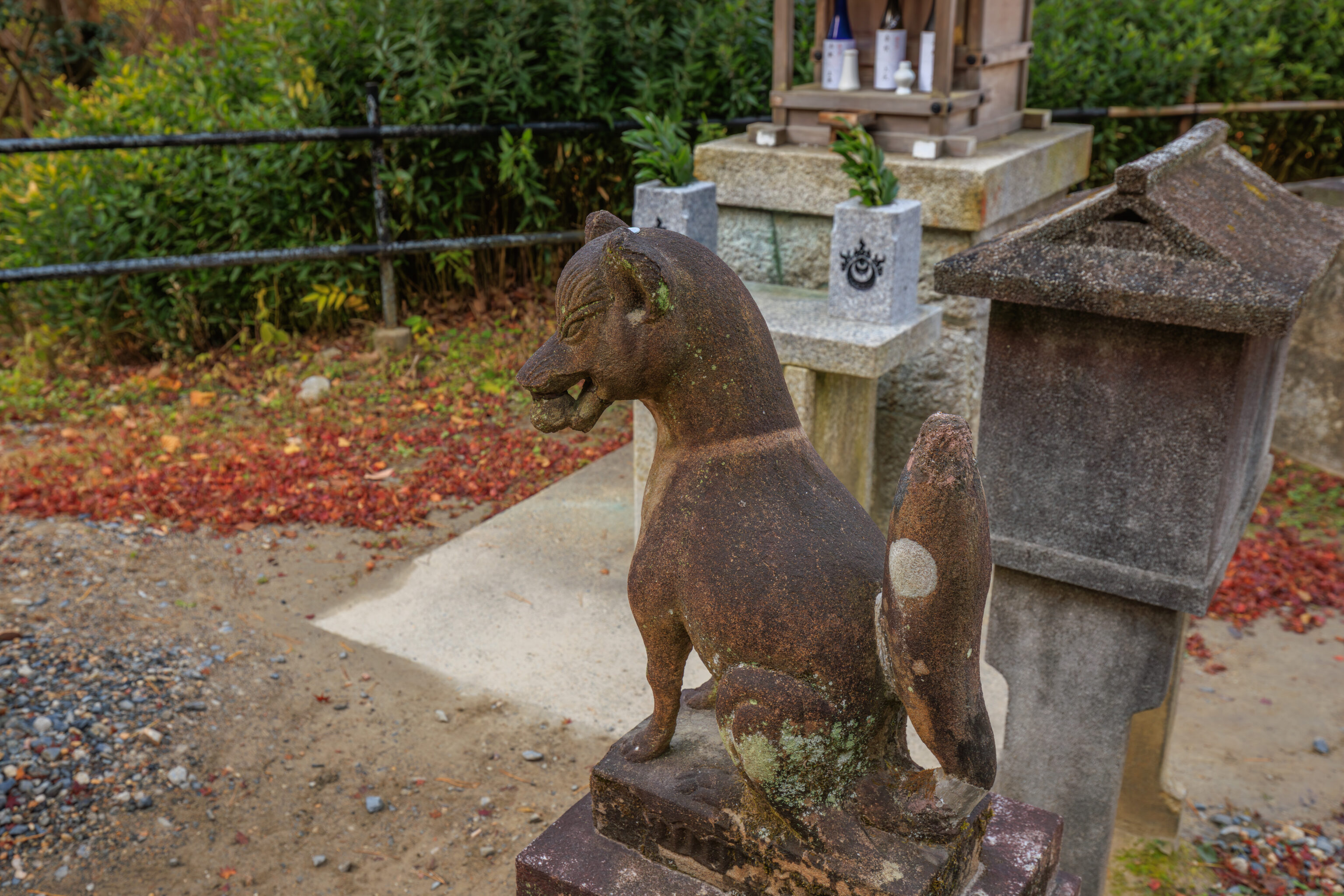
It is common for Buddhist and Shinto temples and shrines to be colocated. This small shine has sculptures of kitsune (foxes), indicating that this is an Inari shrine.
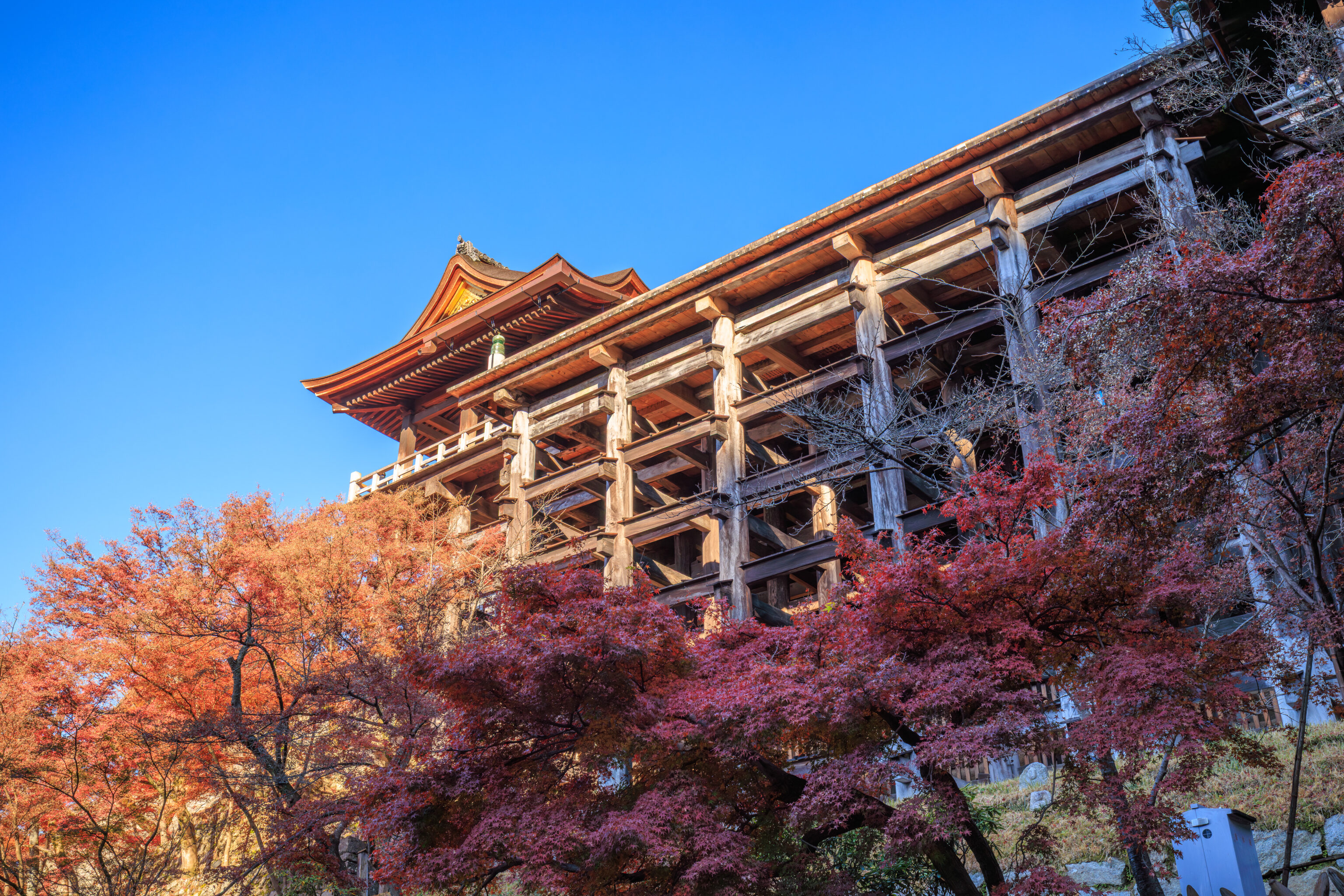
Looking up upon the elevated stage in front of the Main Hall. This structure is built entirely with interlocking wooden elements. There are no metal elements, in particular nails, used!
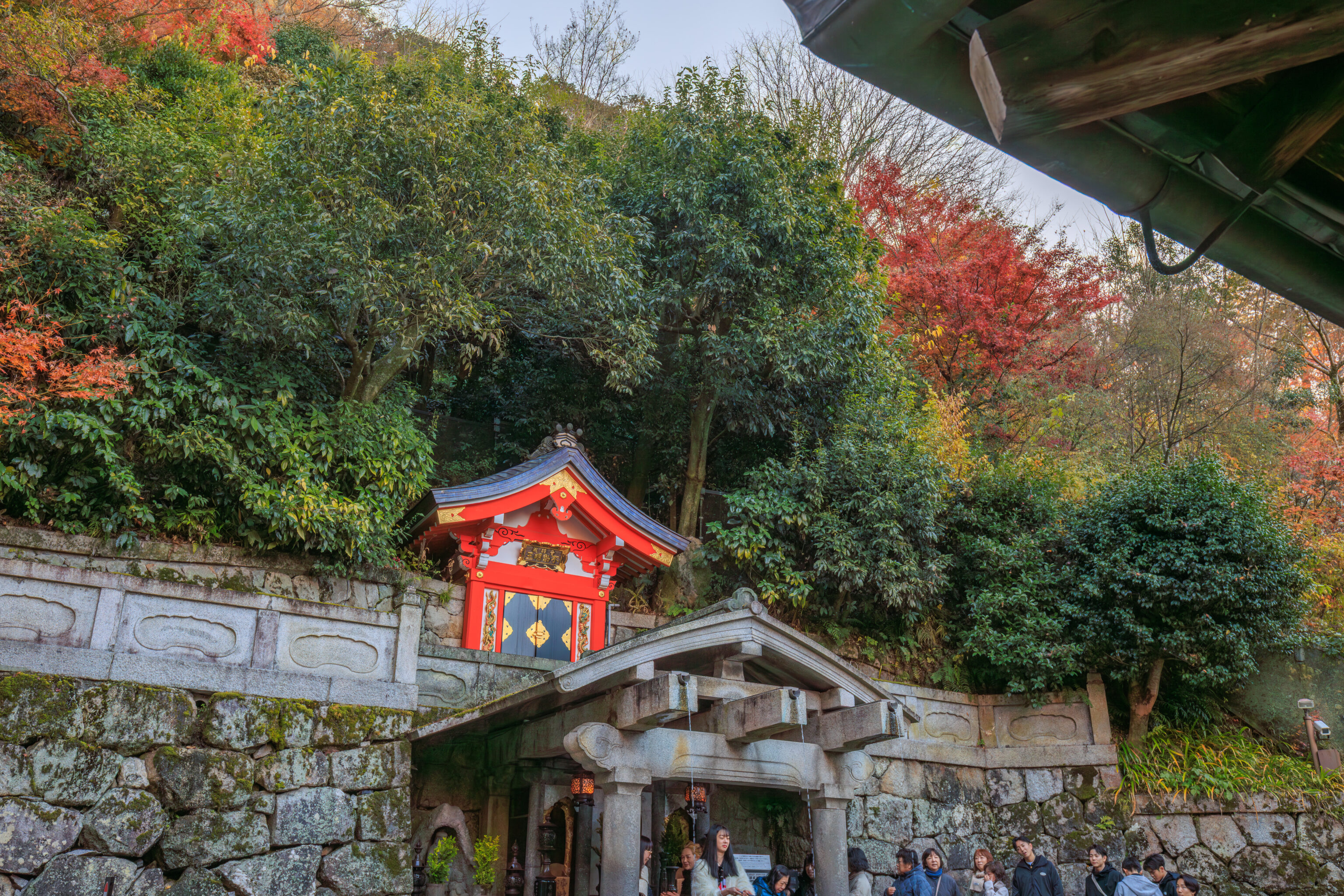
We passed by the 音羽の瀧 Otowa Waterfall, which is directly below the Okuno-in. This water source is the origin of the temple’s name, Kiyomizu, meaning pure or clear water.
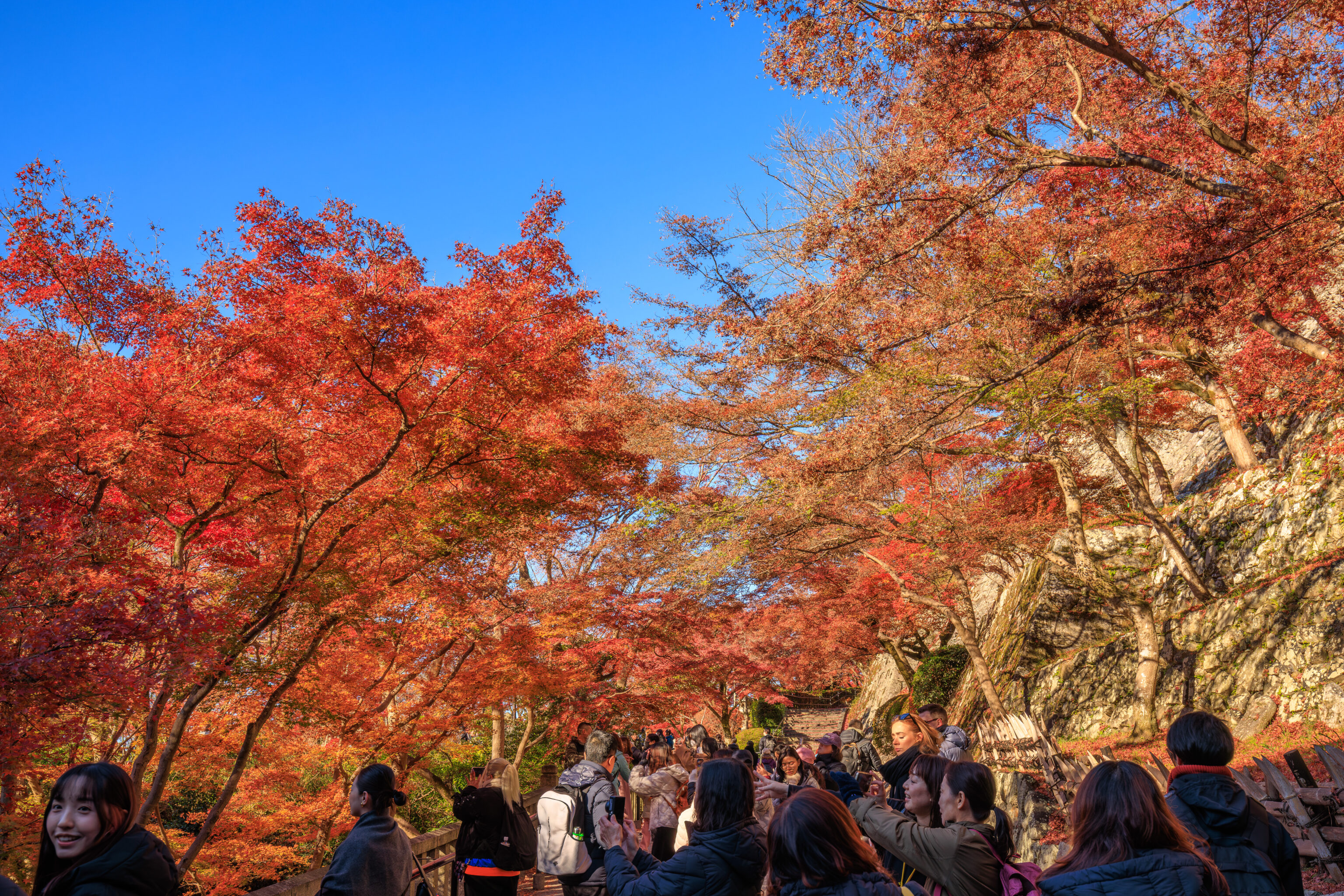
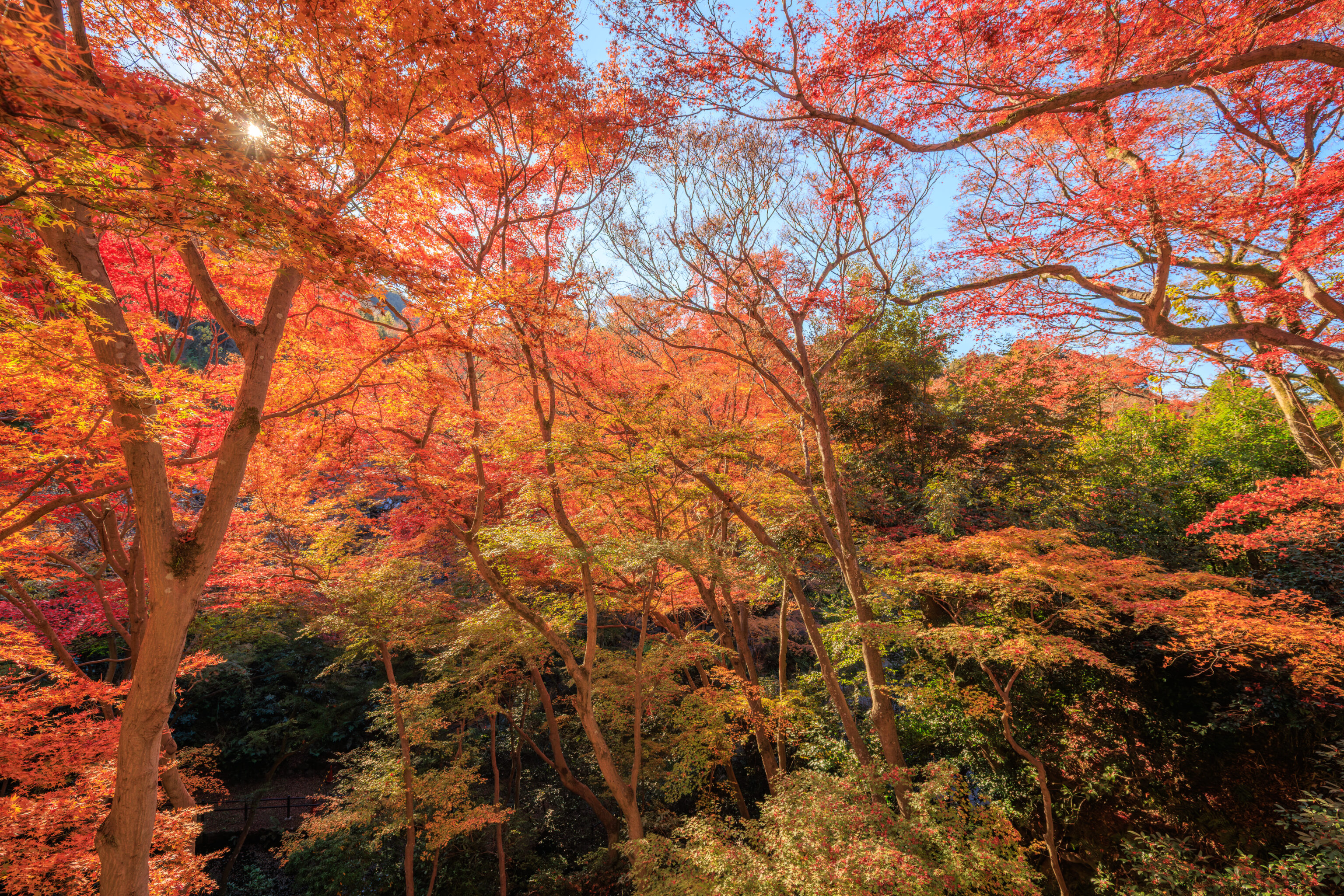
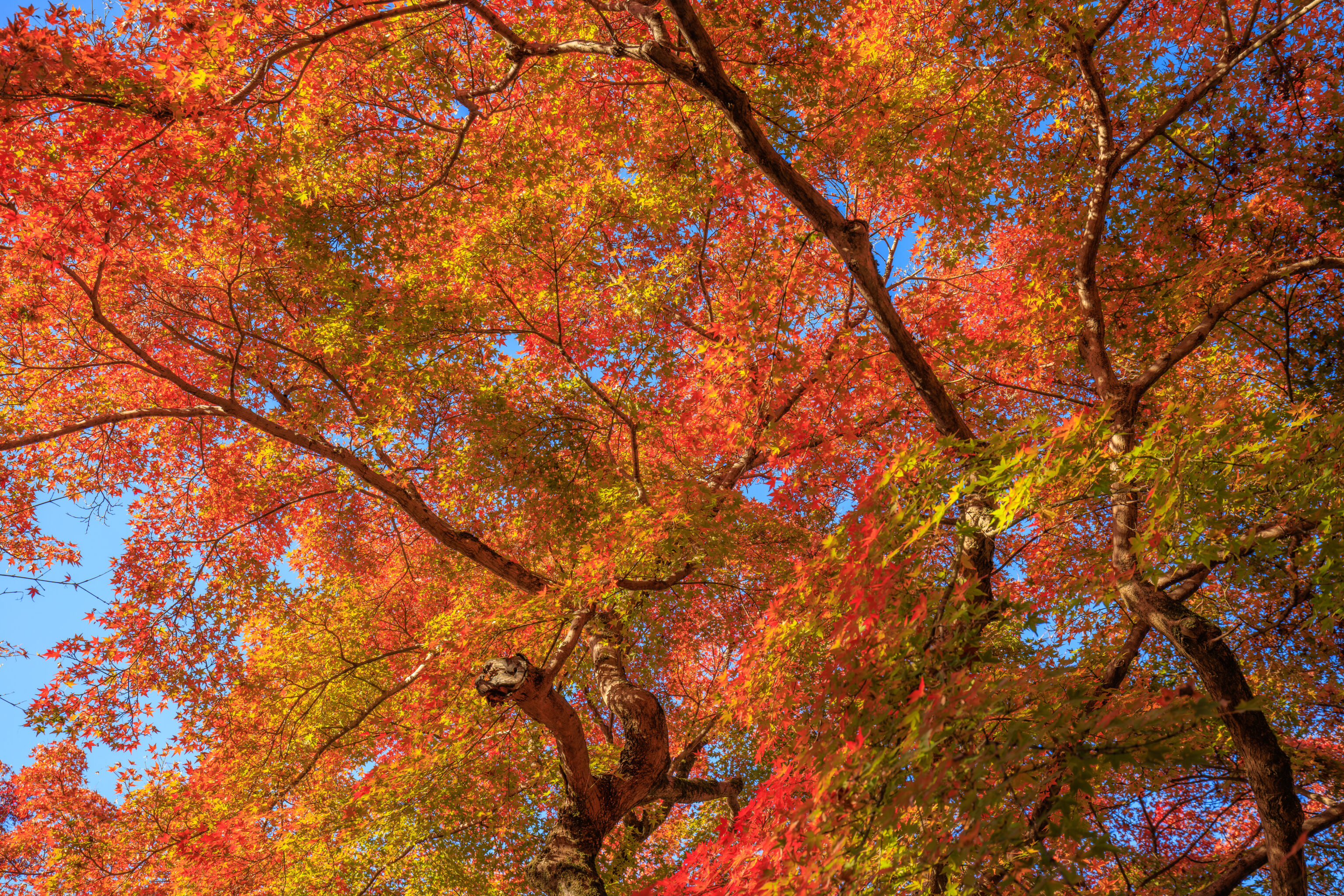
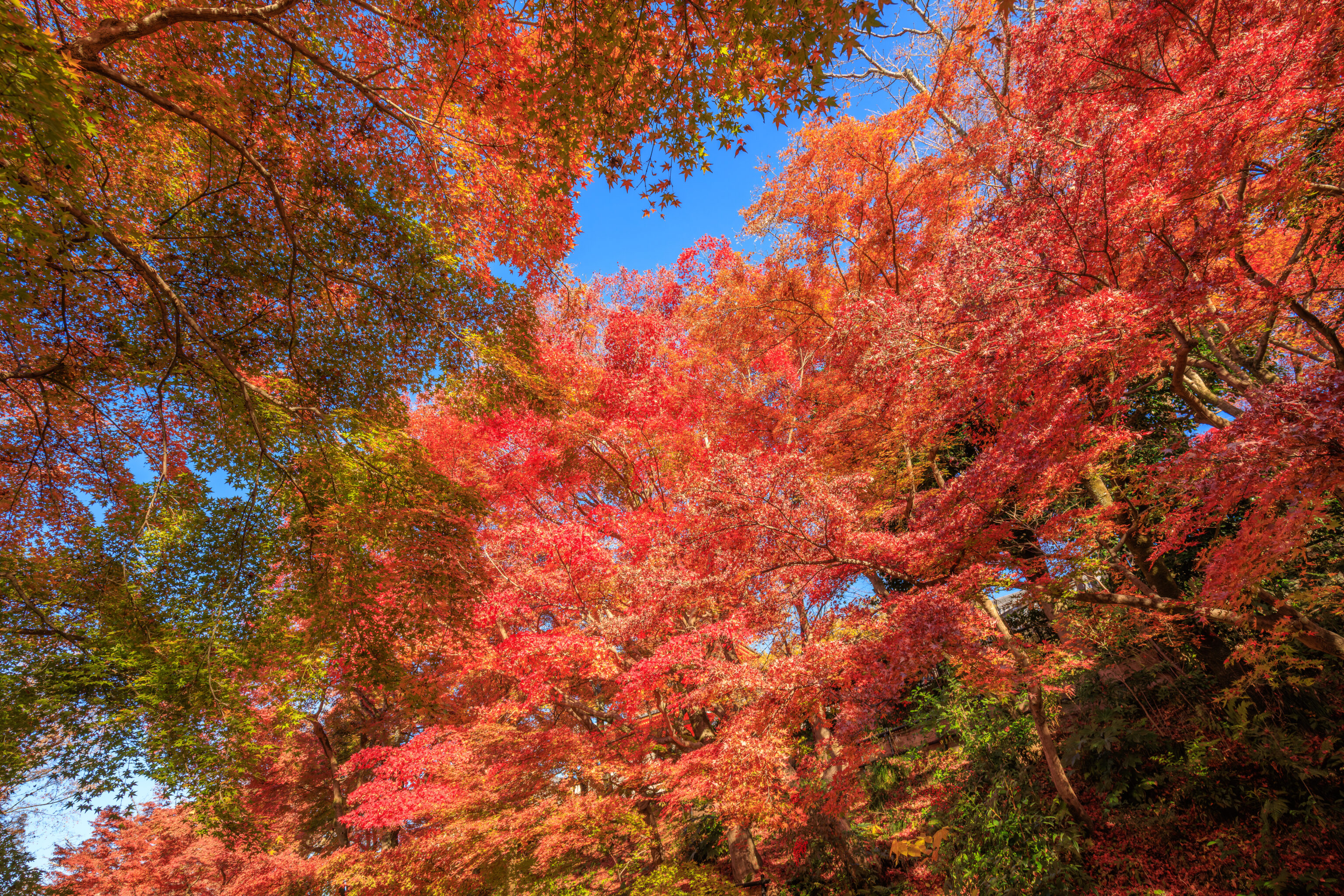
There were some nice spots of fall foliage along the final section of the route through the temple grounds.
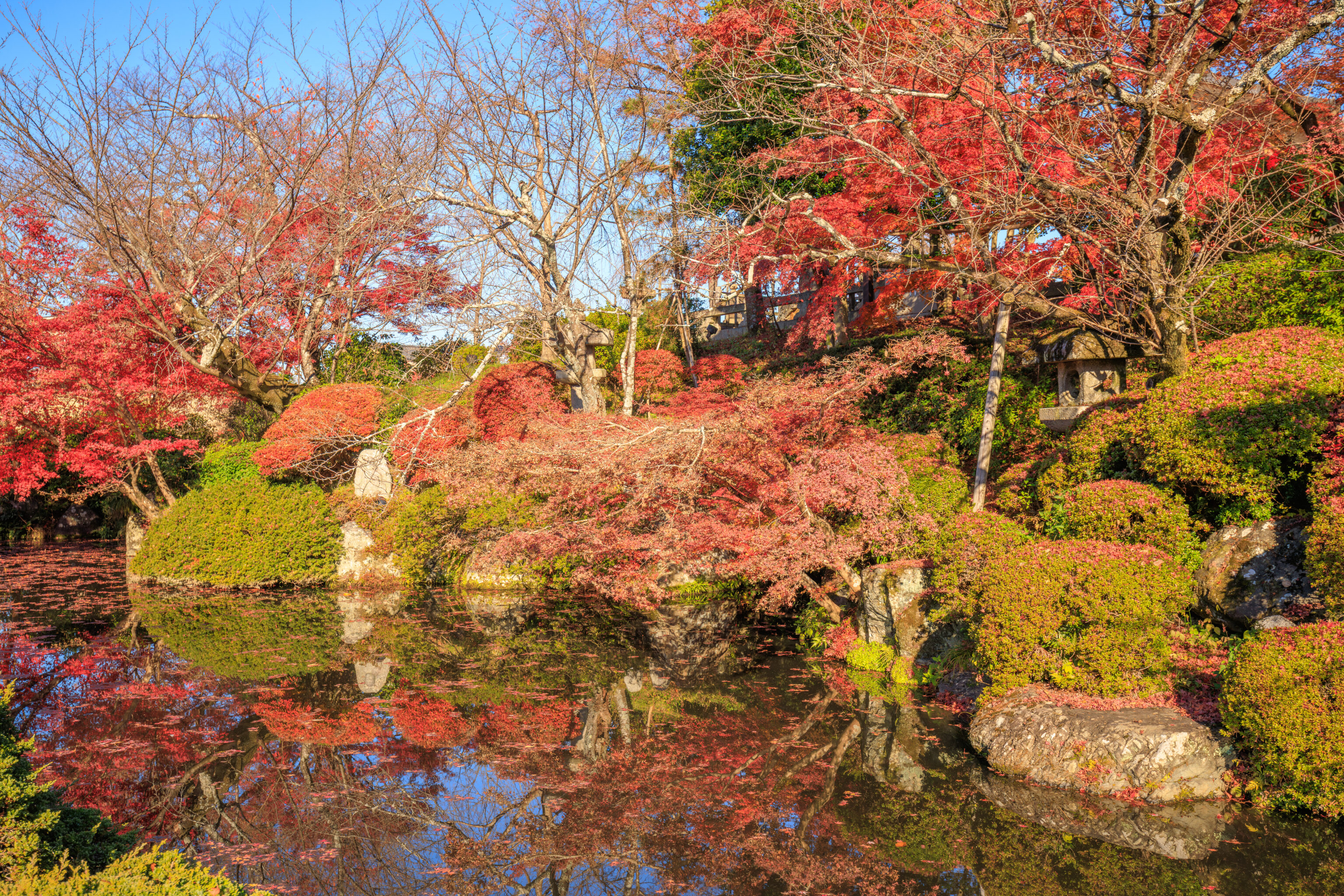
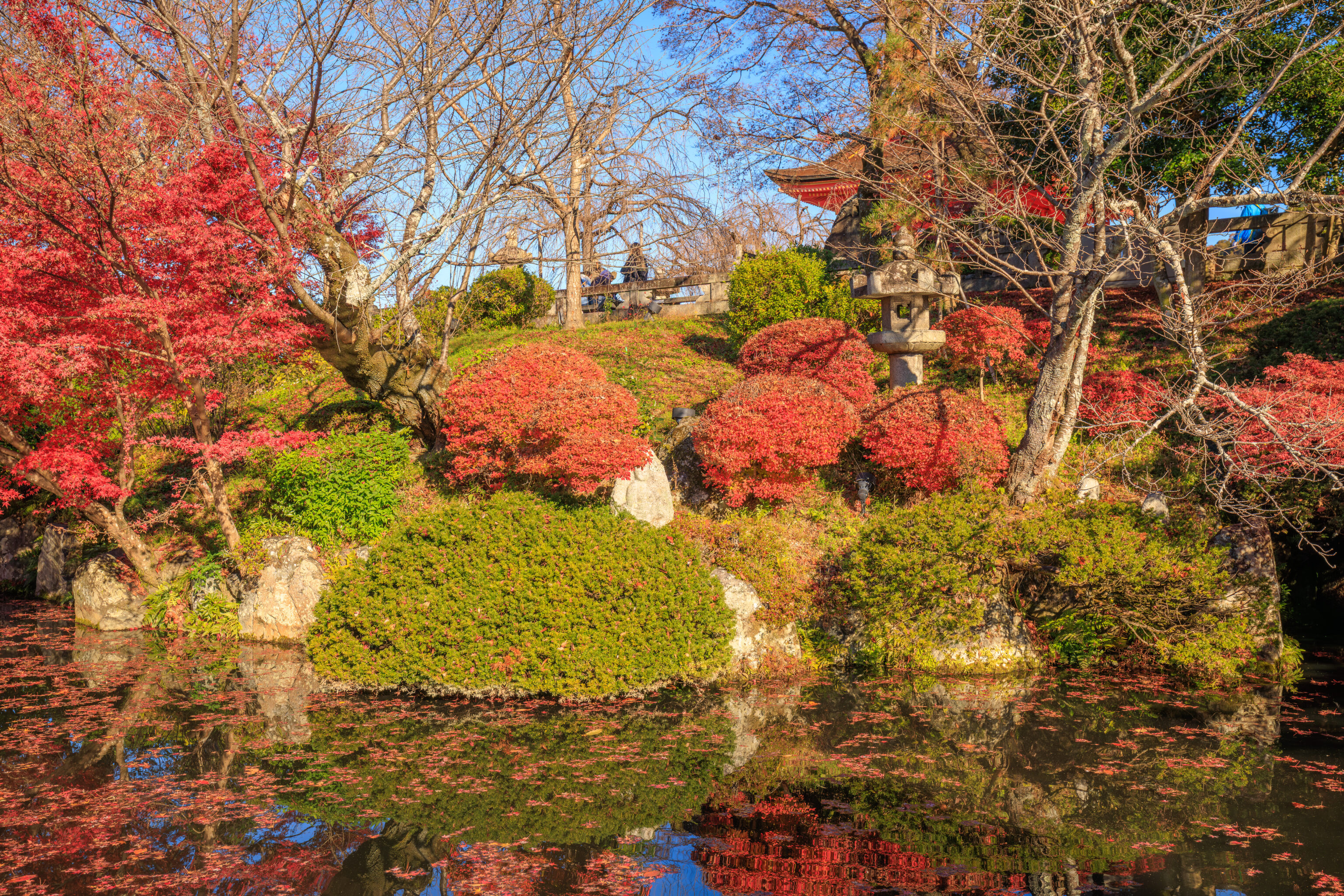
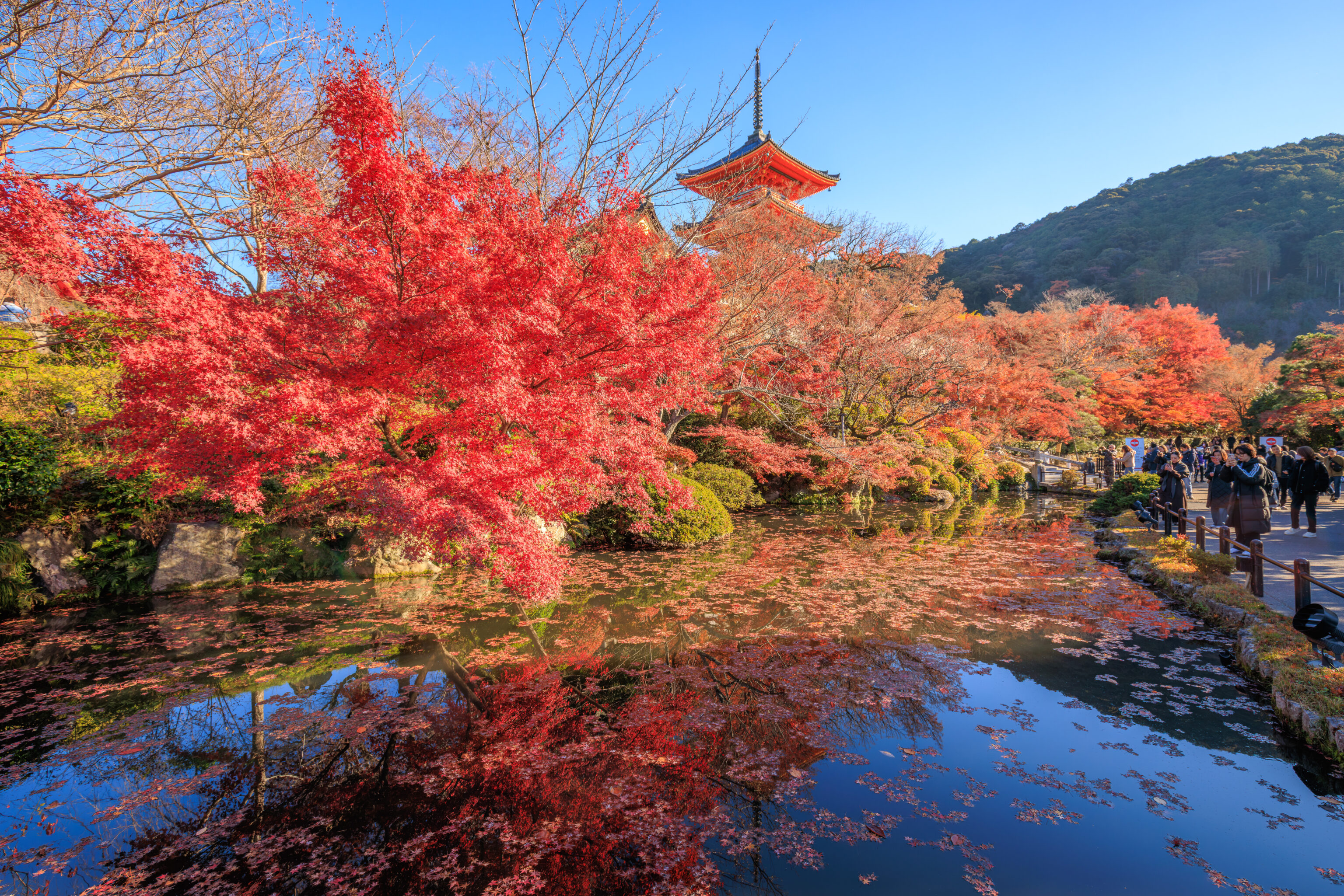
The route ends by this pond just to the south of the temple’s main entrance.
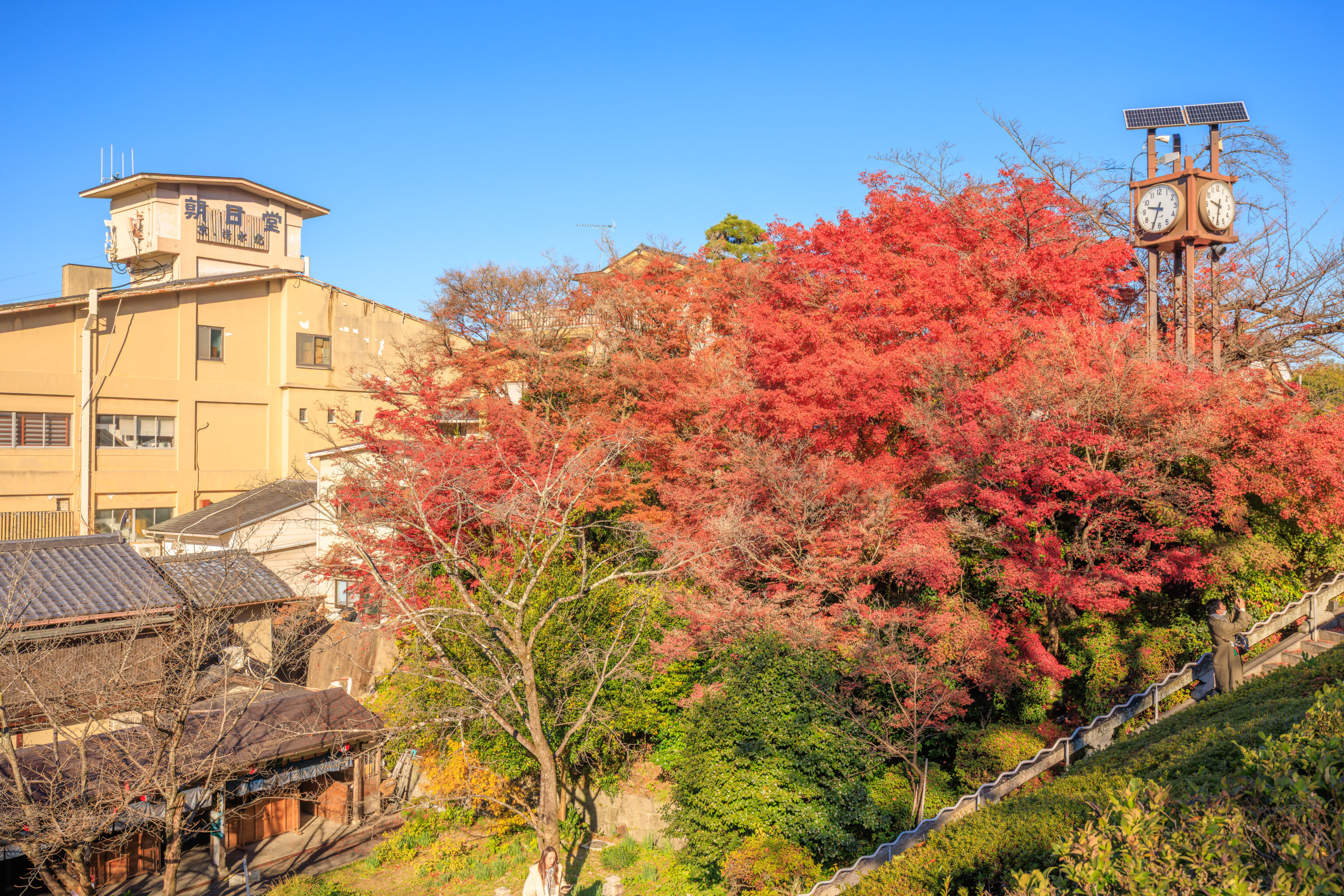
The red colors of the leaves on this particular tree are a bit dull but it definitely looks nicer when illuminated by the Sun!
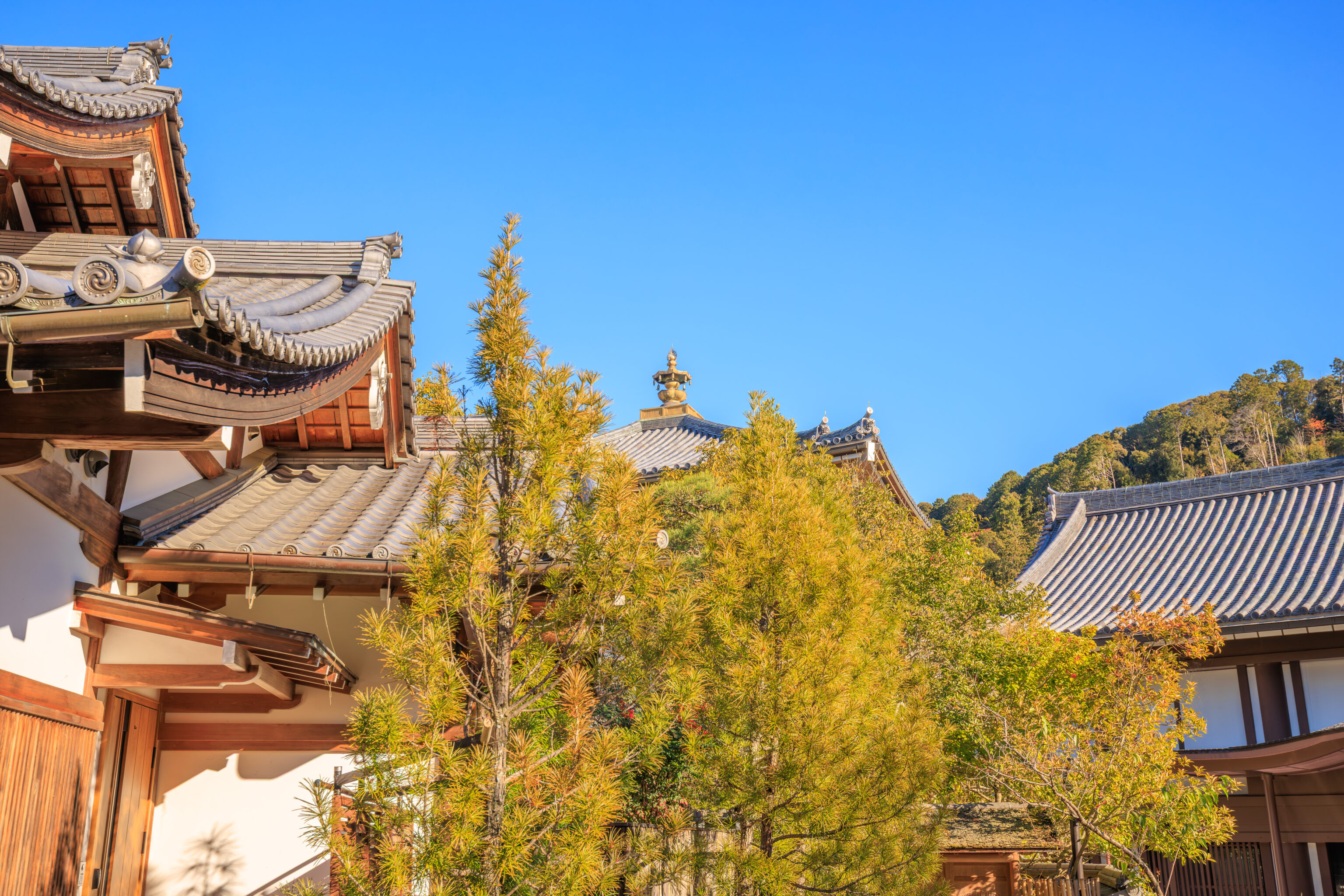
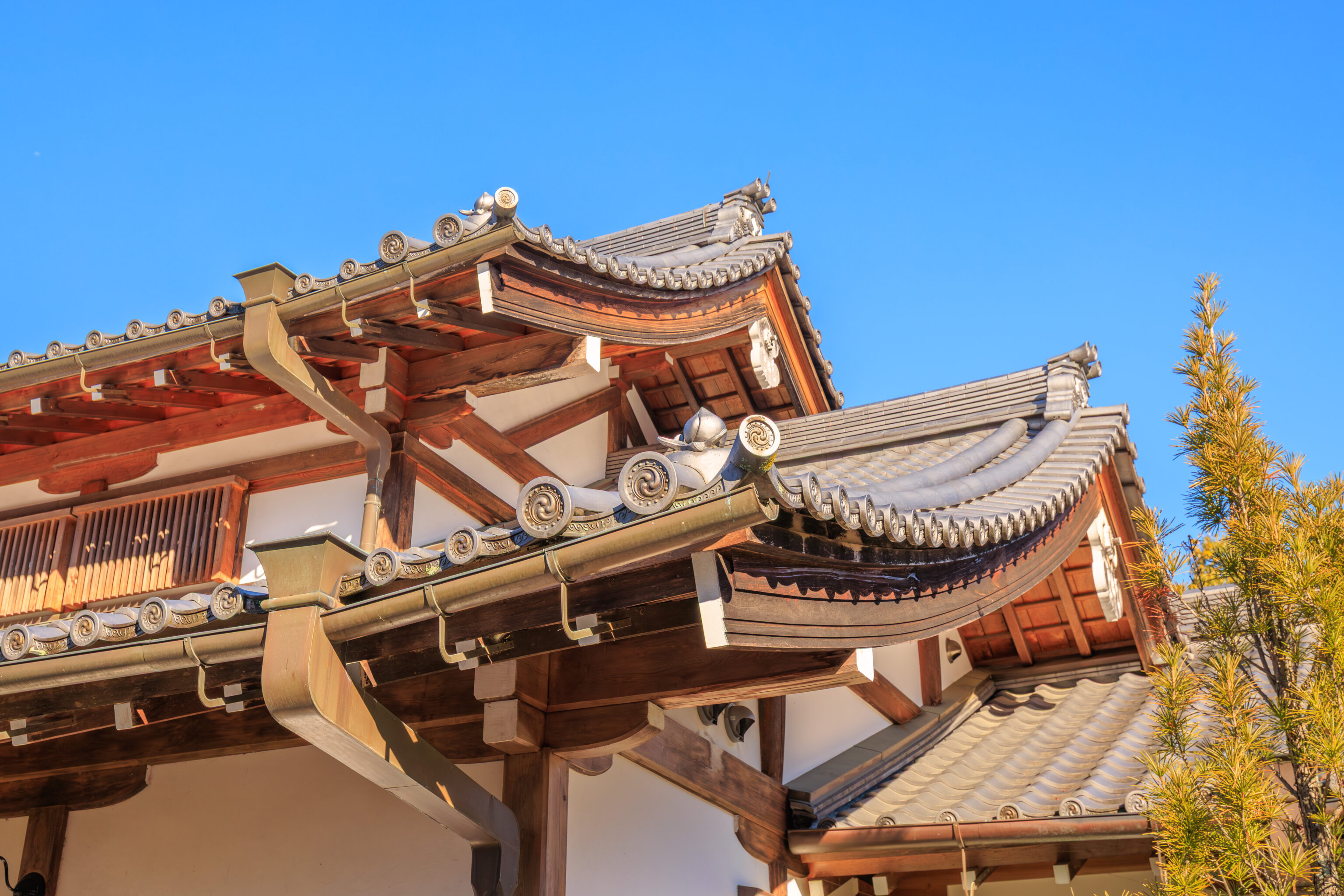
A temple building that we walked by as we headed over to Joju-in. Kiyomizu-dera is a large temple with many buildings on its grounds that cannot be accessed by visitors.
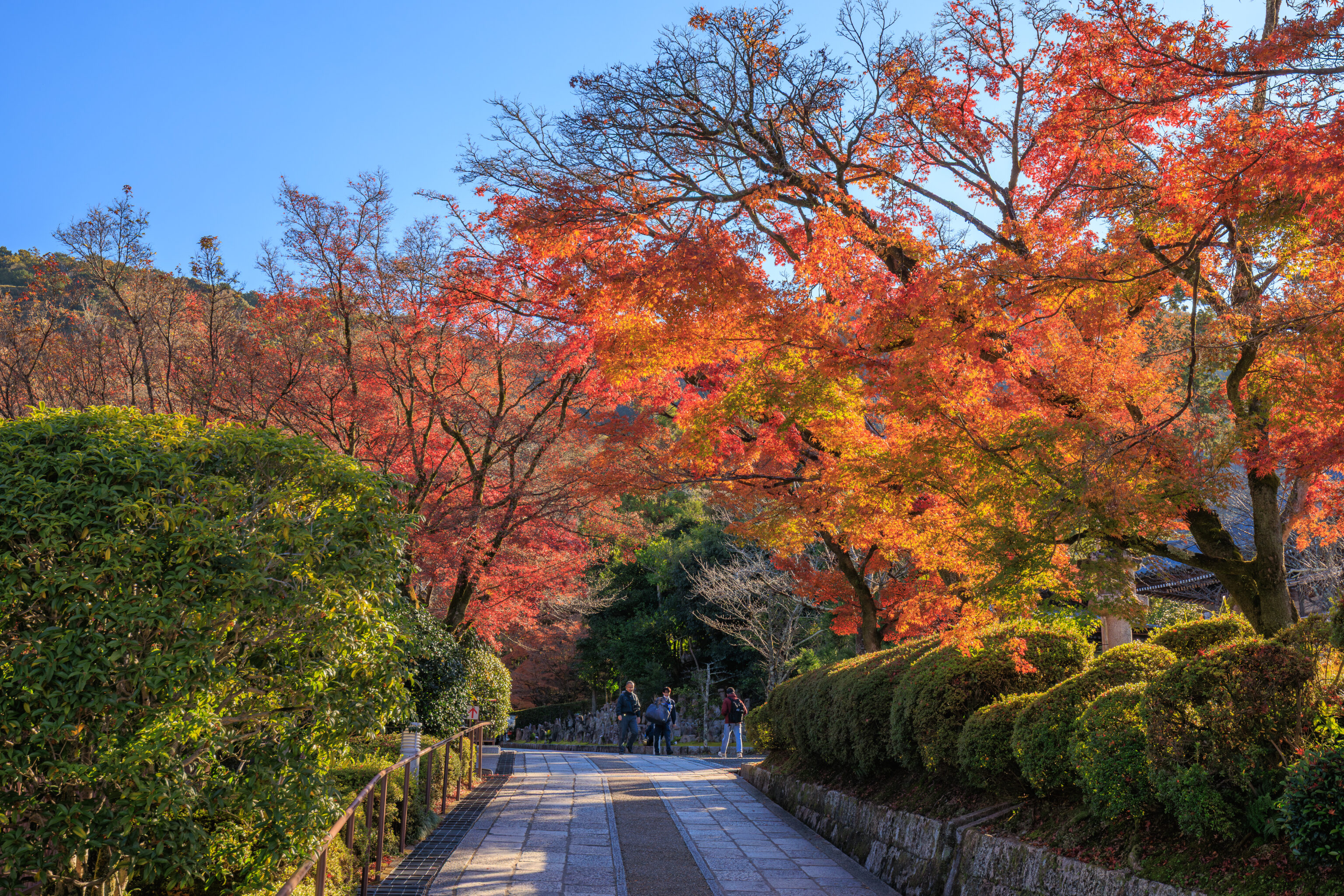
Although the main route through Kiyomizu-dera was quite busy, there were very few people here. Most people don’t stray far.
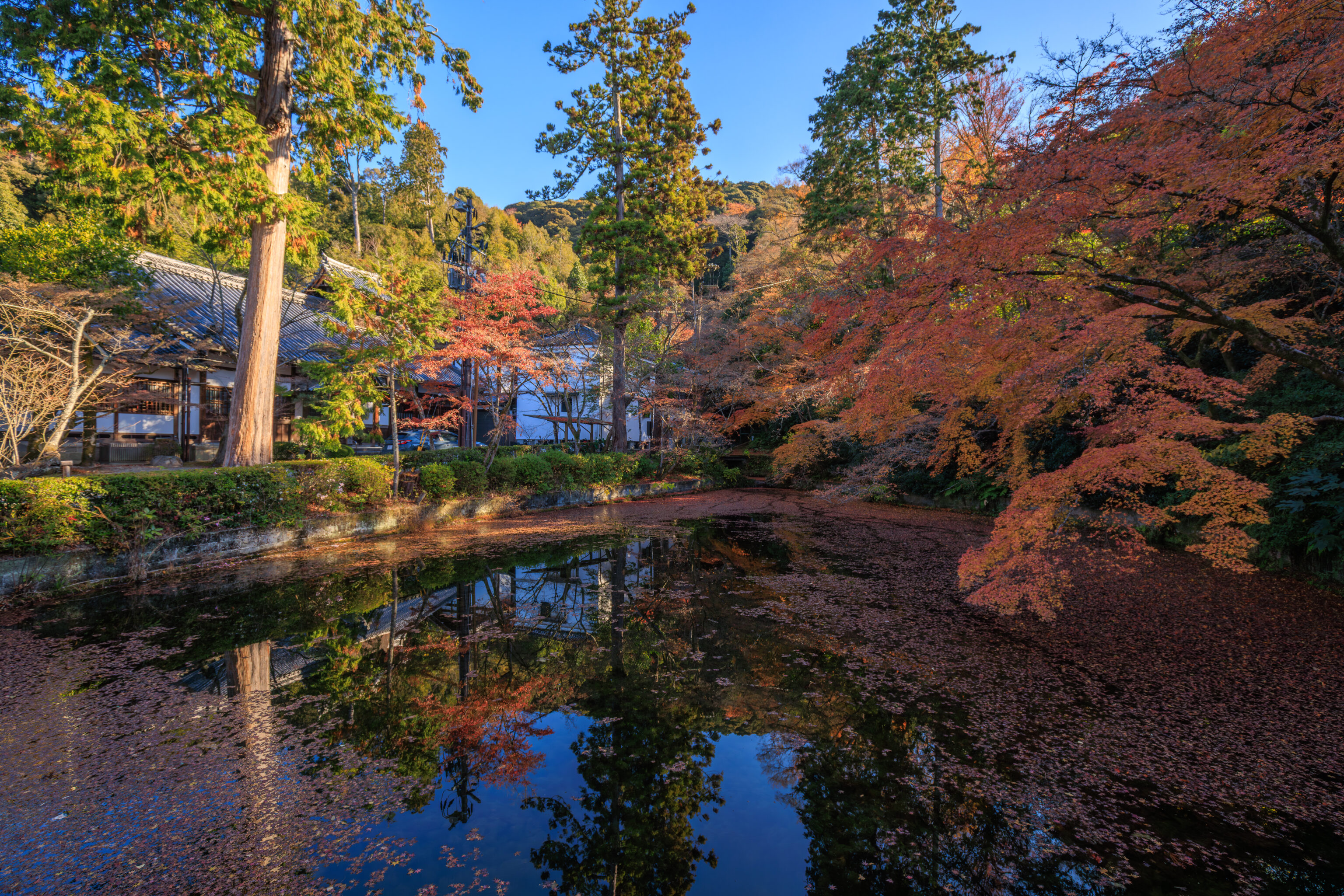
The surface of this pond was covered with many fallen momiji leaves.
Joju-in
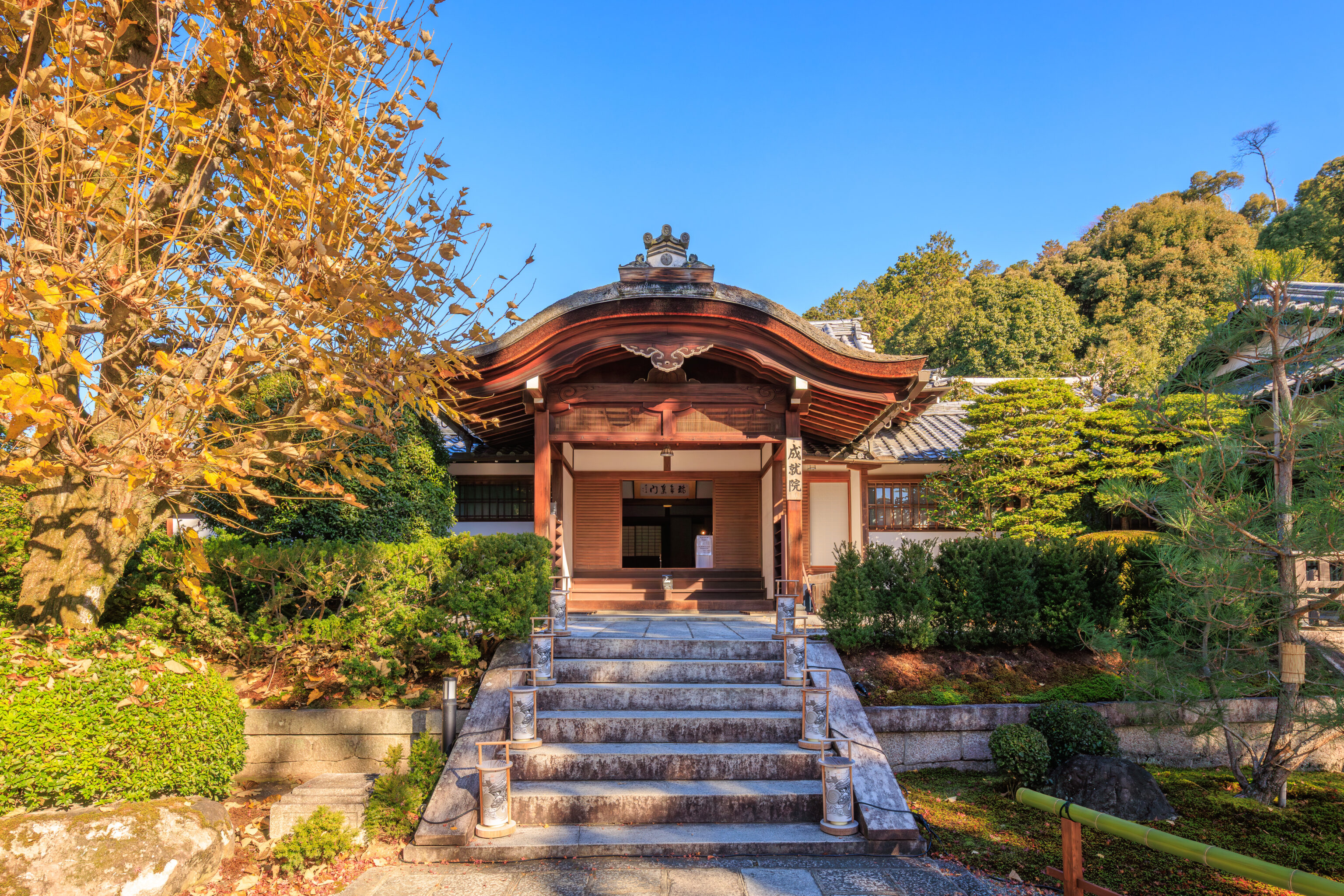
Joju-in is along the northern edge of the Kiyomizu-dera grounds.
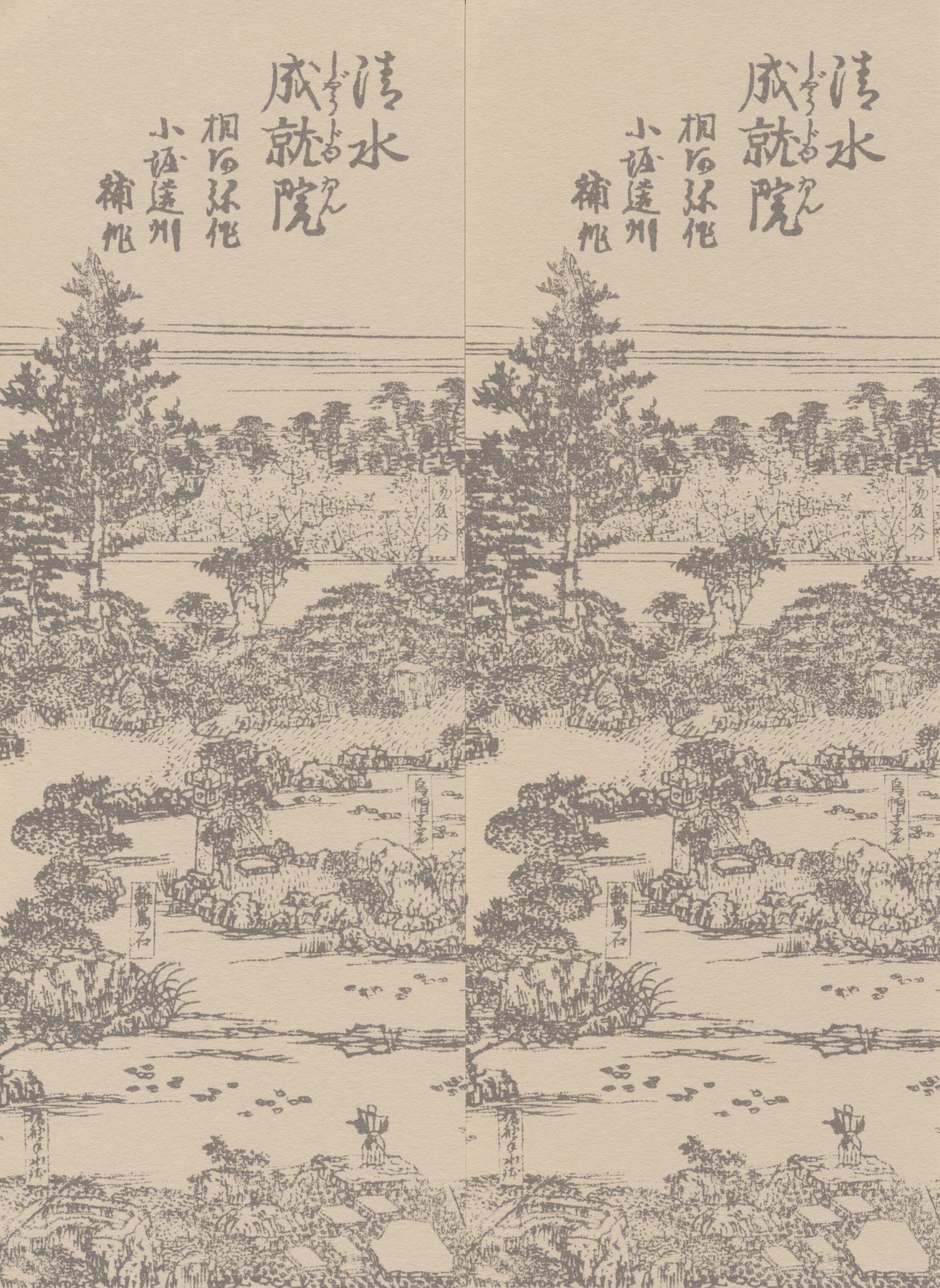
Although it is only open for limited periods during the year, tickets do not need to be purchased in advance. Photography is unfortunately not permitted.
The garden visit consists of a temple building with a view of the garden behind it. The building is a typical temple structure with a tatami floor and an expansive view of the area behind.
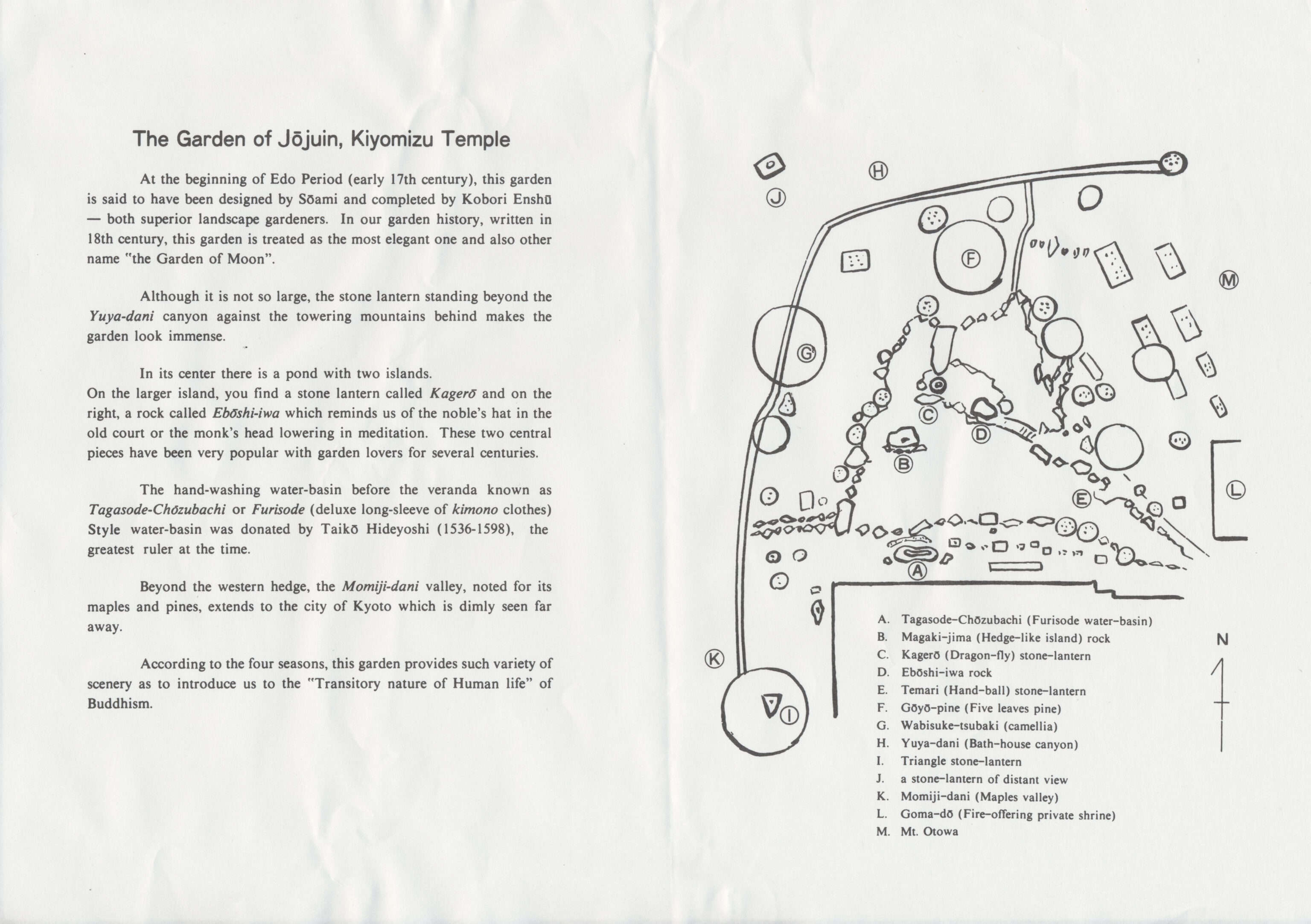
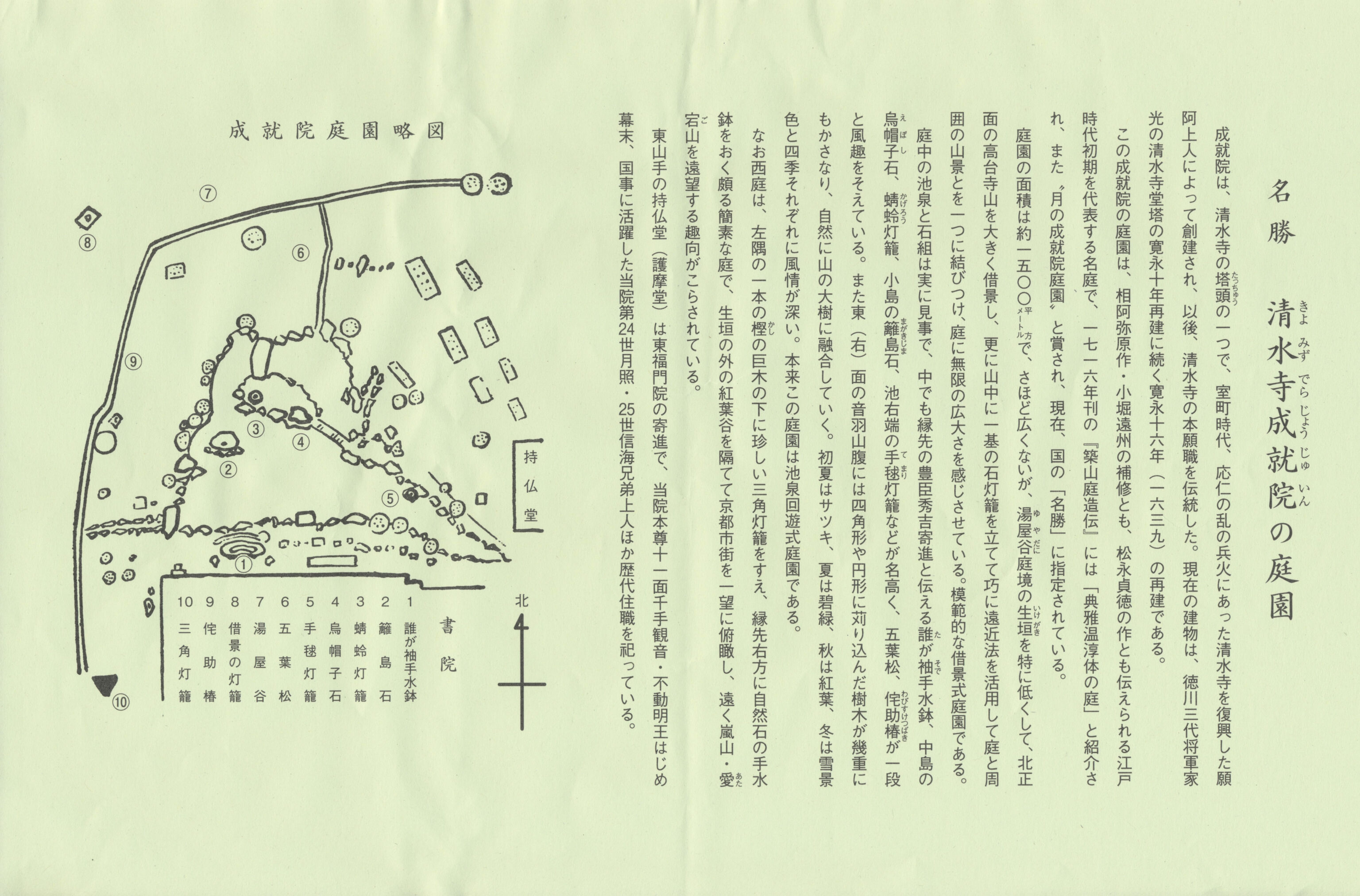
A diagram of the garden along with some explanatory text was provided in both English and Japanese. As is often the case, the information on both is not the same.
One interesting feature of this garden that was new to us* was its 水琴窟 Suikinkutsu. This underground device consists of a buried upside-down jar. Water slowly drips down into it and lands in a pool of water at the bottom. This creates a dripping sound which can be heard using a bamboo pole that sticks out of the ground. It was over on the west side of Joju-in.
* We actually encountered one two years ago at 圓光寺 Enko-ji here in Kyoto, however, we failed to understand what it was!
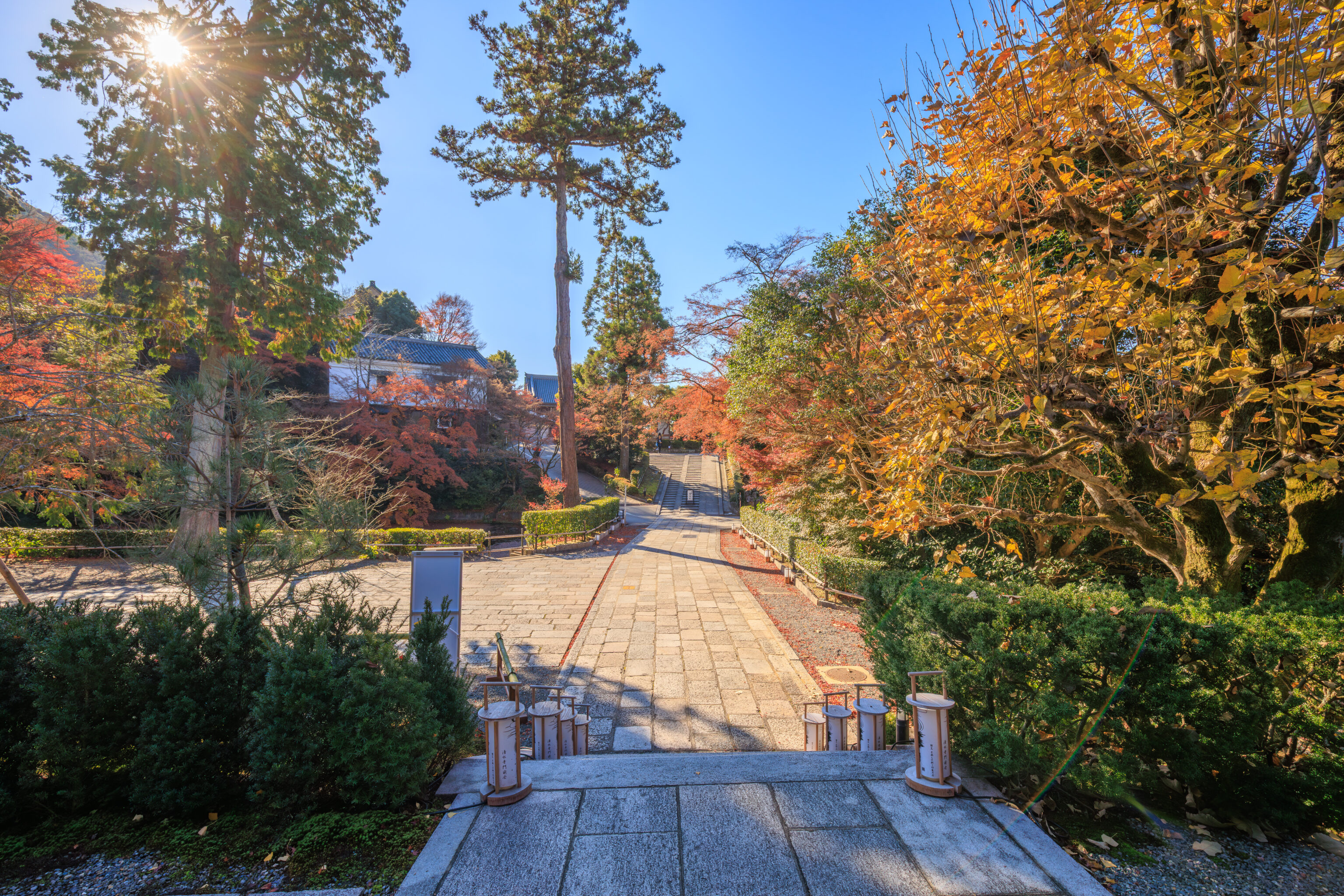
The view from the entrance to Joju-in after our visit. There were only a few other people present during our visit. Very different from the main part of Kiyomizu-dera!
Kiyomizu-dera Again
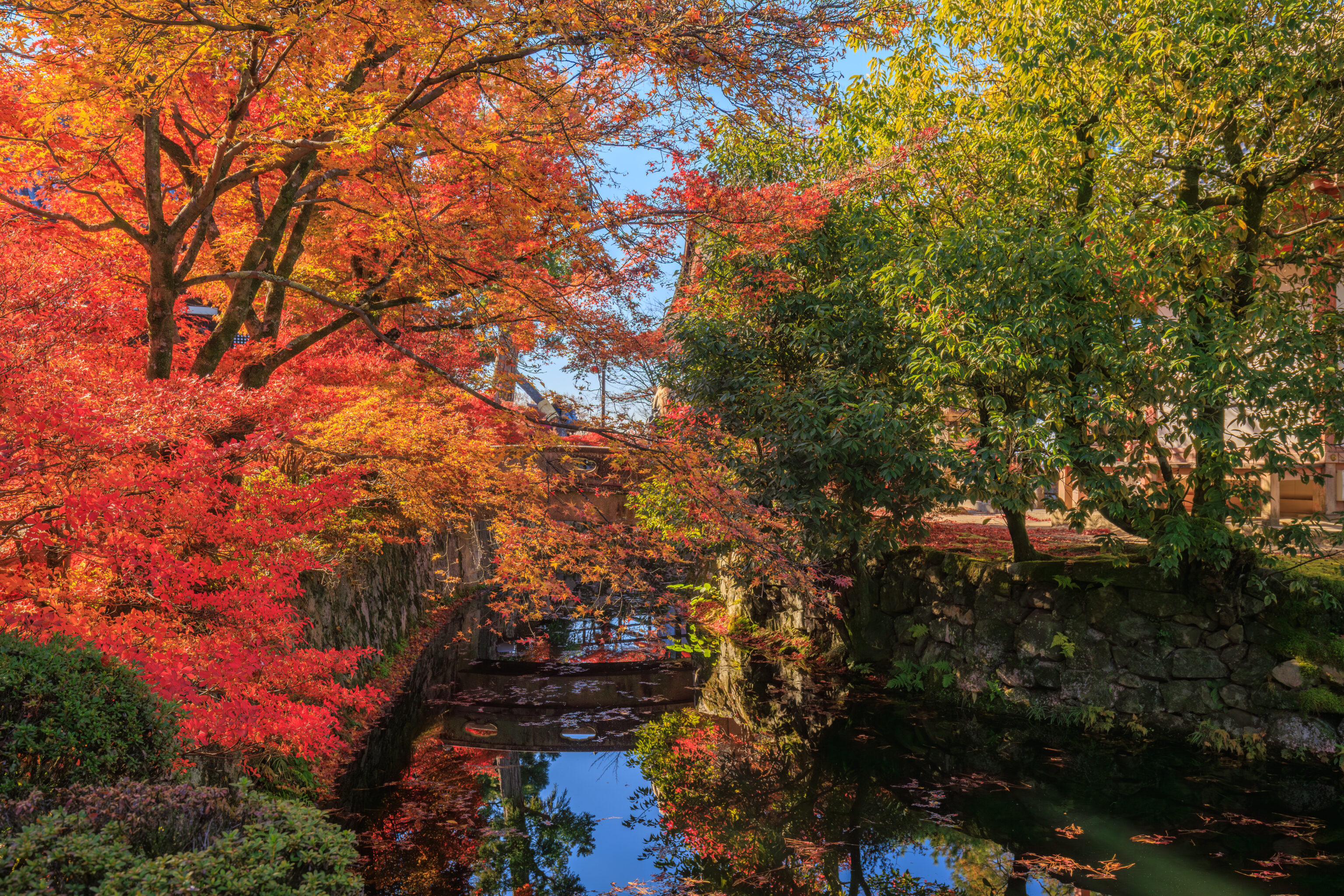
We decided to walk through Kiyomizu-dera again. We walked to the south to return to the main temple path.
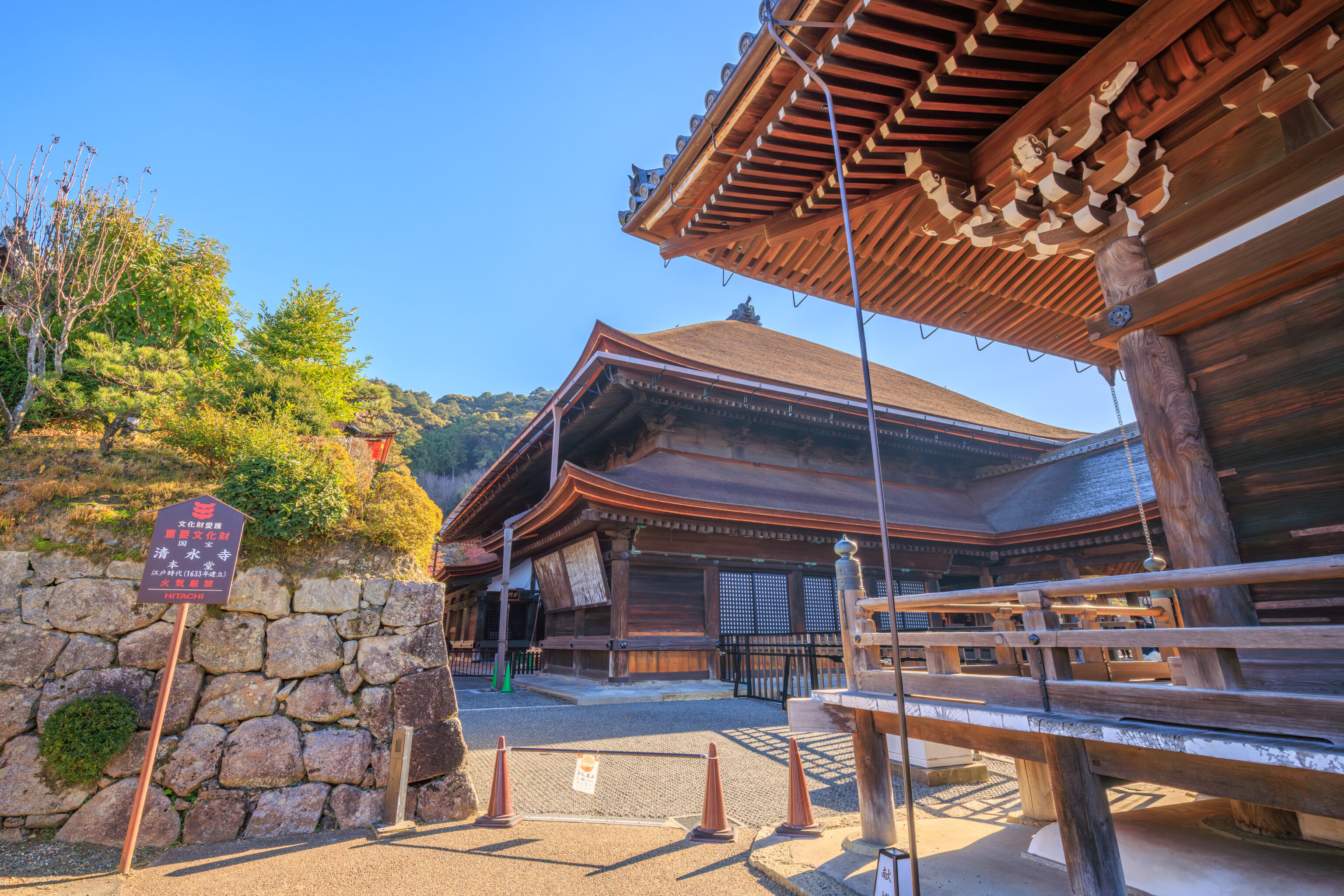
The building seen here is the rear of the Main Hall.
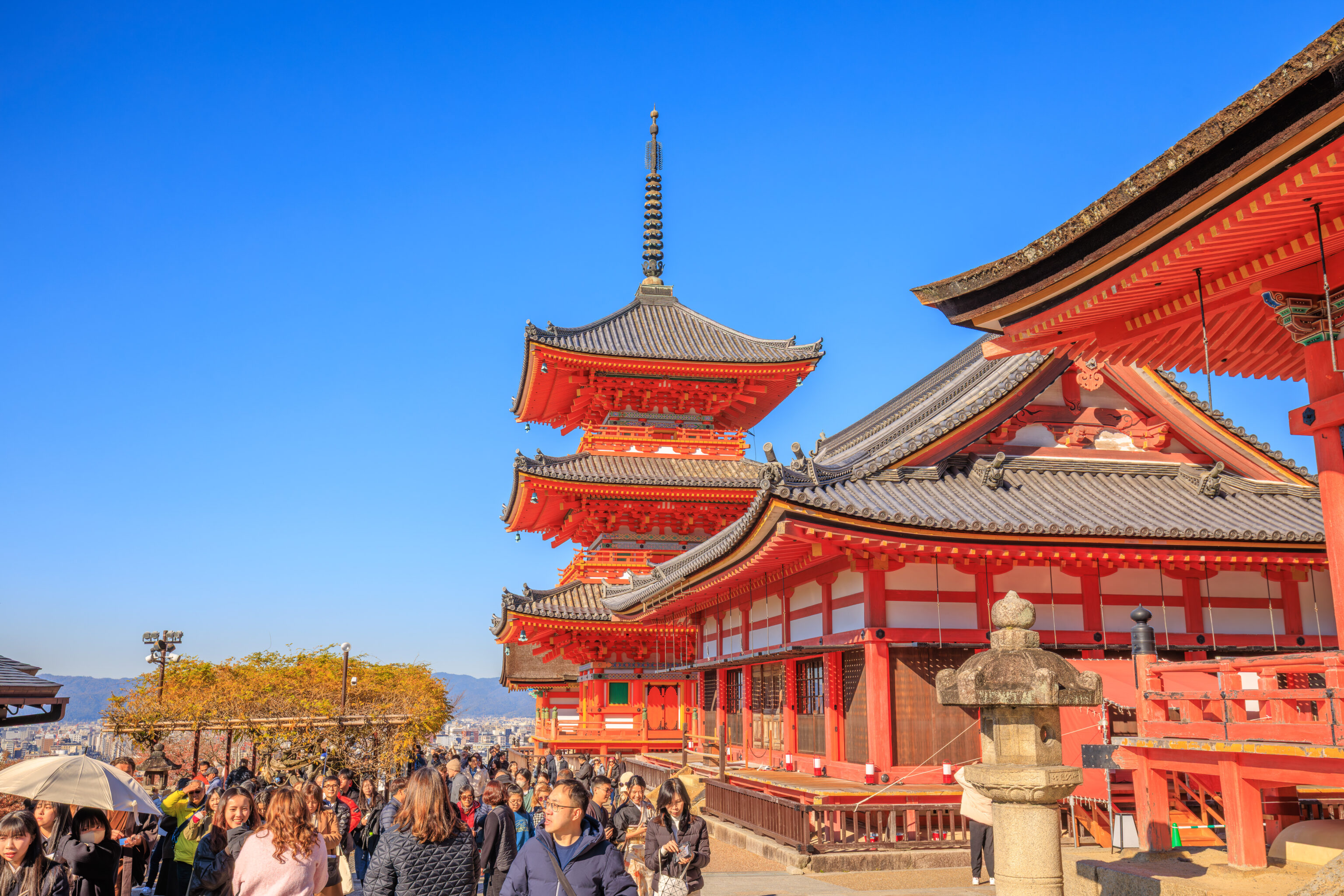
It was now around 10:15am. The sky was clear and there were many more people than our walk through before!
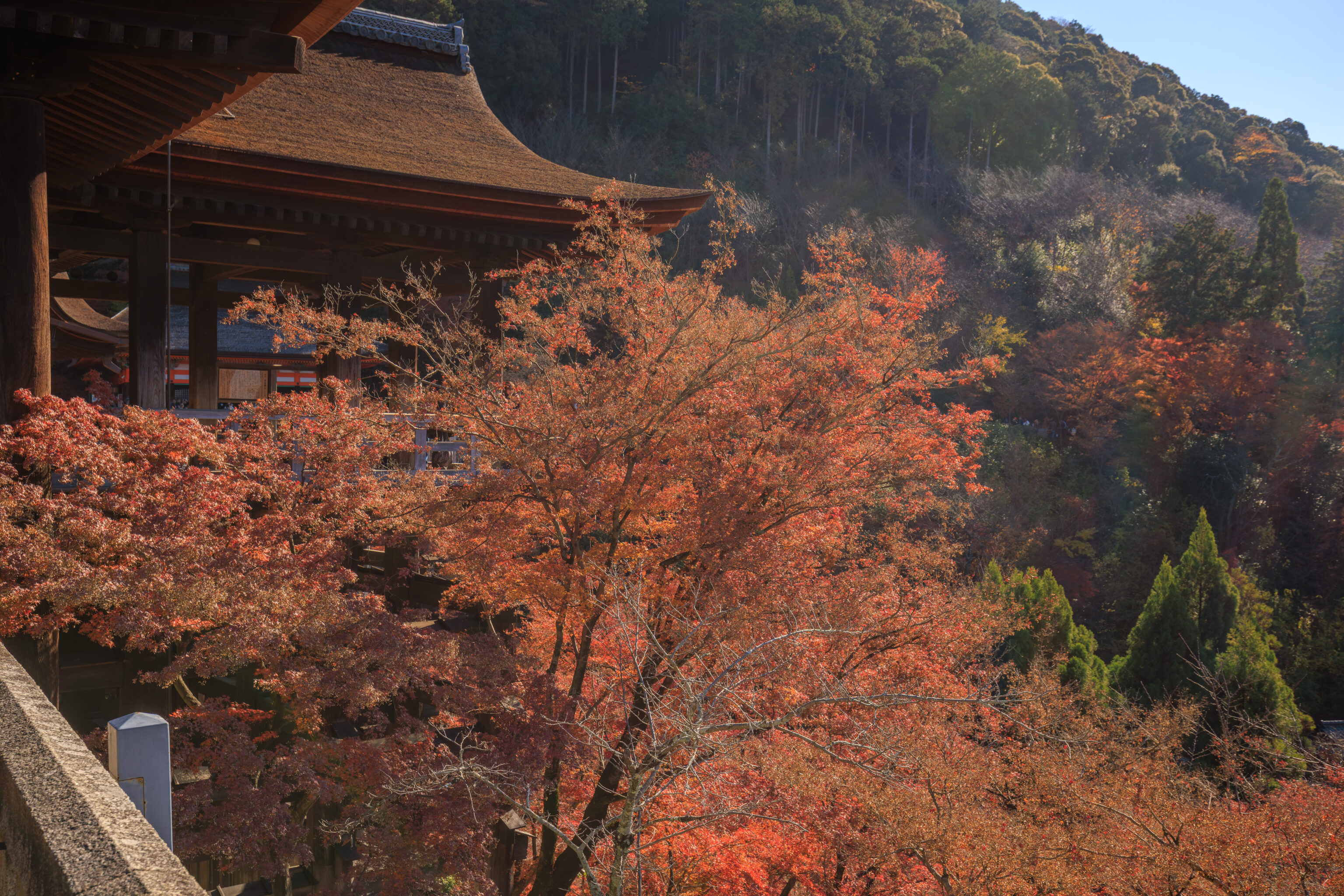
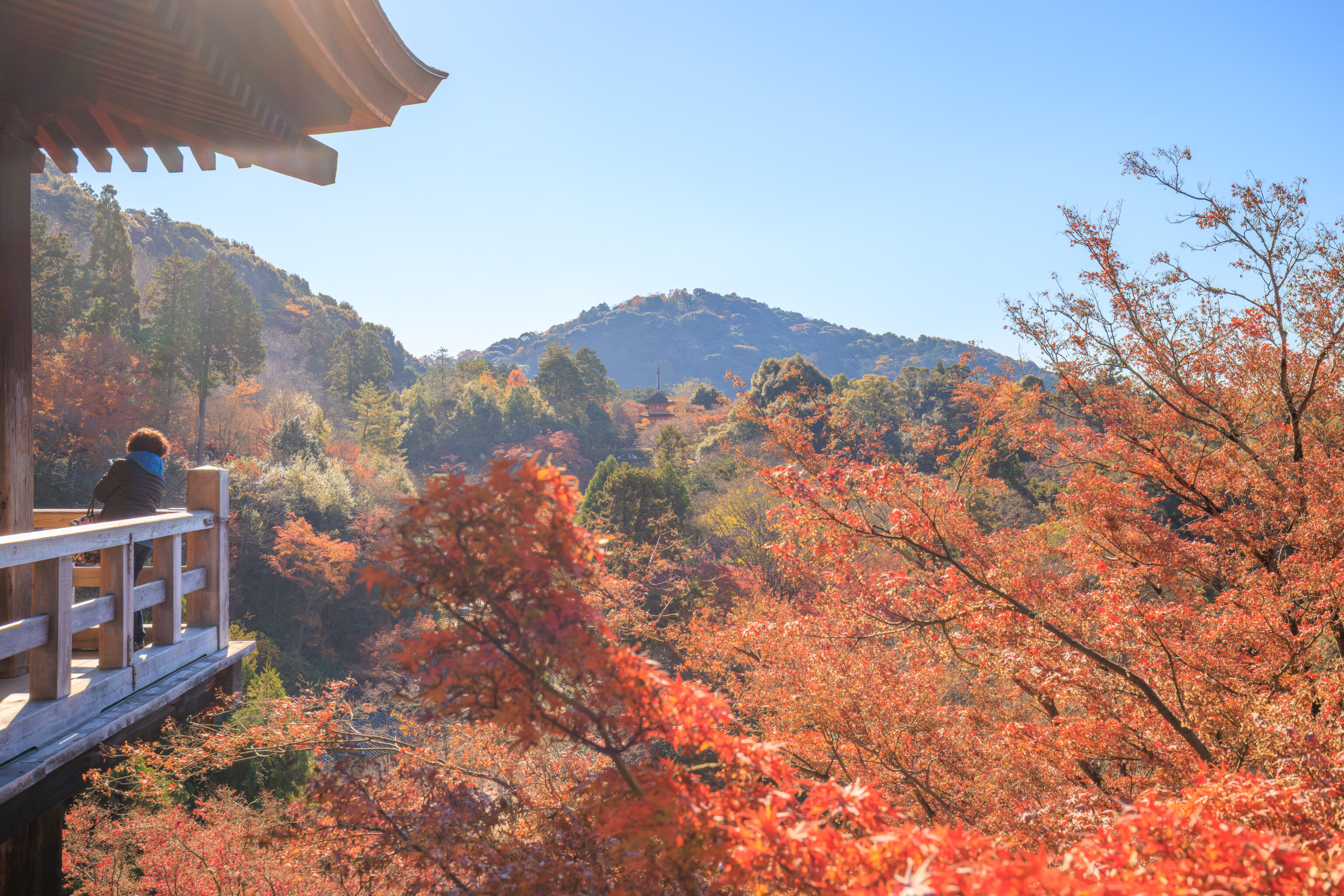
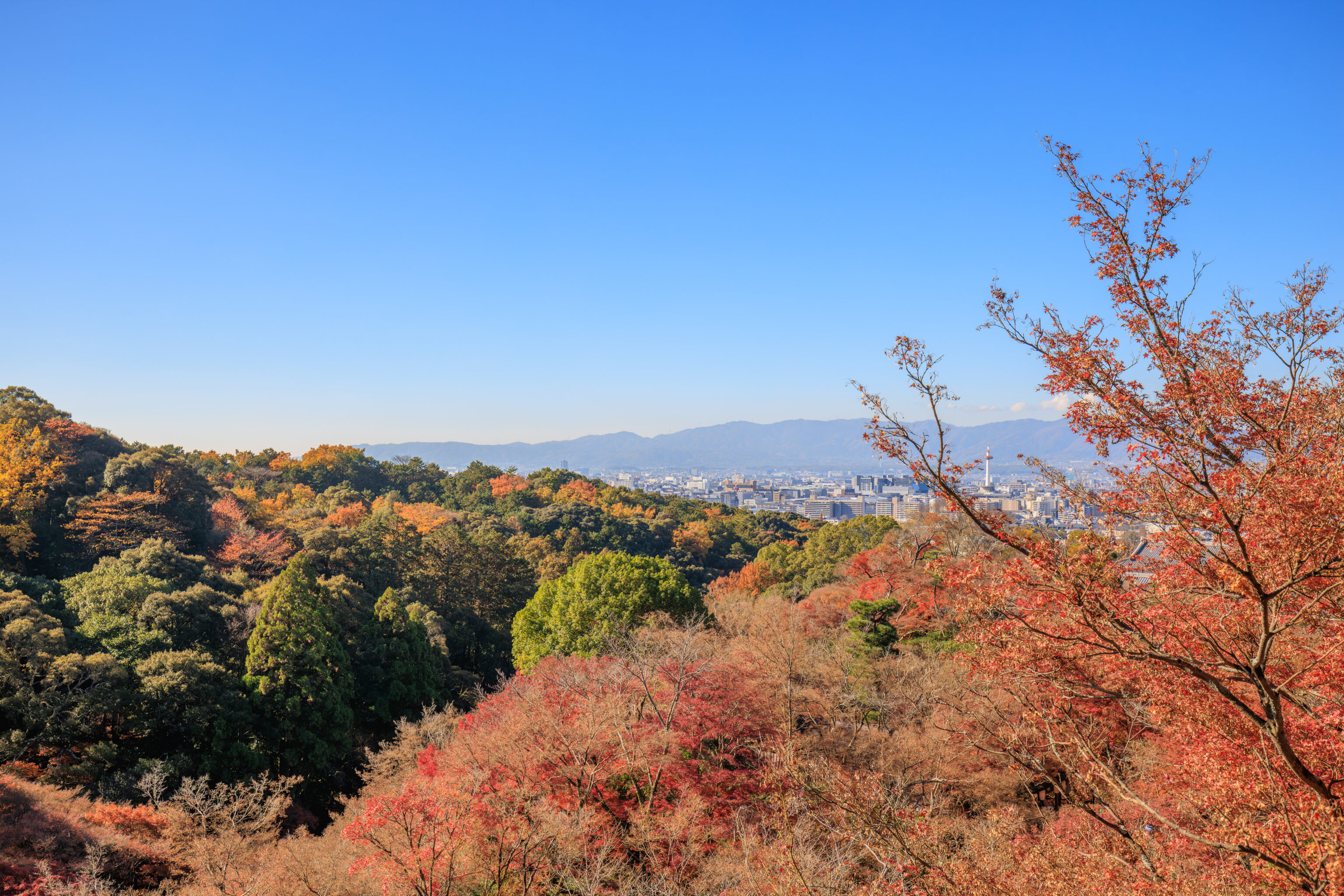
It does look a little better now that everything is illuminated.
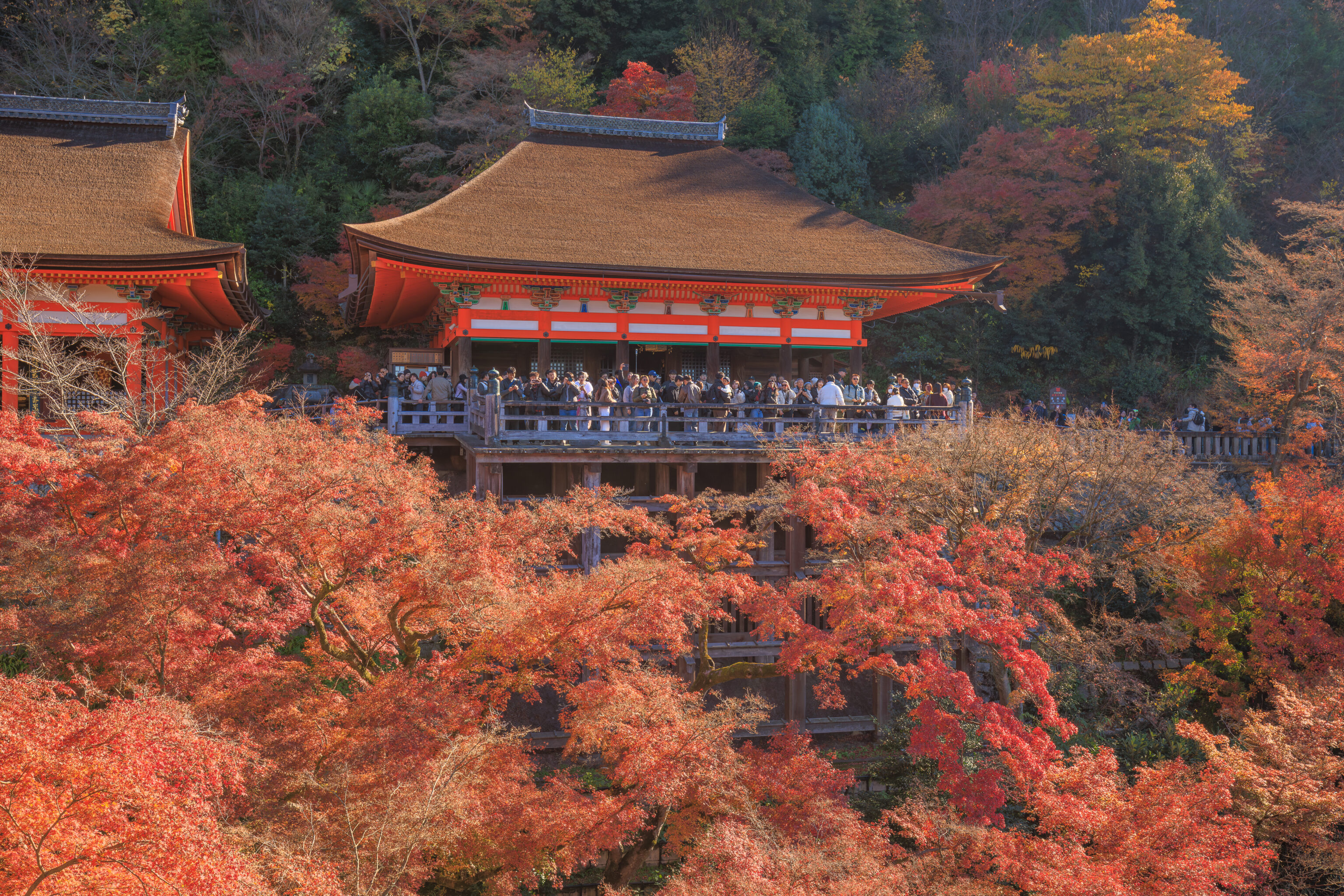
The Okuno-in looked to be super crowded!
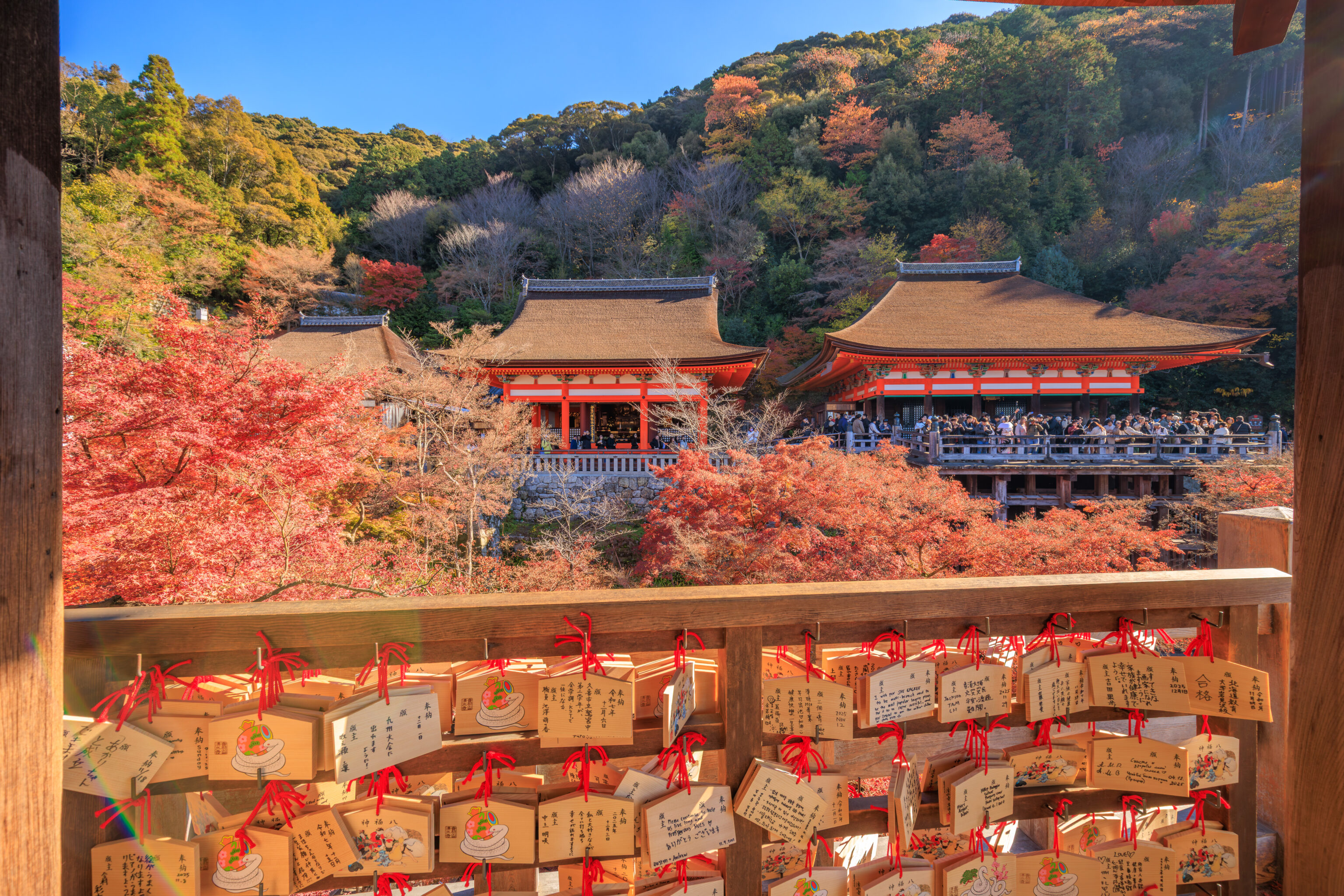
A nicely framed view from the Main Hall with 絵馬 ema in the foreground.
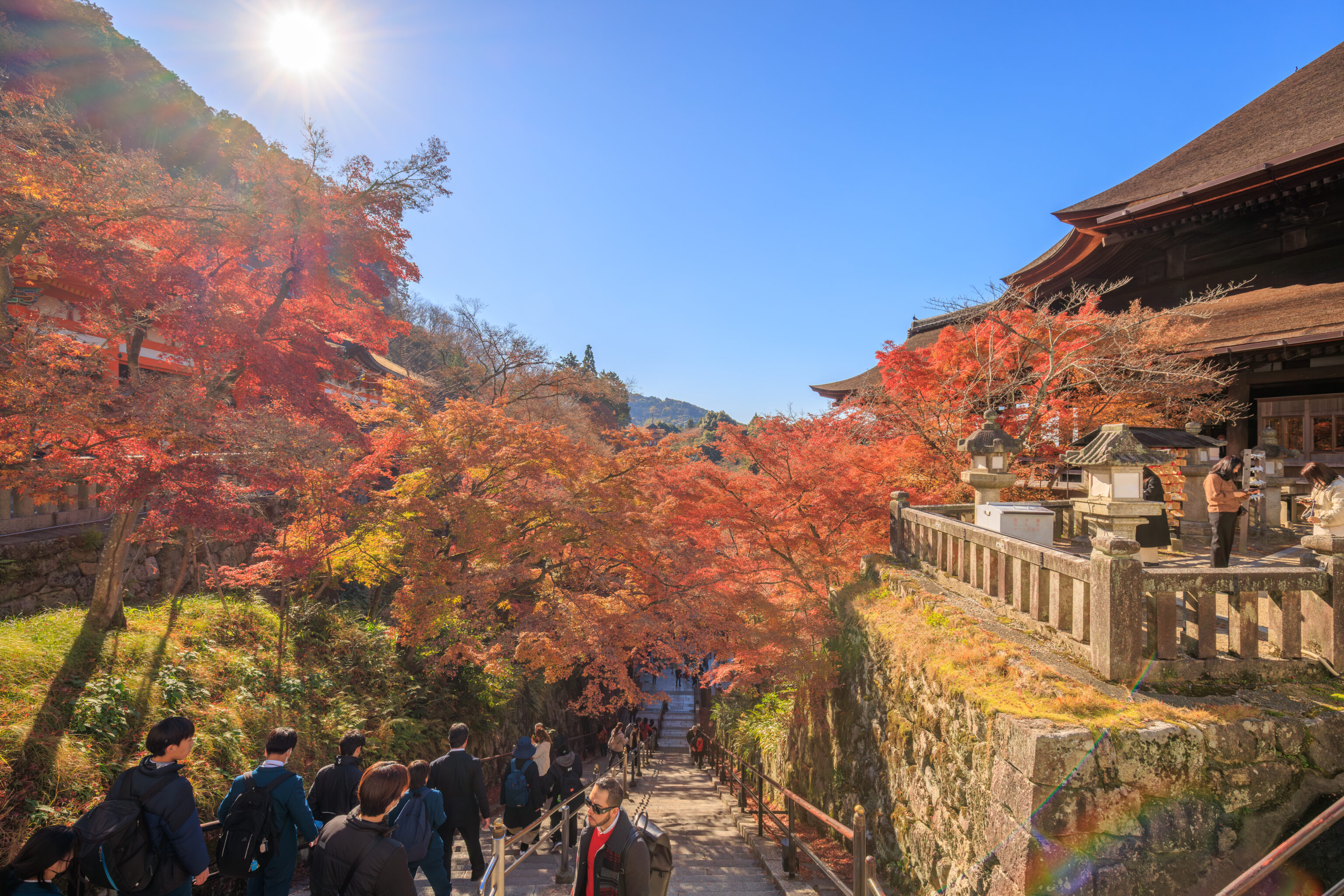
This path leads down below the Main Hall’s stage.
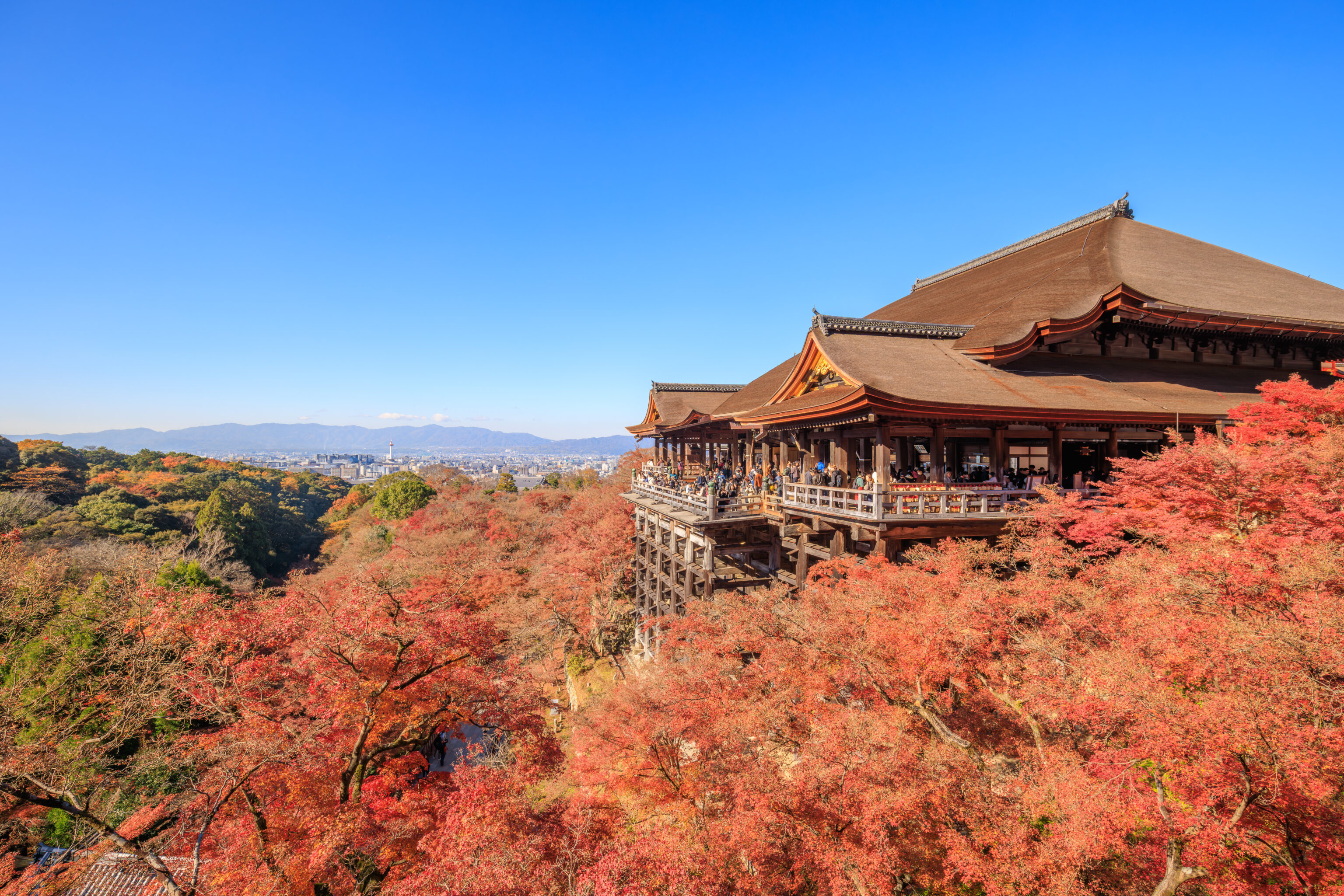
It took a bit of time to get to the front of the Okuno-in for this view. We’re lucky to have seen this view earlier in the fall foliage season.
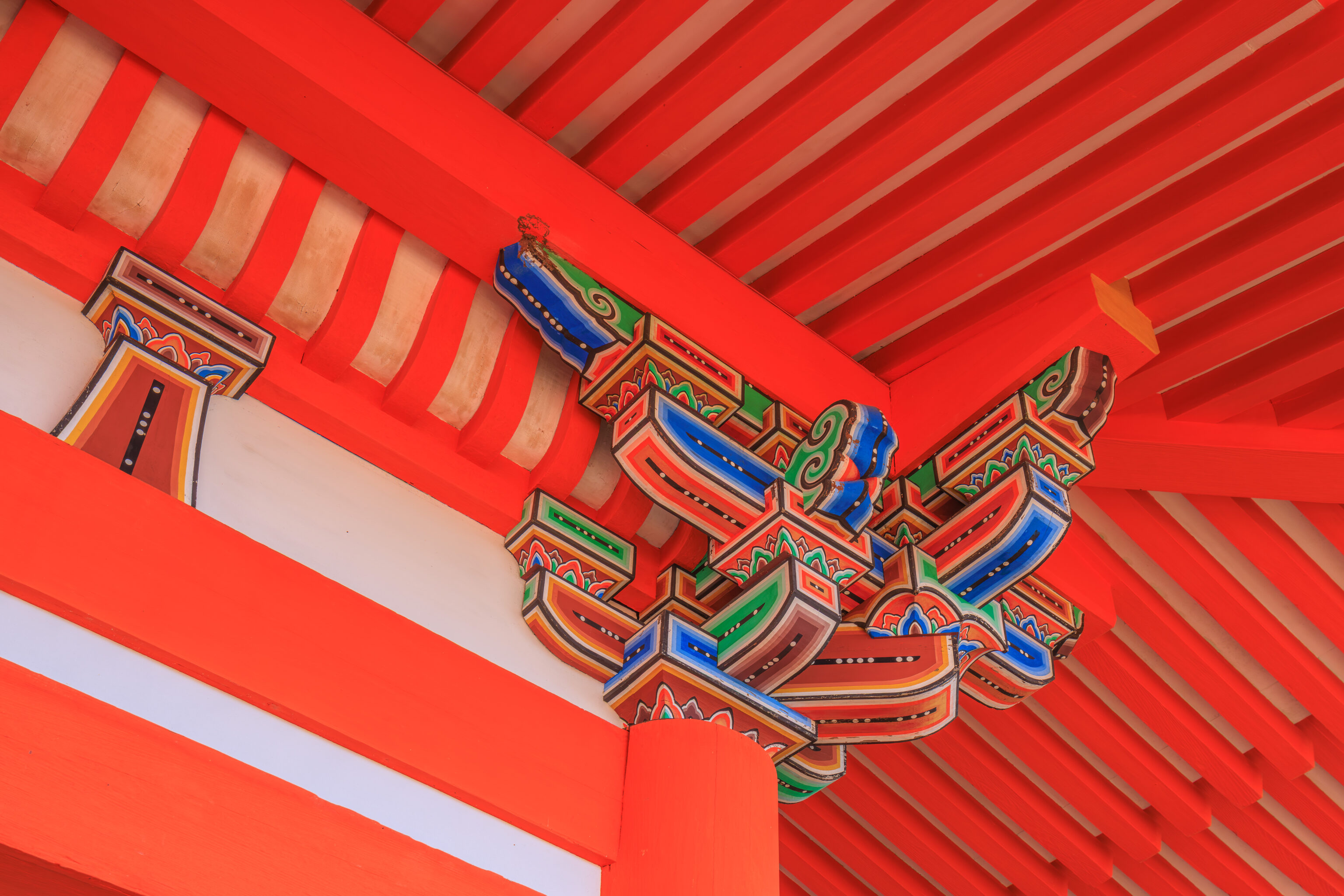
One of the corners of a temple building.
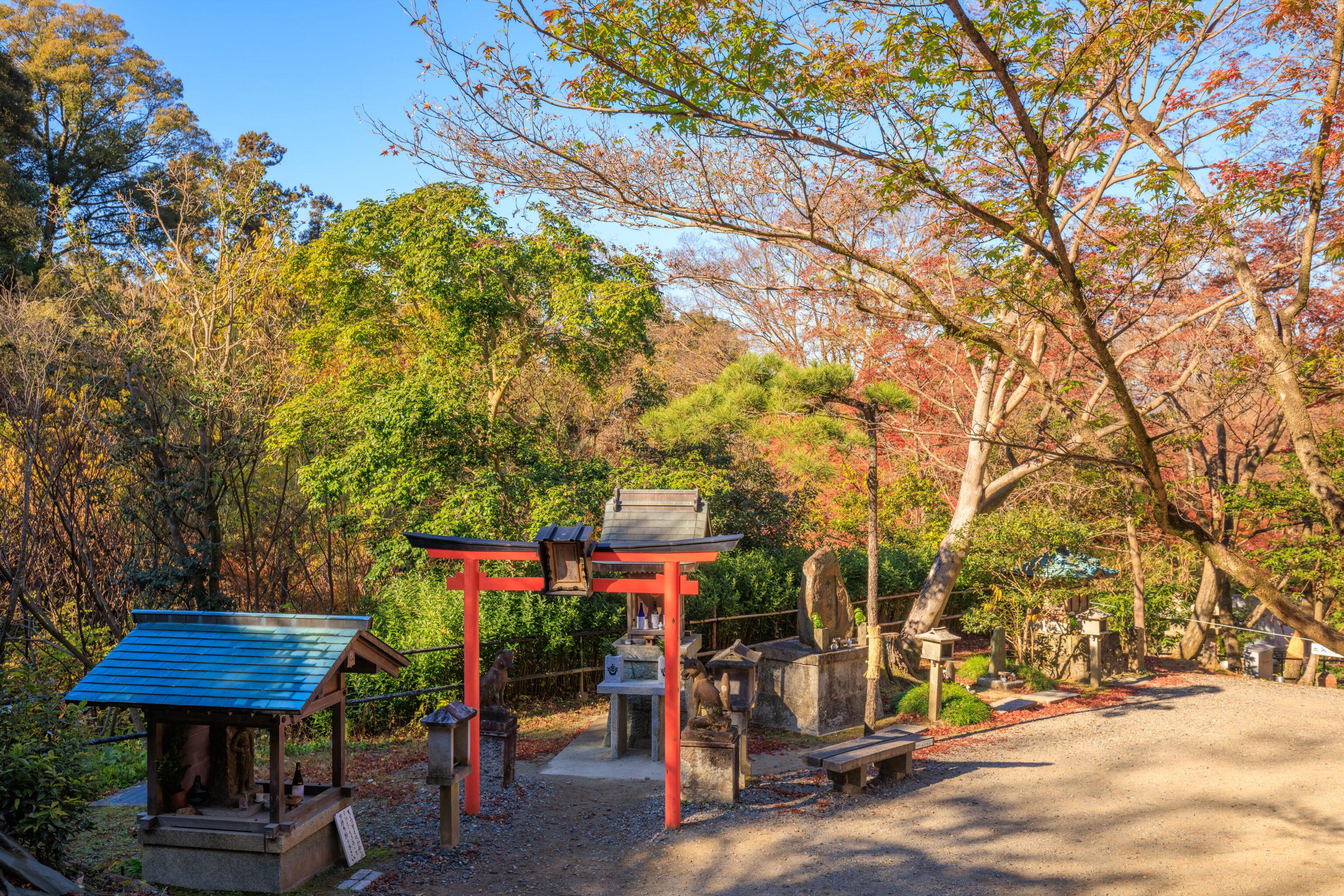
The small Inari shrine that we looked at earlier today.
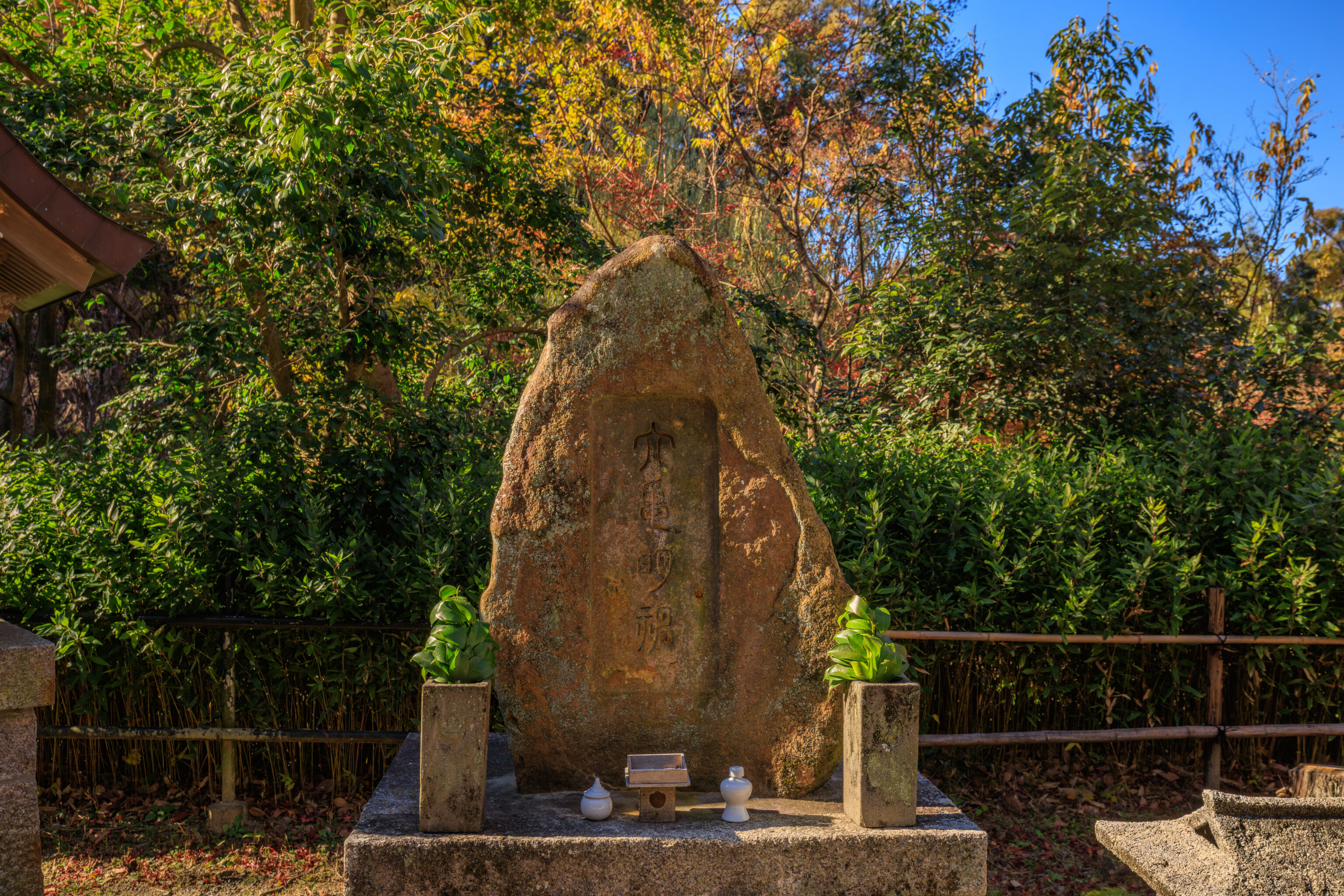
This small shrine is the one adjacent to the Inari shrine.
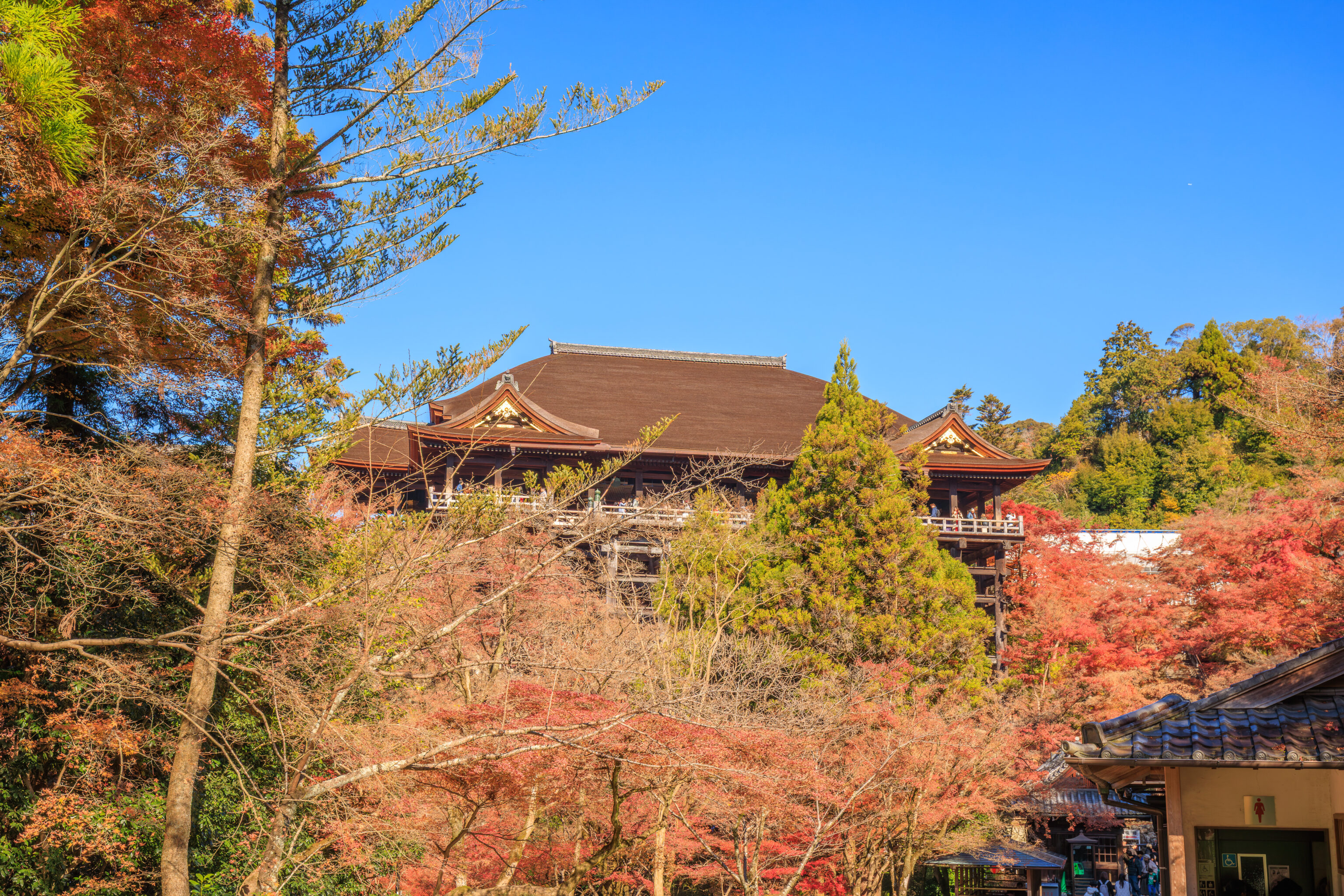
The Main Hall up ahead as we continued on the route.
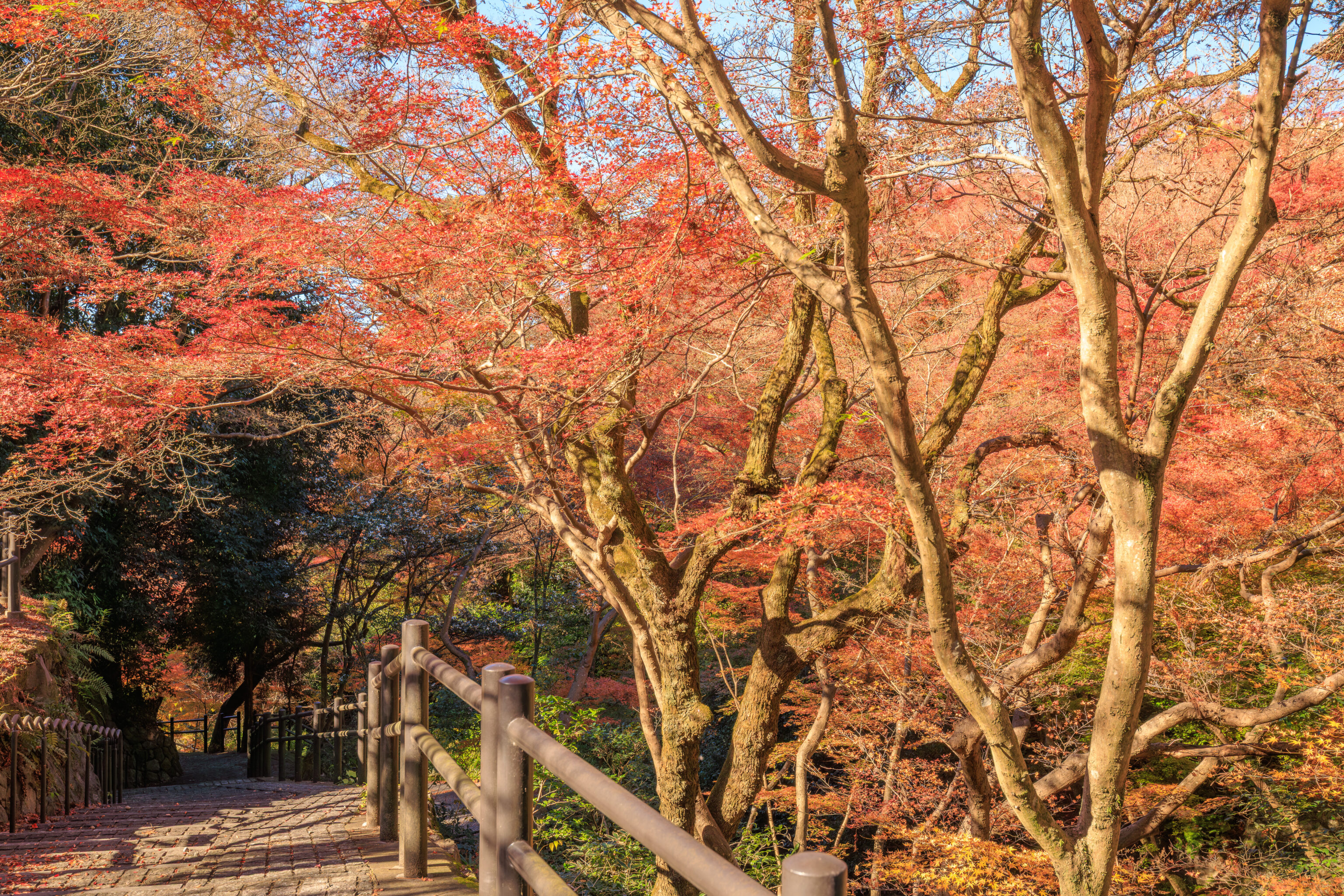
This path to our left leads further down into the valley below. We’ve never seen it open.
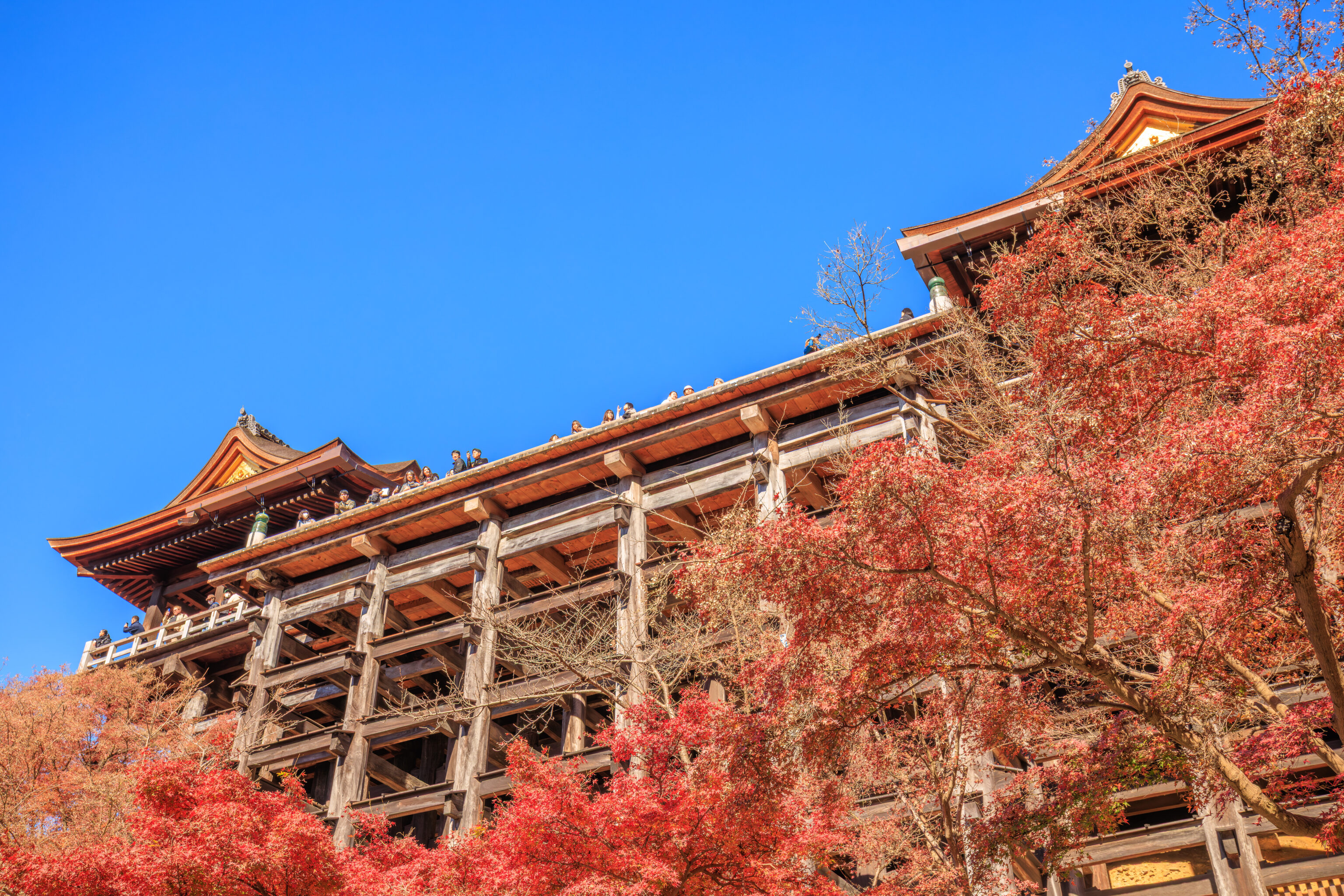
Passing below the Main Hall again…
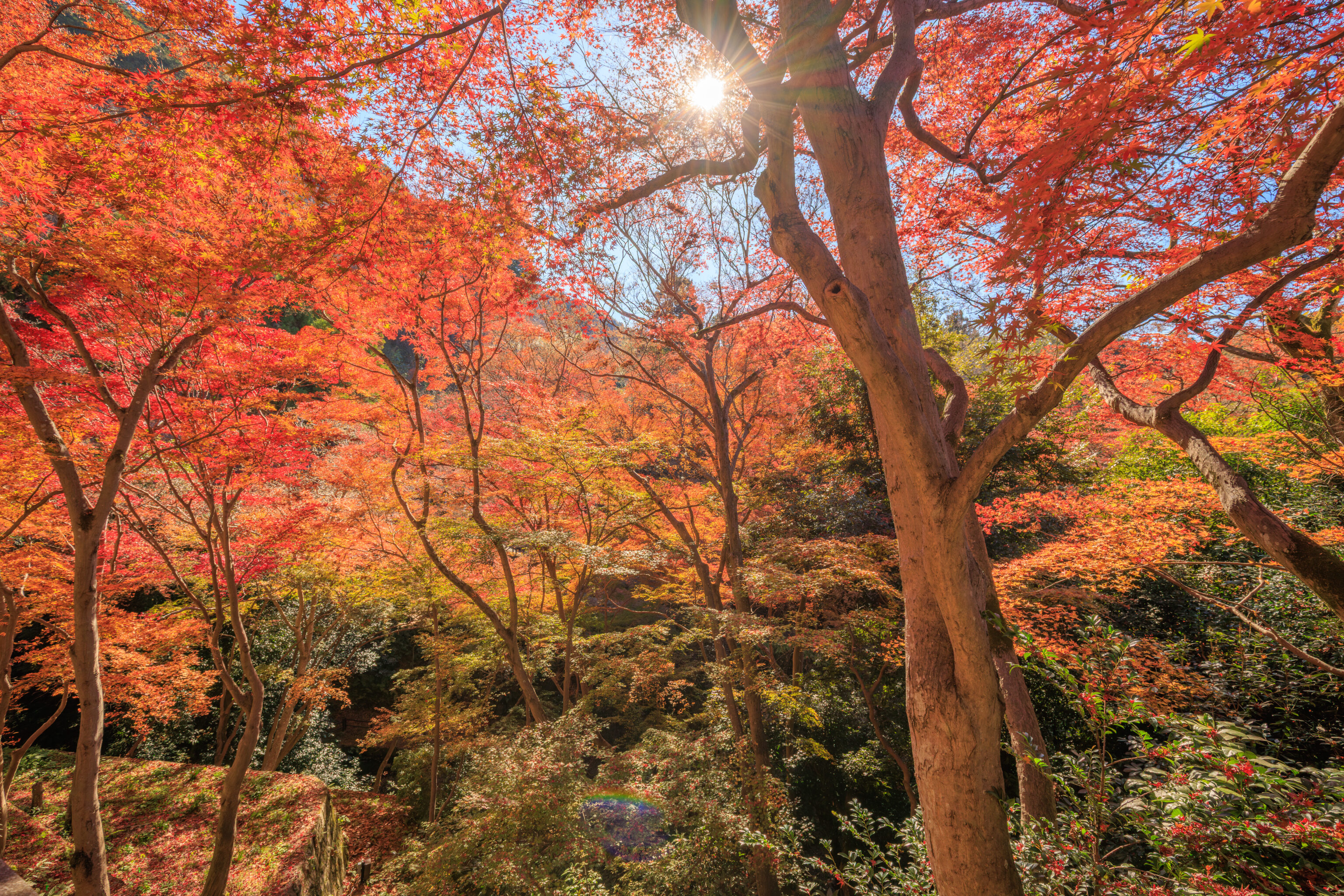
We continued on to the exit.
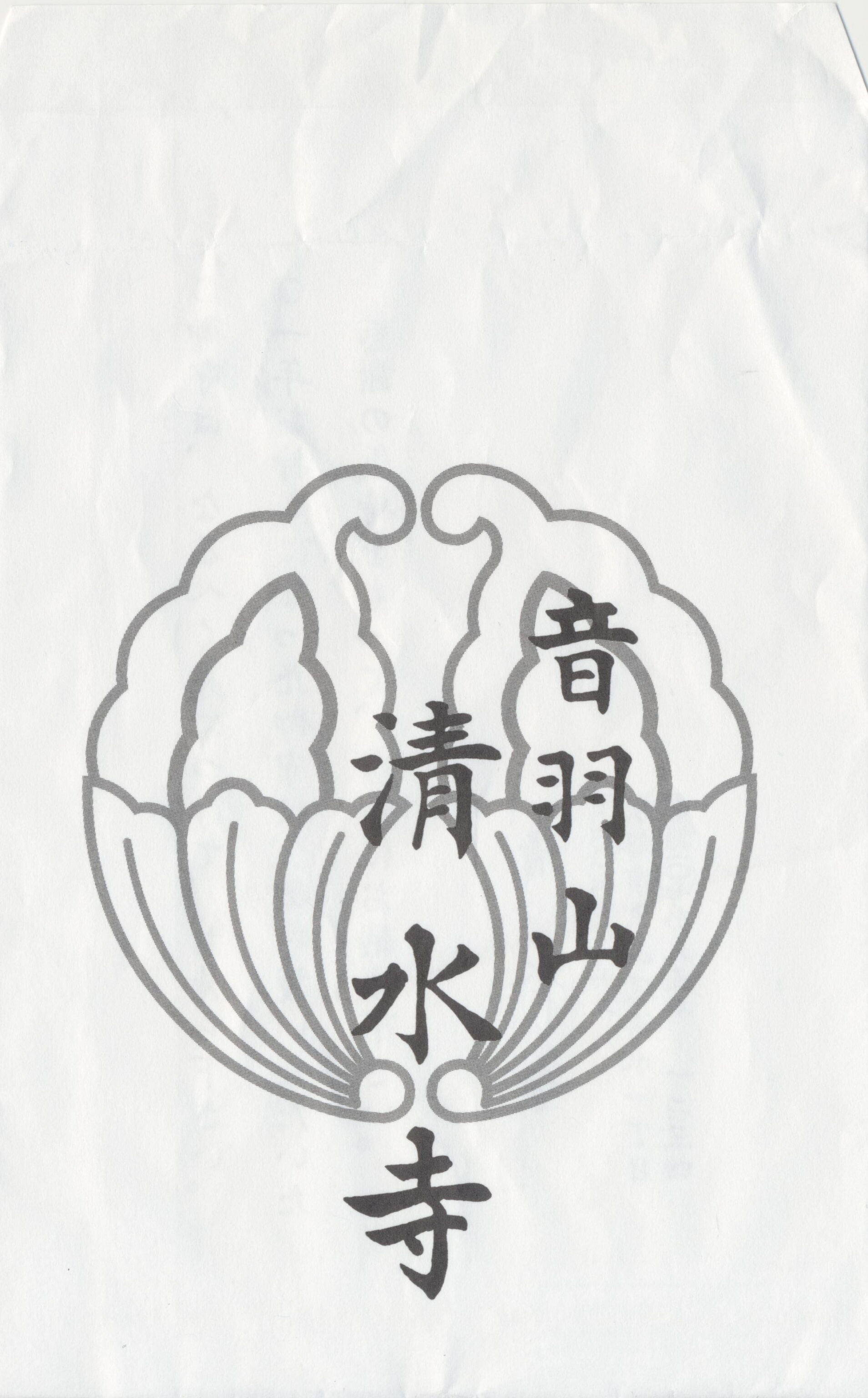
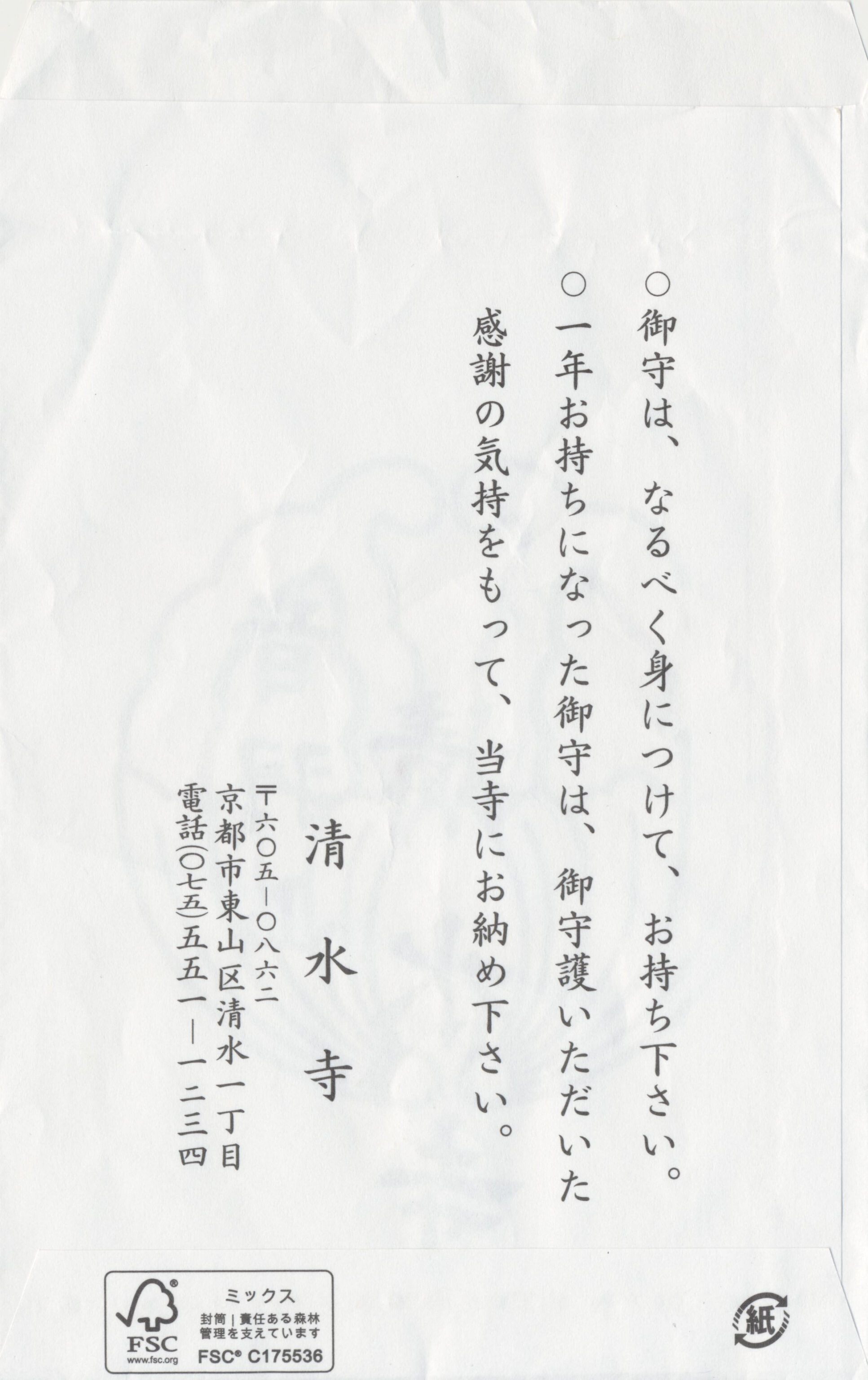
A paper bag used when buying items from the temple’s shop. The text indicates that お守りOmamori, described in English as amulets, are effective for one year. Japanese temples usually offer various kinds which provide luck and protection from various perils. They are supposed to be replaced every year. The old ones are supposed to be burned rather than simply discarded.
Lunch
We decided to get lunch relatively nearby, a bit more than one kilometer away, more or less. Our destination was close enough that wasn’t isn’t worth trying to take a bus, particularly with how busy they often are here when leaving Kiyomizu-dera.
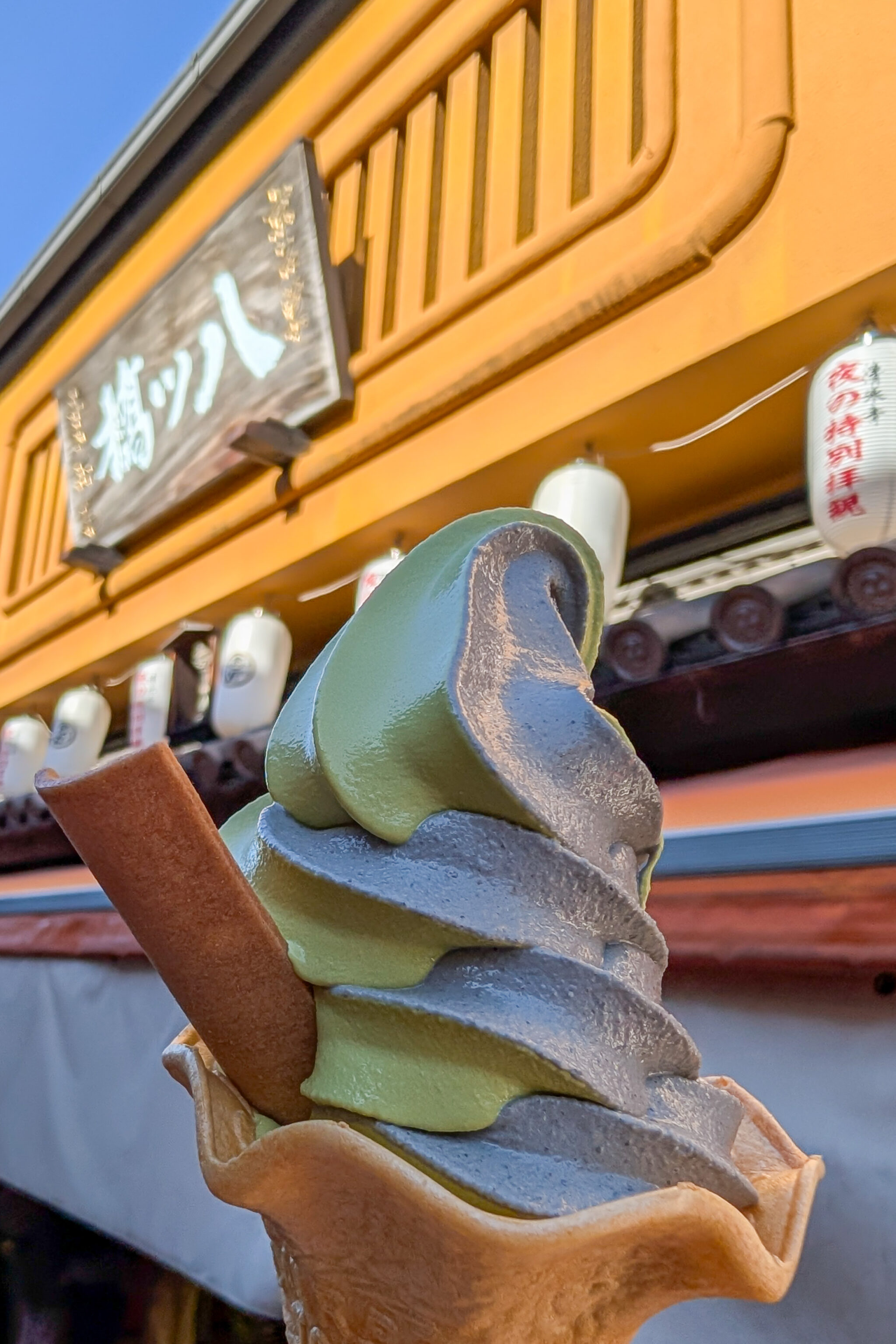
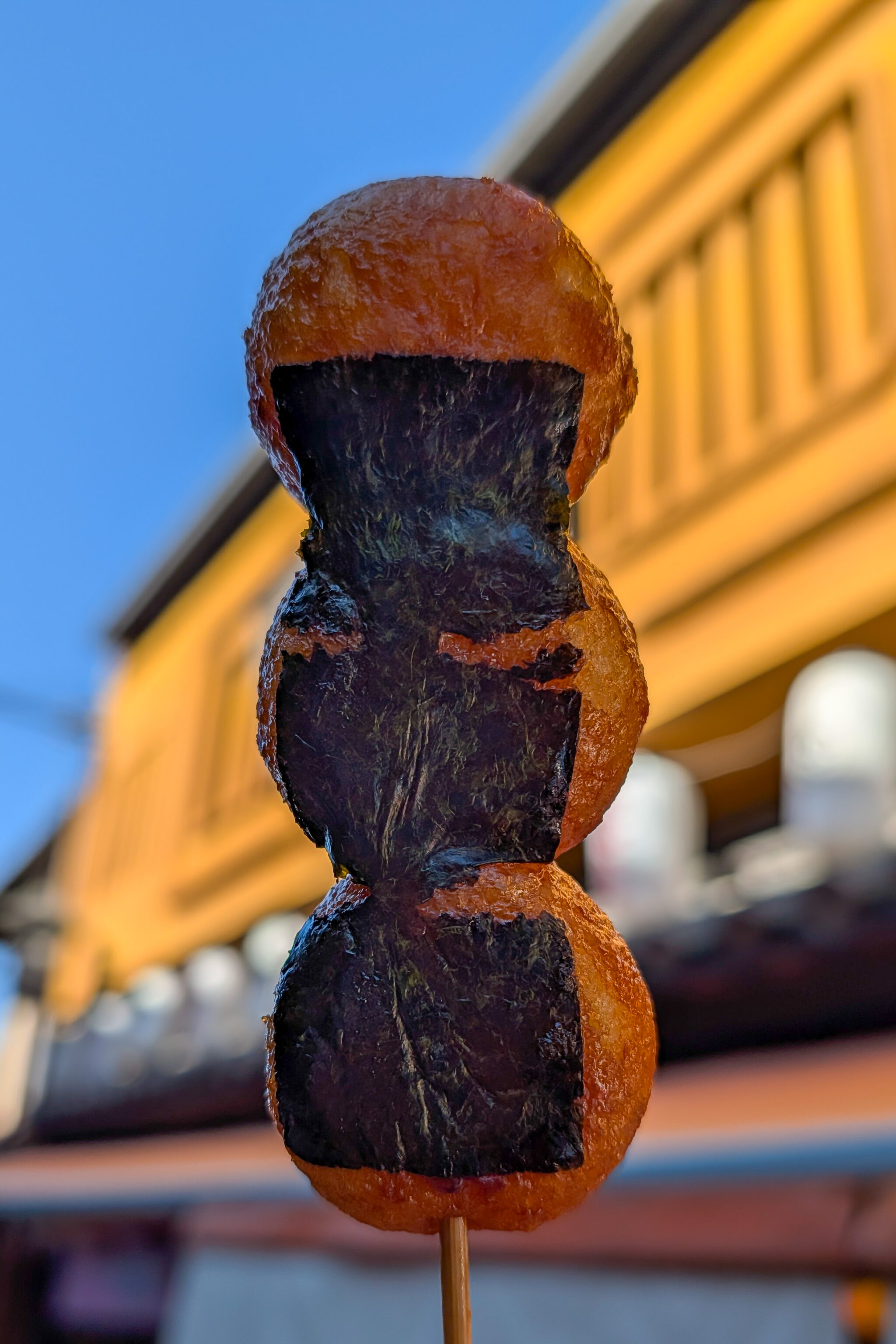
As we walked to the west away from the temple on the same road that we arrived on earlier, we got two snacks from Honke Nishio Yatsuhashi, a shop that we’ve visited before. We got a mixed black sesame and matcha soft serve and a grilled dango. Both were good, although the black sesame flavor overpowered the matcha flavor in the soft serve.
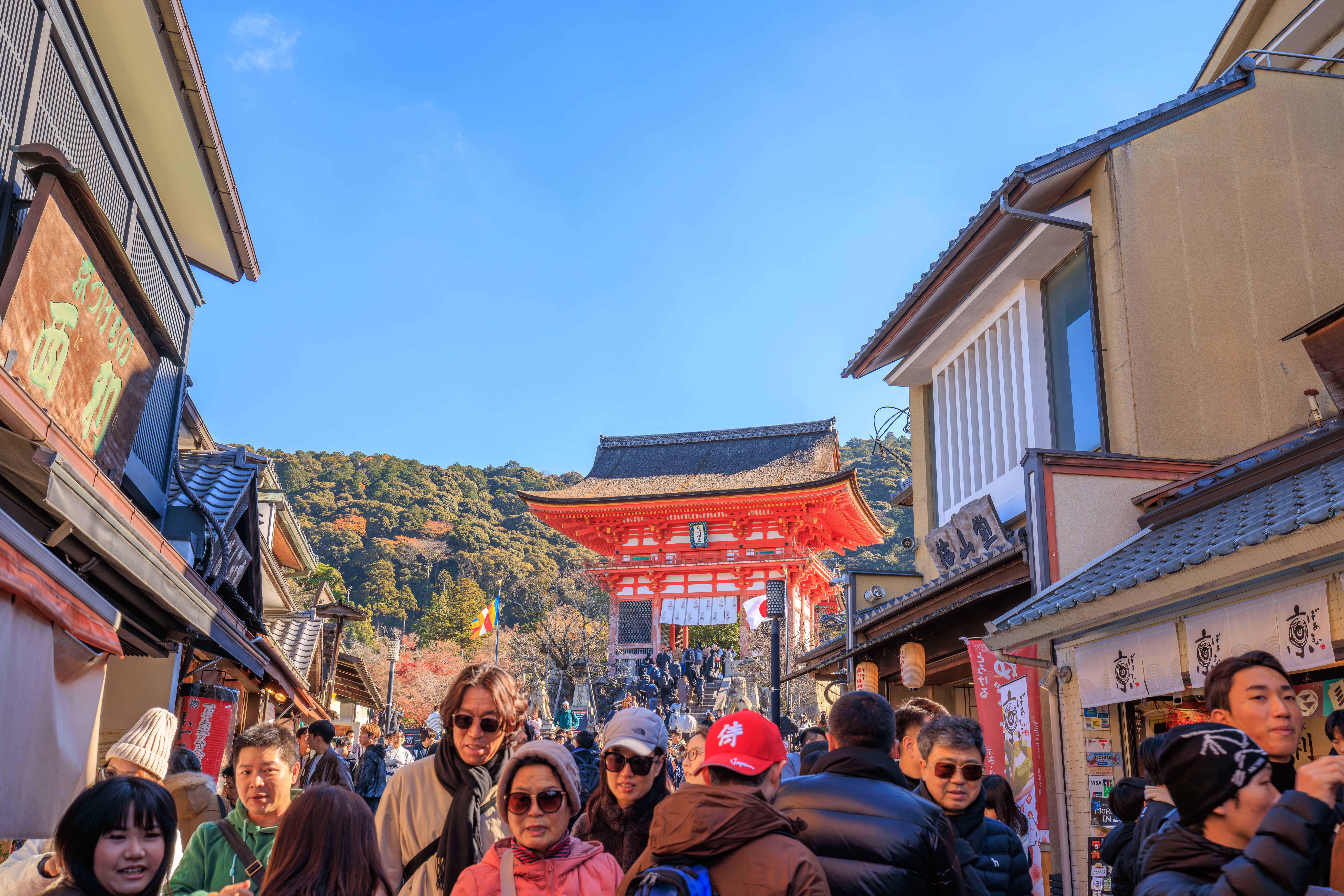
The narrow road was pretty busy!
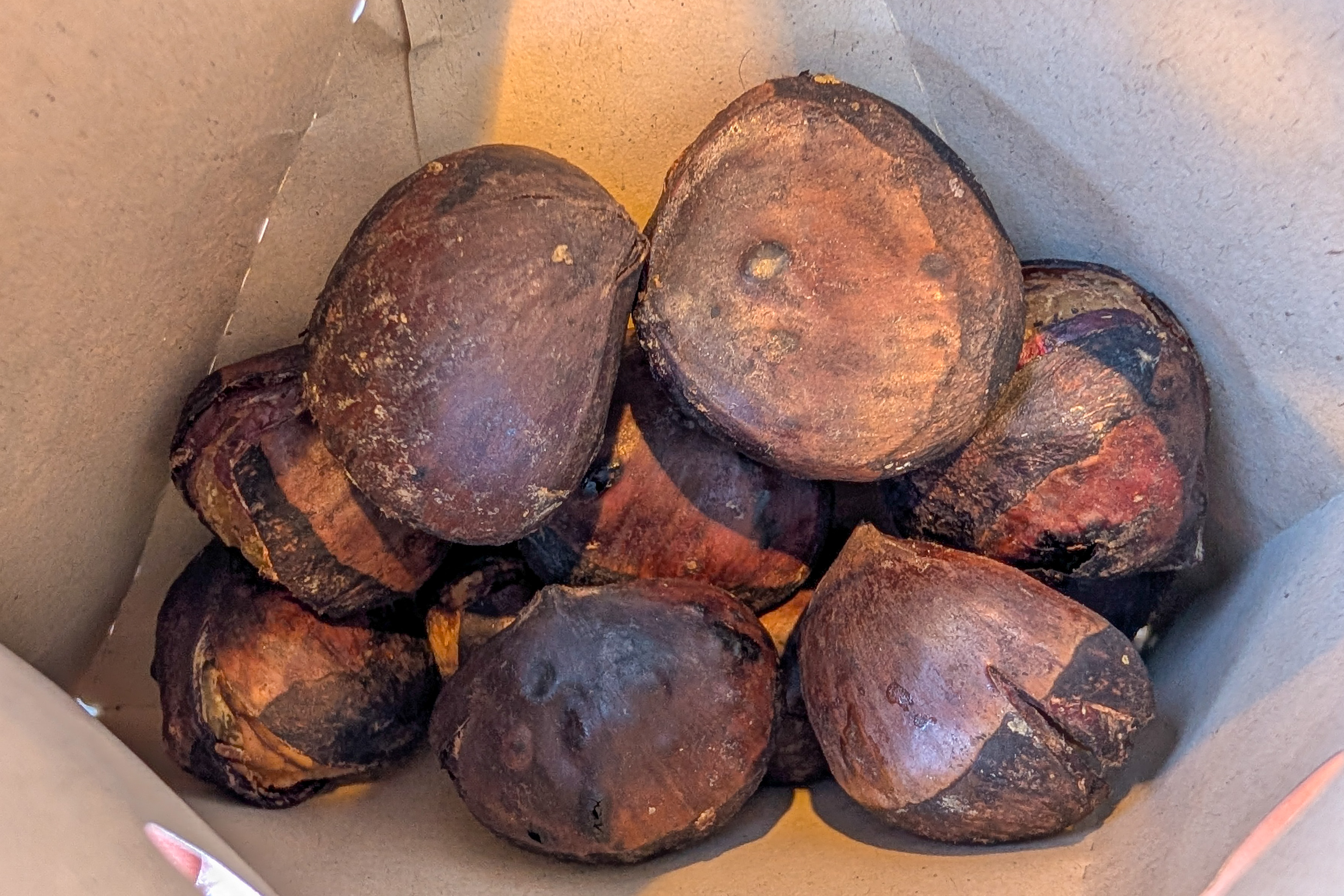
We got some chestnuts from a nearby shop on the way. Unfortunately, it was not freshly roasted.
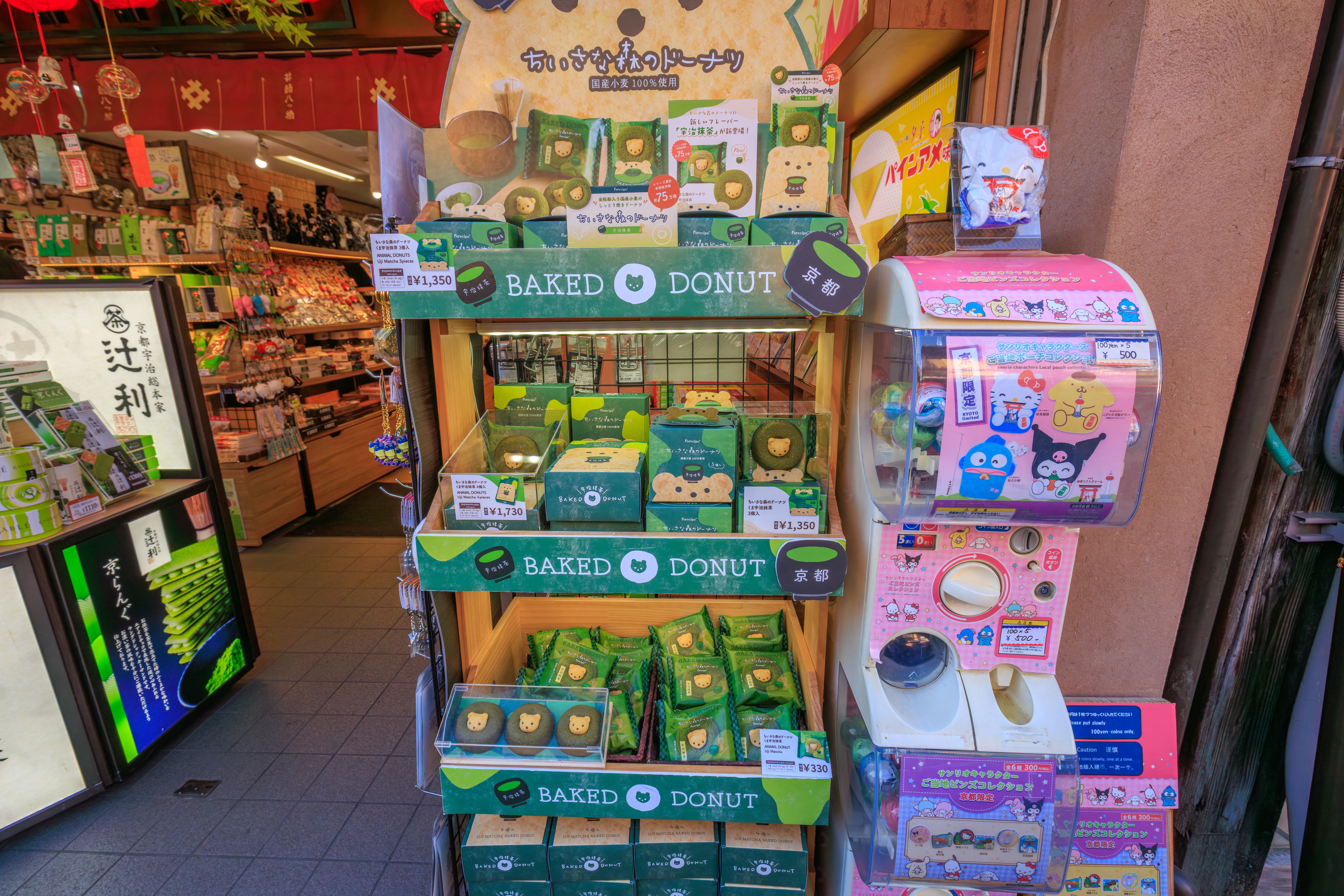
We’ve never seen this particular Baked Donut product before! We continued on though.
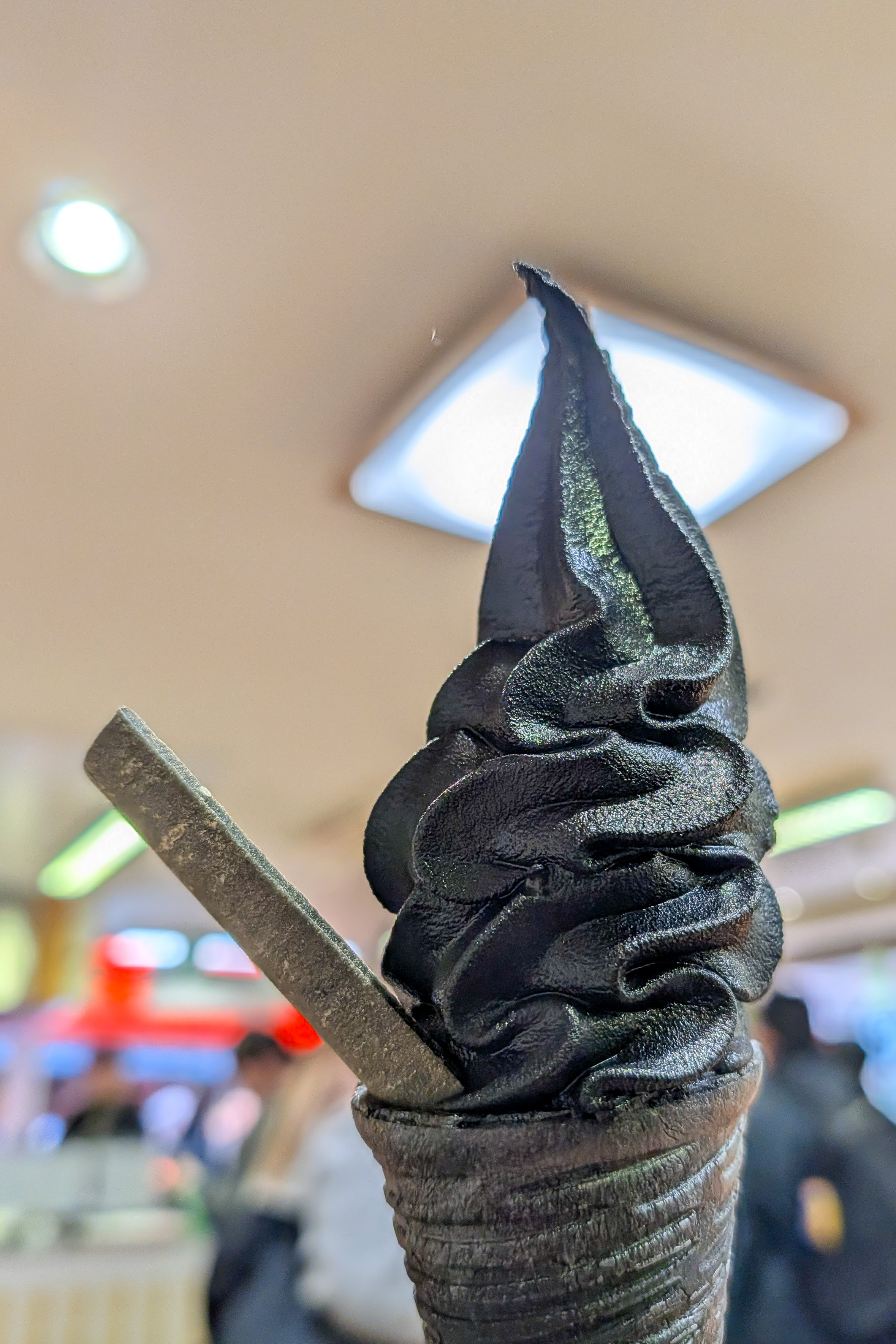
A bit further down the street, at another Honke Nishio Yatsuhashi shop, we got the Black Soft Ice Cream featuring all black ingredients and espresso flavored soft serve ice cream.
This ended up being a bit of a fiasco. We have had this exact product before from this shop so know what it is supposed to be like. There seemed to be something up with the machine, which seemed to yield a bit of an icy soft serve. And, we discovered too late that the cone was missing the pointy bottom end, meaning it ended up dripping black melted ice cream everywhere, including on our clothes. Black sesame soft serve is really hard to clean up. We needed many tiny Japanese sized napkins!
From the same shop, we got two yatsuhashi, the main product of this local brand. We got strawberry and orange.
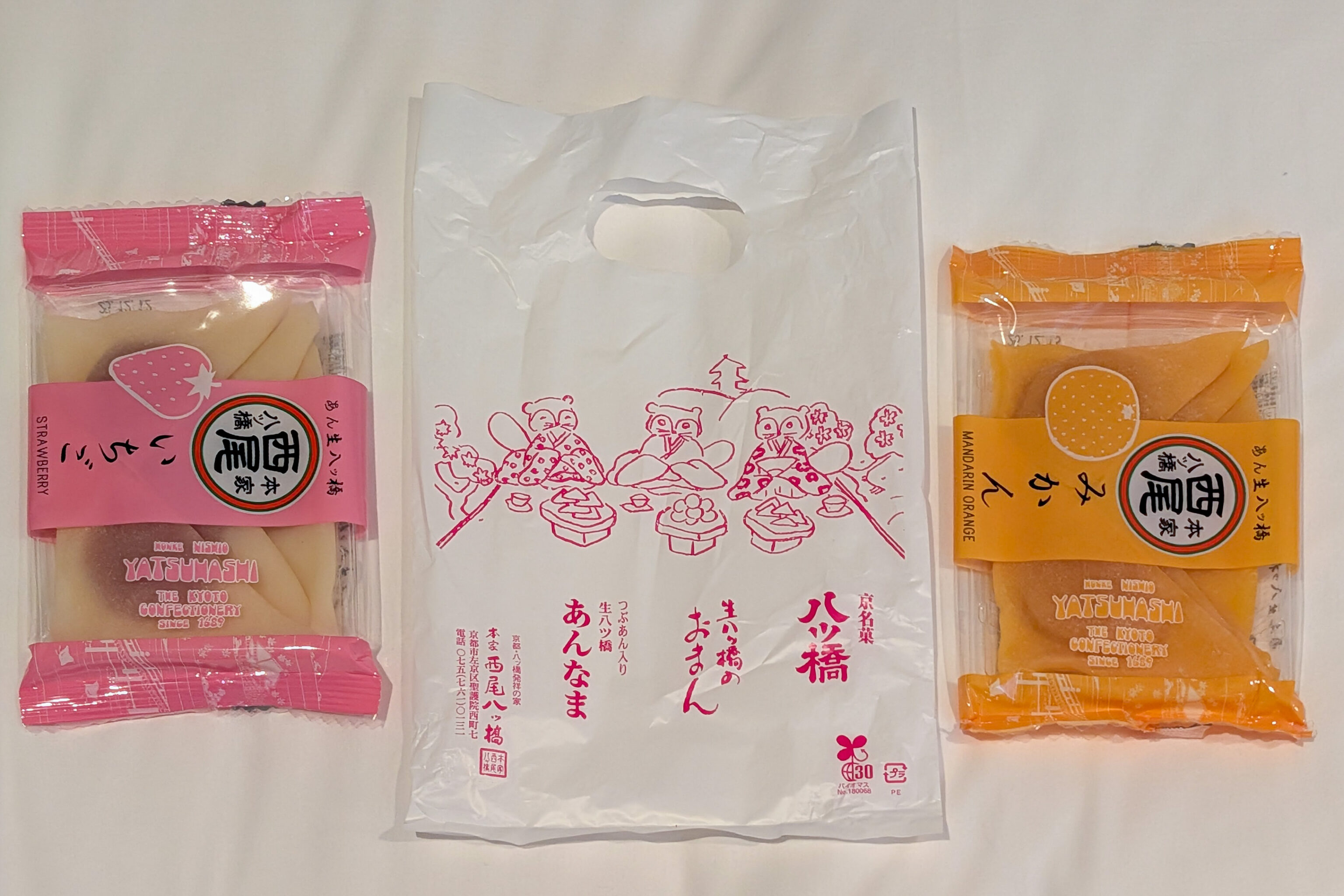
The two packages of yatsuhashi that we bought as well as the shopping bag that was provided. Obviously, this photo is from the evening after we returned to the hotel!
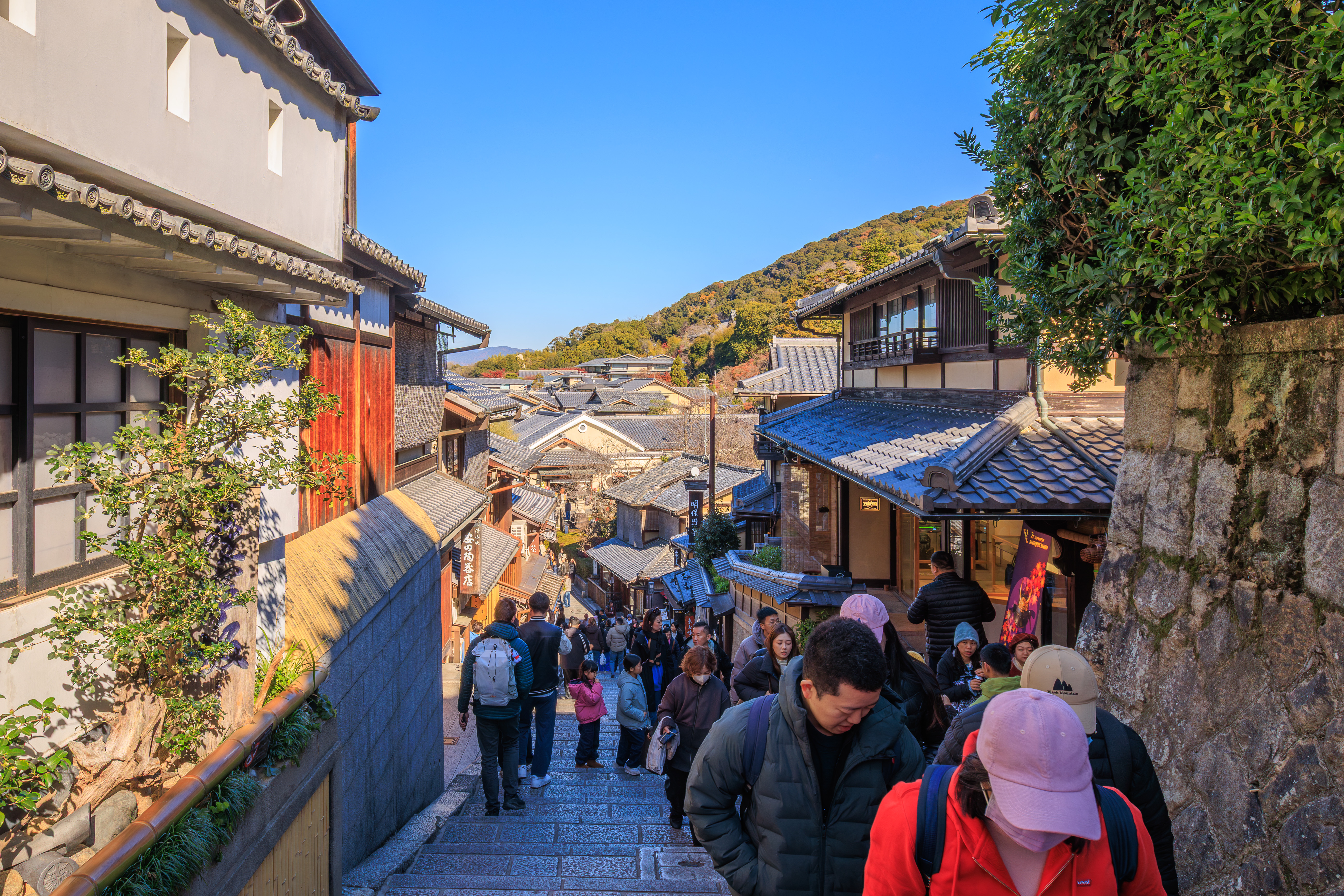
We turned to the right here to head north along the 三年坂 Sannenzaka. This is a very popular tourist street. It was busy as expected.
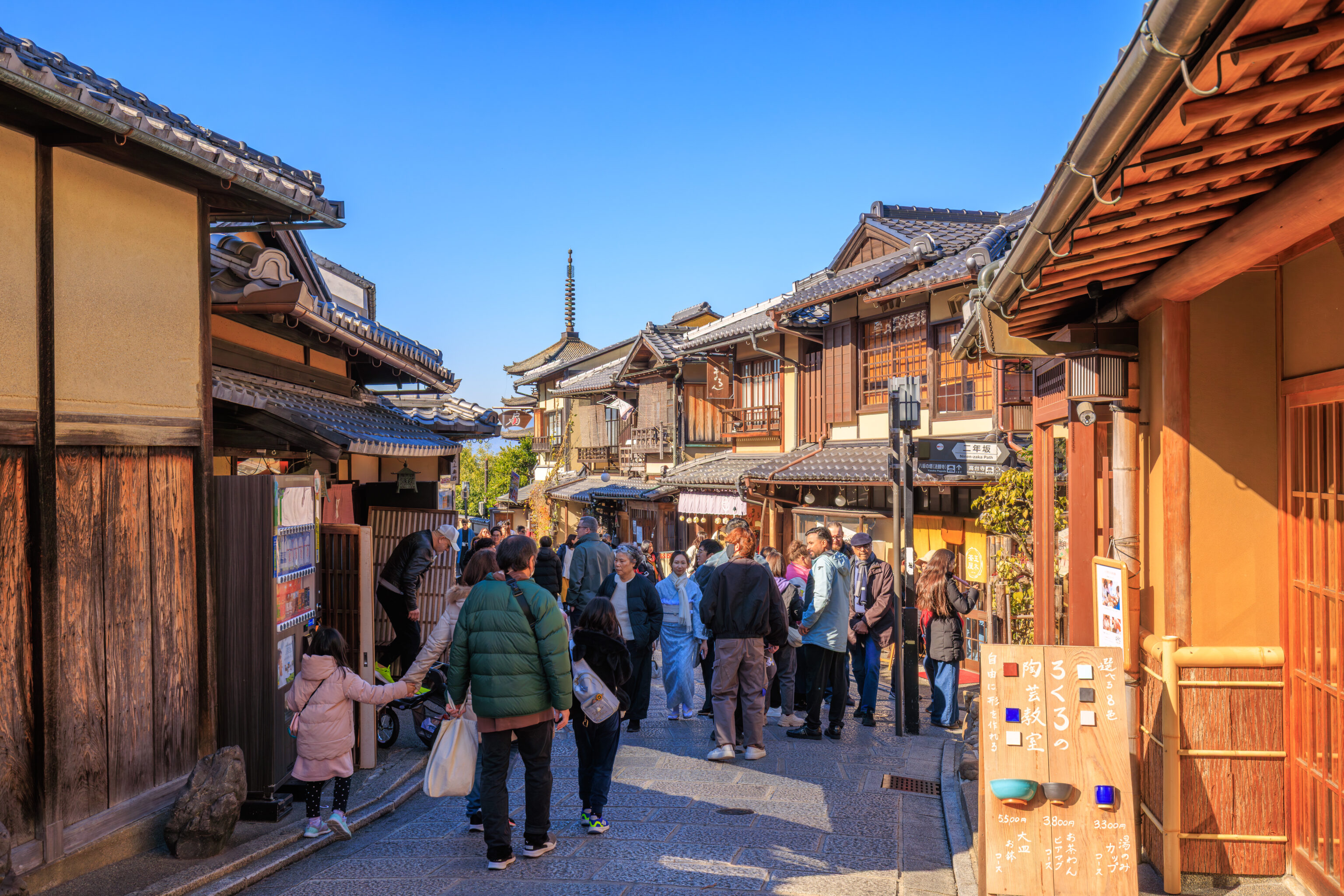
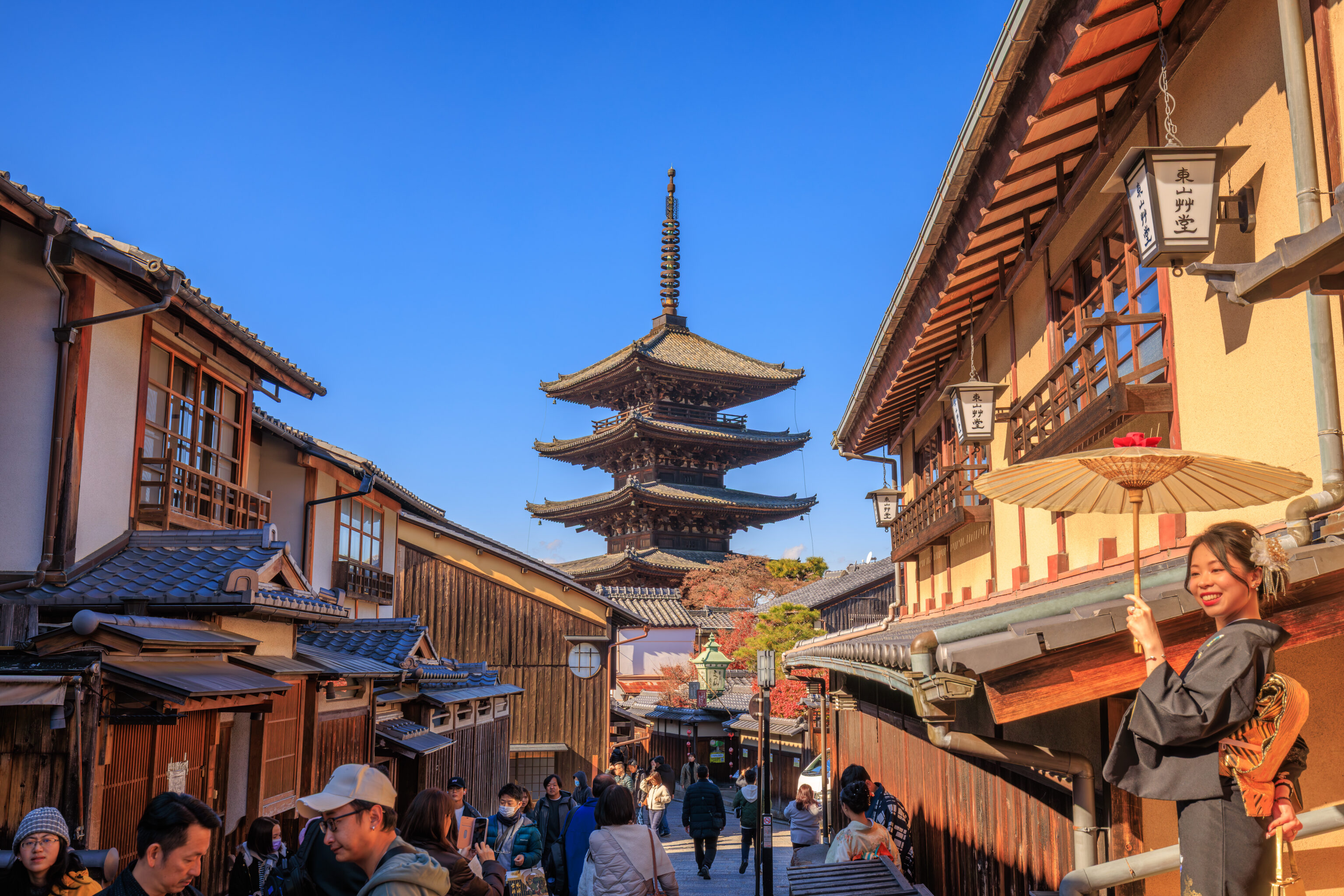
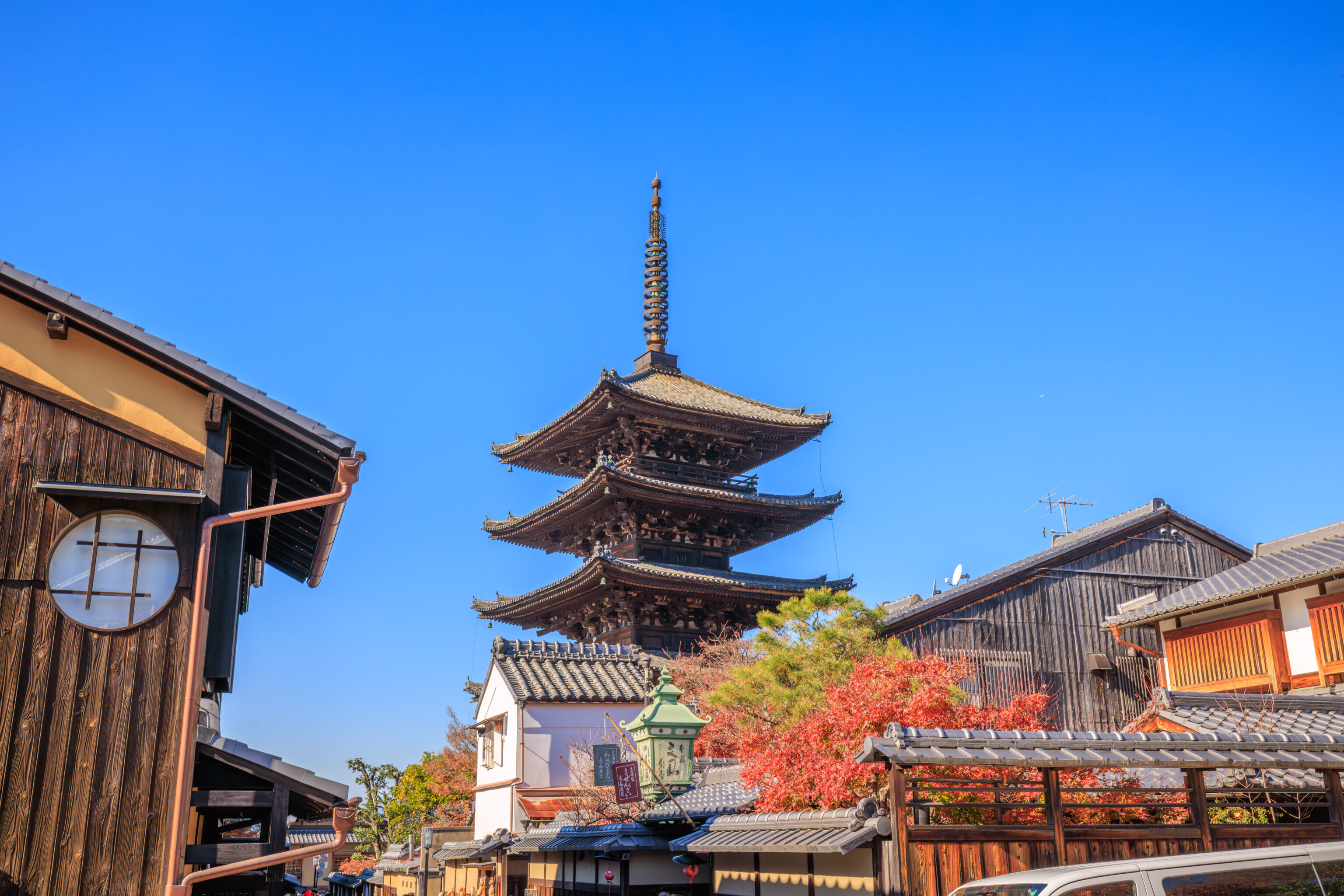
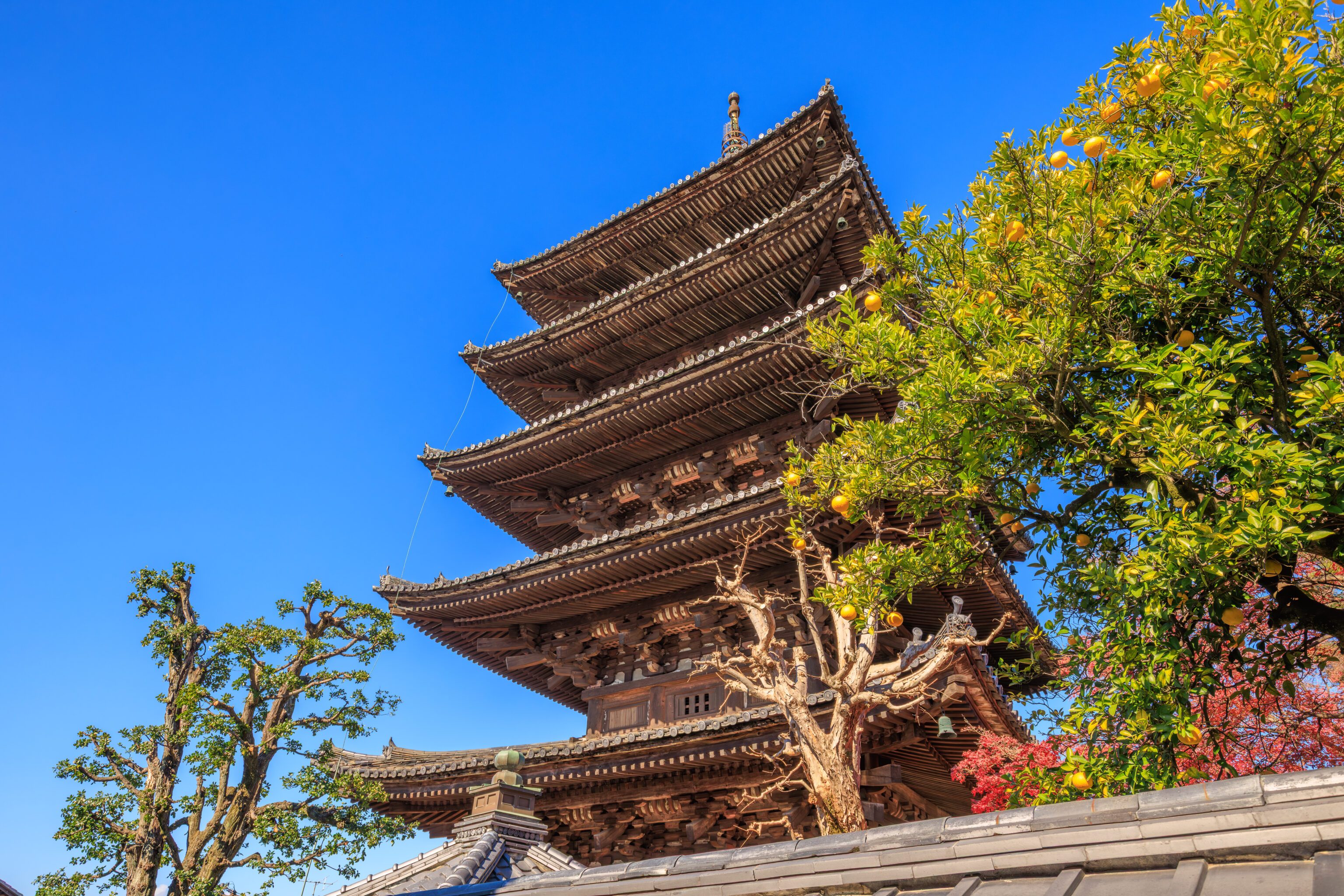
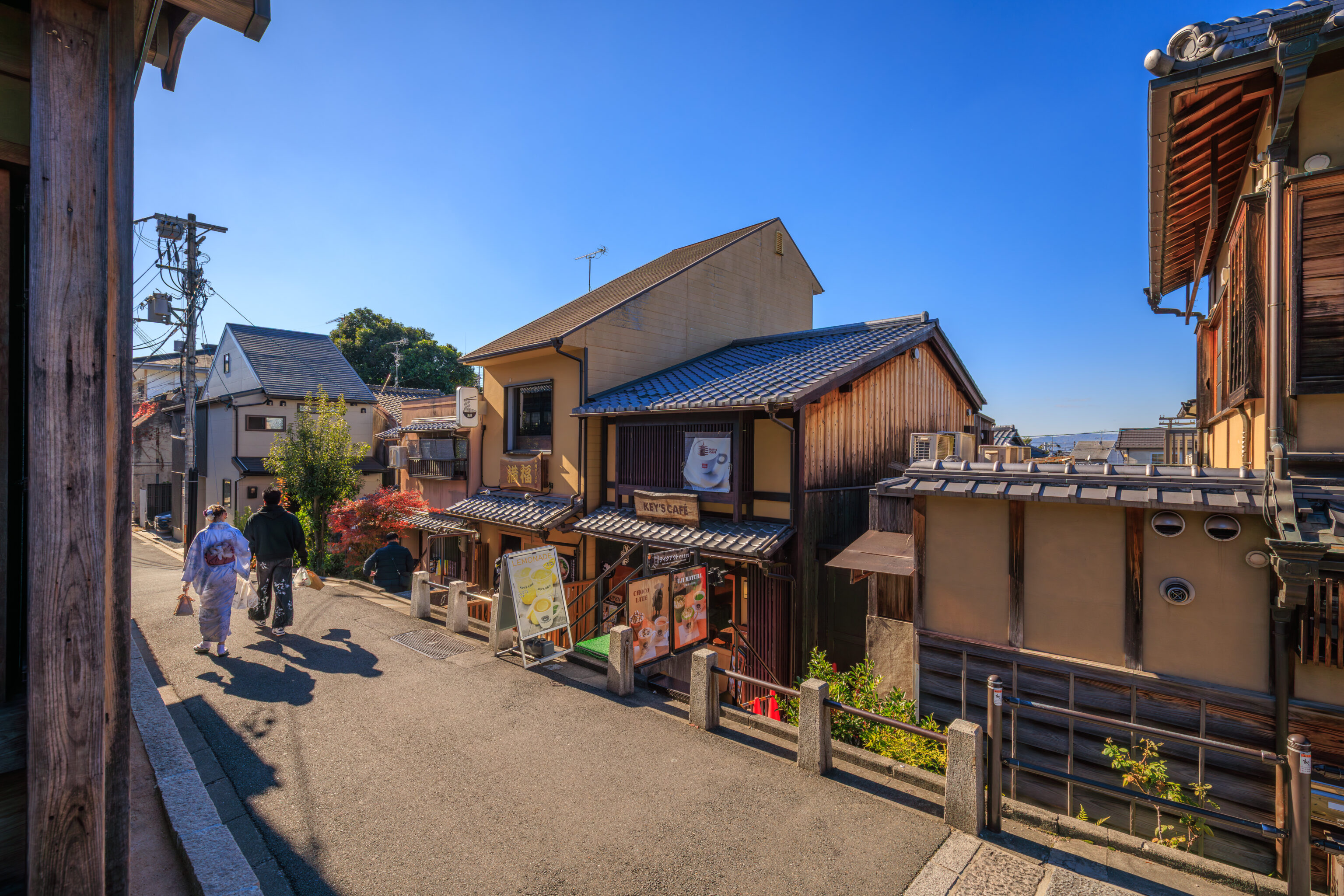
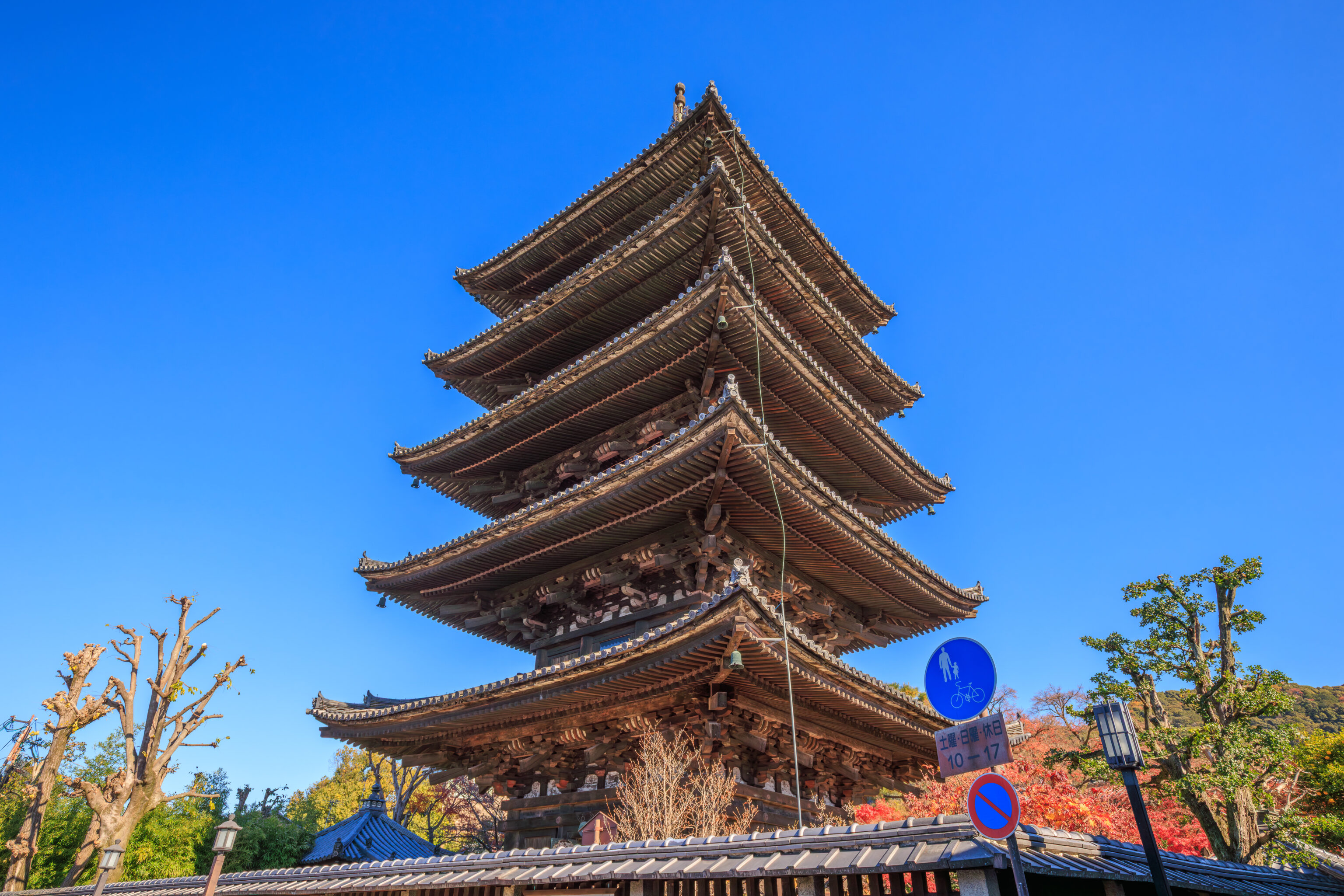
This historic path is lined with many shops. We followed it to the base of the 八坂の塔 Yasaka Pagoda. This is the only remaining structure of 法観寺 Hokan-ji, described by Wikipedia as the oldest temple in Kyoto dating back to the 6th century. Like most historic wooden structures in Japan, it is not original, although it is still almost 600 years old.
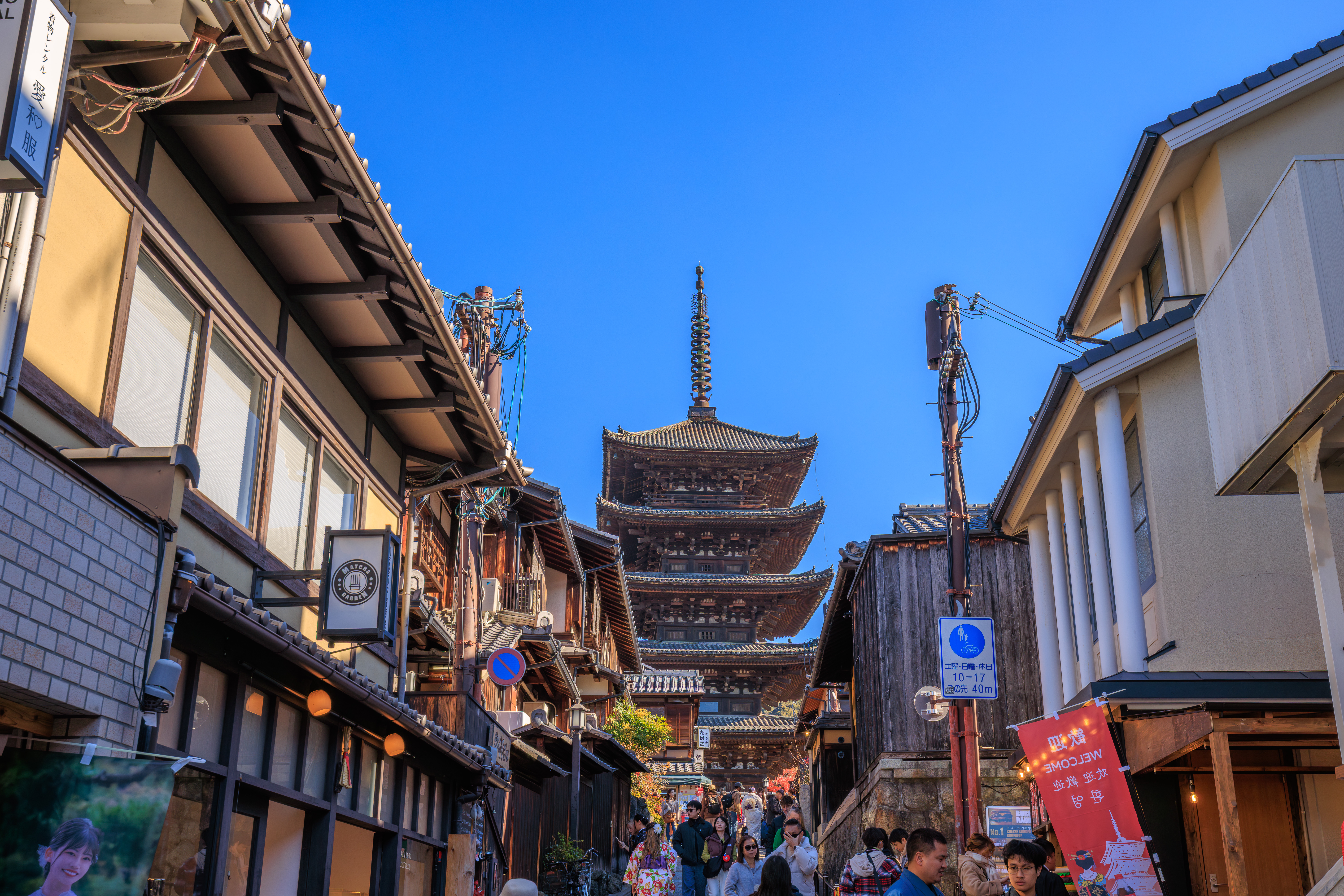
The view looking back to the east as we continued on past the pagoda.
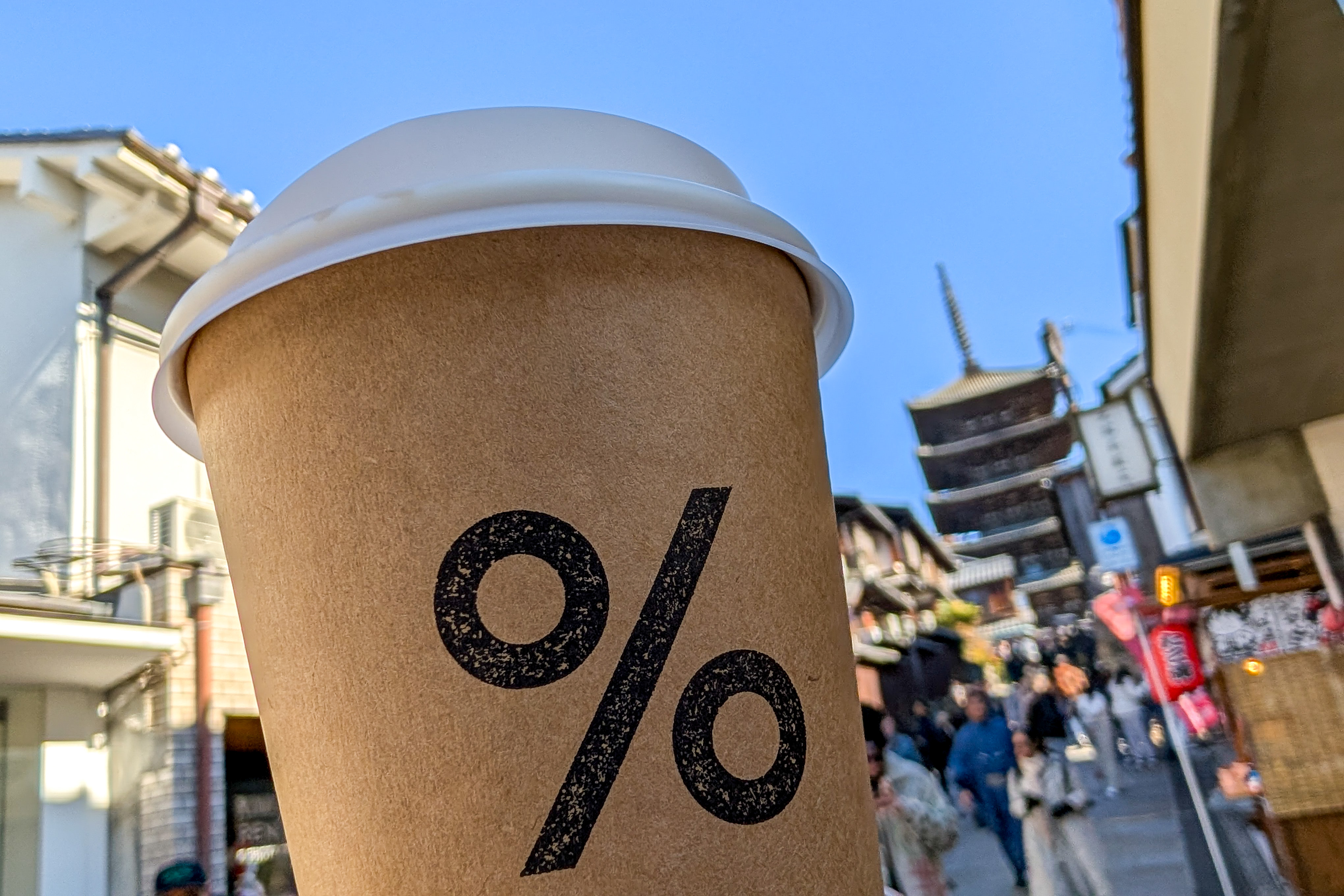
We soon came upon a % ΔRΔBICΔ shop! We’re not sure exactly what beans were used for today’s coffee but the Kyoto Coffee was excellent, though still not as good as the cup we had in Seoul. That time, it was Indonesian beans, although we’re not sure exactly what variety as they currently sell two different kinds.
We walked a bit further to the west to reach the main road through the area. The restaurant we wanted to try to eat at was actually closed. So, we decided to go to the north in search of food.
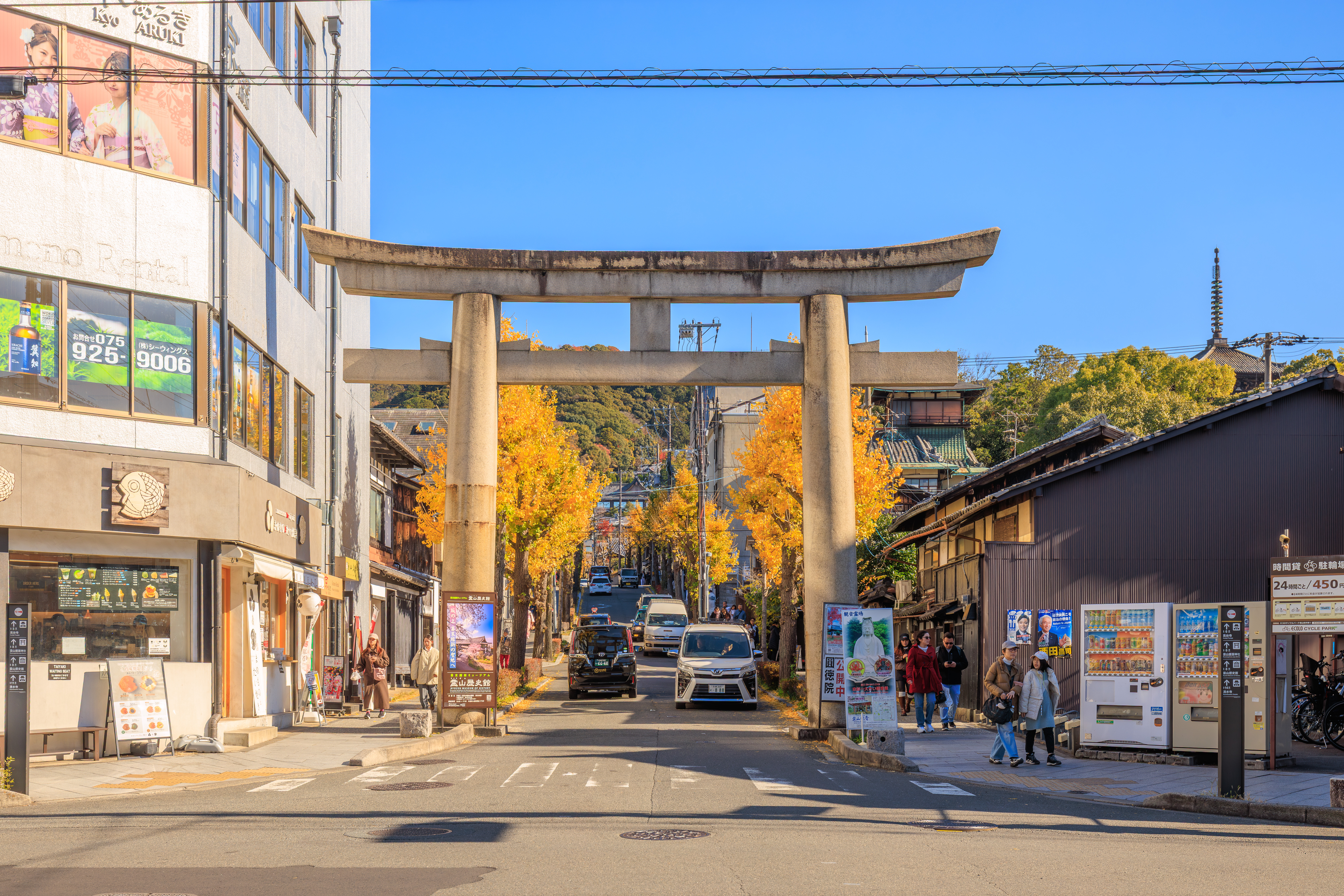
Not far to the north, we came upon a beautiful view with a large concrete torii to the east and bright yellow ginko trees beyond. This road leads to the north end of the 二年坂 Ninenzaka, another famous path that leads to the Sannenzaka. It also leads to the southern entrance of 高台寺 Kodai-ji, a Buddhist temple.
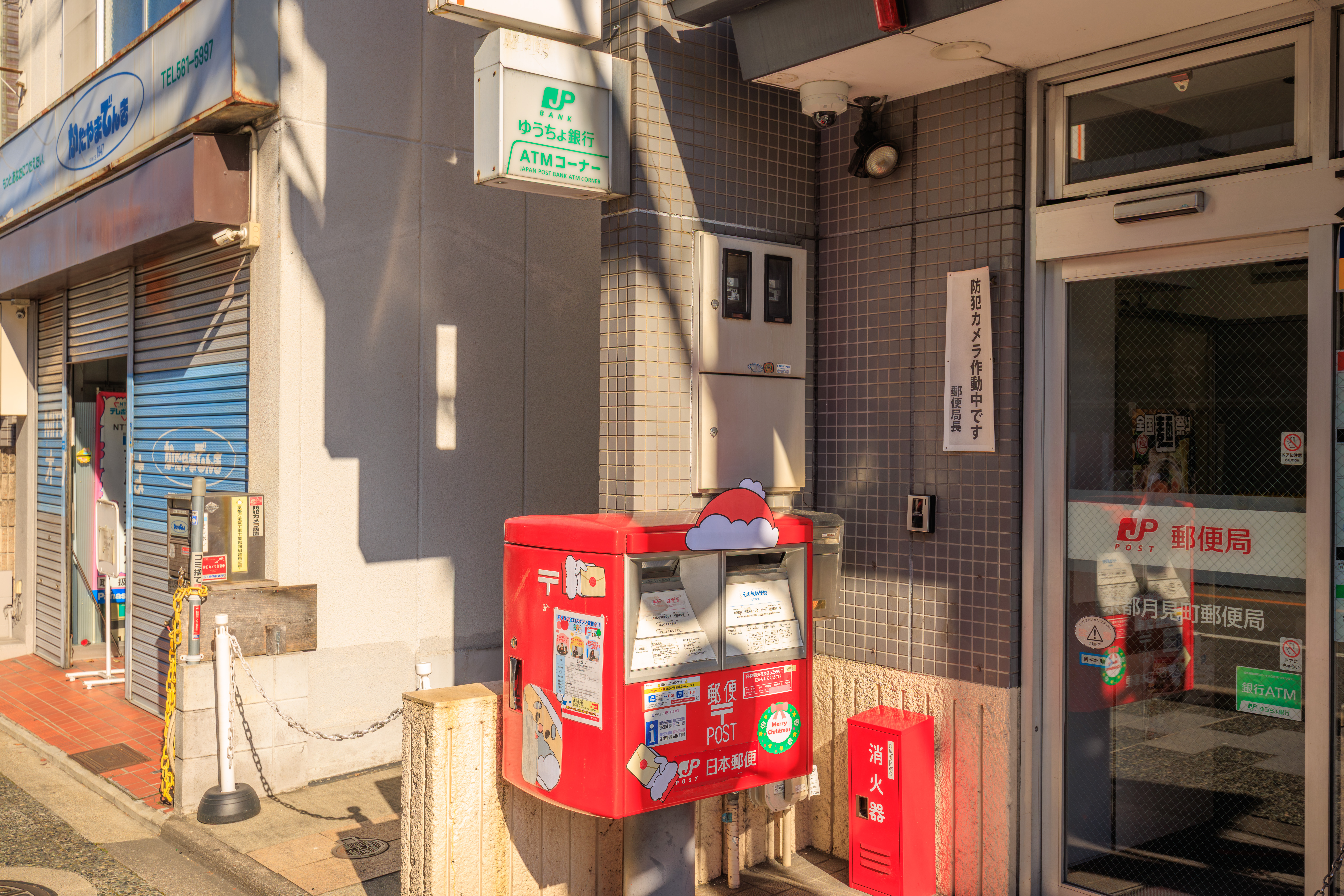
We walked by a post box that was decorated with a Christmas theme! Although Christmas is not celebrated here as a religious holiday as there are very few Japanese Christians, it is still a popular holiday in Japan.
We ended up having lunch at Gyukatsu Kyoto Katsugyu. As the name suggests, this is a gyukatsu restaurant. Gyukatsu is like the more well known tonkatsu except with beef instead of pork.
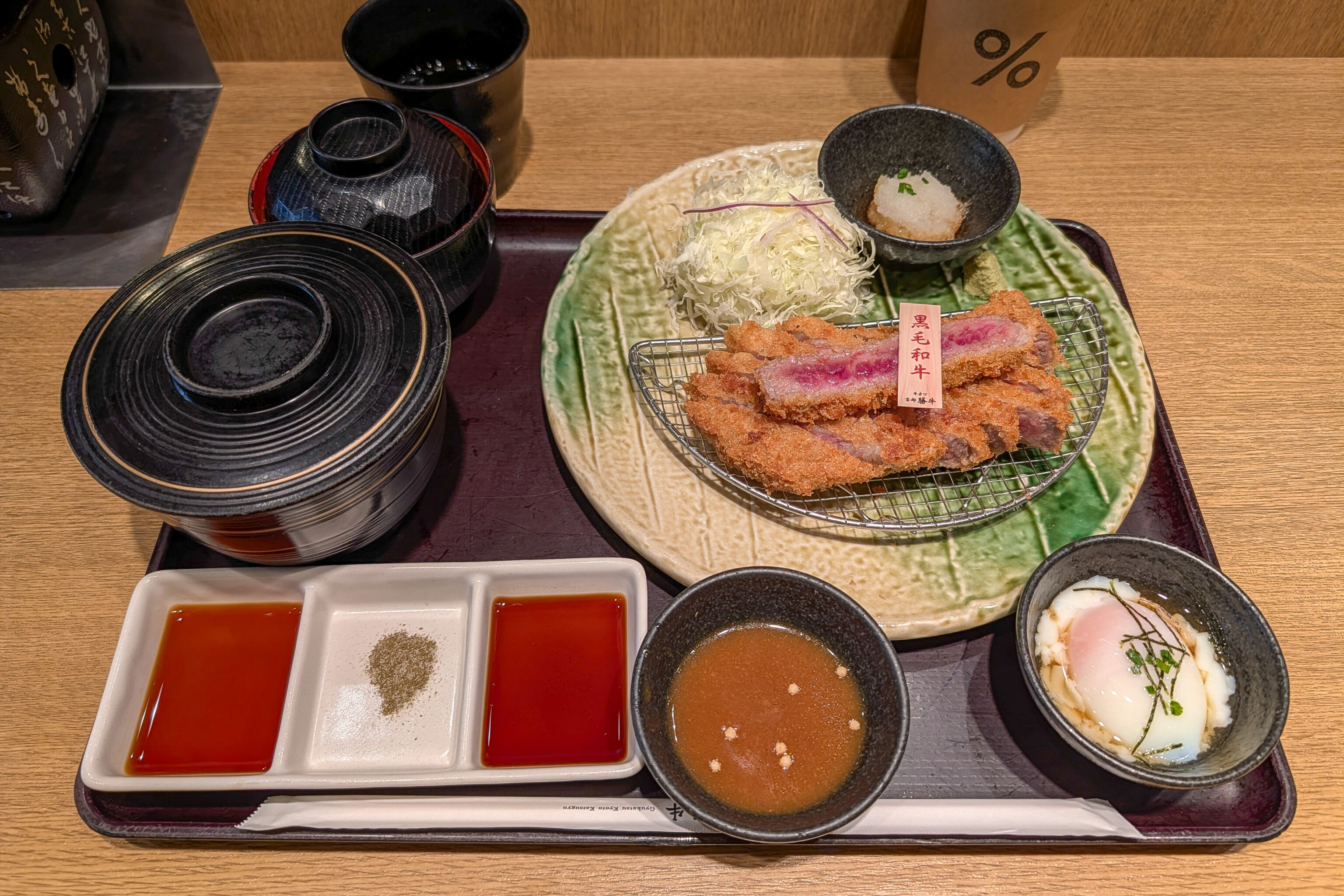
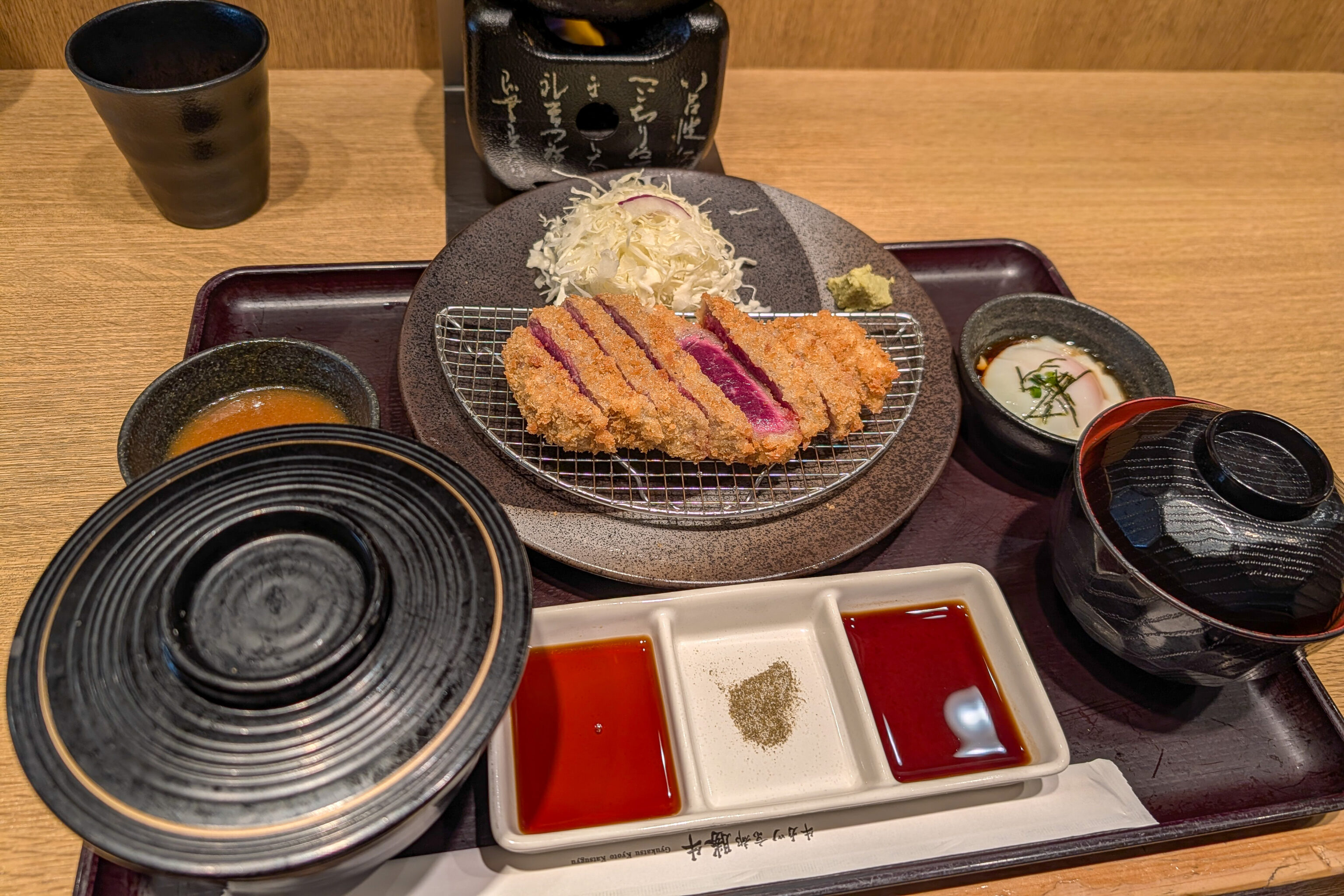
We got two different sirloin gyukatsus, one with foreign beef and another with premium Wagyu. It’s not premium enough to be one of the regional name brands though. There was a pretty big difference as the premium Wagyu was significantly better. It also cost about twice as much.
A variety of sauces were provided with each meal along with an egg and curry. The curry ended up being nice to change the rice into curry rice!
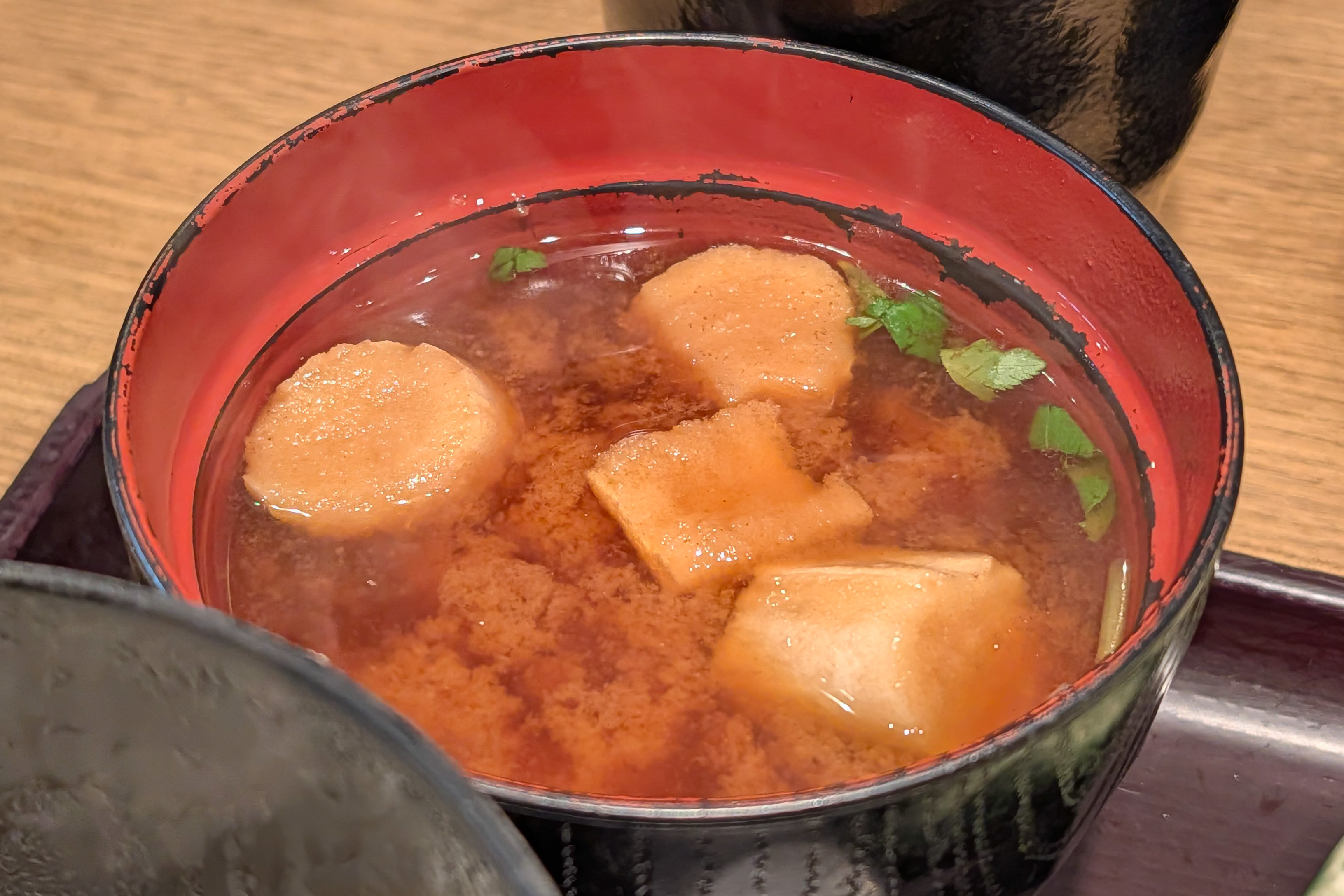
Both orders came with miso soup as well.
Yasaka-jinja
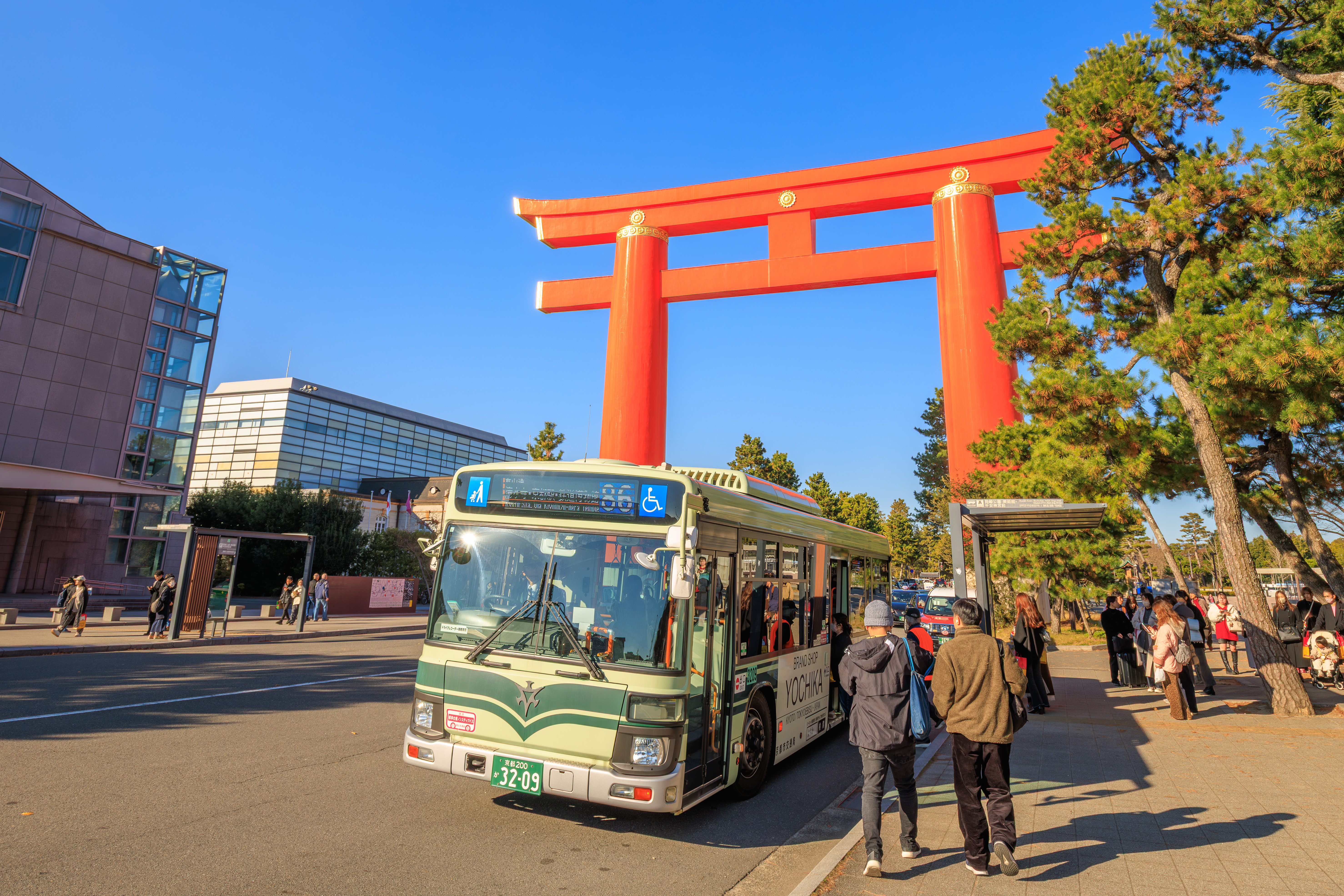
After lunch, we caught a bus to head north to visit the 平安神宮 Heian-jingu. We took the bus to the Okazaki Koen Bijutsukan / Heian Jingu-mae bus stop, just beyond a large torii. It ended up taking the bus much longer than expected to get to this point. We could have gotten off earlier as the route circles around the block before reaching this stop.
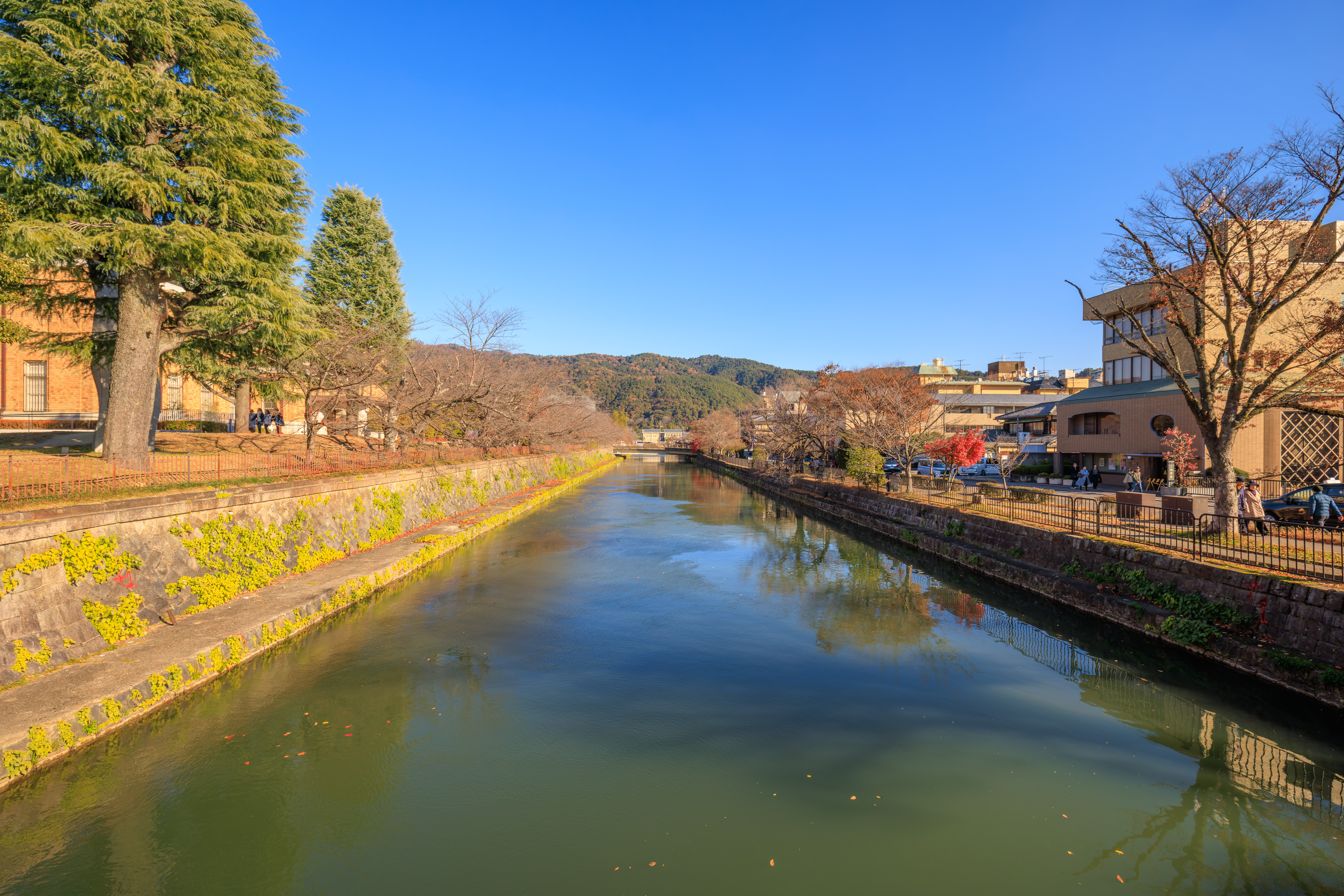
This river just to the south of the torii and bus stop is actually the Okazaki Canal, part of the Lake Biwa Canal.
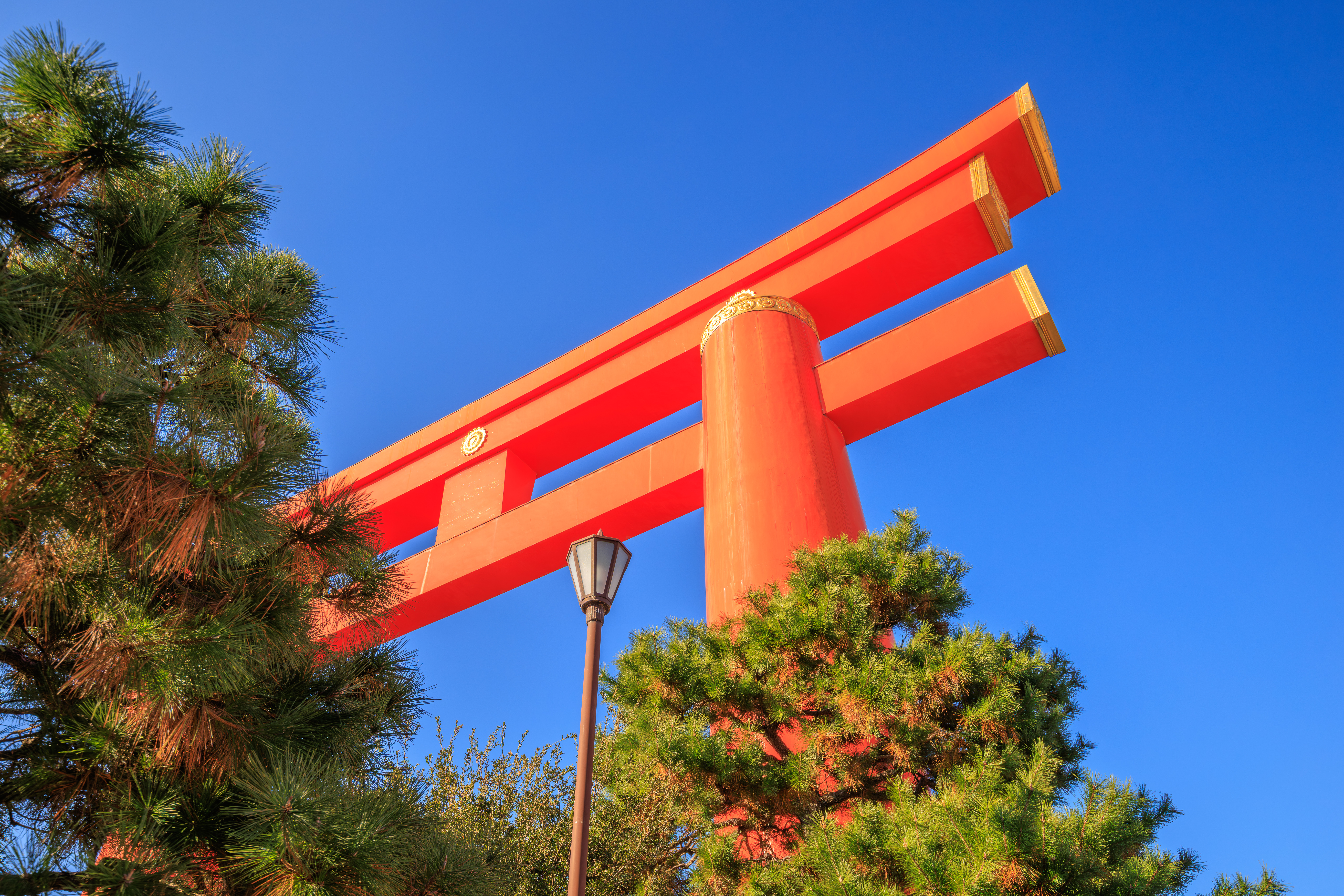
We started to walk to the north to reach the Heian-jingu.
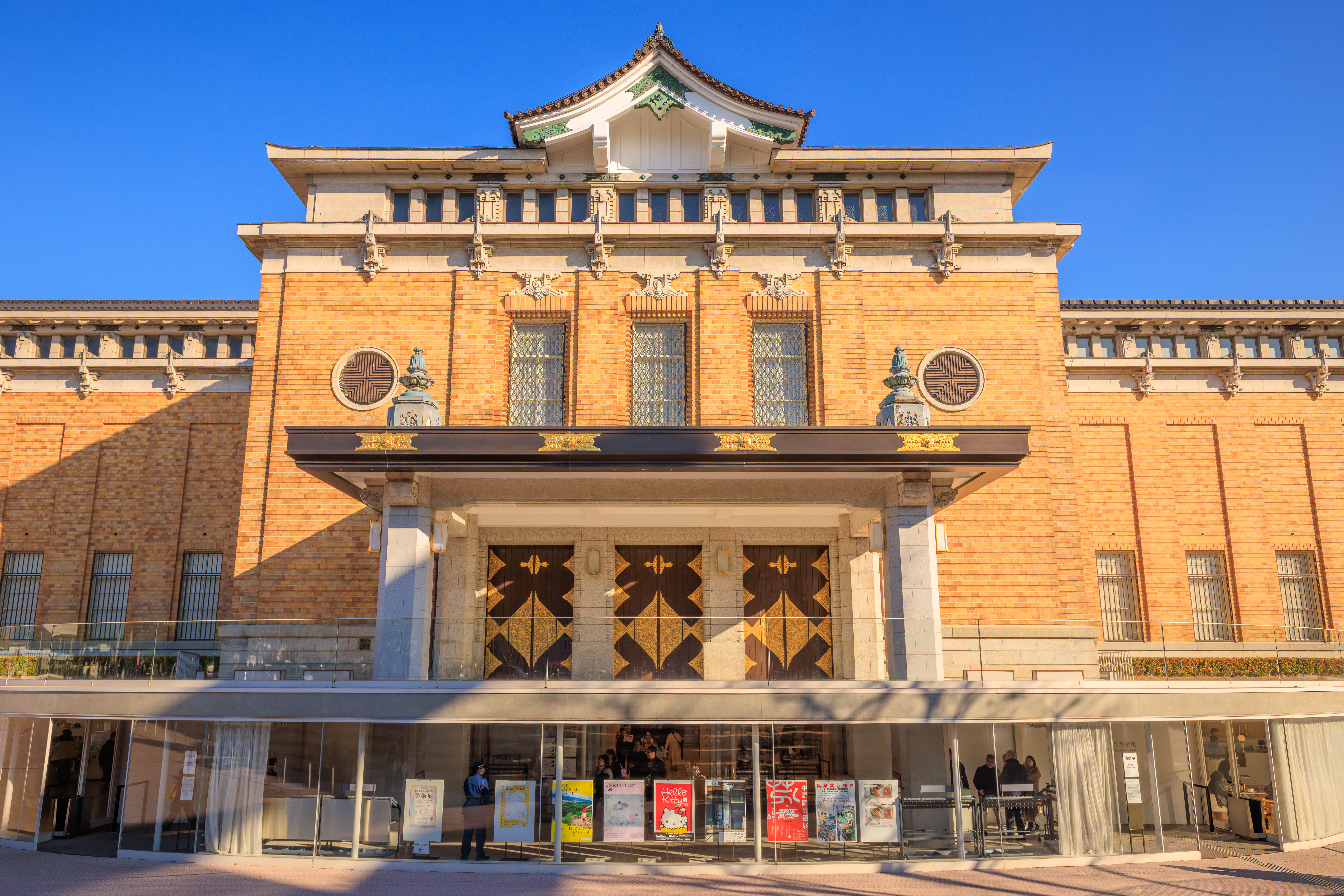
This building to our right is the Kyoto City KYOCERA Museum of Art. It was originally built to honor the enthronement of the Showa Emperor.
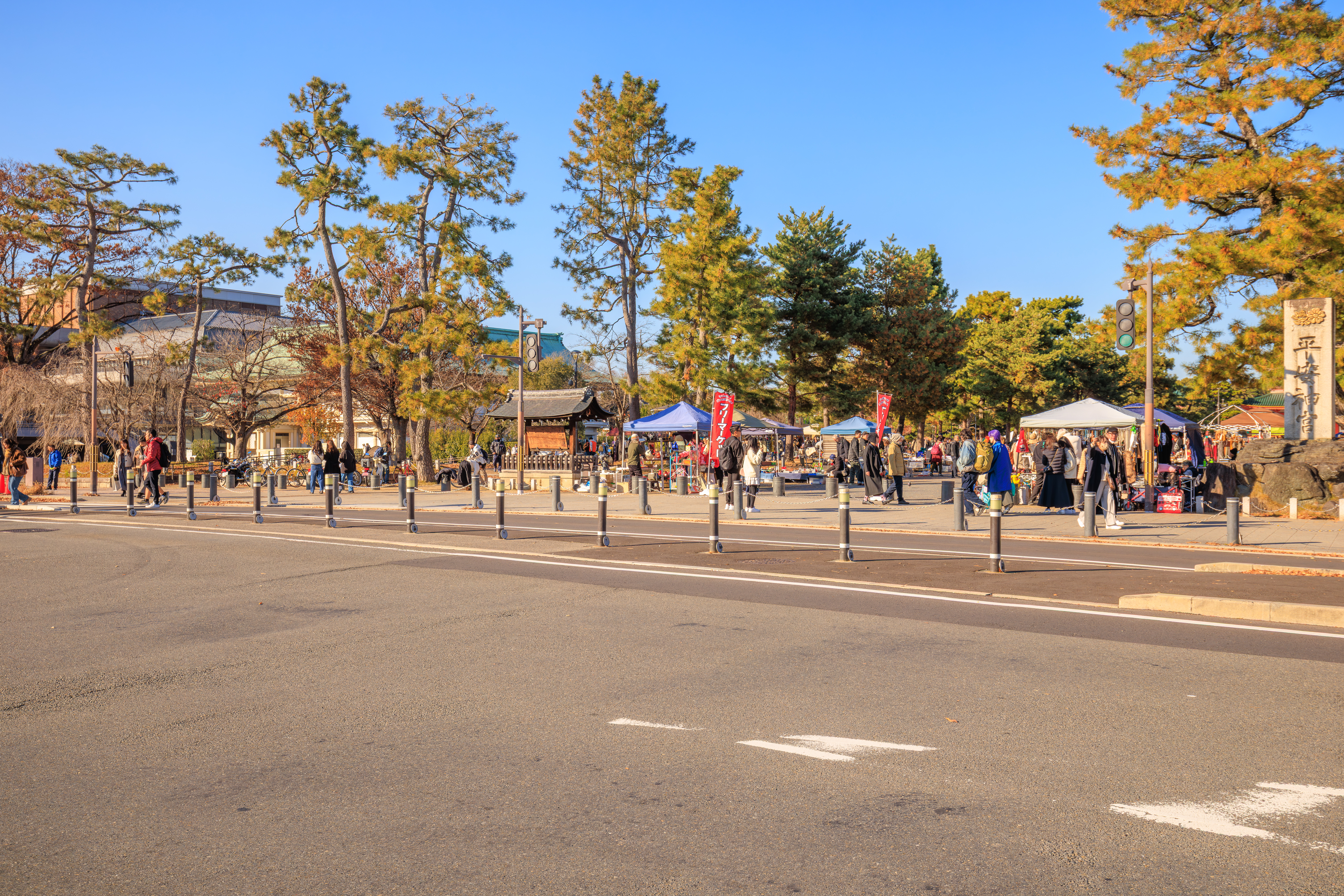
There was a market in the block between the museum and shrine, seen here across the street.
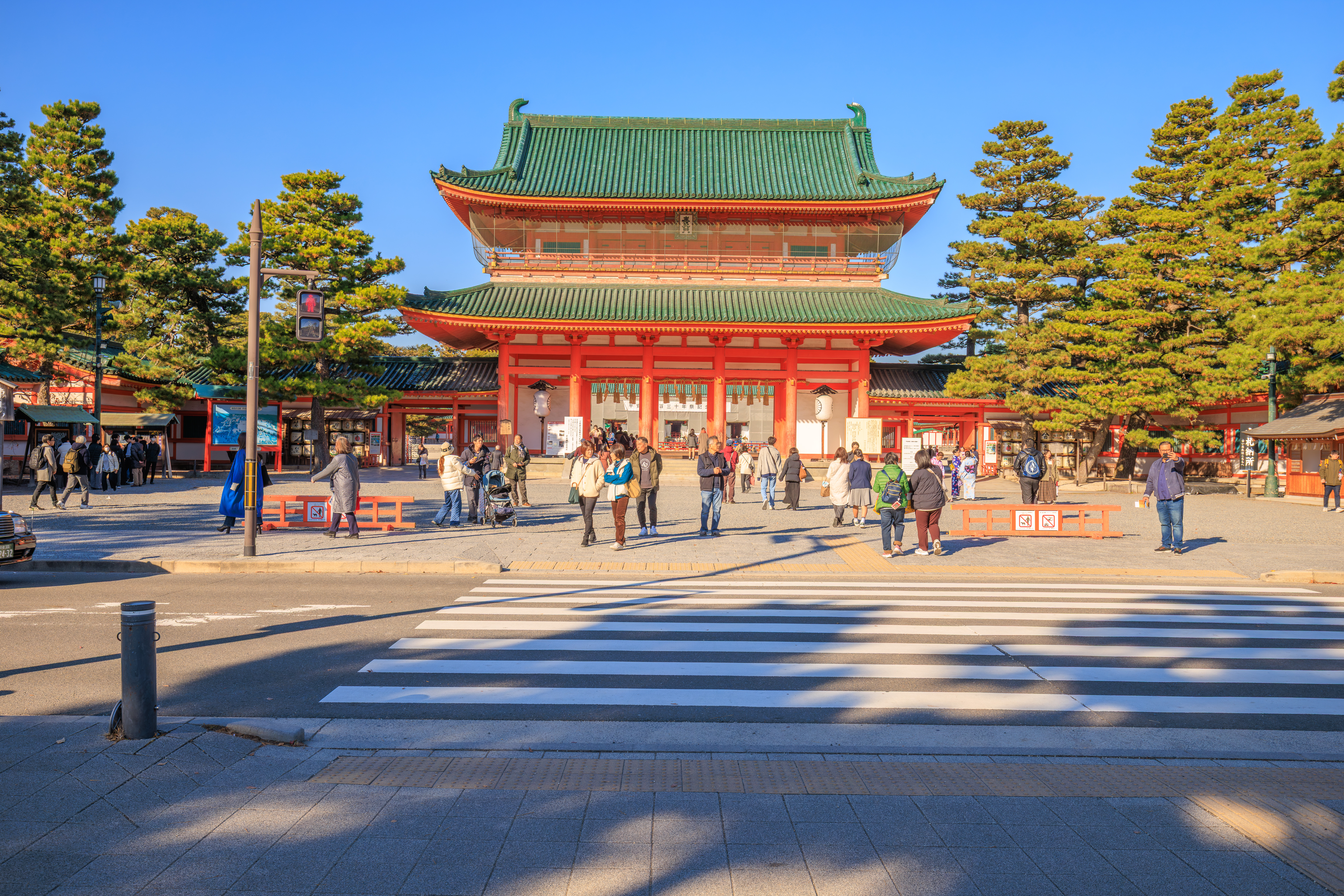
We walked to the north to reach the southern gate into the Heian-jingu. The Heian-jingu was built to be a 5:8 replica of the innermost portions of Heian-kyō, the name of the imperial capital when it was here in Kyoto. It enshrines both the first and last emperor to have ruled from Kyoto.
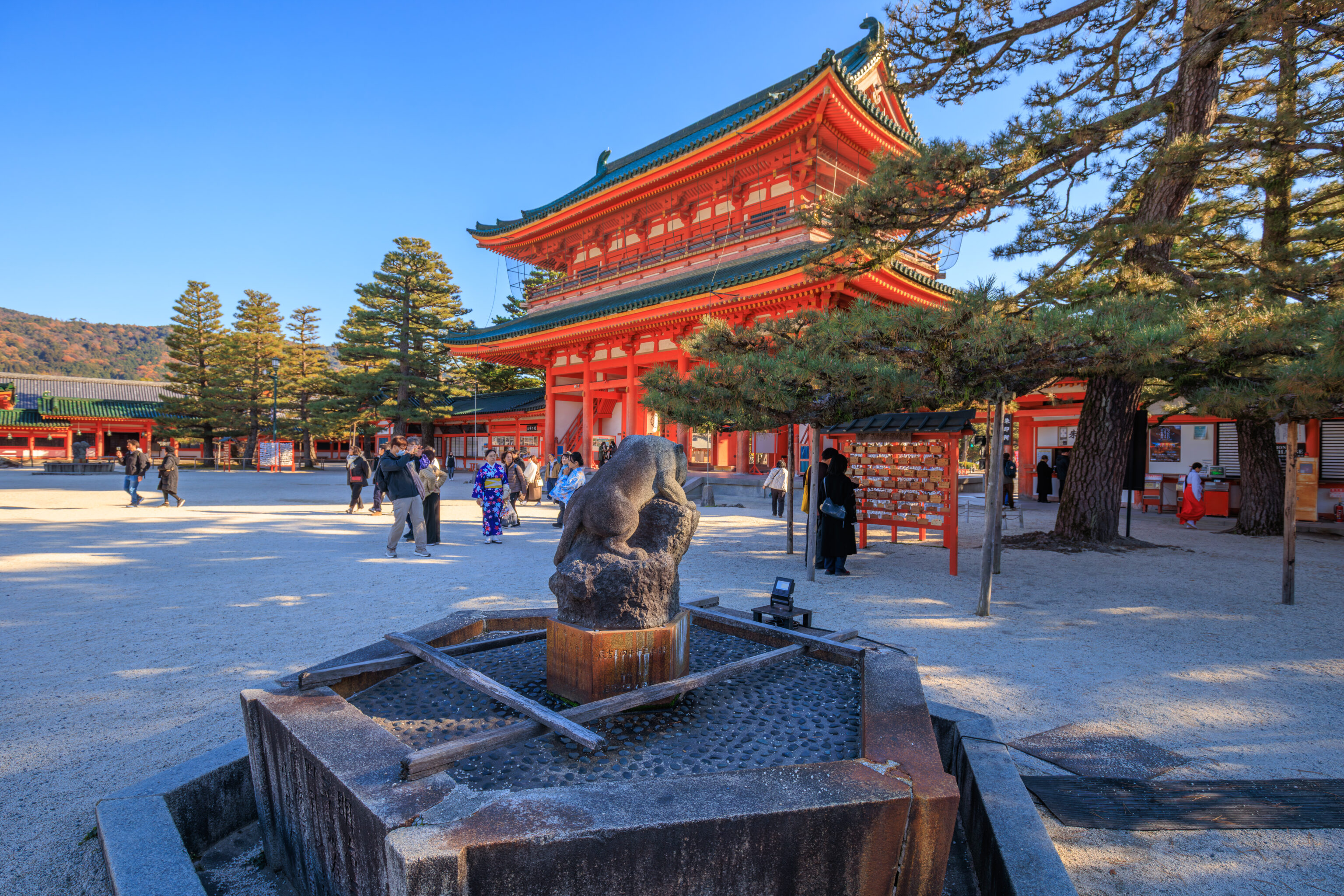
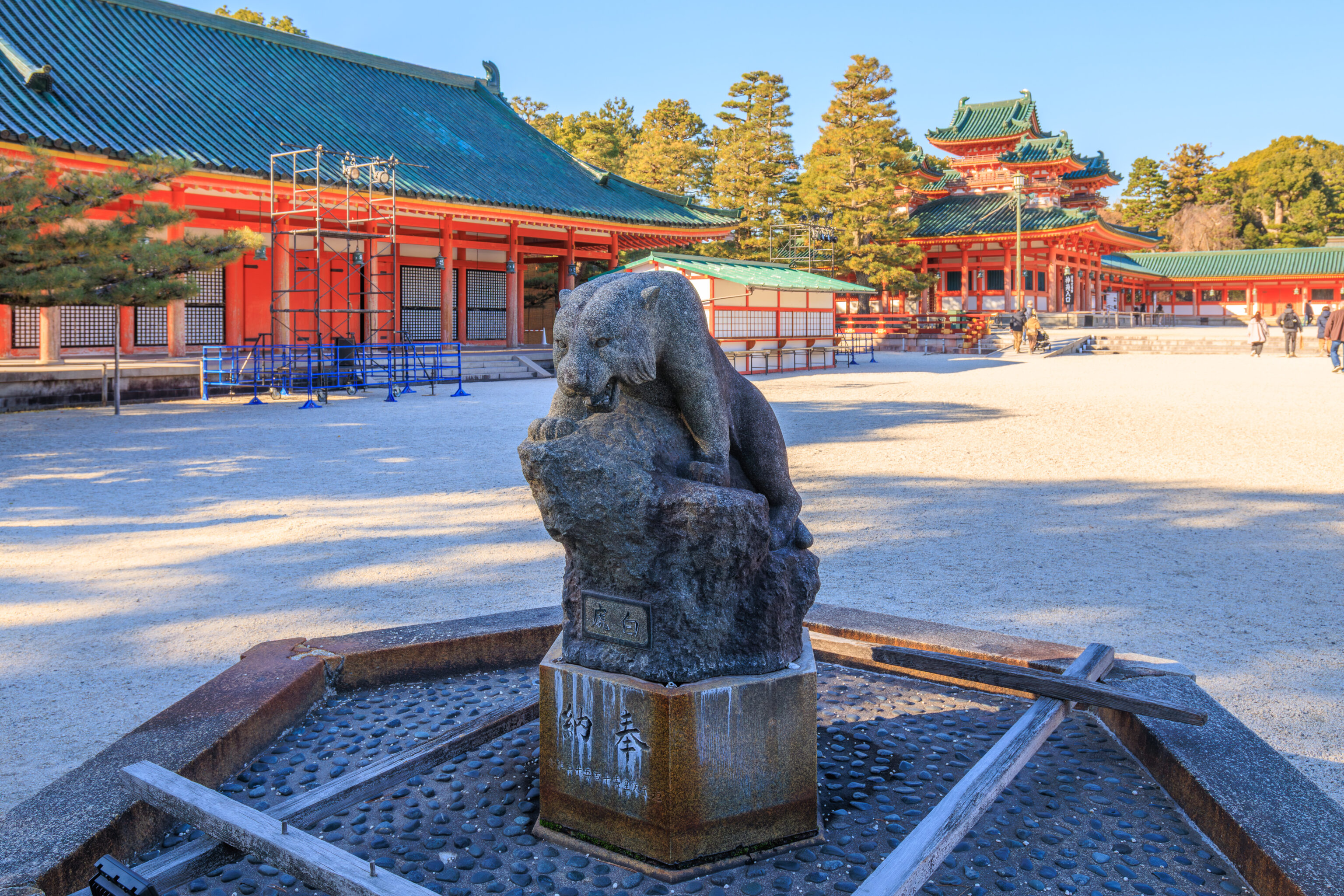
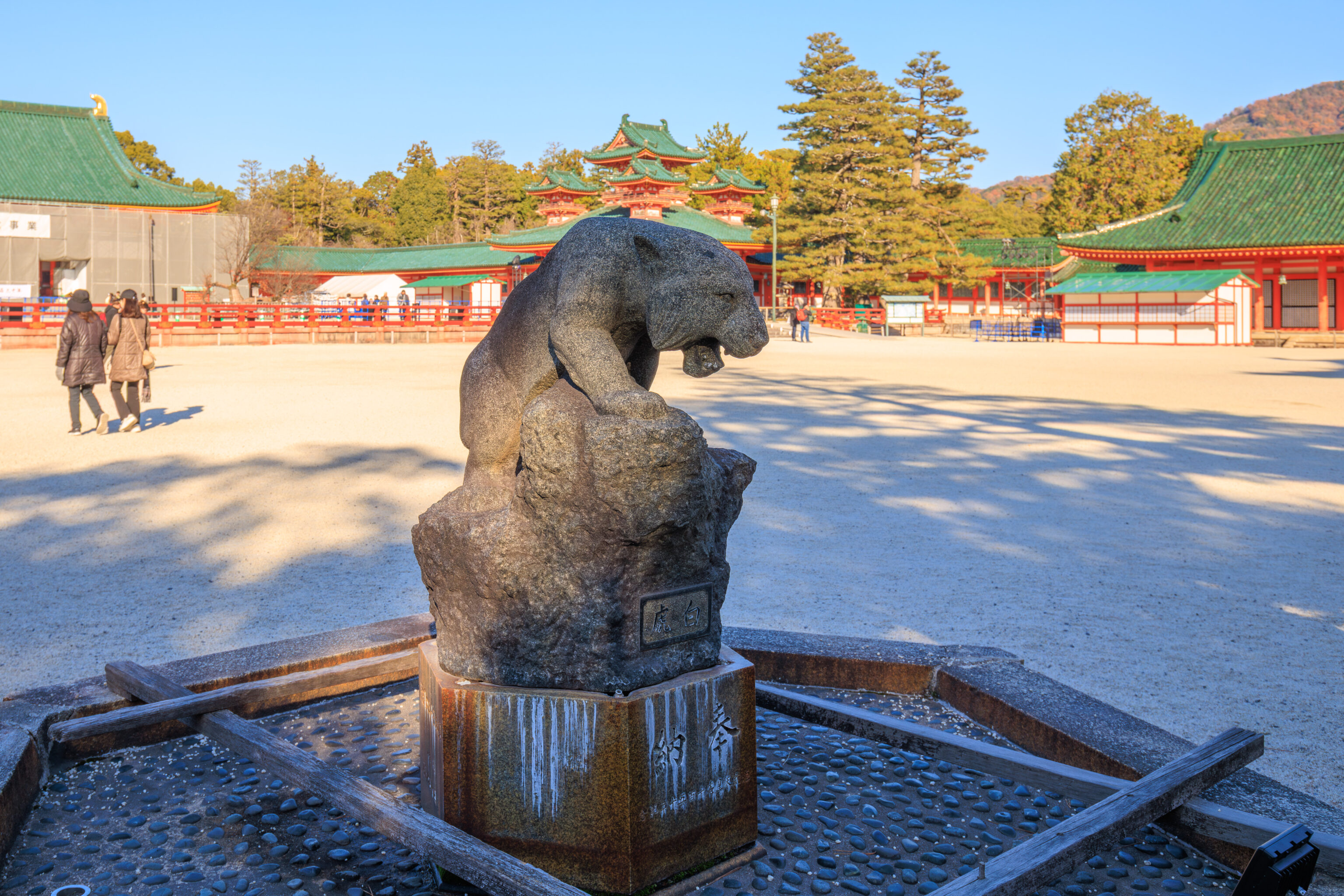
We walked through the gate to enter the walled off central area of the shrine. We walked by this sculpture of a big cat on a stone just to the northwest of the gate. It seems to be a fountain, although the water was unfortunately off.
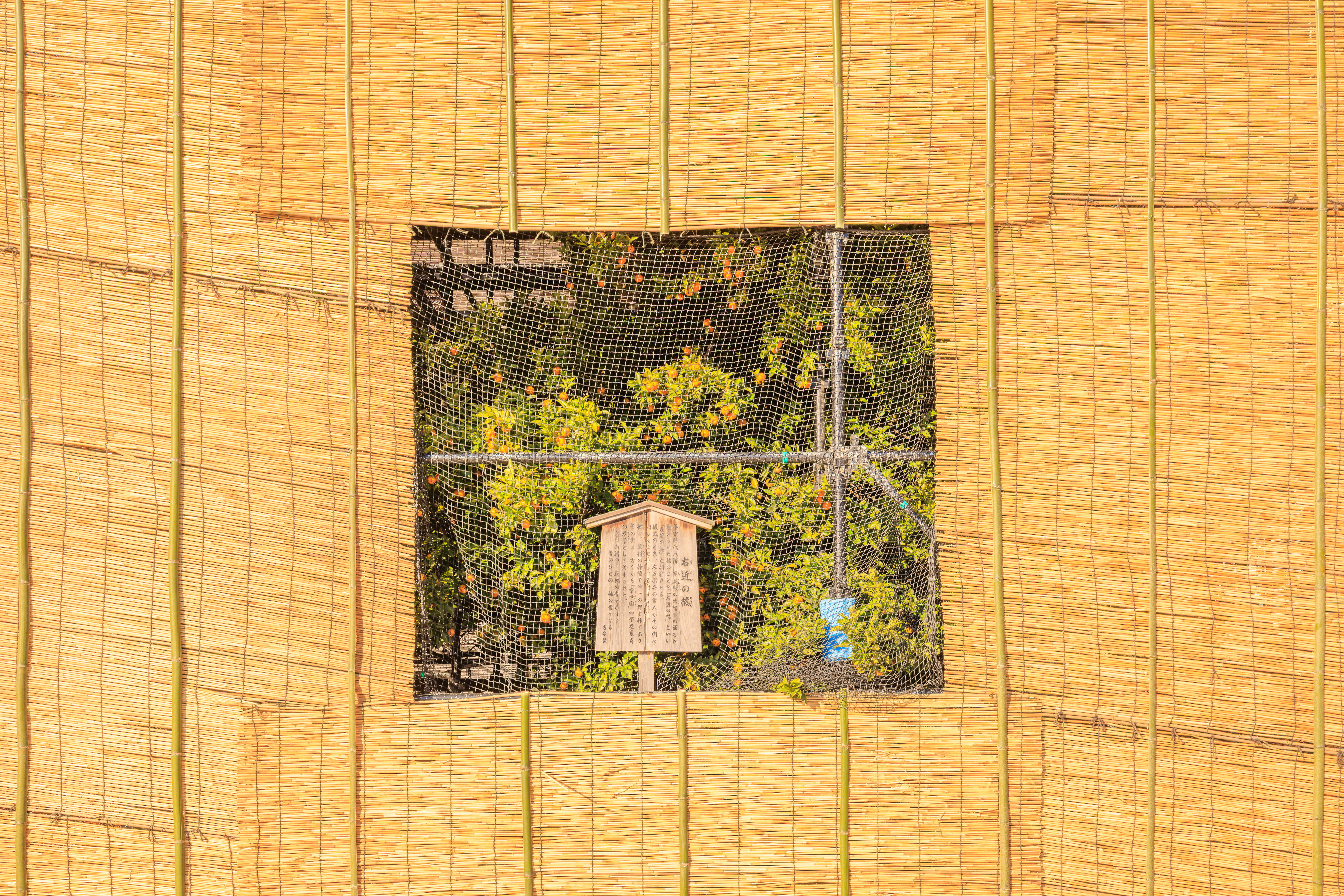
To the north, we came across a tree that was basically surrounded by a protective shell.
Tachibana
The Tachibana of Ukon

Since the Heian period, the *Tachibana* orange tree planted to the west of the southern staircase of the Shishinden Hall has been known as the "Tachibana of Ukon"—a name paired with that of the "Cherry Blossom of Sakon."

During ceremonial rites, officials of the Ukon-fu (Right Division of the Imperial Guards) would take their station beside this tree.

...

The *Tachibana* is the sole wild species among the citrus family; since ancient times, its fruit has been prized as a miraculous elixir of eternal youth and longevity—a treasure brought forth from the "Land of Tokoyo" (the Eternal Realm).

As I await the arrival of the Capital,
I brush away the blossoms clinging to my tongue—
As if wiping away the tears
From the sleeves of those of old.

— *Kokin Wakashū*
– Text from a sign, translated using Google.
Unfortunately, the wooden sign is cracked down the middle rendering one line of text illegible. This tree, along with the sakura mentioned in the text, is also present at the current Imperial Palace here in Kyoto. The Imperial Household Agency has a brief description of these two trees in English:
In the front yard of the Shishinden, a tachibana citrus is planted to the left, and a cherry blossom tree is planted to the right. During ceremonies, military officers from the Sa-u-konoe-fu (Literally, "Left and Right Guard Offices") were positioned near each tree. Later, they became known as "Ukon-no-tachibana"(Tachibana Citrus on the Right) and "Sakon-no-sakura" (Cherry Blossom on the Left). While the tachibana citrus, an evergreen tree, symbolizes eternity, the cherry blossom tree, whose blossoms last only for a short time and begin to fall all at once, is associated with ephemerality.
– Imperial Household Agency, https://kyoto-gosho.kunaicho.go.jp/en/tree/4E2
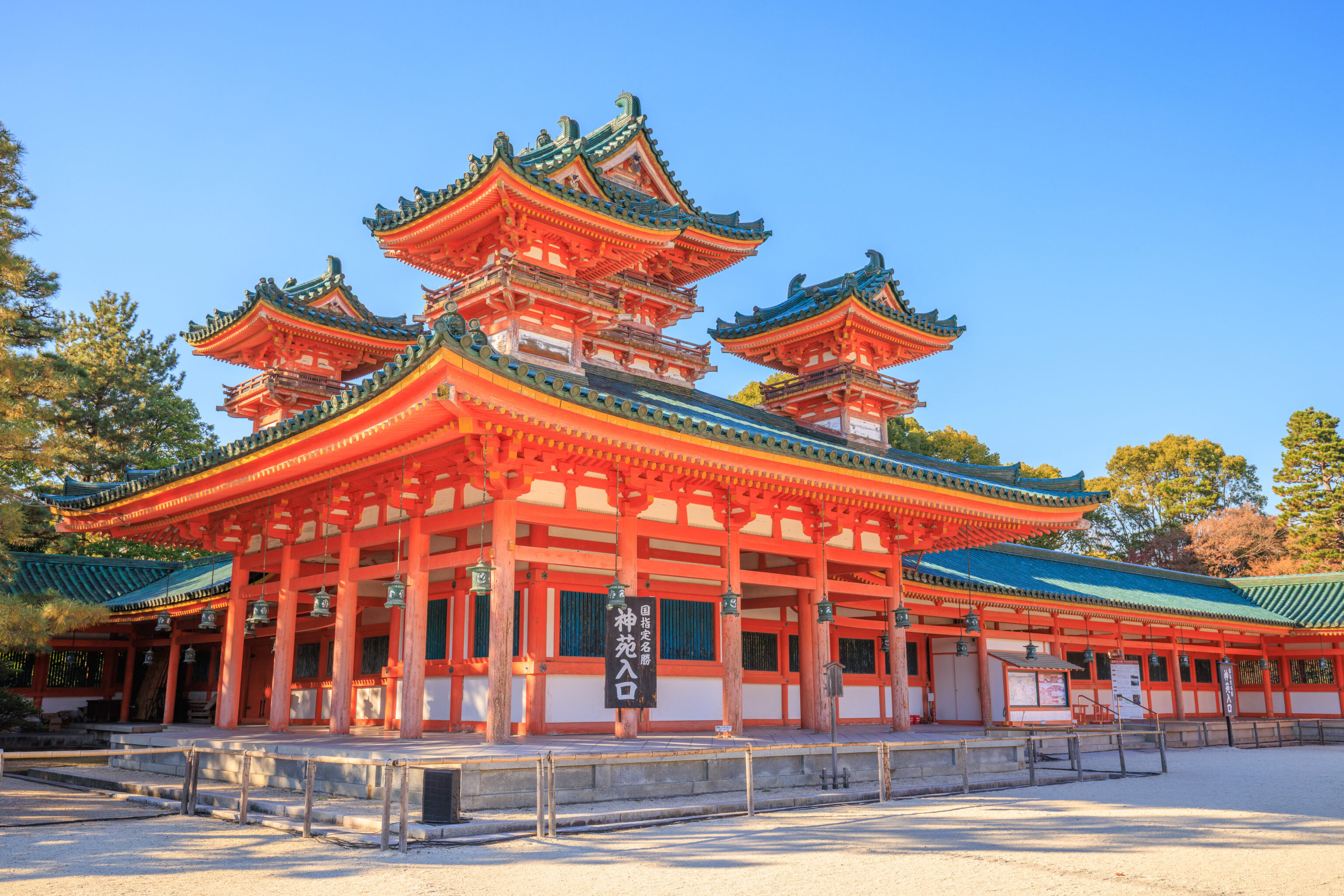
This building contains the entrance to the shrine’s garden.
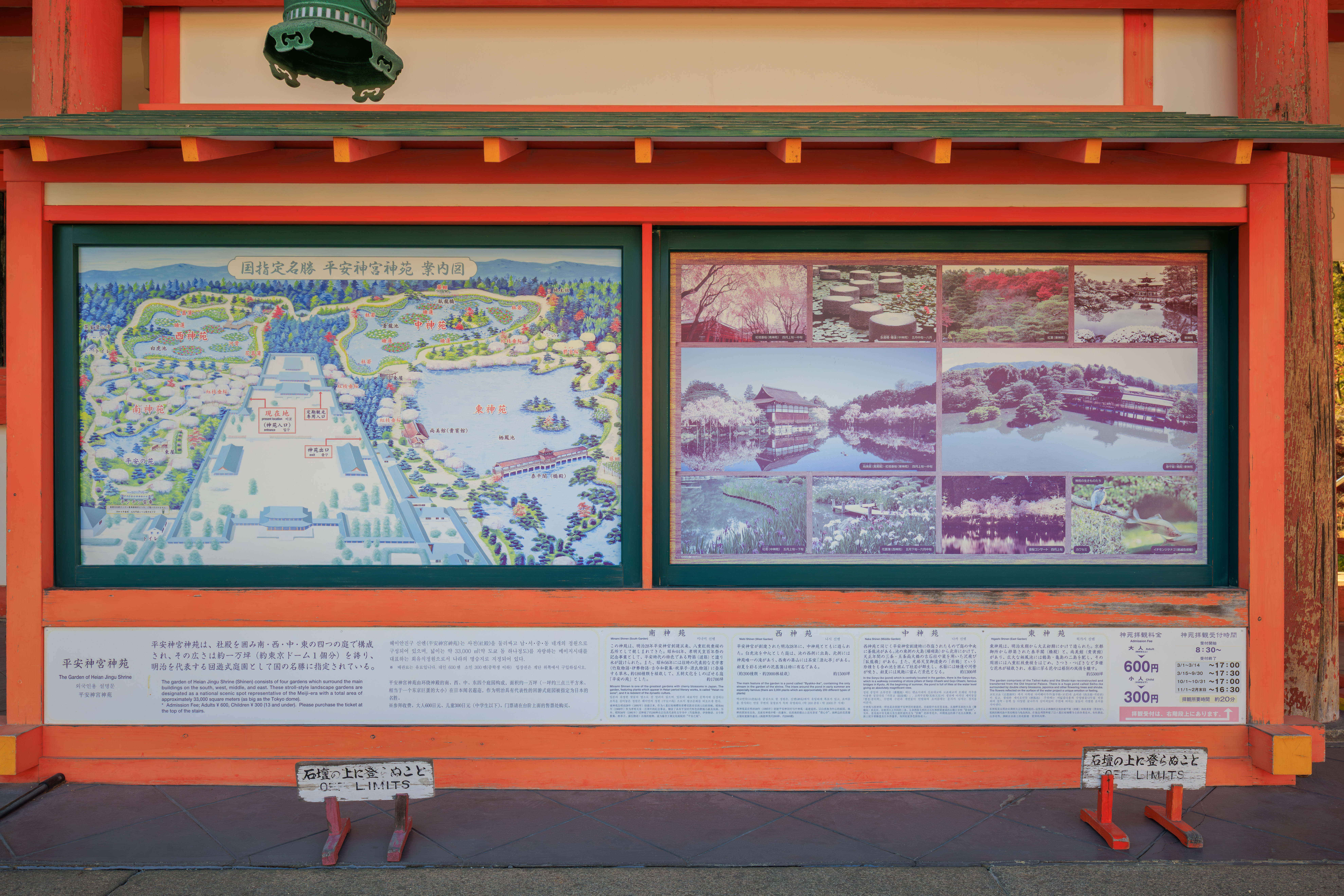
The four interconnected gardens surround the shrine buildings, as seen on the map on the left side of this sign.
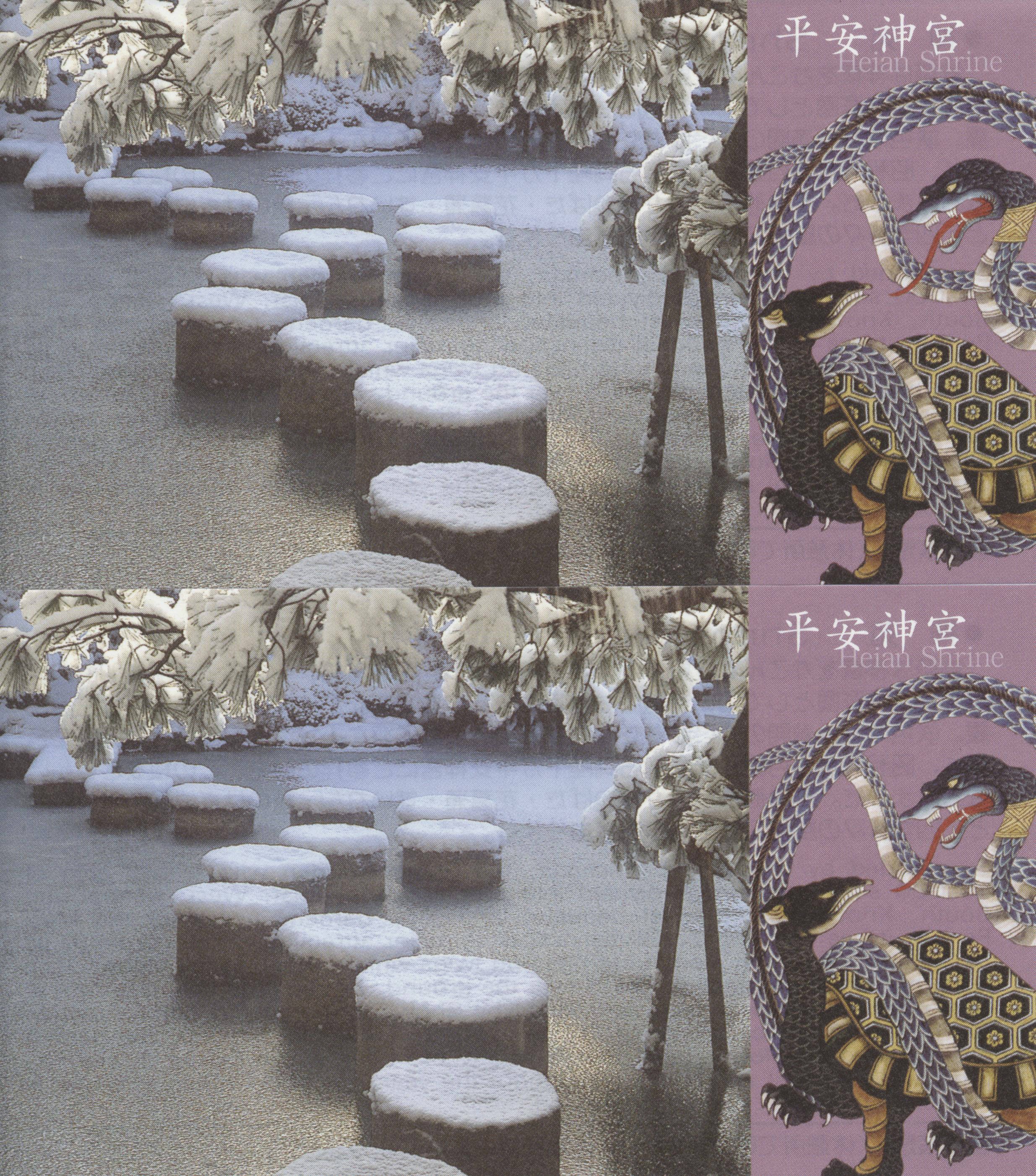
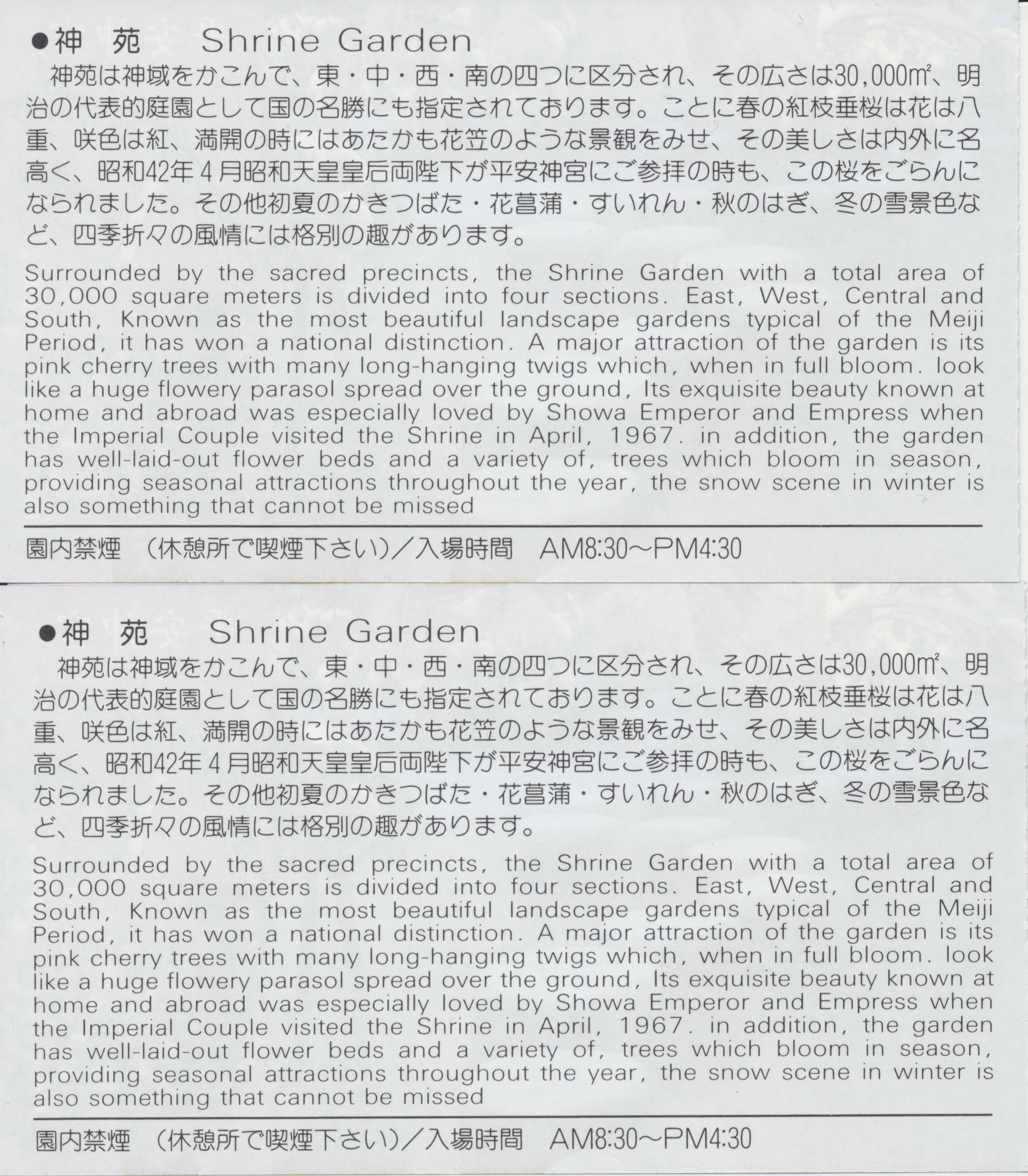
We decided to go in to take a look.
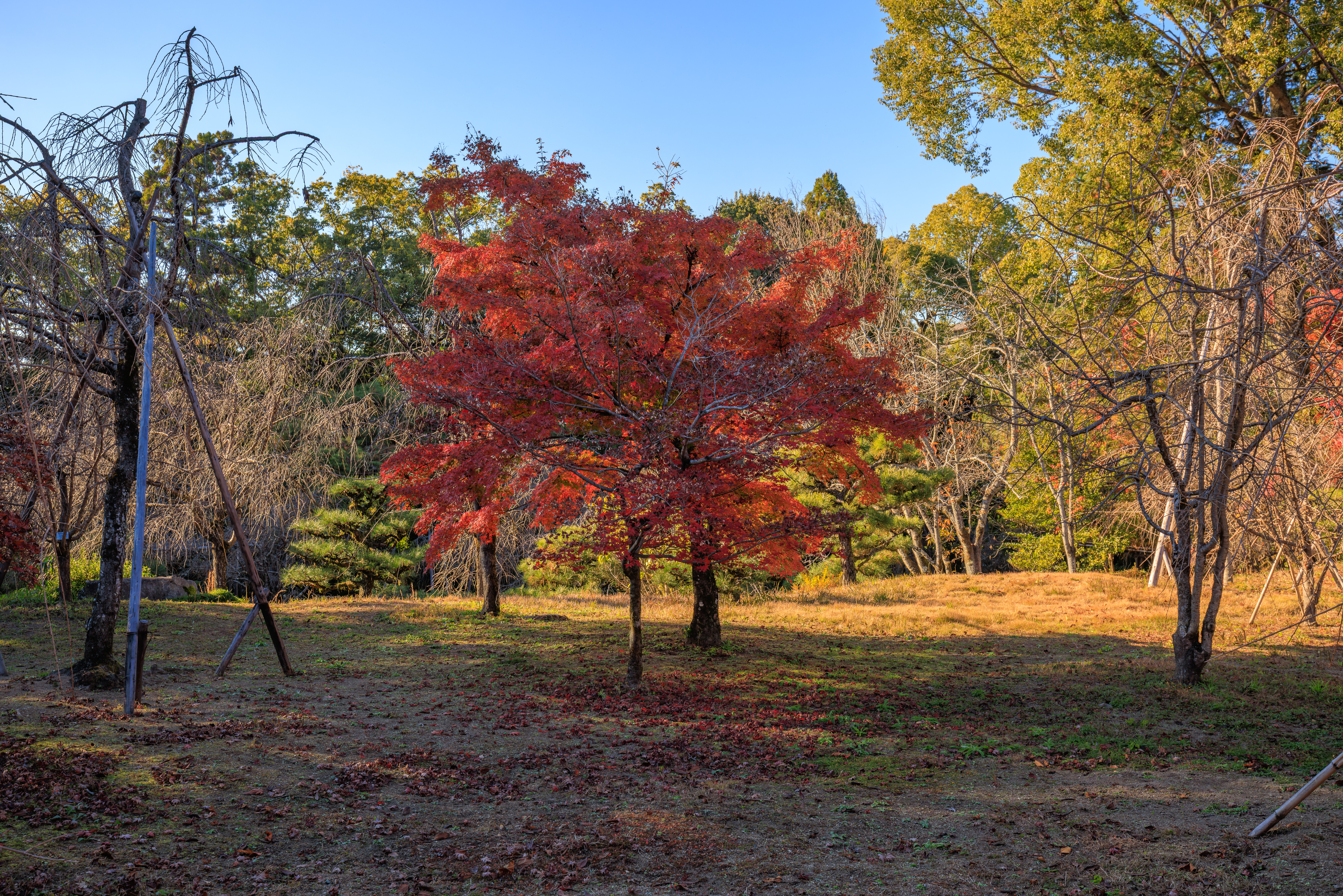
Just beyond the entrance, we saw a single momiji with many red leaves still intact. Unfortunately, it was mostly in the shade.
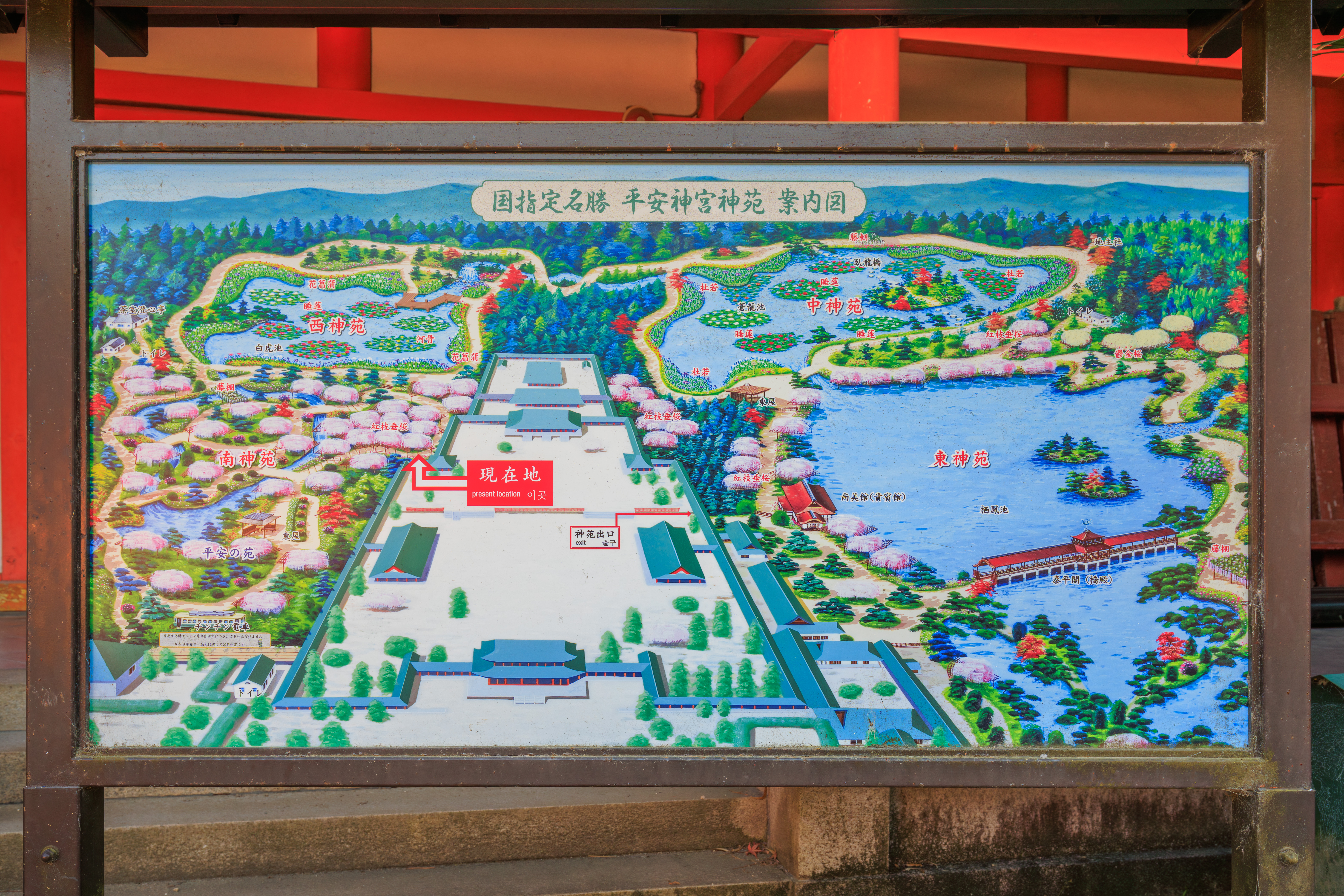
This map on the inside was in better condition than the one we saw outside!
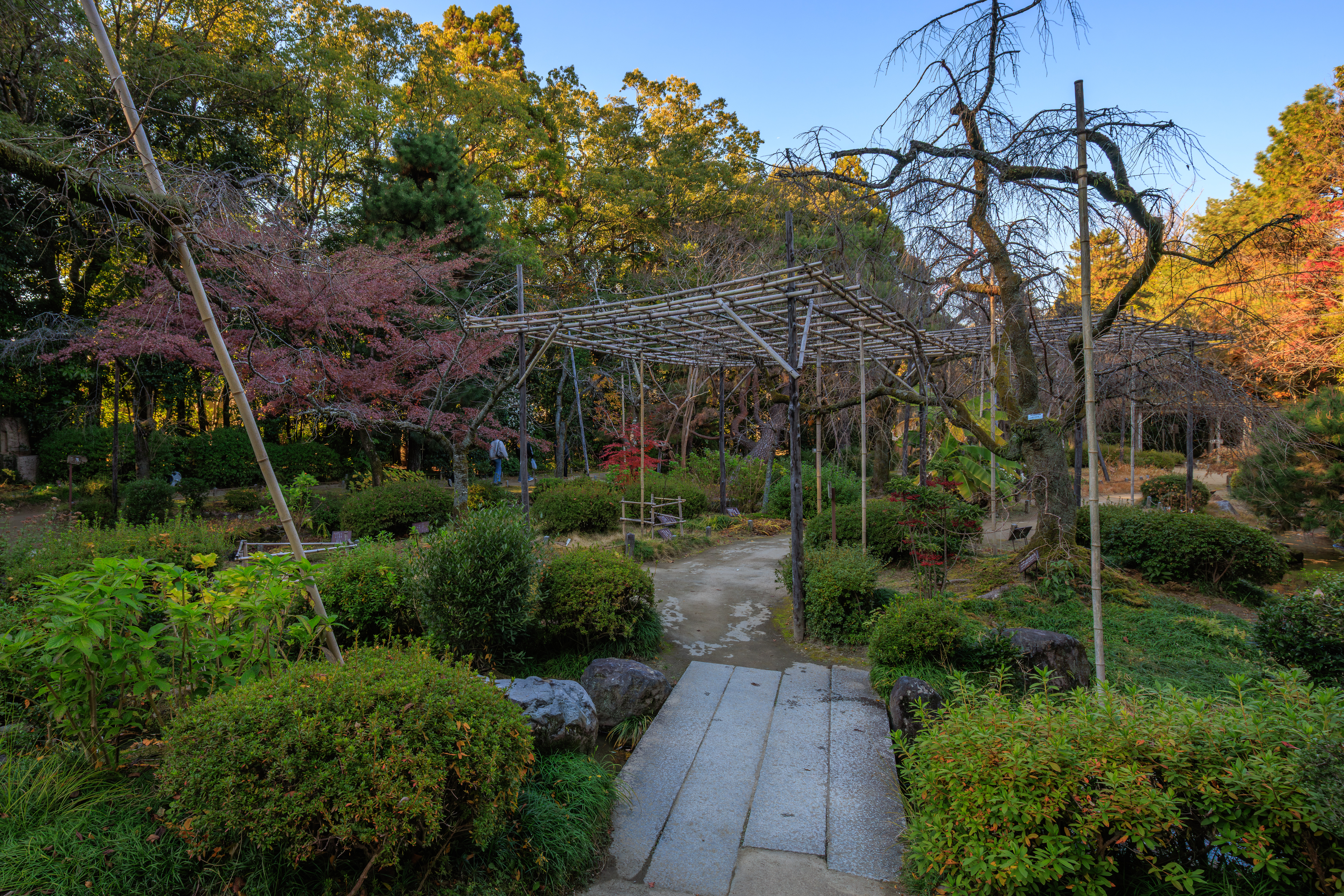
Well, this probably would have been nicer a few weeks ago!
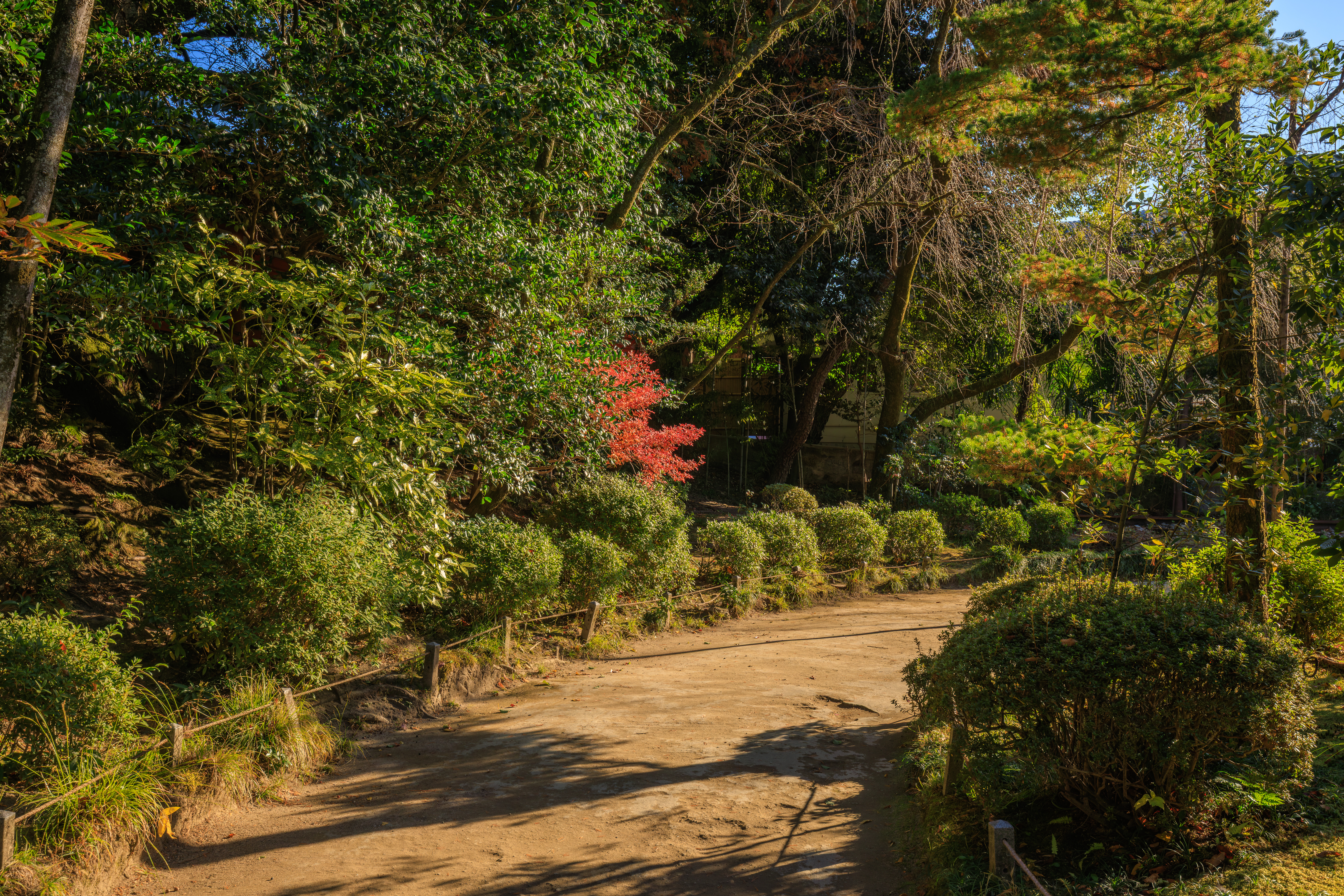
Another little bit of red in a sea of green.
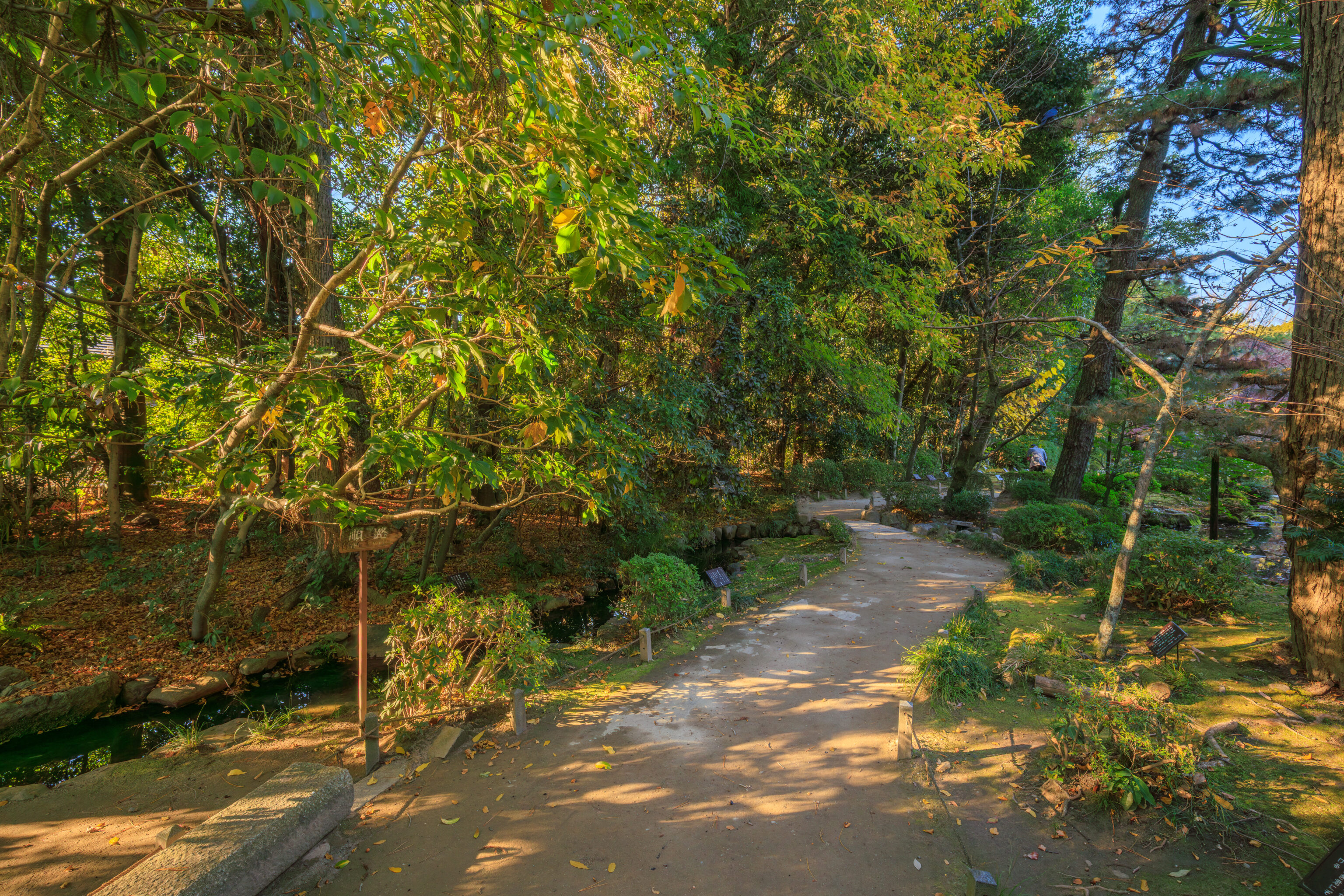
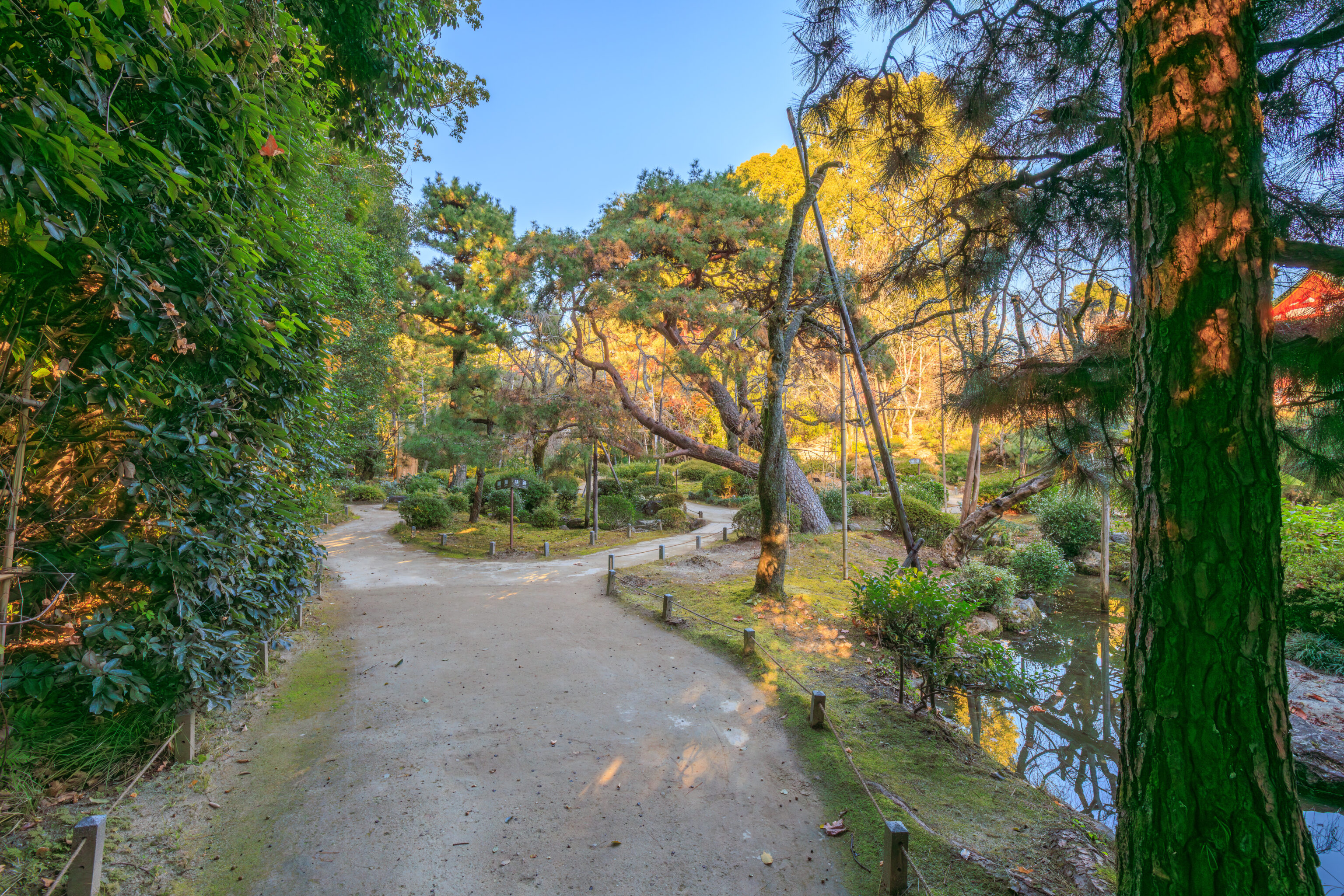
We quickly walked through this area, the South Garden, on the west side of the shrine.
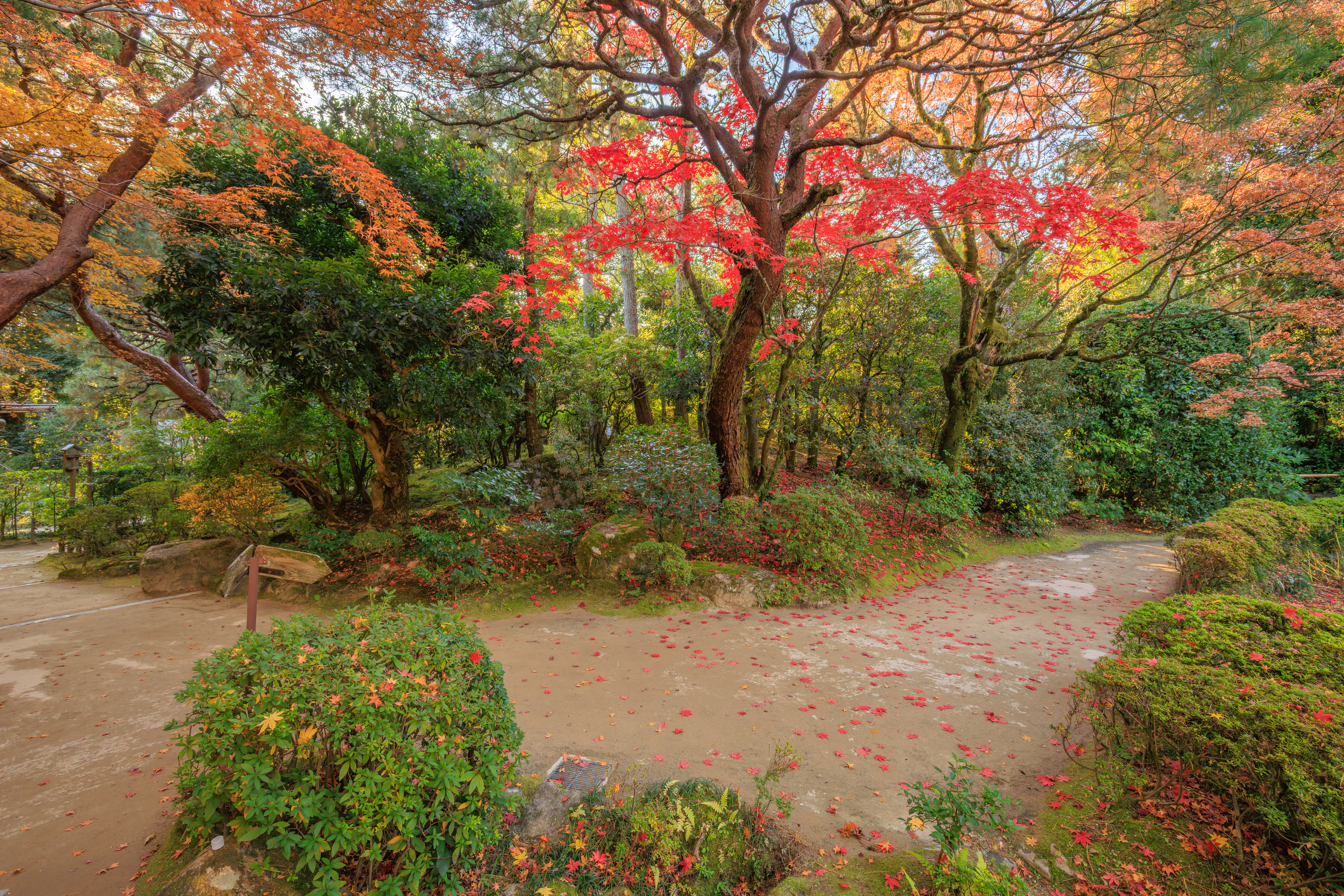
We came upon a bit of nice color as we walked to the north.
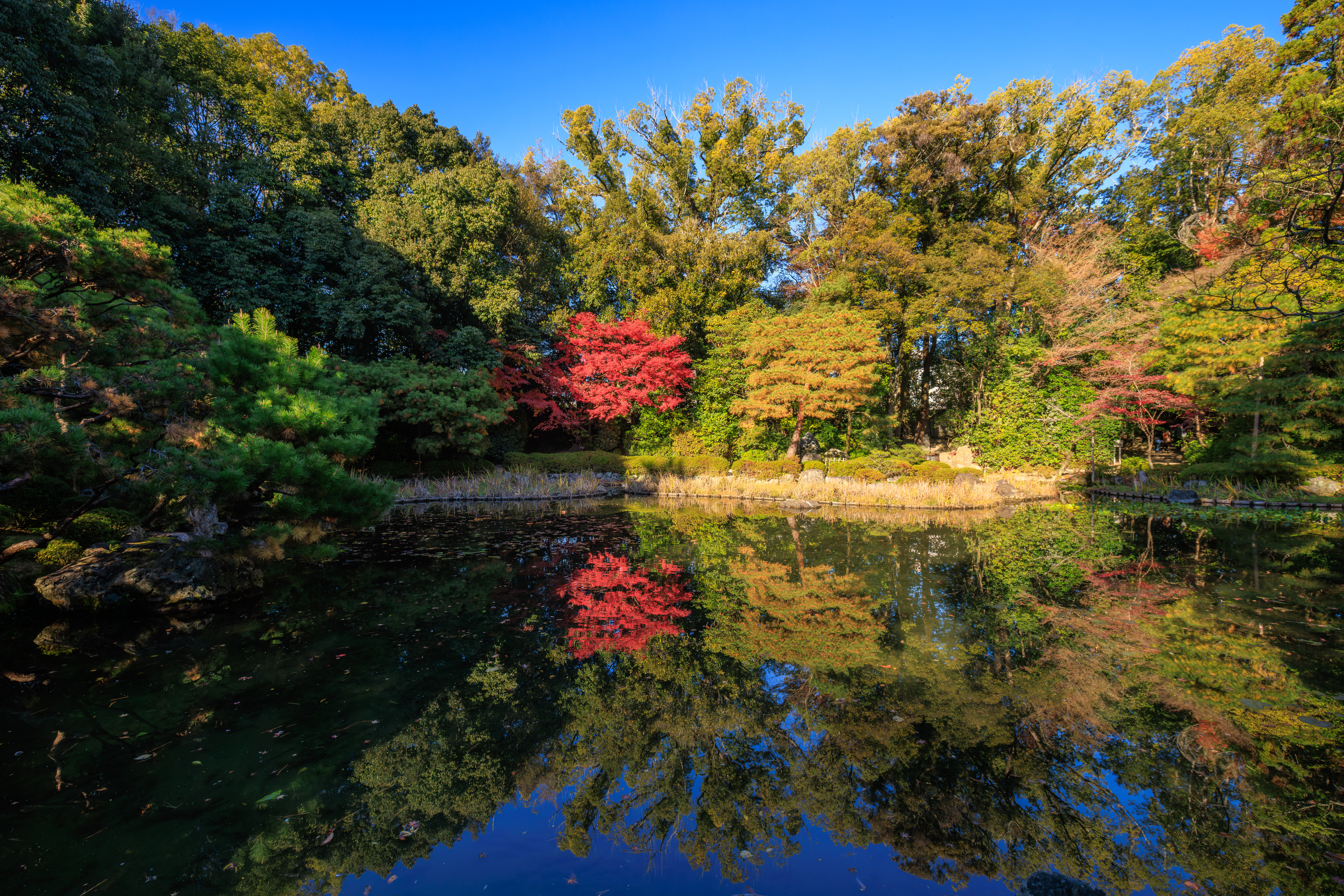
We soon reached a large pond in the West Garden.
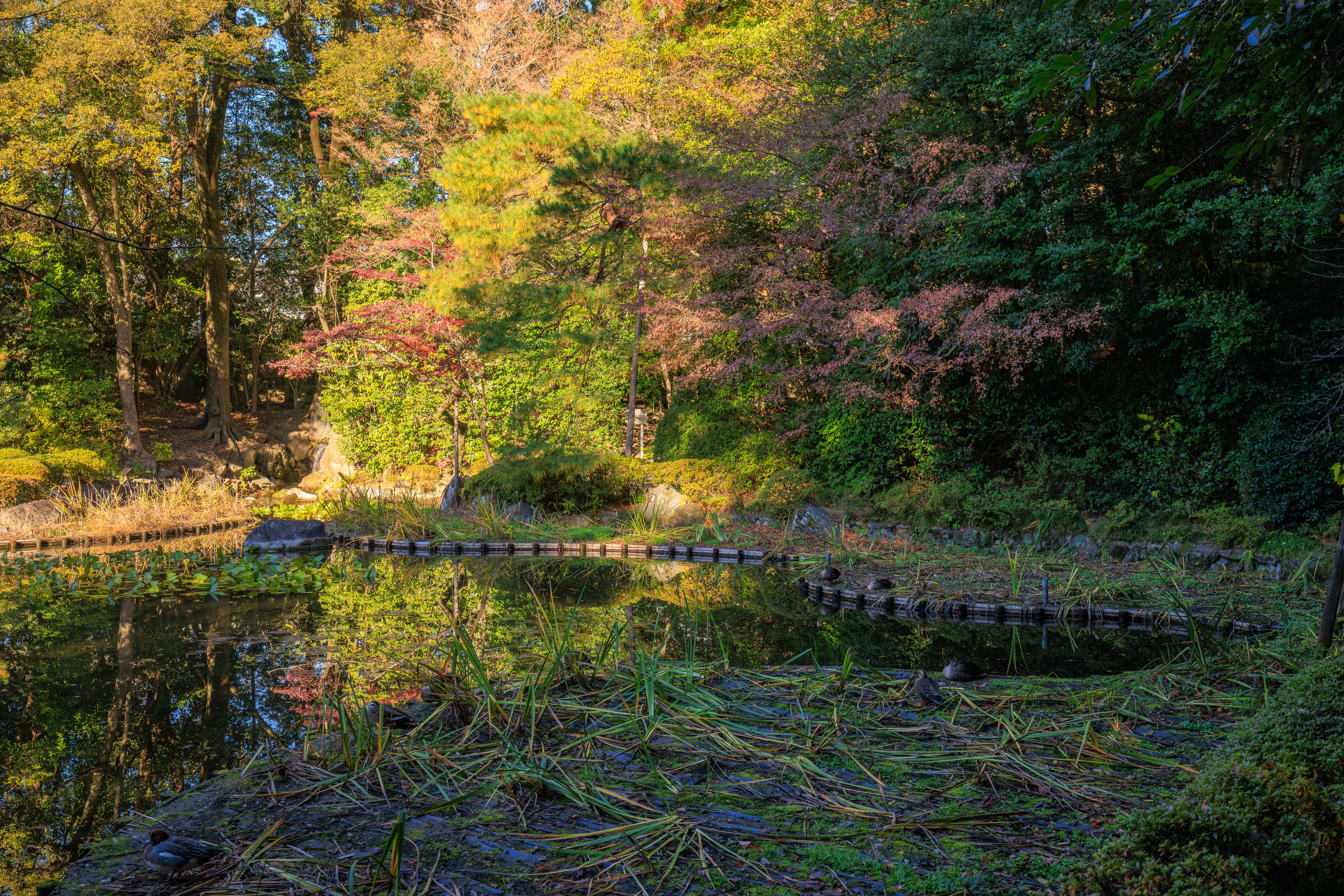
This pond, the Byakko-ike, is described as being surrounded by irises. The map depicts the pond as containing lilies, or perhaps lotuses. There wasn’t much to see around the pond other than some resting ducks.
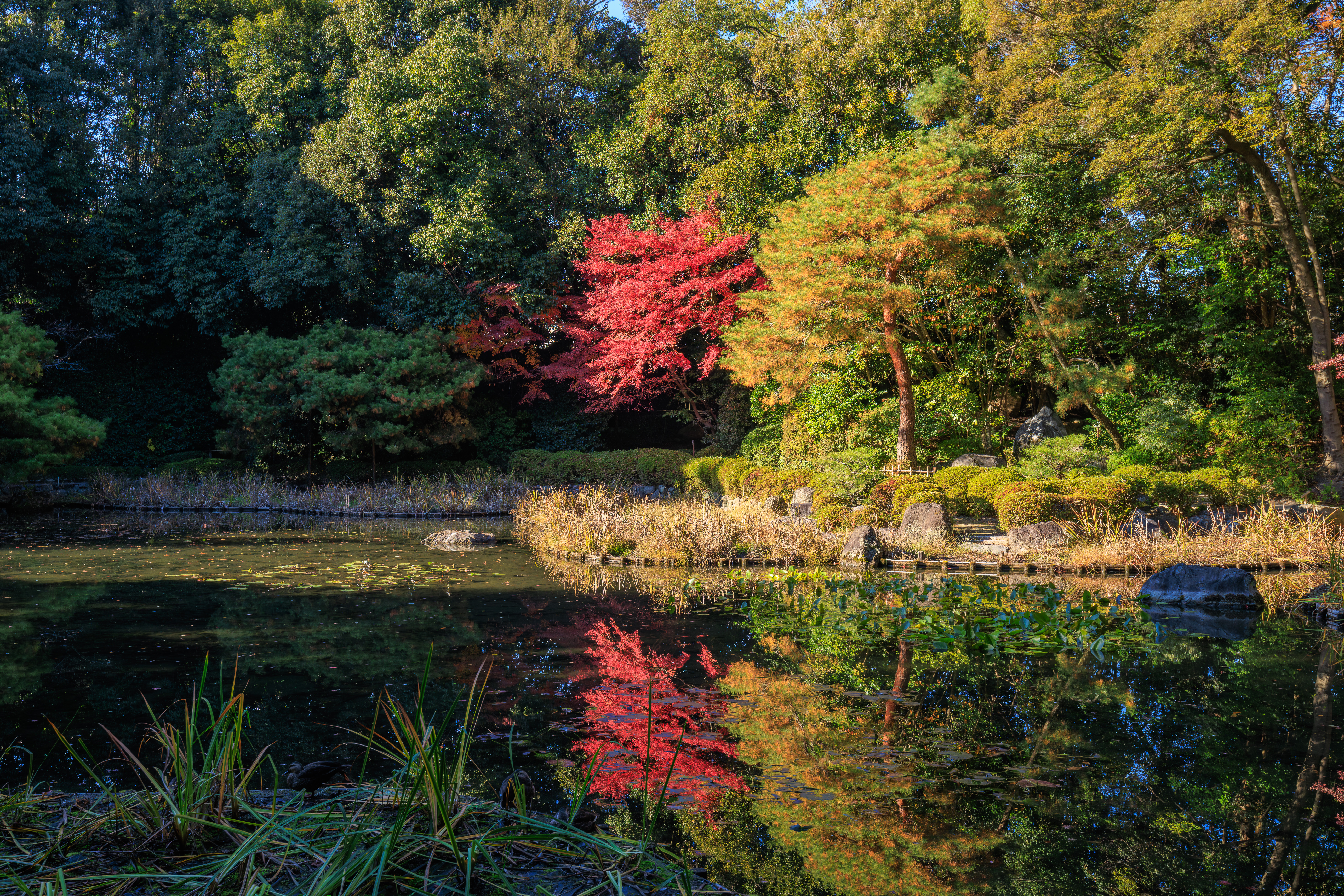
The calm surface of the pond did provide a nice mirrored image of this bright red momiji on the other side though!
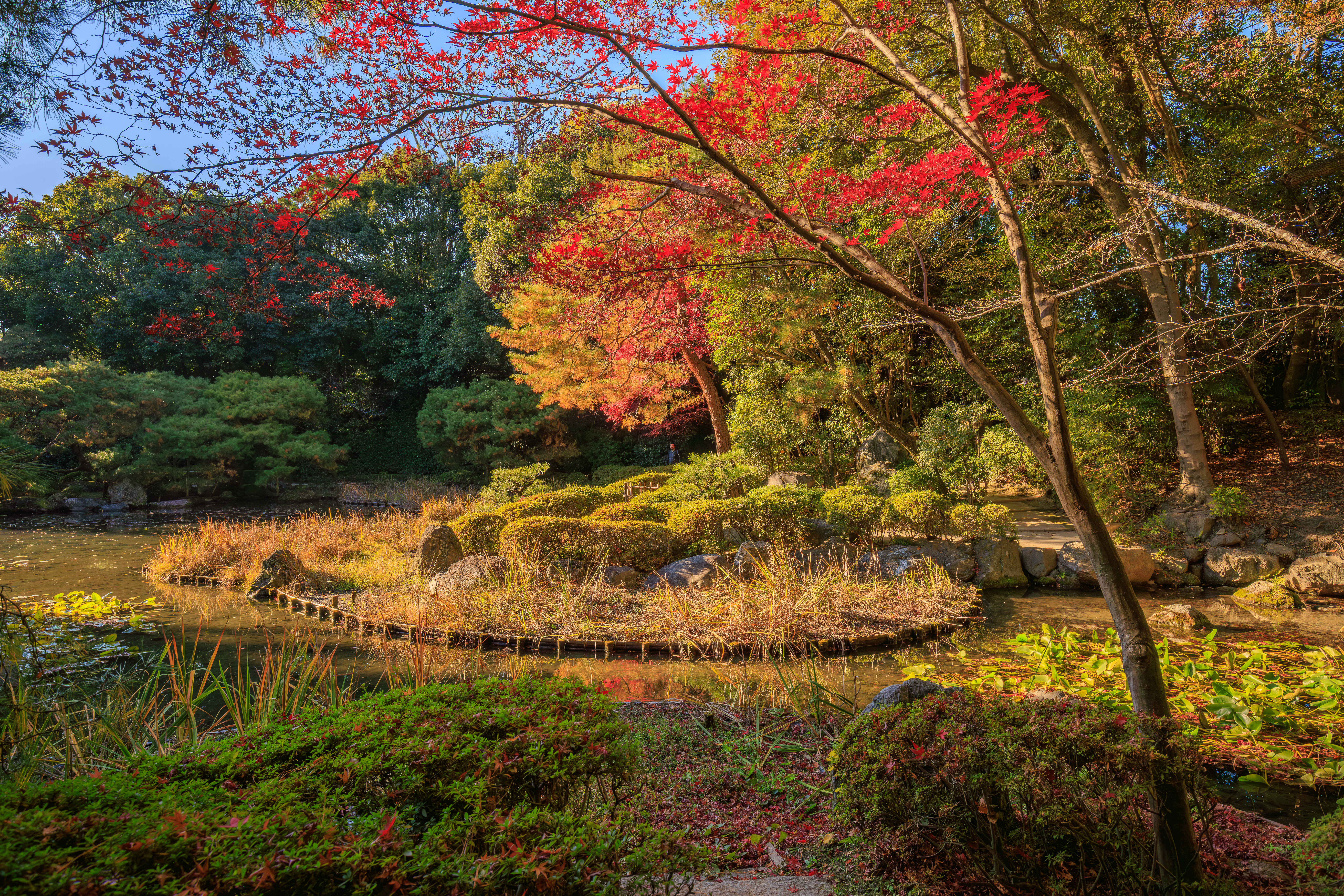
We continued following the path as it led to the east.
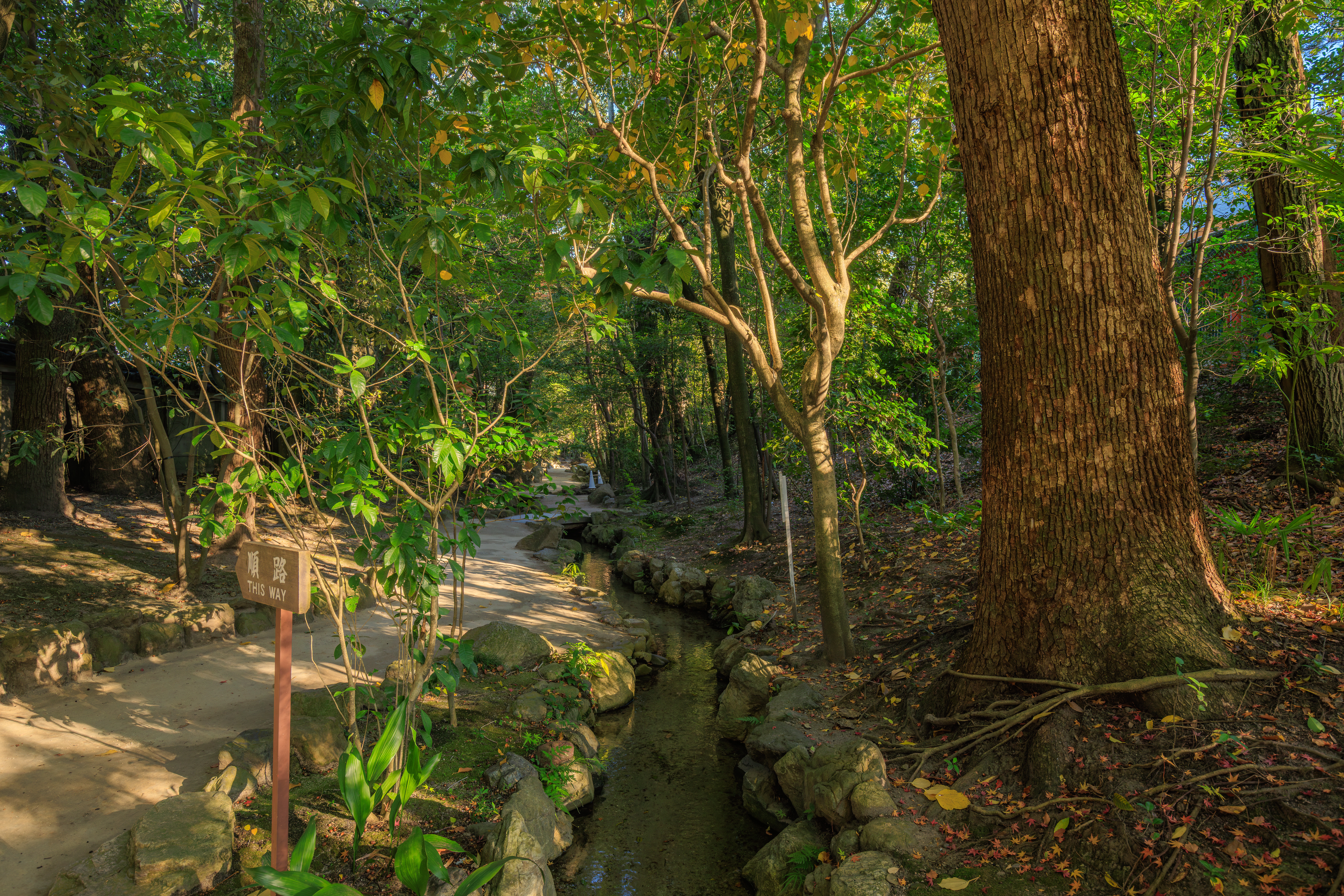
This is the way.
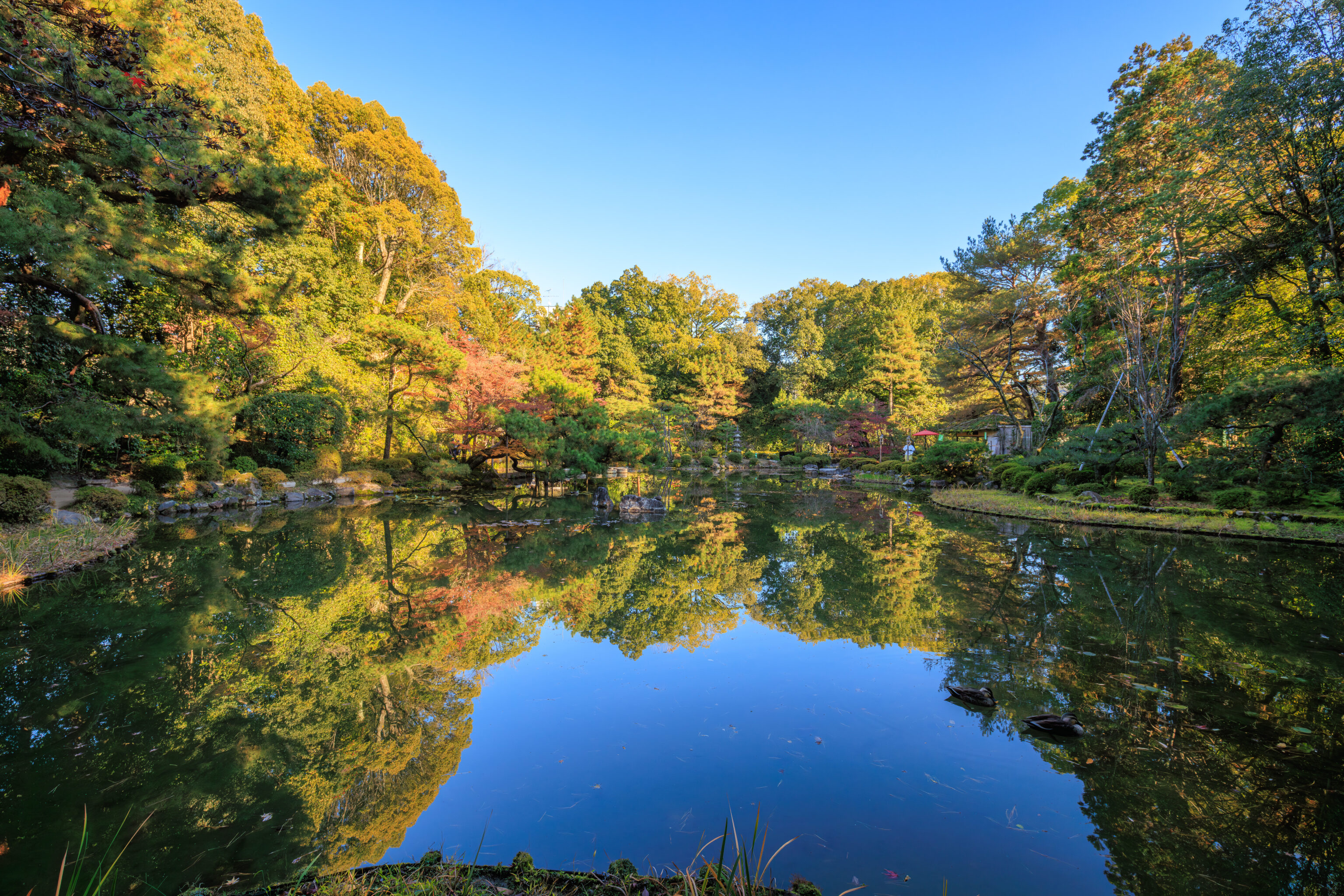
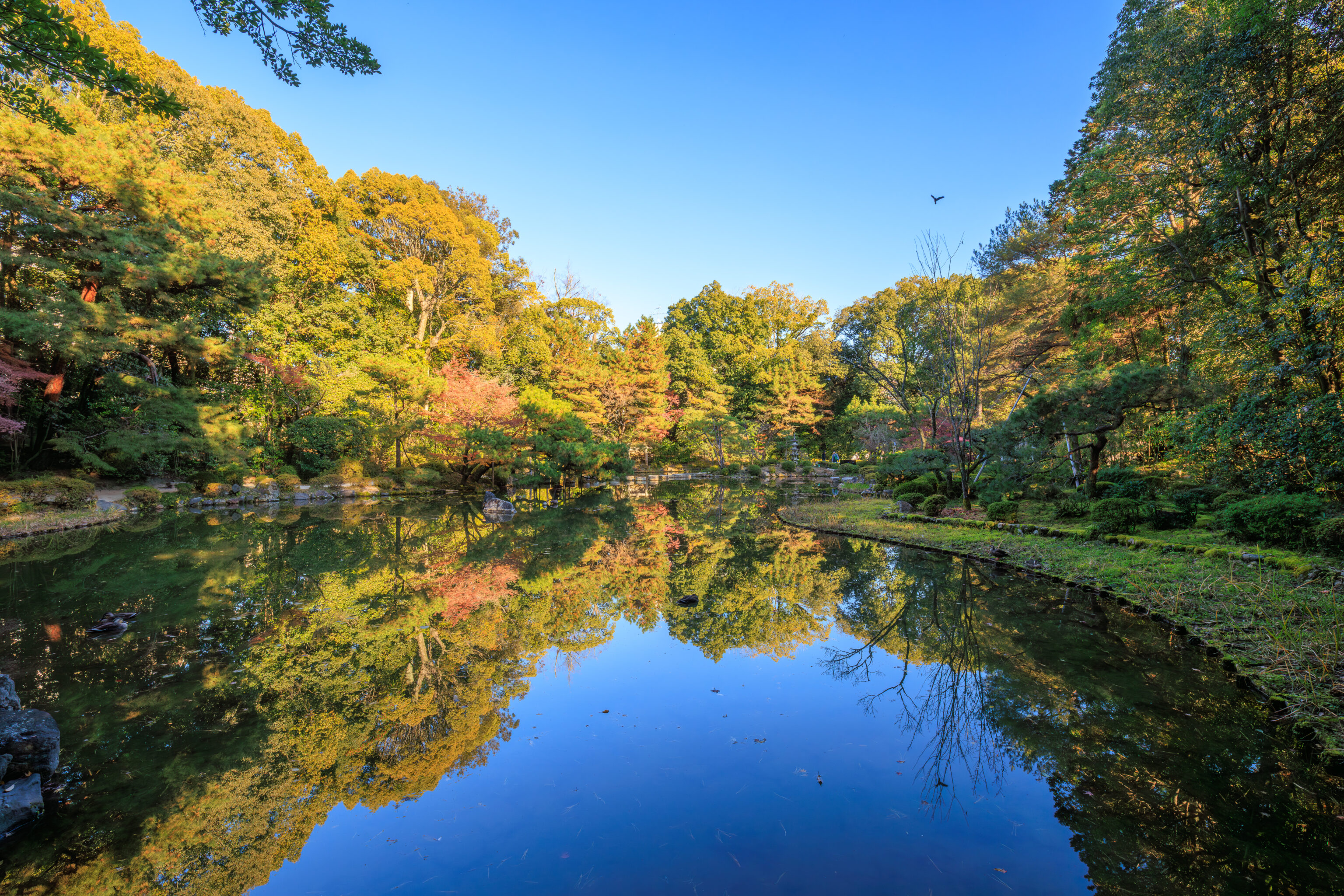
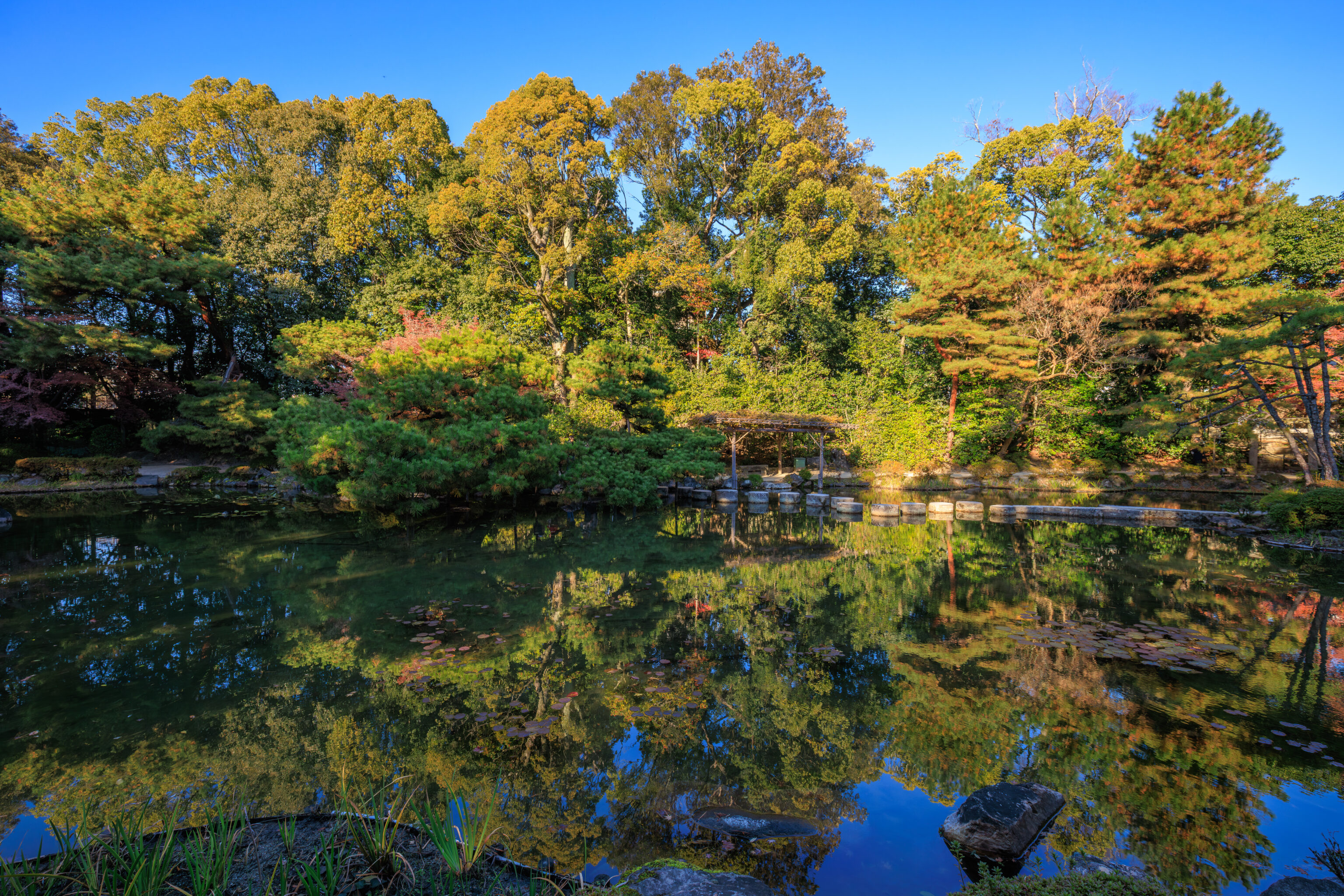
We continued on into the Middle Garden. This garden contains a larger pond, the Soryu-ike.
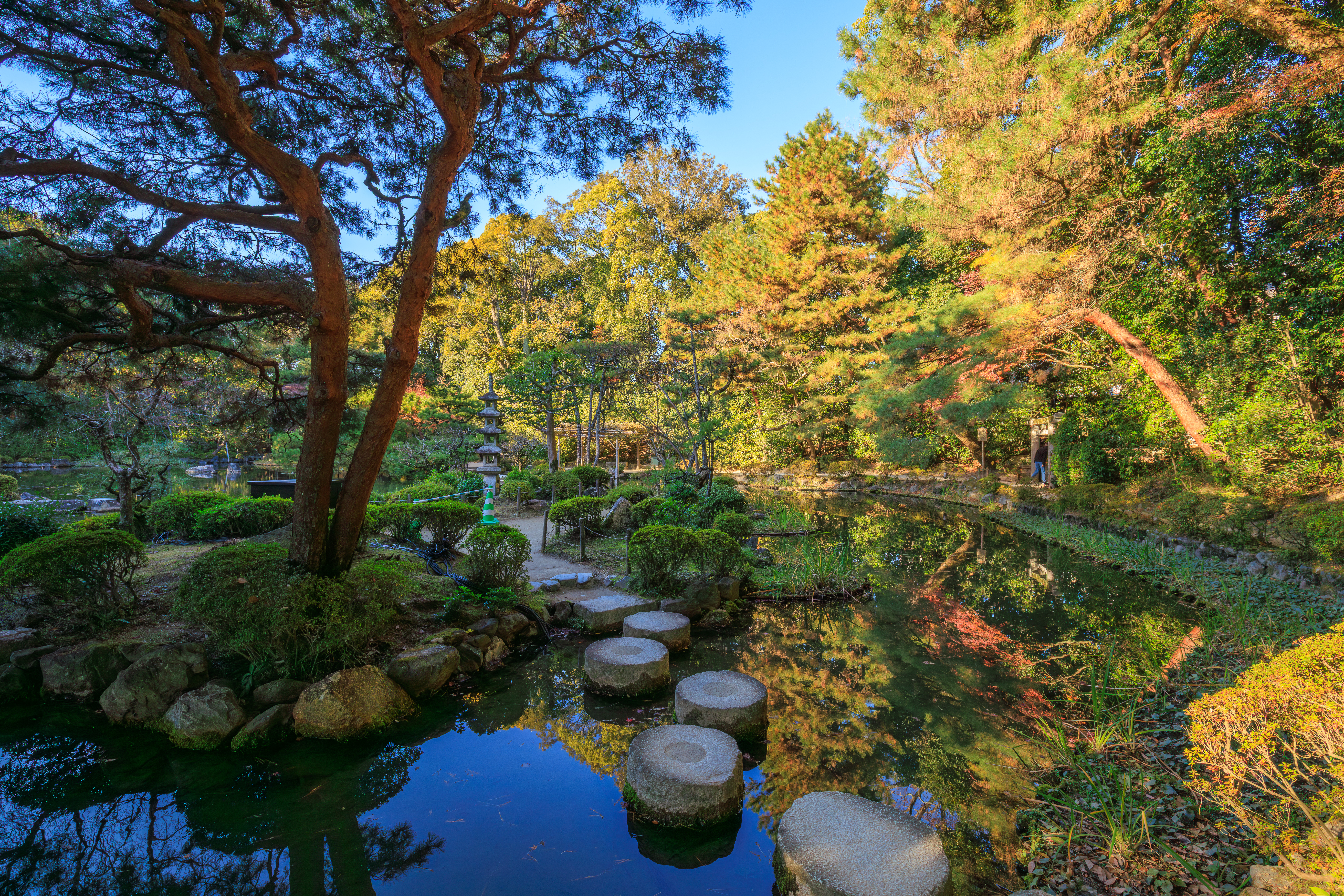
We walked past a small path of stones at the edge of the pond.
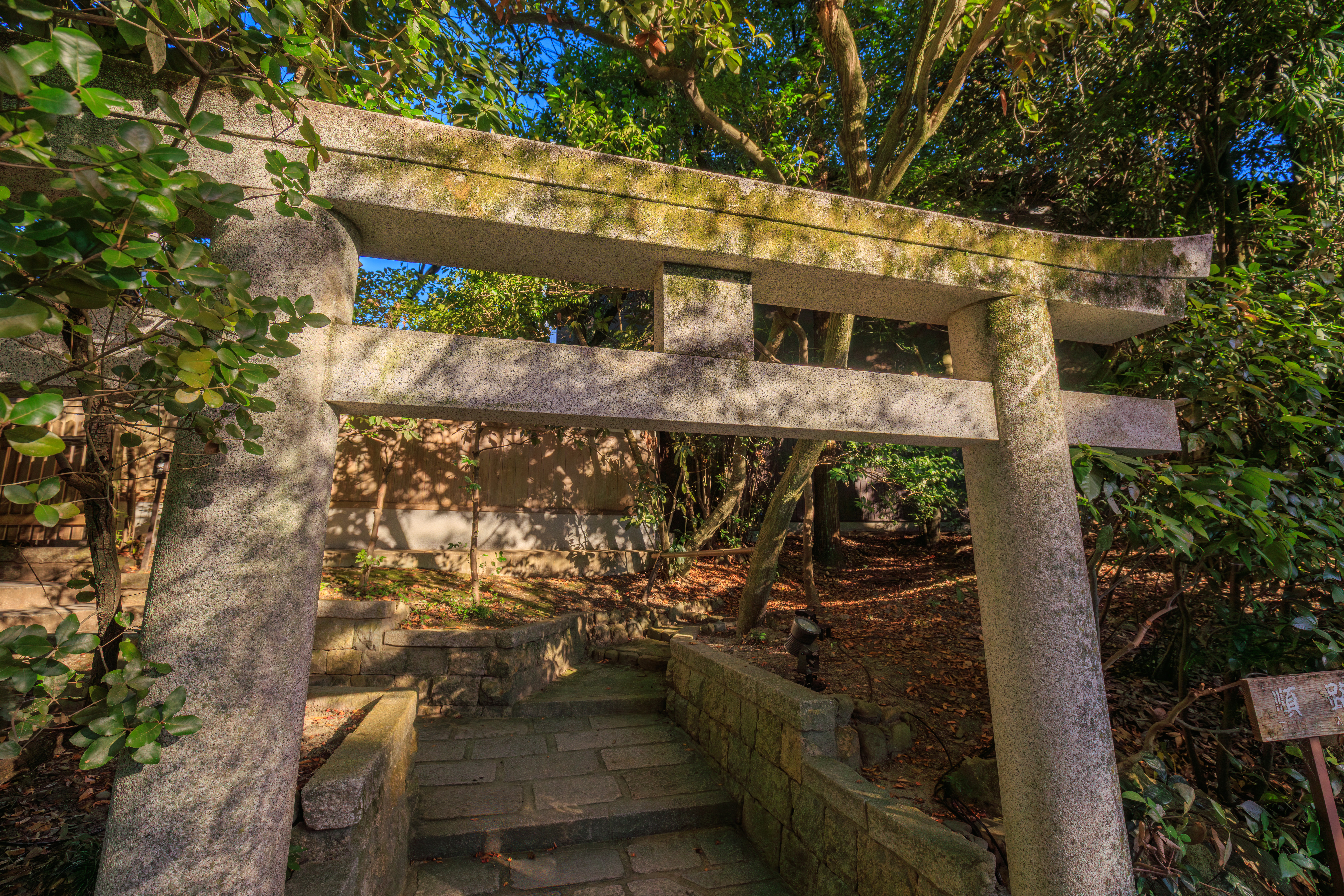
To the north, on the east side of the pond, there was a stone torii on a blocked off path to somewhere.
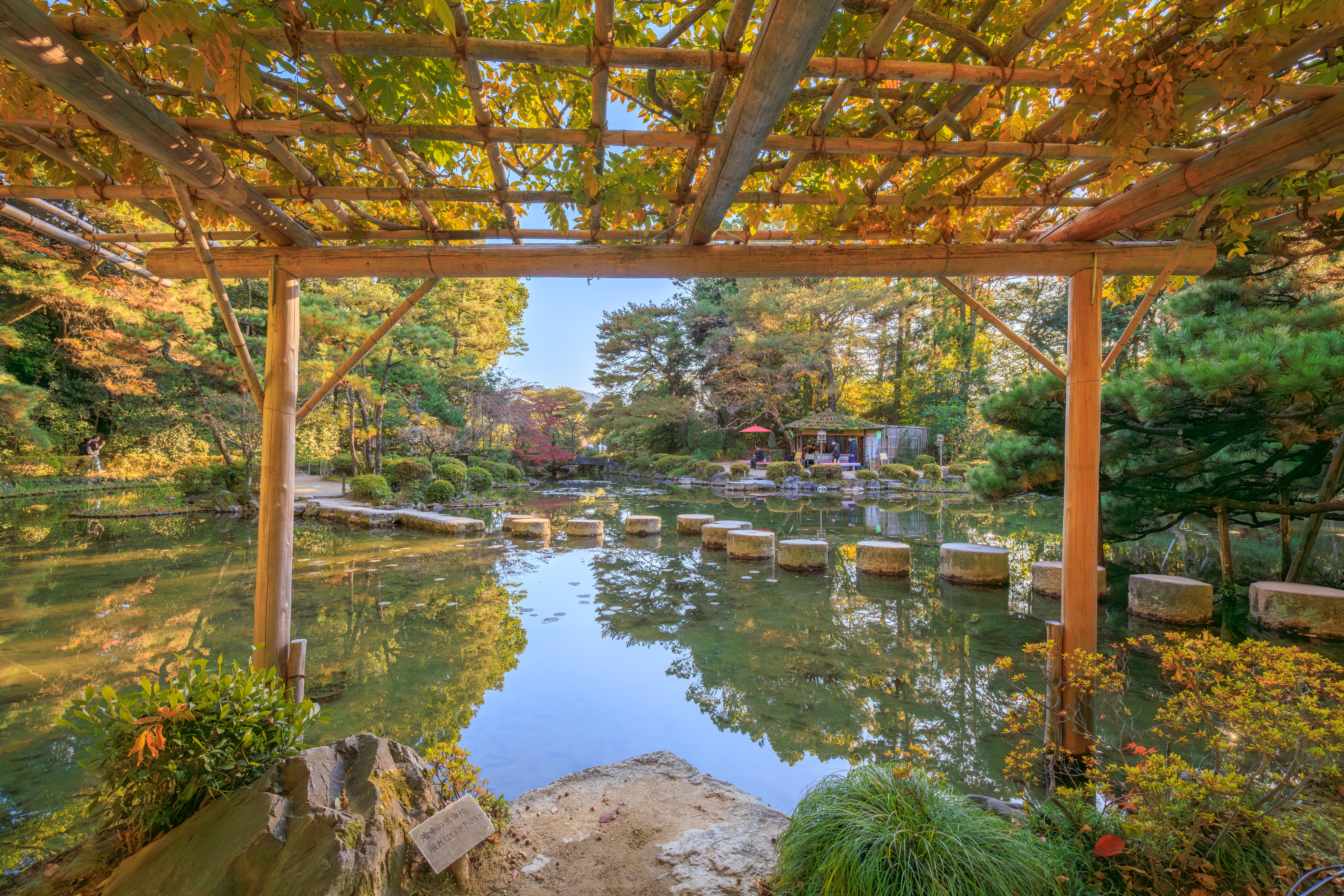
The sign here says to not touch the animals in the pond.
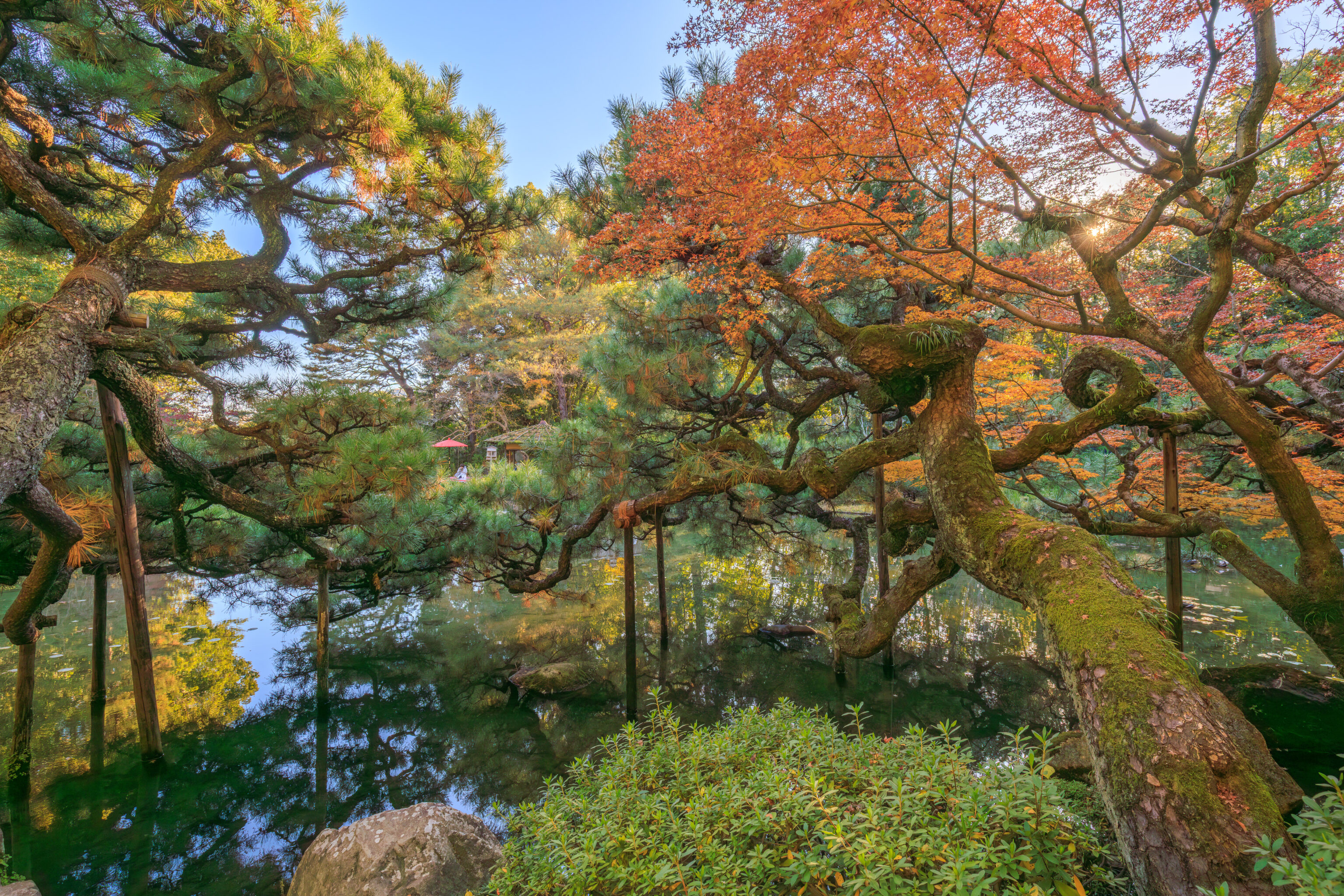
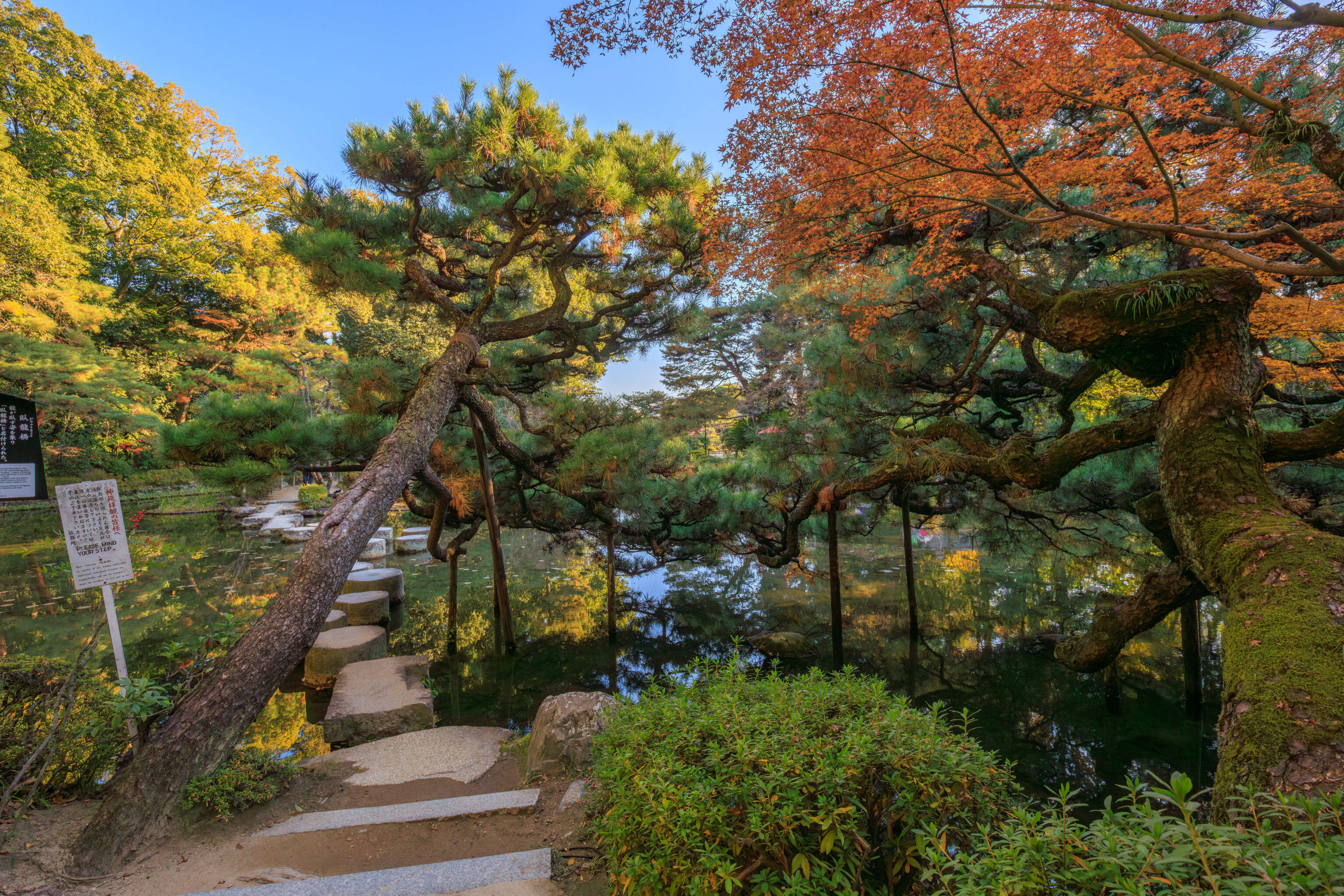
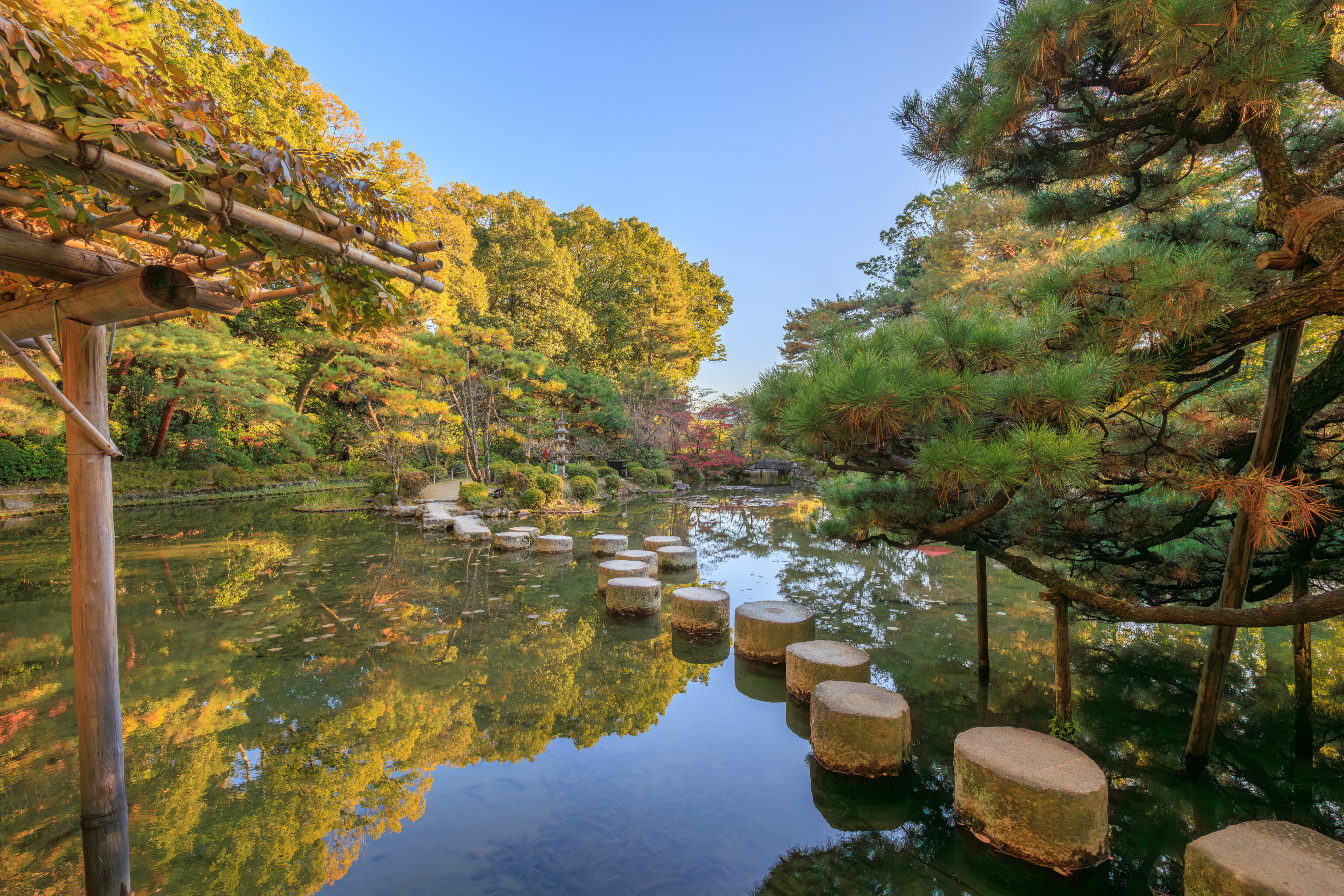
This area of the garden was quite nice. The stones here make up the Garyukyo:
Garyukyo

The steppingstones that snake across the pond are named Garyukyo. The
name means "hidden dragon bridge" and comes from the meandering path
the steppingstones take. This evokes the image of a dragon' s back. Crossing the stones adds to this imagery with the sky and clouds reflected in the water below as if soaring through the sky on the creature' s back.

The stones are cut from pillars that used to support bridges over the Kamo River in Kyoto. The bridges were constructed in the 16th century but torn down in later years to make way for larger bridges that could support cars and other forms of transport.

The use of shaped stones recycled in this way is a common feature of Ogawa Jihei VII, the landscape artist that designed the West, Middle and East gardens here at Heian Jingu.

観光庁
Japan Tourism Agency
(This English-language text was created by the Japan Tourism Agency.)
– Text from a sign.
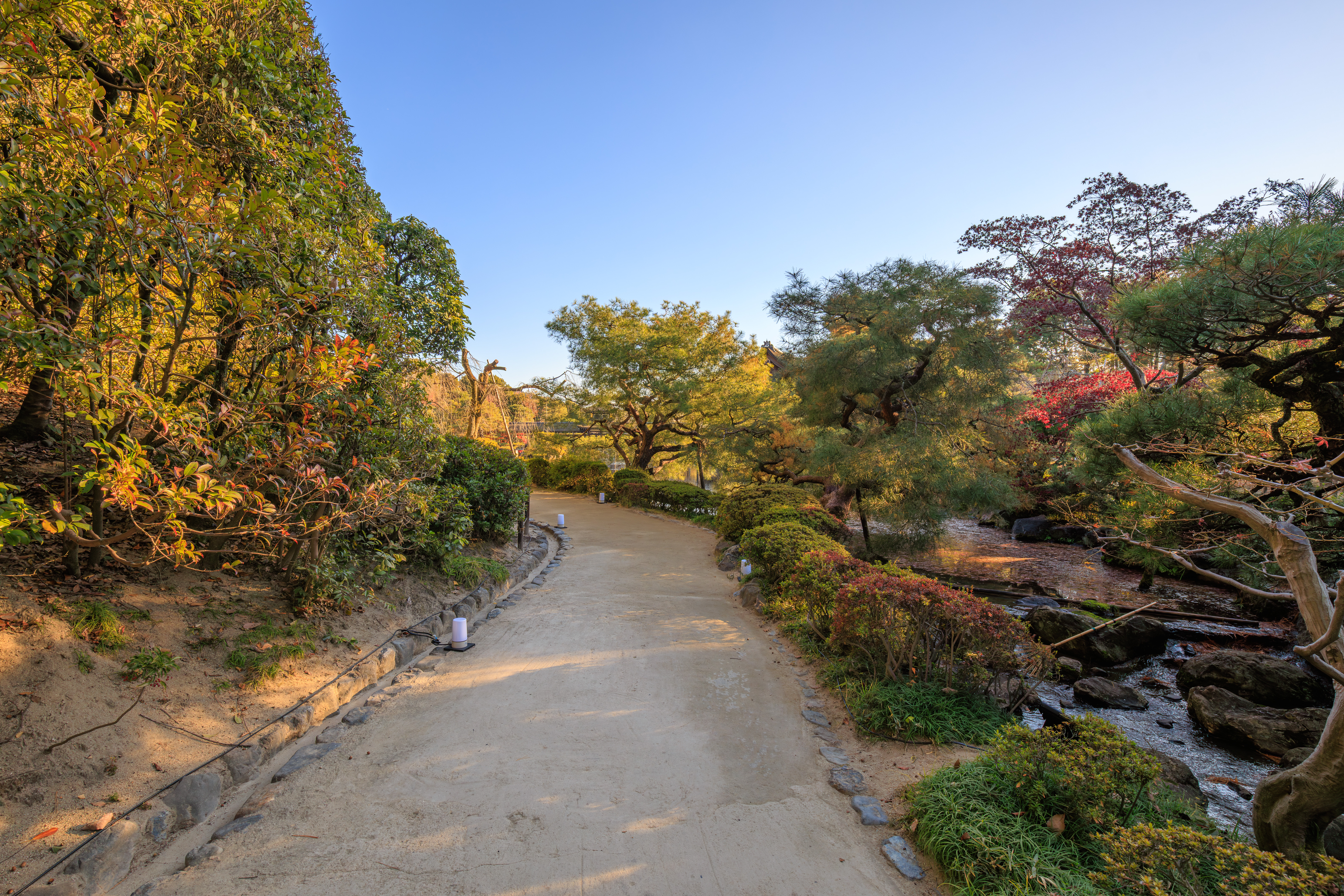
We continued on along this path to the south.
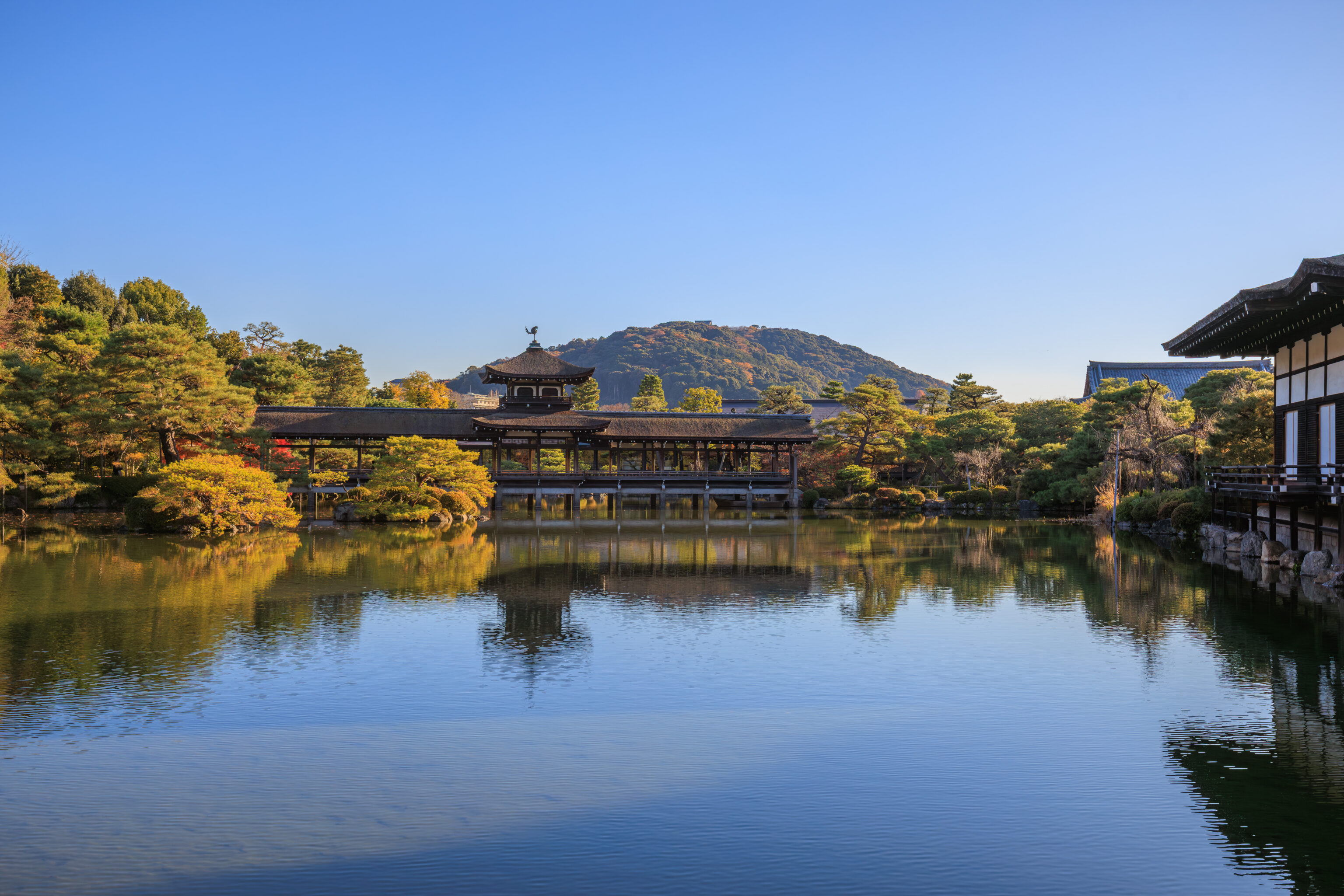
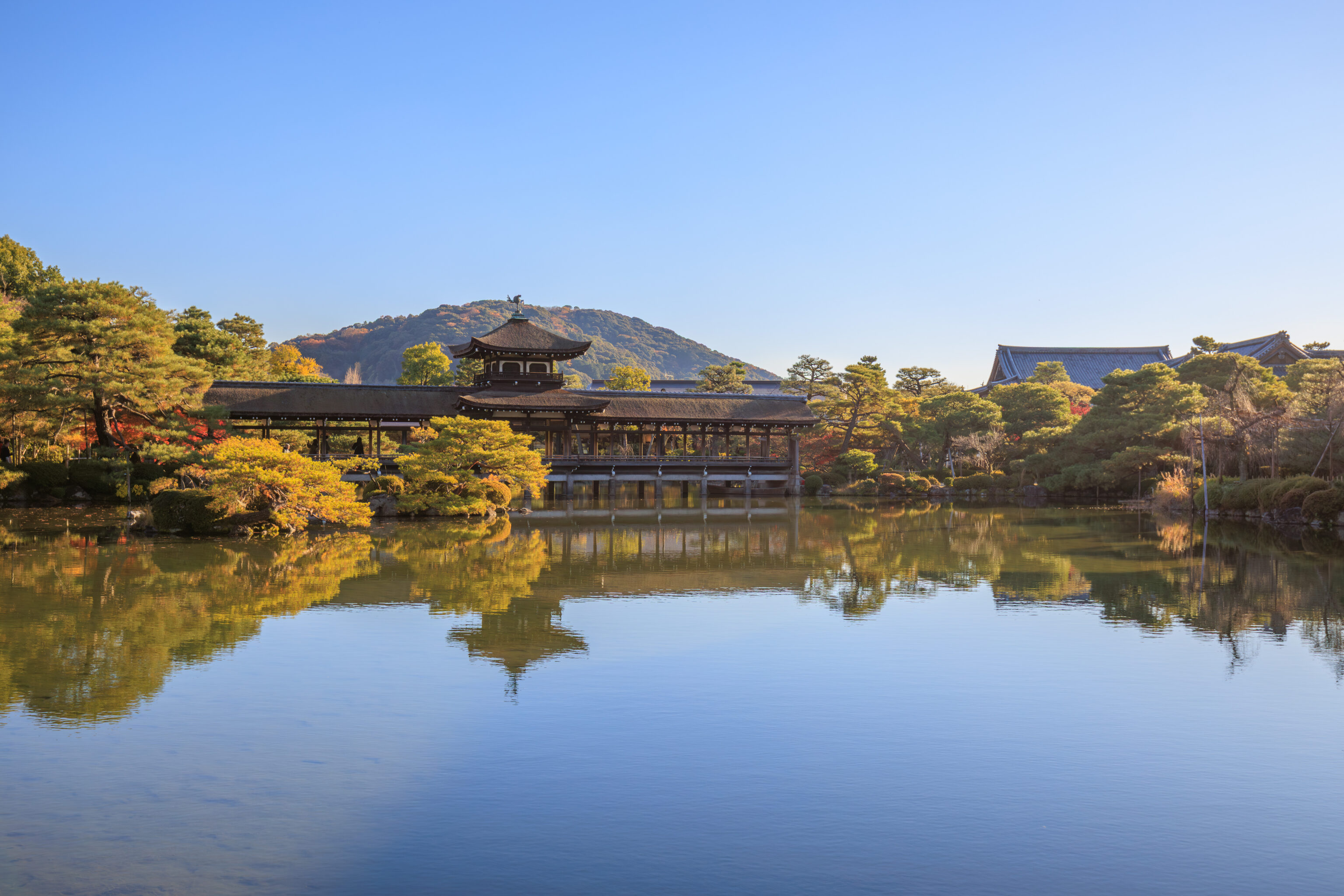
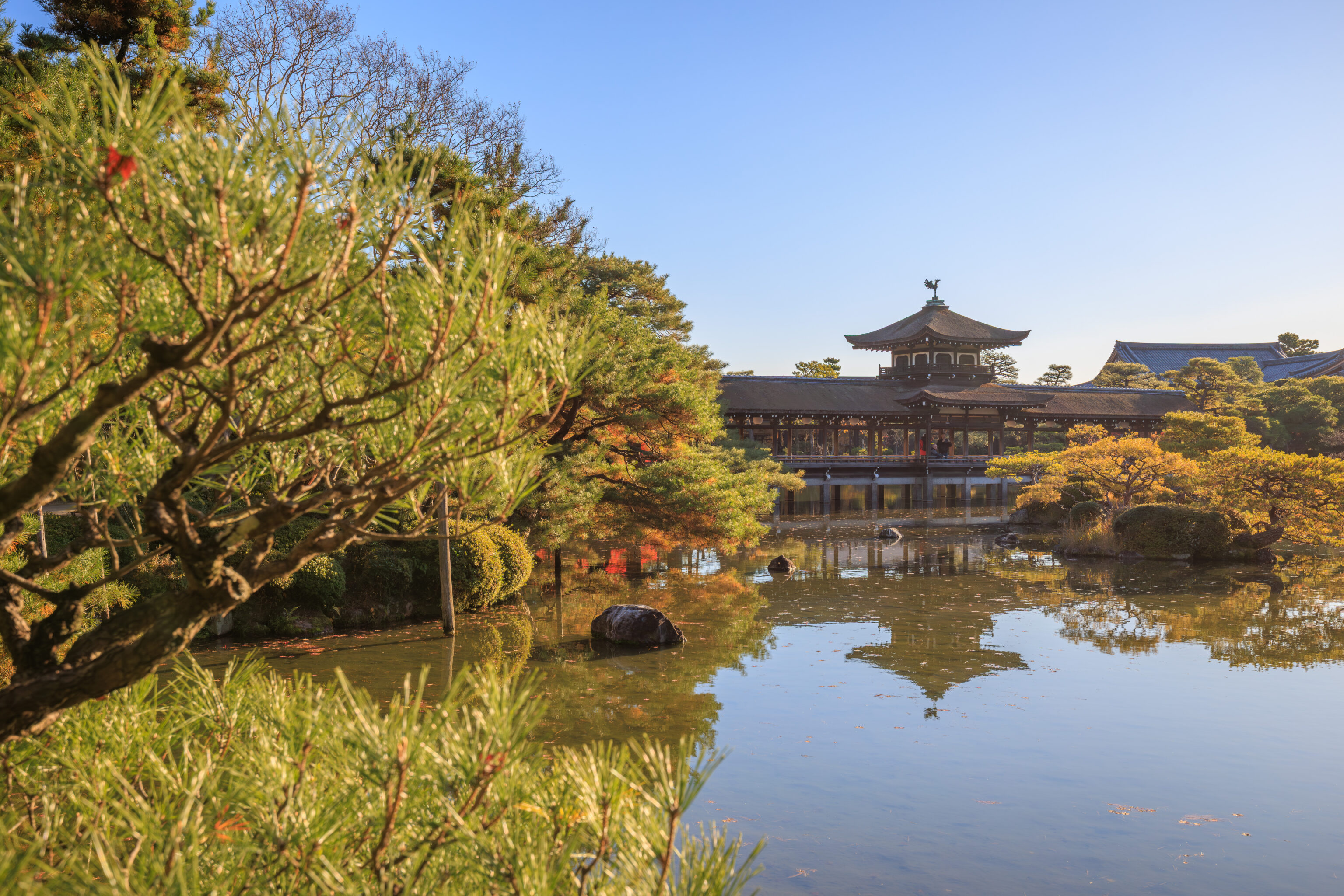
We ended up at the Easter Garden. This garden contains a much larger pond, the Seiho-ike. Its surface was calm, just like the two smaller ponds that we walked by.
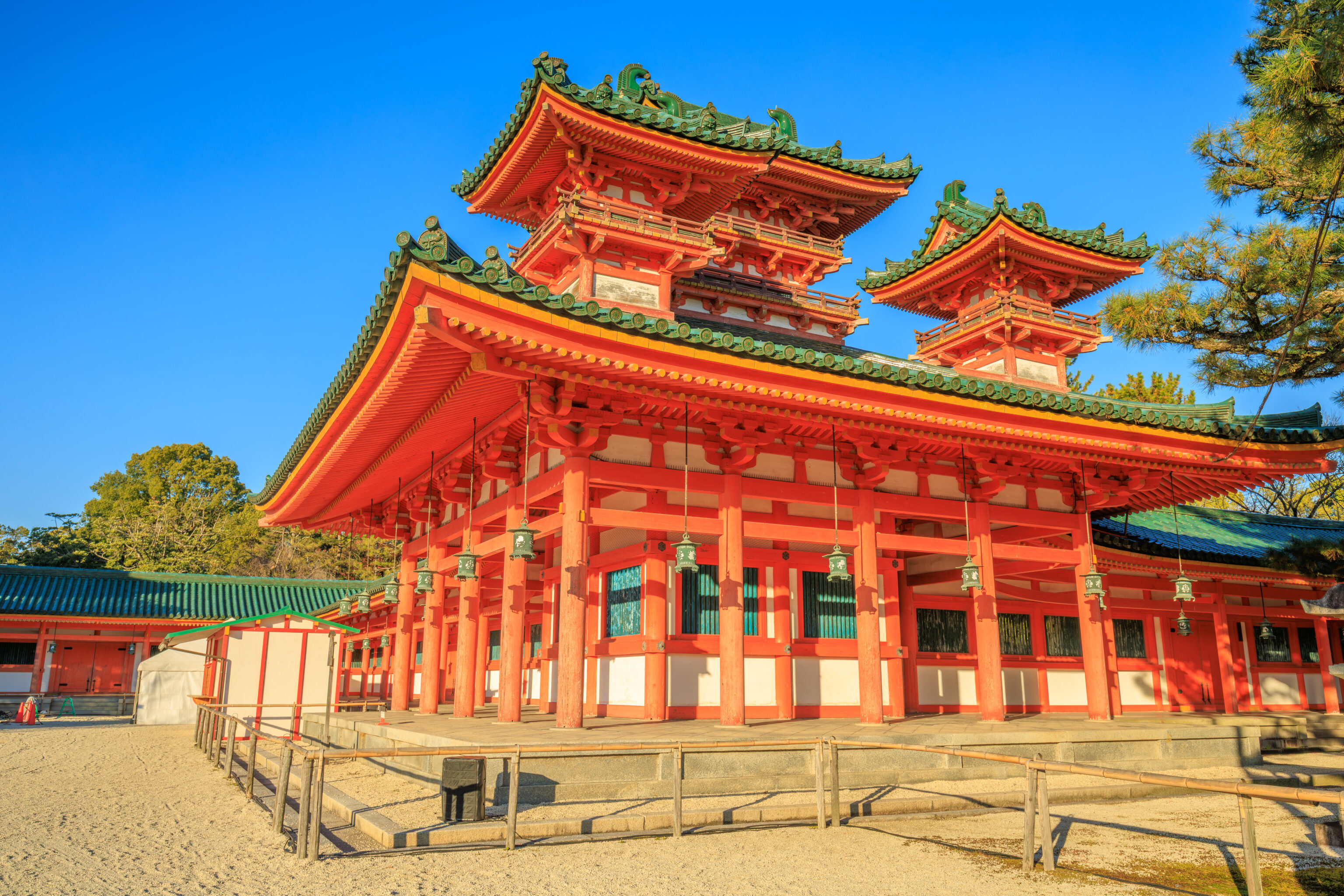
The building seen in the background is the Taihei-kaku, a bridge that spans the southern portion of the pond. This covered bridge is described as having been moved from the Old Imperial Palace.
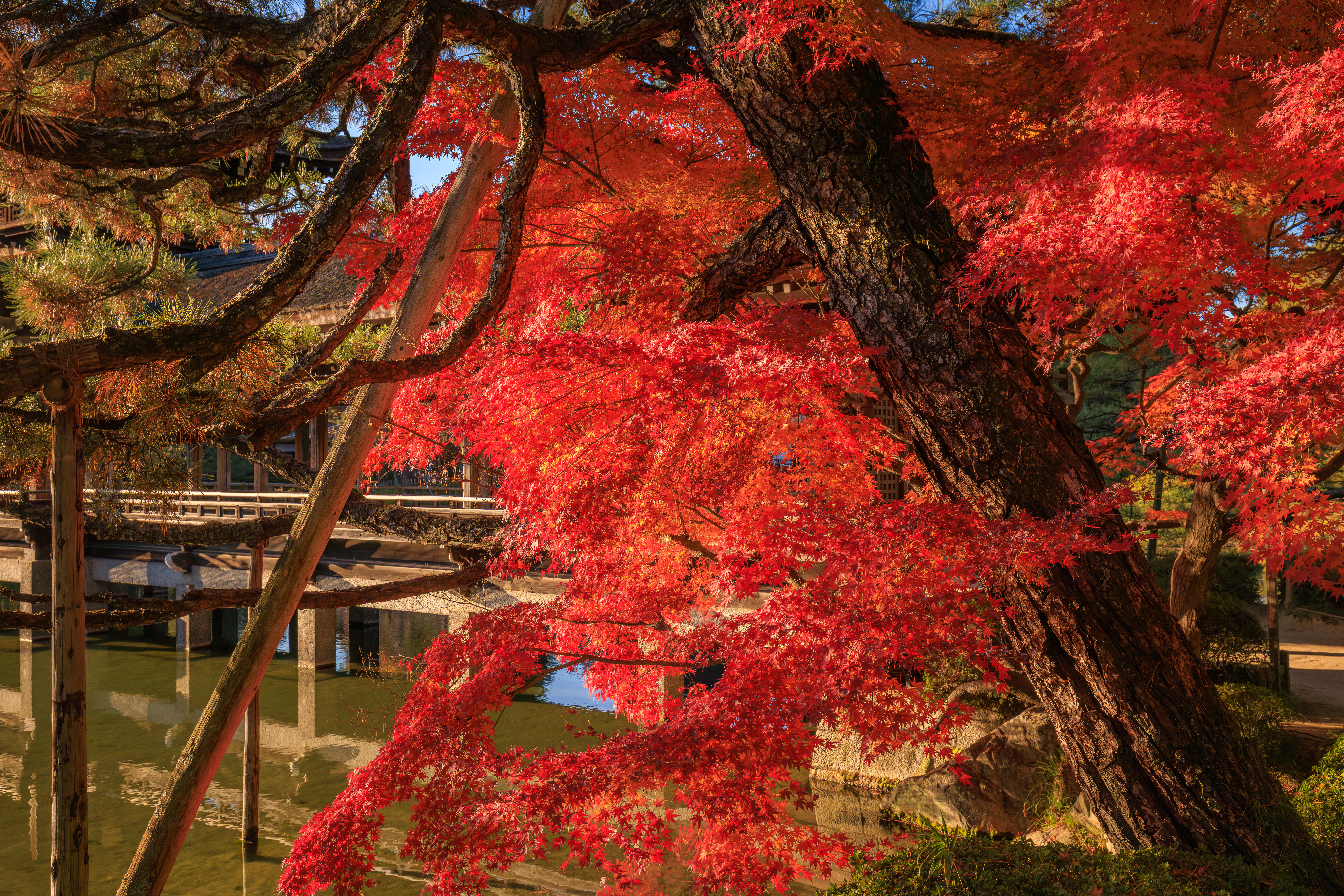
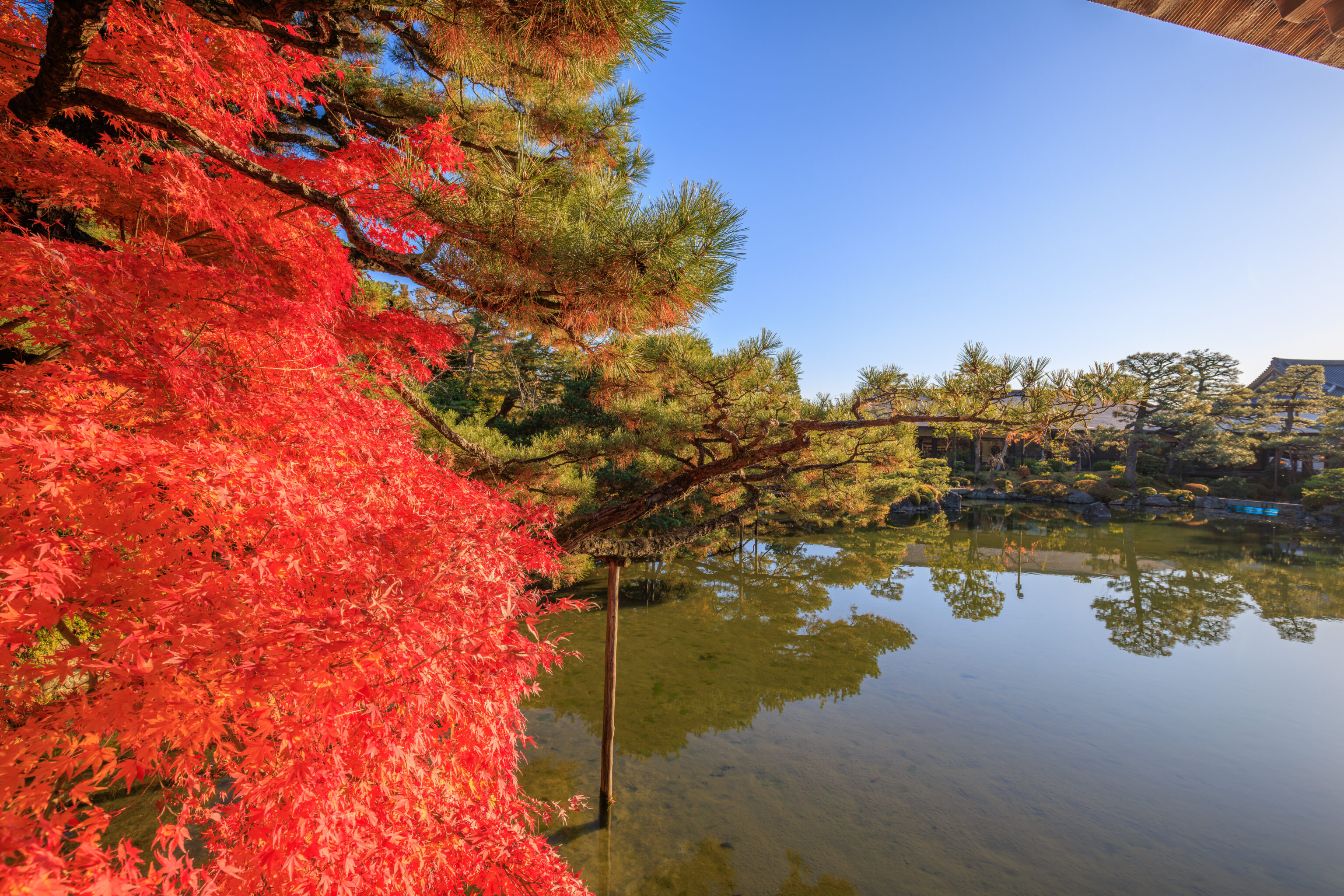
As walked along the east side of the pond, we came across this amazingly beautiful momiji right by the eastern end of the Taihei-kaku!
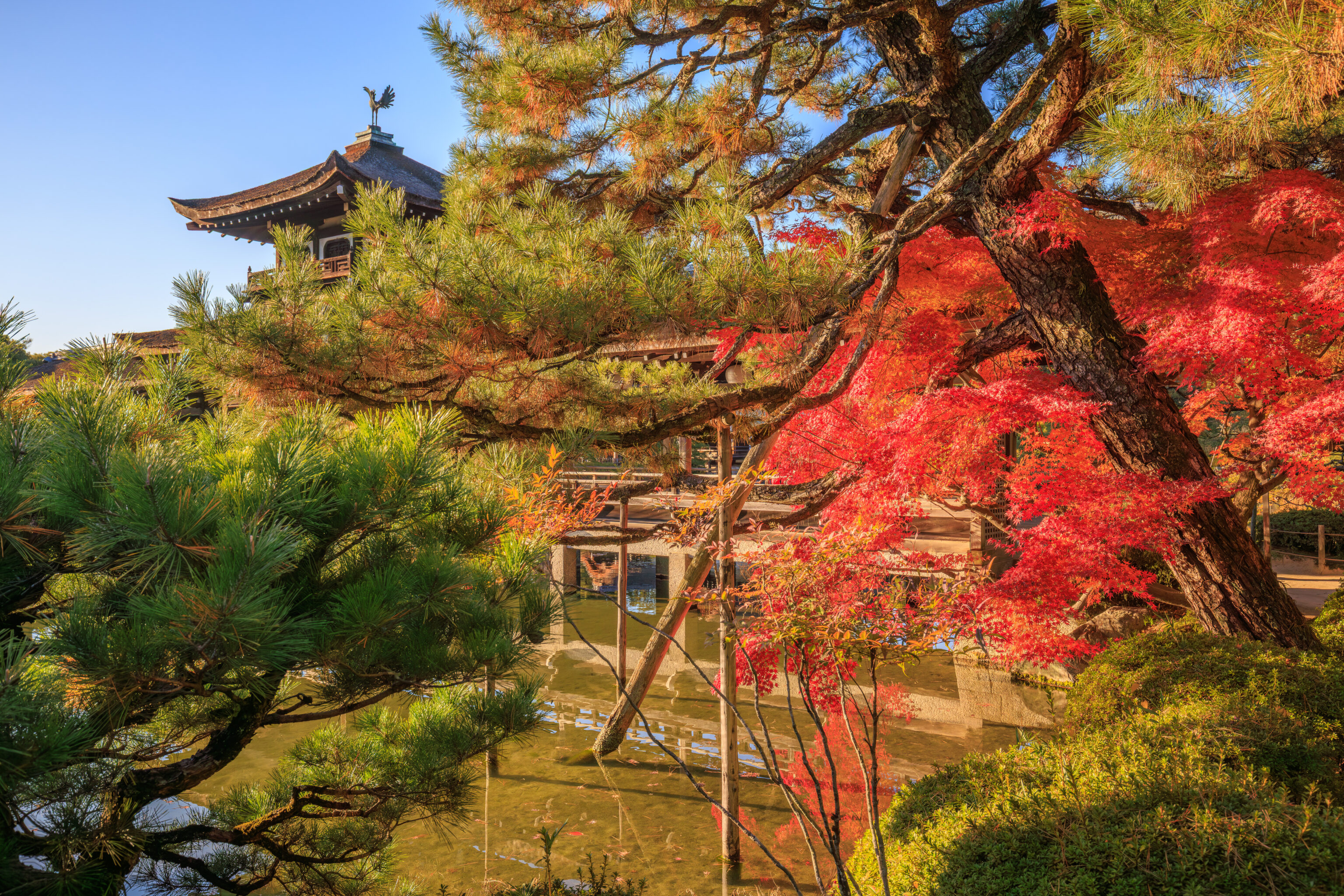
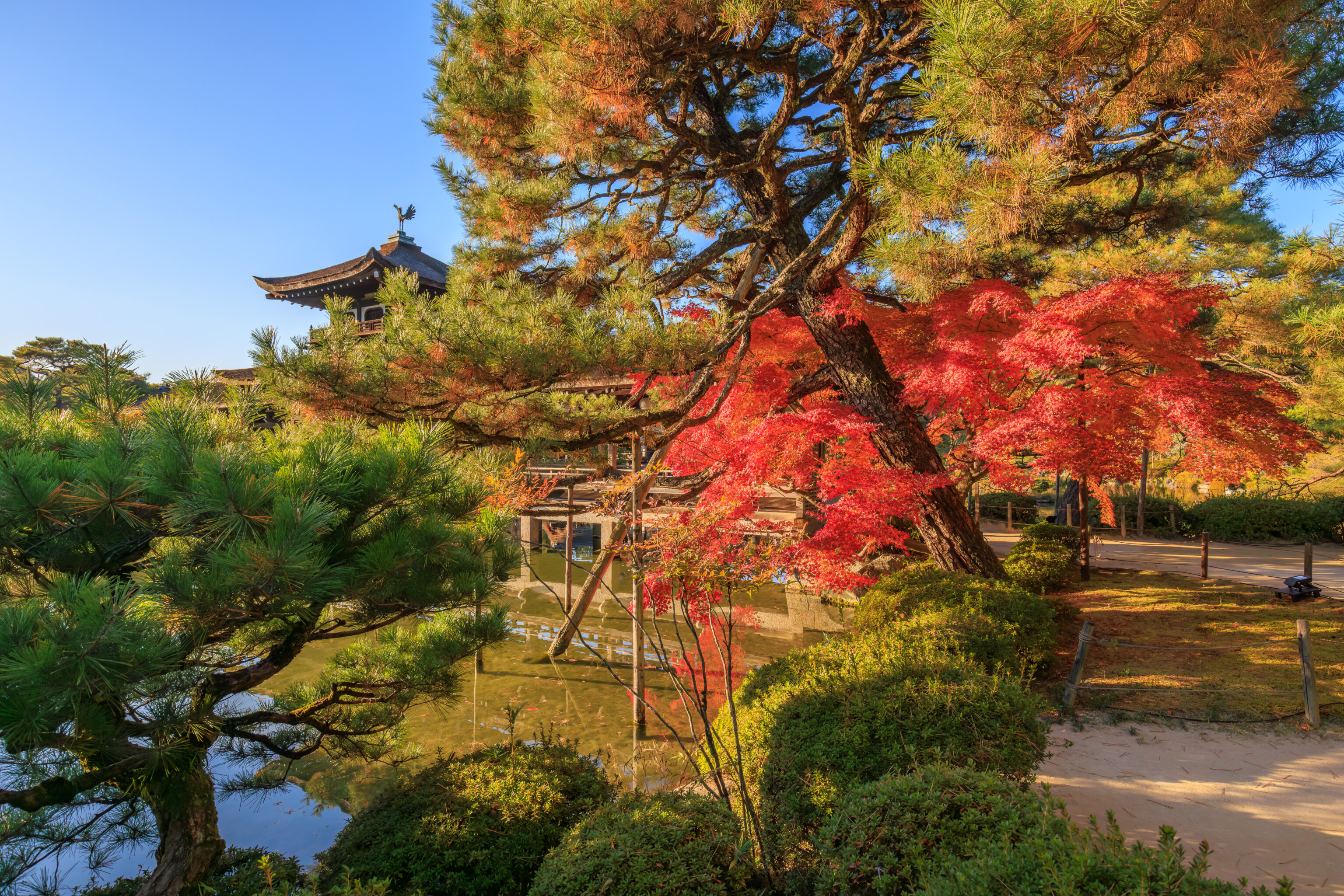
This was, by far, the most beautiful tree that we’ve seen today!
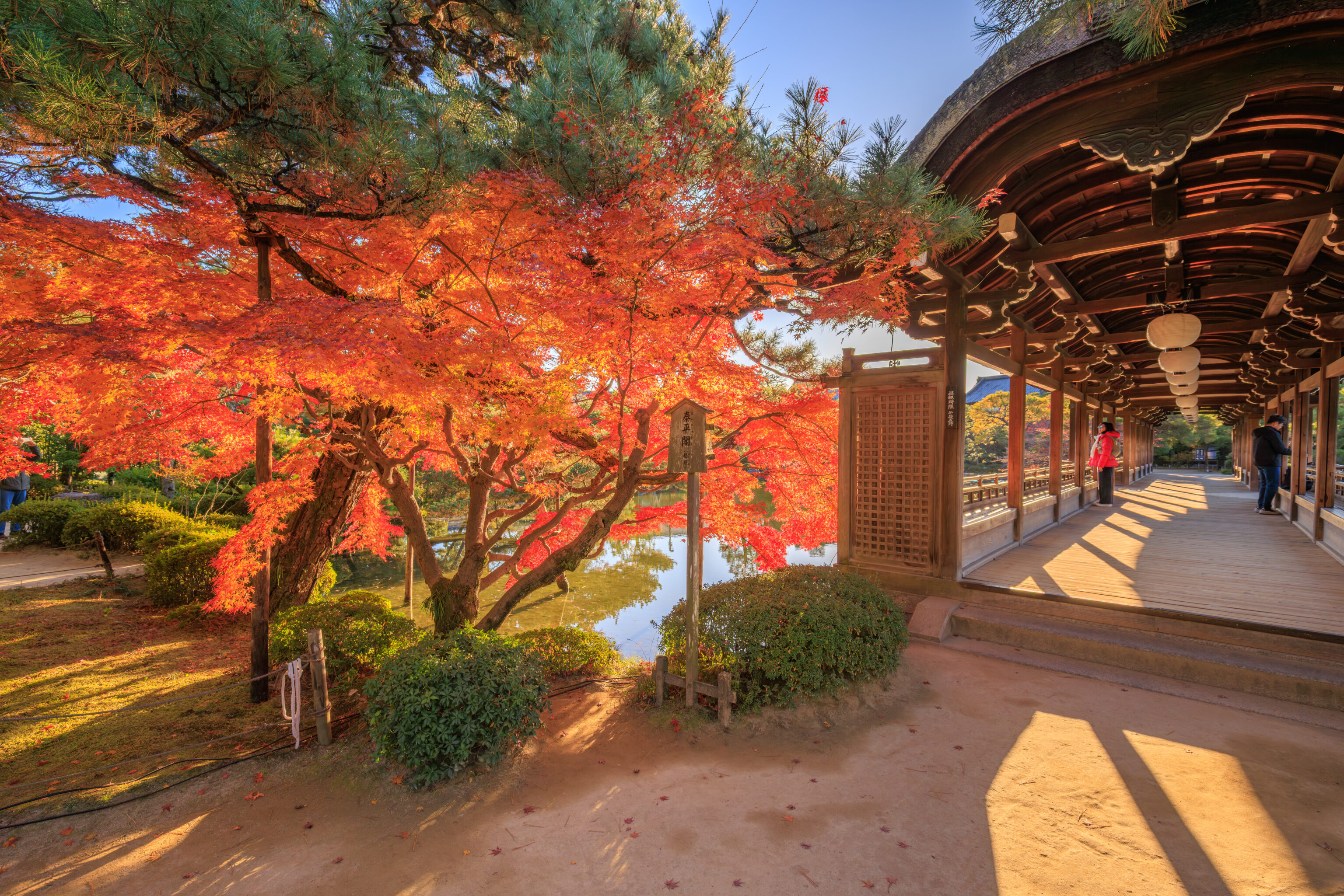
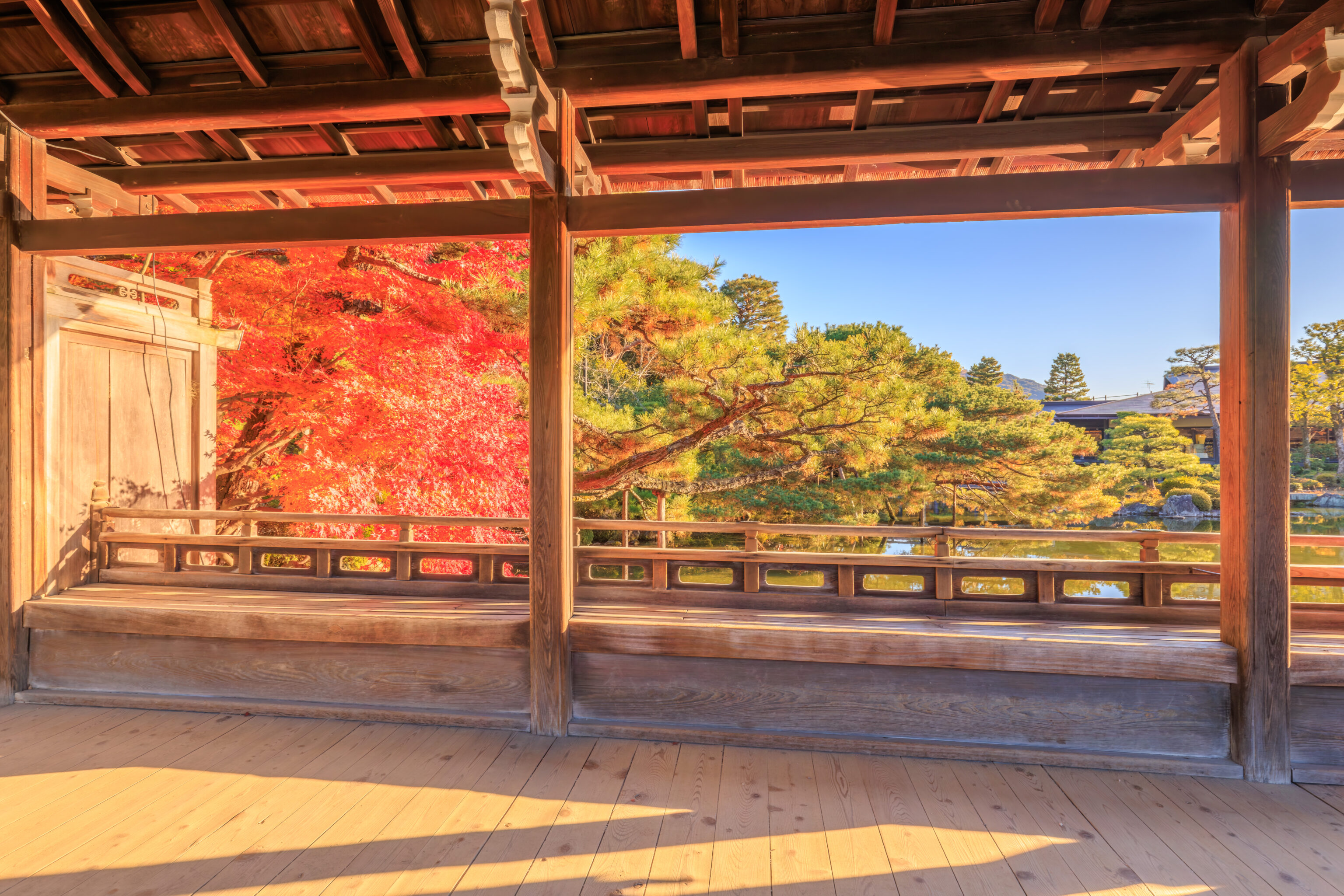
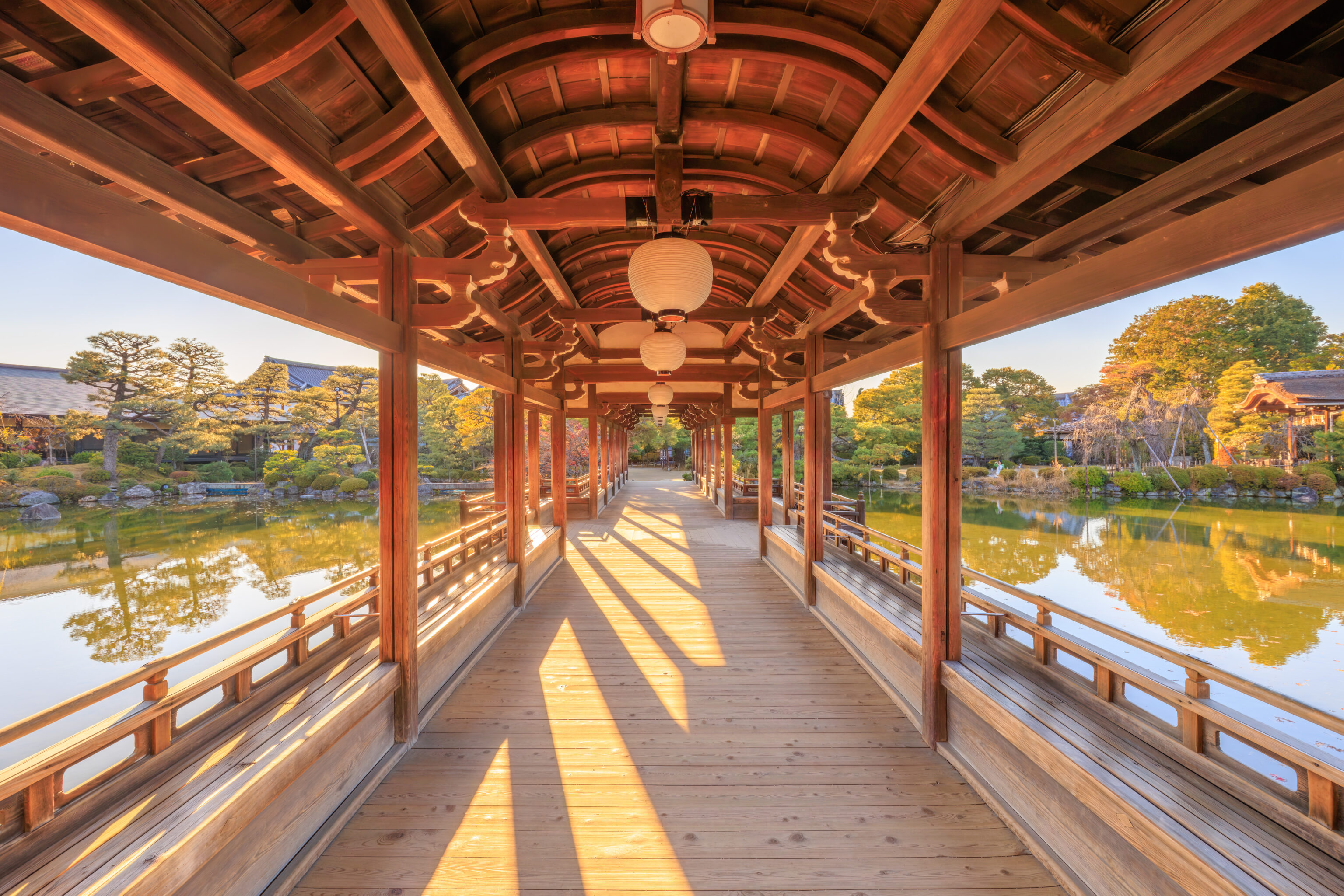
We then headed onto the bridge to cross the pond. The benches along the sides of the bridge provided an excellent place to rest.
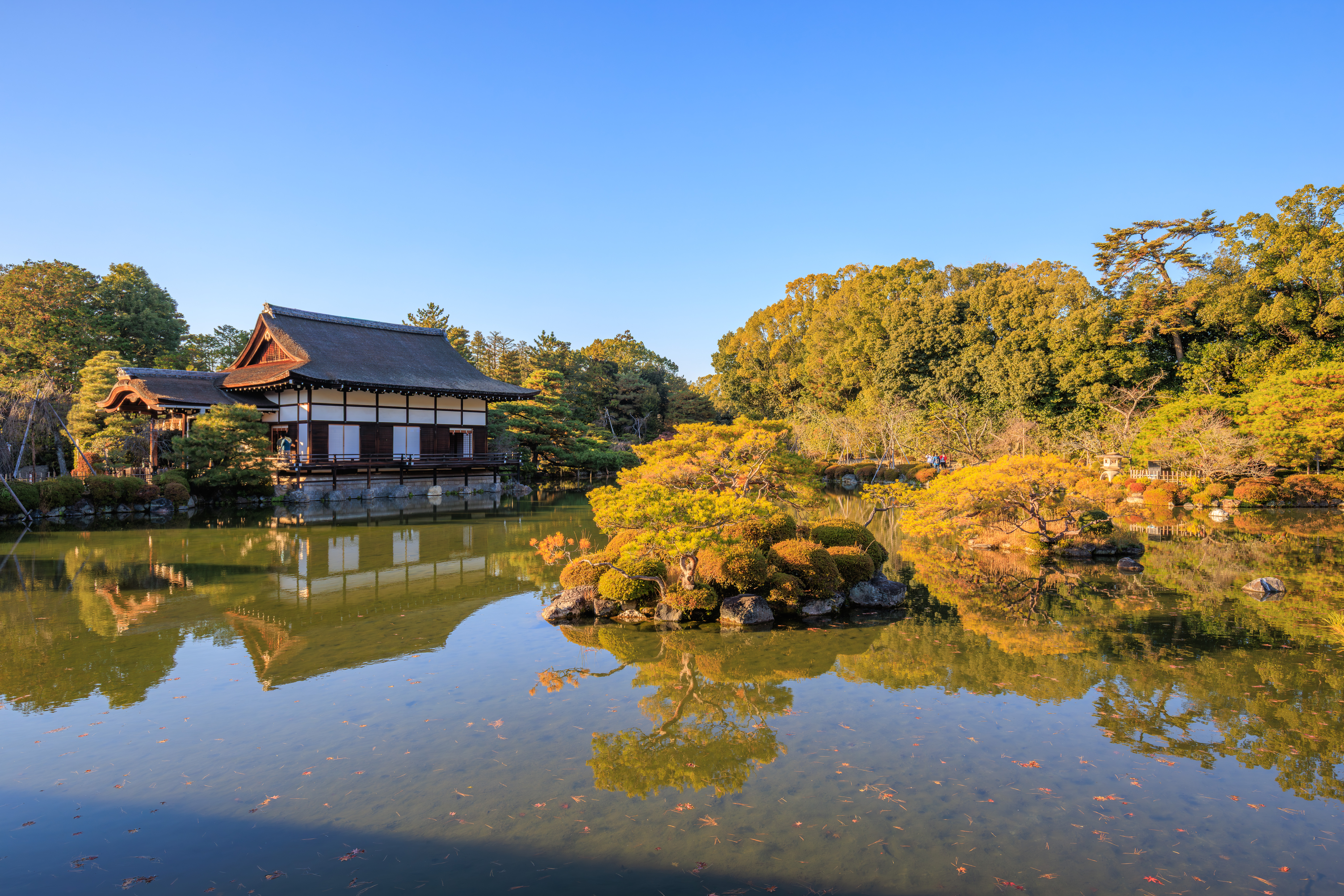
Looking to the north, this building on the left is the Shobikan. It was originally built during the Meiji era at the Kyoto Imperial Palace for one of the Kyoto Expositions.
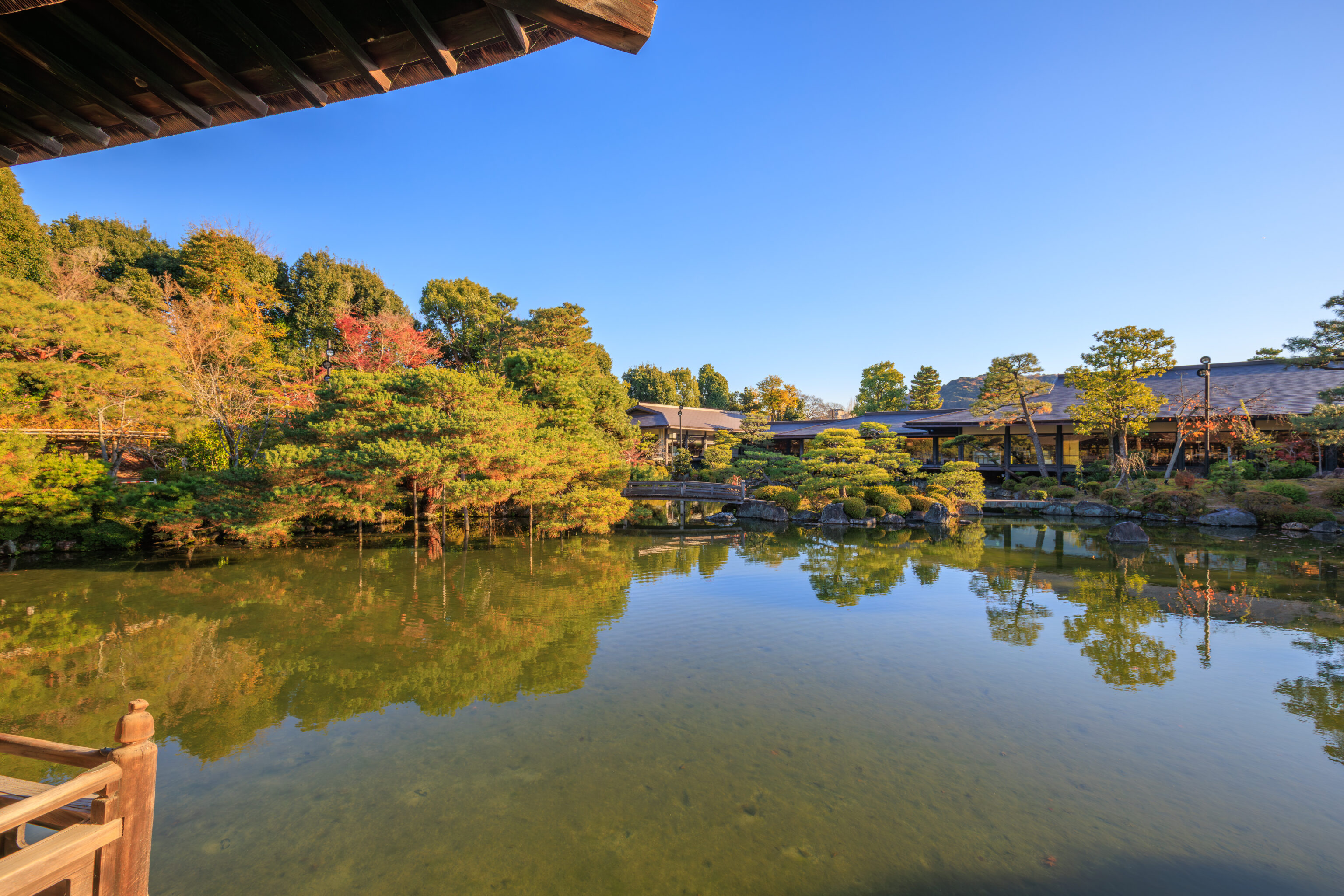
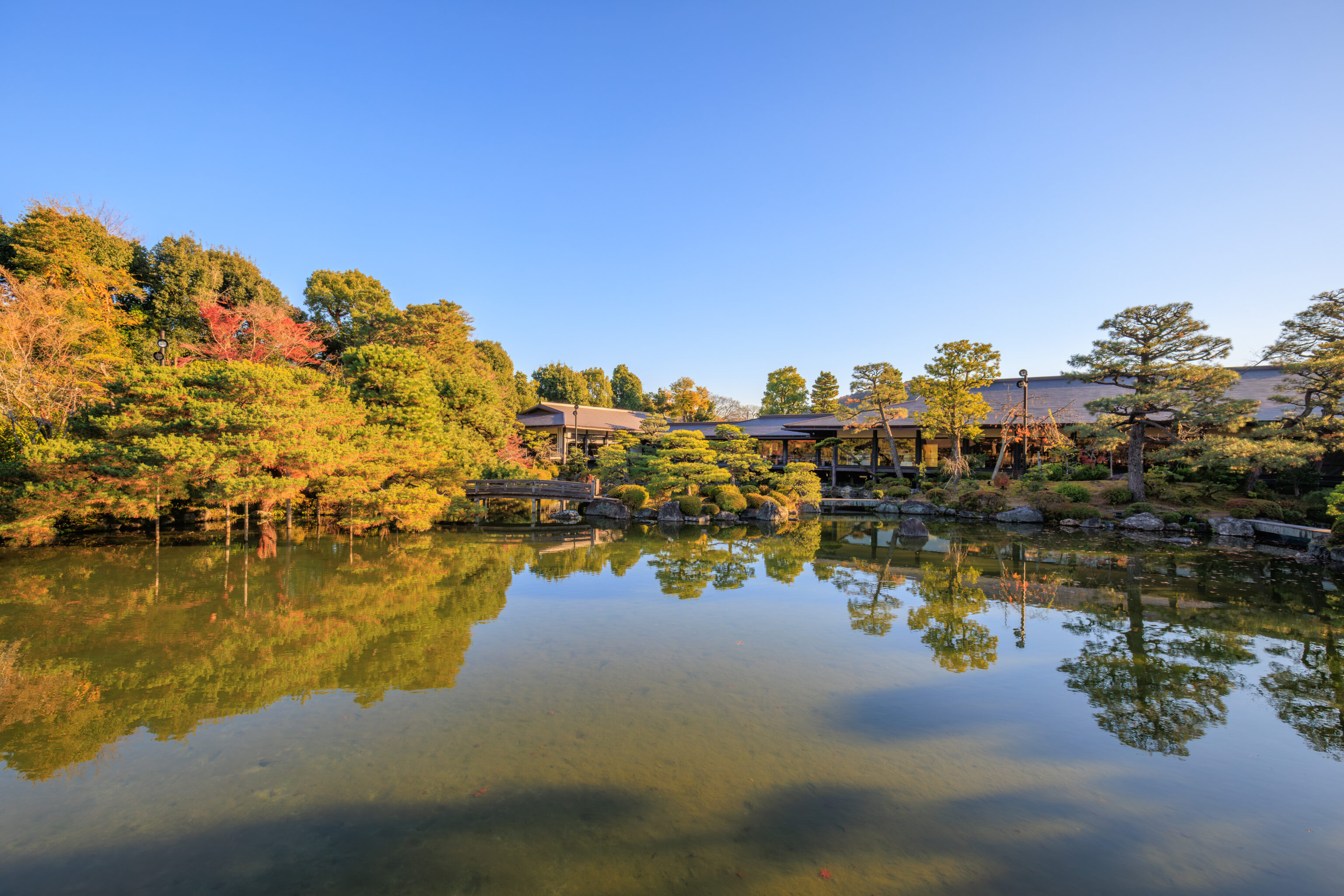
This building to the south is the Heian Jingu Shrine Hall. There was an event taking place, although it was too far away to see what was going on.
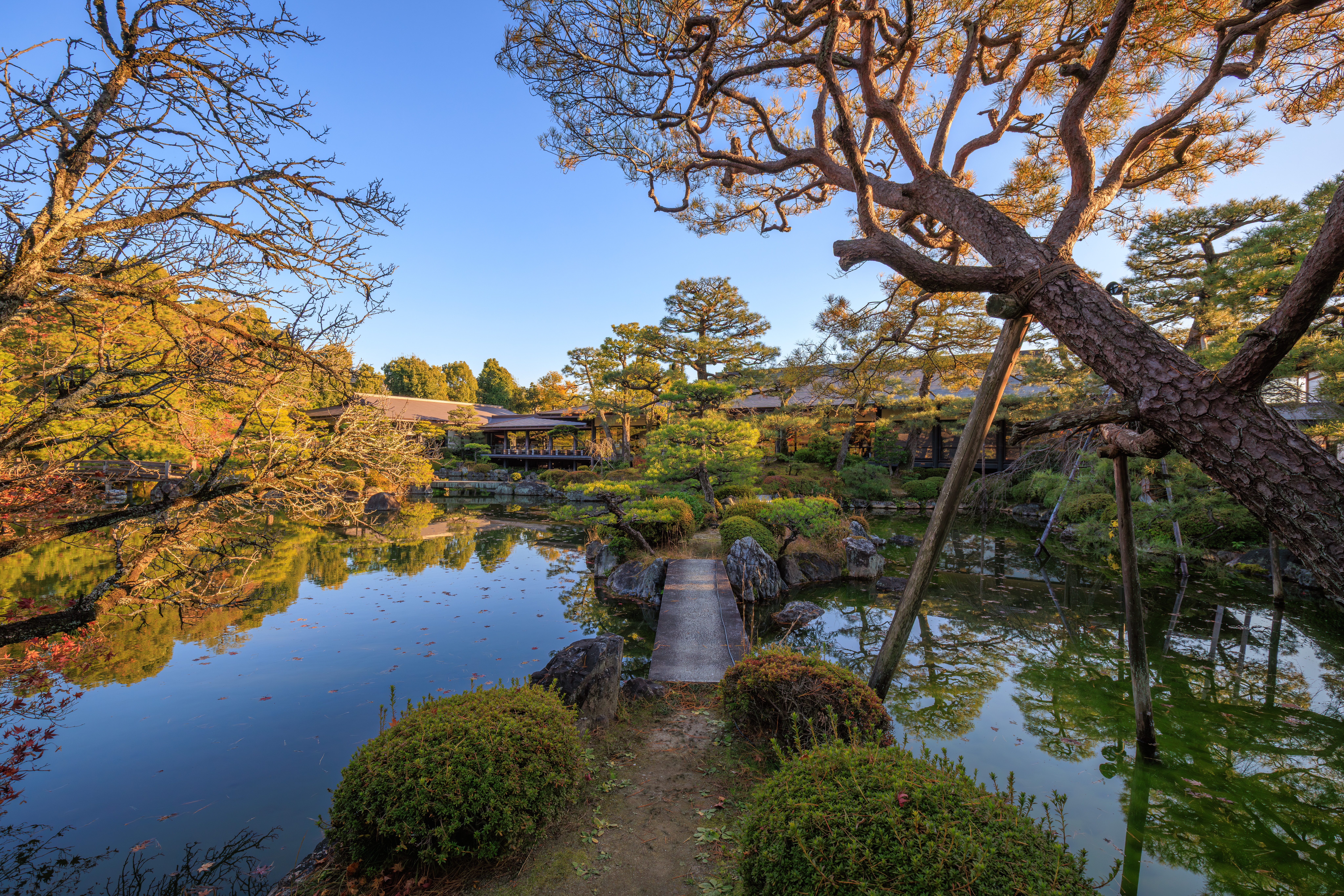
The event hall, as seen on the other side of a narrow bridge after walking through to the west end of the Taihei-kaku.
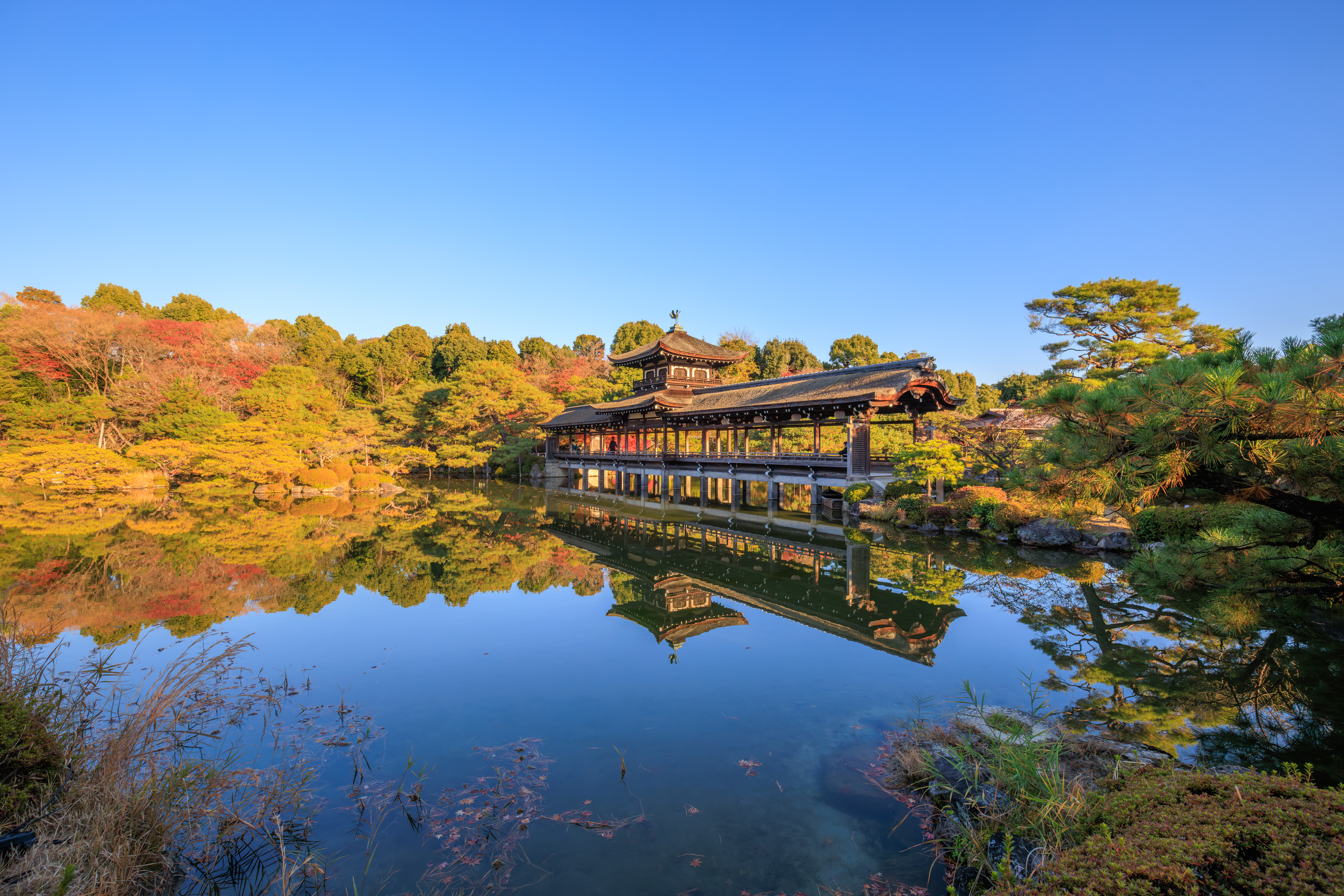
We continued to the northwest towards the garden’s exit. We looked back for a final view of the Taihei-kaku.
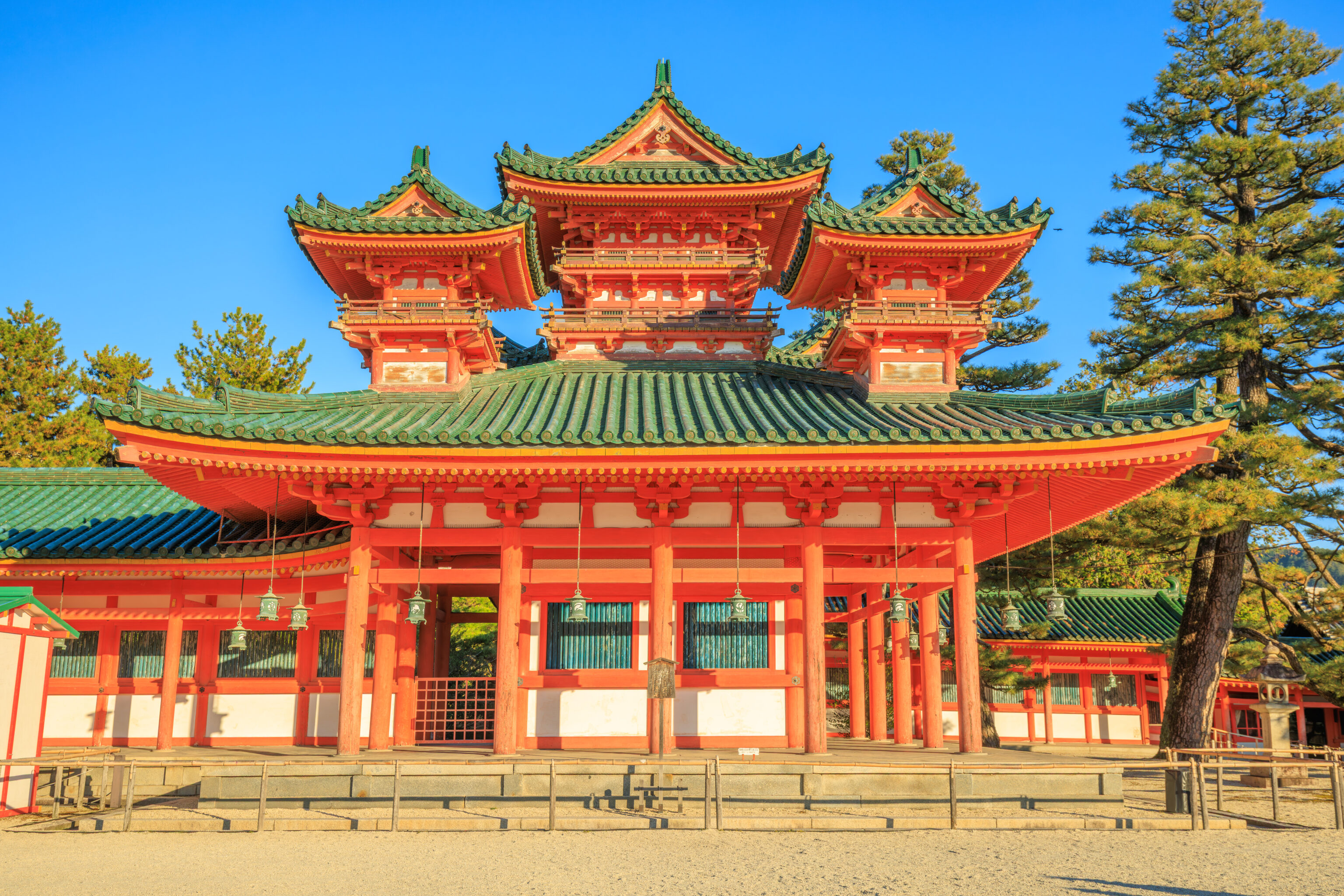
The east and west sides of the Heian-jingu are mostly symmetrical. This building looks just like the one on the west side.
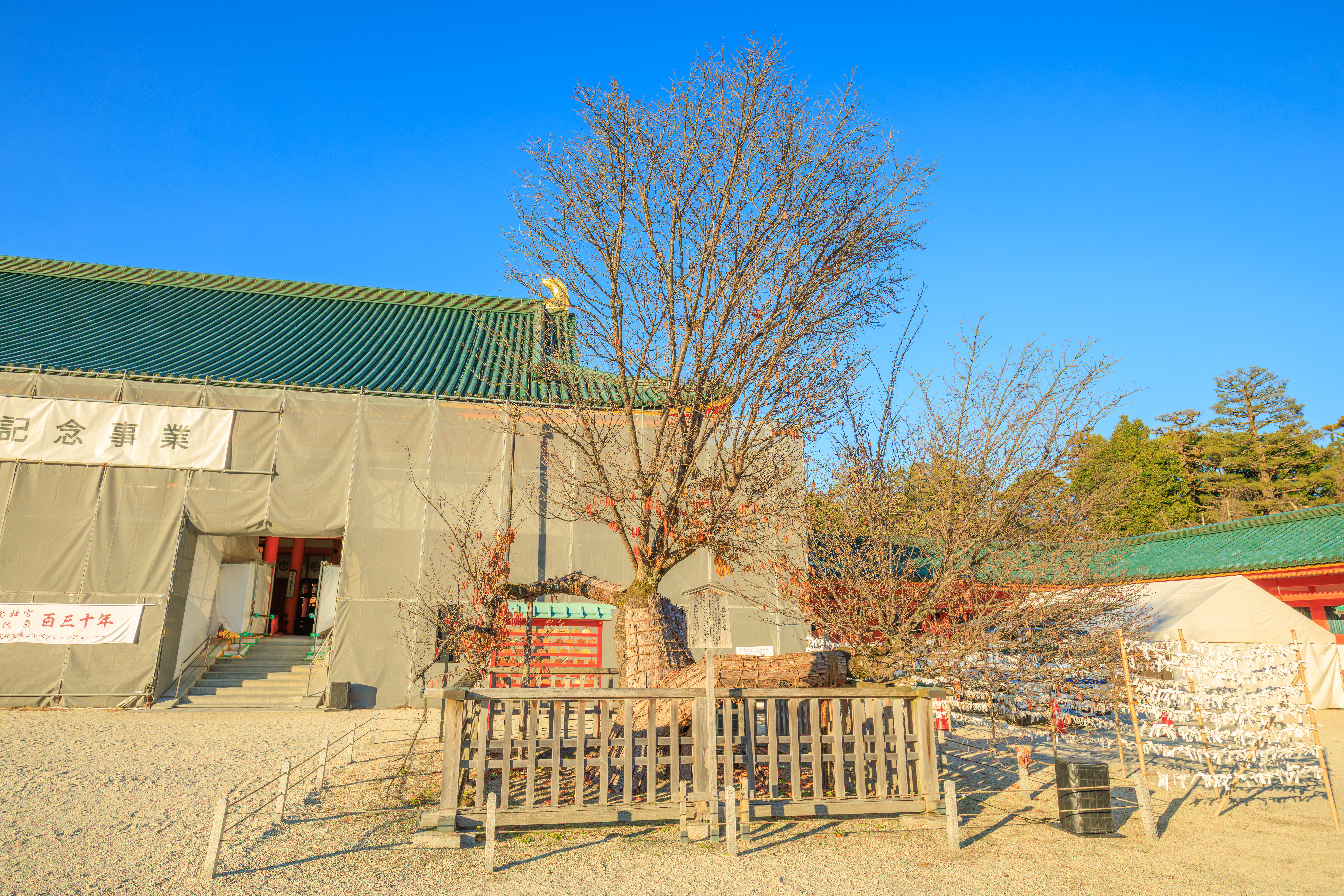
This tree is the Sakon-no-sakura, the sakura described earlier as being on the left side of the main hall.
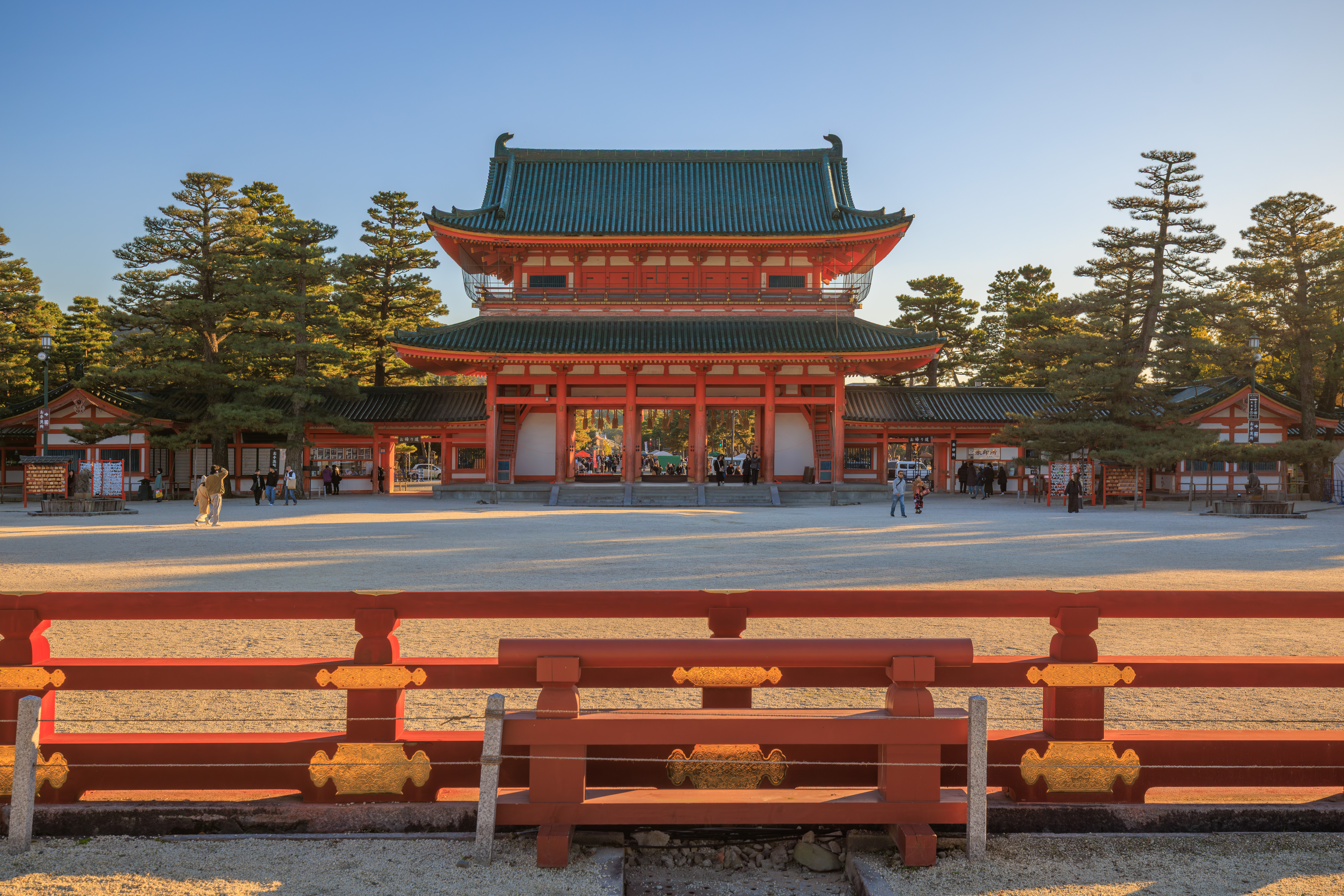
We headed to the south to exit through the gate that we arrived though.
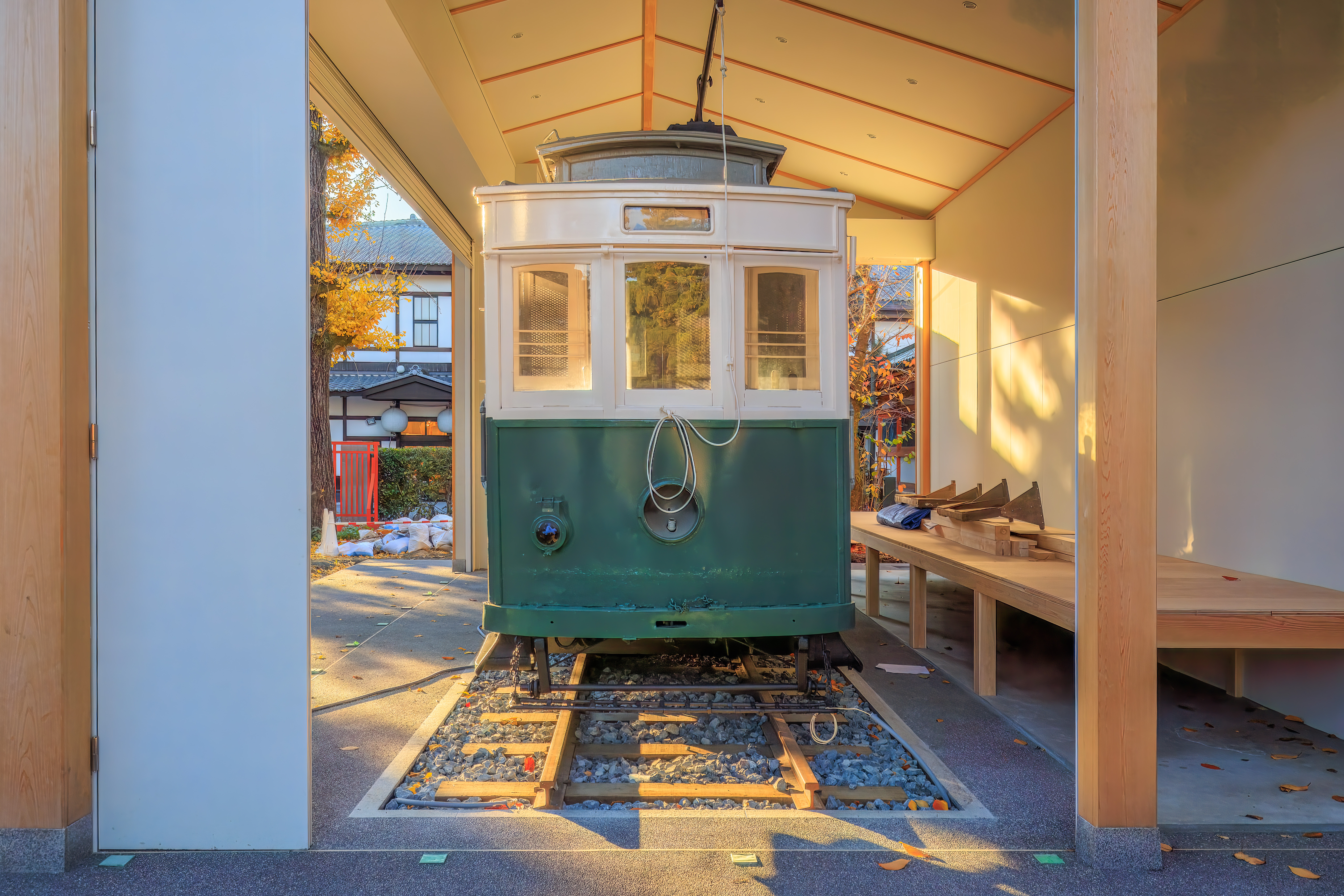
This streetcar is described by many sources as being the oldest surviving streetcar in Japan. It was built in 1911 and was formerly located in the gardens that we just visited. It was recently moved here to the west side of the southern gate to the shrine. It seems like there is still work being done for the vehicle’s new home.
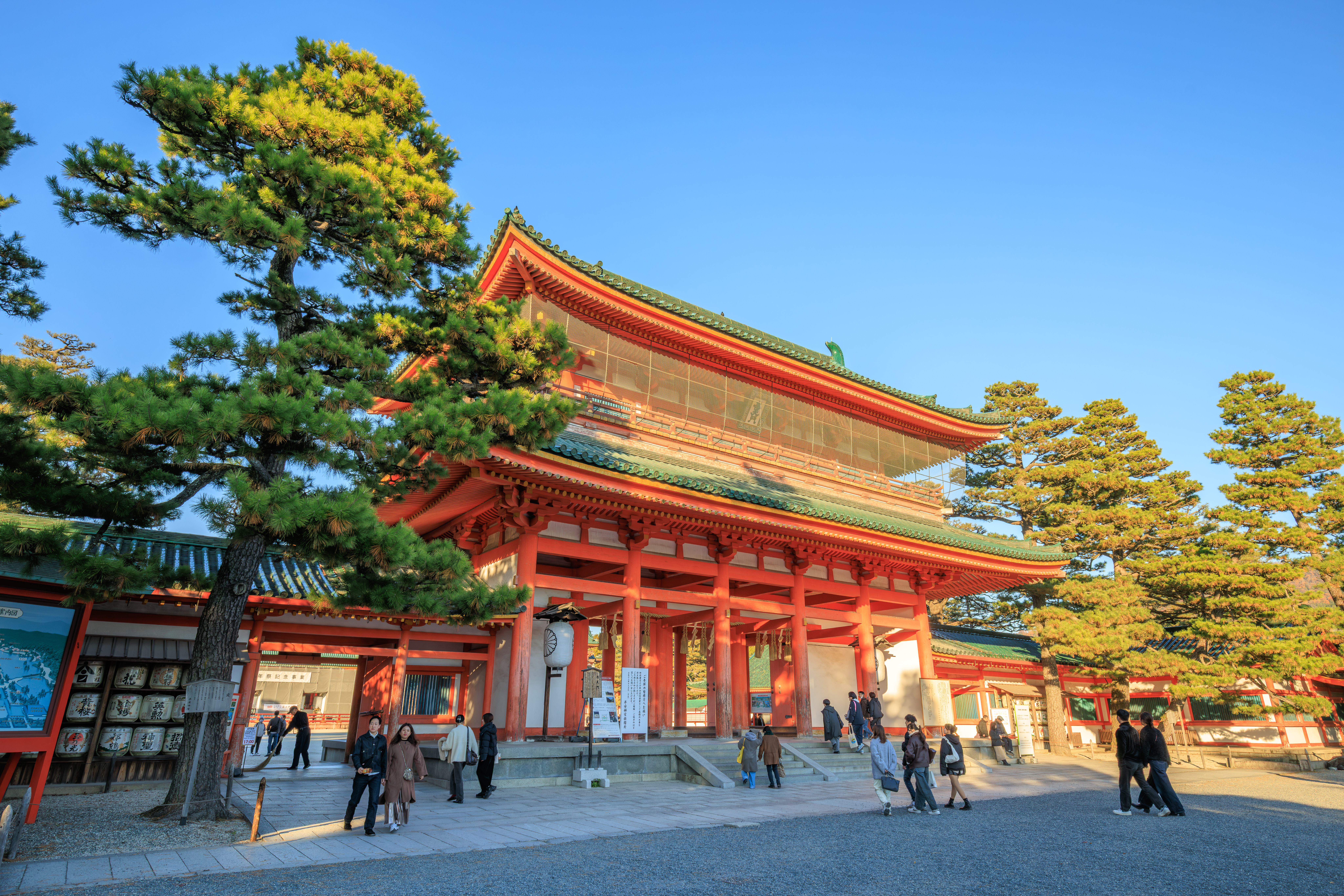
The southern gate that we just walked t\hough, as seen from near the streetcar.
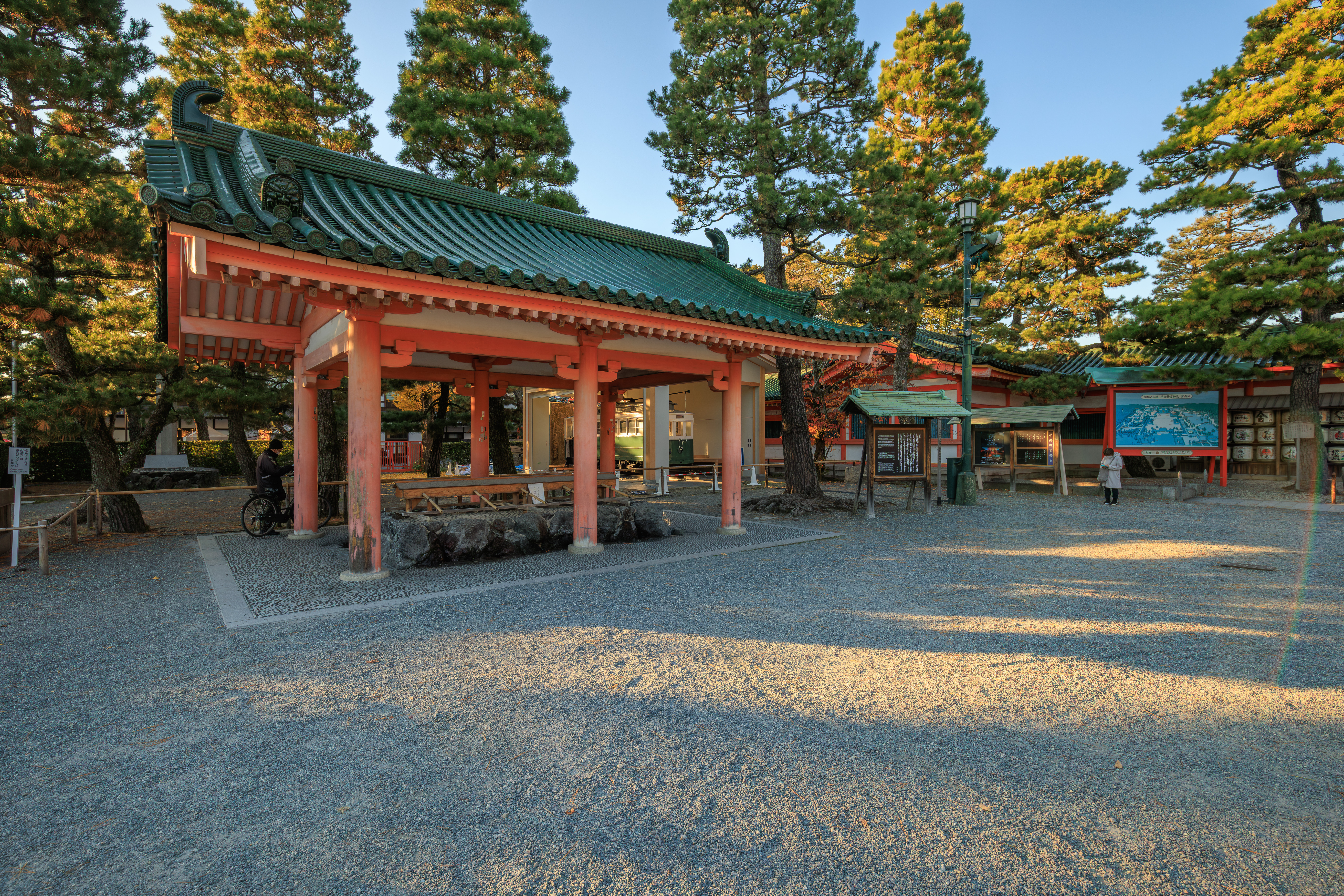
This typical Japanese shrine purification area was nearby, although it is obviously larger than one that would be at a smaller shrine.
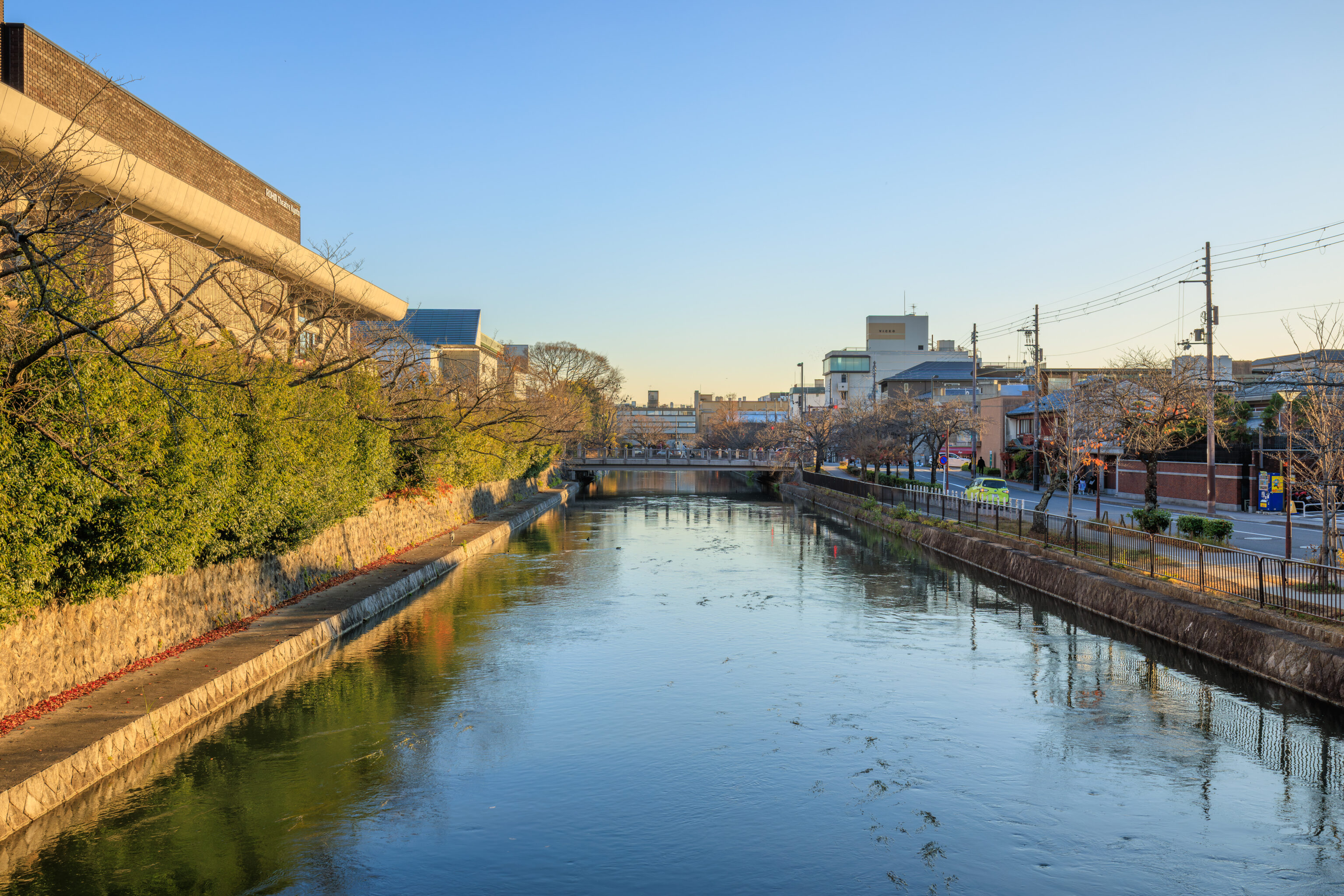
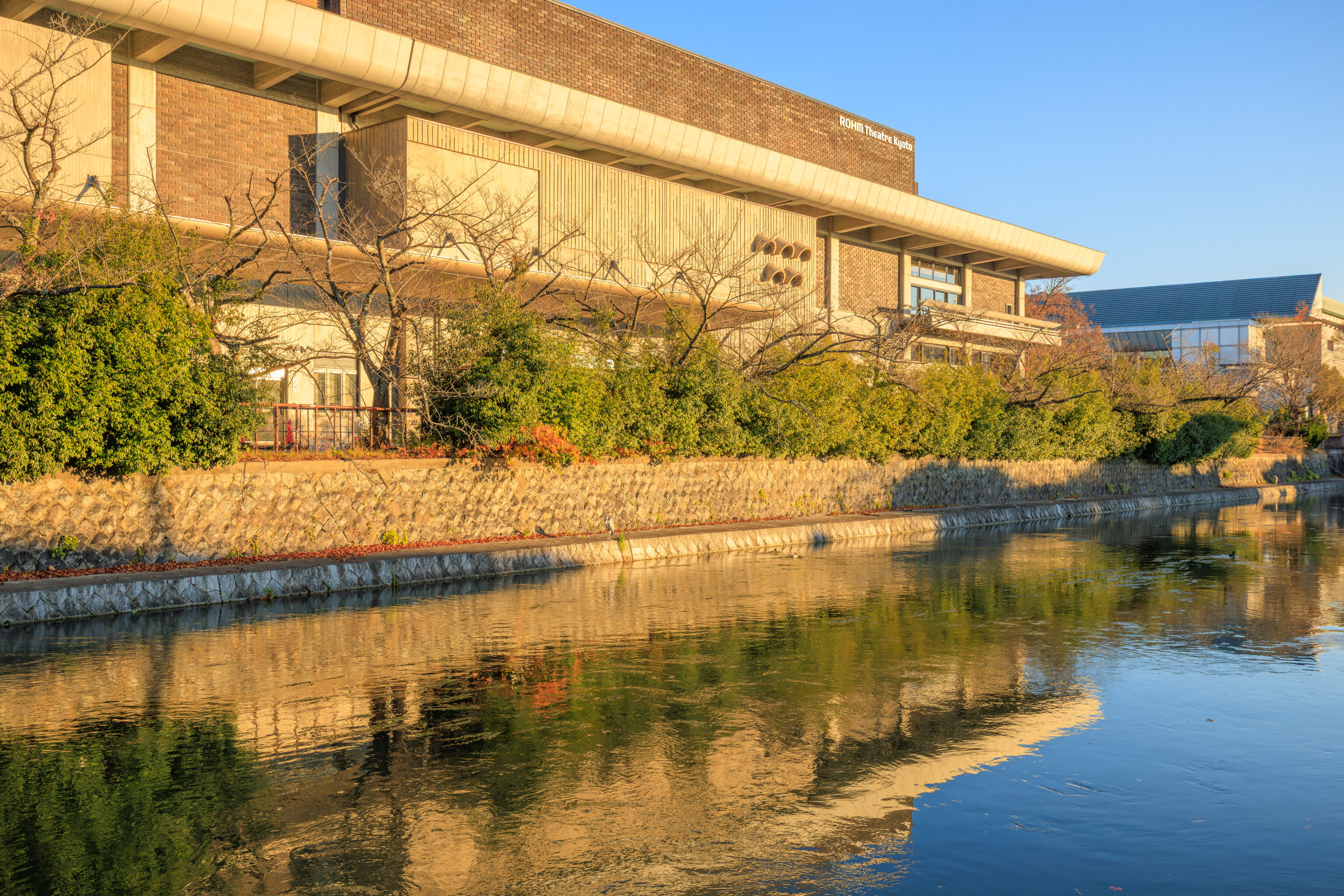
We decided to catch a bus to head down to the Gion district. We started to head southwest to reach the bus stop on Higashioji-dori.
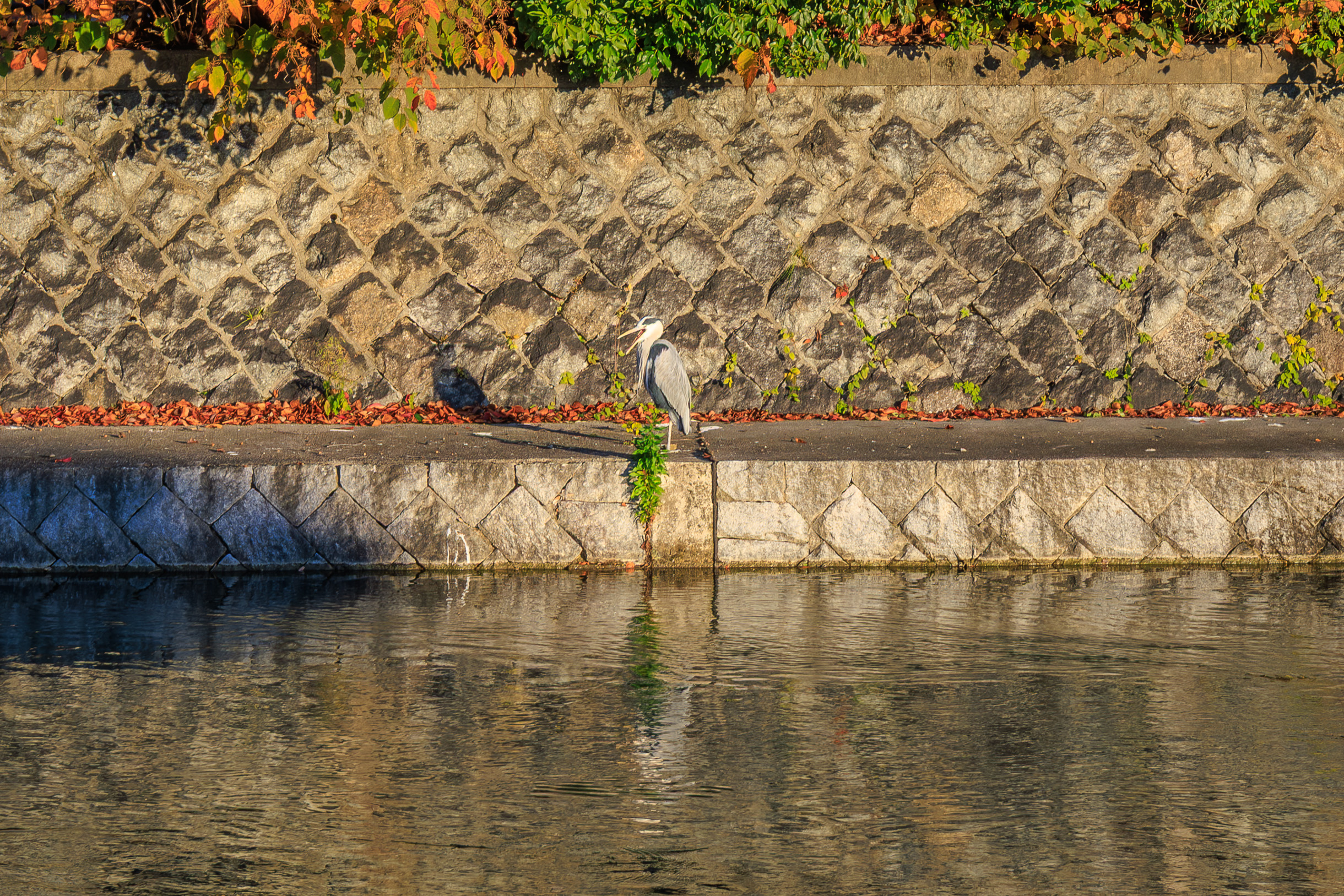
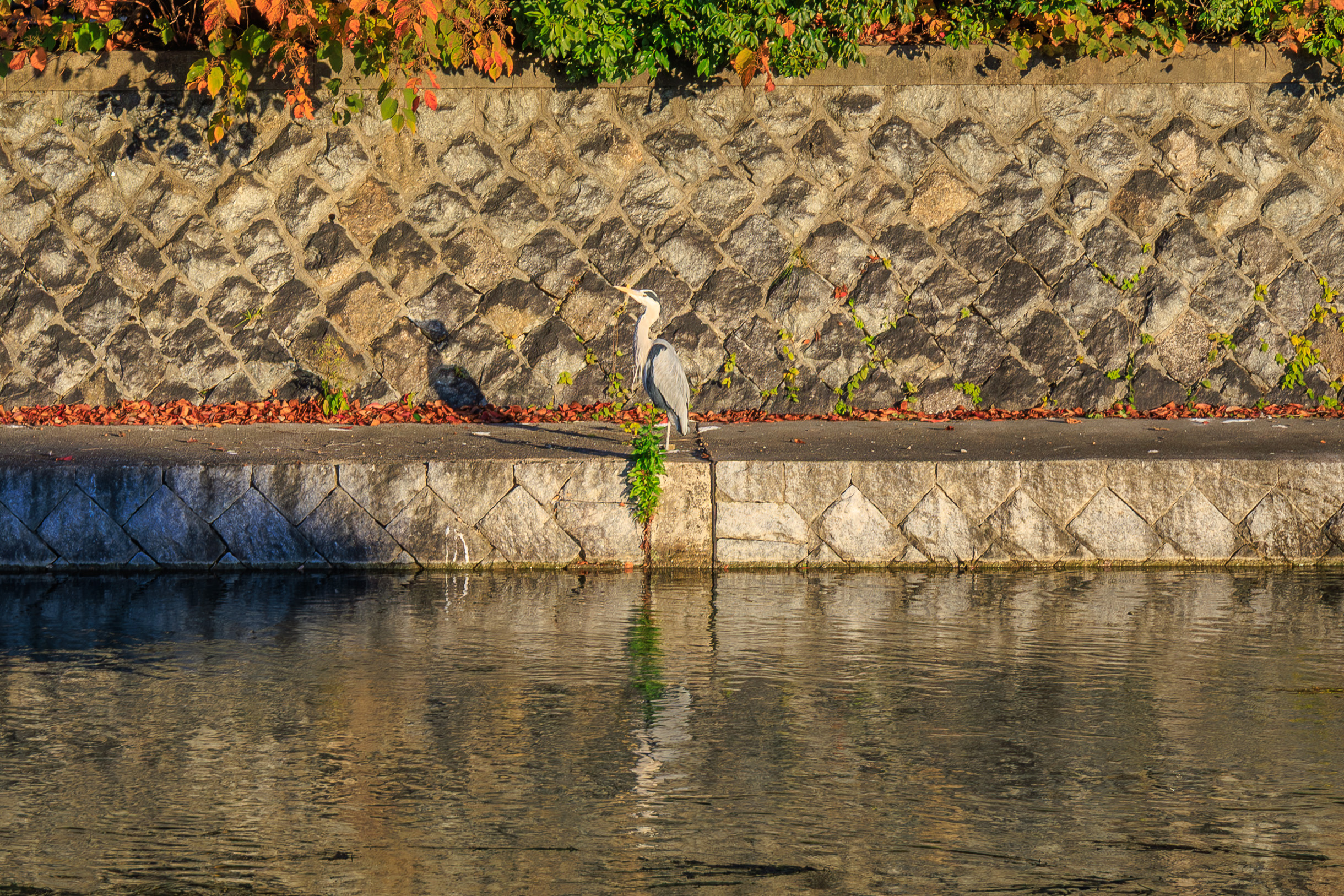
We stopped to briefly watch this Grey Heron, a very common species here in Kyoto.
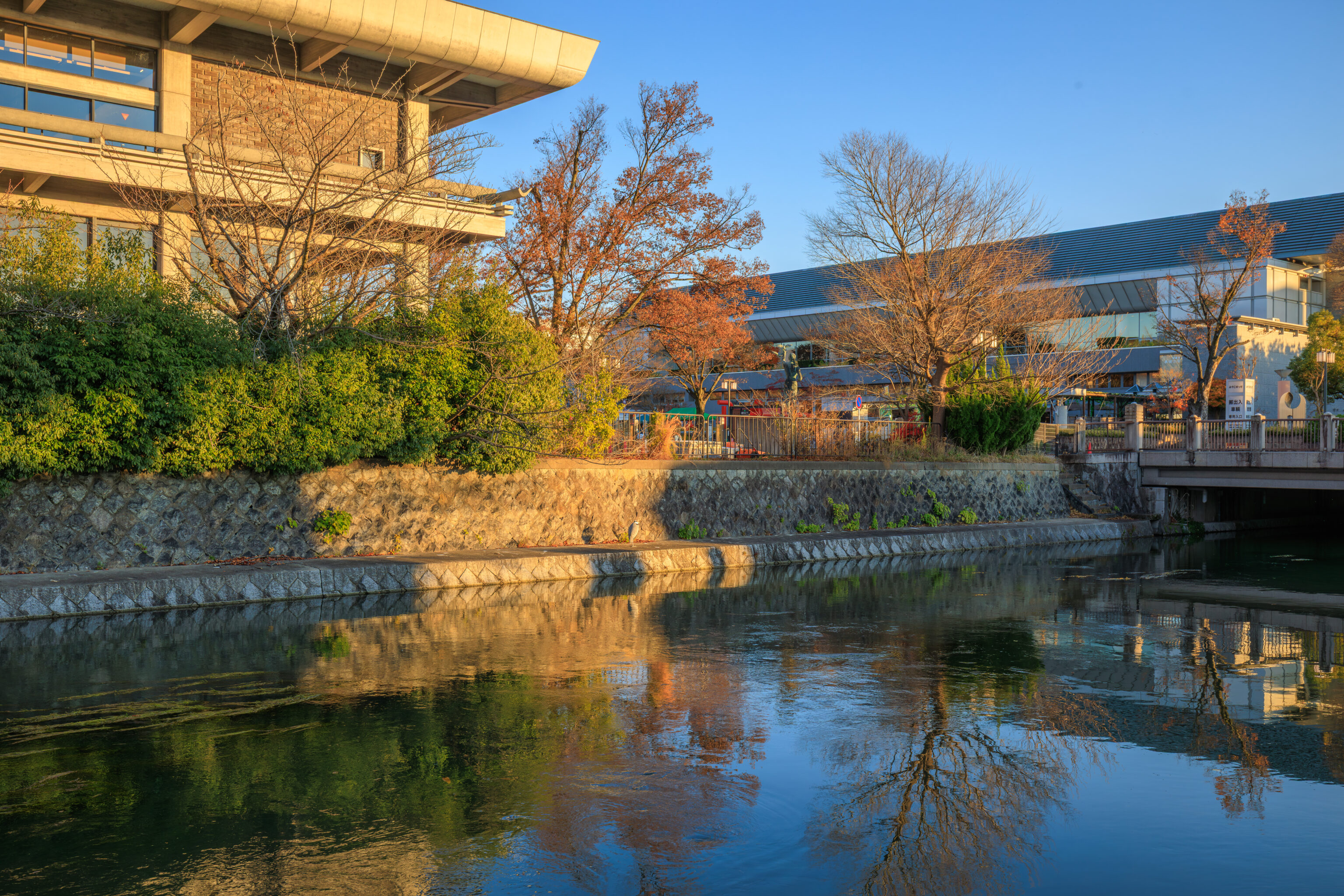
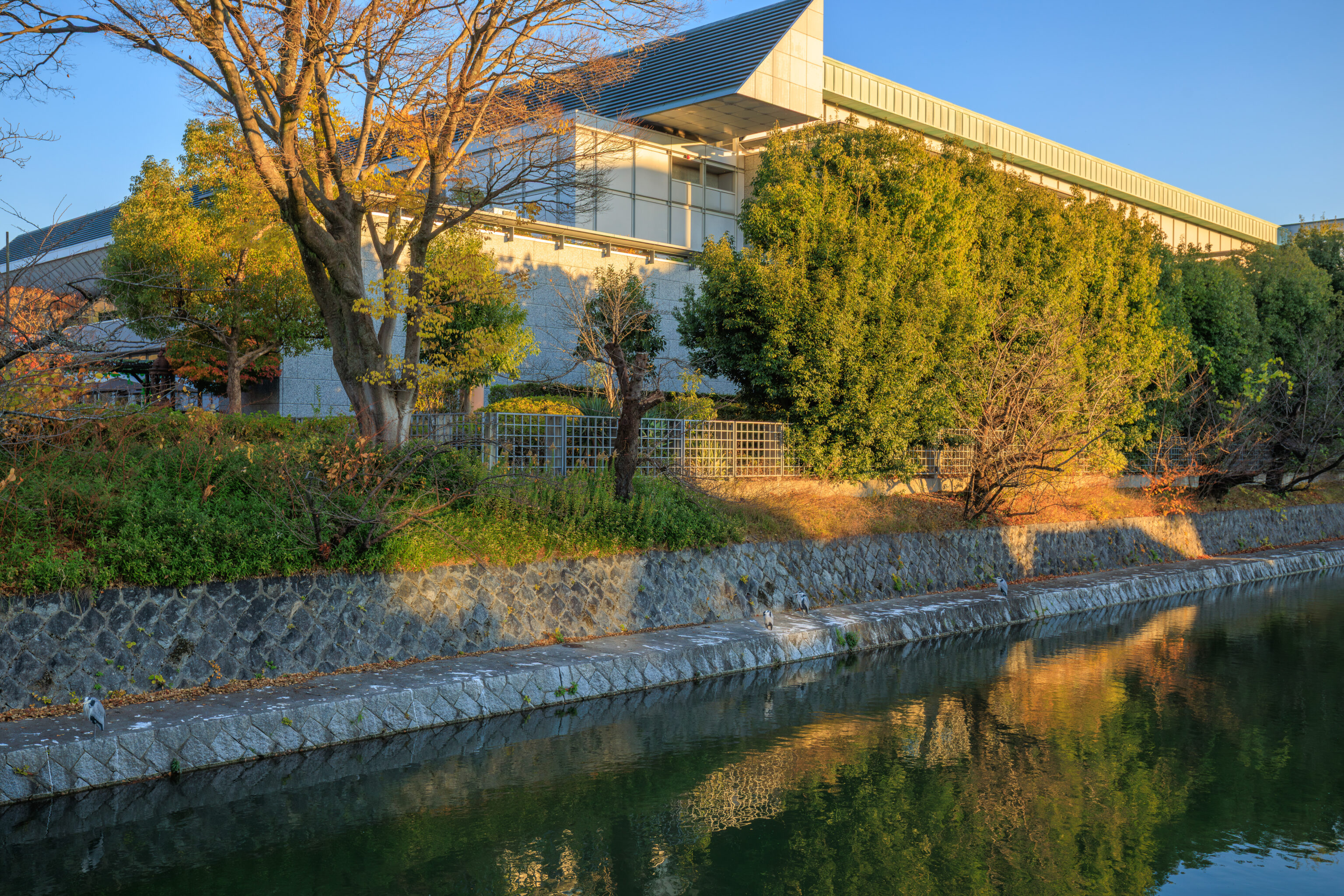
There were a number of them in this one block section of the Okazaki Canal that we walked along.
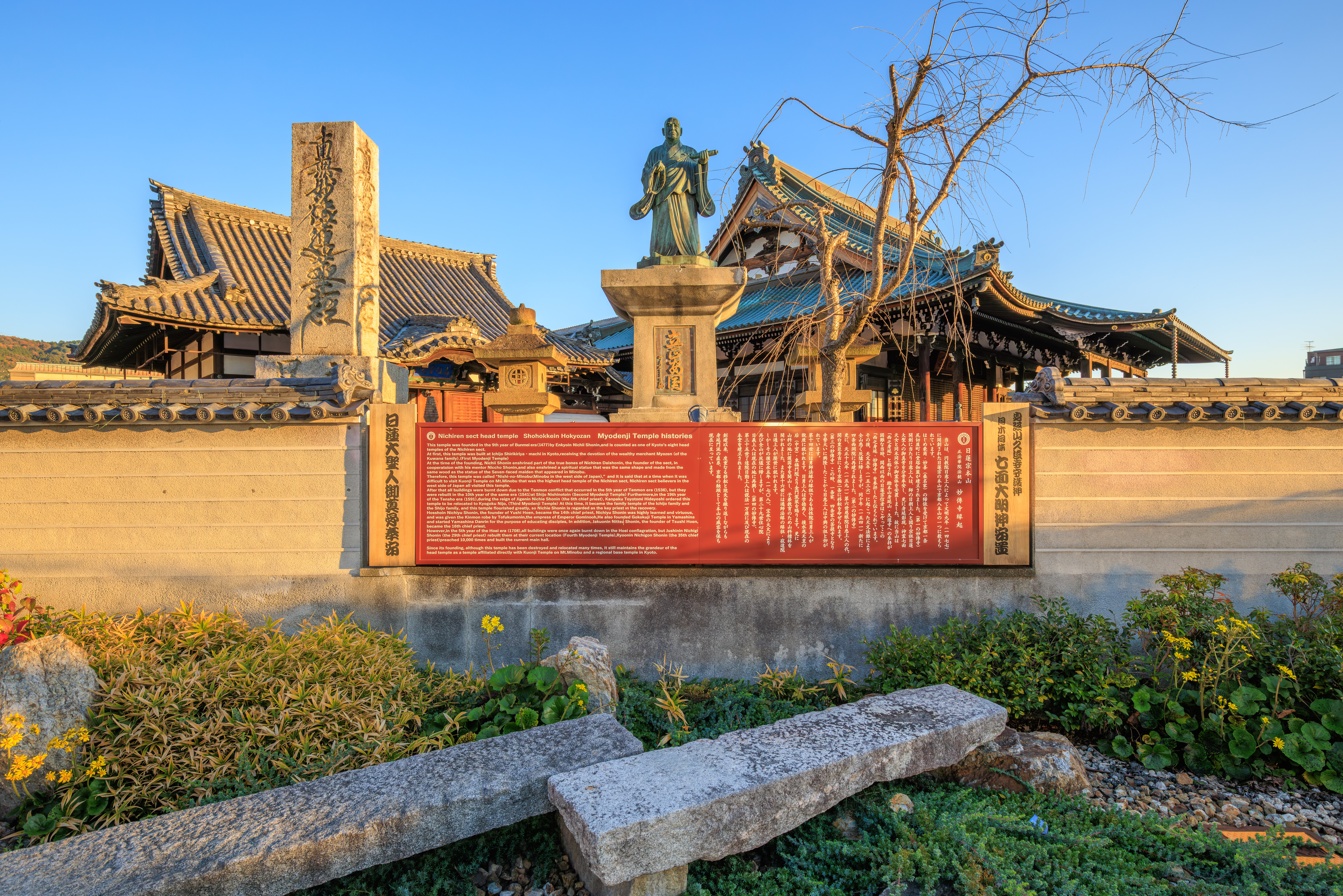
We walked past the Myoden-ji, a Nichiren Buddhist temple near the bus stop that was founded in 1477.
Gion
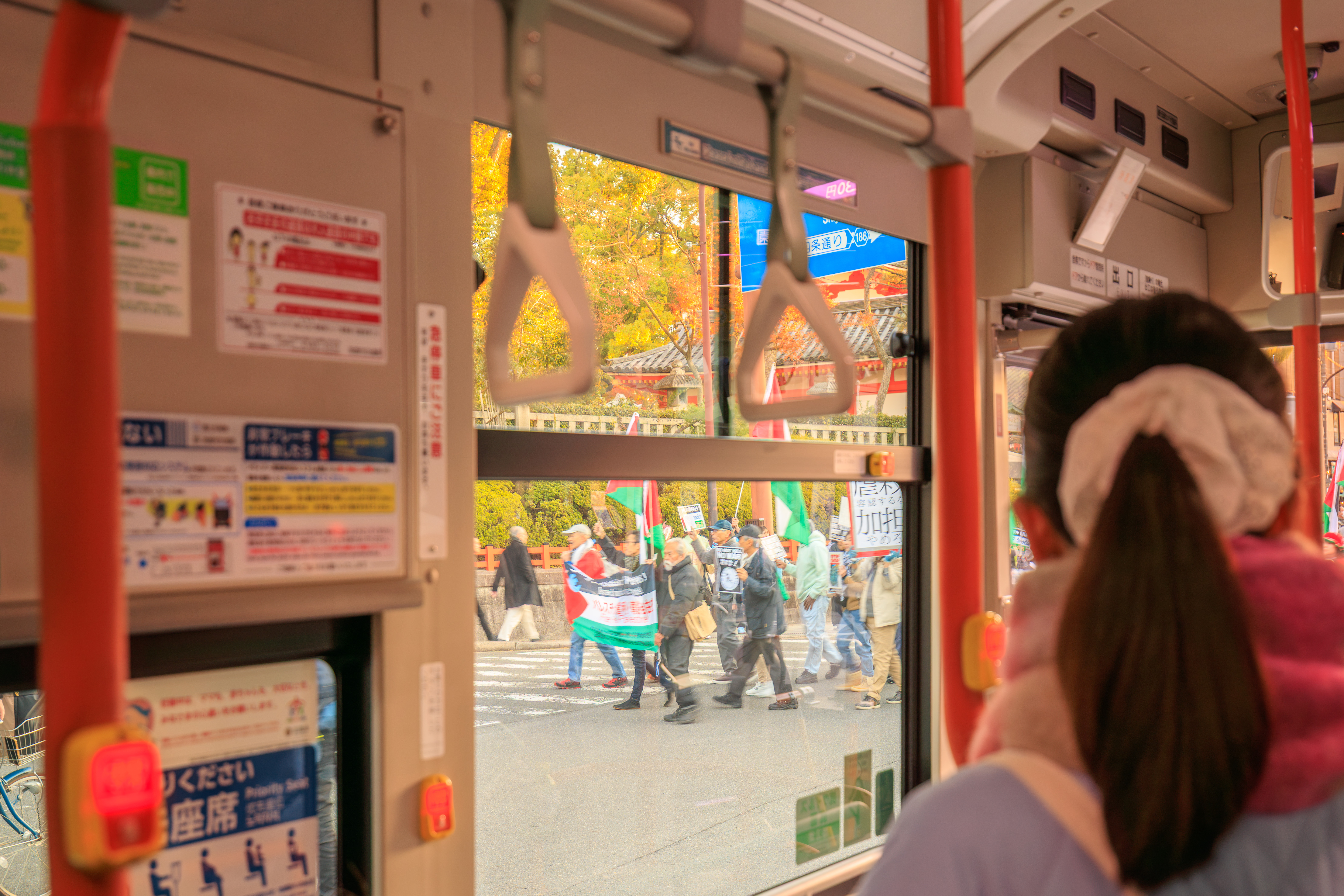
As we arrived at Gion, we were delayed for awhile at an intersection. It turns out that there was a pro-Palestinian protest march taking place!
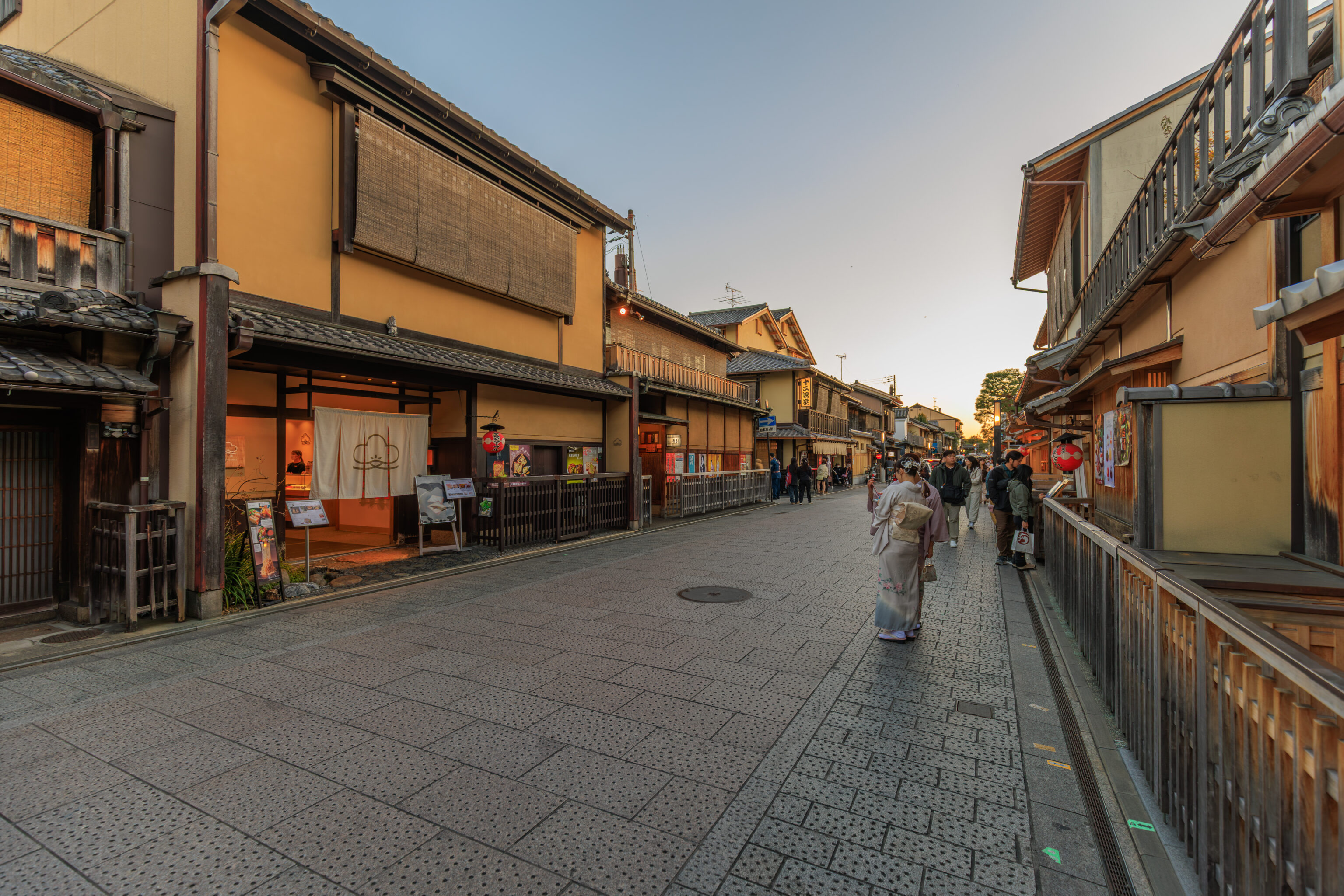
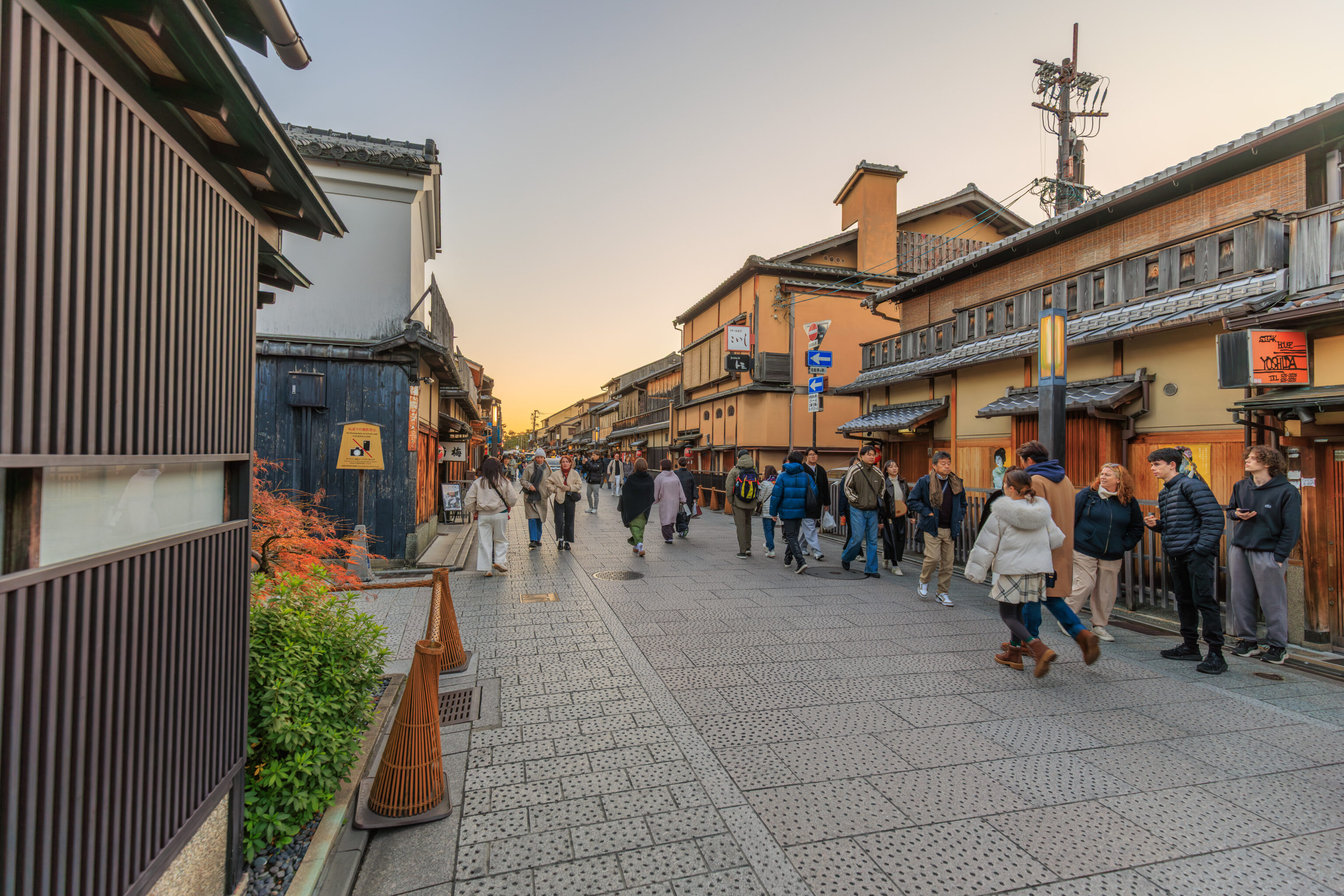
We briefly walked down Hanamikoji Street, a historic road through the geisha district.
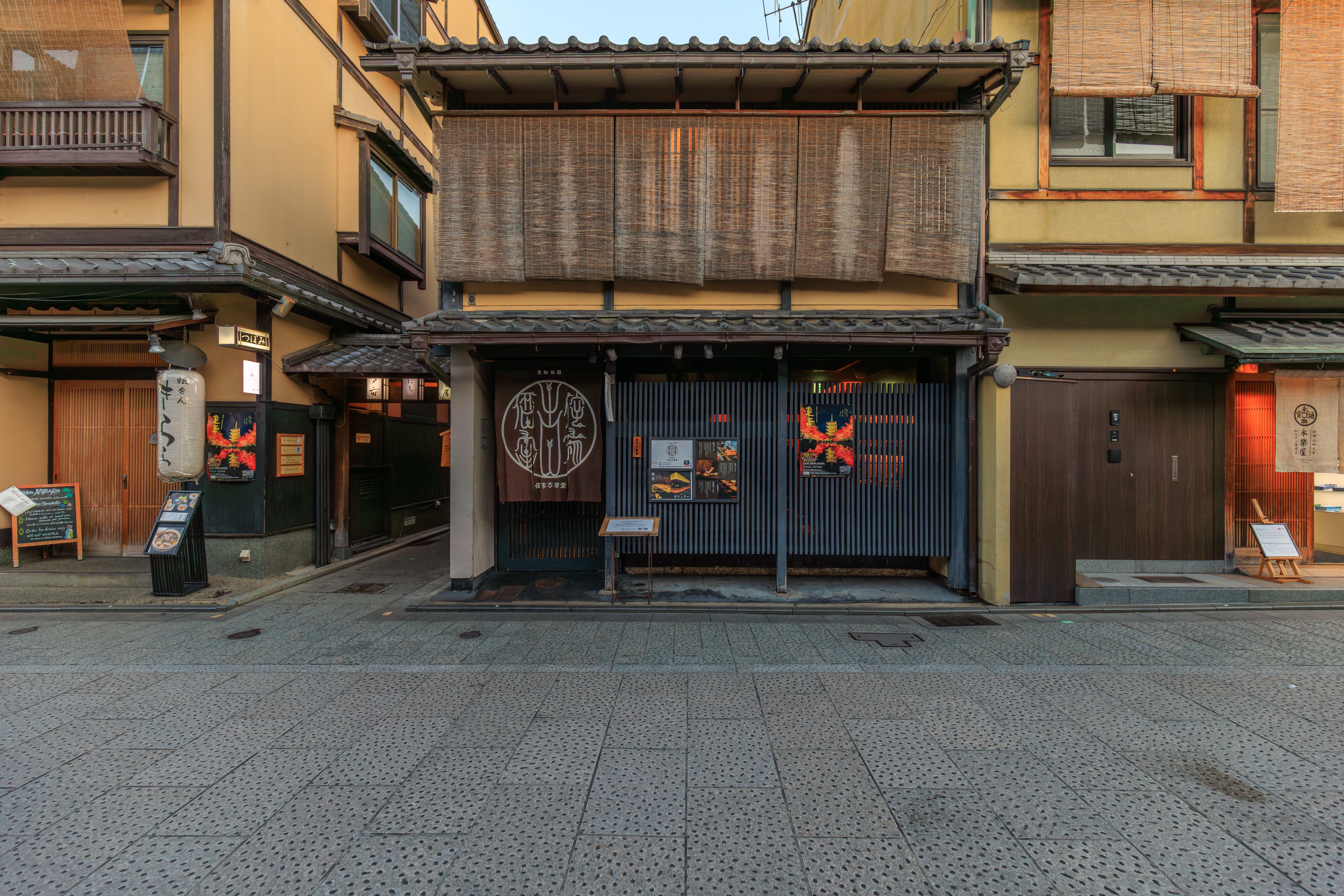
This shop is a yakitori restaurant that we walked by. Their large logo really stood out.
We walked back to the north to visit Gion Tsujiri‘s cafe, one of our favorite places to have matcha desserts.
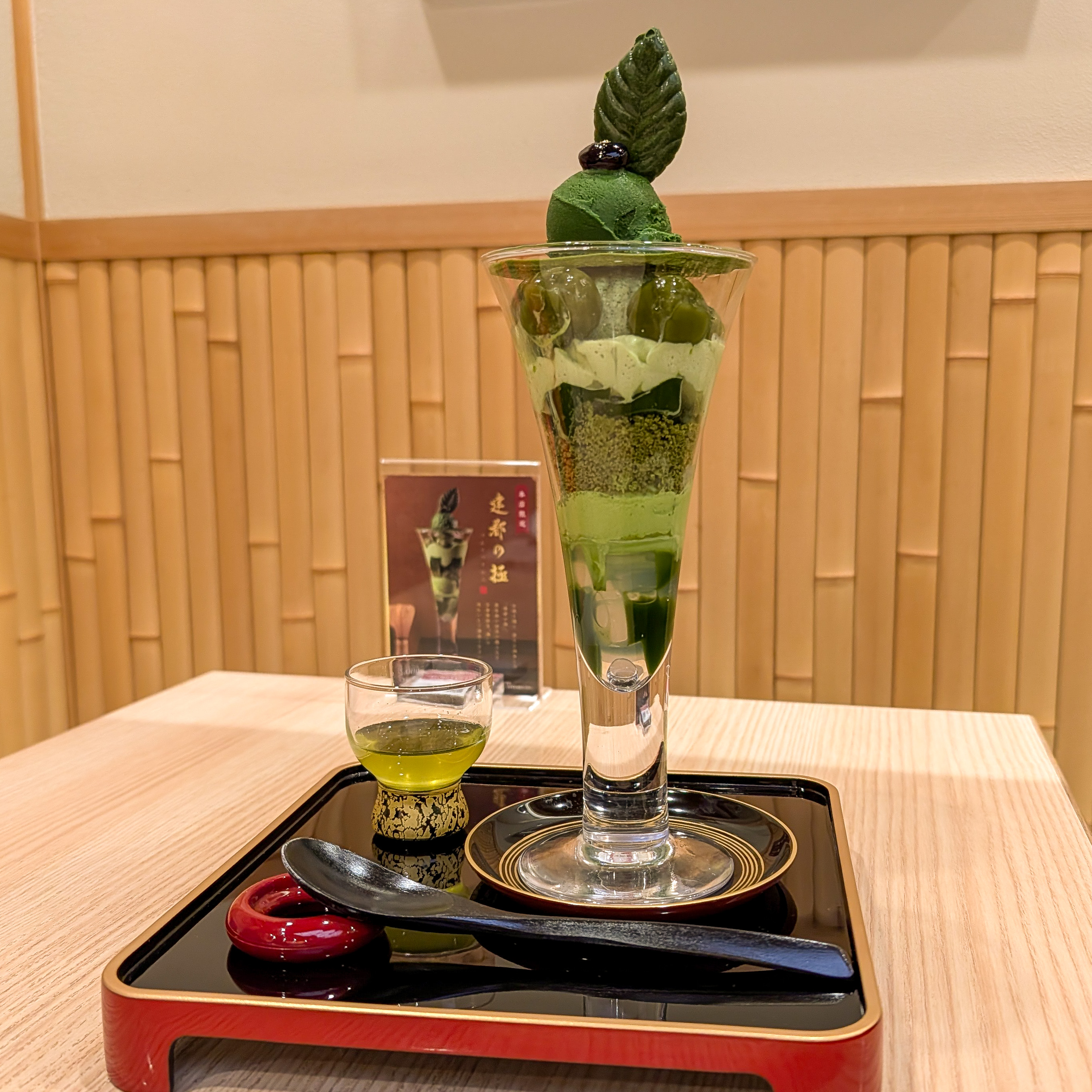
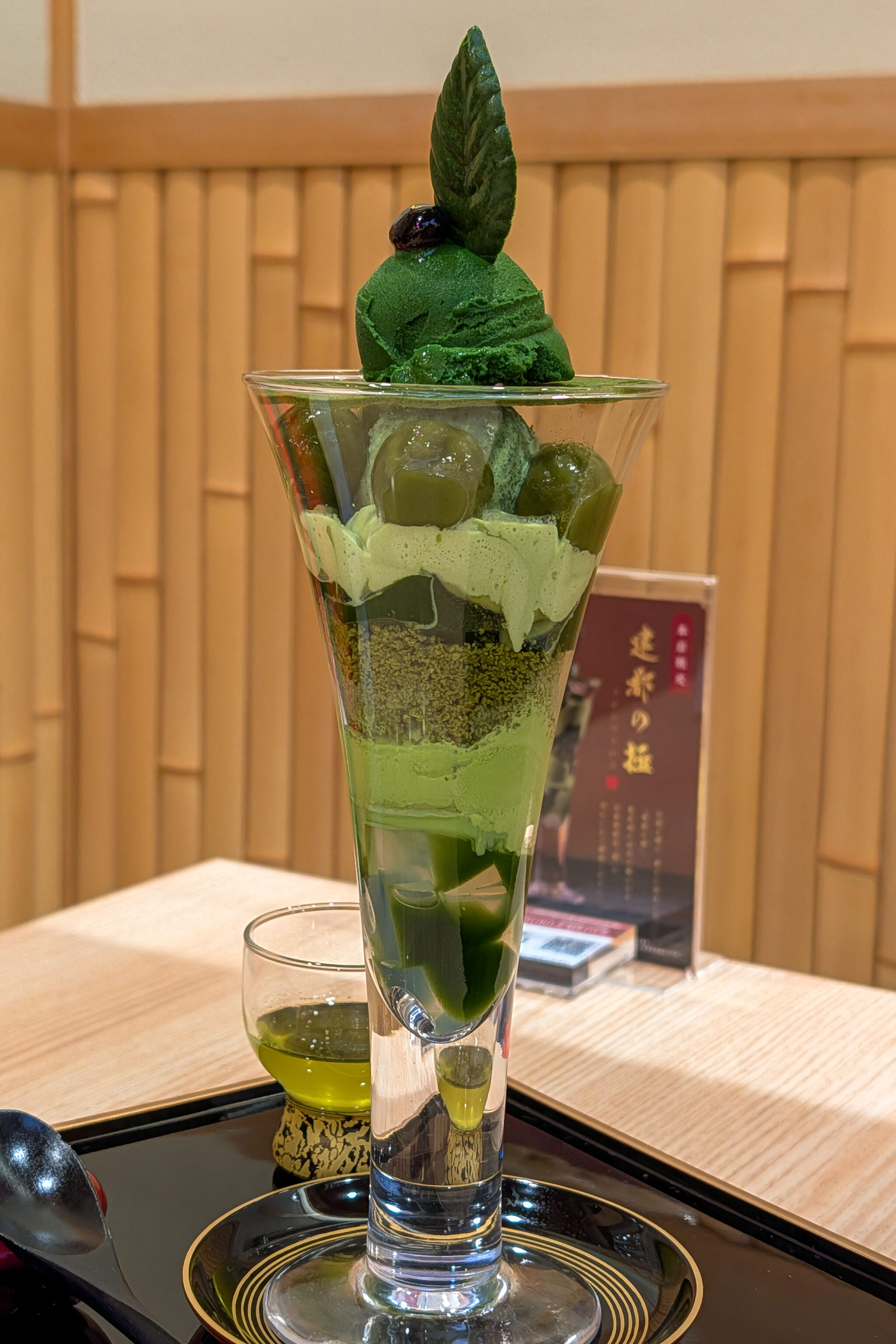
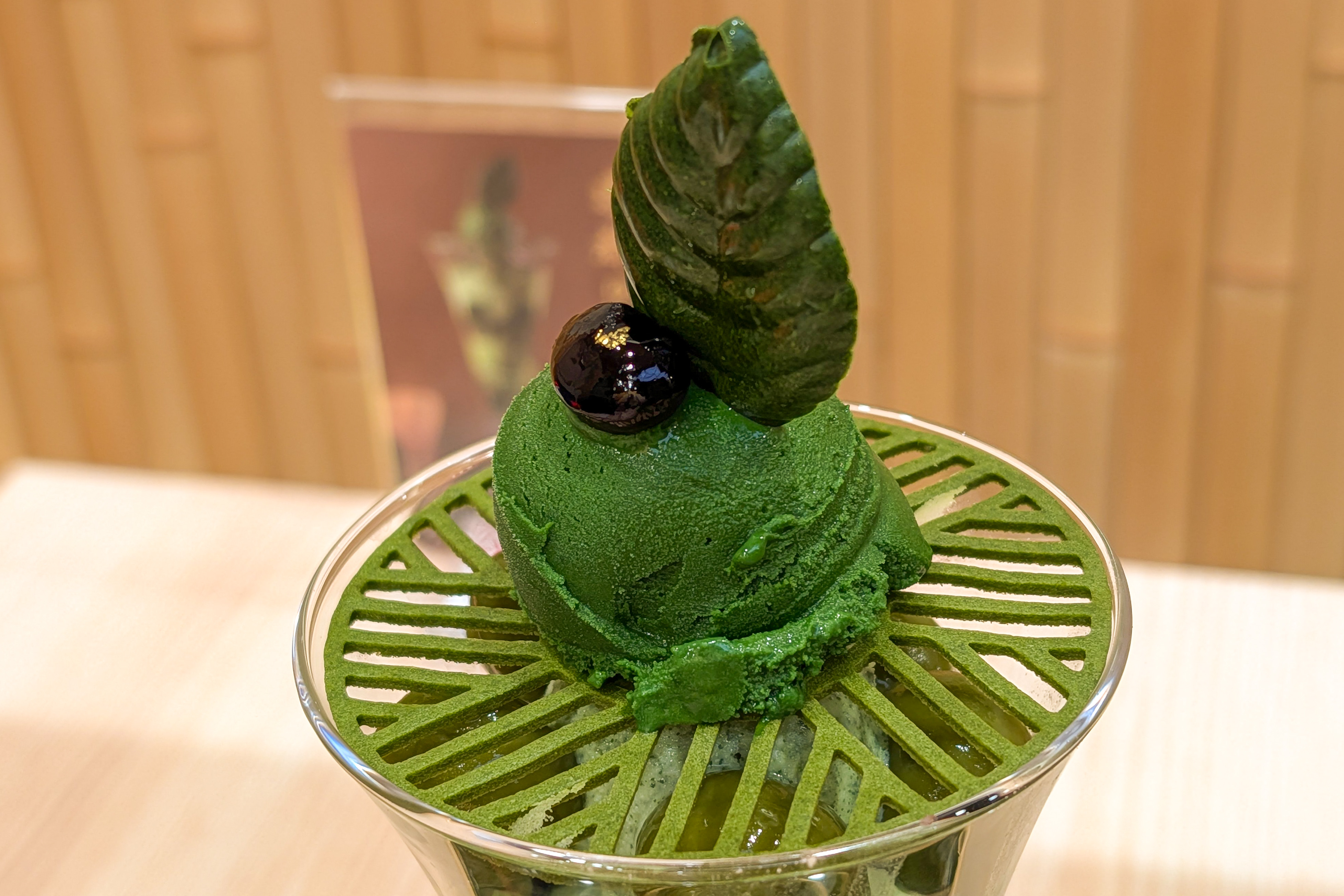
We ordered the store exclusive Kento to Kiwami, their new premium matcha parfait product. It was excellent and had matcha ice cream that was definitely stronger than any other ice cream product we’ve had at Gion Tsujiri.
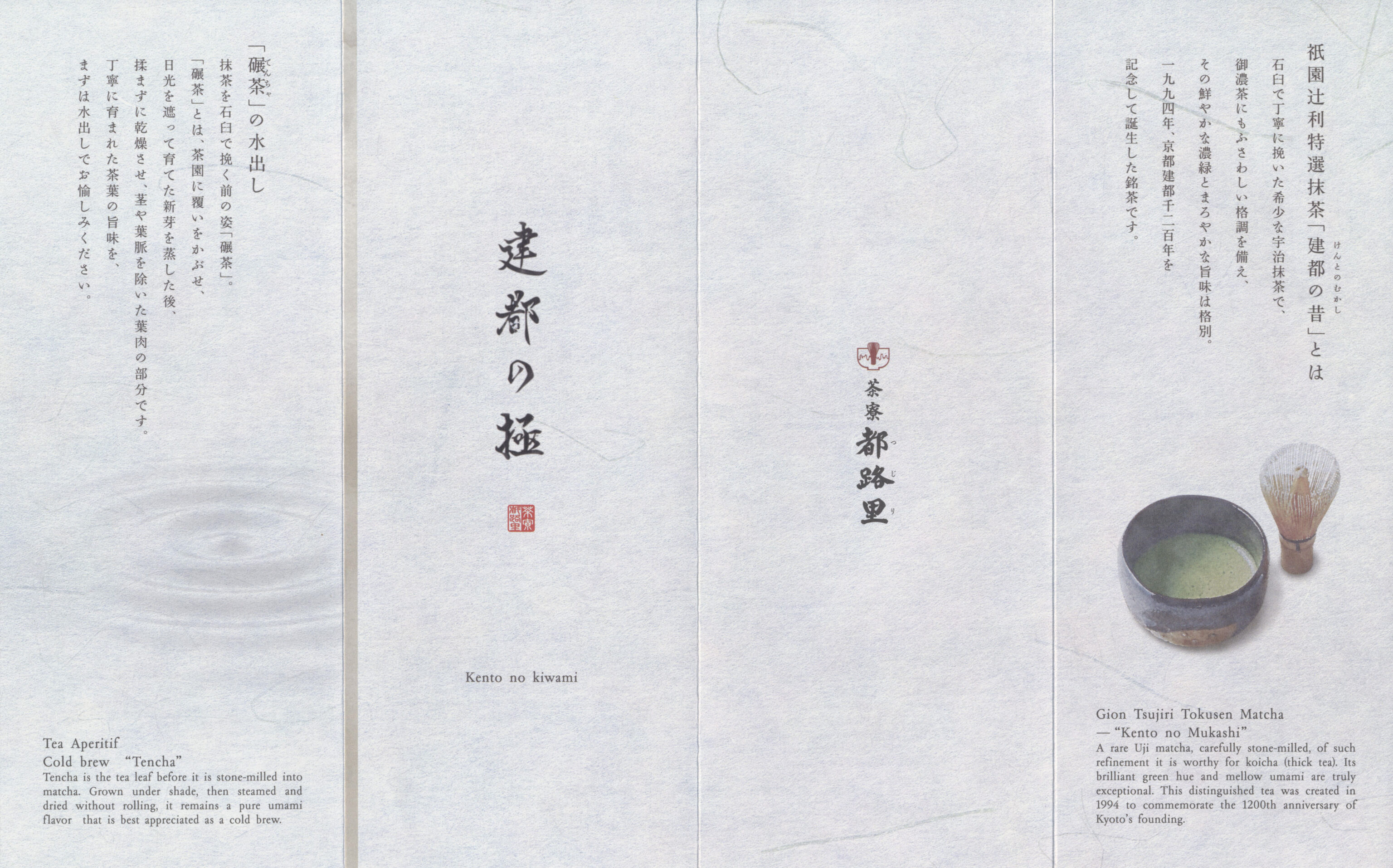
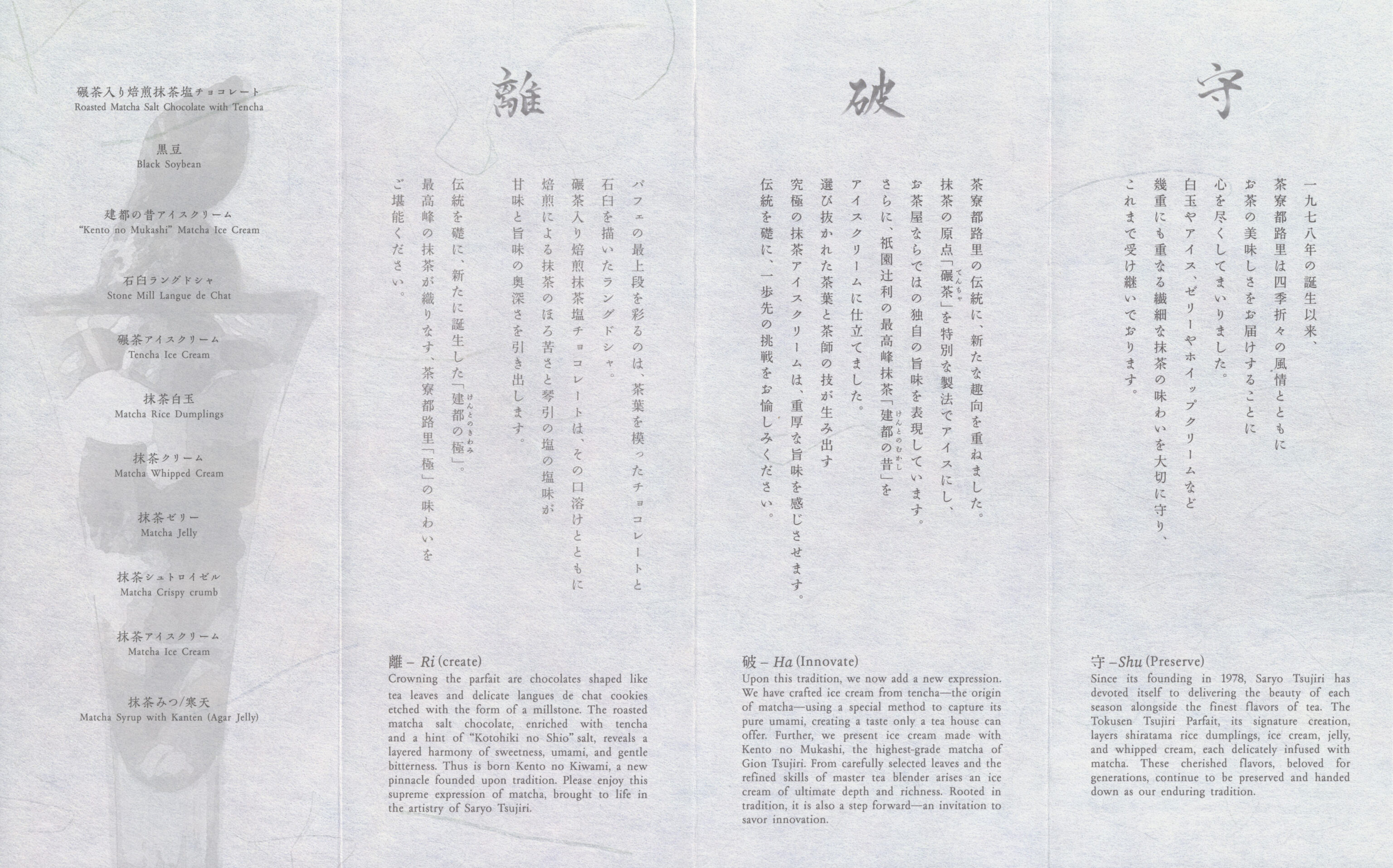
The parfait came with a small pamphlet that describes the product.
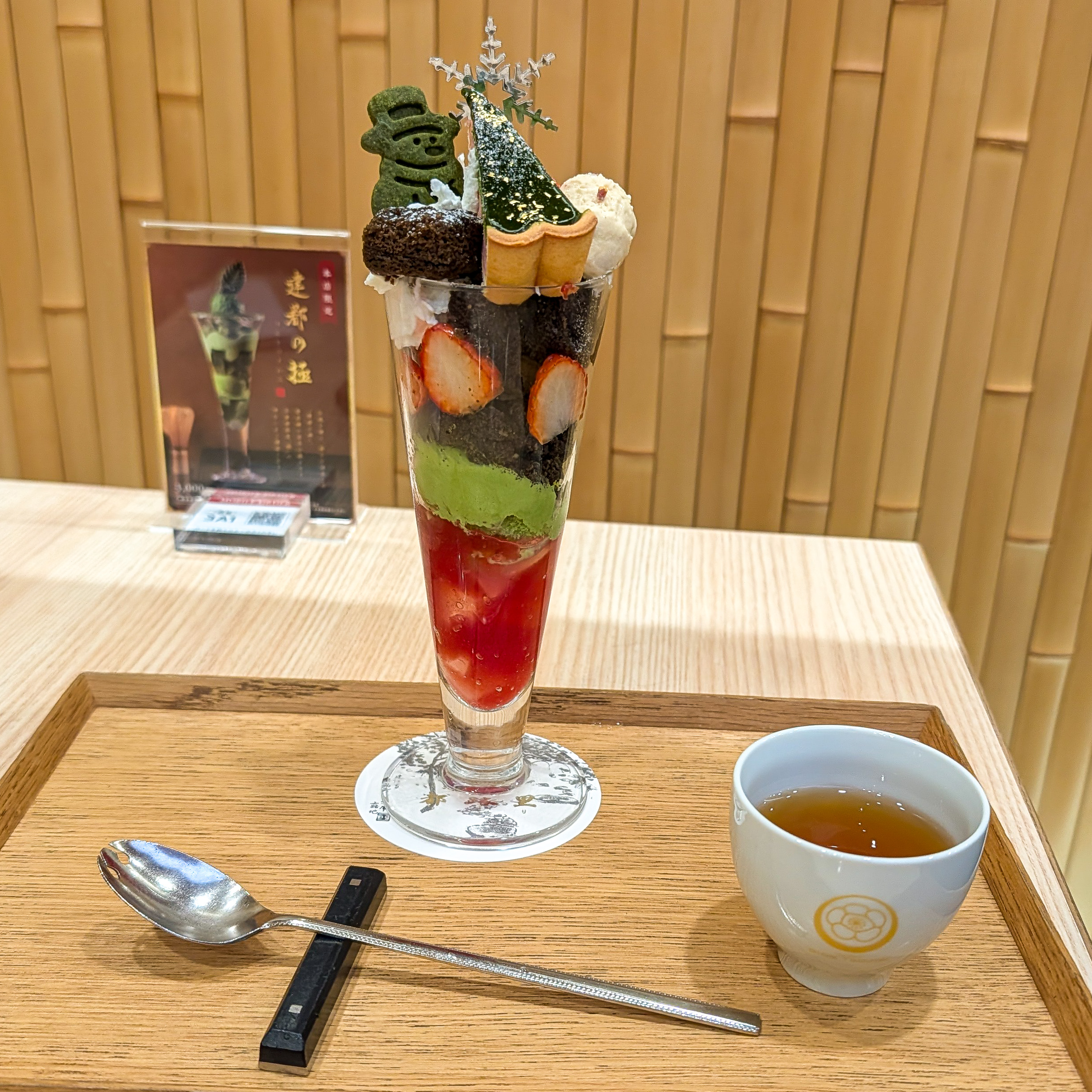
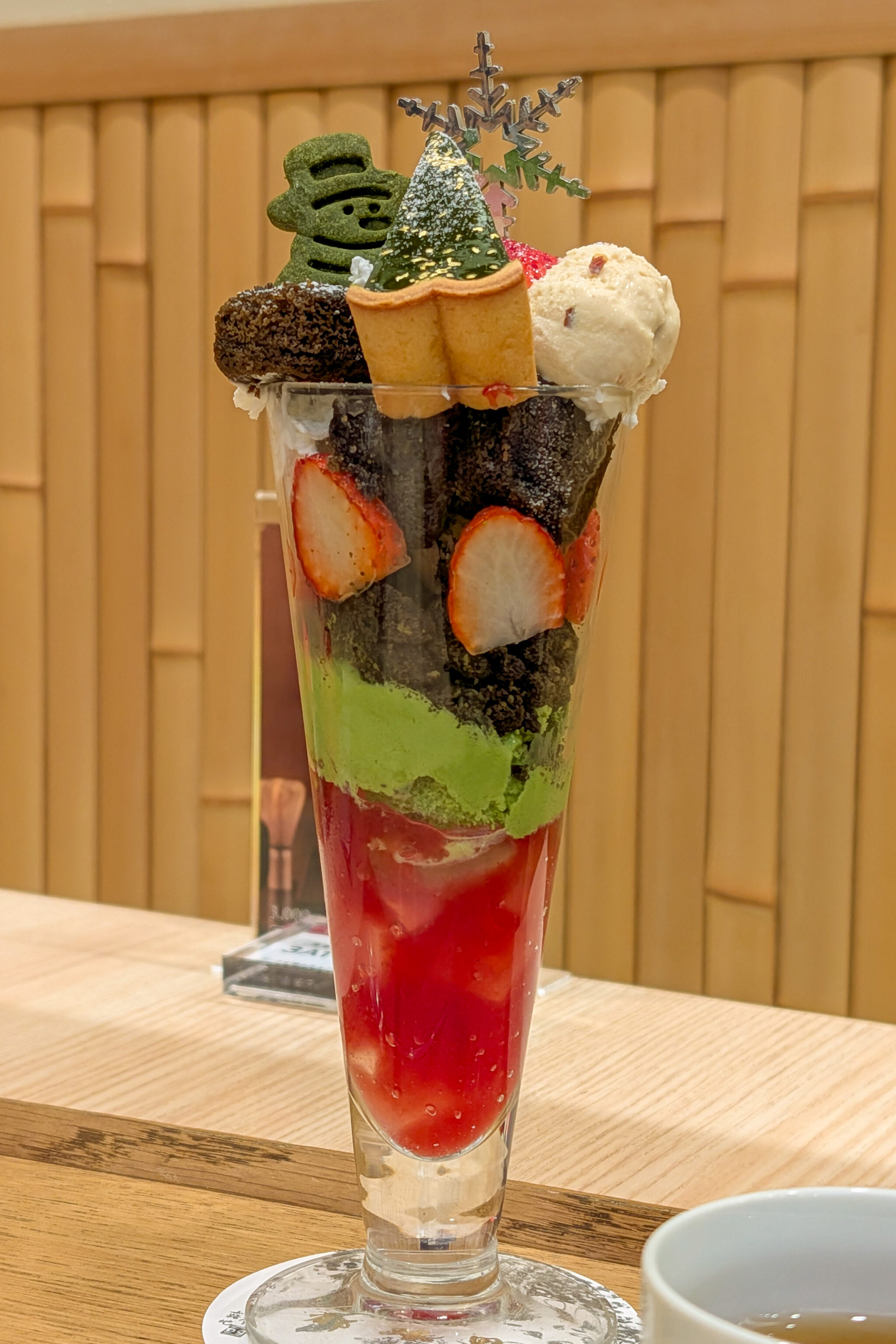
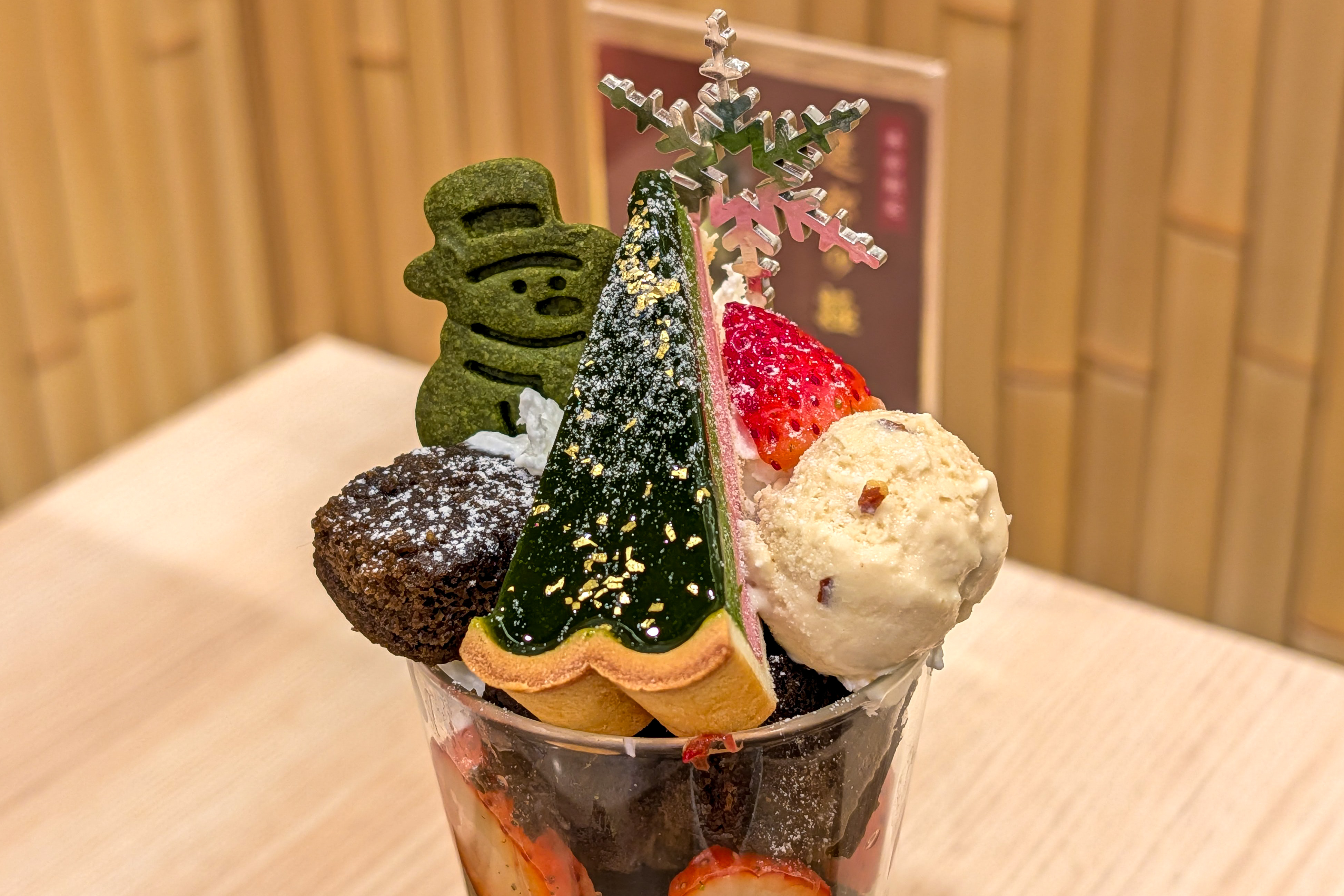
We also ordered the Christmas parfait. It was also very elaborate and delicious.
Its worth nothing that Gion Tsujiri and Tsujiri are actually different companies. The split happened after the death of the original company’s founder. Gion Tsujiri seems to only operate in Japan while Tsujiri is worldwide. Unfortunately, our experience with Tsujiri’s global locations has been pretty mixed.
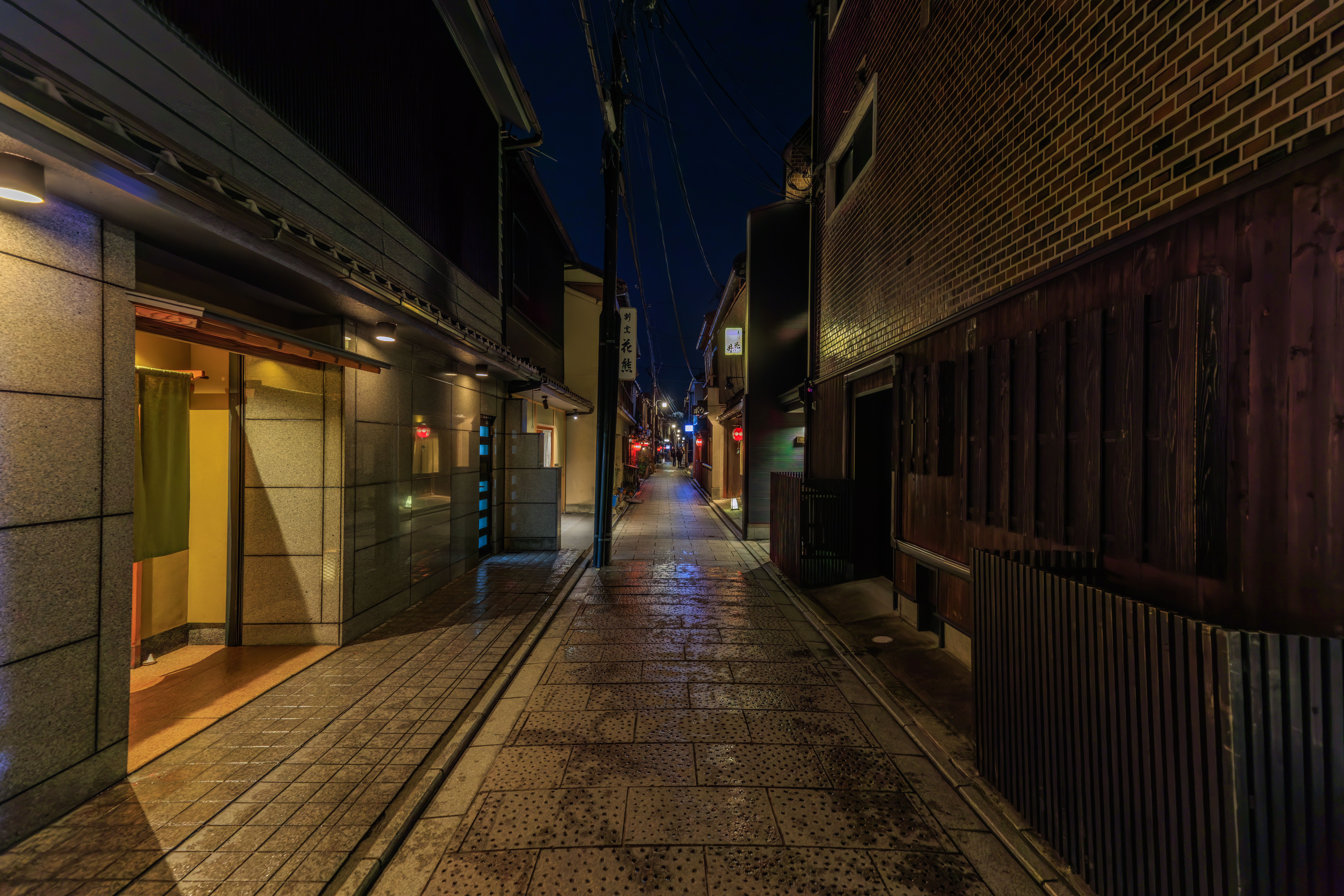
It was dark when we left Gion Tsujiri. We decided to walk around the area a bit more before heading back to the Courtyard.
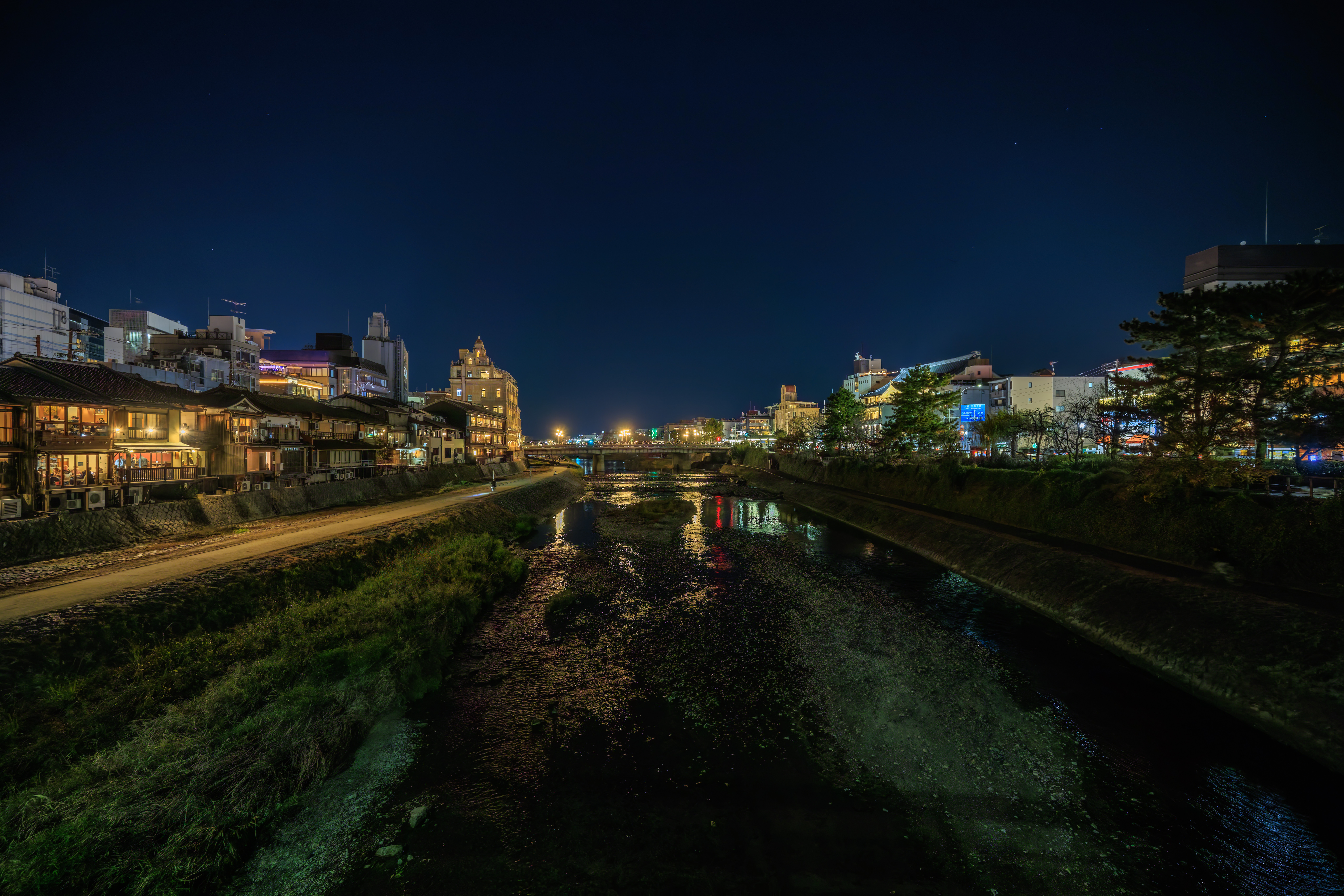
We crossed over the Kamo River via one of the minor bridges in the area. We were thinking there might be a night viewing event at one of the nearby temples but were apparently confused.
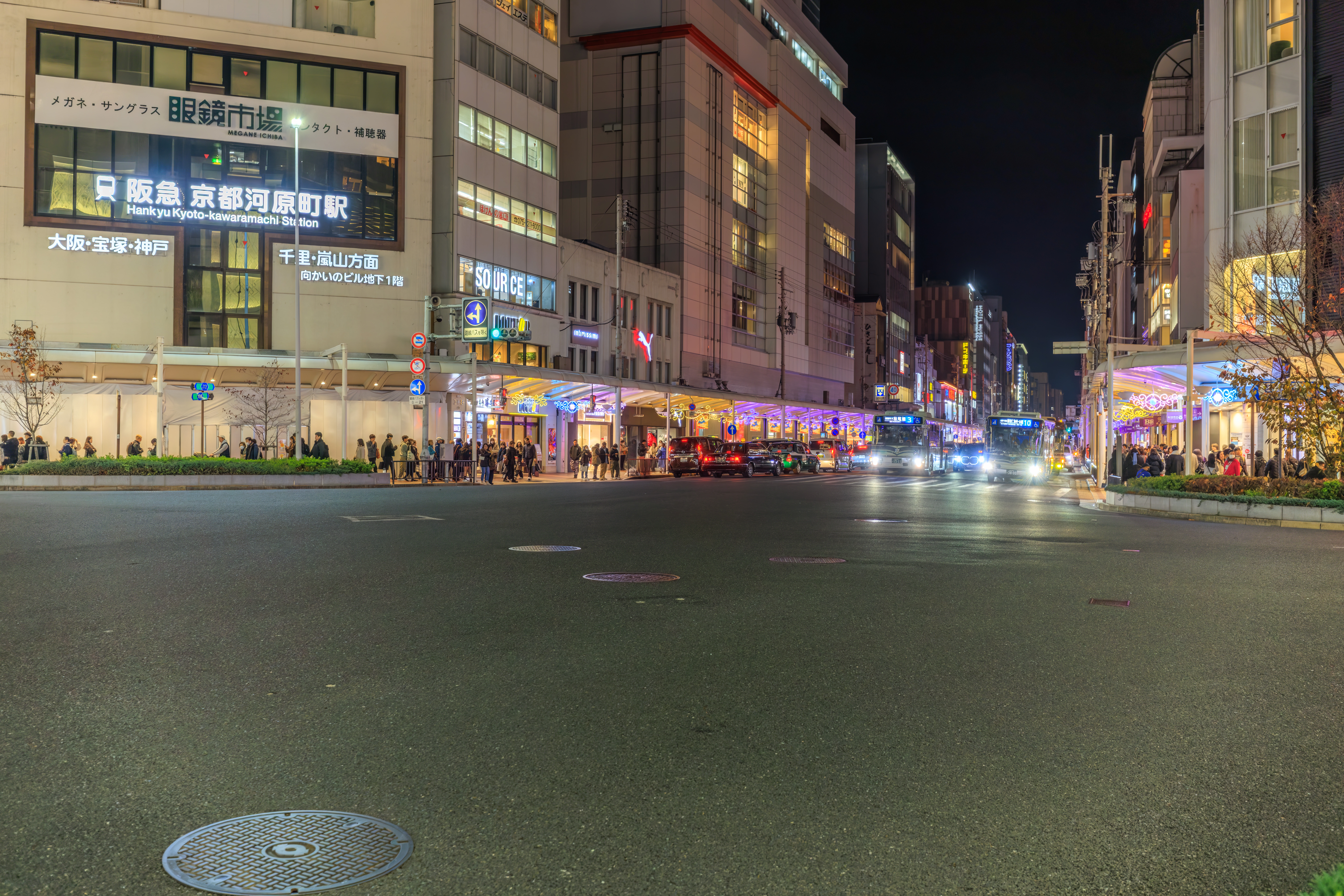
We ended up walking to the northwest to reach Shijō Kawaramachi, the main shopping district in this part of Kyoto.
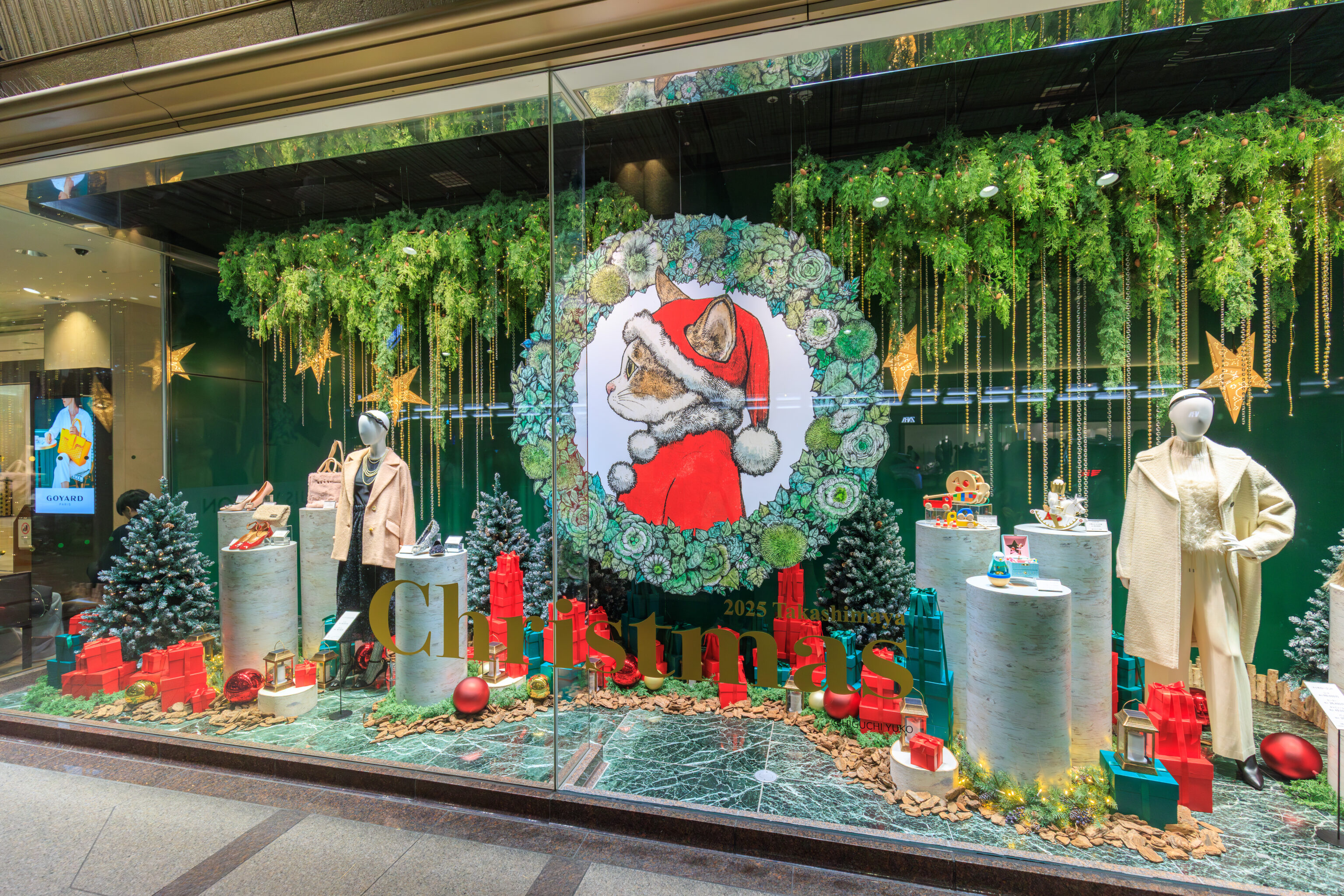
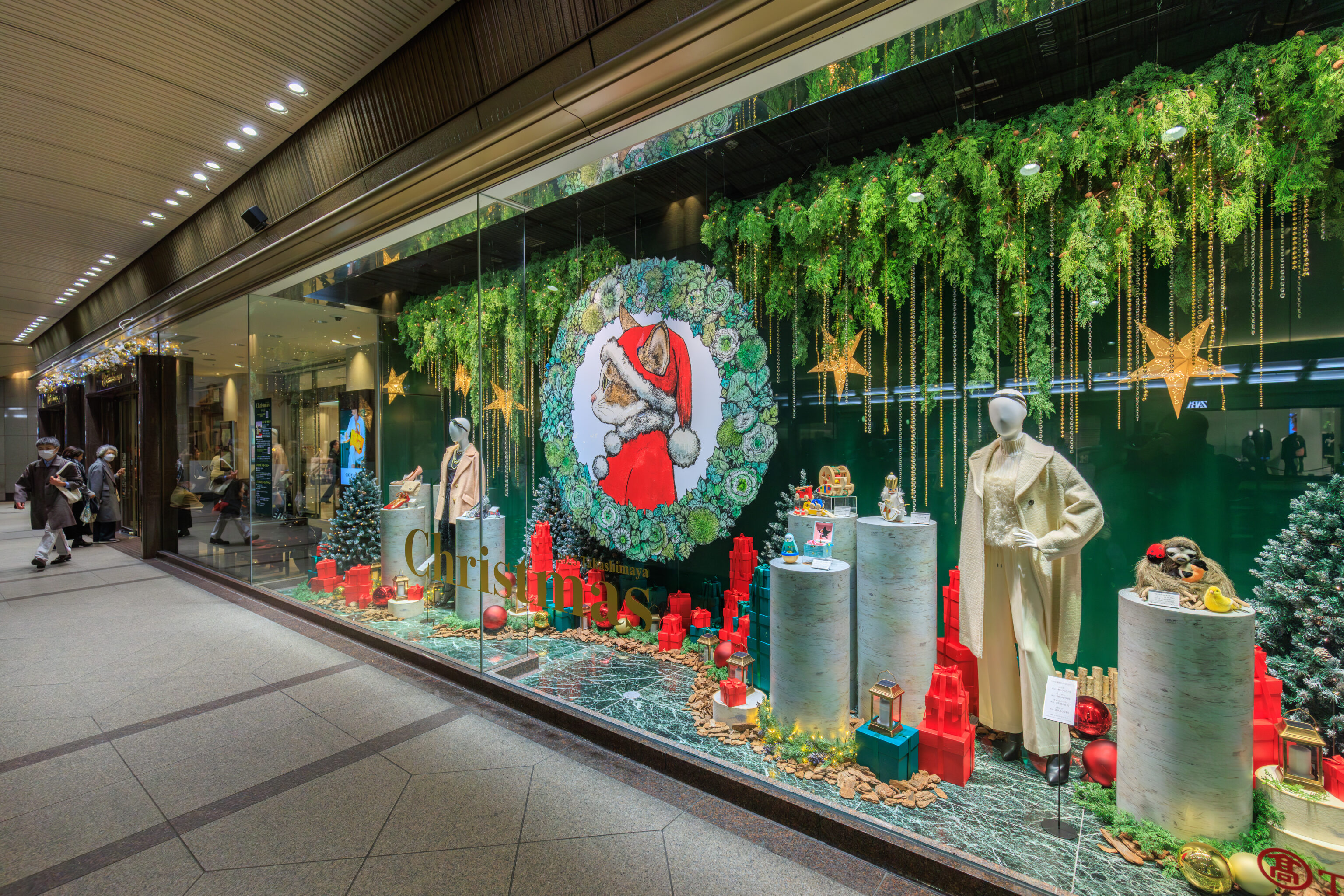
The Takashimaya department store had an excellent Christmas display featuring a cat in a Santa hat. Rather than head home by train or bus, we decided to walk back instead.
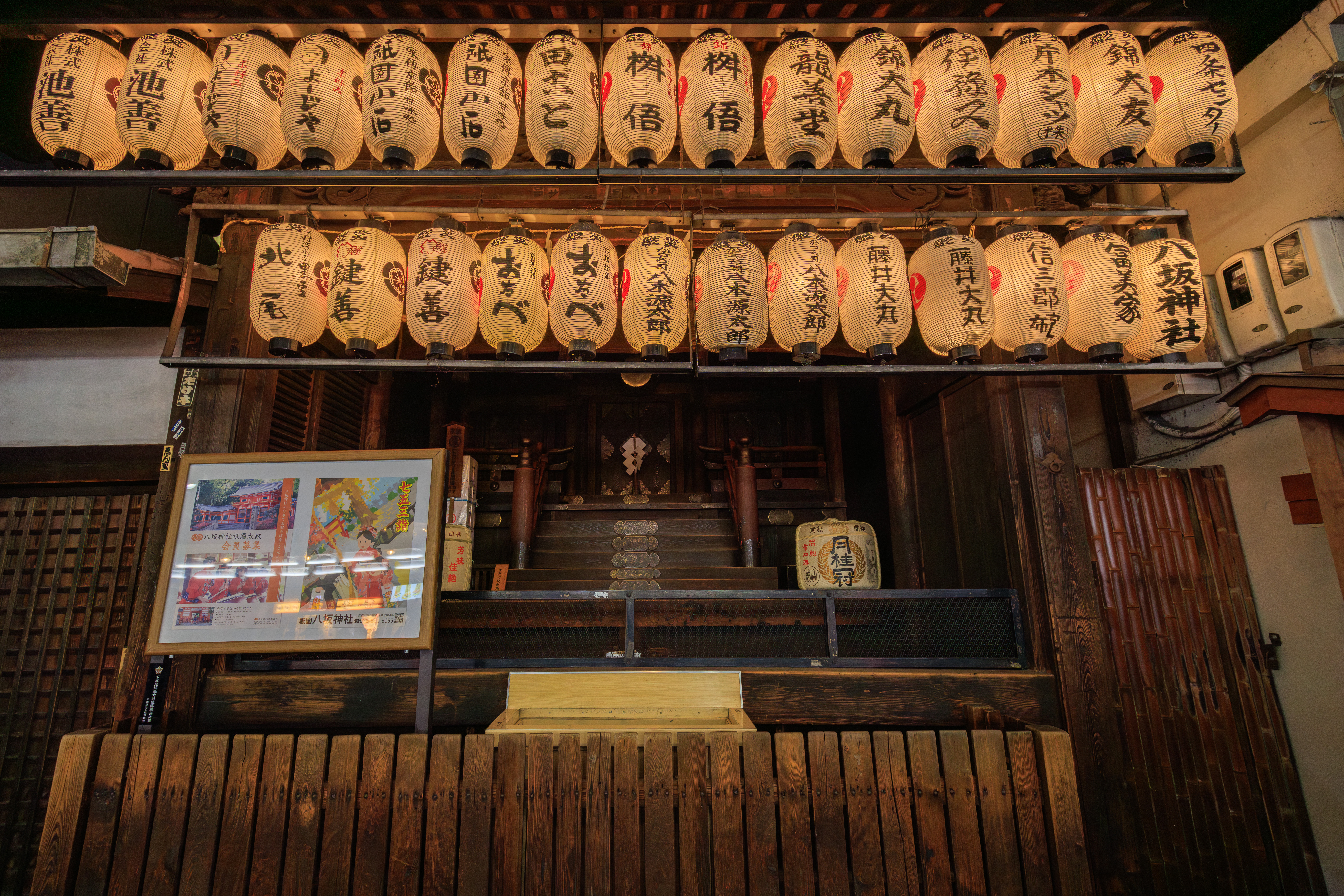
This shrine was roughly opposite the entrance to the Shinkyogoku shopping arcade. It is described as the 四条旅所本殿(東殿) Shijo Tabisho Main Sanctuary (Eastern Sanctuary) of the 八坂神社 Yasaka-jinja, a large shrine on the east side of Gion. I don’t know if we’ve ever noticed this shrine before despite having walked through this area many times.
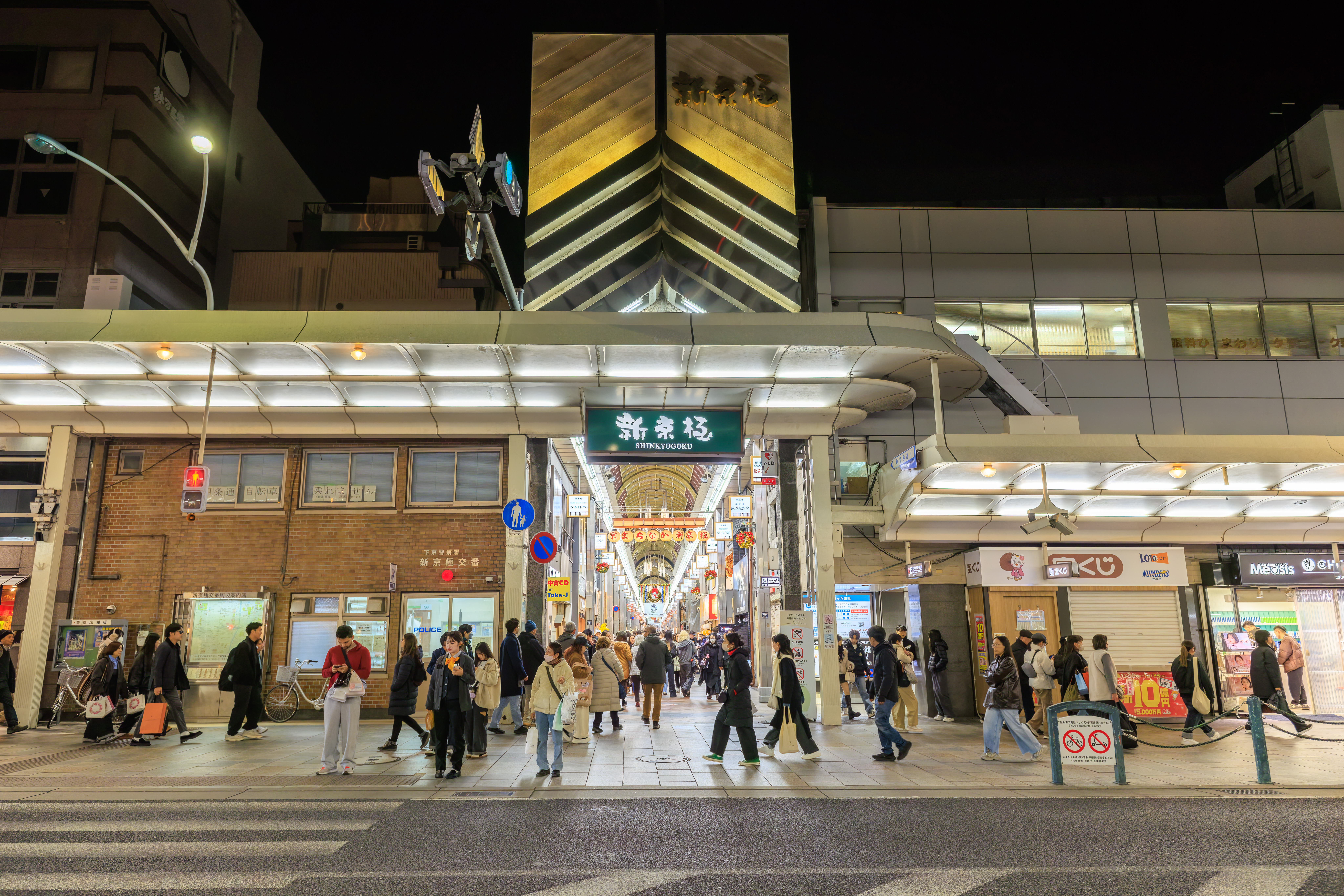
We crossed the street to enter the Shinkyogoku shopping arcade. It is probably safe to say there is more than 1km of covered shopping here in this area of Kyoto.
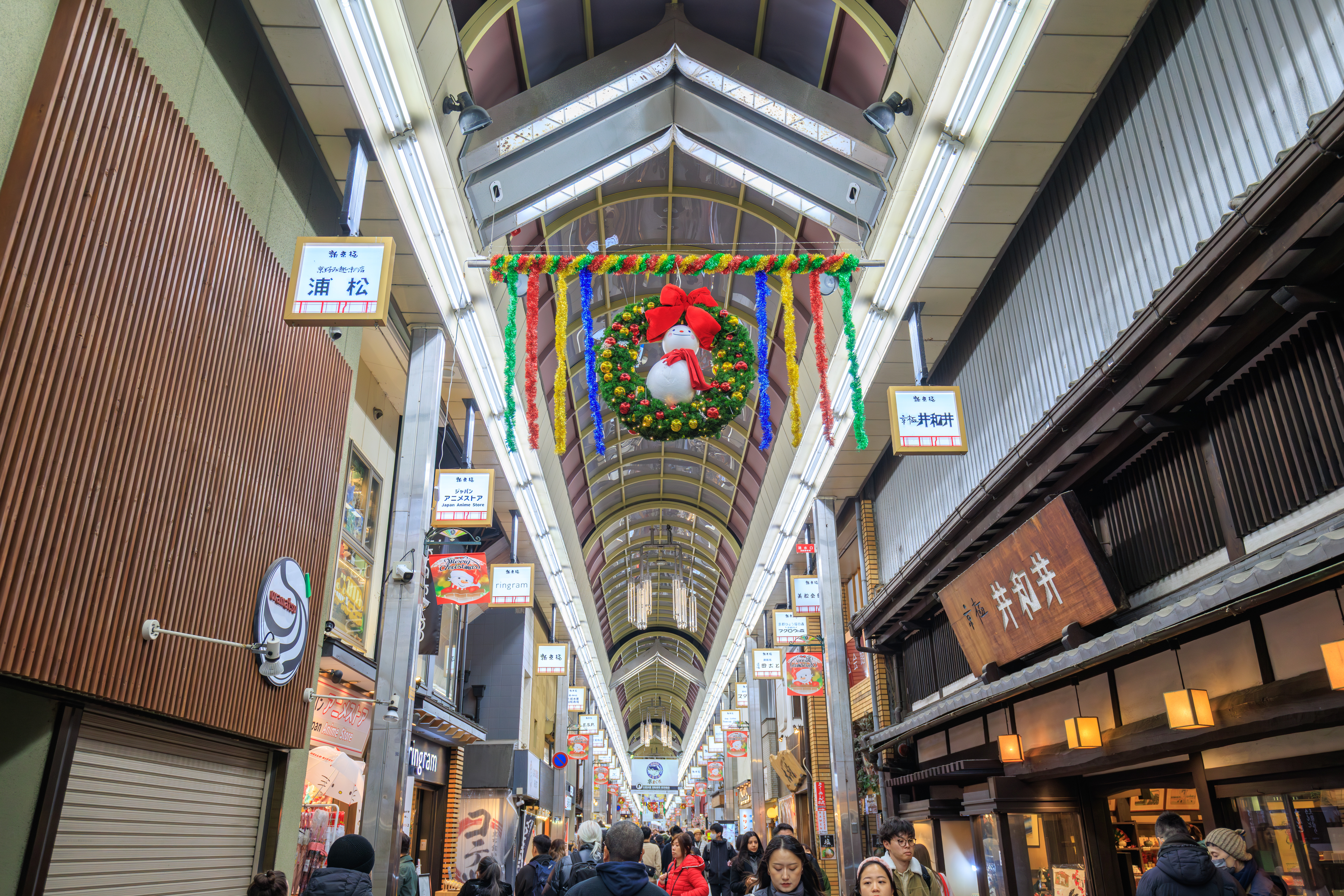
There are often decorations, like this wreath with snowman, hanging from above.
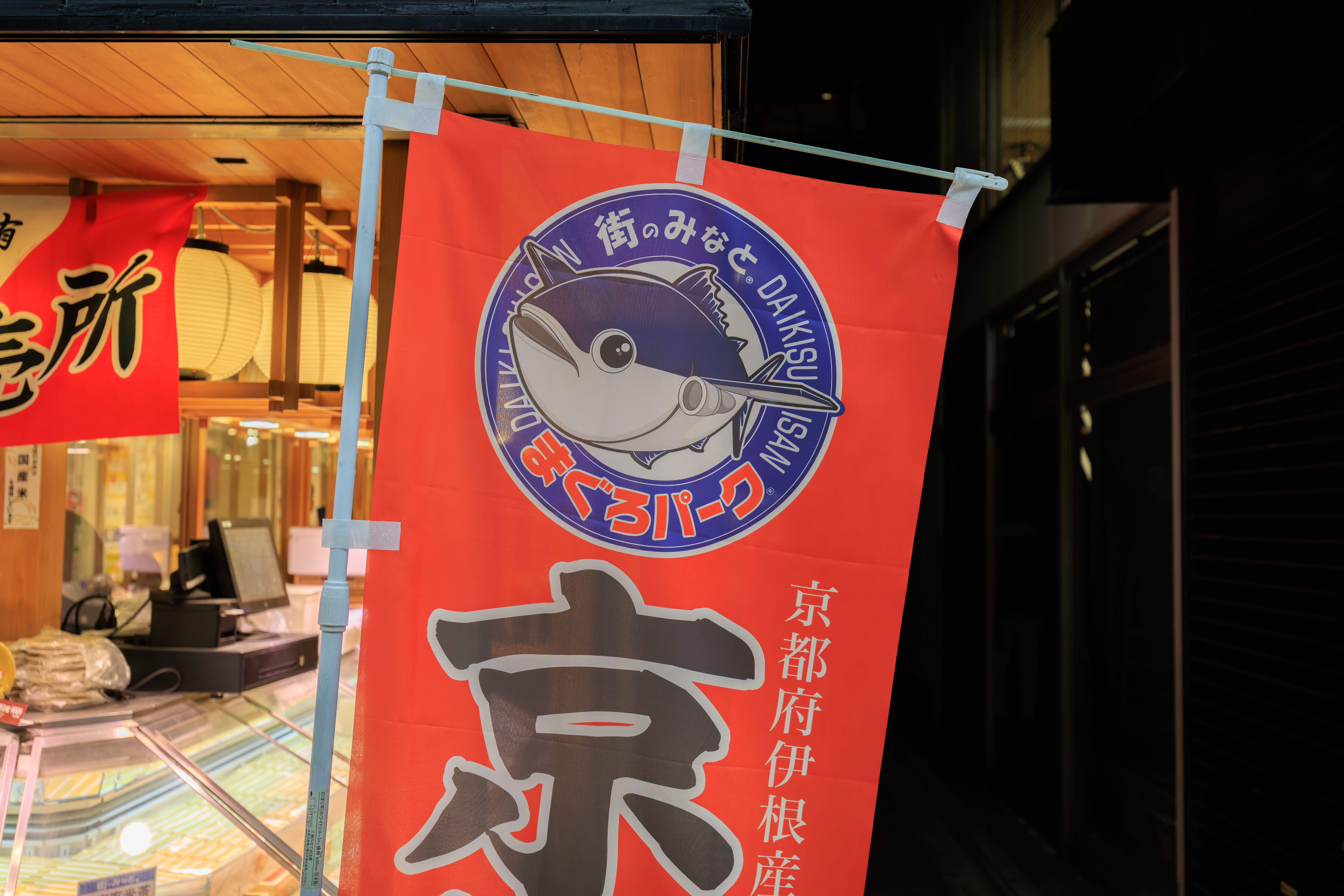
We passed by Daiki Suisan, a kaiten sushi restaurant from Osaka. Their logo is amusing as it features a fish with wings and a tiny little jet engine. Its very cute.
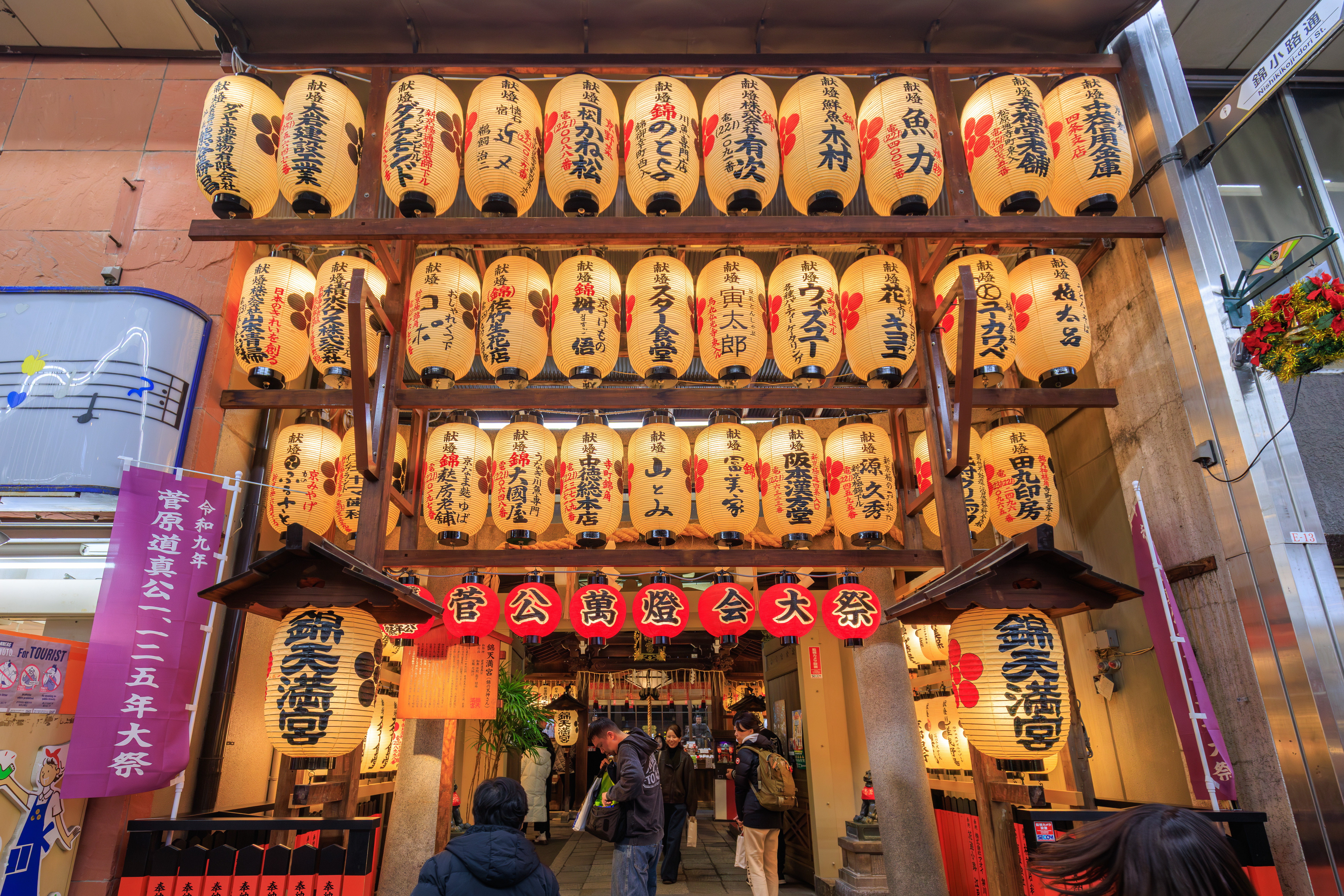
These lanterns and torii behind them mark the entrance to the 錦天満宮 Nishiki Tenmangu, a Shinto shrine.
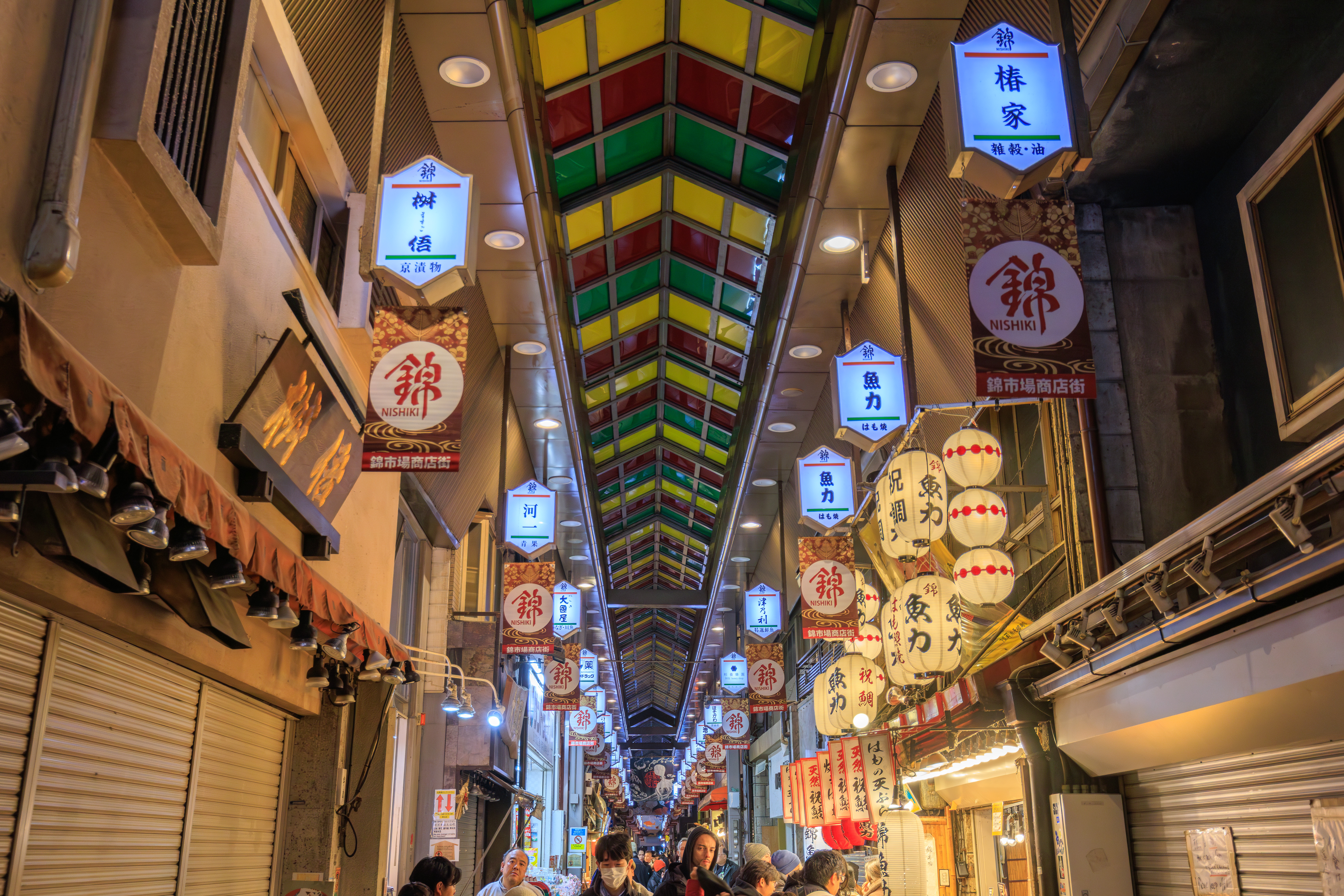
We turned to the west, opposite to the shrine, to walk through the famous 錦市場 Nishiki Market. Many of the shops here are closed in the evening and it isn’t as busy as other times of the day when it can be ridiculously packed.
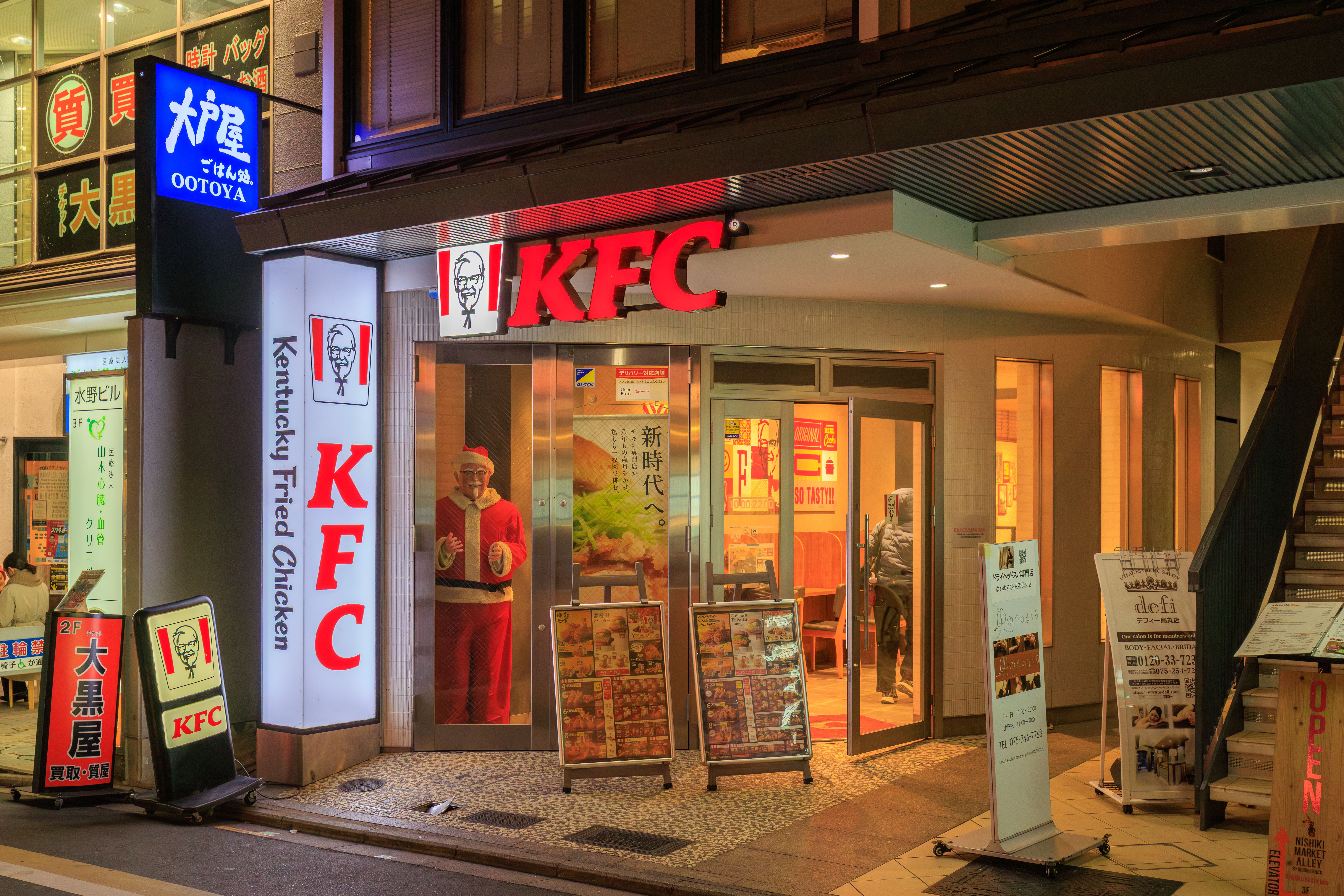
We continued walking to the west beyond the western end of the market. We passed by a KFC featuring the Colonel in Santa costume. I don’t think we’ve actually had KFC in Japan before. We’d guess its better than KFC back home. Curiosity only goes so far though as we kept on going.
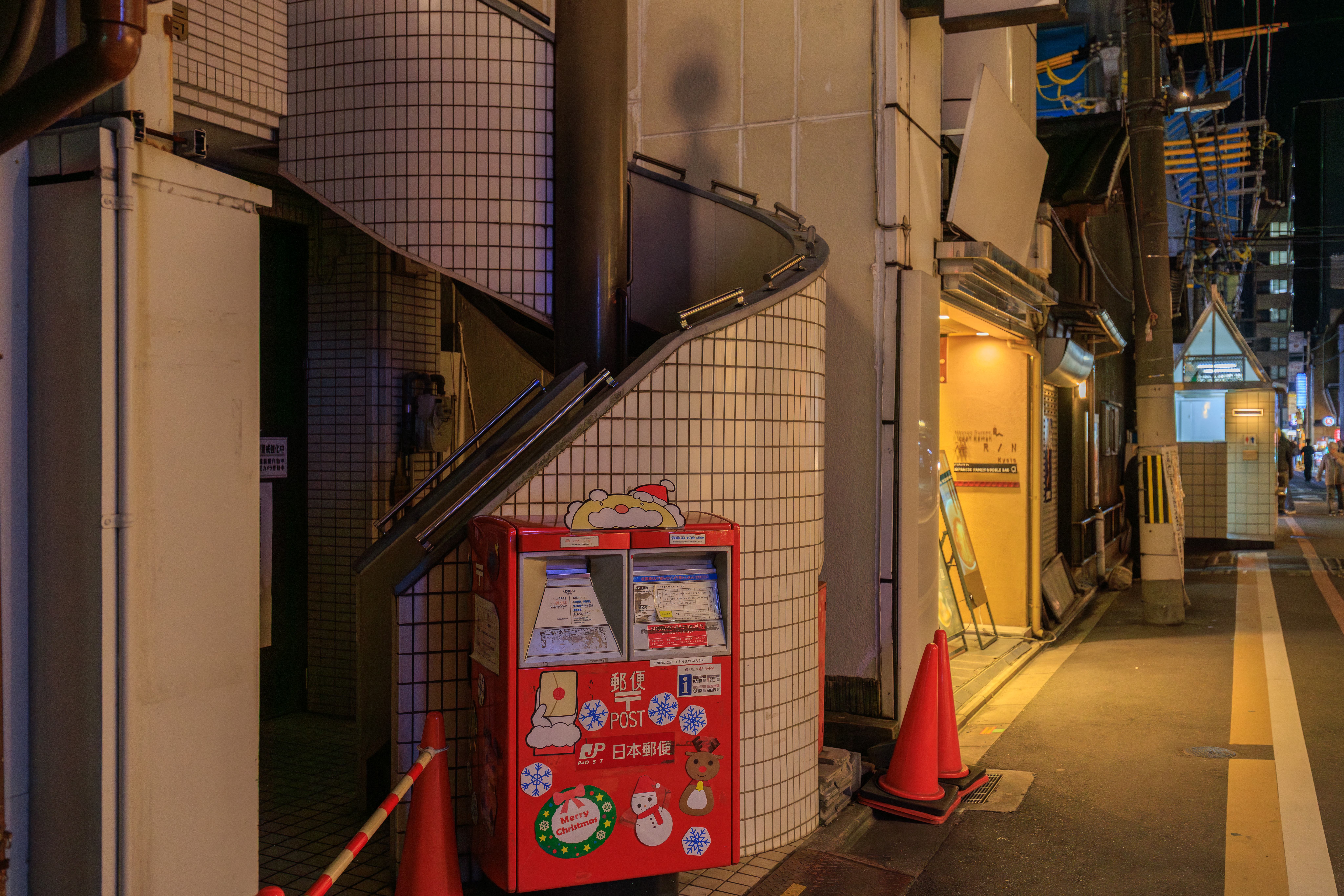
We walked past another Christmas decorated postbox.
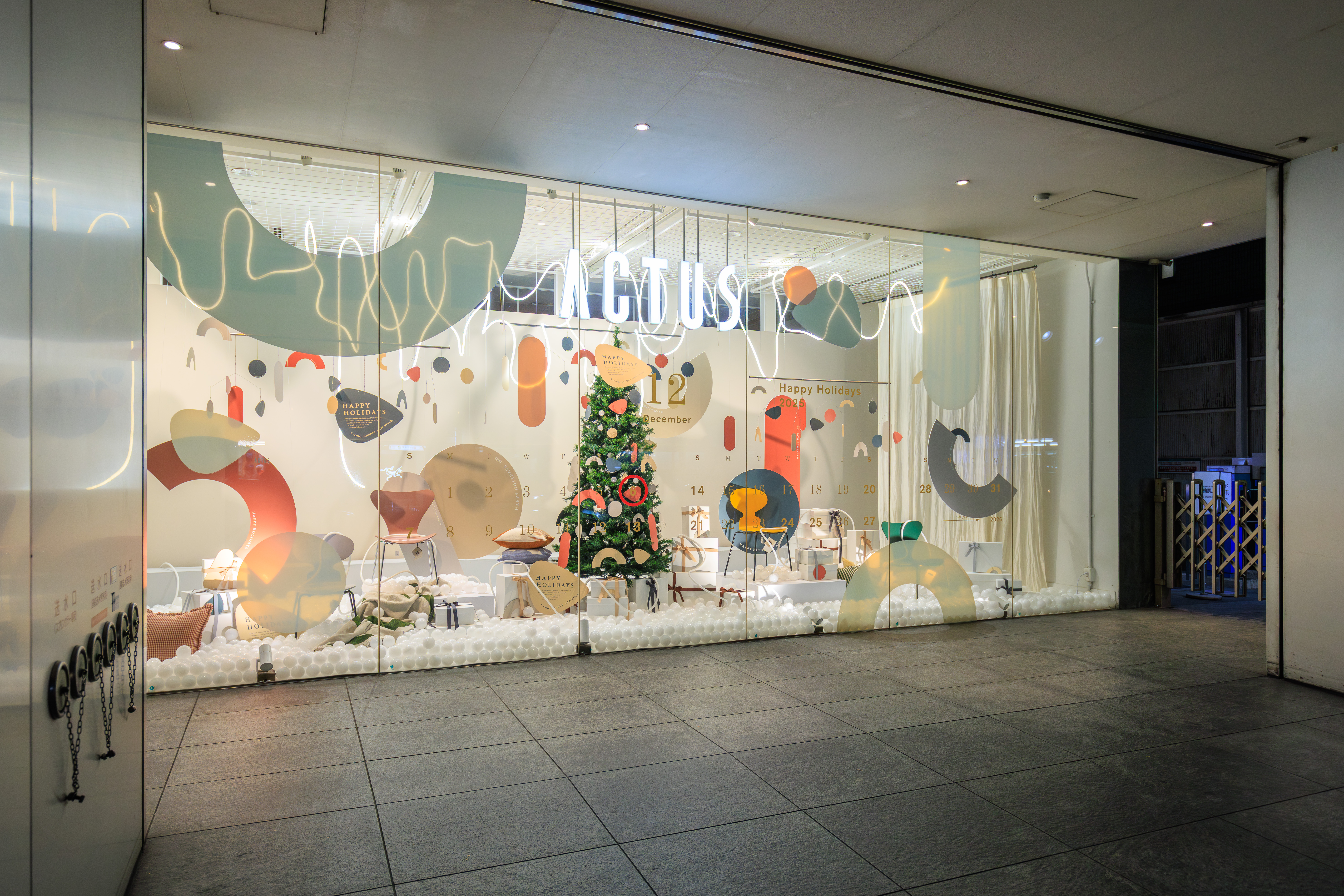
We continued walking another block to the west until we reached 烏丸通り Karasuma-dori, the street that the Courtyard is on. Turning to the south, we passed by this display which featured a December calendar, Christmas tree, and perhaps what one could creatively describe as snow balls.
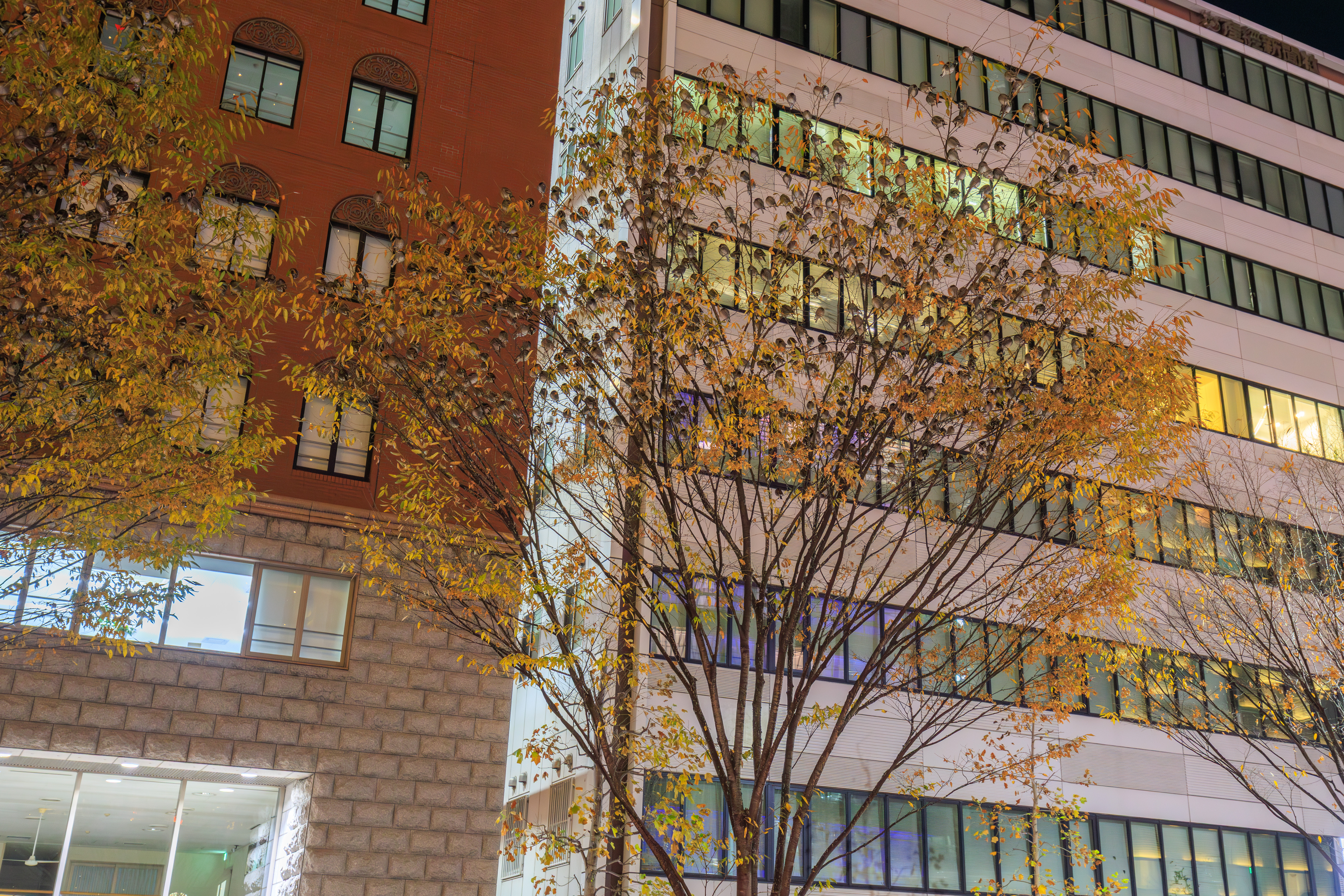
As we approached the Courtyard, we heard the sound of birds. We were absolutely surprised to find hundreds of small birds in the trees that line the street!
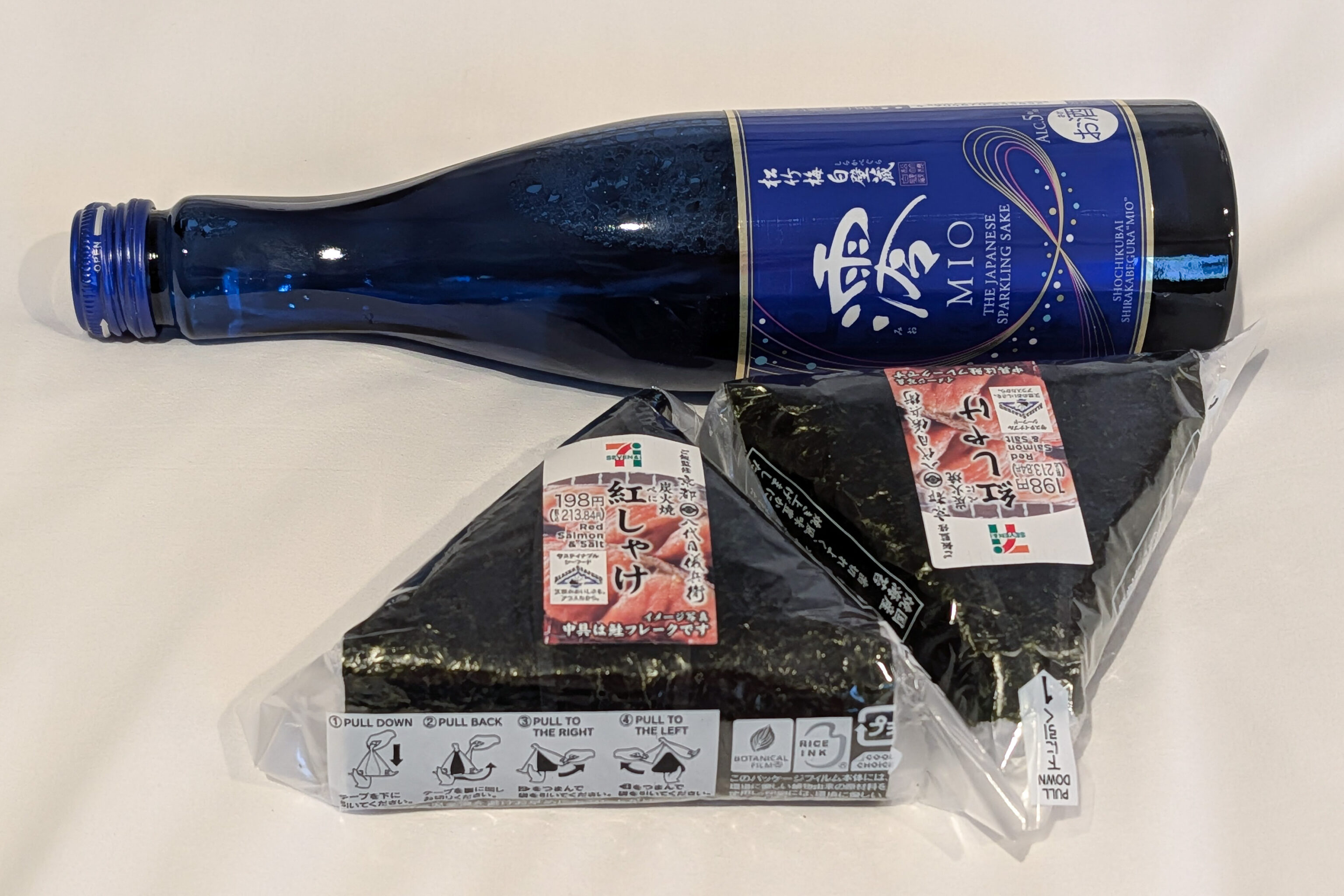
We visited a different 7-Eleven earlier on the way back to the hotel and bought two onigiris, both red salmon and salt, and a bottle of Mio as we were too full to eat a proper dinner. This location also didn’t have black pepper beef, which makes us wonder if it’s been discontinued!