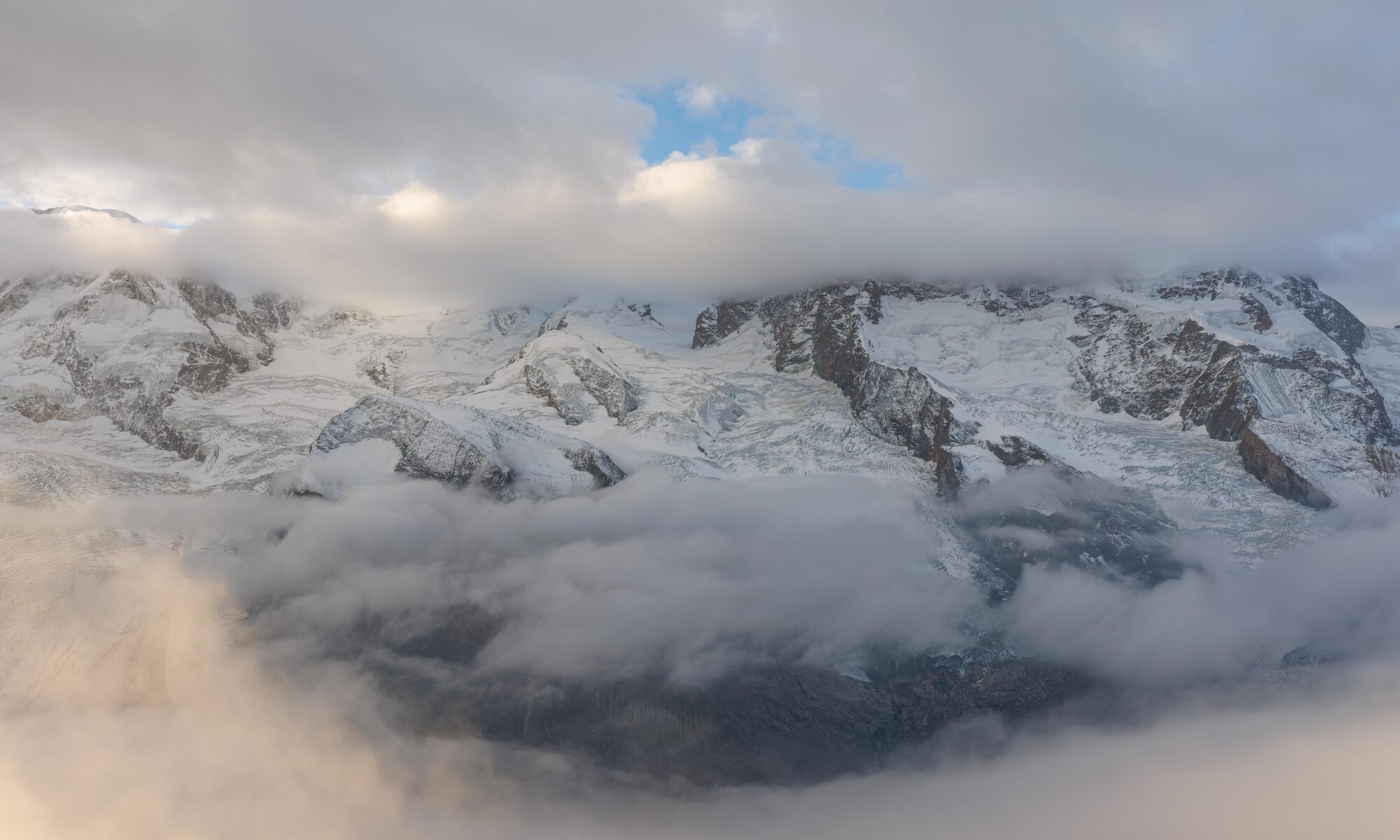
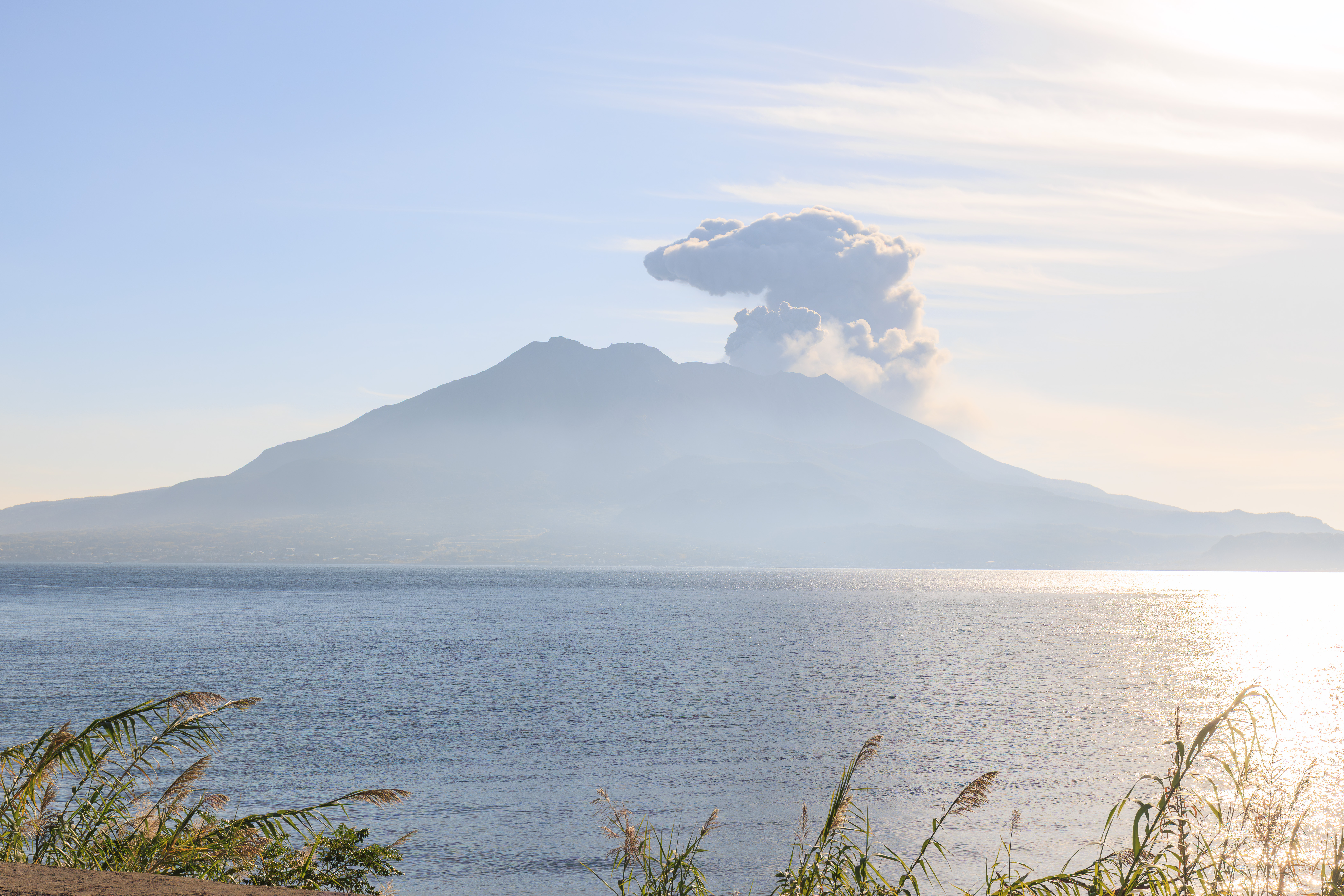
After waking up at the Grand Hyatt Fukuoka, we took the Shinkansen down to 鹿児島市 Kagoshima and then a local train to Sengan-en Station. From the station, we had a fantastic view of 桜島 Sakurajima, a nearby active volcano that was spewing an ash cloud at the time! We visited the nearby 仙巌園 Sengan-en and had lunch there. We visited 城山公園 Shiroyama Park before having dinner and returning to Hakata.
Morning
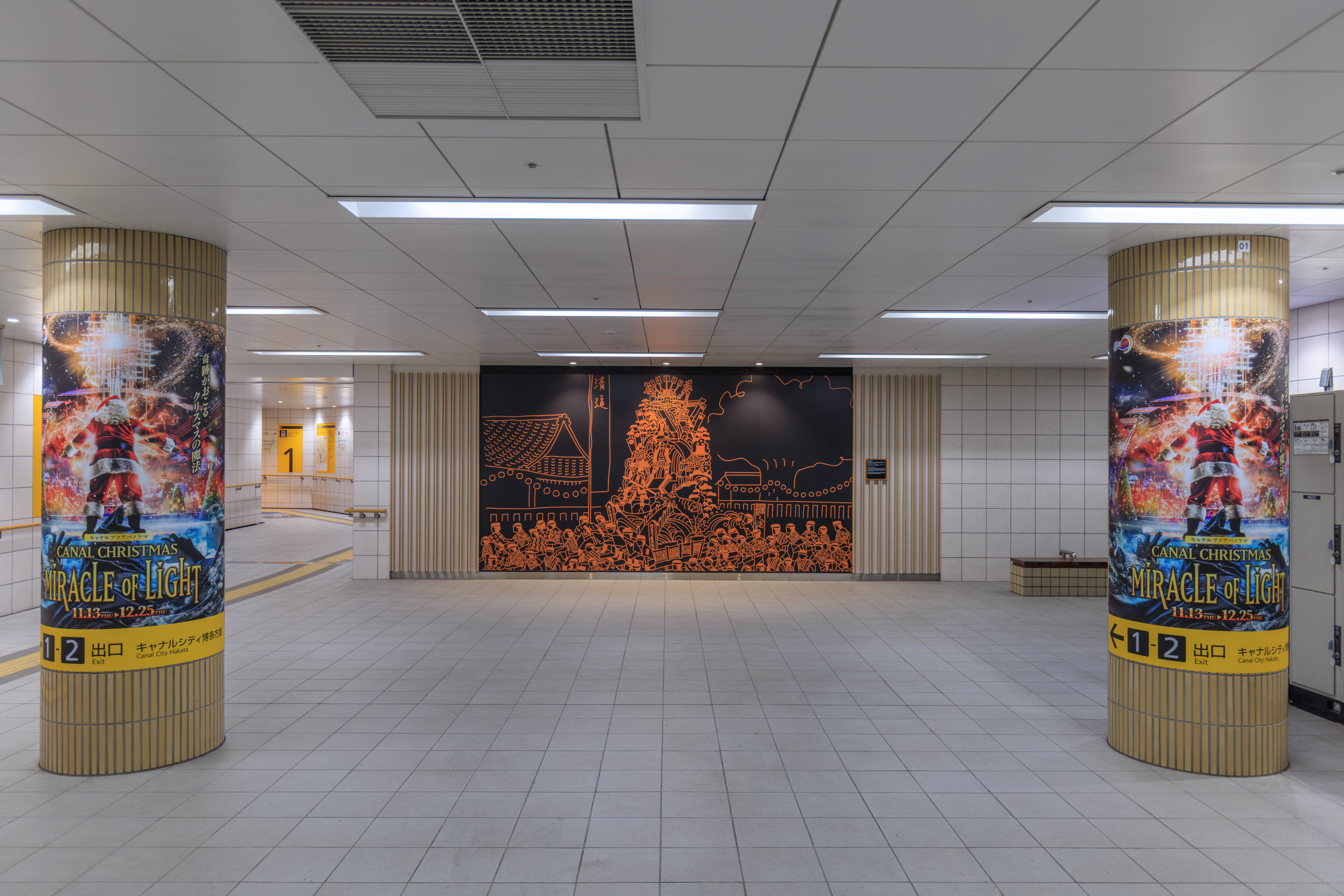
After waking up at the Grand Hyatt Fukuoka, we walked over to the Kushida Shrine subway station to take the subway to Hakata Station.
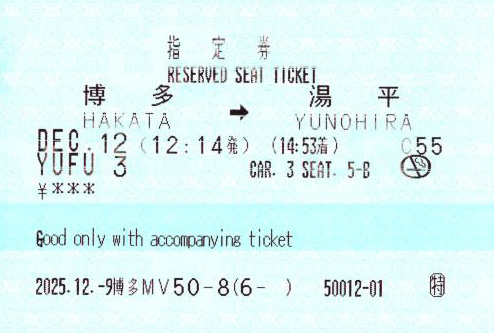
While at the station, we made seat reservations to go from Hakata to Yunohira on the 12th using our JR Kyushu rail pass.
Commentary
Actually, I’m not sure if we did this now or later in the day when we returned, but given how early we were, it makes sense that we did this now!
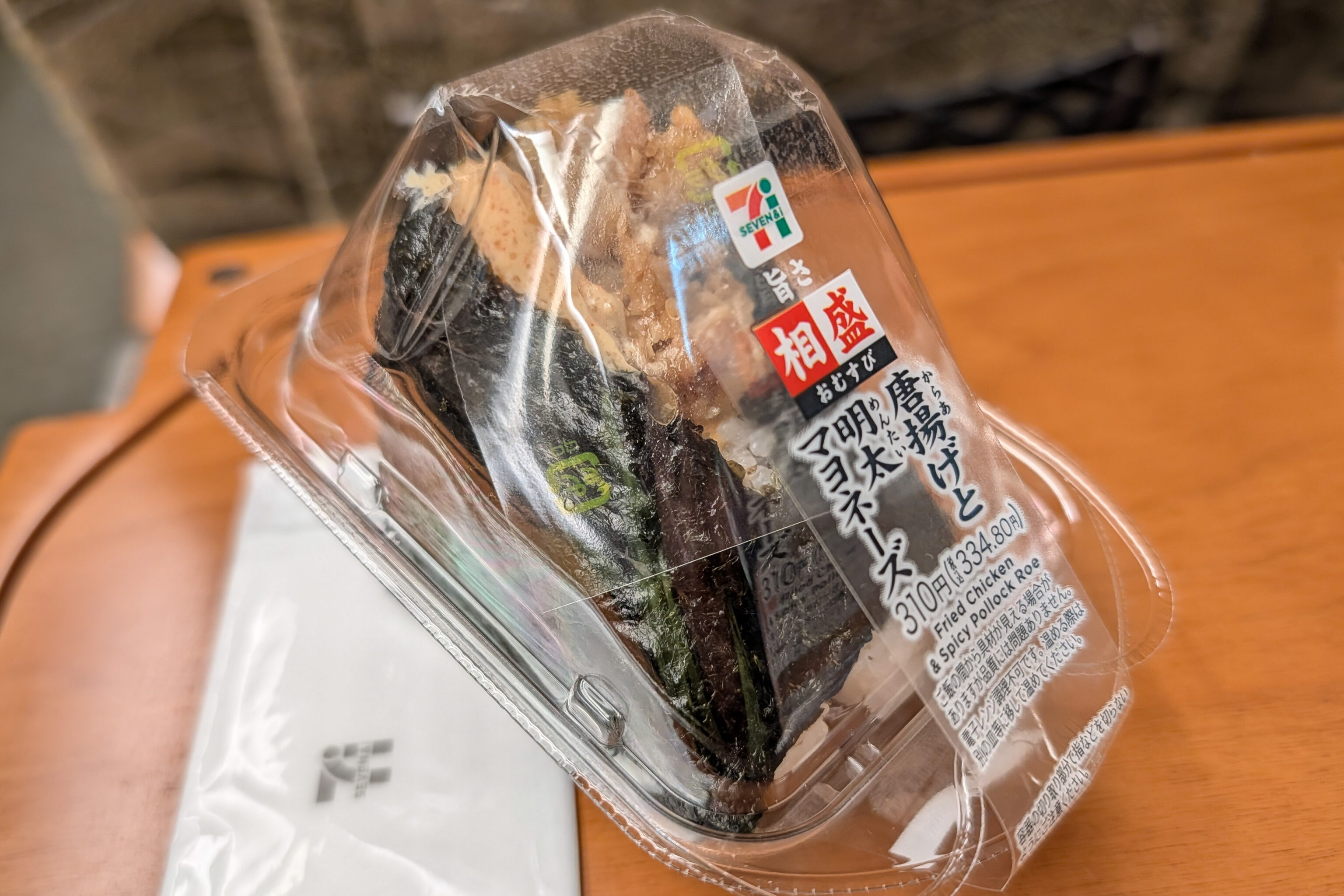
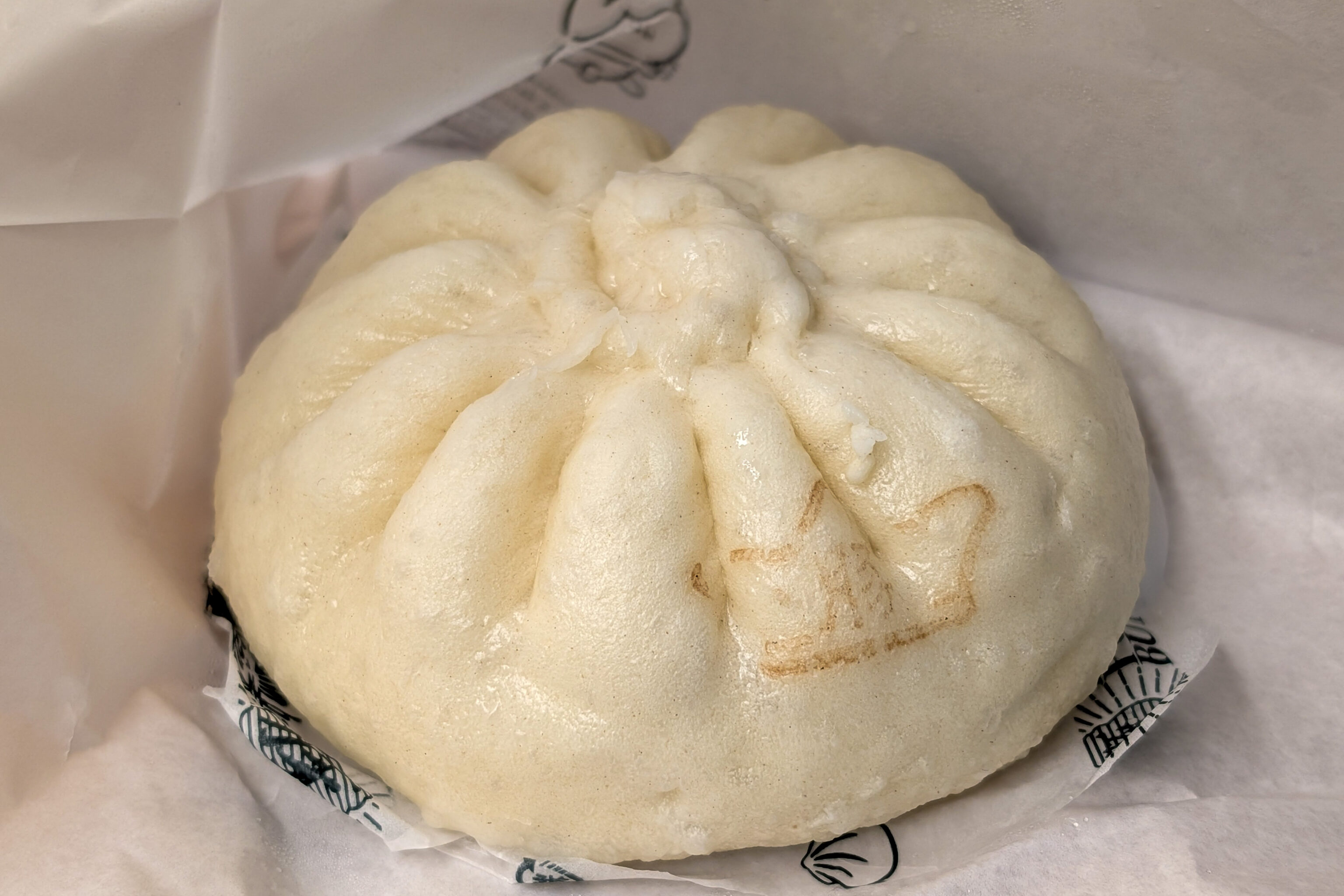
We bought an onigiri and nikuman for breakfast from 7-Eleven to eat on the Shinkansen down to Kagoshima. We were able to get on very early and actually finished before it left the station!
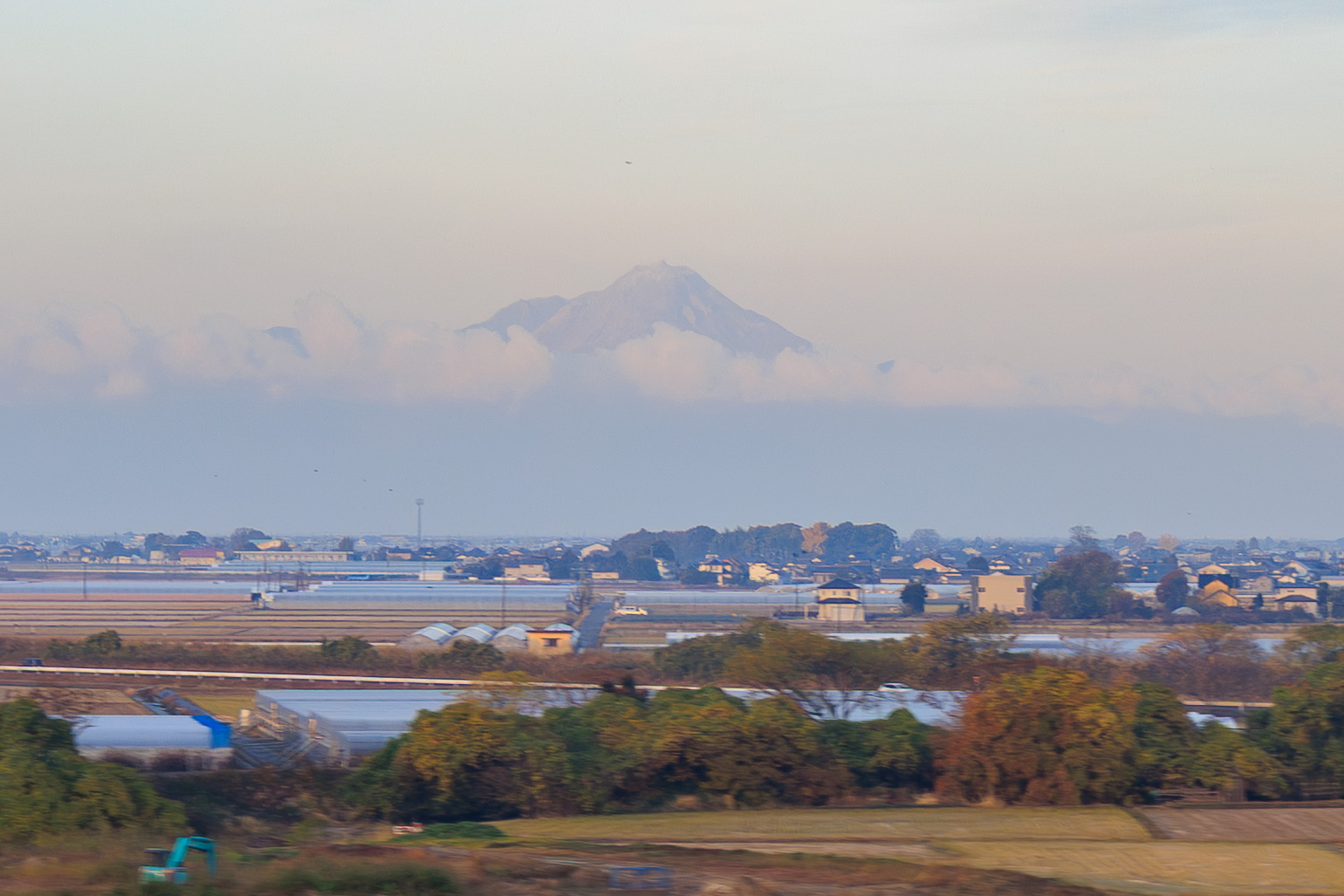
We had seats on the right side of the train, thus facing west and avoiding the morning Sun from the east. This mountain seems like it is 雲仙岳 Unzendake (Mt. Unzen), an active volcano. It was responsible for Japan’s deadliest volcanic disaster in 1792 with roughly 15,000 killed. It most recently had a large eruption in 1991.
Kagoshima
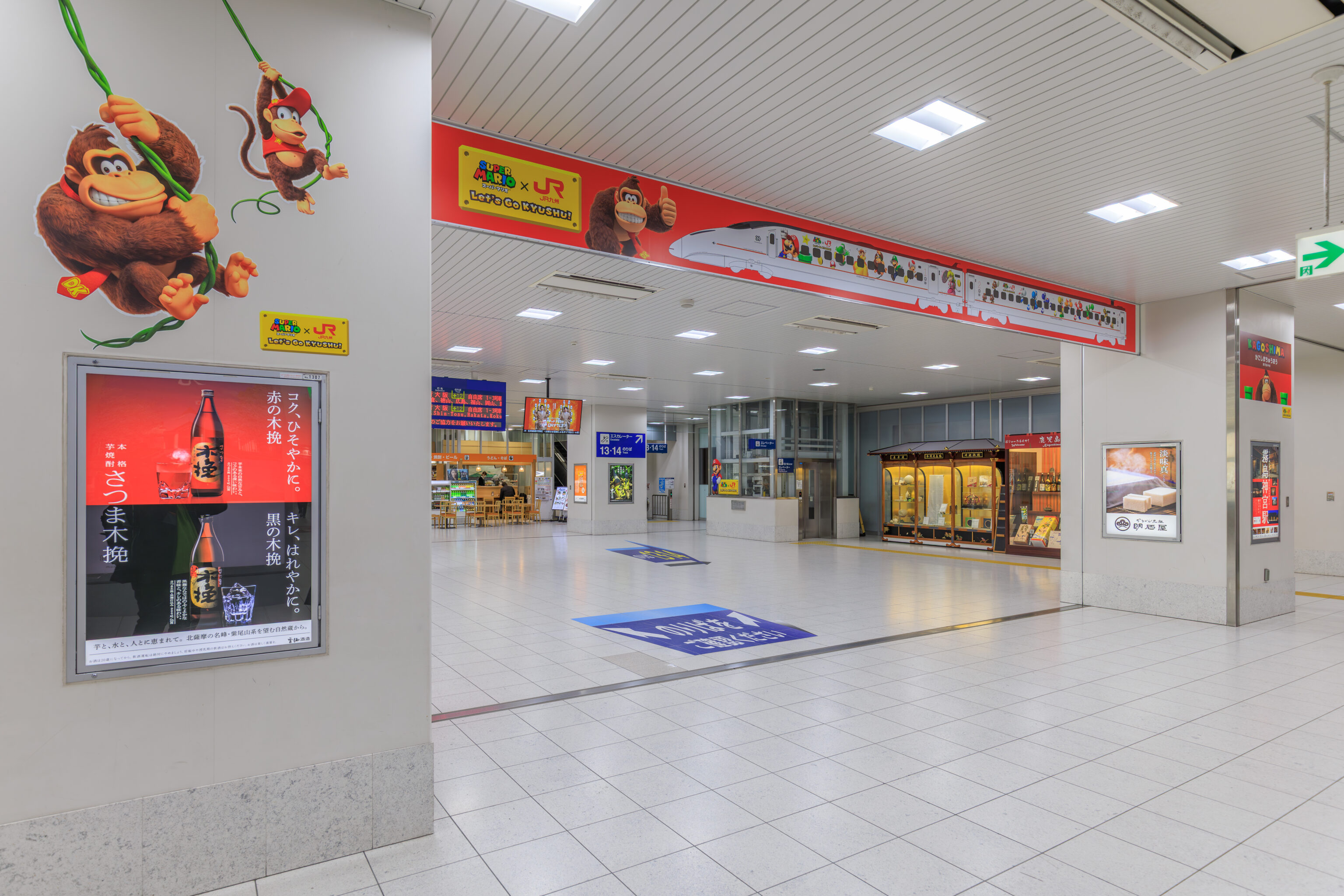
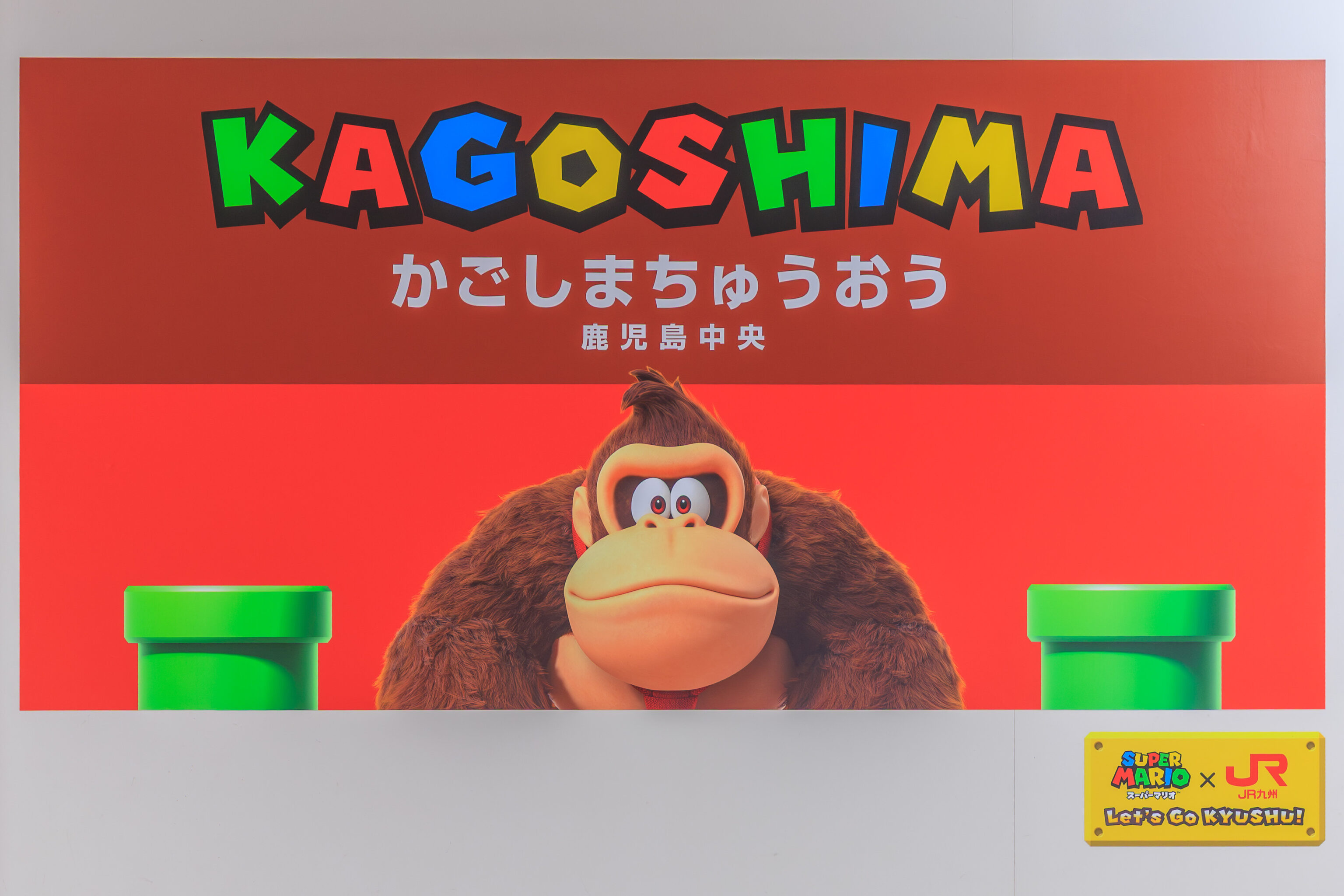
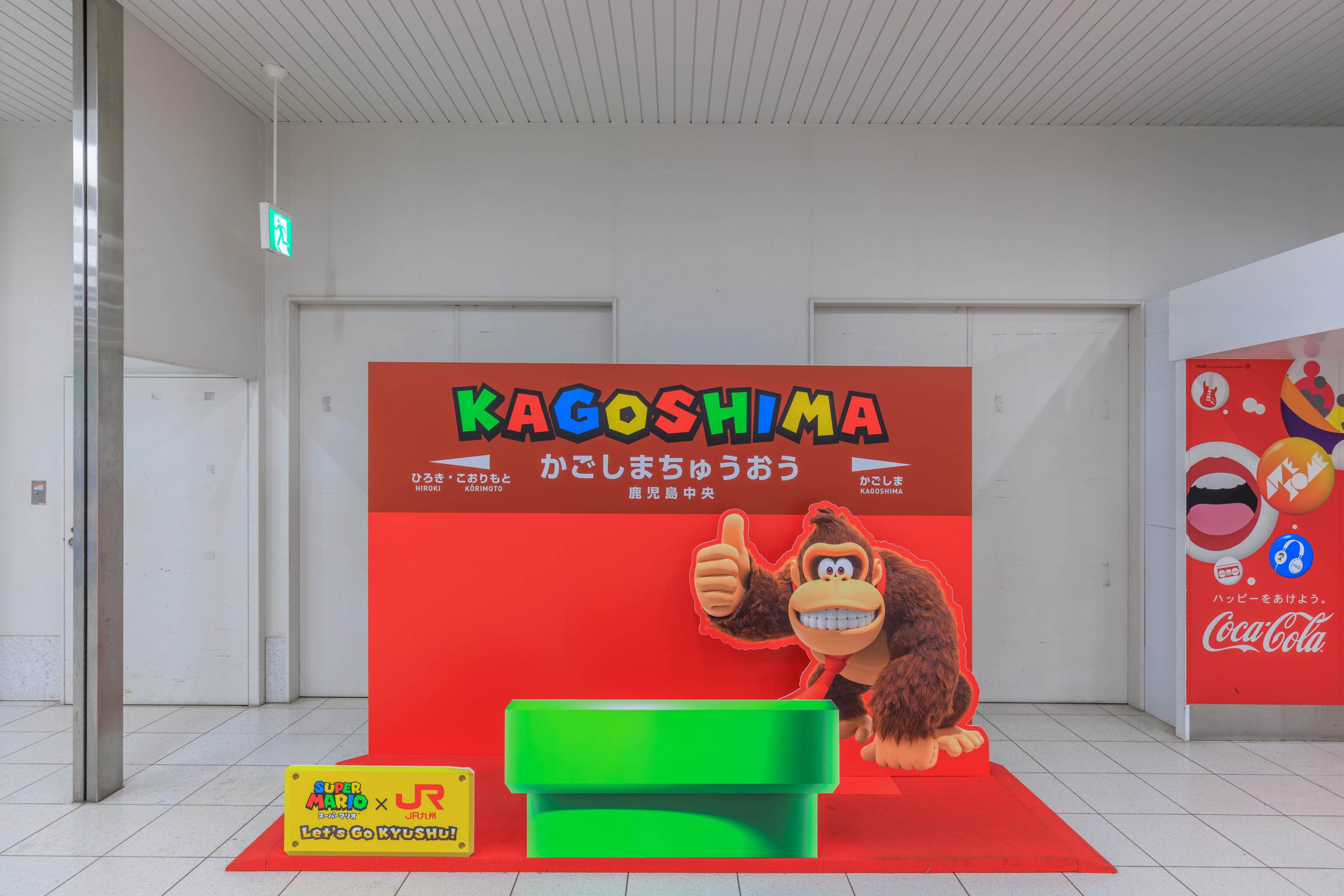
We arrived at 鹿児島市 Kagoshima‘s Kagoshima-chuo Station at around 8:30am, a trip of about two hours. There were prominent displays in the station for the Super Mario x JR Kyushu Lets go Kyushu collab featuring Donkey Kong.
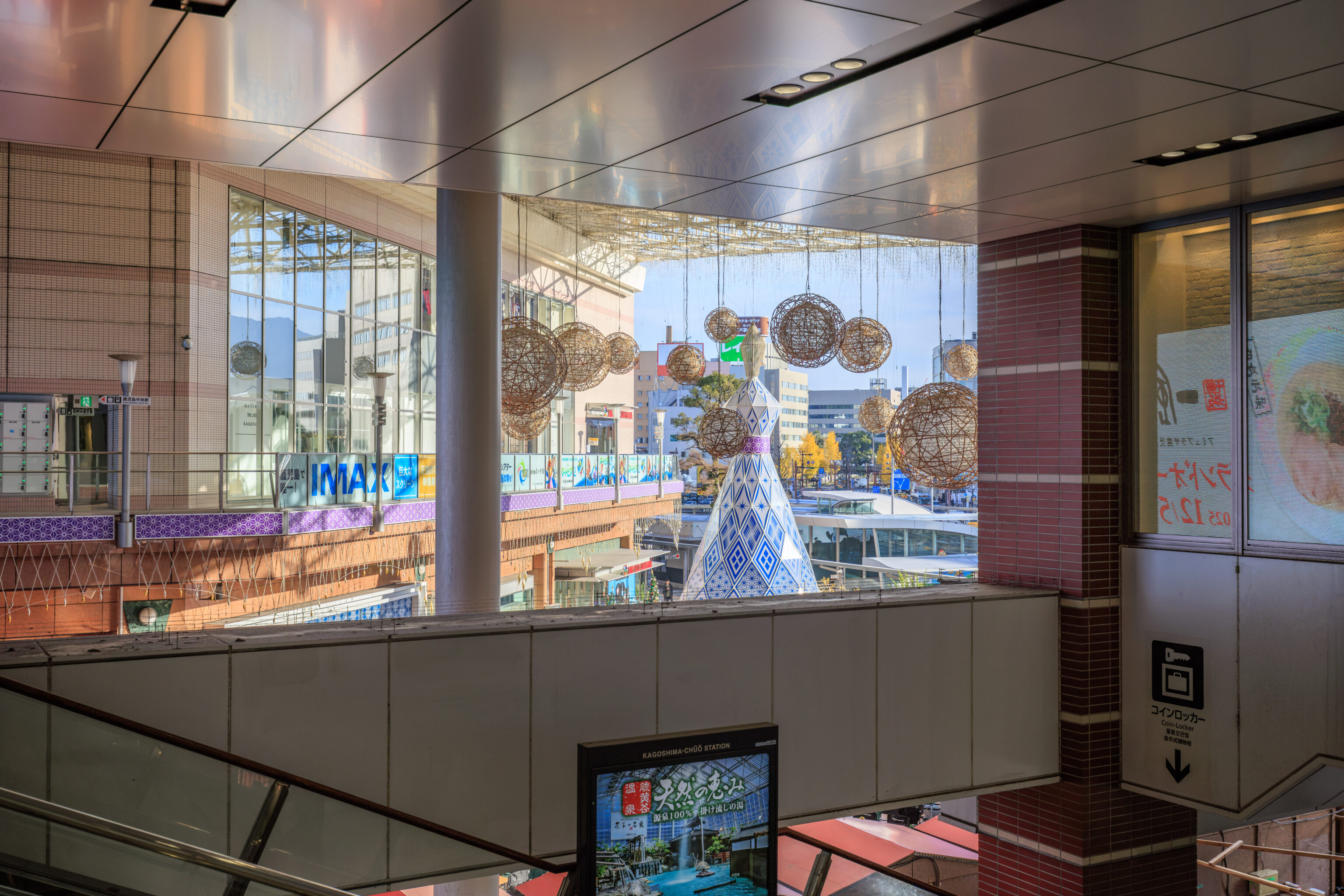
We could see from the station that there was a Christmas display outside.
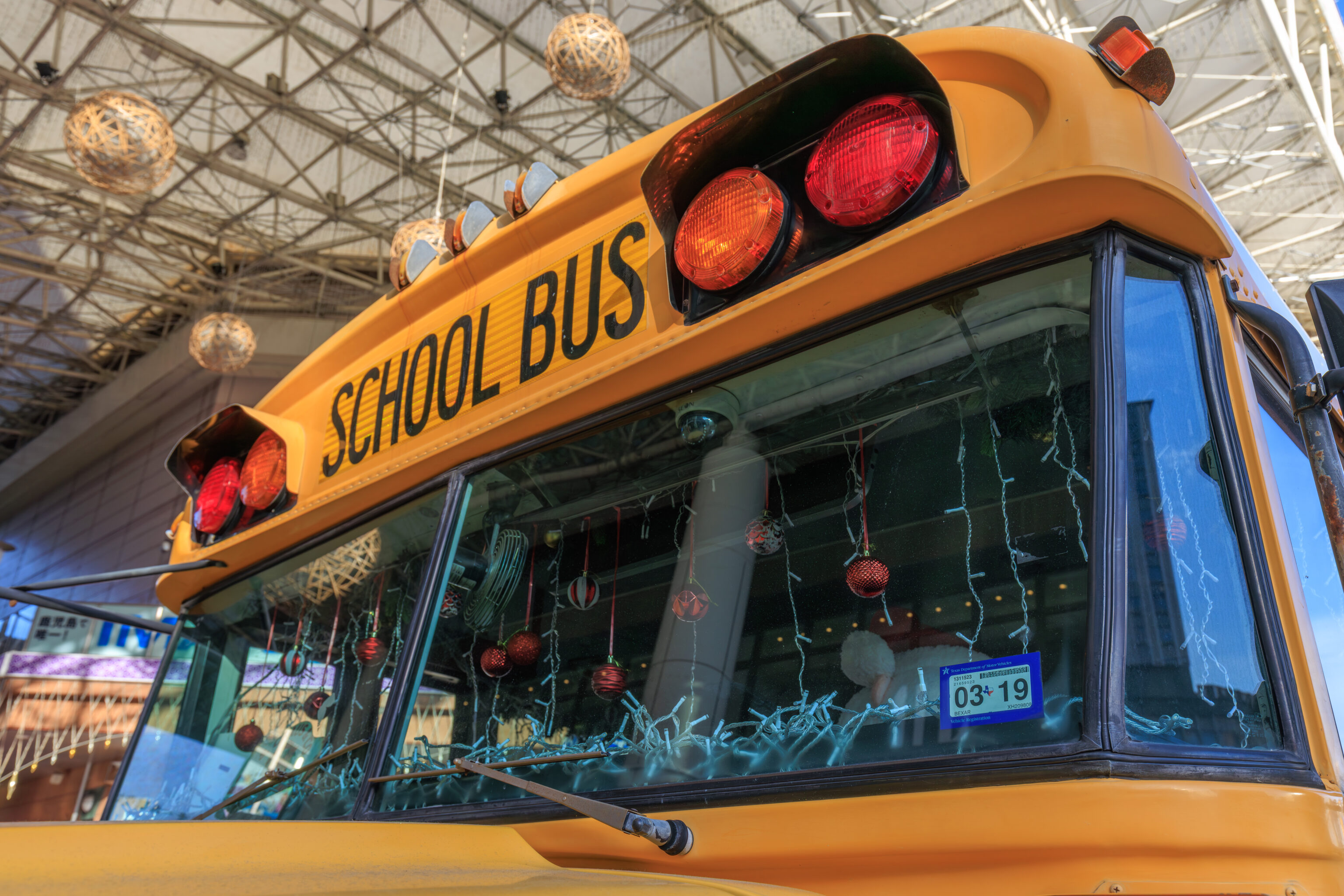
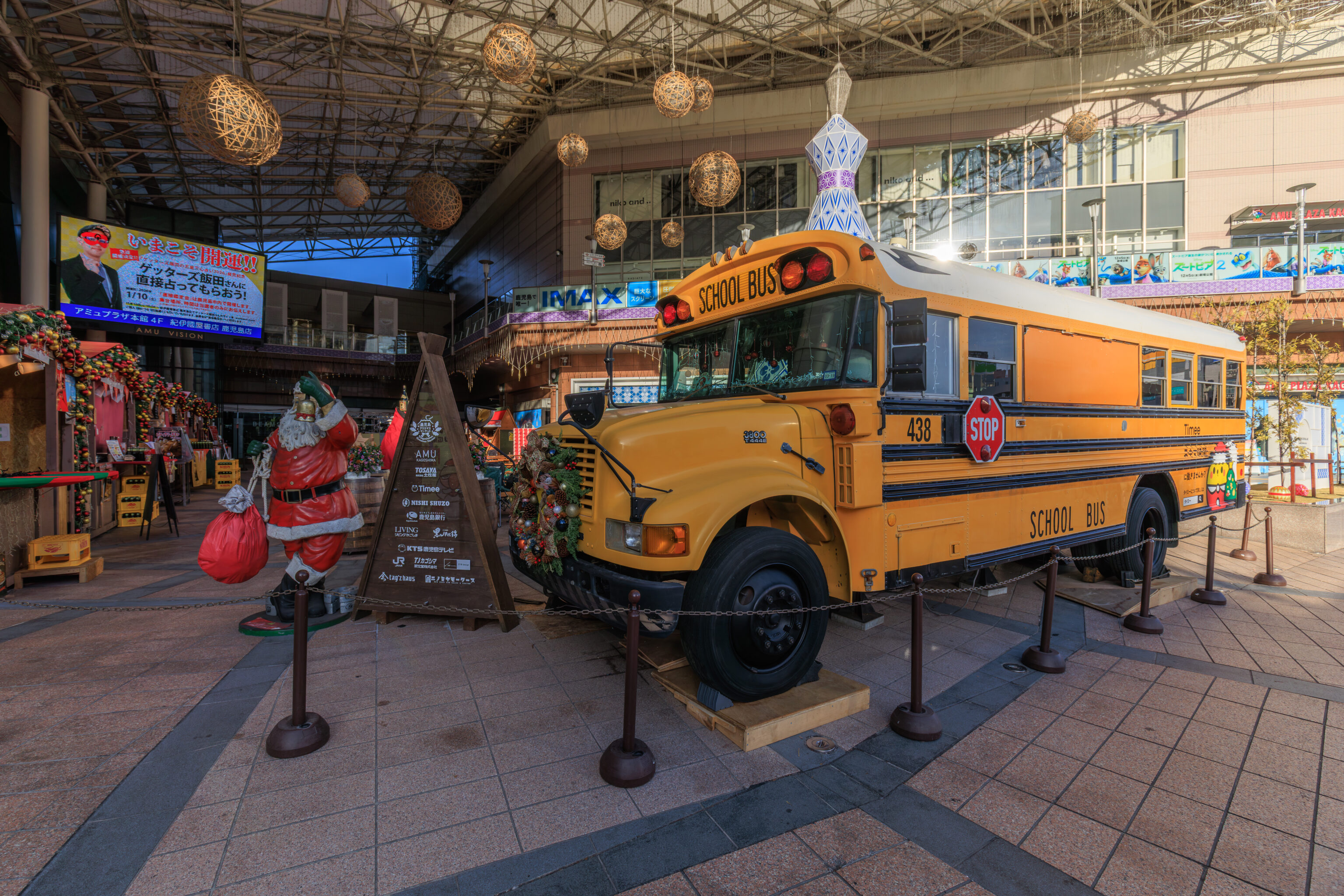
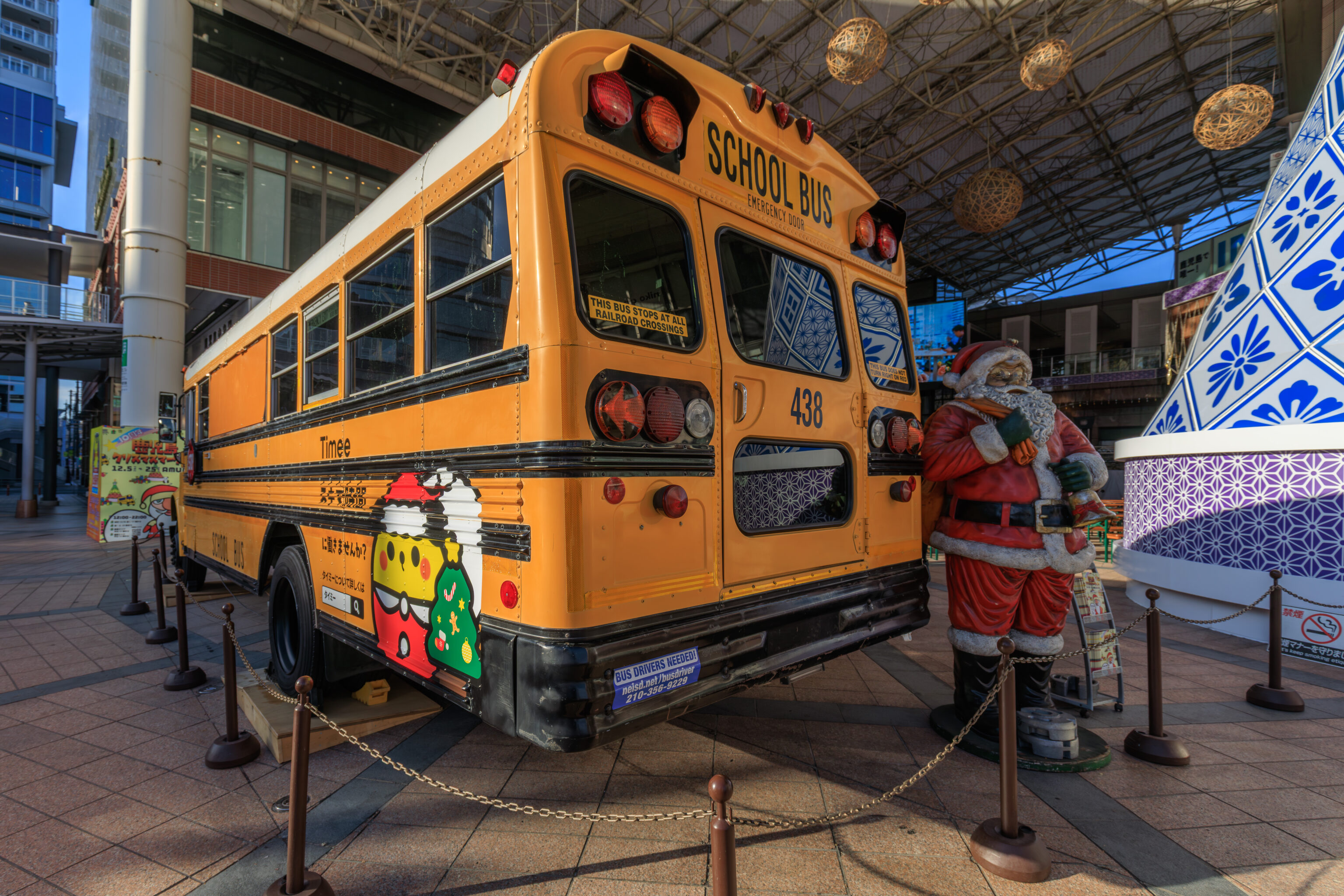
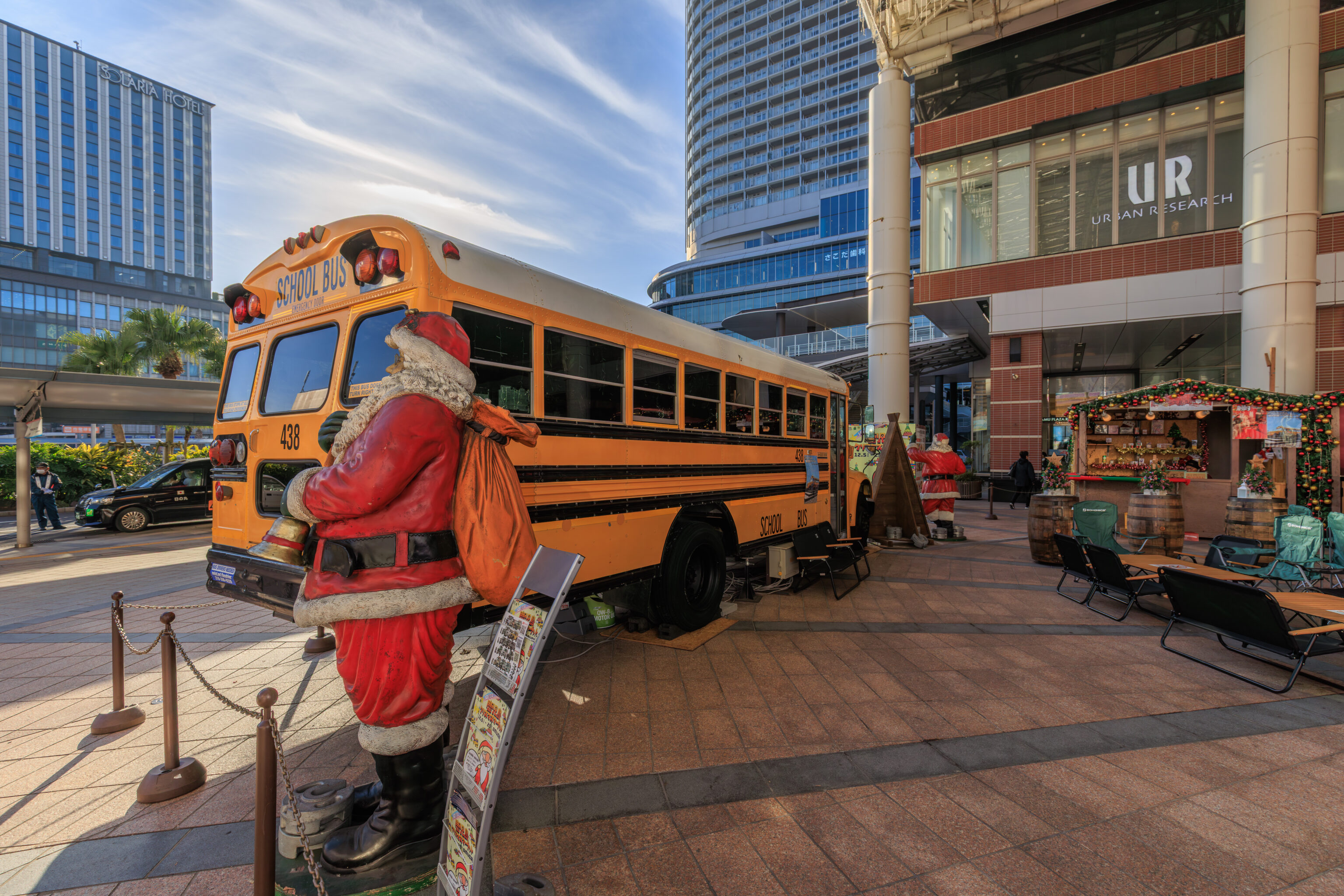
We were incredibly surprised to see an actual American school bus outside! This was the real deal and still held its Texas registration sticker! The name of the operator seems to have been painted over but a bus drivers needed sticker on the rear bumper indicated that it belonged to the North East Independent School District of San Antonio. How did this bus end up here?
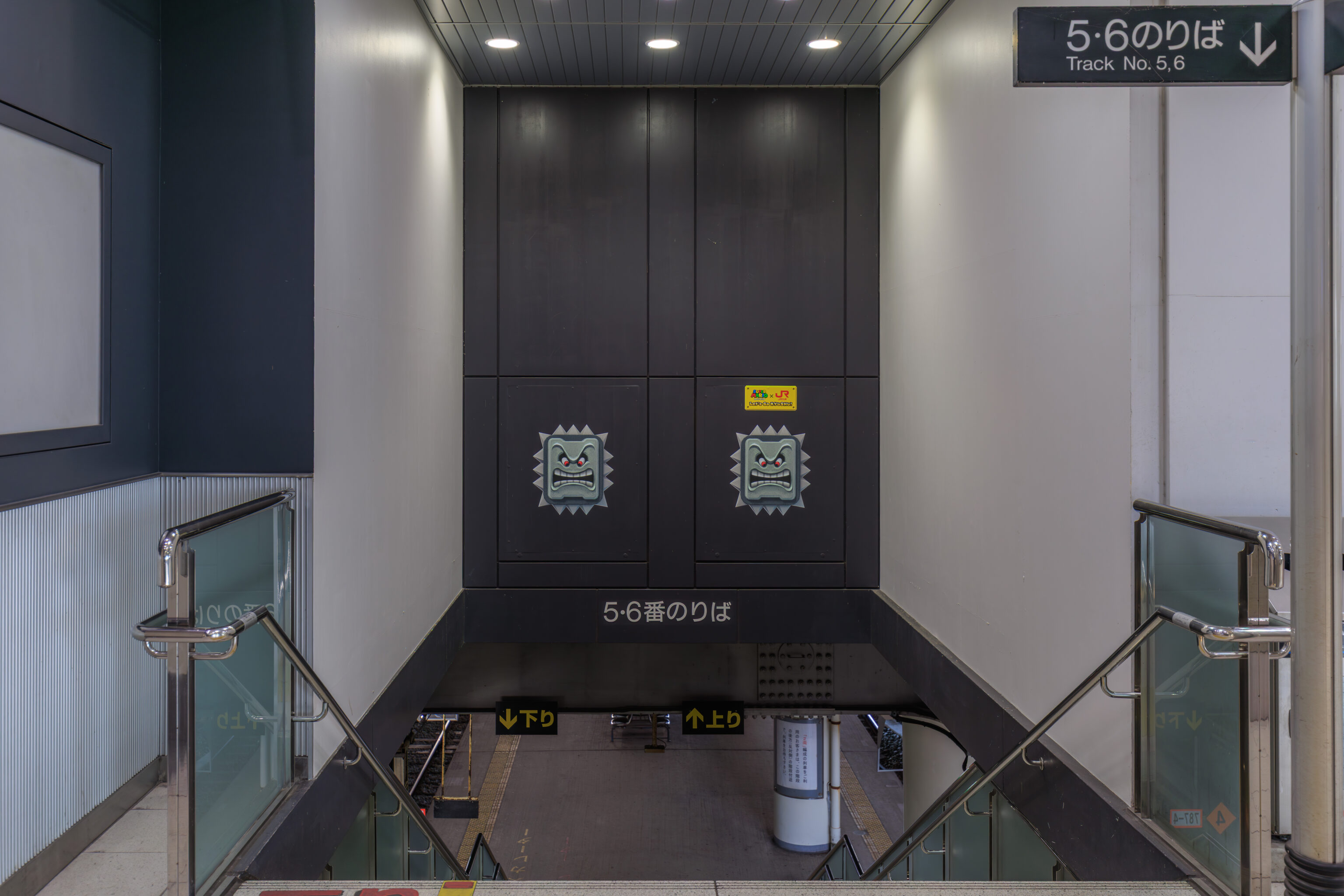
We went to one of the conventional rail platforms to catch a local train to Sengan-en Station on the northeast side of the city.
Sengan-en
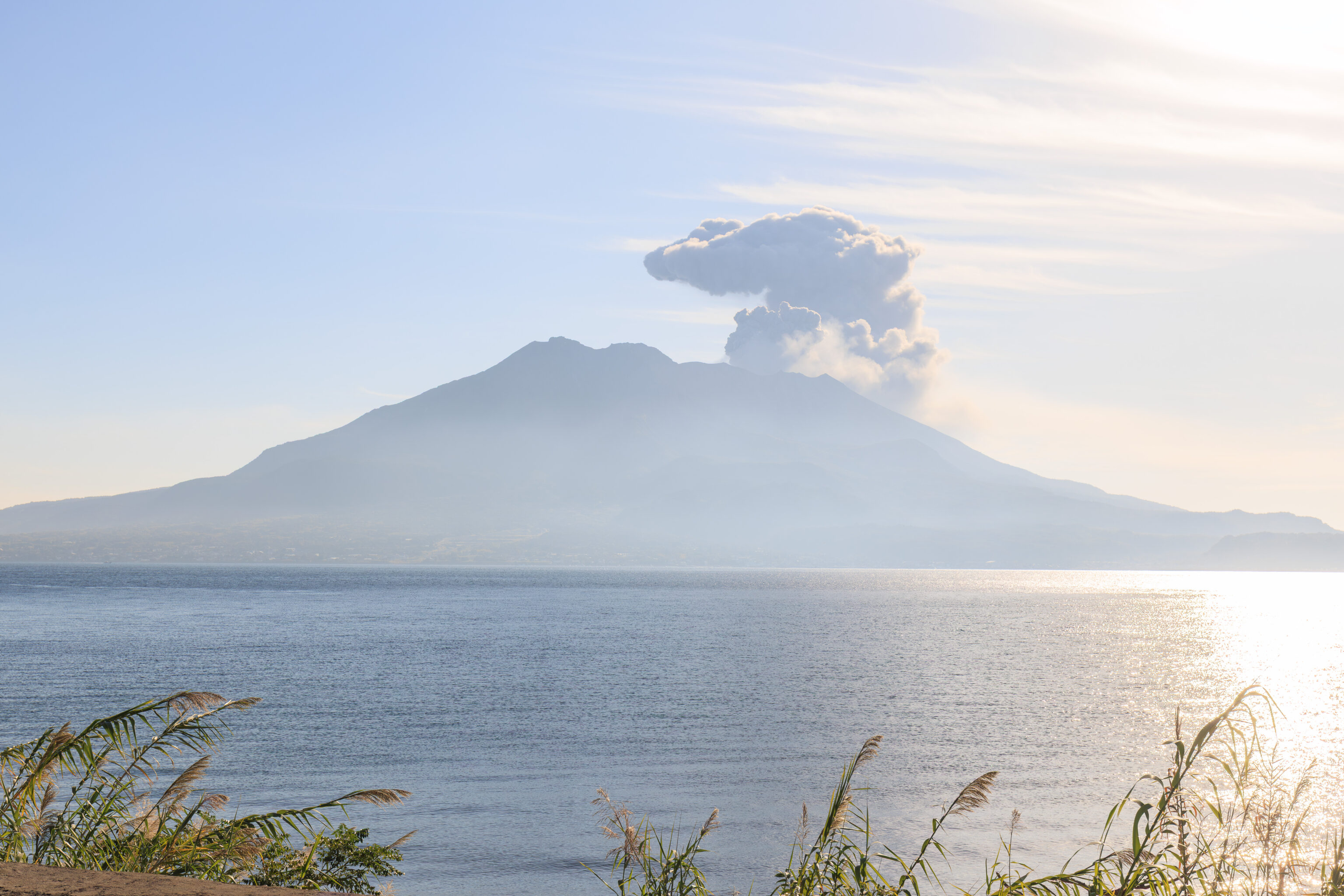
Upon arriving at Sengan-en Station, we were treated to a view of 桜島 Sakurajima with a plume of volcanic ash being ejected! Sakurajima is an active volcano just a few kilometers away from central Kagoshima. The number of eruptions varies but it seems to be between 100 to 200 times per year in recent years and has been as high as 1,000 per year!
The name Sakurajima suggests that it is an island as it translates to Sakura Island. It was an island but became connected to the rest of Kyushu after an eruption in 1914.
FVFE01 RJTD 090053
VA ADVISORY
DTG: 20251209/0053Z
VAAC: TOKYO
VOLCANO: SAKURAJIMA (AIRA CALDERA) 282080
PSN: N3136 E13039
AREA: JAPAN
SOURCE ELEV: 1117M AMSL
ADVISORY NR: 2025/474
INFO SOURCE: JMA HIMAWARI-9
ERUPTION DETAILS: ERUPTED AT 20251209/0002Z FL090 EXTD SE
OBS VA DTG: 09/0030Z
OBS VA CLD: SFC/FL090 N3136 E13039 - N3135 E13047 - N3130 E13052 -
N3127 E13048 MOV SE 30KT
FCST VA CLD +6 HR: 09/0630Z SFC/FL080 N3012 E13404 - N3000 E13358 -
N3045 E13129 - N3055 E13134
FCST VA CLD +12 HR: 09/1230Z SFC/FL070 N2900 E13618 - N2839 E13614 -
N2855 E13316 - N2936 E13131 - N2951 E13139 - N2911 E13321
FCST VA CLD +18 HR: NO VA EXP
RMK: NIL
NXT ADVISORY: 20251209/0600Z=
– Japan Meteorological Agency, Tokyo Volcanic Ash Advisory Center, https://www.data.jma.go.jp/vaac/data/TextData/2025/20251209_28208001_0474_Text.html
Sakurajima reupted at 0002Z. Japan Standard Time is UTC+9, meaning it erupted at 9:02am. The photo above was taken at 9:08am, meaning it erupted while we were on the train between Kagoshima and Sengan-en.
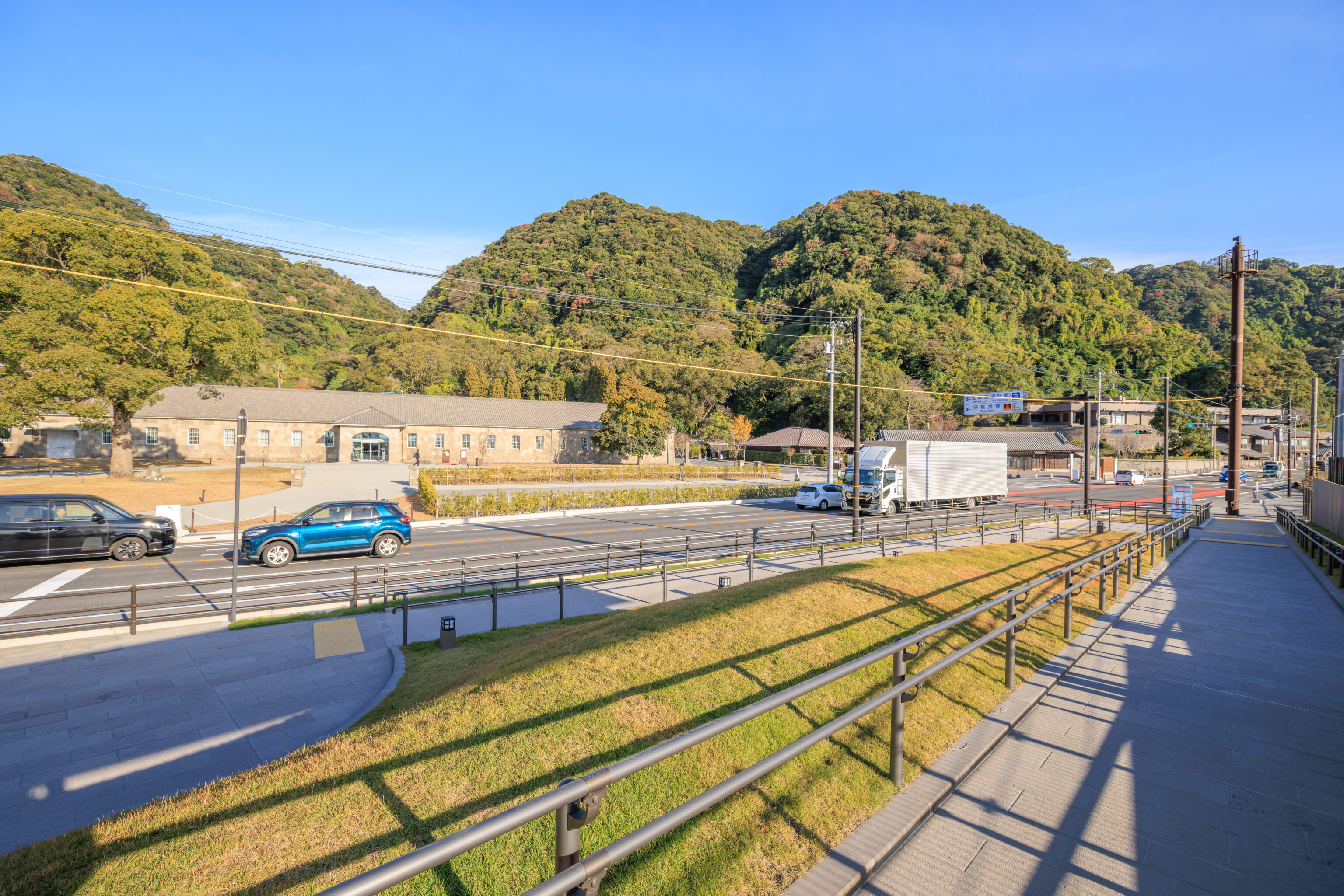
Sengan-en Station is, not surprisingly, right by 仙巌園 Sengan-en. Sengan-en is the former residence of the Shimazu clan. They were the daimyo in southern Kyushu and played important roles in Japanese history. The Shimazu family still exists today. There is even a Shimadzu Corporation, although it isn’t directly related to the family. The story is that the ancestor of the founder of the Shimadzu Corporation was granted the right to use the family name and logo by Yoshihiro Shimazu.
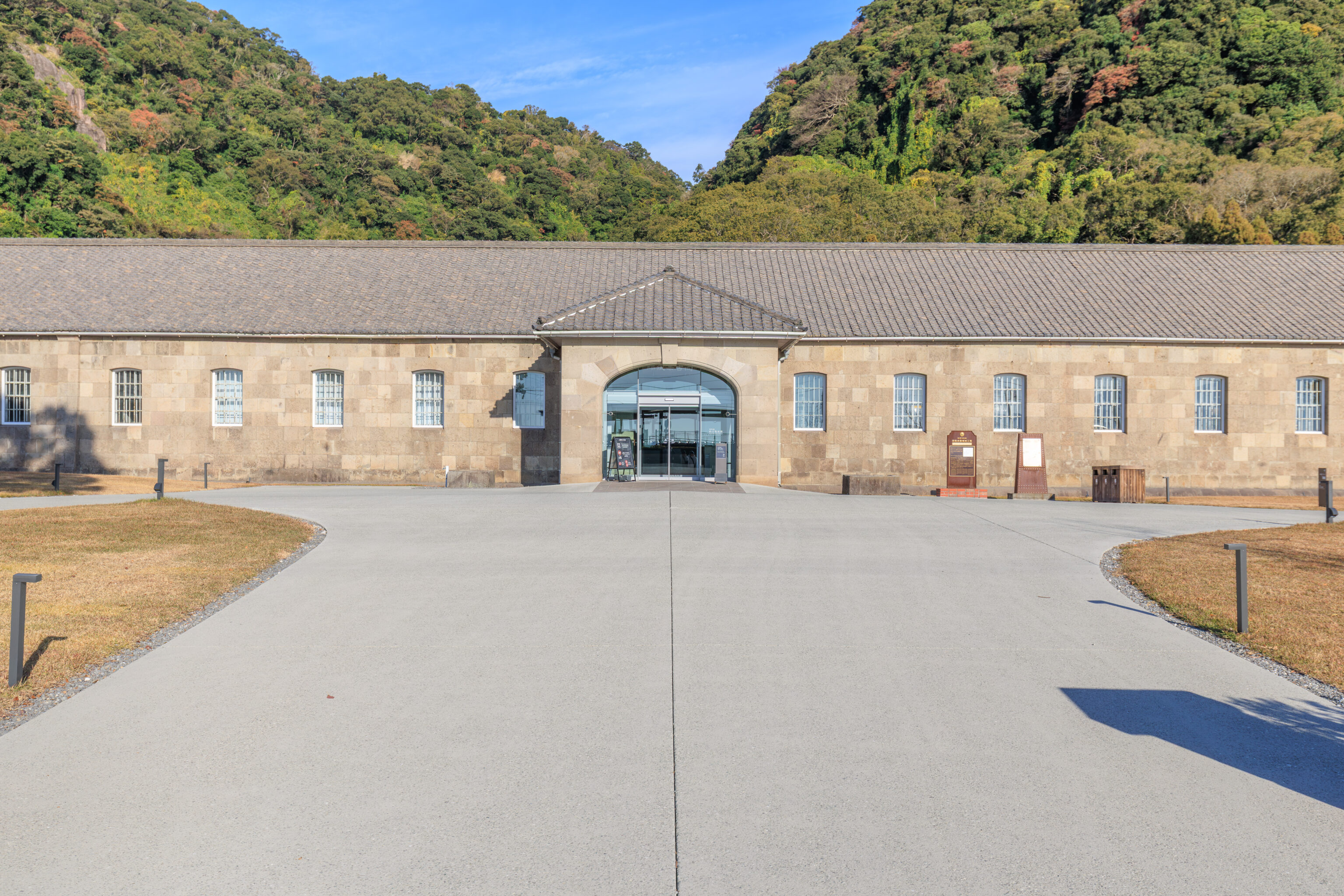
We crossed the street and walked past the 尚古集成館 Shoko Shuseikan Museum. The museum building is the oldest Western stone factory building in Japan and was built in 1865.
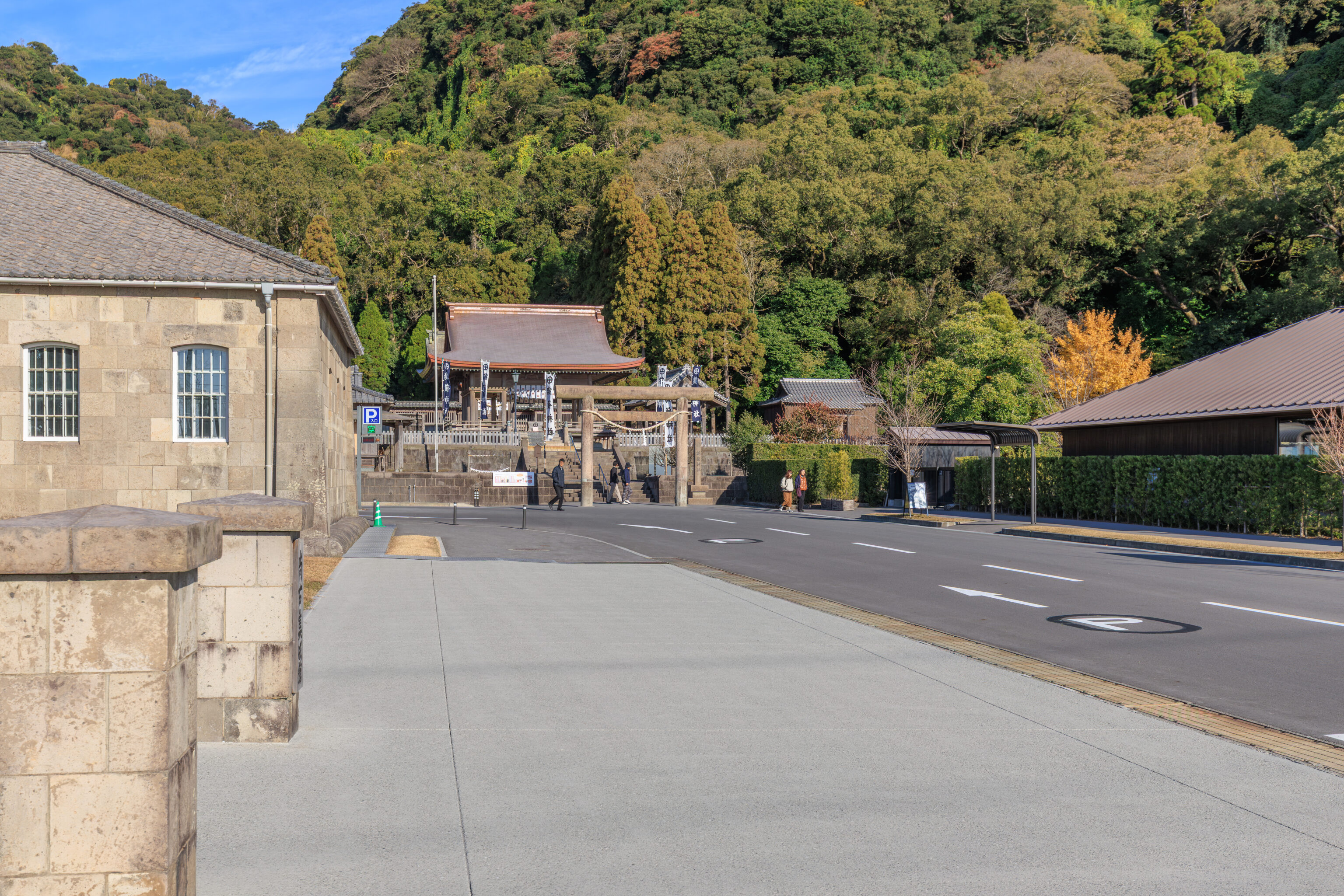
We walked past the 鶴嶺神社 Tsurugane-jinja on our way to the Sengan-en entrance.
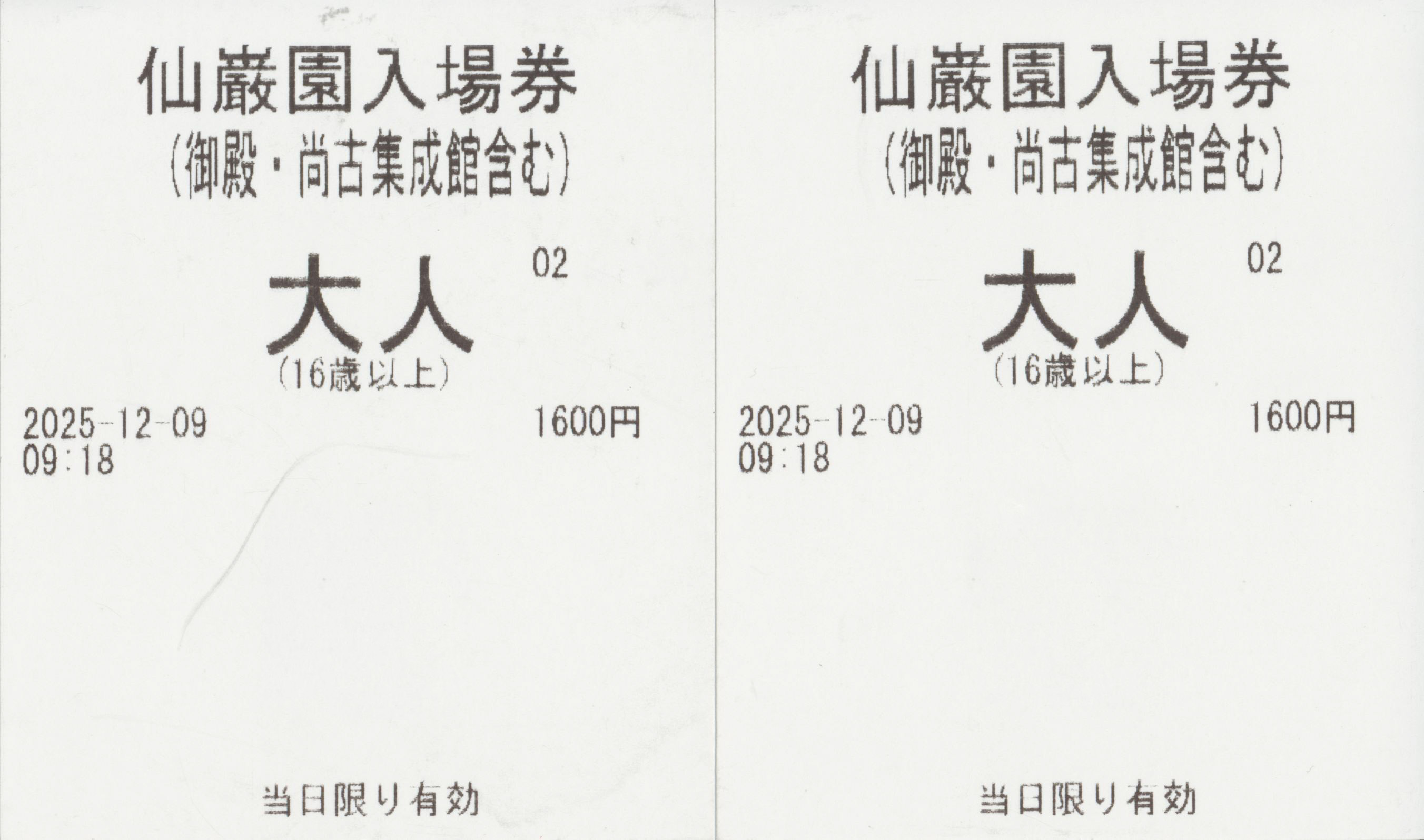
We entered a modern building which housed the ticket office and a small museum.
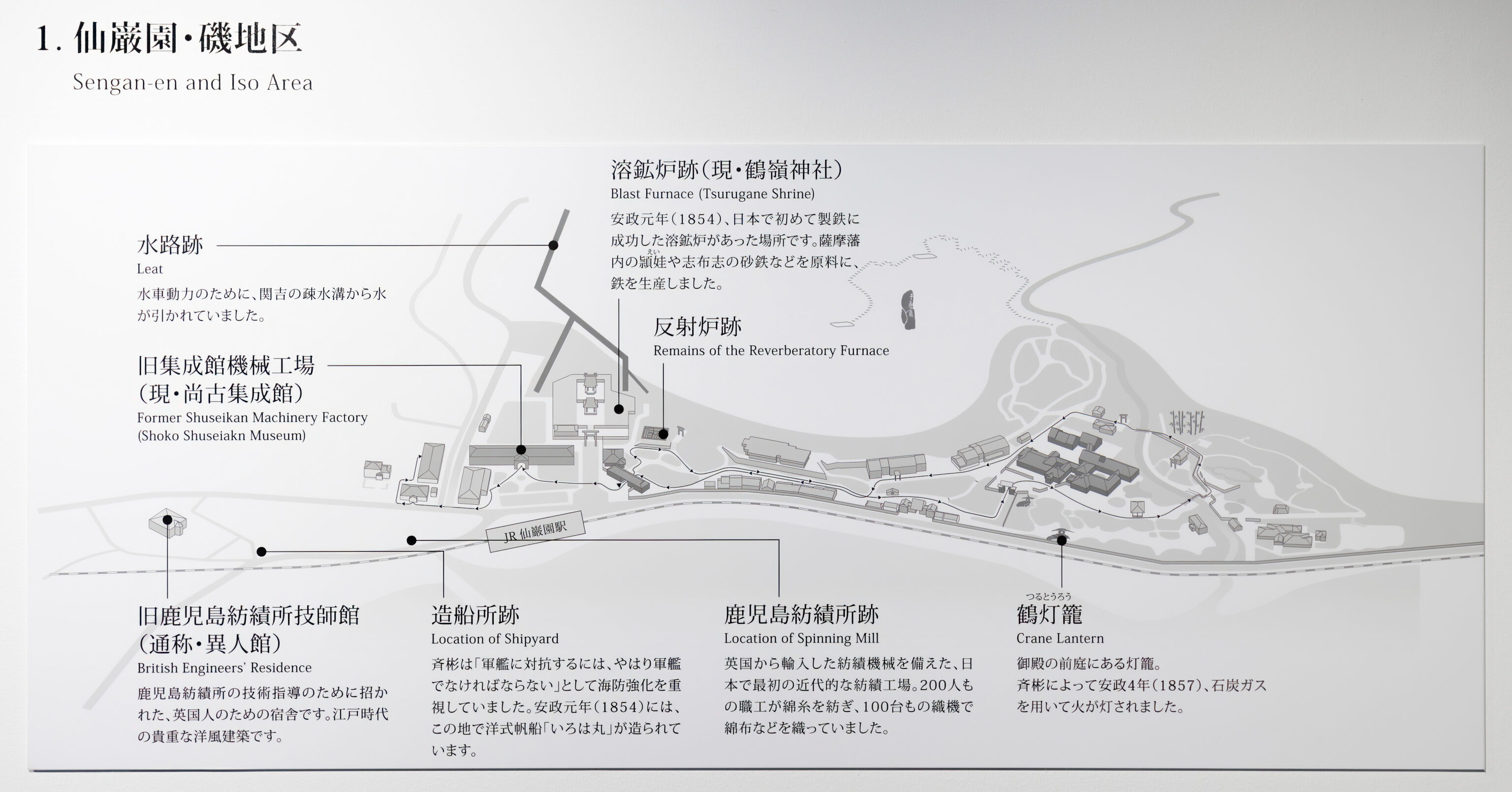
The museum was a bit like reading a PowerPoint slide deck, or perhaps Wikipedia. But it did have this useful map of Sengan-en.
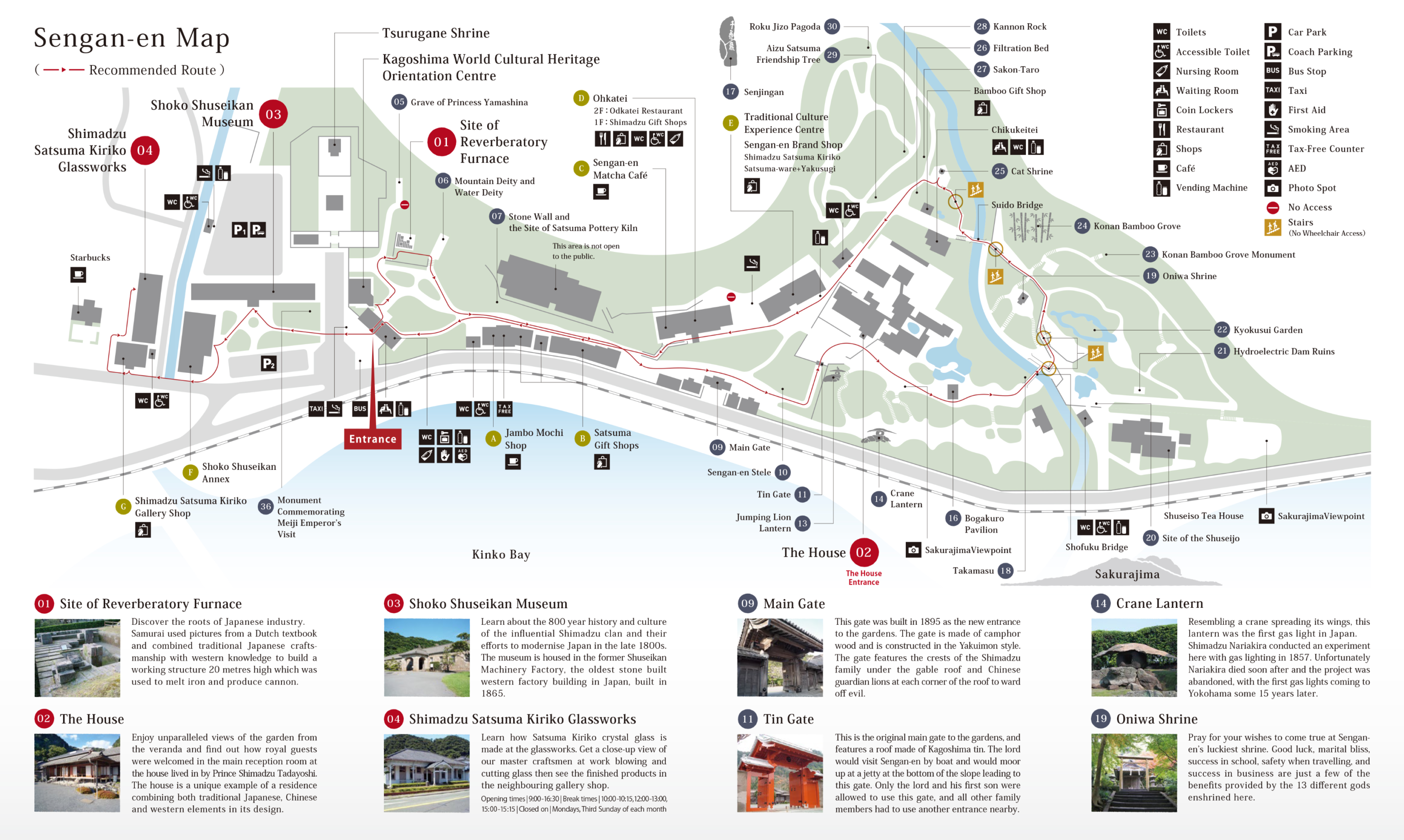
Sengan’en’s website has a better map in PDF format.
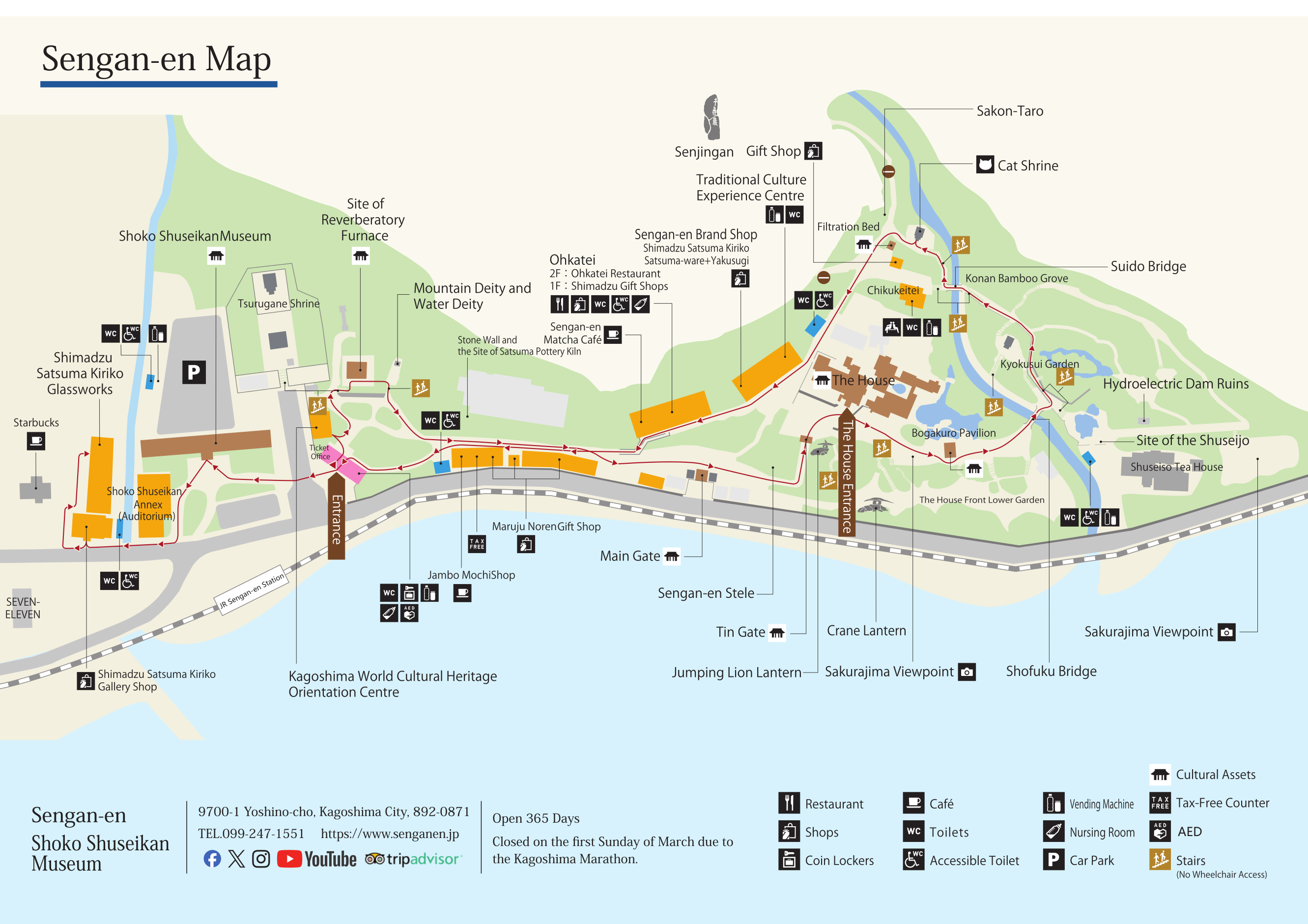
There is also a more recent map which has less points of interests marked. It also indicates that an area to the north is no longer accessible.
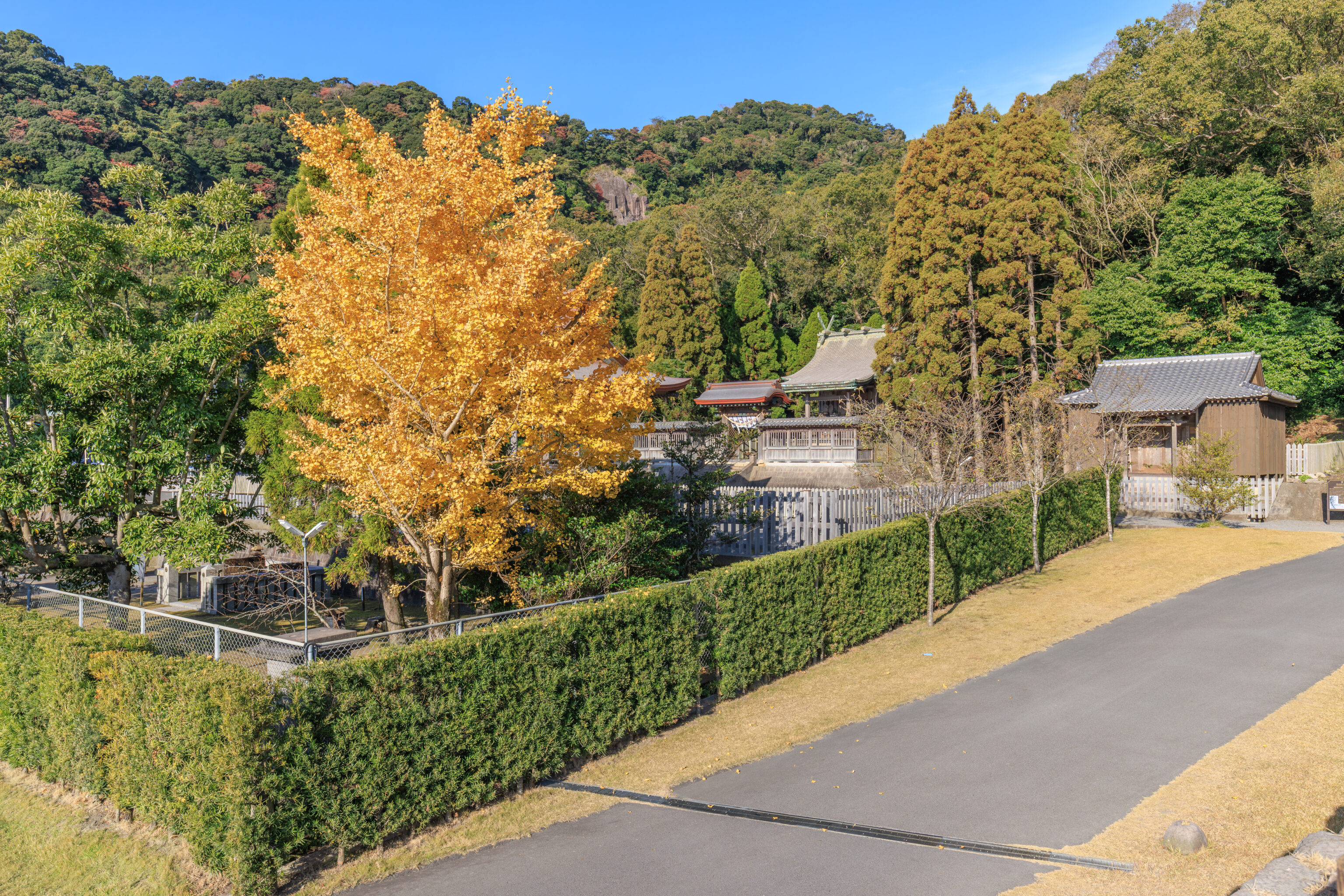
After exiting the building, we ascended a small hill. From this hill, we had a good view of a beautiful gingko tree near the Tsurugane-jinja.
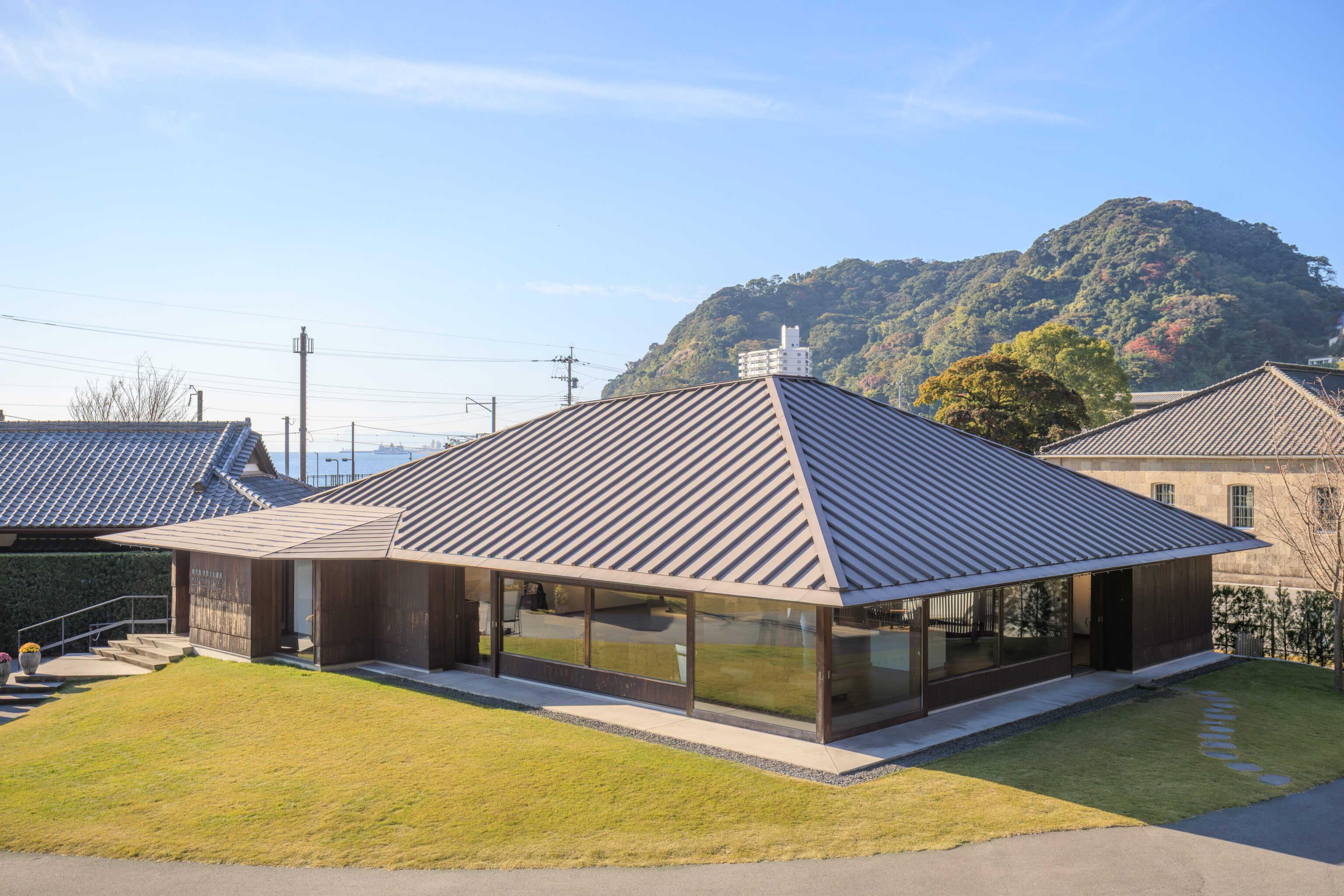
We also had a view of the building we just exited.
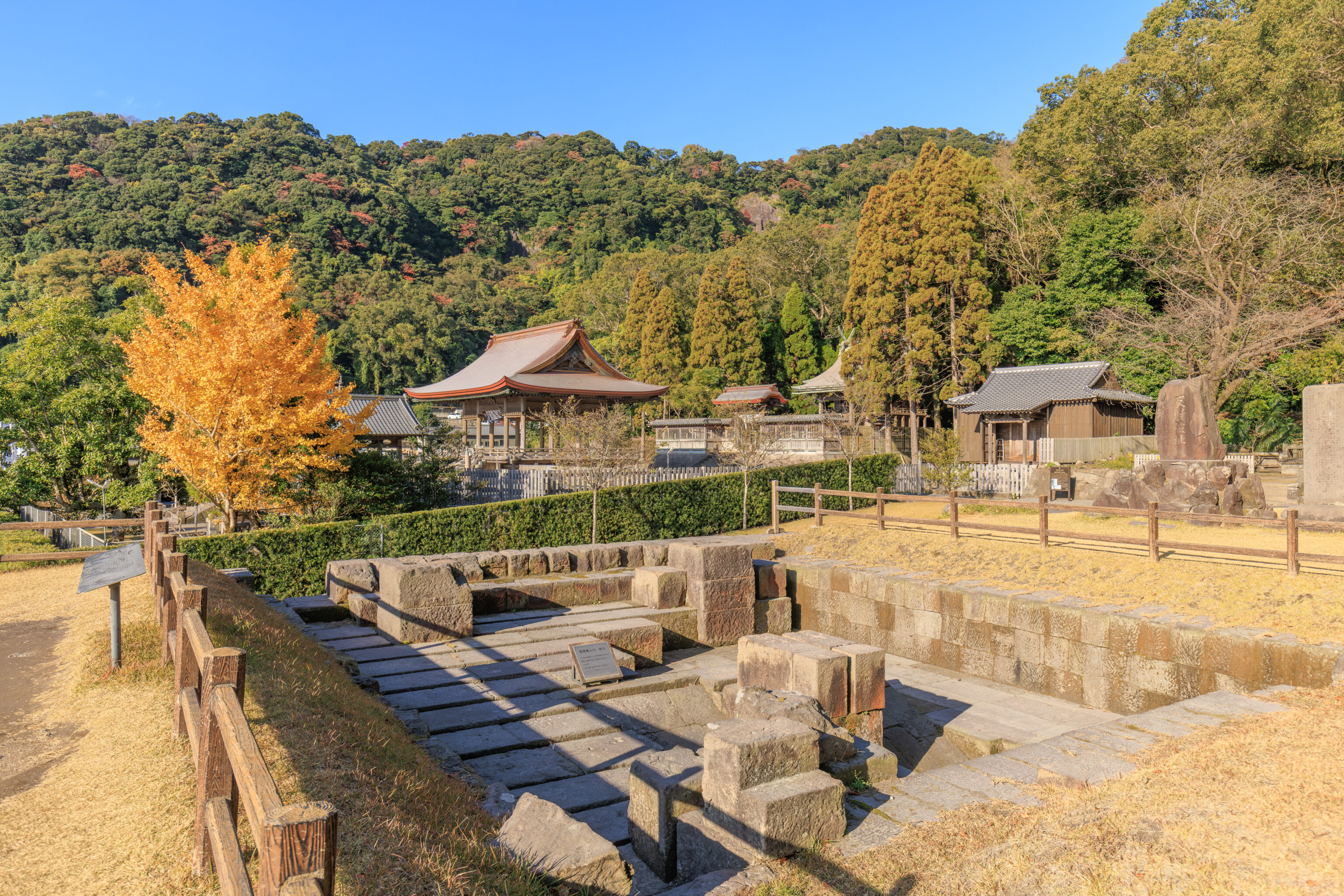
The ruins here are the remains of a reverberatory furnace.
Building of the Reverberatory Furnace and Establishment of the Shuseikan Complex

China's defeat by Britain in the Opium War deeply alarmed Shimadzu
Nariakira. In 1851, aware that Japan was also under the threat of colonisation by Western powers, Nariakira set out to strengthen the
military and develop modern industry. For Satsuma and its large  number of territories exposed to the ocean this meant cannon and ships.

Construction of the reverberatory furnace, designed to cast cannon from iron, was started in 1852, and by 1856 cannon were successfully being produced here. A number of other factories were constructed in this area, including a smithy and a glassworks. With the reverberatory furnace as the center, this area was named the Shuseikan.

As a result of the slaying of a British merchant in the Namamugi Incident of 1862, seven British ships were dispatched to attack Satsuma in 1863. Cannon produced here were used heavily in this conflict, known as the Anglo-Satsuma War. The furnace was later dismantled and the remaining structure is thought to be the foundations of the second reverberatory furnace built at this location, completed in May, 1857.

Construction of the Furnace

In a reverberatory furnace, fuel (coal or charcoal) is burned on a fire grate and the heat produced is bounced off the ceiling and onto the hearth to melt pig iron. In Japan such furnaces were mainly used to cast cannon. The furnace was constructed of thousands of fireproof bricks and a sturdy stone foundation to support the great weight of the structure. To prevent moisture from entering the hearth and maintain a high temperature, spaces were created in the stonework to allow hot air to pass through. Guttering was constructed around the furnace to allow ground water to run away.

The inner section of the furnace consisted of an arch of fireproof bricks. On the left side of the furnace was a tap hole used to pour out molten iron. Fuel was placed into the right hand side of the furnace.

Beneath the hearth there was a flue for added ventilation, and the bricks in the hearth bed were staggered to create a slope. The sloping stone structure allowed ash from spent fuel to fall into an ash pit below. Above this was the fire grate, on which fuel (coal or charcoal) was burned. Air was also allowed to enter the furnace from here, and would travel through the furnace fanning the flames before leaving via the chimney.
– Text from a nearby sign.
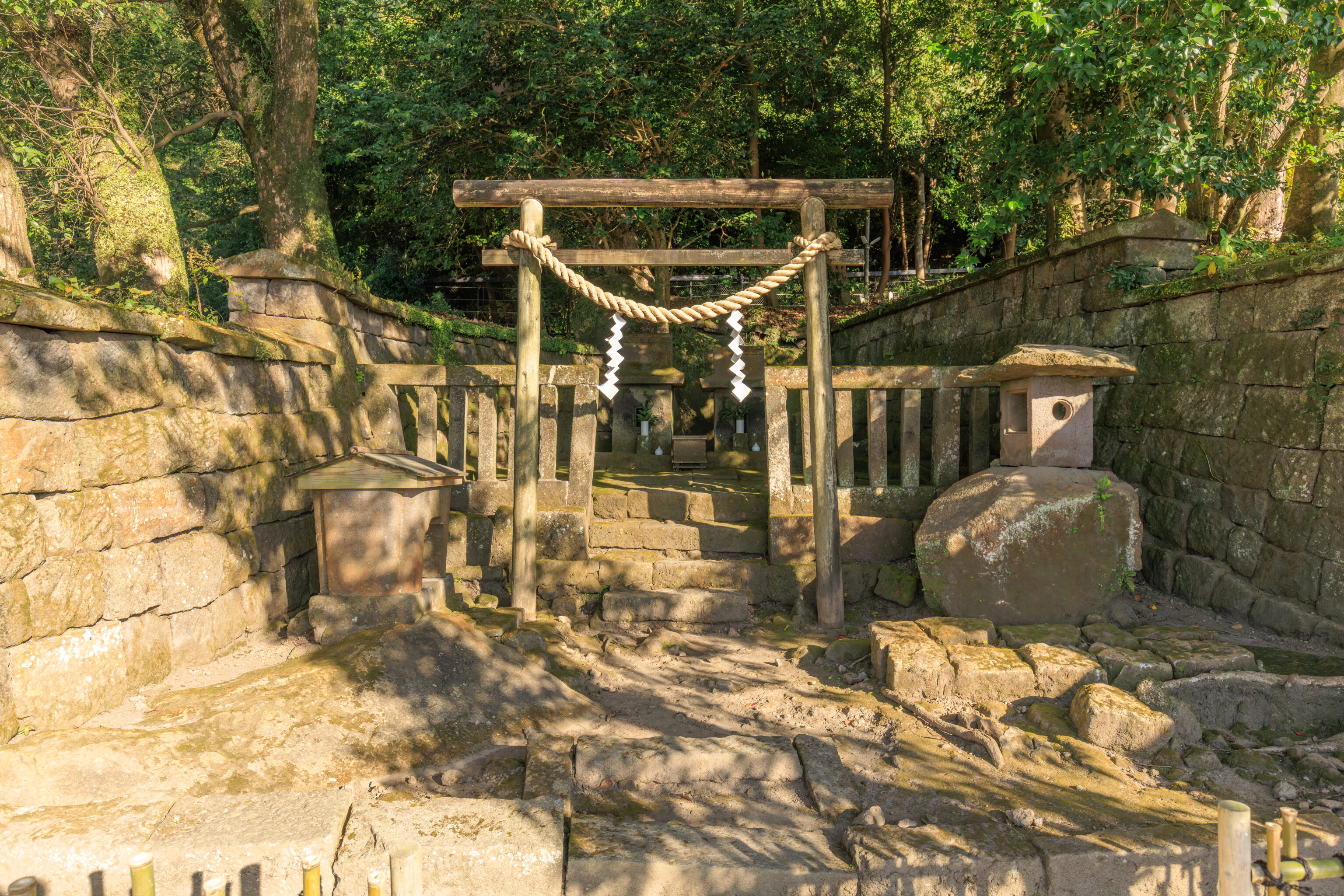
Mountain Deity and Water Deity

These shrines were built in the 18th century for the mountain and water deities.
– Text from a nearby sign.
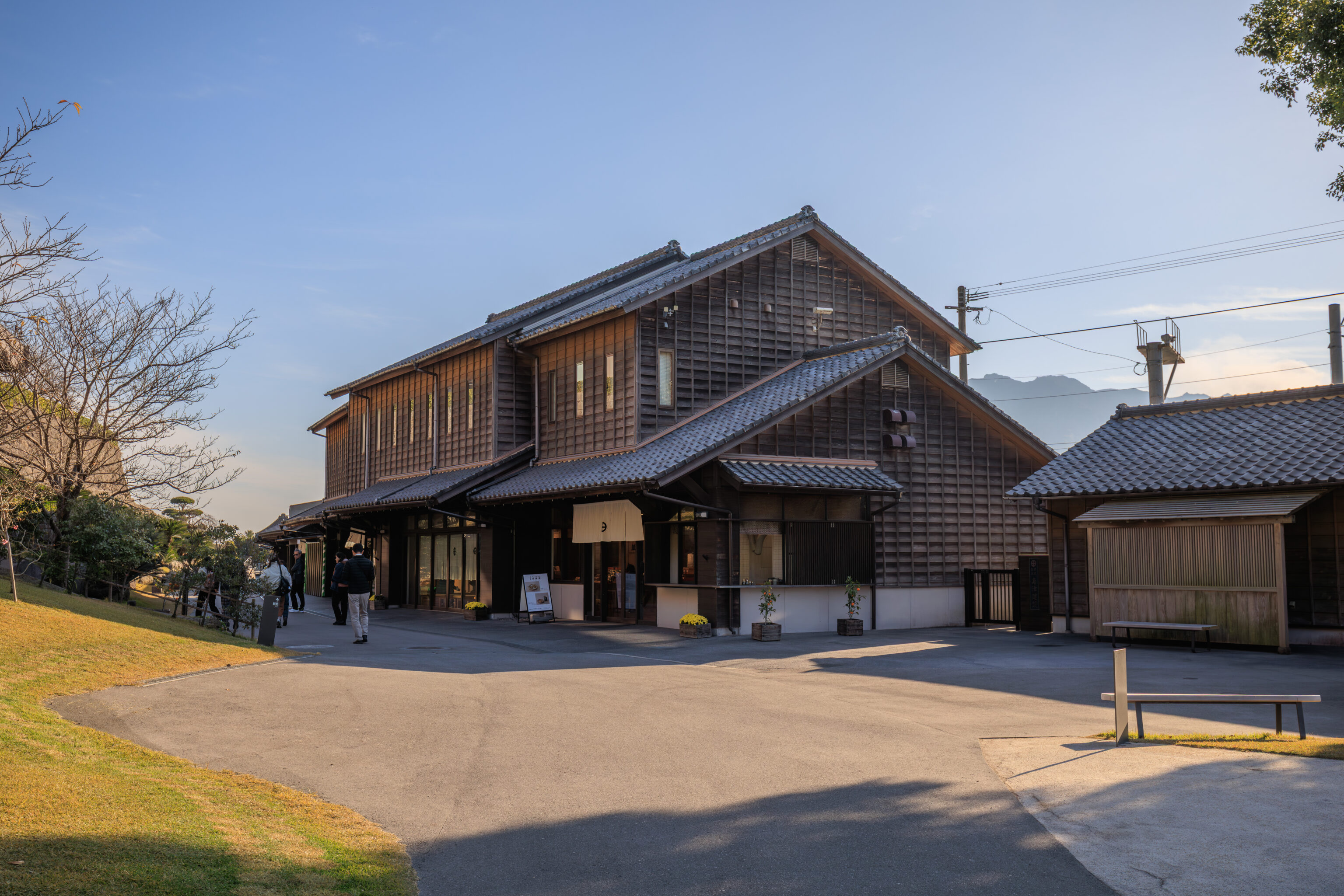
We started to walk to the east. On our right, there was a historic looking building. It currently houses a shop selling gifts and snacks.
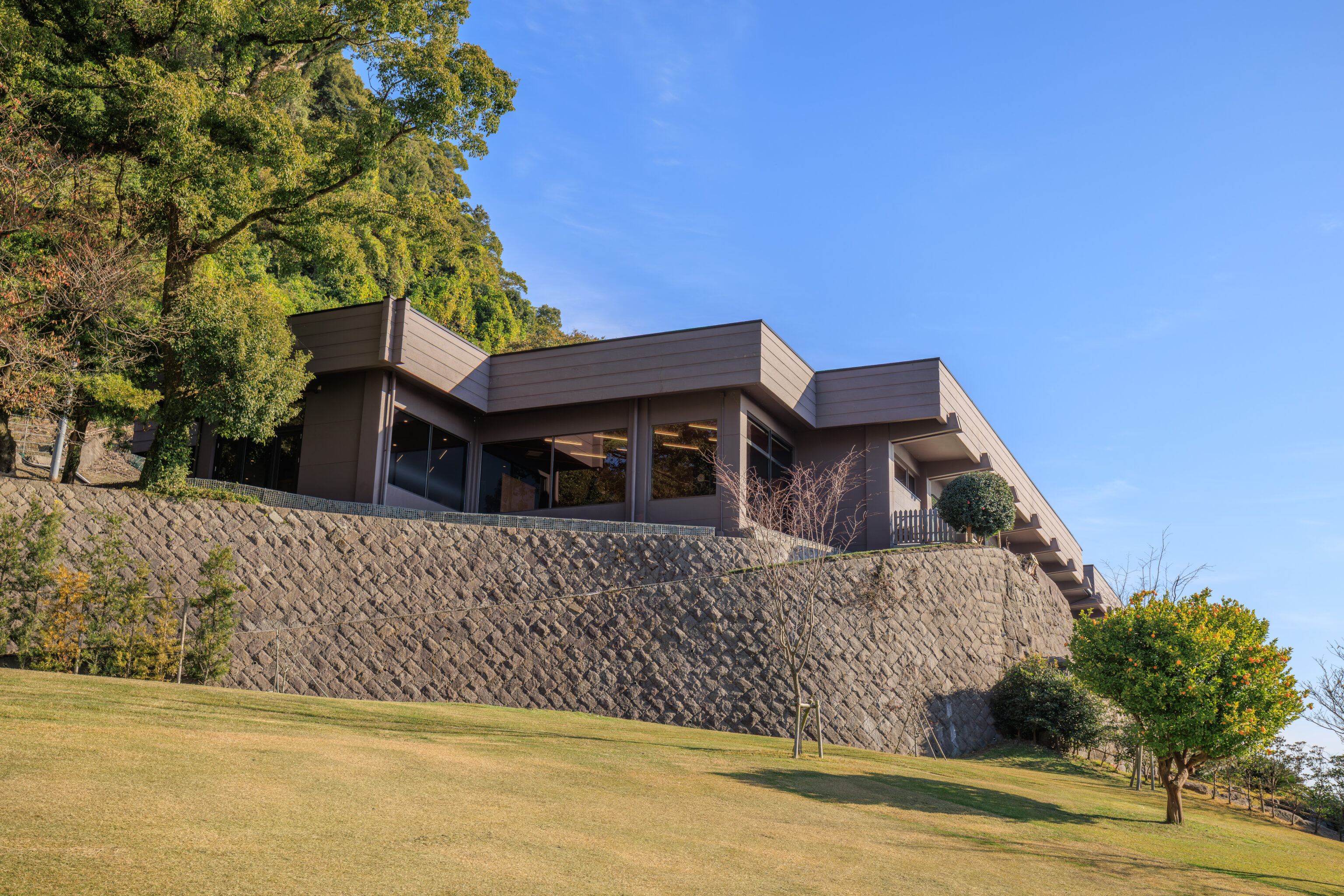
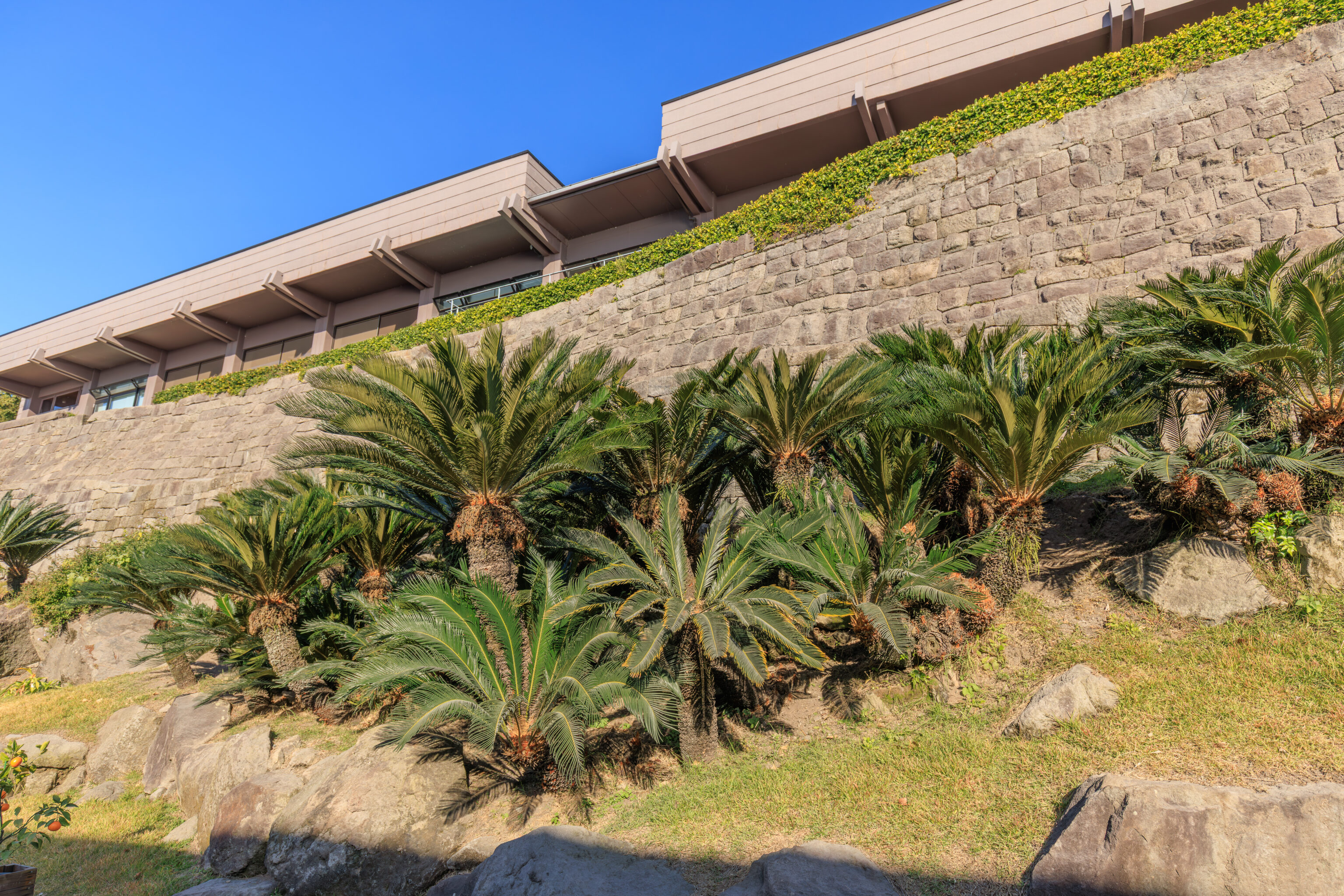
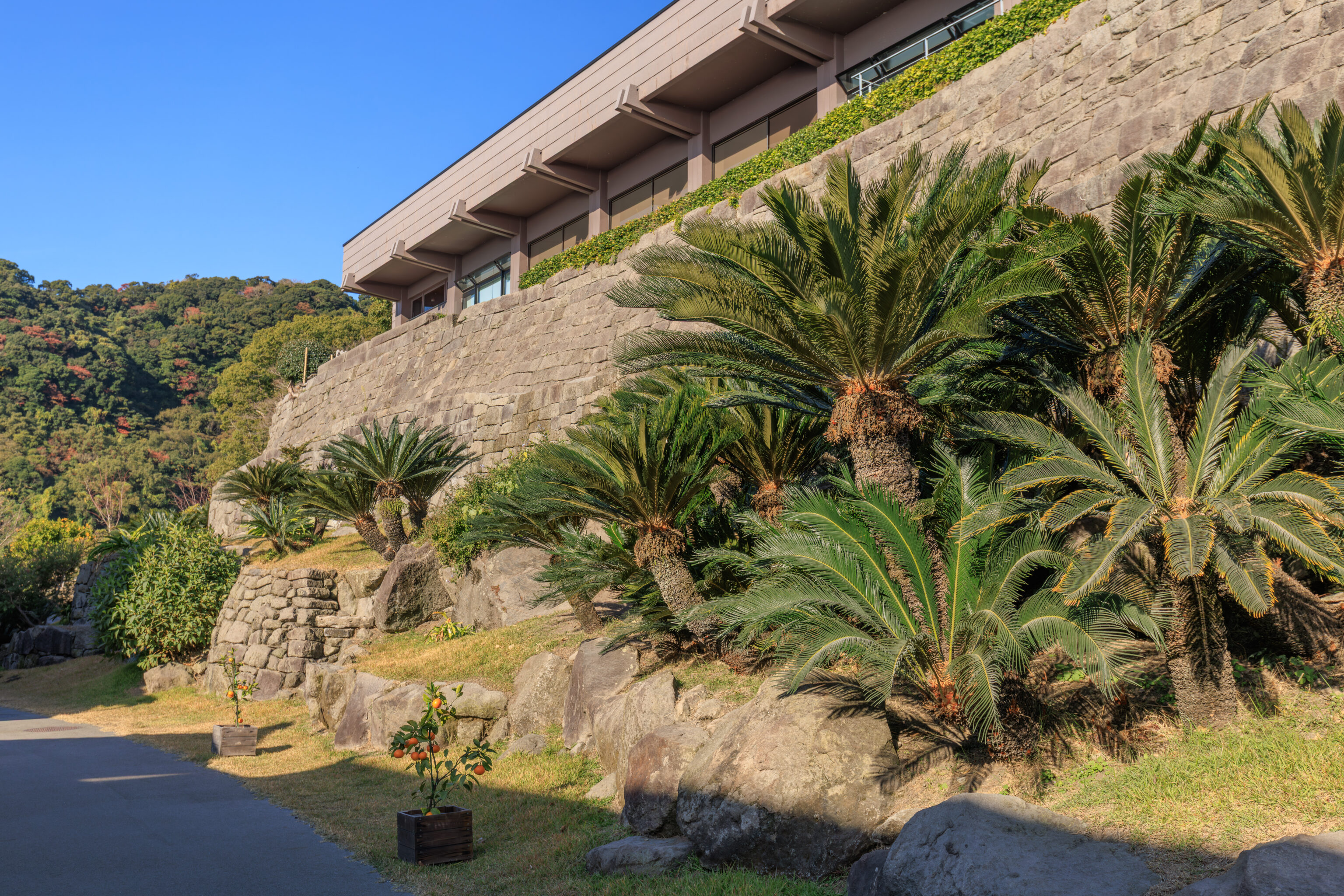
There was a much larger modern building on our left. It appears to house the Shimadzu company which operates Sengan-en and related facilities as well as forestry, stone, construction, and retail businesses. This appears to be the modern Shimazu family business.
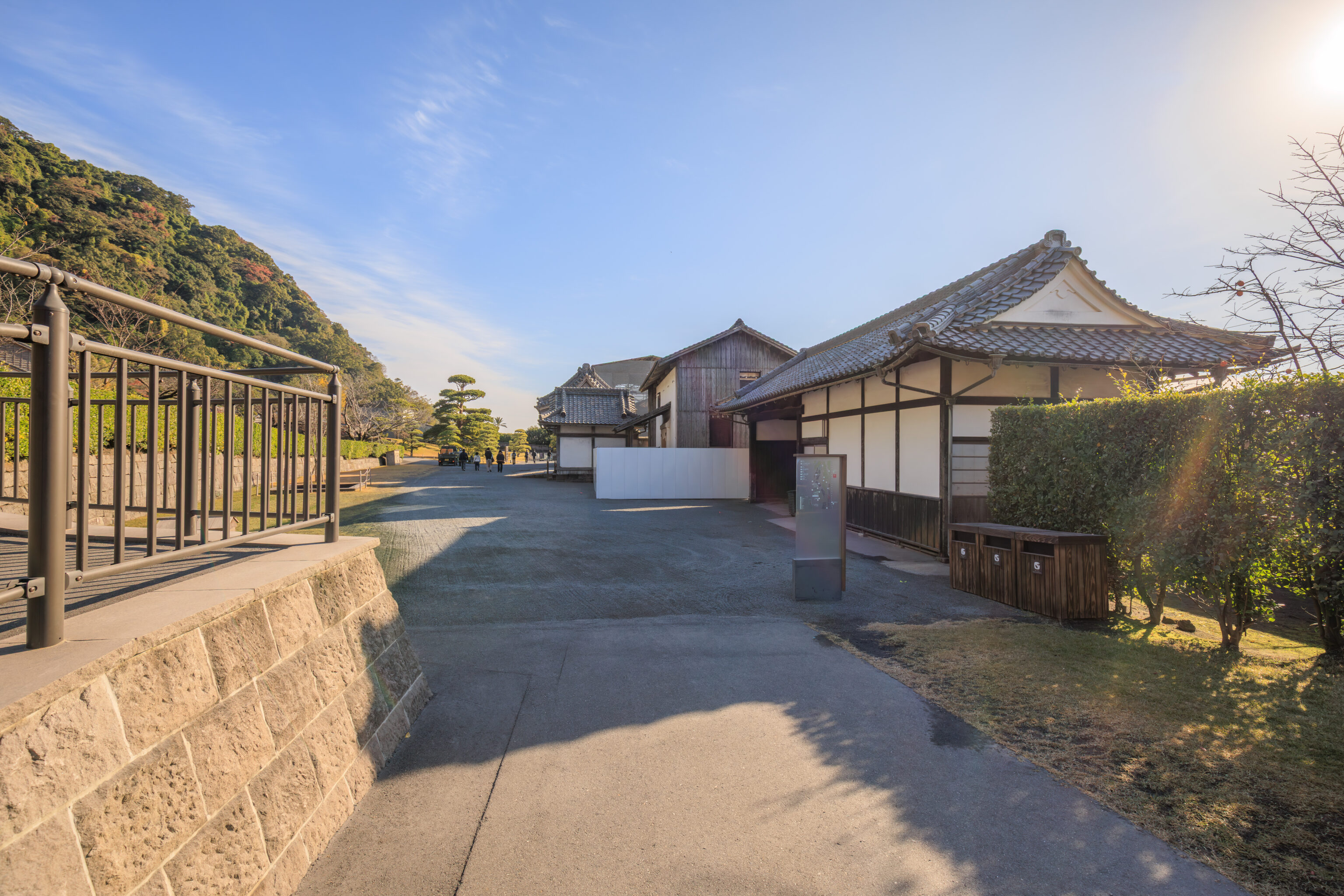
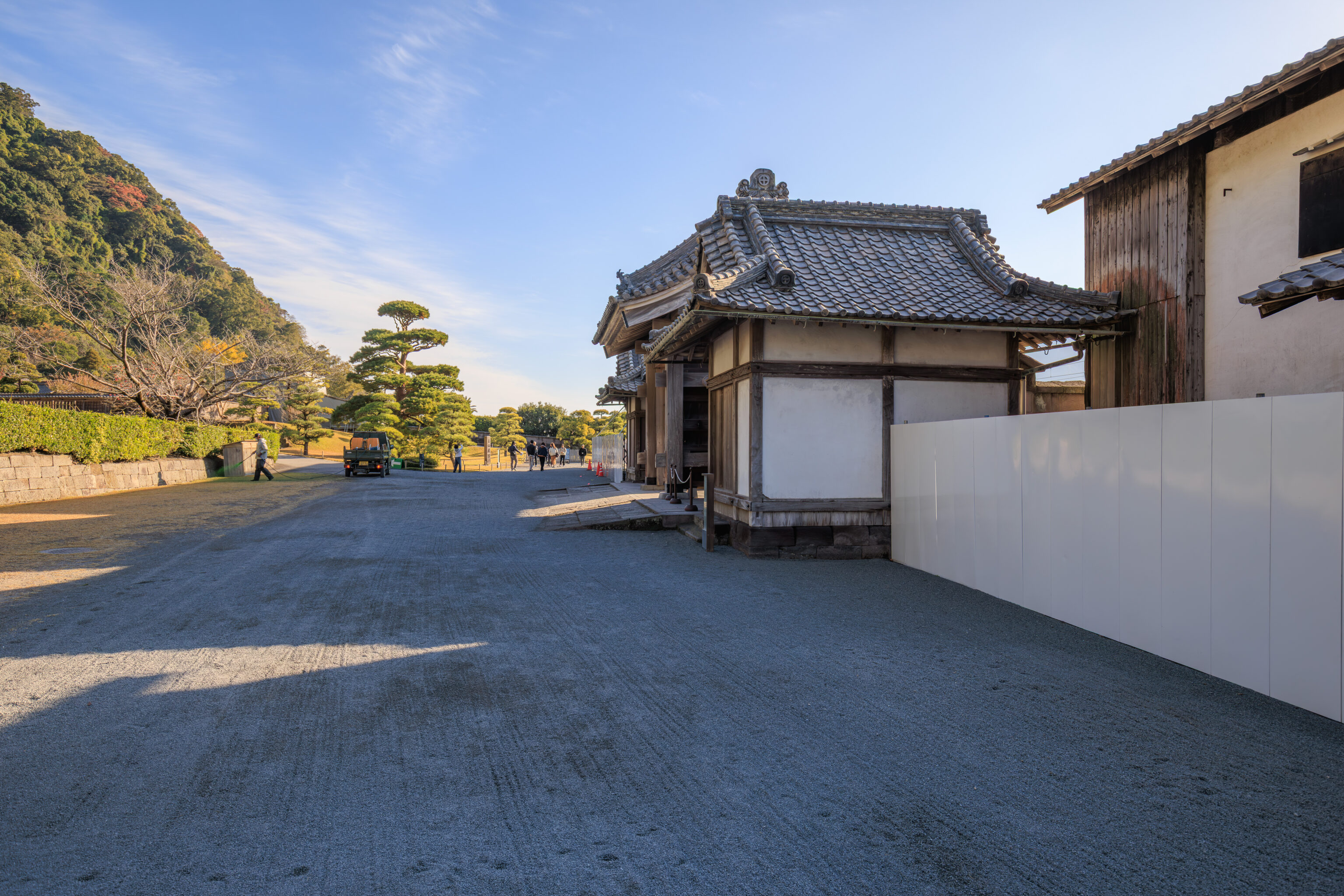
We continued on to the east, deciding to visit the shops later.
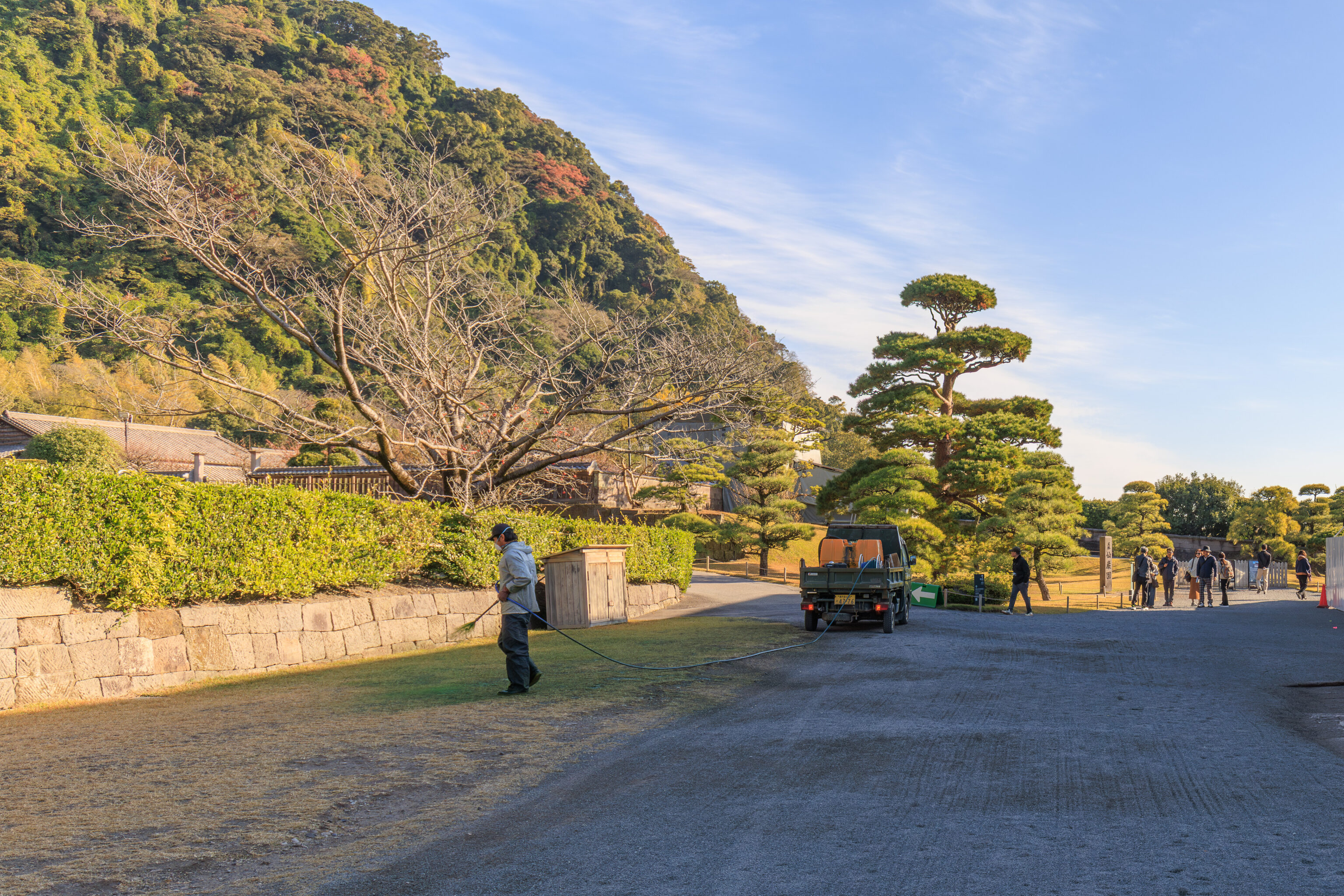
We were amused by this spraying that was going on. It seemed to be like they were painting the dry grass by the path green! It could be just some spray that happened to be green or this was really to change the color of the glass.
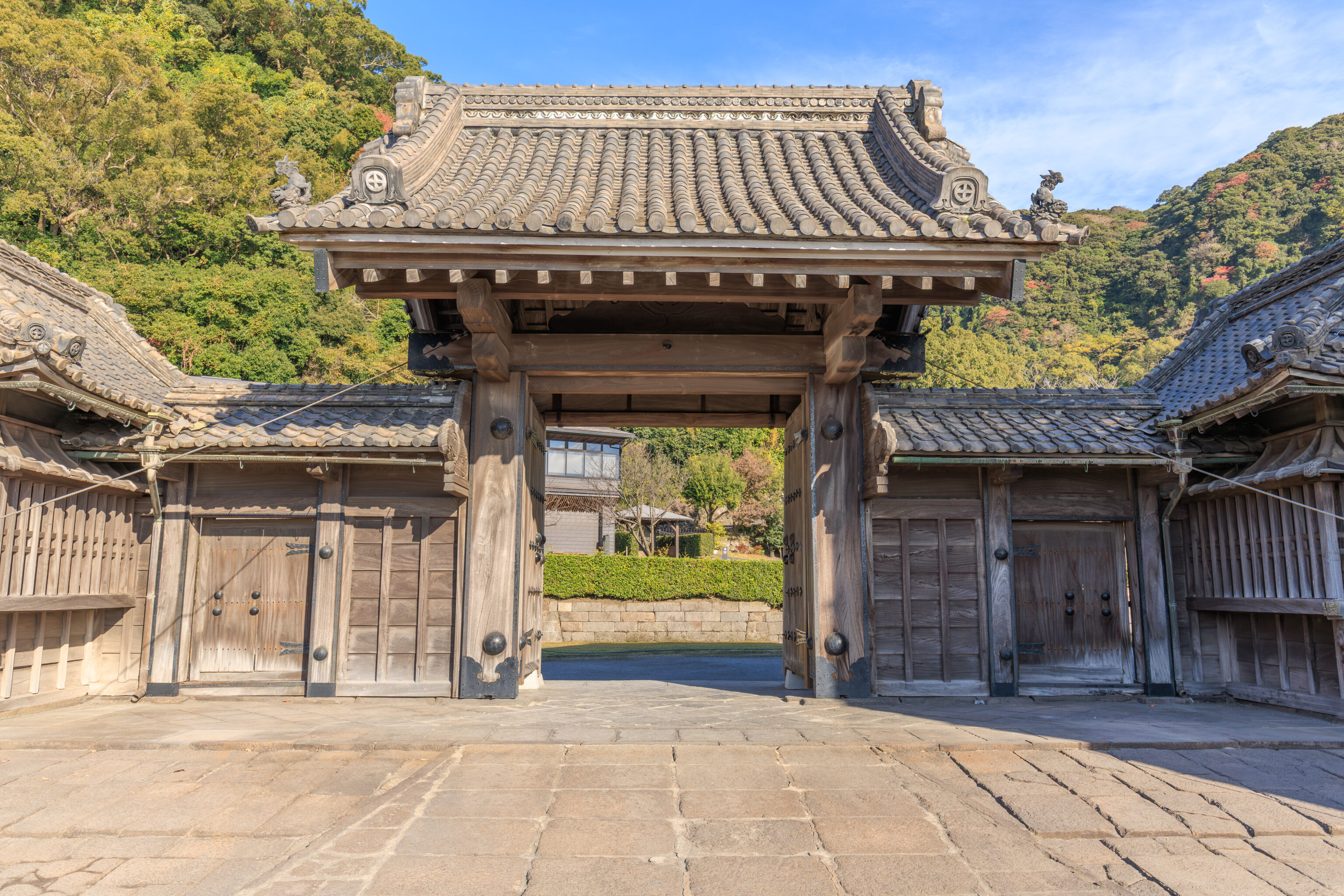
A small gate to the south led out to the street between Sengan-en and Kagoshima Bay. Or perhaps more accurately a strait formed by the the presence of Sakurajima in the bay.
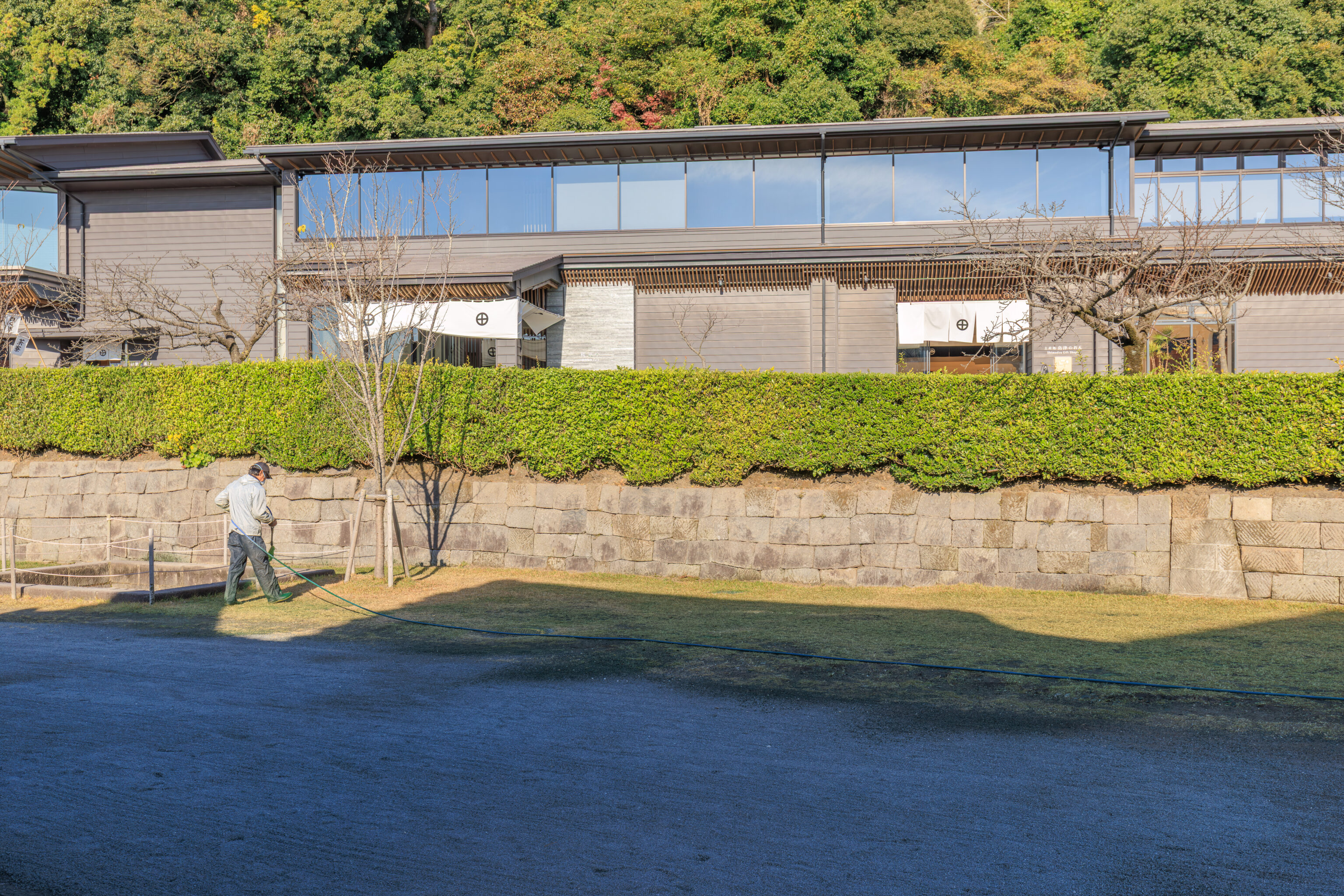
This building on the left houses Sengan-en’s restaurant, 桜華亭 Ohkatei.
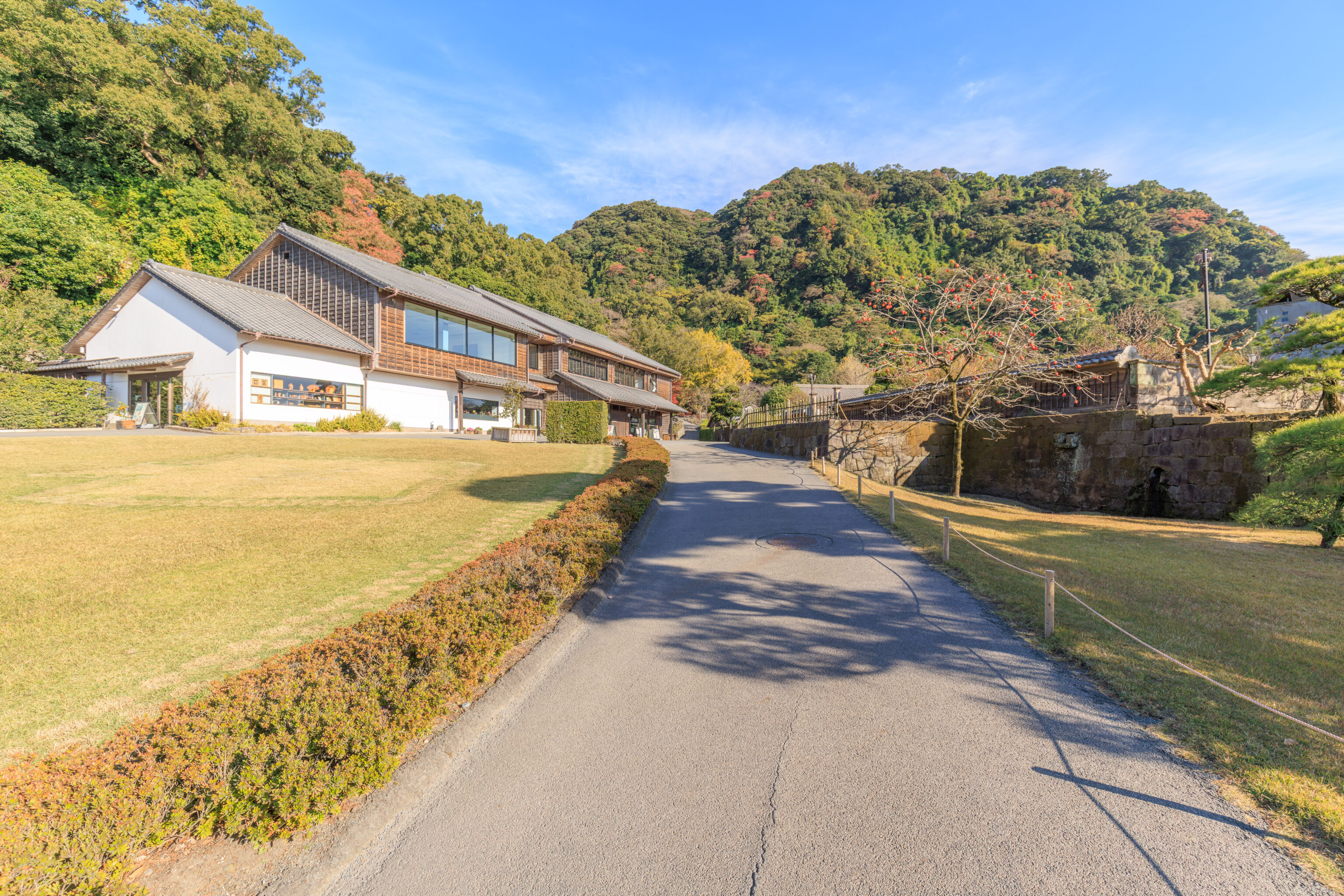
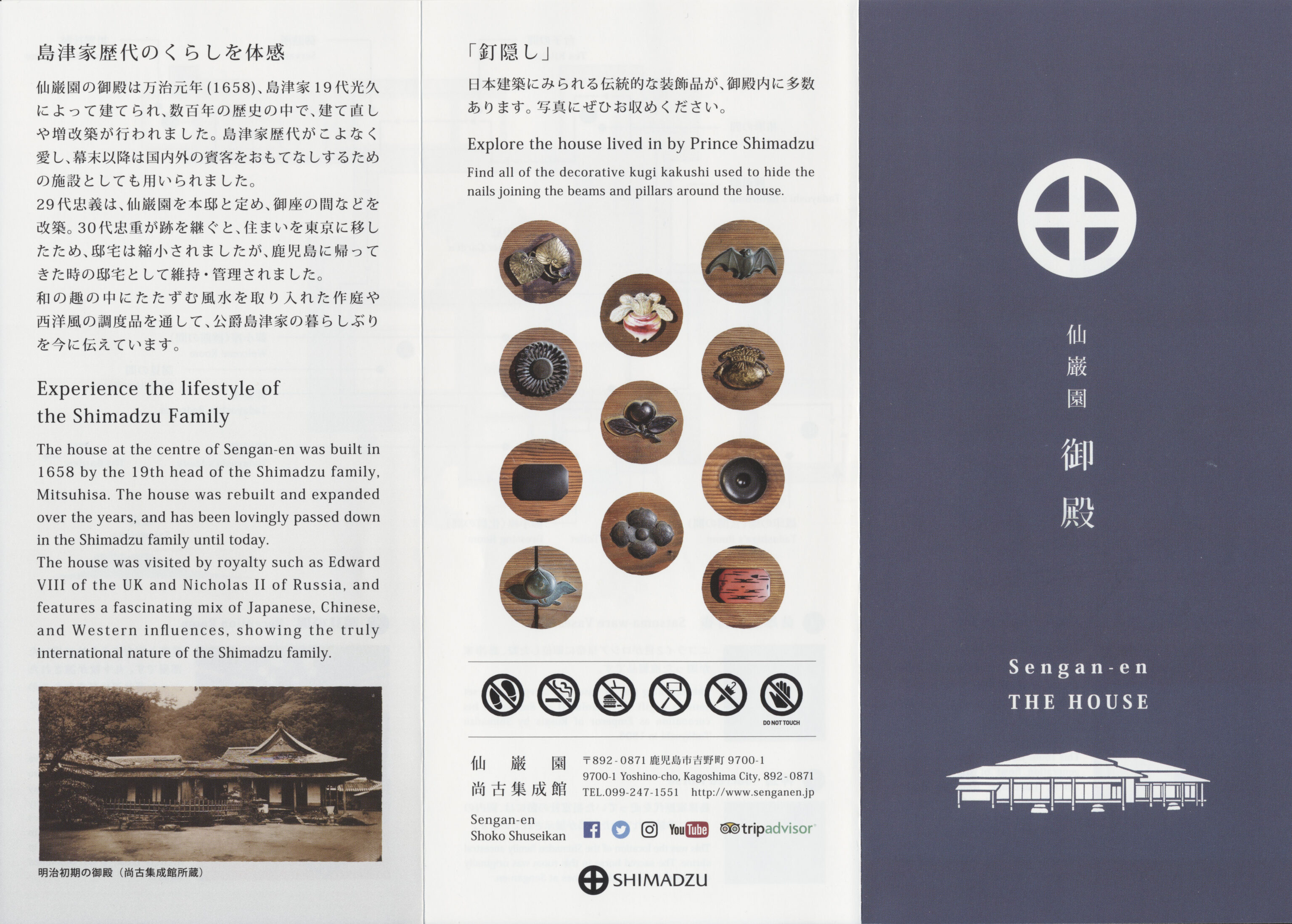
The building up ahead on the left has more shops. The entrance to the 御殿 goten is on the right. Goten is probably equivalent to palace in English, although in American English, the most common suggests the residence of royalty. The Shimazu clan was probably more like nobility rather than royalty.
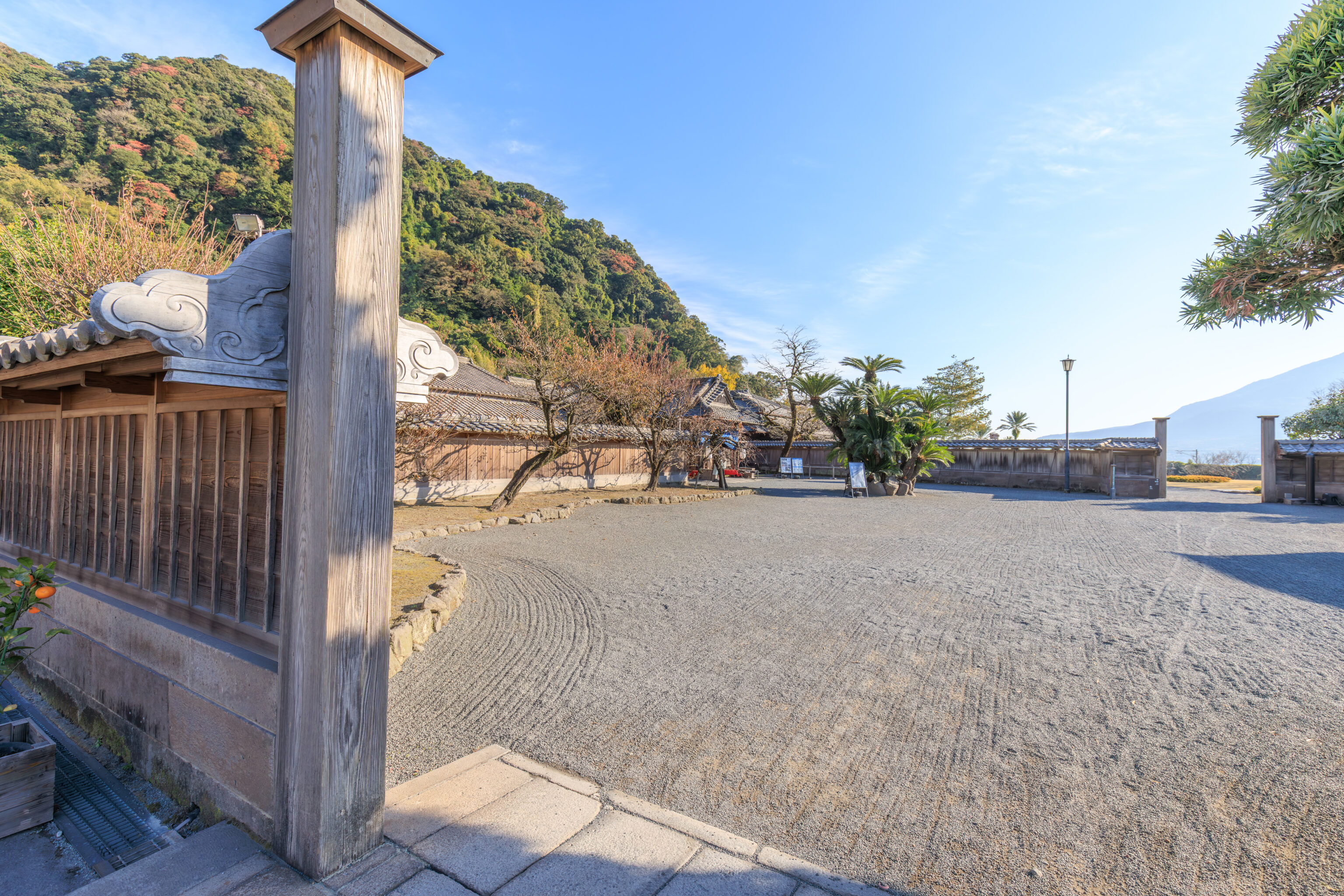
We entered a walled area around the goten’s entrance through an open gate.
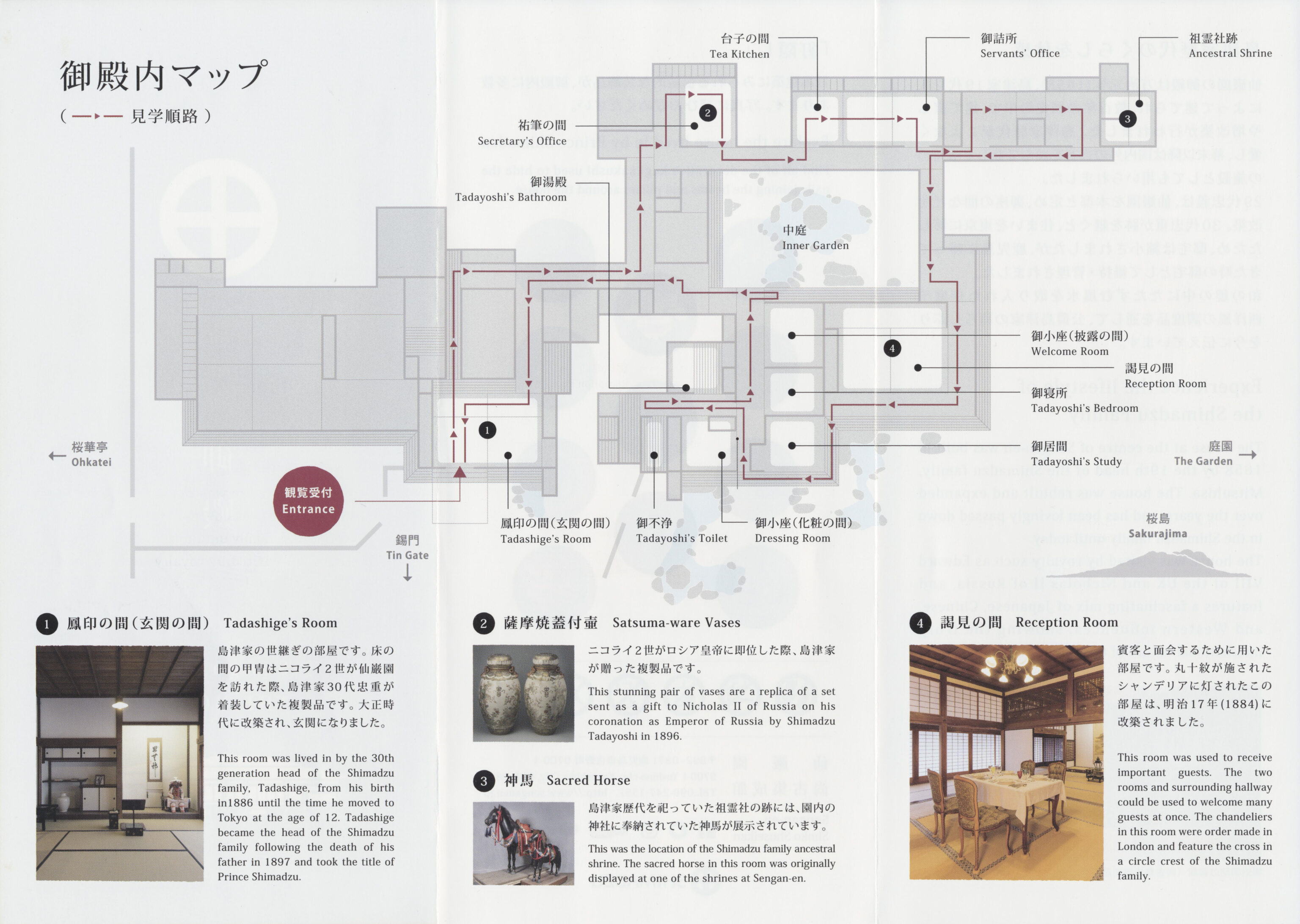
We entered the goten to take a look at its interior.
Sengan-en was built in 1658 by the 19th head of the Shimadzu family,
Mitsuhisa. The house was built at the same time as the gardens, but
has been renovated a number of times over the last several hundred
years. The house and gardens were loved by generations of the
Shimadzu family, and were used as a place to welcome dignitaries
from both Japan and overseas from the late 19th century.
The 29th head of the Shimadzu family, Tadayoshi was granted the
title of Prince Shimadzu and lived at Sengan-en full time after the
dissolution of the feudal domains. The 30th head of the family.
Tadashige moved to Tokyo in his youth, and the house was reduced
to one-third its original size.

Presently the areas of the house lived in by Tadayoshi, the main
reception room, the study, the secretary's office, and part of the
servant's quarters remain. The house is constructed of flawless
Yakusugi lumber taken from trees over 1000 years old, and still
tells the story of how Prince Shimadzu lived.
– Text from a sign near the entrance.
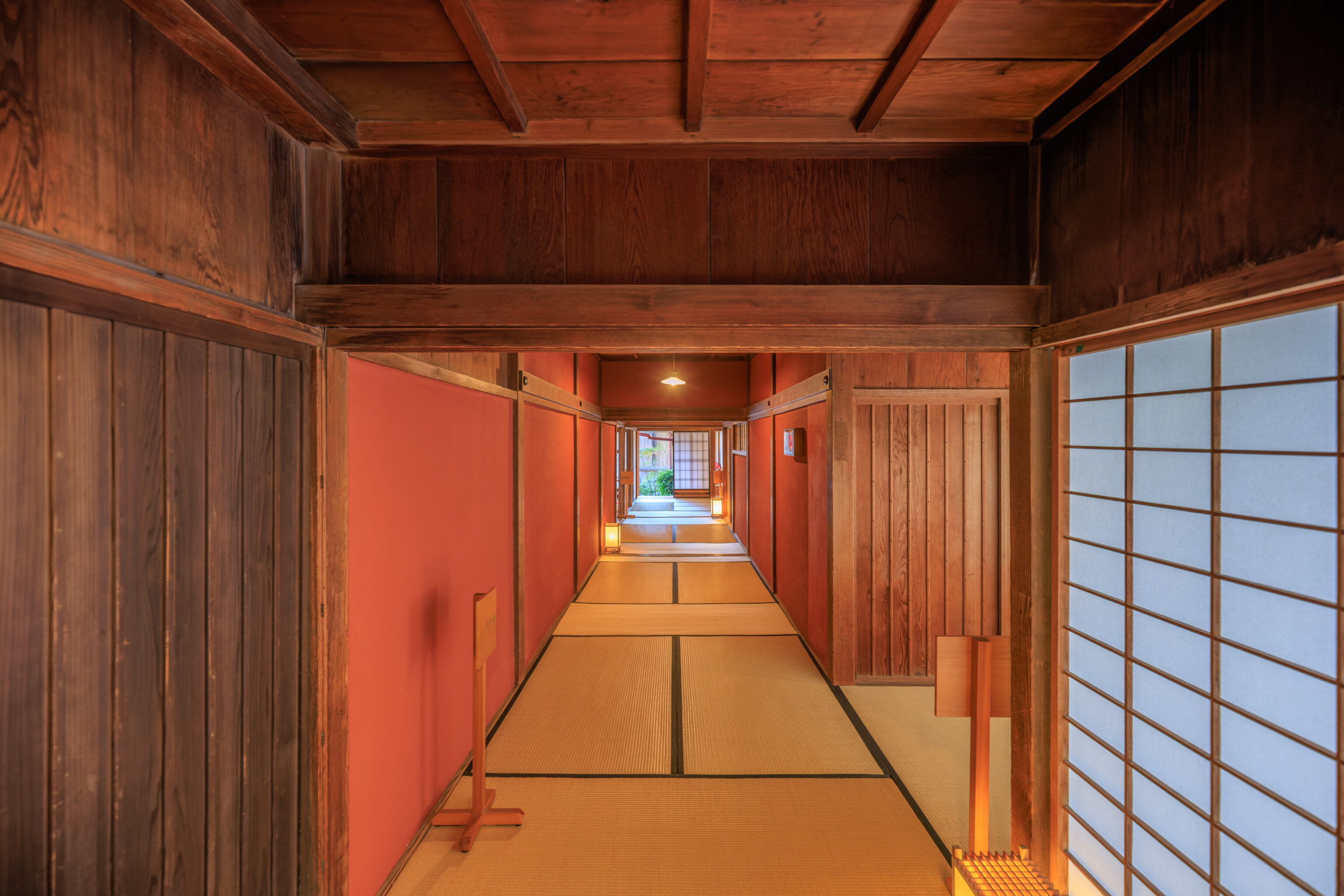
A corridor through the goten by the entrance.
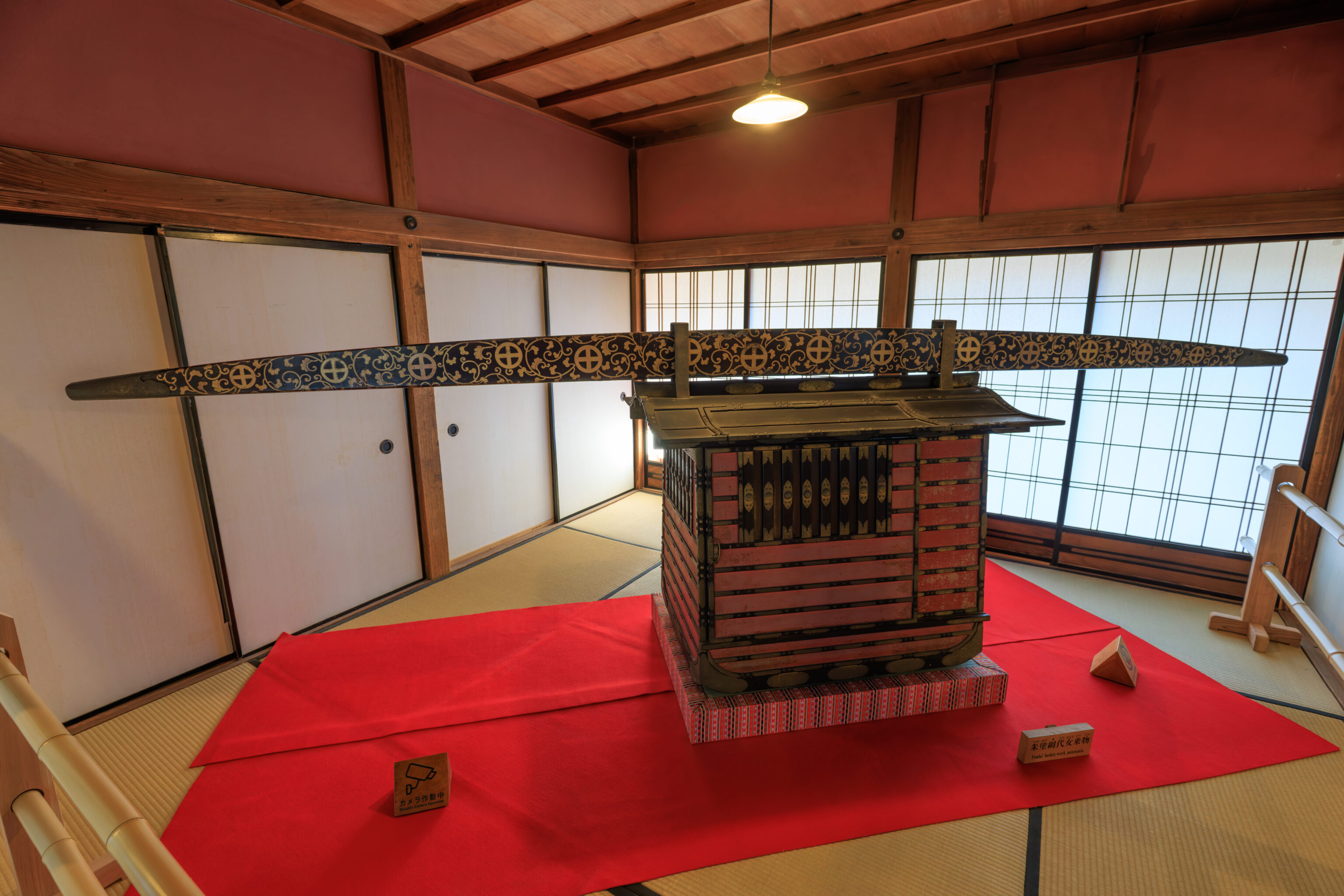
This palanquin features the mon, or emblem, of the Shimazu clan. The Japanese name for this mon is 丸に十文字 maru ni jumonji, which means a ten character within a circle.
Women's Palanquin
Edo Period, 17-19th Century

This palanquin was used by women of high rank during the Edo period. Its design, decoration, and construction were strictly regulated according to the status and position of the passenger. The body is crafted by interweaving strips of bamboo, finished with a brilliant coating of vermilion lacquer. The interior is lavishly adorned: gold leaf is applied throughout, while auspicious motifs such as pine, bamboo, and plum blossoms, along with cranes, tortoises, and nightingales, are finely depicted.
– Text from a nearby sign, translated using Google.
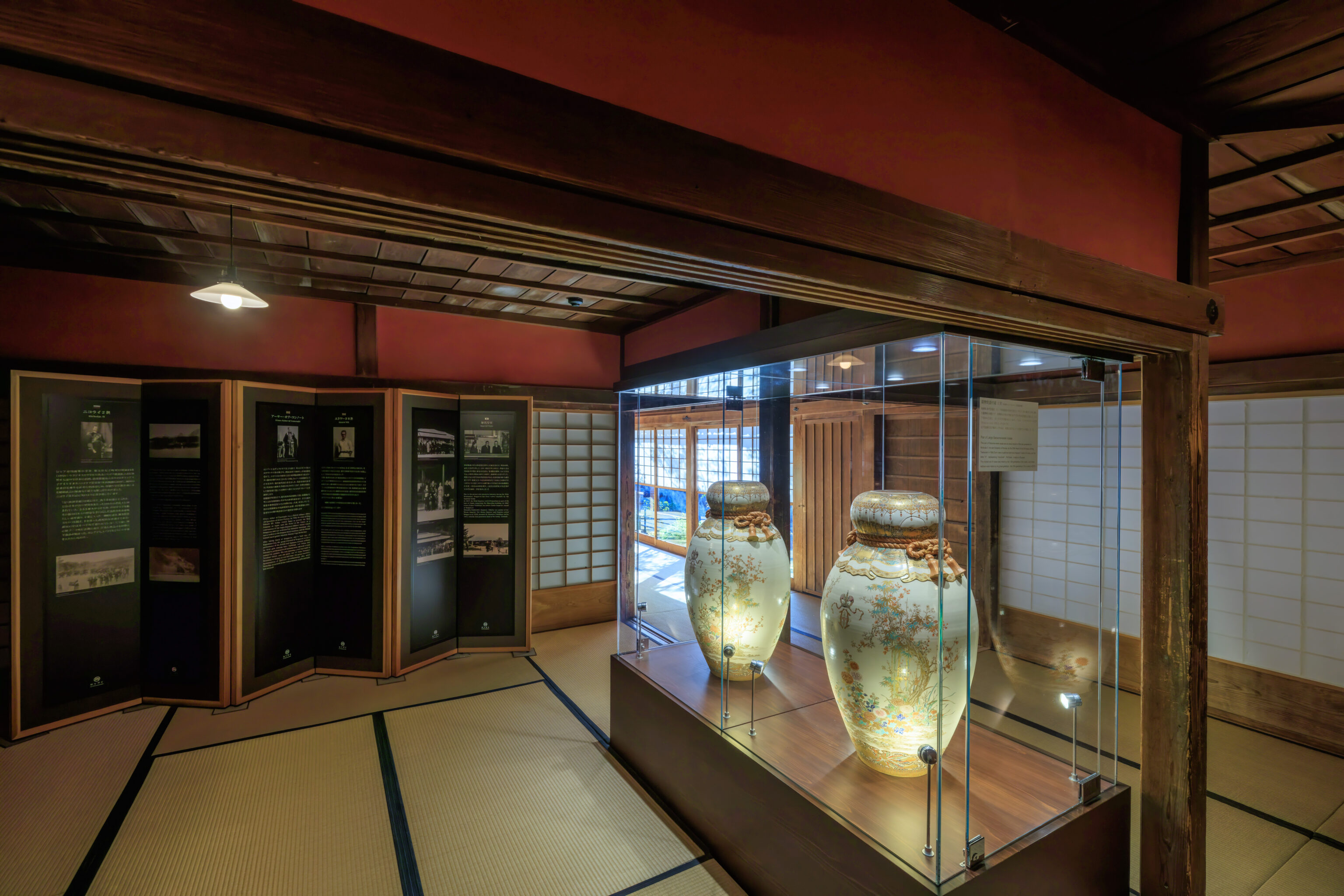
Its not a museum unless you have jars of some sort!
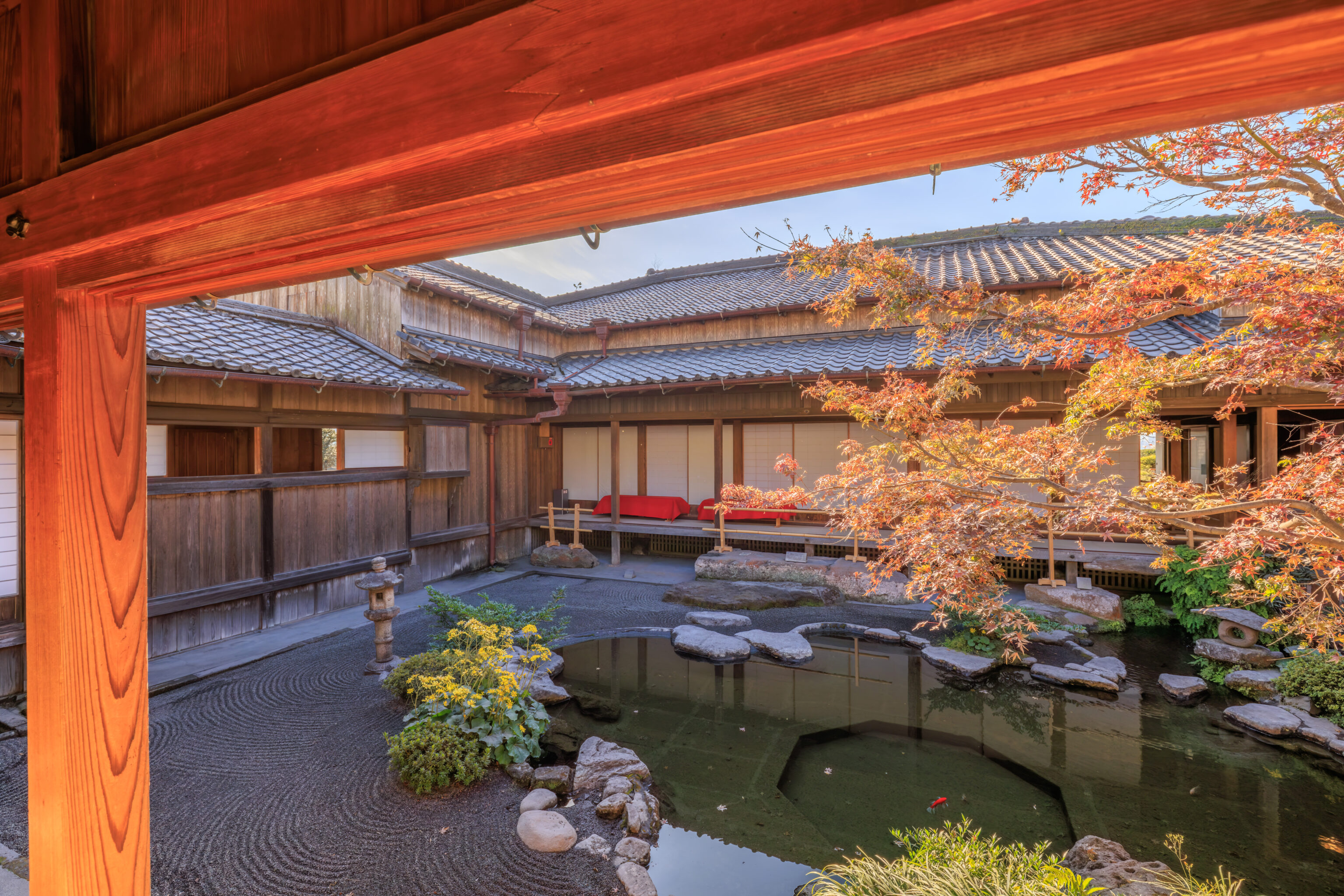
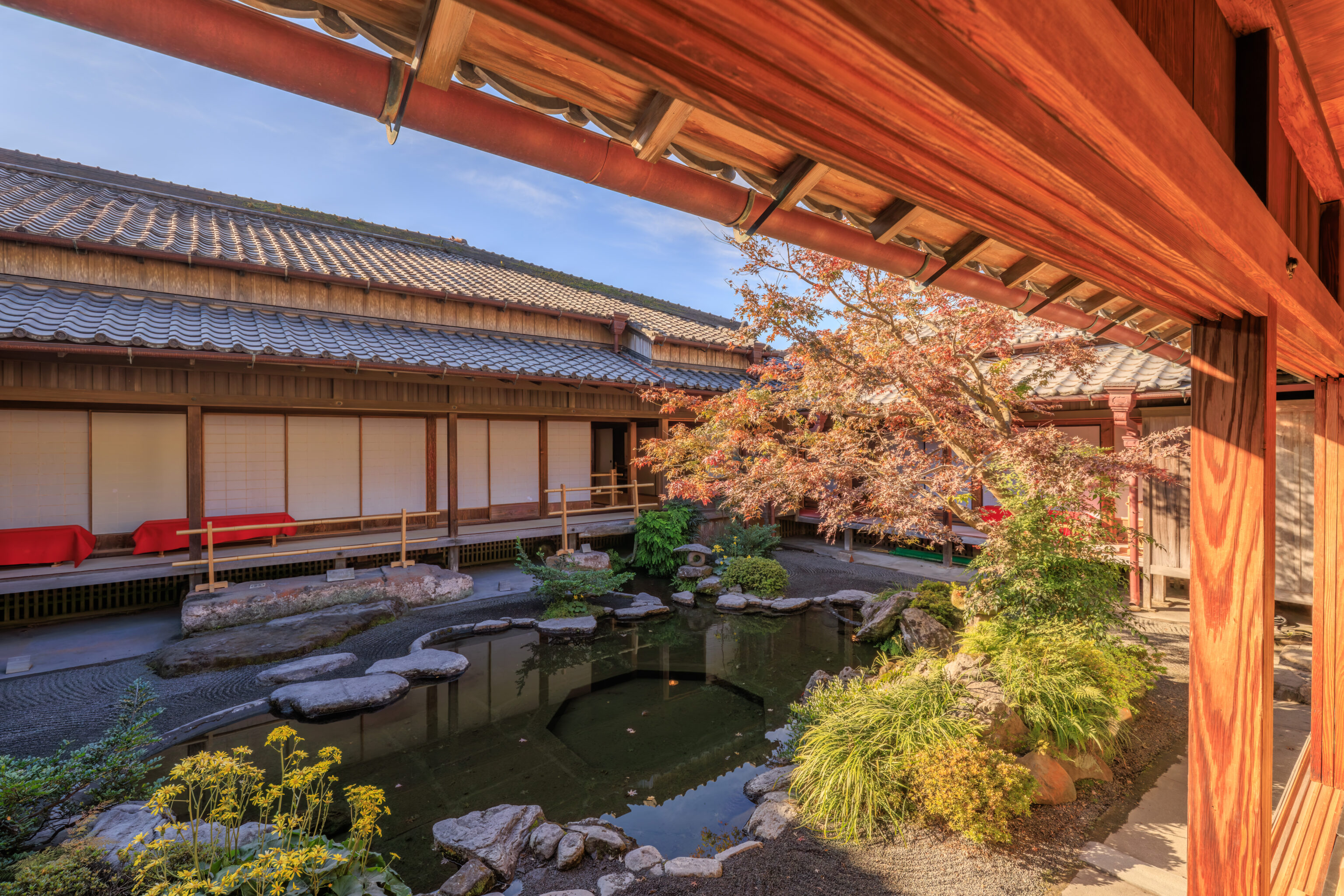
The goten had a pleasant interior garden.
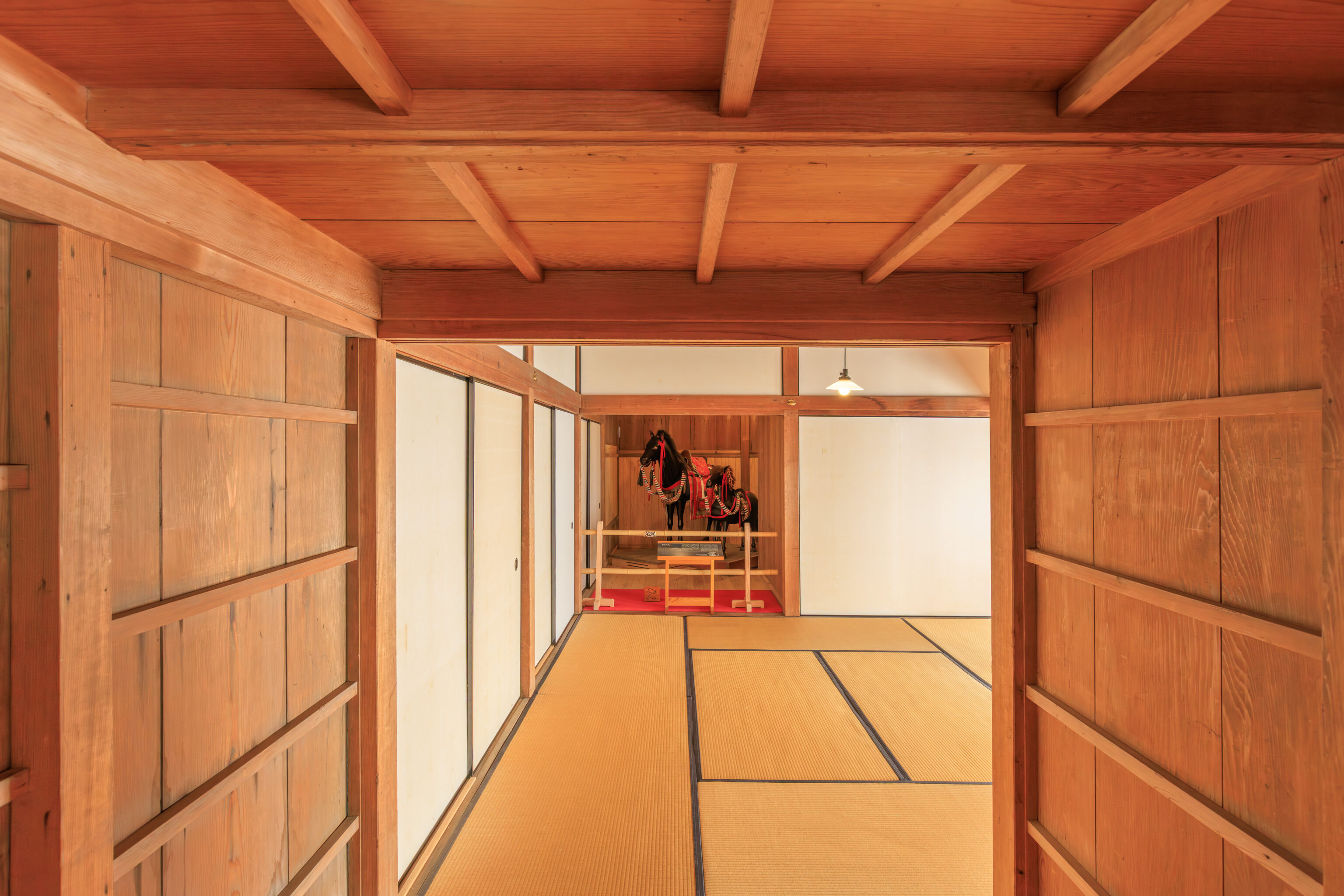
The alcove at the far end of the room is a shrine.
This was the location of an ancestral shrine used to venerate the members of the Shimadzu family. Tadayoshi would visit the shrine each morning after getting dressed to pay respects to his ancestors. The sacred horse on display in this room was originally displayed at one of the shrines on the grounds here at Sengan-en.
– Text from a sign by the shrine.
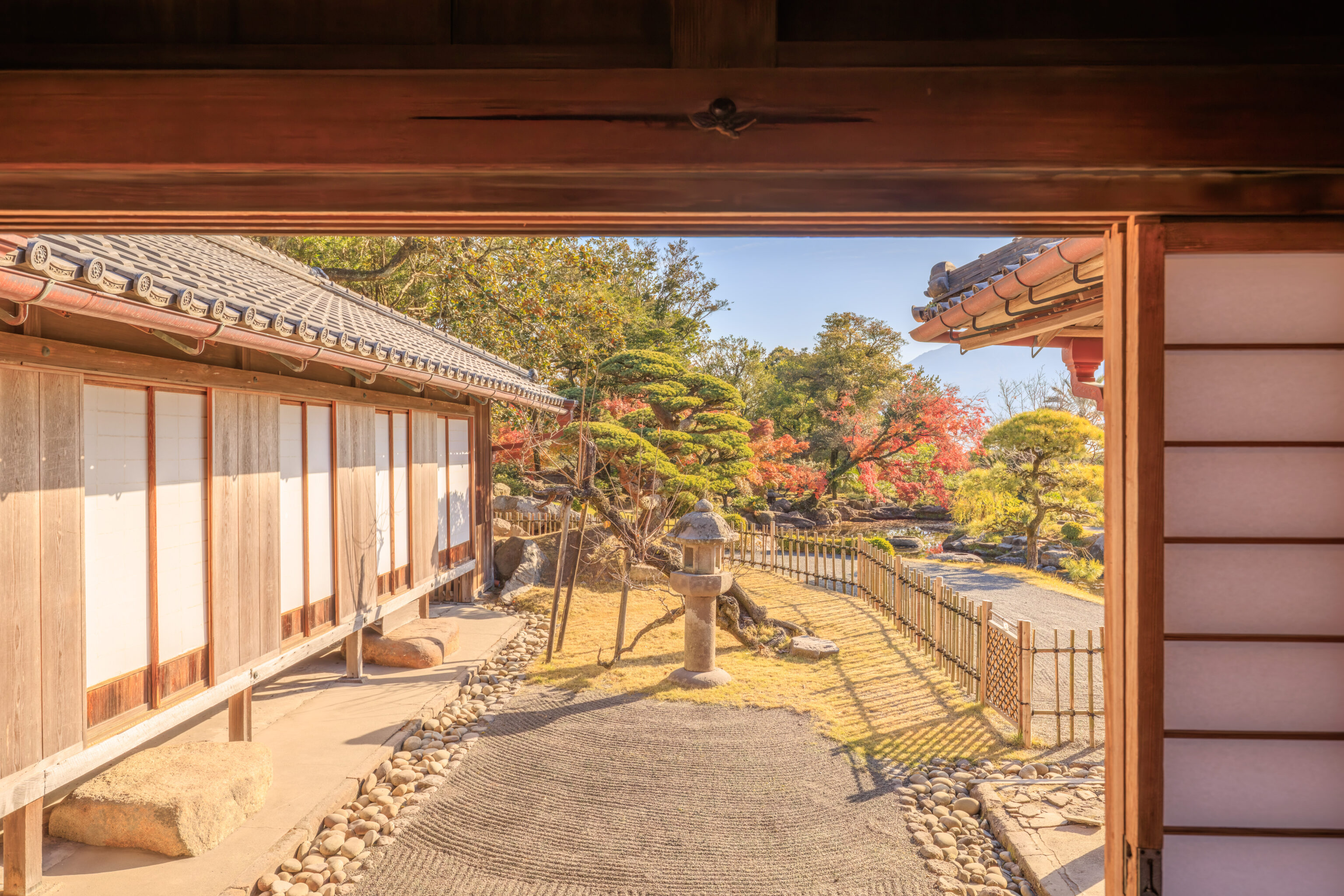
This room with open sliding door had a view of the outside.
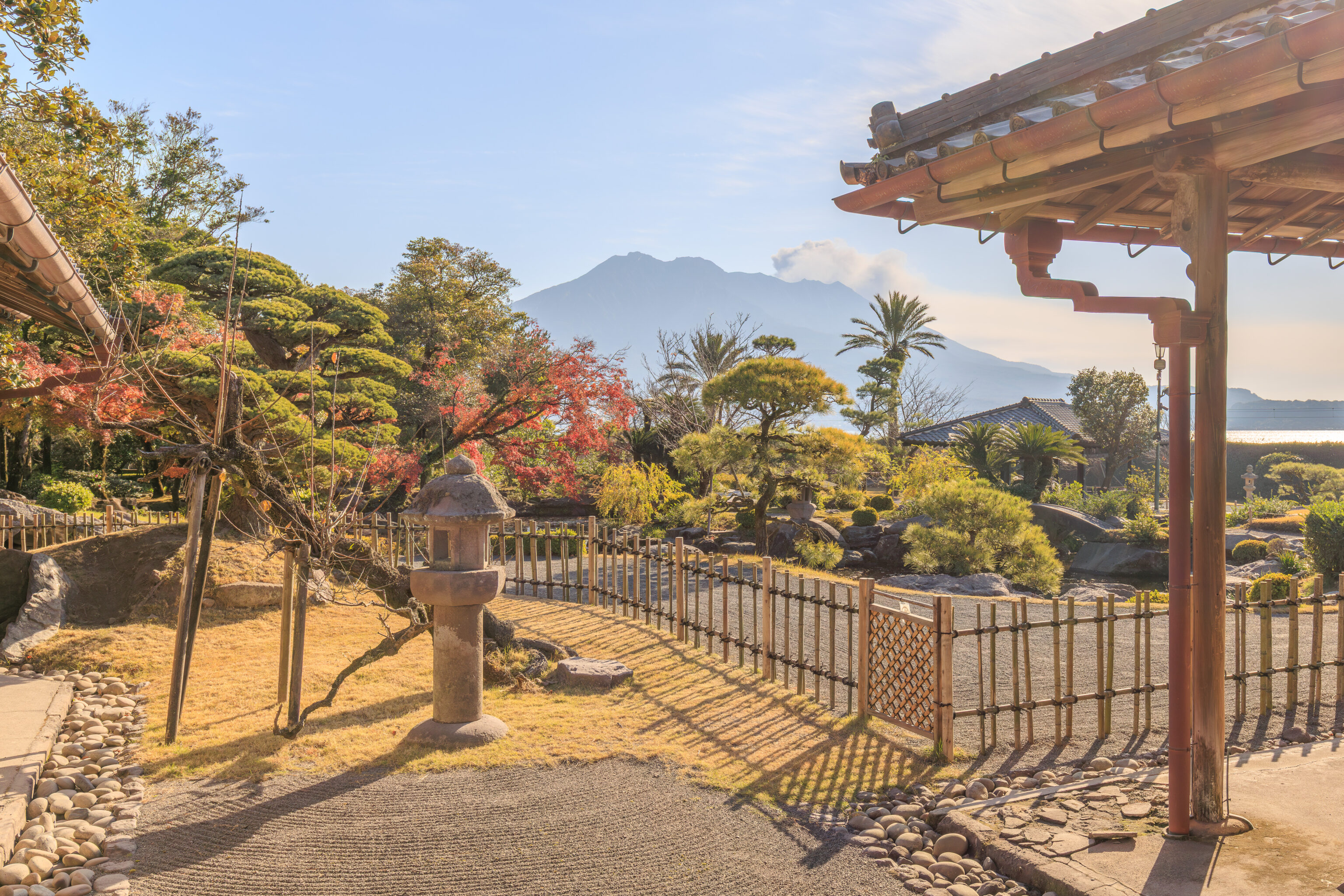
Looking out from this open door, we could see that Sakurajima was still emitting ash, although not as much as when we arrived.
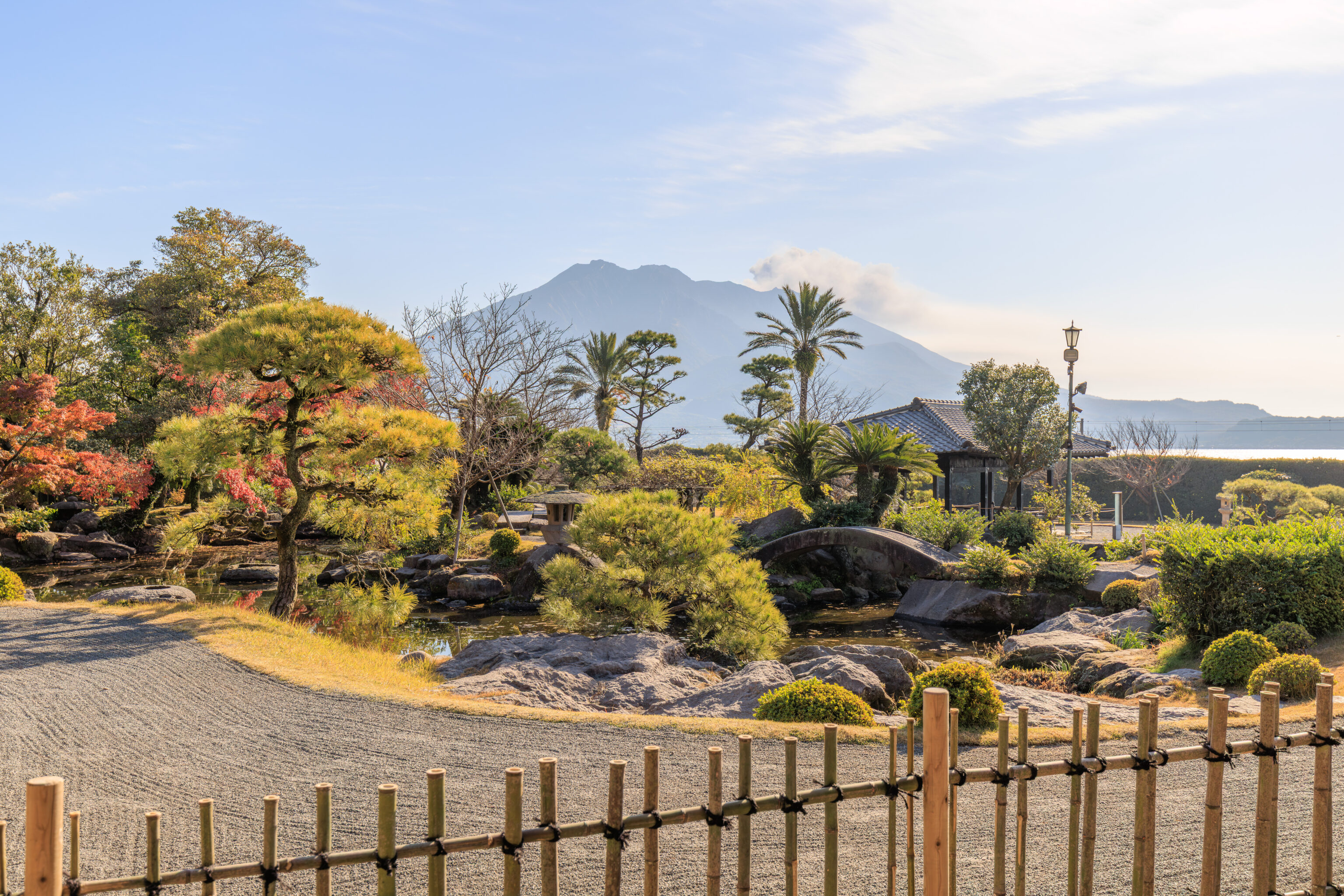
Sakurajima as seen from a slightly different perspective from the goten.
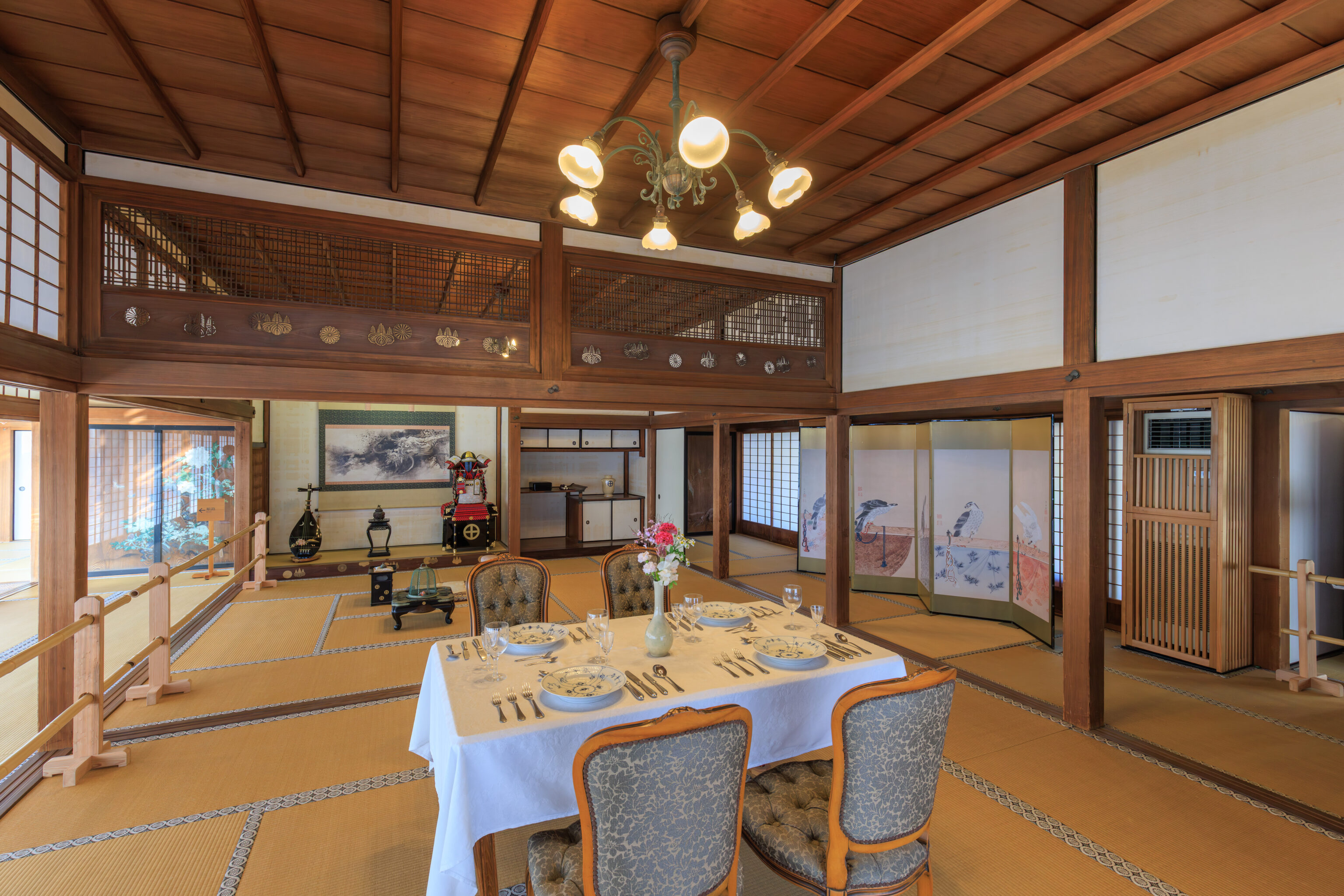
This room was set up as a dining room.
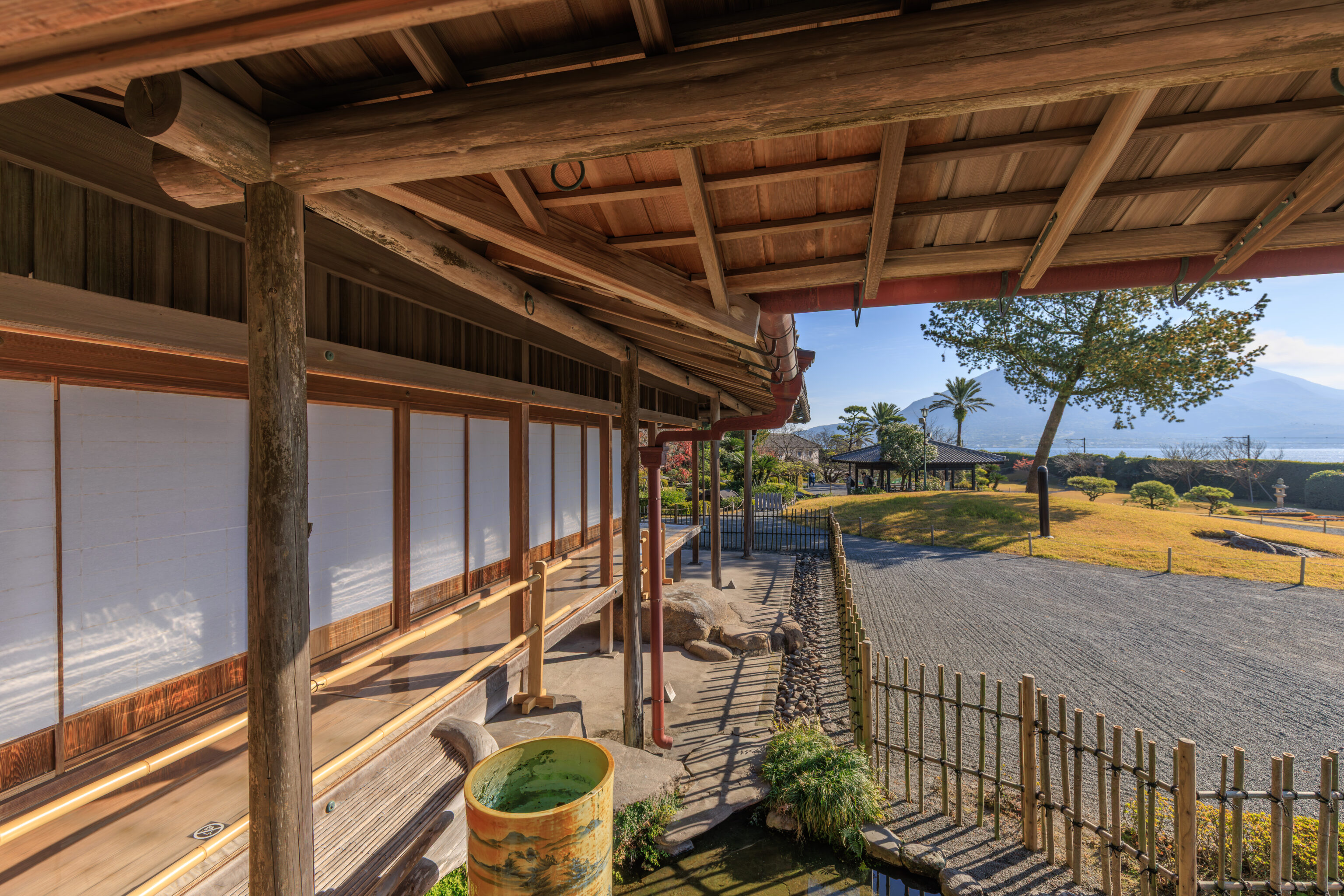
Another view of the outside.
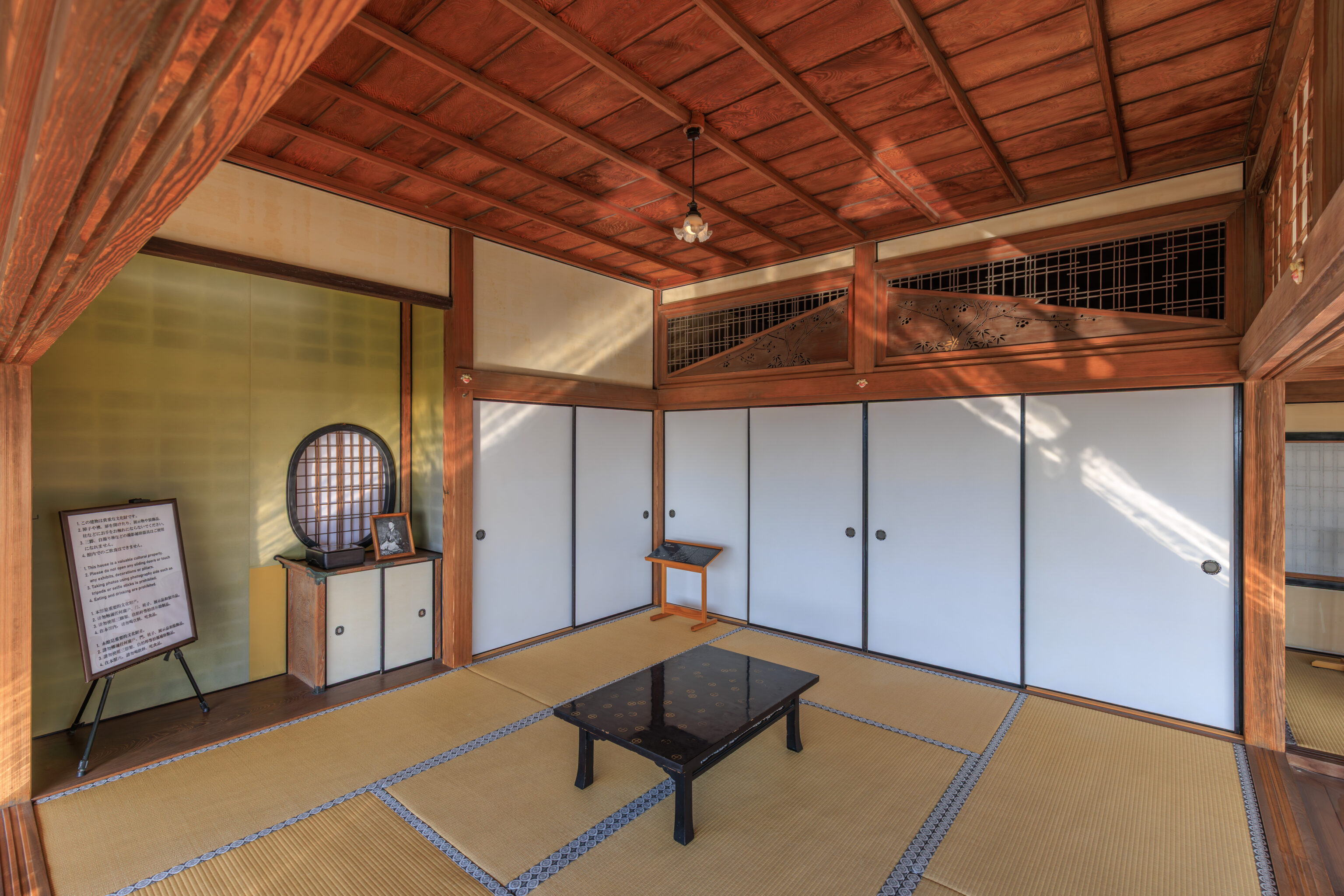
There is a sign on the opposite side of this room which we did not photograph closely. This might be Tadayoshi’s Study based upon the map of the goten.
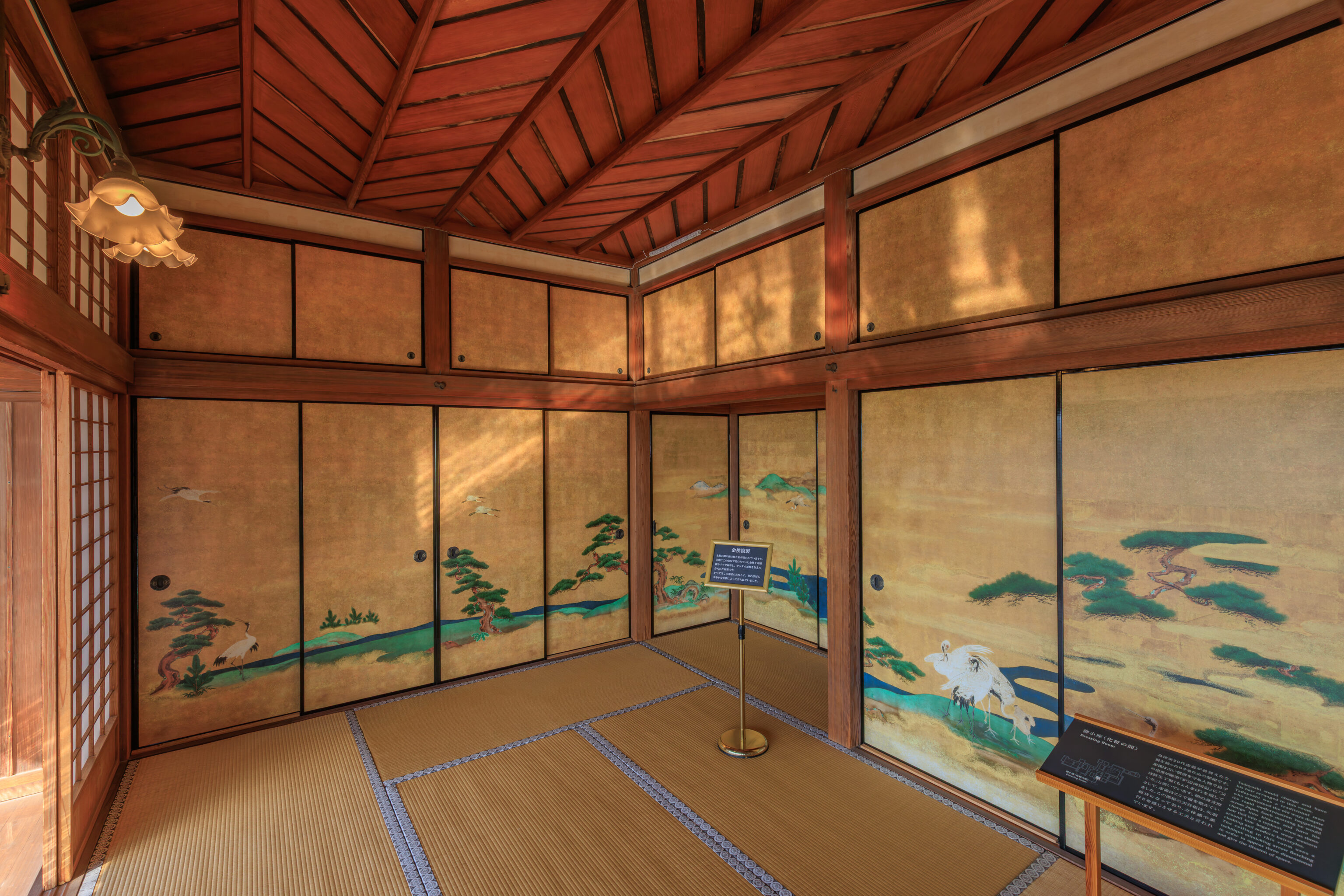
This room was used as a dressing room.
Tadayoshi would change and have his hair arranged in this room. Tadayoshi was a traditional man who maintained the old ways despite the rapid modernisation happening across Japan. Each morning he would change into kimono and have his hair tied into a topknot, even as those around him began to wear western clothing and modern hairstyles. The ceiling in this room uses a technique mimicking arrow fletching in order to appear three dimensional and give the illusion of space.
– Text from the sign in the right side of the room.
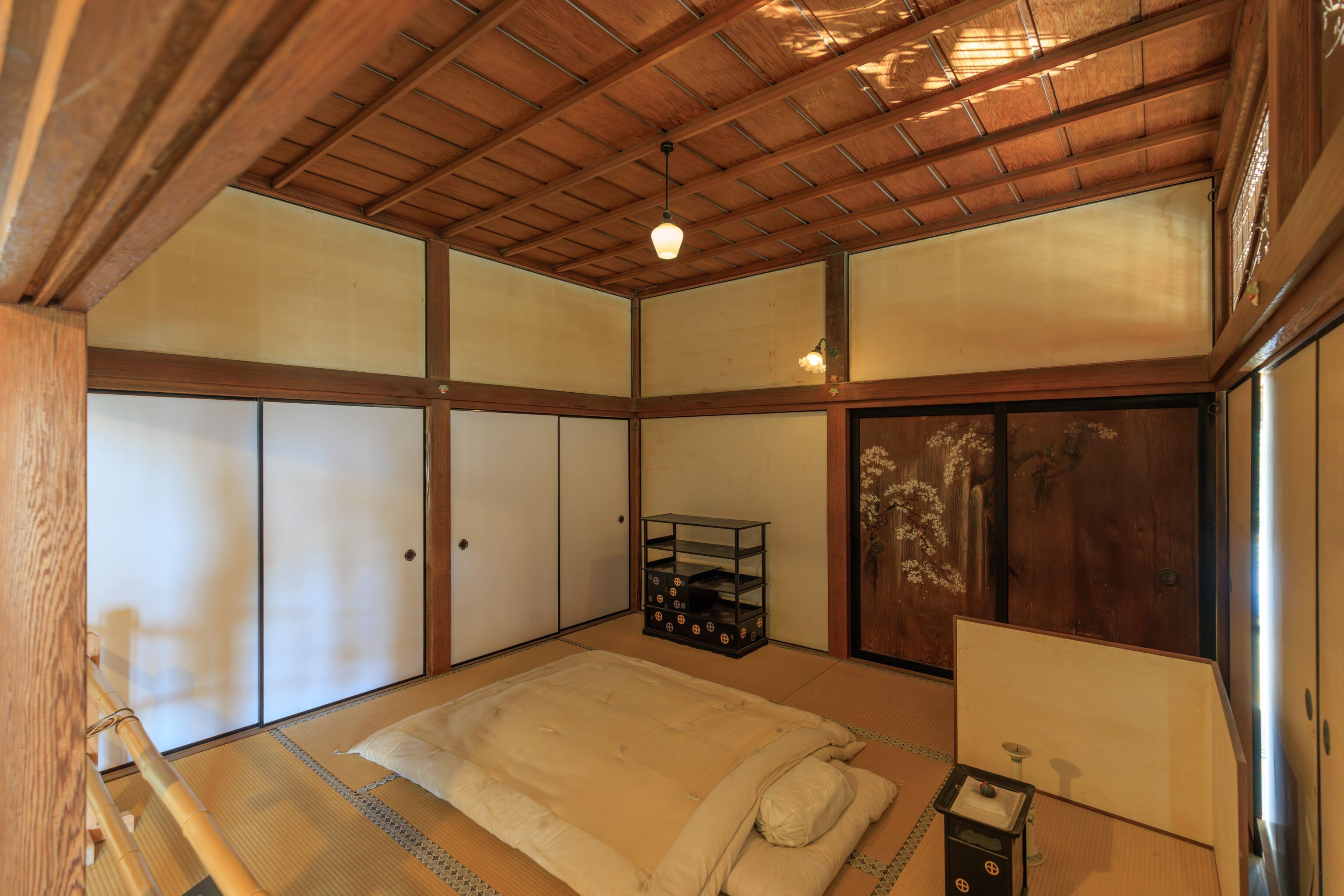
This was Tadayoshi’s bedroom.
This is Tadayoshi's bedroom. Tadayoshi lived his life according to the traditions of the Edo period and would wake early to pay his respects to his ancestors before changing into his kimono and hakama. He would then begin his duties for the day, working until 4pm when he would have a small snack and take a stroll in the gardens. He would sleep by 9pm each evening.

The floor in this area is double layered and the space between the layers is tightly packed with rice chaff, which acts as a form of insulation, keeping the room warm in winter.
– Text from a sign in front of the room.
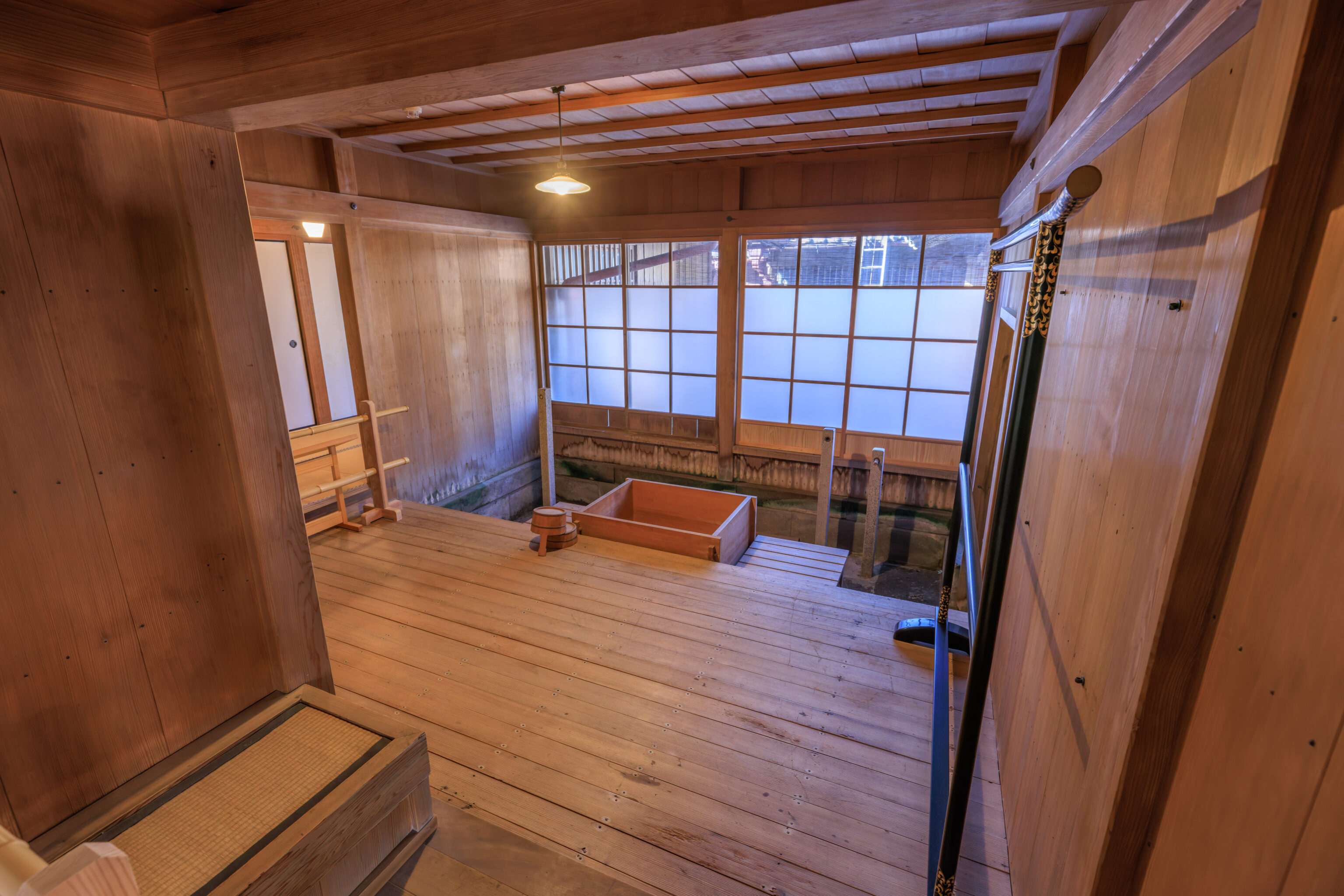
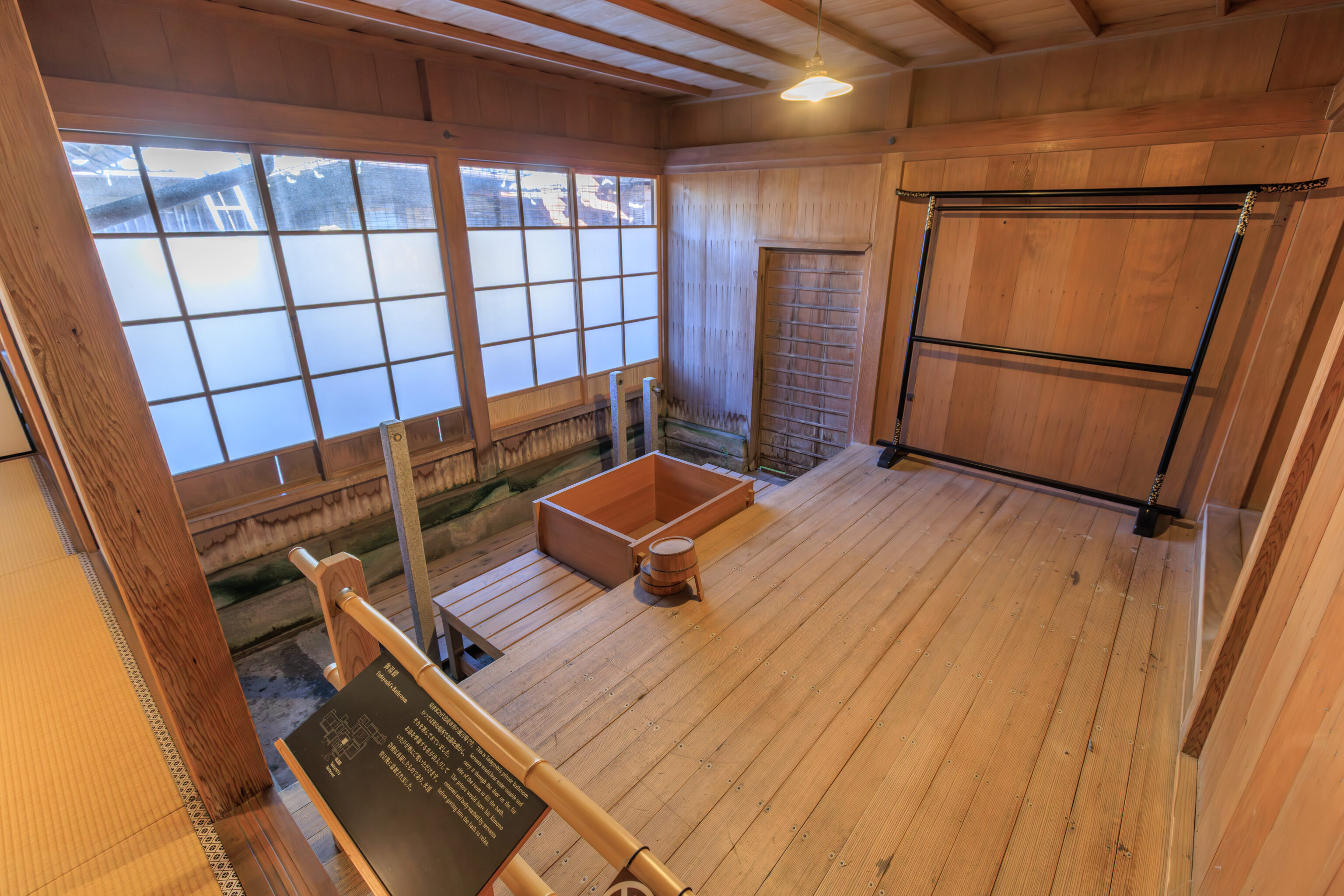
Next, we looked into Tadayoshi’s bathroom.
This is Tadayoshi's private bathroom. Servants would heat water outside and carry it through the door on the far side of the room to fill the bath. The prince would have his kimono removed and body washed by servants before getting into the bath to relax.
– Text from the sign at entrance to the bathroom.
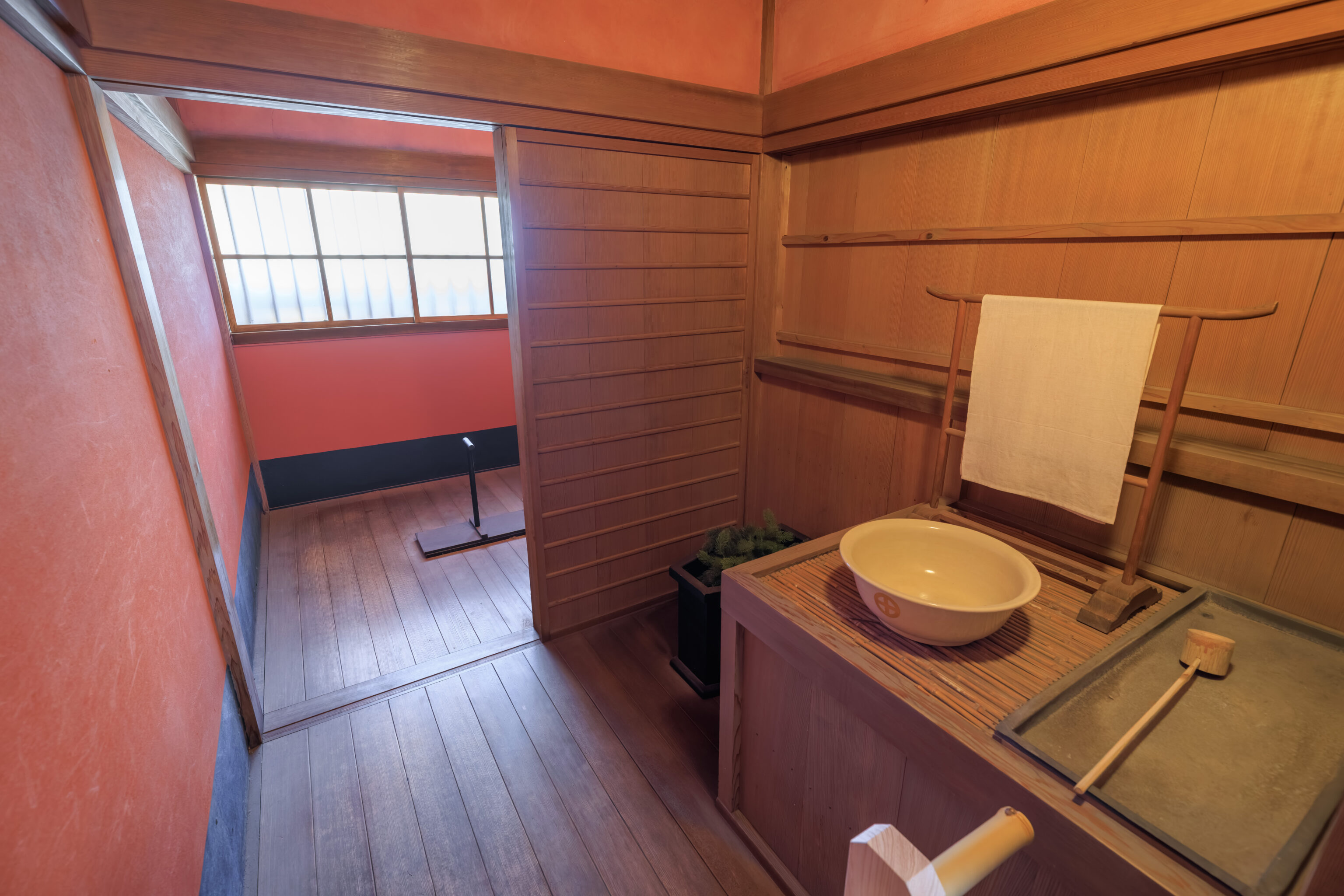
This room was Tadayoshi’s Toilet. There is a sink and presumably some sort of toilet in the other half of the room.
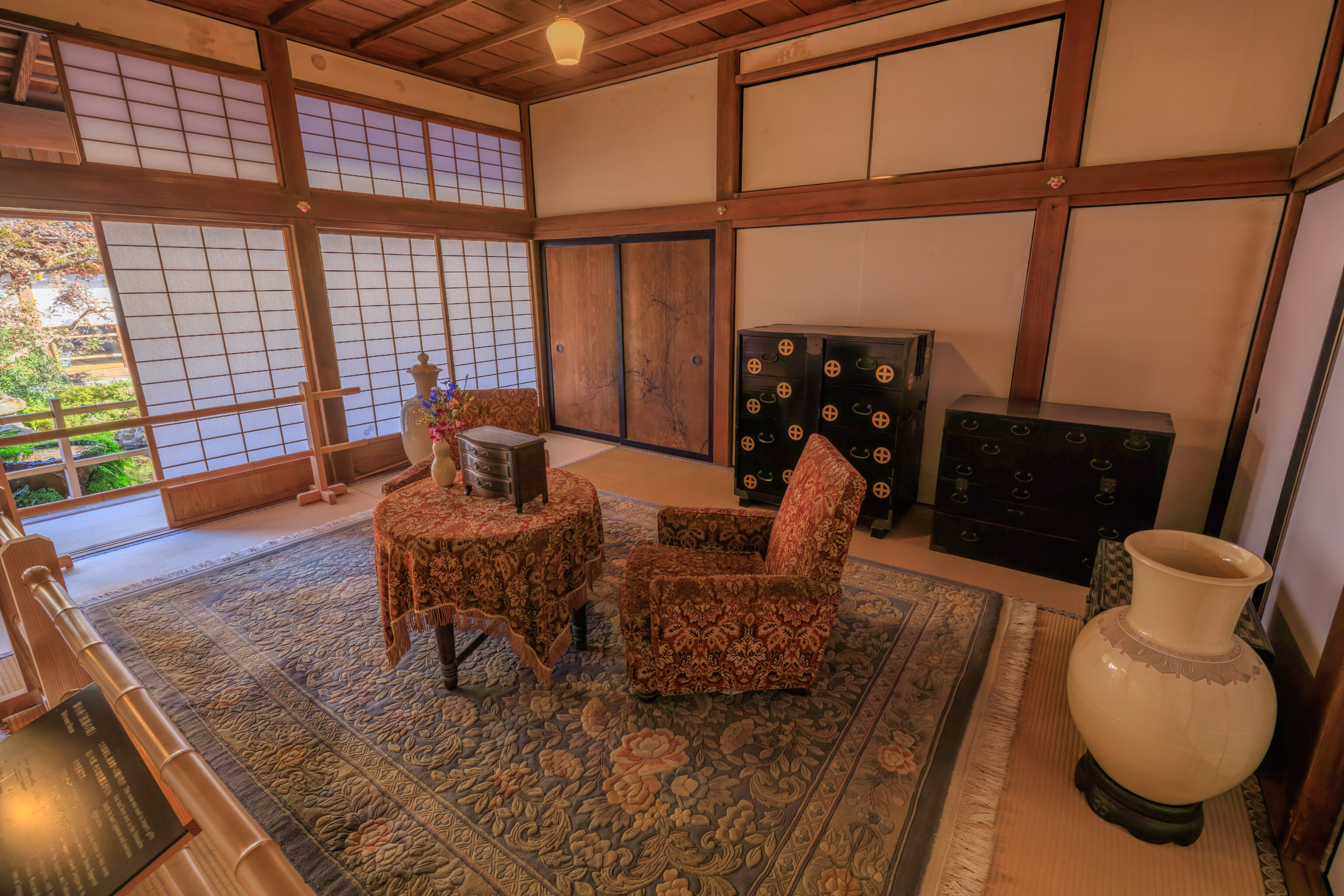
This room is the Welcome Room. Unfortunately, we didn’t photograph the sign.
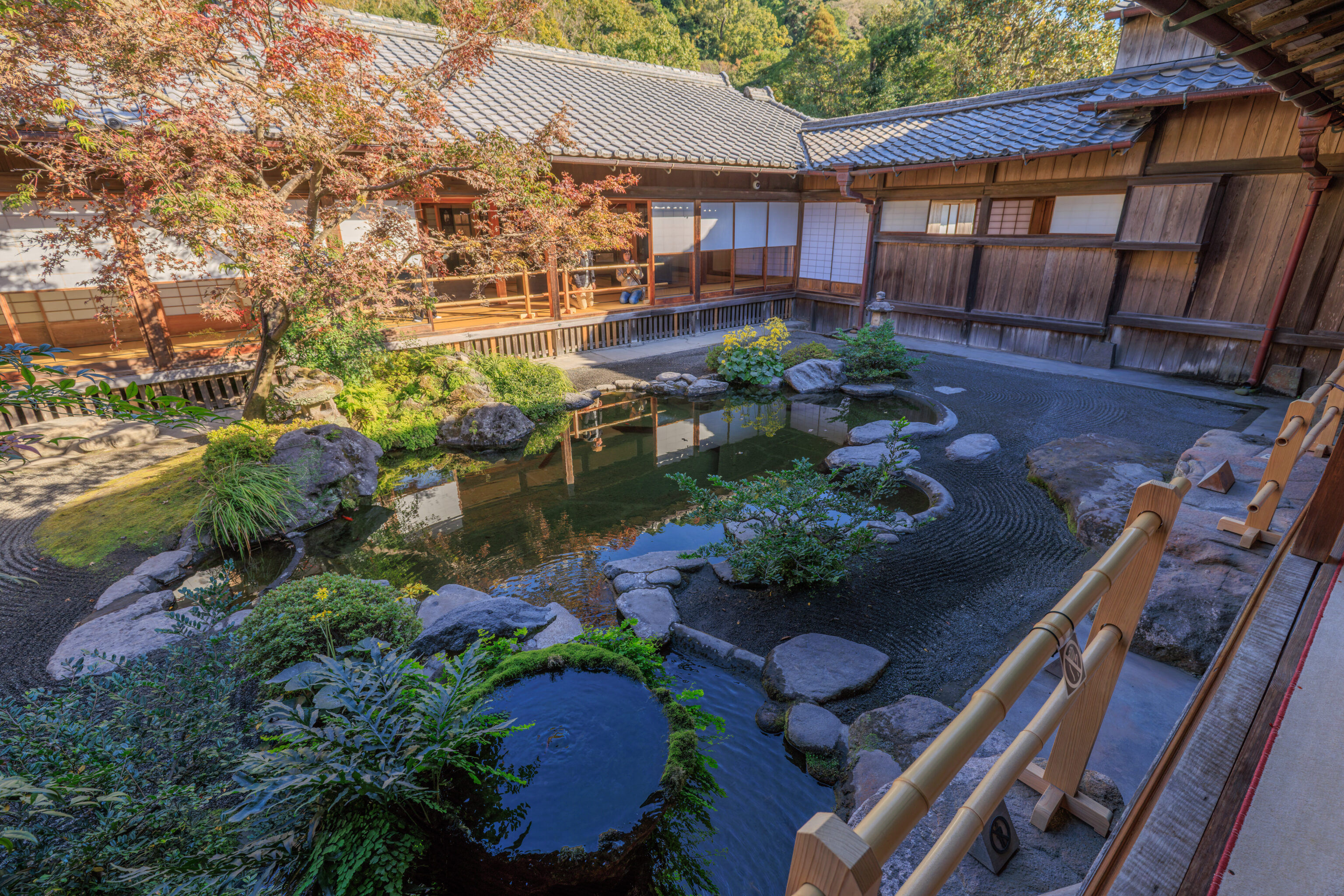
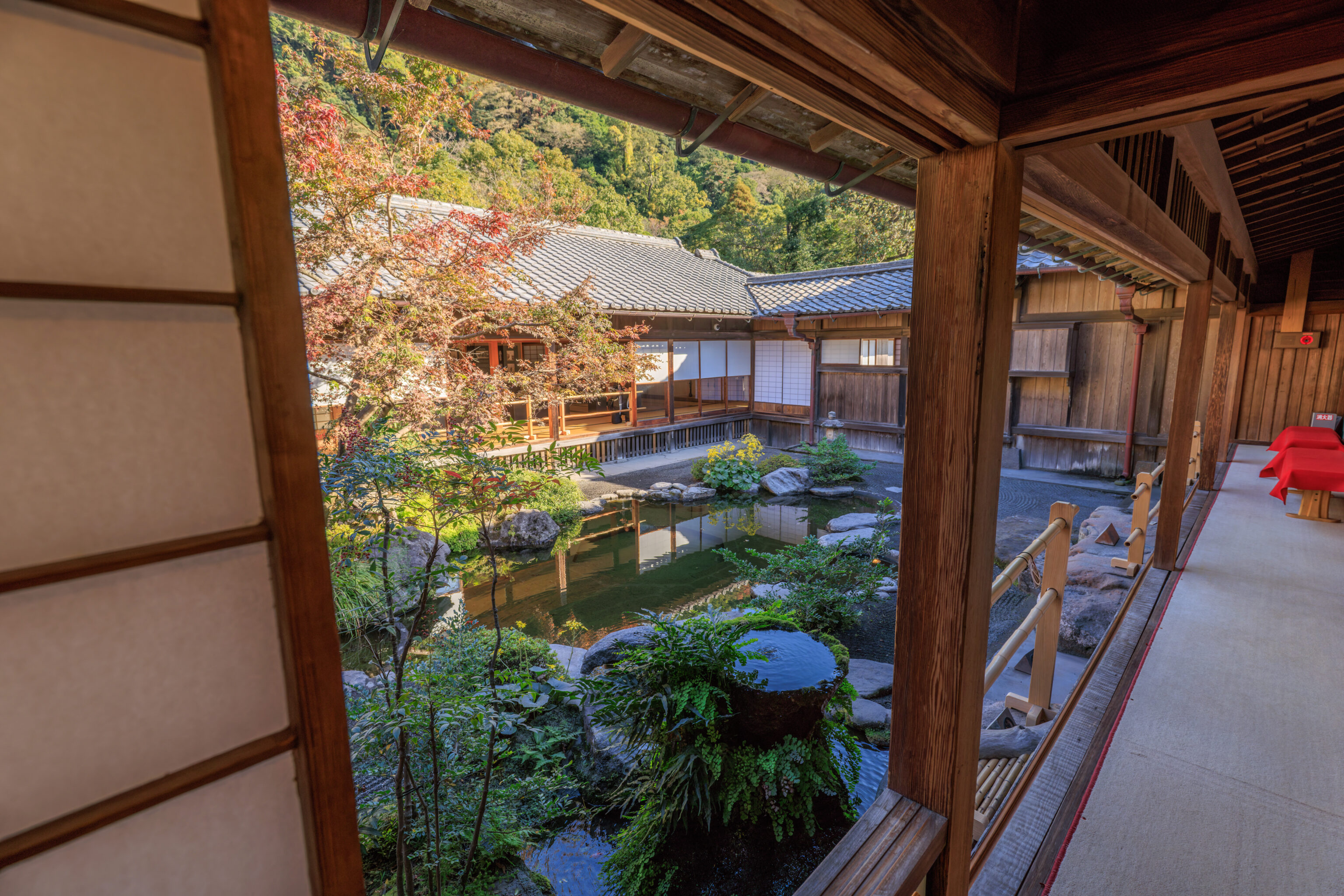
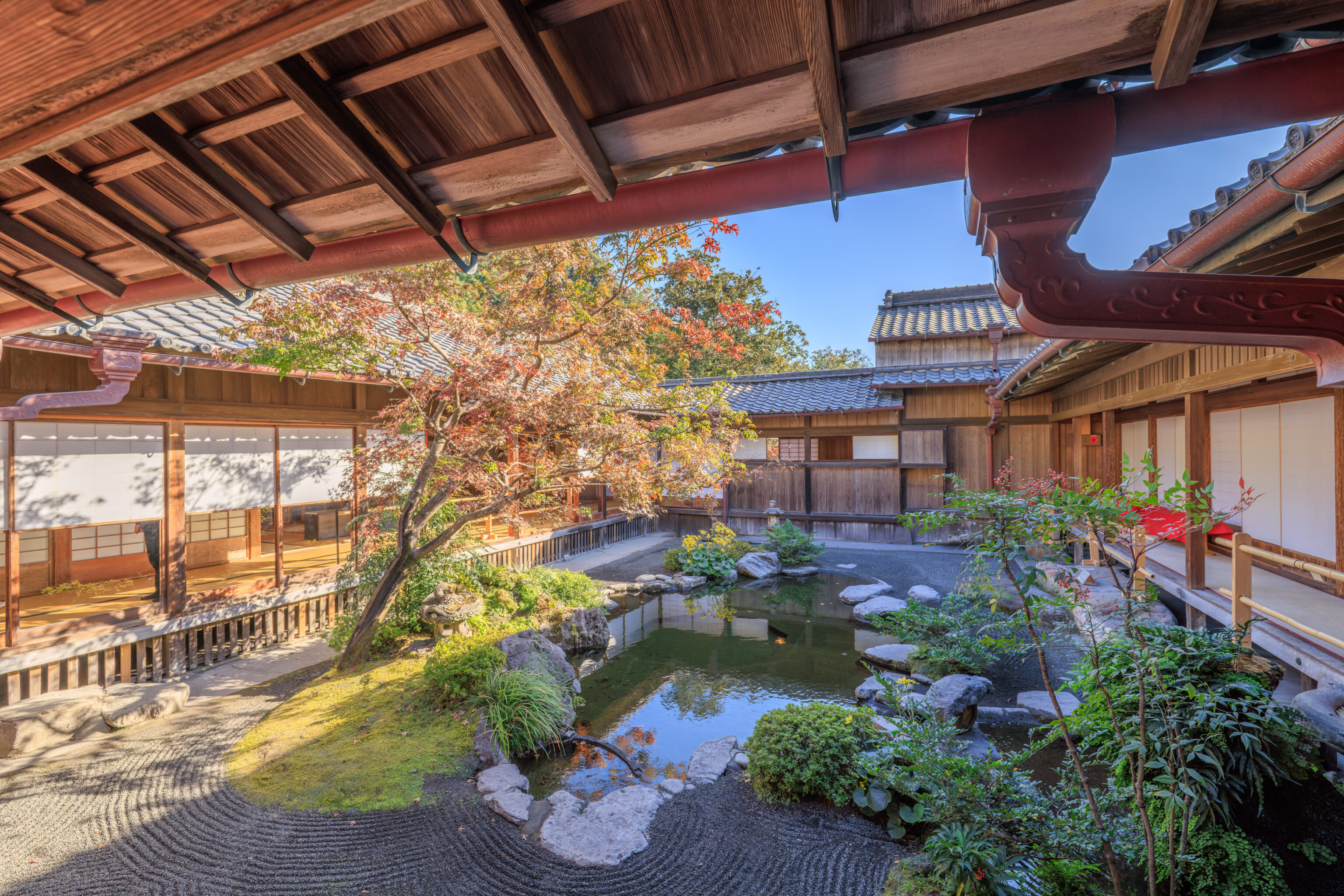
We again had a view of the Inner Garden. There was a sign here:
The inner garden features a small pond with a sunken octagon in the
middle.

This octagon is part of a set of two, the other is located in the main garden outside the dressing room. The octagon is considered to be lucky in Feng Shui as it reaches out in all eight cardinal directions. This pair of octagons represent yin and yang and are intended to draw good energy into the house.
– Text from a sign.
The sunken octagon isn’t very apparent in this set of photos. However, it is extremely obvious in the previous two photos that we took of this Inner Garden when we were on the opposite side. We definitely have not yet seen the one outside though. Maybe we will see it later?
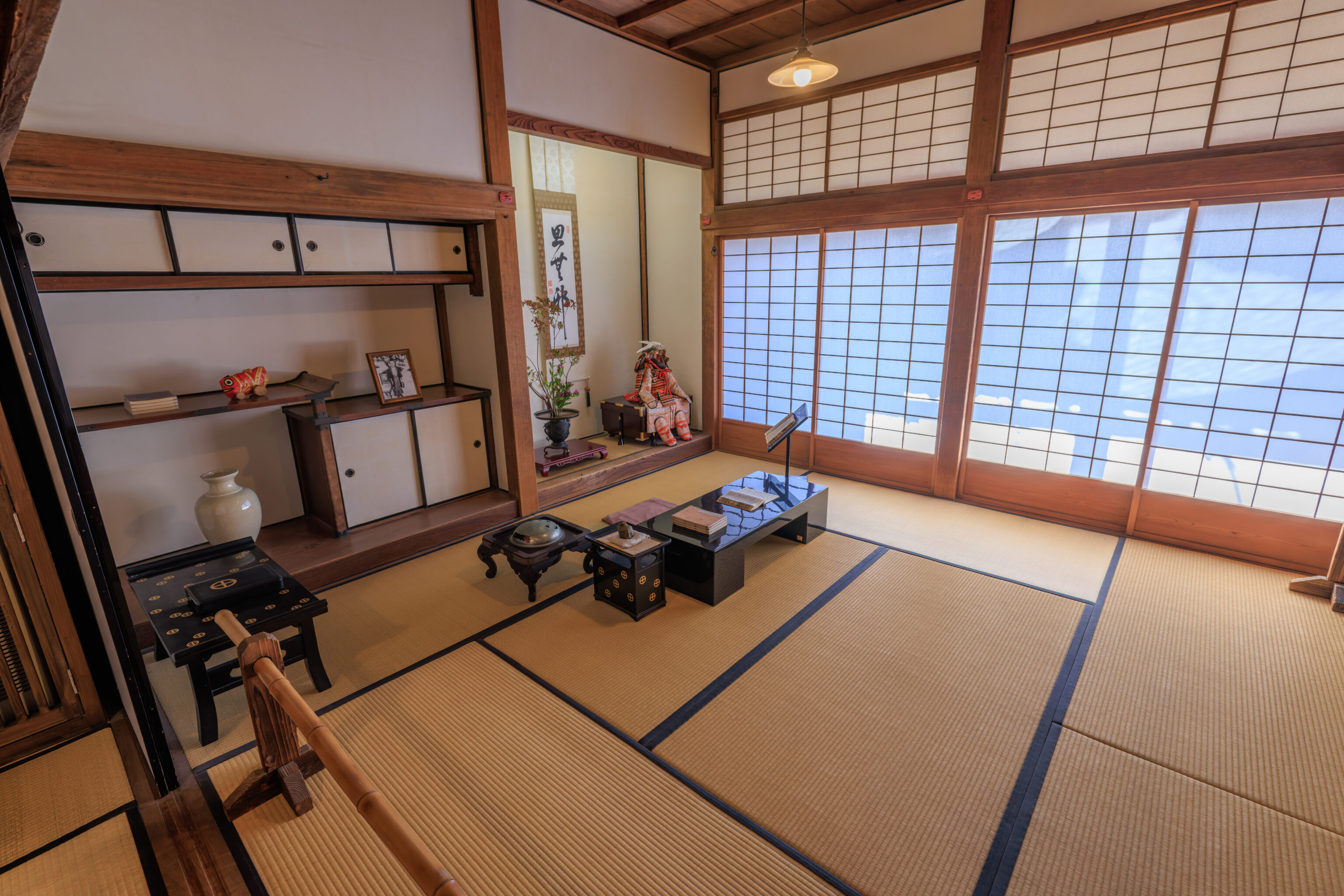
This room was Tadashige’s personal room.
This room was lived in by the 30th generation head of the Shimadzu family, Tadashige, from his birth in 1886 until the time he moved to Tokyo at the age of 12. Tadashige became the head of the Shimadzu family following the death of his father in 1897 and took the title of Prince Shimadzu. Tadashige joined the Imperial Navy, eventually attaining the rank of Rear Admiral. He worked as an instructor at Japan's Naval Academy, and also served as military attaché to the British Embassy, living in London for several years. The entrance in this room was built in the Taisho period (1912-1926).
– Text from a sign, translated using Google.
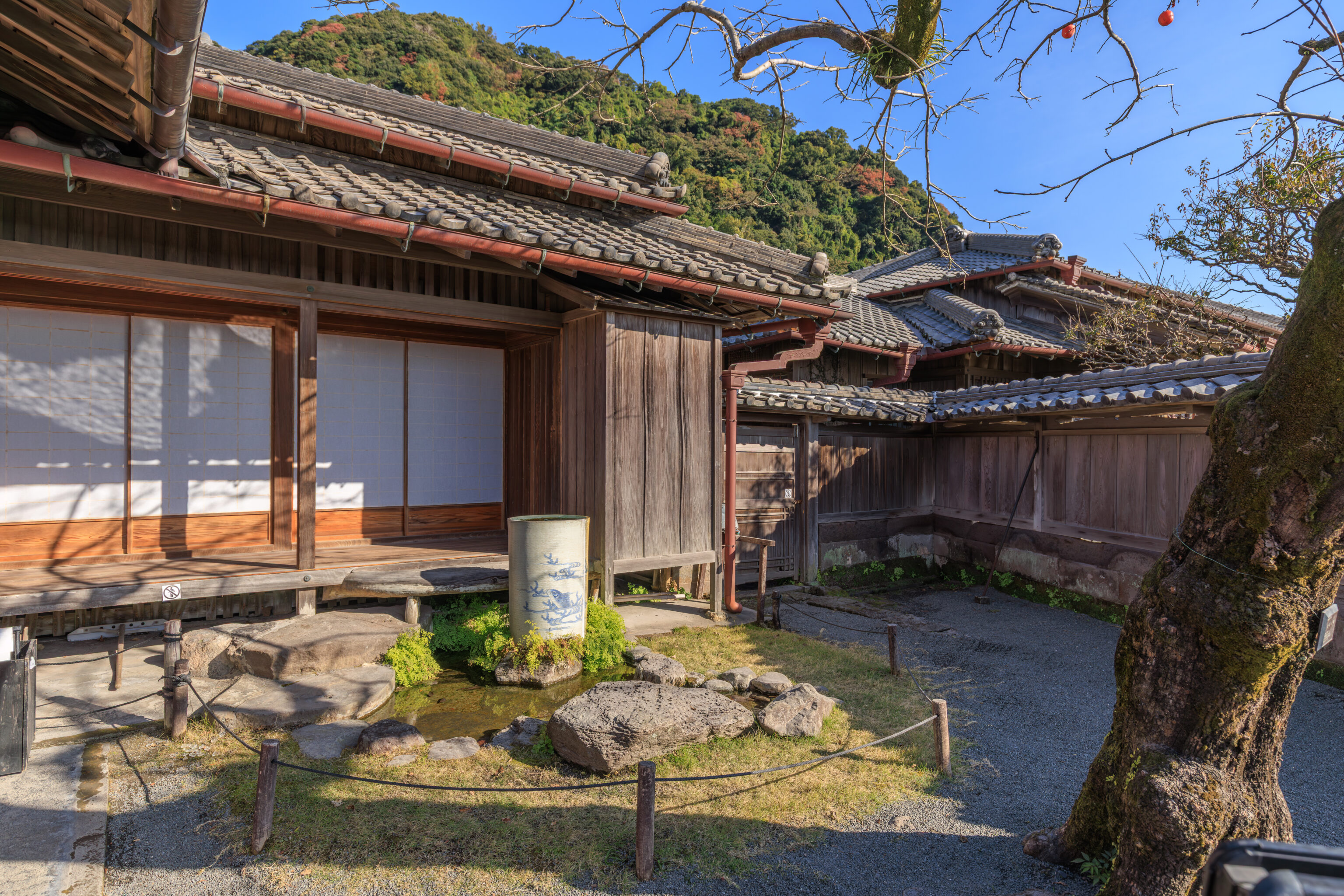
Having completed the route through the goten, we headed back outside.
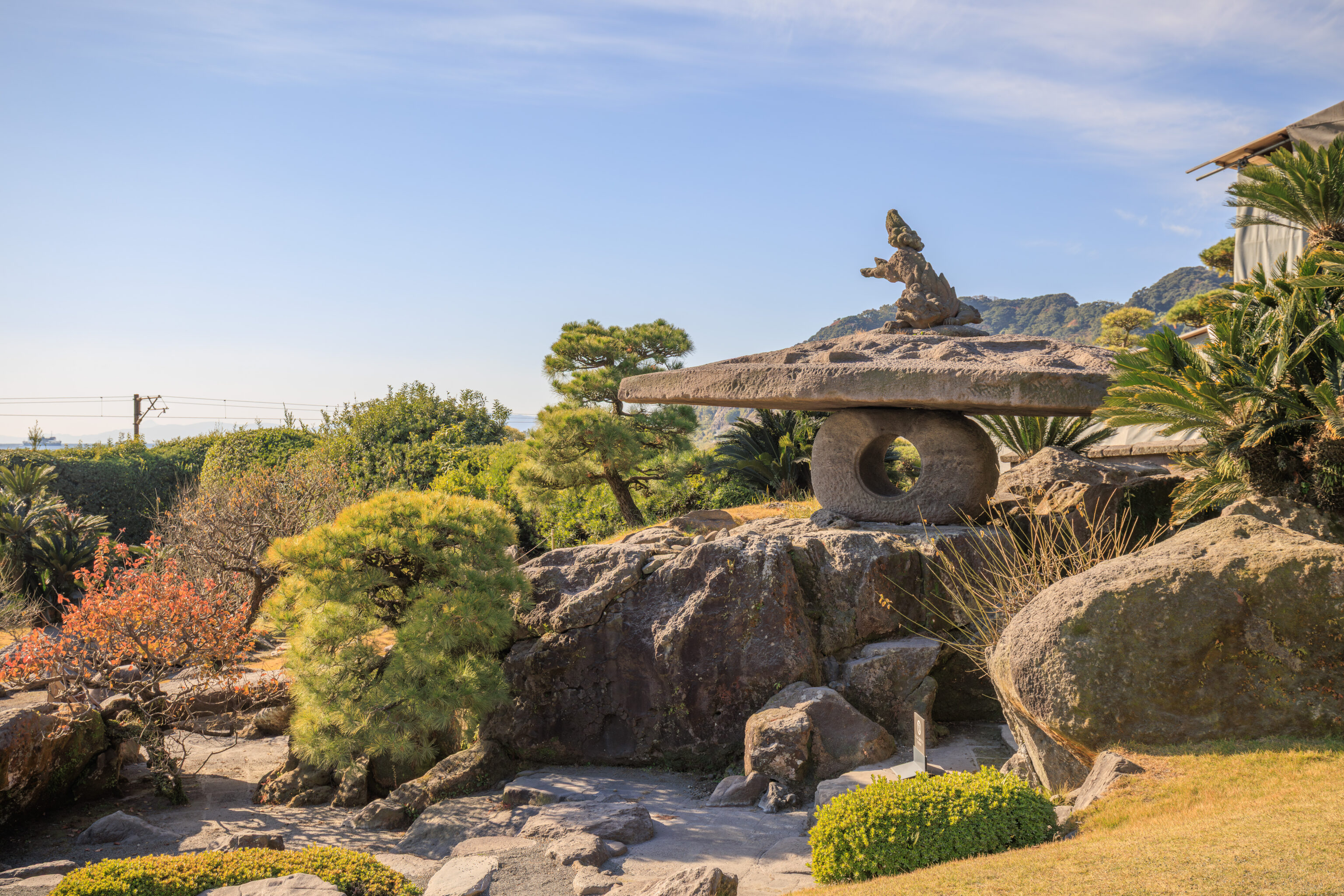
This large stone lantern is the Jumping Lion Lantern.
Jumping Lion Lantern
This lantern was built in 1884 by the 29th head of the Shimadzu family, Tadayoshi. It is the largest lantern in the garden. On top of the lantern is a Chinese guardian lion with its hind legs in the air. The coping stone was taken from the shore nearby and has an area of over 14 square metres.
– Text from a nearby sign.
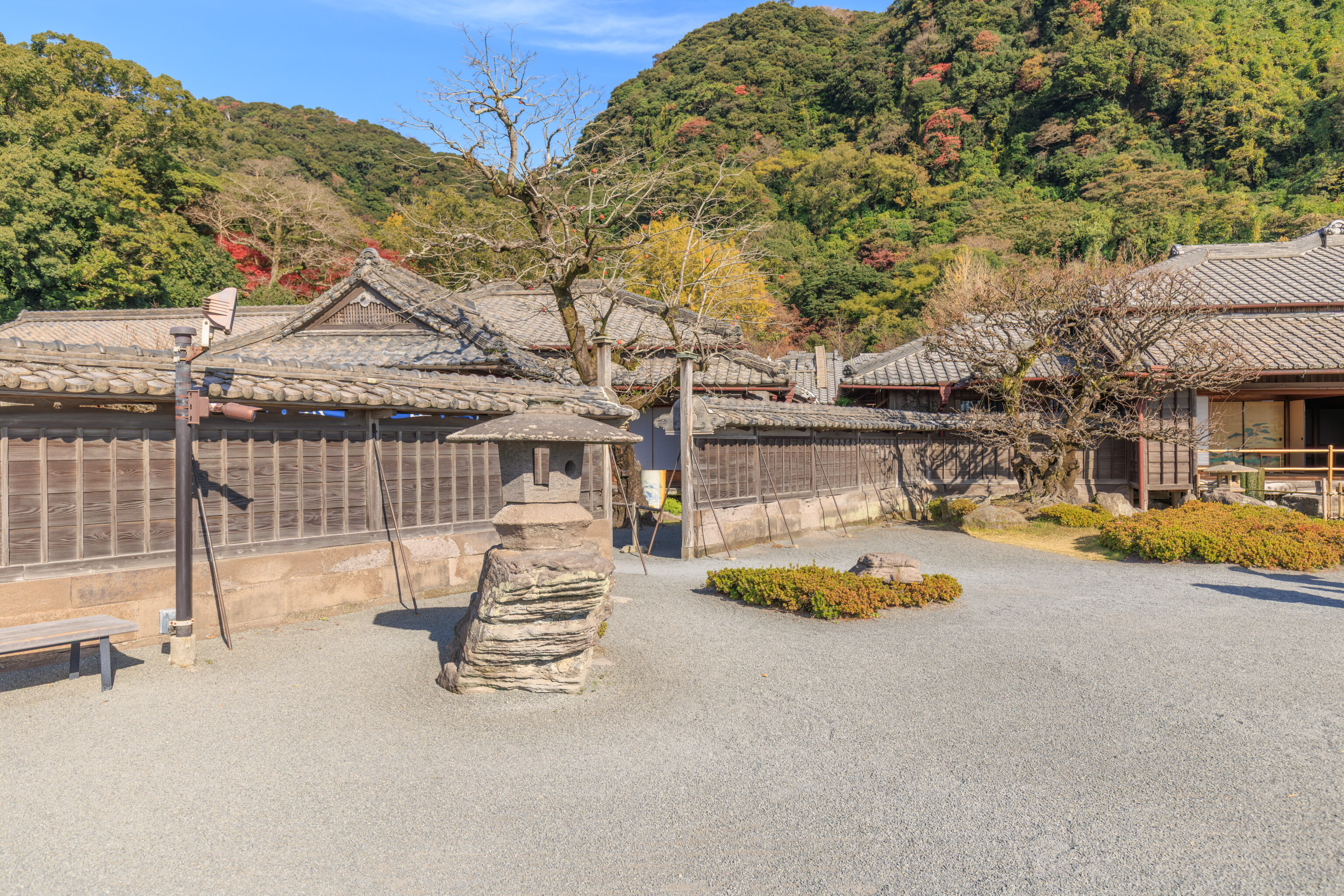
We exited the walled area around the entrance to the goten via a gate to the east, which is seen here left of center from the outside.
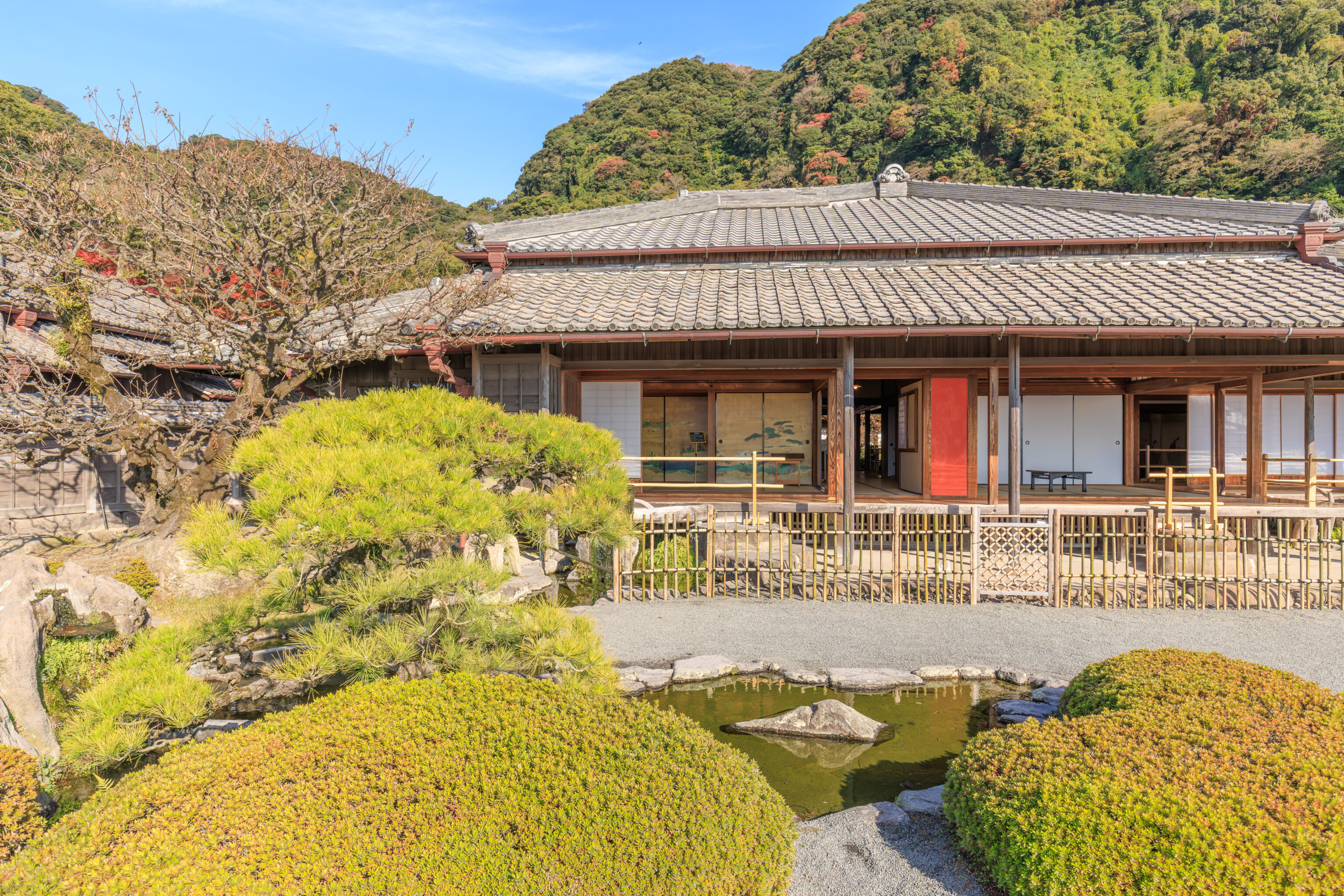
We started walking east. The building here is the eastern portion of the goten.
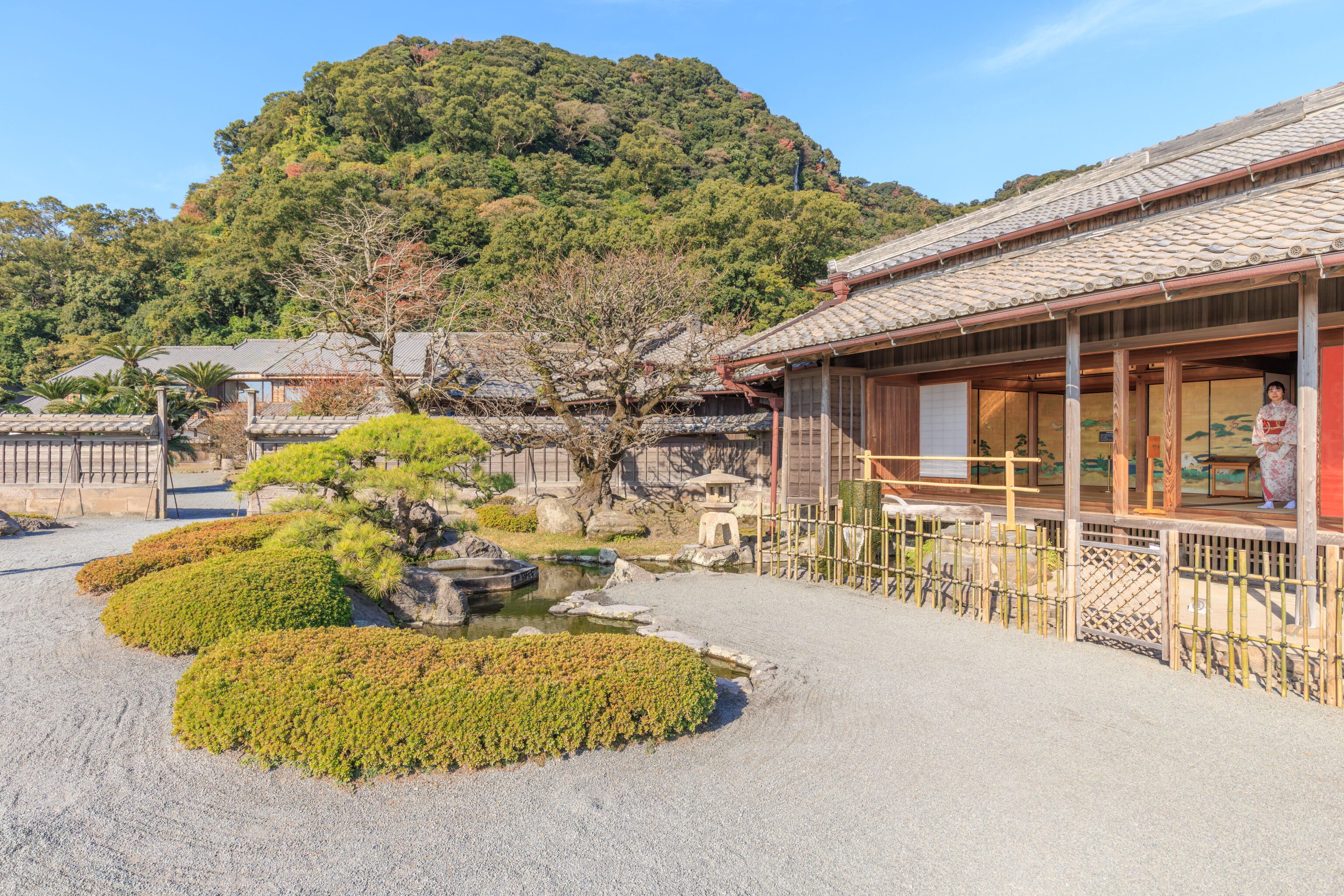
Is that the sunken octagon in the pond on the left? It does seem like it is an octagon, although the edges of the pond are too low for the octagon to be submerged without the entire area being flooded.
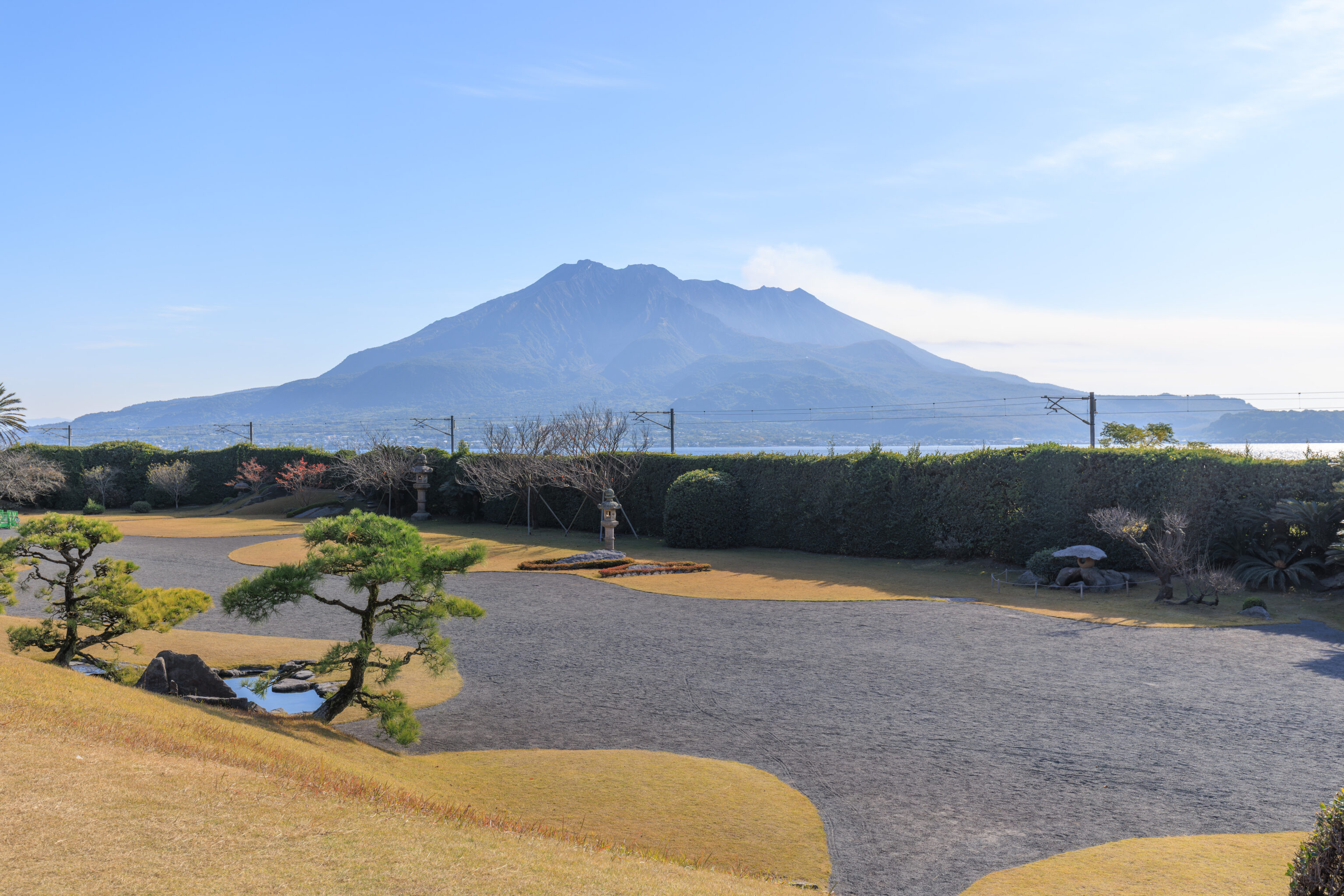
Looking to the southeast, the plume of ash that was being emitted from Sakurajima was now just more like some low white clouds.
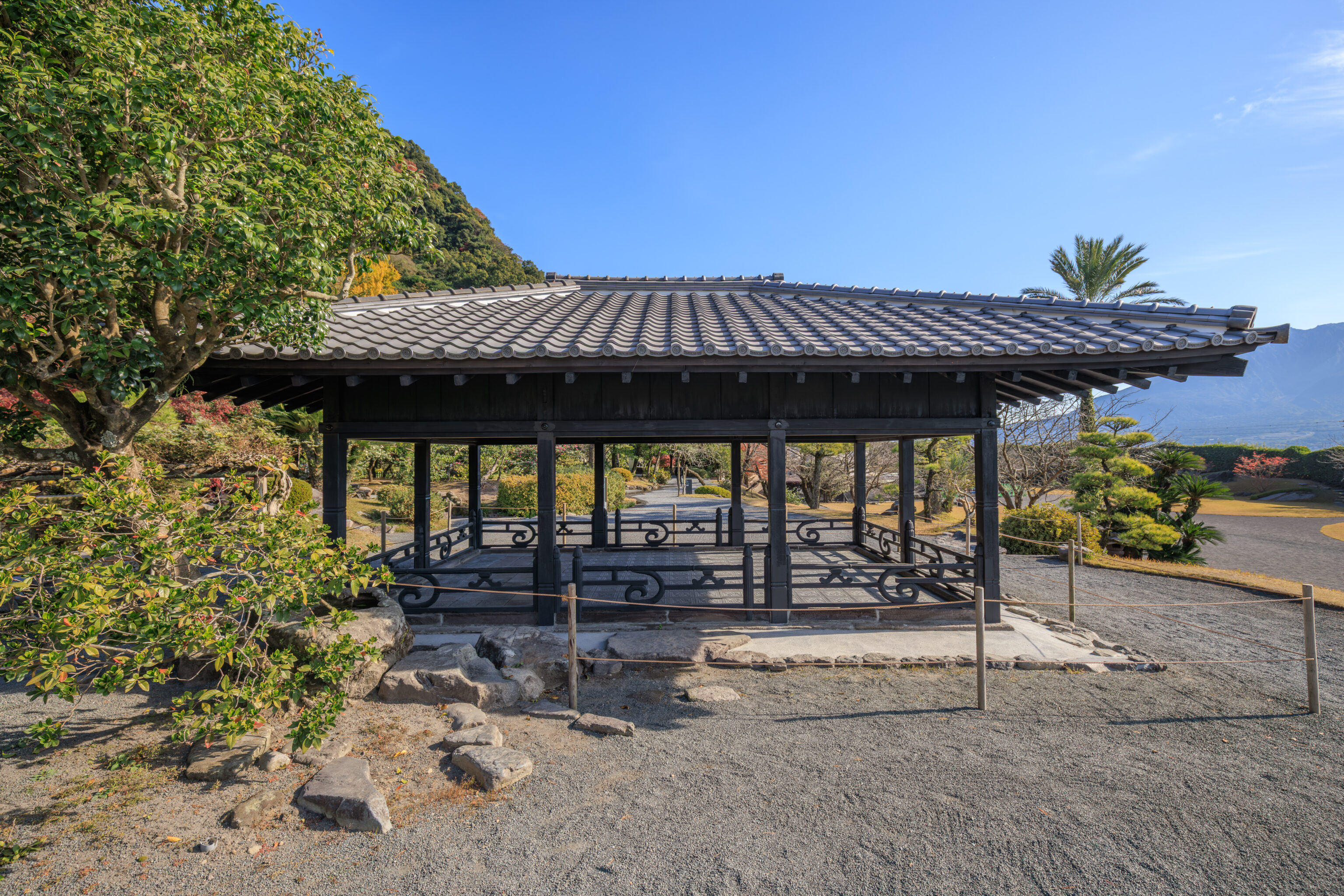
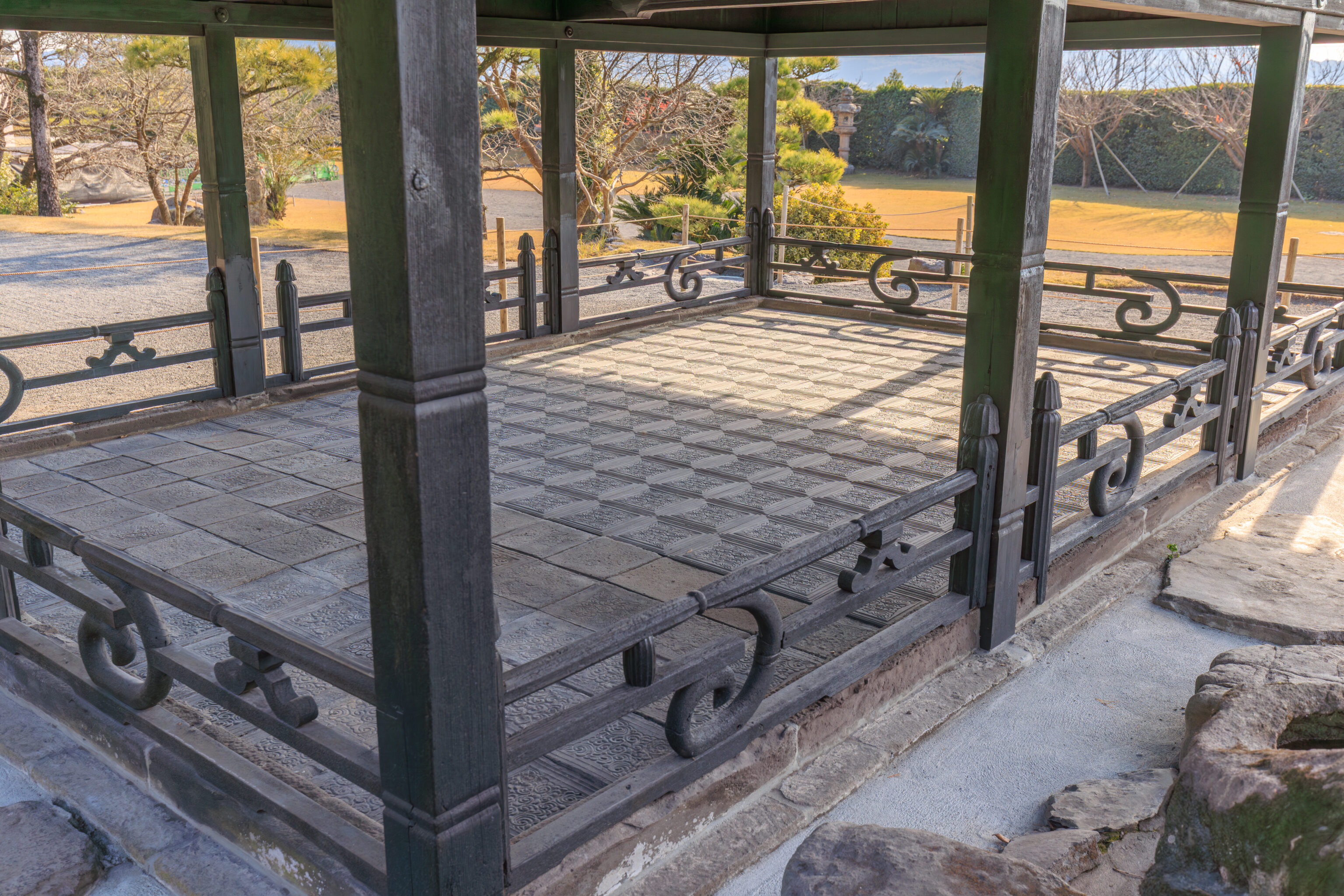
This pavilion was a gift from the King of Ryukyu, whose realm included Okinawa and presumably some of the nearby islands.
Bogakuro Pavilion
This pavilion was a gift from the King of Ryukyu presented as tribute to the Satsuma domain in the early 17th century. The floor is covered with 273 tiles, which are said to be copies of the flooring used in the unfinished 3rd century Epang Palace in Shaanxi, China. The calligraphy on display inside the pavilion is a copy of work by the
legendary Chinese calligrapher Wáng Xịzhi. This pavilion was used to attend to important guests, including Japanese statesman and naval engineer, Katsu Kaishu.
– Text from a sign, translated using Google.
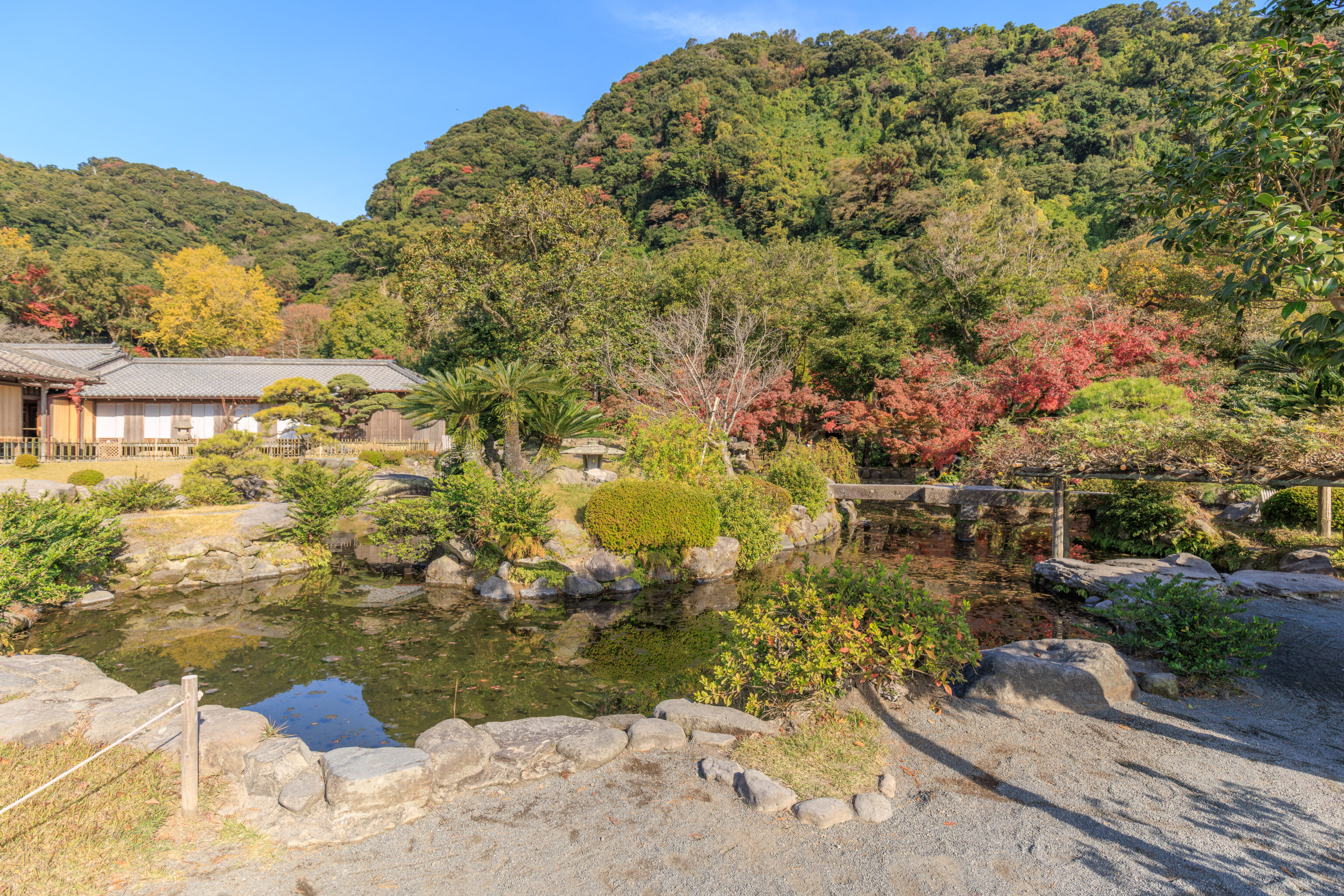
We continued walking to the east into a vast garden area.
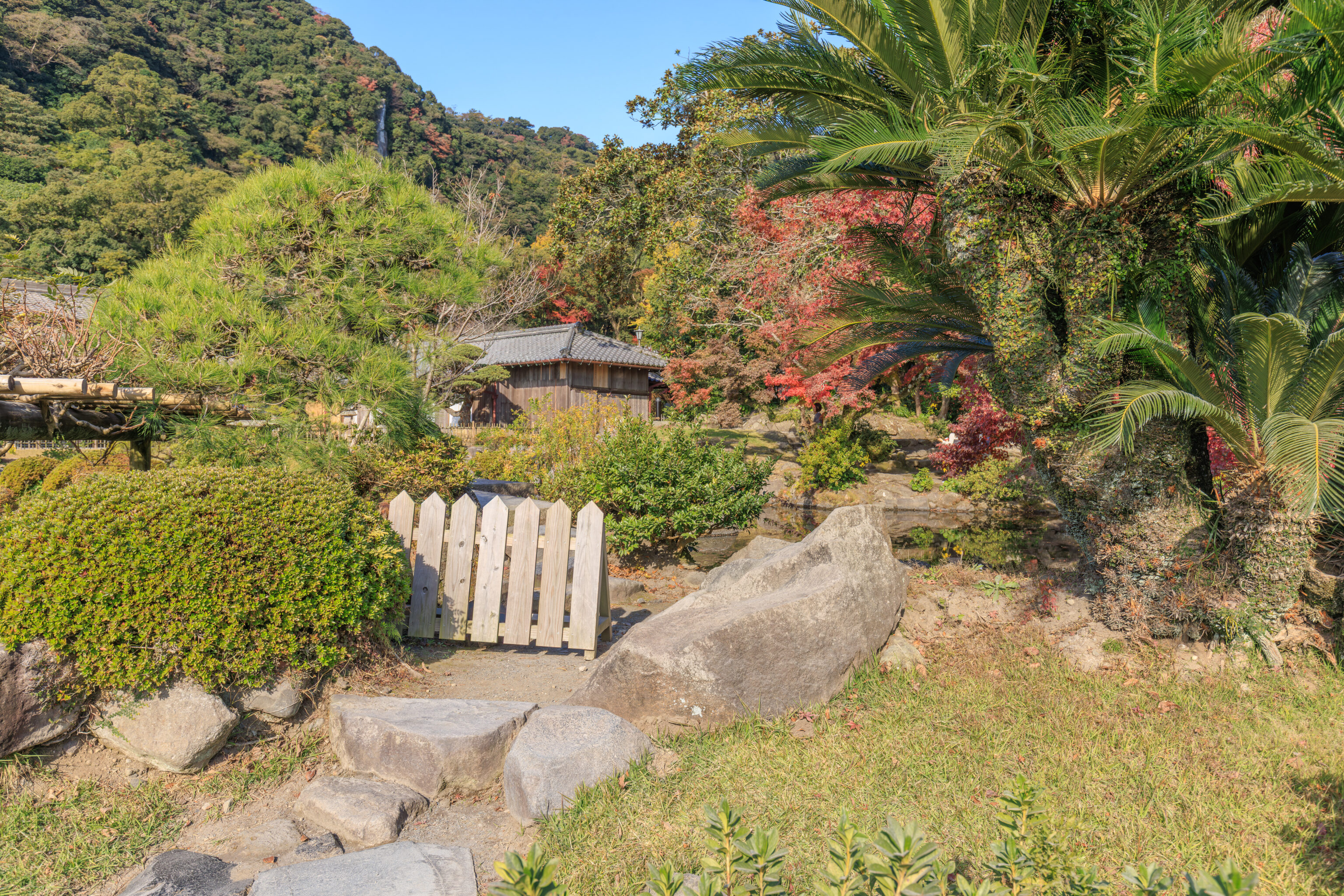
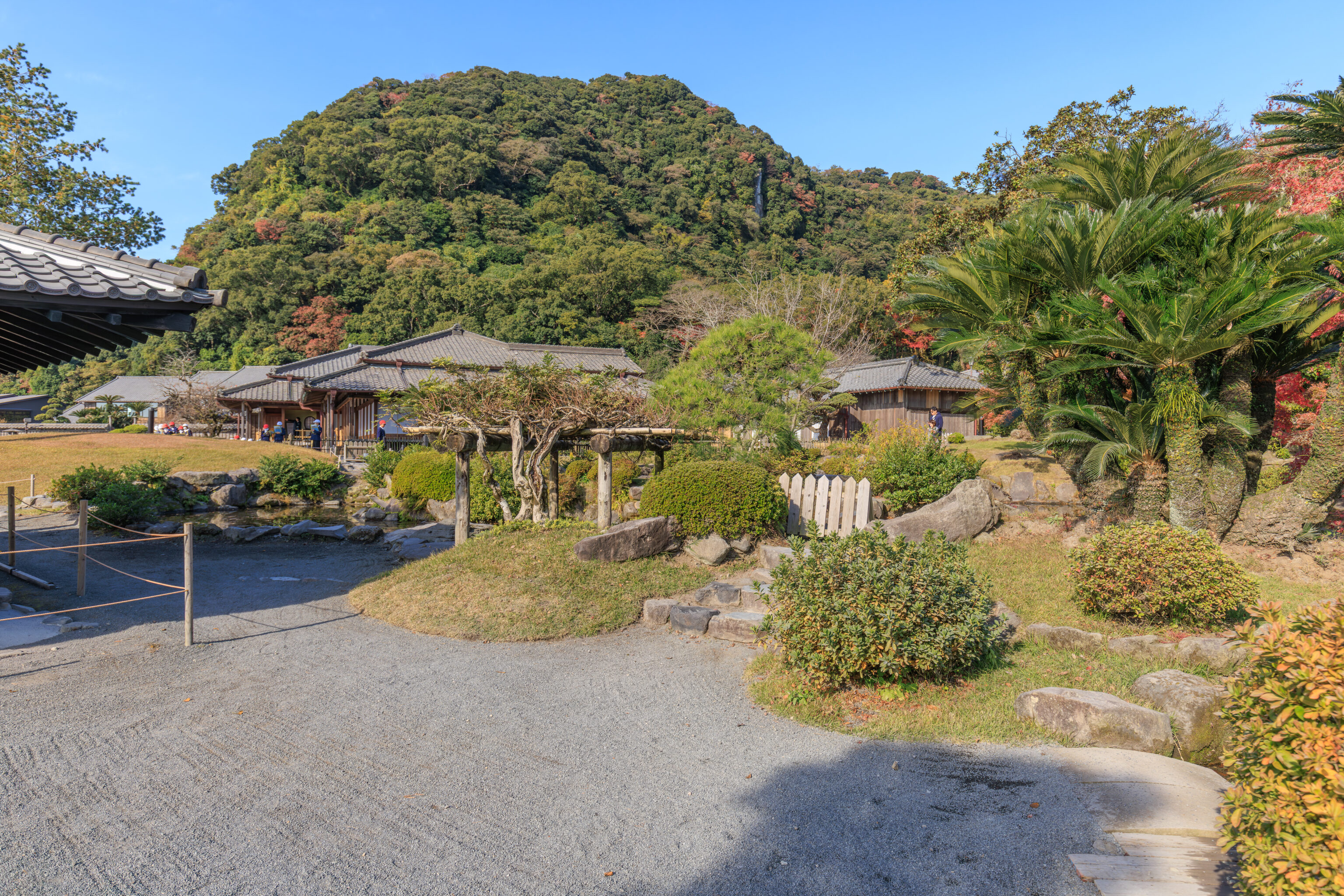
In both the photographs above, there are three white characters written on stone on the right side of the hill behind the goten.
Senjingan
In 1814, under the orders of the 27th head of the Shimadzu family, Narioki, a total of 3,900 people worked for three months to carve these three characters into the cliff face. The characters literally mean very large rock, and are 11 metres high in total. A pigment made with crushed shells was used to paint the characters white. Carving characters into rocks is a Chinese custom, and is very unusual to see in a Japanese garden.
– Text from a sign nearby.
The characters are are 千尋巌 senjingan. Proton’s Lumo AI gives a good explanation of the name:
"千尋巌" (Senjun-iwa or Chihoro-iwa) is a Japanese compound of three kanji characters:

千 (sen) = thousand
尋 (hitozuna/hirō) = a traditional Japanese unit of measurement (approximately 1.8 meters or one fathom), also can mean "to search/inquire"
巌 (iwa/gan) = rock, cliff, or boulder

Literally, it translates to "thousand-fathom cliff" or "thousand-depth rock" — essentially describing a very tall, steep cliff or massive rock formation. The "thousand" here is hyperbolic, emphasizing great height or depth rather than a literal measurement.
This type of naming is common in Japanese geography and literature, where dramatic natural features receive poetic names. Similar constructions appear in place names like 千尋滝 (Senjun-taki, "thousand-fathom waterfall") or 千尋の淵 (Senjun-no-fuchi, "thousand-fathom pool").
– Text from Proton Lumo.
This is the first time I’ve quoted Lumo. Its more trustable from a privacy perspective than Google and its avatar is a cute cat. That alone is good enough reason to use it!
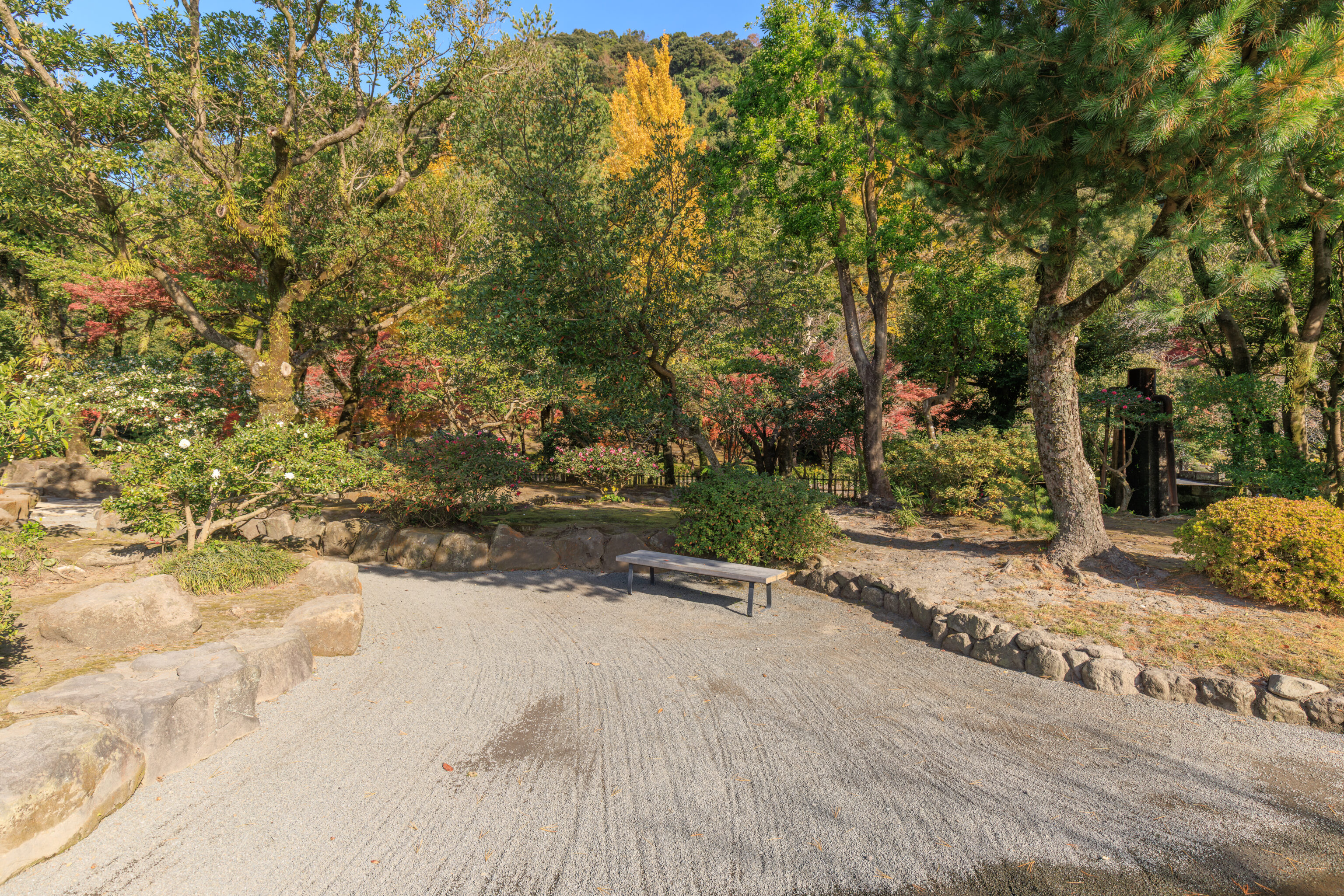
We continued on…
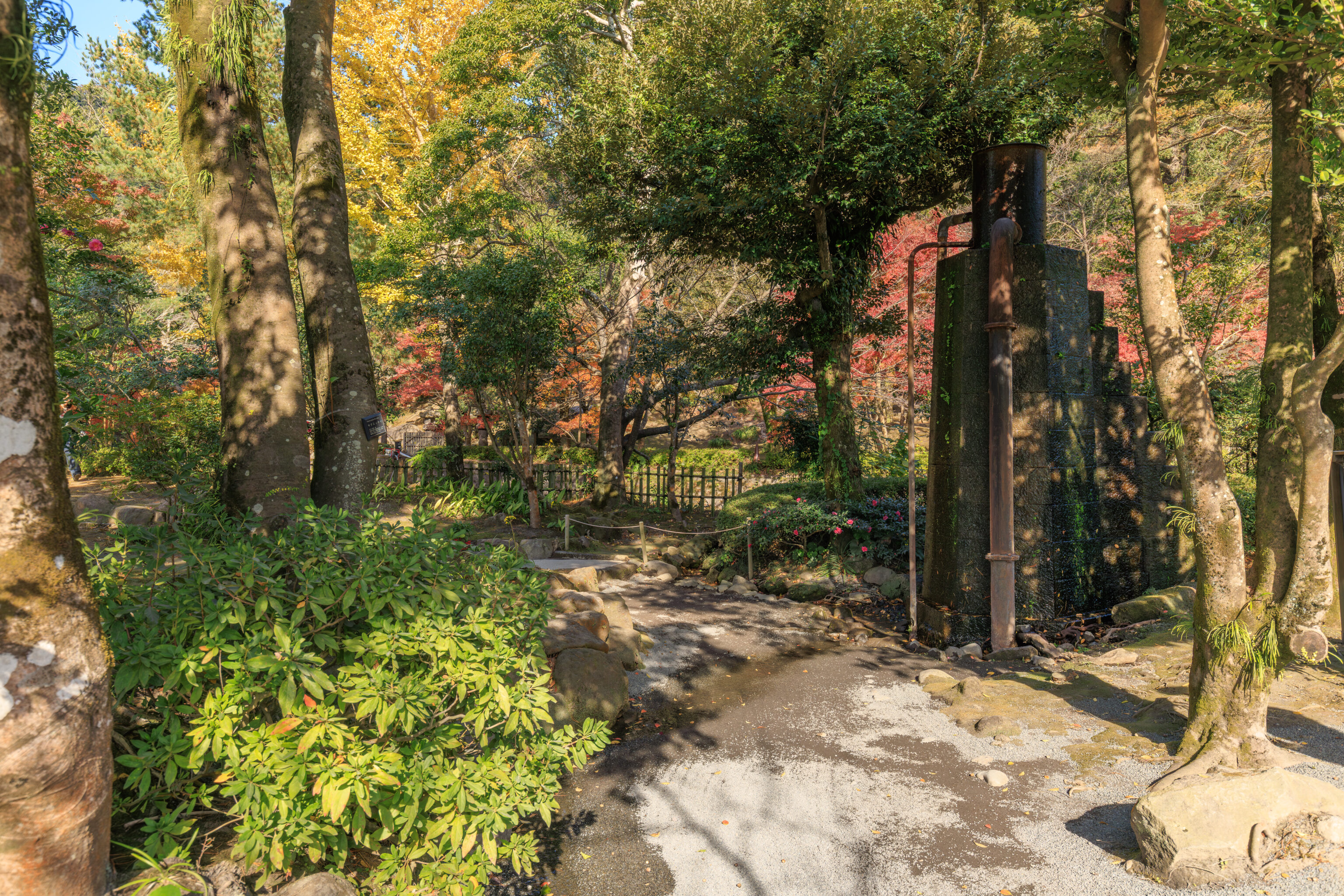
The structure seen here on the right is a 高机 takamasu.
Takamasu
This structure is used to distribute water. Groundwater is stored here before being supplied to the pond at the front of the residence.
– Text from a nearby sign.
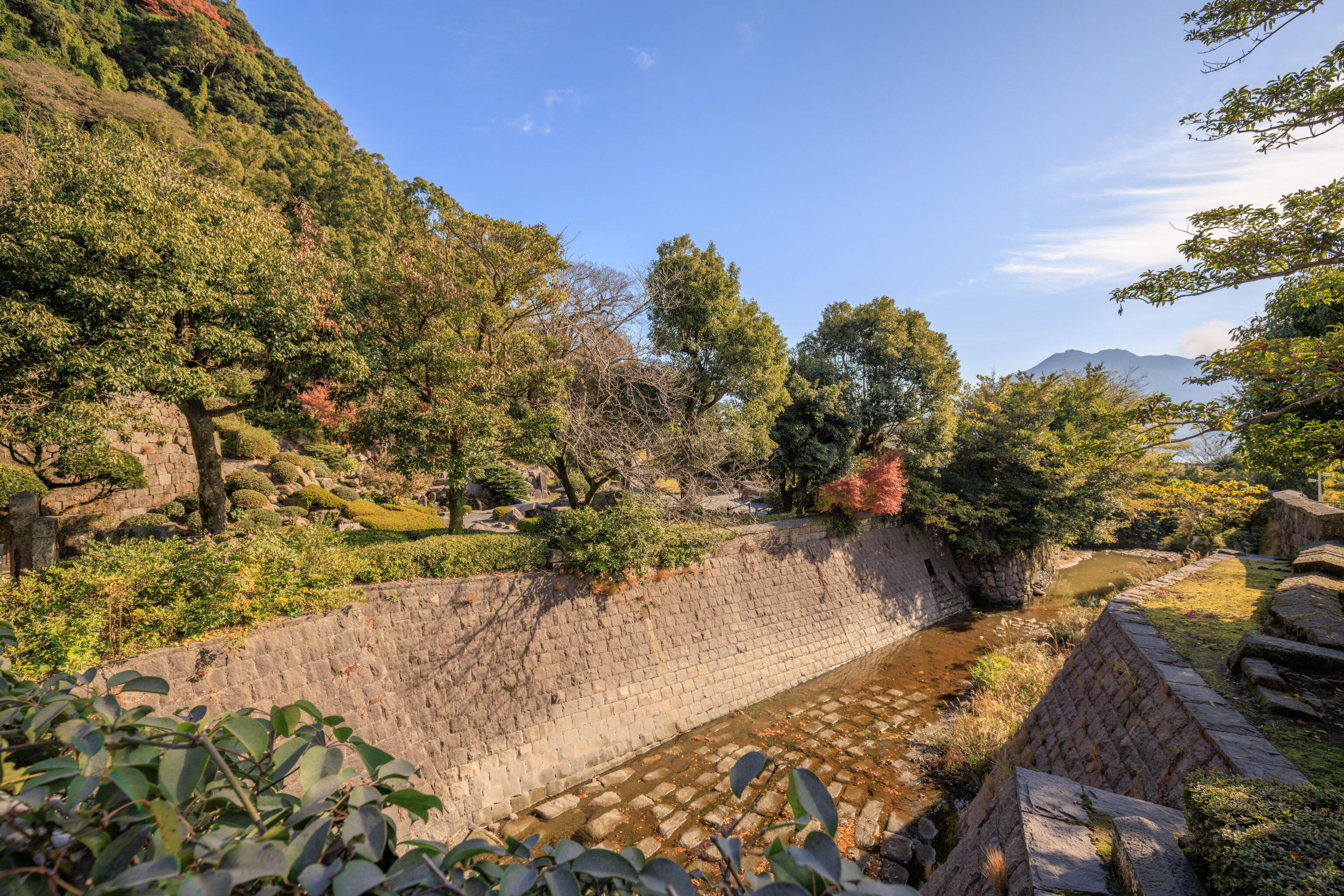
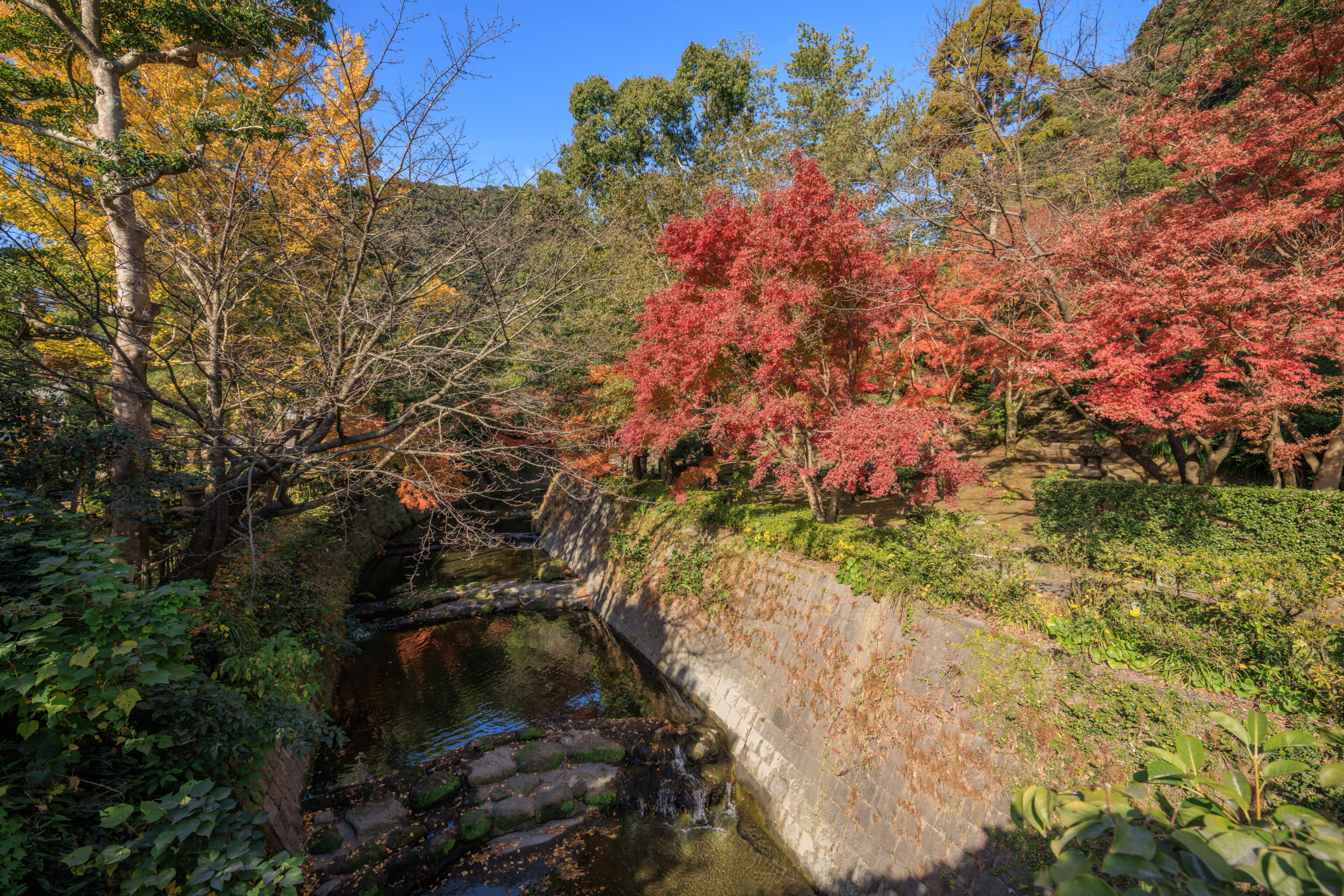
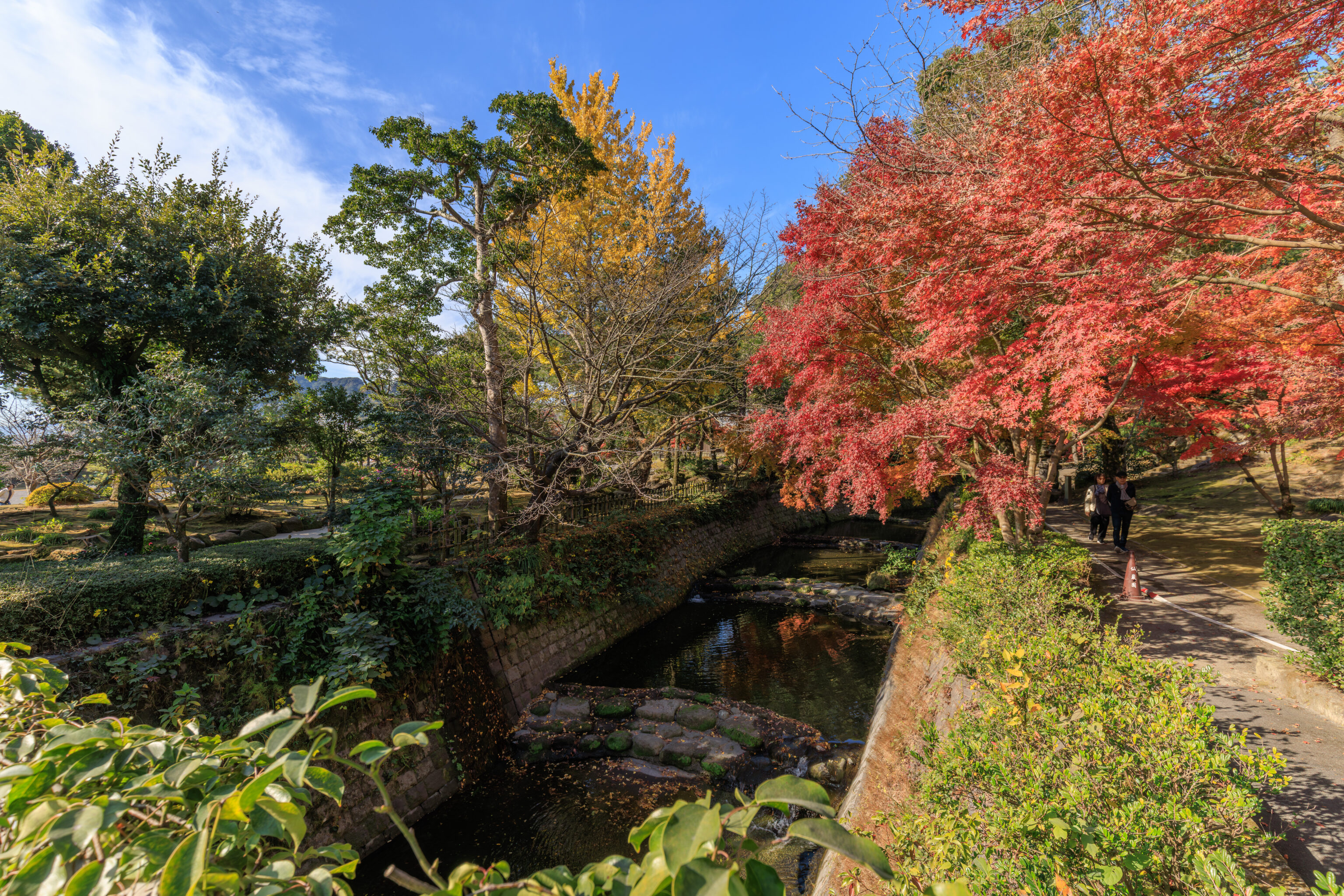
Continuing on to the west, we passed over what seems like a river.
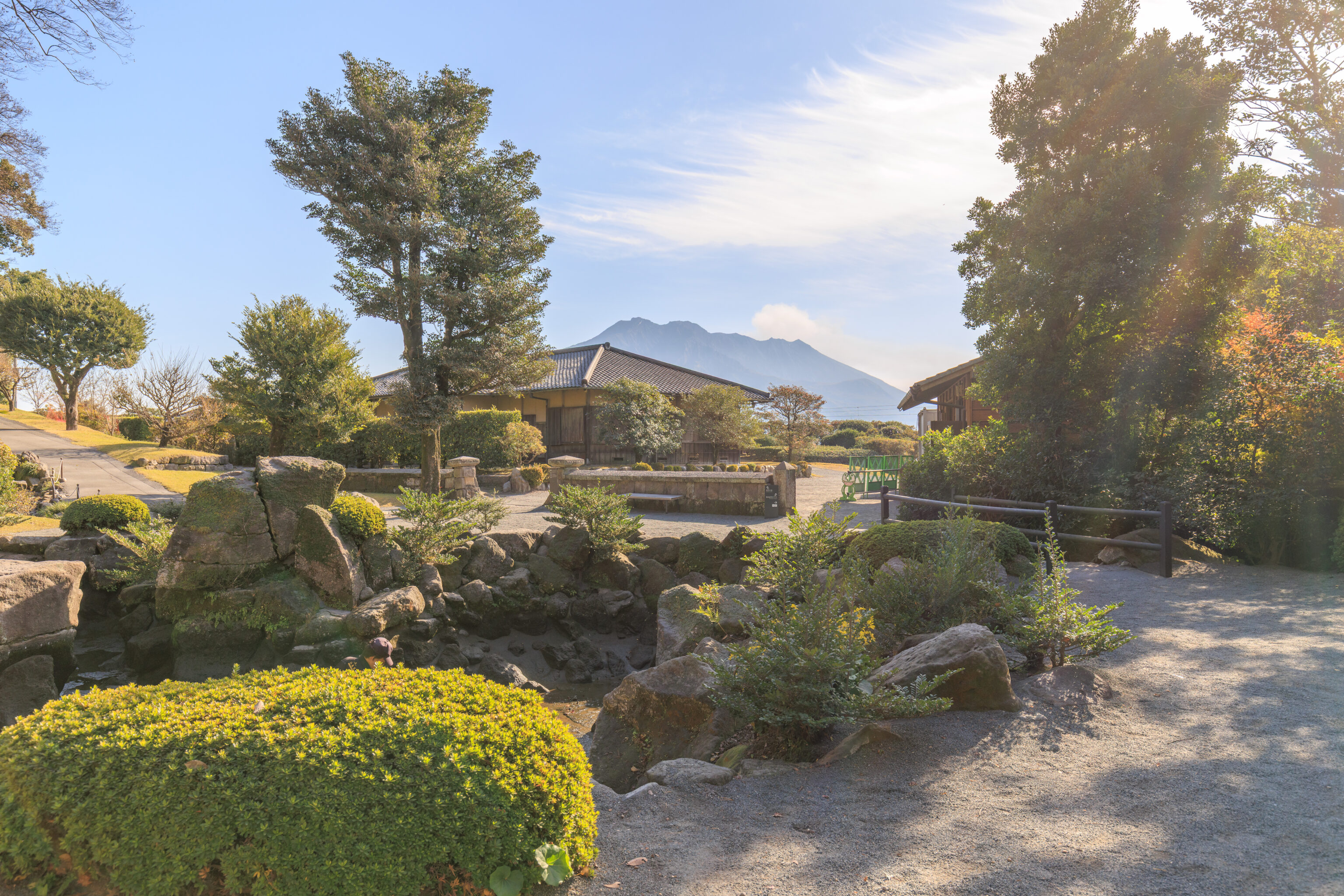
Once again looking to the southeast, there is just a bit of white cloudy smoke coming out of Sakurajima.
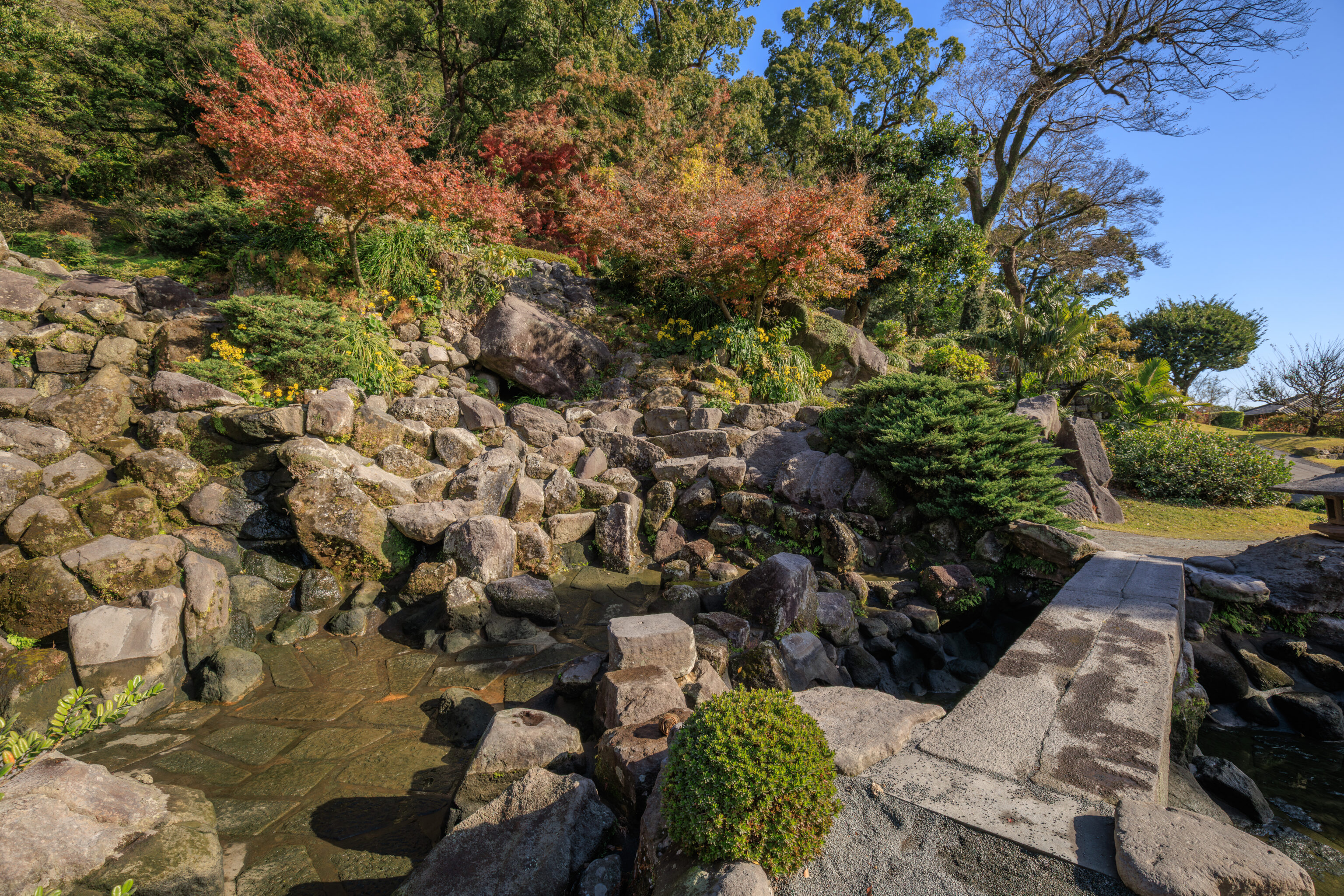
We walked over a stone lined pond.
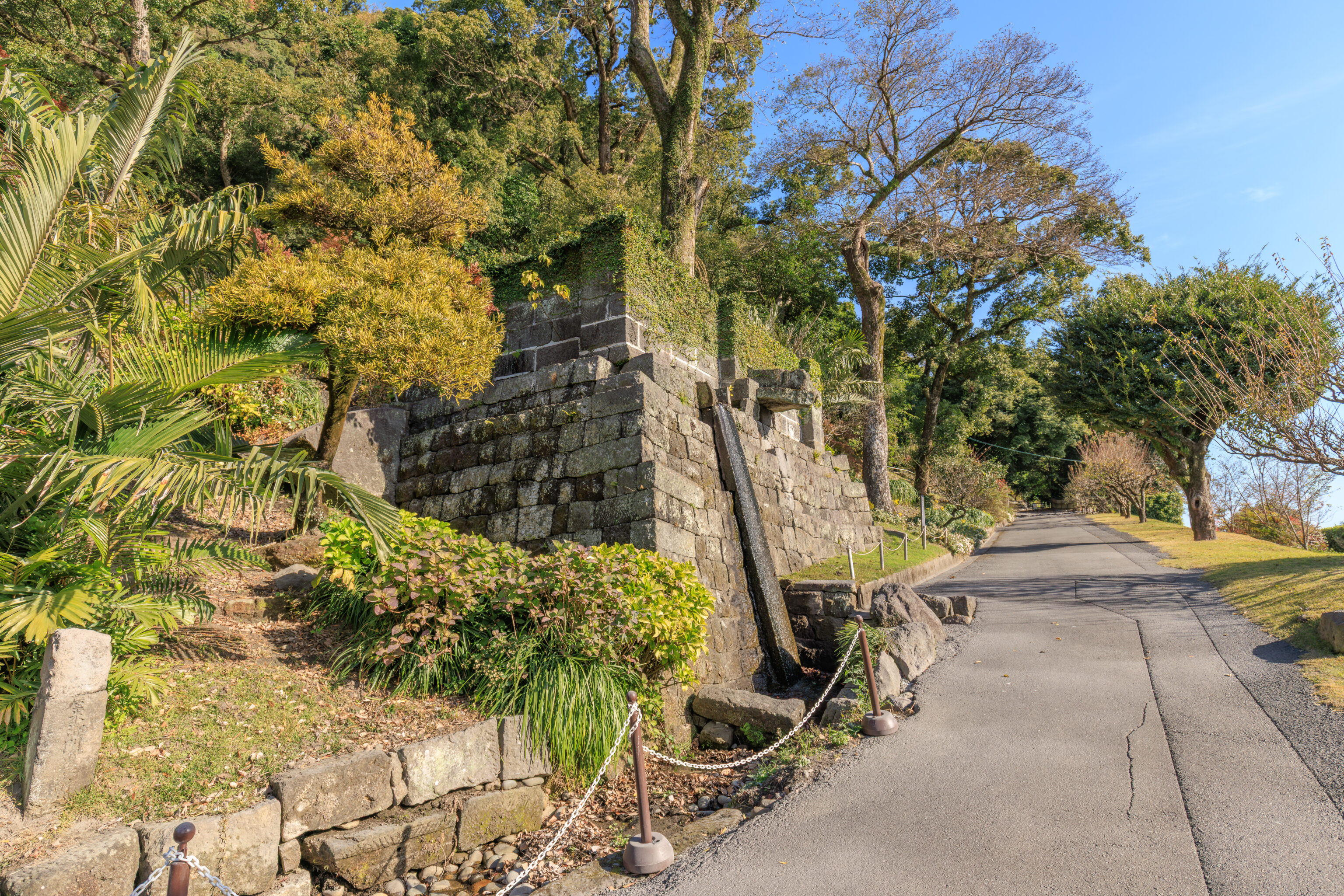
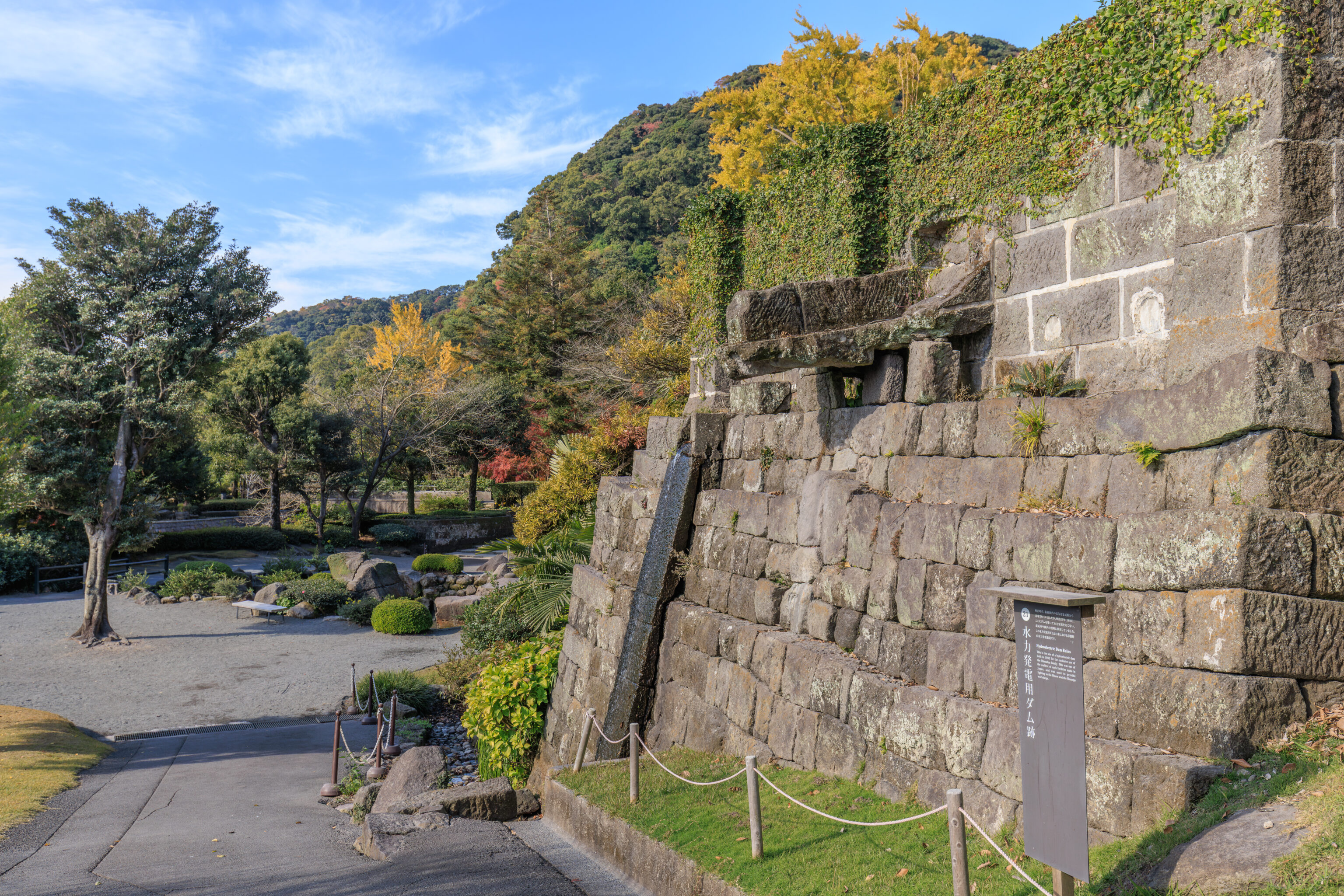
The path starts to go uphill and passes by the remains of a hydroelectric dam.
Hydroelectric Dam Ruins
This is the site of a hydroelectric dam built in 1892 for the exclusive use of the Shimadzu family. This was one of the earliest of such facilities made in Japan, and was used to provide lighting to the House and the Shuseijo workshops.
– Text from the sign seen at the bottom right of the prior photograph.
This is about as far as we went as the path is closed up ahead.
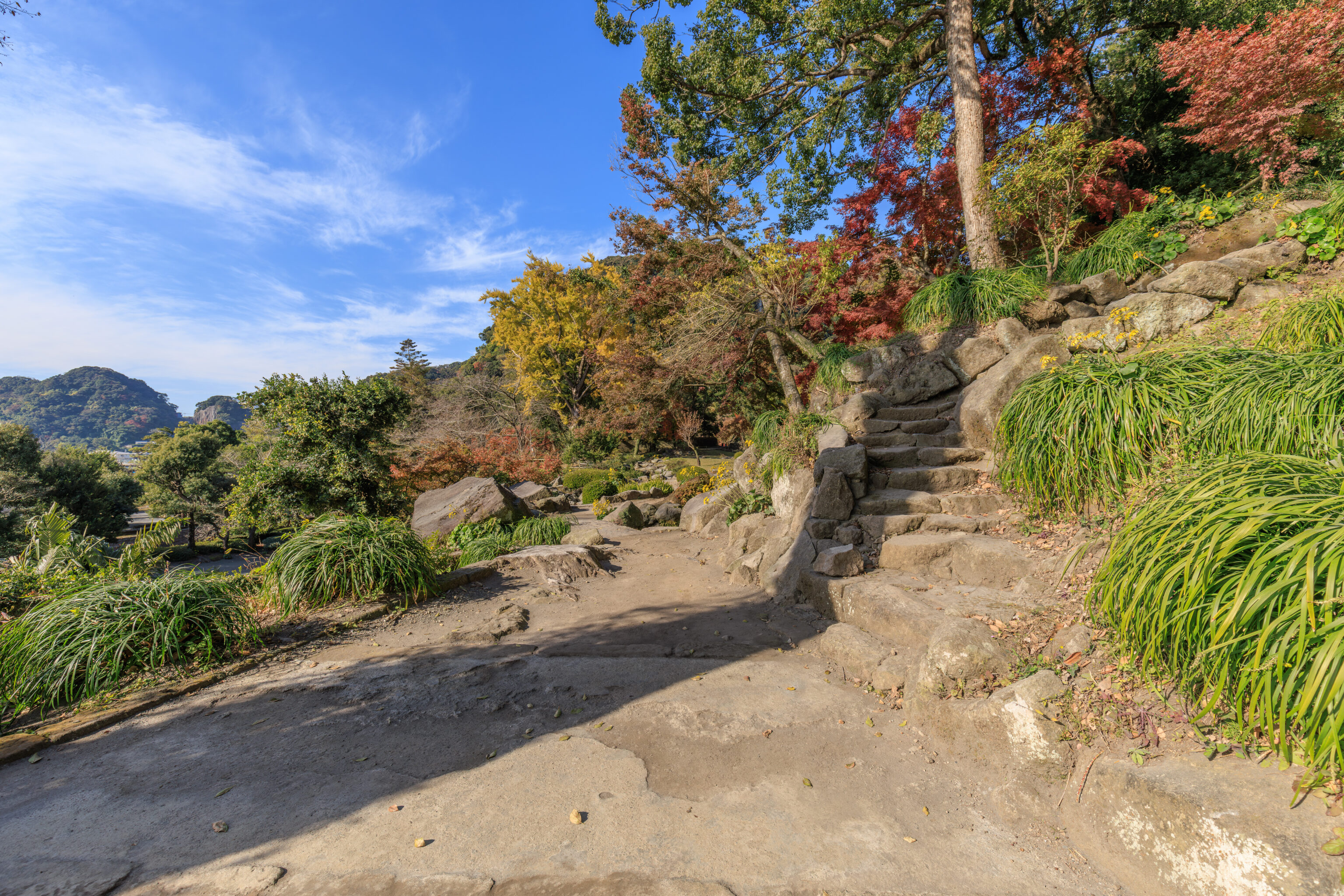
We turned around to start to go back to the west but took a junction that went to the north of the path we were on before. This was also at a higher grade.
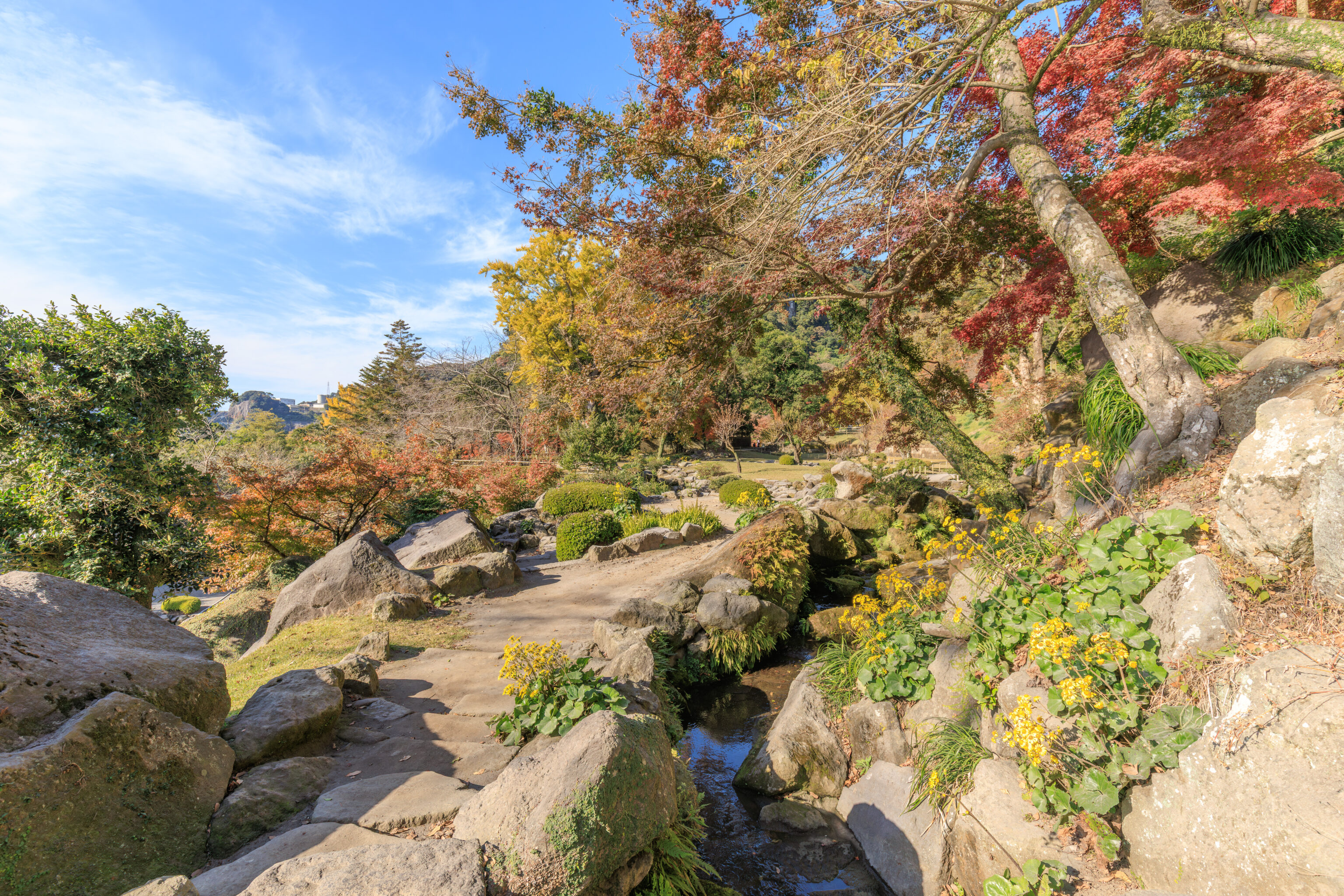
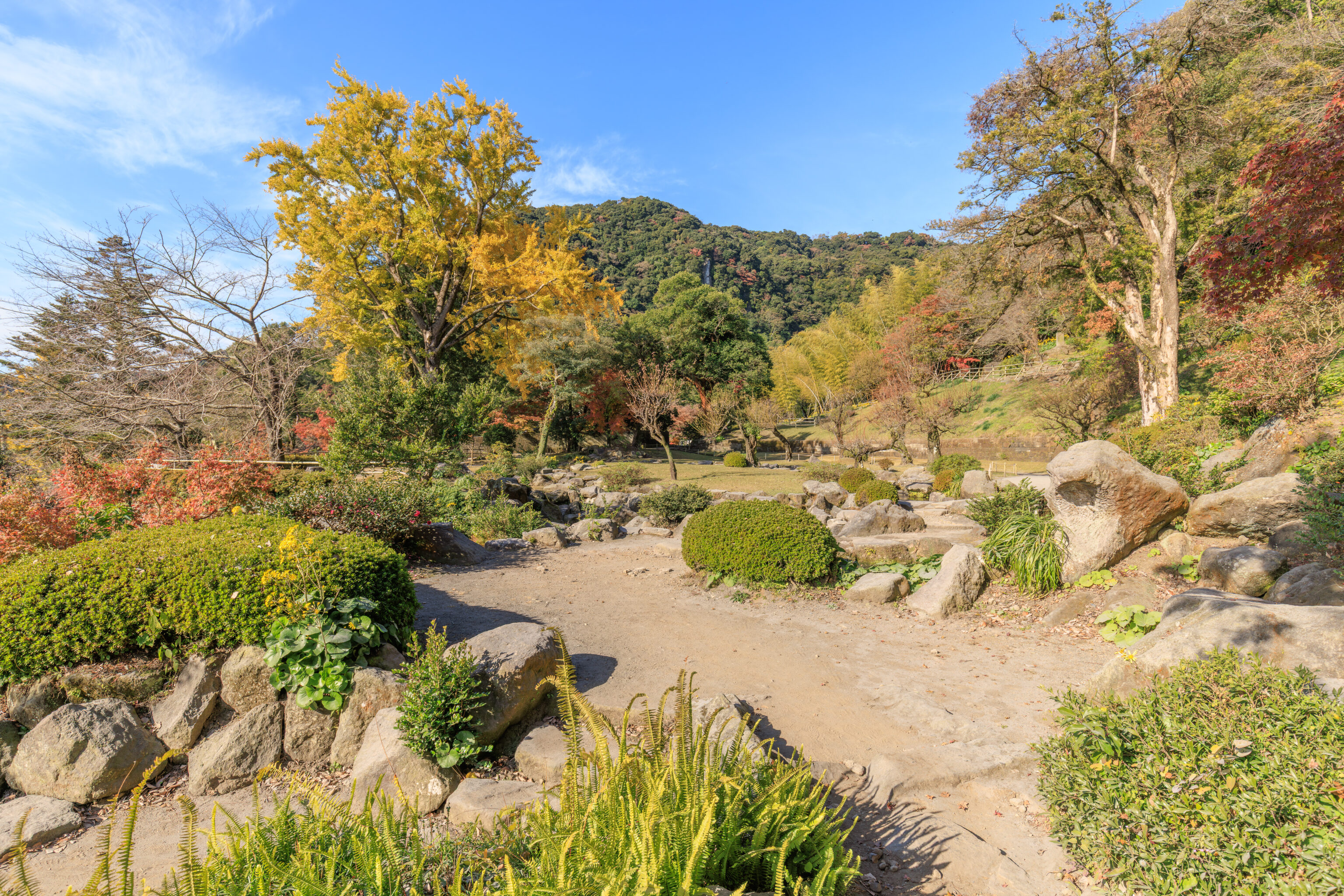
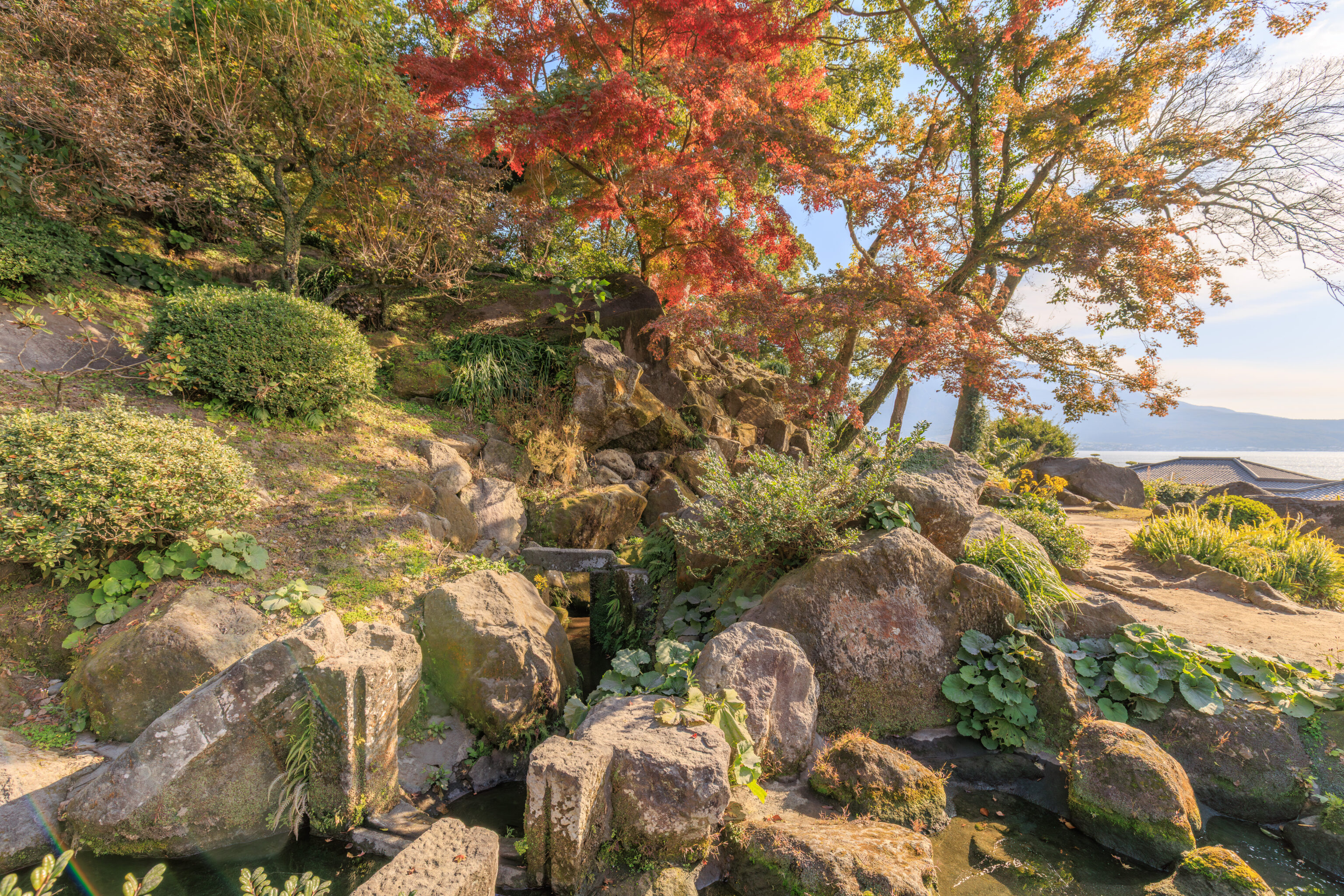
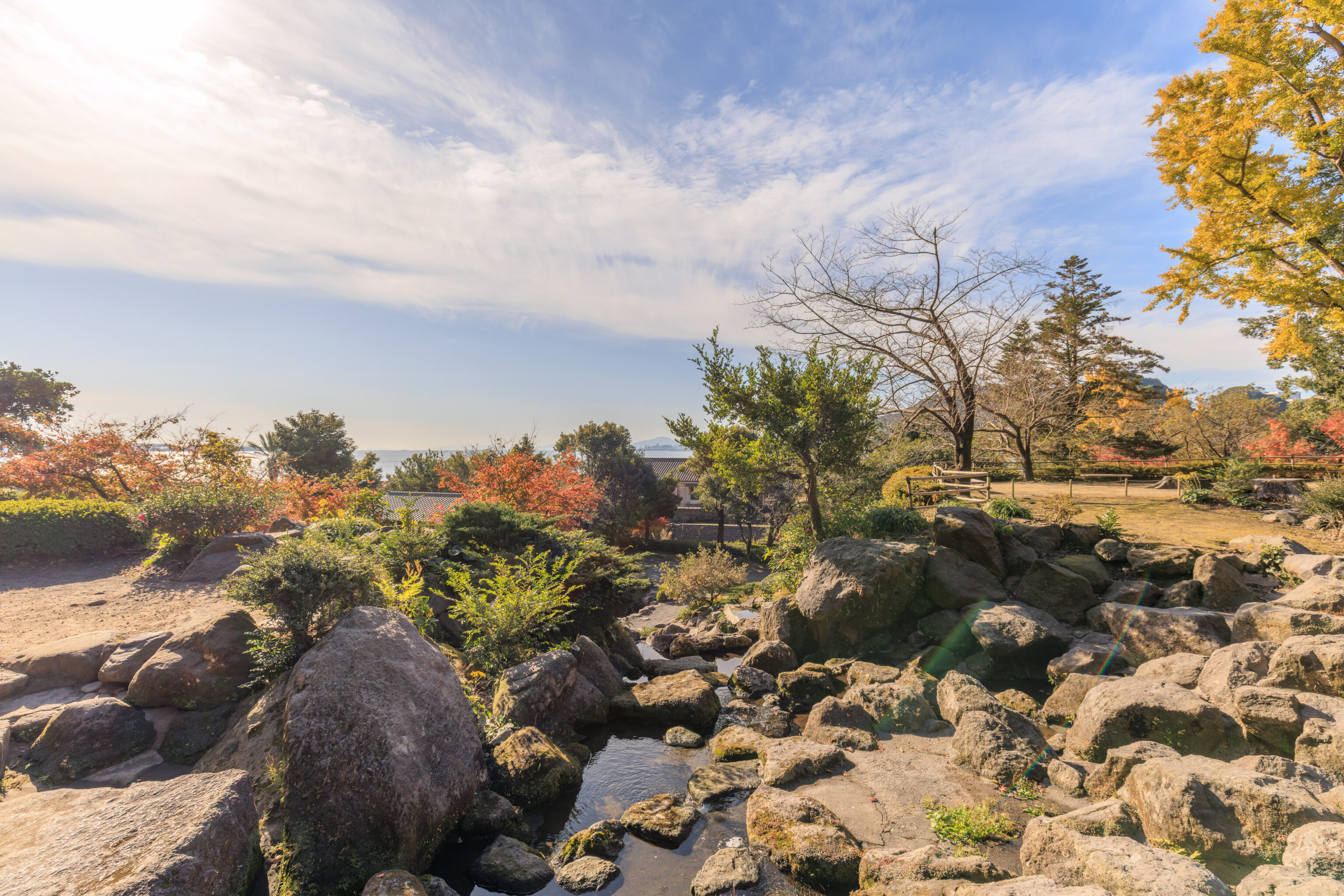
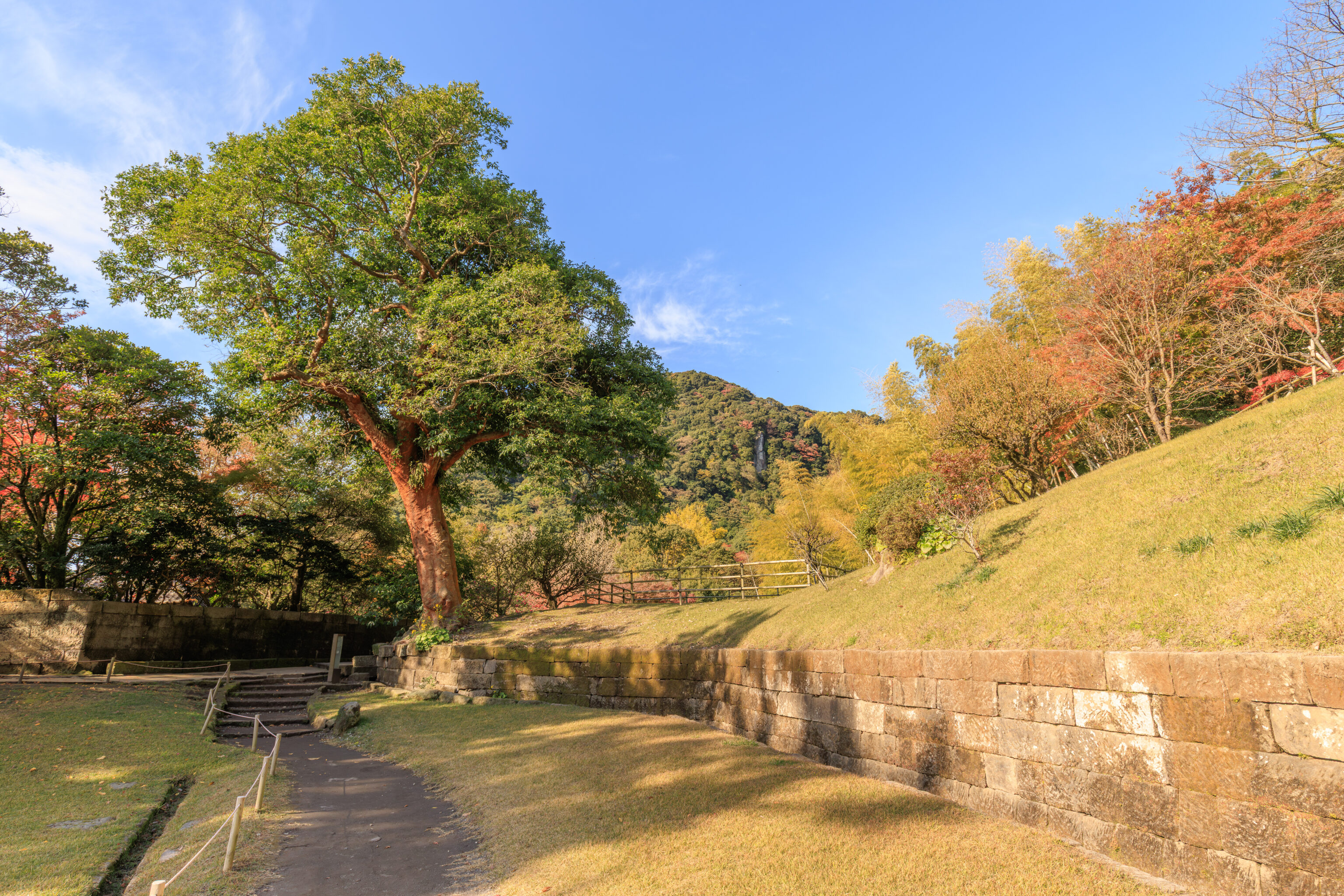
We continued walking through some varied garden terrain. There was a sign nearby for the Kyokusui Garden, which is the area we just walked through.
Kyokusui Garden
This garden with a small meandering stream was built by the 21st head of the Shimadzu family, Yoshitaka, in order to host a poetry composition party called Kyokusui-no-En. Originating in ancient China, this elegant festival requires each participating poet to compose a poem before a cup of sake floats down the river and passes in front of them. This garden was rediscovered in 1959, and is the one of the best preserved Edo period Kyokusui gardens in Japan.
– Text from a sign, translated using Google.
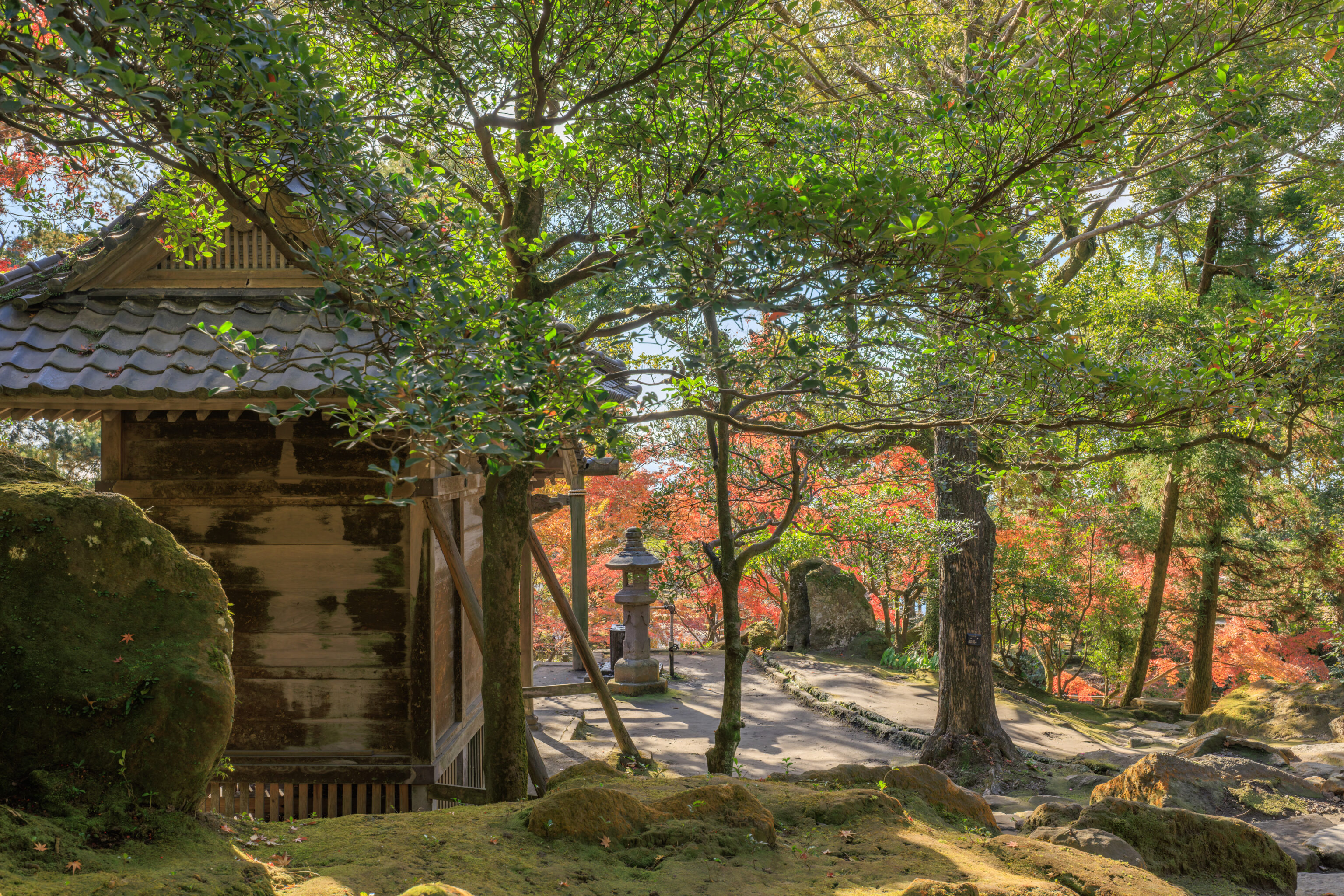
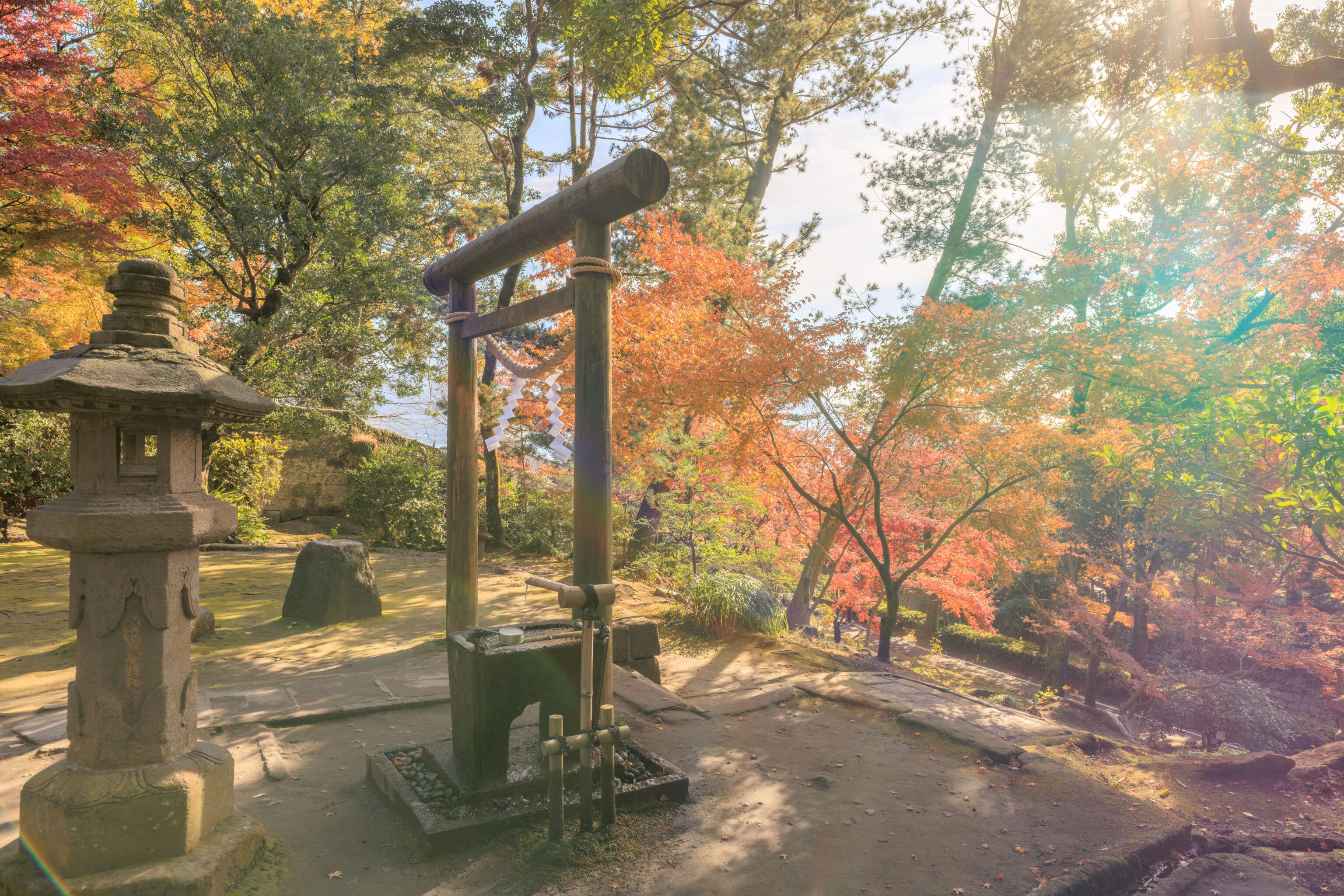
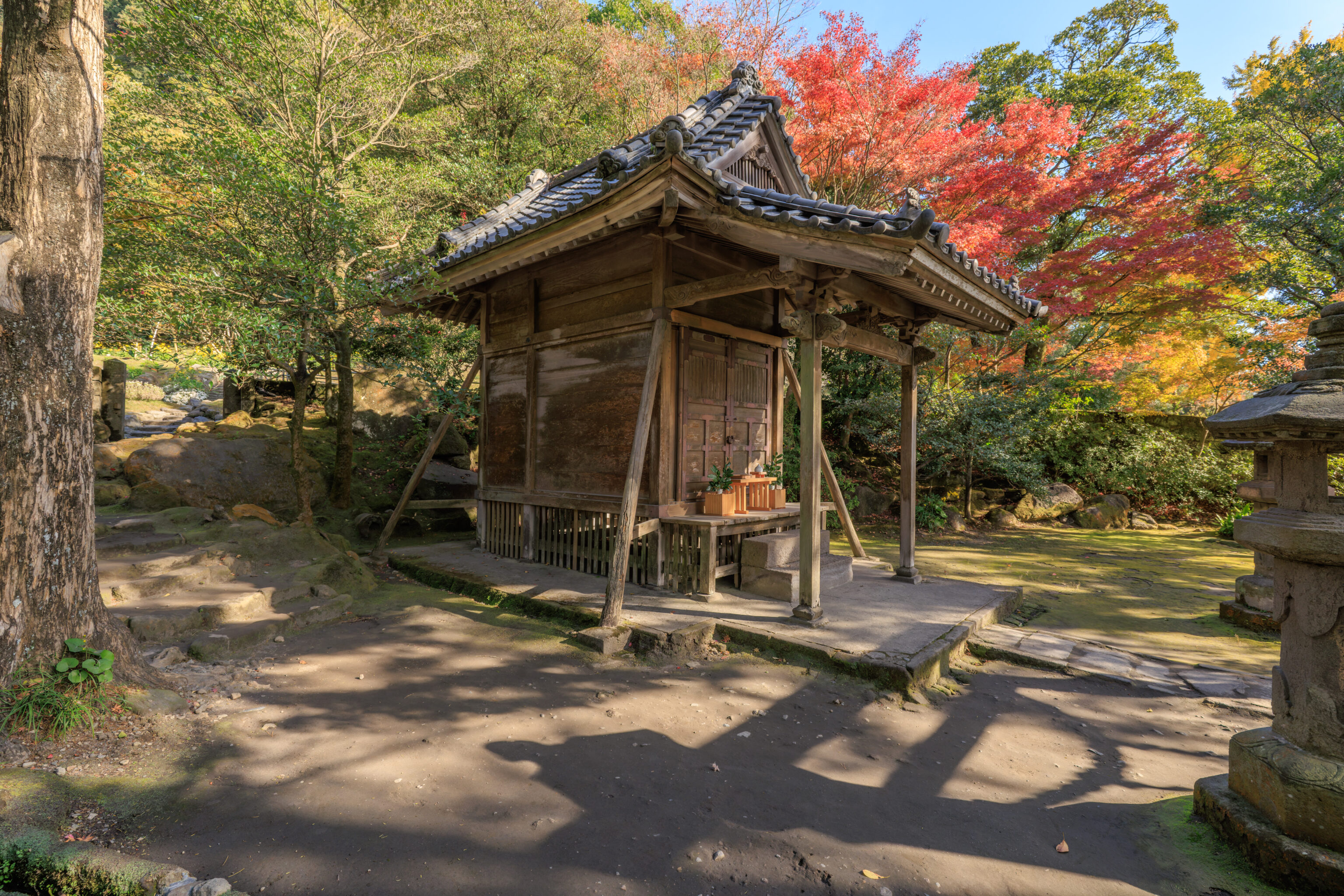
We came upon a small wooden shrine that was a bit off the path that we were on. Looking at the map, this is the Oniwa Shrine, which is simply a descriptive name indicating that this is shrine in the garden.
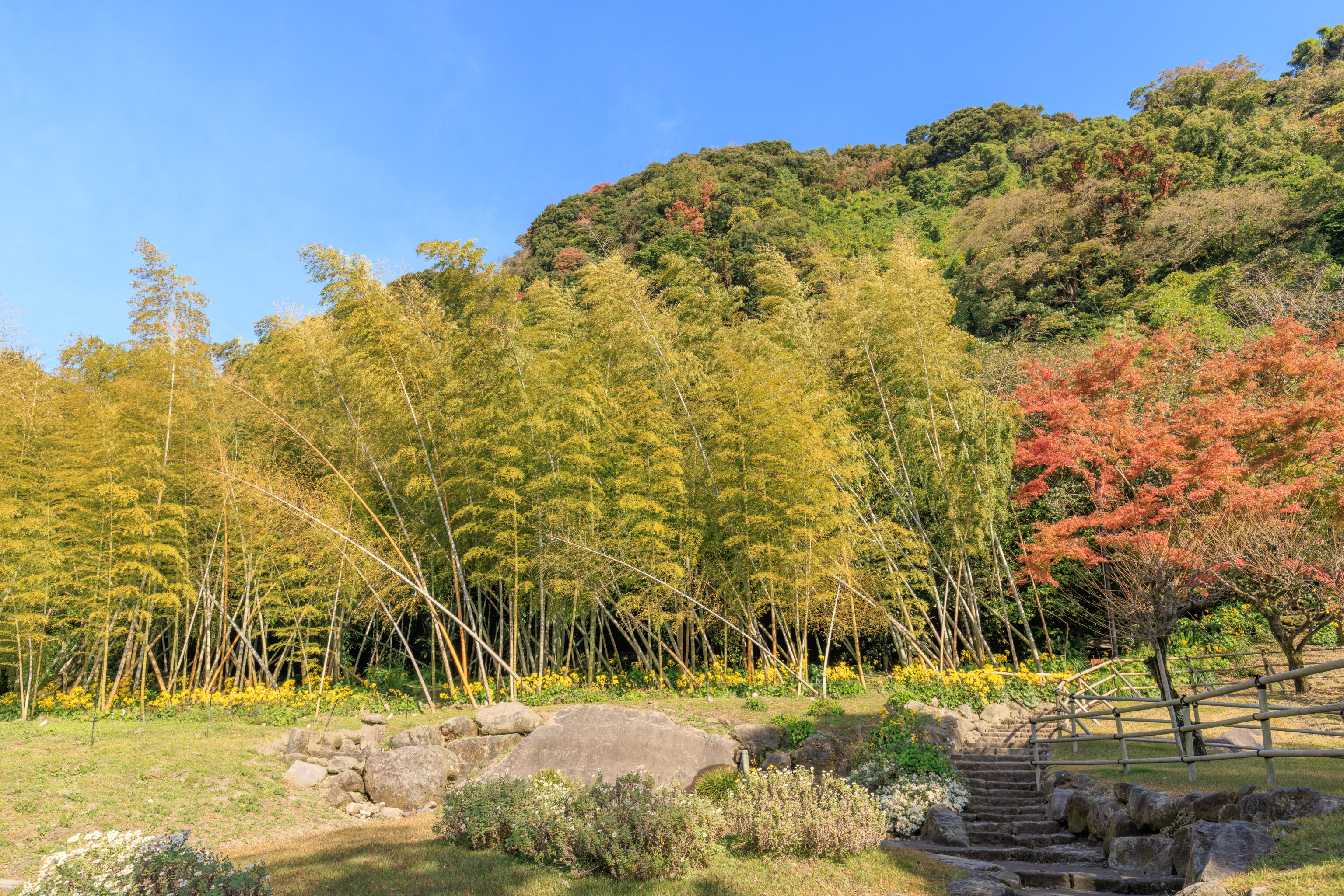
Continuing on, we passed by the Konan Bamoo Grove.
Konan Bamboo Grove
In 1736, the 21st head of the Shimadzu family, Yoshitaka imported two stalks of Chinese moso bamboo into Japan via the Ryukyu Islands. The bamboo was planted here at Sengan-en, and eventually spread all over Japan.
– Text from a nearby sign.
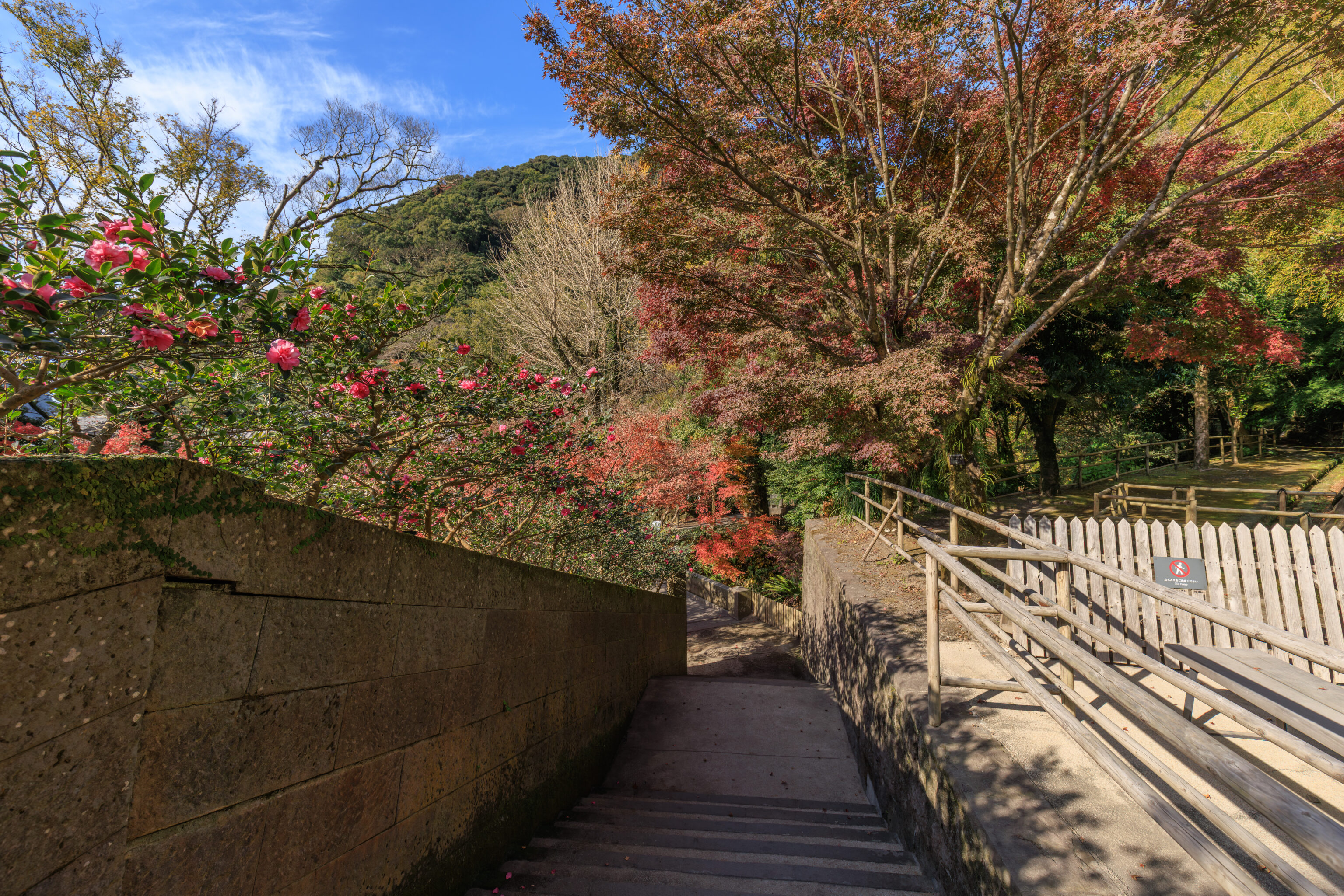
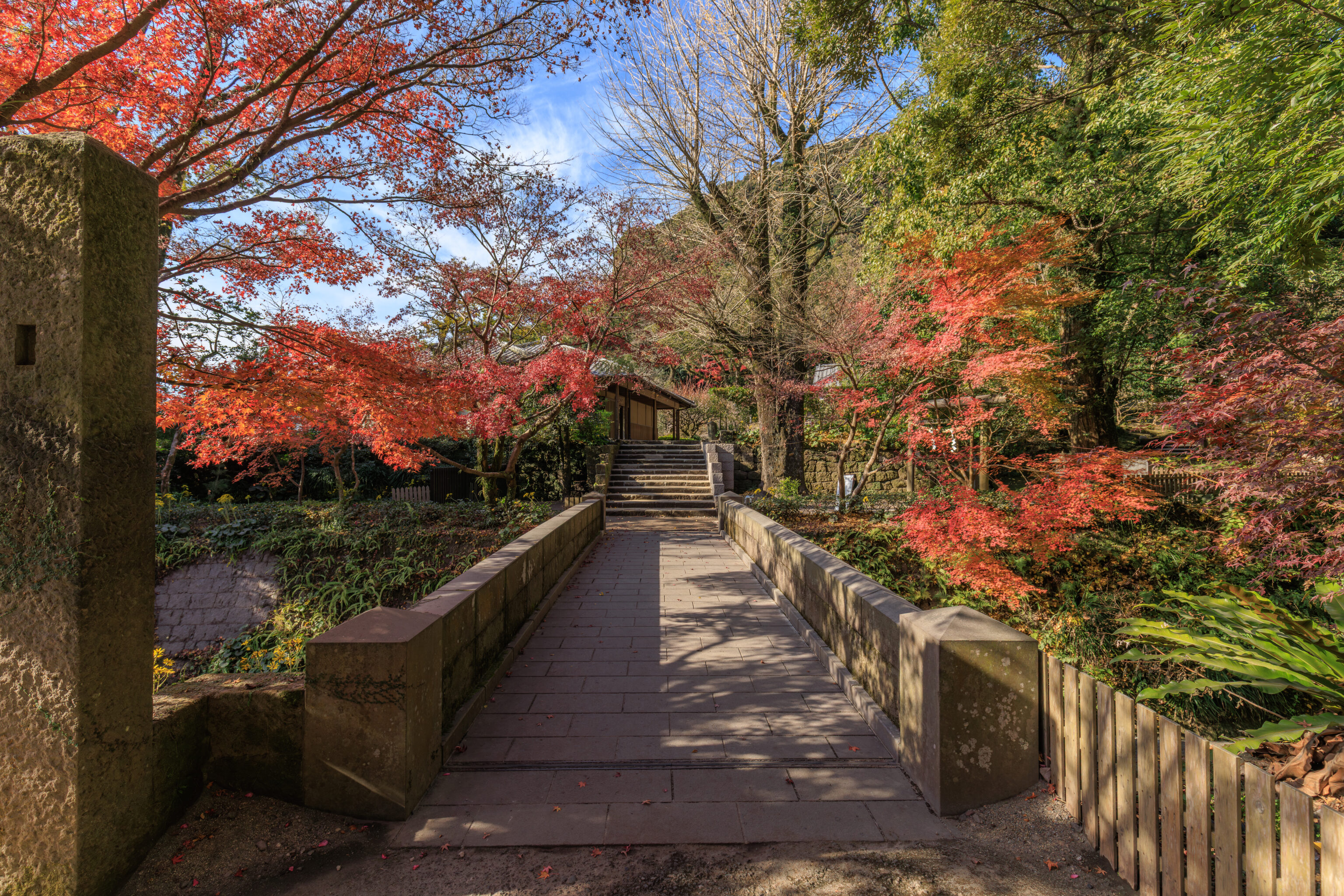
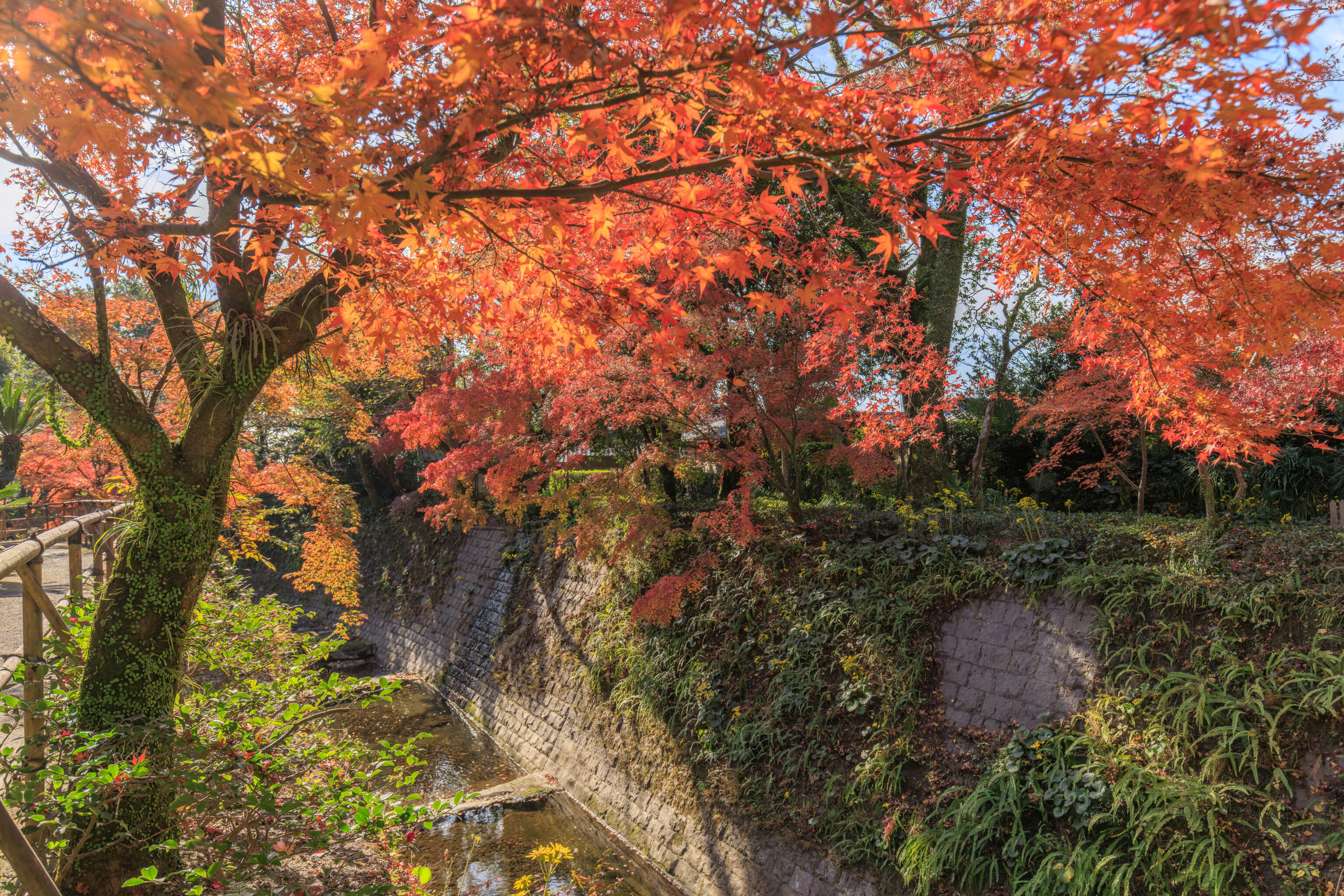
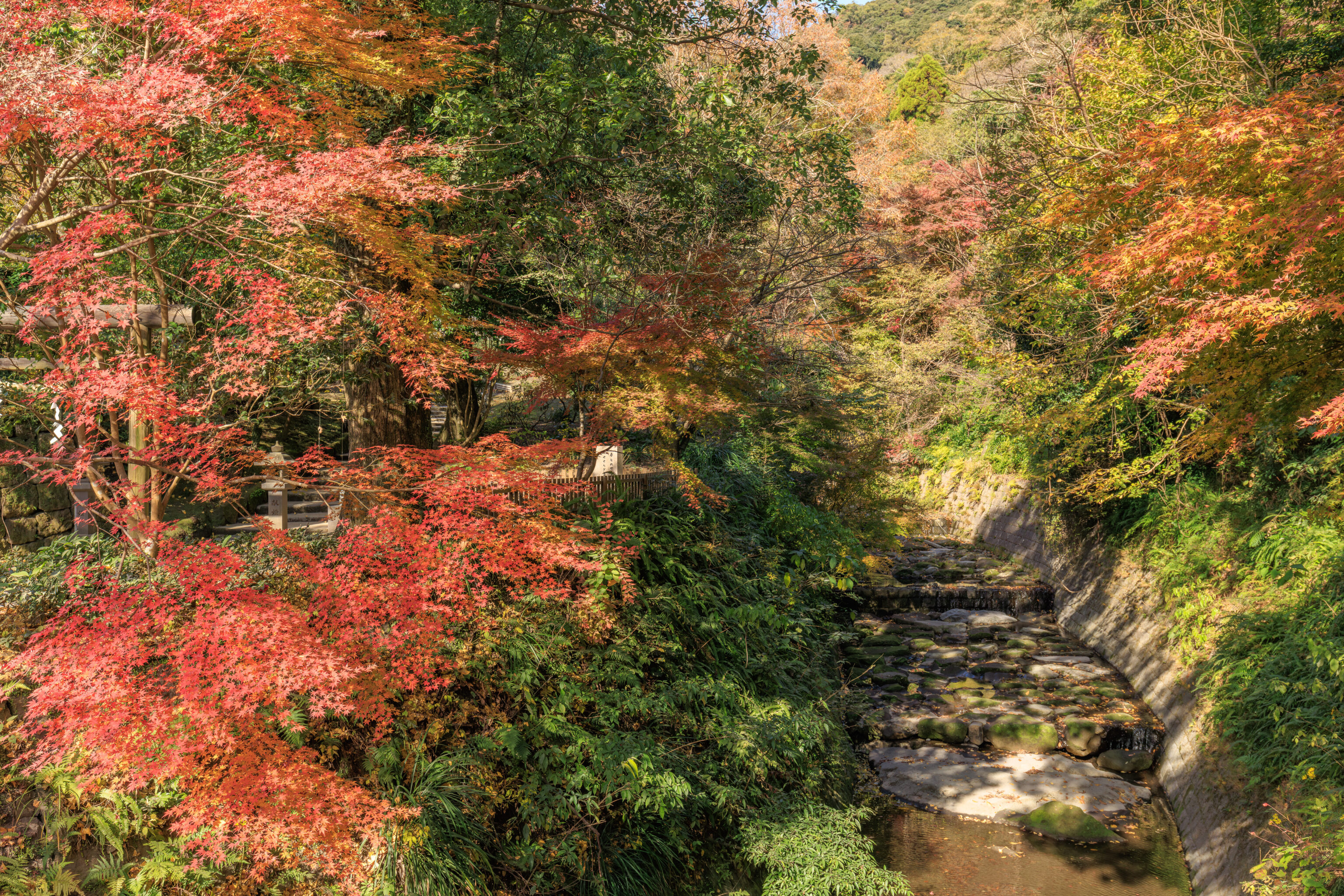
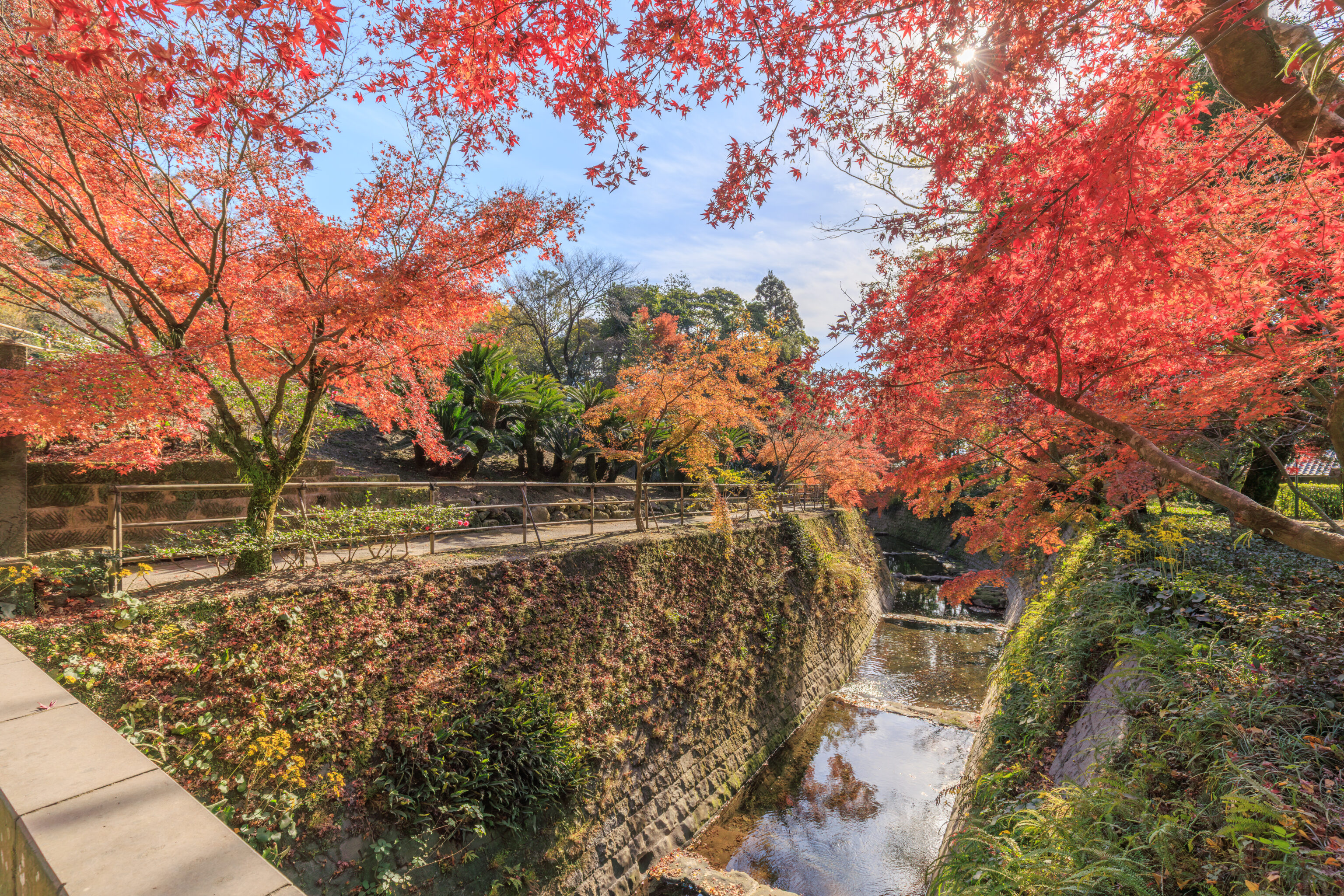
We continued walking to the west, crossing back over the river we crossed earlier to the south of here.
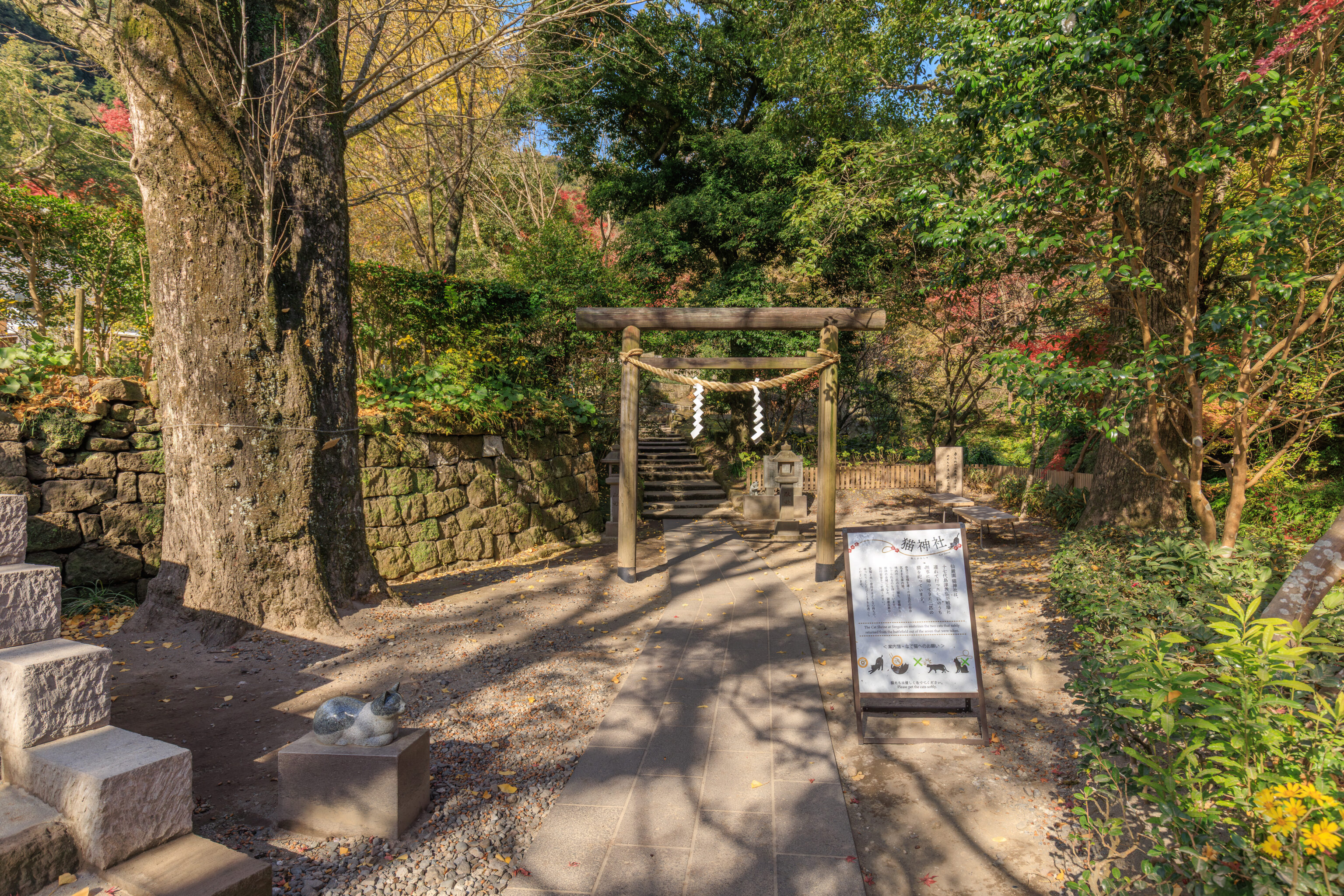
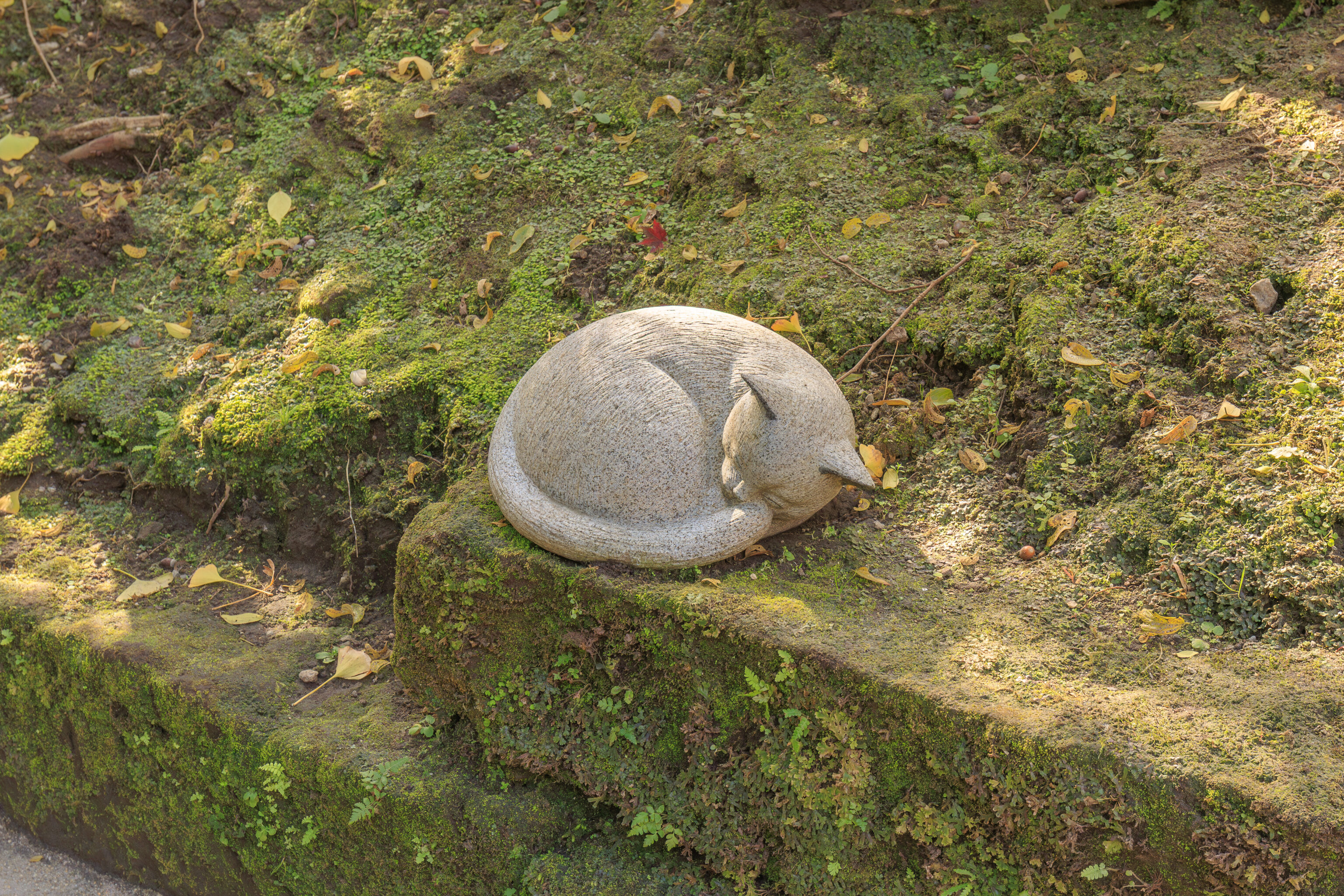
We then arrived at the Cat Shrine! There is a sculpture of a cat here at the bottom left.
The Cat Shrine
Neko-ga-rosha

The Cat Shrine at Sengan-en enshrines cats. It is dedicated to the two felines—out of a group of seven—that safely returned from the battlefield alongside the 17th Lord Shimazu Yoshihiro.

The Whimsical Guide Cats: Five free-spirited cats await on the shrine path to guide you on your way.

Please offer a prayer for safe travels. In keeping with the legend of the Cat Deity, you may also pray for good health and longevity. Furthermore, the two "Nade-neko" (Petting Cats) residing within the shrine grounds are waiting to be gently stroked by visitors.

Please enjoy a relaxing moment here—approaching your visit with the same warmth and affection you would show if you were worshipping alongside your own beloved cat.

< A Request Regarding the Guide Cats and Petting Cats >
Please pet the cats gently.
– Japanese text from the sign in the photograph above, translated using Google.
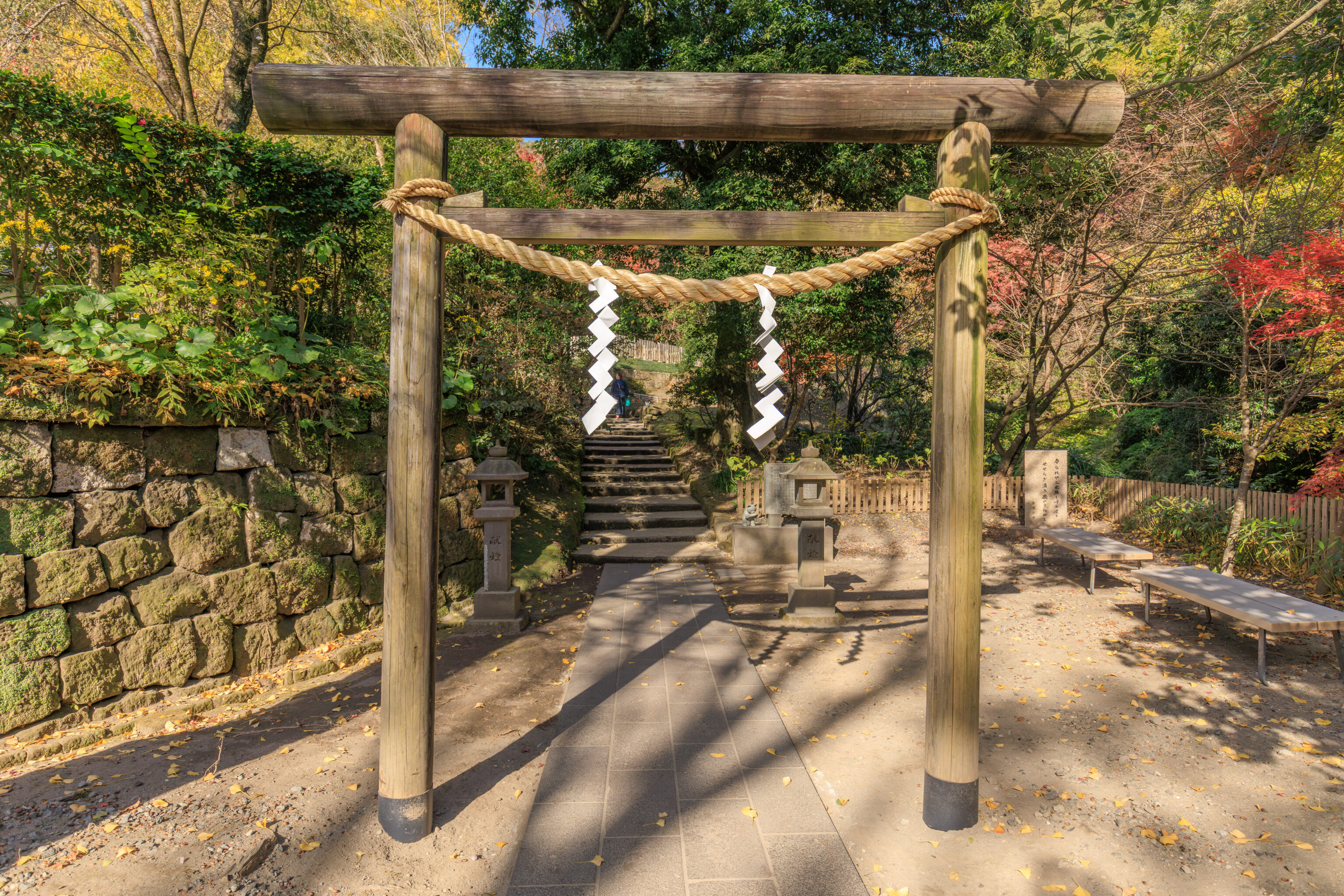
Continuing on, there is another cat sculpture beyond the torii and a bit behind the lantern on the right.
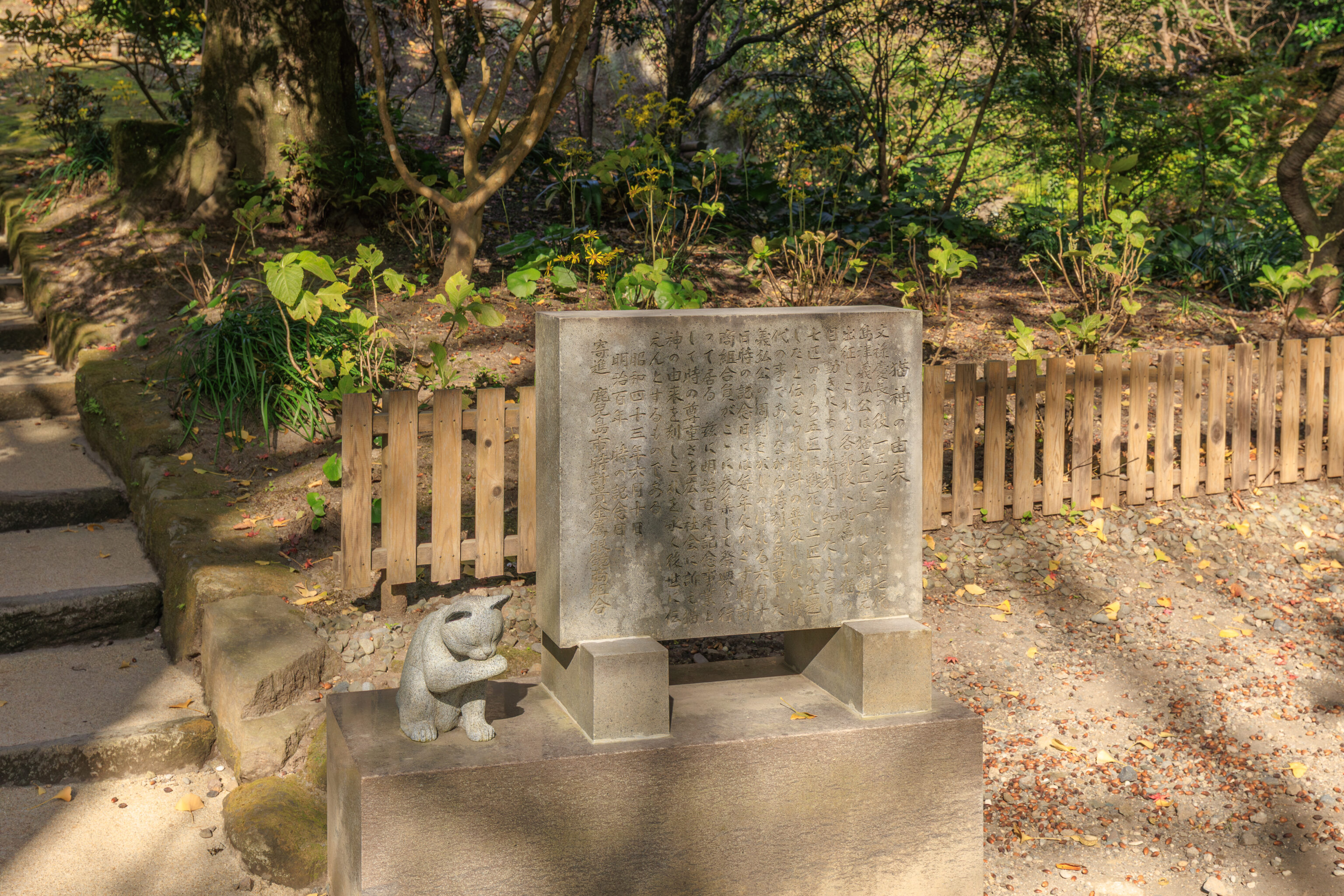
The cat is using its paws to clean itself! The stone tablet is a bit hard to read. Sorry, we did not really try!
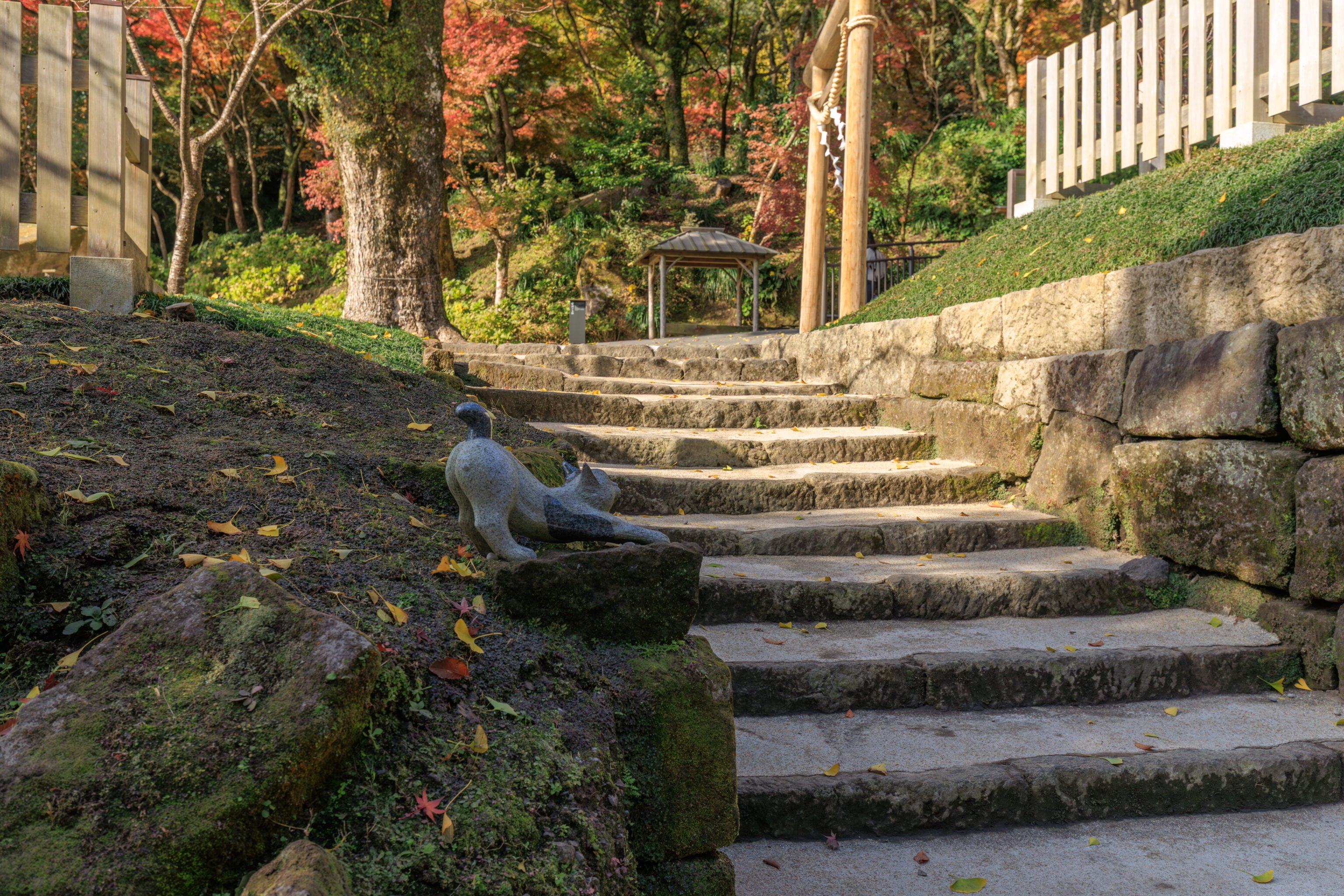
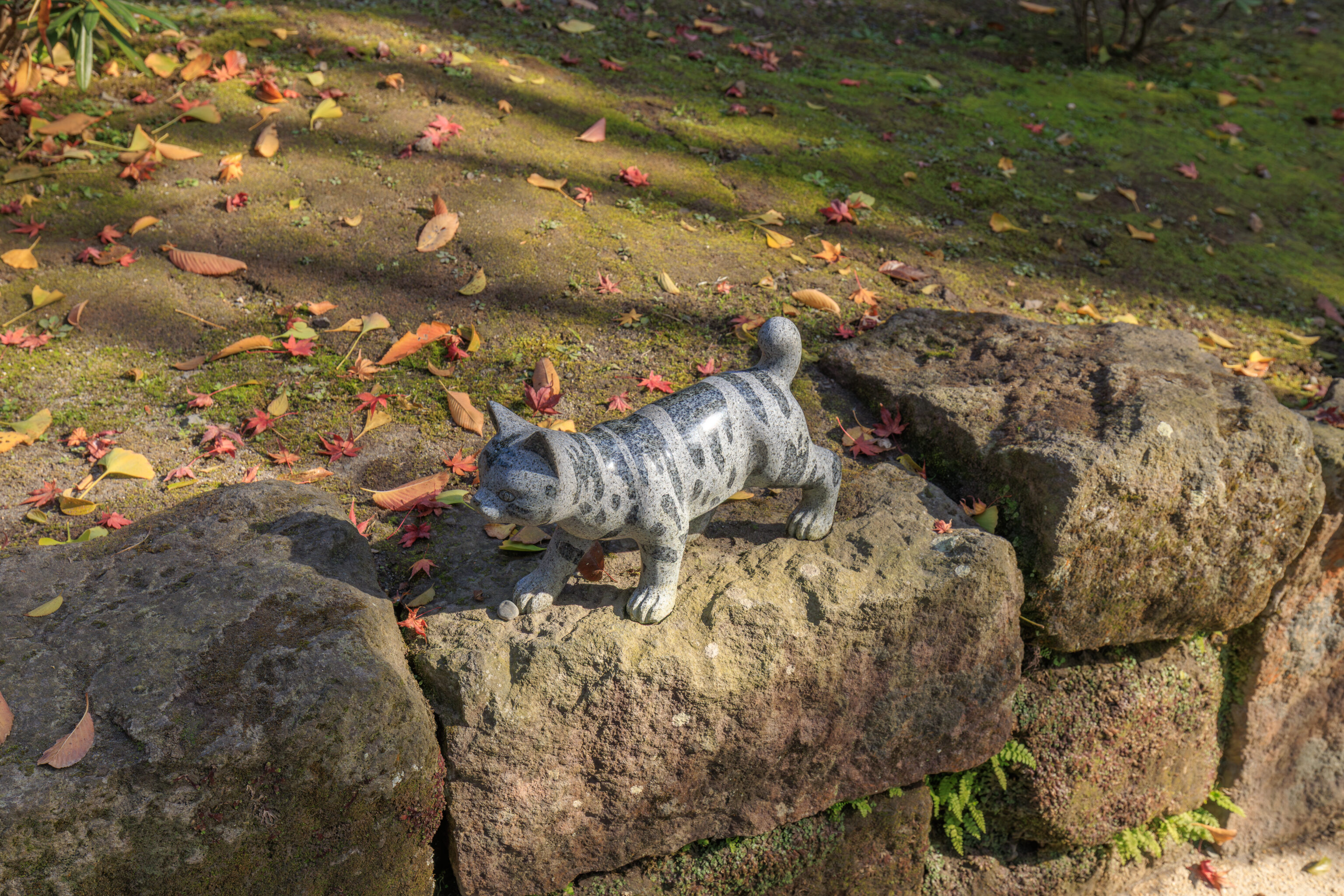
Walking up the stairs ahead, we encountered more cats!
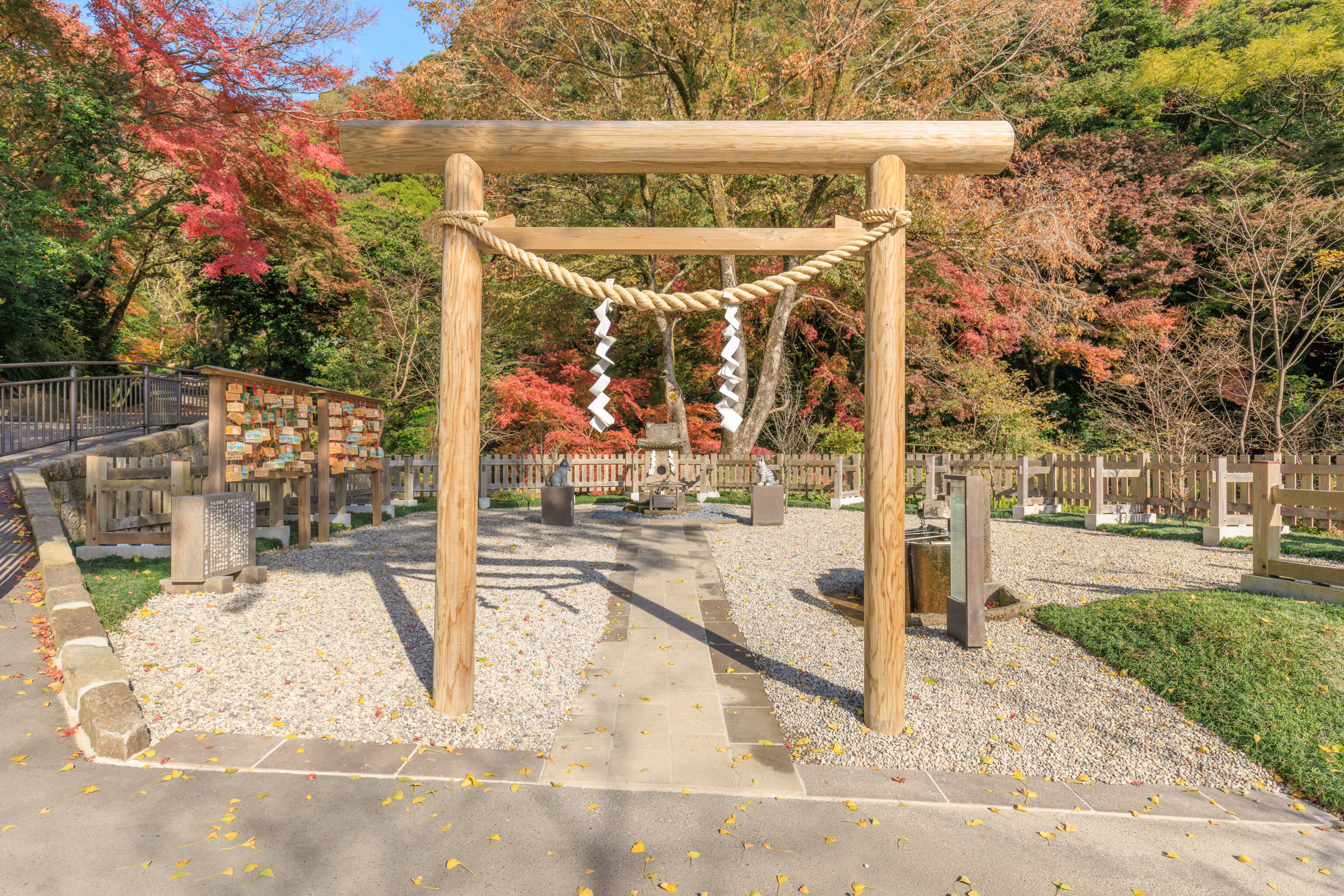
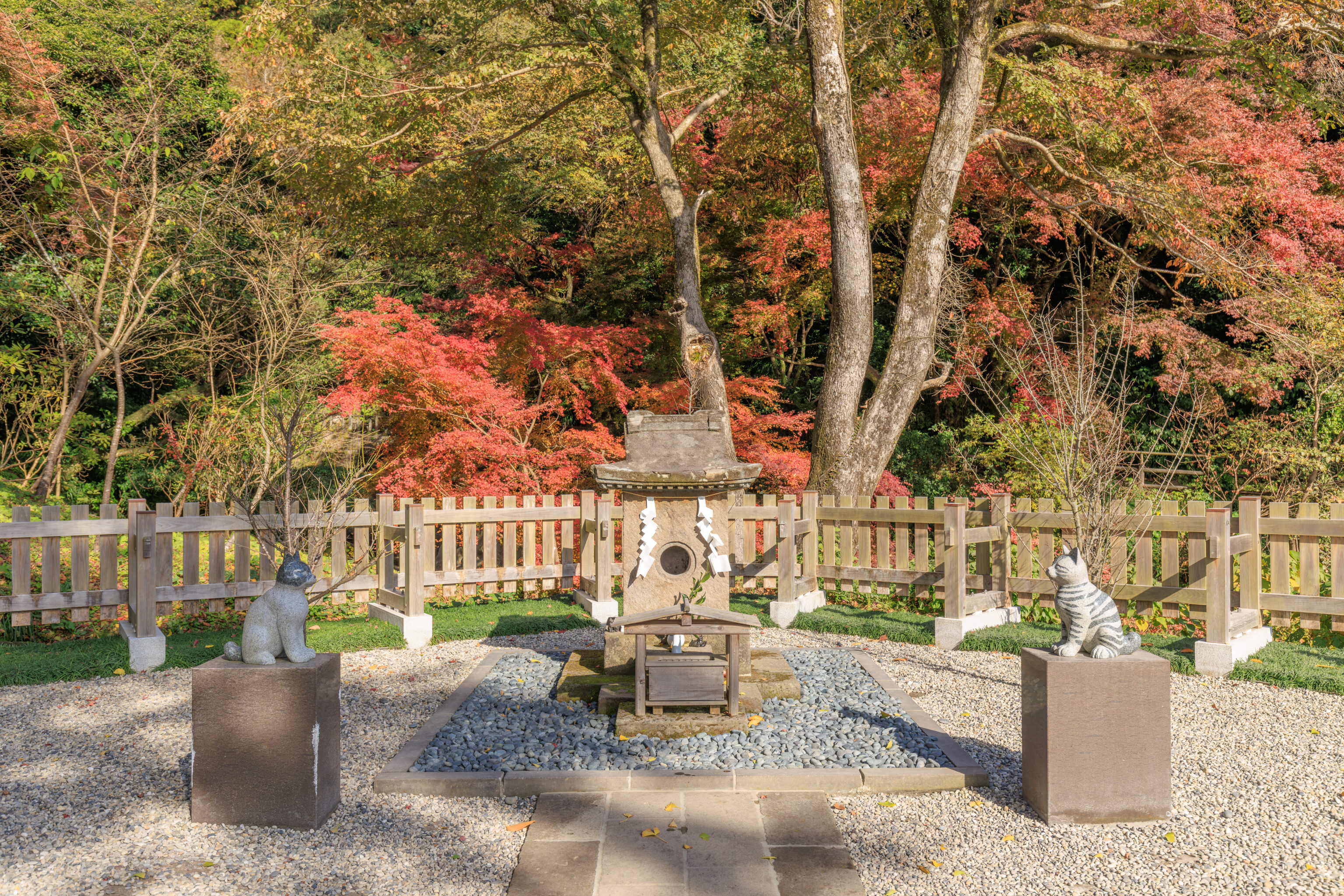
At the top of the stairs, we passed under a torii and arrived at the Cat Shrine.
The Nekogami shrine is a shrine dedicated to cats as deities. It is said that the 17th Shimazu Yoshihiro used the dilation of cats' pupils to estimate the time during the Keicho War, and therefore the Nekogami is considered the "god of time." It is also said to offer relief from whooping cough.

Cat Shrine
In the late 16th century, the 17th head of the Shimadzu family, Yoshihiro, was ordered by Toyotomi Hideyoshi to send an expeditionary army to Korea. Yoshihiro took seven cats with him, and by looking at their eyes, they were able to accurately tell the time of day during battle. Two cats survived the journey back to Kagoshima and are enshrined here.

"Round at six, like an egg at eight and four, like a persimmon seed at ten and two, and a needle at midday."
From "The Cat That Became a Clock"
– Japanese and English text from a nearby sign, translated using Google.
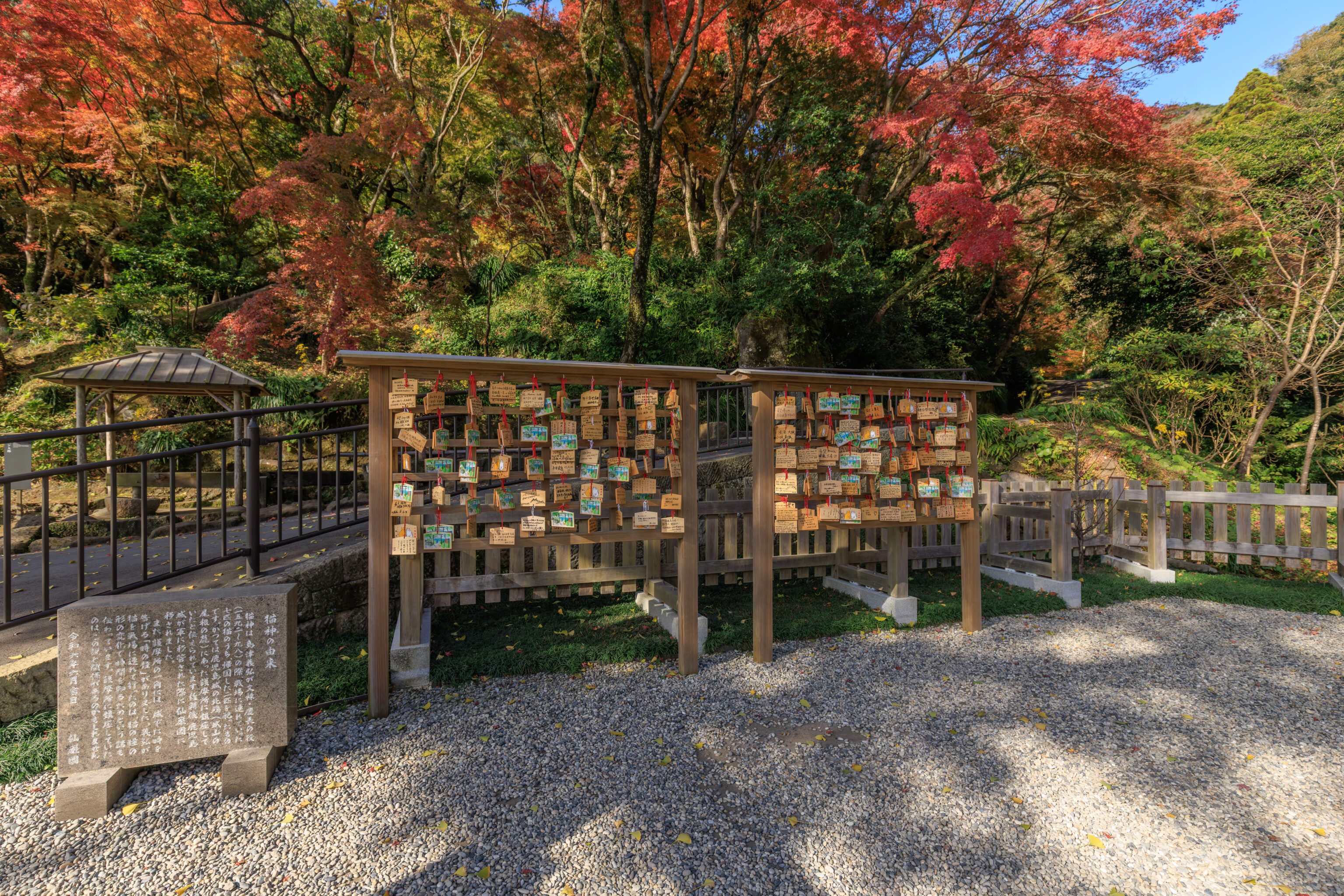
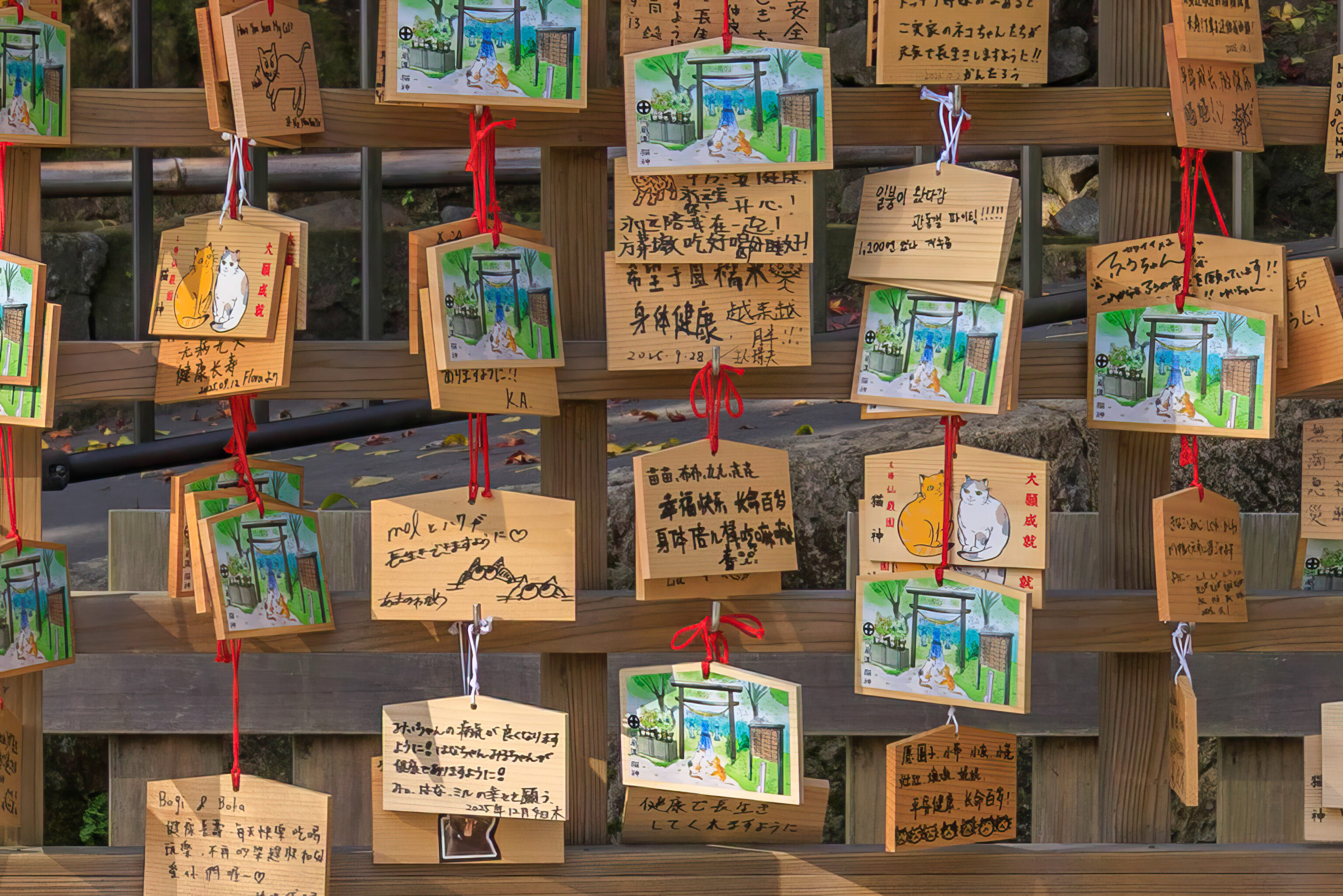
The ema here, seen in more detail in the upscaled crop, feature two designs involving cats! One design shows this shrine while another features two sitting cats. Are these the two cats that survived going to war in Korea?
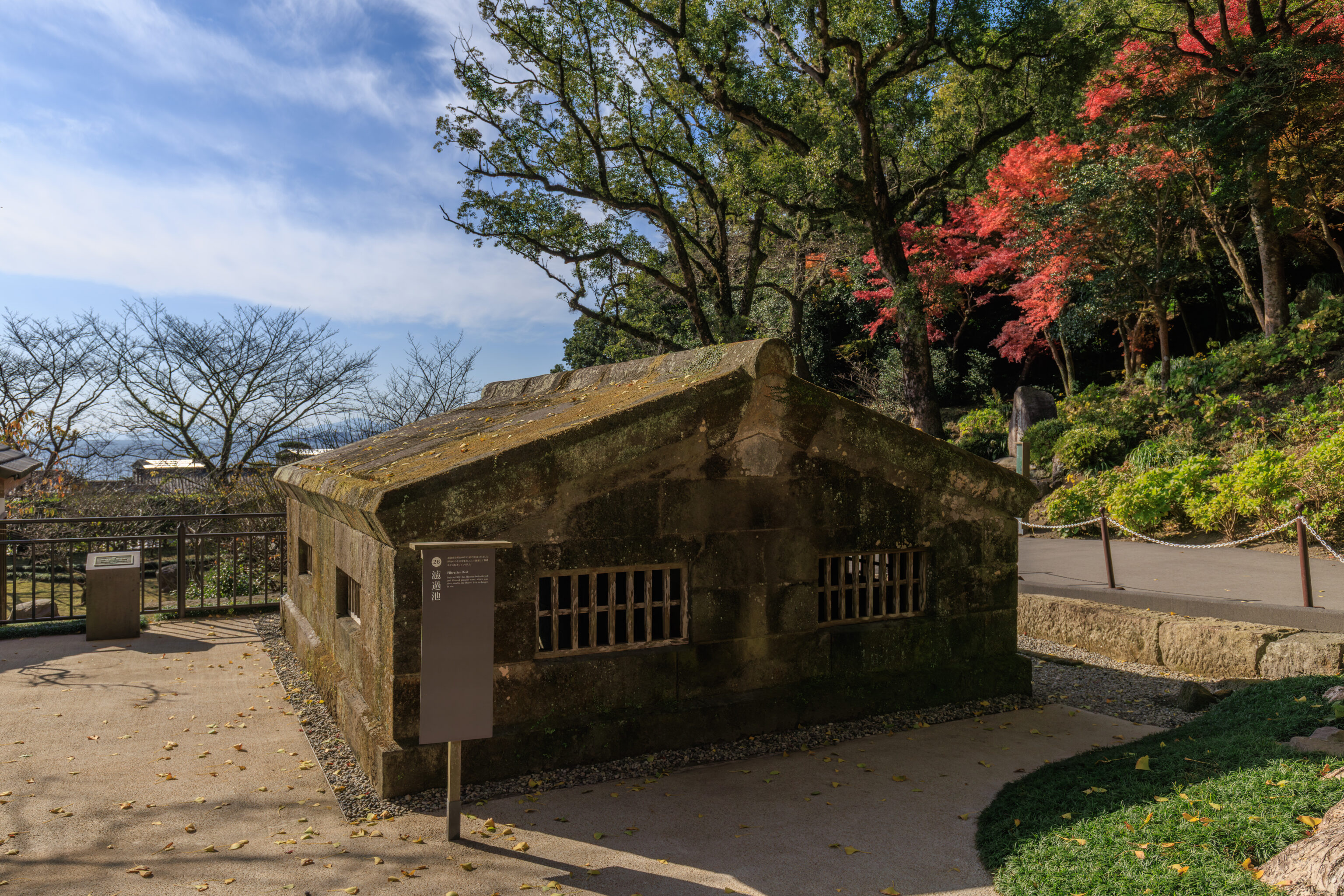
This decrepit looking building contained a water filtration bed used to provide water for the goten.
Filtration Bed
Built in 1907, this filtration bed collected and filtered ground water which was then used in the House. It is no longer in use.
– Text from a the sign in front of the building.
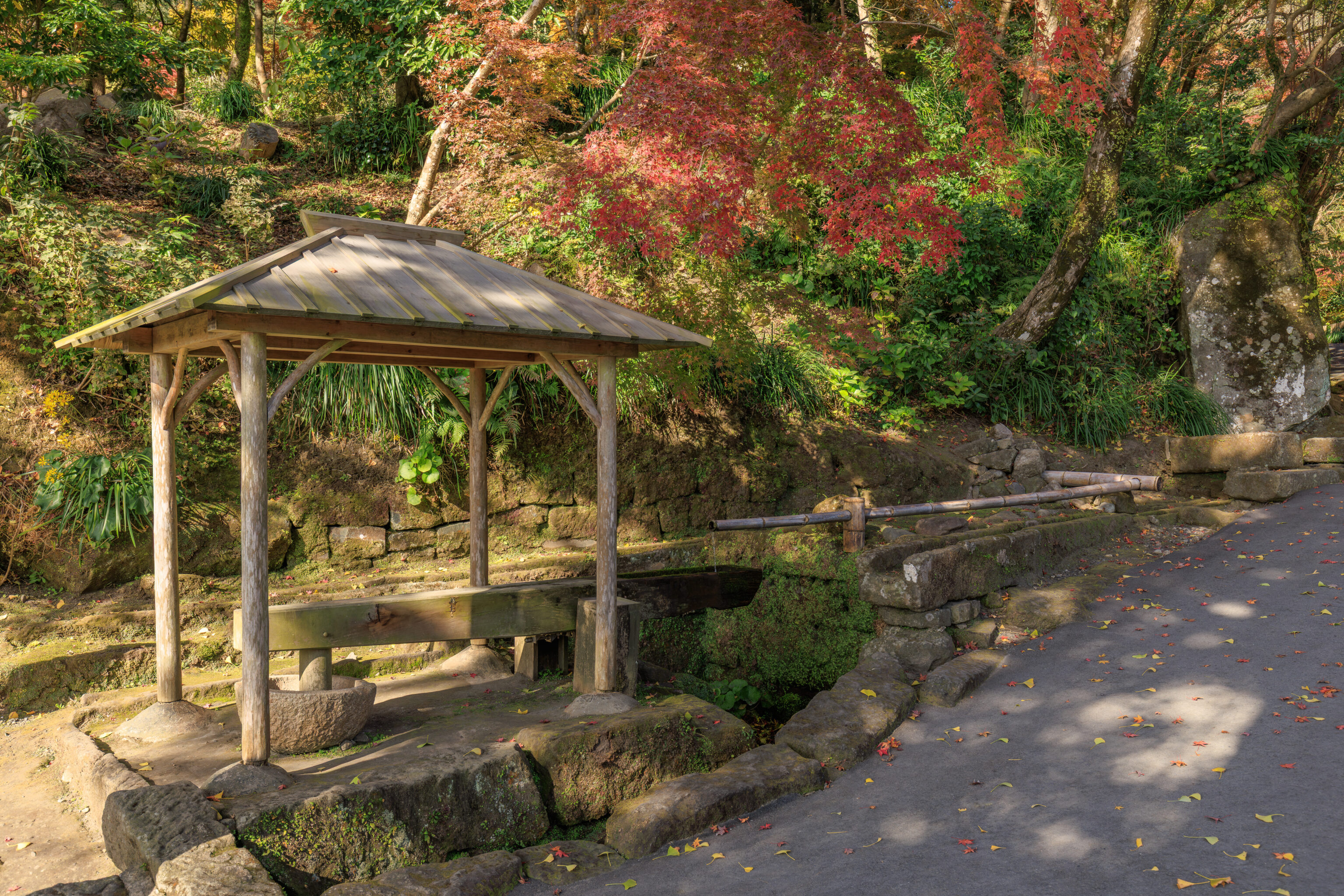
This was a water powered rice husking machine.
Sakon-Taro
Sakon-Taro is a water powered rice-husking machine which was used to polish brown rice. The arm strikes about once a minute, or 1,440 times per day - a total of 500,000 times a year.
– Text from a nearby sign.
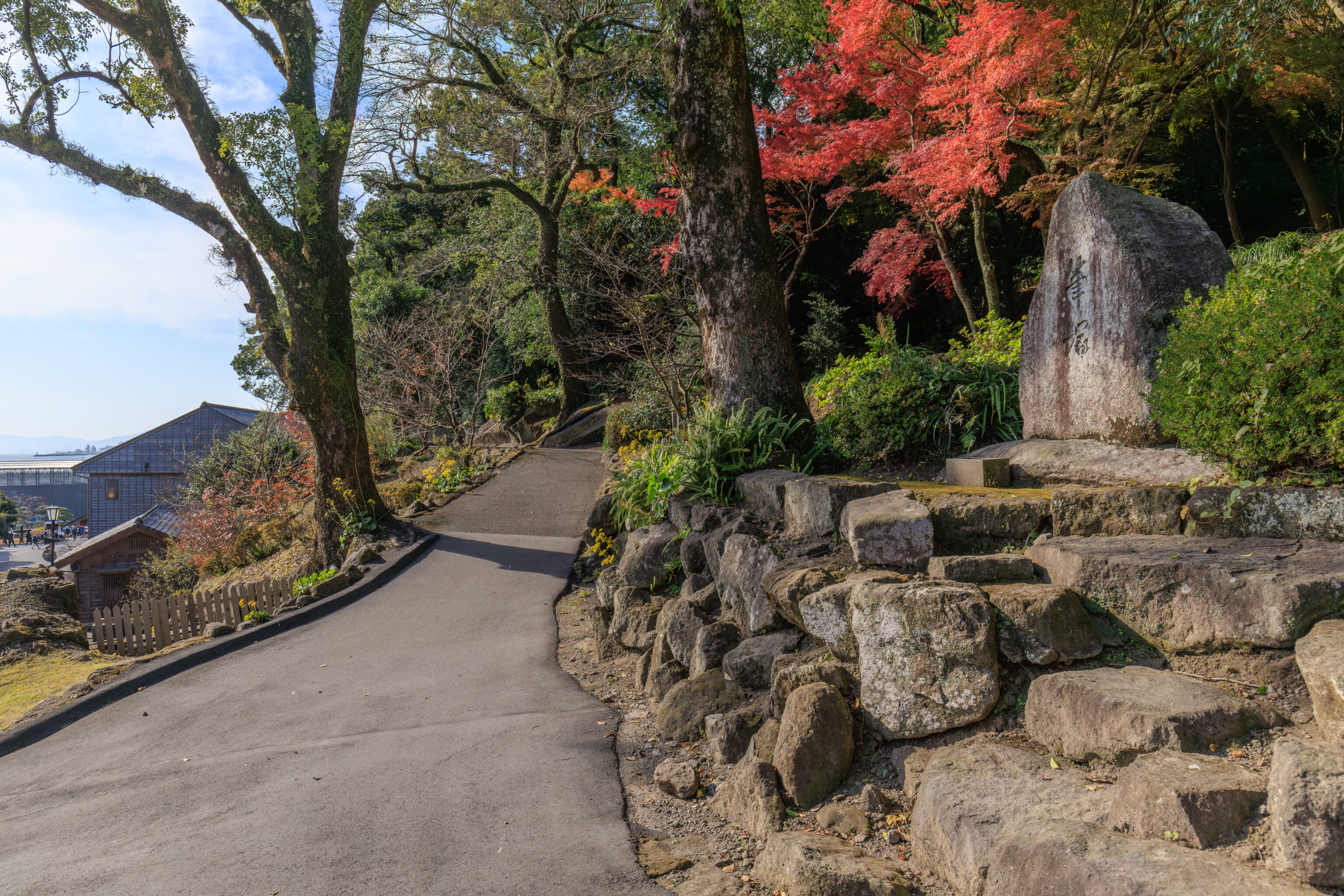
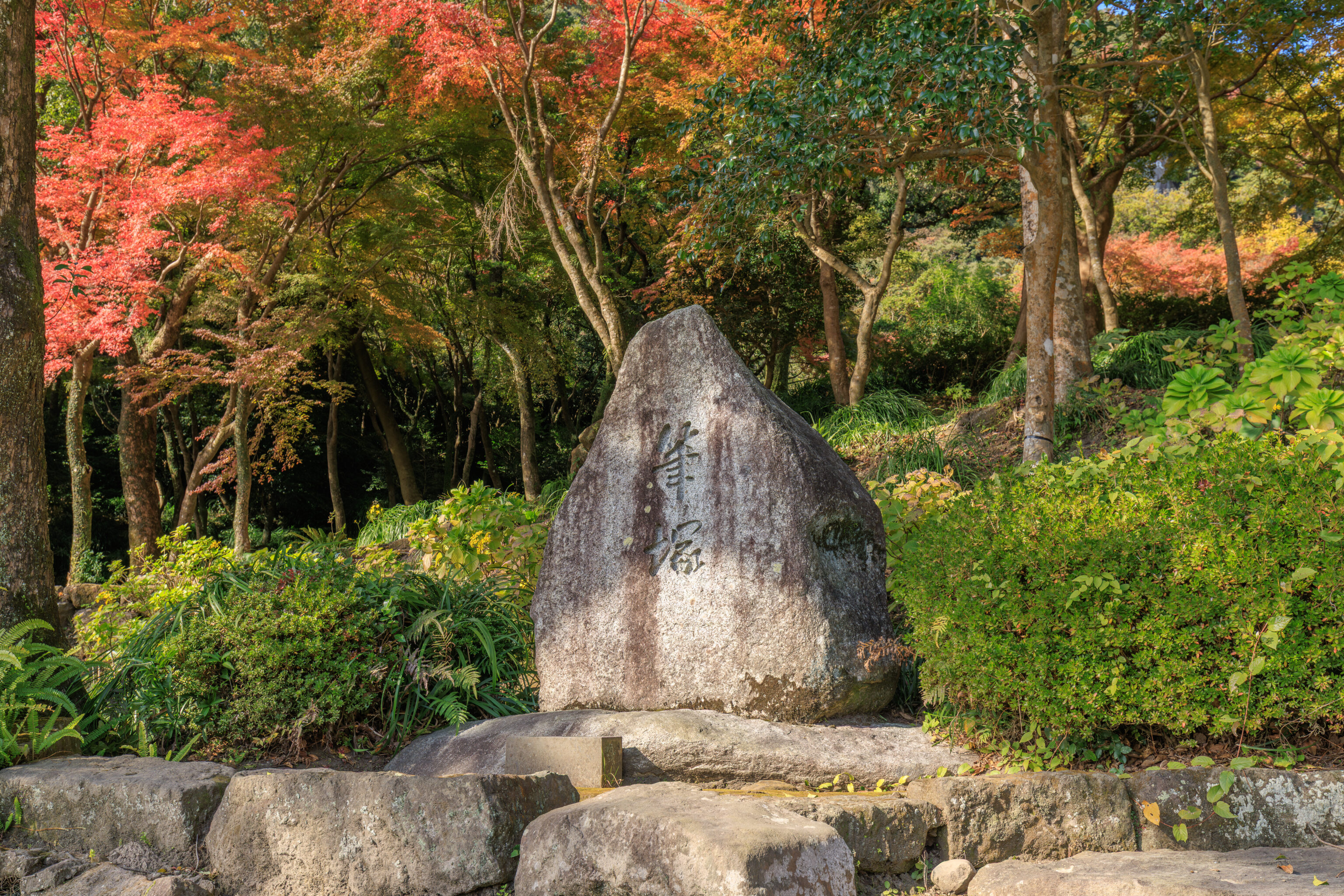
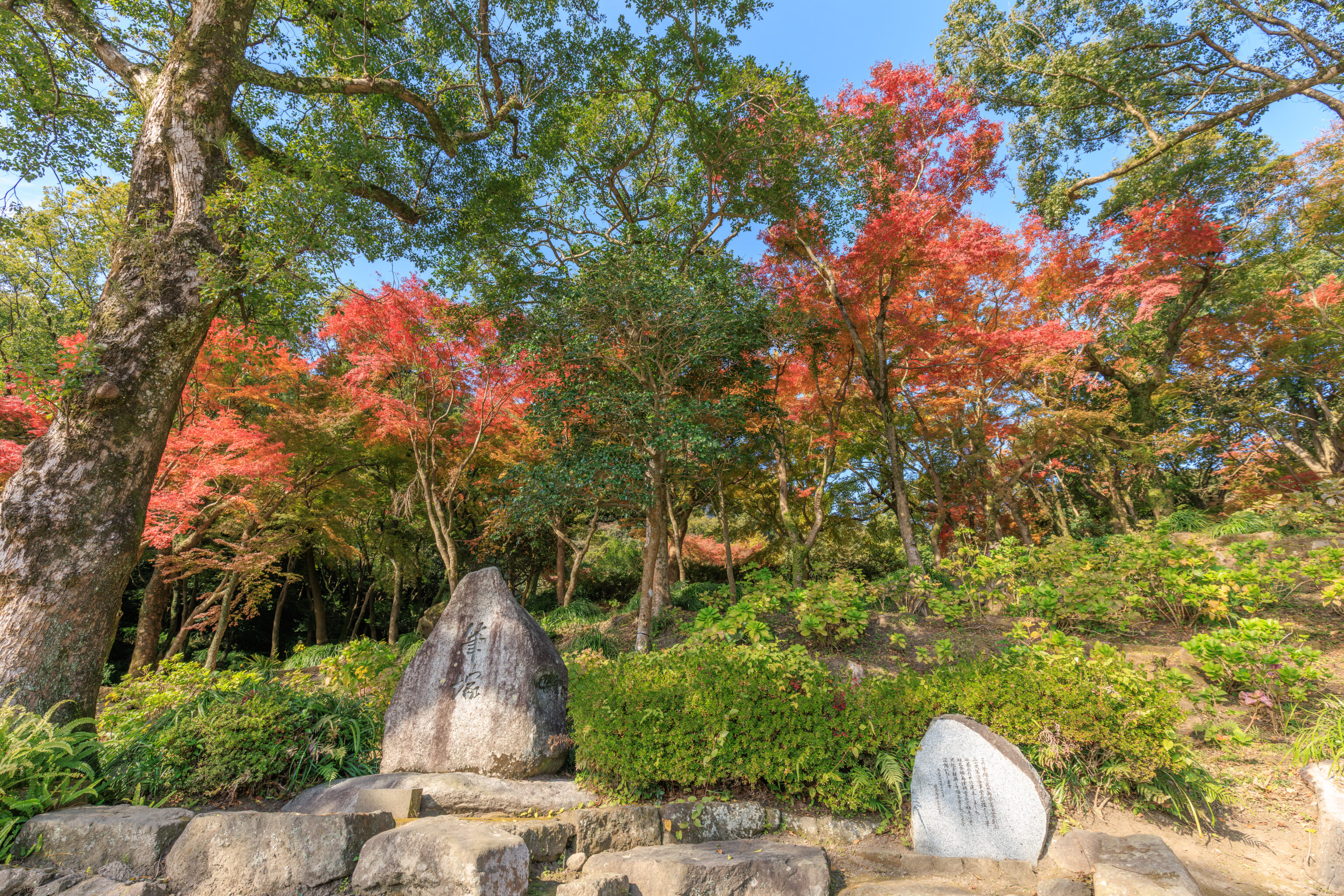
After walking a bit further, we ended up back by the western entrance to the goten. We walked over to the west to check out the shops that we had skipped earlier. Much of it was selling very expensive items.

As it was getting close to 11am, we decided to have lunch at 桜華亭 Ohkatei, the restaurant here at Sengan-en. We did have to wait for a little bit until it opened at 11am though.
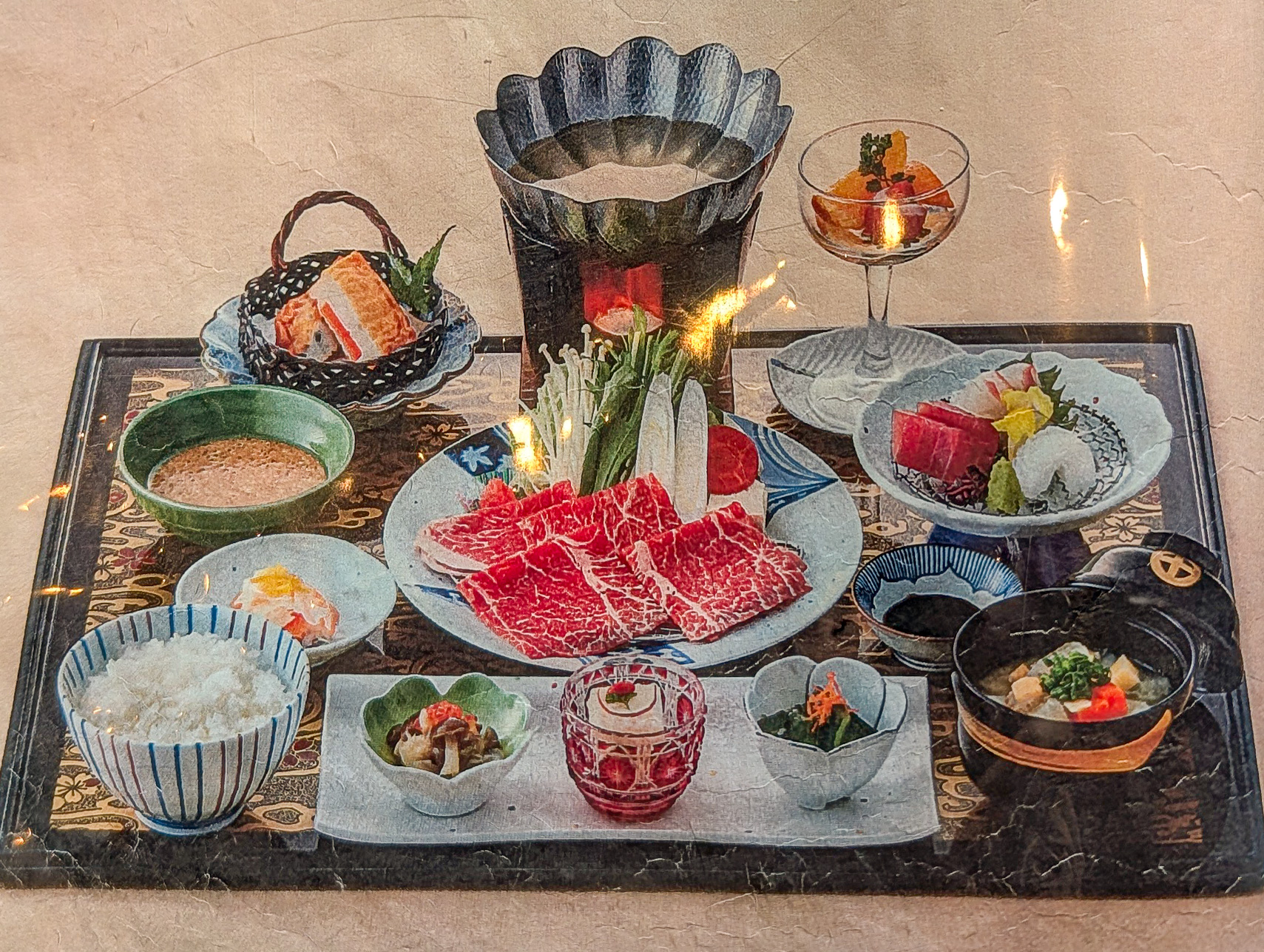
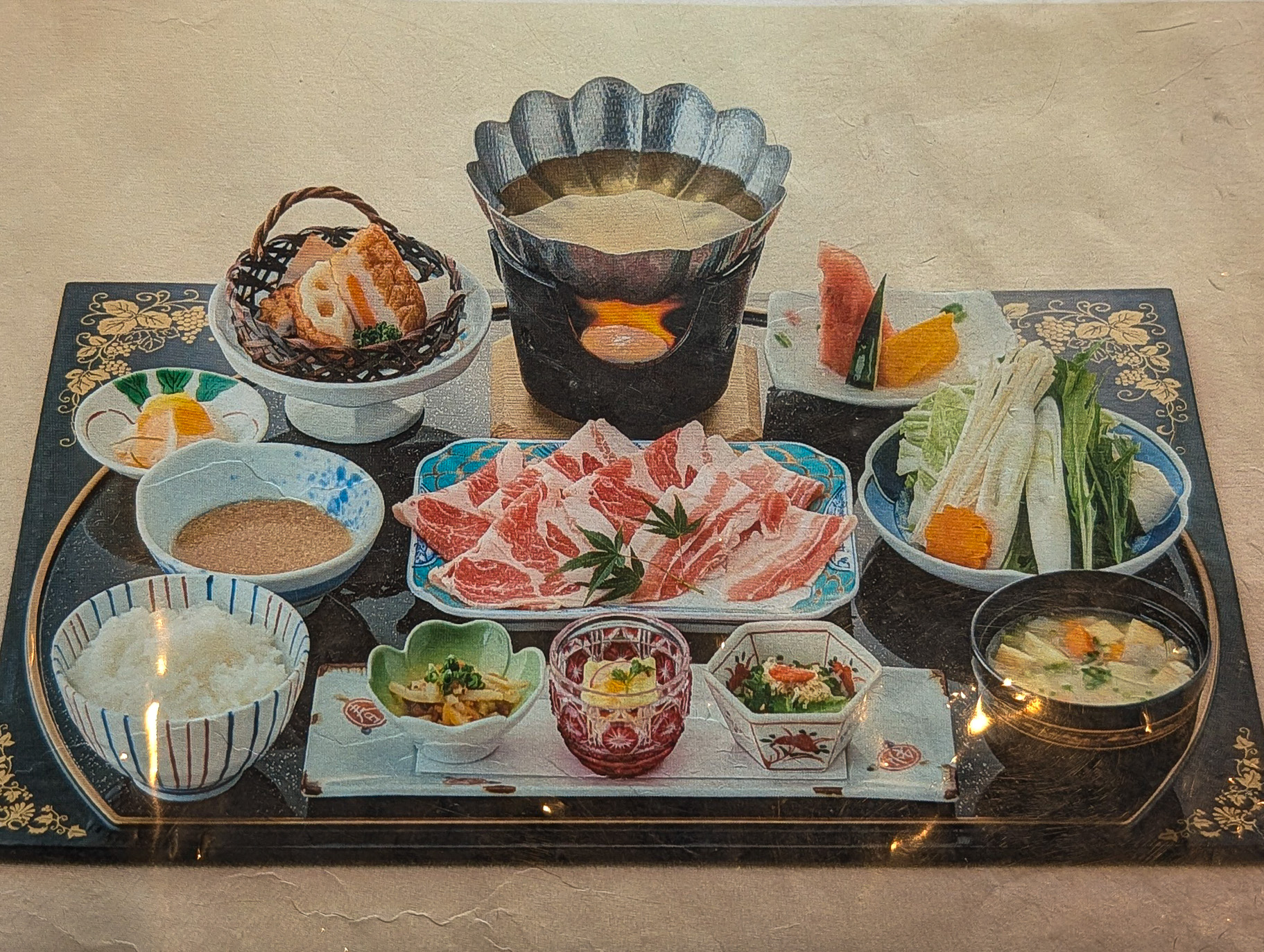
Kuroge Wagyu Shabu-Shabu Set
¥3,800

Kuroge Wagyu Shabu-Shabu Pot | Assorted Vegetables | Three Side Dishes | Sashimi | Satsuma-age (Fried Fish Cake) | Rice | Pickles | Satsuma Soup | Fruit

We present "Kuroge Wagyu" beef from Kagoshima Prefecture, prepared in the style of shabu-shabu.  We use tender, A5-rank Wagyu thigh meat.  Please enjoy this rich and refined dining set.

Allergens: Egg, Wheat, Milk, Soy
– Text from the menu, translated using Google.
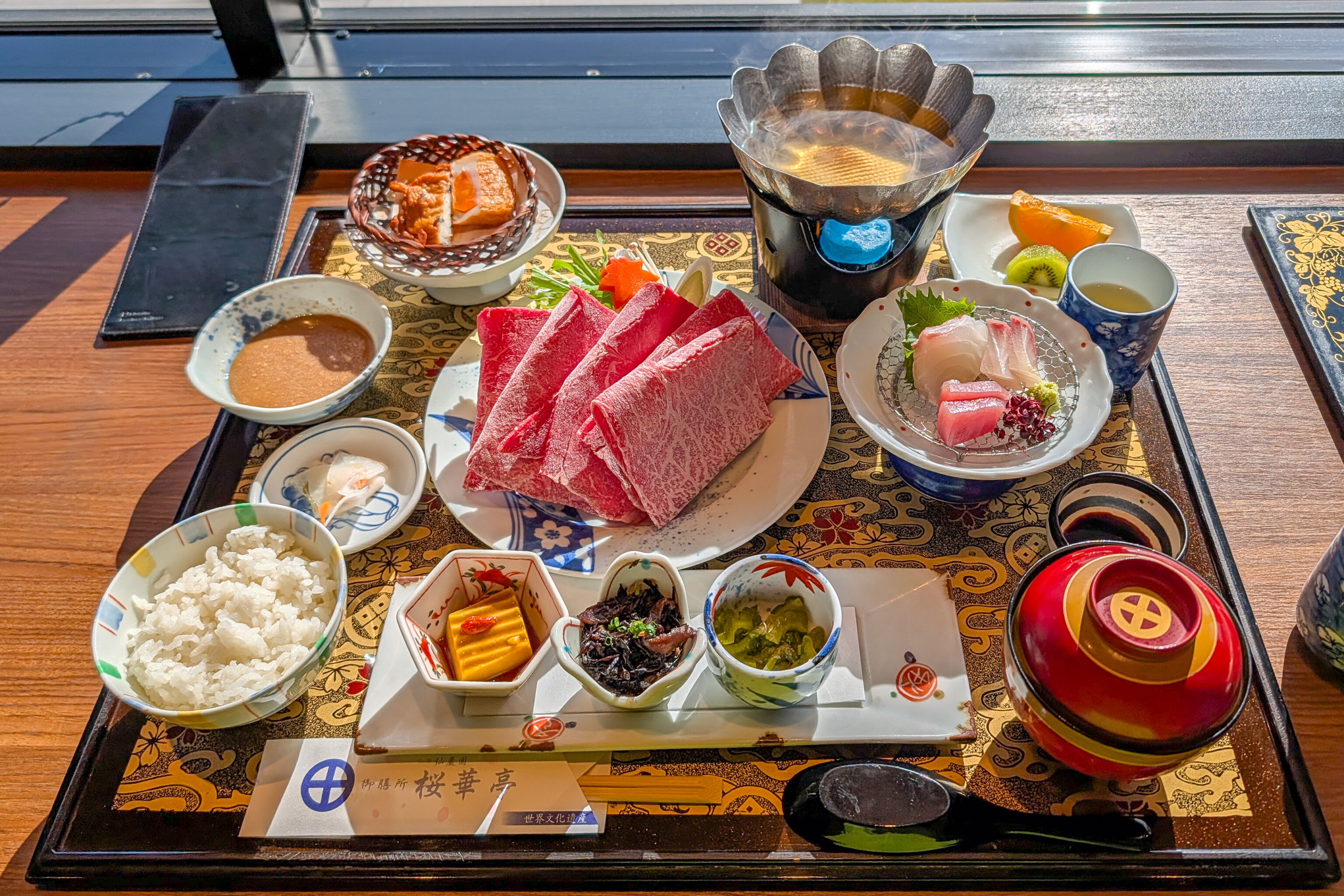
We decided to order two of the shabu shabu sets, both with the primary ingredient from Kagoshima Prefecture. One was the wagyu set featuring featuring kuroge wagyu, which is one of the four species of wagyu. The set is seen above along with the picture from the menu.
Kurobuta Pork Shabu-Shabu Set
¥3,000

Kurobuta Pork Shabu-Shabu Pot | Assorted Vegetables | Three Side Dishes | Satsuma-age (Fried Fish Cake) | Rice | Pickles | Satsuma-jiru Soup | Fruit

We have crafted a special shabu-shabu set featuring Kagoshima’s signature ingredient: Kurobuta black pork. Dip the thick, naturally sweet Kurobuta slices into our savory broth, then enjoy them with our special sesame-ponzu dipping sauce.

Allergens: Egg, Wheat, Milk, Soy
– Text from the menu, translated using Google.
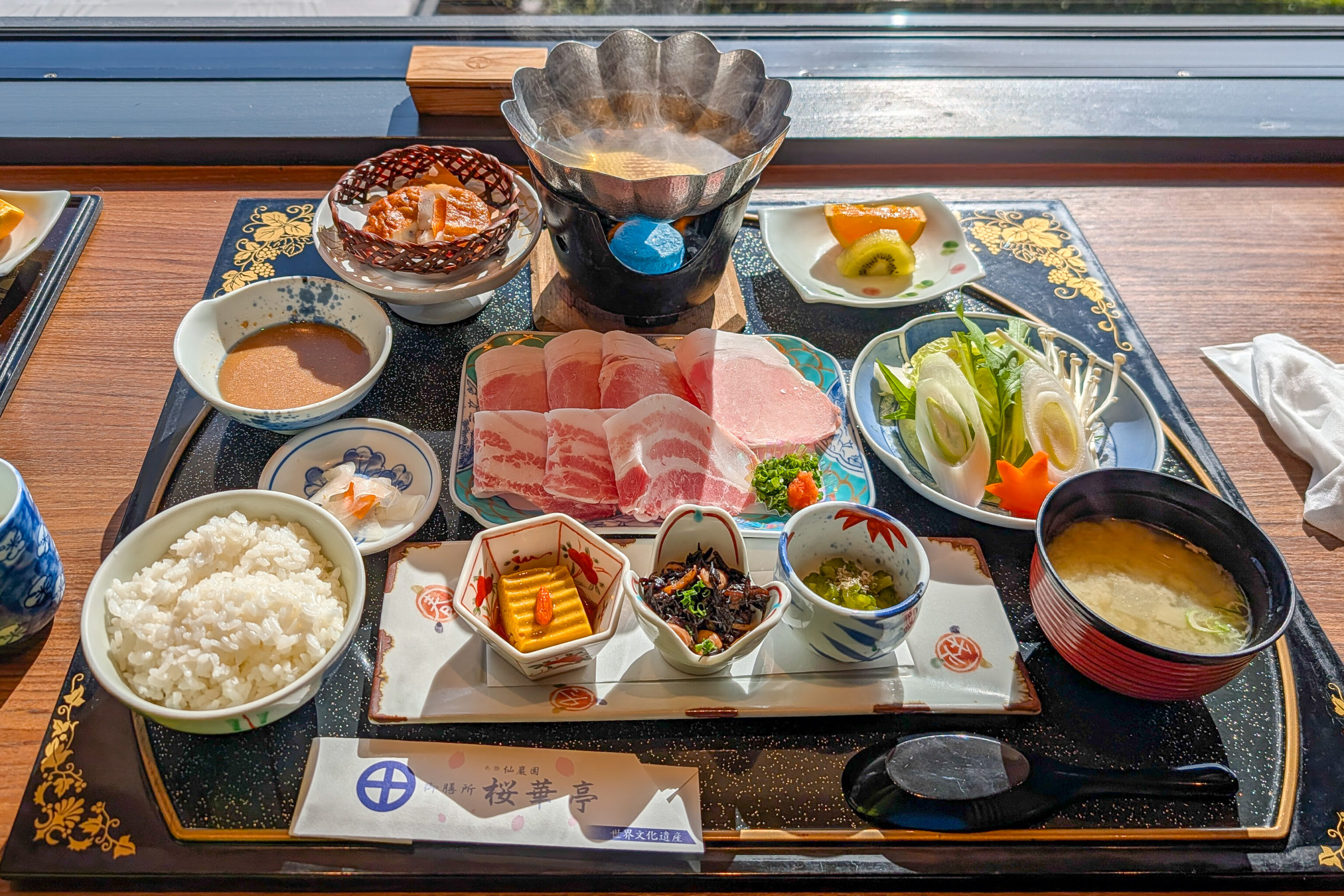
The second set that we ordered featured kurobuta pork, more specifically, Kagoshima Berkshire.
We felt that the pork was better as the beef, even though the beef was A5 grade. Both were enjoyable though. The shabu shabu broth was particularly nice after cooking the meat and vegetables in it.
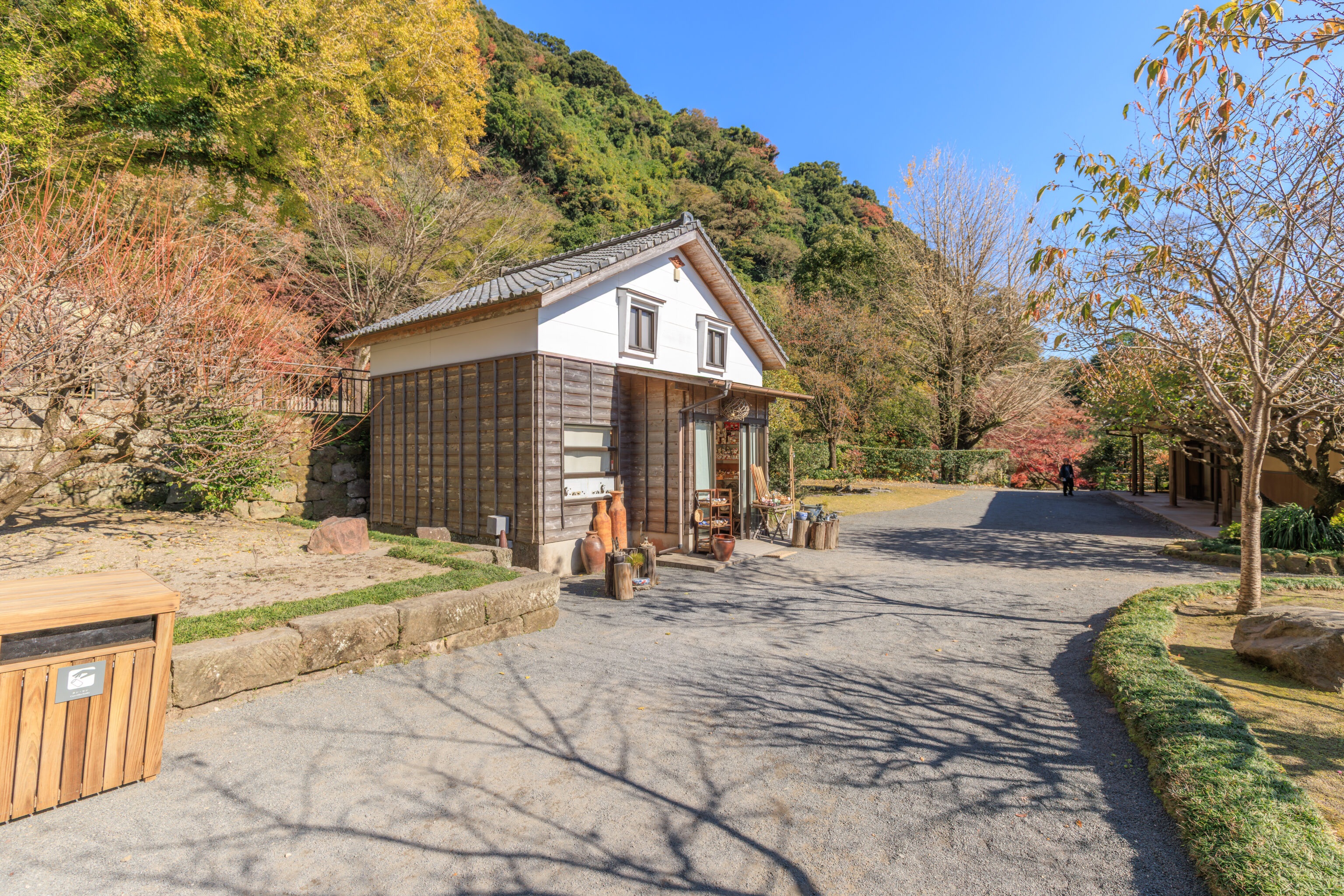
After lunch, we backtracked a bit to visit a small gift shop that we passed by earlier.

When we entered the shopkeeper gave us two sets of chopsticks – the regular sized pair seen here and a longer pair. This is the first time we’ve ever walked into a shop and given chopsticks! They seemed like regular chopsticks other than the rear ends being tied together with string through a hole in each. We weren’t sure if there was some function to these besides being chopsticks?
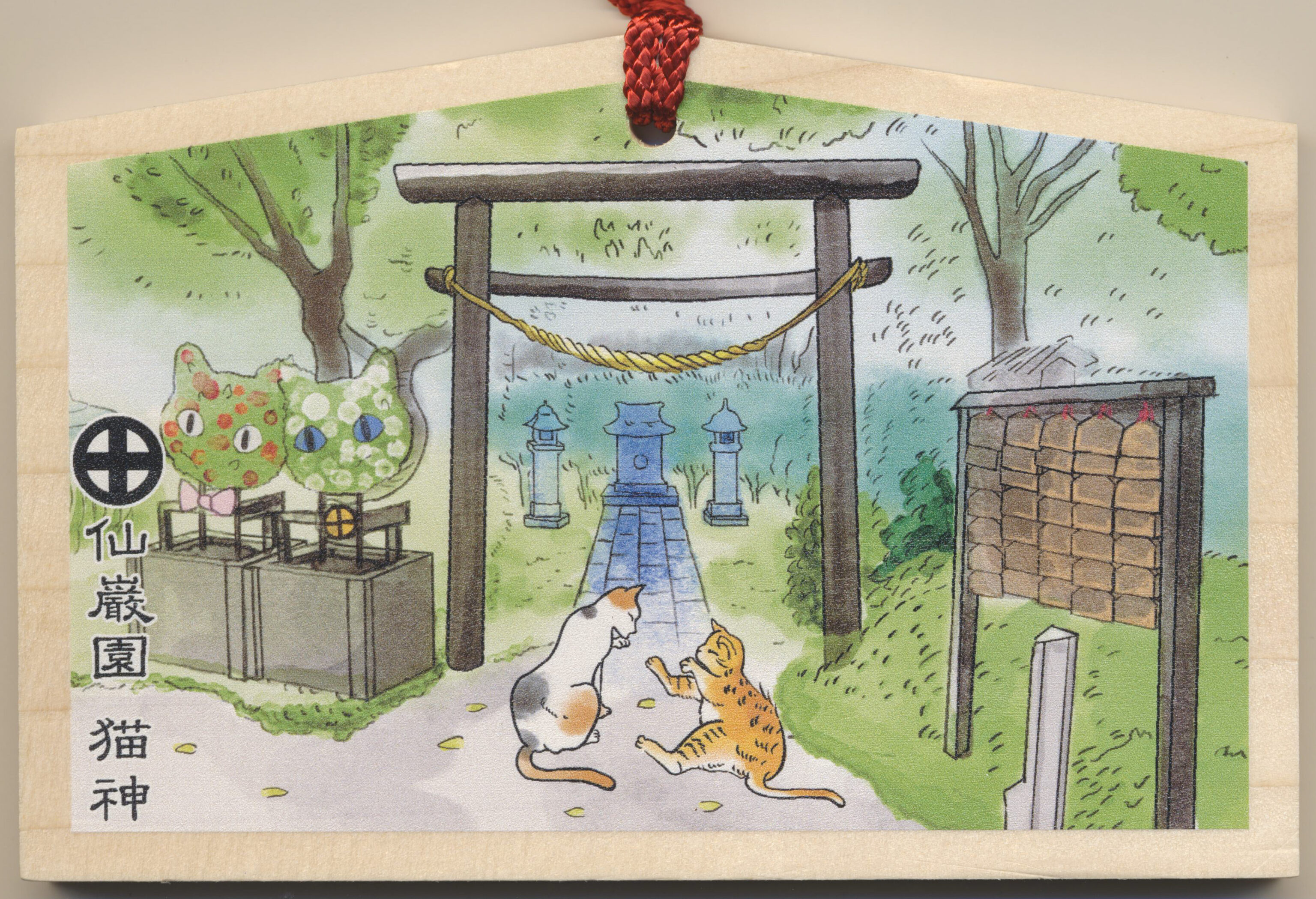
We bought the ema featuring the Cat Shrine!
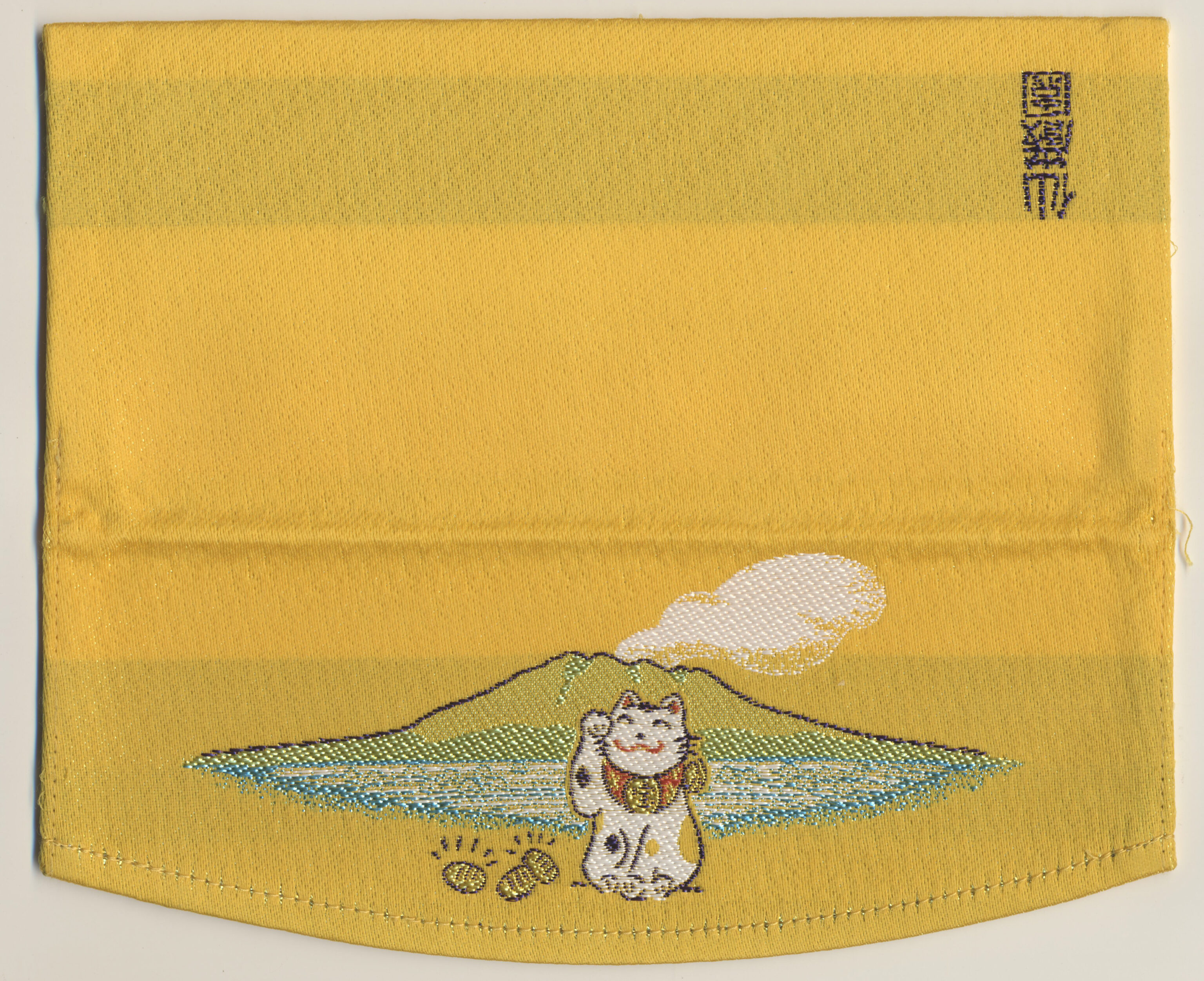
We also bought this fabric pouch, seen above while opened. Although we intend to use it to hold money, it is actually intended to hold lottery tickets!
Lottery ticket holder at Sengan-en Garden

Yellow is a color that attracts wealth.

Please put your lottery tickets, etc. inside.

On the west side of the room (the direction associated with good fortune)

It might be a good idea to put it away!
– Text from the product, translated using Google.
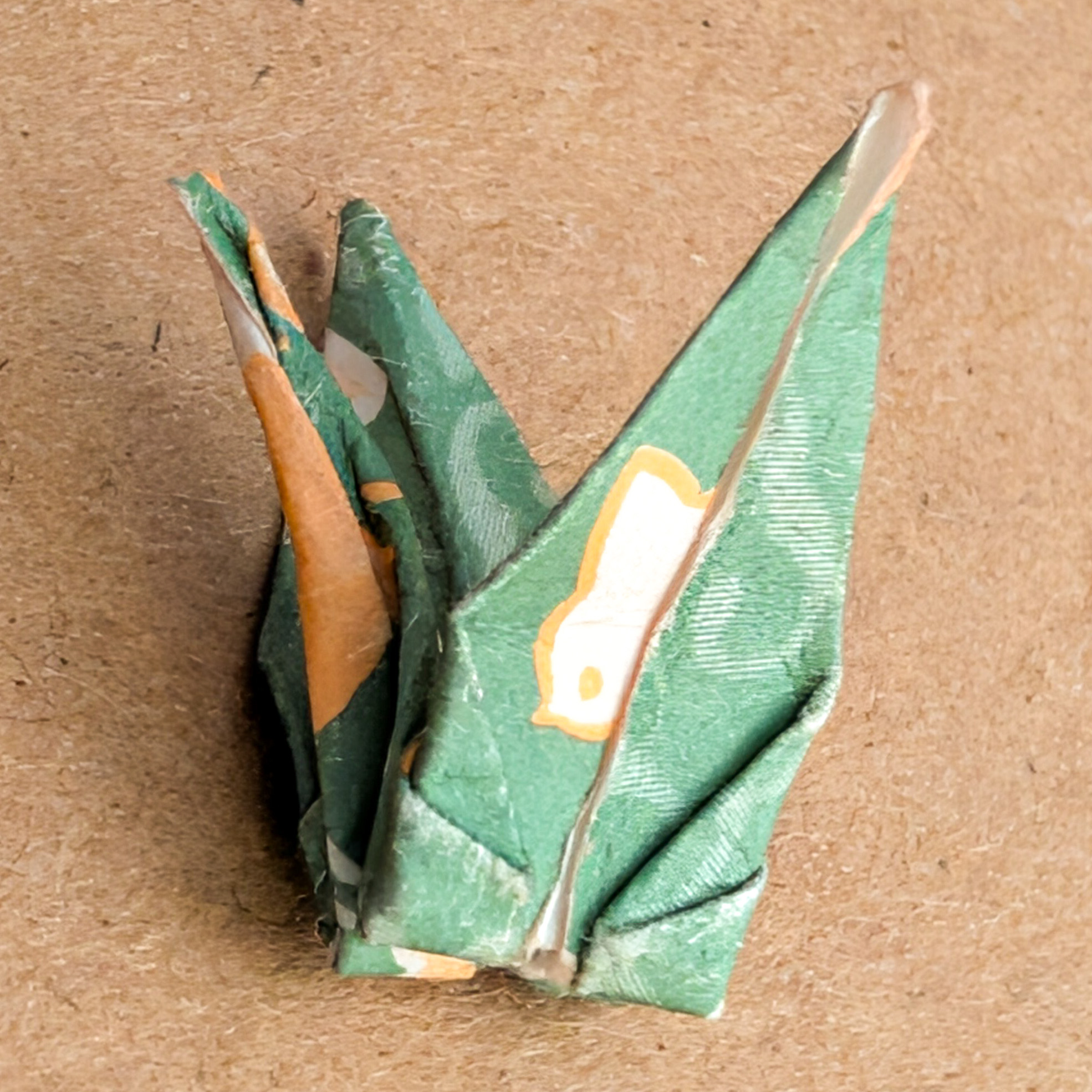
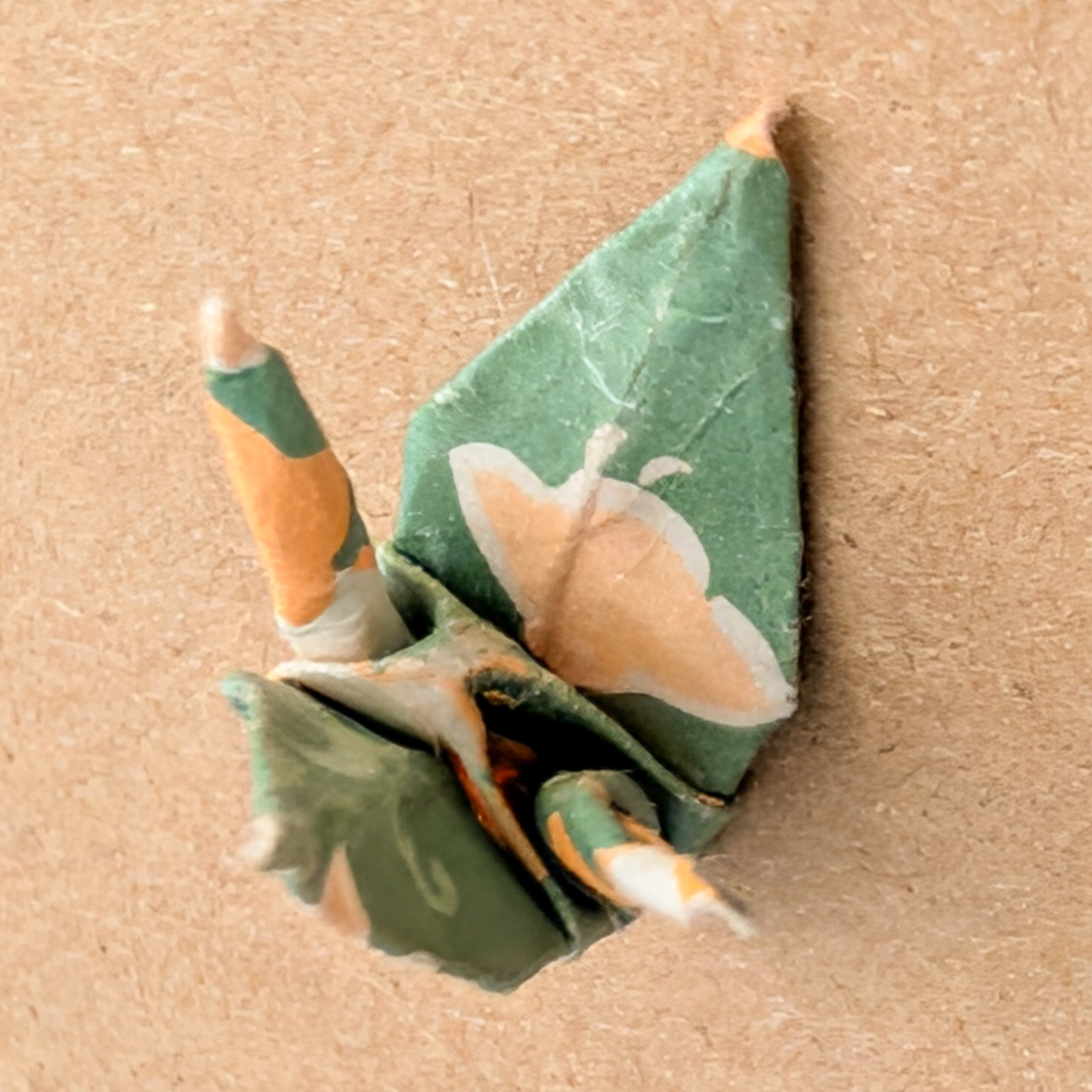
The shopkeeper also gave us a tiny little origami crane after we made our purchases!
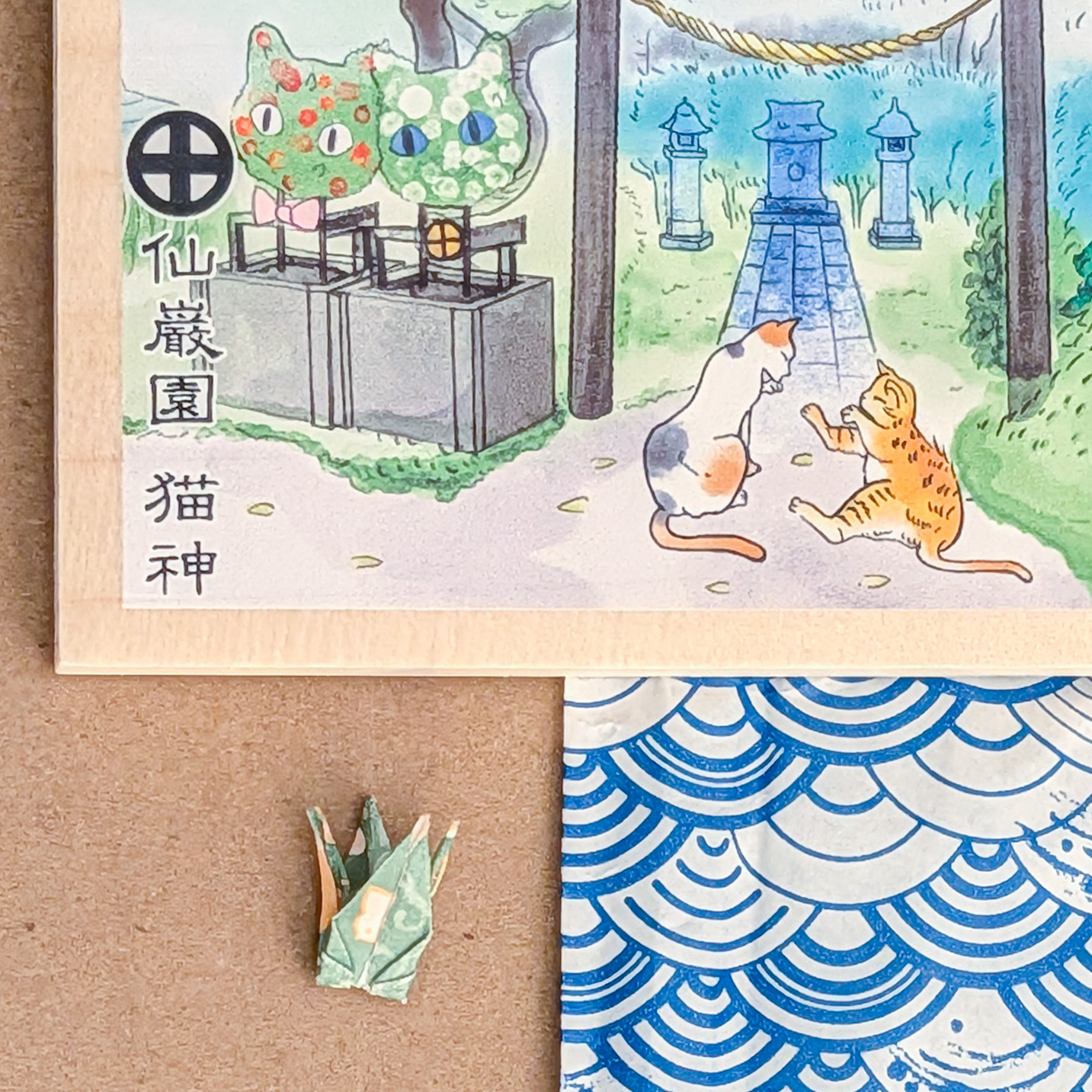
The origami crane with ema for scale!
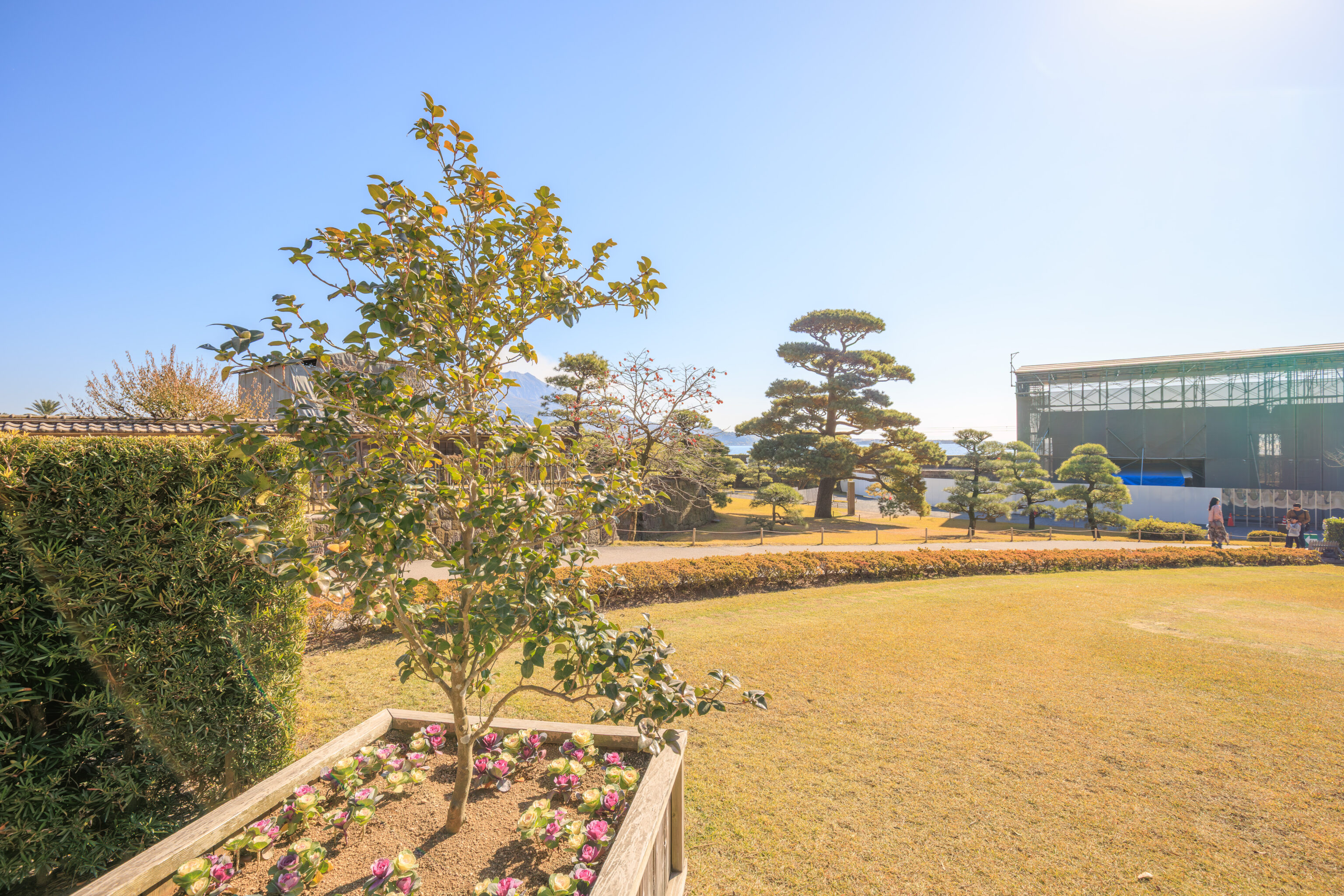
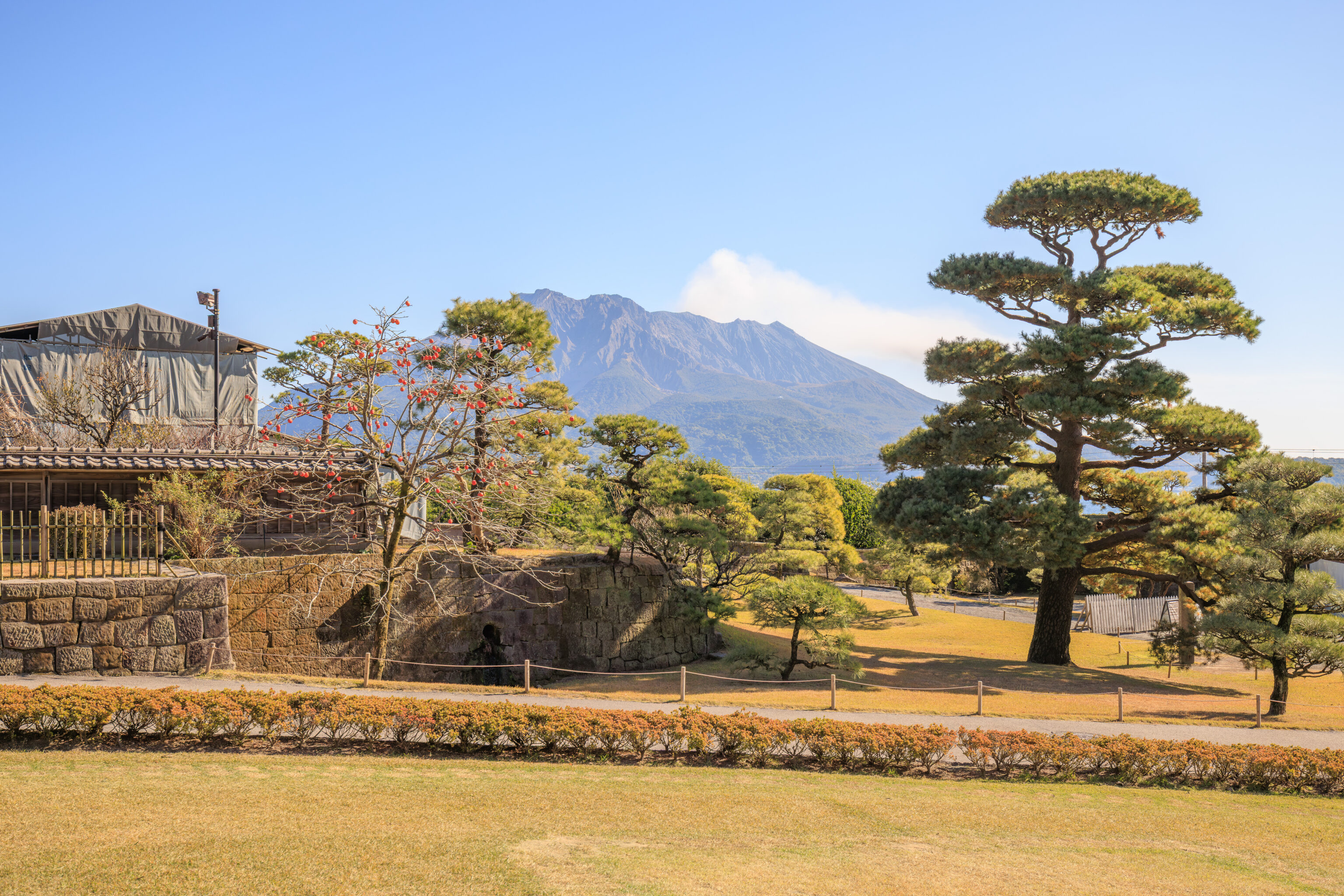
After visiting the shop, we headed over to the first set of shops that we had walked by when we first arrived. We again had a view of Sakurajima on the way. It was still just emitting a white cloud of smoke.
The shops included a large gift shop, much larger than the smaller one we just visited.
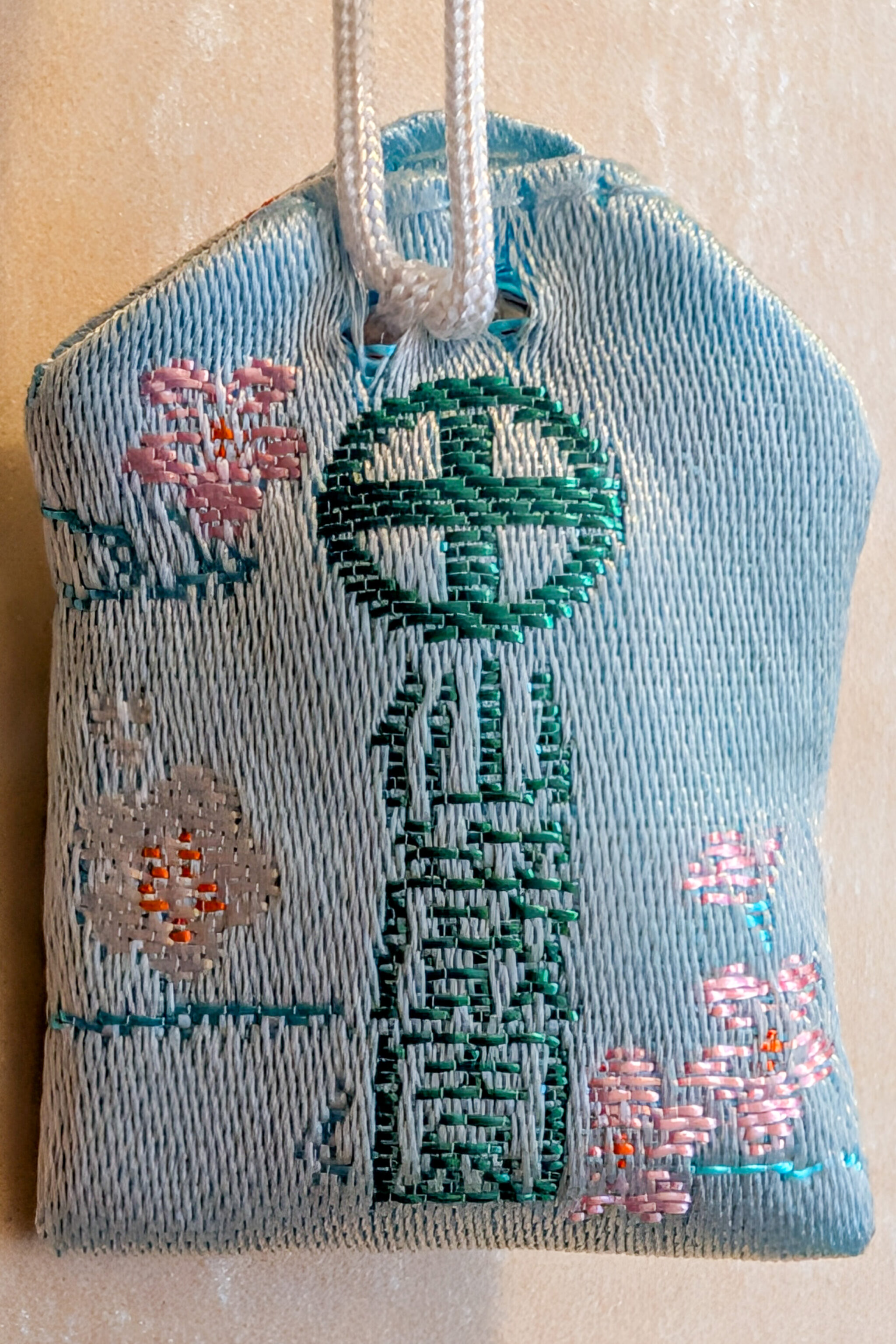
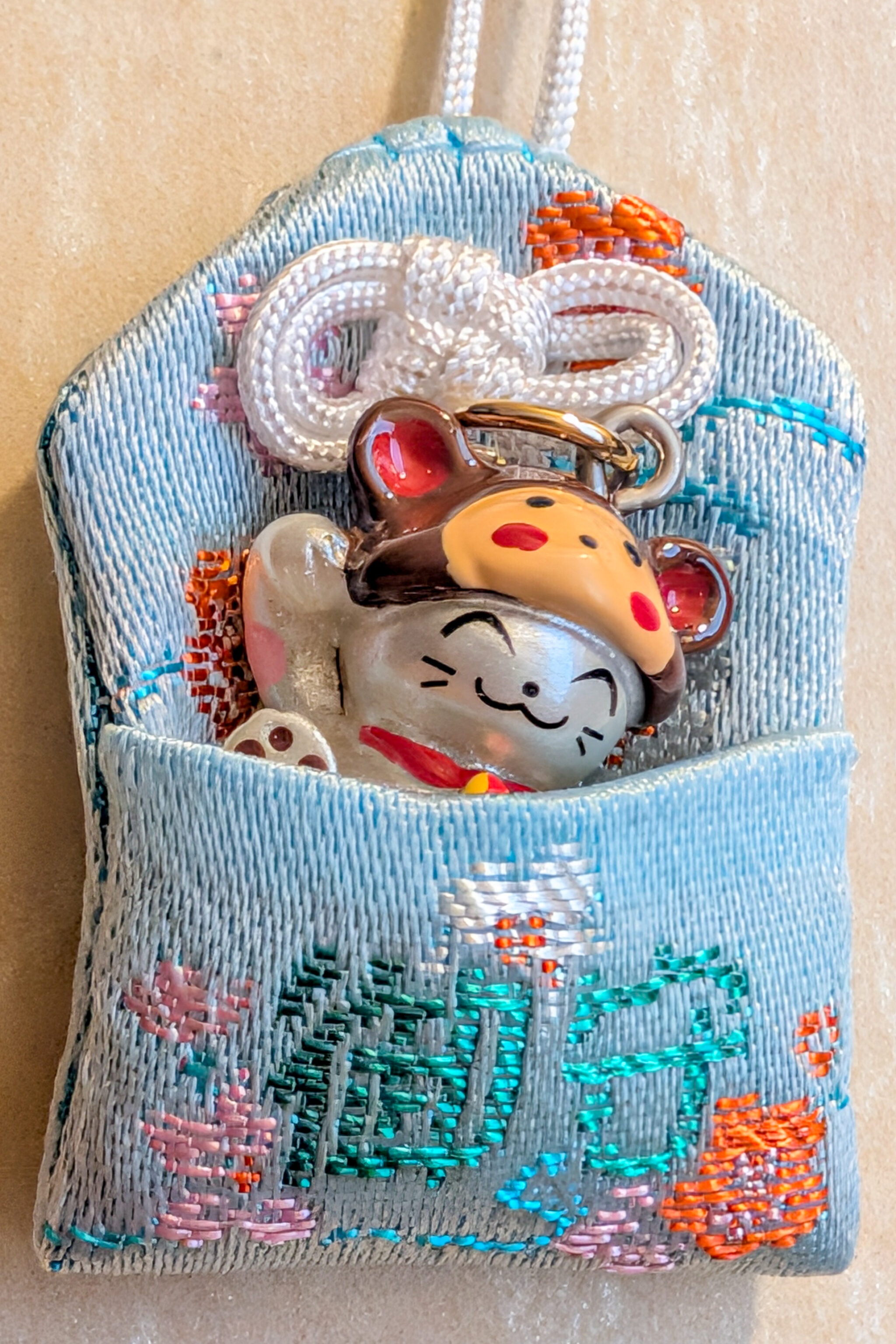
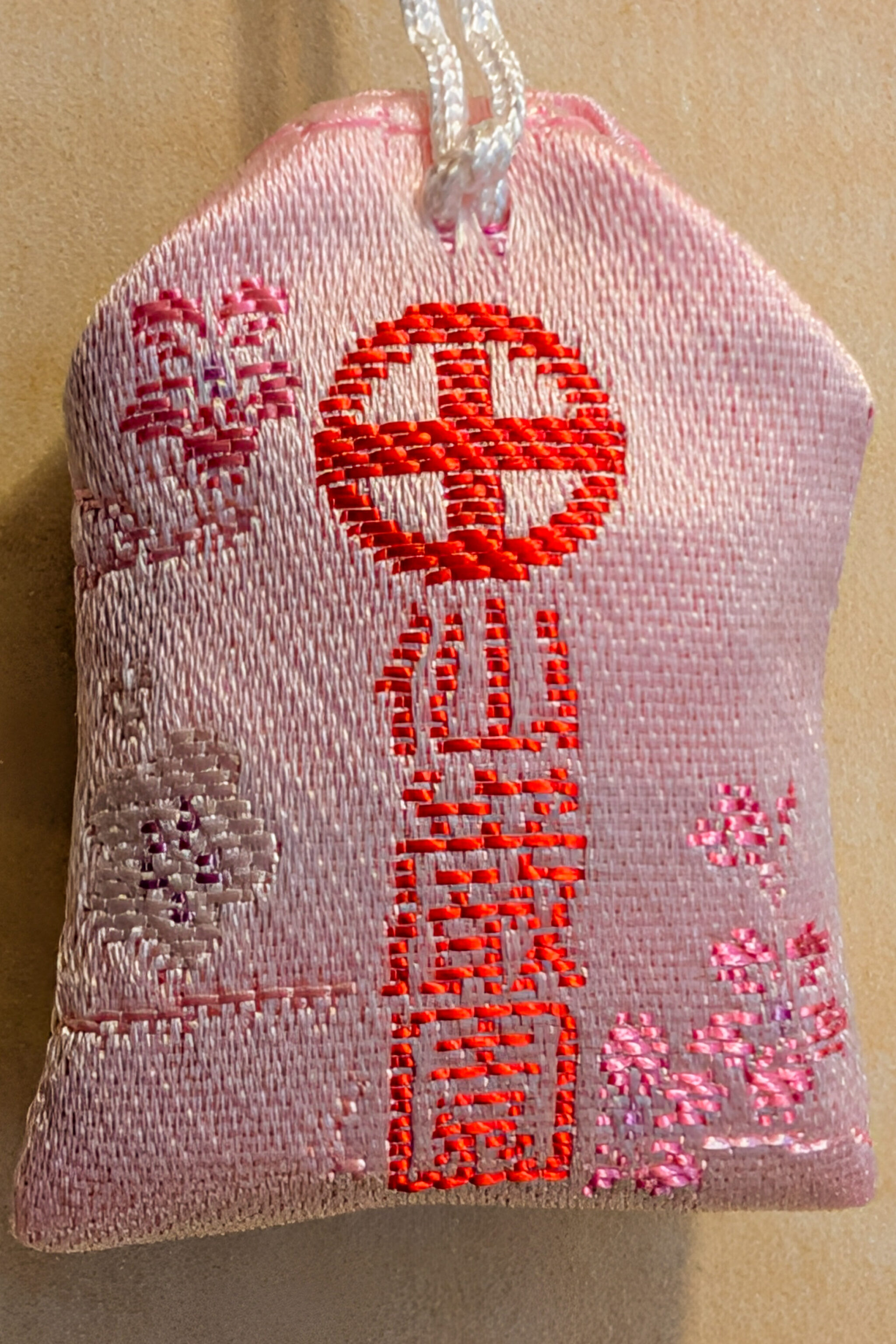
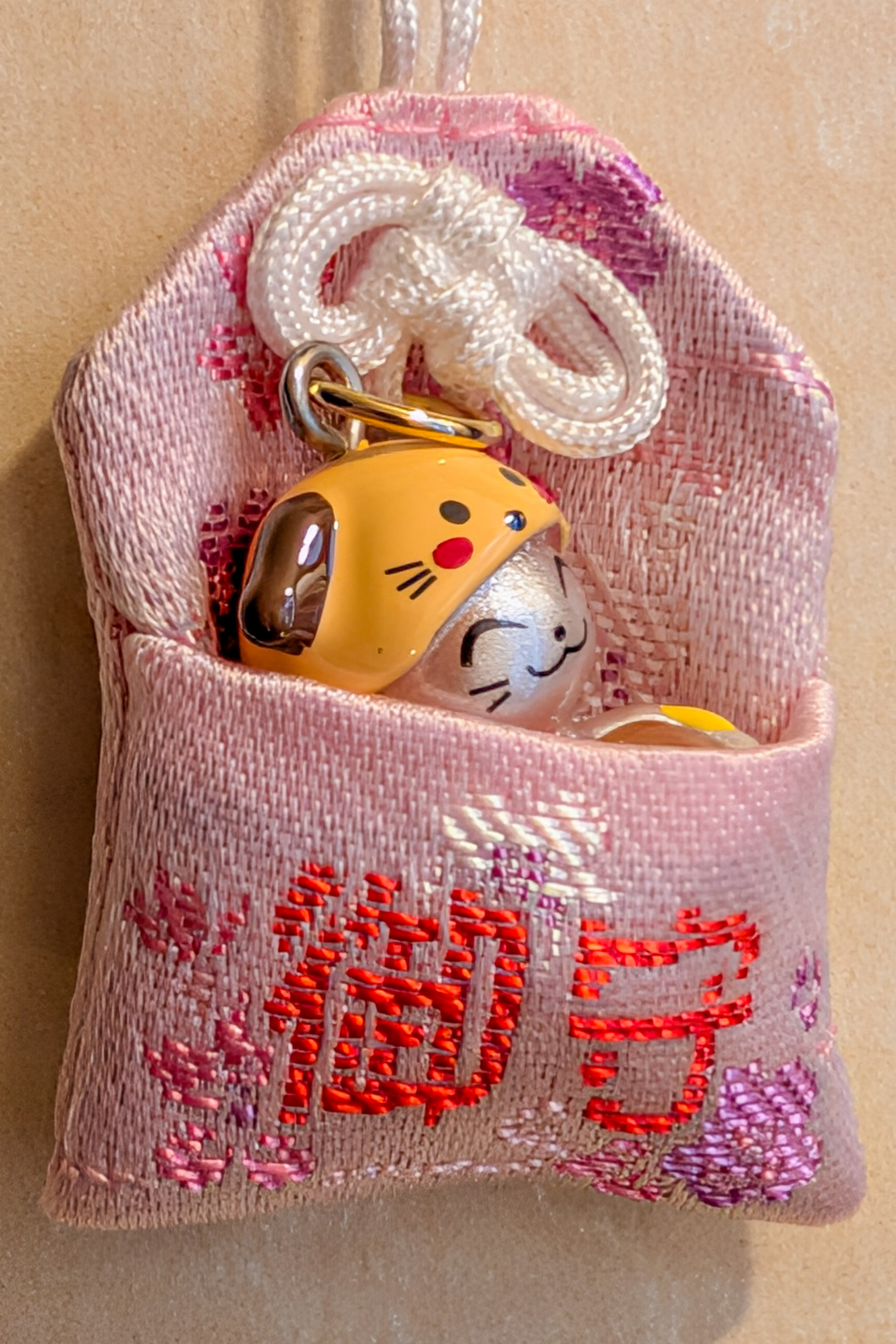
We bought two omamori, both featuring cats in a pouch!
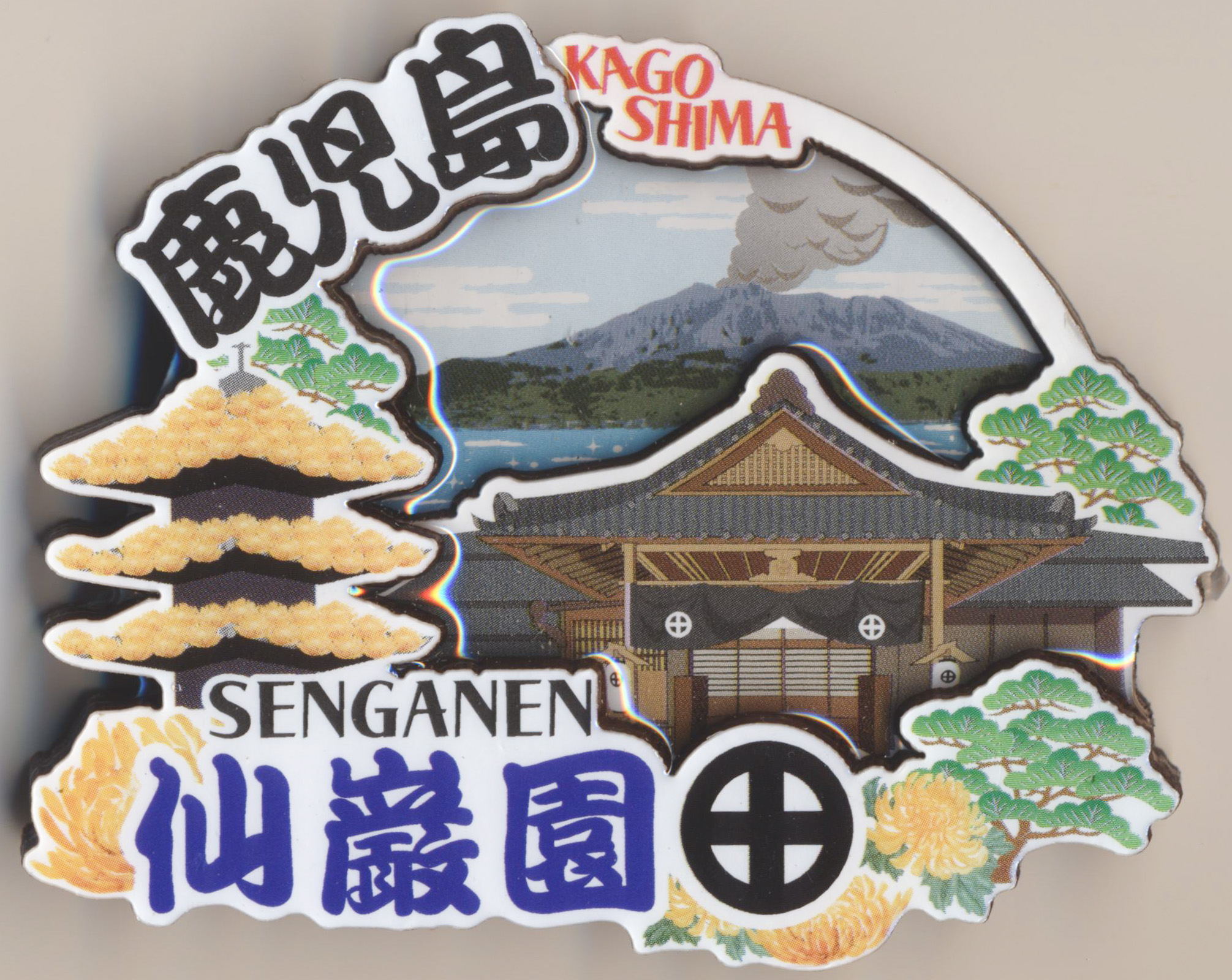
We also bought a magnet.
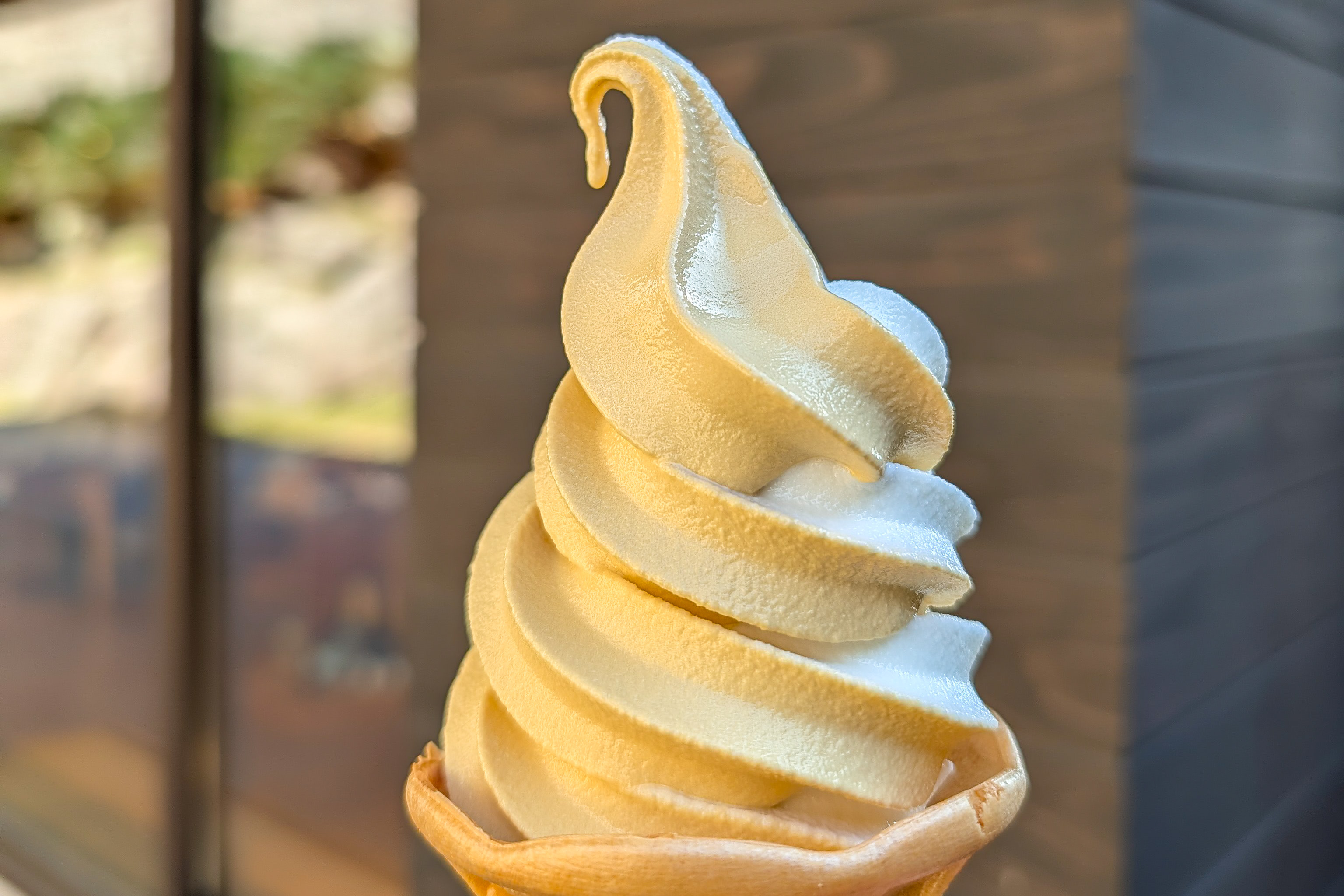
As we were leaving, we got a soft serve with a mix of Satsumaimo, a locally grown variety of sweet potato, and Kagoshima milk. The two flavors do have different colors but it isn’t easy to tell in the photo. The soft serve had excellent texture and the cone was excellent too. The flavors were also nice.
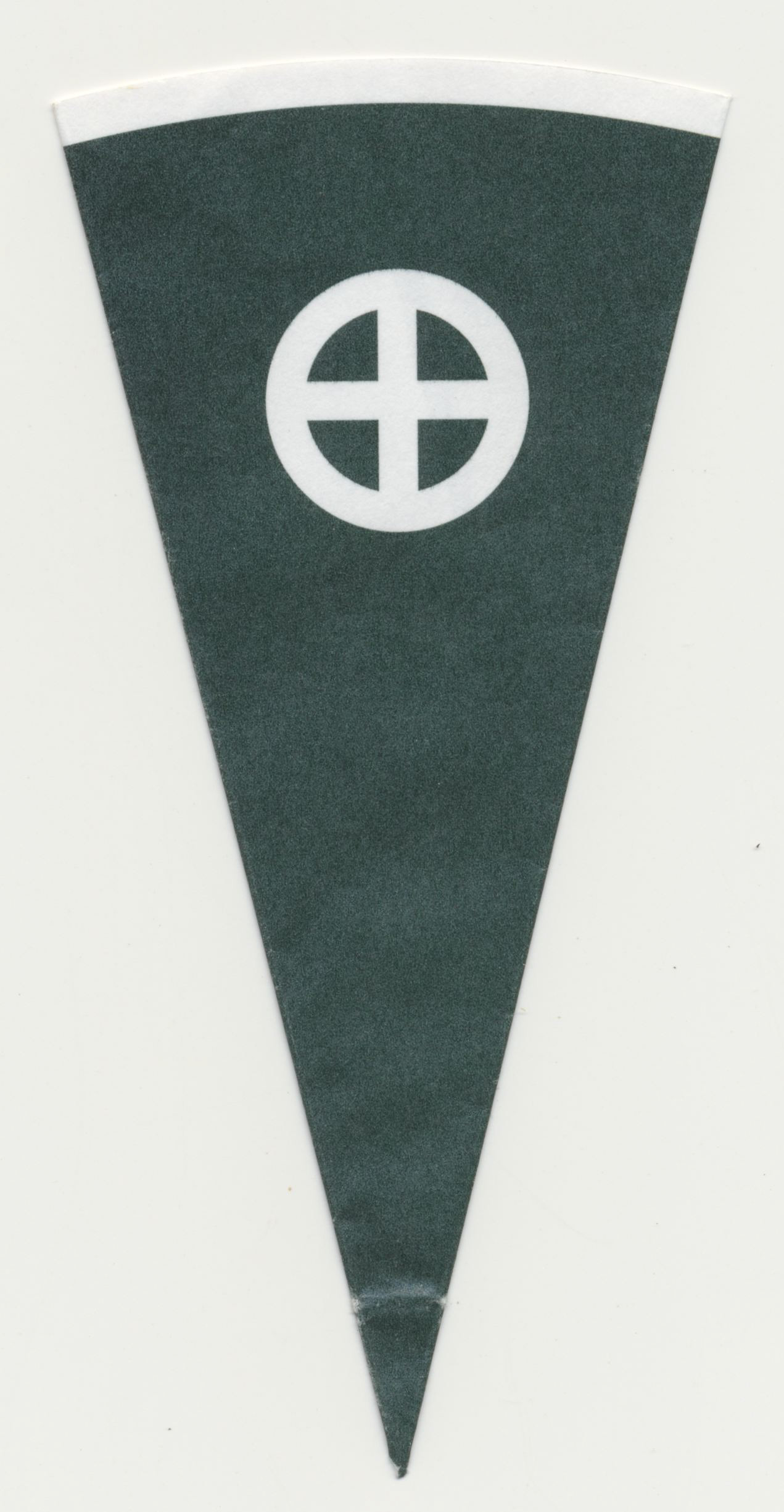
The wrapper for the cone featured the maru ni jumonji emblem of the Shimazu clan.
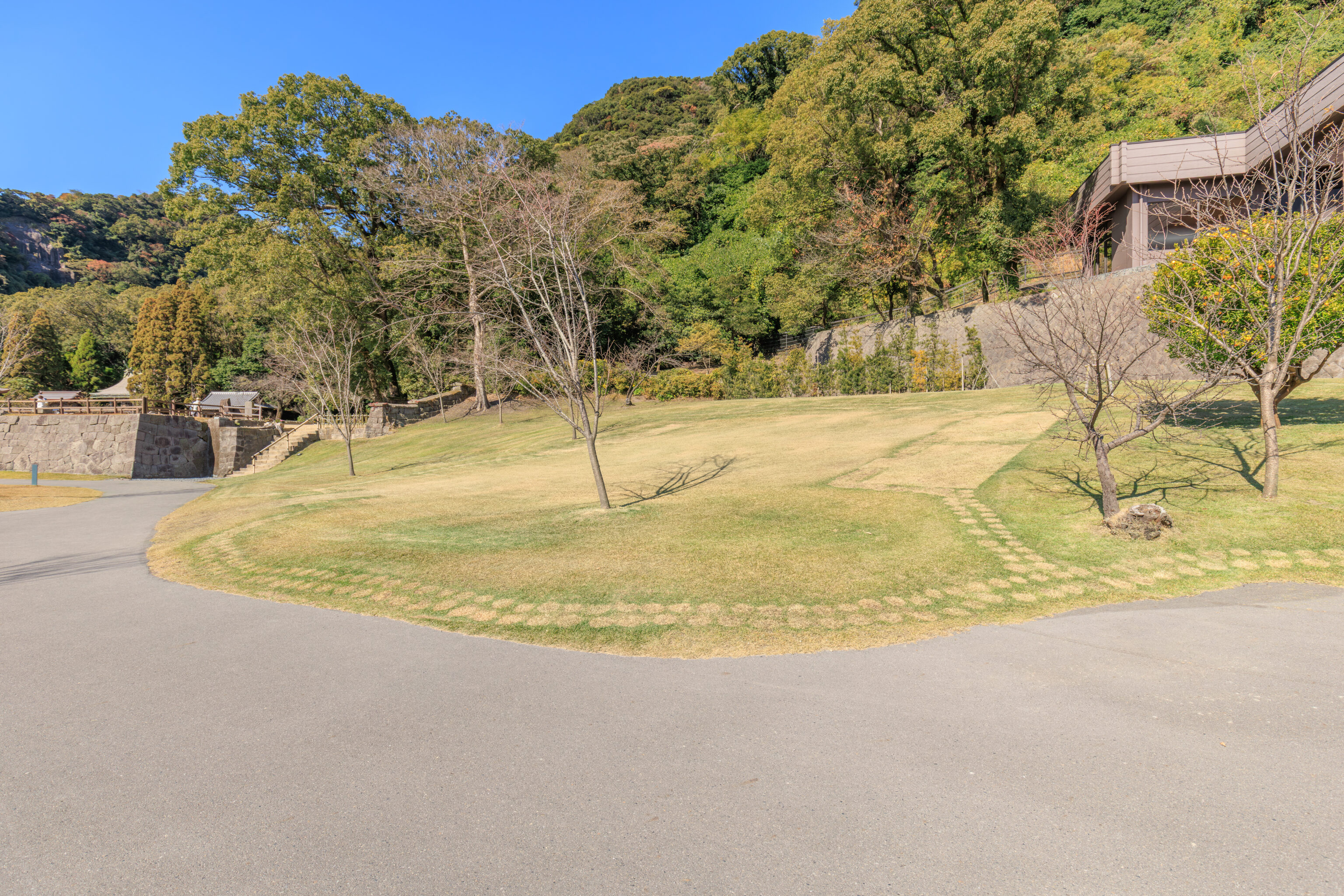
It looks like there was something here on the grass. They need to get that green spray guy here!
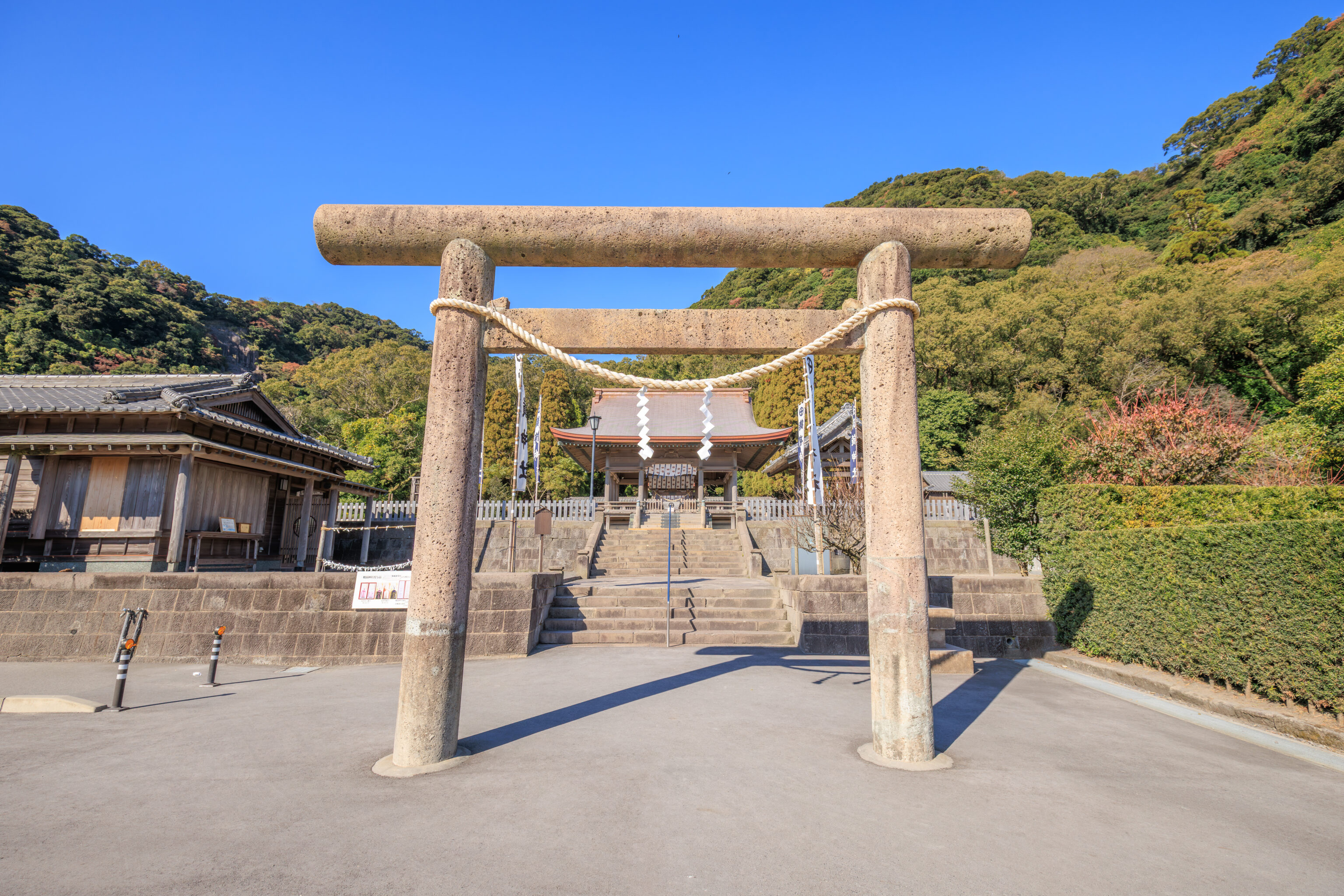
We decided to go take a look at the Tsurugane-jinja.
Tsurugane Shrine

Enshrined Deities
Heads of the Shimadzu family and their
family members
Heads of the Tamazato Shimadzu family
and their family members

Secondary Deities
5 Chief Retainers,
45 Retainers who committed junshi
(ritual suicide on the death of one's lord)

Yearly Events
January 31st: Tsurugane Festival
March 1st: Spring Festival
July 18th: Summer Festival
September 23rd: Autumn Memorial Service
November 1st: Autumn Festival
November 5th: Jimmyo-sai

Sacred Treasures
Nationally Designated Important Cultural Properties:
Sword (Tachi - Bizen-no-Kuni Ju Unji)
Armour and Helmet (Red Laced Osode with Gyoyo)

Prefecturally Designated Important Cultural Properties:
Wooden Figurine of Shimadzu Tadakuni
Wooden Figurine of Shimadzu Tadamasa

The Shimadzu family ruled over southern Kyushu for a period of 700 years from 1185 until the founding of the modern Japanese government in 1869. Tsurugane Shrine was established close to Kagoshima Castle in the same year and was moved to its present location next to Sengan-en in 1917.

The heads of each generation of the Shimadzu family are enshrined here along with their family members. Alongside brave warriors and inspirational leaders, the beautiful and sagacious princess Kamejuhime is also venerated here. Born as daughter of the 16th head of the Shimadzu family, Yoshihisa in 1571, Kamejuhime was said to be very kind and was much loved by the people of Kagoshima.

Shinto rites are still performed here today by members of the Shimadzu family to pay respects to their ancestors and pray for the prosperity and wellbeing of the people of Kagoshima.
– Text from a sign near the shrine.
The English text on the sign is a bit ambiguous due to the usage of the word head as it is impossible to differentiate if they mean physical heads or the head of the family. Translating the Japanese text, it does not mean their actual heads are here!
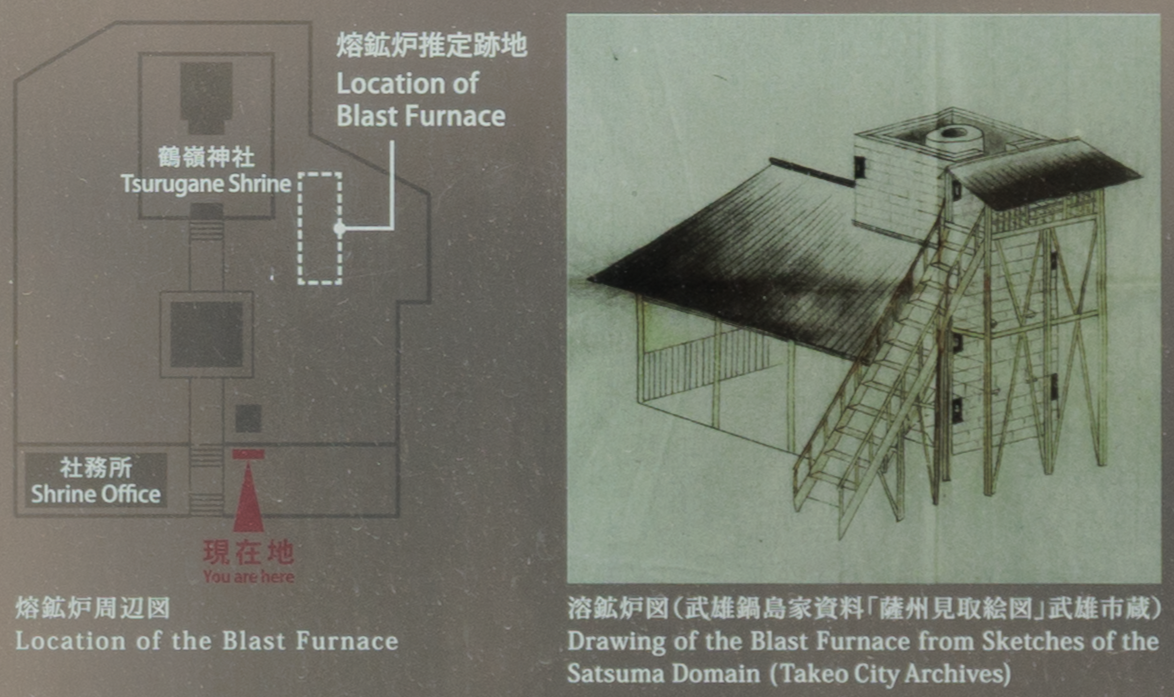
A blast furnace was here in the past before the shrine was moved to this location.
Site of the Blast Furnace
Japan's first western style blast furnace was constructed here in 1854 to melt down iron ore and ironsand to produce pig iron. The design for the furnace was based on a Dutch textbook by Major General Ulrich Huguenin of the Royal Netherlands Army which was acquired by Shimadzu Nariakira in 1852. Ore and sand from outlying regions of the Satsuma domain was processed in the furnace. In 1857 a retainer of the Saga Domain visited the site and recorded the furnace as being 6.7 metres high and 3.3 metres wide. The furnace was located on the right-hand side of the present shrine building, and the waterway powering the bellows still remains on the mountain behind.
– Text from a sign, translated using Google.
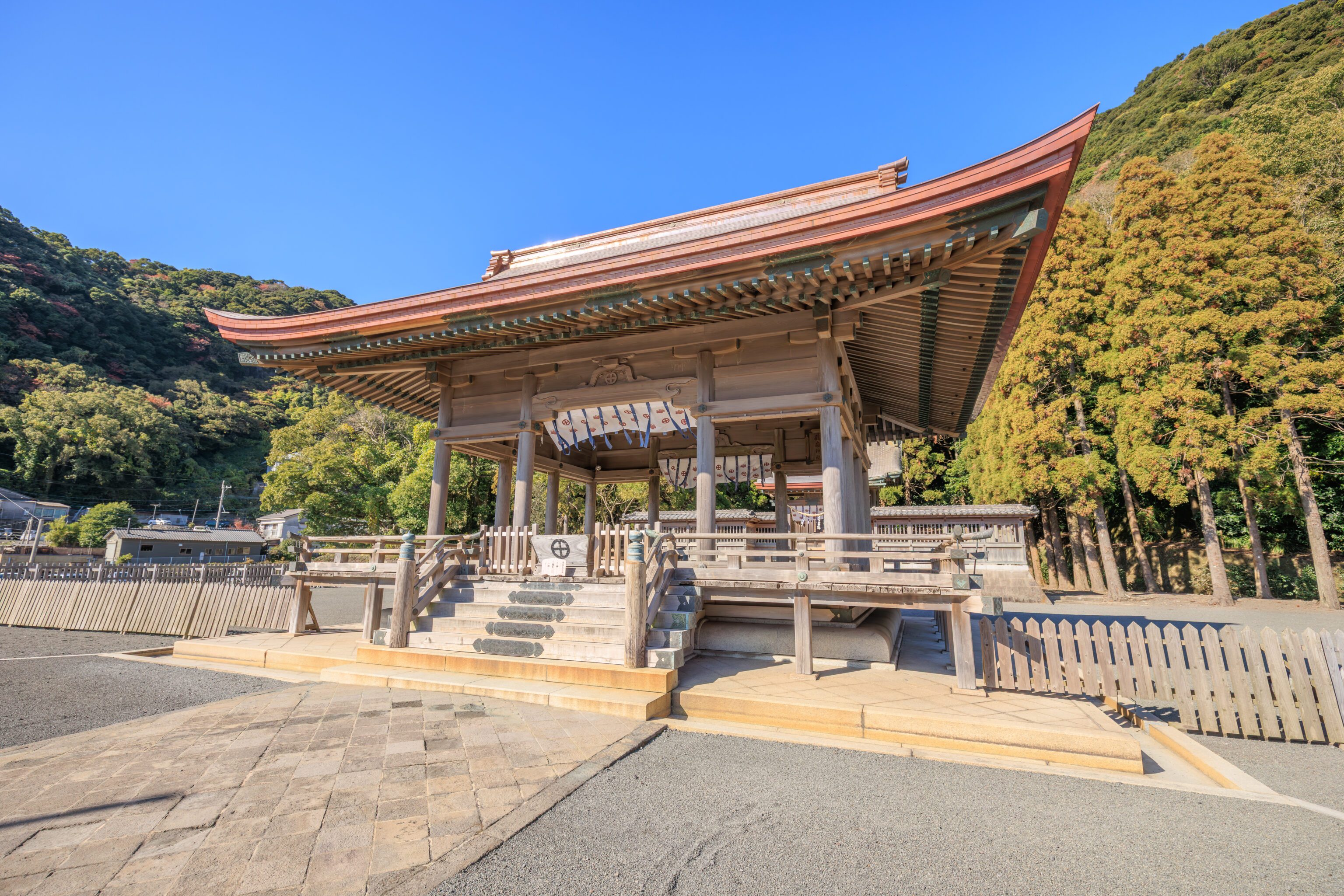
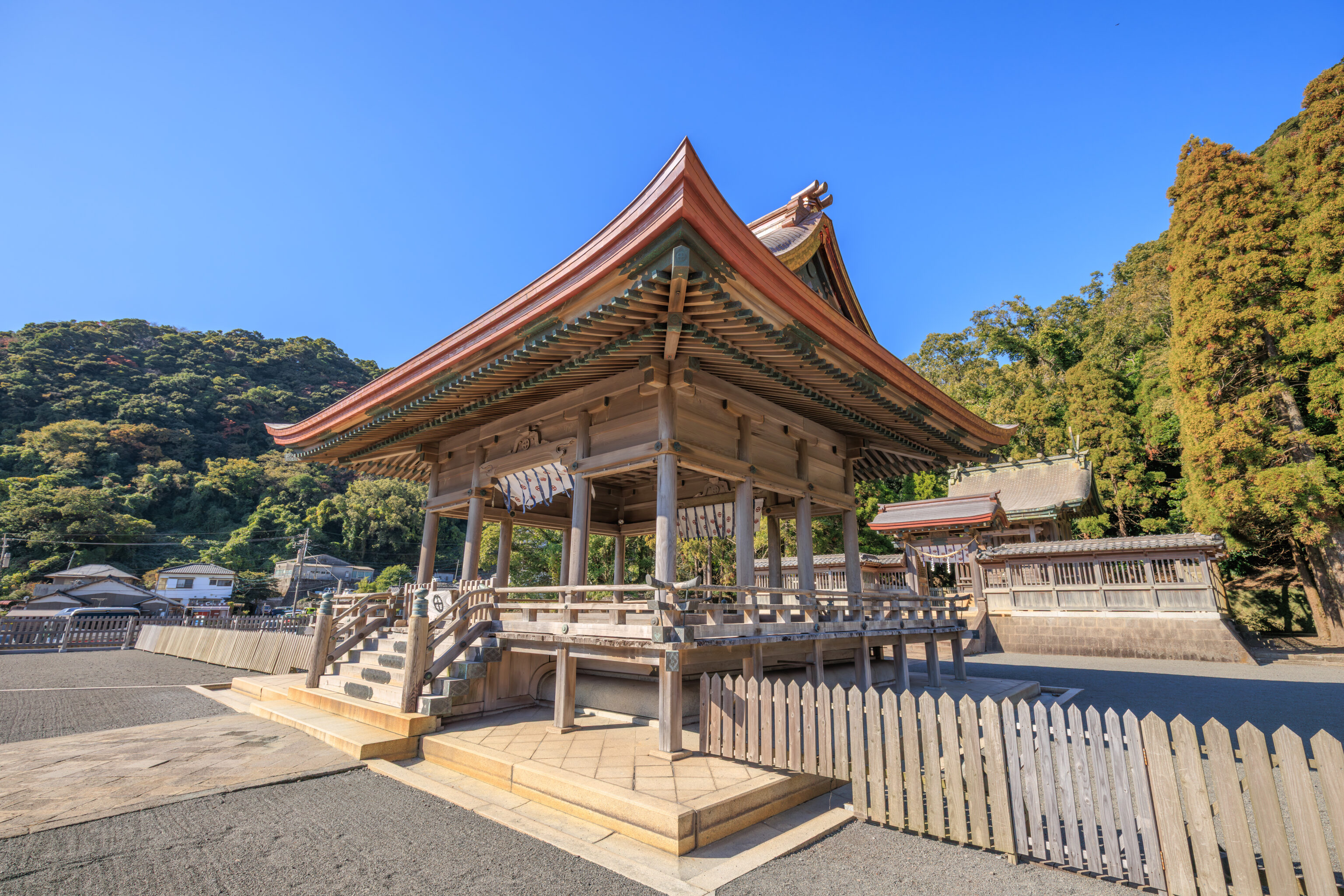
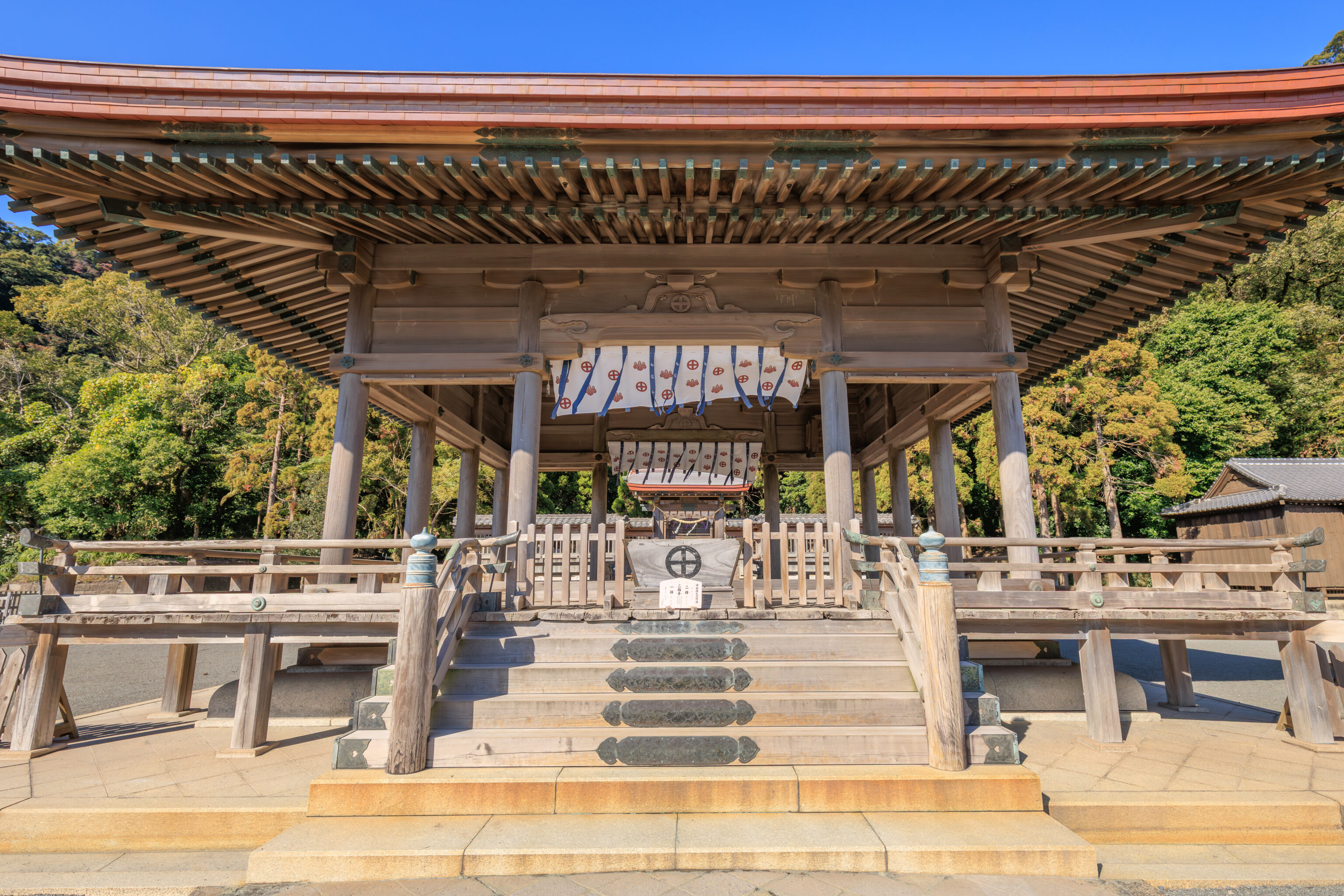
This was as far as we could go. It isn’t possible to get to the actual shrine.
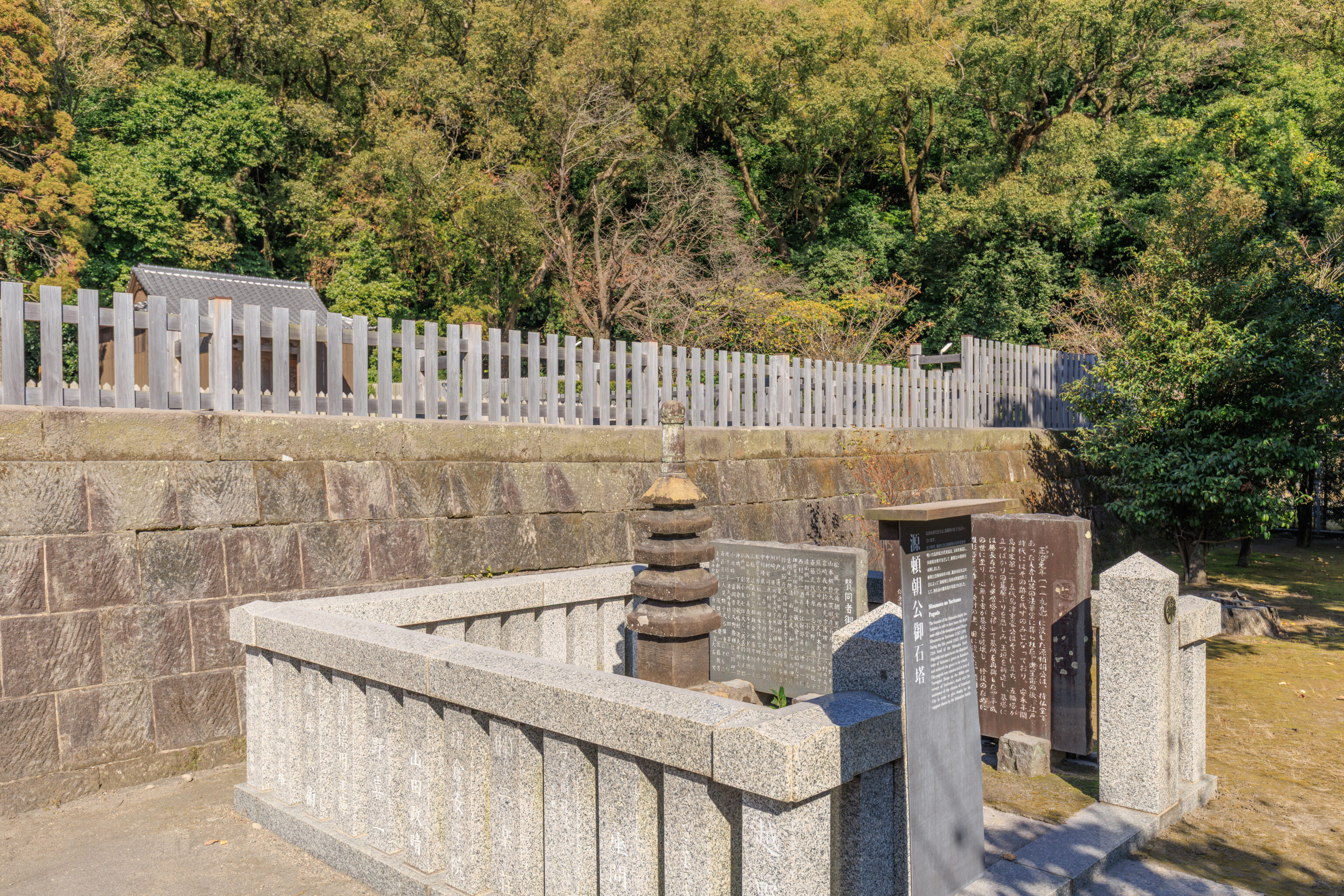
The stone pagoda here is the Minamoto no Yoritomo, as indicated by the sign in front. The sign is surprisingly legible!
Minamoto no Yoritomo Pagoda
The founder of the Shimadzu family line. Tadahisa is said to have been the illegitimate child of the Kamakura period Shogun Minamoto no Yoritomo (1147-1199). During the Edo period (1603-1868) the 25th head of the Shimadro family. Shigehide was upset to see the dilapidated
state of Yoritomo's grave in Kamakura and ordered the grave to be rebuilt. This pagoda was constructed in front of Tsurugane Shrine on the 800th aniversary of Yoritomo's death with the assistance of the citizens of Kamakura City in order to give thanks for the support shown by the Shimadzu family.
– Text from the sign in the photograph above.
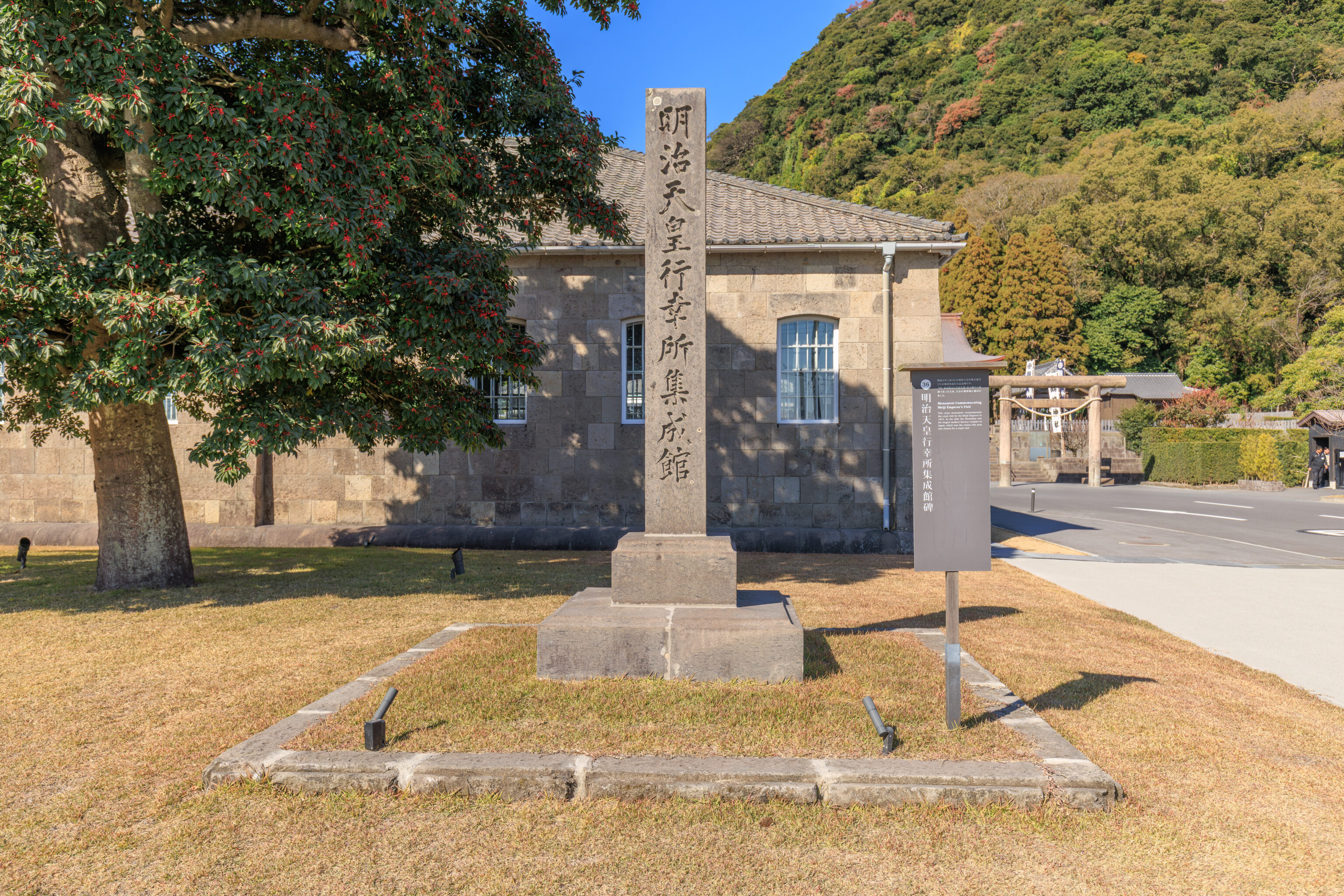
The Meiji Emperor was here!
Monument Commemorating Meiji Emperor's Visit
This stone monument commemorates the royal visit by the Meijl Emperor in 1872. At the time the Shuseikan was the largest modern factory  complex in Japan, which was the reason this area was chosen for a royal visit.
– Text from the sign to the right of the monument.
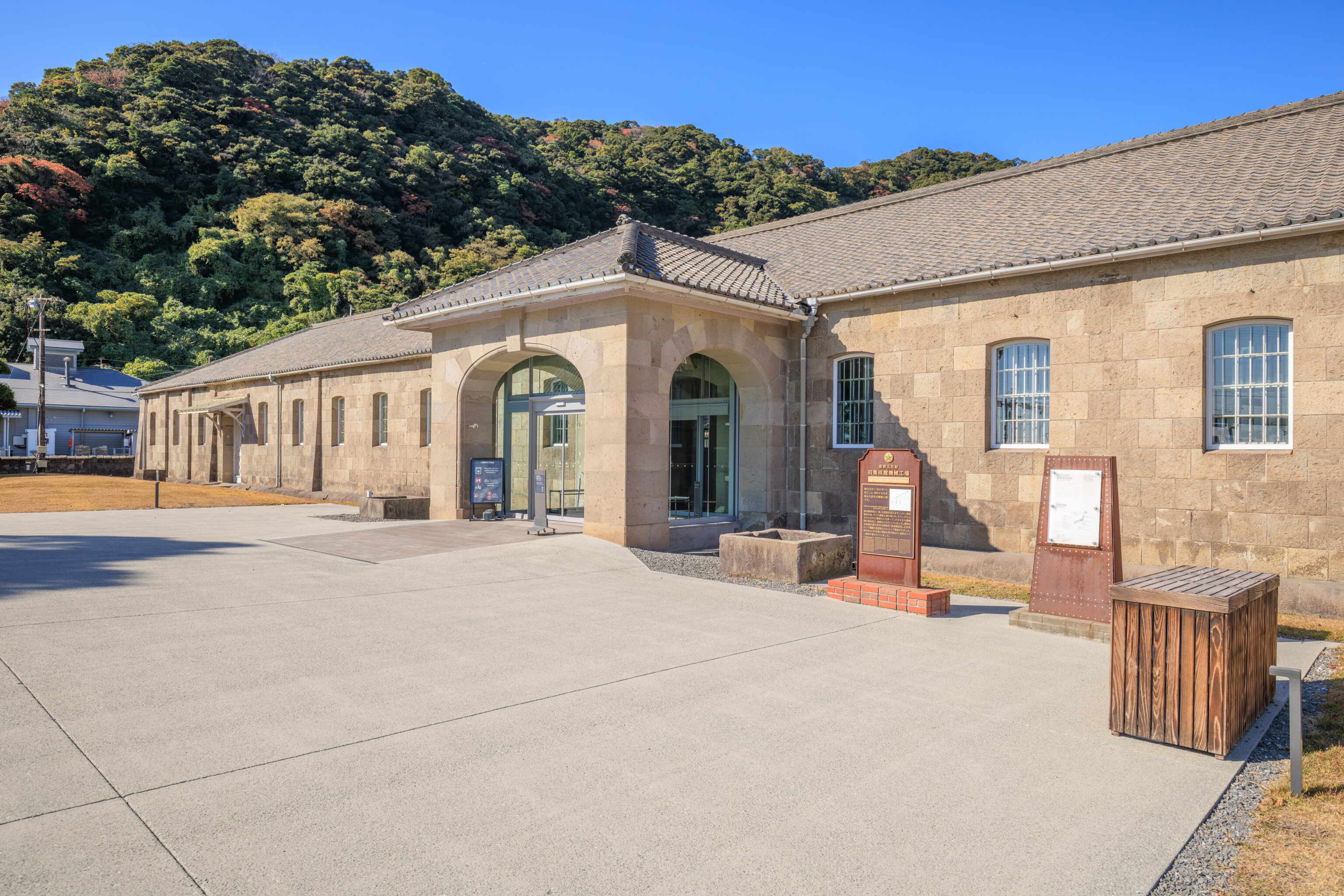
We decided to go take a quick look at the 尚古集成館 Shoko Shuseikan Museum, which is included with the Sengan-en ticket. Many of the artifacts inside had a no-photography rule, which was an odd rule for a museum of history.
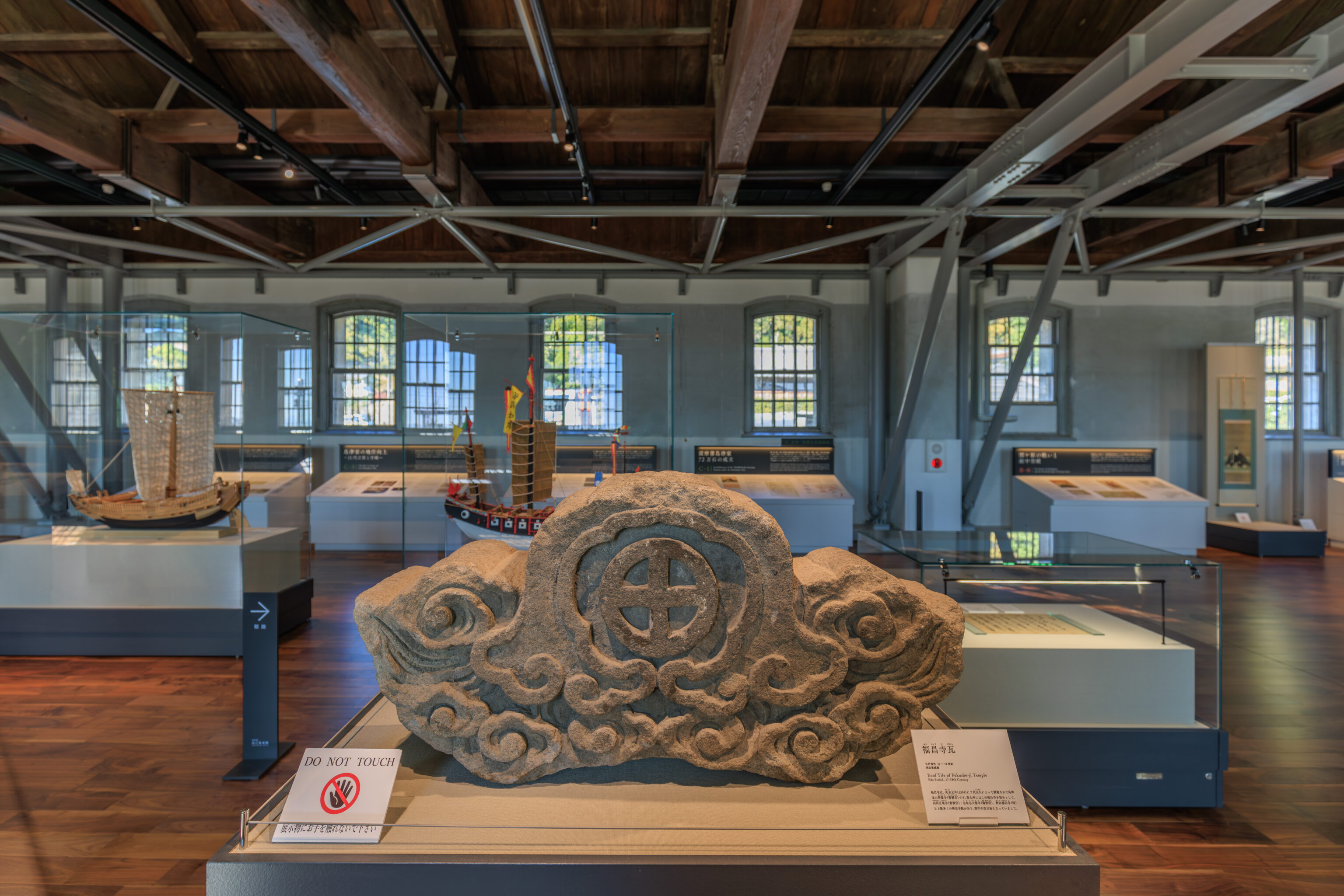
There was, of course, a roof tile with the emblem of the Shimazu clan.
Roof Tile of Fukushō-ji Temple
Edo Period, 17th–18th Century

Fukushō-ji is the Shimazu family's *bodaiji* (family temple) of the Sōtō Zen sect, founded in the first year of the Ōei era (1394) by the seventh head of the clan, Motohisa. Southern Kyushu is home to numerous Zen temples—including Fukushō-ji itself, as well as Shutsuyō-shūryū-ji (Sōtō sect), Shibushi-jiji (Rinzai sect), and Noda-kannō-ji (Rinzai sect)—which served as centers for the study of Chinese classics.
– Text from the sign in the above photograph at bottom right, translated using Google.
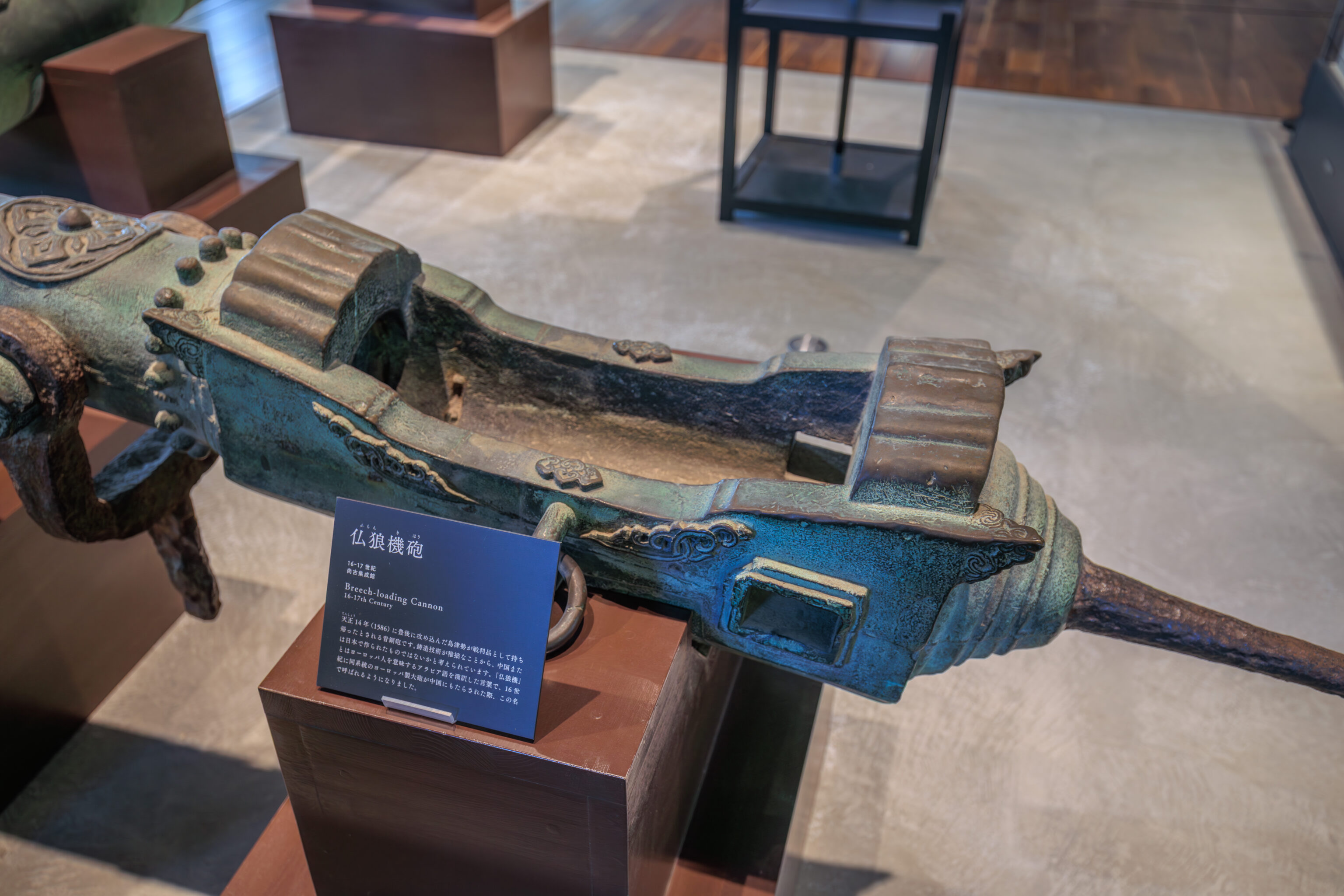
Breech-loading Cannon
16th–17th Century

This bronze cannon is believed to have been brought back as war booty by the Shimazu forces following their invasion of Bungo Province in the 14th year of the Tenshō era (1586). Given the rudimentary nature of its casting, it is thought to have been manufactured in either China or Japan. The term *Furanki* (written as "仏狼機") is a Chinese transliteration of an Arabic word meaning "Europeans"; cannons of this European lineage came to be known by this name after they were introduced to China in the 16th century.
– Text from the sign in the above photograph, translated using Google.
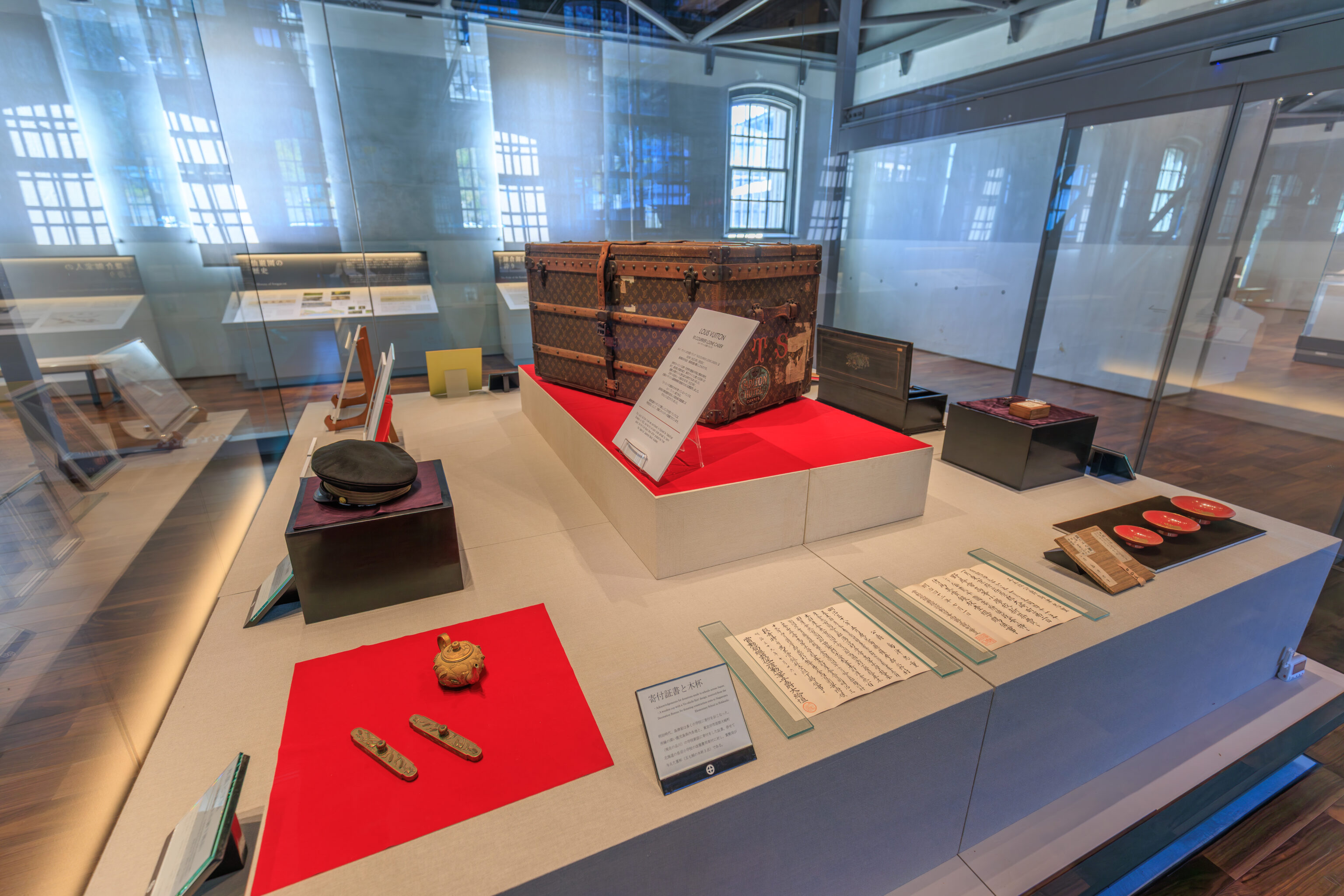
This display includes a Louis Vuitton trunk from 1923!
LOUIS VUITTON
90 COURRIER LOZINE CASIER
(Louis Vuitton Large Trunk)

This large Louis Vuitton trunk, "90 COURRIER LOZINE CASIER," was purchased on February 2, 1923 (Taisho 12) by Shimazu Tadashige, the 30th head of the Shimazu family.

At that time, Europe was in an era of peace and prosperity following World War I. It was also a time when gratitude and goodwill towards Japan, which had allied with the Allied powers and fought against Germany in the East, was abundant. In 1921 (Taisho 10), amidst this rising mood of friendship towards Japan, Tadashige privately studied in England to learn about naval affairs and other related matters.

"The trunks used by the majority of European nobility are made by Louis Vuitton," was noted in the report of the reporter who conducted the preliminary investigation before his study abroad.

This large trunk, purchased in England by Tadashige Shimadzu in 1923, was specially fitted with casters on all four corners.

-

This Louis Vuitton trunk was purchased in England by Tadashige Shimadzu in 1923, during his private study abroad to learn about the British Royal Navy after graduating from the Imperial Japanese Naval Academy.
– Text from a sign, translated using Google.
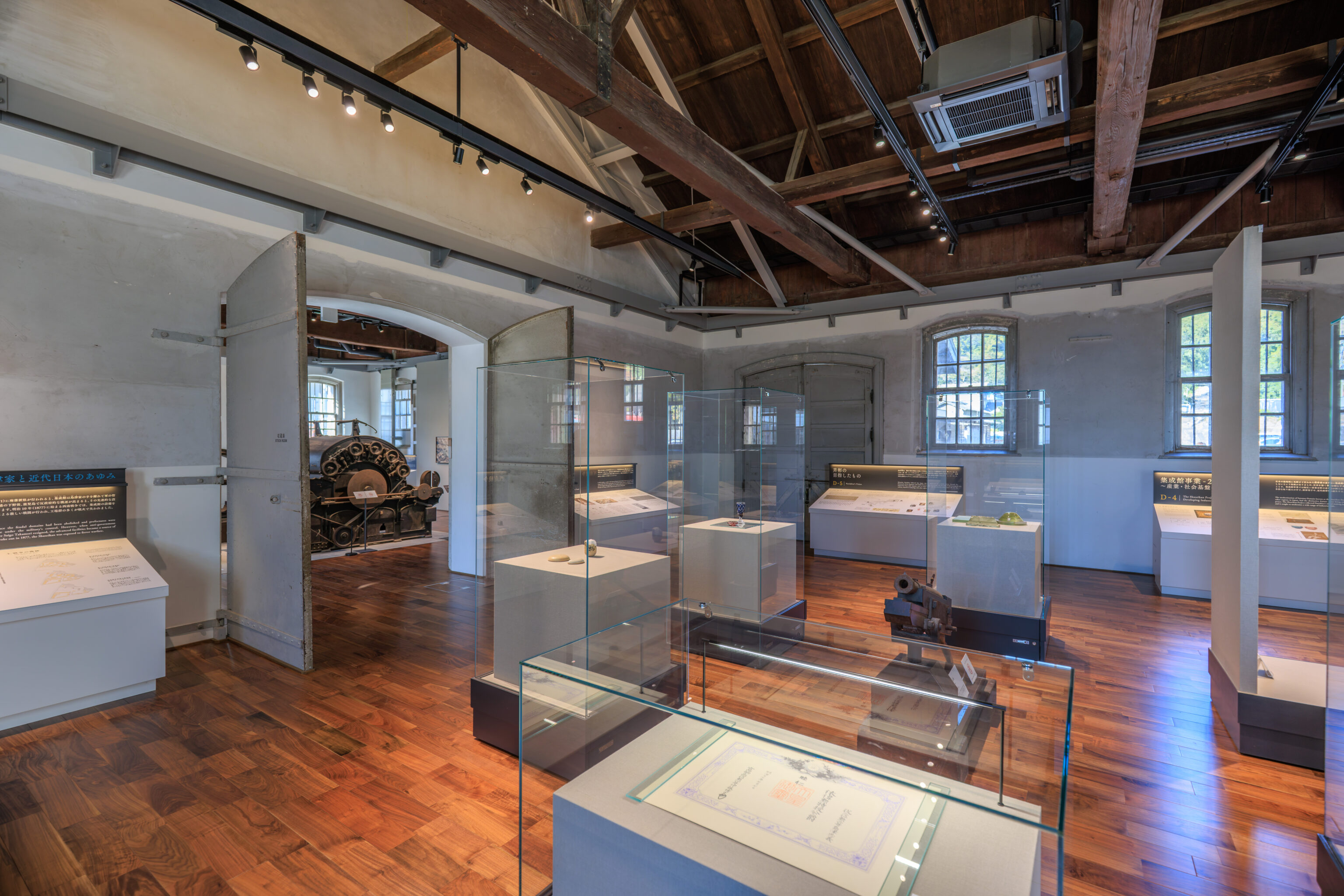
The musuem contained many displays of various artifacts.
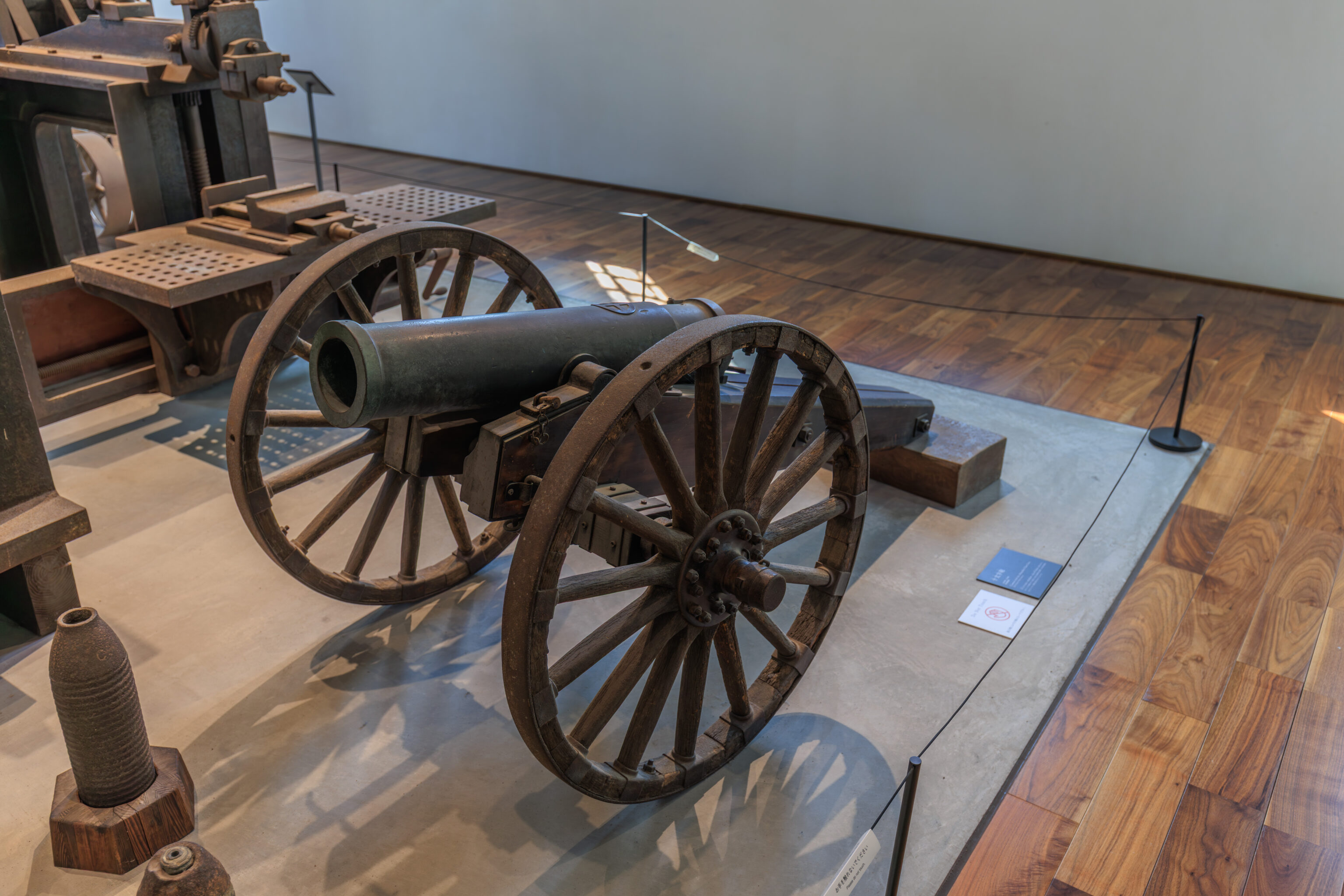
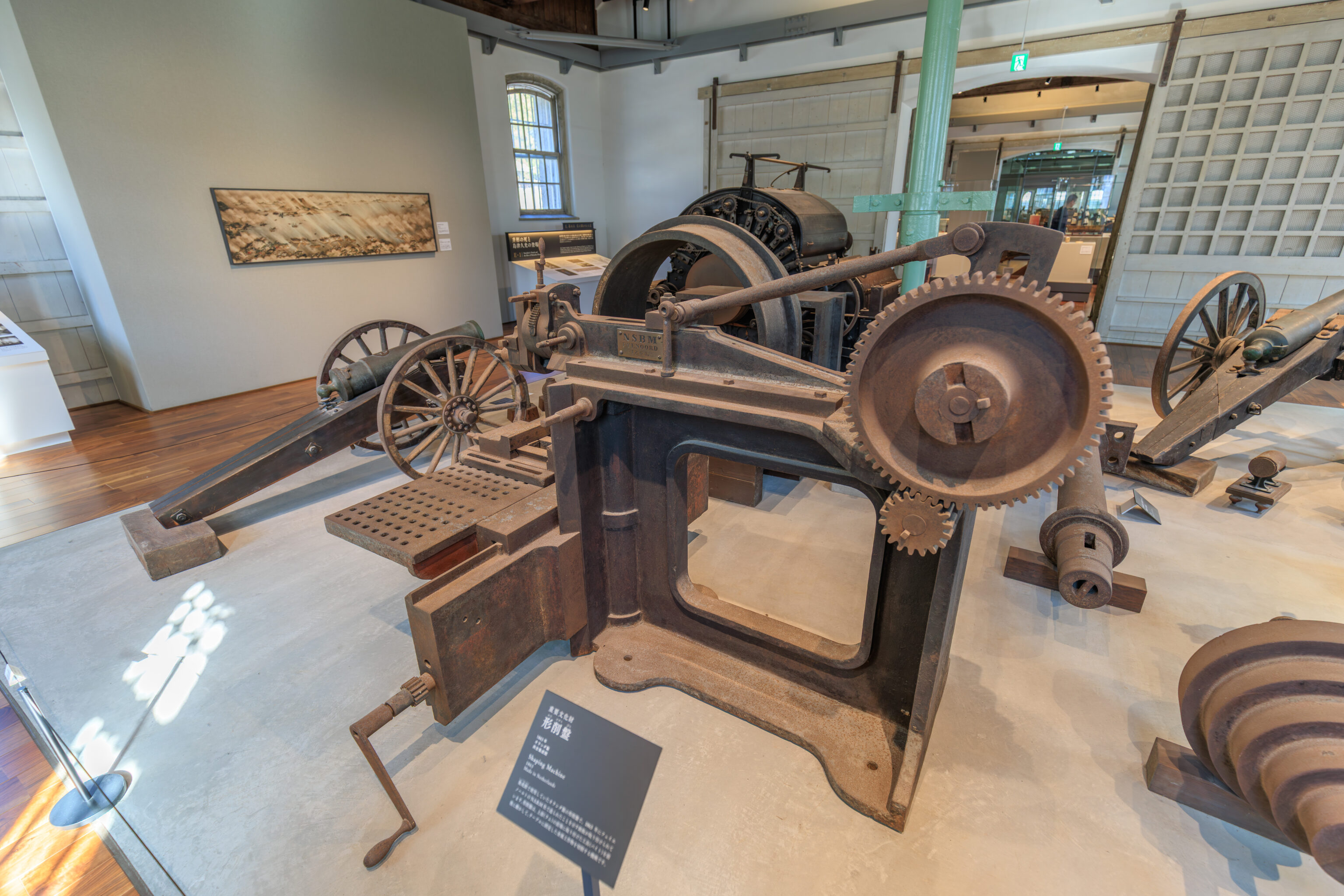
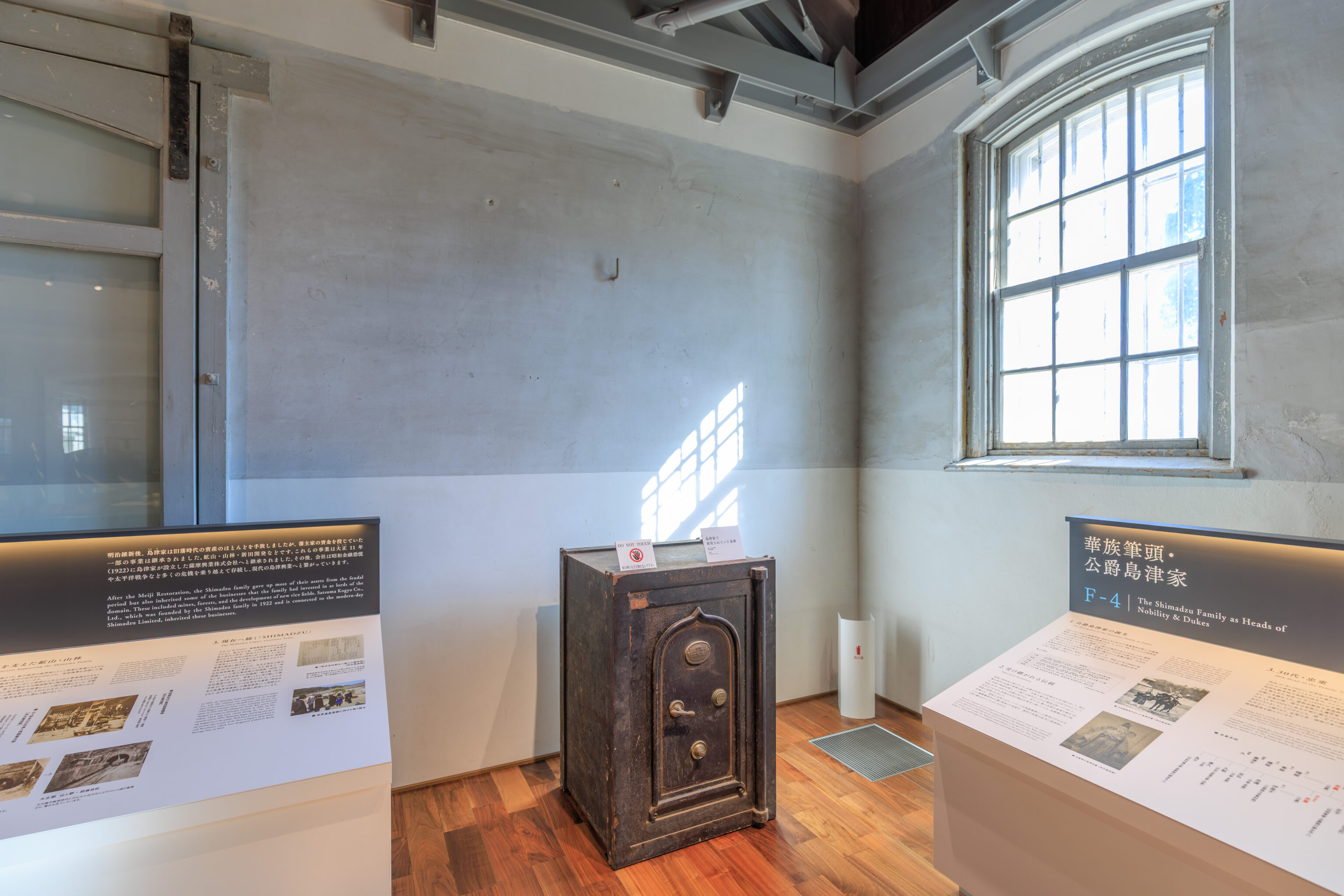
We didn’t spend too long in the museum, perhaps about 30 minutes or so.
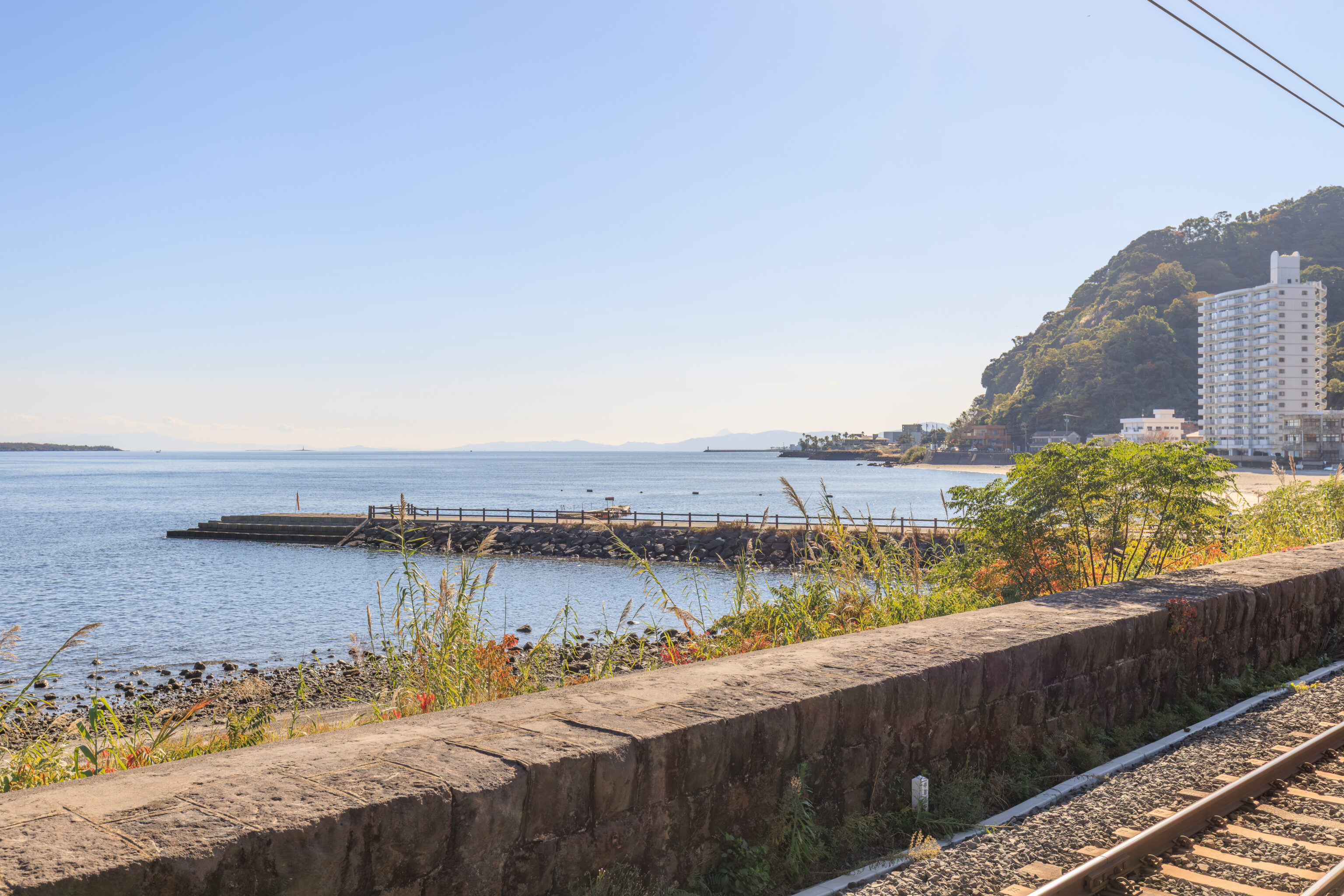
We returned to the Sengan-en train station to head back into central Kagoshima.
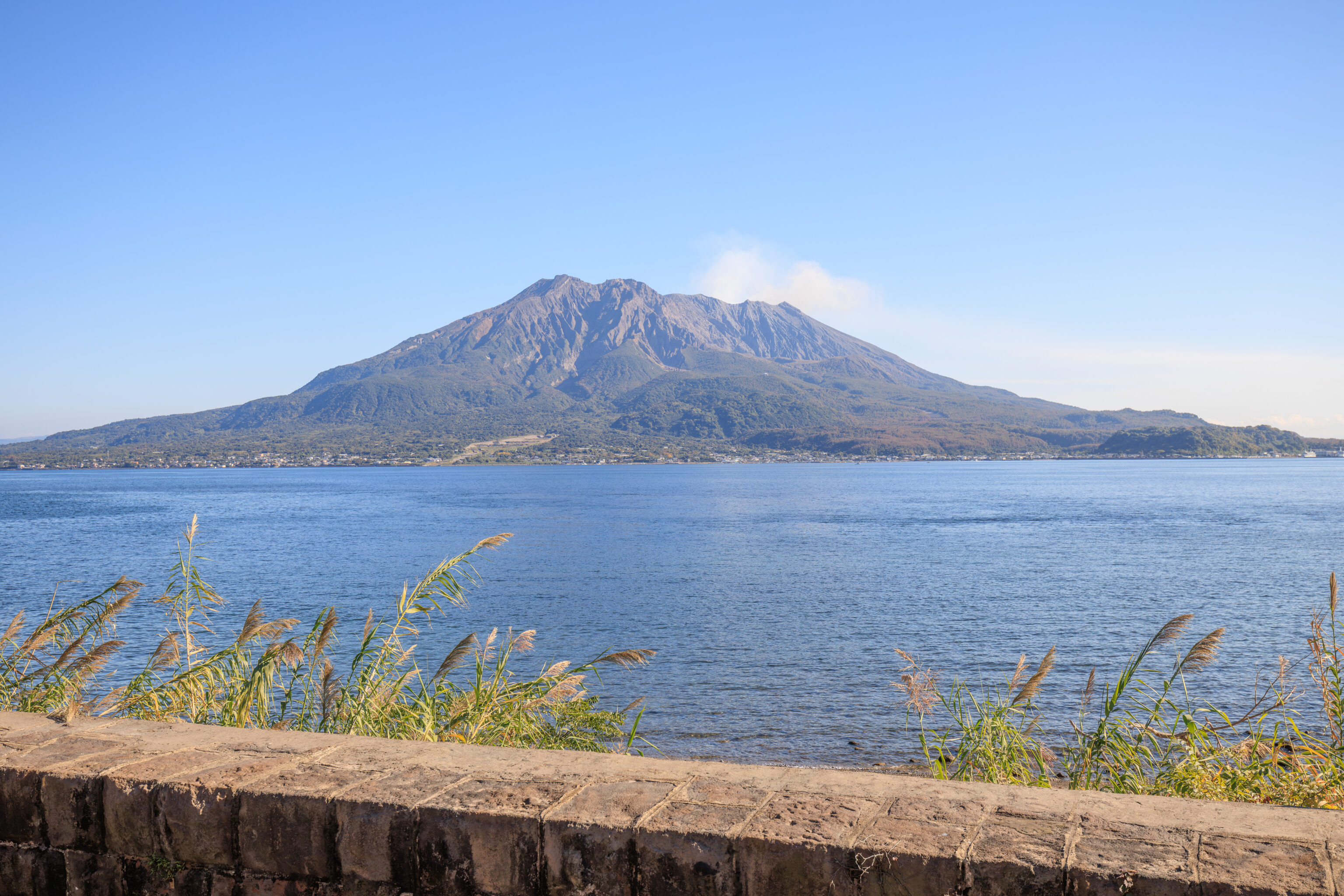
Sakurajima was still just gently spewing a bit of cloudy white smoke.
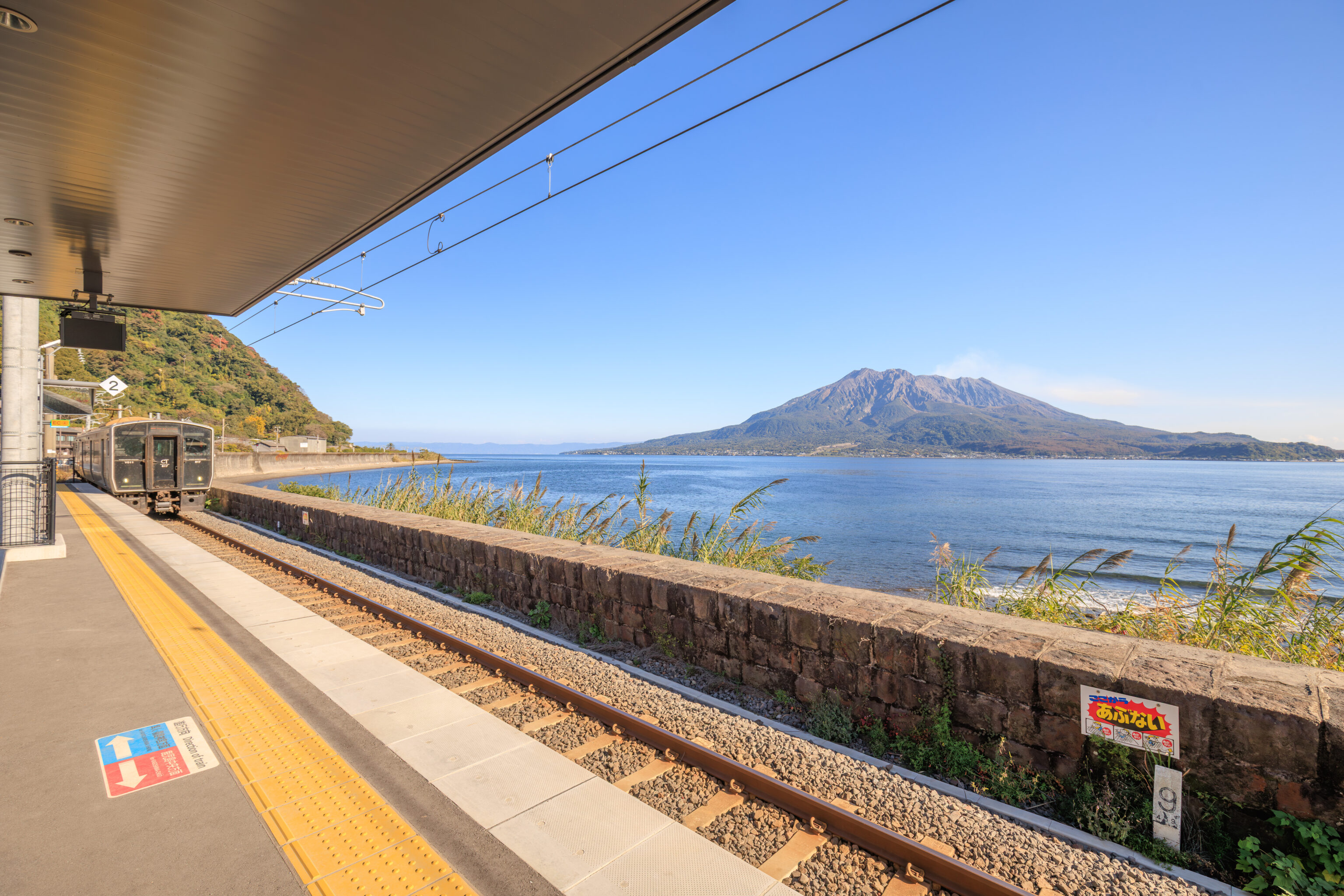
The train arrived at 1:40pm.
Shiroyama Park
We decided to visit 城山公園 Shiroyama Park next, which as the name suggests is on Shiroyama. This park includes the Shiroyama Observatory, a viewpoint that is supposed to have a great view of Sakurajima.
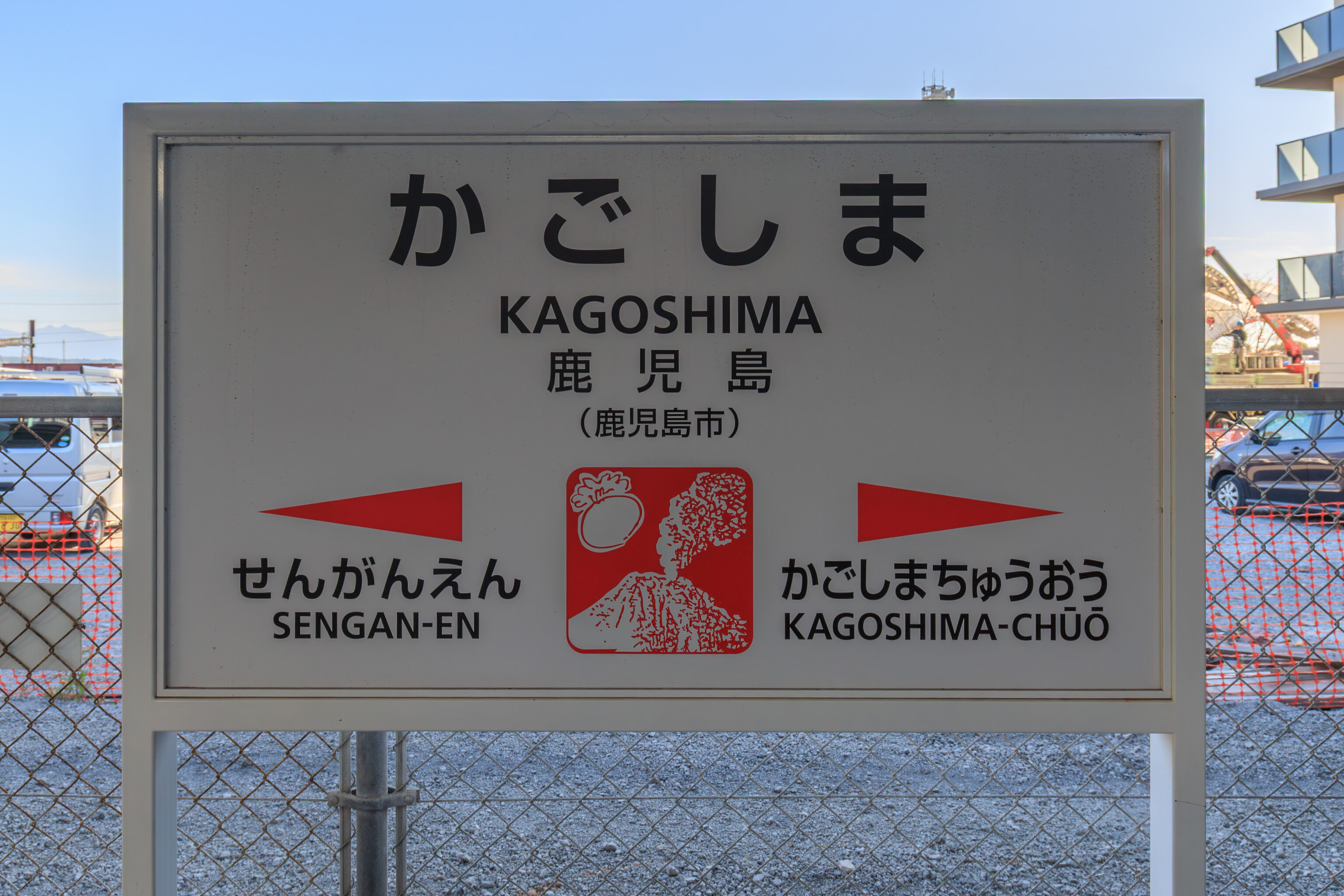
We rode the train for just four minutes before reaching Kagoshima Station. This station is much smaller than Kagoshima-chuo, the station that we arrived at in the morning.
The easiest way to get to Shiroyama Park is by the Kagoshima City View bus. However, its route is a bit meandering on the way to the park from here. So, we decided to take a tram to the Shiyakusho-Mae stop. And from there, walk to the ruins of Kagoshima Castle at the base of Shiroyama and catch the Kagoshima City View bus on its way up the mountain.
Note that while Kagoshima’s local transportation services like the bus and tram have IC card readers, they only accept local IC cards. It’s like traveling 10 years back in time! They are rolling out tap credit card payment, although we don’t know how widespread it is right now. So, be prepared with cash, which is always a good idea anyway in Japan.
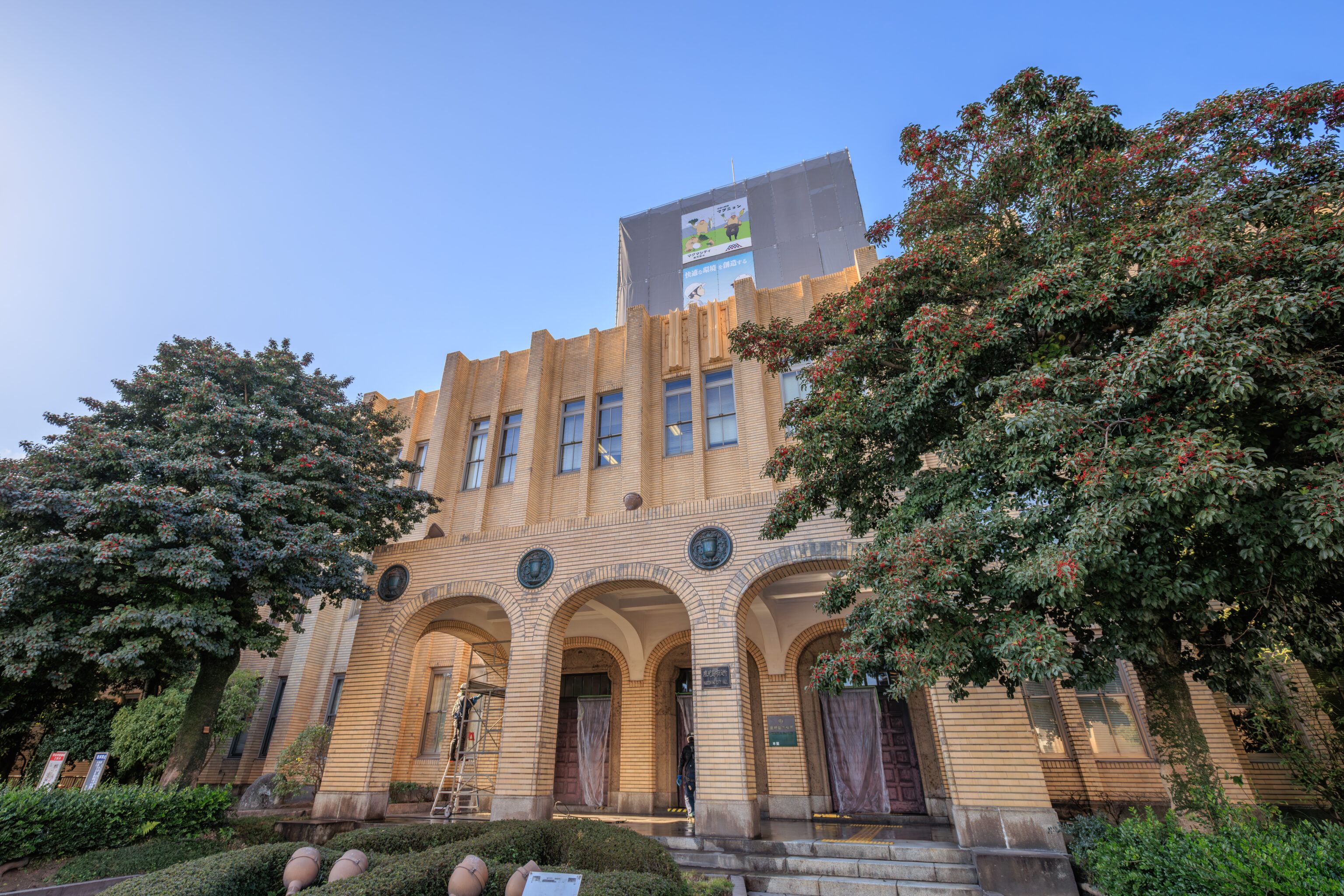
This building by the tram stop is the Kagoshima City Hall.
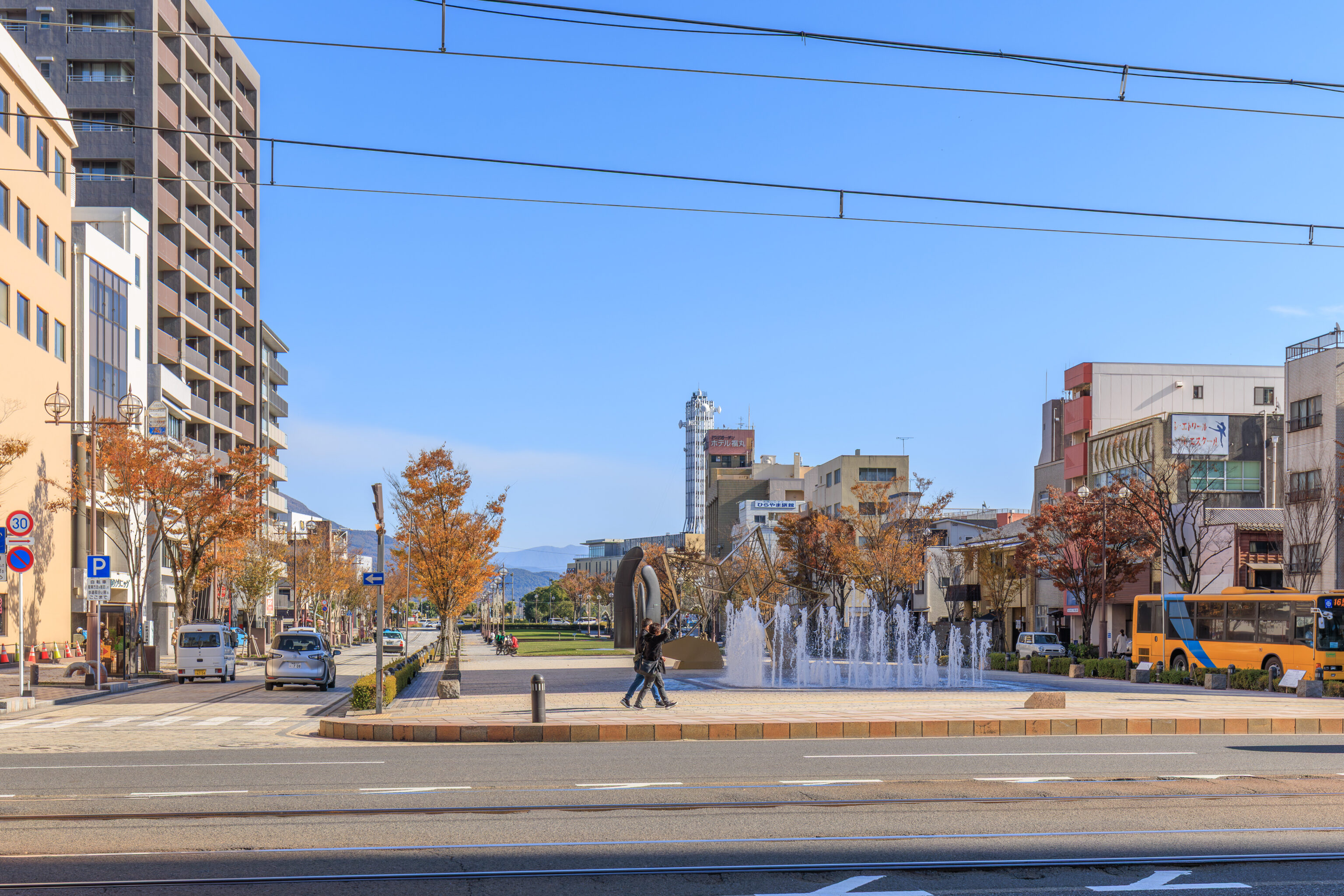
There is a linear park across from city hall, the Minato Odori Park.
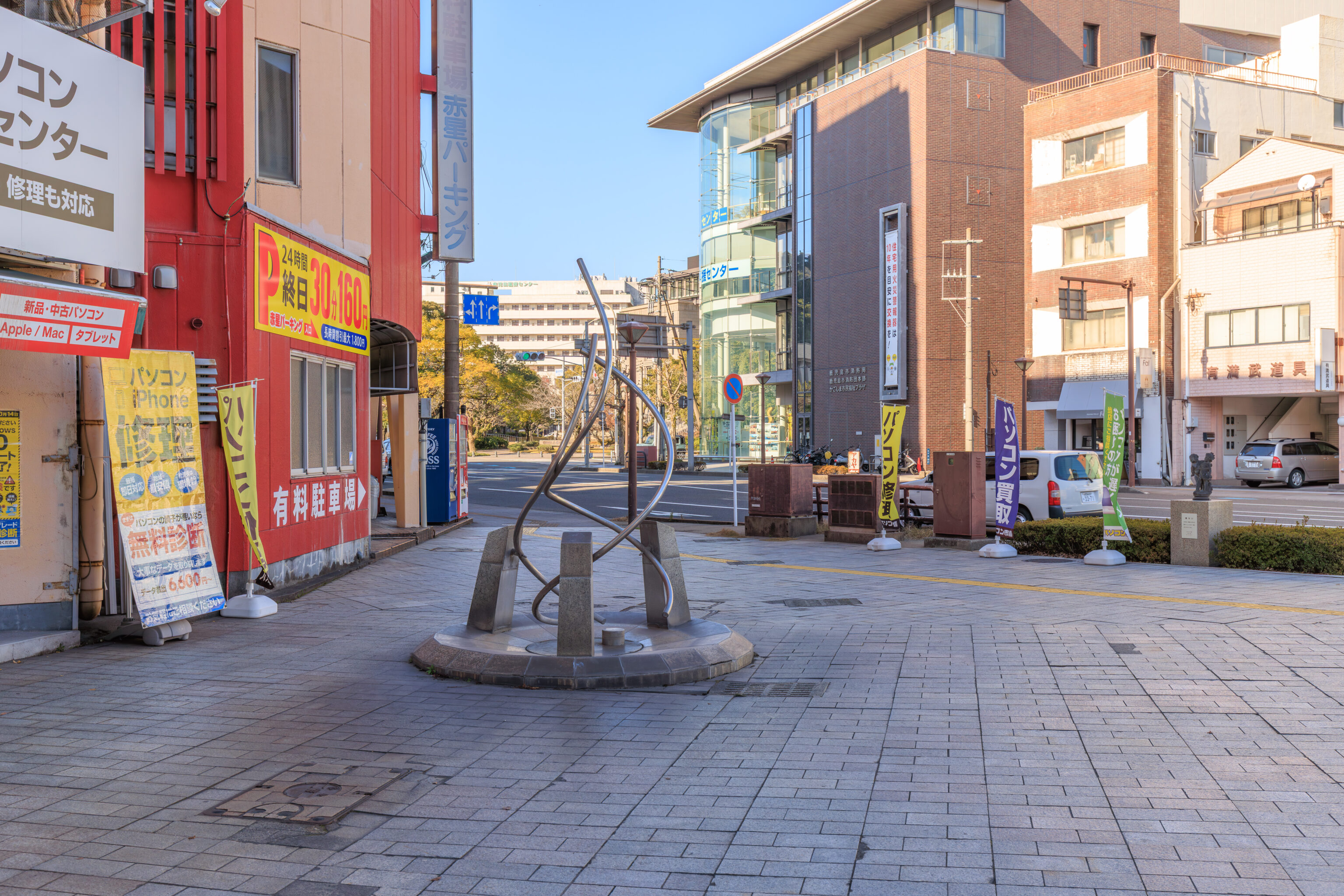
We started walking to the northeast along the street that the tram runs on. We turned left on this corner by this sculpture.
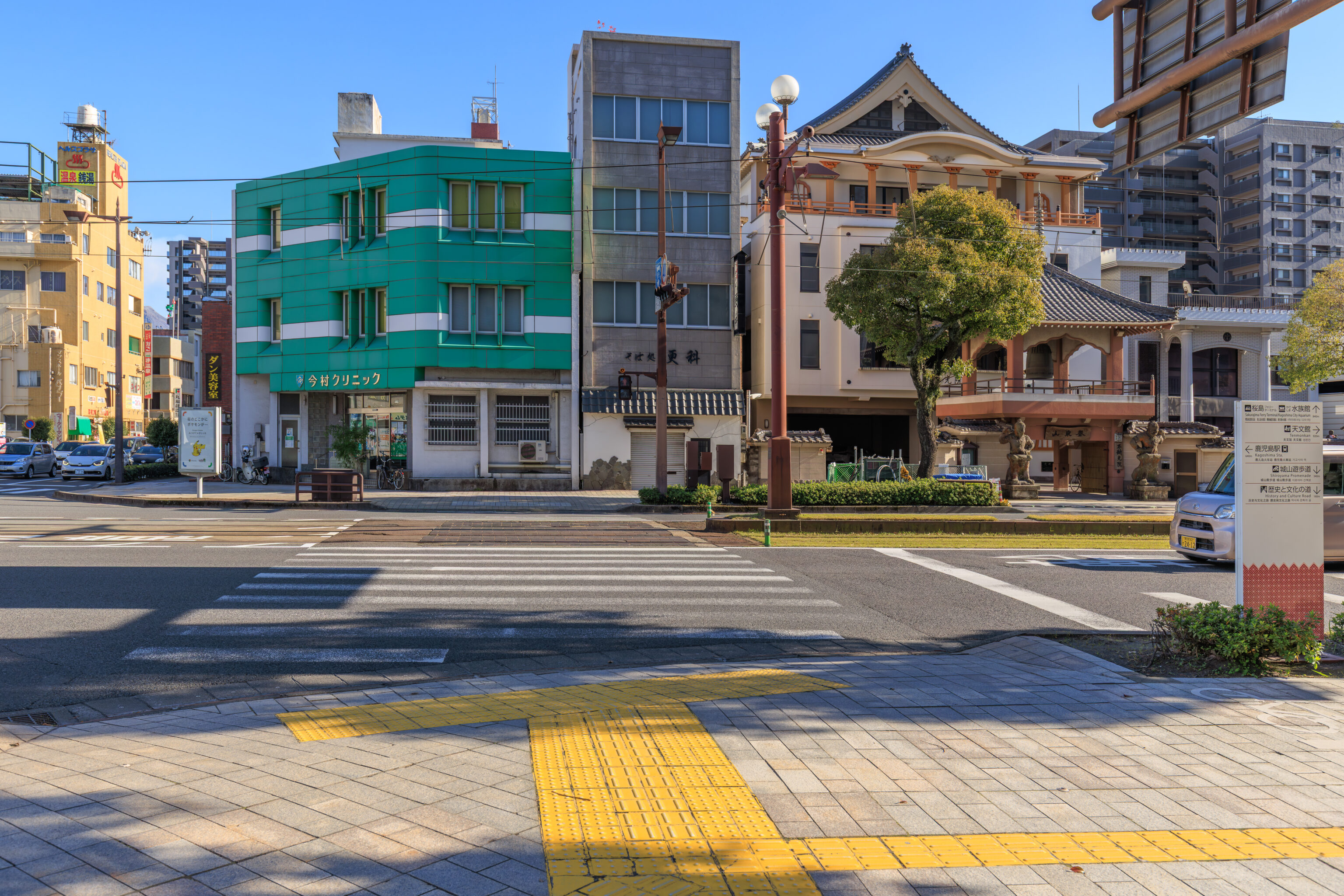
Just random city scene featuring a variety of building styles.
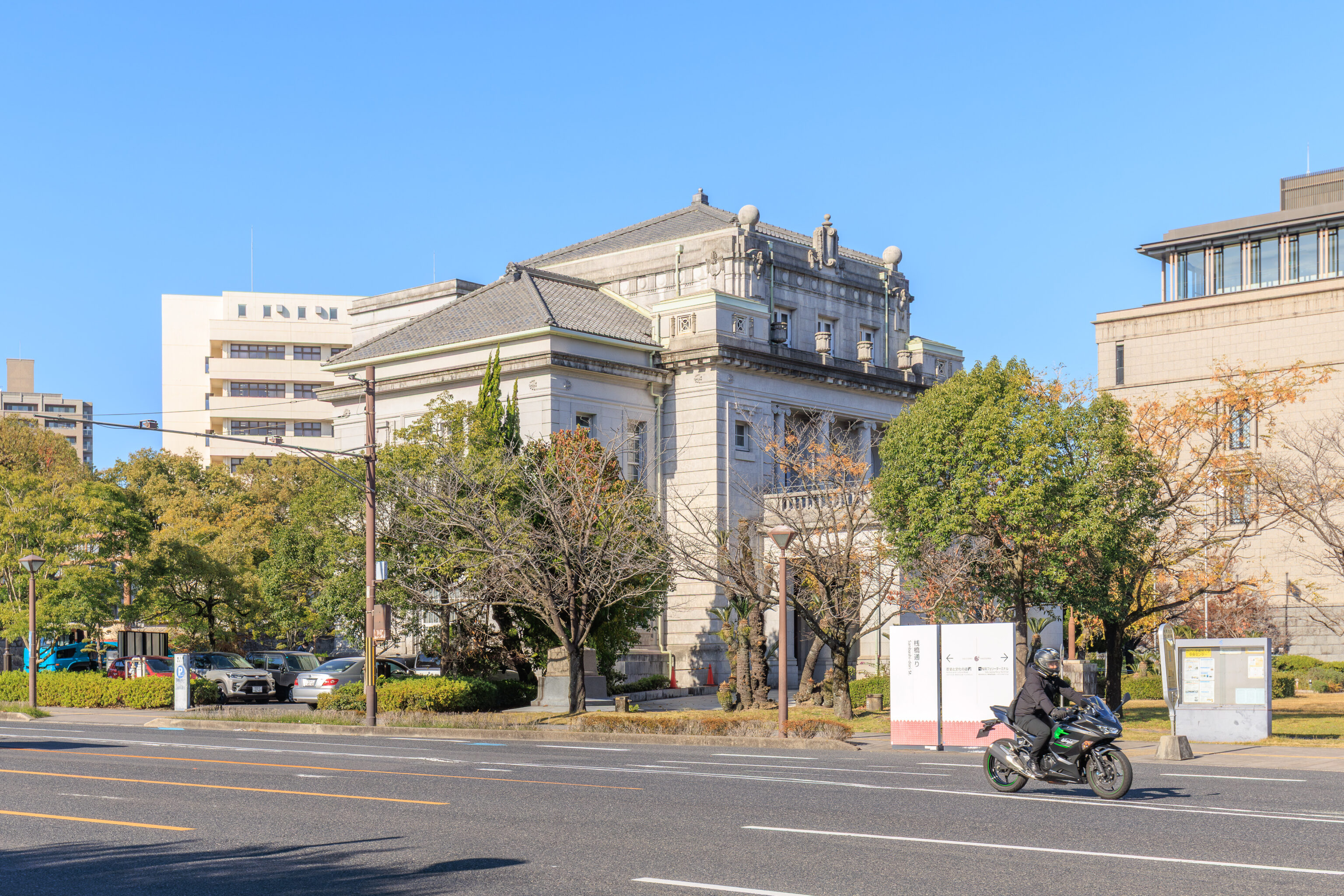
We then walked to the northwest. The western-style building here is the Prefectural Government Memorial Hall, built in 1925.
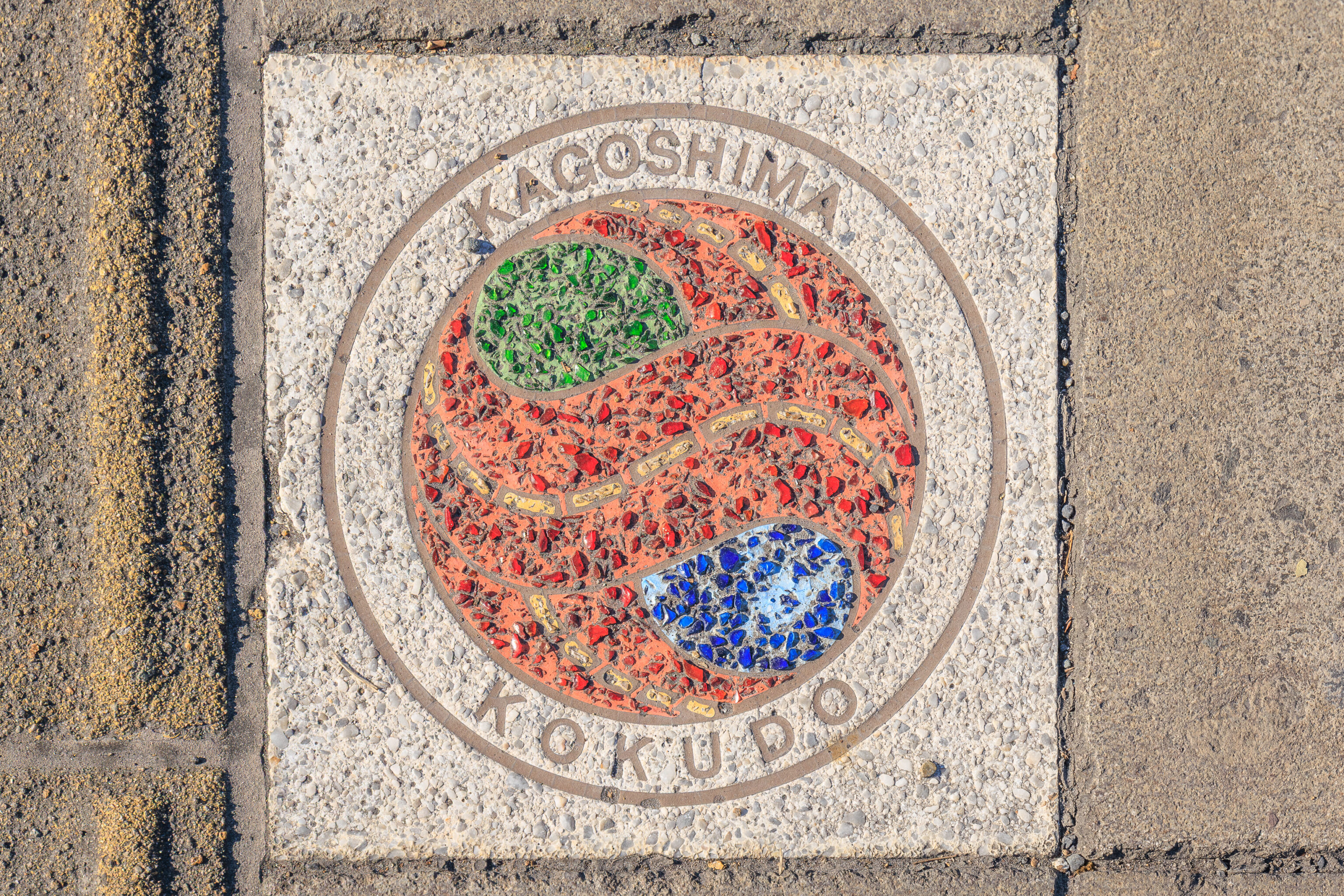
A pretty tile on the sidewalk.
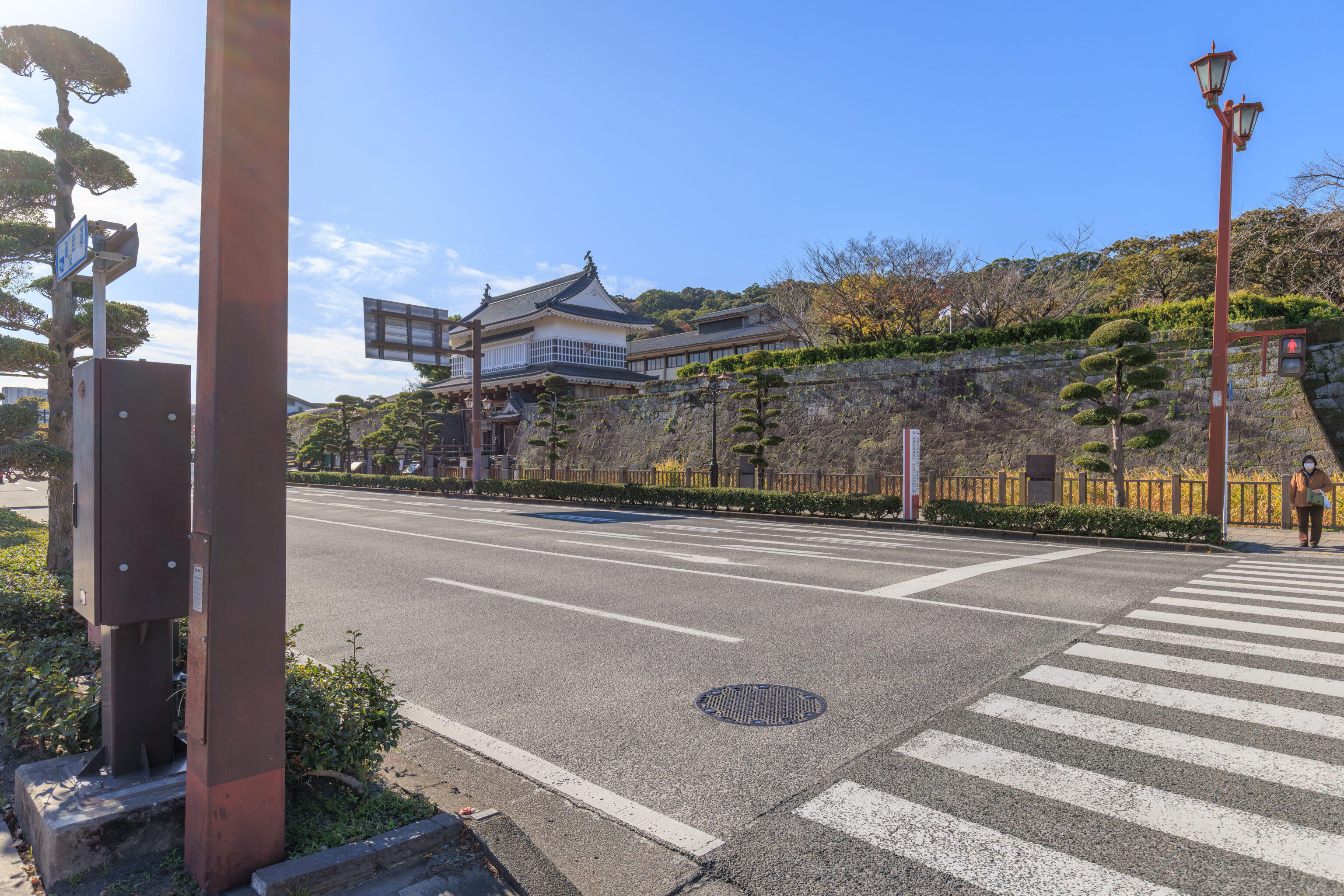
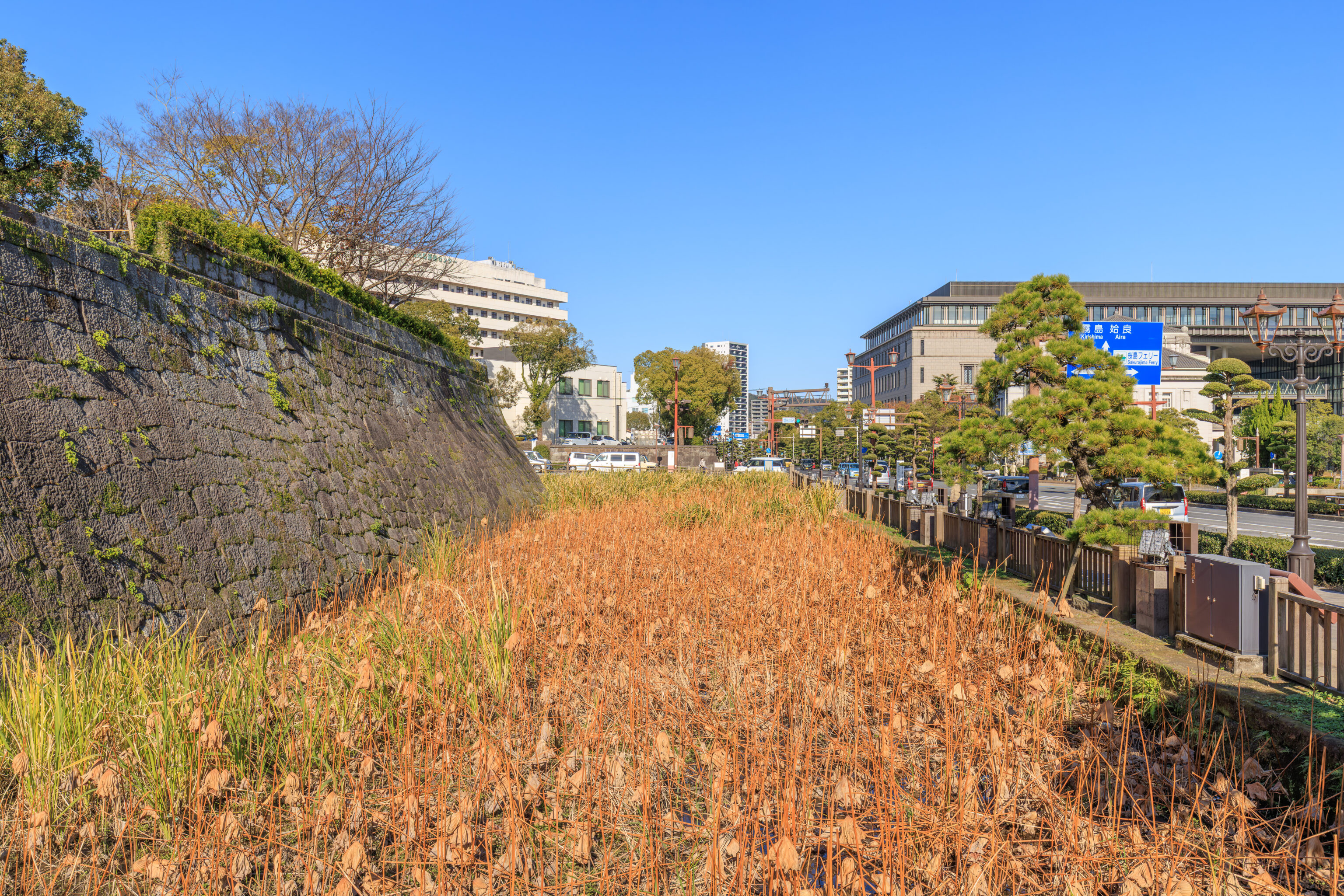
After walking about three blocks, we arrived at the eastern corner of the ruins of Kagoshima Castle.
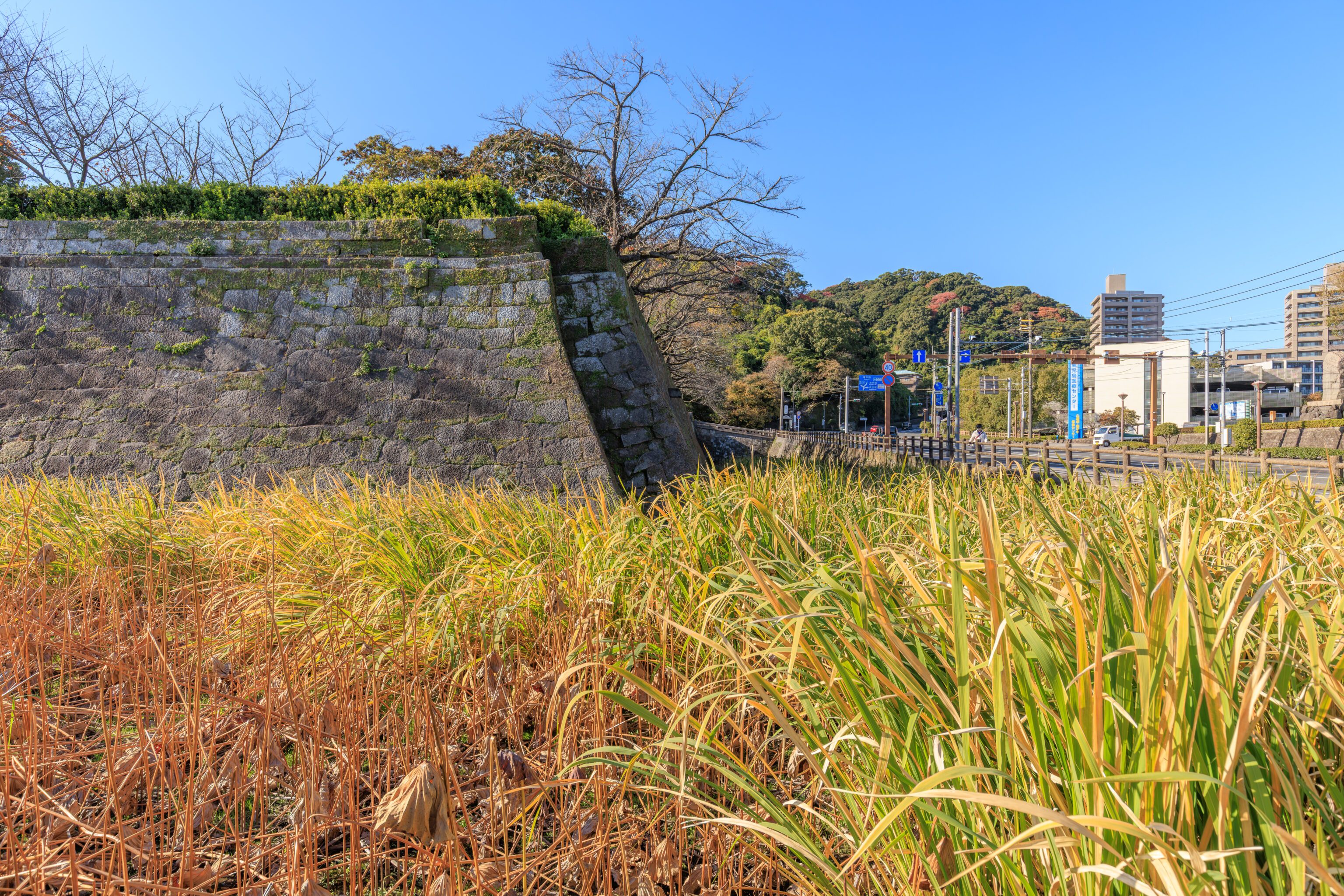
The most visible part of the castle ruins is its remaining wall.
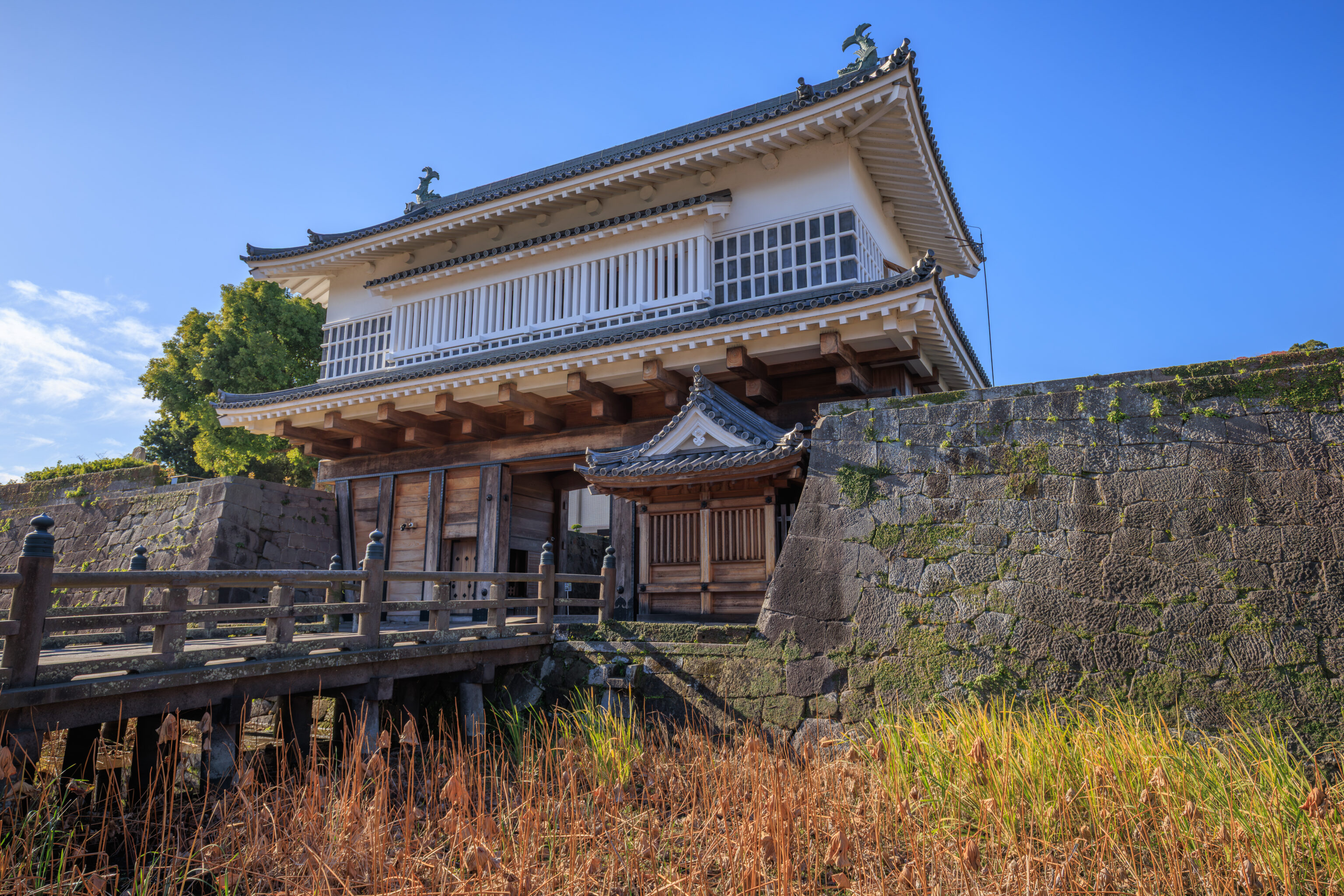
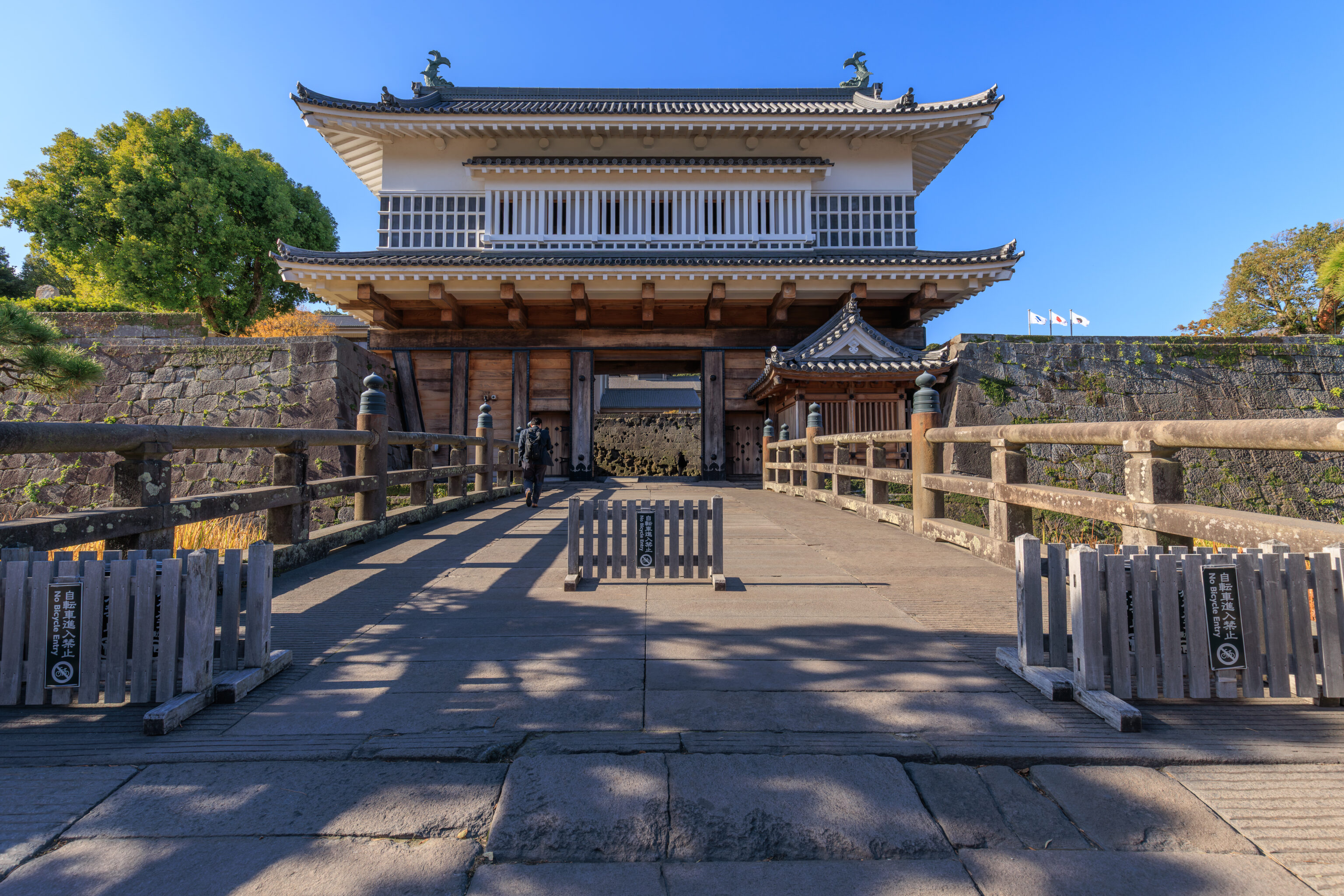
We walked to the southwest to reach the bridge that leads into the castle.
... The capital of our 770,000 koku domain has no stately mansion nor a castle tower ...

Kagoshima castle was called Tsurumaru castle because it looked like a crane (Japanese name "Tsuru") with its wings open.

In 1601, after the battle of Sekigahara, the 18th Lord Shimadzu Iehisa, decided to repair Ueyama Castle. His father claimed that this site was too close to the beach, but Iehisa wanted this particular area to be the location of his castle town, and political and economic center. First he built his mansion here, and then his retainers moved in nearby. The bridge in front of the castle was completed in 1606.

The keep and outworks were built according to plan, but there was no tower. This was due to the philosophy of the Satsuma Clan, that there was no need for a grand castle because "the people are the stronghold." Thus the defence of the domain was entrusted to Goshi soldier-farmers.

The castle town comprised Tsurumaru Castle surrounded by samurai houses. There were six samurai enclaves in Kanmachi, twelve in Shitamachi, and four in Nishida-machi. There were also 5,000 merchants living near the Samurai areas, but the number of samurai warriors was greater than that of any other group in the castle town.

After the Meiji Restoration, the castle was used as the garrison for a detachment of troops from Kumamoto Prefecture but during the Satsuma Rebellion, in 1873, almost everything was burnt. The only remains are the outer wall and a stone bridge.
– Text from a nearby sign.
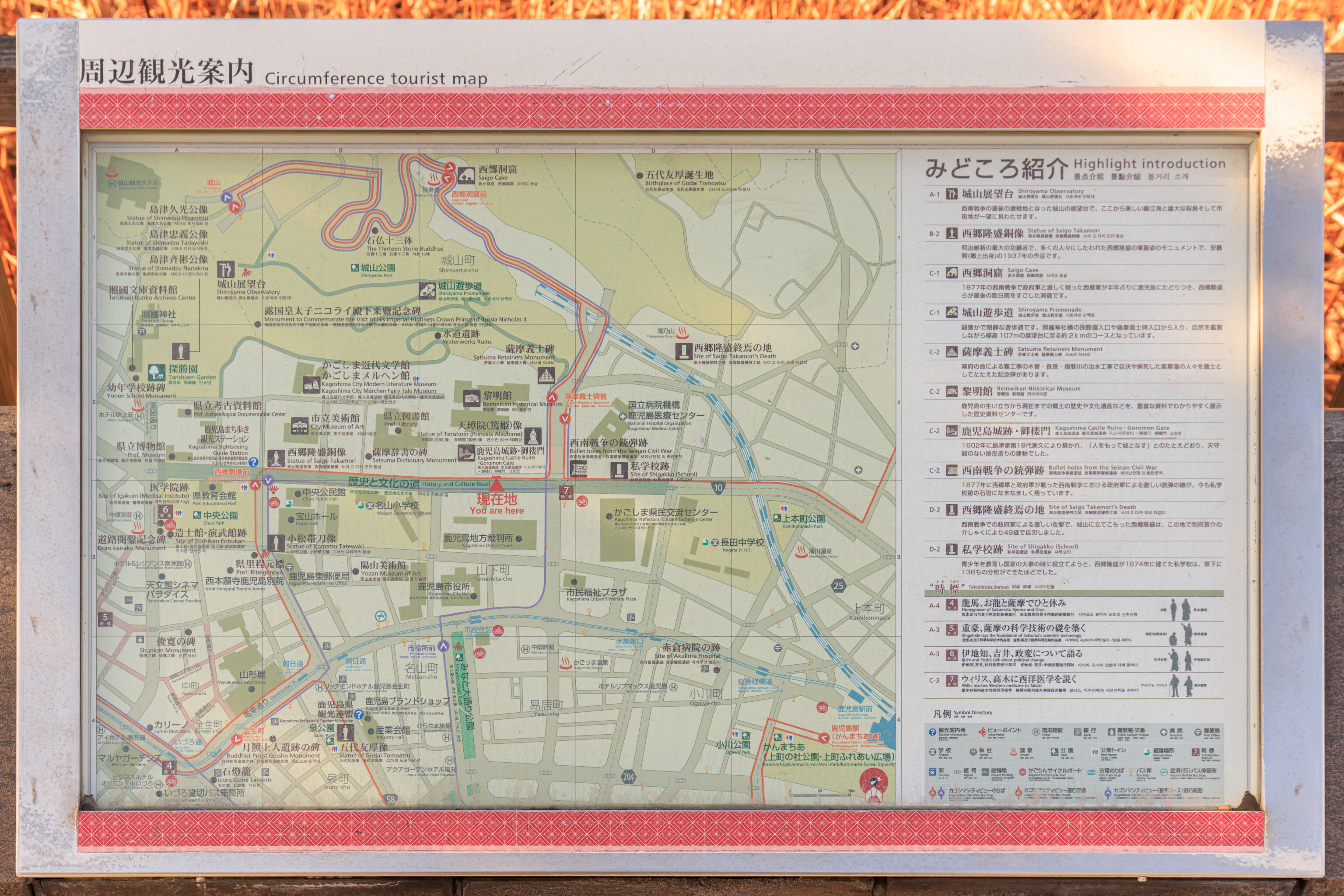
There was a map here showing the local area and identifying various points of interest.
We walked onto the bridge to enter the castle. It seems that we’ve already seen everything that is original here, assuming the stone bridge mentioned on the sign is this bridge that we’re on.
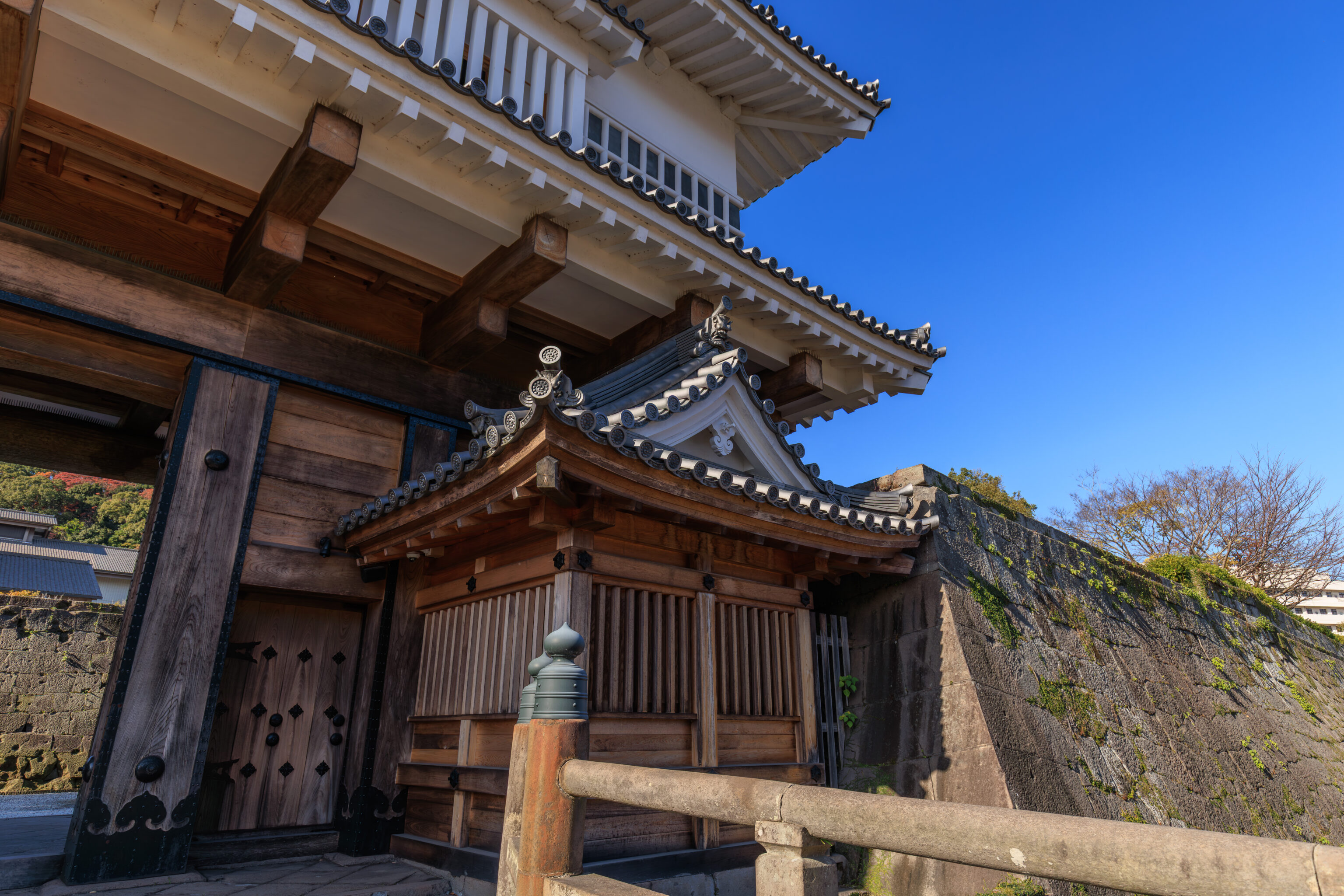
This seems like a little guard house?
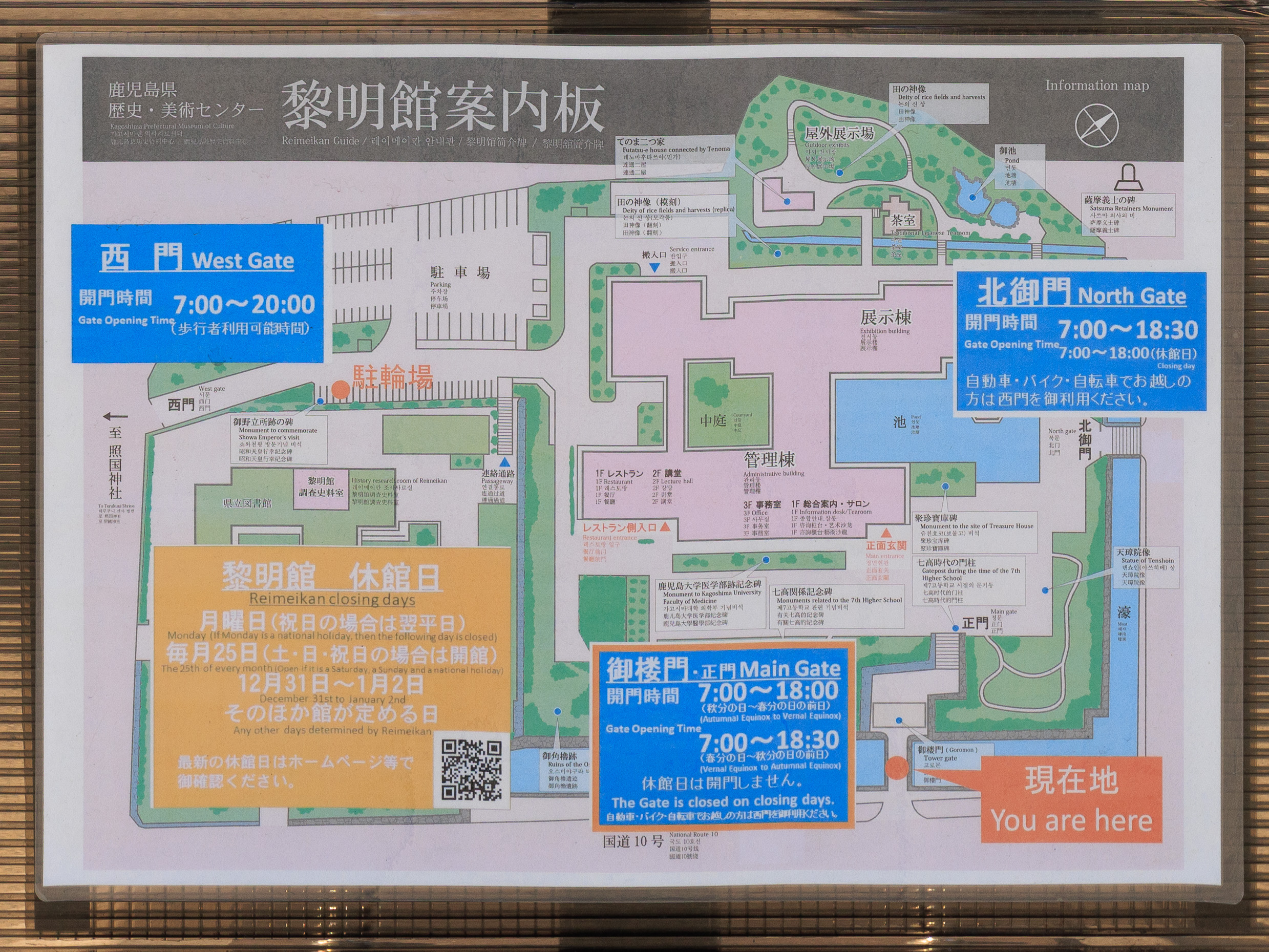
There was another map here, really just a laminated print out, showing everything within the castle ruins.
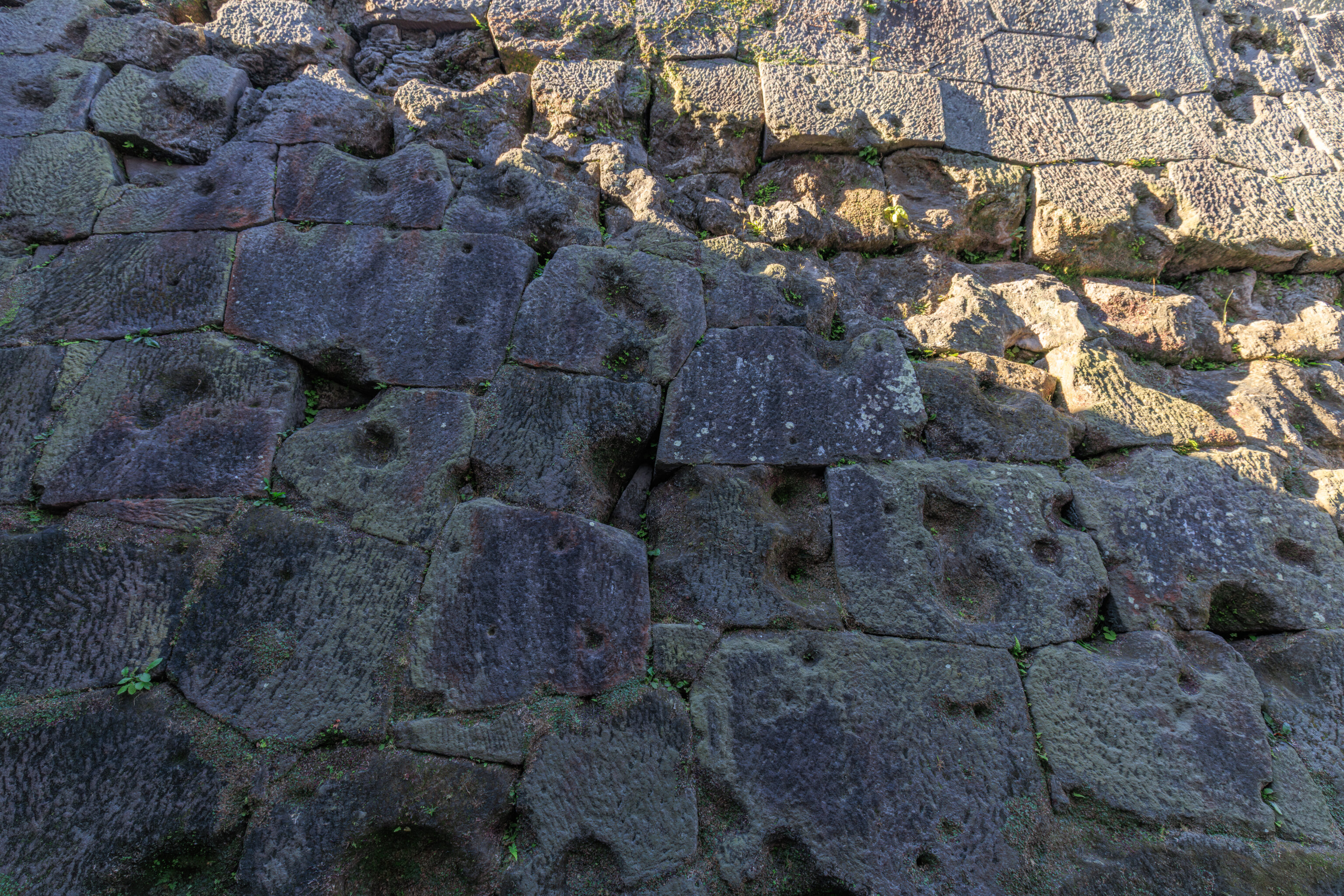
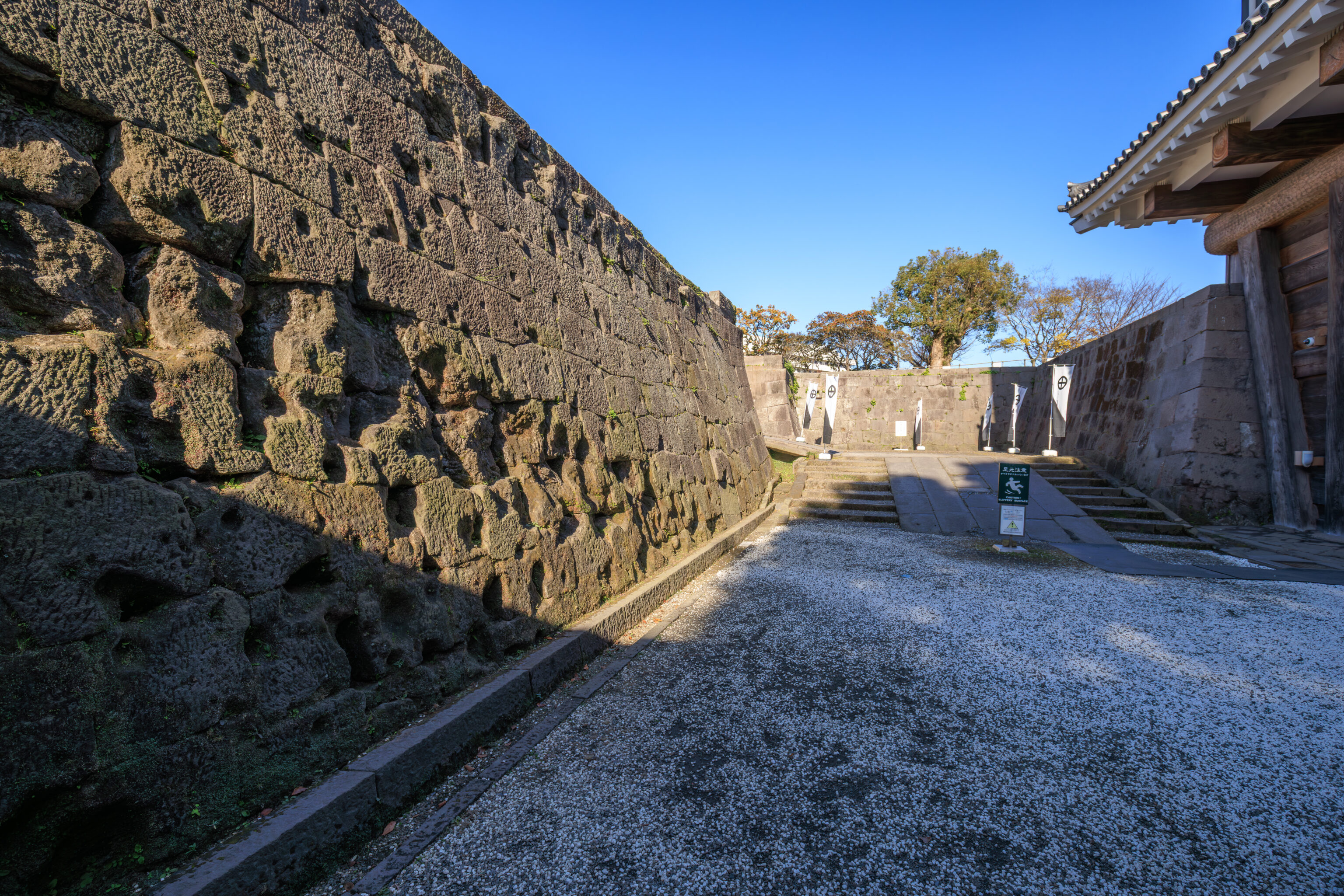
Just beyond the entrance gate, the path turns to the right. Bullet holes from the Battle of Shiroyama during the Satsuma Rebellion in 1877 are visible on the wall! This battle resulted in the end of the rebellion against the imperial Meiji government.
Traces of the Satsuma Rebellion
Bullet holes made at the Battle of Shiroyama (the battle of the Satsuma Rebellion)

Numerous indentations can be seen in the stone walls around the main gate. Upon closer examination, fragments of bullets and artillery shells are found embedded in these indentations. Excavations in the surrounding area have revealed that many of these are traces of the Satsuma Rebellion of 1877 (Meiji 10).

After their defeat in battles in Kumamoto and Miyazaki, Saigo's army returned to their hometown of Kagoshima in September 1877 (Meiji 10), deployed their forces around Shiroyama, and prepared for their final battle. In response, the government forces surrounded Saigo's army with approximately 50,000 soldiers and unleashed a barrage of gunfire and artillery shells.

The bullet holes remaining in the stone walls around the main gate indicate that gunfire and artillery fire came from multiple locations, conveying the ferocity of this attack.

Furthermore, bullet holes remain in the stone walls and fences around the private school built on the site of the stables of Kagoshima (Tsurumaru) Castle (the current Kagoshima Medical Center) (approximately 100m north of here: see map in the lower right). These are valuable traces that tell the history of the Satsuma Rebellion, Japan's last civil war.
– Text from a sign, translated using Google.
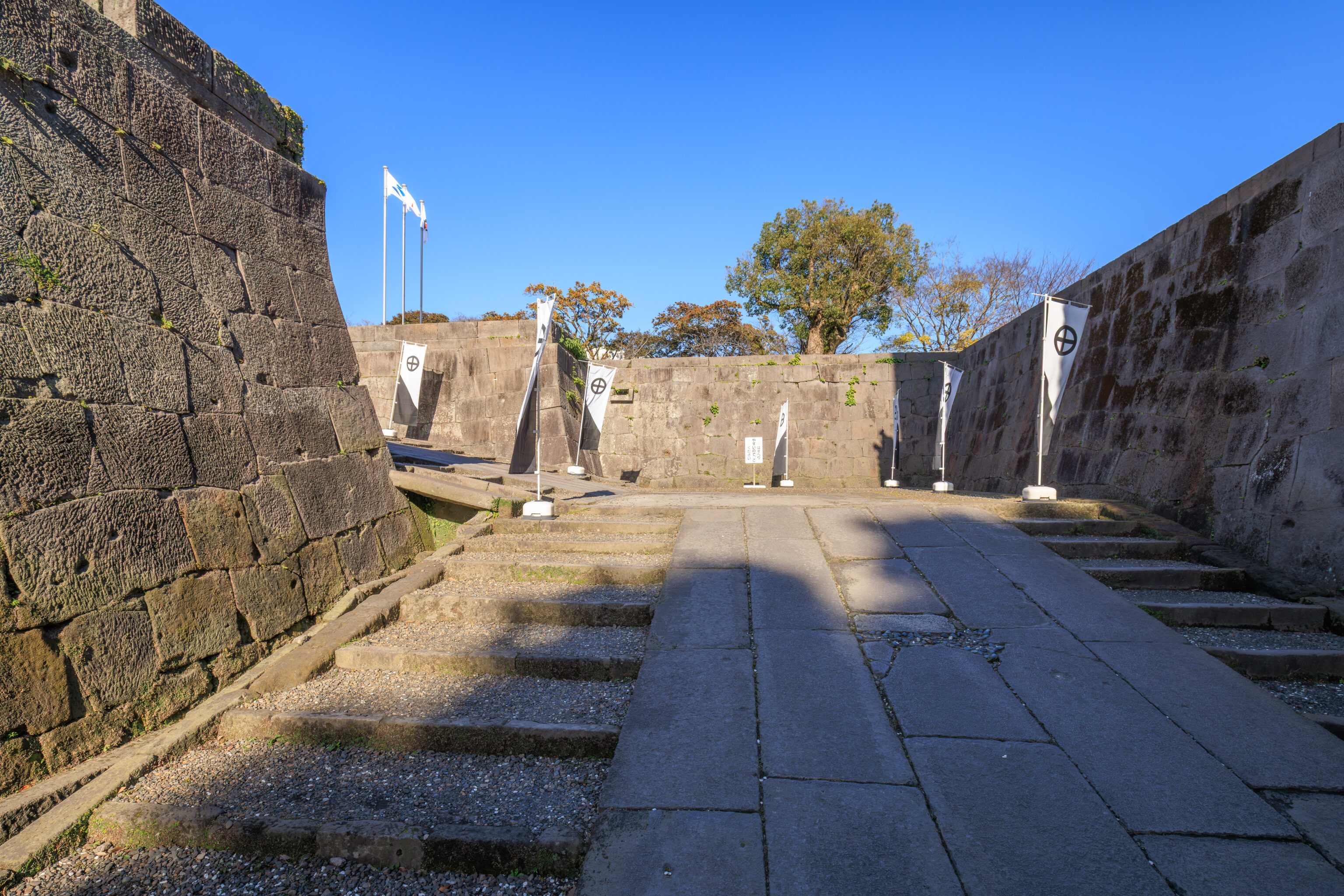
We followed the path up…
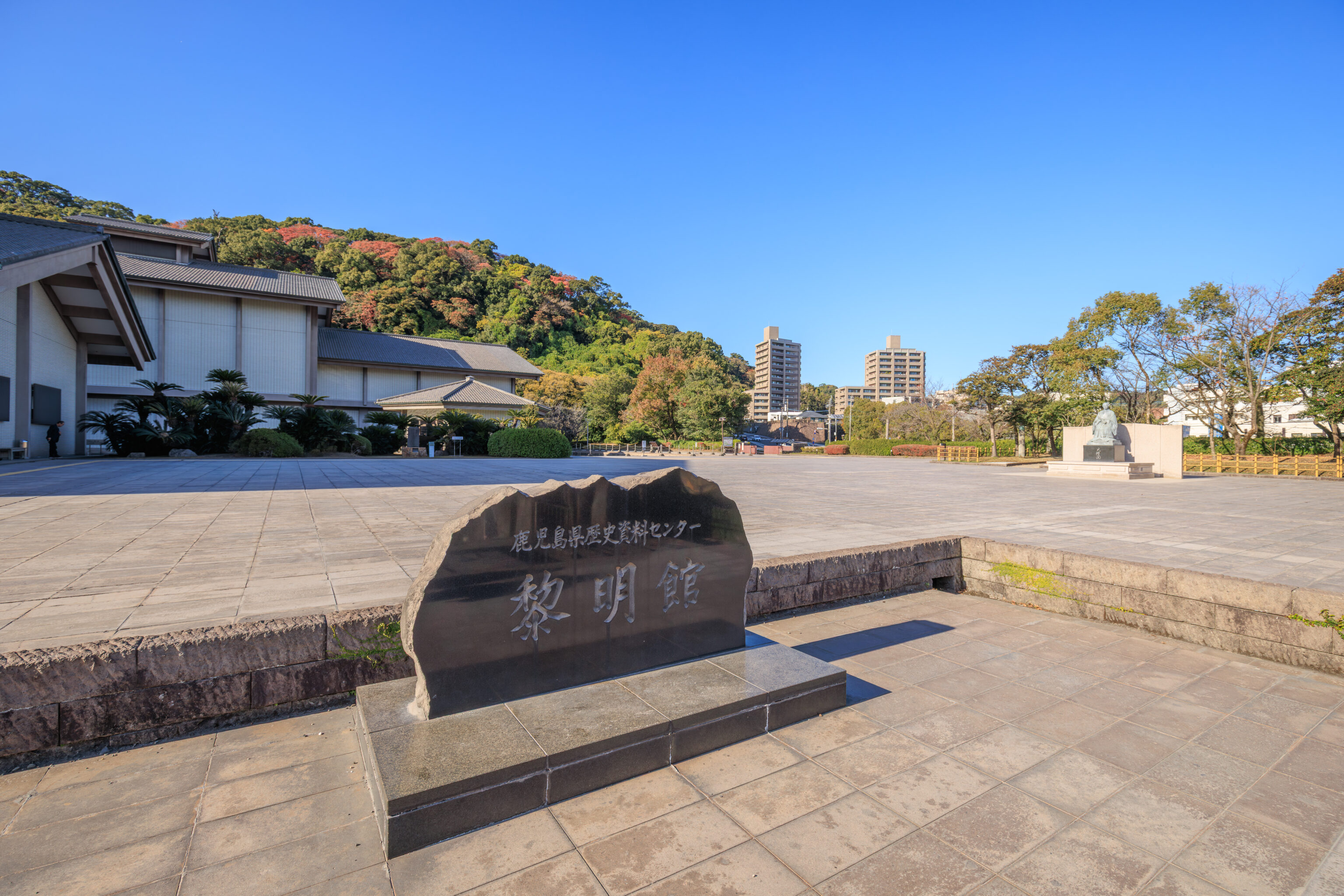
And emerged above the castle’s outer walls. This sign here simply identifies the building in the background which takes up a significant portion of the castle ruins as the 鹿児島県歴史資料センター黎明館 Kagoshima Prefectural Center for History and Art Reimeikan.
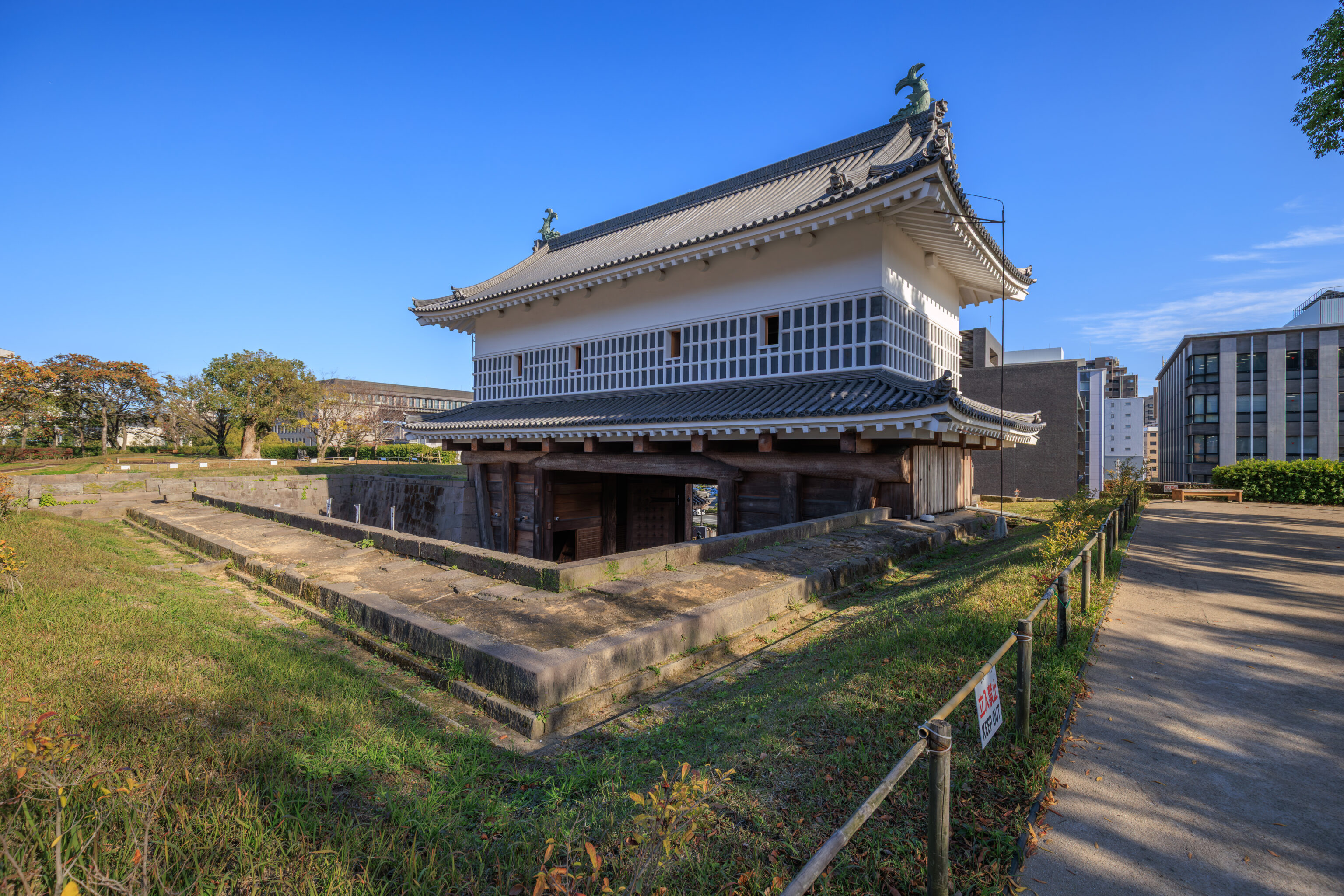
This is the Goromon, the gate that we just entered through.
Reconstruction of the Goromon Gate and Drainage Ditch

Within Kagoshima (Maru) Castle, numerous stone drainage ditches were constructed to efficiently drain rainwater.

Here, during the 2016 (Heisei 28) excavation survey, drainage ditches were confirmed to run along the stone walls. Behind the stone walls, backfill stones with water-permeable properties were used, and plaster was applied to the surface between the stone walls and the rows of stones to prevent water leakage. A stone-built drainage ditch runs one level below the rows of stones. Excavation results revealed that the Edo period drainage ditches underwent maintenance, including multiple replacements, and that traces of earthenware pipes being installed in the ditches from the modern era onward indicated their long-term use.

Because these are important remains for understanding the castle grounds at the time, they were backfilled for protection, and a replica drainage ditch was installed on top of the backfilled ditch to restore its drainage function.
– Text from a sign, translated using Google.
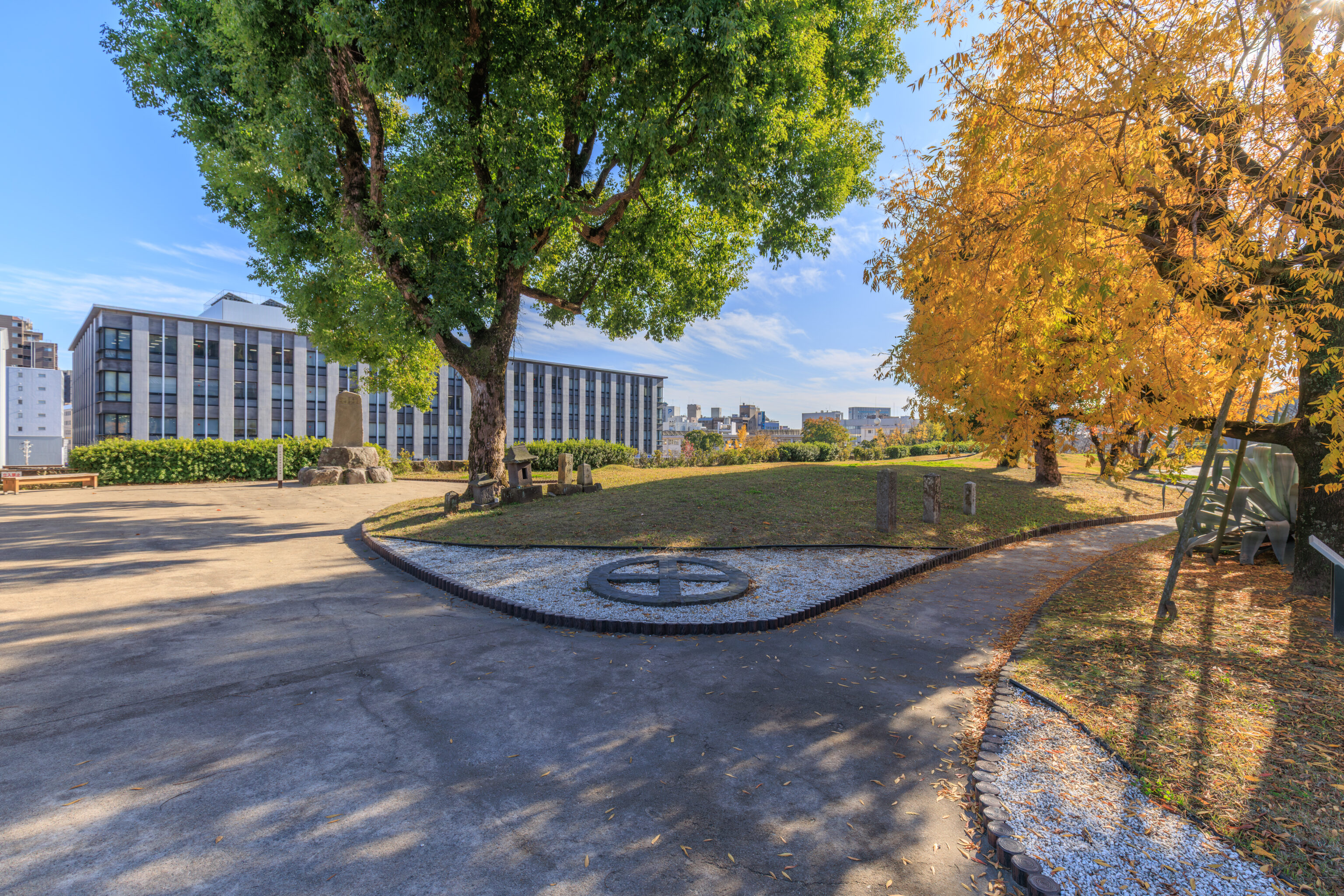
Of course, the Shimazu emblem is here!
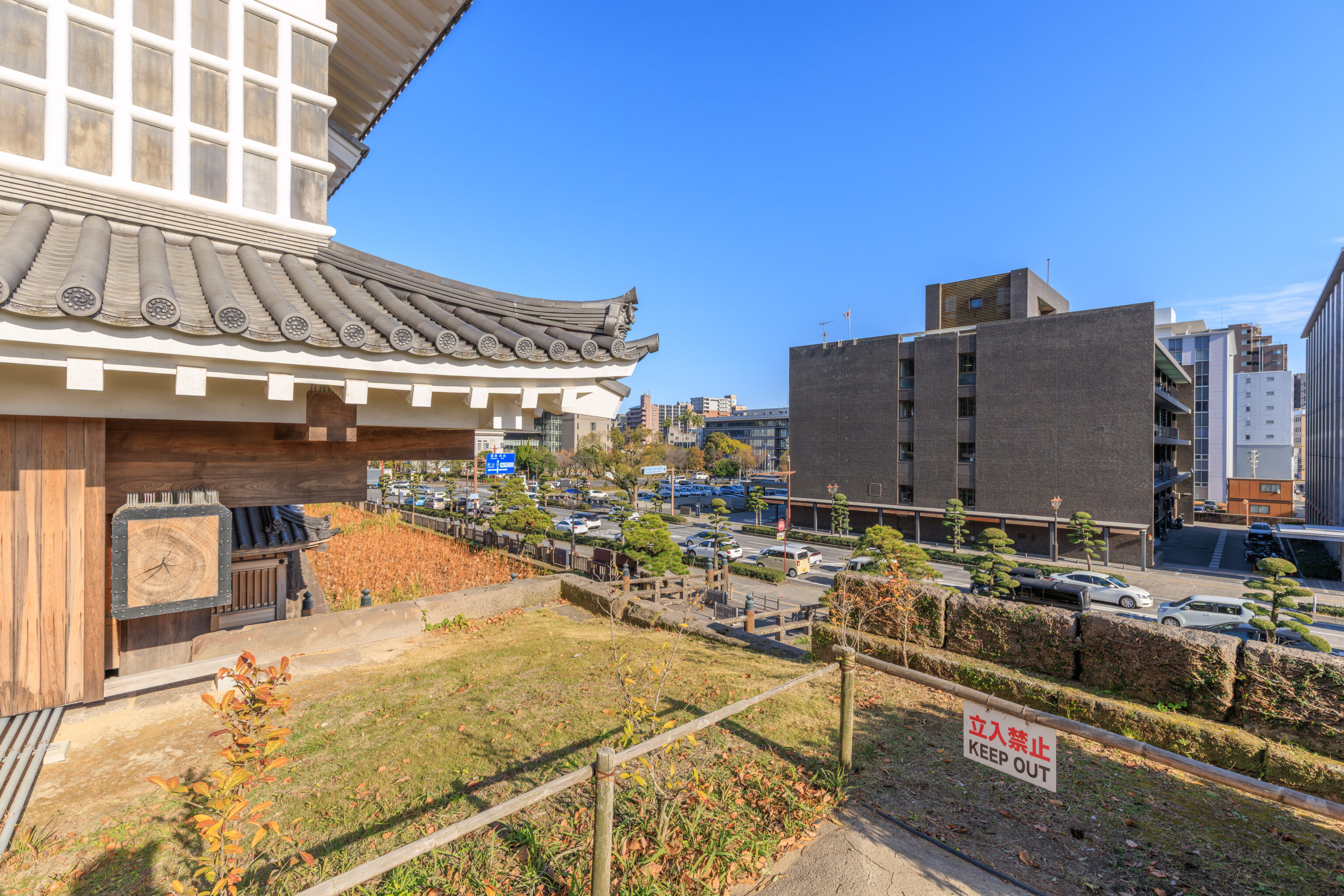
The view from the southwest side of the Goromon.
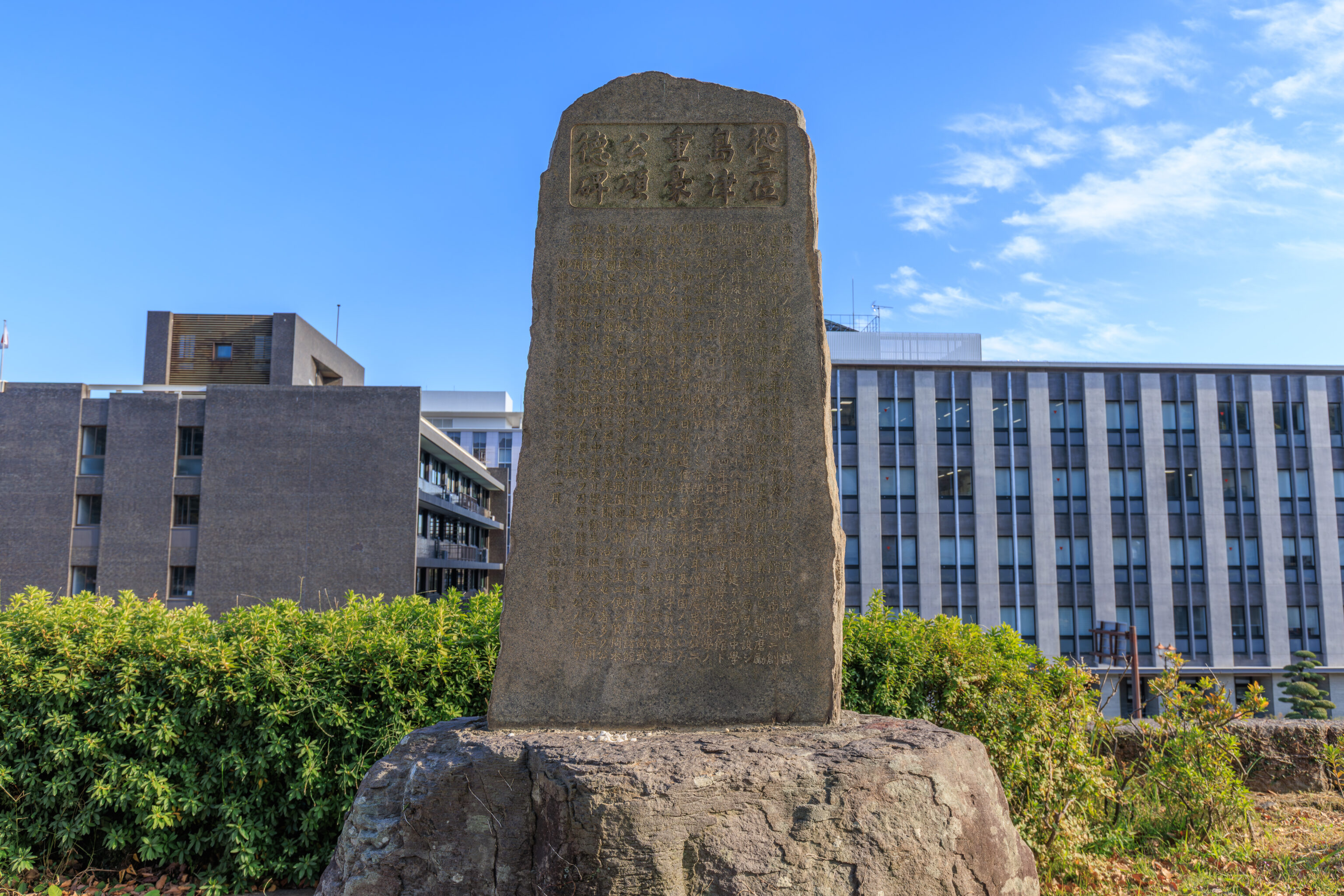
This large stone tablet with too many words was just to the south of the Goromon. It is a monument to Shimazu Shigehide, the 8th daimyo of the Satsuma Domain from 1755 to 1787.
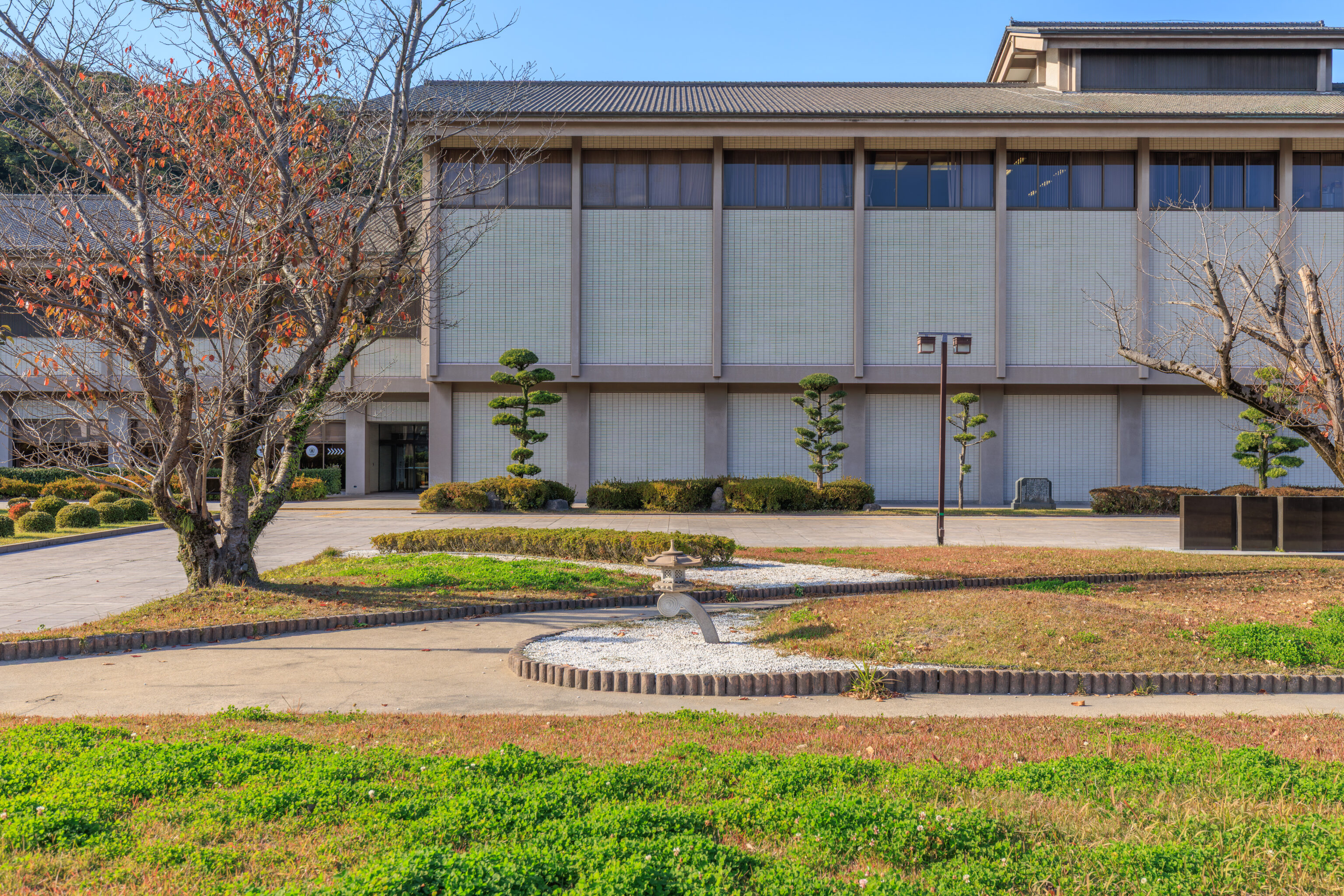
This small stone lantern in the foreground was photo-worthy.
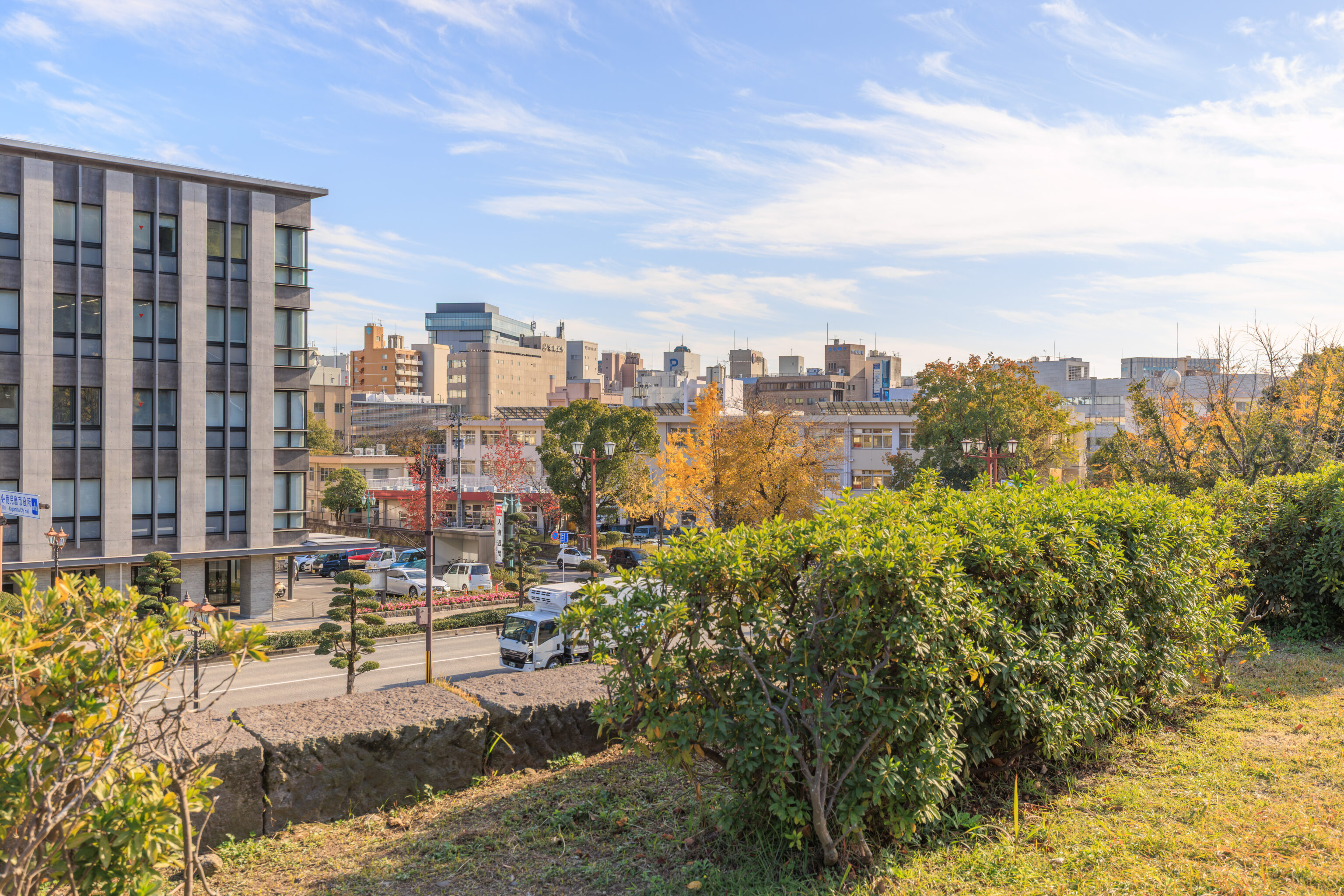
The view looking to the south from above the castle’s outer wall.
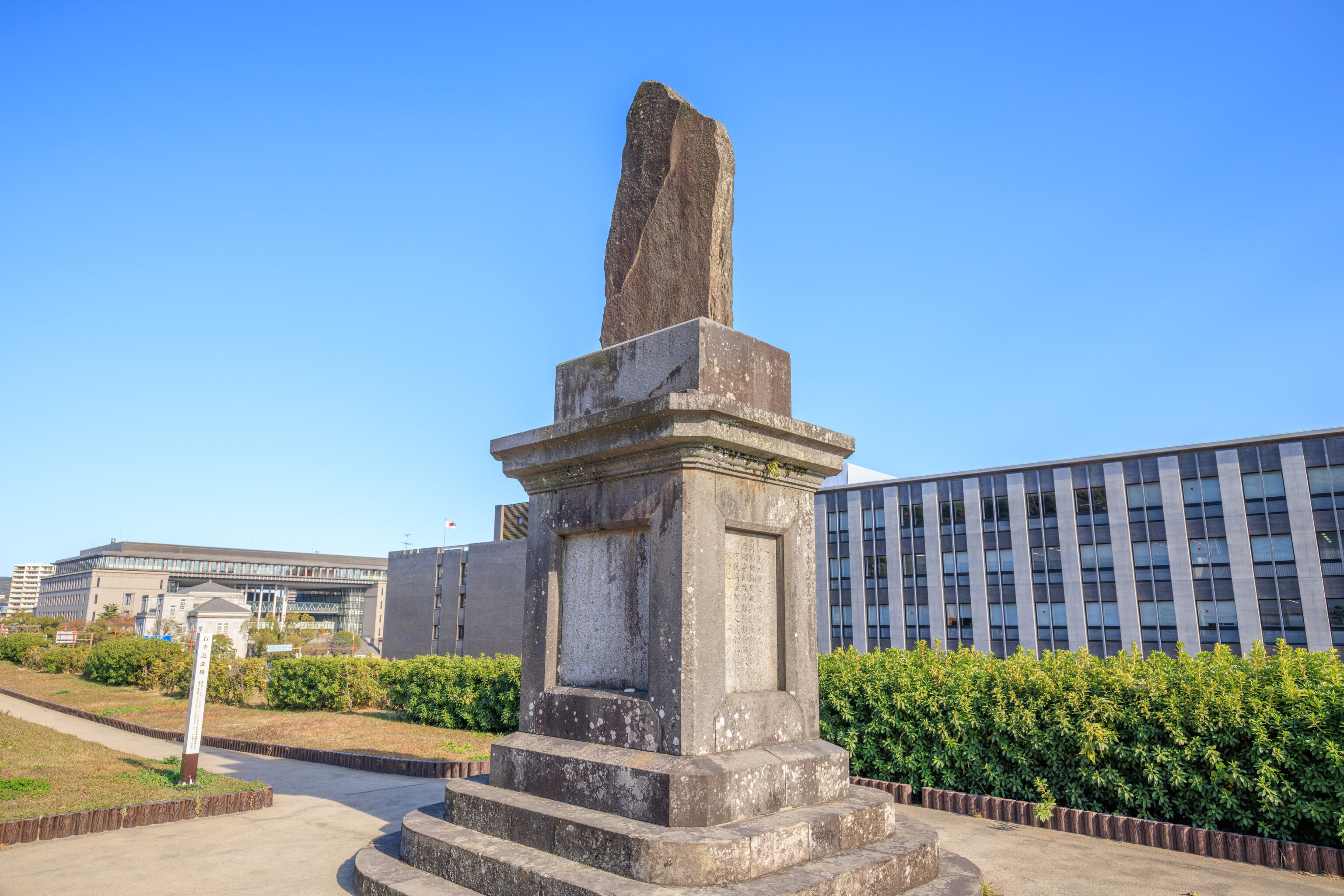
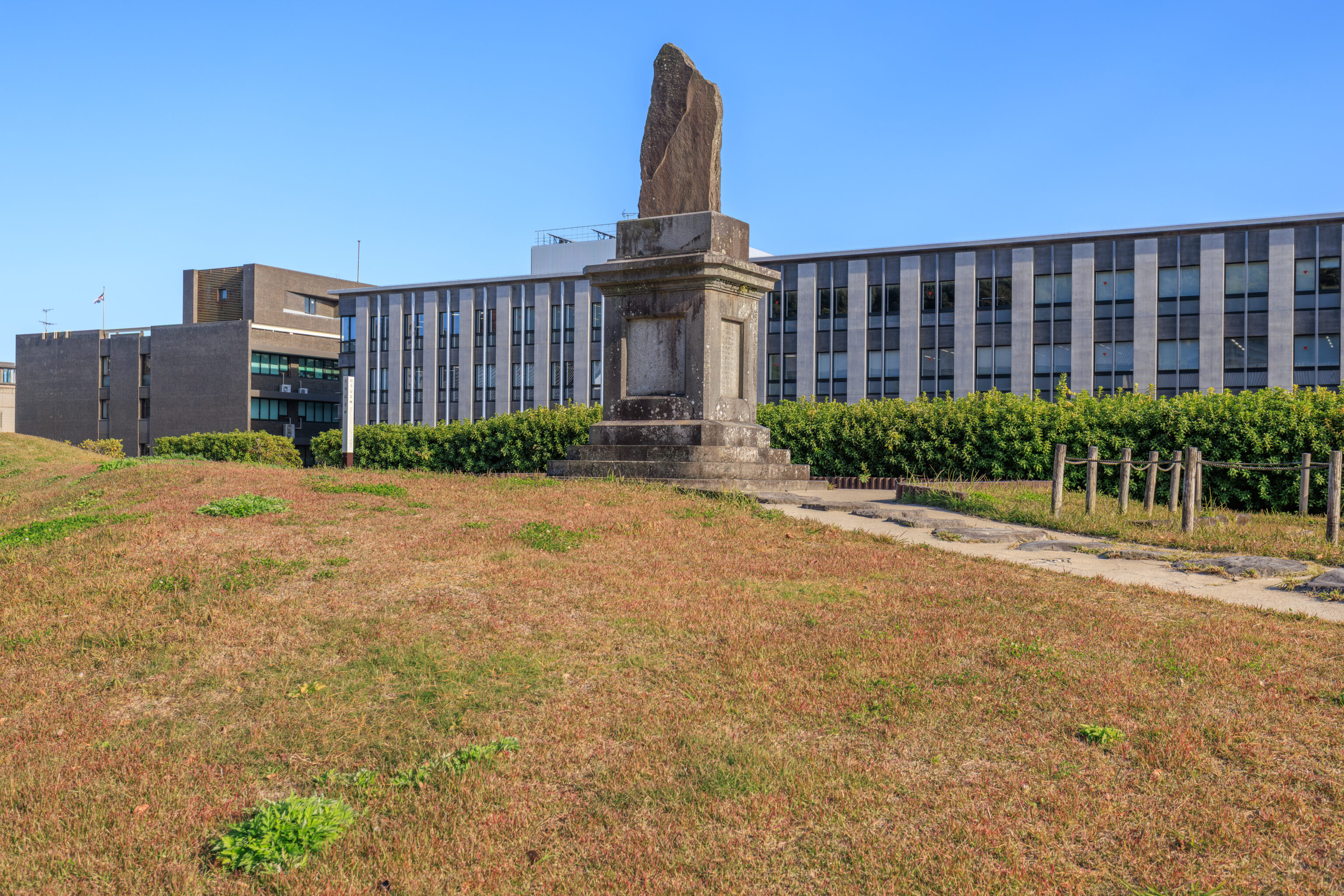
There was a turret at the southern corner of the castle which is near but unrelated to this marker.
Osumi Yagura Ruins
(Site of the Corner Turret)

The *Osumi Yagura* (Corner Turret) was situated at the southernmost extremity of the *Honmaru* (Main Enclosure) residential area within Kagoshima Castle (also known as *Honomaru*), facing the inner moat. It is estimated to have been a structure approximately 20 meters in length and 7.5 meters in width. During an archaeological excavation conducted in 1999 (Heisei 11) as part of a project to repair the stone walls, a portion of the turret's foundation was discovered at a depth of approximately one meter beneath the current ground surface.

The surviving stonework of the foundation measures approximately 10 meters in length and 3.8 meters in width. Based on this evidence, it was determined that the outer walls of the *Osumi Yagura* rested upon the stone ramparts themselves, as well as upon a row of dressed stone foundation blocks (*soseki*). Surrounding the *Osumi Yagura* was a drip trench (drainage channel) approximately 0.6 meters wide, accompanied by a perimeter walkway (*inubashiri*) of equal width. Traces of plaster—used to bind and reinforce the stonework—remain visible on both the perimeter walkway and the foundation masonry.

The *Osumi Yagura* was positioned at the southeast corner of the residential compound. While it is generally regarded as a facility intended to serve the dual purposes of castle defense and the maintenance of aesthetic beauty and prestige, historical records from the early Meiji era refer to it as the "Osumi *Yagura*" (Corner Storehouse). This suggests that the structure also served a practical function as a facility for the storage of goods and supplies.

Records indicate that on June 15, 1853 (Kaei 6), Atsuhime—who would later become Tenshō-in and the official consort (*Midaidokoro*) of the 13th Shogun, Tokugawa Iesada—watched the Gion Festival from this very location.
– Text from a nearby sign, translated using Google.
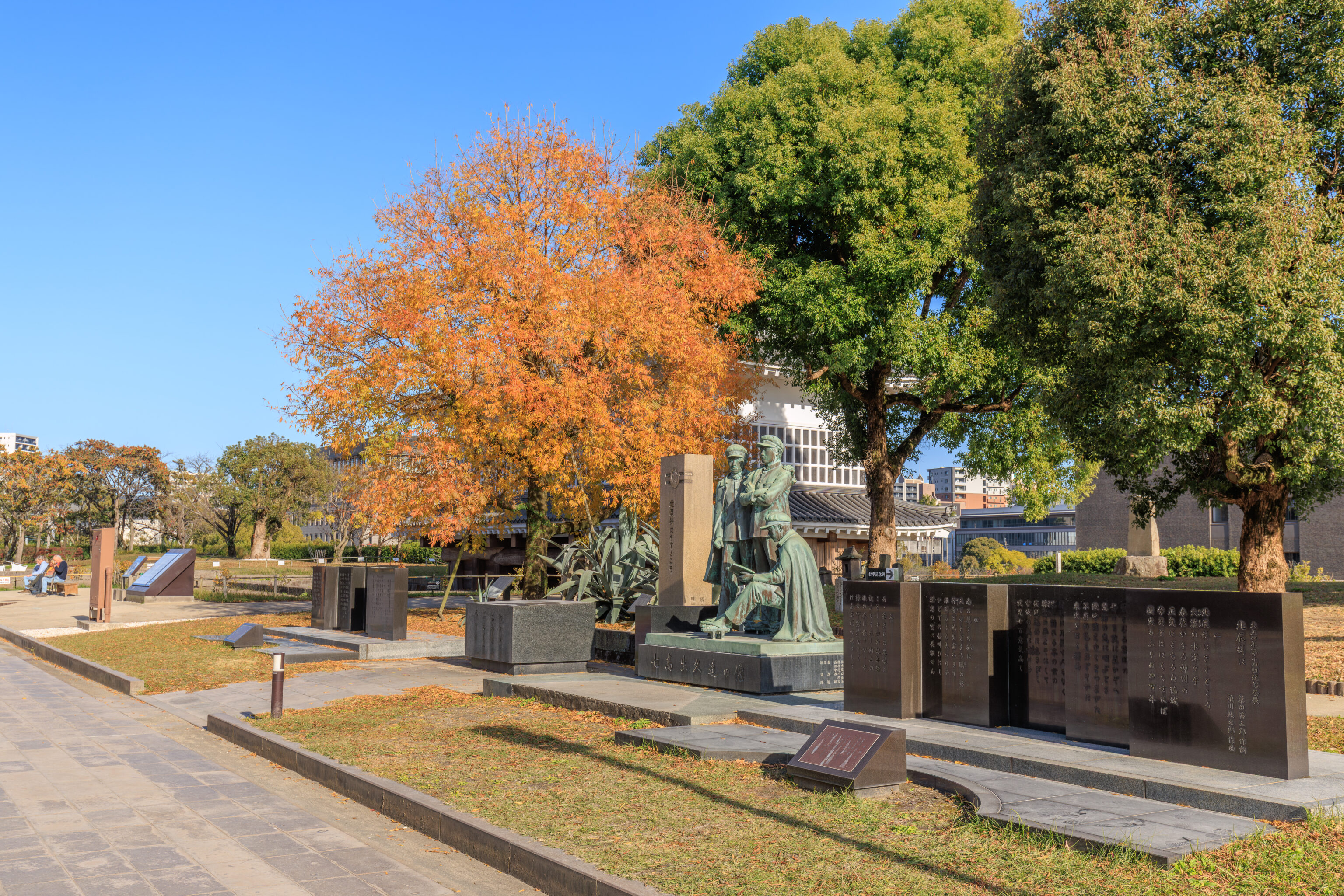
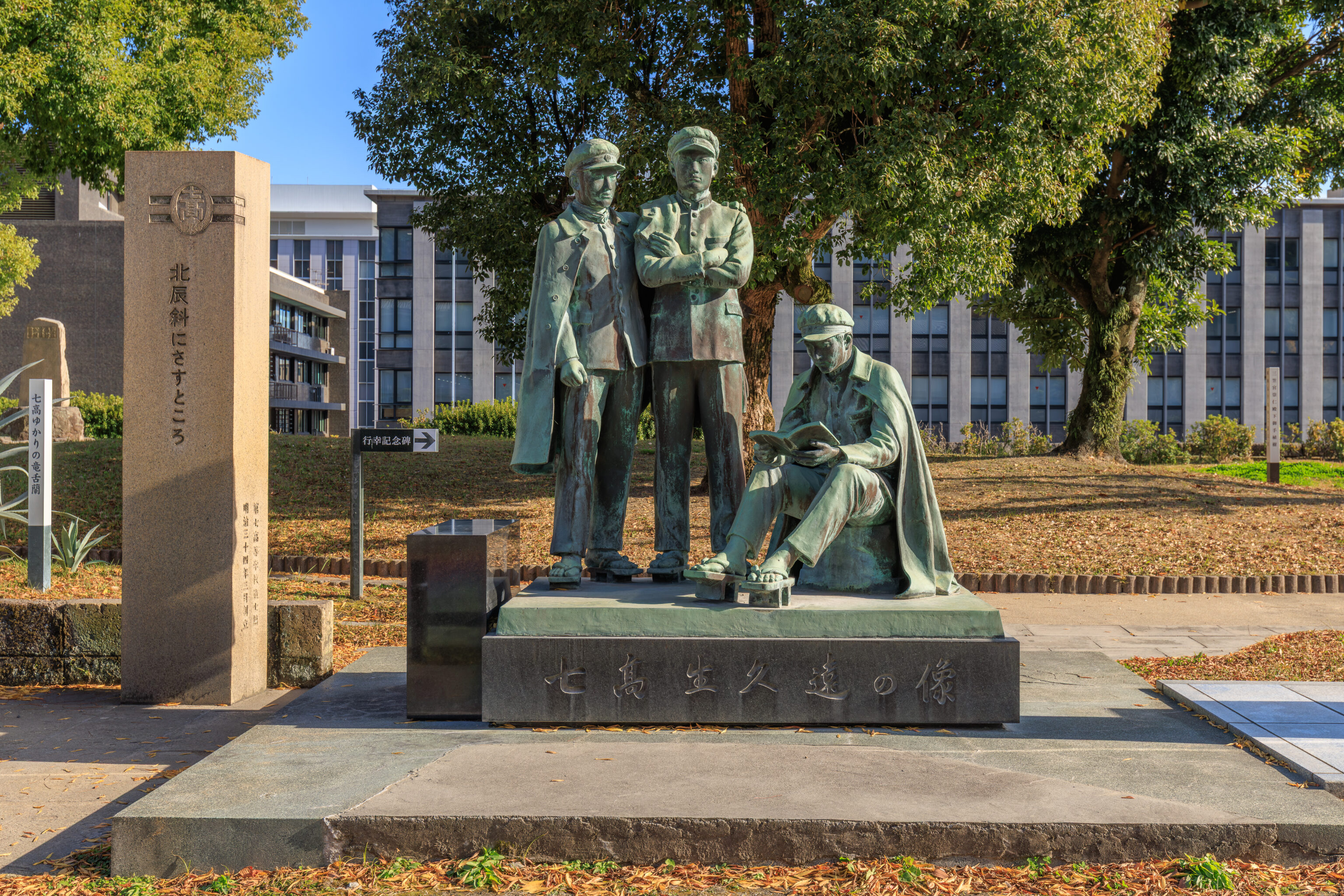
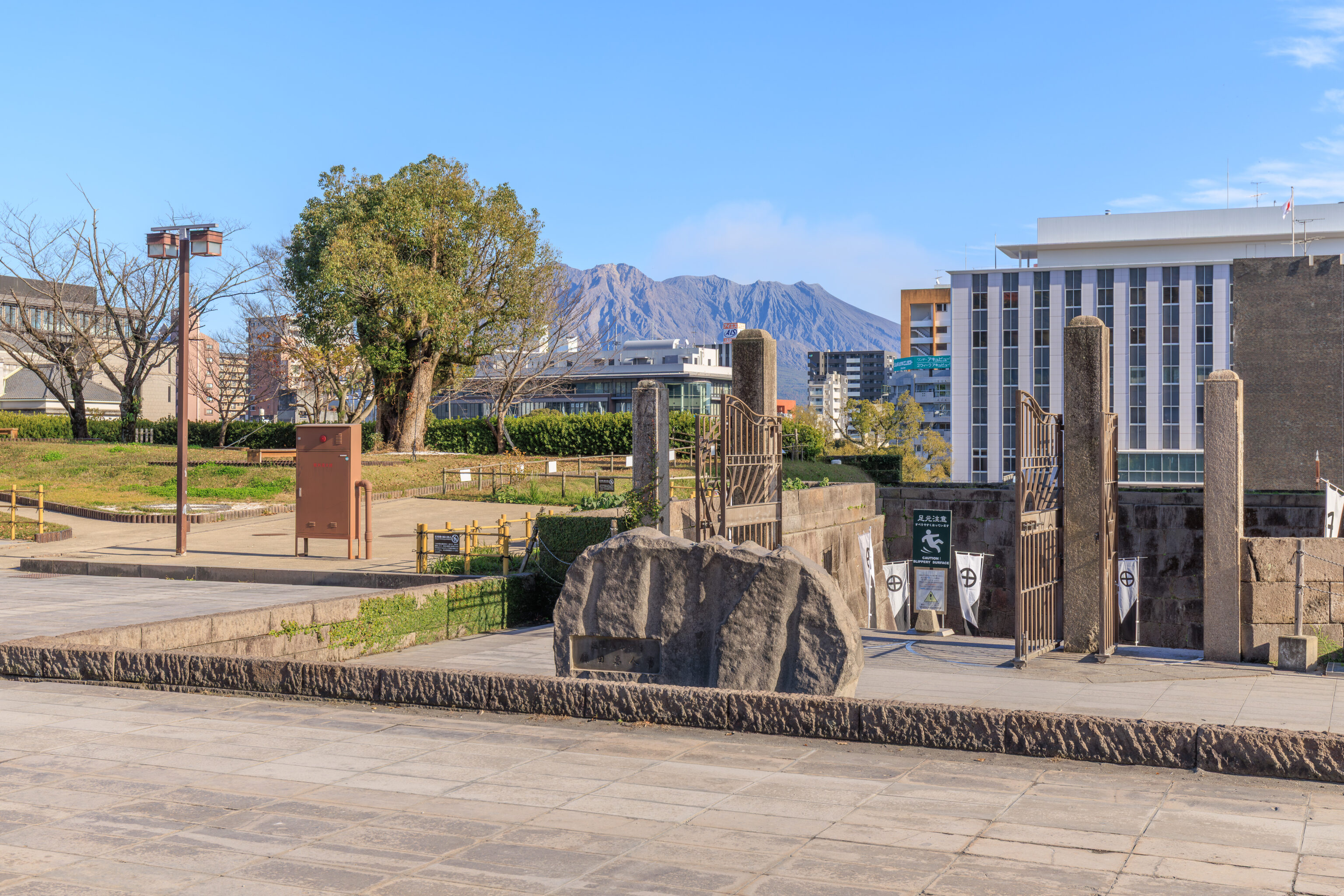
We turned around and started to walk to the north to get to the Satsuma Retainers Monument bus stop. There were a number of monuments along the way. We also had a view of Sakurajima in the background with just a faint white cloud where it was spewing ash in the morning.
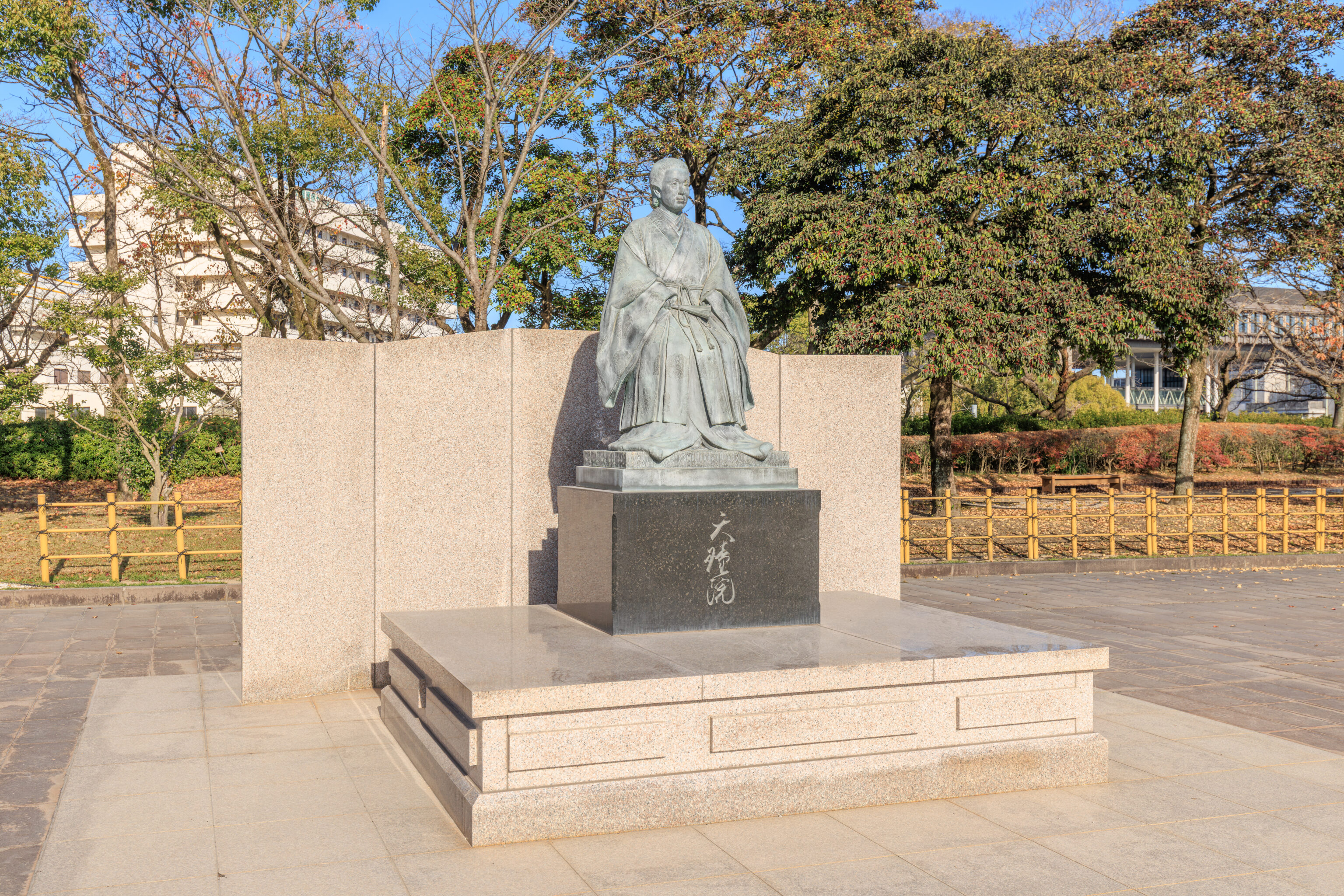
This statue depicts Tenshō-in, formerly Atsuko, the official wife of Tokugawa Iesada of the Tokugawa Shogunate. She was born into the Imaizumi branch of the Shimazu family and adopted into the main Shimazu family.
"I earnestly ask you this favor, even at the price of my own life."

Tenshoin (Princess Atsuhime) was born into the Imaizumi Shimadzu Family in Kagoshima City (former Satsuma domain) in 1835. In 1853, she was adopted by Shimadzu Nariakira, the 28th head of the Shimadzu Family. In 1856 she was adopted by the Konoe Family which allowed her to marry Tokugawa Iesada, the 13th Shogun of the Tokugawa Shogunate. However, lesada died less than two years later. After his death, Princess Atsuhime entered the priesthood and took on the name Tenshoin.

Later, the movement to overthrow the Tokugawa Shogunate Government became more prevalent. This movement was led by the Satsuma Clan, Tenshoin's family, and its staff officer Saigo Takamori, which brought her into a difficult position. Her decision was to remain in the Edo castle to the end and dedicate herself to continuing the Tokugawa Family.

The words quoted above are from a petition for the continuation of the Tokugawa Family written by Tenshoin and addressed to the chief of the imperial army during the Boshin War.

Tenshoin followed the path she believed in through a tumultuous period from the end of the Shogunate era towards the new Meiji Period. She never returned to her home Kagoshima again. She died in 1883.

The temporary Atsuhime Museum was opened in 2008 when the year-long historical drama series, "Atsuhime", was being aired. The museum was visited by over 660,000 people from inside and outside Kagoshima Prefecture. This statue was erected with the profit of the museum in honor of Tenshoin's accomplishments.

December 19th, 2010
Executive Committee, "Atsuhime Museum"
Sculpted by Nakamura Shinya
– Text from a sign behind the statue.
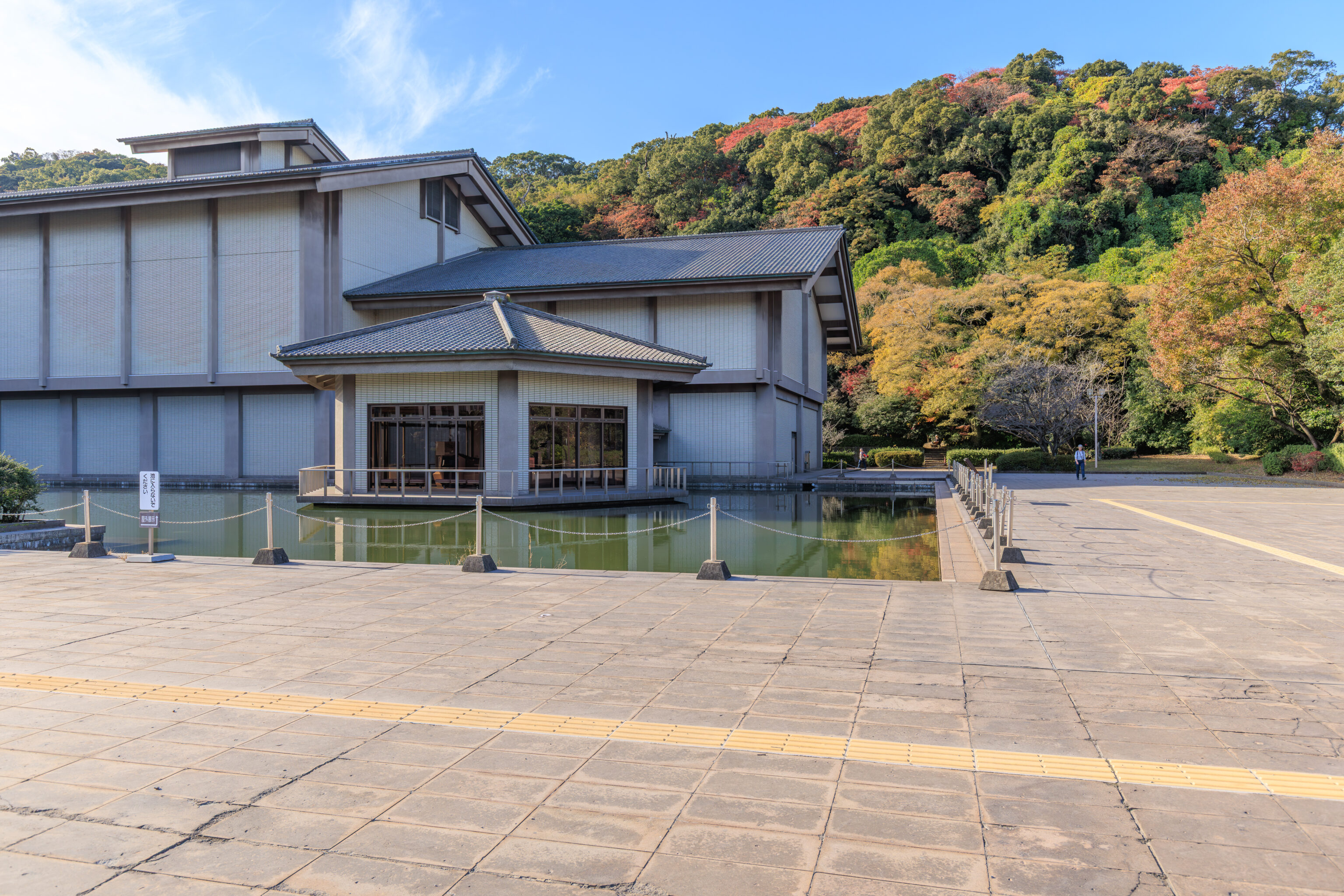
The eastern end of the Reimeikan with some of the Shiroyama in the background.
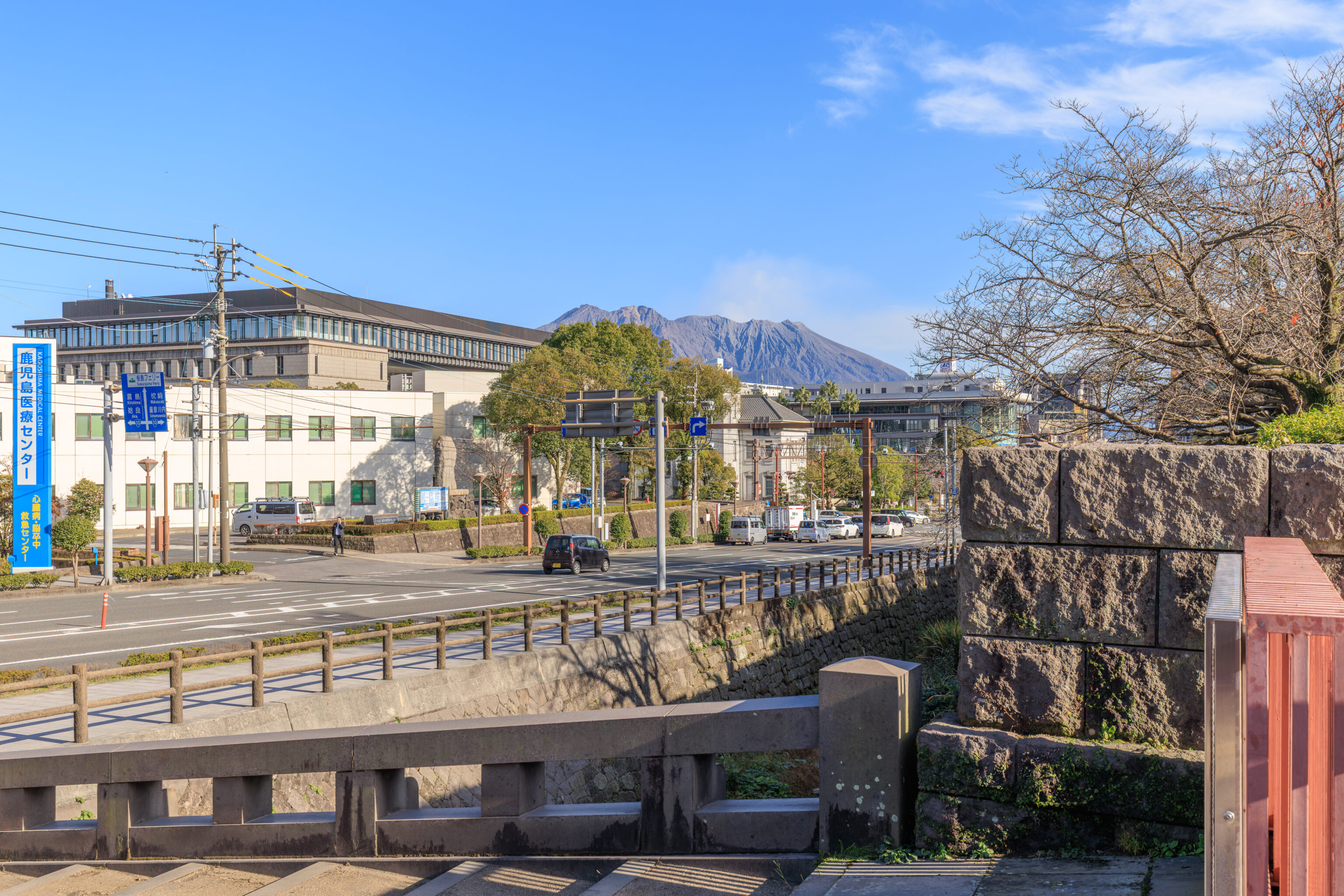
We continued down some stairs which crossed over the castle’s moat. From here, we again had a view of Sakurajima.
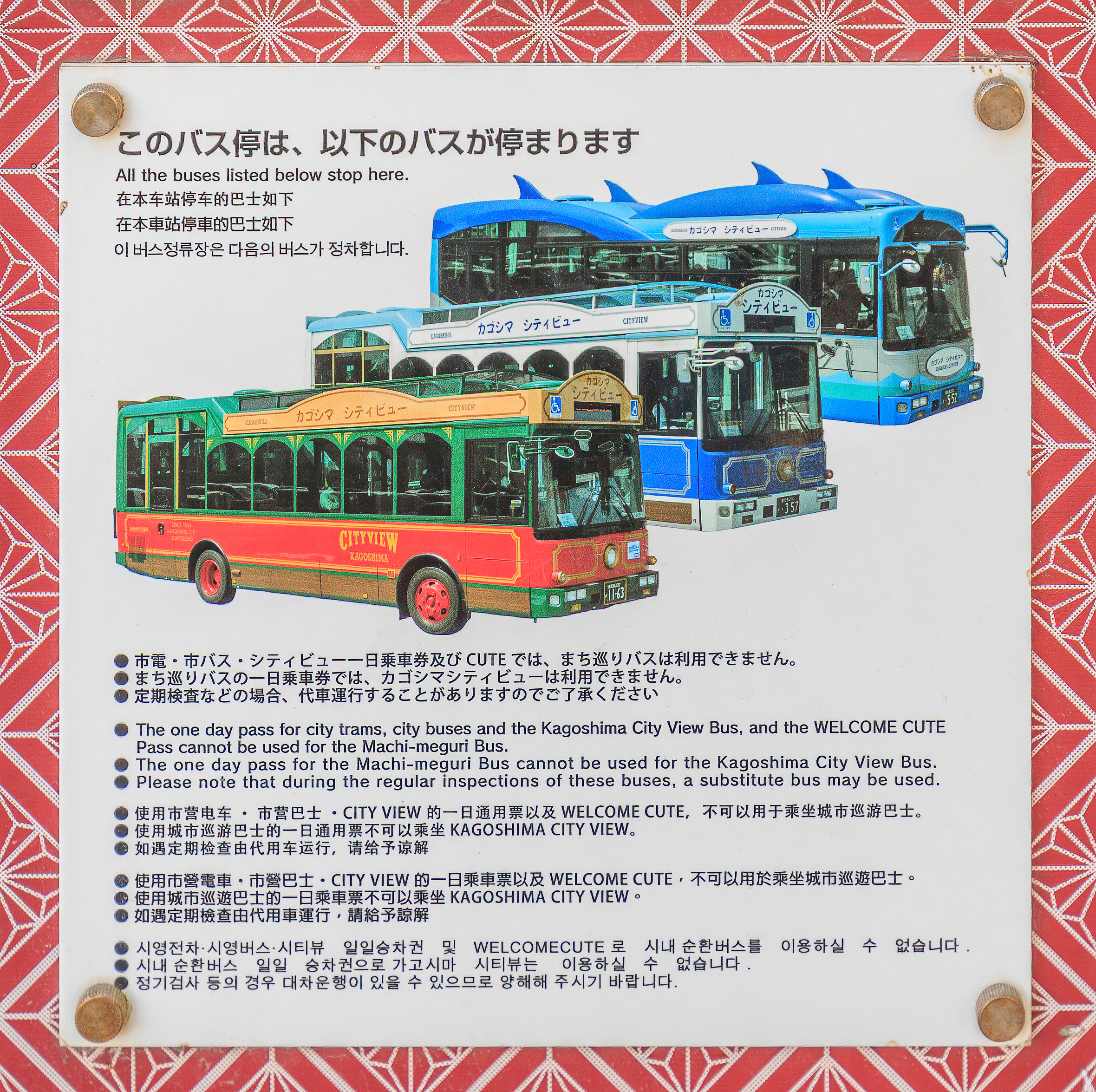
There was a sign indicating that this was the right place to wait for the bus.
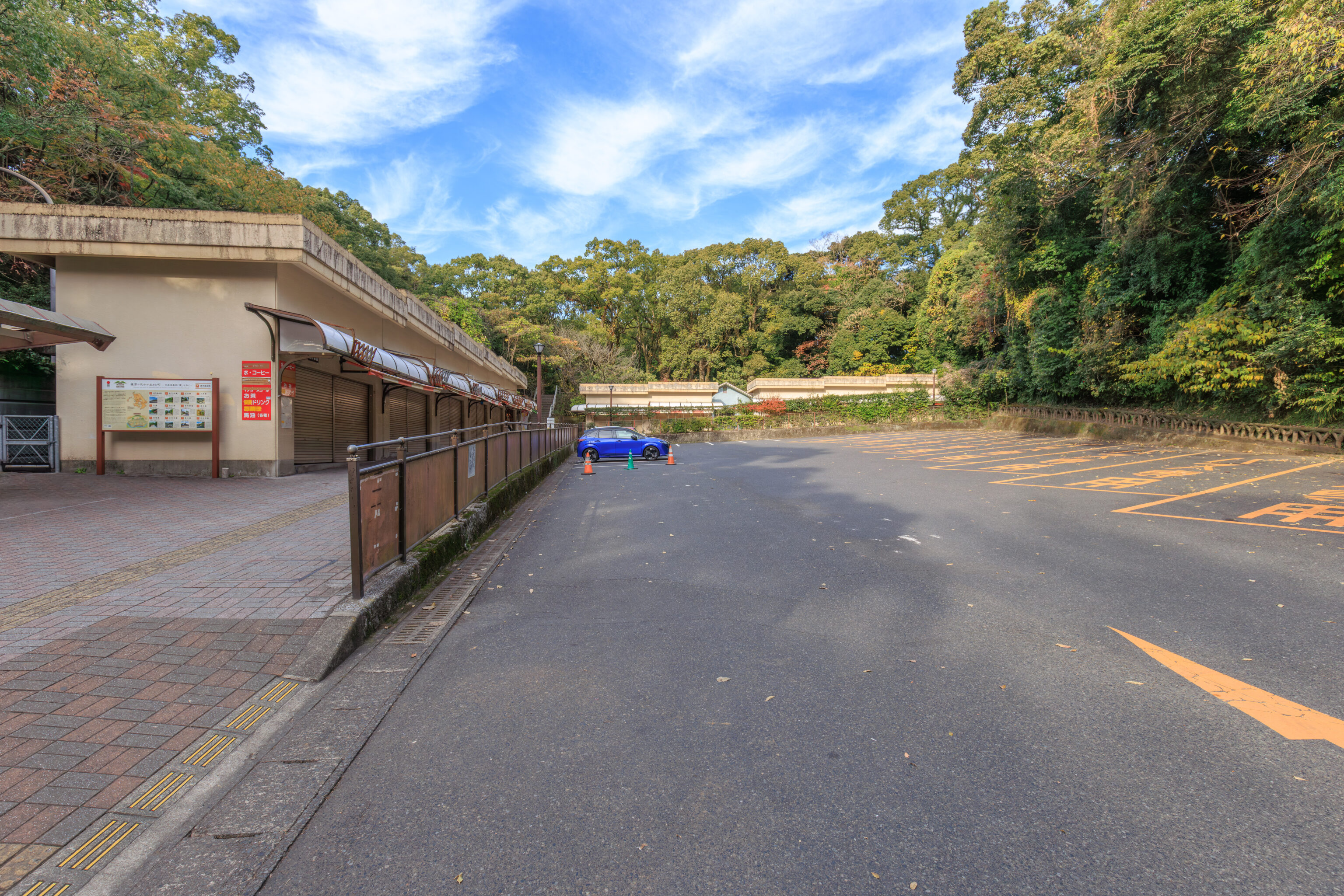
We rode the bus up to the 城山(シティビュー) Shiroyama (City View) bus stop. There was a area with small shops, nearly all of which were closed. The area looked a bit shabby.
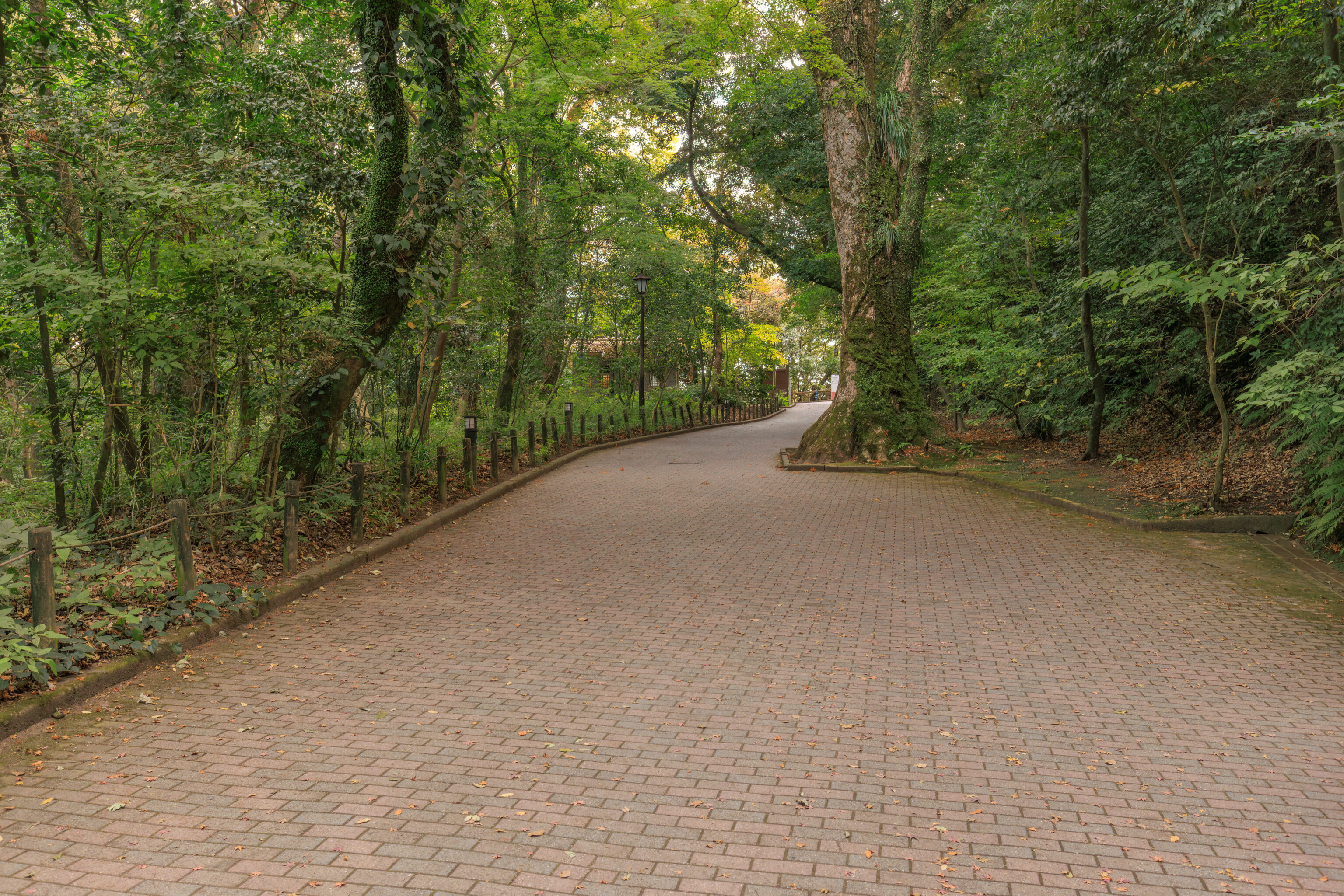
We walked along a path going east into a wooded area.
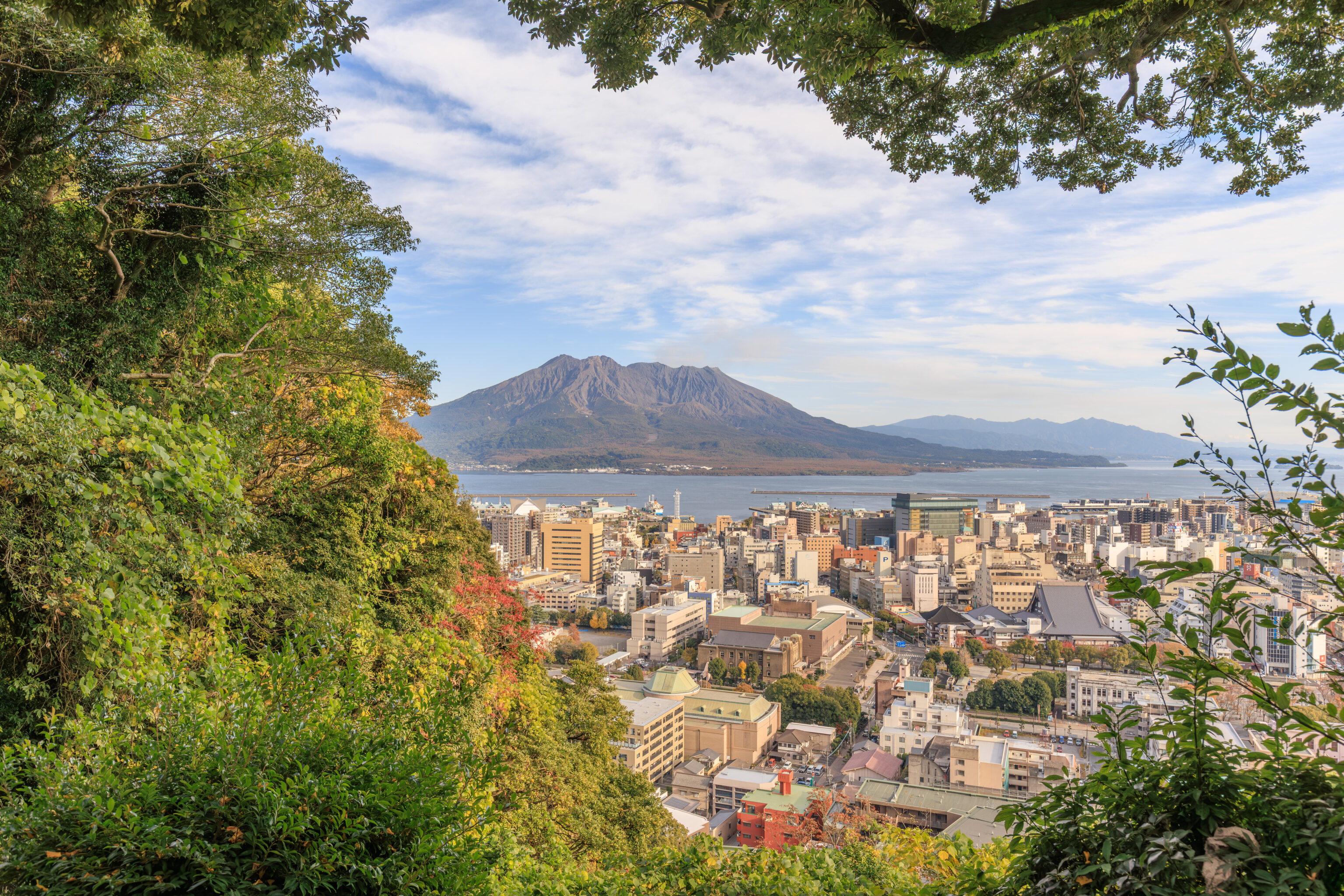
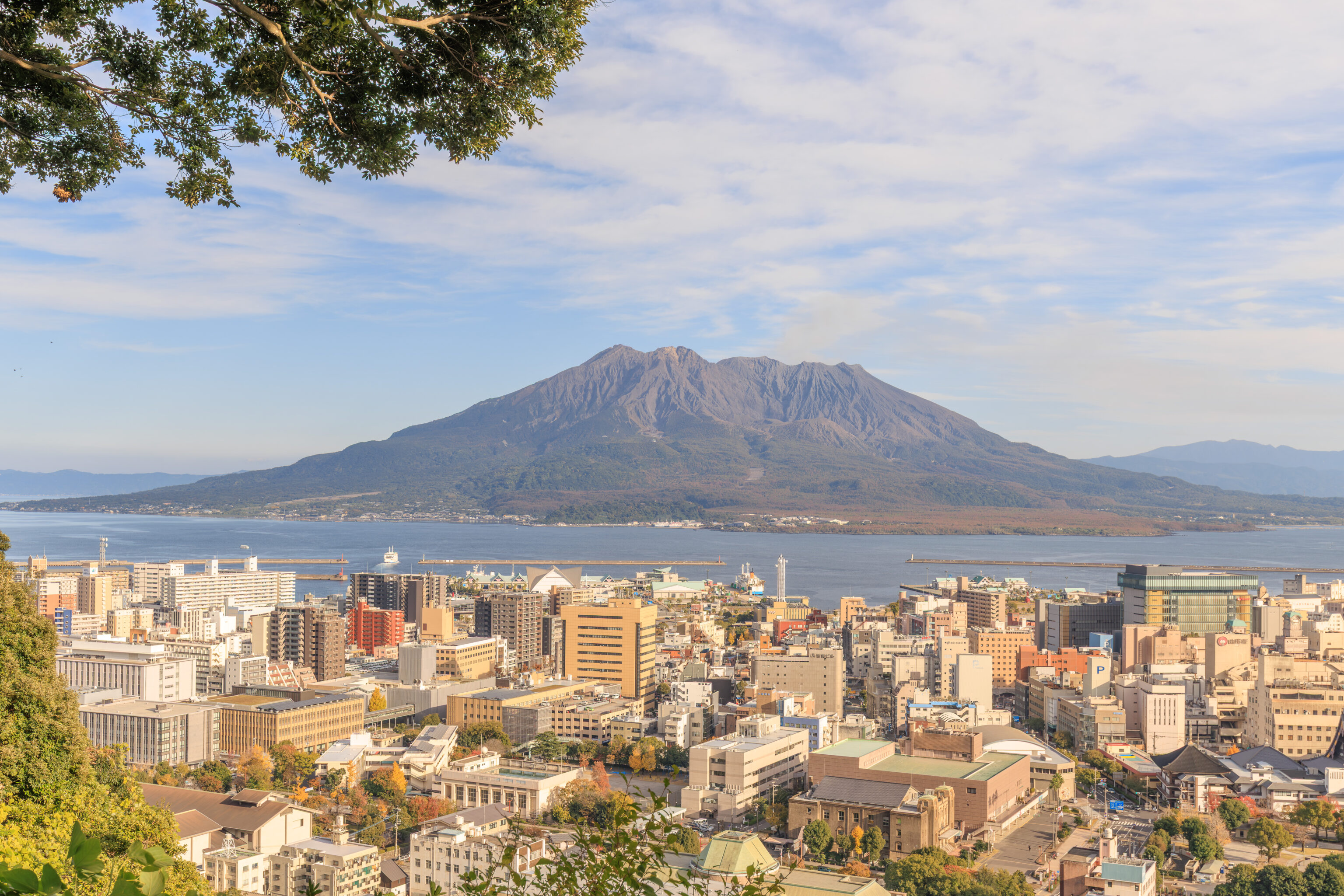
We quickly arrived at the Shiroyama Observatory! From this perspective, the smoke being emitted from atop Sakurajima resembles smog.
SAKURAJIMA-KINKOWAN GEO PARK

Beyond the cityscape lies Kinko Bay and Sakurajima. This is a scene unique to the Sakurajima-Kinkowan Geopark—a place where a volcano and a city coexist in harmony. The very spot where you stand is a "Shirasu Plateau," a landform sculpted by volcanic activity. Approximately 30,000 years ago, a massive eruption occurred deep within what is now Kinko Bay; the resulting volcanic ash—carried by pyroclastic flows—blanketed the entirety of Southern Kyushu. This volcanic ash is known as "Shirasu," and it accumulated across the mainland of Kagoshima Prefecture to an average depth of roughly 60 meters. Because the Shirasu Plateau features excellent drainage, it was ill-suited for rice cultivation; consequently, the region saw the flourishing of field crops—such as sweet potatoes—and livestock farming. Shiroyama (Castle Mountain) marks the site of a former castle. Since ancient times, mountain castles utilizing the natural topography of the Shirasu Plateau have been constructed throughout the prefecture. Indeed, it would not be an exaggeration to say that the very land which nurtured Kagoshima's culture was itself created by a colossal volcanic eruption.
– Text from a nearby sign, translated using Google.
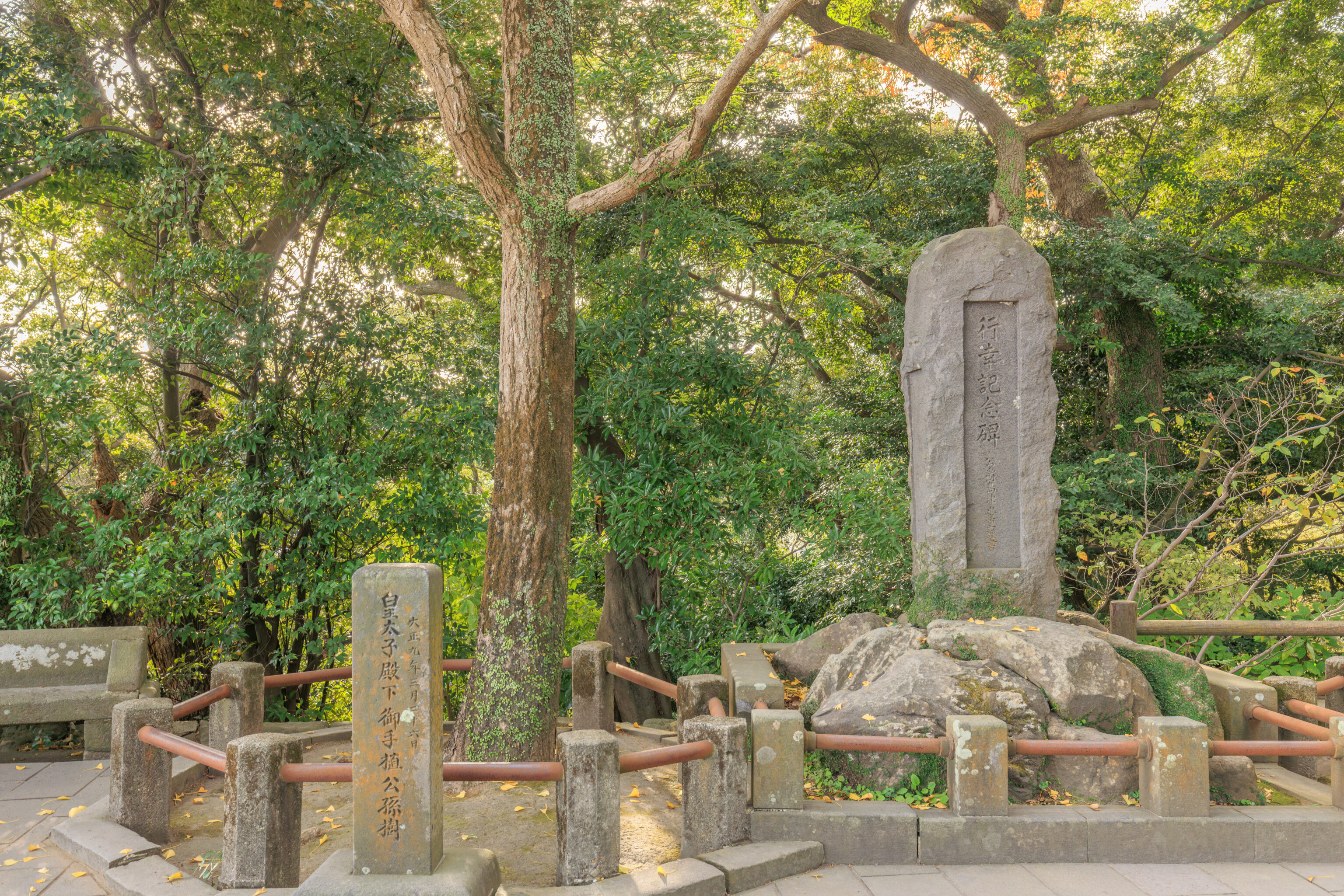
There were also some stone memorials here. A nearby sign explains the history of this park and mountain:
Shiroyama Park

Established in 1906 (Meiji 39), it was the first park in Kagoshima City.

It features lush walking paths, an observation deck (107m high) offering simultaneous views of Sakurajima, Kinko Bay, and the city, a play area in the woods, and the Tanshoen Garden, which was formerly the second bailey garden of Kagoshima Castle.

This "Shiroyama" is densely populated with over 500 species of plants, including evergreen broad-leaved trees such as a large camphor tree approximately 400 years old, and ferns such as *Shiroyama fern* and *Shiroyama royal fern*. Located within the city, it maintains a laurel forest characteristic of southern Kyushu and is a treasure trove of nature, home to numerous wild birds and insects.

Furthermore, in the 14th century (Northern and Southern Courts period), it was the residence (mountain castle) of the Ueyama clan. At the beginning of the Edo period, it became part of Kagoshima Castle, the residence of the Shimazu clan who ruled southern Kyushu. In 1877, it was also the site of the final fierce battle of the Satsuma Rebellion.

For these reasons, in 1931, a portion of the park was designated a national cultural property as "Shiroyama, a Natural Monument and Historic Site," and in 2023, the entire park was additionally designated as a national cultural property as "Kagoshima Castle Ruins, a Historic Site." In 2019, it was also included as a constituent cultural property of the Japan Heritage site "The Town Where Satsuma Samurai Lived." Let's protect this cultural property and use the park respectfully, observing proper etiquette so that everyone can enjoy it comfortably.
– Text from a sign, translated using Google.
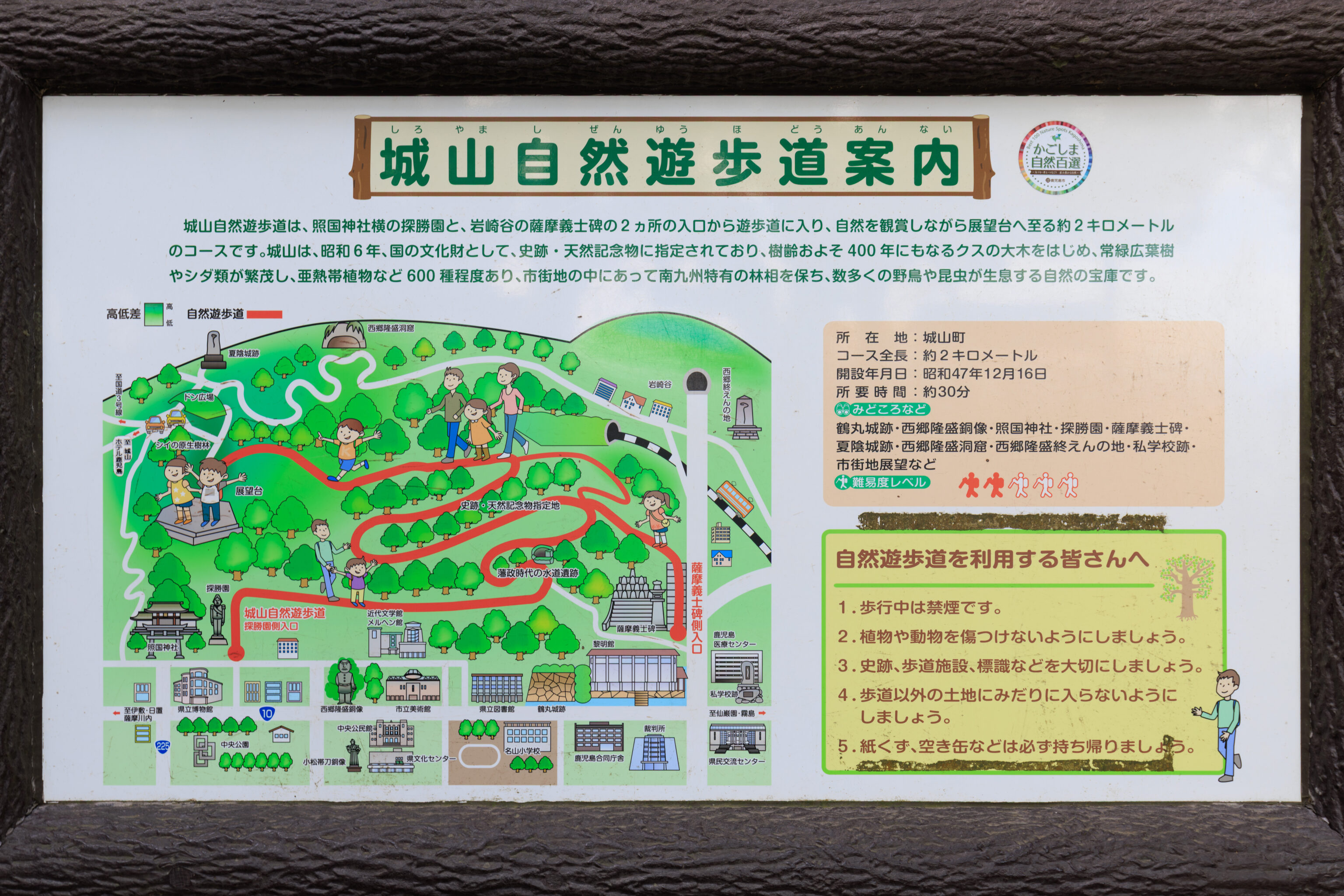
Rather than take the bus back down, we decided to walk via the Shiroyama Nature Trail indicated on this map, zig zagging to return to the 薩摩義士碑 Satsuma Retainers Monument, drawn on the map at the lower right corner of the park.
Shiroyama Nature Trail Guide
"Kagoshima's Top 100 Natural Sites"

The Shiroyama Nature Trail is an approximately 2-kilometer course that begins at one of two entrances—the Tansho-en Garden located next to Terukuni Shrine, or the Satsuma Gishi Monument in Iwasakidani—and leads hikers to an observation deck while allowing them to admire the surrounding nature. Designated as a National Cultural Property (specifically a Historic Site and Natural Monument) in 1931 (Showa 6), Shiroyama is a natural treasure trove. It is home to a diverse ecosystem featuring approximately 600 plant species—including massive camphor trees estimated to be around 400 years old—as well as lush evergreen broad-leaved trees and ferns. Despite its location within the city center, the area preserves a unique forest landscape characteristic of Southern Kyushu and serves as a habitat for numerous wild birds and insects.

Location: Shiroyama-cho
Course Length: Approx. 2 kilometers
Date Established: December 16, 1972 (Showa 47)
Estimated Time Required: Approx. 30 minutes

Highlights & Attractions:
Tsurumaru Castle Ruins, Statue of Saigo Takamori, Terukuni Shrine, Tansho-en Garden, Satsuma Gishi Monument, Natsukage Castle Ruins, Saigo Takamori's Cave, Site of Saigo Takamori's Final Stand, Site of the Private School (Shigakko), Cityscape Observation Points, etc.

Difficulty Level
2/5

To All Users of the Nature Trail:
1. Smoking is prohibited while walking on the trail.
2. Please refrain from harming or disturbing the plants and animals.
3. Please help preserve the historic sites, trail facilities, signage, and other amenities.
4. Please do not stray from the designated walking paths.
5. Please be sure to take all trash—such as paper scraps and empty cans—back with you.
– Text from the sign above, translated using Google.
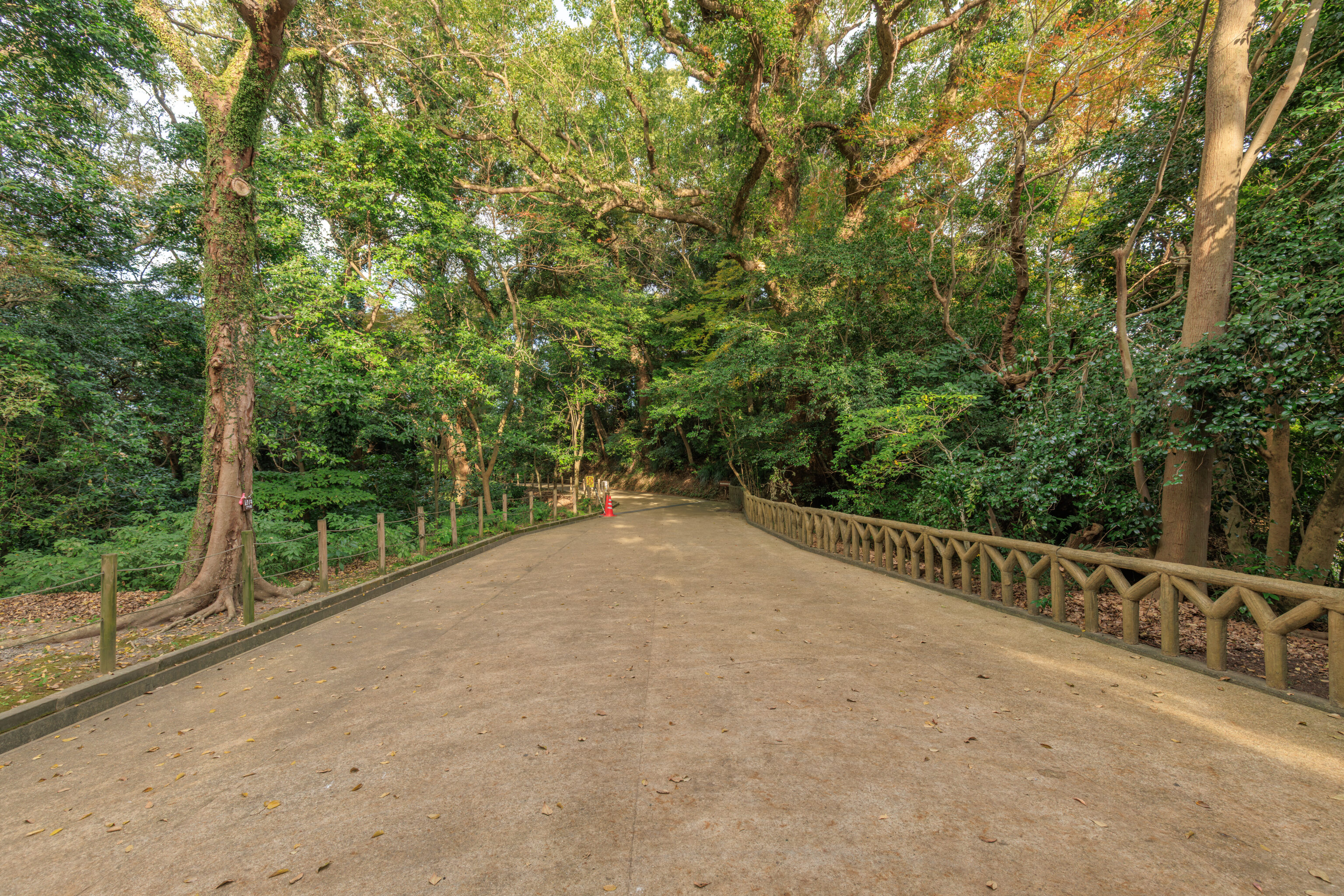
We began to walk back down, starting to the northeast along a wide path.
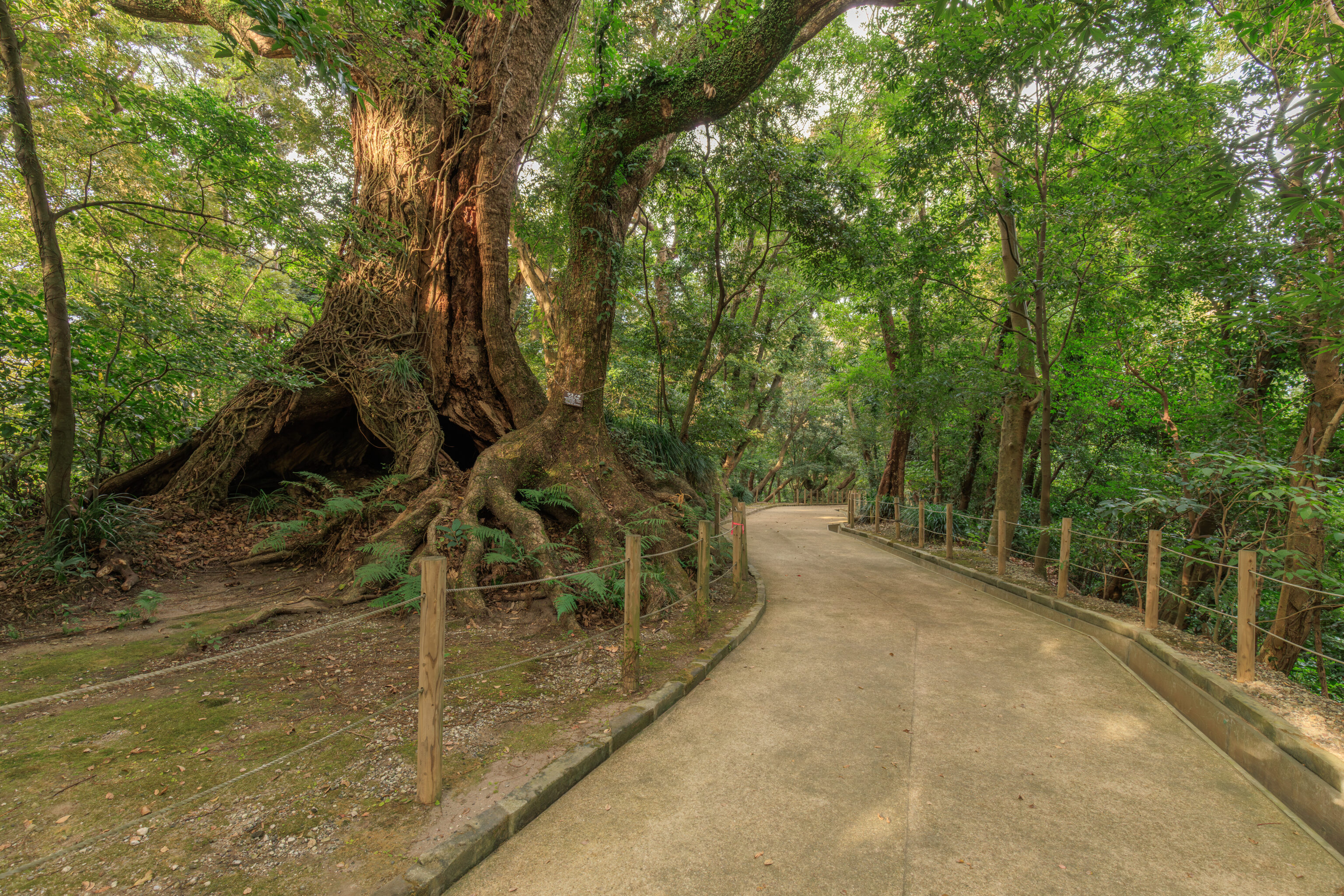
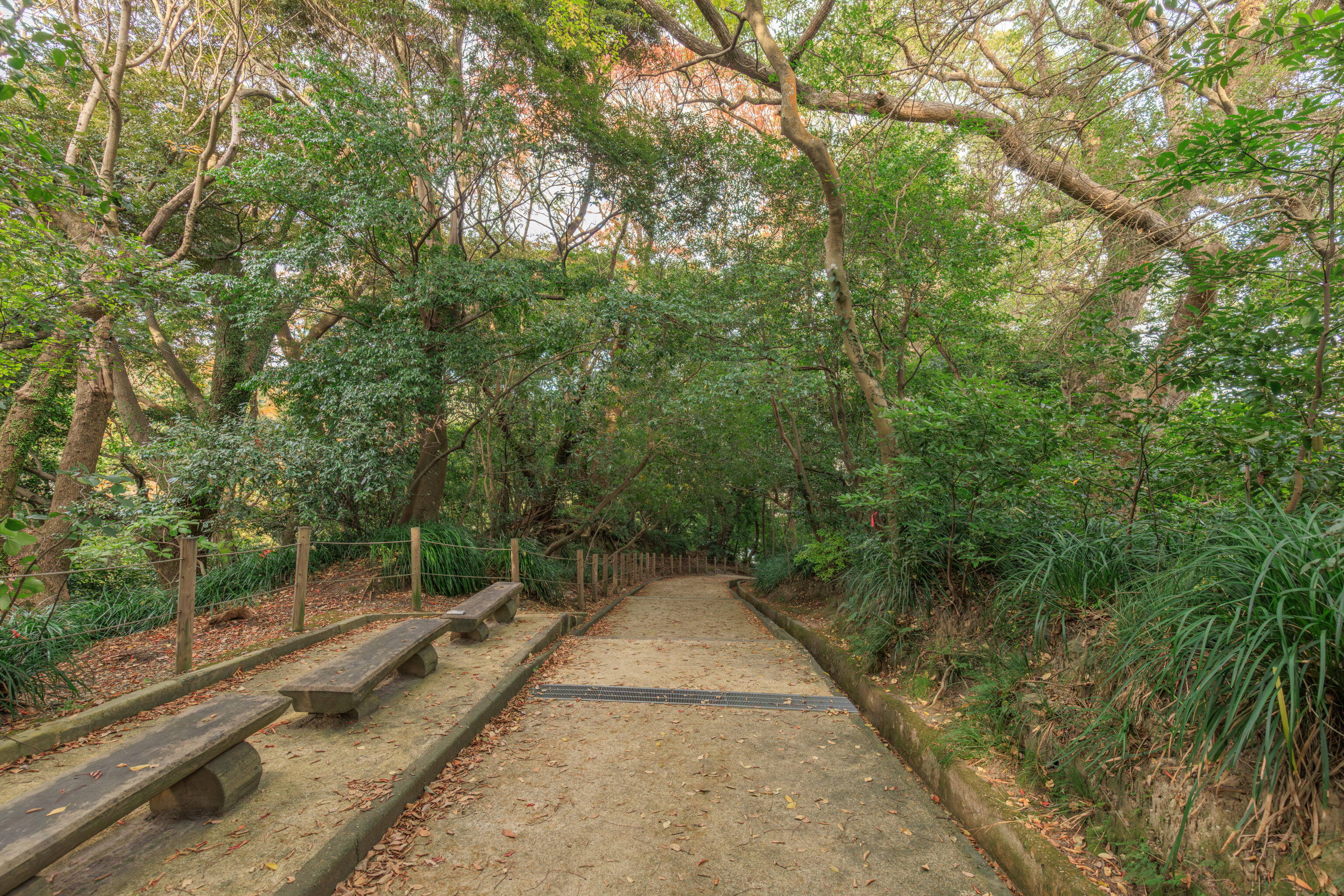
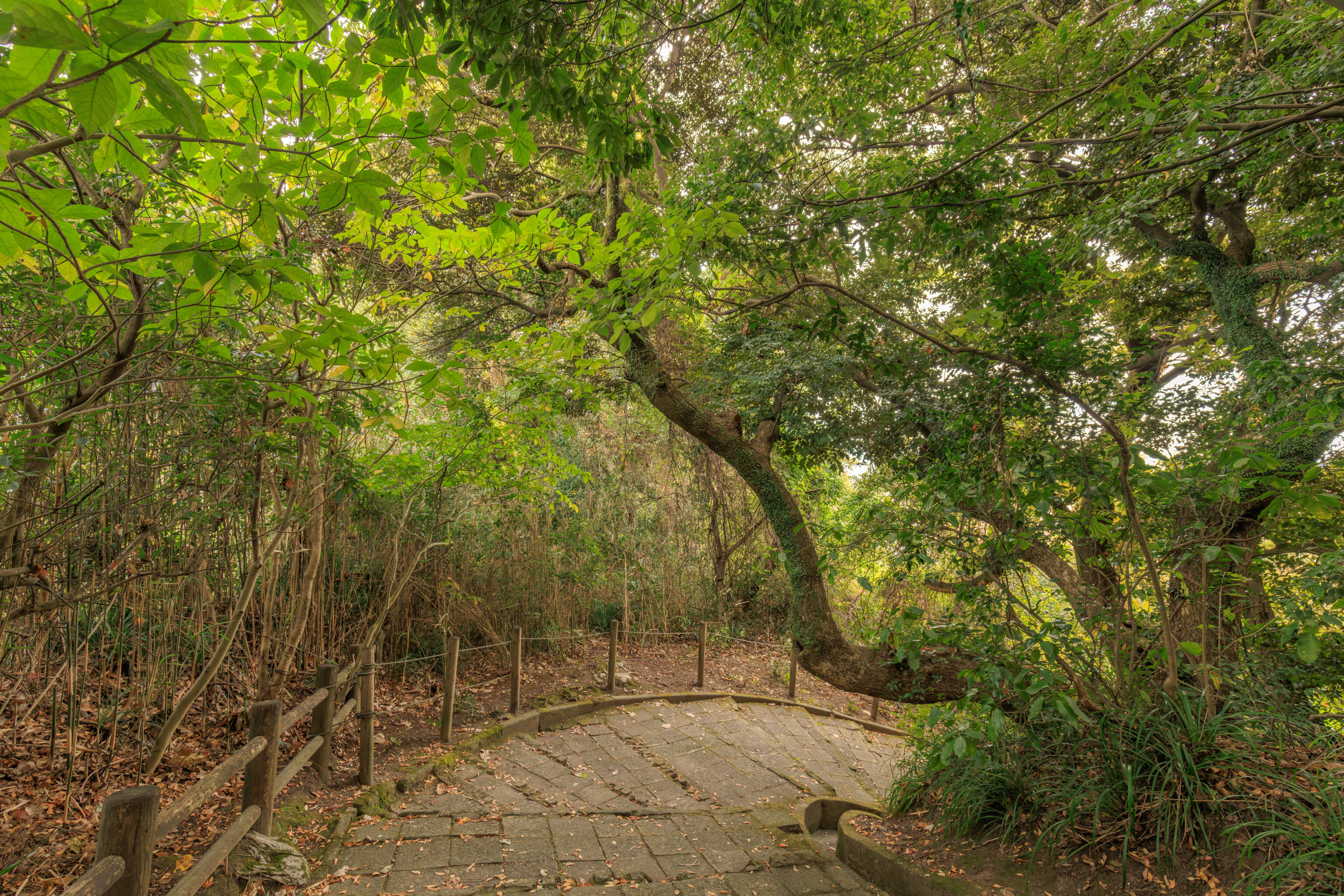
The path began to narrow and at times descended steeply.
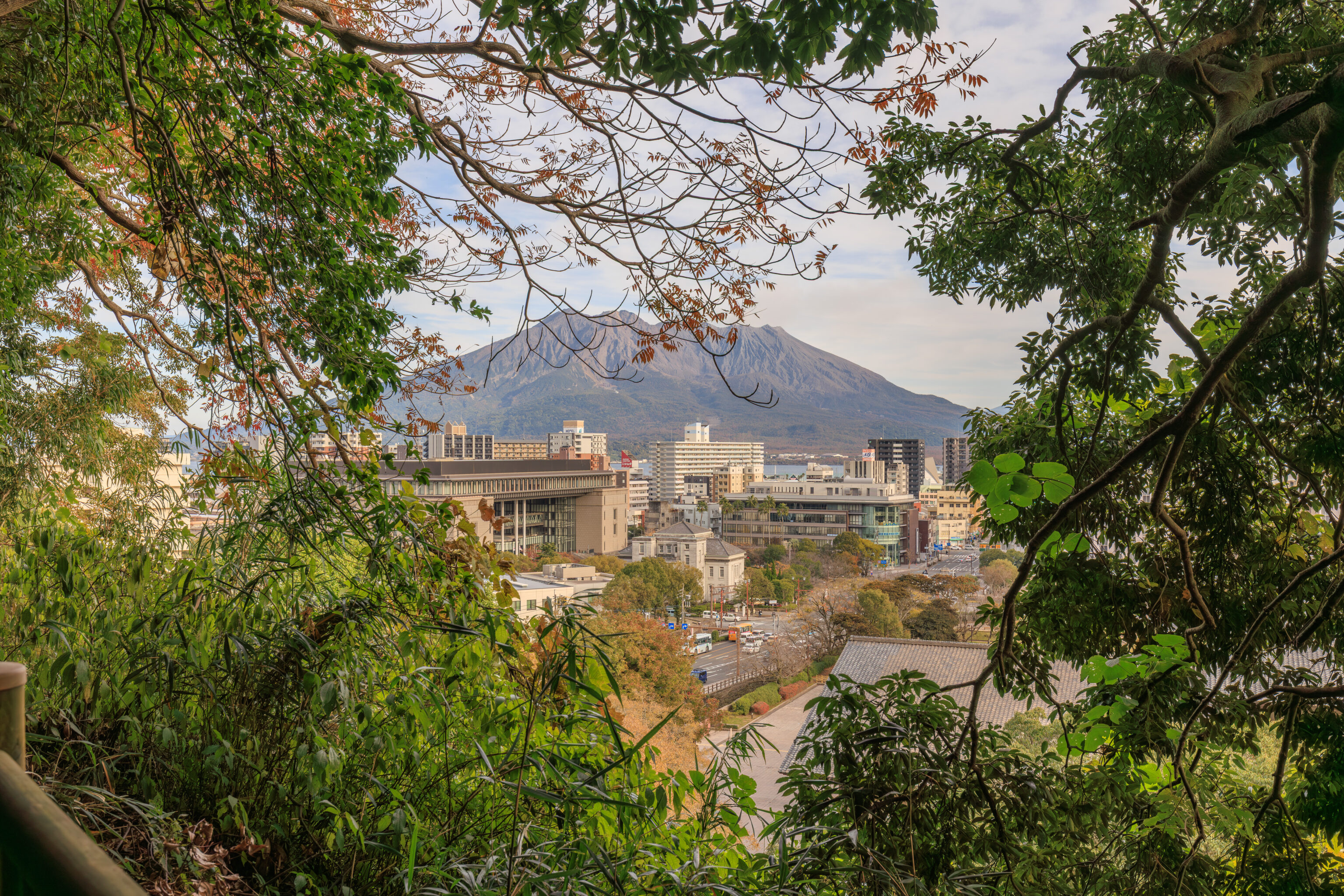
It was mostly heavily forested, although we did catch a glimpse of Sakurajima.
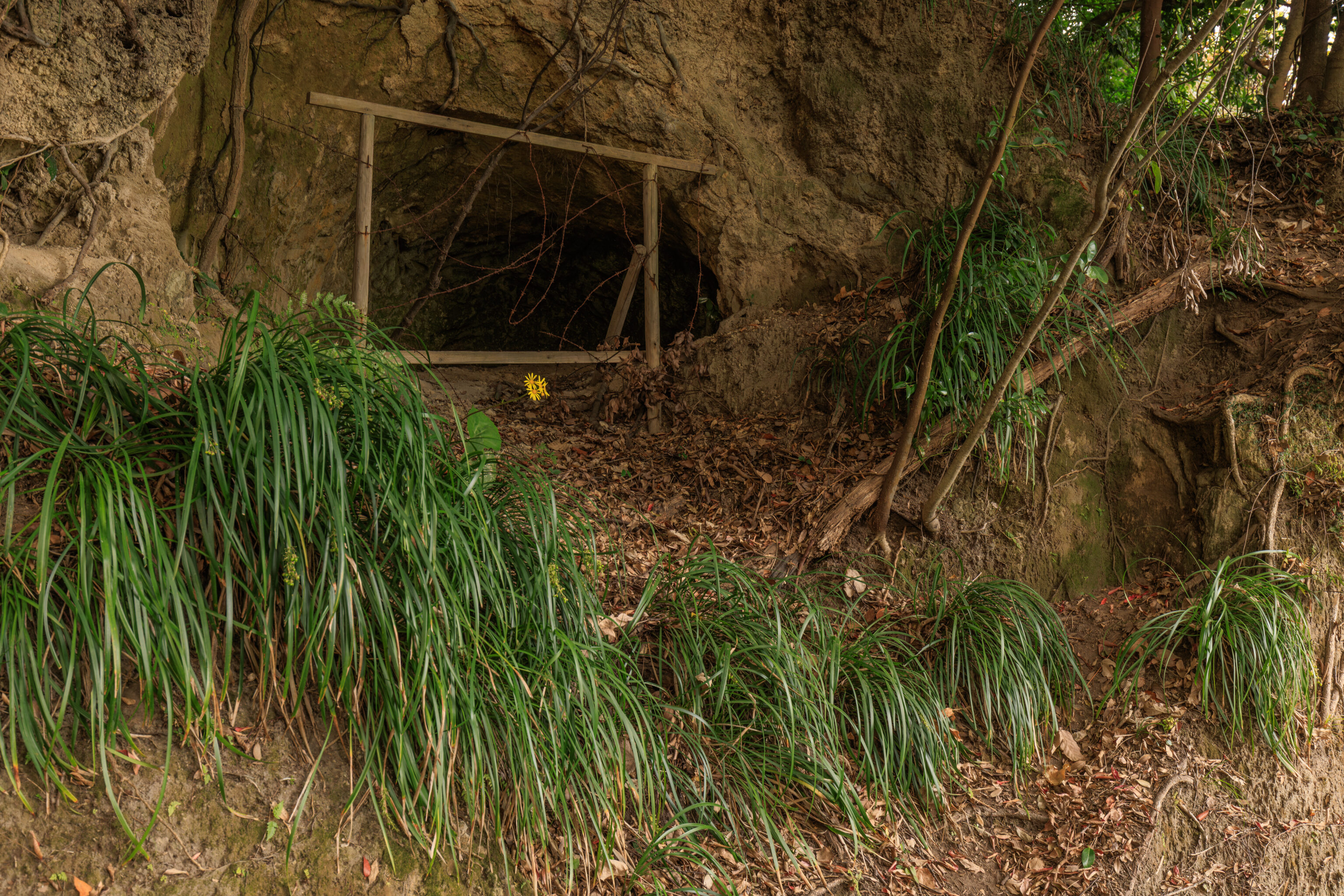
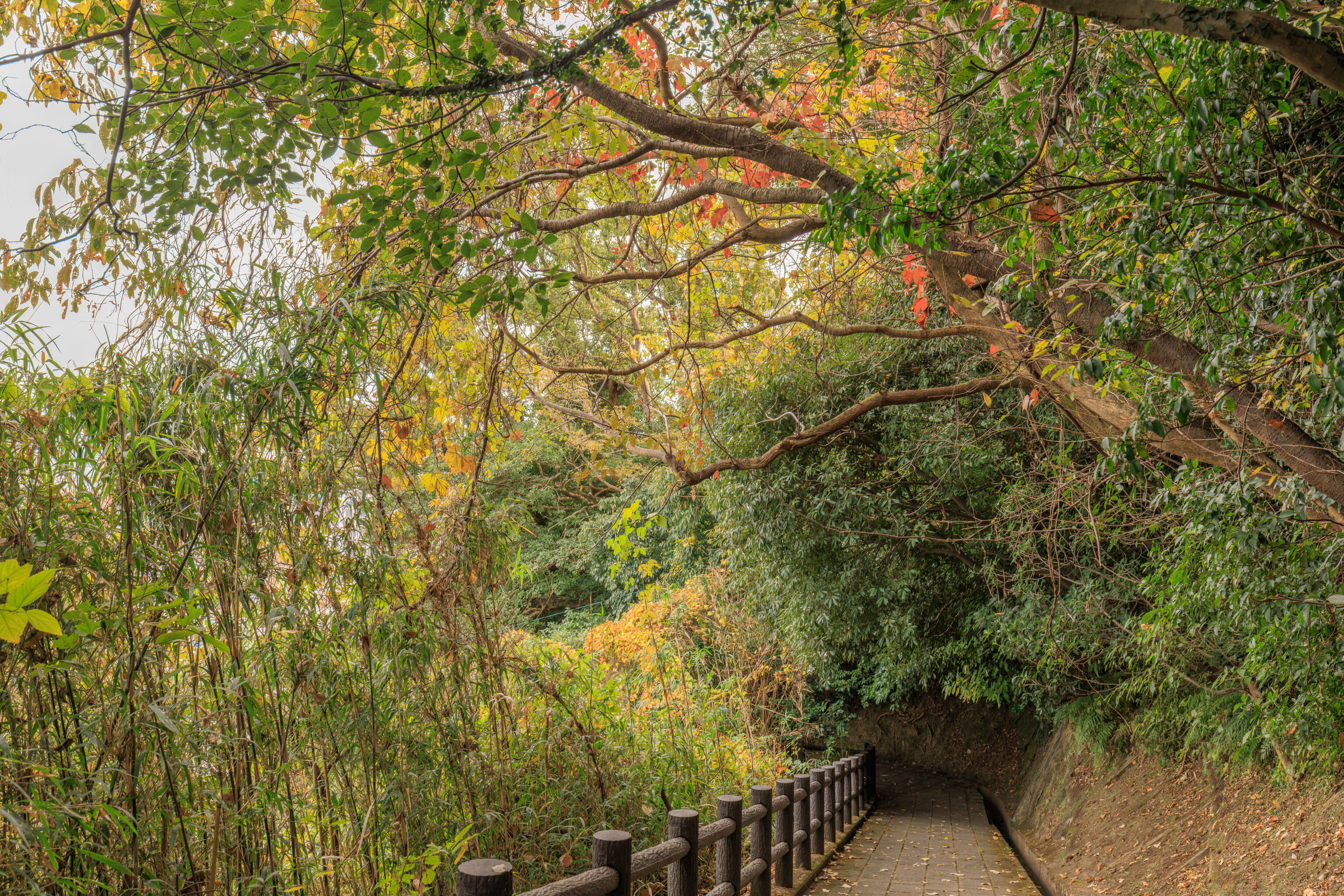
We continued on…
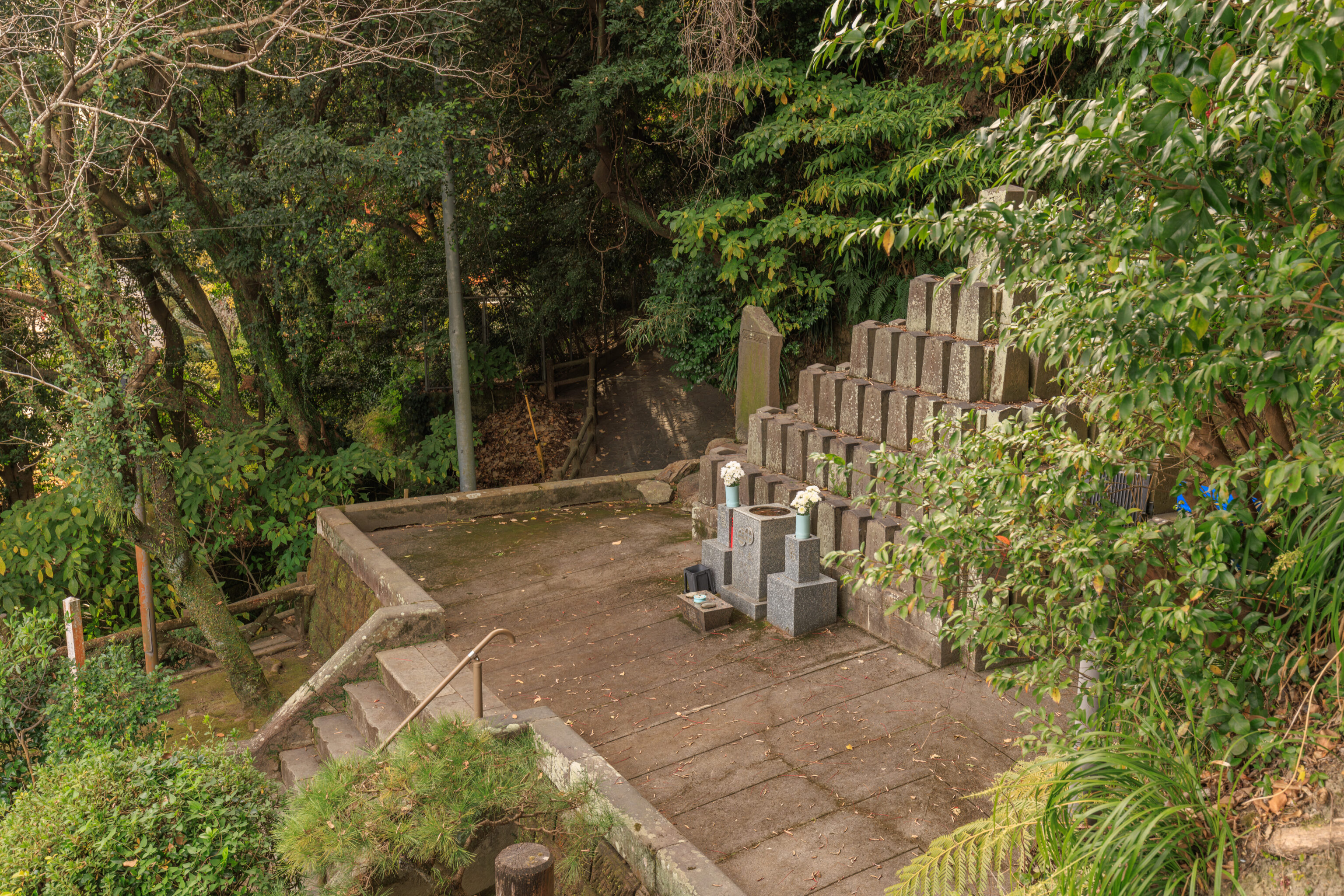
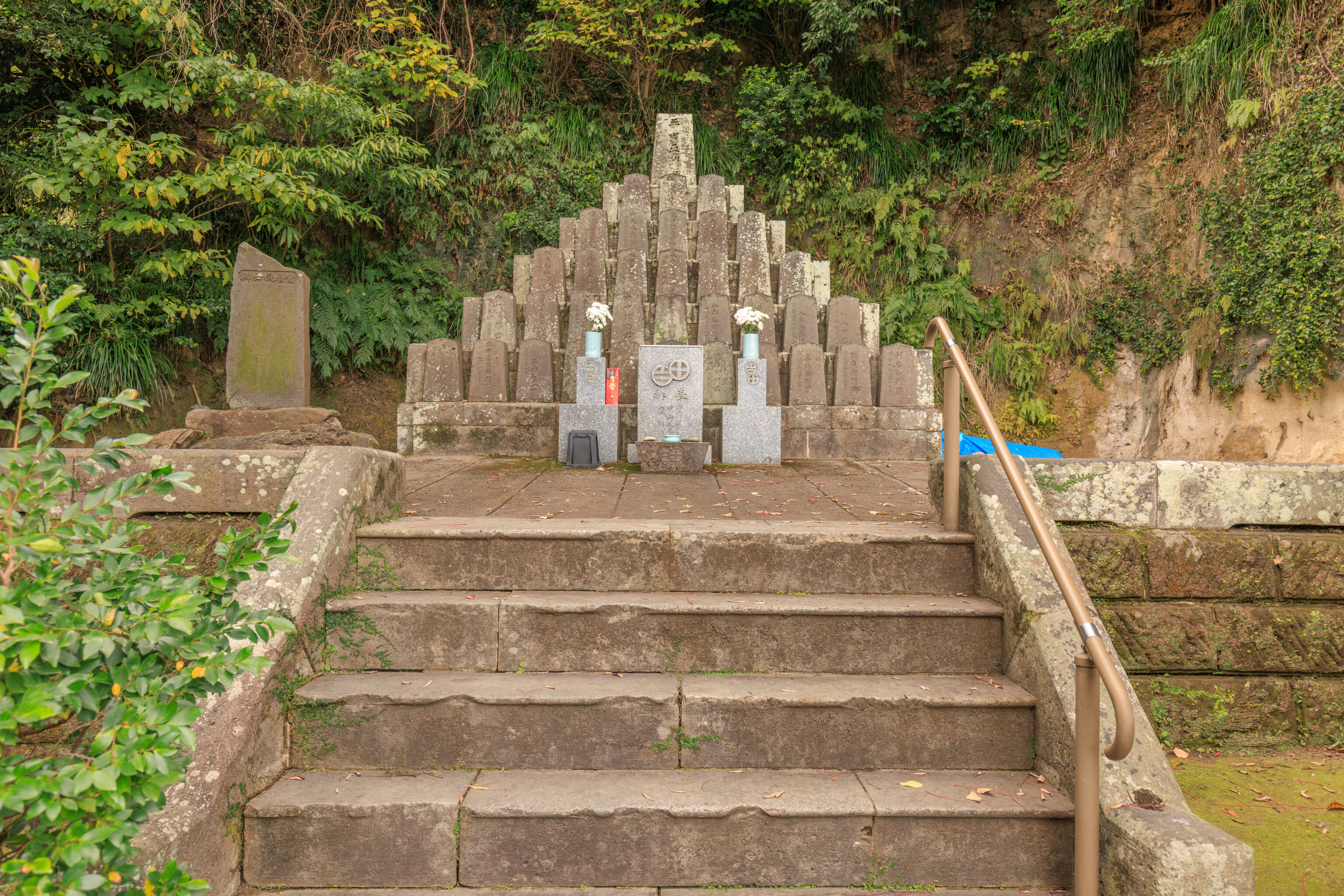
It took a bit less than 20 minutes to reach the Satsuma Retainers Monument at the bottom. We actually saw this monument from the bus stop earlier. It is dedicated to 84 Satsuma Domain workers who died in what is now Gifu Prefecture while working on a project to build an embankment on the Kiso River.
THE FAITHFUL RETAINERS OF SATSUMA WHO, ACCORDING TO THE TRADITION, MIGHT HAVE BECOME GODS

... Upon the Human Sacrifice of Eighty People, the Violent River Became Quiet ...

On the Kiso River in Gifu Prefecture there is a shrine dedicated to the hard working retainers from Satsuma who successfully completed the desperate task of embanking the Kiso River (Gifu Prefecture) in 1755. "Chisui Shrine" is another name for it and even today many visitors visit and worship at the shrine in appreciation of the great work carried out by the people from Satsuma (modern day Kagoshima).

The Nobi Plains, parts of which stretch across Aichi, Gifu, and Mie Prefectures, are now a rich agricultural area but they used to be known as a land of disastrous floods these floods being caused by the confluence of three rivers, the Kiso, Nagara, and Ibi. In 1753, the Shogunate ordered the Satsuma Clan to construct an embankment on the Kiso River. In compliance the Clan sent 1,000 workers led by chief retainer Hirata Yukie, who served as the general magistrate.

Hirata took a 220,000 Ryō loan from an Osaka merchant to start the work. However, the first levee built with much effort was destroyed by the rising the Kiso River during the rainy season. Uncooperative and oppressive government officials and an epidemic disease made things even worse. Some died from disease or accident, and others chose to commit Harakiri. Finally, one year and thrée months after, with 84 humnan lives having been sacrificed, the construction was completed. The total construction cost reached 400,000 Ryo. When the work had been satisfactorily finished, the general magistrate, Hirata, took responsibllity for the expense and the terrible human cost by himself committing Harakiri.

The Satsuma Clan never pressed for acclaim for its great work, but much later, in 1920, this monument to console the spirits of those who had sacrificed themselves was built. Certainly these loyal retainers deserve the peaise they have received.
– Text from a sign, translated using Google.
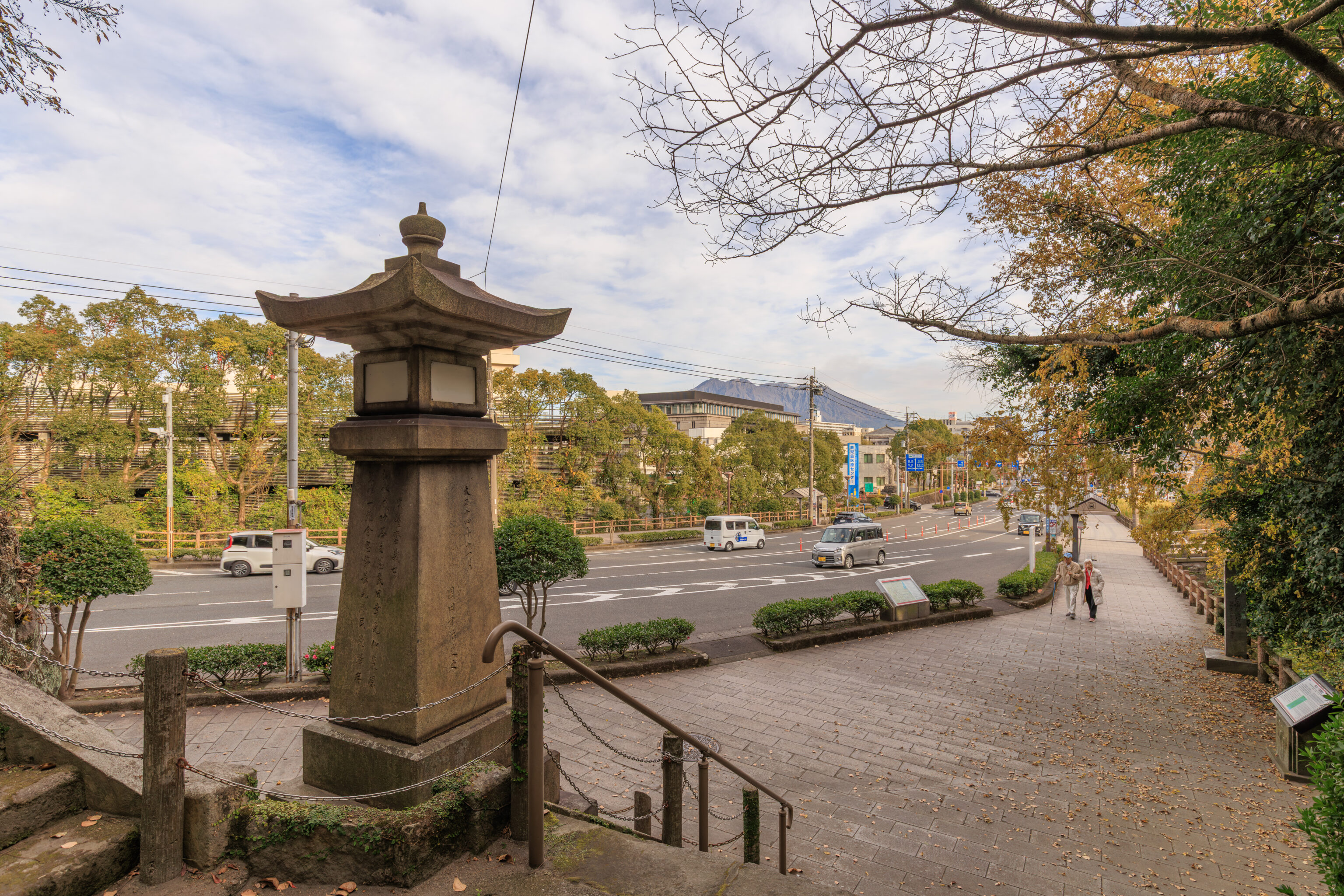
The view from in front of the monument looking to the south towards the Satsuma Retainers Monument bus stop.
Early Evening in Kagoshima
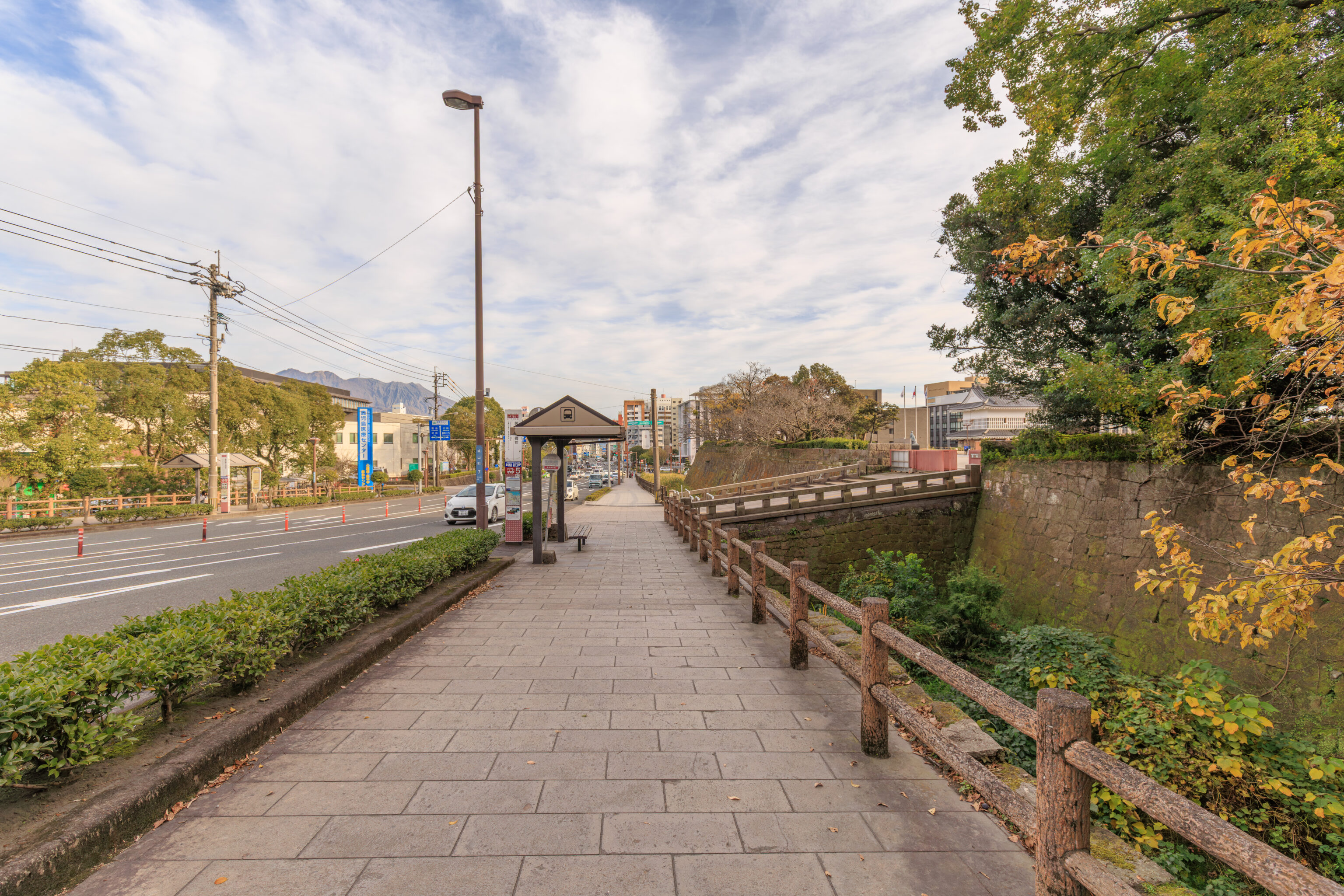
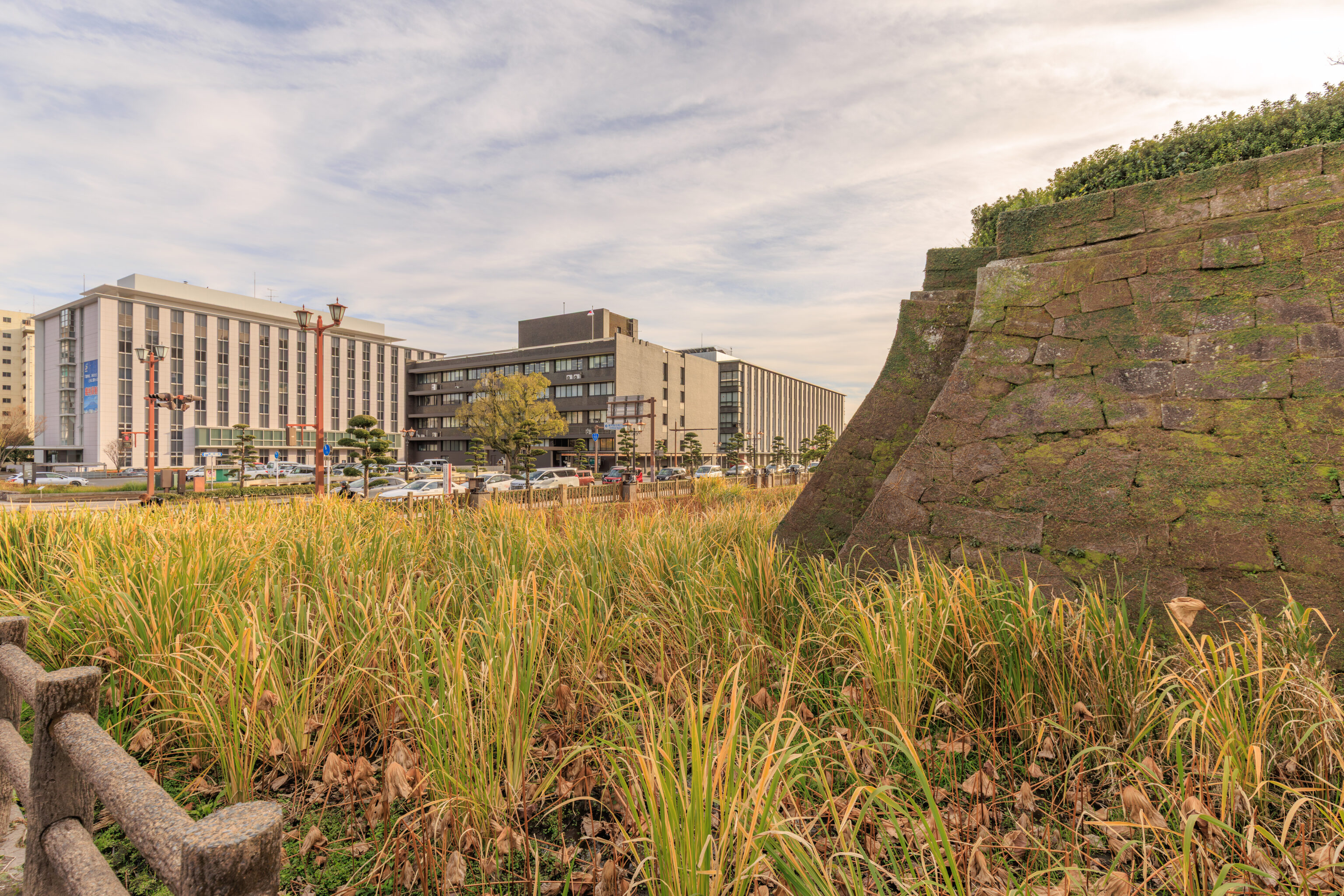
We walked past Kagoshima Castle to return to the tram line to take a tram back to Kagoshima-chuo Station. It was still pretty early so we decided to have an early dinner before returning to Hakata.
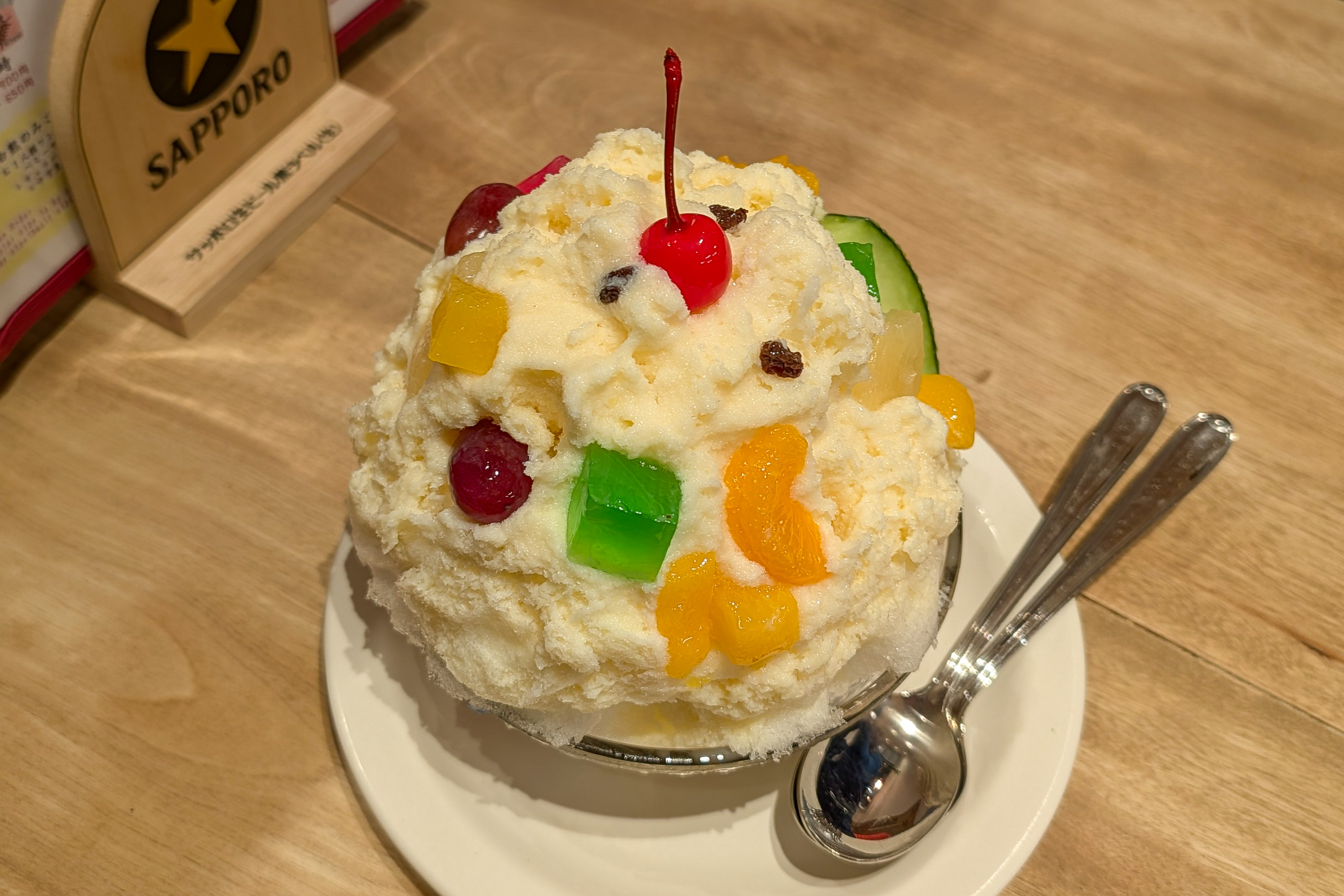
Upon reaching Kagoshima-chuo, we decided to start with a snack. We visited the Tenmonkan Mujaki location within AMU Plaza. This restaurant invented the Shirokuma (Polar Bear) shaved ice dessert. It is topped with condensed milk and a few colorful toppings. It was pretty decent, although definitely not the best dessert of this type that we’ve had.
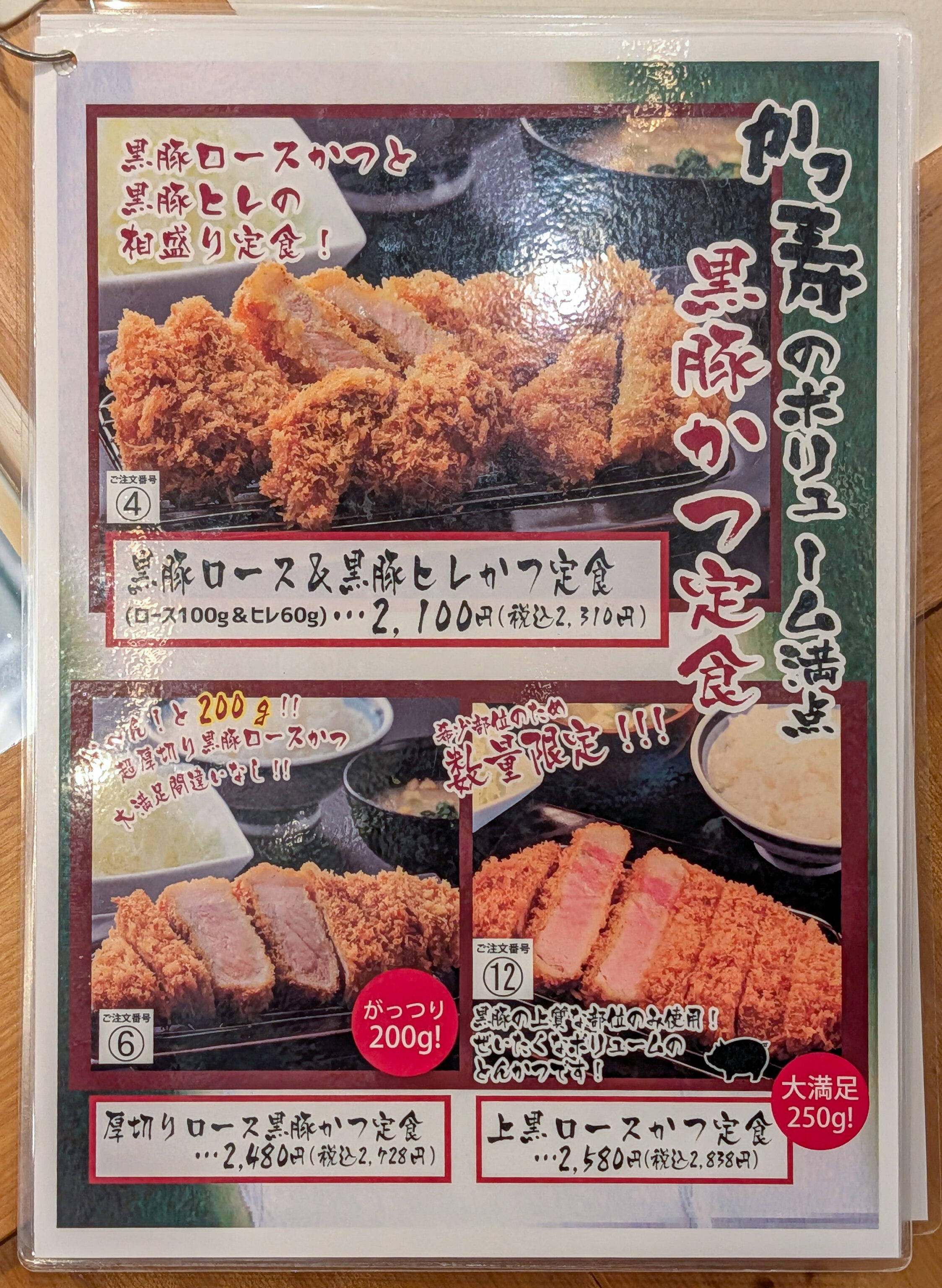
Afterwards, we visited かつ寿 Katsuju, also within AMU Plaza, for their tonkotsu with local pork. Unfortunately, they were out of the premium Kagoshima Kurobuta pork options!
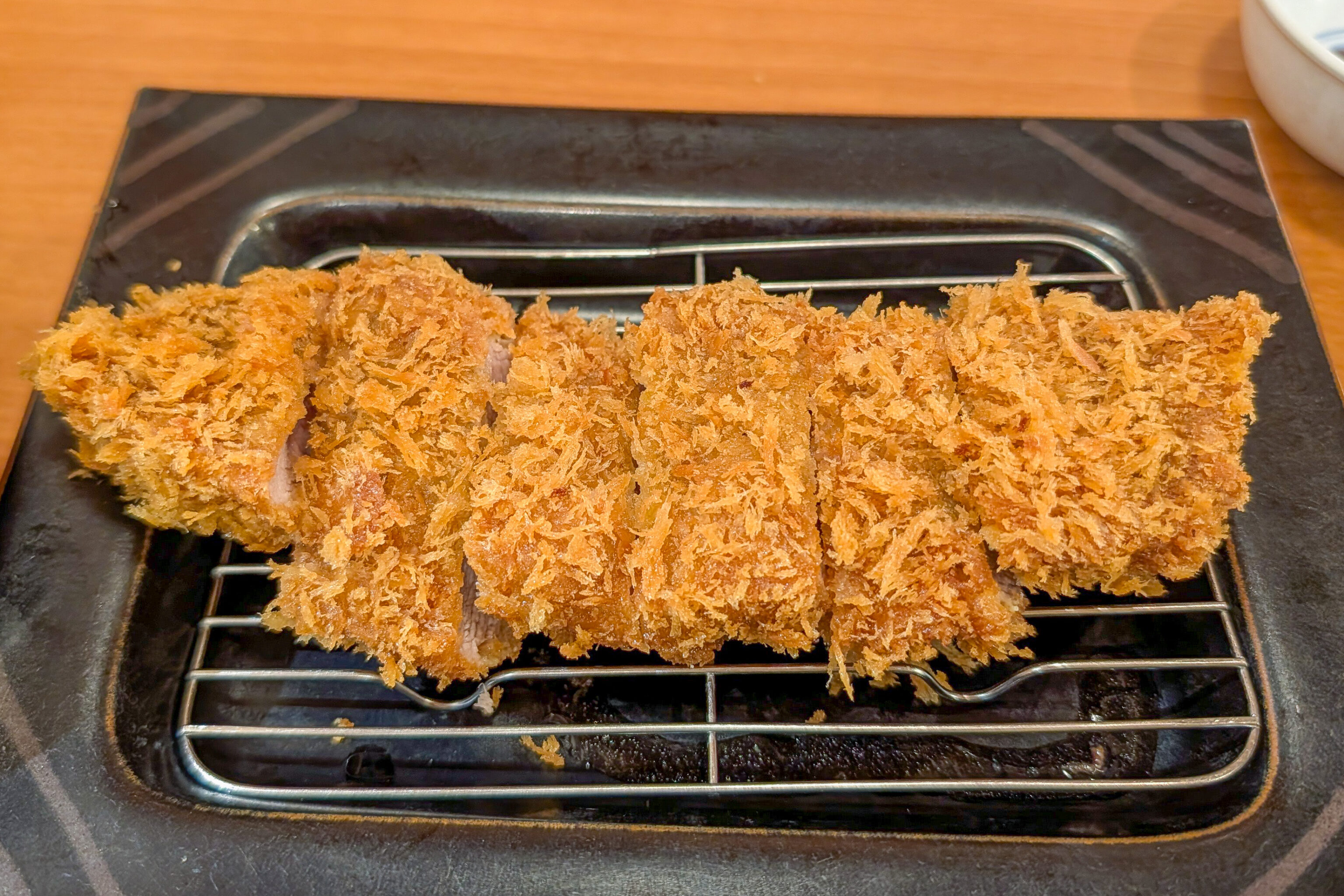
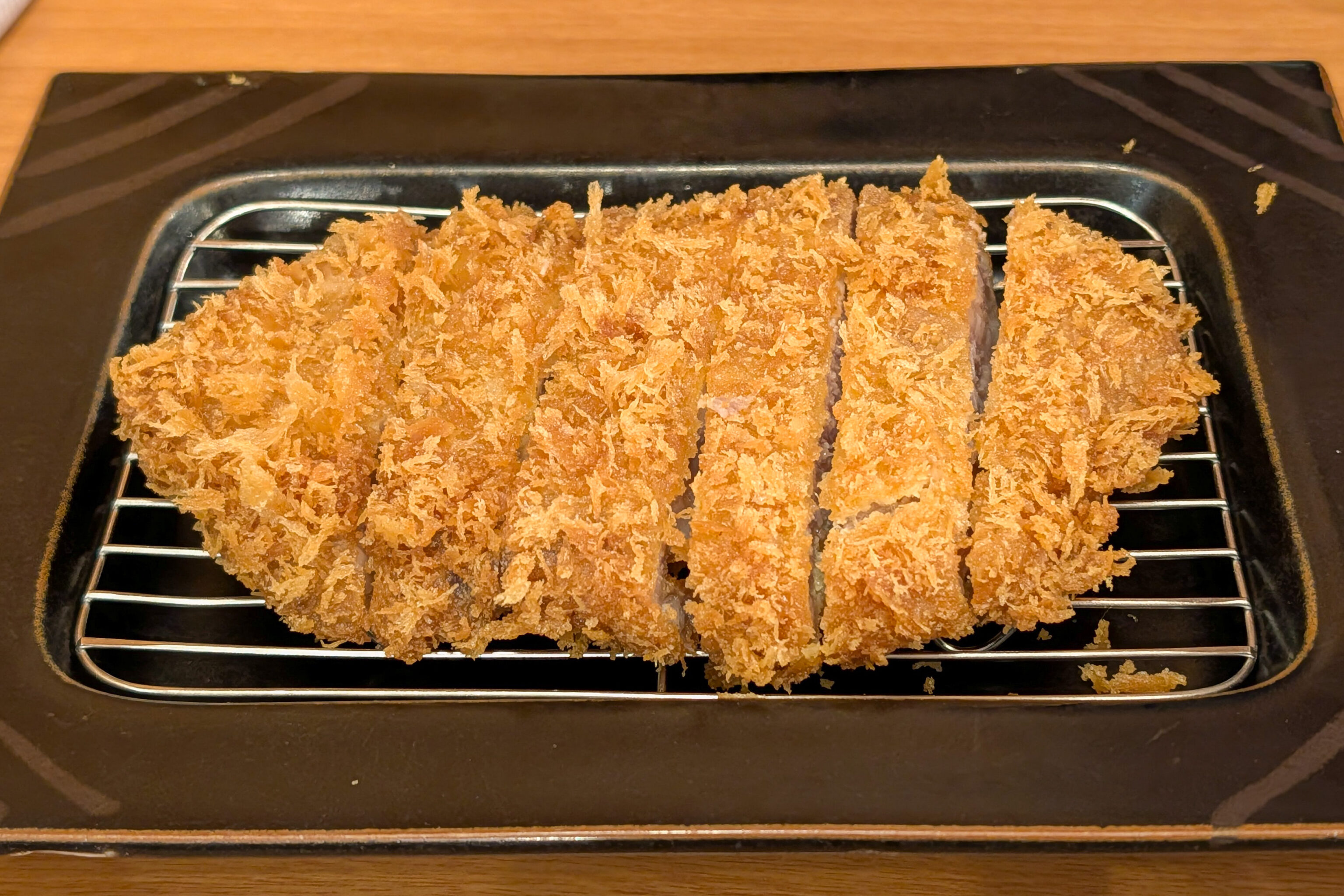
We went for the regular Kagoshima Kurobuta rather than the non-Kurobuta pork. The tonkotsu was pretty good, definitely better than with standard pork. We’re not sure we can really tell the difference between Kagoshima Kurobuta pork and Kurobuta from other regions though.
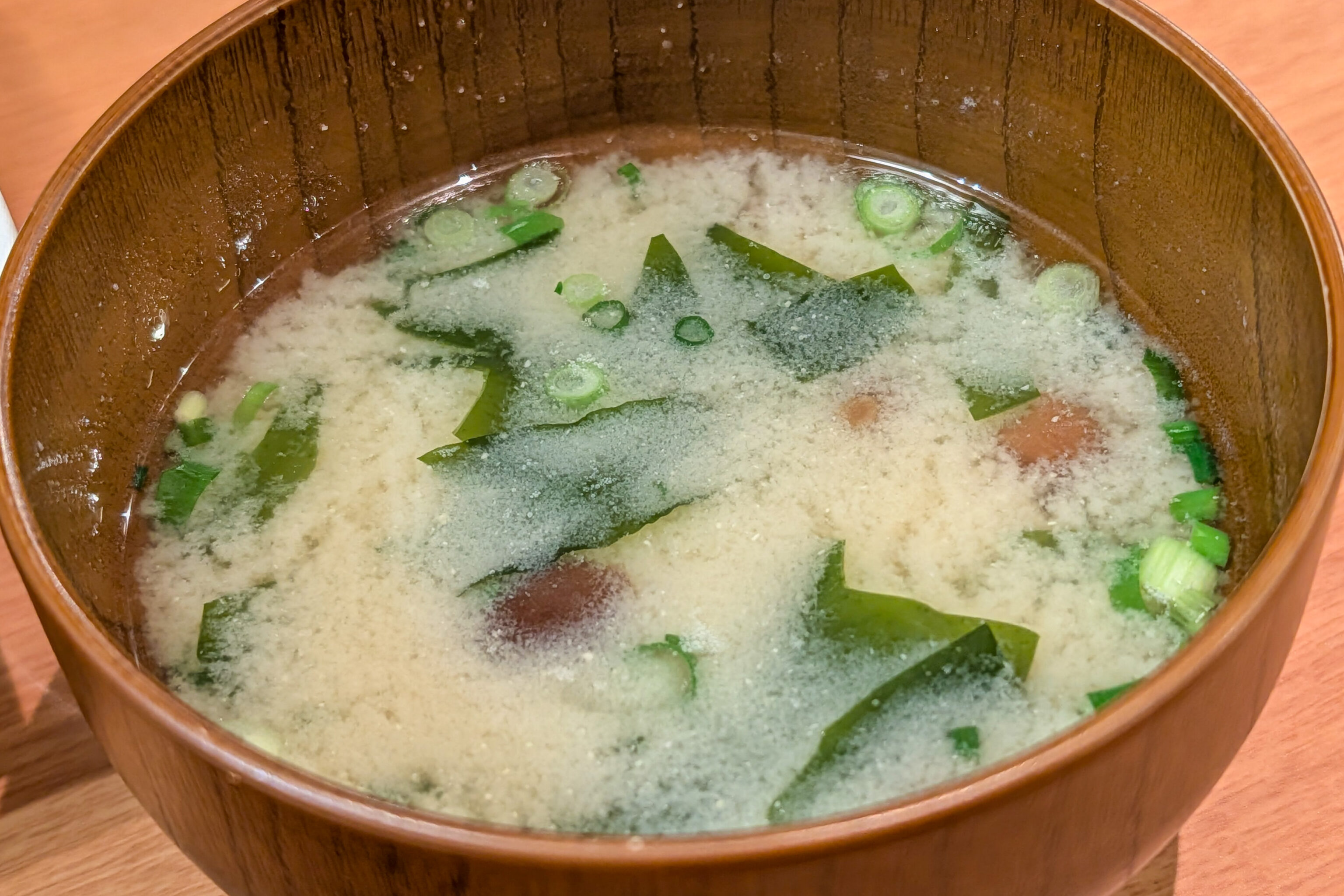
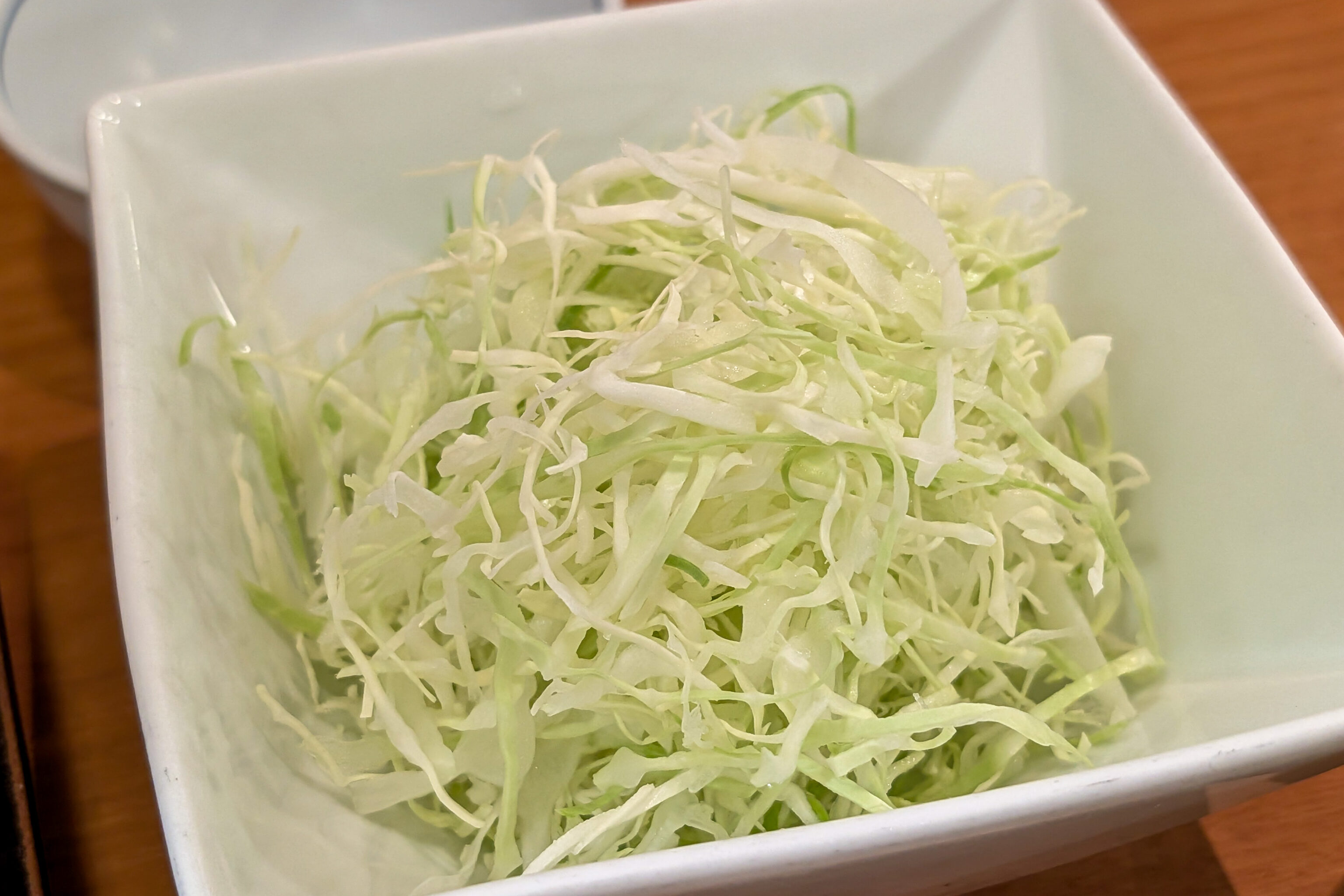
The dishes also included soup, salad, and rice. Pretty standard.
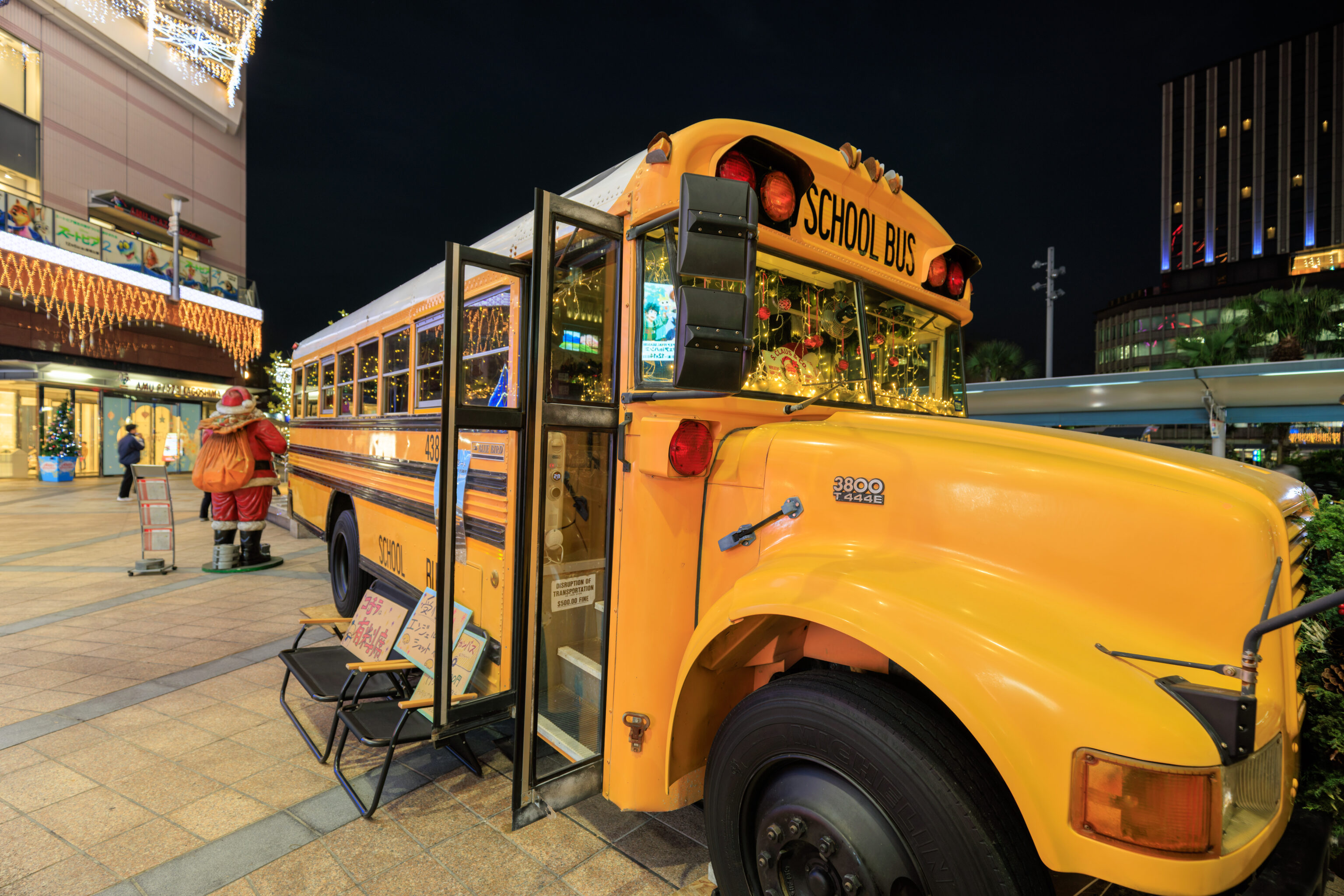
After dinner, we went outside to the plaza in front of the station. The school bus from Texas was open for business. It seems to be some sort of cafe.
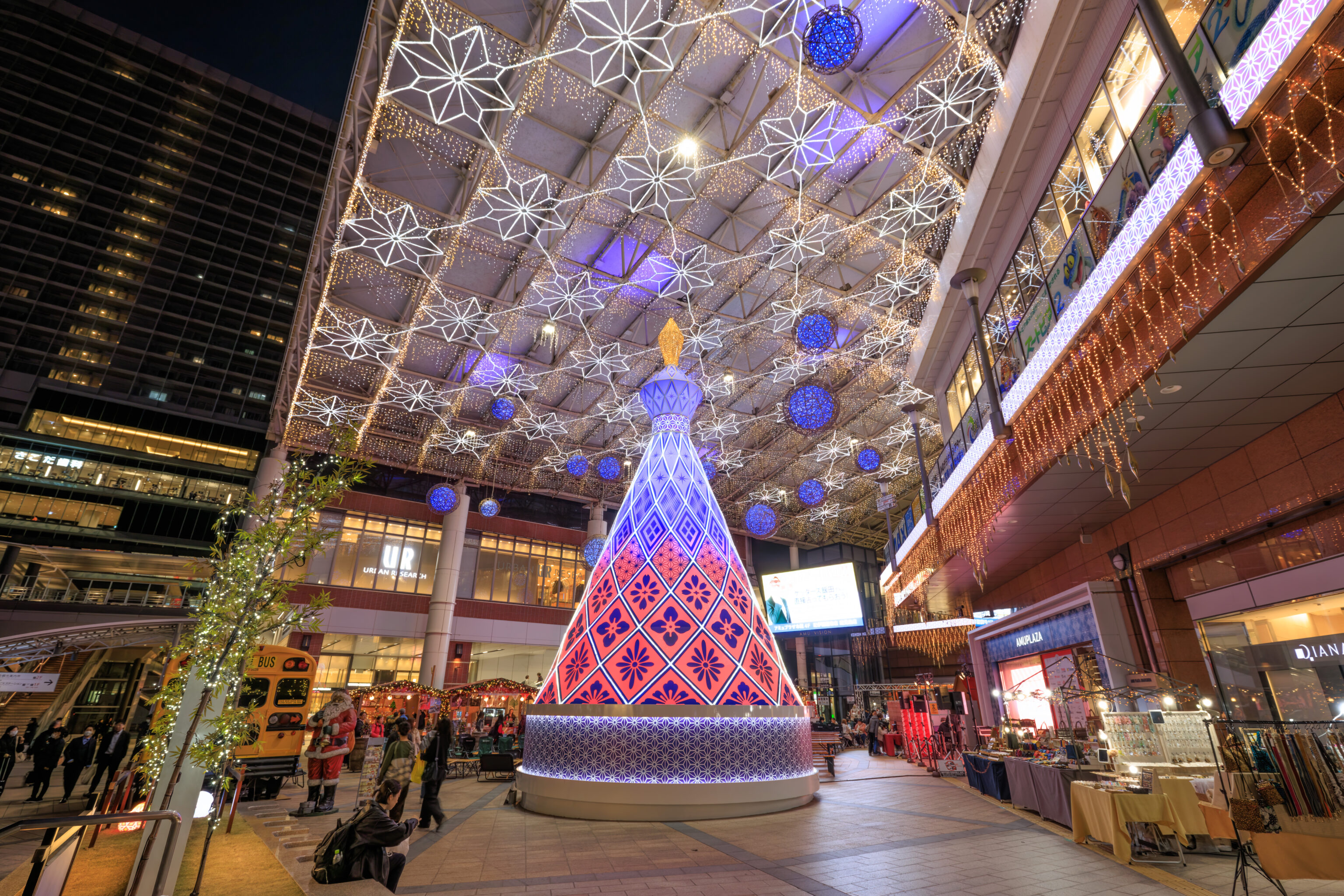
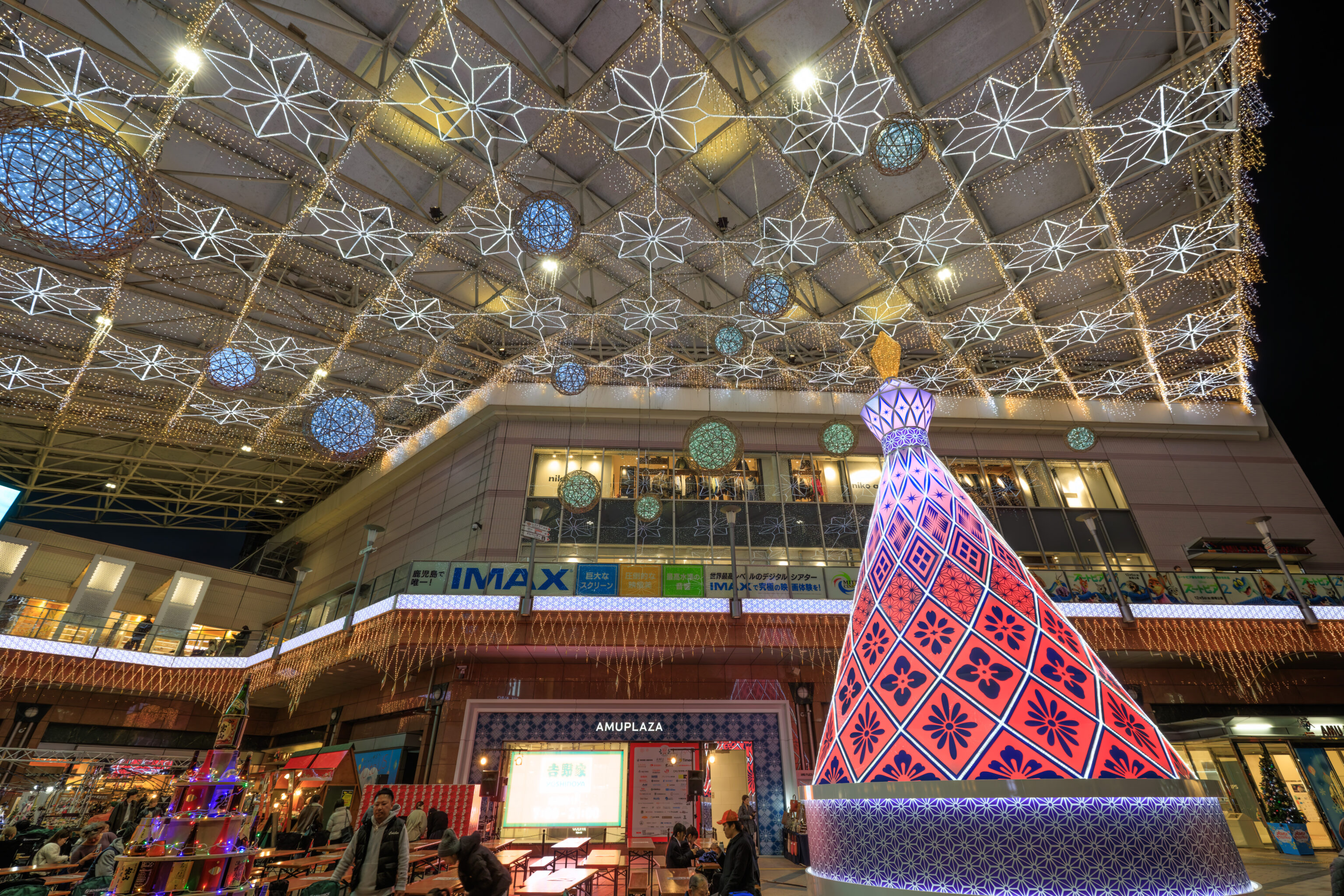
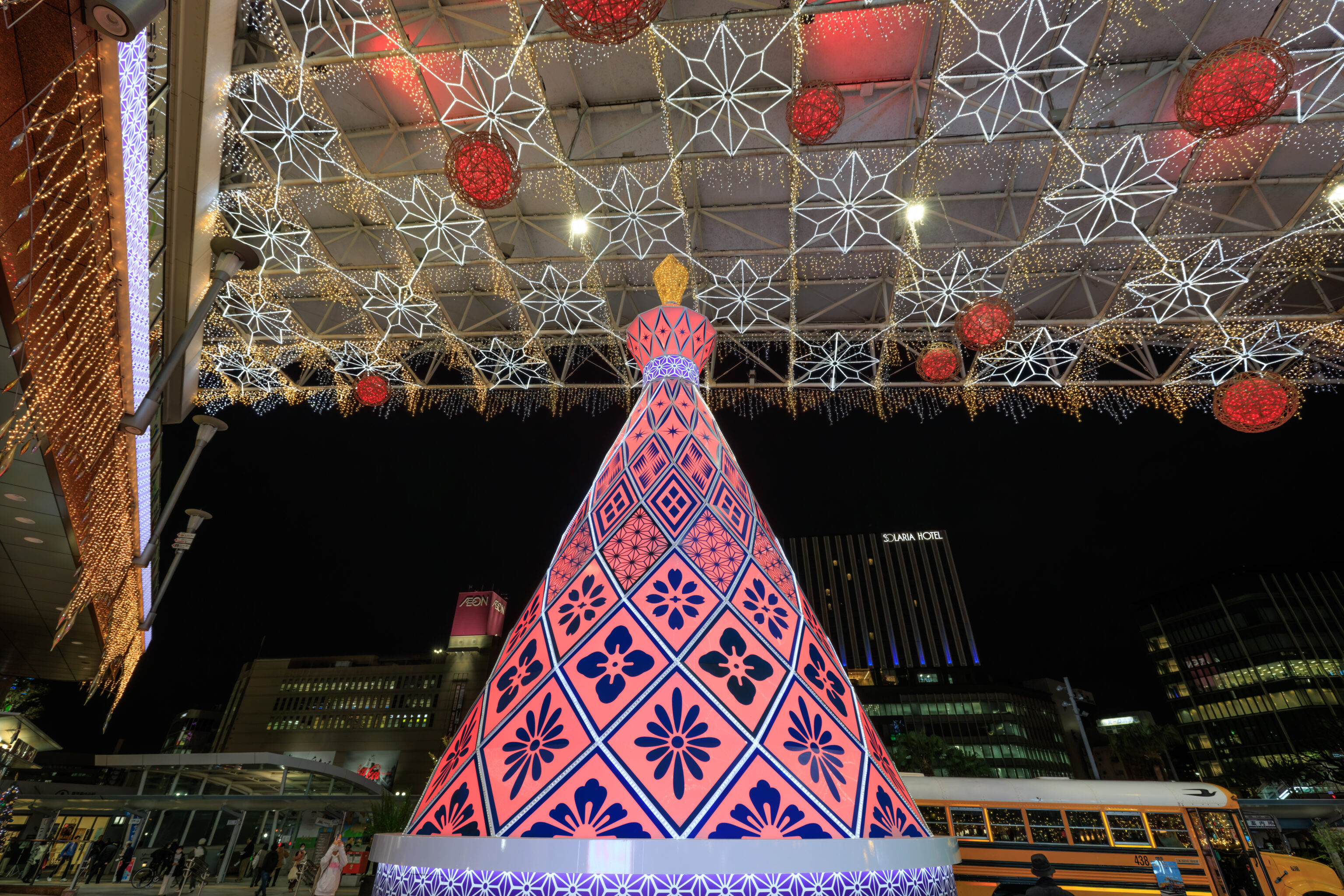
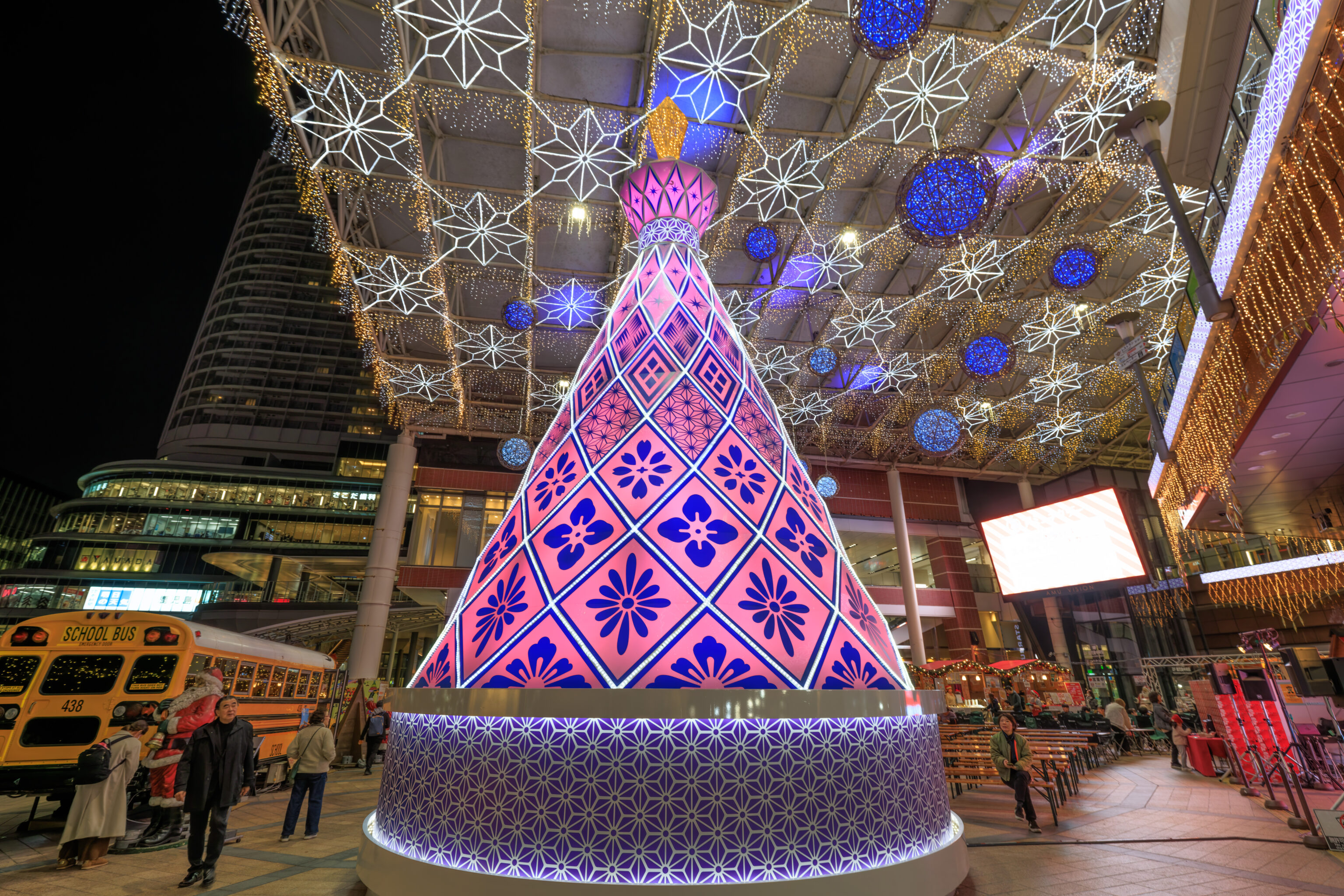
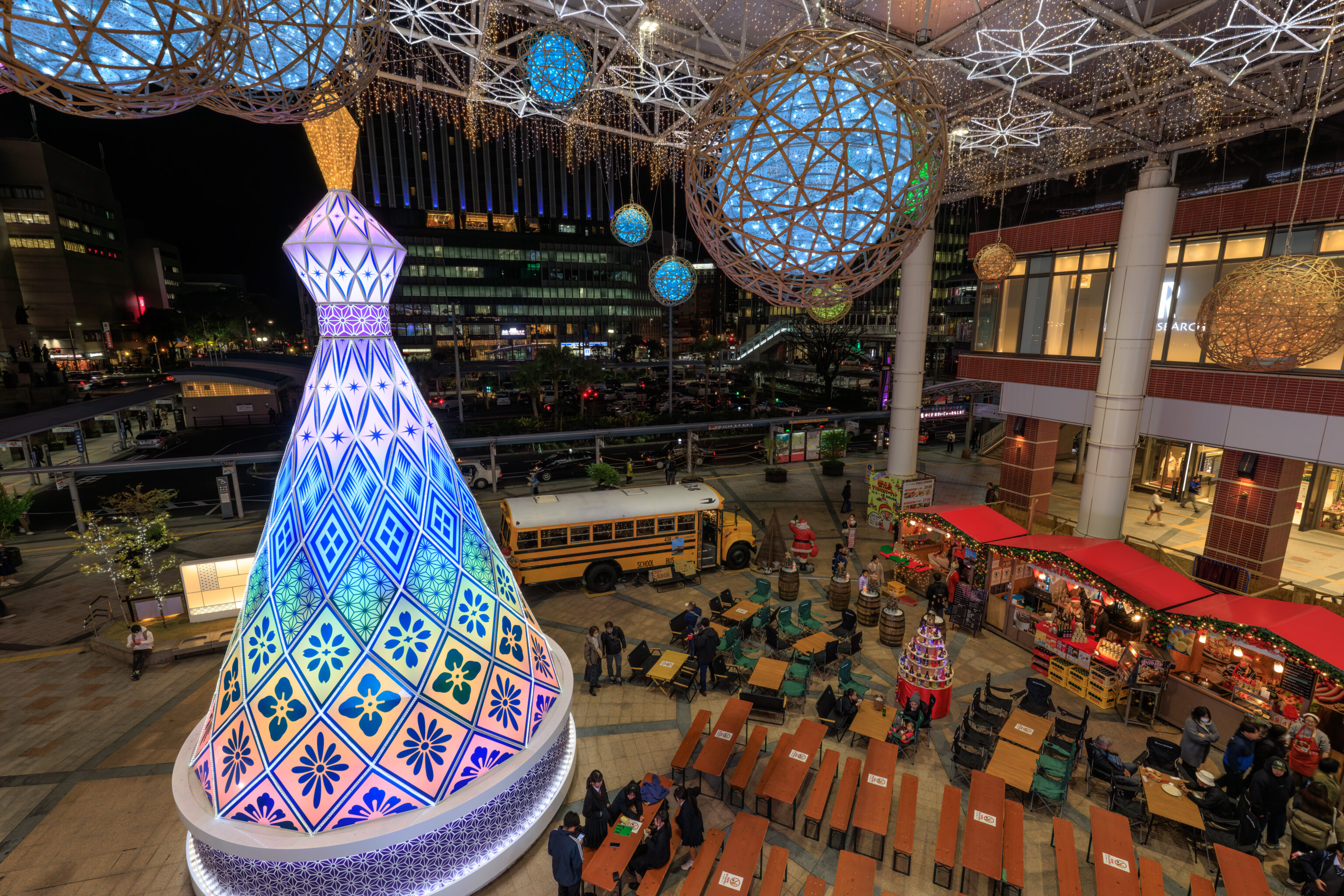
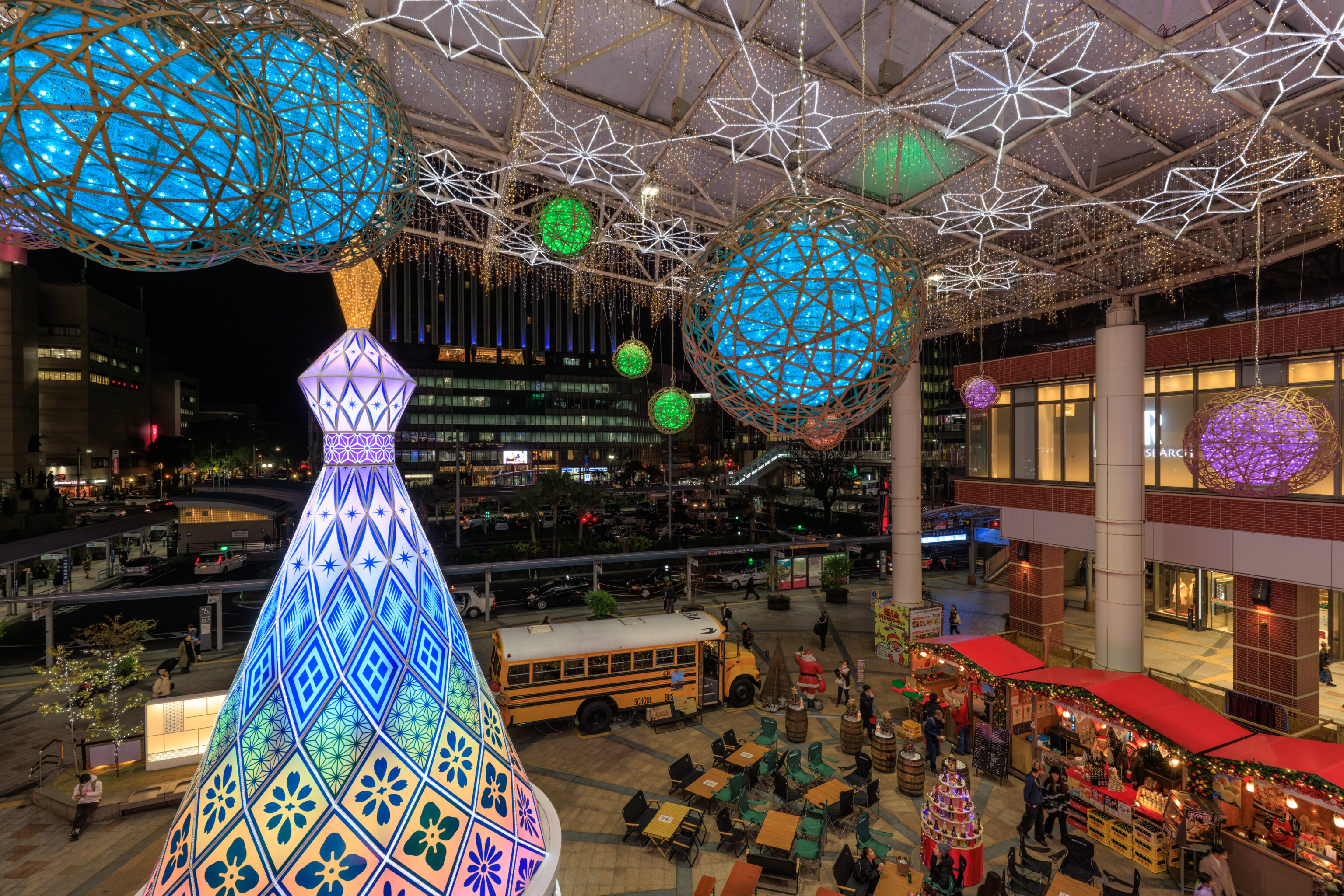
We also walked around the Christmas market and enjoyed the Christmas tree and other decorations with their changing colors. The actual market was pretty lackluster though.
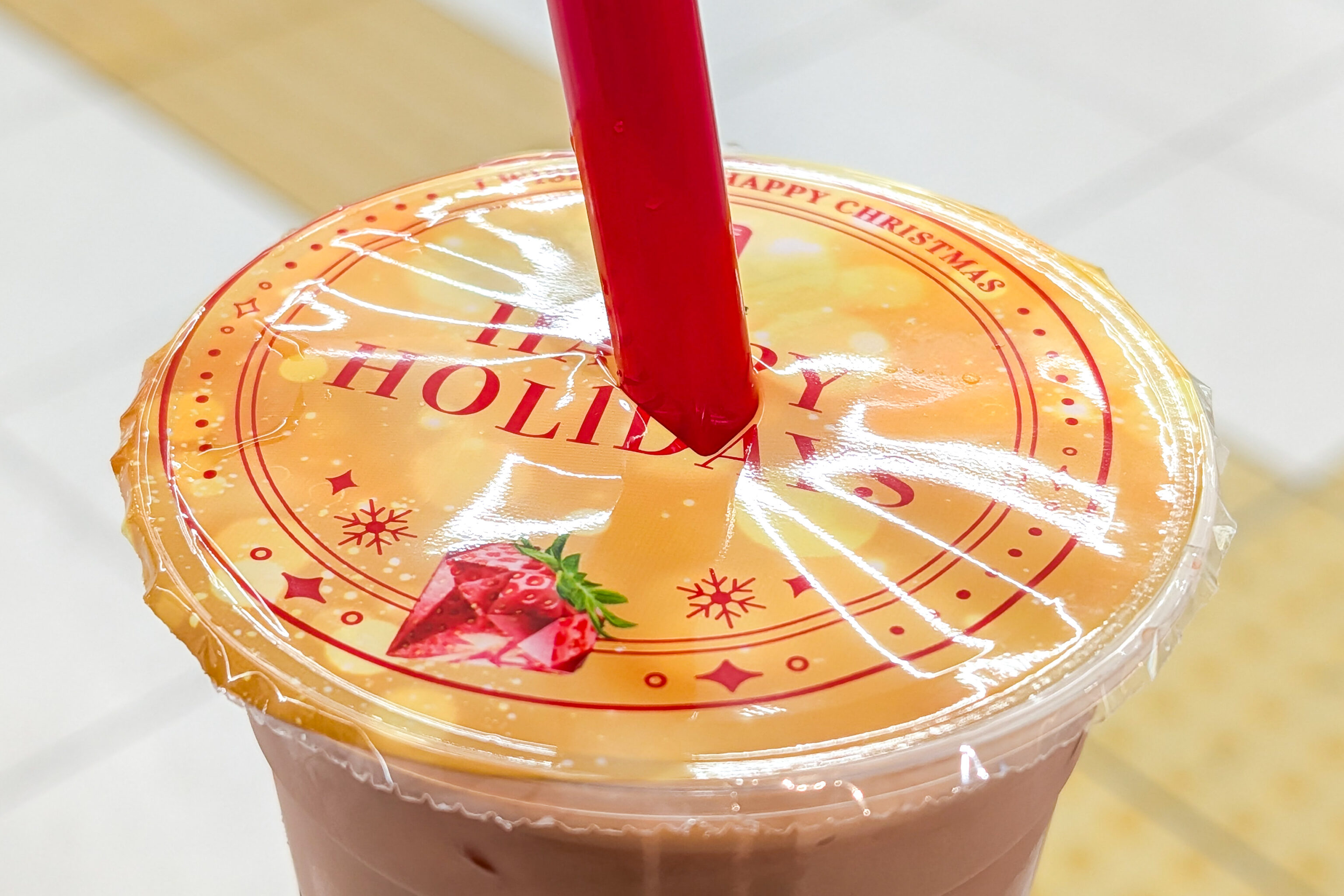
We also visited Gongcha within the station and got their Amaou Strawberry Holiday Milk Tea with added pearls. It was pretty good
Hakata Amaou is a brand name for strawberries from Fukuoka Prefecture, where we’re about to return to, and the Gongcha chain is originally from Kaohsiung but is now headquartered in London.
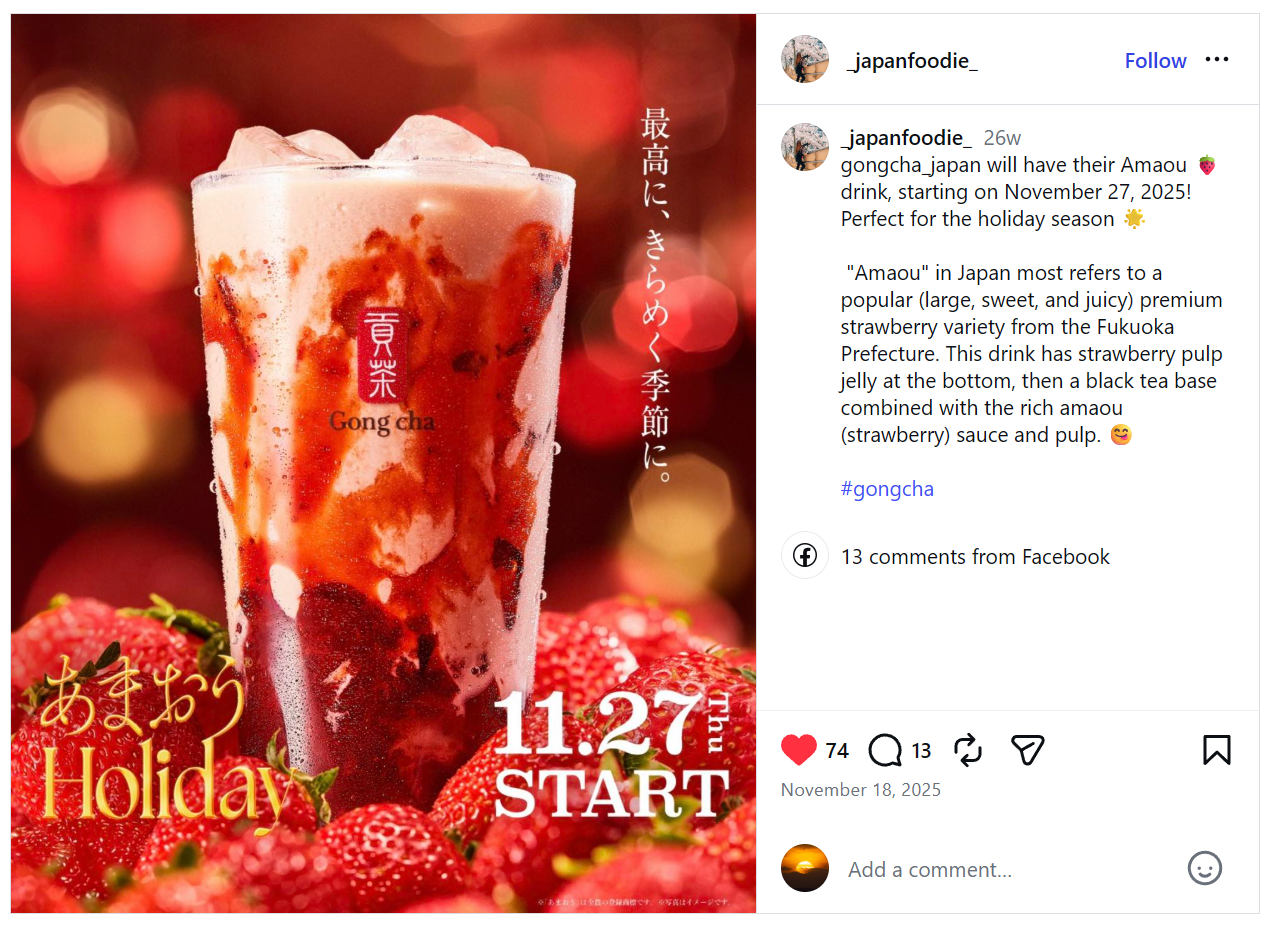
The drink looks quite beautiful on Gongcha’s promotional materials!
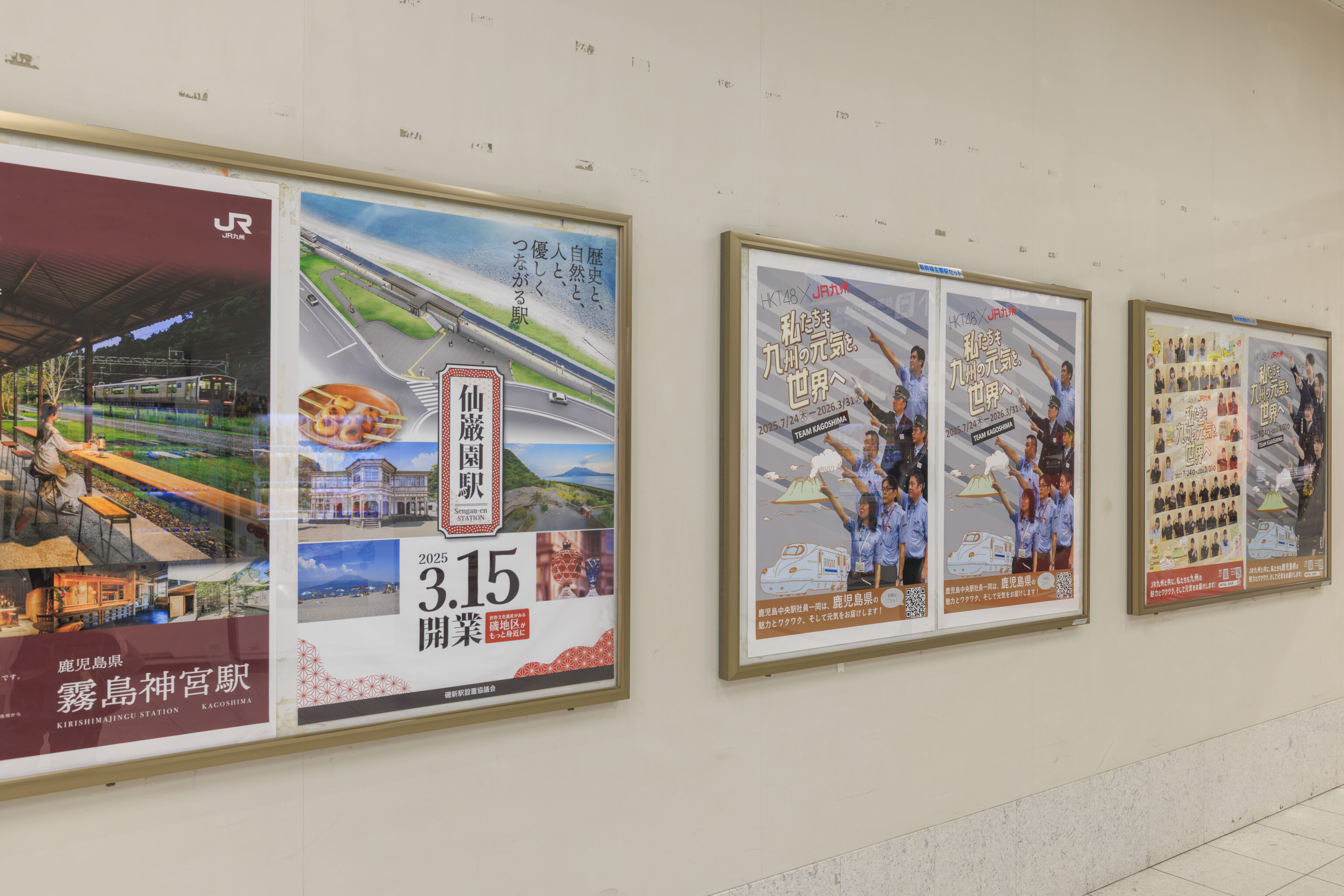
There were a number of JR Kyushu posters here. The 2nd from left features Sengan-en Station which just actually just opened in March! The small station did look pretty new but we didn’t realize how new it was!
The ones with the pointing JR Kyushu employees is for a collab with HKT48. HKT48 is a Japanese idol group based in Fukuoka.
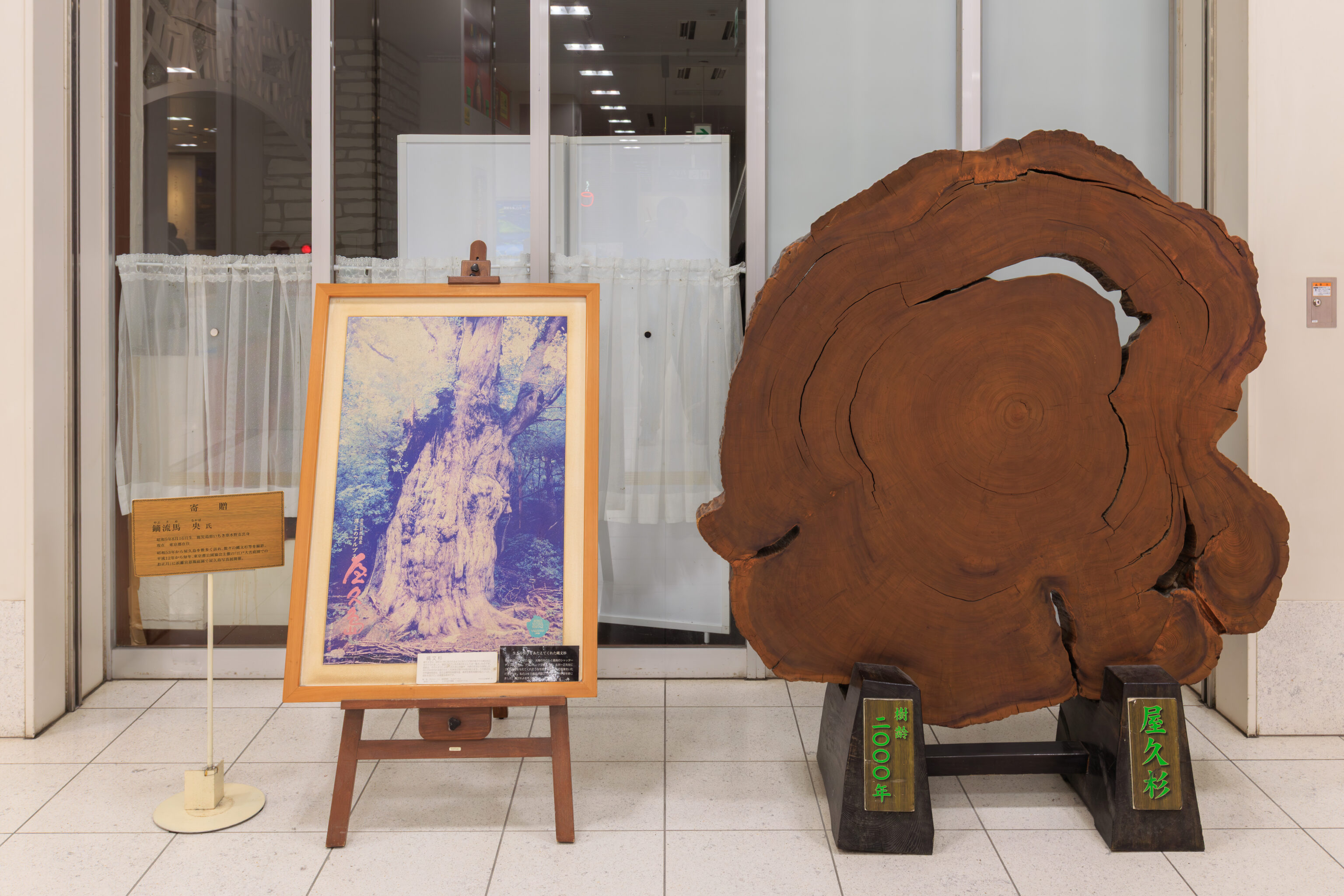
On the right is a slice of a 2,000 year old 屋久杉 Yakusugi (Japanese Cedar).
Jomon Cedar
The Jomon Cedar became known in 1966 and was named after the appearance of its trunk. It is the thickest cedar tree confirmed in Japan. There are various theories about its age, including a theory of 7,200 years based on its size, and a scientific measurement of 2,170 years based on a section taken from the inner cavity. This surrounding area is a valuable forest subject to regulations such as being a World Heritage site, a special protection area of a national park, and a forest ecosystem protection area.
– Text from the bottom of the photo in the photo above, translated using Google.
One of the items here was donated, although the sign isn’t specific about if it refers to this photograph or the tree trunk slice.
Donation
Ryuma Kabura

Born August 16, 1934
Native of Ichikikushikino City, Kagoshima Prefecture
Currently residing in Tokyo

Since 1978, he has visited Yakushima numerous times, photographing the Jomon Sugi and various other subjects.

Since 2000, he has held an annual Yakushima photography exhibition at the Hama-rikyu Gardens as part of the "New Year at an Edo Daimyo Garden" event, organized by the Tokyo Metropolitan Park Association.
– Text from the sign on the left side of the photograph above, translated using Google.
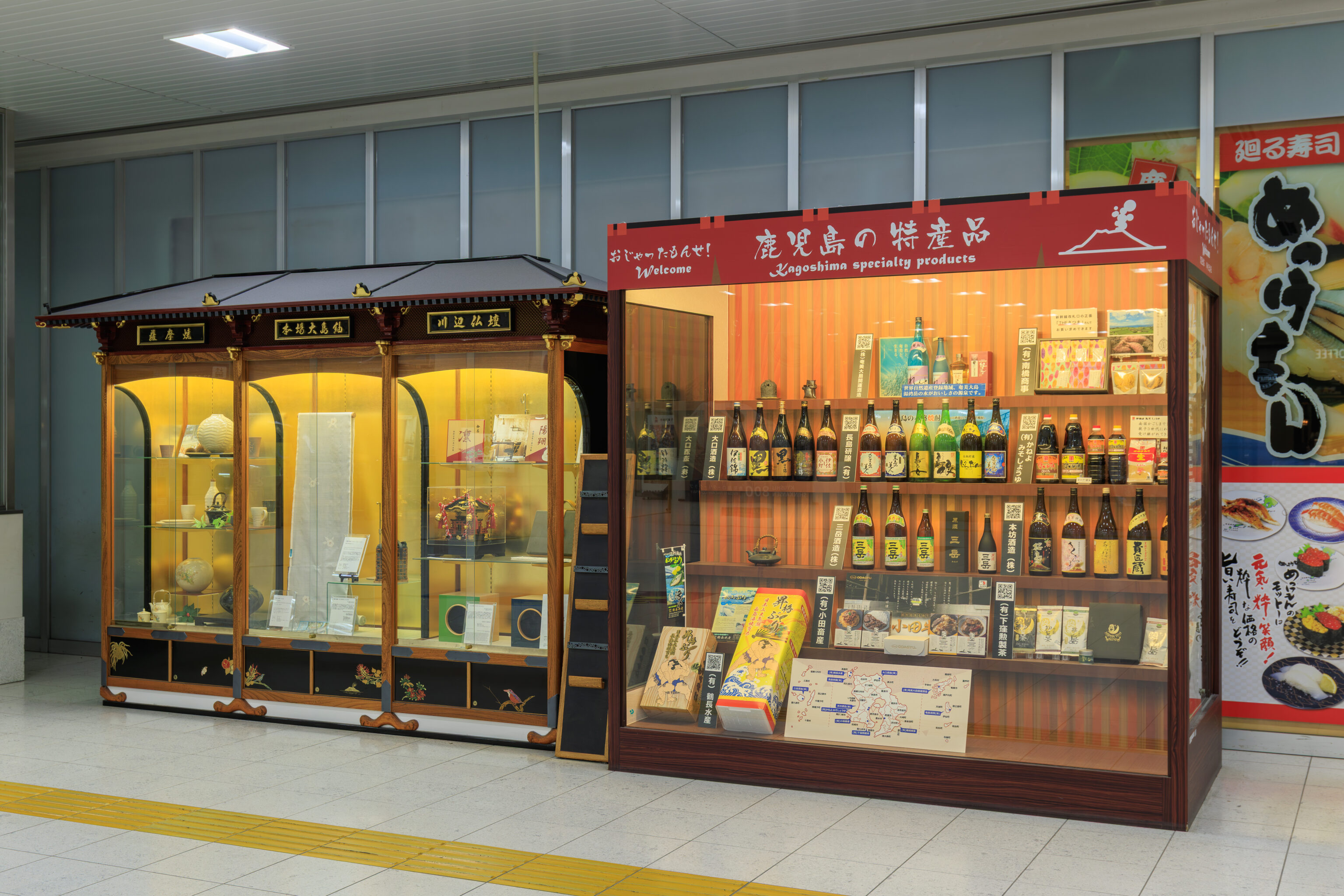
This display shows regional items from Kagoshima.
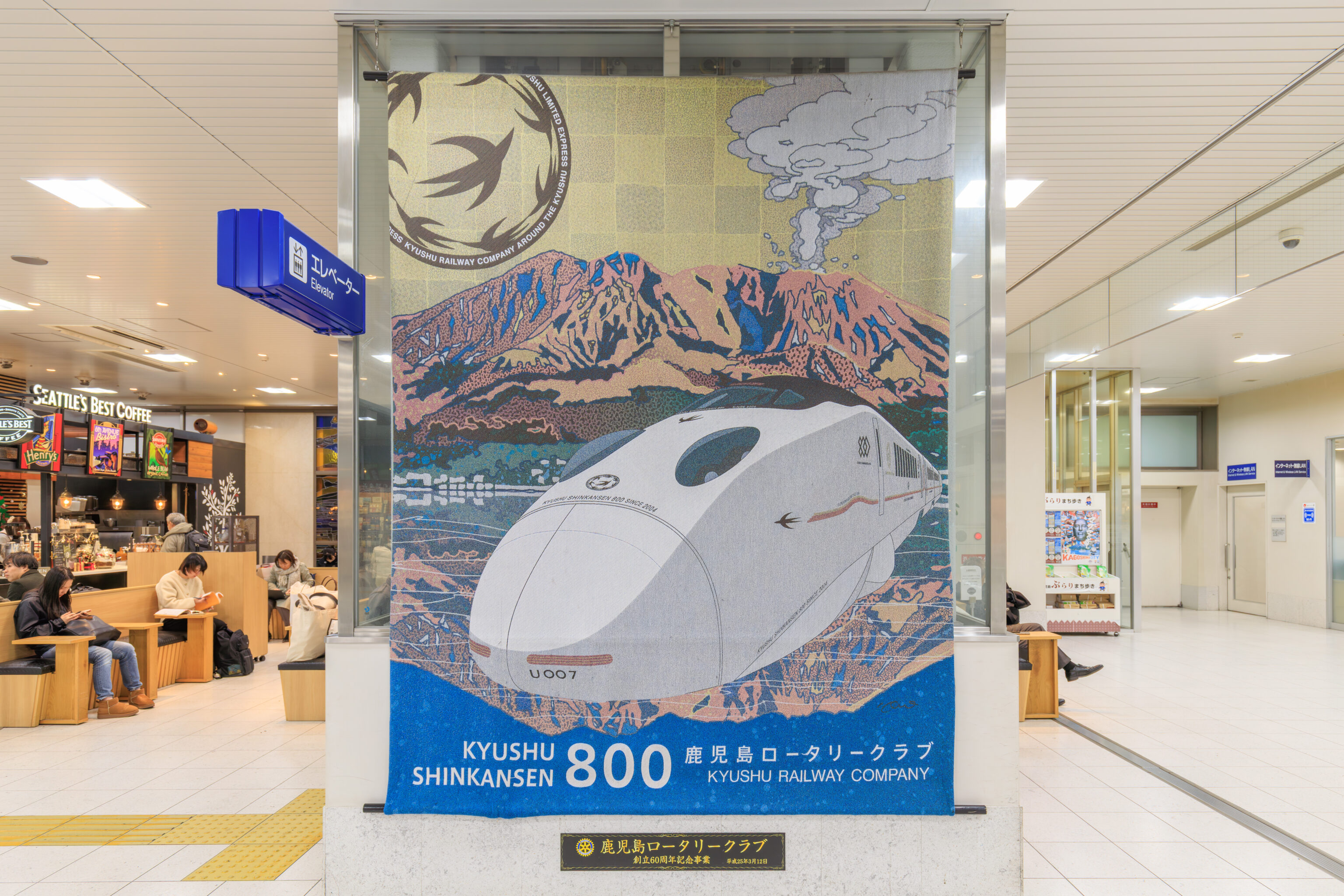
This banner features the Kyushu Shinkansen. The full line between Hakata and Kagoshima opened about 15 years ago.
Hakata
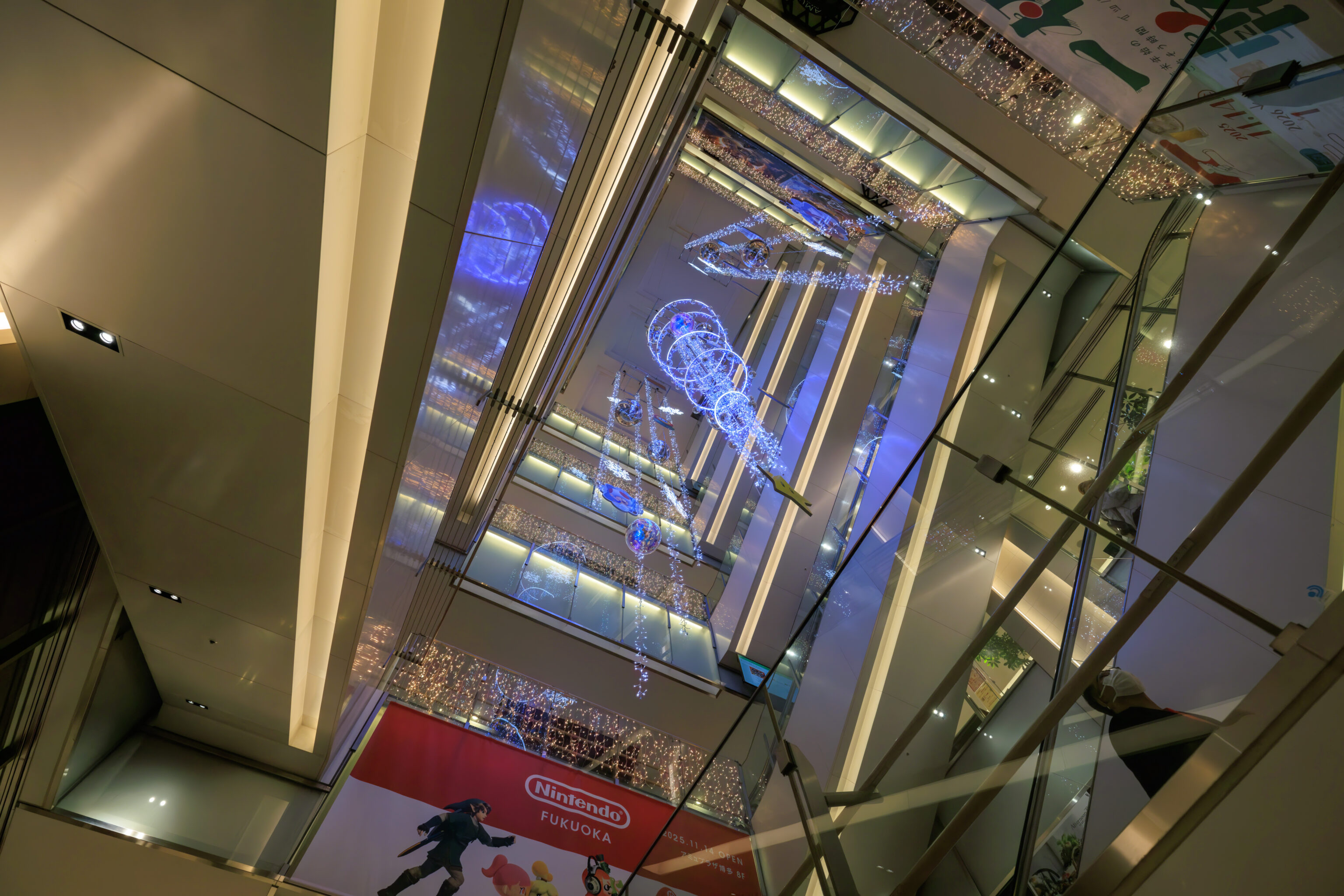
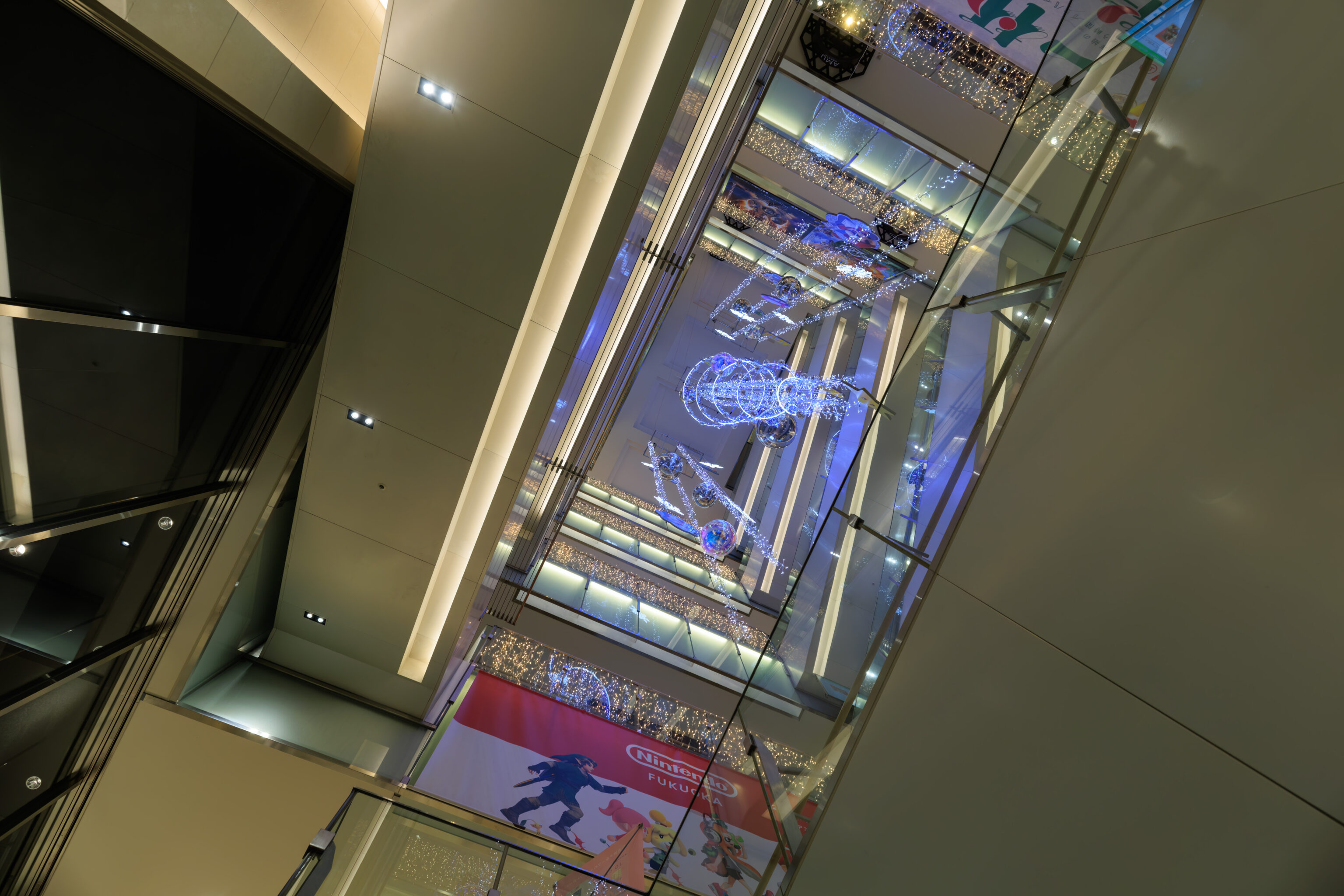
We returned to Hakata a bit before 8pm. The view looking up here is at the escalators for AMU Plaza.
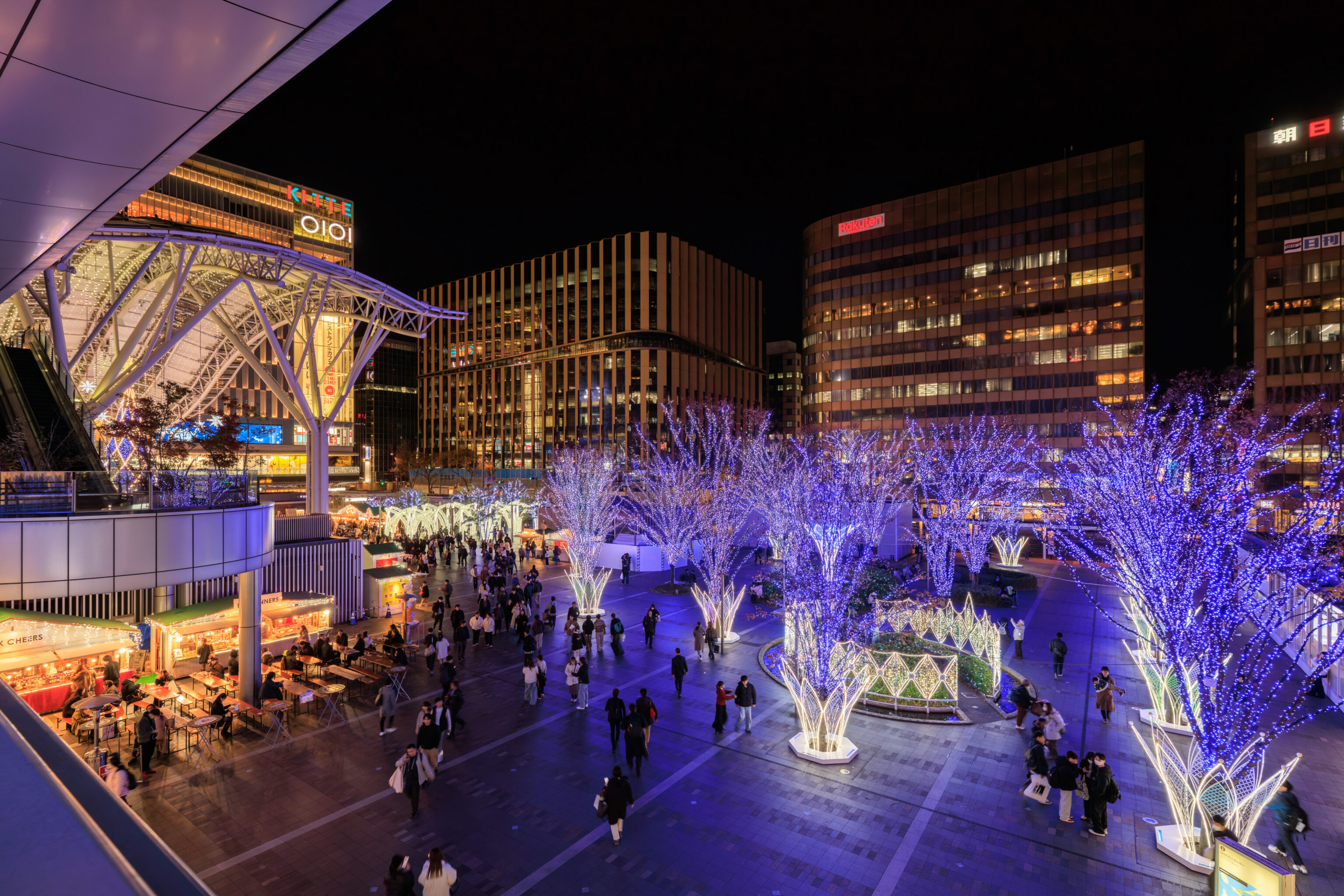
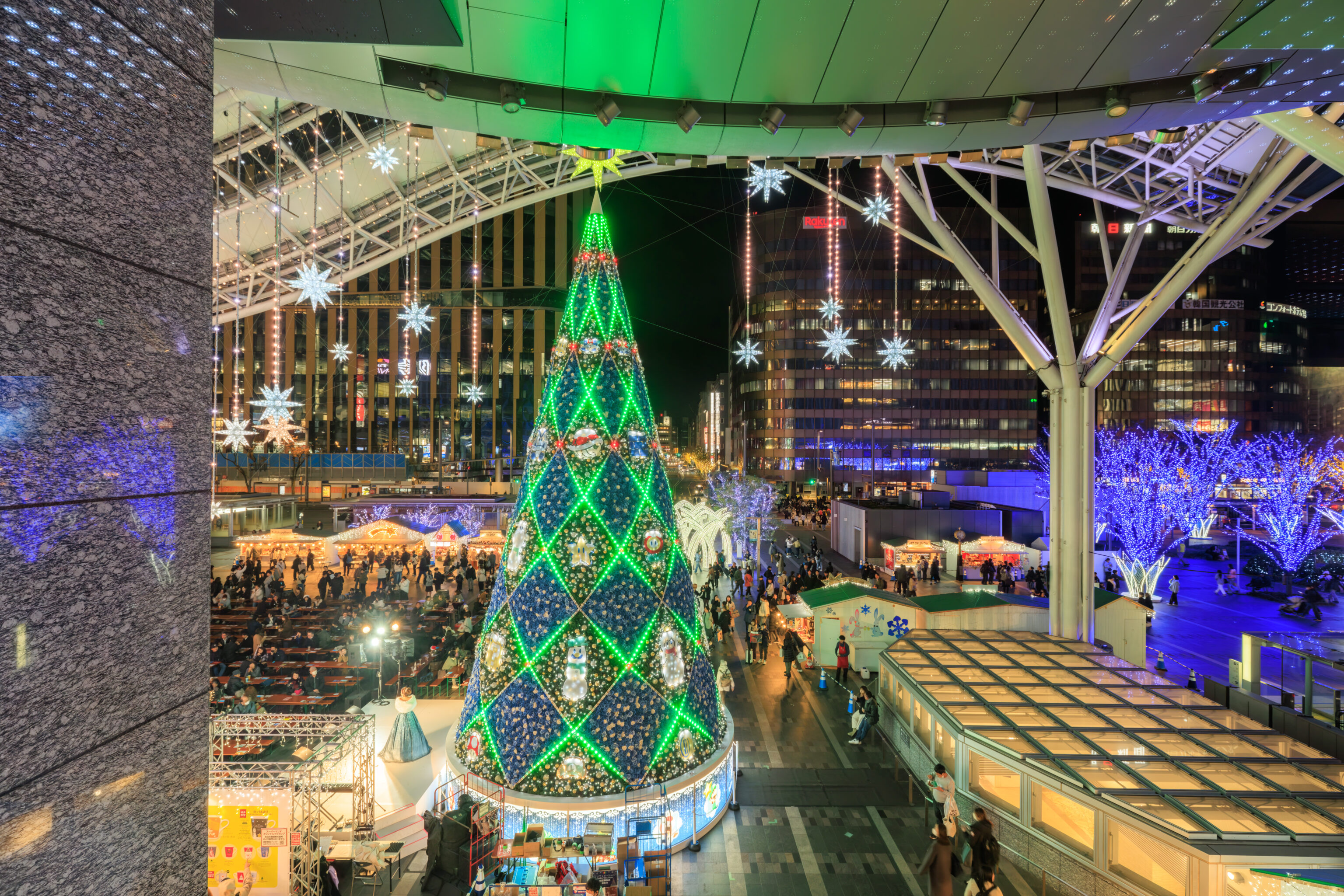
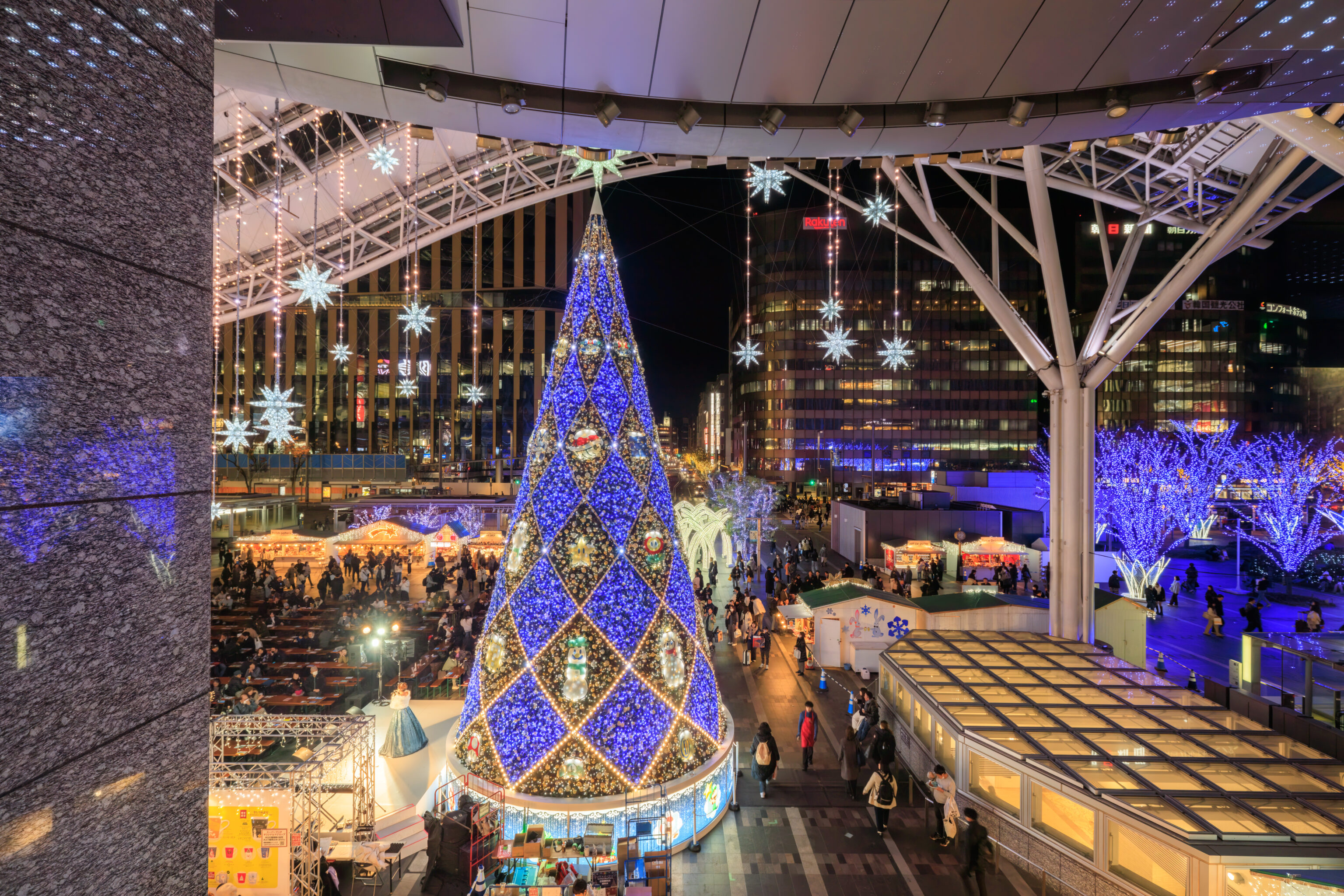
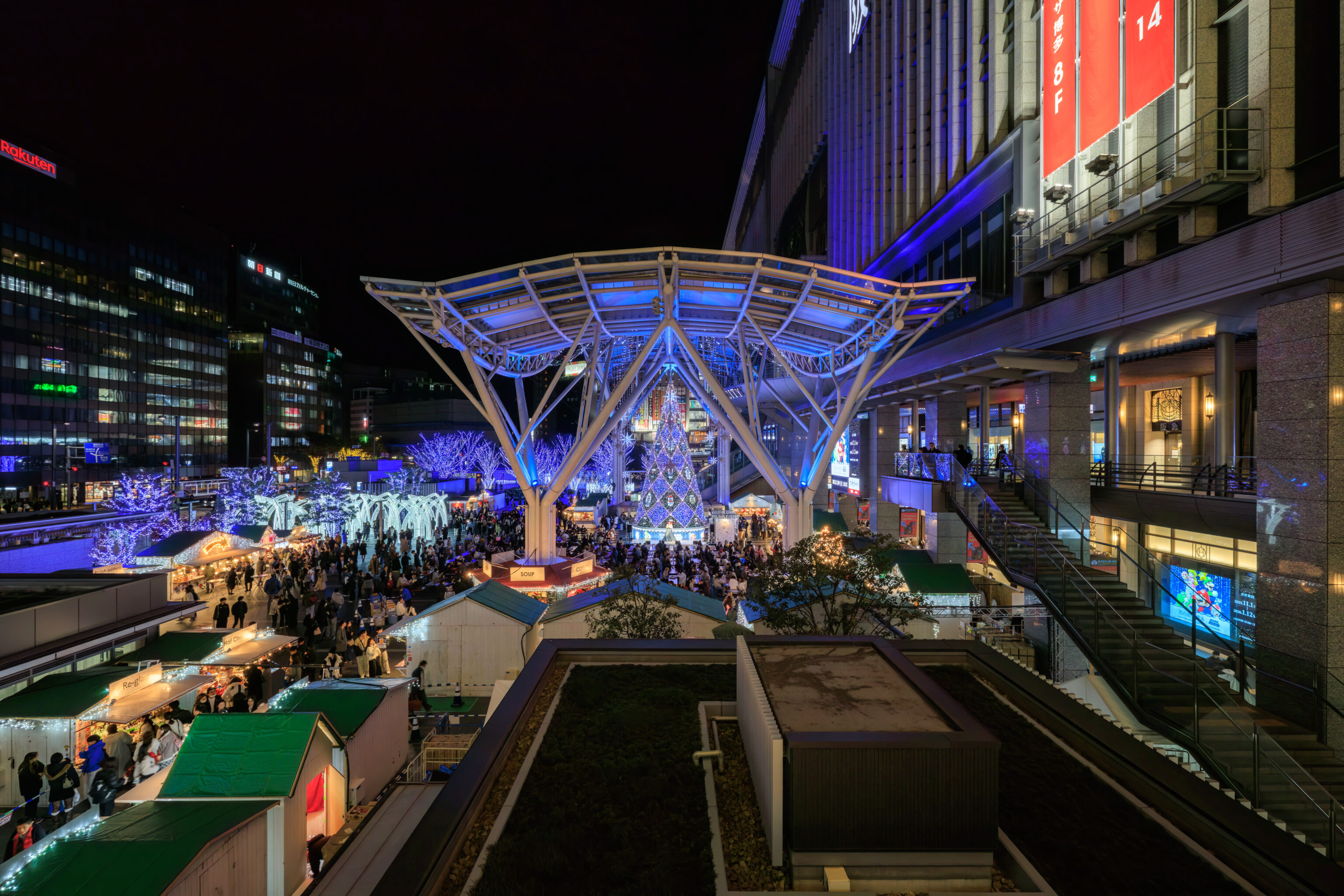
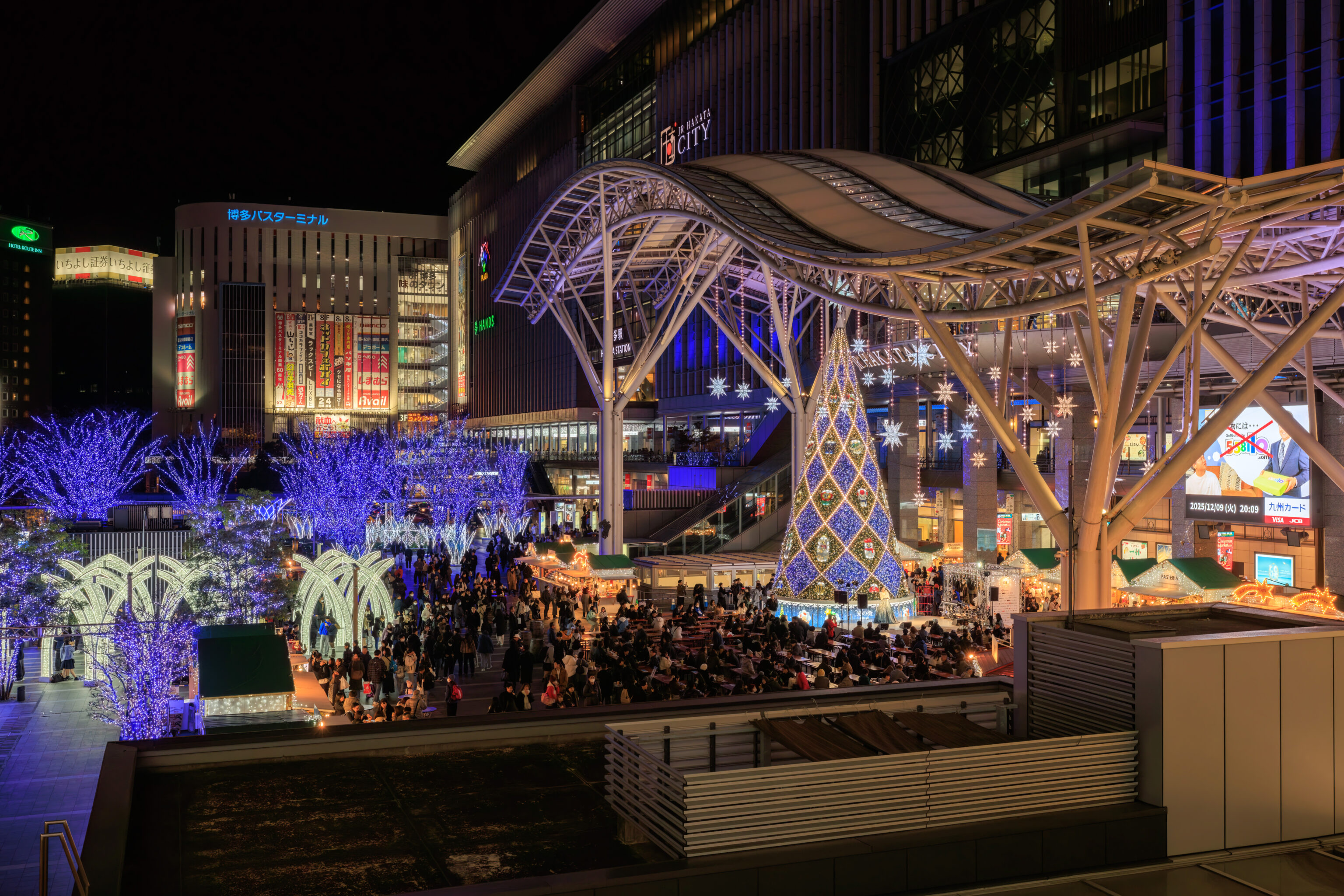
Outside, everything on the plaze below was nicely illuminated. If you look closely, you’ll notice that the decorations on the Christmas Tree are Super Mario themed!
There was a live performance on a stage at the base of the Christmas tree.
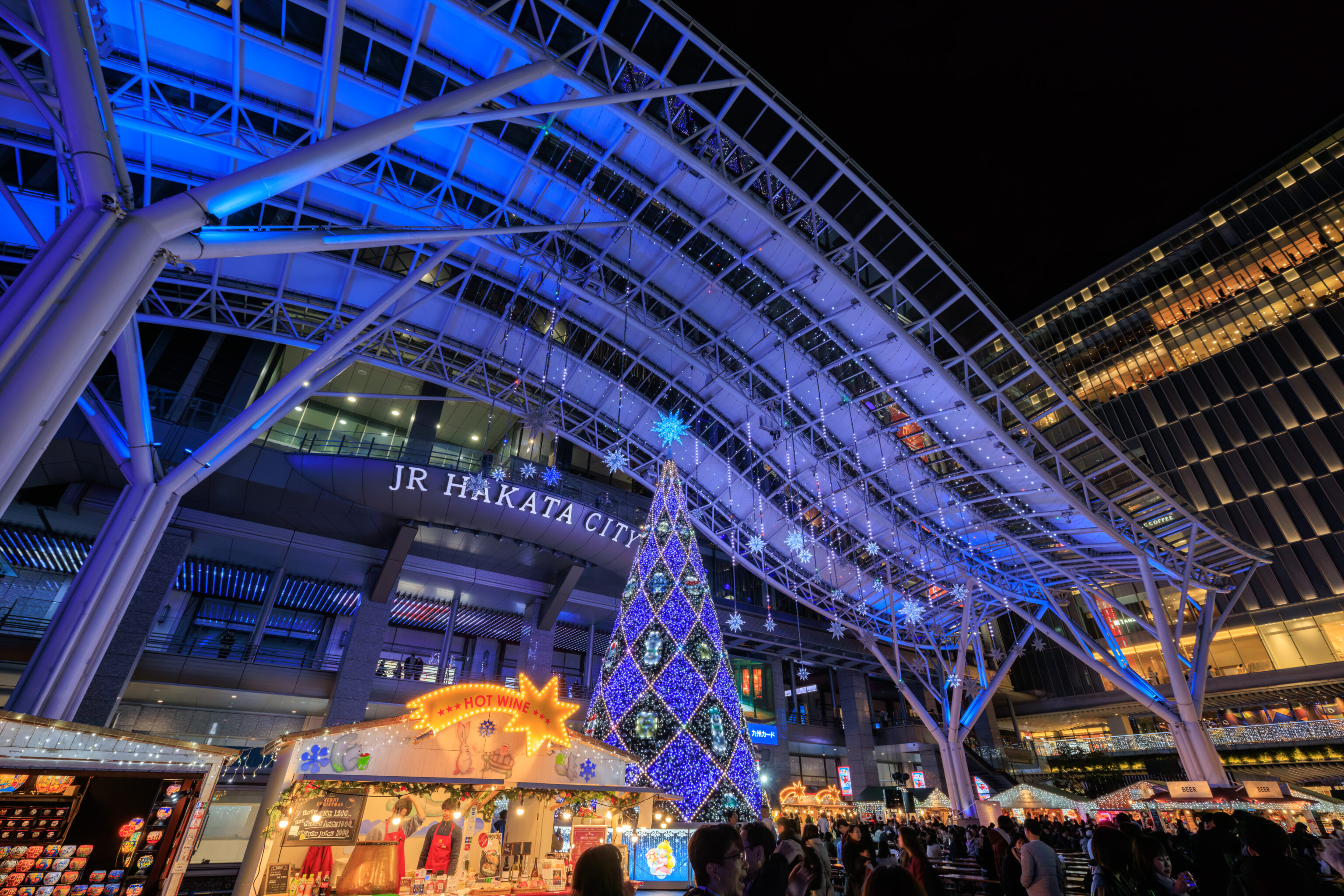
We went down to the plaza to walk through the Christmas market.
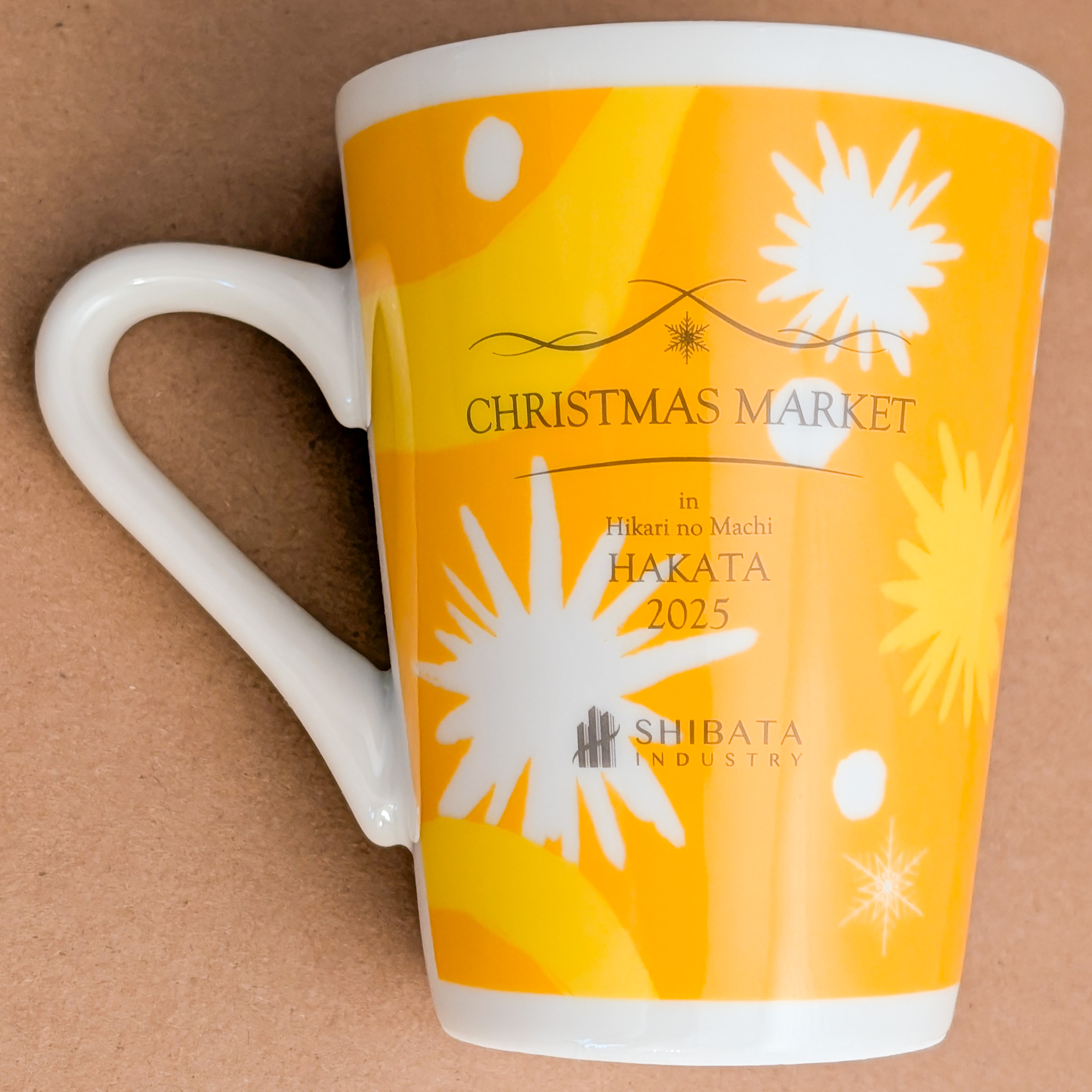
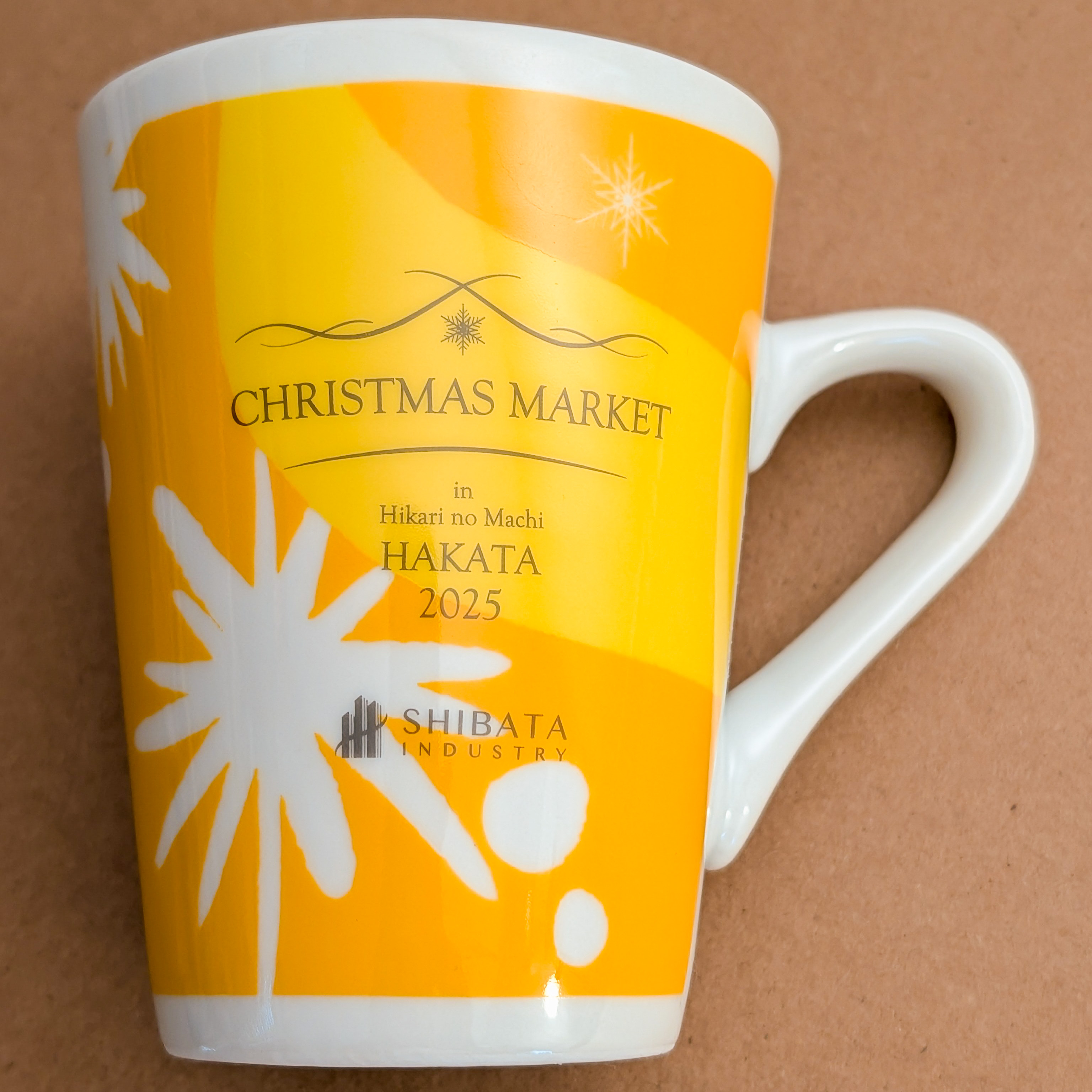
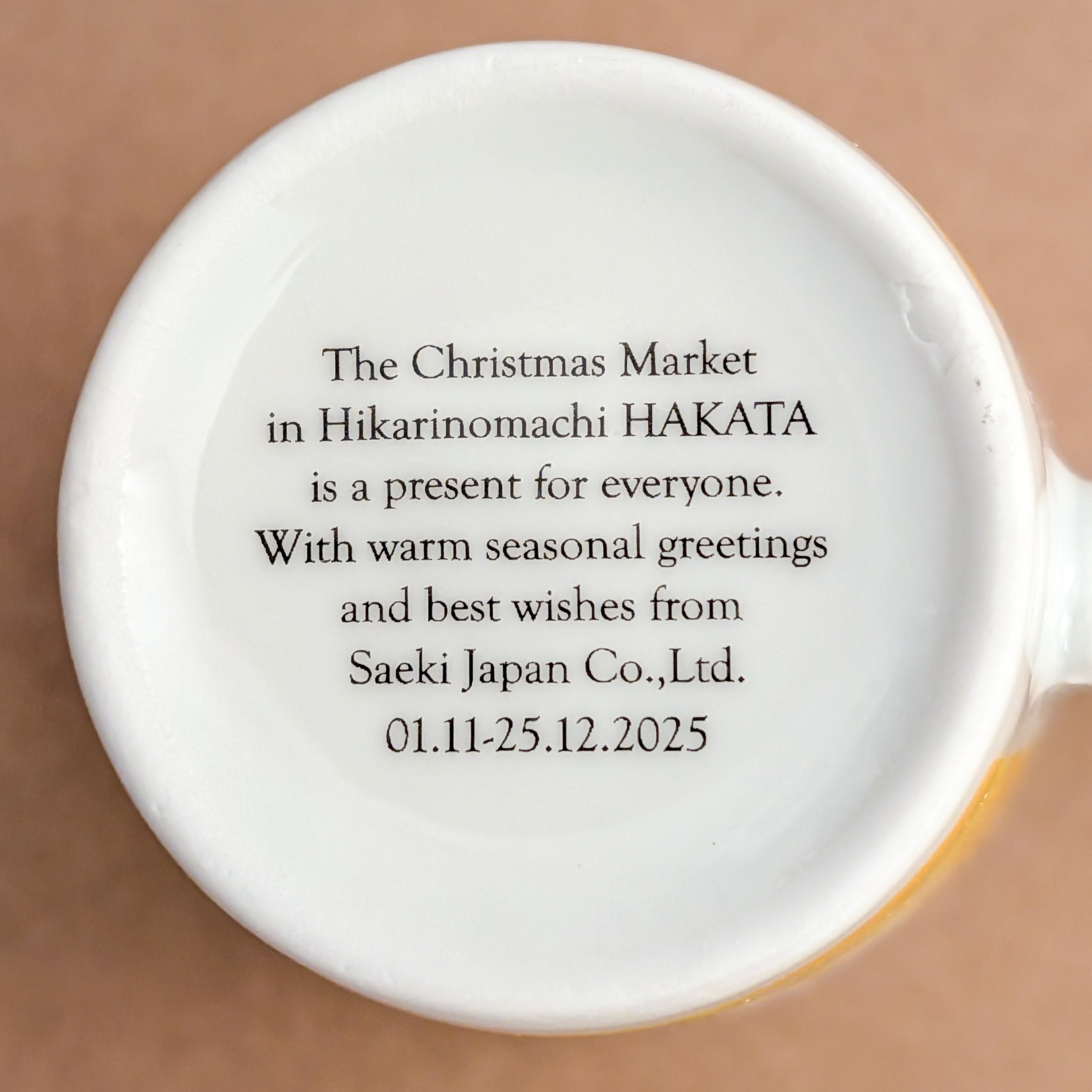
We ended up just getting some glühwein along with the Christmas market mug.
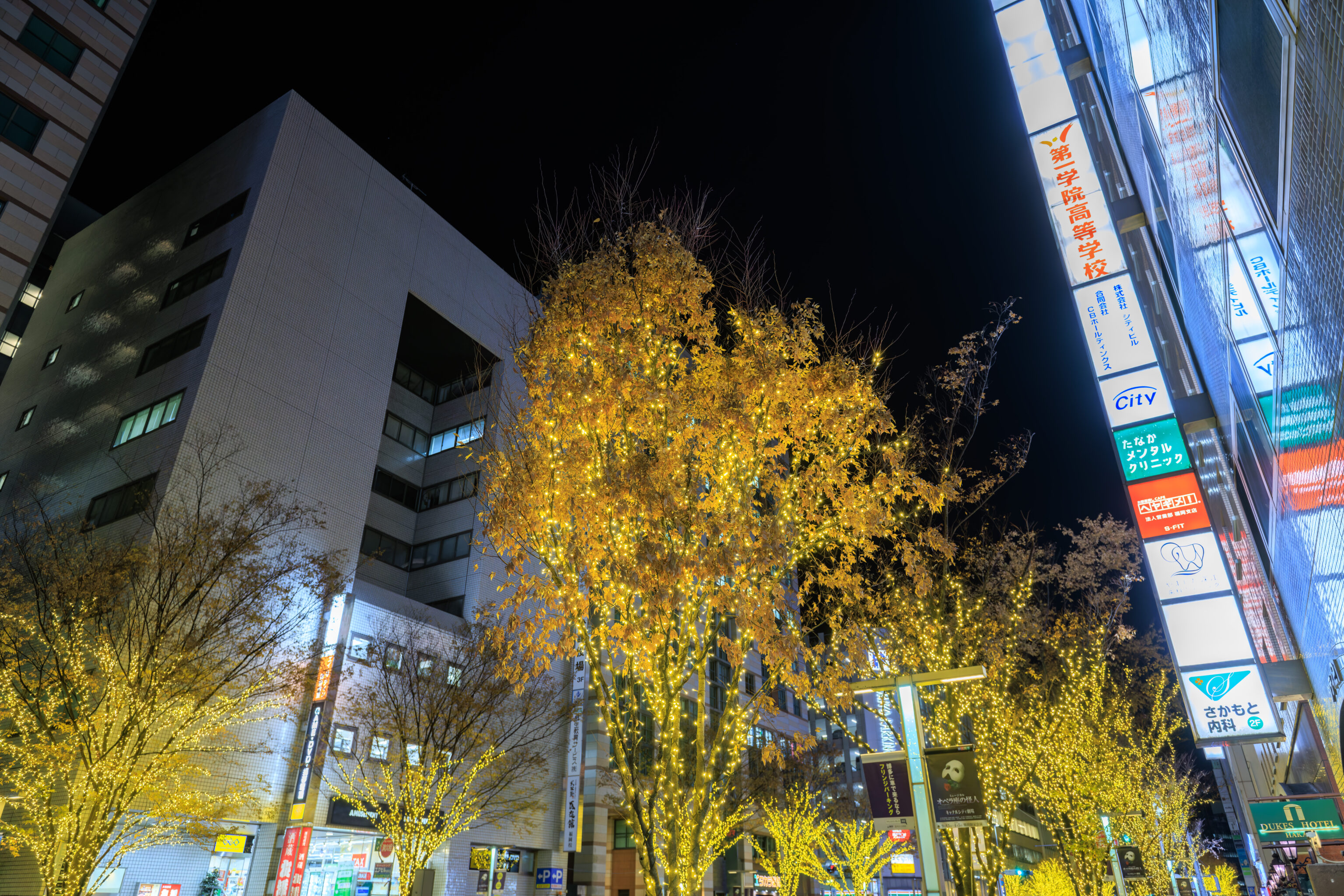
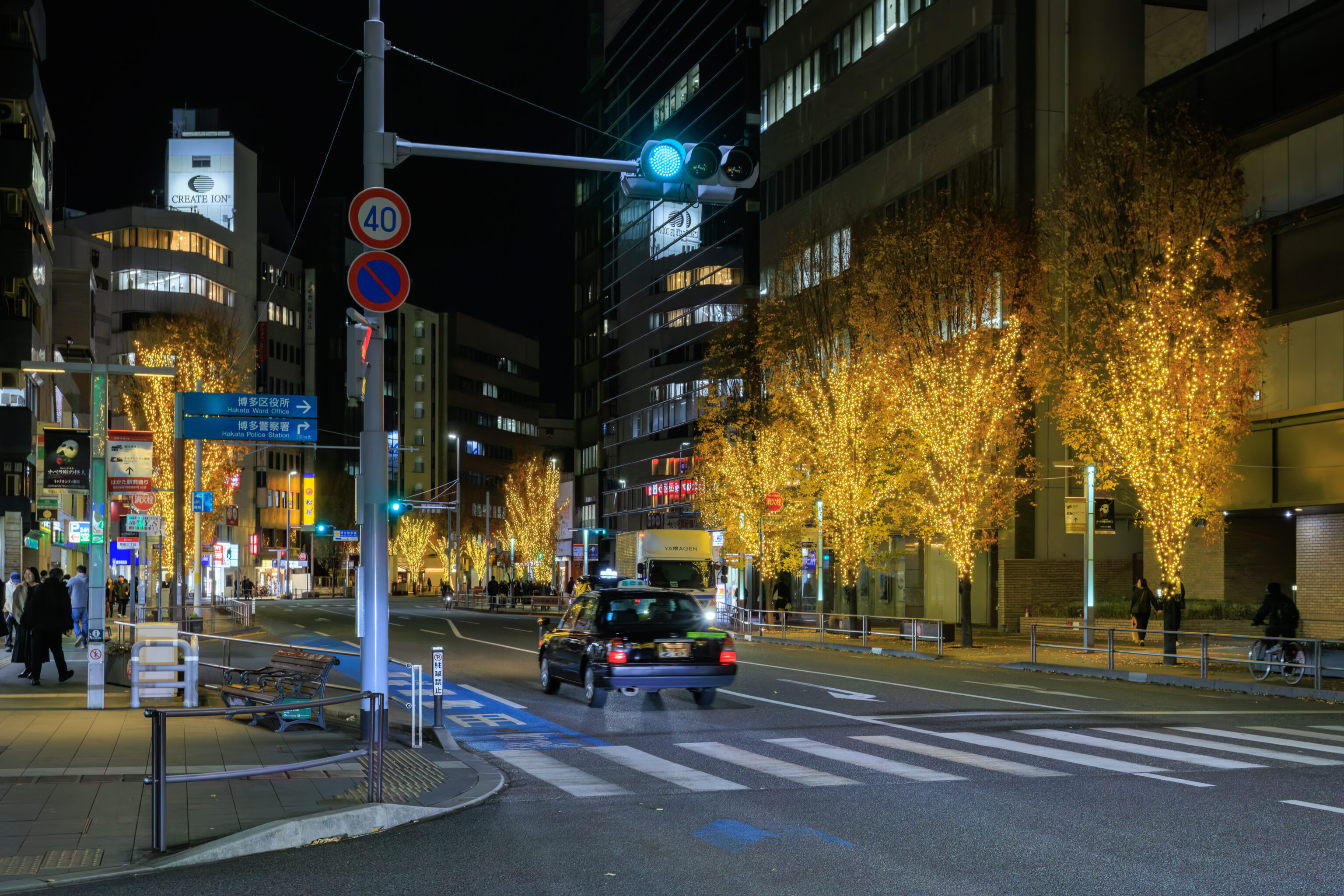
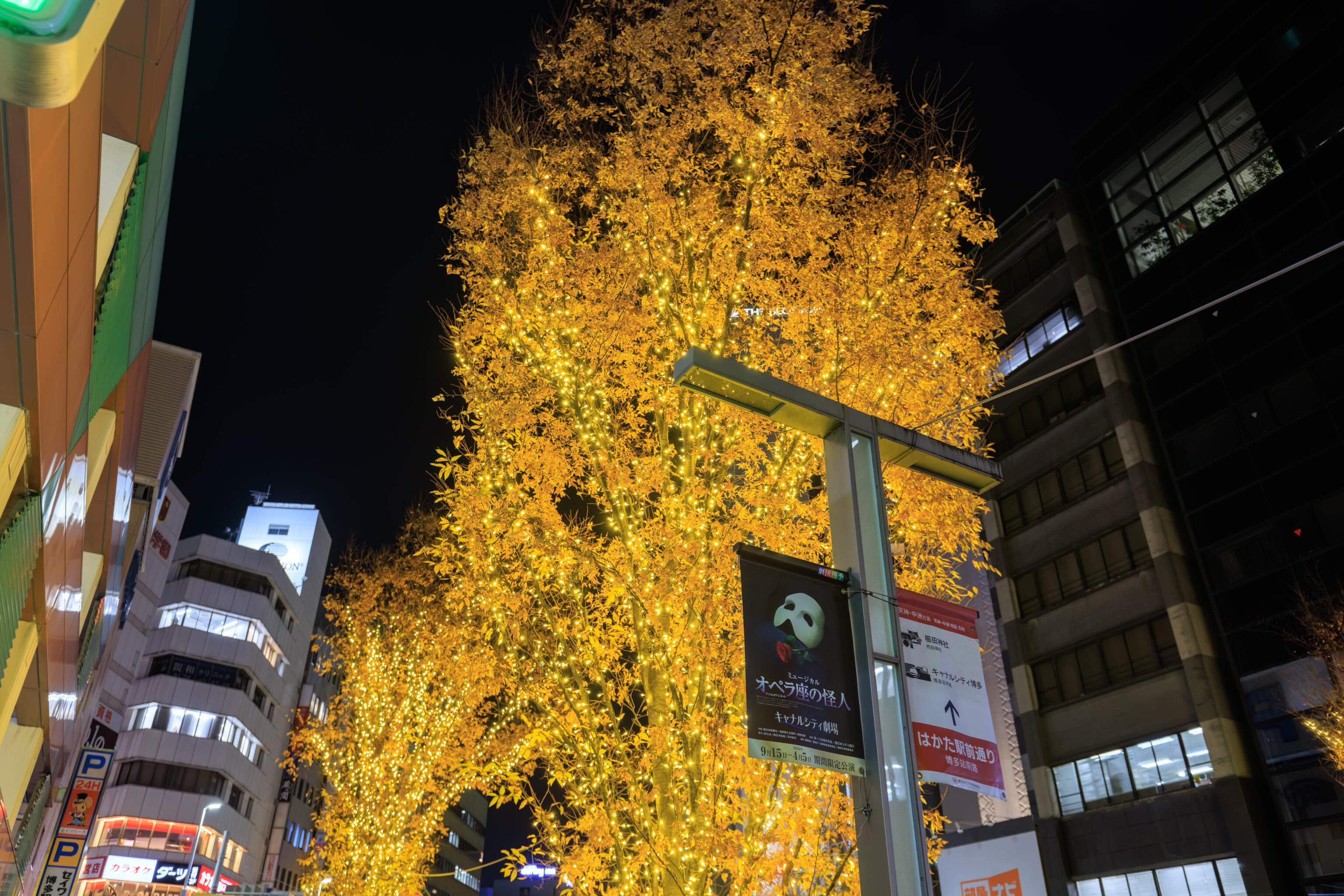
We decided to walk back to the Grand Hyatt. There were some beautifully illuminated gingko on the way.
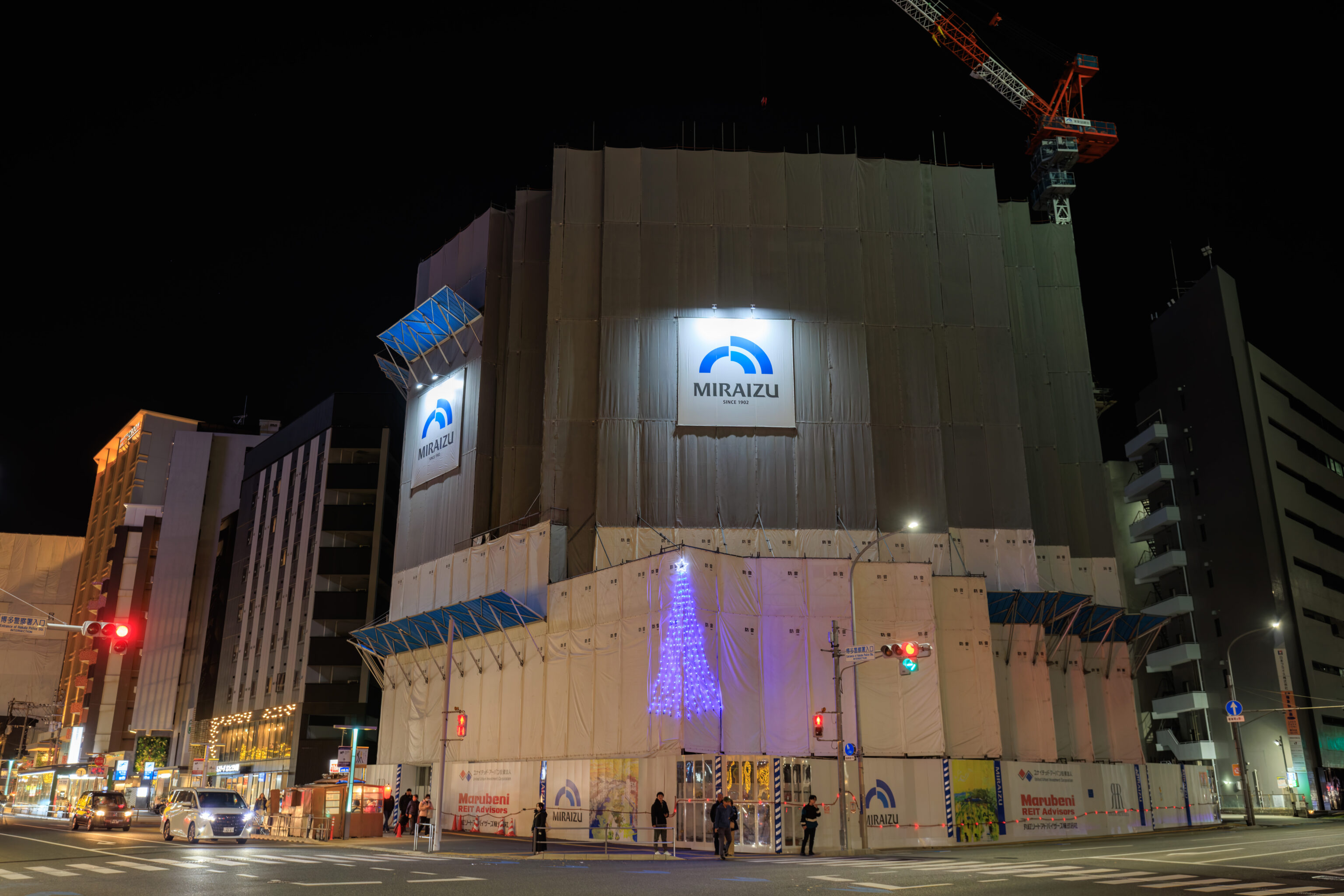
This constrution site had a simple Christmas tree decoration.
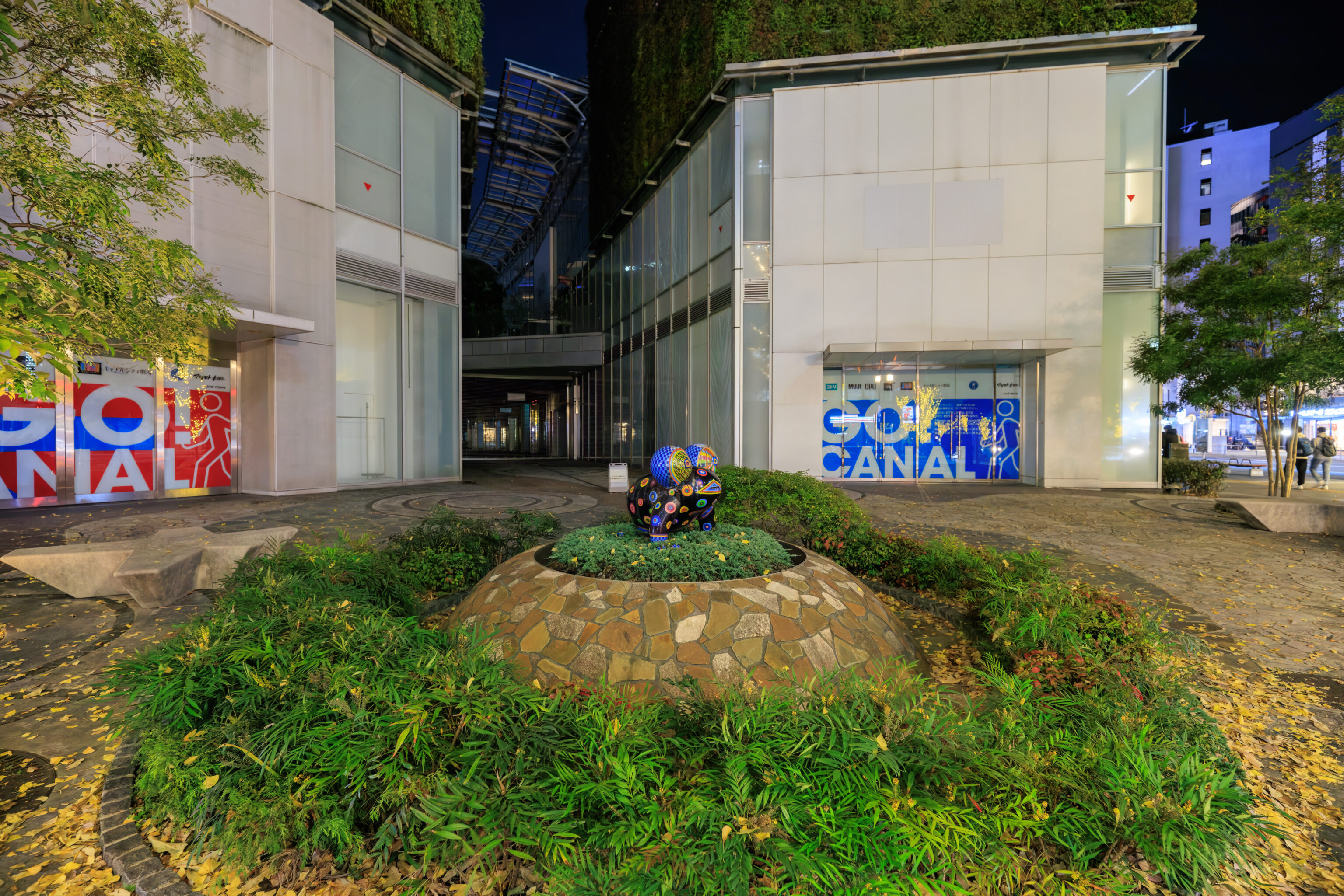
We came accross this sculpture of a frog.
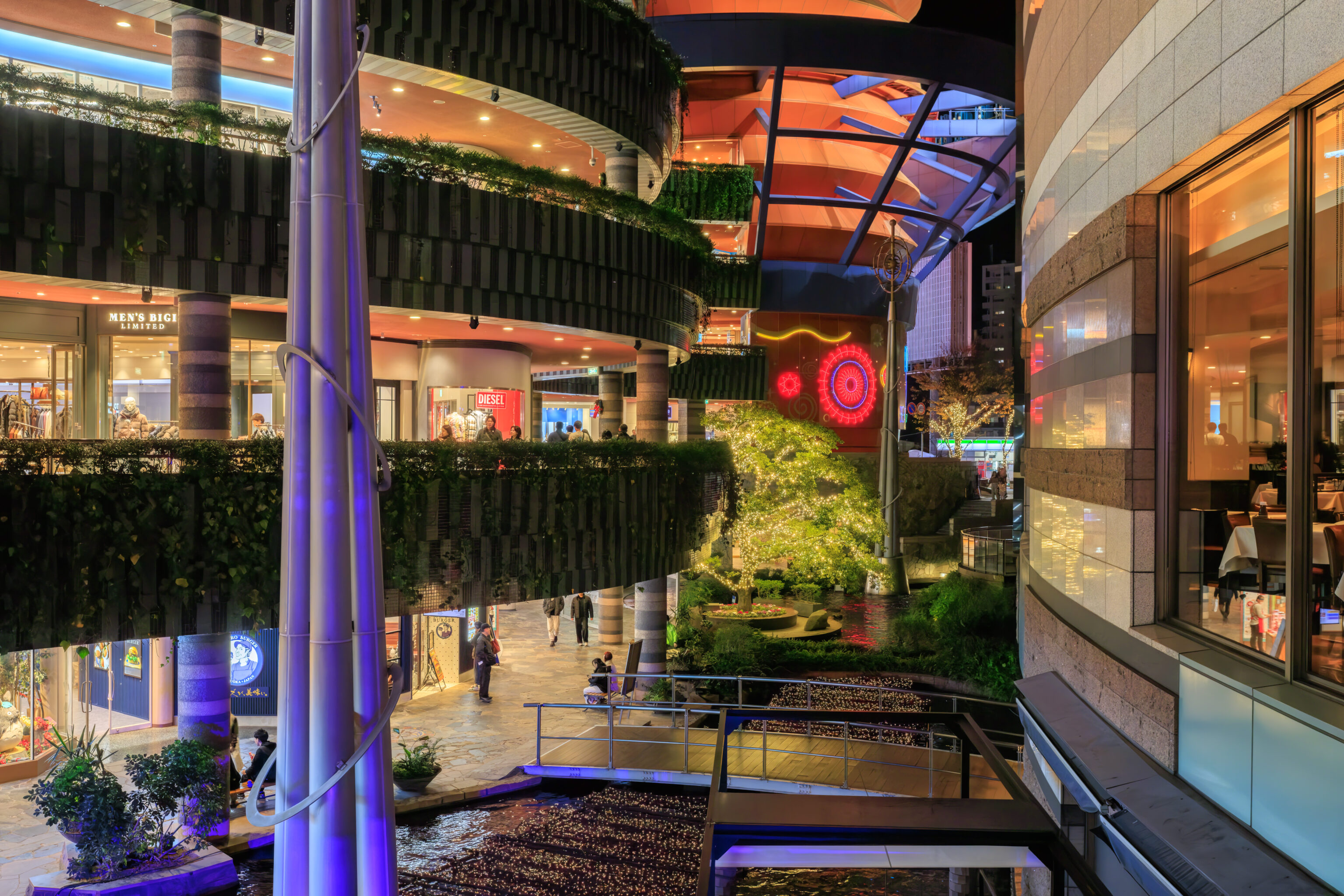
The view looking south from the bridge that connects Canal City with the Grand Hyatt.
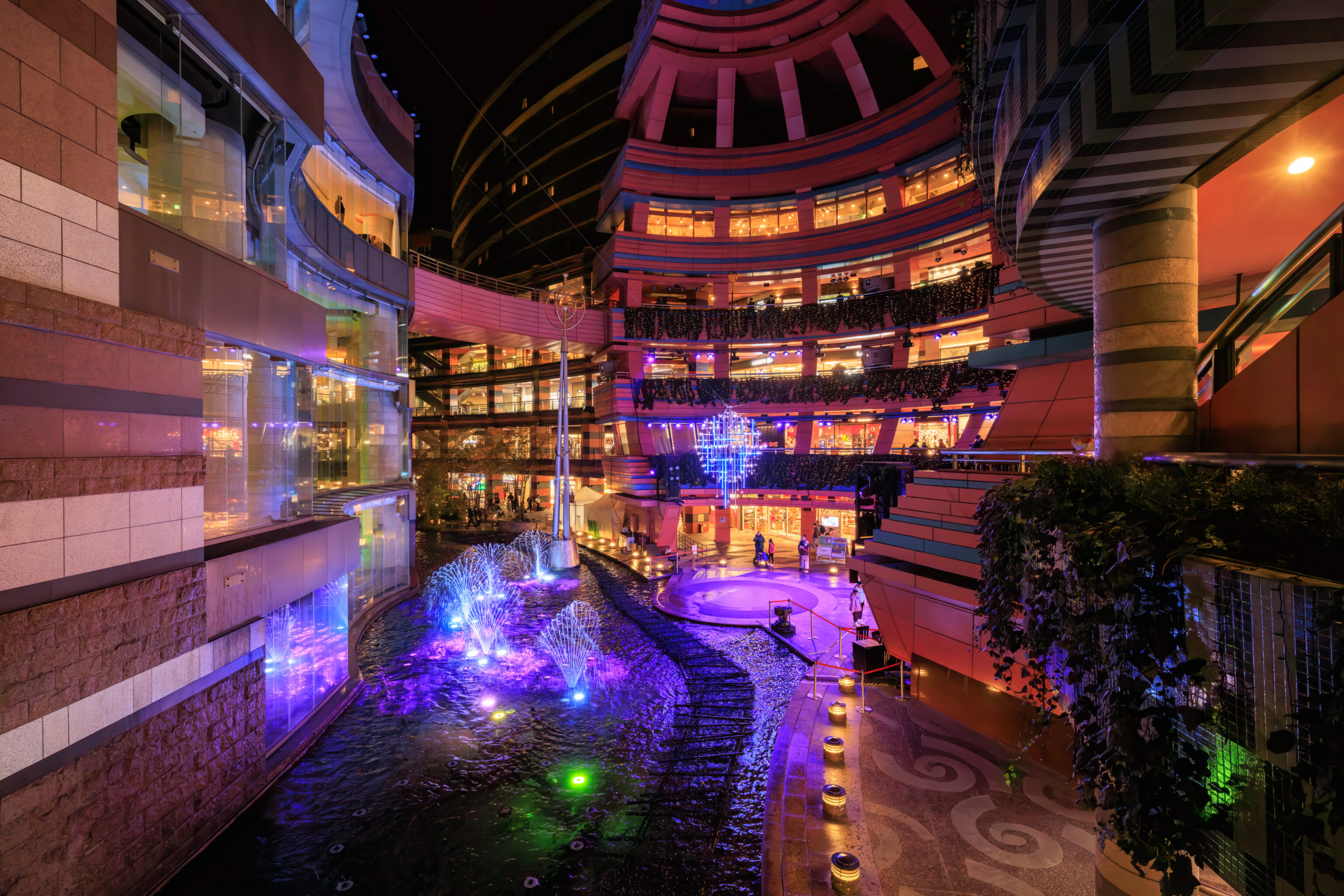
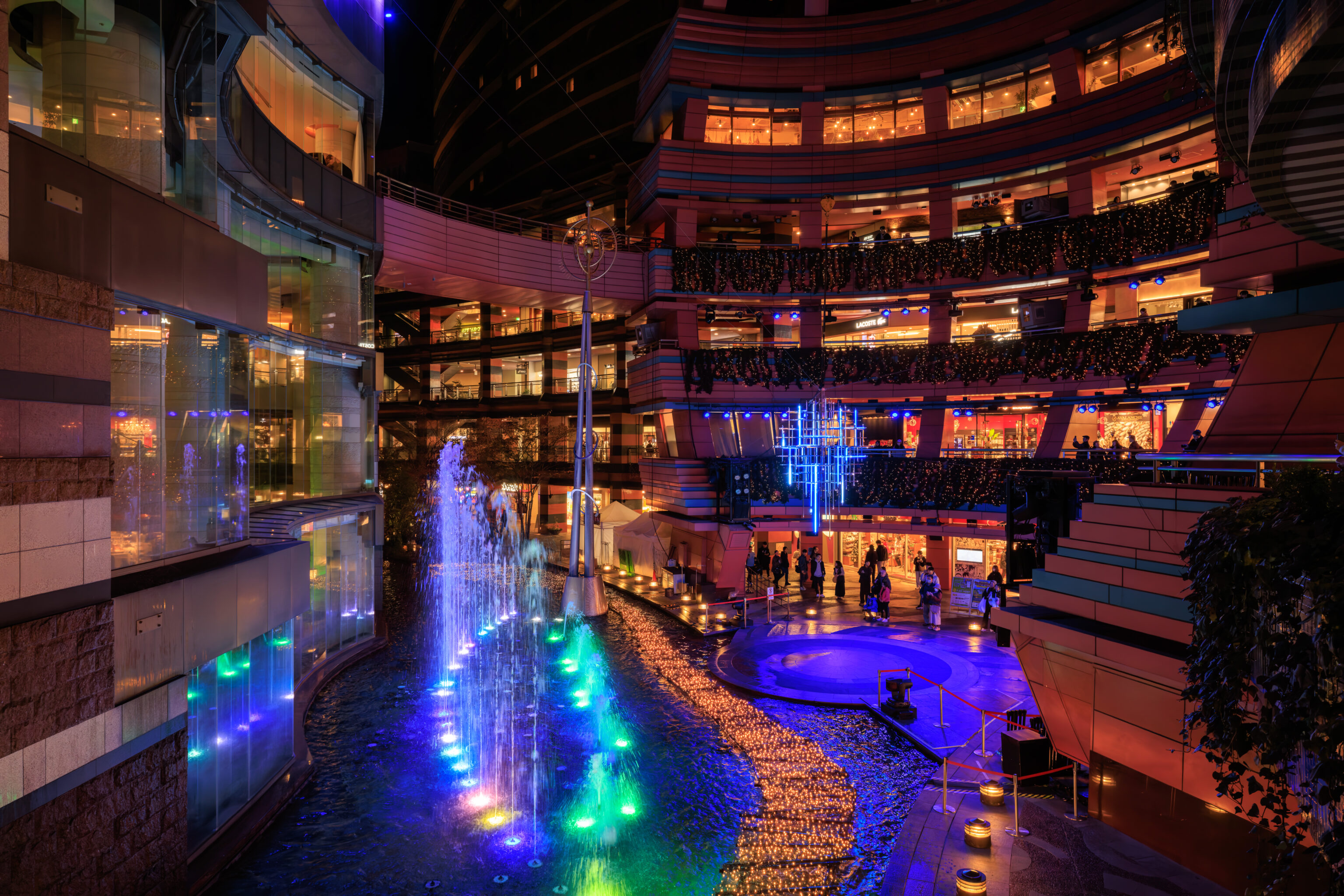
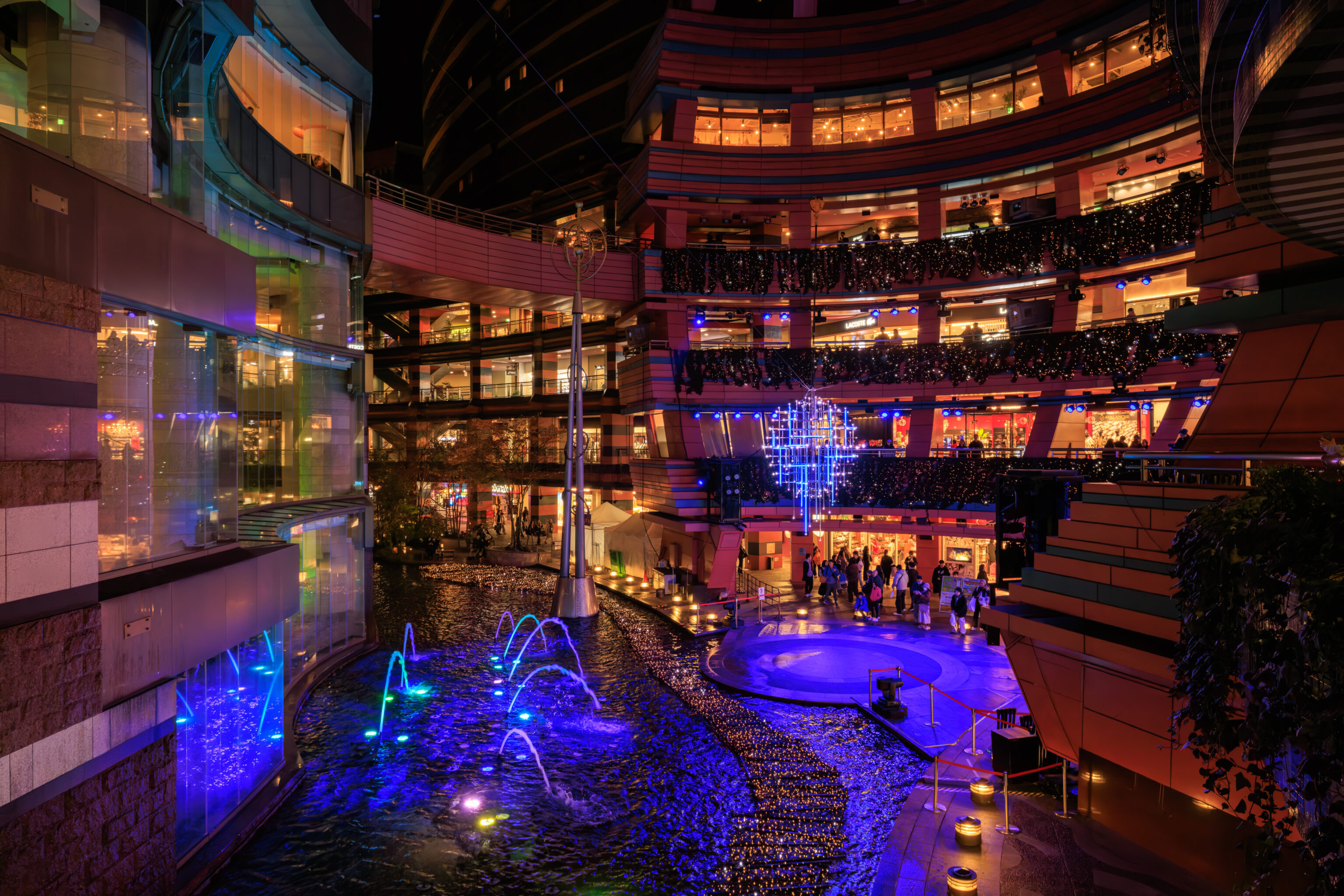
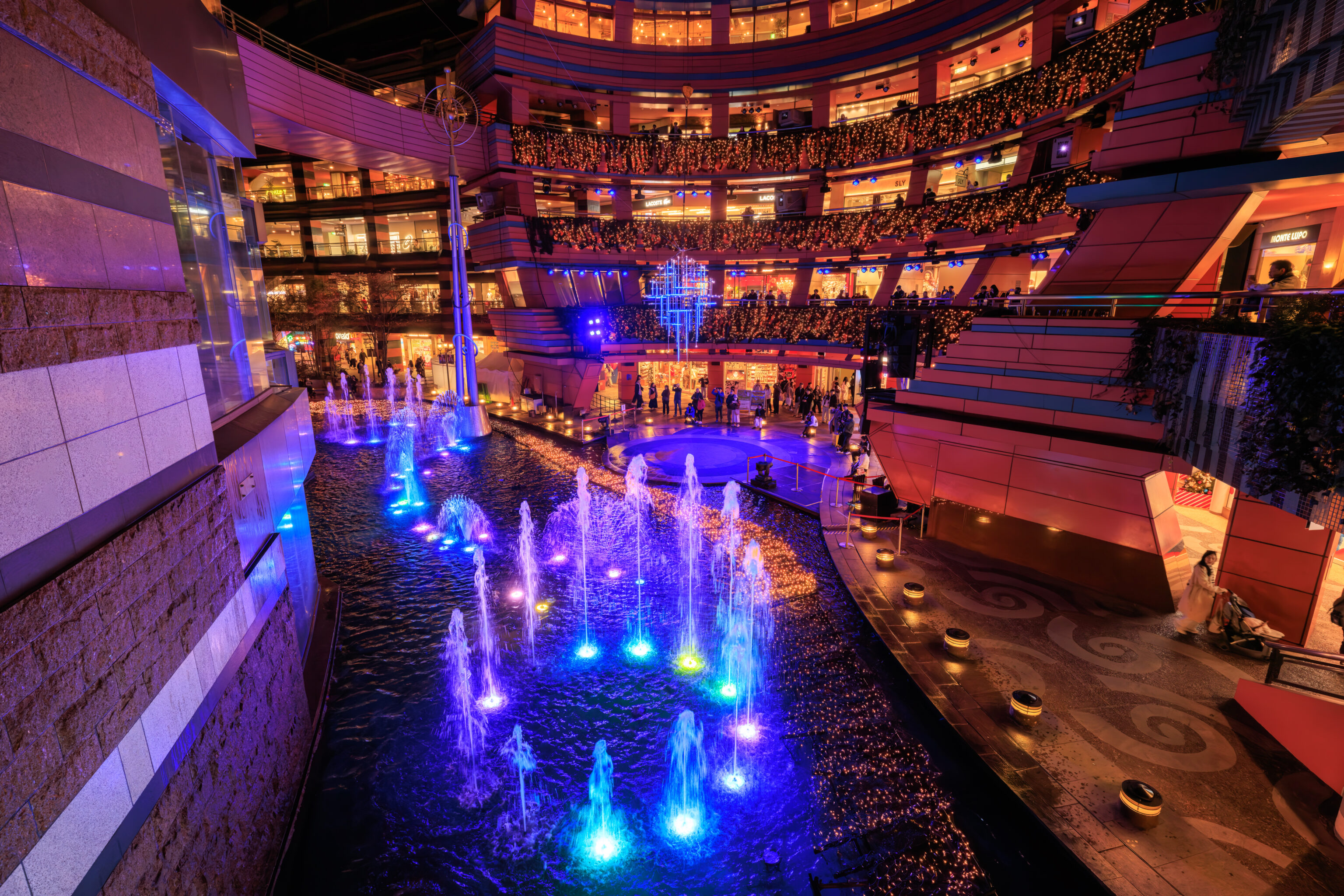
We briefly looked at the water and light show from the bridge before returning to our room to end the day.