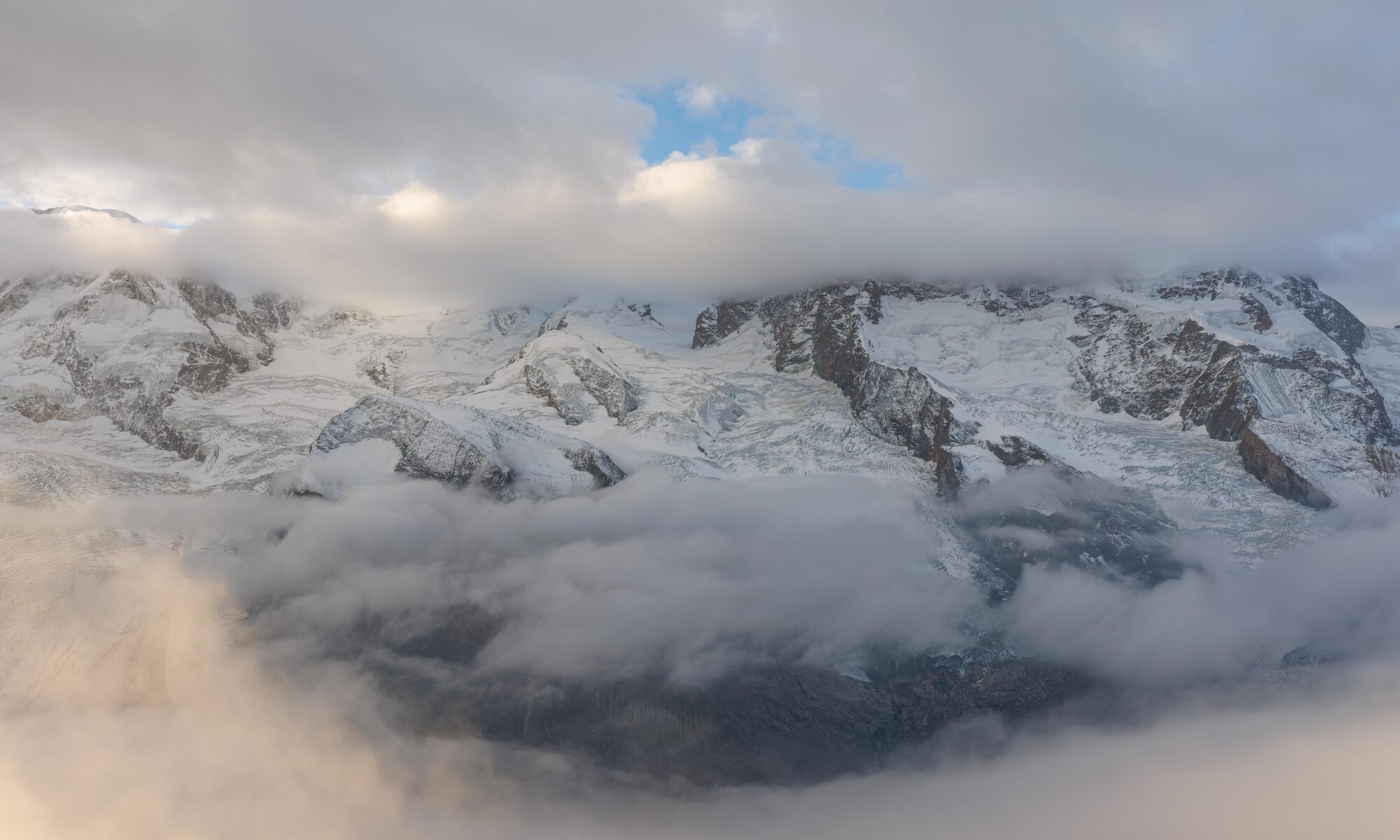
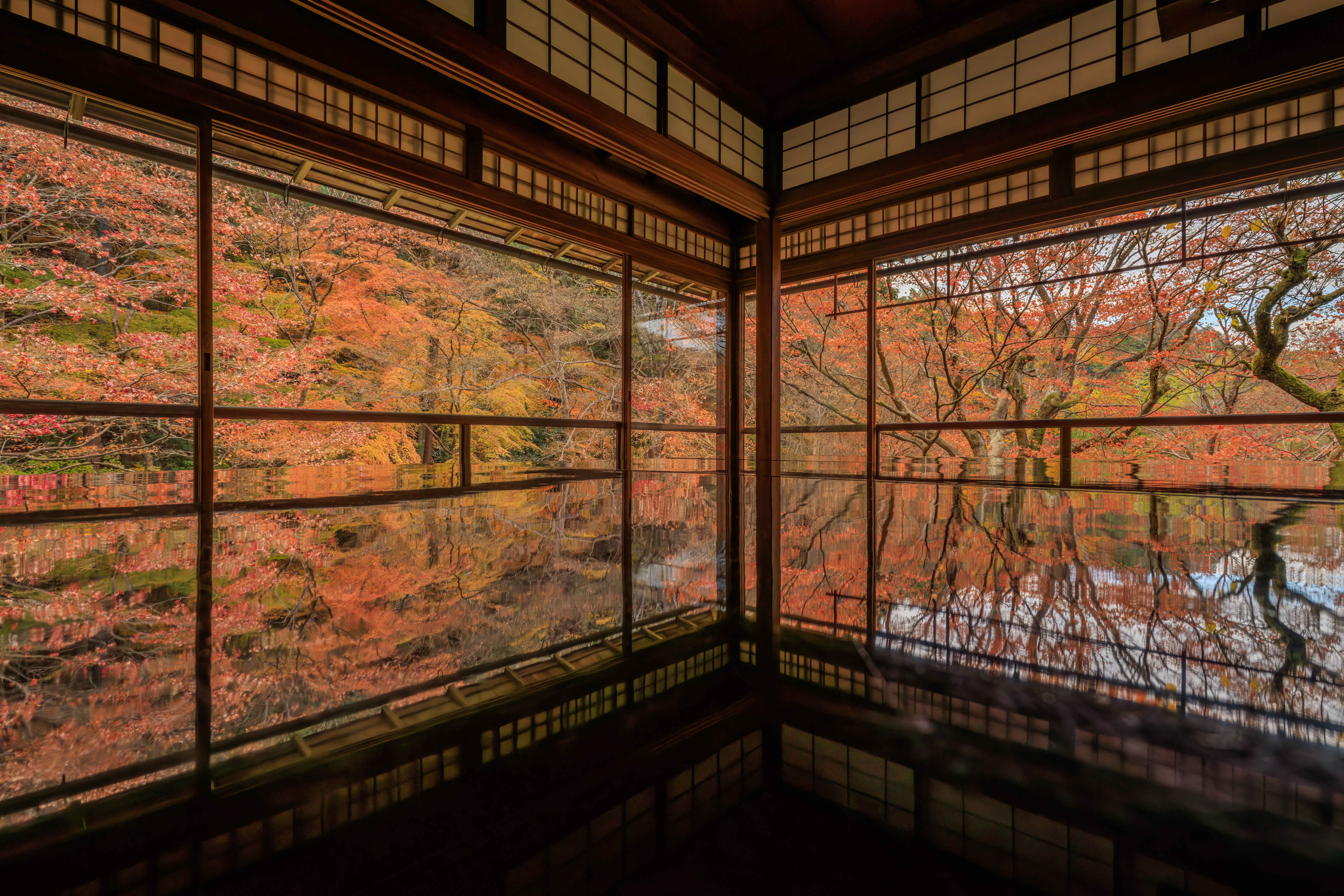
After waking up at the Courtyard, we headed over to 瑠璃光院 Ruriko-in for its fall special viewing event. We then ascended 比叡山 Mt. Hiei by funicular and aerial tram. Atop the mountain, we visited the ガーデンミュージアム比叡 Garden Museum Hiei and various buildings of 延暦寺 Enryaku-ji. We descended by funicular to the east and returned to Kyoto by train. In the evening, we attended a special night viewing at 智積院 Chishaku-in.
Morning
After waking up at the Courtyard, we got ready and headed out. Today, we have tickets to visit Ruriko-in with an entry time between 9:20am and 9:40am. Later on in the evening, we have complimentary tickets from the Courtyard to visit Chishaku-in for evening fall illuminations.
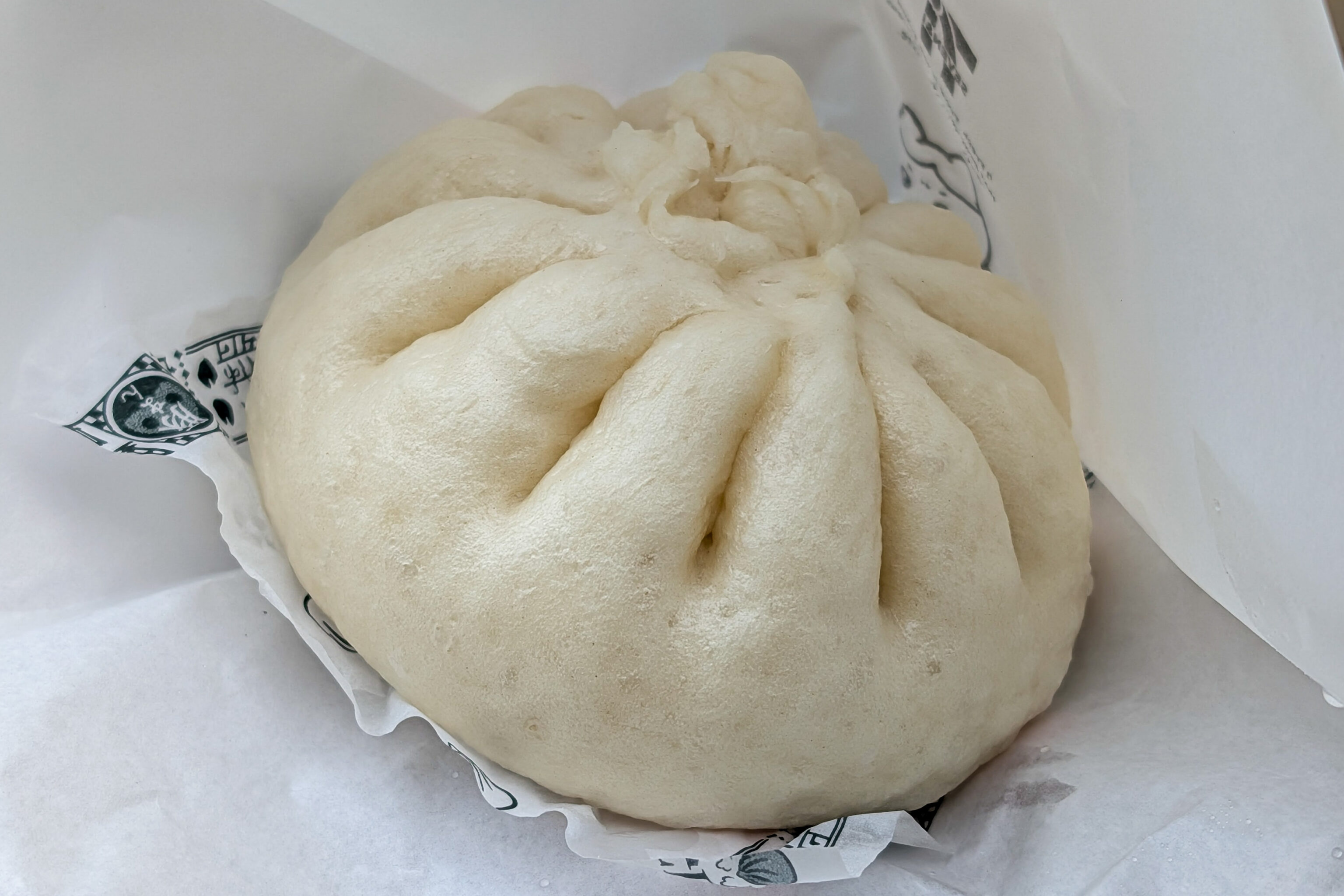
We went to the 7-Eleven and bought a nikuman, basically a baozi, as well as 3 onigiris and a sushi roll. We left two onigiris for later and ate the rest for breakfast.
Ruriko-in
There are a number of ways to get to Ruriko-in, which is in the Yase neighborhood at the northeastern edge of urban Kyoto. The easiest way from the Courtyard is to simply take the #17 bus to the Yase Station stop, a 40 minute or so trip. It is also possible to go by train, or a combination of train and bus.
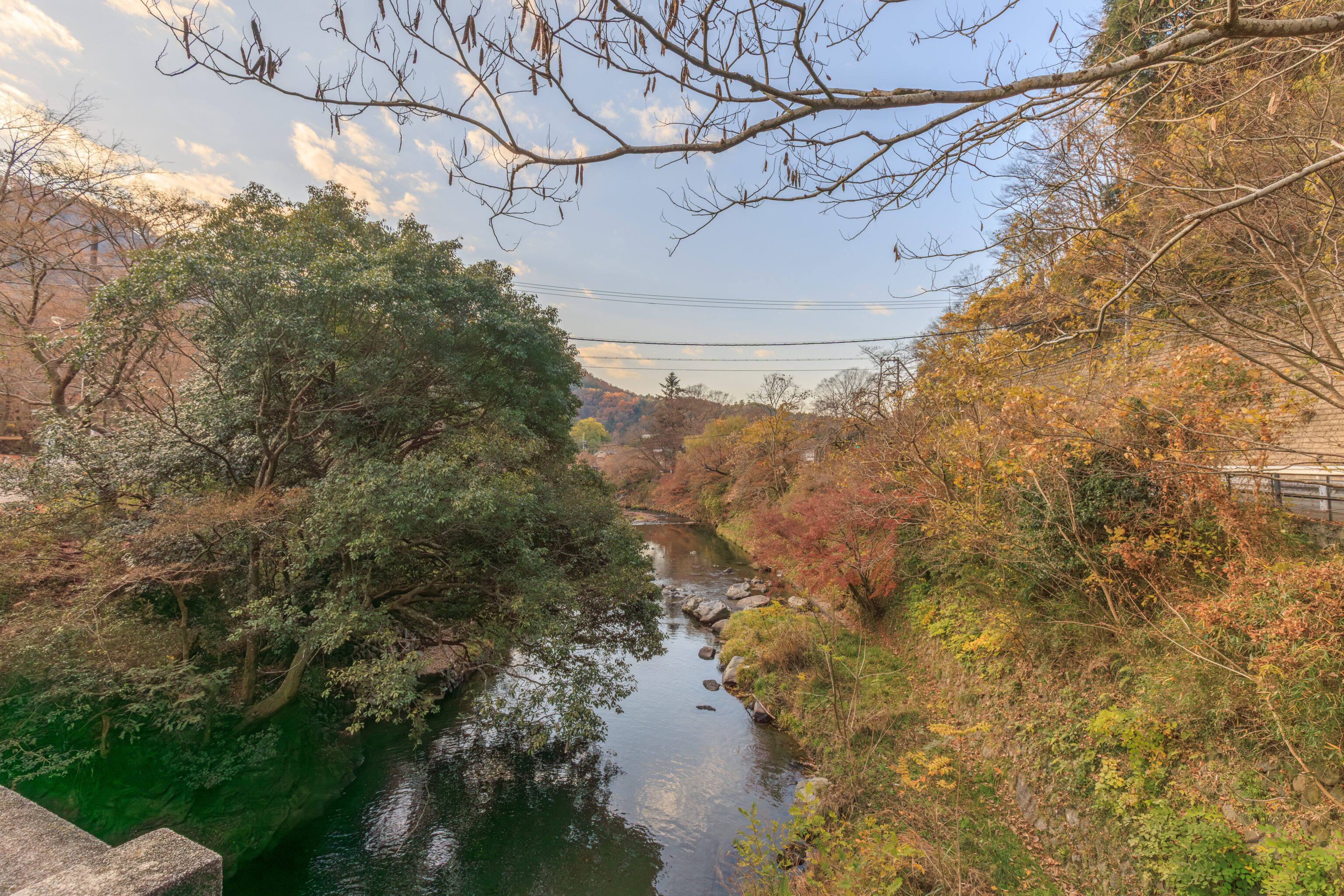
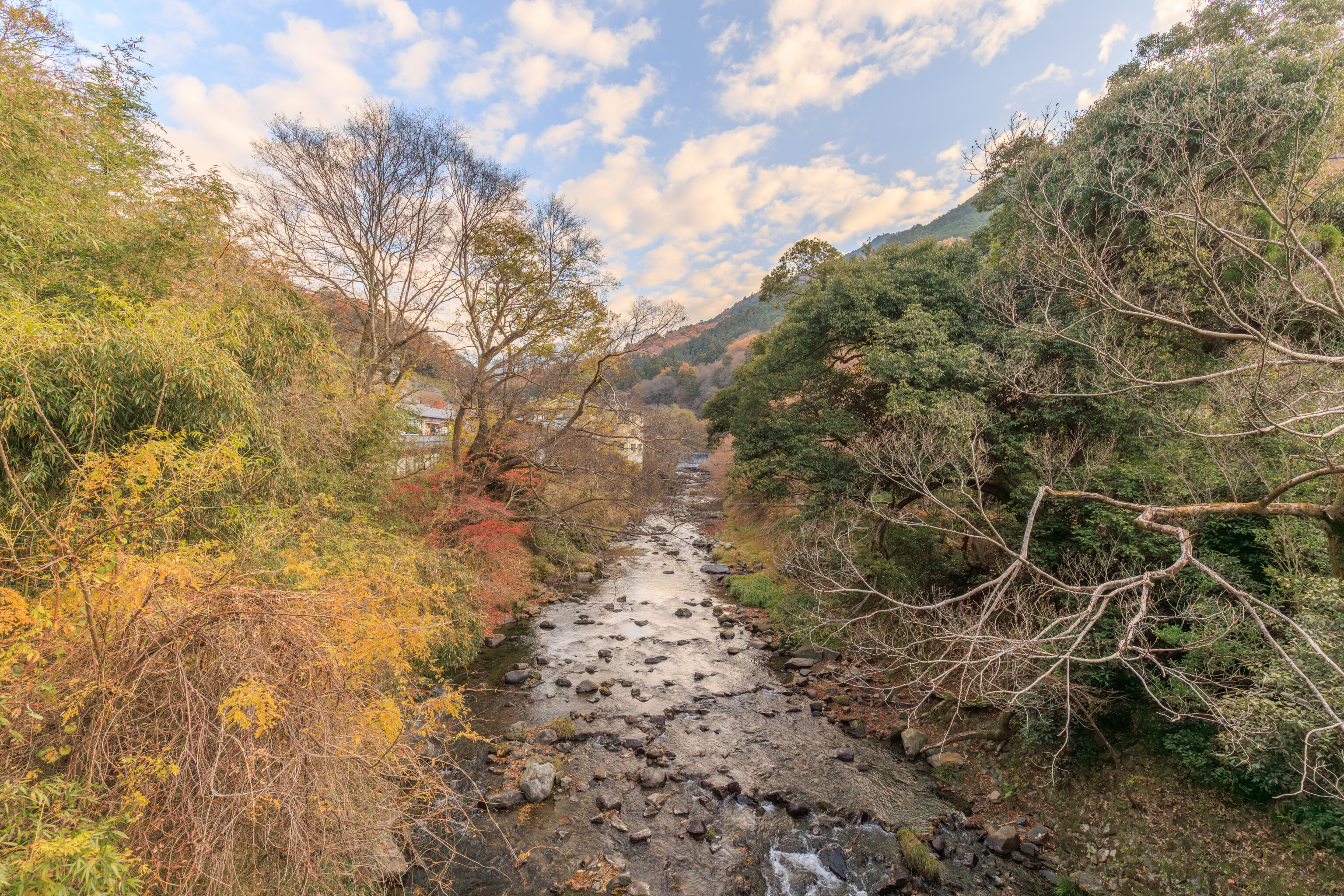
After getting off the bus, we crossed the two lane road that the bus stop is on and crossed over the Takano River.
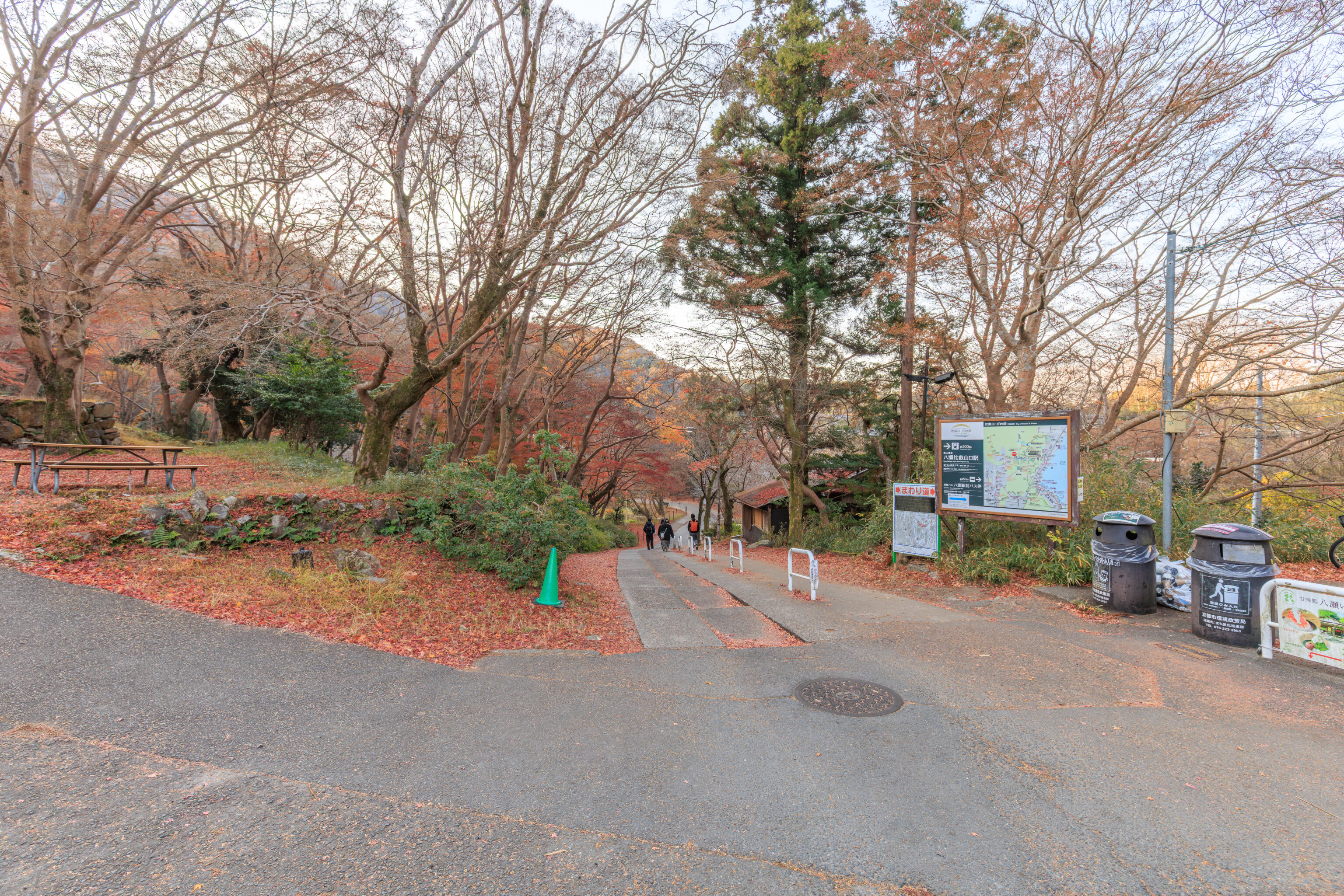
The path here on the left leads to the Eizan Cable & Ropeway funicular station. We plan on taking it later after visiting Ruriko-in to ascend Mt. Hiei. Also on the left is the Yase Momiji no Komichi (Path of Maple). The path is described as taking just five minutes. This may have been nice a few weeks ago but right now, it seems like it would mostly be leafless trees.
As we were still pretty early for our Ruriko-in visit, we went over to the funicular station to buy tickets for later, just in case we happened to return right before a departure.
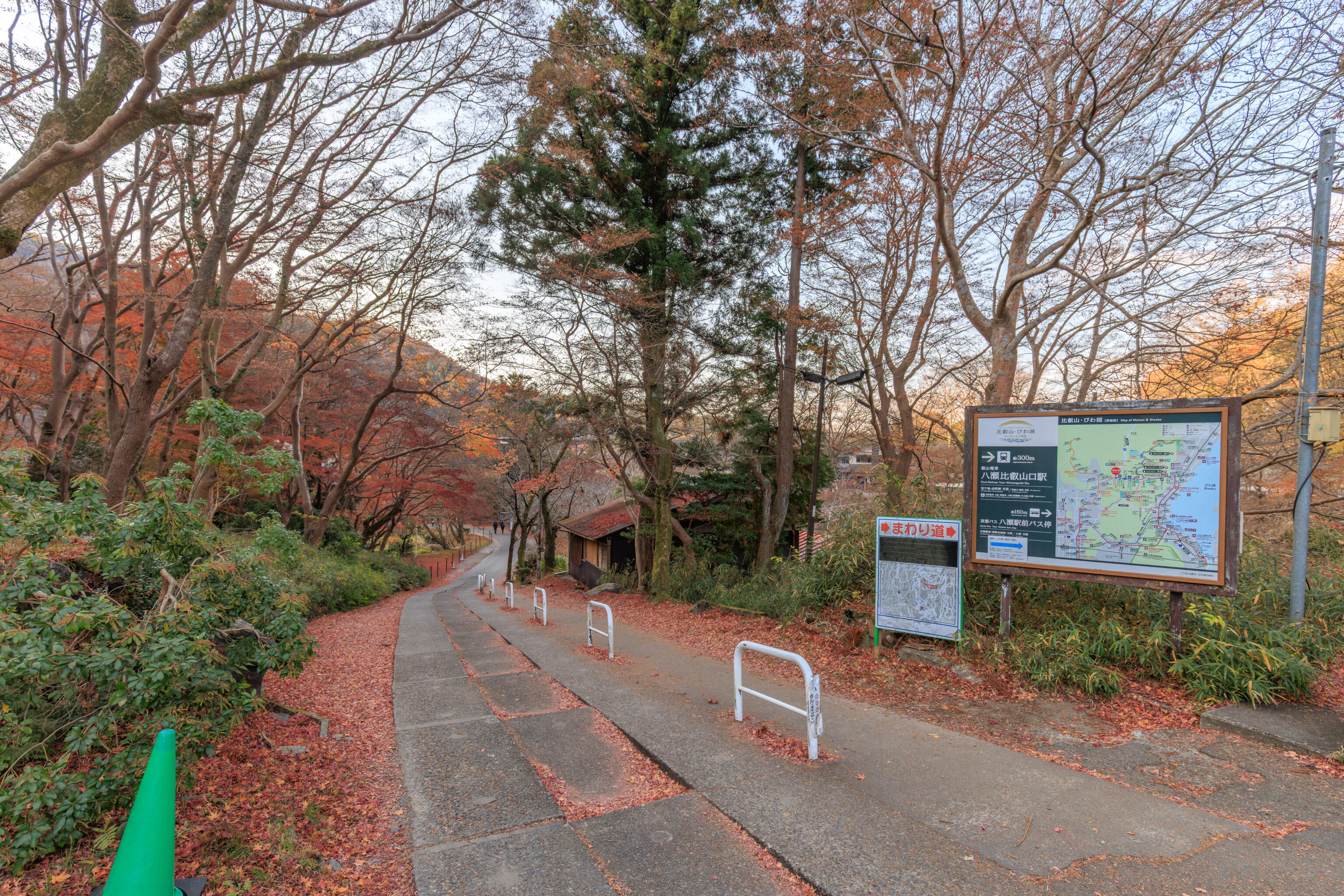
We continued following the road down to Ruriko-in.
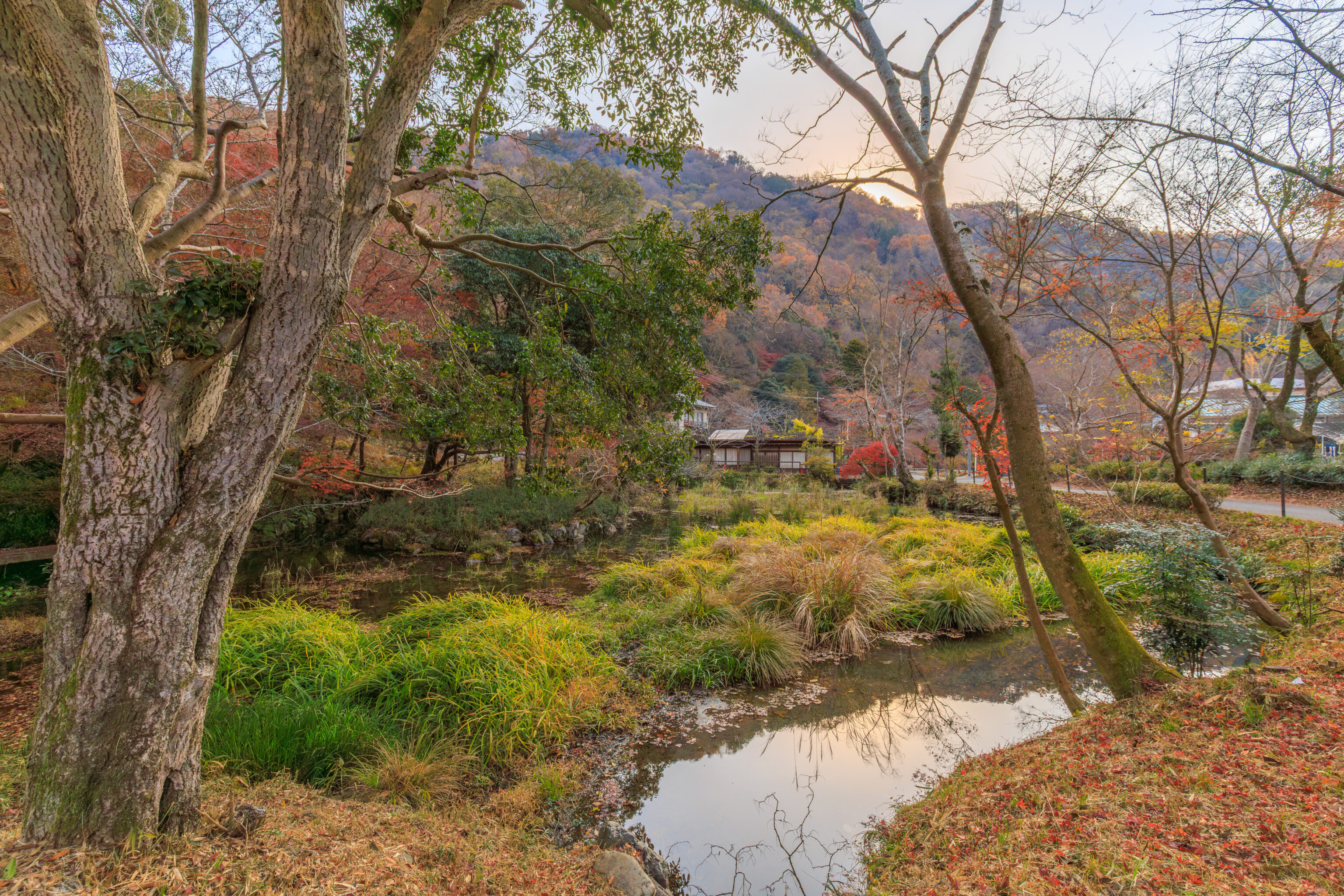
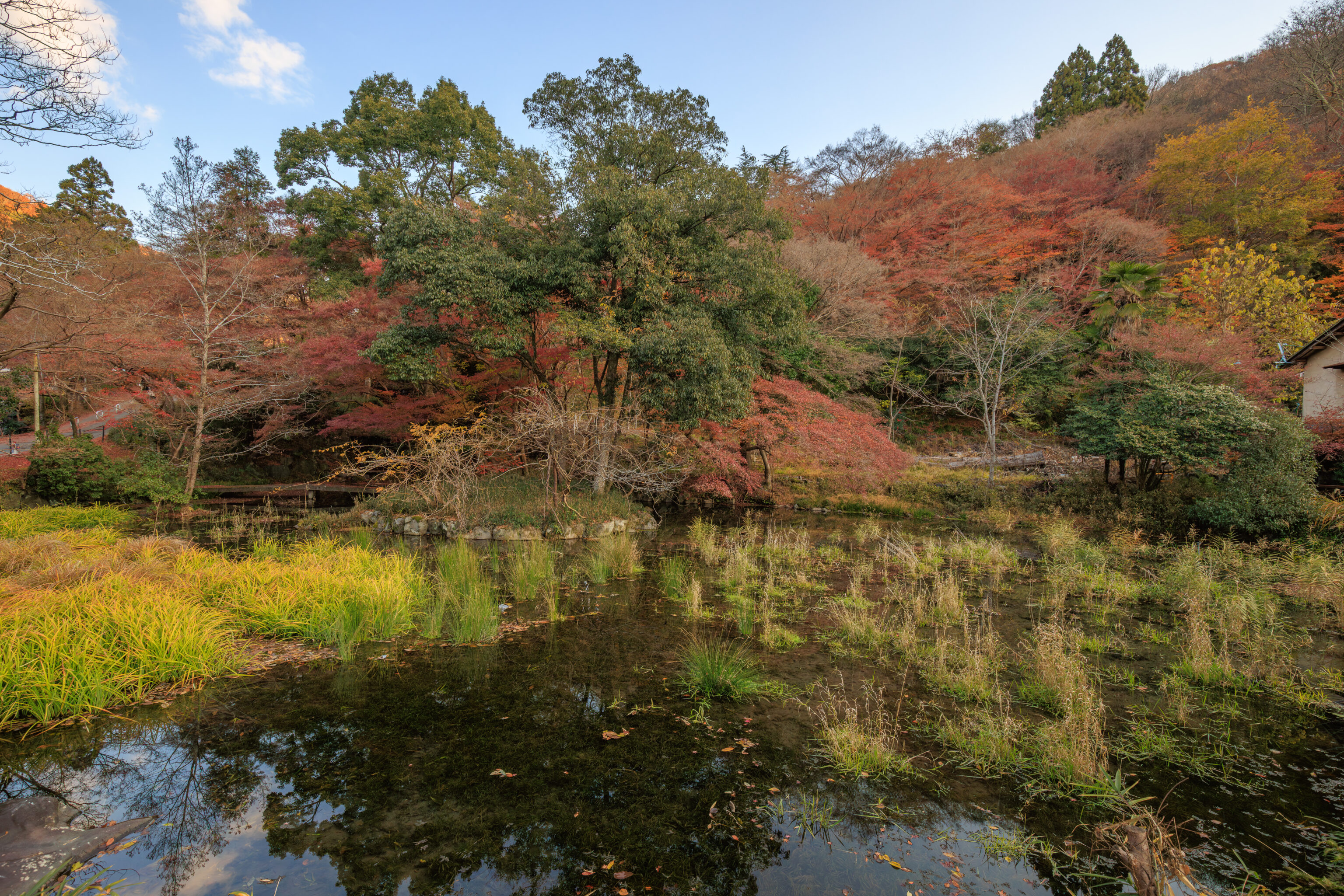
We walked by a pond on our left.
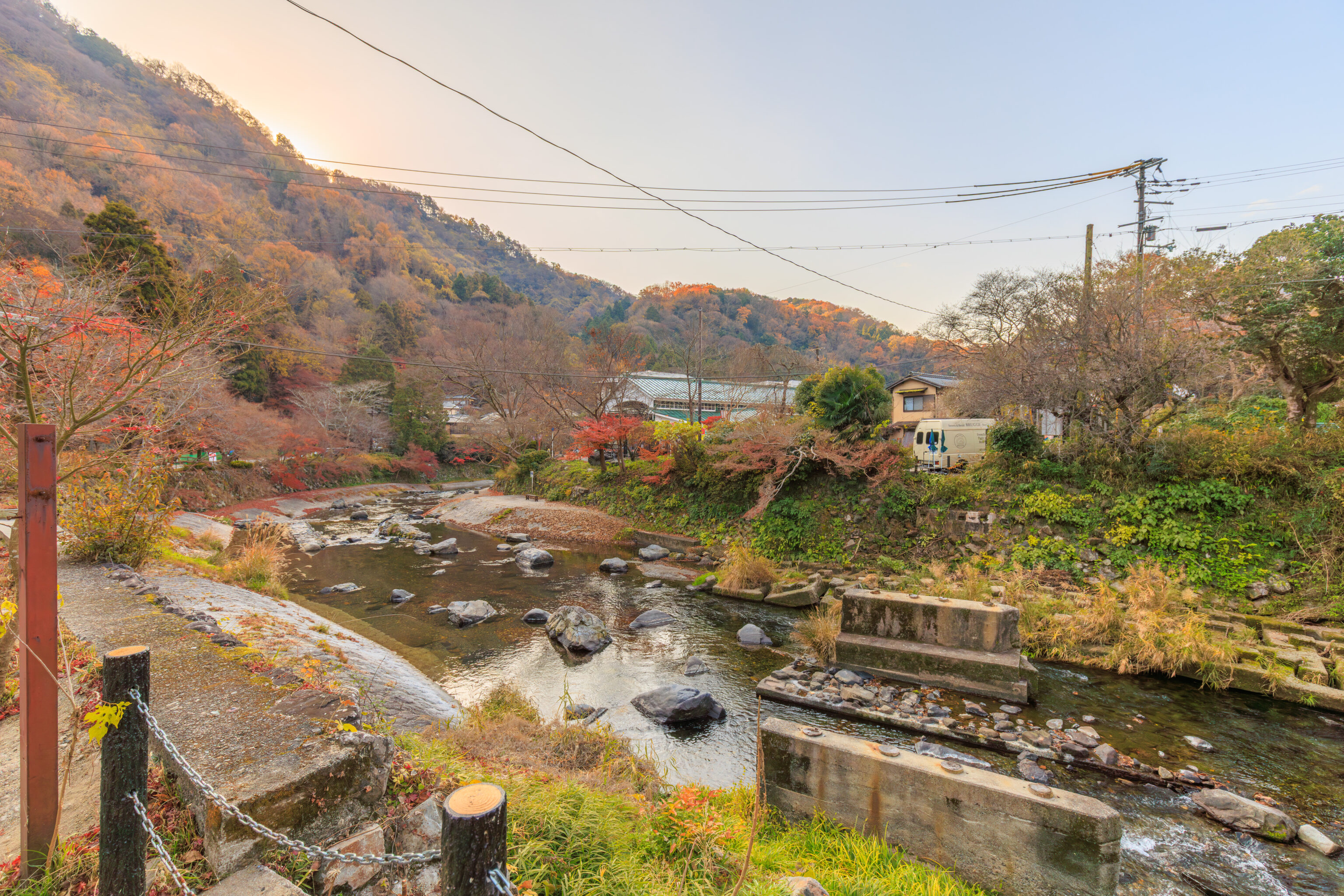
The road runs parallel to the Takano River, seen here on our right. A nearby sign indicates that there were three bridges across the river here and another a bit further down the road. However, the bridges are gone now. The remnants of one of the bridges can be seen here on the left.
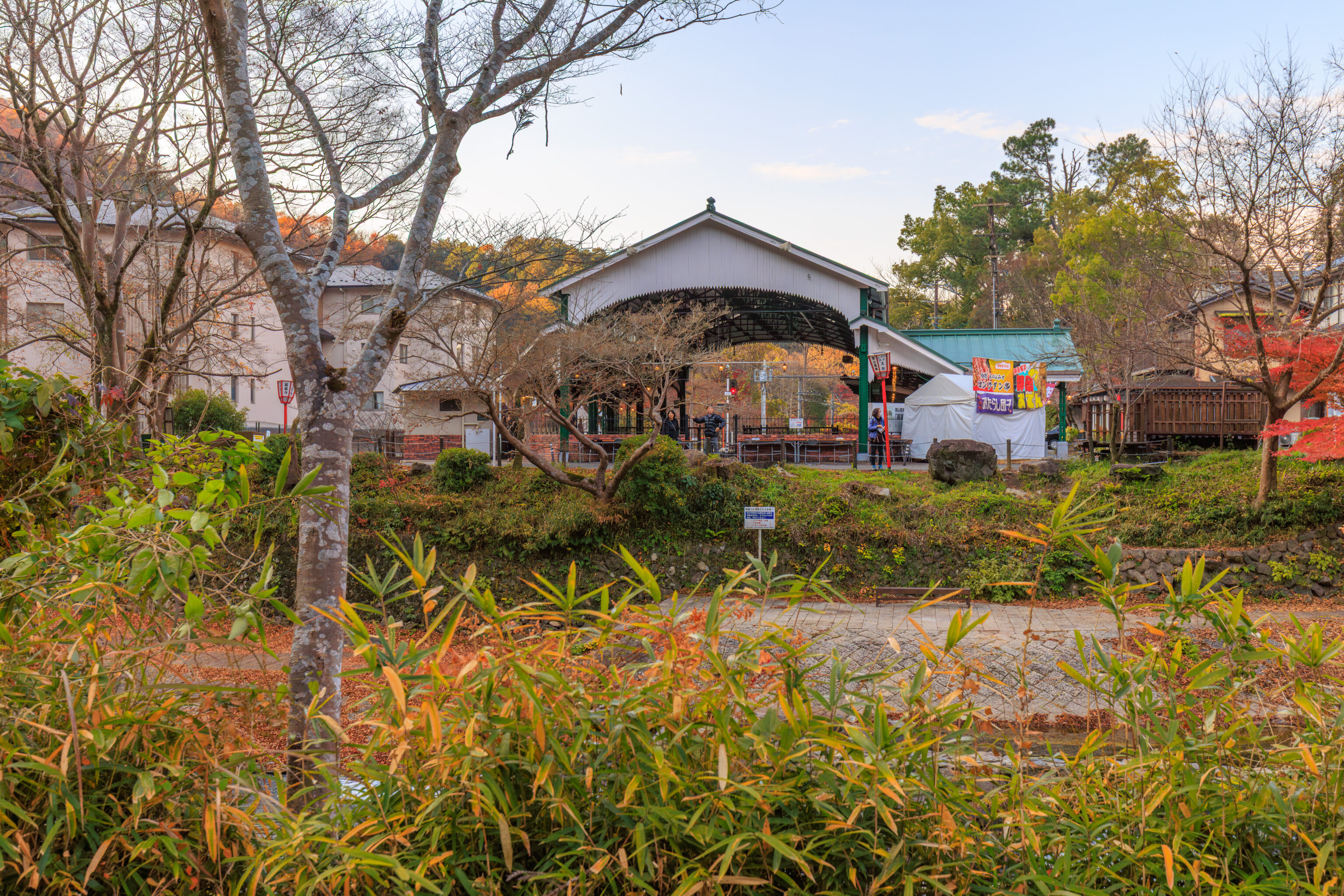
We continued on, walking past Yase Station on the other side of the river. This station is one of the terminal stations of the Eizan Railway and is not served by any other rail lines.
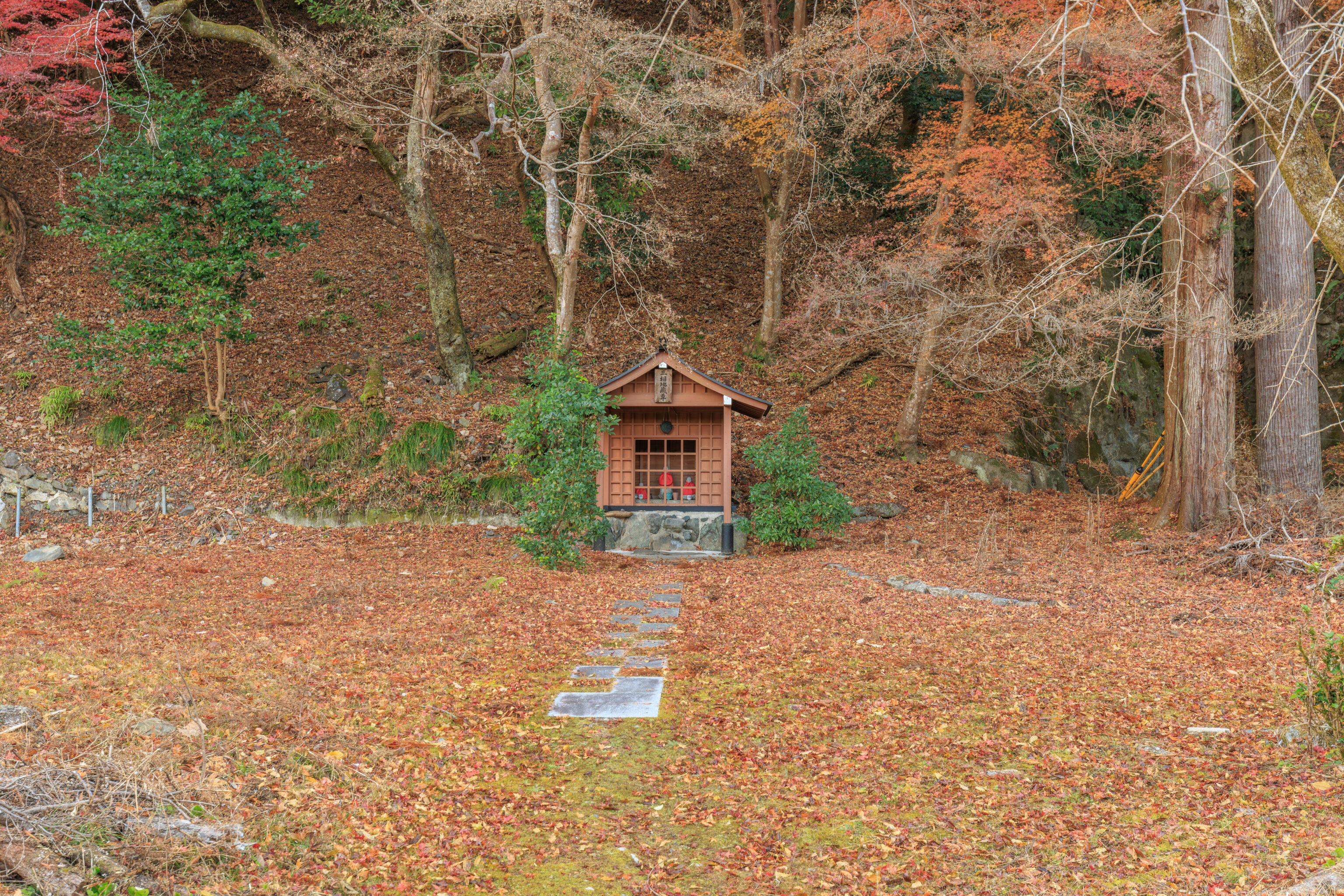
We continued on, passing by a small shrine on our left.
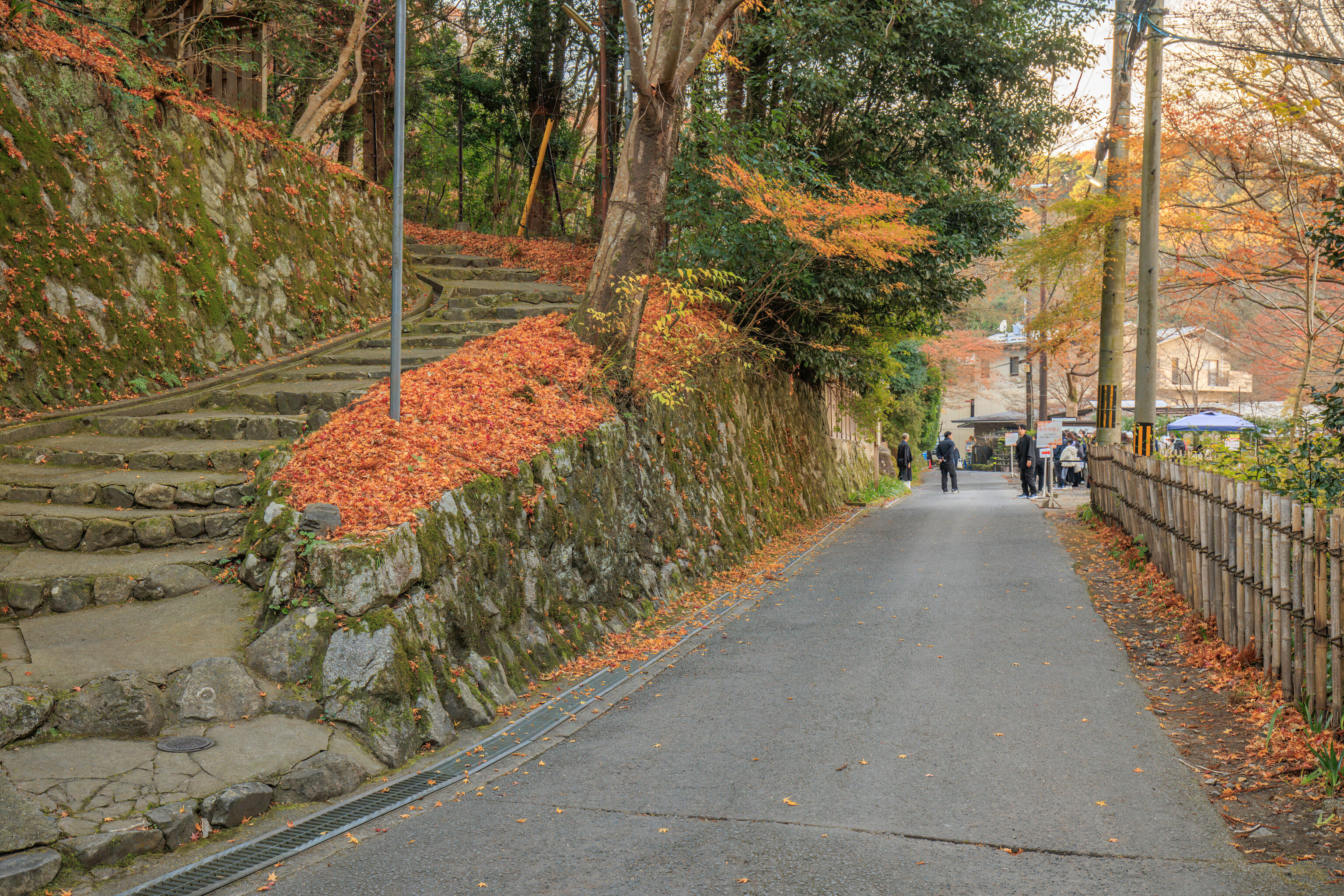
We walked a little bit further until we saw people queued up ahead. We were a bit early at 9am. This should also be around when the first group of ticket holders is able to enter. We walked up and joined the queue. A sign near the entrance, which we actually didn’t see until we left, reads:
Rurikoin Villa

This area known as Yase, was a popular location for recreation by court nobles and high-ranking samurai throughout the Heian and later periods. The Imperial prince Oama, who later became Emperor Tenmu, reportedly cured the arrow wound he suffered in the Imperial succession war of Jinshin in 672 here at Yase.

In the beginning of the Meiji era (1868-1912) a villa named Kikaku-tei was built at this location by Sanetomi Sanjo, the highest-ranked court noble and one of the most important figures in the new Meiji government at the time. The name "Kikakutei" continues to be used to this day as the name of the successive tea-ceremony house built here, and calligraphy of the name "Kikakutei" that was hand-written by Sanetomi Sanjo is still kept in this villa.

The villa was largely renovated at the early Showa period by the renowned master of traditional Kyoto-Sukiya style architecture, Sotoji Nakamura, and gardens laid out by the famous gardening company Toemon Sano. The distinctively Japanese structures and gardens are loved by many distinguished individuals and the general public.

After entering the main gate, there are three landscape gardens named
"Yamaroji-no-niwa", "Ruri-no-niwa", and "Garyo-no-niwa". These gardens are all colorfully decorated throughout the year by dozens of kinds of maple trees, moss carpeting, and hundreds of Japanese andromeda when in season. The water in the brooks flowing through the gardens comes underground from Mt. Hiei, located north-east of here.

Kyoto City
– Text from a sign.
Ruriko-in is reportedly open for special viewing sessions during the spring, summer, and fall seasons. We don’t know about the other seasons, however, advance reservations are required in the fall. Today is actually the last day of the fall special viewing period. We made our reservation about a month ago in November. At the time, there was plenty of availability today and at least a day or two prior. That said, the fall foliage season is pretty much over.
We purposely booked a time slot today in case of flight delays. And, we booked an early time slot so that we could visit Mt. Hiei after and have the rest of the day’s schedule open.
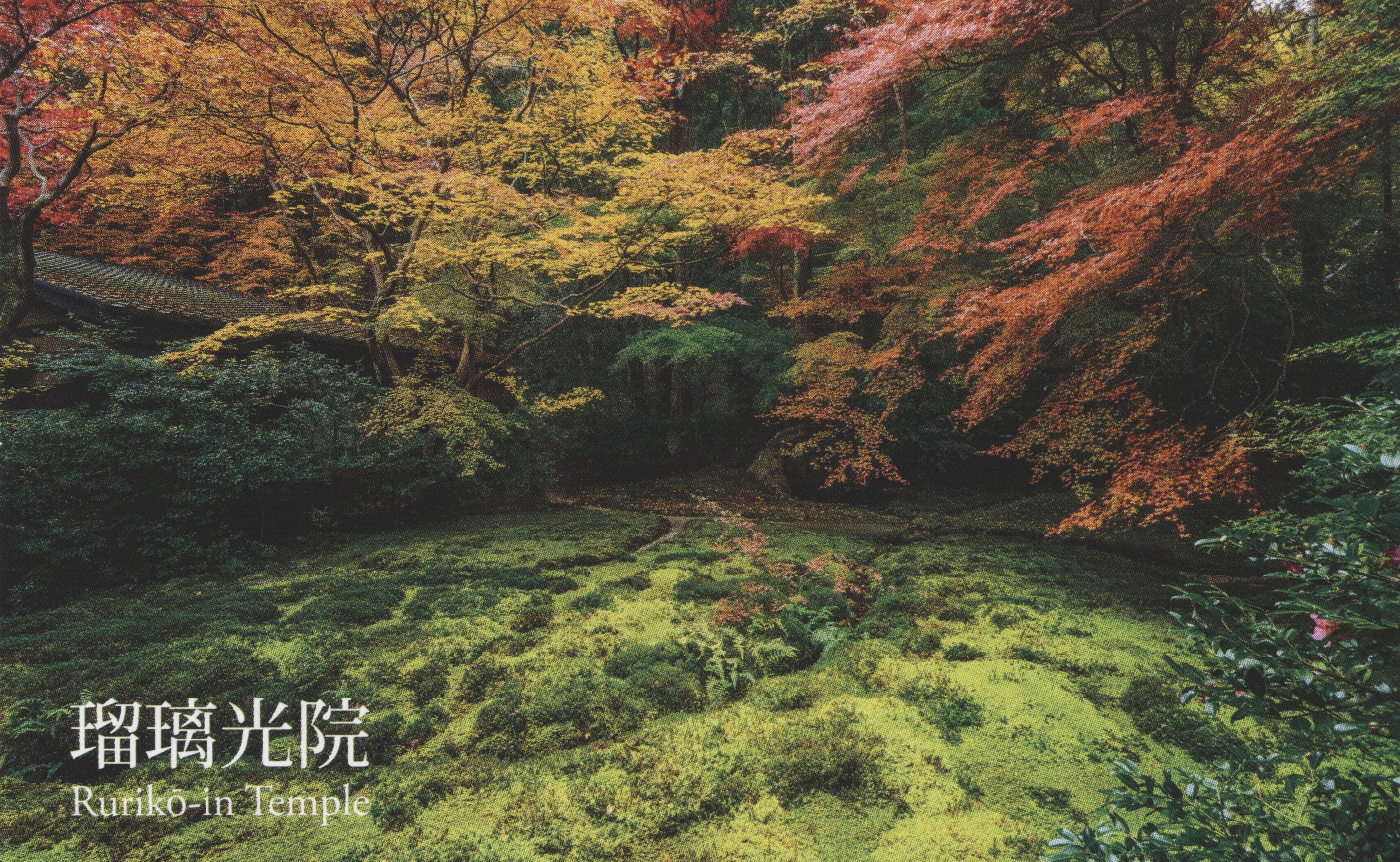
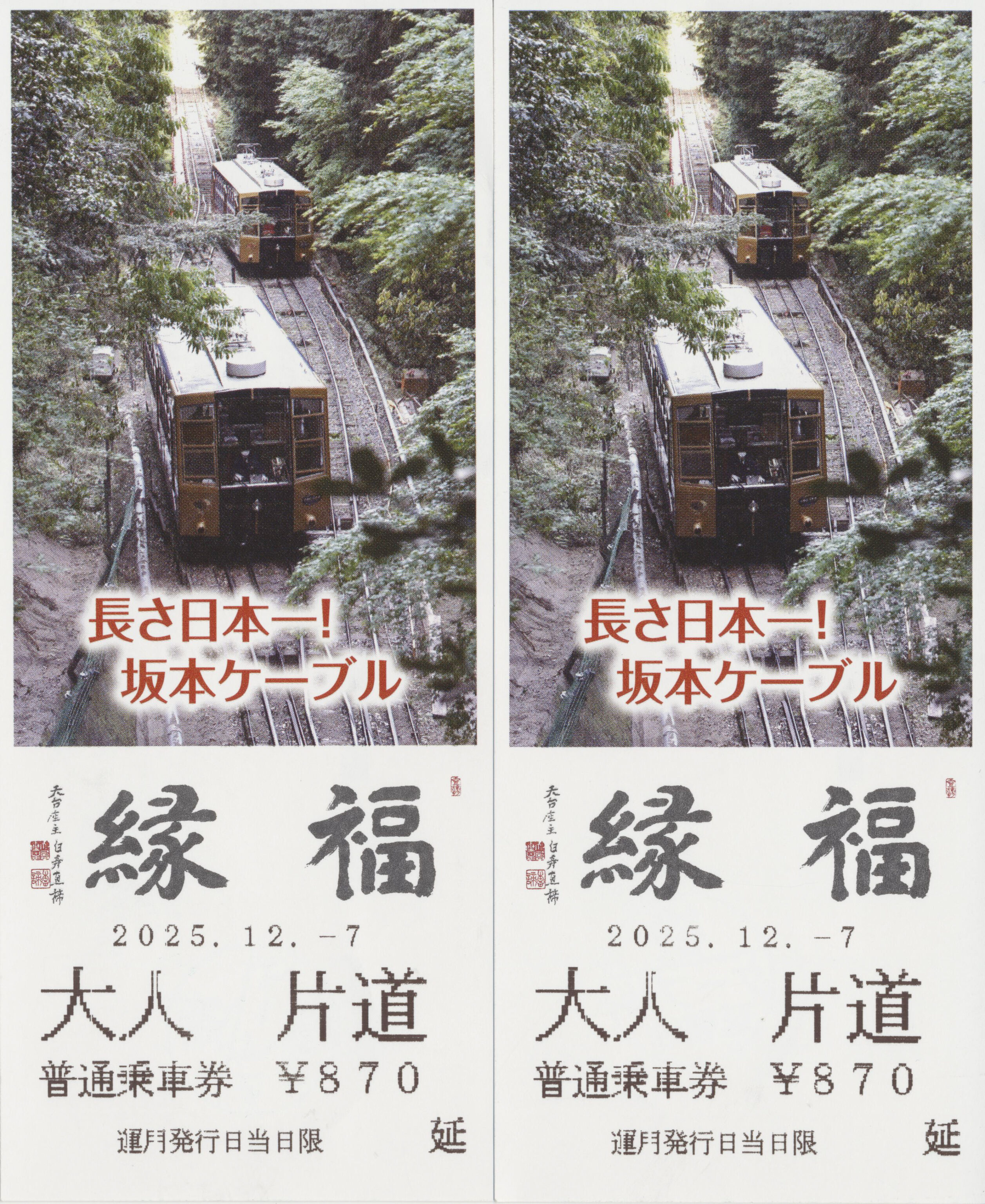
We showed our reservation confirmation email and received a paper ticket. The ticket shows what we can expect to see today, unless the leaves have already fallen! We’ll see…
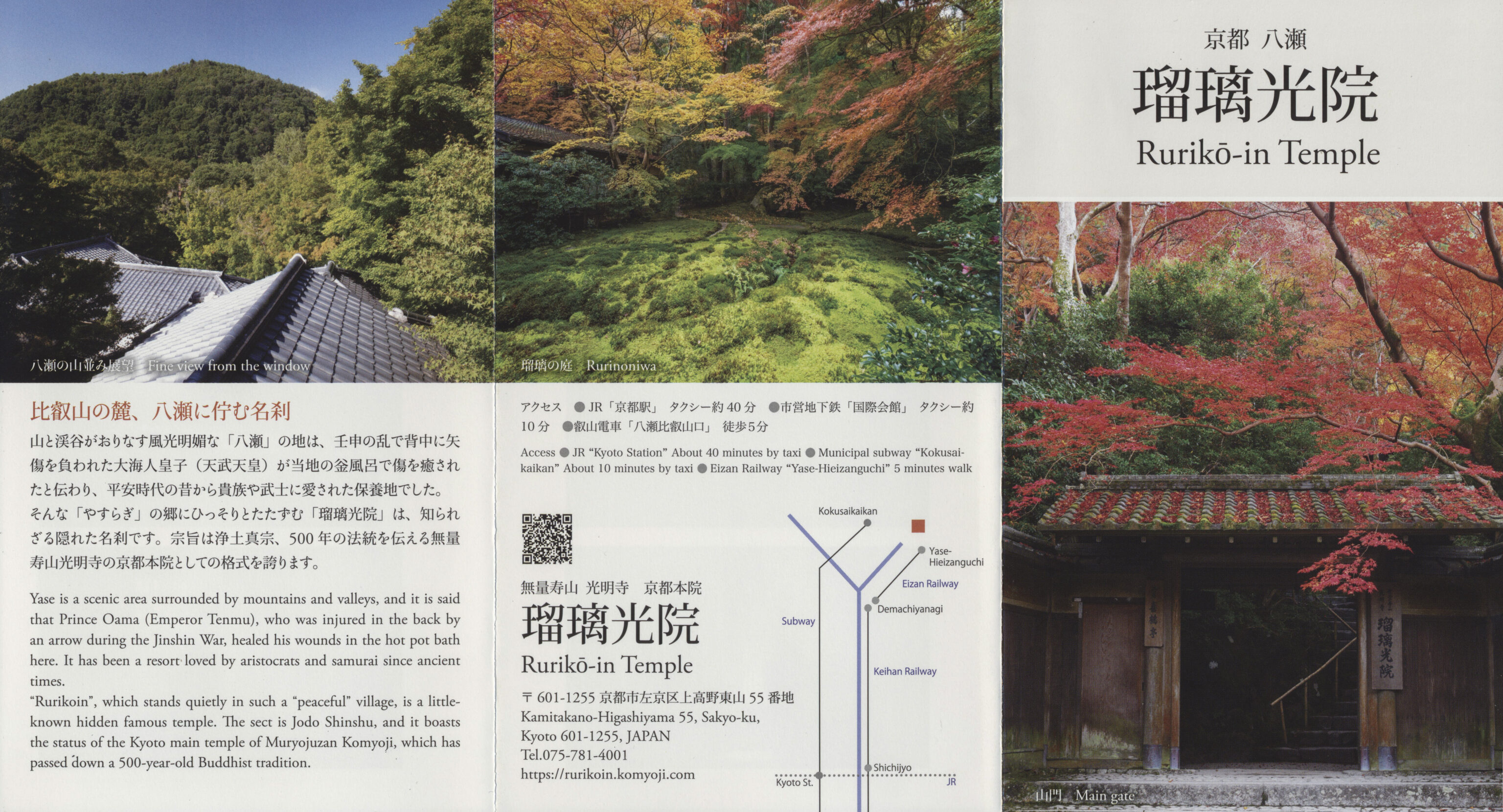
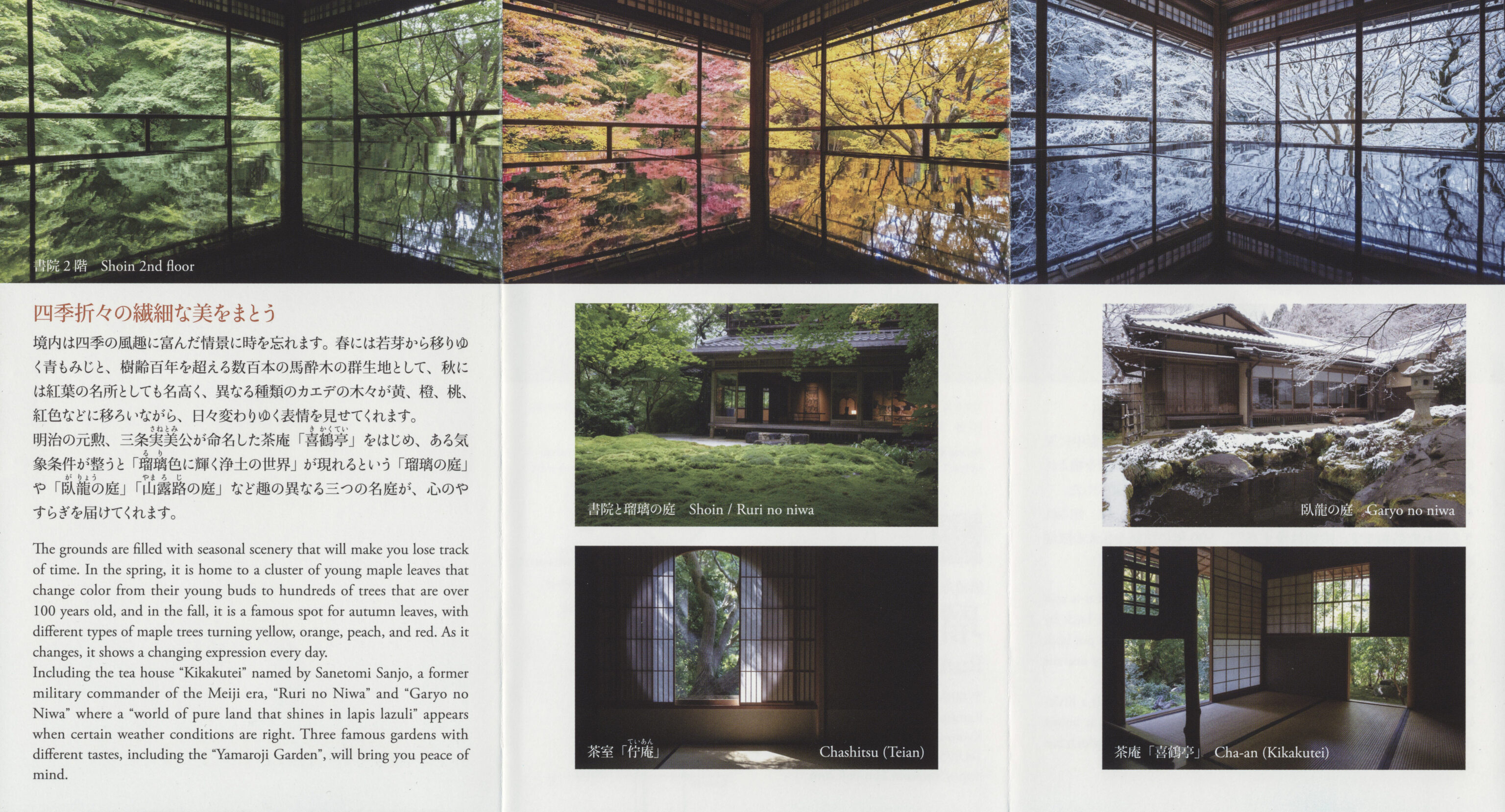
We were also provided an informational pamphlet with Japanese and English text.


We were also provided with a pen. Why a pen?
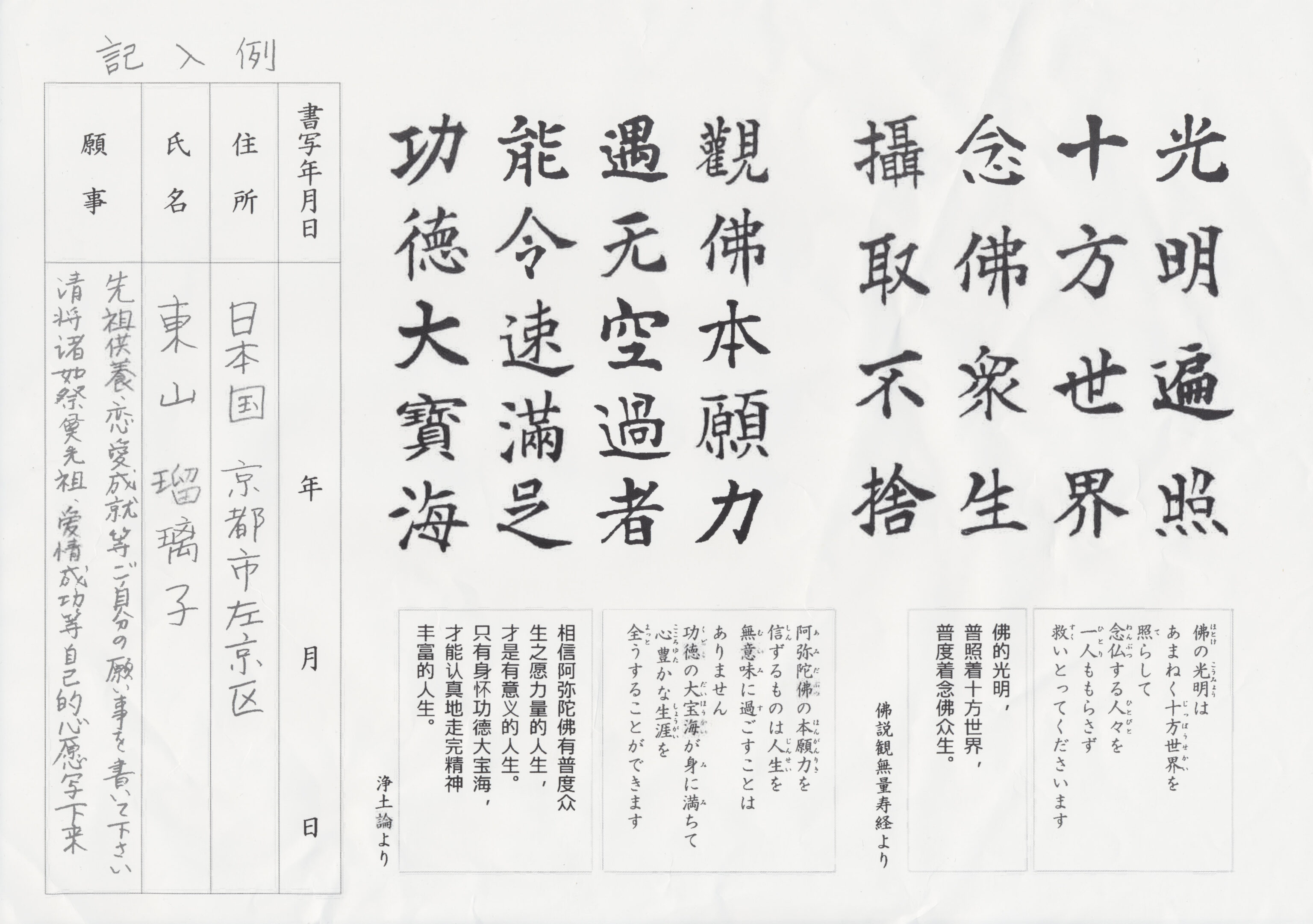
There is a pen because there is a sutra to be copied!
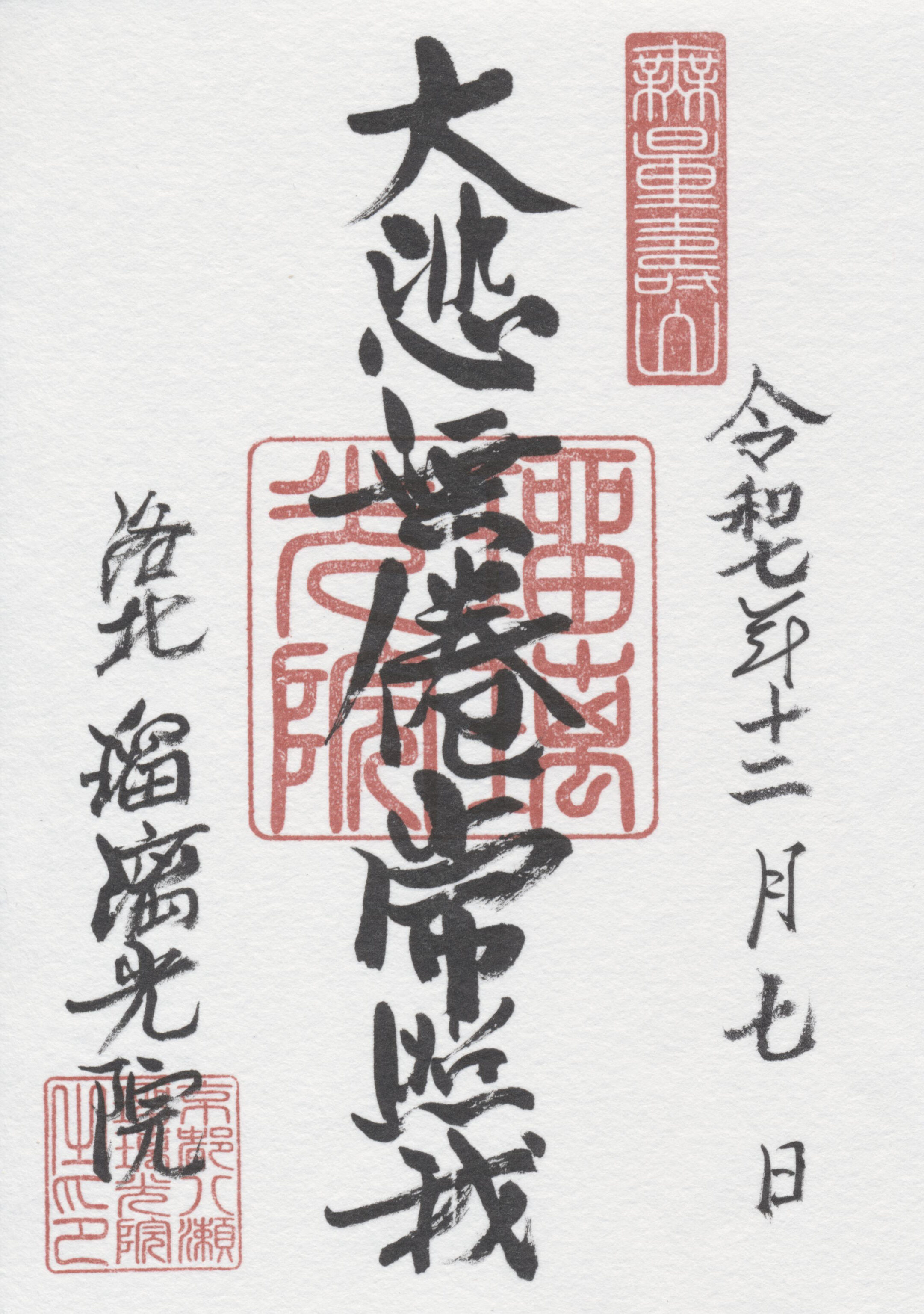
A pre-written 御朱印 goshuin was also given to each visitor. Many Japanese temples and shrines have counters where a goshuin is written and stamped in your 朱印帳 shuincho, a special book for keeping goshuin. Ruriko-in likely doesn’t have the staff or space to support doing it live.
The typical temple or shrine goshuin experience is that the goshuin is created or given in exchange for a fixed sum of money, basically a donation. Only once, when we visited Sengaku-ji, a temple associated with the 47 Ronin, in Tokyo in January, was copying a sutra also a requirement for getting a goshuin.

All the materials above were provided in a plastic bag.
While we were waiting, a monk, presumably the head monk of the temple, came out and spoke to the waiting guests. That was interesting, although unfortunately we couldn’t understand much of what he was saying.
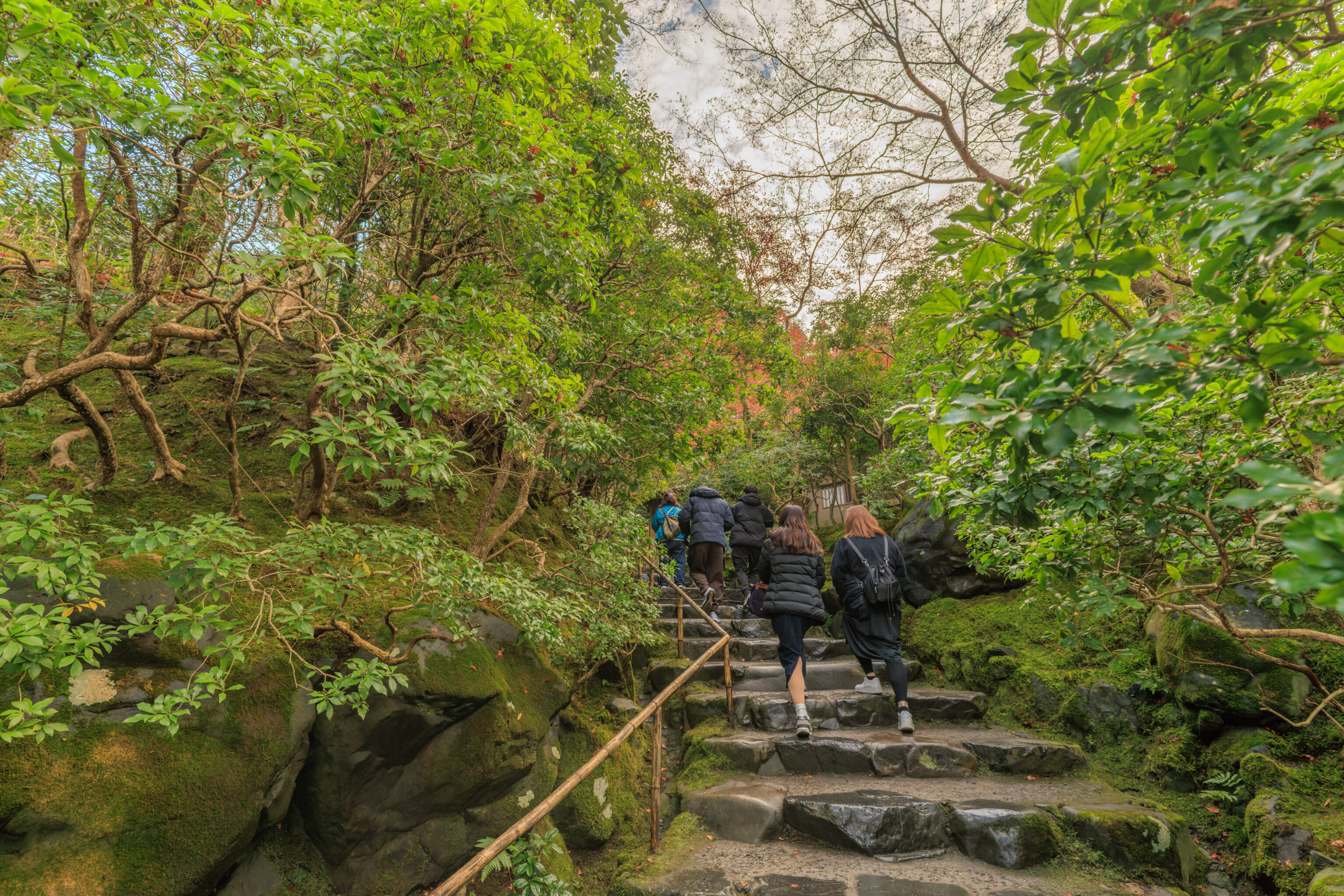
We entered just before 9:15am. The path from the road ascends up stone steps through a lush green forested area.
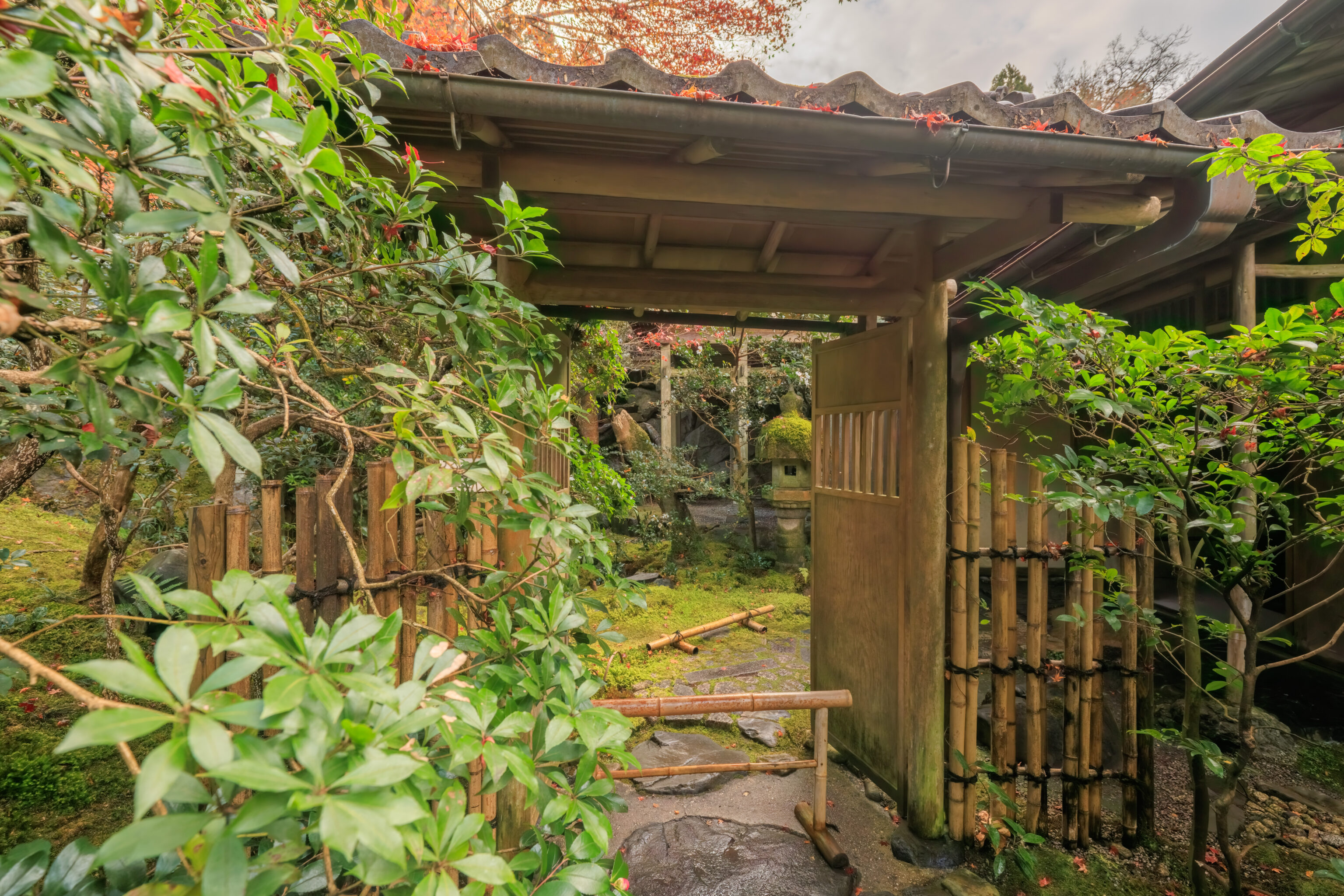
We passed by an area that was not open to visitors.
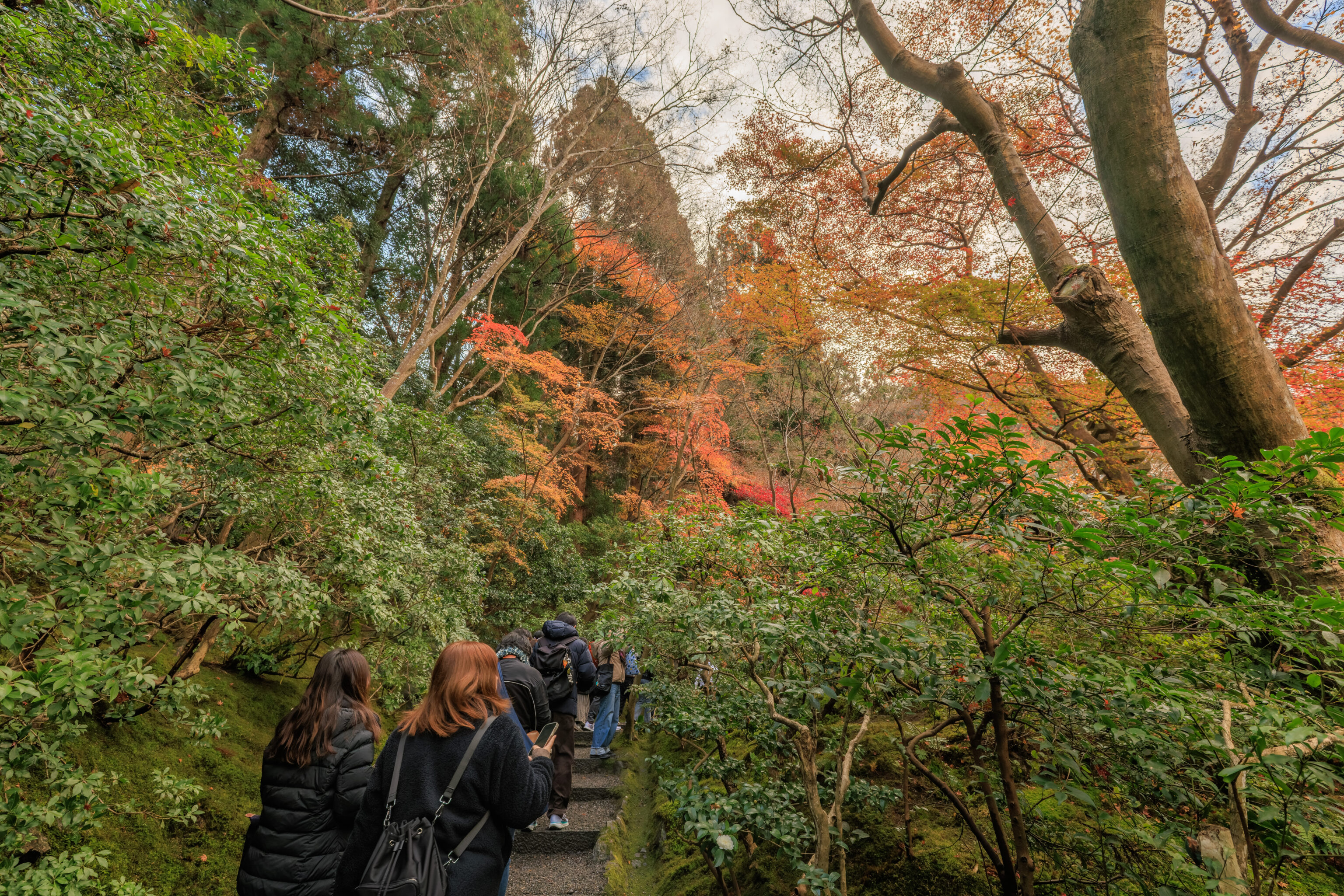
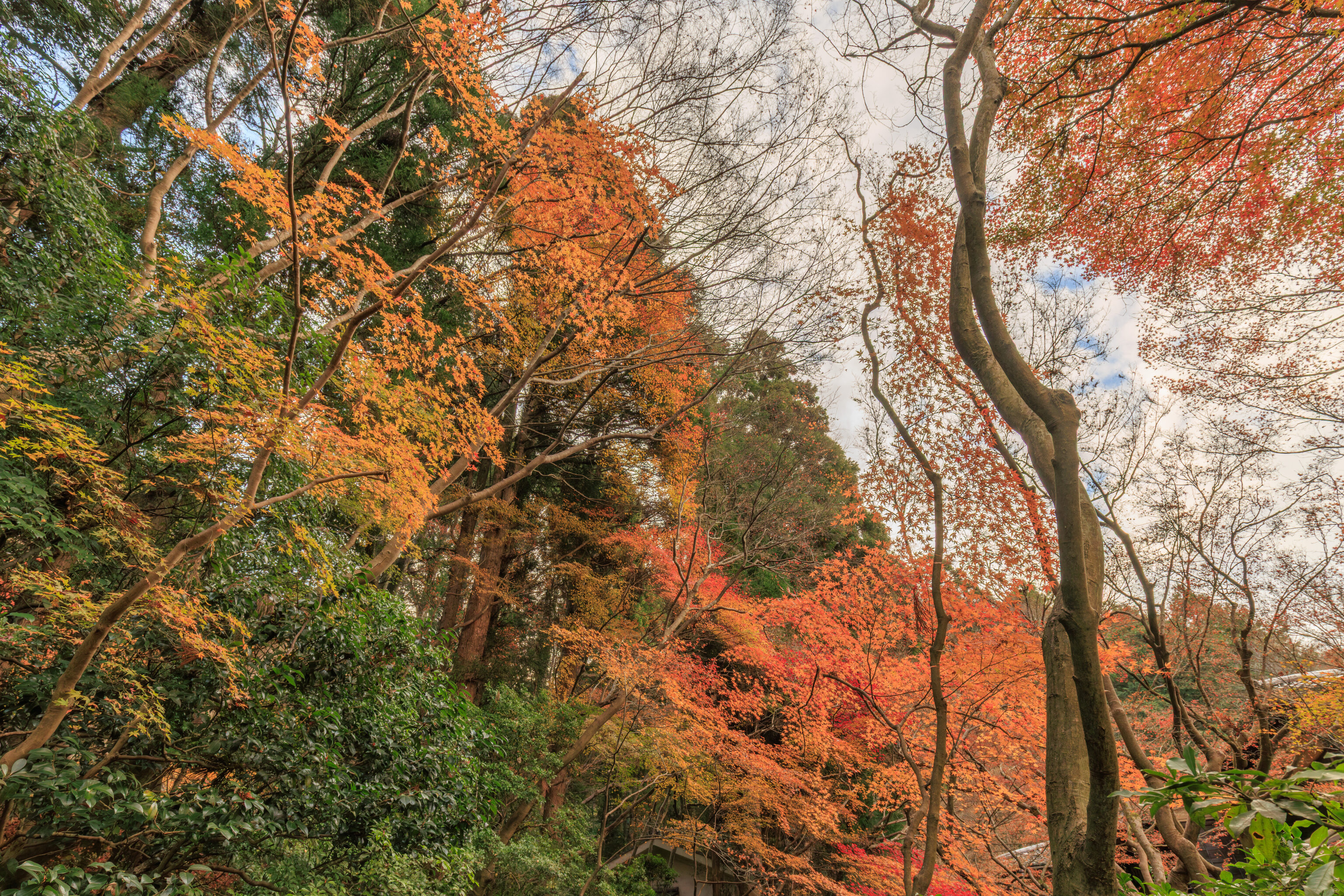
Soon, we saw some beautiful fall colors in front of us!
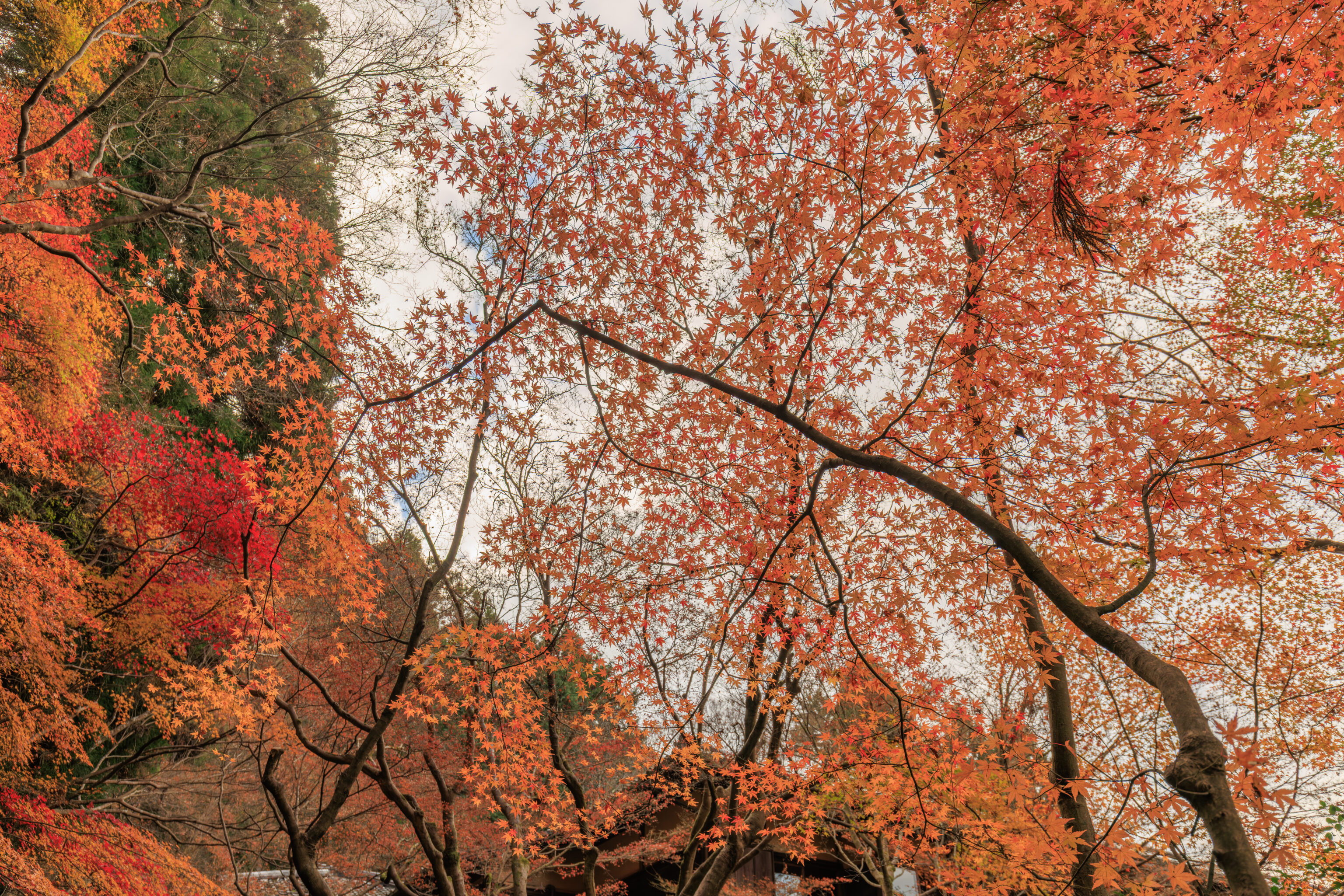
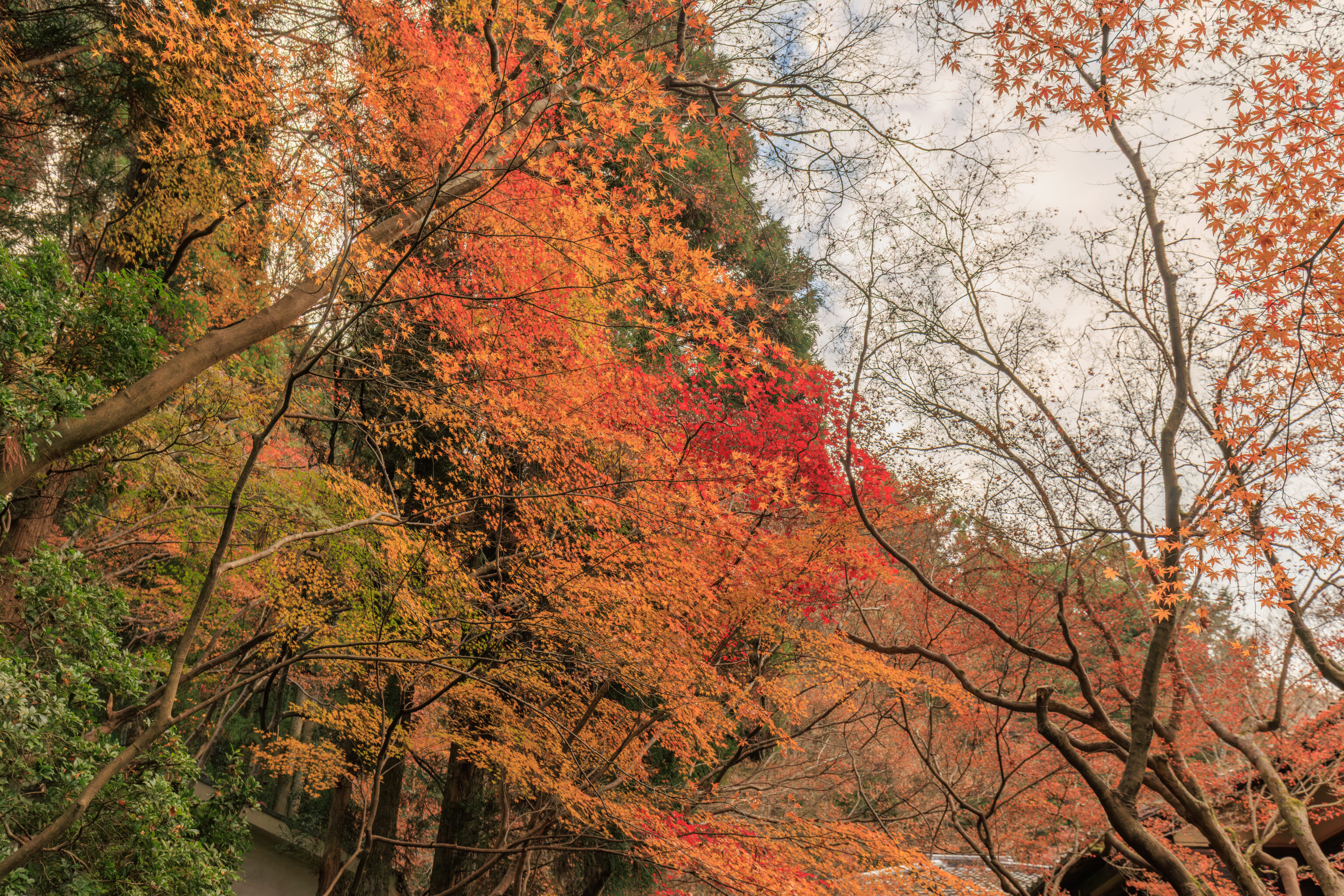
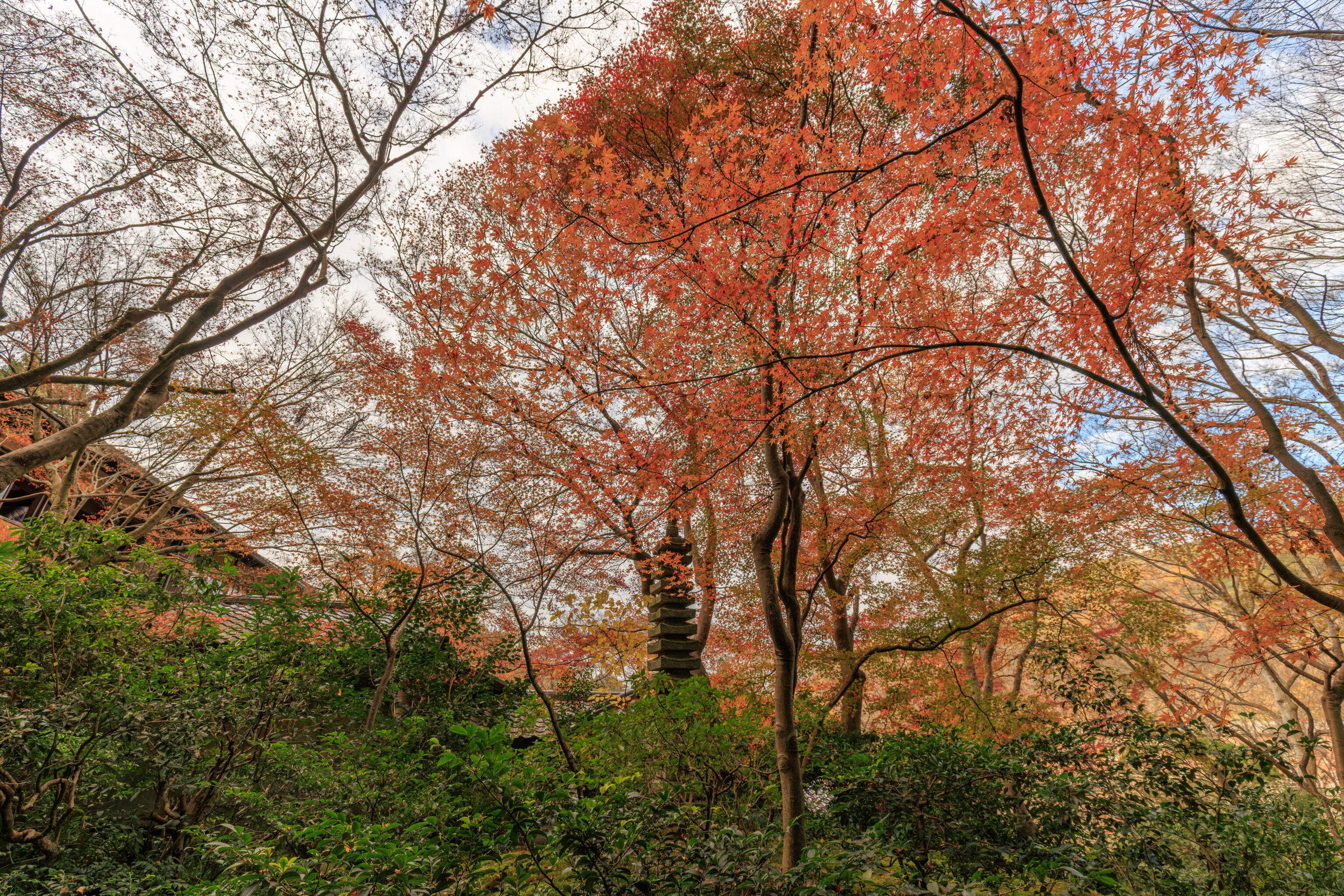
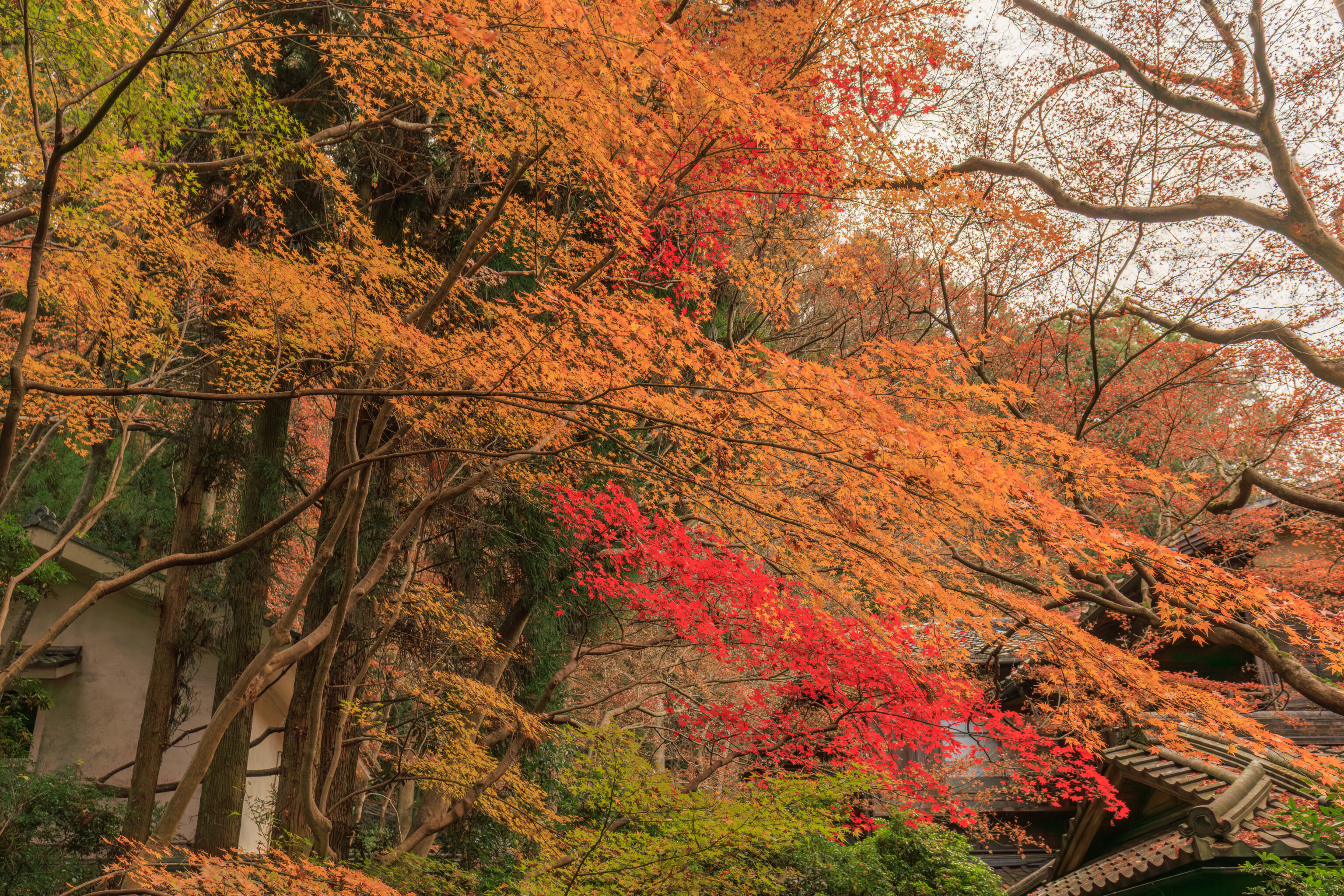
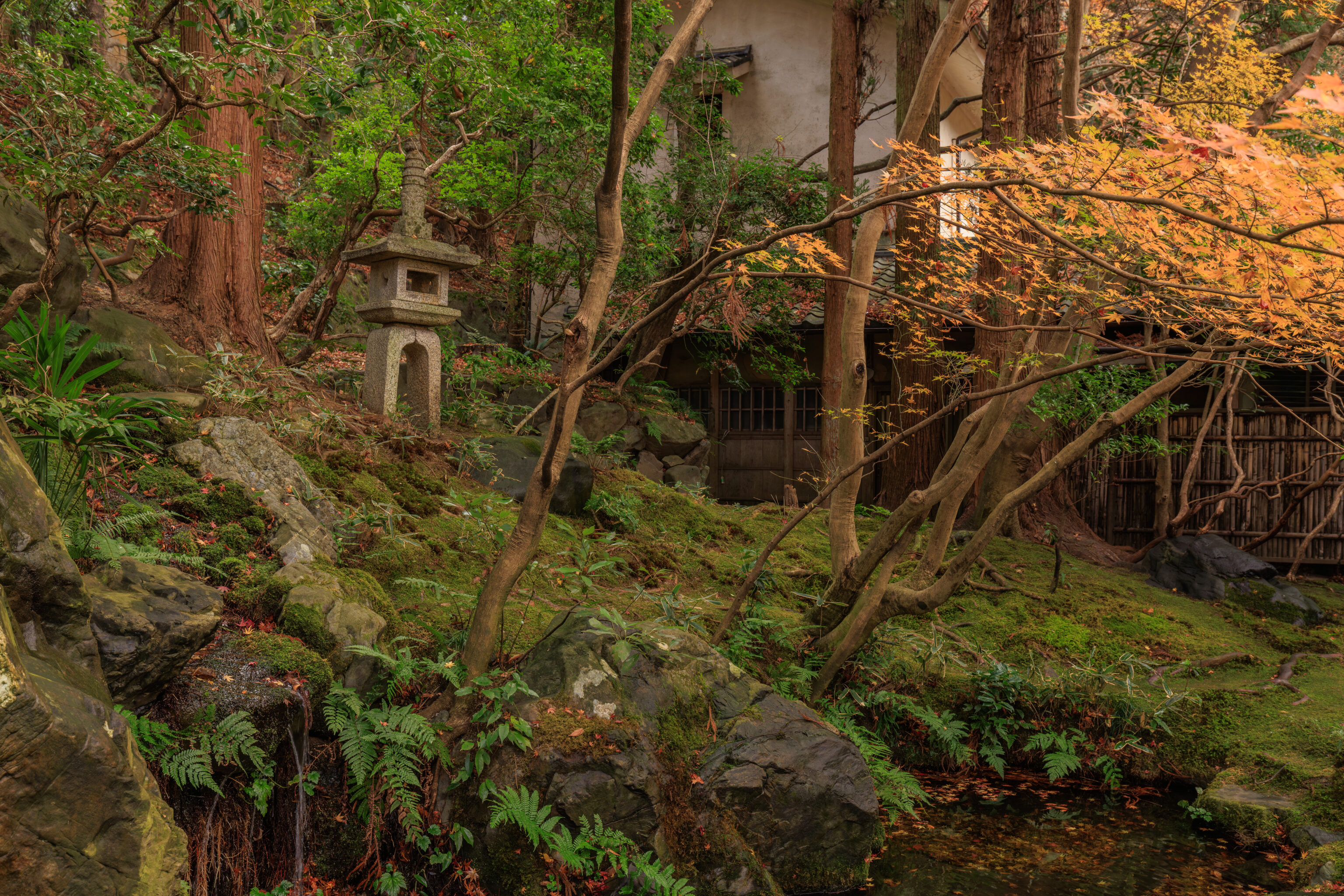
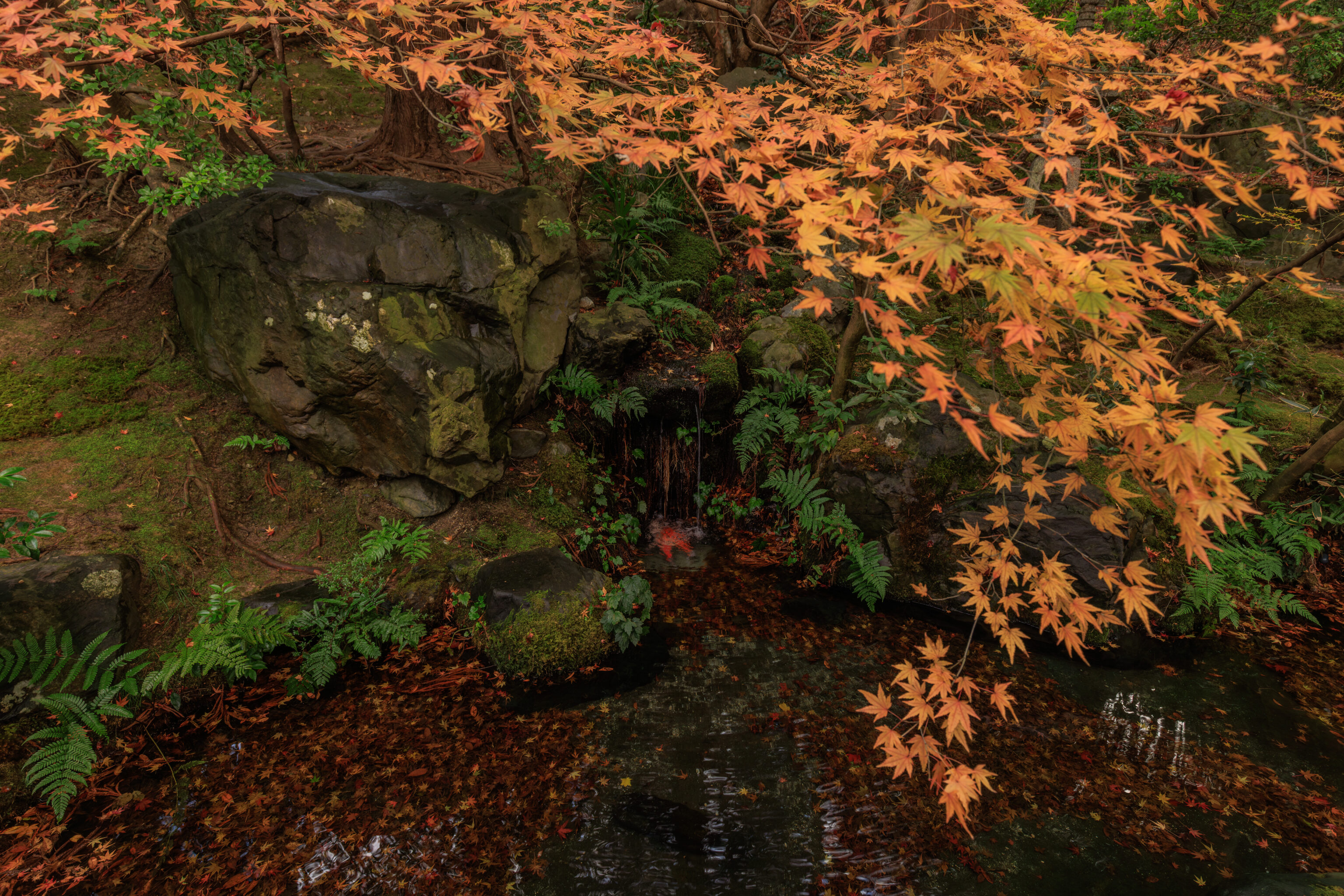
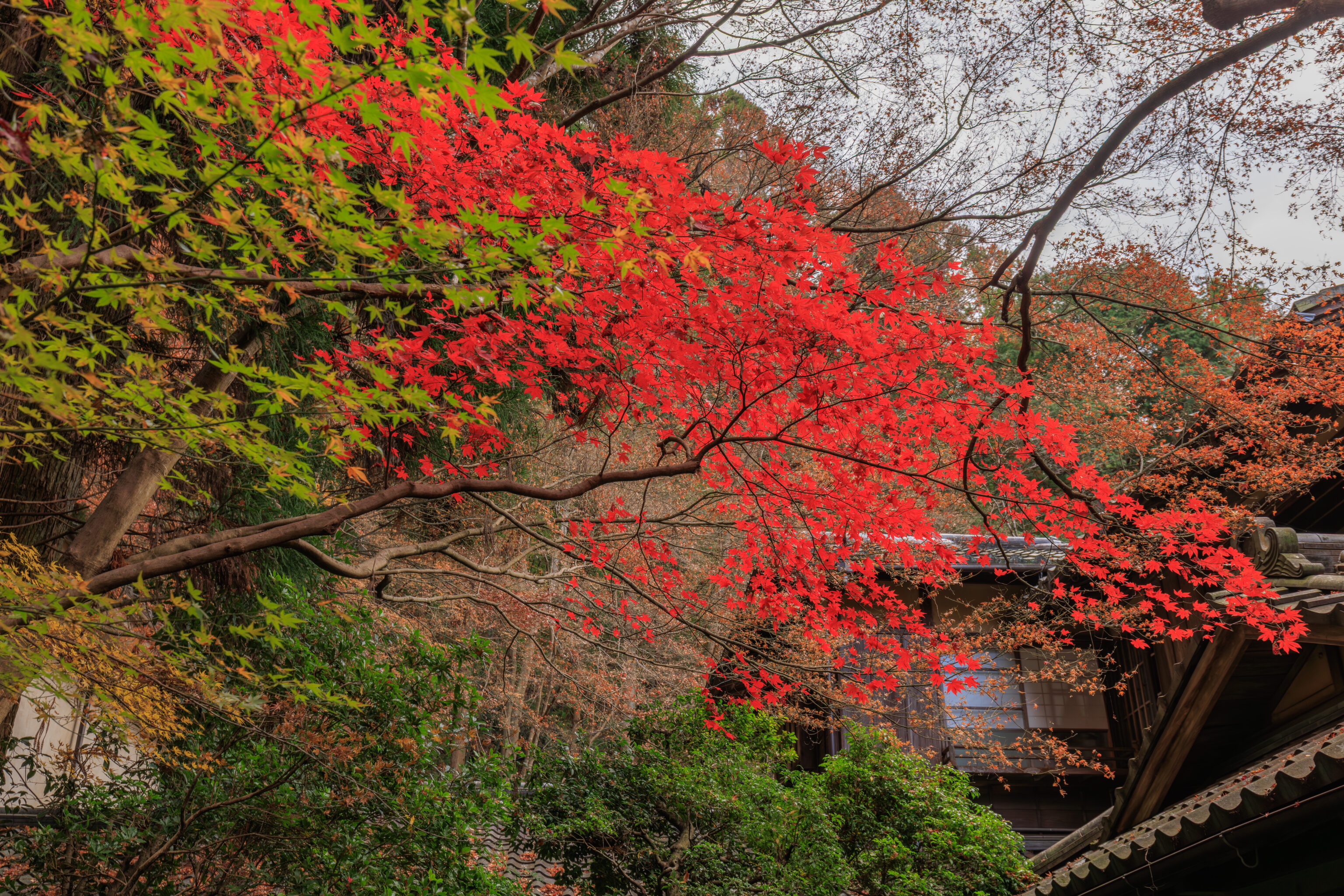
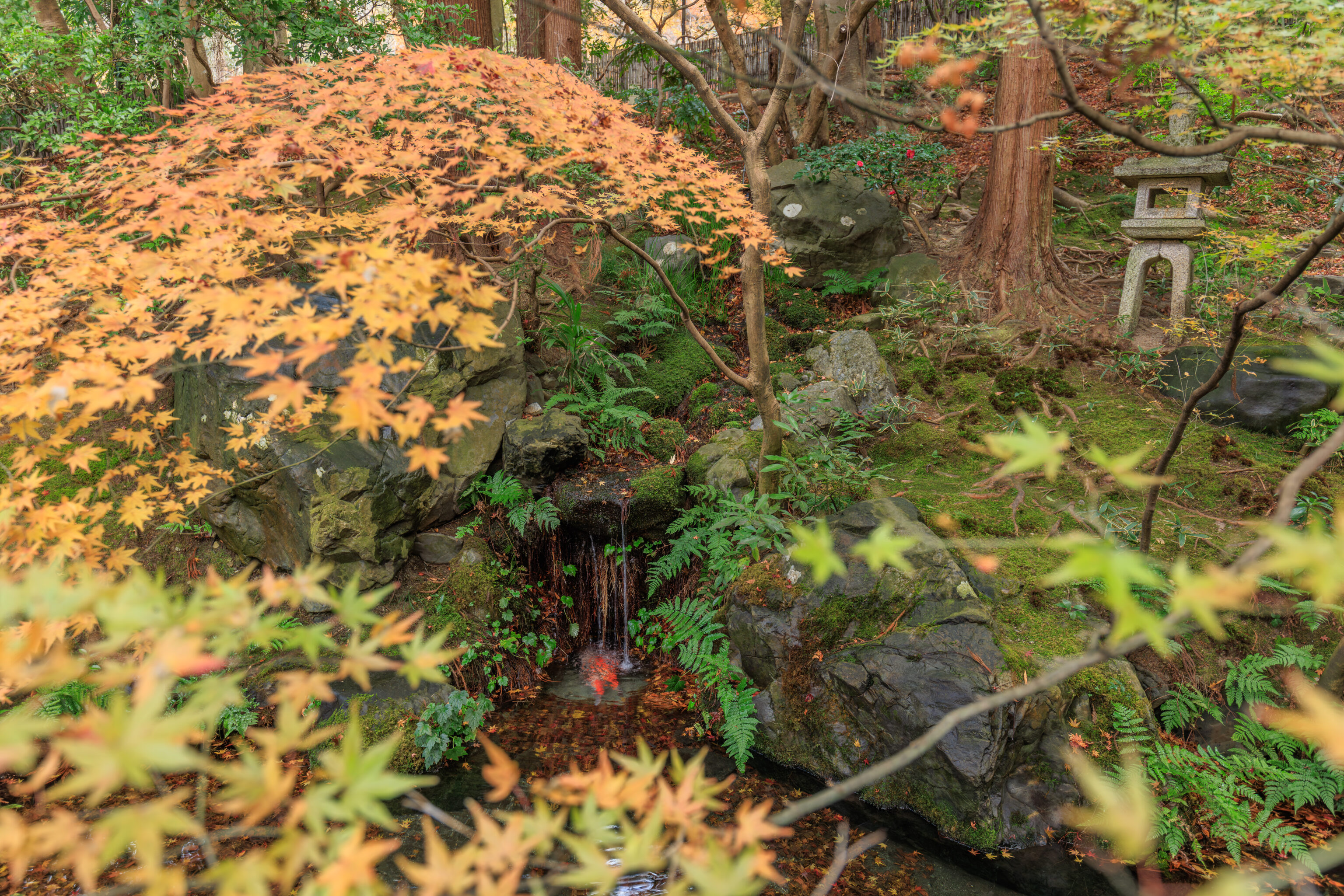
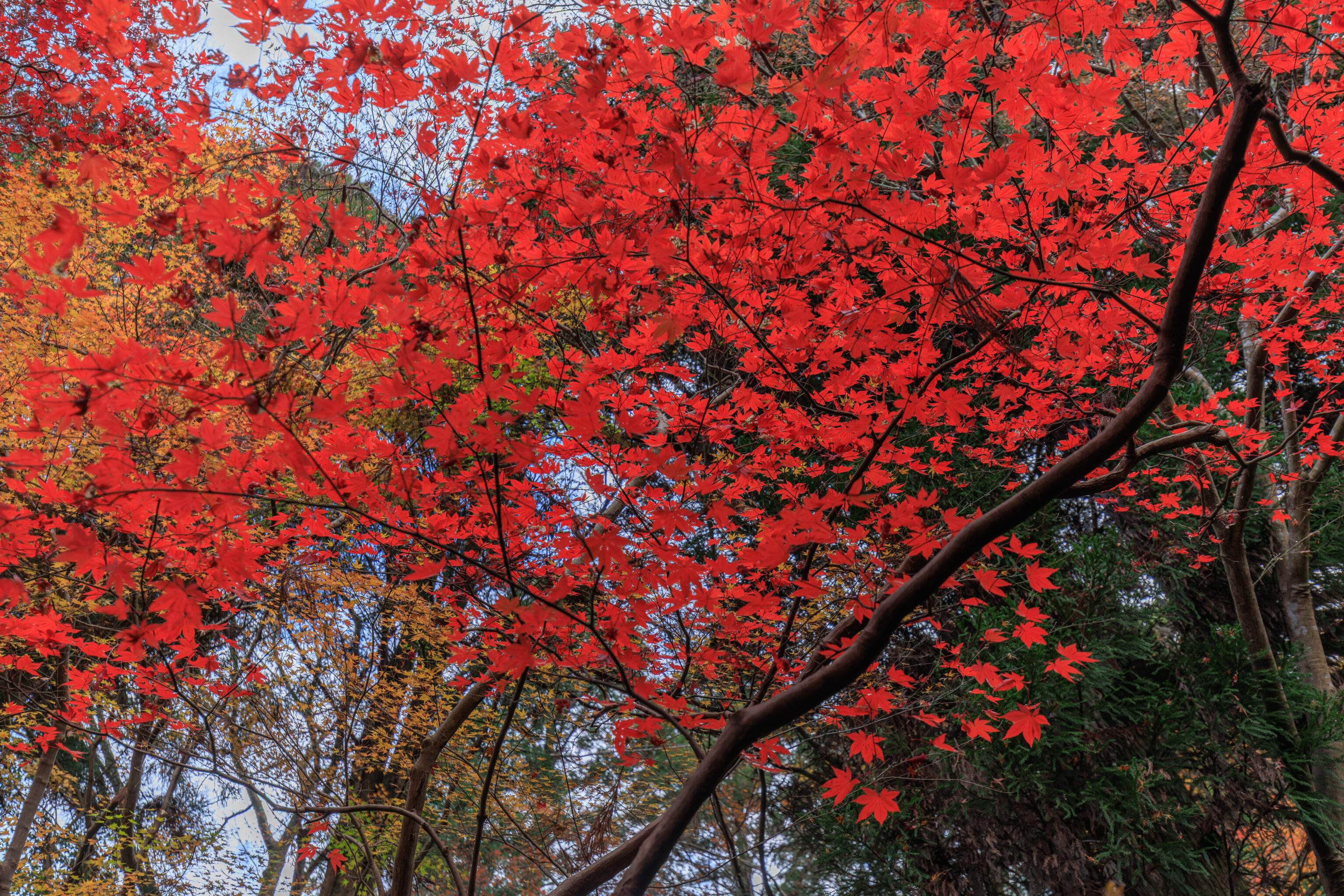
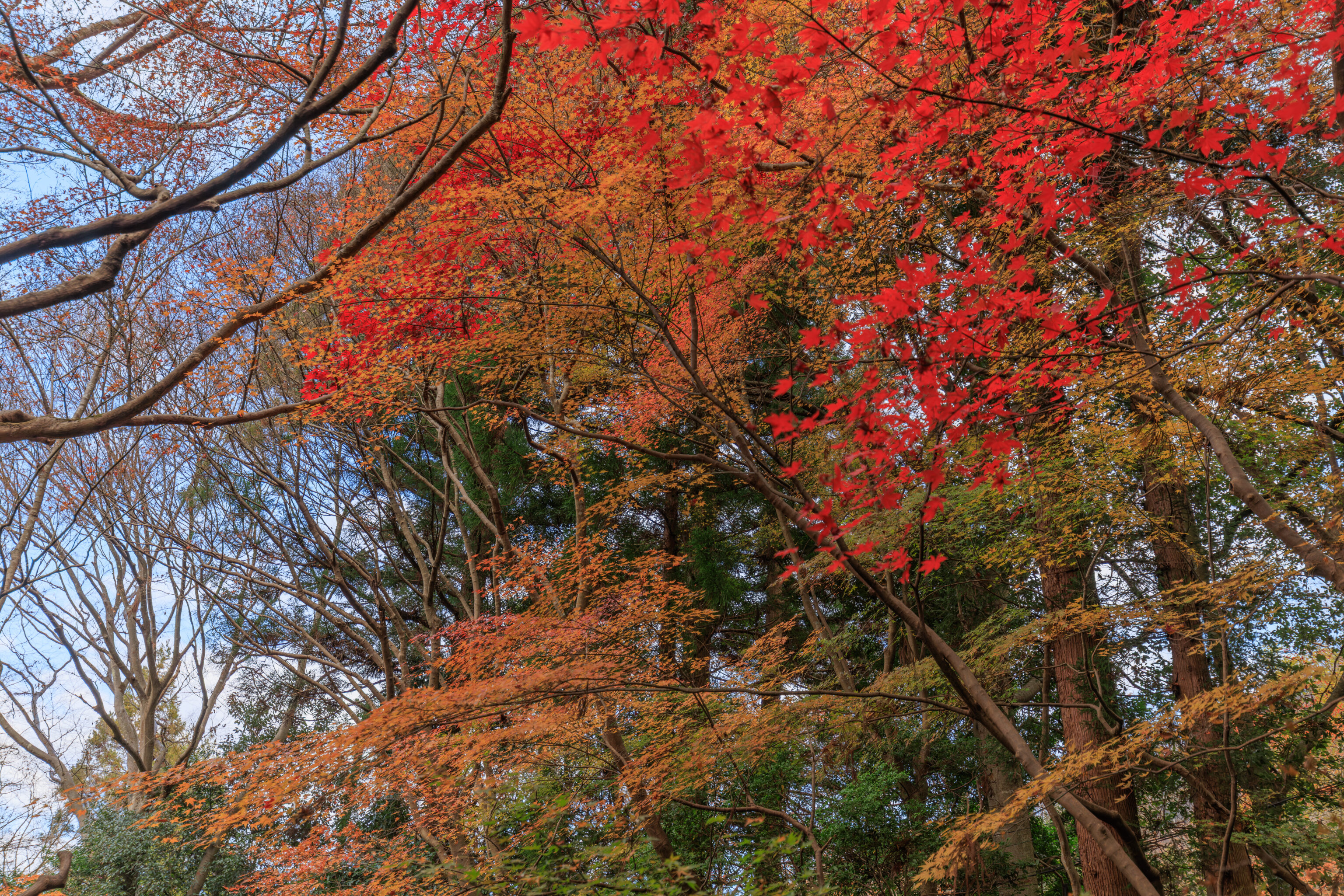
This area, just outside of the temple’s main building, was quite beautiful!
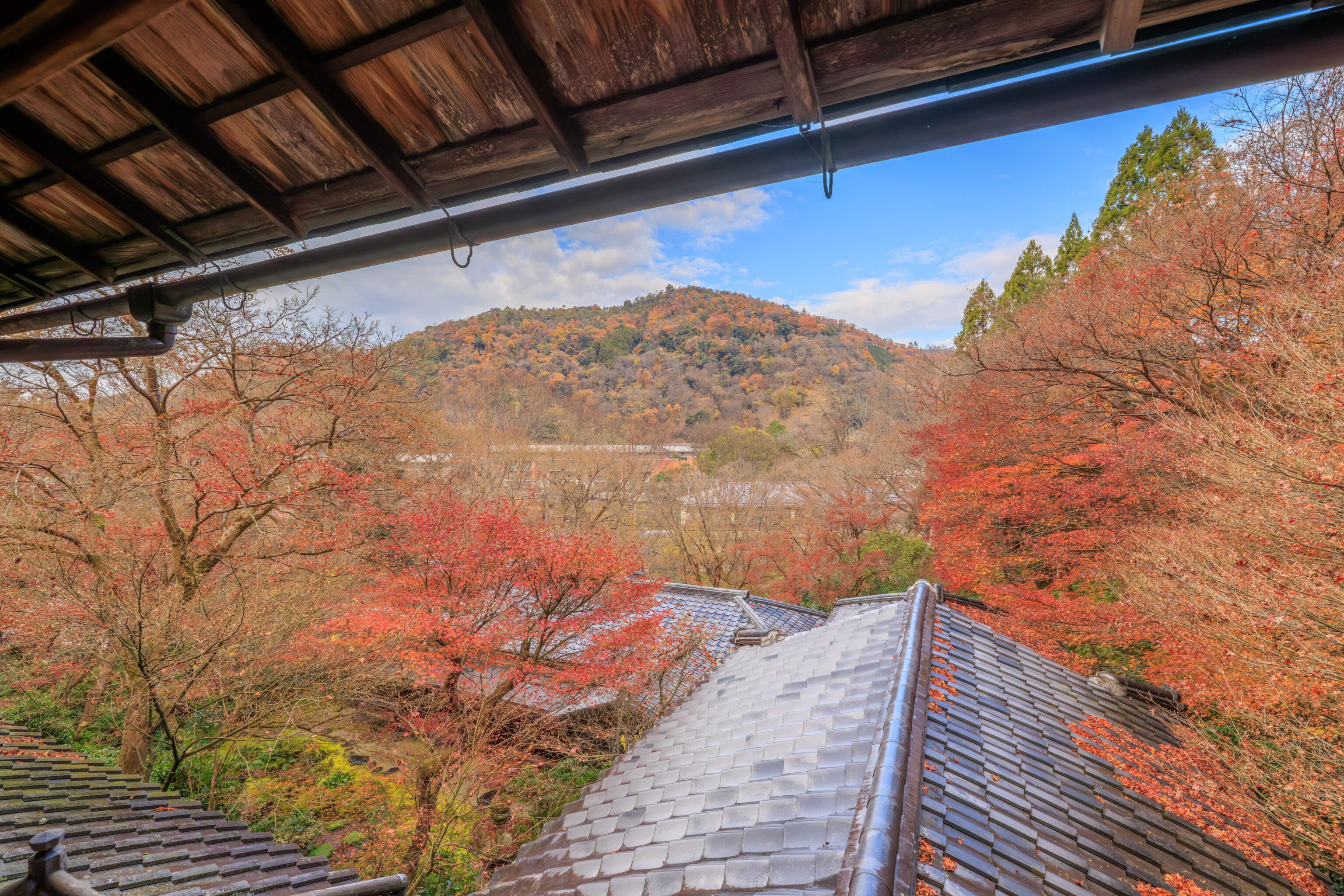
We then entered the temple building. We passed by this beautiful view. It would have been truly been spectacular just a week or two ago!
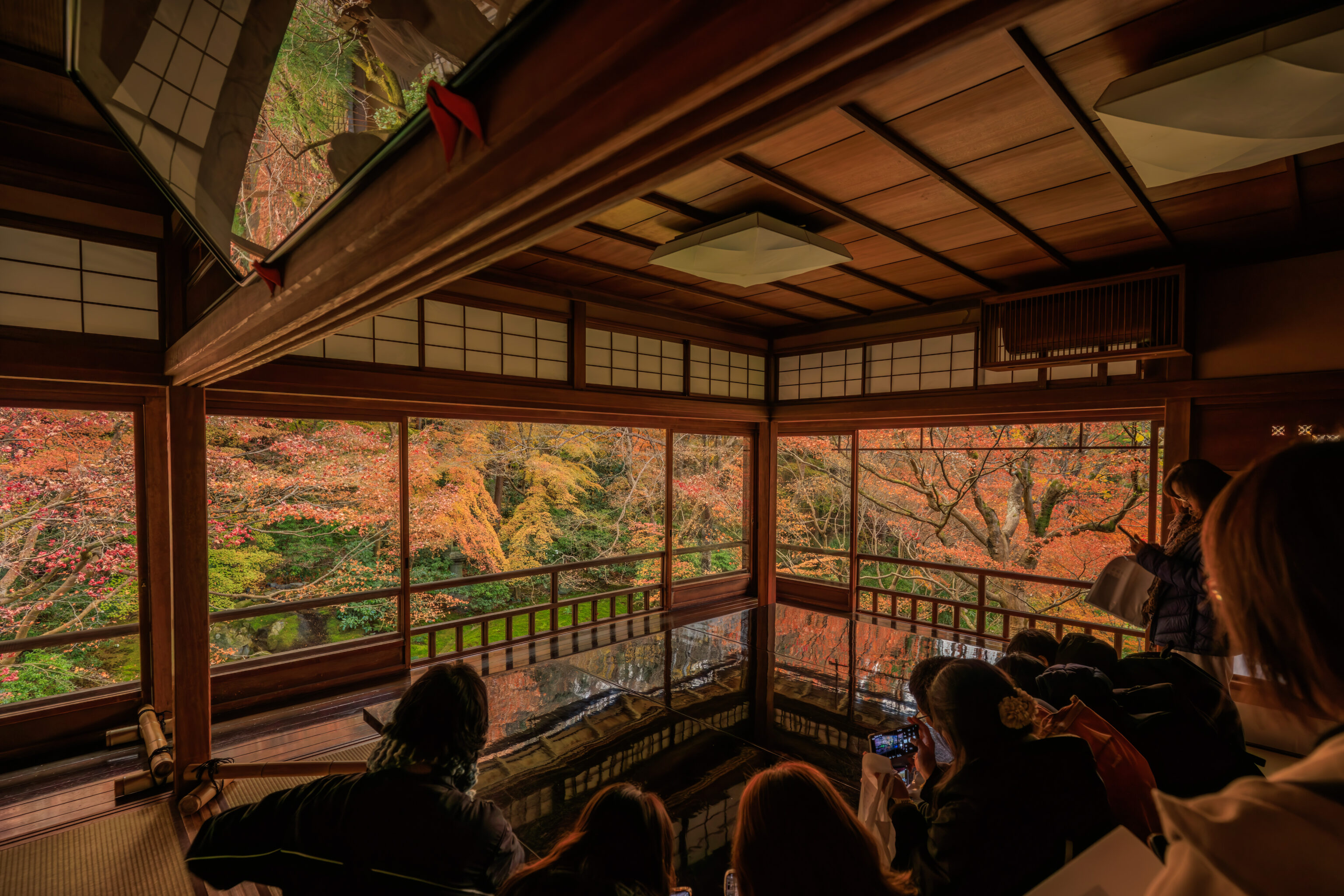
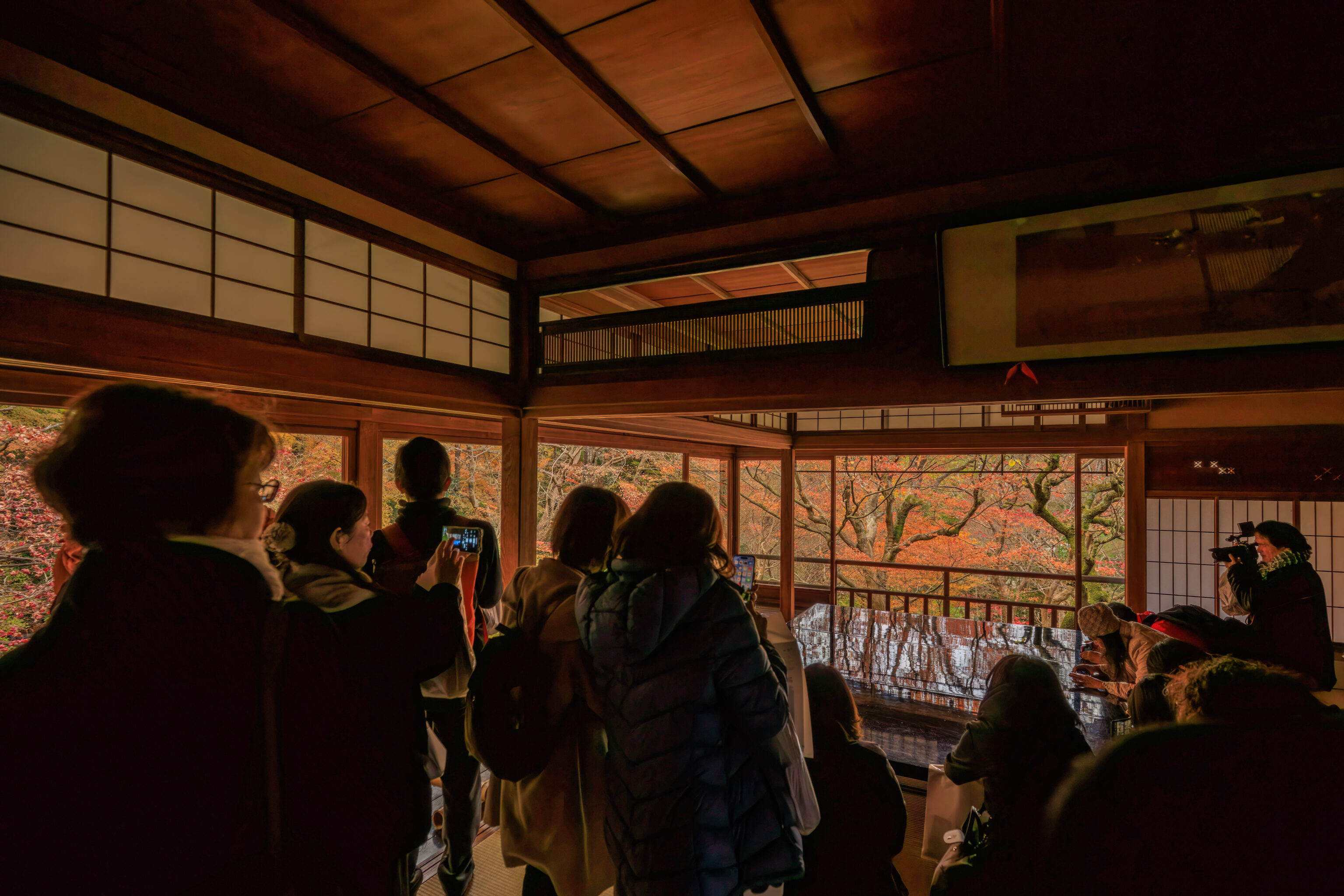
One of the main draws of Ruriko-in is the view from this room. It is on the second floor of the temple’s shoin and overlooks the beautiful 瑠璃の庭 Ruri no Niwa (Lapis Lazuli Garden) below. Within the room, there is a lacquer table in the corner which reflects a view of the garden on its shiny surface.
There’s no avoiding the truth – this room was a zoo! The lacquer table was surrounded by visitors all trying to snap the perfect photograph. Or two. Or twenty. While some quickly took a few photos and perhaps a selfie or two and moved on, others stayed put for a very long time.
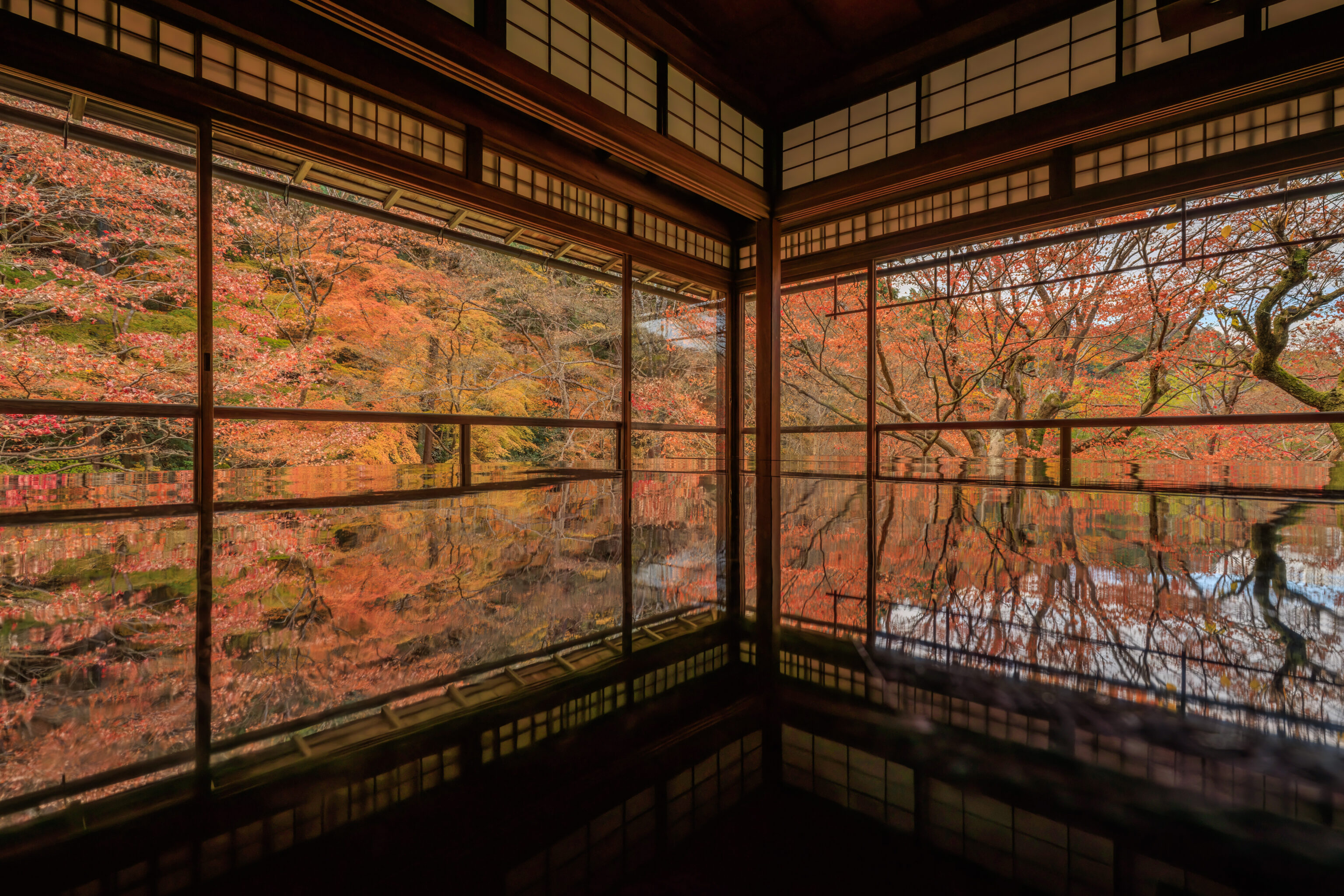
We eventually made our way to the corner of the table and snapped a few photos. The experience was a bit ridiculous but it is a nice view!
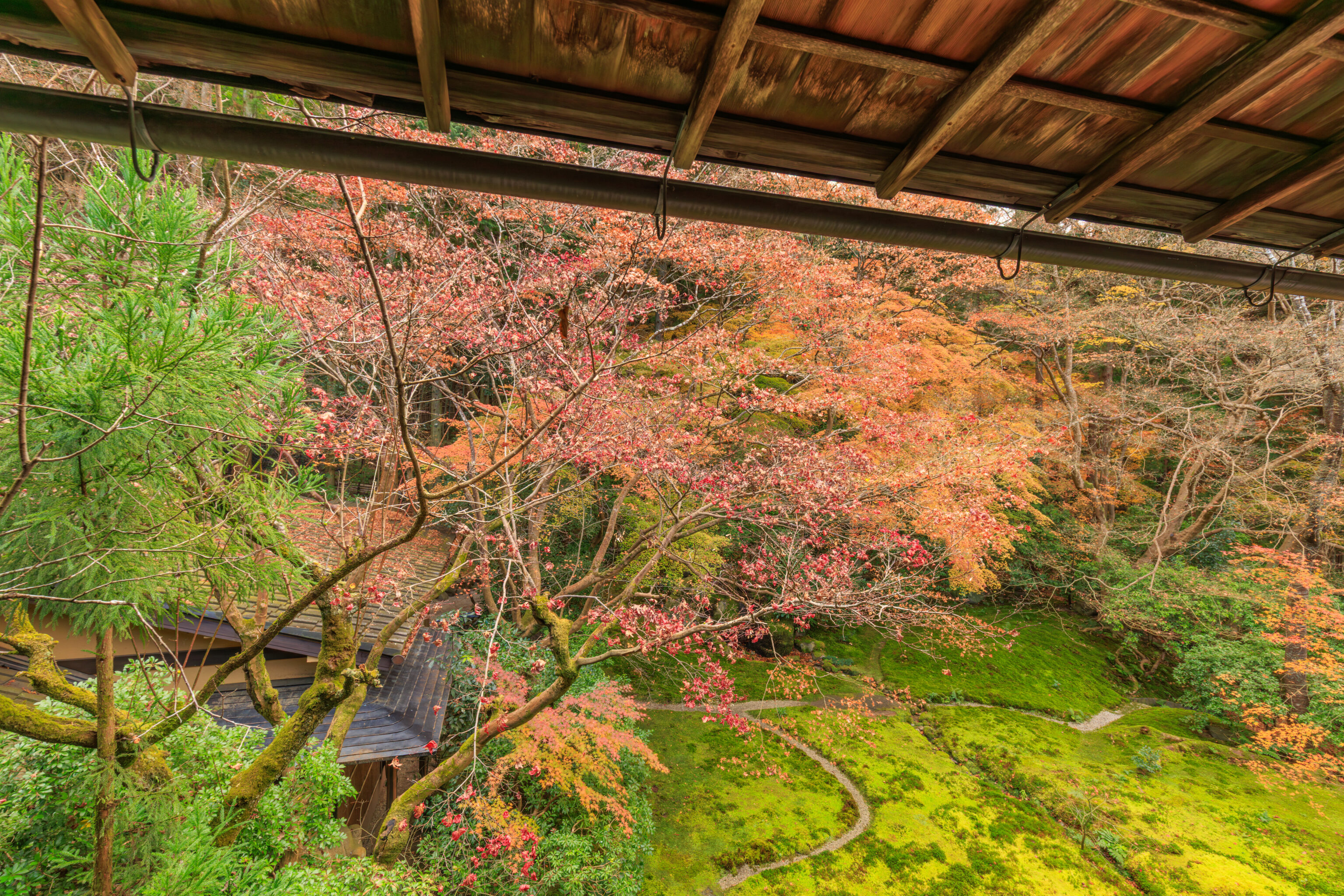
This view is kind of like the one on the ticket, just from a slightly different perspective.
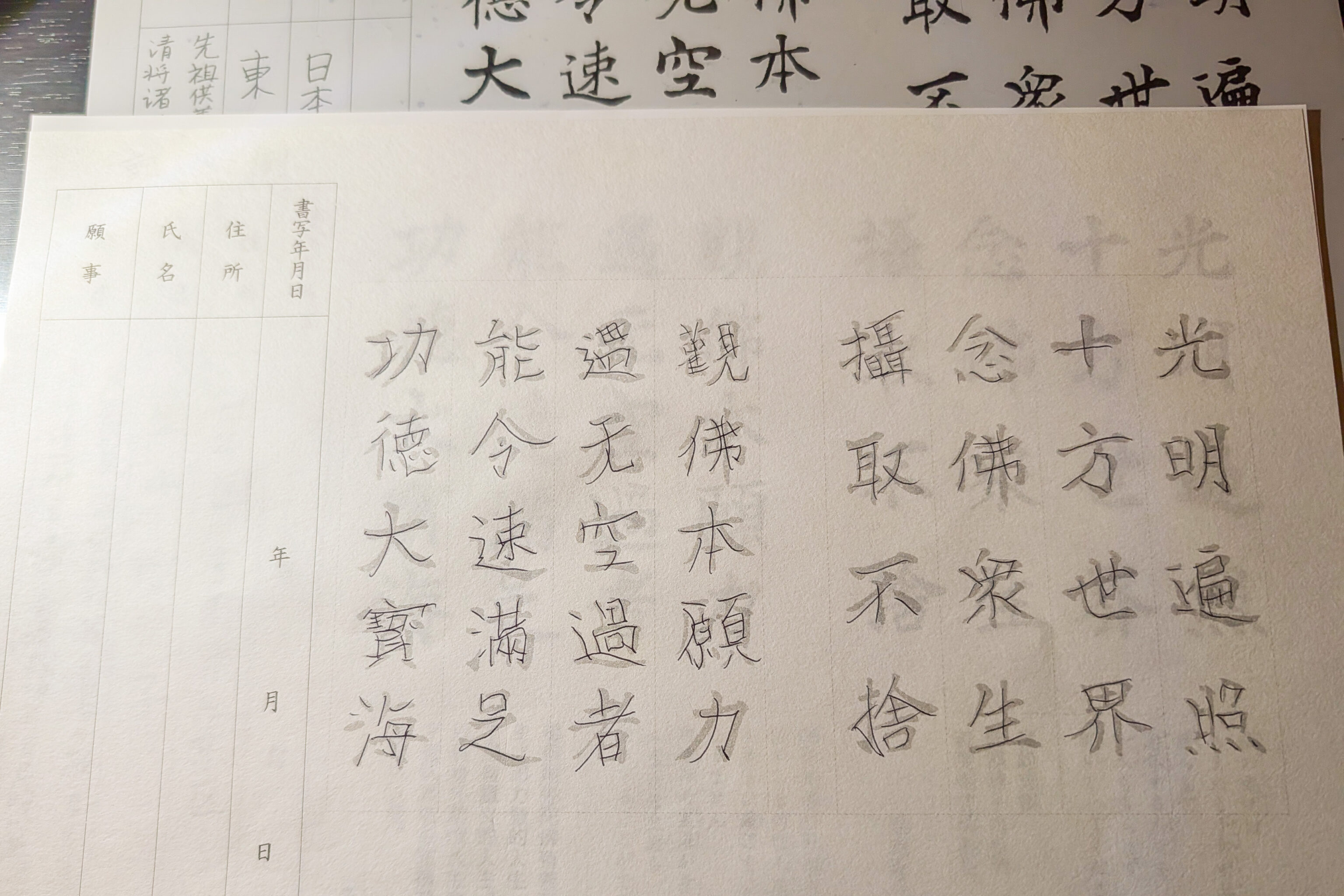
We continued on and reached the room for copying sutras. This area was configured with many low tables and cushions to sit on along with lamps for light. There was a queue to wait for spots to free up.
You can simply trace the Chinese characters, or kanji as they’re known in the Japanese written language system, even if you don’t understand what they mean.
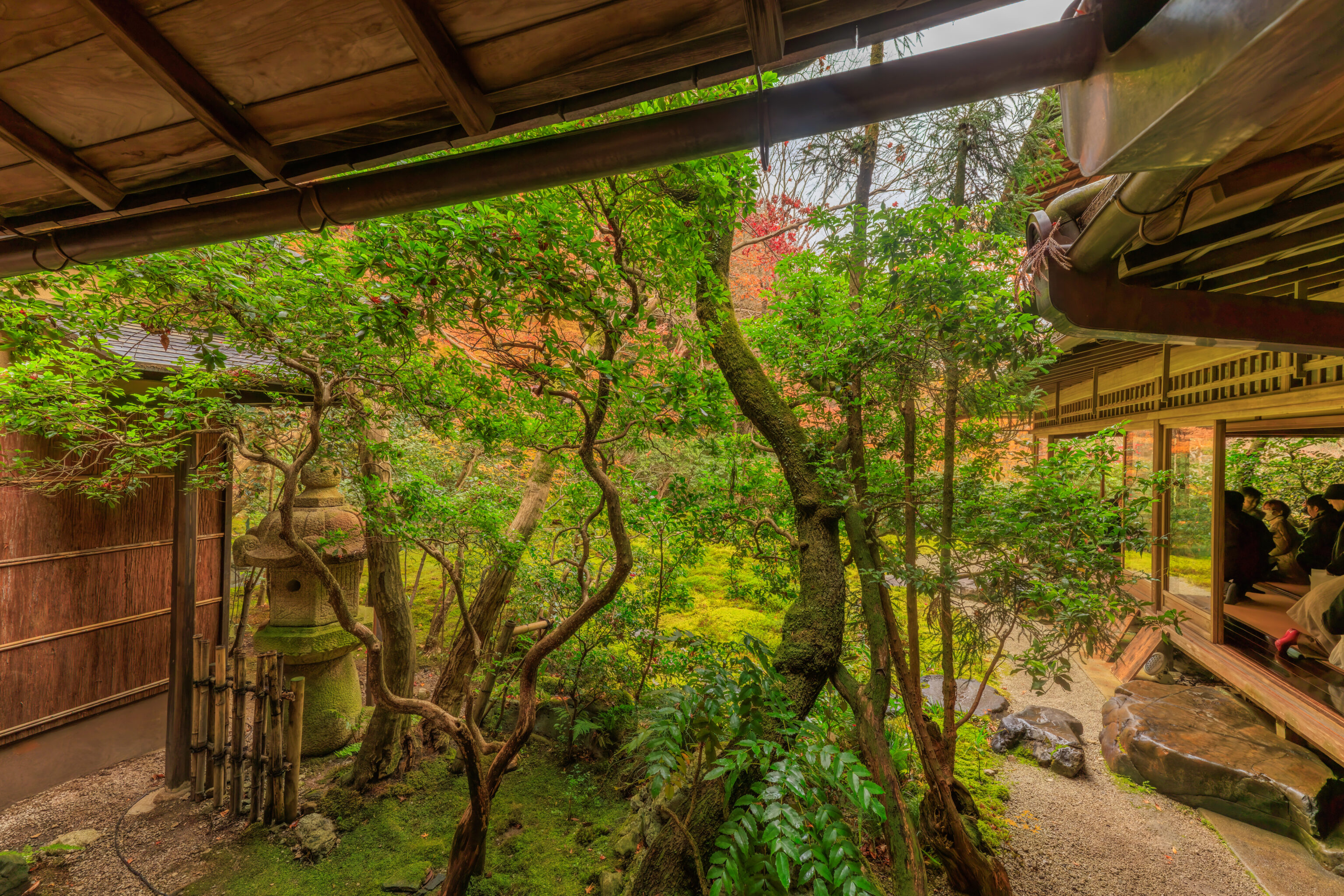
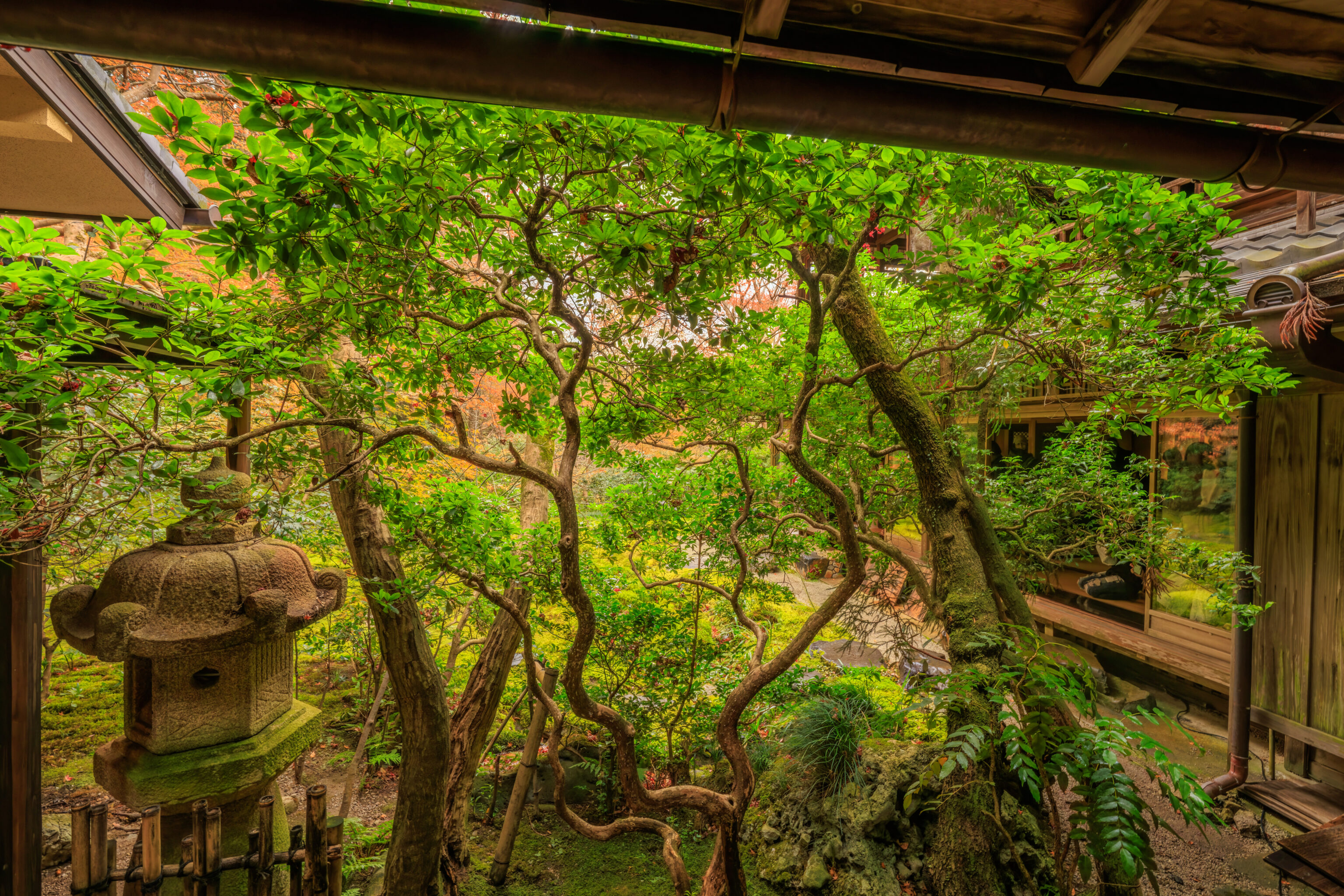
Afterwards, we continued on the route within the temple buildings.
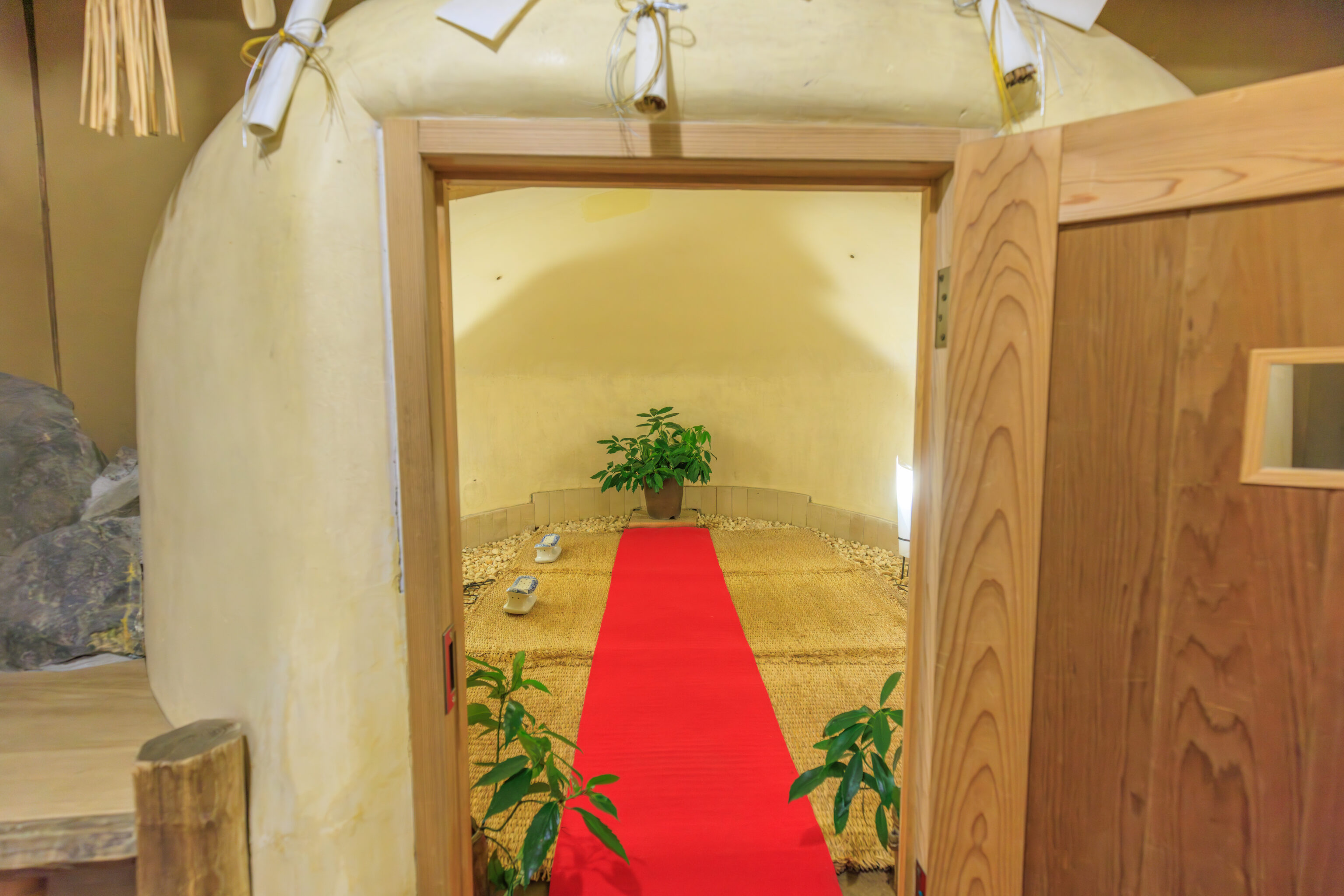
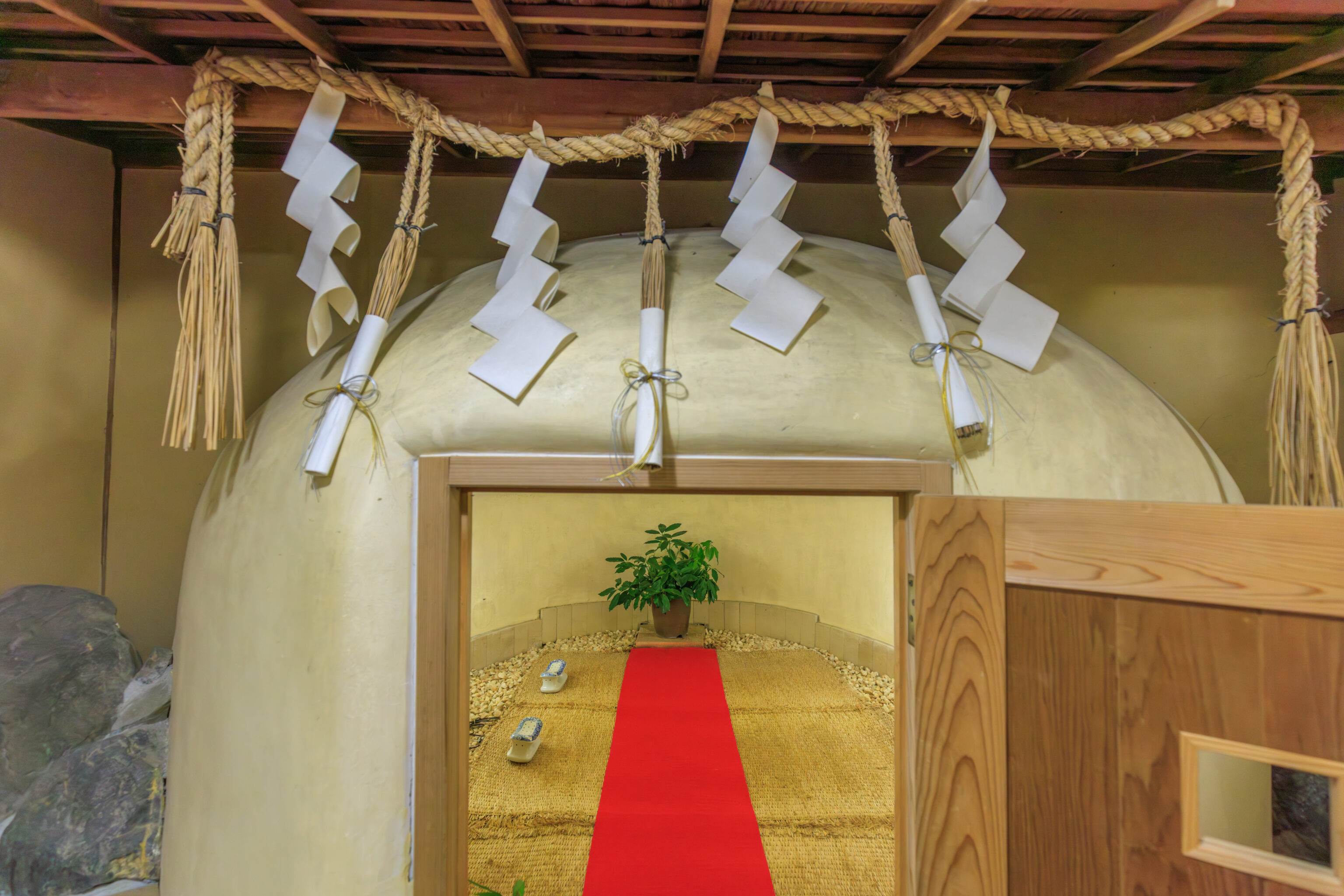
We passed by a small Shinto shrine. It can be easily identified a Shinto due to the presence of the lightning bolt-like papers, referred to as 紙垂 shide.
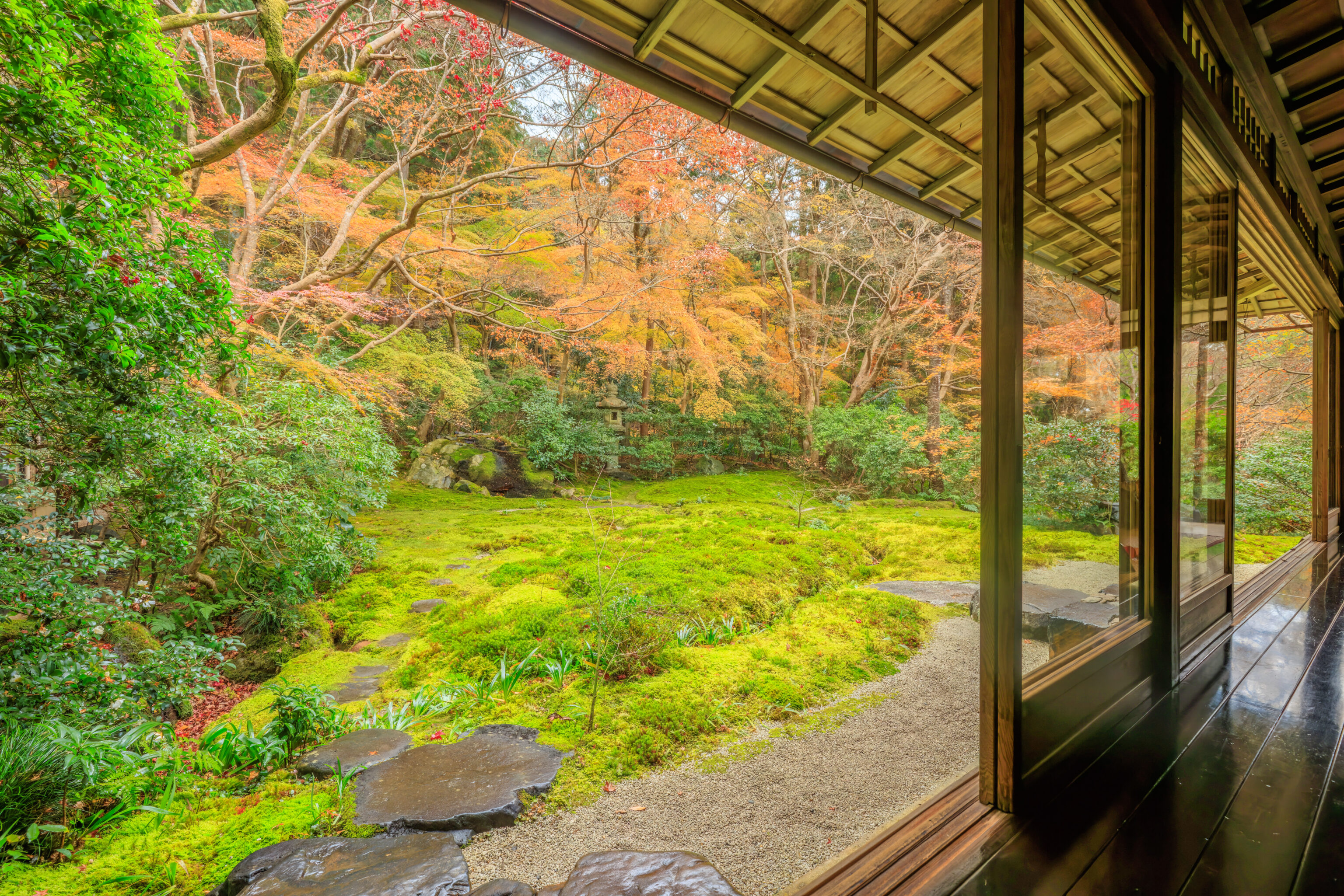
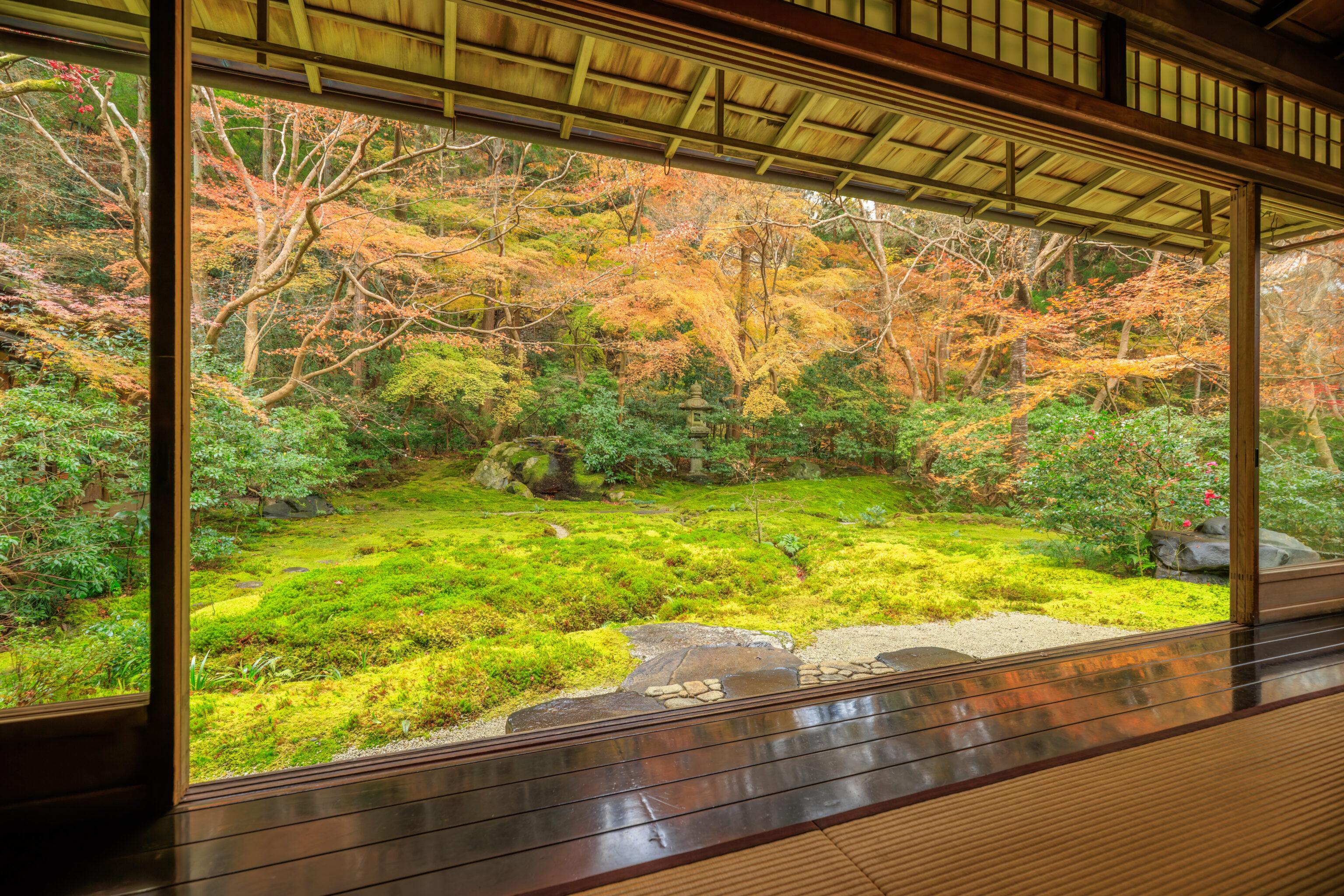
We ended up in the room below the Ruri no Niwa viewing room on the floor above. This was a much more peaceful space!
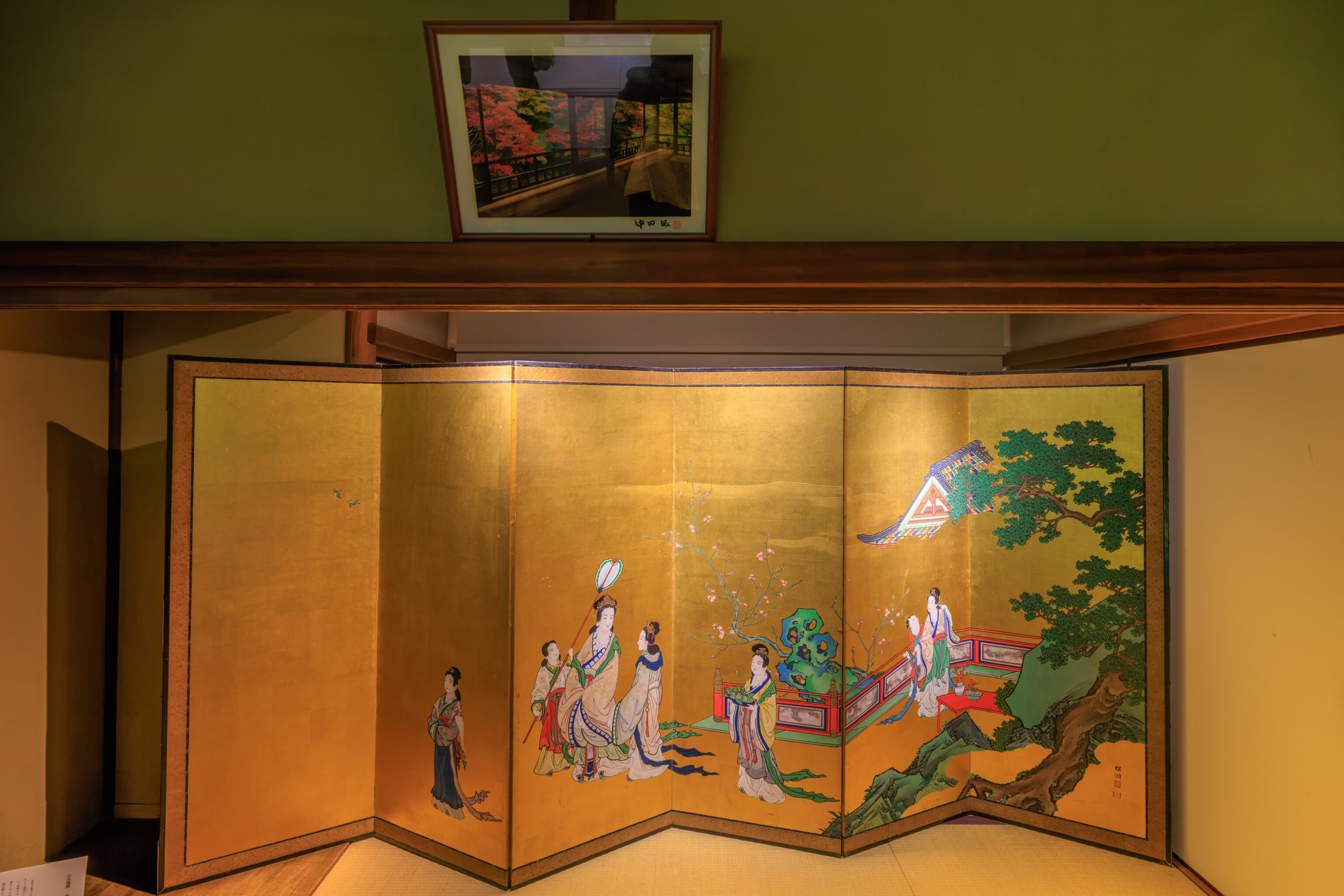
This folding screen was in the room:
Yamamoto Tan'en's painting of the Queen Mother of the West (part of the "Picture of the Queen Mother of the West Offering Peaches")

Colored gold on paper, 19th century

Komyoji temple collection

The painting depicts the Queen Mother of the West and her attendants walking against a magnificent gold background. The Queen Mother of the West is an ancient Chinese deity.

She is a goddess said to have lived on Mount Kunlun since ancient times, and in the early and later versions of the "Huainanzi," she appears as the one who possesses the elixir of immortality. The "Han Wu Fangshi," believed to have been compiled during the Six Dynasties period, recounts the life of Emperor Wu of the Western Han dynasty from birth to death. In the "Han Wu Fangshi," she again appears as the one who possesses the elixir of immortality, but refuses to offer it to Emperor Wu, instead offering peaches. In this legend, Xi Wangmu is said to have visited Emperor Wu accompanied by two blue birds, and the birds depicted at the very front of their procession in this work are thought to represent them. The left panel of this symmetrical work depicts Emperor Wu awaiting Xi Wangmu's arrival.

The artist, Yamamoto Tan'en, was a painter of the Tsurusawa school whose birth and death dates are unknown. The Tsurusawa school is a school founded by Tsurusawa Tanzan (1654-1729), who is considered a leading disciple of Kano Tan'yu (1602-1674), who laid the foundation of the Edo Kano school. The school continued its artistic lineage in Kyoto until the Meiji period. Tan'en, who is said to have been a disciple of the fourth head of the school, Tansen (?-1830), signed and sealed the "Agreement on the Division of Painters," established in 1824 (Bunsei 7), as one of the influential masters, and codified the principles for those serving the Imperial Court.

It has been confirmed that he actually participated in the construction of the Imperial Palace in Bunka 13 (1816), which predates this period.

In this work, traditional techniques are evident in the depiction of rocks and pine trees in the style of the Kano school, and in the traditional Japanese painting method of hyōran-saikki. However, the faces of the figures, including Xi Wangmu, are rendered with an almost eerie shading achieved by applying white pigment thickly to different parts of the face. Whether or not this should be considered Tan'en's unique style requires the introduction of more of his existing works to be discussed
– Text from a sign, translated using Google.
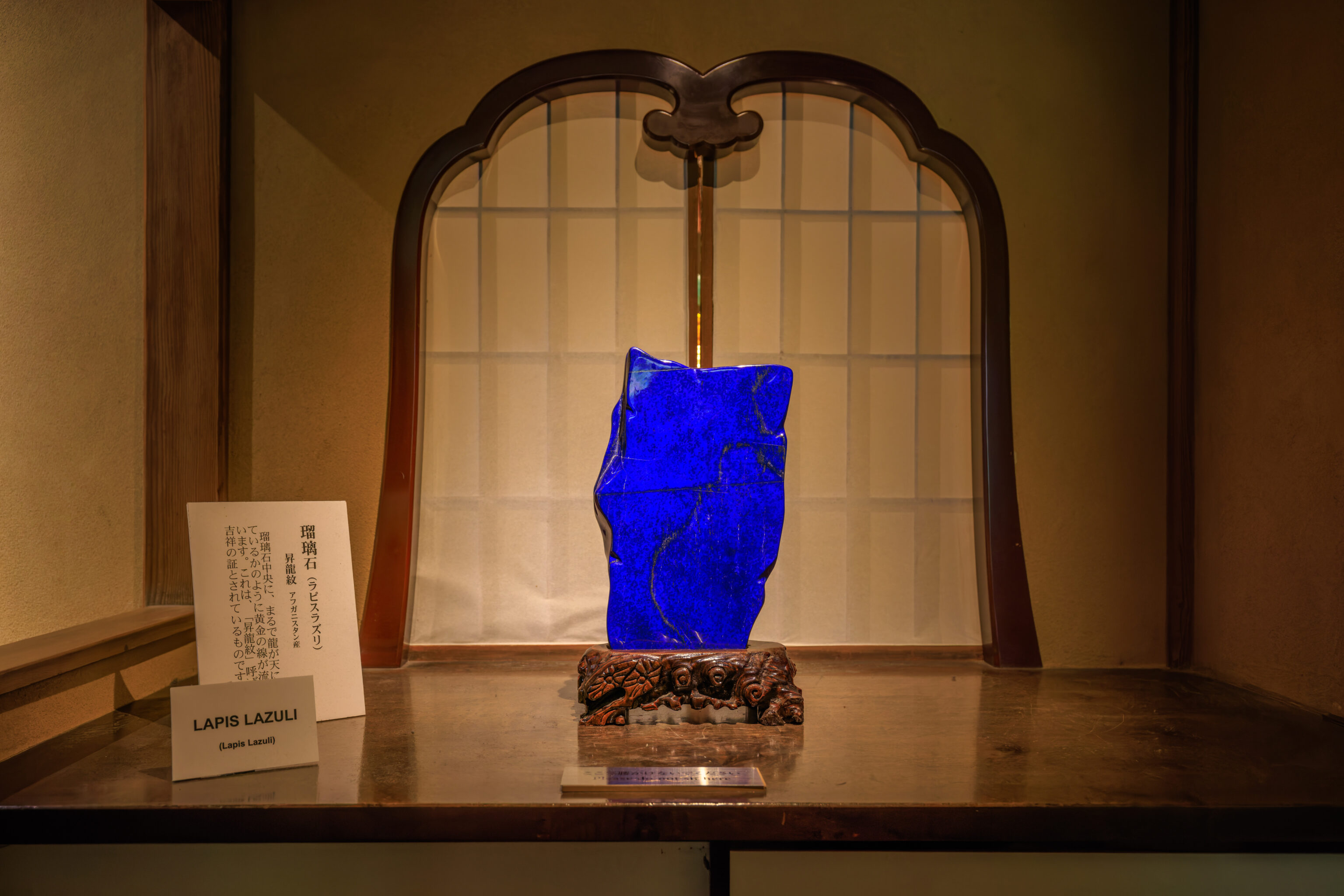
The blue stone here is a lapis lazuli from Afghanistan. The Japanese text on the sign on t he left describes it as having a dragon pattern.
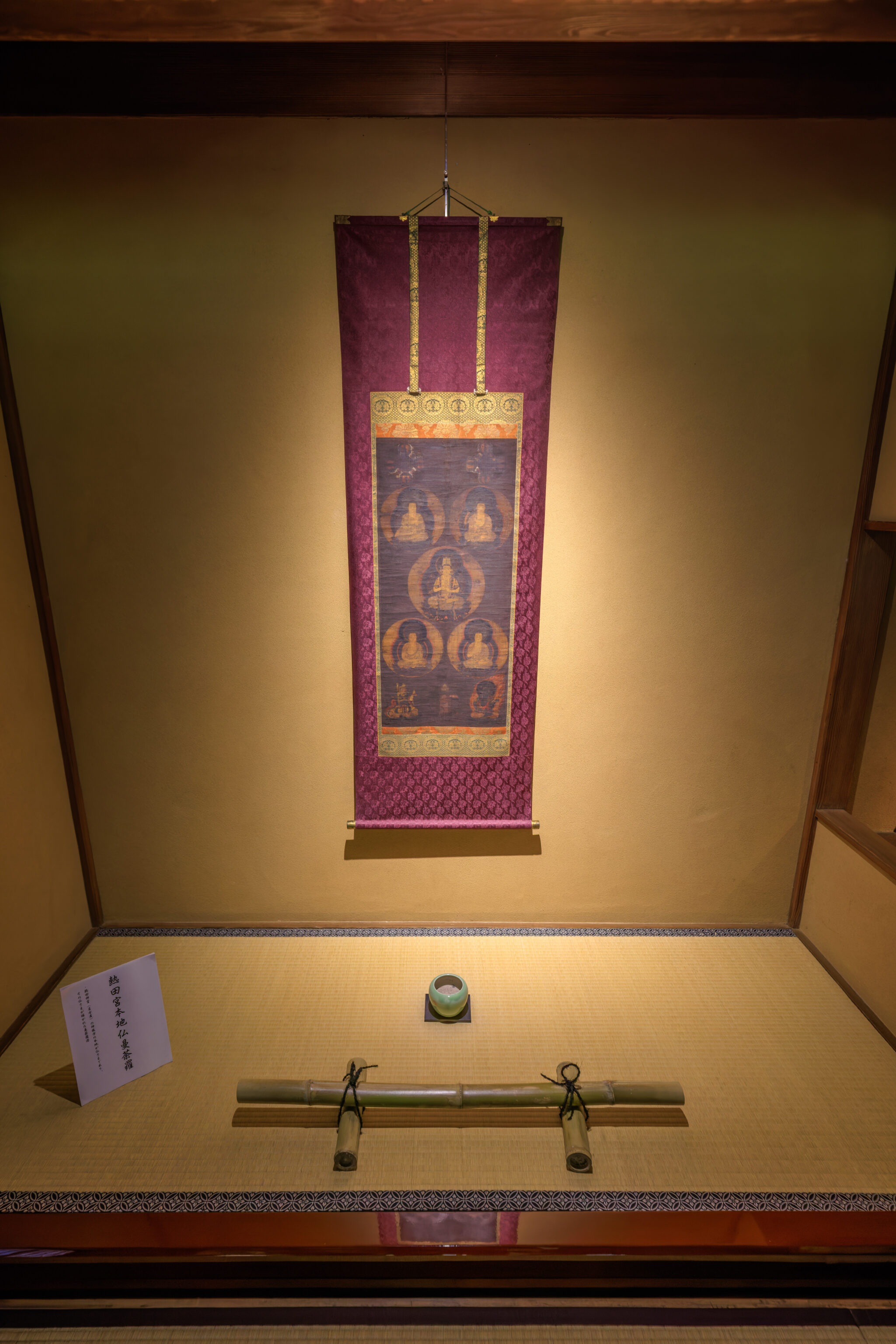
The room also contained this scroll:
Atsuta Shrine's Honji-butsu Mandala

The original form of the Nakasama deity at Matsuda Shrine (Nagoya) is a Buddha.

The stone painting of the Buddha and the barley tea
– Text from the sign on the left, translated using Google.
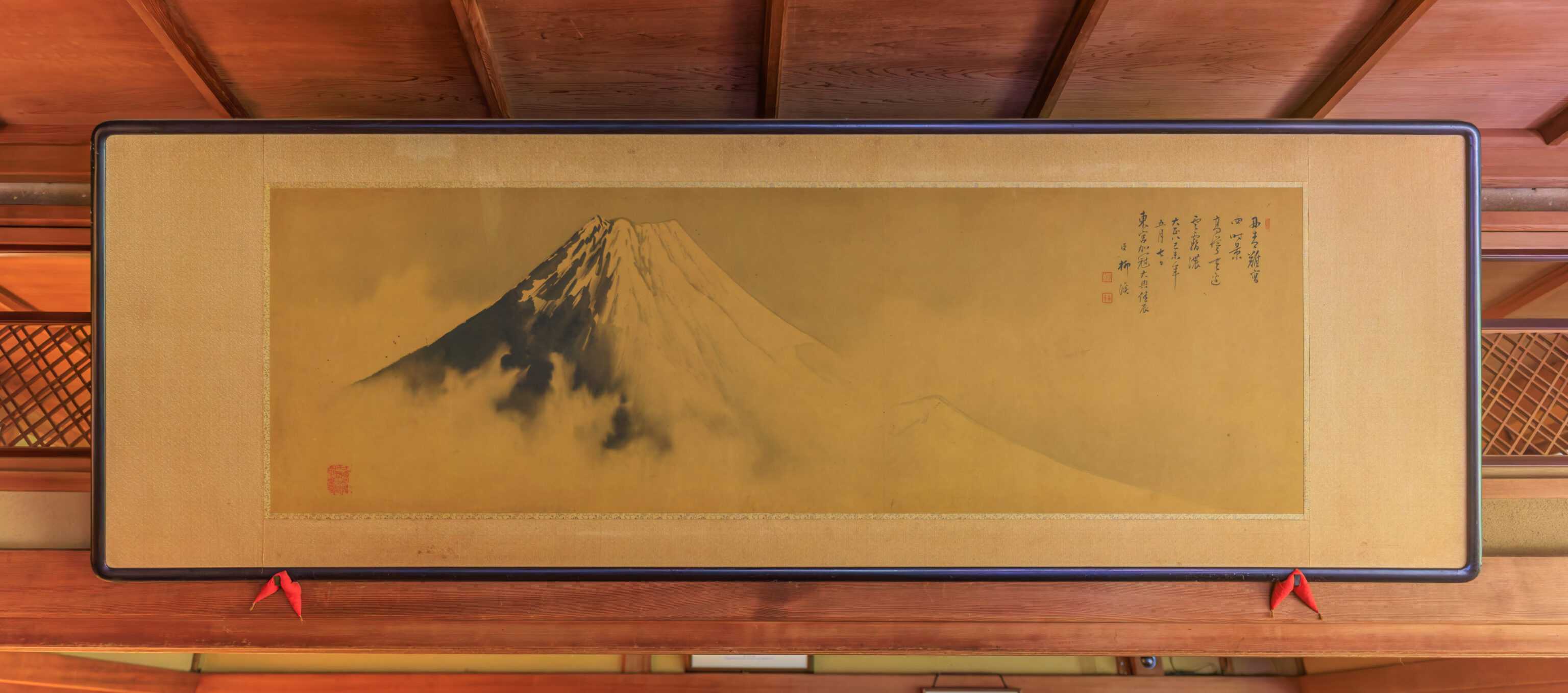
This work depicts Mt. Fuji.
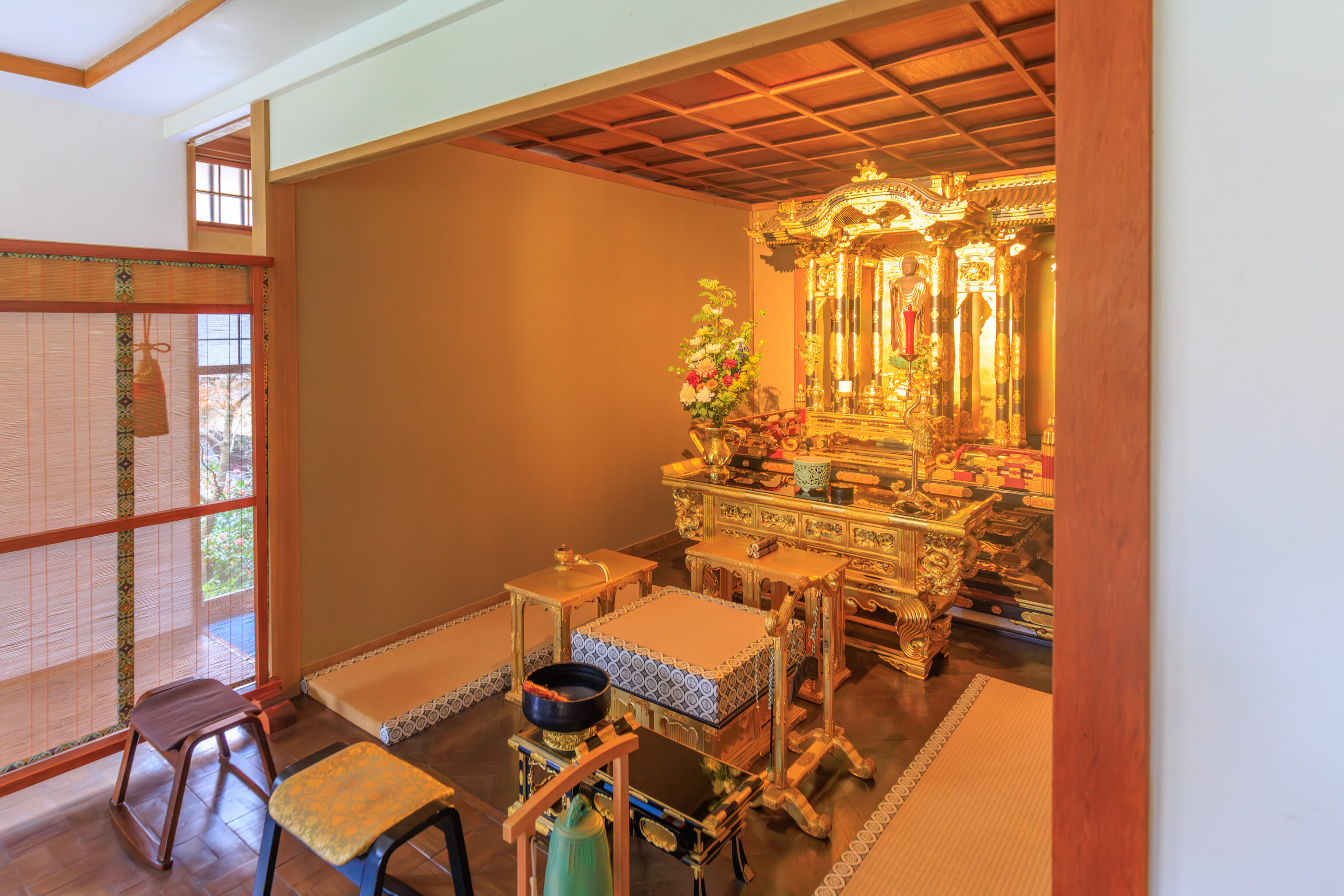
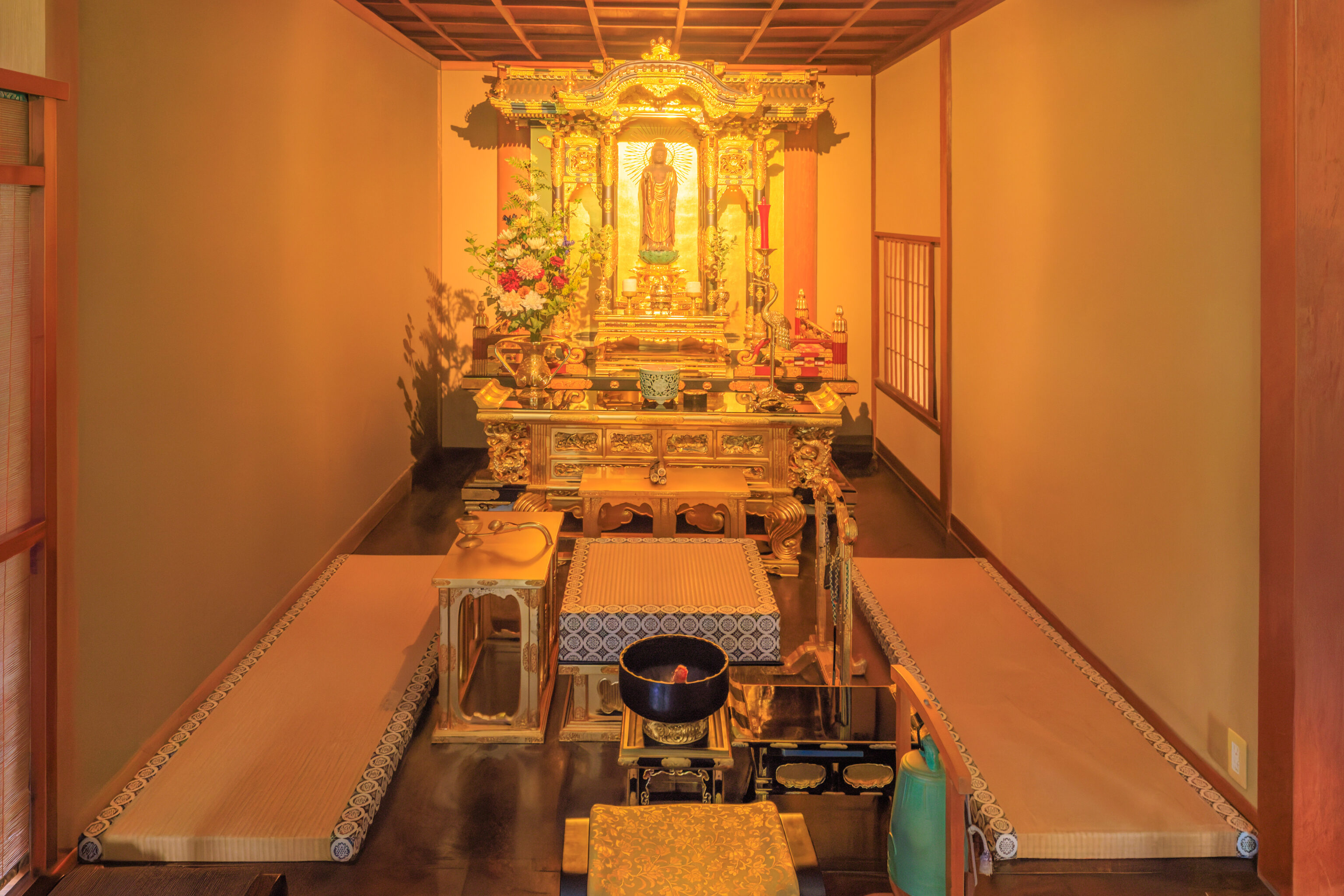
We continued on past this shrine.
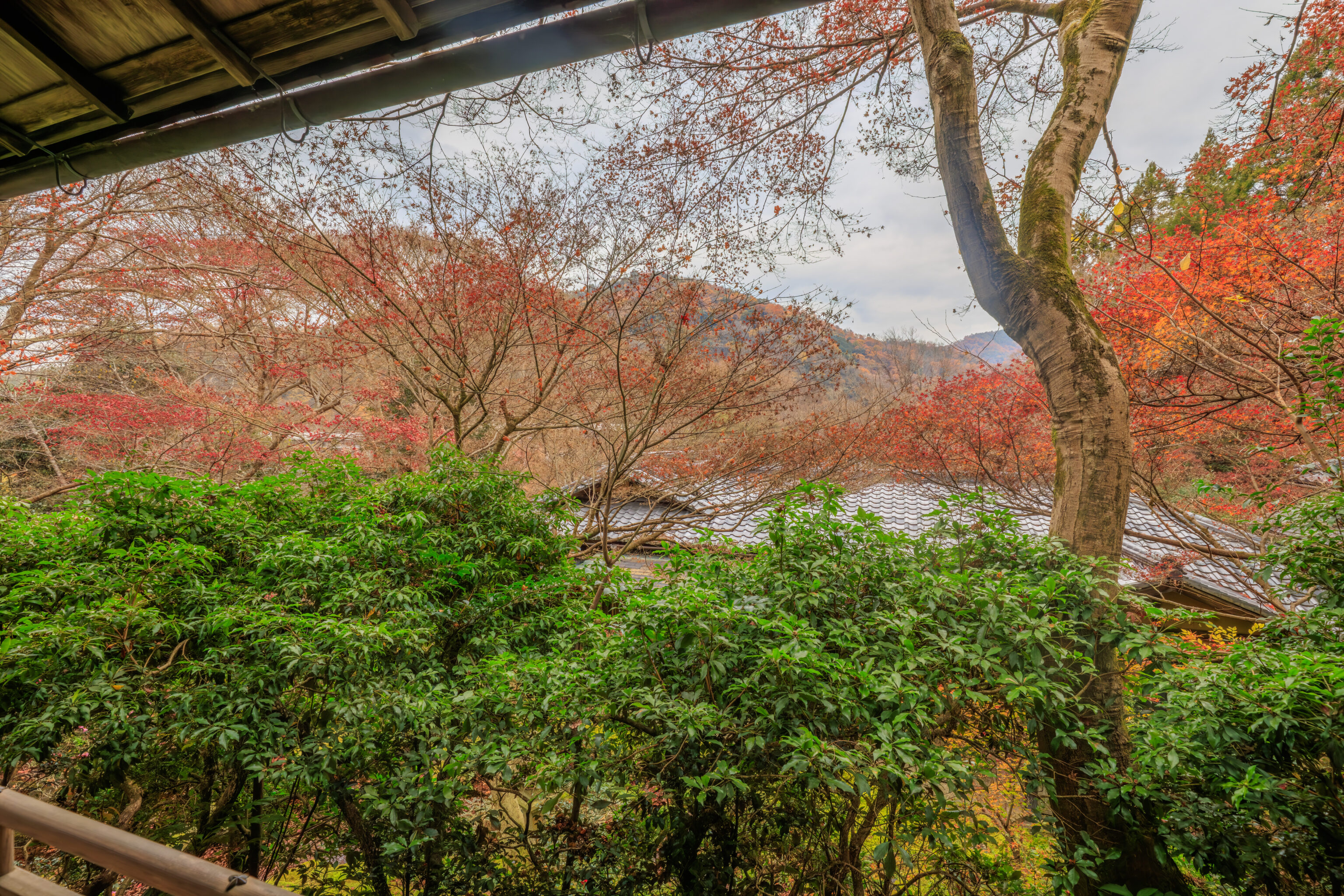
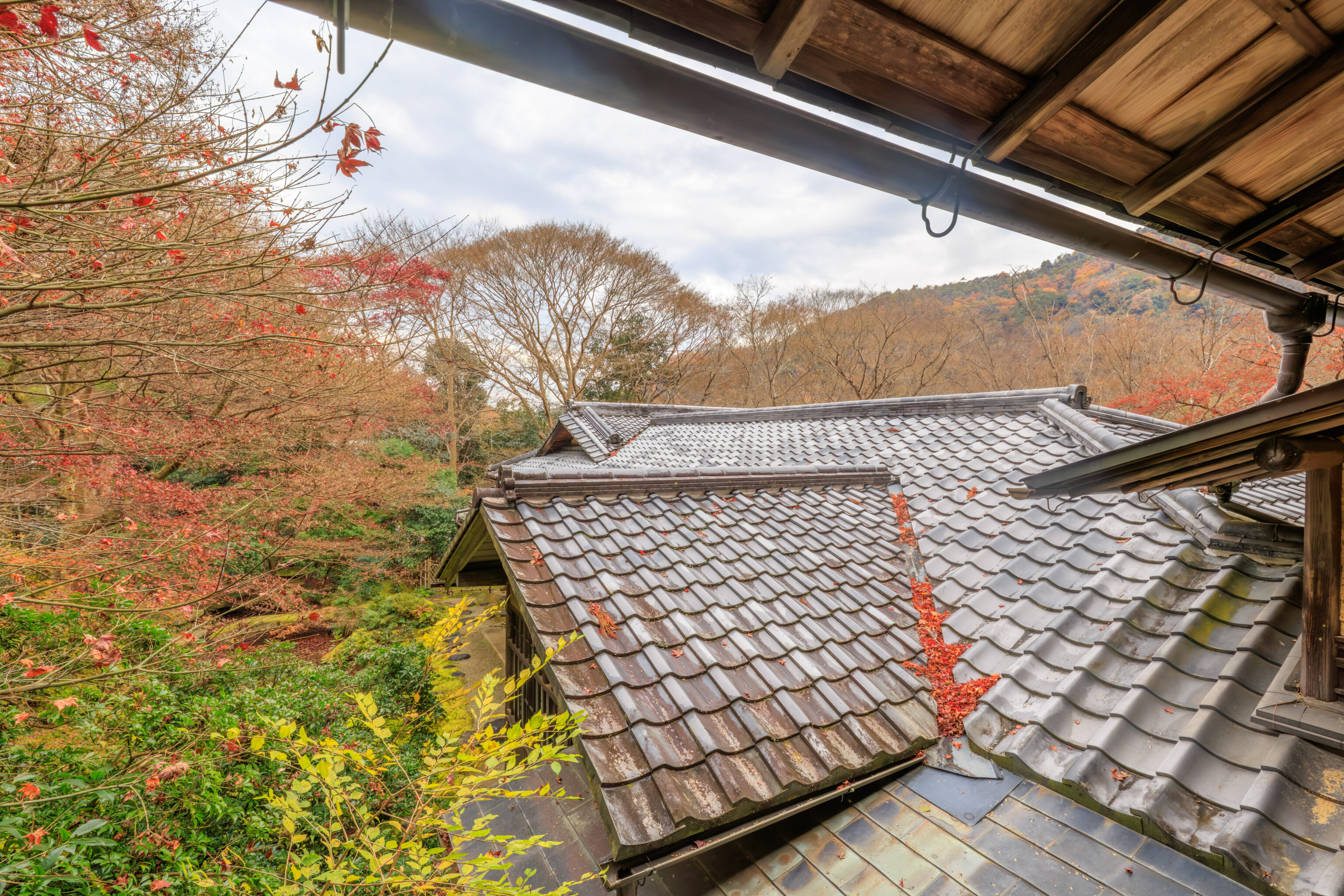
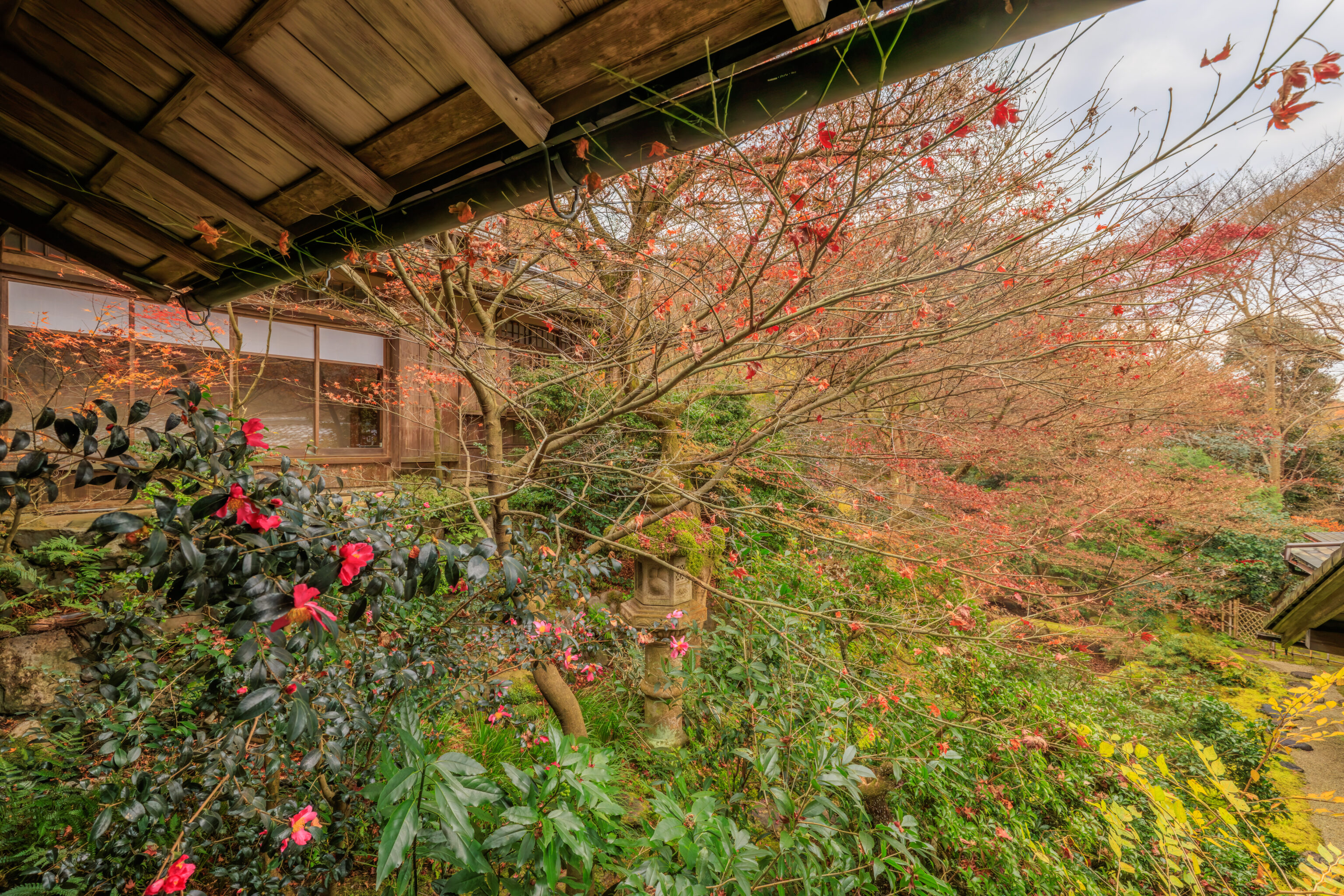
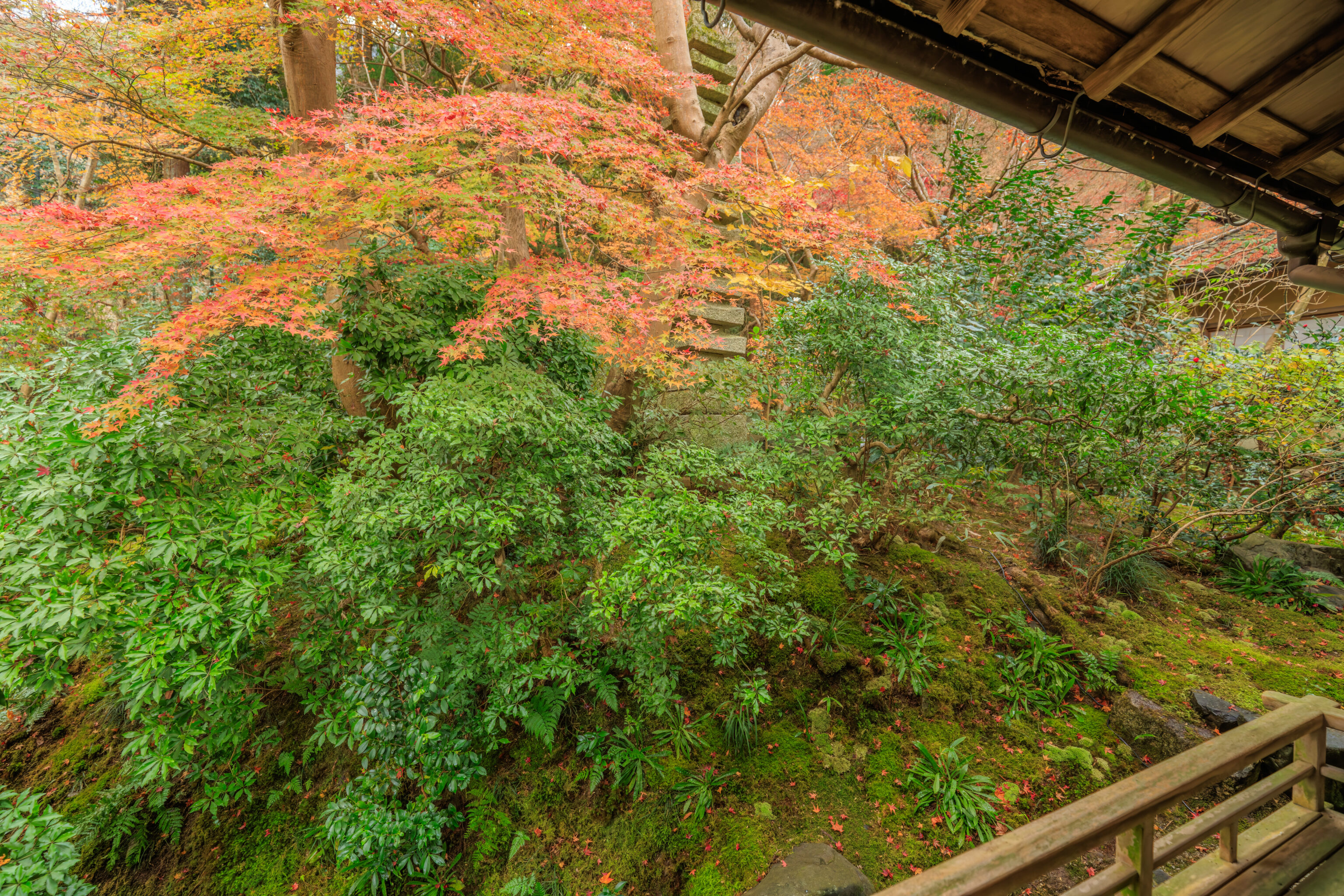
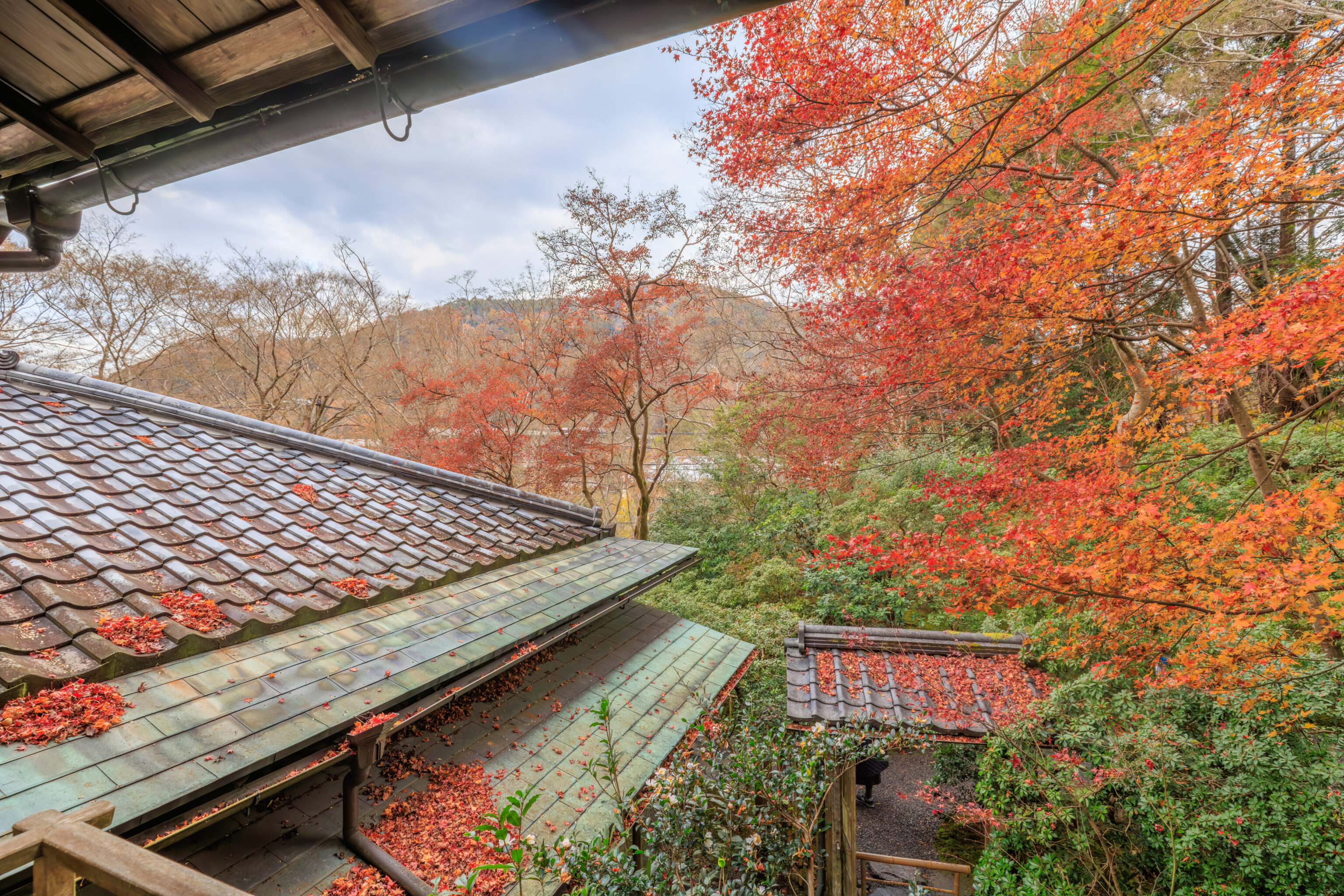
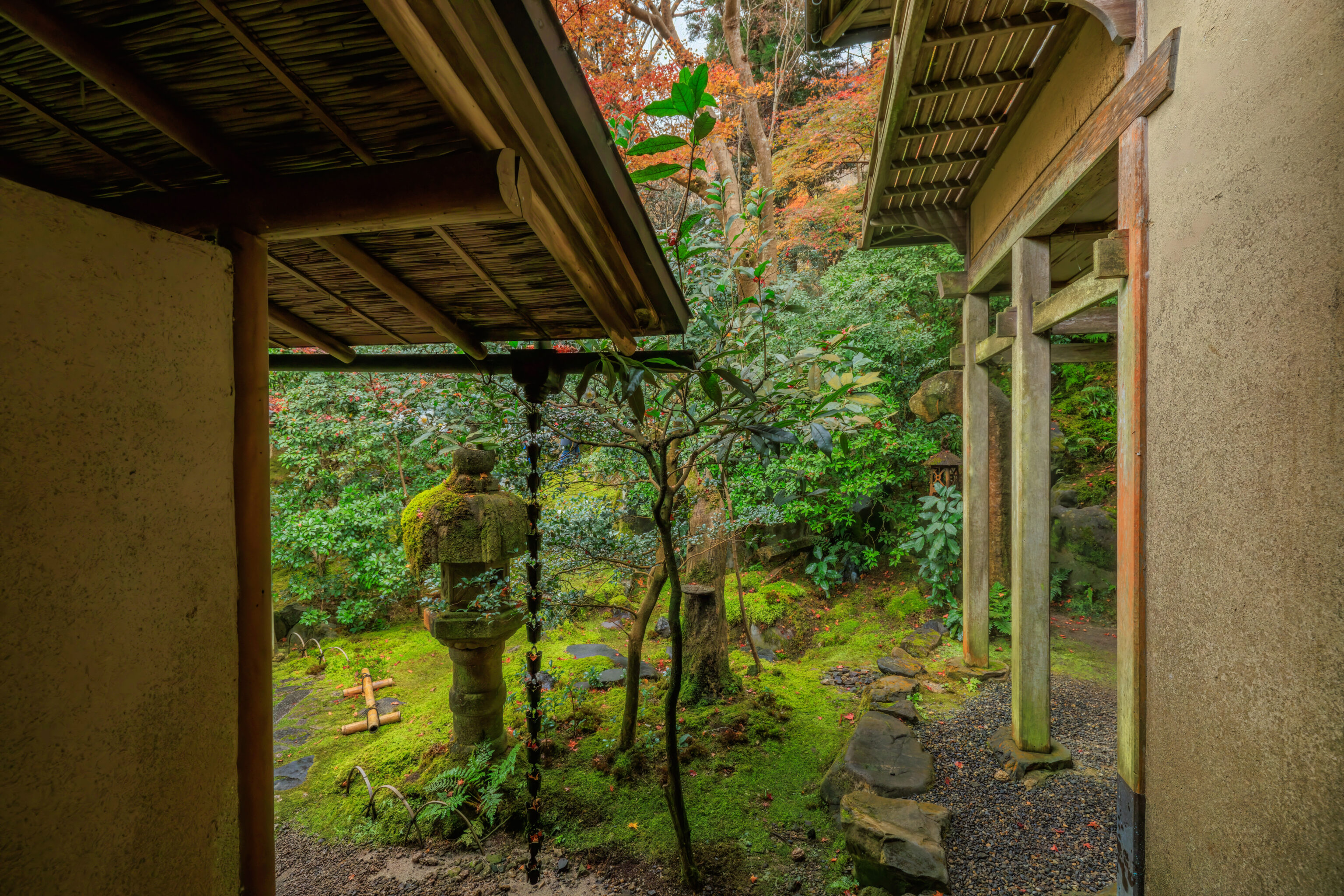
We continued along the route, enjoying views of the outside as we walked through the hallways of the temple buildings.
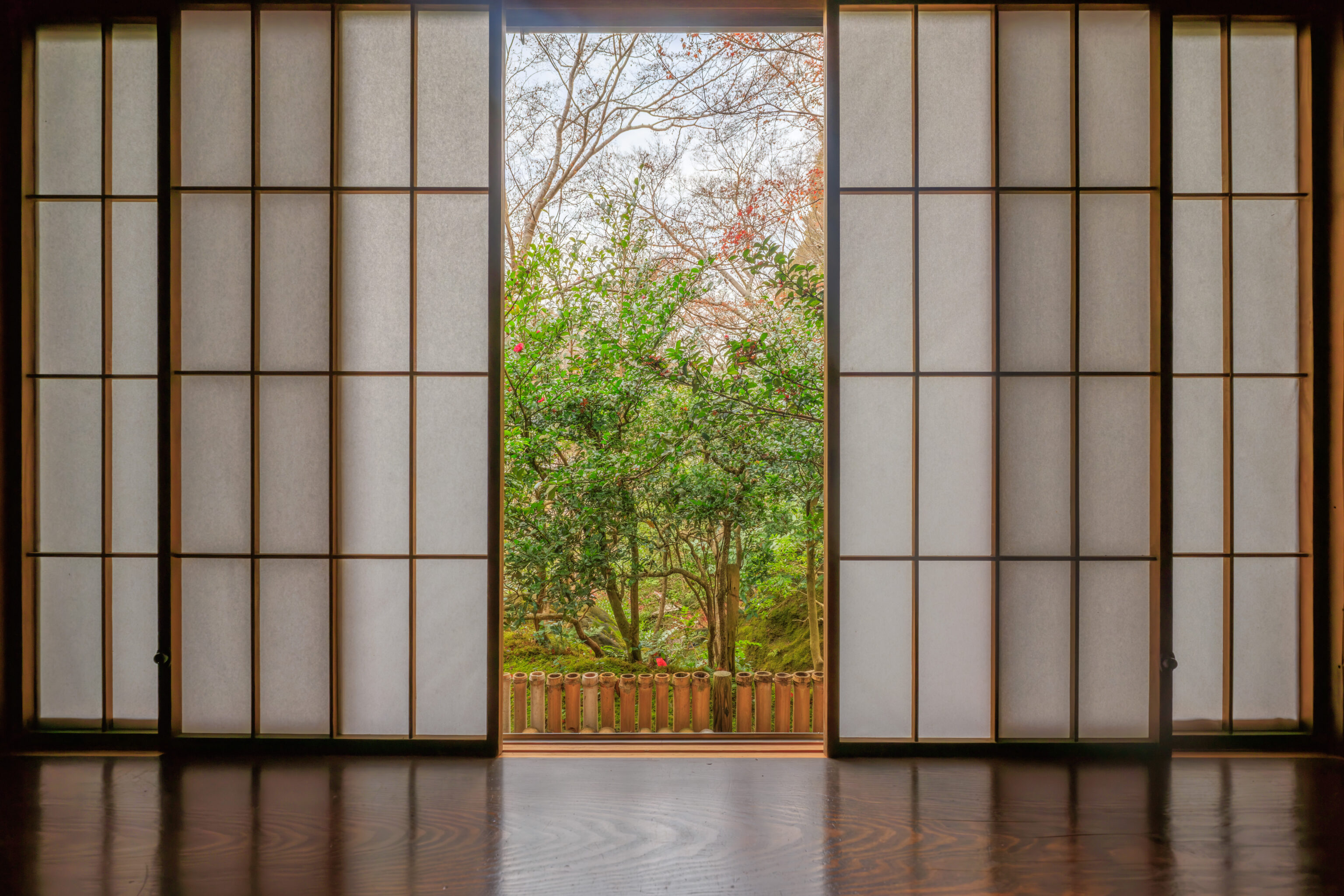
This next part of the temple had a nice view through an open 障子 shoji.
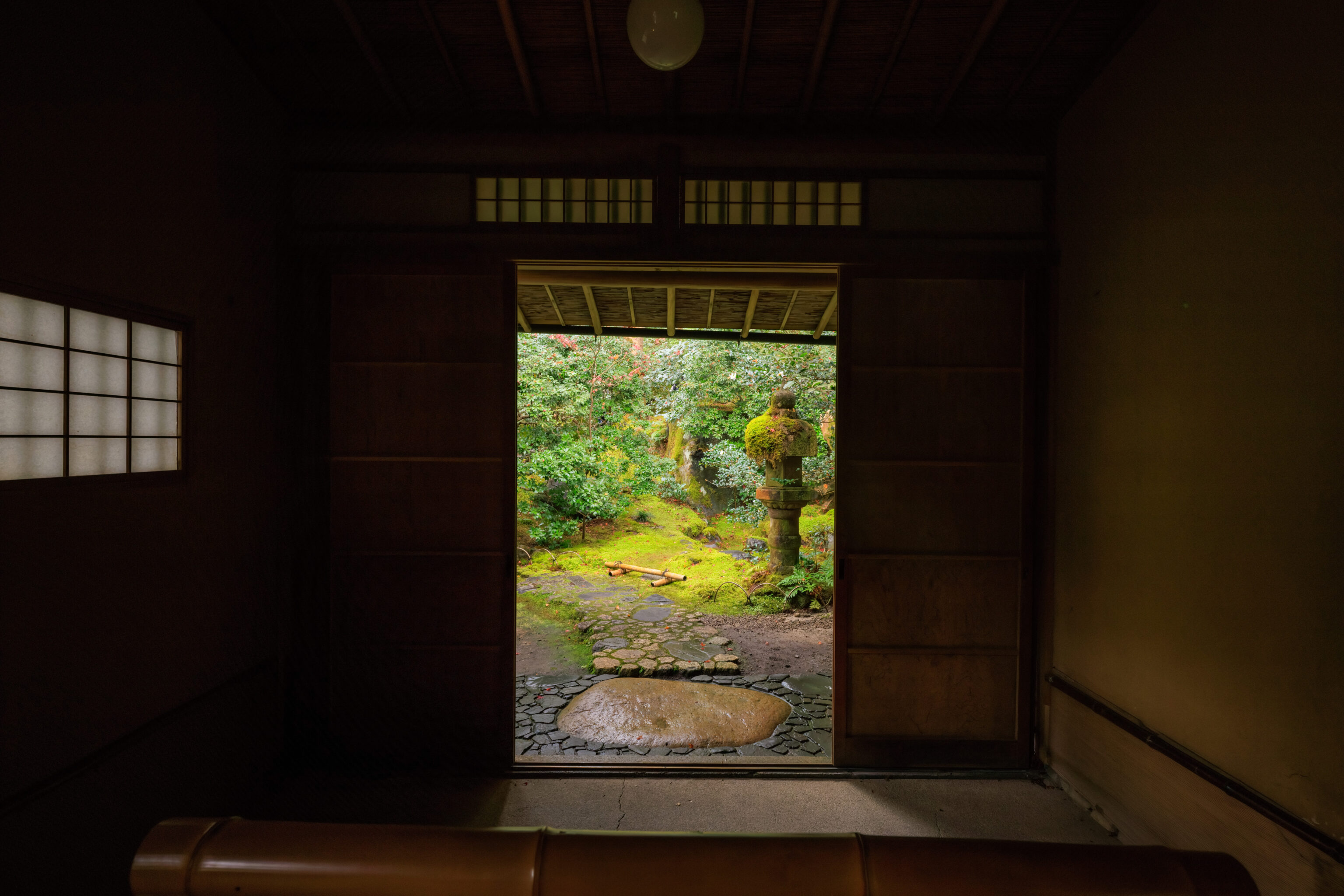
Another nice garden view thorough a different open sliding door with solid wooden panels.
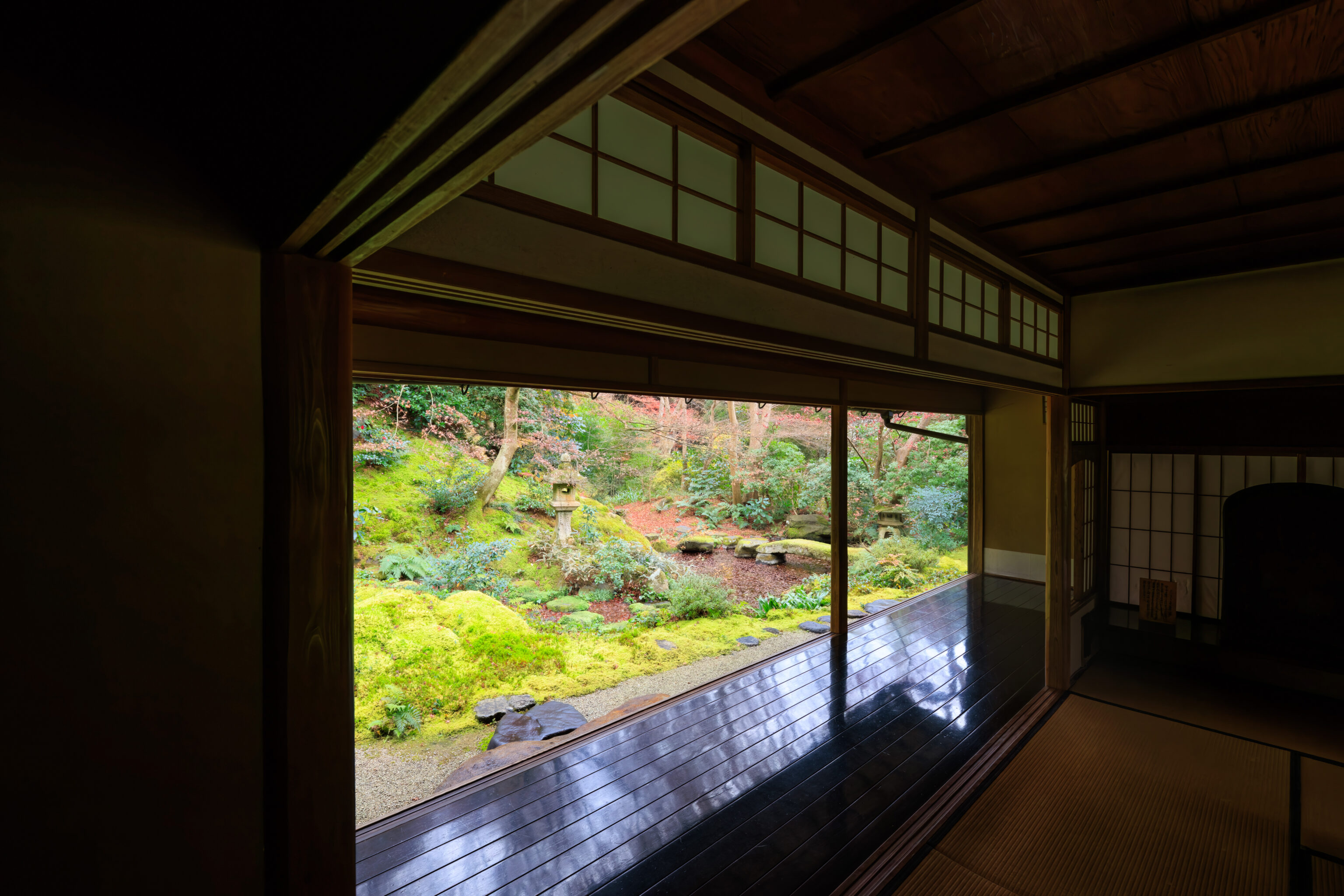
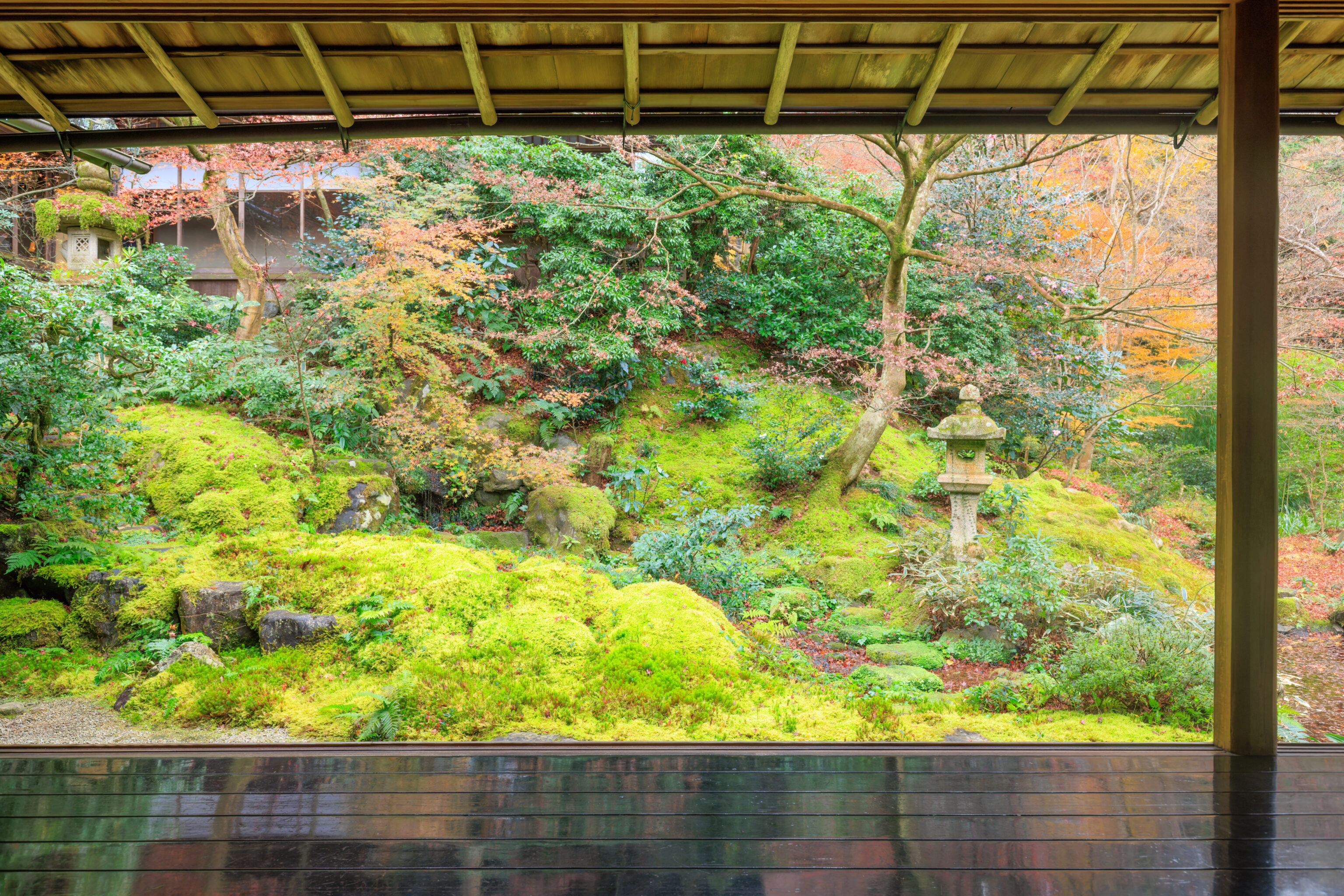
The main room here had a pretty garden view.
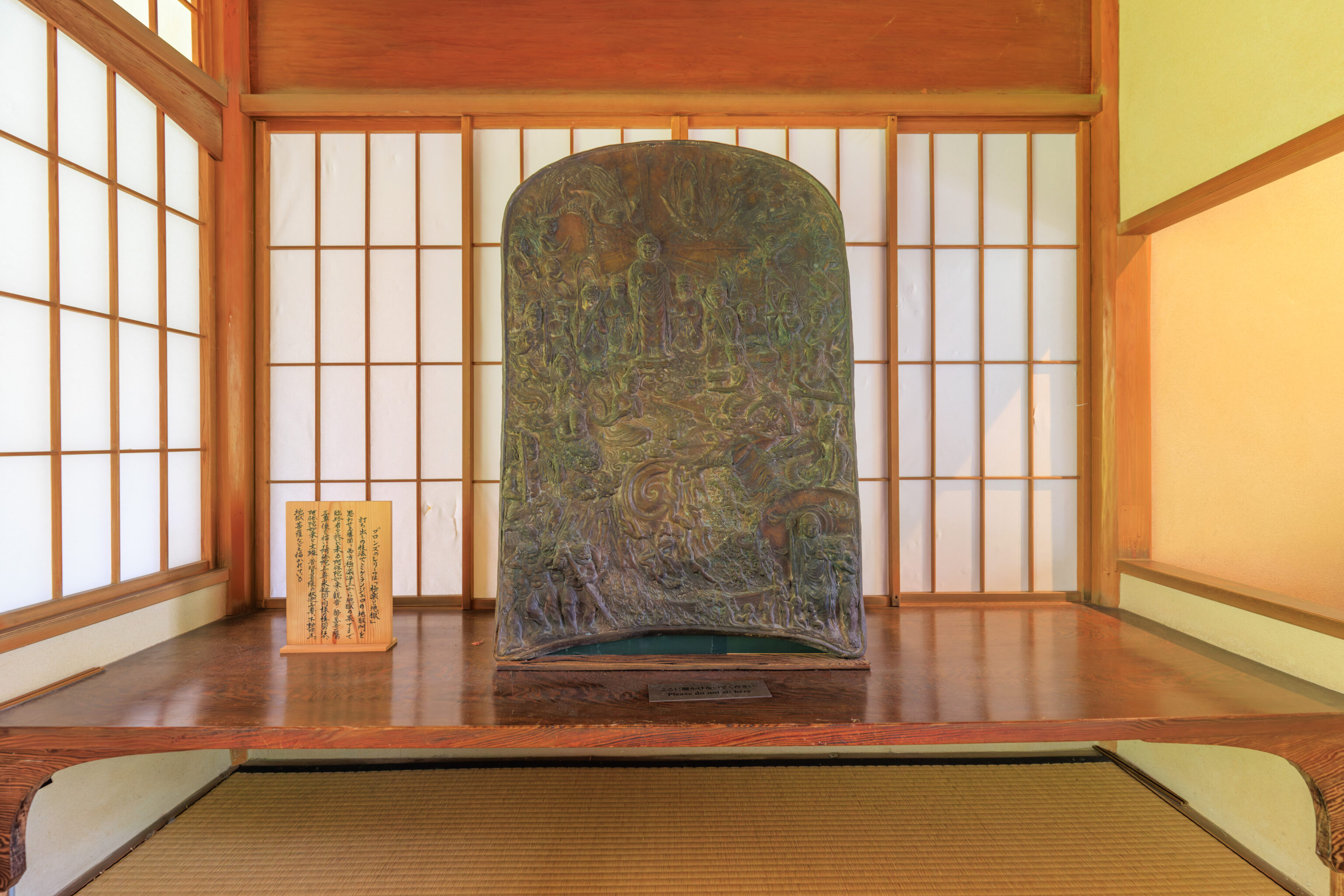
This bronze tablet is best explain by the sign on the left:
The bronze relief is titled "Paradise and Hell."

Executed using the repoussé technique, its composition evokes Michelangelo's *The Gates of Hell*.

In addition to a layout reminiscent of *The Welcoming Triad of Amida*—which depicts the triad of Amida Buddha, Kannon, and Seishi Bodhisattvas descending from the Western Pure Land to the very depths of Hell to save the dying—the work also features Amida Buddha alongside Monju and Fugen Bodhisattvas (forming the Shakyamuni Triad), as well as Fudo Myoo and the Bodhisattva of Hell.
– Text from the sign on the left, translated using Google.
Its not clear which work by Michelangelo the text is referring to. However, there is a bronze sculpture by Rodin titled The Gates of Hell.
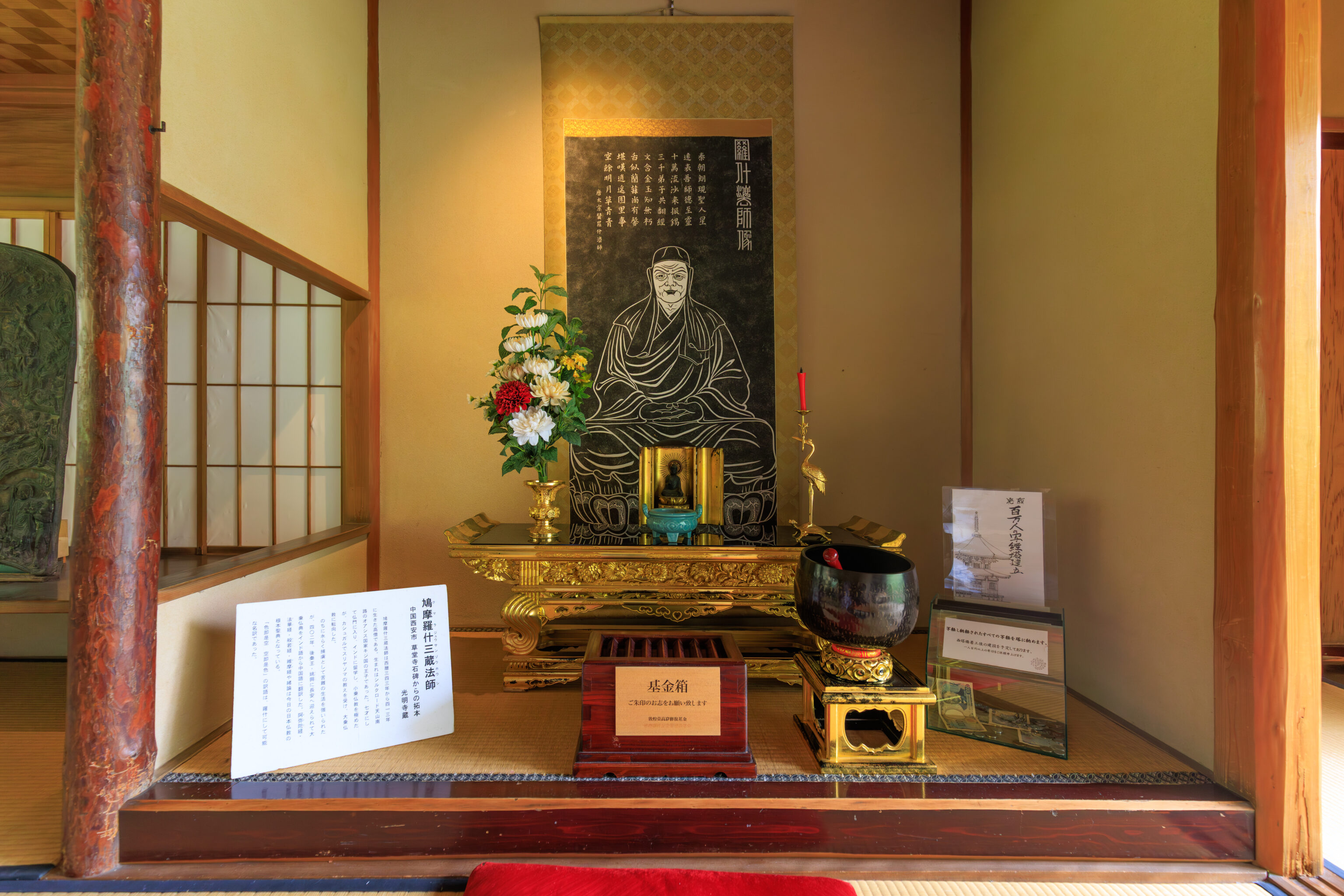
The scroll hanging in the back of this alcove is a a rubbing of a stele from Xi’an:
Tripitaka Master Kumarajiva
Rubbing from a Stone Stele at Caotang Temple, Xi'an, China
Collection of Komyo-ji Temple
Tripitaka Master Kumarajiva was a renowned Buddhist monk who lived from 343 to 413 CE. He was born a prince of the Kingdom of Kucha, an oasis state situated along the Southern Route of the Silk Road at the foot of the Tian Shan mountains. He entered the Buddhist order at the age of seven and traveled to India to study, where he mastered Hinayana Buddhism; however, after receiving instruction from Suryasoma in Kashgar, he converted to Mahayana Buddhism.
Later, he was forced to endure a long period of hardship as a captive; yet, in 402 CE, he was welcomed to Chang'an by Yao Xing, the King of the Later Qin dynasty, and undertook the monumental task of translating Mahayana Buddhist scriptures from Indian languages into Chinese. His translations—including the *Amitabha Sutra*, *Lotus Sutra*, *Prajna Sutra*, *Vimalakirti Sutra*, and various treatises—serve as the foundational scriptures of Japanese Buddhism to this day.
The translation of the phrase "Form is emptiness; emptiness is form" stands as a masterpiece of translation—one that only Kumarajiva could have achieved.
– Text from sign on left, translated using Google.
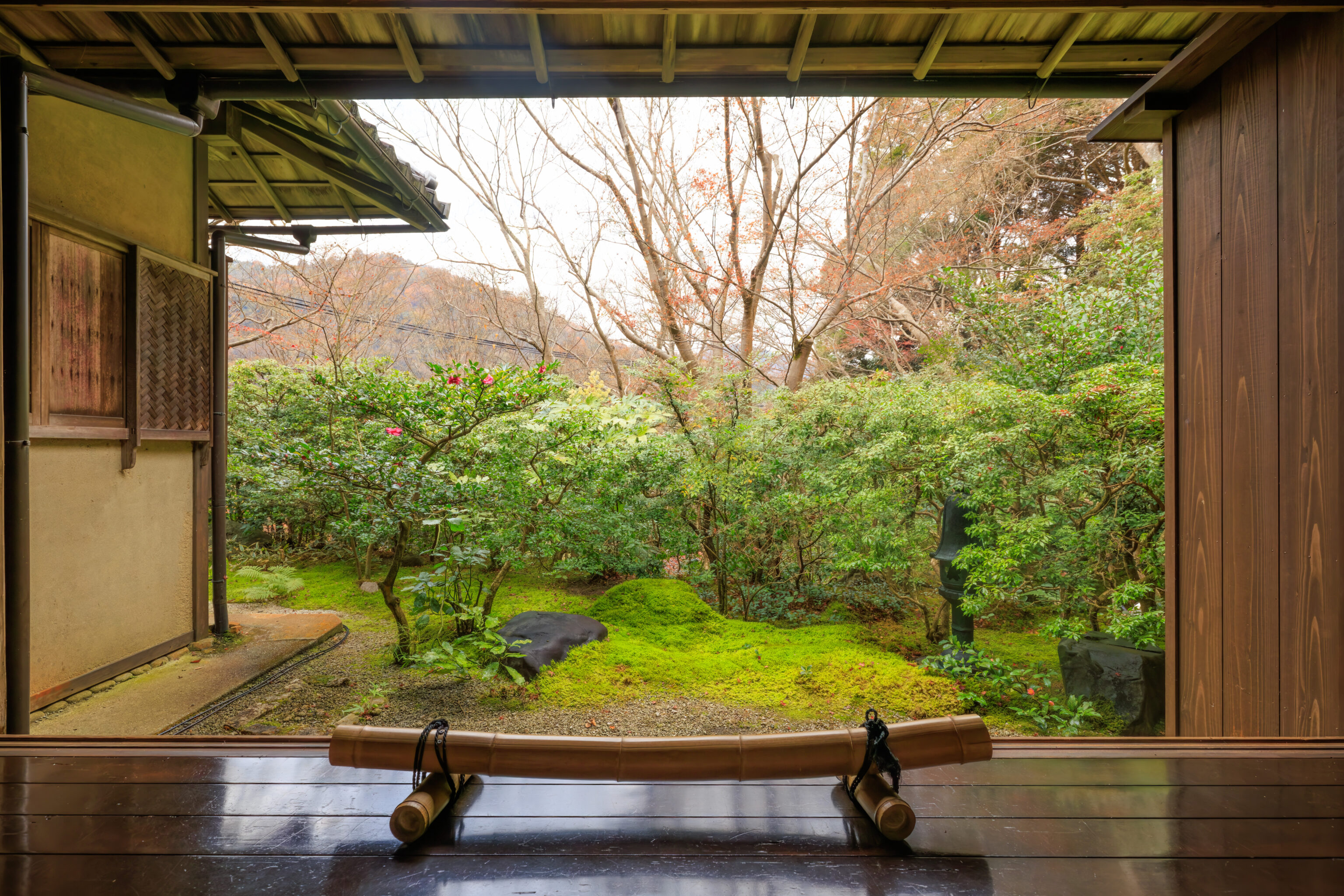
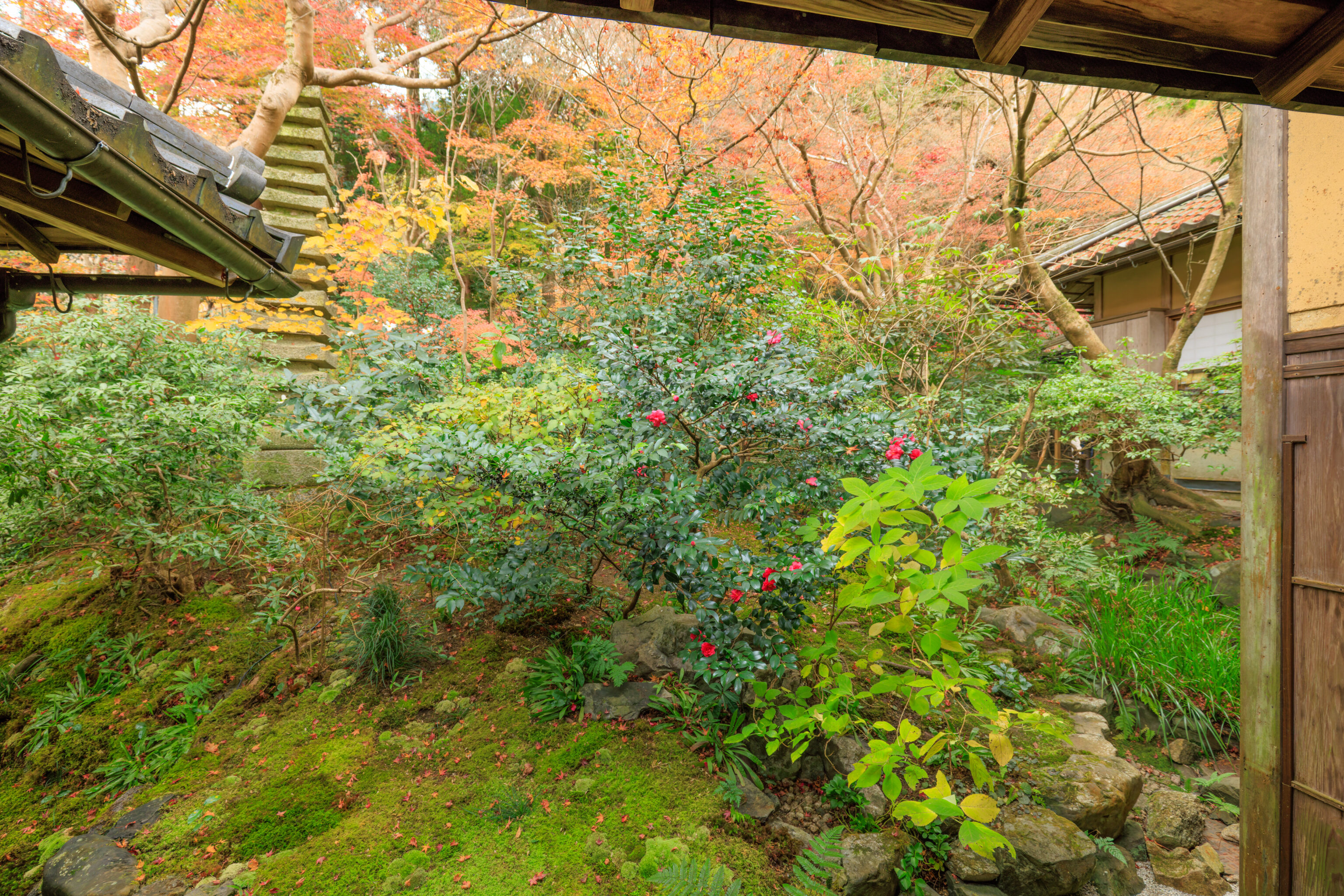
We continued along the route on our way back to the temple entrance. A sign by the entrance reads:
Since the time Prince Oama—who sustained an arrow wound during the Jinshin War—sought healing for his injuries in the *Kama-buro* (steam bath) at Yase, this establishment has been cherished by the Heian aristocracy as a sanctuary for therapeutic respite.

During the Meiji era, the statesman Sanjo Sanetomi bestowed the name "Kikakutei" upon the hermitage located here, personally presenting a calligraphic plaque bearing his own hand.

Subsequently, spanning the period from the late Taisho era into the early Showa era, the premises underwent a major renovation transforming it into an expansive *sukiya*-style complex.

Today, together with its accompanying gardens—the "Garden of Lapis Lazuli," the "Garden of the Crouching Dragon," and the "Garden of the Dewy Path"—it continues to be beloved by many.
– Text from a sign, translated using Google.
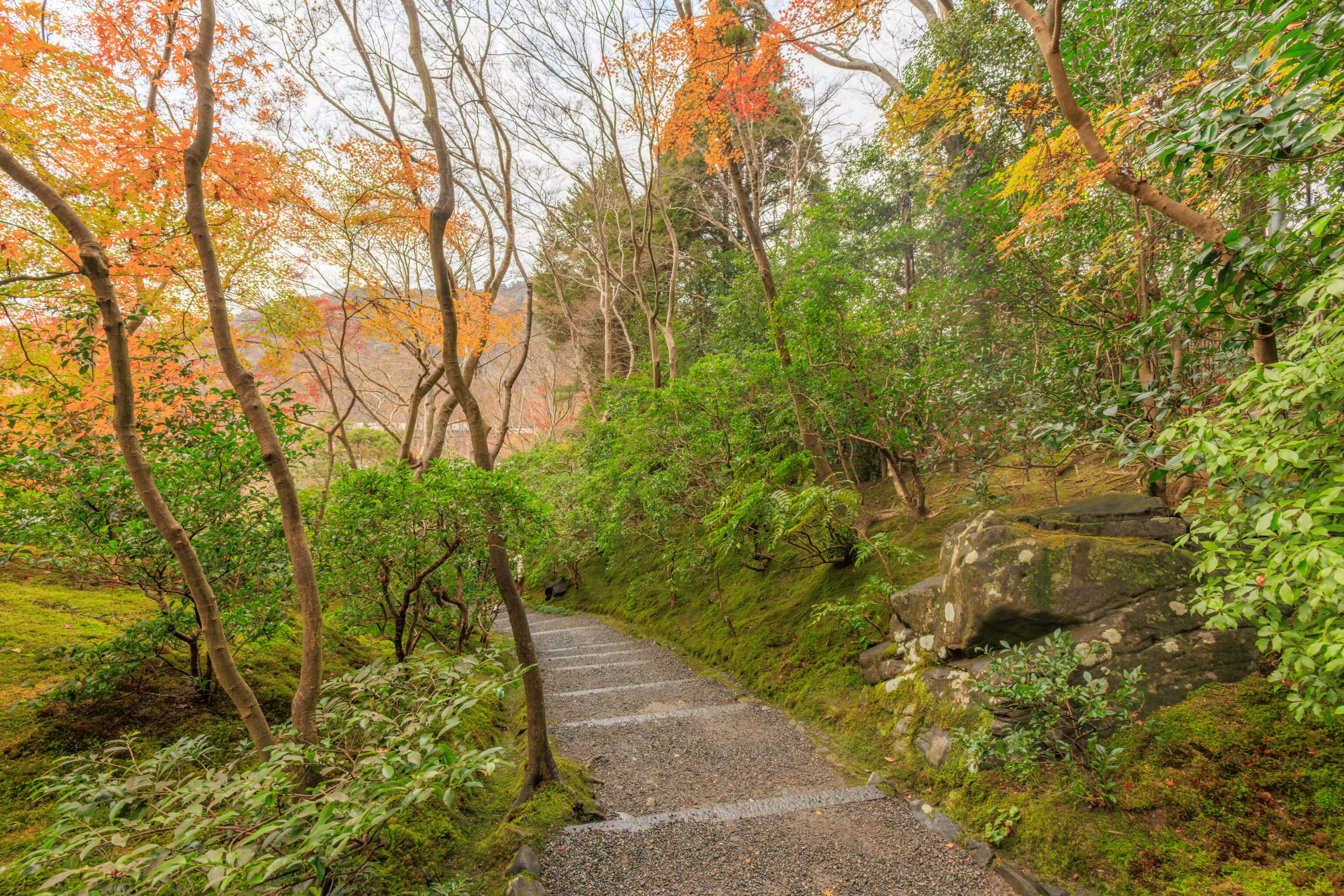
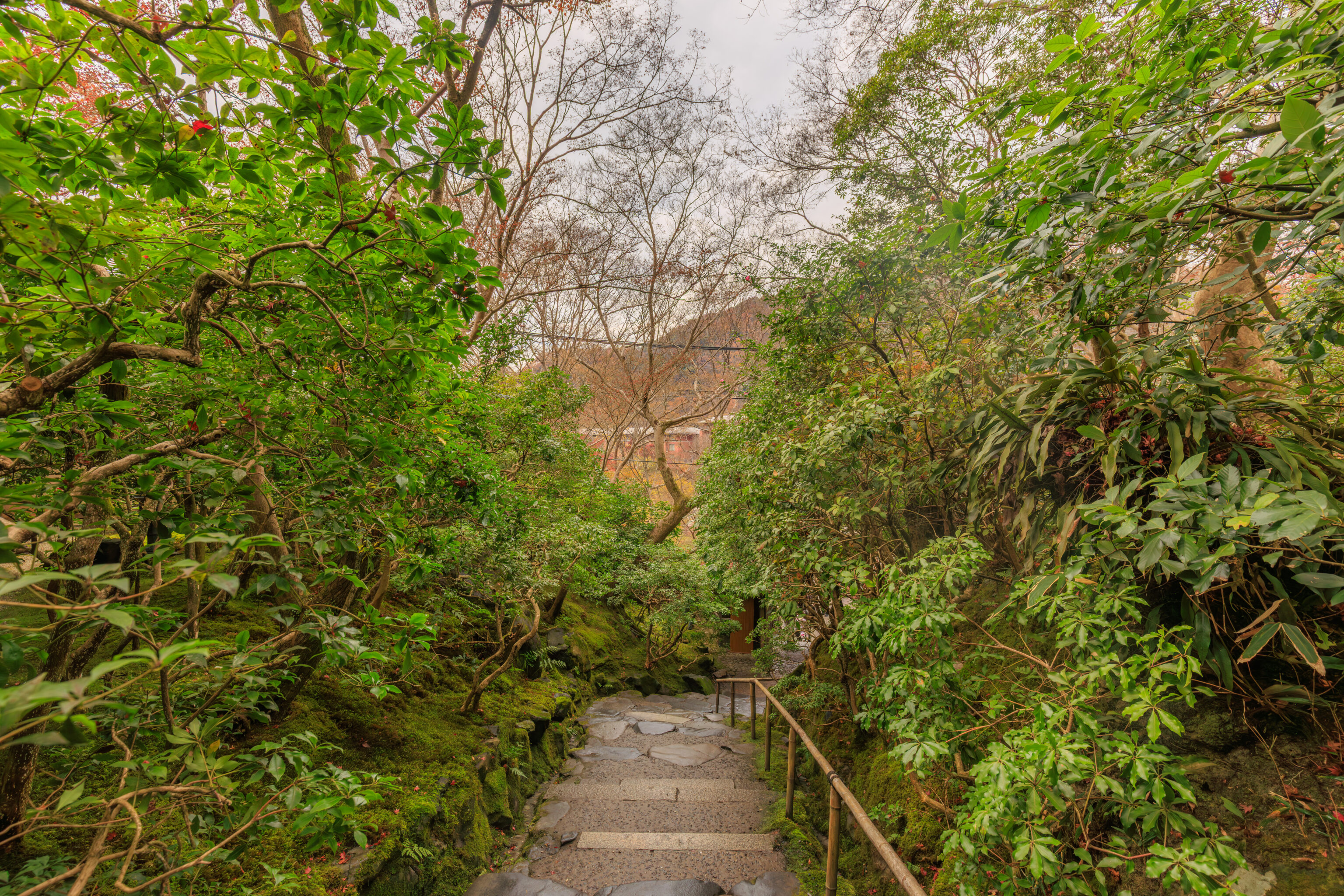
It wasn’t as busy on our walk out. We were able to photograph a few scenes with just glimpses of people in the distance.
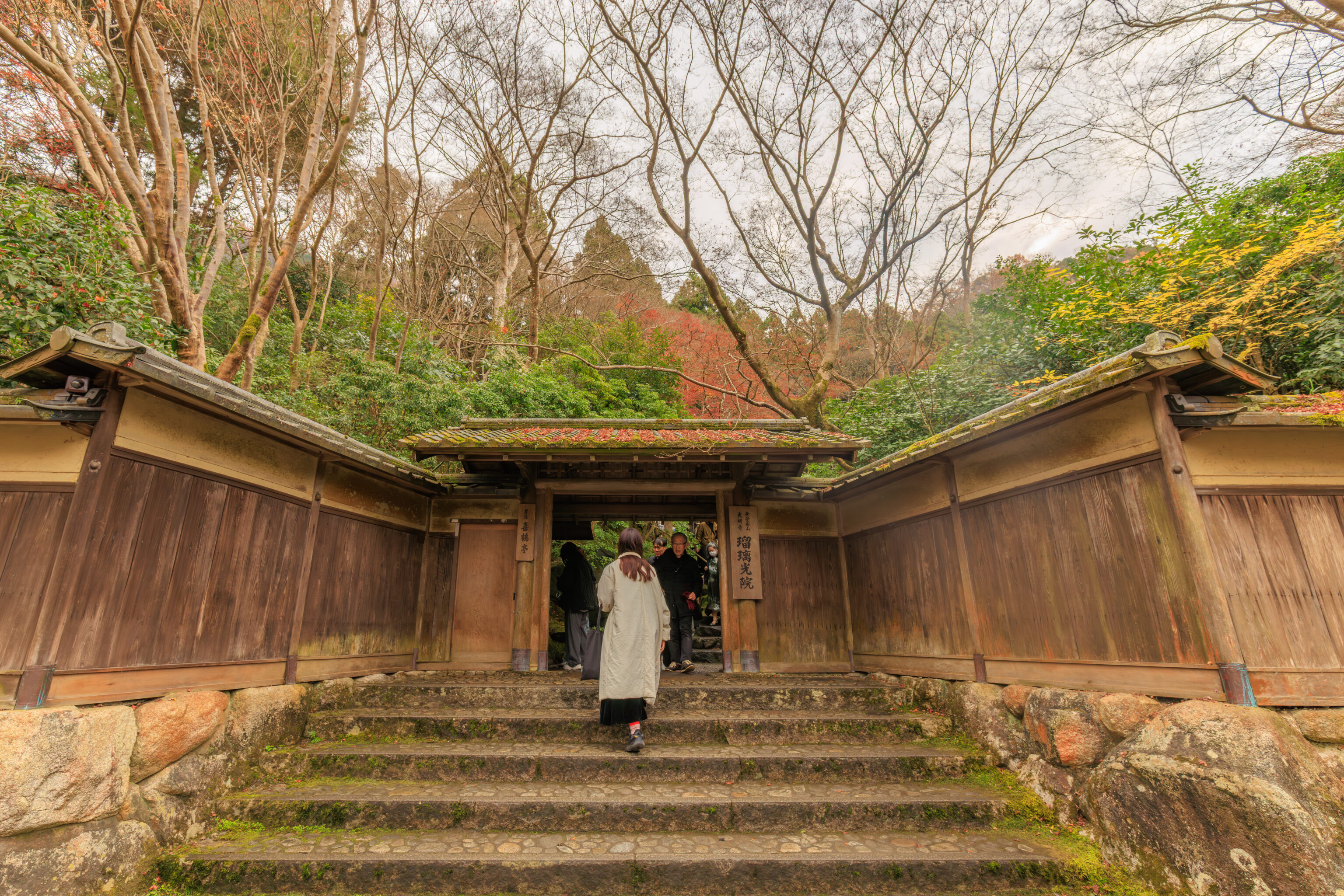
The entrance, as seen from the outside.
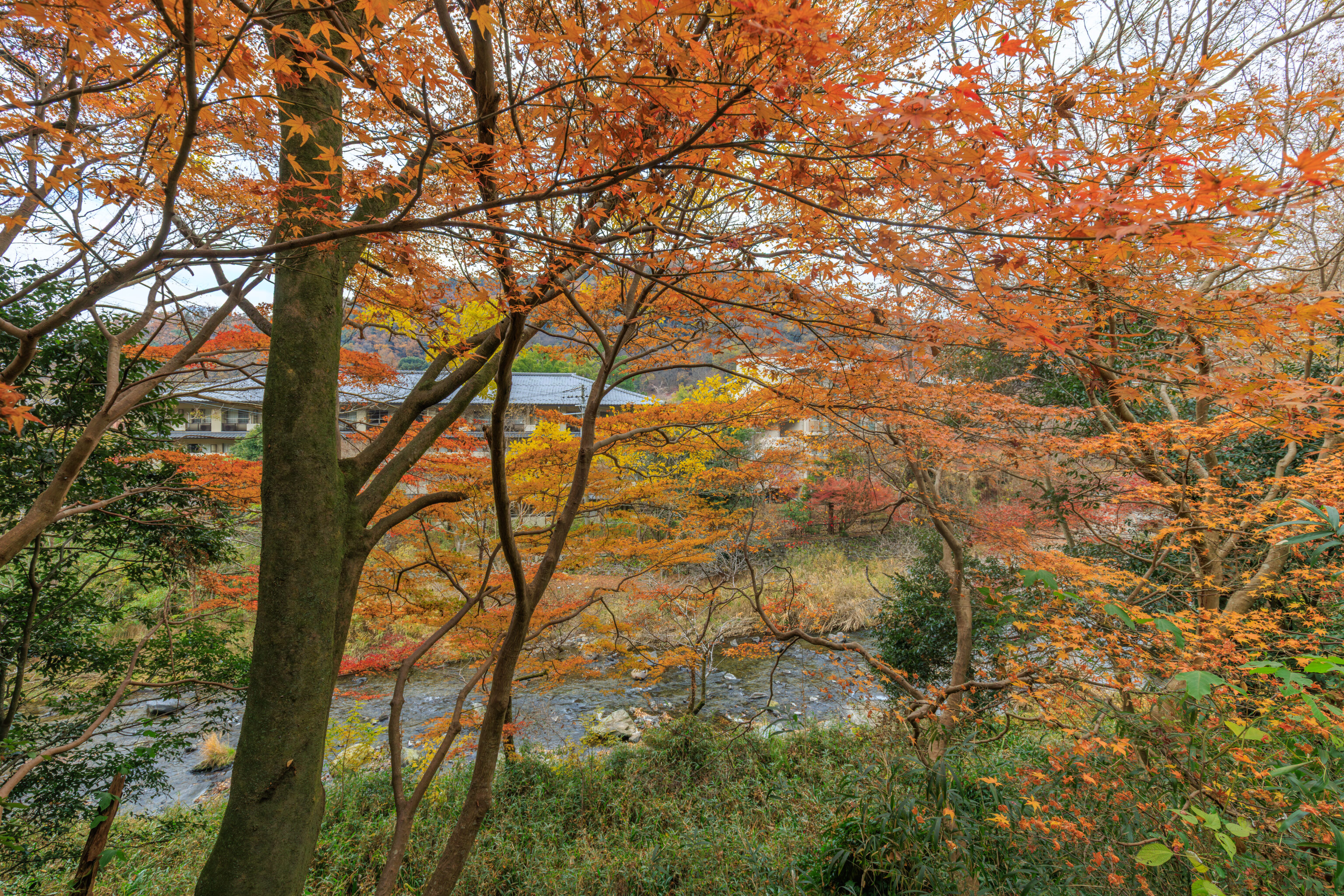
We backtracked along the road we arrived on to reach the lower terminal of the funicular that ascends Mt. Hiei.
Mount Hiei
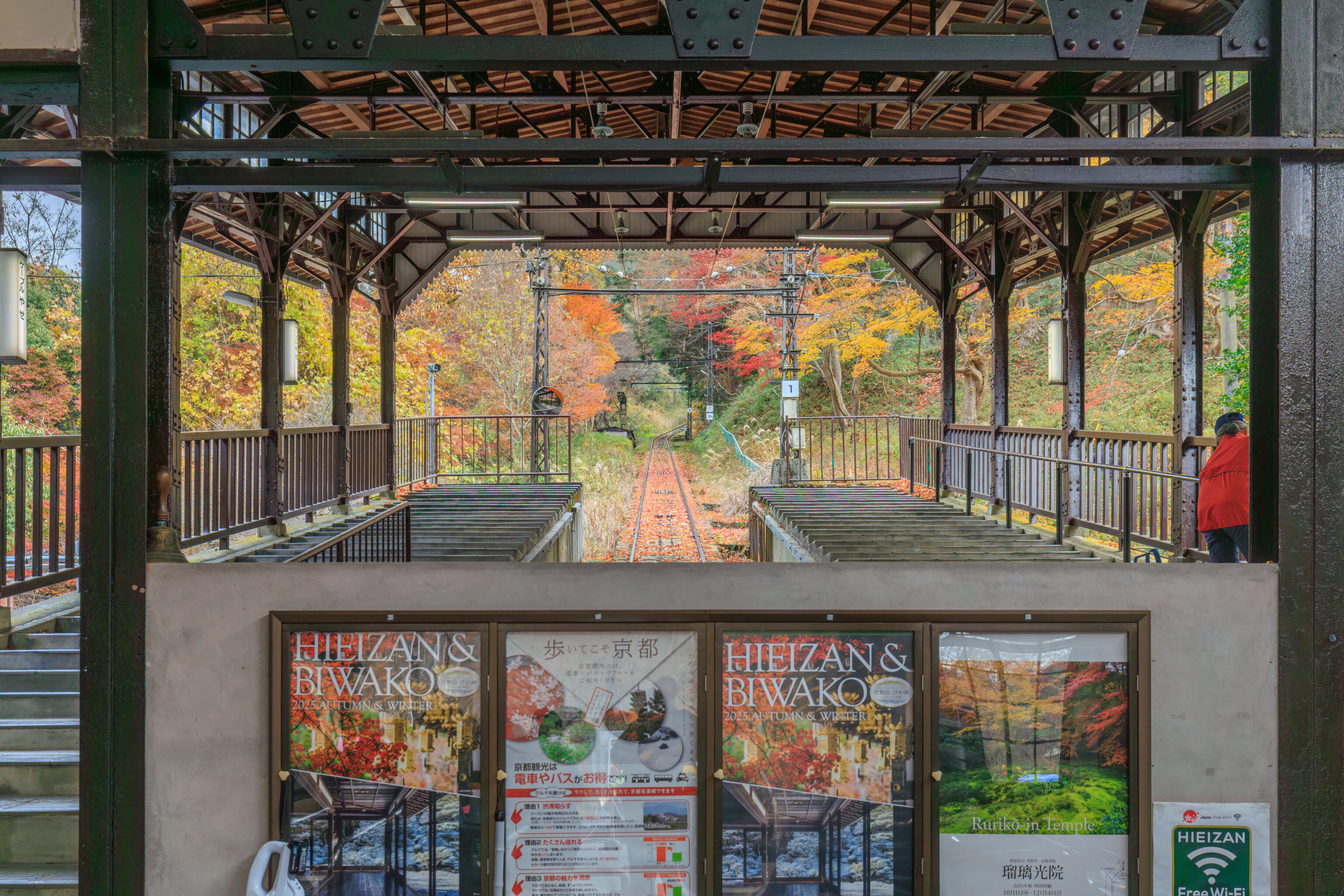
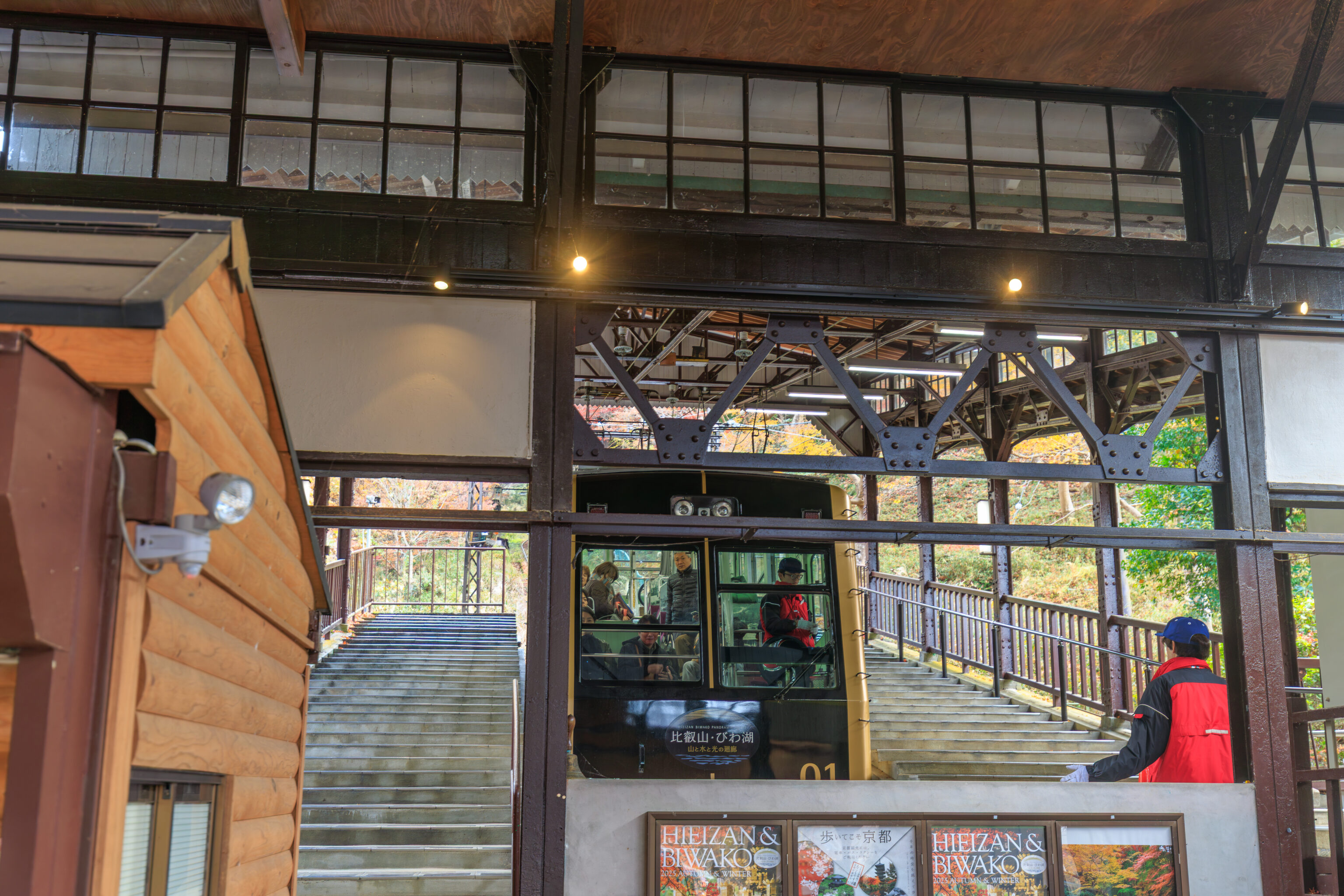
We ended up having to wait for a few minutes for the funicular to arrive. We bought our tickets earlier so we were ready to go once it arrived.
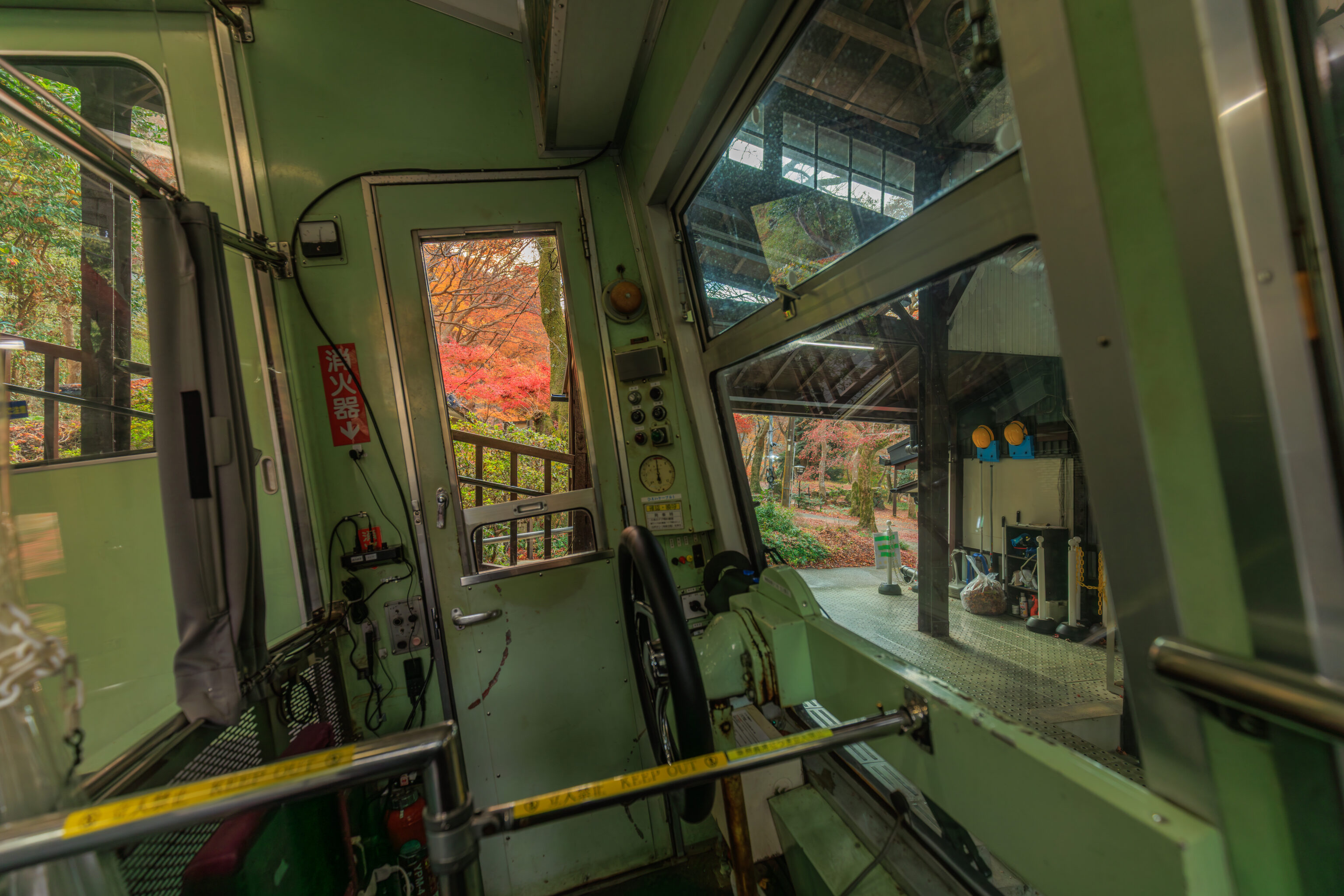
The interior of the funicular from the bottom door of the carriage, photographed level to the ground. We ended up standing here.
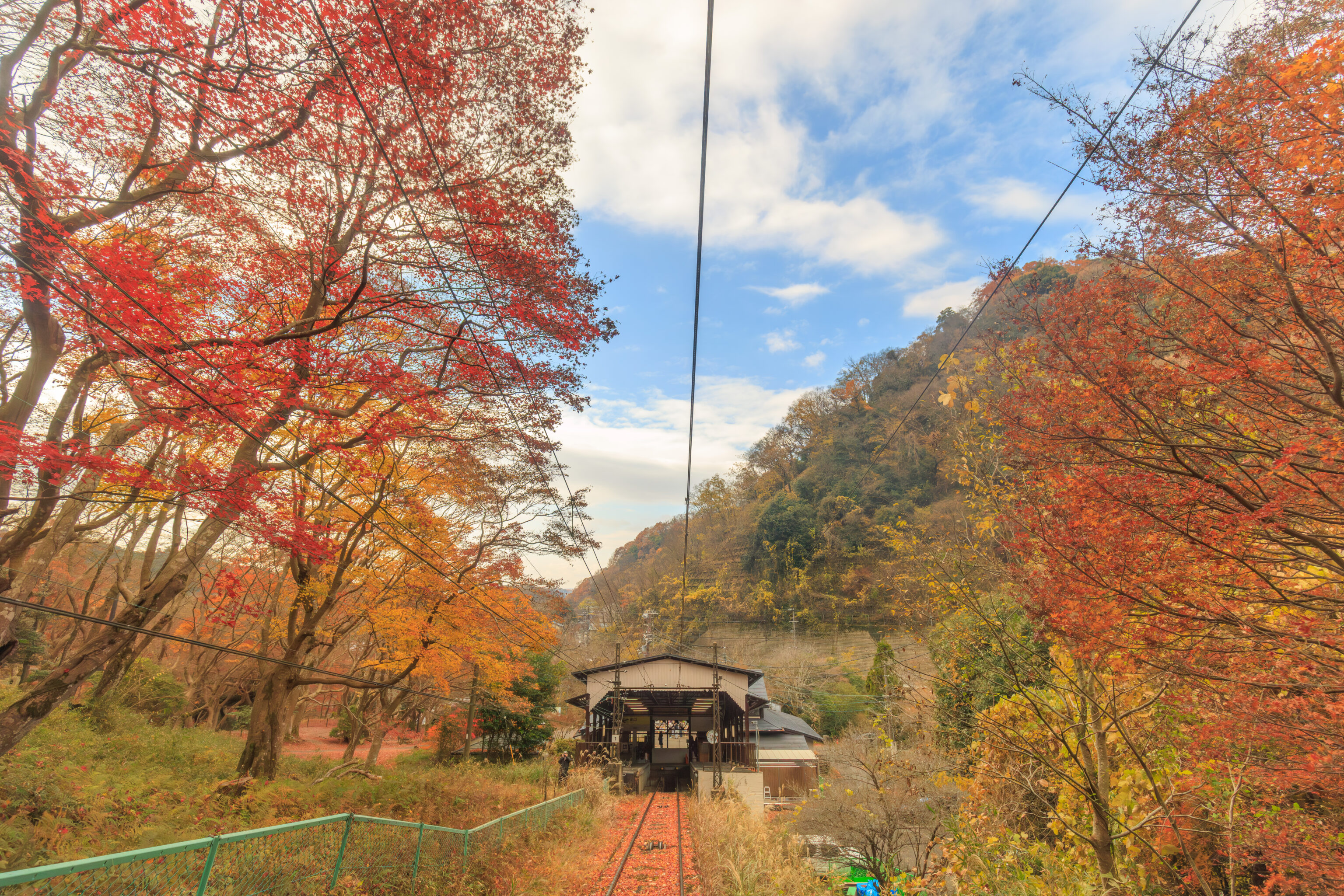
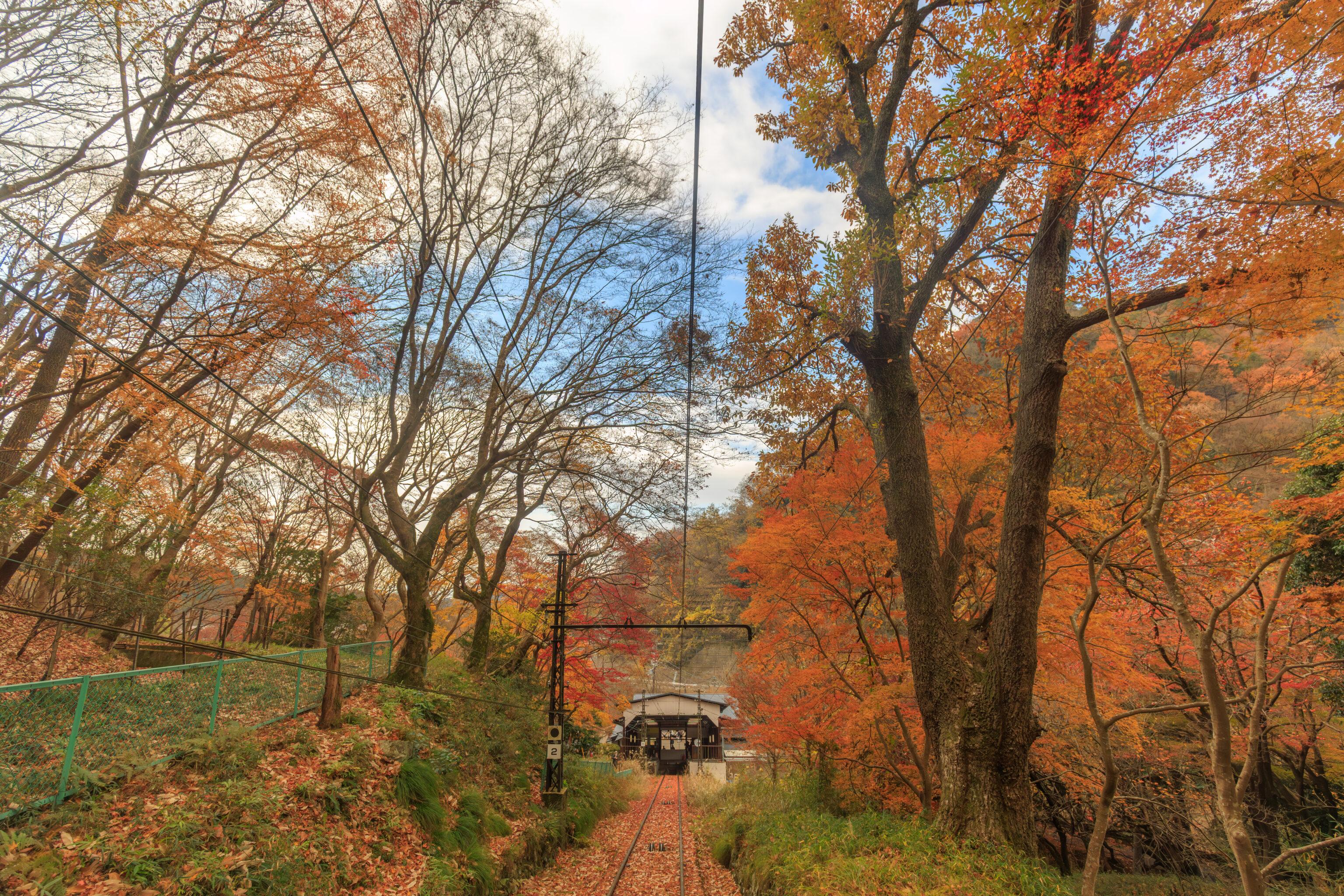
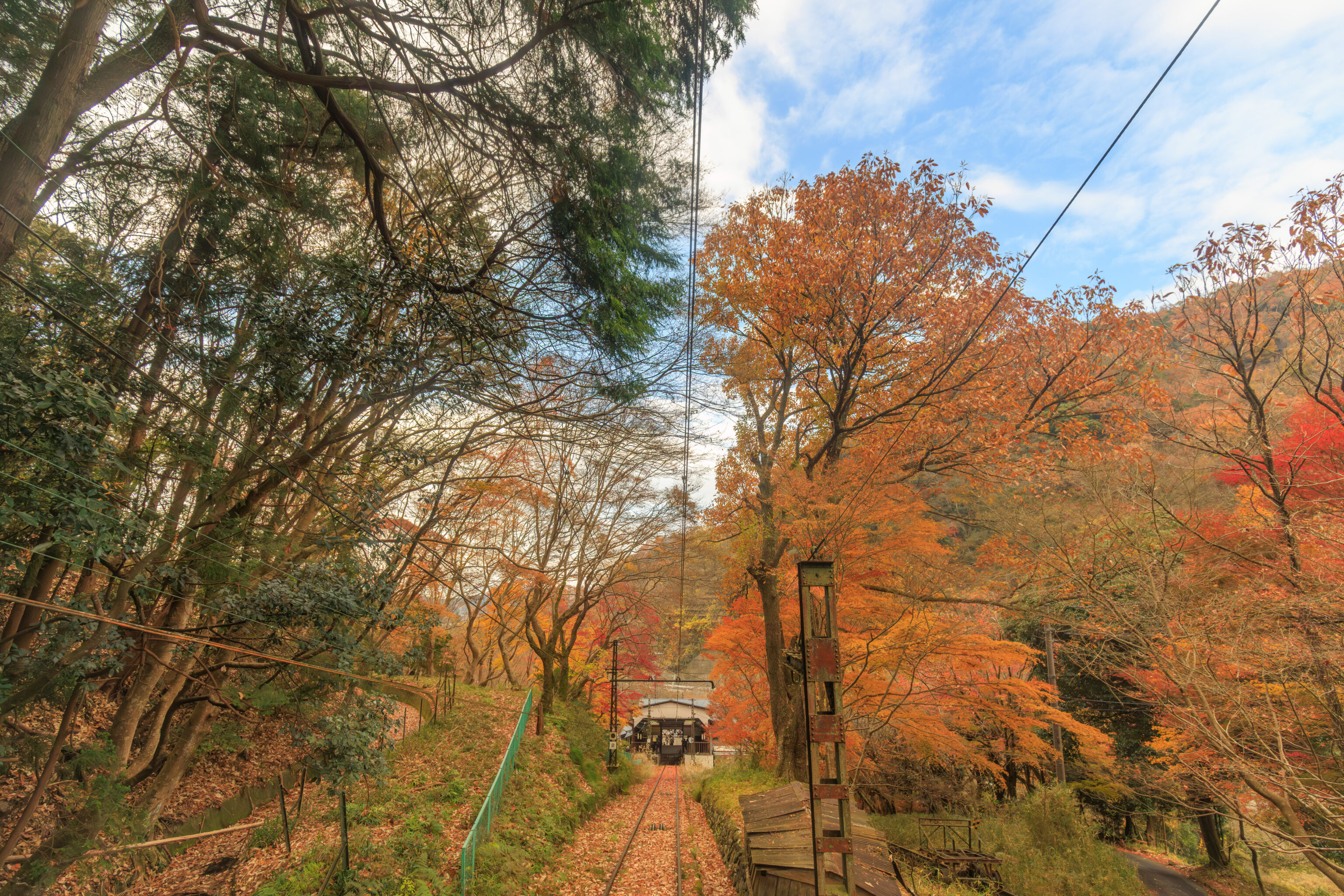
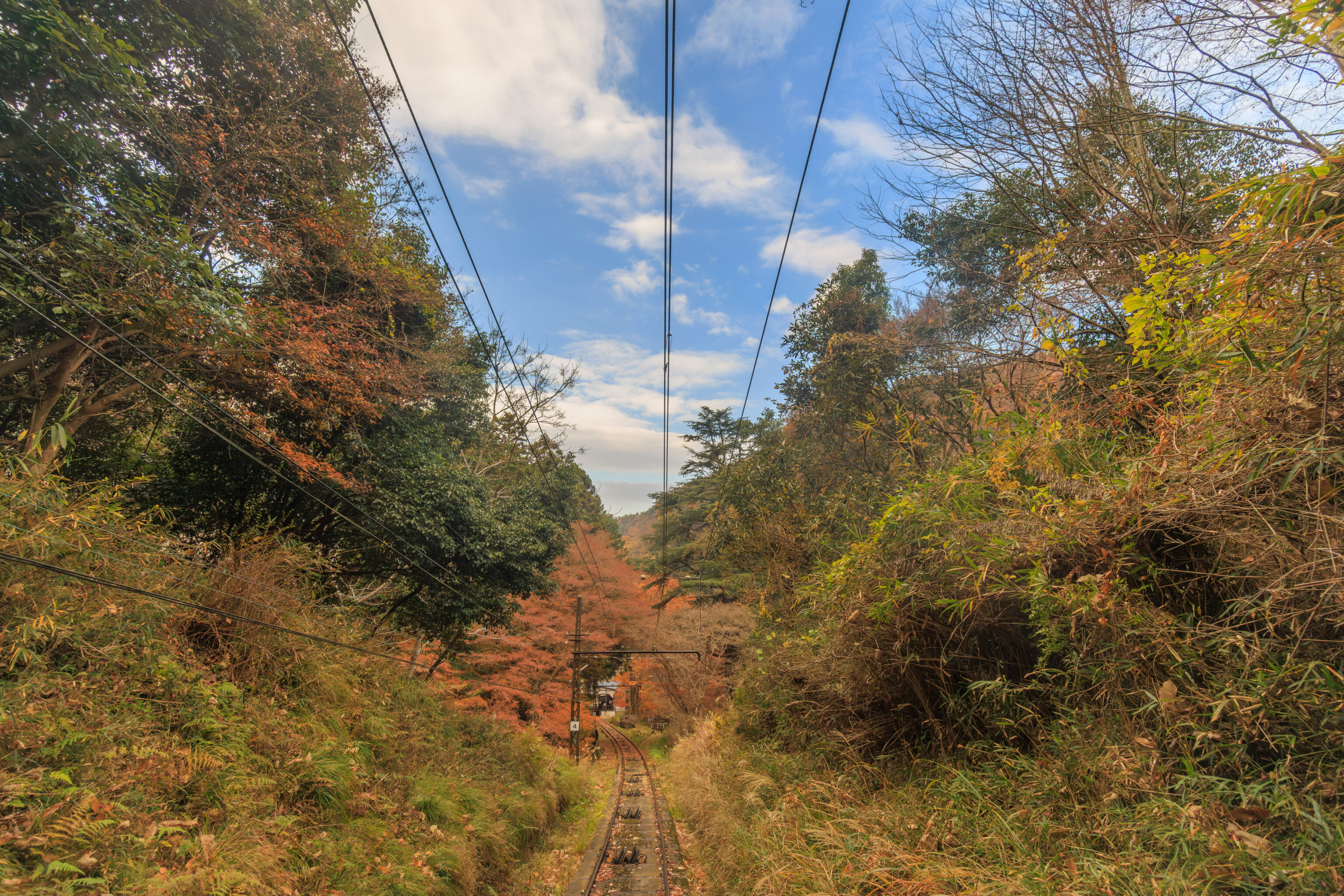
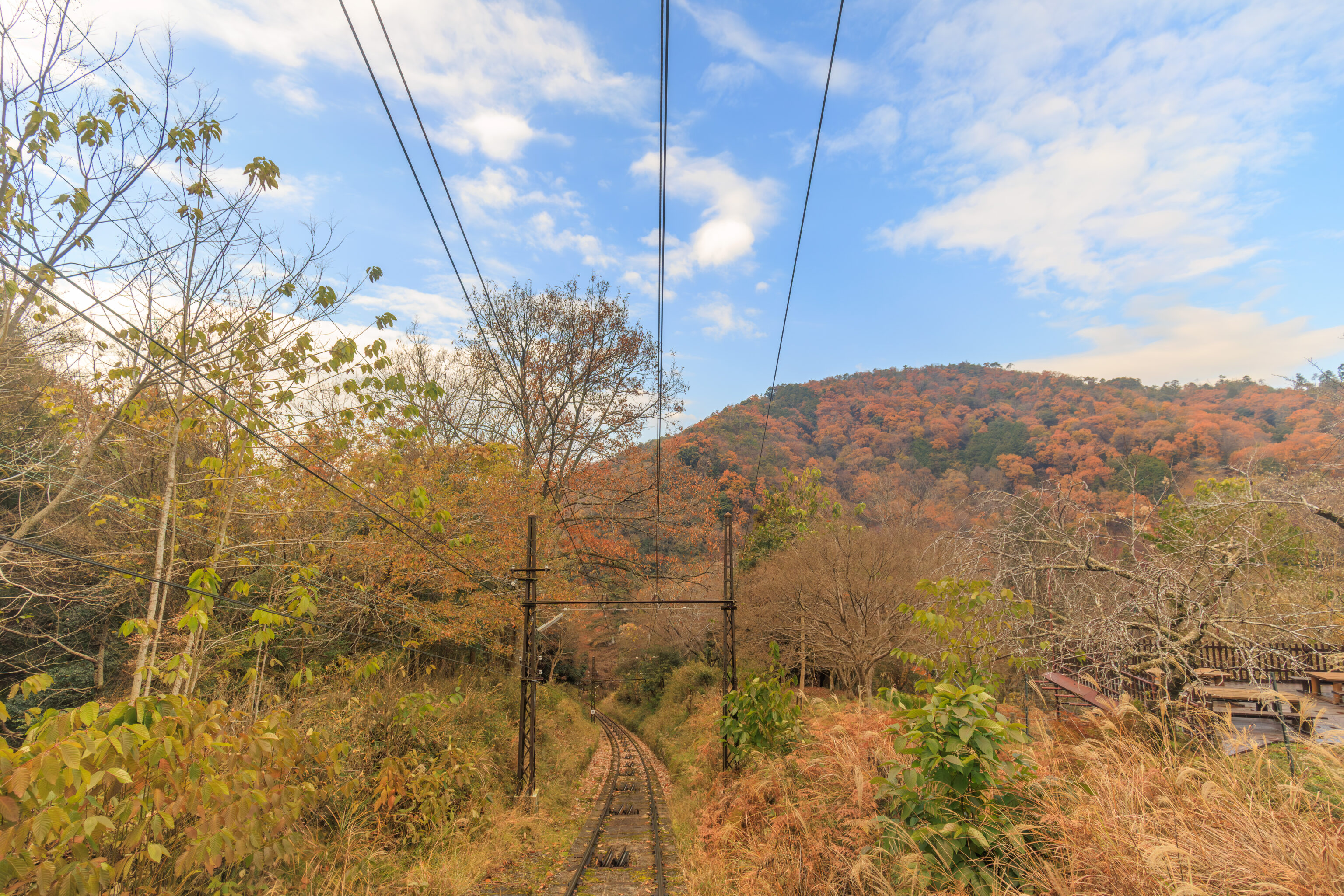
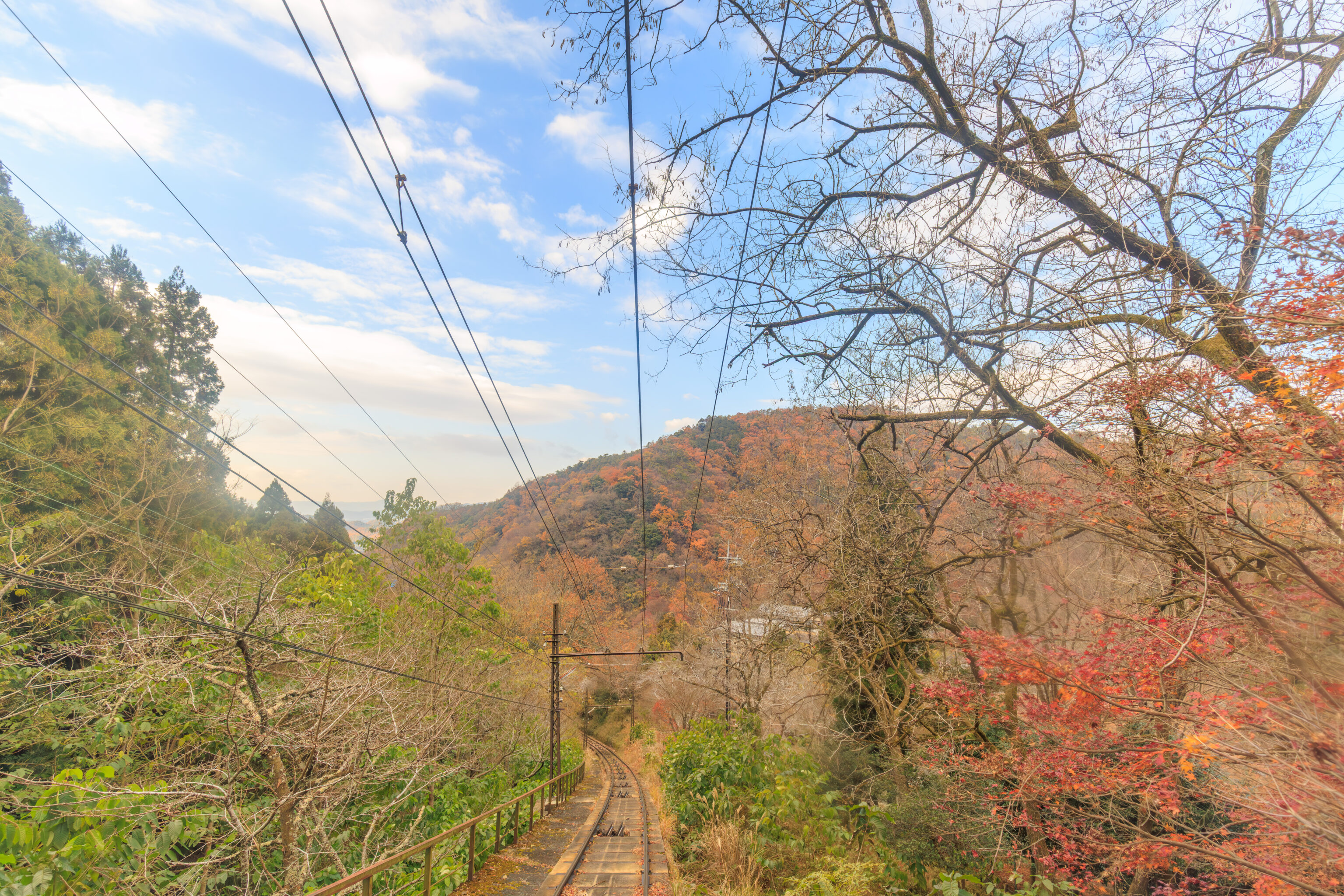
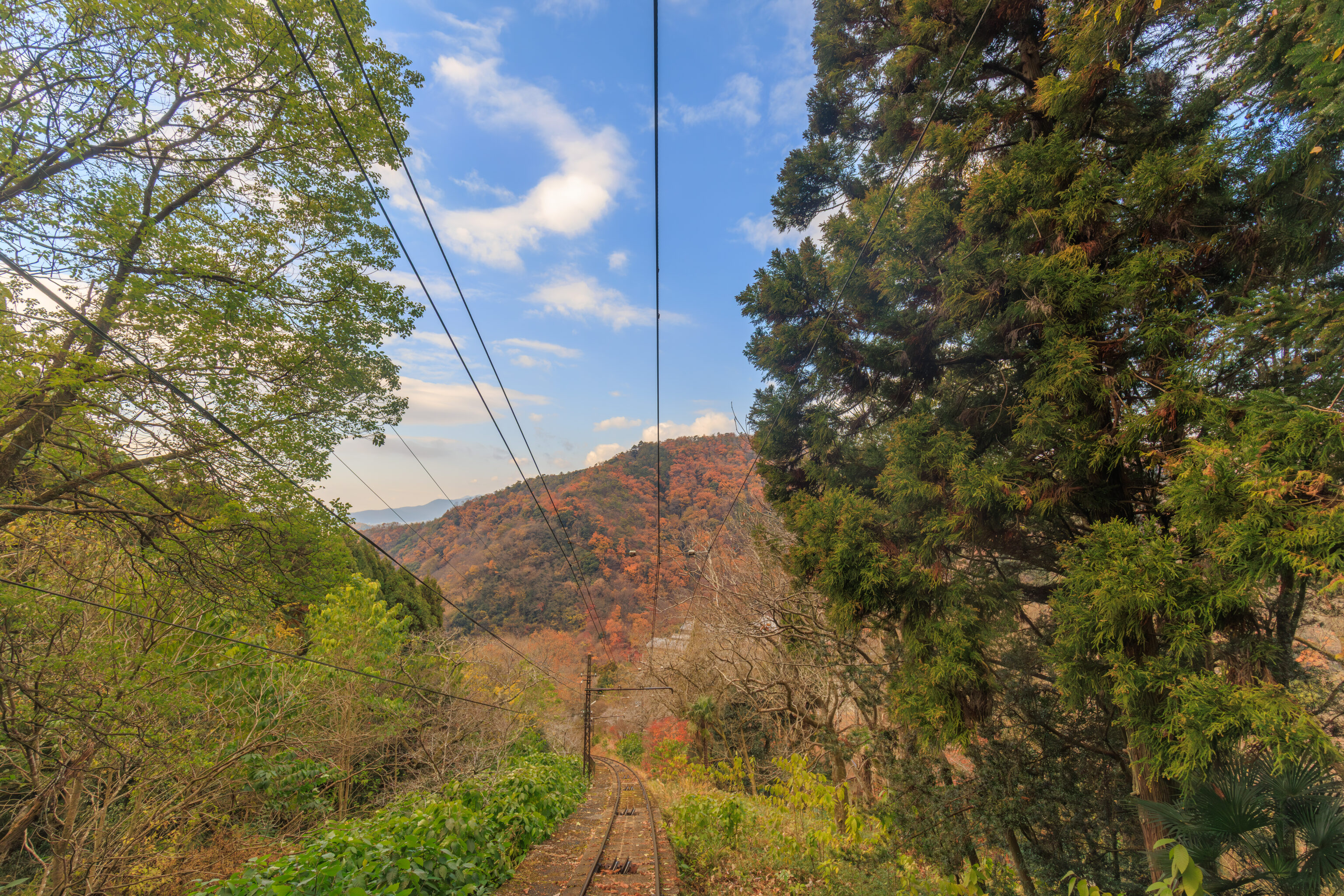
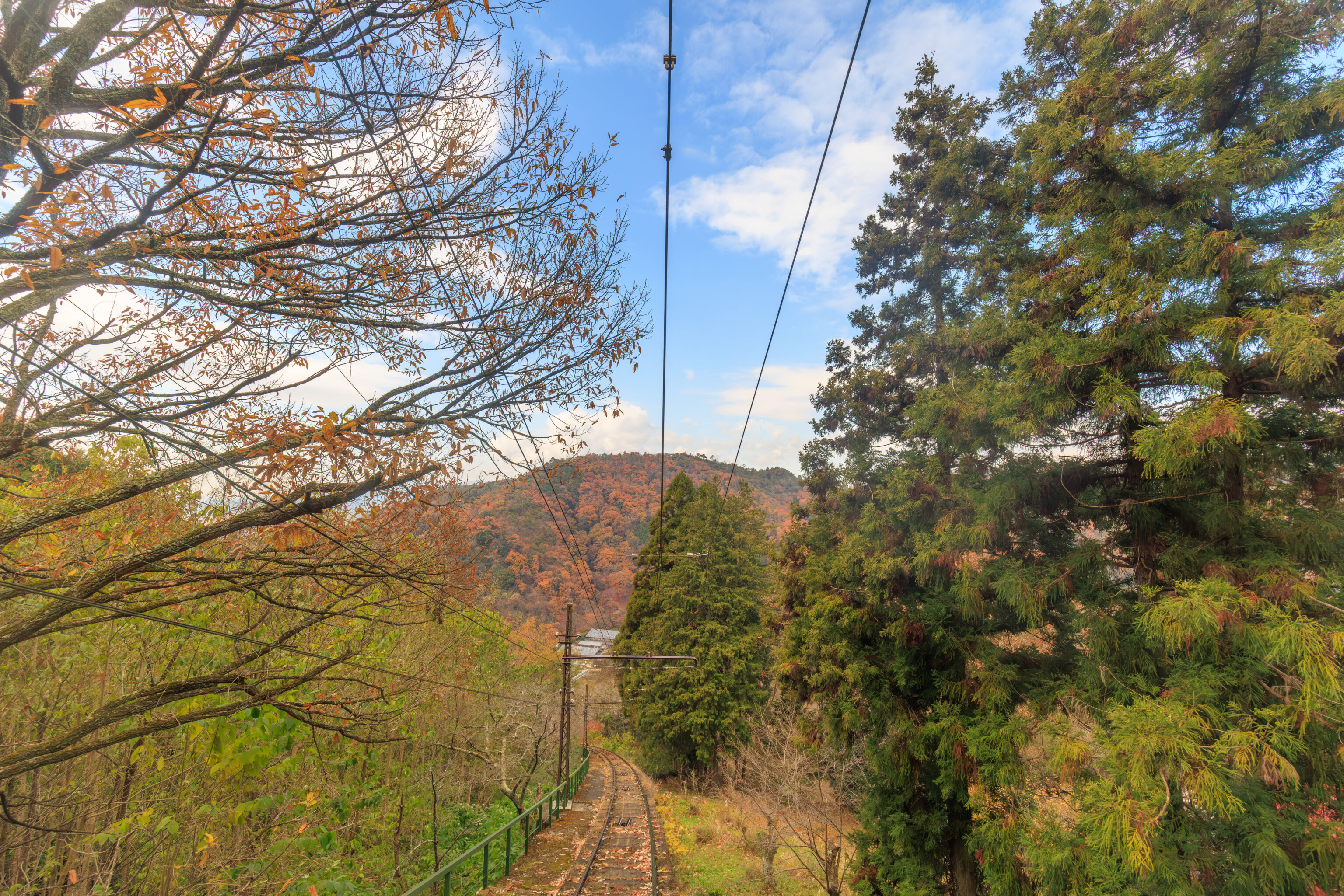
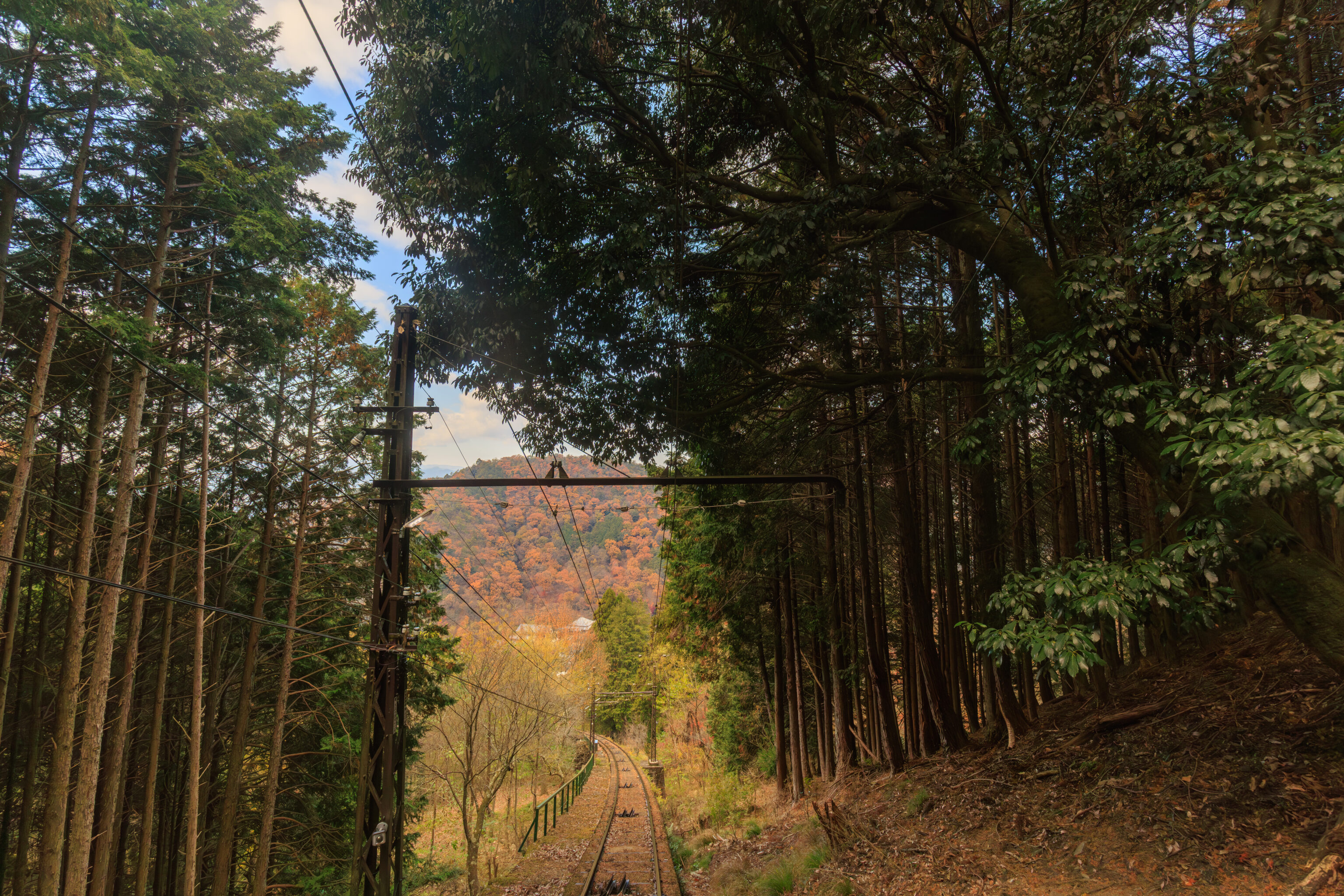
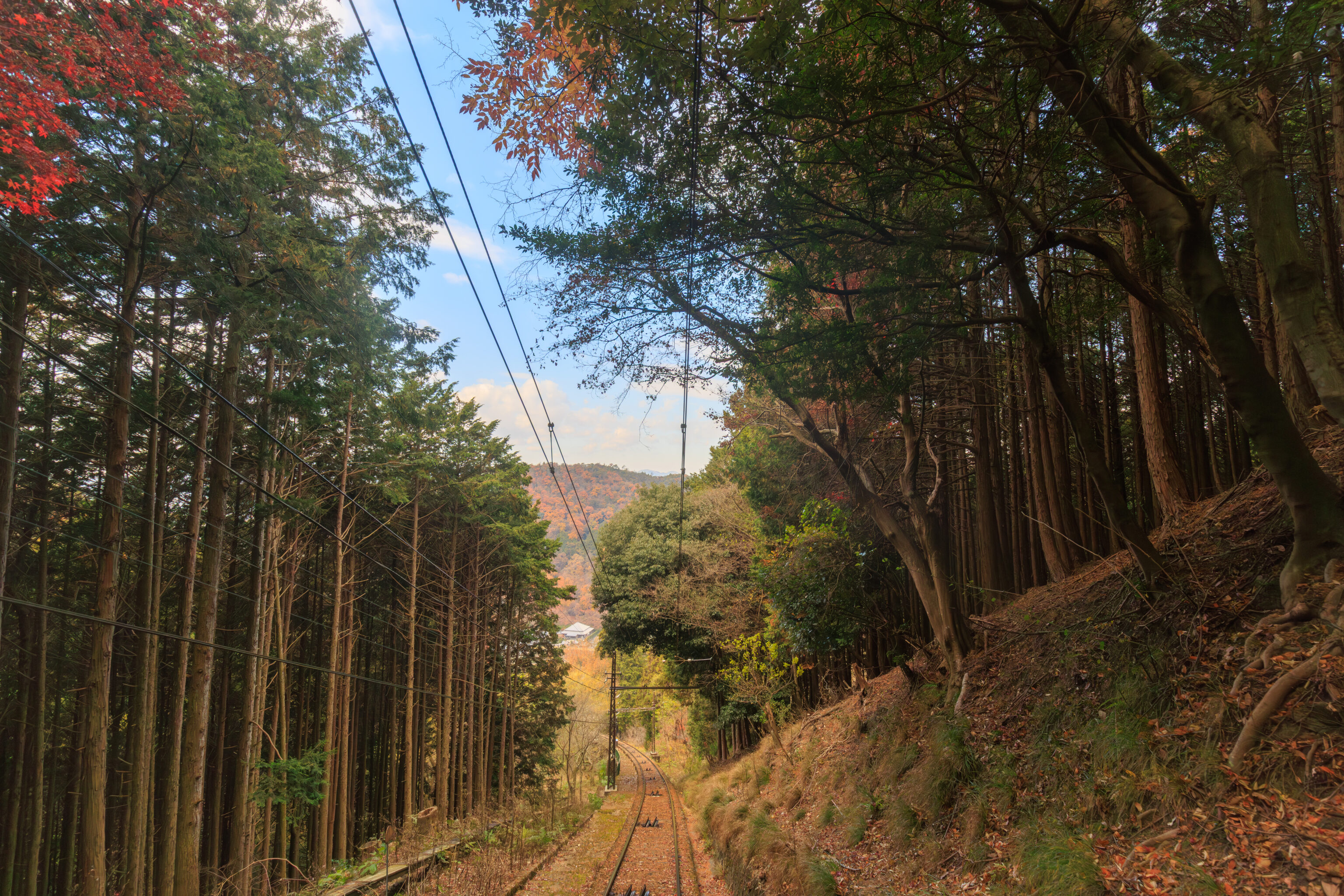
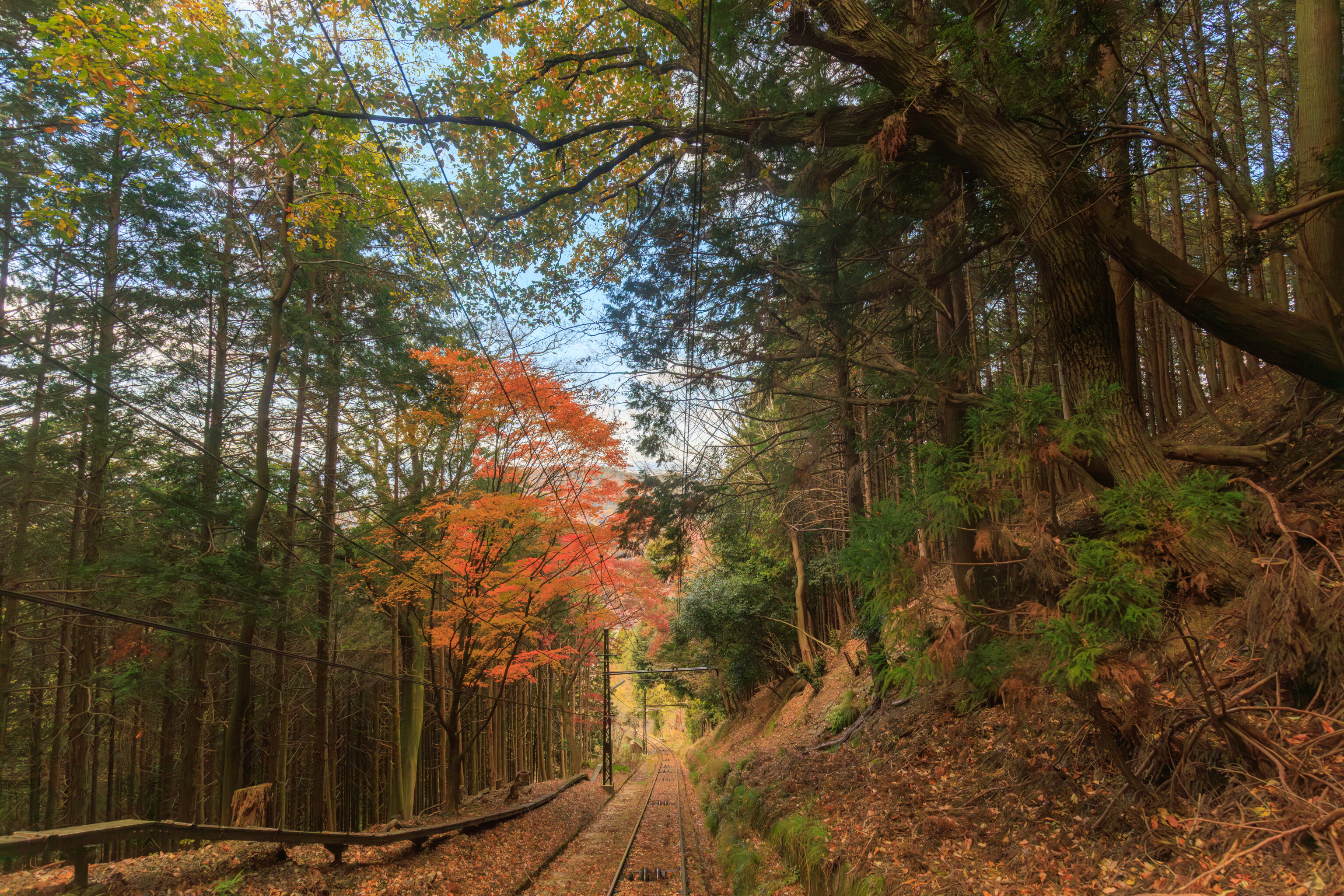
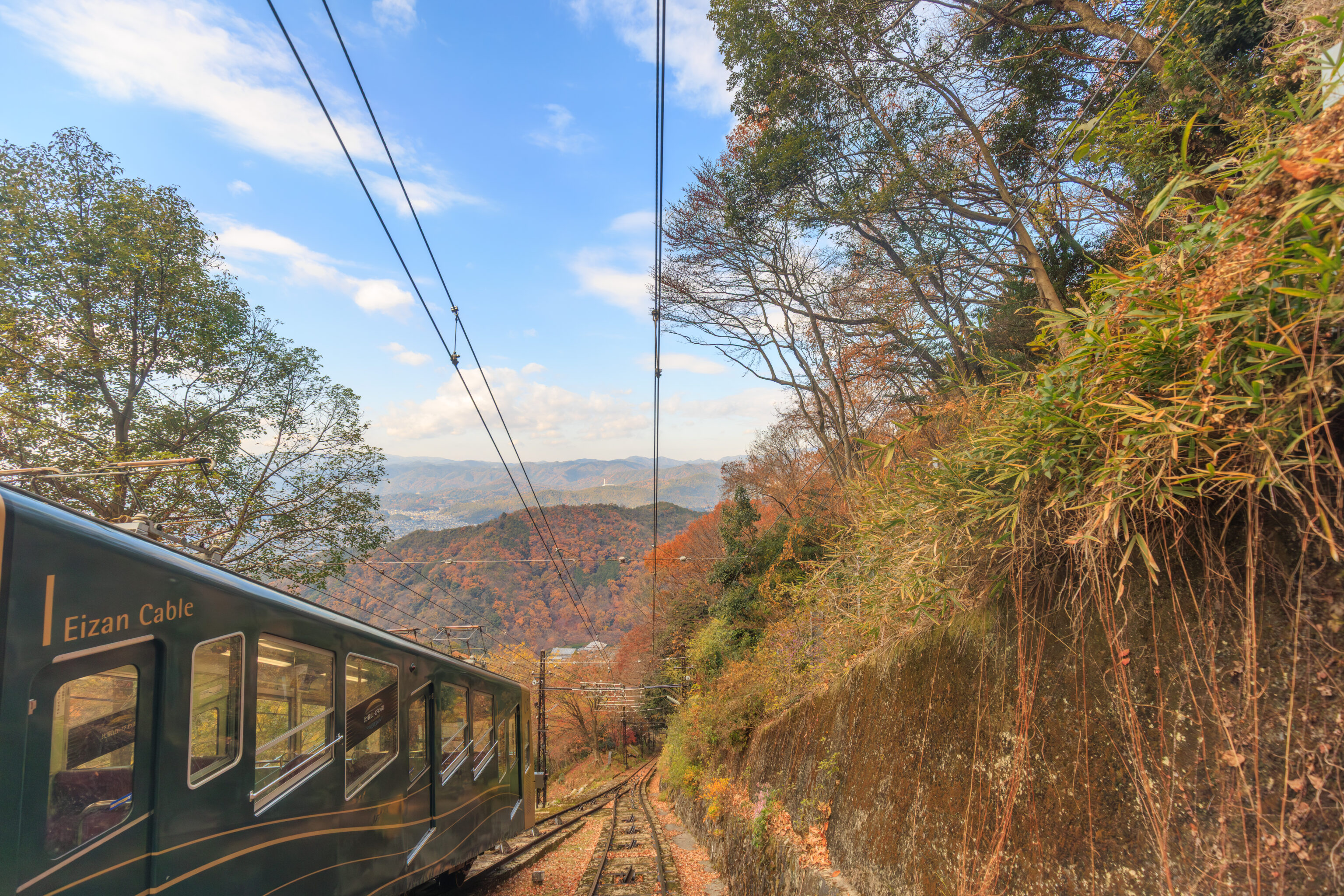
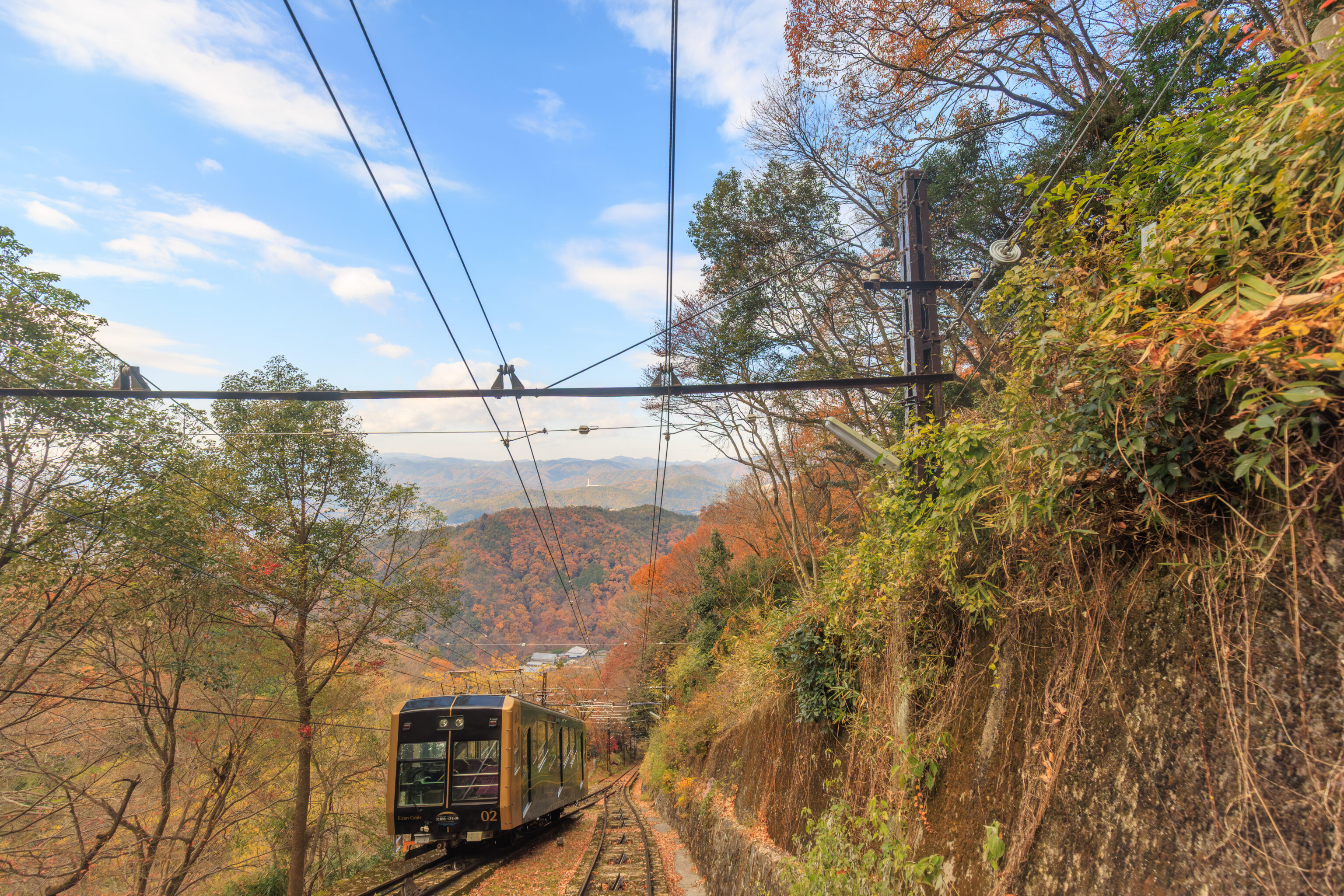
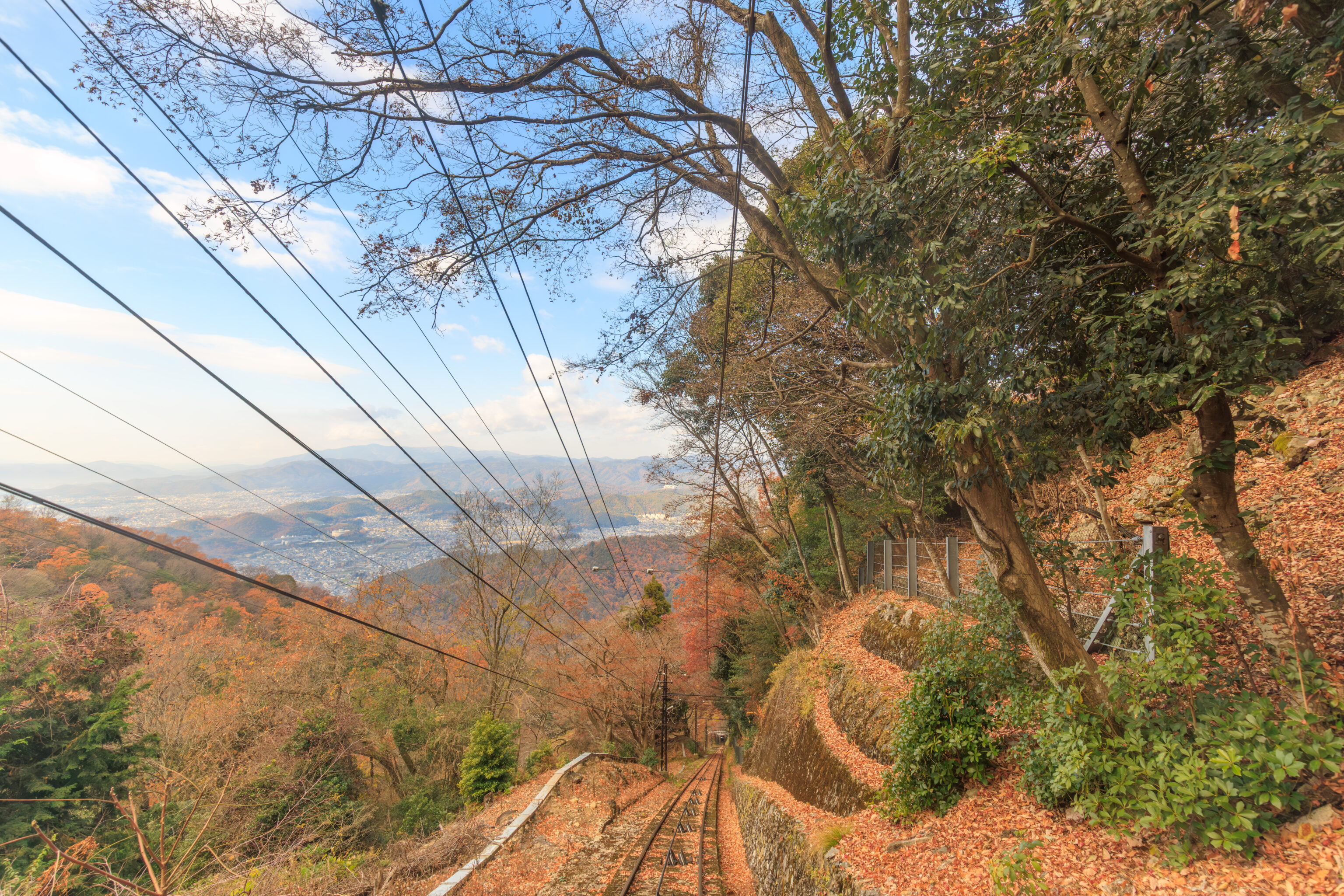
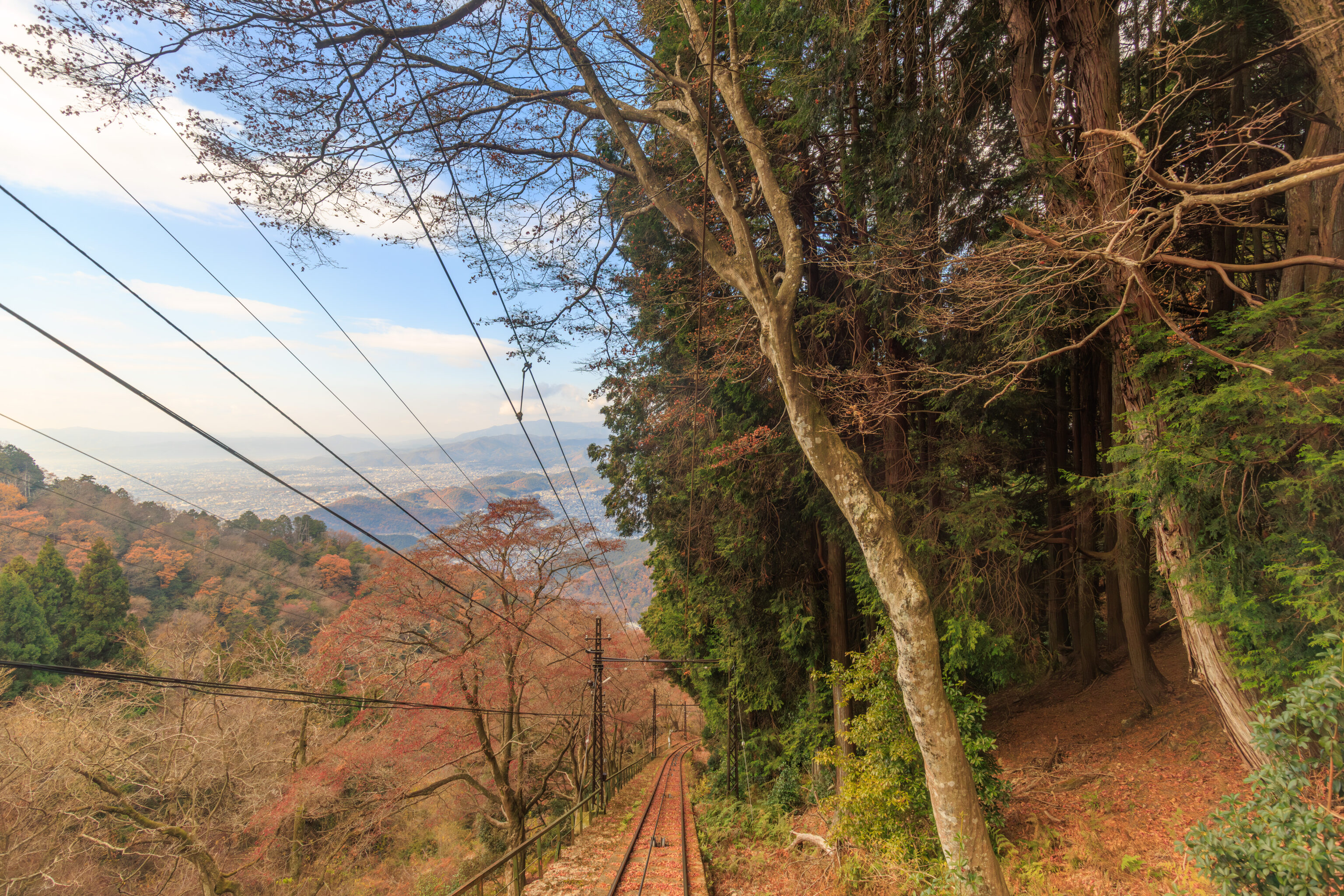
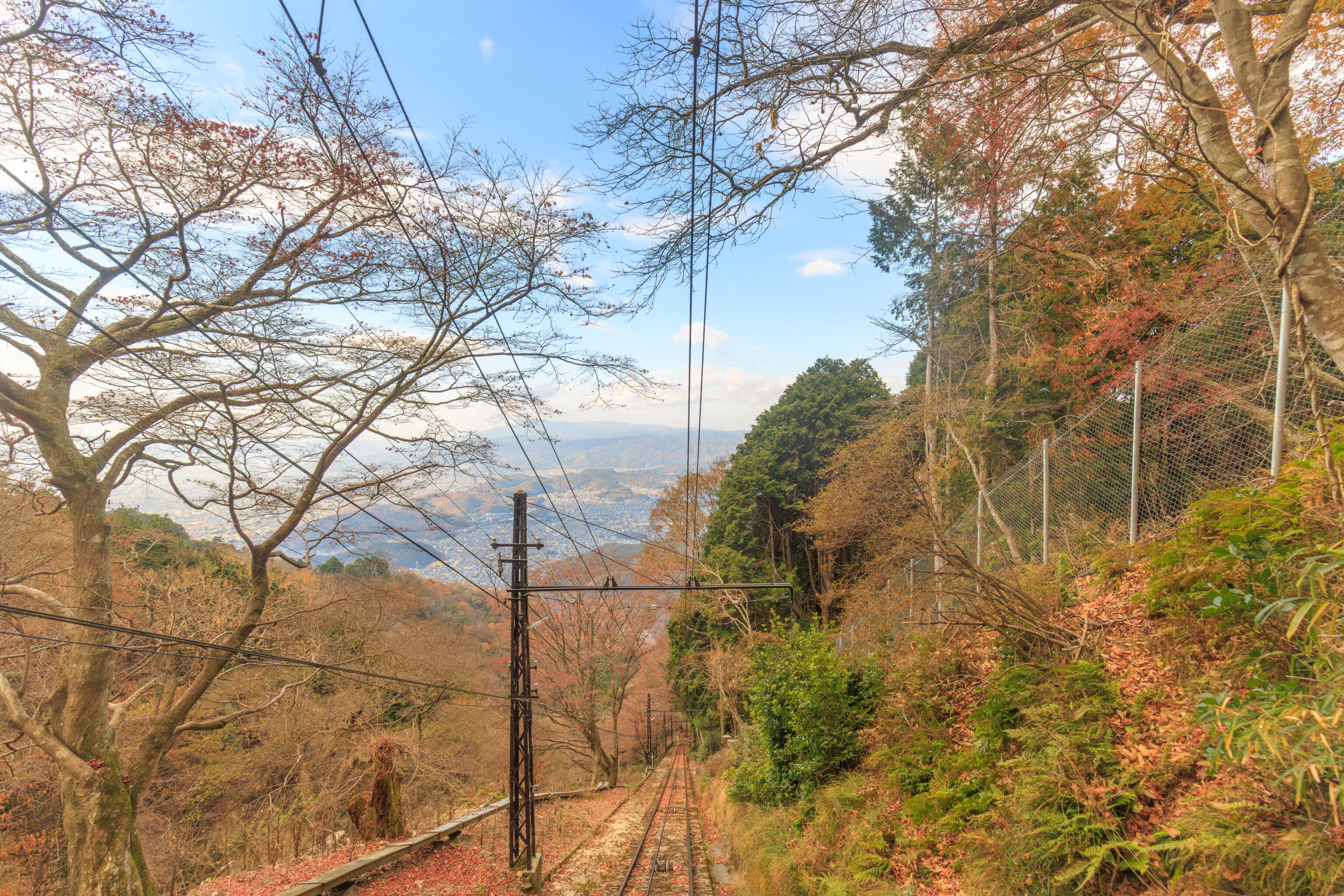
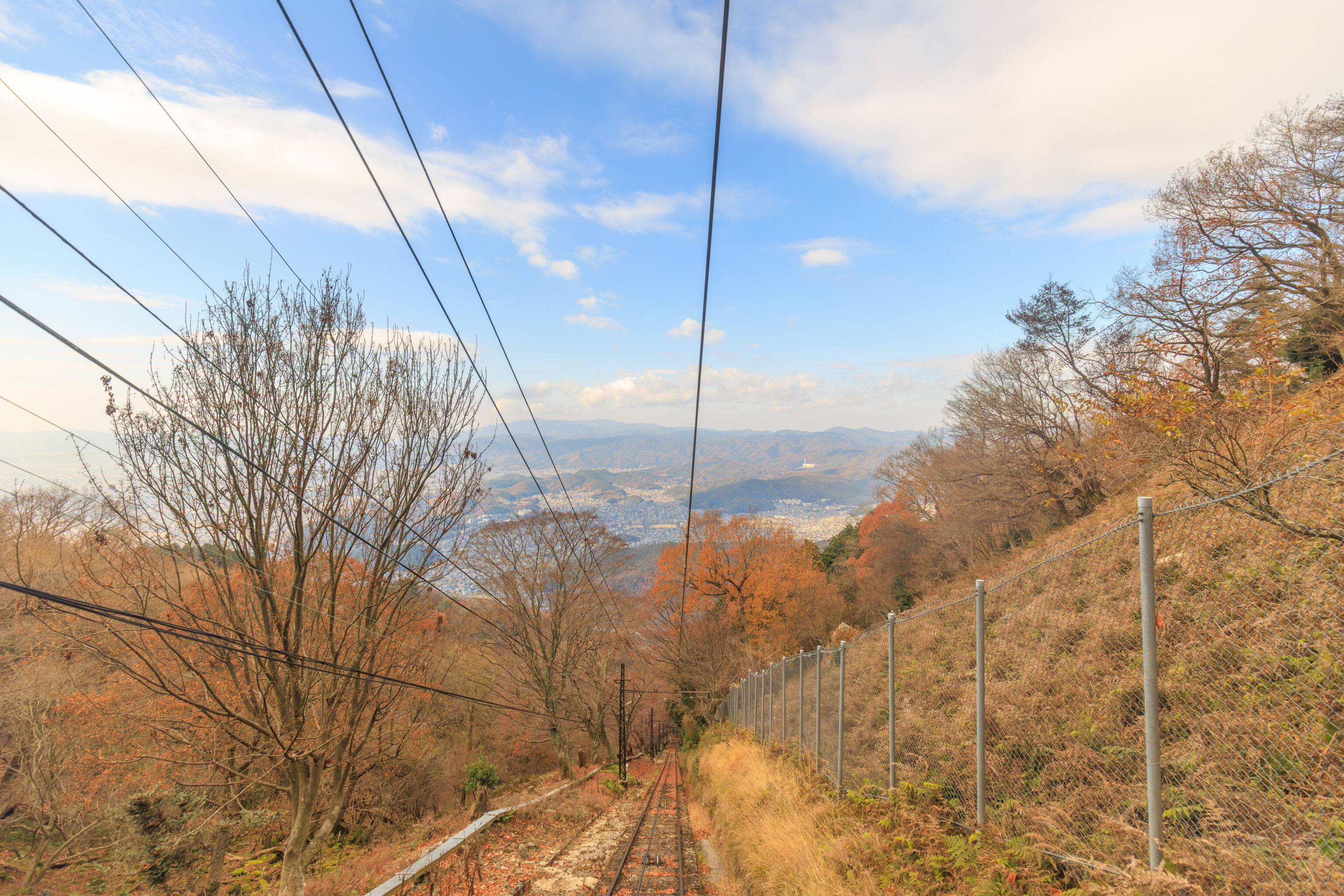
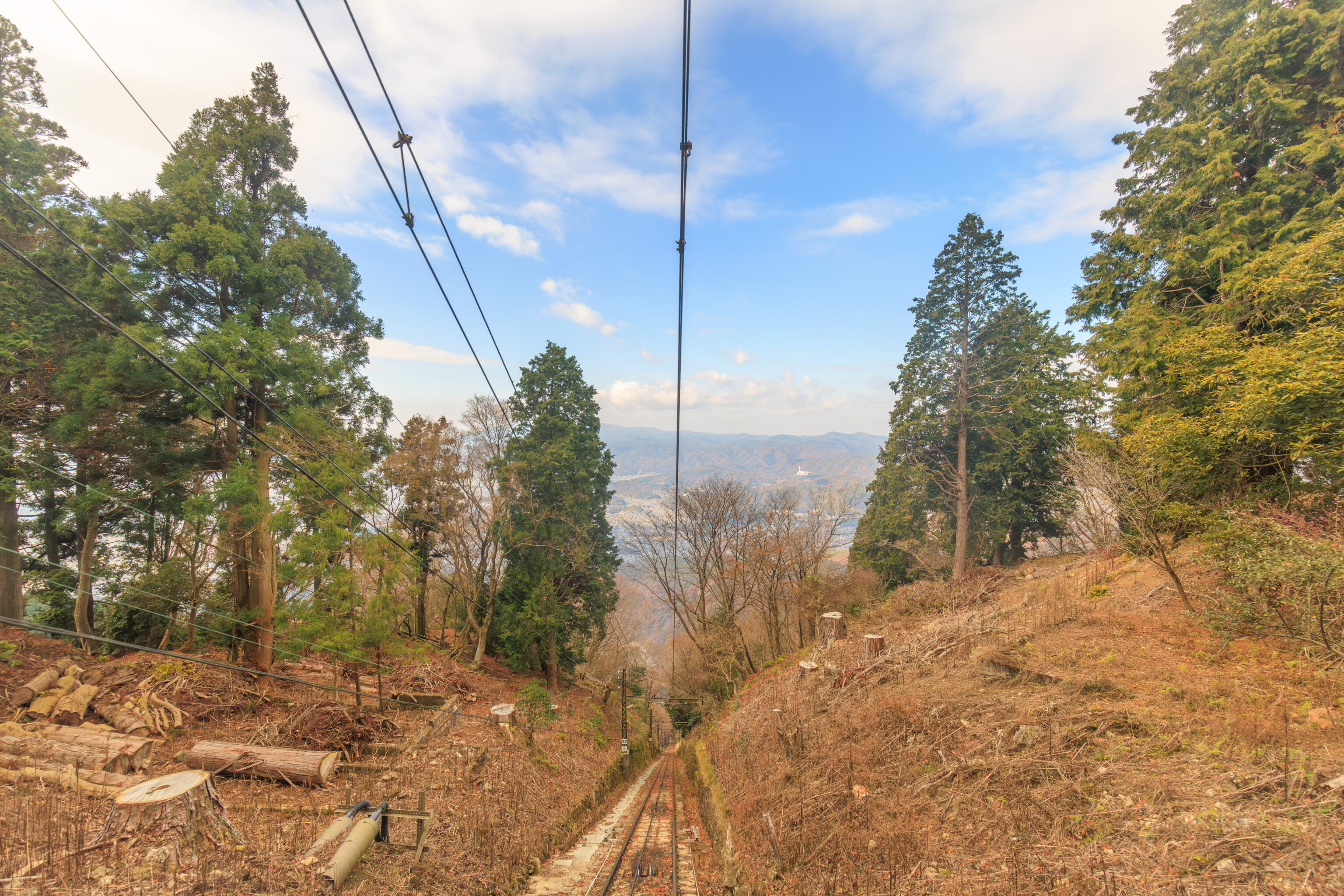
The rear of the carriage provided an excellent view of the route as we ascended up Mt. Hiei. At just over 2km long, this is the longest funicular route in Japan. The longest in the world at almost 5km is the funicular at Mölltaler Gletscher in Austria near Salzburg.
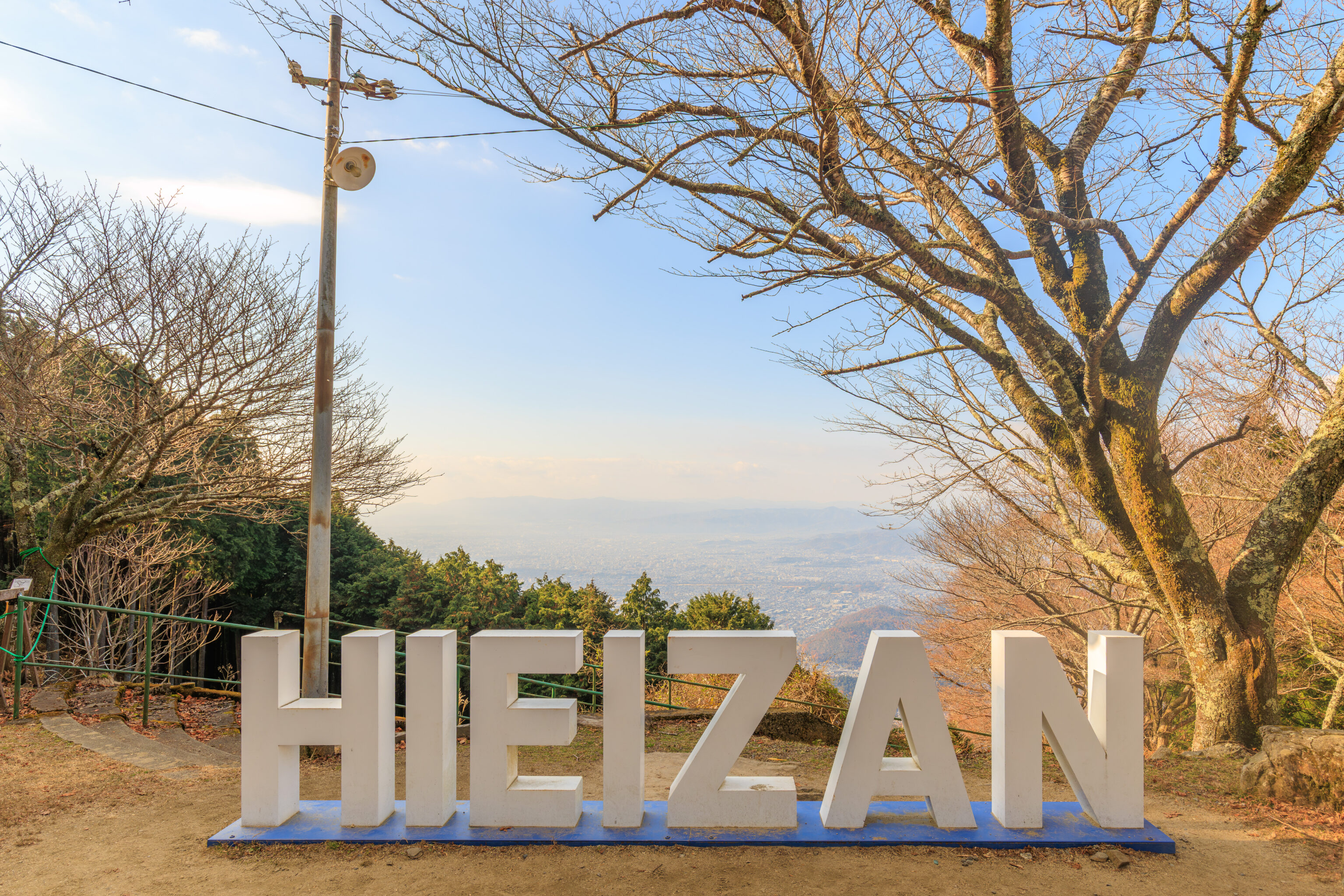
Rather than continue going up to the peak of Mt. Hiei on the aerial tram, we decided to check out the area here in the middle of the mountain.
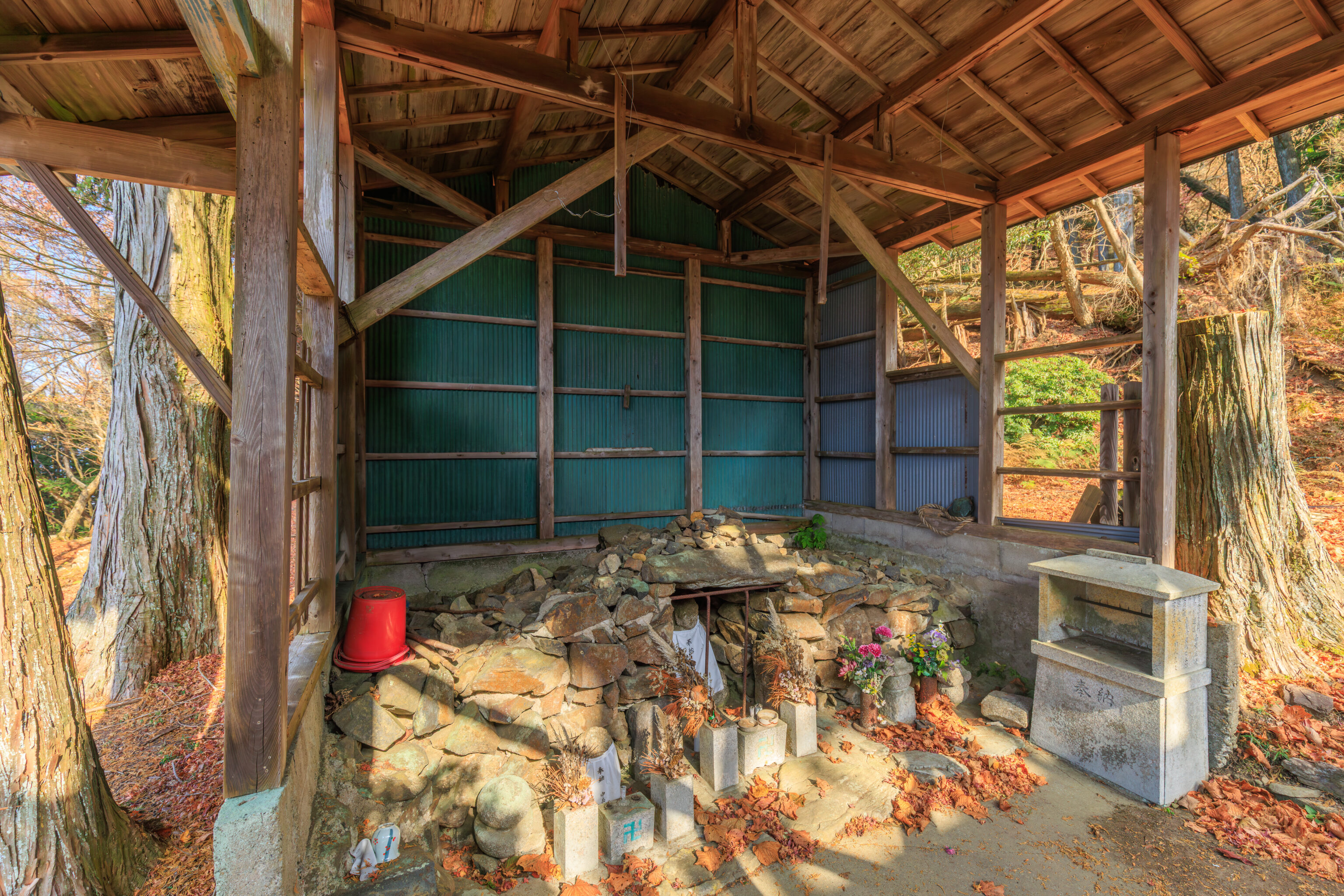
We walked on a trail, more of a rough service road, to the south. We reached a small shrine in a partially enclosed shed. It describes the Jizo statue in the shrine:
The "Wish-Granting Jizo" for Conceiving a Child

Yadori Jizo

It is said that the "Yadori Jizo" was created during the Kamakura period.

Legend has it that the name "Yadori Jizo" (literally, the "Dwelling Jizo") originated from the belief that if one offers a prayer here, a child will "take up residence"—or be conceived—within the womb.

"May the Stork of Happiness come flying our way..."

Oh, Jizo-sama—please grant our wish!

(Nanacho-kai Association)
– Text from a nearby sign, translated using Google.
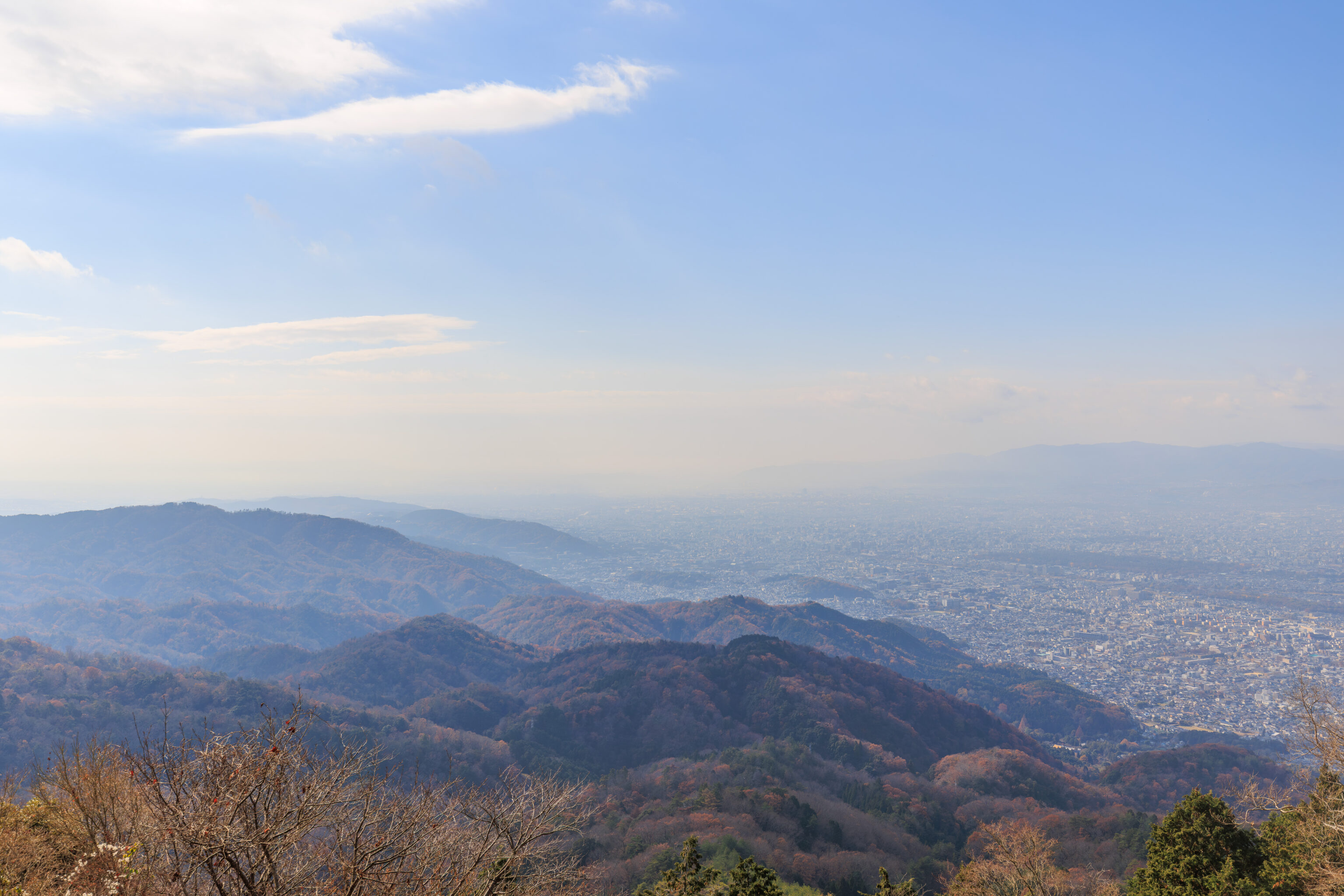
Just beyond the Yadori Jizo is the Hiei View Spot. That is the name of this place, it is on a sign! The sign also states that the skyscraper of Osaka can be seen on a clear day. Kyoto Tower is actually visible almost at the exact center of this photograph, however, it is really hard to make out without some extreme dehaze applied to the image.
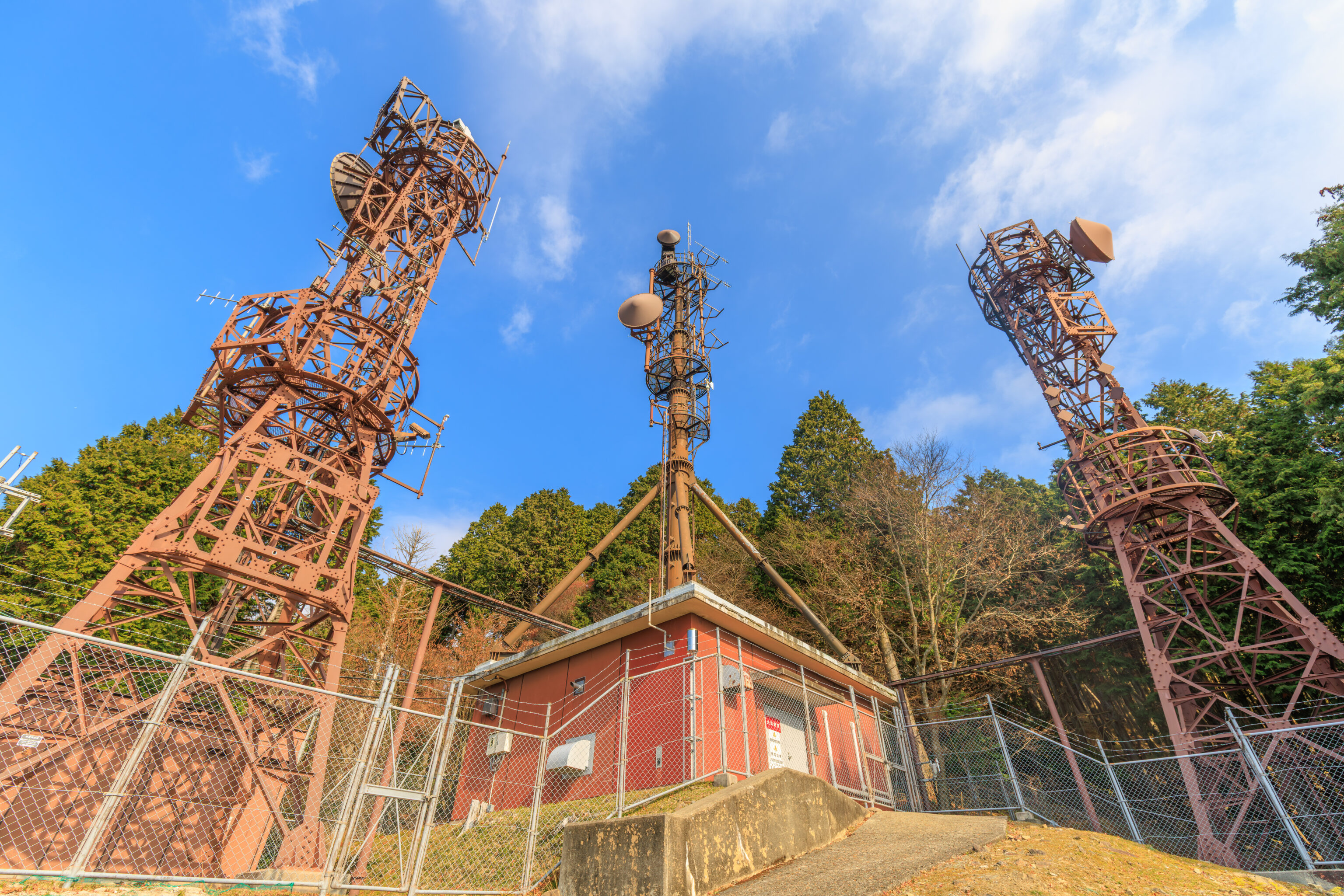
Google Maps identifies these towers and antennas by the viewpoint as the 比叡山無線中継所 Mount Hiei Radio Relay Station. The path actually continues here but we decided to turn back.
There appears to be the ruins of a hotel above here, perhaps accessible by the path that continues on. The hotel closed permanently during World War II. The ruins of the hotel are visible on Google Maps’ satellite view.
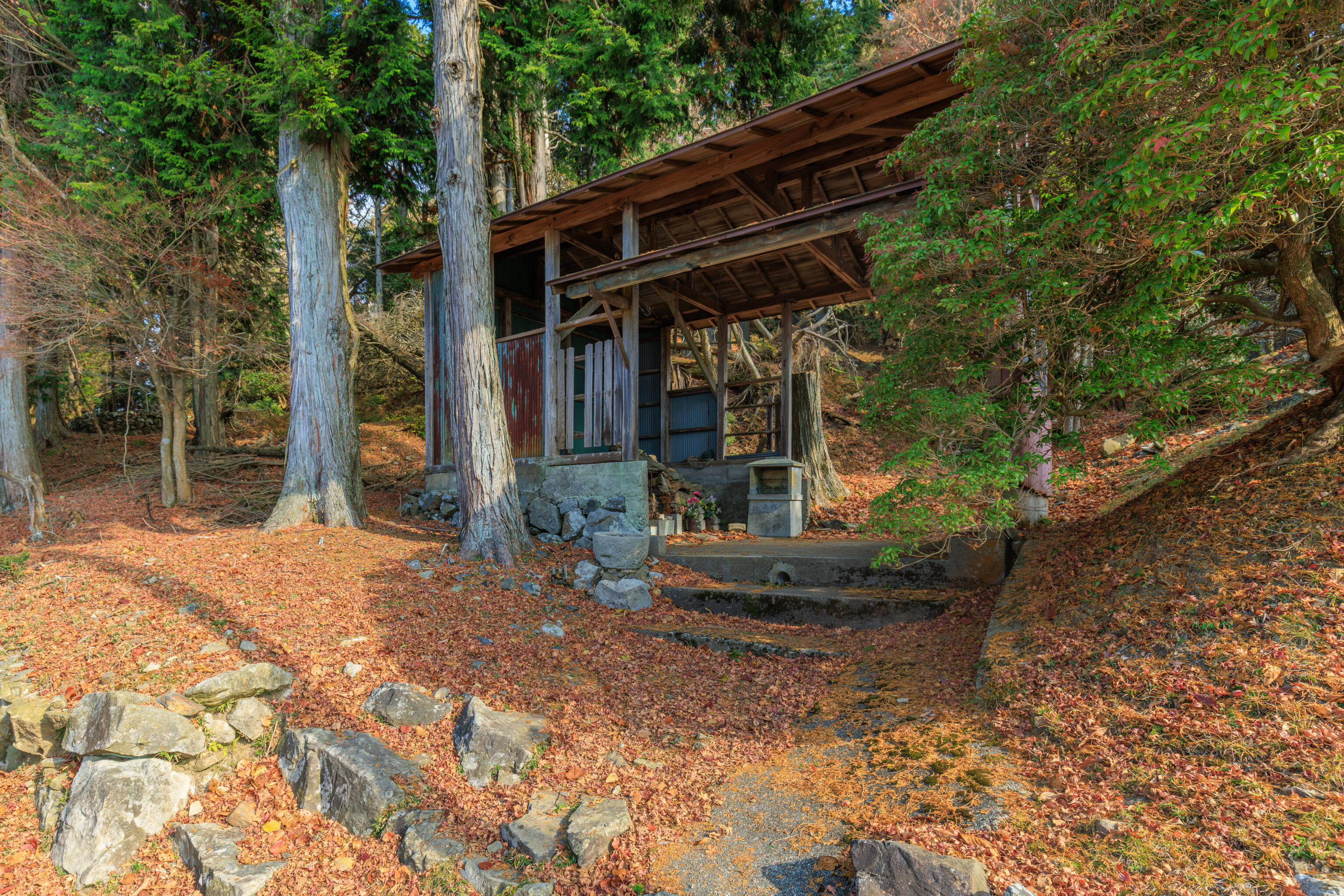
The shed containing the Yadori Jizo, as seen from the path.
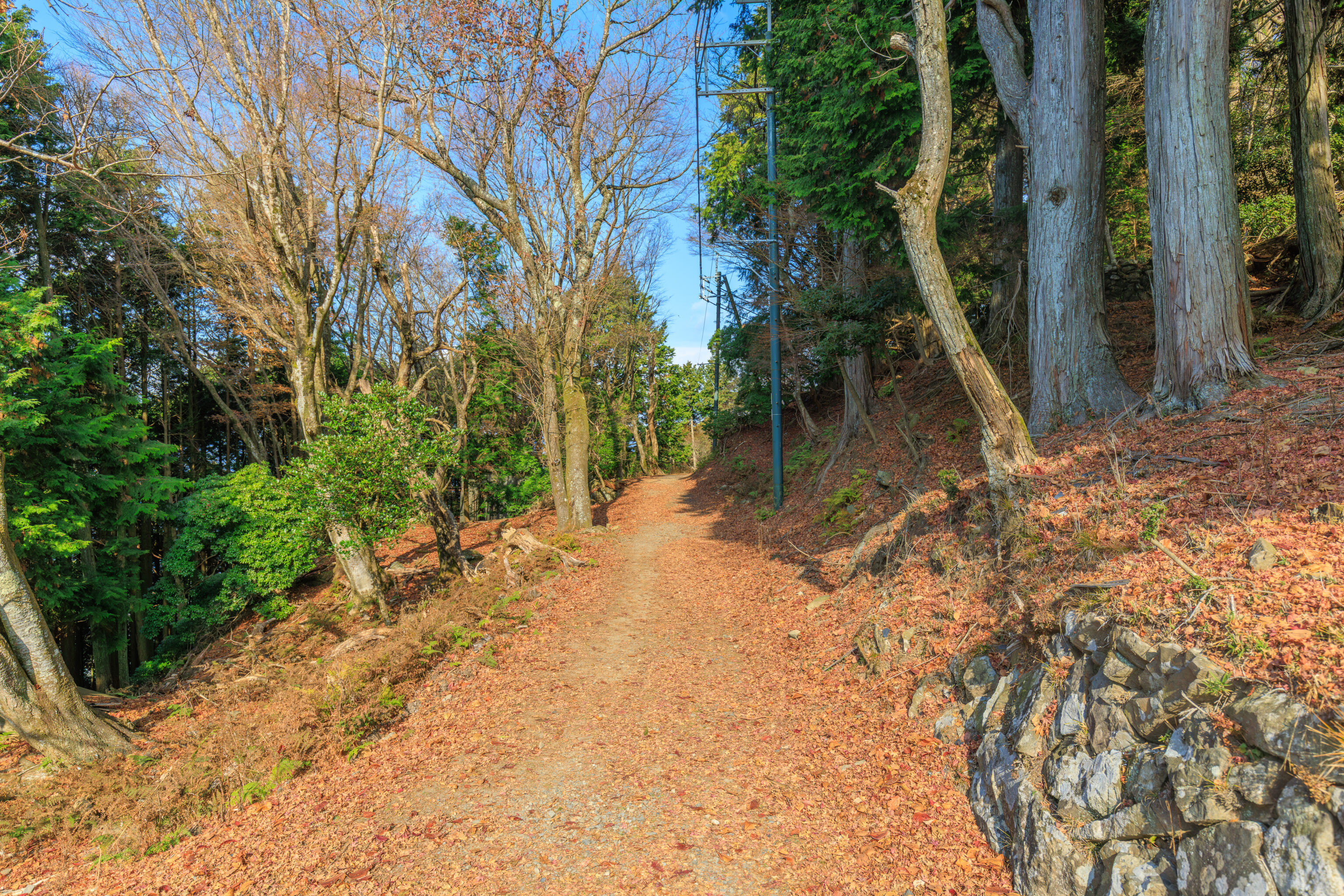
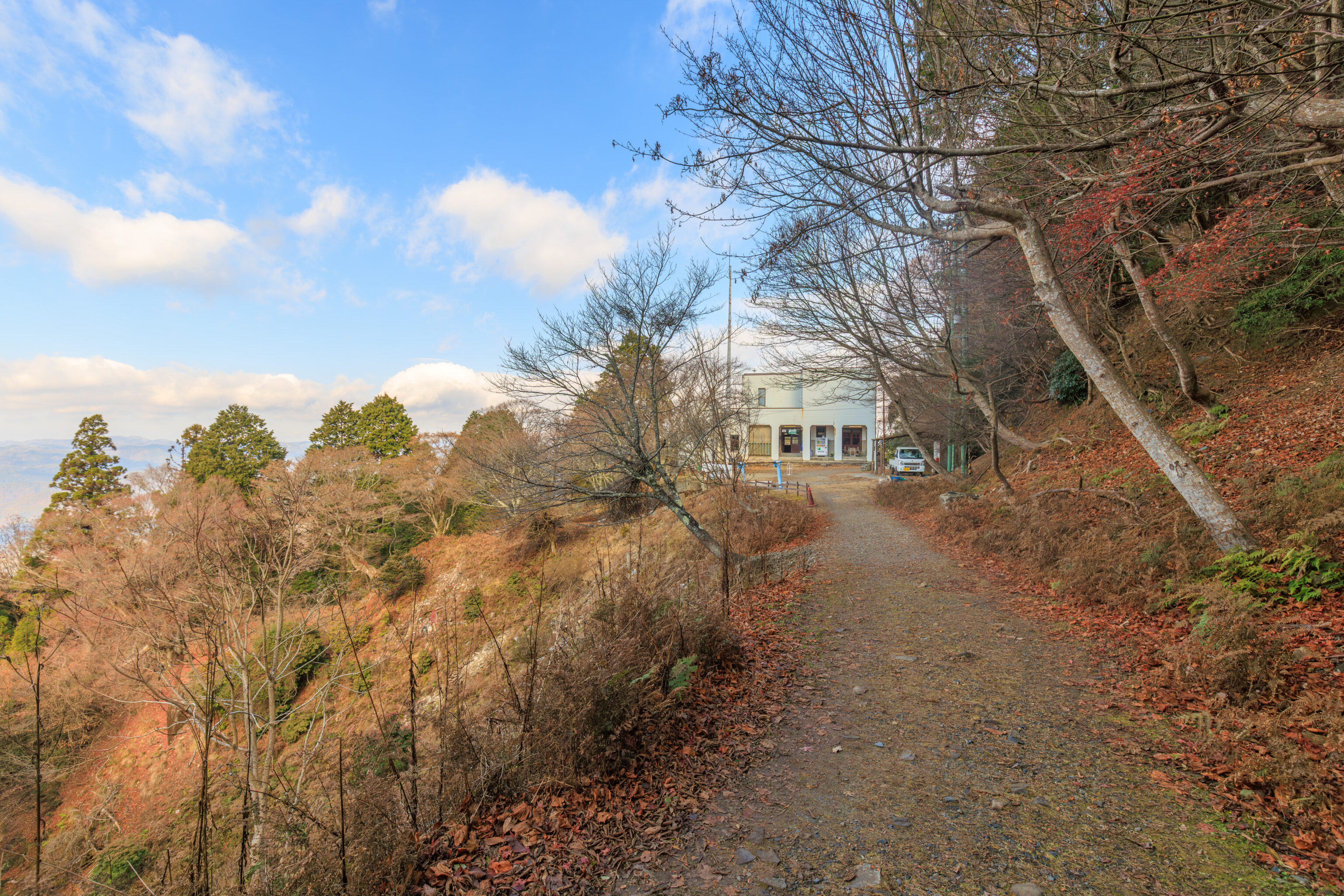
Other than the viewpoint and Yadori Jizo, there isn’t much to see here. Luckily, it was only a short walk away from the funicular and aerial tram stations.
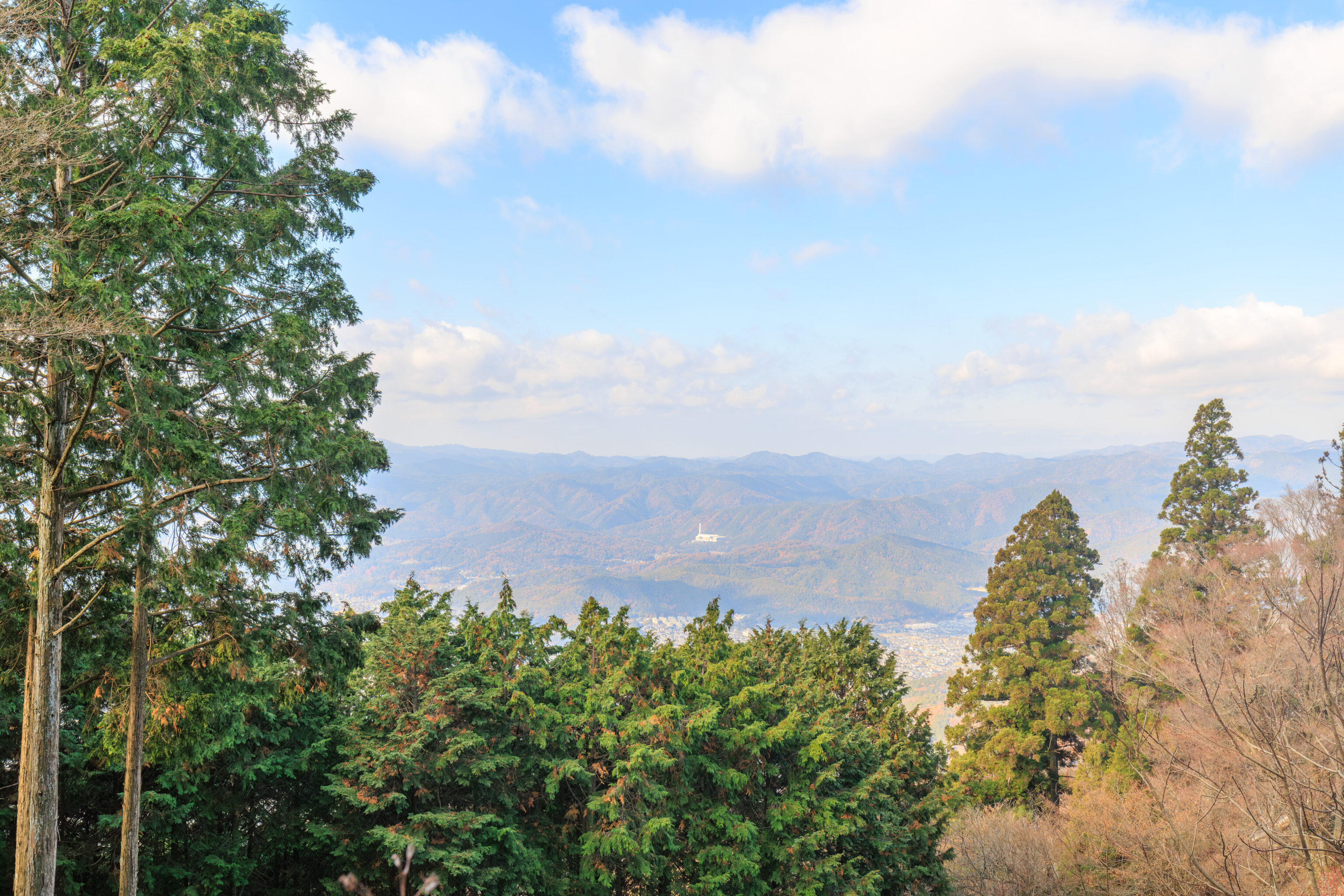
The path did have a view to the northwest. There isn’t much out there other than low mountains and the 東北部クリーンセンター Northeastern Clean Center. The term “clean center” is apparently a euphemism for garbage incinerator!
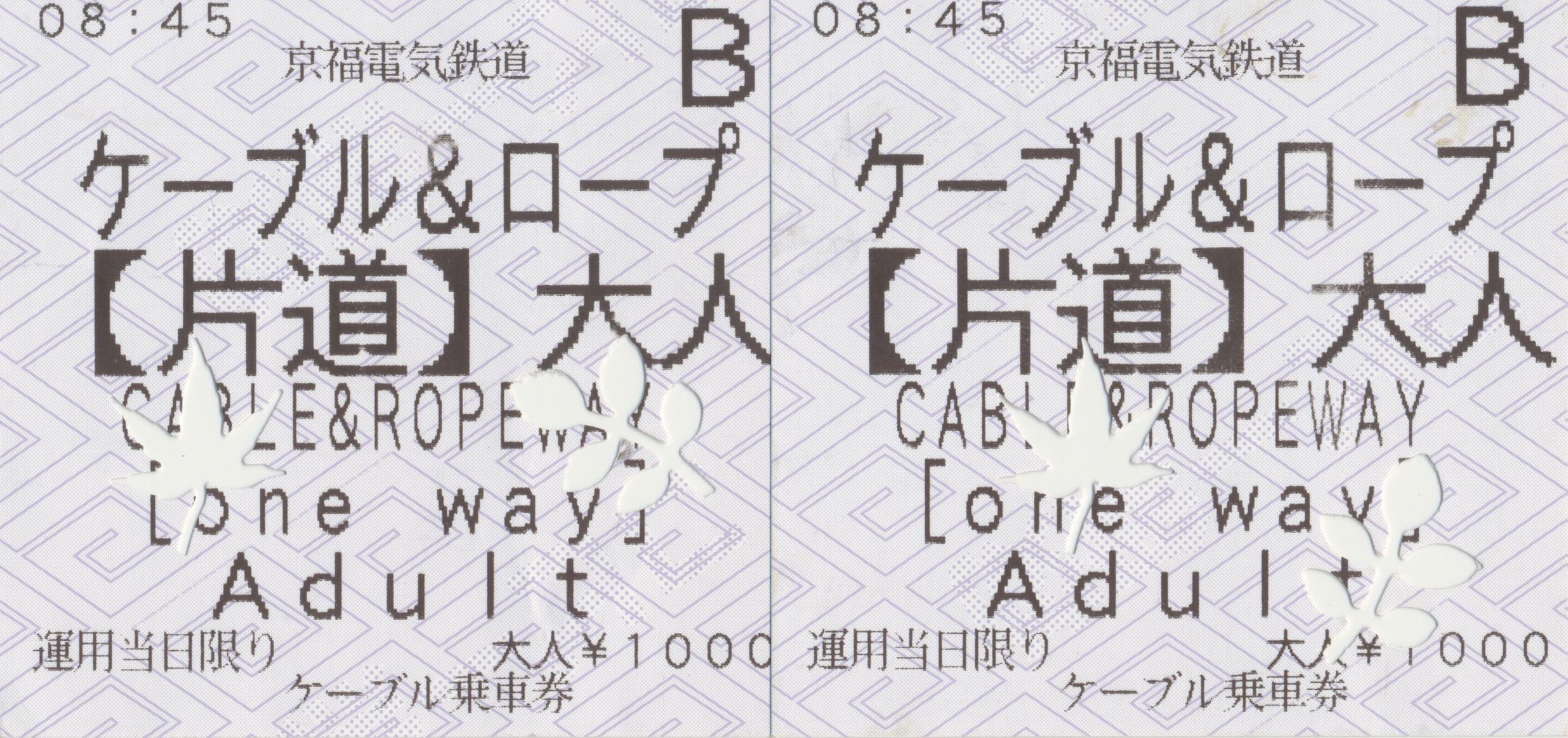
We walked over to the aerial tram station to continue going up. Our tickets were punched at both the funicular and here at the aerial tram with leaf shapes!
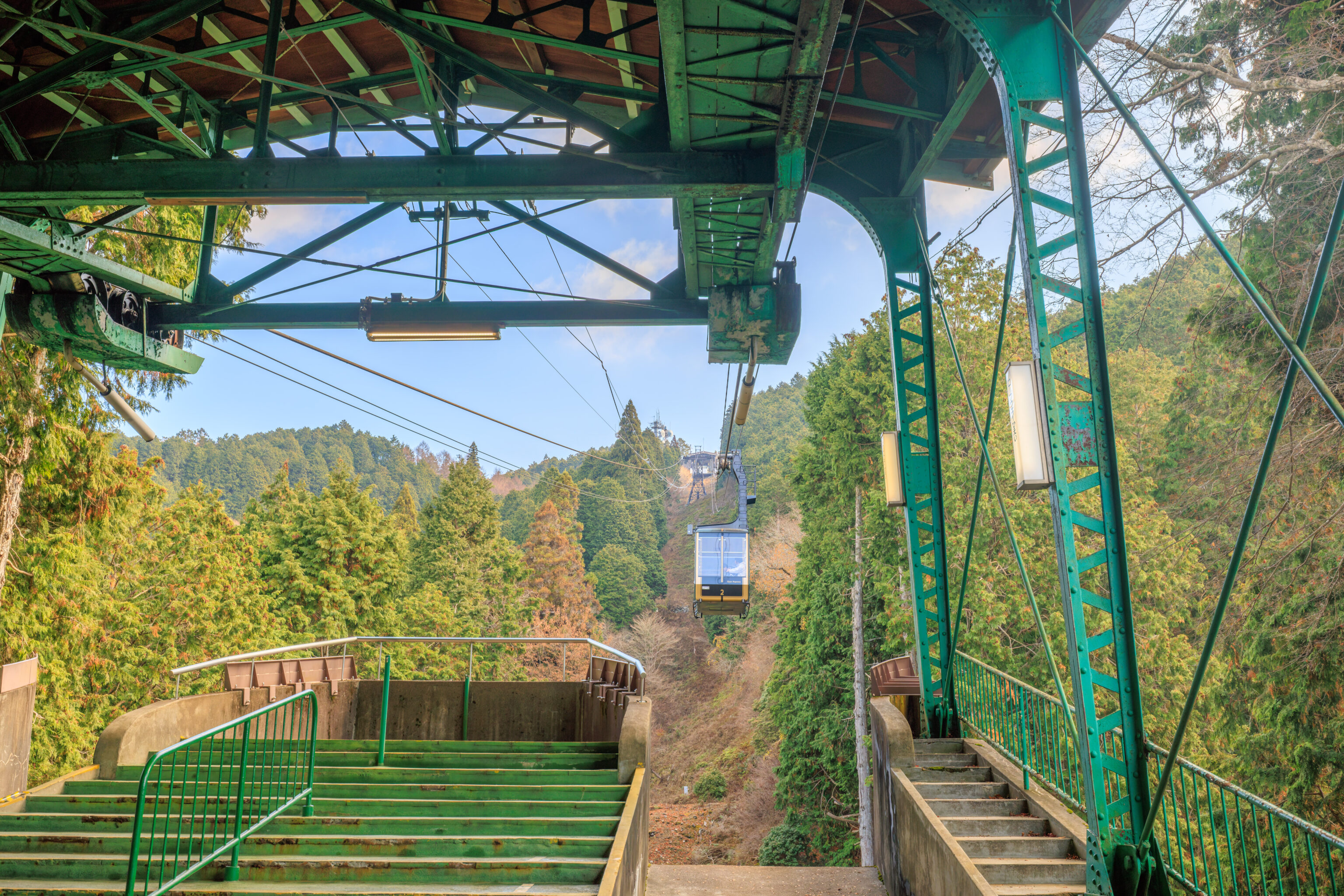
We again had to wait a bit for the next departure.
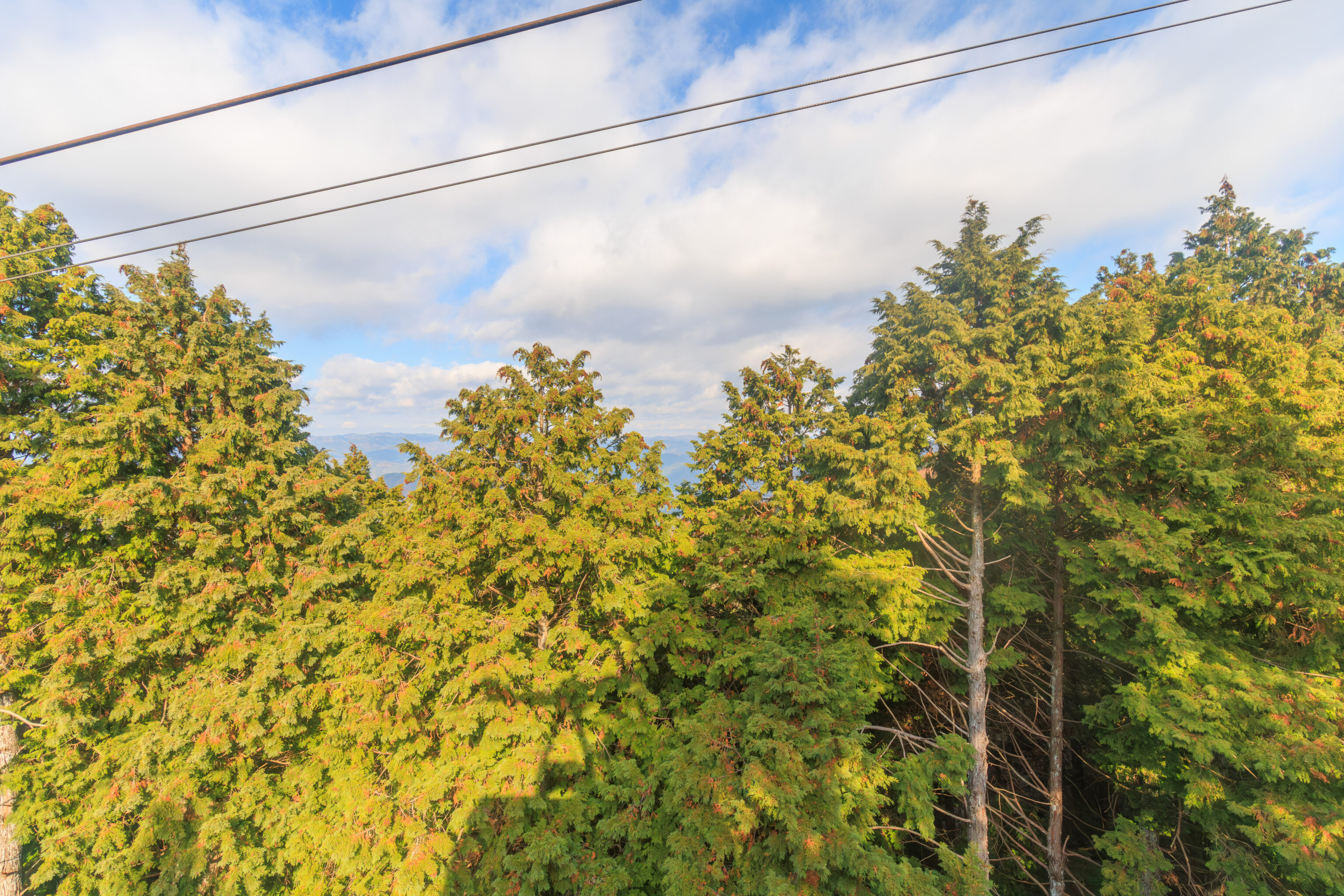
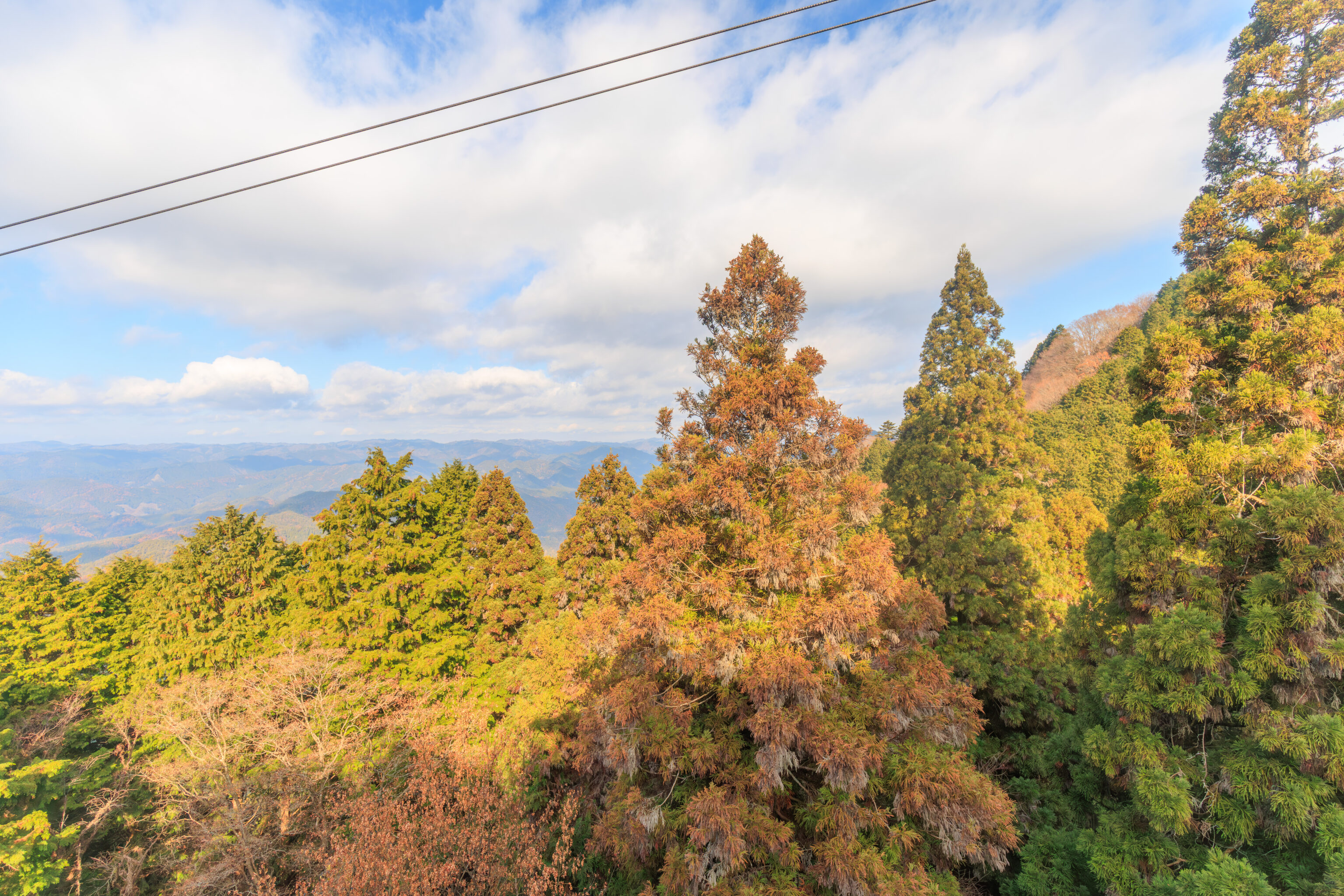
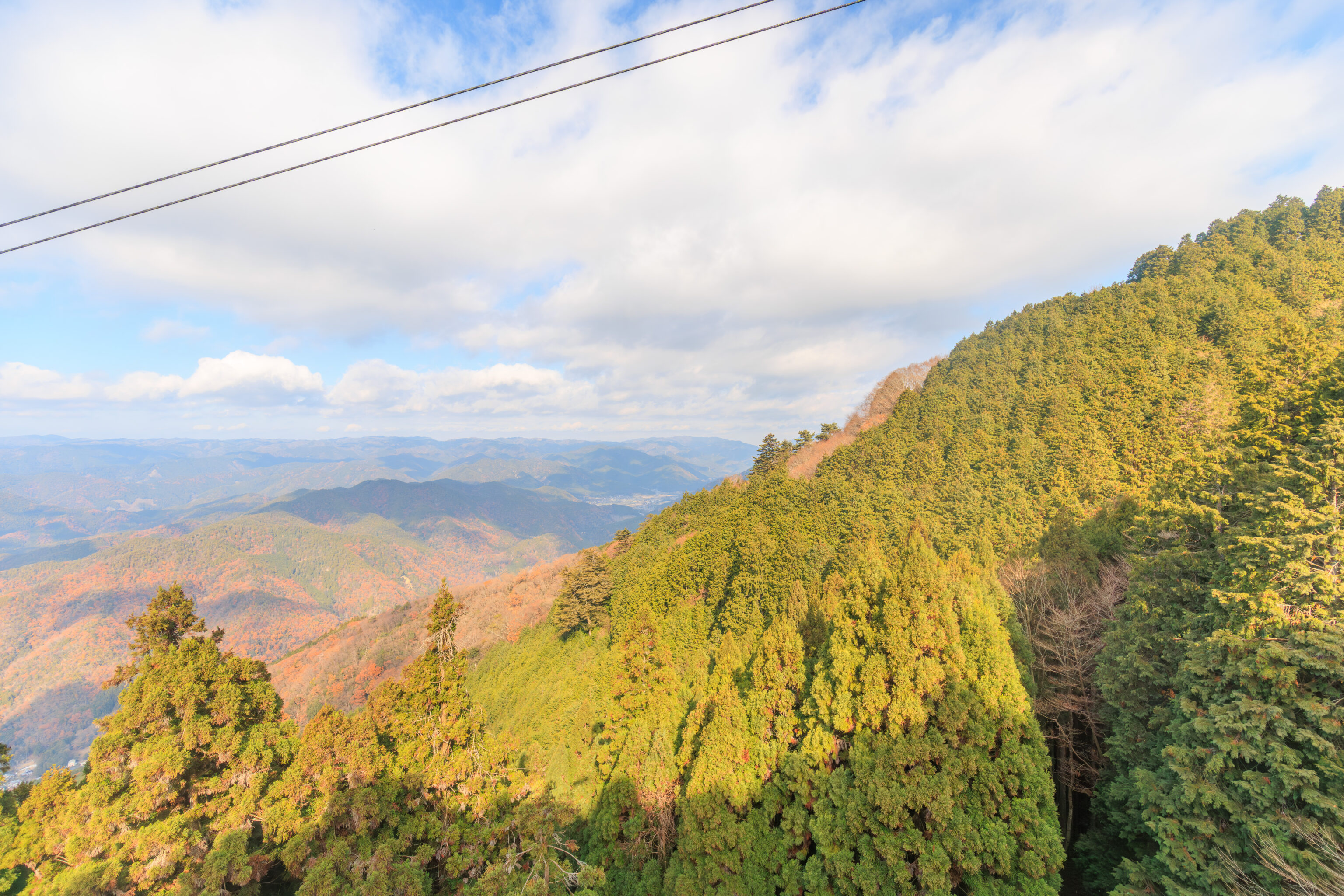
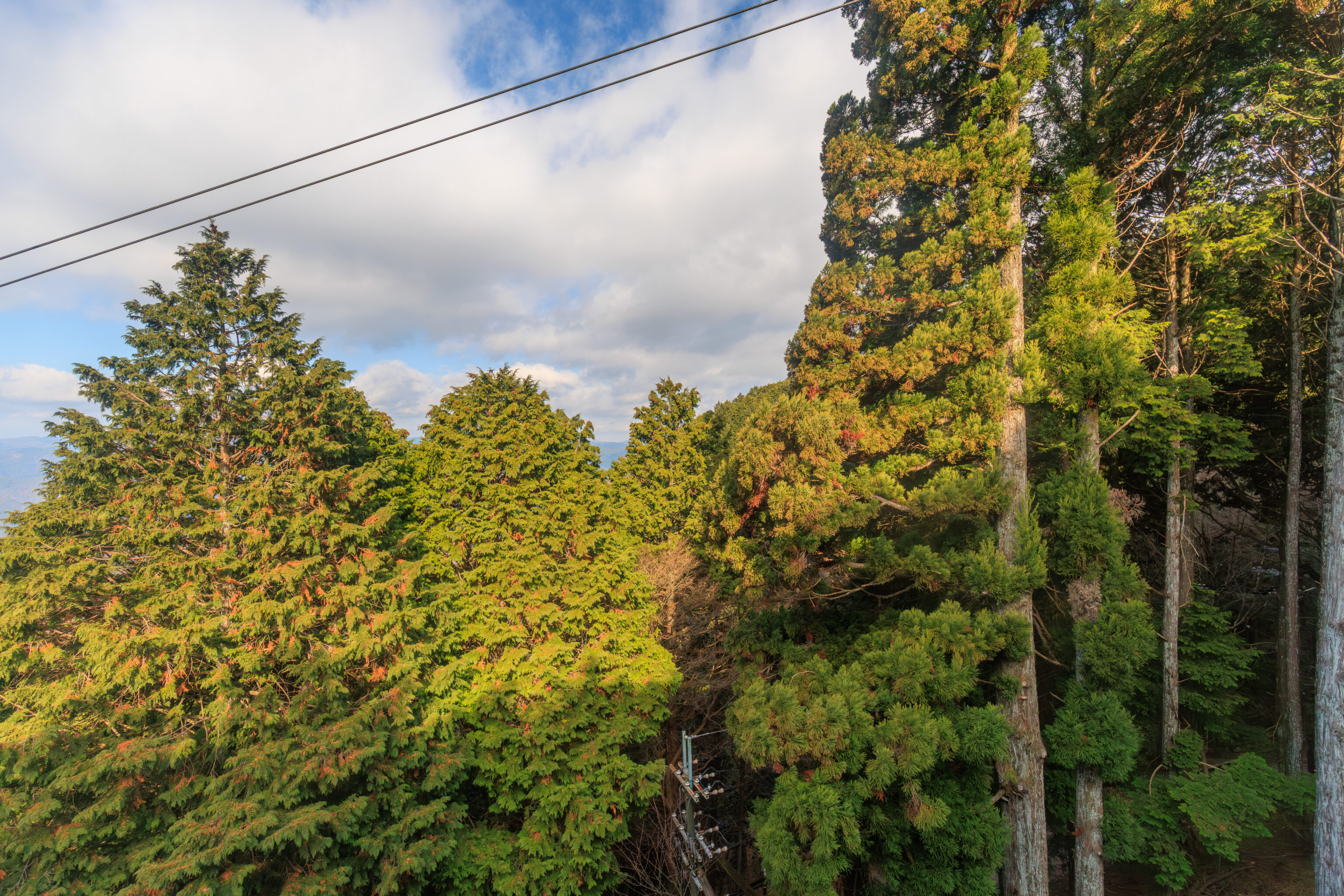
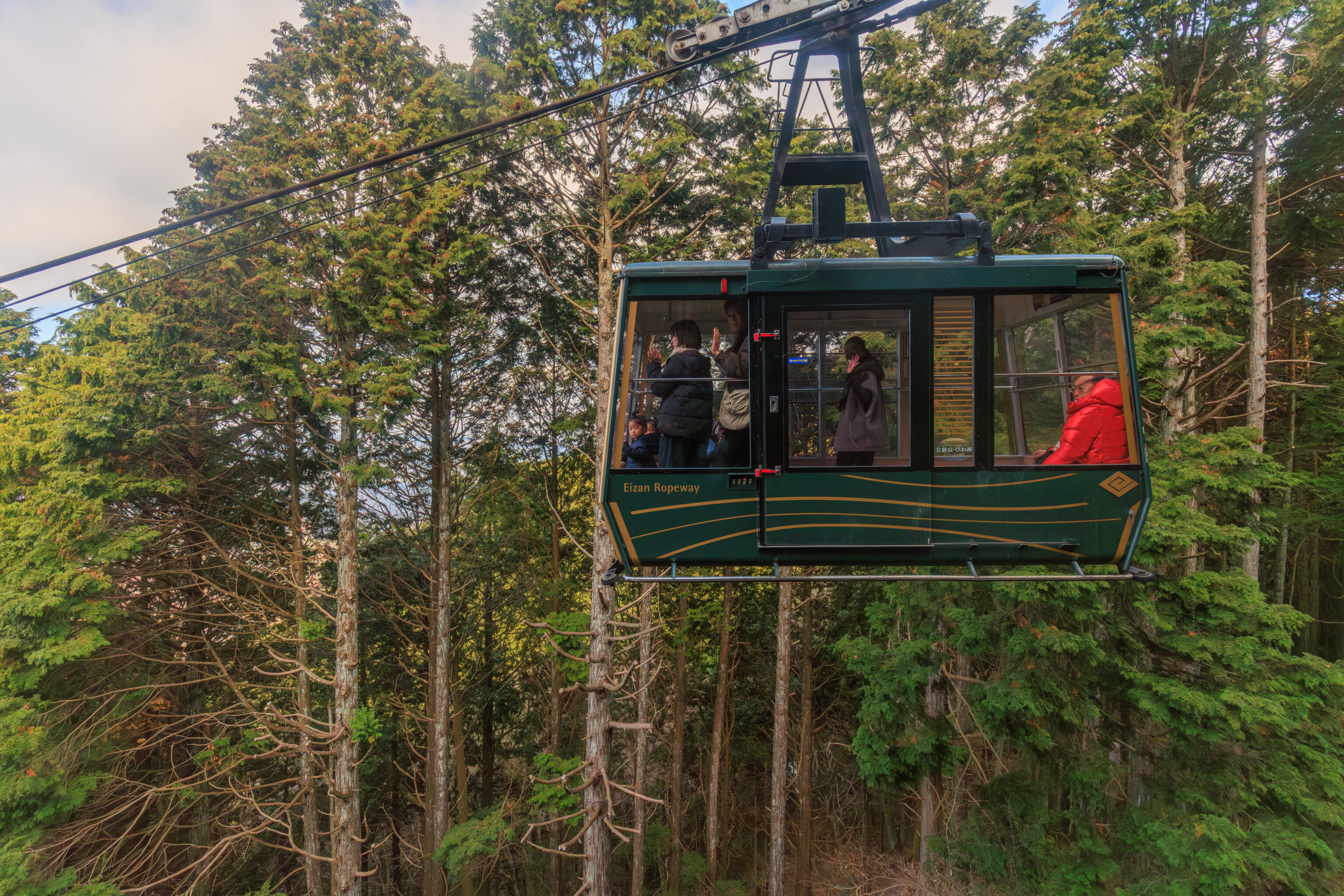
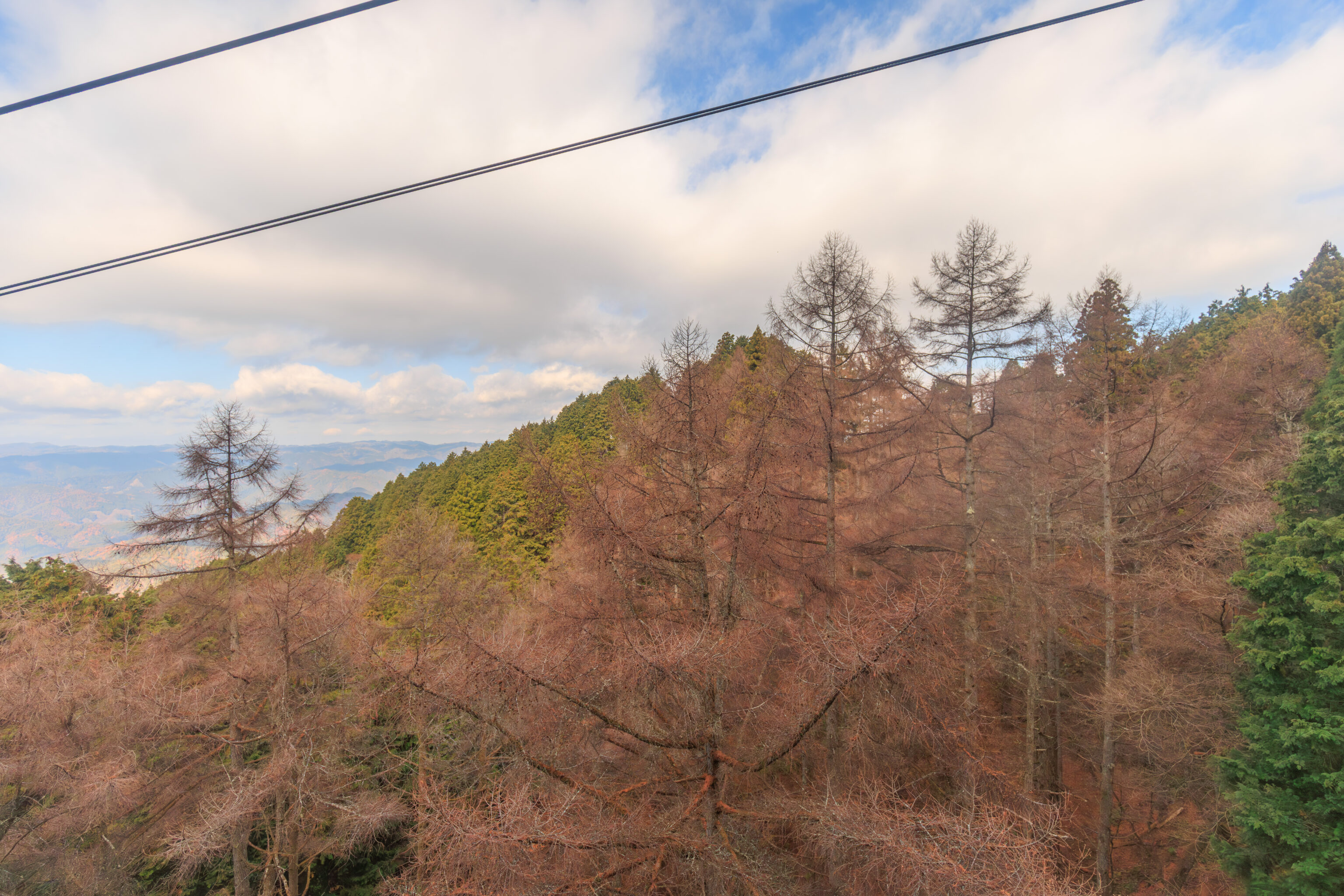
The trip up to the top of Mt. Hiei only takes a few minutes from the mid-station.
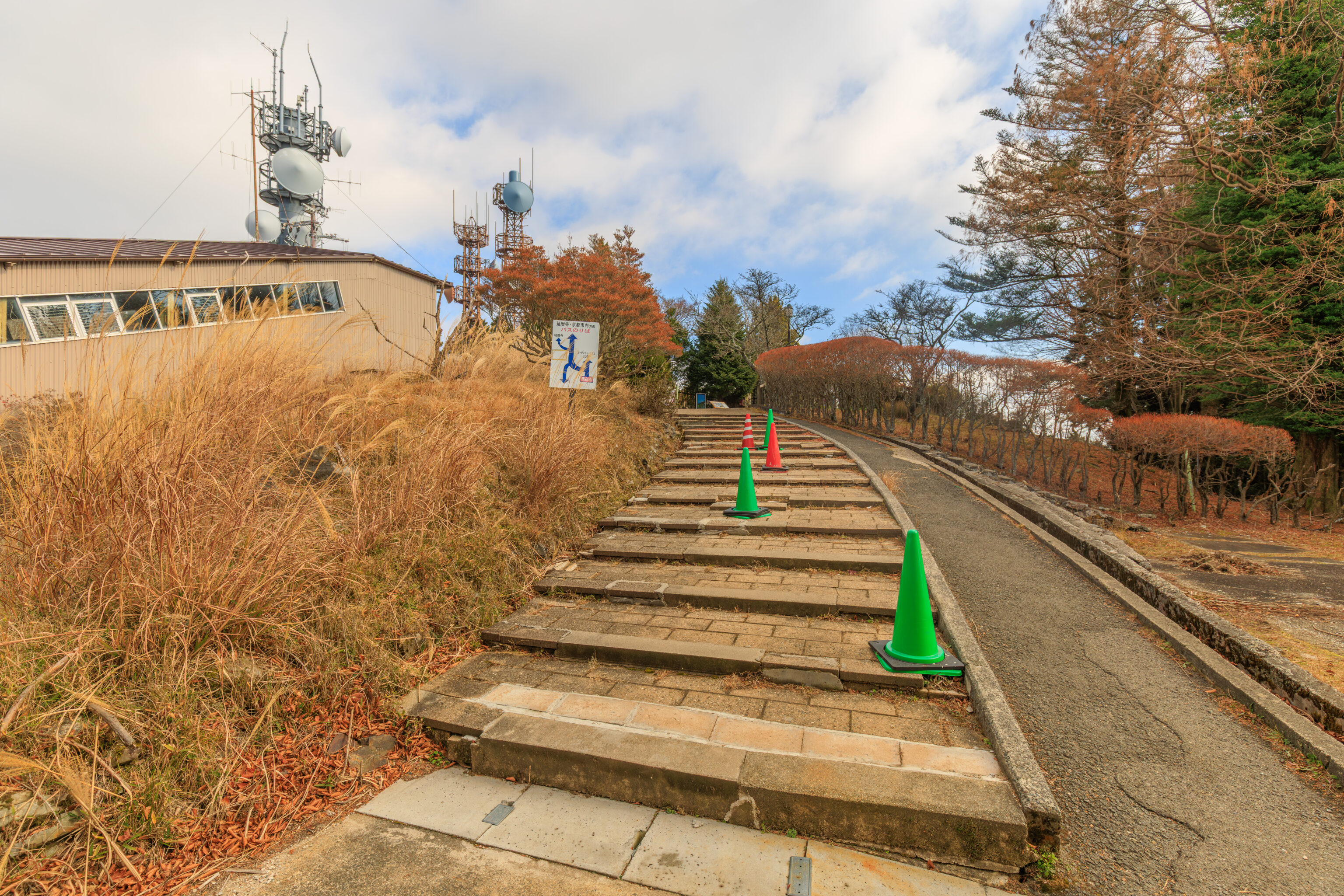
After exiting the aerial trap, we walked upwards.
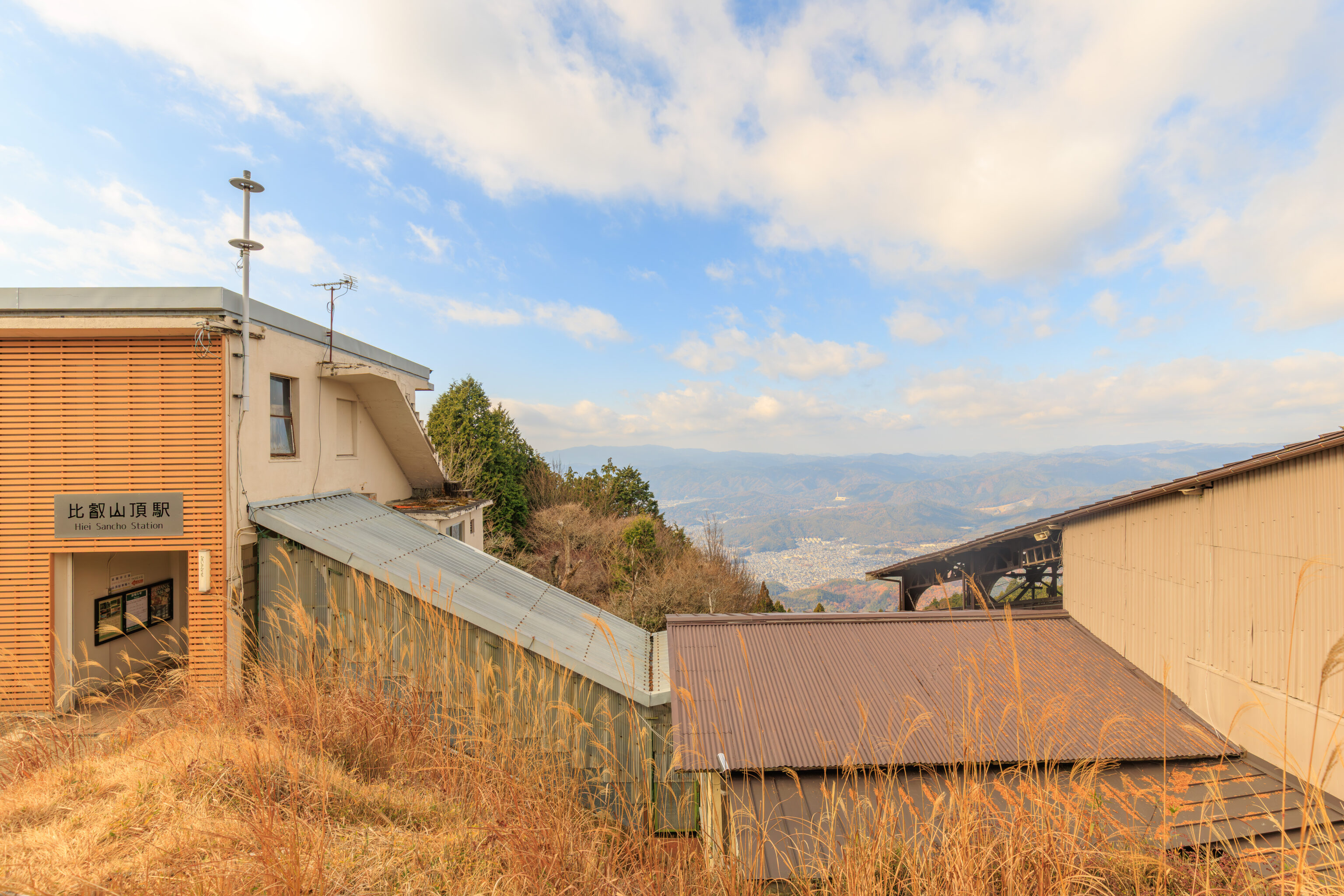
There wasn’t too much of a view right by the station. We did manage to see the incineration plant, oops I mean, clean center!
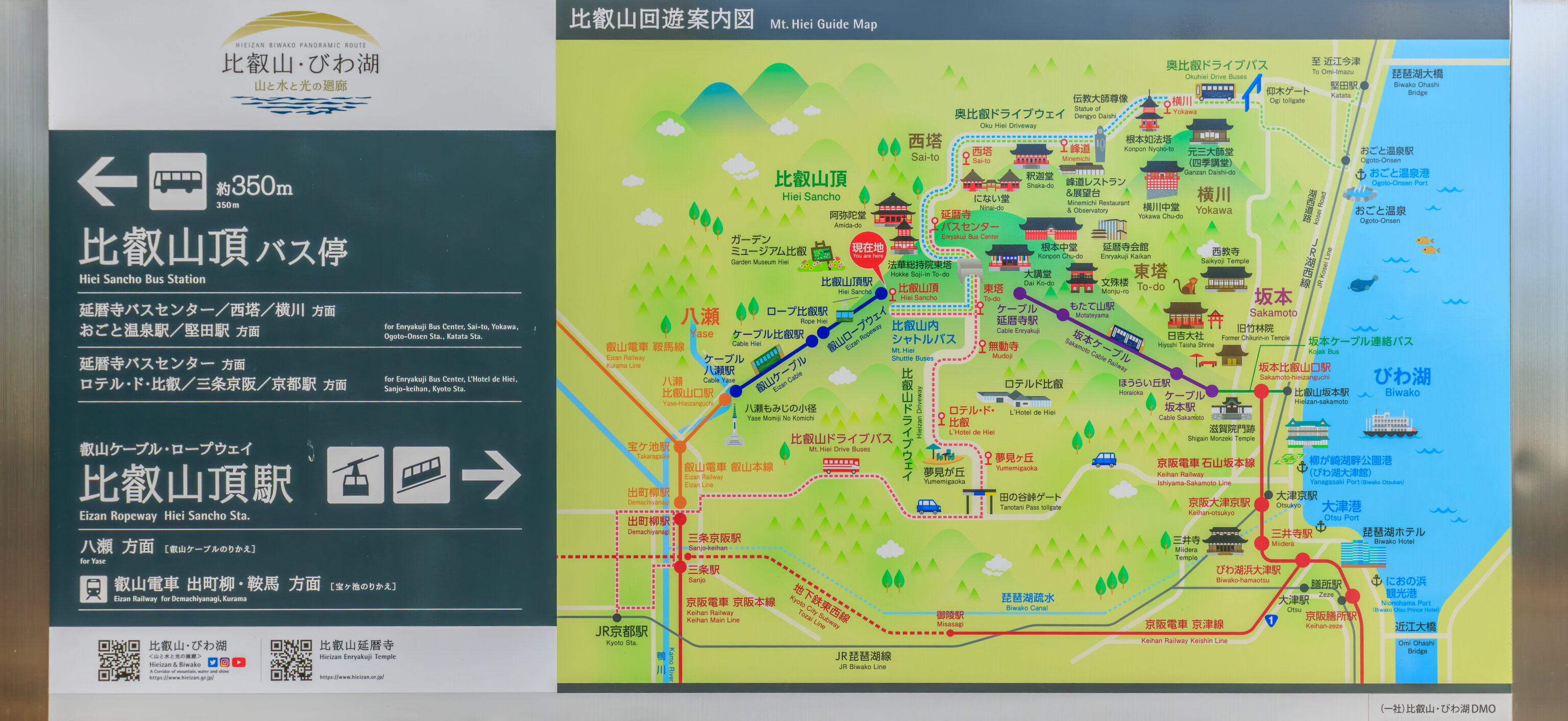
A sign here shows the various transit options that are available on and around Mt. Hiei. Our general plan is to make our way to the funicular that goes down the eastern side of Mt. Hei, visiting Enryaku-ji and whatever else is convenient on the way.
Garden Museum Hiei
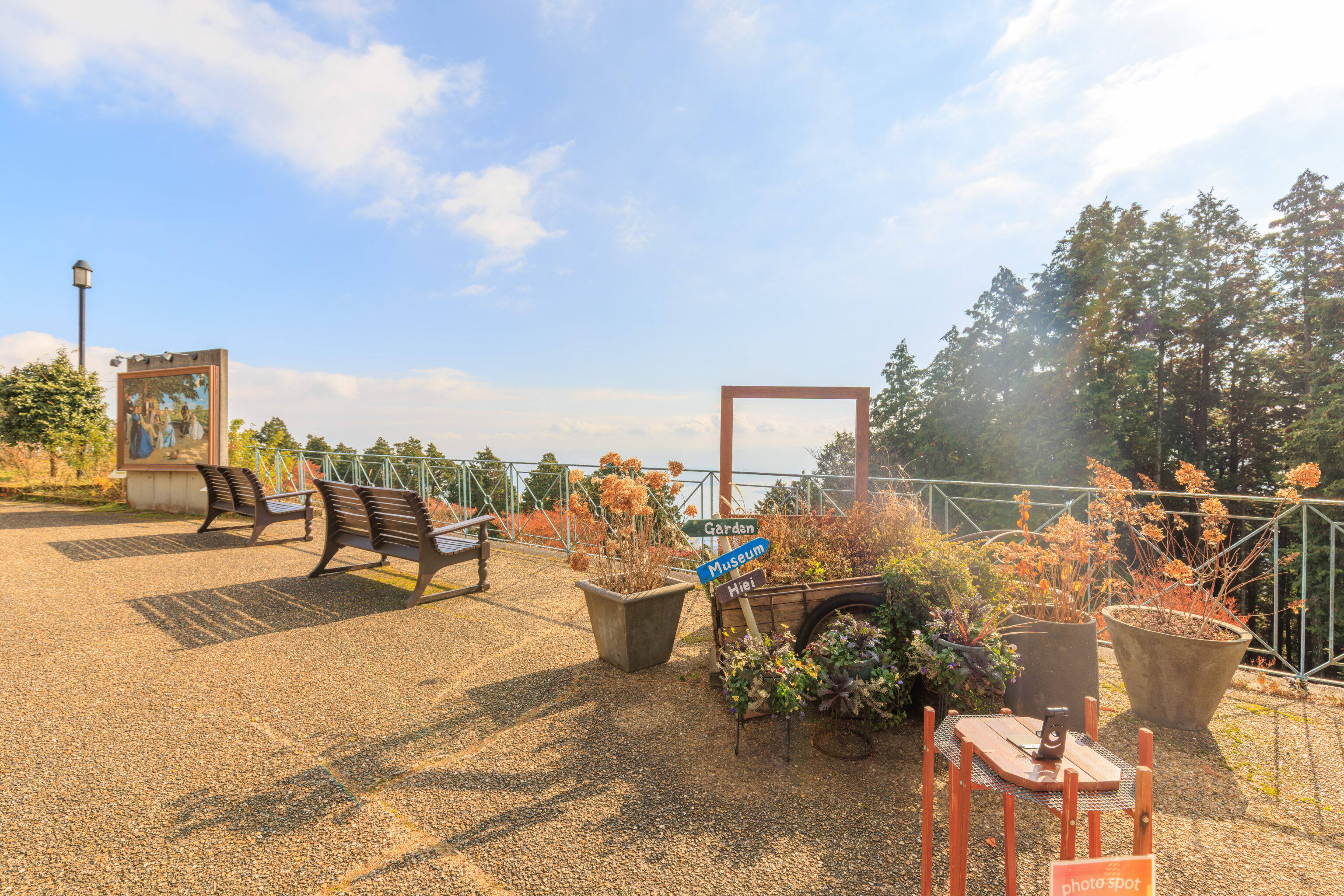
Given the lack of a view from the aerial tram station, we decided to check out the Garden Museum Hiei given its prominent location atop Mt. Hiei. This open-air museum is self described as being “designed under the theme of French impressionist art.” Basically, there are views of the landscape below as well as replicas of European art.
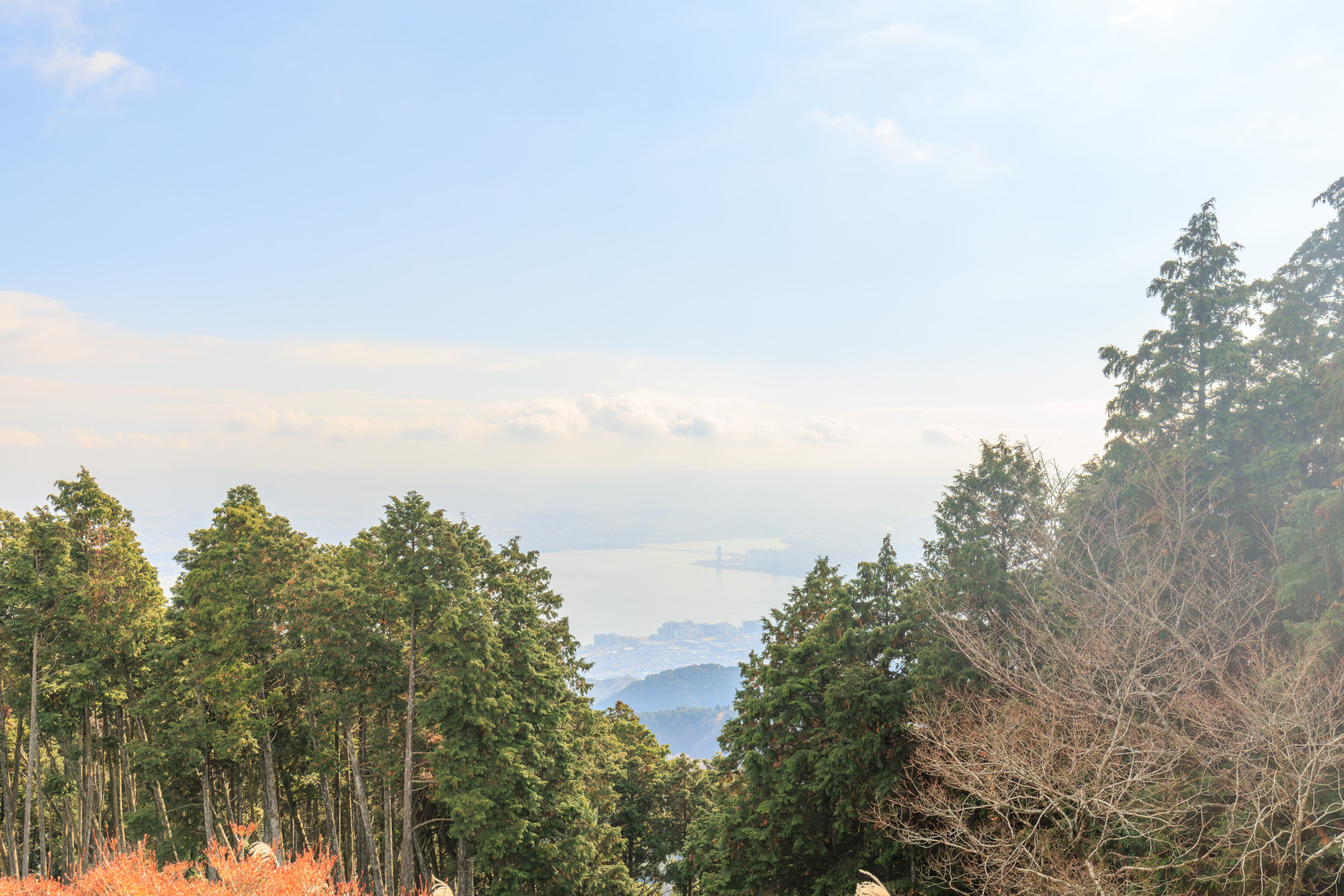
Looking to the southwest, we were able to see Lake Biwa, the largest freshwater lake in Japan, below.
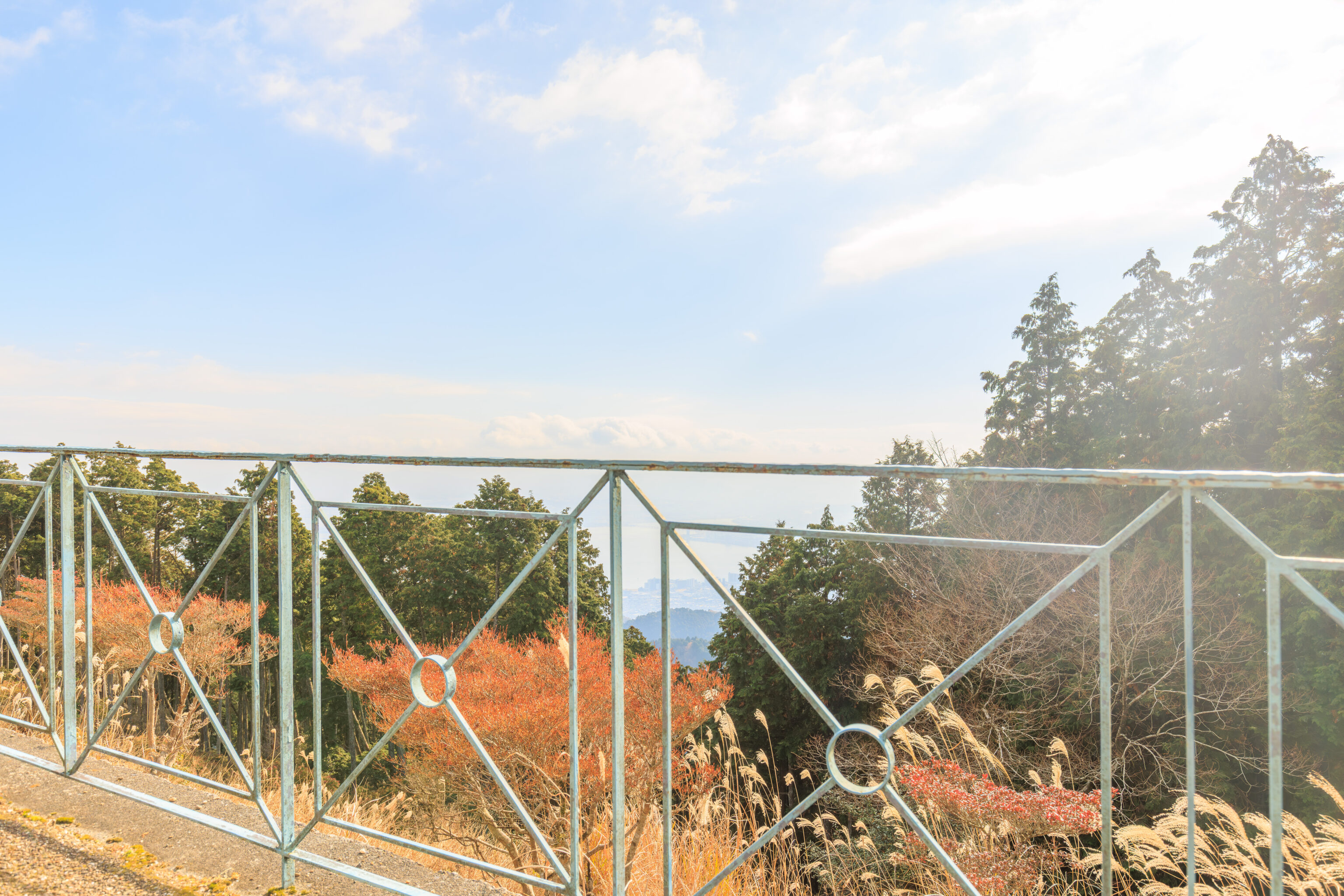
There was also a smudge on the wide angle lens which is visible under certain lighting conditions. Its been there at least since we left Ruriko-in.
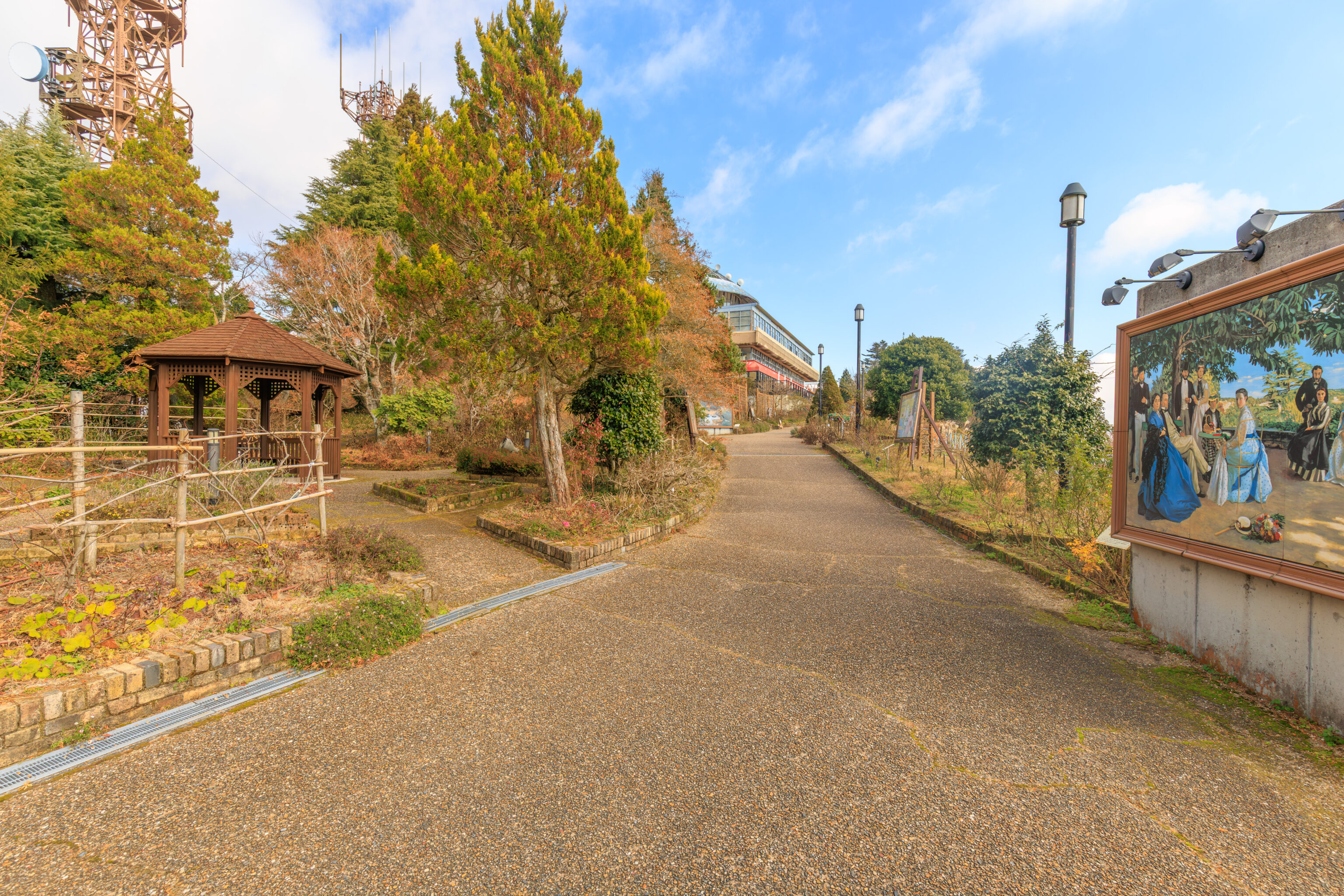
There were very few other visitors at the museum. It turns out that today, December 7, a day which will live in infamy, is the least day of the season here at the museum.
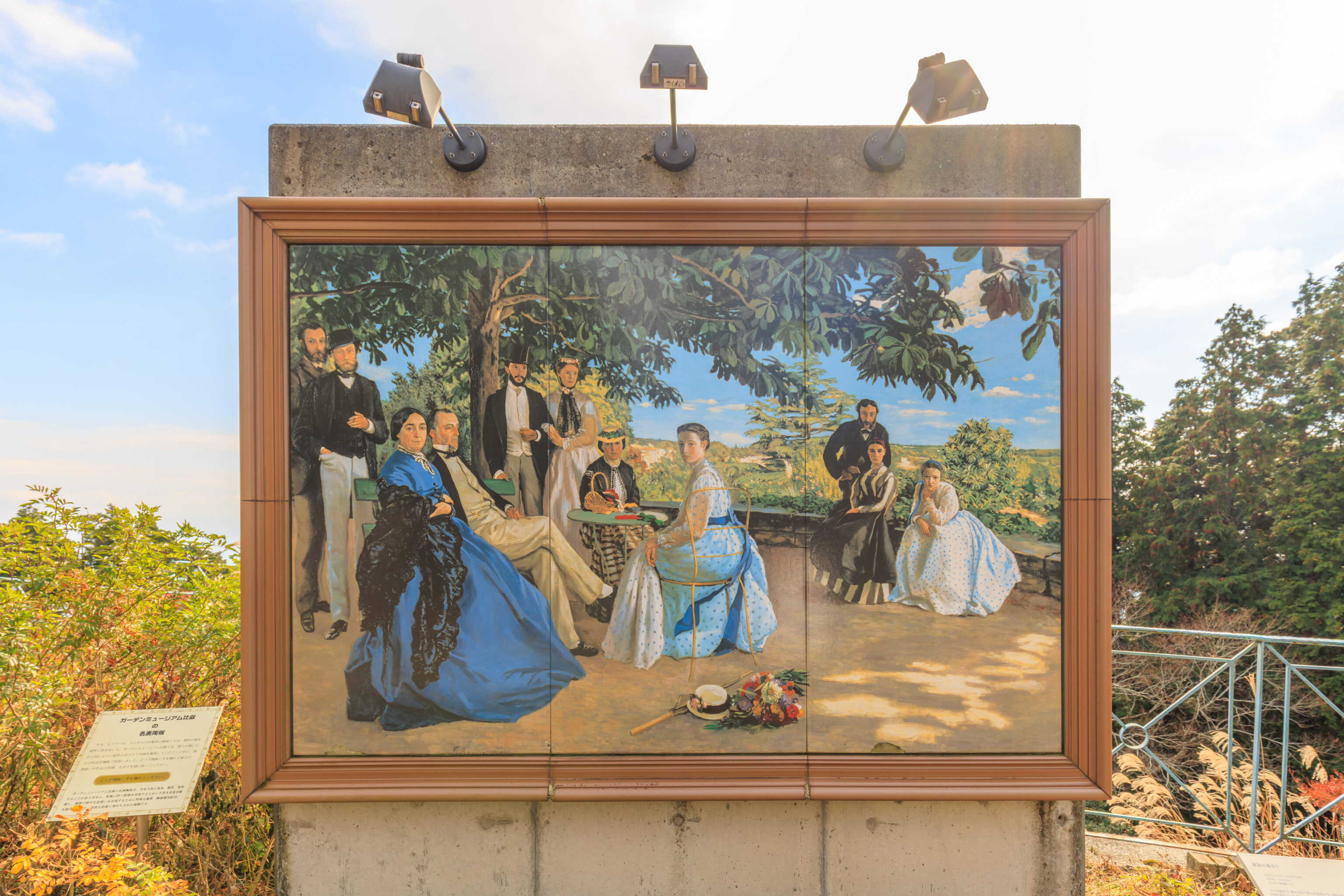
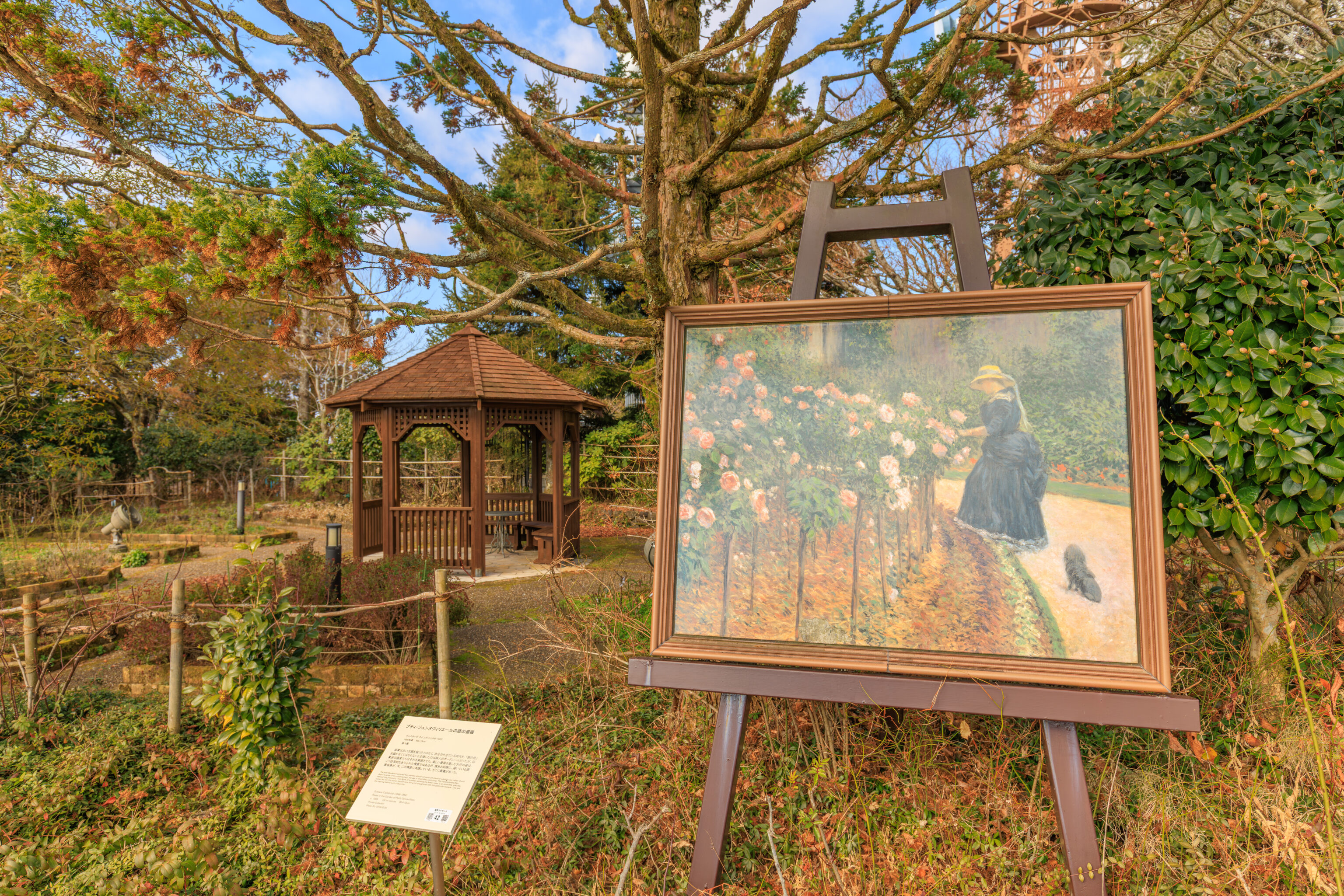
Roses in the Garden of Petit Gennevilliers
c. 1886. Oil on canvas”
There may be a bit of correlation between the paintings and the scenery?
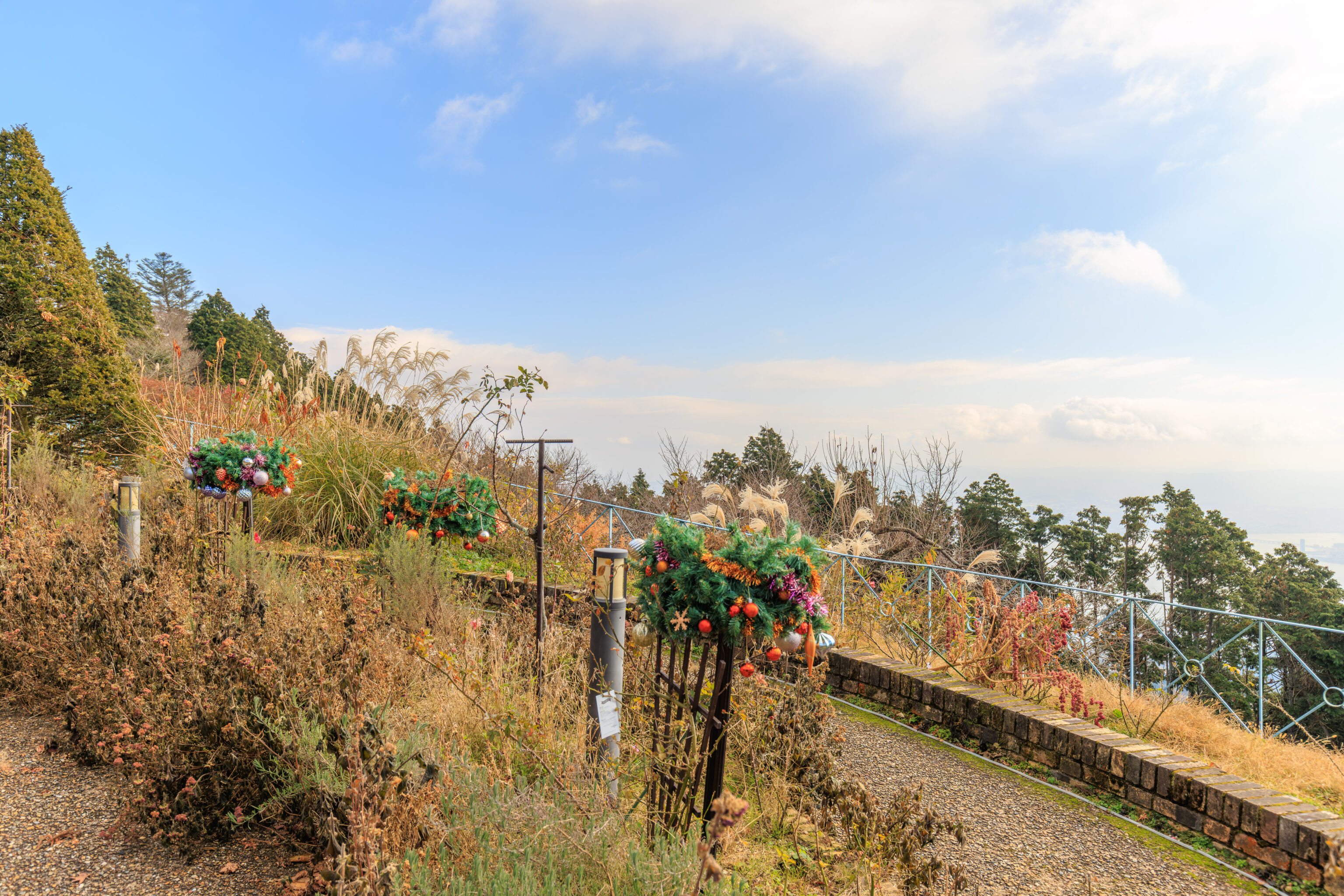
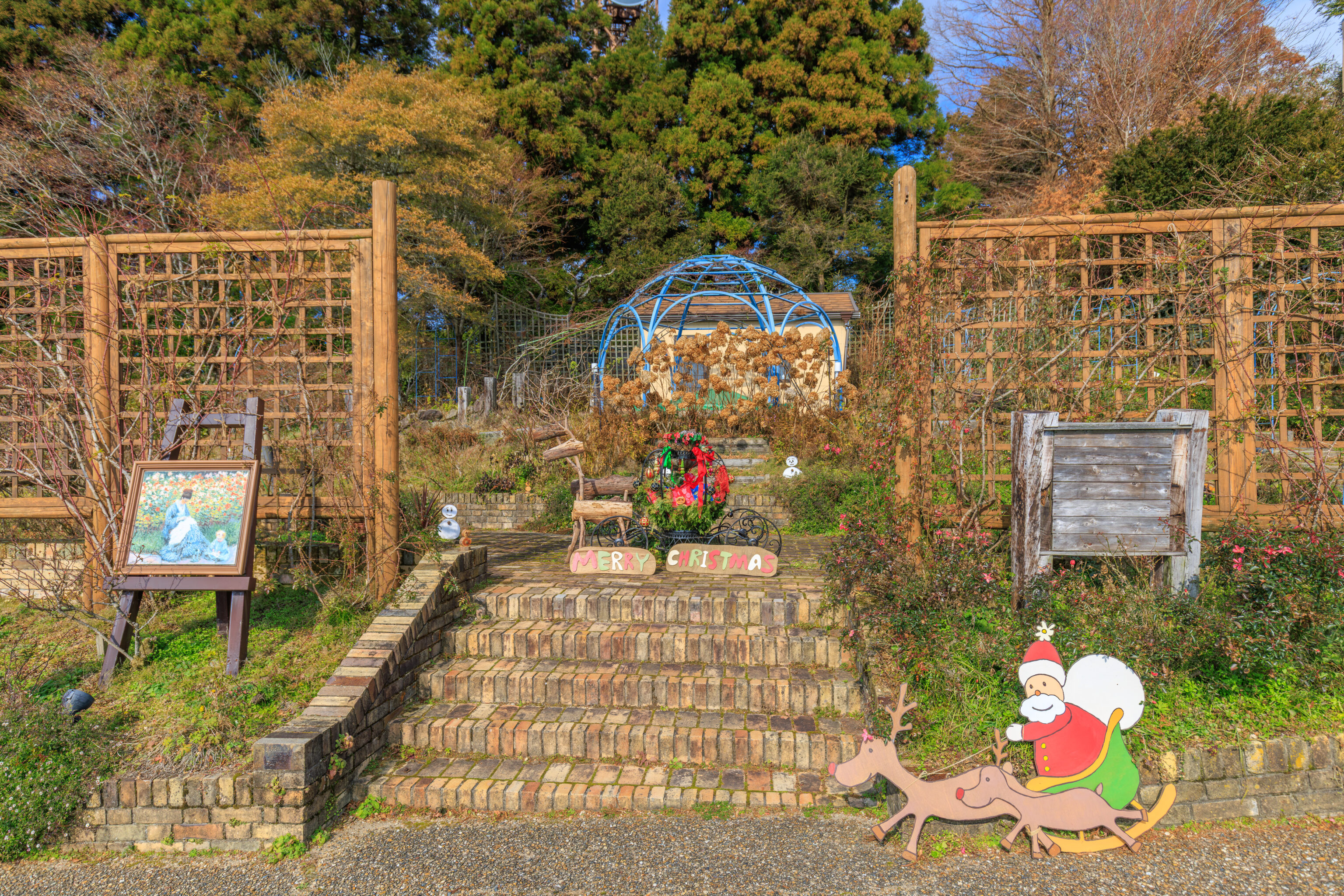
We started to see some Christmas decorations.
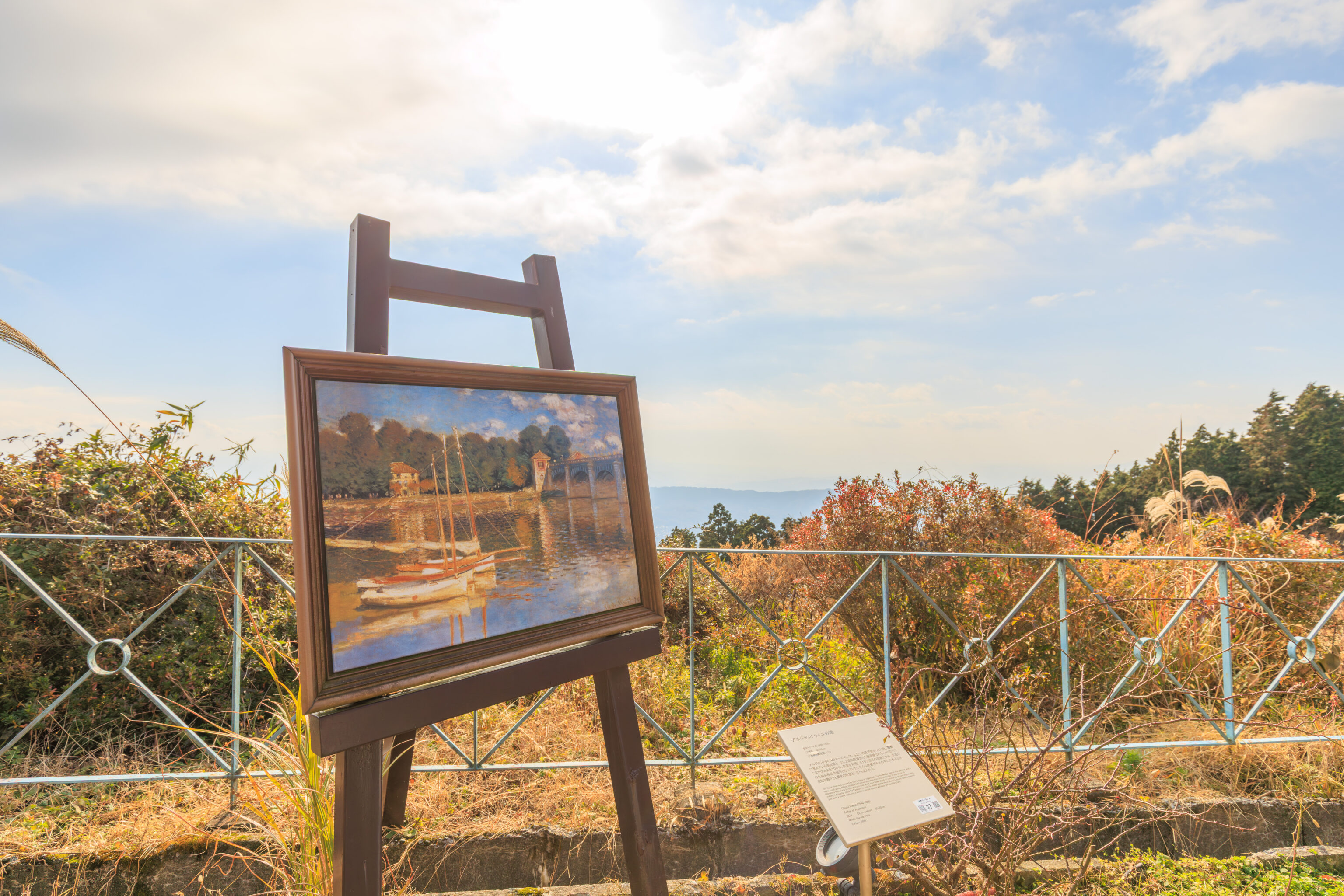
Bridge at Argenteuil
1874. Oil on canvas”
Well, maybe the paintings don’t have anything to do with the surrounding scenery. This painting by Monet is in the Musee d’Orsay in Paris, which we visited in 2023. Unfortunately, we may not have seen this painting, or perhaps we didn’t photograph it.
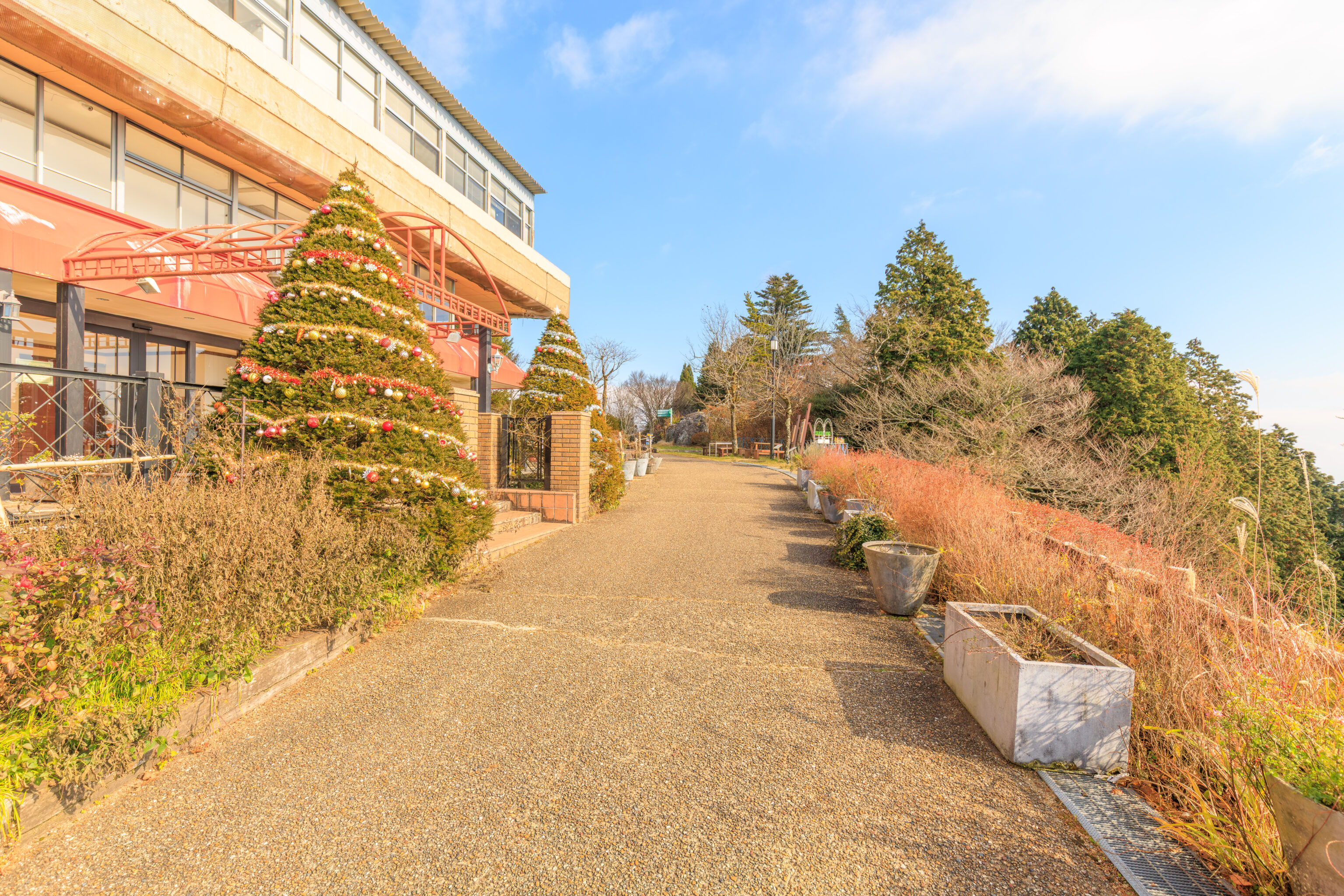
There was a large building a short distance away from the entrance. Its was a rather ugly building.
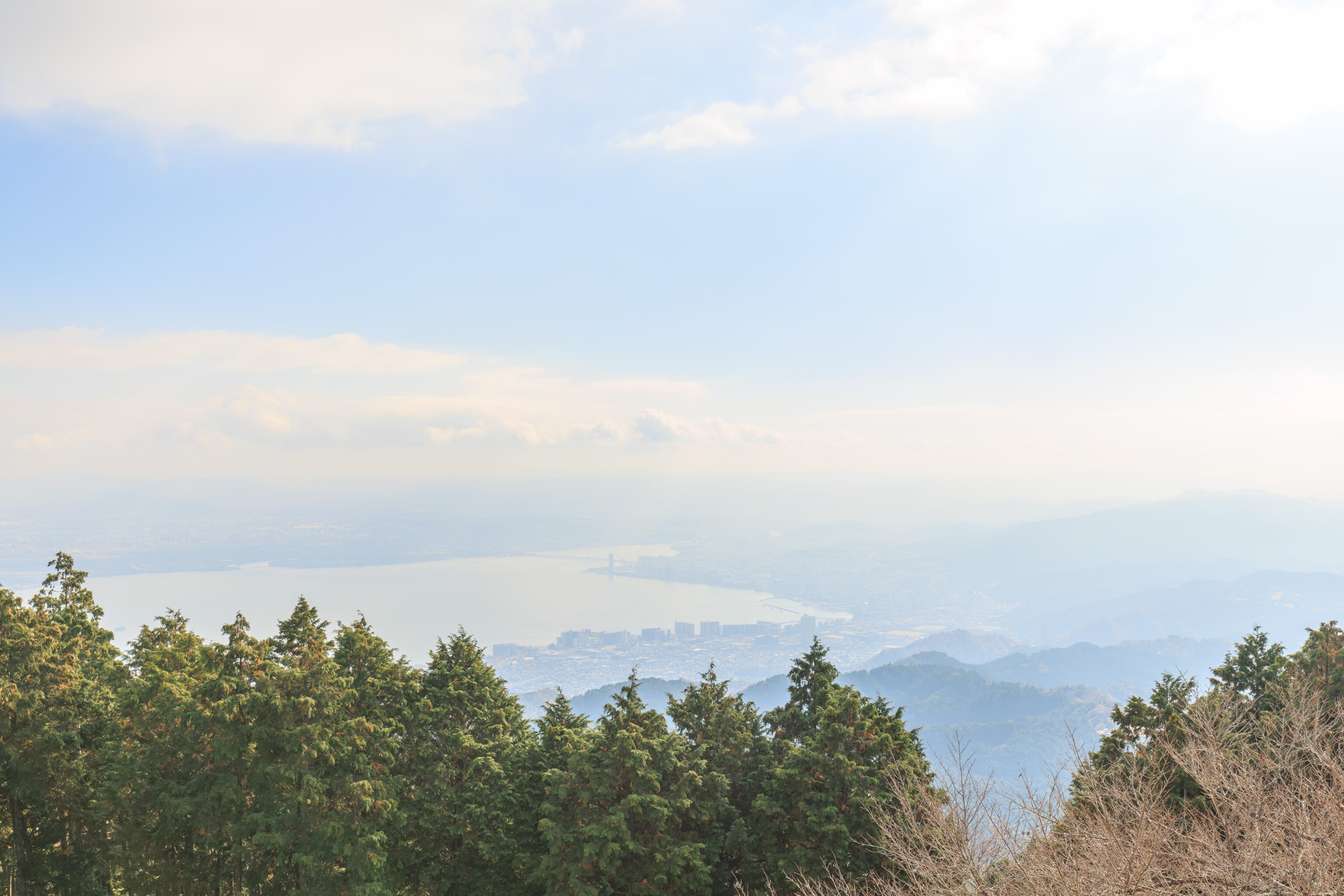
We had a clearer view to the southeast from the front of the building.
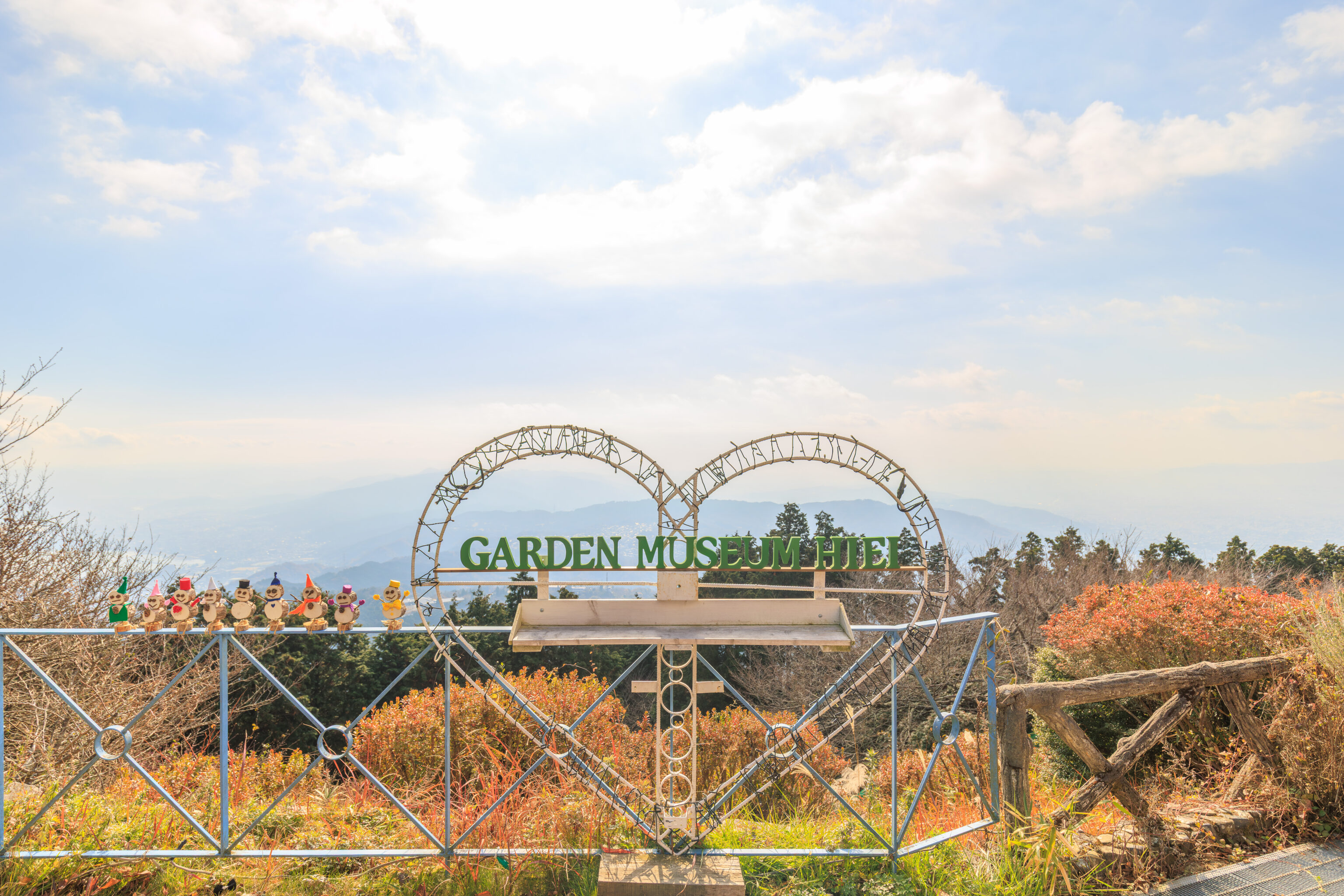
There were nine little wooden figures on the fence by this heart.
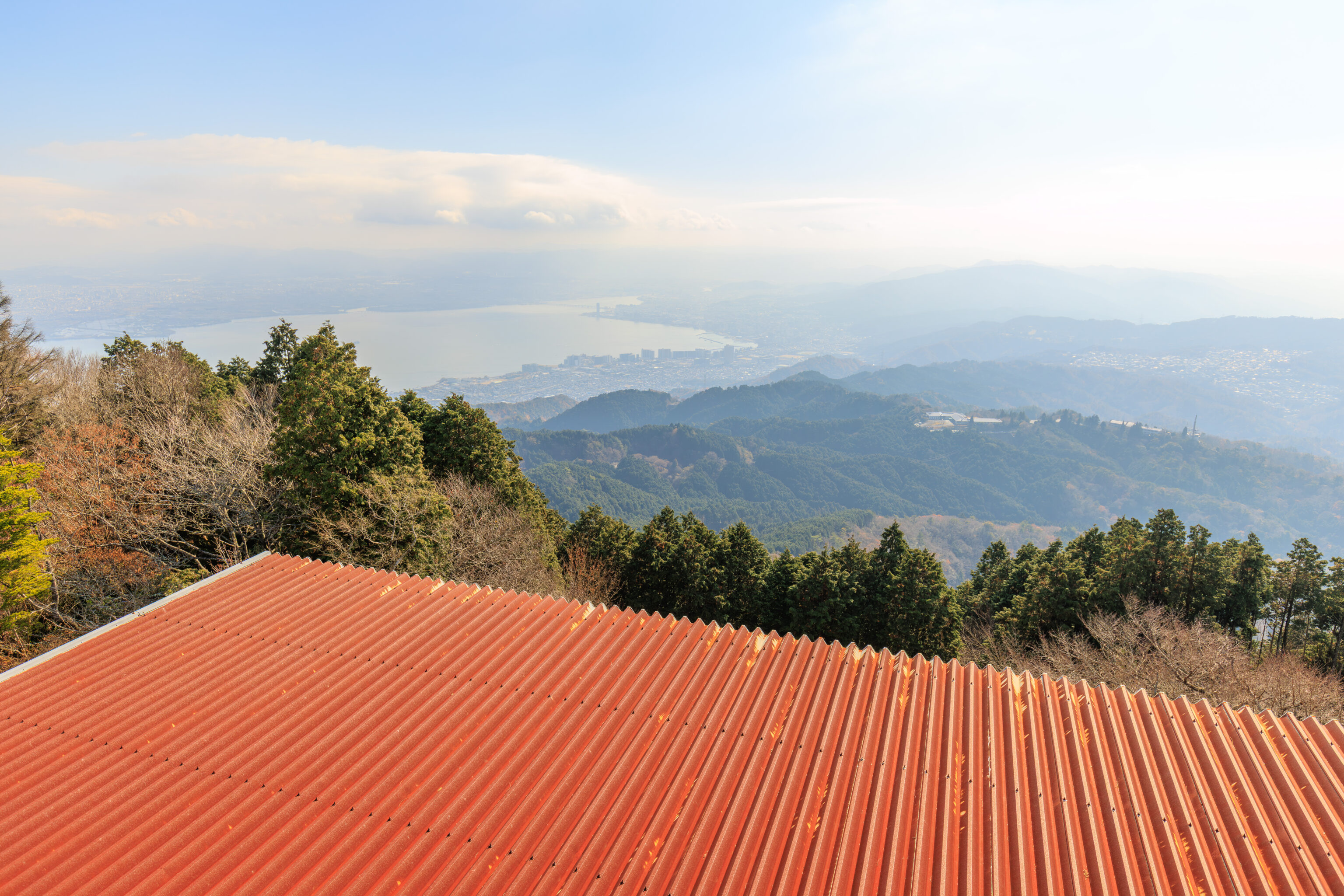
We decided to go up into the building’s circular observation deck to take a look. The added elevation improved the view as we could see above more of the trees in front of us.
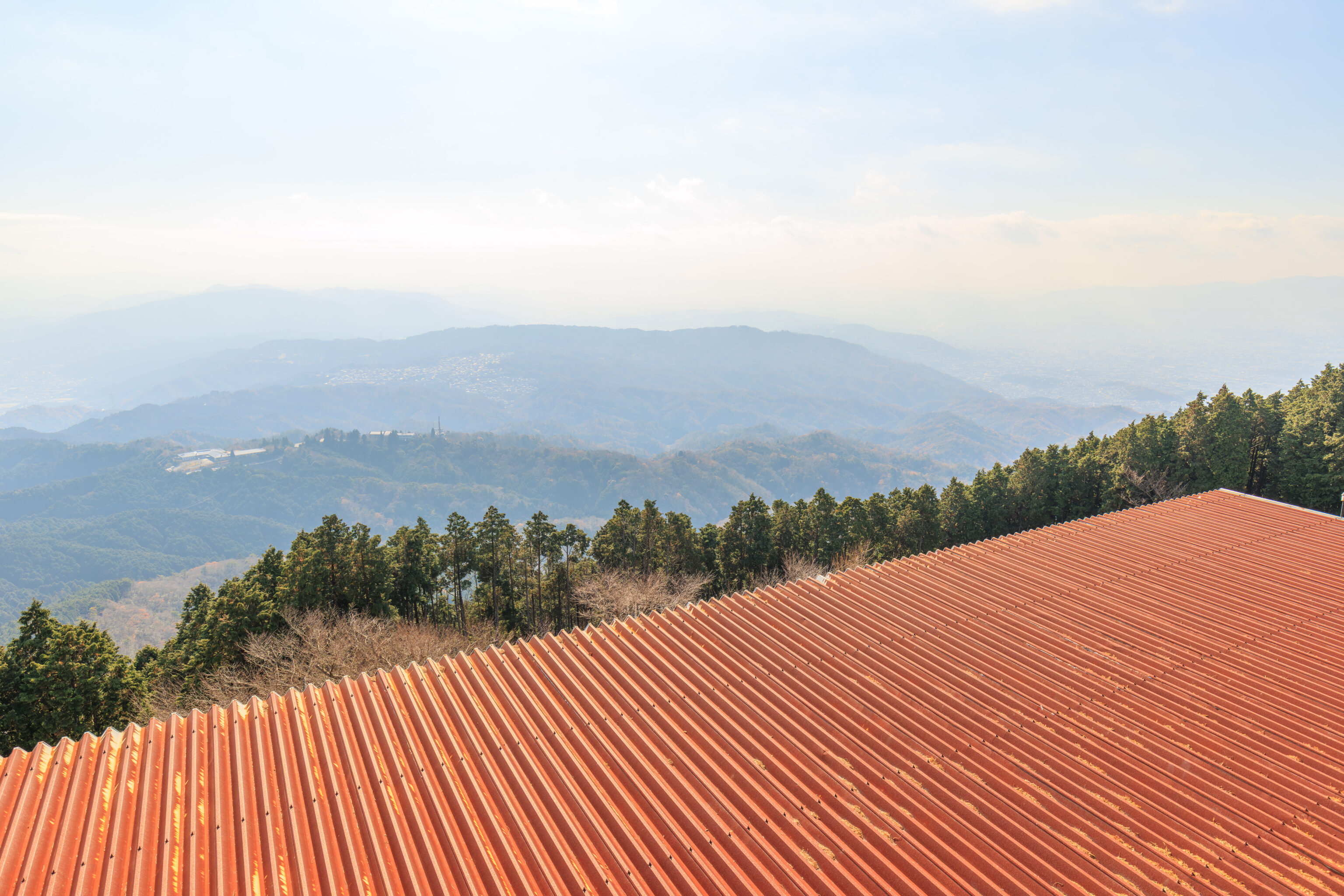
Unfortunately, it was much too hazy to see very far.
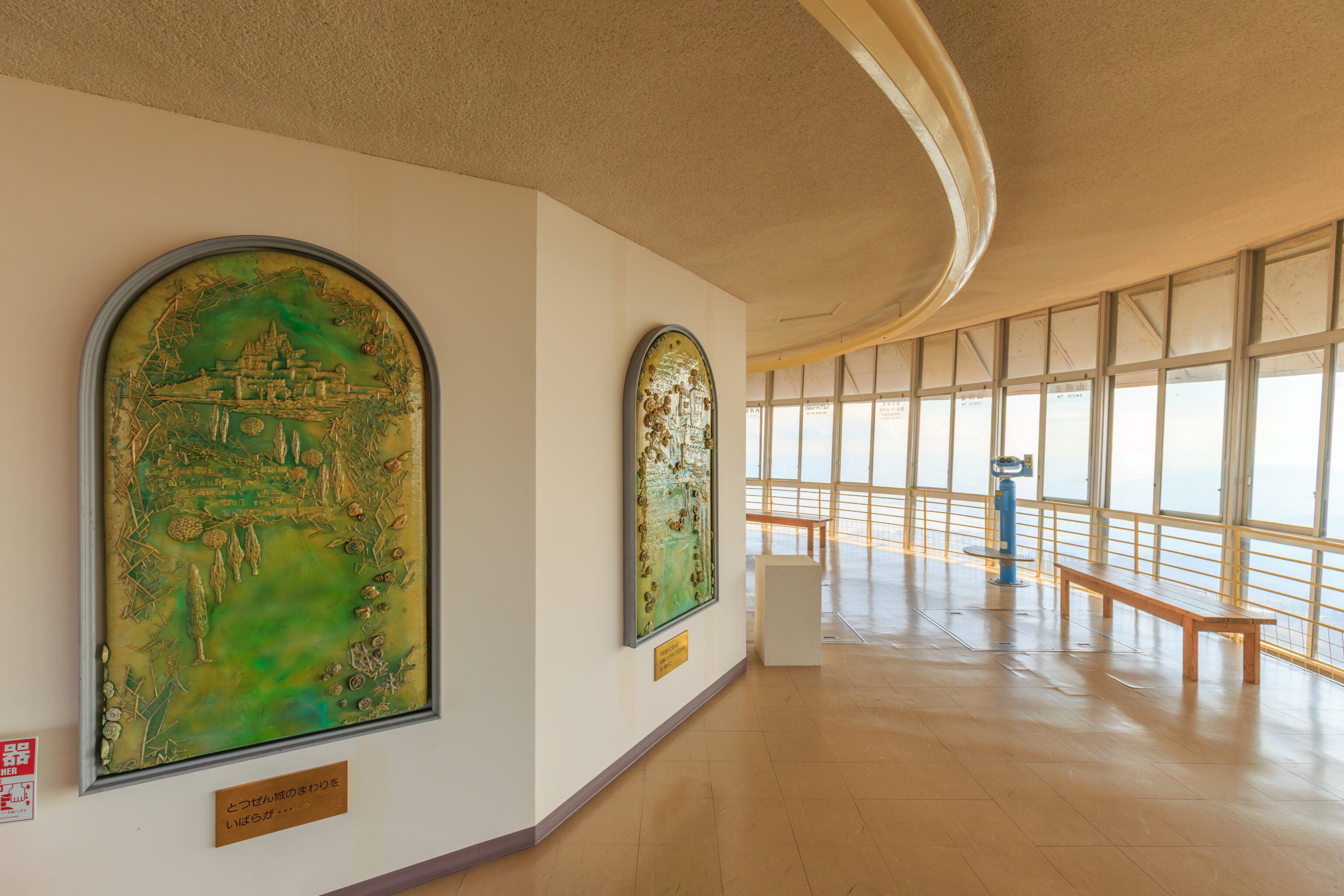
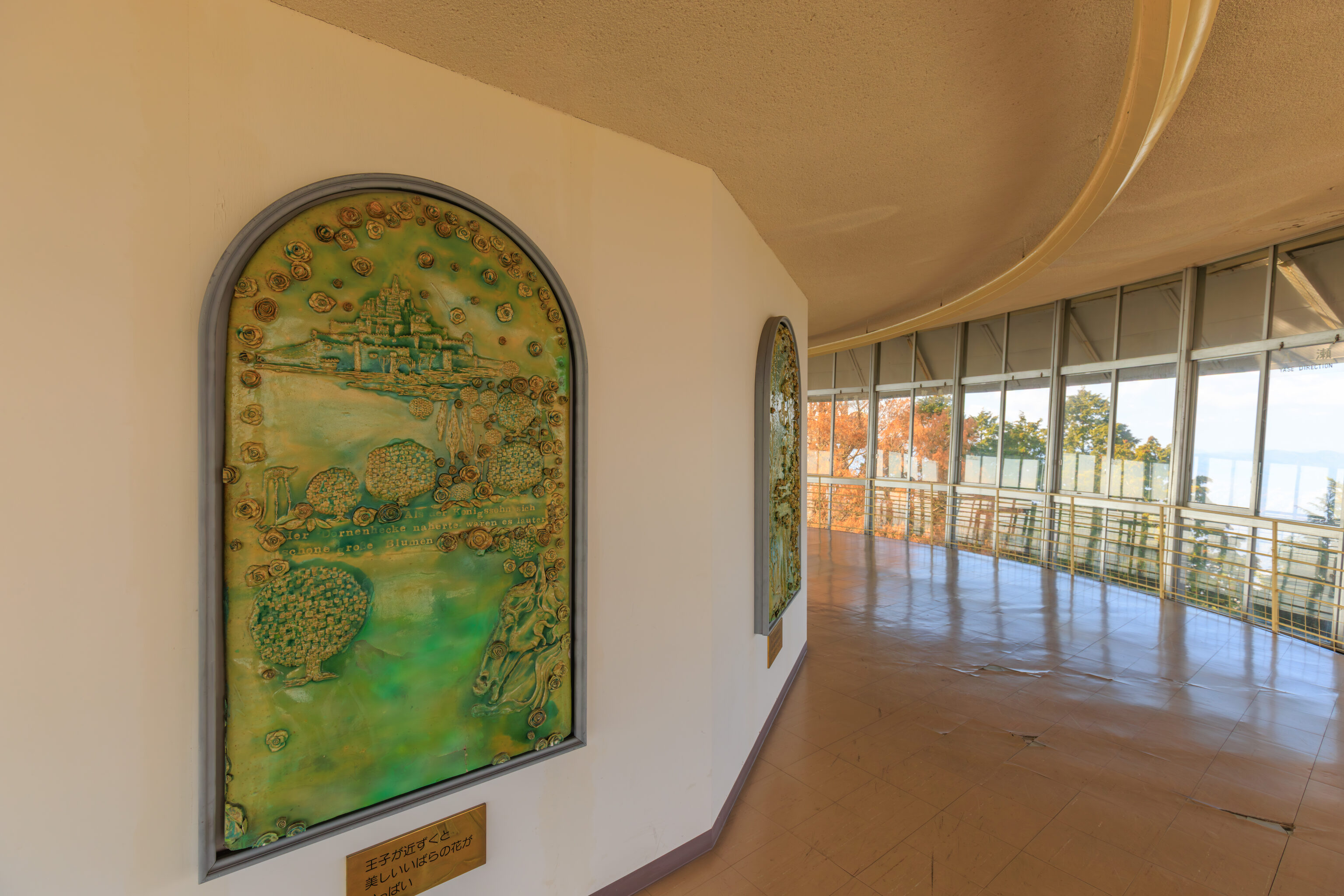
These panels in the building seem to depict the Dornröschen fairy tale, known in English as Sleeping Beauty.
The circular observation building had a small rest area with tables. We decided to eat the two onigiris that we did not eat earlier.
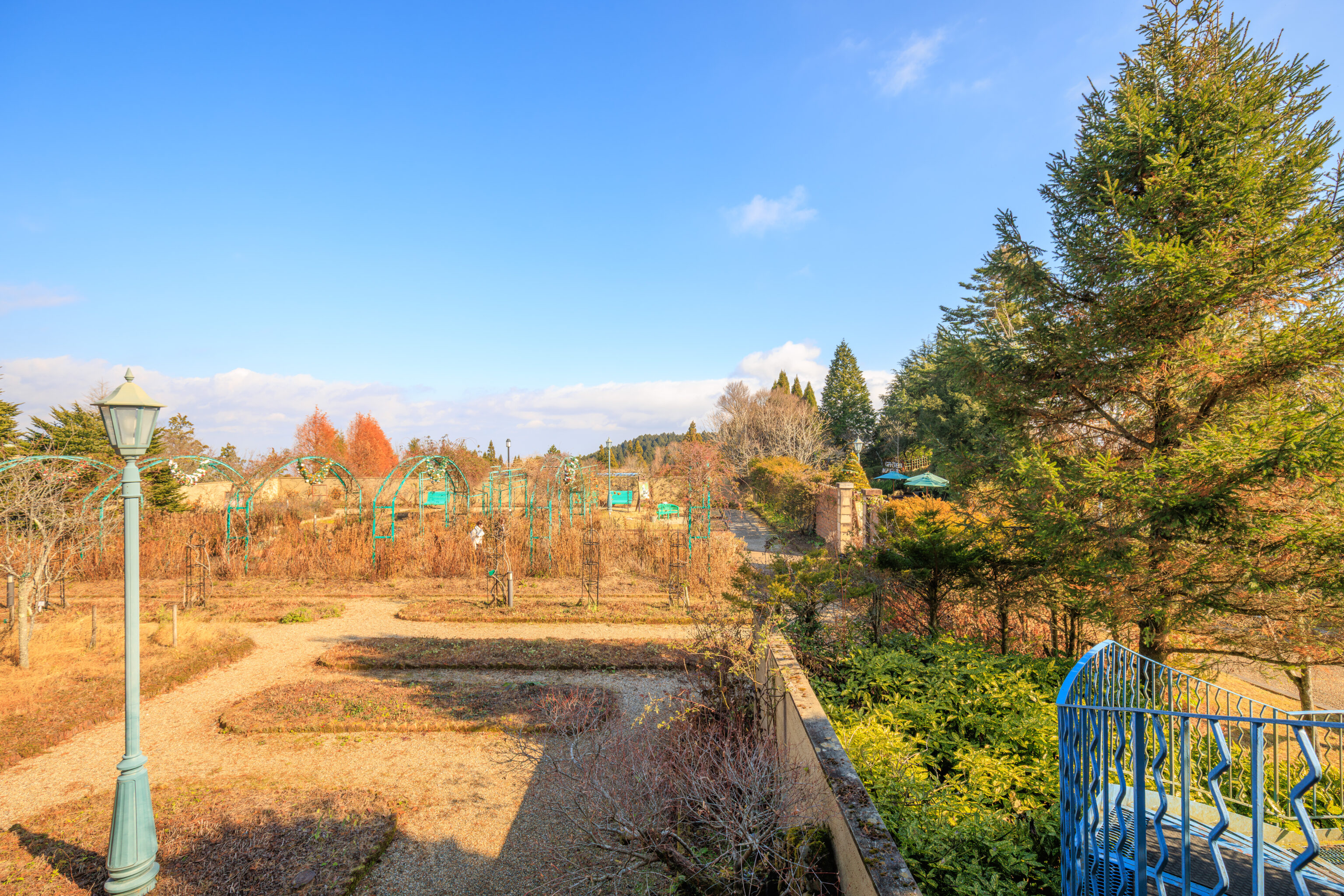
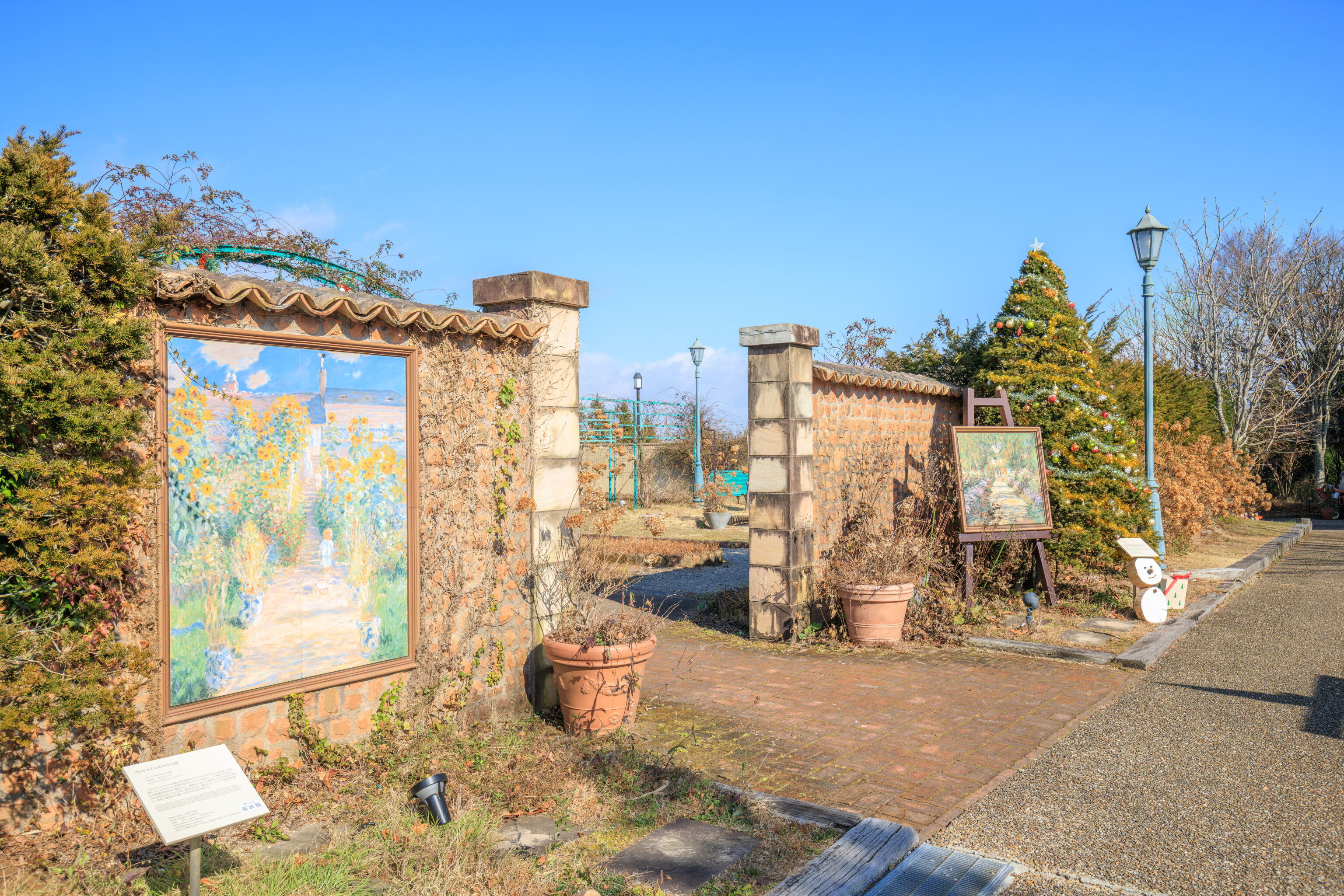
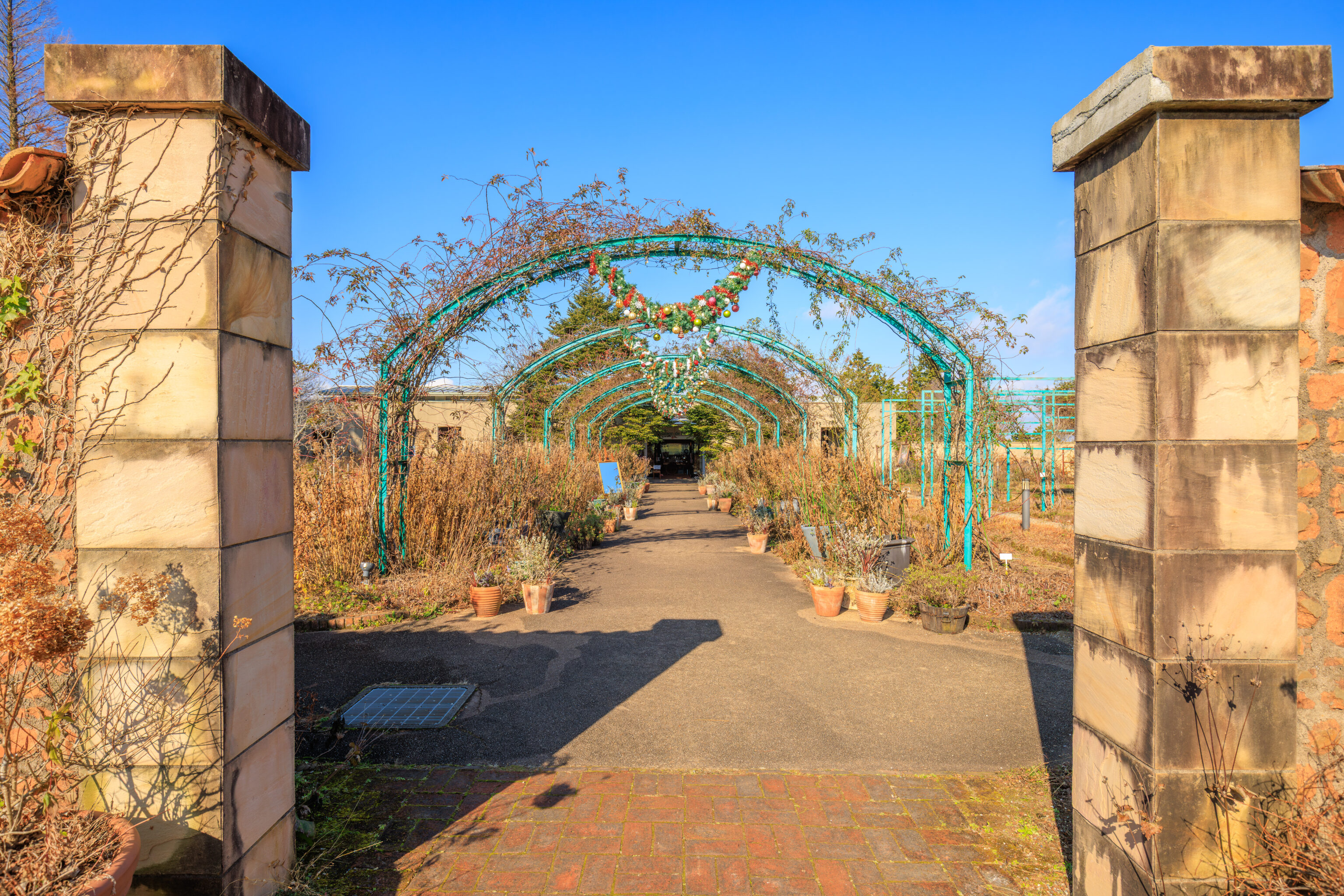
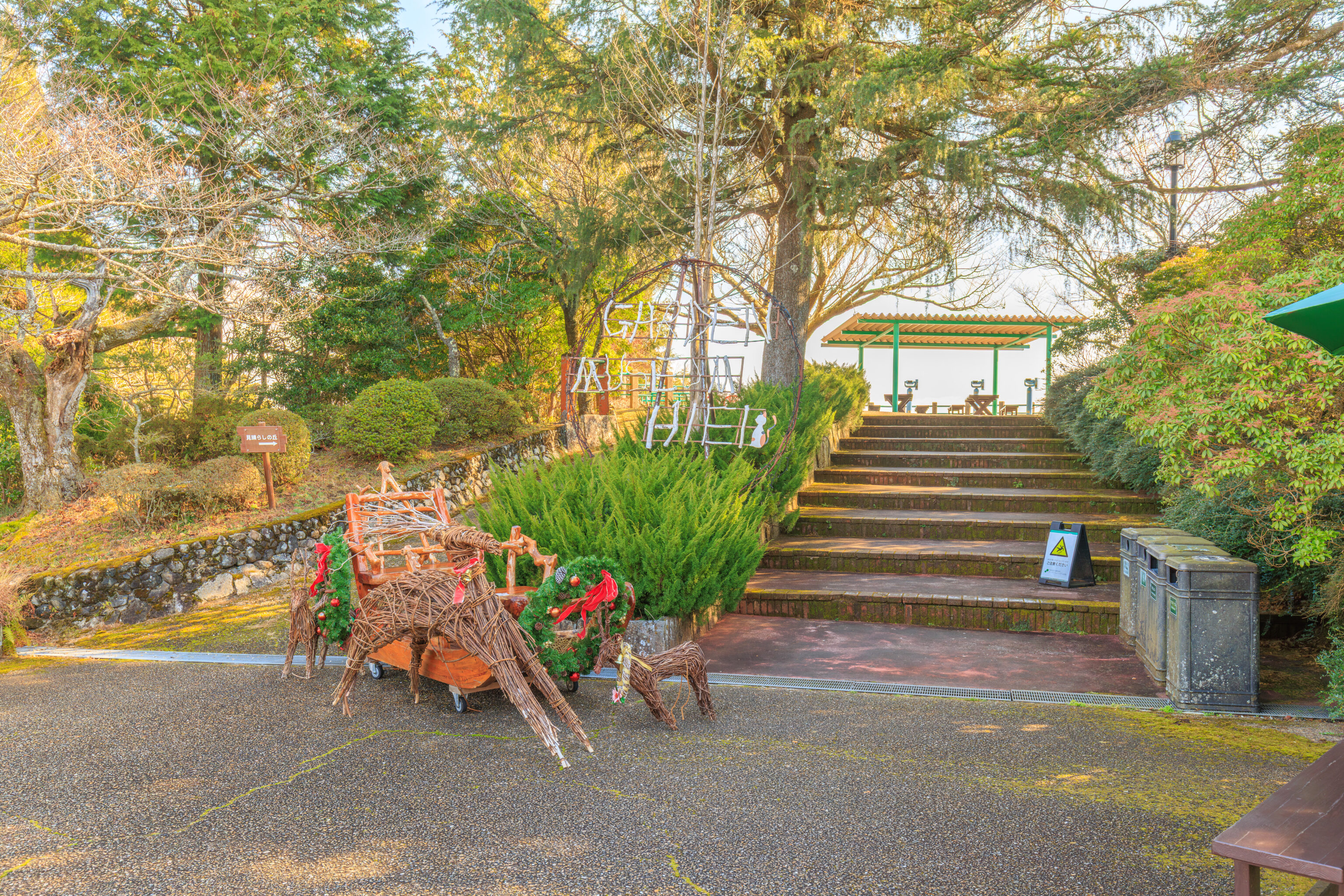
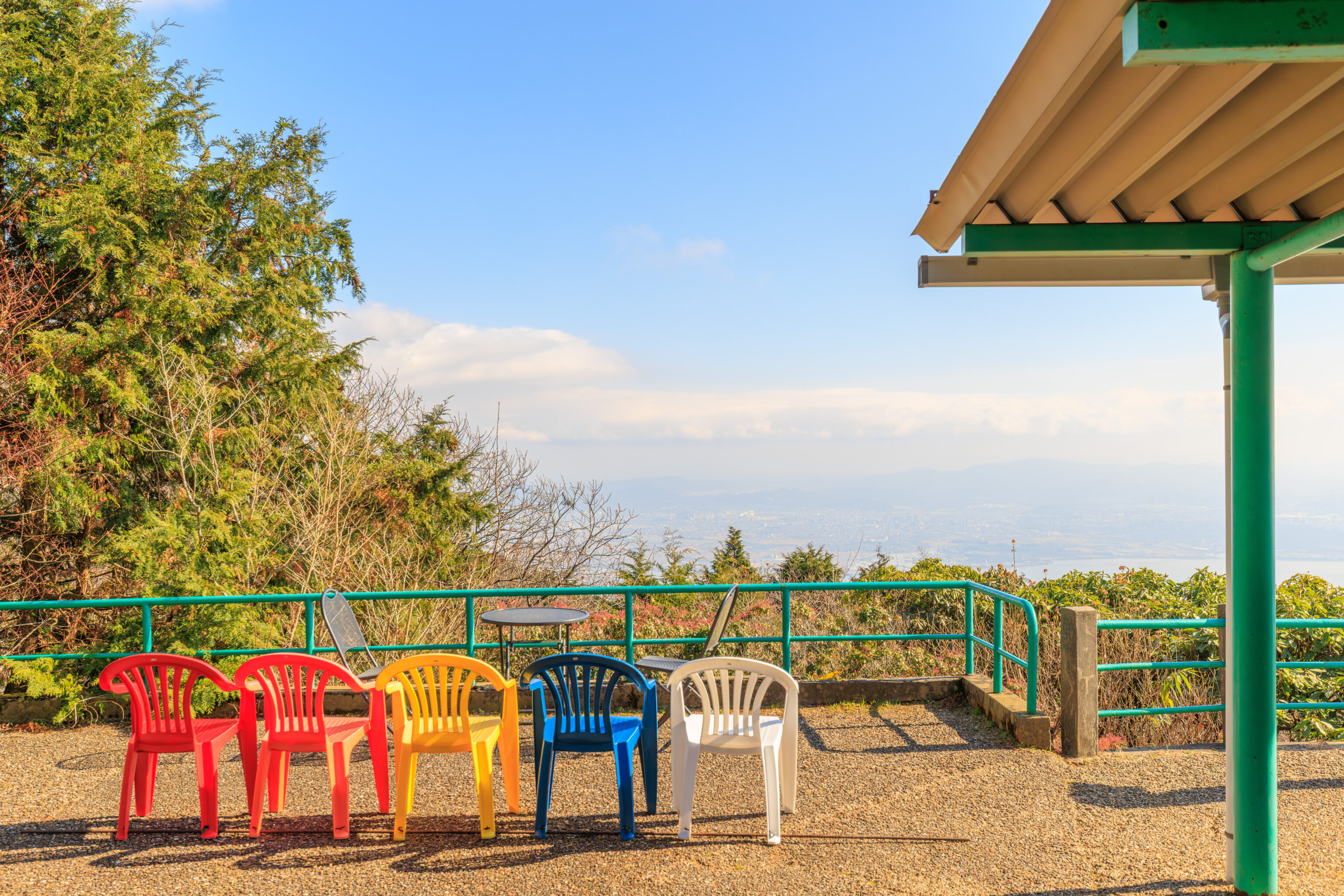
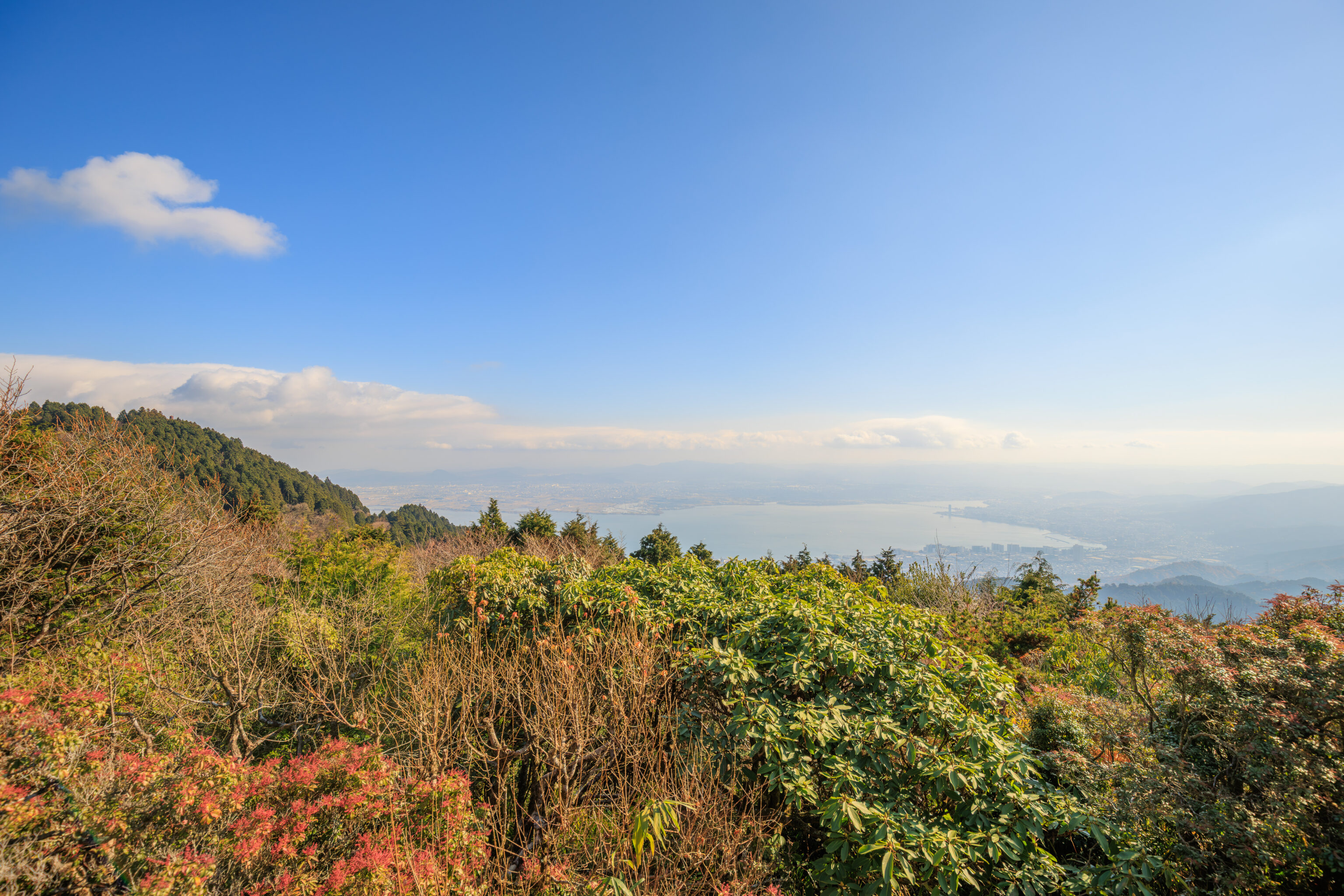
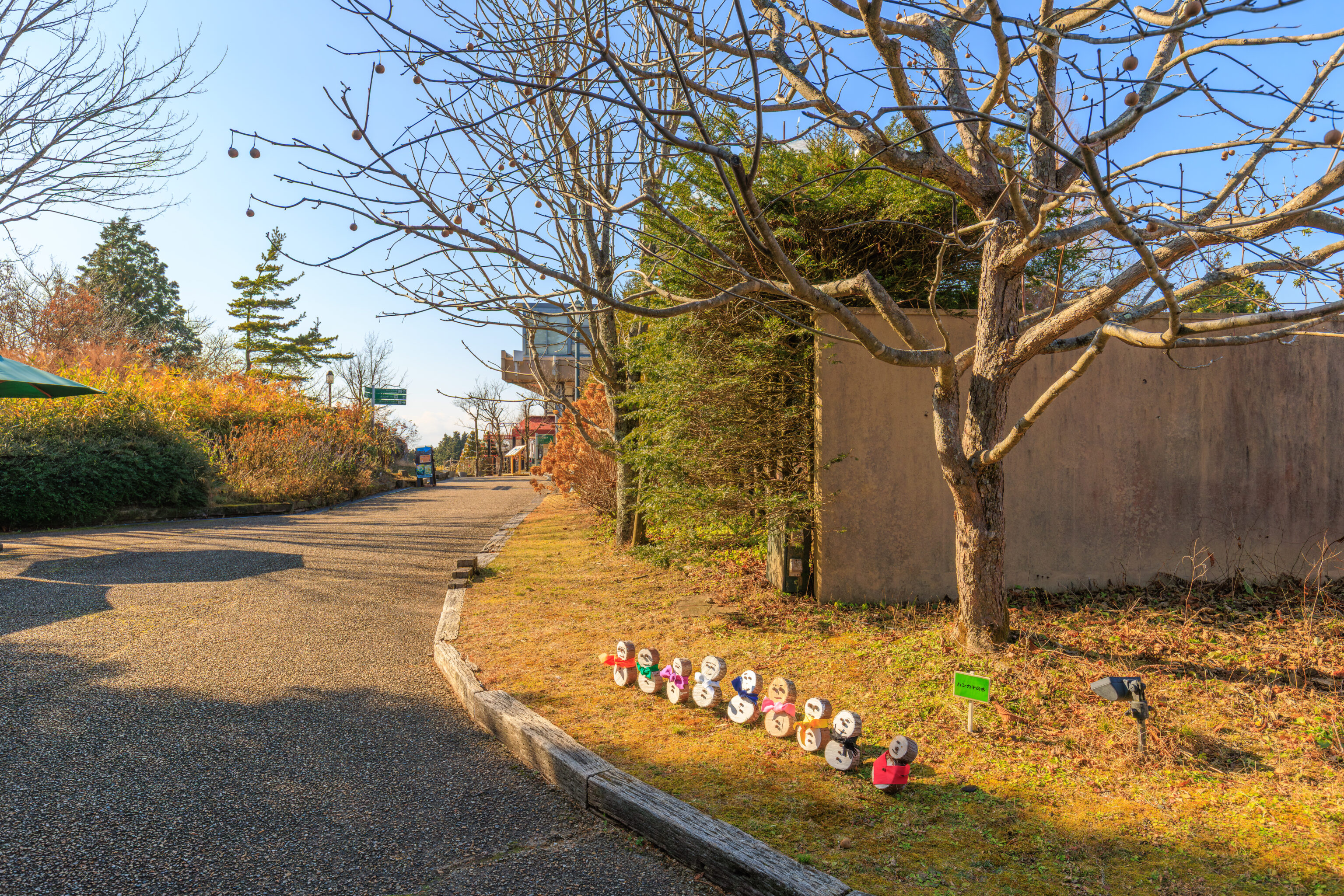
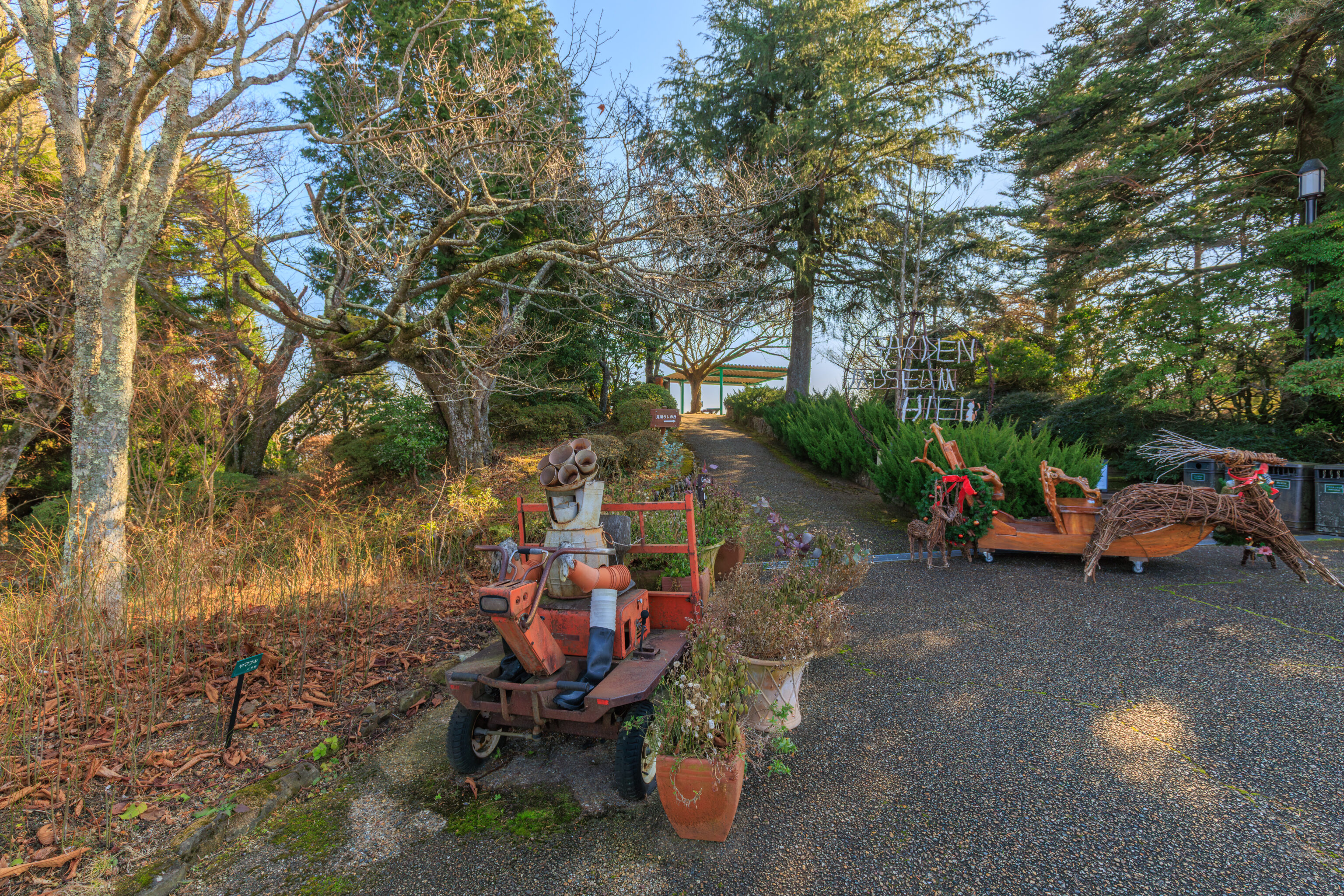
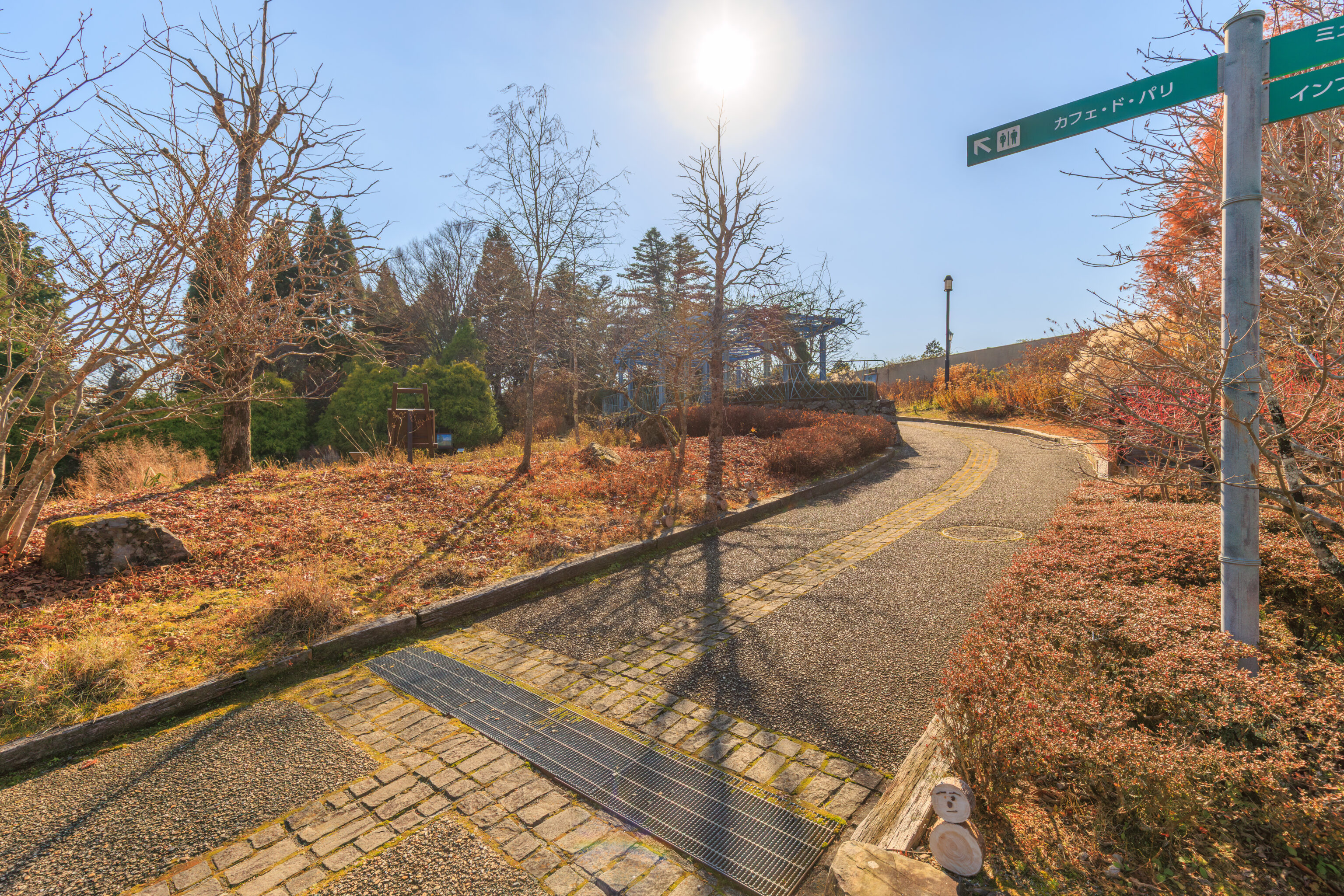
After exiting the building, we continued on the route through the museum to the east. There were some interesting little decorations on the way.
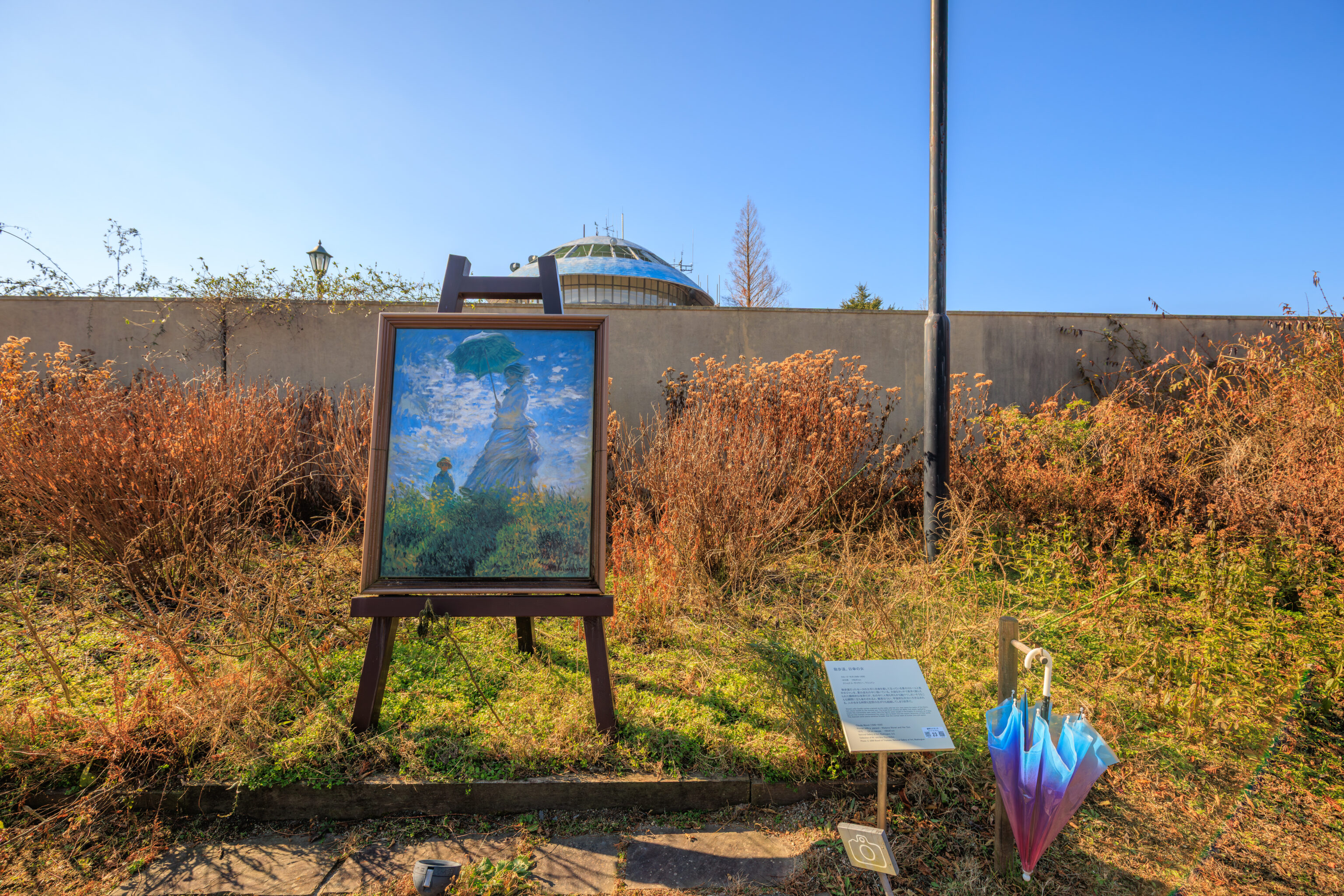
Woman with a parasol – Madame Monet and Her Son
1875. Oil on canvas”
We saw the top of the observation deck behind this painting by Monet. The original painting is actually in Washington DC at the National Gallery of Art. Maybe we should go see it!
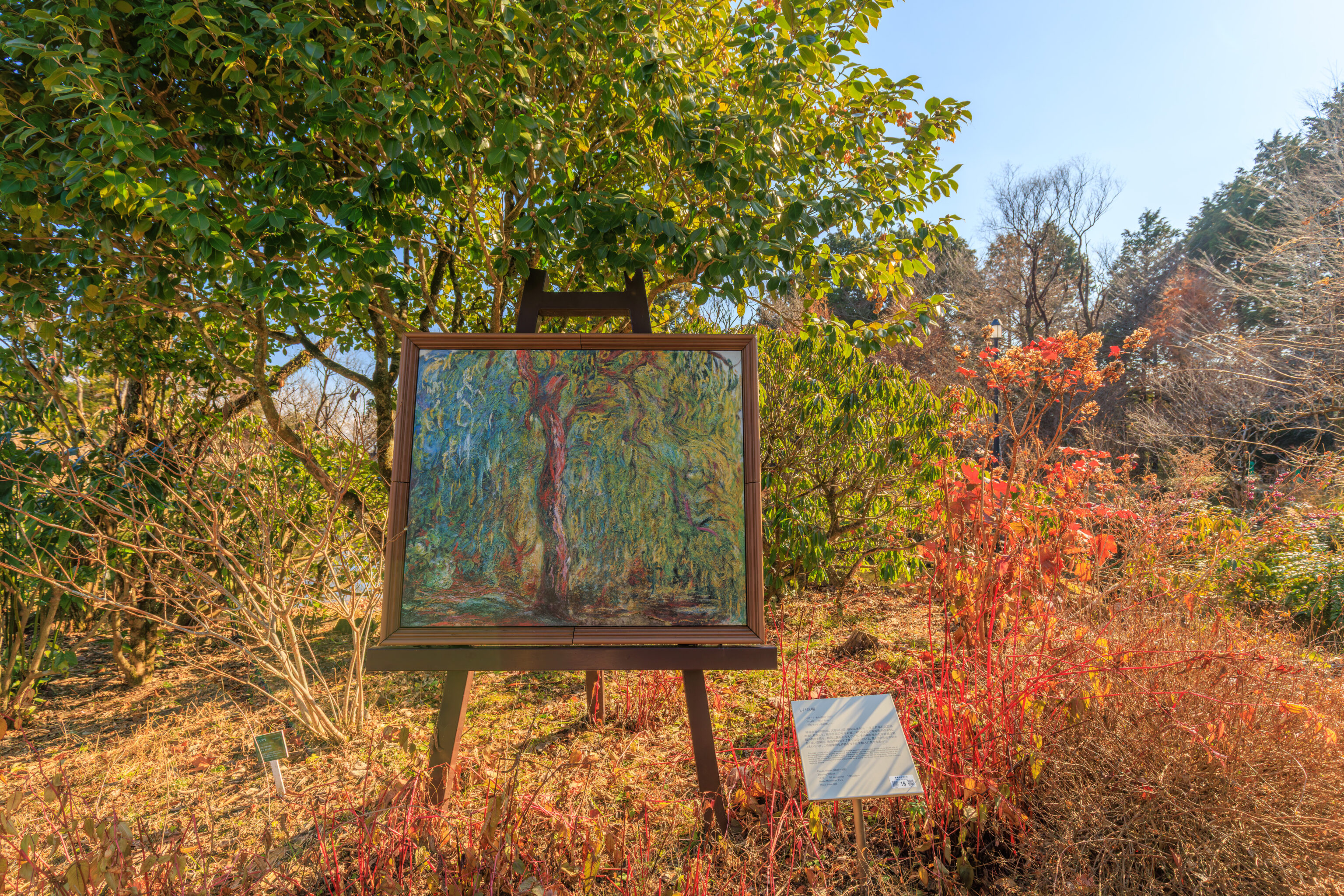
Weeping Willows
1919. Oil on canvas”
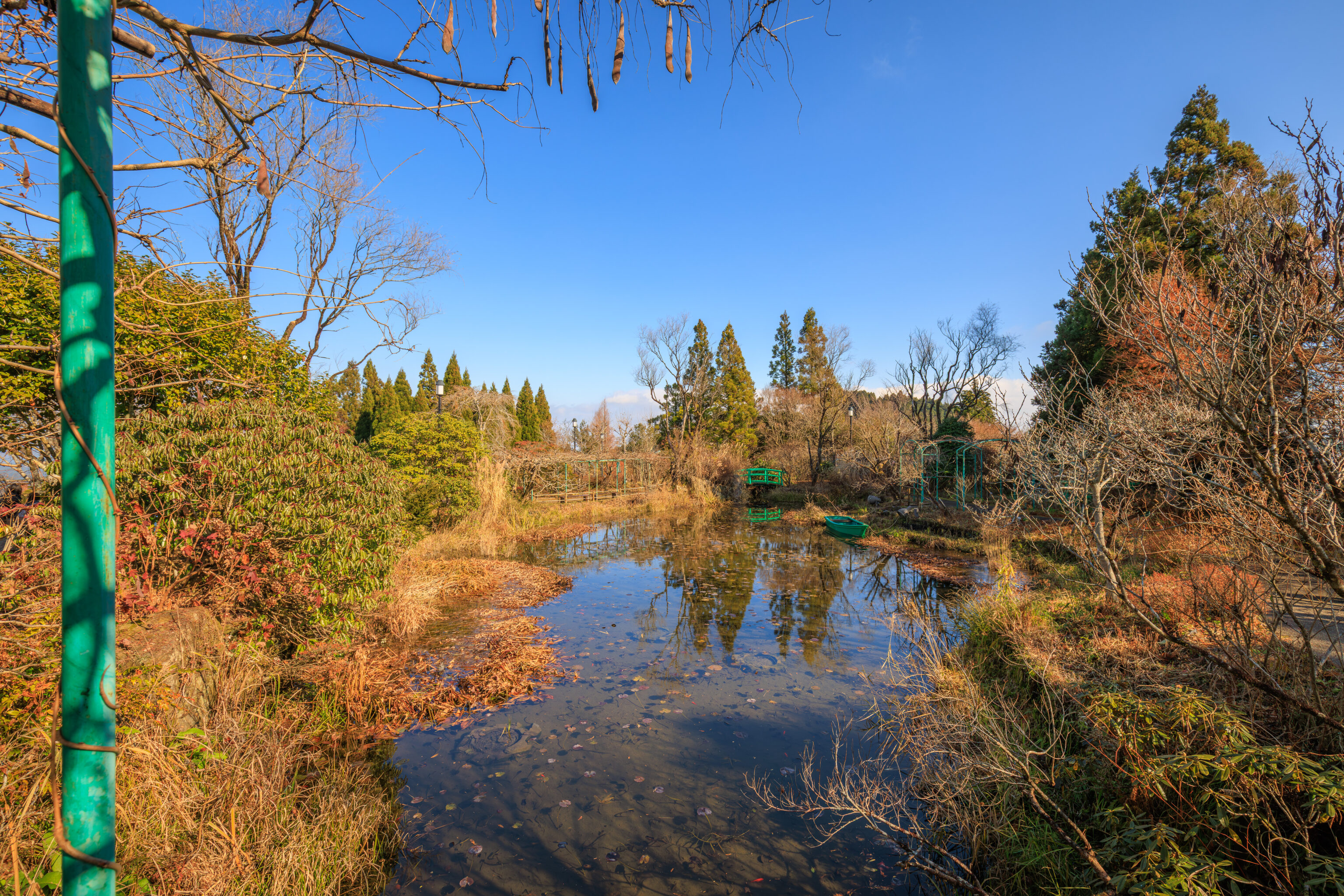
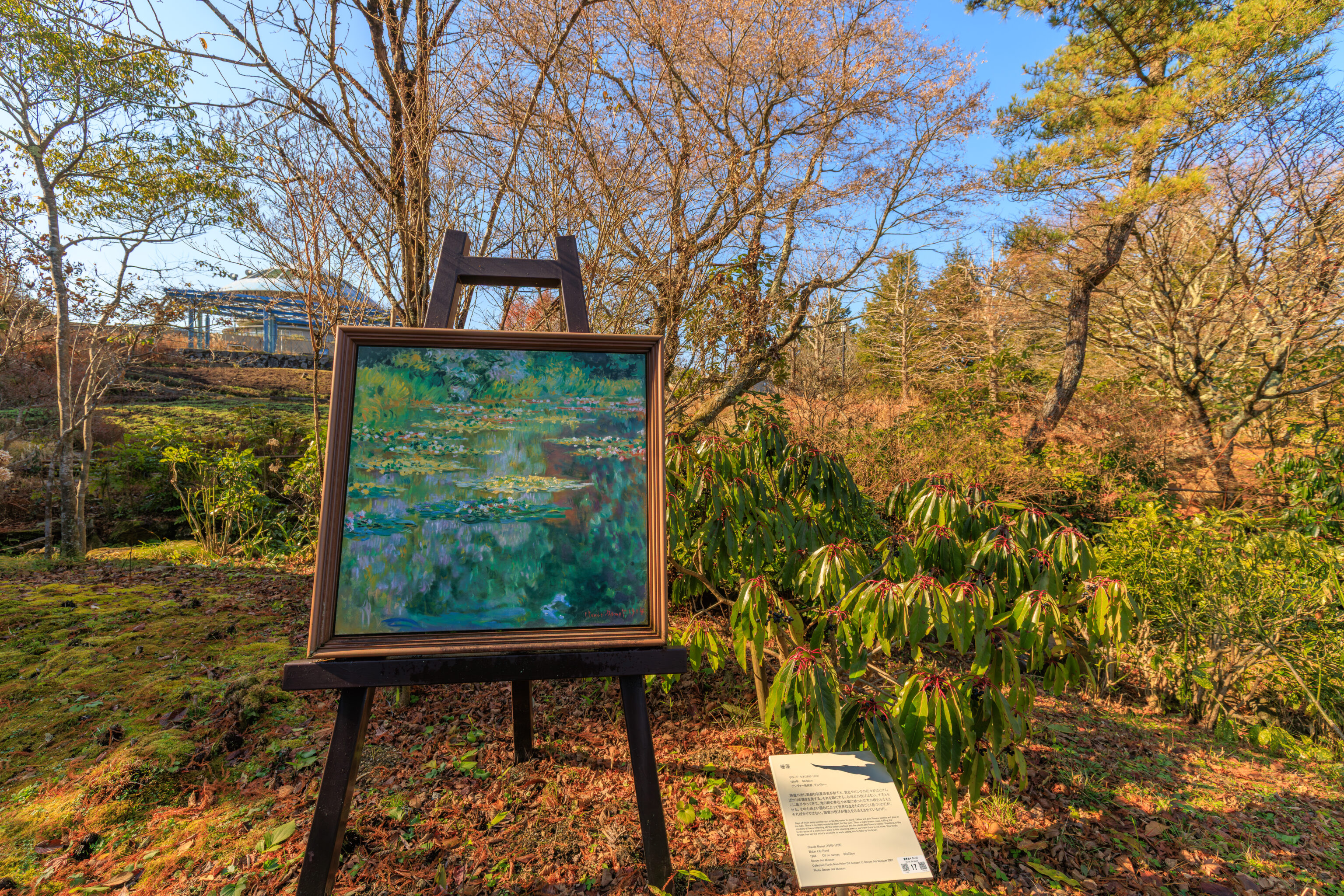
Water Lily Pond
Oil on canvas”
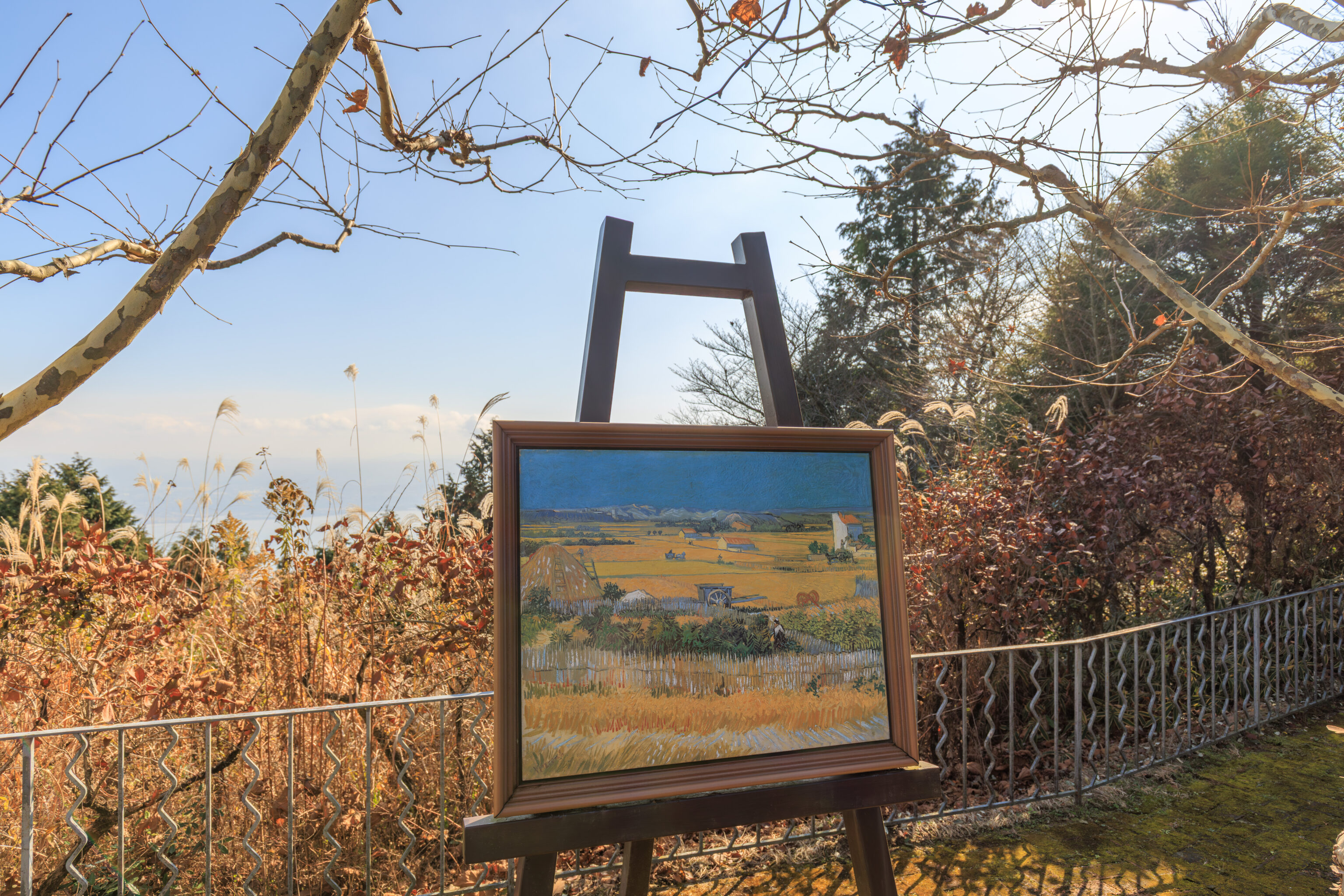
Harvest at La Crau
1888 . Oil on canvas”
This one is in Amsterdam at the Van Gogh Museum, which we visited last year.
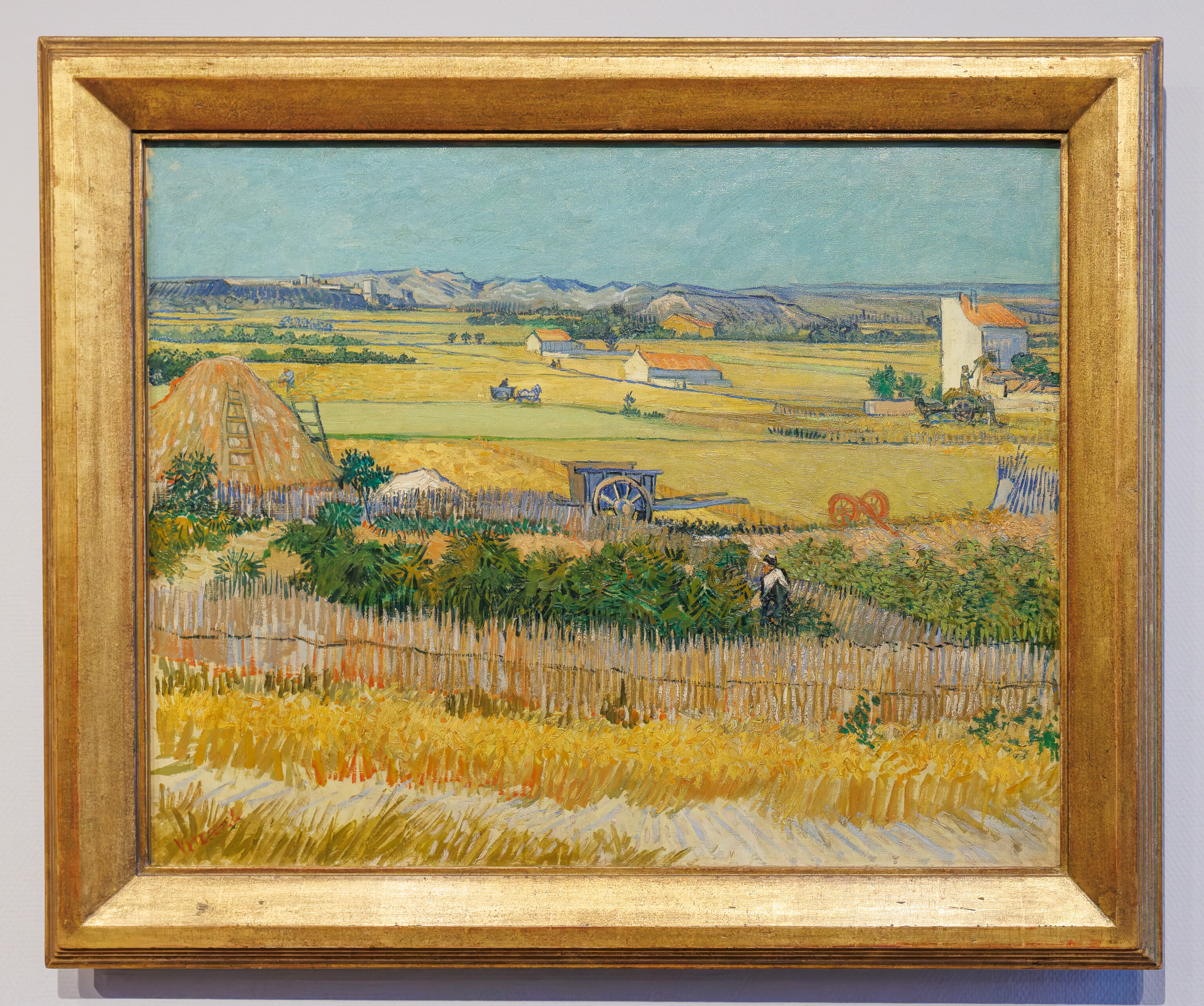
We did see the original painting!
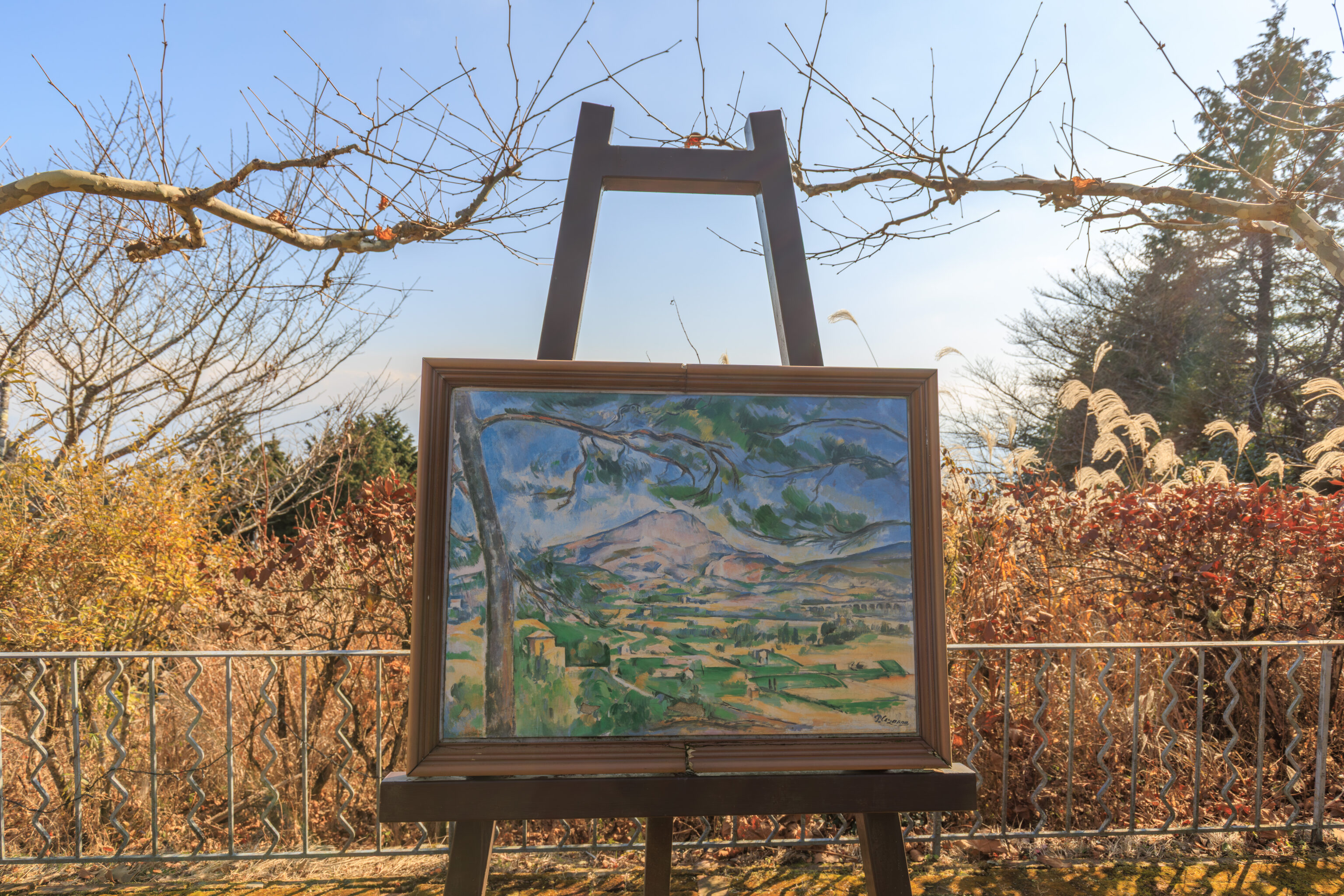
Mount Sainte-Victoire
1885-87. Oil on canvas”
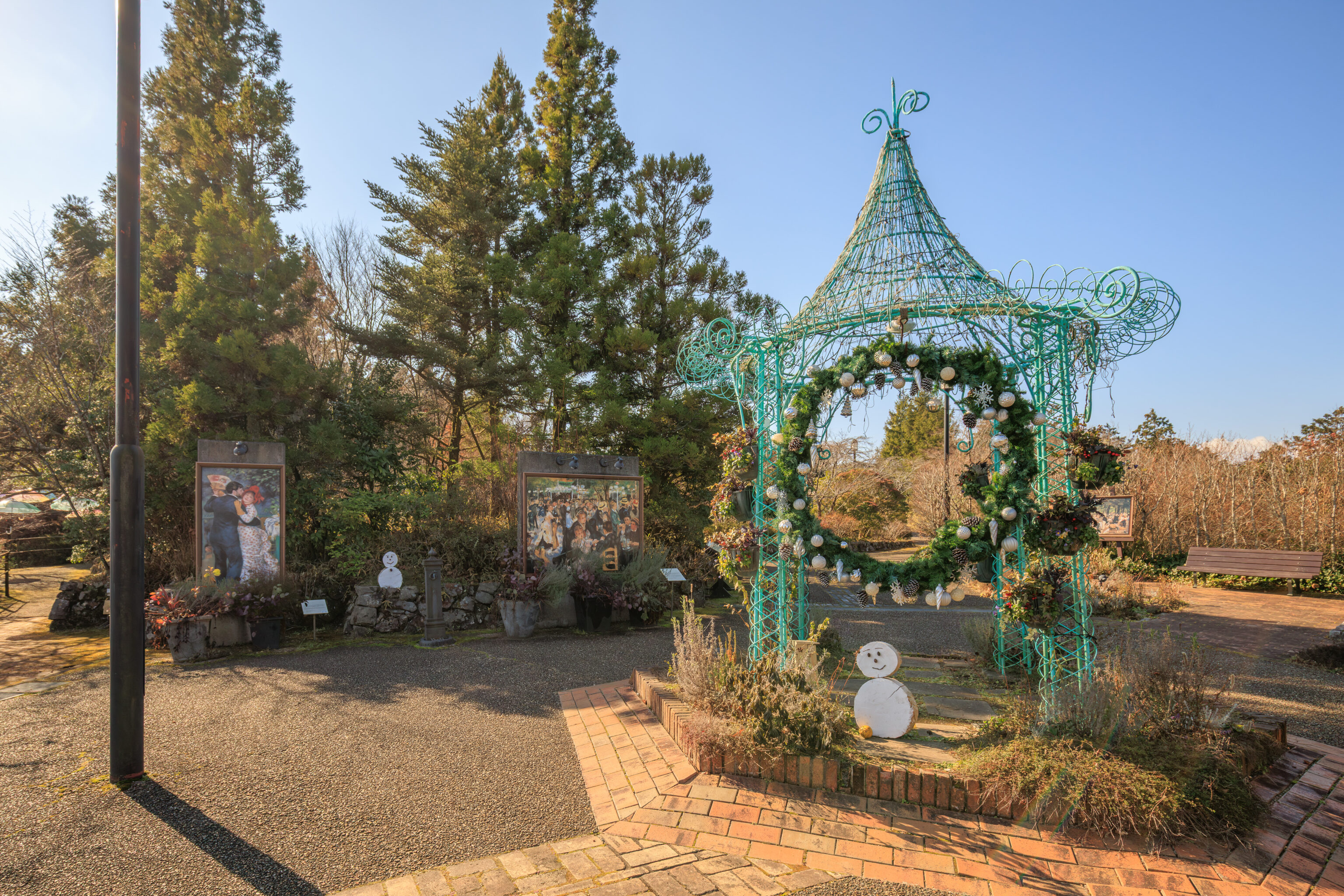
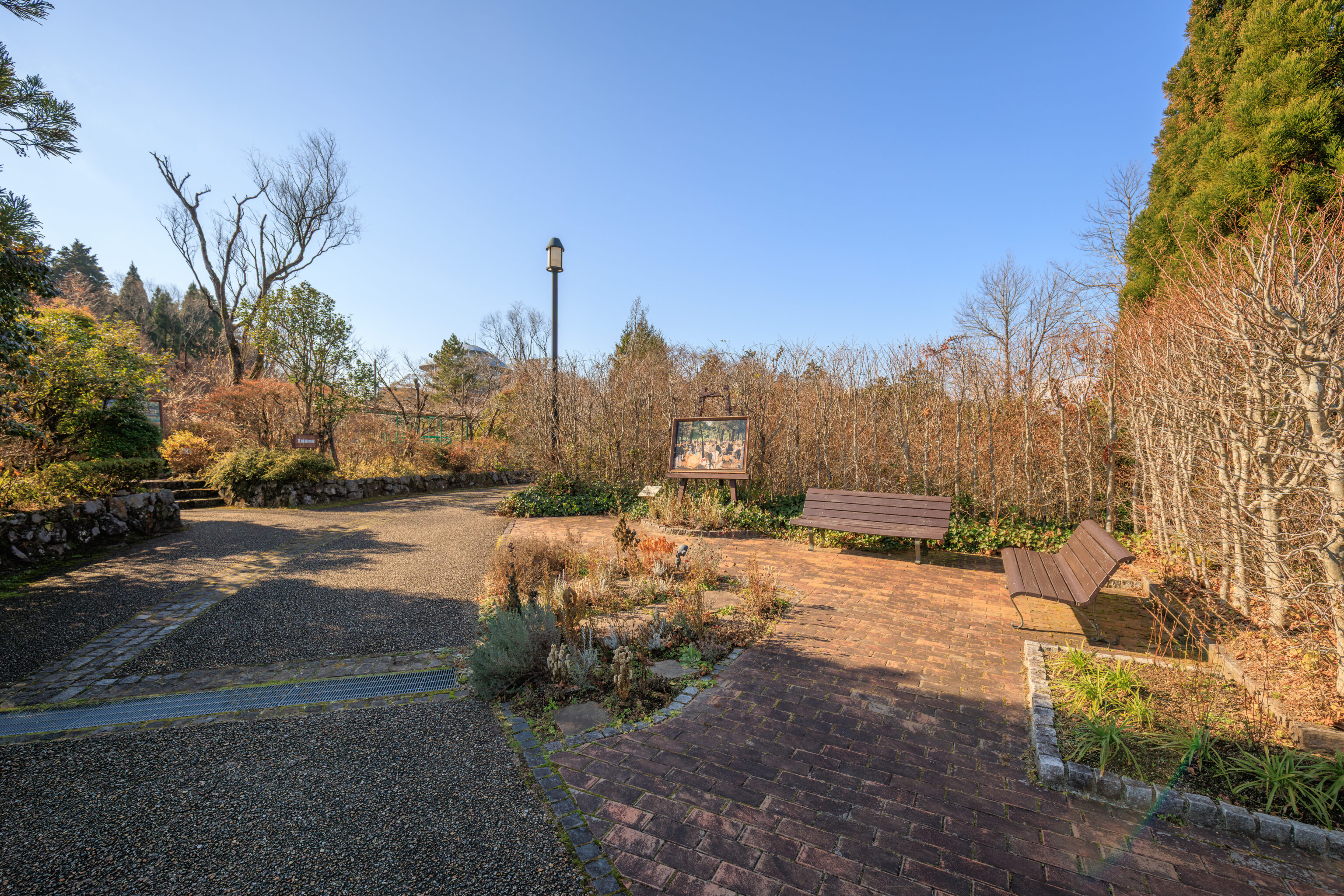
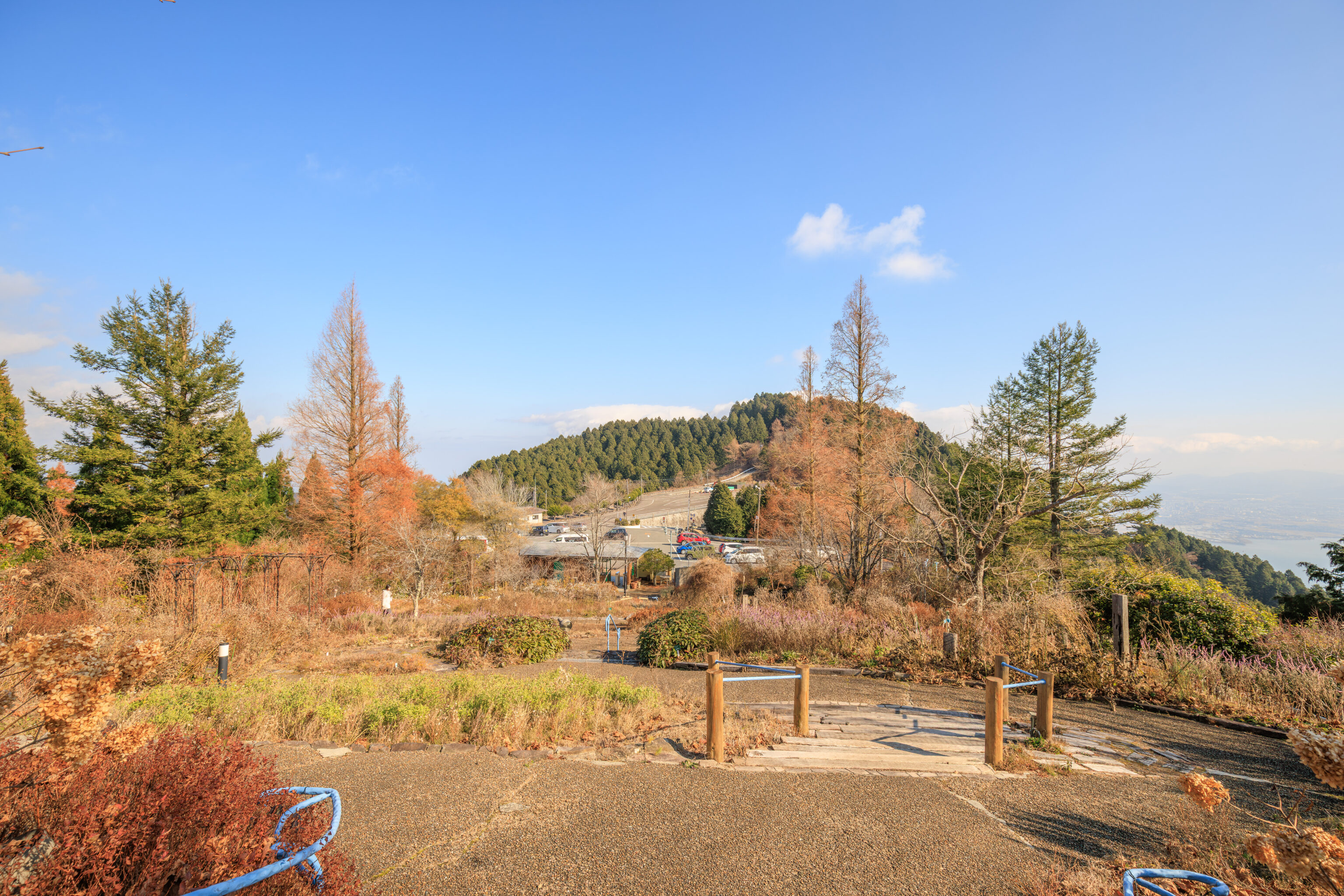
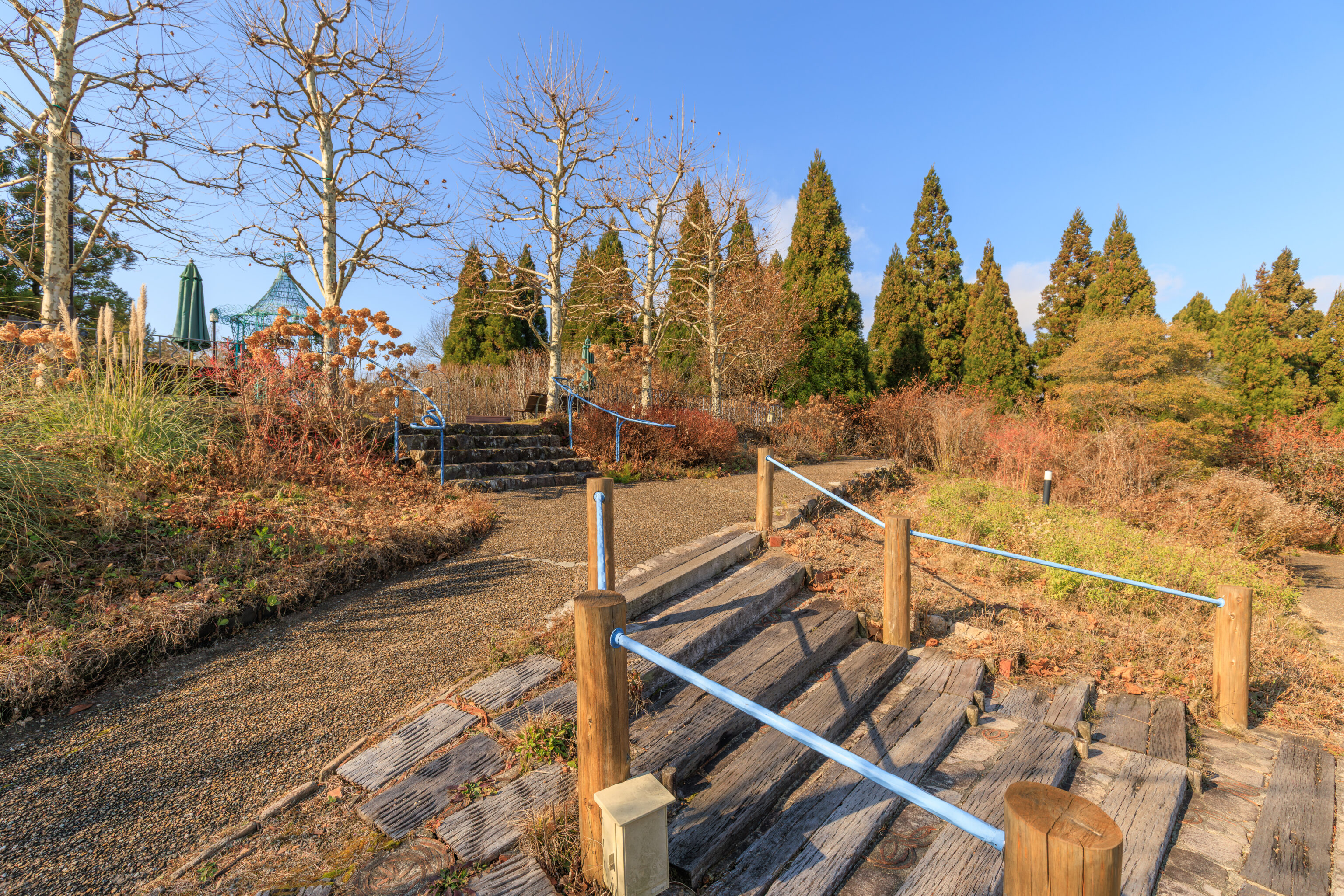
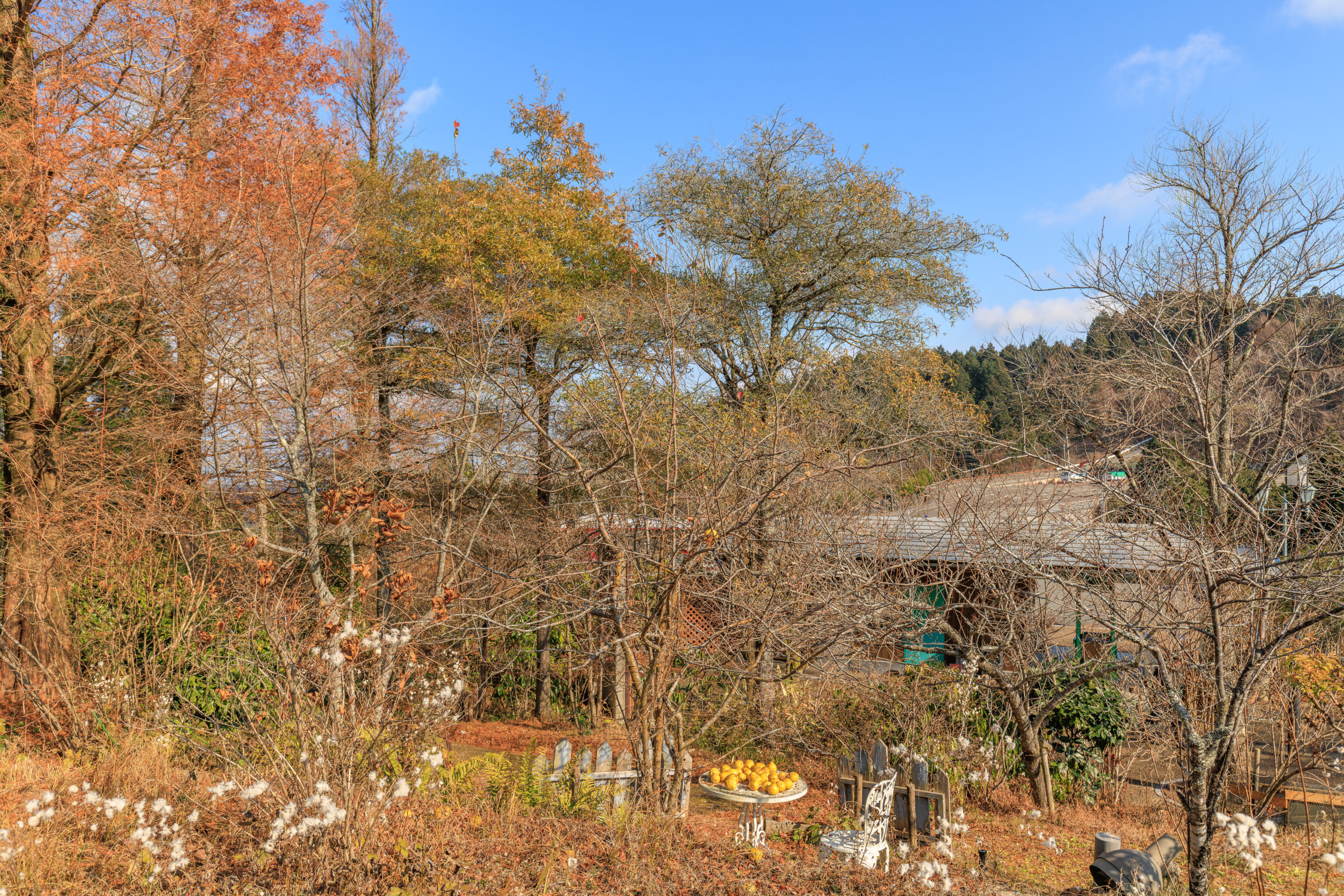
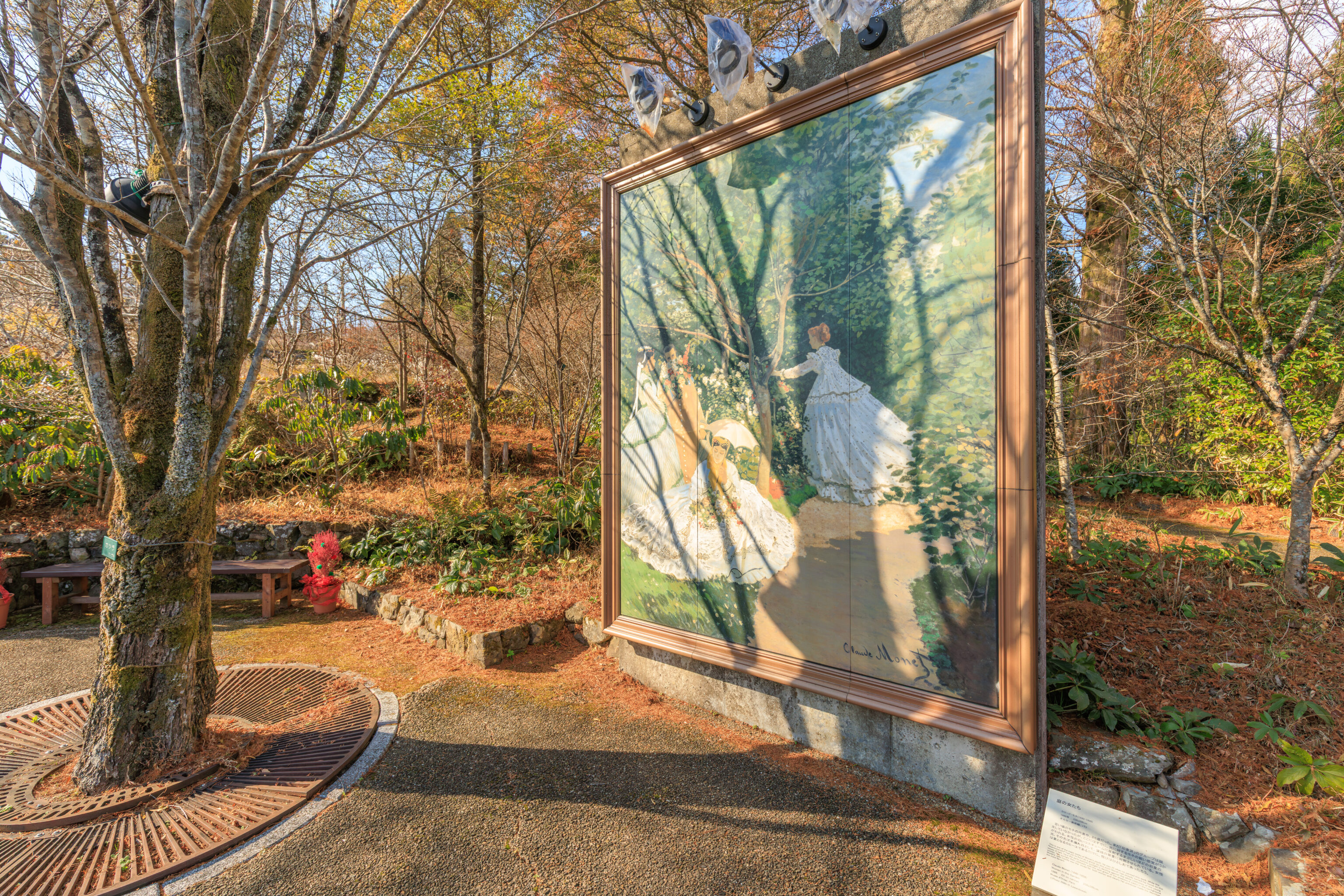
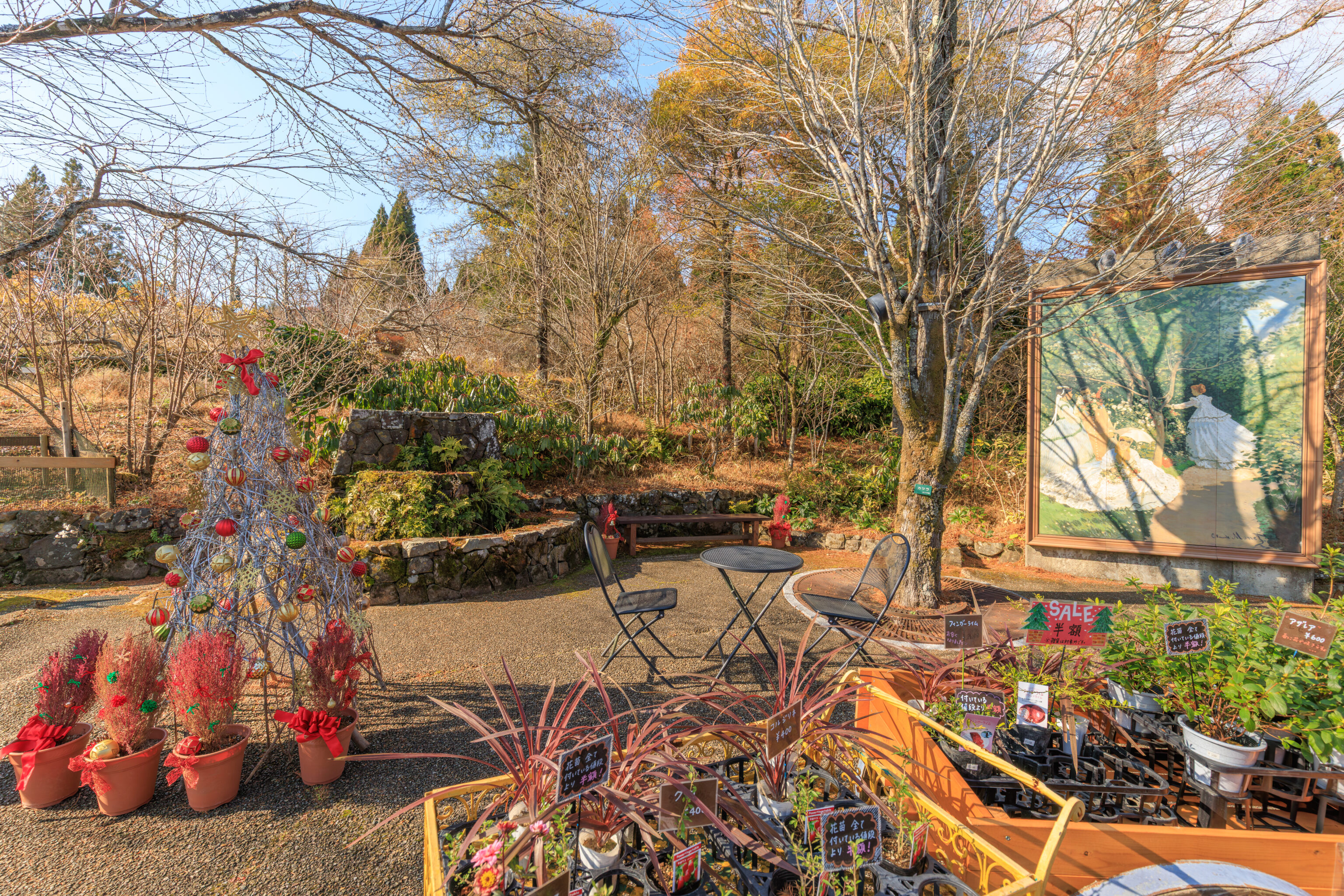
We quickly walked through the rest of the museum, exiting via its east entrance by its parking lot. The museum may be more interesting when the flowers are in bloom. Right now though, it was good for a quick walk through but definitely a place that can be easily skipped without really missing anything.
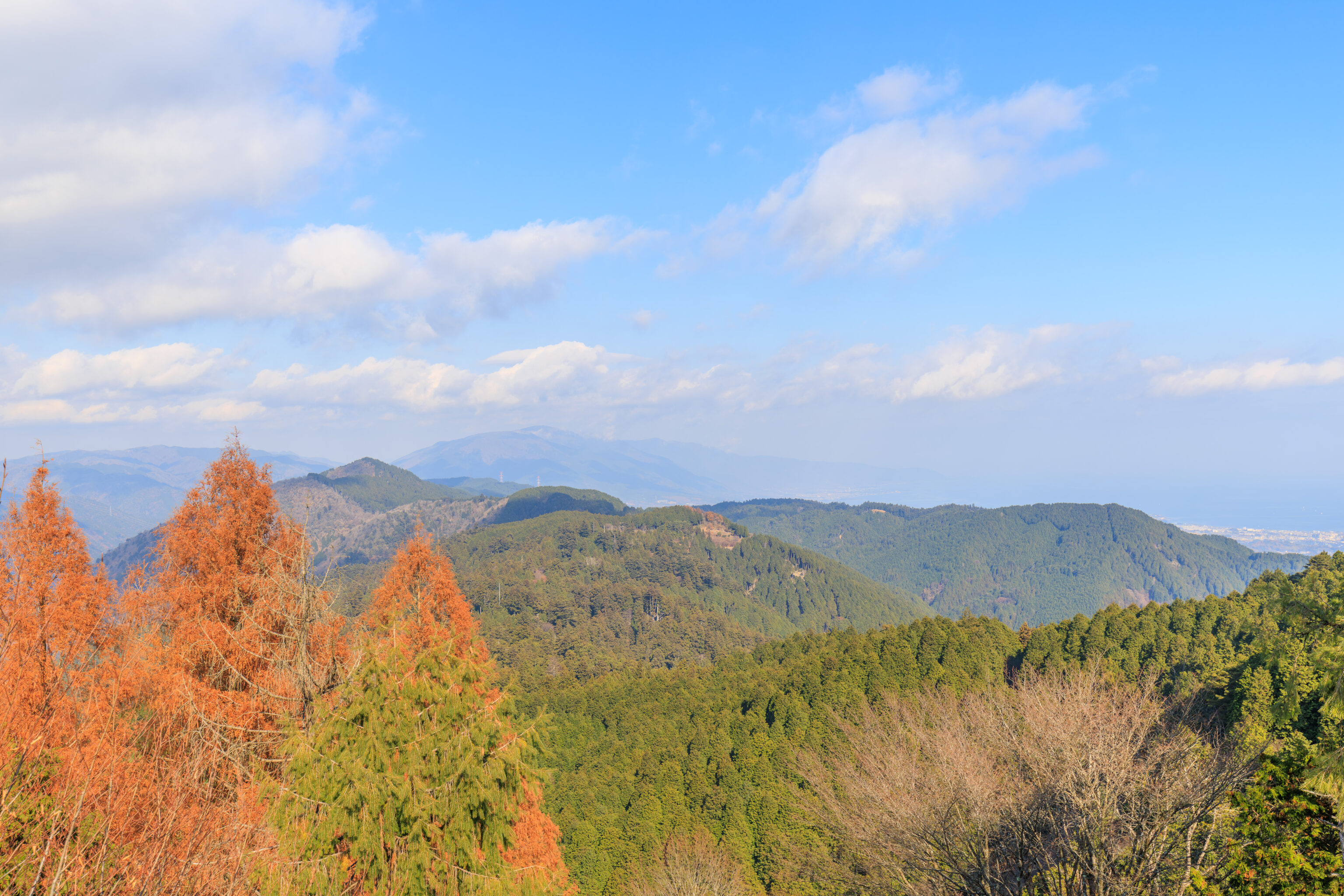
The view to the north reveals mostly forested mountaintops.
To Enryaku-ji
At this point, there seemed like two ways to go. The most direct route would be to continue walking east. There is a path marked on OpenStreetMap which goes by the actual summit of Mt. Hiei, perhaps about 60 feet higher than the high point within the Garden Museum. But we didn’t have any information about this route. If it turned out to be sketchy, we would need to turn back.
The other way is to go back to by the aerial tram station and walk on an indirect path. This at least seemed to be the way that a sign suggested going and we could see parts of the path on Google Maps’ satellite view.
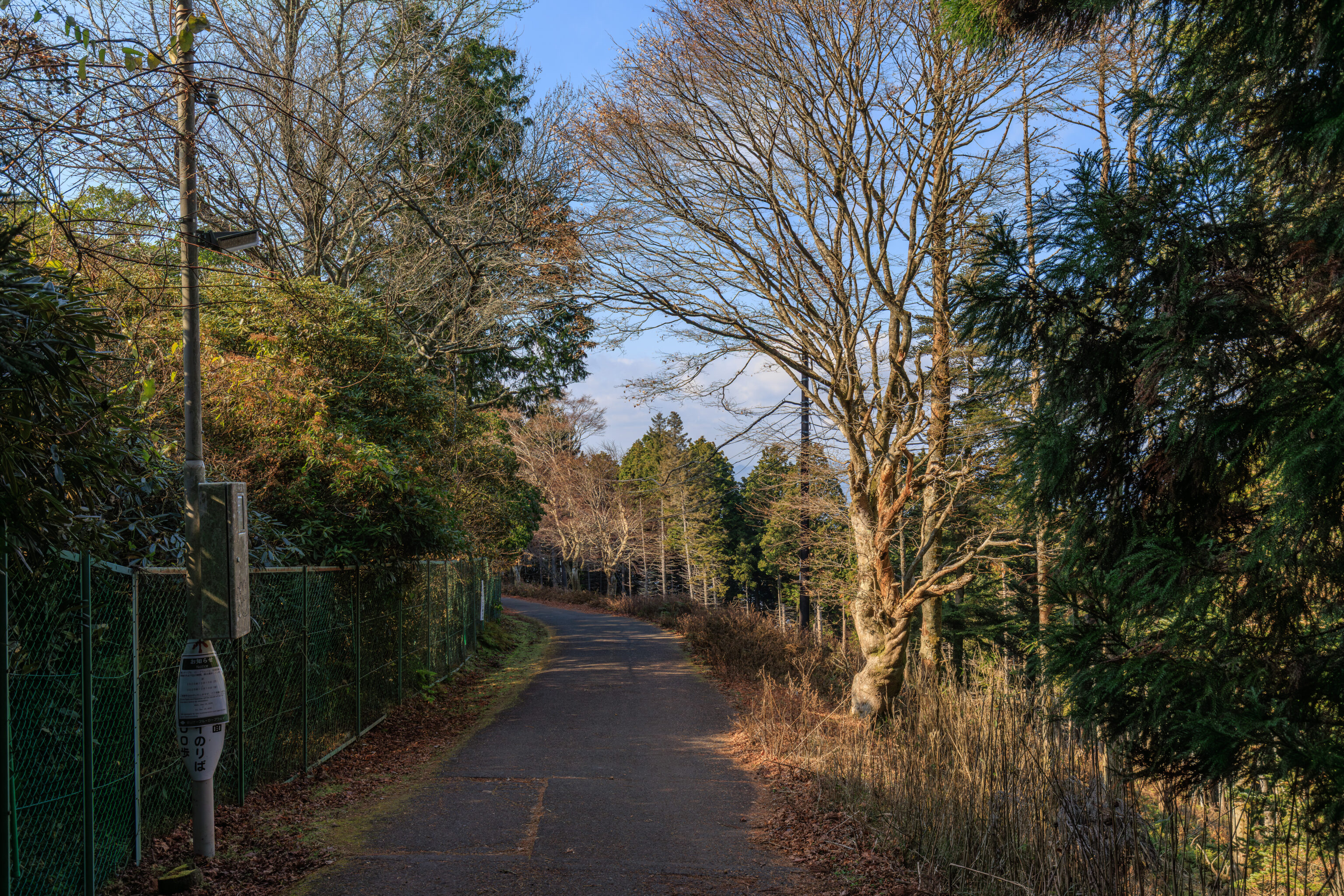
We started walking back to the west on the north side of the Garden Museum. The museum is on the other side of the fence on our left.
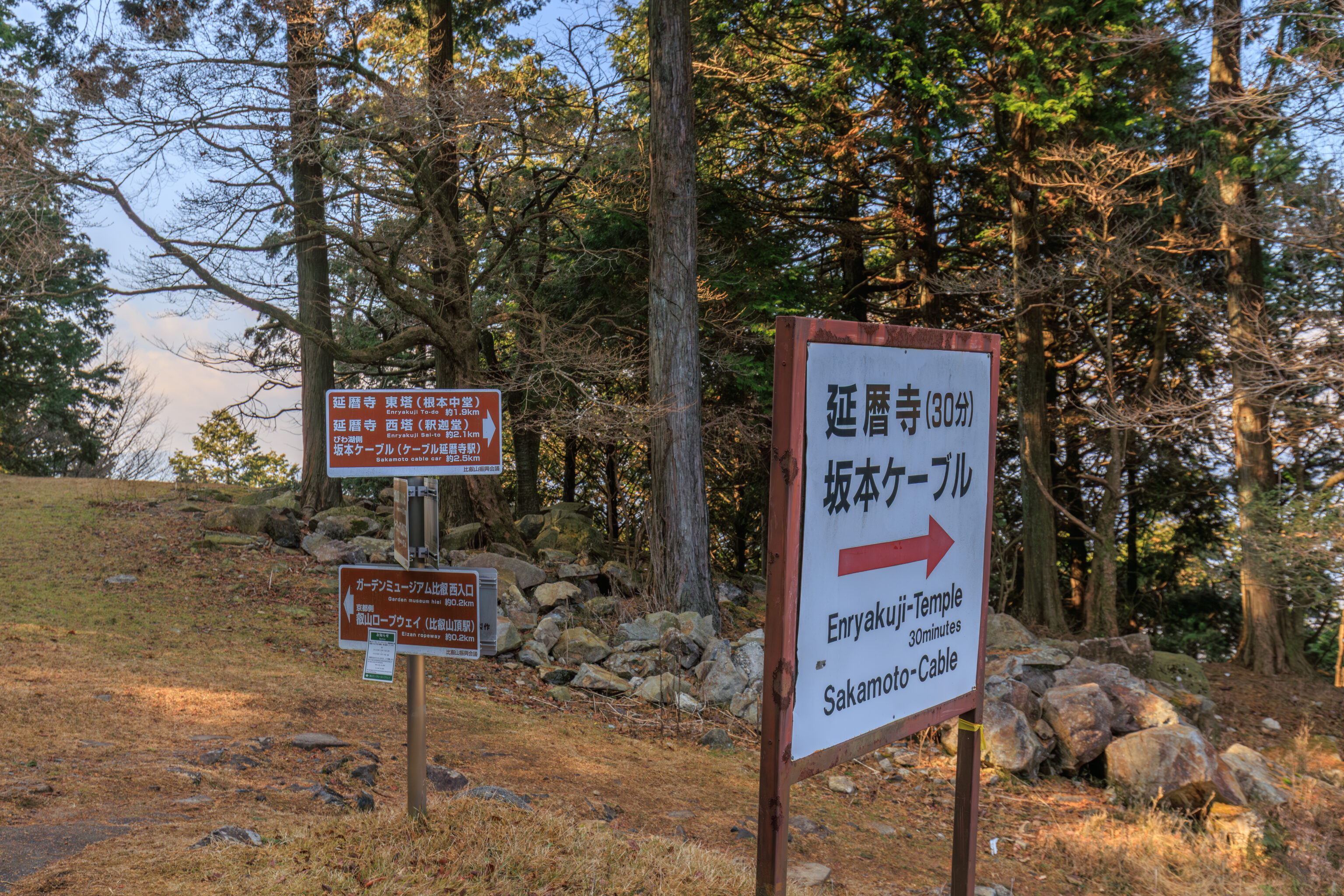
We expected to need to backtrack past the funicular station. However, we came across this sign saying we could turn to the right here to get to Enryaku-ji in 30 minutes, a distance of 2km or so.
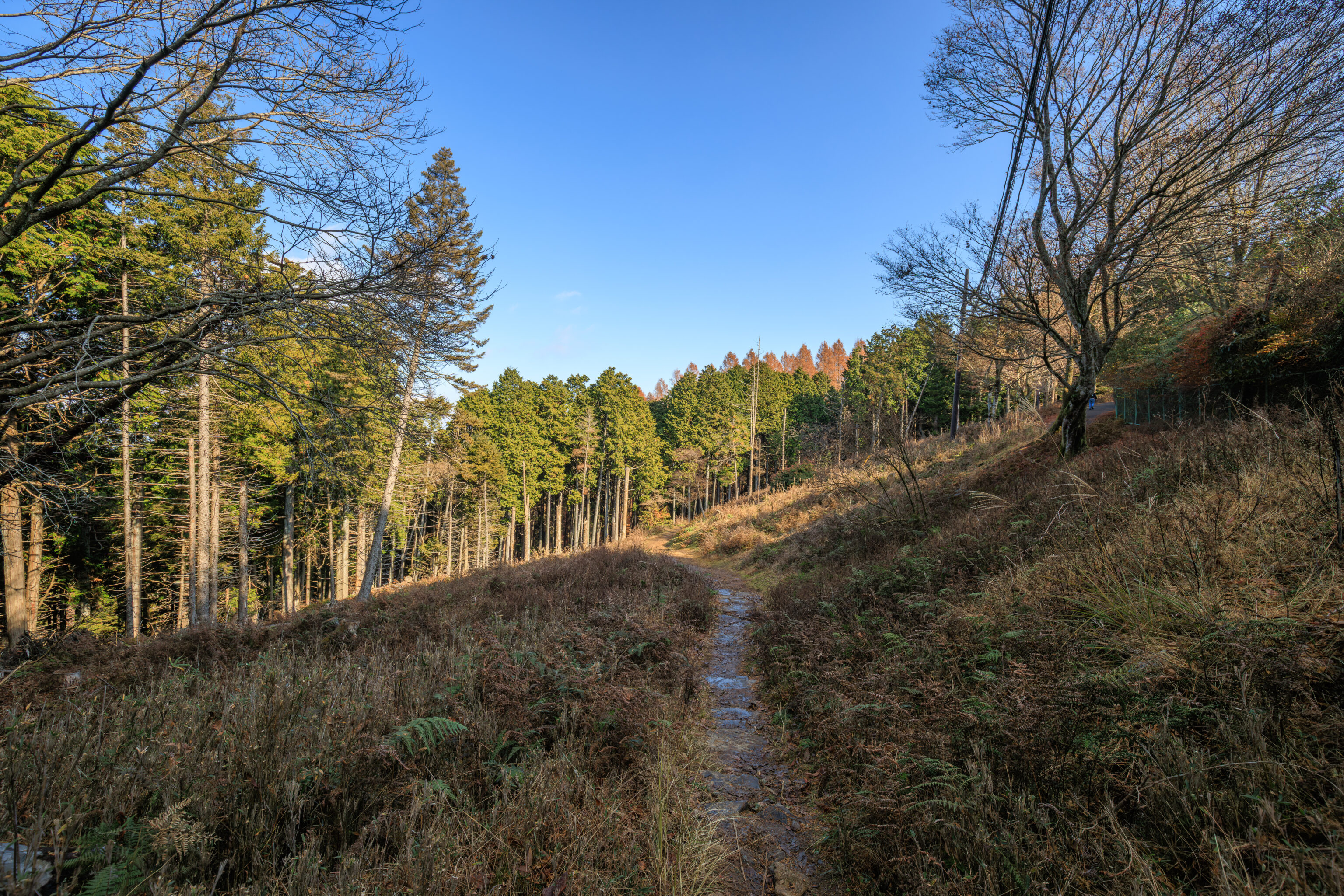
The path looked really narrow and a tad sketchy, particularly as it was muddy in places. The path to the west looked wider and more developed on Google Maps satellite view. But the signs saying to go this way were pretty prominent. So, we walked down this muddy path, or perhaps trail.
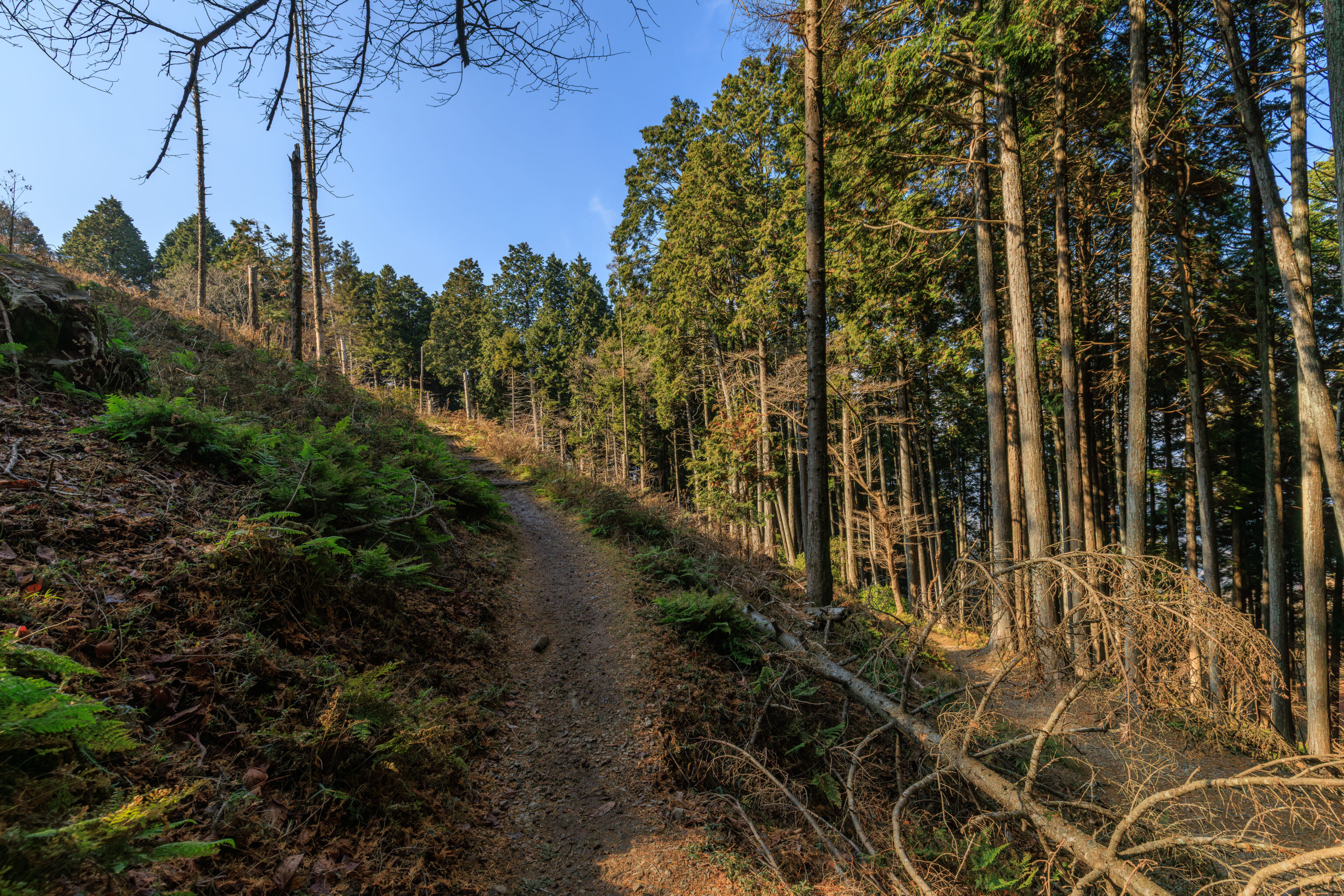
The view looking back at some muddy steps.
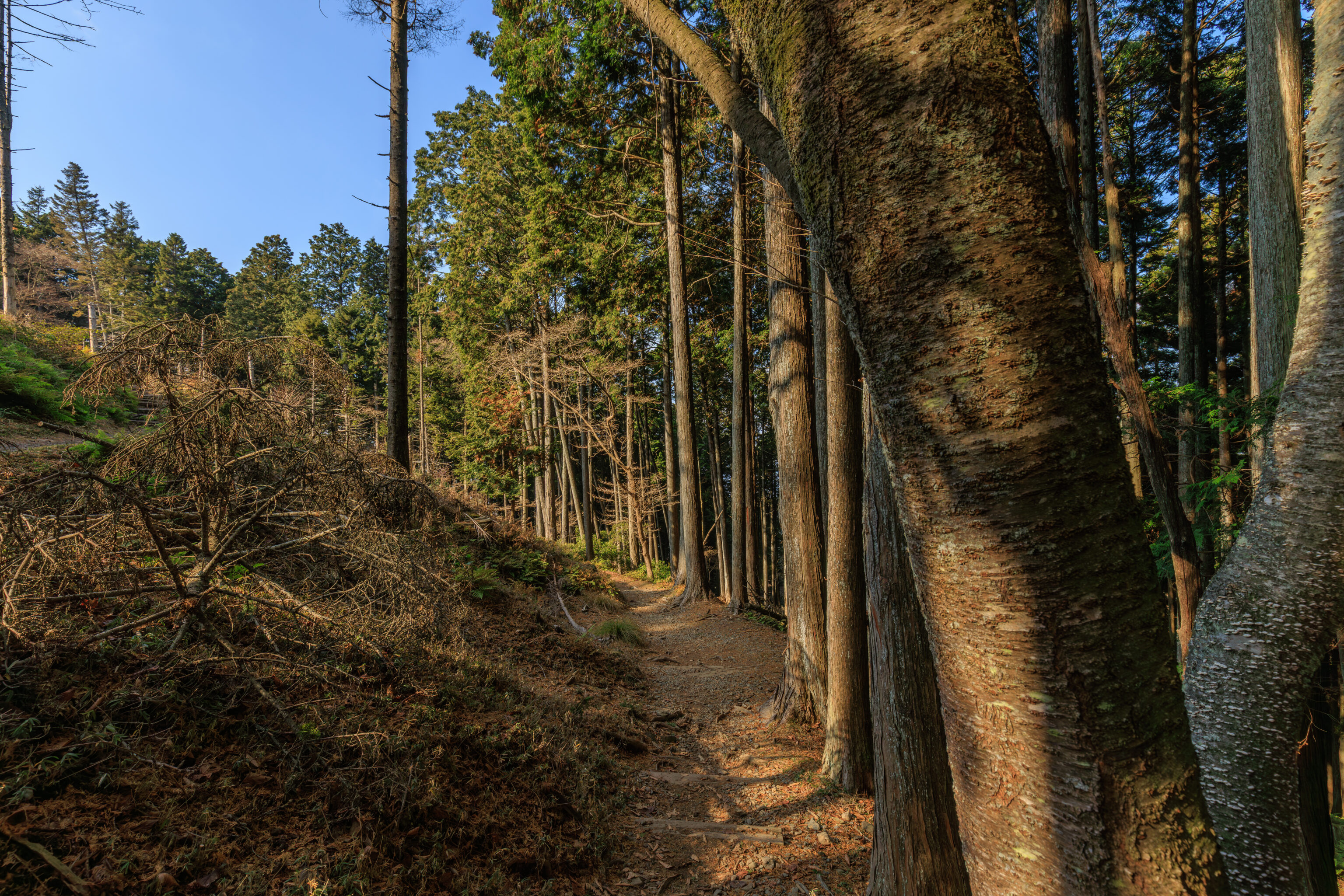
And the way forward…
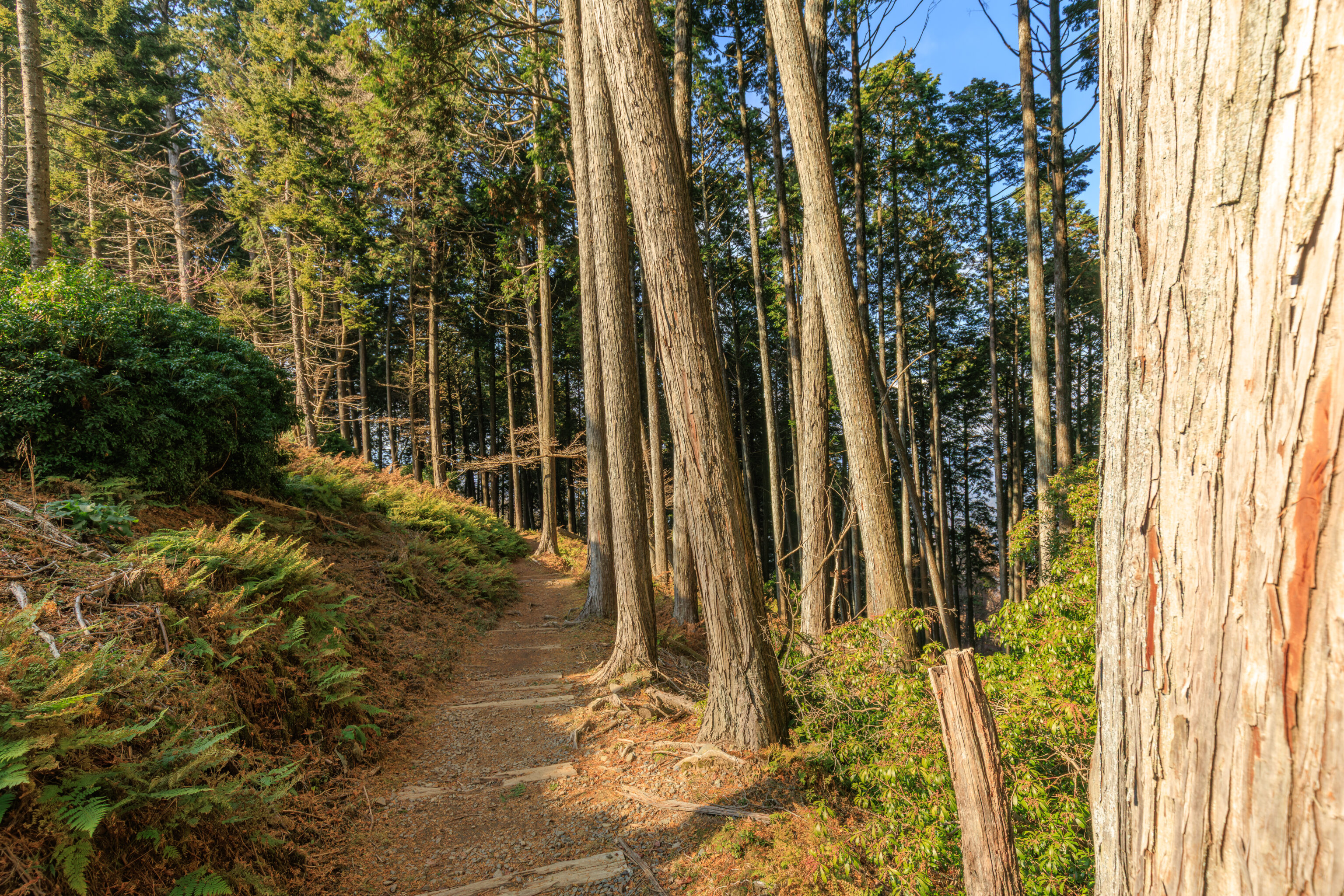
The trail conditions improved with less mud.
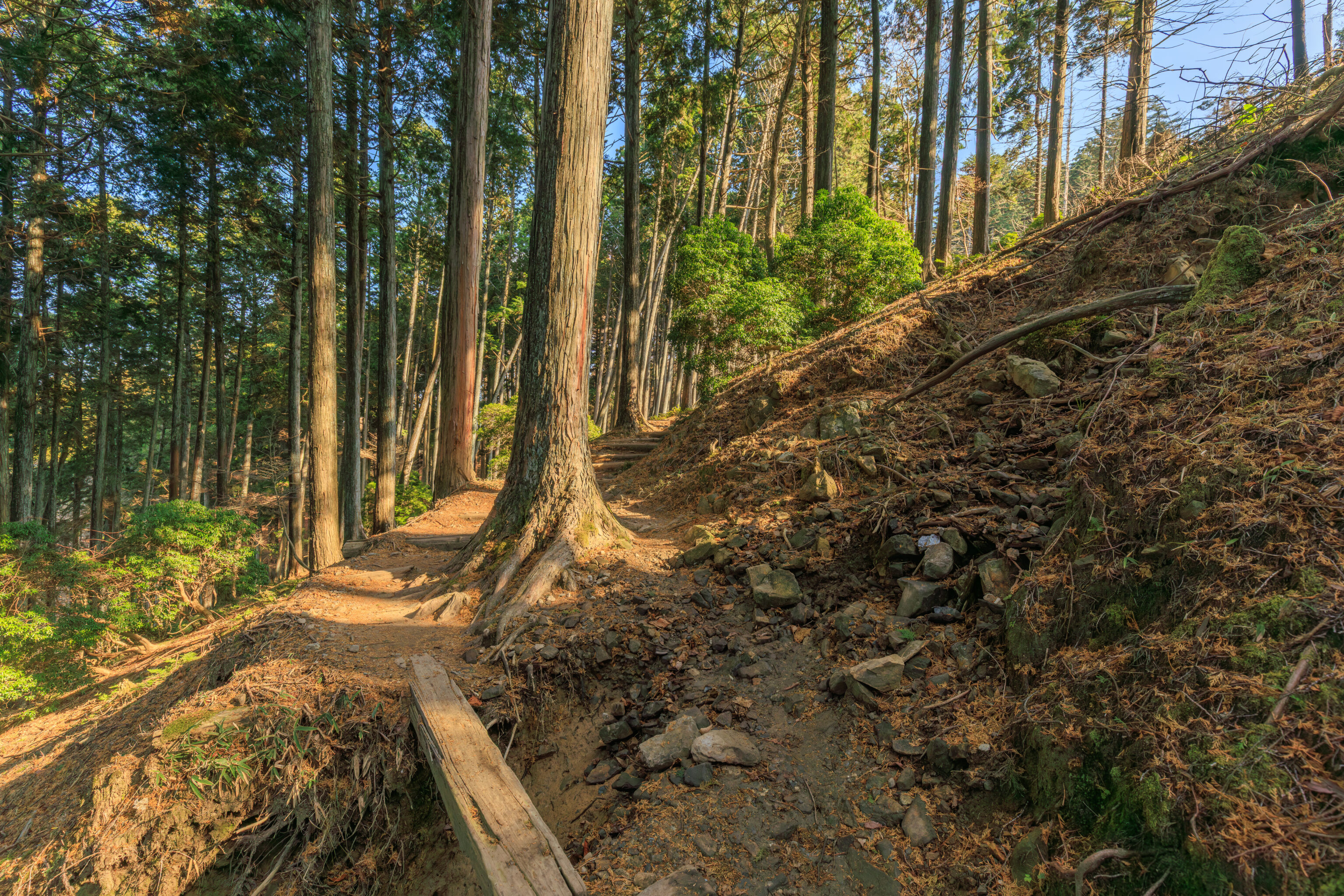
This part was sketchy with just a wooden beam acting as a bridge over a portion of washed out trail.
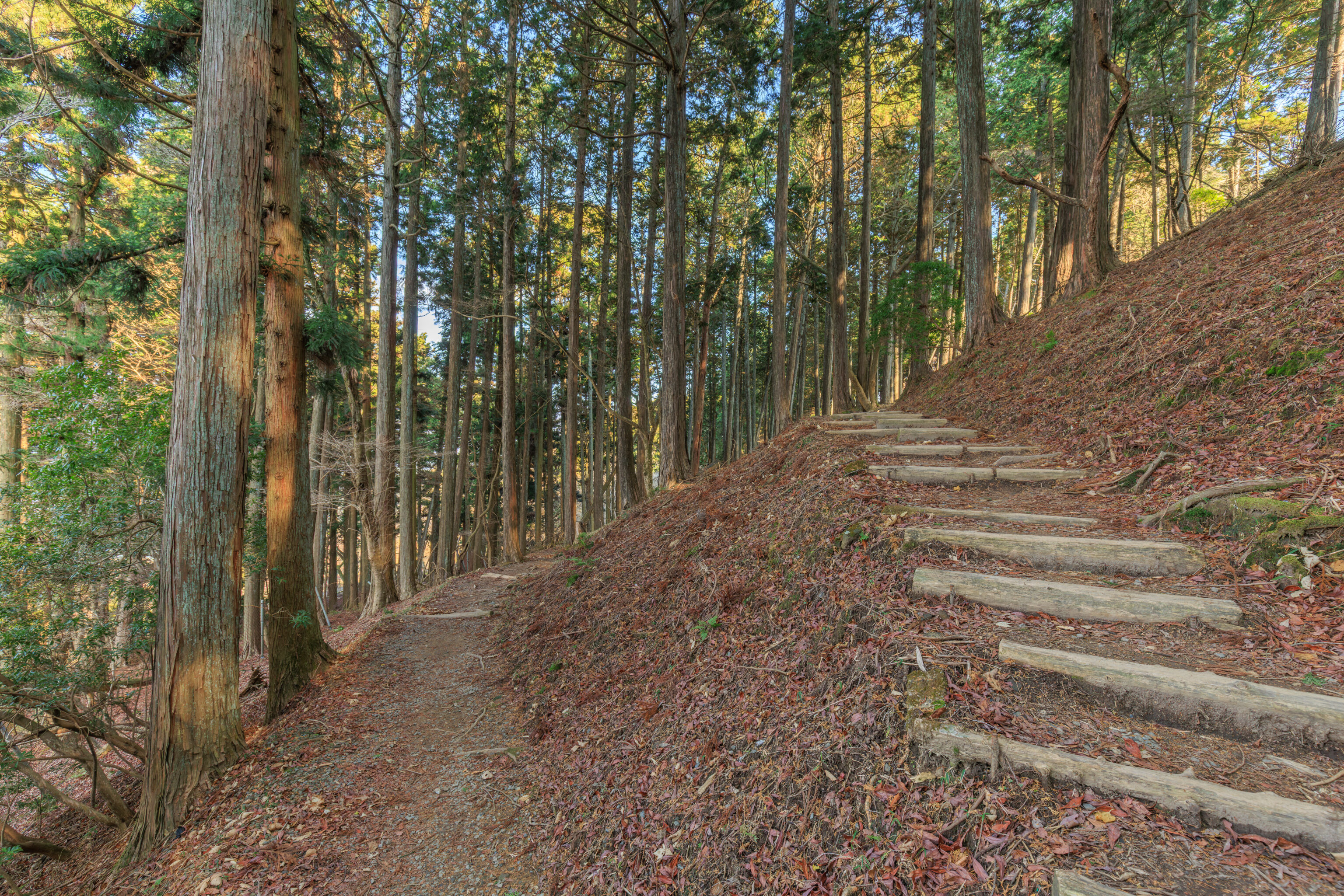
The remainder of this portion of trail was in better condition.
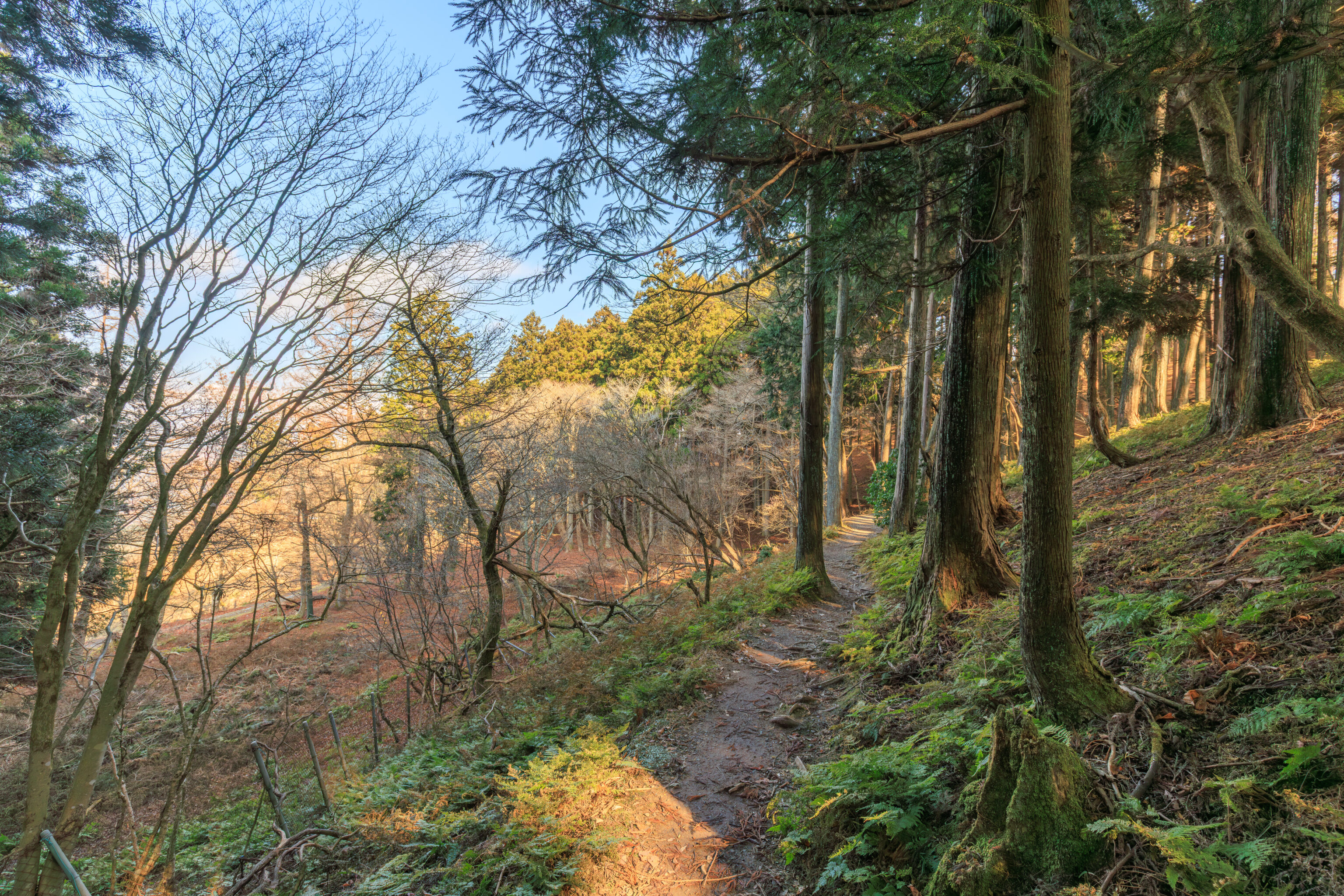
Soon, we could see a much bigger path below us.
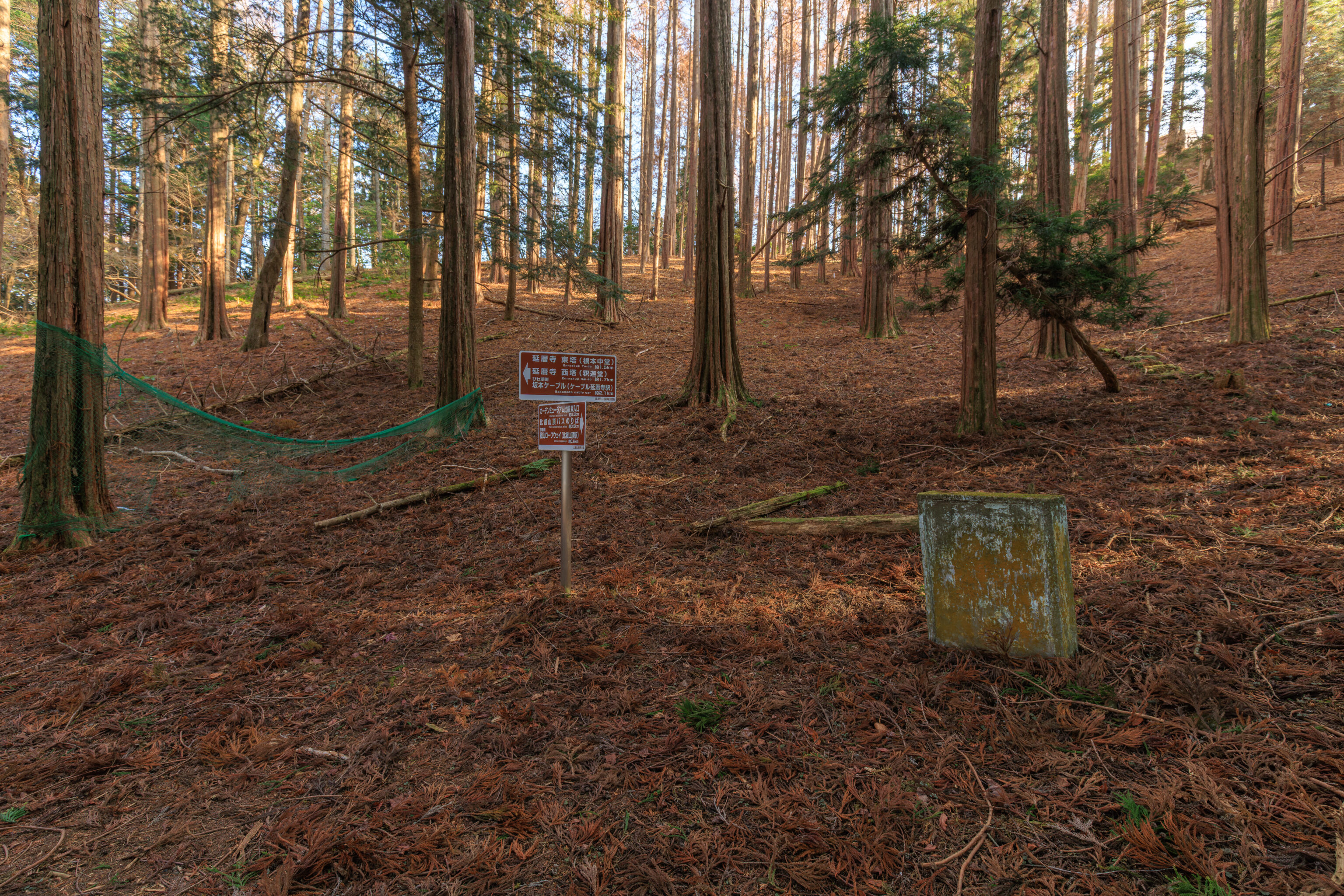
Happily, we joined that larger path and the signs indicated we were going the right way.
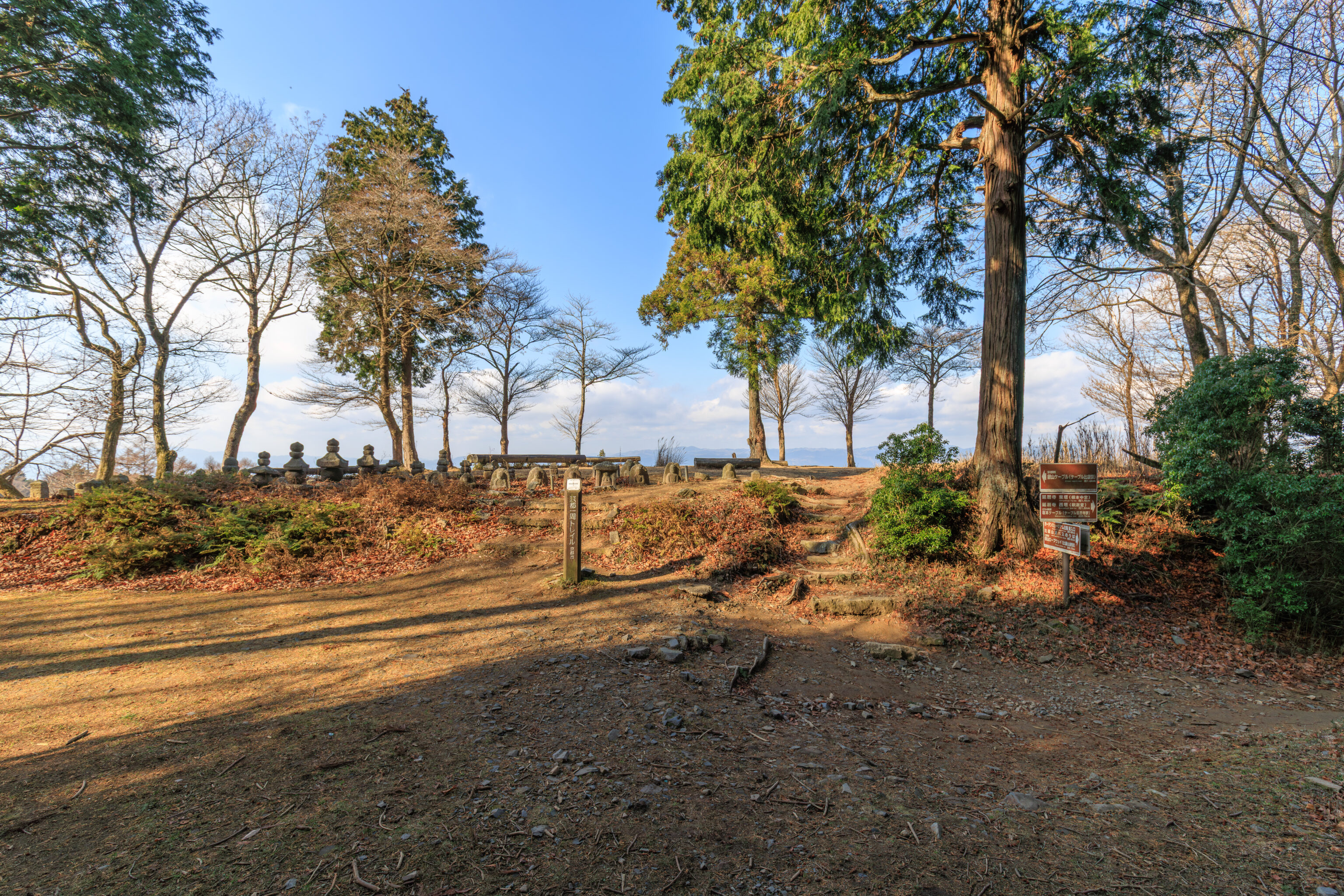
Not far away, we came upon a clearing.
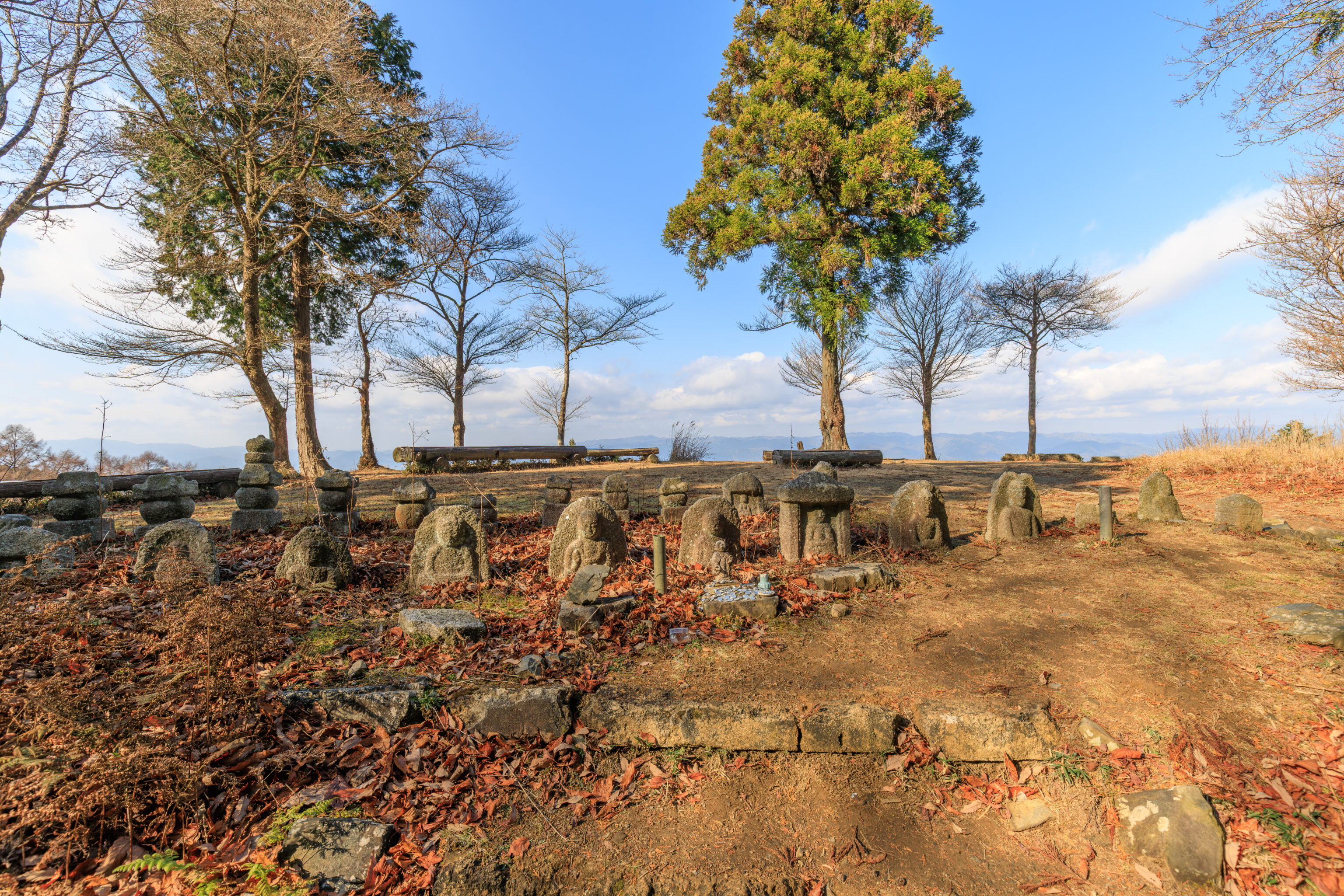
There were some very worn out presumably Buddhist stone sculptures here.
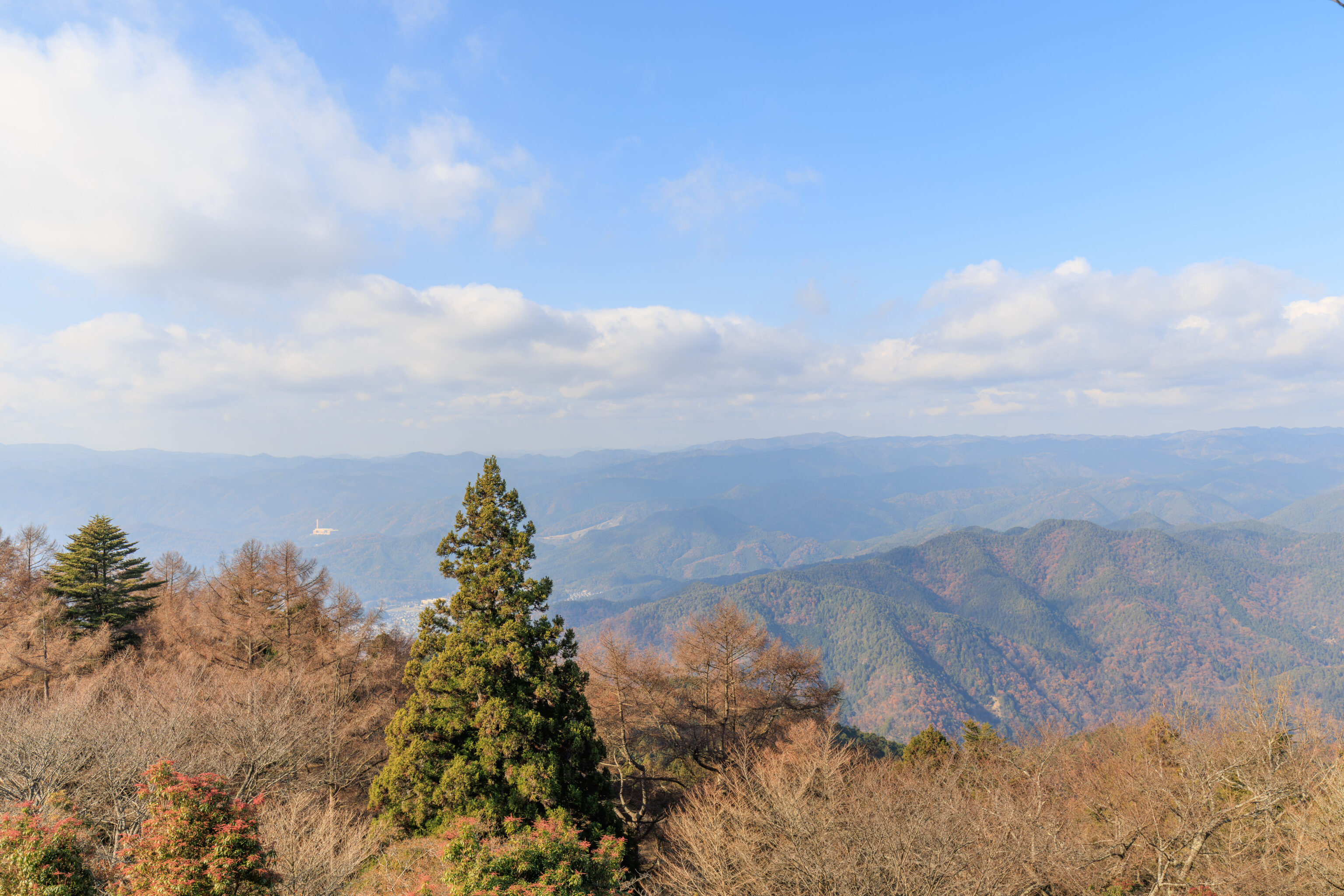
The clearing had a view to the north with the city’s incinerator visible on the left.
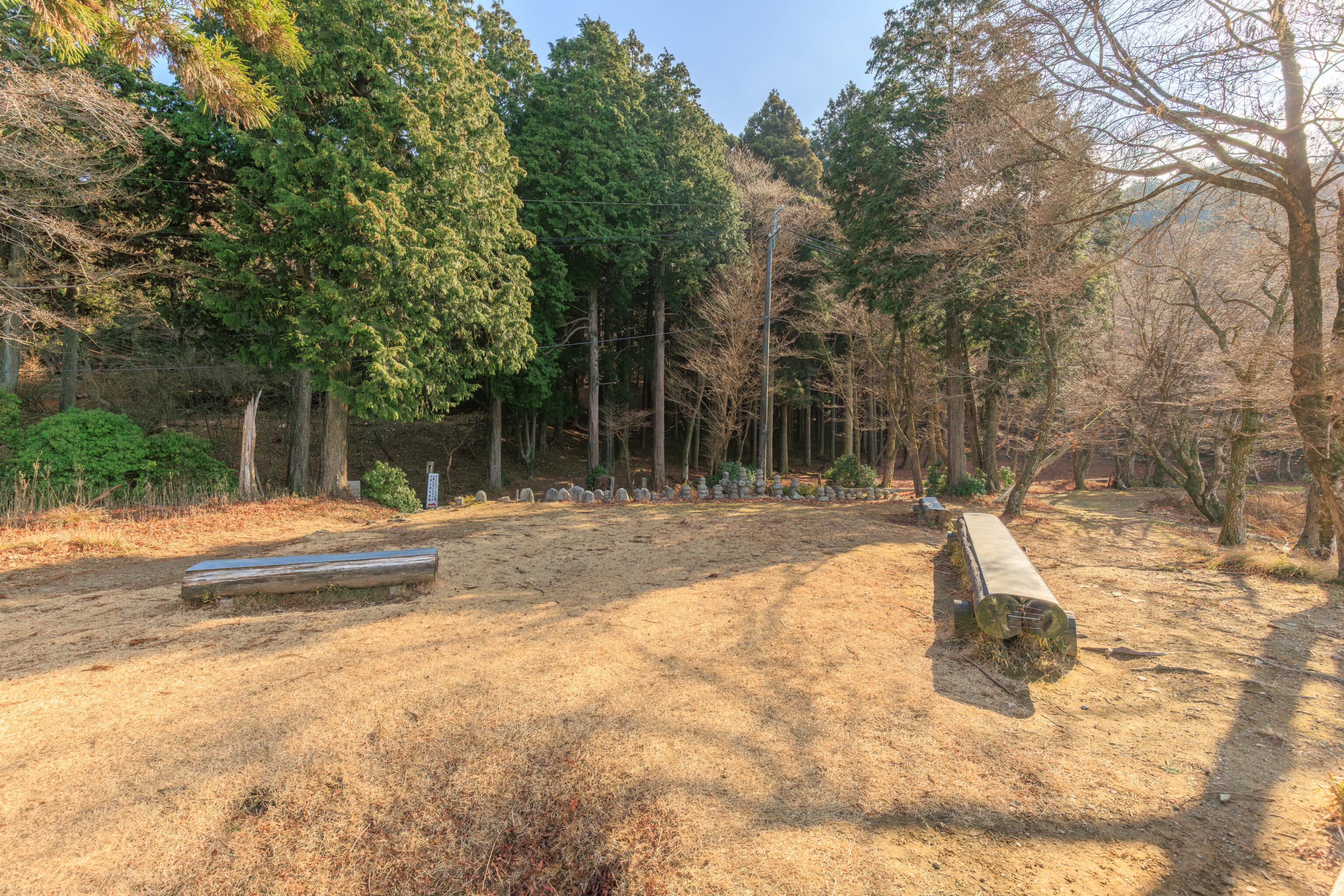
There were some benches as well.
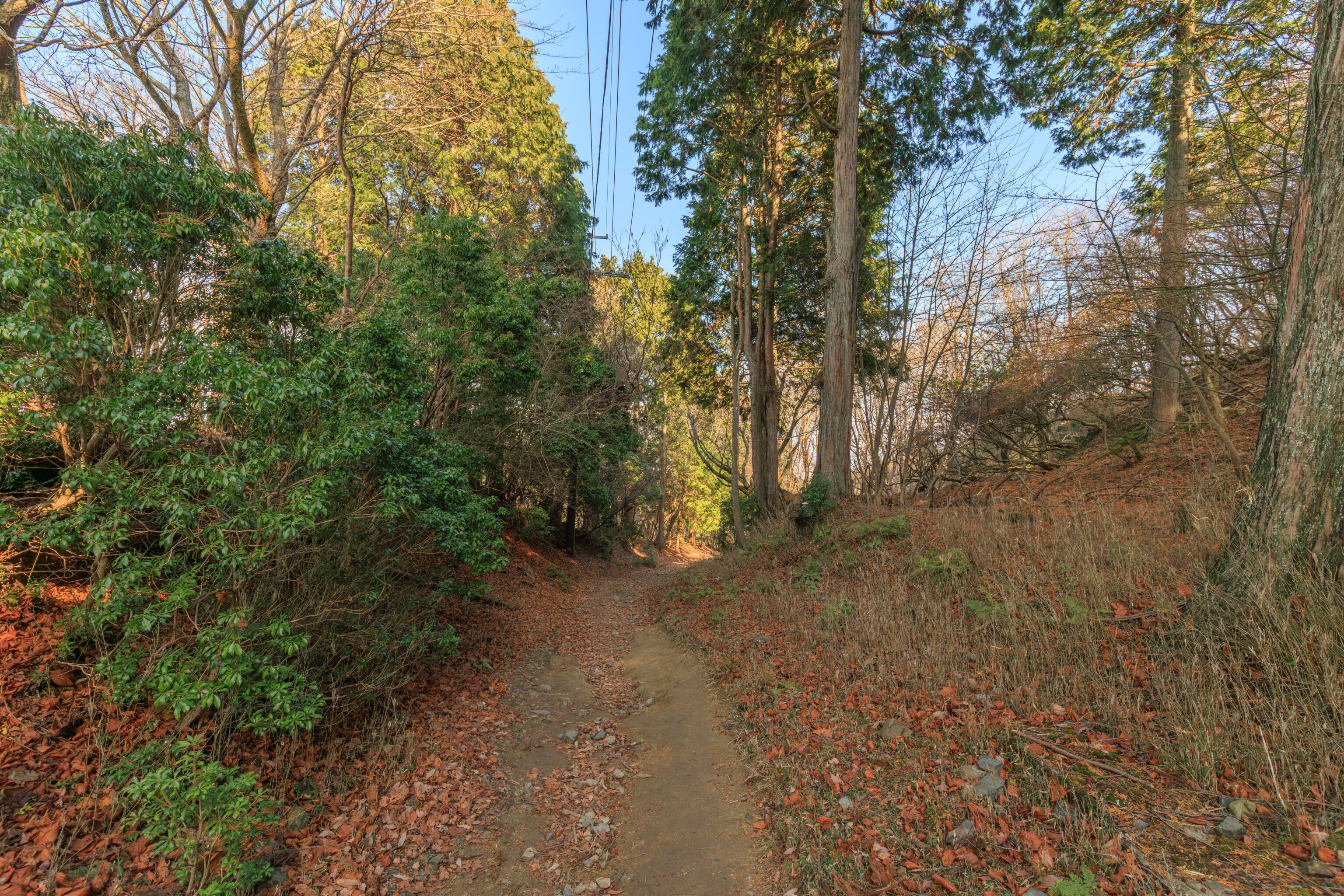
We continued on…
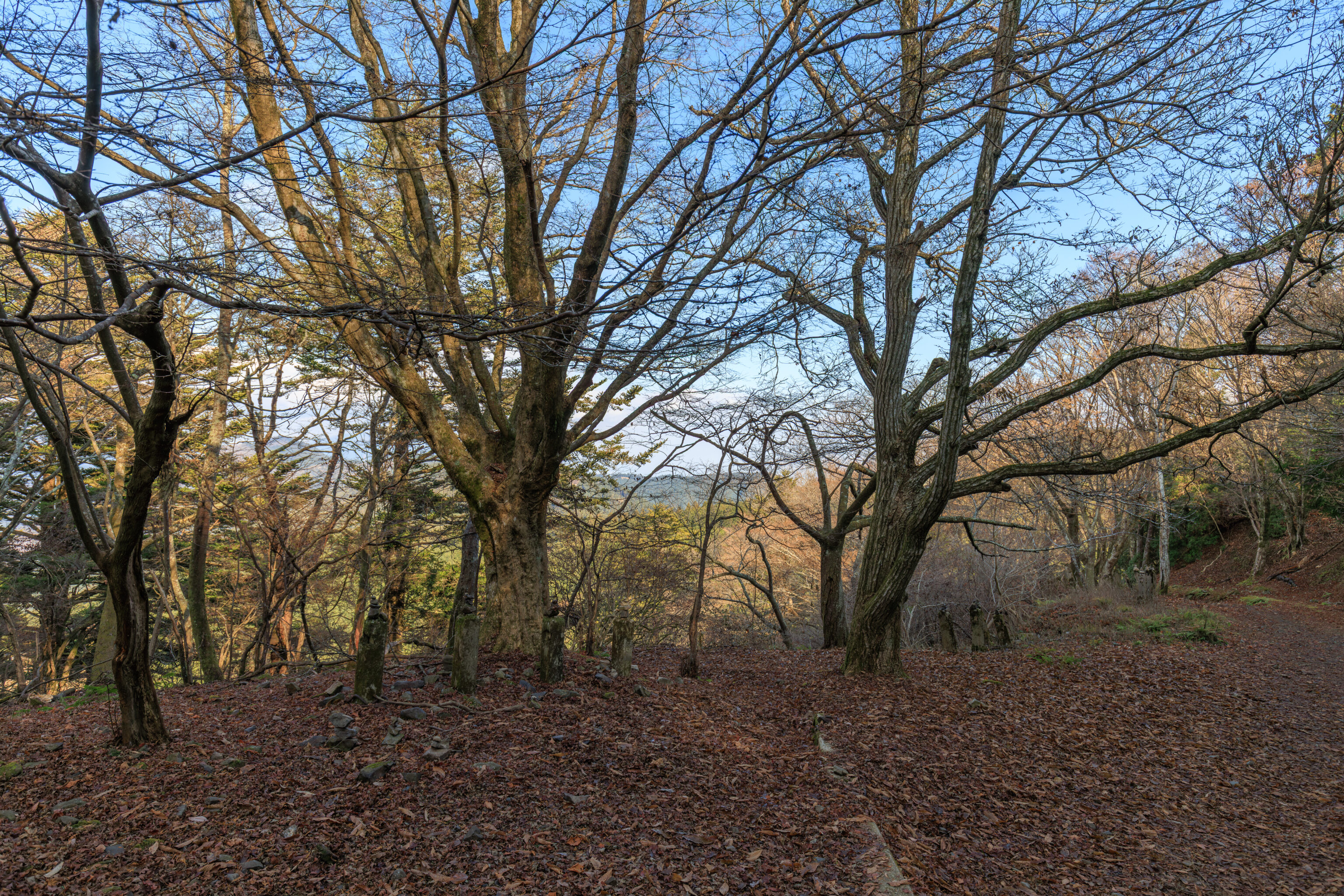
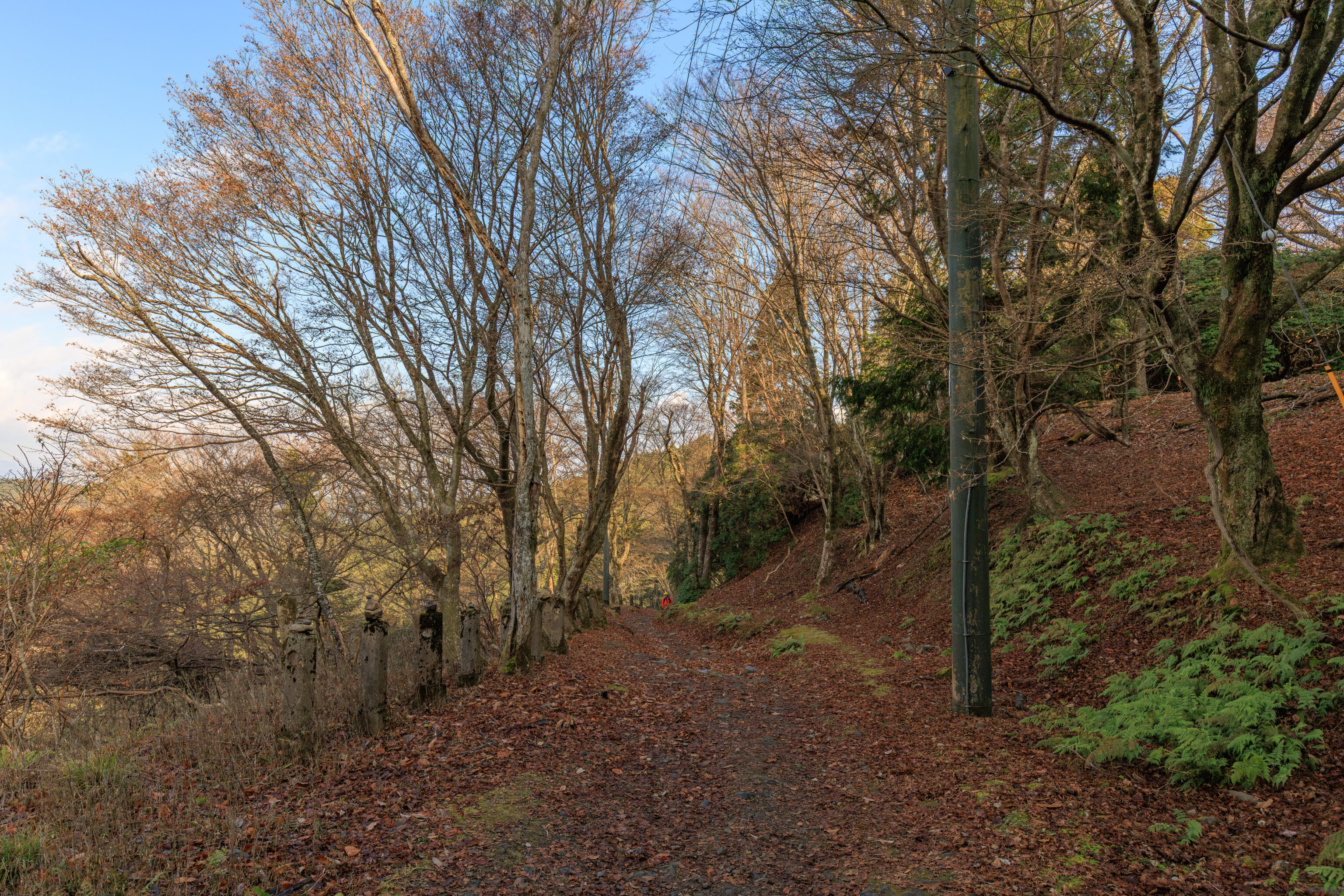
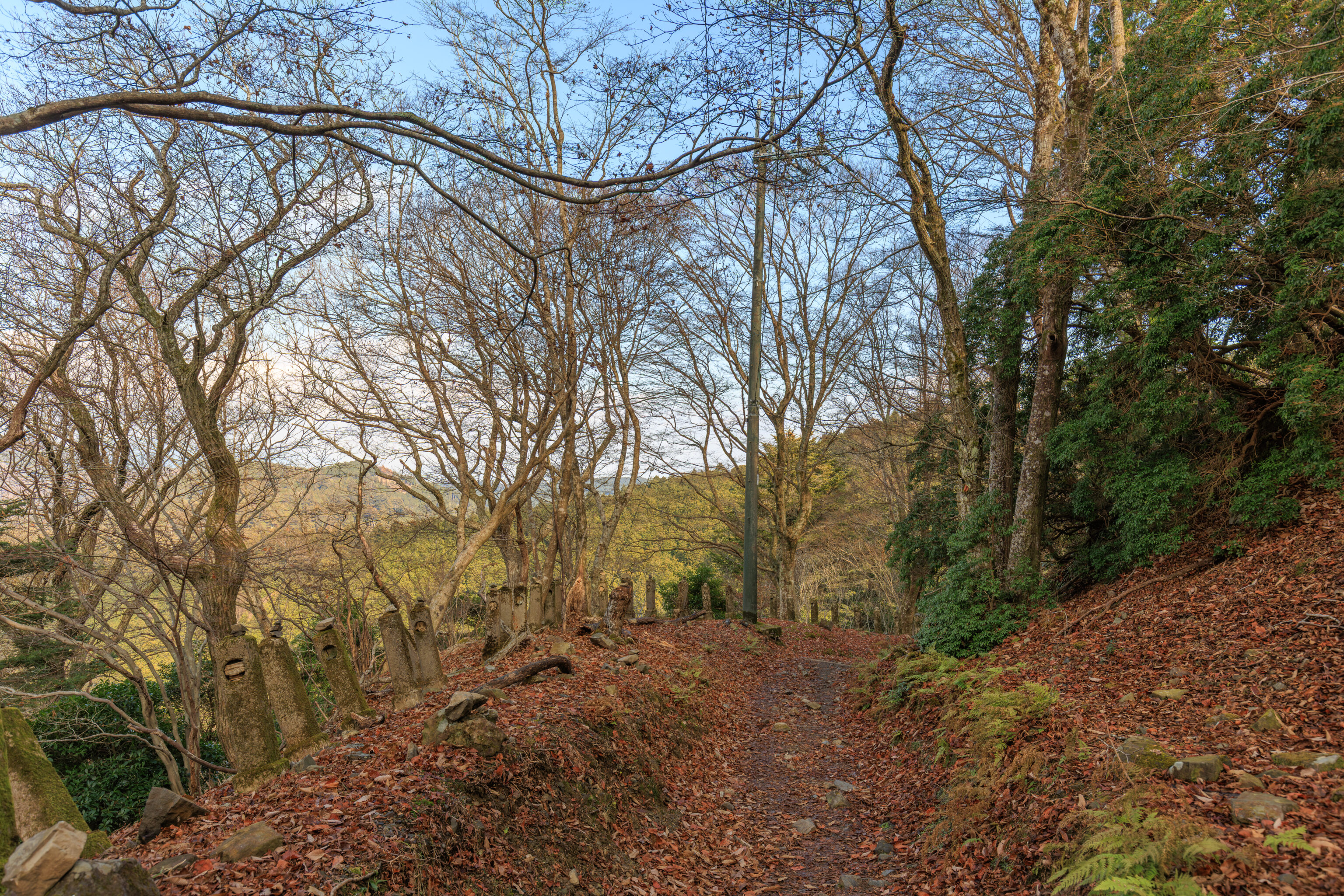
There were some relatively steep drop offs to our left. But at least the path was decent, or at least, much better than where we came from!
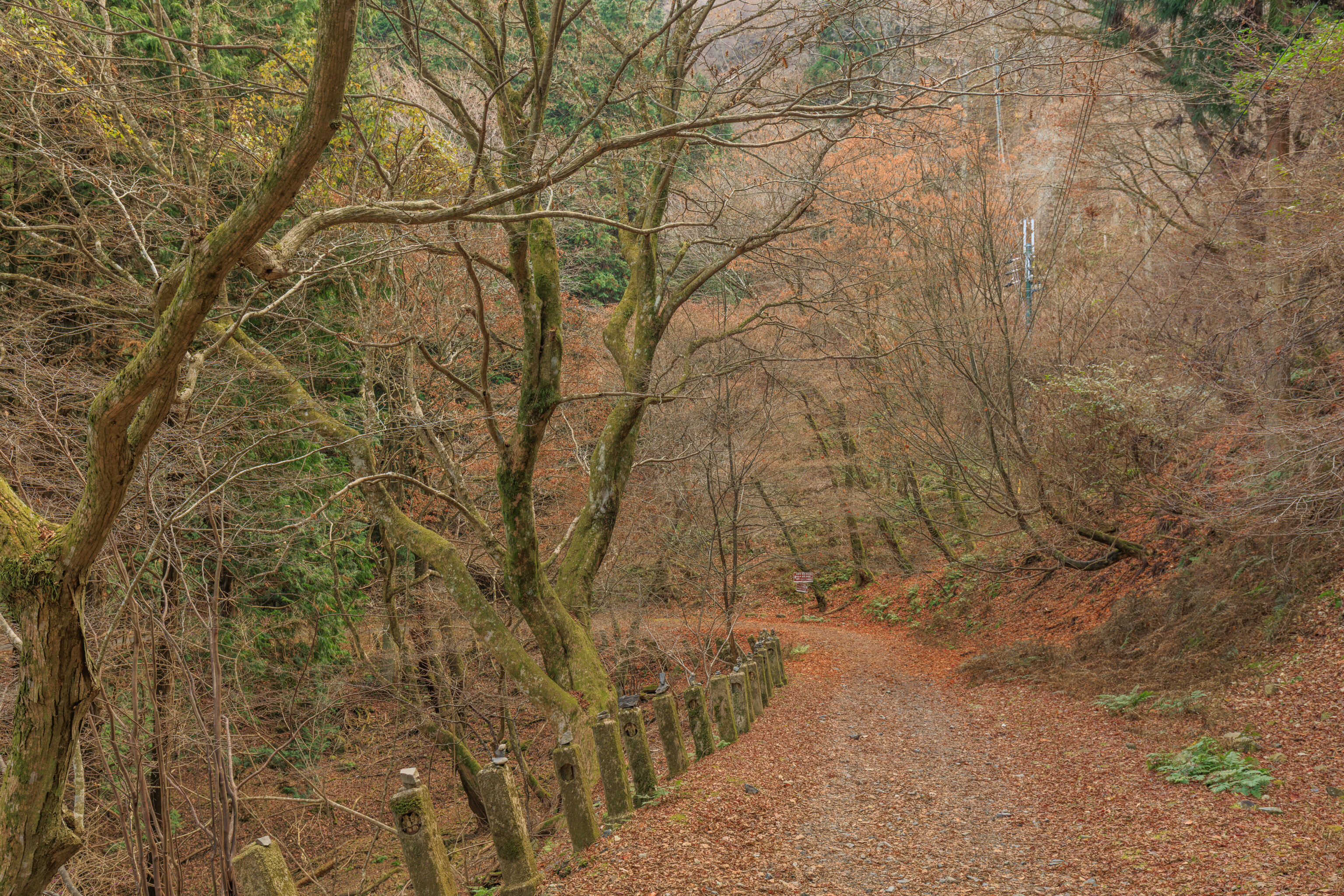
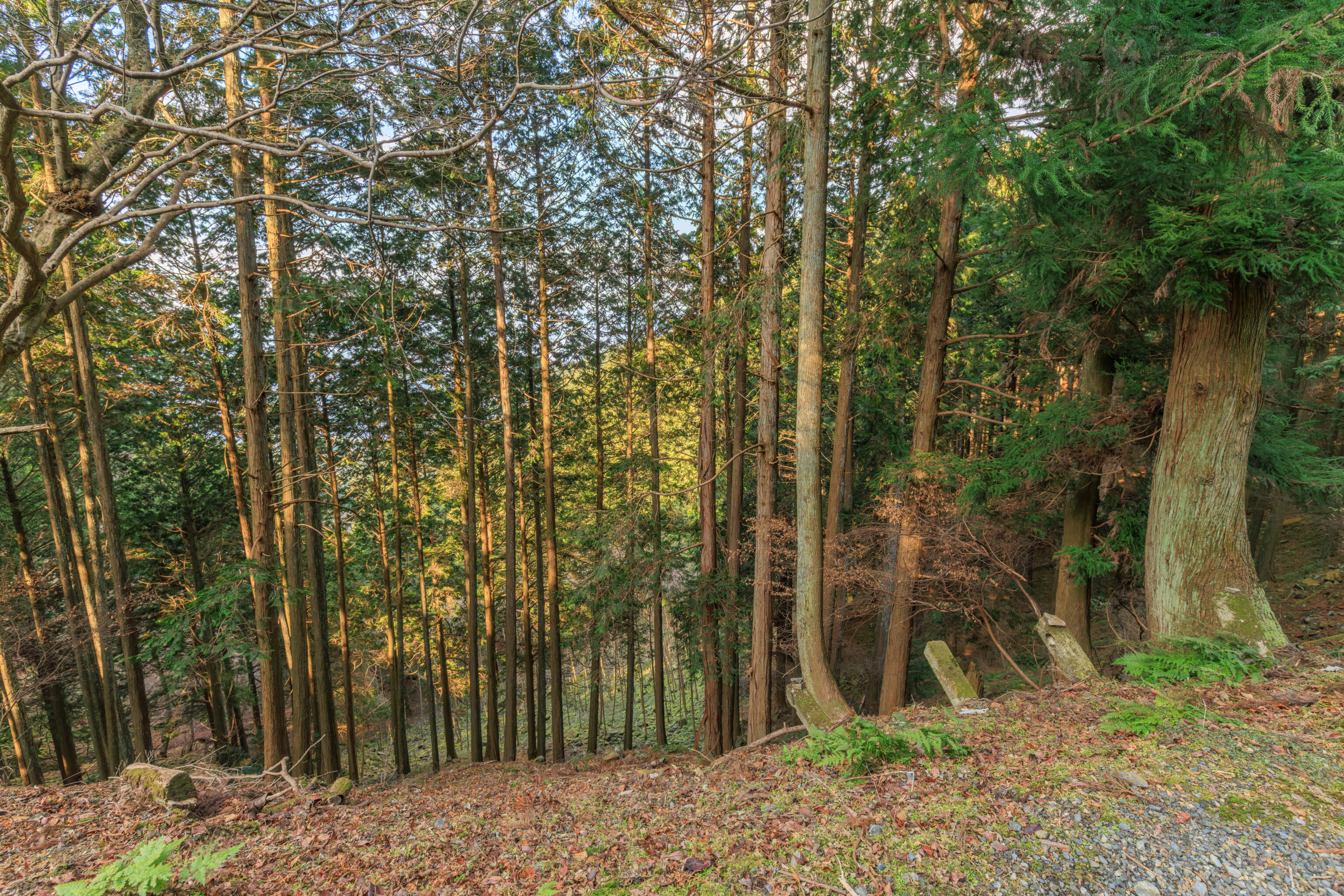
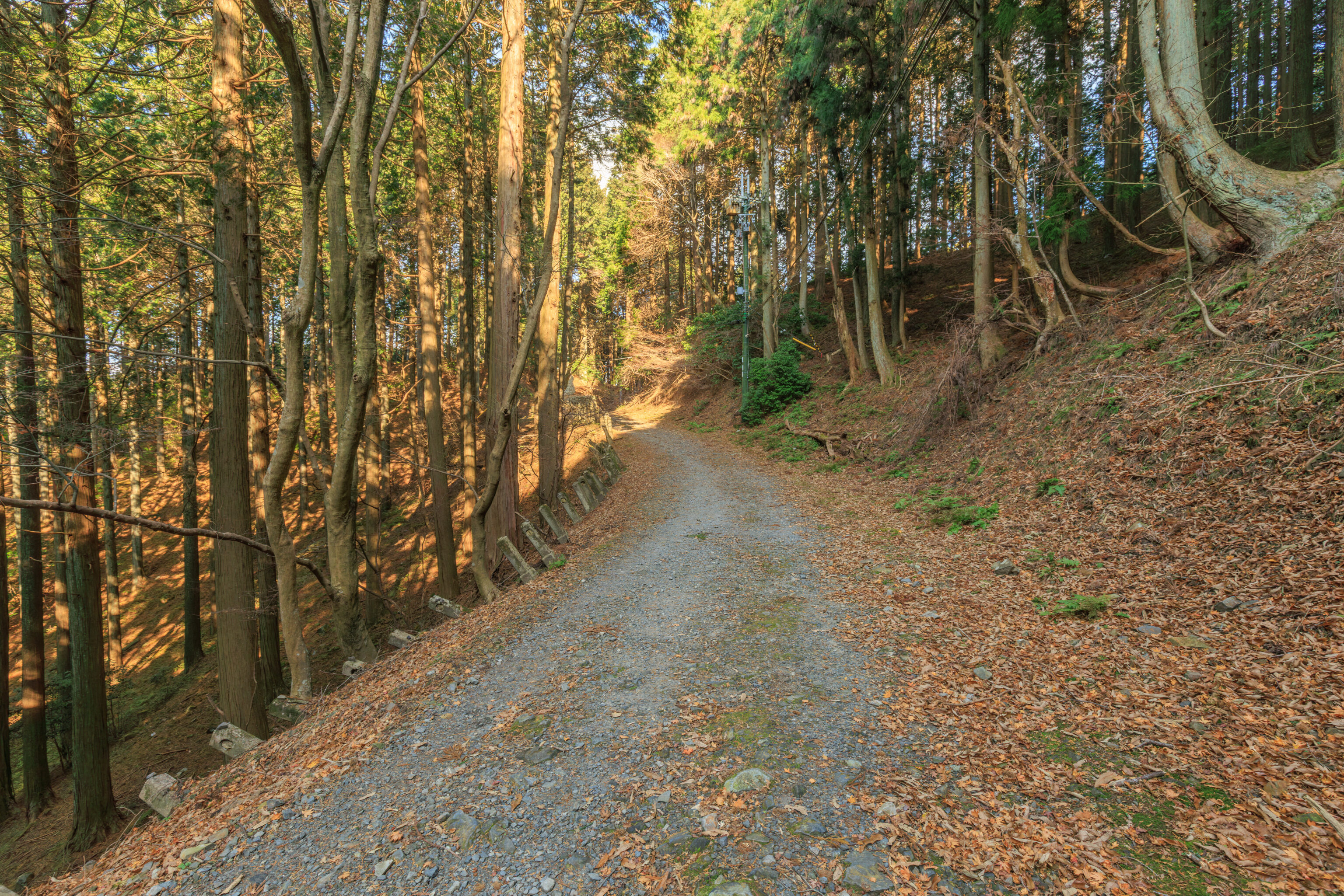
The path ended up being a bit more like a narrow gravel road.
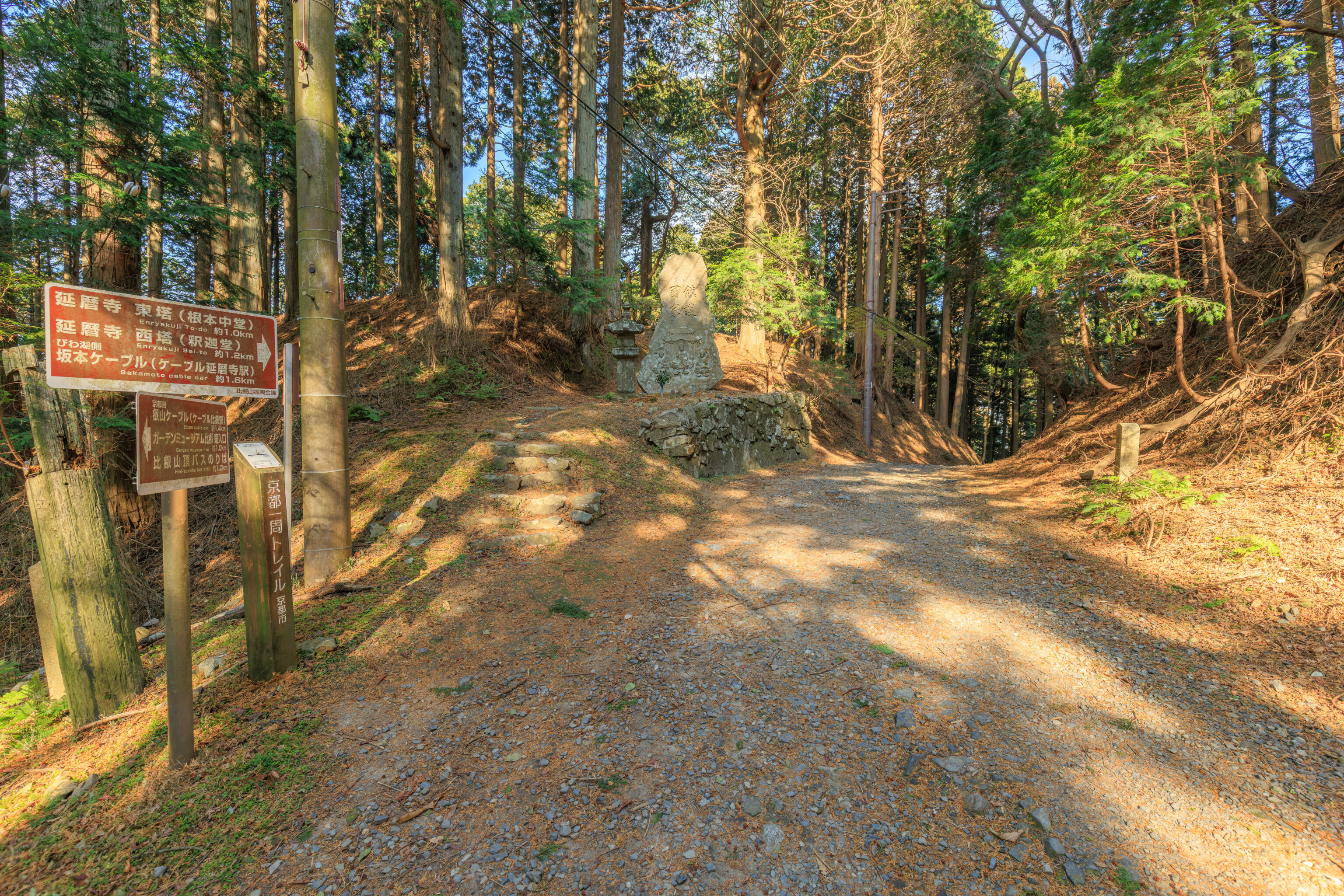
The vertical marker on the left identifies this as being the Kyoto Loop Trail.
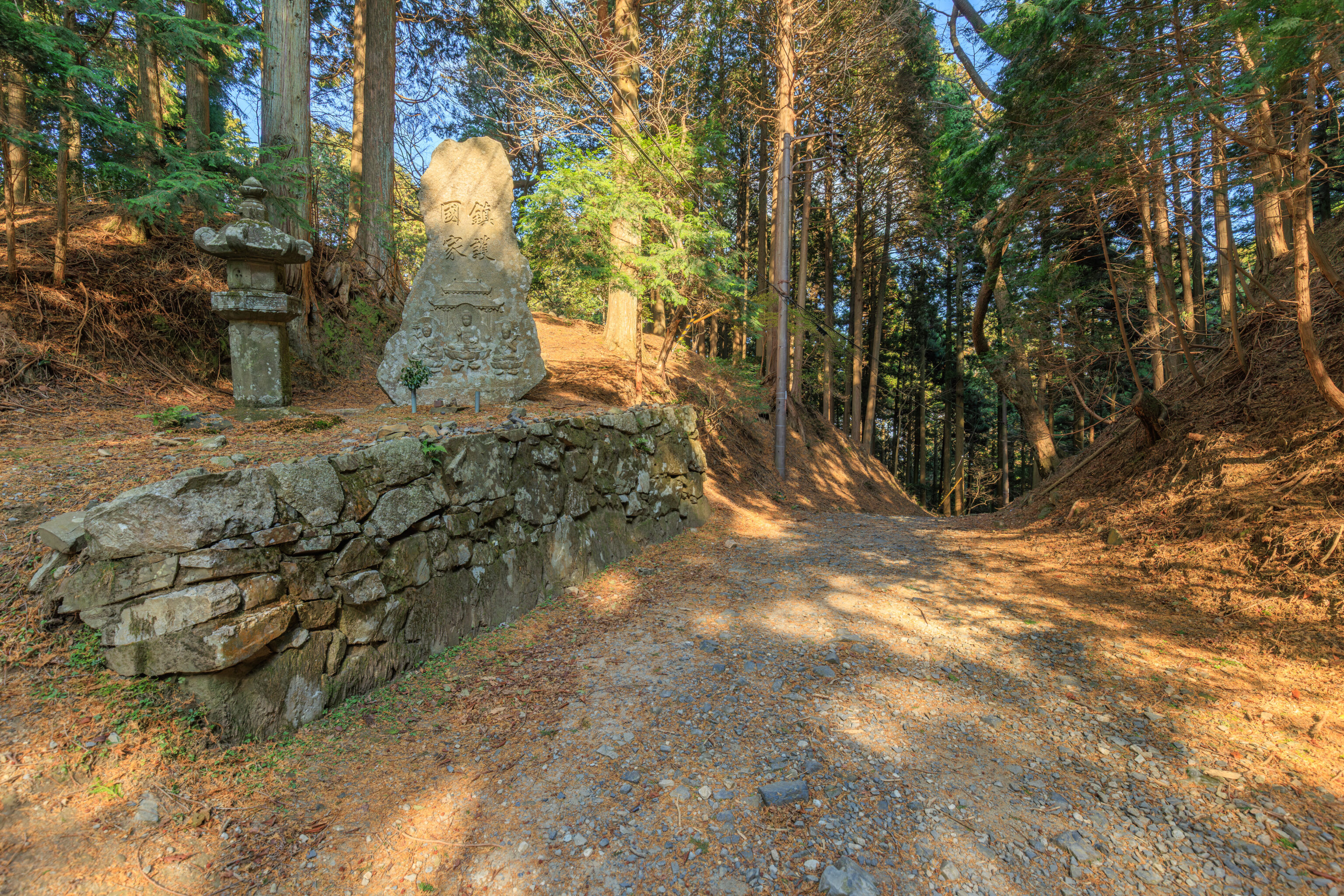
This Buddhist stone marker reads 鎮護國家 chingo kokka. In the Japanese Buddhist context this seems to translate to something like the spiritual protection of the state.
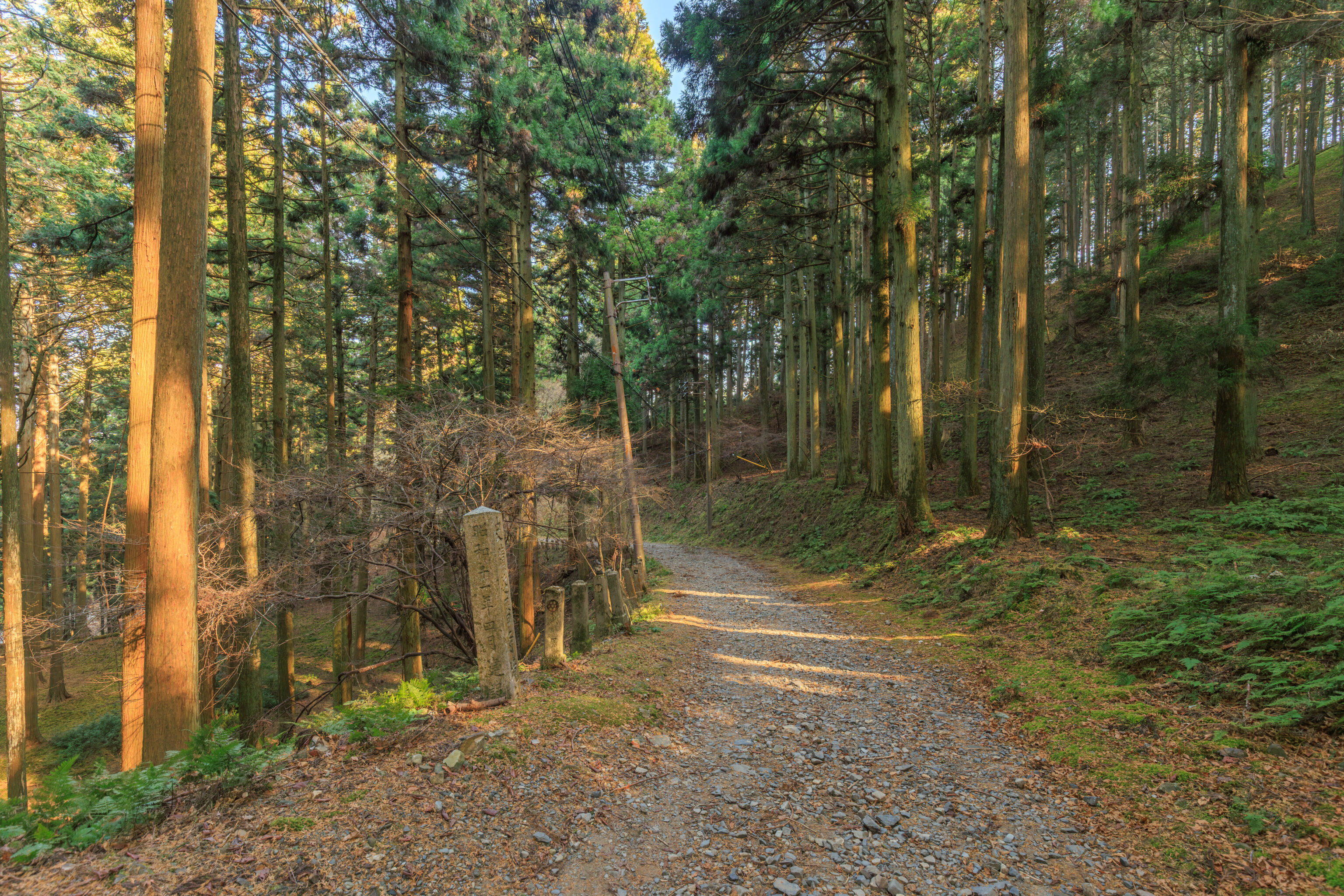
We again continued on…
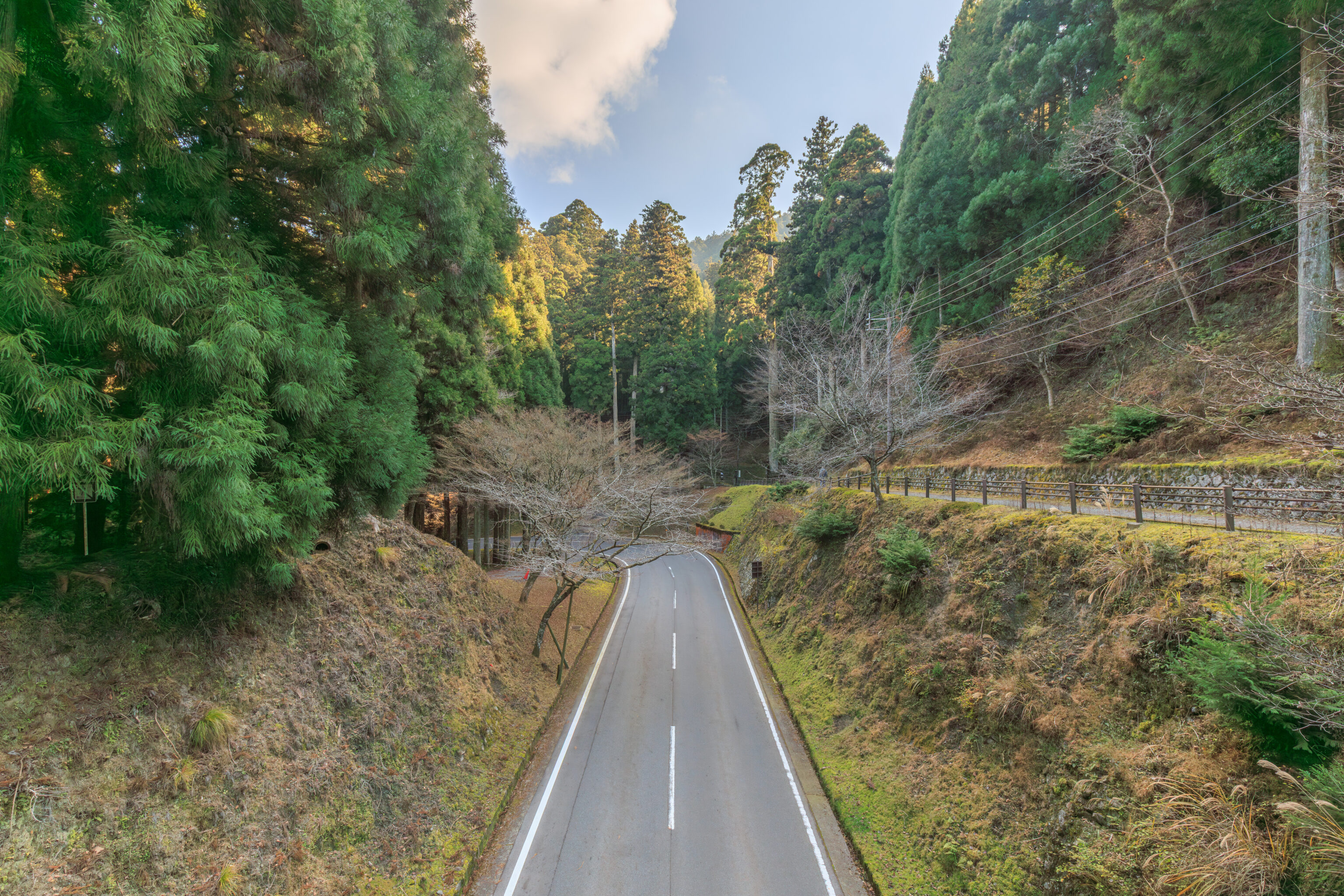
After a few minutes, we reached a junction. Another path crossed over a two lane road. We decided to cross the road to take a quick look to see what was nearby.
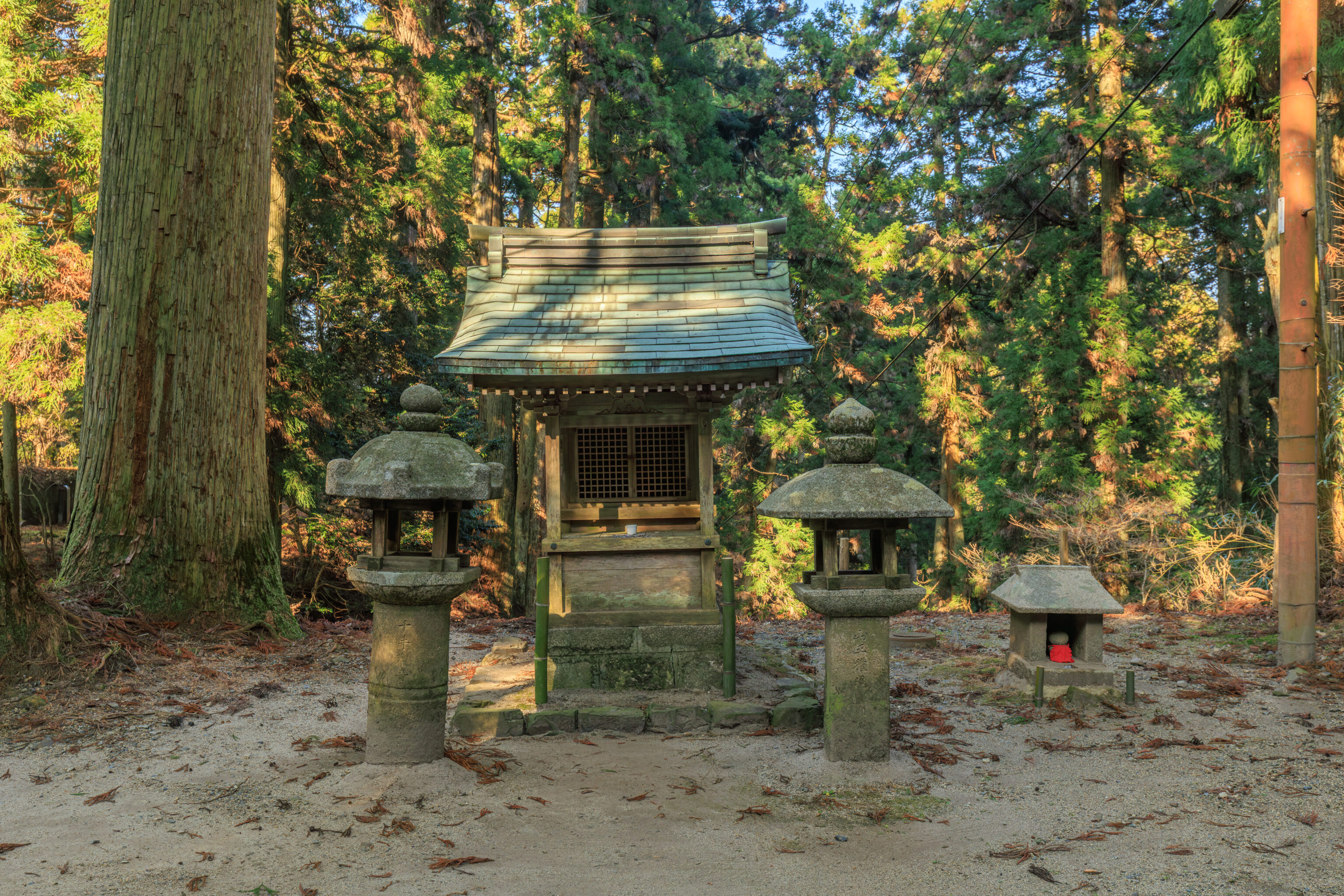
We came across a small shrine.
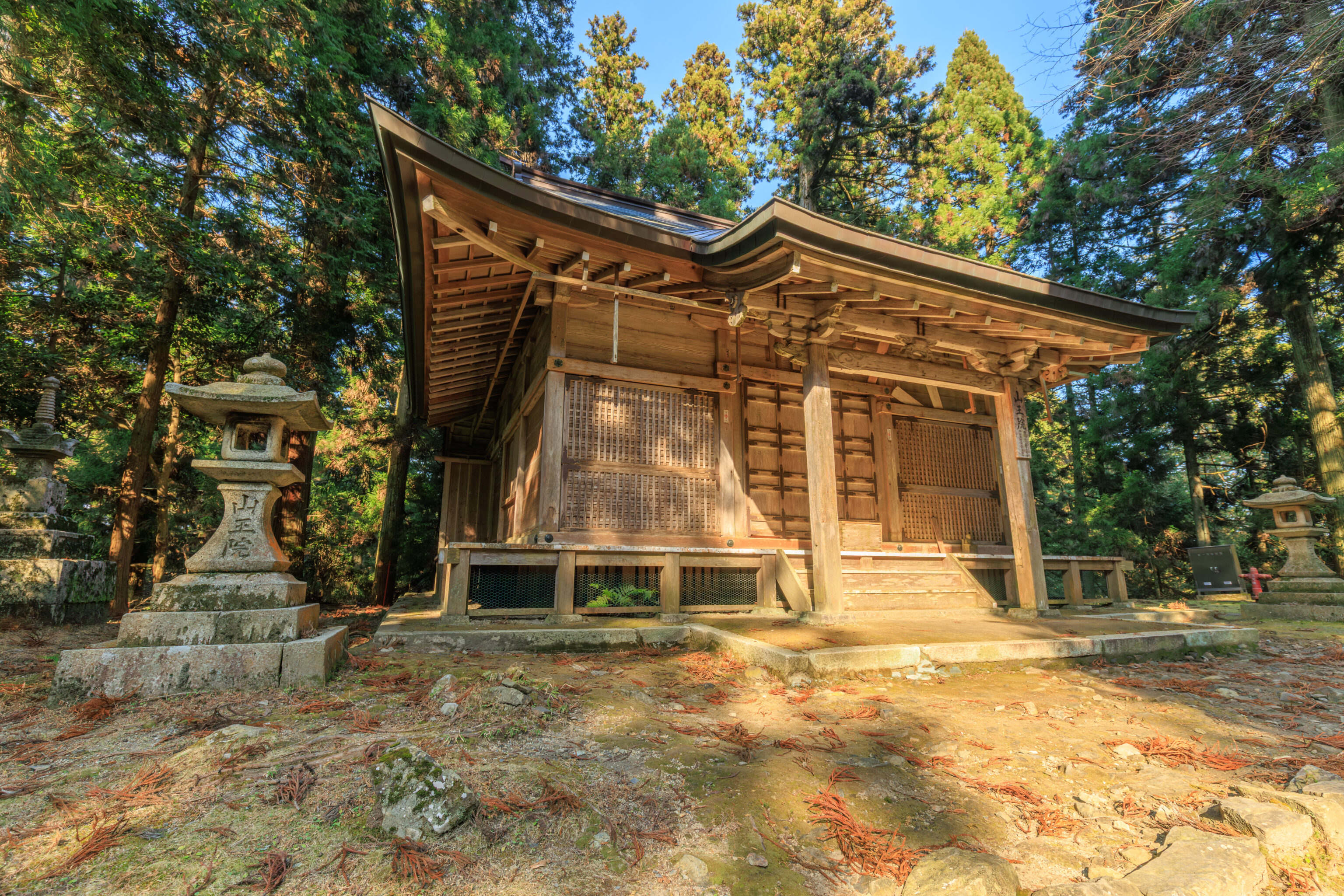
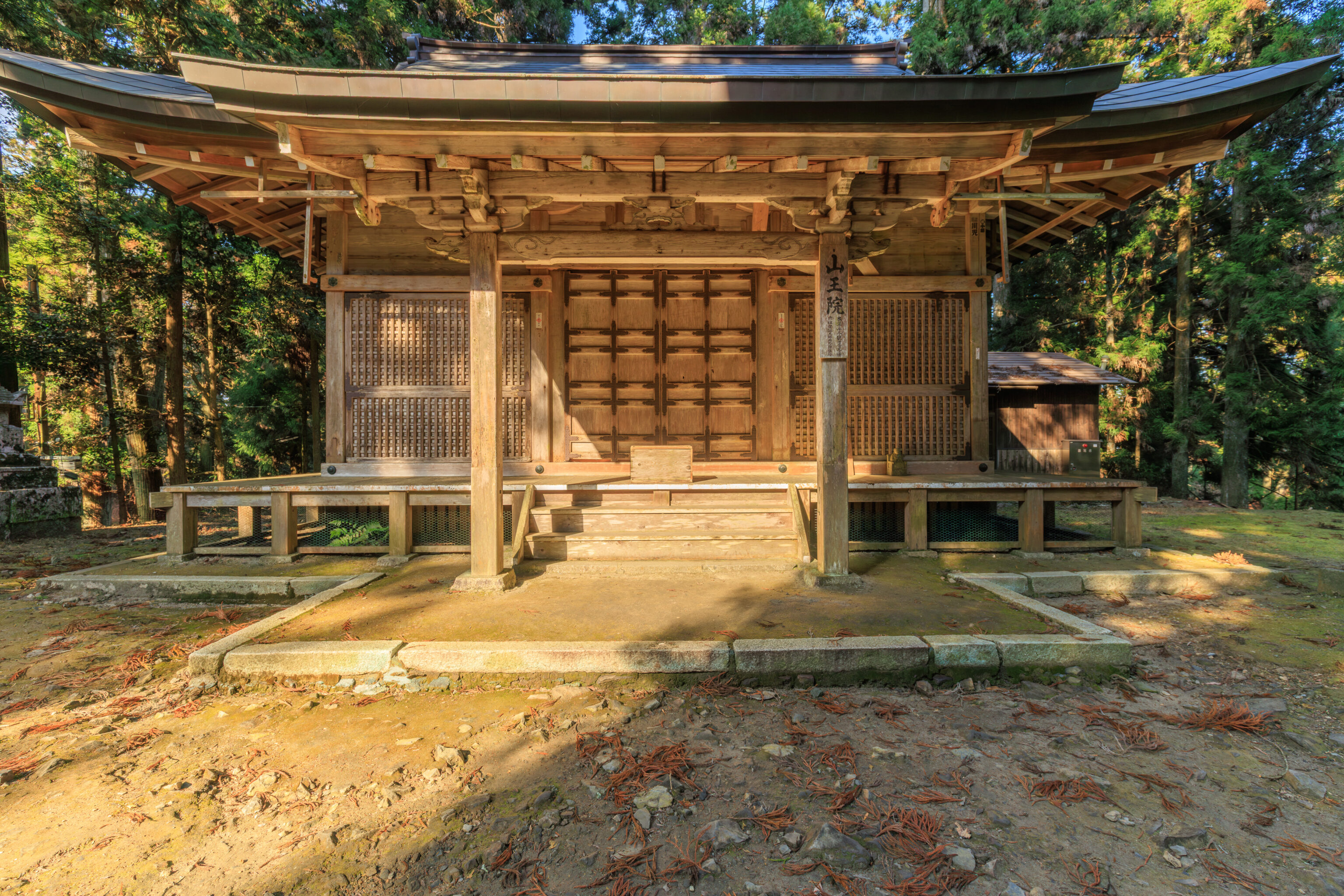
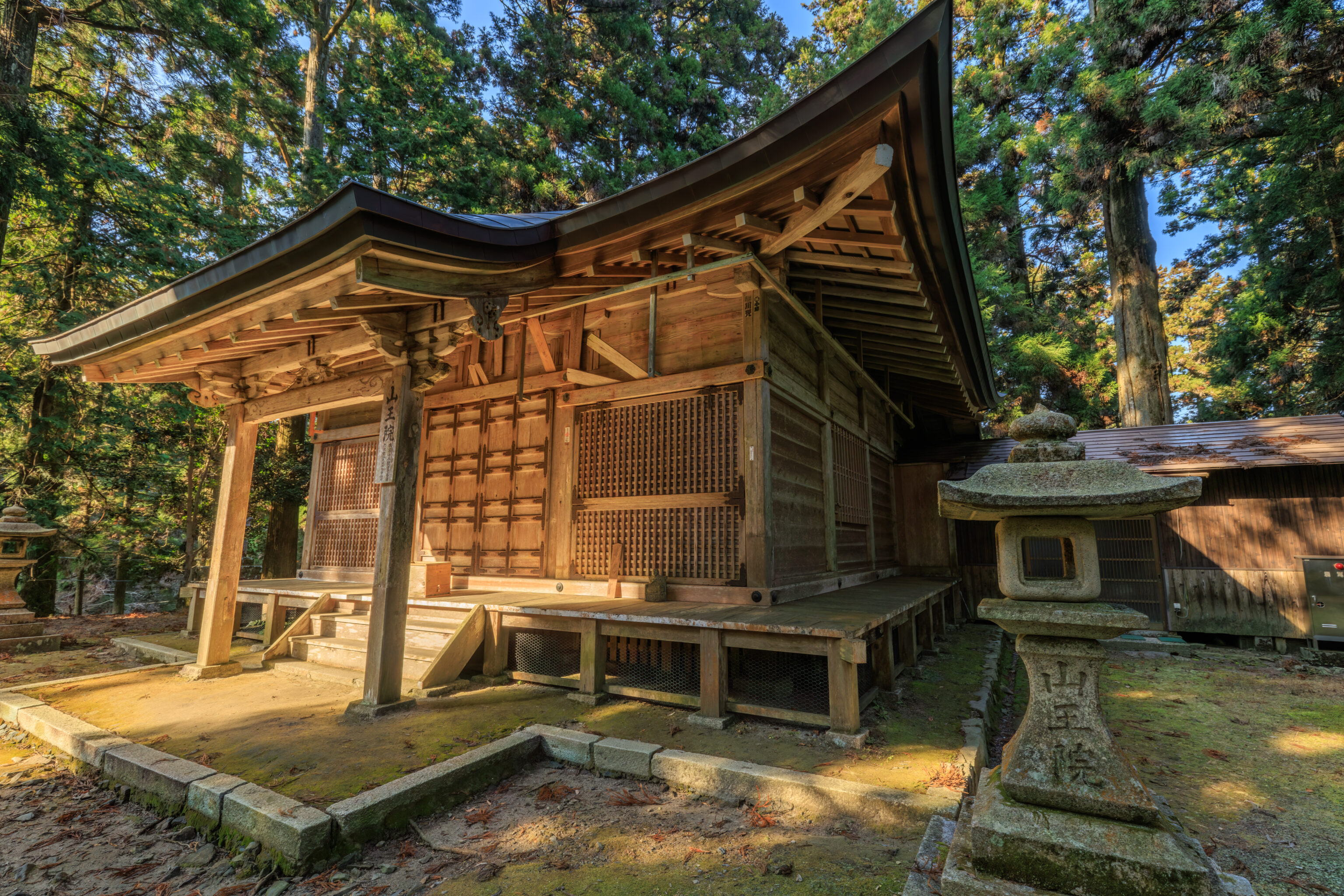
Just beyond the shrine, stairs led up a small hill to this temple building. It was clearly very new.
Sannoin-do

More specifically, it is called Hokke Chingo Sannoin, However, a hundred years after the death of Abbot Enchin, a dispute arose between the Enchin school and the Jikaku Daishi Ennin school of scholar-monks.

It was the residence of the sixth patriarch, Chisho Daishi Enchin, and was also called Gotoin. Because it enshrines the Thousand-Armed Kannon, it is also known as Senju-do or Senjuin. A dispute arose, and the Enchin school is said to have moved from here to Otsu Miidera (Onjo-ji), carrying a wooden statue of Chisho Daishi Enchin on their backs, making it an important hall.

This hall is historically significant.
– Text from a nearby sign, translated using Google.
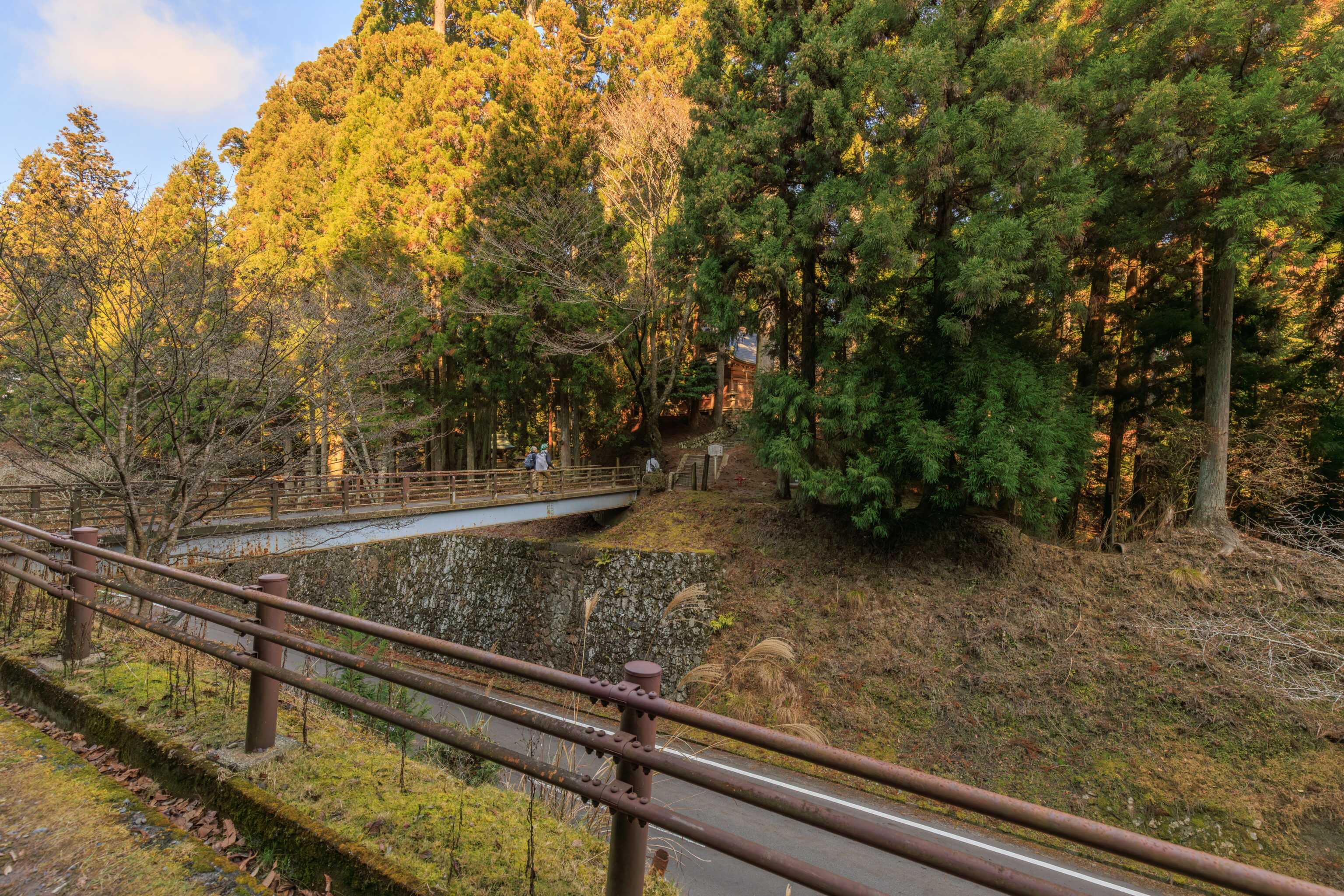
We crossed back over the bridge to continue on. This was the view looking back at the bridge over the road. The Sannoin-do can be seen at center amongst the trees.
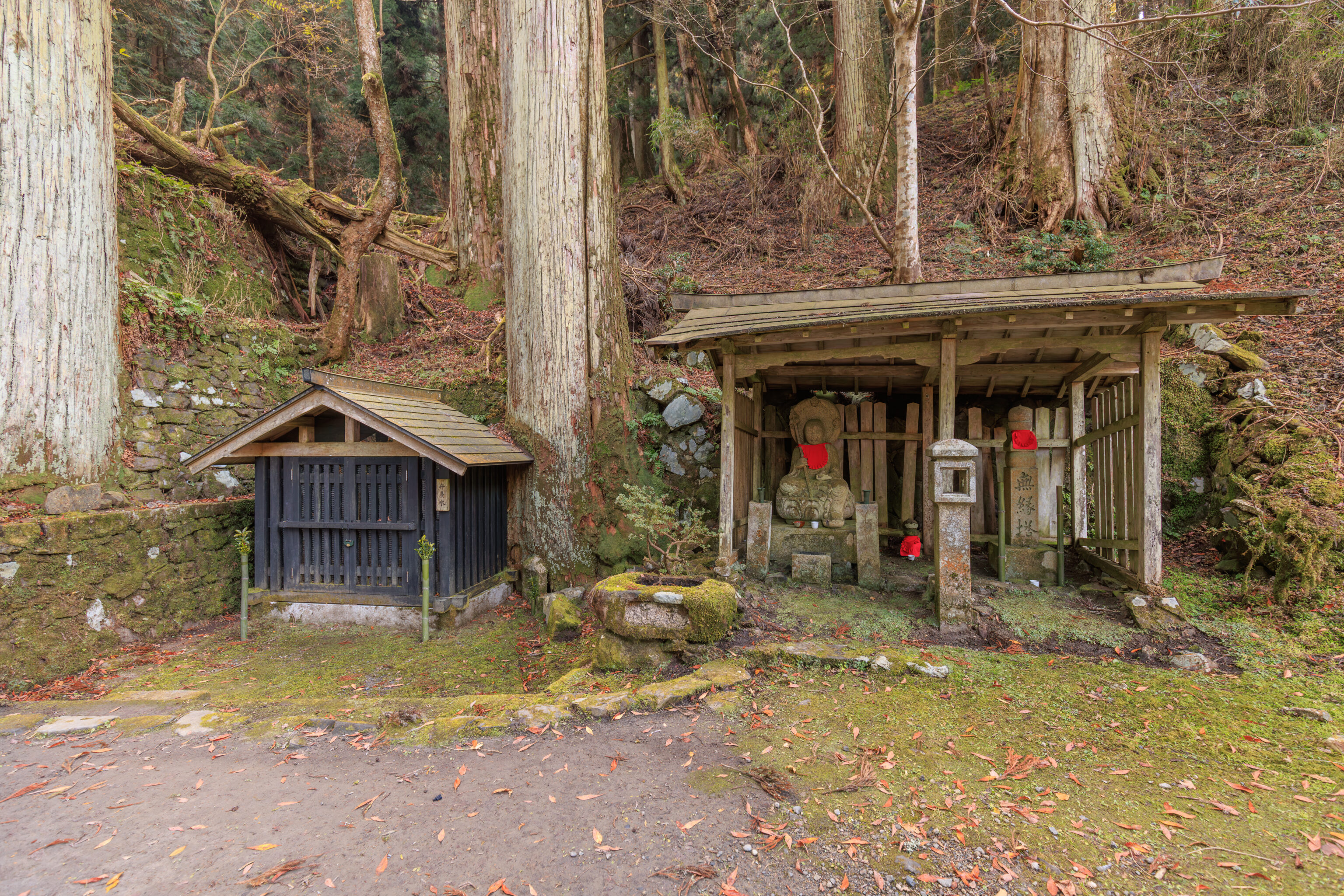
We passed by some additional shrines.
Enryaku-ji
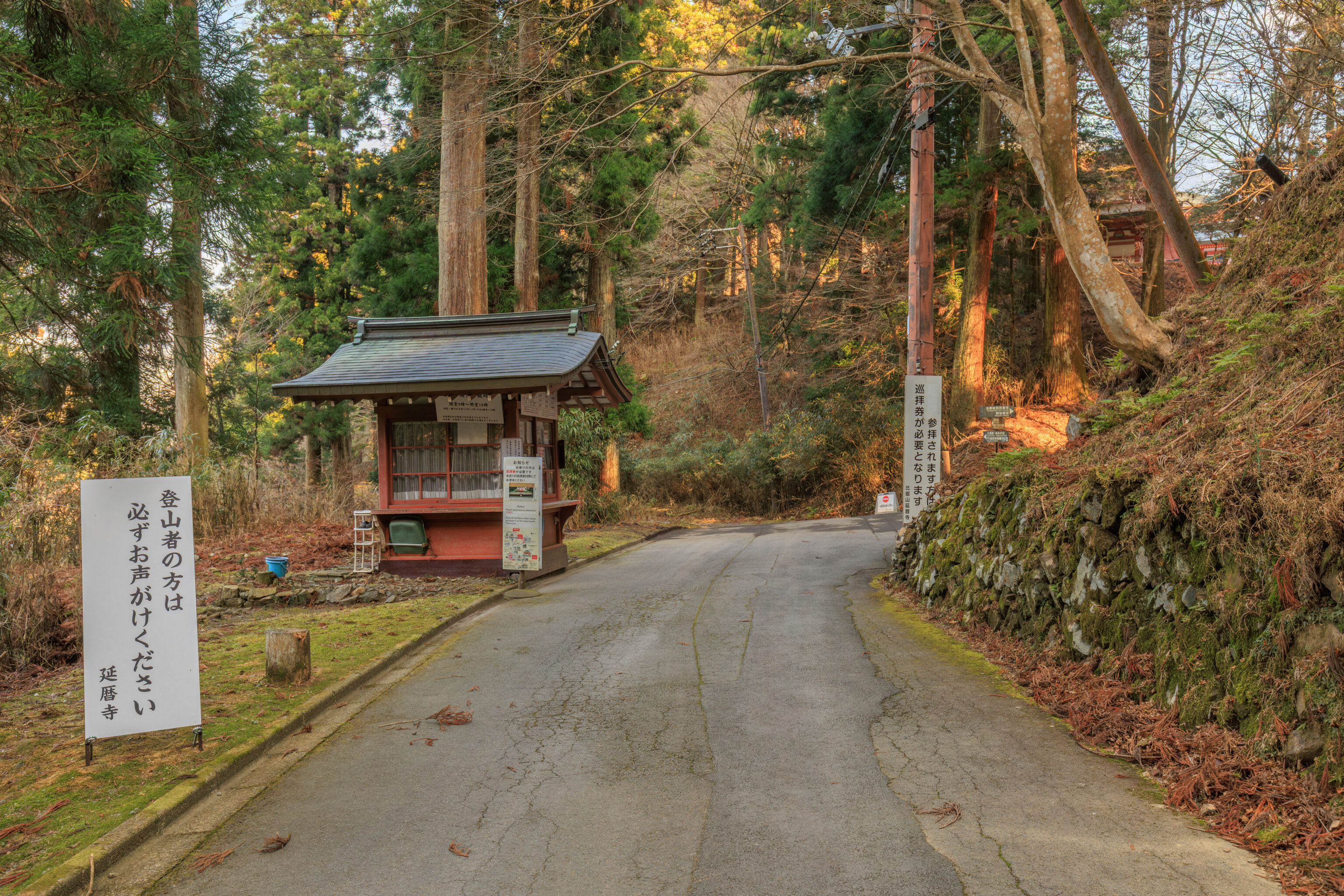
We reached this unstaffed entrance booth just after 1pm. It seems safe to say that we ahve reached Enryaku-ji.
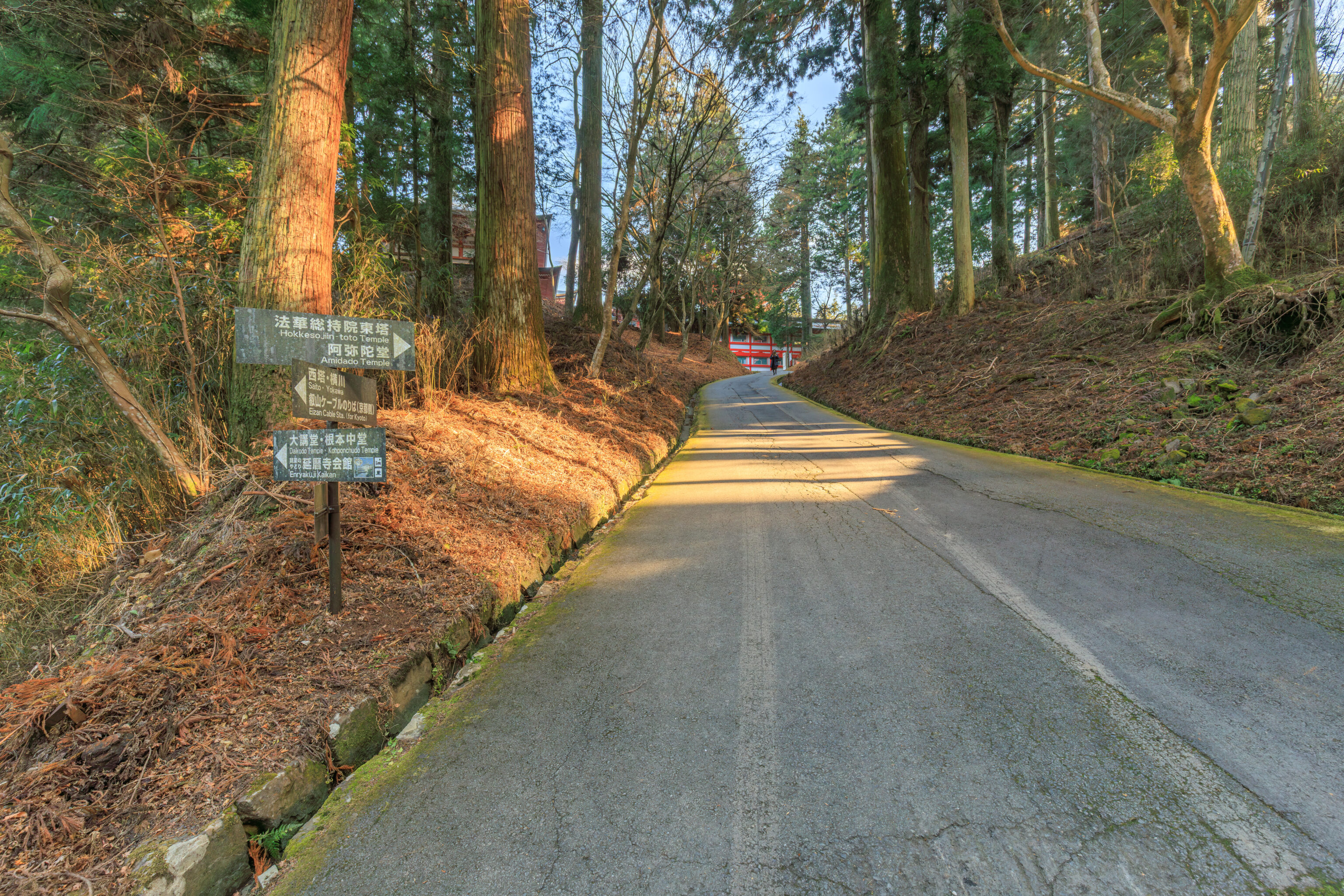
There are many Buddhist temples here on Mt. Hiei. It isn’t clearly exactly which are part of Enryaku-ji and which are completely separate temples. But, this area ahead seems to be all part of Enryaku-ji.
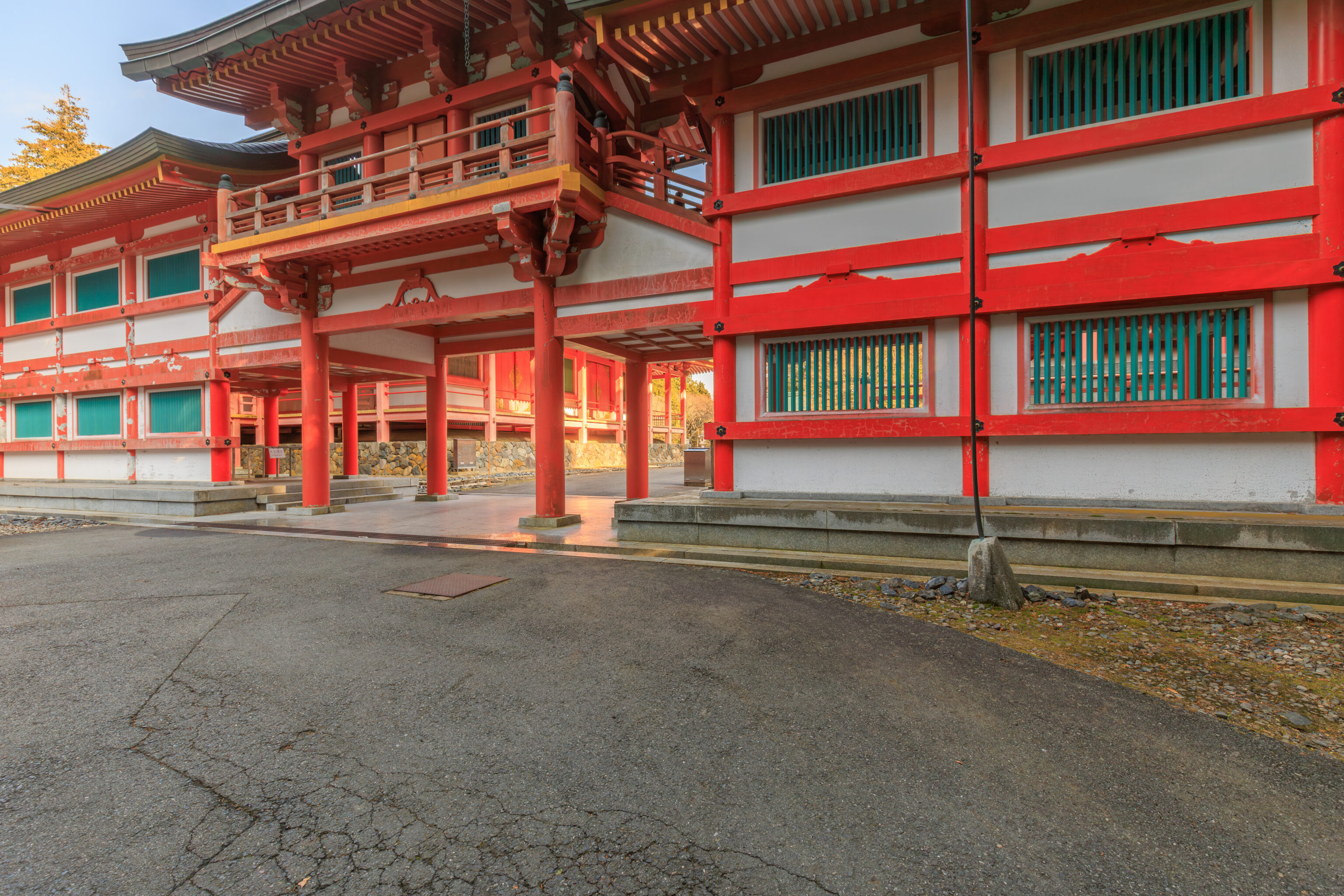
This appears to be the rear the temple’s 阿弥陀堂 Amida Hall and 法華総持院東塔 Hokke Soji-in East Pagoda.
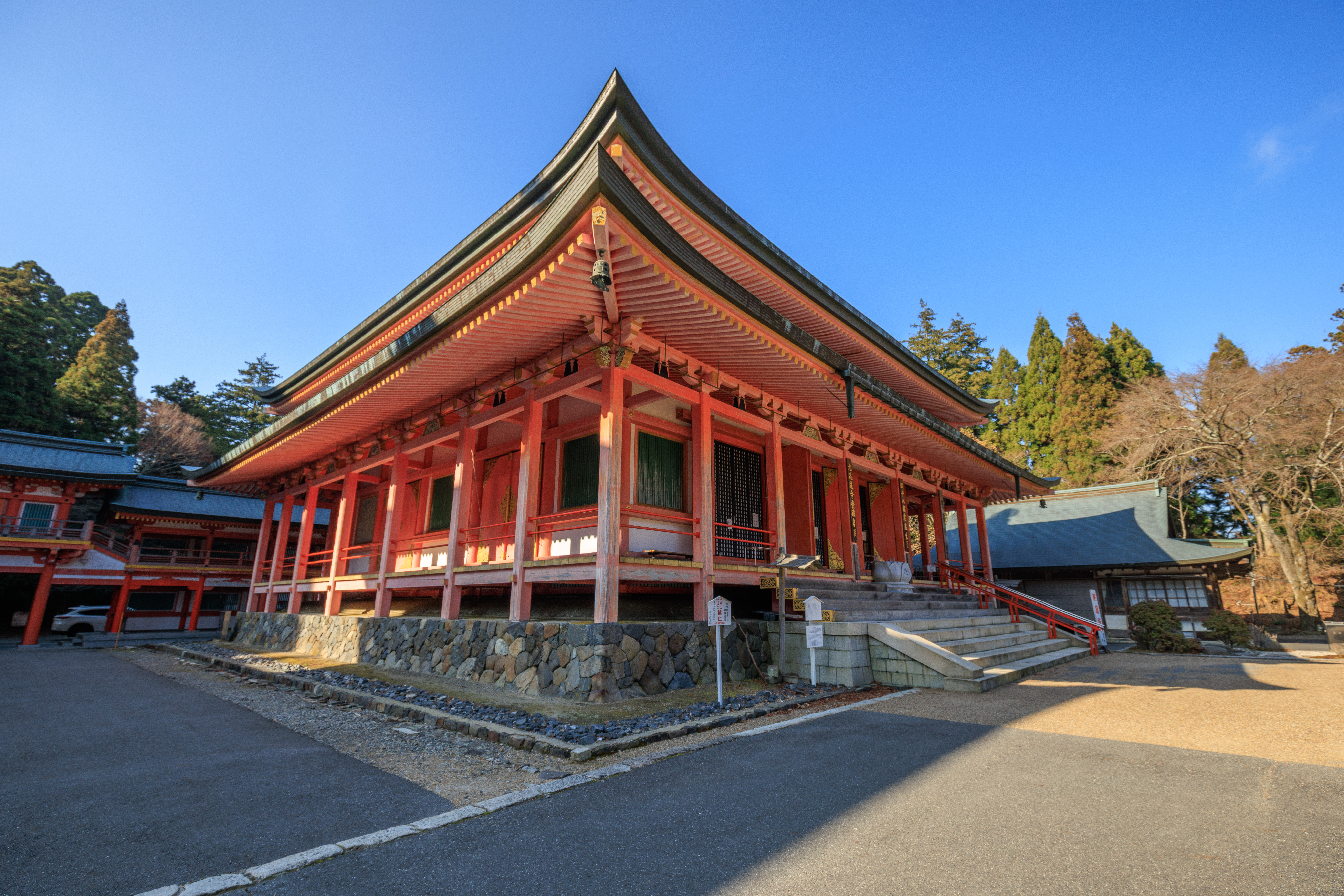
This is the Amida Hall.
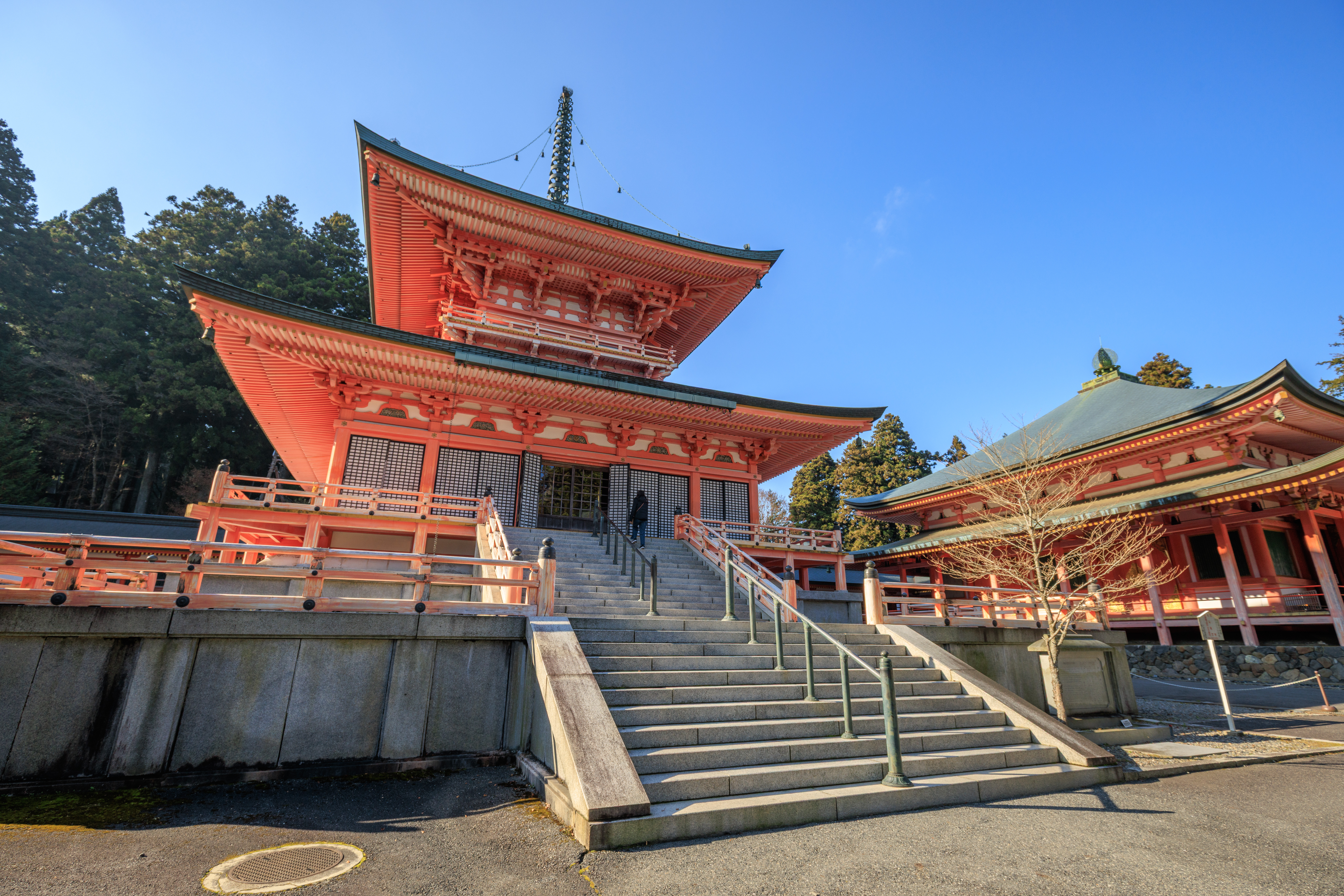
And this is the pagoda.
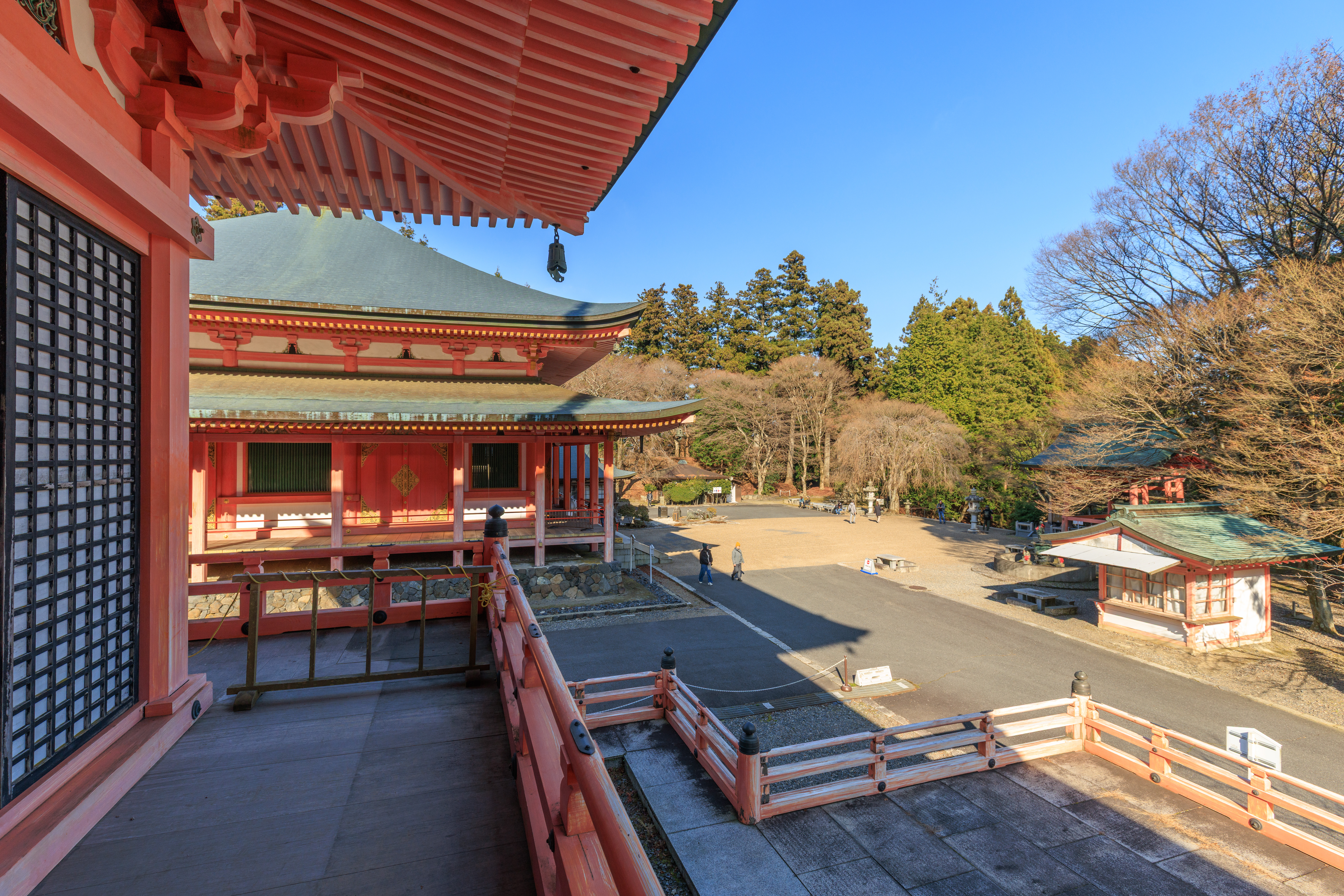
We went up to the pagoda to take a look.
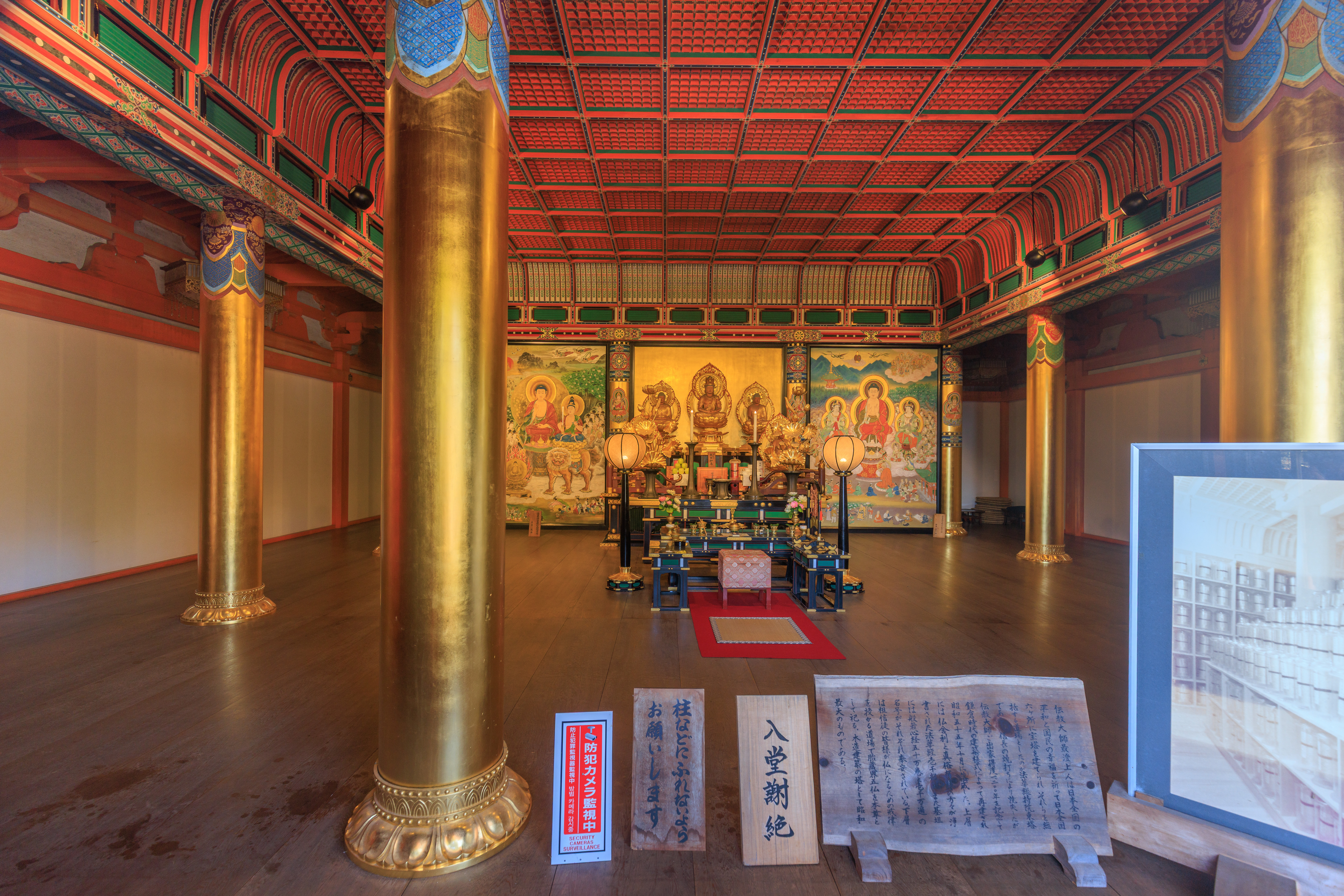
Although we could not go in, we took a look from the door.
In fervent prayer for the peace of the entire nation and the happiness of its people, the Great Master Dengyo (Saicho) erected treasure pagodas at six locations across Japan; the Hokke Soji-in East Pagoda serves as the central sanctuary that oversees them all. Although the original structure was destroyed by fire during Oda Nobunaga’s infamous burning campaign, the current pagoda was completed in October 1980 to commemorate the 1,200th anniversary of the Great Master Dengyo’s monastic ordination.

The upper tier, reconstructed in the architectural style of the Kamakura period, enshrines sacred Buddhist relics (Sharira) as well as one thousand handwritten copies of the *Lotus Sutra*—transcribed by individuals from all walks of life, both monastic and lay, seeking spiritual purification. The pagoda’s foundation houses an offering of 500,000 copies of the *Heart Sutra* and—according to some accounts—as many as ten million invocations of the Buddha’s sacred name. The lower tier serves as a sanctuary where believers receive the precepts necessary to attain Buddhahood; it enshrines the Five Buddhas of the Womb Realm as its principal deities. As a wooden pagoda, it stands as the largest structure of its kind constructed during the Showa era.
– Text from the large wooden sign on the ground, translated using Google.
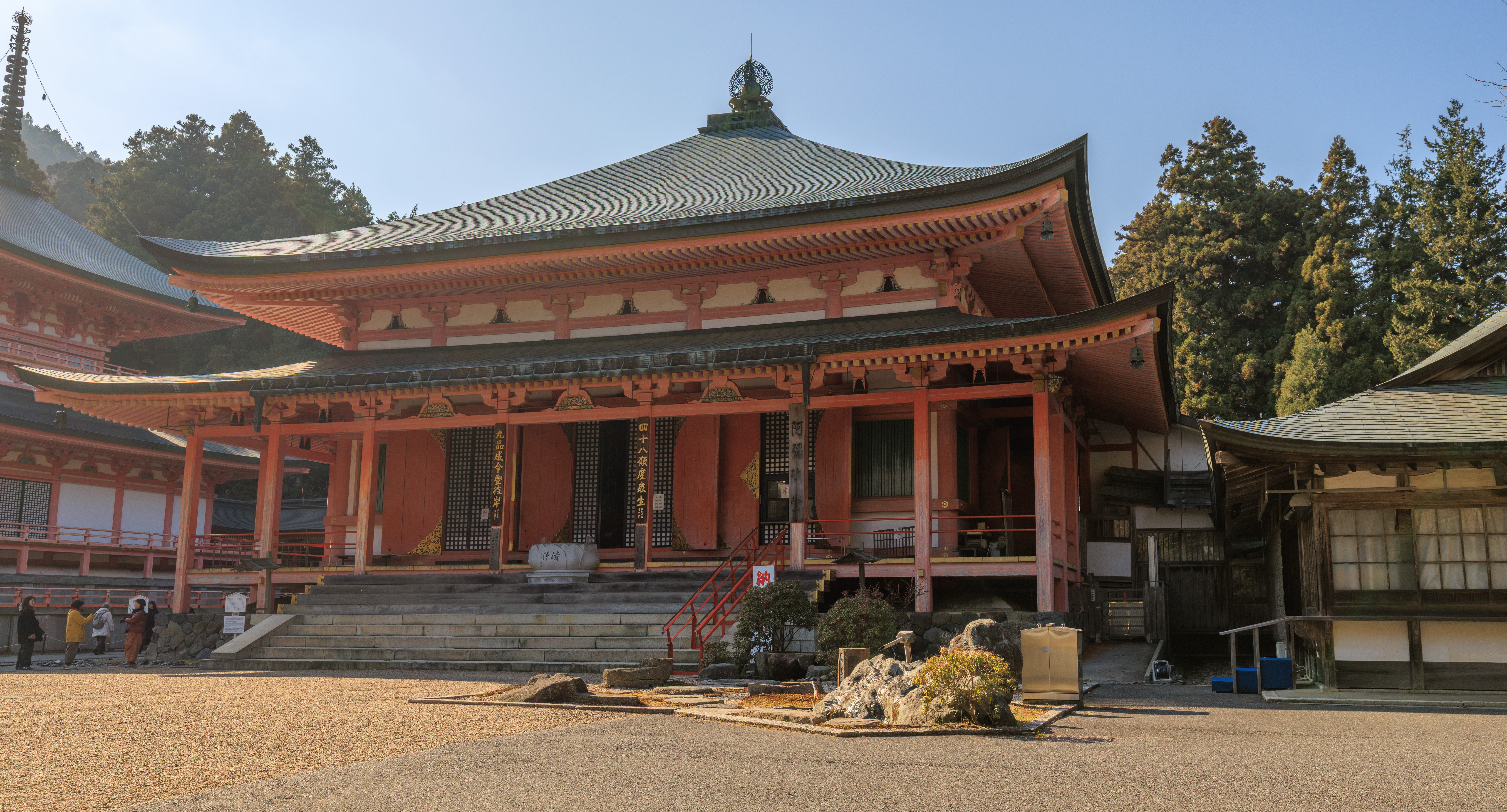
A panorama of the view from in front of the Amida Hall.
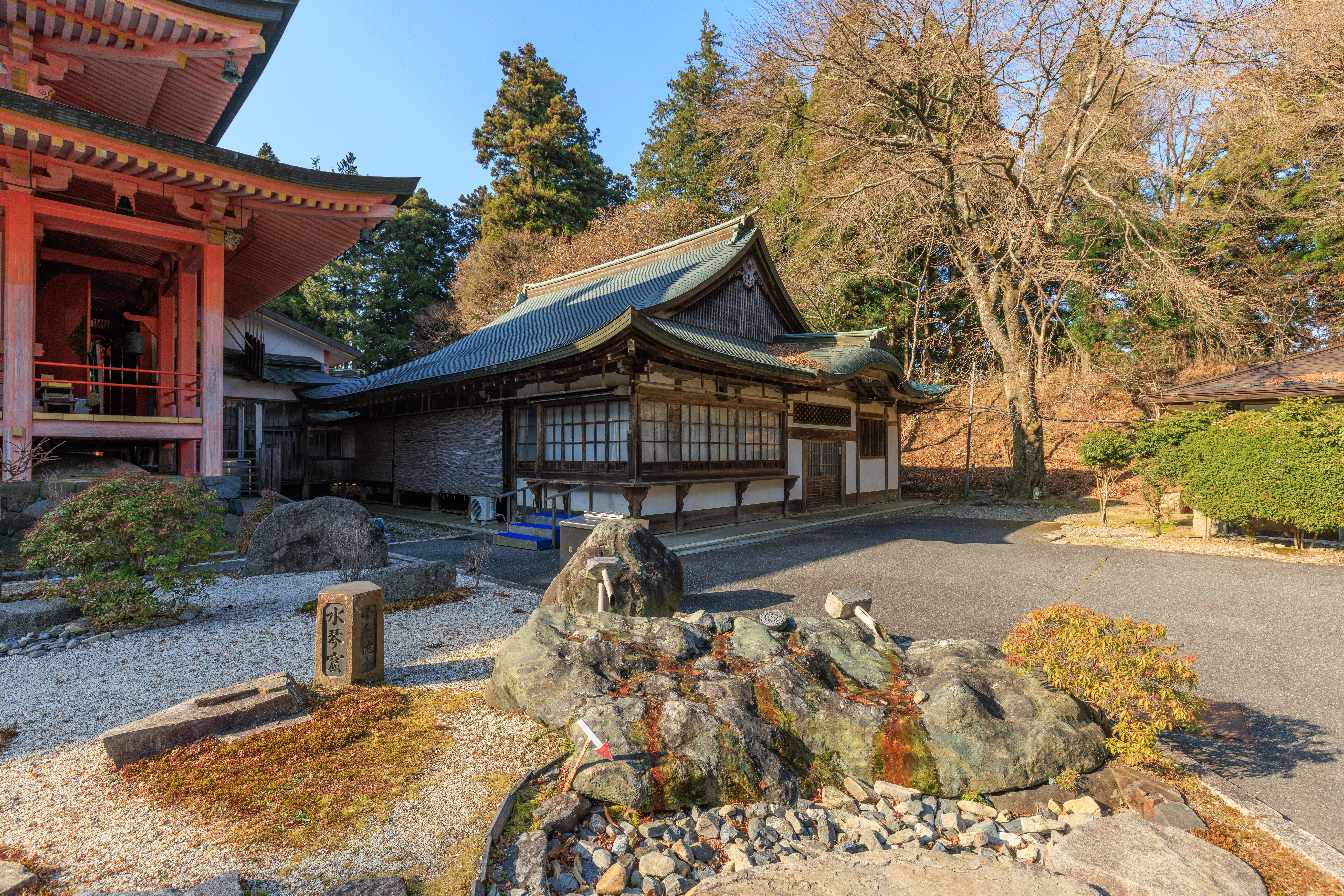
Thanks to our visit to Joju-in yesterday, we know that this is a 水琴窟 Suikinkutsu!
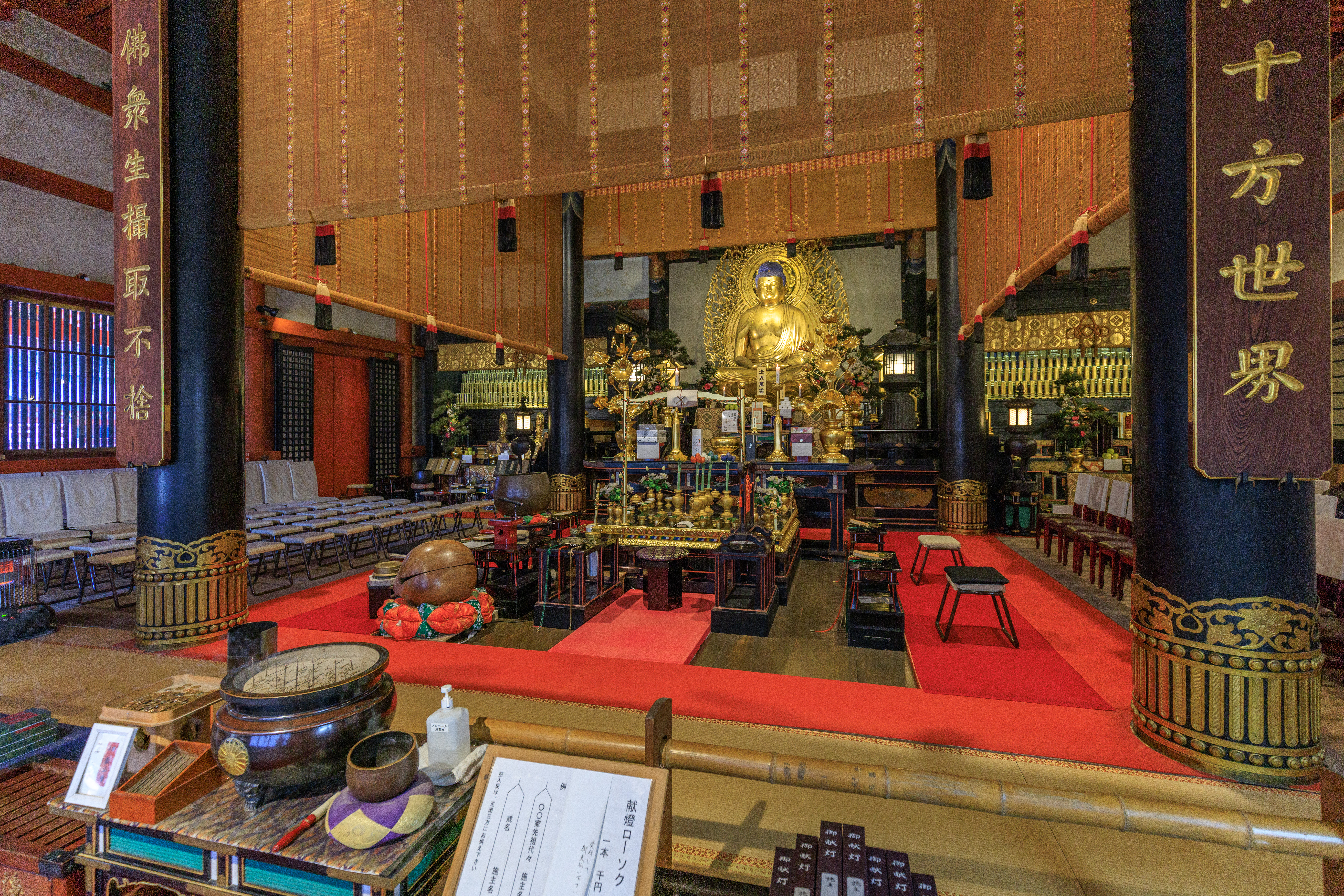
We went inside the Amida Hall to take a quick look.
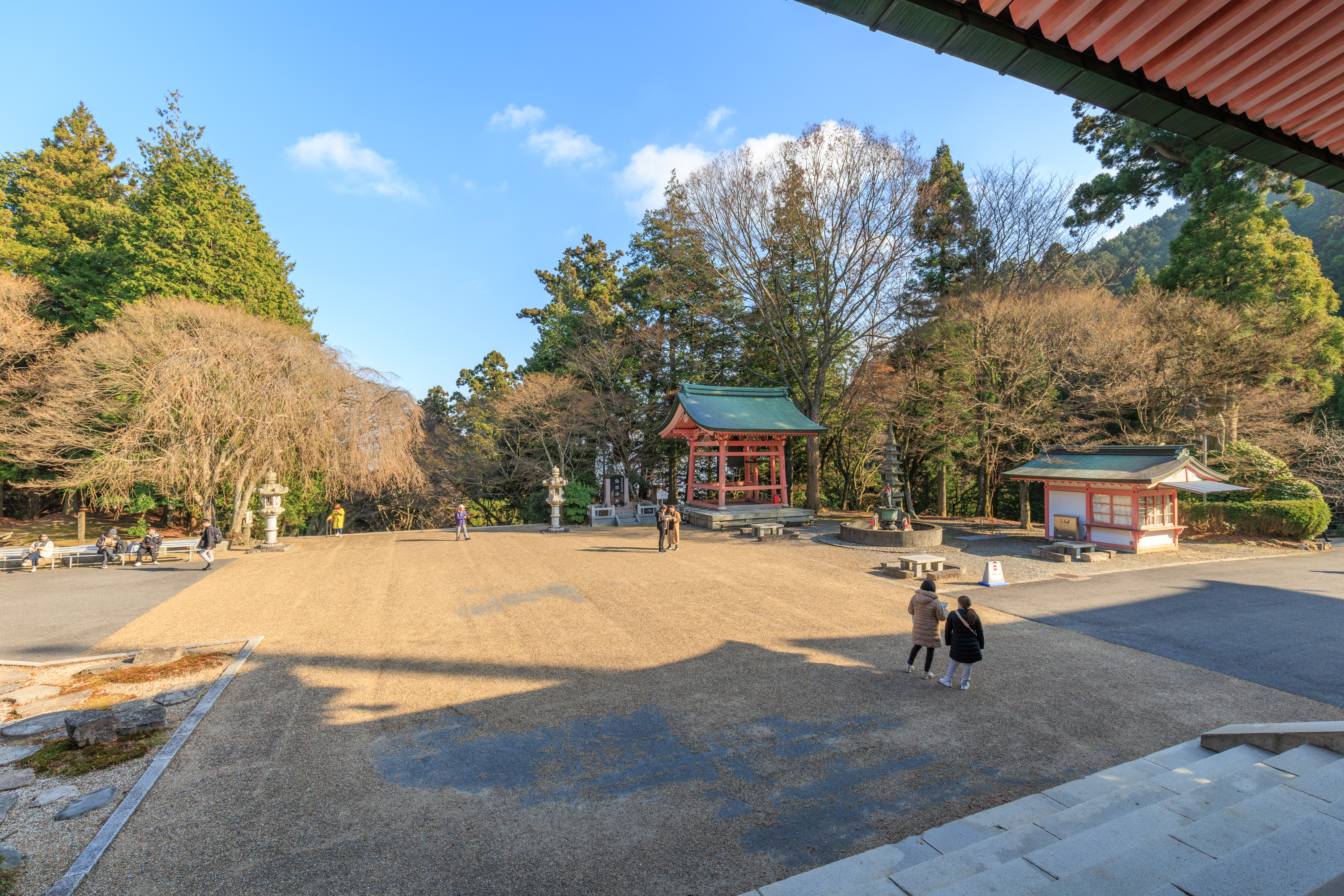
The view from the stairs up to the Amida Hall’s entrance.
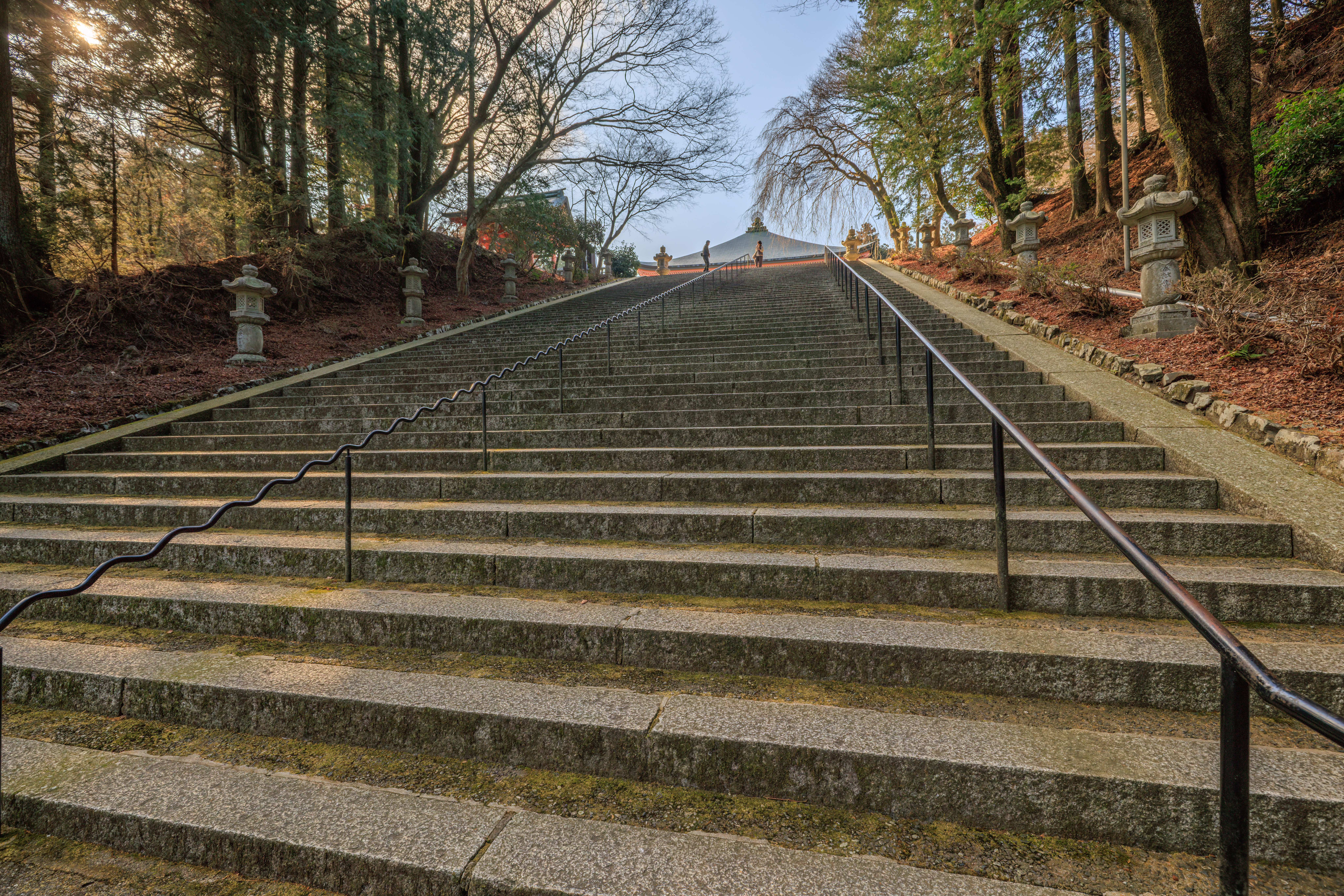
We continued on to the east, descending via these steps. This was the view looking back up with the Amida Hall’s roof visible at the top.
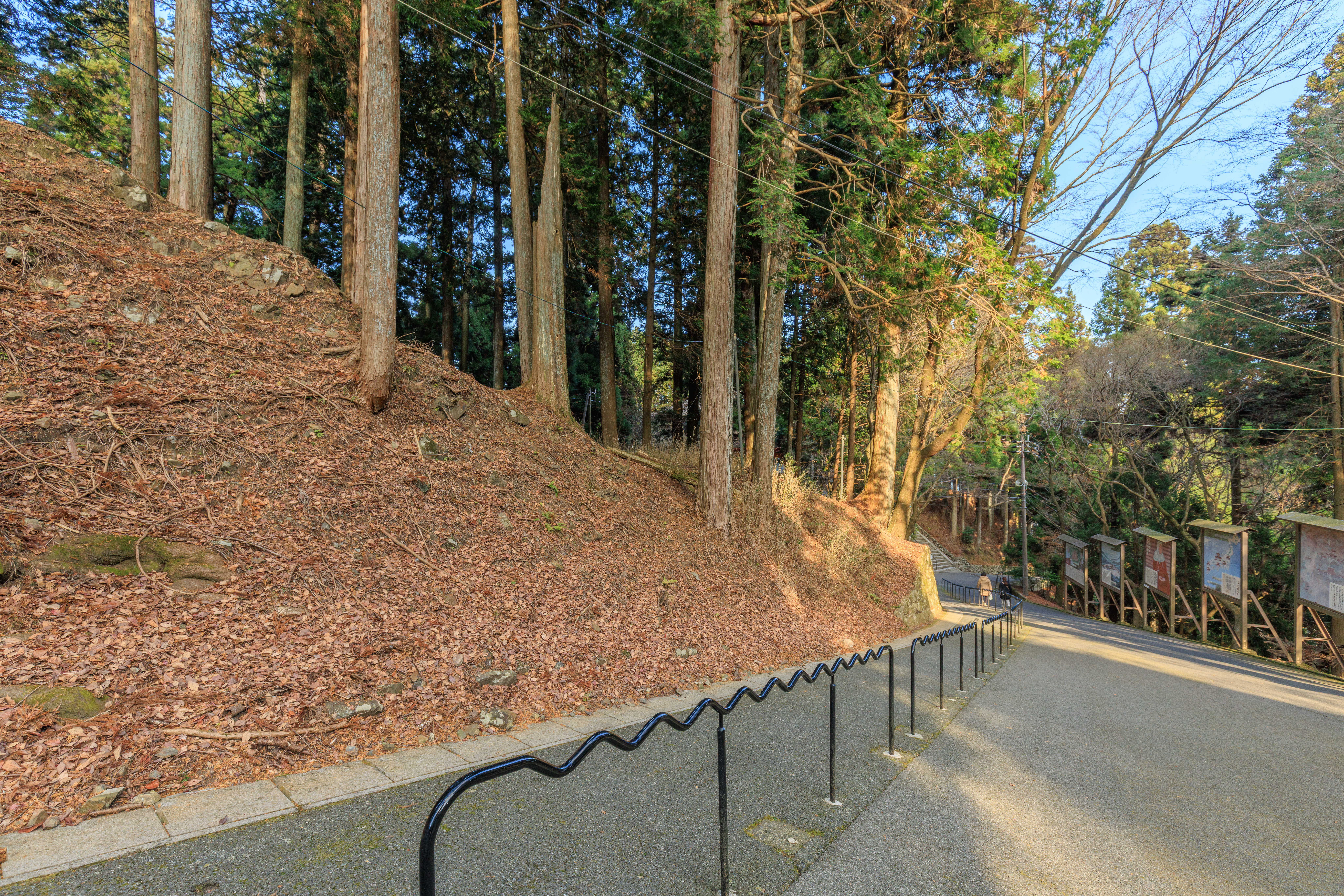
The path continued to descend. There were a series of signs on the right which we photographed.
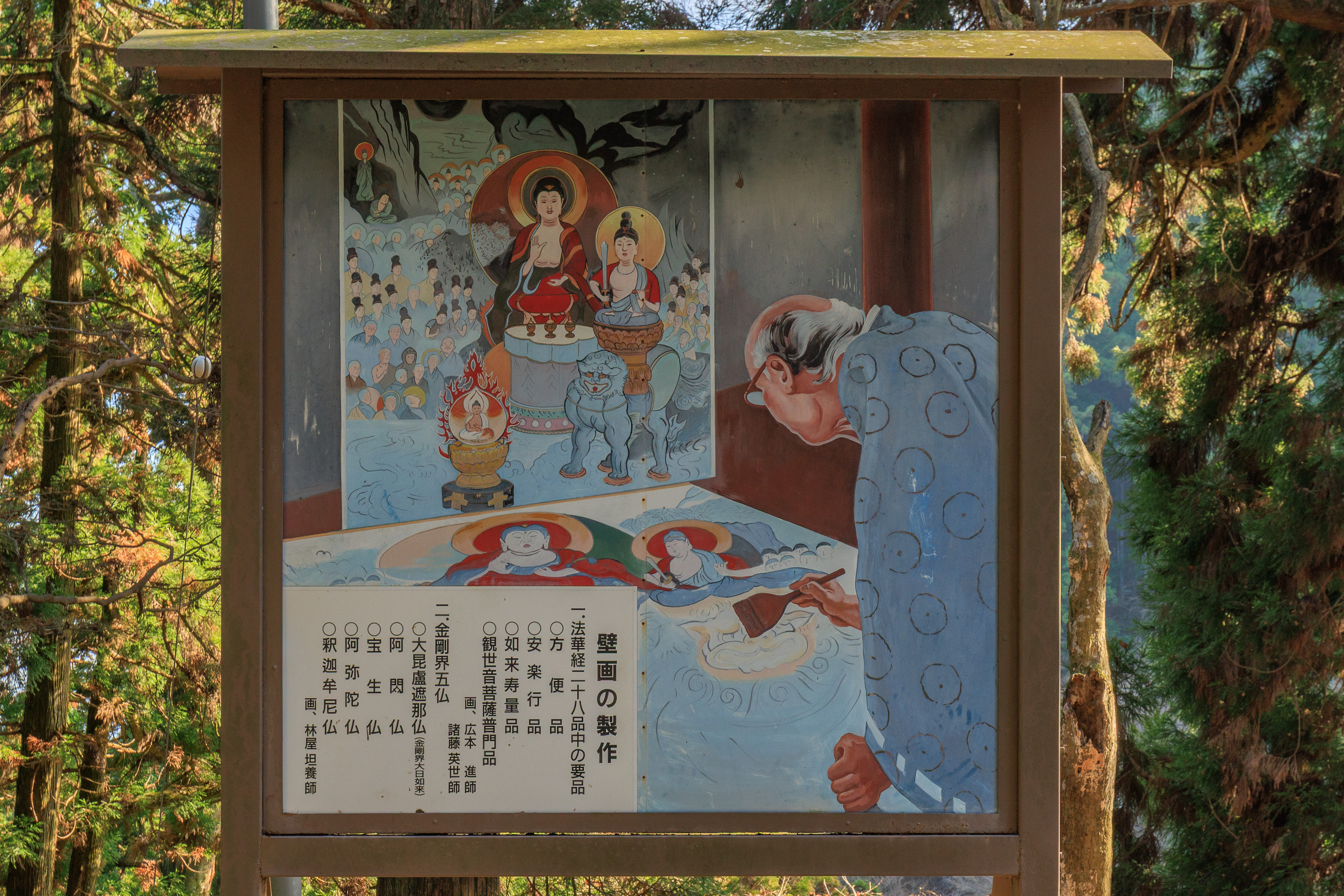
Creation of the Murals

I. Essential Chapters from the 28 Chapters of the Lotus Sutra

* Chapter on Expedient Means
* Chapter on Peaceful Practices
* Chapter on the Lifespan of the Tathagata
* Chapter on Avalokiteśvara Bodhisattva (The Universal Gate)

Artists:
Master Hiropon Susumu
Master Hideyo Morofuji

II. The Five Buddhas of the Vajra Realm

* Mahāvairocana Buddha (Dainichi Nyorai of the Vajra Realm)
* Akṣobhya Buddha
* Ratnasaṃbhava Buddha
* Amitābha Buddha
* Śākyamuni Buddha

Artist: Master Tanyō Hayashiya
– Text from the sign in the photograph above, translated using Google.
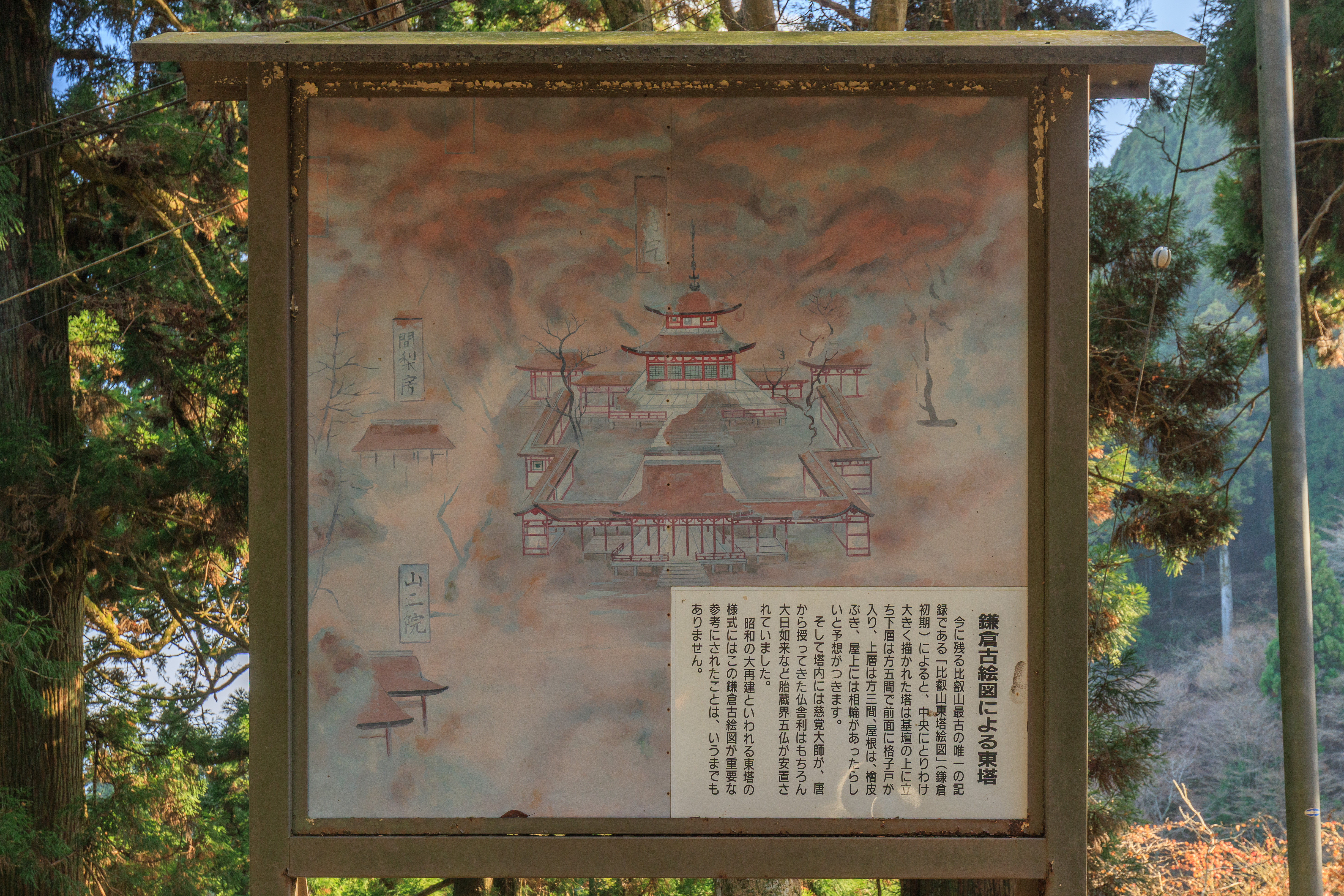
The Eastern Pagoda as Depicted in an Ancient Kamakura-Period Map

According to the *Illustrated Map of the Hieizan Eastern Pagoda* (early Kamakura period)—the sole surviving historical record of Mount Hiei from that era—the pagoda, depicted with exceptional prominence at the center of the image, is shown standing upon a podium. It is surmised that the lower tier measured five bays square, featuring lattice doors on the front façade, while the upper tier measured three bays square; the roof was likely thatched with cypress bark, and a *sōrin* (finial) adorned the very top.

Furthermore, enshrined within the pagoda were not only the Buddha relics (*sarira*) that Jikaku Daishi had brought back from Tang China, but also the Five Wisdom Buddhas of the Womb Realm, including Dainichi Nyorai.

Needless to say, this ancient Kamakura-period map served as a crucial reference for the architectural style adopted during the major reconstruction of the Eastern Pagoda undertaken in the Showa era.
– Text from the sign in the photograph above, translated using Google.
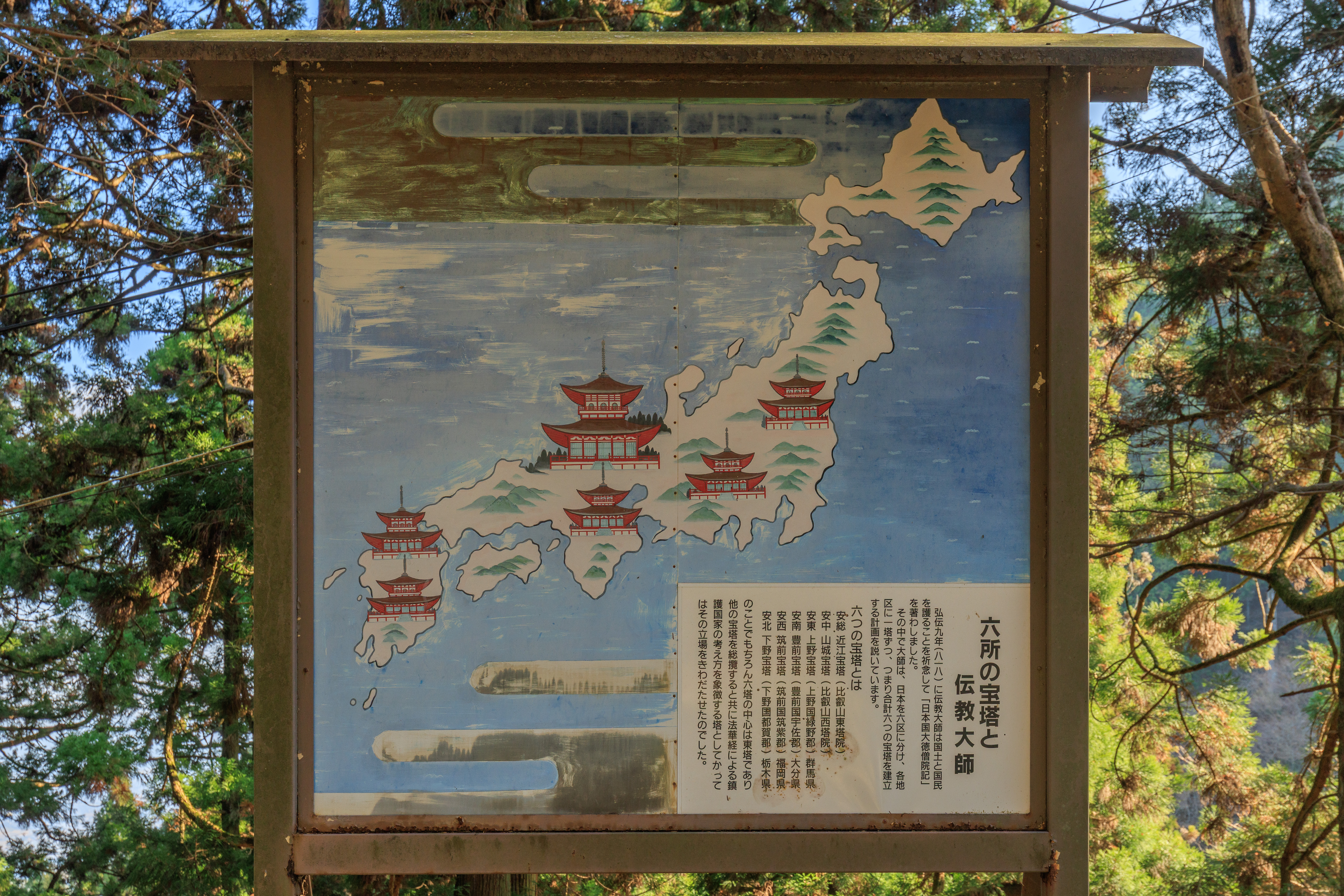
The Six Treasure Pagodas and Dengyo Daishi

In the ninth year of the Koden era (818), Dengyo Daishi authored the *Nihonkoku Daitoku Soin Ki* (Record of the Great Virtue Monasteries of Japan) with the specific intention of offering prayers for the protection of both the nation and its people.

Within this text, the Daishi outlined a plan to divide Japan into six distinct regions and to erect one pagoda in each—totaling, therefore, six Treasure Pagodas in all.

The Six Treasure Pagodas:

Anso: The Omi Pagoda (at the Toto-in, Mt. Hiei)

Anchu: The Yamashiro Pagoda (at the Saito-in, Mt. Hiei)

Anto: The Kozuke Pagoda (Midono District, Kozuke Province)
Gunma Prefecture

Annan: The Buzen Pagoda (Usa District, Buzen Province)
Oita Prefecture

Anzai: The Chikuzen Pagoda (Tsukushi District, Chikuzen Province)
Fukuoka Prefecture

Anhoku: The Shimotsuke Pagoda (Tsuga District, Shimotsuke Province
Tochigi Prefecture

Naturally, the central pillar of these six pagodas was the Toto (Eastern Pagoda).

In times past, this pagoda held a preeminent position; it not only served to oversee all the other pagodas but also stood as a powerful symbol of the concept of "protecting and pacifying the nation" through the teachings of the *Lotus Sutra*.
– Text from the sign in the photograph above, translated using Google.
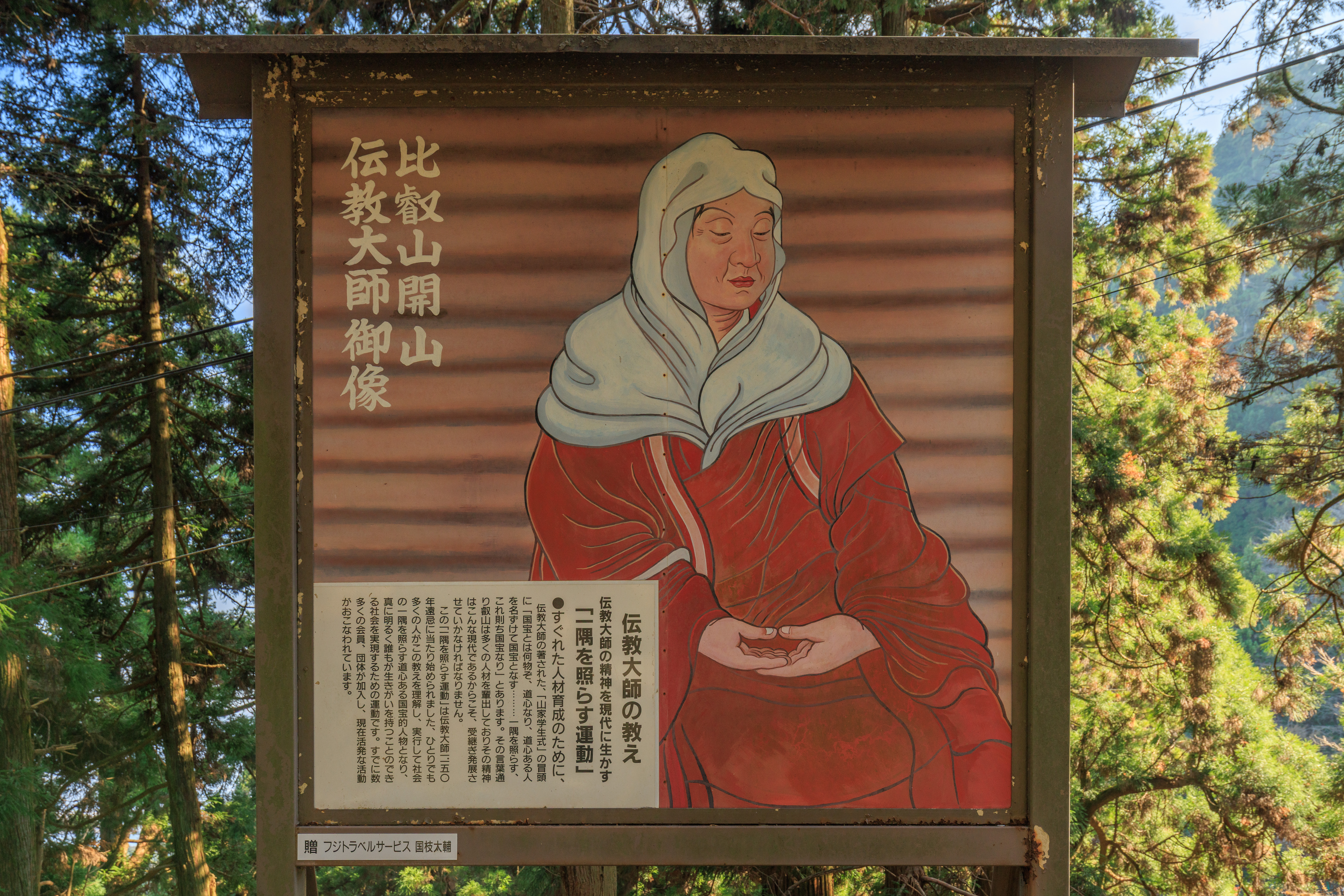
Statue of Dengyo Daishi, founder of Mount Hiei

The Teachings of Dengyo Daishi

"The Movement to Illuminate a Corner": Bringing the Spirit of Dengyo Daishi to Life in the Modern Age

"What, then, constitutes a 'National Treasure'? It is the *doshin*—the aspiration for the Way. A person possessed of this *doshin* is, by that very definition, a National Treasure." —From the opening passage of *Sange Gakushō Shiki* (Regulations for Students of the Mountain School), authored by Dengyo Daishi.

To foster such exceptional human resources—individuals who embody this spirit—the "Movement to Illuminate a Corner" (*Ichigu wo Terasu Undō*) was inaugurated to commemorate the 1,250th anniversary of Dengyo Daishi's passing.

This movement aims to realize a society that is truly bright and vibrant—one in which every individual can find a genuine sense of purpose in life. It encourages people to understand and put into practice Dengyo Daishi's teachings, striving to become "National Treasures" themselves—individuals with the *doshin* to illuminate their own corner of the world.

With the participation of numerous members and organizations, the movement is currently engaged in active endeavors. Precisely because we live in such a modern era—one facing its own unique challenges—it is all the more imperative that we inherit and further develop the spirit of Dengyo Daishi, just as Mount Hiei has historically nurtured and sent forth a multitude of talented individuals into the world.

Presented by Fuji Travel Service, Daisuke Kunieda
– Text from the sign in the photograph above, translated using Google.
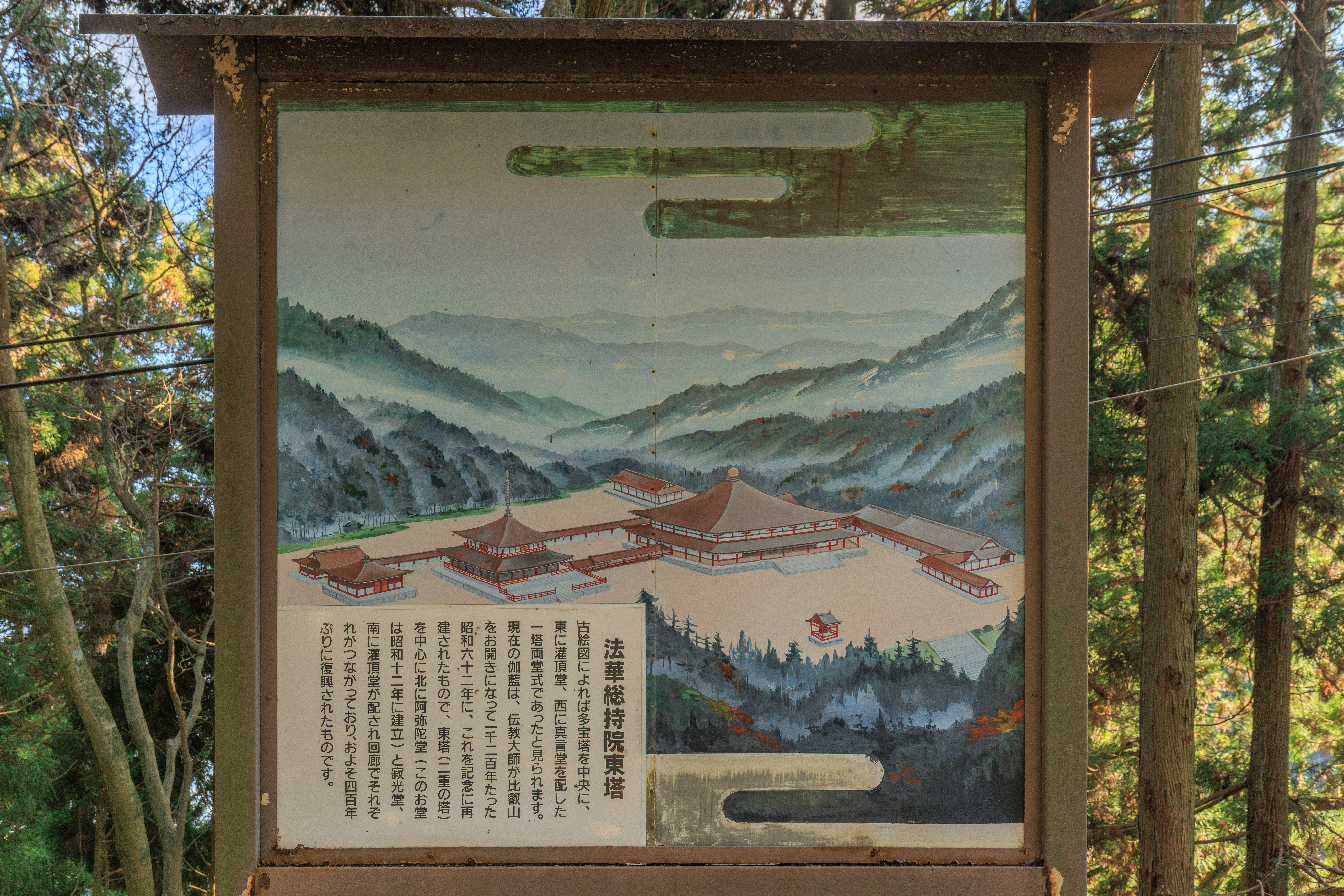
Hokke Soji-in: The Eastern Pagoda

According to historical maps, the original temple complex appears to have followed a "One Pagoda, Two Halls" layout, featuring a Tahōtō (Treasure Pagoda) at the center, flanked by the Kanjo-dō (Hall of Consecration) to the east and the Shingon-dō to the west.

The current temple complex was reconstructed in 1987—marking the 1,200th anniversary of the founding of Mount Hiei by Dengyō Daishi—to commemorate this milestone. Centered around the Eastern Pagoda (a two-story structure), the complex features the Amida-dō (originally built in 1937) and the Jakko-dō to the north, and the Kanjo-dō to the south; these structures are interconnected by corridors, representing a full restoration of the site after a hiatus of approximately four centuries.
– Text from the sign in the photograph above, translated using Google.
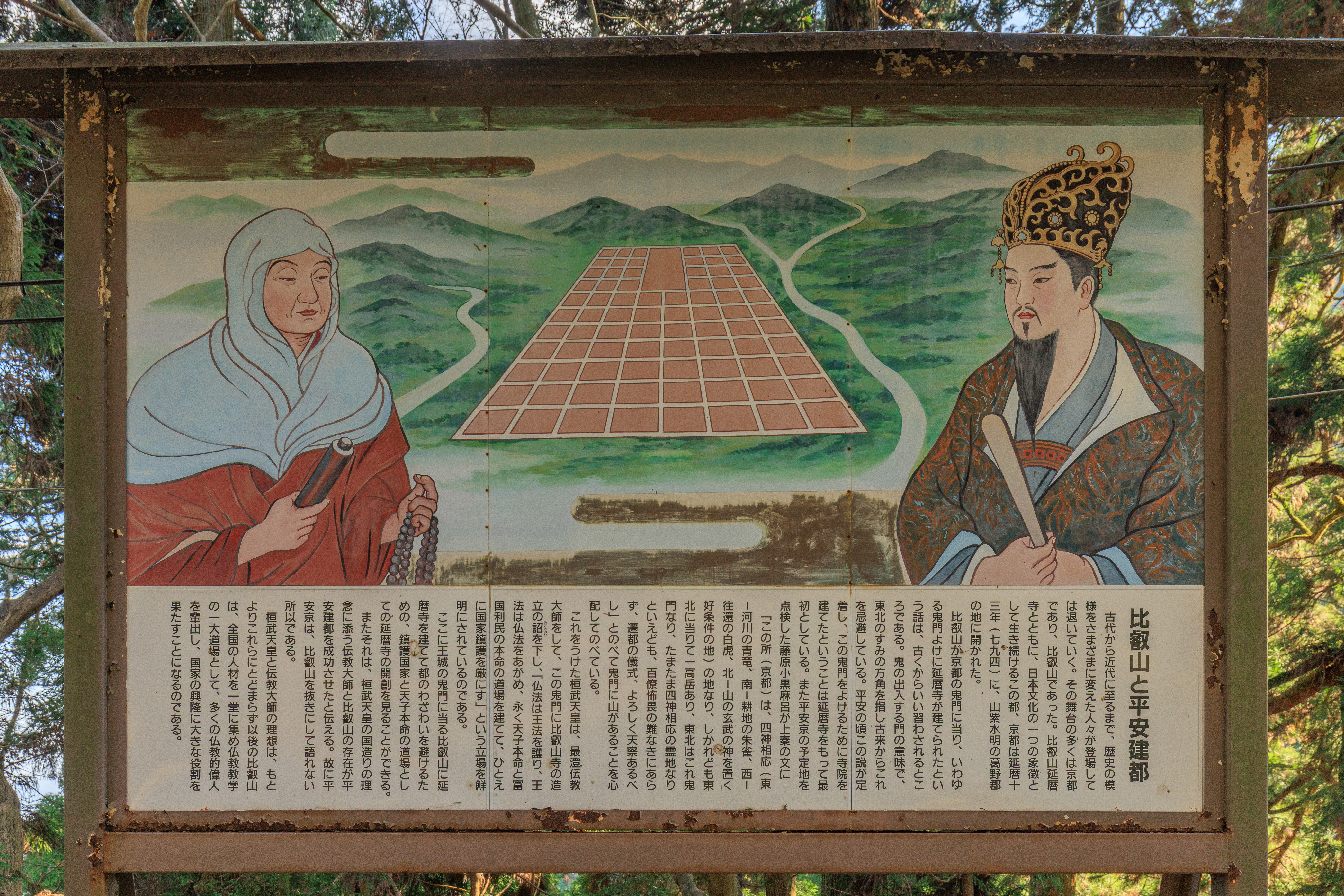
Mount Hiei and the Founding of Heian-kyo

From ancient times through the modern era, countless individuals have appeared upon the stage of history—each altering its course in various ways—only to eventually fade from the scene. The primary settings for these dramas were, more often than not, Kyoto and Mount Hiei. Kyoto—a capital that continues to endure as a quintessential symbol of Japanese culture, inextricably linked with the Enryaku-ji Temple on Mount Hiei—was established in the year Enryaku 13 (794) within the district of Kadono, a region renowned for its scenic beauty of "purple mountains and clear waters."

It has long been a widely recounted legend that Mount Hiei occupies the *kimon*—the "Demon Gate"—of Kyoto, and that the Enryaku-ji Temple was constructed specifically to serve as a ward against this ominous portal. The term *kimon* literally signifies a "gate through which demons enter and exit"; it refers to the northeastern compass point—a direction that has been regarded with superstitious dread since antiquity. This belief became firmly entrenched during the Heian period, and the construction of the Enryaku-ji Temple is credited as the very first instance of a religious institution being erected expressly to neutralize the threat of this Demon Gate. Furthermore, Fujiwara no Oguramaro—who was tasked with inspecting the proposed site for Heian-kyo—submitted a memorial to the Throne in which he expressed his apprehension regarding the presence of a mountain at the Demon Gate.

In this document, he stated: "This location [Kyoto] constitutes a *Shijin-sōō* site—a land possessing the ideal conditions for the placement of the Four Divine Beasts [the Azure Dragon in the East, the Vermilion Bird in the South, the White Tiger in the West, and the Black Tortoise in the North]. However, a towering peak stands precisely in the northeast—the direction of the *kimon*. Although this site is indeed a sacred realm blessed by the Four Divine Beasts, it is not entirely free from the peril of striking fear into the hearts of the court officials. Therefore, the ceremonies for the transfer of the capital should be conducted with the utmost reverence and caution."

In response to this counsel, Emperor Kanmu issued an Imperial Edict to Saichō (later known as Dengyō Daishi), commanding him to construct a temple—the predecessor to the Enryaku-ji—upon Mount Hiei, situated at this very Demon Gate. Through this decree, the Emperor articulated a clear and unequivocal stance: "Buddhist Law shall serve to protect Imperial Law, and Imperial Law shall serve to revere Buddhist Law. We shall establish a sacred sanctuary—a *dōjō*—dedicated eternally to the fulfillment of the Emperor's destiny and to the realization of the national mission to enrich the state and benefit the people; thereby ensuring, above all else, the inviolable protection and security of the realm." Here, we witness the founding of Enryaku-ji Temple on Mount Hiei—situated at the *Kimon*, or "Demon Gate," of the Imperial Palace—established to ward off calamities threatening the capital. It served as a spiritual center for the "Protection of the Nation" and as a sacred training ground dedicated to the personal destiny of the Emperor. Furthermore, history tells us that the presence of Mount Hiei—and of Dengyō Daishi, whose vision aligned with Emperor Kanmu’s philosophy of nation-building—was instrumental in ensuring the successful establishment of the Heian capital. For this very reason, it is impossible to discuss Heian-kyō without acknowledging the pivotal role played by Mount Hiei.

The ideals shared by Emperor Kanmu and Dengyō Daishi, of course, extended far beyond these initial objectives. In the years that followed, Mount Hiei evolved into a preeminent center for Buddhist scholarship, drawing talented individuals from across the nation to gather under one roof. It went on to produce a multitude of great Buddhist figures and played a monumental role in fostering the prosperity and advancement of the state.
– Text from the sign in the photograph above, translated using Google.
This text explains the stone marker that we saw on our way here.
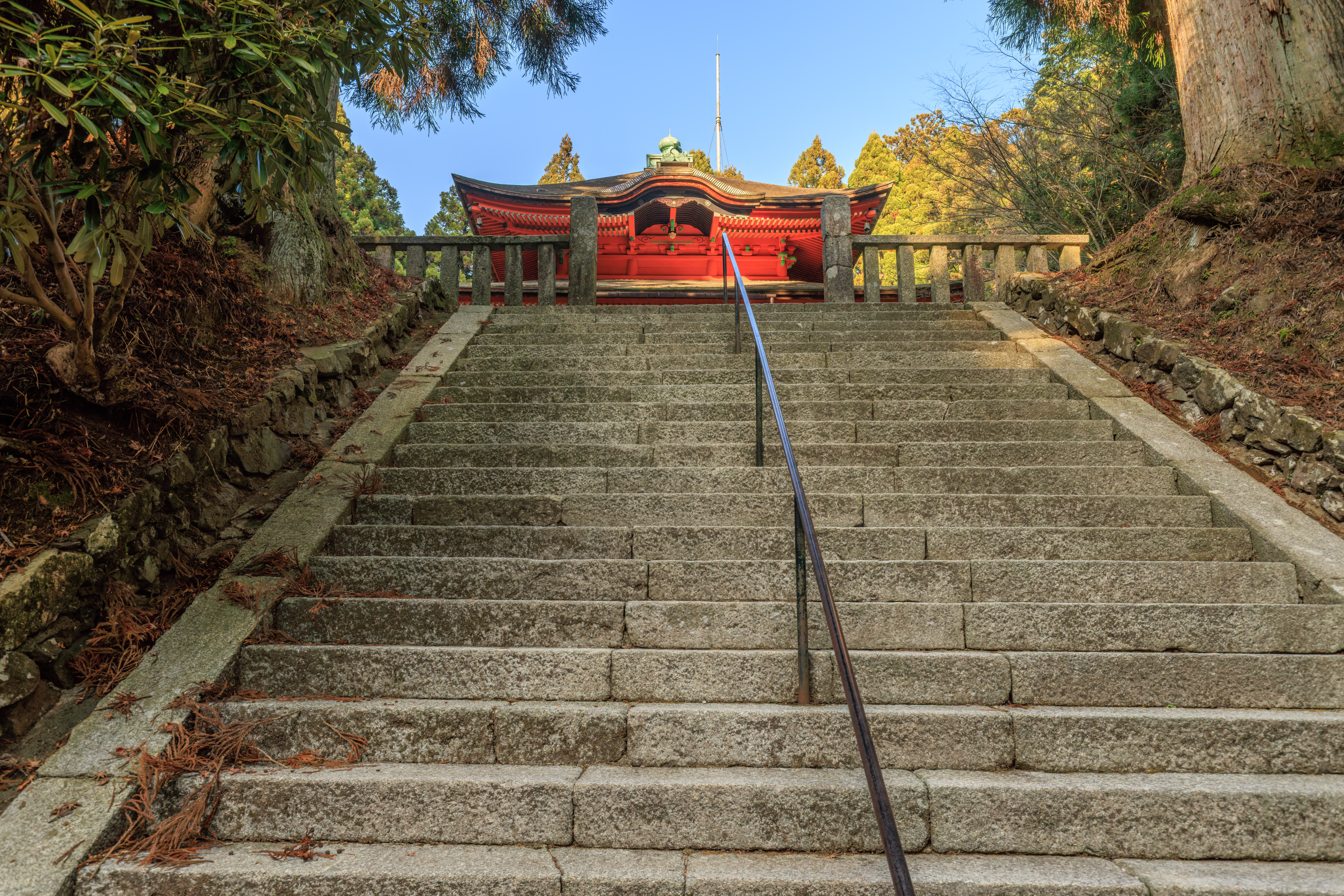
After reaching the bottom of the path, we decided to check out the 戒壇院 Kaidan-in at the top of the stairs here.
Kaidanin temple

It is an important cultural asset and the most important temple on Mt Hiei, where monks take solemn vows and accept the Mahayana religious precepts In 822 A.D the Emperor "Saga" permitted this temple to be built a week after the death of Dengyo Daishi Saicho (767~822 A.D) the founder of the Tendai Denomination, who had devoted his life and soul to this temple, his successor Gishin (781~833 A D) the first Zasu, built it in 828 A.D It was in this temple that Mahayana Buddhism officially declared its independence from Nara and Hinayana Buddhism in Japan.
– Text from a sign with minor spelling errors corrected.
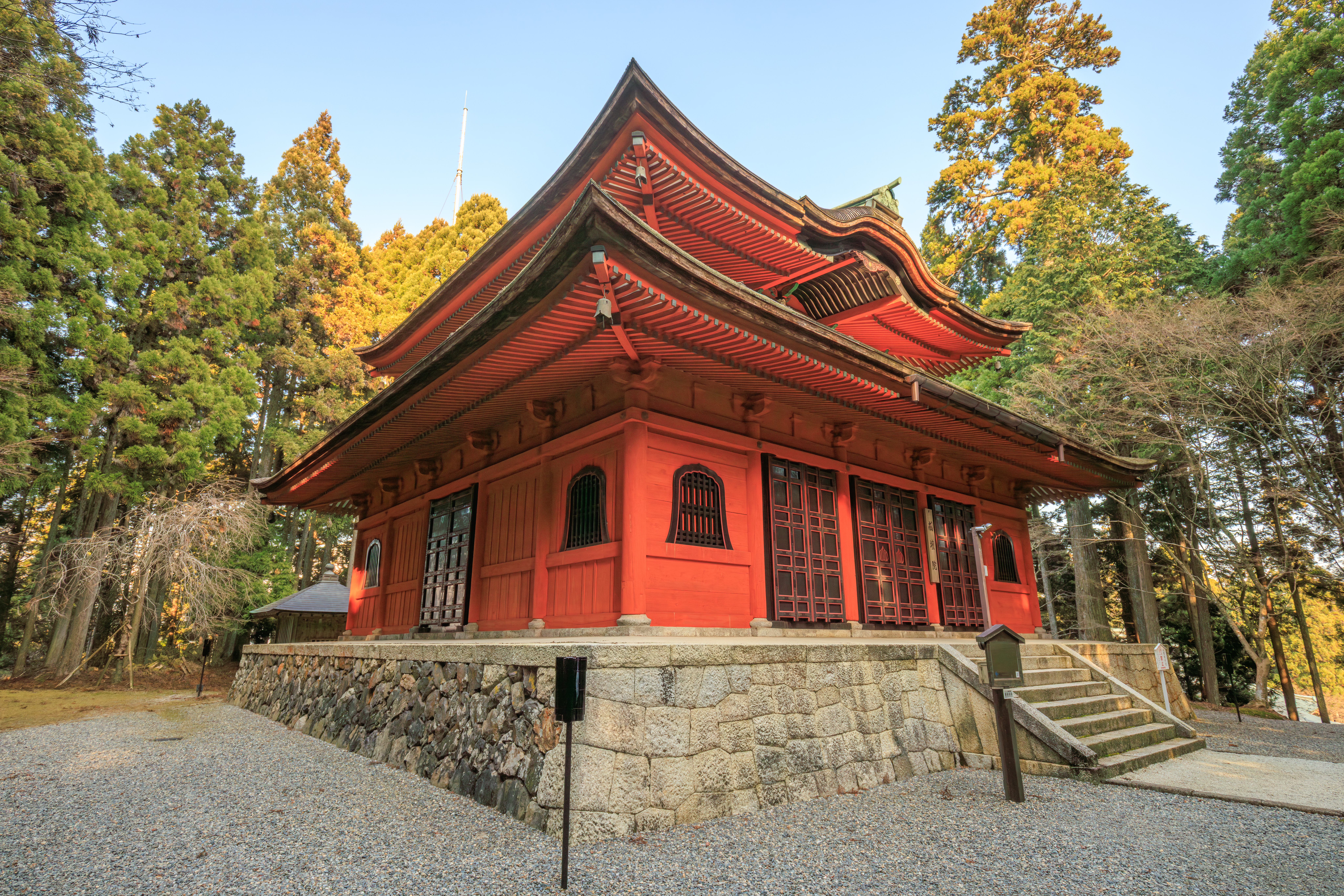
Important Cultural Property
Building

Enryaku-ji Kaidan-in (Enryaku-ji Temple Ordination Platform Hall)
Enryaku-ji Temple Ordination Platform Hall (One Building)
(Sakamoto Honmachi, Otsu City)

A building with a cypress bark roof, built on a stone foundation, with a eaves extending from the front.

The ordination platform hall, with its cypress bark roof and shingled eaves, is three bays wide and three bays deep, single-story, pyramidal roof, and curved gable. Because it has a lower roof, the exterior appears to be a five-bay, two-story building.

This ordination platform hall was founded as a training hall for bestowing the Endon Kaikan (a type of ordination ceremony), and the current building is said to have been built in Enpo 6 (1678). It combines both Japanese and Chinese architectural styles, with vermilion and black colors applied to the wooden parts. The interior is paved with stone, and a stone wall is built around the central three bays.

It houses statues of Shakyamuni Buddha, Manjushri Bodhisattva, and Maitreya Bodhisattva.

It was designated a National Important Cultural Property in August 1901 (Meiji 34).

March 2020 (Reiwa 2)
Otsu City Board of Education
– Text from the sign in front of the Kaidan-in, translated using Google.
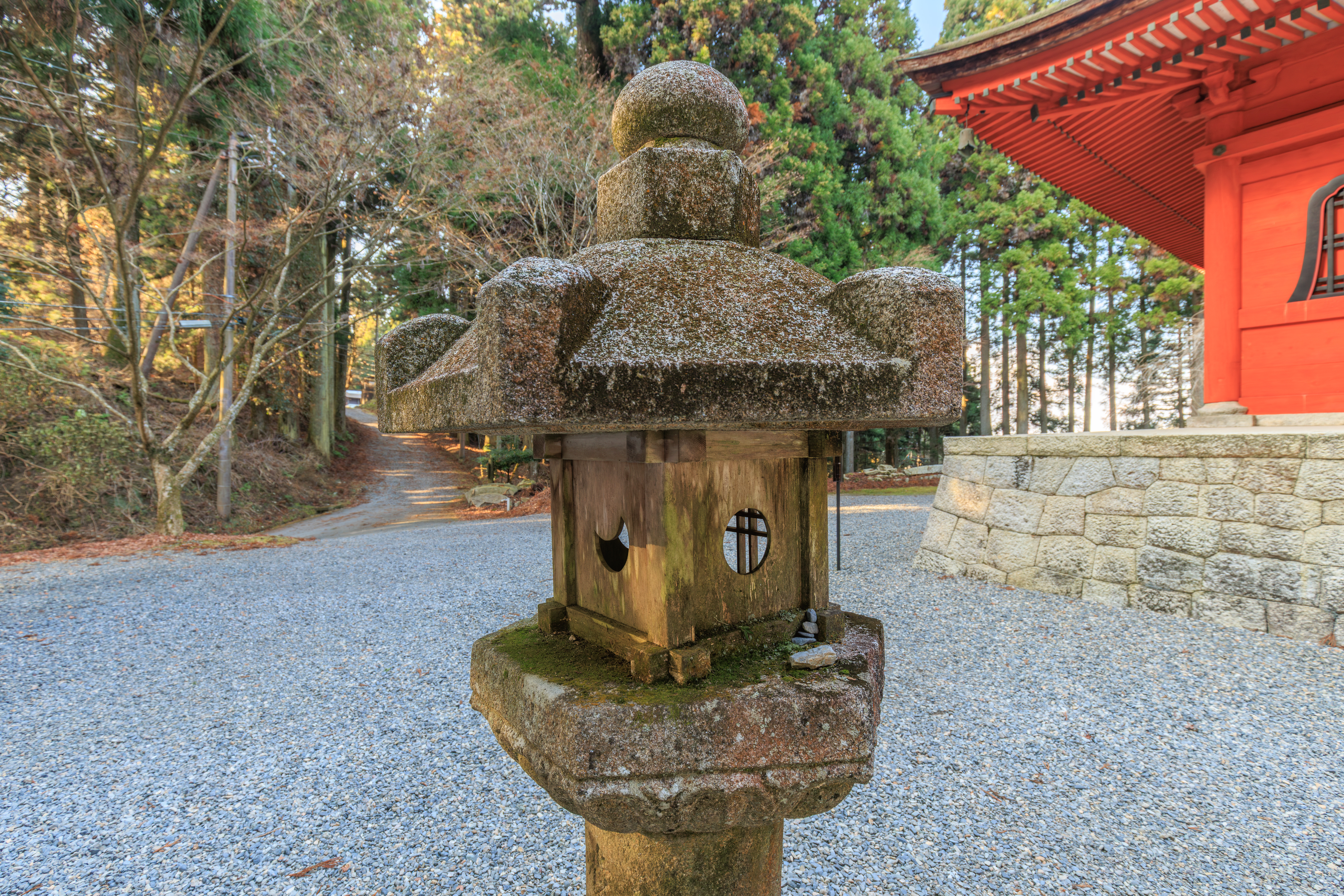
This lantern had a mix of stone and wooden elements.
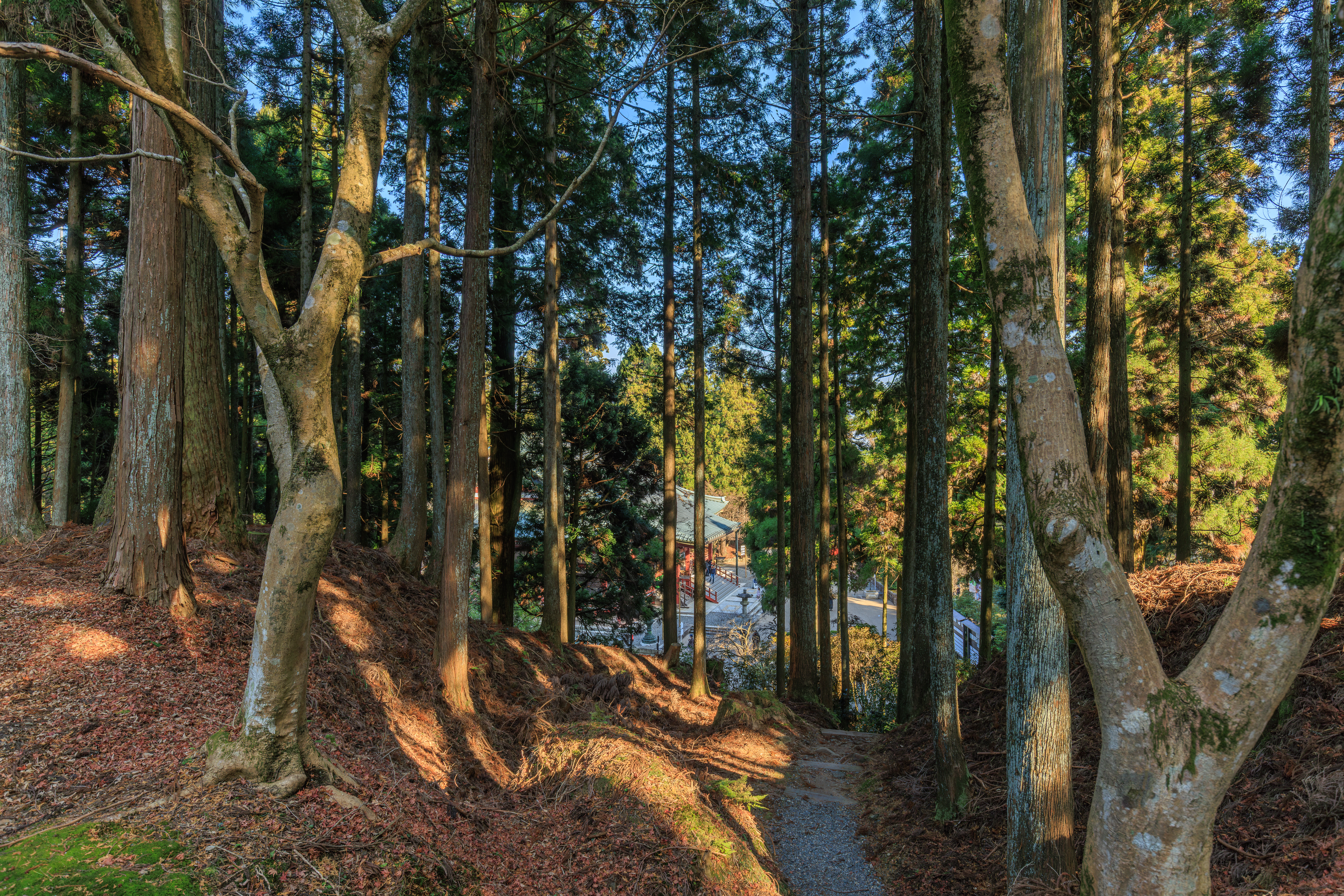
A shortcut to continue on to the east!
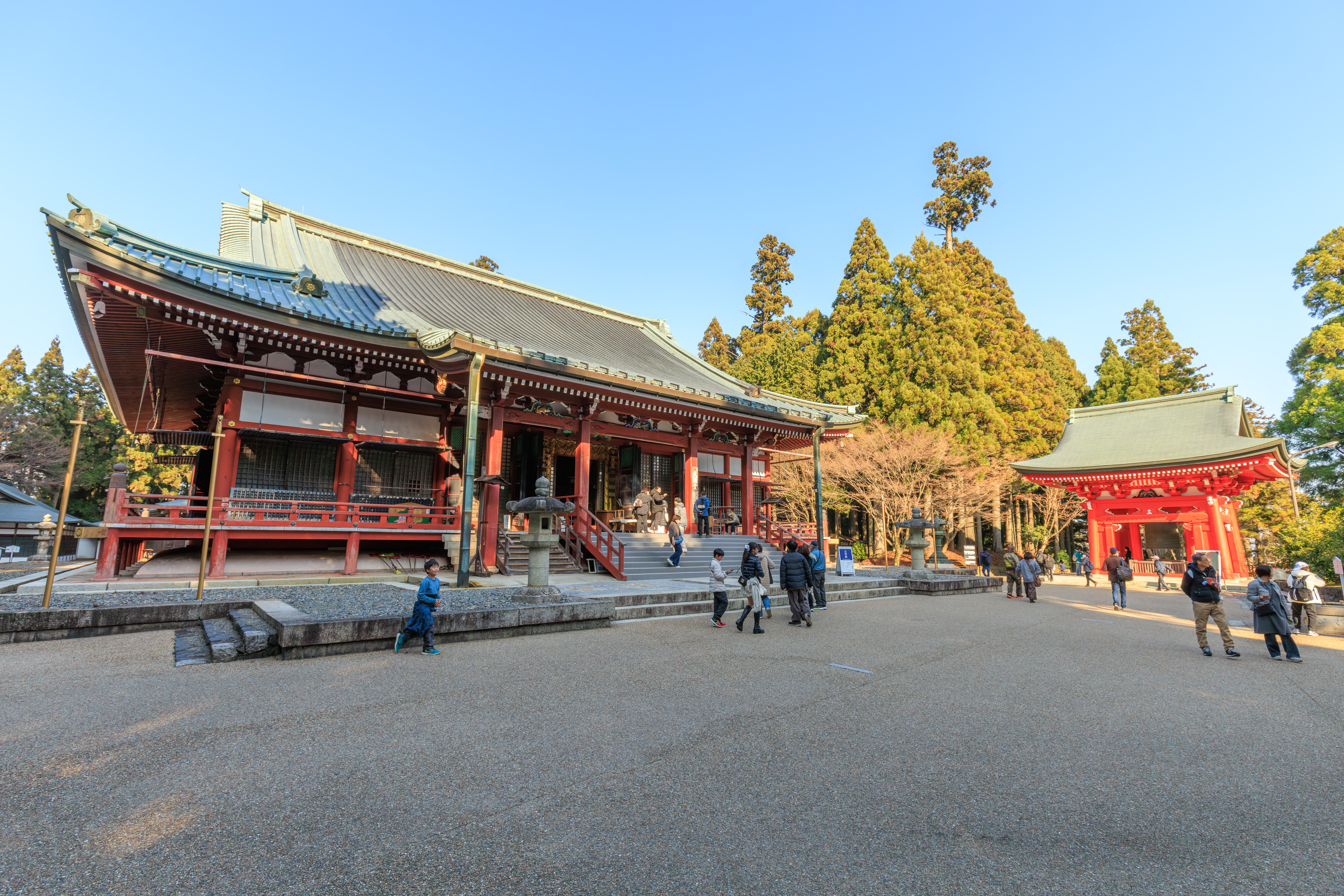
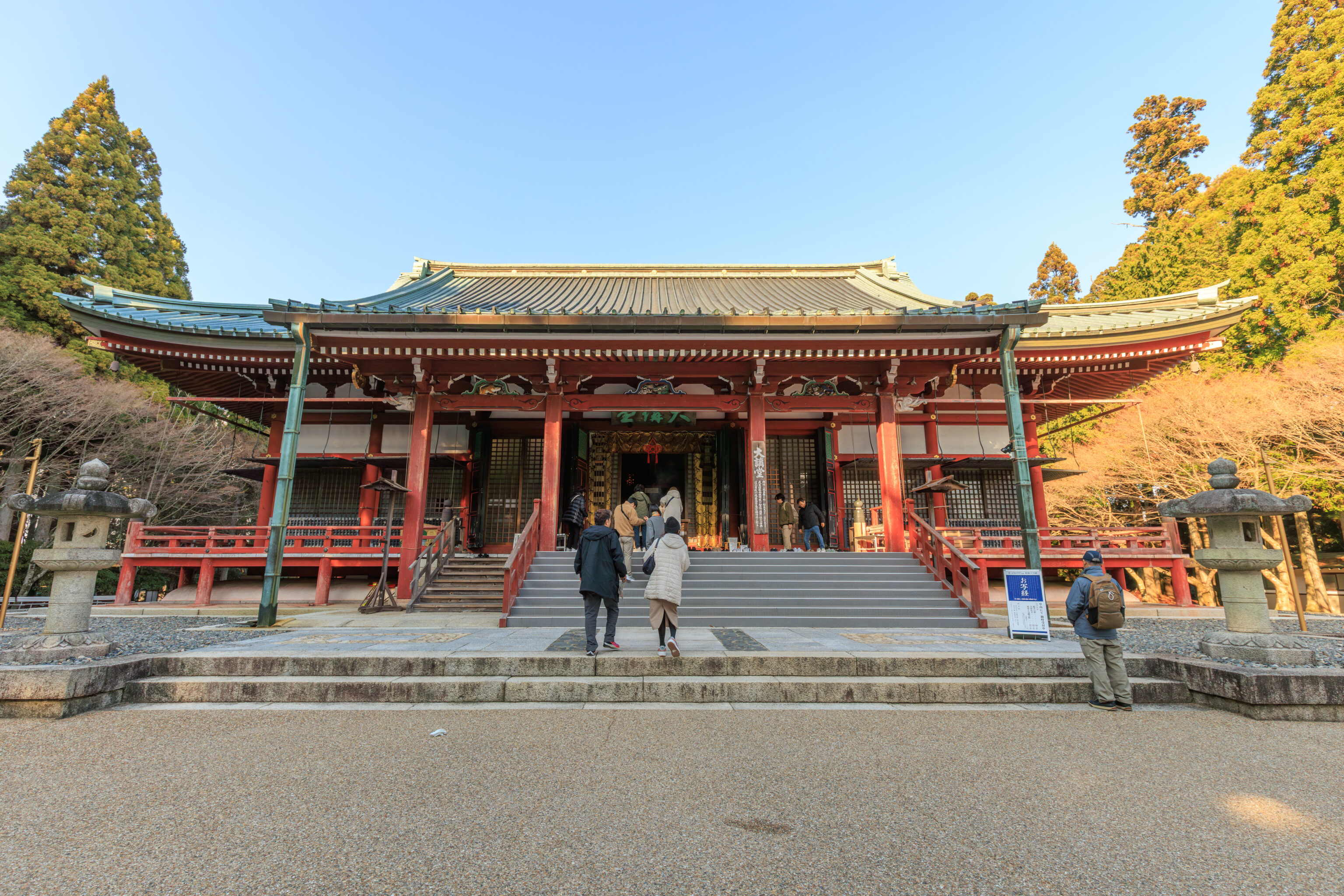
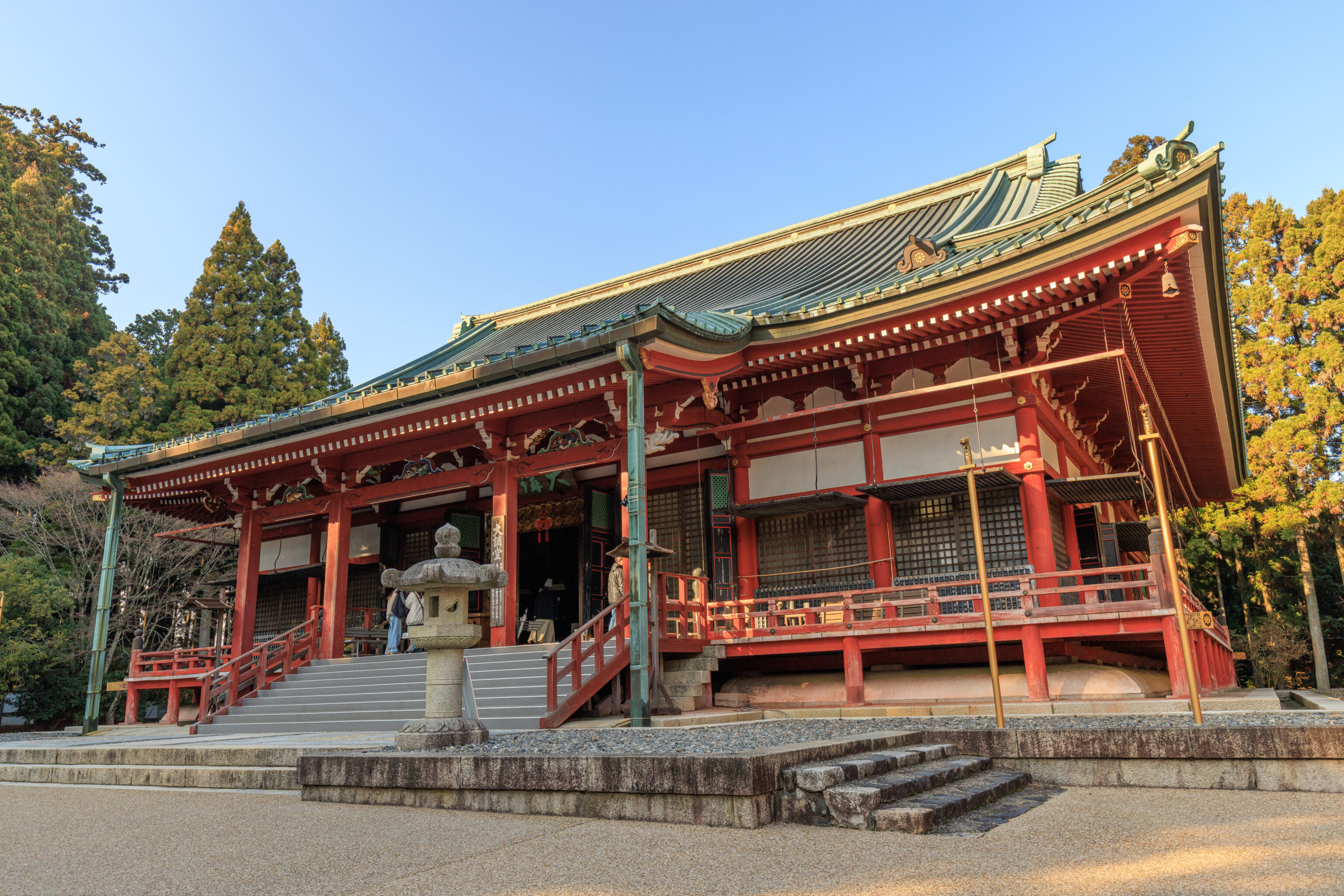
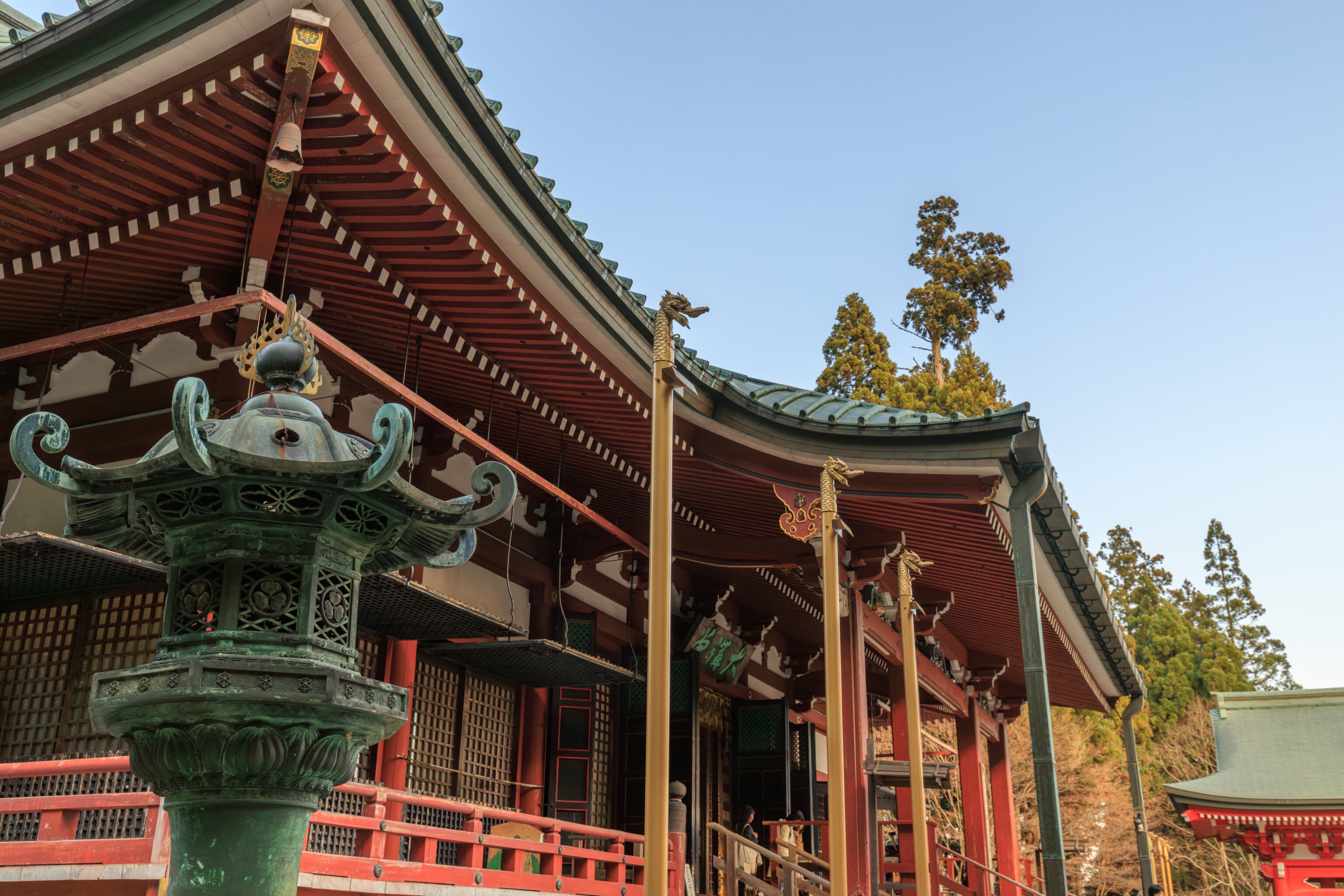
We then arrived at a larger hall, the 大講堂 Daikodo (Grand Lecture Hall).
Daikodo [designated as important cultural asset)

The Daikodo, constructed by Gishin the 1st head priest of the Tendai sect of Buddhism, is used by the Buddhist priests to have debates to deepen their studies. The so-called "Hokkedaie kogakuryugi," started by Jie Daishi, continues to be an important ceremony held every 4 years in this hall for those trainee monks stepping into the position of full fledged Tendai priests. The current edifice, relocated and reconstructed from the piedmont district called Sakamoto after the old edifice was burnt down in 1956, enshrines the venerable statues of the founders of Buddhist sects, who devoted themselves to their studies for many years in mount Hiei.
– Text from a sign, translated using Google.
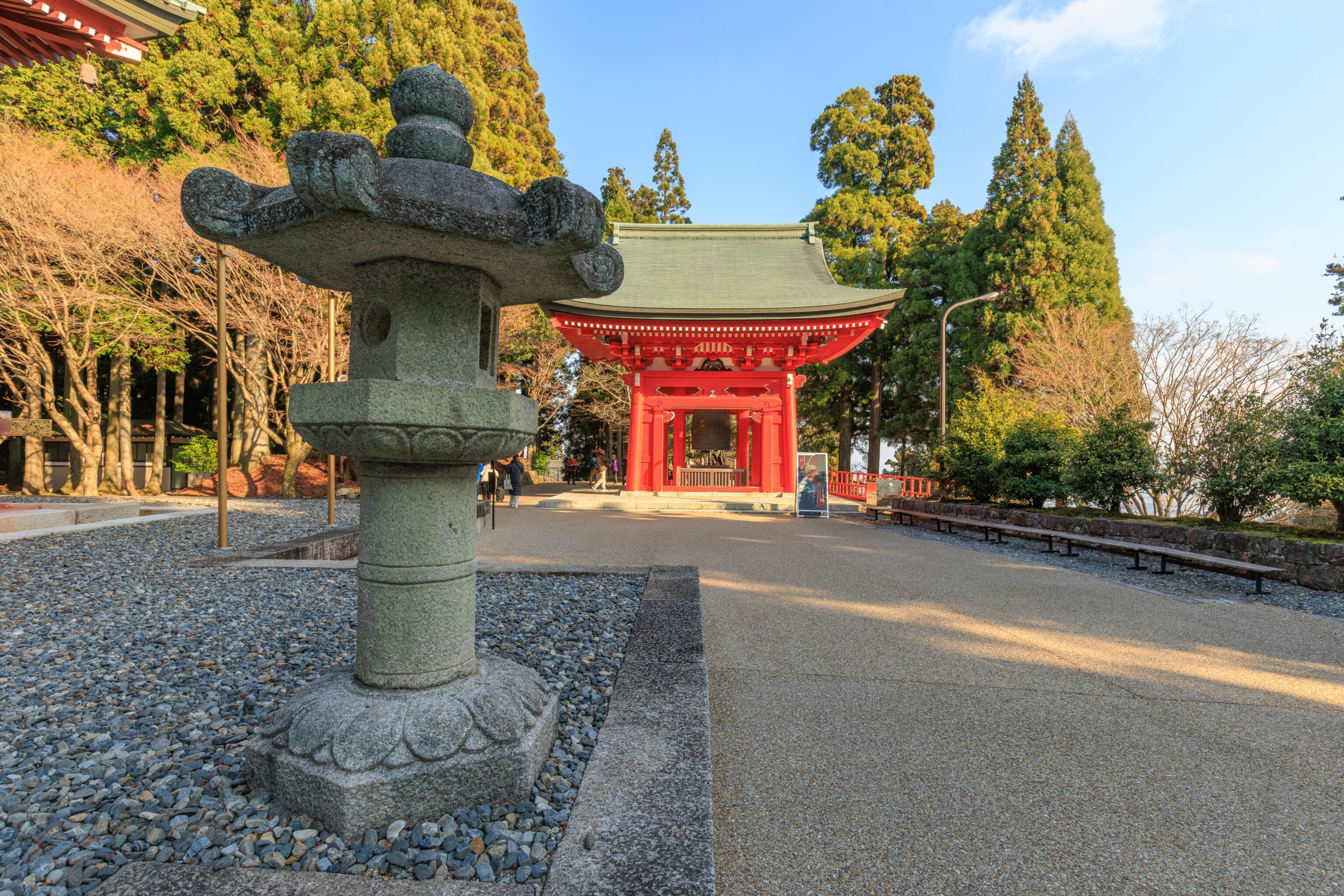
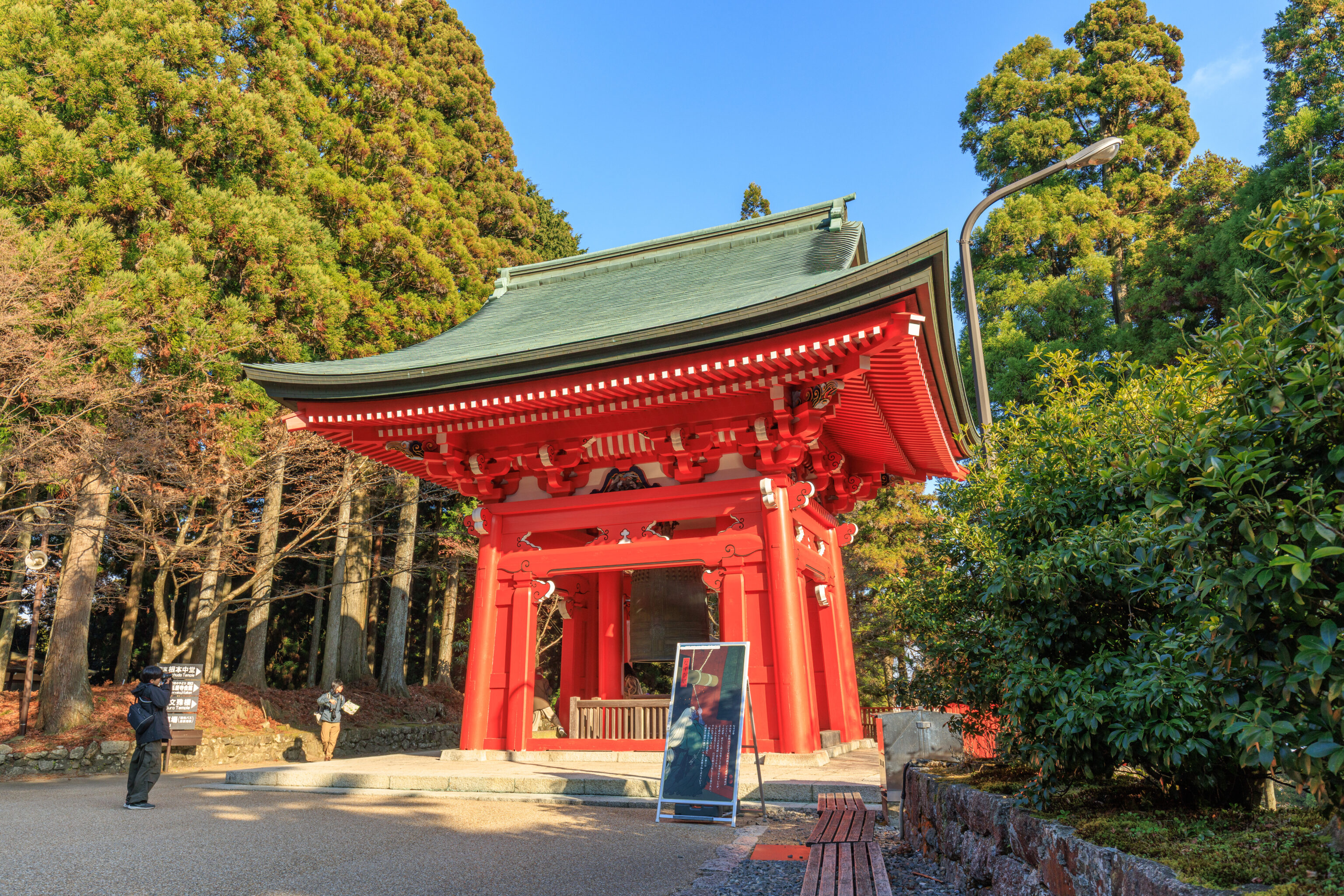
There was a large bell to the east of the hall. This bell seems to be both the 開運の鐘 Bell of Good Fortune and 世界平和の鐘 Bell of World Peace.
The sign to the right of the bell is barely legible in the photograph above:
The Eggplant Hag

Long ago, it is said that a *yōkai*—an old woman with a face the color of an eggplant—dwelt upon Mount Hiei.

In her youth, this old woman had served in the Imperial Court as a lady-in-waiting; however, having committed the crime of murder, she was cast down into the Realm of the Dead.

Yet, through the boundless mercy of the Buddha, her spirit was granted permission to reside upon Mount Hiei.

To repay this divine benevolence, it is said that during Oda Nobunaga's infamous burning of Mount Hiei, she struck the great bell of the Daibutsudō Hall, sounding the alarm to warn everyone of the impending danger.
– Text from sign, translated using Google.
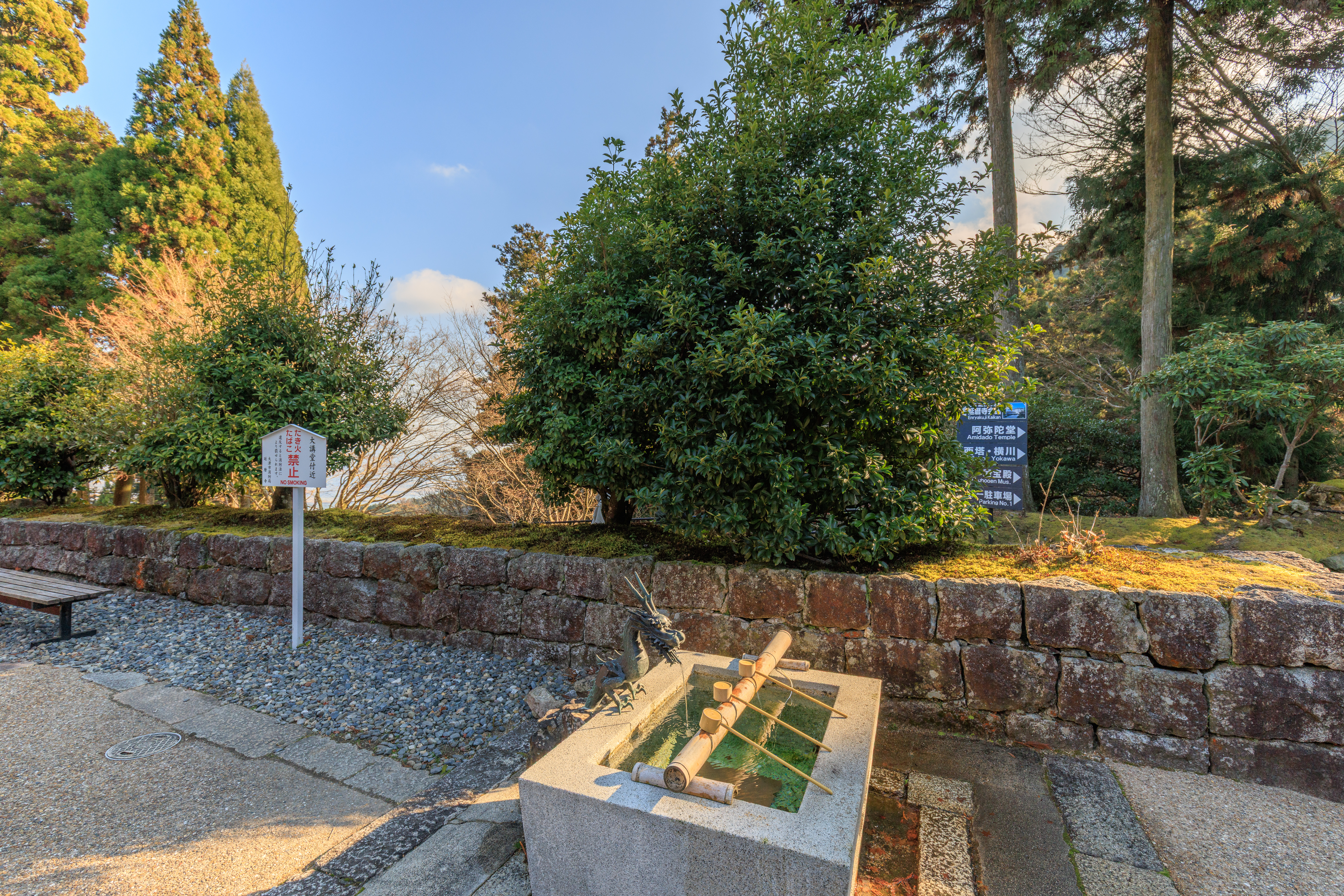
A typical temple cleansing station.
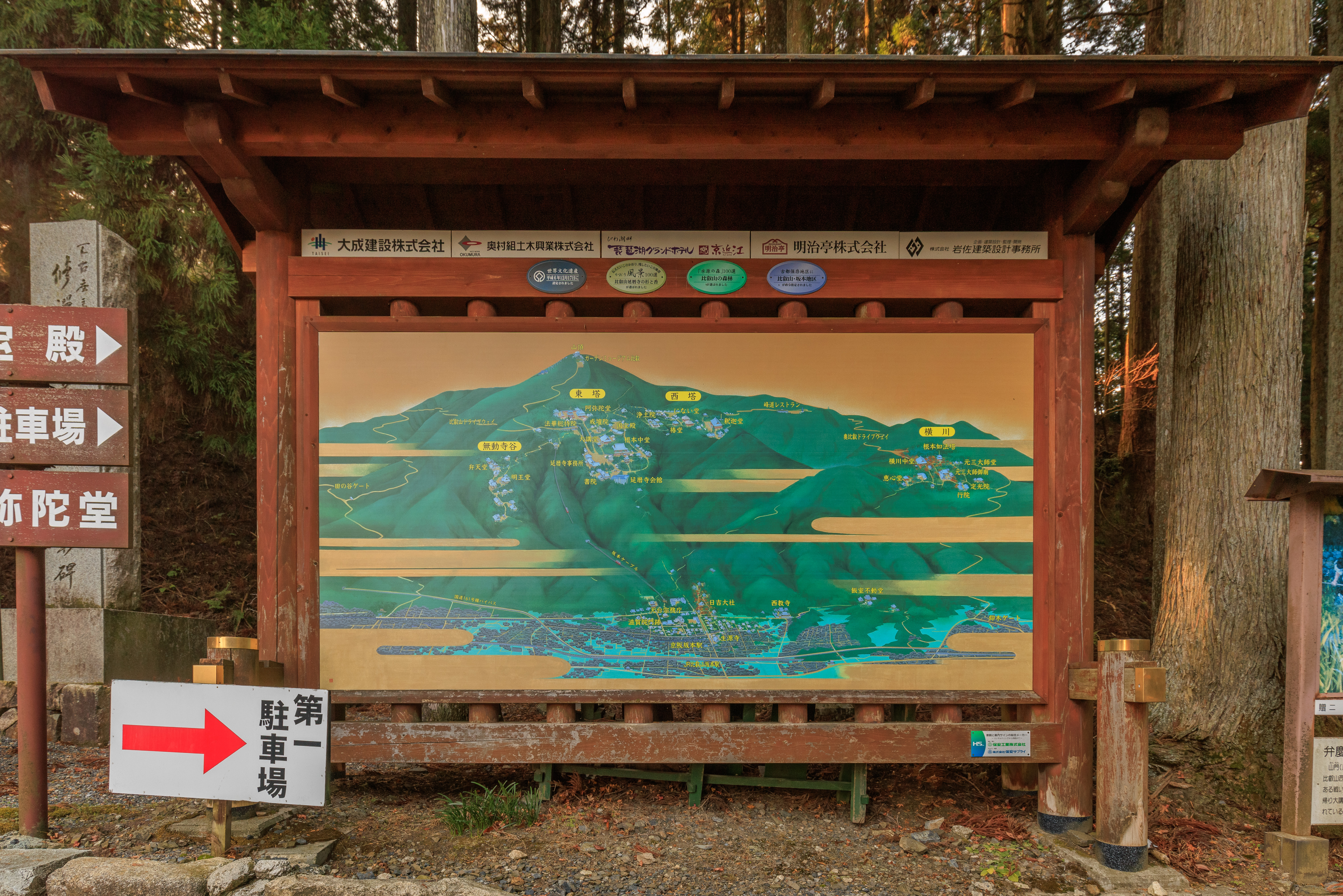
We found this sign near the hall. It depicts everything in the area on Mt. Hiei, including the Garden Museum at the very top and the funicular which we will eventually take down to the east.
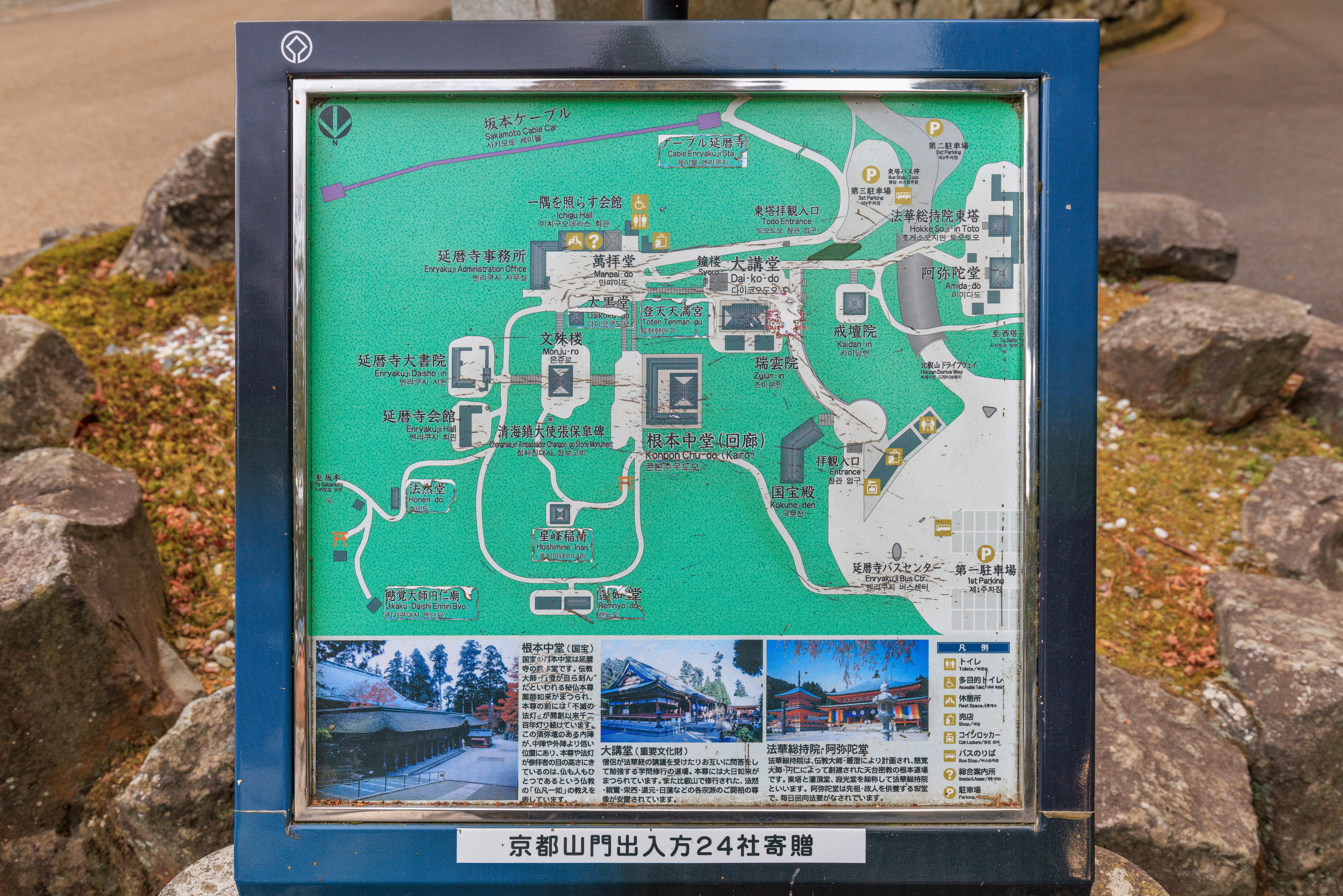
There was a more useful map of the immediate area as well.
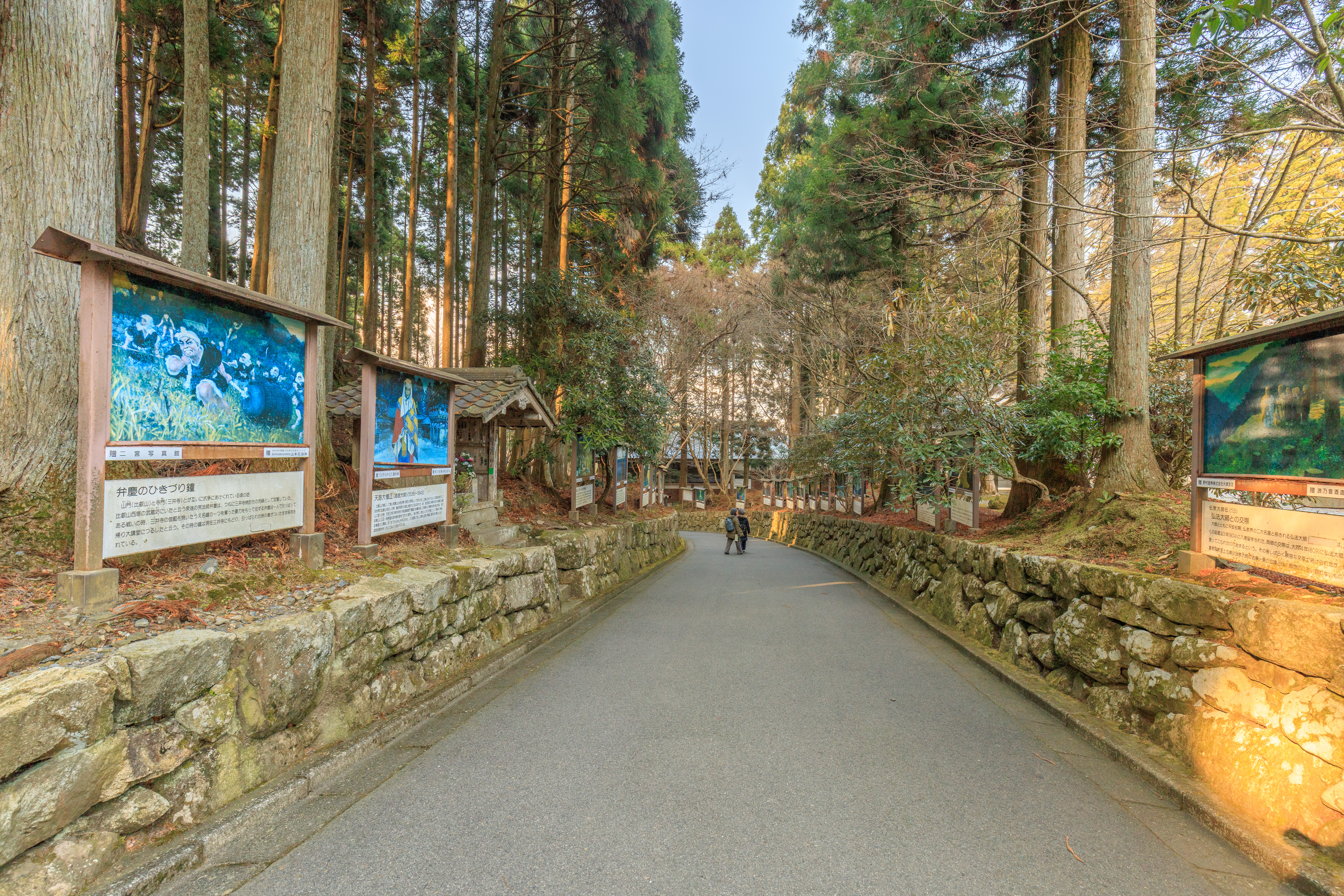
This path led to additional temple buildings to the north. However, we decided to go to the east as we wanted to go to the main hall of the temple.
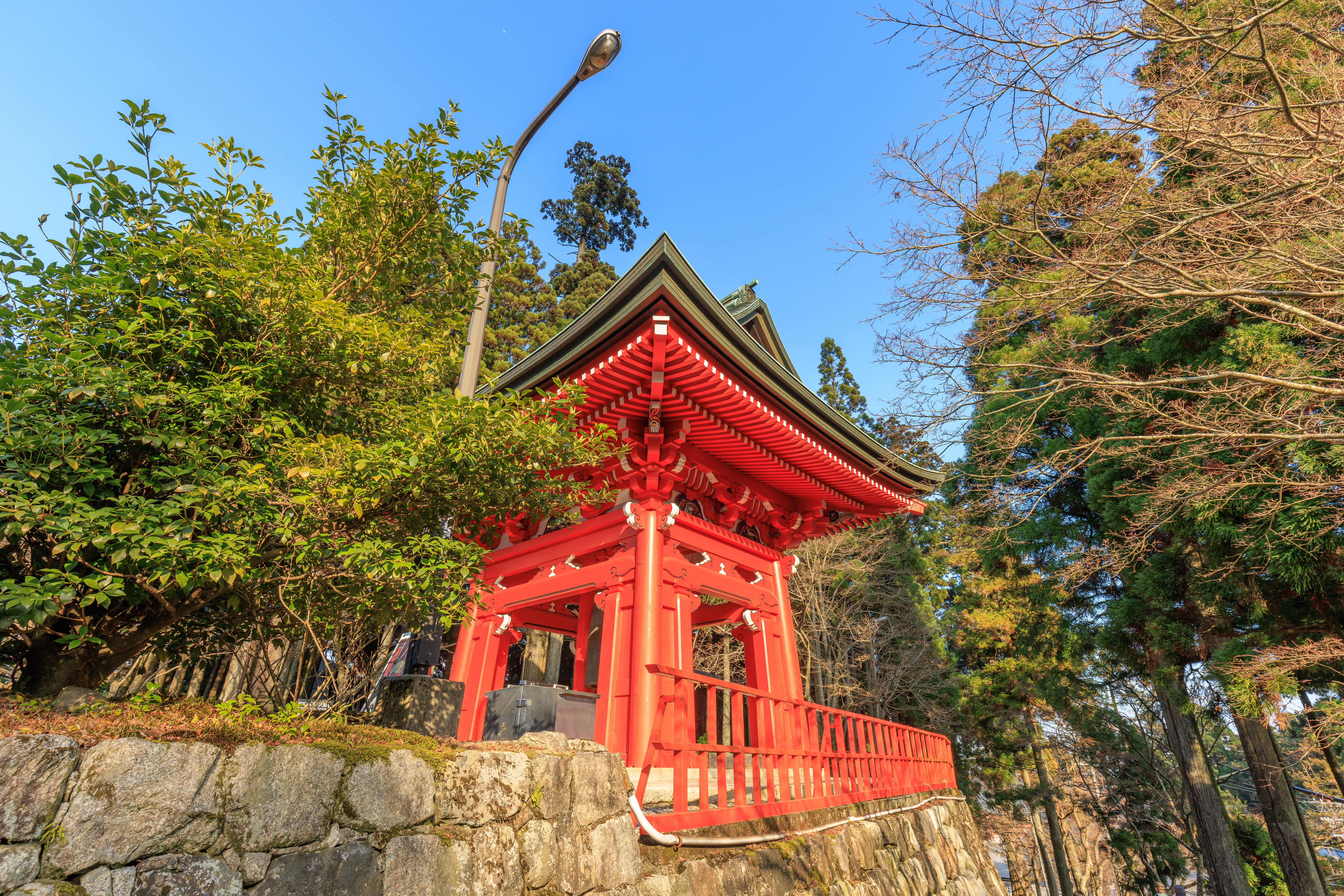
We walked past the bell we saw earlier…
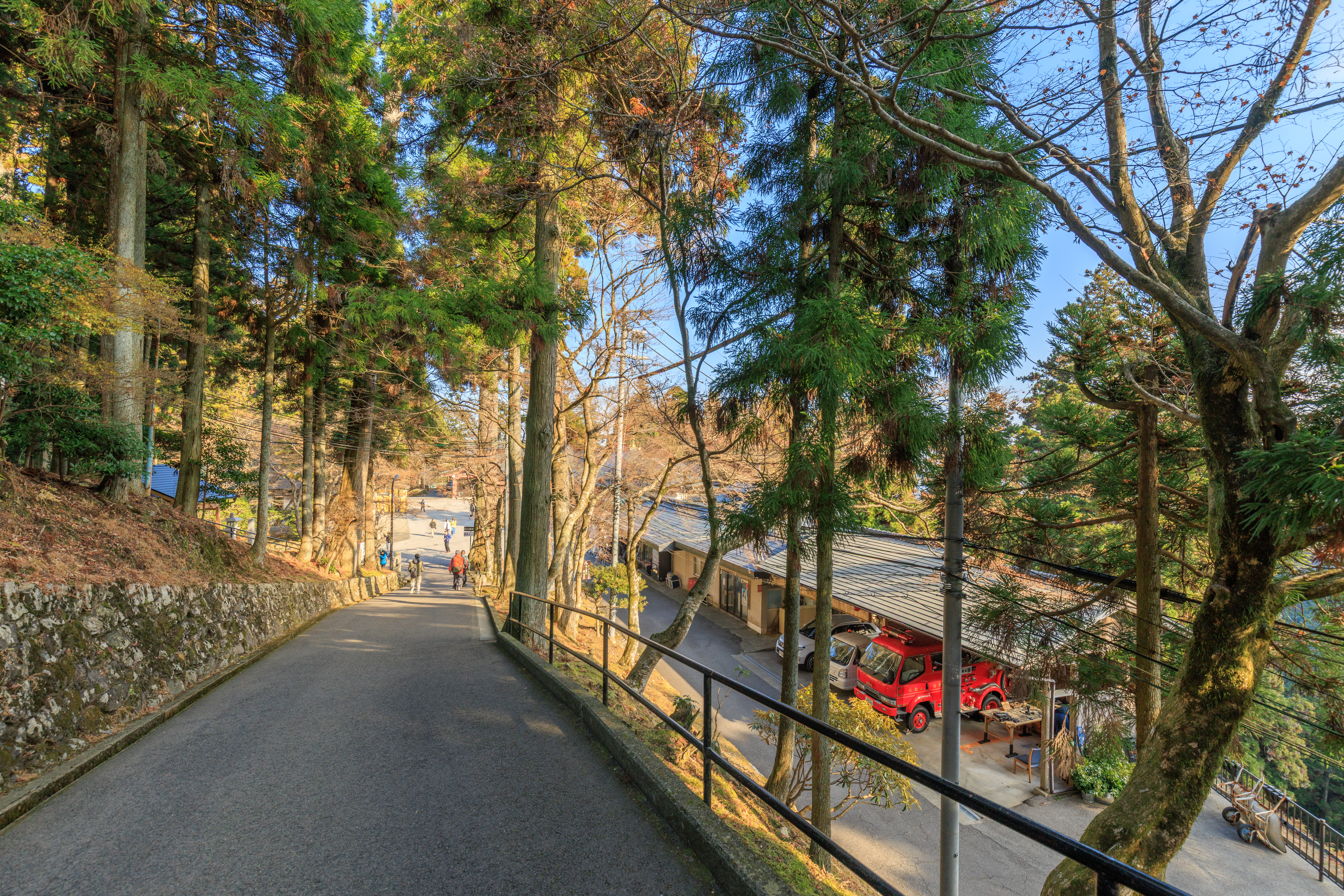
And headed down a slope. Over on the right, we could see the temple’s little red fire truck!
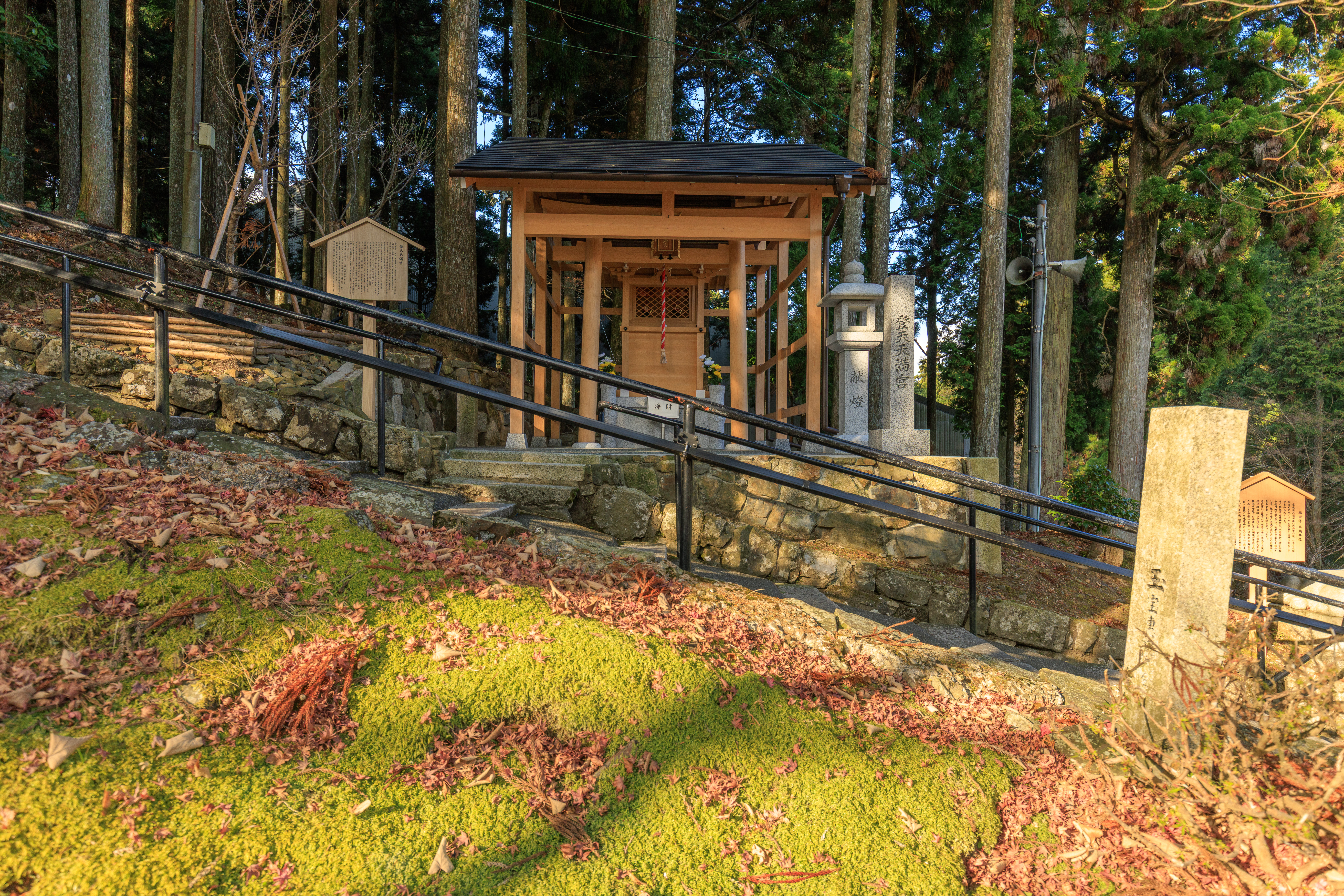
A little shrine that was on the path to our left.
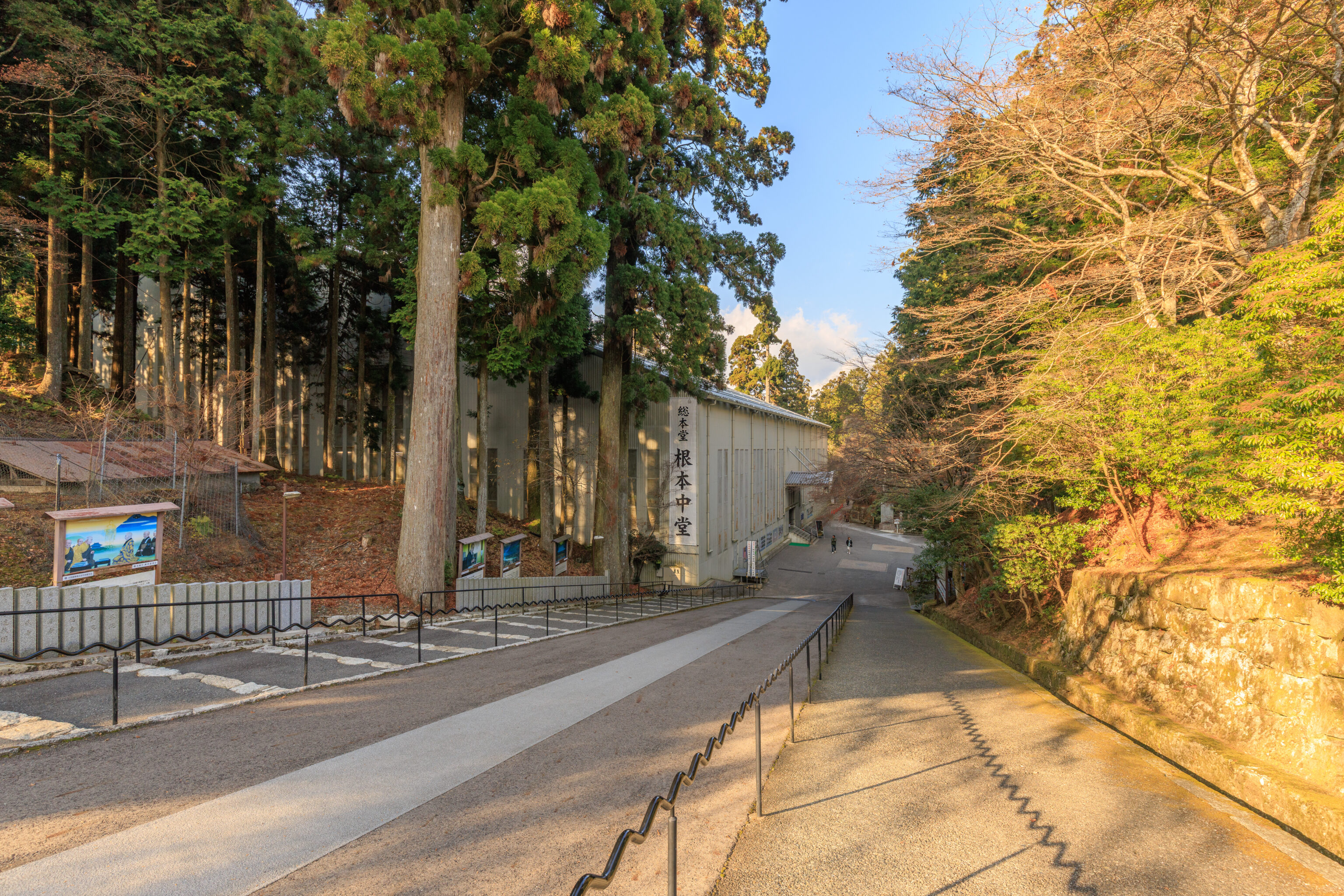
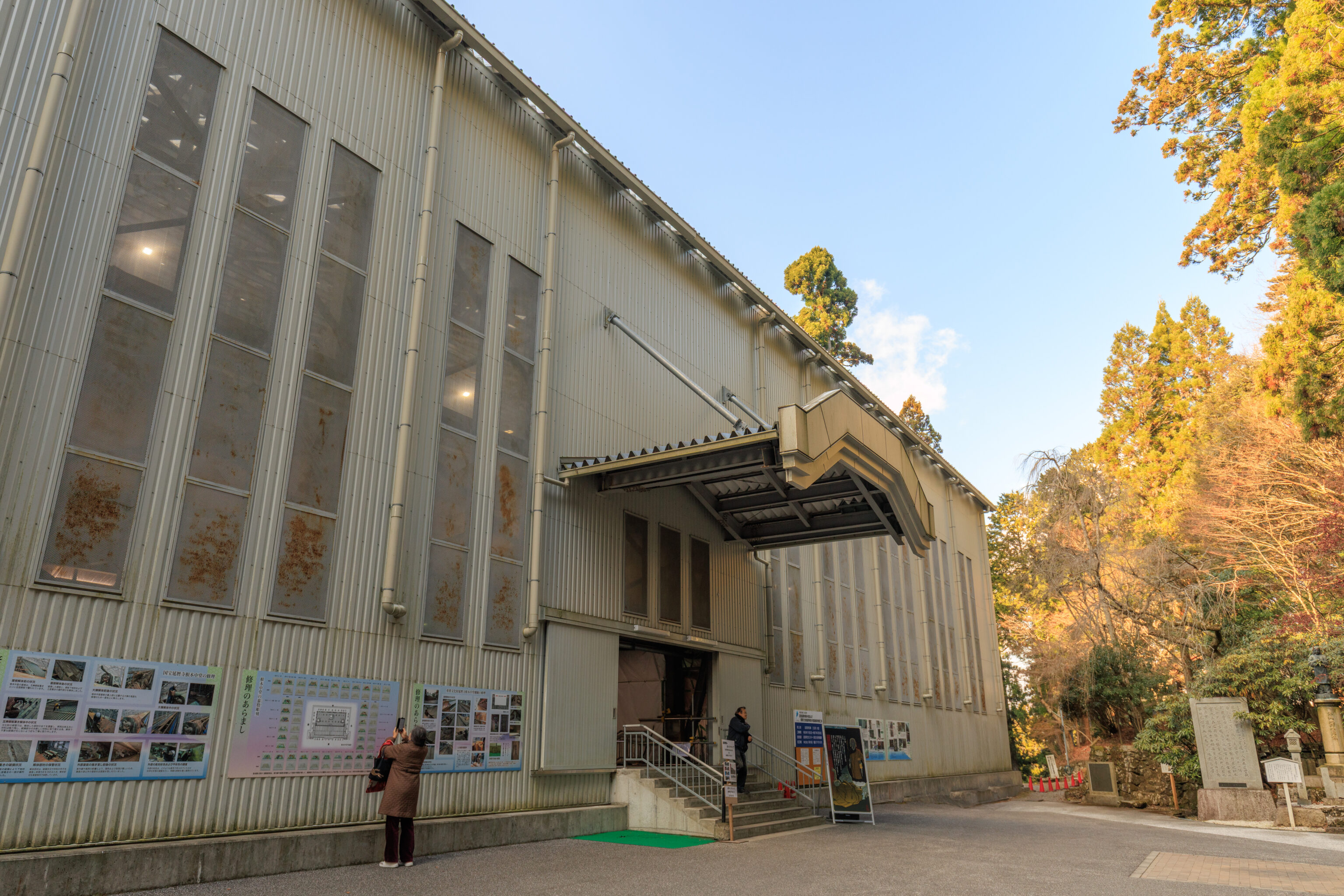
It turns out the temple’s main hall, the 根本中堂 Konponchu-do, was being reconstructed!
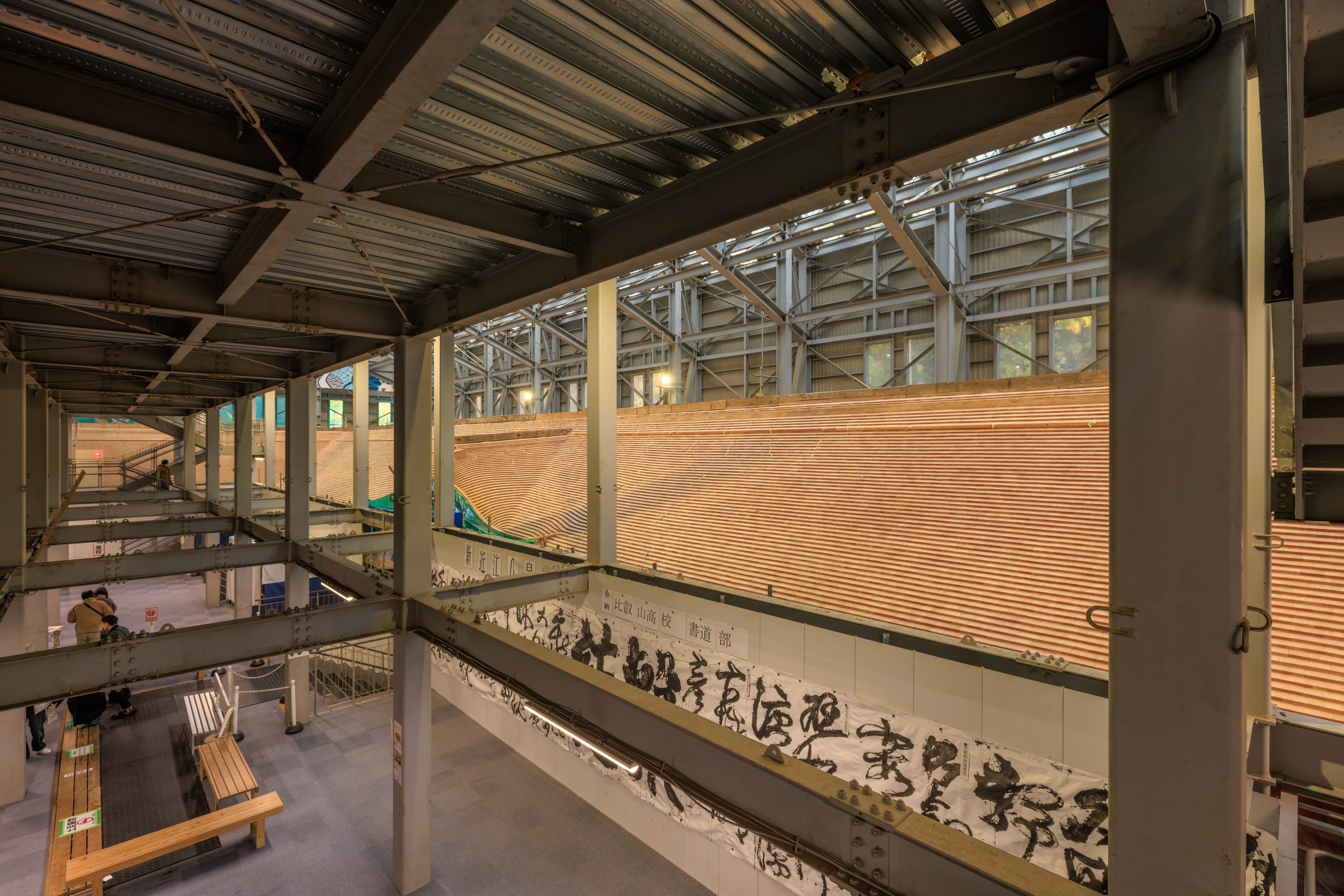
Although the entire structure was being reconstructed, it was still open. So, we headed inside to take a look.
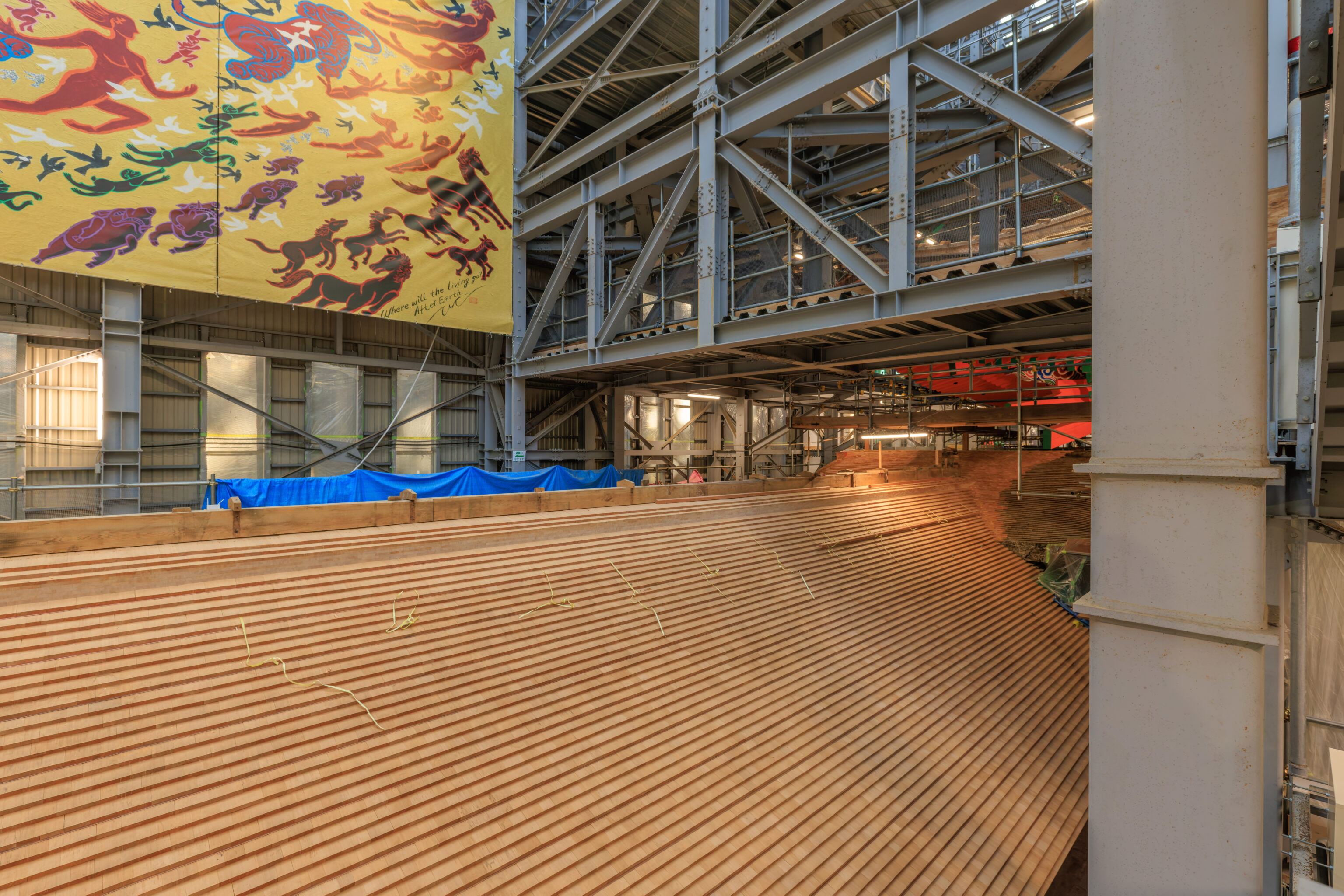
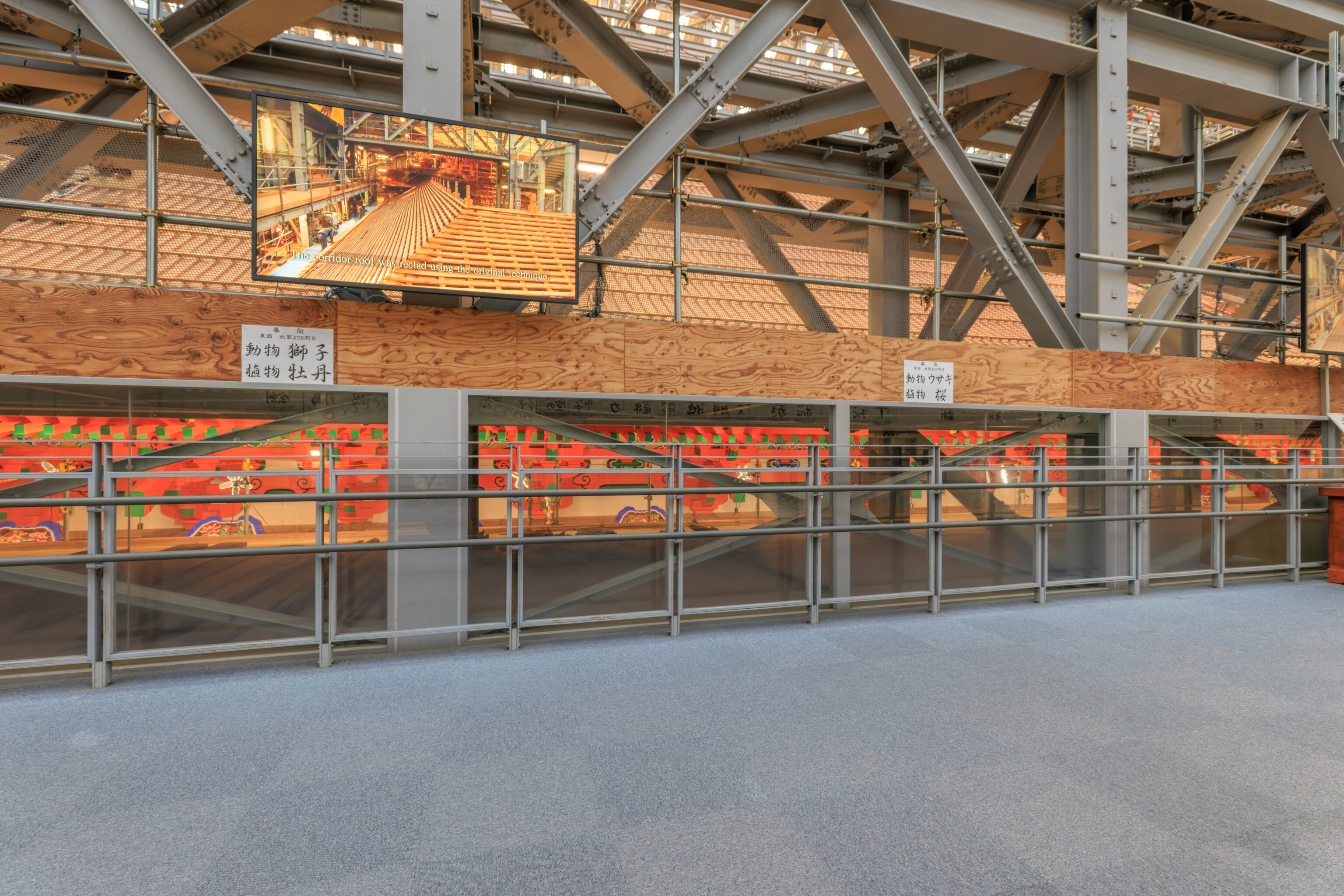
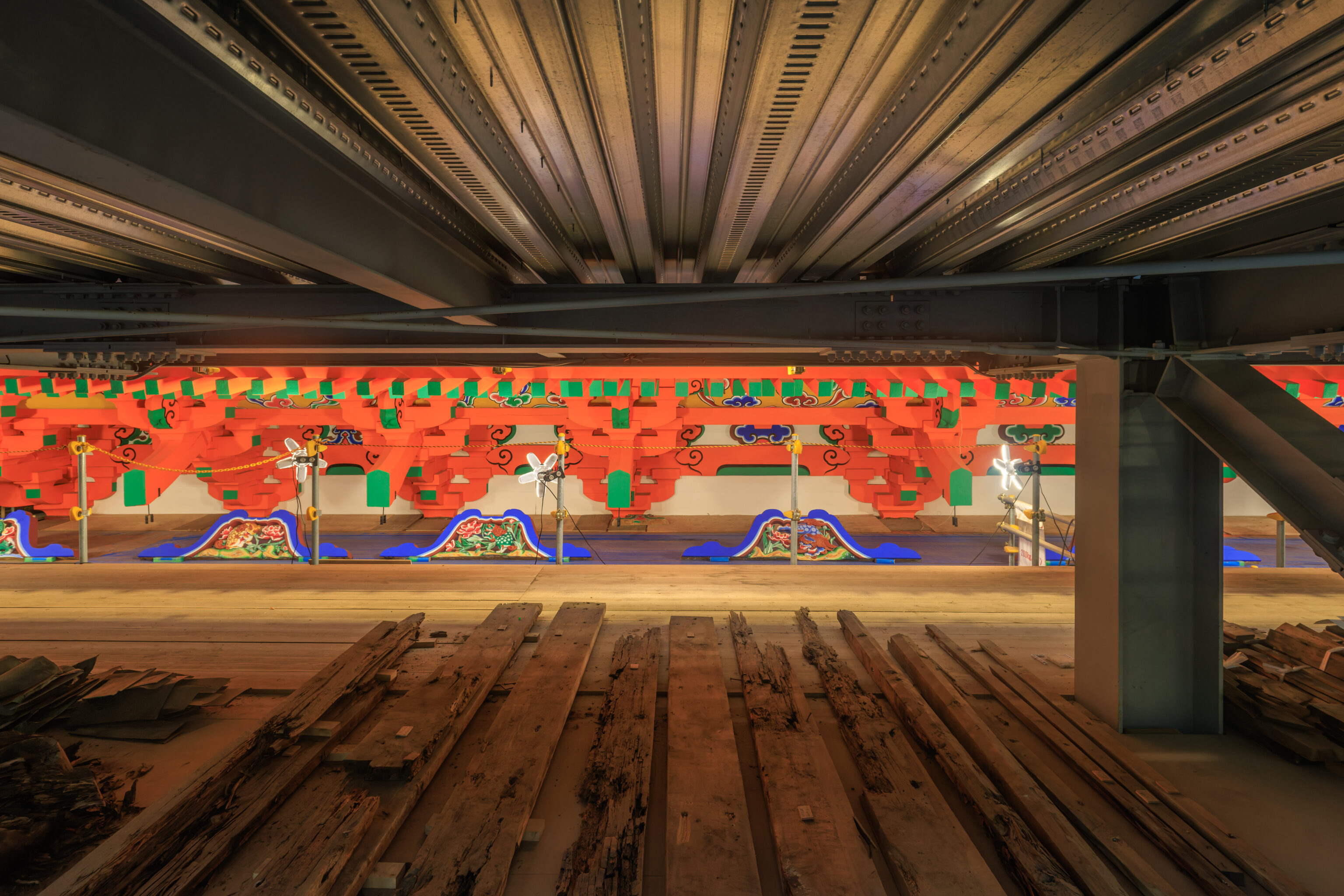
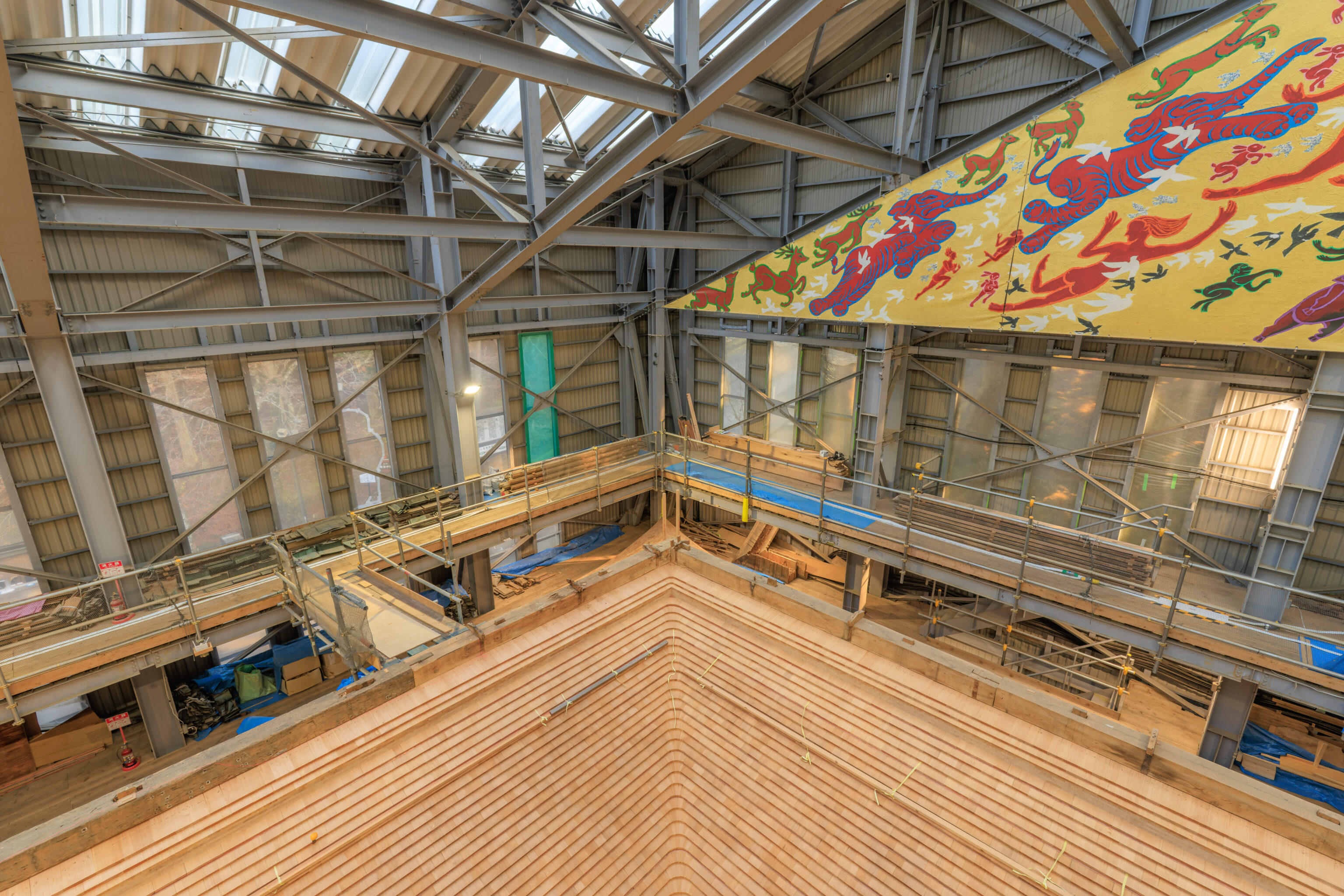
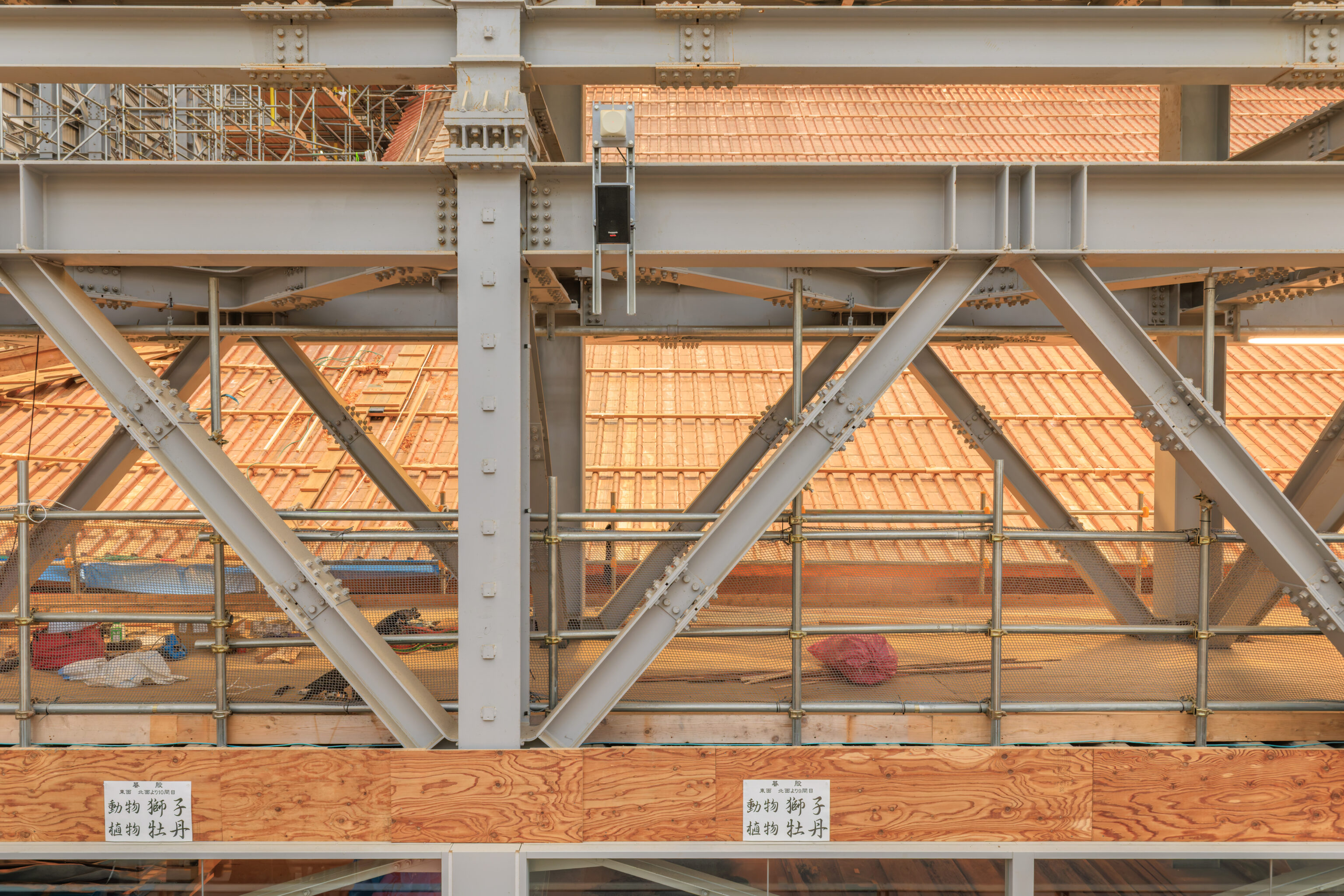
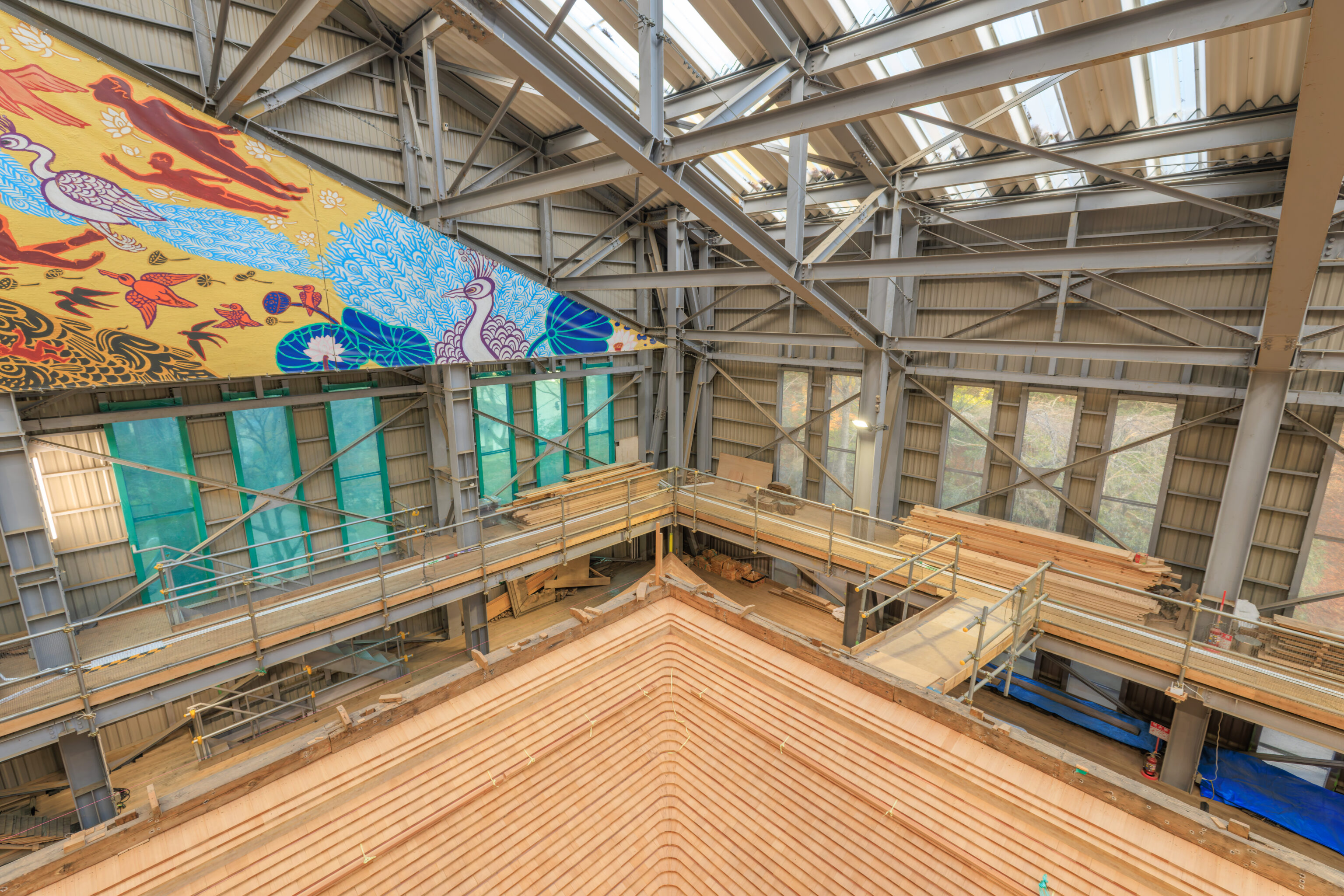
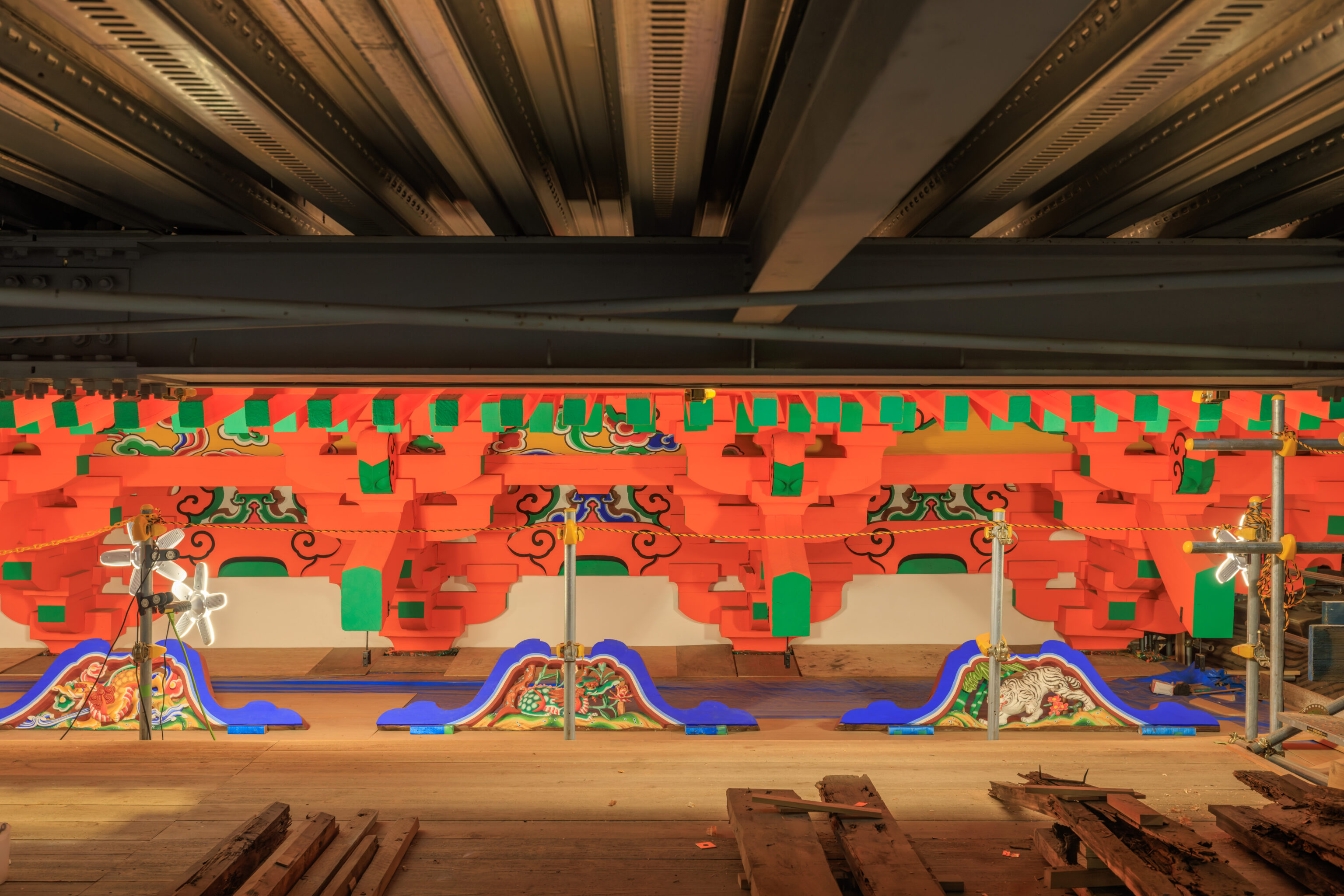
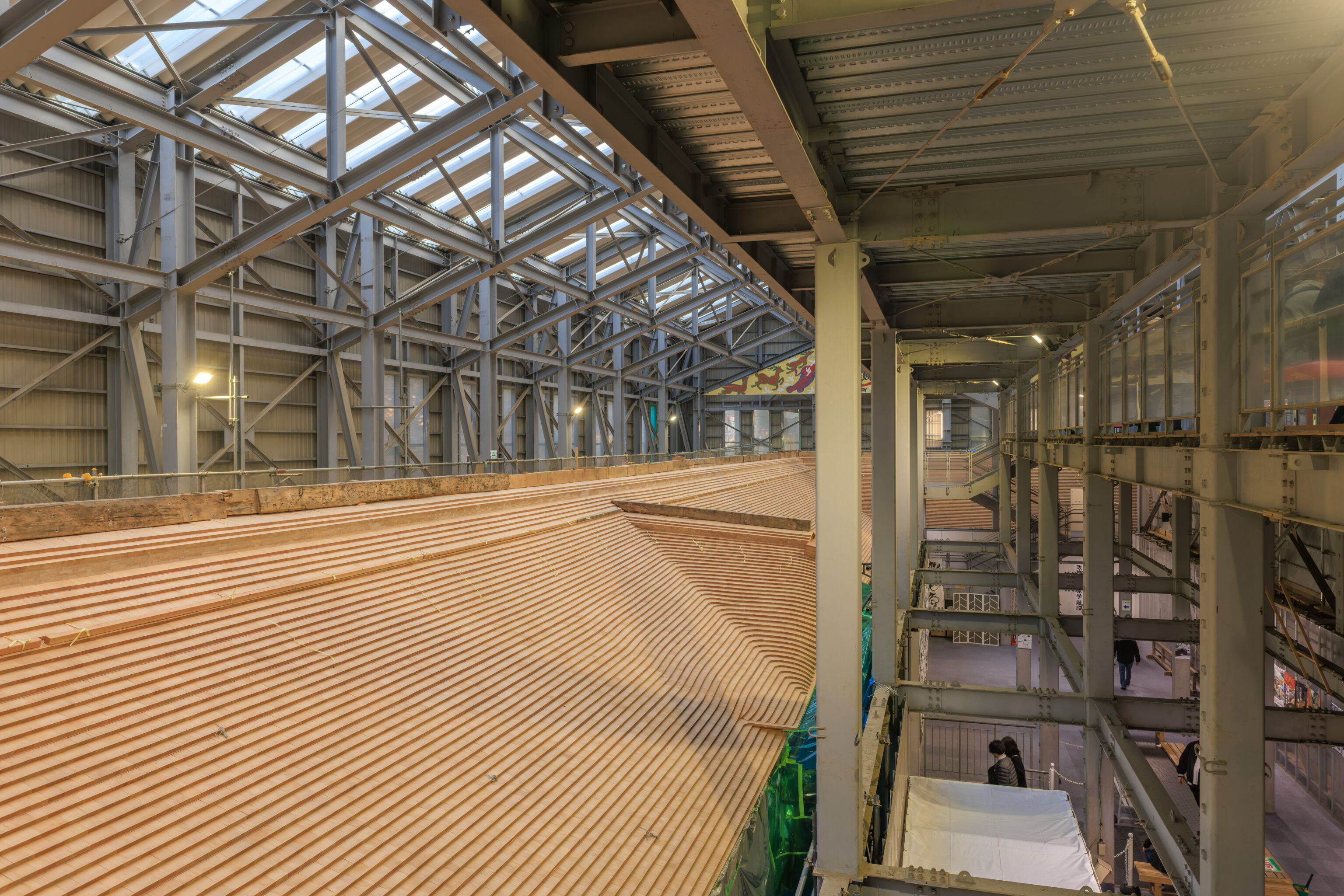
We were able to walk up and around some scaffolding on the front side of the hall. It was quite impressive to see the new wooden structure all around us and from above. This is definitely a perspective one does not normally get when visiting a temple.
Unfortunately, photography was not permitted inside. Compared to the exterior with its bright new wood, it felt dark and ancient.
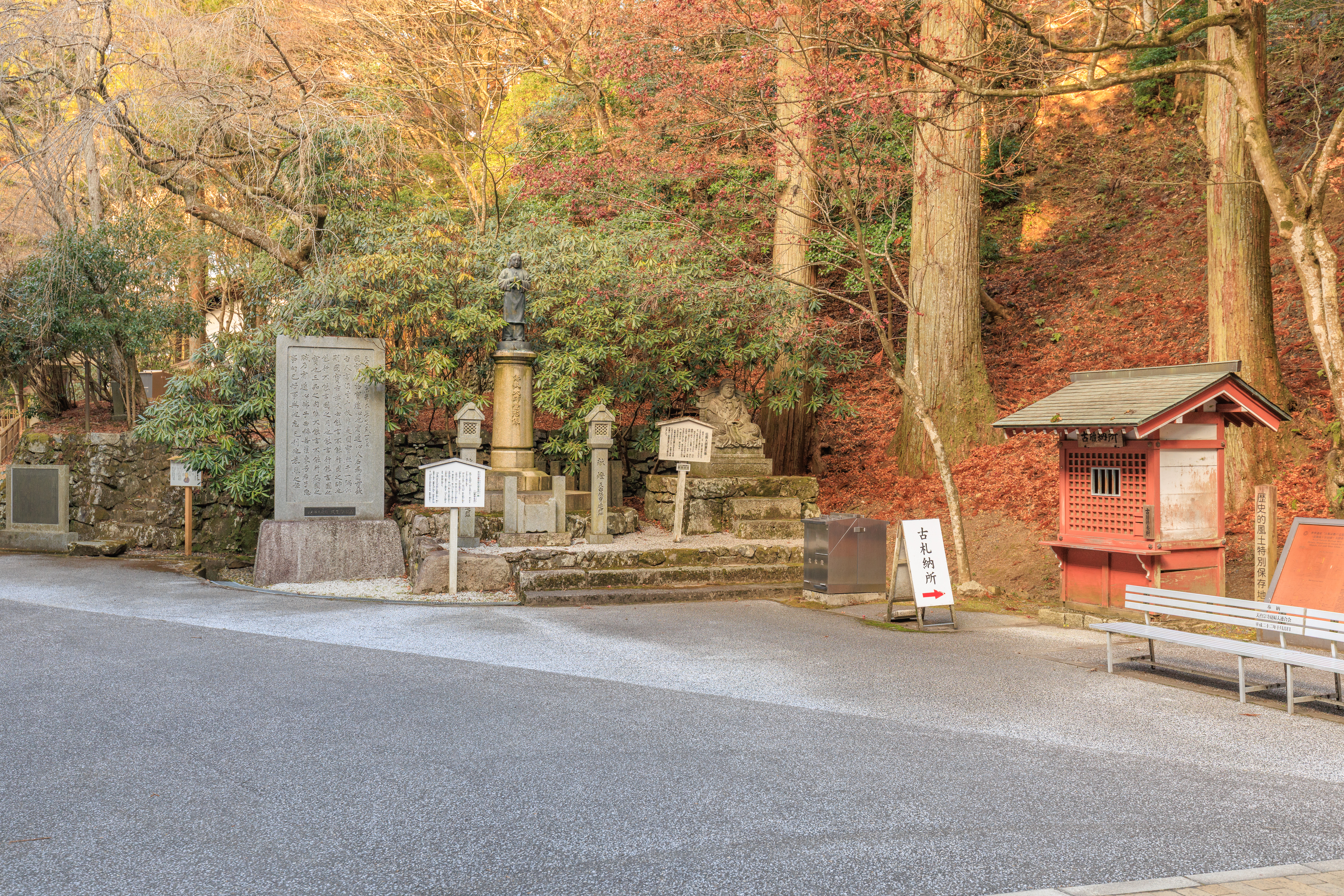
After our visit, we headed back outside.
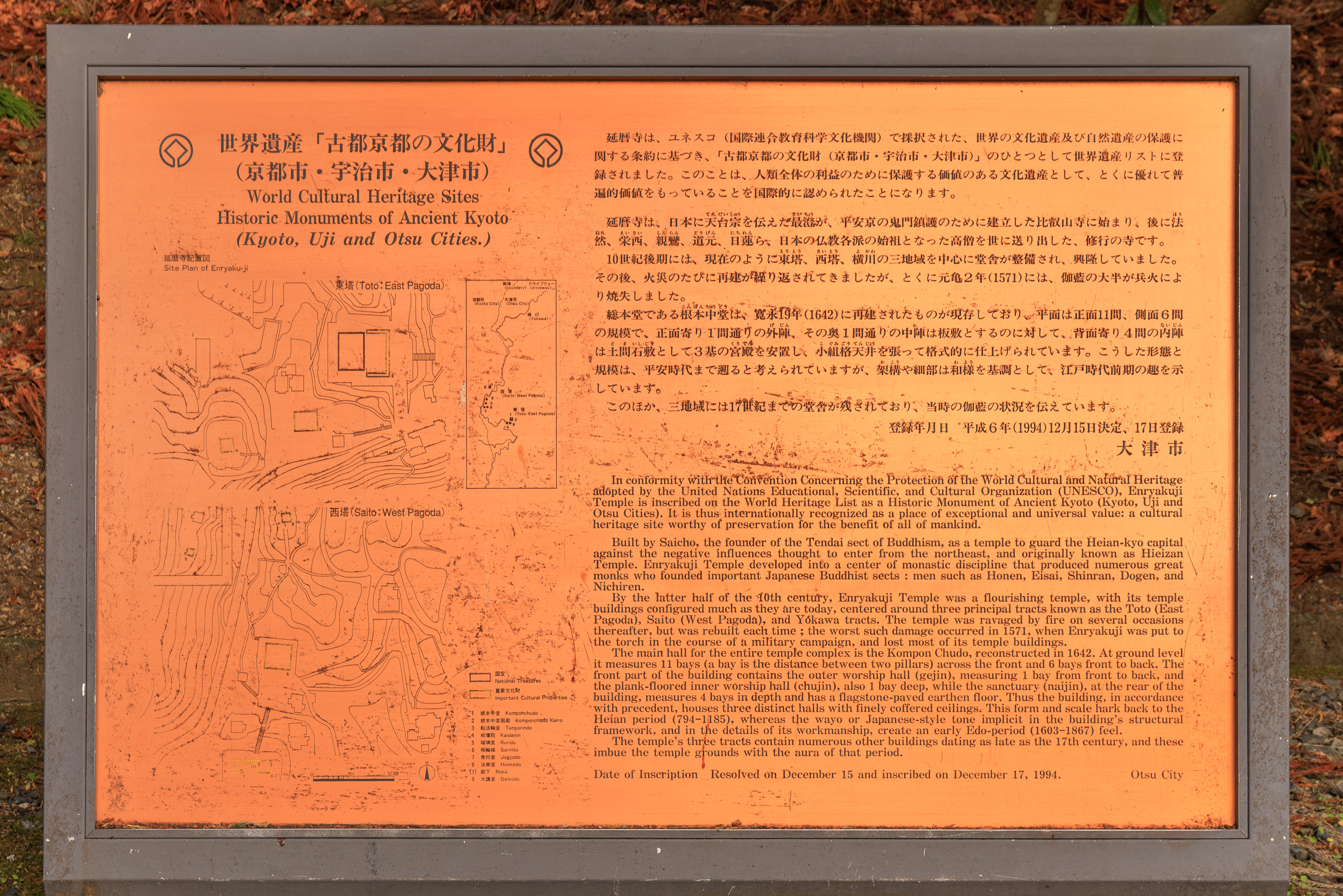
Enryaku-ji is part of the Historic Monuments of Ancient Kyoto World Heritage Site.
In conformity with the Convention Concerning the Protection of the World Cultural and Natural Heritage adopted by the United Nations Educational, Scientific, and Cultural Organization (UNESCO), Enryakuji Temple is inscribed on the World Heritage List as a Historic Monument of Ancient Kyoto (Kyoto, Uji and Otsu Cities). It is thus internationally recognized as a place of exceptional and universal value: a cultural heritage site worthy of preservation for the benefit of all of mankind.

Built by Saicho, the founder of the Tendai sect of Buddhism, as a temple to guard the Heian-kyo capital against the negative influences thought to enter from the northeast, and originally known as Hieizan Temple. Enryakuji Temple developed into a center of monastic discipline that produced numerous great monks who founded important Japanese Buddhist sects : men such as Honen, Eisai, Shinran, Dogen, and Nichiren.

By the latter half of the 10th century, Enryakuji Temple was a flourishing temple, with its temple buildings configured much as they are today, centered around three principal tracts known as the Toto (East Pagoda), Saito (West Pagoda), and Yókawa tracts. The temple was ravaged by fire on several occasions thereafter, but was rebuilt each time ; the worst such damage occurred in 1571, when Enryakuji was put to the torch in the course of a military campaign, and lost most of its temple buildings.

The main hall for the entire temple complex is the Kompon Chudo, reconstructed in 1642. At ground level it measures 11 bays (a bay is the distance between two pillars) across the front and 6 bays front to back. The front part of the building contains the outer worship hall (gejin), measuring 1 bay from front to back, and the plank-floored inner worship hall (chujin), also 1 bay deep, while the sanctuary (naijin), at the rear of the building, measures 4 bays in depth and has a flagstone-paved earthen floor. Thus the building, in accordance with precedent, houses three distinct halls with finely coffered ceilings. This form and scale hark back to the Heian period (794-1185), whereas the wayo or Japanese-style tone implicit in the building's structural framework, and in the details of its workmanship, create an early Edo-period (1603-1867) feel.

The temple's three tracts contain numerous other buildings dating as late as the 17th century, and these imbue the temple grounds with the aura of that period.

Date of Inscription
Resolved on December 15 and inscribed on December 17, 1994.
Otsu City
– Text from the sign above.
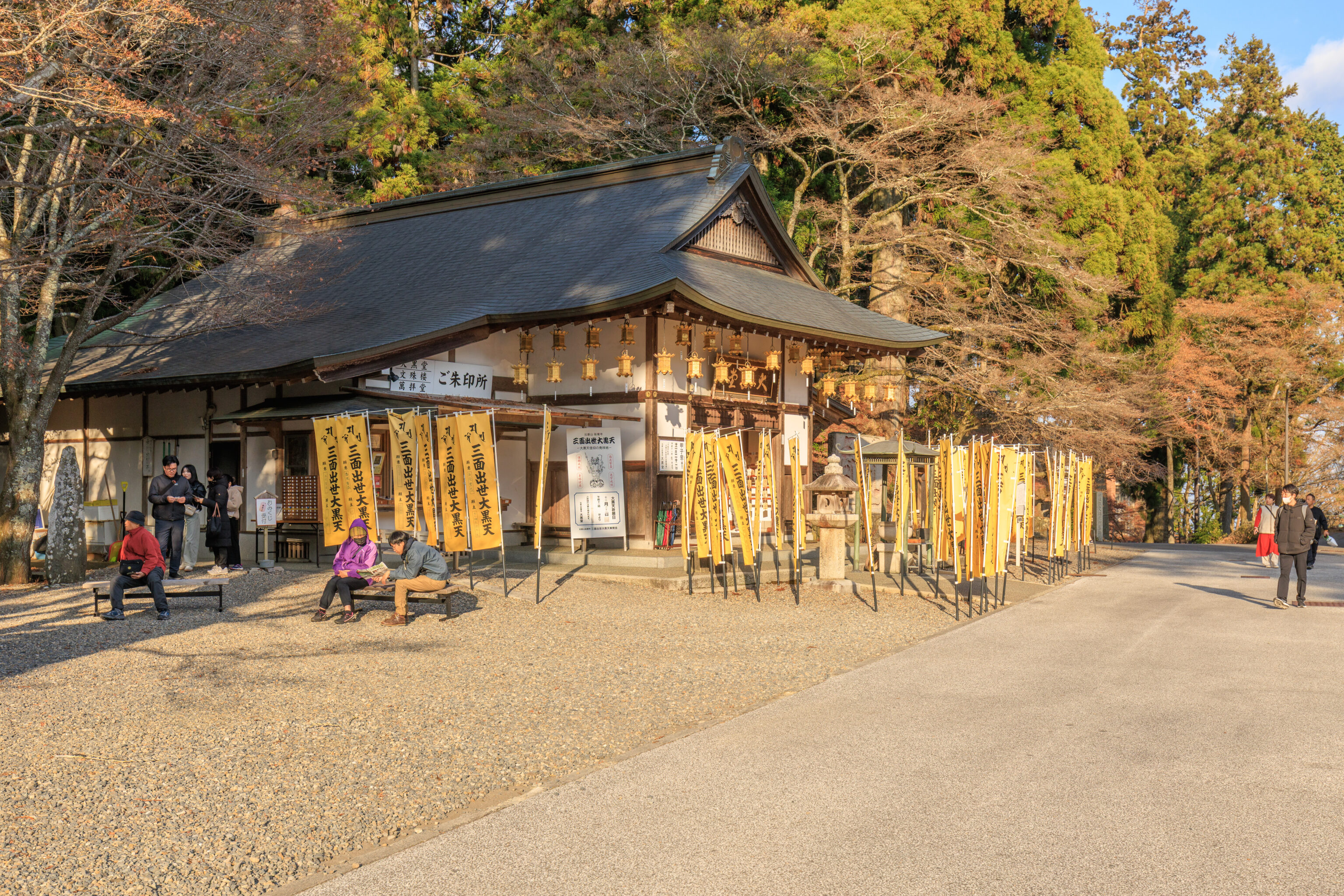
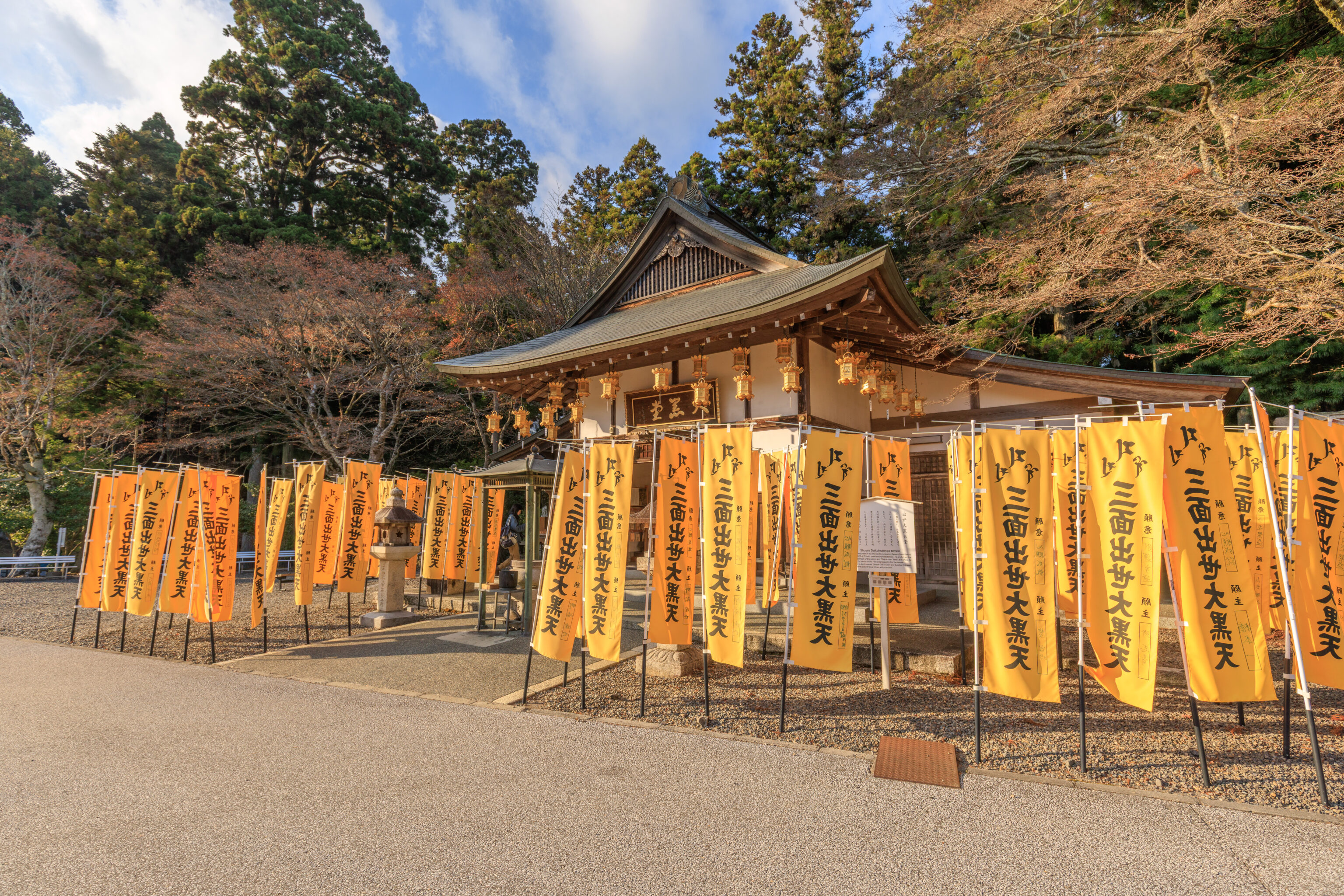
We went back up the hill to the south where there was a cluster of buildings. This hall is the 出世大黑天堂 Shusse Daikokuten-do.
Shusse Daikokutendo temple

When the founder of the Thendai Denomination, Dengyo Daishi Saicho
(767~822A.D) built the Konponchudo temple. He enshrined the Buddhist image of the patron god "Daikokuten" here. It is where he prayed for peace on Mt. Hiei and prosperity for the people. This god is also known as "Shusse Daikokuten" and Buddhist followers believe the god will reward them with success.
– Text from a sign in front of the hall, translated using Google.
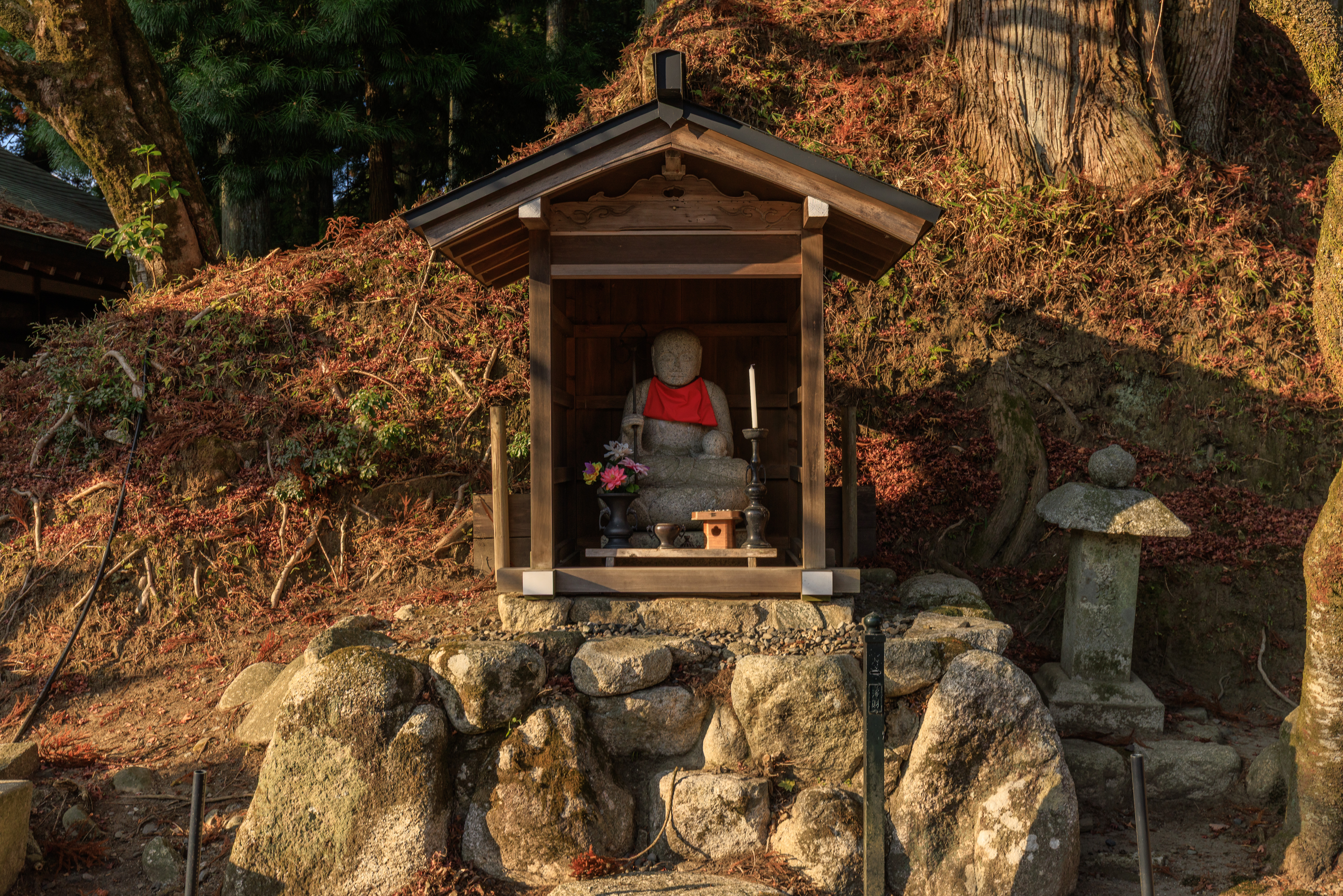
A small shrine that was nearby.
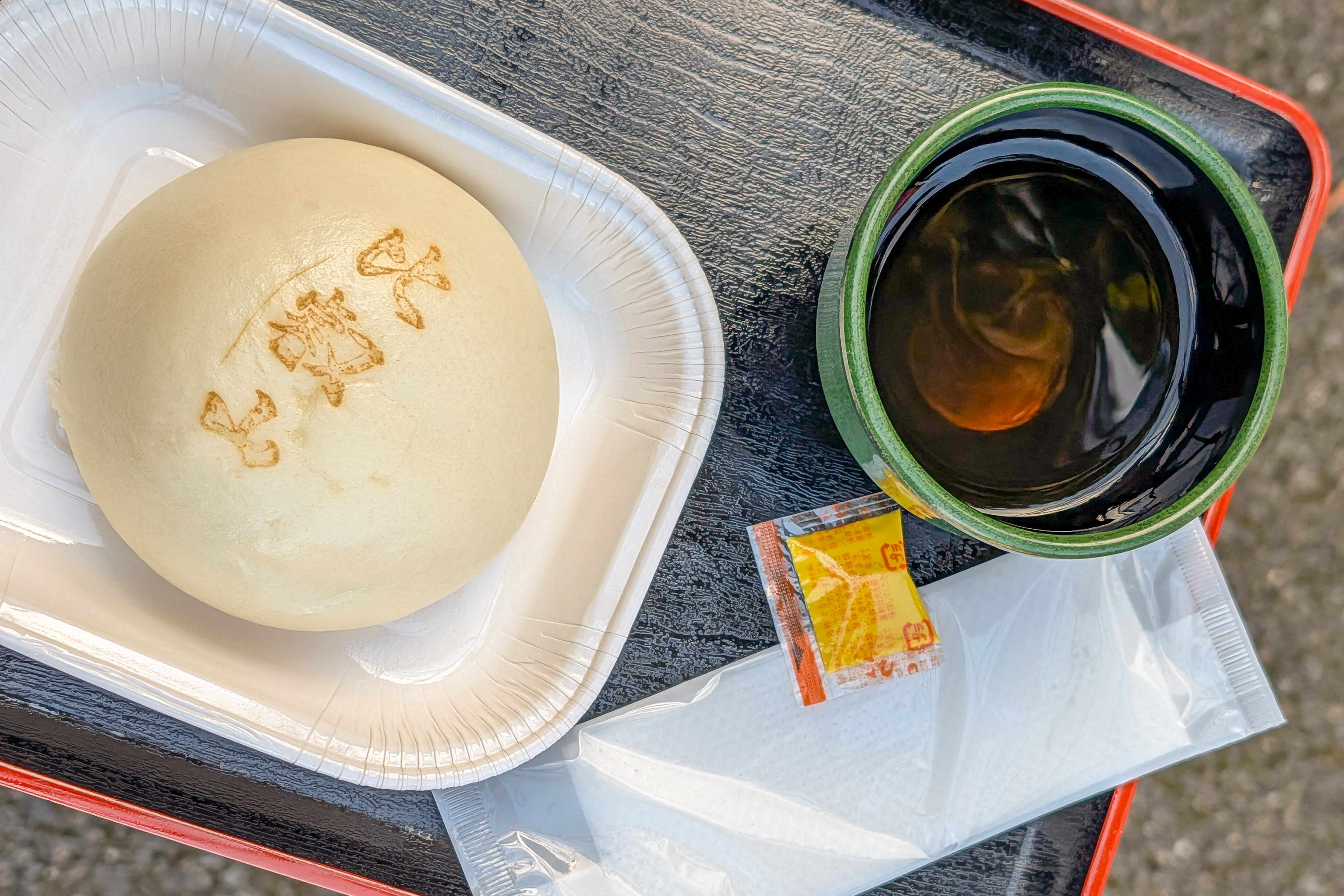
We decided to get a small snack before continuning on. We had a yubaman, basically a tofu skin baozi, from the temple shop here. It was better than it sounds. Interestingly, the sauce provided was mustard, like what we recently had in Dijon, France! We also had hojicha.
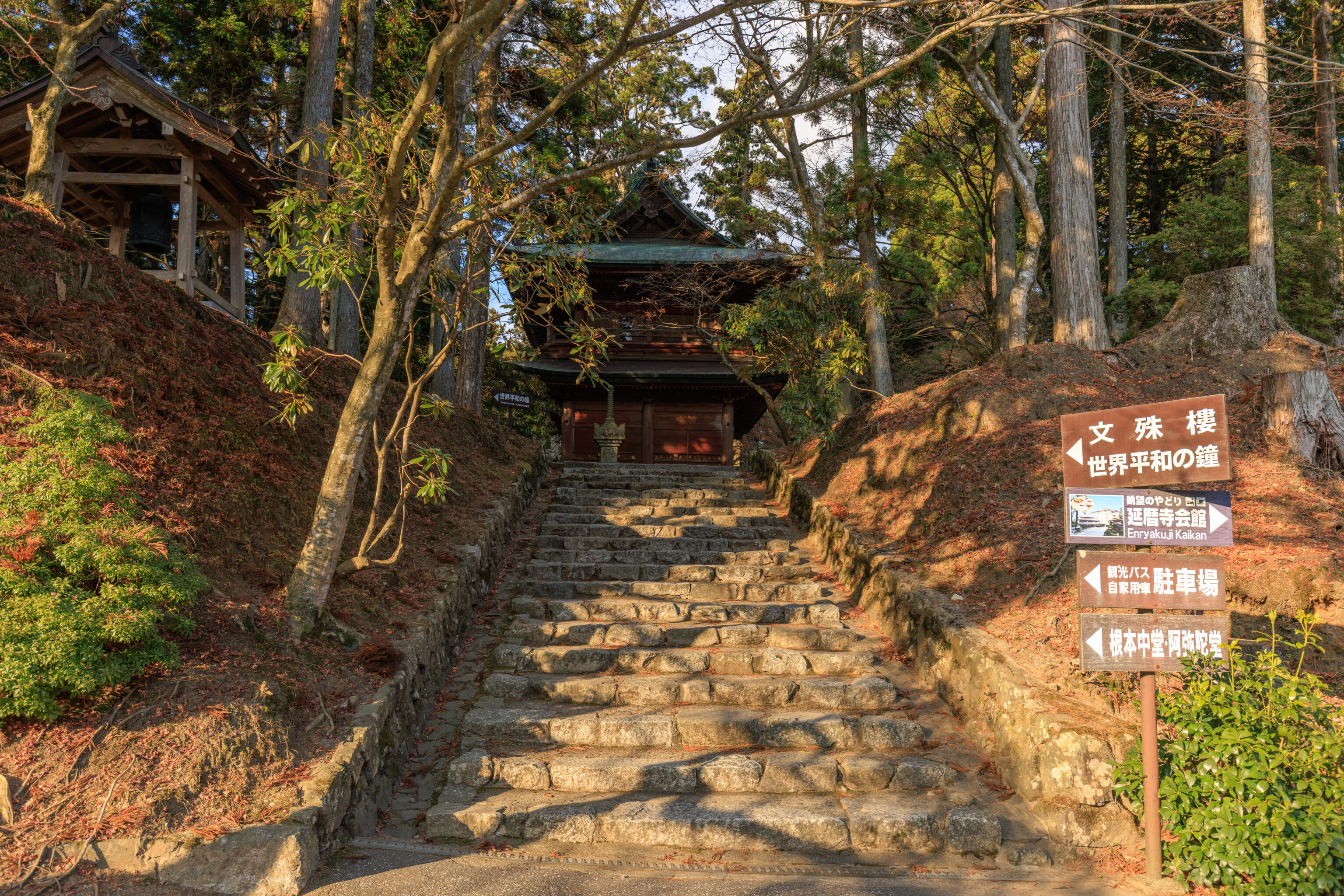
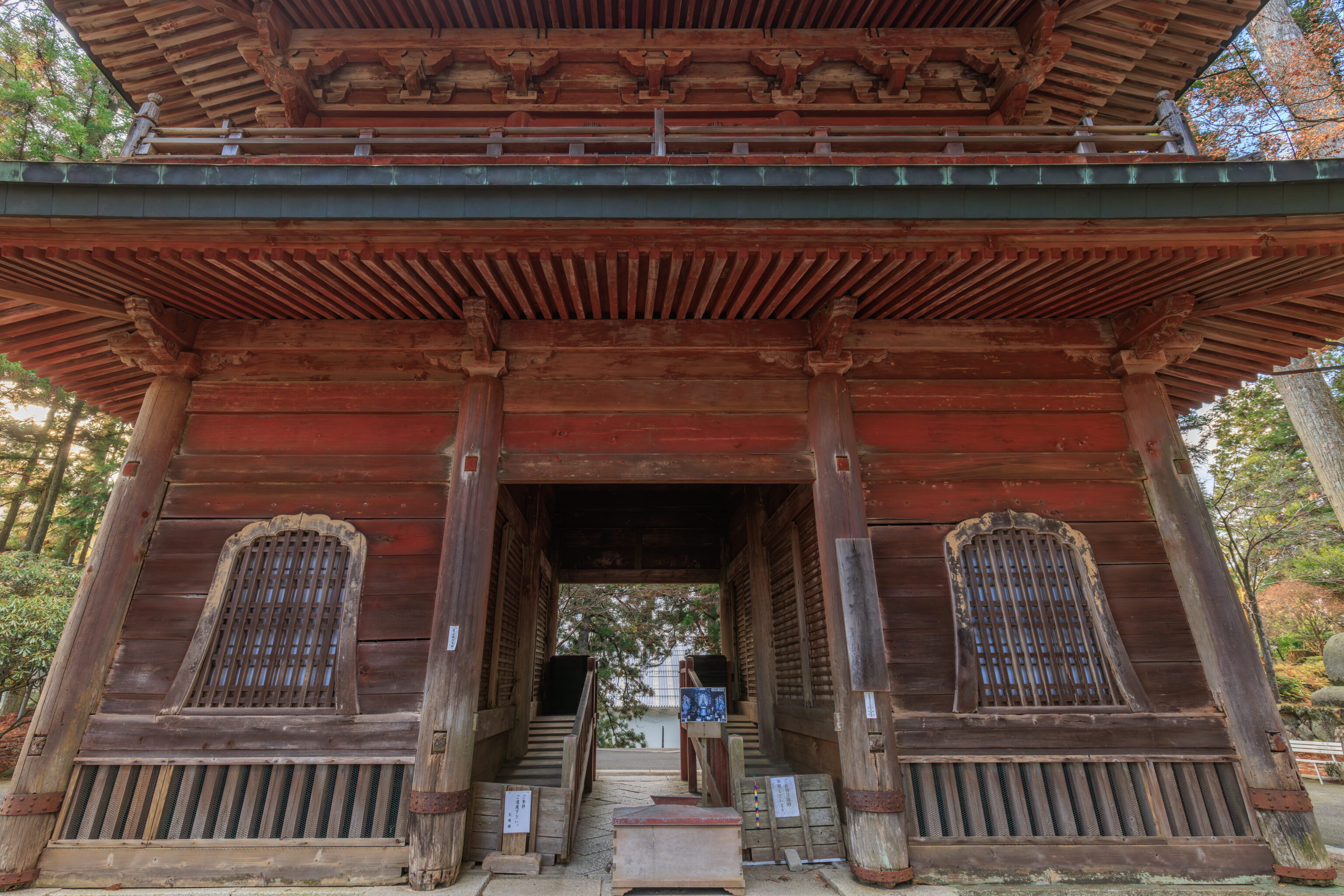
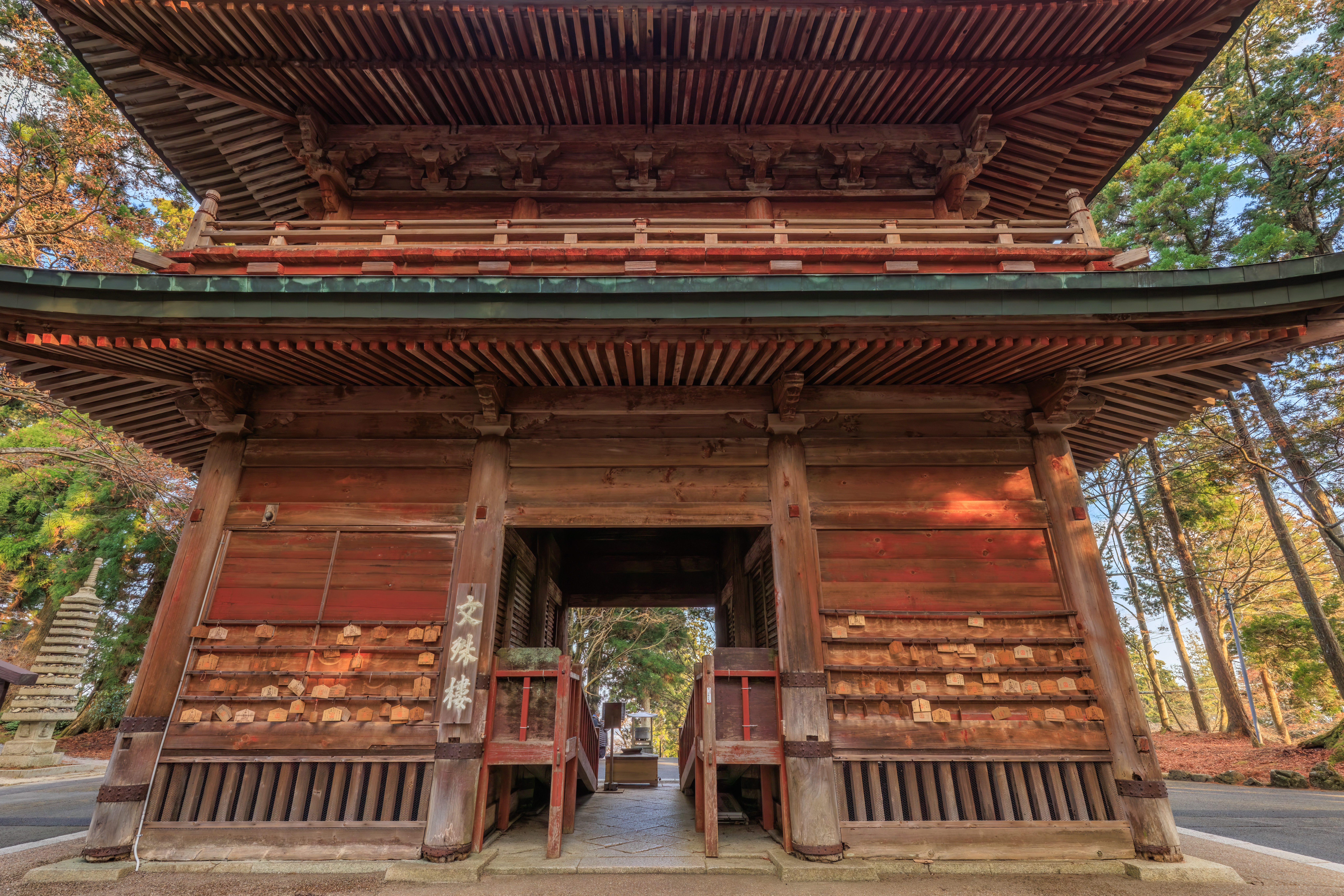
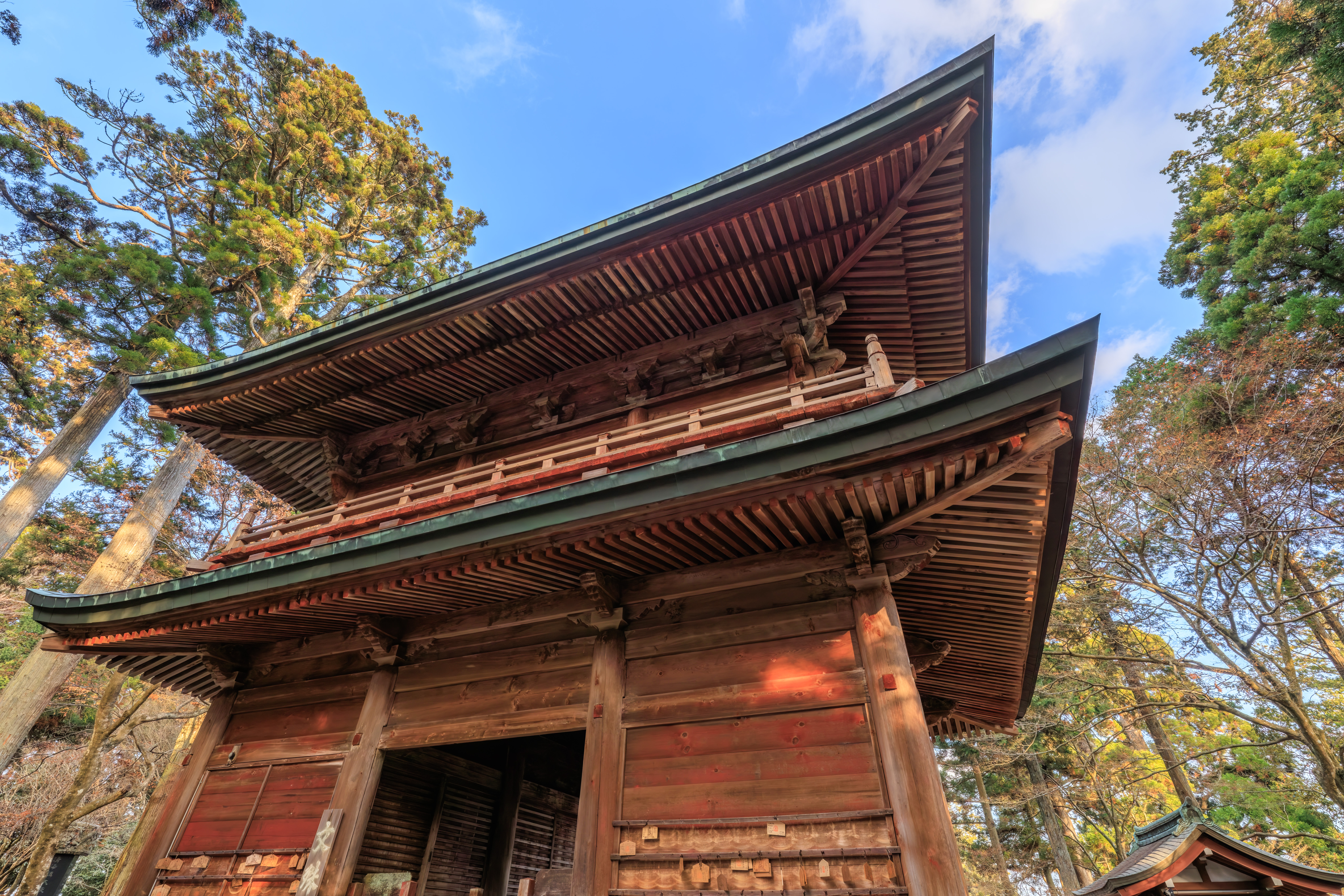
We walked up a small hill to the north to take a look at this building, the 文殊楼 Monju-ro. It was directly to the east of the Konponchu-do.
Important Cultural Property
Enryaku-ji Temple Monjuro
One Structure
(Sakamoto-Honmachi, Otsu City)

The Monjuro (Monju Hall) stands atop the roof directly in front of the Konpon Chudo (Main Hall) of Enryaku-ji Temple, facing roughly toward the east. It possesses a structural layout of three bays in depth and two bays in width, featuring a two-story, *irimoya* (hip-and-gable) roof covered in copper sheeting.

Its origins are as ancient as those of the Konpon Chudo itself. The current structure dates back to the Kan'ei era (1624–1644). Although a smaller-scale version of the Kan'ei-era building was constructed, it was destroyed by fire in the eighth year of the Kanbun era (1668). During the subsequent reconstruction—carried out alongside that of the Konpon Chudo and the Kodo (Lecture Hall)—the Monjuro was rebuilt in a syncretic architectural style. While the *Kara-yo* (Chinese) style is predominantly incorporated into the overall design, the structure also reveals the painstaking effort taken to preserve elements of the older *Wa-yo* (Japanese) style.

It was designated as a National Important Cultural Property in Heisei 28 (2016).
March, Heisei 29 (2017)
Otsu City Board of Education
– Text from a sign, translated using Google.
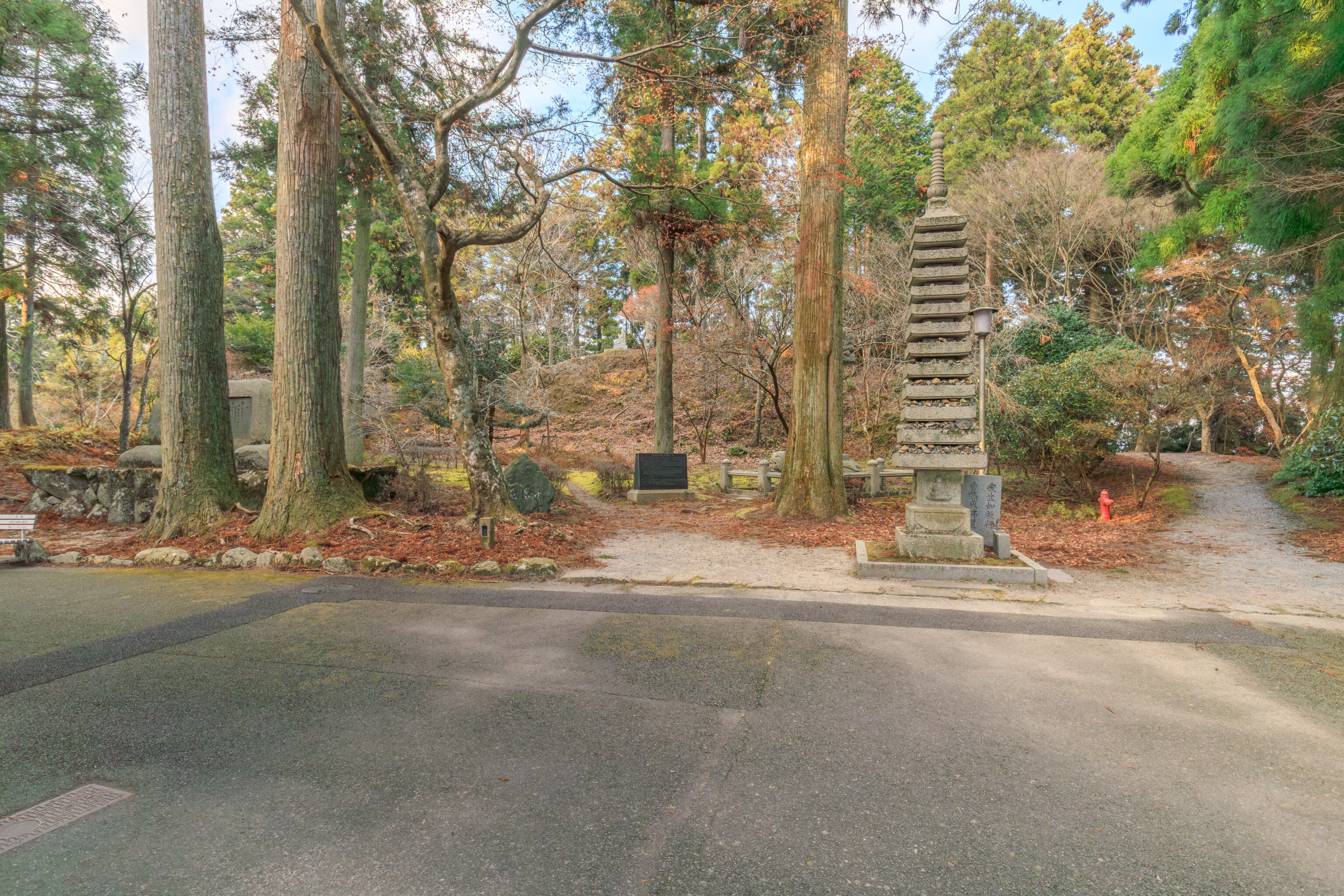
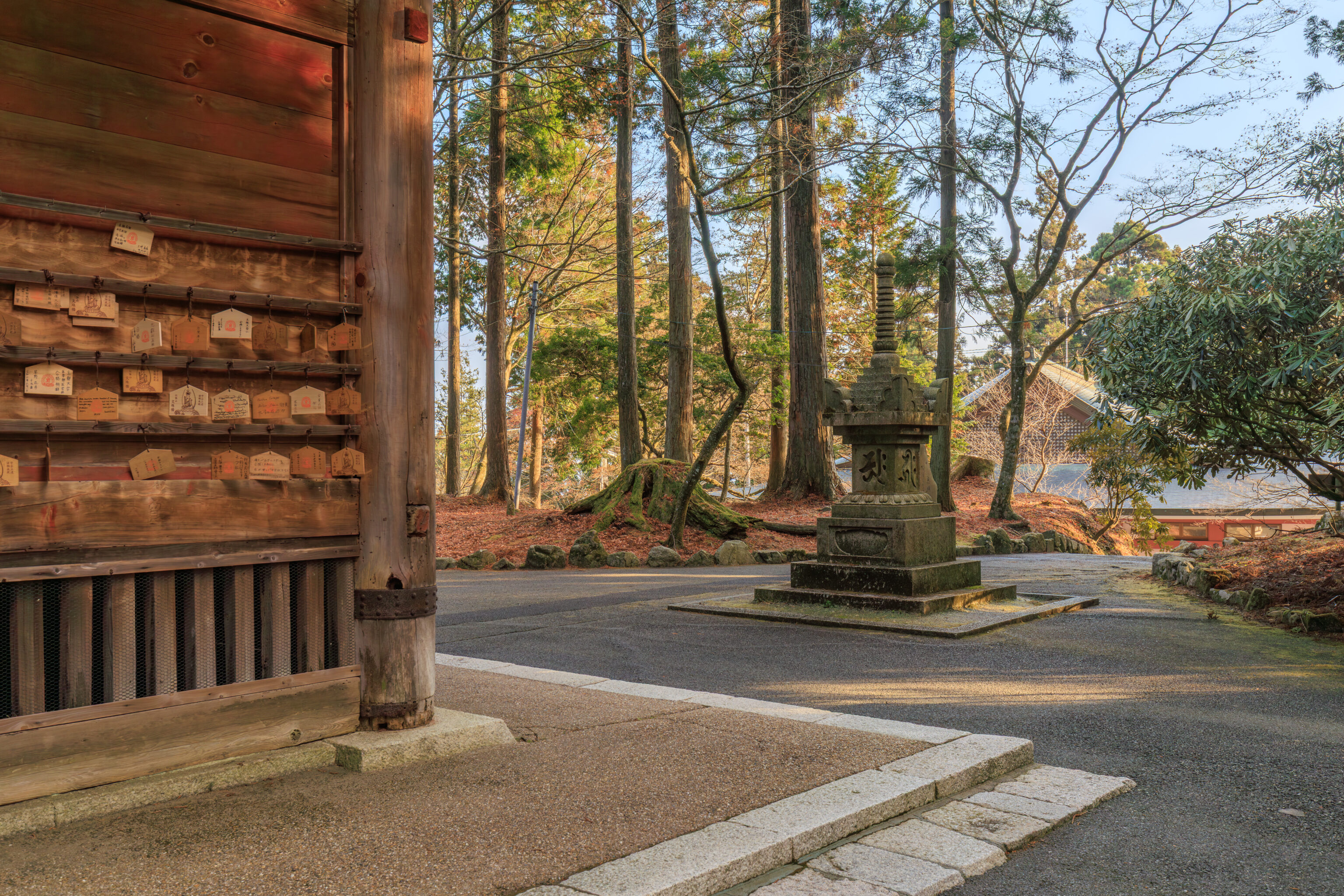
We took a quick look around before moving on.
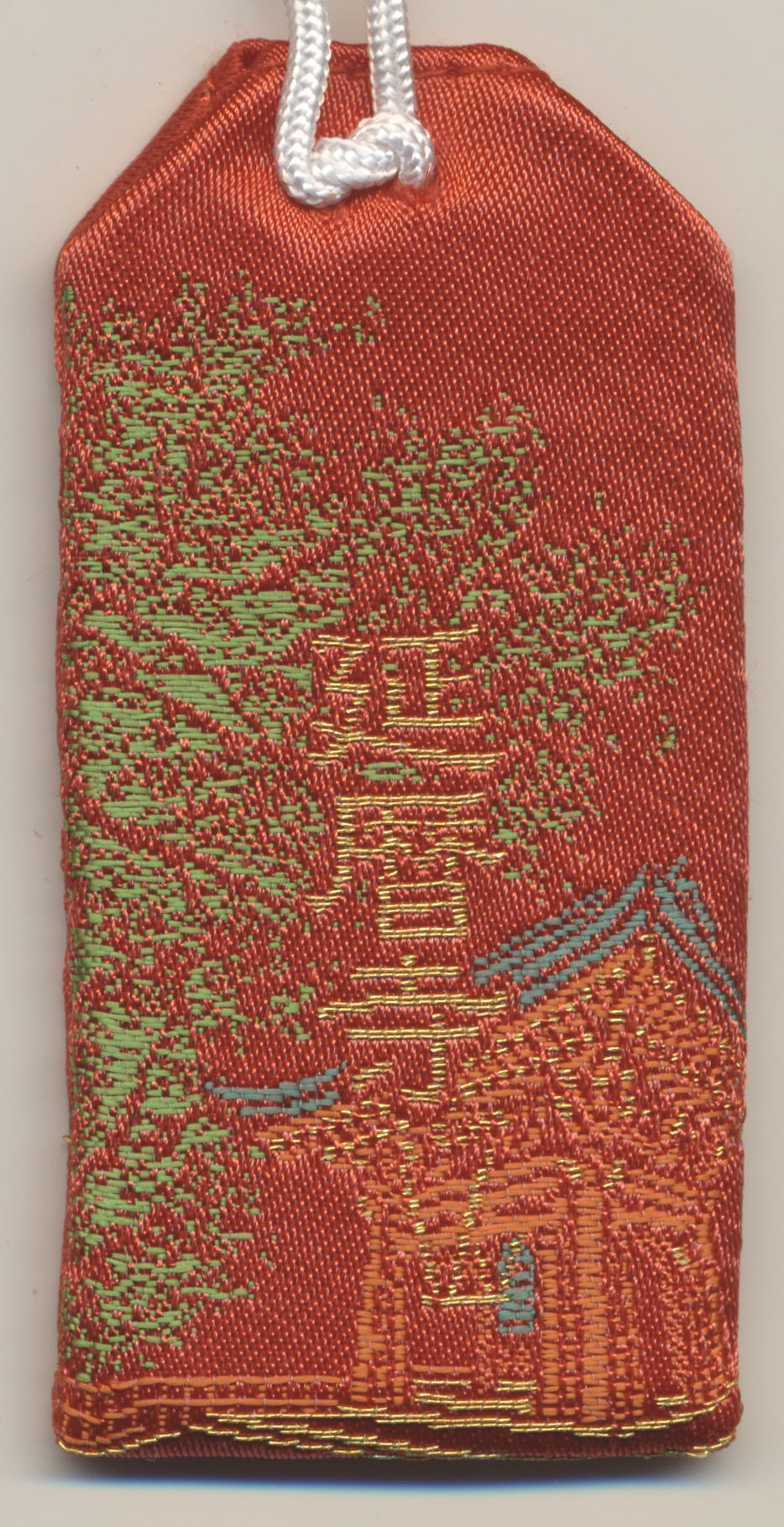
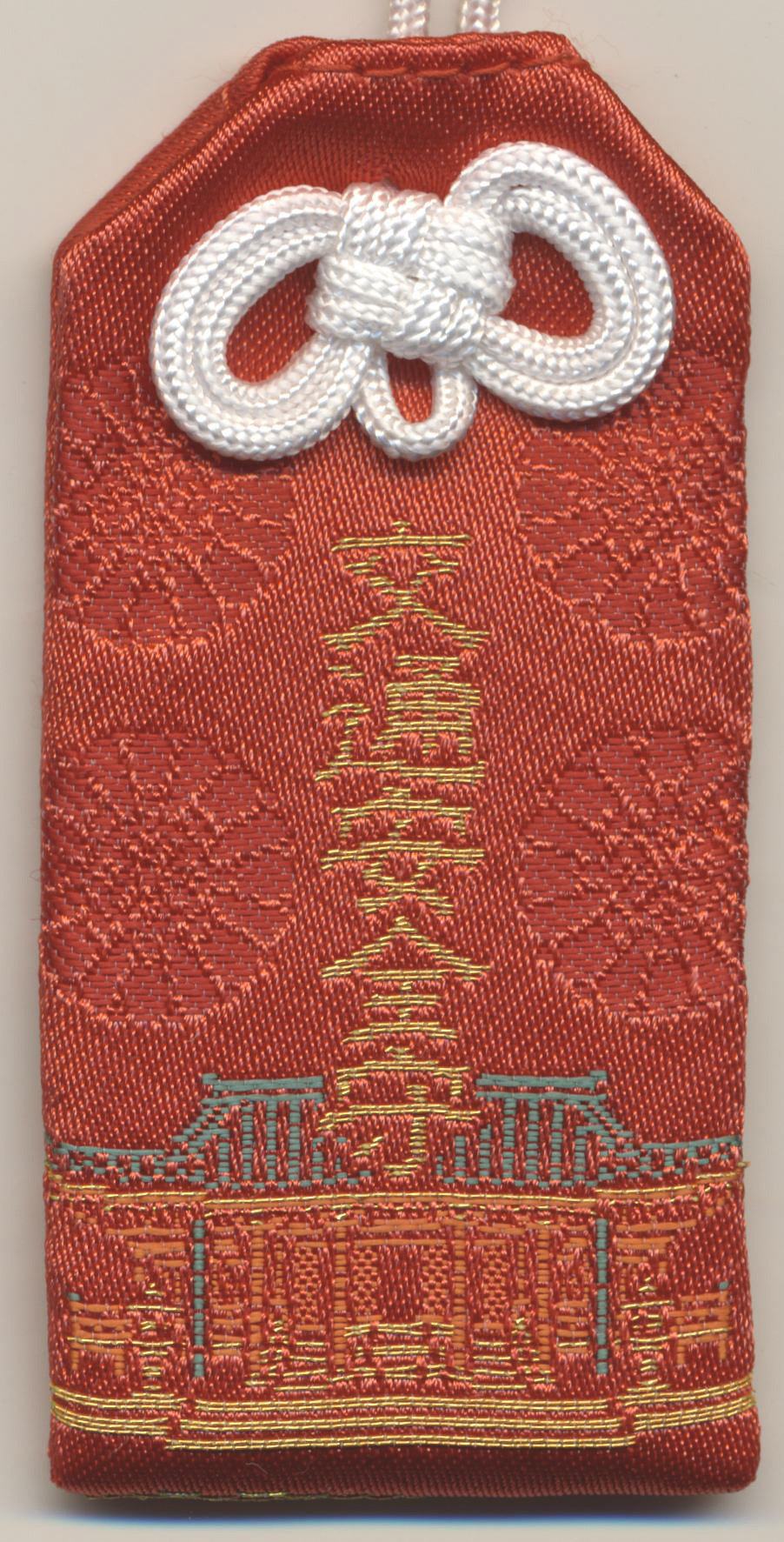
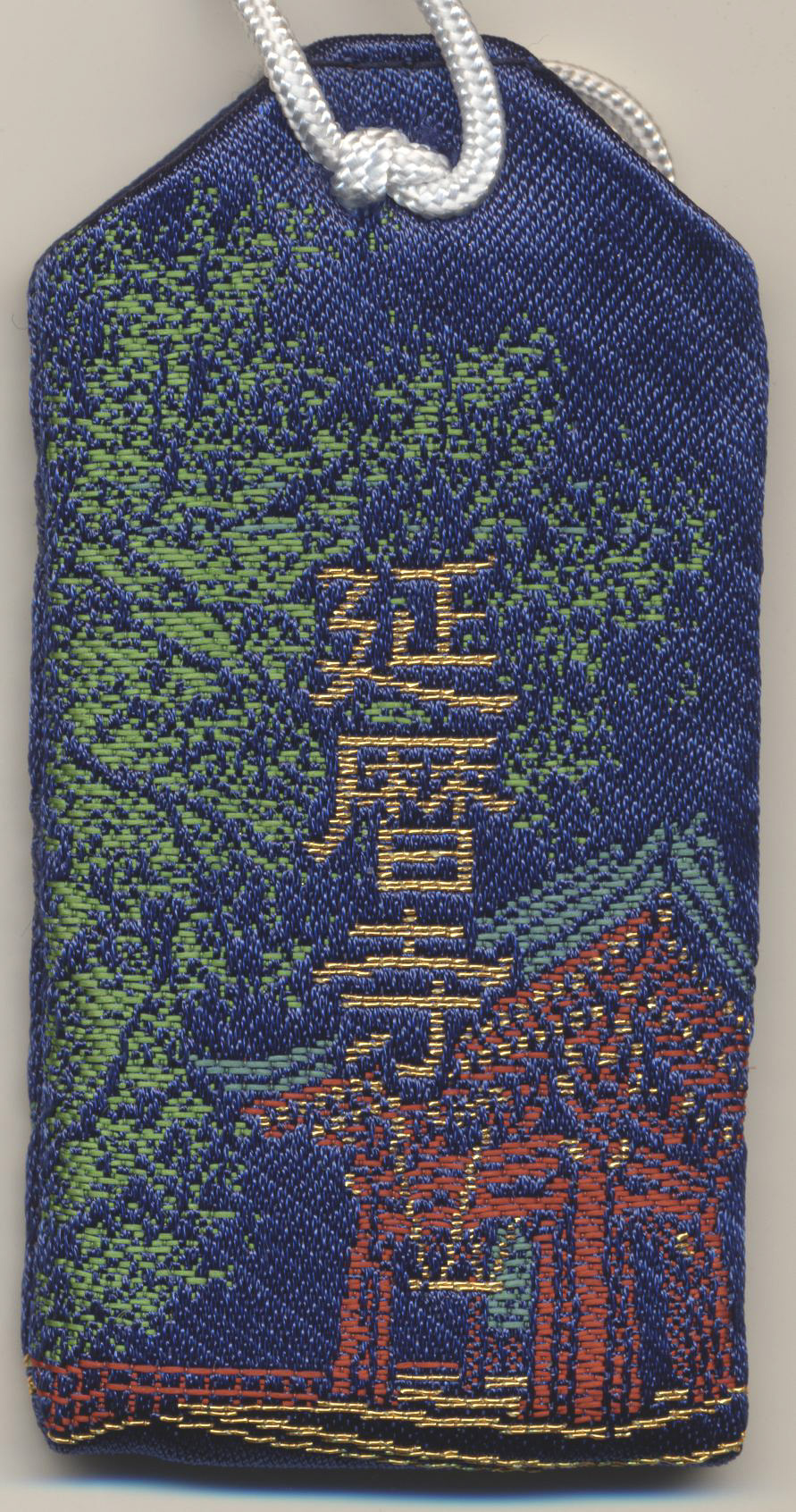
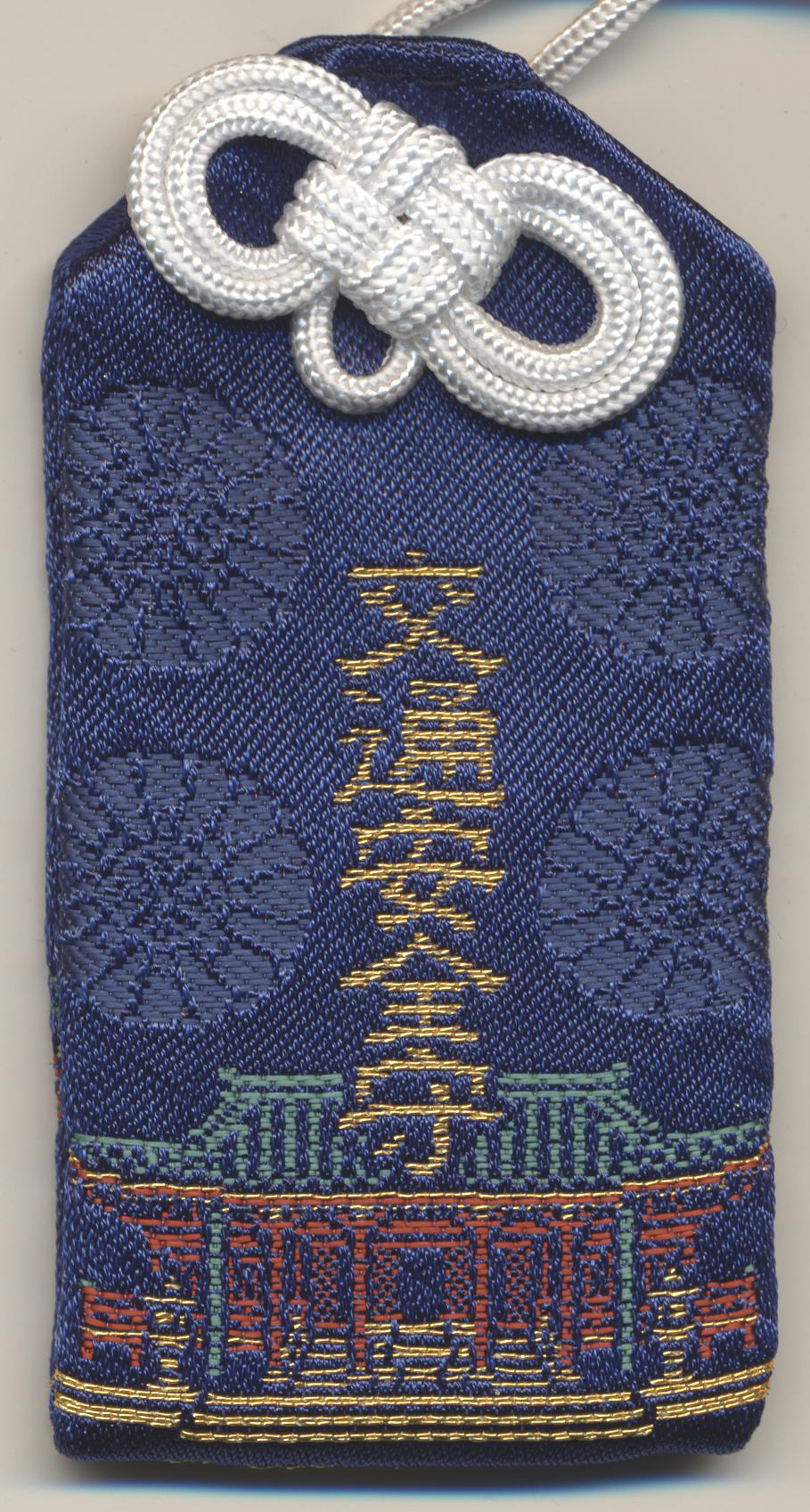
We bought some omamori at the temple’s shop. These are all for traffic safety. Useful in a country like the US where driving is a necessity in most places!
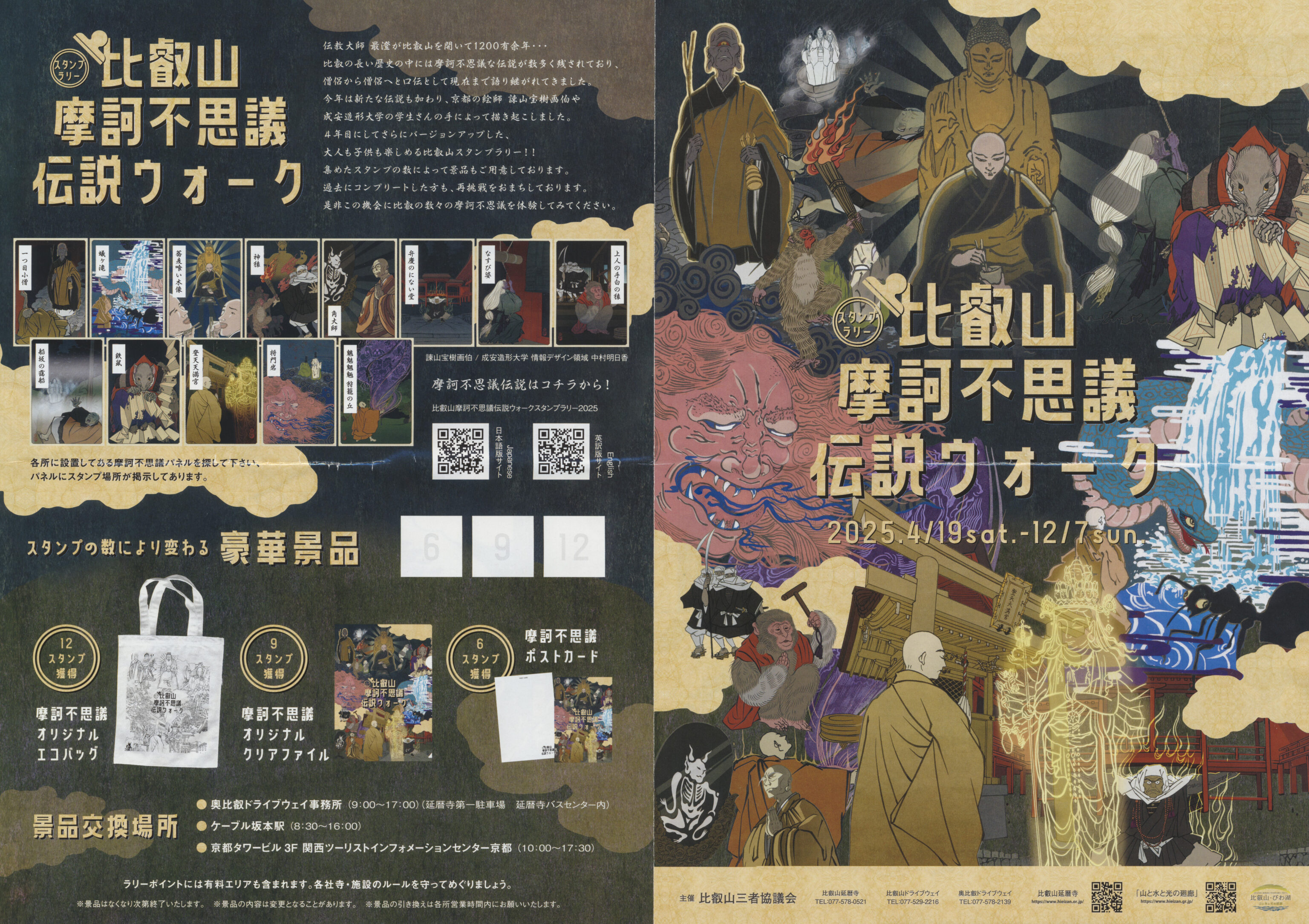
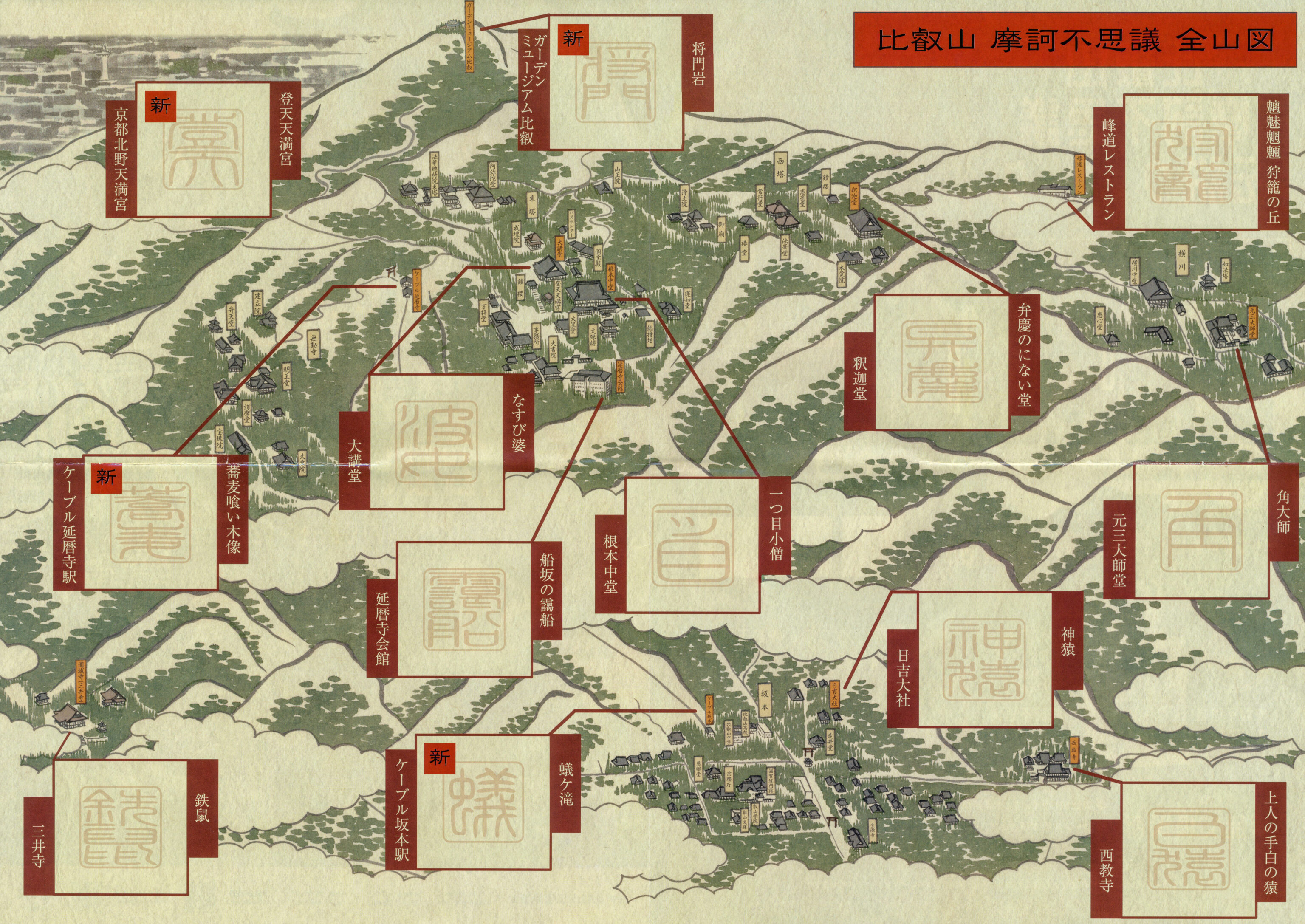
At some point today here on Mt. Hiei, we picked up this stamp rally pamphlet. There was no chance that we would collect all the stamps.
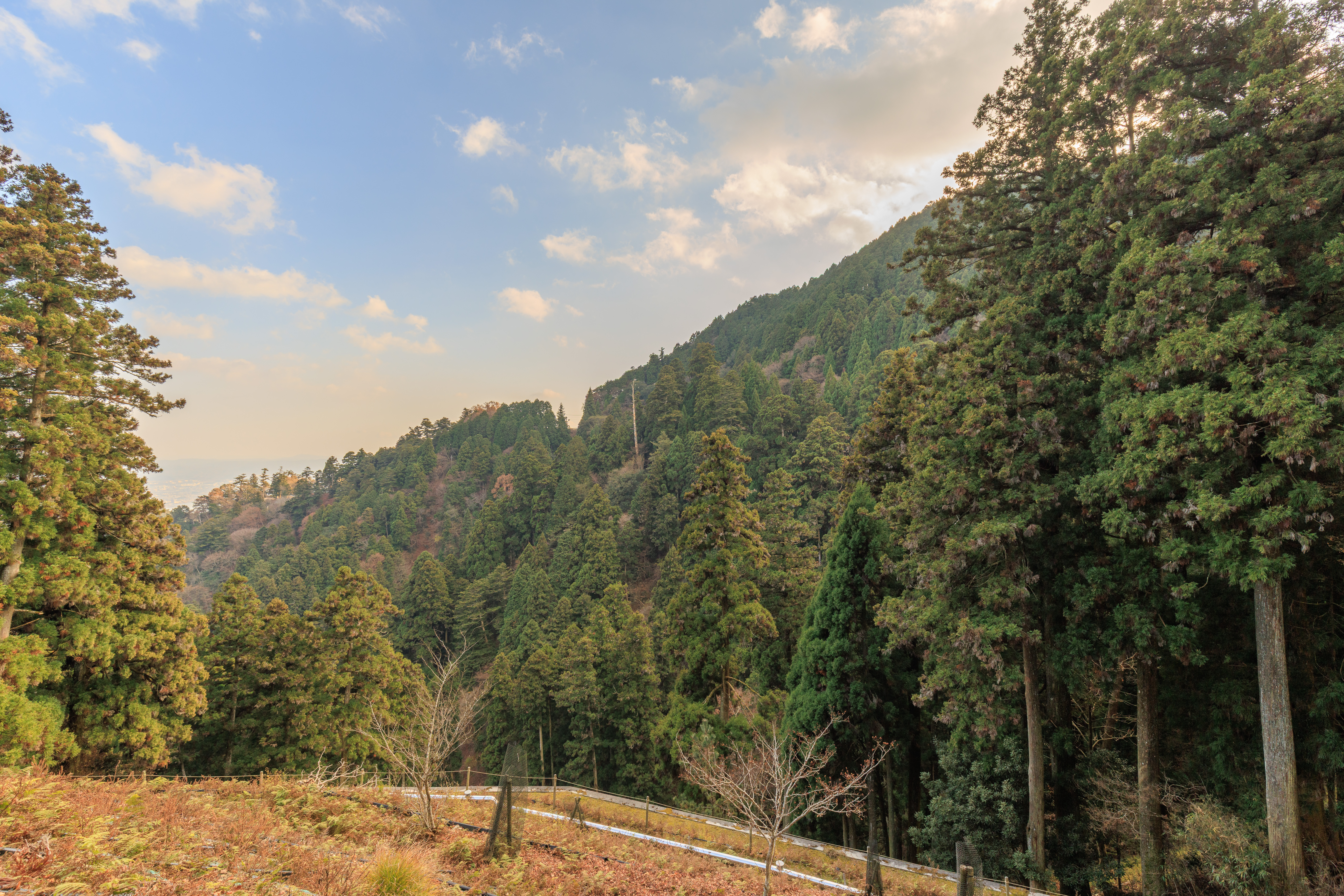
By now, it was 3pm. There were still many other temple buildings but not enough time. So, we started to head to the funicular station. It’s somewhere here to the south.
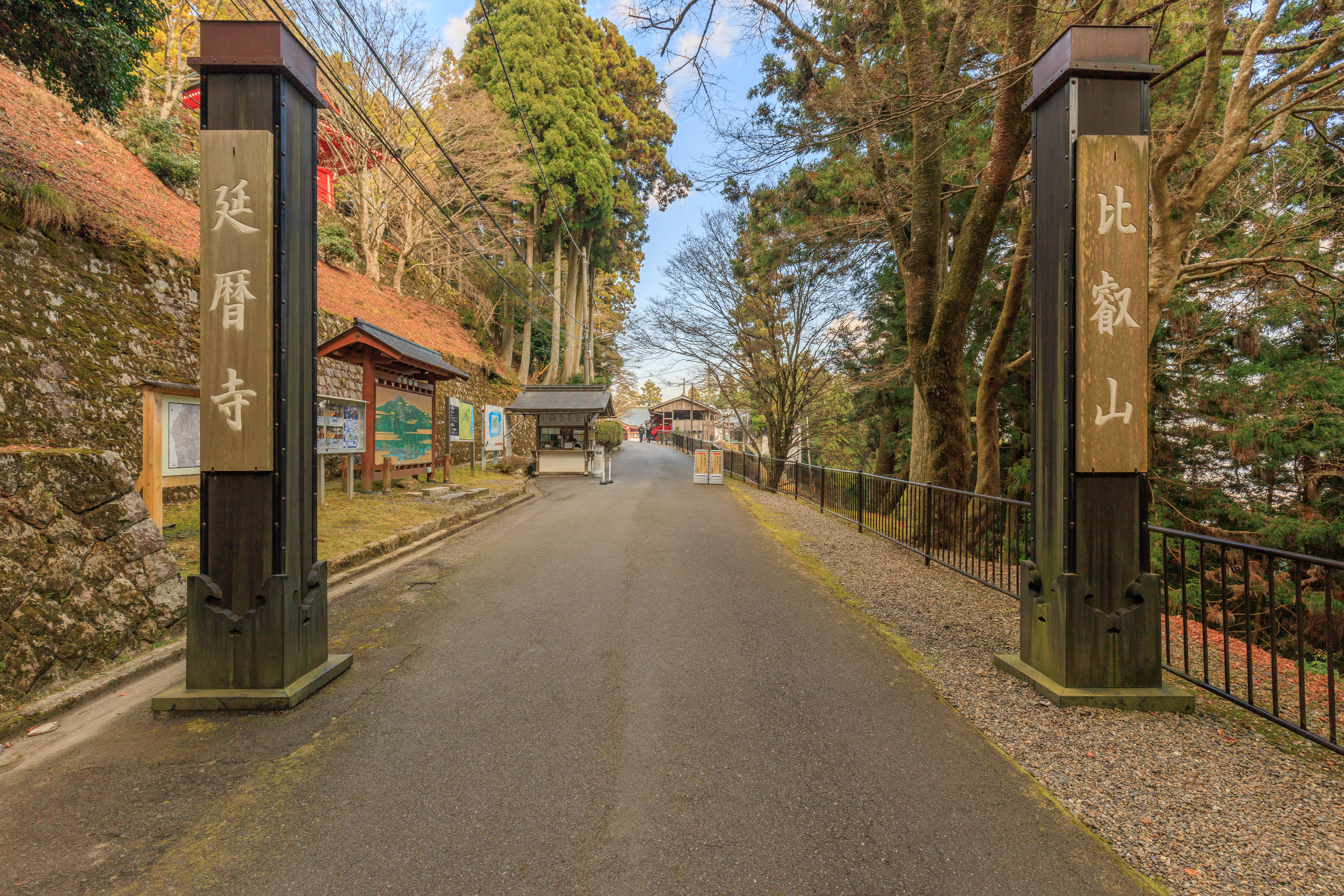
The path intiially took us to the west and was below the path we took on our way here to the area around the Konponchu-do.
We proceeded past a small parking lot.
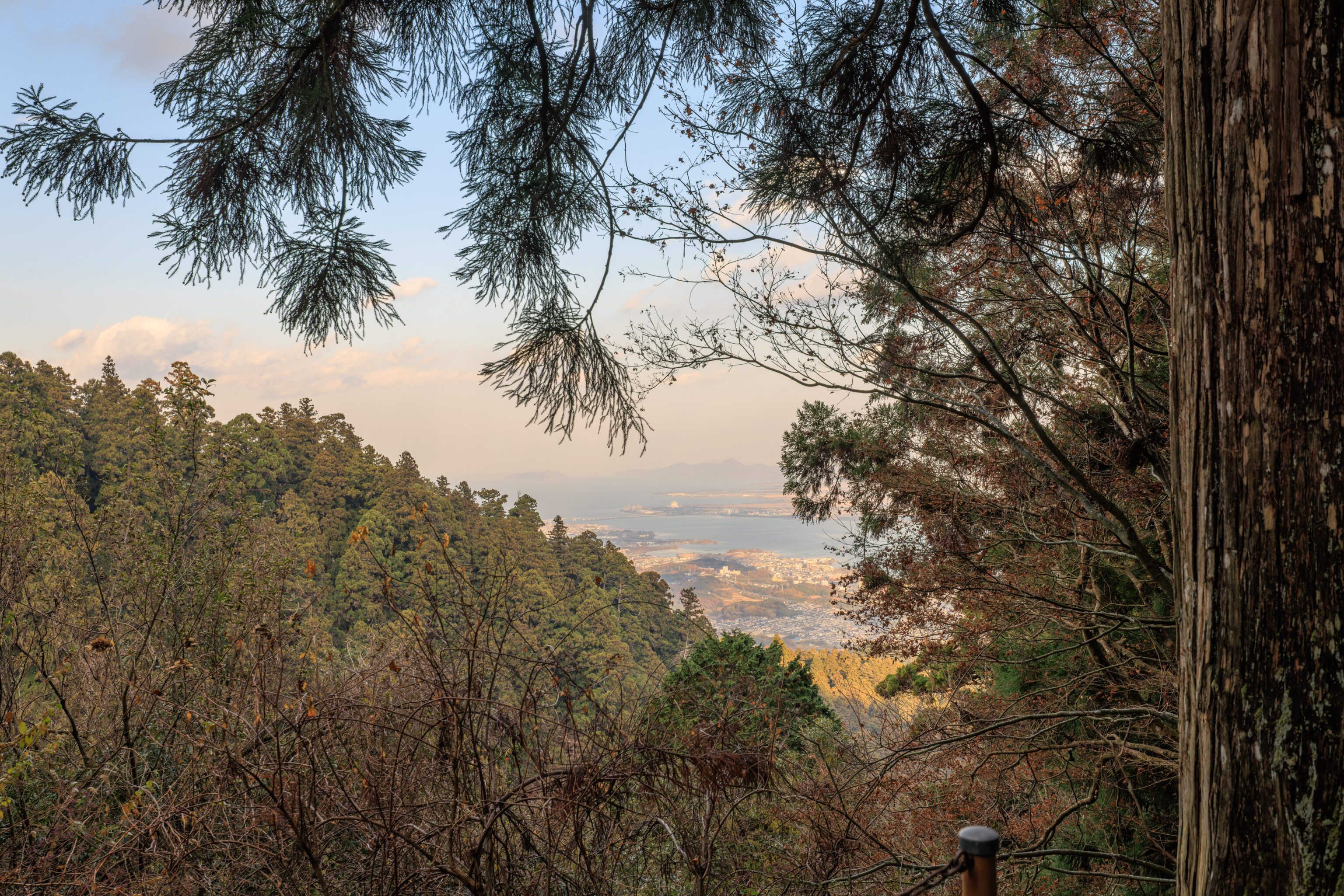
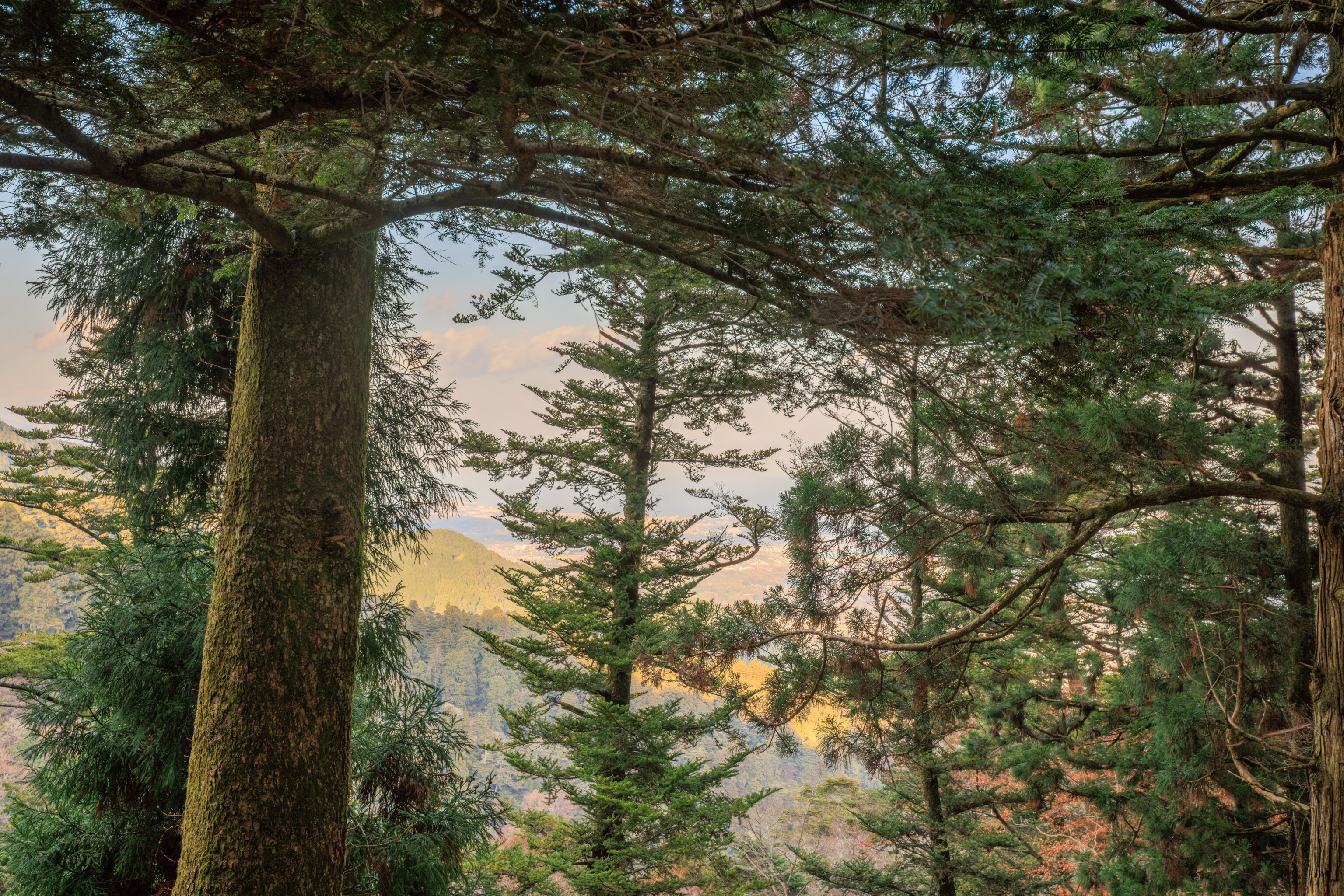
The path then led to the south where we were able to see Lake Biwa through the trees.
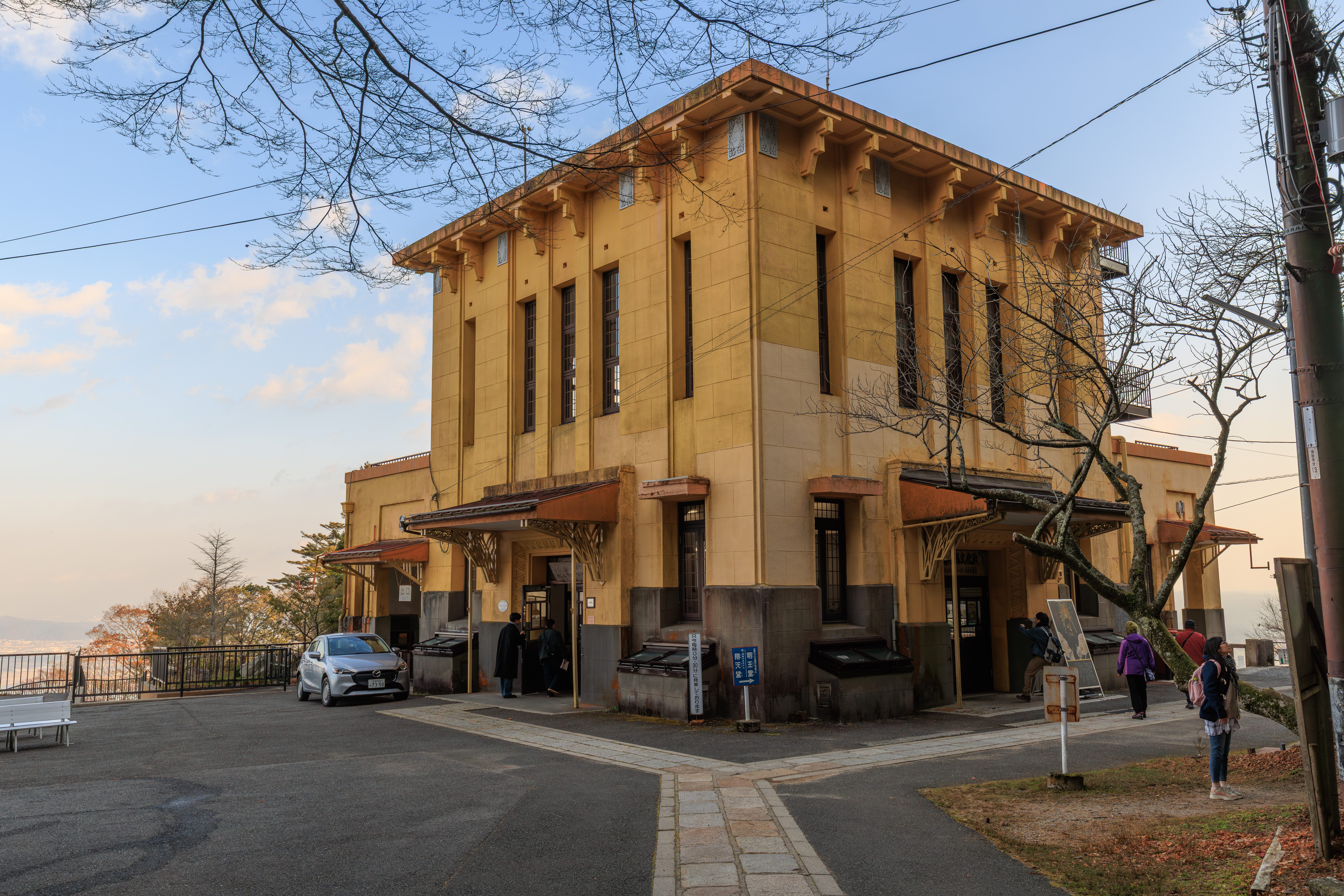
The station for the Sakamoto Cable funicular was a square shaped building. It was pretty busy inside with people waiting for the next trip down.
We bought tickets for the trip down.
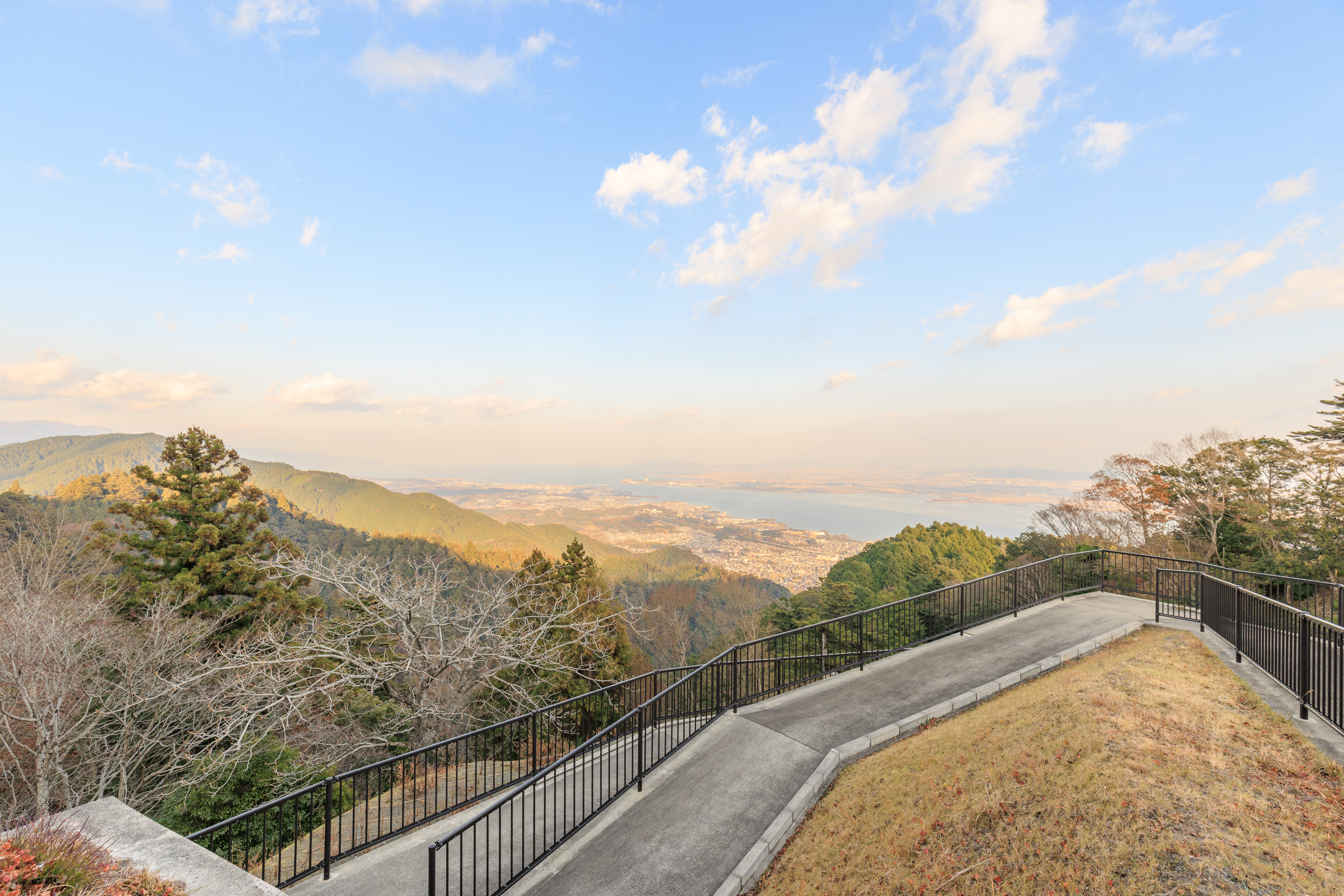
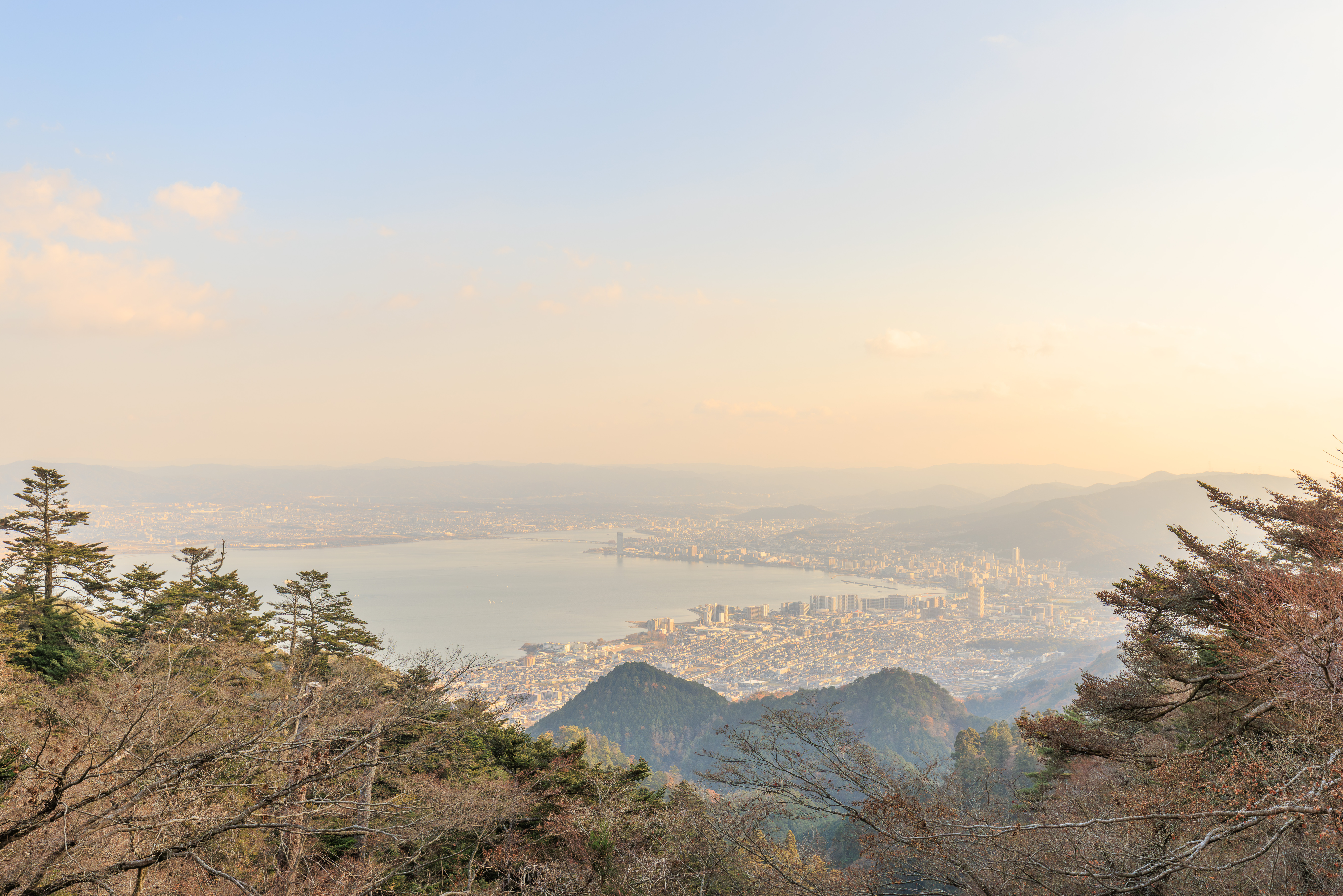
There was enough time to take a quick look at the view from the outside of the station.
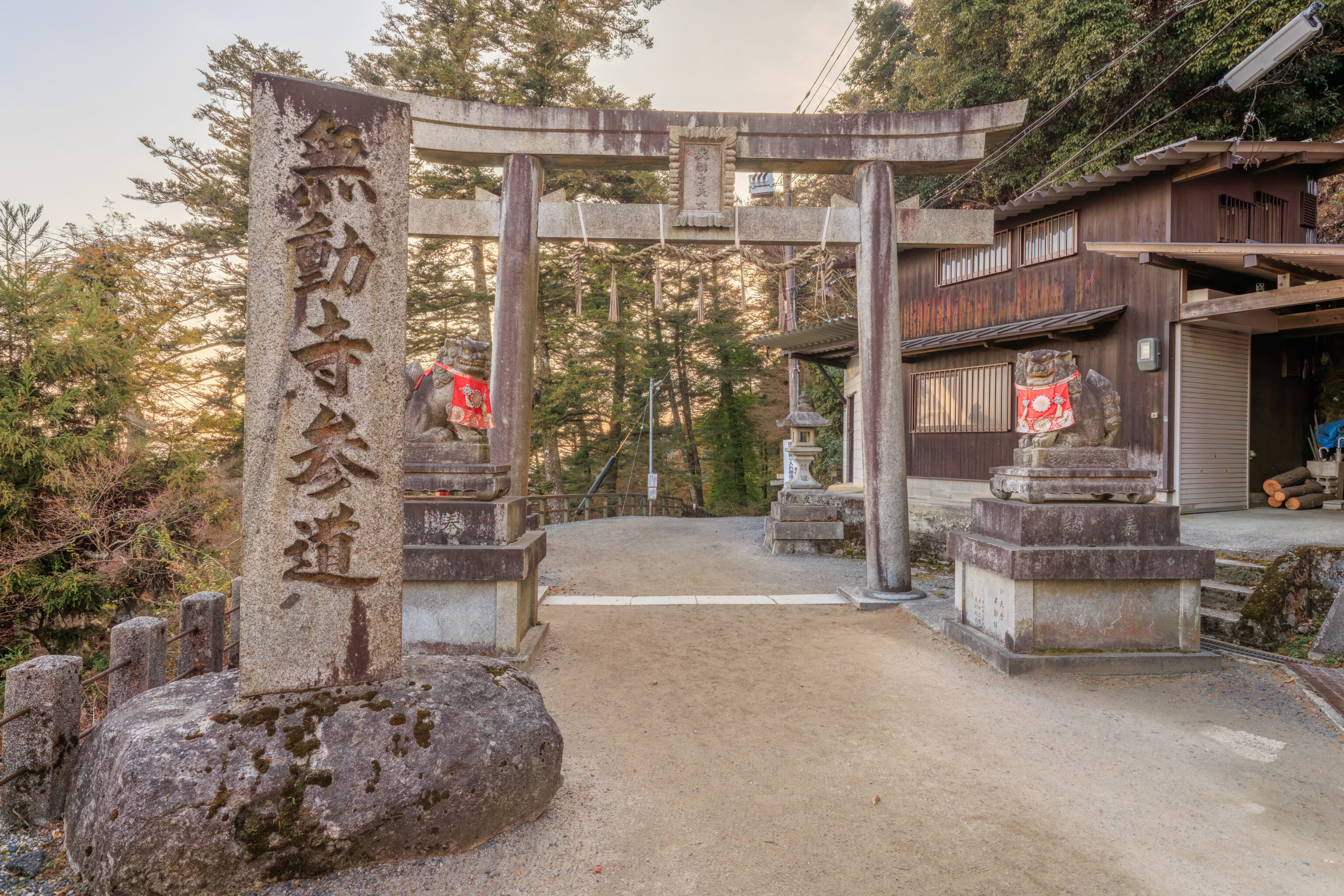
This marker indicates that this is the 無動寺参道 Mudo-ji Sando, the path to Mudo-ji to the south.
Kyoto
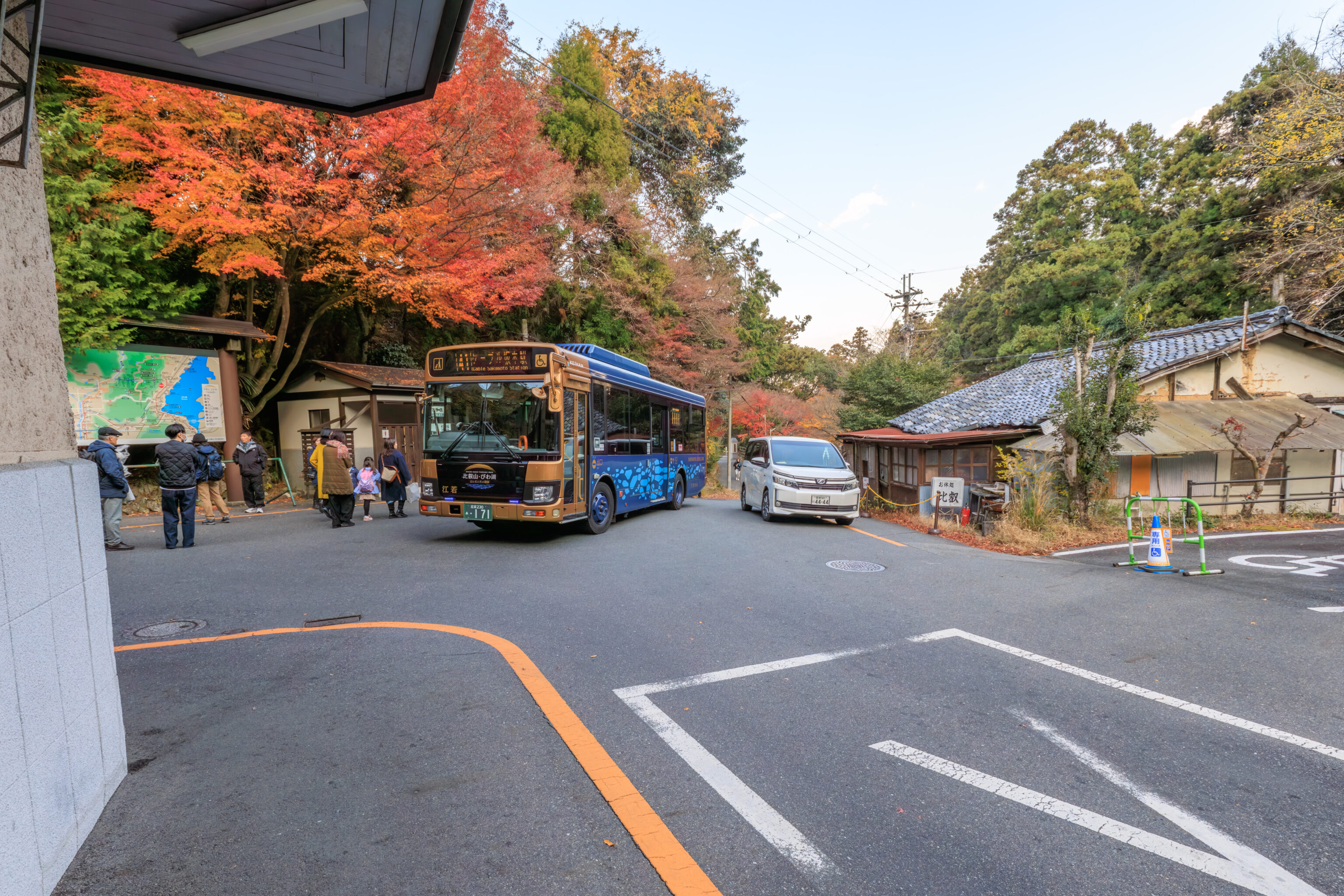
We took the Sakamoto Cable down to the lower station. From there, we caught a bus that was headed to JR’s Hieizan Sakamoto Station. There is actually a closer station, Sakamoto Hieizanguchi, that is served by the Keihan Electric Railway. However, JR has trains that go directly to Kyoto without needing to transfer.
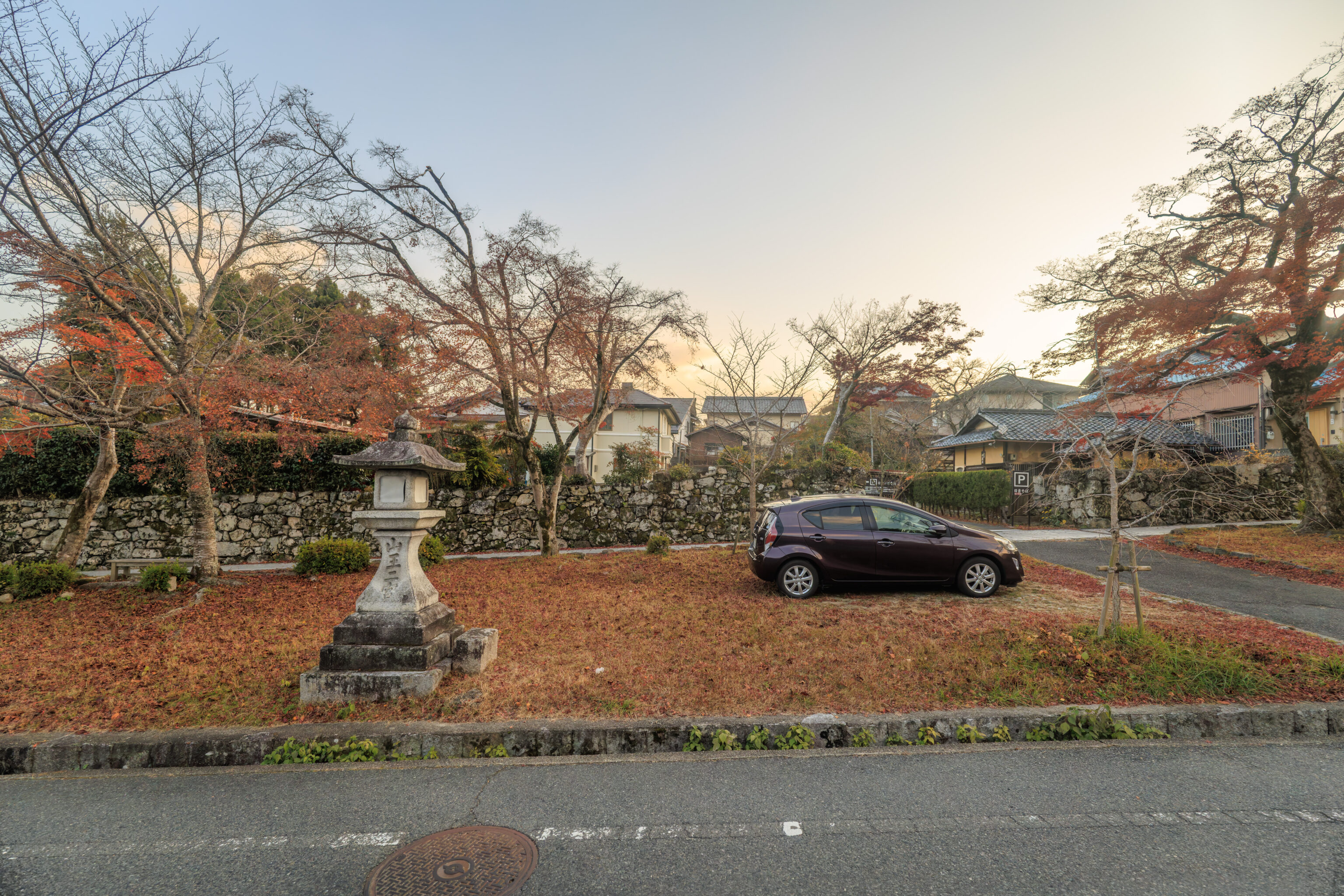
The station acutally isn’t too far away, about 1.5km. It would proably be a pleasant walk if we had to walk.
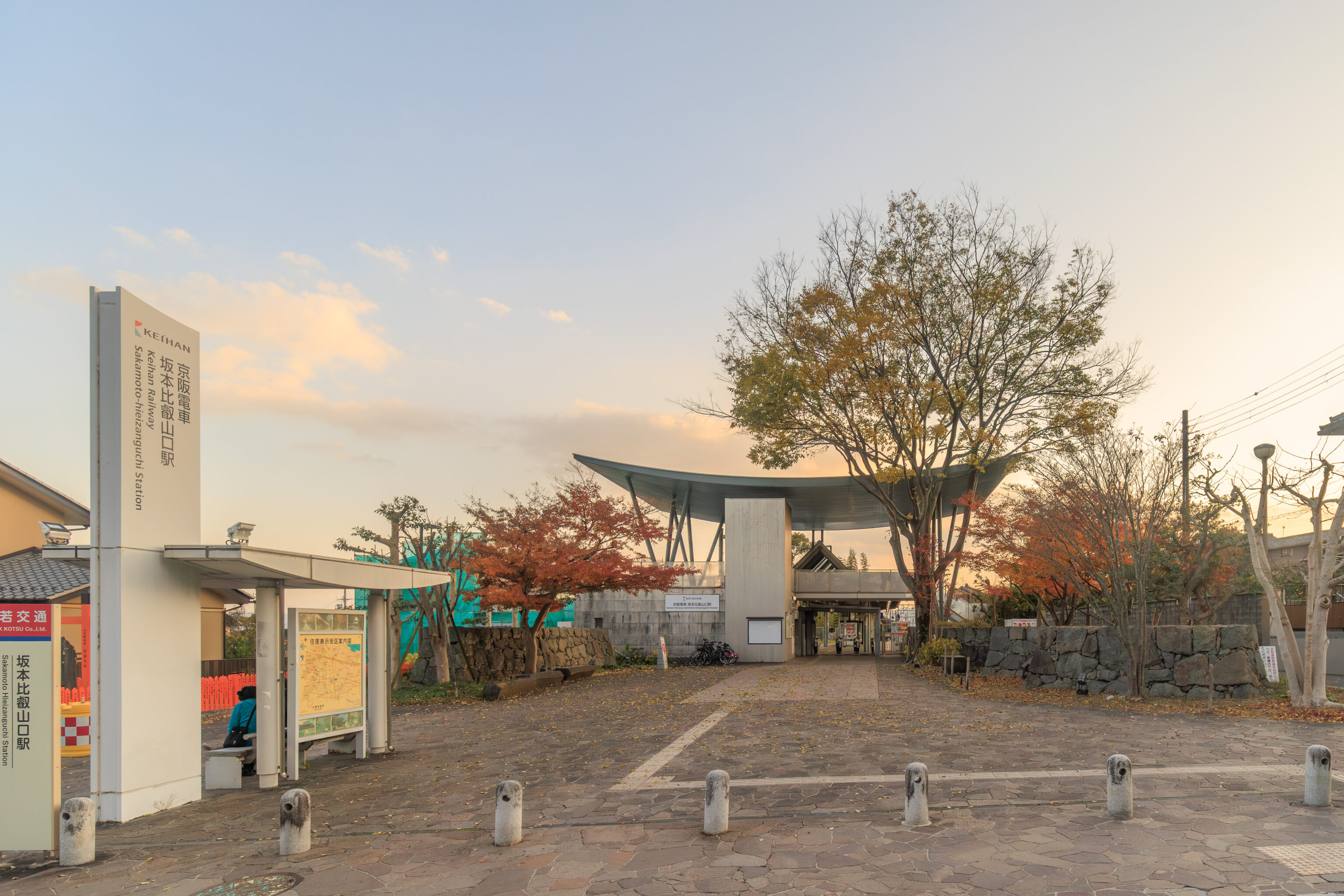
We passed by the Keihan station on our way to the JR station.
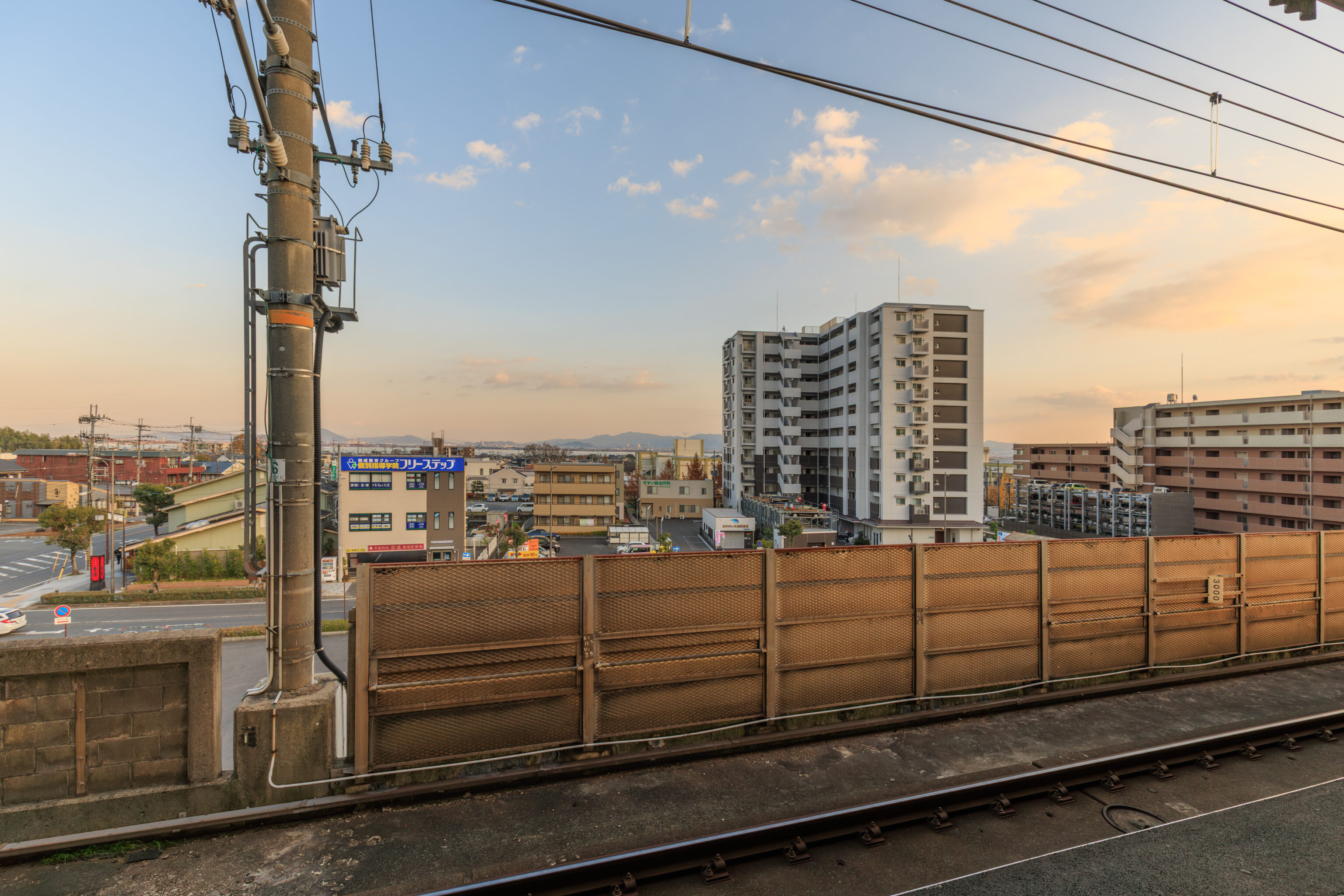
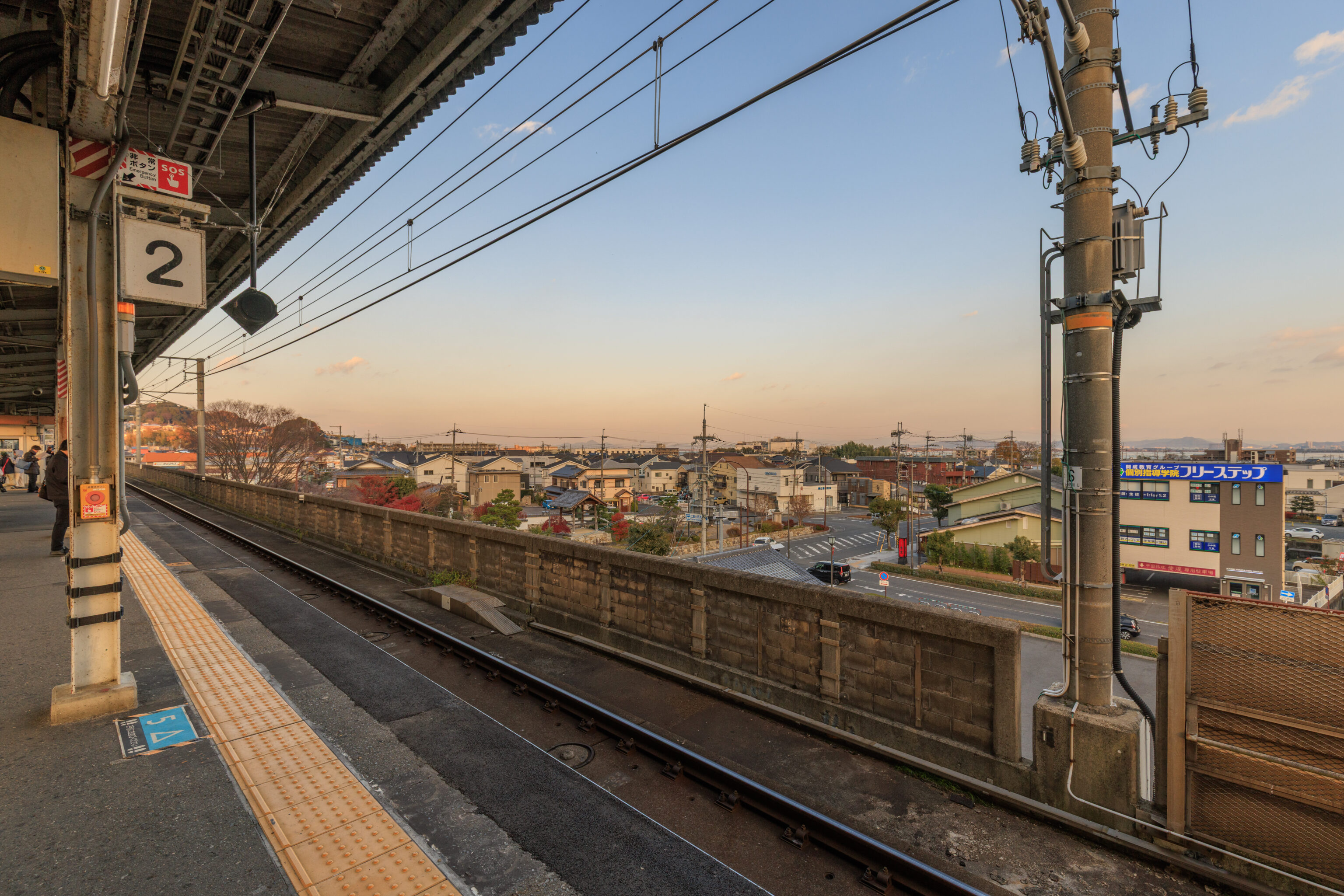
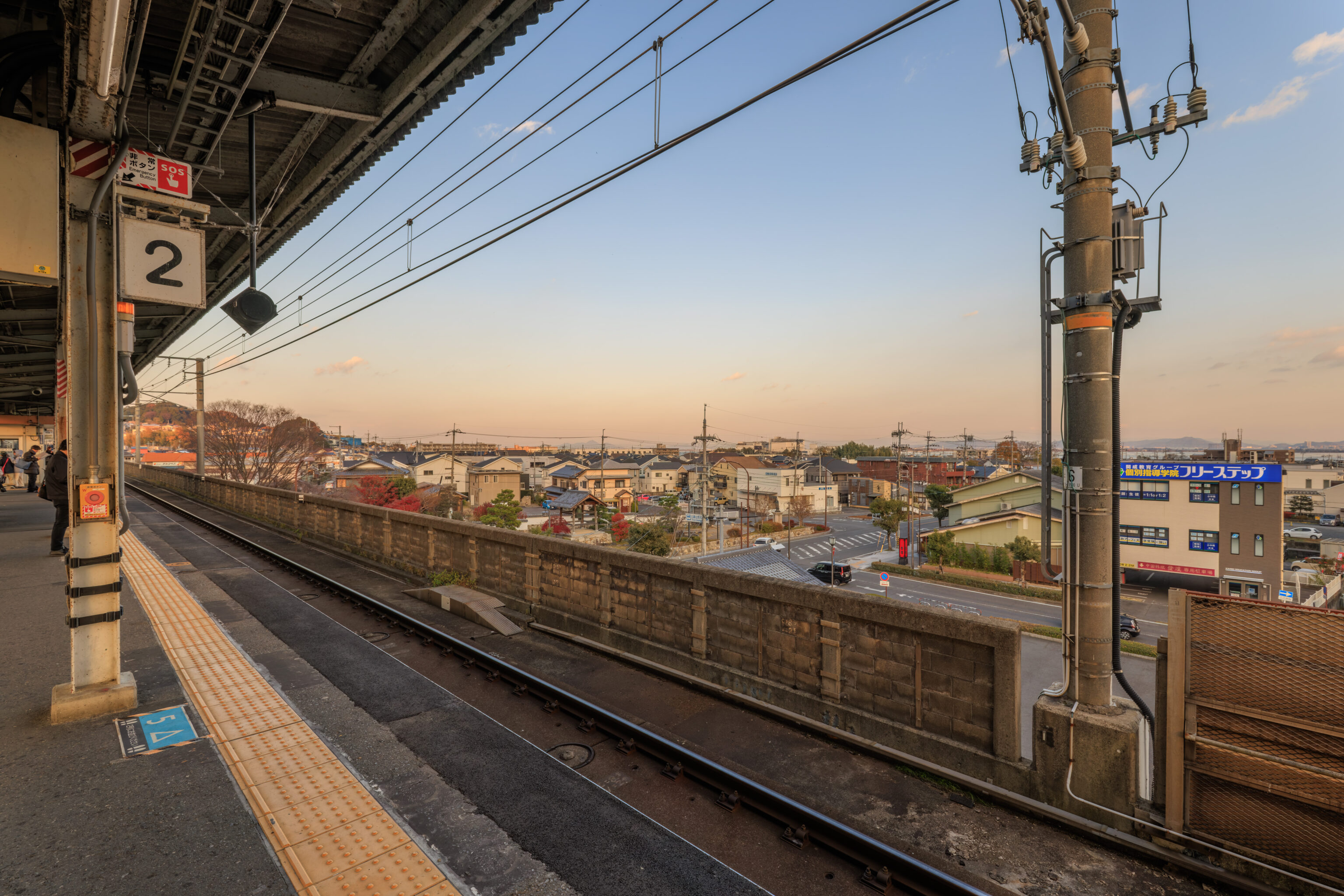
After arriving at the Hieizan Sakamoto Station, we waited for the next train to Kyoto.
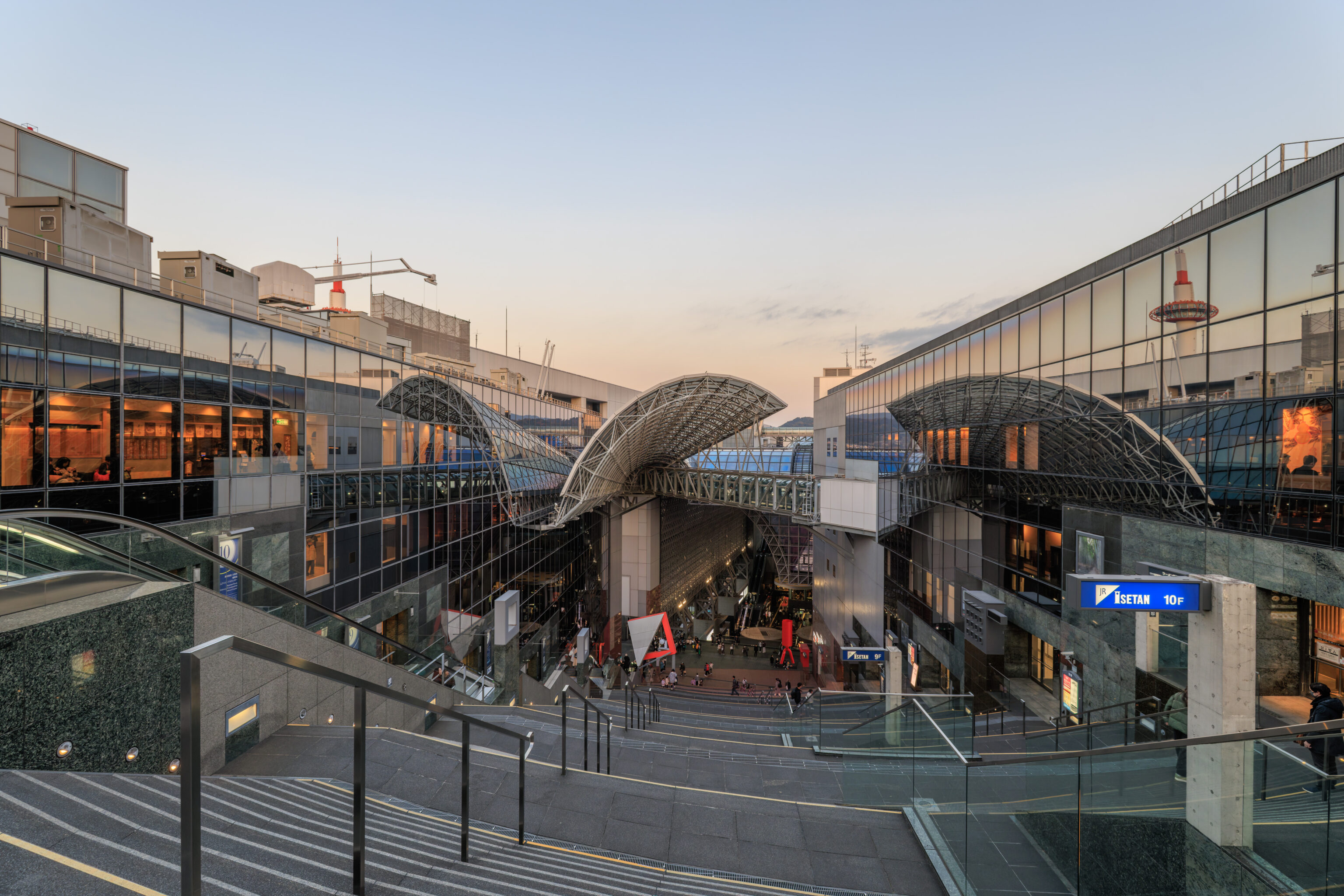
Upon arriving at Kyoto Station, we decided to get something to eat at the station.
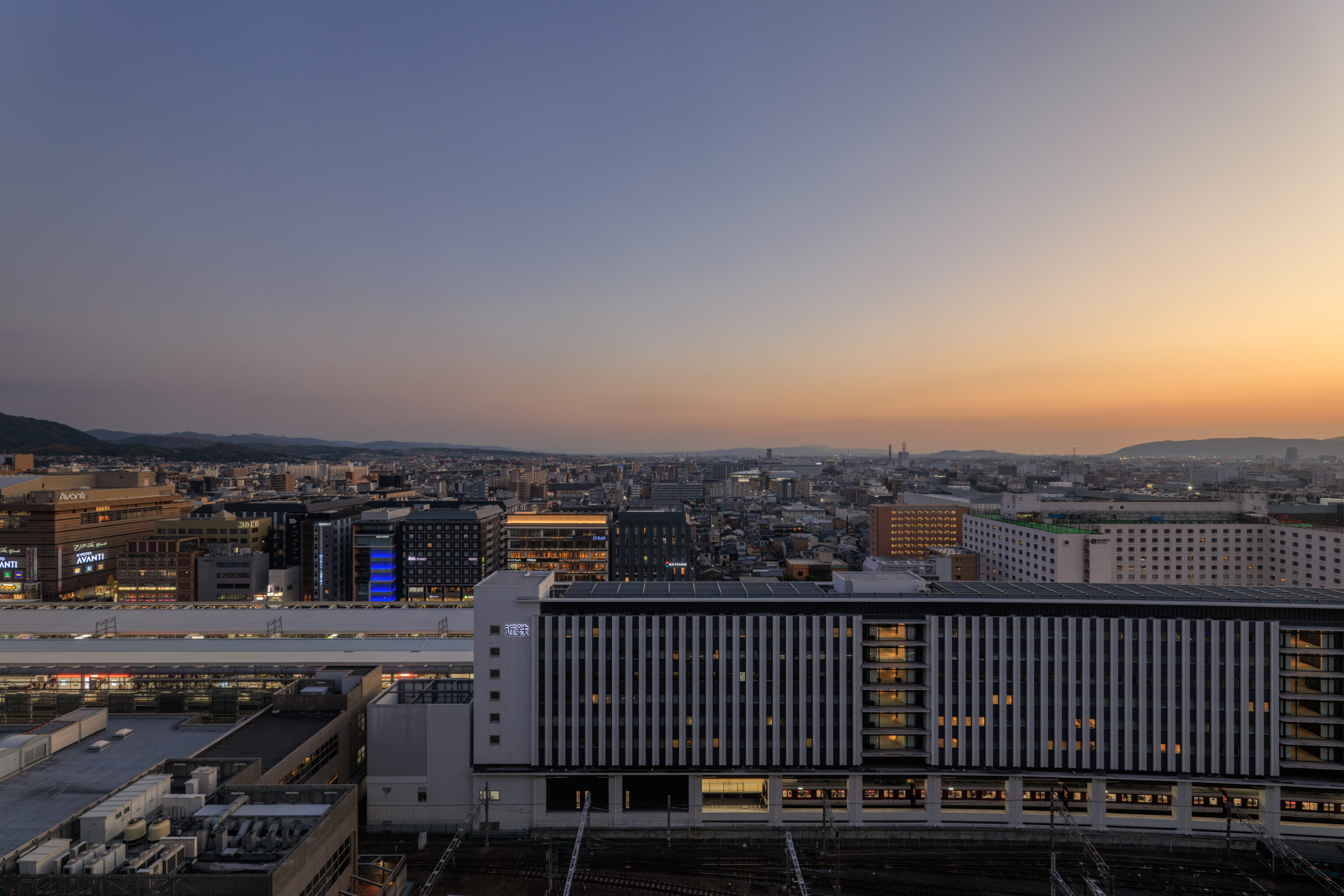
We did go up to the roof for a quick view of the city. We missed sunset but there was still some color in the sky.
We decided to eat at Eiju-an on the 11th floor of the station within the Porta restaurant space. This restaurant serves Kyoto style cuisine.
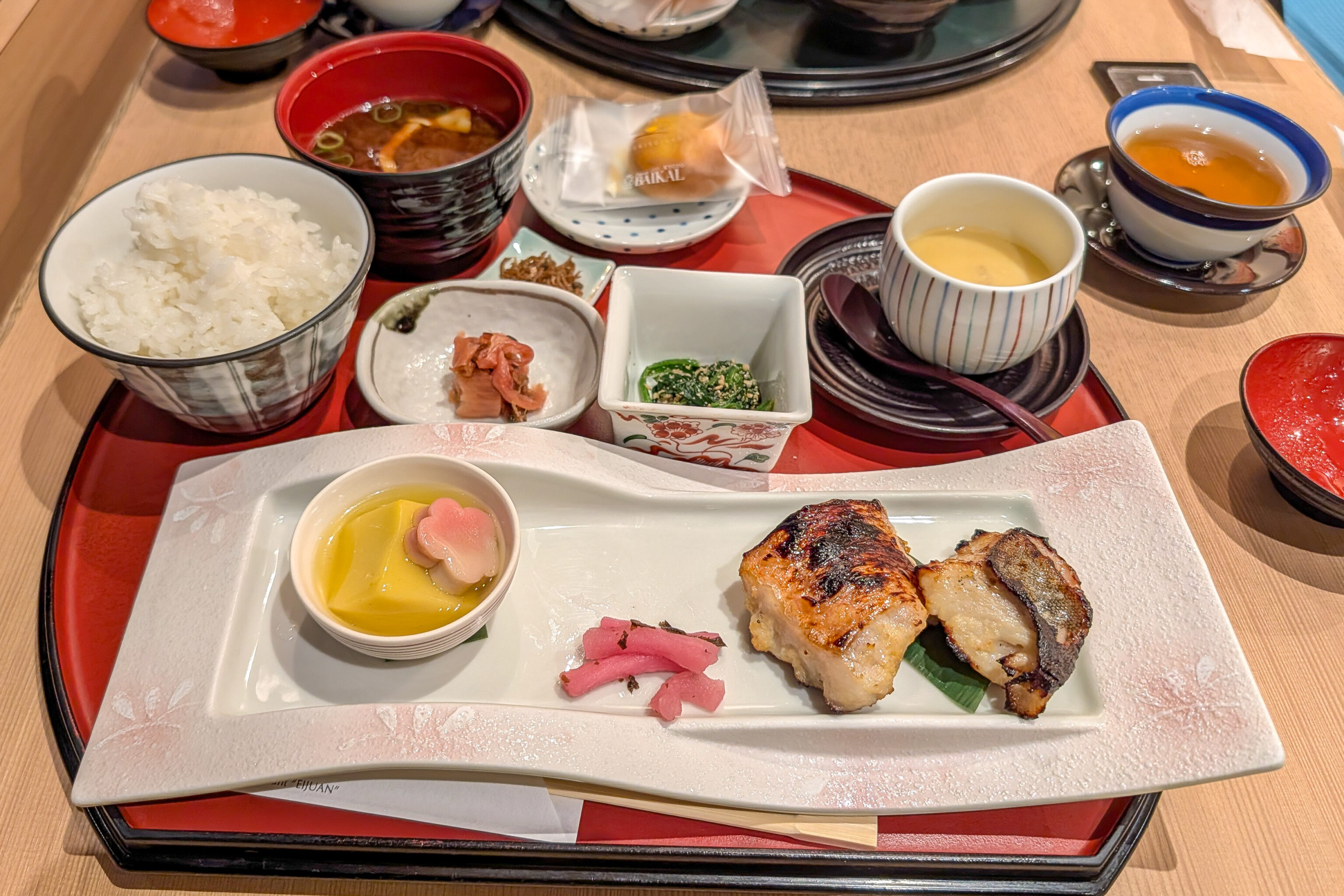
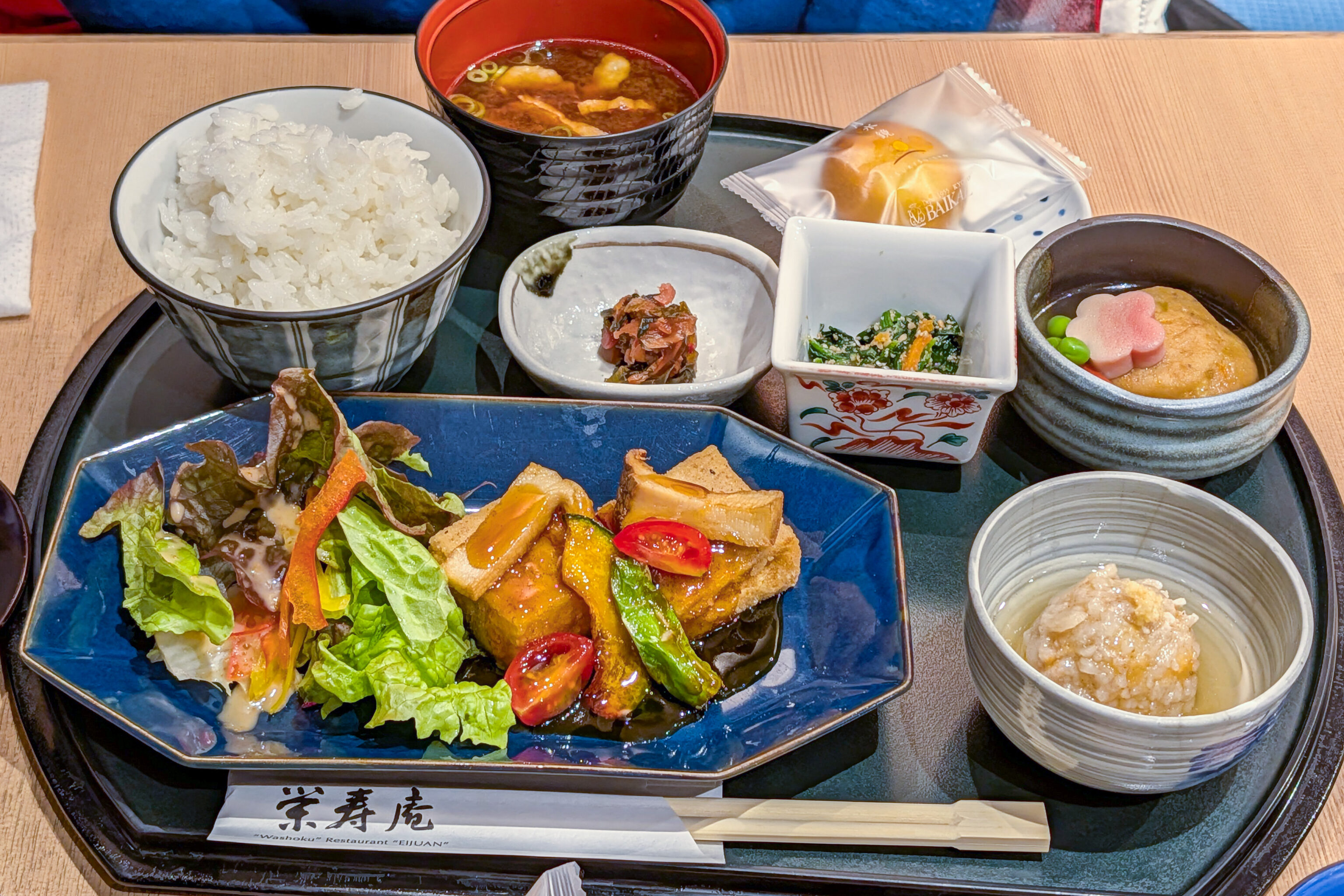
We ordered the fall special Momiji Gozen. The two primary items are grilled fish, black cod and alfonsino. It is served with a number of smaller side dishes. The tiny portions of fish were excellent. We also ordered the Komachi Gozen, which consists of grilled Tofu, vegetables, and various other items.
Overall, the grilled flavors were excellent, though portions were tiny by American standards. Most of the clientele were older Japanese. This type of cuisine does not seem to be popular with people under 60!
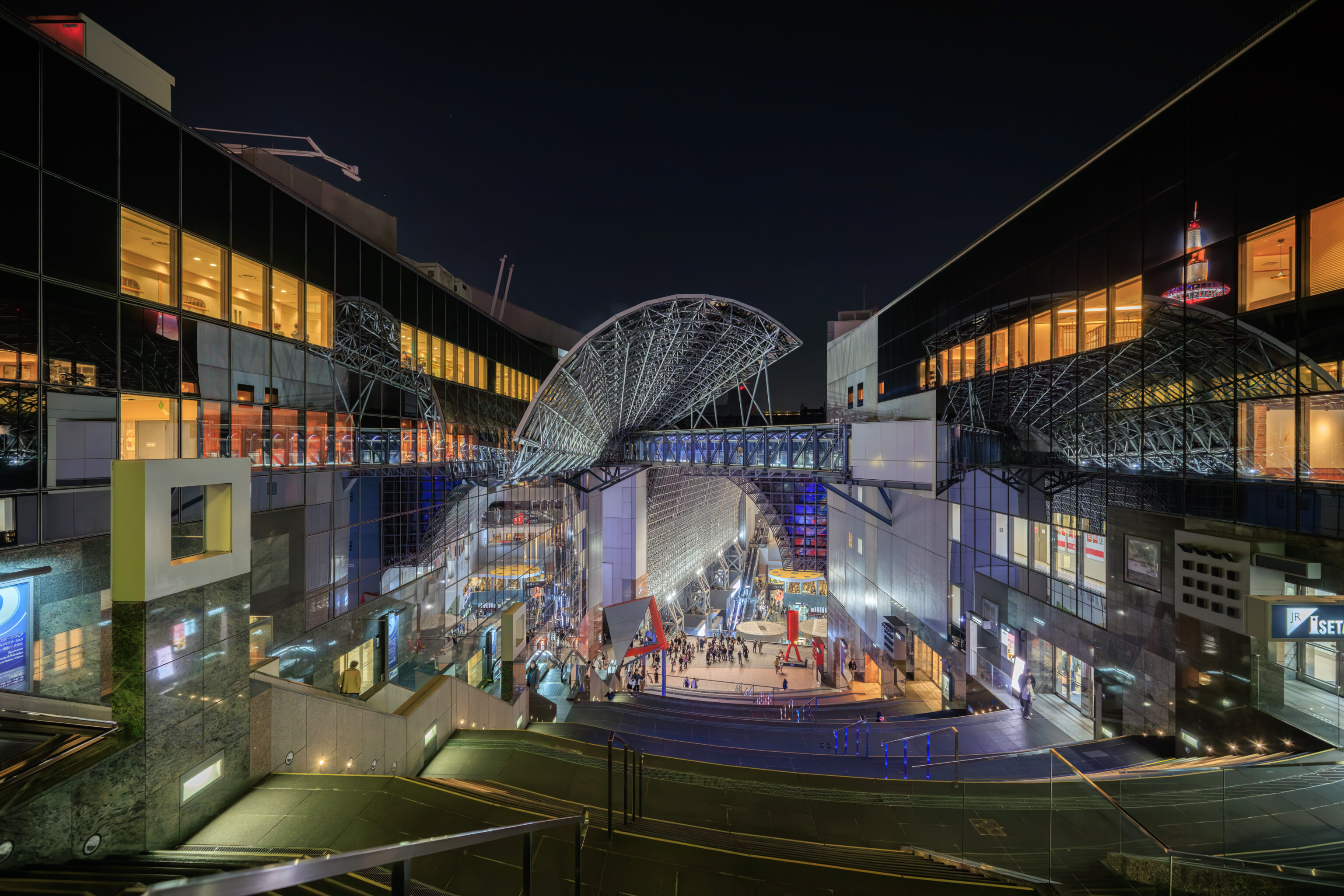
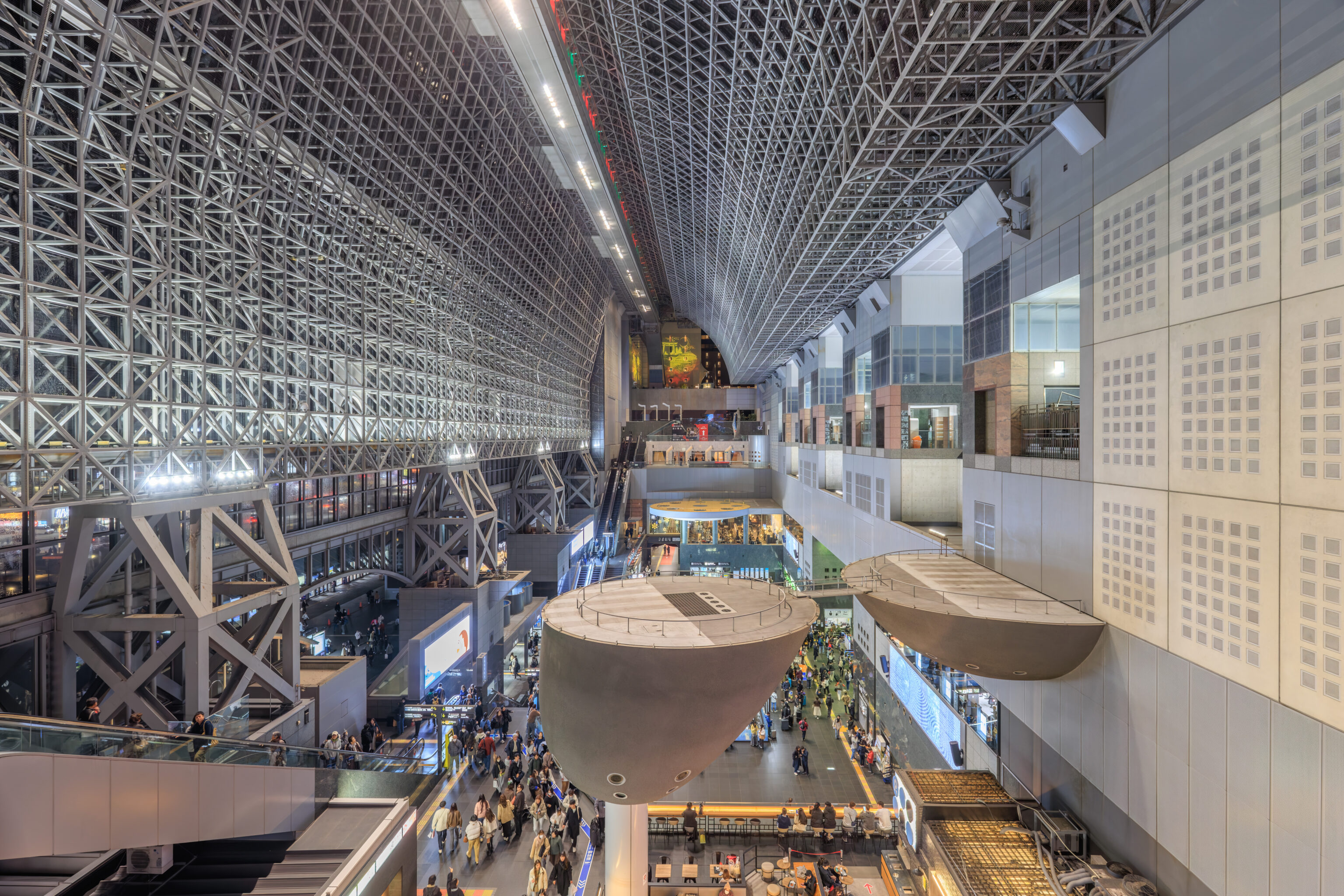
After dinner, we headed back downstairs to head to our next destination, Chishaku-in.
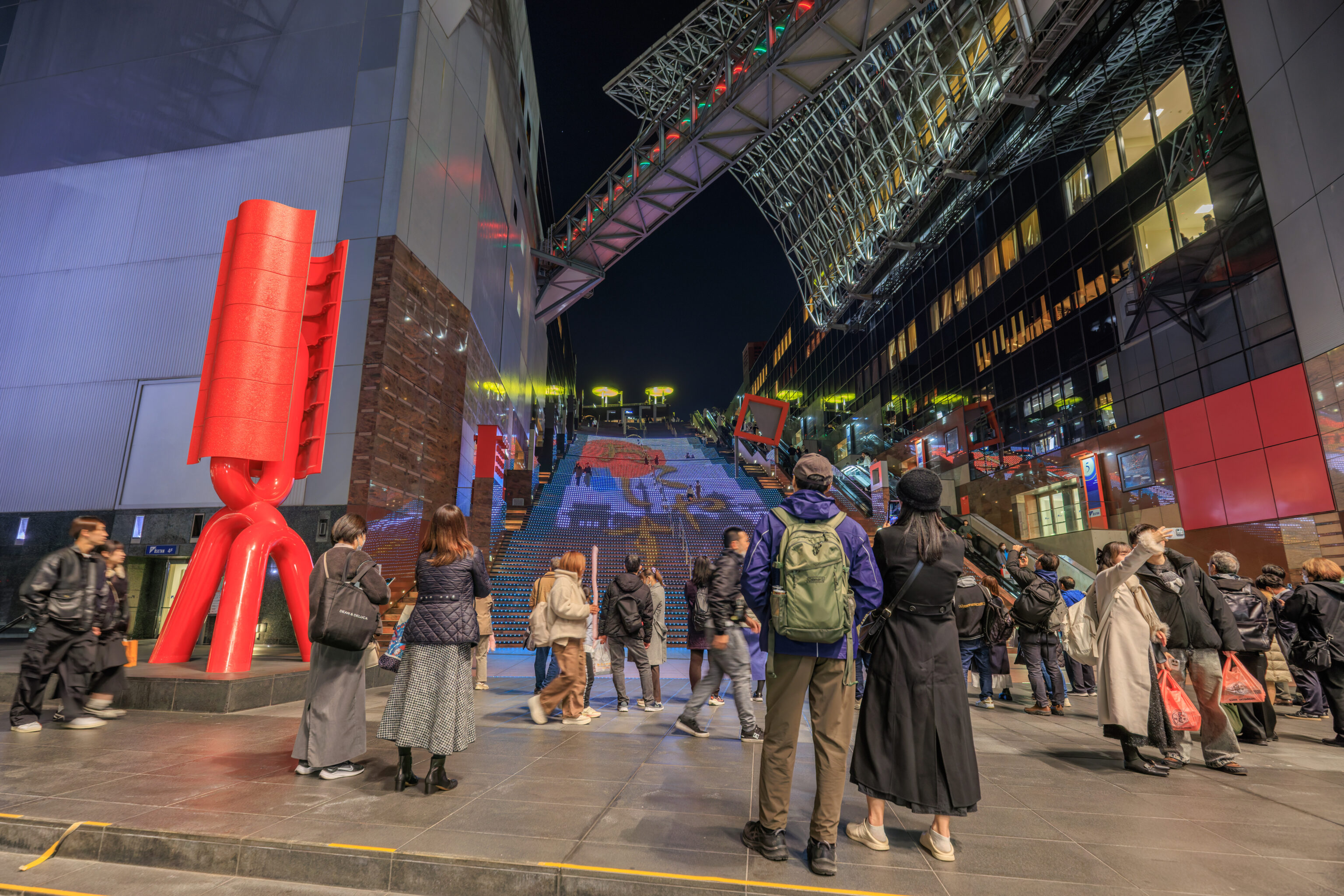
We watched the images on the stairs for a bit before moving on.
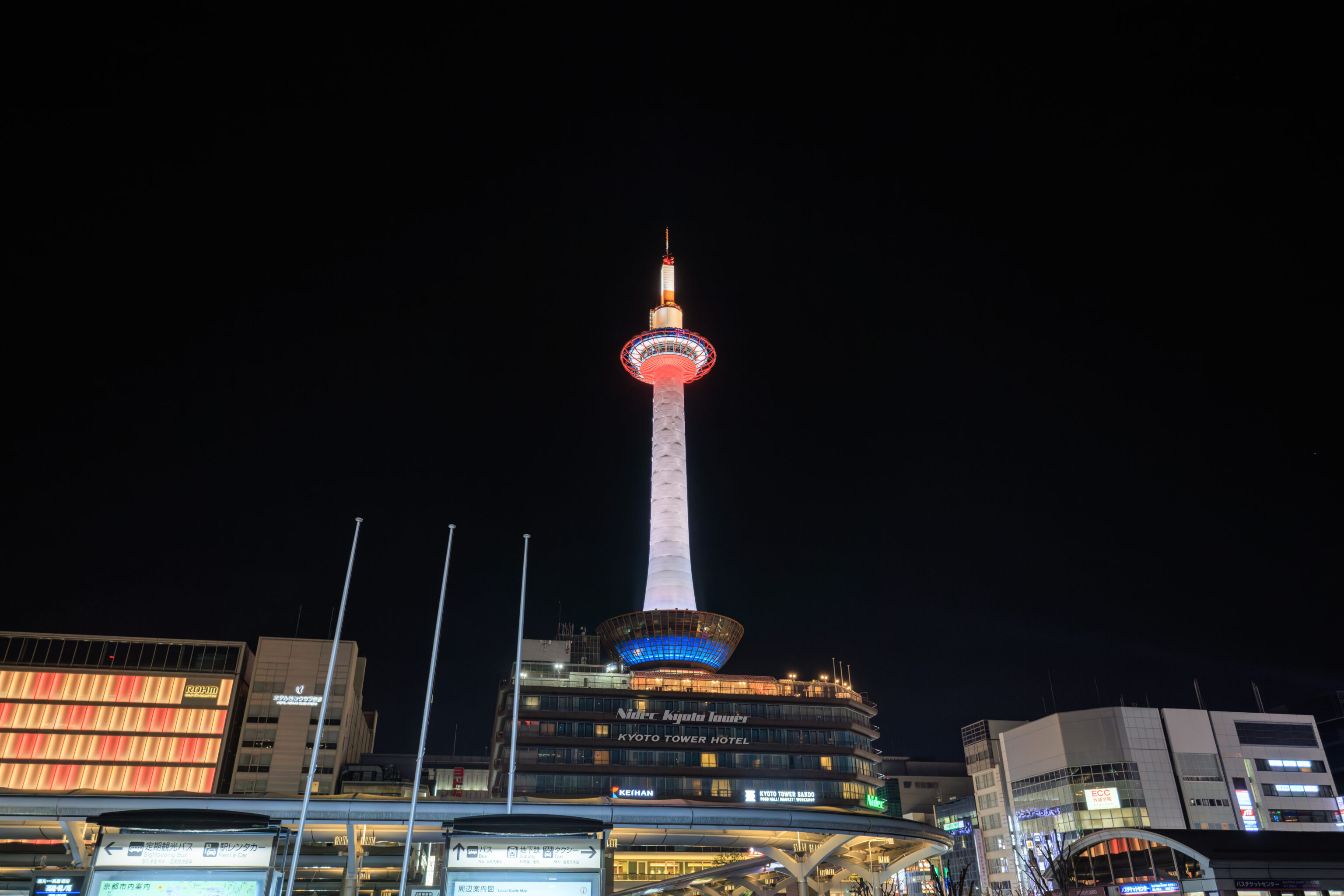
Kyoto Tower, as seen from the north side of Kyoto Station.
Chishaku-in
We took a bus over to 智積院 Chishaku-in, getting off at a stop by the Kyoto National Museum. From there, it was a short walk to the temple. Chishaku-in isn’t one of the more well known temples in Kyoto. We weren’t sure if it would be crazy like Kiyomizu-dera is at this time of the year or if it would be more serene.
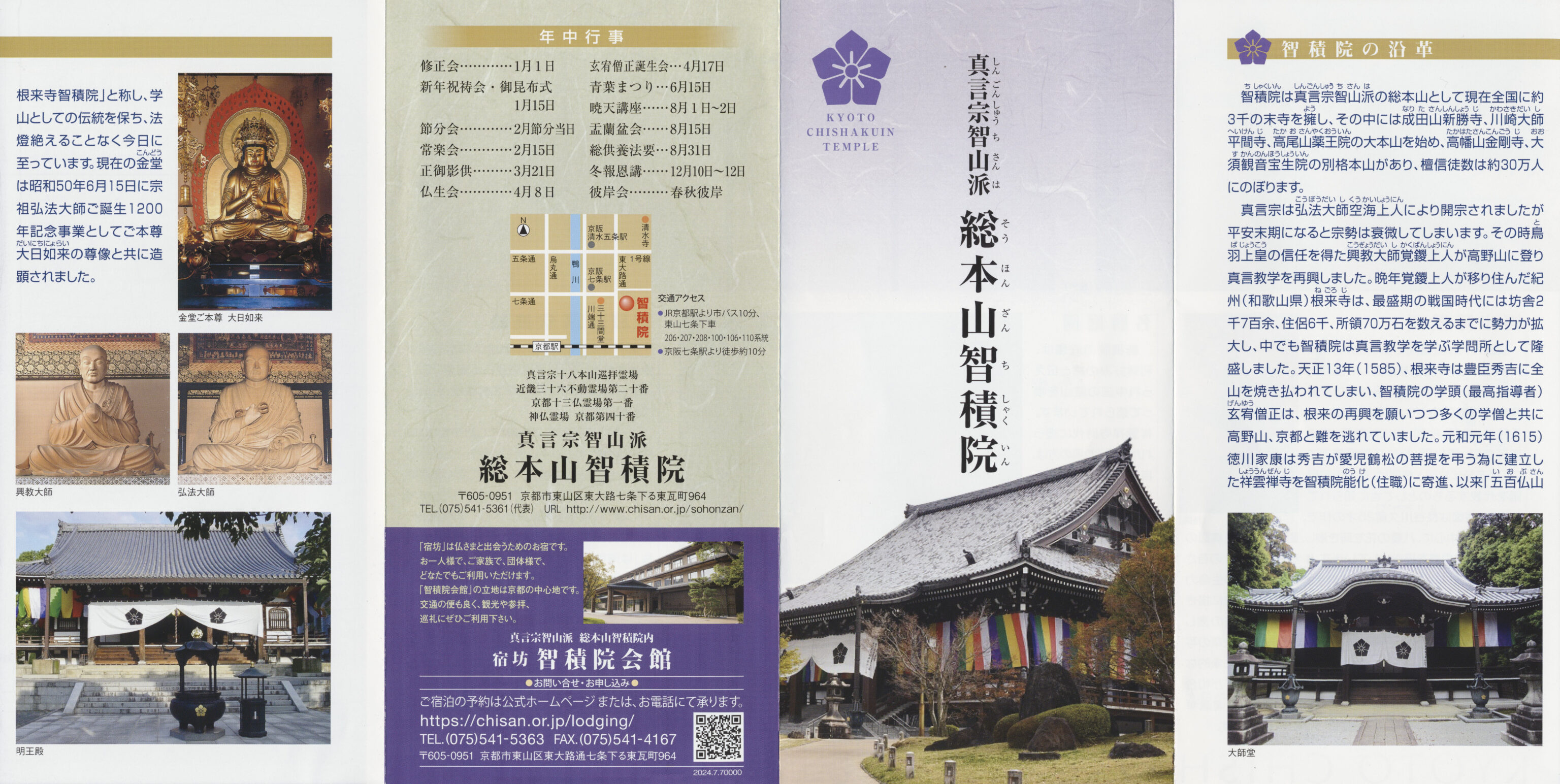
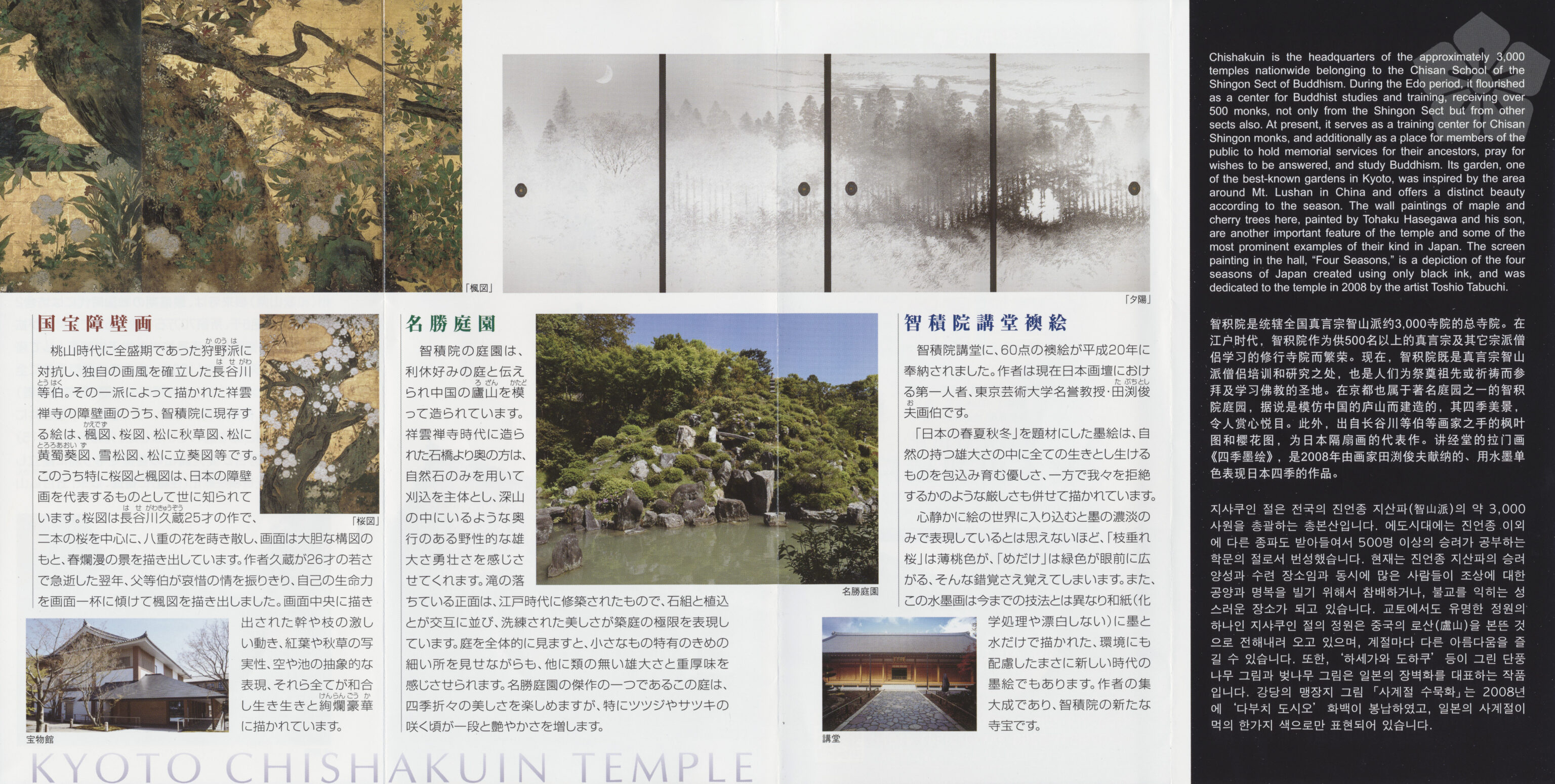
We picked up an informational pamphlet in Japanese.
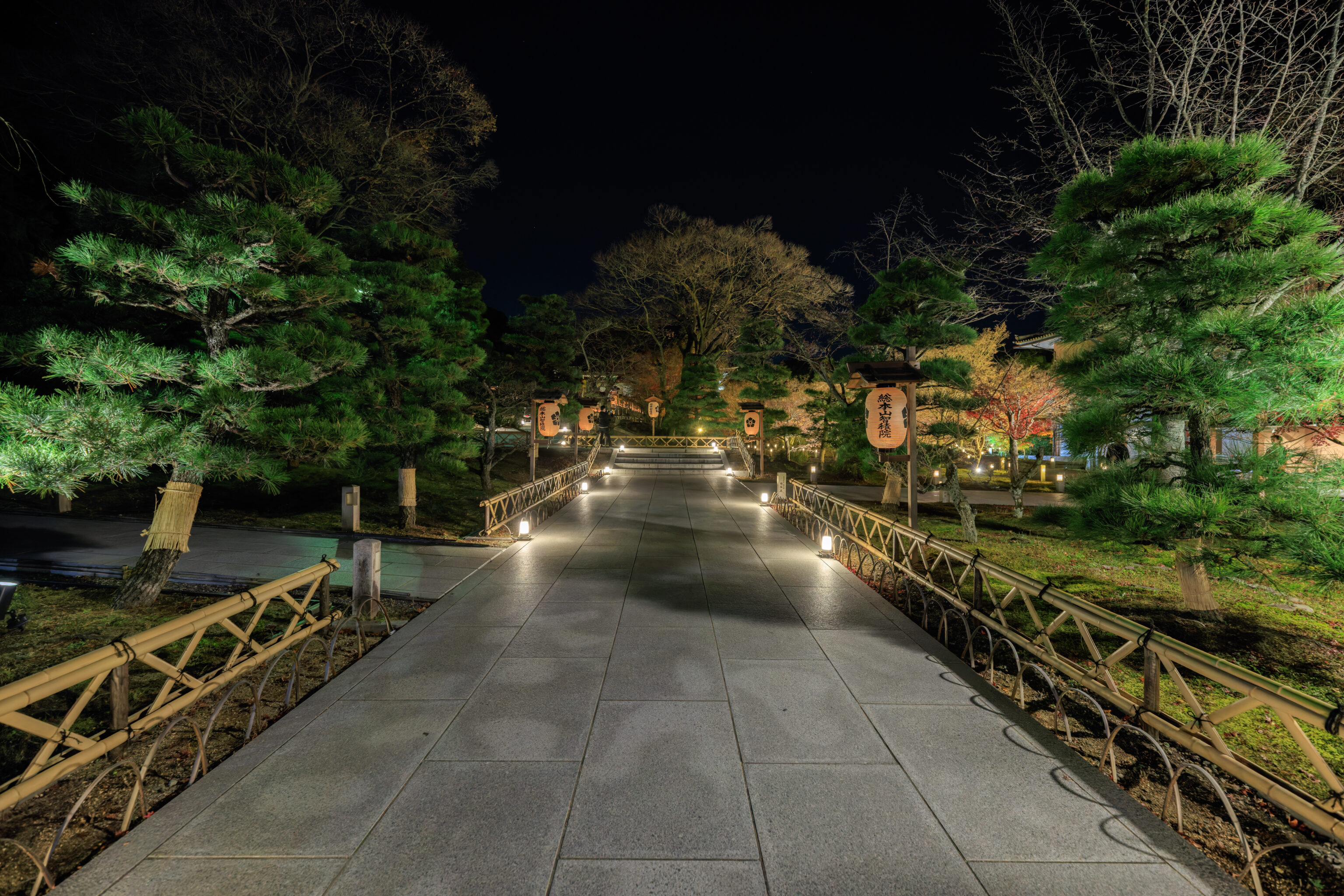
When we entered, we saw many staff around and almost no guests.
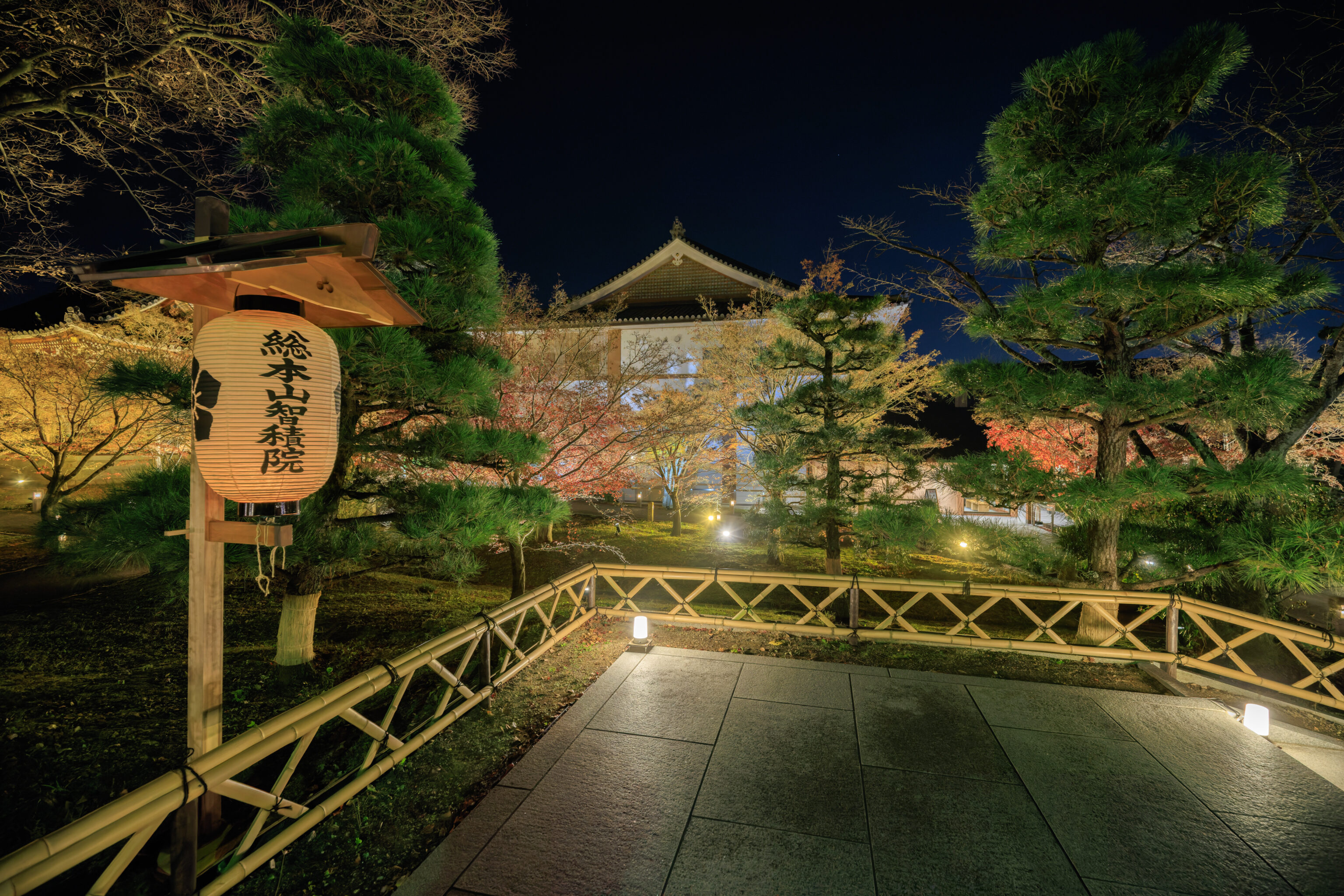
It was pretty dark even with the illuminated path.
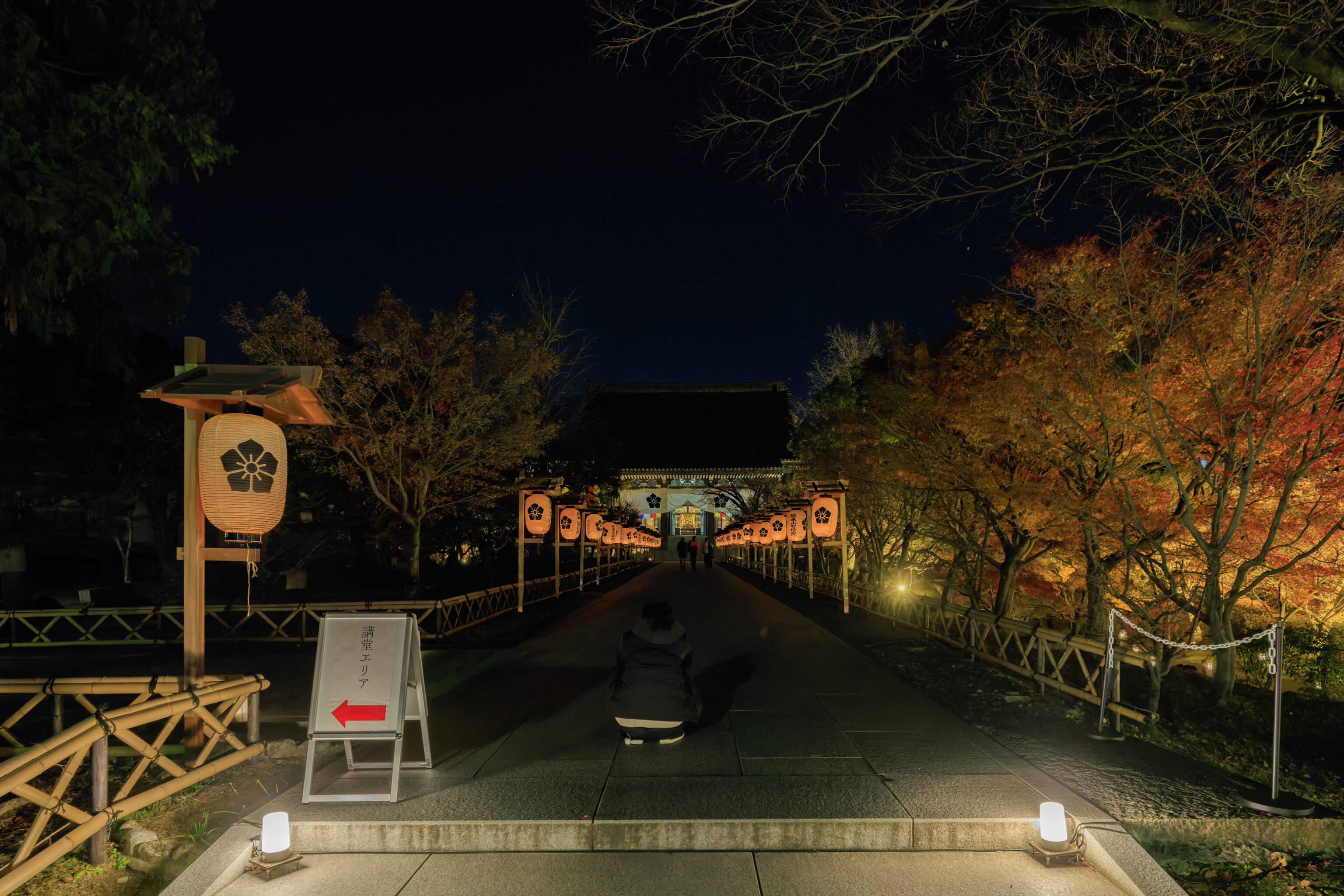
We didn’t really see this person in front of us at all! It was quite dark!
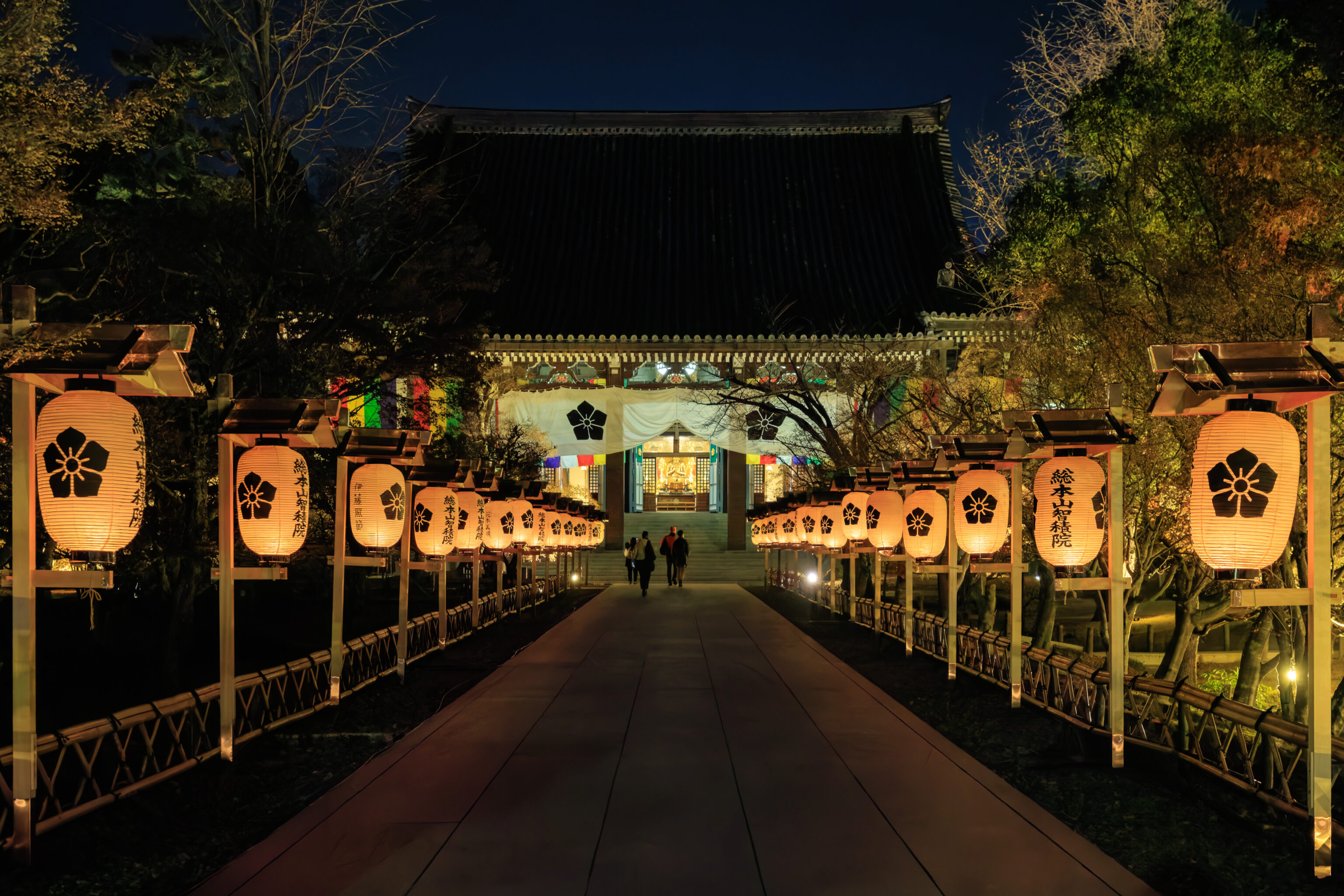
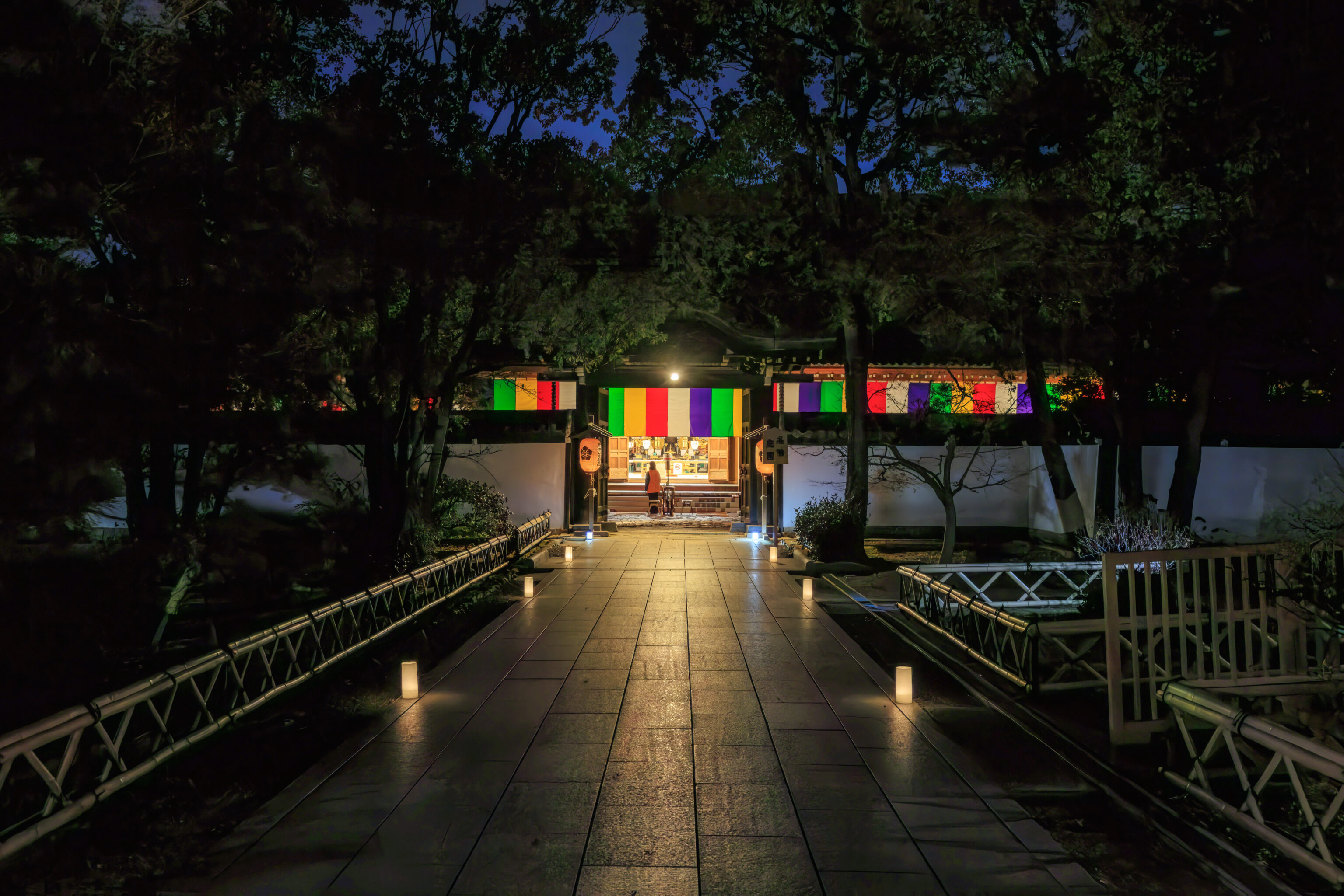
It was mostly pretty quiet other than the sound of temple drums coming from one of the halls.
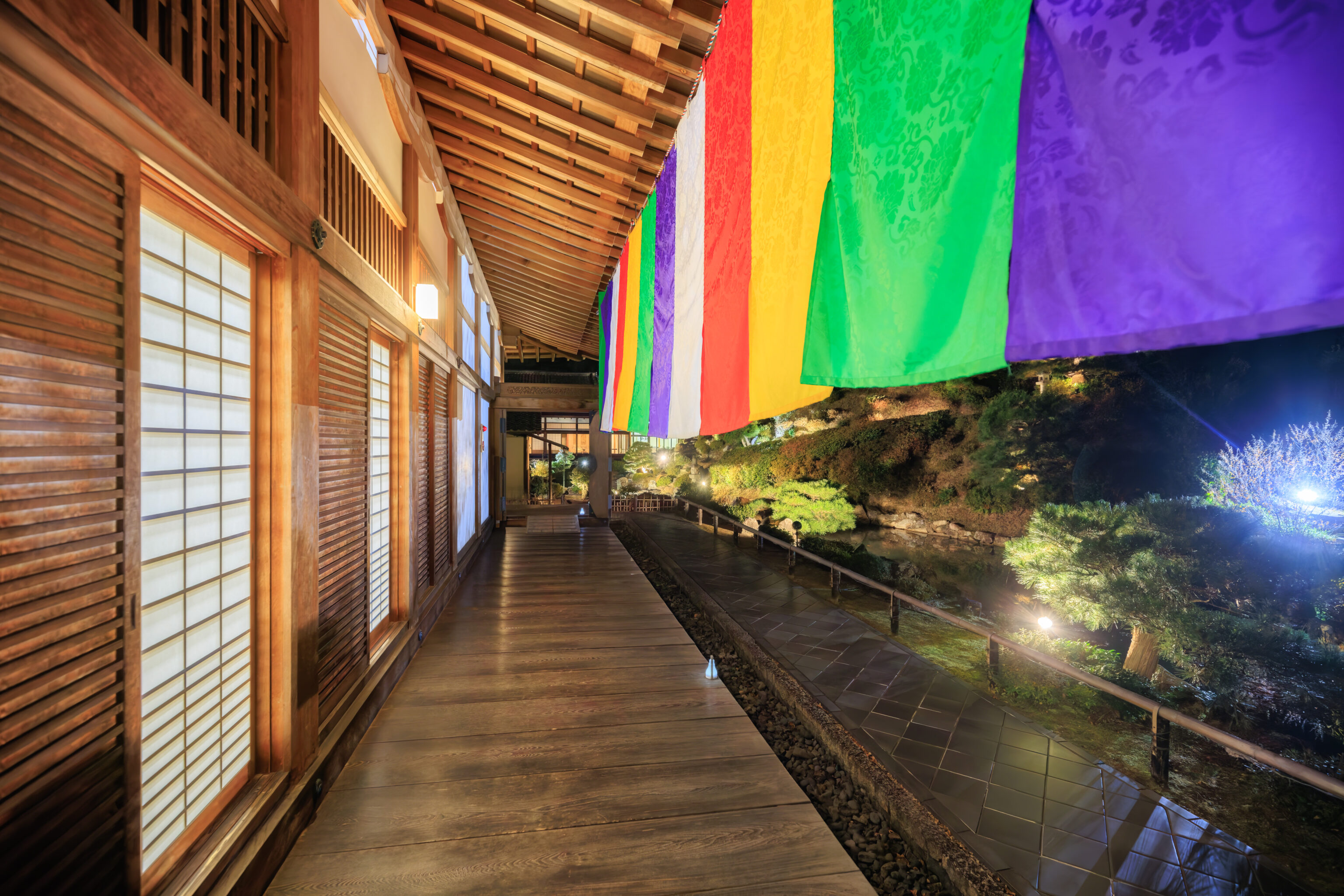
The illumination event includes a route through the 講堂 Kodo (Lecture Hall). This building is adacjent to the temple’s garden.
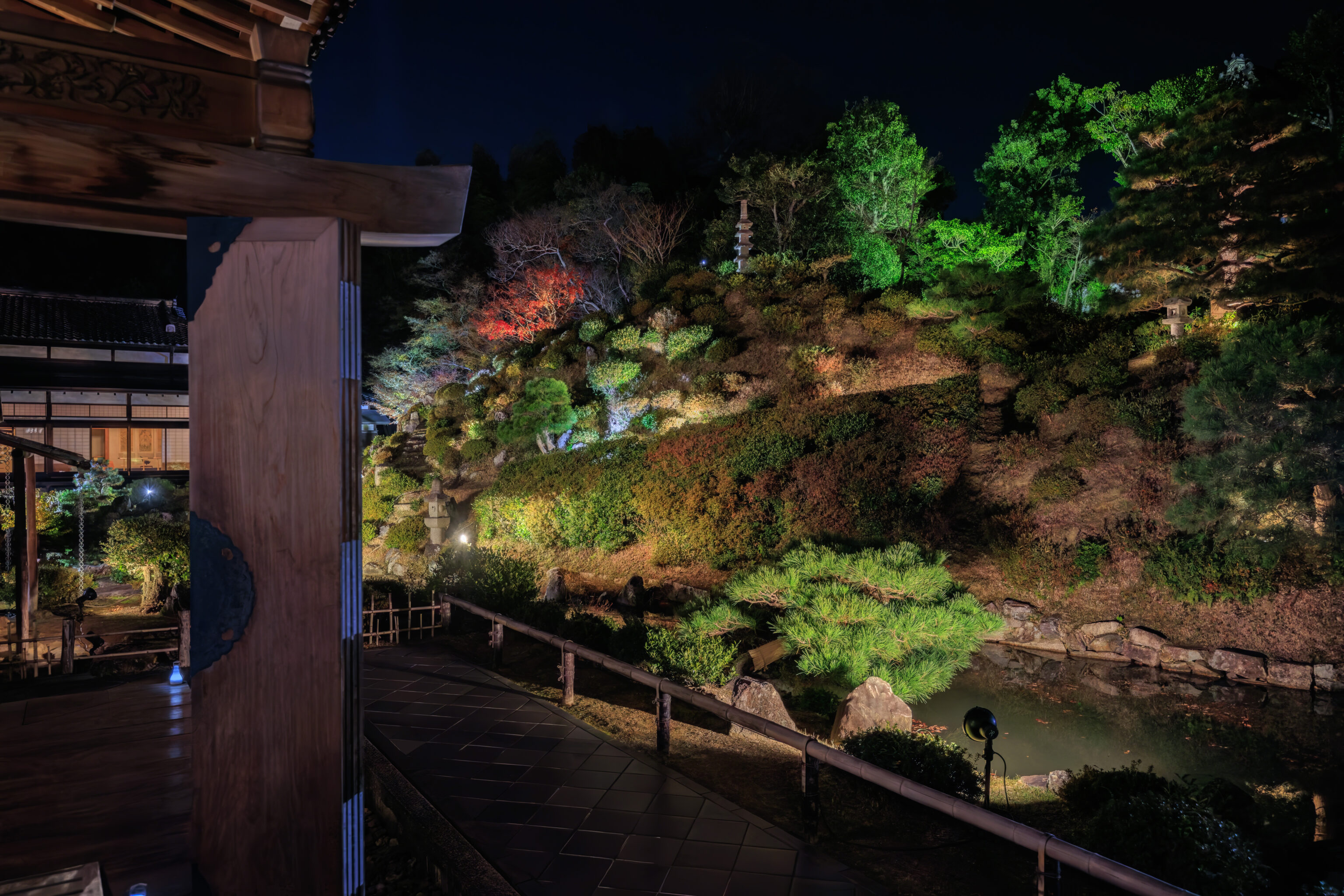
We were able to see part of the garden from near the start of the route, consisting of an illuminated hill with pond.
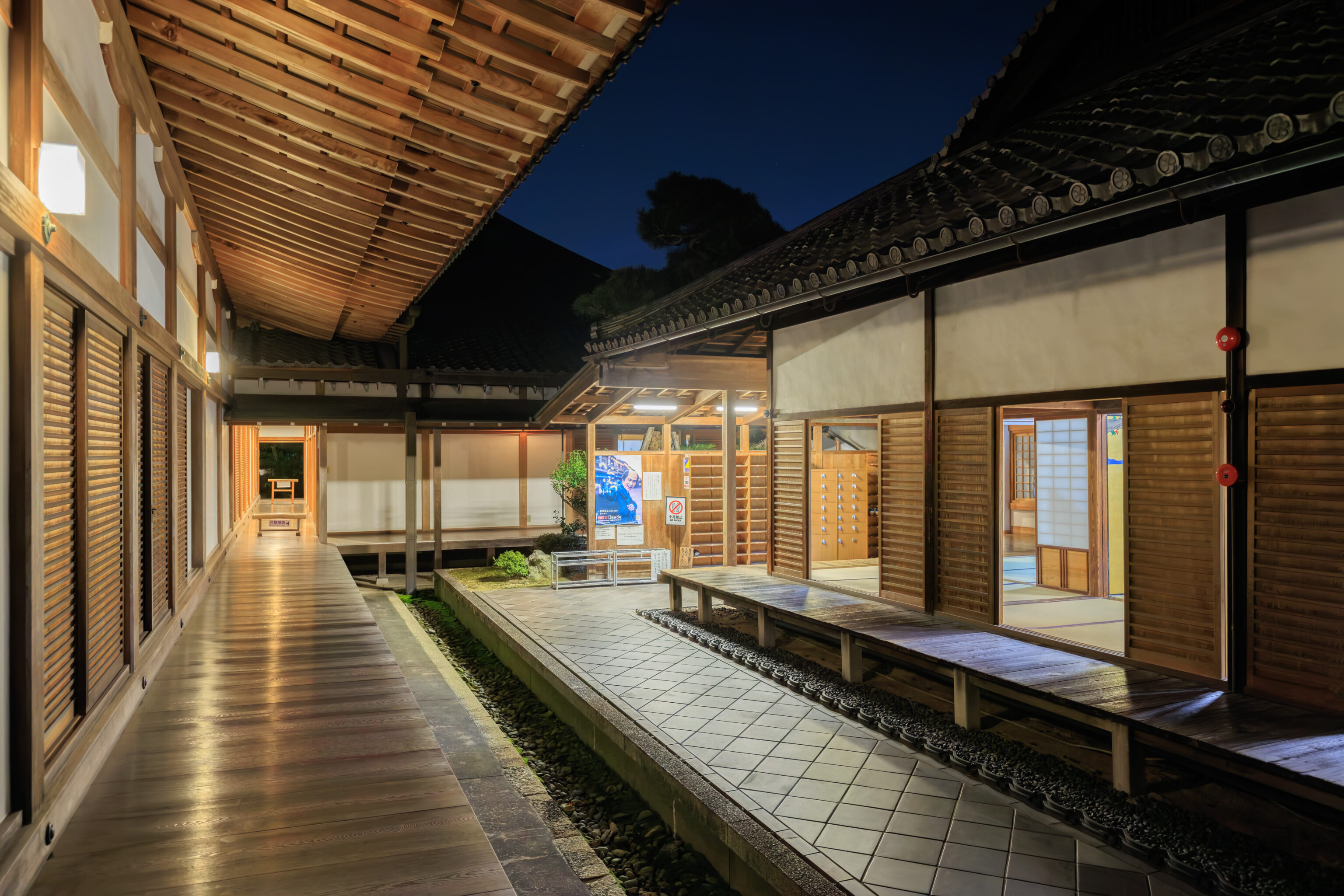
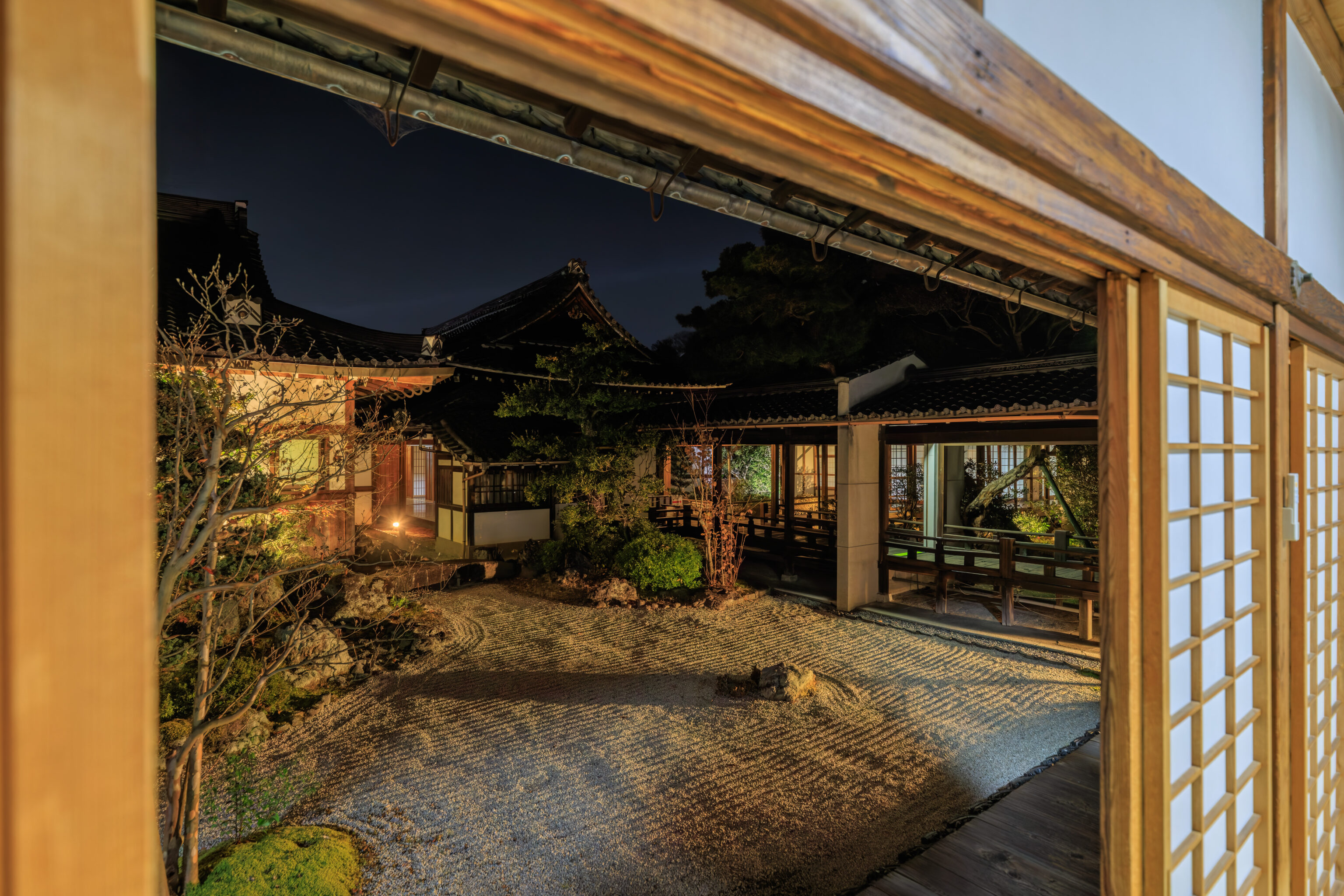
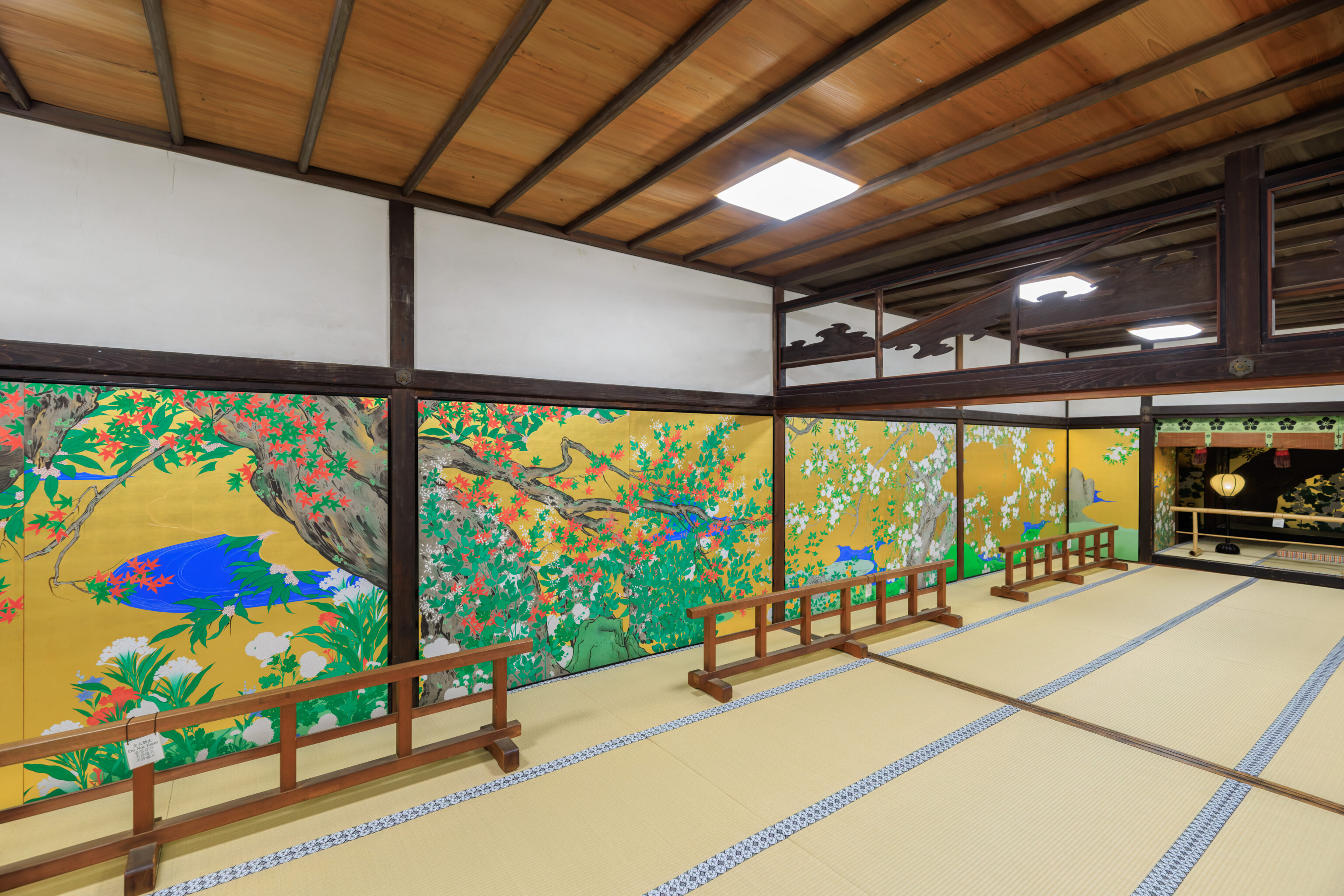
It was quiet inside the hall as we walked though.
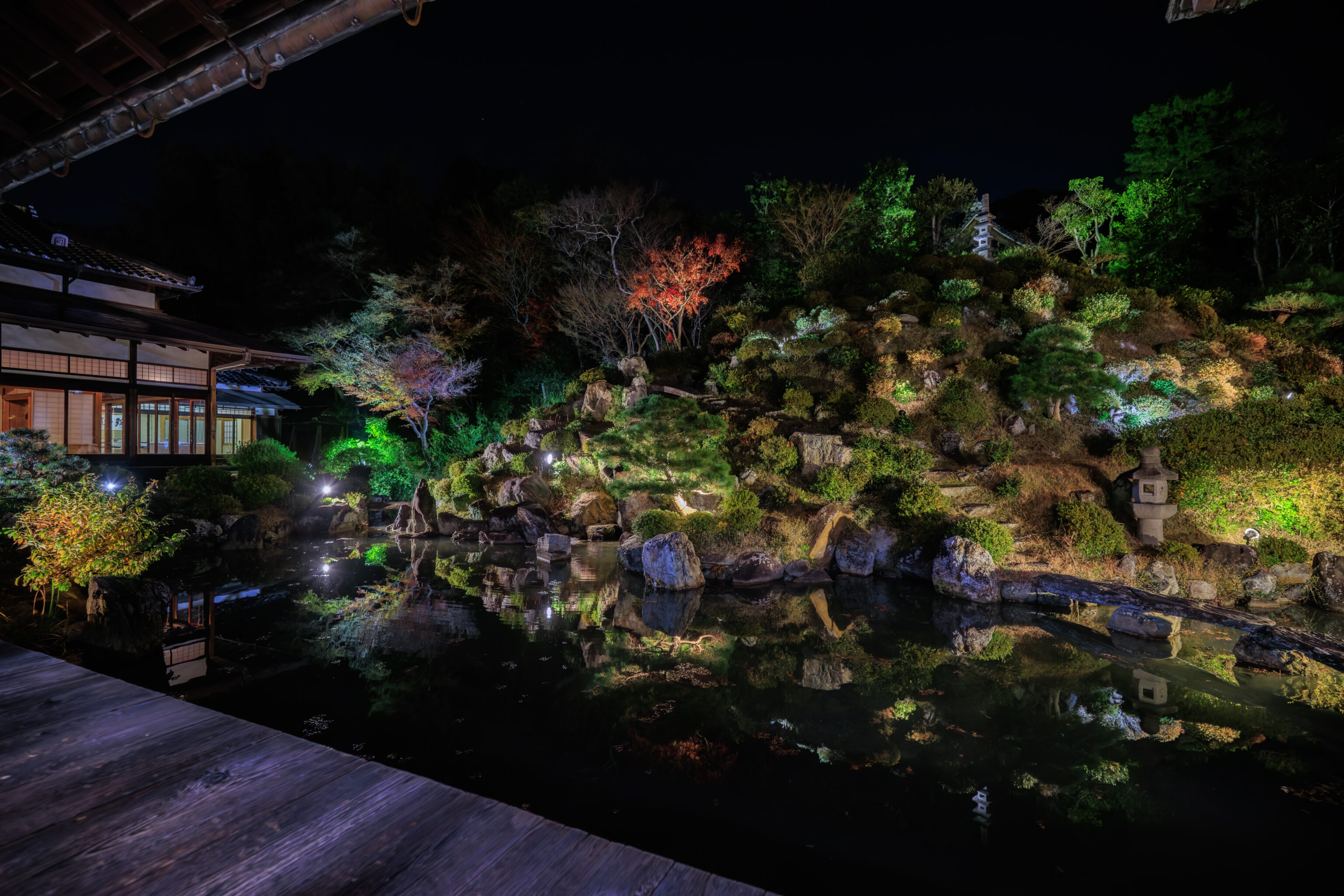
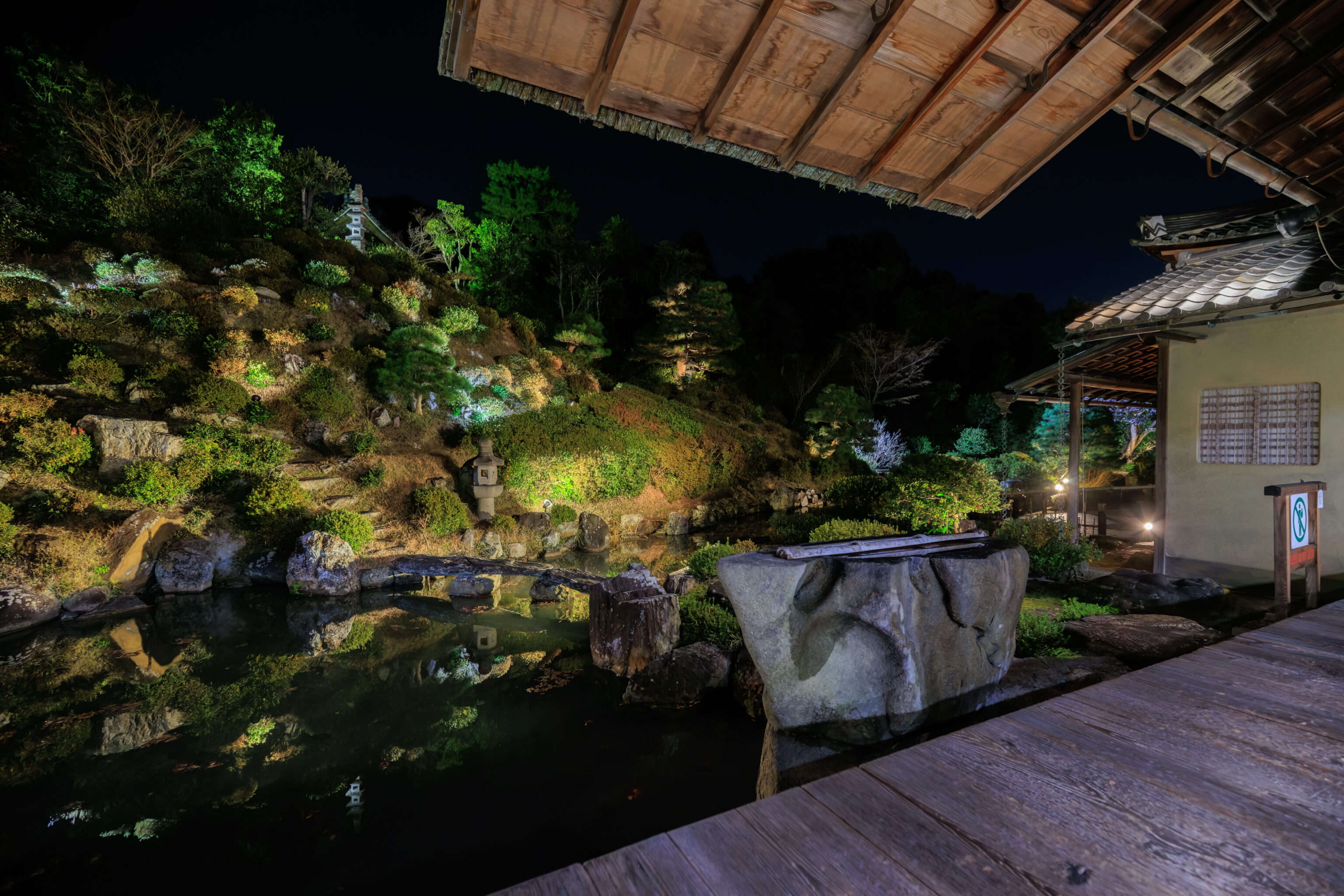
We ended up here with a wide view of the garden to the east. Its probably very different from seeing it during the day!
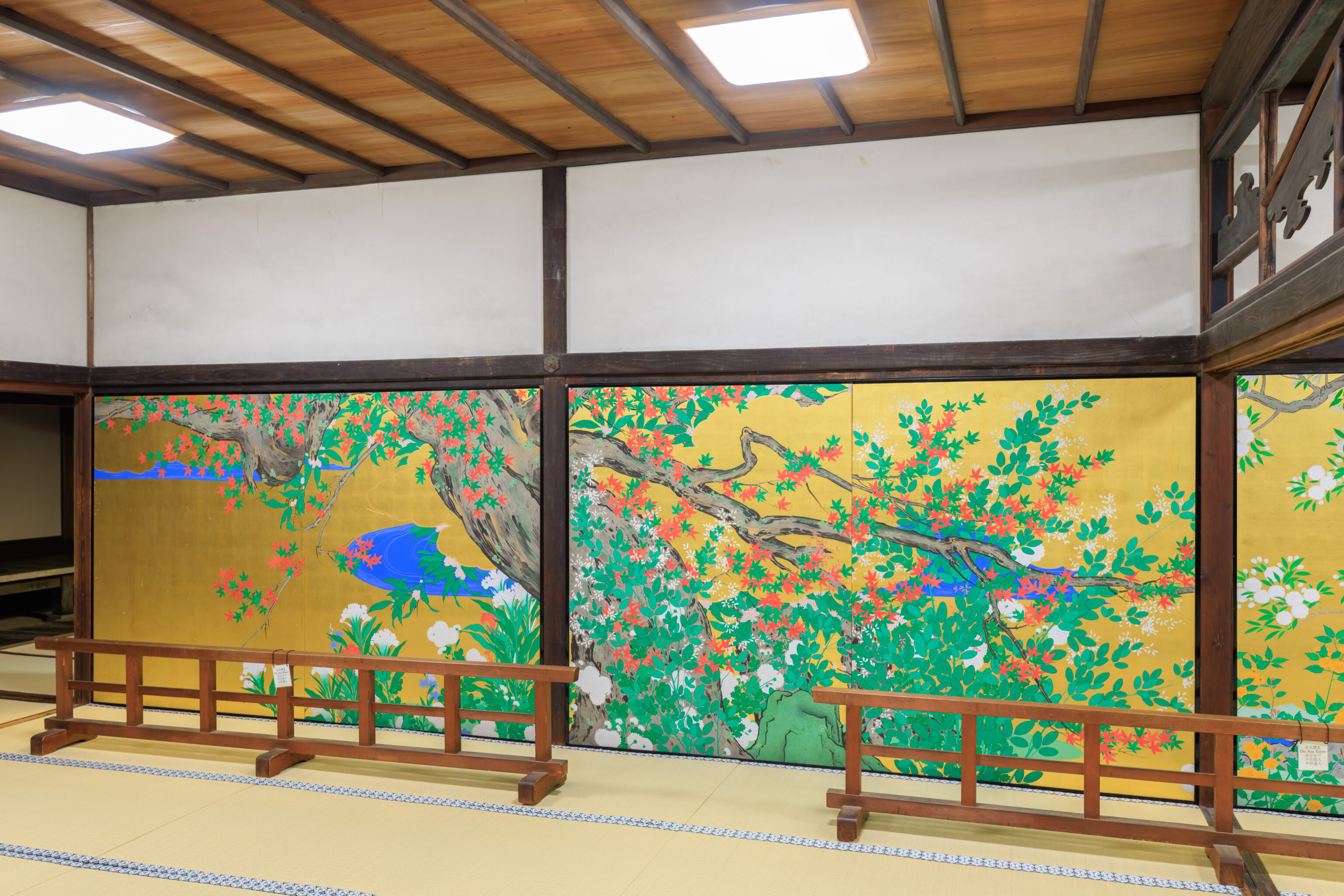
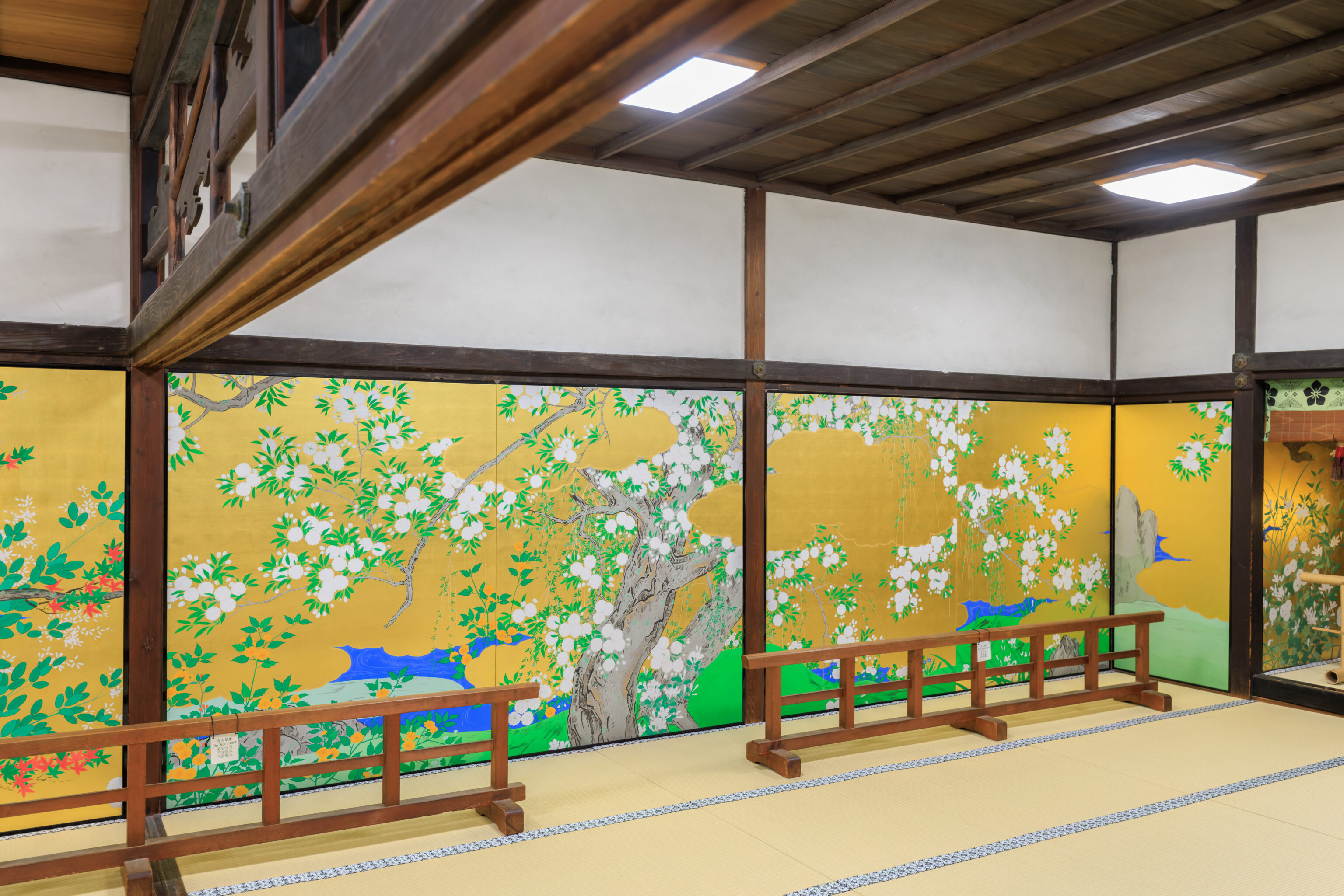
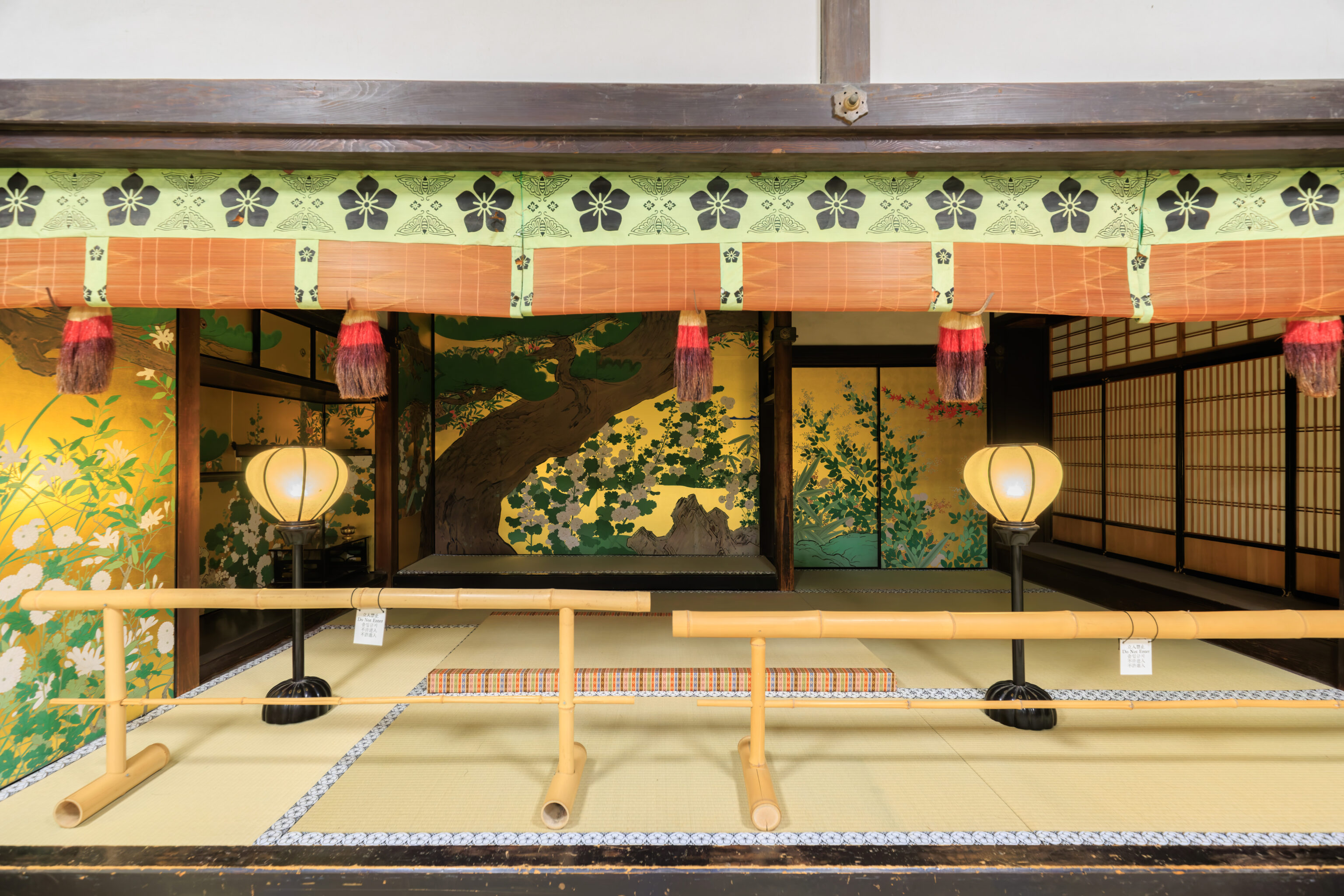
The art on the wall and door panels was quite nice.
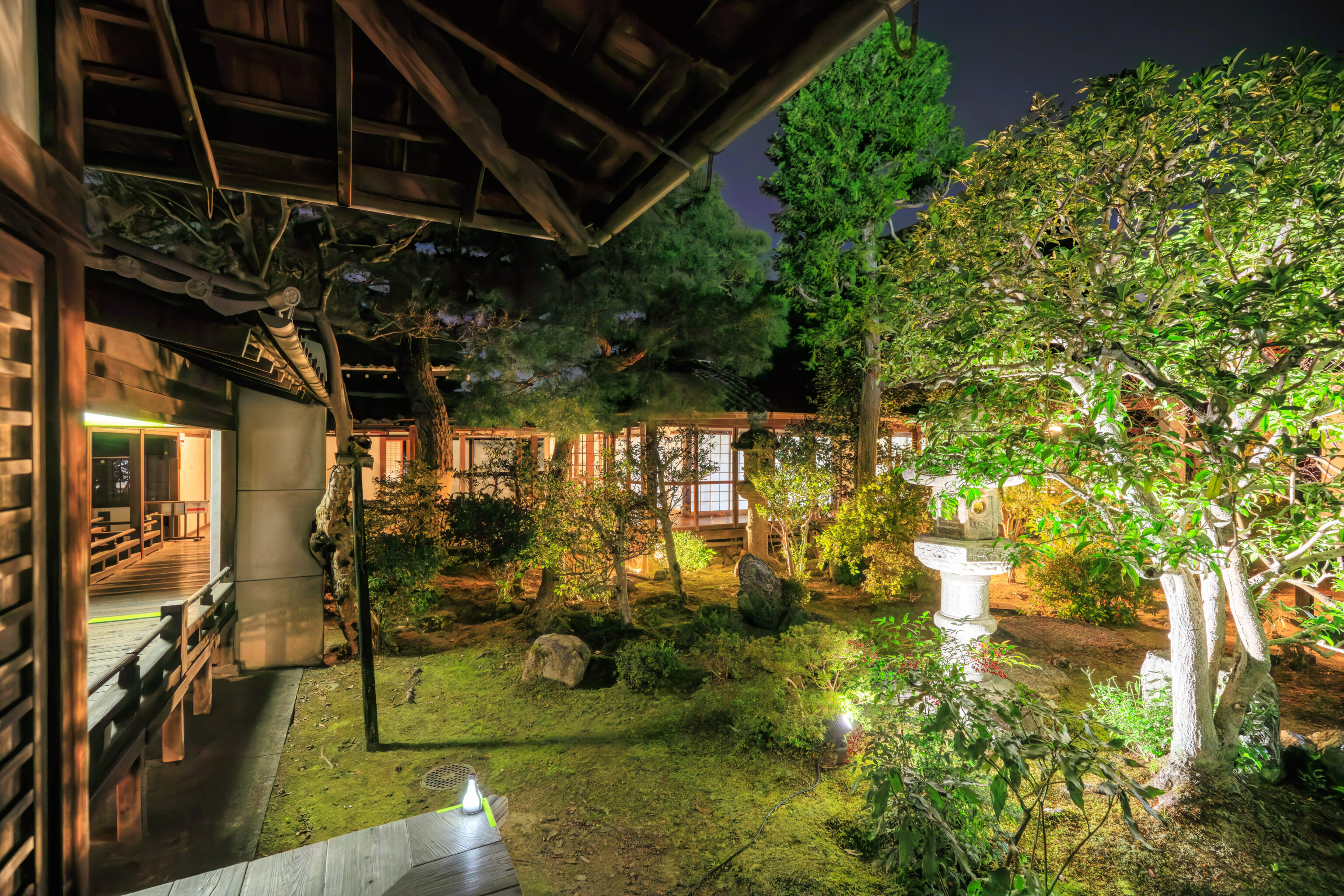
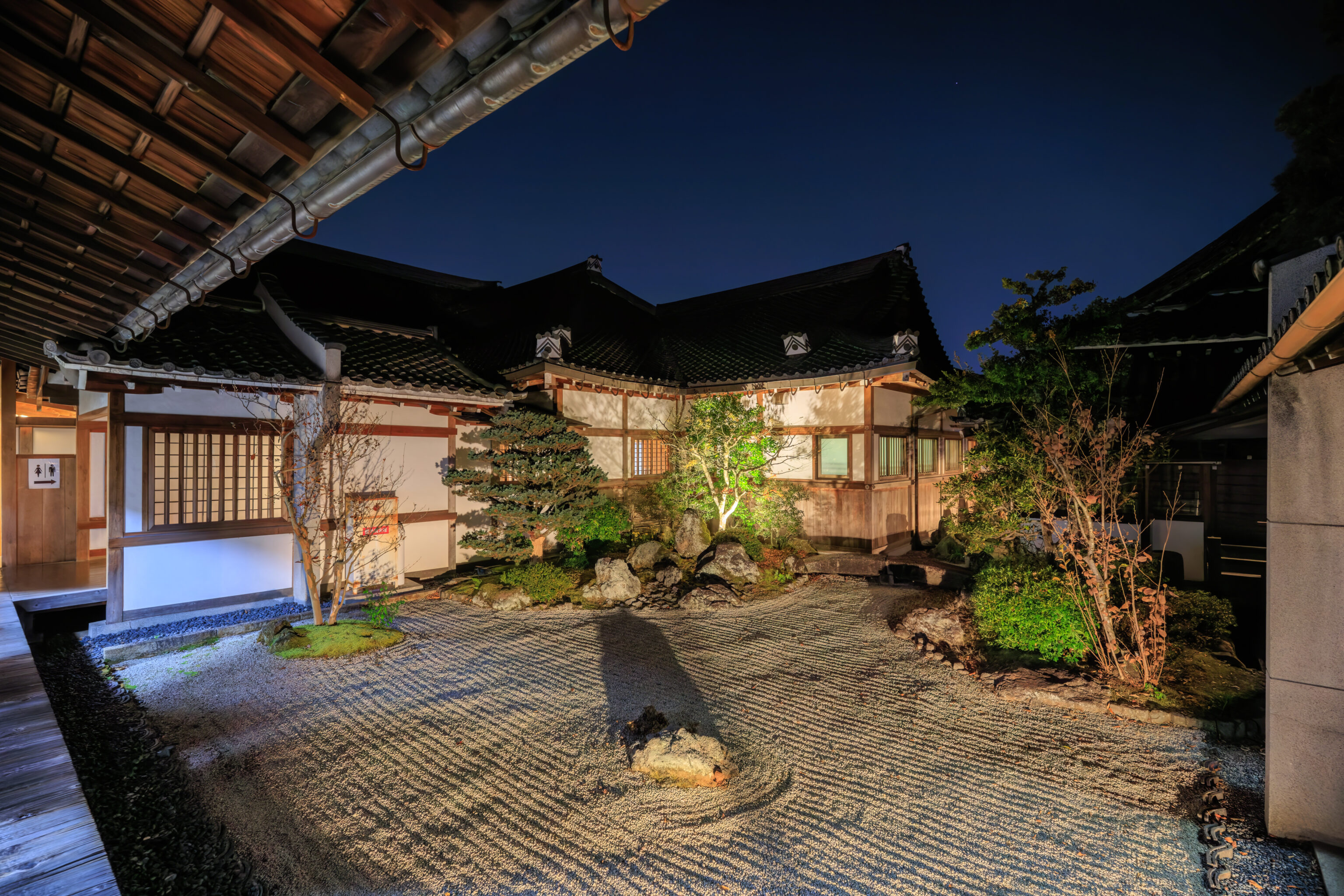
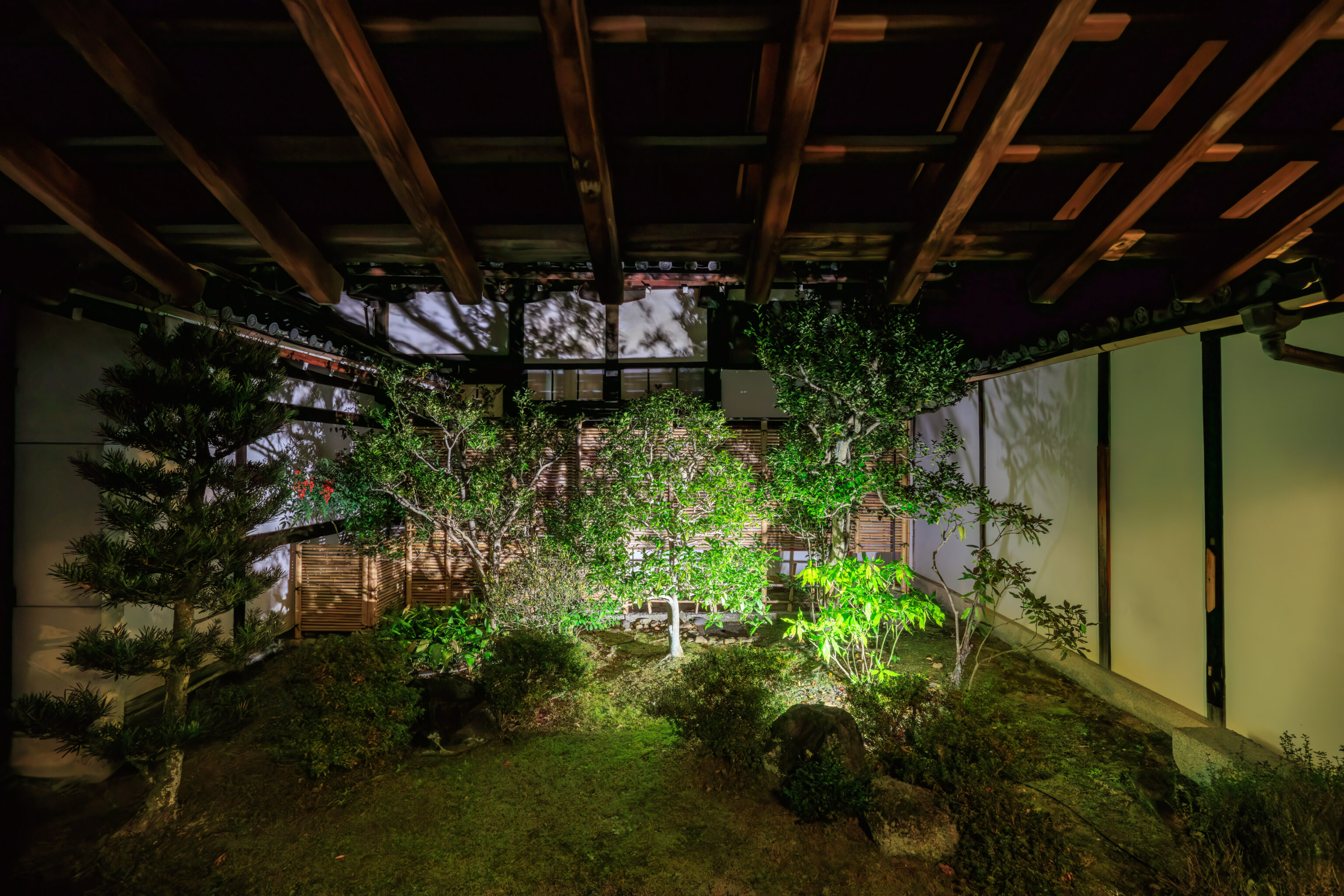
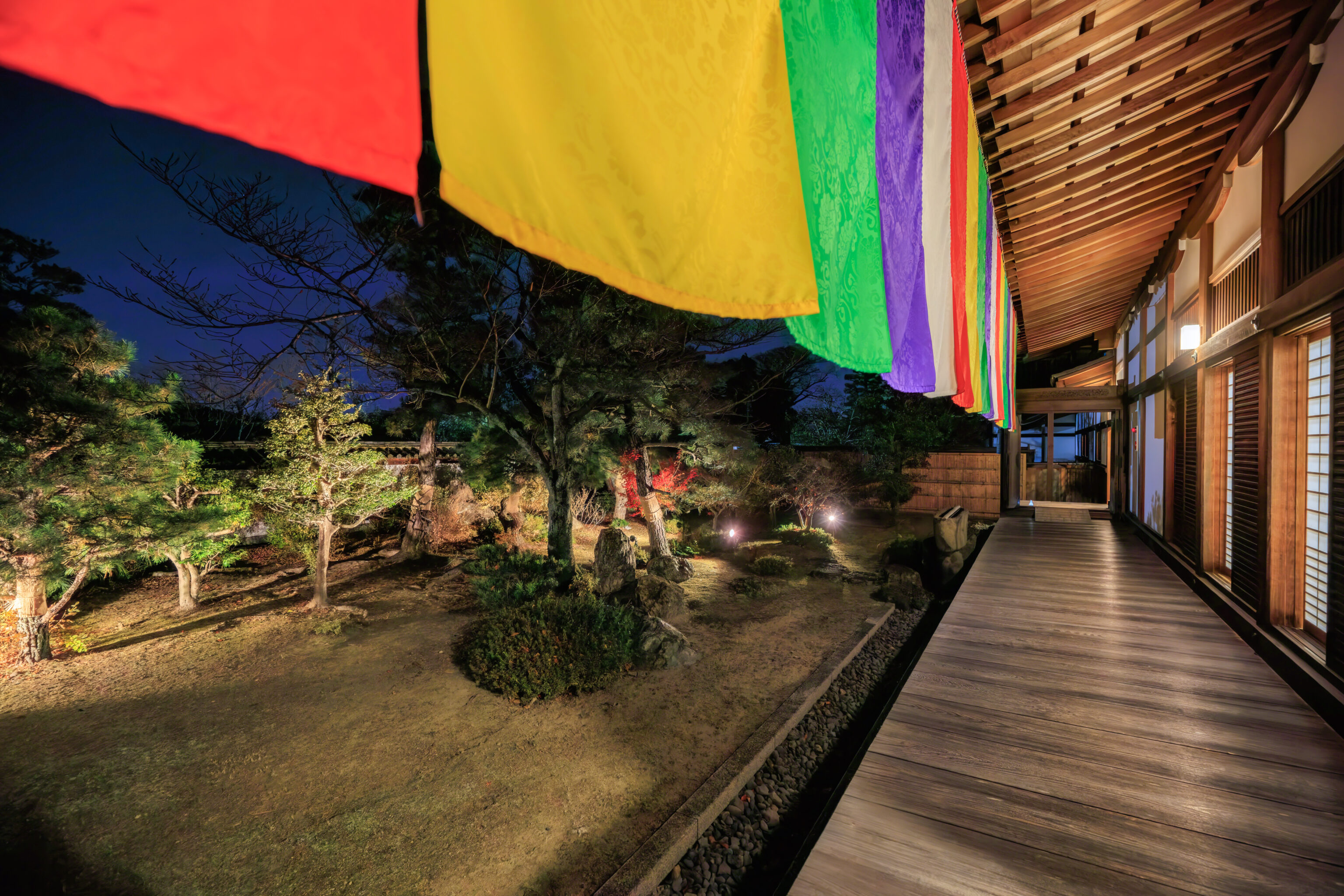
There were views of other garden areas as we walked around the hall.
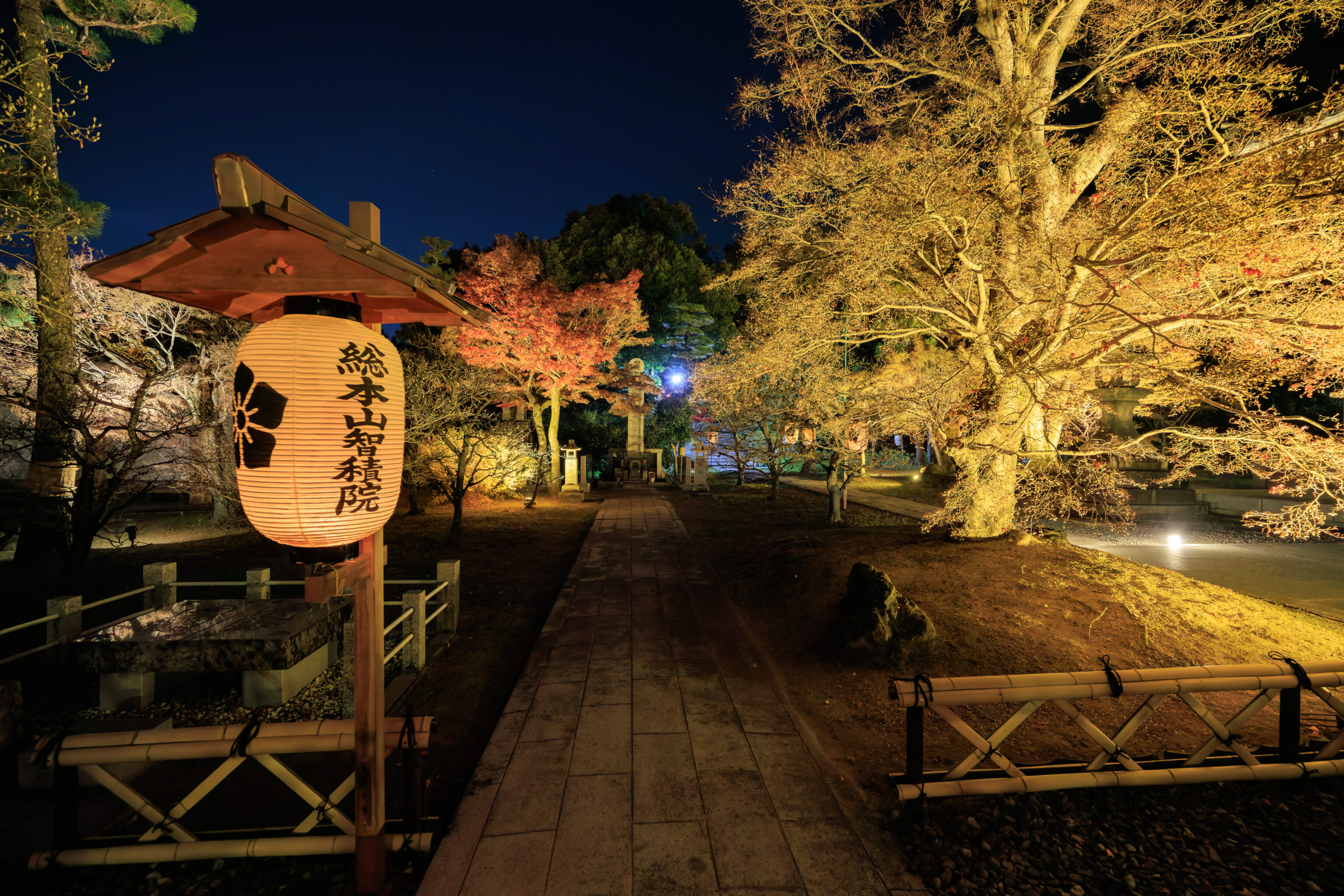
After finishing our walk through the hall, we headed back outside to continue on to other parts of the temple.
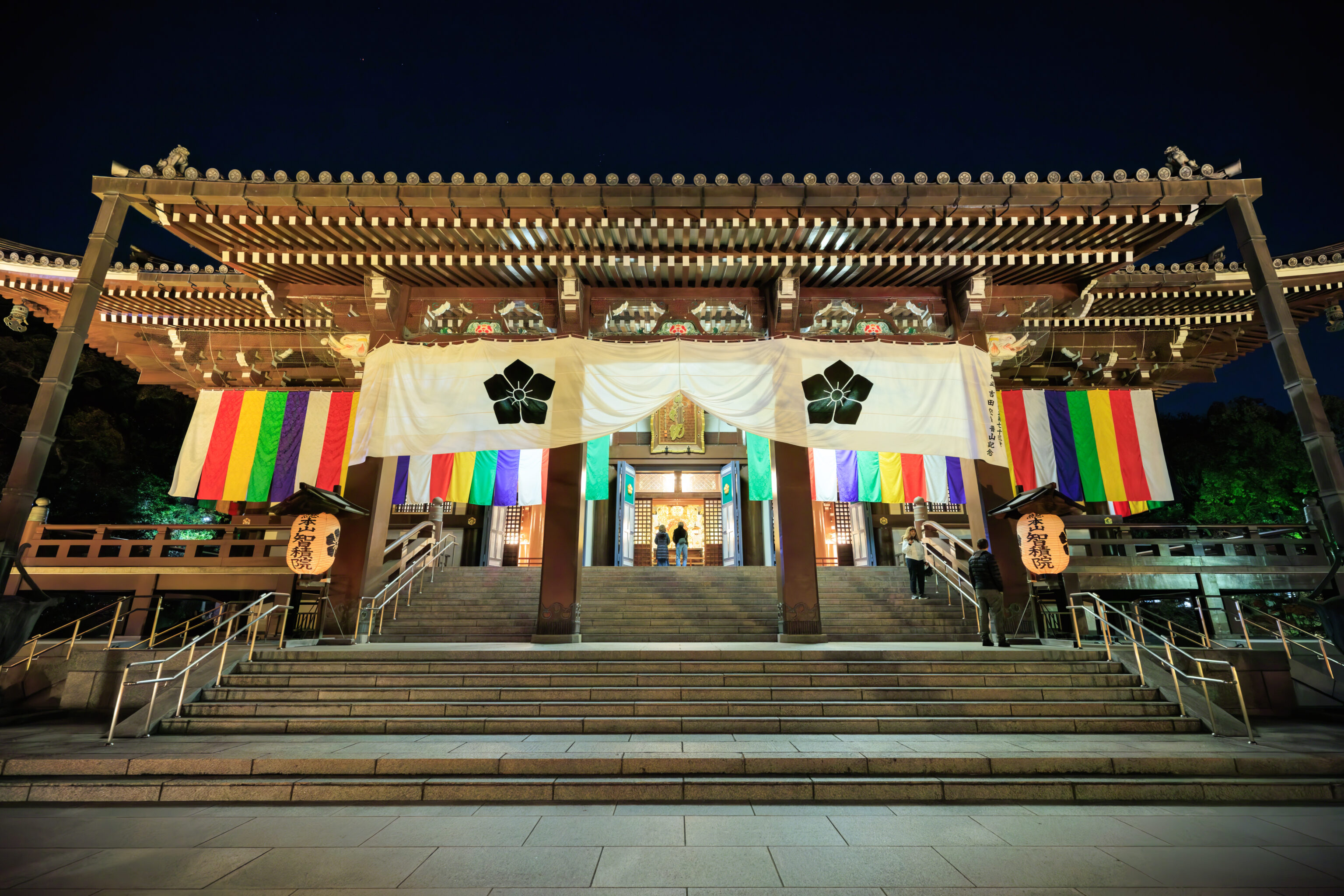
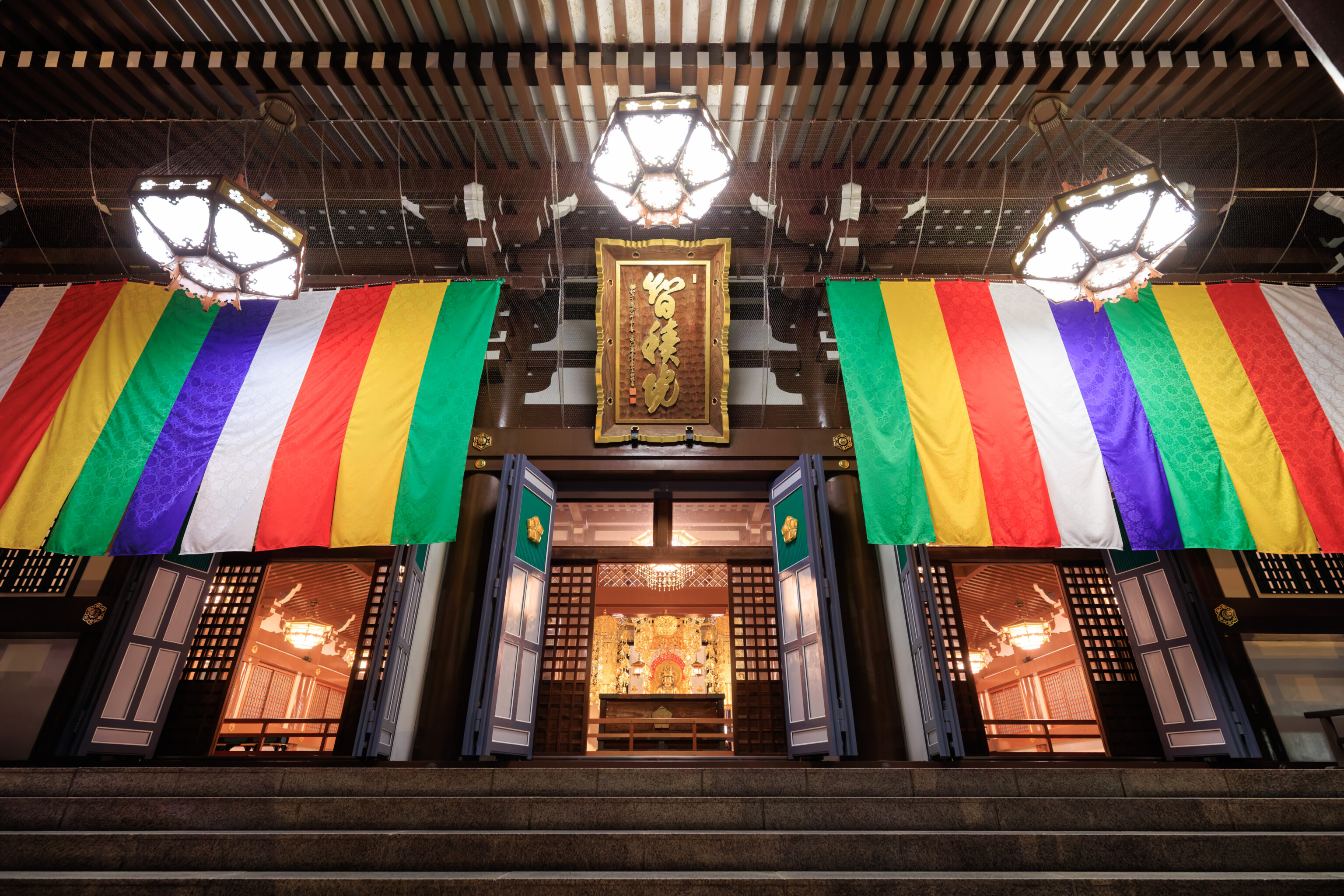
This large hall is the 金堂 Kon-do (Golden Hall), the temple’s main hall.
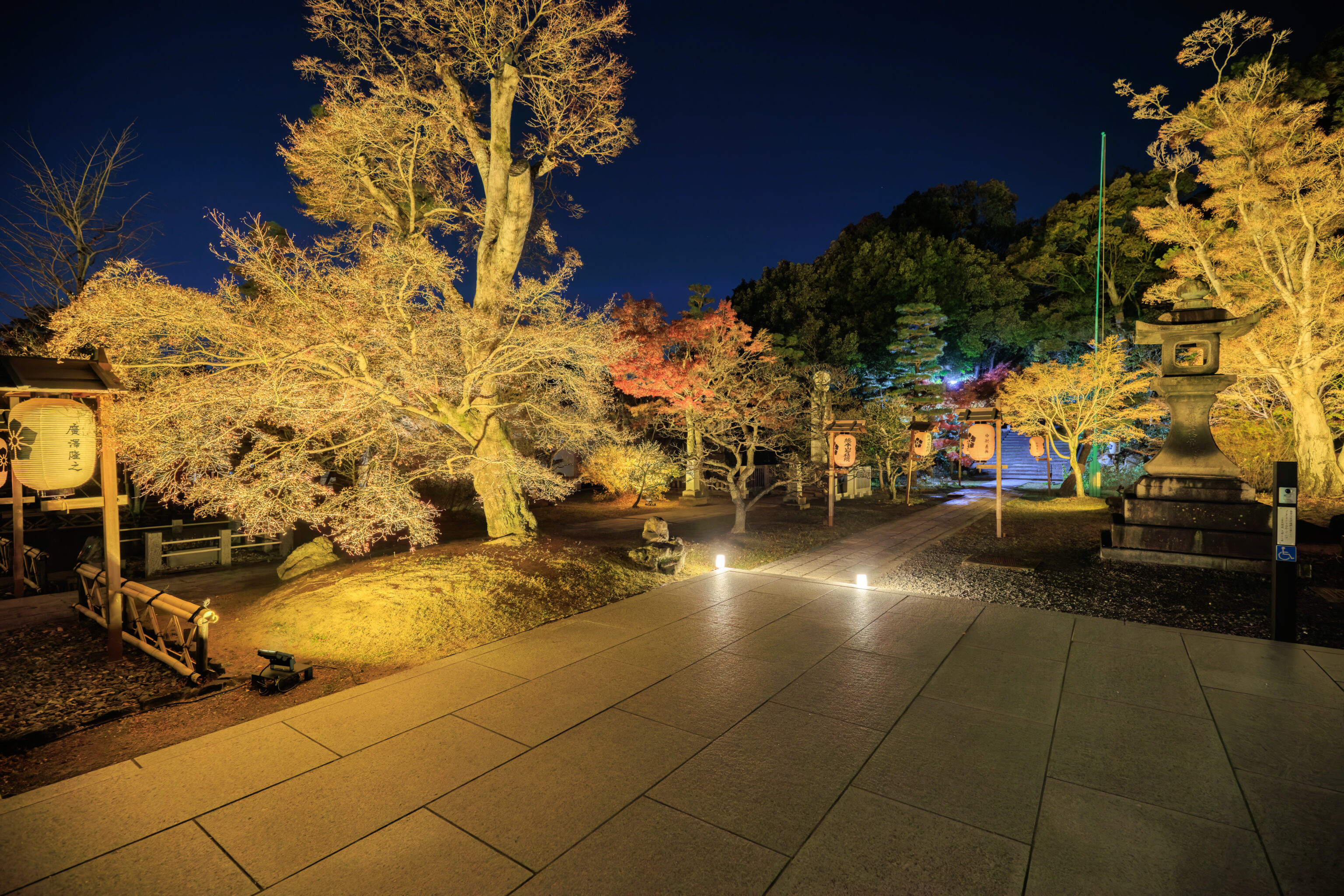
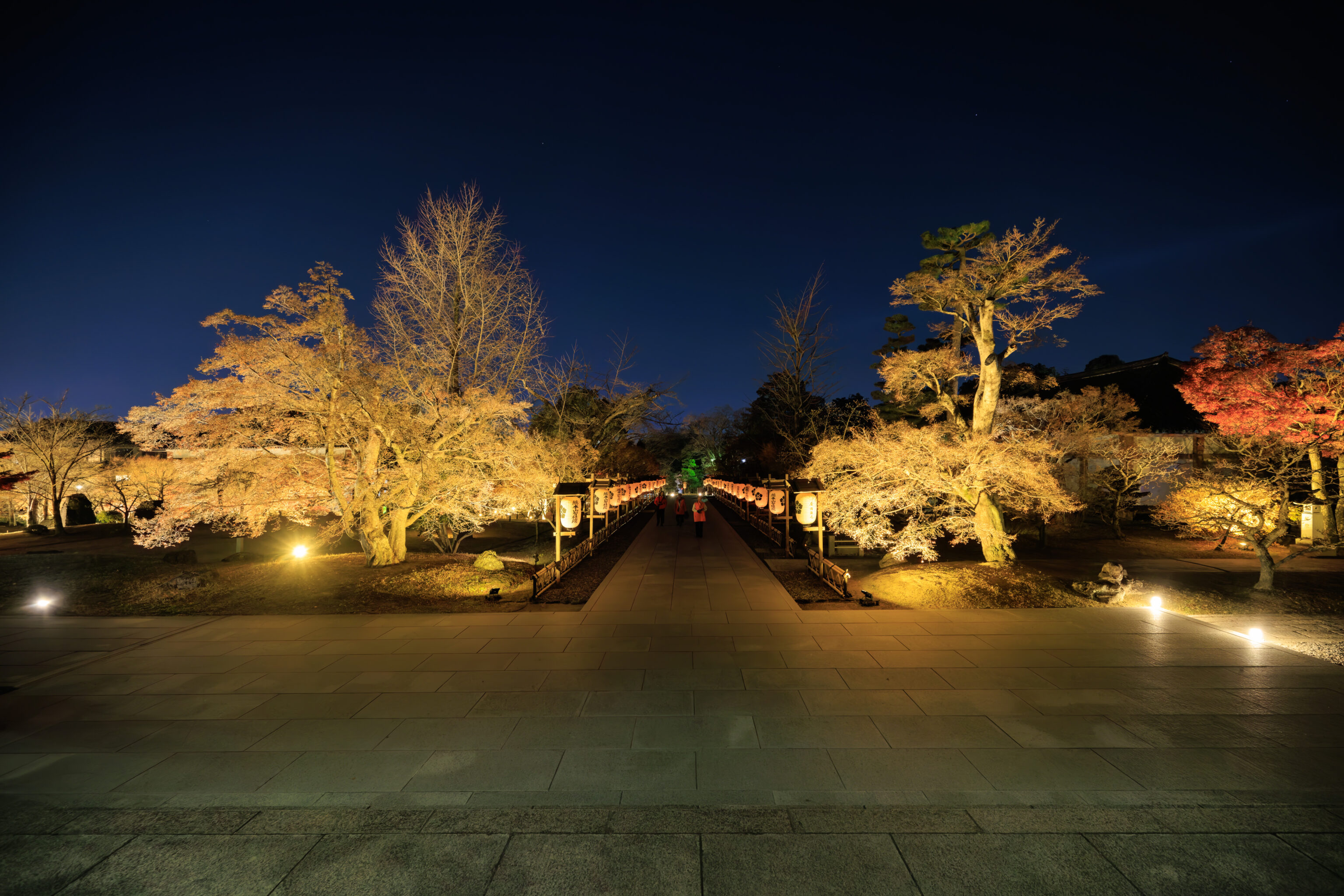
The view from in front of the main hall.
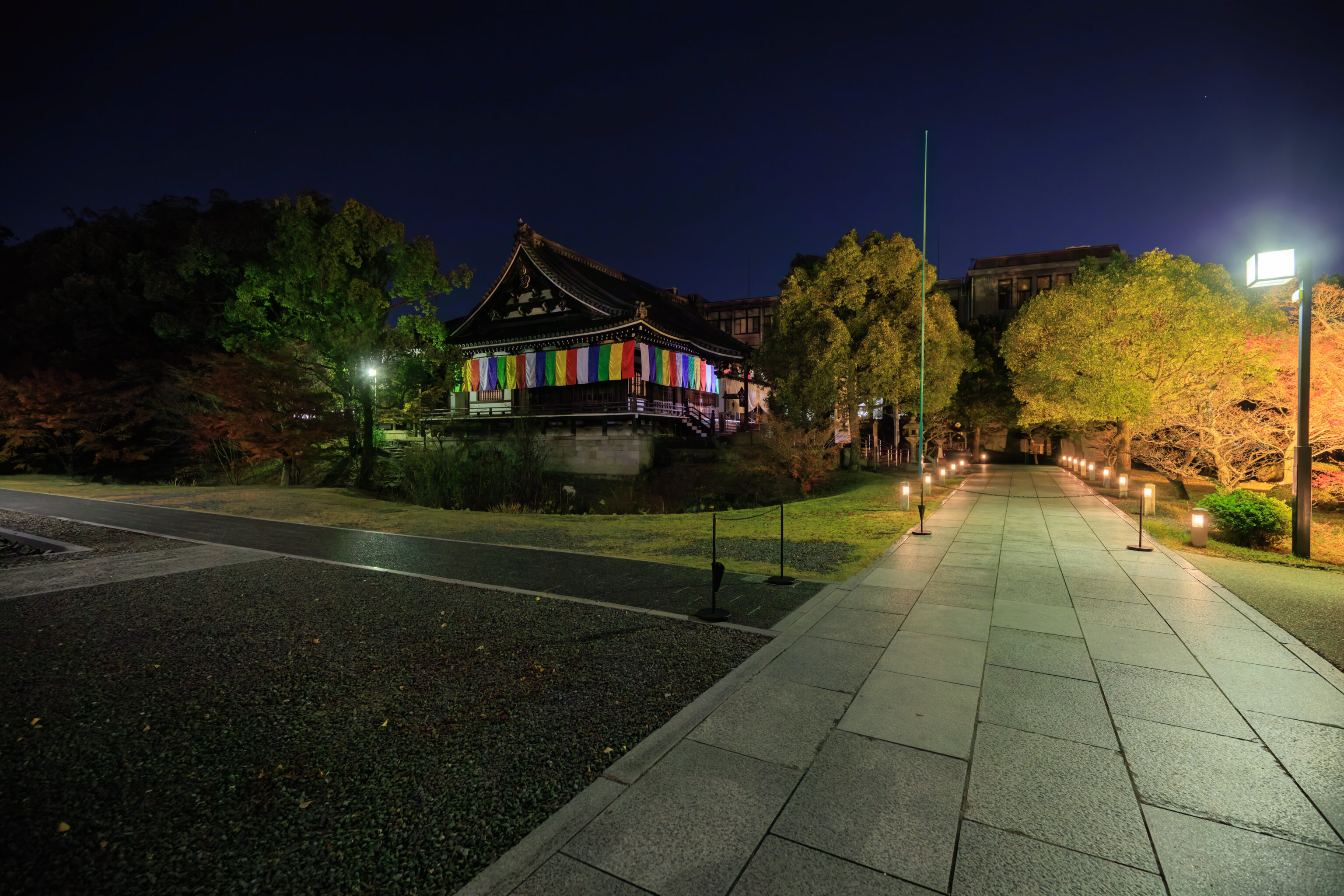
We continued on…
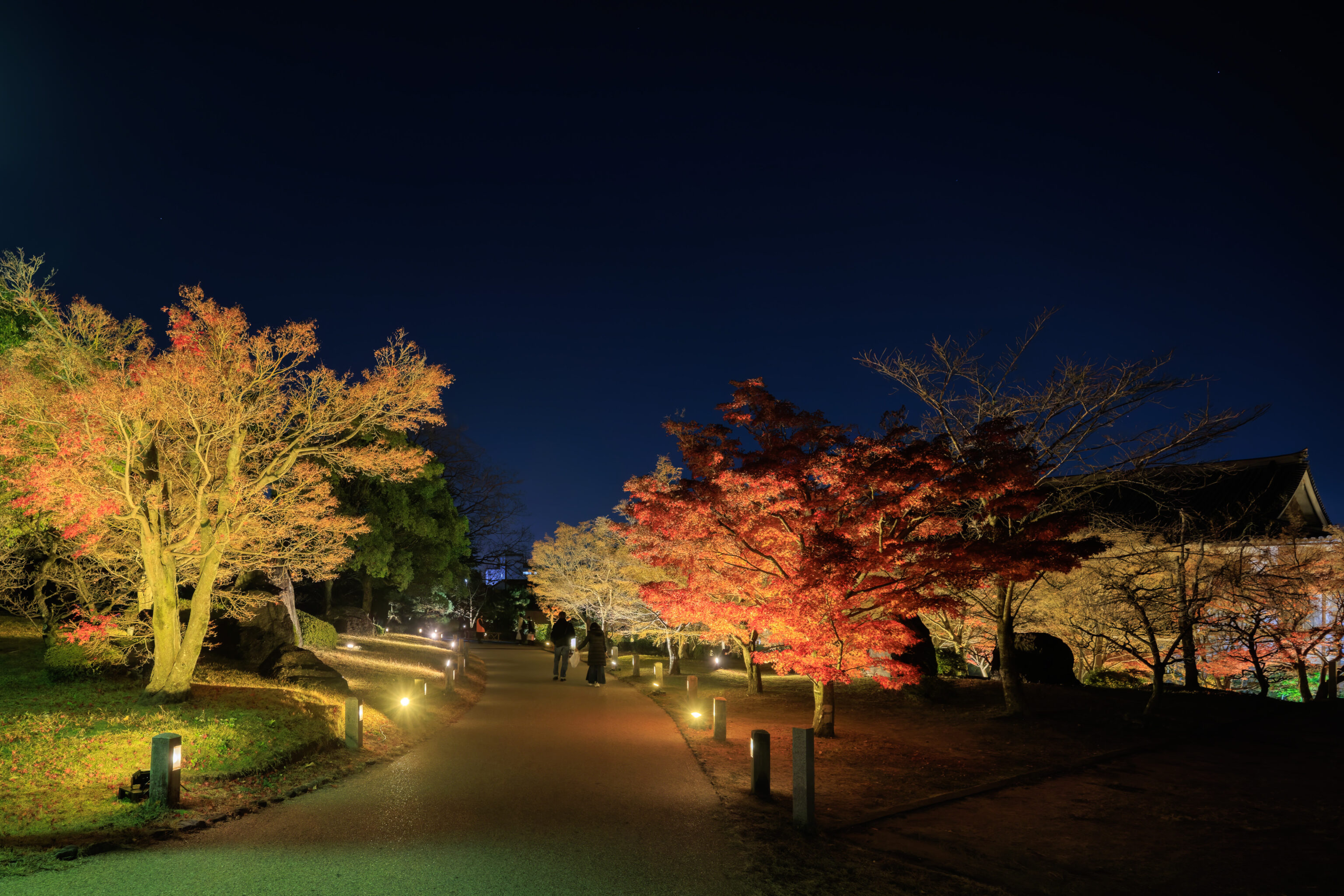
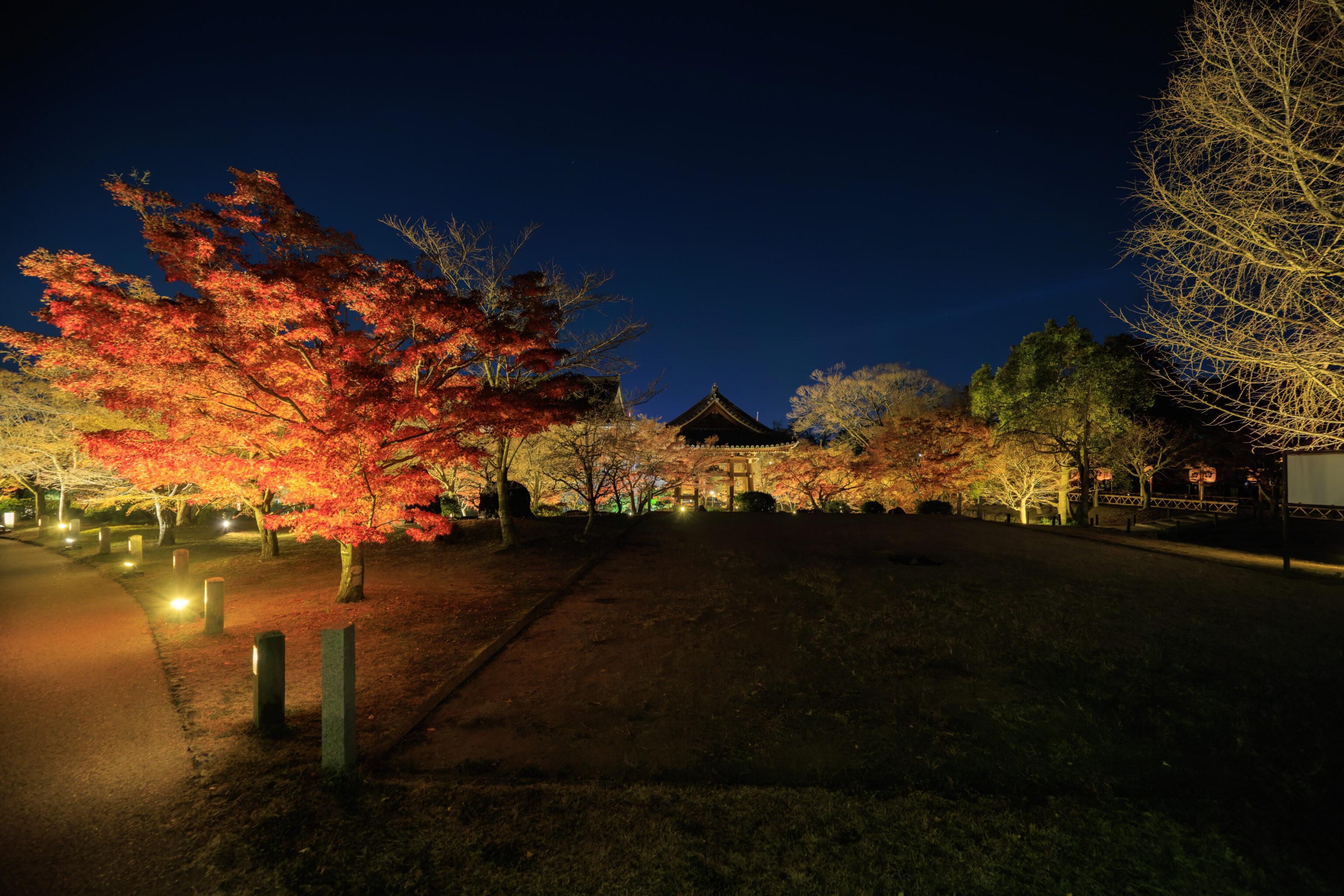
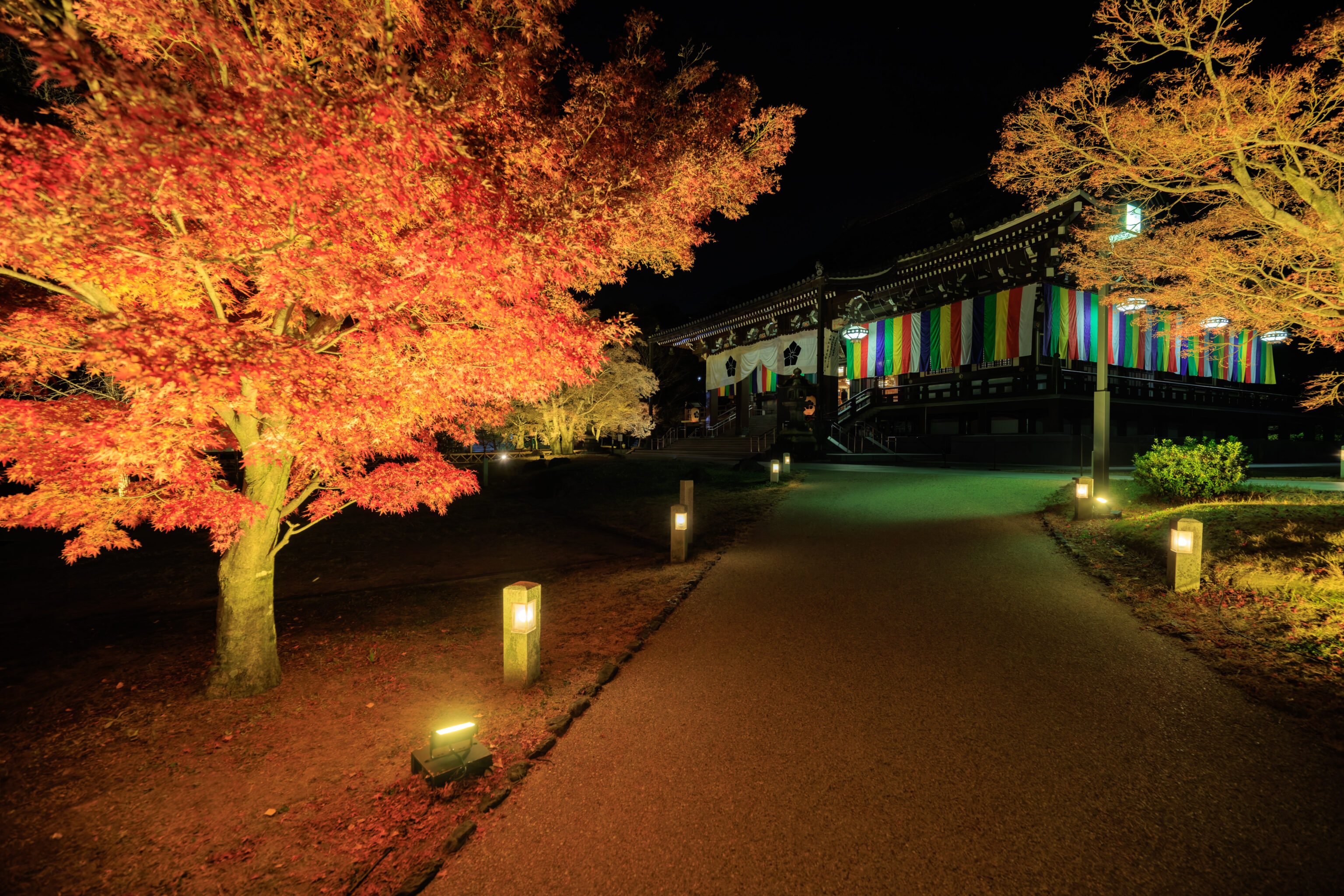
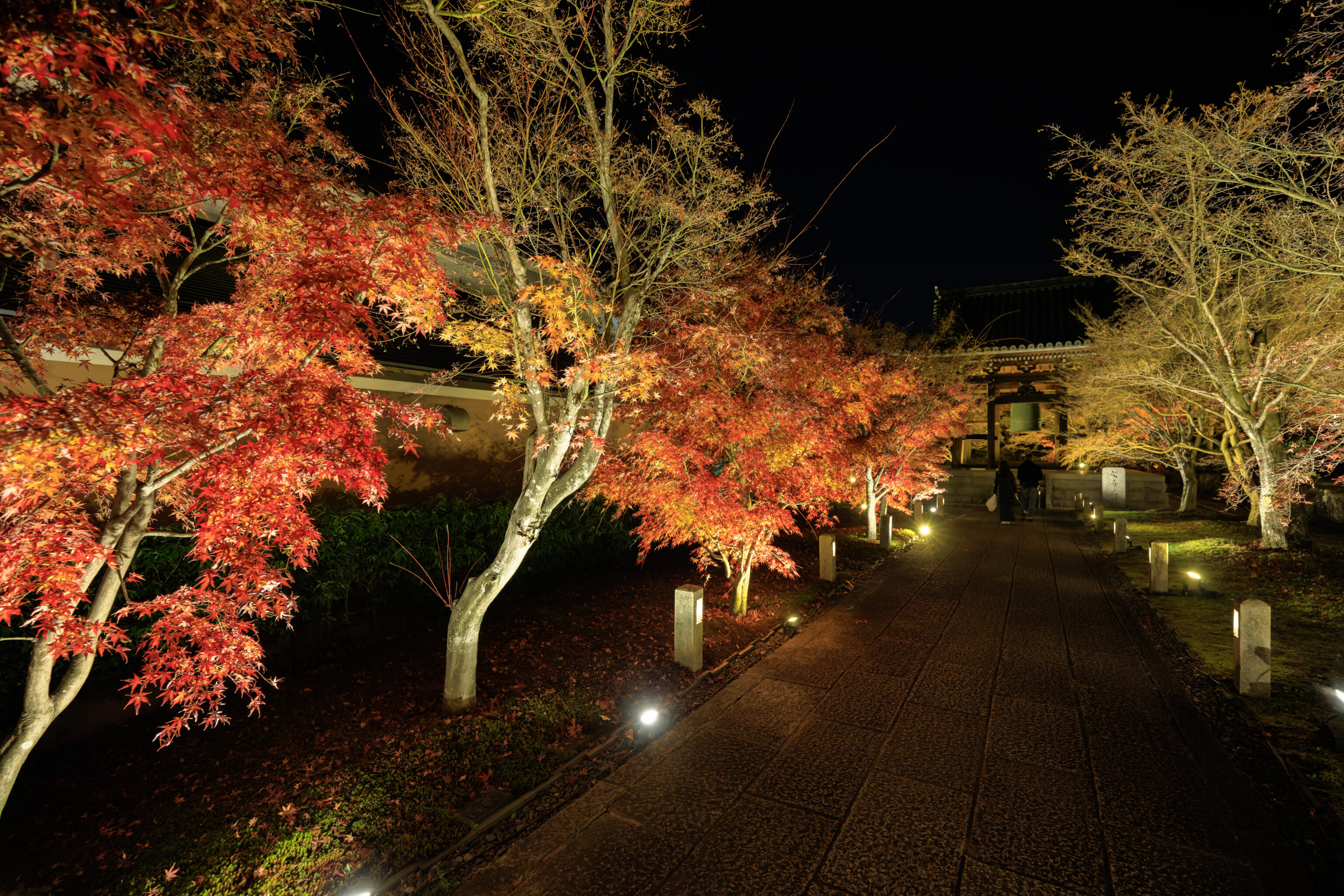
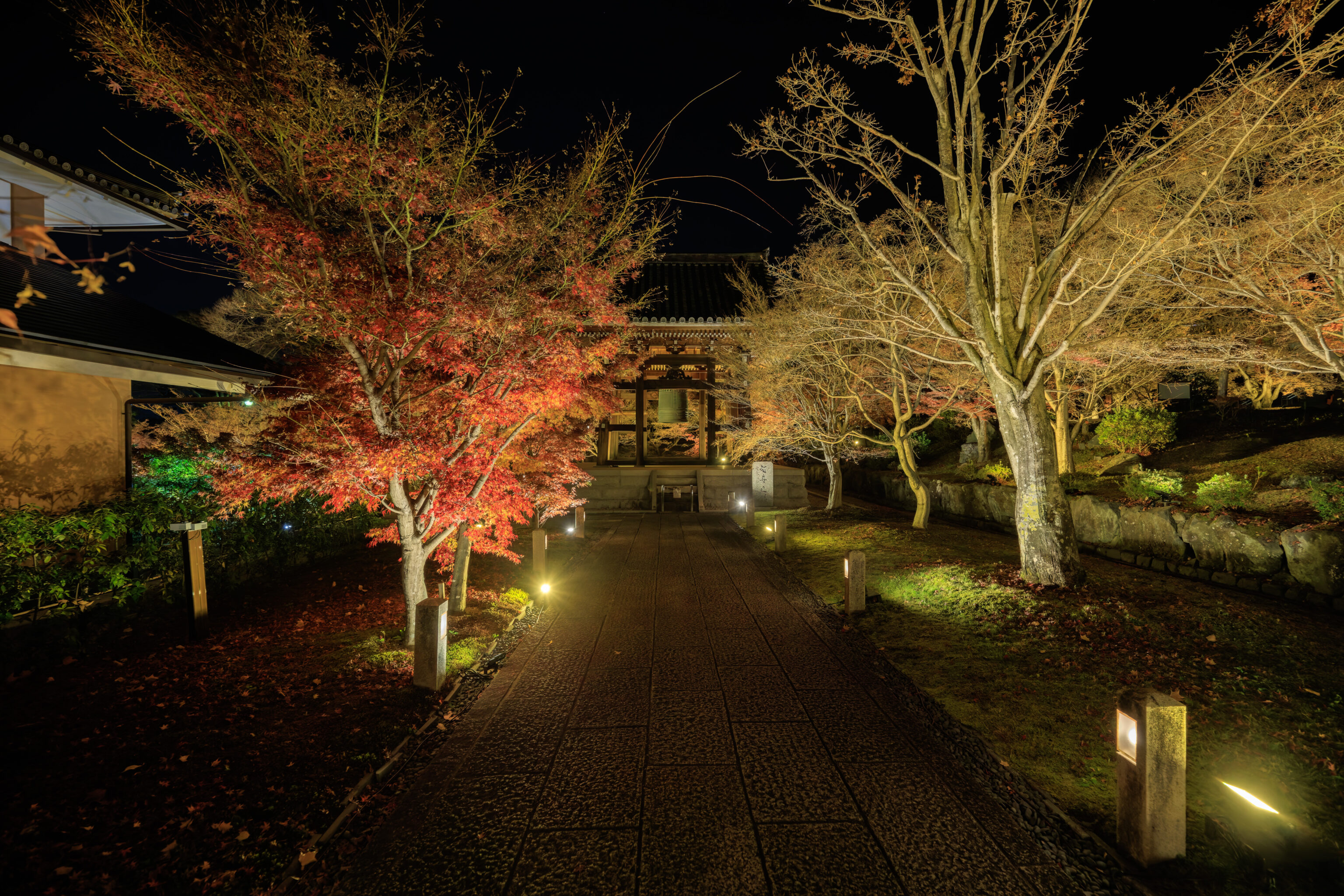
There was a tiny bit of fall foliage in the southern part of the temple grounds. The red leaves looked quite pretty when illuminated,
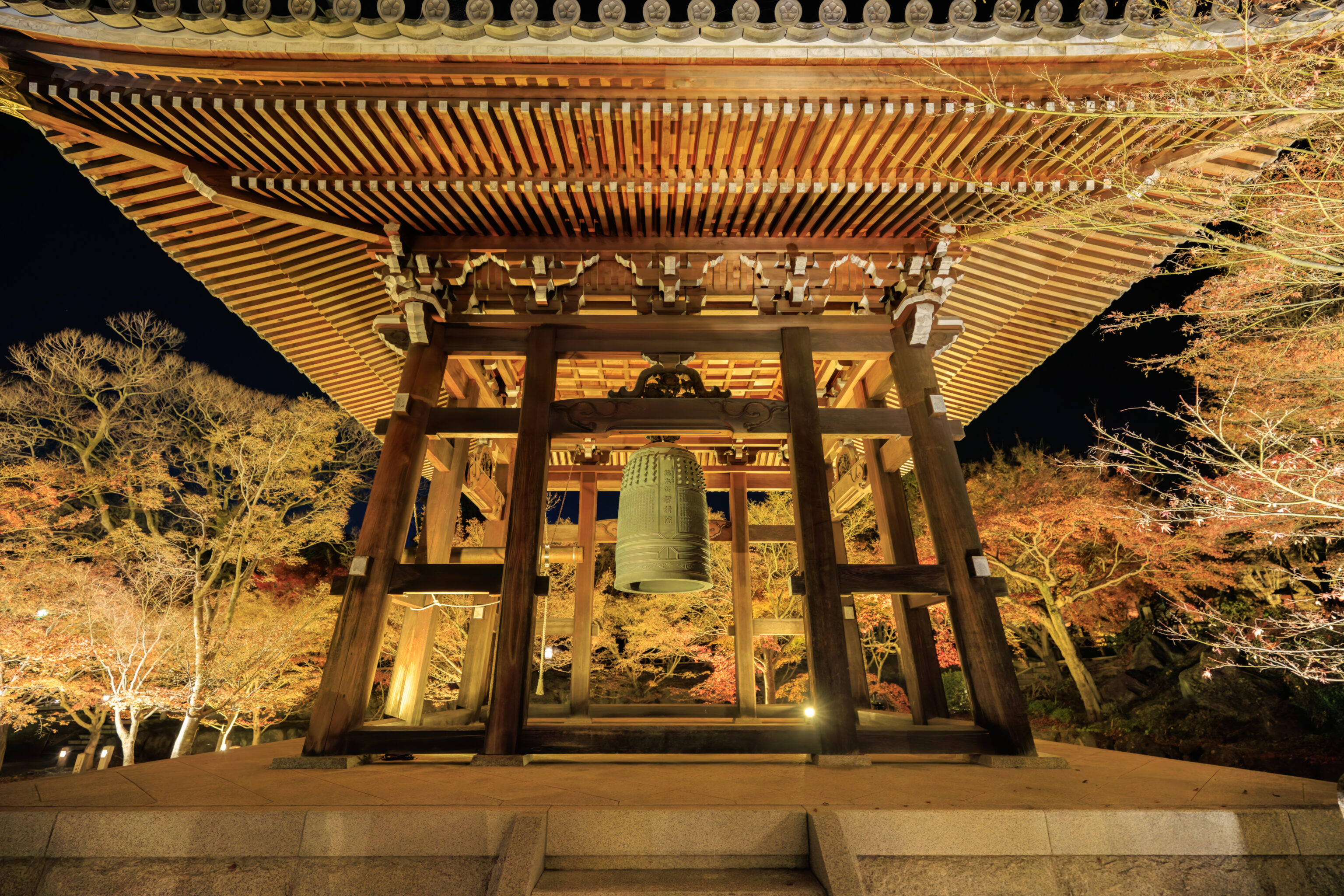
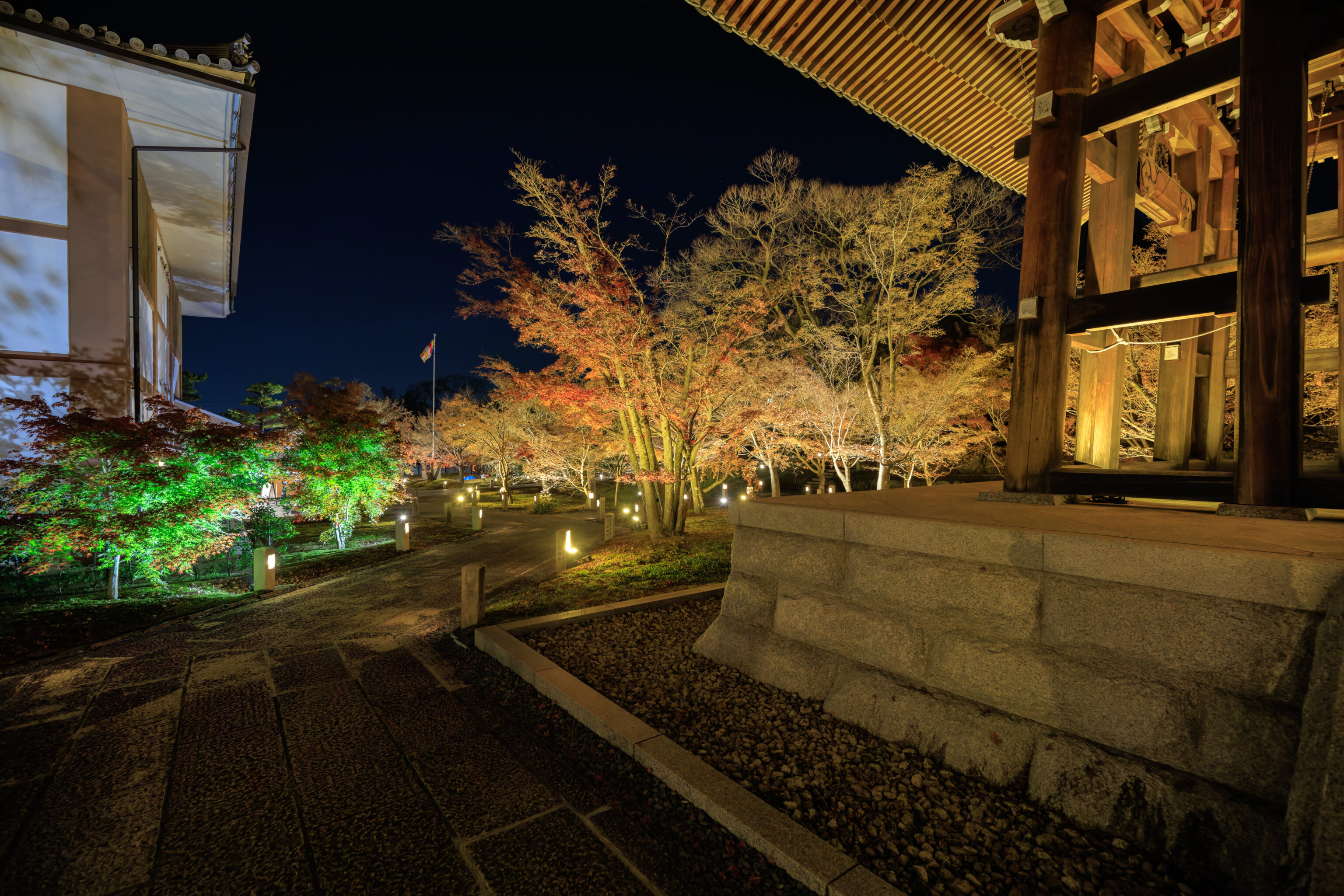
We walked past the temple’s bell tower, and ended up by the entrance where we started. We briefly took a look at the temple’s Artifact Musuem, also sometimes referred to as a treasure hall, before walking over to the bus stop to catch the next bus back to the Courtyard.
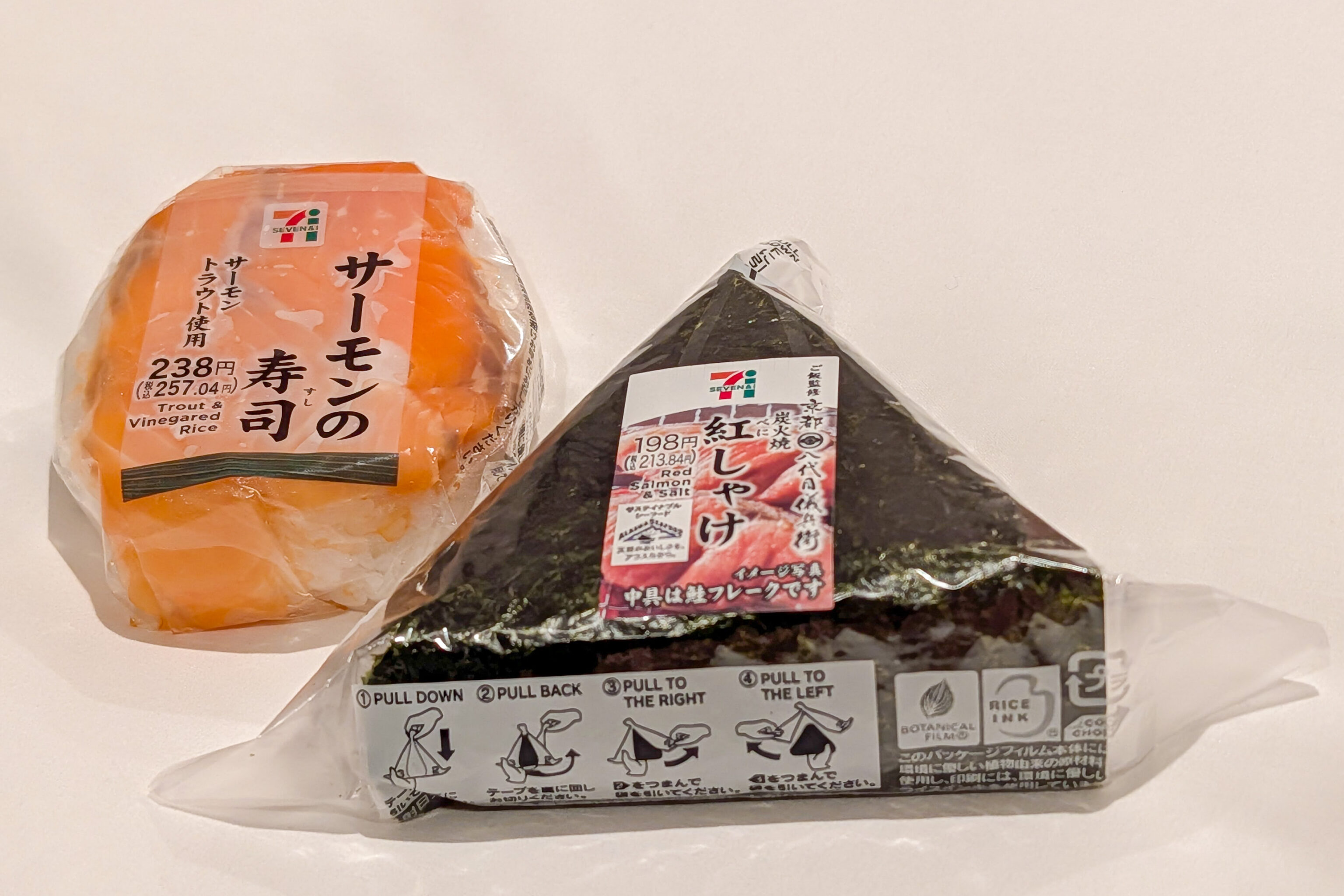
After taking extremely crowded bus, we went to 7-Eleven to buy an onigiri and a sushi along with a bottle of Mio before returning to the Courtyard to end the day.