
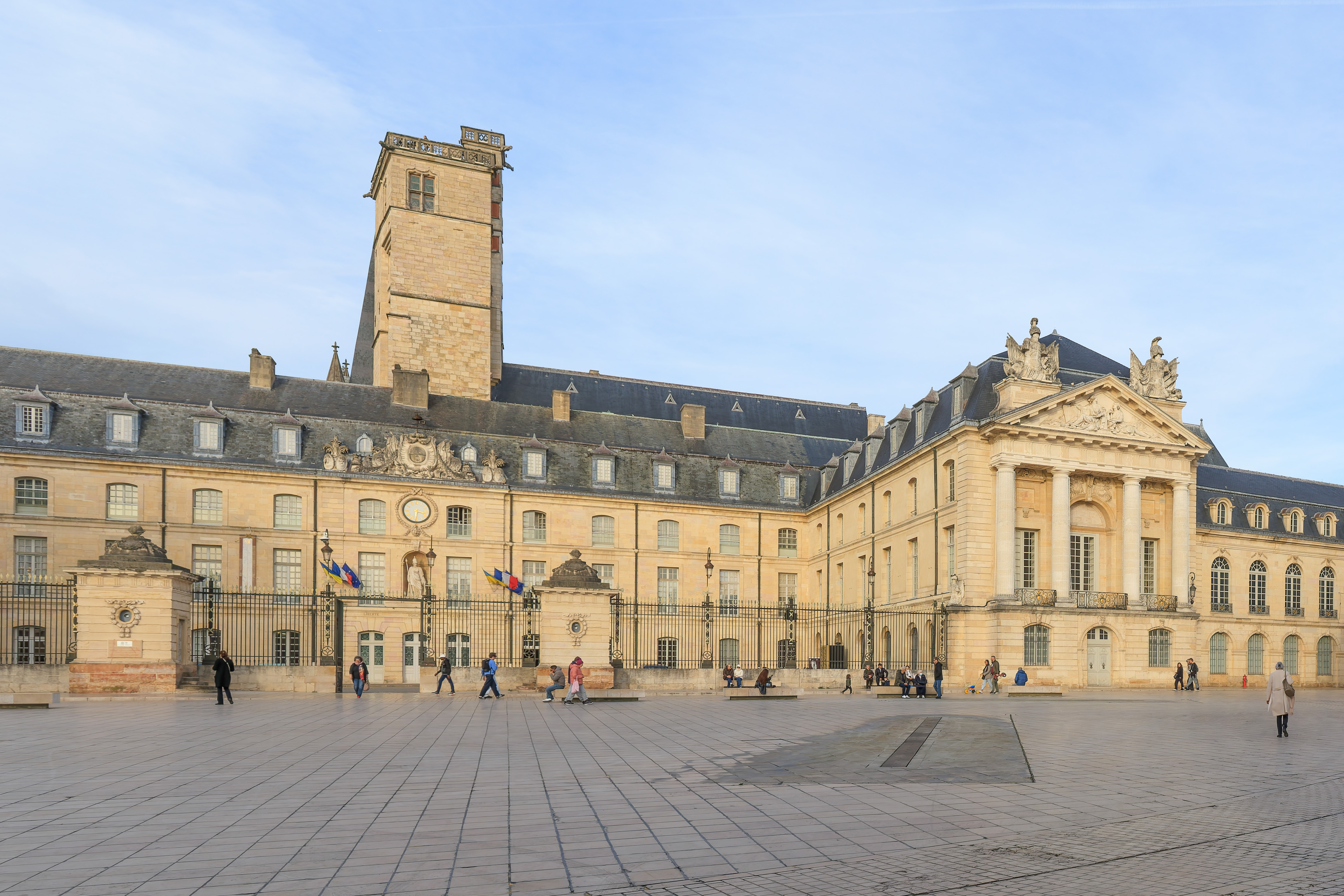
After breakfast at the InterContinental Lyon, we traveled by train to Dijon. We visited the Church of Notre Dame, the museums of Fine Arts and Burgundian Life, and had lunch. Of course, we also bought some mustard before returning to Lyon!
Morning
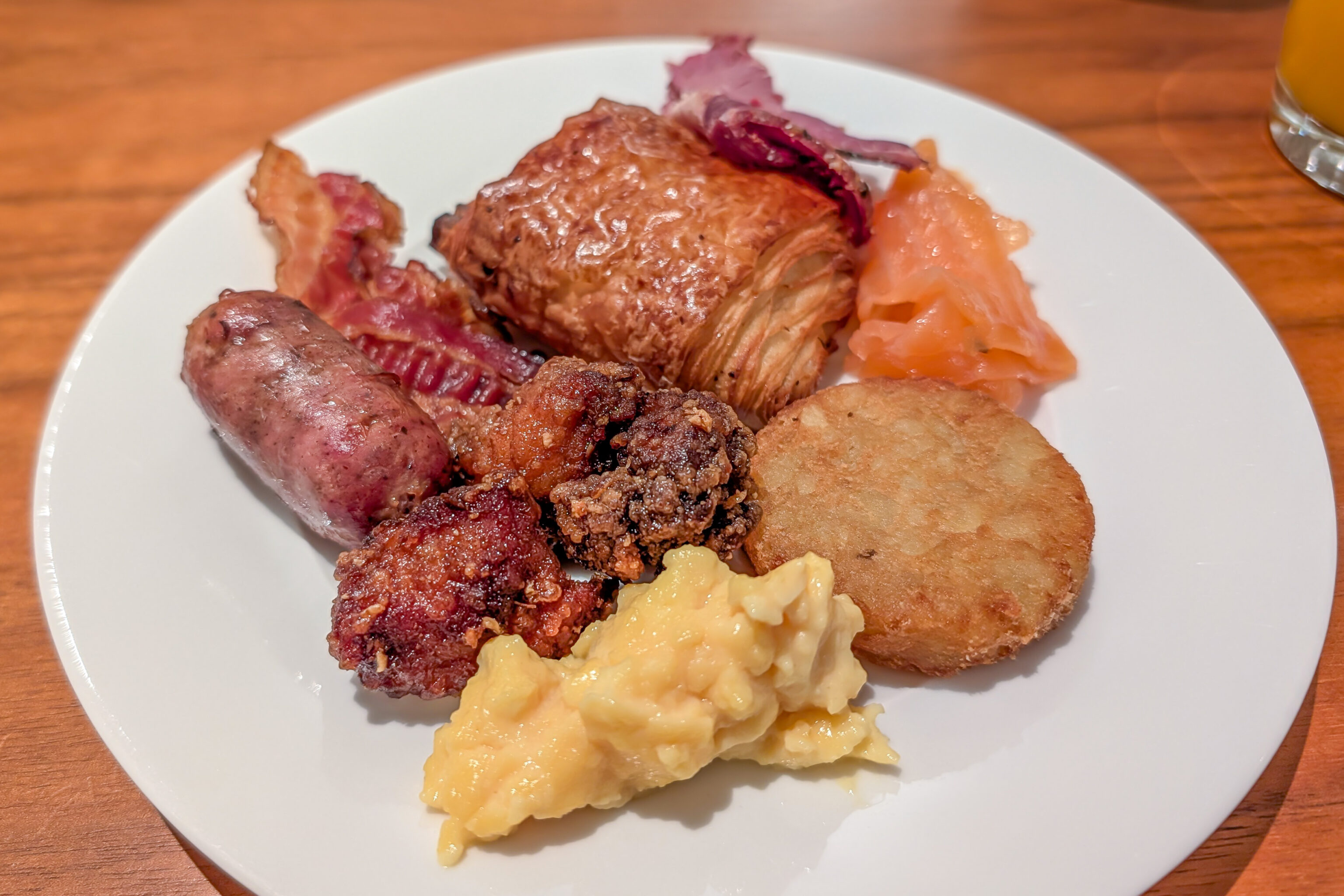
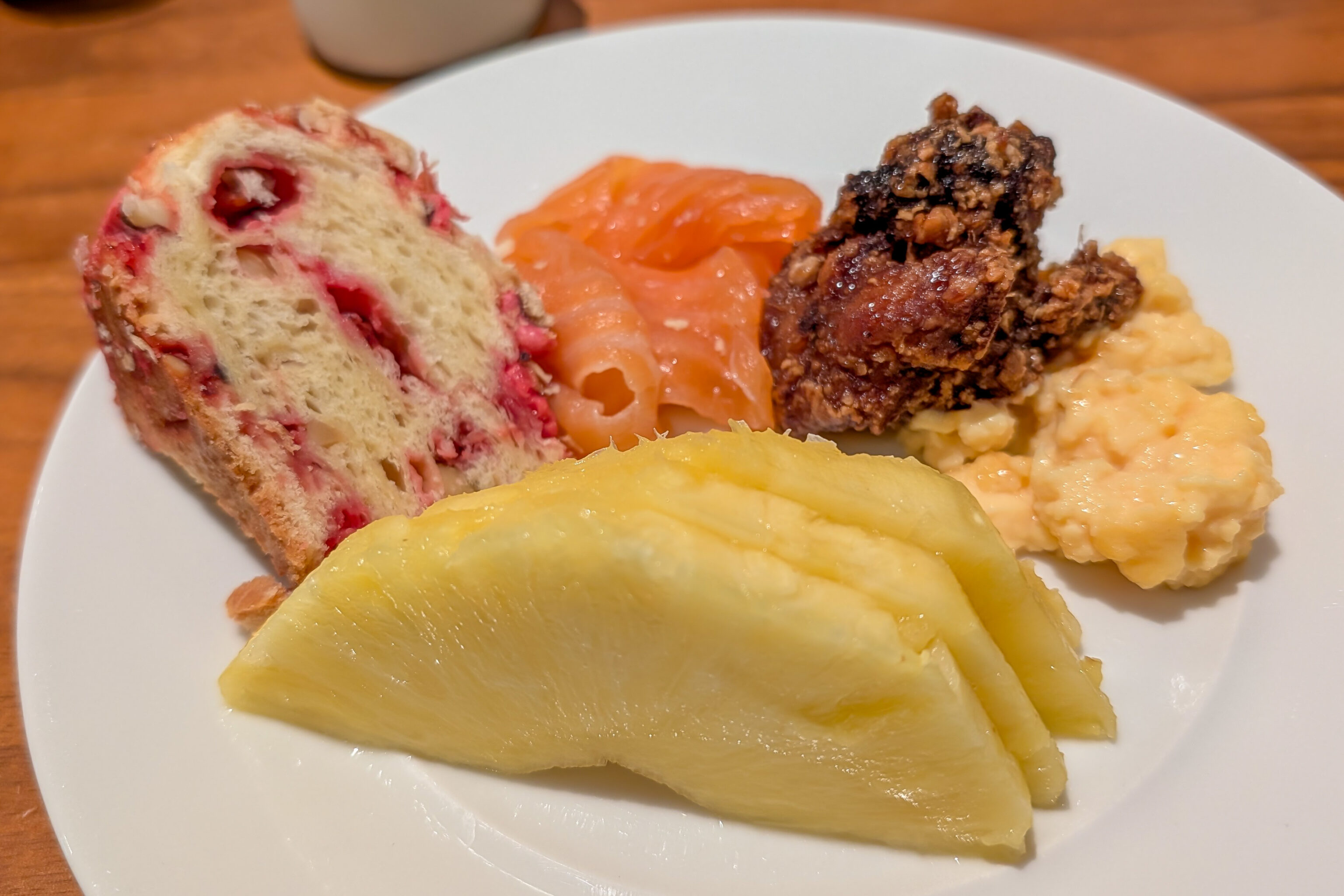
After waking up at the InterContinental Lyon Hotel Dieu, we headed downstairs for breakfast. As far as we could tell, it was the same as yesterday. We once again got a bit of the Korean chicken, even if it was pretty bad!
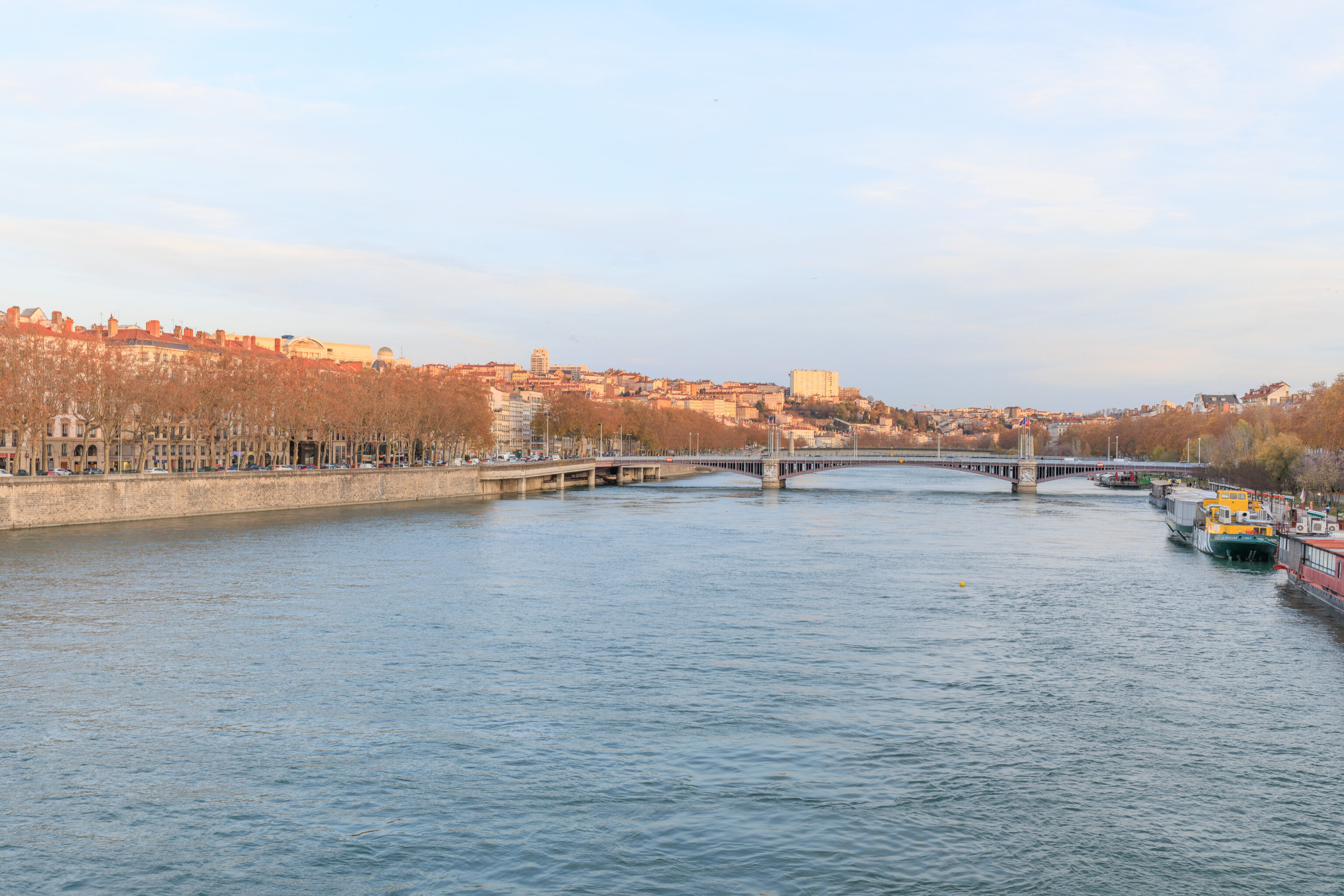
We decided to take the tram over to Lyon Part Dieu to take the train up to Dijon. We took the bridge to the north of the hotel’s entrance, the Pont Wilson. The bridge, built in 1918, is named after US president Woodrow Wilson. This seems to be due to the US entering World War I.
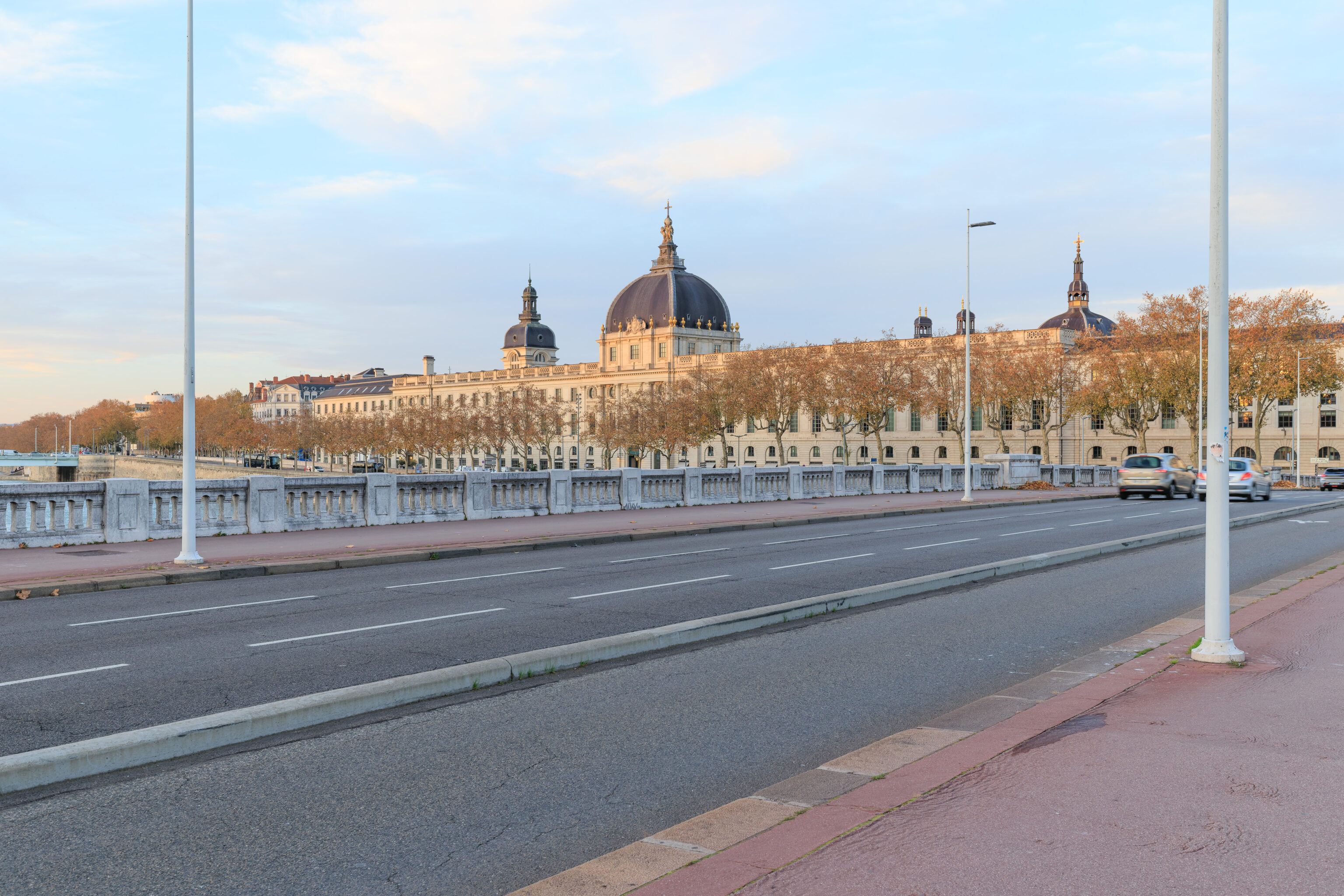
Looking back to the southwest, we could see the Hotel Dieu.
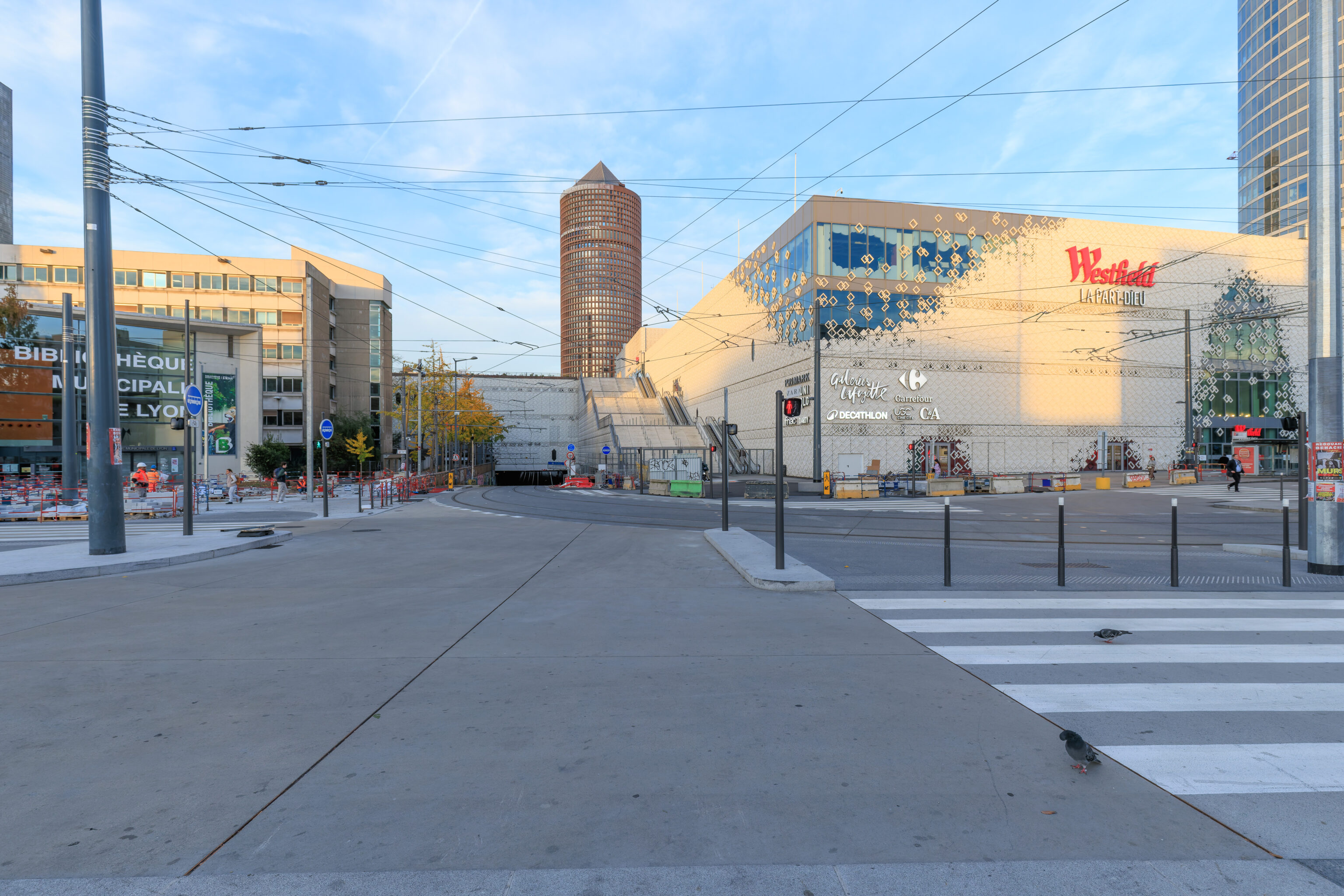
We took tram T1 from Liberté, about two and a half blocks from the Pont Wilson, to Gare Part-Dieu V.Merle. The tram stop is between Lyon Part Dieu and the Westfield La Part-Dieu shopping mall.
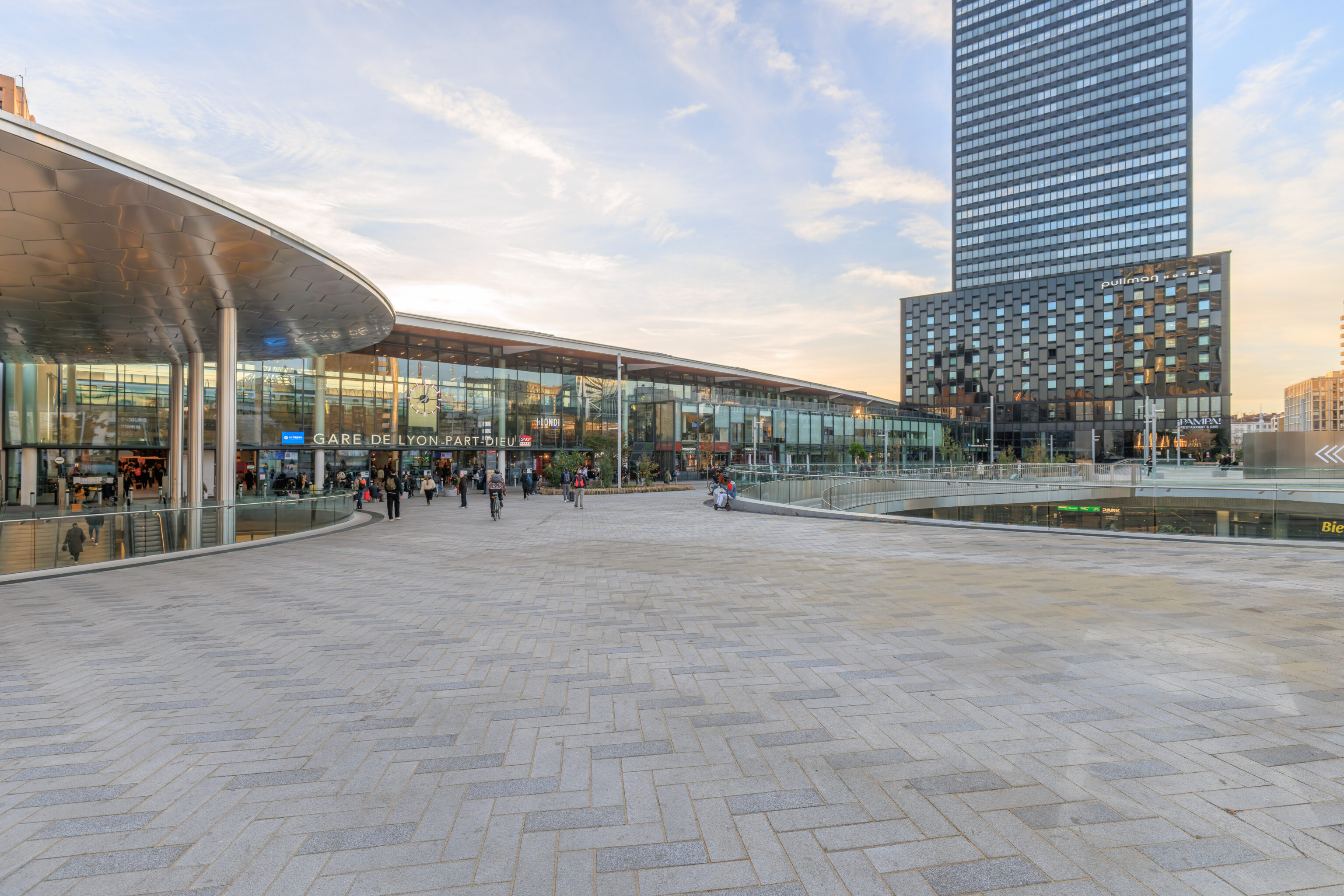
We walked over to Lyon Part Dieu from the tram stop.
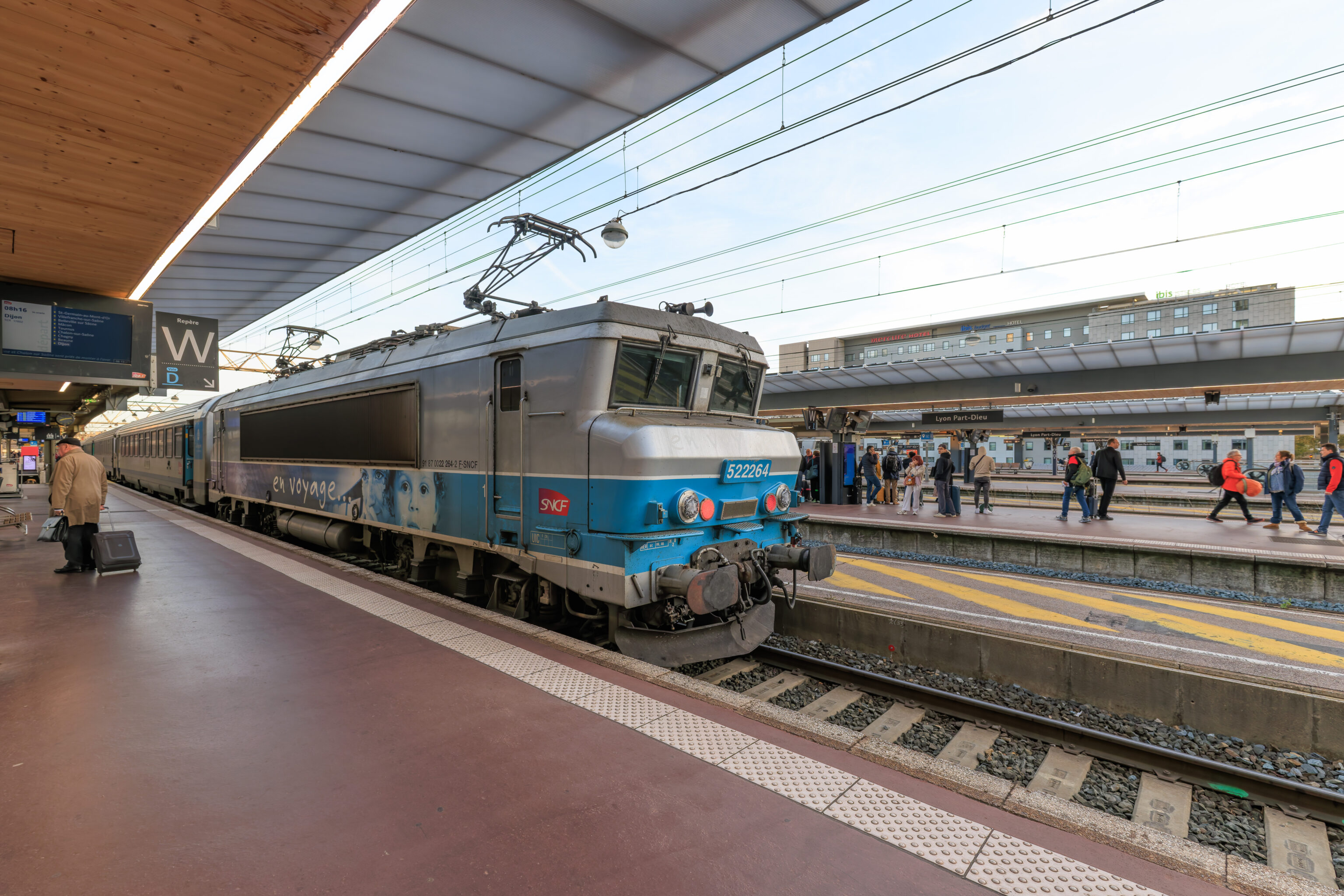
We caught the next train to Dijon, departing at 8:16am. The TER trains take about two hours to get to Dijon. The TGV can do it about 30 minutes faster, although they cost more and aren’t nearly as frequent as the TER’s hourly service.
Dijon
After arriving at the Dijon-Ville Station on the west side of the city center, we took a tram to République on the north.
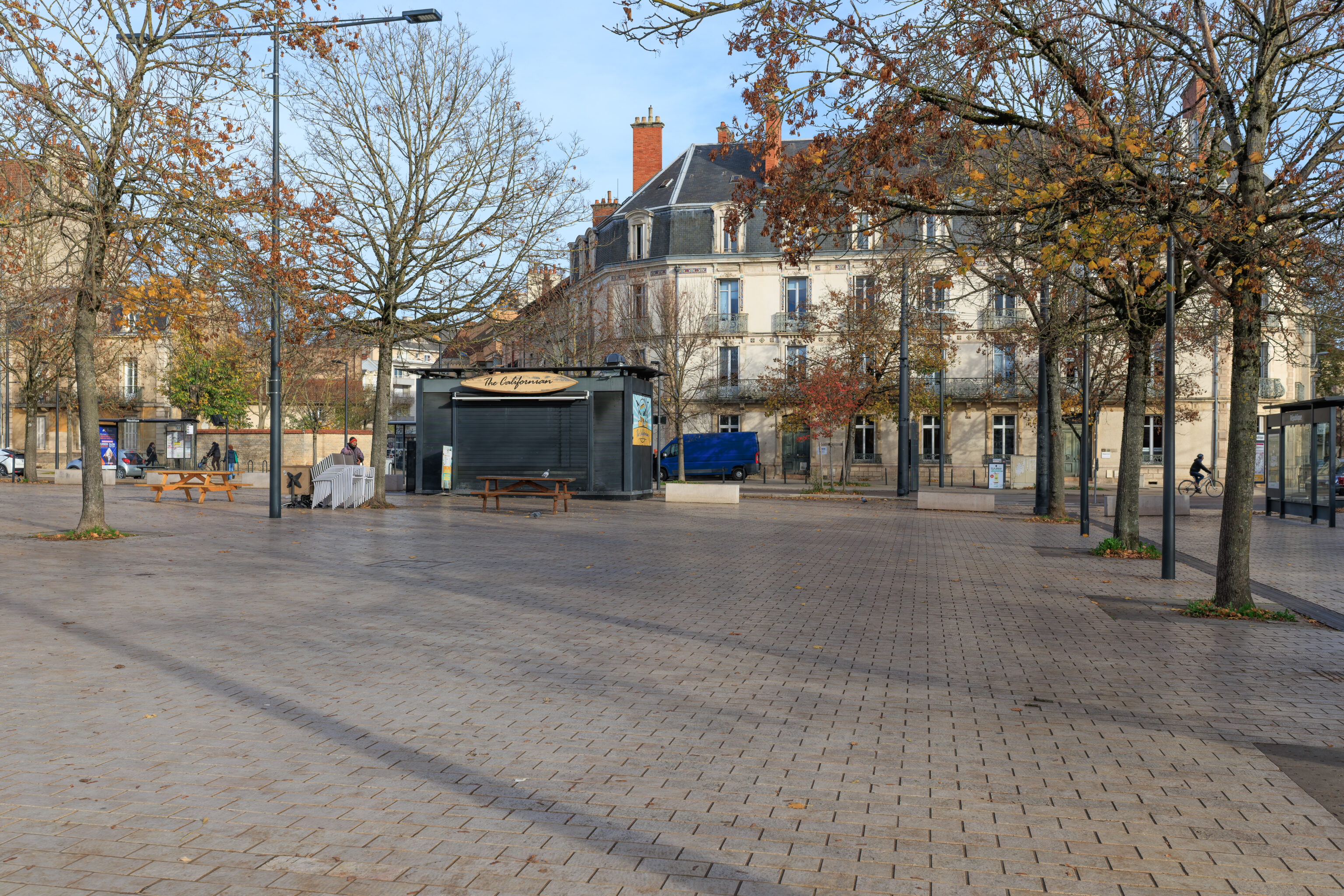
The tram stop is named after the Place de la République. It was pretty quiet when we arrived at around 10:15am. We were amused by the name of this hamburger stand, The Californian, and its surfboard logo.
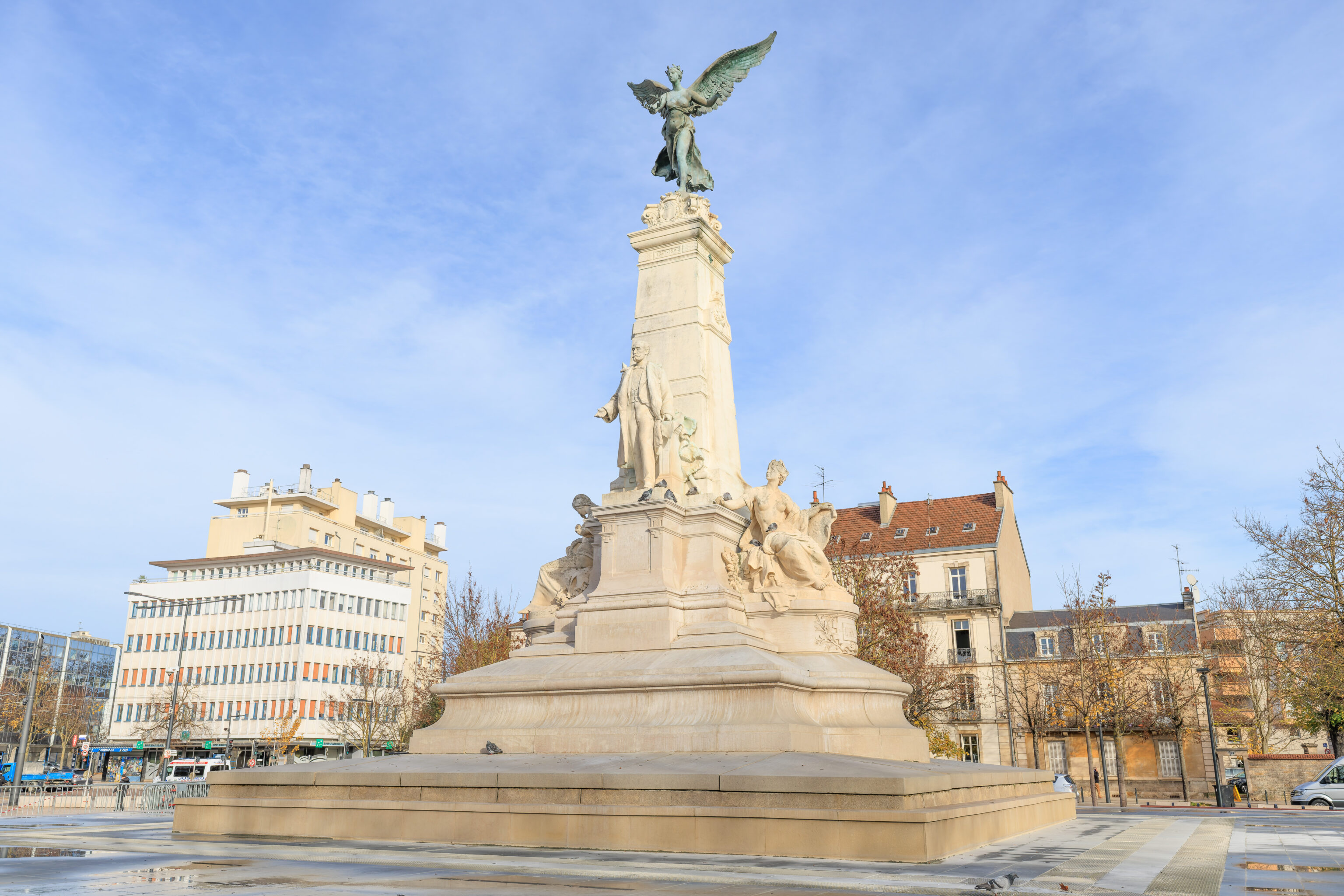
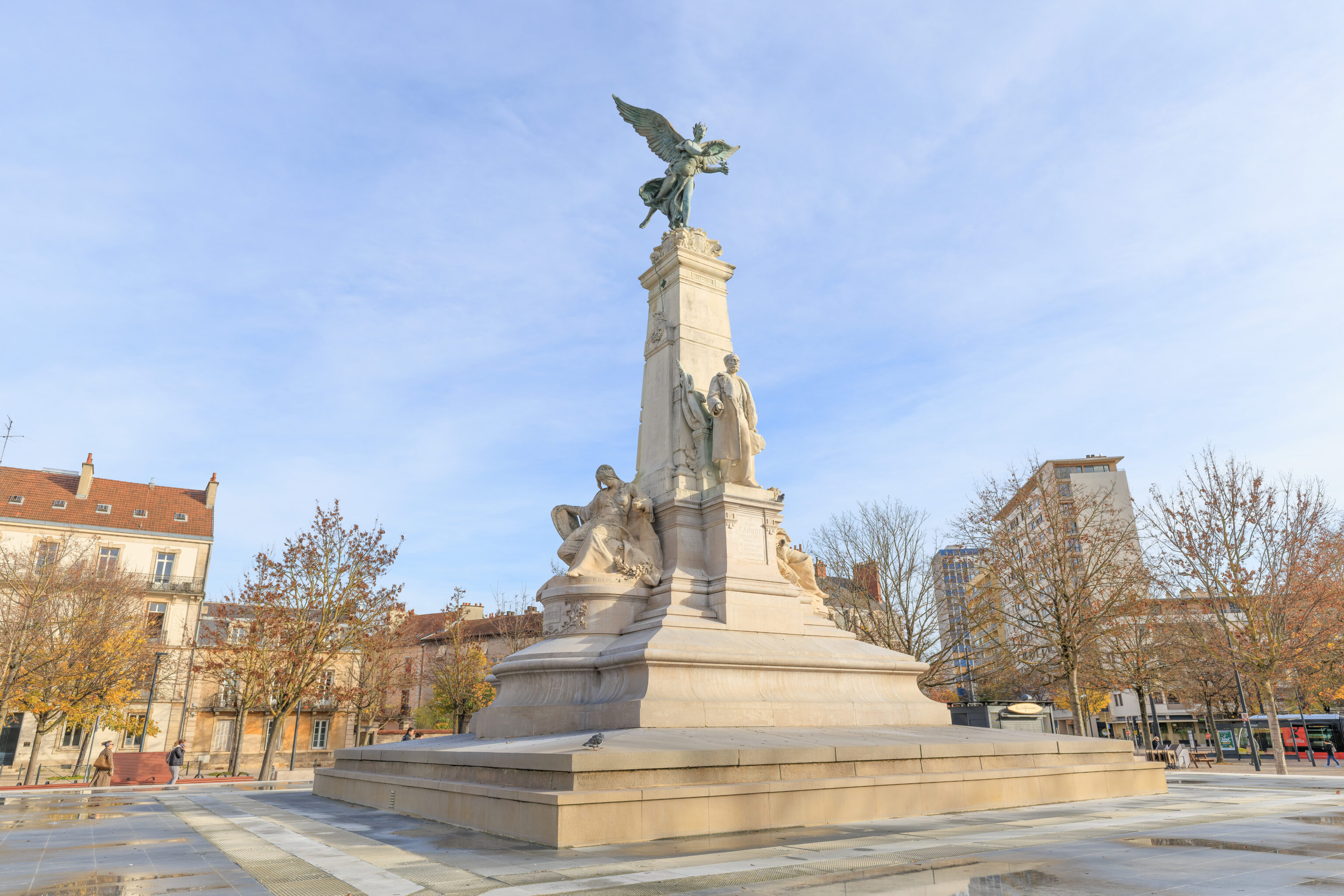
A monument to Sadi Carnot stands in the middle of the square. Carnot was the president of France when he was assassinated in Lyon in 1894. The Carnot family was from Côte-d’Or, the department that contains Dijon.
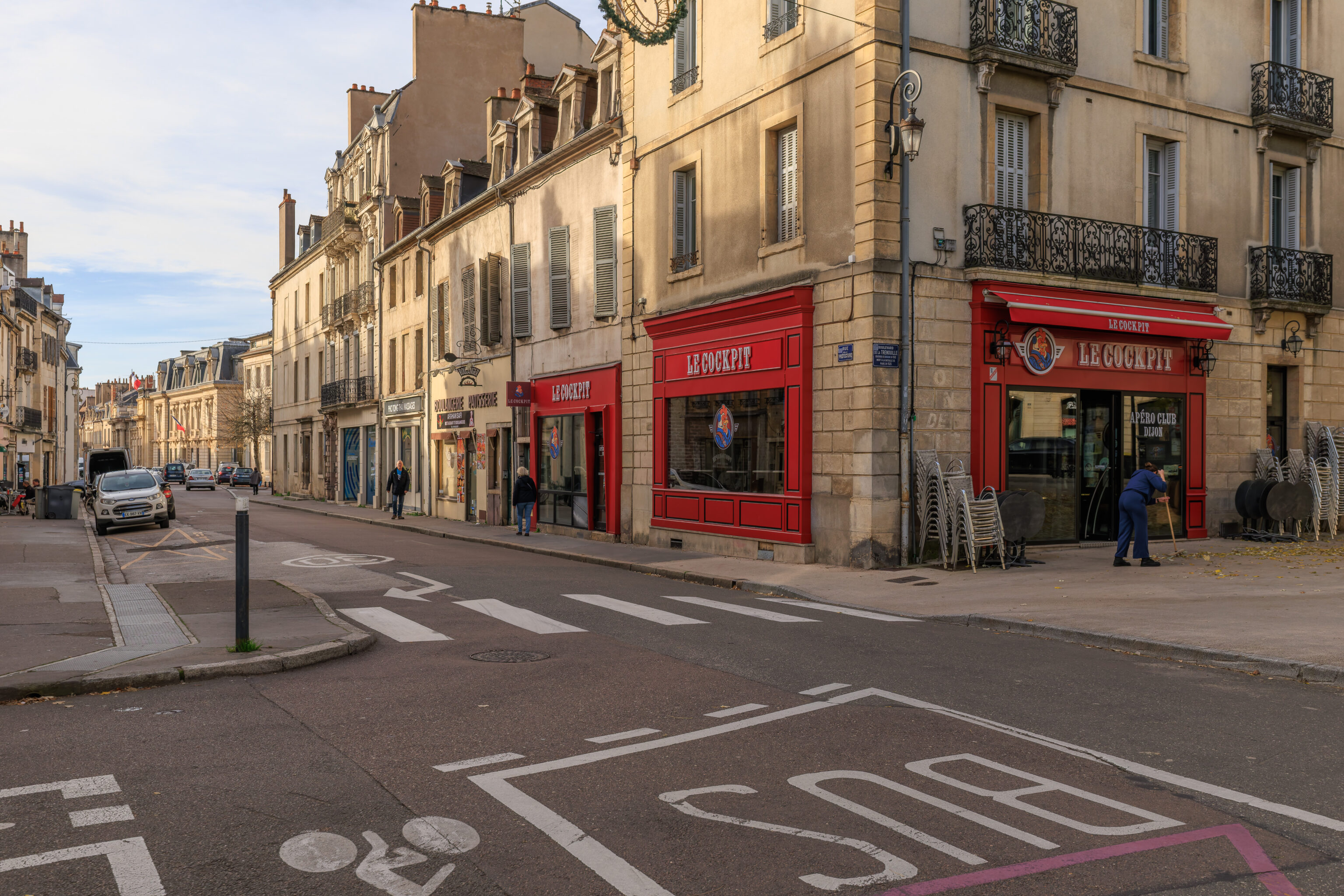
We started to walk south from the square towards the city center. We were amused by this restaurant, Le Cockpit. The logo is a rooster pilot!
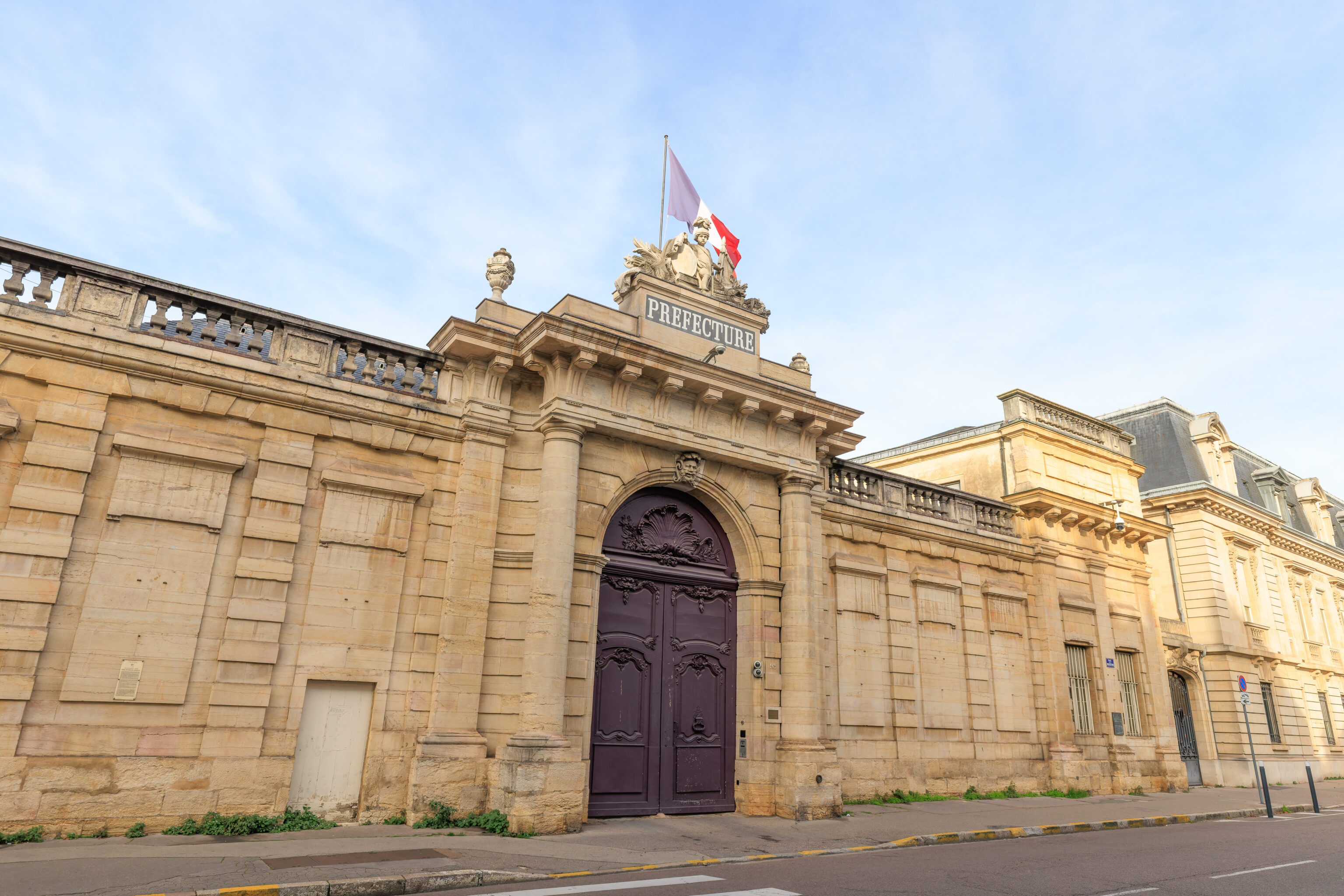
Dijon is the Prefecture of the Côte-d’Or department, within the Bourgogne-Franche-Comté region. This seems to be more or less at the level of a county seat in the US, with departments as counties and regions as states. Unlike the US, there seems to be no legislative function at these levels below the national government, though they do seem to have some sort of regulatory authority.
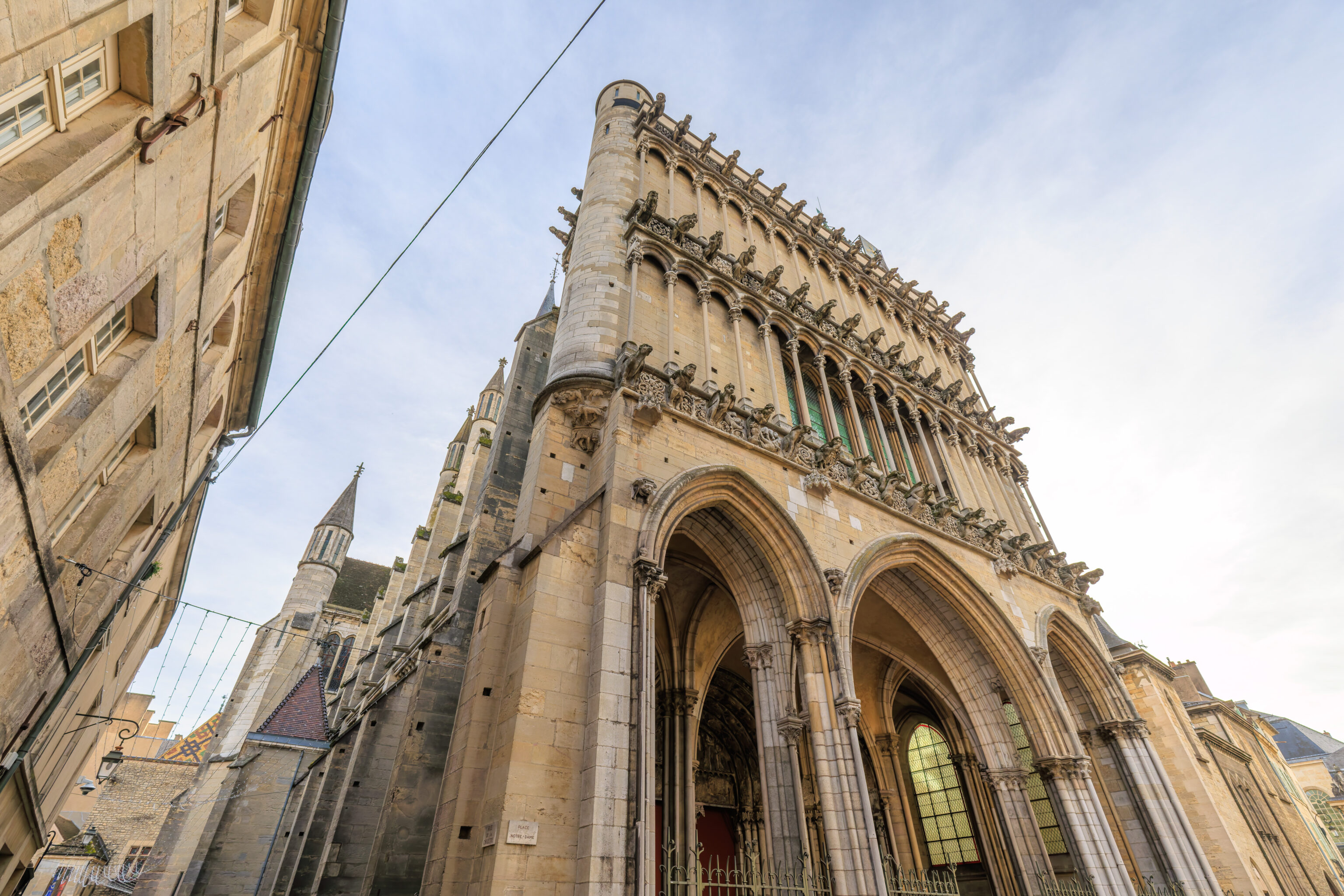
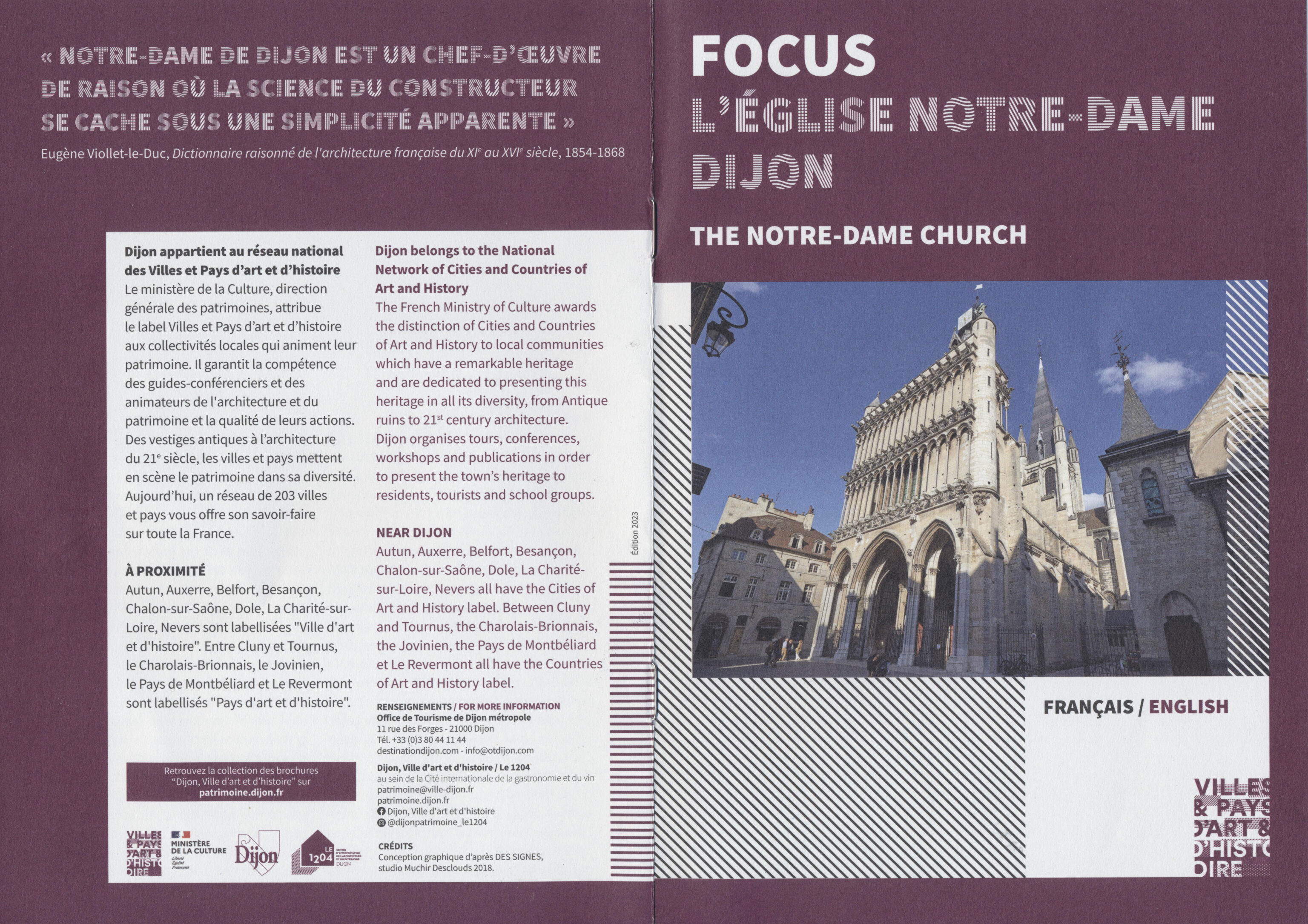
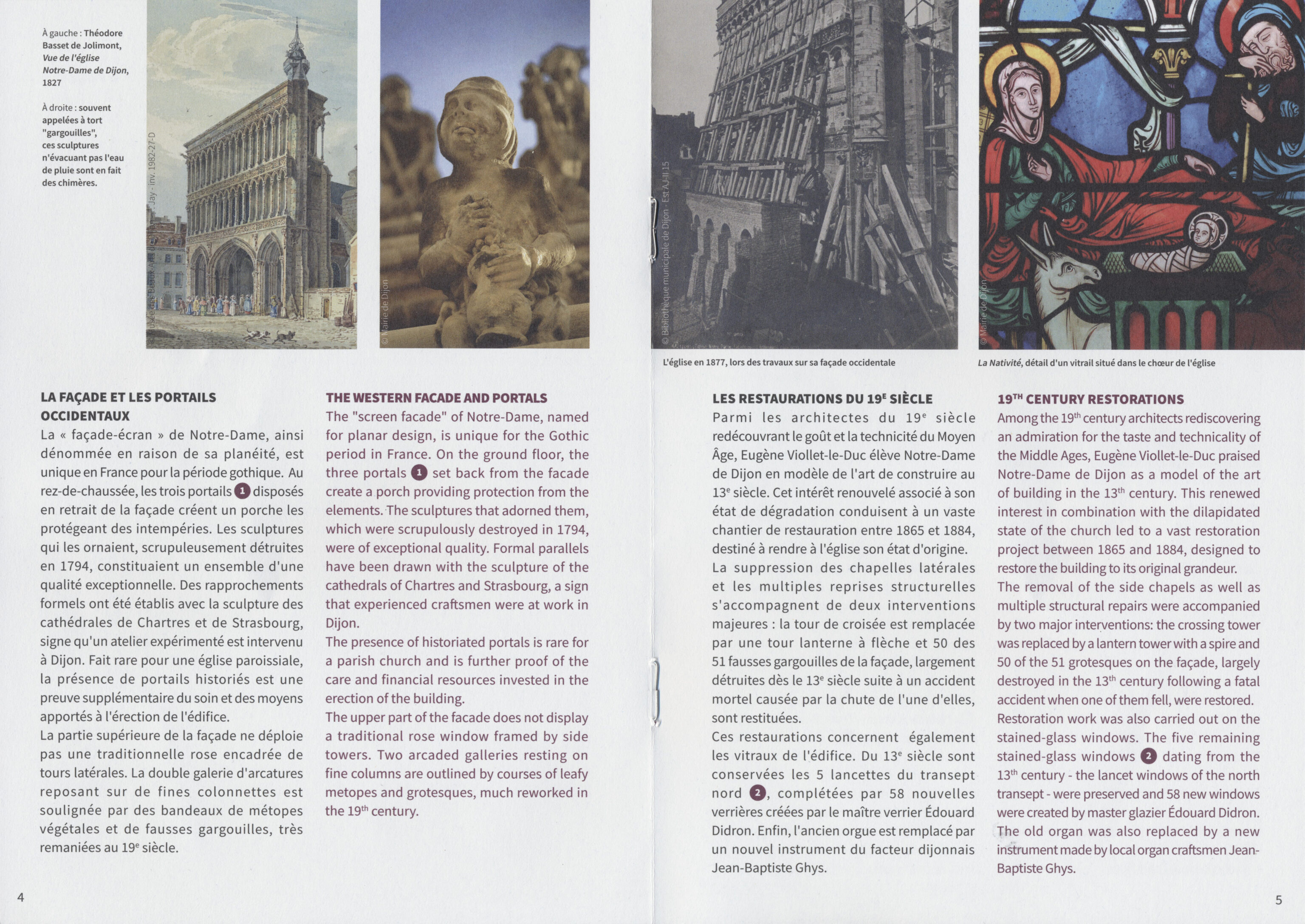
We continued walking to the south until we reached the Église Notre-Dame.
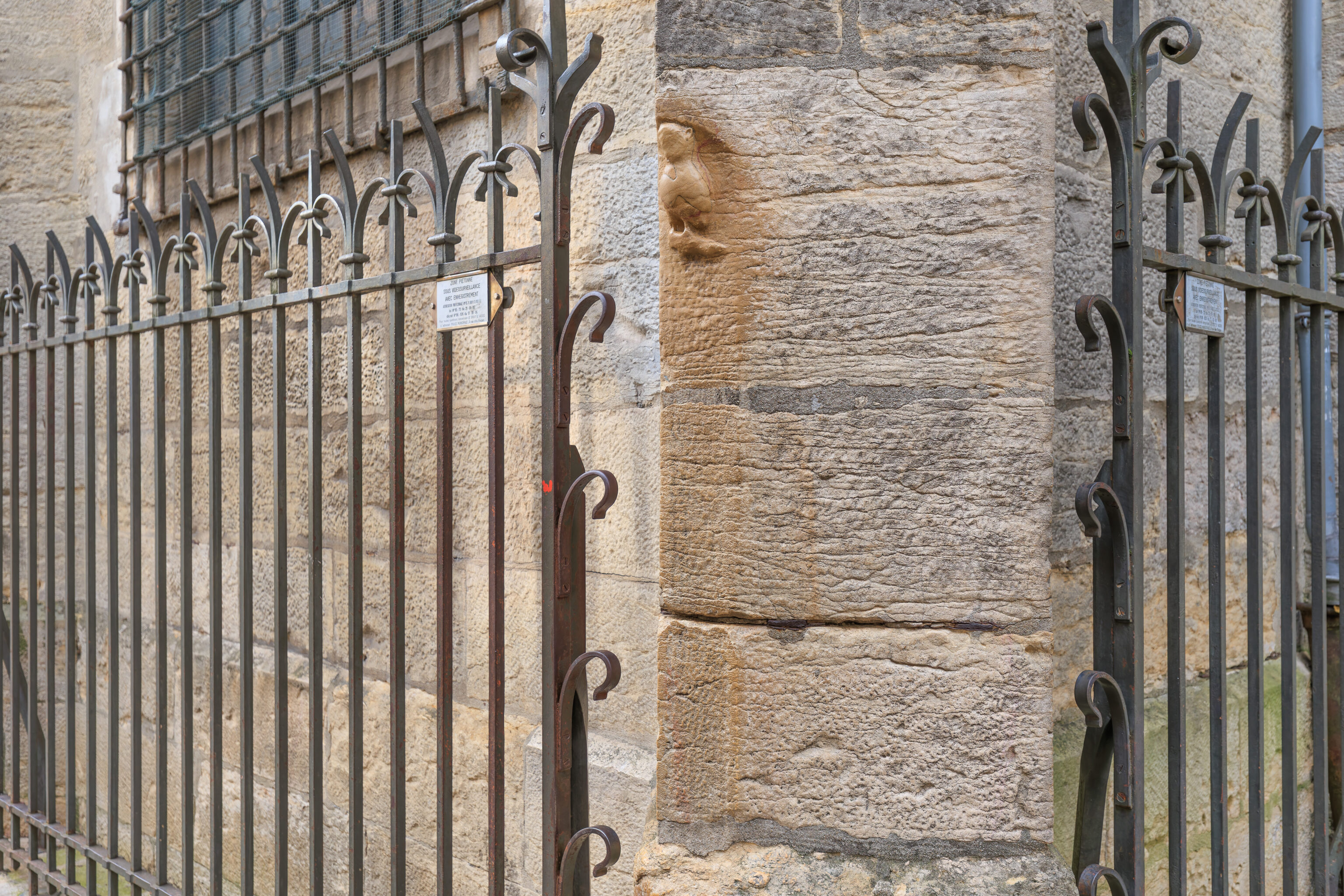
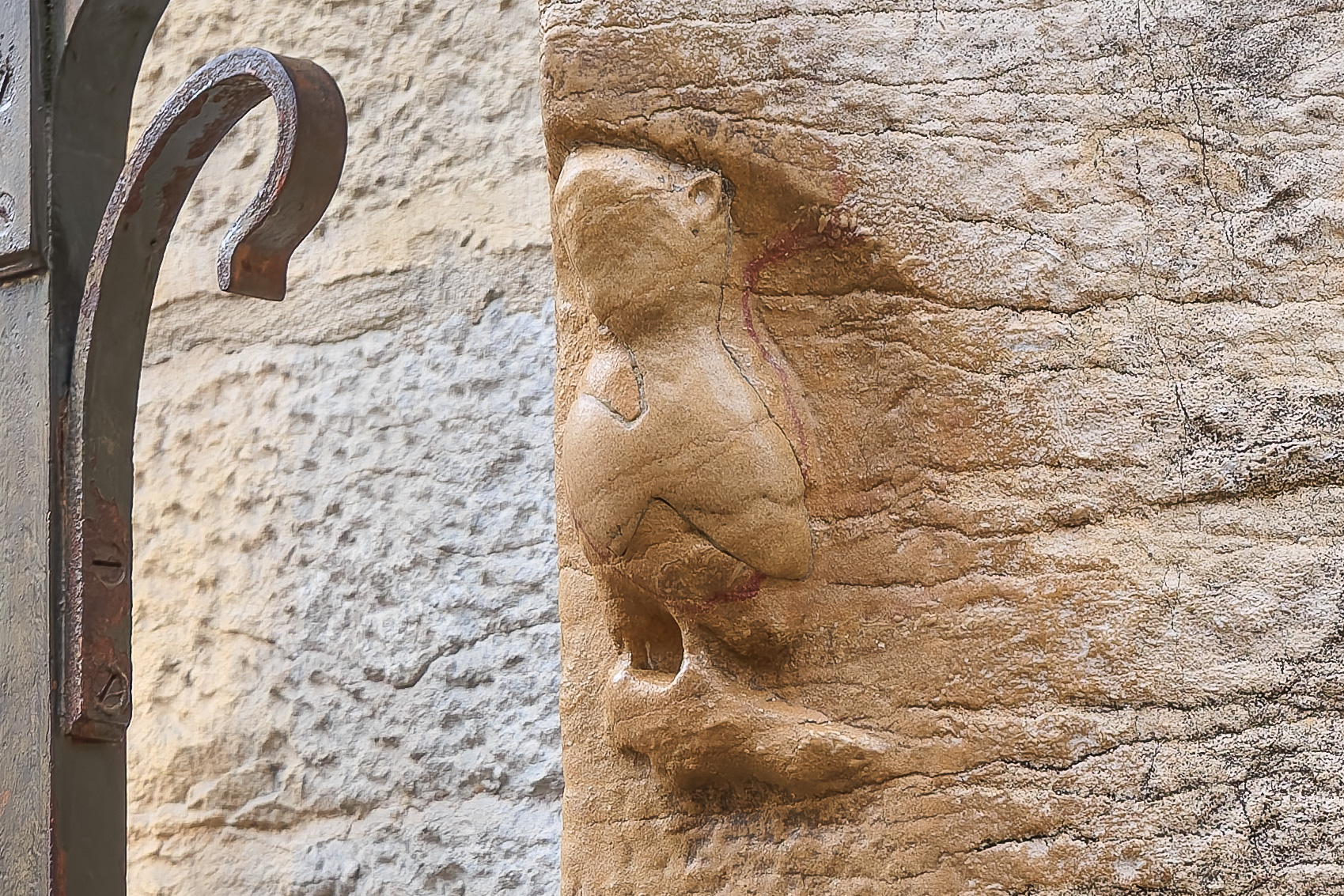
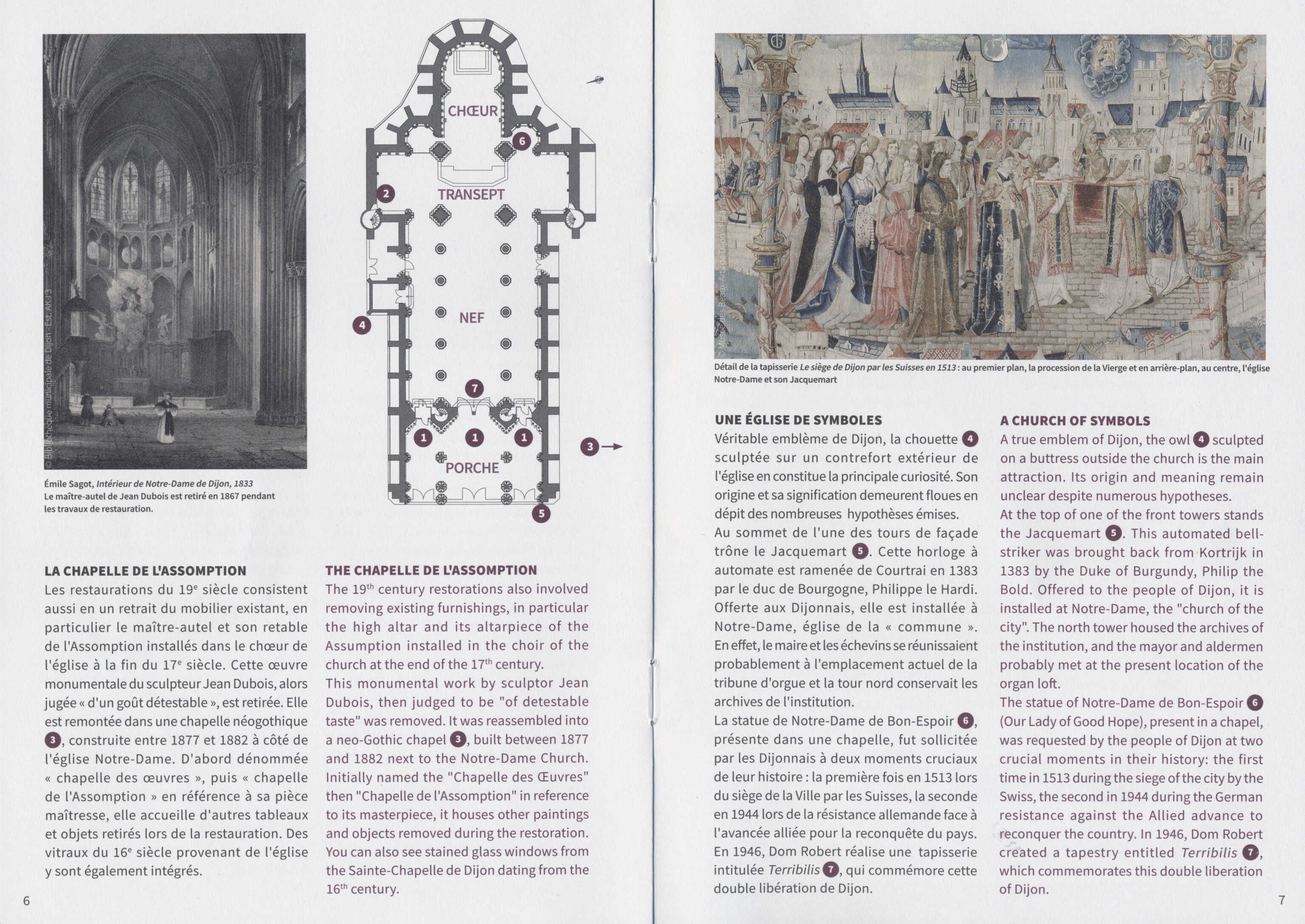
This church has a small interesting feature – an owl carved on the side! Rubbing the owl is said to bring good luck.
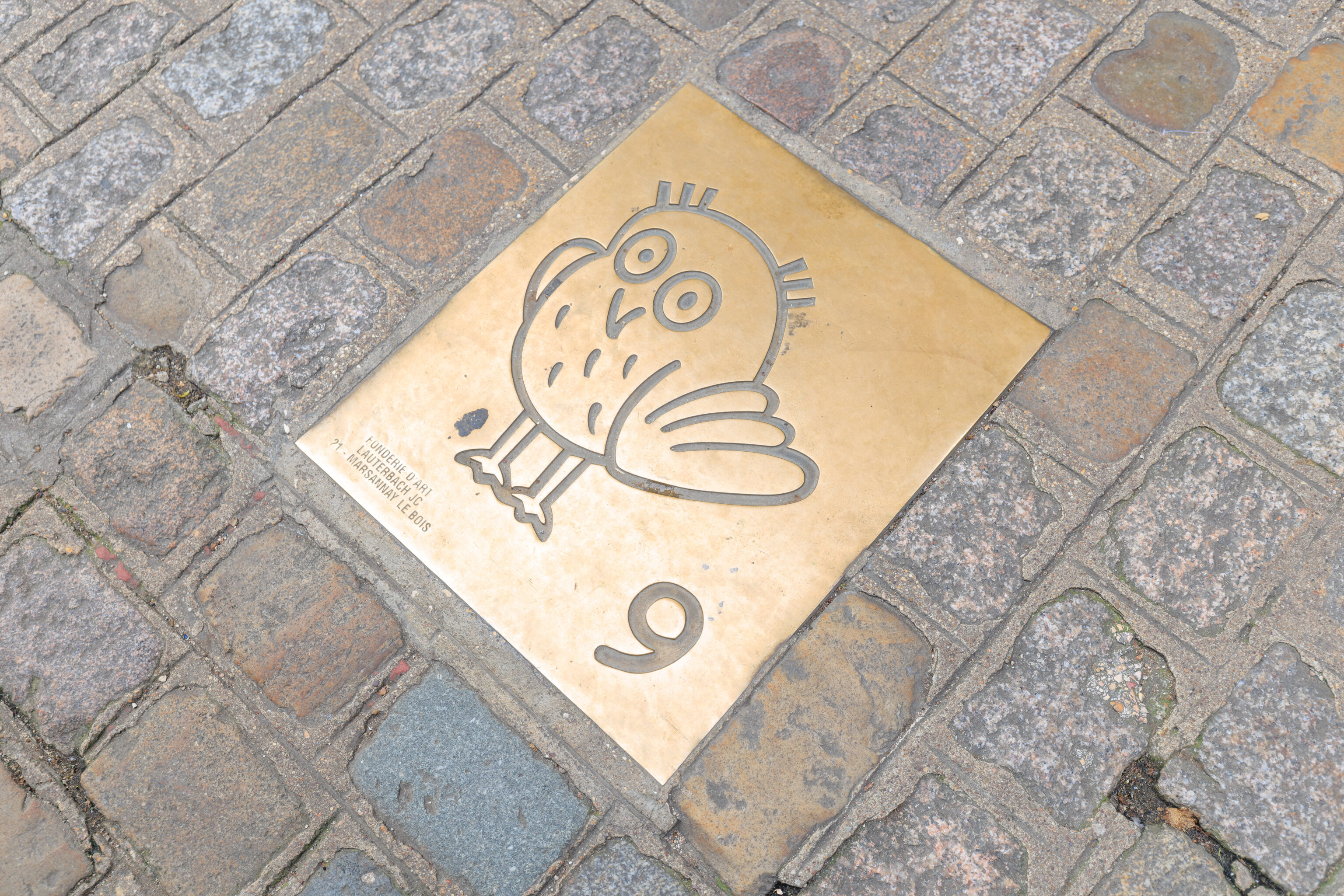
The owl has become a symbol of the city of Dijon. There is even an Owl Trail that goes through the city! These large markers on the ground indicate points of interest.
We did have a bit of a misunderstanding about these markers as we were thinking they led to points which had an owl of some sort to be seen. This is not the case!
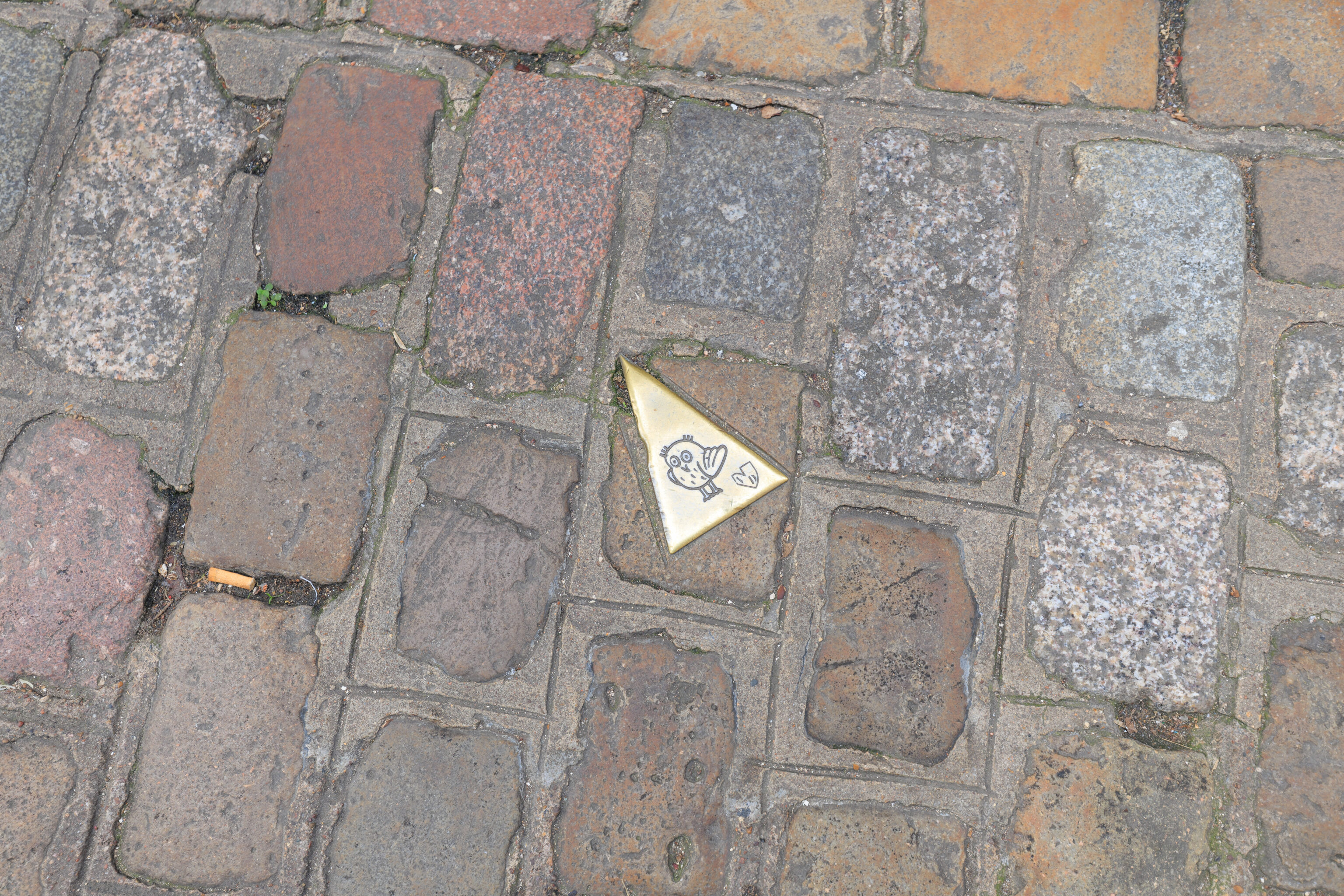
These smaller markers show the way to the next stop on the trail!
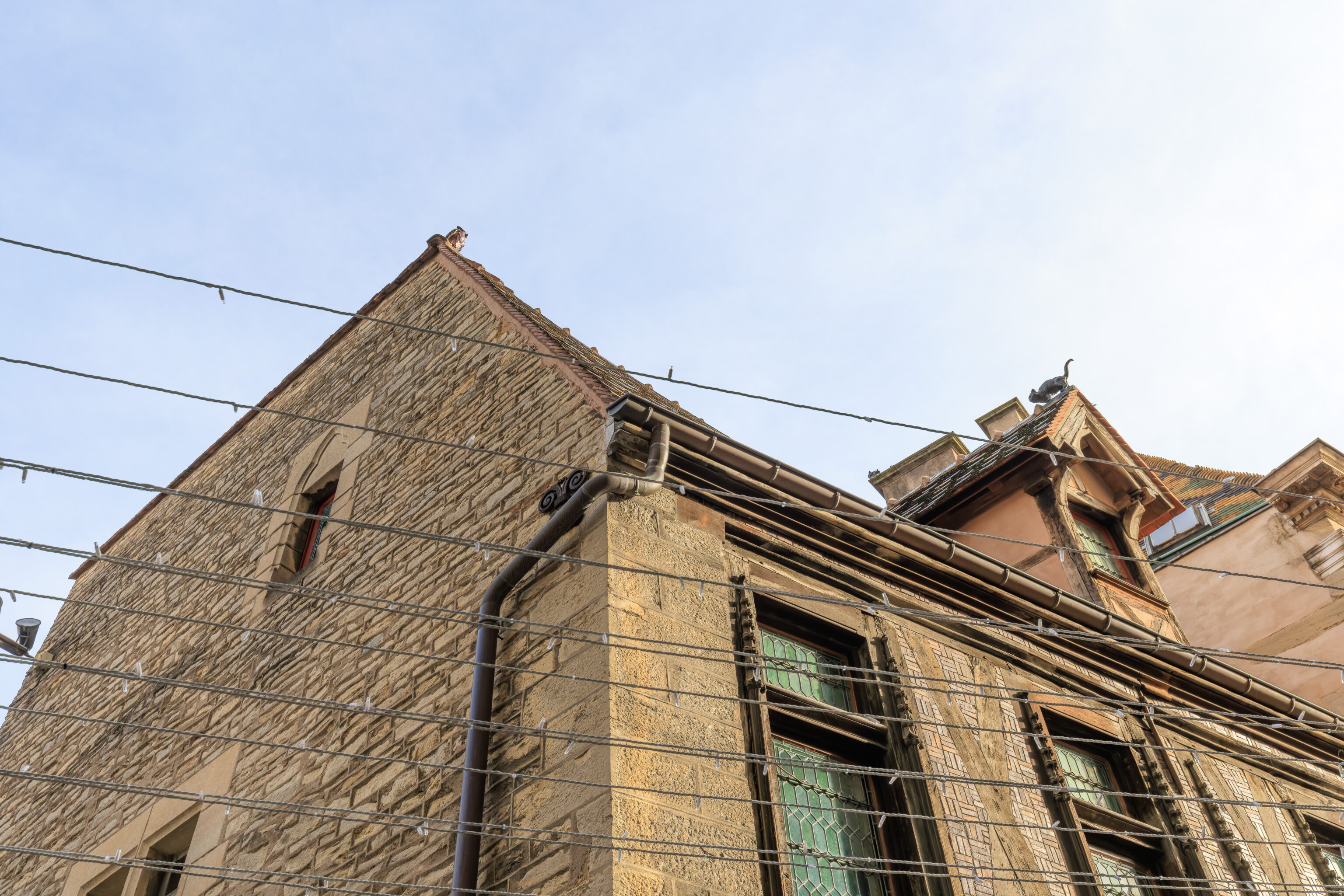
There are other newer owls in the city. There is one on the rooftop to the left. On the right, there is a cat!
We then entered the Église Notre-Dame.
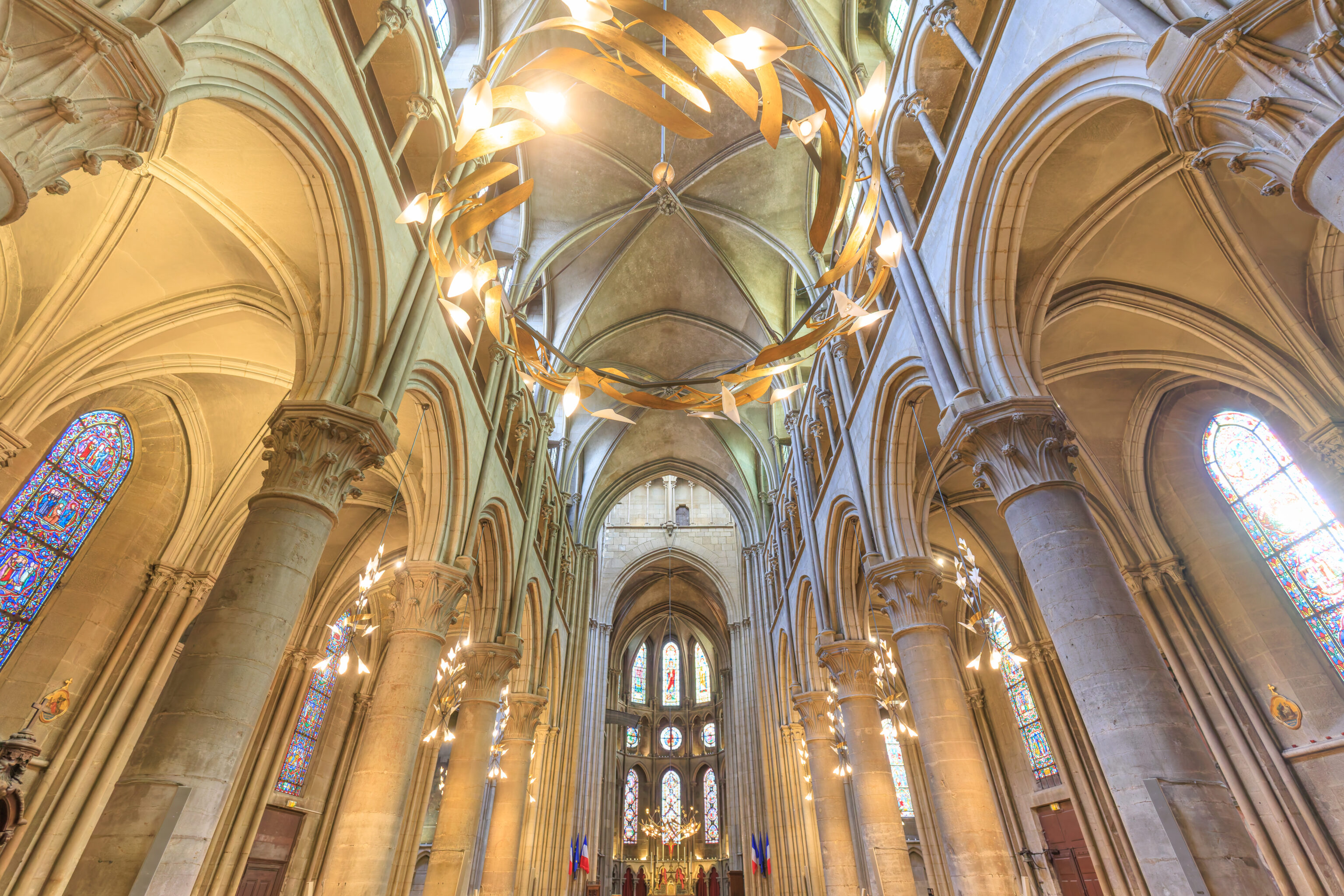
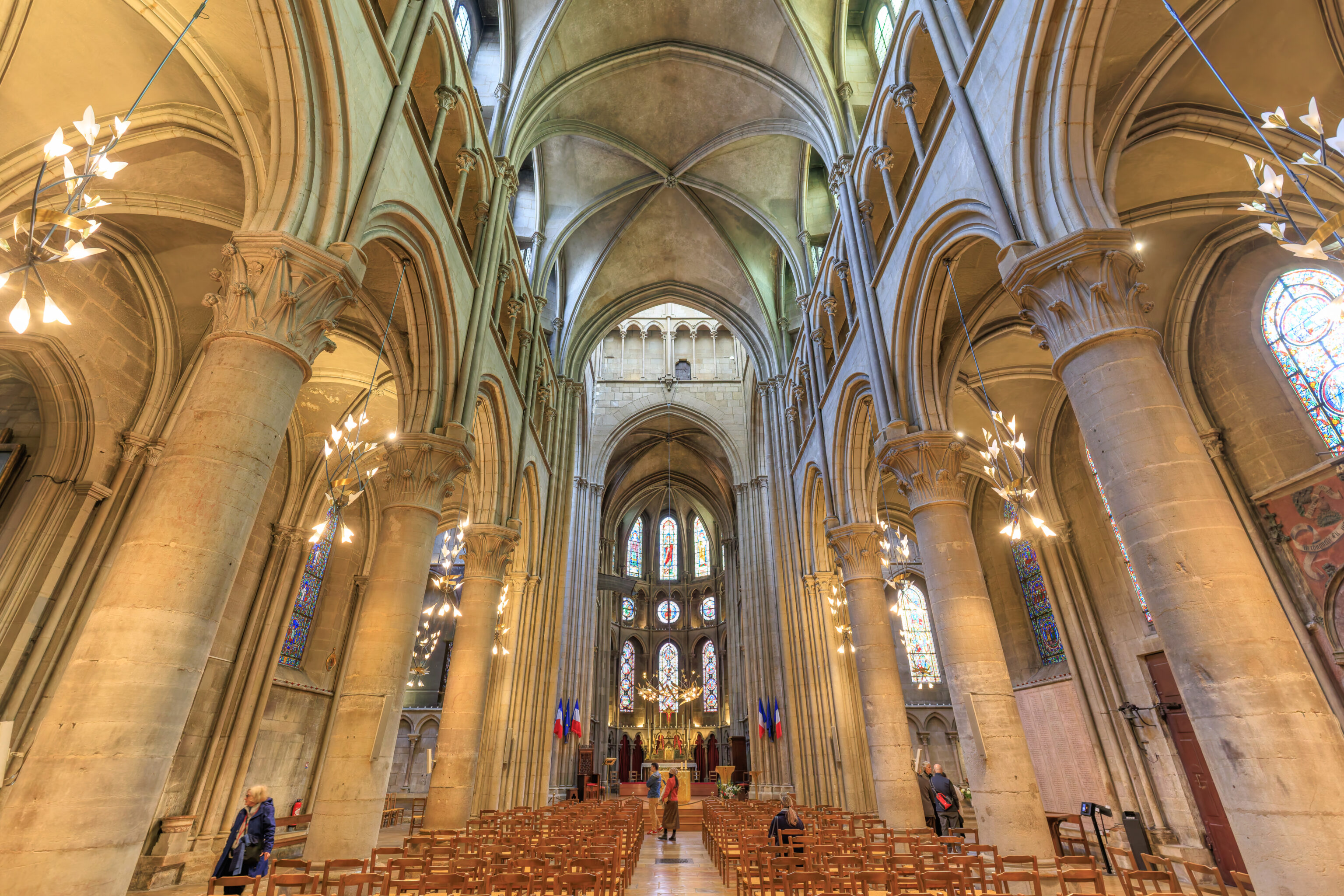
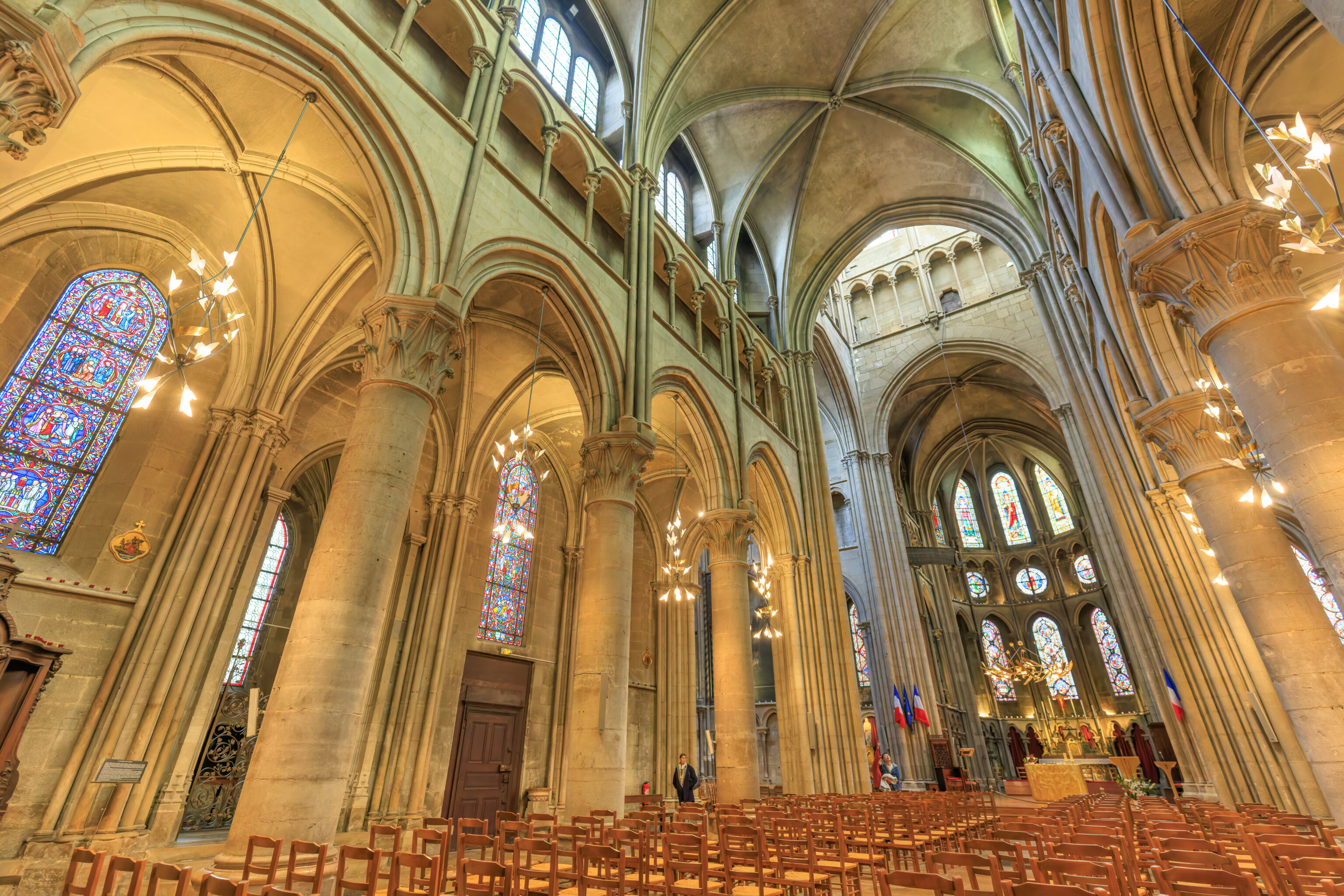
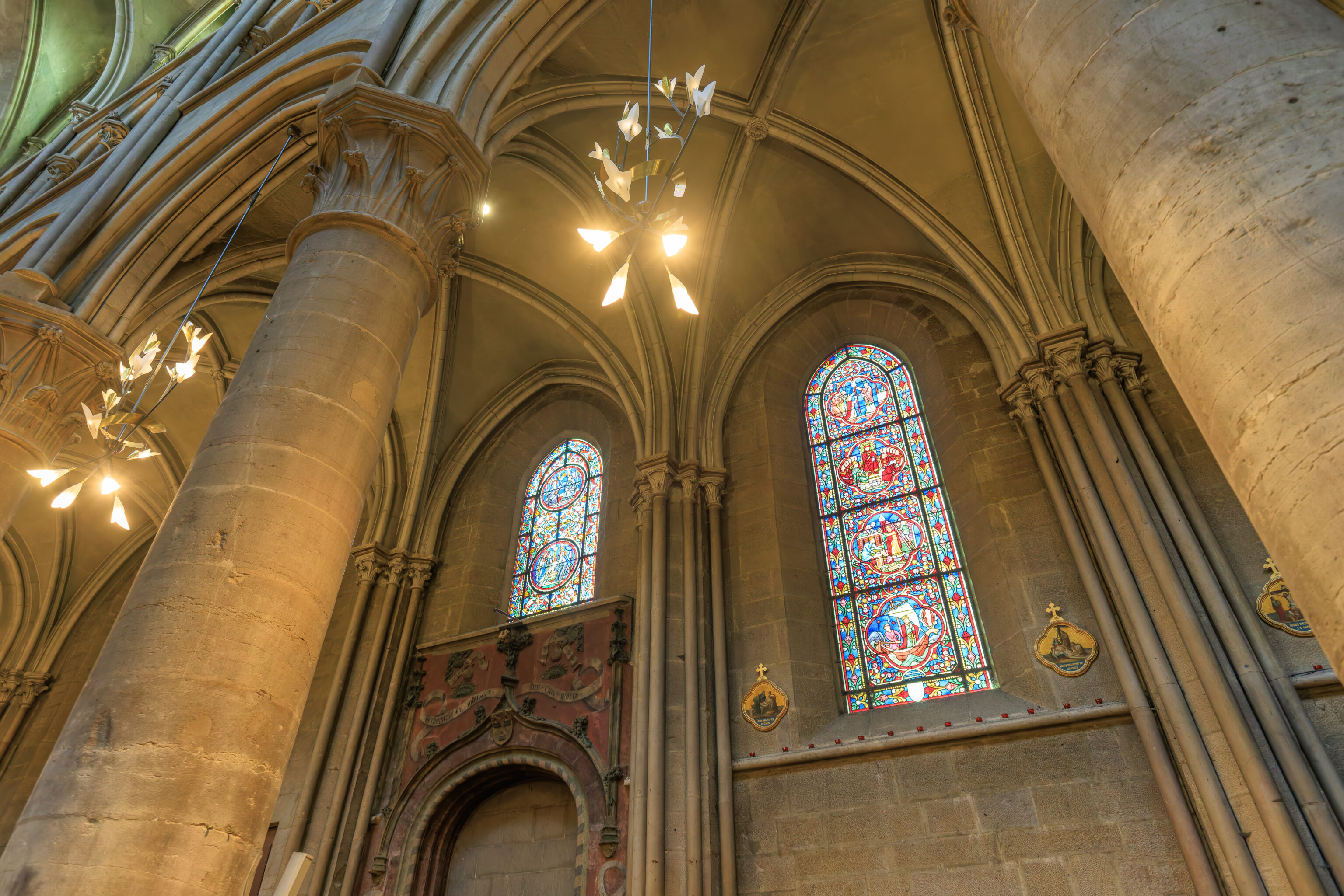
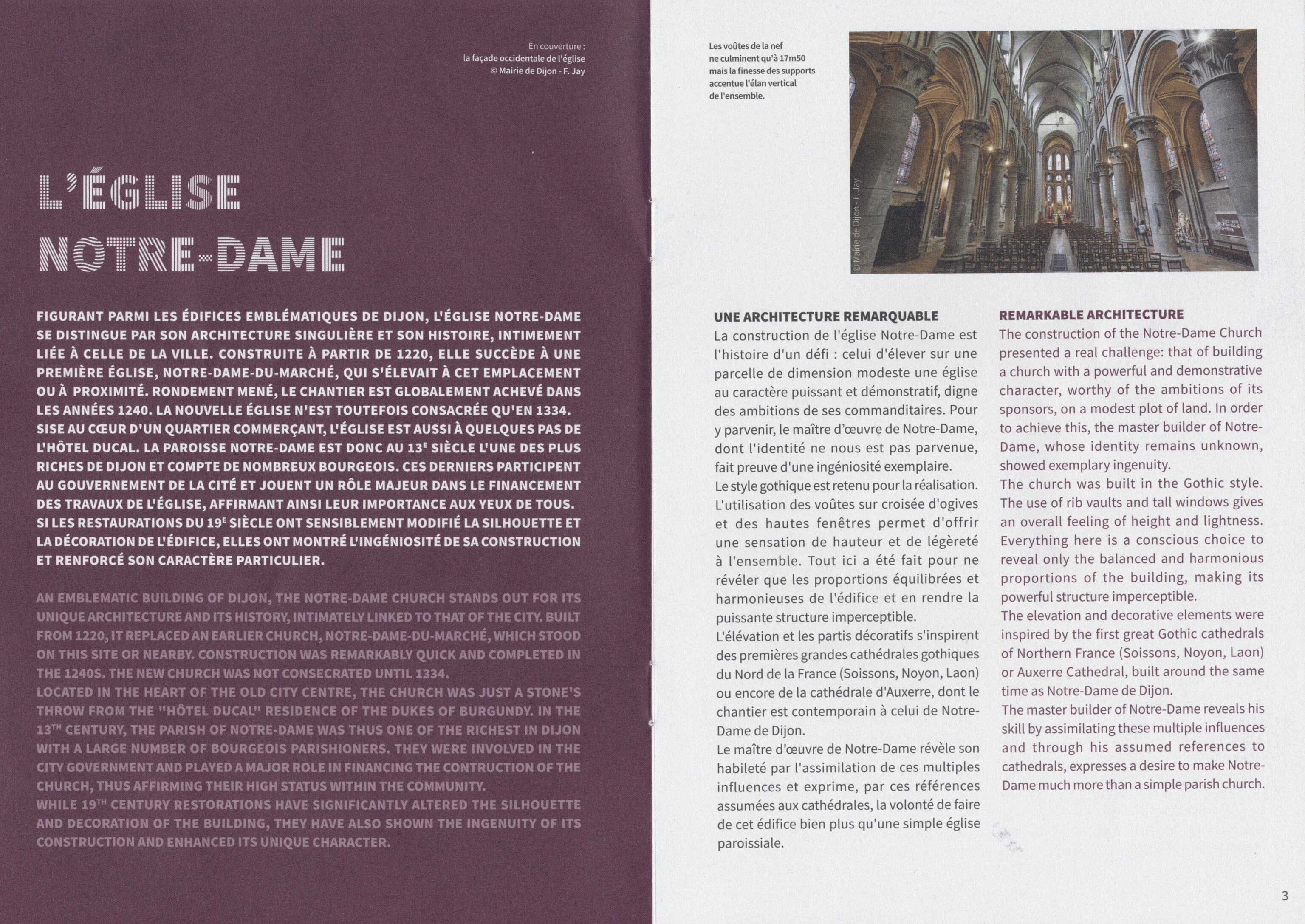
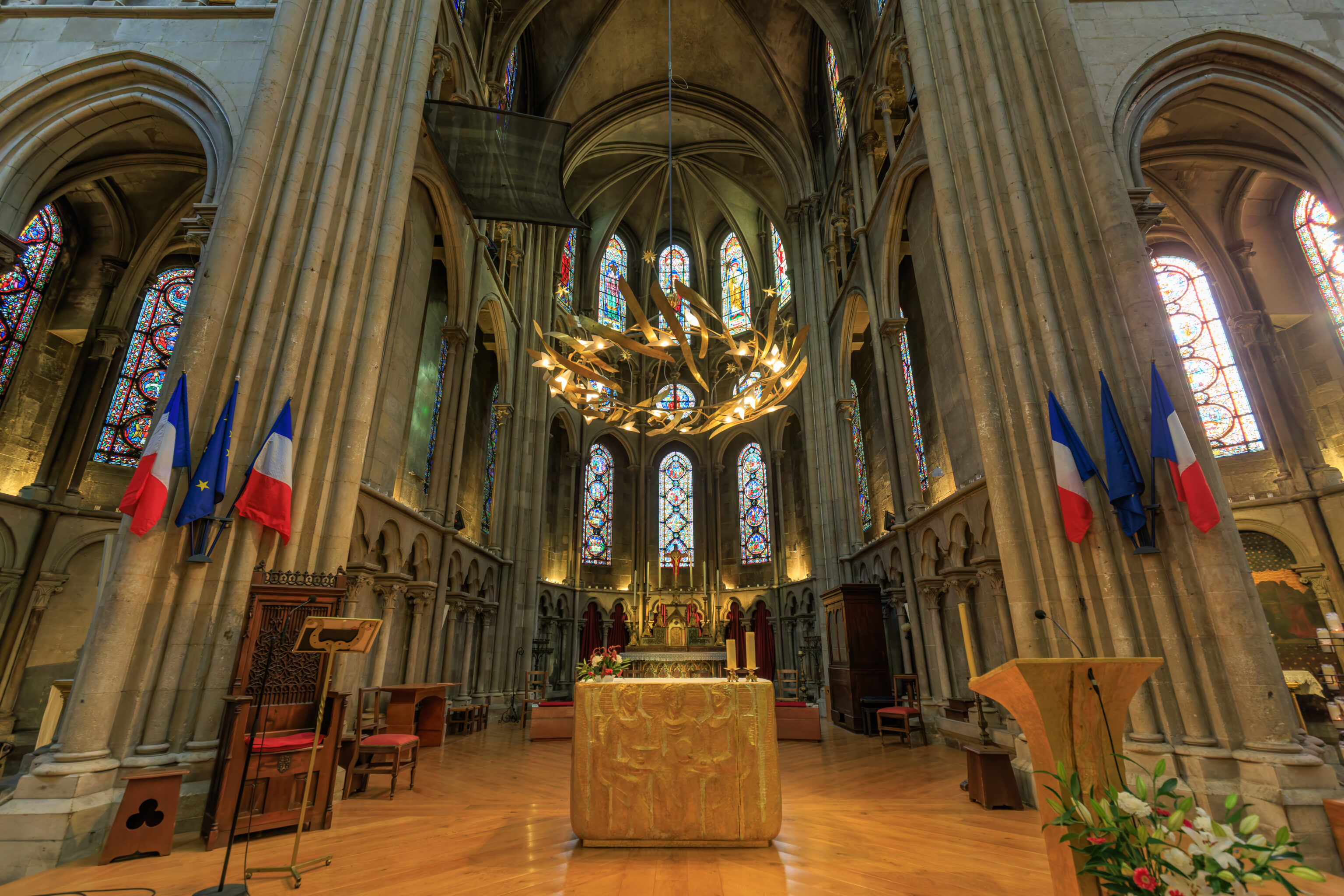
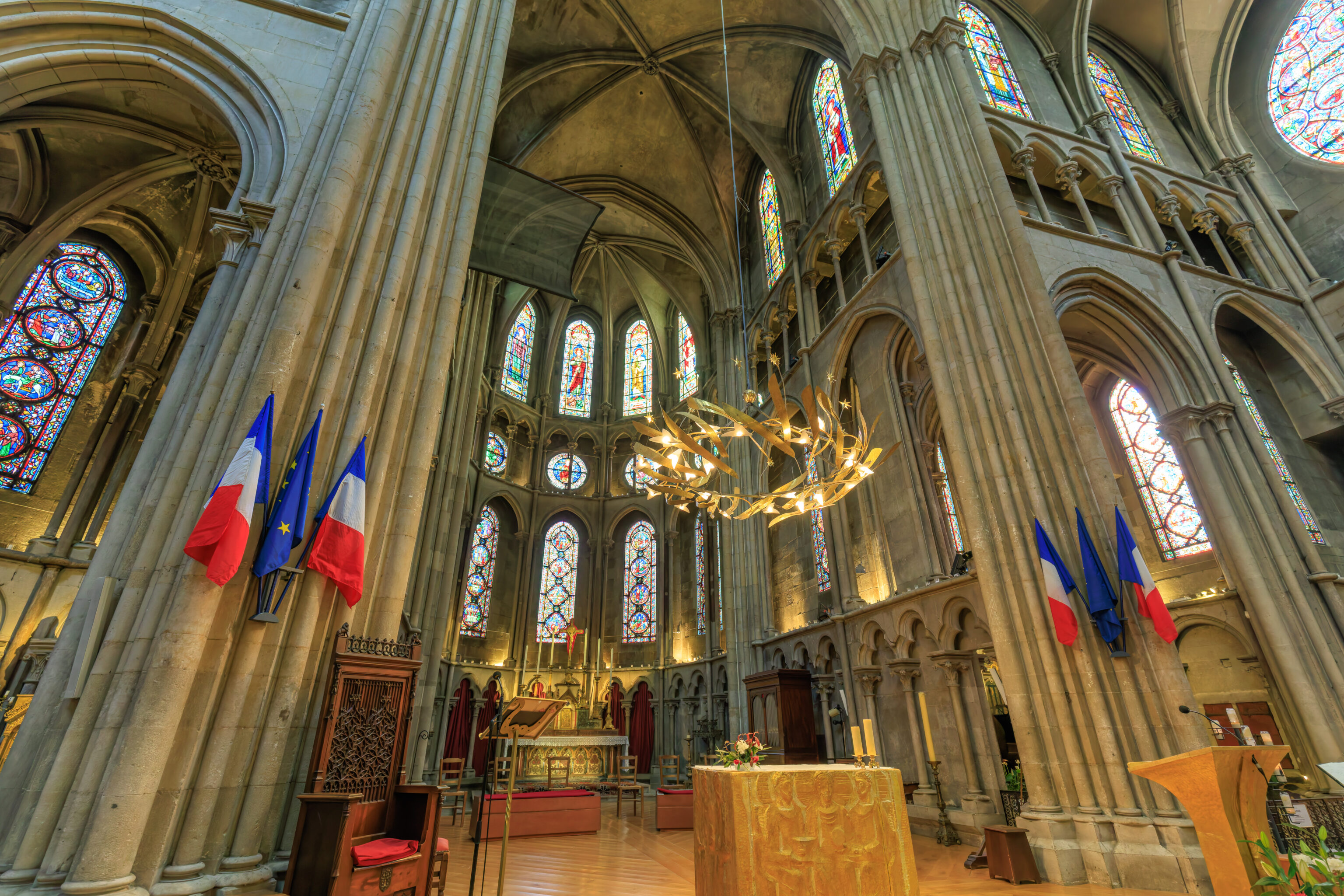
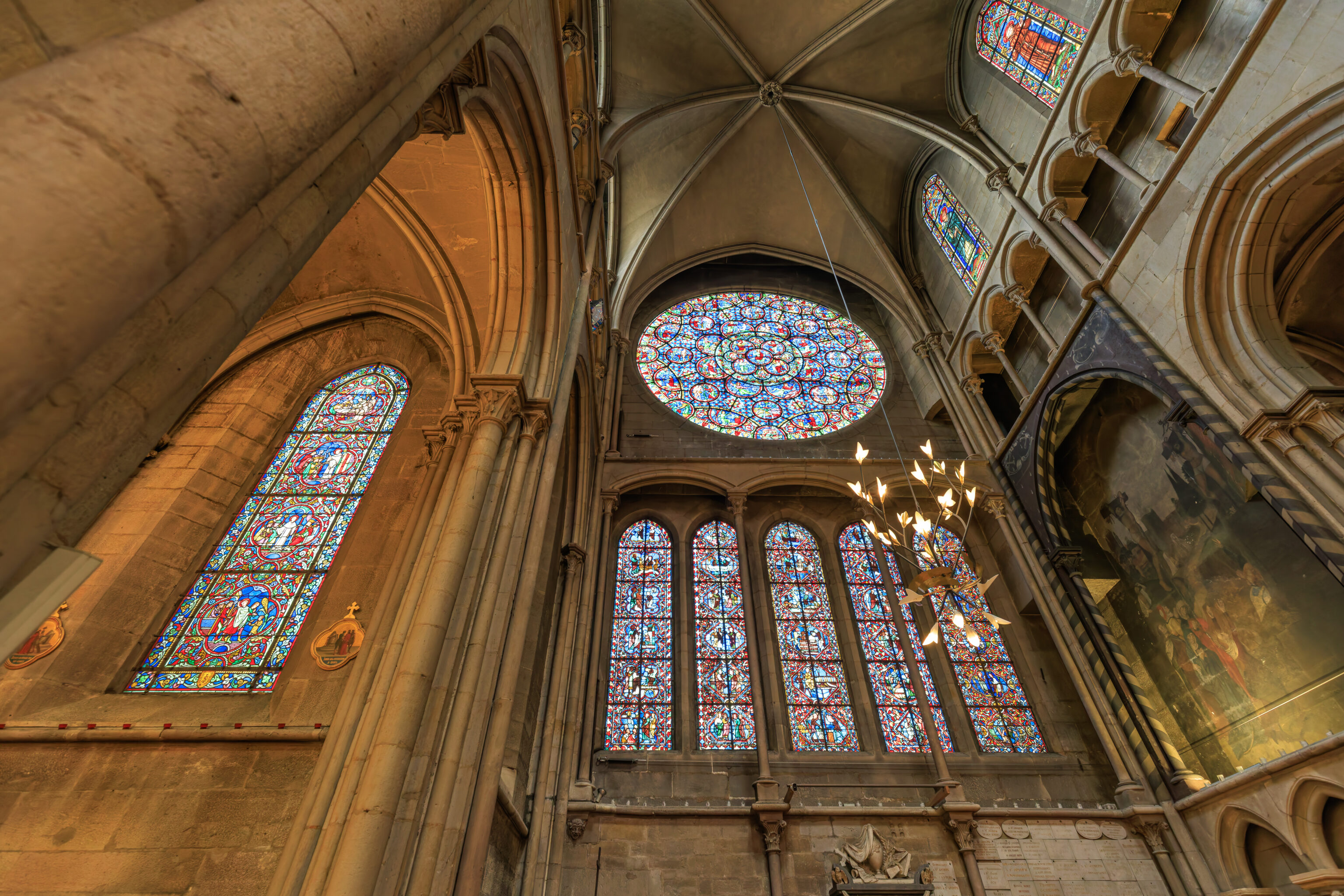
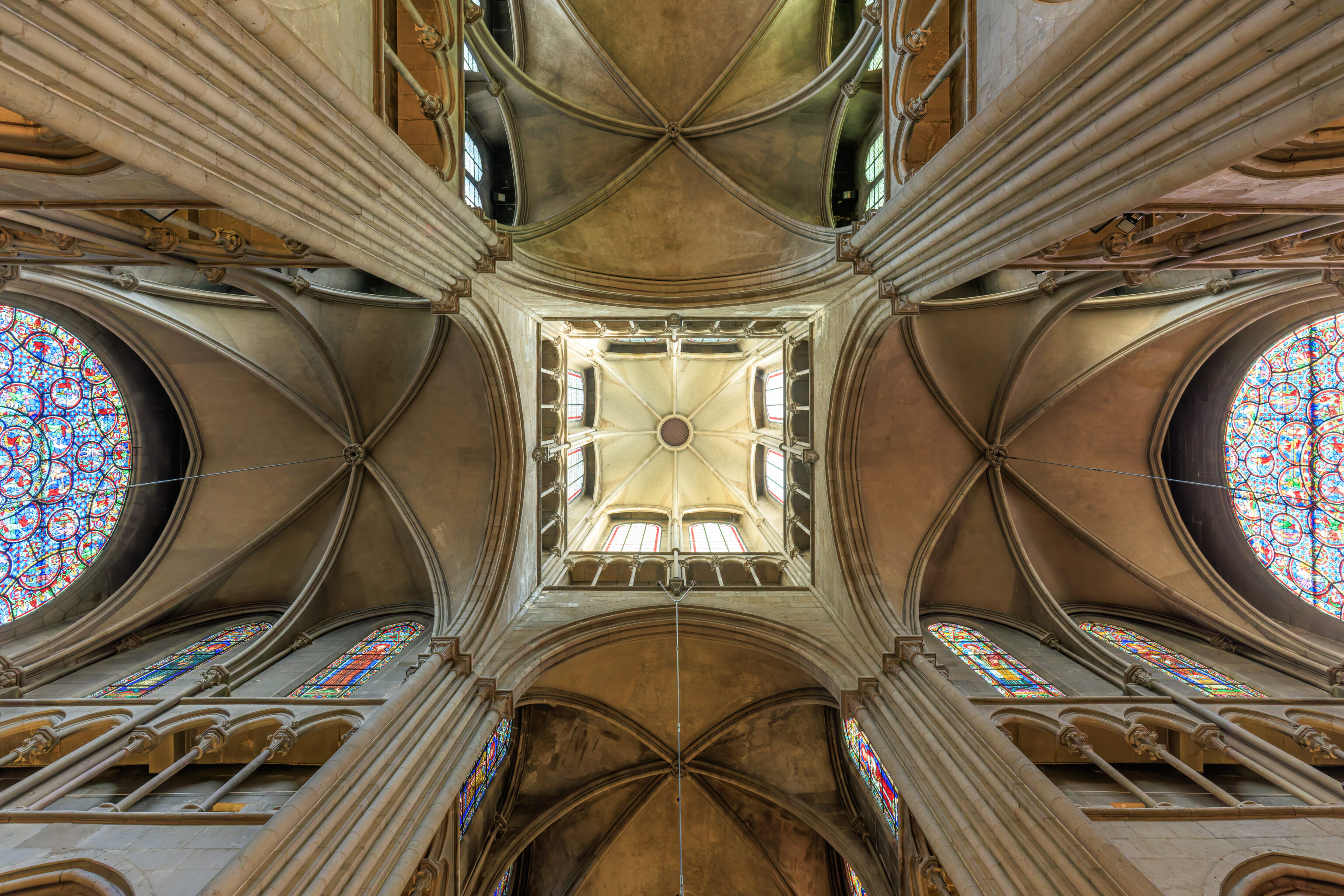
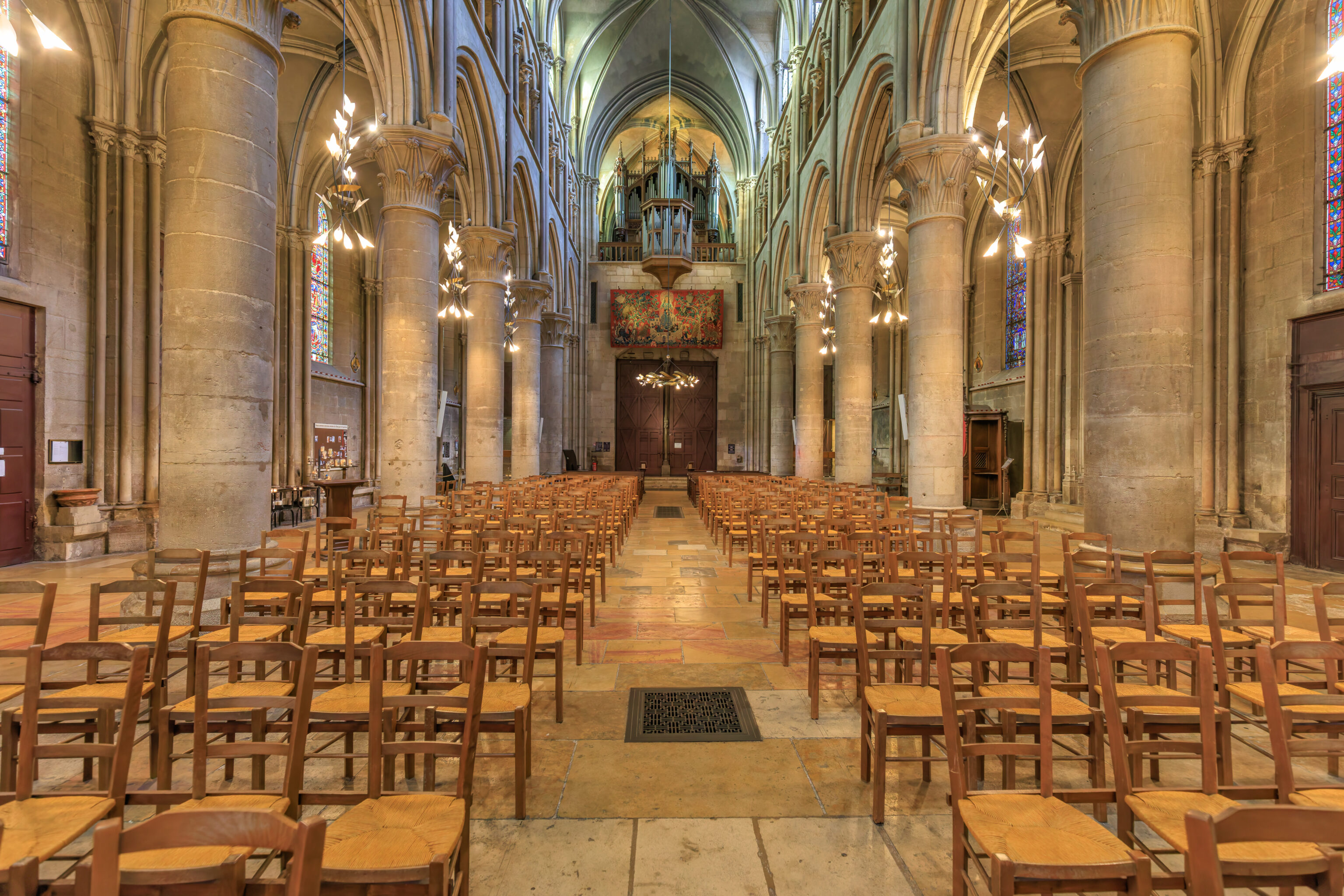
The church was large but overall simply decorated as far as large European churches go. They did have some interesting lights hanging from the ceiling.
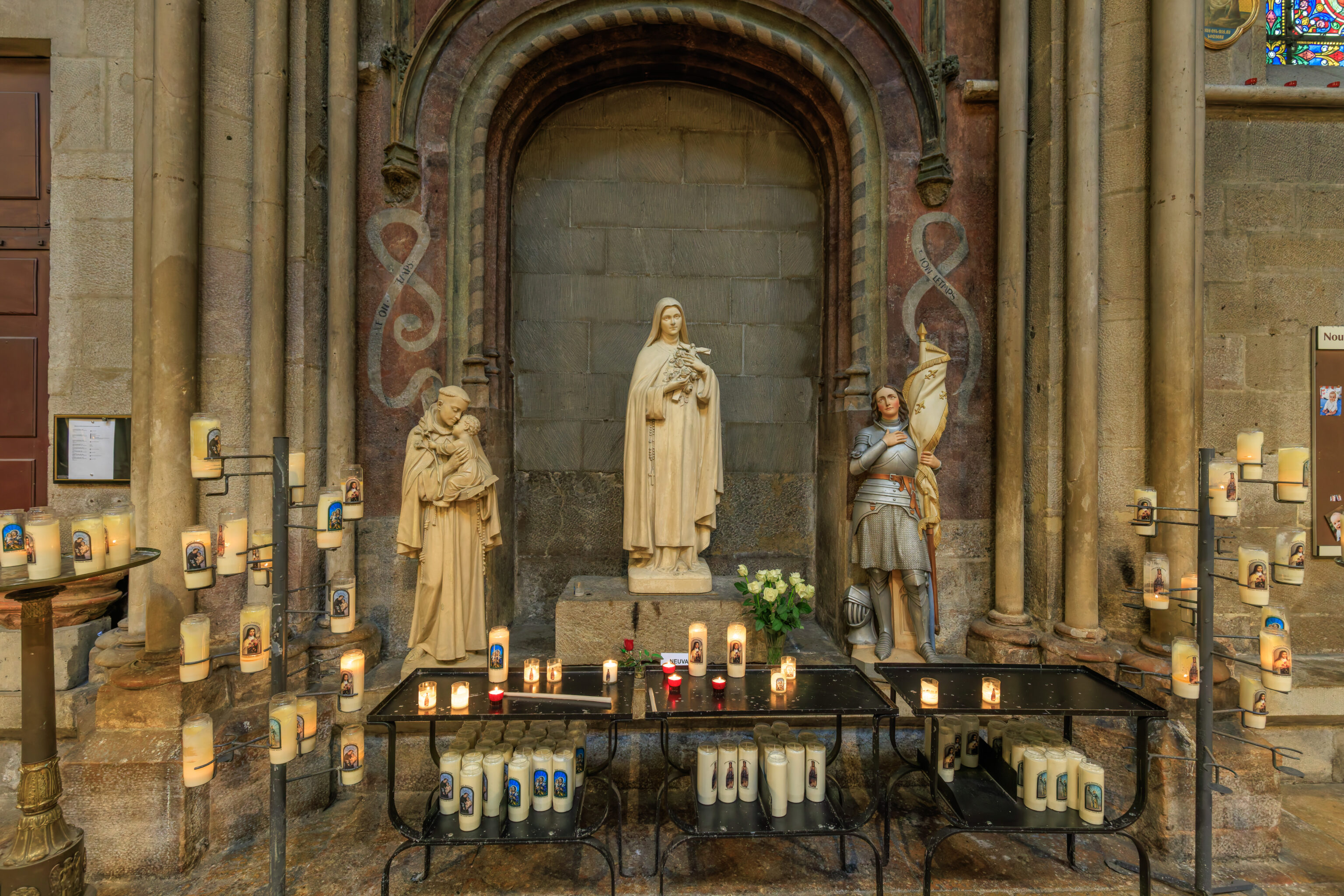
If you’re in France and see a young woman in armor, it is almost certainly Jeanne d’Arc!
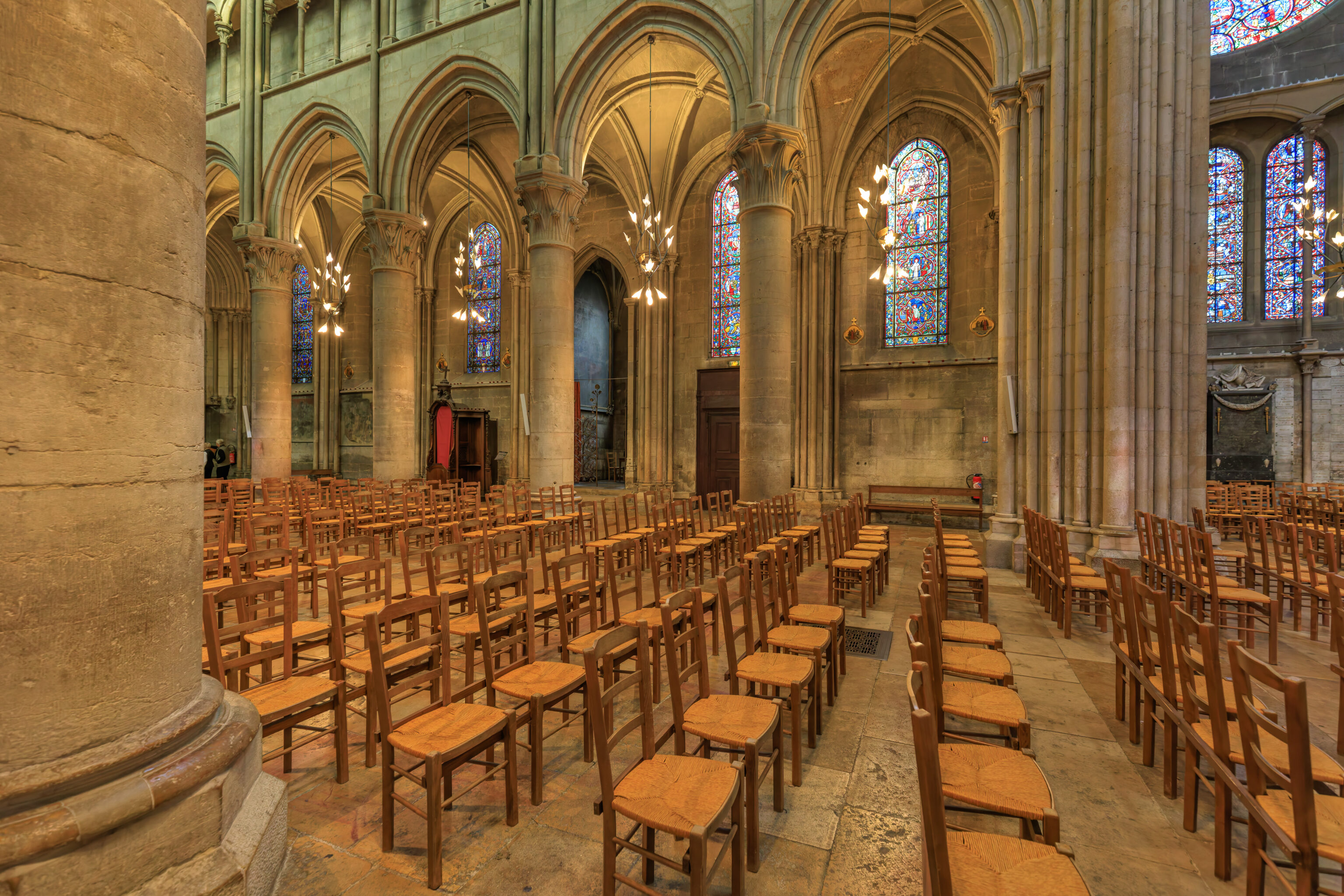
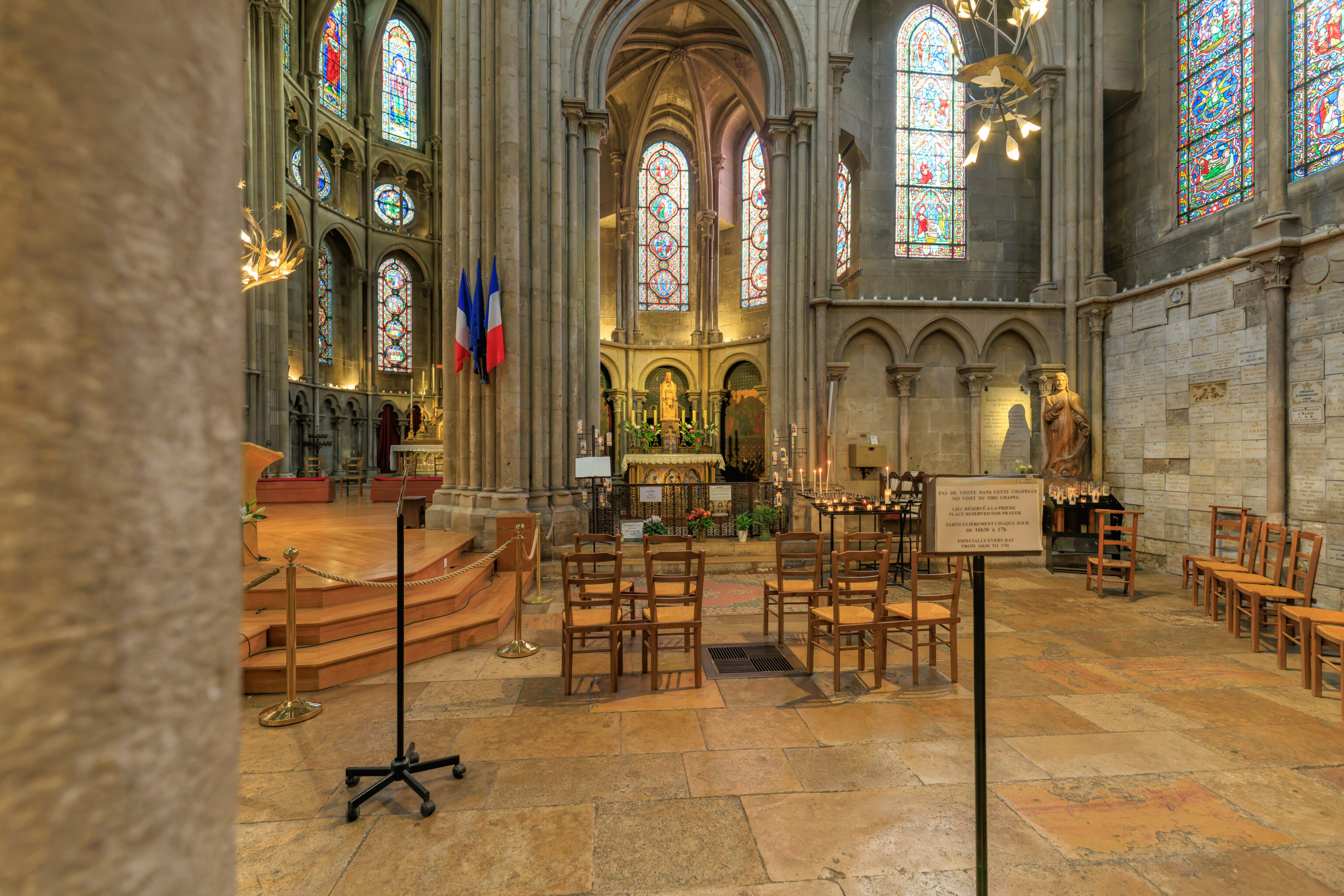
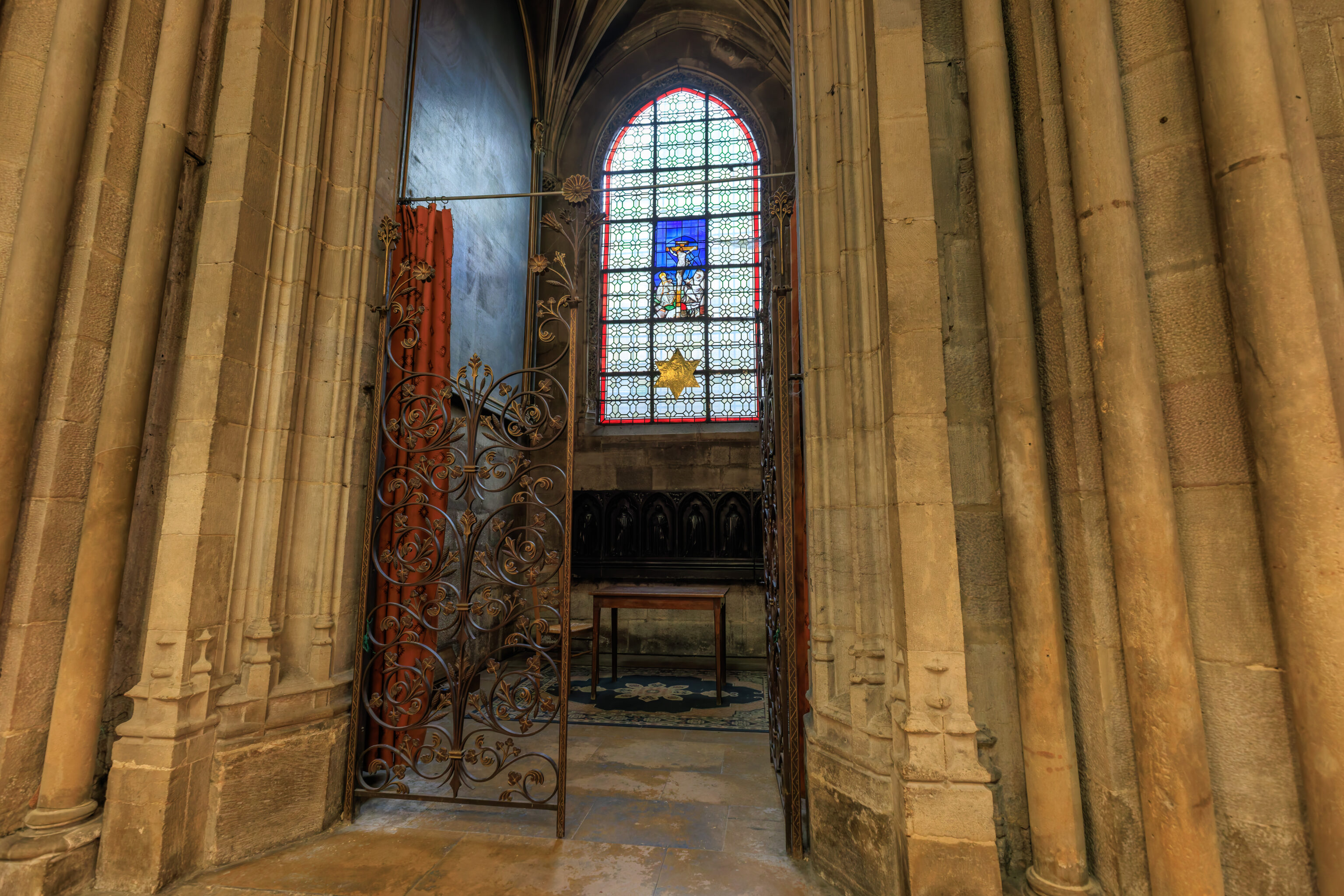
This chapel is the Chapelle de la Croix (Chapel of the Cross). A sign explains, translated using Google:
THE CHAPEL OF THE CROSS

Until the 19th century, Notre-Dame had several chapels built between its outer buttresses.  They were all destroyed during the church's restoration in a spirit of returning to the Gothic style, except for this one, which probably dates from the 15th century. It has borne various names: the Chamberlain Chapel, named after the mayor of Dijon at the time of its construction; the Esbarres Chapel, after another family from the parish; the Font Chapel, because this is where the baptismal font was located for a long time; and the Chapel of Reconciliation, due to its current use as a place for the sacrament of Reconciliation.

The stained-glass window is a fragment of a 16th-century work; depicting the crucifixion, it was formerly located in the great hall of the Chamber of Accounts of the Duchy of Burgundy.

Below the stained-glass window is a bas-relief in Tournai stone (a type of marble quarried in Belgium).  It is part of the tomb sculpted in the 15th century for Pierre de Bauffremont, advisor to Philip the Good, Knight of the Golden Fleece. Pierre de Bauffremont was known for his love of black: he wore clothes of this color, and his motto was "More mourning than joy." This cenotaph was originally located in Saint-Bénigne, and appears never to have been completed. During the French Revolution, it was dispersed into several fragments, one of which serves as an altar frontal in the Church of Saint-Saturnin in Vergy, and another is kept in the Baltimore Museum of Art.

Two immense paintings hang on the walls: on the right, a 17th-century Calvary scene, the work of Pierre Nichon (1625-1655). Opposite, a work by Didier Louet, dated 1753, depicts the discovery of the True Cross by Saint Helena in the 4th century. According to tradition, Saint Helena found several crosses in Jerusalem; one of them having healed a dying woman, it was considered to be the cross of Christ. This is the scene depicted here.

The Church of Notre-Dame keeps in its treasury a fragment of the True Cross, which is offered for veneration by the faithful on Good Friday.

It is on one of the exterior buttresses of this chapel that one finds the famous owl, emblem of the city of Dijon.
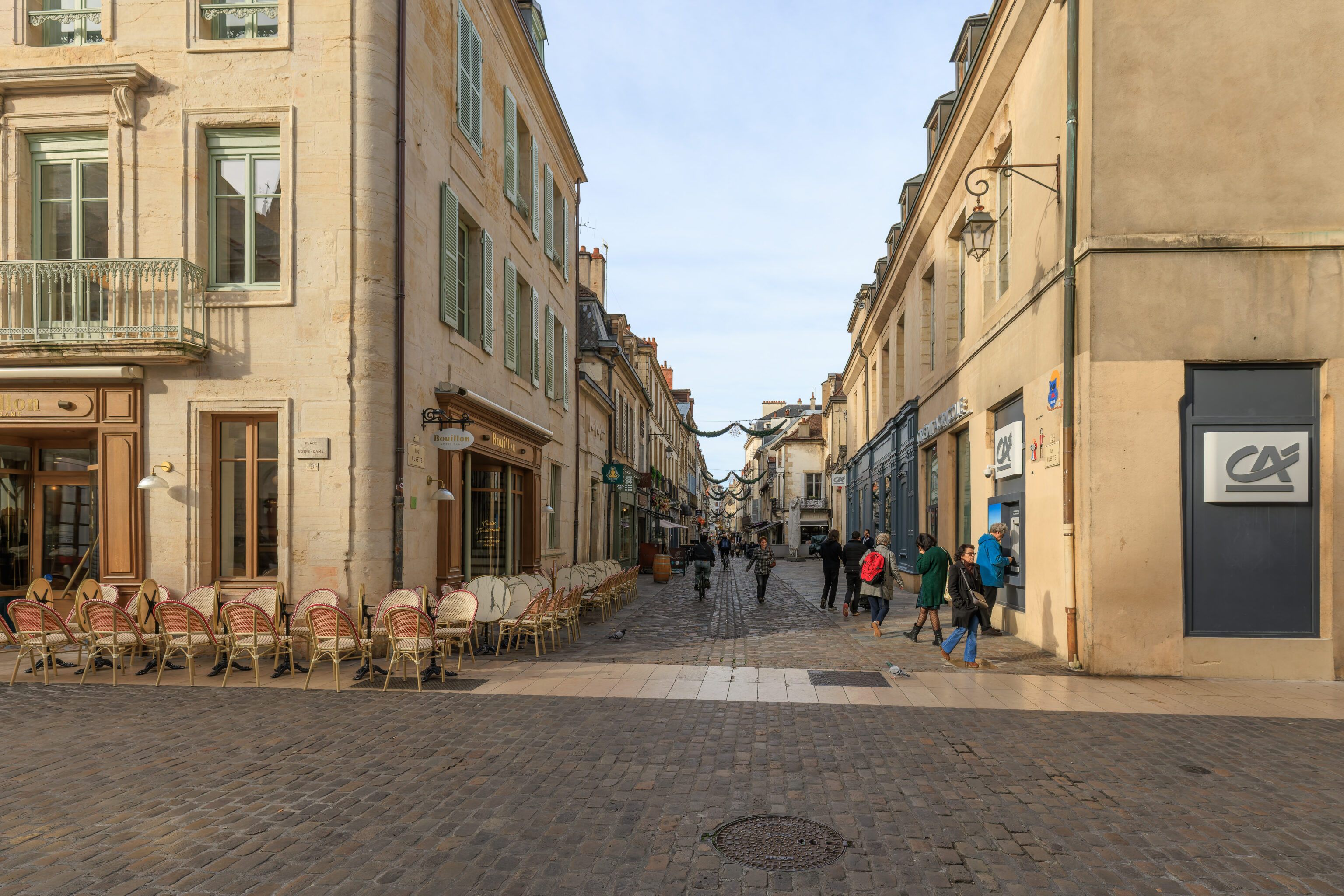
After exiting the church, we decided to follow the Owl Trail for a bit.
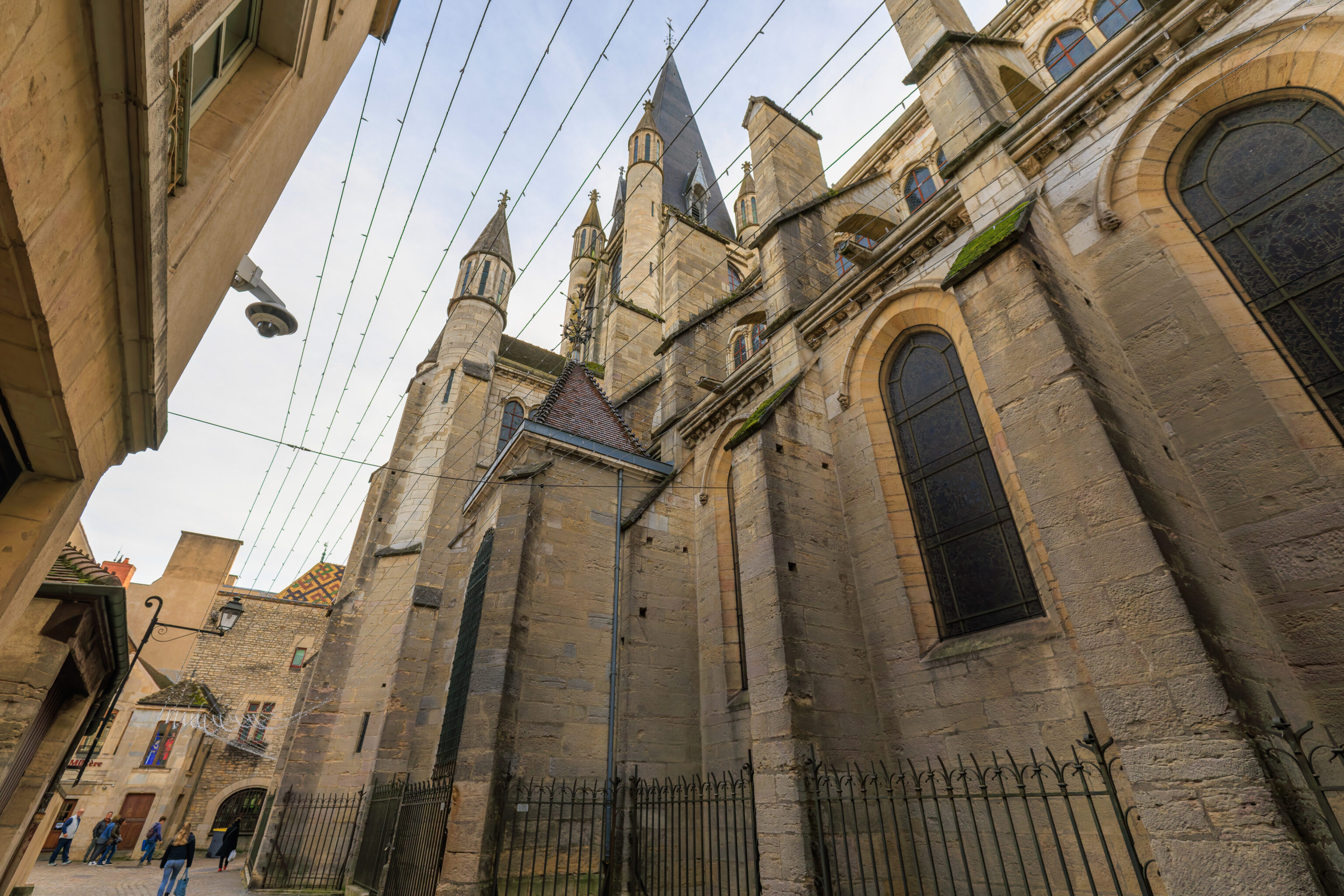
We walked on the north side of the church. We had walked this way earlier before entering.
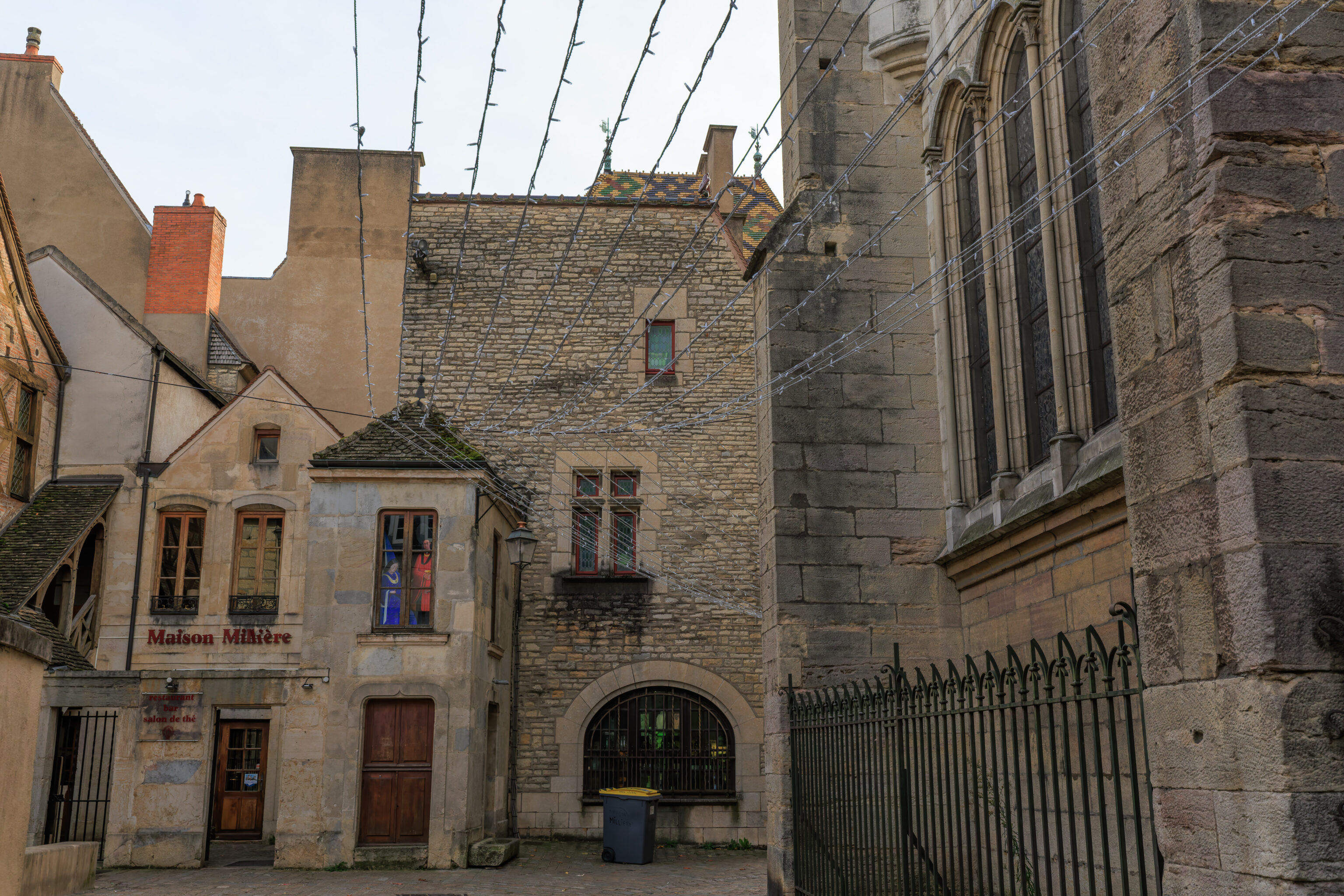
Ahead, we could see the owl up on the rooftop that we saw earlier. The owl is a bit more obvious from this perspective.
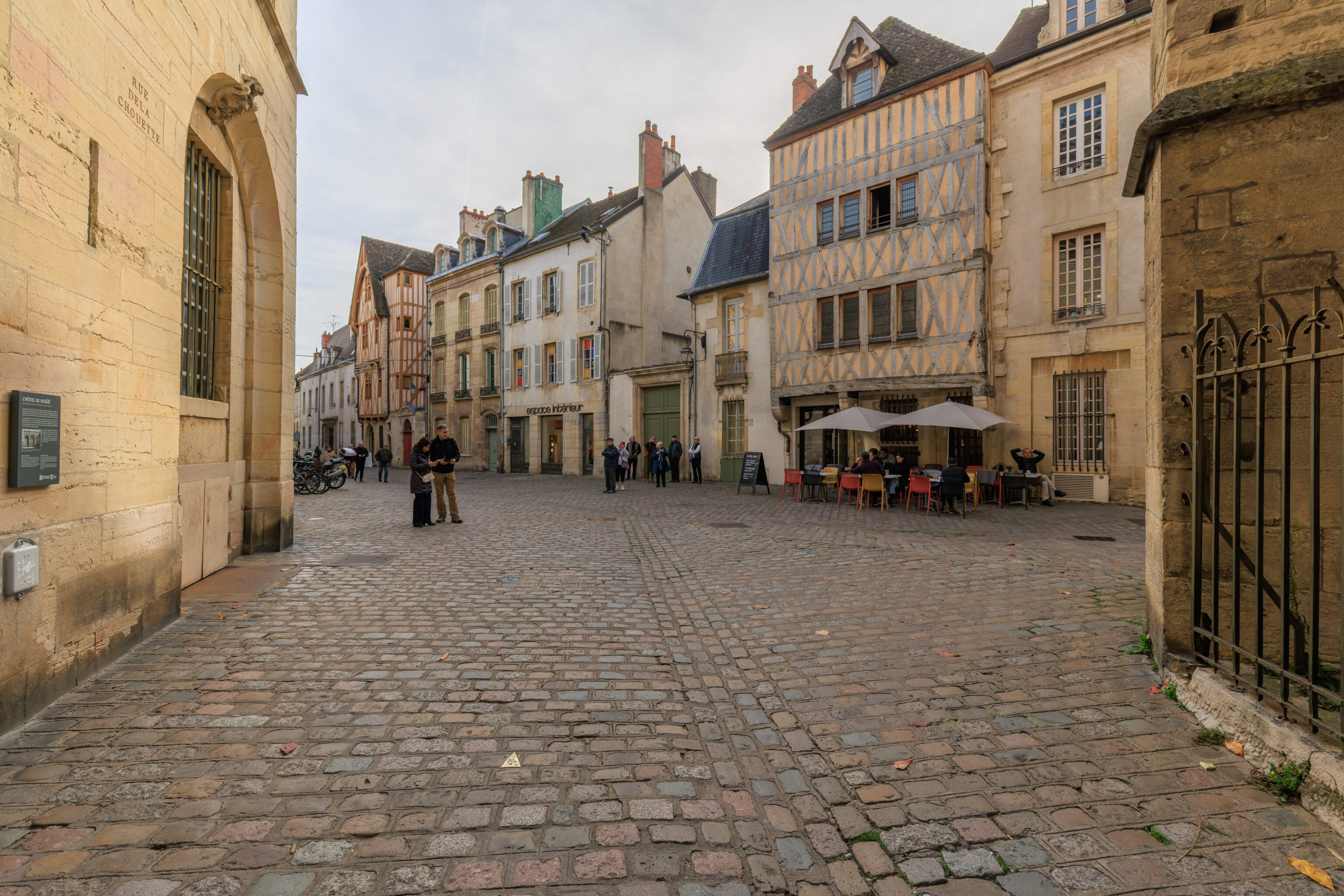
We continued on past the church’s east end.
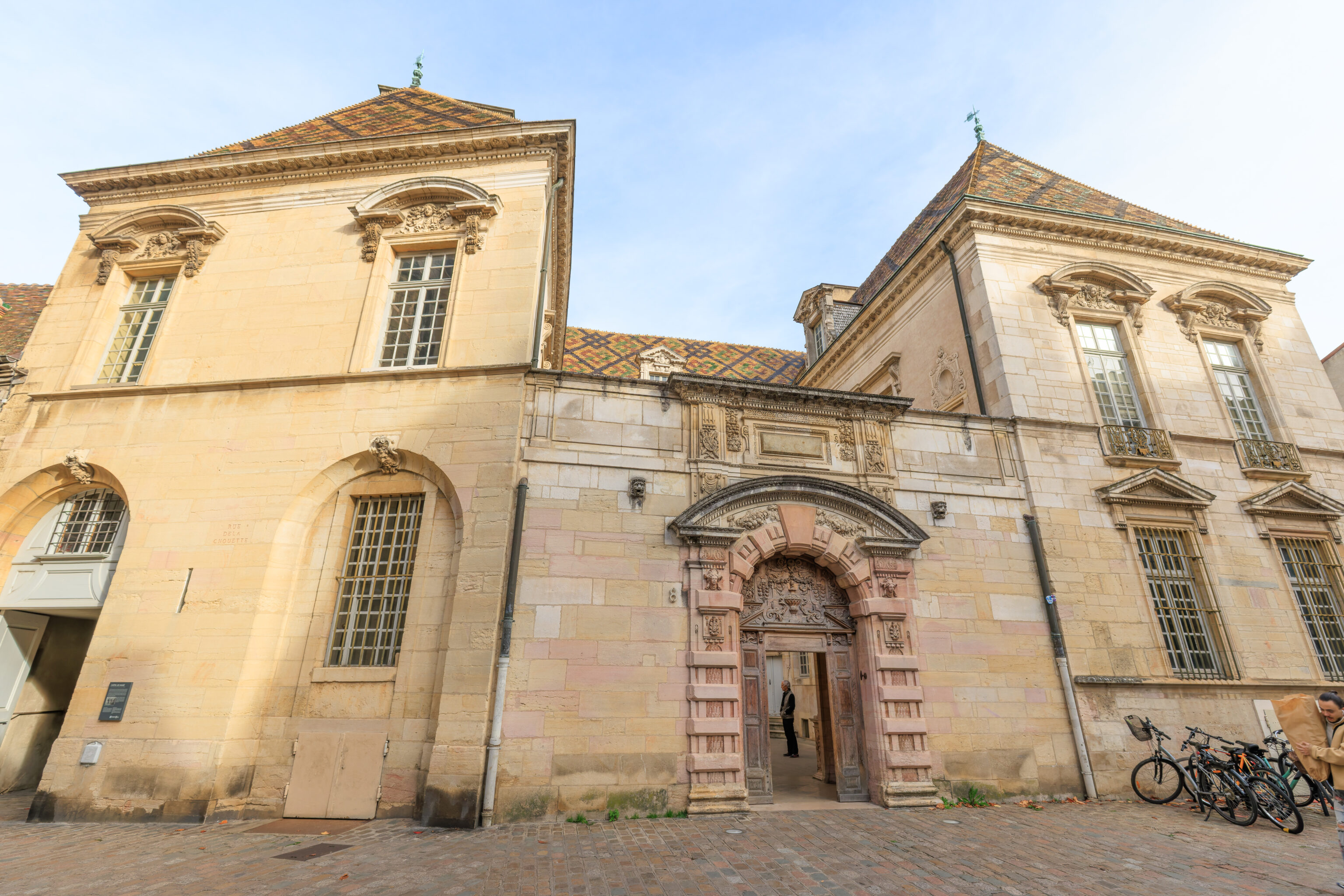
This doorway leads into a small courtyard.
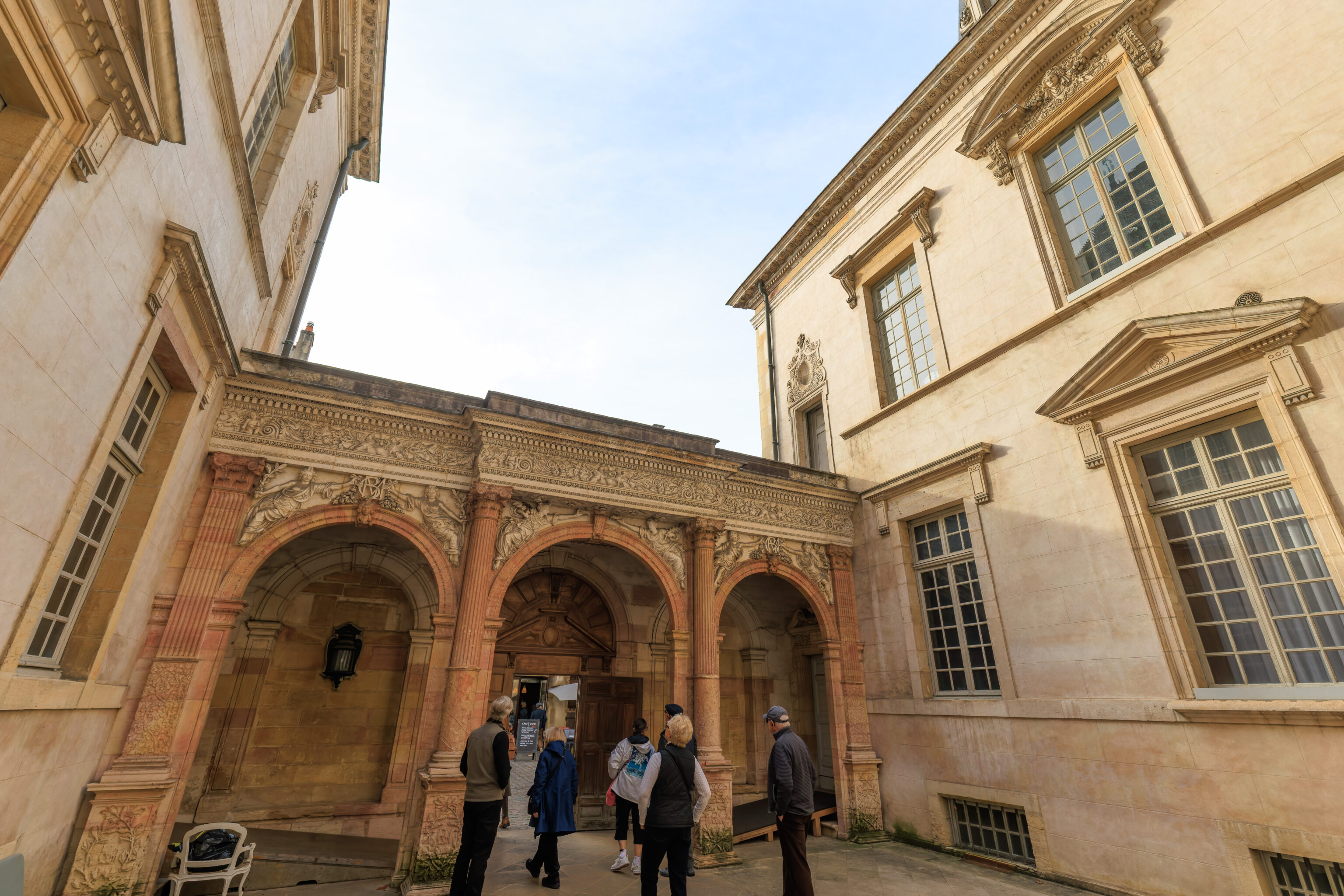
We went in to take a look as we noticed a small tour group inside.
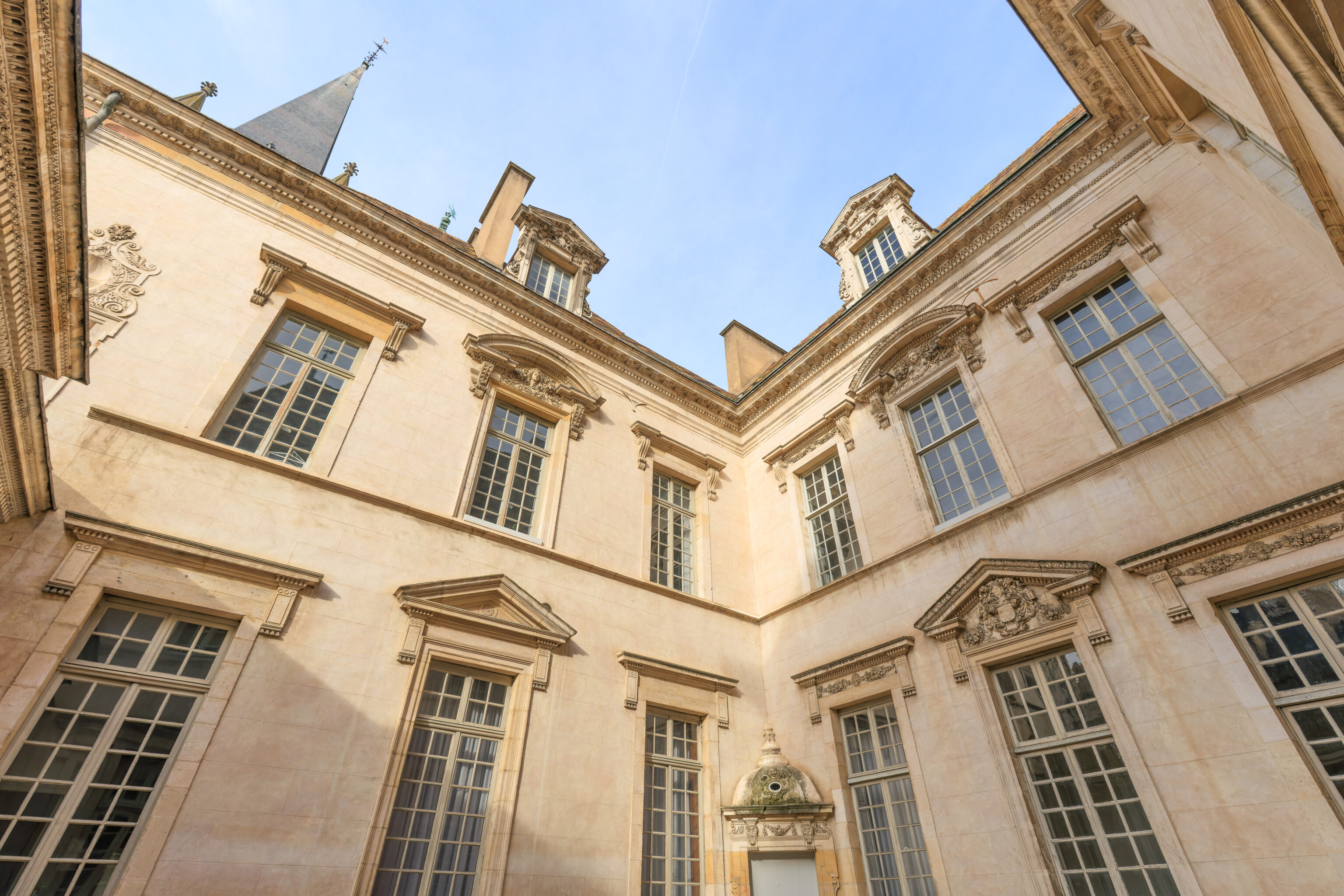
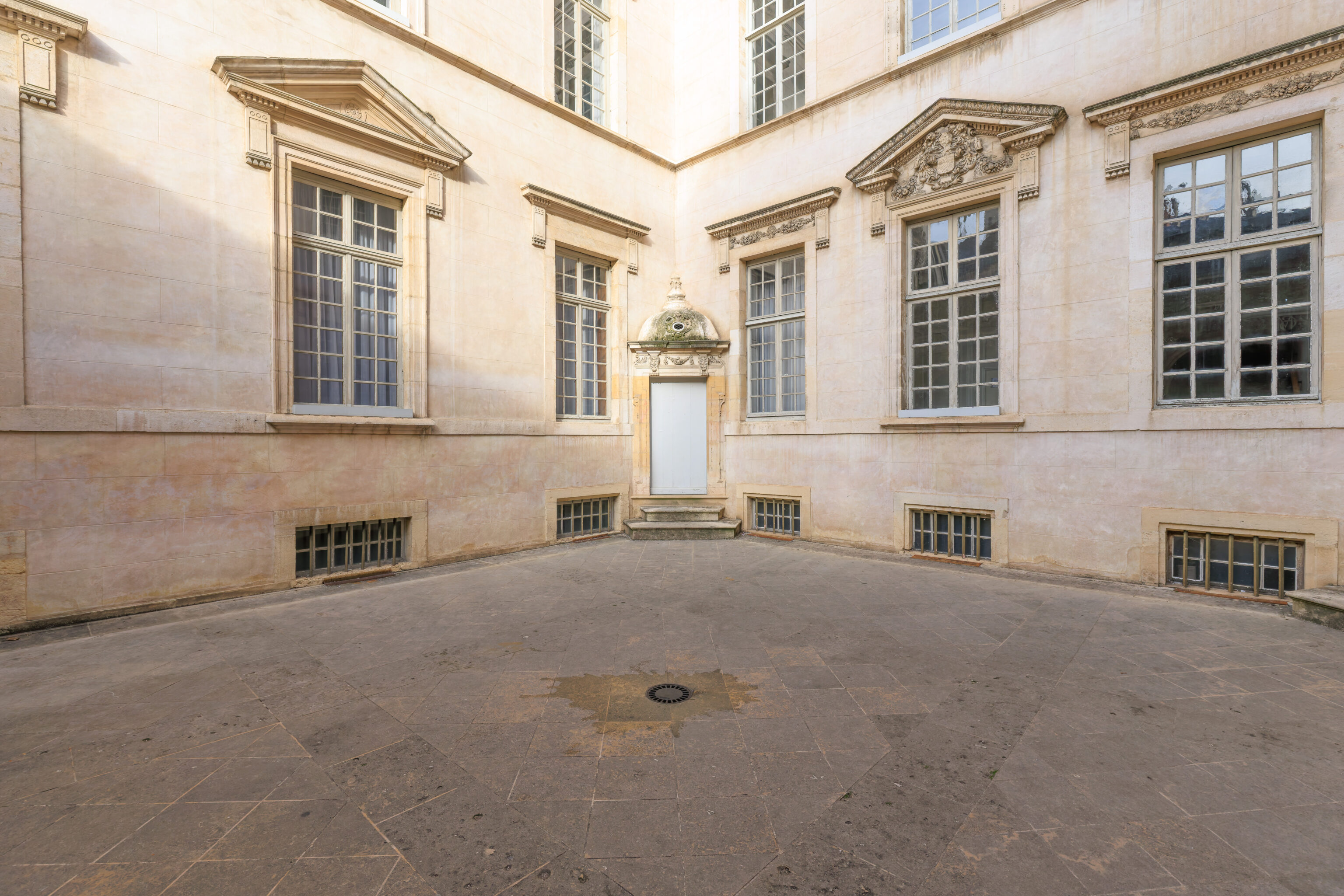
This courtyard is within the Hôtel de Vogüé. The French word hotel can be pretty confusing, in this case, it was formerly a mansion. It is currently owned by the city of Dijon and used for its HR department.
There wasn’t really anything inside the courtyard to see. The entrance seems to be the only part of interest.
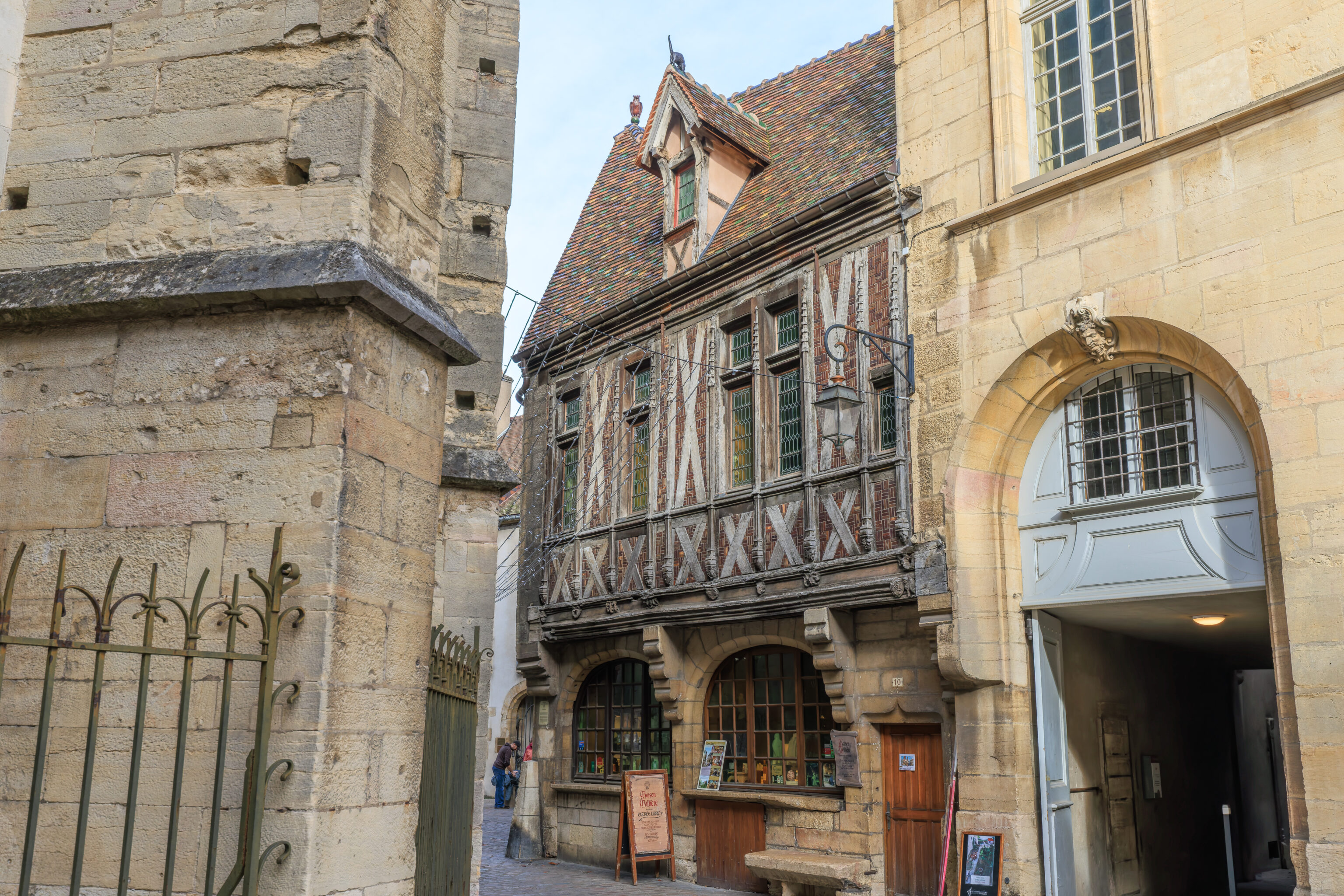
An even better view of the owl on the rooftop! And the cat! From here, we went through the open door on the right.
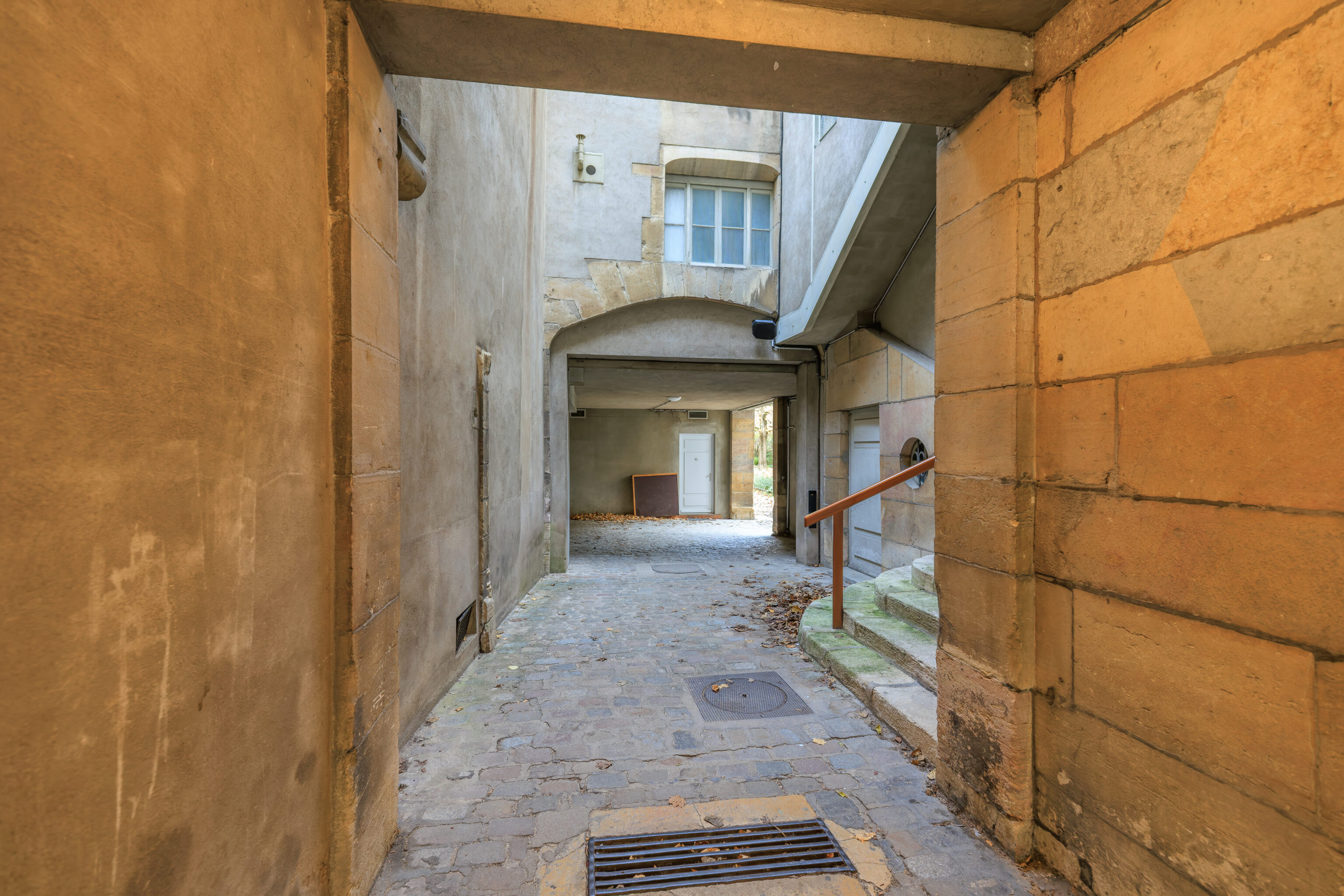
This led to a small passageway. A sign explains where this leads:
ACCESS TO THE GARDEN

The hôtel de Vogüé was built on the site of older houses, which were purchased and then demolished during the new edifice's construction. This passage was created in 1717 in order to provide access for horse-drawn carriages. It contains several architectural features bearing witness to earlier constructions, including the ogee door and the base of the gothic arch on the left.
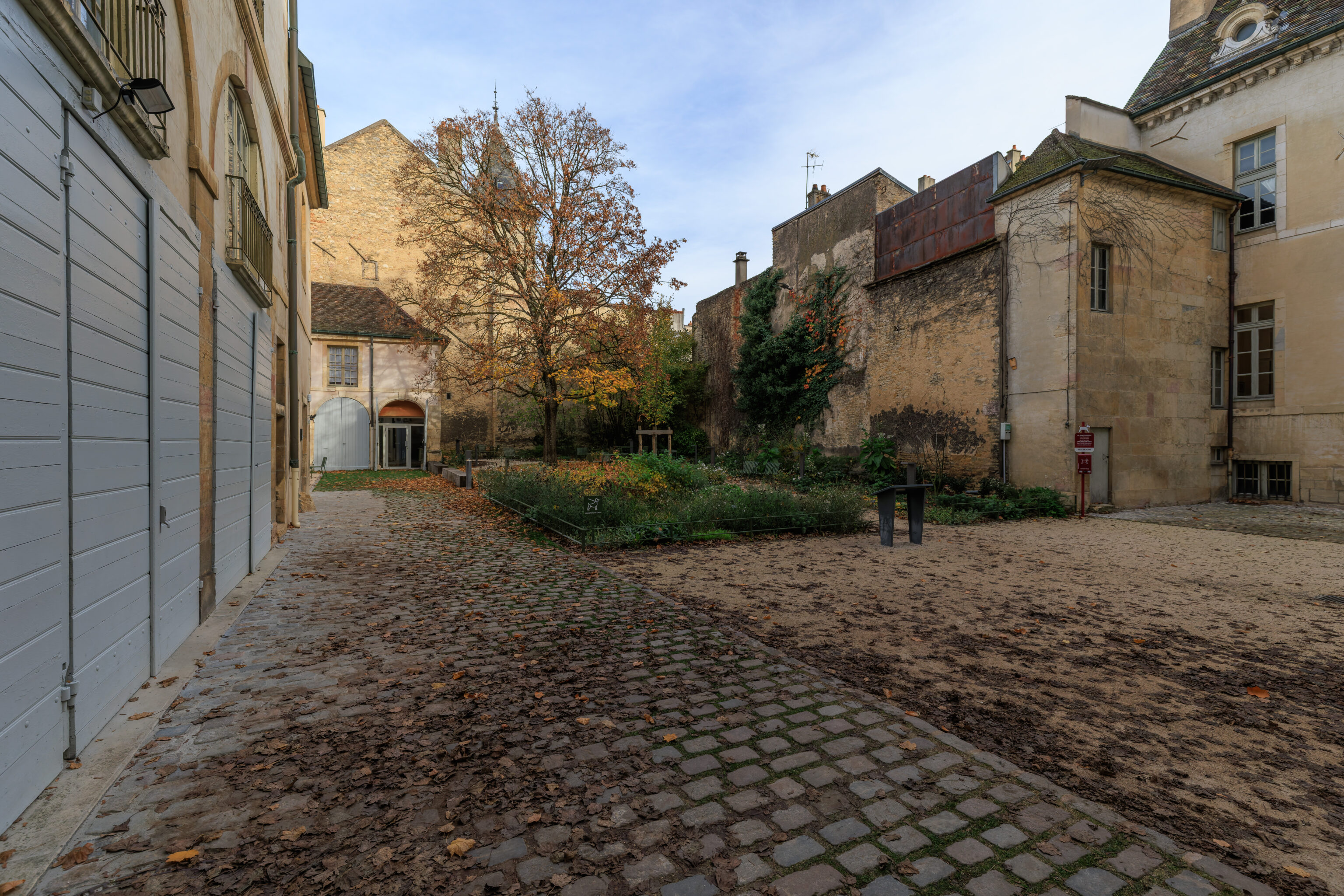
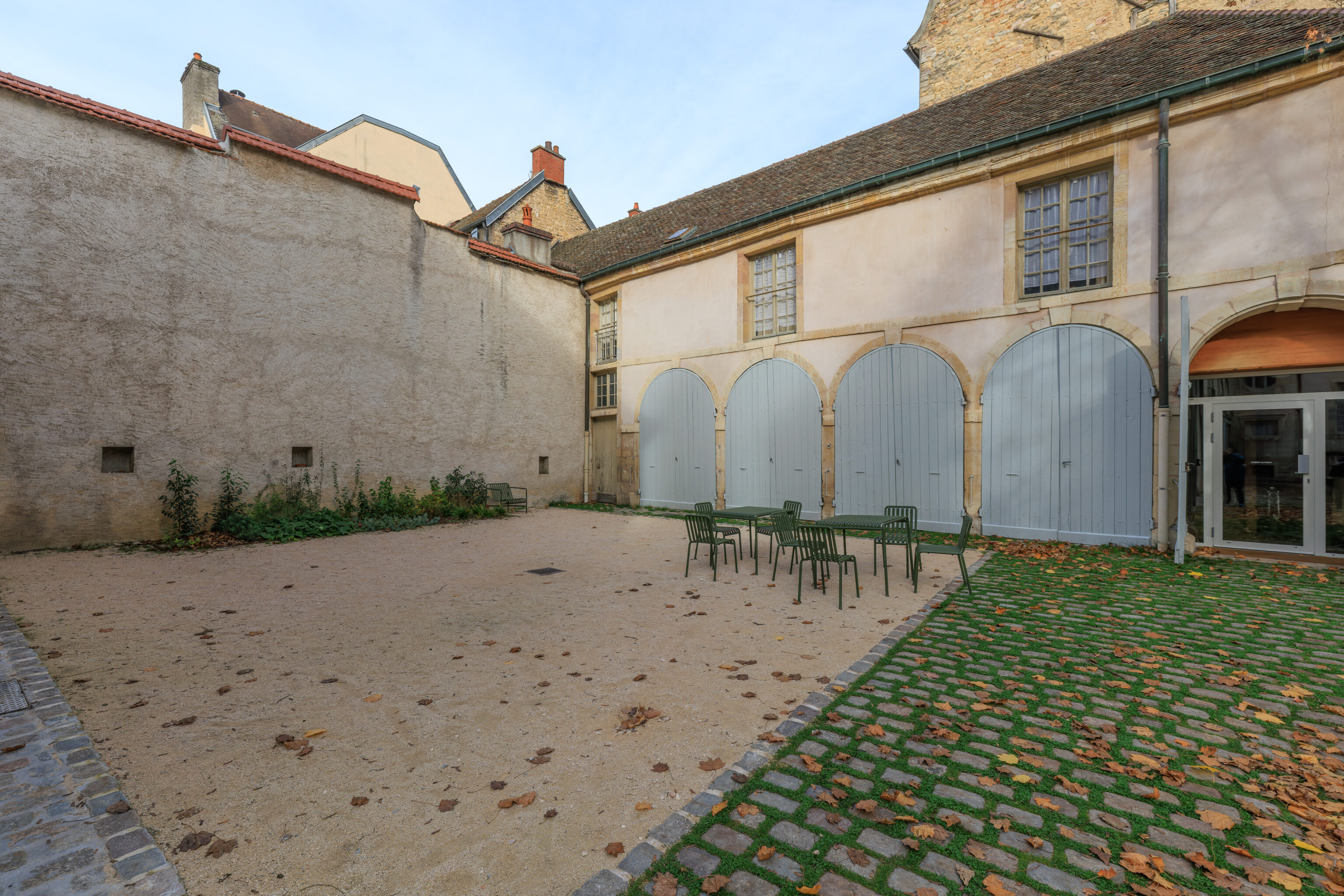
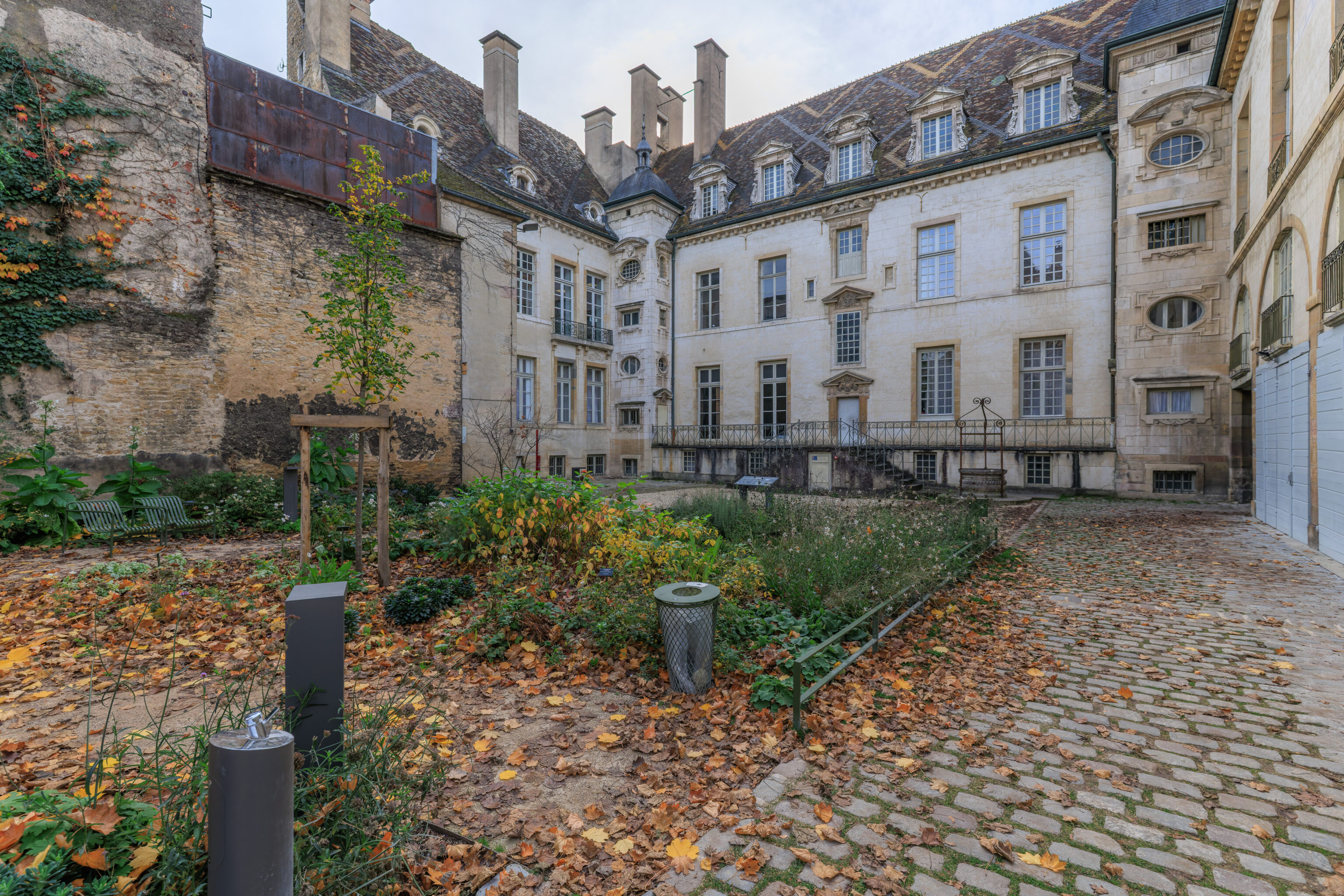
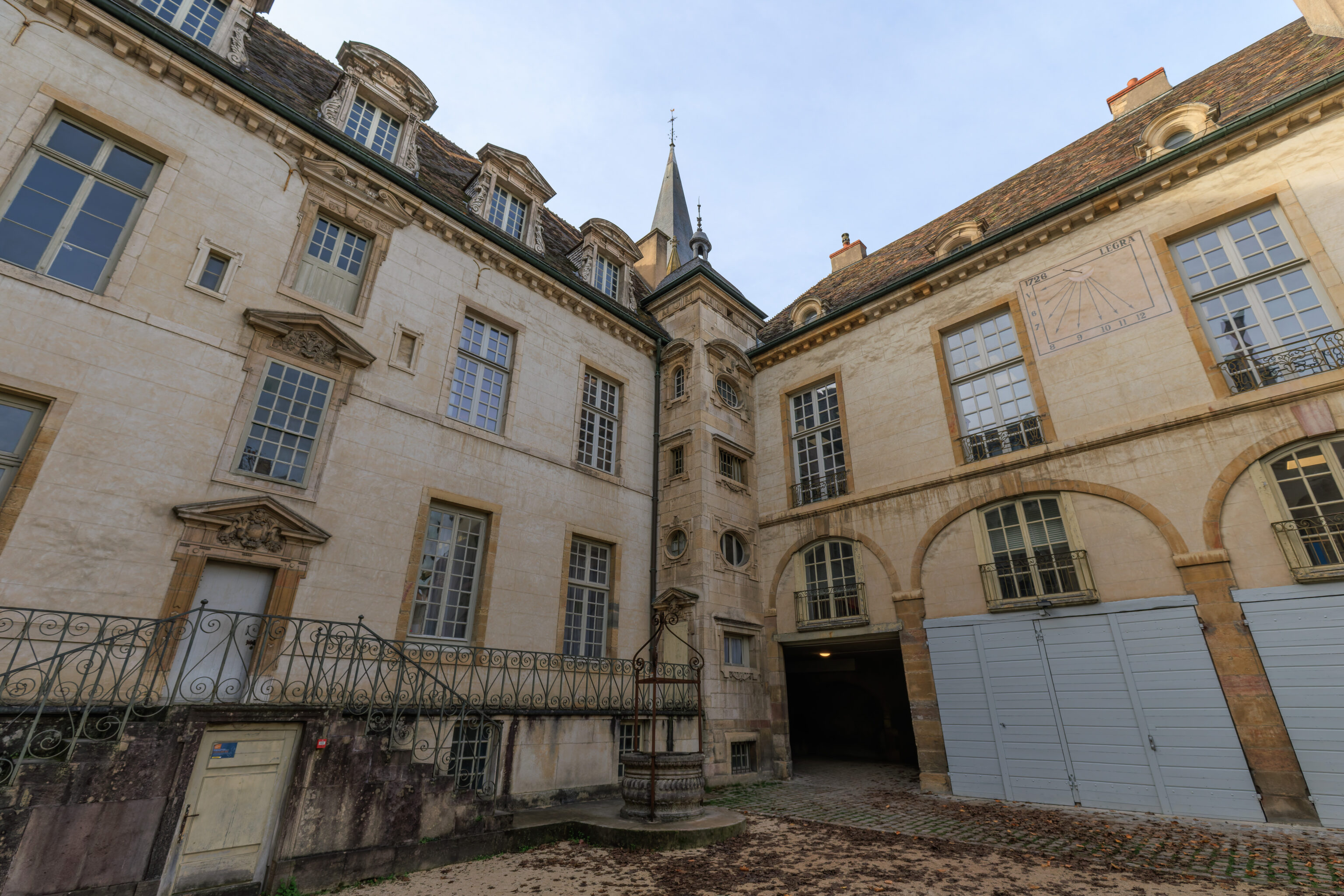
The garden is probably nicer during the other seasons of the year!
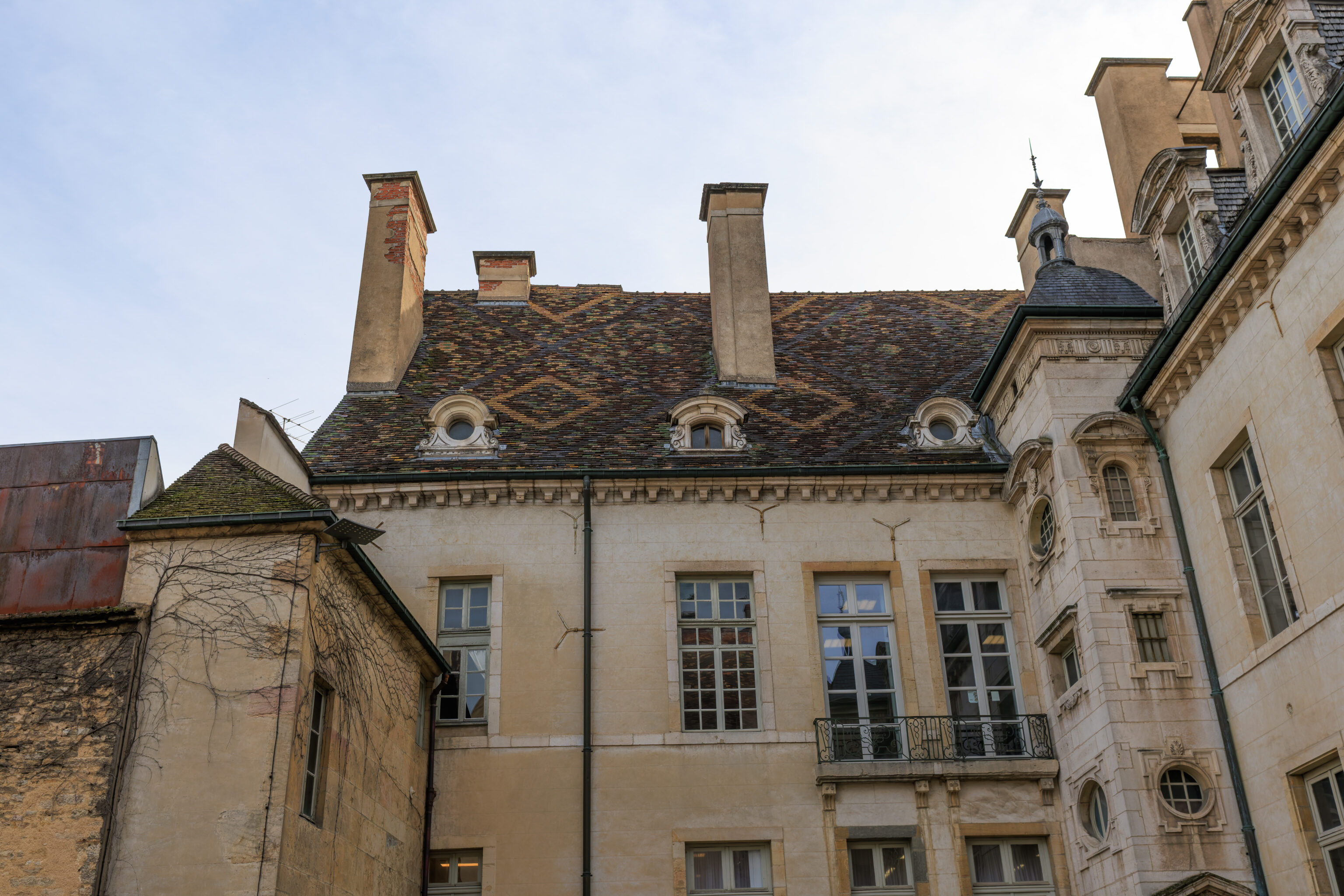
The roof shingles have a diamond shaped pattern.
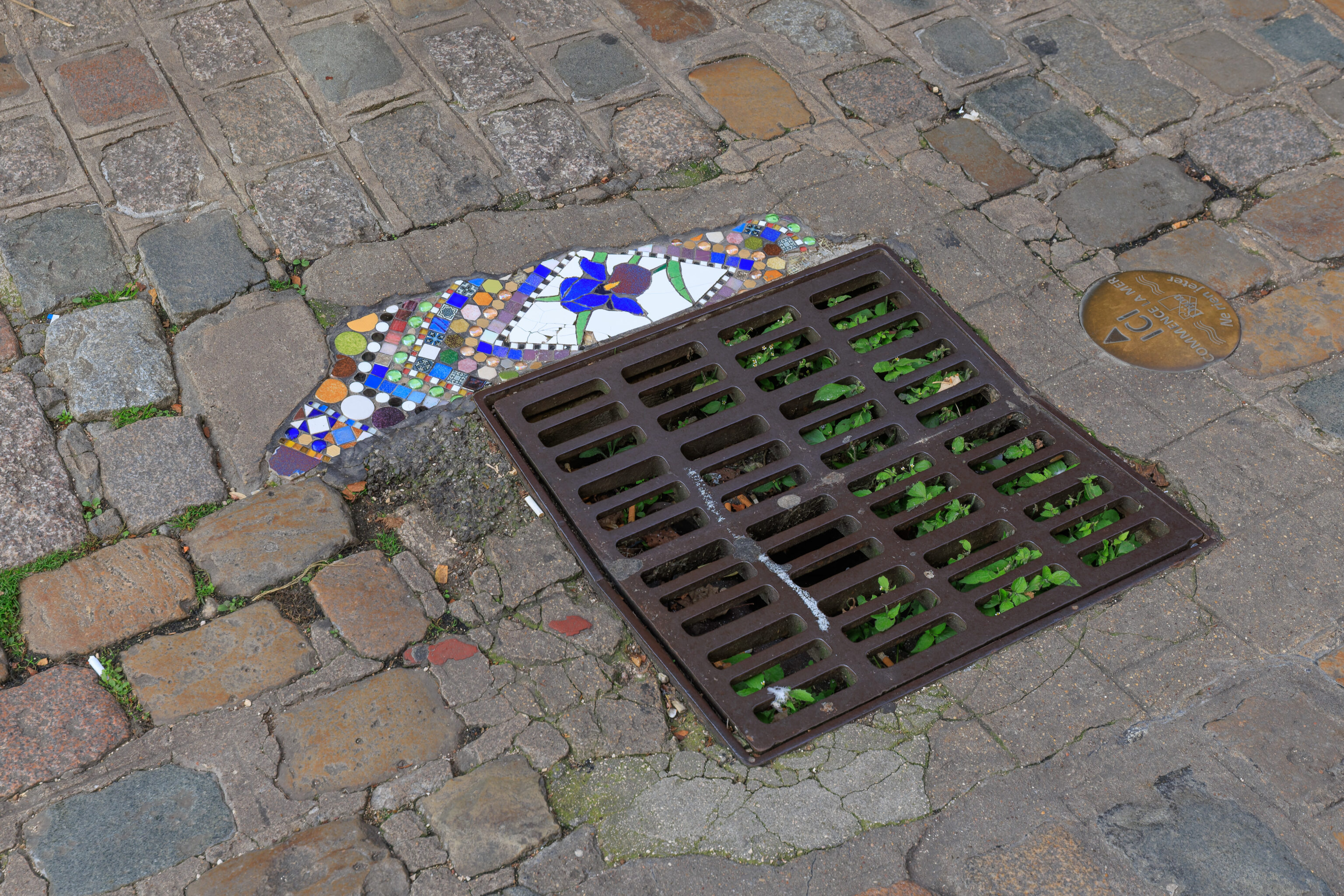
After returning to the road, we noticed a bit of tile on the ground next to a drain. These mosaics are apparently created by Dijon local Fanny Pitoiset. She seems to be a teacher and artist.
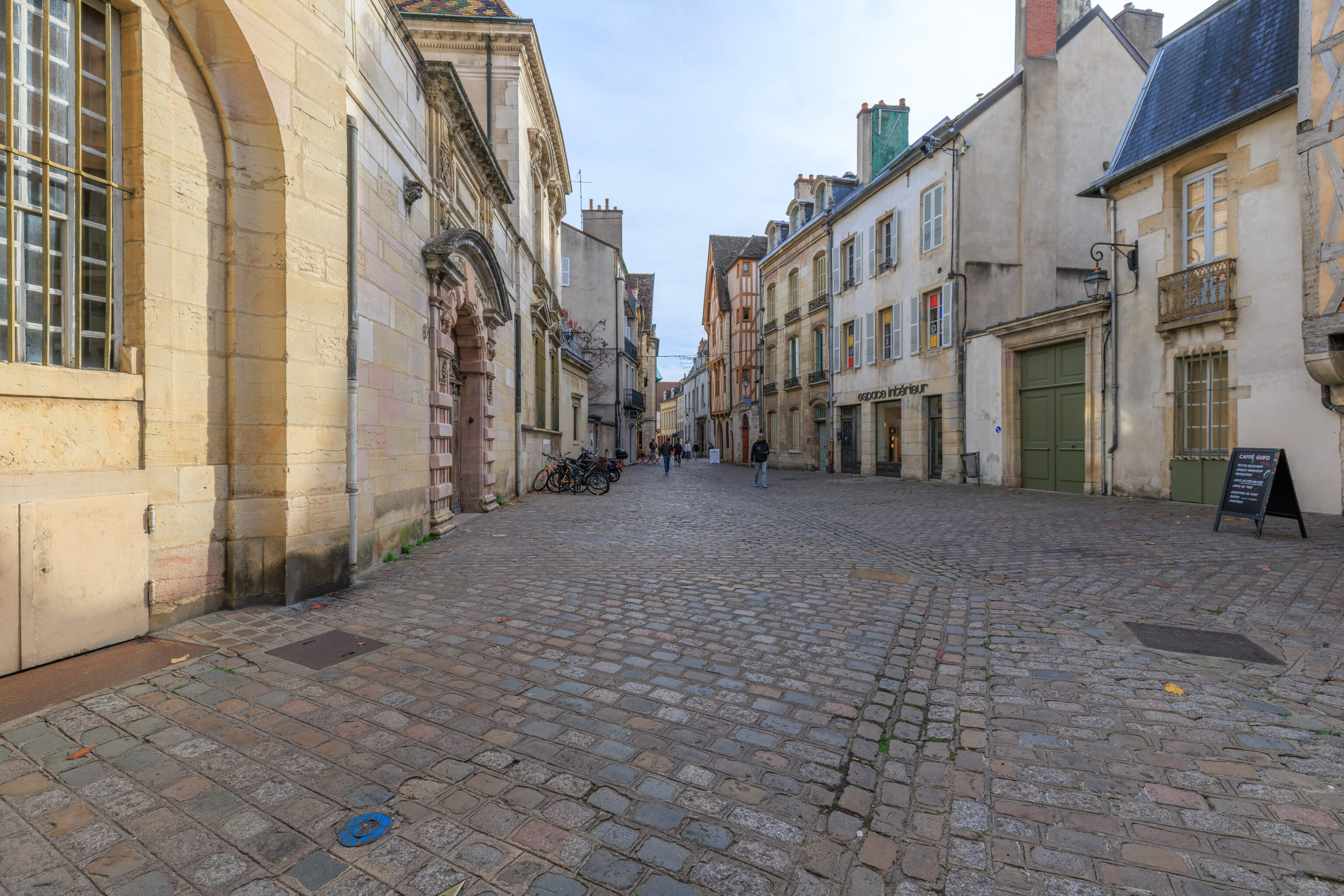
We continued on…
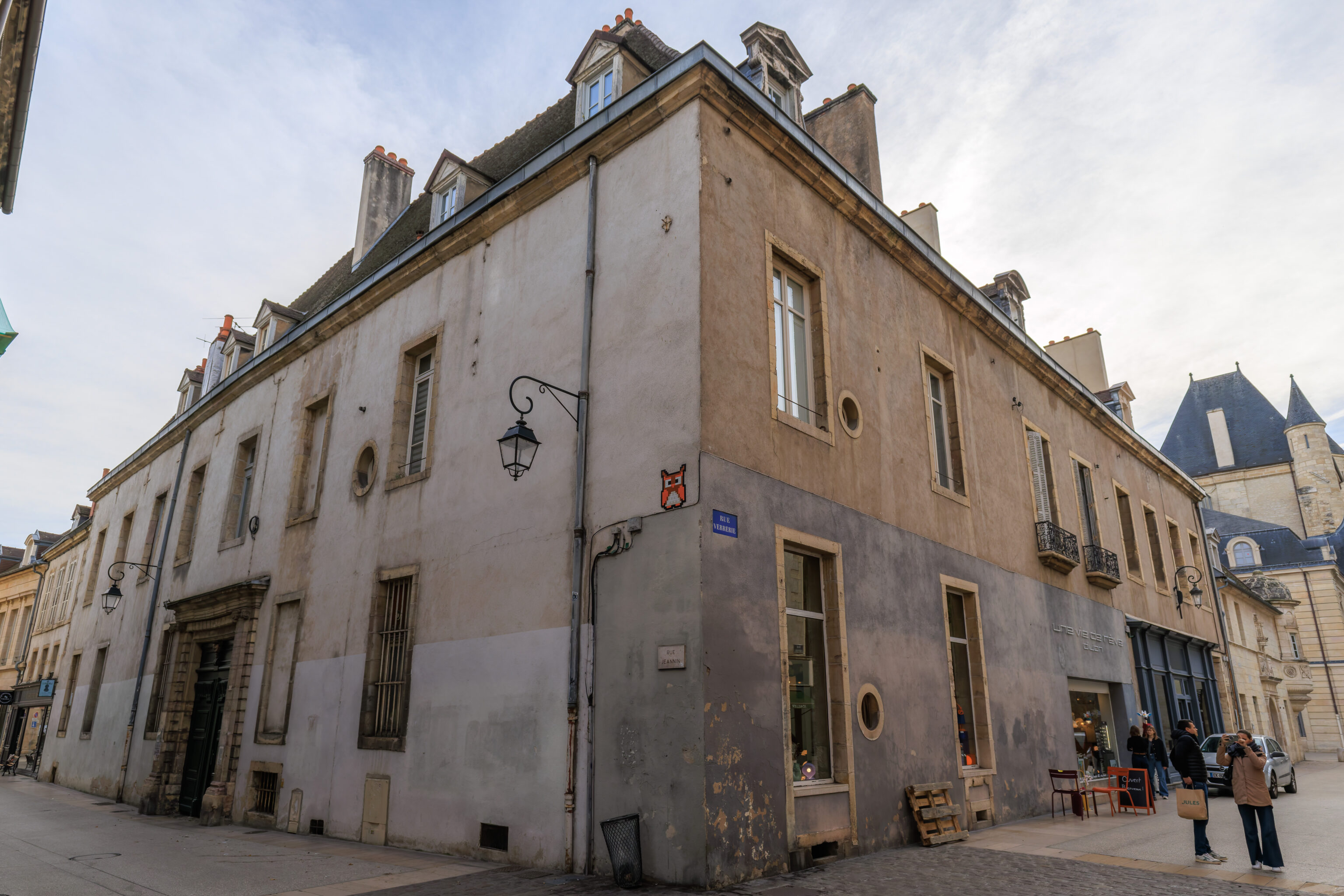
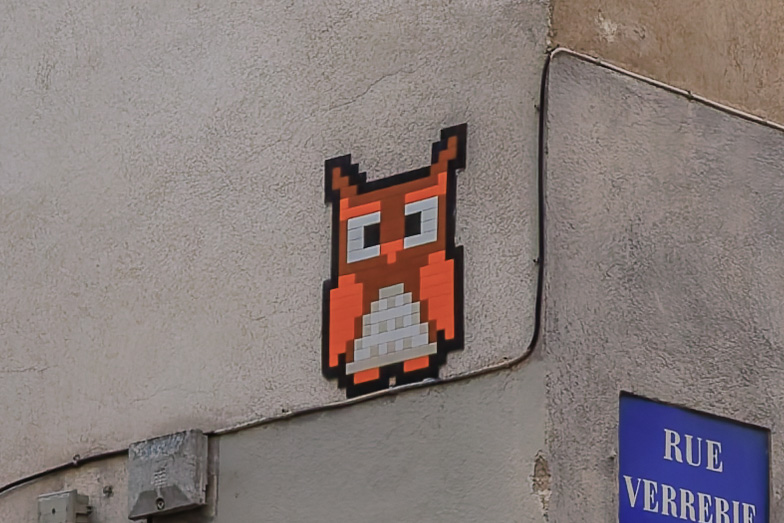
We spotted another owl! Pixel art like this seems to be somewhat common these days. At least, not surprising to see anymore.
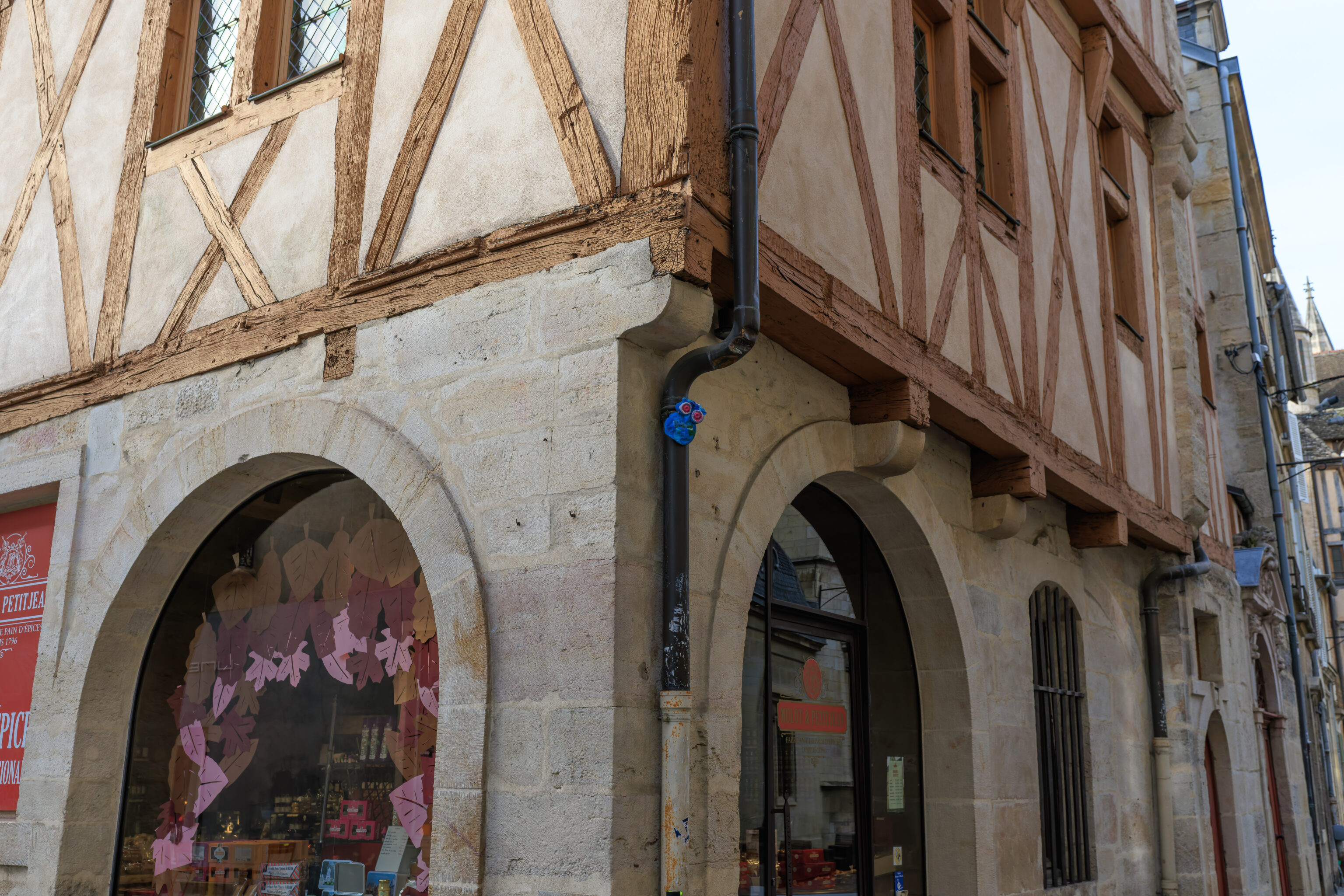
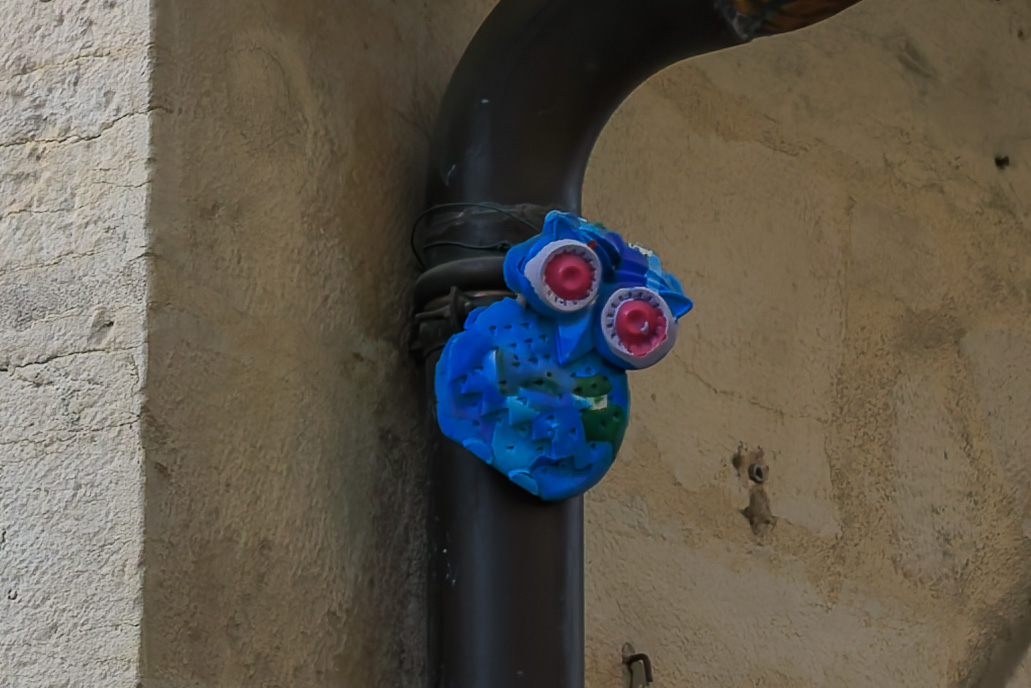
Another much smaller owl!
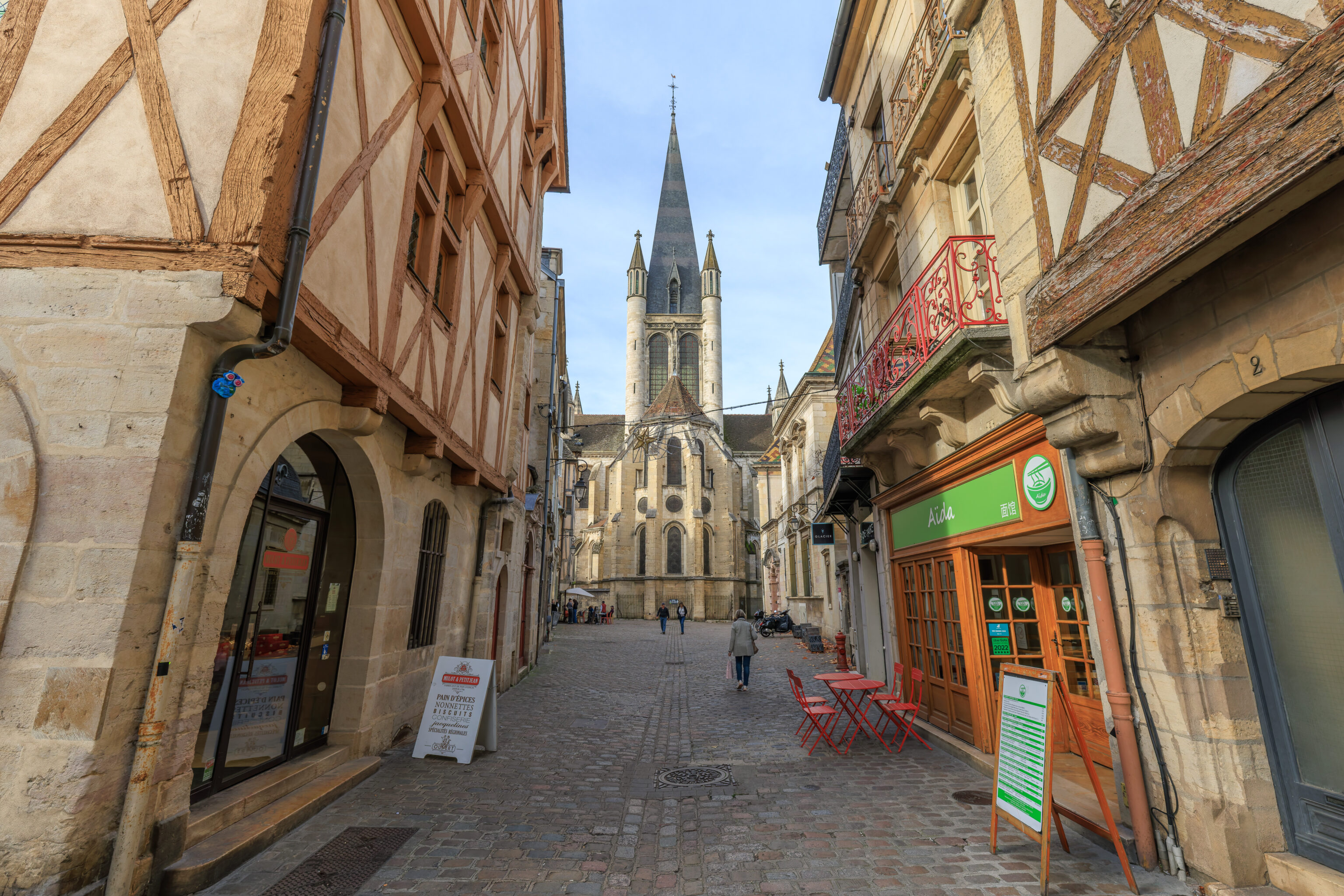
The view looking back to the west towards the church.
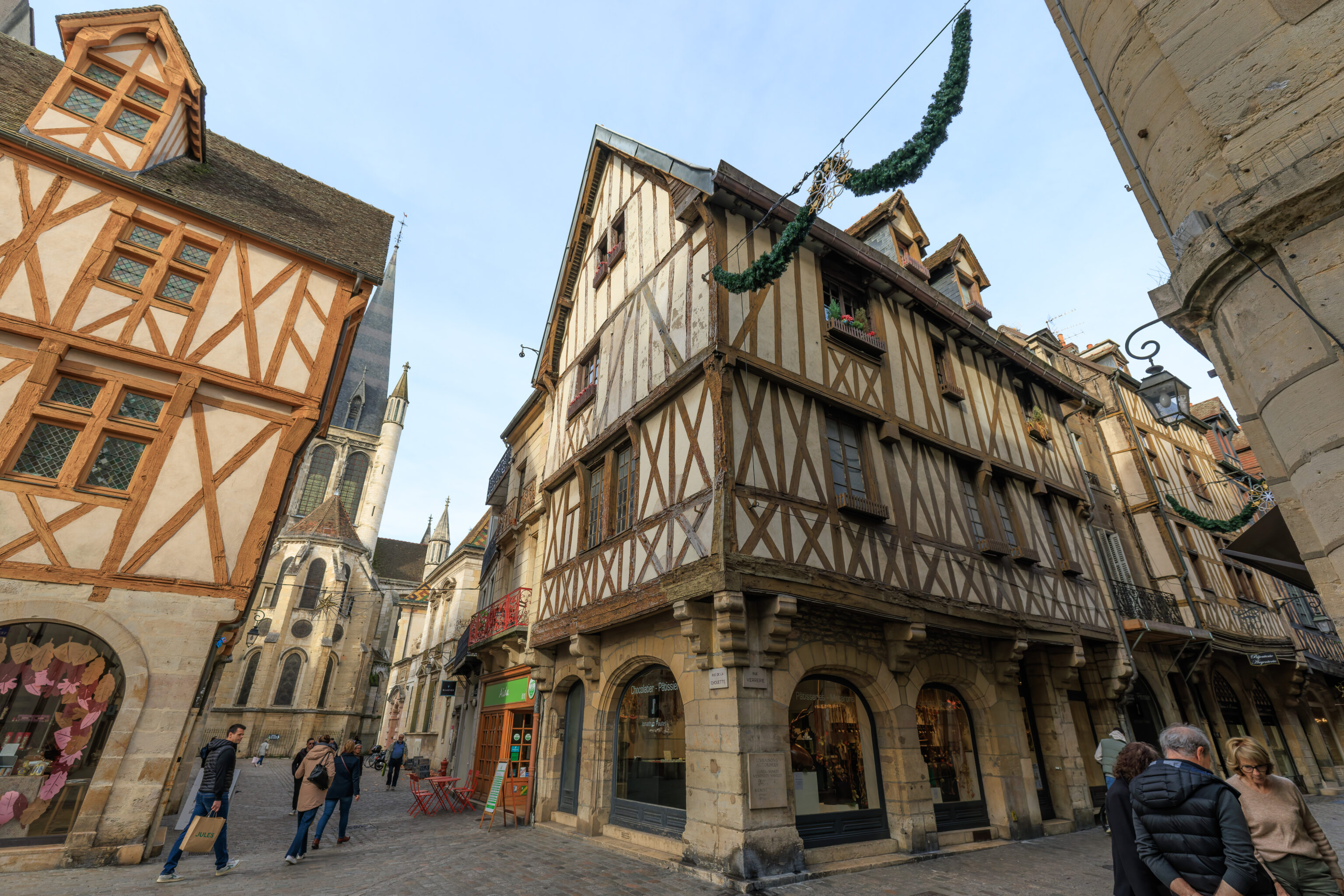
This building at the corner looked particularly aged.
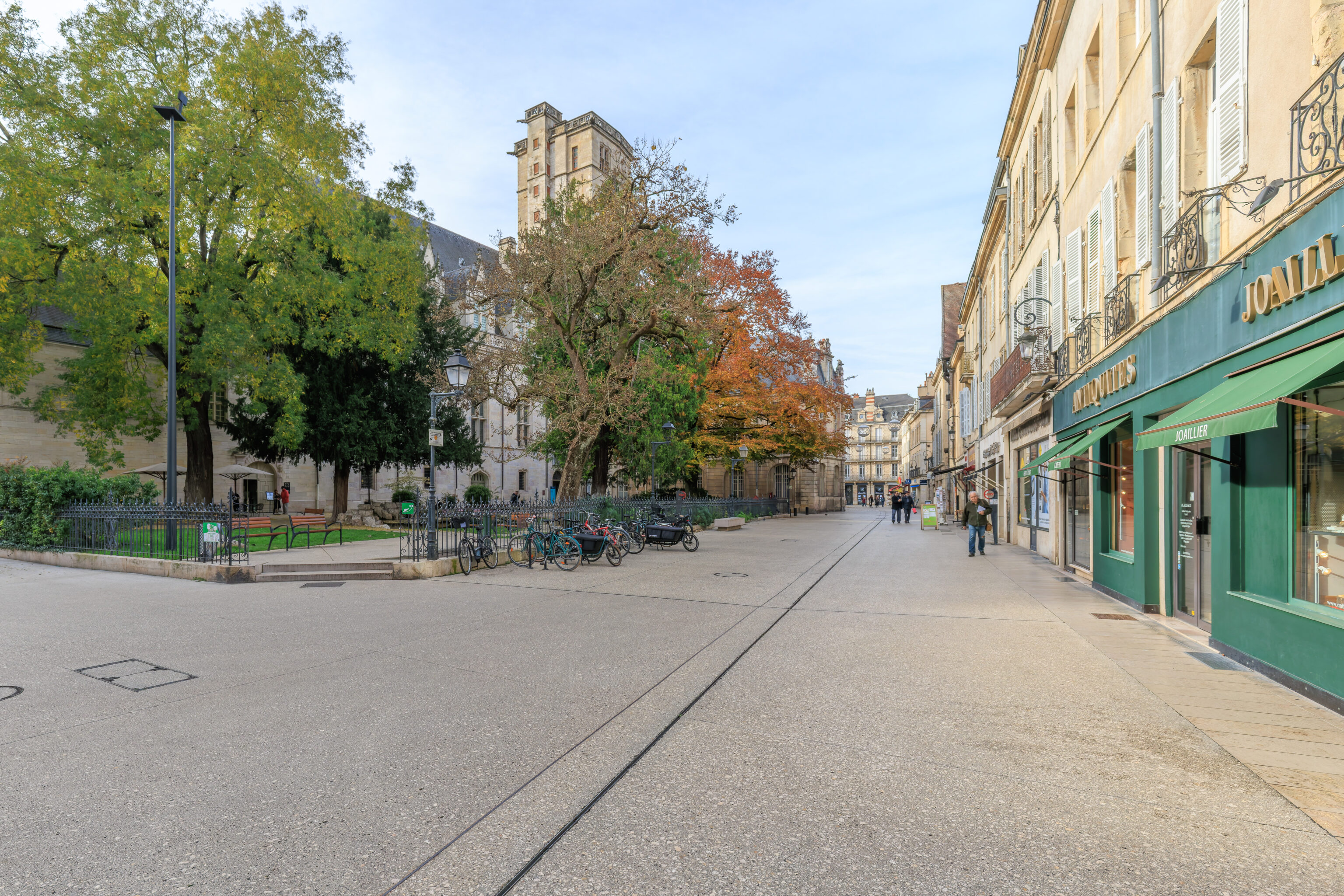
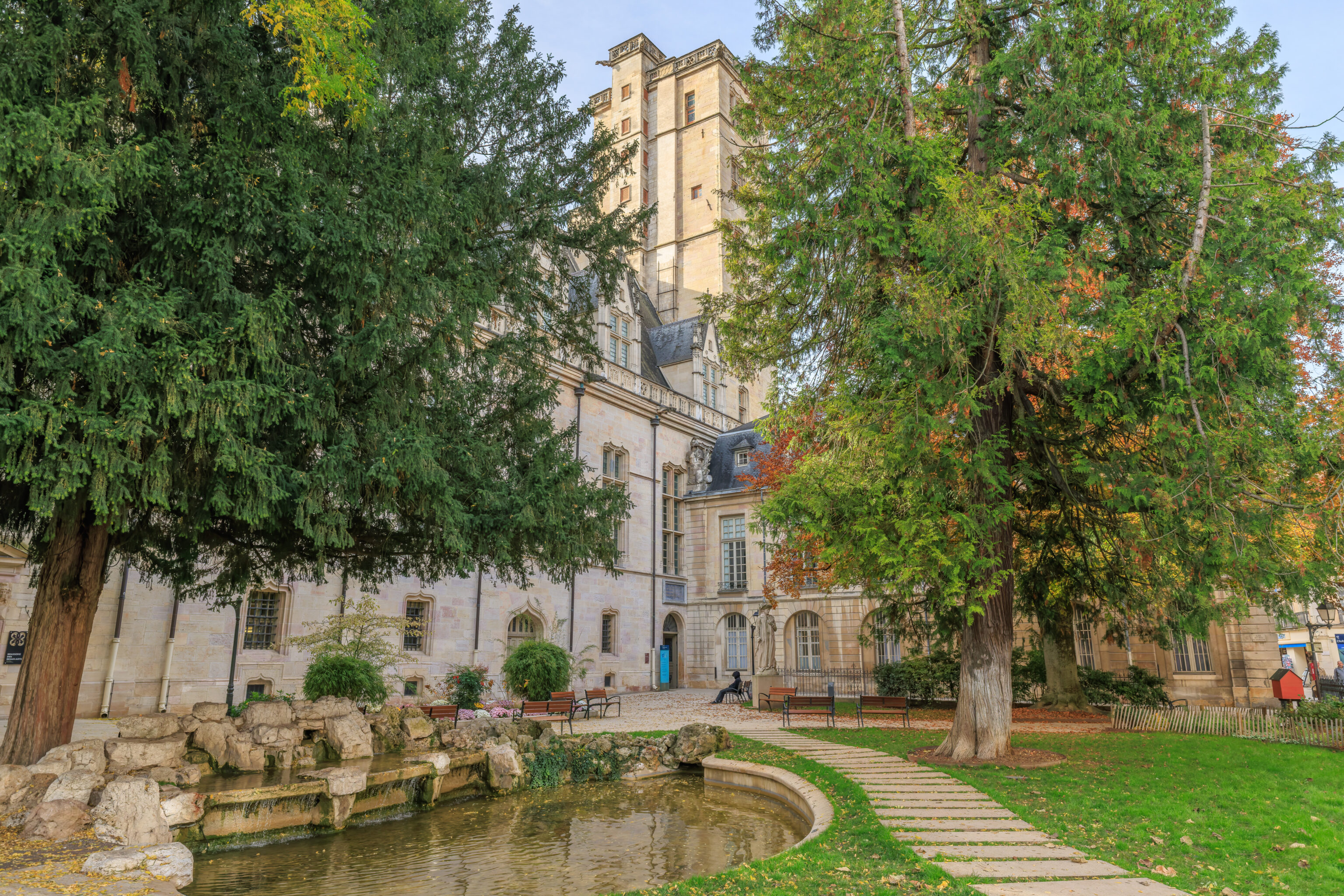
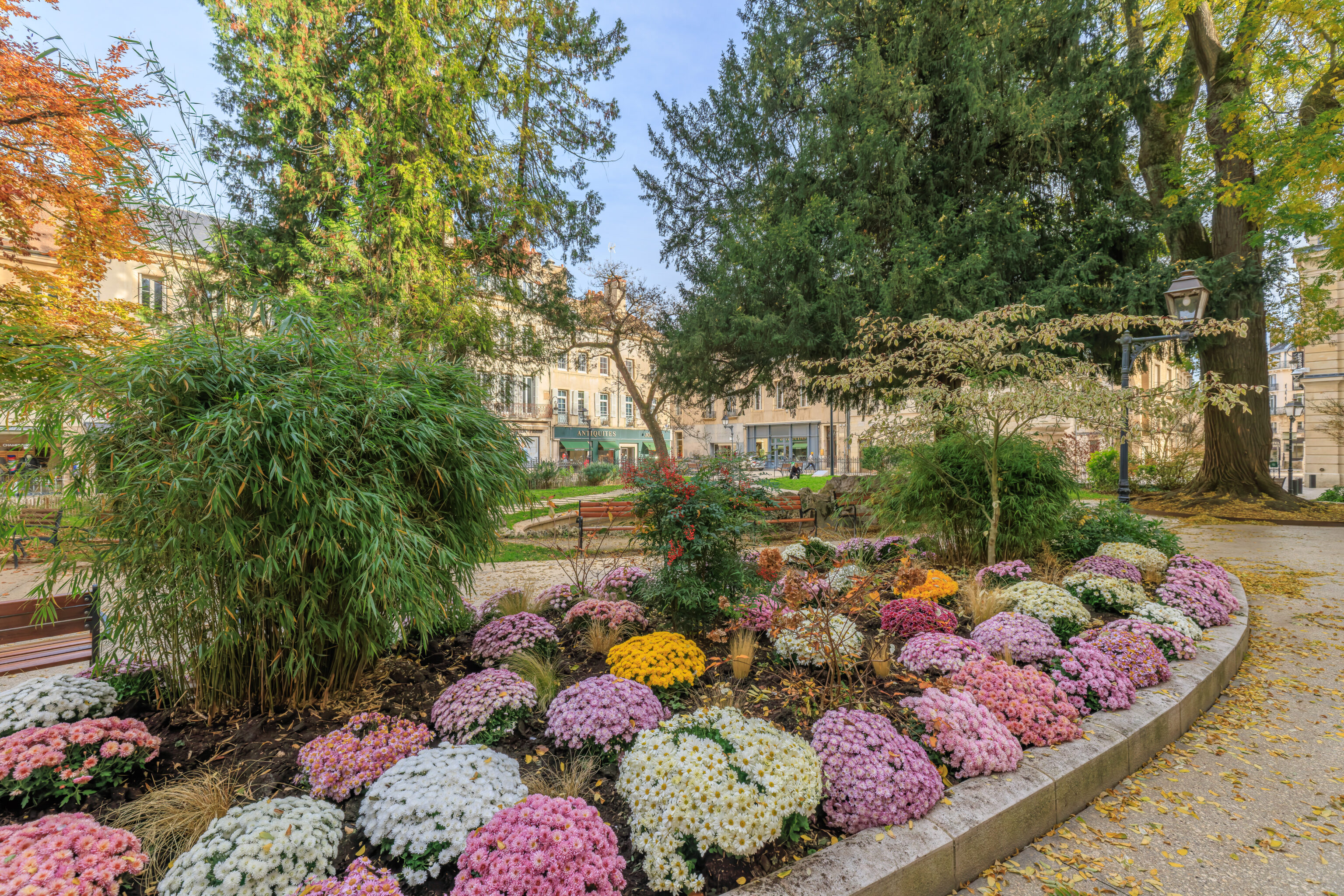
We turned to the south and came across a small park, identified as the Place des Ducs de Bourgogne on Google Maps. It is on the north side of the Palais des Ducs et des États de Bourgogne (Palace of the Dukes and Estates of Burgundy). Parts of the building date back to the 14th century. It currently contains City Hall and the Fine Arts Museum.
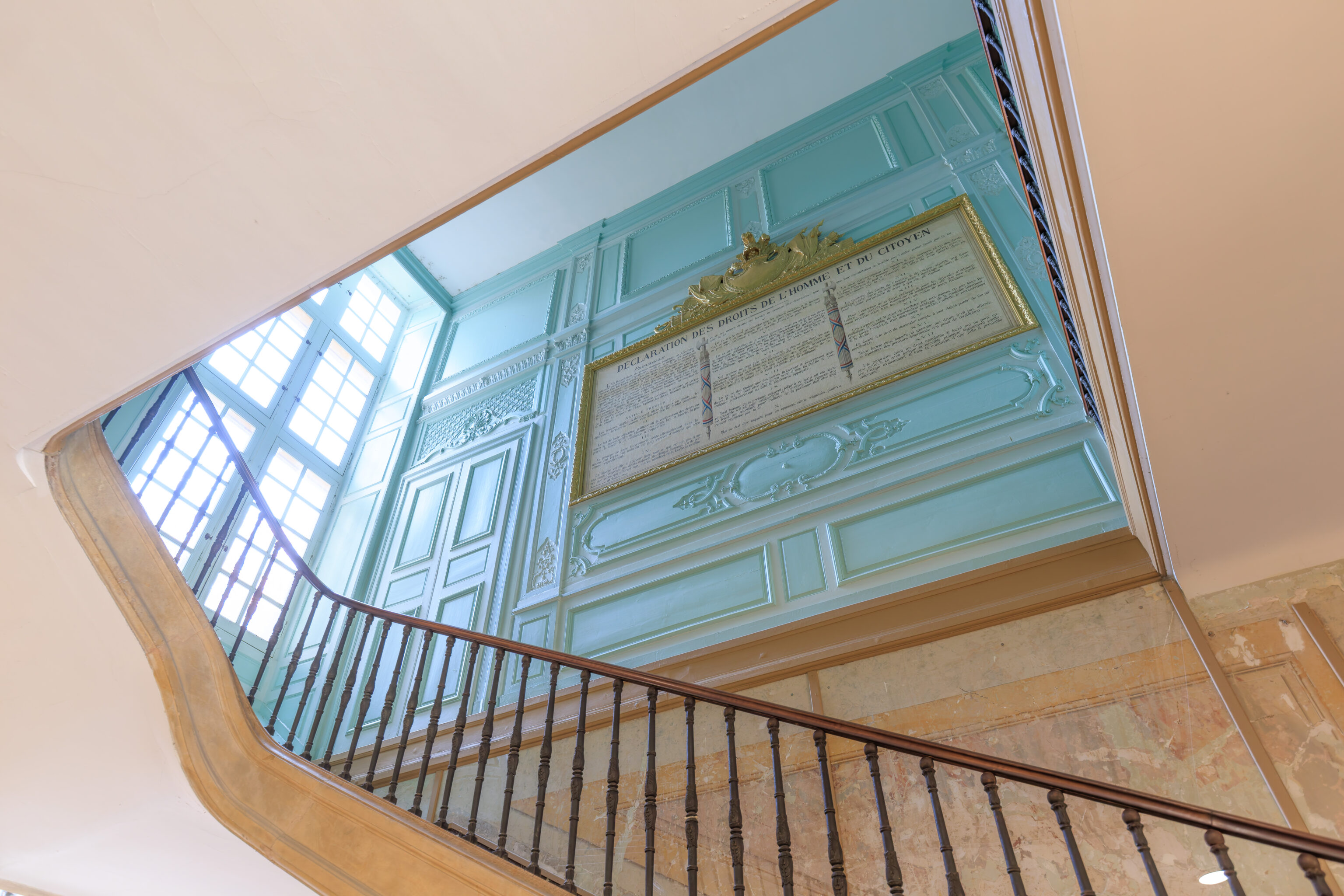
We walked through the building to the south to try and find the entrance to the Fine Arts Museum. We passed by these stairs leading to the second floor, or first floor if you’re European!
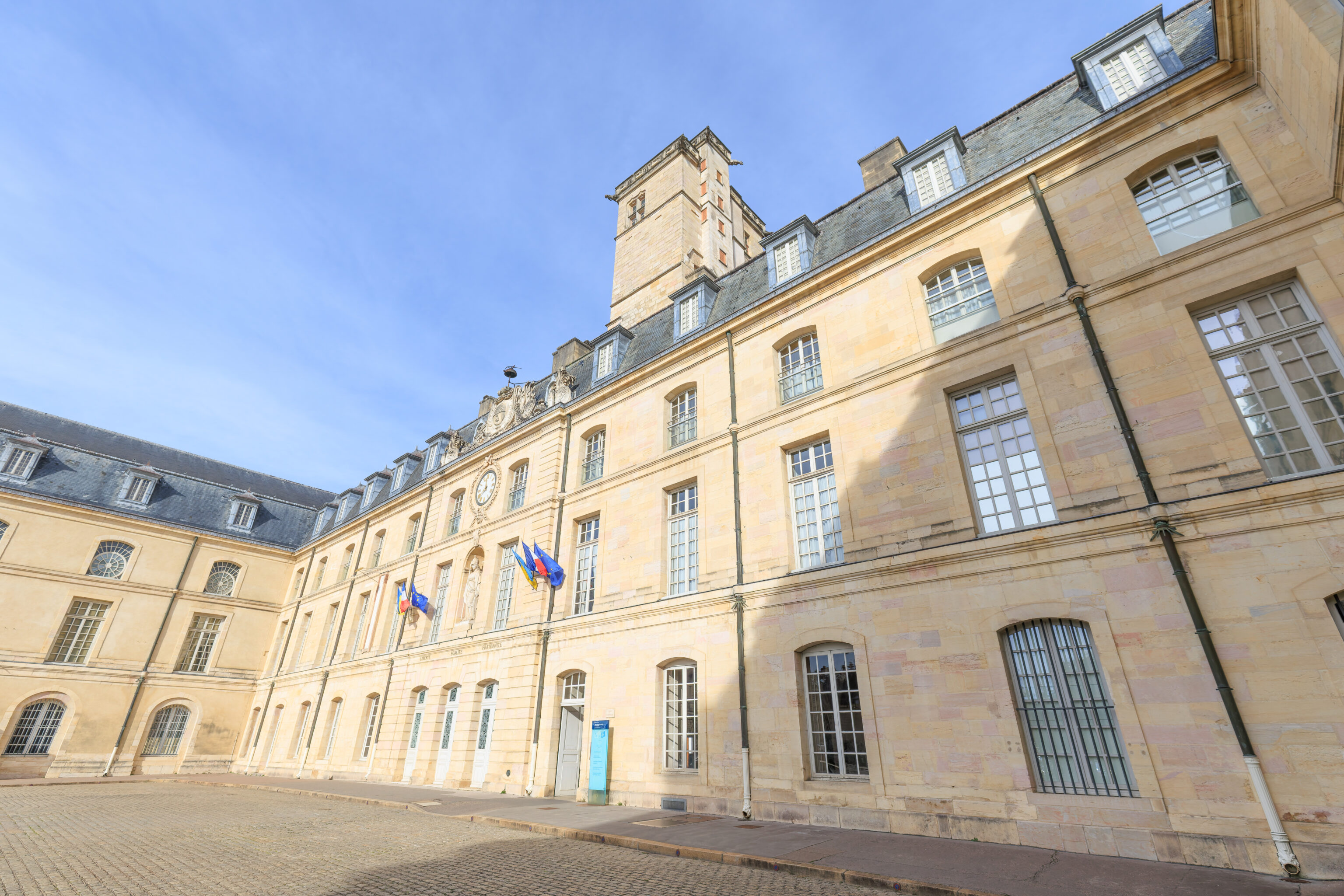
The passageway led to a three sided courtyard on the south side of the building.
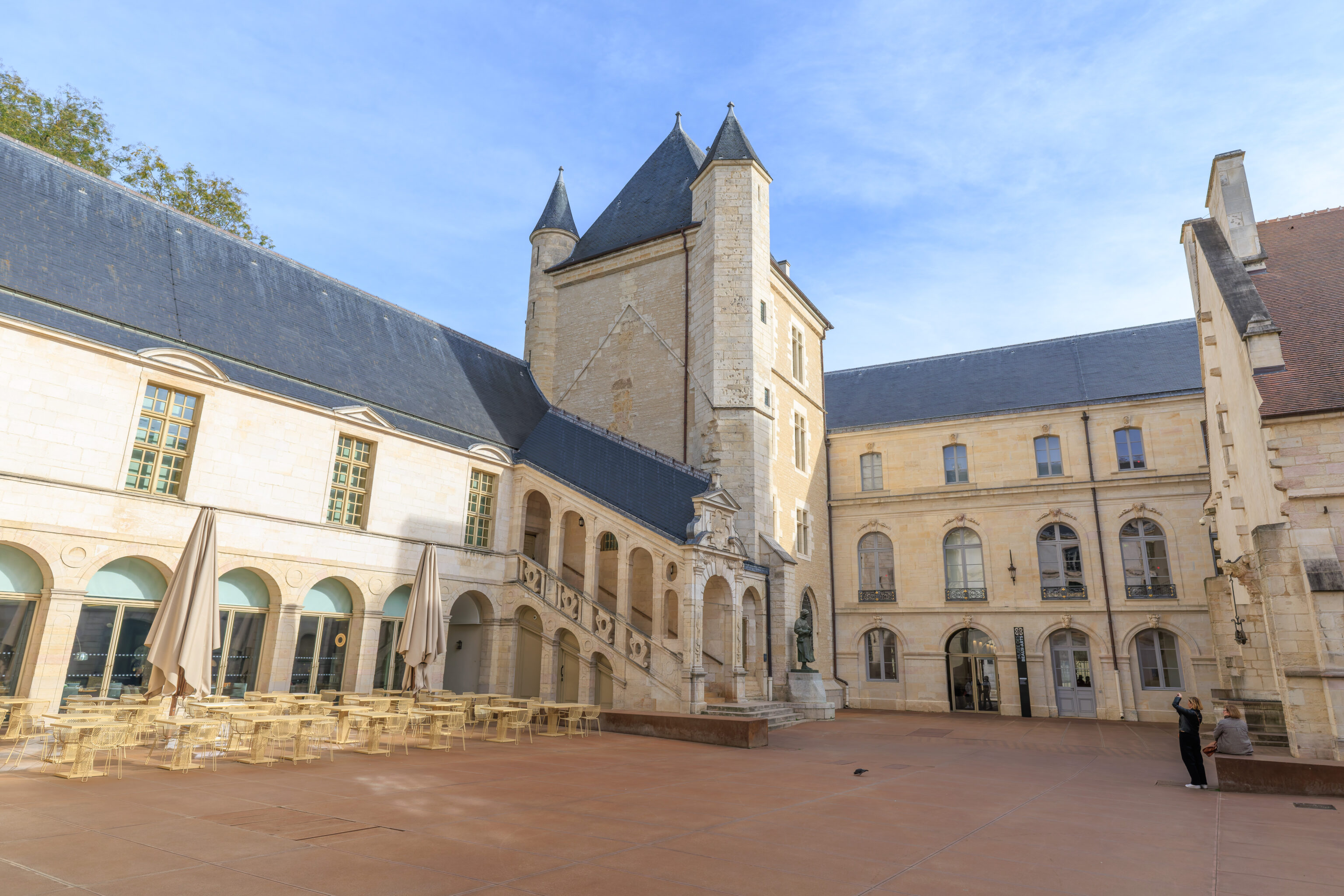
We then walked to the east into a fully enclosed courtyard. There was a tower in the northeast corner.
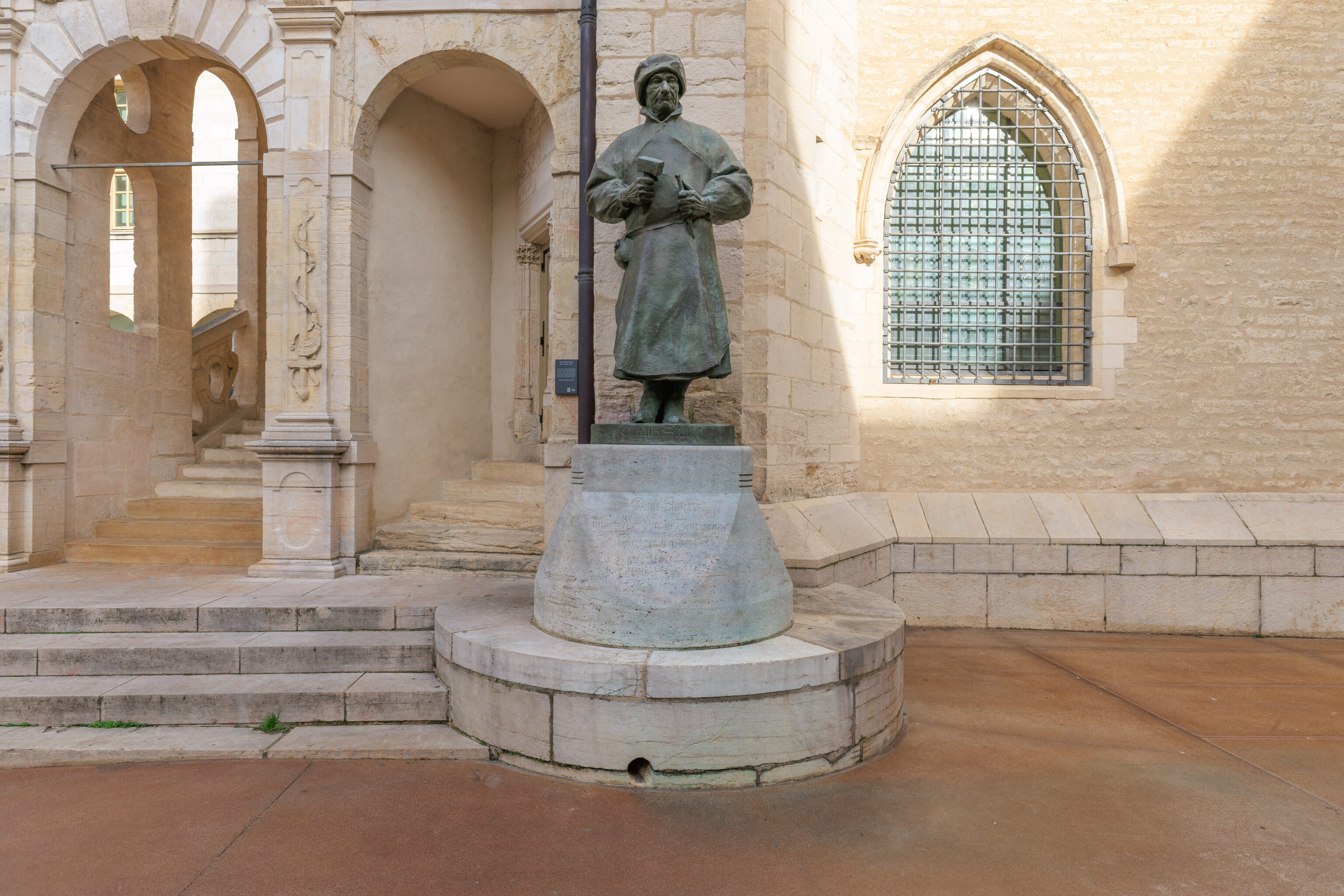
This statue in the courtyard at the base of the stairs seen above depicts Claus Sluter, a Dutch sculptor who lived in Dijon. He was the court sculptor for the Duke of Burgundy from 1389 until his death around 1405.
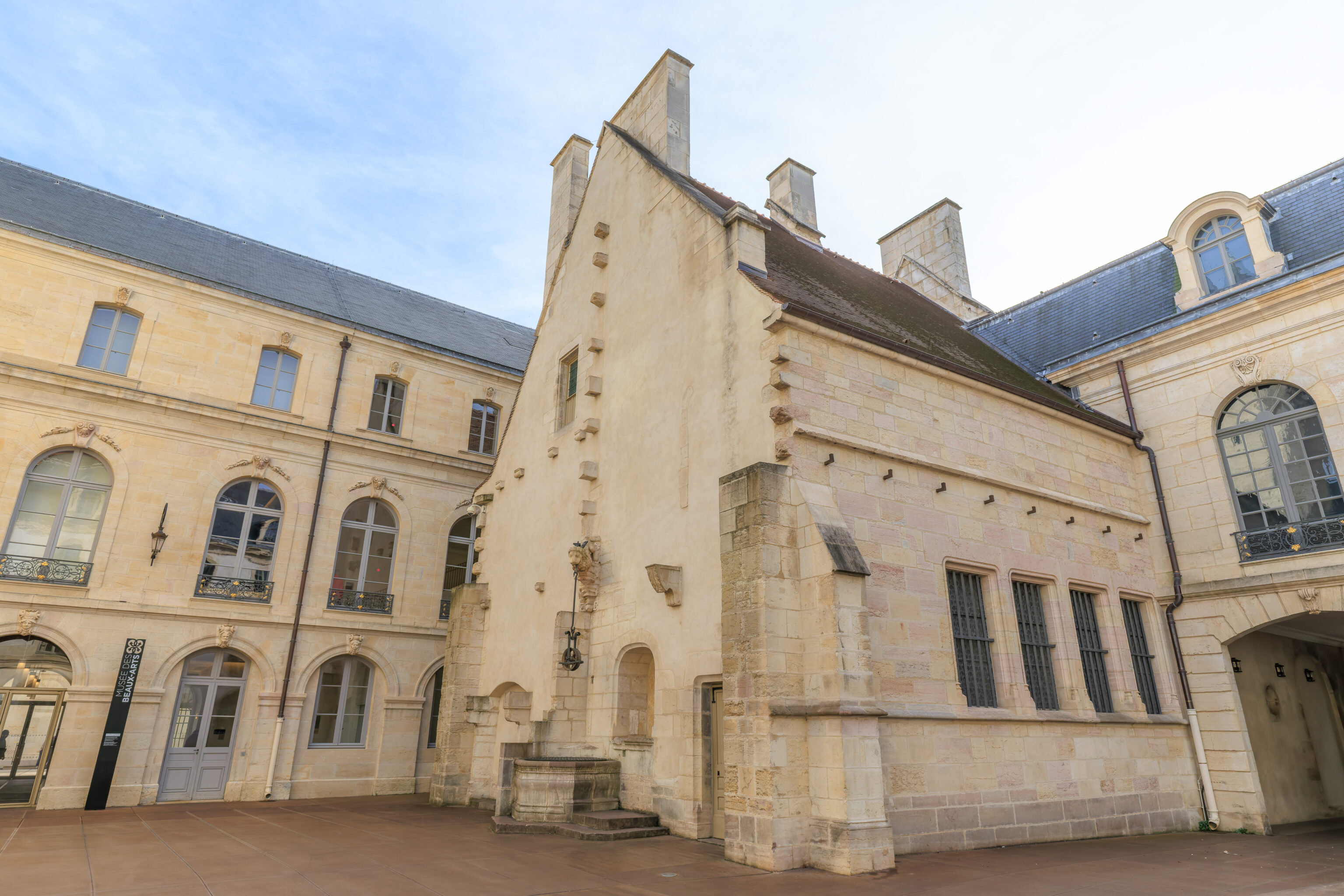
There was a well in front of an attached building at the southeast corner.
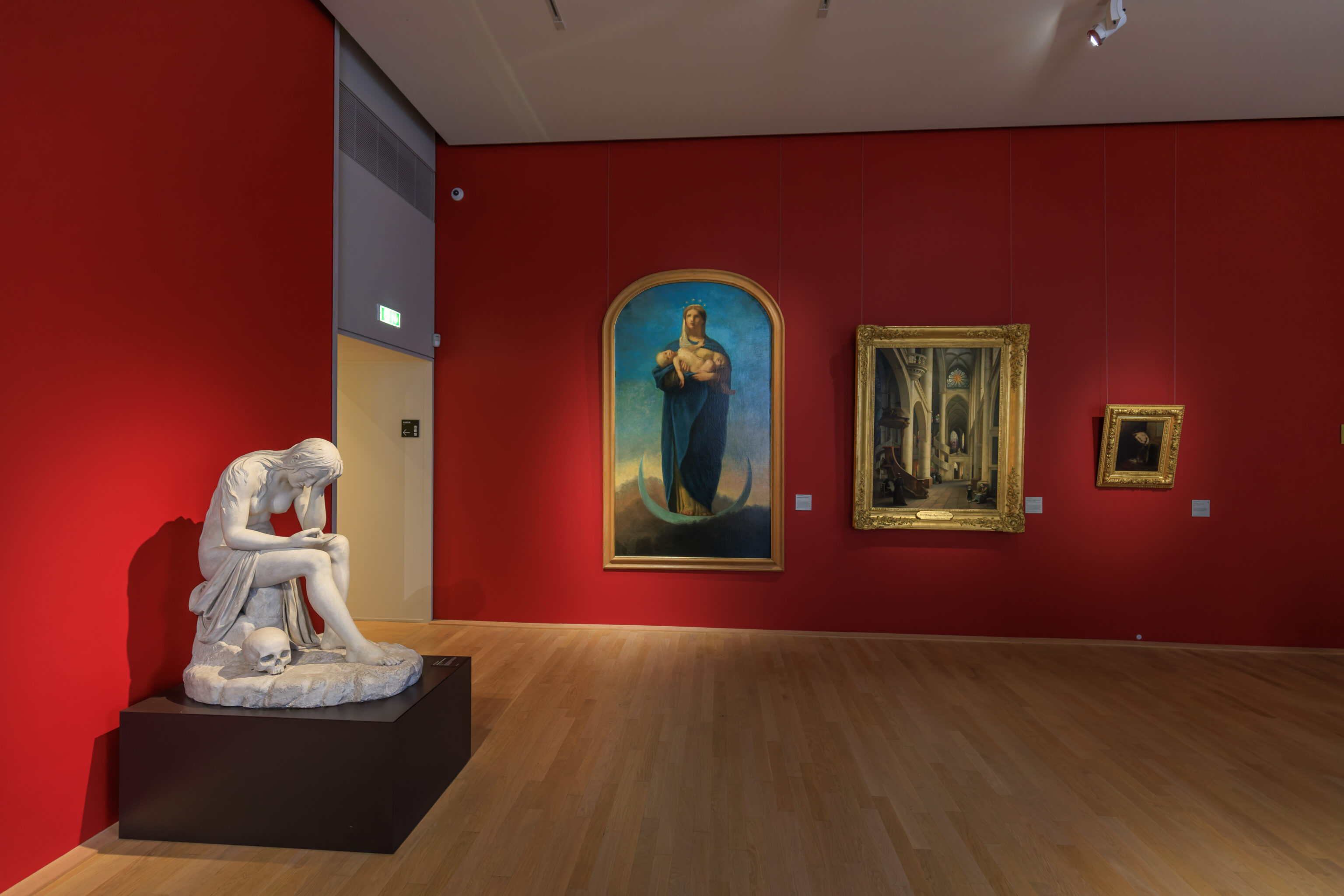
Musée des Beaux-Arts de Dijon
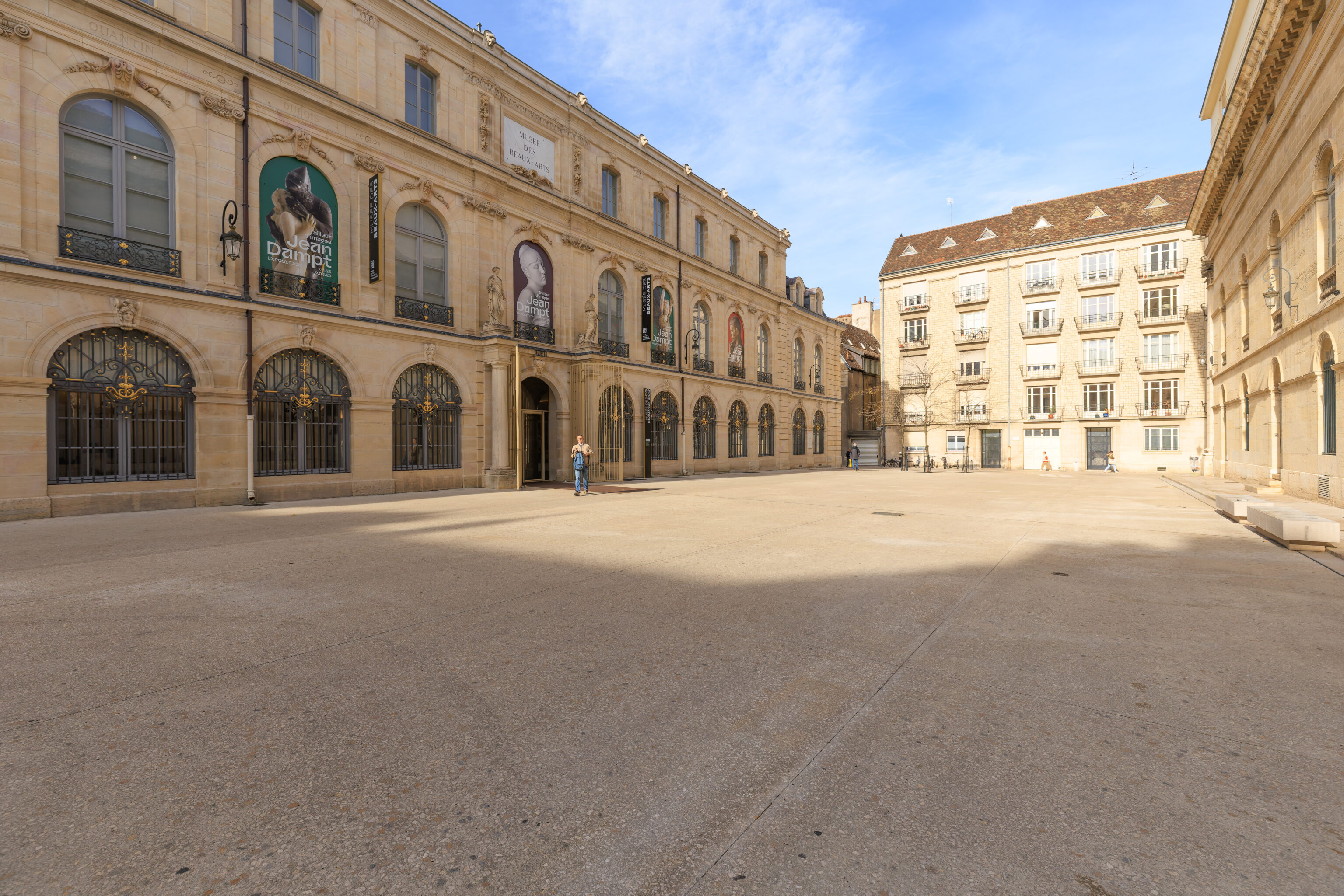
We finally reached the entrance to the Musée des Beaux-Arts de Dijon (Museum of Fine Arts of Dijon)! Entry to the museum is free of charge.
Tokens were available for the coin lockers. This was useful as we did not have any 1€ coins!
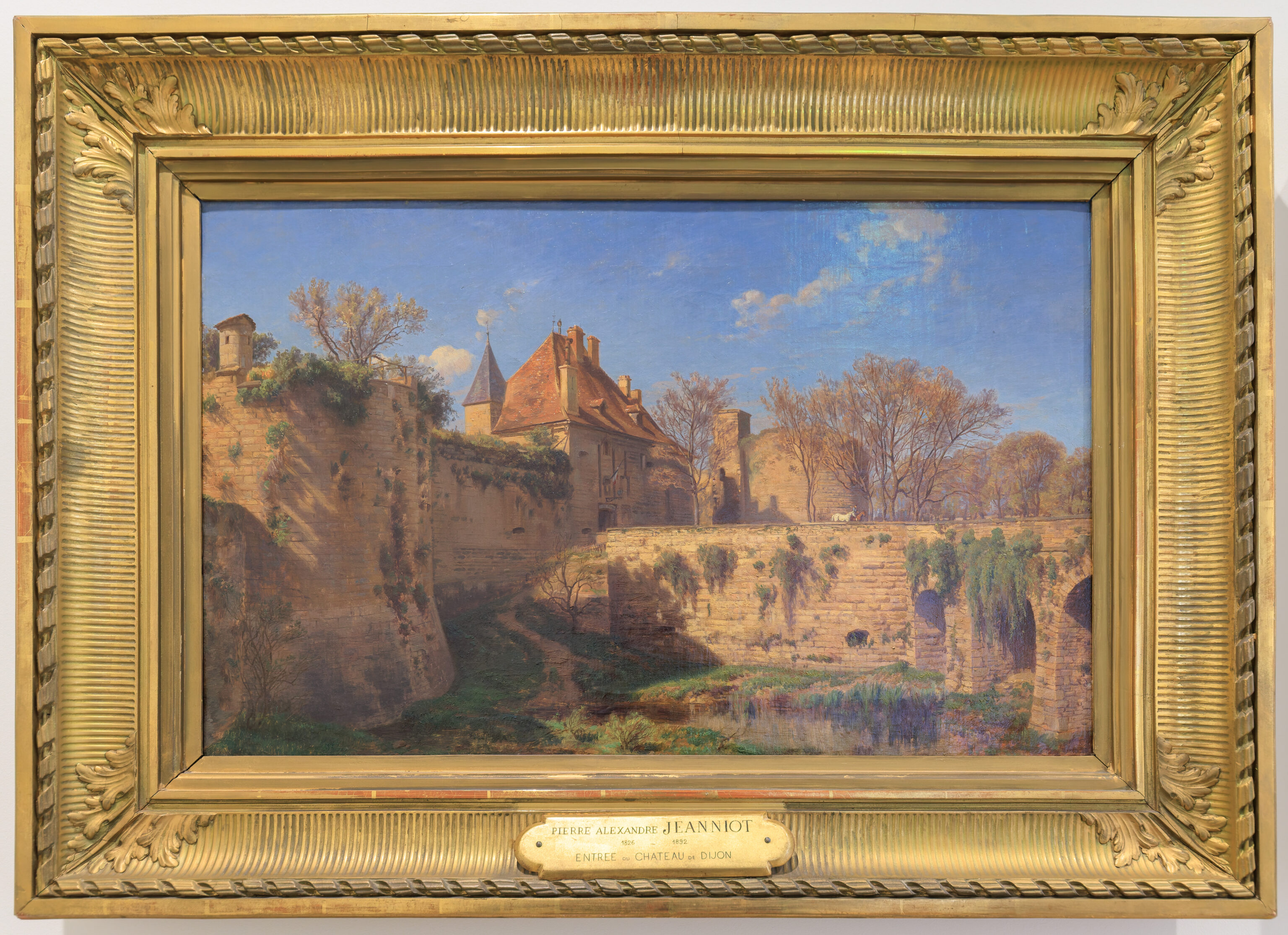
Champlitte (Haute-Saône), 1826 – Vesoul (Haute-Saône), 1892
ENTRANCE TO THE CASTLE OF DIJON
Circa 1861
Oil on canvas
The painting offers a detailed view of the castle’s entrance gate, facing the town, built under Louis XI between the Notre-Dame and Saint-Bénigne towers. Vegetation overgrown the structures before their demolition at the end of the 19th century and before the filling in of the moats in 1861.
(Translated using Google)
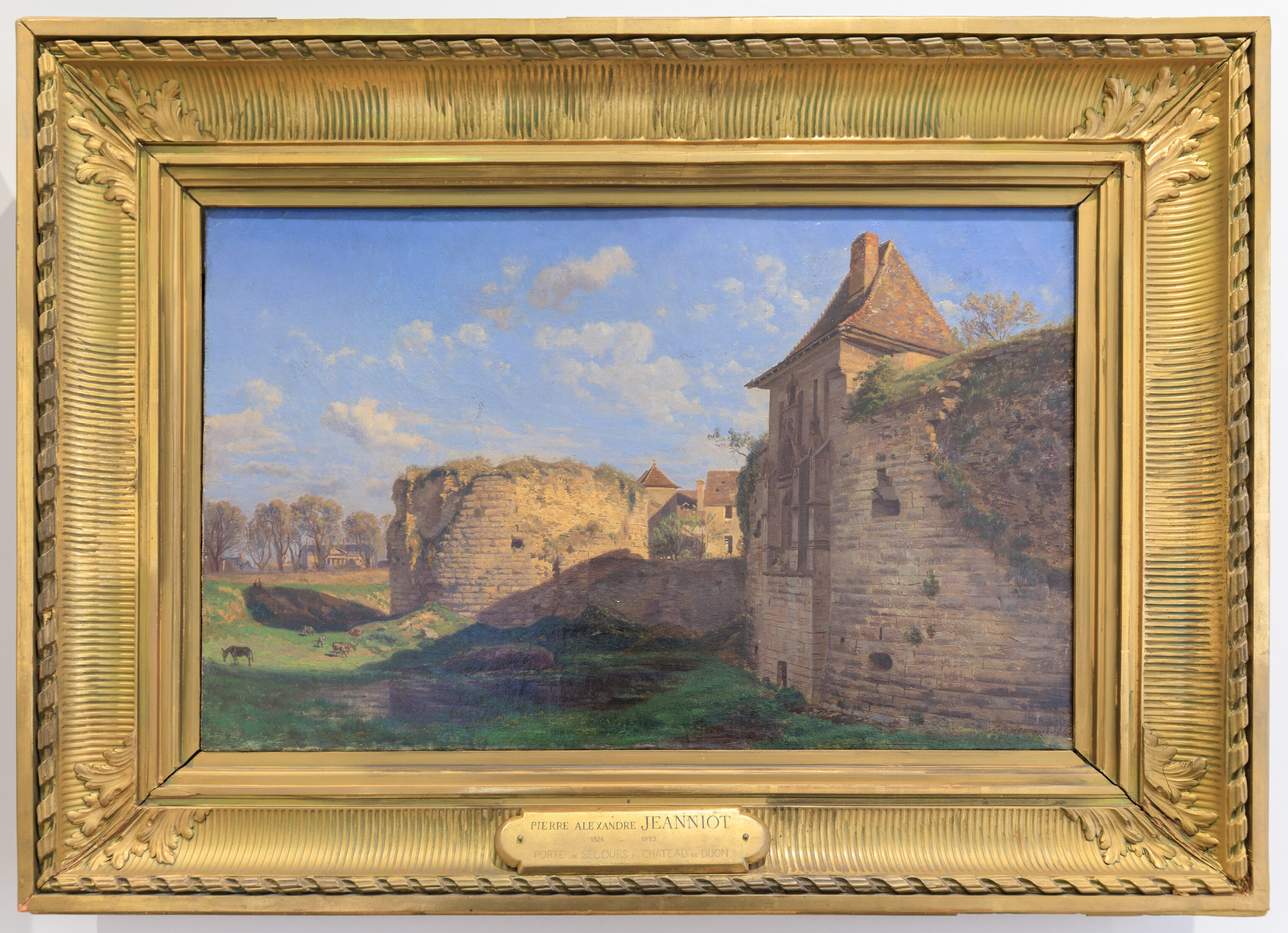
Champagne (Haute-Saône) 1826 – Vesoul (Haute-Saône), 1852
VIEW OF THE CASTLE OF DIJON: THE EMERGENCY EXIT
View of the Castle of Dijon Emergency Exit
Circa 1861
Oil on canvas
(Translated using Google)
These two paintings depict the Château de Dijon, a 15 century castle which was completely demolished by 1897,
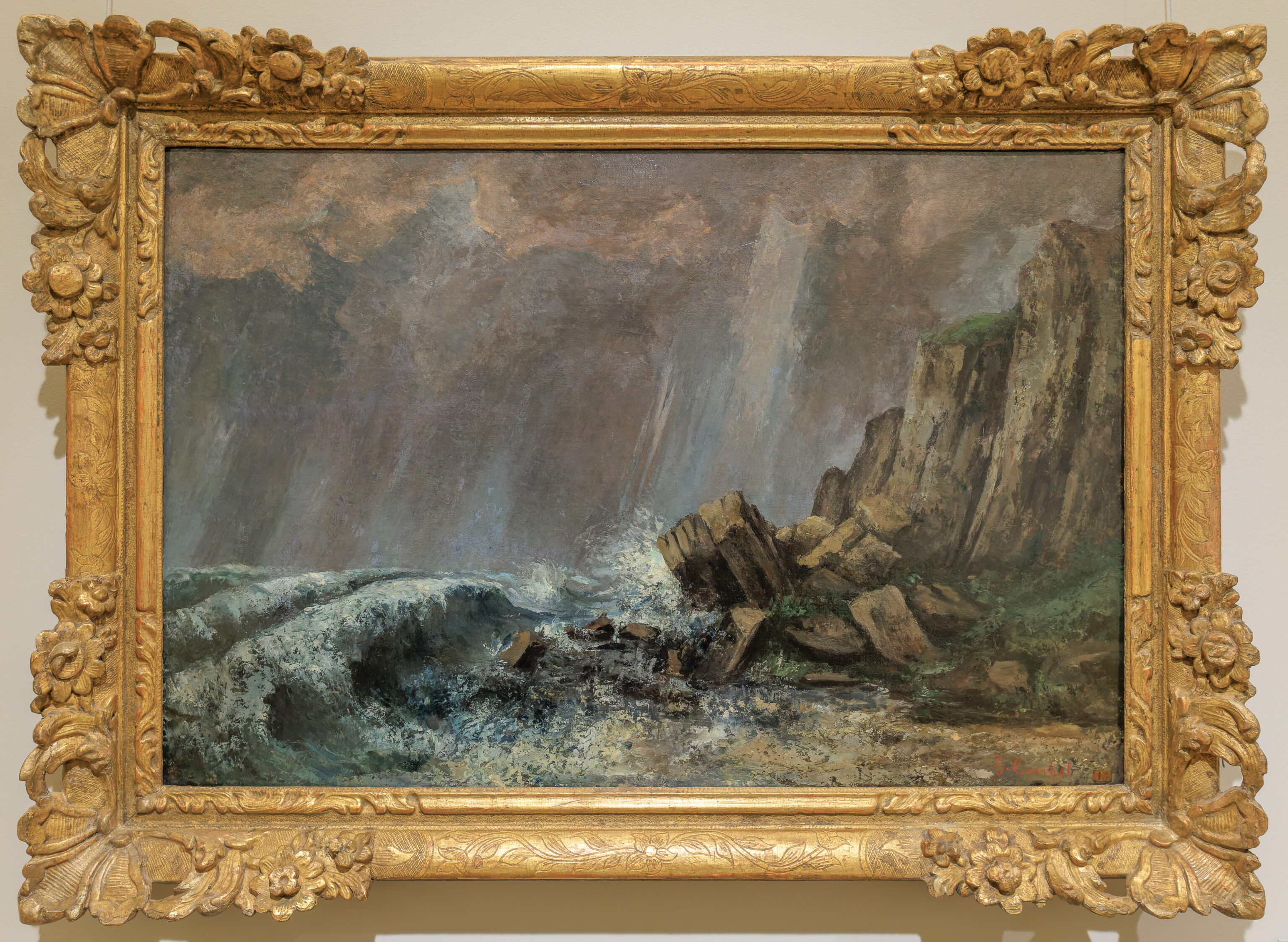
Ornans (Doubs), 1819 –
La-Tour-de-Peilz (Switzerland), 1877
THE WATERTOWER, ÉTRETAT
DOWNPOUR, ÉTRETAT
Circa 1869-1870
Oil on canvas
It was a storm he witnessed on the Normandy coast in 1865 or 1866 that inspired the painter. This waterspout —what we would call a tornado today—provided him with the motif of a unleashed nature that leaves the viewer seemingly trapped between the cliffs and the sea.
(Translated using Google)
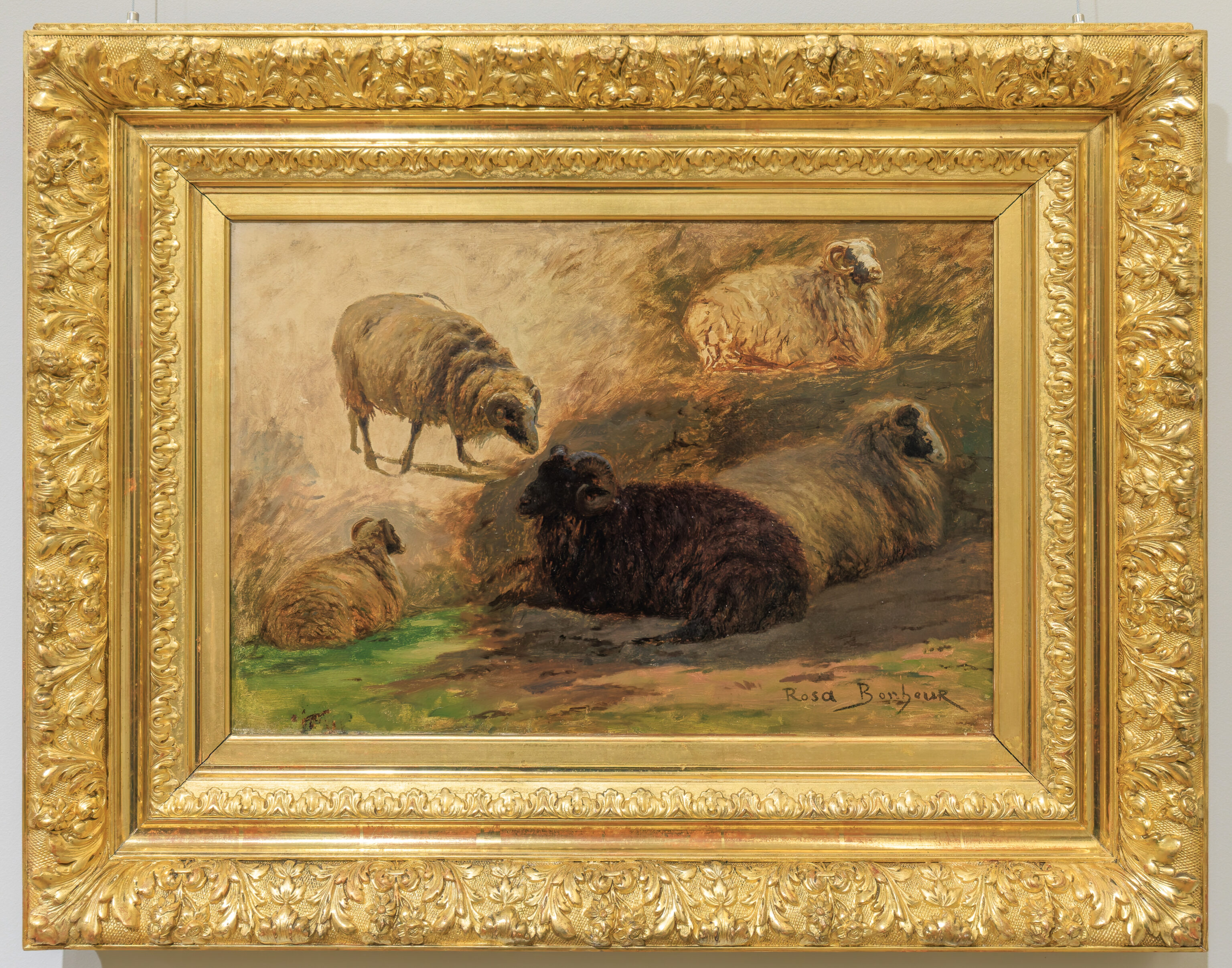
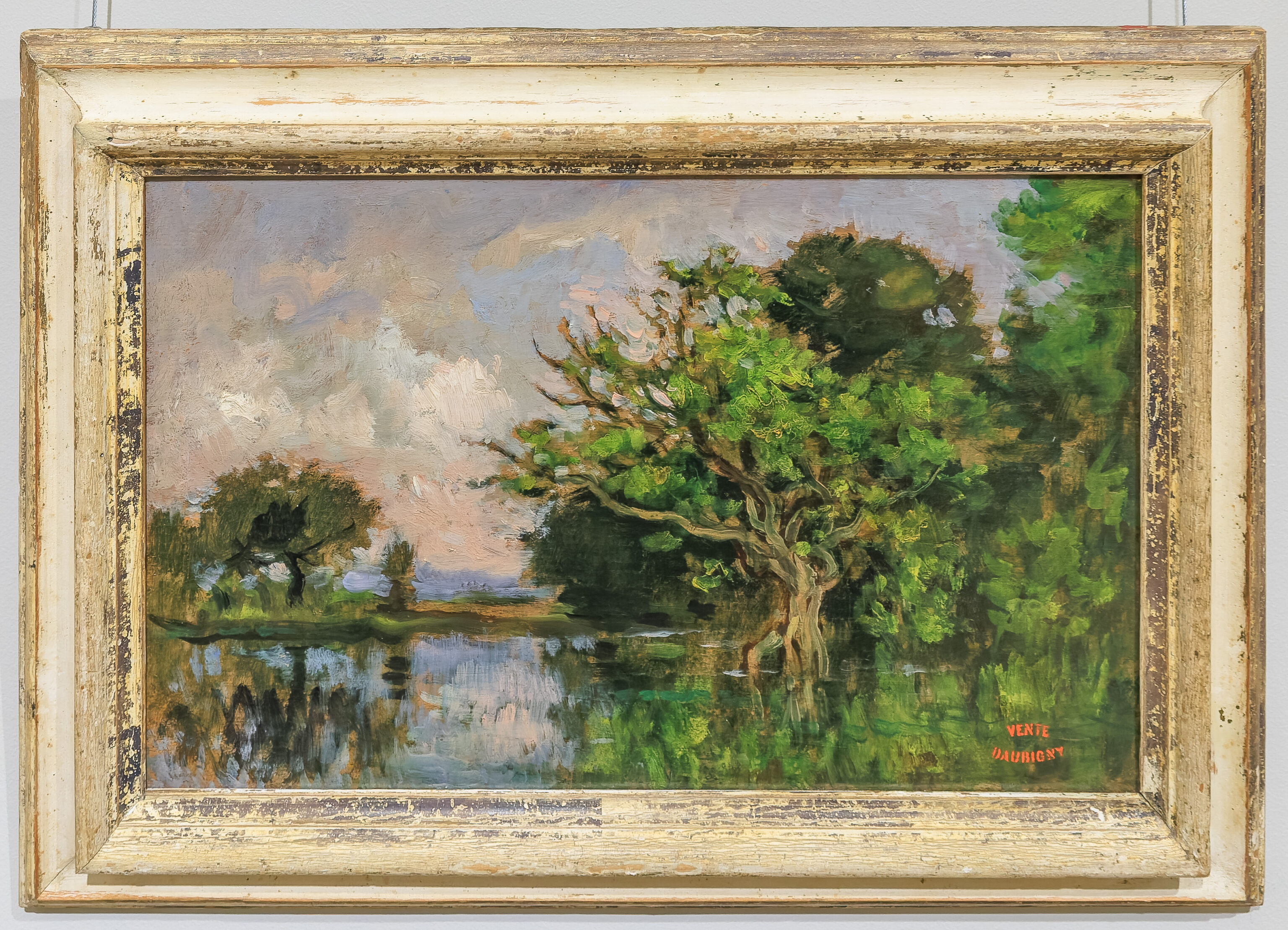
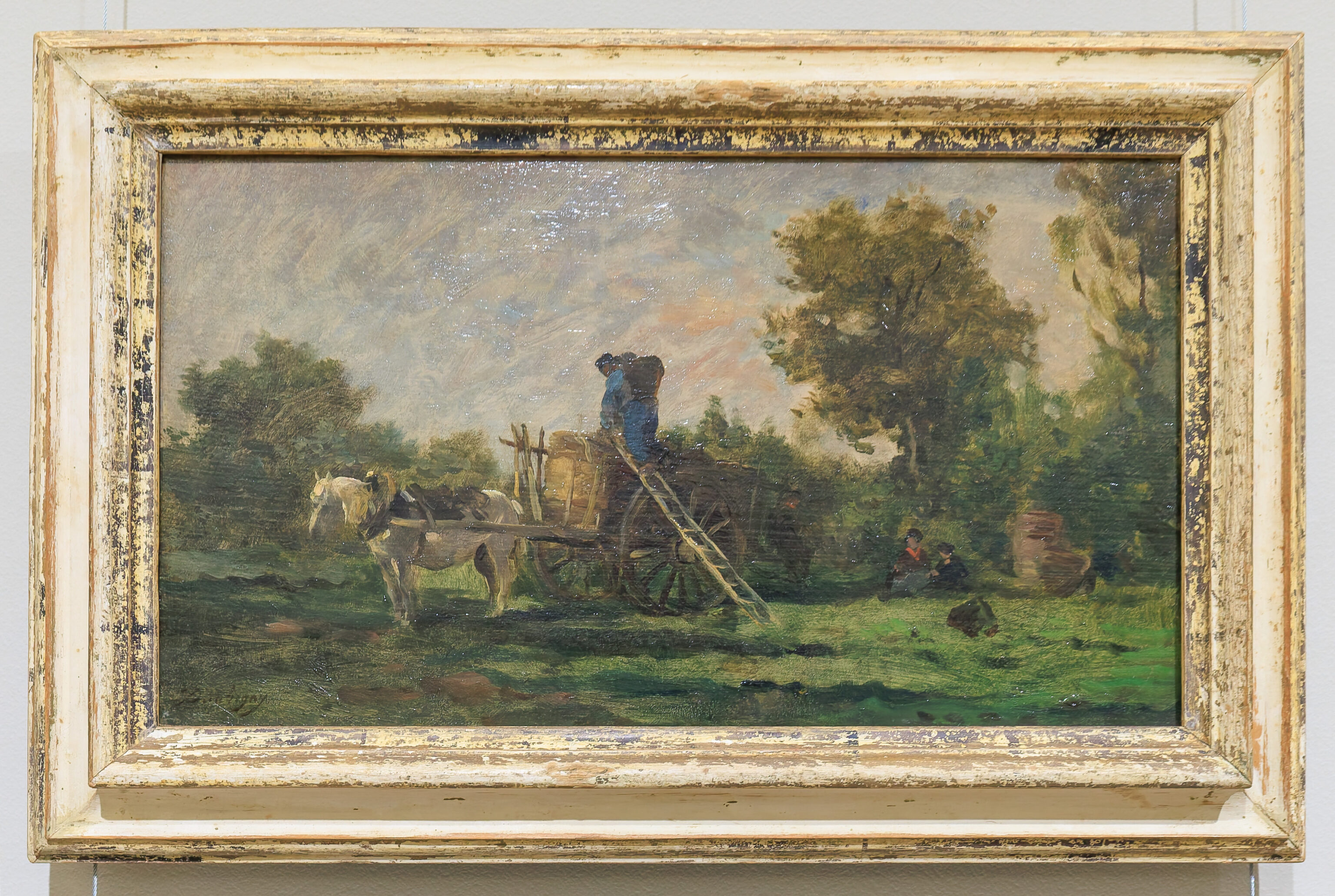
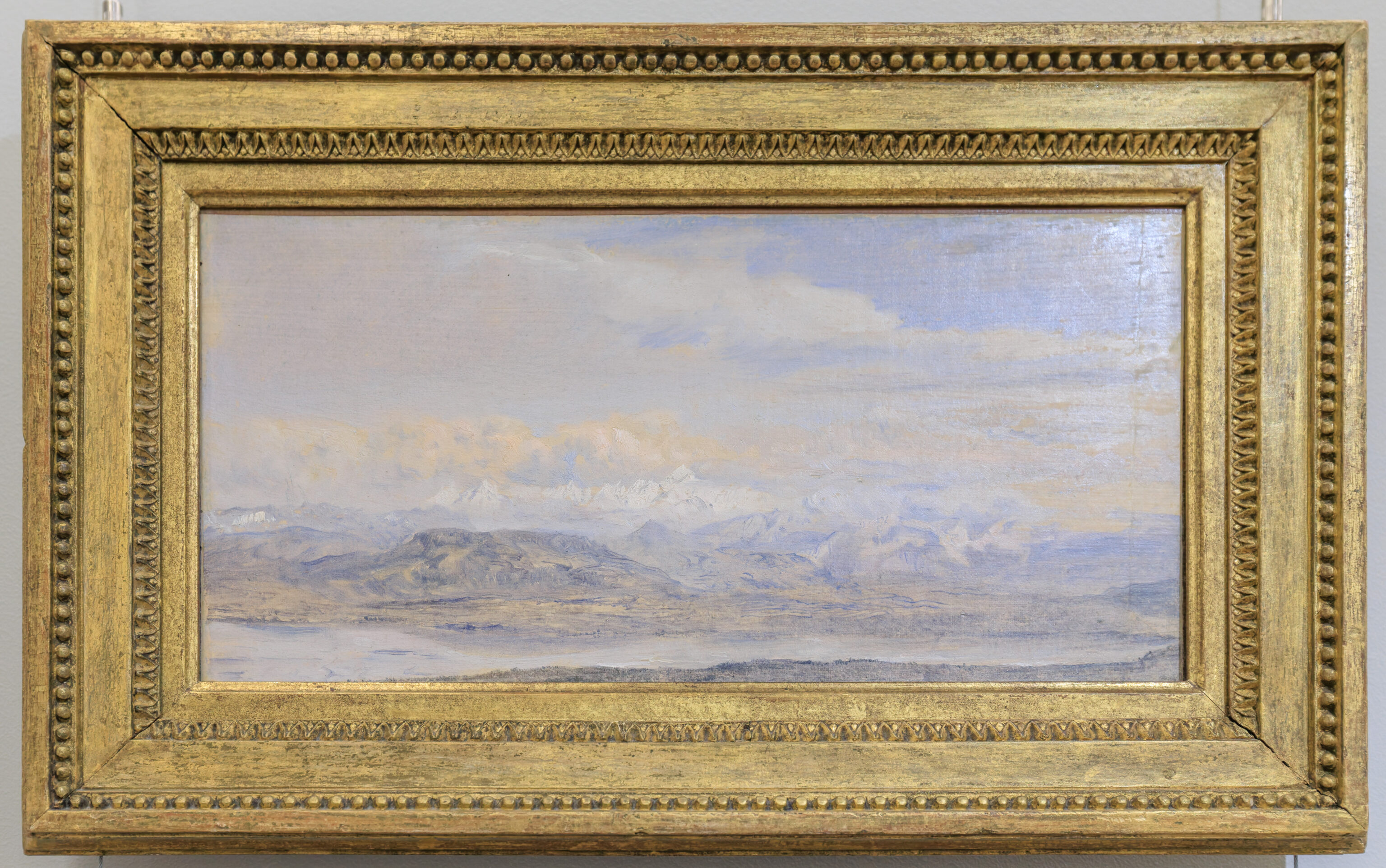
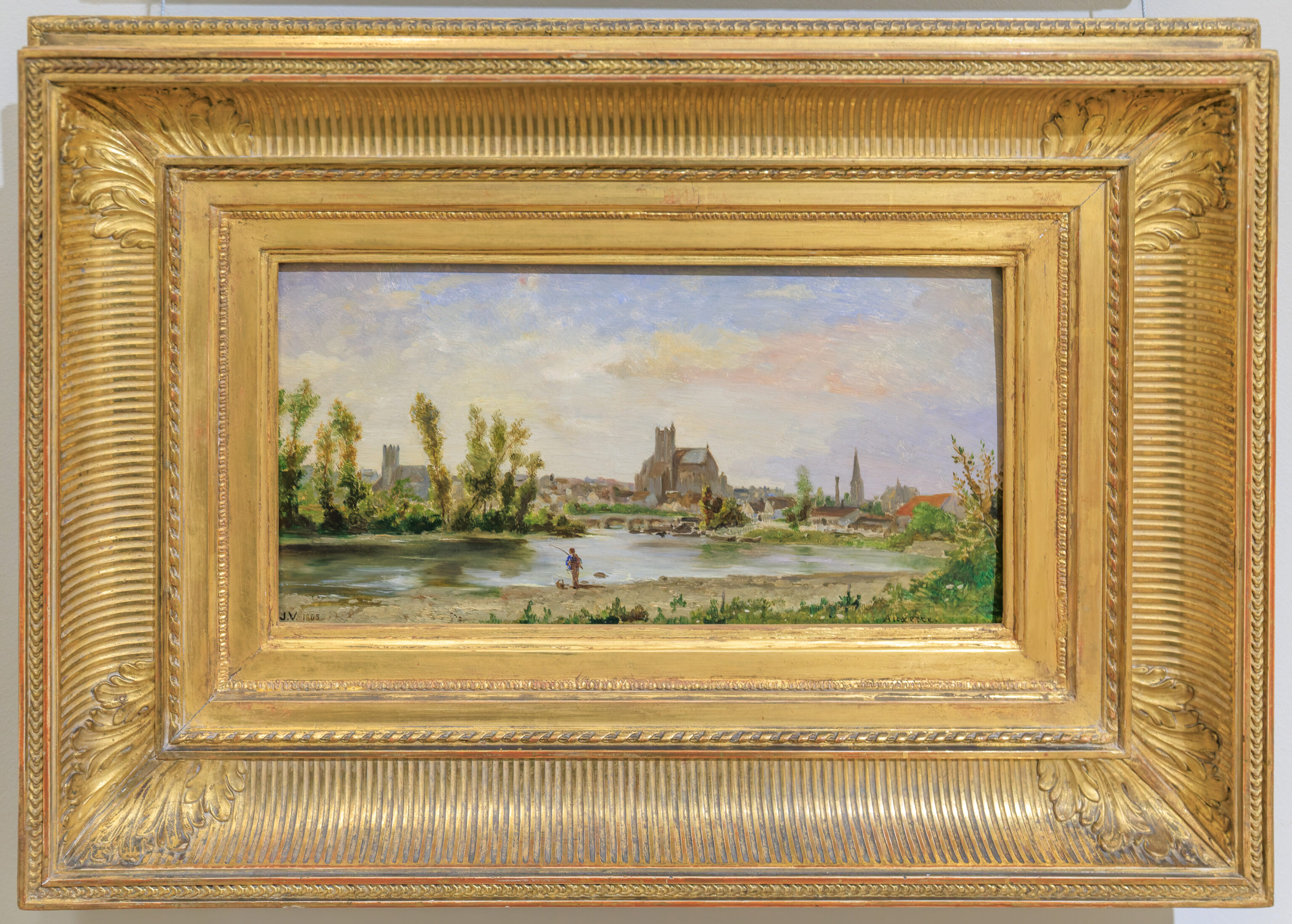
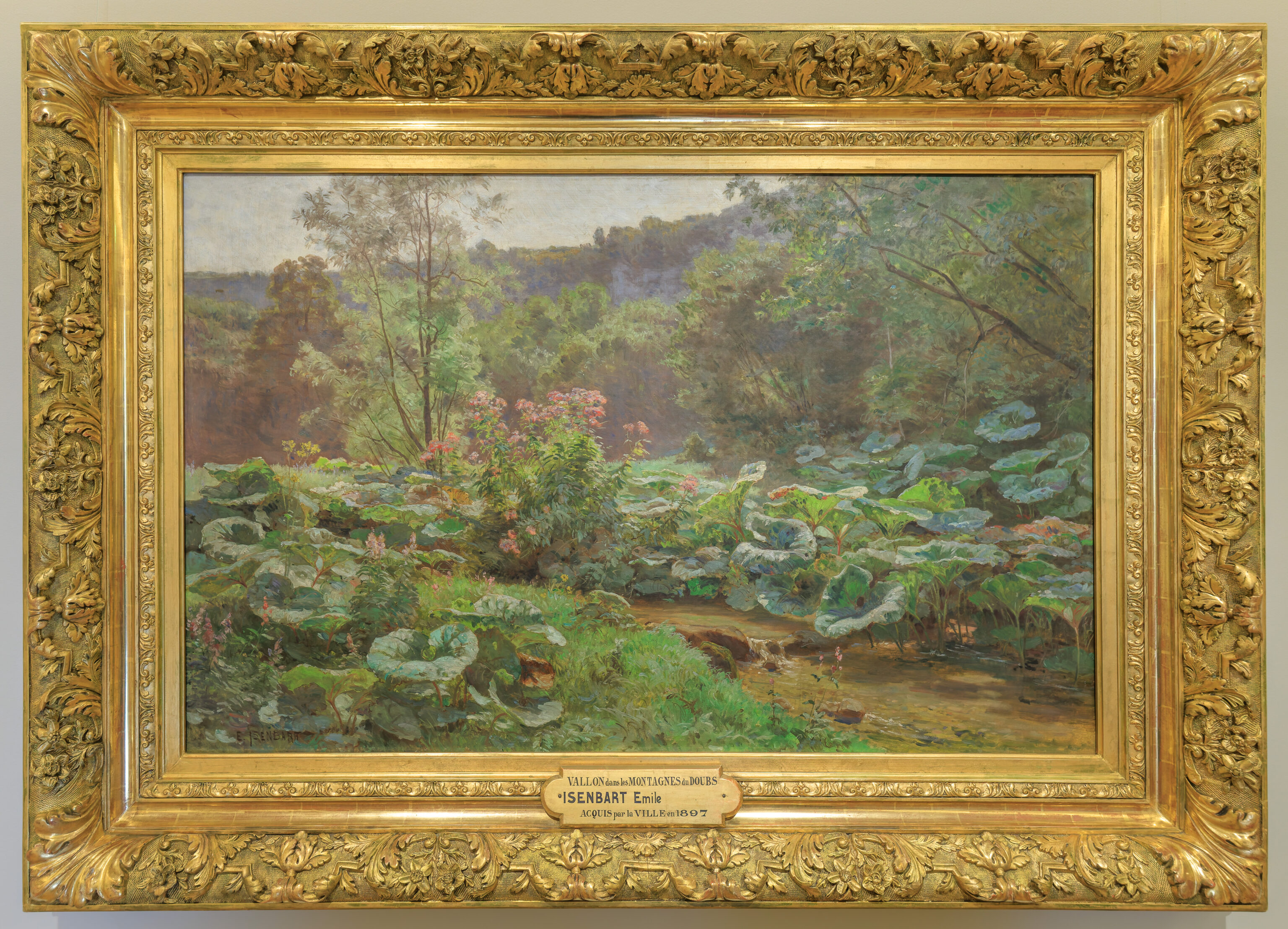
ISENBART Emile
ACQUIRED by the CITY in 1897
(Translated using Google)
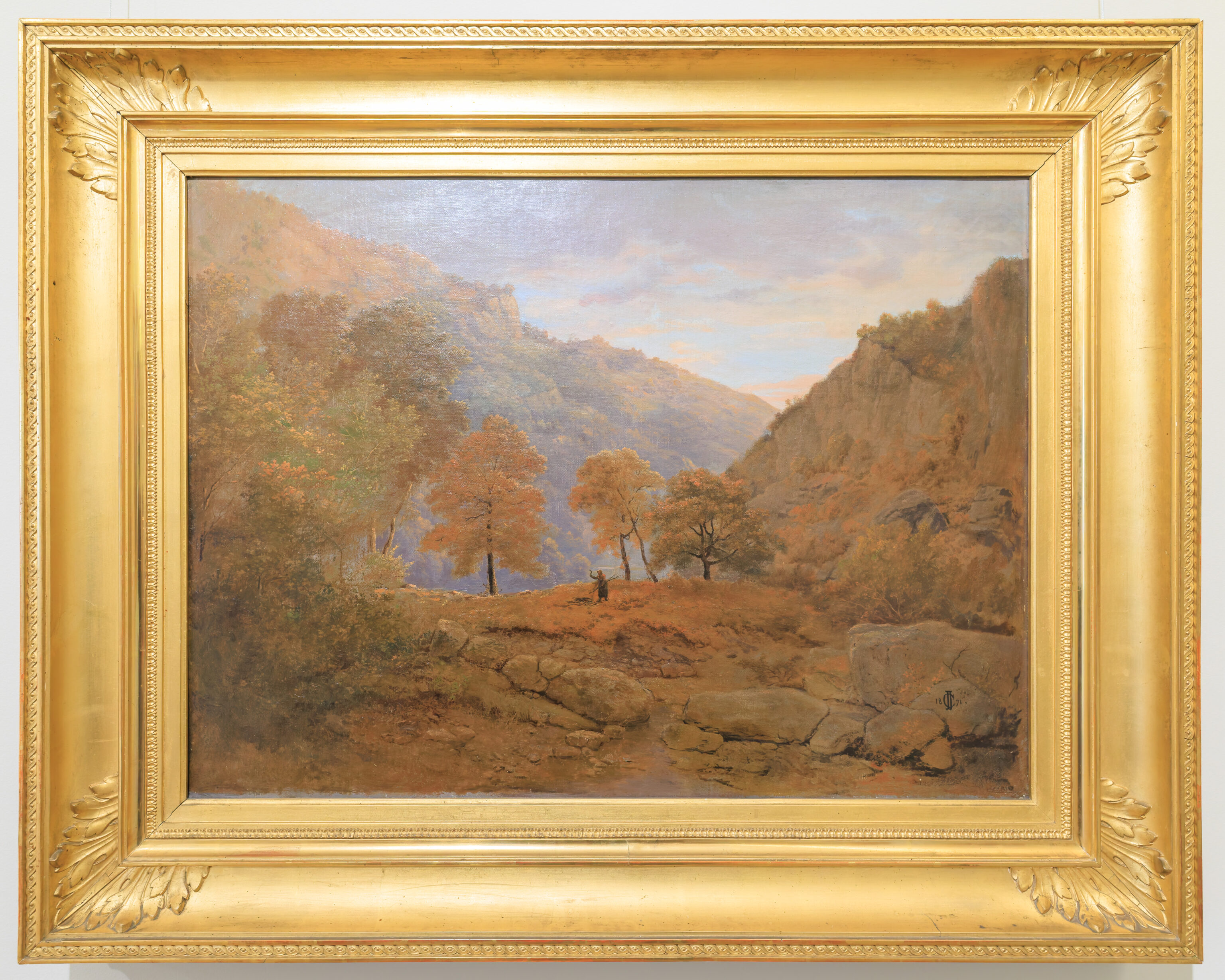
Chenôve, 1819 – Chenôve, 1876
AUTUMN LANDSCAPE
1871
Oil on wood
(Translated using Google)
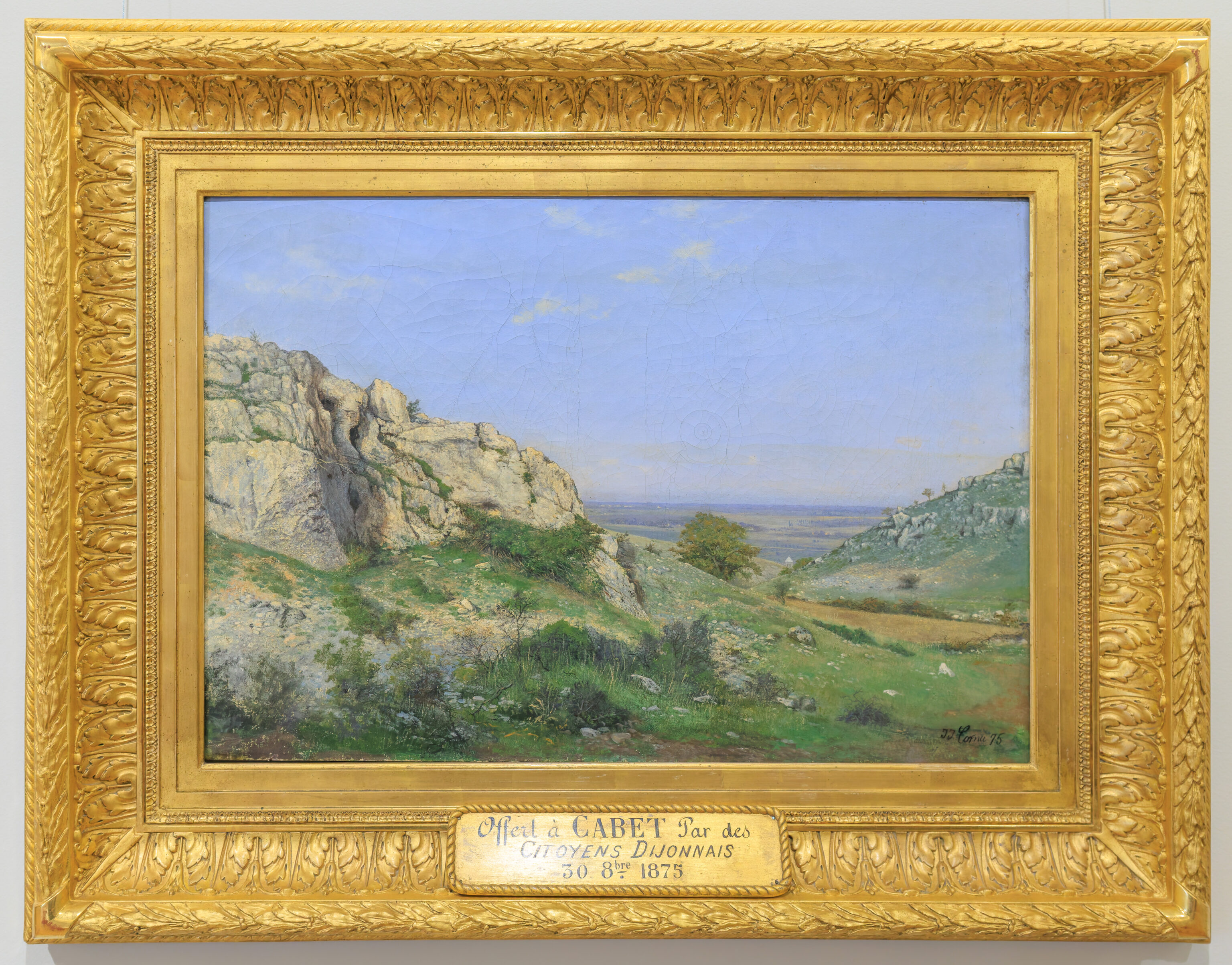
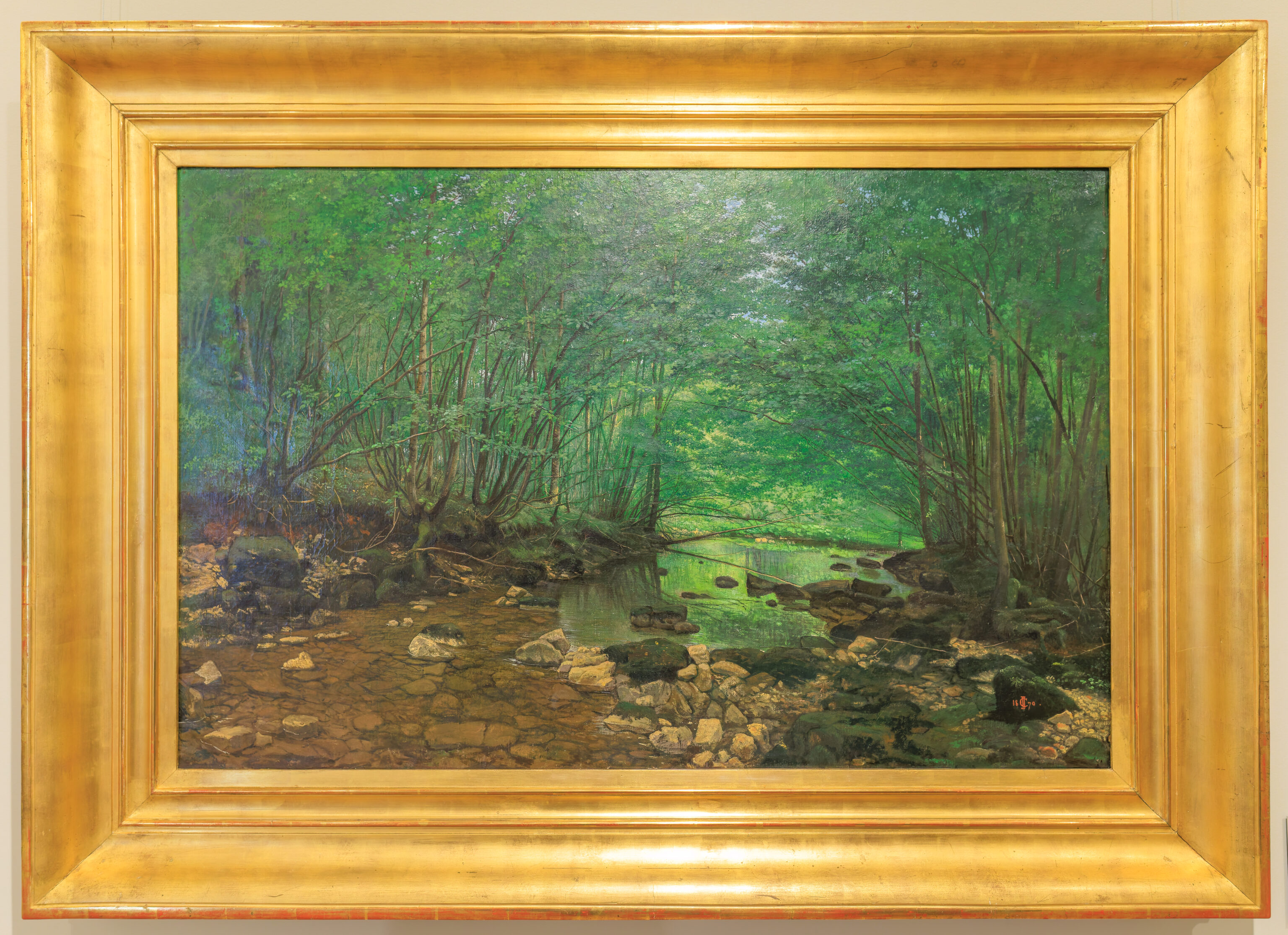
Chenôve (Côte-d’Or), 1819 – Chenôve, 1876
SARASIN GROTTO STREAM, BANK OF THE LIZON RIVER AT NANS-SOUS-SAINTE-ANNE (DOUBS)
1870
Oil on canvas
Following the Barbizon School, which sought an authentic depiction of nature, regional schools of landscape painters, deeply attached to their local area, emerged. Cornu painted the Côte-d’Or and the Jura mountains. The chaotic rock formations of the Franche-Comté region and the coolness of its streams inspired him.
(Translated using Google)
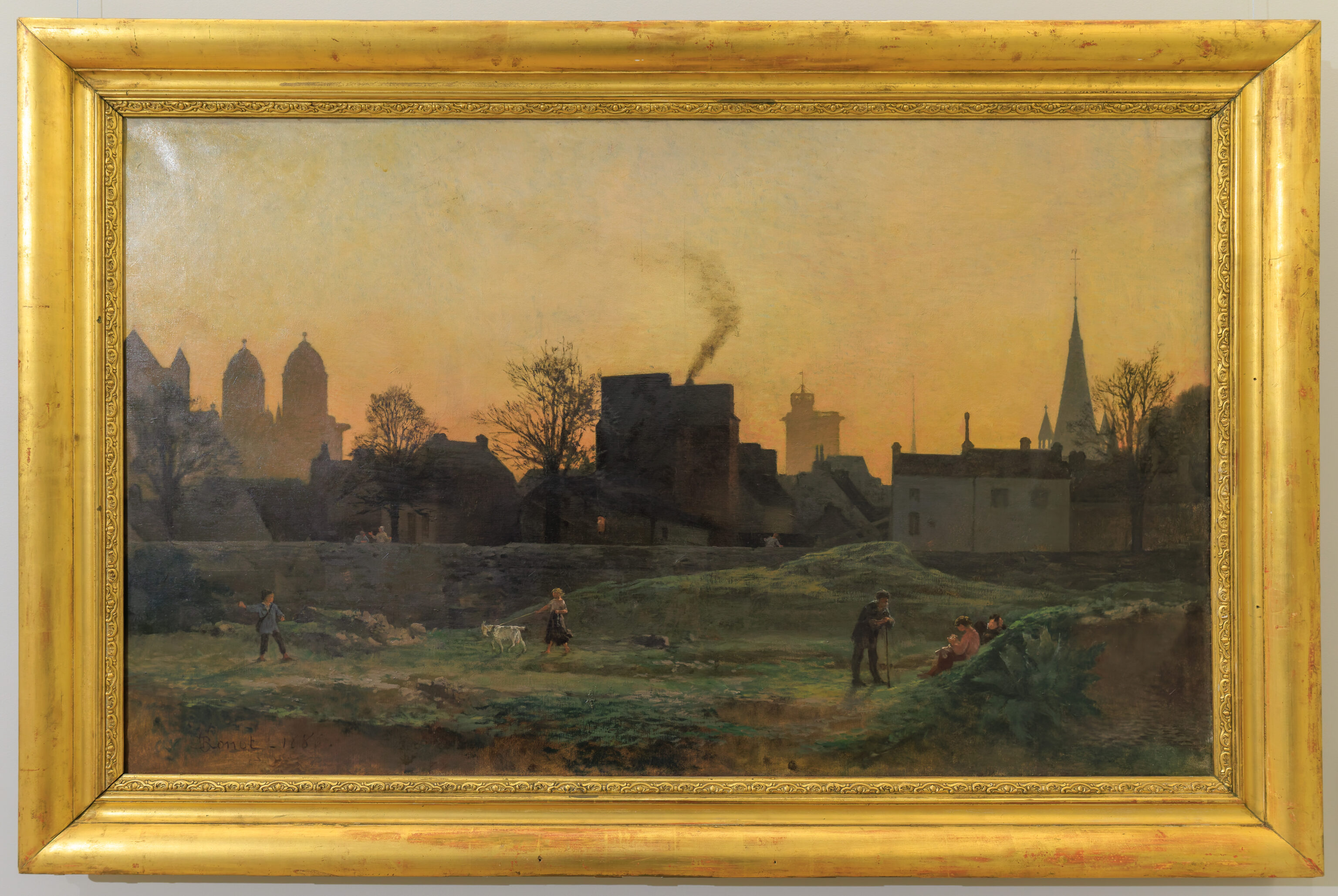
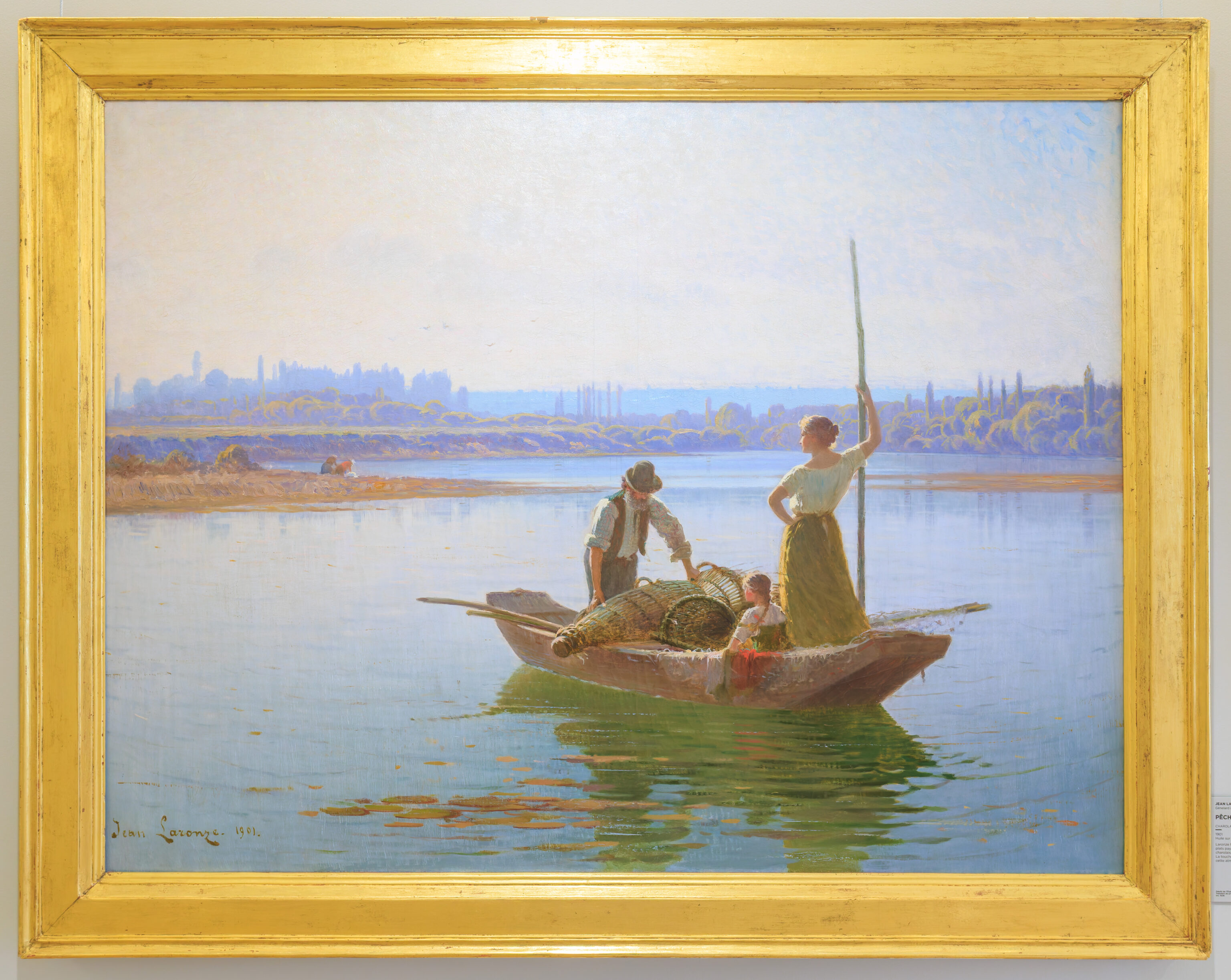
Génelard (Saône-et-Loire), 1852 – Neuilly-sur-Seine, 1937
CHAROLAIS FISHERMEN
1901
Oil on canvas
Laronze built his reputation on these tranquil and flat river landscapes, characteristic of the Charolais region, which perfectly suited his sensibility. The light touch and soft colors reinforce this atmosphere of serenity.
(Translated using Google)
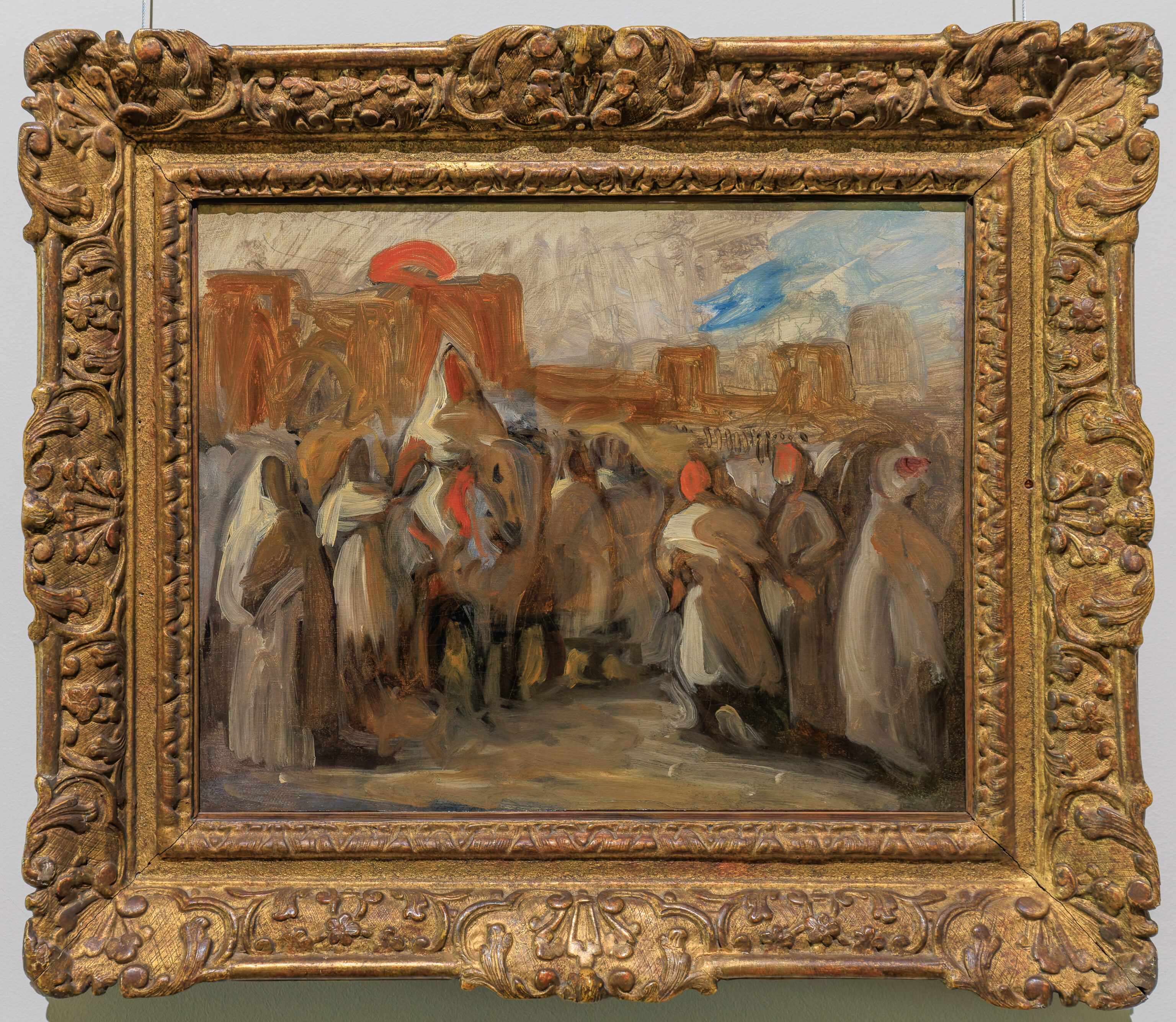
Charenton-Saint-Maurice (Val-de-Marne), 1798 – Paris, 1863
THE SULTAN OF MOROCCO MULAY-ABD-ER-RAHMAN RECEIVING THE FRENCH AMBASSADOR, THE COUNT OF MORNAY
Circa 1832
Oil on canvas
This canvas is a sketch for the painting held at the Musée des Augustins (Toulouse) and exhibited at the Salon of 1845. The energetic brushwork and exotic colors so characteristic of the master are already discernible at this stage of the creative process.
Donation of Pierre and Kathleen Granville, 1969
Inv. DG 86
(Translated using Google)
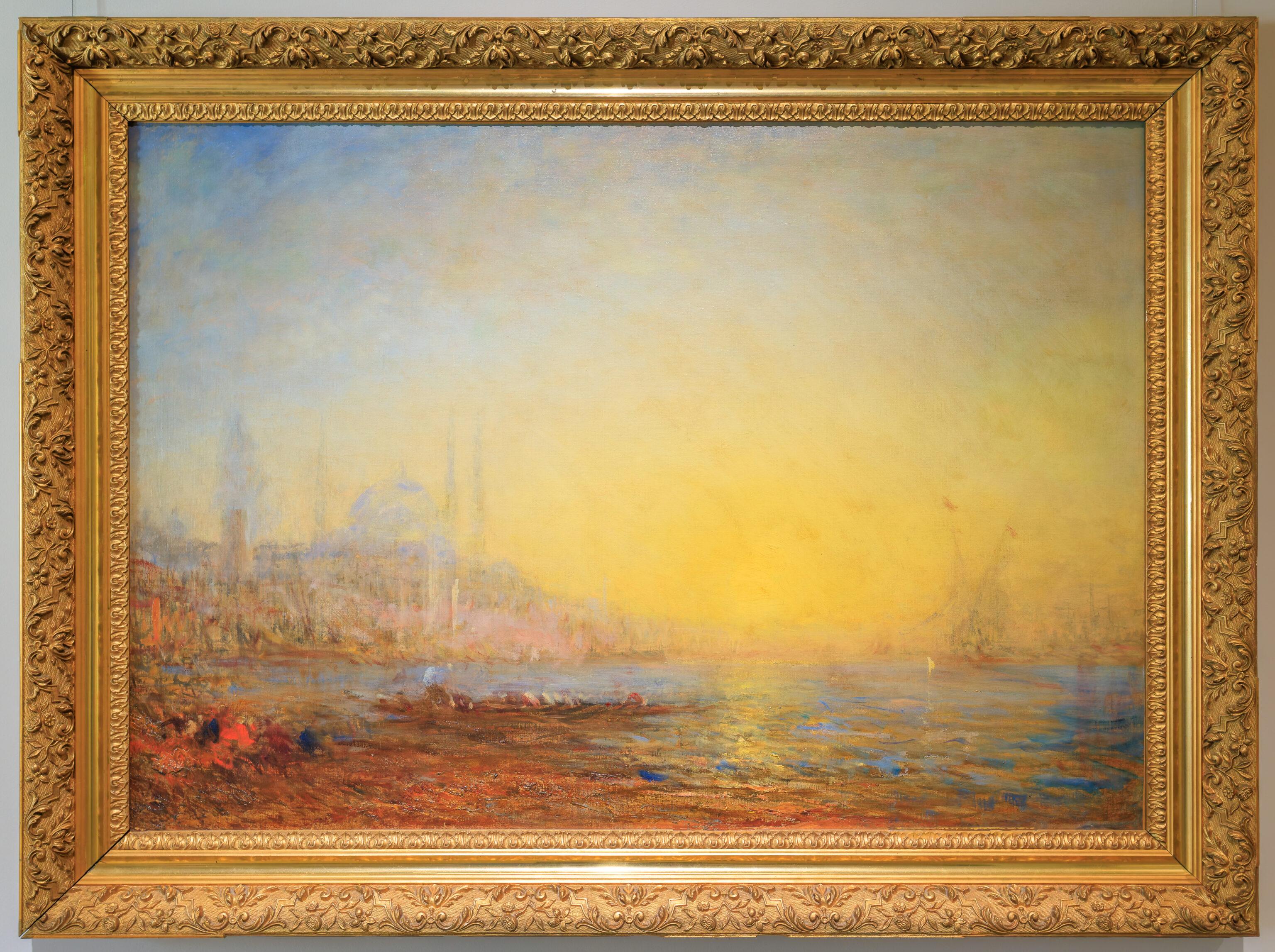
Beaune (Côte-d’Or), 1821 – Paris, 1911
CONSTANTINOPLE
Second half of the 19th century
Oil on canvas
Born in Beaune, the artist traveled throughout Europe and the Middle East. He discovered Constantinople (now Istanbul) in 1847. Ziem’s hazy brushwork, which foreshadows Impressionism, offers a glimpse of the magnificent Hagia Sophia.
(Translated using Google)
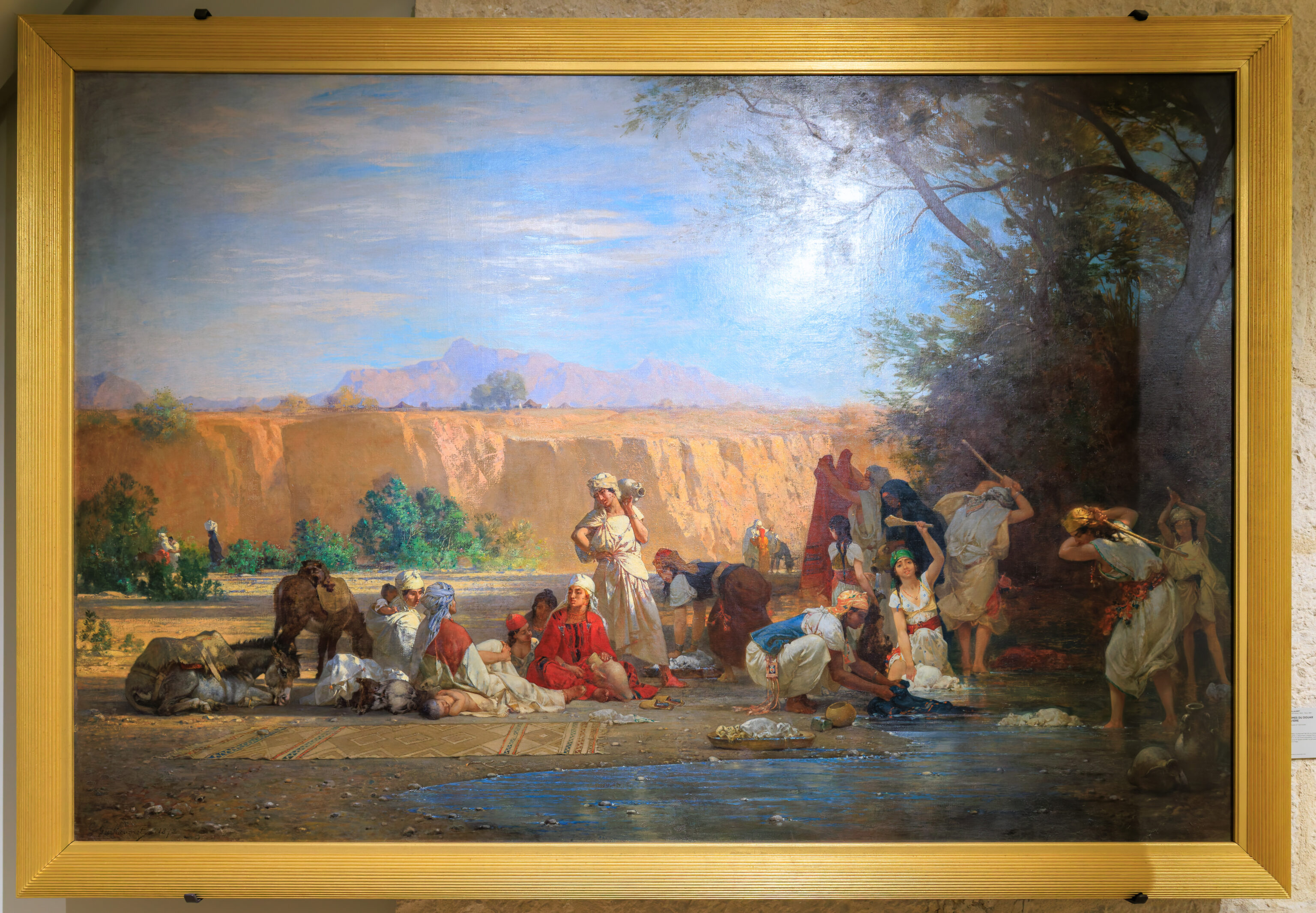
Puteaux (Hauts-de-Seine), 1840 – Paris, 1887
THE WOMEN OF DOUAR AT THE RIVER
1872
Oil on canvas
Between 1862 and 1884, Guillaumet made ten or eleven trips to Algeria, staying there for several months each time. Here, he depicts the life of a nomadic community. A soft, golden light envelops this group of women washing clothes.
On loan from the French State since 1872
Ownership transferred from the French State to the city of Dijon, 2010
Inv. CA 313
(Translated using Google)
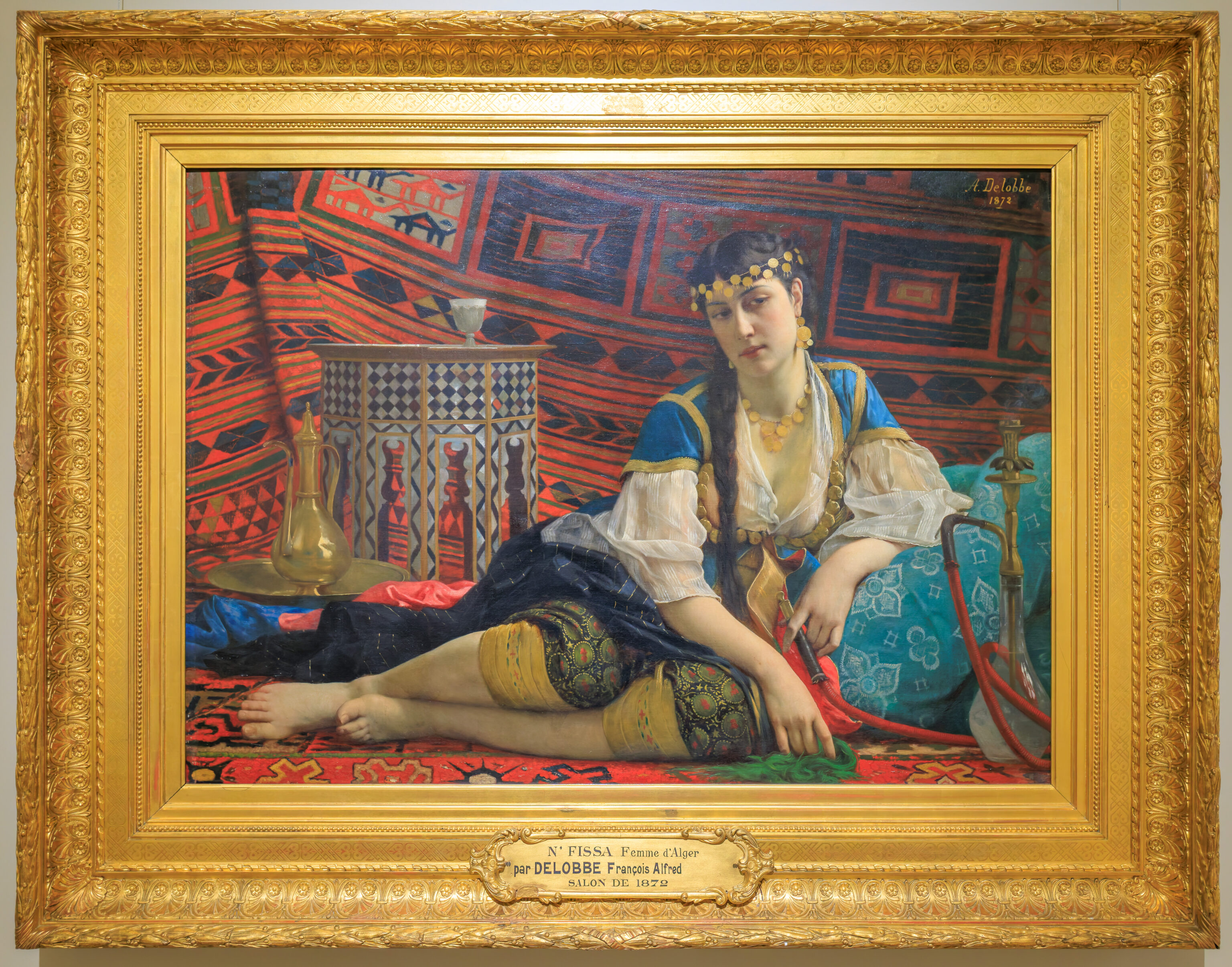
Paris, 1835 – Paris, 1915
N’FISSA, WOMAN OF ALGIERS
1872
Oil on canvas
A student of Bouguereau and Couture, Delobbe apparently never traveled to the Maghreb. It was in the intimacy of his studio, which he decorated with tapestries and hookahs, that he imagined his Oriental scenes.
(Translated using Google)
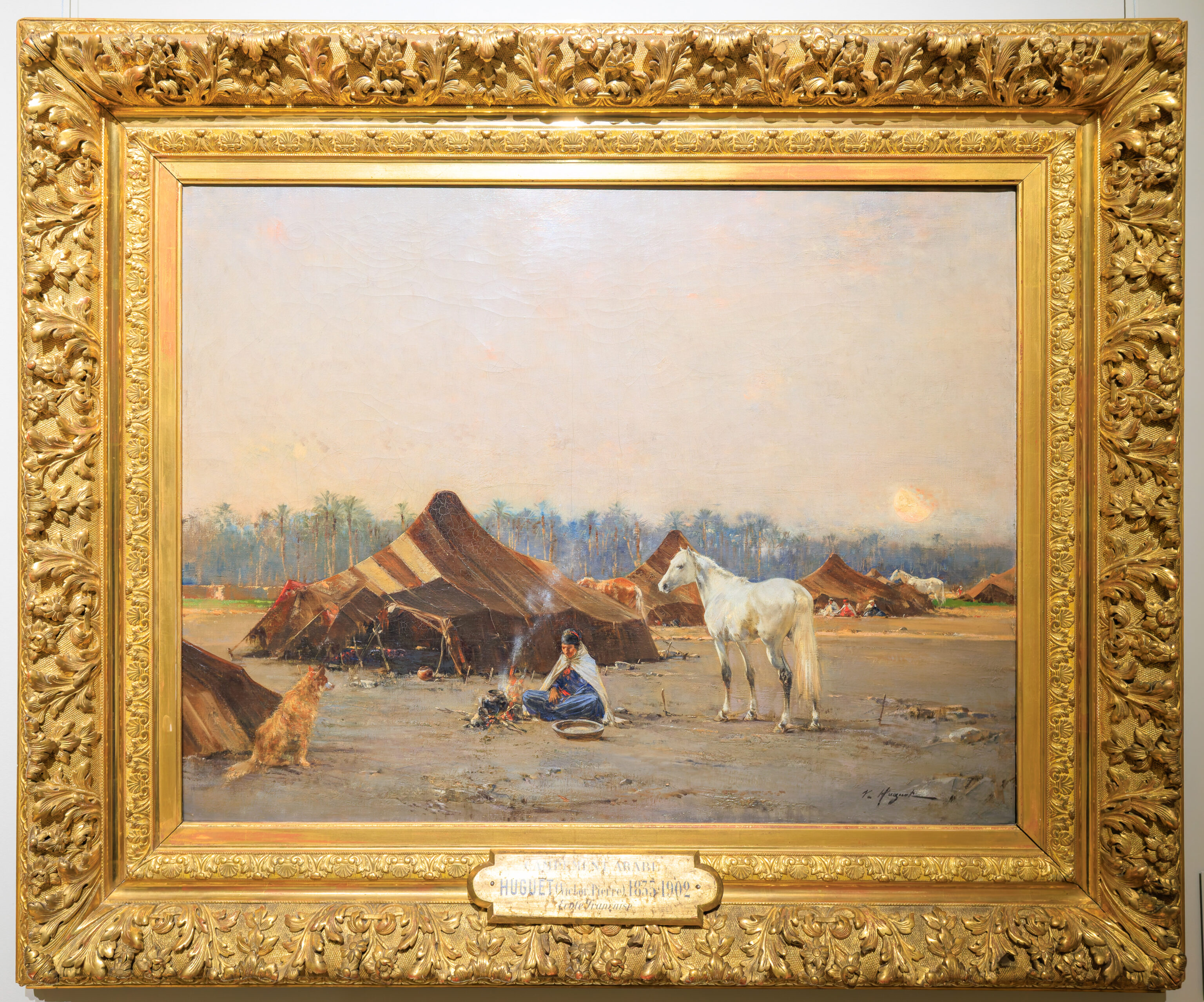
Le Lude (Sarthe), 1835 – Paris, 1902
ENCAMPMENT IN BISKRA
19th century
Oil on canvas
While staying in Algeria in 1861, Huguet, like Fromentin a few years earlier, aspired to discover an authentic territory far from urban civilization. He turned to the desert and traveled to Biskra, at the edge of the Sahara. He was particularly struck by nomadic life, of which he offered various depictions, and by the very particular characteristic of the desert light, sometimes gray – and here that of a rising sun – which “flattens” shadows and contours.
(Translated using Google)
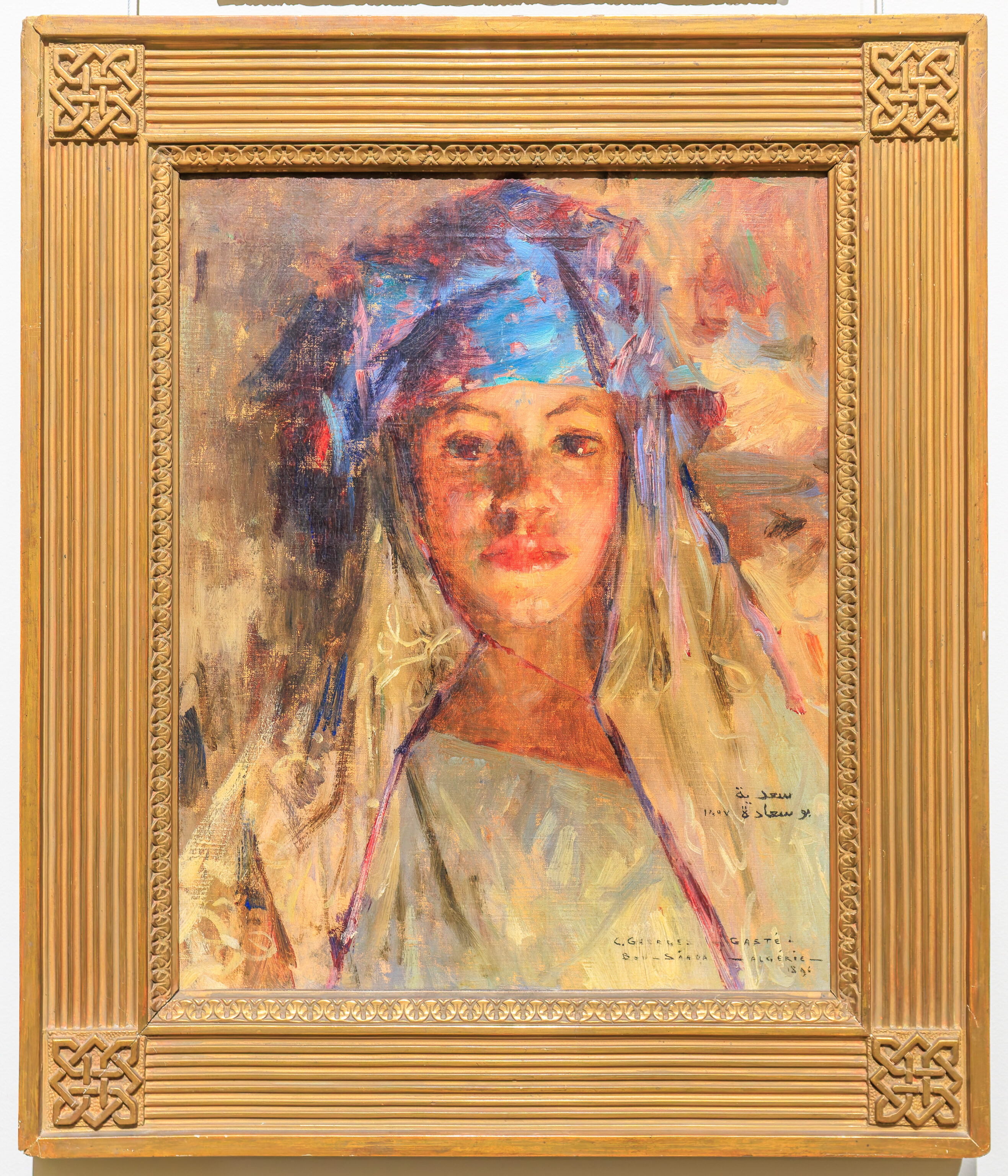
Paris, 1869 – Madura (India), 1910
PORTRAIT OF A WOMAN FROM BOU-SAADA (ALGERIA)
1896
Oil on canvas
In Bou-Saada, Gasté revealed his talents as a colorist and especially as a portrait painter. He rendered faces with a quick and lively brushstroke, using remarkable economy of means. These portraits of Algerians capture in their gaze the truth of expression and emotion that the painter sought above all else. The attention paid to the clothing attests to a strong documentary approach.
Gift of Countess d’Armandy, 1936
(Translated using Google)
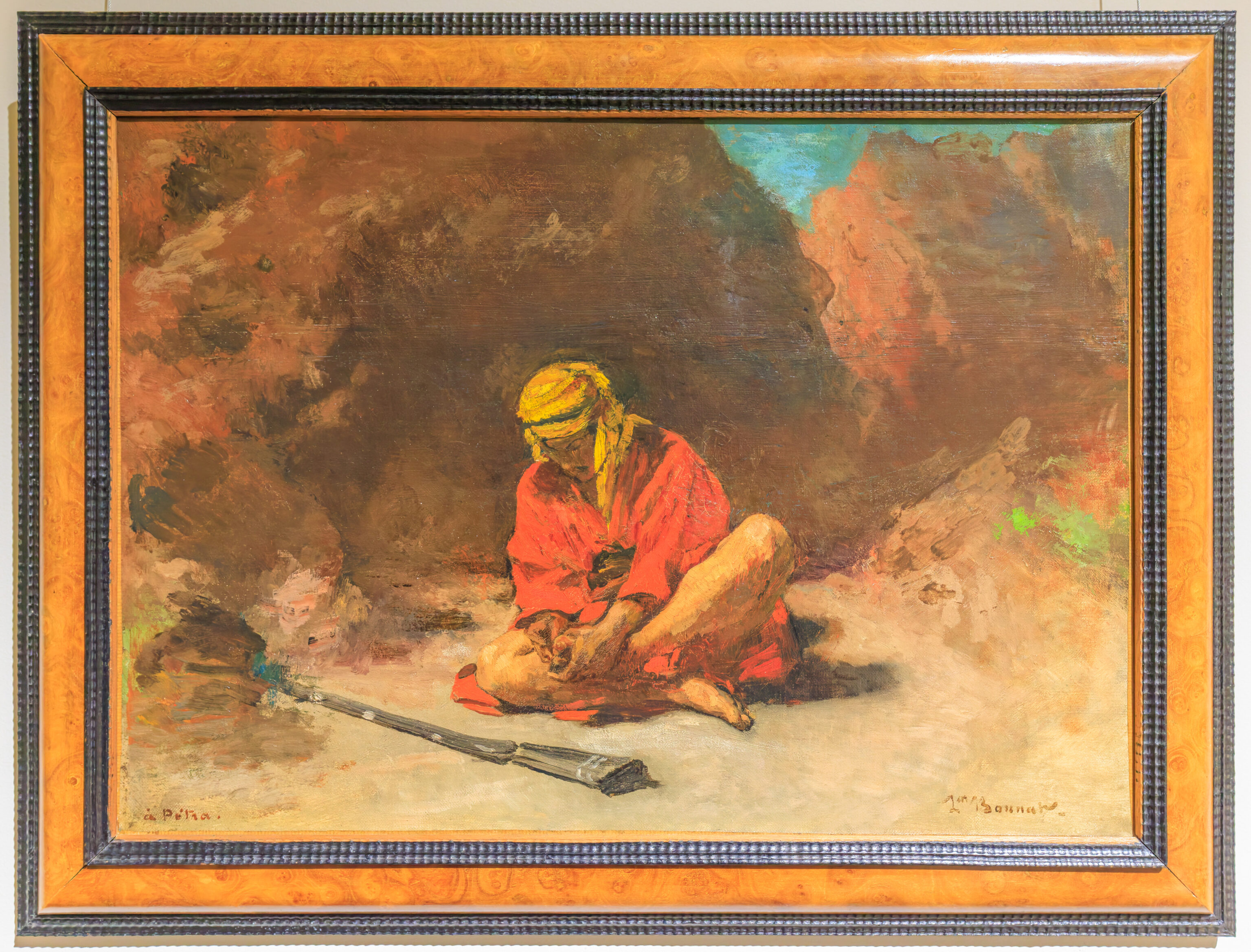
Bayonne (Pyrénées-Atlantiques), 1833 – Paris, 1922
ARAB REMOVING A THORN FROM HIS FOOT
1868 – 1869
Oil on canvas
The artist here transposes the ancient theme of the man removing a thorn from his foot into a landscape he sketched during his trip to Petra (Jordan) in 1868. The rocky setting is painted with broad brushstrokes in the style of Delacroix.
Donation
Gift of Pierre and Kathleen Granville, 1974
Inv. DG 858
(Translated using Google)
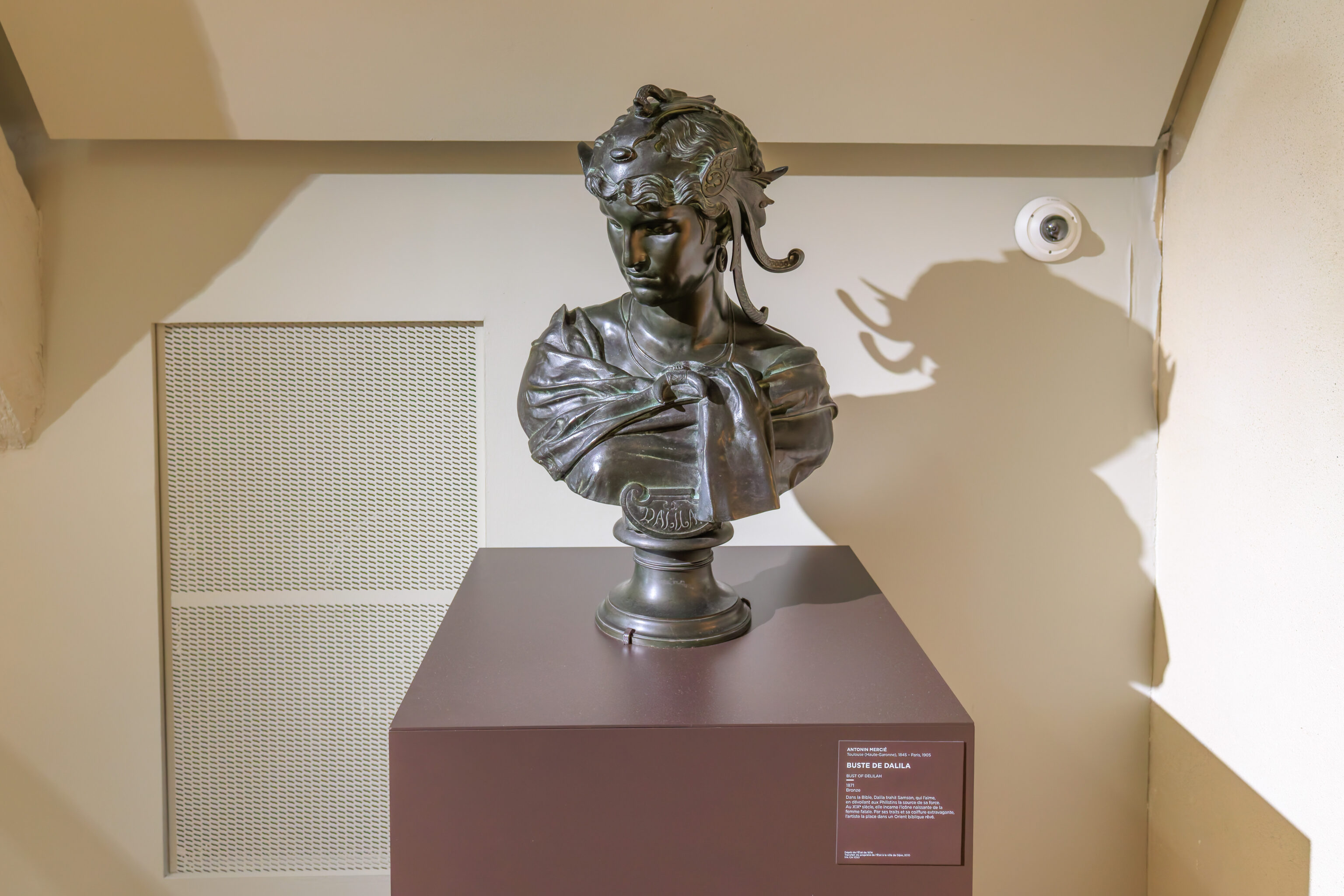
Toulouse (Haute-Garonne), 1845 – Paris, 1905
BUST OF DELILAH
1871
Bronze
In the Bible, Delilah betrays Samson, who loves her, by revealing the source of his strength to the Philistines. In the 19th century, she embodies the emerging icon of the femme fatale. Through her features and extravagant hairstyle, the artist places her in a dreamed-of biblical Orient.
On loan from the State since 1874
Ownership transferred from the State to the city of Dijon, 2010
Inv. CA 1050
(Translated using Google)
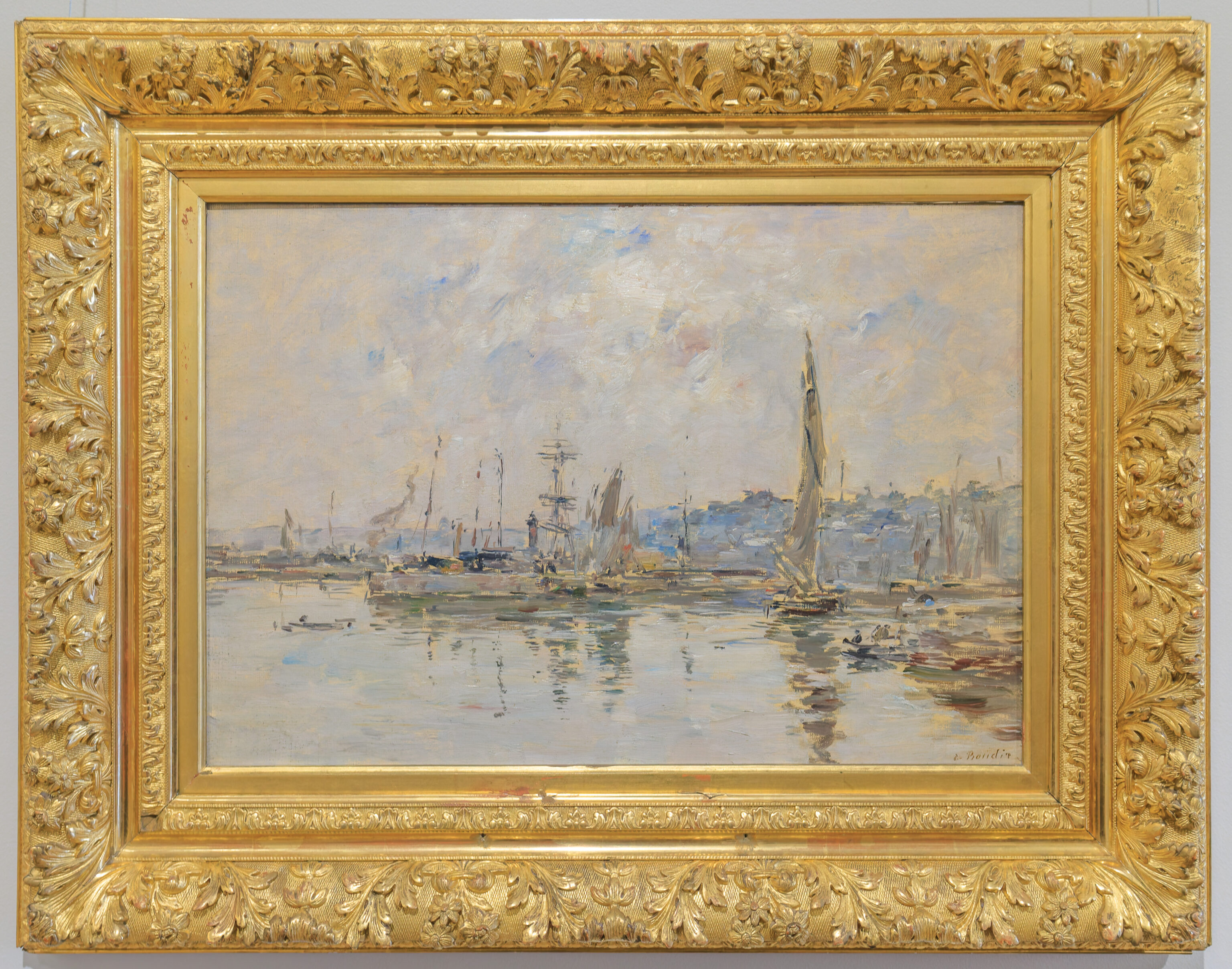
Honfleur (Calvados), 1824 – Deauville (Calvados), 1898
THE PORT OF HONFLEUR
1897
Oil on canvas
In this painted version of the harbor of his hometown, dated September 1897, Boudin bathes the scene in pinkish-purple and blue tones, perhaps suggesting the dawning of a new day.
(Translated using Google)
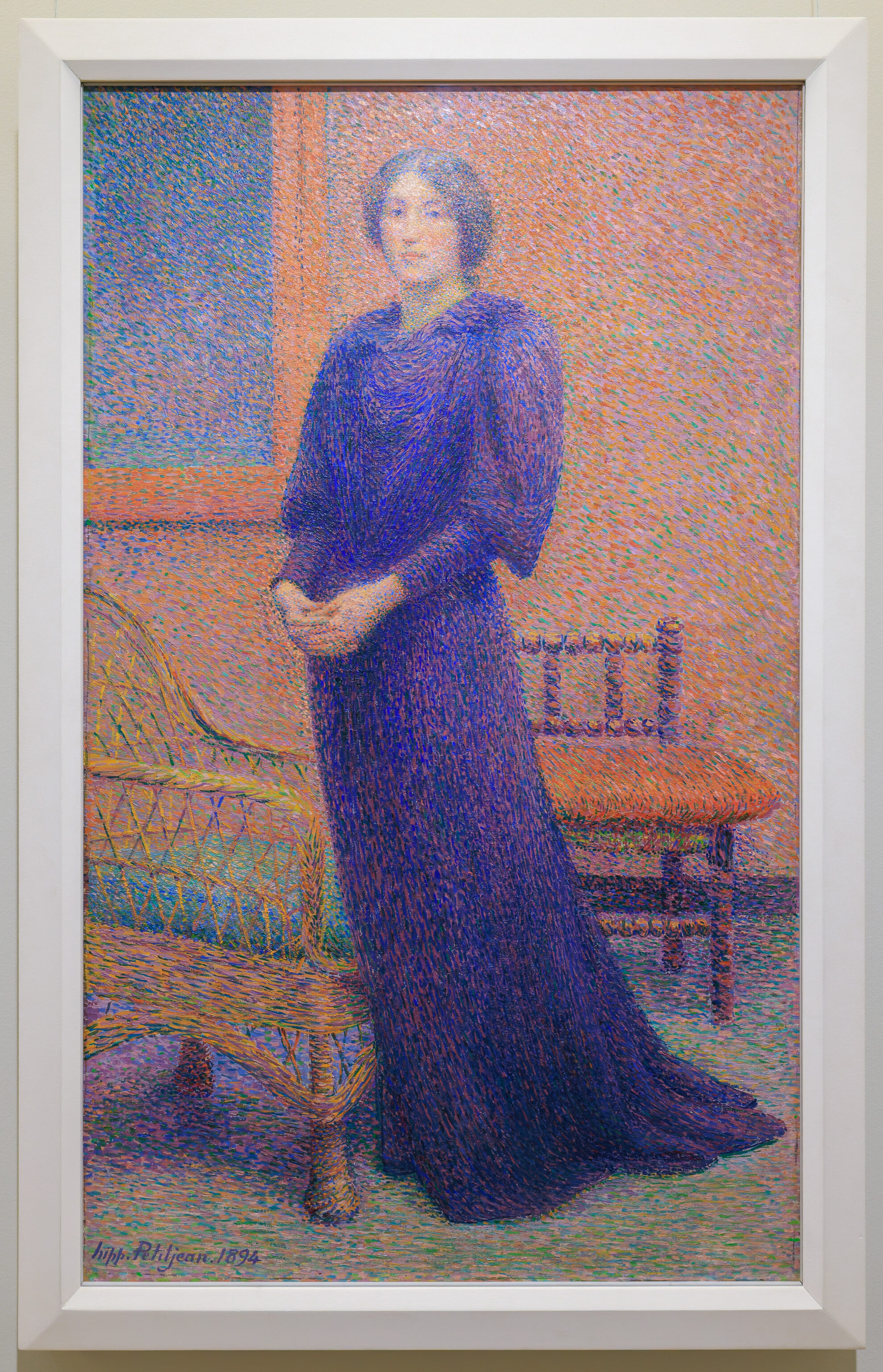
Mâcon, 1854 – Paris, 1929
YOUNG WOMAN STANDING (LOUISE CLAIRE CHARDON)
1894
Oil on canvas
After an academic training and early Impressionist works, Petitjean adopted Seurat’s Pointillist technique in 1884. He systematized the Impressionist brushstroke through a sophisticated theory of colors and contrasts.
On loan from the Musée d’Orsay, Paris, 2019
Inv. D.2019-2-1
(Translated using Google)
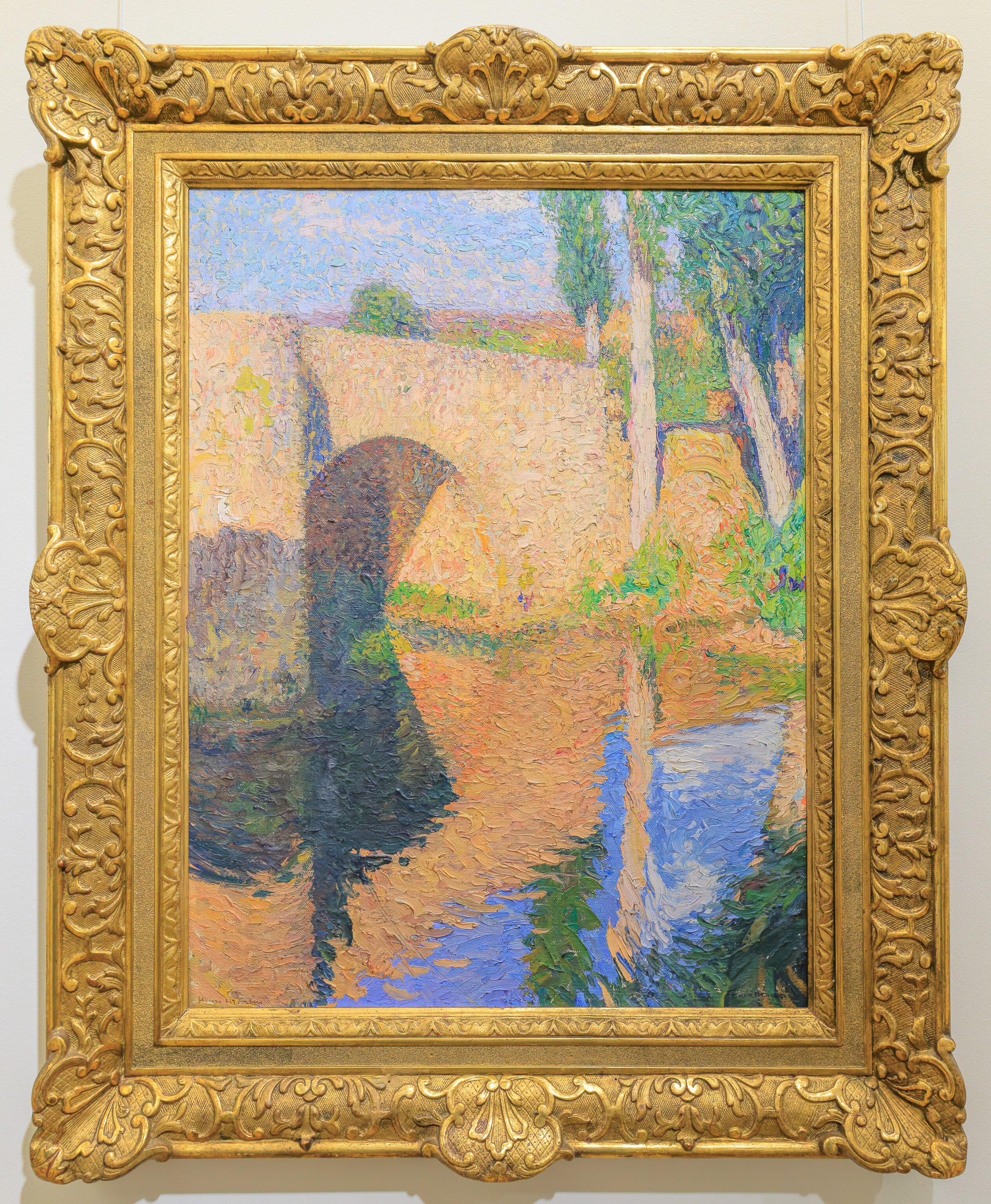
Toulouse, 1860 – Paris, 1943
THE BRIDGE
Late 19th century – early 20th century
Oil on canvas
The influence of Divisionist theories is particularly visible in Henri Martin’s landscapes. In this painting, the artist focuses all his attention on the vibration of light on the water and the stones of the bridge. Henri Martin is also known for his Symbolist subjects.
(Translated using Google)
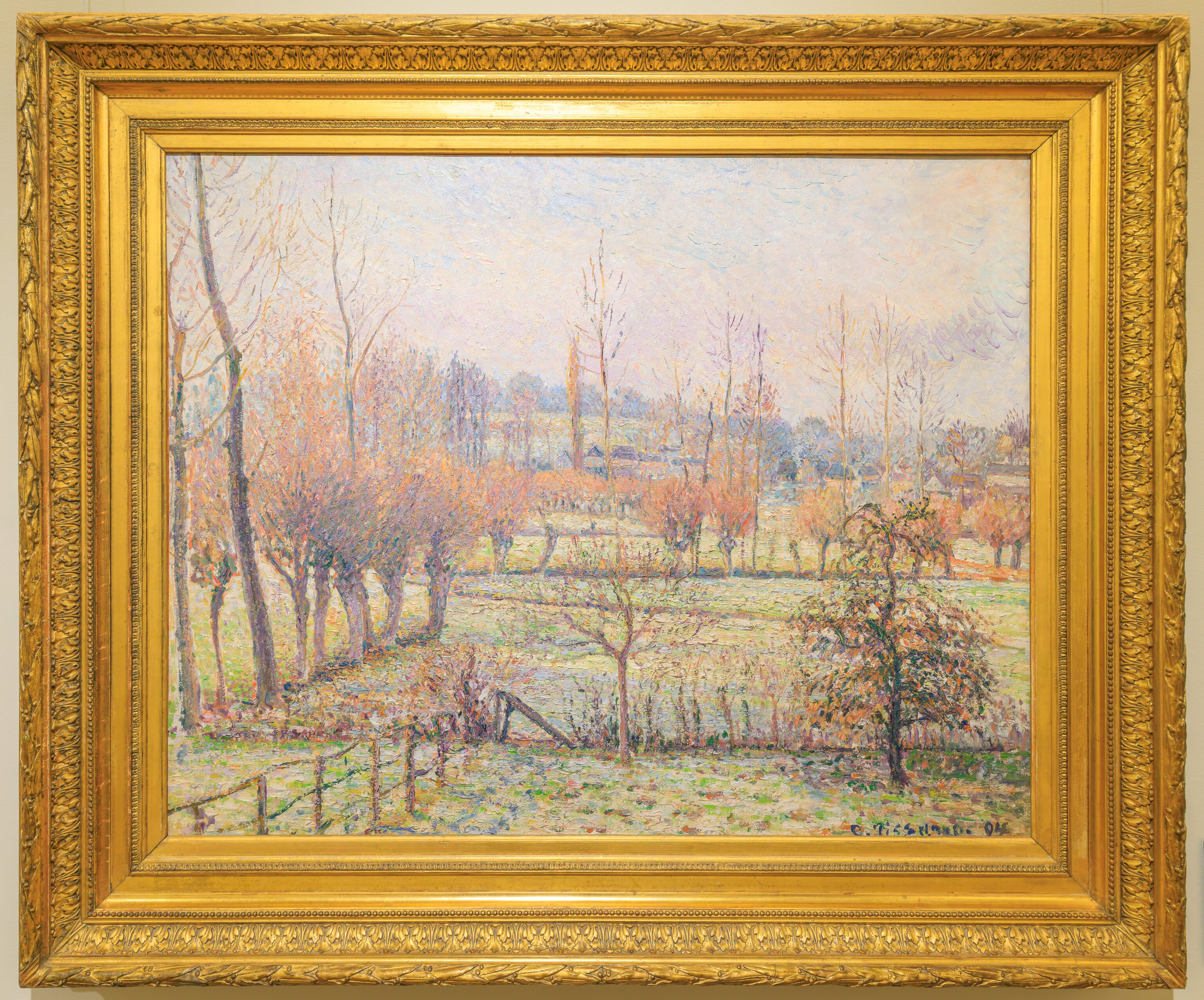
Charlotte Amalie (Danish West Indies, now United States Virgin Islands), 1830 – Paris, 1903
EFFECT OF SNOW IN ERAGNY
1894
Oil on canvas
From his property in Éragny-sur-Epte in the Oise region, Pissarro, using small touches of pure color, explores the landscape, which he depicts tirelessly throughout the seasons and from different viewpoints, following the principle of series so dear to his friend Monet.
(Translated using Google)
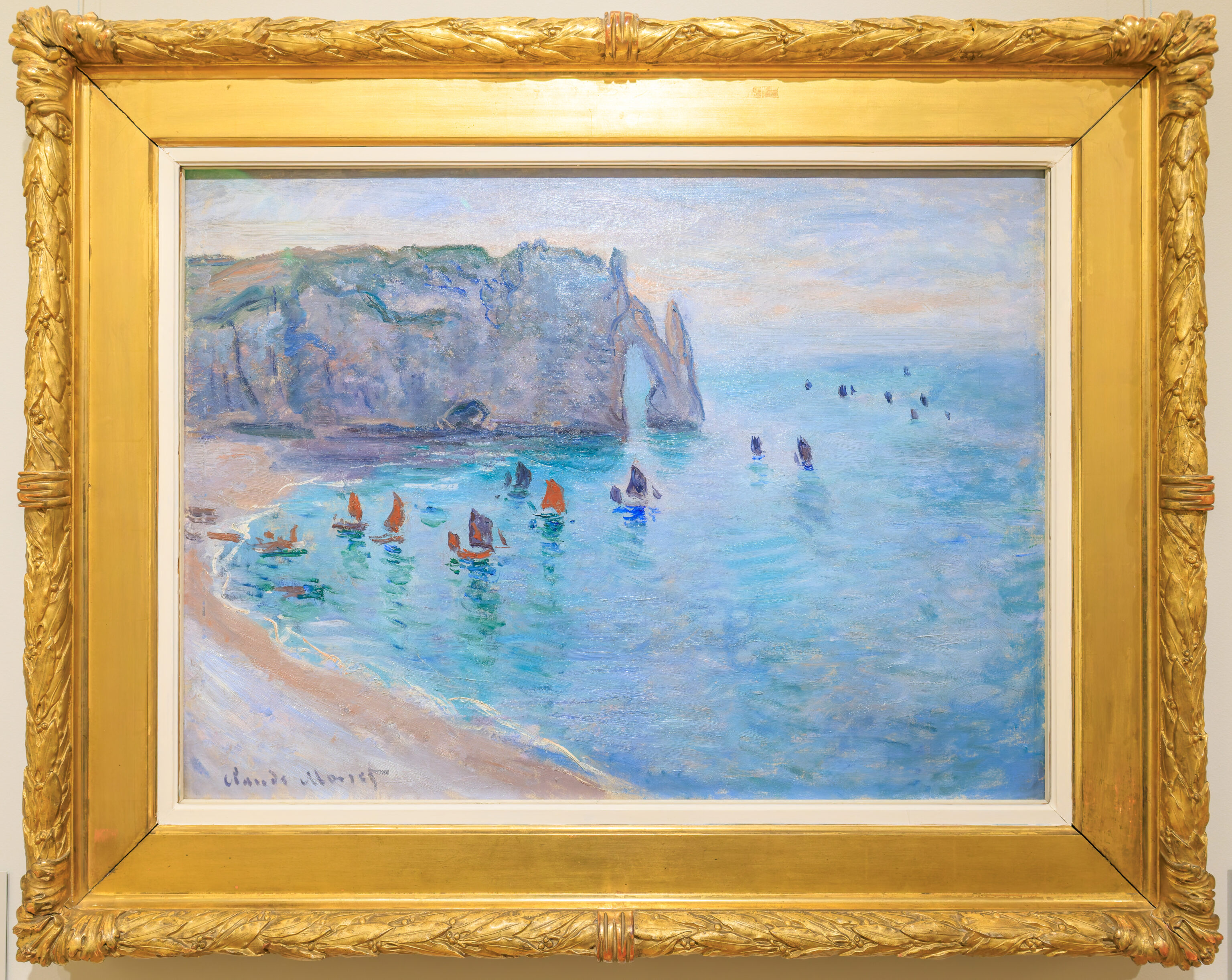
Paris, 1840 – Giverny (Eure), 1926
ÉTRETAT, THE PORTE D’AVAL: FISHING BOATS LEAVING THE HARBOR
Circa 1885
Oil on canvas
Monet visited Étretat several times, mainly between 1868 and 1887. In 1885, he chose to depict fishing boats setting out to sea for herring fishing, in front of the Porte d’Aval. He captured the shimmering of the water and the movement of the waves with delicate brushstrokes.
Bequest of Albert Robin, 1930
Inv. 2961
(Translated using Google)
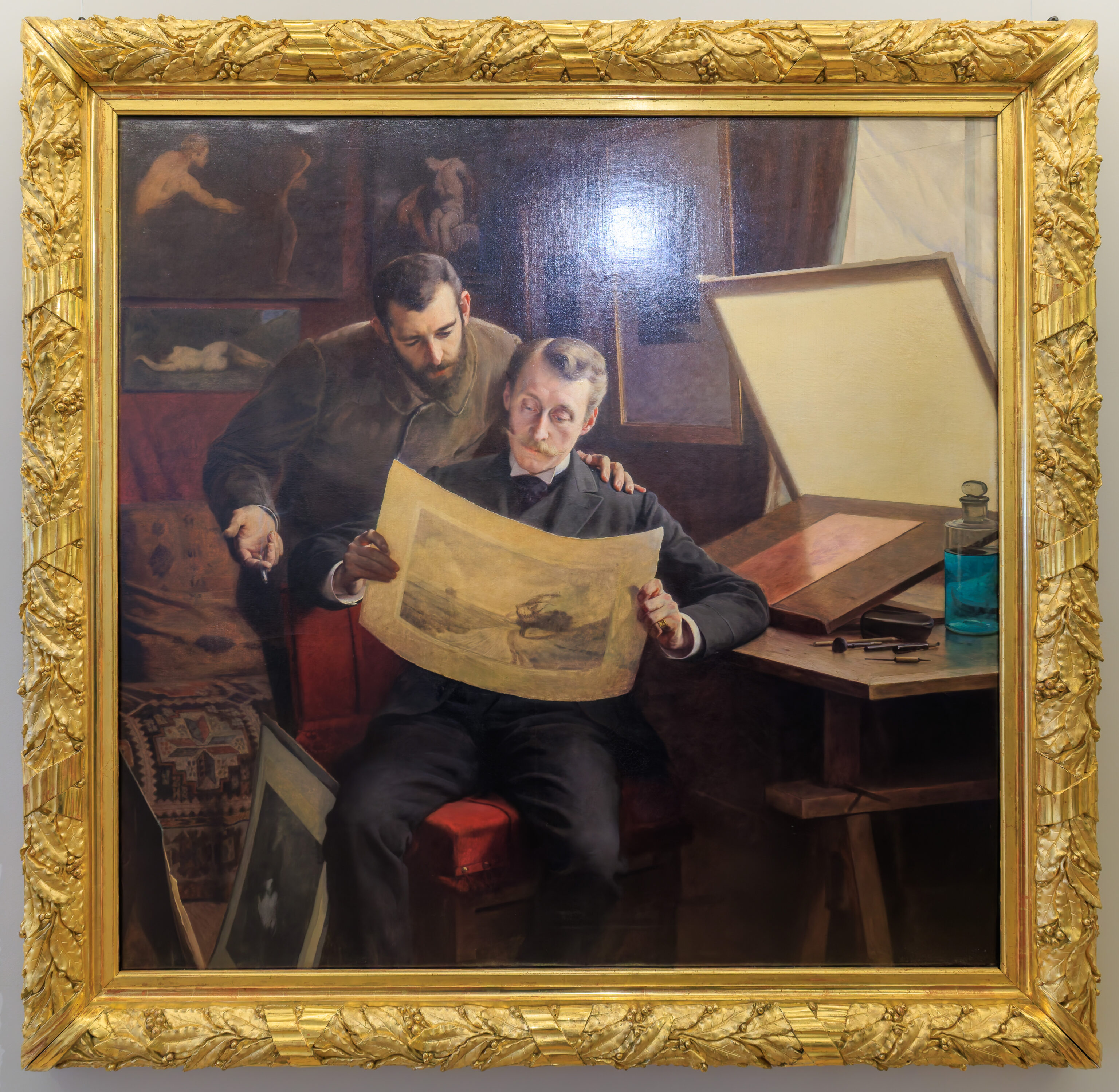
Dijon, 1849 – Dijon, 1930
THE ETCHING
1894
Oil on canvas
The artist depicts a work session in an engraver’s studio. “Etching” refers to the nitric acid which, applied to the copper plate, reveals the engraved design. This is the blue liquid contained in the bottle. With considerable skill, the painter draws the viewer into the scene by allowing them to see, through the transparency, the design on the sheet of paper that the two men are looking at.
Deposited by the State in 1895, definitive transfer of ownership to the City of Dijon, decree of the Minister of Culture of September 15, 2010
Inv. 1149
(Translated using Google)
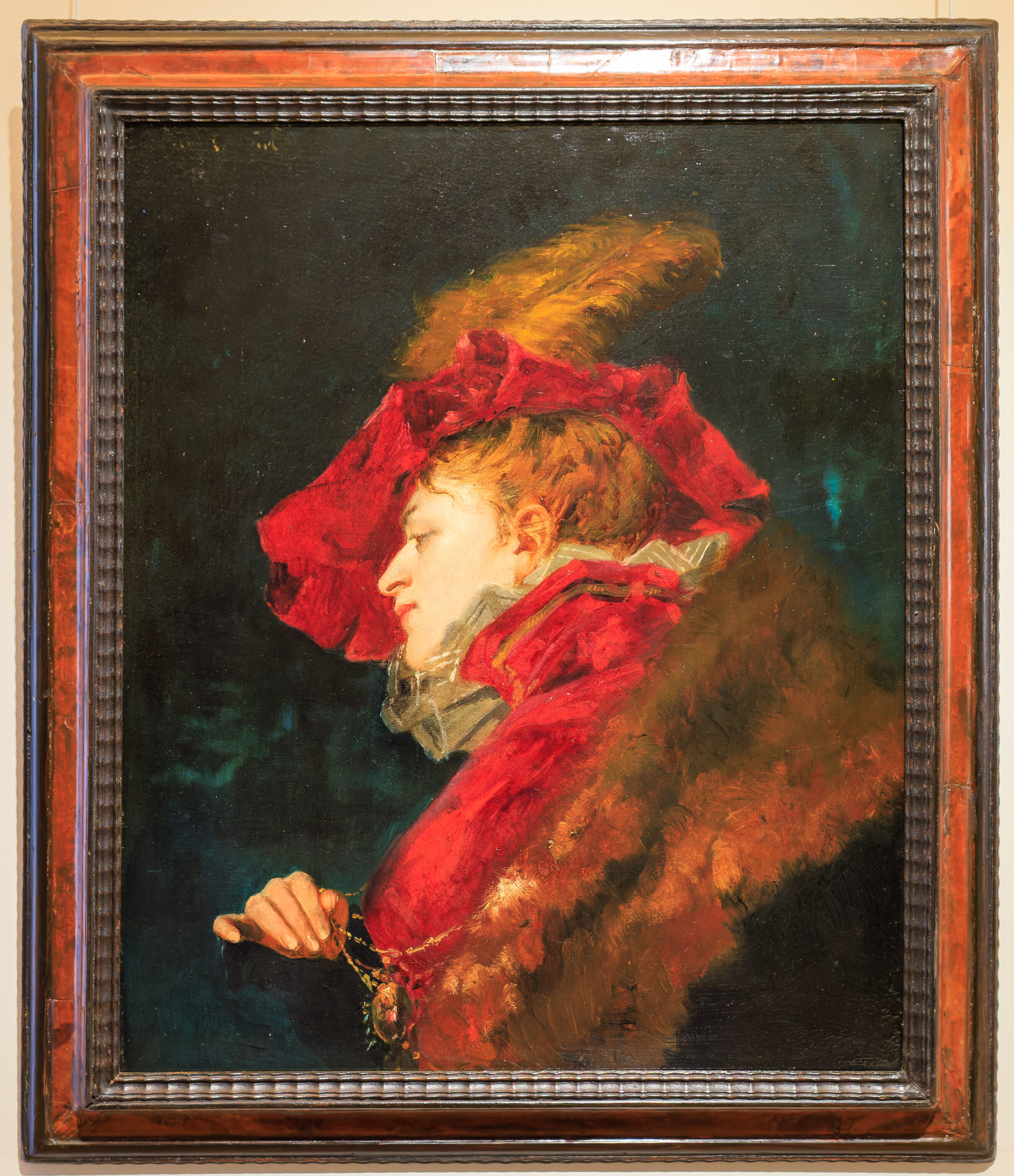
Paris, 1834 – Paris, 1891
PORTRAIT OF SARAH BERNHARDT
1875 (?)
Oil on wood
Sarah Bernhardt was the most famous French actress in France at the end of the 19th and the beginning of the 20th century. A great tragedienne and muse to artists—she also painted and sculpted—she was often portrayed in her elegant attire.
Donation
Donation of Pierre and Kathleen Granville, 1986
Inv. DG 86-74
(Translated using Google)
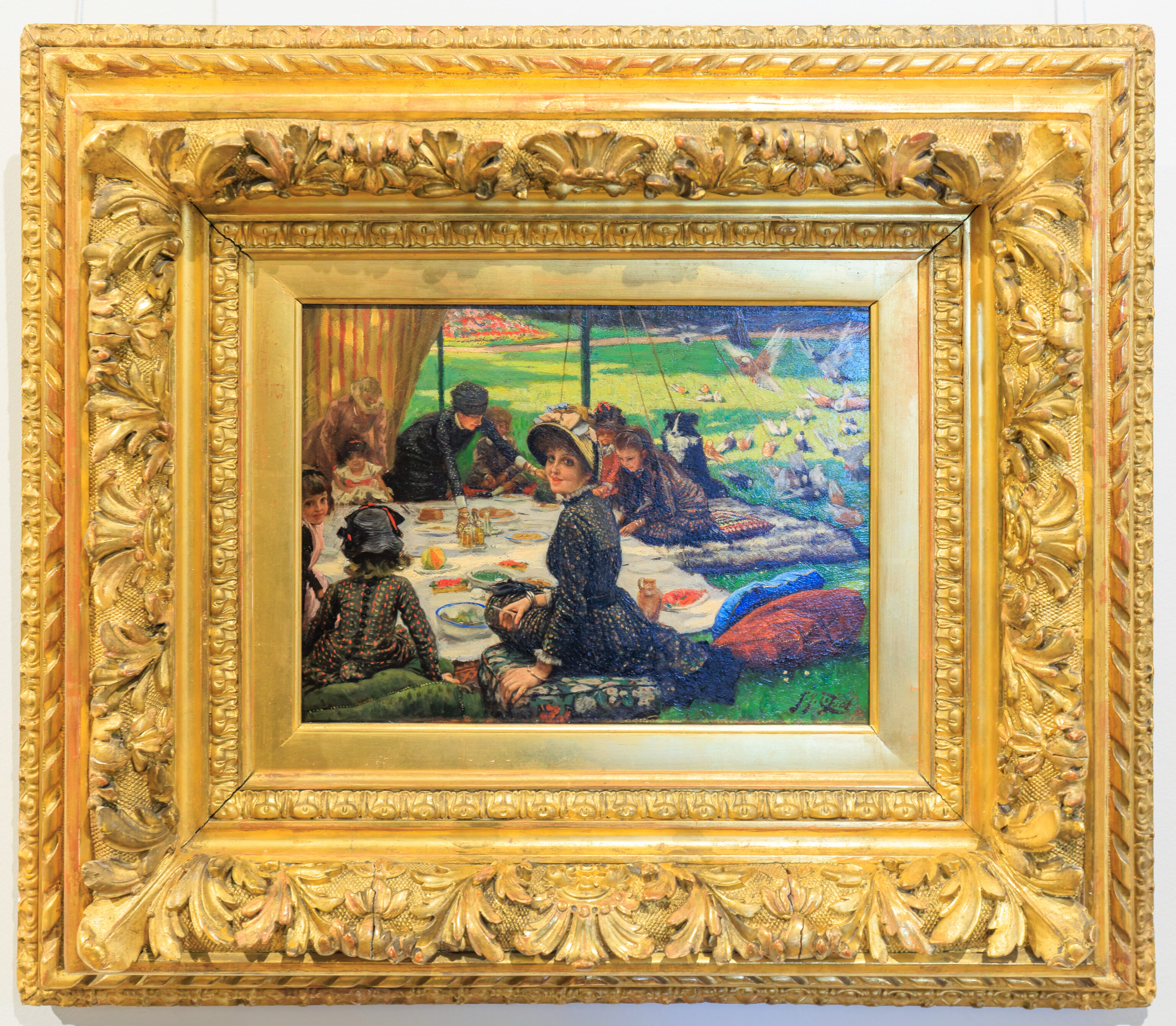
Nantes, 1836 – Chenecey-Buillon (Doubs), 1902
LUNCH ON THE GRASS
THE PICNIC
Circa 1881 – 1882
Oil on wood
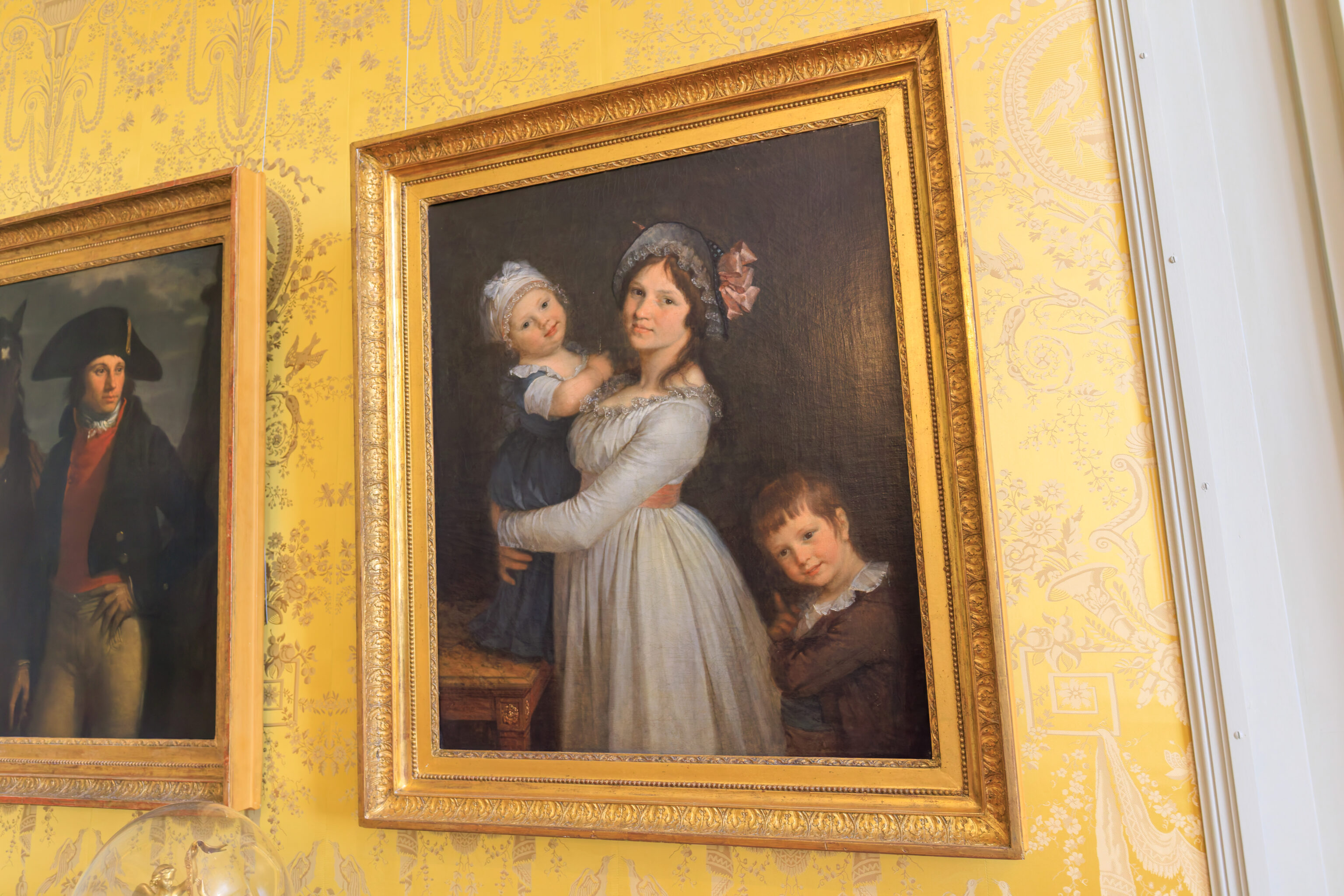
A painter of feminine elegance, Tissot paid great attention to fabrics and the way in which light enhanced them. Kathleen Newton poses once again alongside her children.
Bequest of Albert Bichet, 1920
Inv. 2719
(Translated using Google)
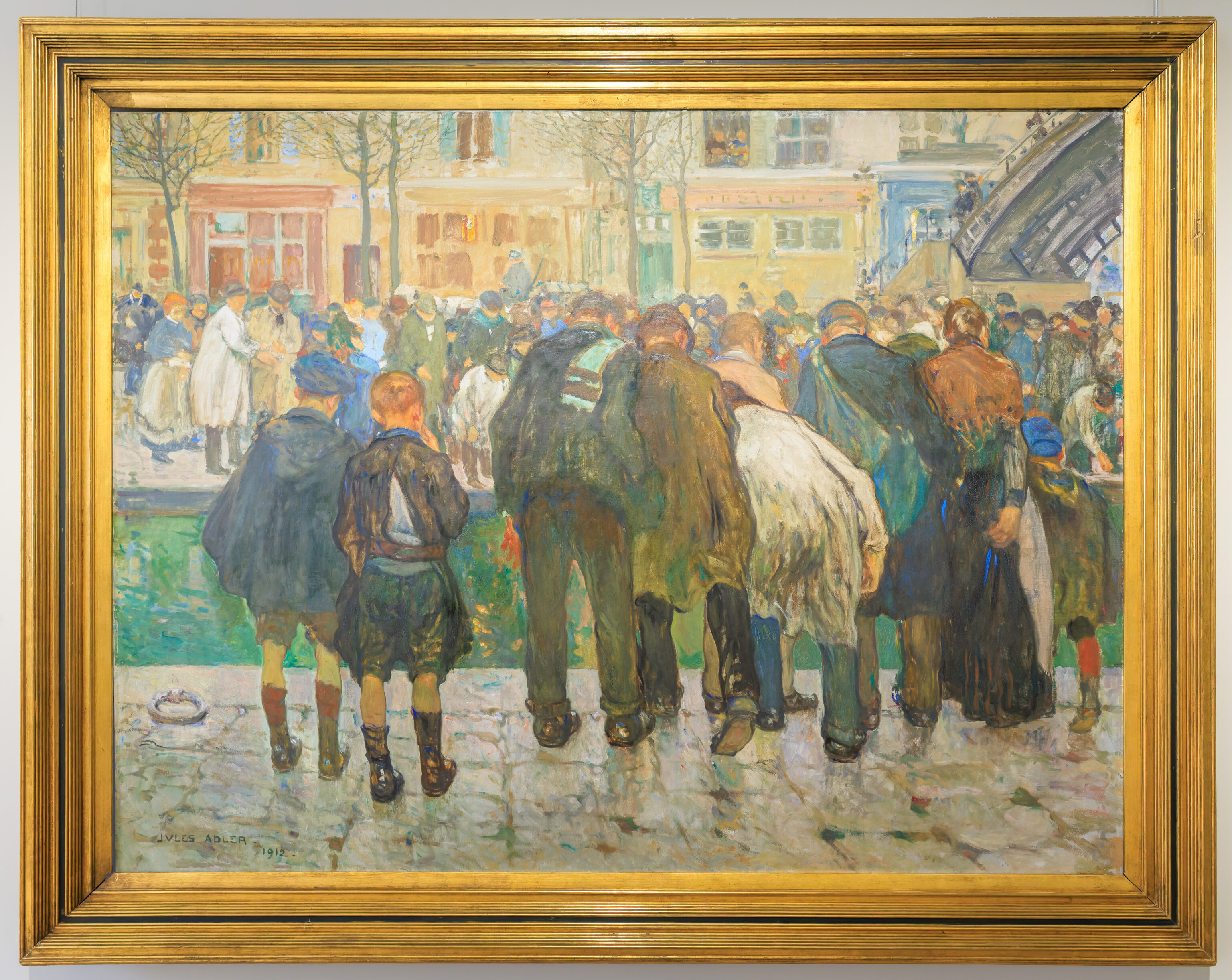
Luxeuil-les-Bains (Haute-Saône), 1865 – Nogent-sur-Marne (Val-de-Marne), 1952
THE ACCIDENT
1912
Oil on canvas
Adler’s uncompromising naturalism focuses on the working class and crowd scenes. By positioning his figures with their backs to the viewer, the artist creates a critical distance: what tragic scene is there to be seen at the bottom of the canal?
On loan from the National Fund for Contemporary Art, 1914 (Inv. 4089)
Inv. D 2566
(Translated using Google)
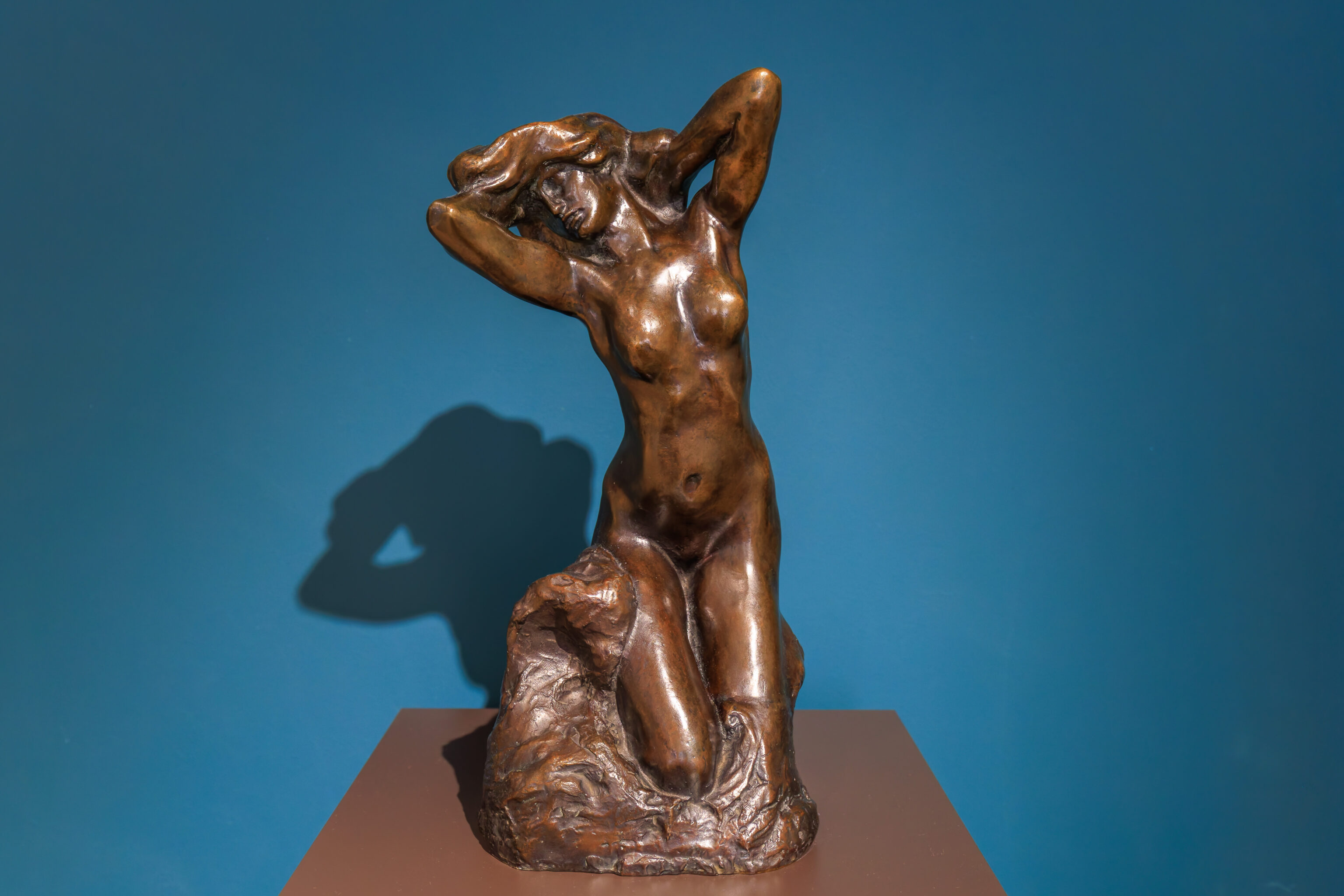
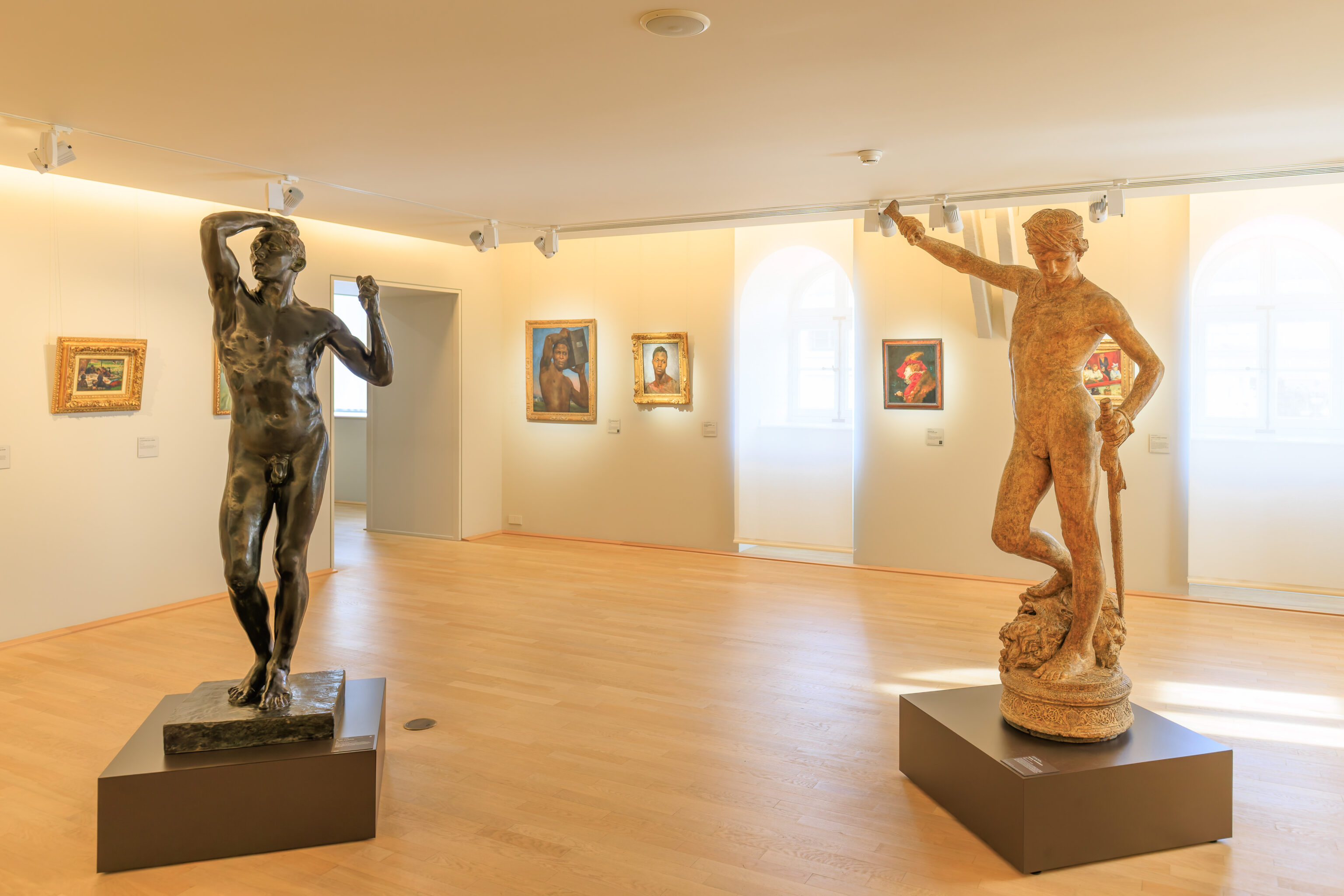
Paris, 1840 – Meudon, 1917
THE TOILETTE OF VENUS
THE BATHER
Circa 1885
Bronze, Coubertin foundry
As he did for The Kiss and The Thinker, Rodin extracted one of the figures from the Gates of Hell to create an independent subject. The strange kneeling Fauness from the upper register is thus transformed into a voluptuous and sensual goddess.
Gift of Pierre and Kathleen Granville, 1986
Inv. DG 86-152
(Translated using Google)
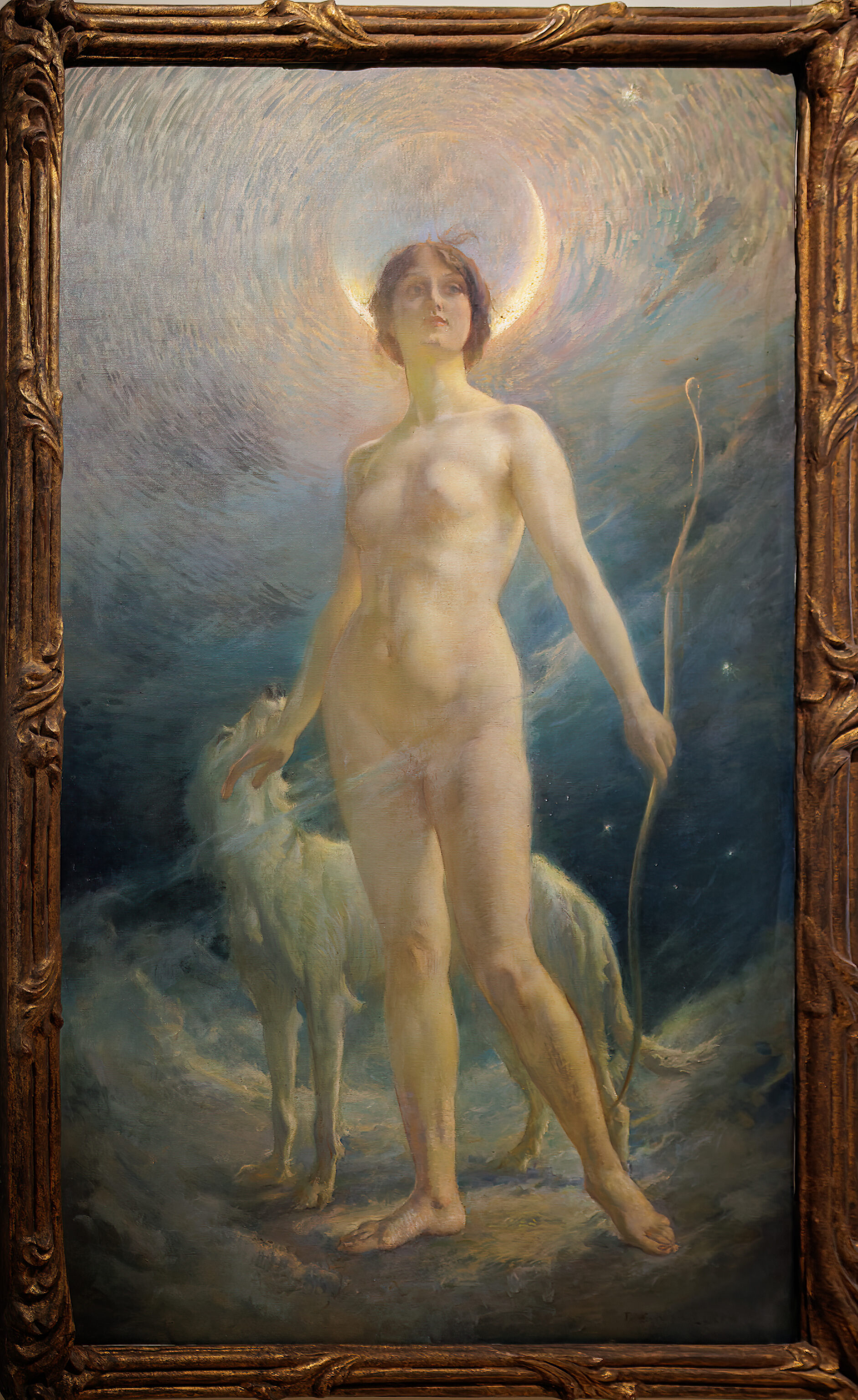
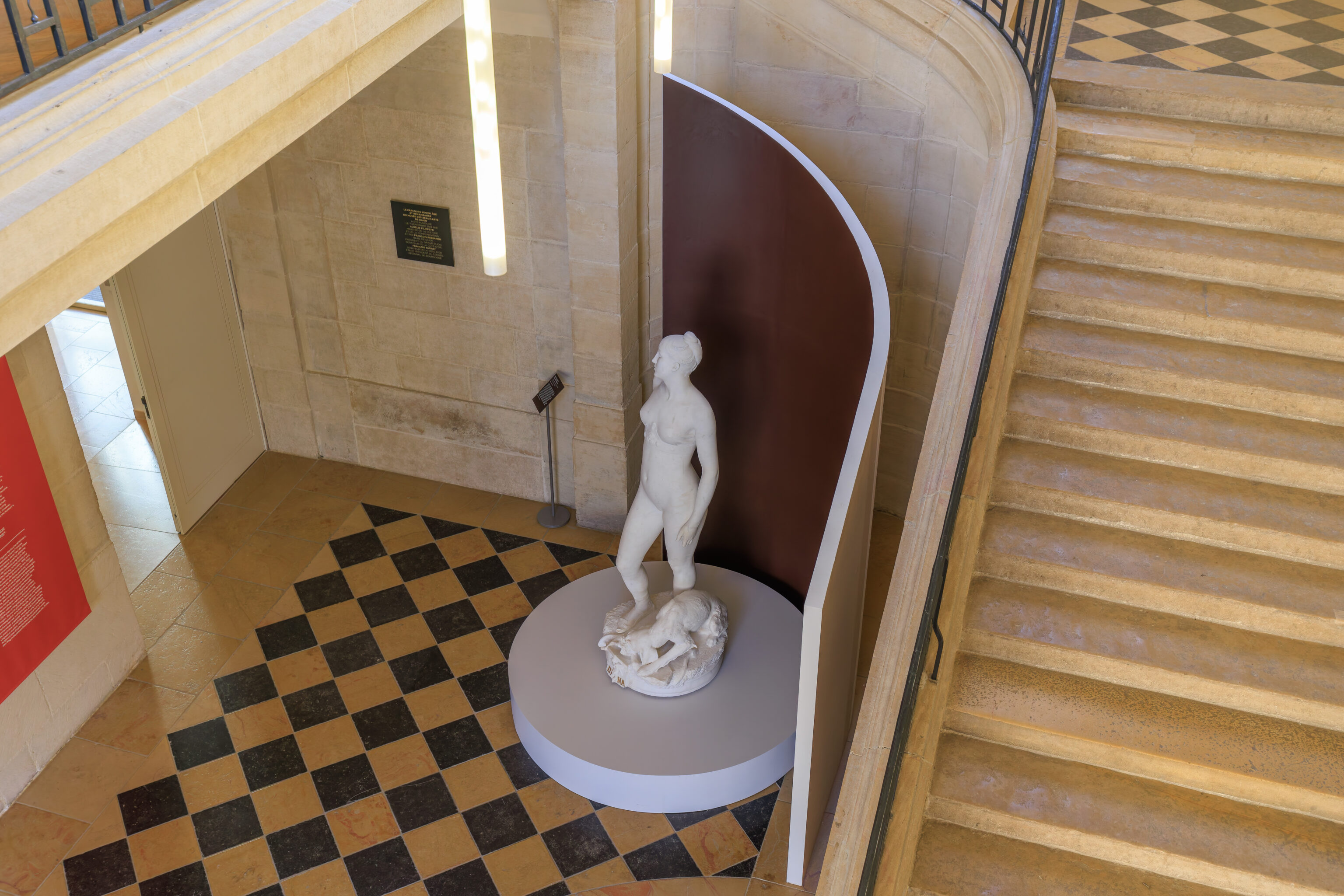
Rochefort-sur-Mer (Charente-Maritime), 1852 – Bougival (Yvelines), 1925
SERENE NIGHT
1913
Oil on canvas
This allegory of night, depicted as Diana the huntress (bow, crescent moon, dog), is ethereal and mysterious. It is clearly representative of the Symbolist aesthetic of the early 20th century. The young woman’s pose is almost identical to a sculpture by Paul Gasq of Dijon, a sculptor and director of the museum from 1932 to 1943. The frame of this work is remarkable, as it is made of painted papier-mâché.
Gift of the artist, 1934
Inv. 3426
(Translated using Google)
Saulieu (Côte-d’Or), 1855 – Paris, 1937
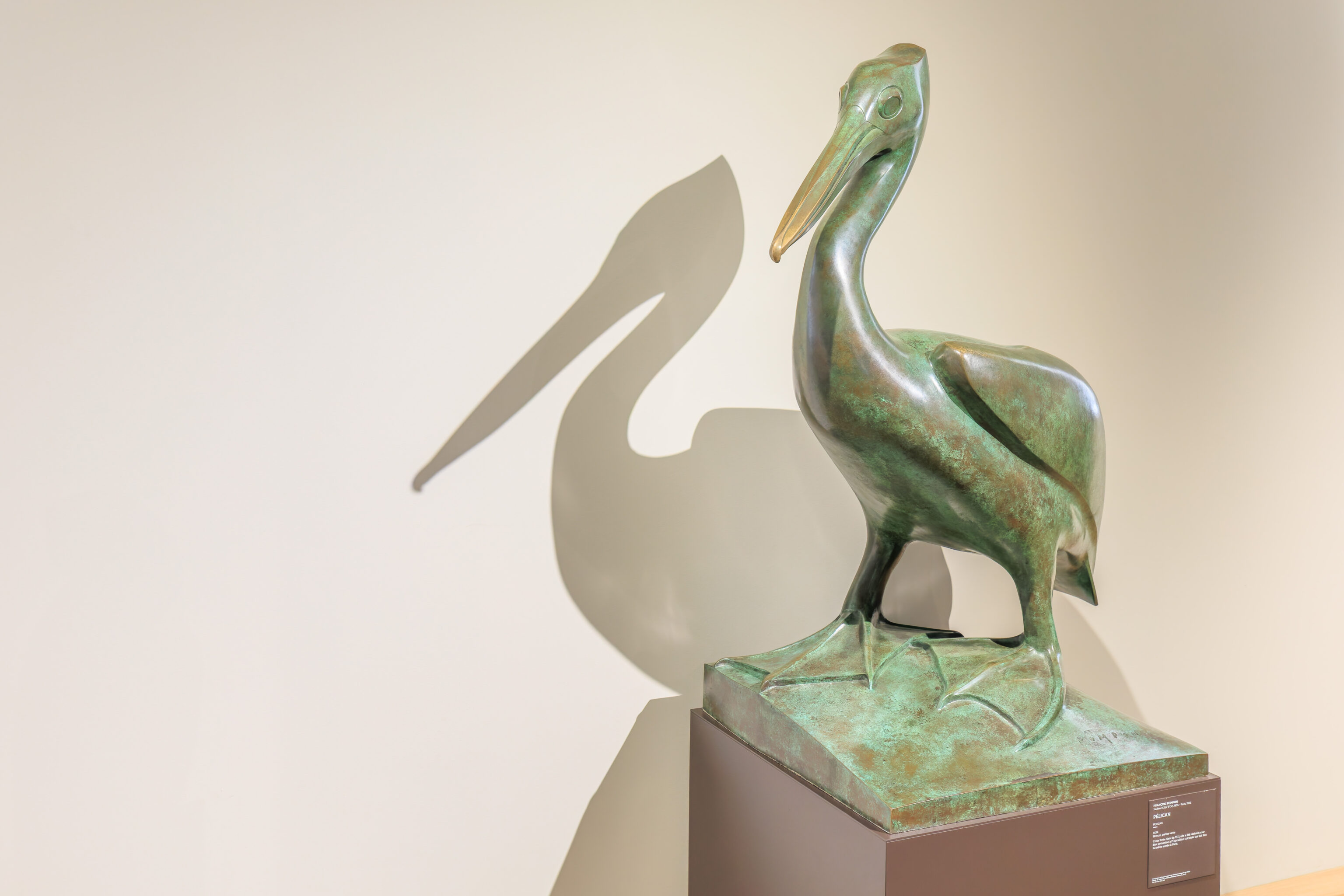
PELICAN
1924
Bronze, green patina
This casting dates from 1937; it was made to be presented at the Colonial Exhibition which took place the same year in Paris.
(Translated using Google)
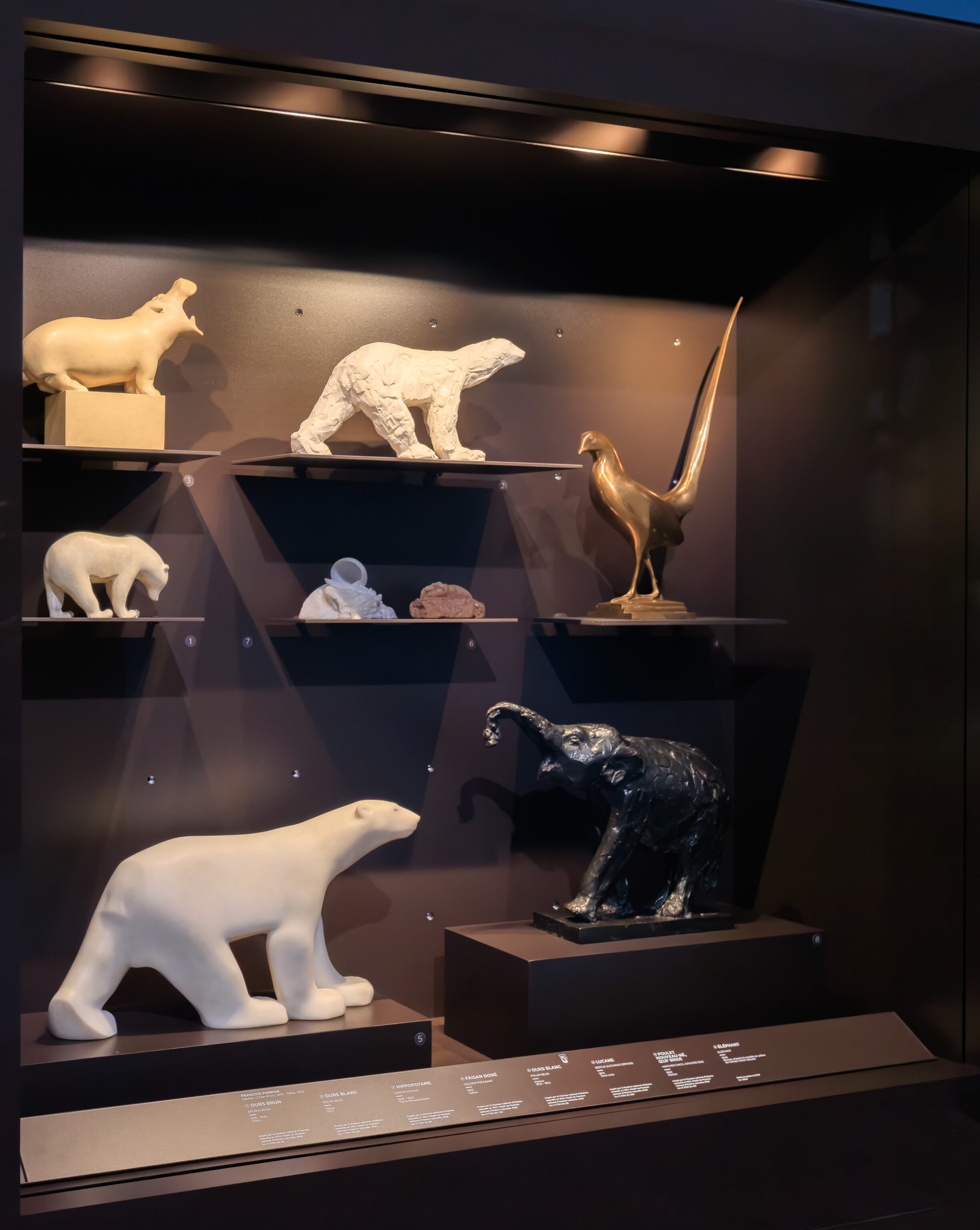
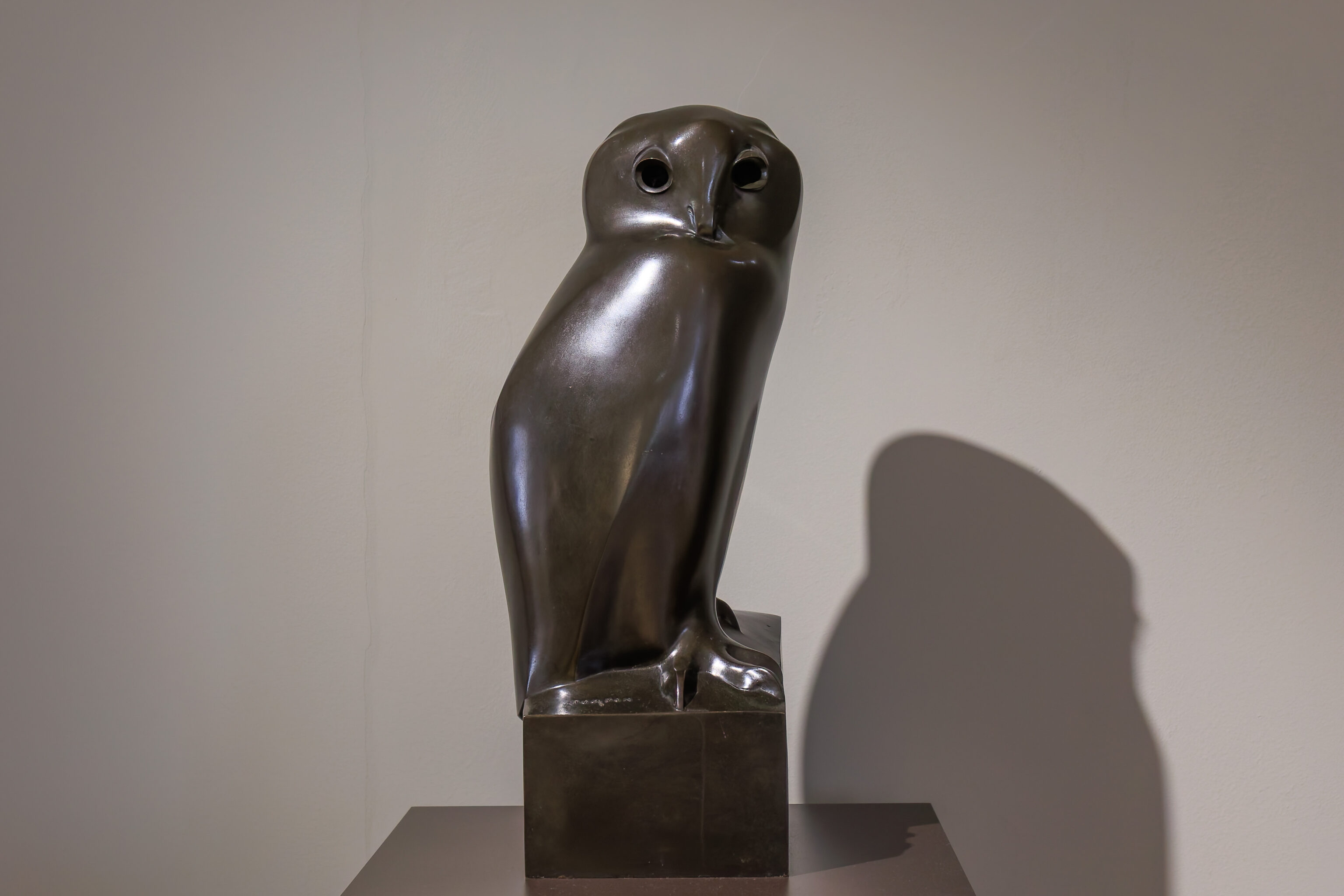
Saulieu (Côte-d’Or), 1855 – Paris, 1933
EAGLE OWL
1927 – 1930
Bronze
Versions of this beautiful work also exist in plaster, marble, and stone. Like many of his animal sculptures, Pompon chose to emphasize a characteristic feature of the subject represented, in this case the owl’s large eyes, whose deep-set sockets gaze intently at the viewer.
Acquired by the National Museum of Natural History in 1934
On loan from the National Museum of Natural History, 1948
Inv. D 3784 bis 236
(Translated using Google)
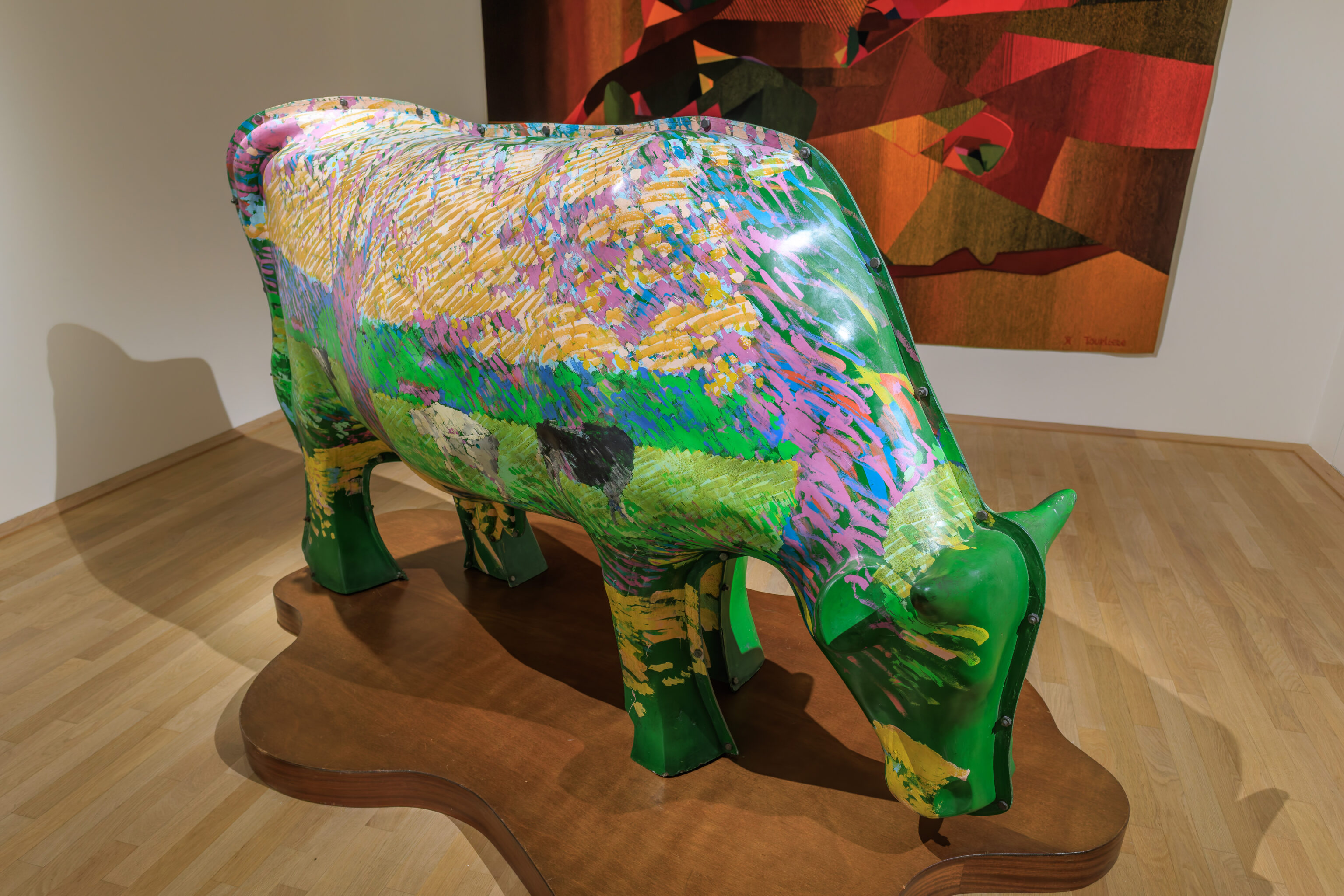
Tauffeien (Switzerland), 1965
COW LANDSCAPE (BESSY-SUR-CURE)
1971
Acrylic paint on polyester
The cow-shaped sculptures were created by Samuel Buri in 1971. Made from a mold, they are generally painted with geometric or floral patterns. They reflect Samuel Buri’s exploration of the intimate connection between art and ecology.
(Translated using Google)
This cow sculpture was reminiscent of other painted cow sculptures that we’ve seen in Switzerland. And indeed, the artist is Swiss.
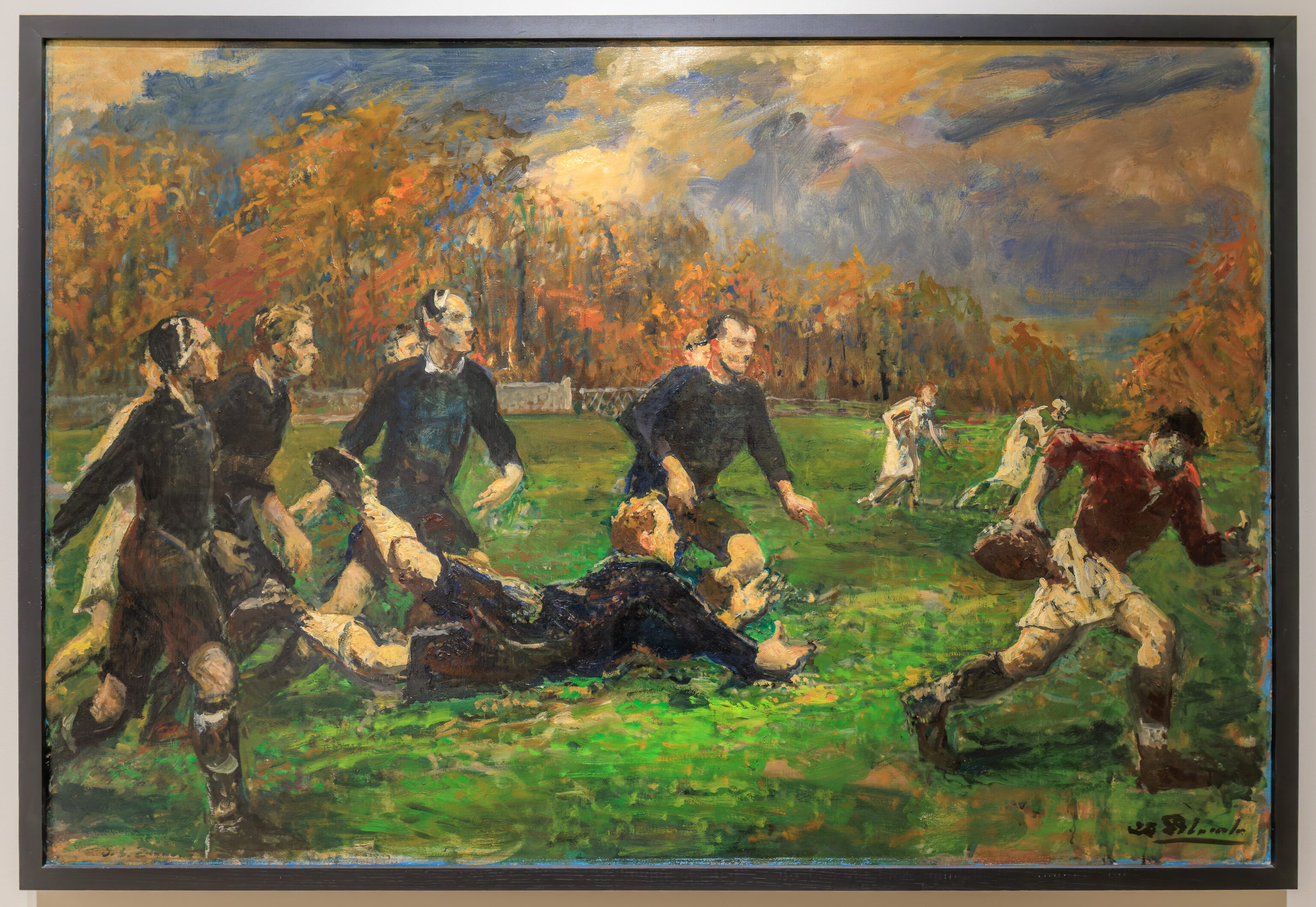
Paris, 1861 – Offranville (Seine-Maritime), 1942
RUGBY TRAINING
1930
Oil on canvas
The son of a renowned doctor, Jacques-Émile Blanche associated from a young age with Parisian high society, which became a major source of inspiration in his work. From portraits to scenes of modern life and its leisure activities, everything served as a pretext for depicting the world around him.
Gift of Cartiste, 1919
(Translated using Google)
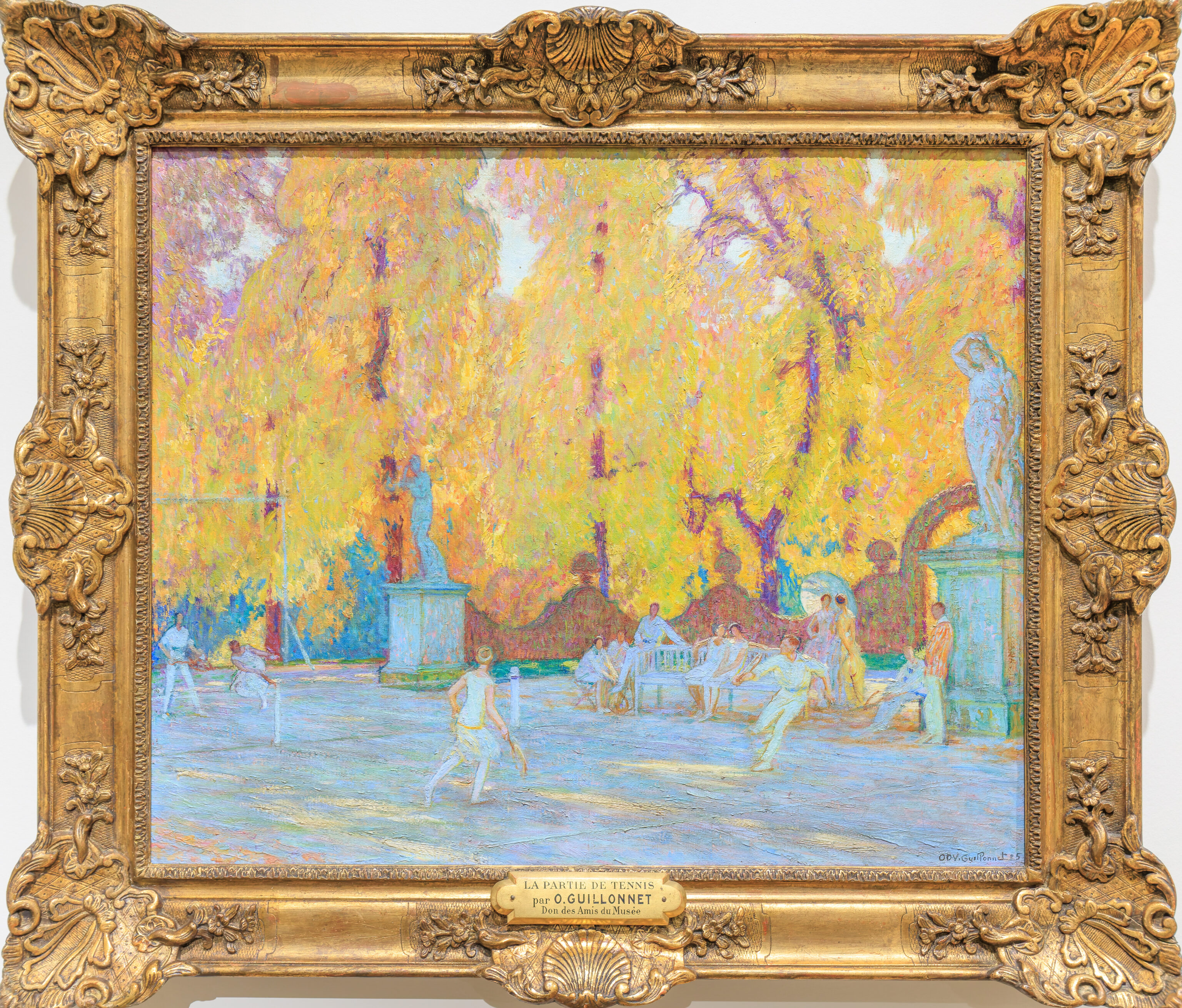
Paris, 1872 – Montgeron (Essonne), 1967
THE TENNIS MATCH
1925
Oil on canvas
Sport was a favorite theme of Octave Guillonnet, as evidenced by his paintings depicting rugby or gymnastics scenes. The painter also became a member of the Society of Painters and Sculptors of Sport upon its founding in 1922.
Gift of the Society of Friends of the Dijon Museum, 1930
Inv. 3200
(Translated using Google)
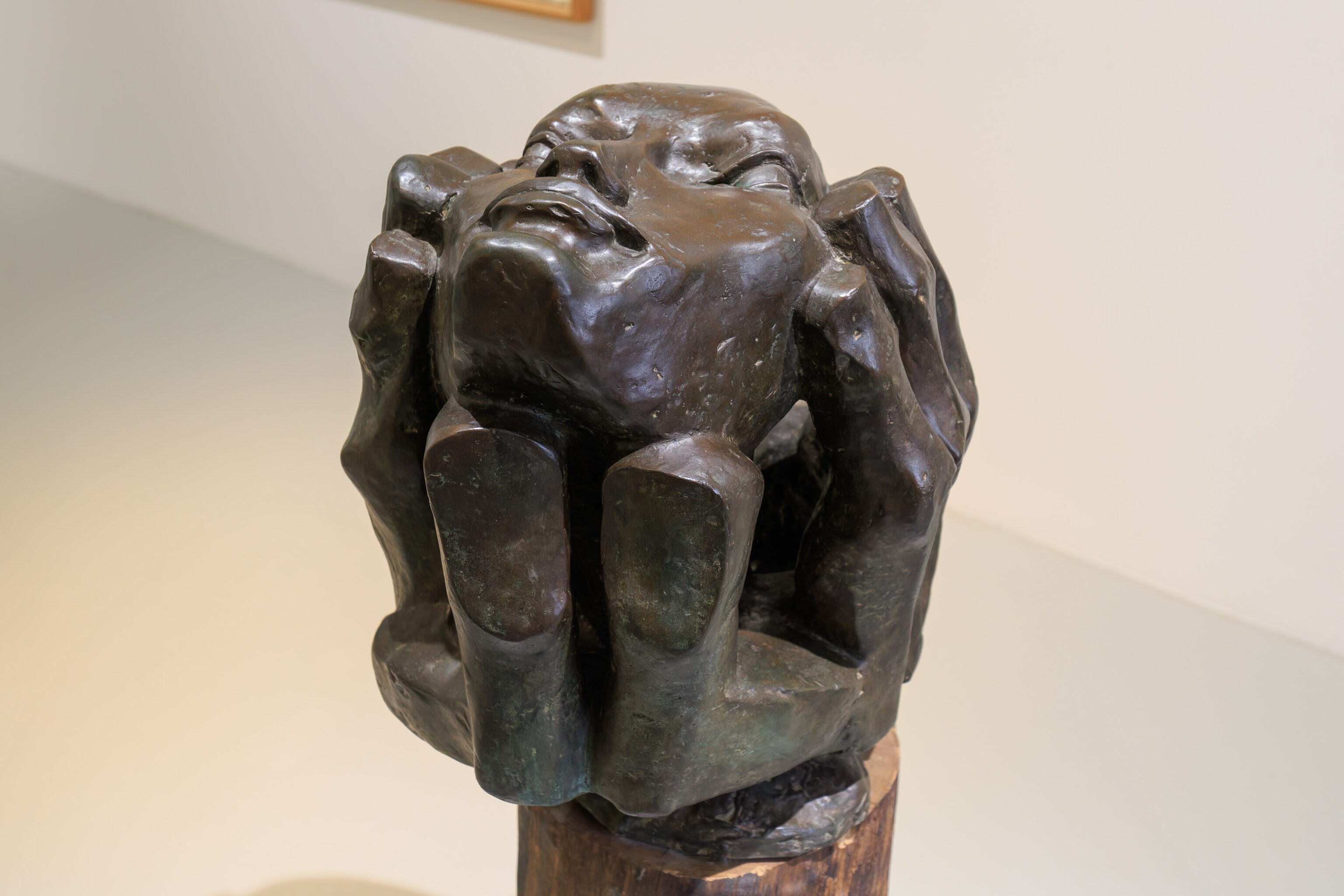
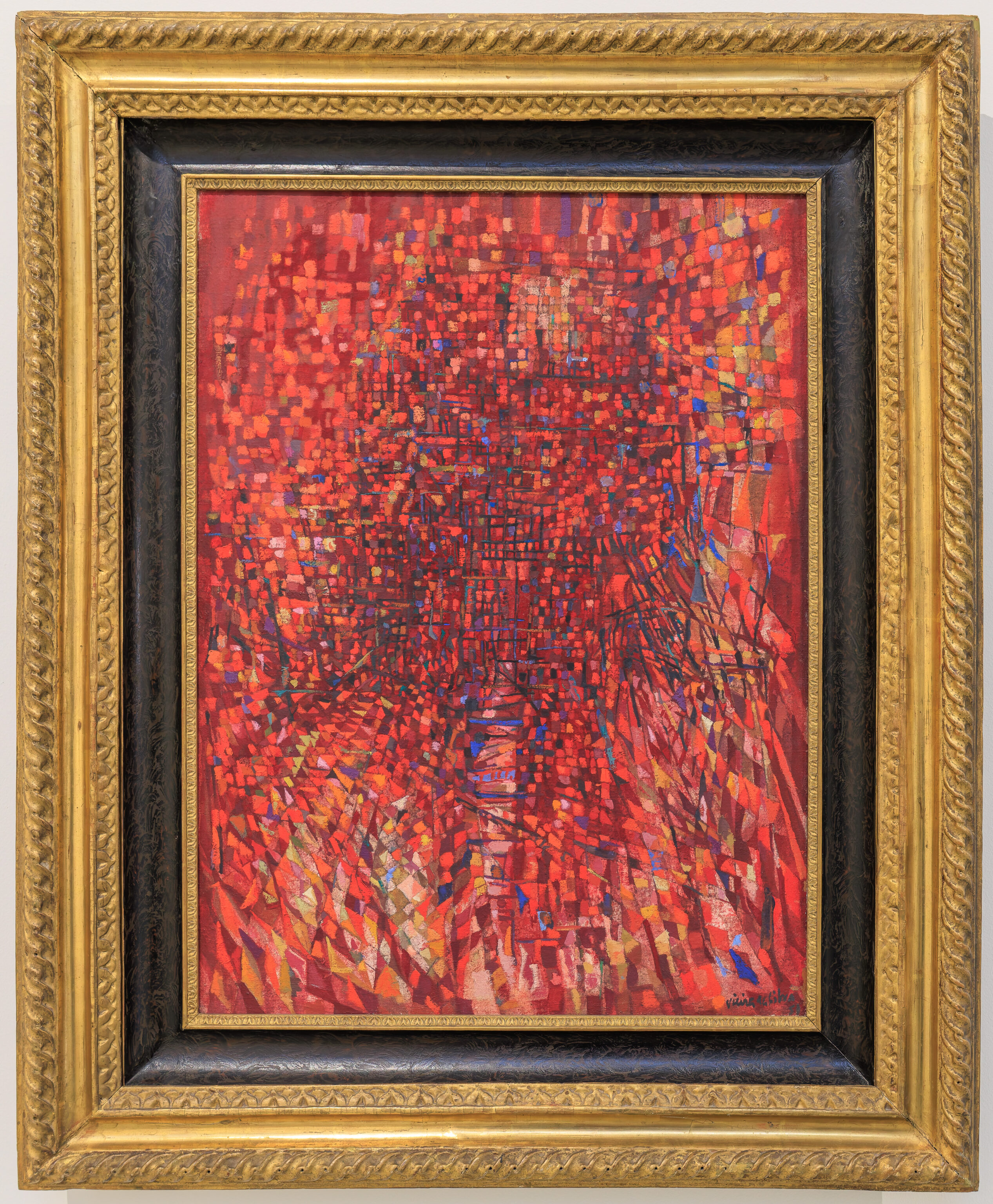
Lisbon (Portugal), 1908 – Paris, 1992
RED INTERIOR
1951
Oil on canvas
Considered one of the major works of the artist’s mature period, this composition belongs to the “Interiors” series. It reflects her conception of space, which she sees as a kaleidoscopic checkerboard with multiple colorful facets.
Pierre and Kathleen Granville Donation, 1969
Inv. DG 72
(Translated using Google)
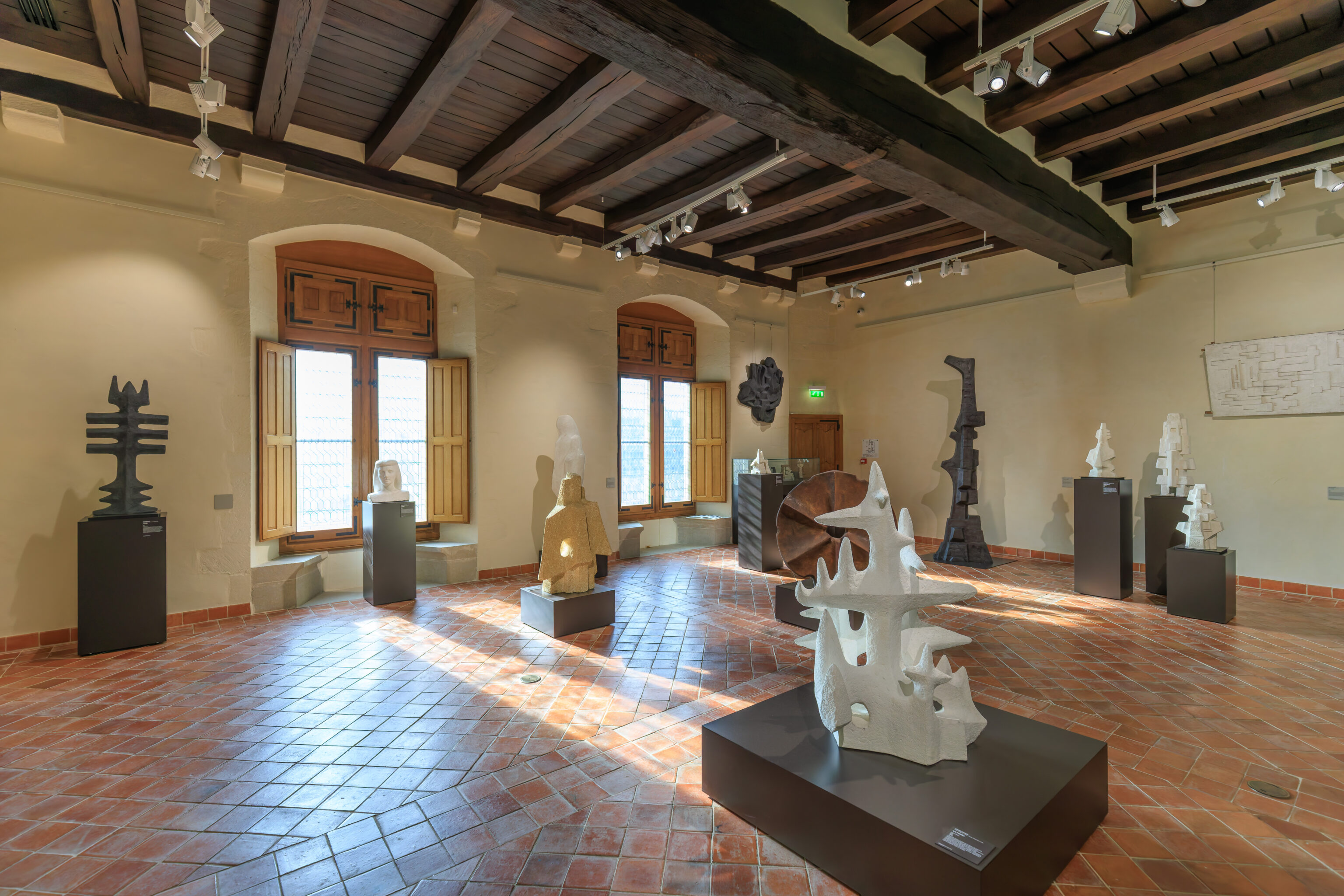
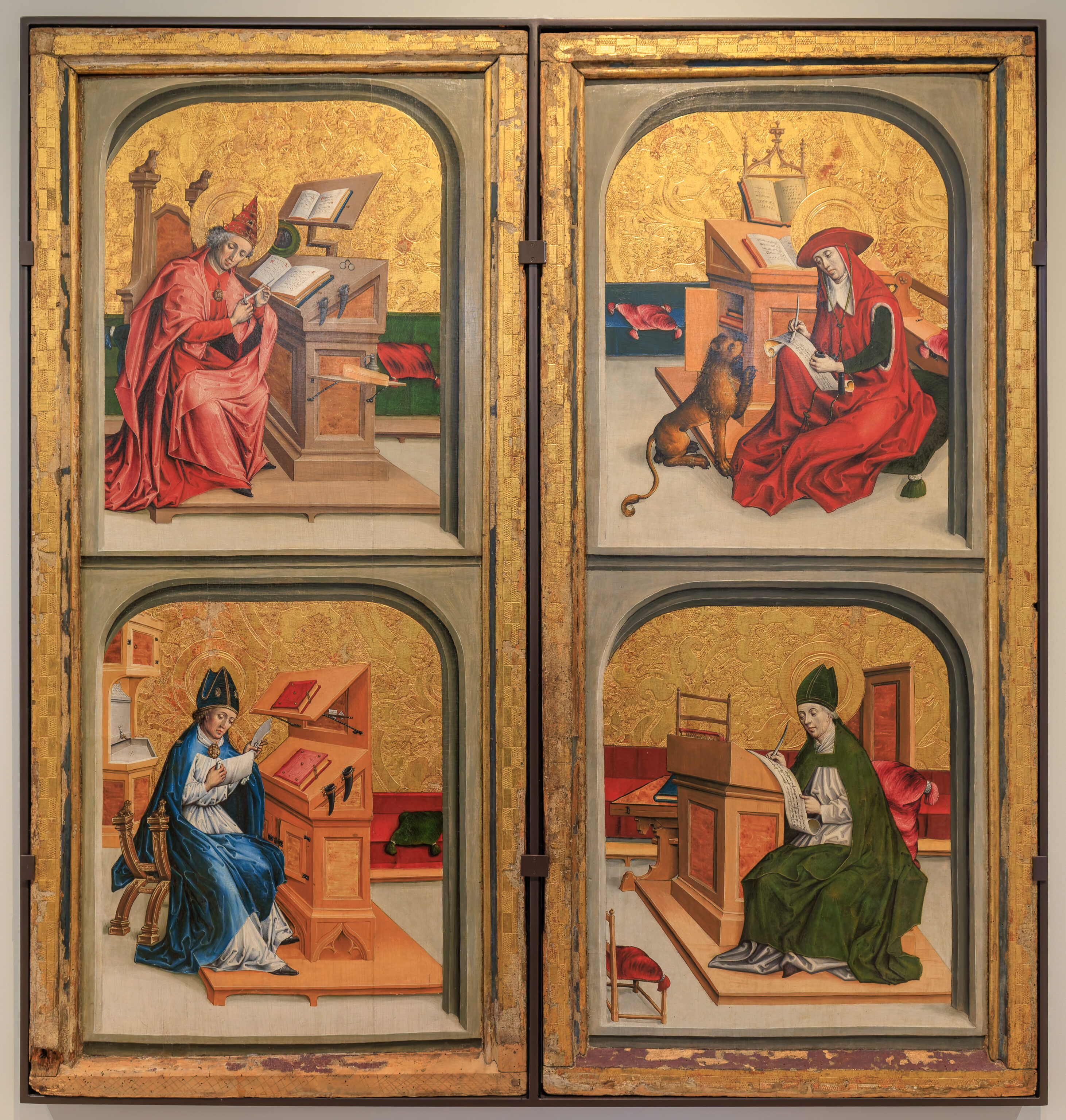
TWO DOUBLE-SIDED ALTARPIECE PANELS
SAINT GREGORY AND SAINT AMBROSE
SAINT JEROME AND SAINT AUGUSTINE
Oil on wood
The Church owes certain foundational texts to these four saints; they are often depicted writing. Saint Gregory can be seen, recognizable by his papal tiara; he was elected pope in the 6th century. Saint Ambrose wears the bishop’s miter, and Saint Jerome is accompanied by the lion he is said to have healed.
(Translated using Google)
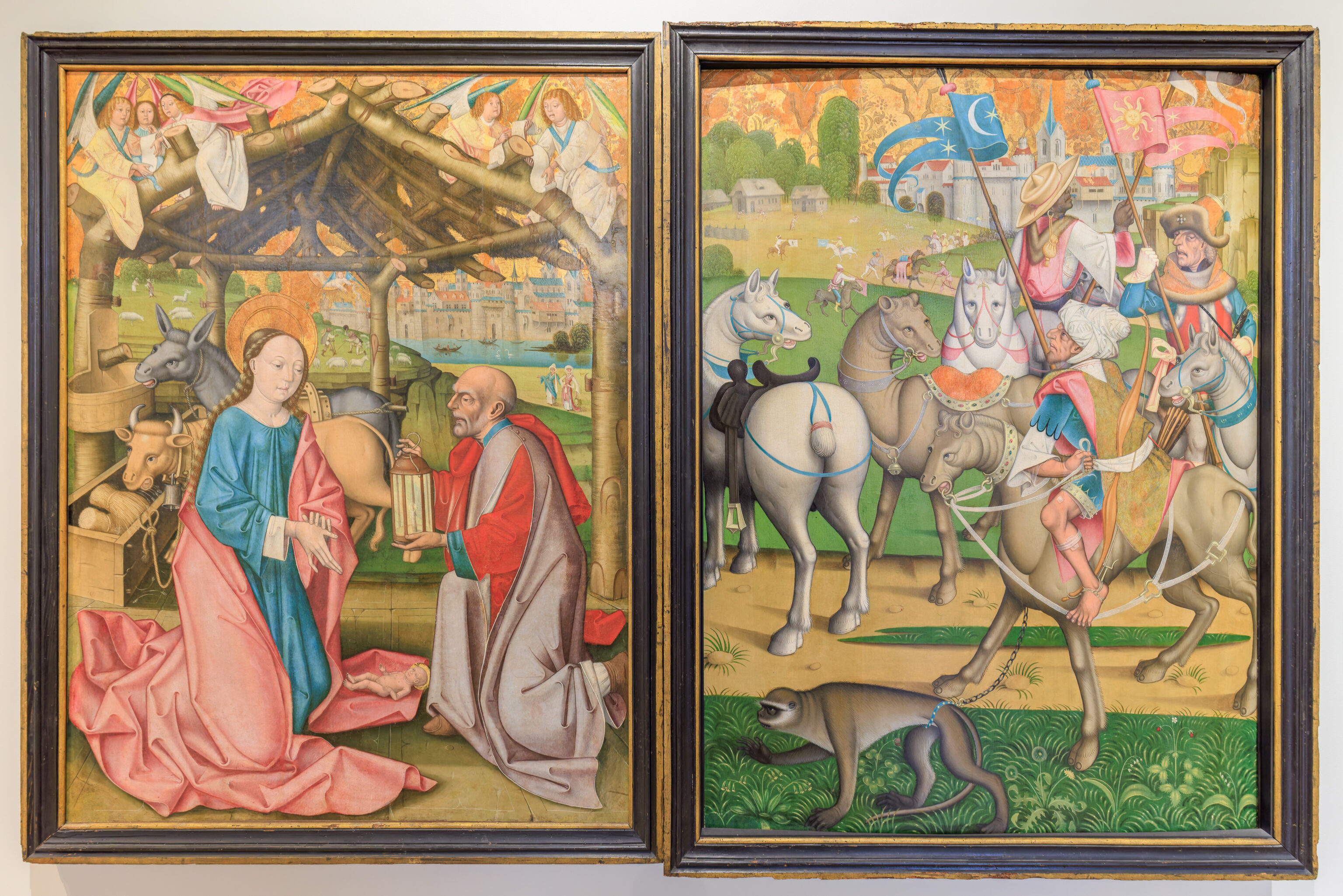
ALTARPIECE OF THE MAGI
THE NATIVITY / JOURNEY OF THE MAGI
Circa 1475
These panels are the side wings of an altarpiece that comes from the Chapel of the Magi in Baden (Switzerland). The central panel, now lost, probably depicted the Adoration of the Magi.
(Translated using Google)
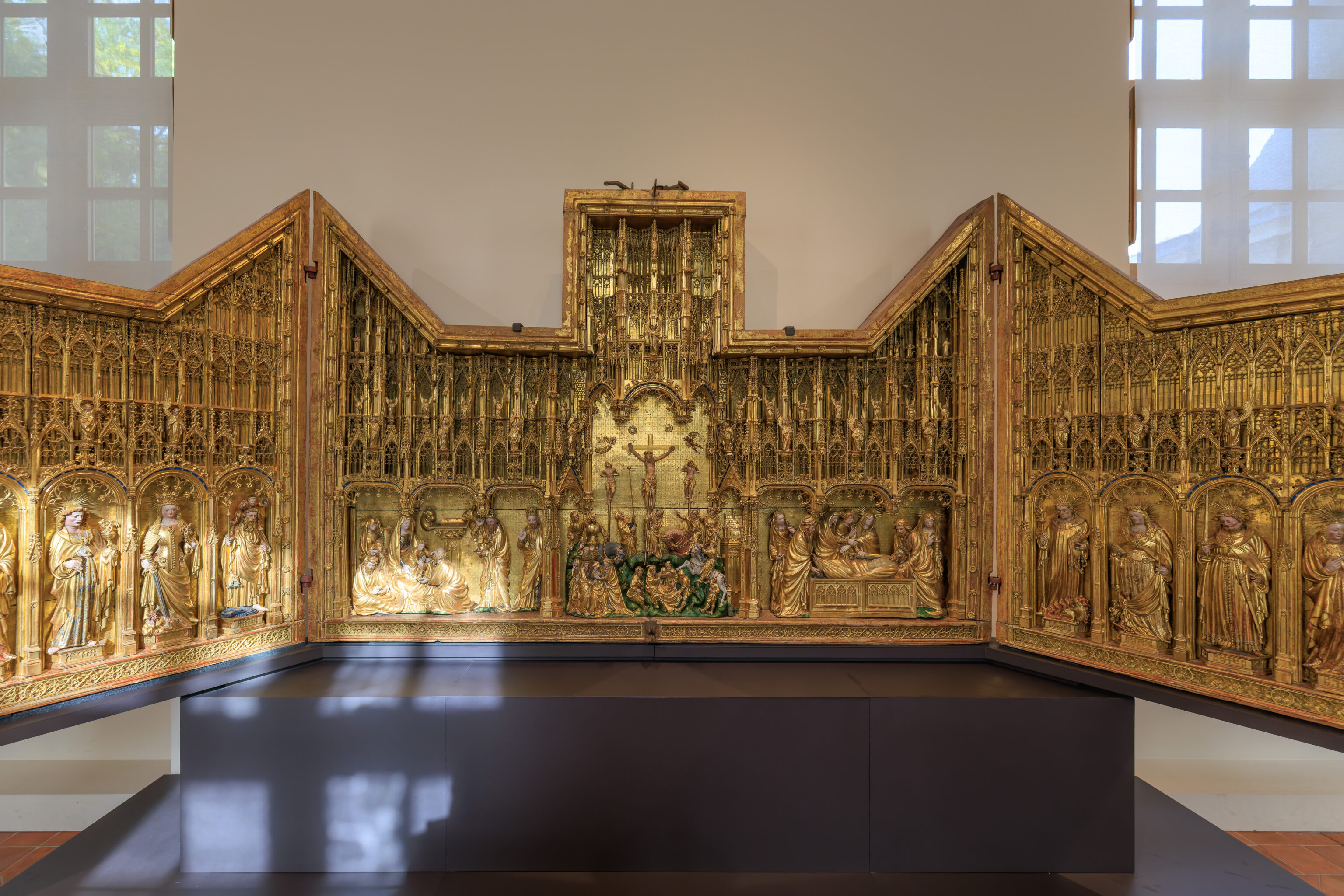
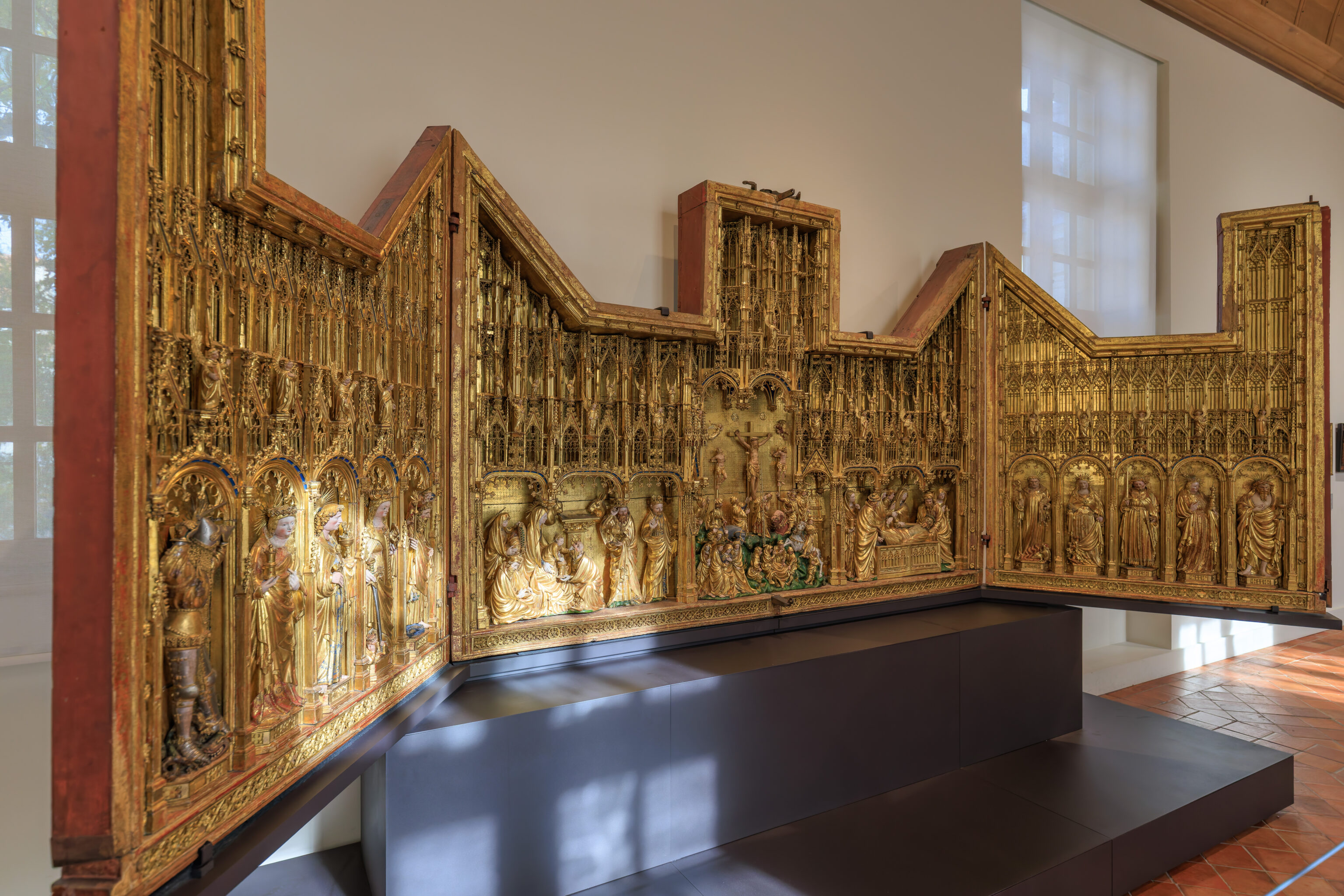
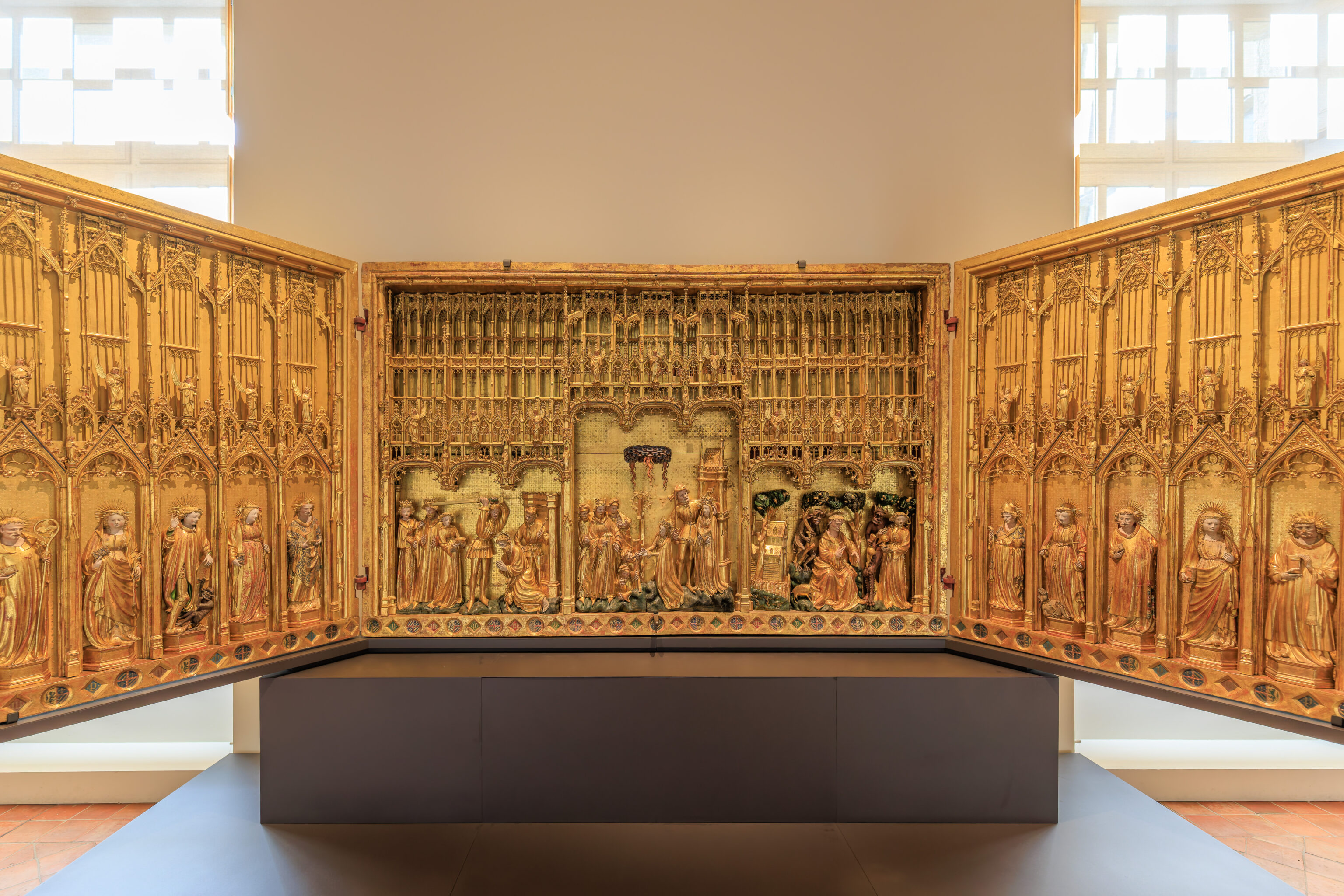
Sculptor active in Dendermonde at the end of the 14th century
MELCHIOR BROEDERLAM
Painter active in Ypres from 1381 to 1410
ALTARPIECE OF THE CRUCIFIXION
1390 – 1399
Gilded and polychrome wood
Commissioned for the Carthusian monastery of Champmol in 1390, the altarpiece was made in Flanders: sculpted in Dendermonde in 1391 by Jacques de Baerze, painted and gilded in Ypres from 1393 to 1399 by Melchior Broederlam, it was installed in 1399.
Carthusian monastery of Champmol, Dijon
Confiscated during the French Revolution
Transferred to Saint Benignus Cathedral in Dijon in 1792
Entered the museum in 1818
Inv. CA 1420 A
In the center: Adoration of the Magi, Crucifixion, Entombment.
On the wings:
On the left: Saint George, Saint Mary Magdalene, Saint John the Evangelist, a saintly king, Saint Catherine, Saint Christopher.
On the right: Saint Anthony, Saint Margaret, a saintly king, Saint Barbara, Saint Josse (?).
(Translated using Google)
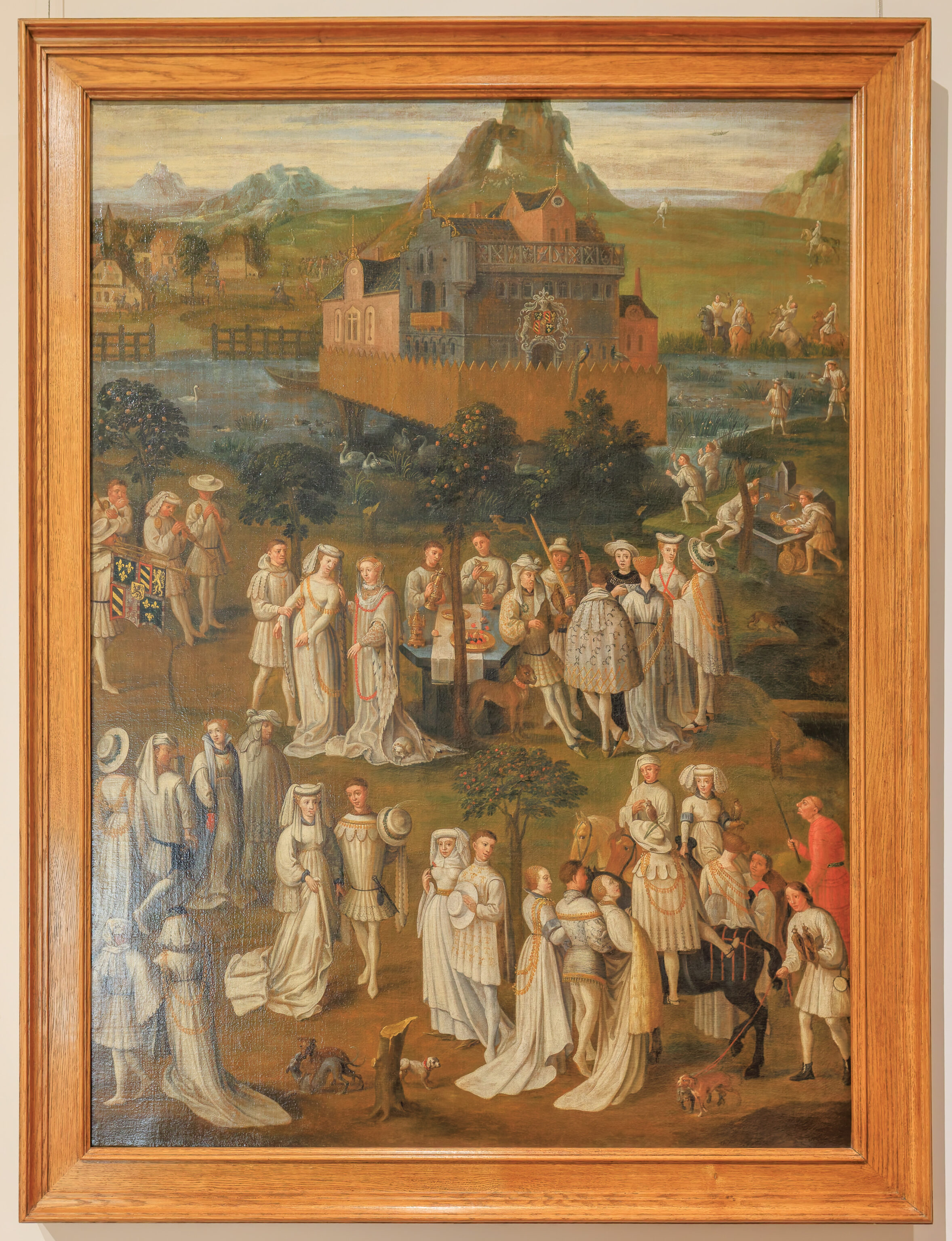
Copy of a 16th-century painting after an original from the early 15th century
RURAL FESTIVITIES AT THE COURT OF BURGUNDY
Oil on canvas
This rural scene combines music, dance, and falconry. The coats of arms are those of the Dukes Philip the Good or Charles the Bold, but the costumes date the original model to around 1410-1420. The landscape seems to evoke the game park of the ducal residence of Hesdin in Artois, with its pavilion.
(Translated using Google)
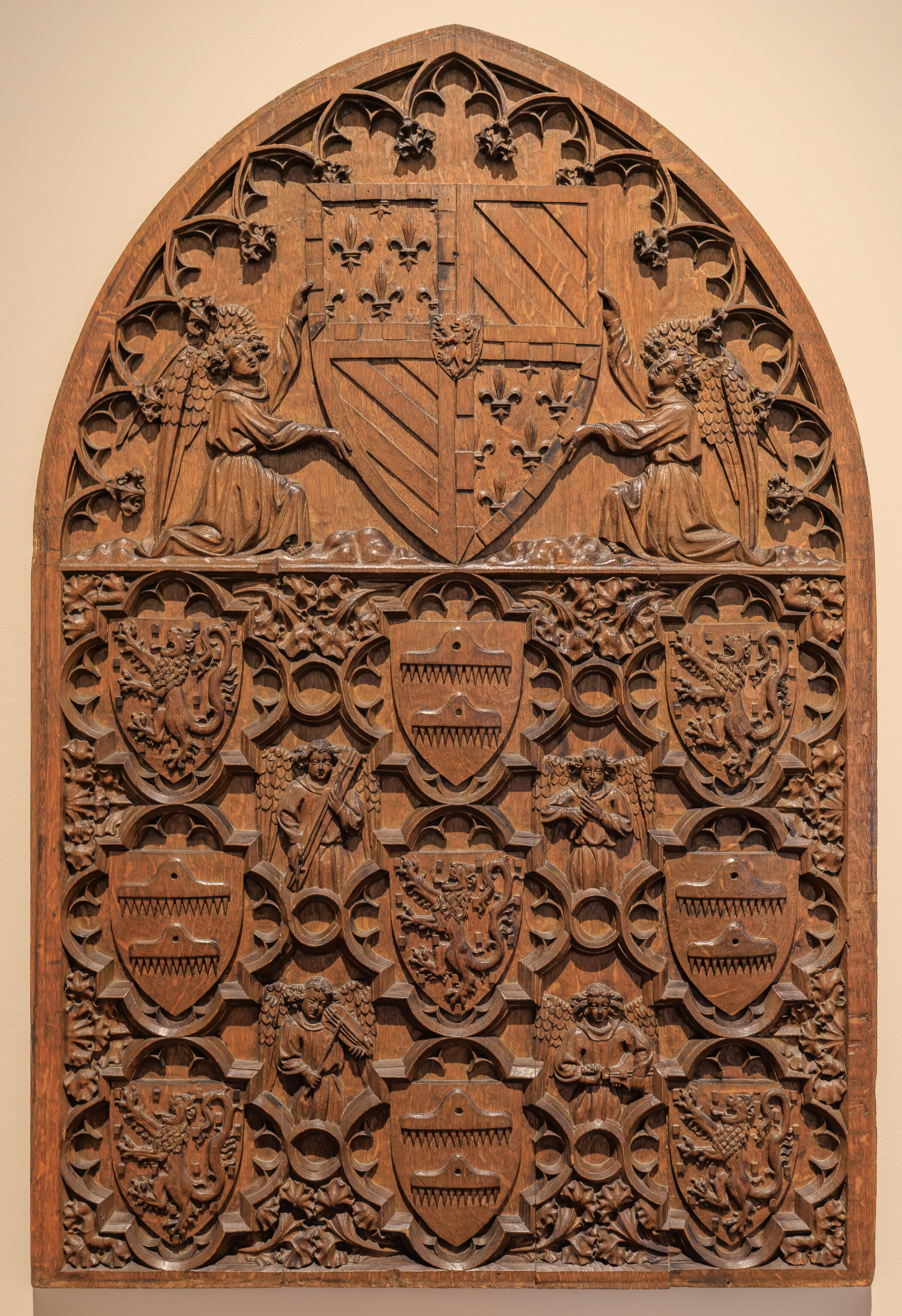
Sculptor active in Dijon from 1381 to 1403
CHOIR STALL PANEL WITH THE COAT OF ARMS OF JOHN THE FEARLESS
1399 – 1400
Oak
Along with the canopy, this panel is the only remaining element of the triple seat for the officiating clergy (priest, deacon, and subdeacon) that was located in the choir of Champmol. At the top, the coat of arms of John the Fearless; at the bottom, the arms of Rethel and Franche-Comté and musical angels.
Champmol Monastery, Dijon
Gift of Fyot de Mimeure, 1823
(Translated using Google)
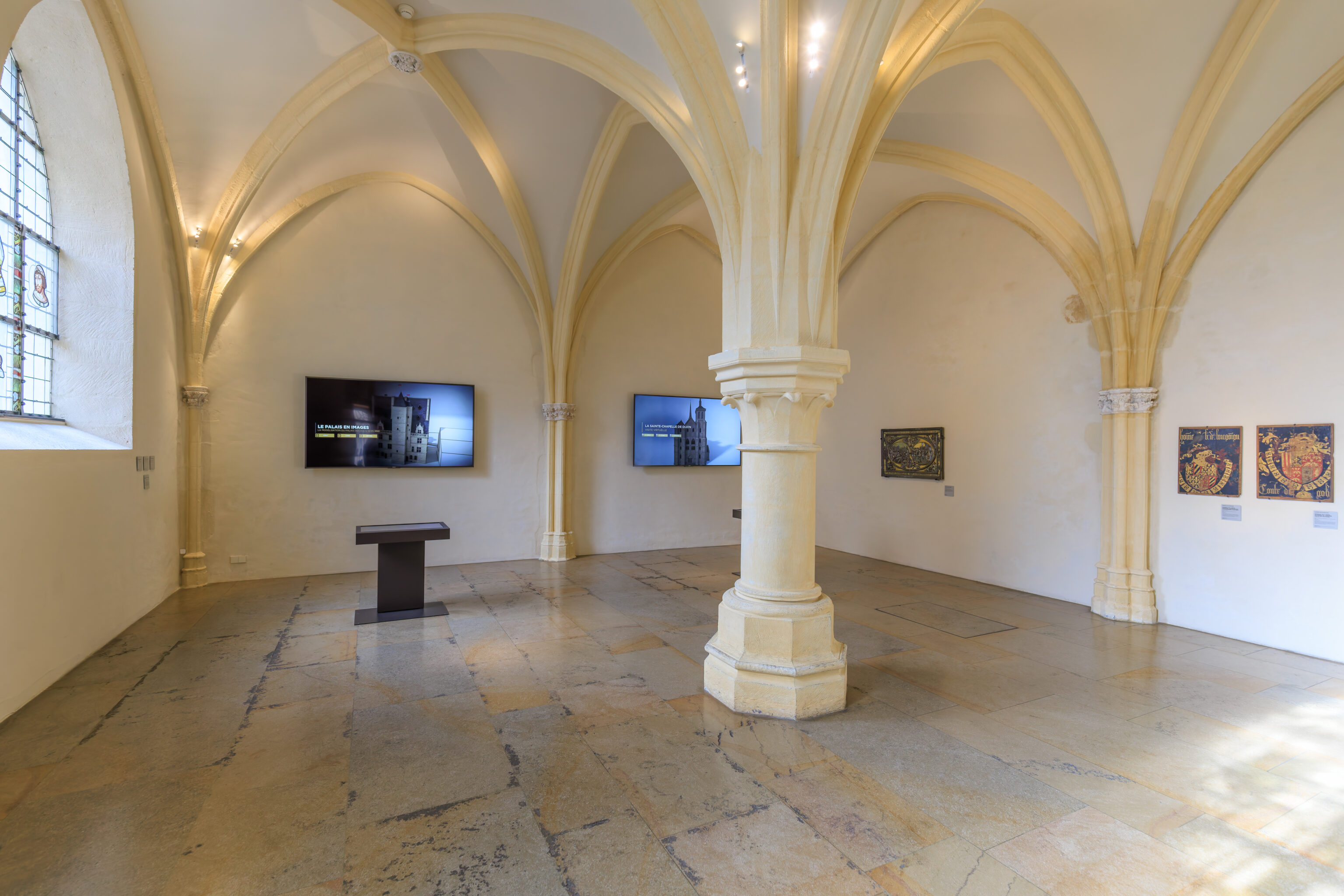
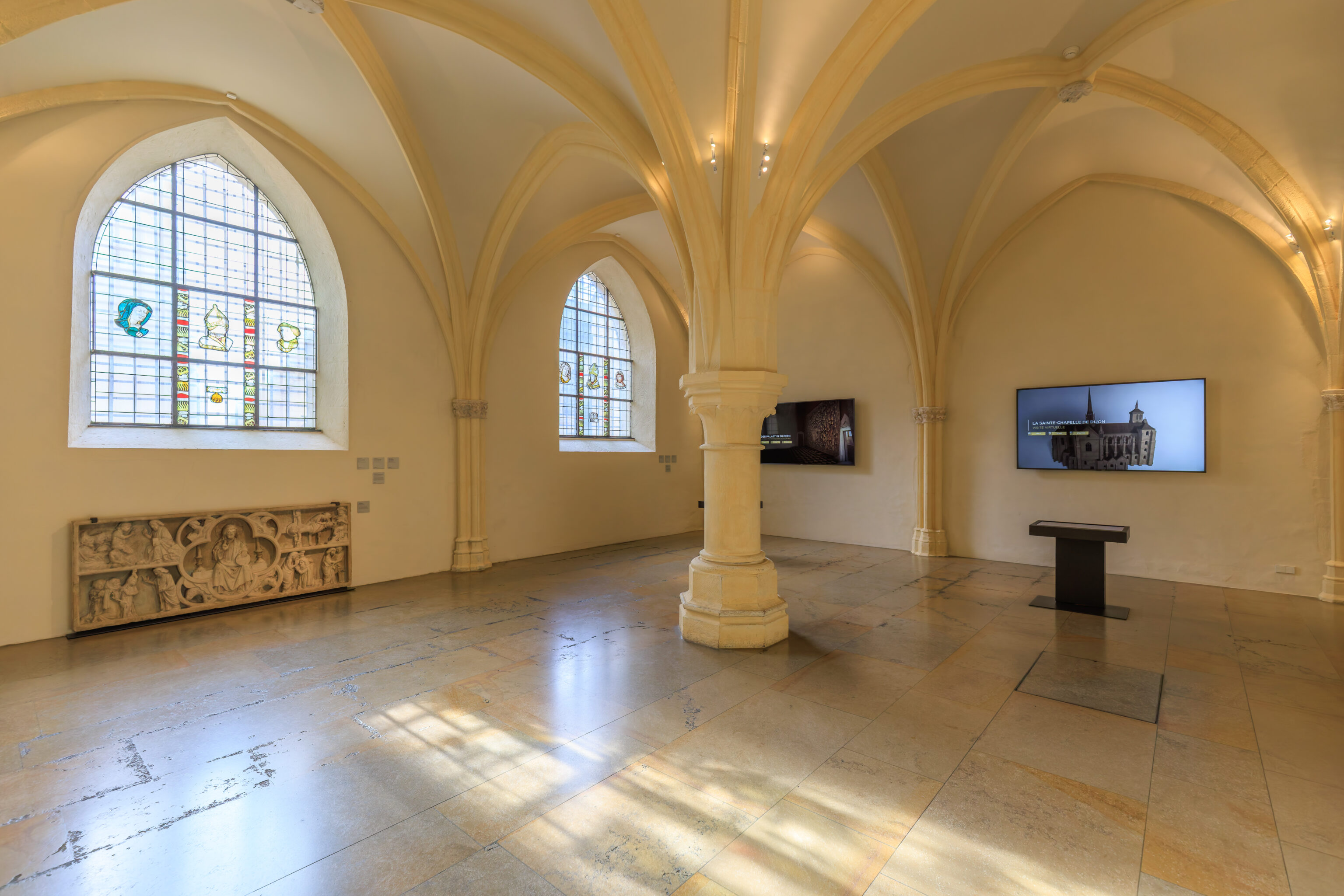
The next room we entered was the Grande Salle de Festins (translated using Google):
GREAT BANQUET HALL

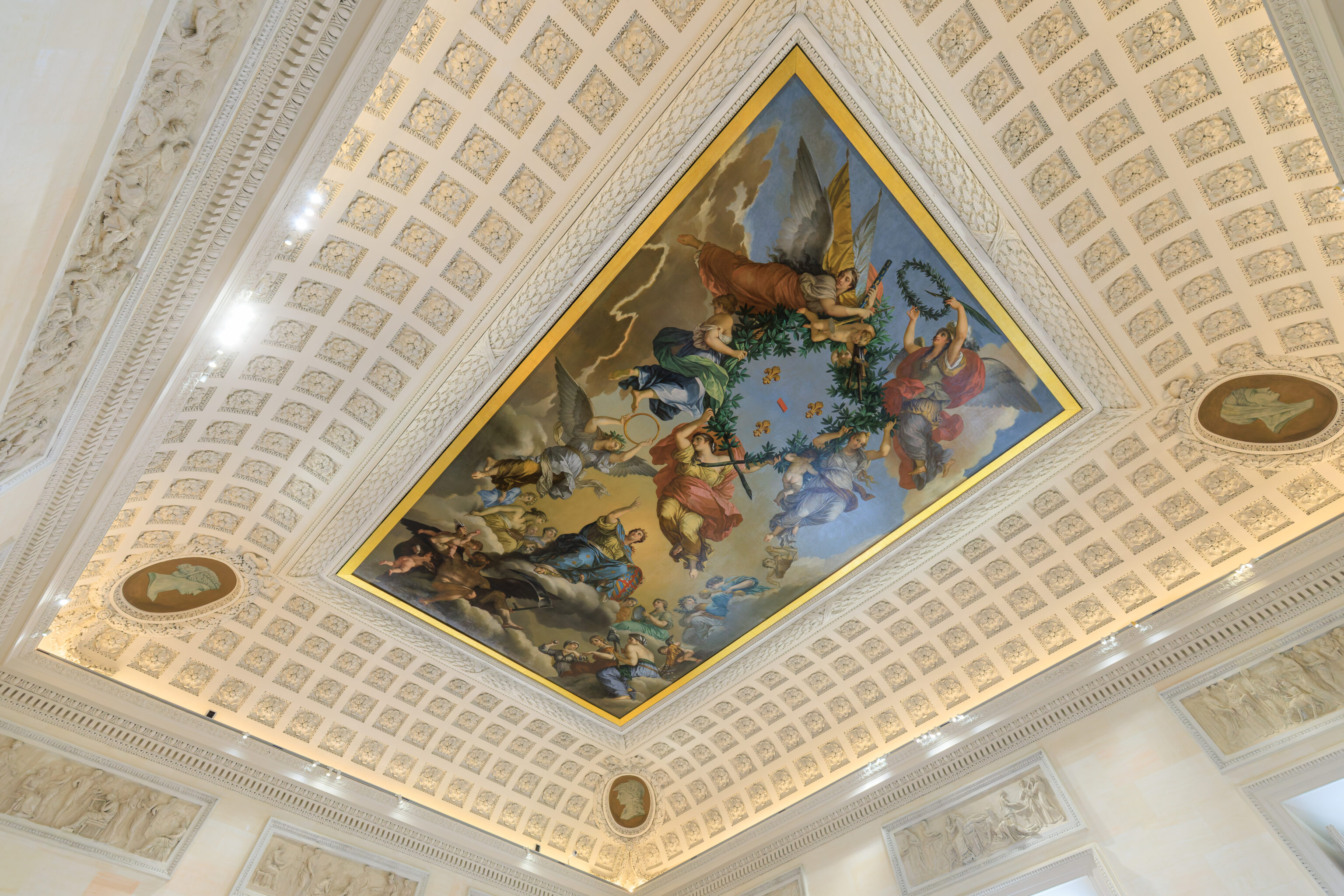
The great hall of Philip the Good's palace was designed to serve as the setting for the festivities of the Burgundian court. Of remarkable dimensions (18 meters long, 9 meters wide, 9 meters high), it features a monumental fireplace and a French-style ceiling, both reconstructed after a fire in 1503.
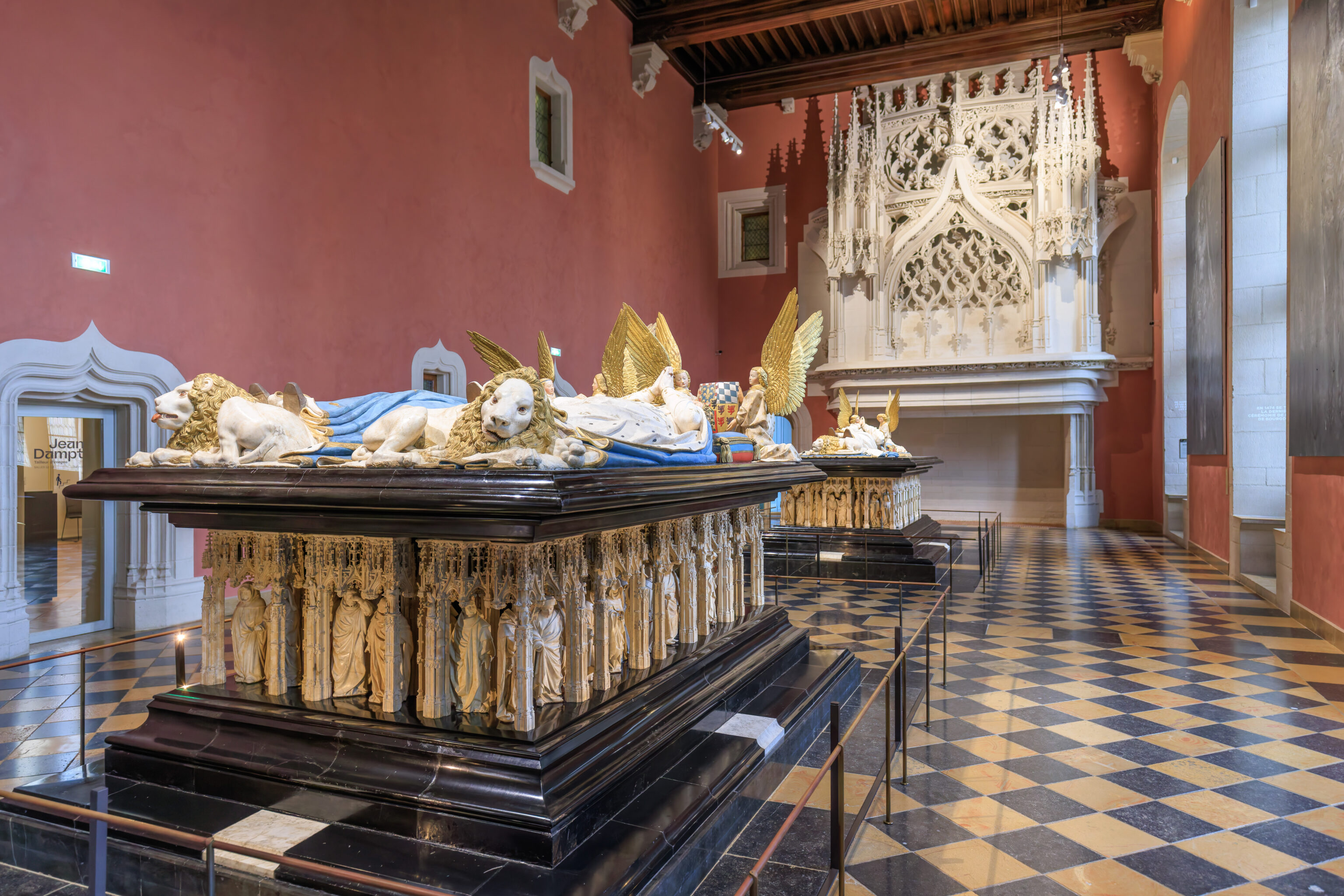
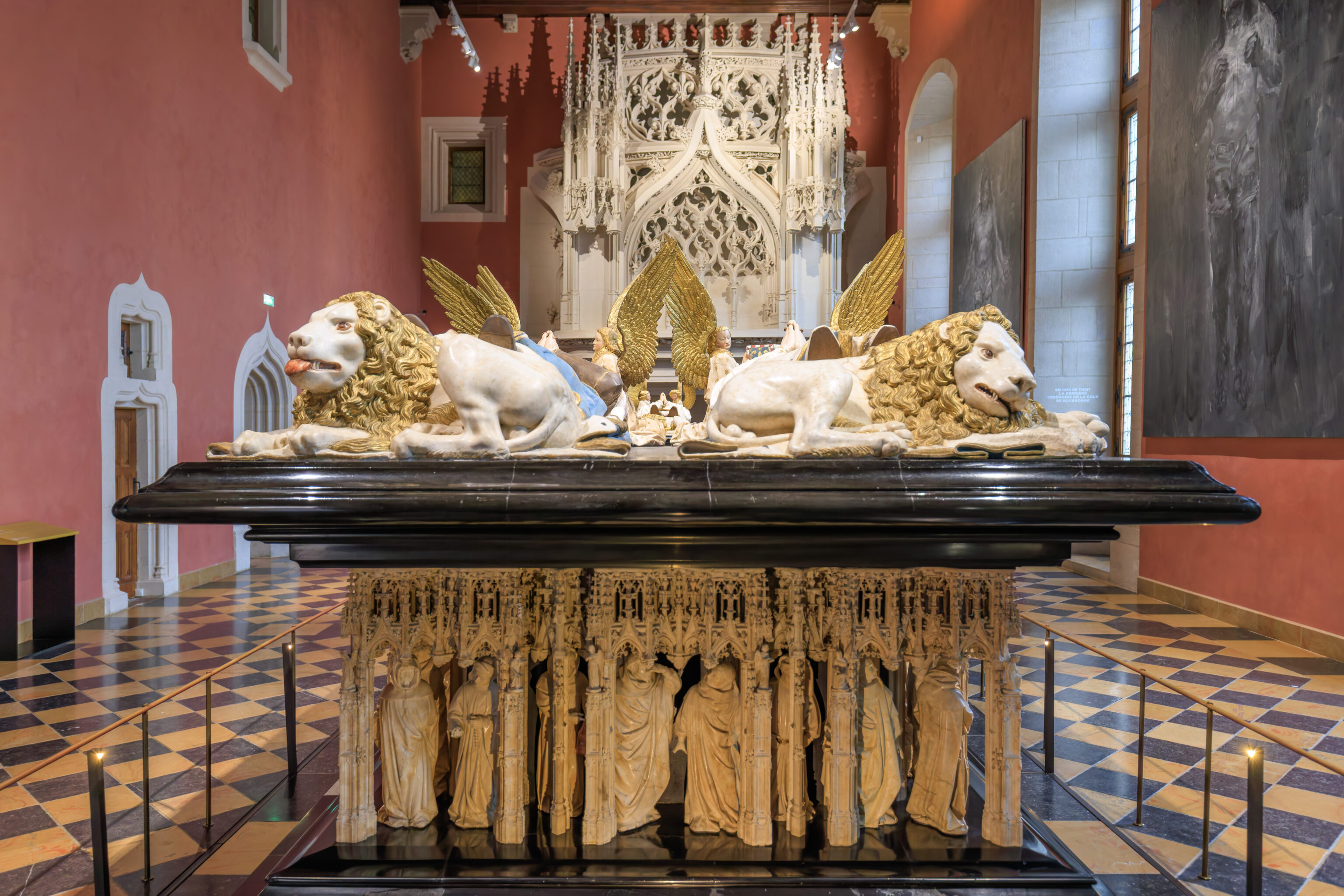
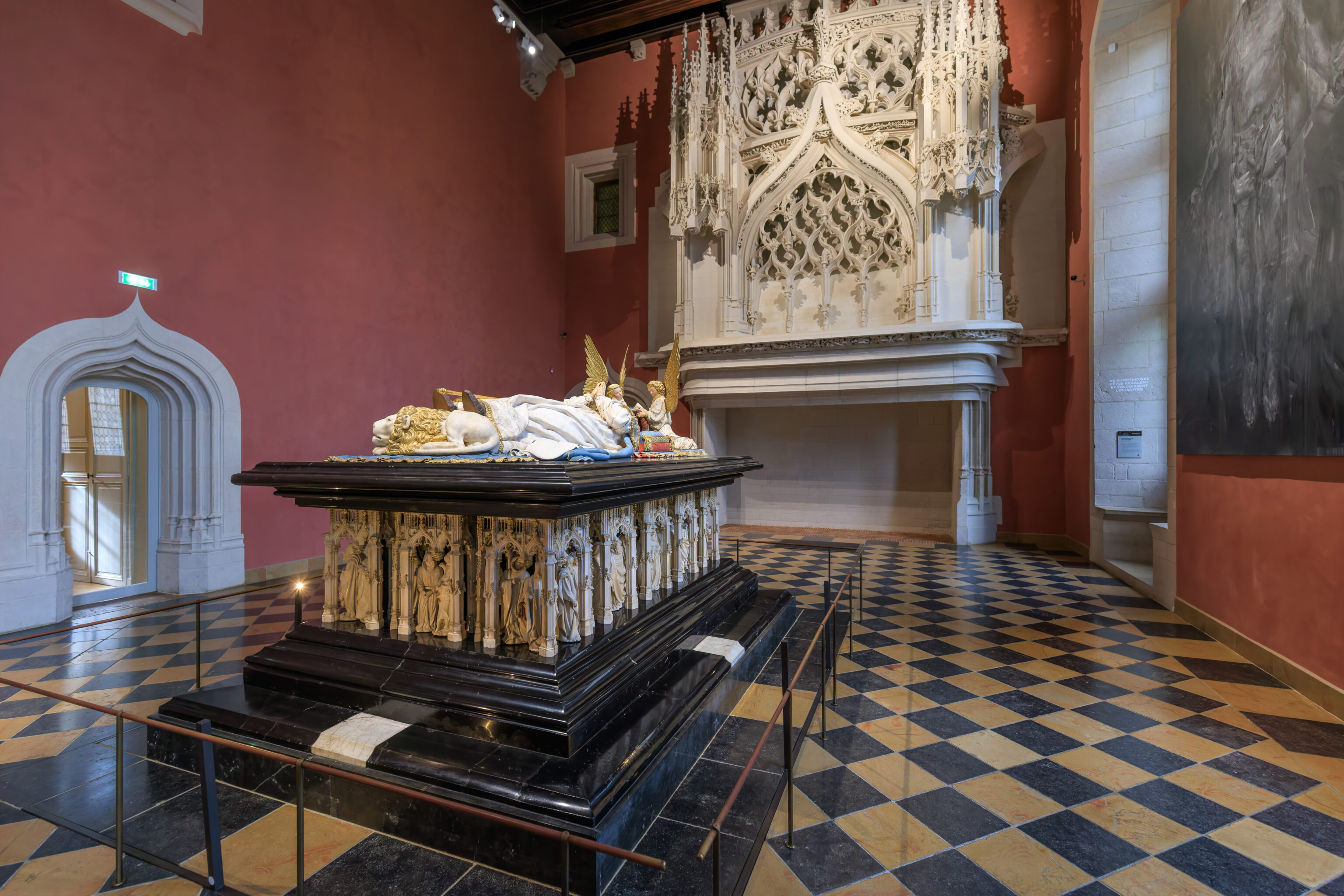
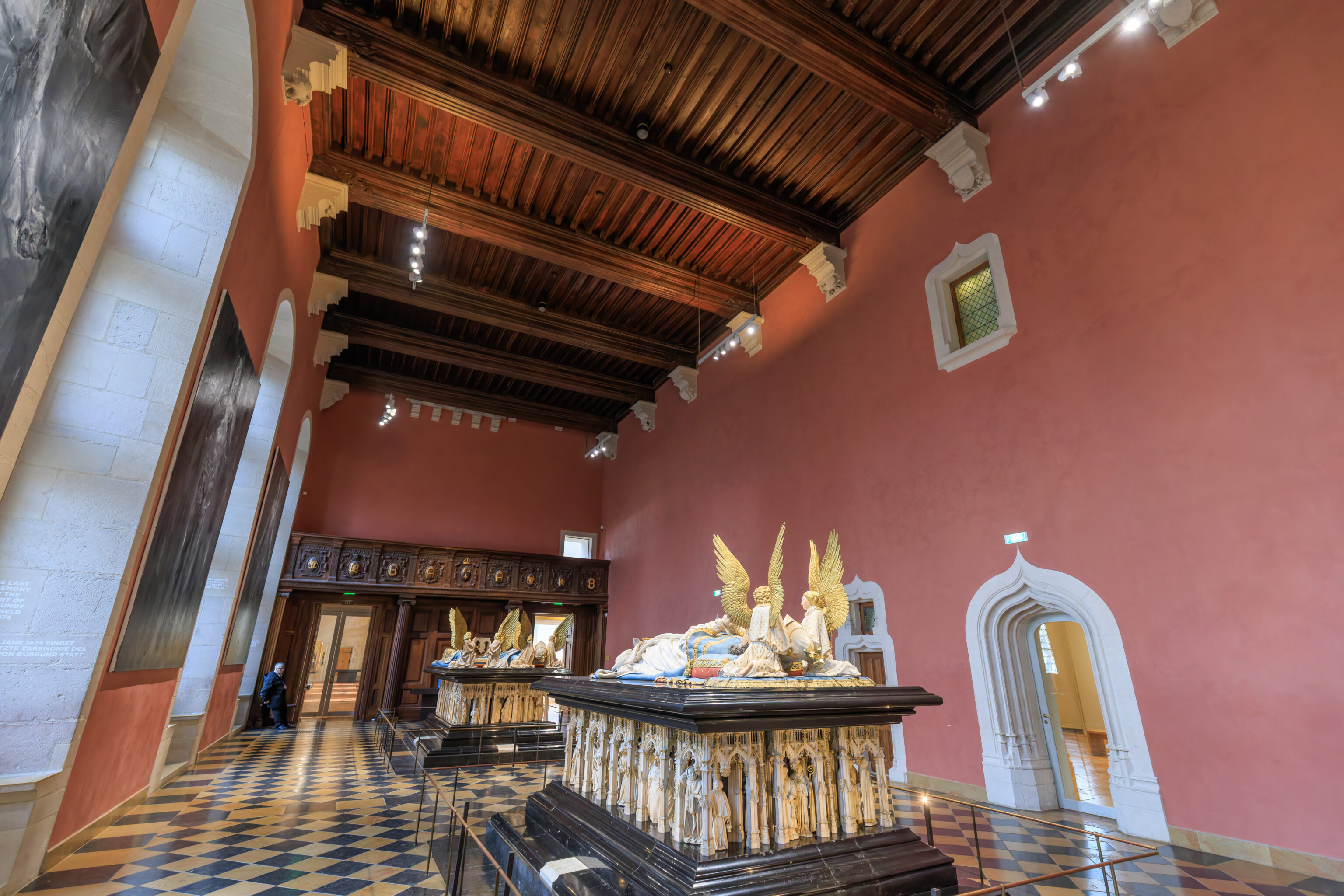
The room contains the two Tombs of the Dukes:
THE TOMBS OF THE DUKES

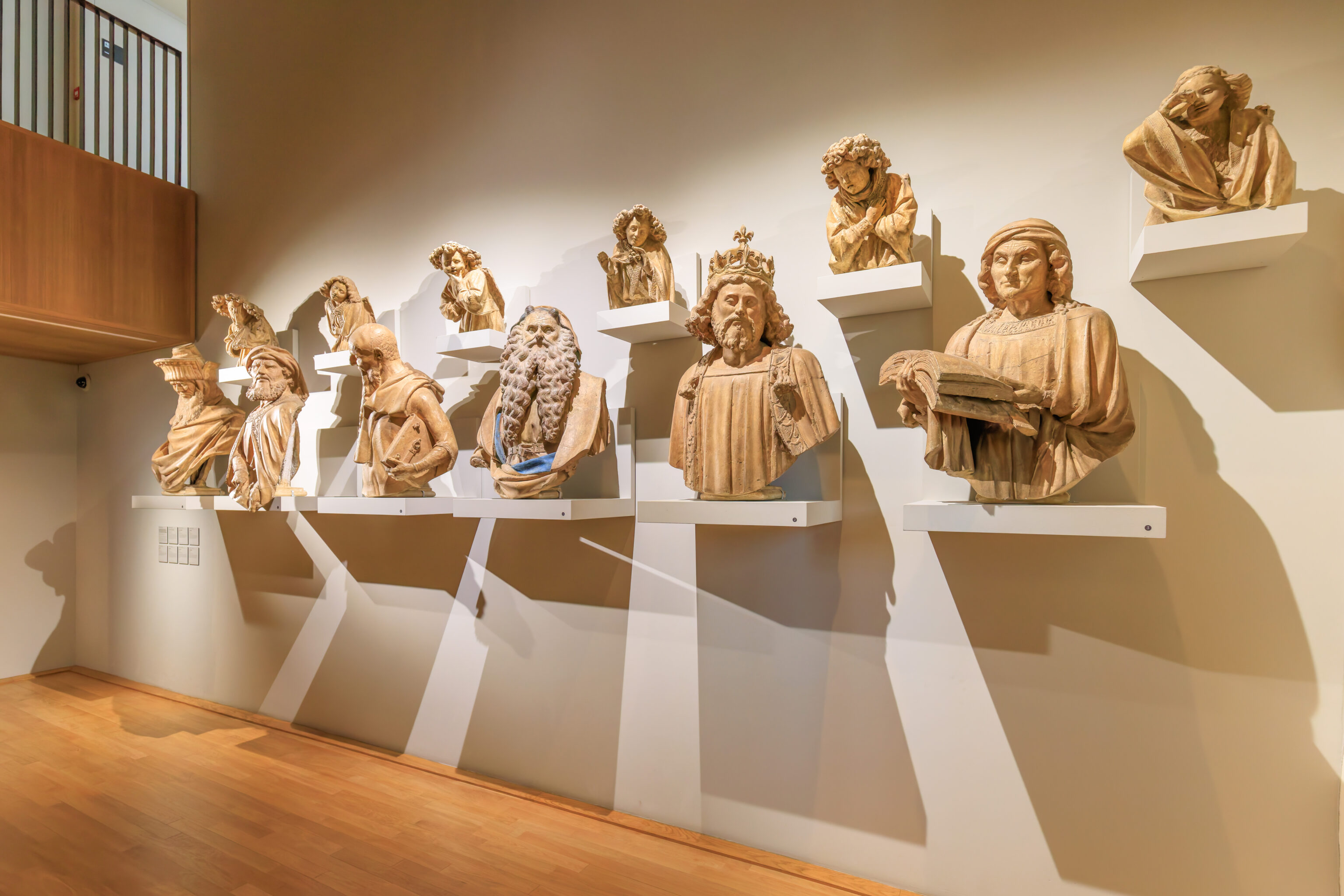
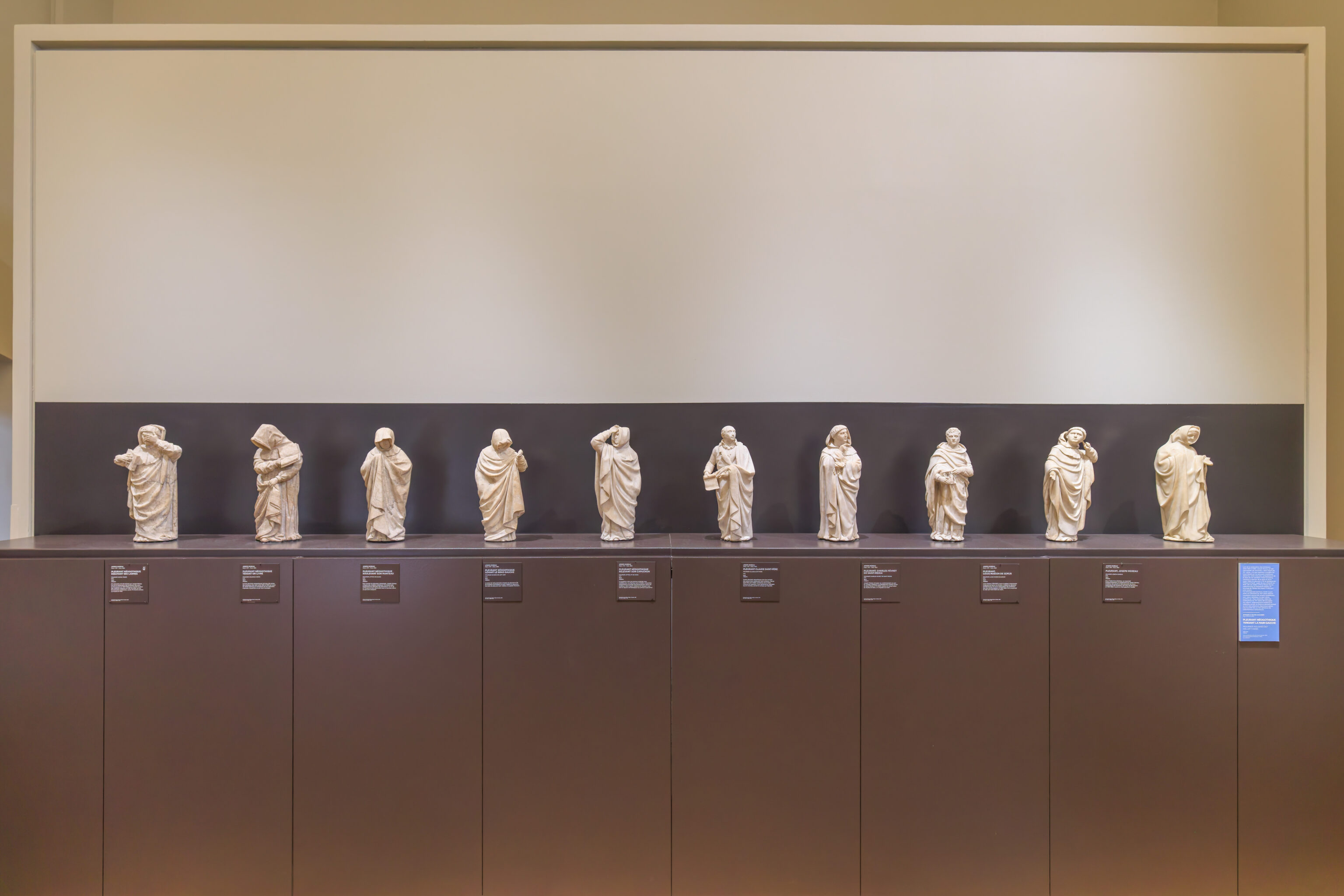
These exceptional funerary monuments in marble and alabaster were conceived for the first two dukes, Philip the Bold and his son John the Fearless to rest in the Chartreuse de Champmol, founded as a necropolis for the new Valois dynasty. The tombs, which are in fact cenotaphs, were originally placed in the choir of the monastery church, and remained there until the French Revolution. The bodies, initially in coffins, were inhumed in the crypt beneath the choir. In 1792, the tombs were transferred to the church of Saint Bénigne. Vandalised and dismounted a year later, they were ultimately restored before being appropriately installed in 1827 in the Fine Arts Museum, in what was once the great hall of the ducal palace that matched their grandeur.
Dijon, 1810 – Paris, 1864
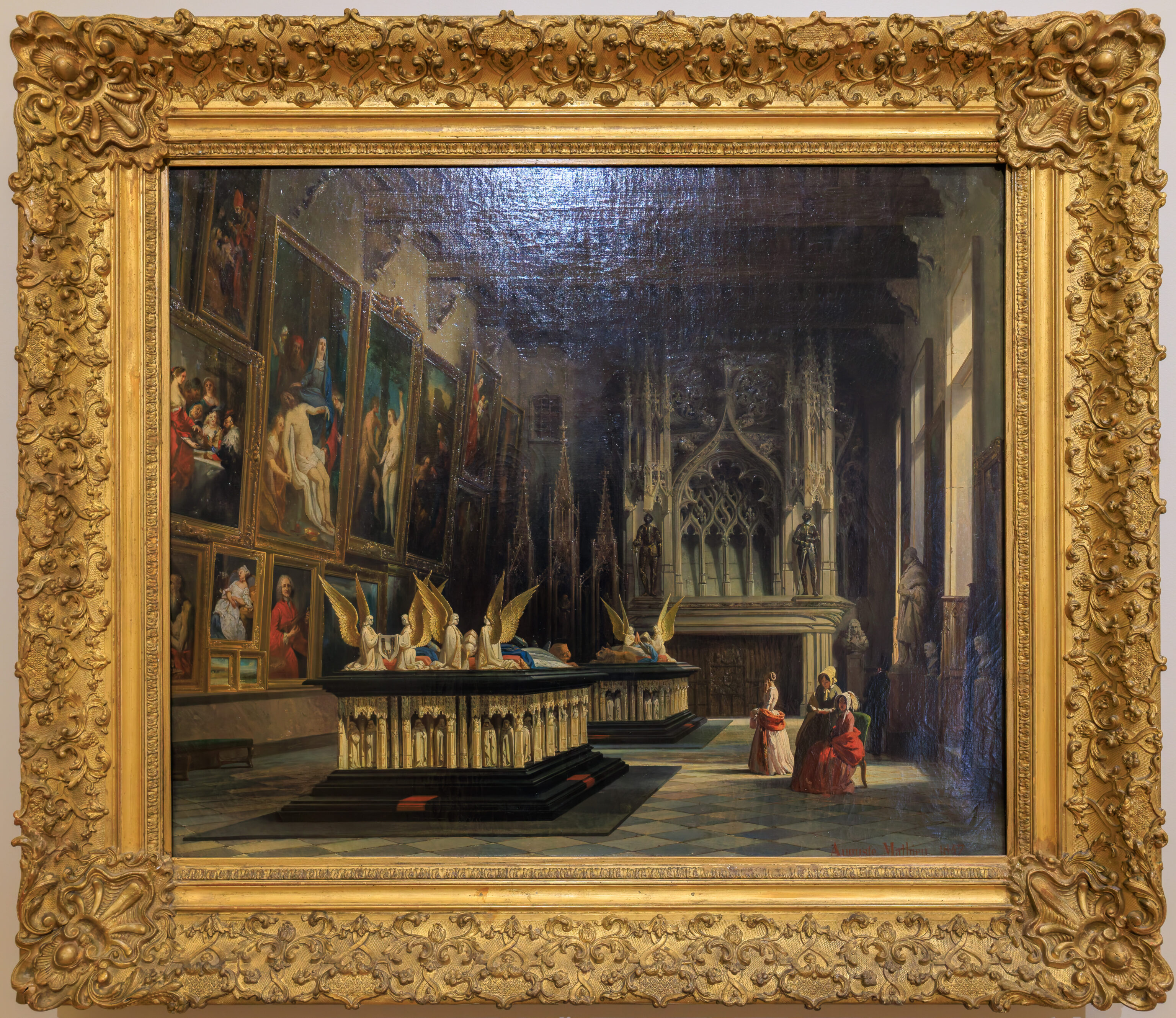
THE GUARDS’ ROOM AT THE MUSEUM OF DIJON IN 1847
1847
Oil on canvas
This view of the Guards’ Room, twenty years after the installation of the tombs of the Dukes of Burgundy, remains the emblematic image of the Romantic museum at the time of the rediscovery of the Middle Ages. One can see the fireplace with wood paneling and armor, the “Chair” (canopy over the seats of the officiating clergy at the Charterhouse of Champmol), as well as the busts of famous men of Burgundy and the statue of Bossuet. On the wall, one can recognize the masterpieces from the revolutionary seizures and state acquisitions.
Permanent transfer of ownership to the City of Dijon, 2010
Inv. CA 397
(Translated using Google)
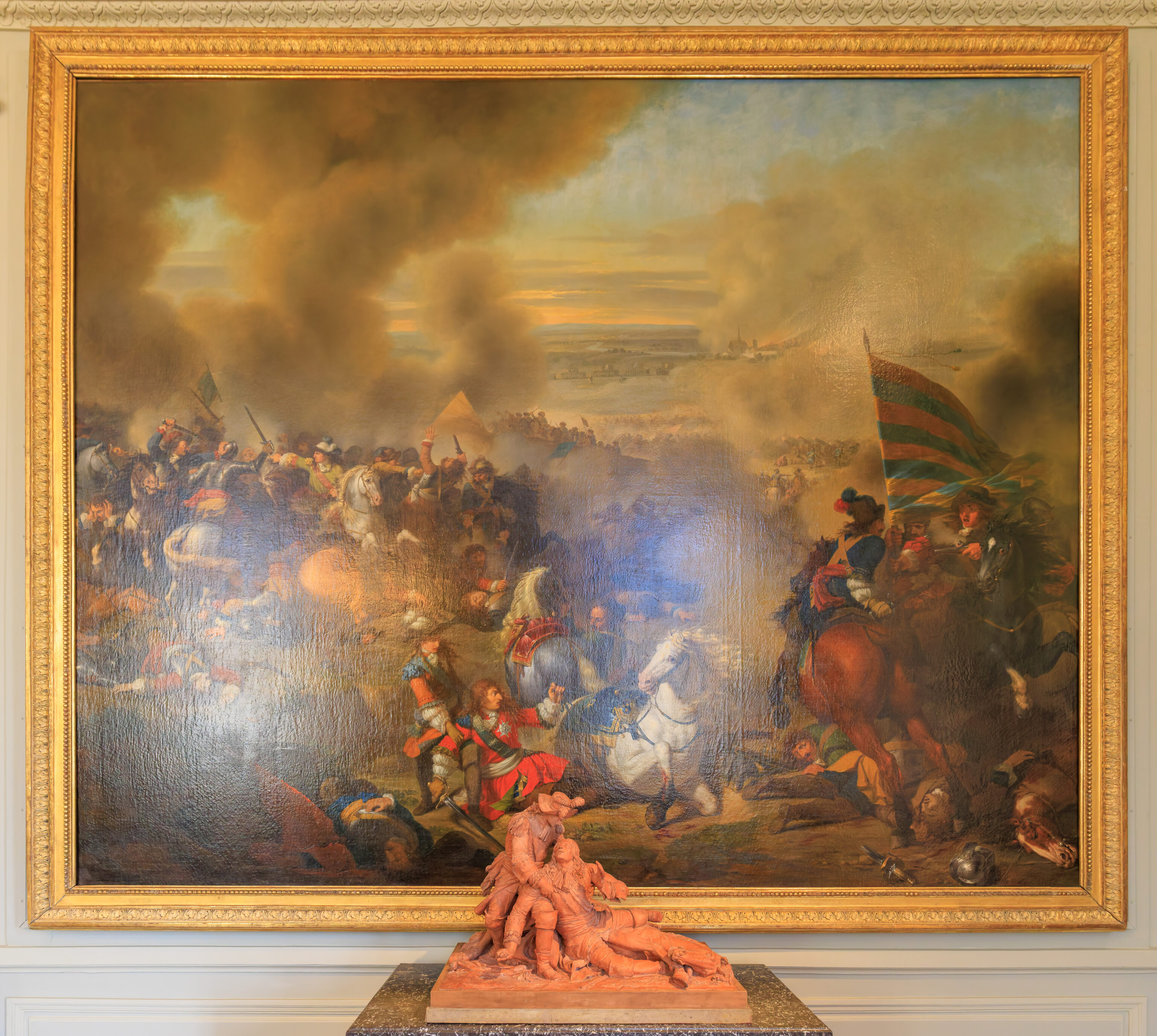
This painting is interesting as it depicts the Tomb of the Dukes, which we just saw. The sign for this painting refers to the room containing the tombs as a guards’ room while the sign in the room refers to it as a banquet hall. Visually, it does appear to be the same room.
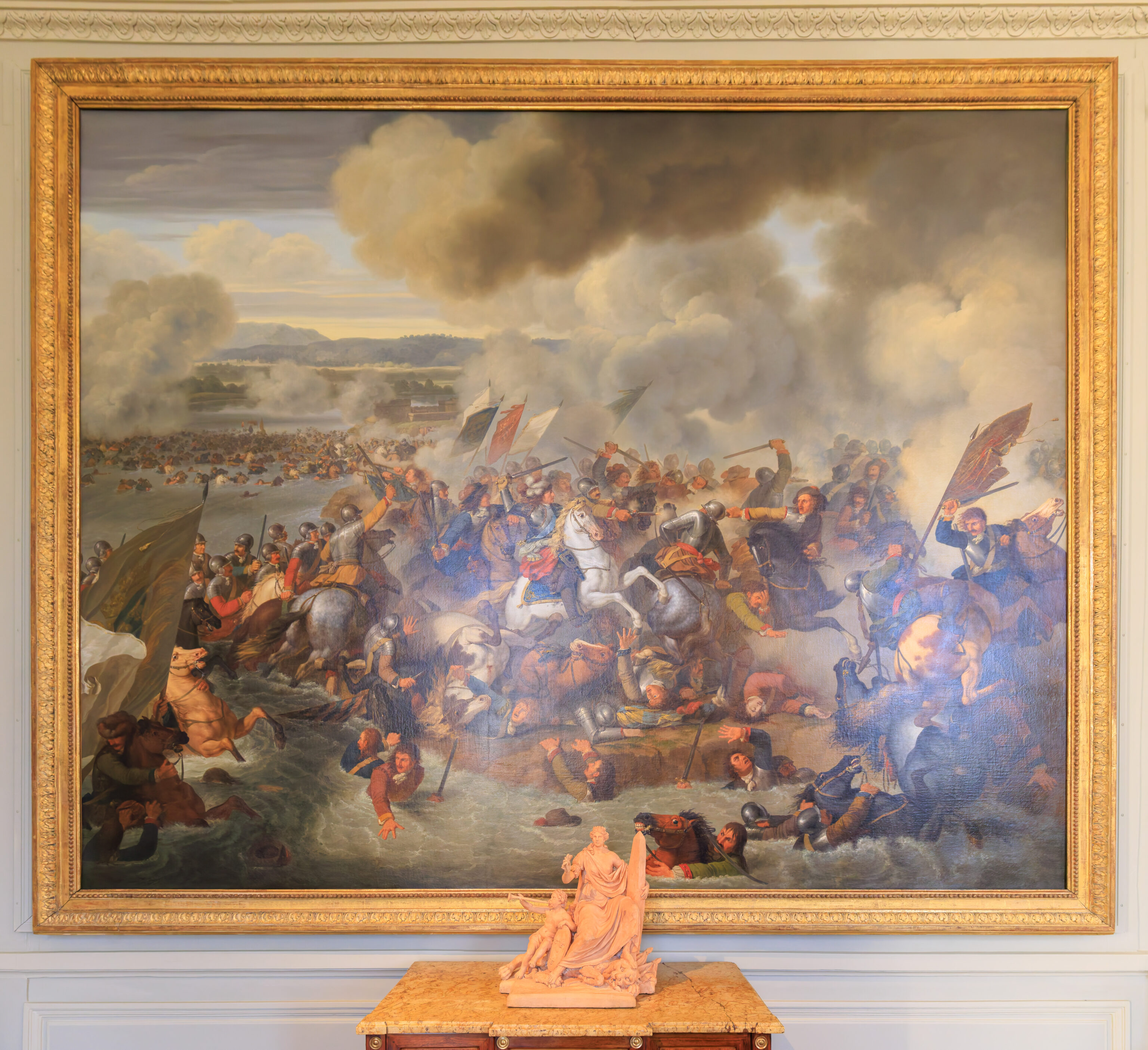
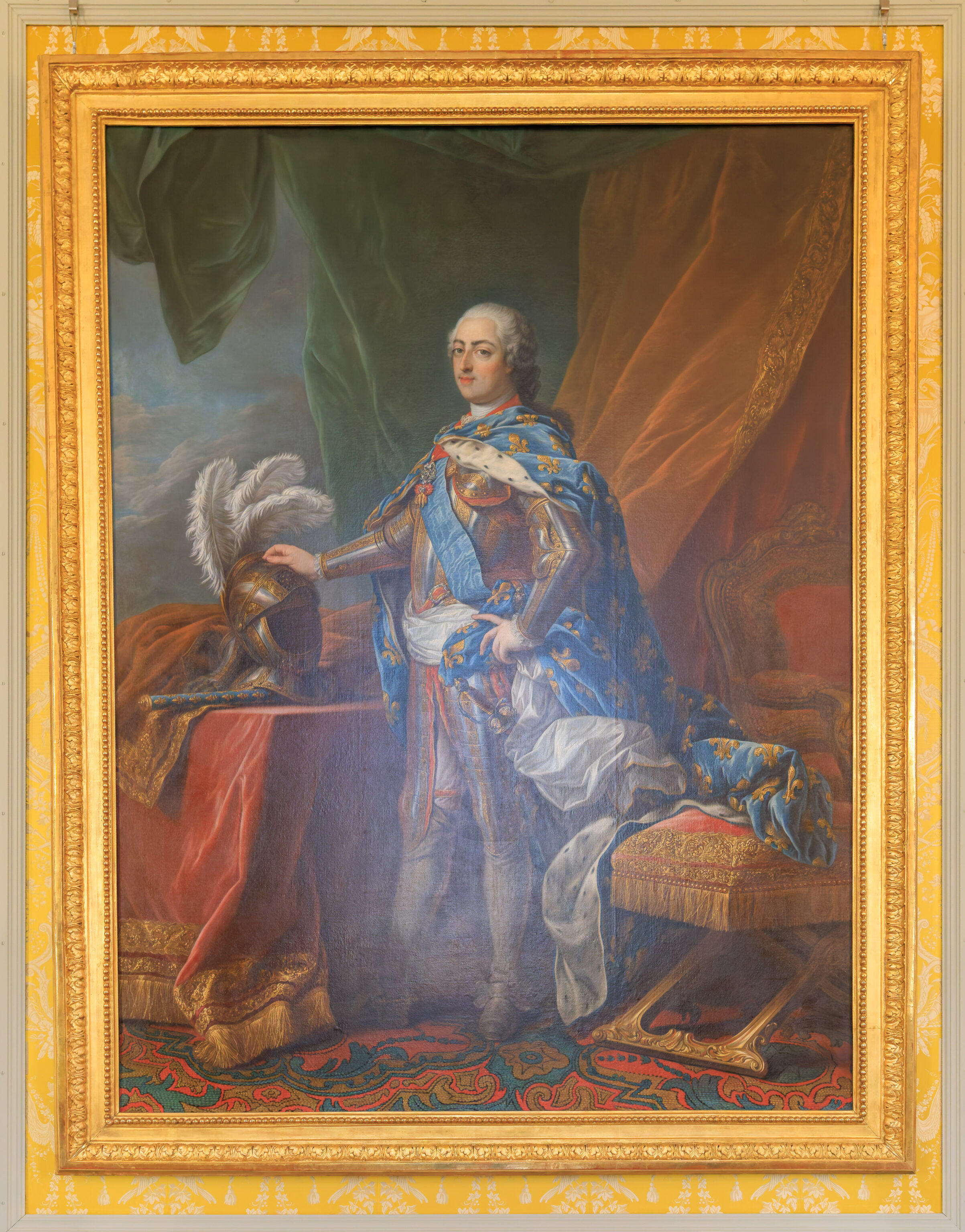
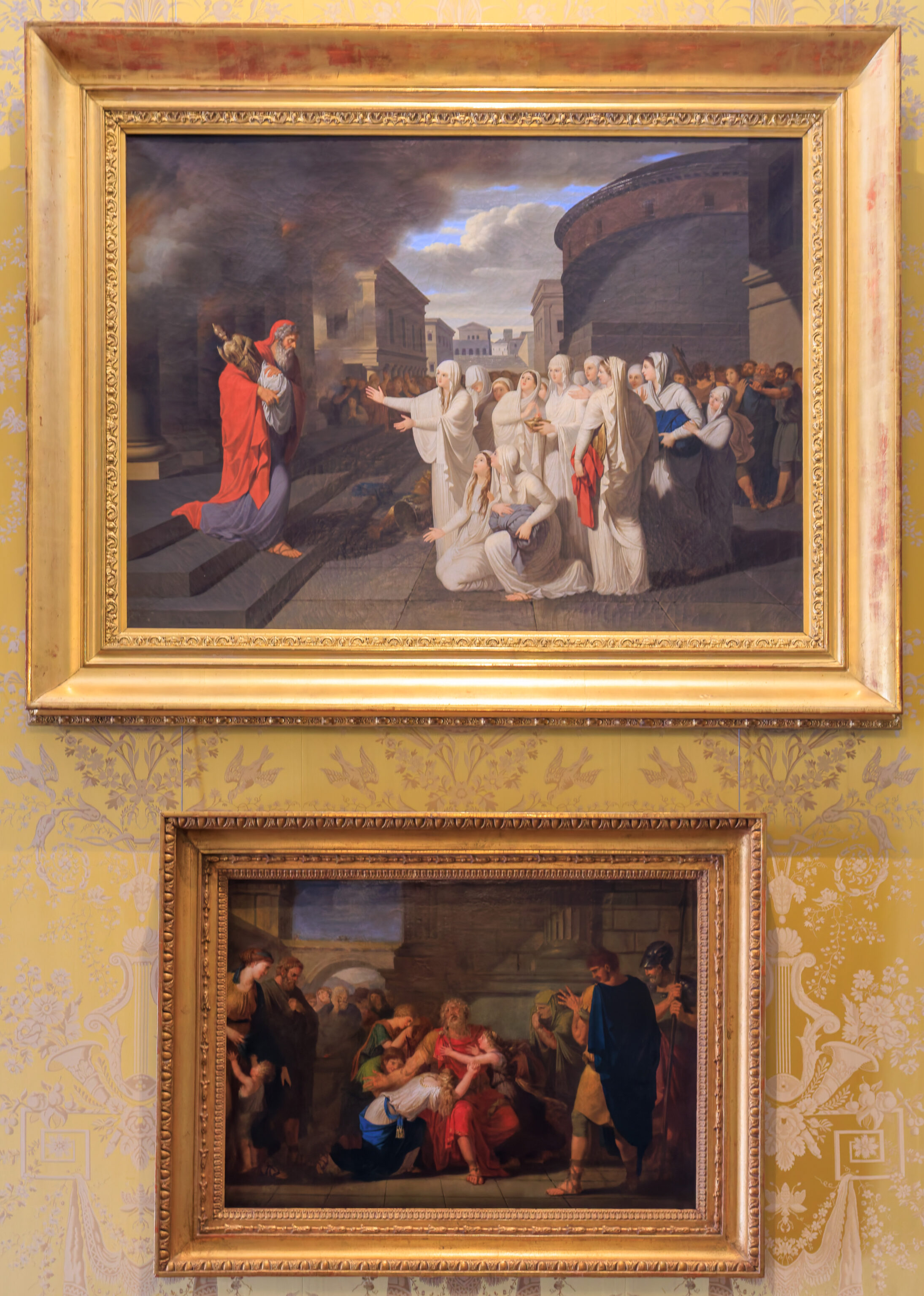
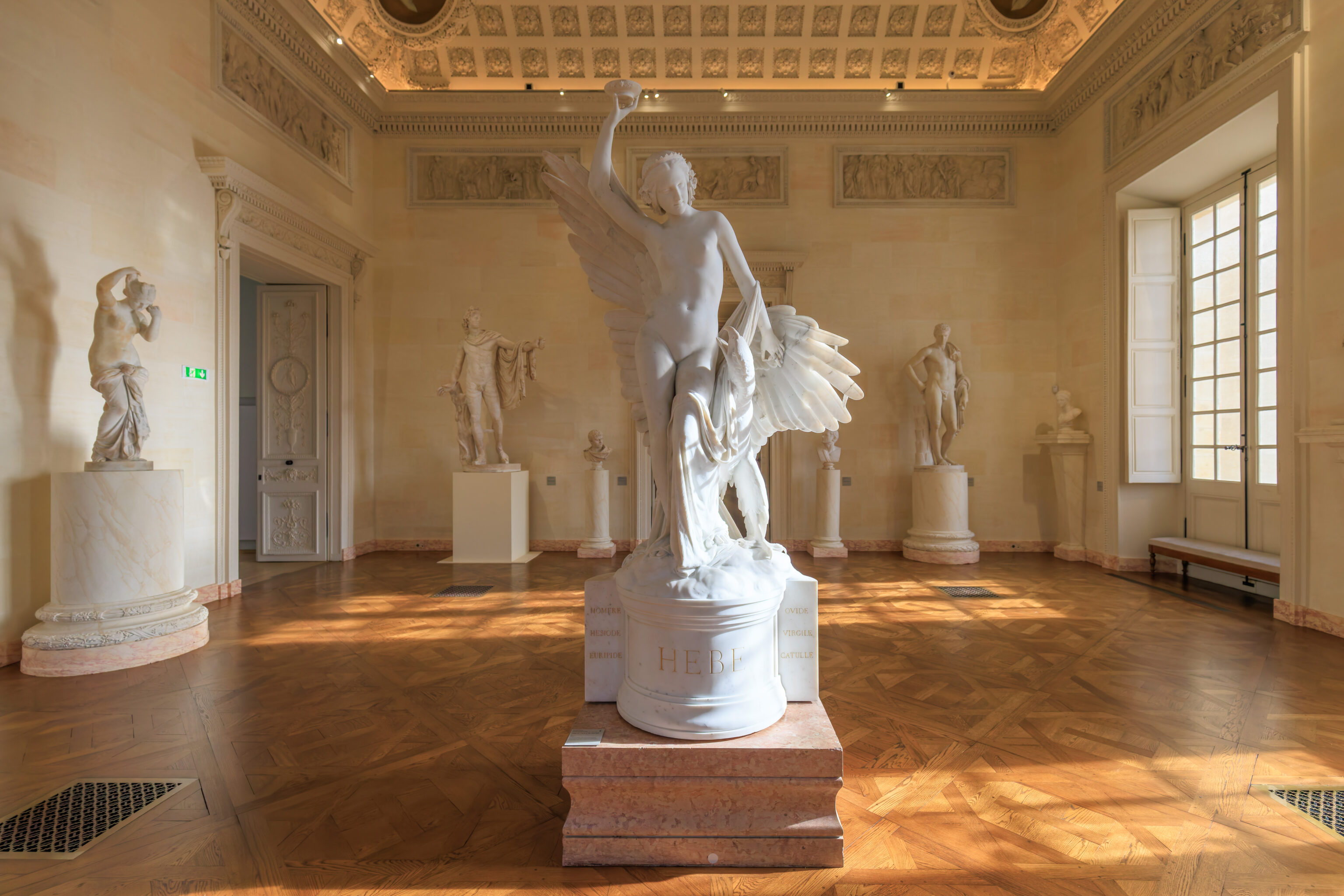
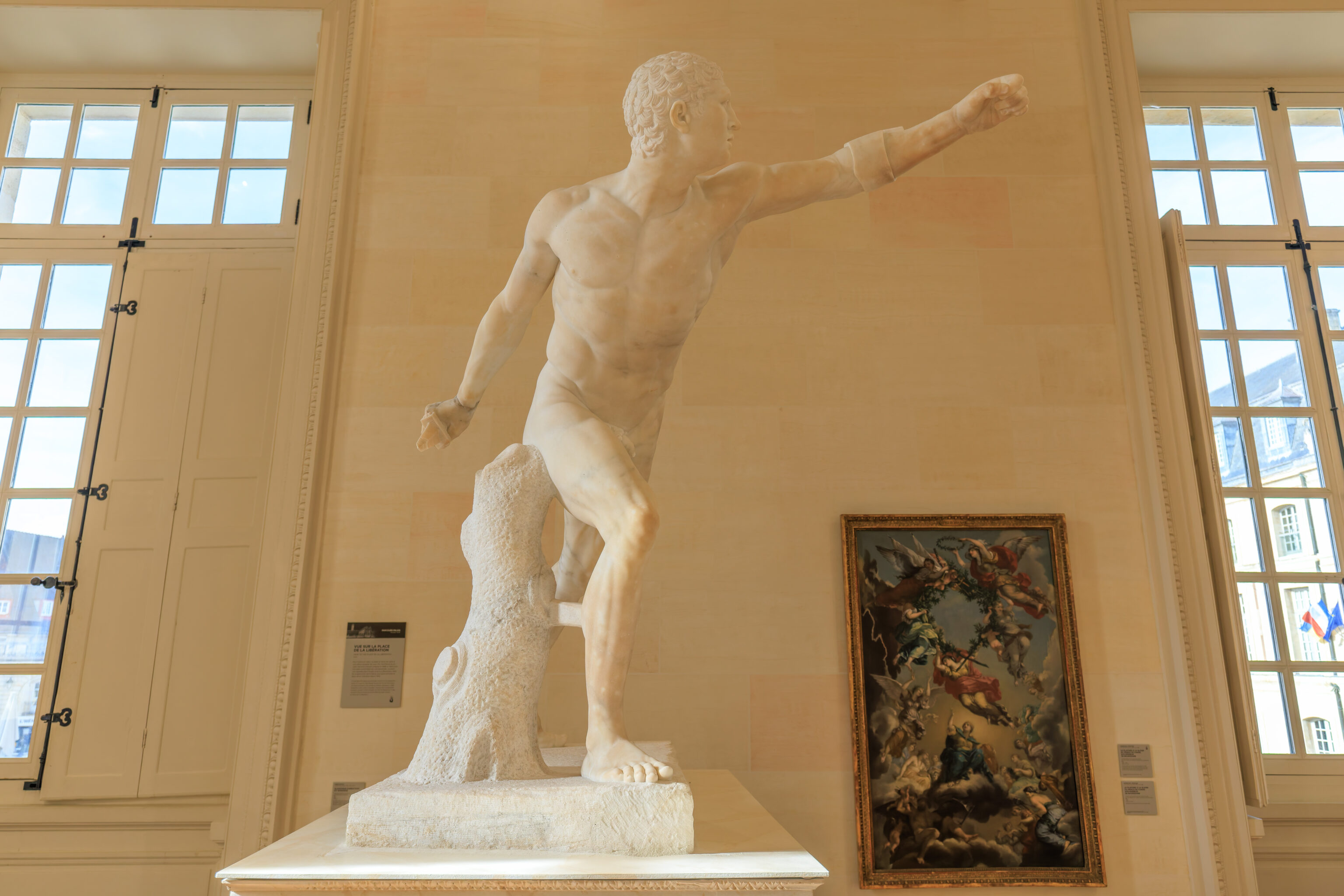
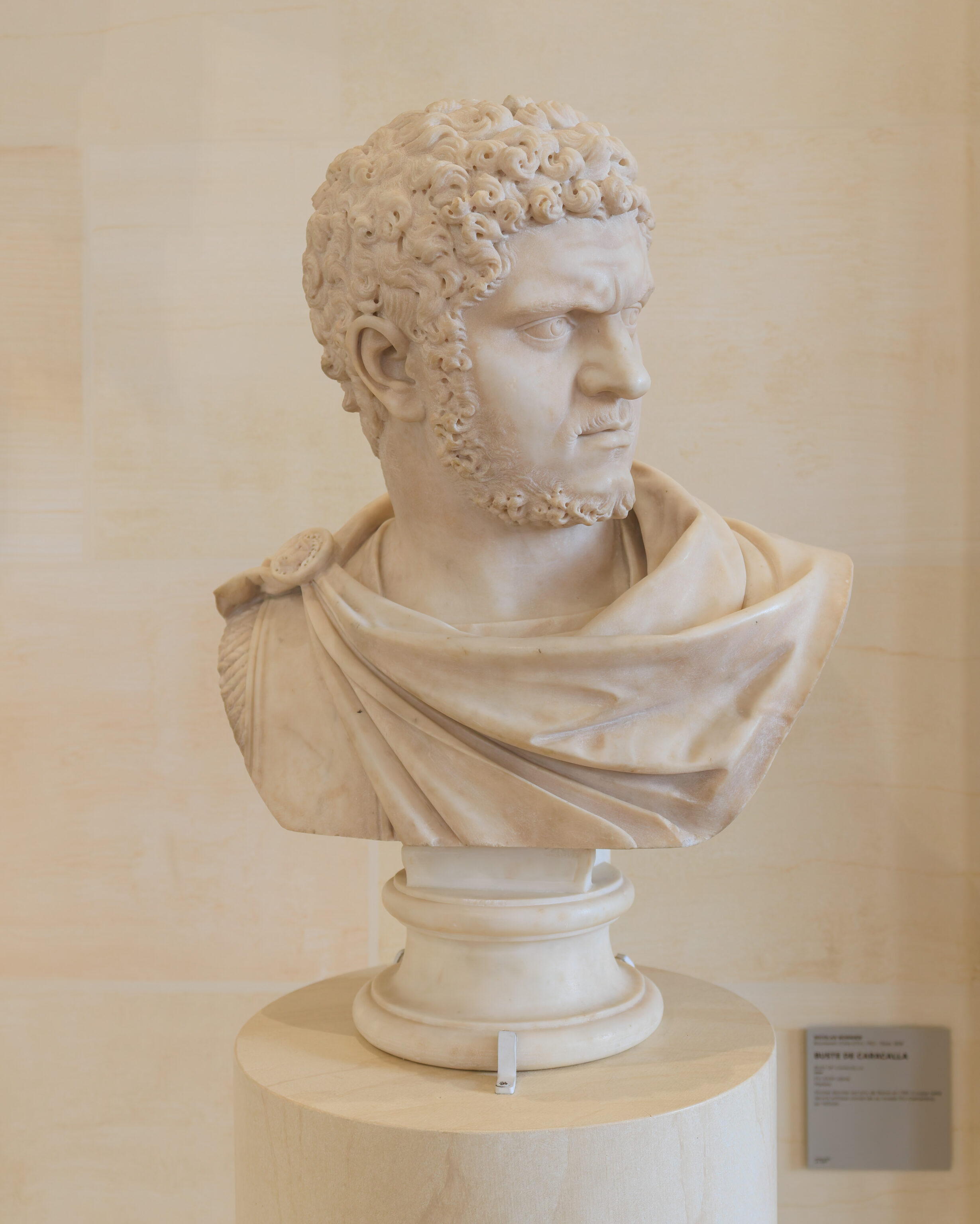
Roman Emperor Caracalla is actually very recognizable once you’ve seen him enough!
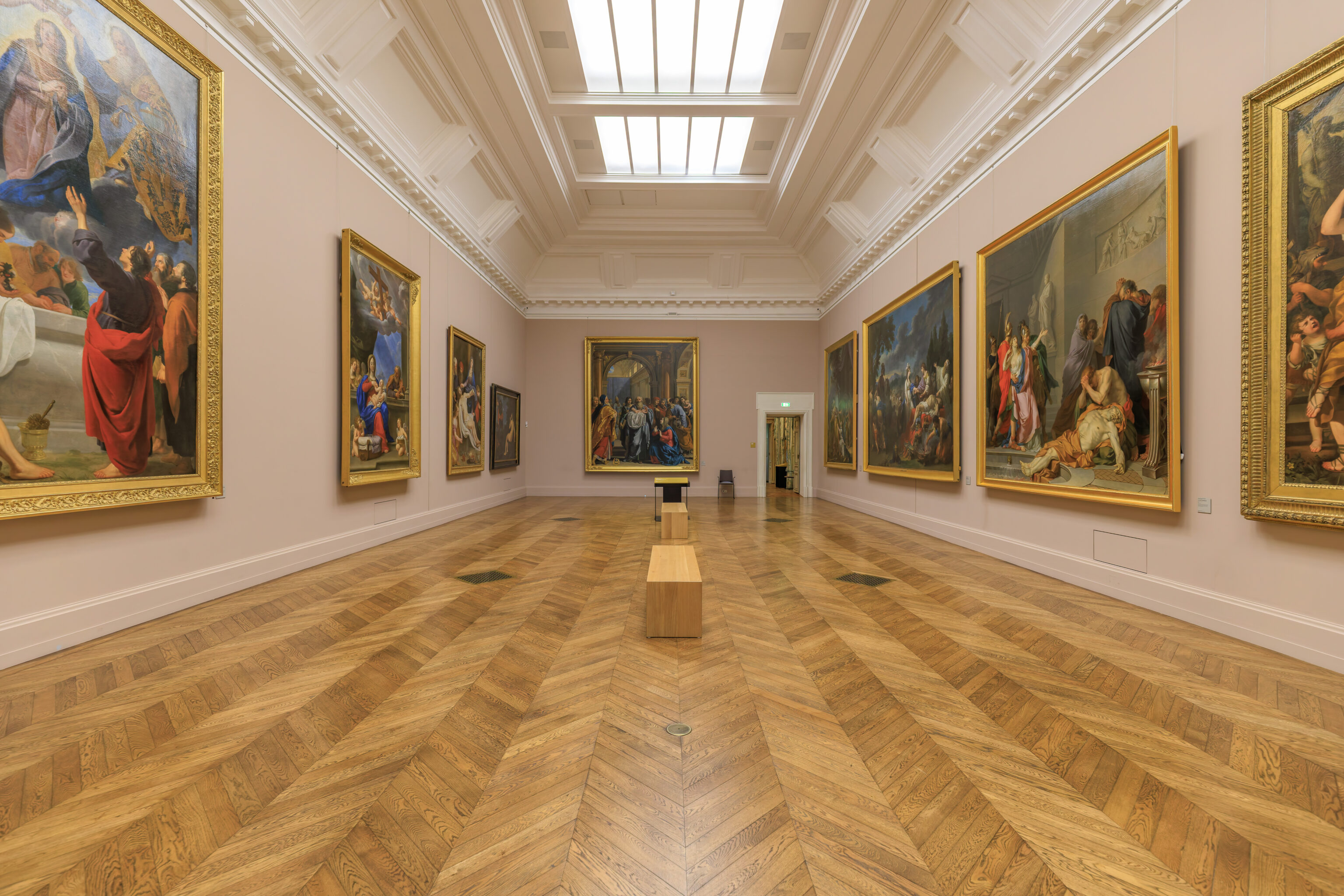
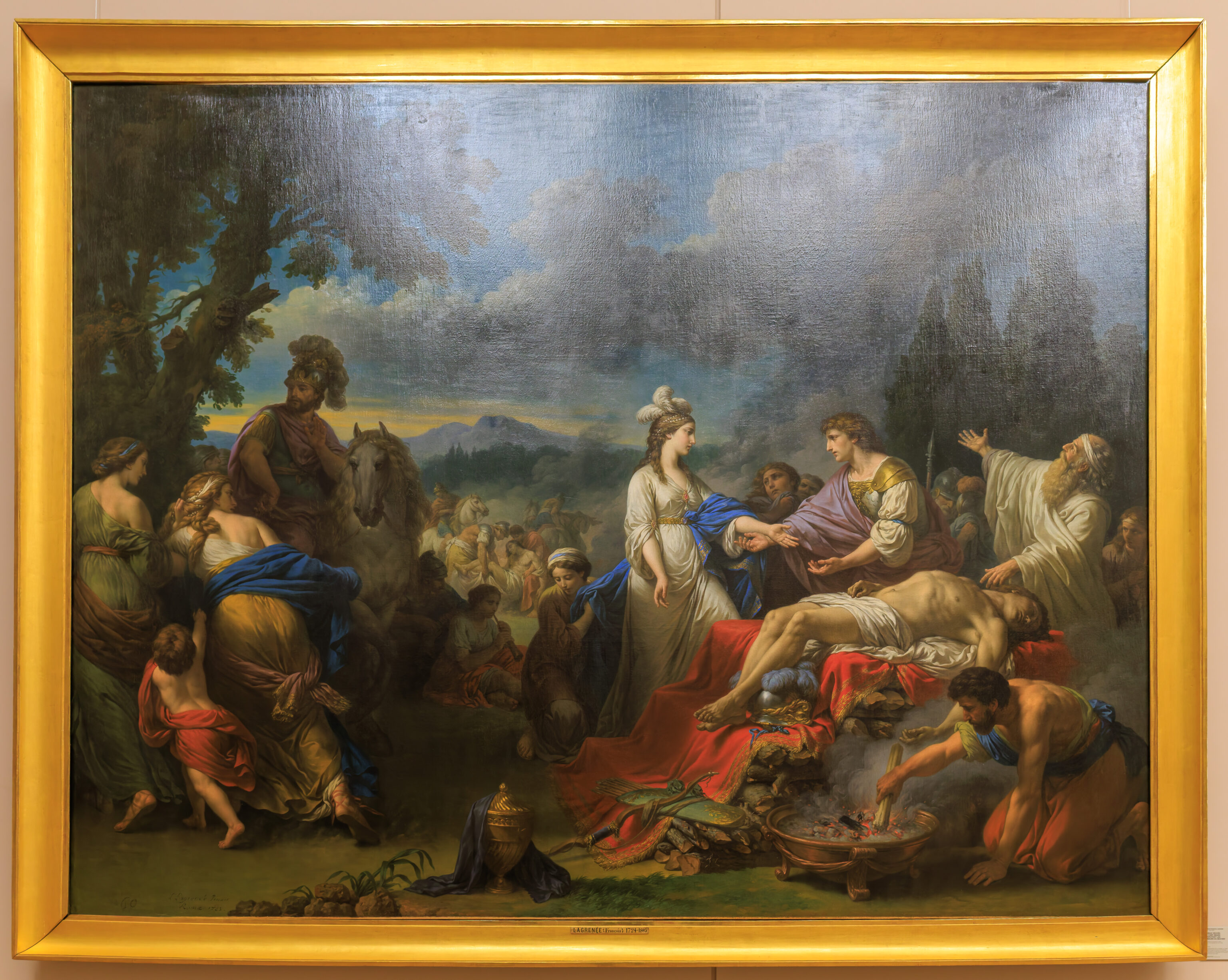
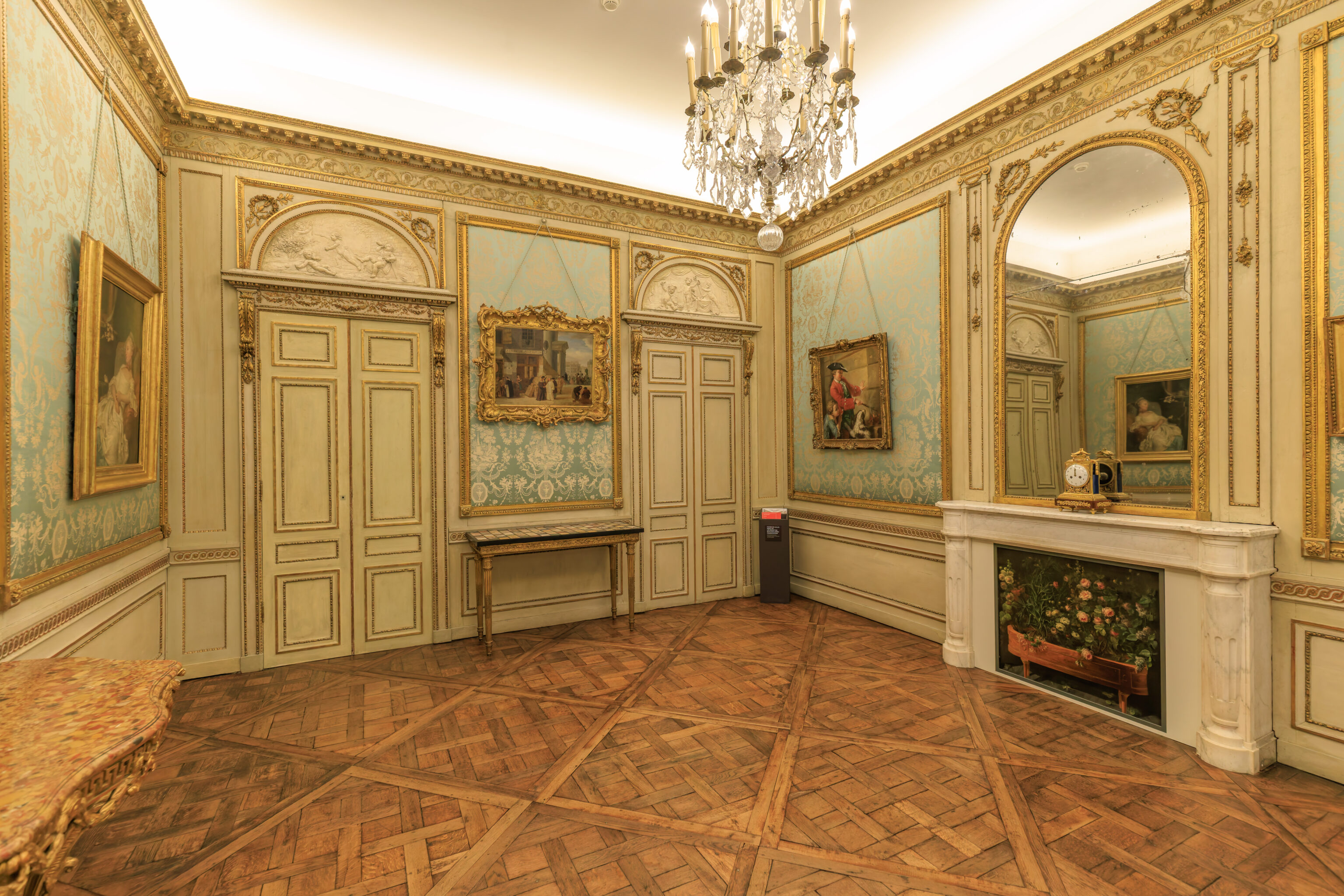
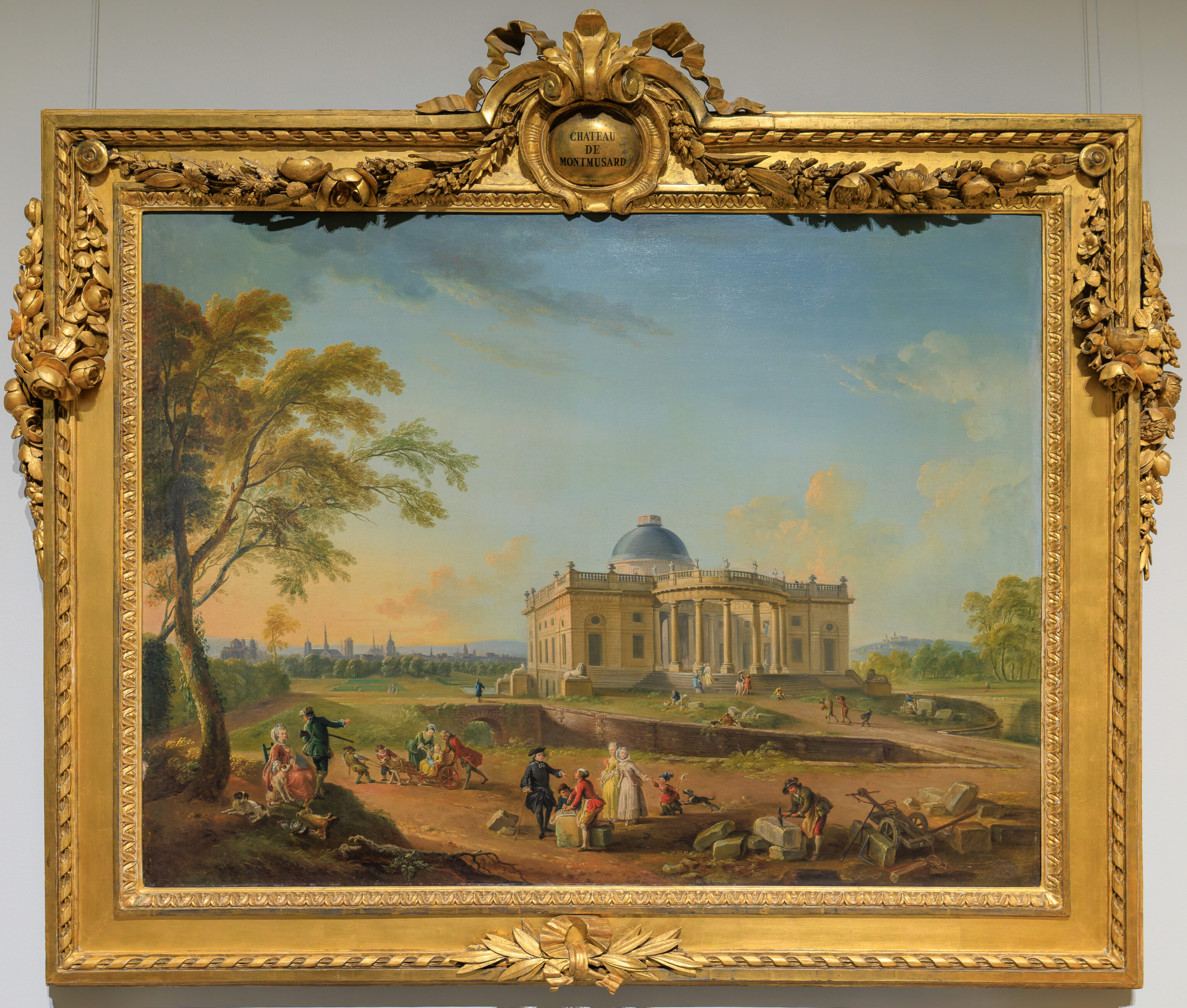
Dijon, 1716 – Paris, 1803
VIEW OF THE CHÂTEAU OF MONTMUSARD NEAR DIJON AT SUNSET
Late 18th century
Oil on canvas
The château was built in 1768-1769 by Charles de Wailly, future architect of the Odéon Theatre in Paris, for Jean-Philippe Fyot de La Marche, First President of the Parliament of Burgundy. It was destroyed starting in 1799.
Acquired with the support of national funds and the Society of Friends of the Dijon Museum
On loan from the Louvre Museum, Paris, 1954 (R.F. 1954-29)
Inv D 4115
(Translated using Google)
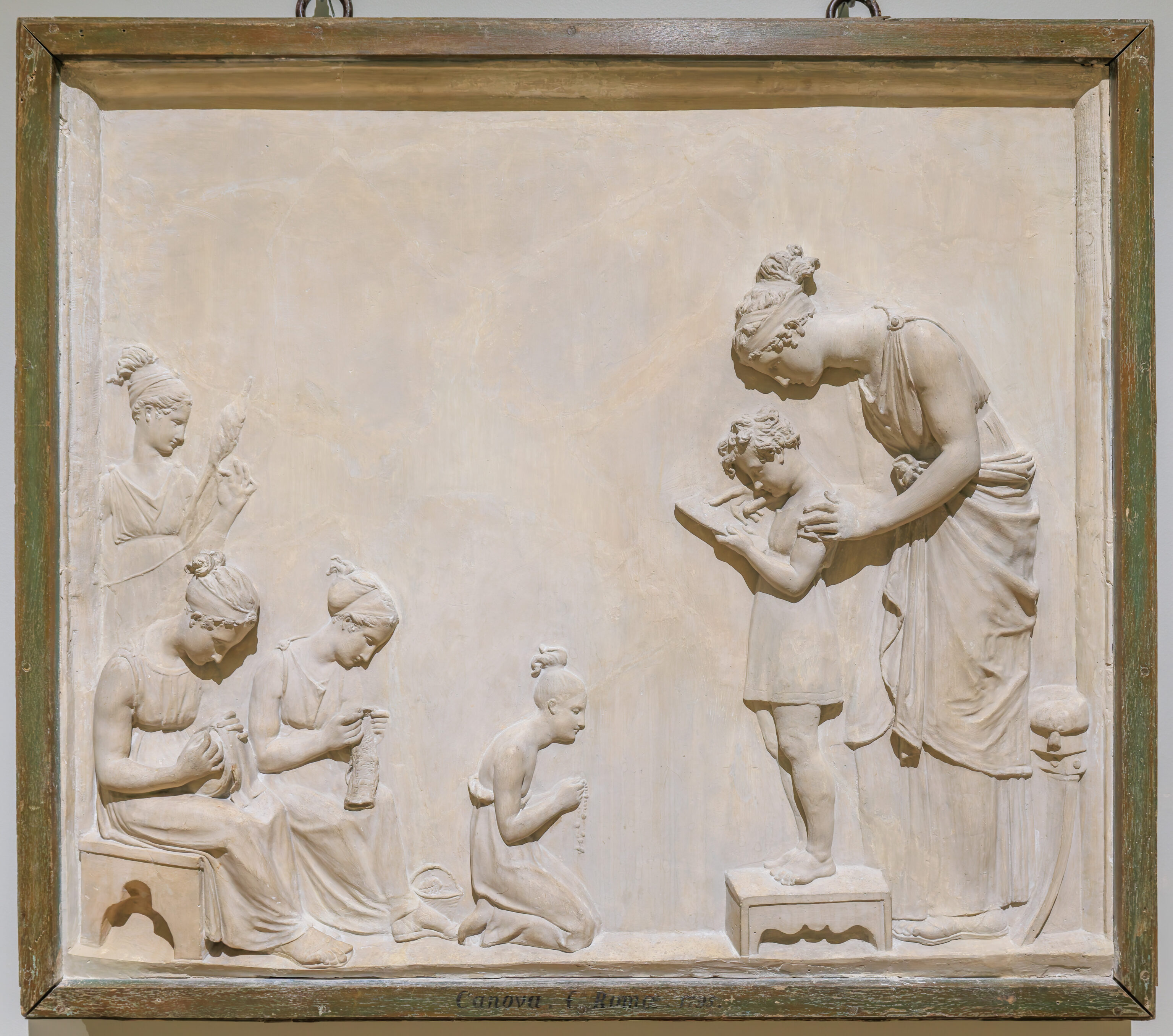
Possagno (Italy), 1757 – Venice (Italy), 1822
CHARITY TEACHING
1795
Plaster
The Italian sculptor Antonio Canova is a central figure of Neoclassicism. Considered the “New Phidias,” he revived ancient forms and distinguished himself through the rigor and austerity of his compositions. In both reliefs, the figures are dressed in the antique style, and the frieze-like composition recalls Greco-Roman decorations. The allegory of Charity, in the form of a young woman, teaches the younger generation.
(Translated using Google)
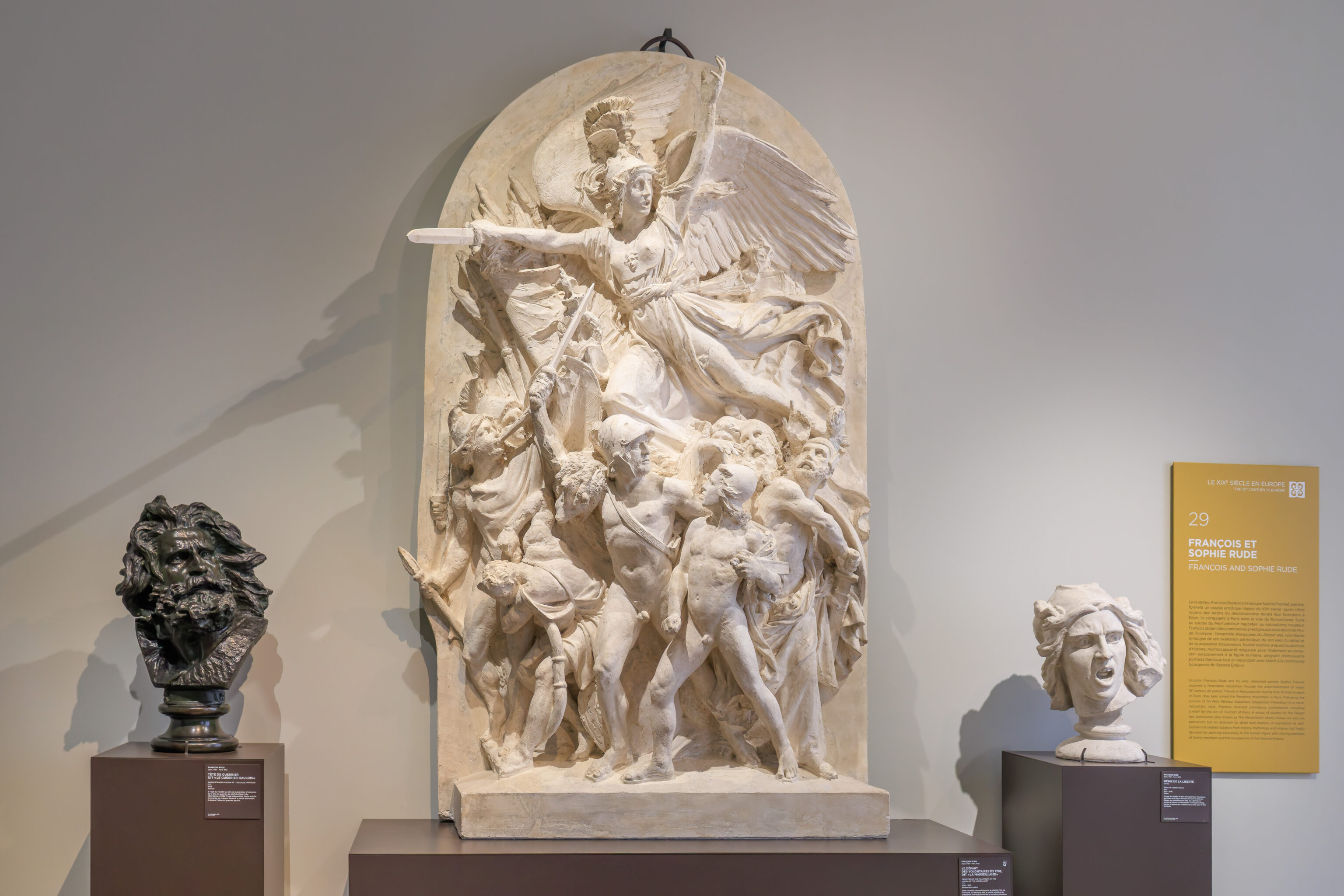
Dijon, 1784 – Paris, 1855
THE DEPARTURE OF THE VOLUNTEERS OF 1792, KNOWN AS “THE MARSEILLAISE”
1830 – 1835
Plaster model
In this preparatory project for the relief on the Arc de Triomphe, one can already discern the heroic spirit that transcends the formal legacy of the sculptor’s classical training. With this work, Rude decisively embraced the Romantic aesthetic.
Gift of Rondelet, 1868
Inv. CA 1079
(Translated using Google)
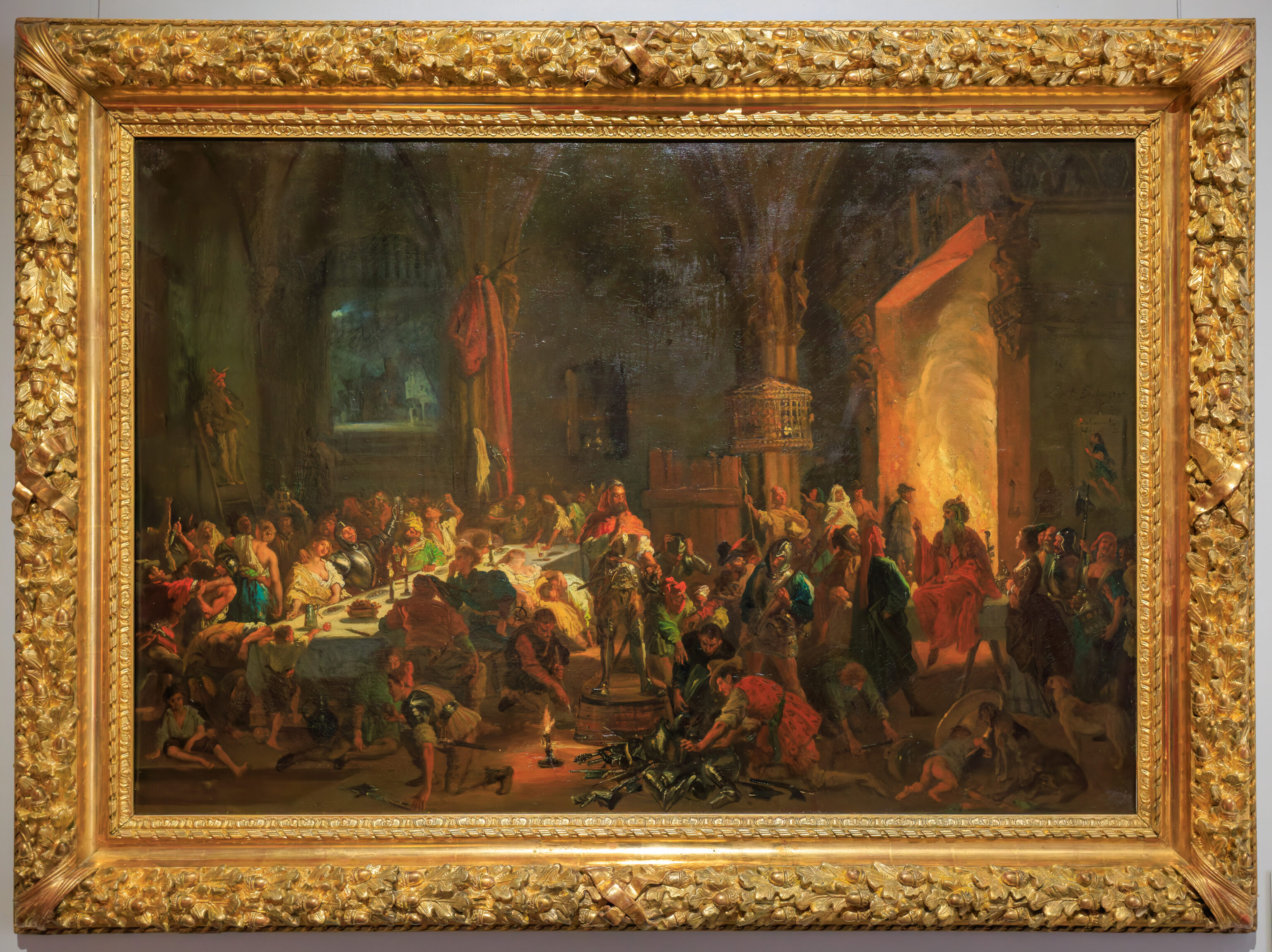
Vercelli (Italy), 1806 – Dijon 1867
THE CROOKS, OR LONG LIVE JOY
1866
Oil on canvas
Louis Boulanger illustrates here an episode from the novel by his friend Victor Hugo, Notre-Dame de Paris, published in 1831, imbued with medieval inspirations. The amiable Jehan Frollo raises his glass while in the Court of Miracles, revelry is in full swing.
(Translated using Google)
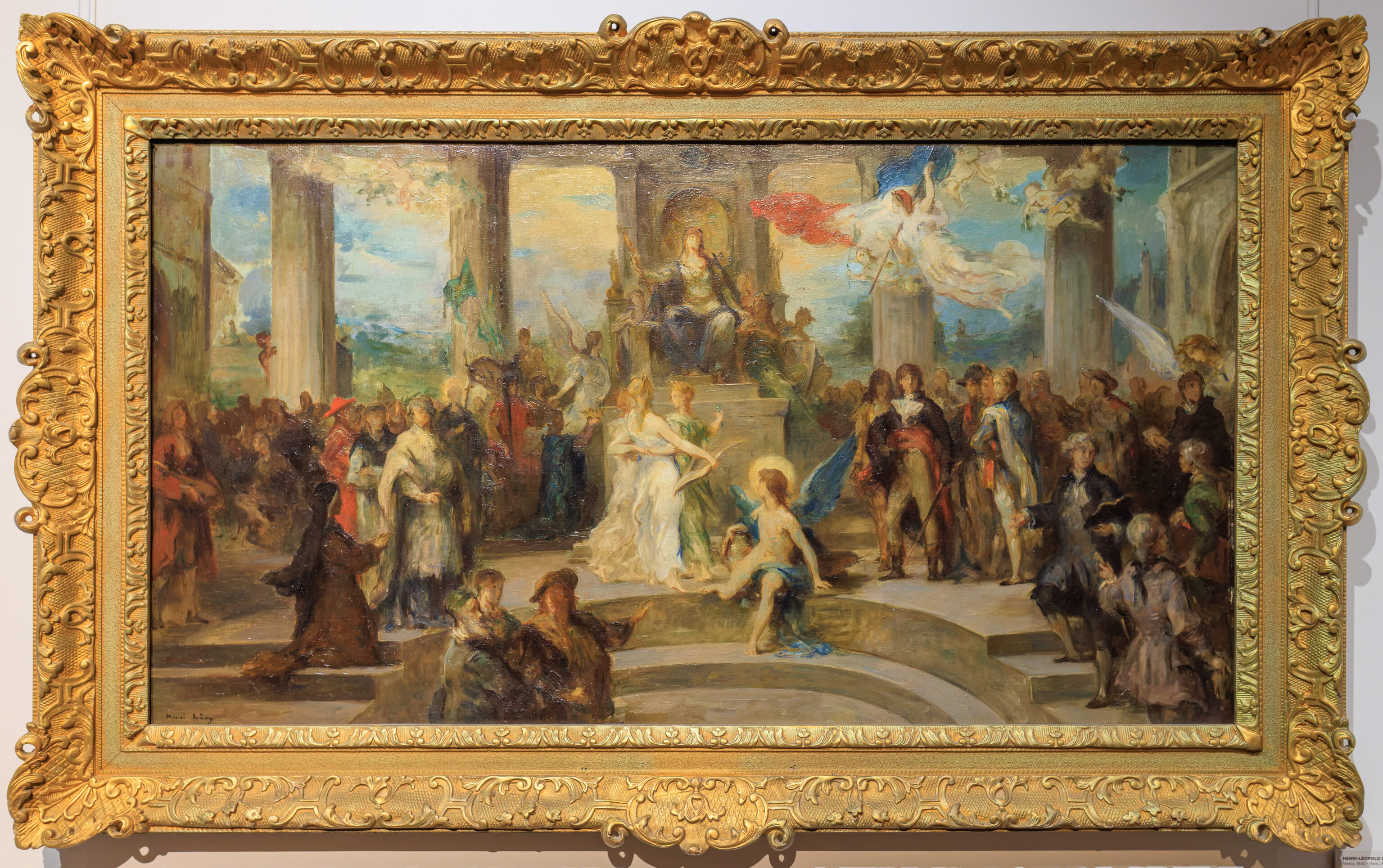
Nancy, 1840 – Paris, 1904
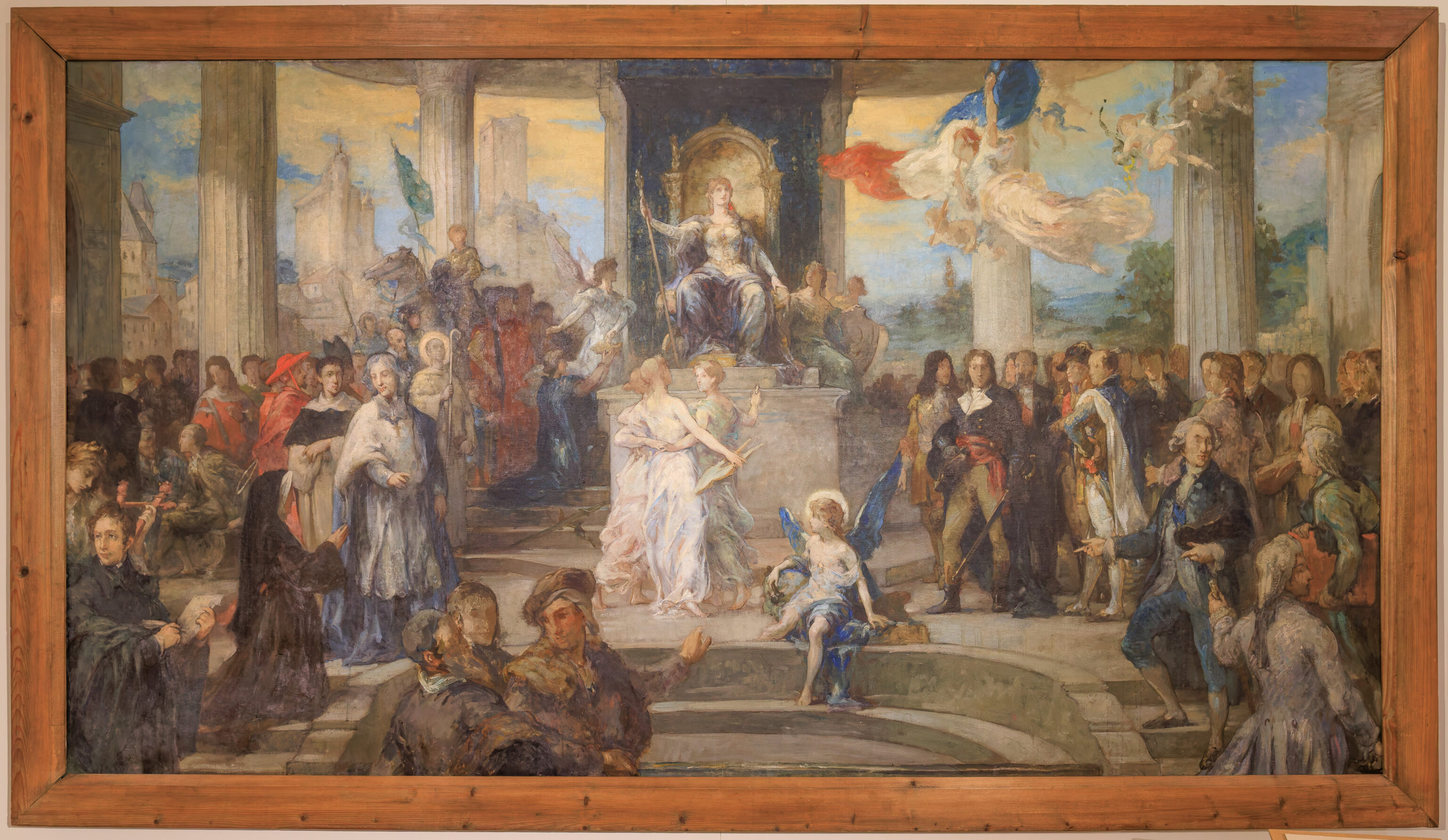
THE GLORIES OF BURGUNDY, STUDY FOR THE PAINTING
OF THE STATES ASSEMBLY HALL
Circa 1894
Oil on canvas
Lévy was inspired by Raphael‘s School of Athens, painted in 1509 in Rome, to depict the great figures of Burgundy gathered around France on its throne, including the Dukes of Burgundy, François Rude, Vauban, and Sadi Carnot.
(Translated using Google)
The sign for this painting lists Raphael’s School of Athens as an inspiration. We saw Raphael’s work while in the Vatican earlier this year! Also, this painting includes Sadi Carnot. We saw a monument to him earlier in the day at the Place de la République!
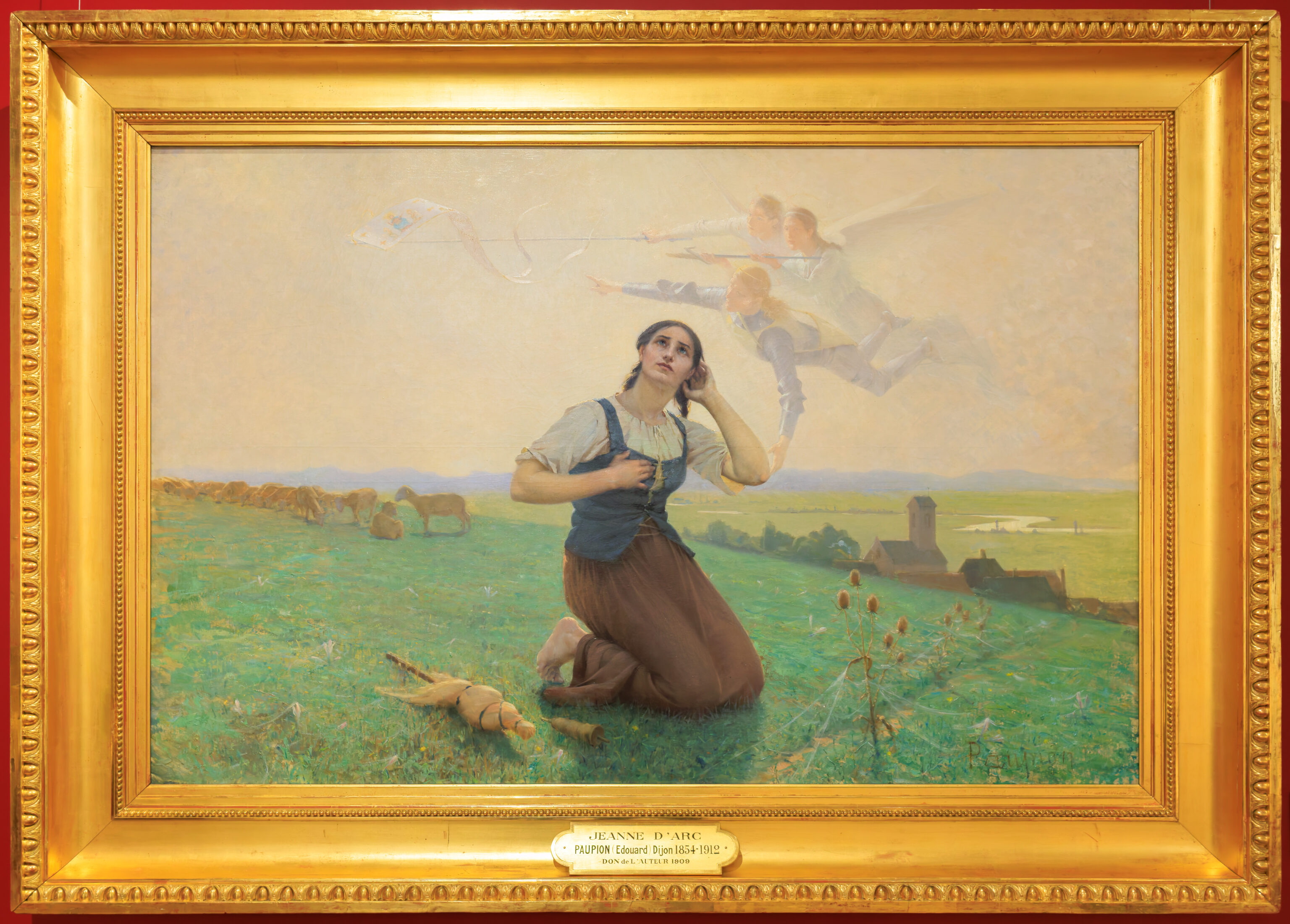
Dijon, 1854 – Orchamps (Jura), 1912
JOAN OF ARC
Circa 1889
Oil on wood
A student of the École des Beaux-Arts in Dijon, and later of the painter Gérôme in Paris, Paupion became known for his naturalist work with academic ambitions considerably close to those of Bastien-Lepage. The request for the canonization of Joan of Arc in 1869 and the loss of Alsace-Lorraine in 1870 explain the proliferation of the image of this heroine, who embodied the vengeful French patriotism in the last third of the 19th century.
Gift of the artist, 1909
Inv. 2144
(Translated using Google)
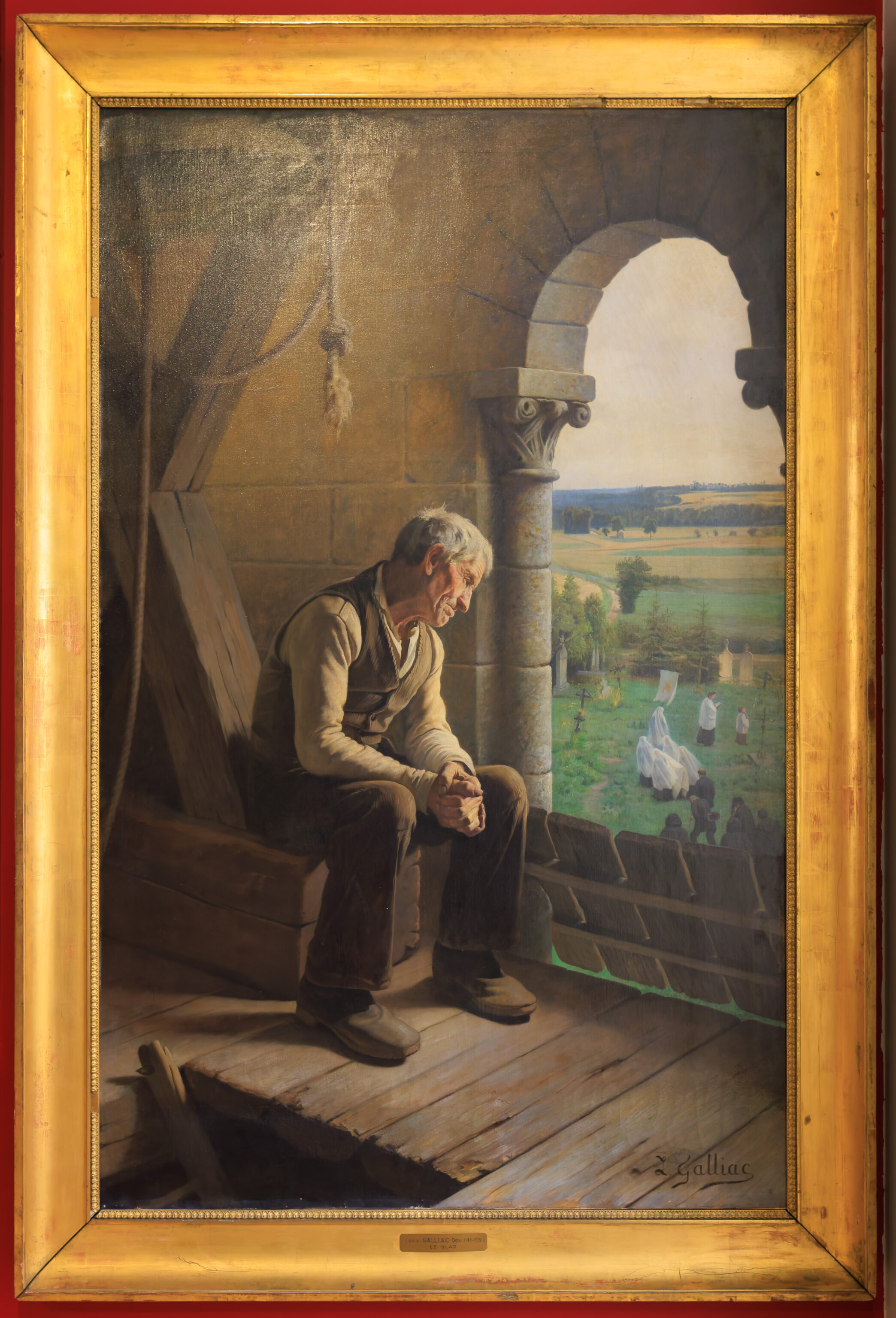
LE GLAS“
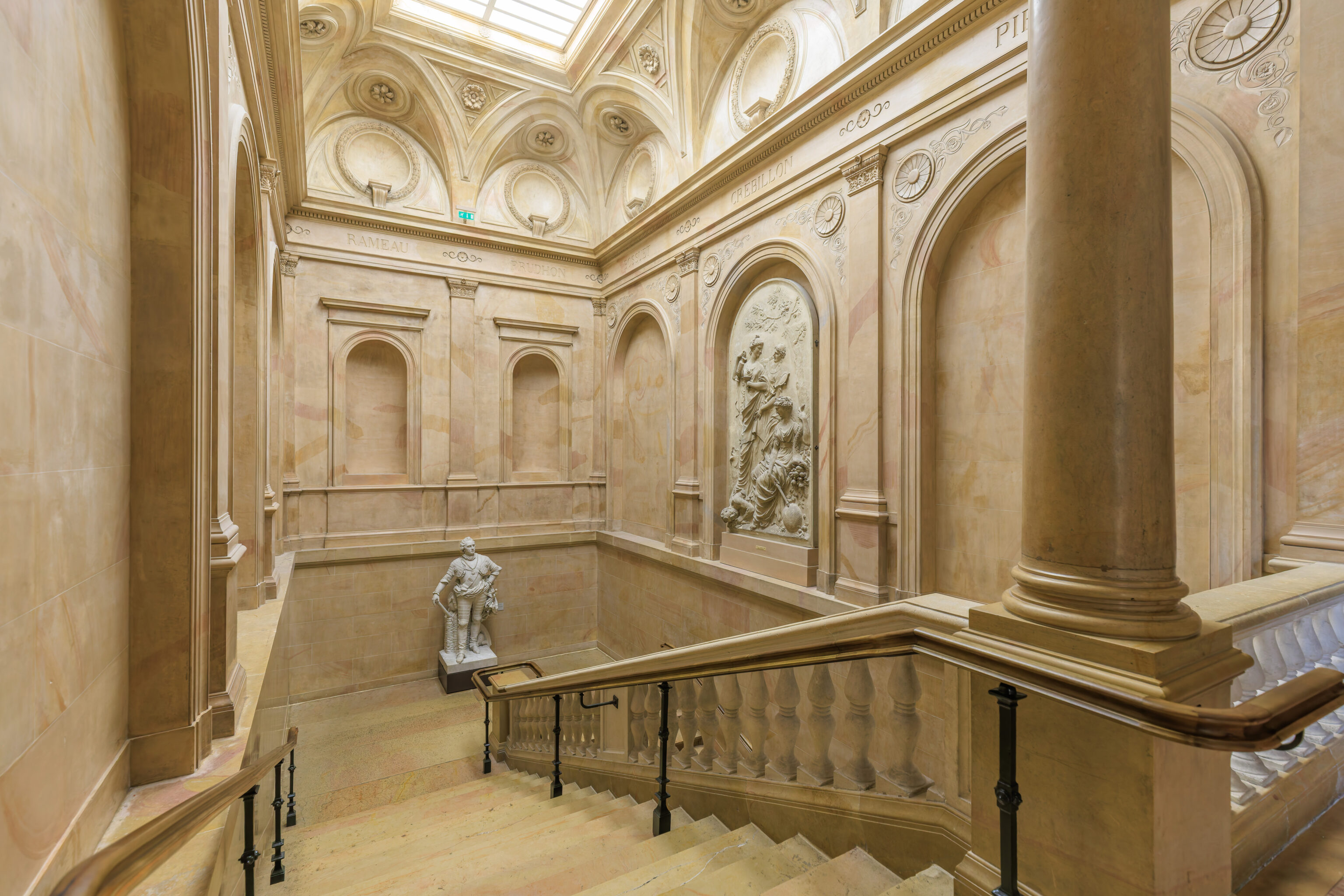
The east wing was built between 1852 and 1856 to make more space for the museum and the School of Fine Arts. Names of famous Burgundian artists, scientists and men of letters, are engraved in the façade on Place de la Sainte-Chapelle as well as along this grand staircase.”
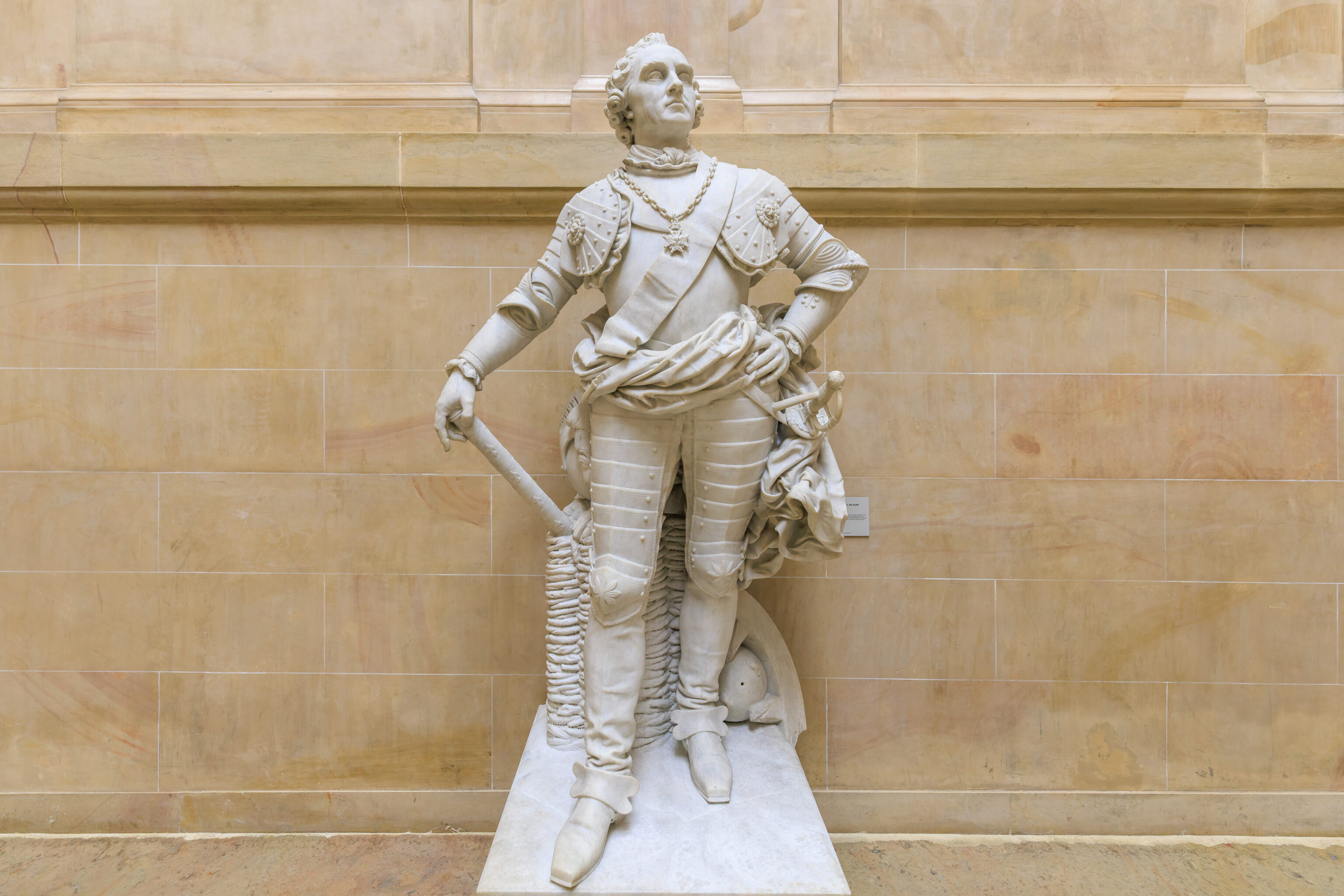
Dijon, 1784 – Paris, 1855
MARSHAL SAXE
1836
Marble
Louis-Philippe, King of the French from 1830, established the Museum of French History at the Palace of Versailles. He commissioned Rude to create this effigy of the marshal of Louis XV to enrich the section dedicated to great men.
On loan from the Louvre Museum, Paris, 1991 (LP 1268)
Inv. D 1991-2-1
(Translated using Google)
After leaving the museum, we decided it was time for lunch. Nearly all restaurants don’t open until 7 or 7:30pm, making it more difficult to have dinner here and make it back to Lyon at a reasonable time.
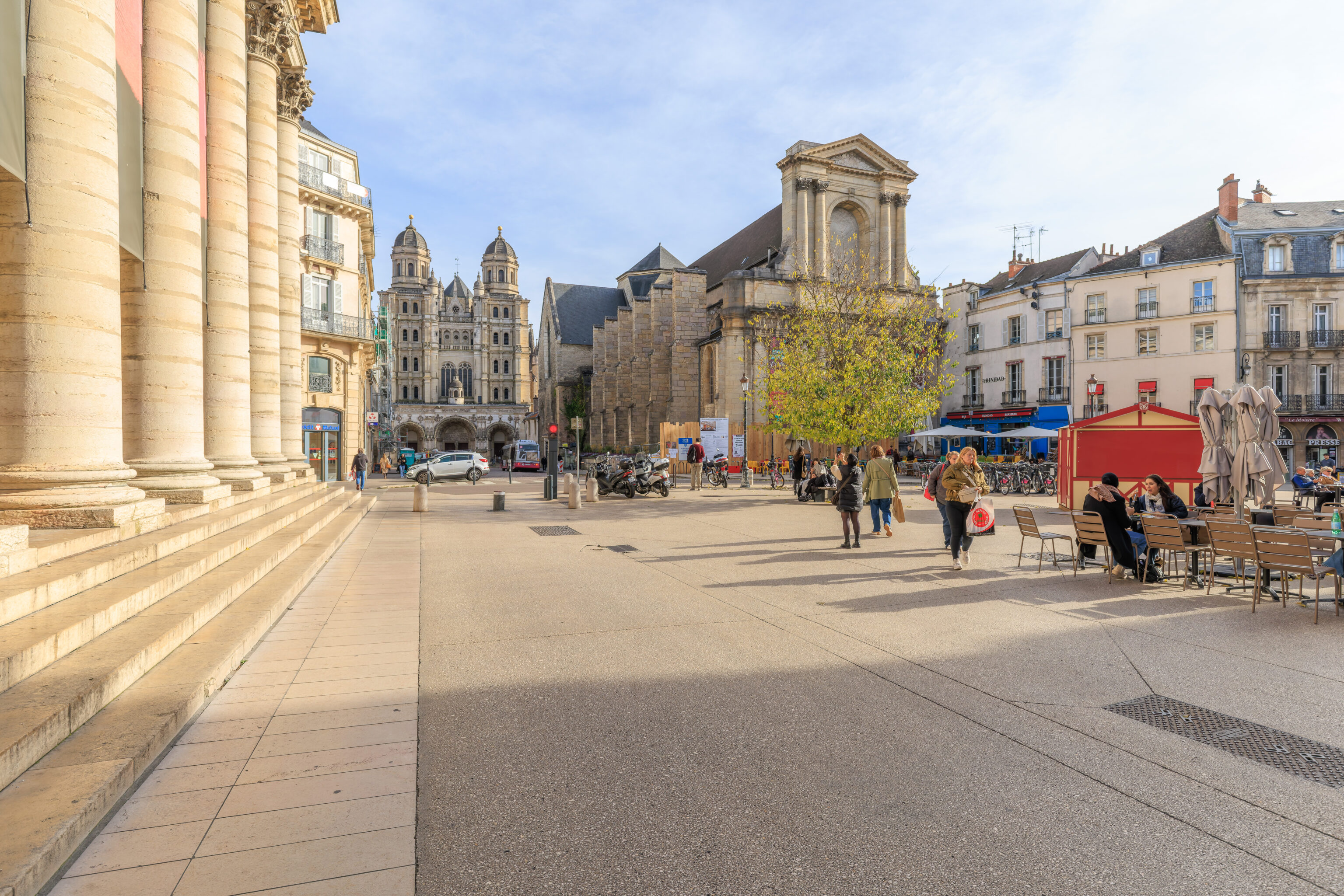
There are some other places to visit nearby. After lunch though! We decided to eat at La Brasserie des Loges, which is just around the corner from here.
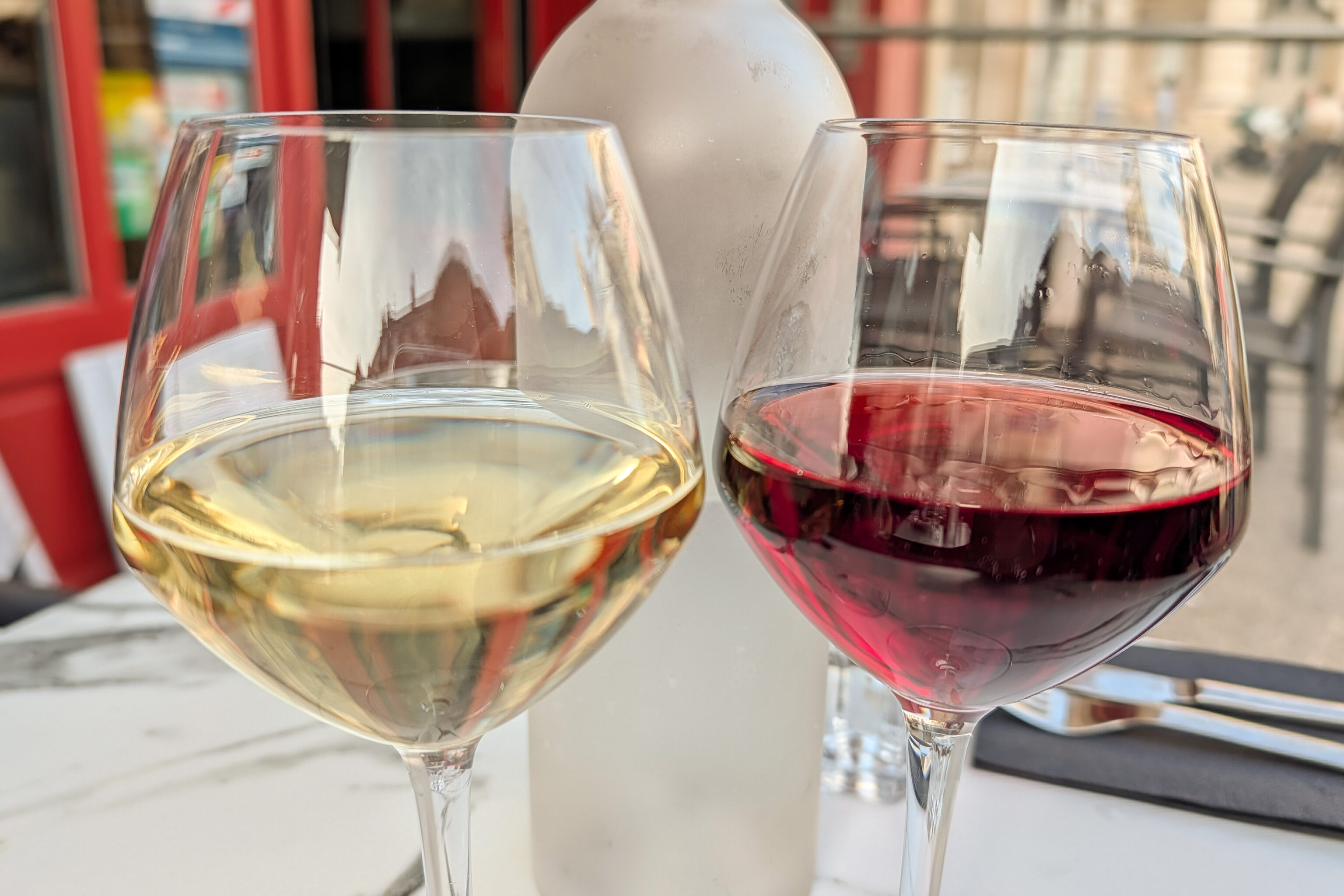
As Dijon is in the historical Burgundy region, we decided to get both red and white wines from Burgundy.
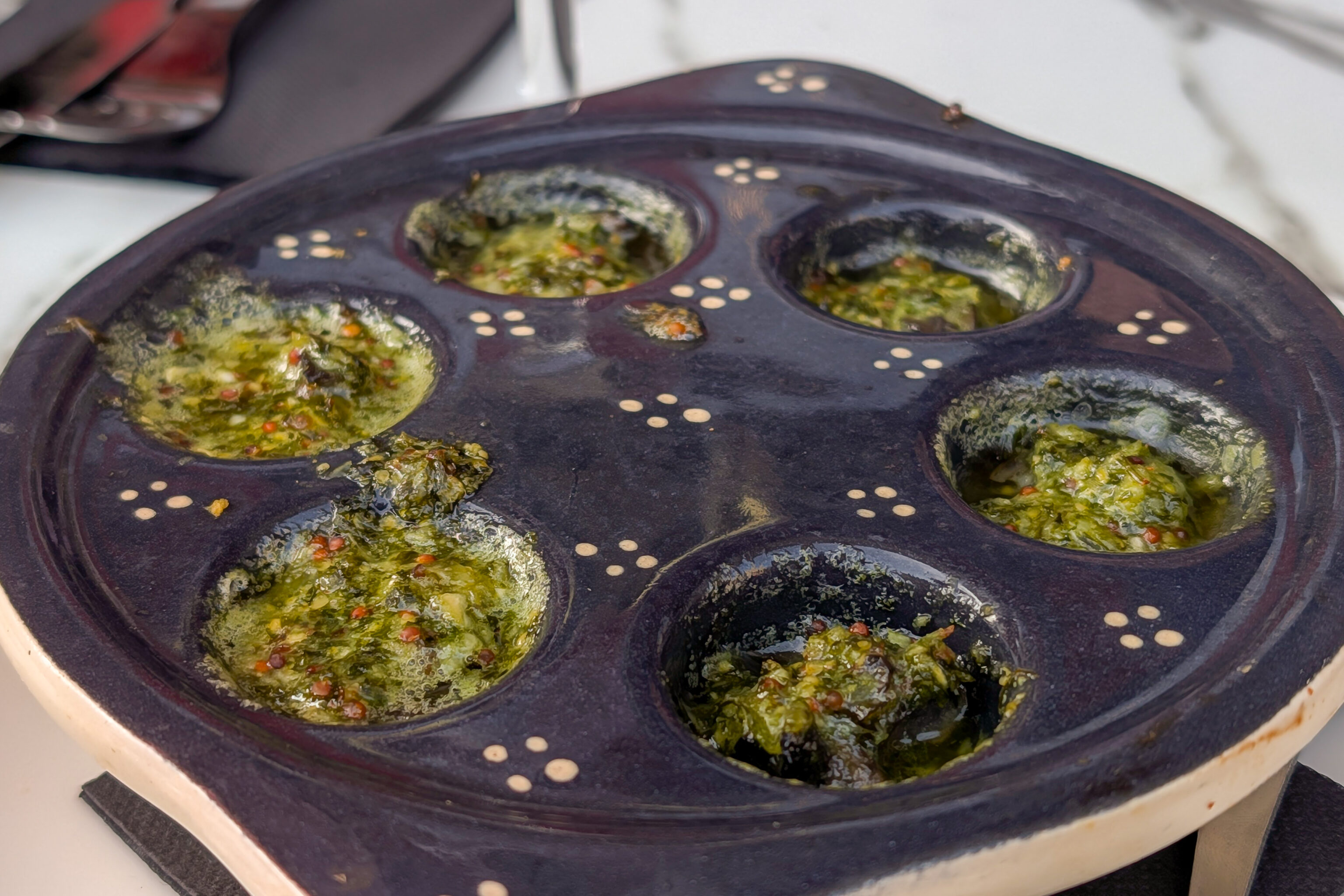
We started off with escargot, again a Burgundy specialty. The dish was served with the snails out of their shells, which is different from how we’ve had it in Paris. Otherwise though, it was pretty similar.
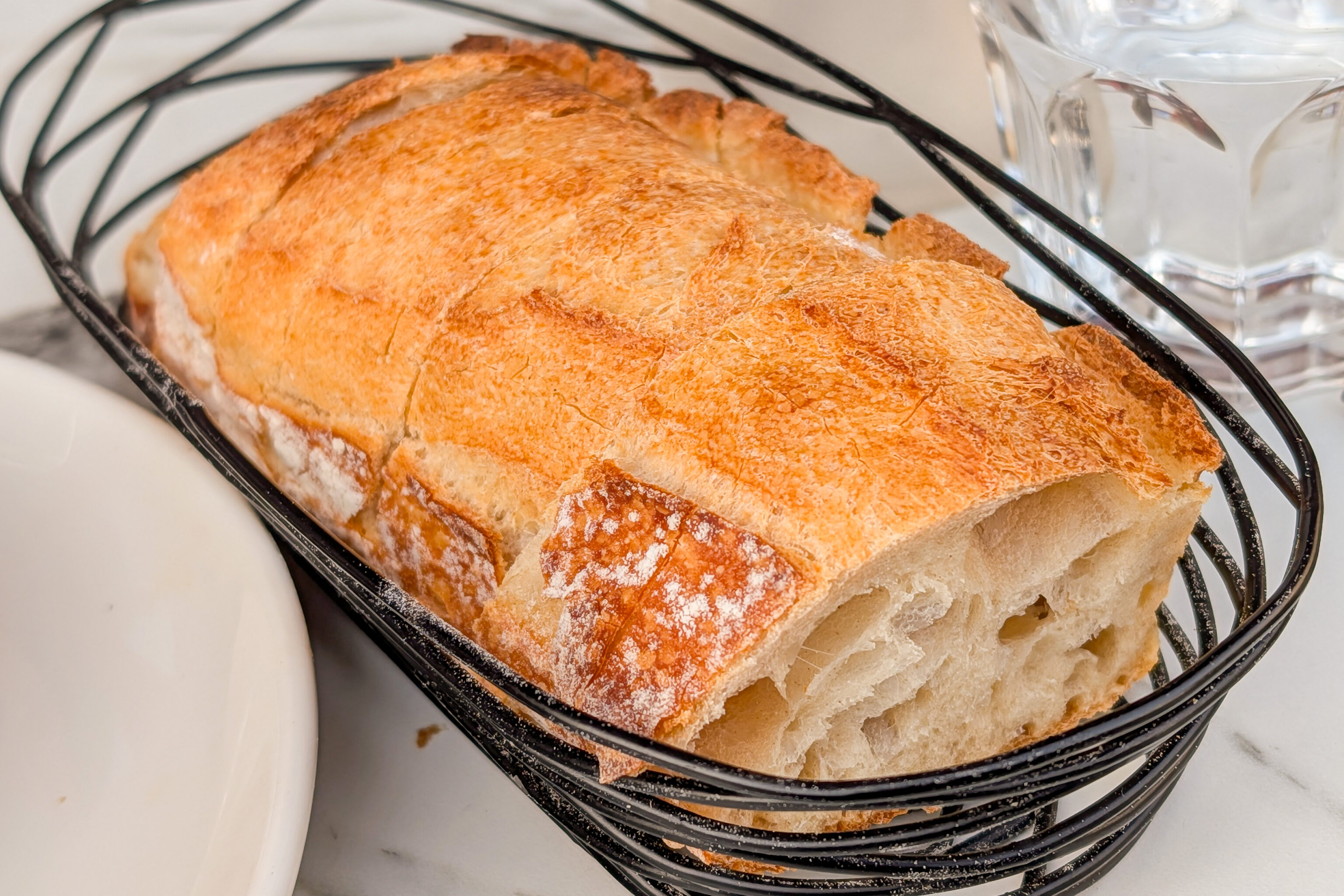
Bread was provided with the escargot.
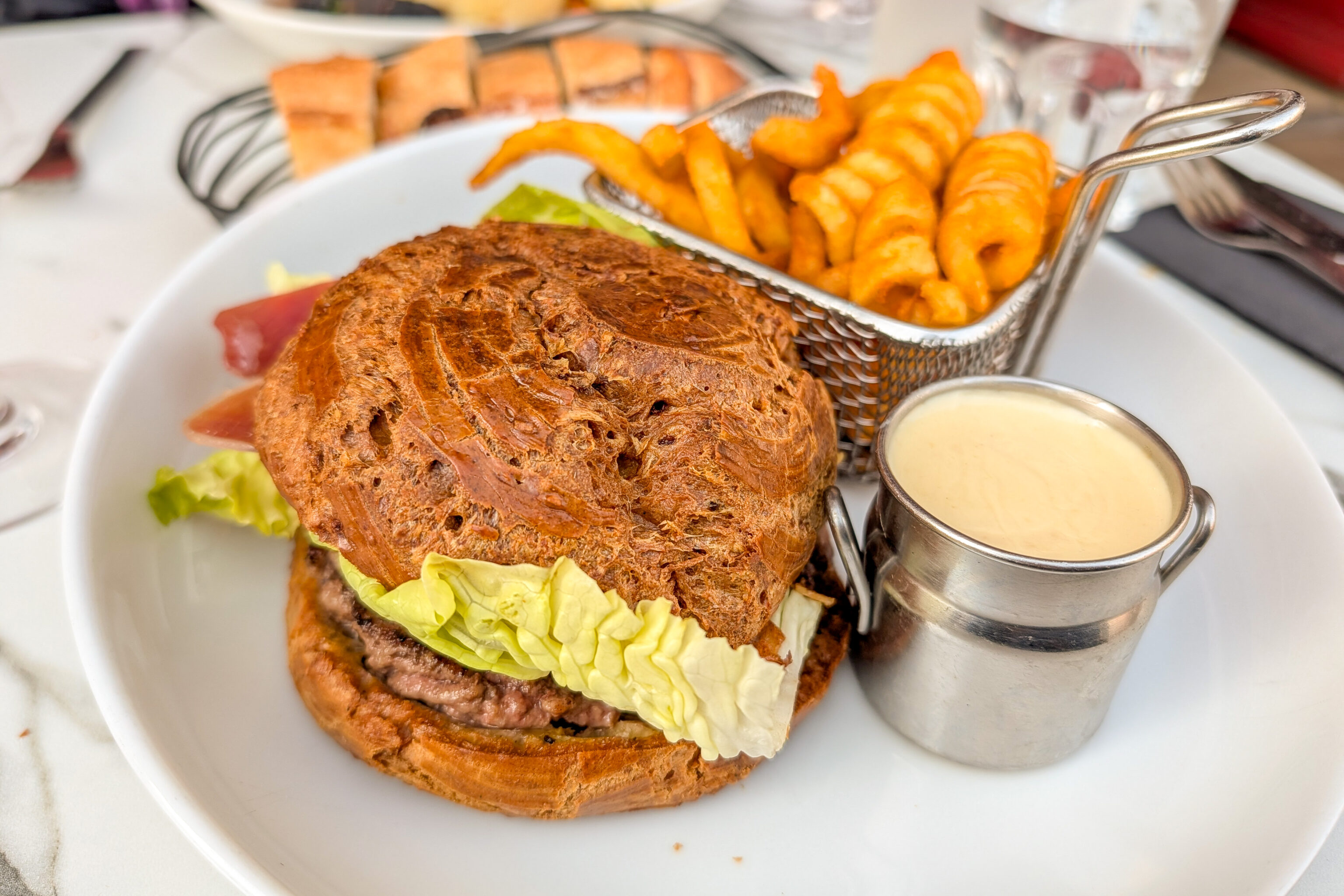
Giant gougère, 150g VBF ground beef, melted Époisses cheese, salad, tomatoes, fried onions, cured ham”
Gougère is a type of pastry with dough mixed with cheese. We were a bit confused when this dish arrived because it basically was a hamburger. Overall, it was actually a pretty good burger with a patty that was somewhere between medium and medium rare. It actually felt a bit Japanese!
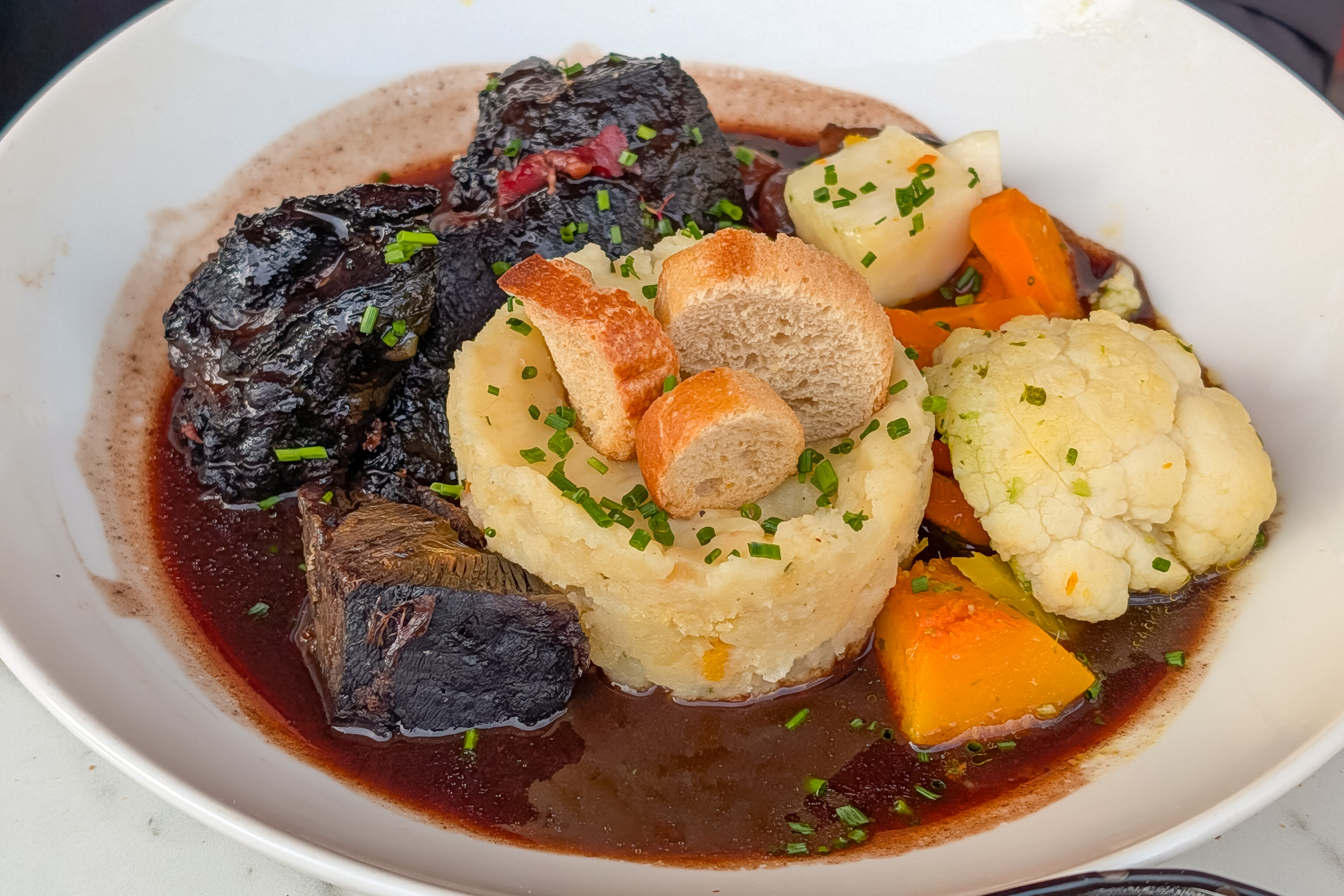
Another regional speciality from Burgundy. This was pretty good as well with excellent flavor. Each beef chunk had a sort of hardish exterior shell but were nice and soft inside.
Bread was again provided with the two main dishes.
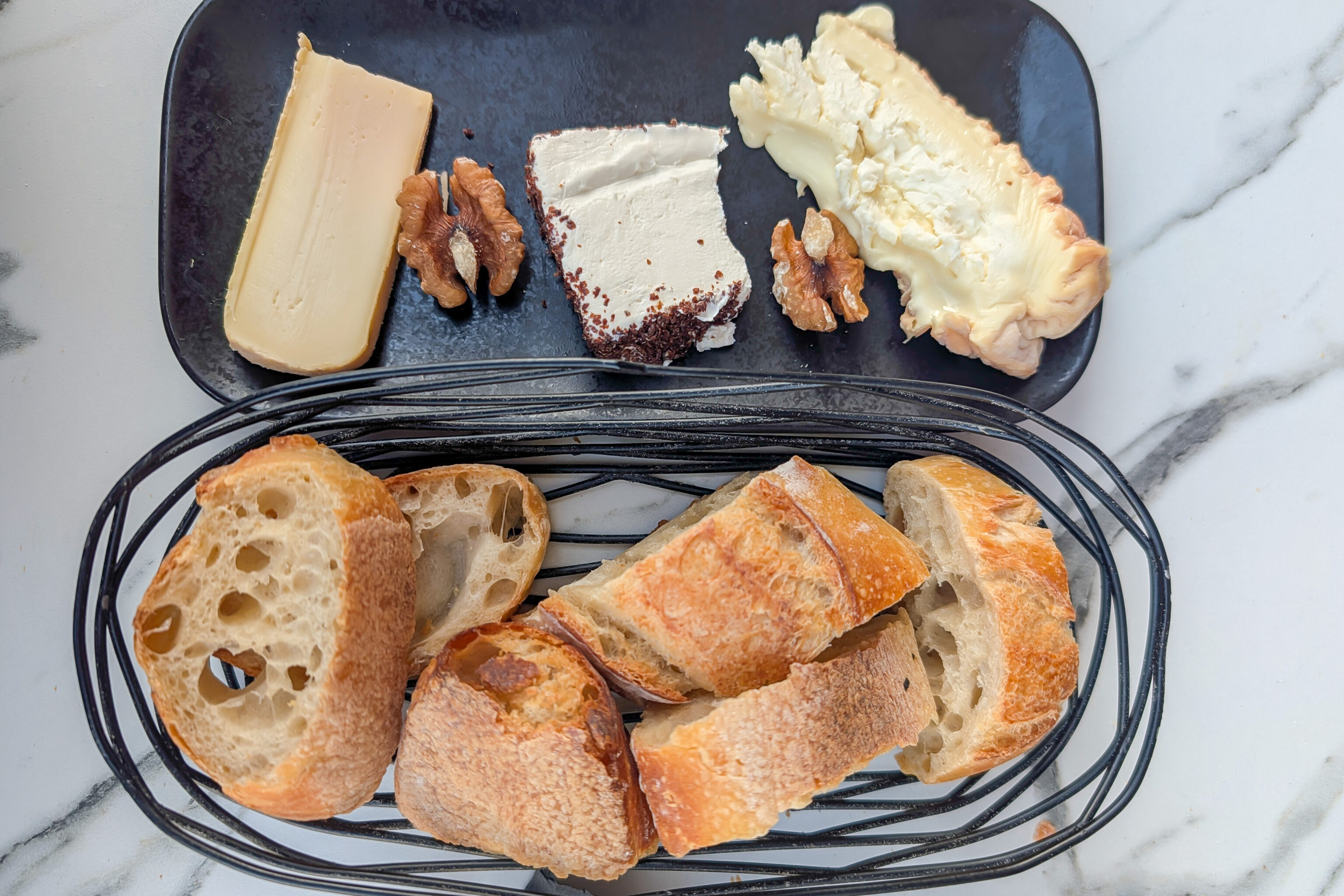
Époisses, Cîteaux, Délice de Bourgogne”
For dessert, we had three cheeses from Burgundy. Again, with bread provided. All three were nice and consumed as directed from hard to soft, or right to left in this photo.
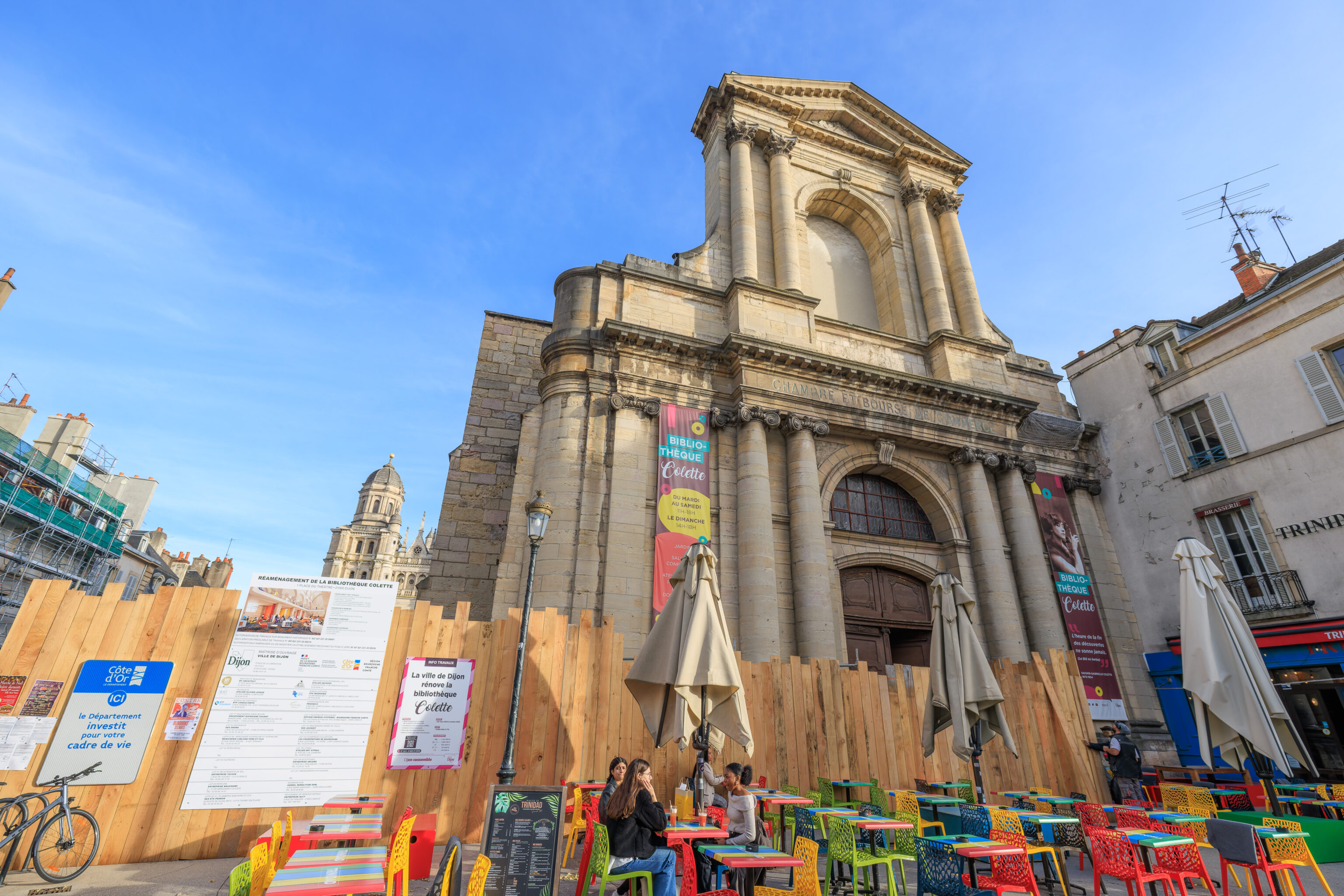
This building, on the east side of the Place du Theatre, was a church but currently houses the Musée Rude.
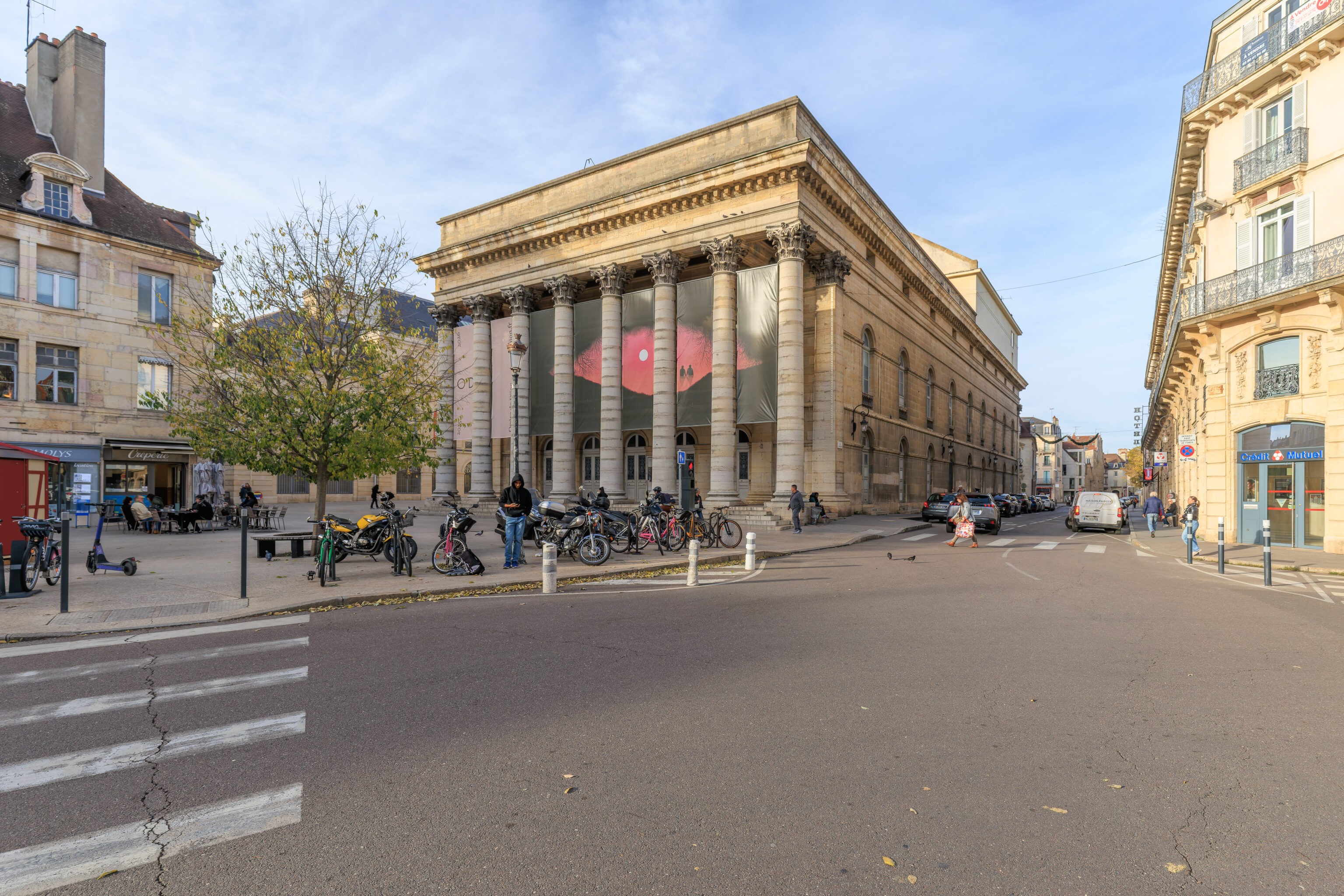
The Place du Theatre gets its name from this building on the north side, the Grand Théâtre.
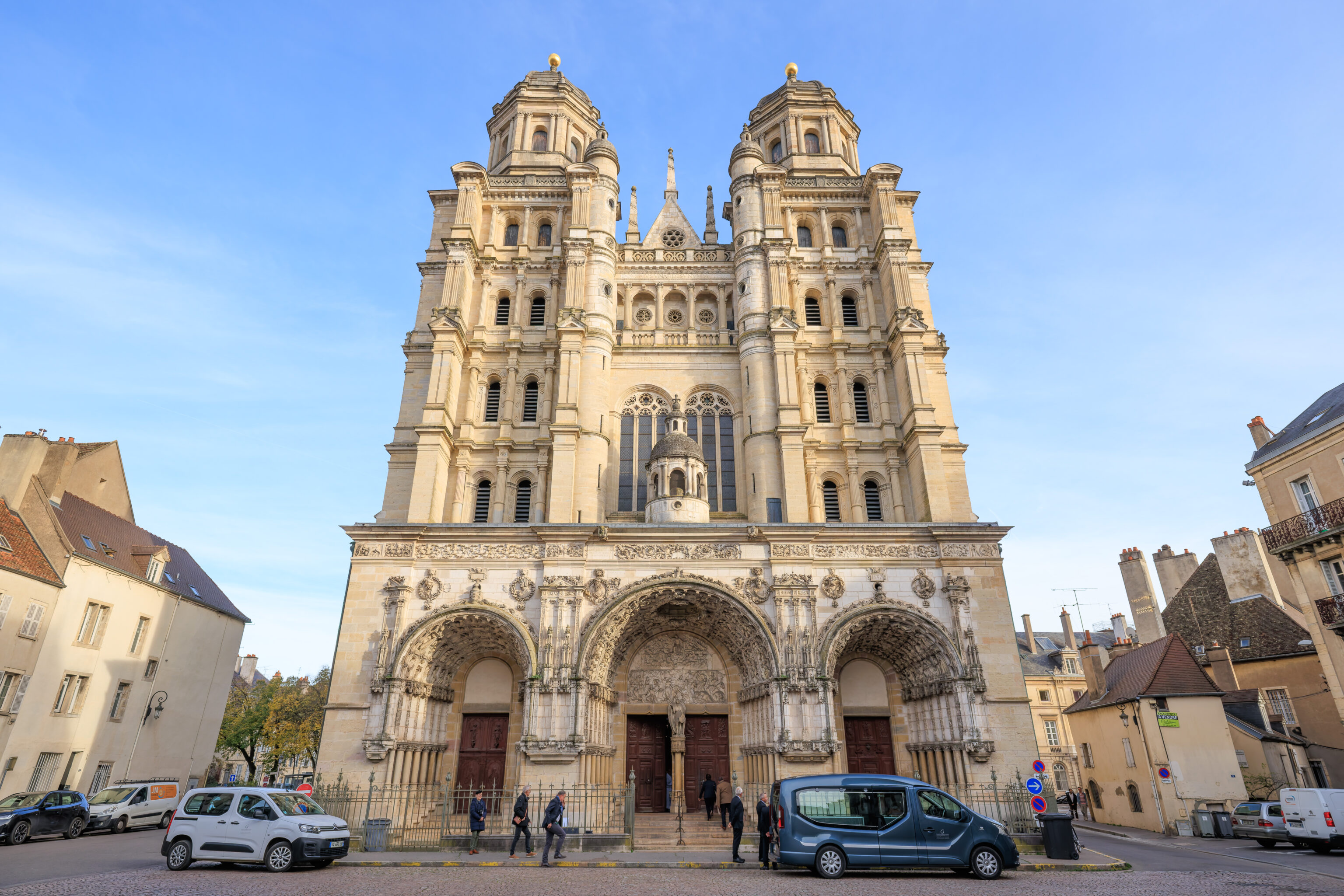
We walked down the street to the east between the theatre and museum to reach the Église Saint-Michel (Saint Michael’s Church).
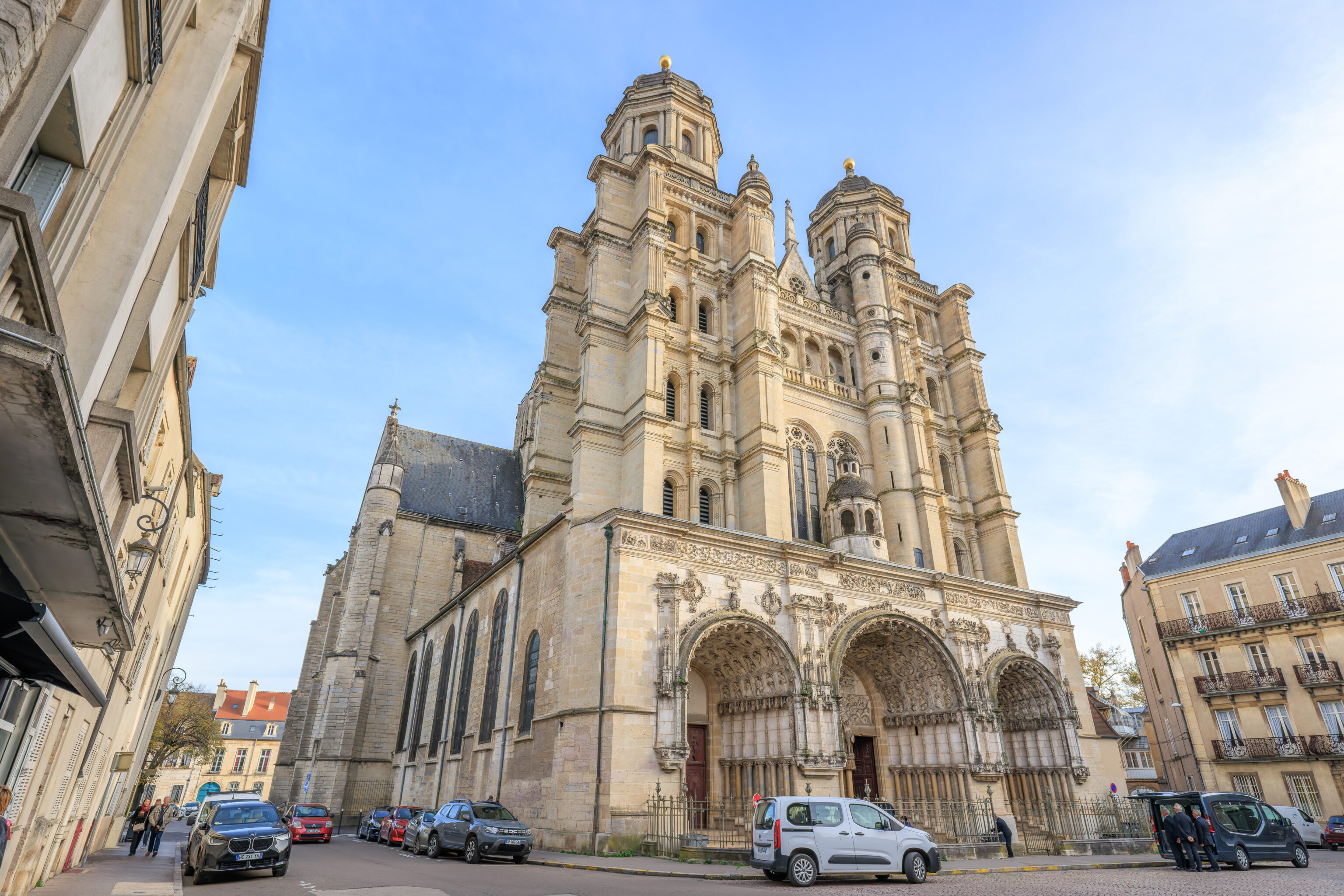
The church building that is here today was built in the 16th century, replacing an earlier smaller building which also replaced an earlier smaller building.
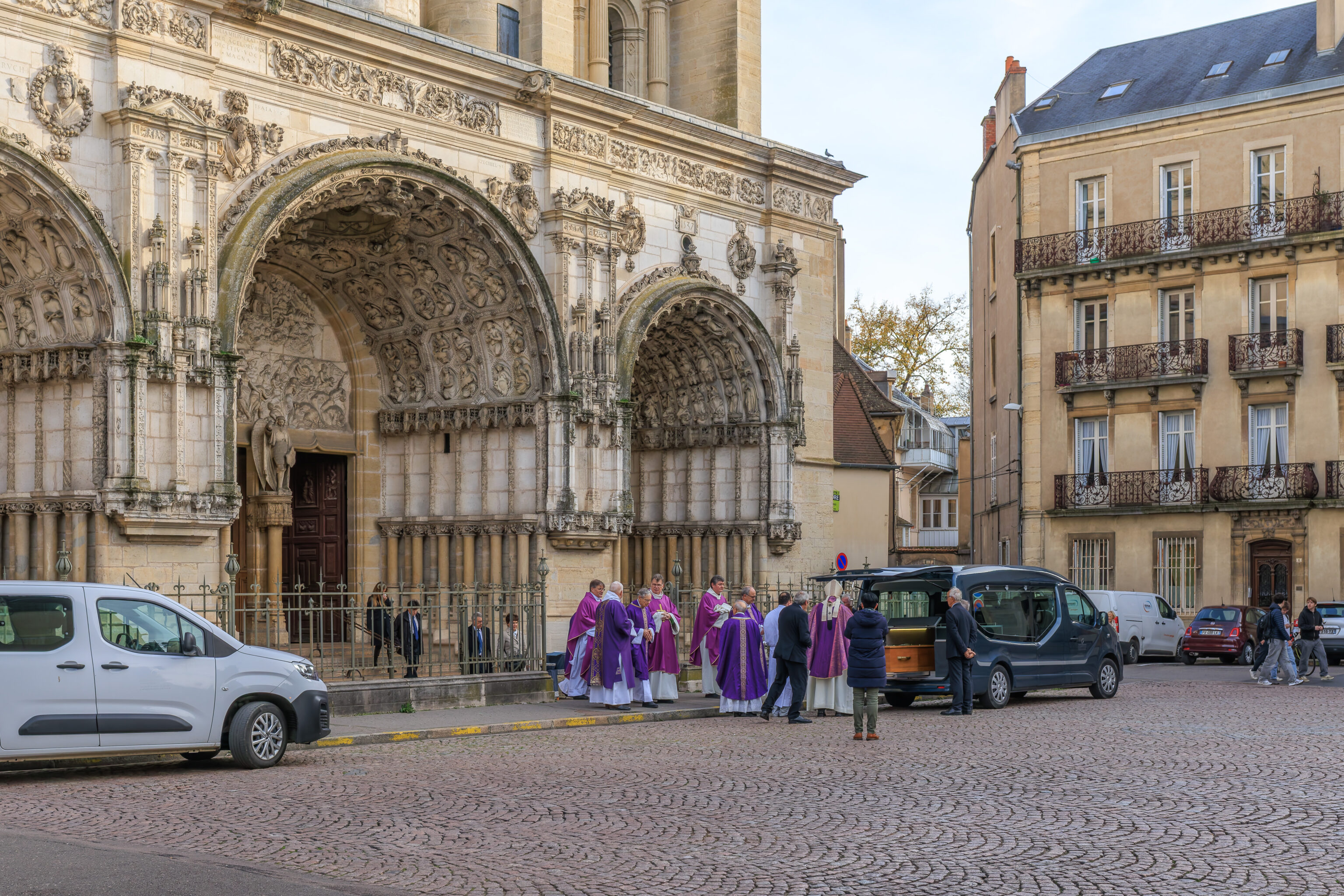
There seemed to be a funeral taking place so we did not go any closer.
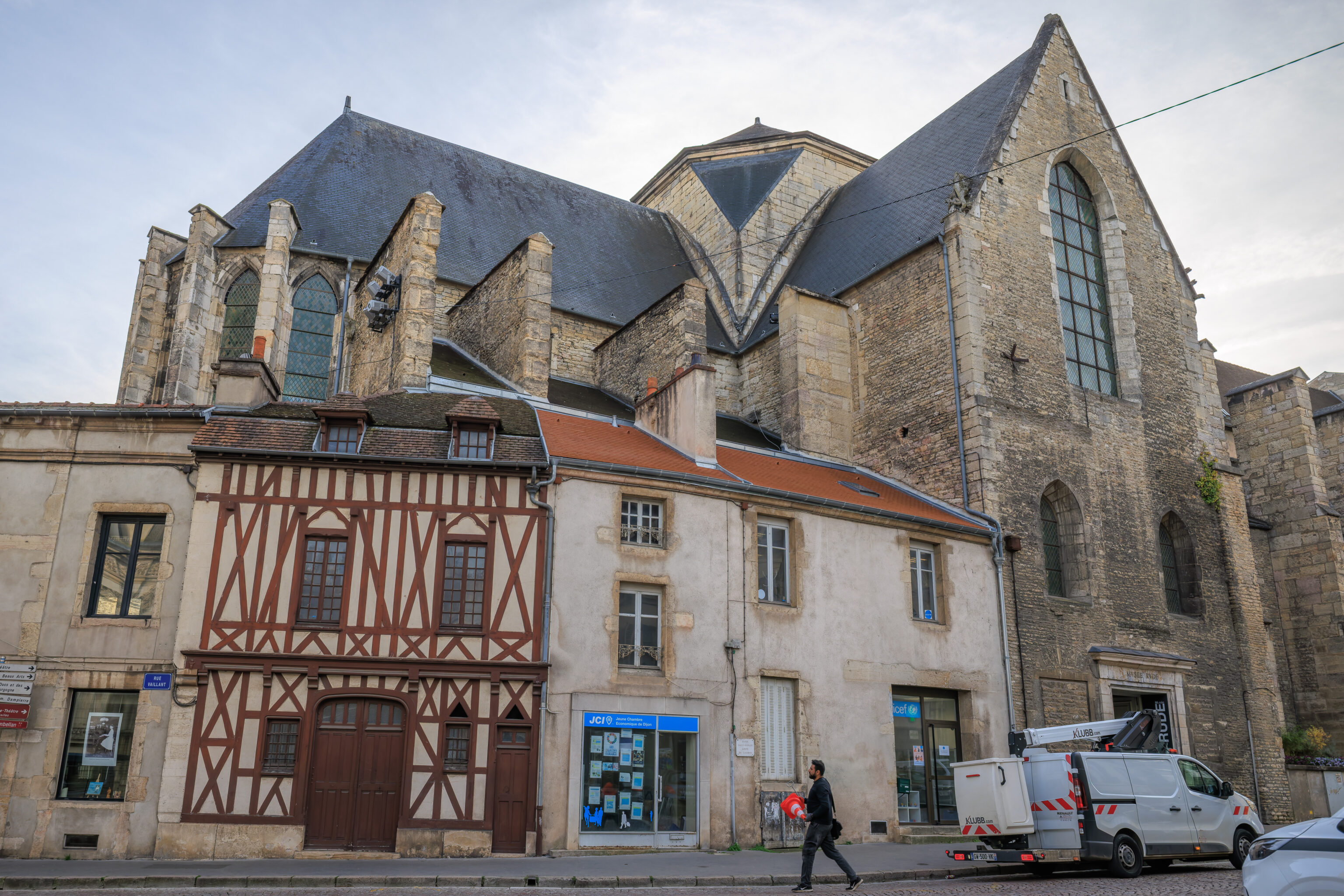
We next went to go take a quick look at the Musée Rude. The rear of the former Église Saint-Étienne (Saint Stephen’s Church), which now contains the museum, could be seen from the street in front of Saint Michael’s. The museum is free to enter.
Saint-Étienne church

In the 5th century, following the sacking of Langres, the episcopal see at the time, the bishop decided to settle in Dijon, within the castrum. A cathedral group was then formed around the church of Saint-Etienne, which became the seat of a rich and important abbey of Canons Regular. In the 11th century, Abbot Garnier de Mailly broke through the ancient wall to build the choir of his new church. The building is rebuilt several times until the early 18th century. A cathedral from 1731 to 1789, the church was deconsecrated in 1792. From 1896 onwards, the building became home to the Bourse de Commerce (stock exchange) and then, in 1899, the Chambre de Commerce et d'Industrie (Chamber of Commerce and Industry). Since 1947, the Rude Museum has occupied the north transept of the church. In 2009, the nave of the building and the cloister buildings become the home of the municipal library's adult section. Since 2024, these spaces have been dedicated to the Colette library.
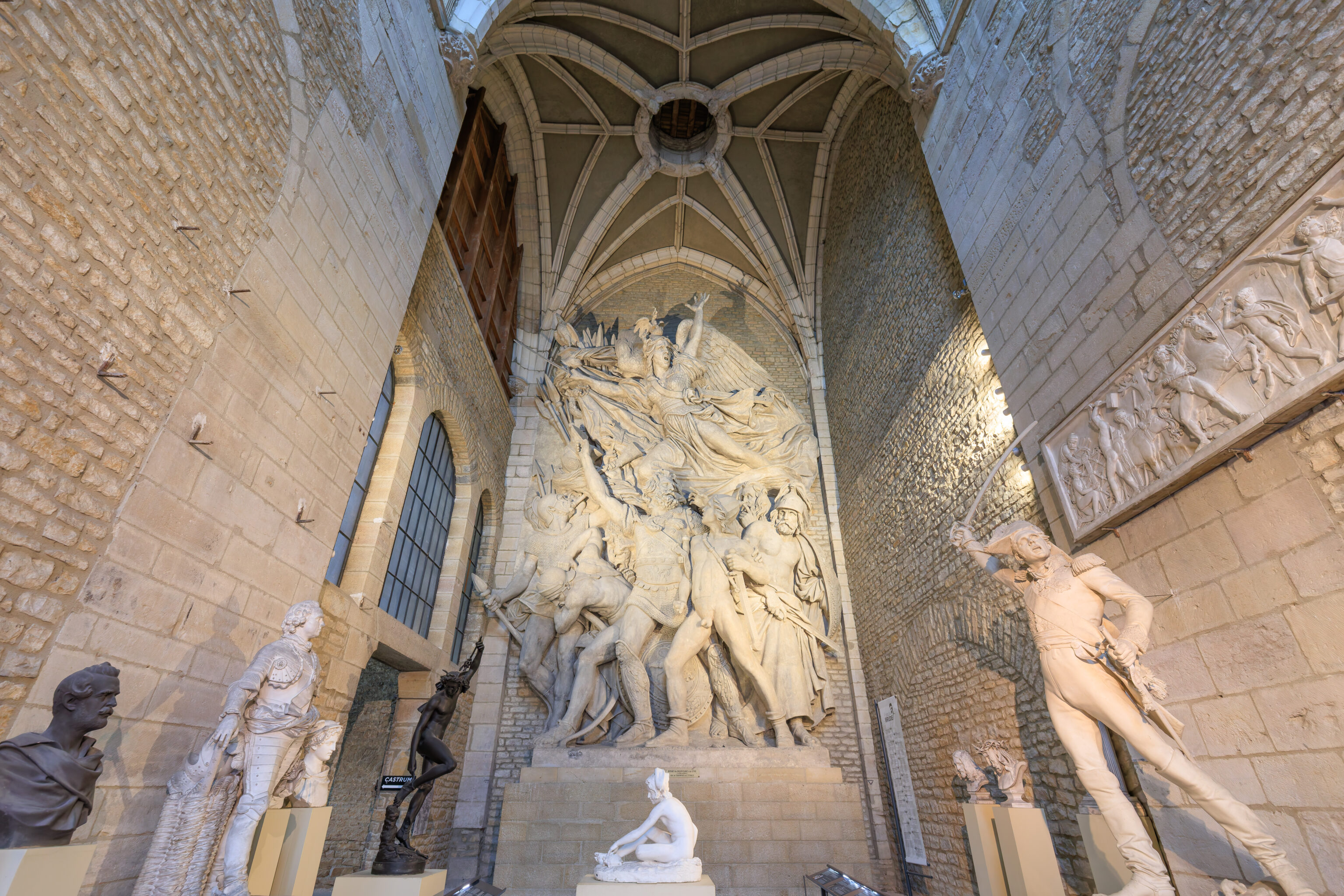
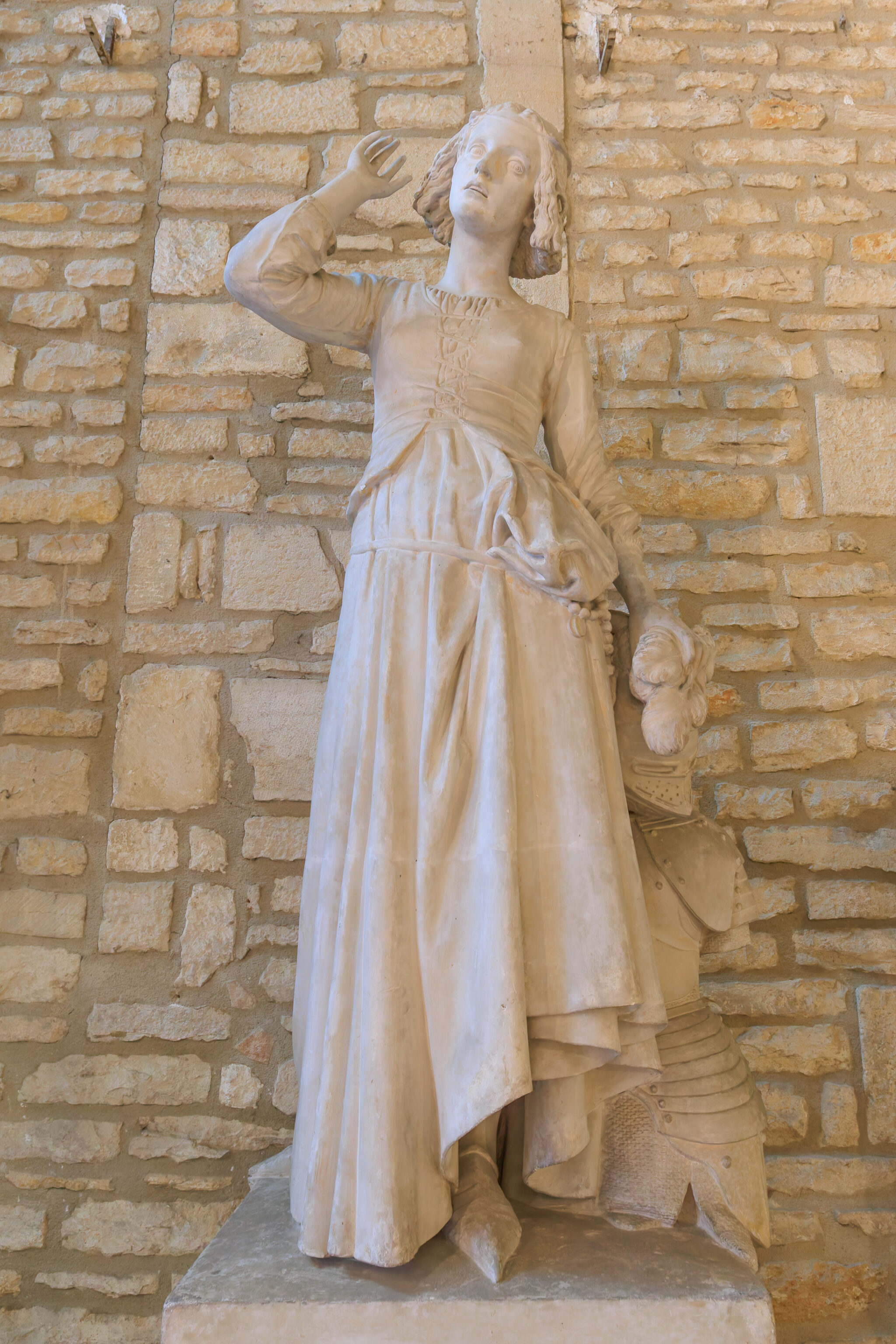
In 1938, out of fear of another war, the French government commissioned a plaster cast of the high relief Le Départ des Volontaires de 1792 (Departure of the Volunteers of 1792), known as La Marseillaise, the most famous work by the sculptor François Rude (Dijon, 1784 – Paris, 1855), which adorns one of the pillars of the Arc de Triomphe in Paris.
The deposit of this cast in Dijon in 1947 provided the opportunity to set up a gallery devoted to the career of François Rude in the transept of the former church of Saint-Étienne. La Marseillaise is presented there alongside plaster casts of the artist’s sculptures, commissioned by the city of Dijon between 1887 and 1945, which faithfully reproduce the statues in public spaces and in museums in the Côte-d’Or, Paris and Belgium. At the same time, the Dijon Museum of Fine Arts conserves and exhibits a remarkable collection of original works by François Rude, including wax sketches, plaster casts, bronzes and marbles.”
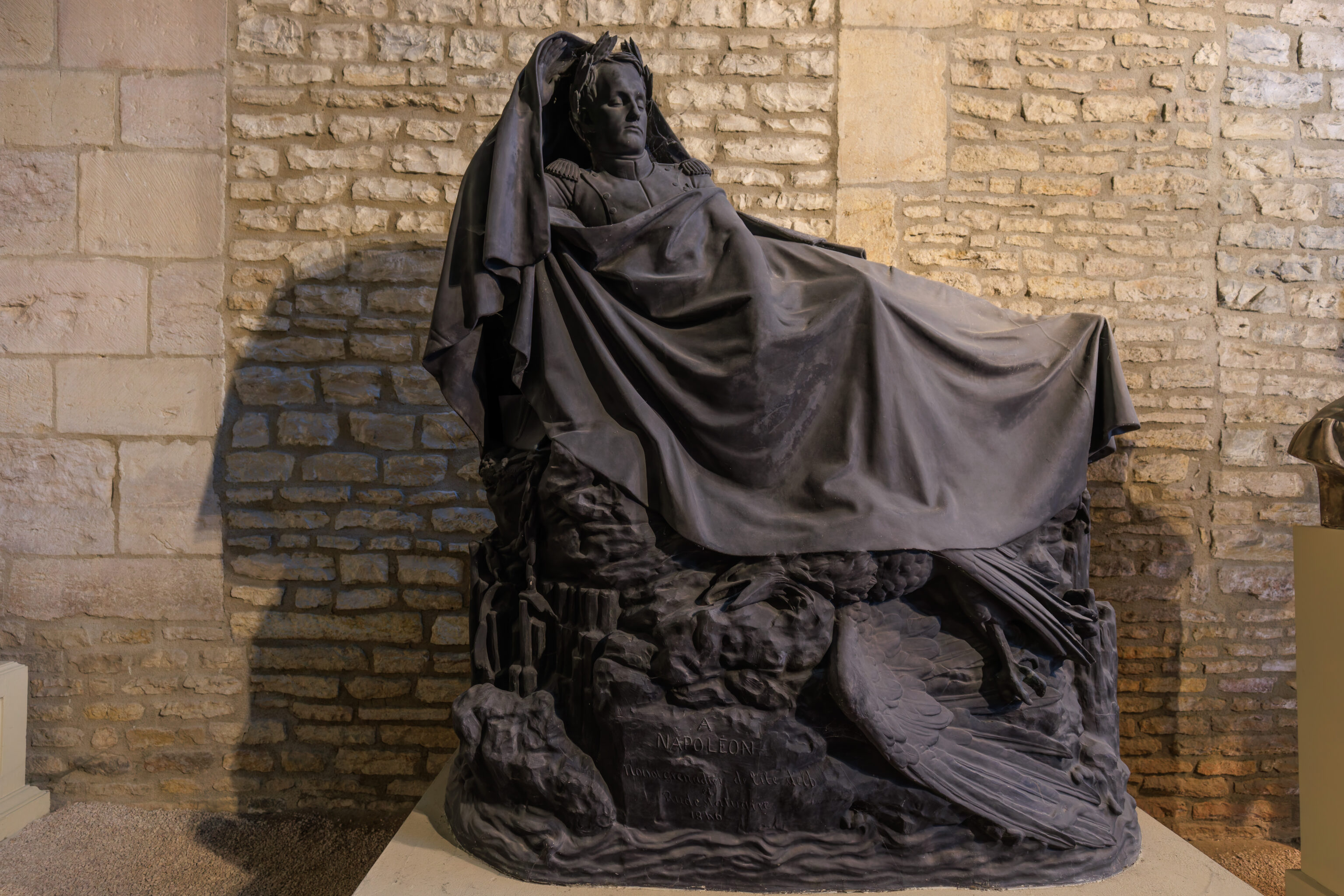
Plaster cast by Émile Marchon, 1895
Original work: bronze at Parc Noisot, Fixin (Côte-d’Or), 1847
Napoleon Bonaparte, a hero of the French Revolution, became First Consul in 1799 and proclaimed himself Emperor in 1804 under the name of Napoleon I. At the head of the Grande Armée, he imposed his authority on Europe. His military defeats forced him to abdicate on 6 April 1814. He tried to regain power during the Hundred Days in 1815, but the debacle at Waterloo marked his final downfall. He was then imprisoned by the British on the island of Saint Helena, where he died in 1821.
A loyal soldier, Claude Noisot (1787-1865) commissioned a statue from François Rude for the memorial he wished to dedicate to the Emperor on his estate in Fixin near Dijon. The emperor is depicted rising from the dead, lifting up his shroud.
Purchase, 1895
Inv. 1134″
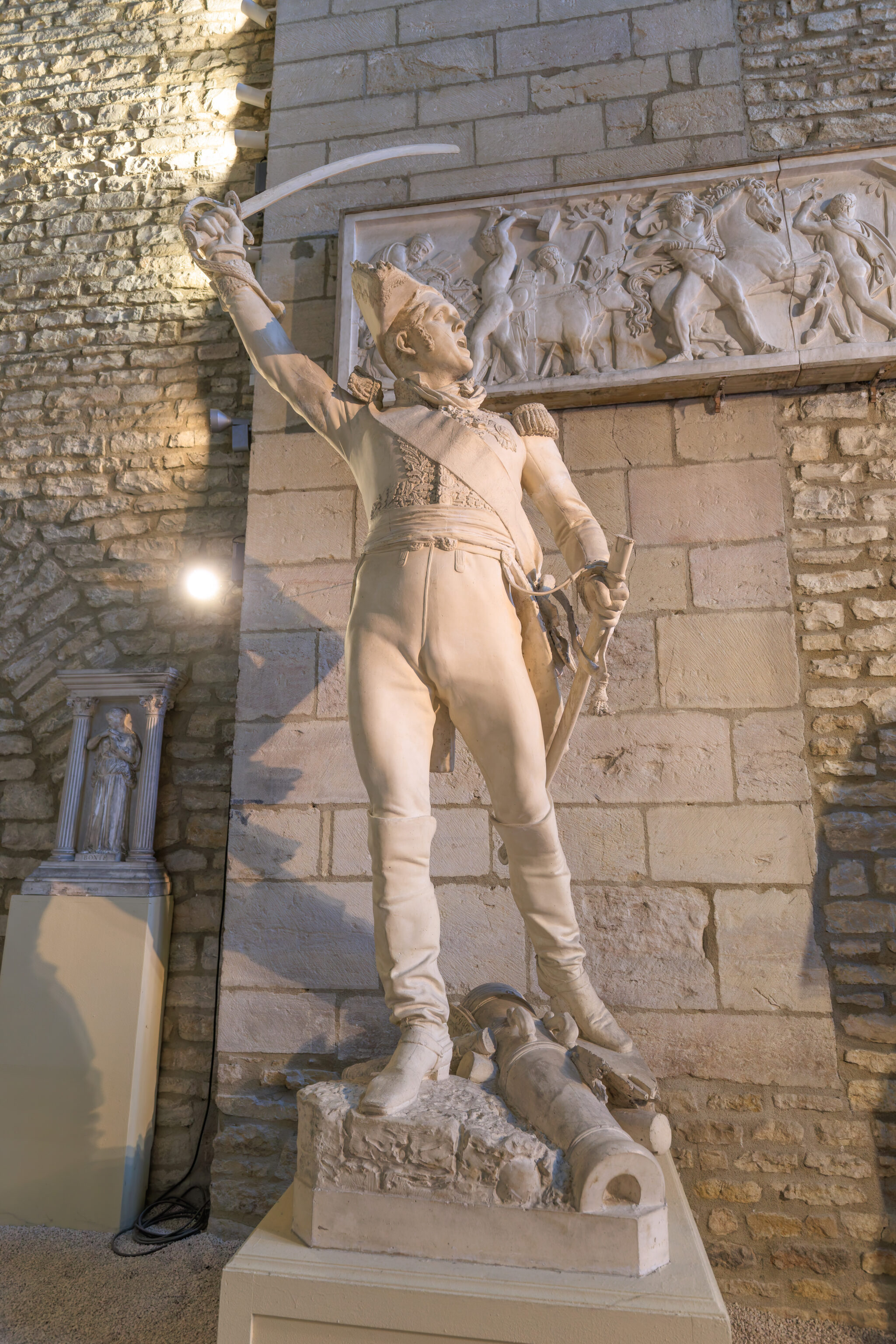
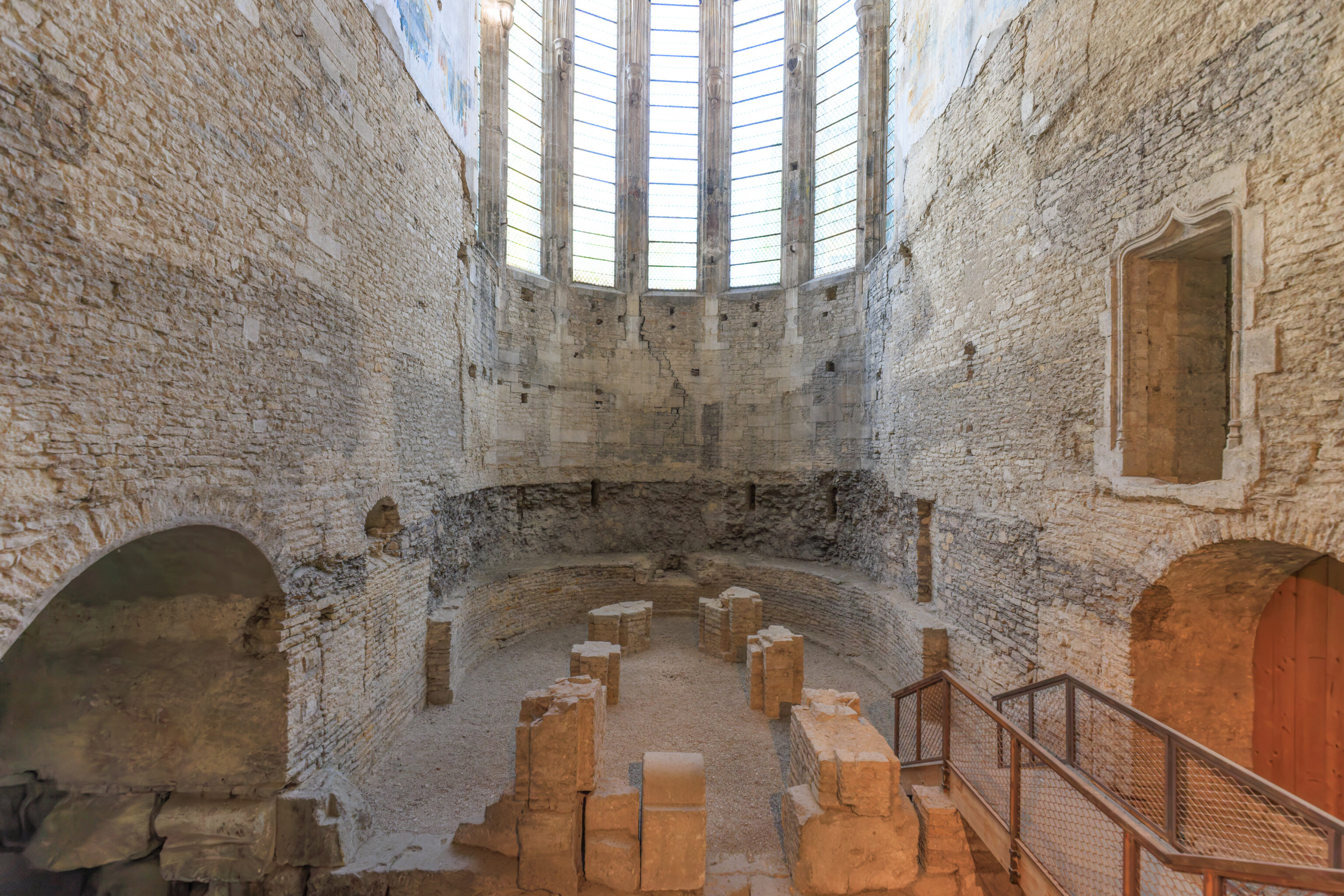
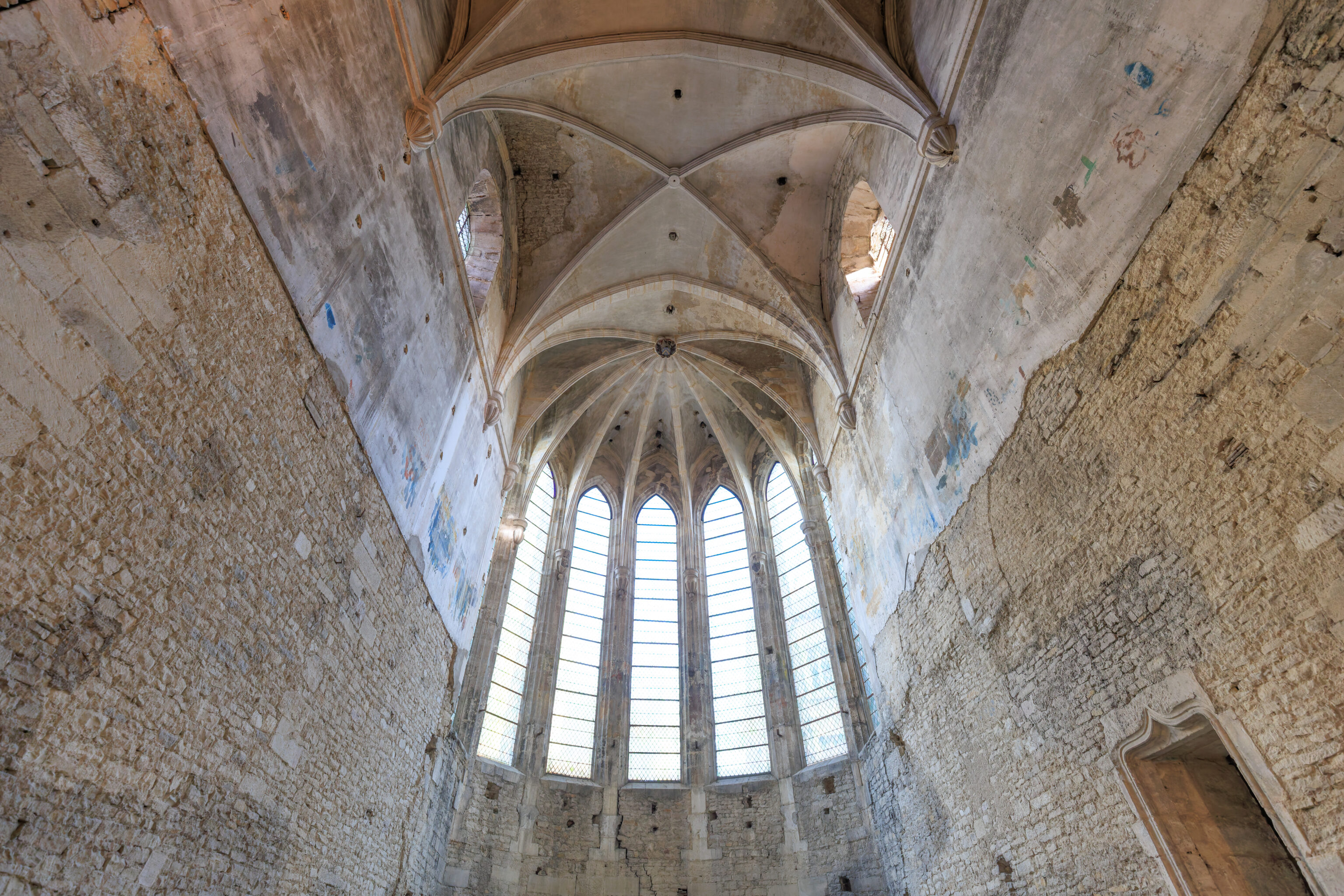
The ancient town of Divio, at the confluence of the Ouche and Suzon rivers, is still little known. However, it was large enough for a fortified enclosure to be built to protect it at the turn of the 3rd and 4th centuries AD. In addition to its defensive role during this period of instability, this defensive wall turned Dijon into a castrum, a fortified town, and enabled it to assert its political and economic status.
The first known description of Divio is that given by the chronicler Gregory of Tours in his History of the Franks at the end of the 6th century AD. The castrum is described as “a wall, 10 m high, 4.50 m thick, with 4 gates and 33 towers, surrounded by a moat. It is 1170 m long and covers an area of 11 ha.’ A section of this wall, the outline of which can be reconstructed, was uncovered in 1886 during excavations carried out beneath the chancel of the former 11th-century church of Saint-Étienne, revealing a number of large blocks, some with sculpted decorations. Dijon’s Archaeological Museum exhibits the most remarkable elements of this ensemble.
from Histoire de Dijon, edited by P. Gras, Privat, 1987, p. 30″
Museum of Burgundian Life
We decided to head to the Museum of Burgundian Life on the southern side of the historic old city.
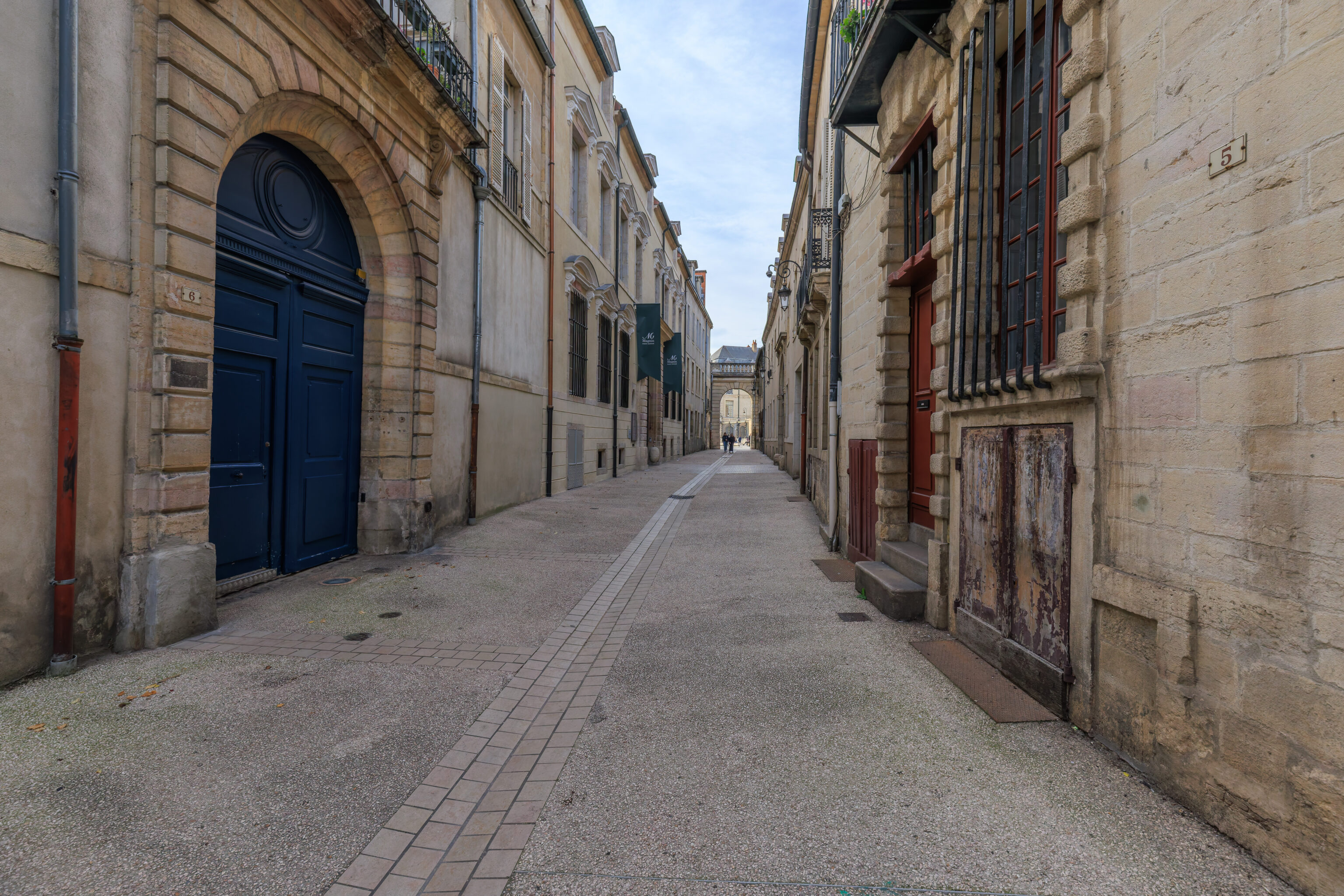
We walked to the west down a narrow street.
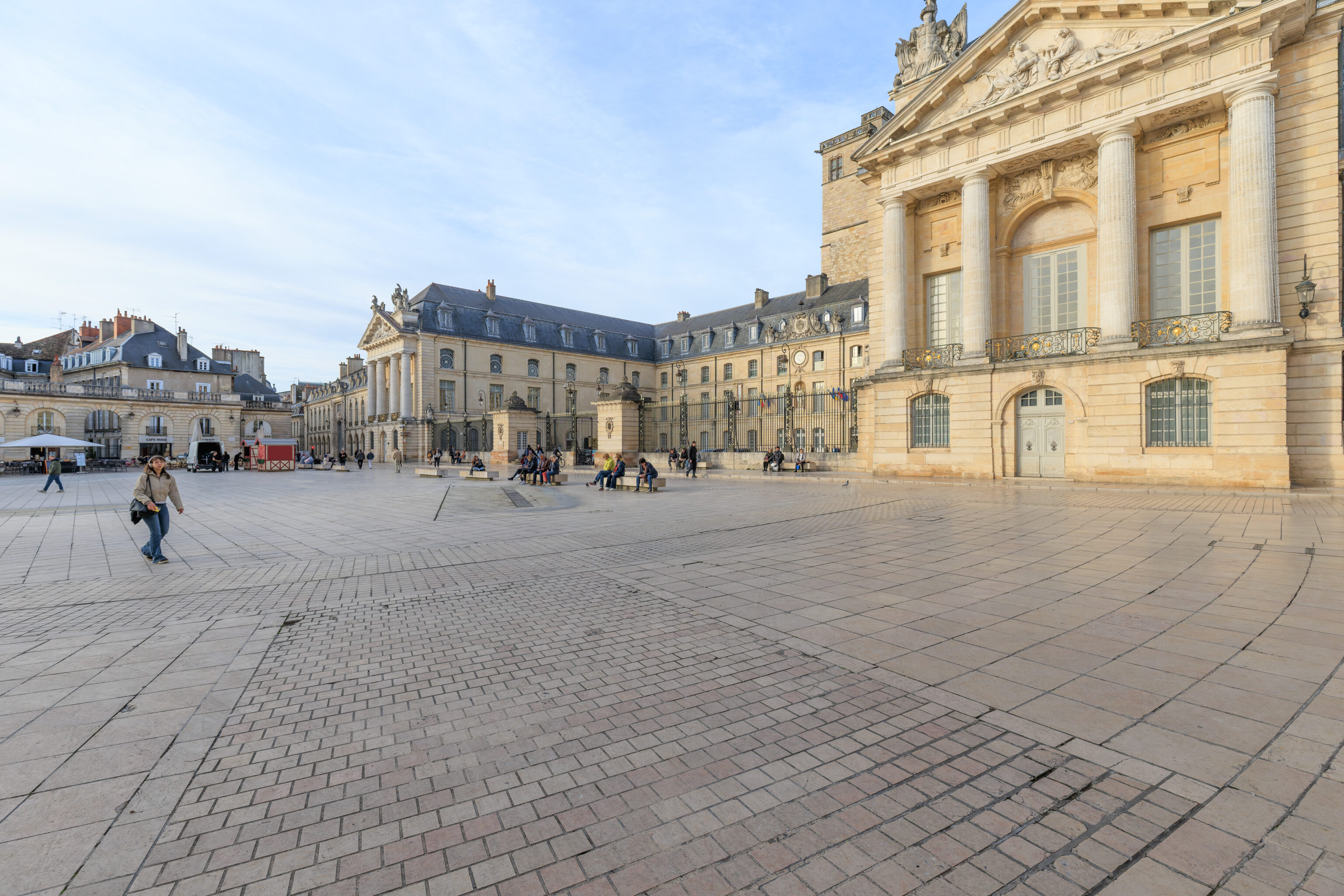
That narrow street led to the Place de la Libération on the southern side of the Palace of the Dukes and Estates of Burgundy.
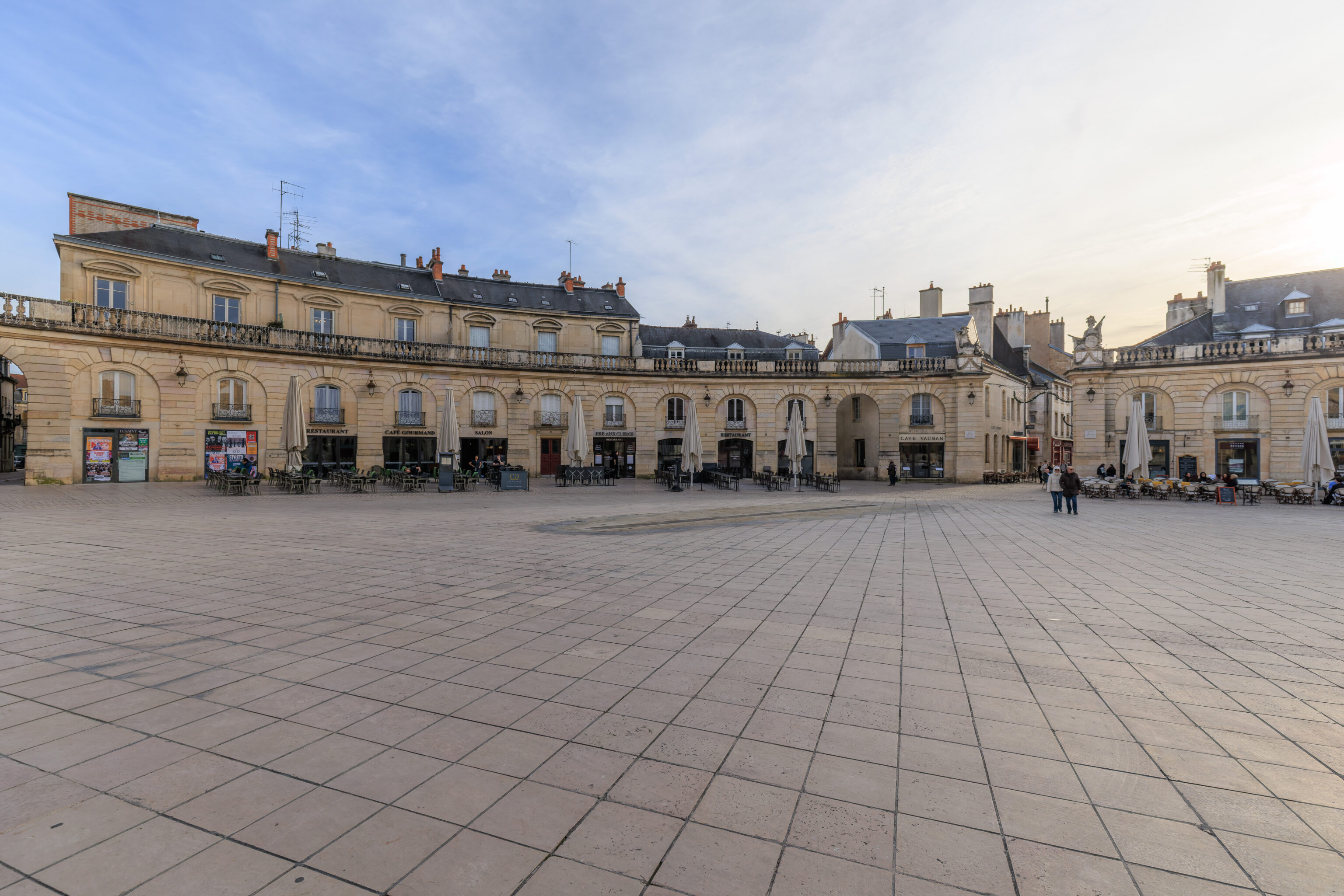
The southern half of the square is a semicircle containing various restaurants and businesses.
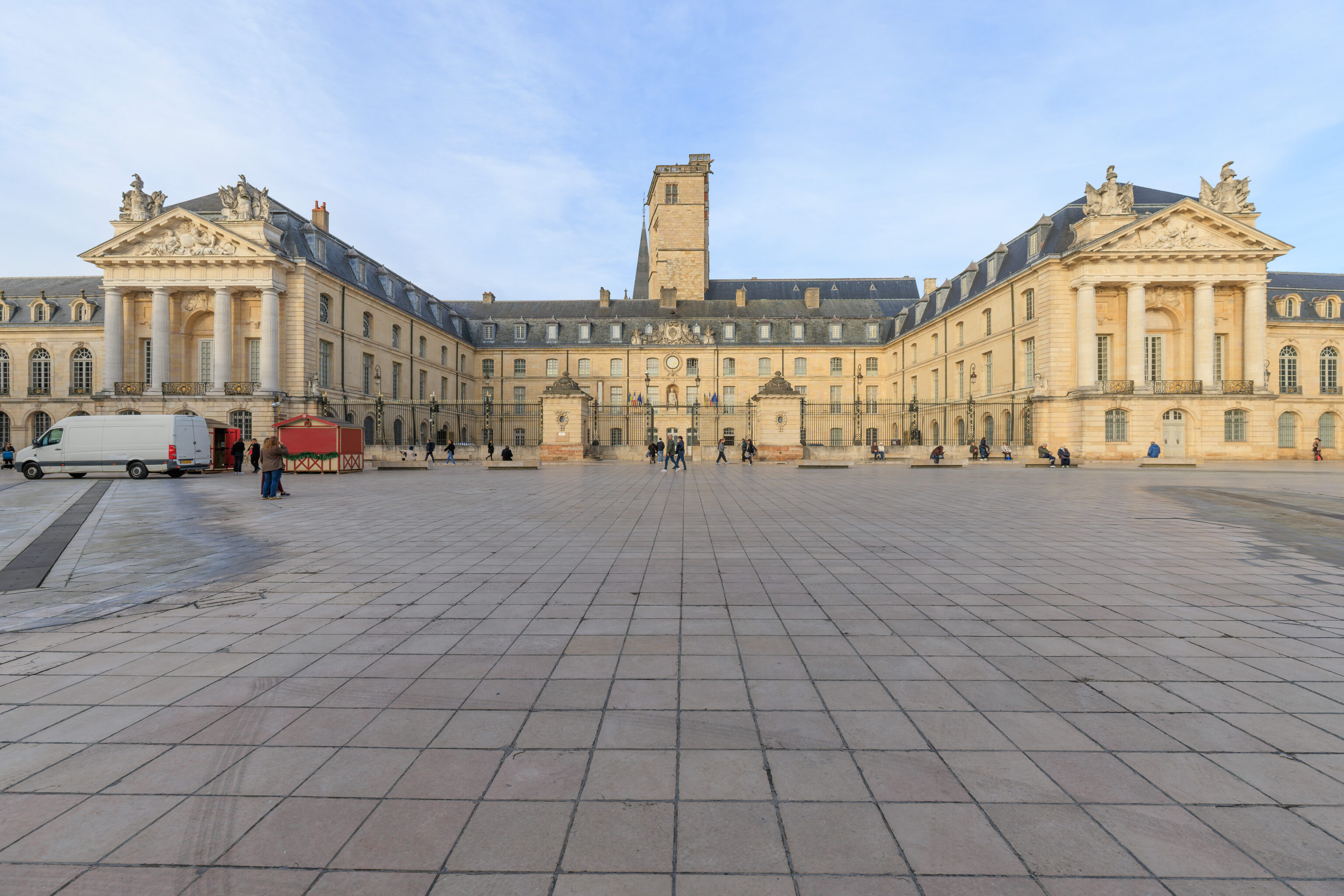
The view from the square looking directly at the palace. Earlier in the day, before visiting the Museum of Fine Arts, we were in the partially enclosed courtyard in front of the building.
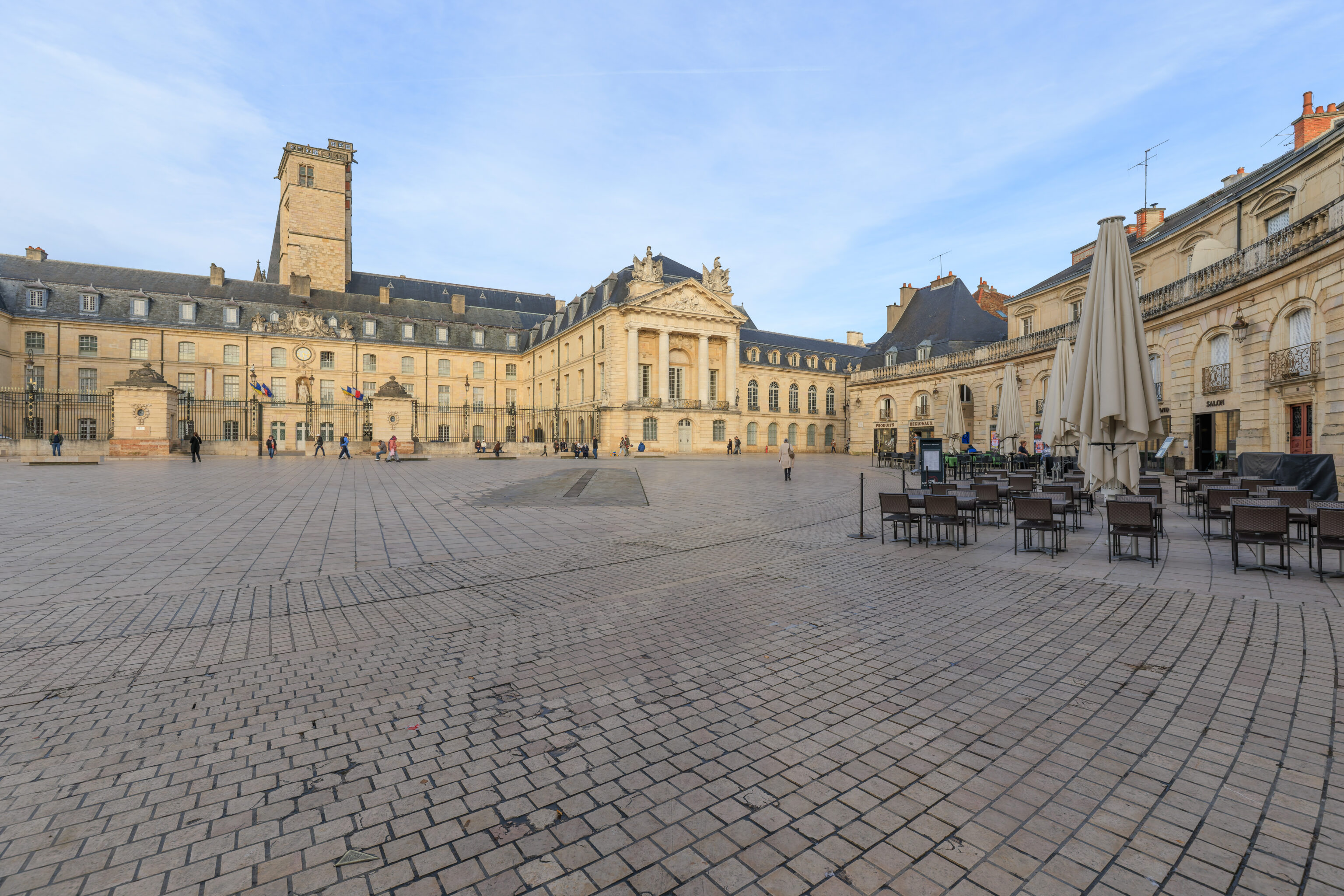
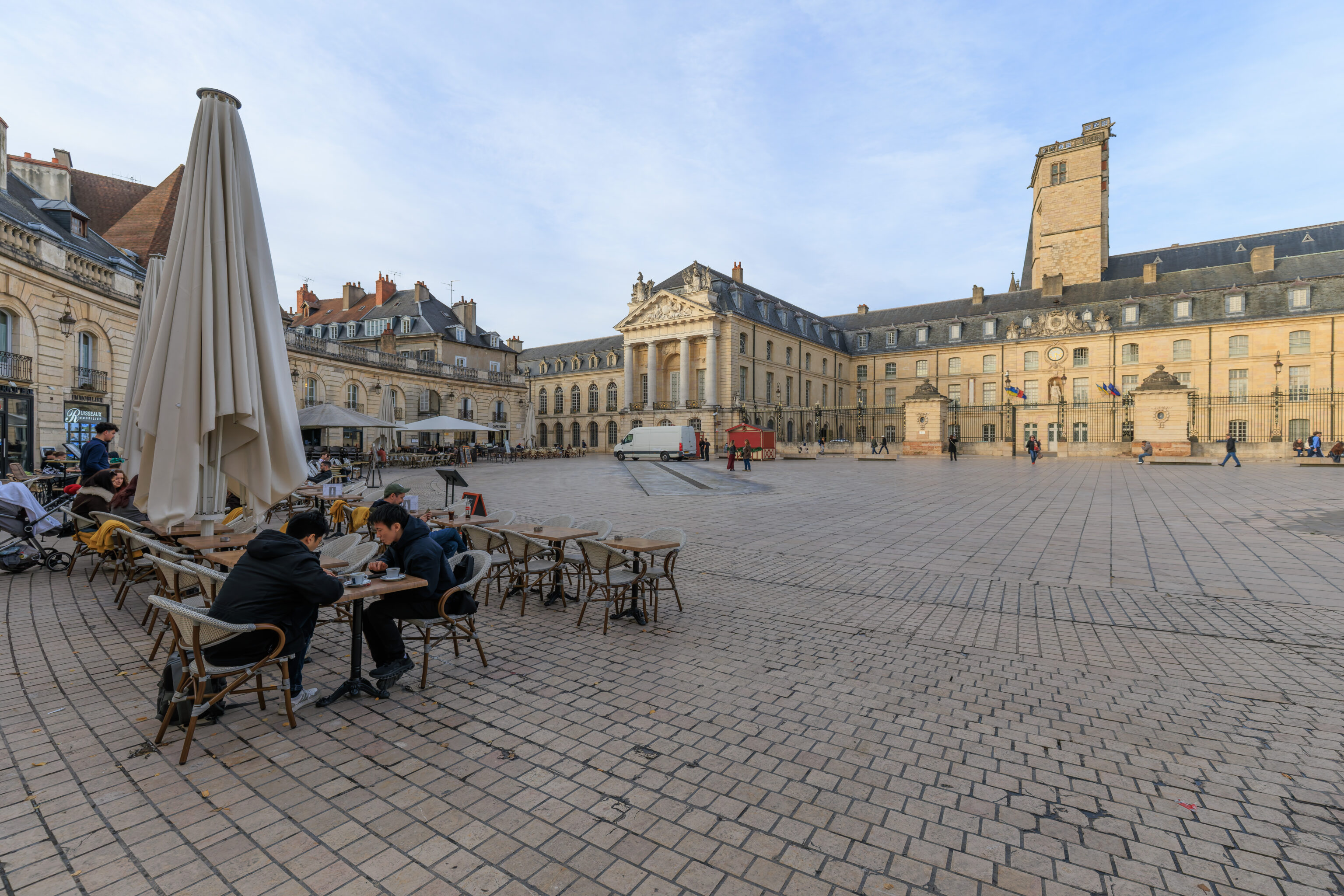
The view looking to the right and left.
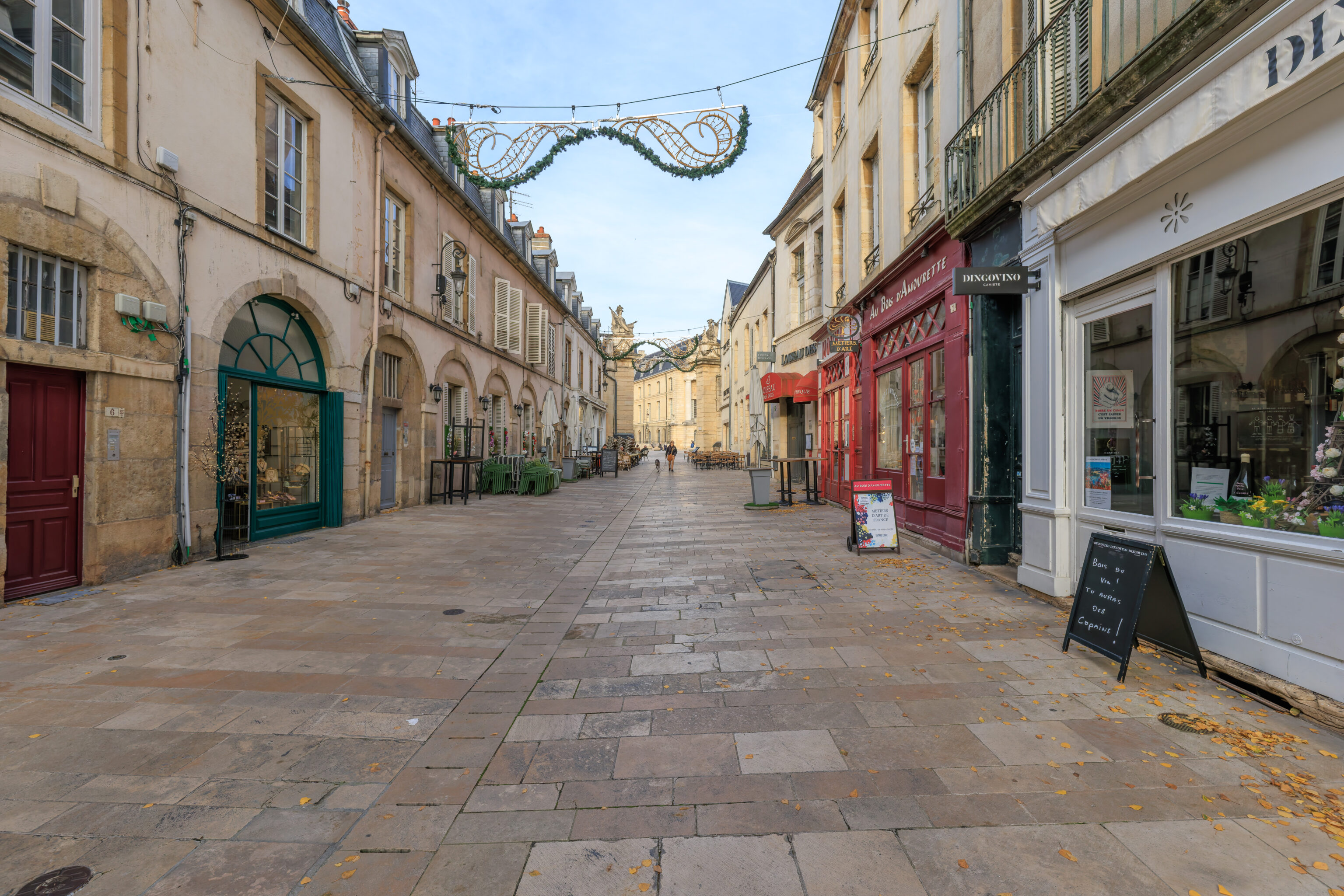
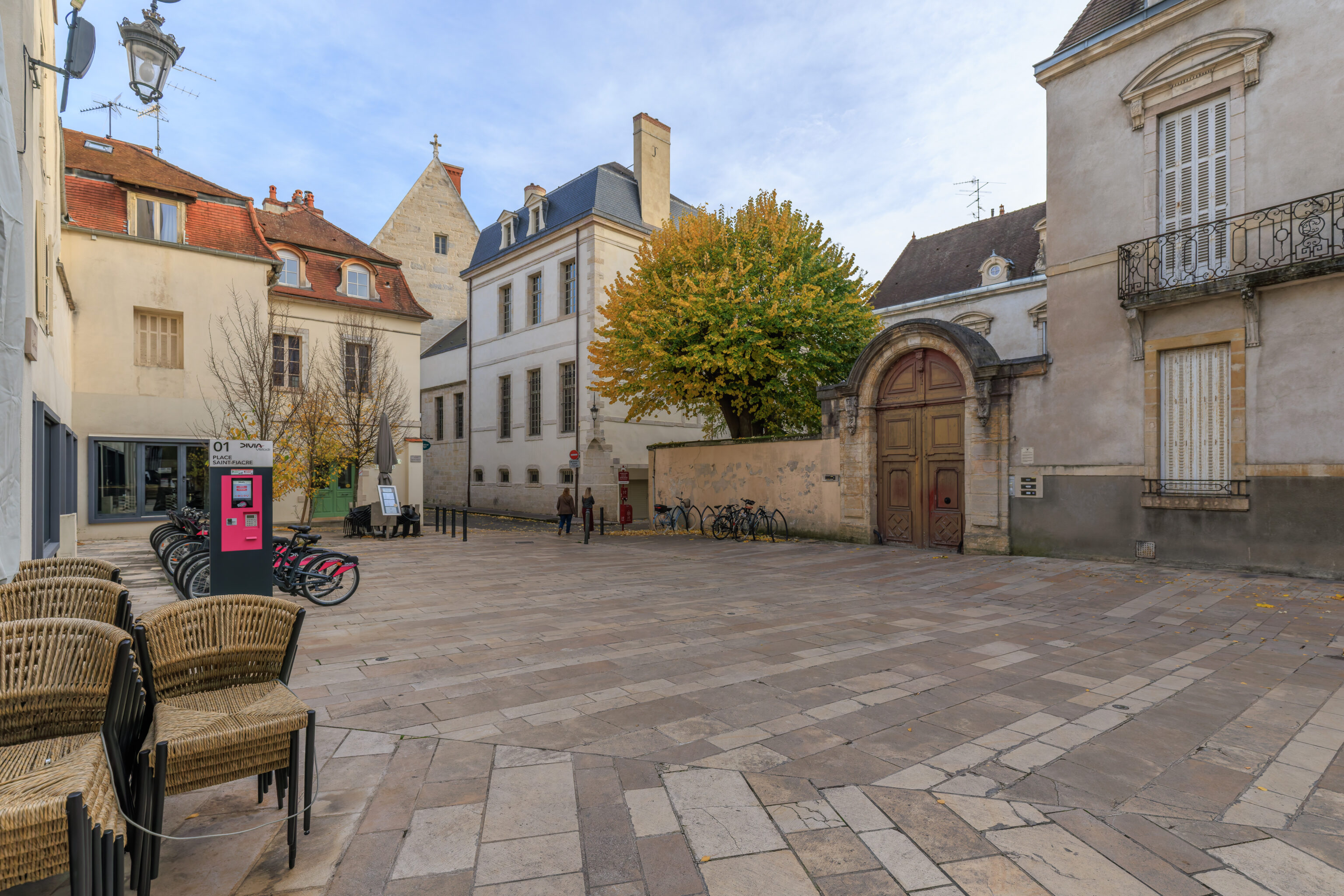
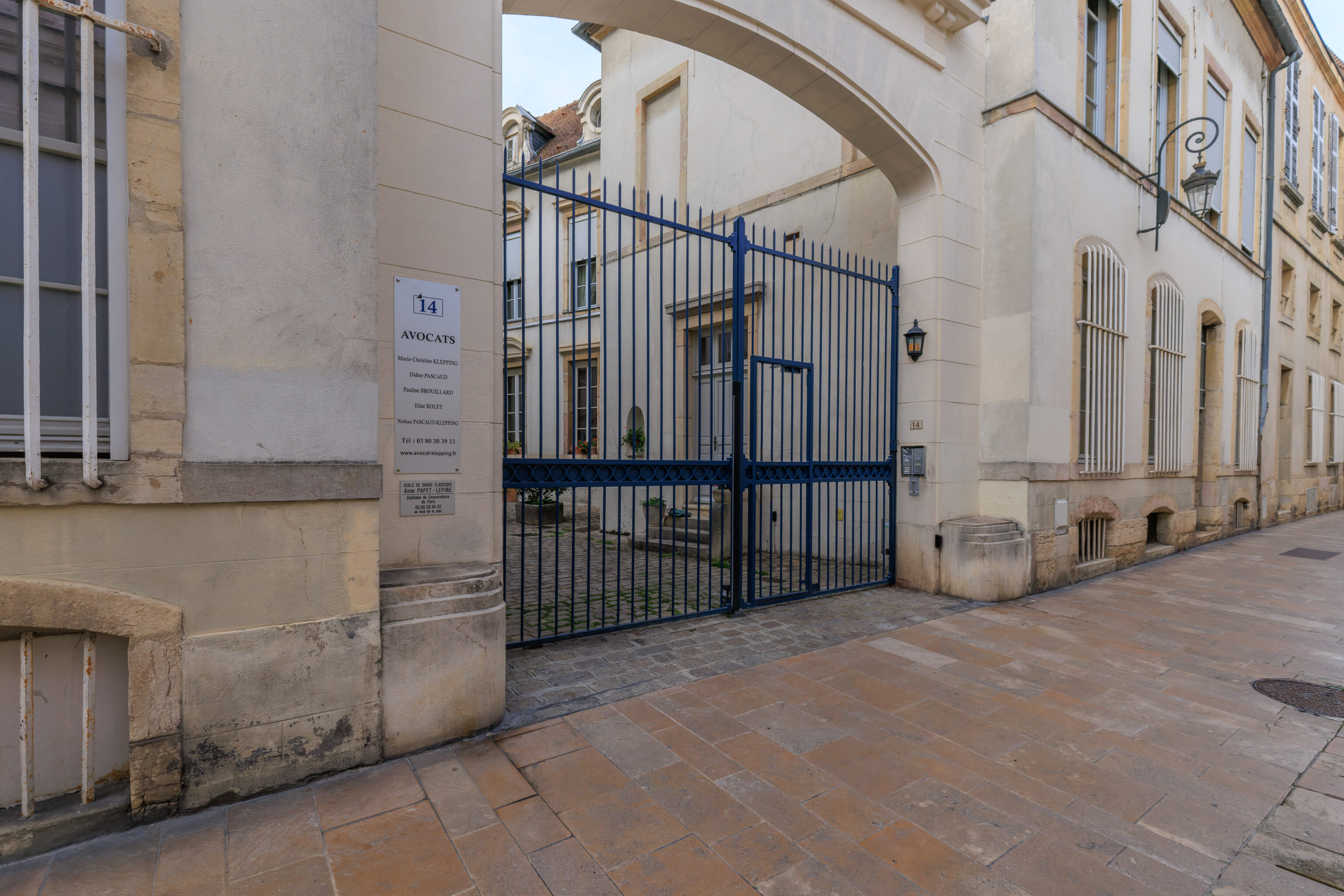
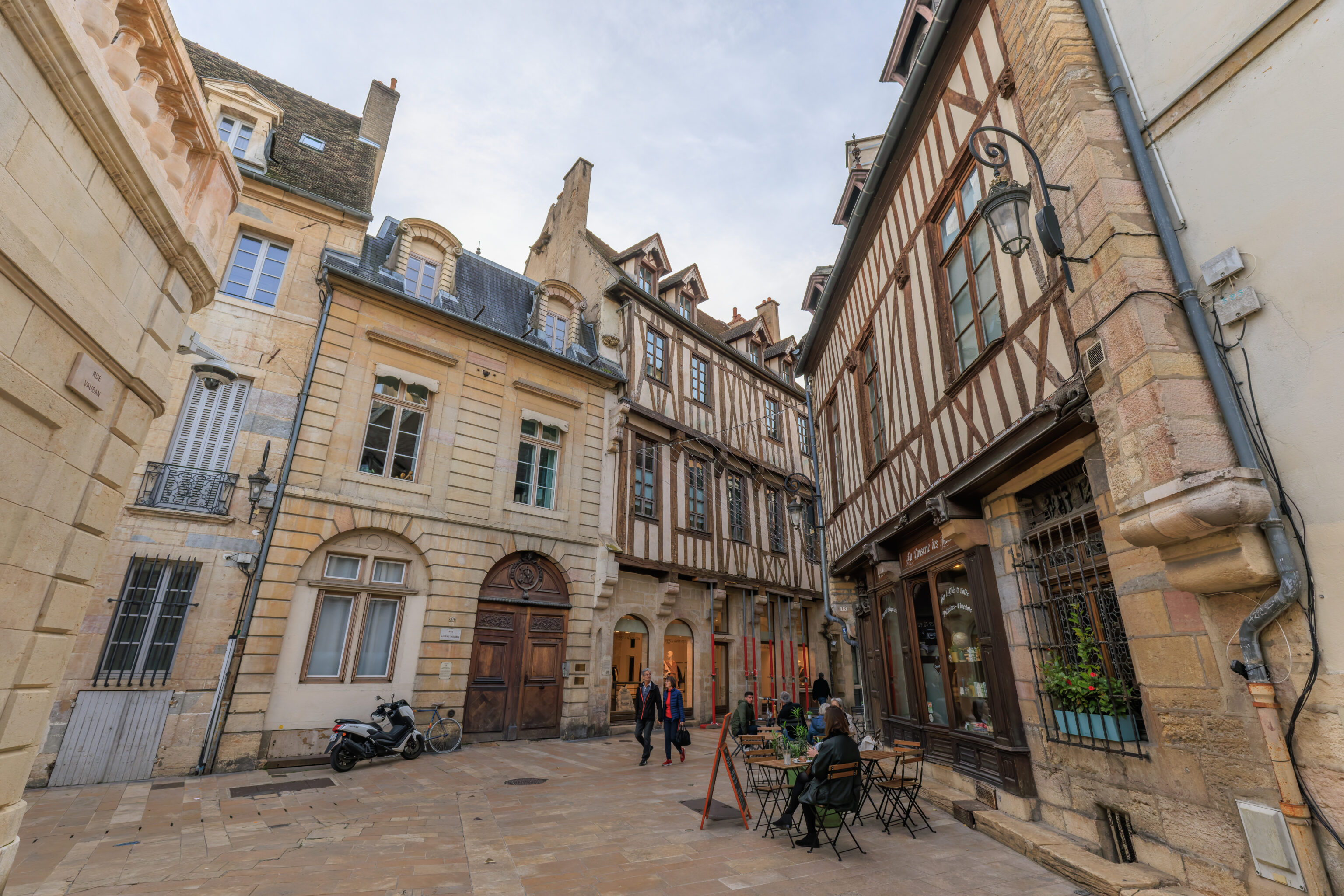
We walked to the south from the square.
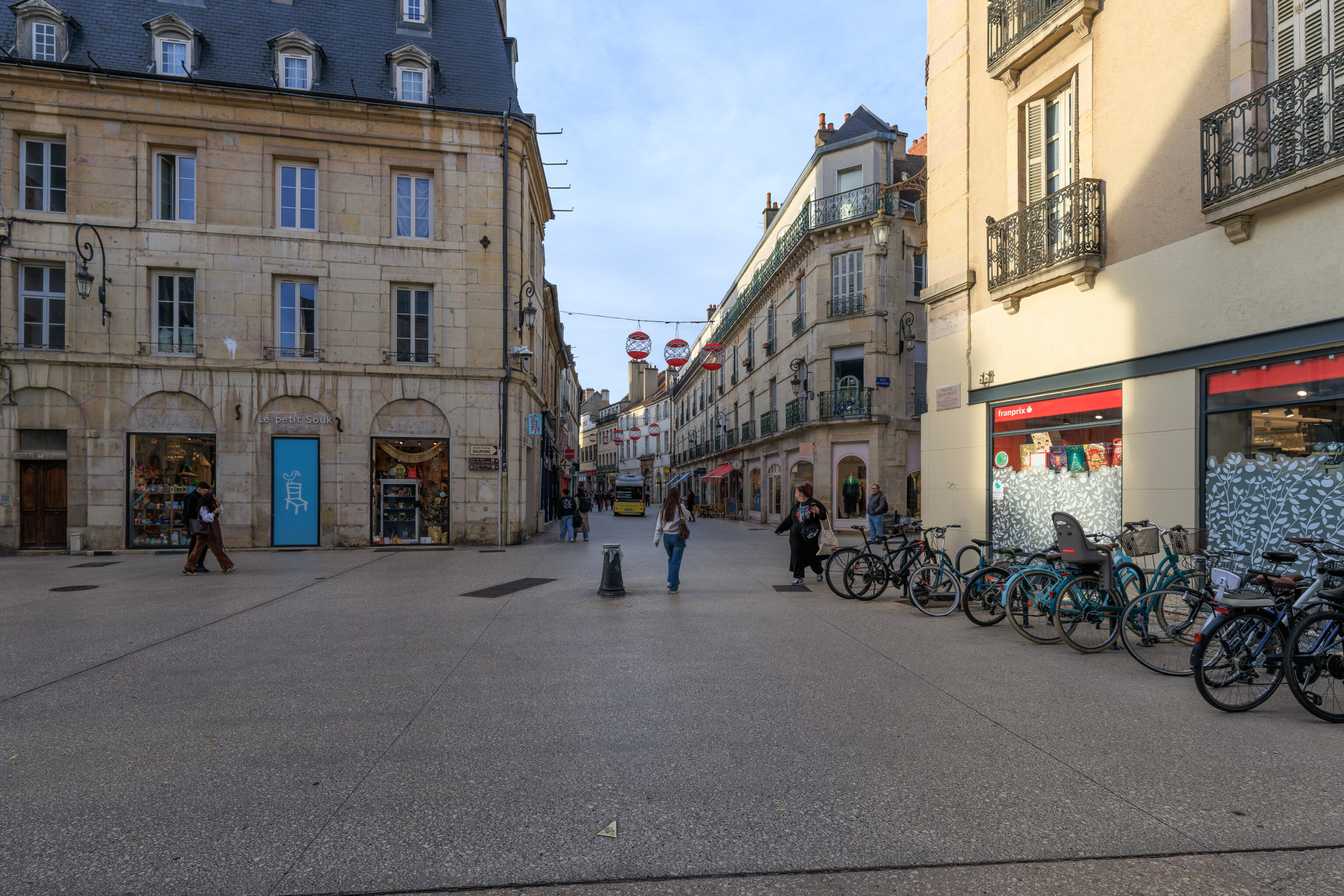
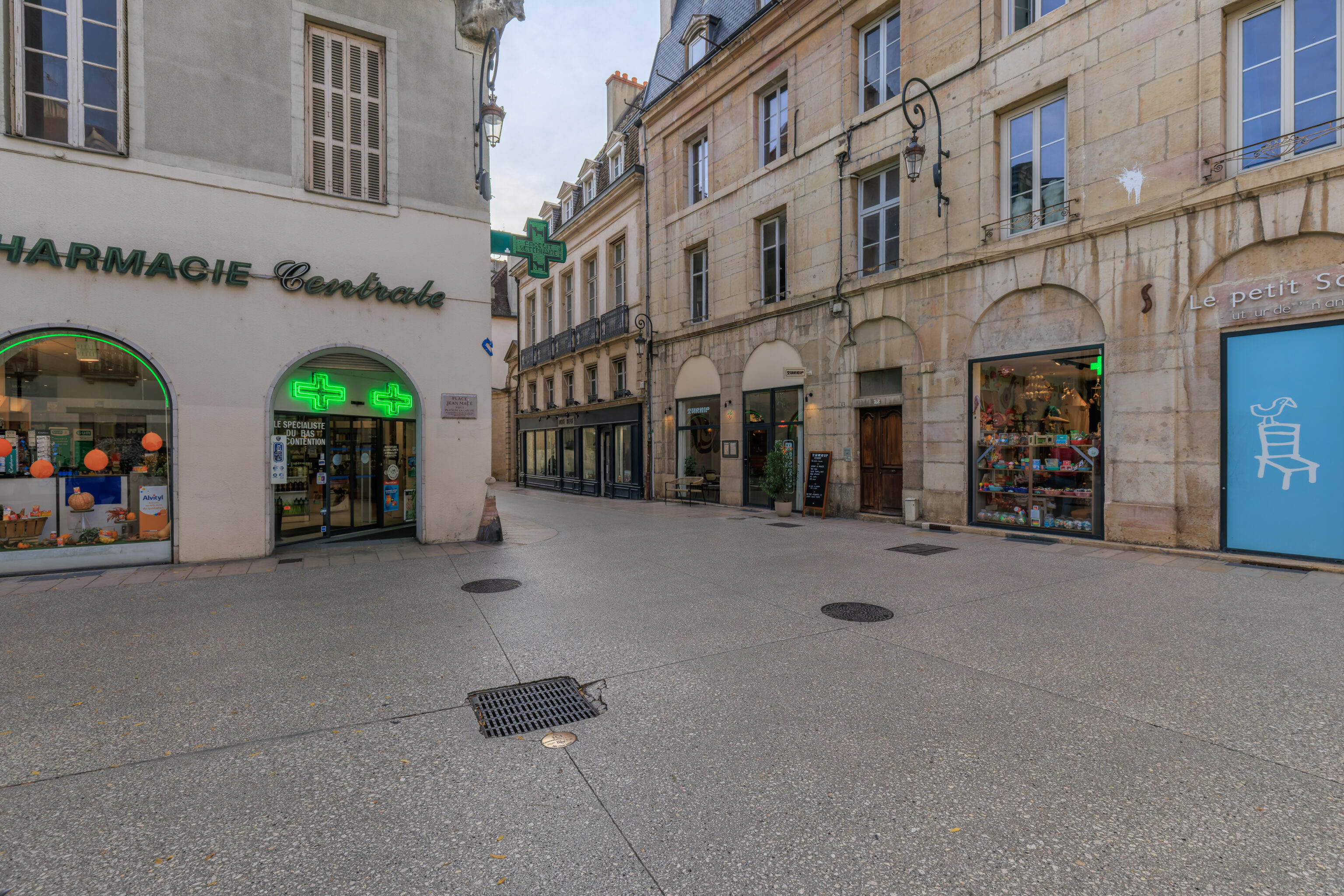
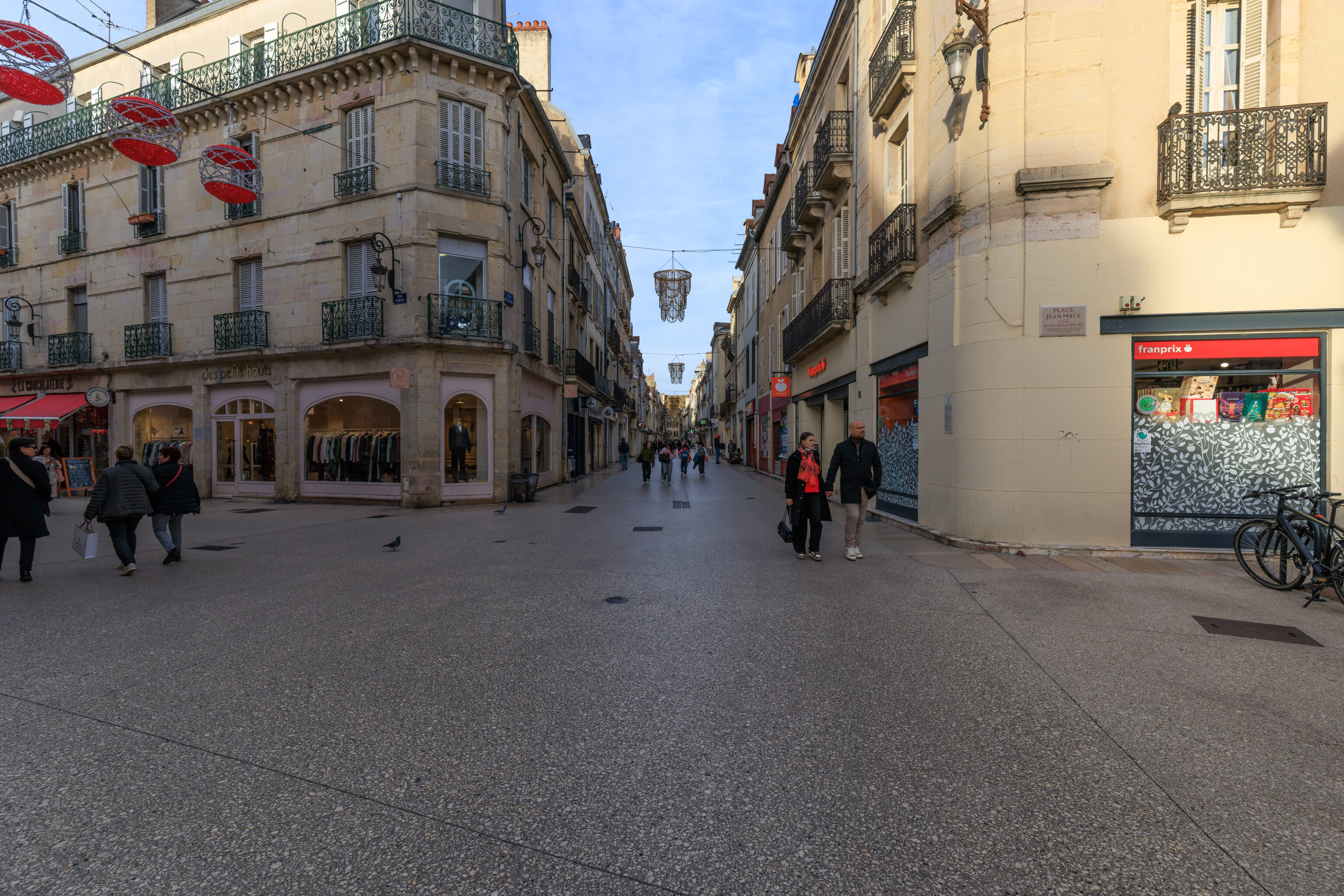
At the end of the street, we turned to the right to head west for a block.
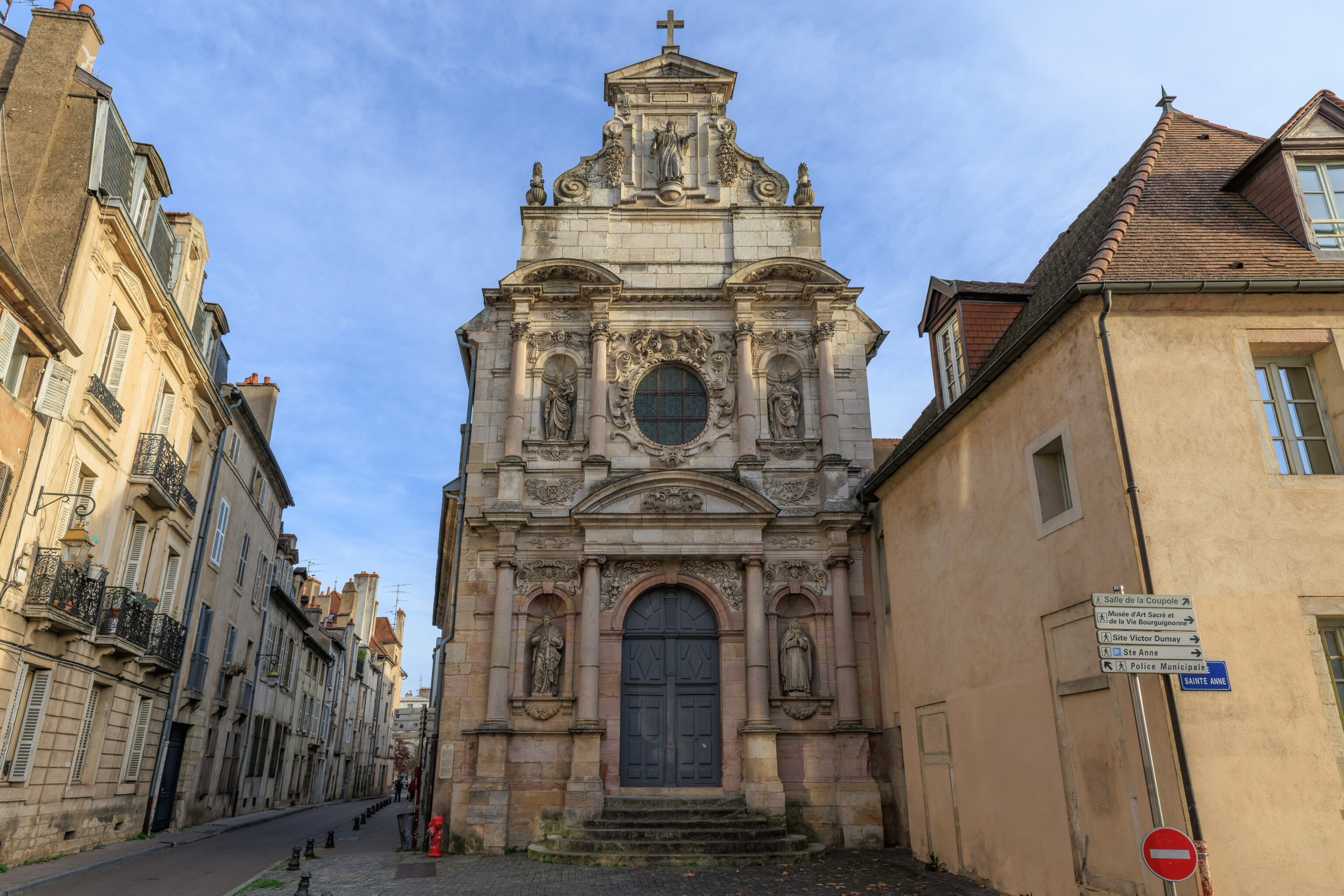
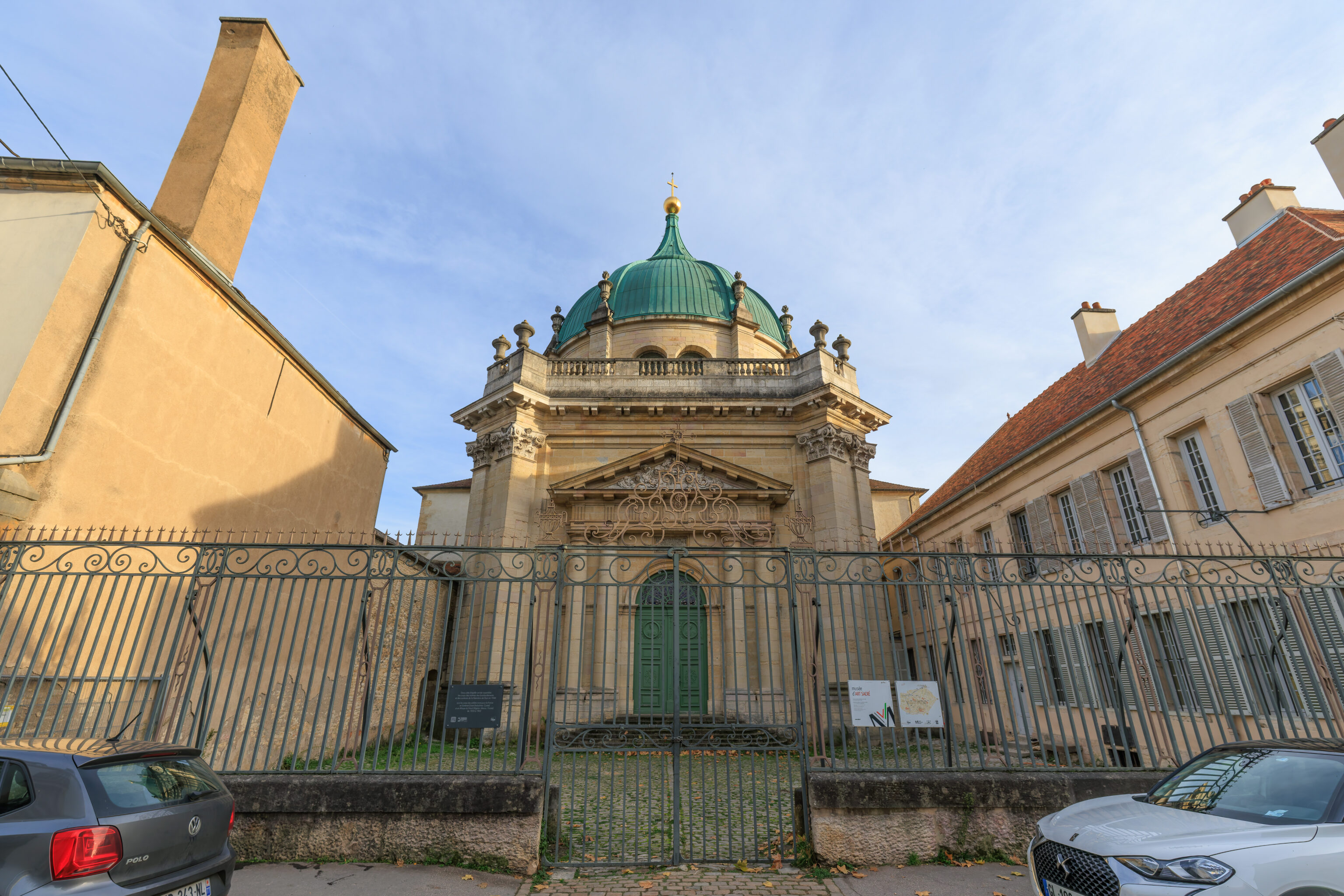
After then turning left and left again, we passed by the Chapelle des Carmélites (Chapel of the Carmelites). It seems the facade of the chapel is all that remains of the building, which was built in the 17th century.
To the south, we passed by the Église Sainte-Anne (Saint Anne’s Church).
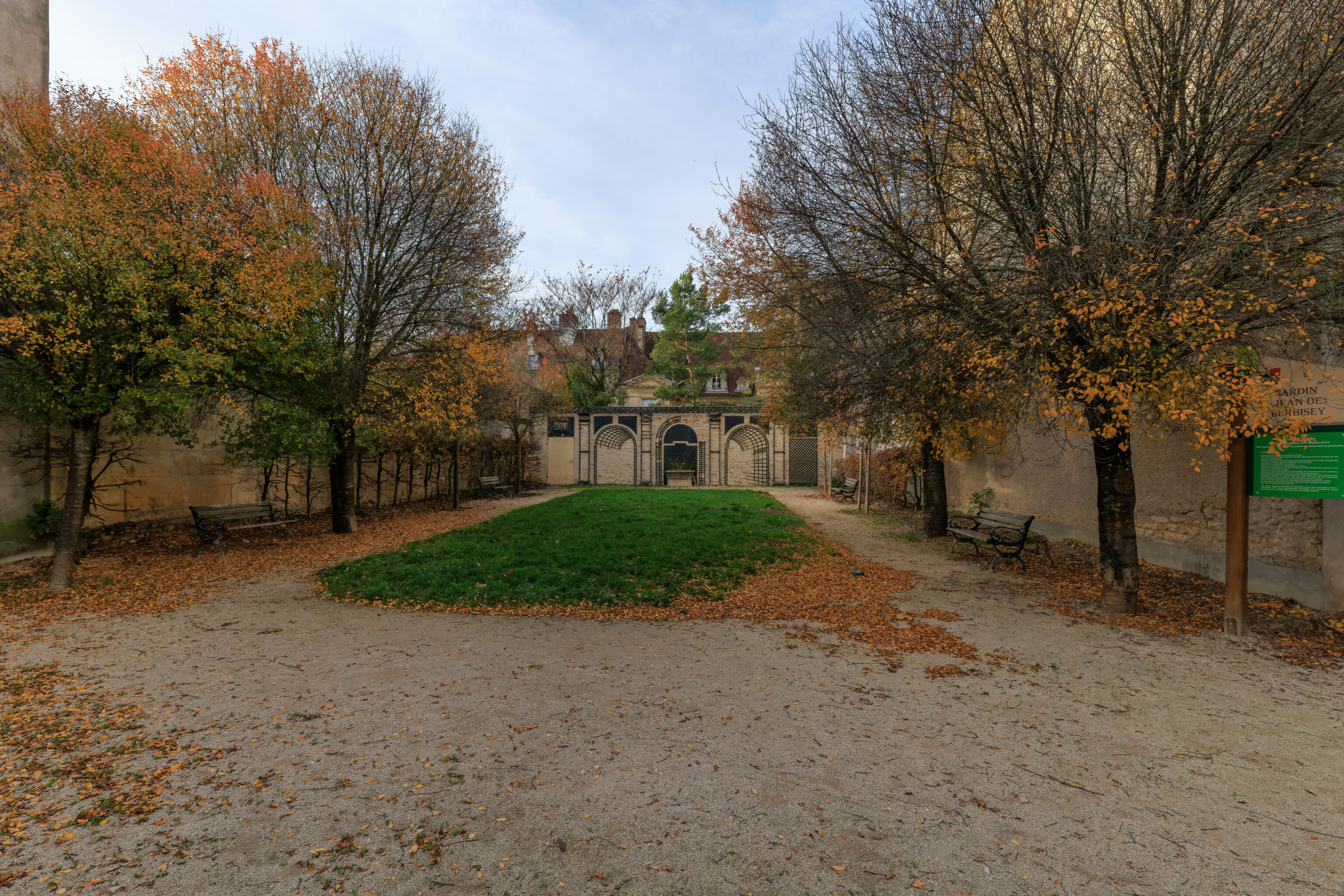
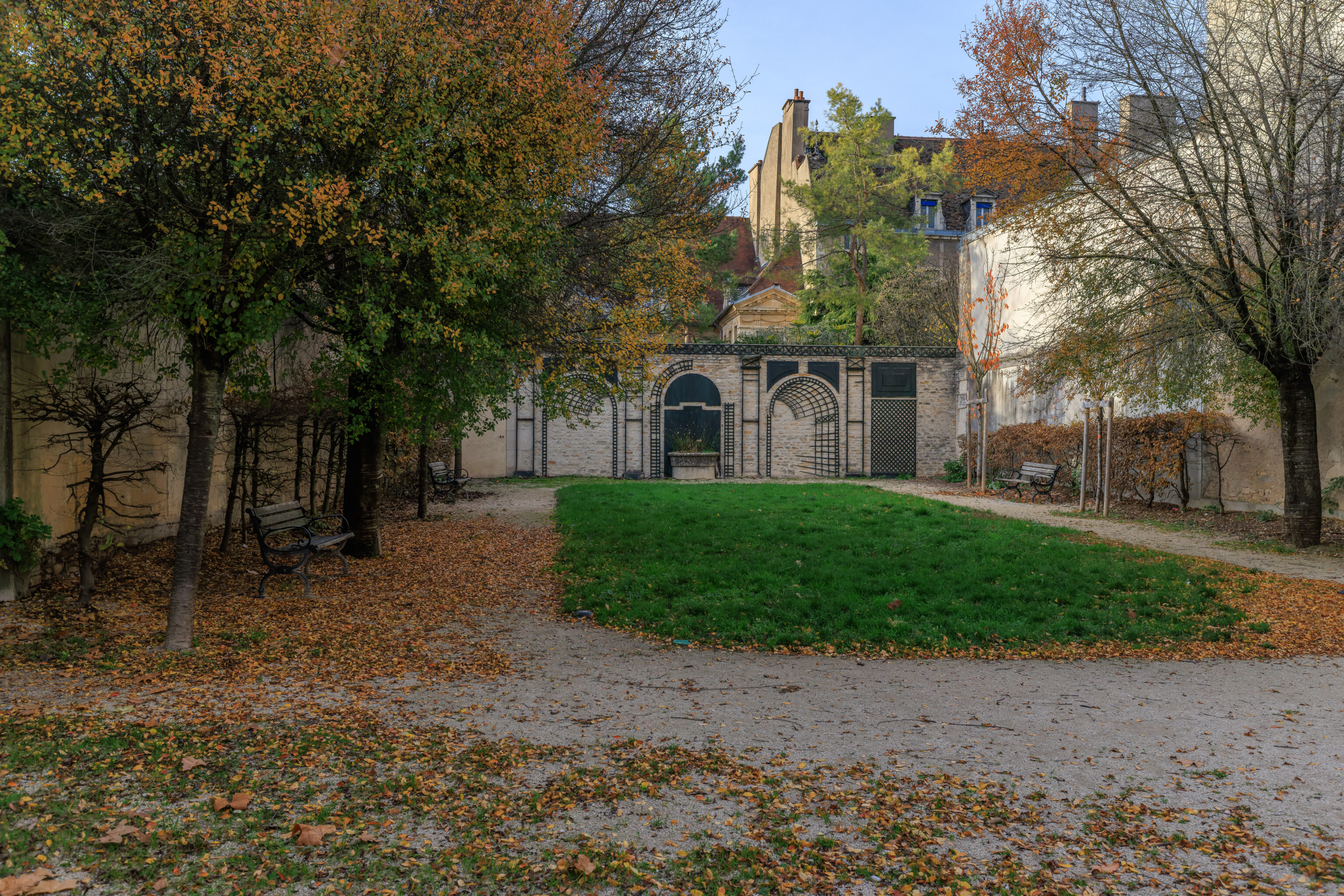
This little garden on the other side of the road is interesting only because of the wall on the far end. While it looks like the black colored elements are painted directly on the wall, they appear to be metal pieces.
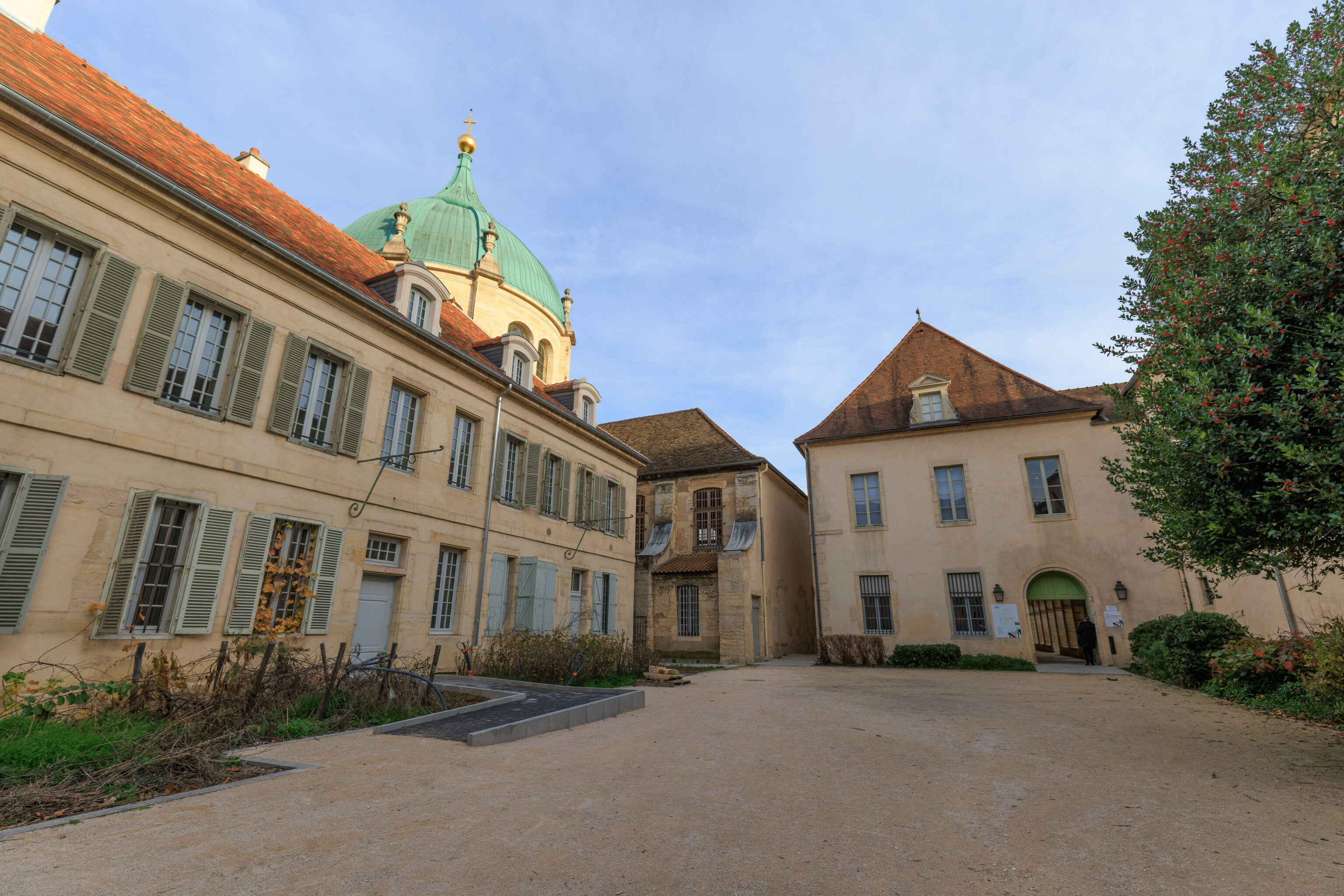
The Museum of Burgundian Life, formally the Musée de la Vie Bourguignonne Perrin de Puycousin (Perrin de Puycousin Museum of Burgundian Life), is next to the church in a former monastery building.
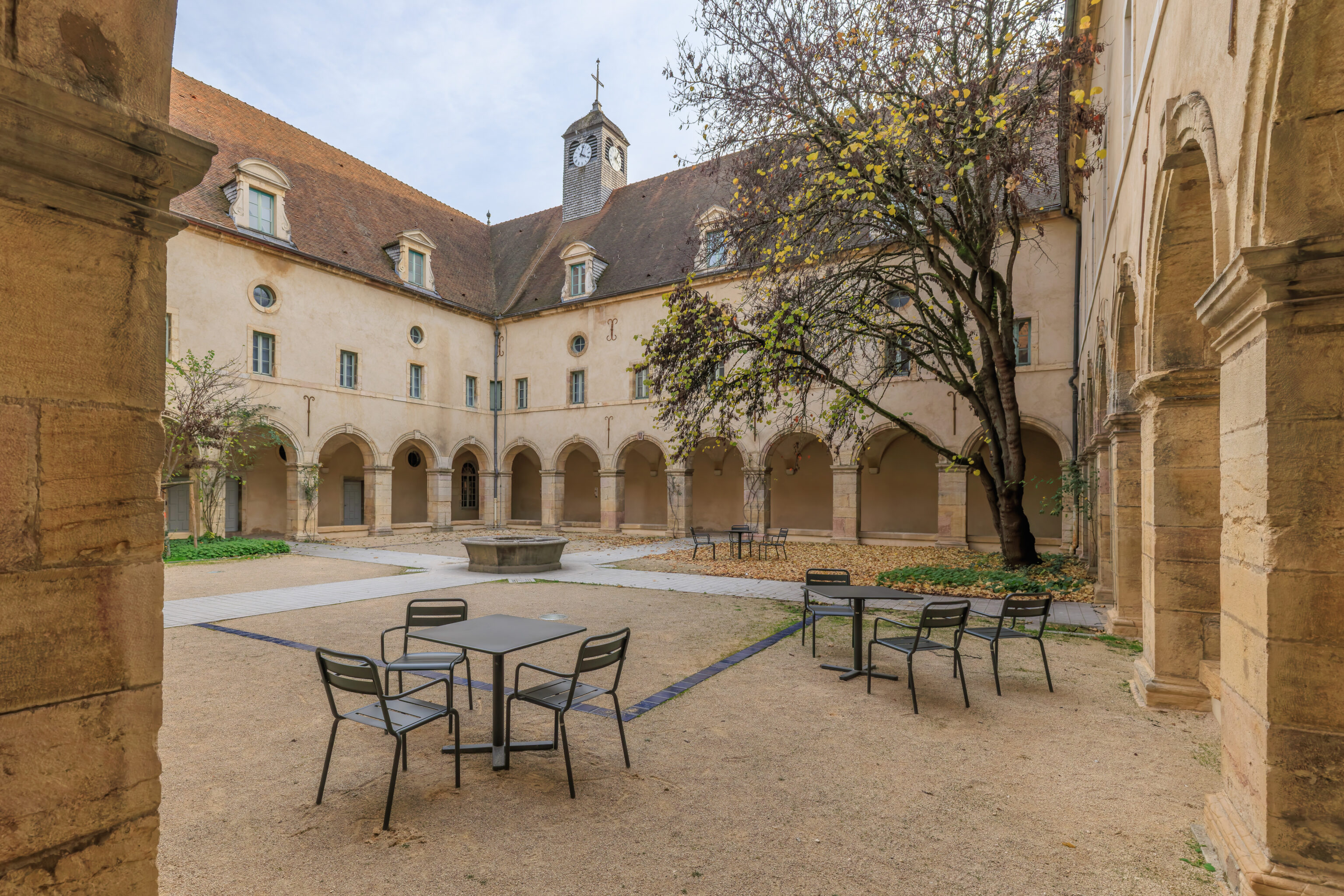
We walked by a courtyard after entering.
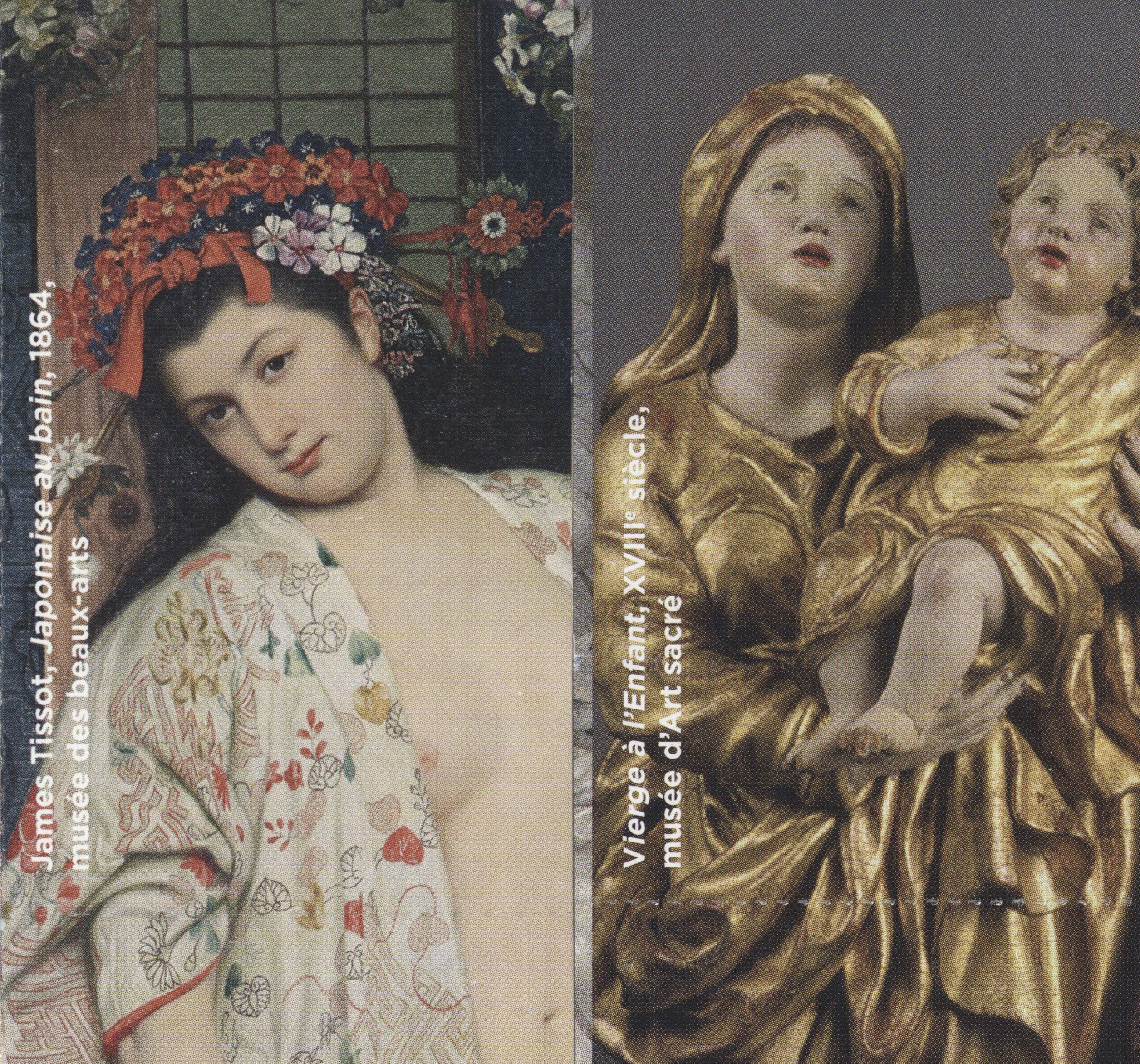
Although the museum is free to enter, free tickets are still provided.
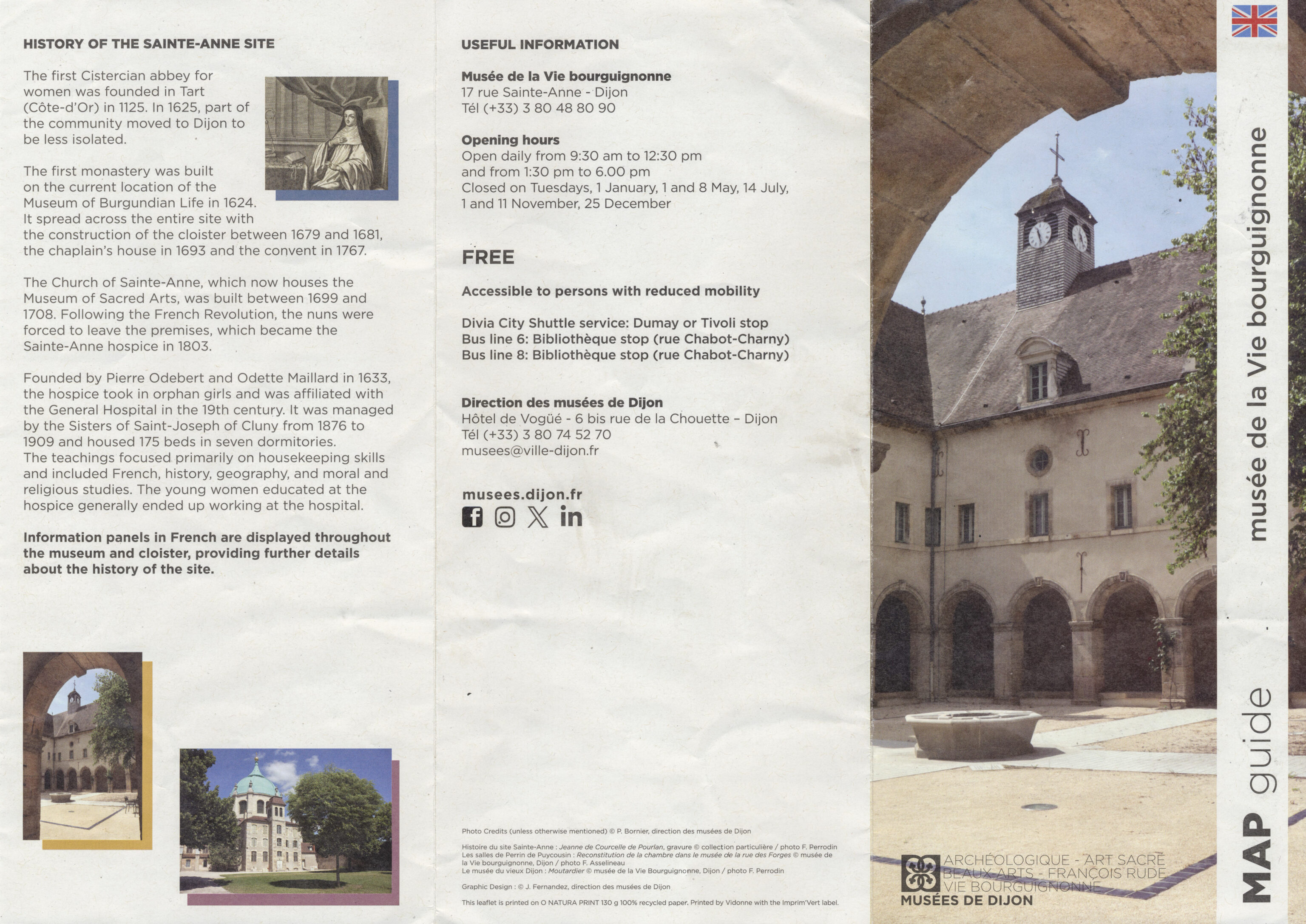
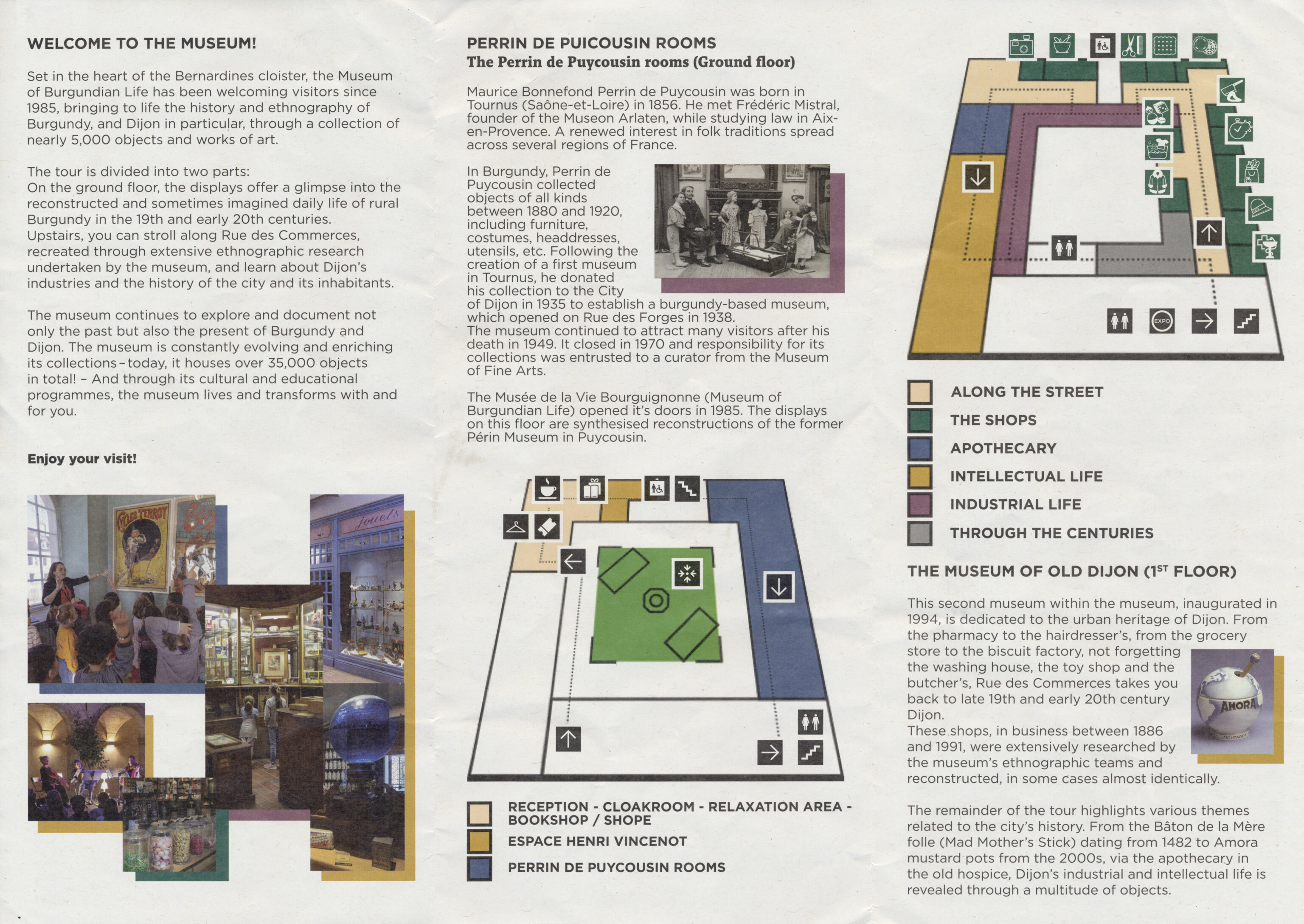
A map of the museum was available.
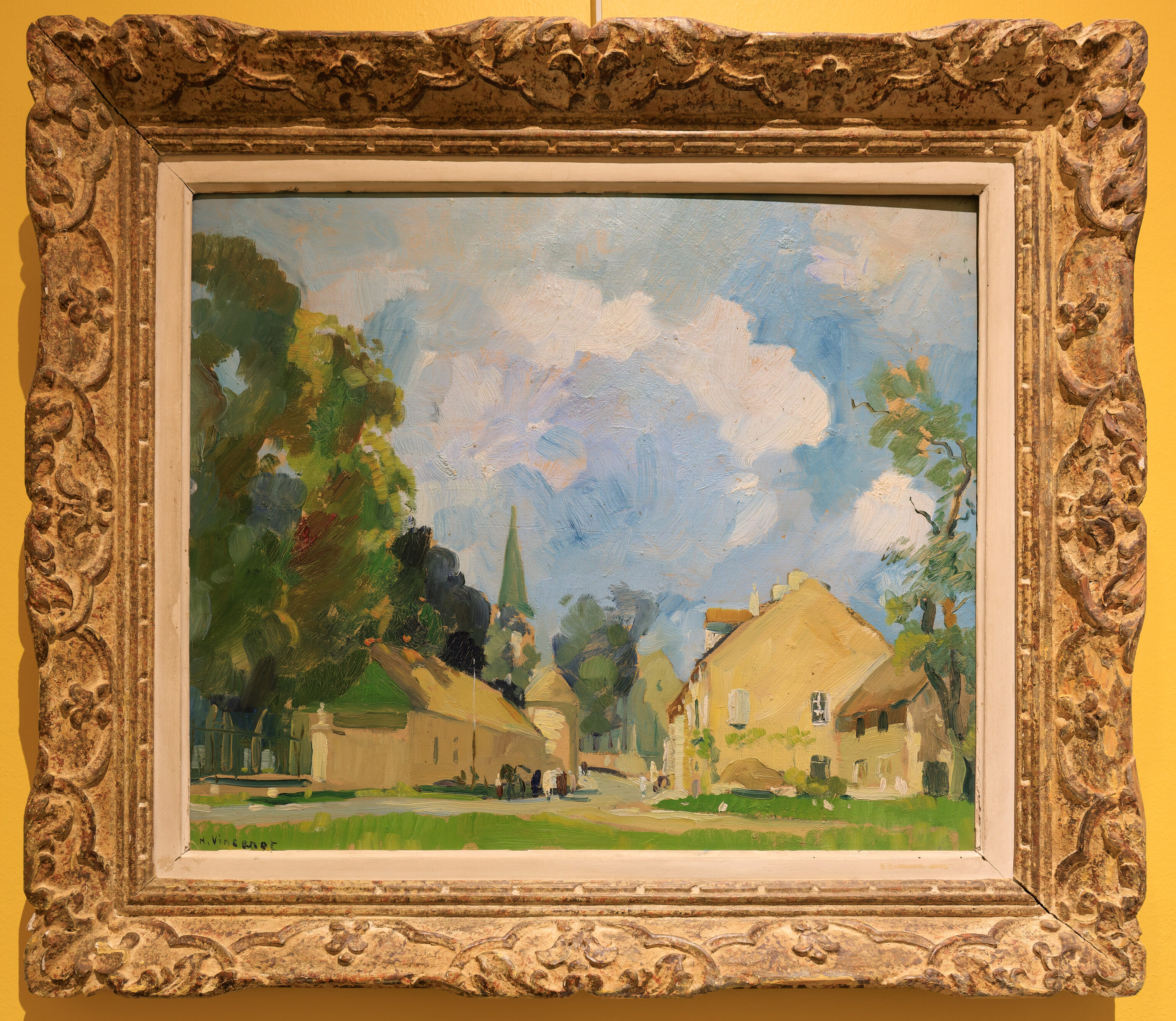
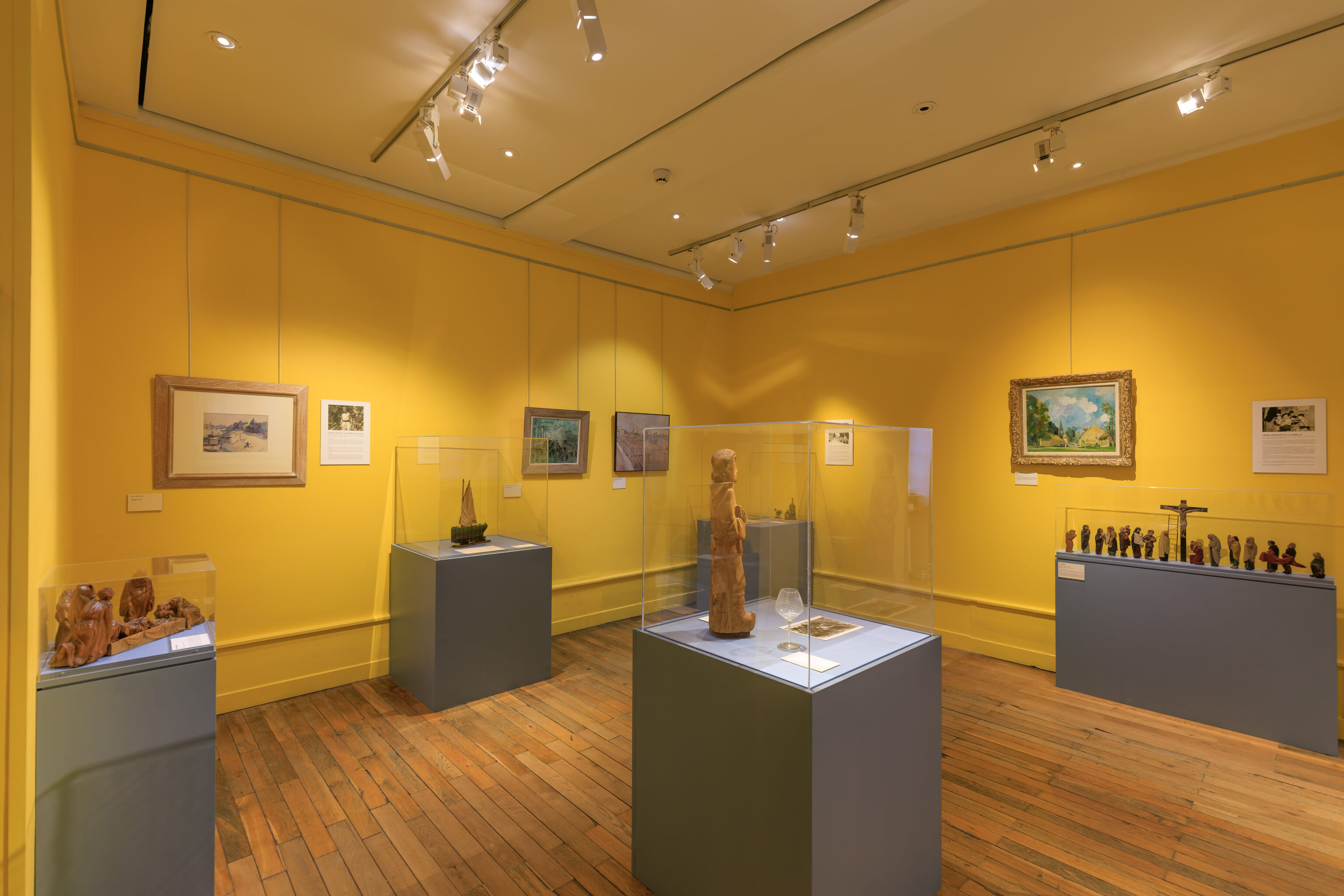
Oil on hardboard
1945
On loan from a private collection
Henri Vincenot frequented the village of Commarin from his childhood. His maternal grandparents lived there. At the age of 17, during a hunting trip with his grandfather Joseph, Henri discovered a ruined hamlet. This place became an obsession. He would gradually buy and restore his “Sleeping Beauty.” He moved permanently to Commarin upon his retirement in 1969.
(Translated using Google)
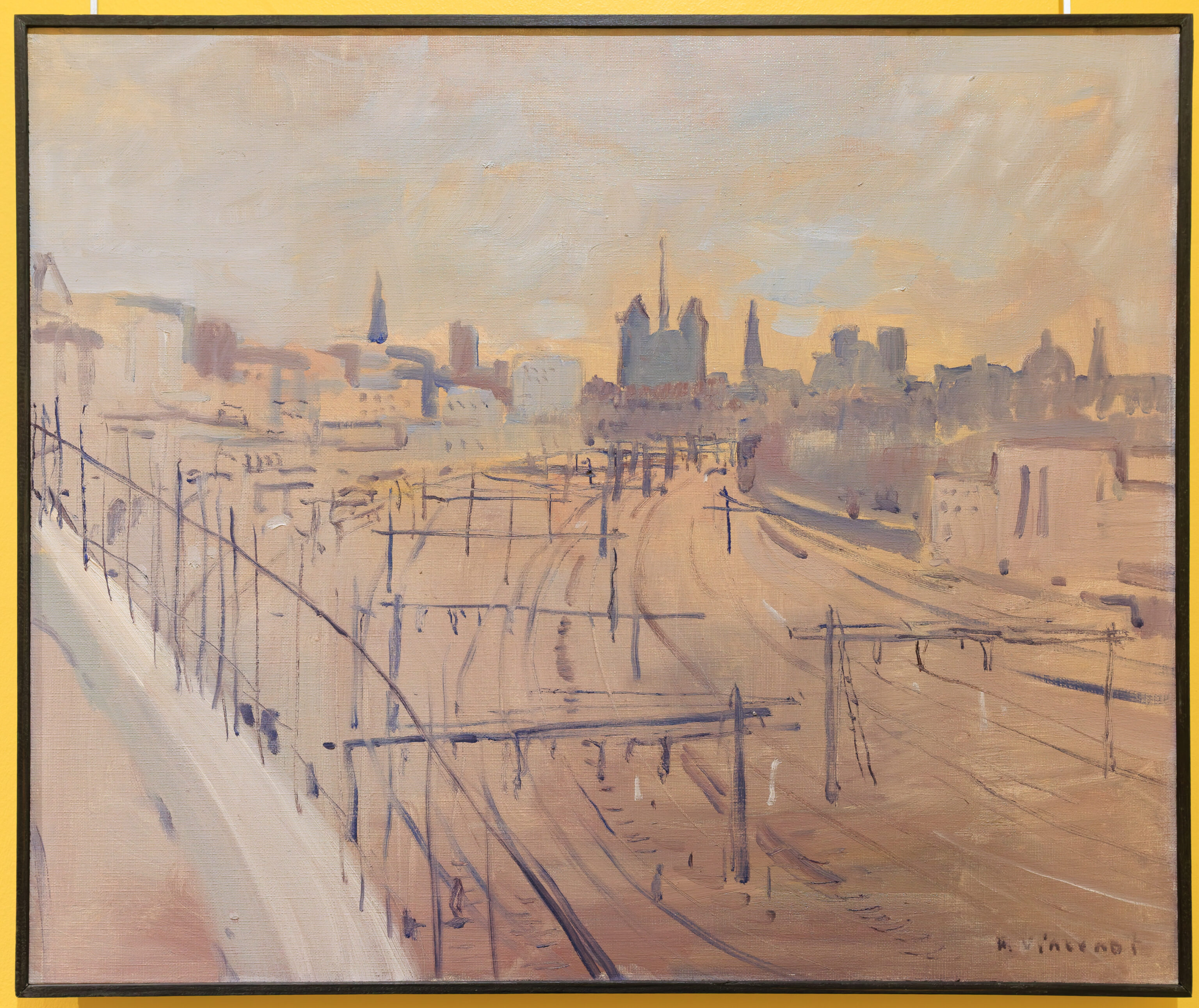
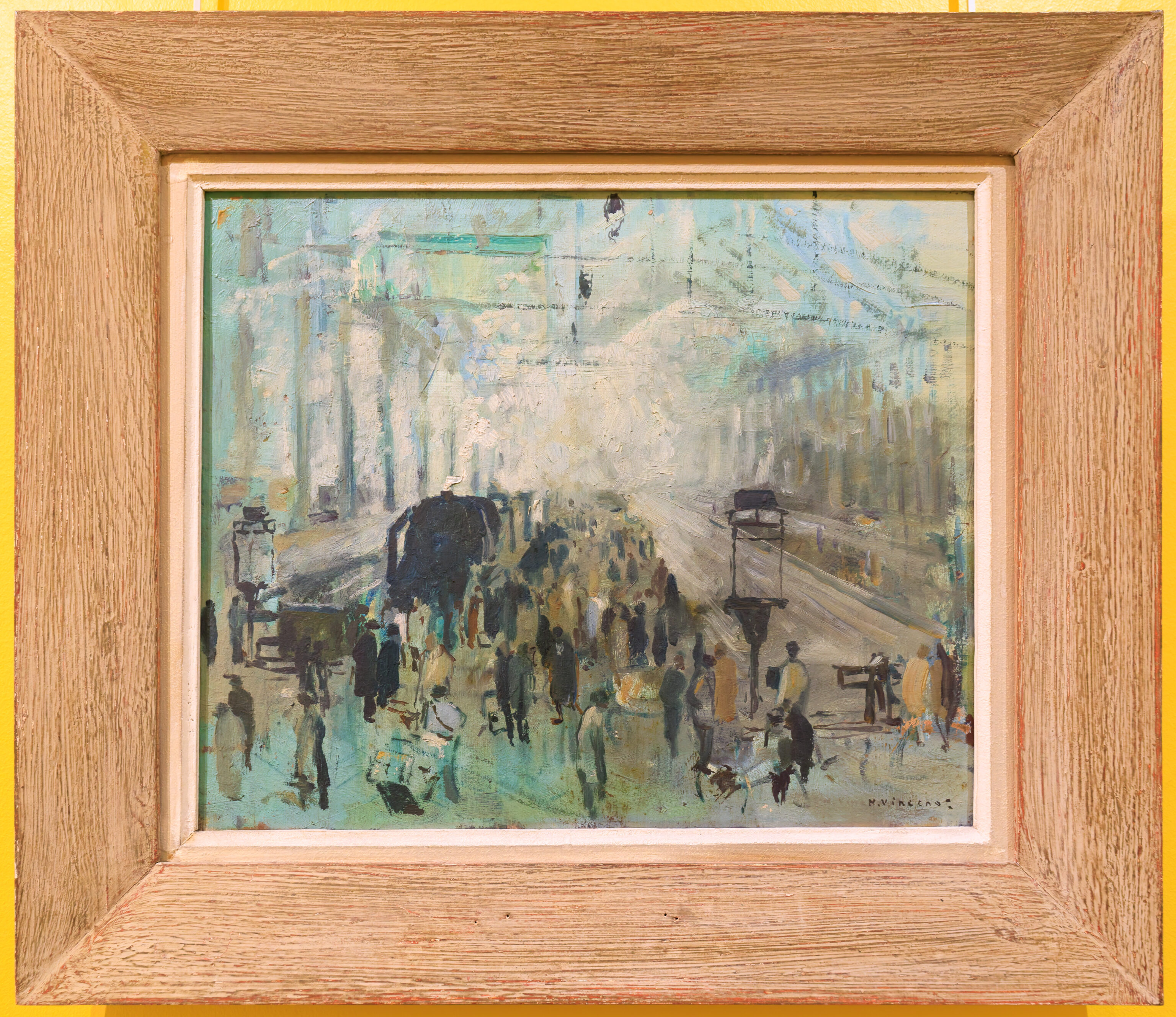
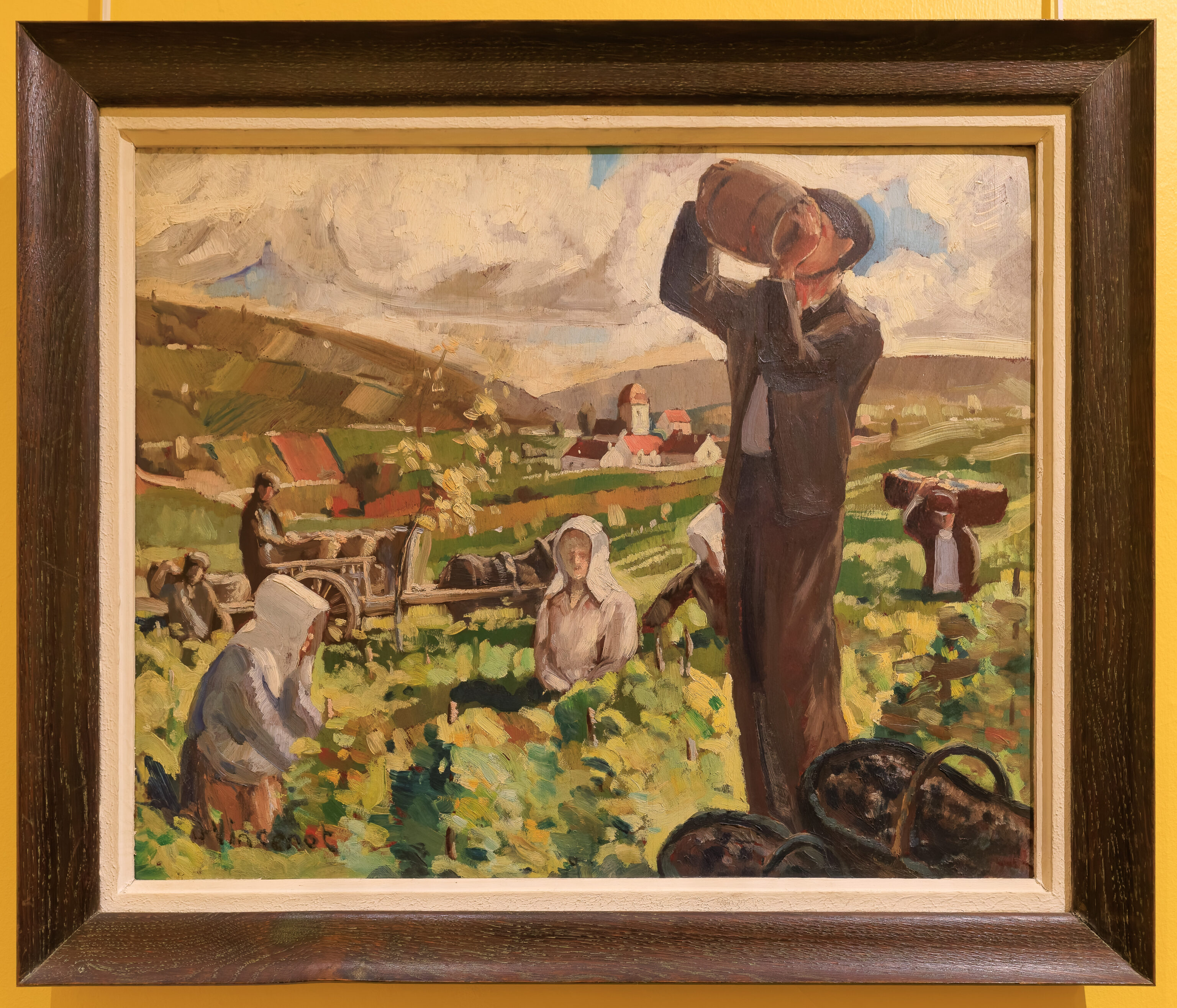
Oil on panel
Circa 1945
Museum of Burgundian Life Perrin de Puycousin
Inv. 2011.12.1
In this painting, Henri Vincenot depicts an ordinary scene of the grape harvest in Burgundy: in the foreground, a harvester drinks from a small barrel, while in the background, women in traditional baskets cut the grapes, a carrier moves between the rows with a basket, and a cart collects the harvest. In the background, a village, sometimes identified as Morey-Saint-Denis, is nestled in the heart of the hills.
(Translated using Google)
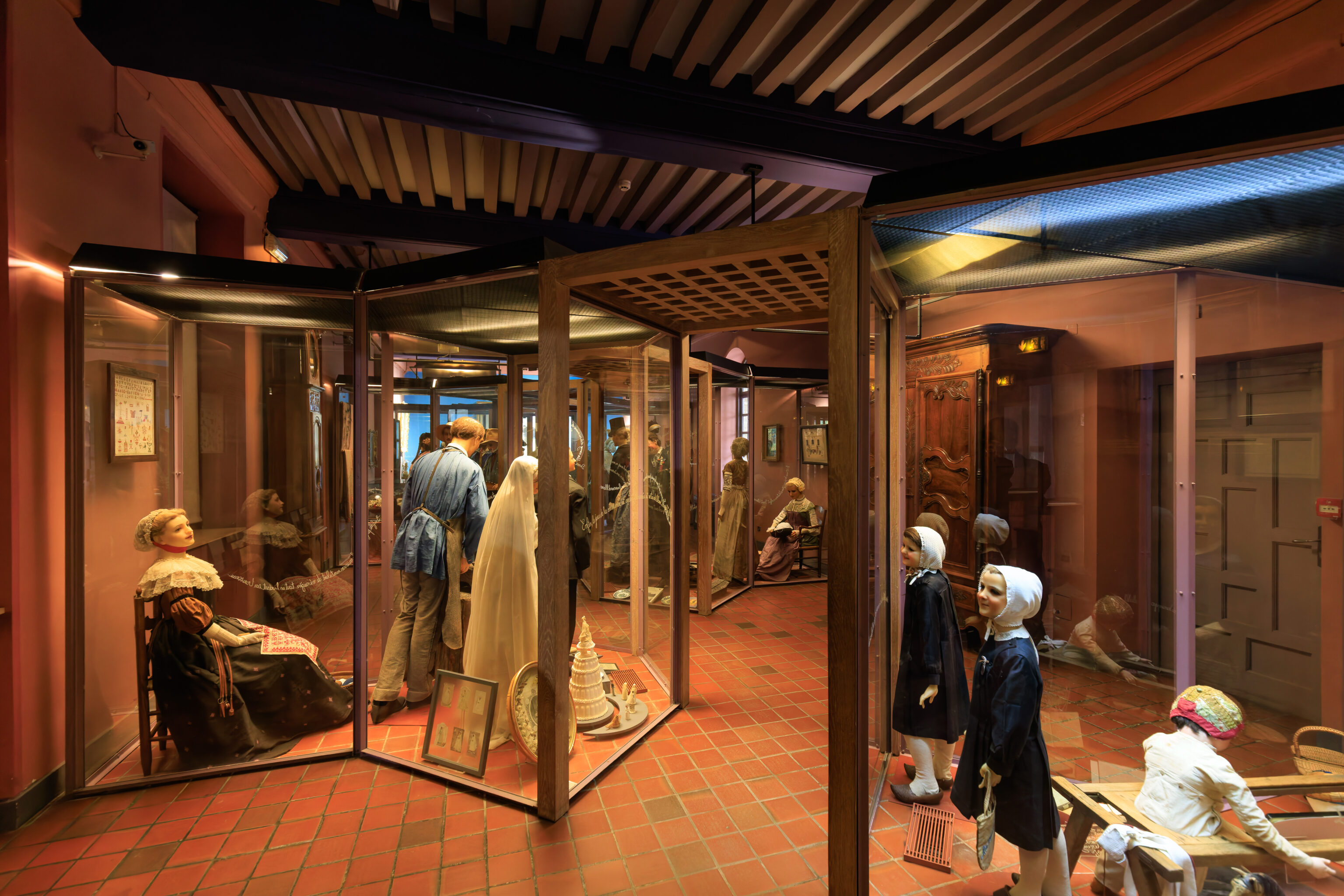
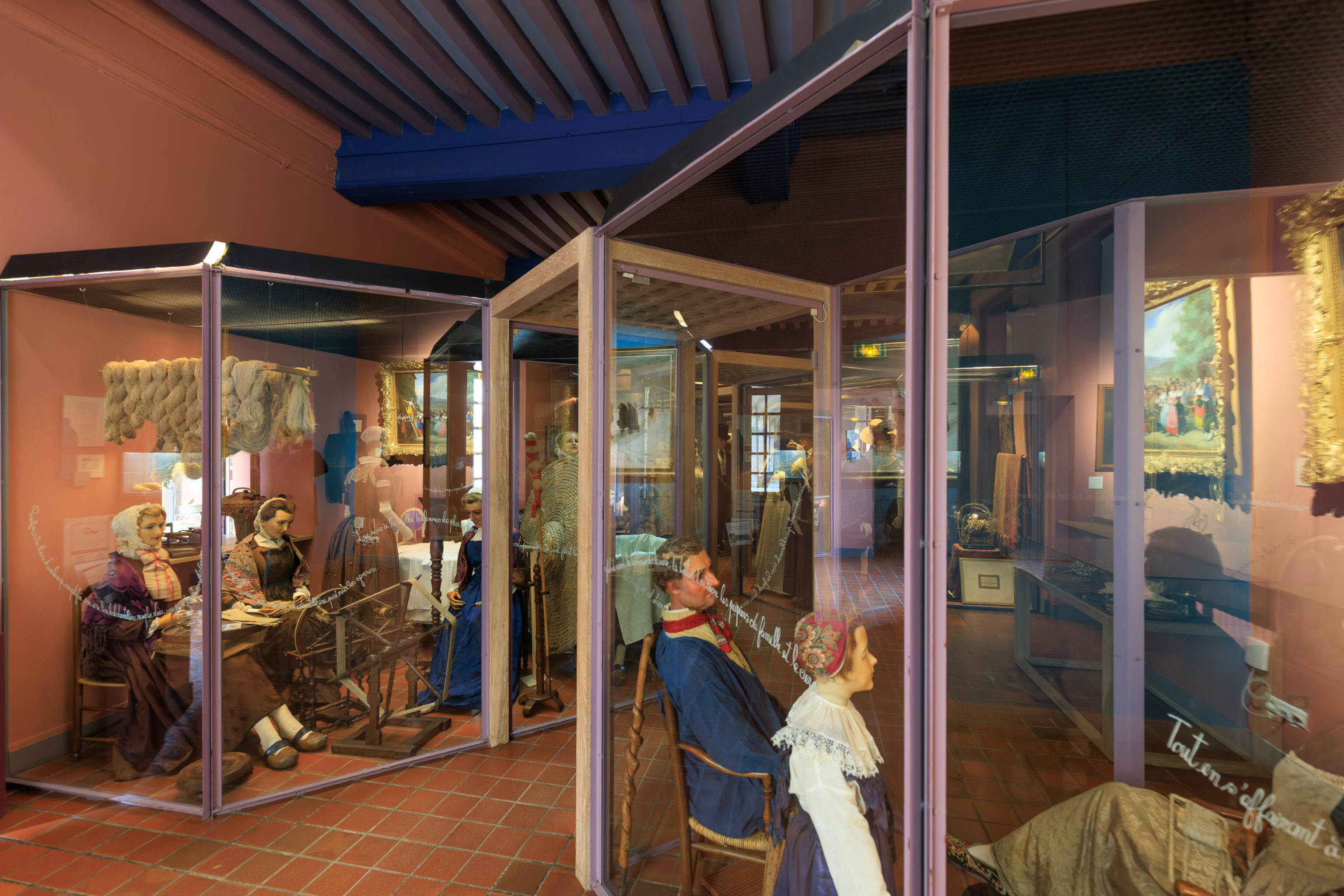
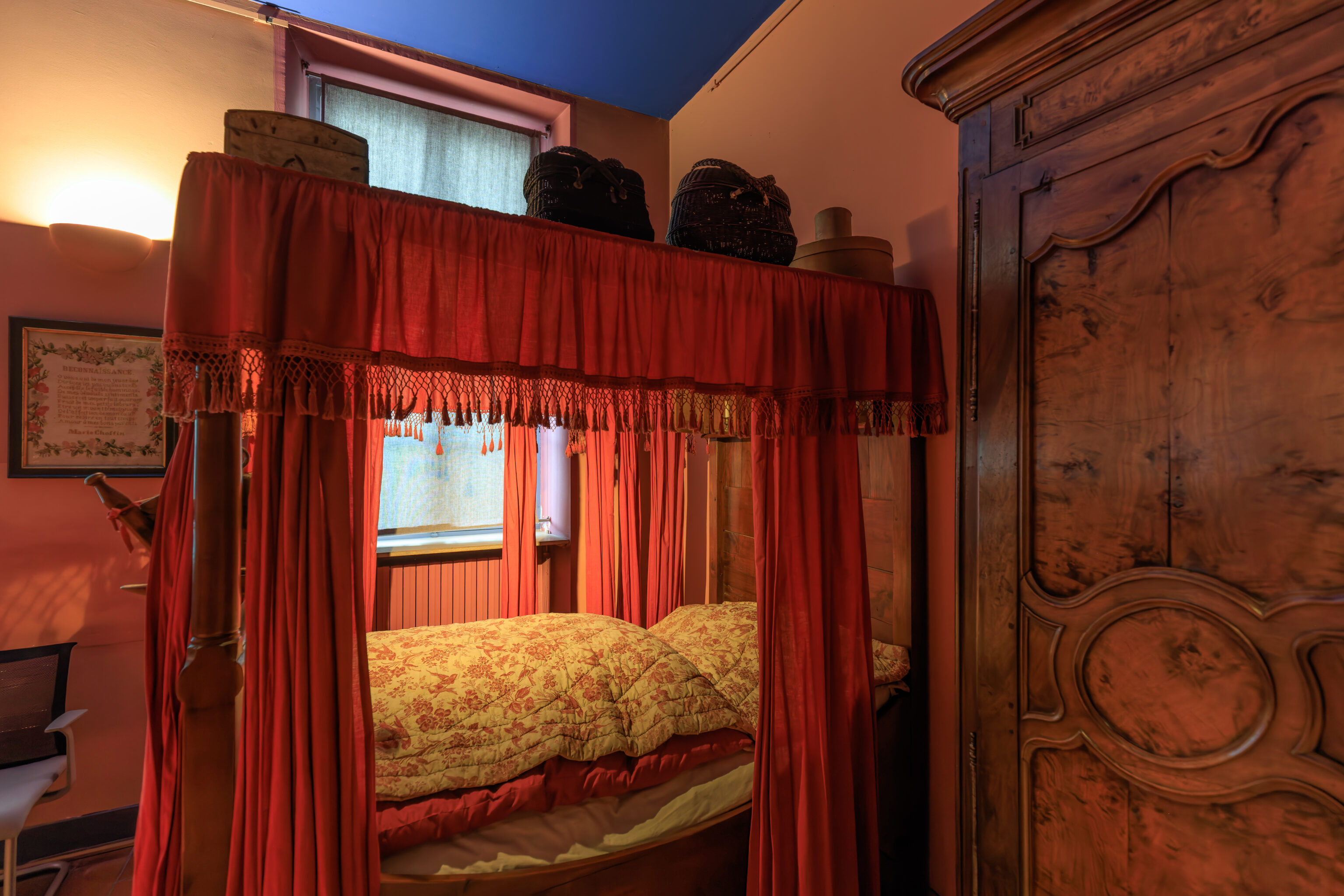
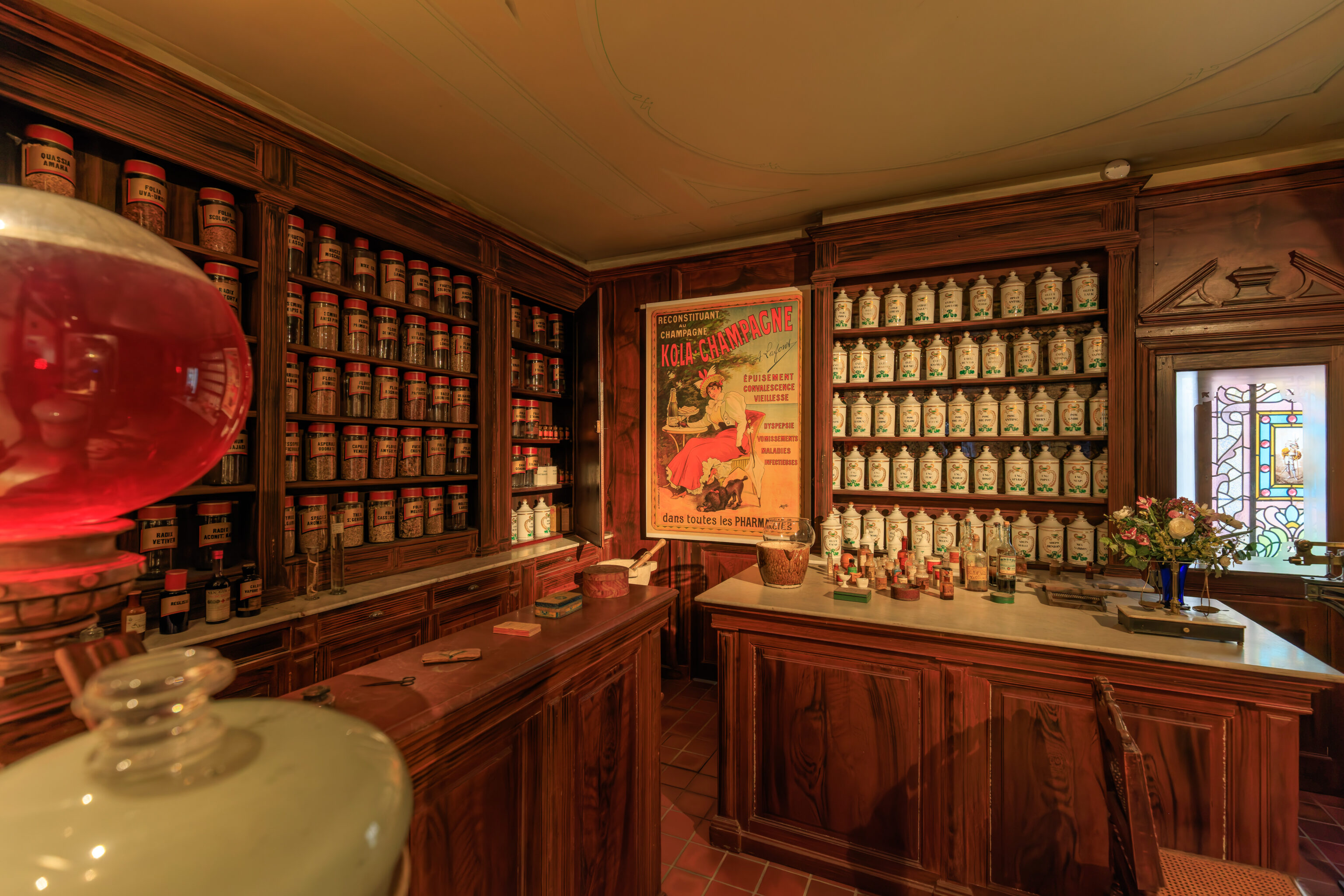
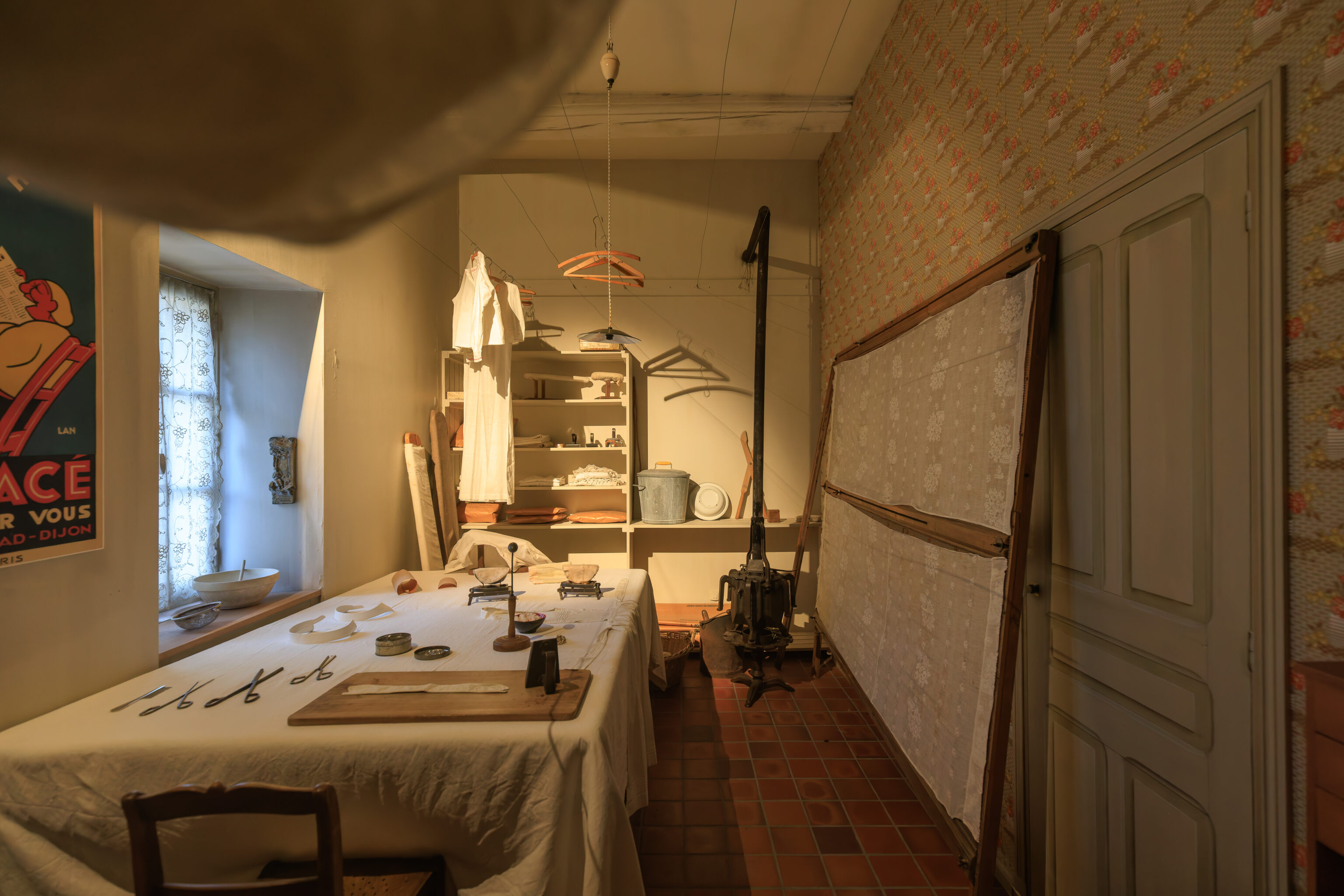
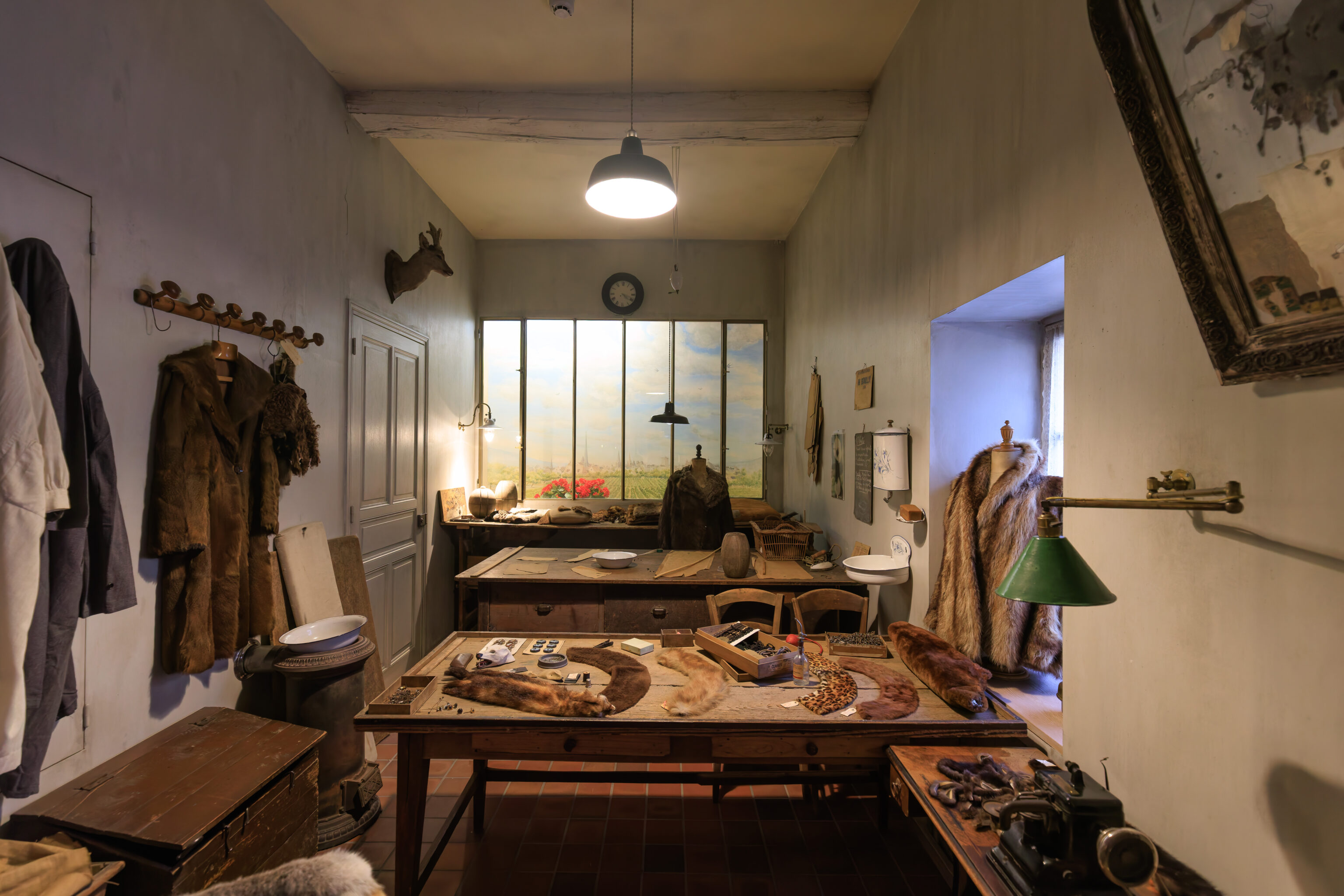
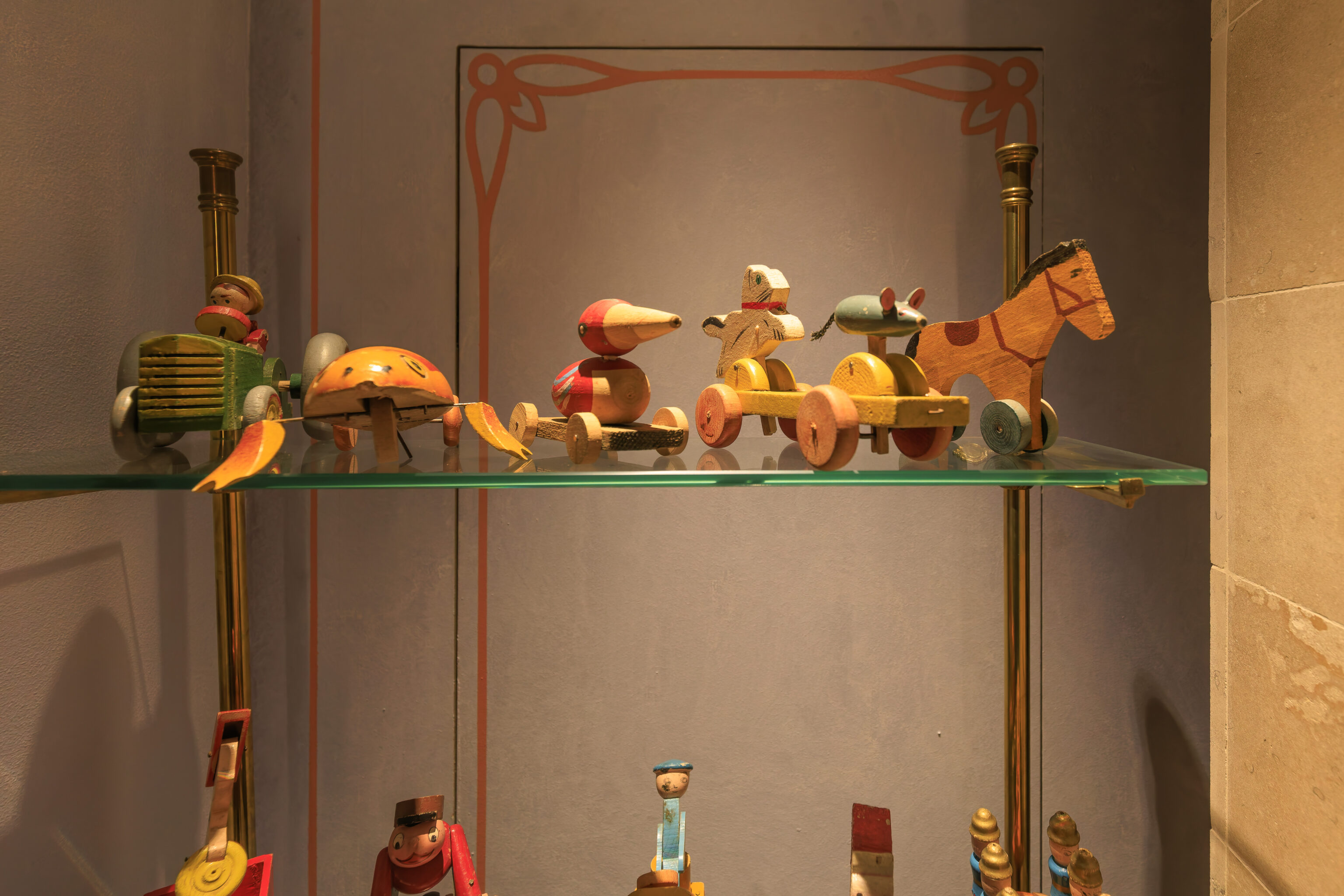
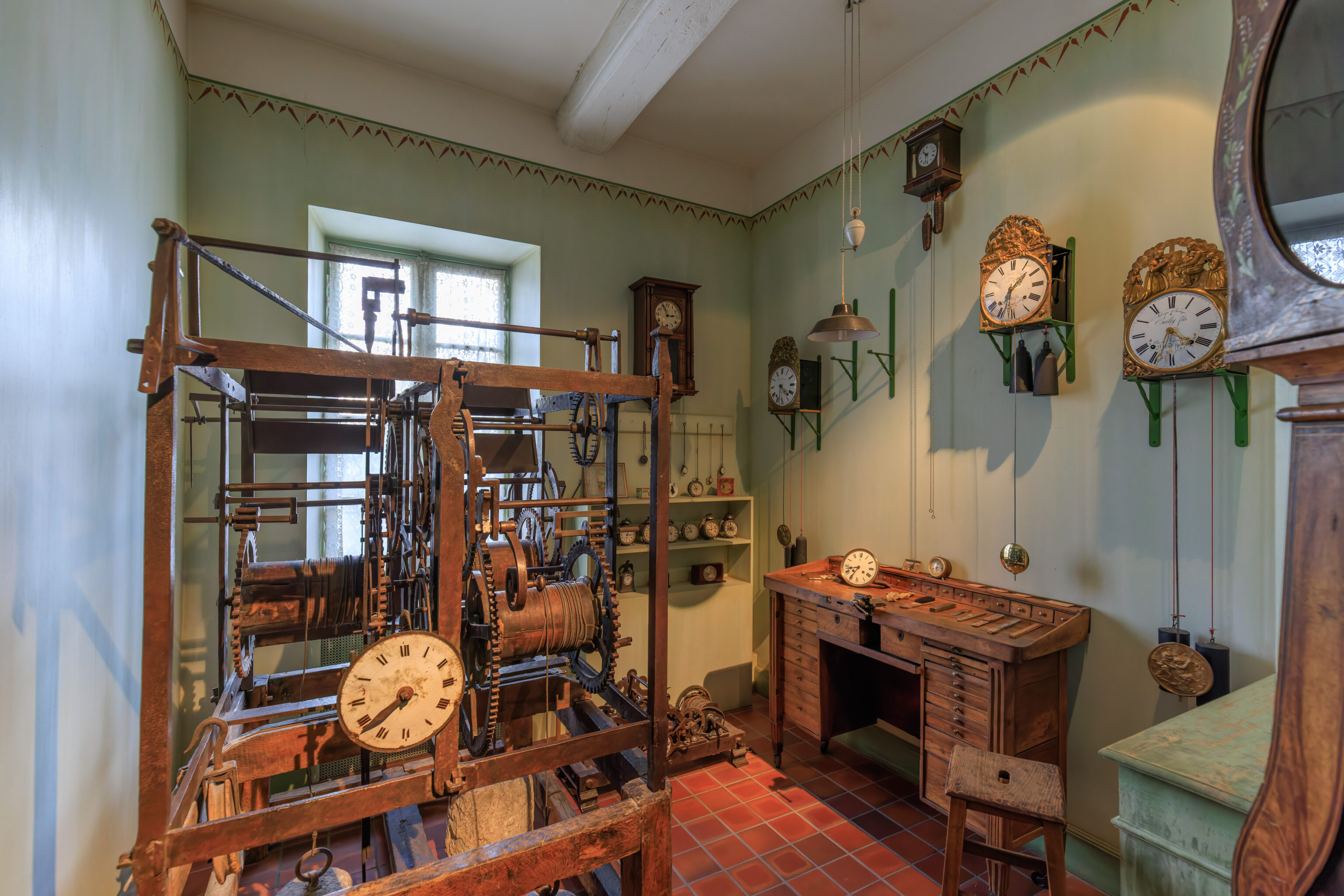
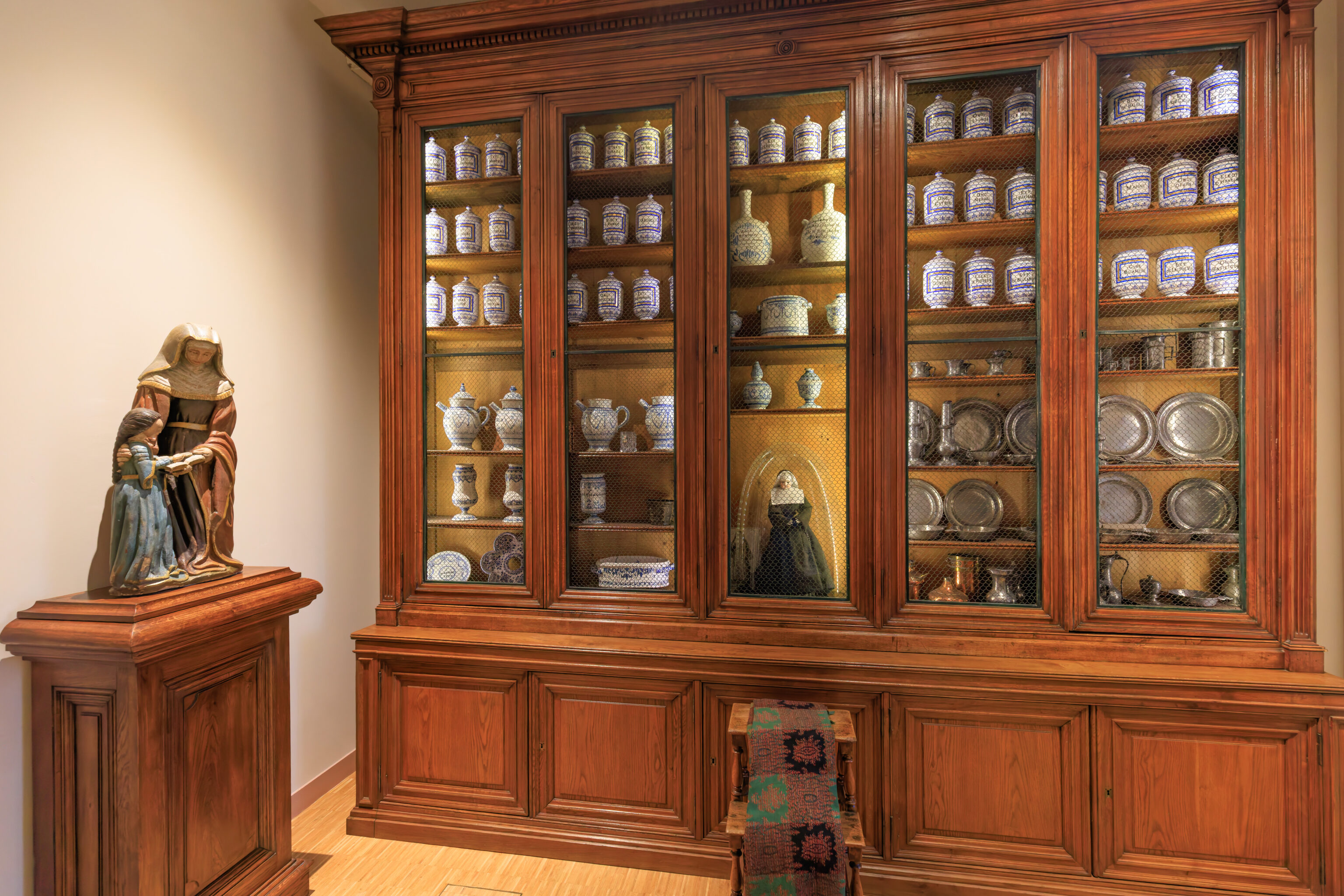
The next section of the museum contained scenes of everyday Burgundian life created by Perrin de Puycousin:
WELCOME TO THE MUSEUM

Folklorists in the 19th century set out to record and understand the habits and customs of different regions, with a view to preserving and conserving a vanishing rural society. Rooted in an immemorial past, "traditions" are embodied in a variety of objects: trunks, bridal bouquets, festive clothing, etc. In Burgundy, Gabriel Jeanton and Eugène Violet studied the customs of several villages.

Inspired by Frédéric Mistral, who founded the Museon Arlaten in Arles in 1899, Maurice Bonnefond Perrin de Puycousin (1856-1949) also set out to collect objects linked to the traditions of a bygone era. He first presented his collection at fairs and folk festivals, either having young girls wear the costumes or displaying them on wax mannequins.

After creating a first museum in his home town of Tournus, he donated his collection to the city of Dijon in 1935, in order to create an ethnographic museum of Burgundy, which opened in 1938 in the Hôtel Aubriot at 40 rue des Forges.

There he set up reconstructions of Burgundian interiors and scenes from everyday life, dressing wax mannequins purchased, for the most part, from the supplier of department stores and wax museums, Pierre Imans. These give visitors an immediate and true-to-life feeling for the figures displayed.

The Musée de la Vie bourguignonne opened in 1985 on the site of the former Bernardines monastery, at 17 rue Sainte-Anne. The rooms on the ground floor are the first in the museum and offer a summary view of Perrin de Puycousin's scene displays and recreations.
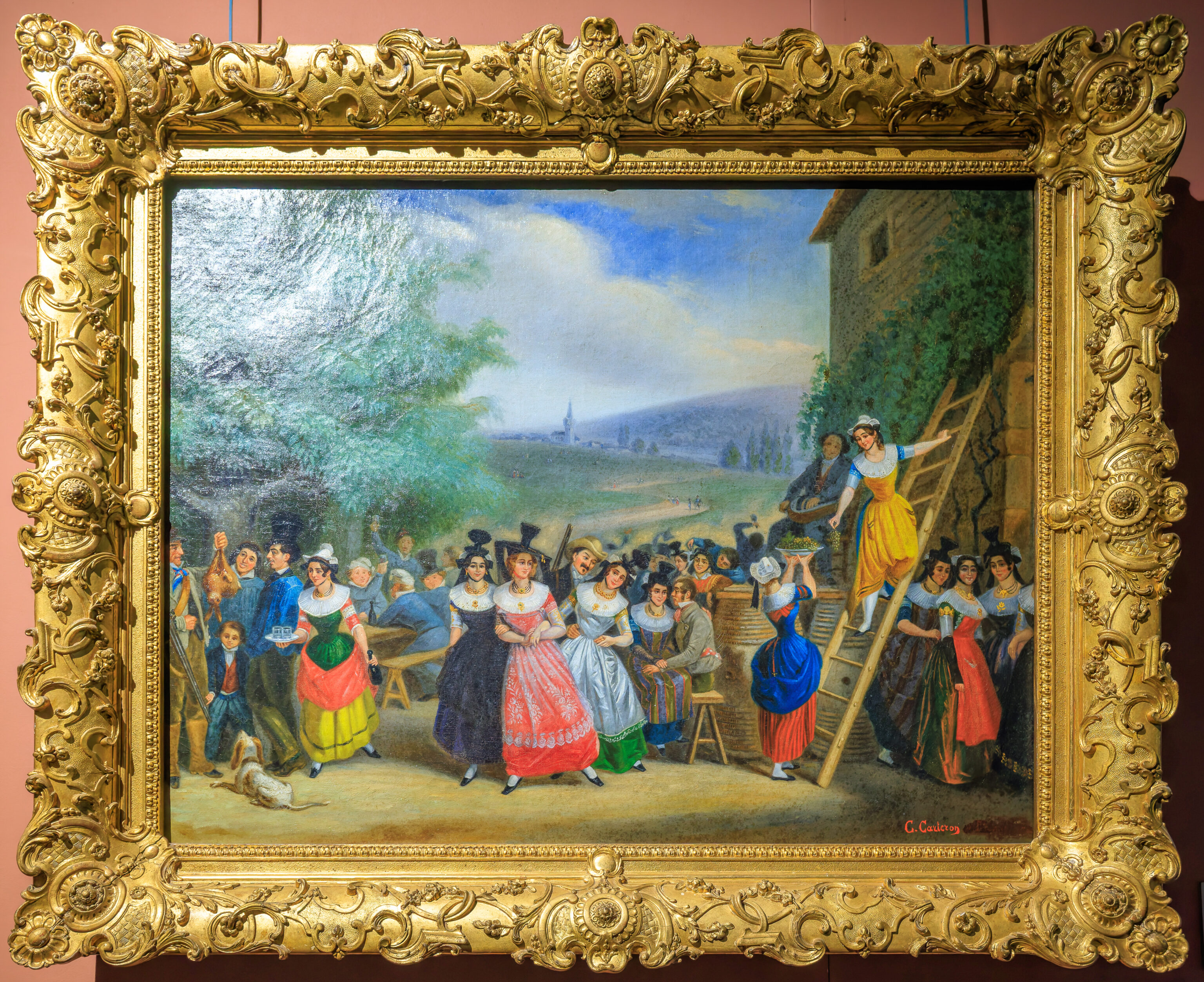
Charles Carteron (1824-1883)
Oil on canvas
1856
Museum of Burgundian Life Perrin de Puycousin
Inv. 2010.14.1.1 and 2
(Translated using Google)
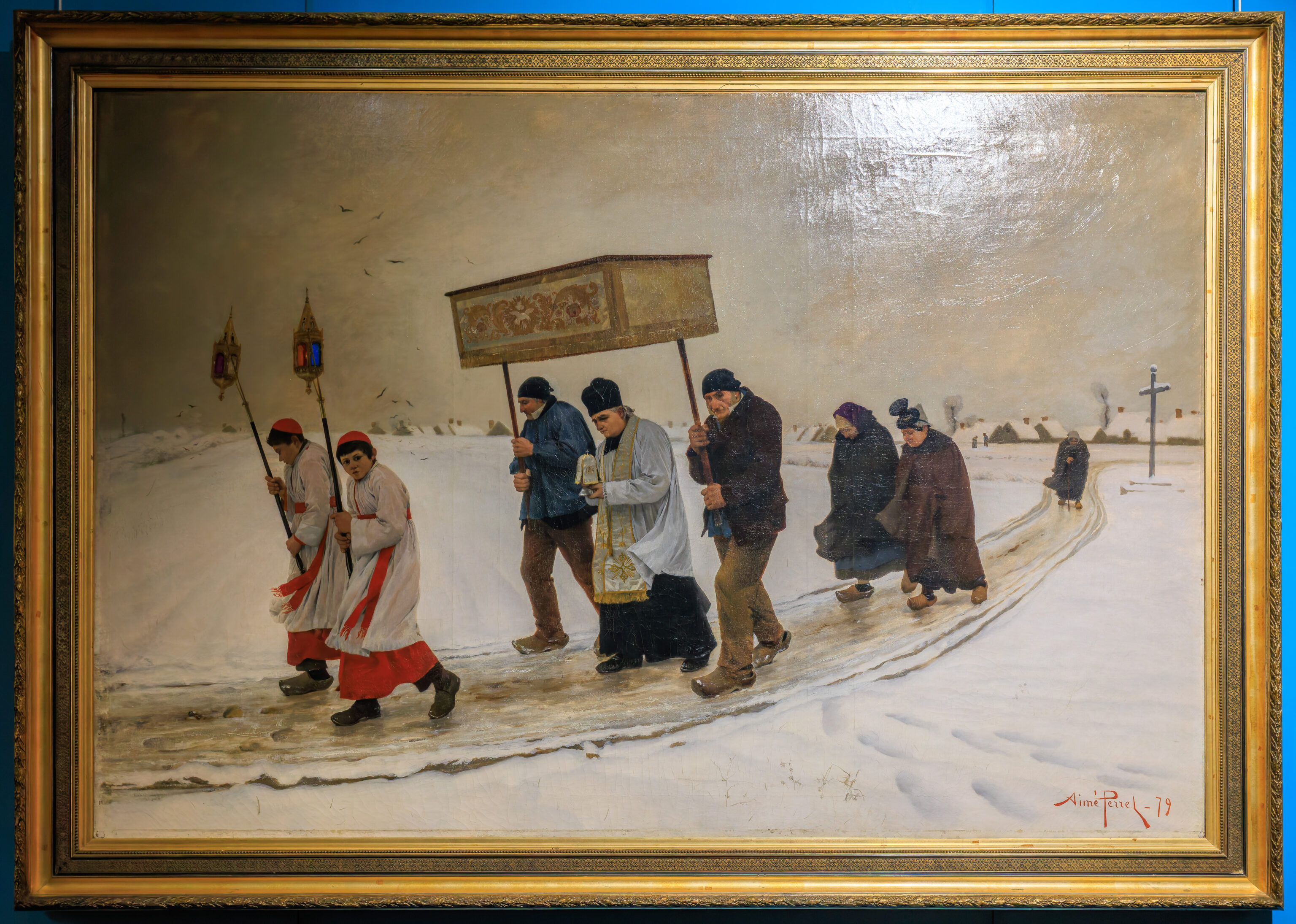
Aimé Peret (1847-1927)
Oil on canvas
1879
Musée d’Orsay, Paris
Inv. D2000.2.1
(Translated using Google)
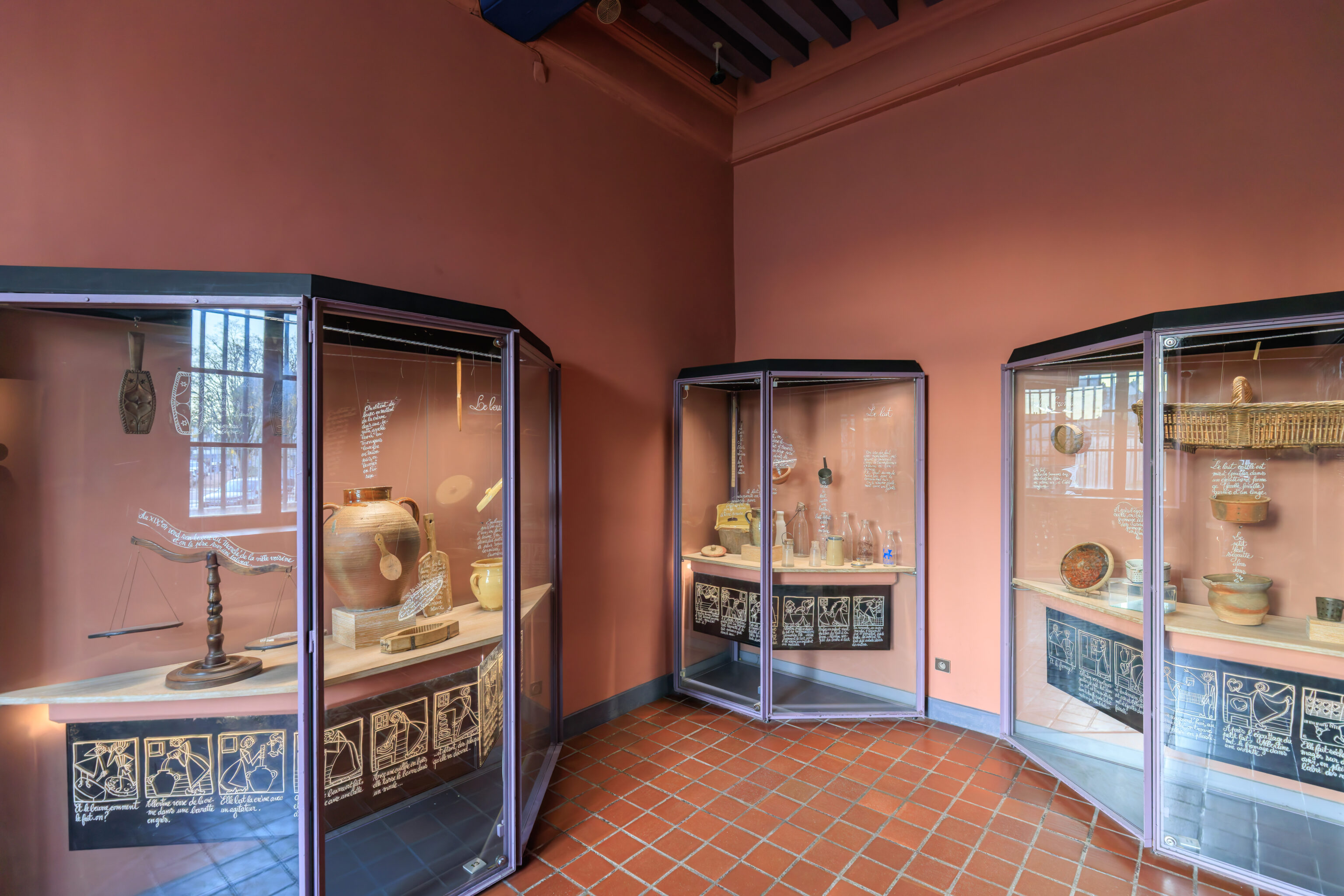
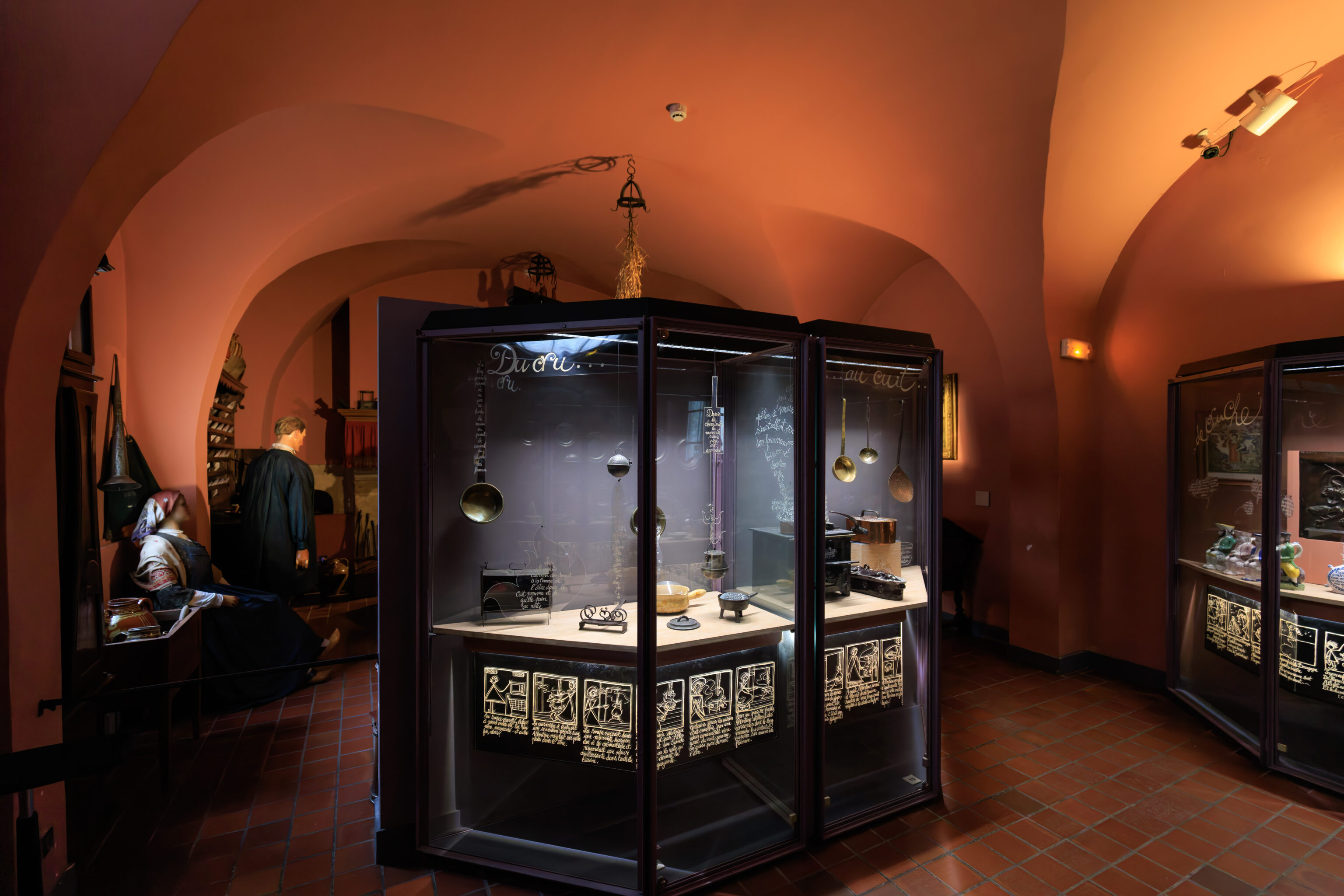
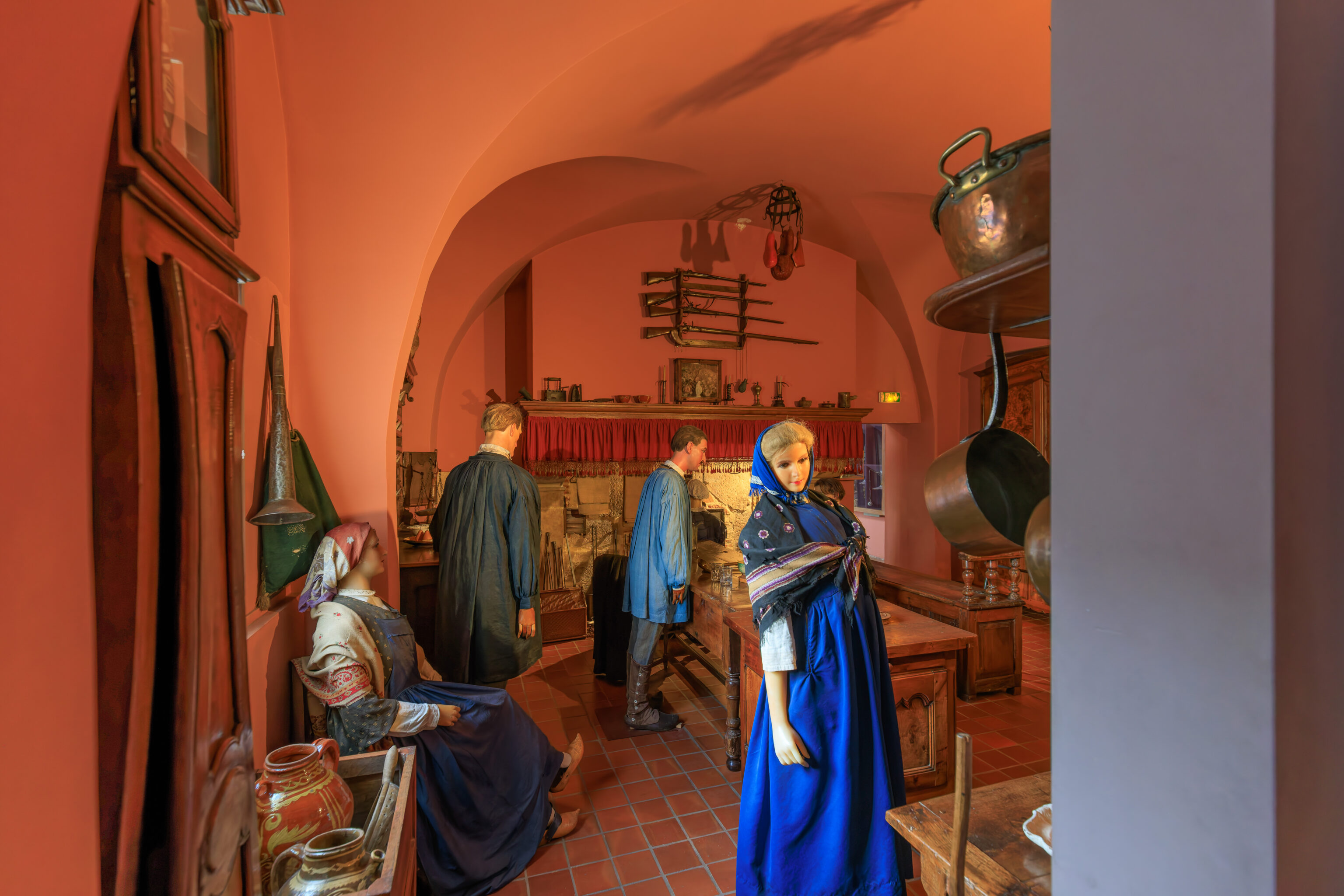
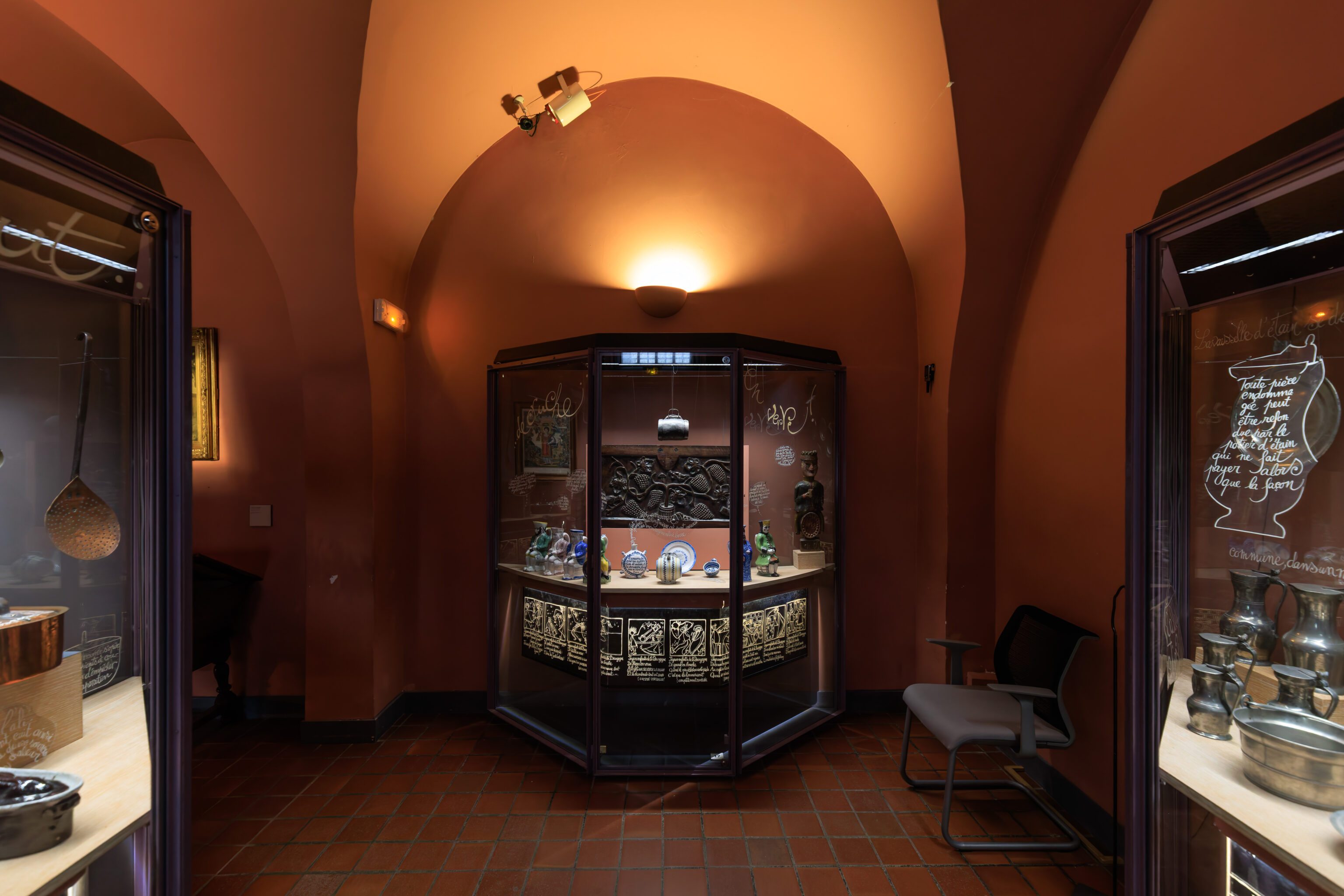
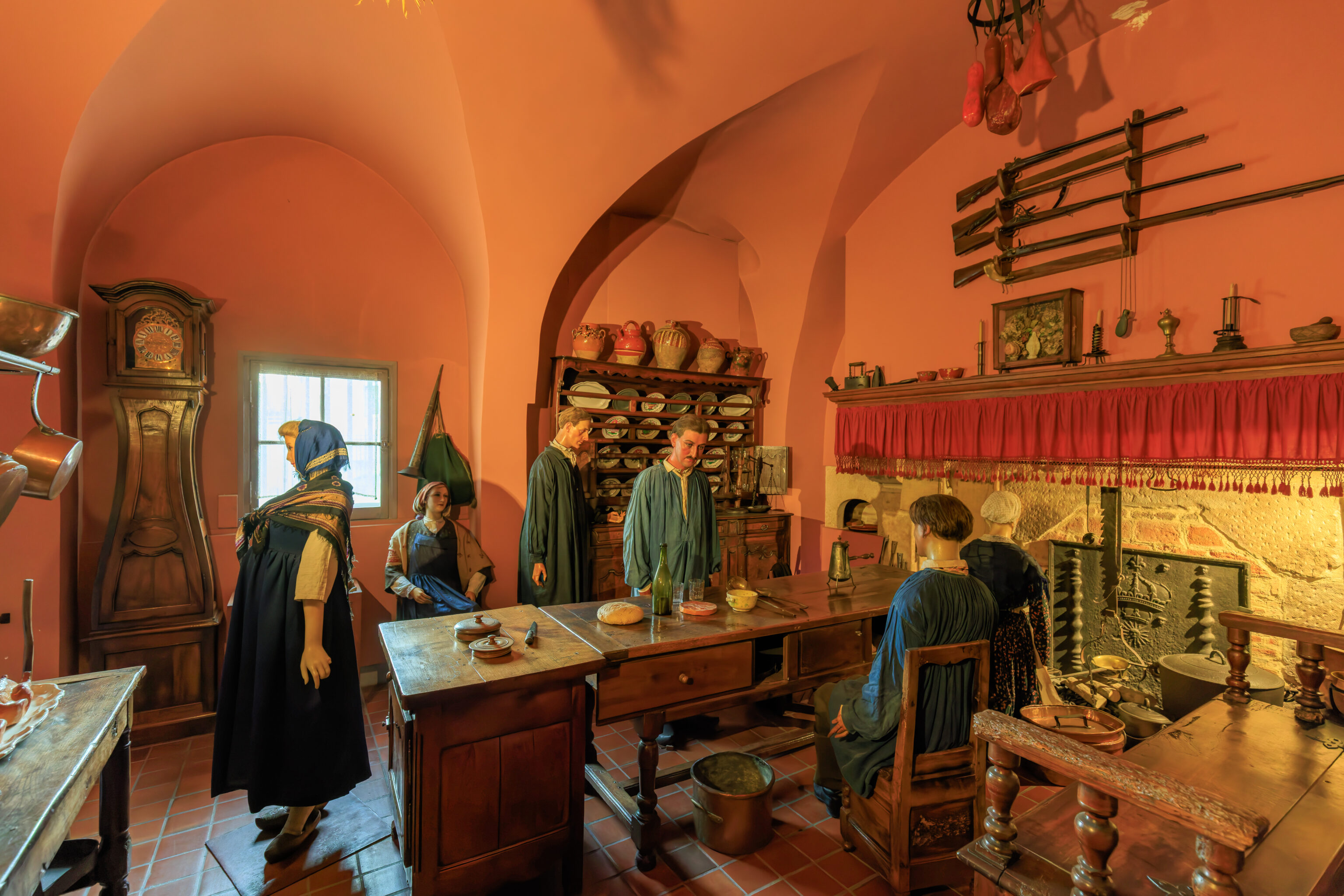
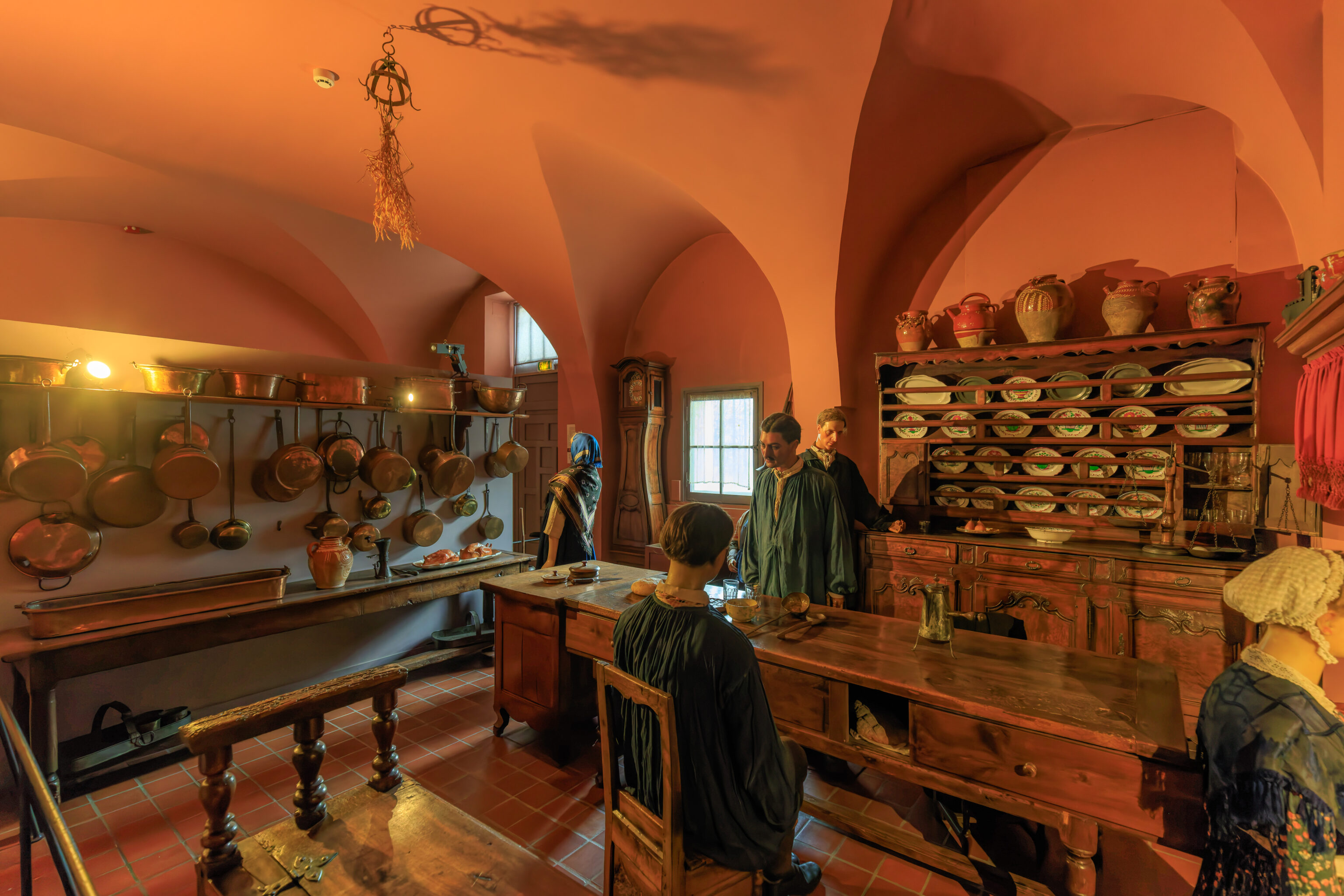
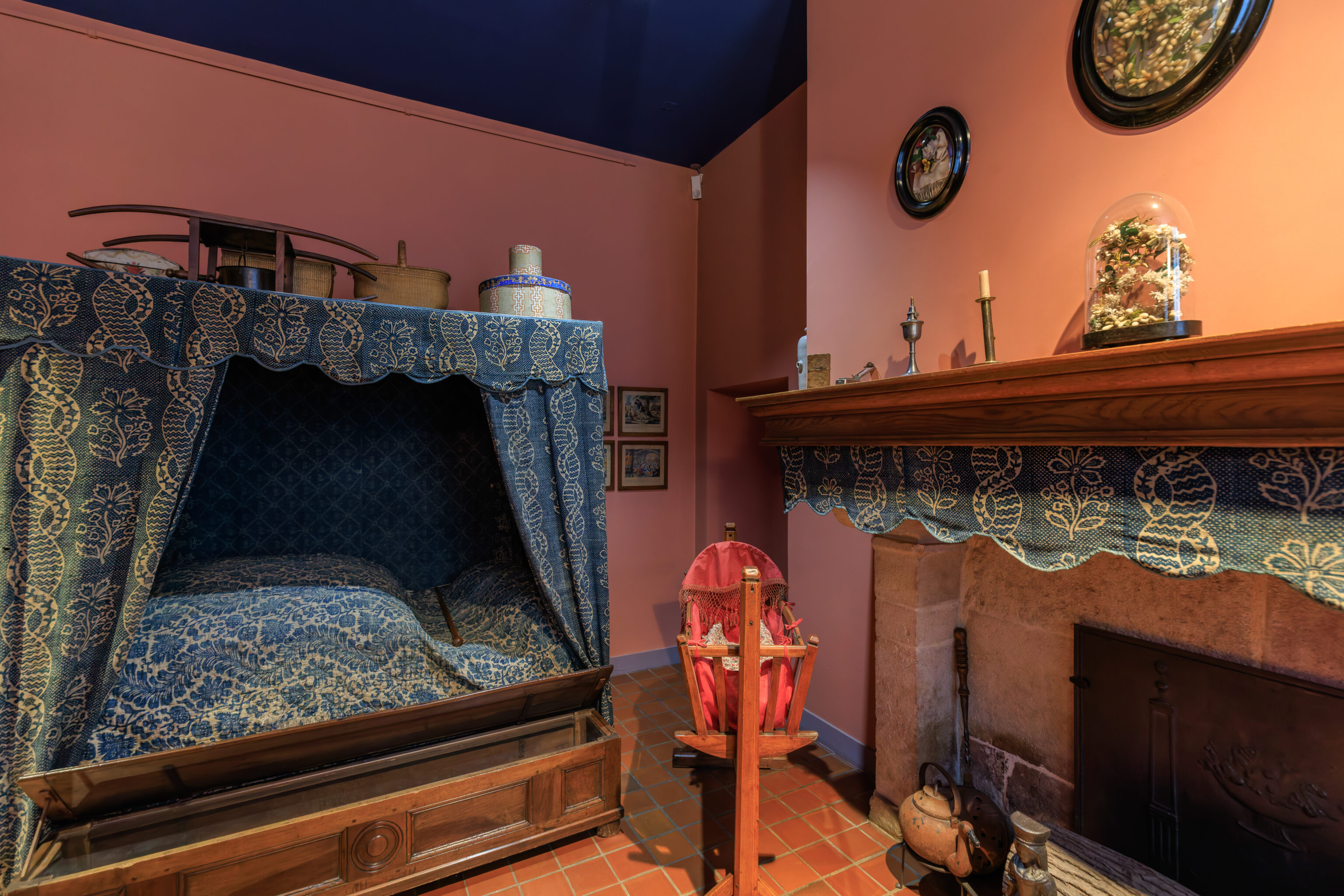
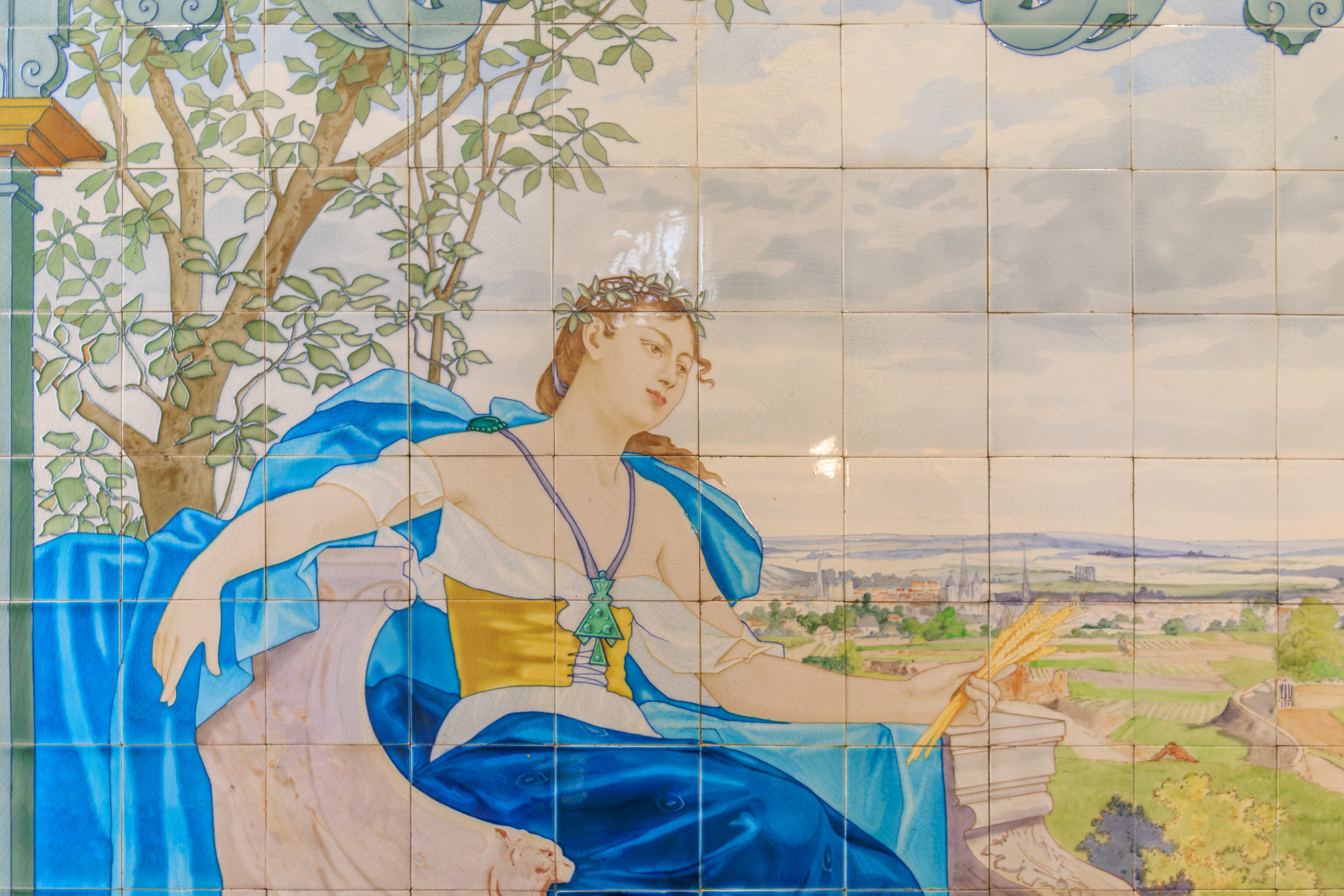
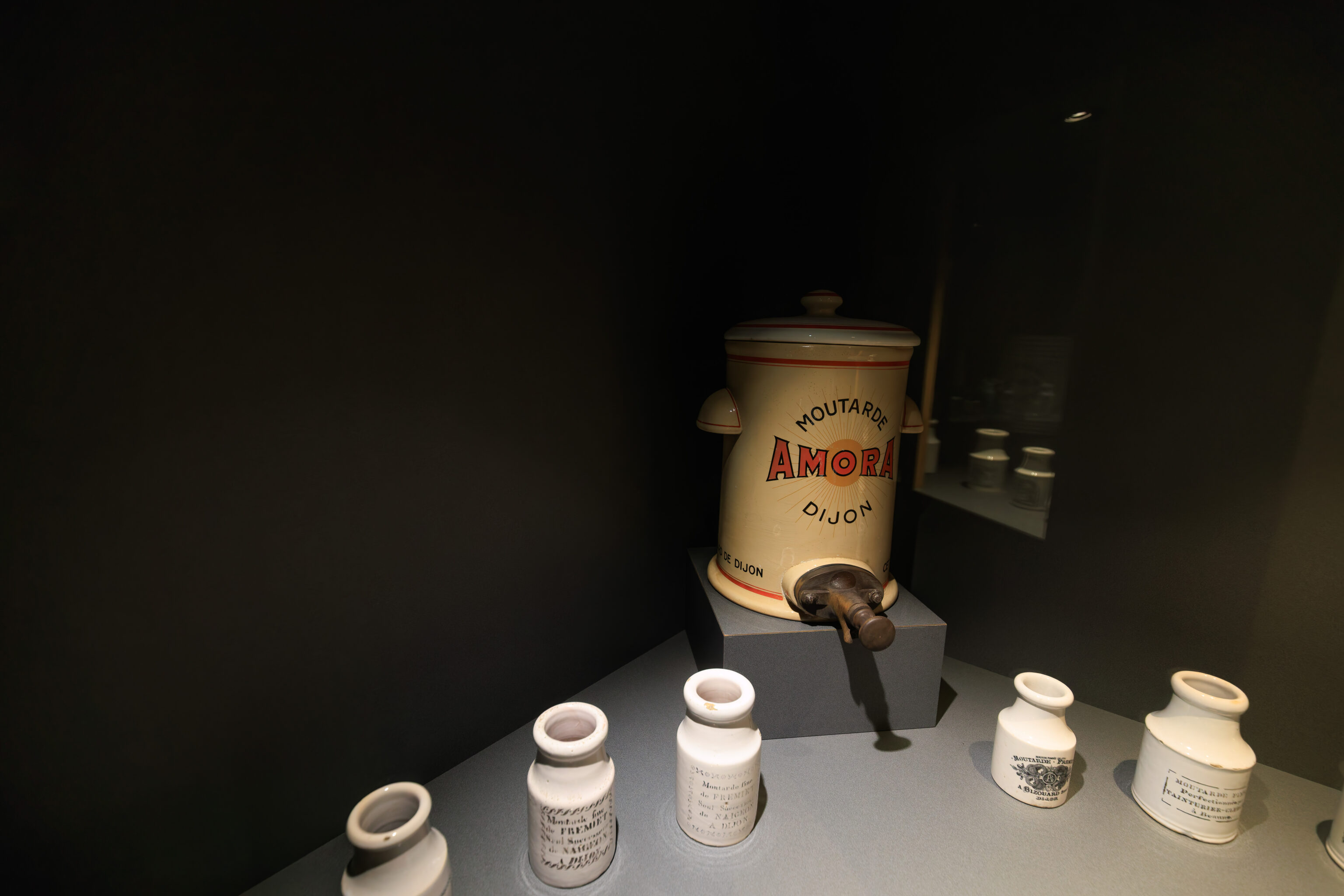
Two columns adorned with ears of wheat frame a woman holding five ears of wheat as a symbol of prosperity. Sarreguemines earthenware
19th century
On loan from the Museum of Fine Arts.
(Translated using Google)
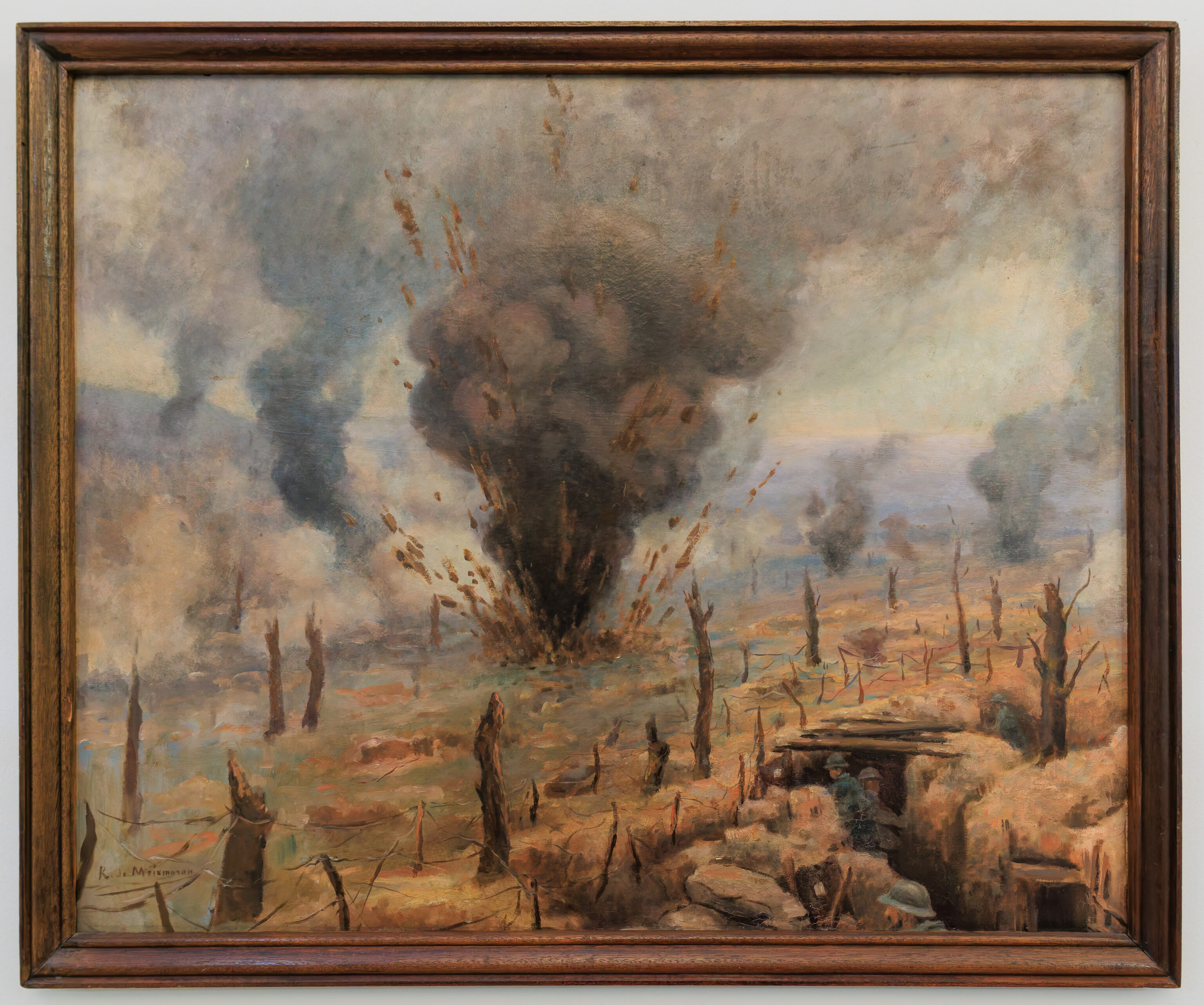
Raoul de Meixmoron (1869-1928)
Oil on cardboard
Circa 1920
On loan from the 27th Infantry Regiment of Dijon
Inv. D.99.1.26.1
(Translated using Google)
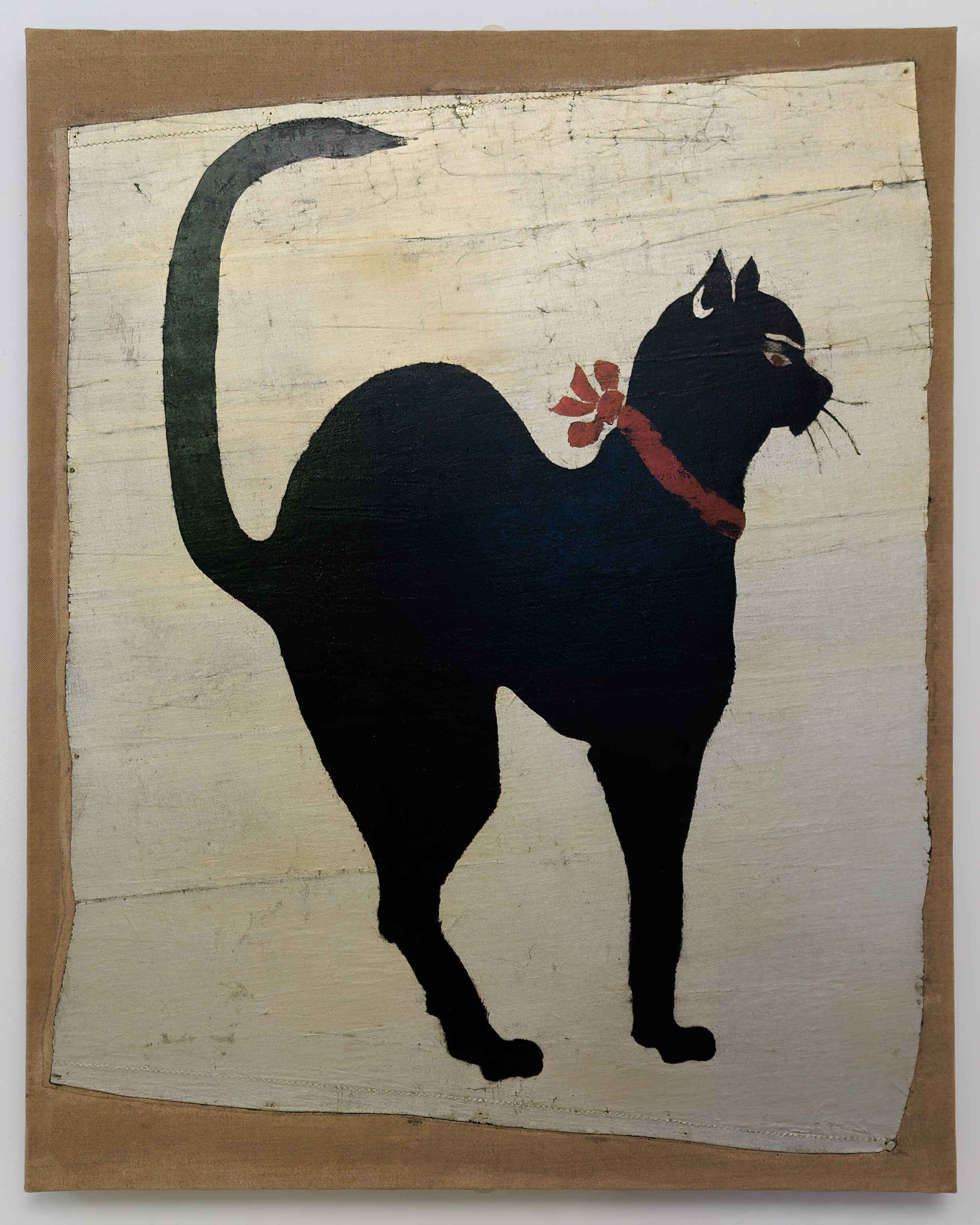
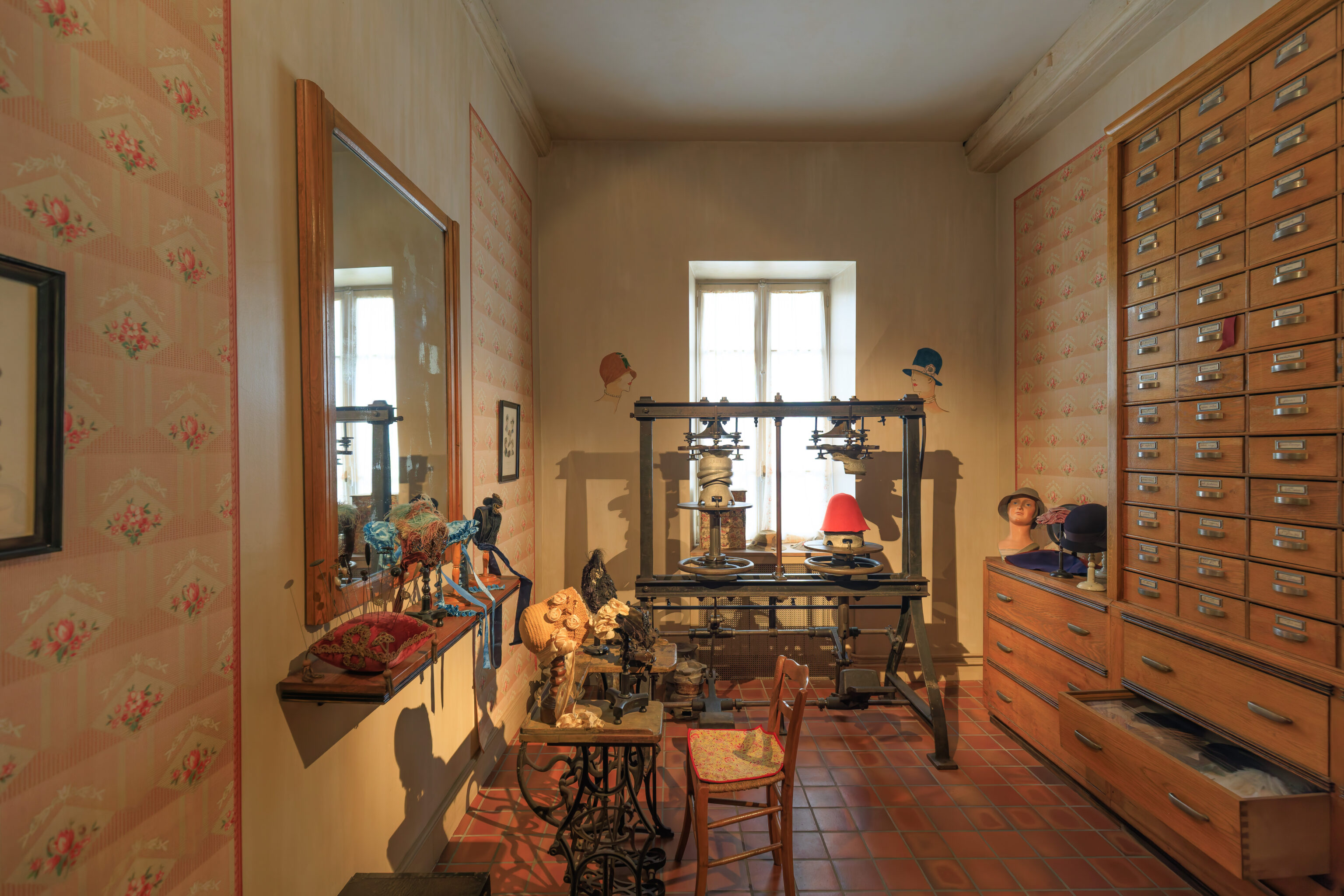
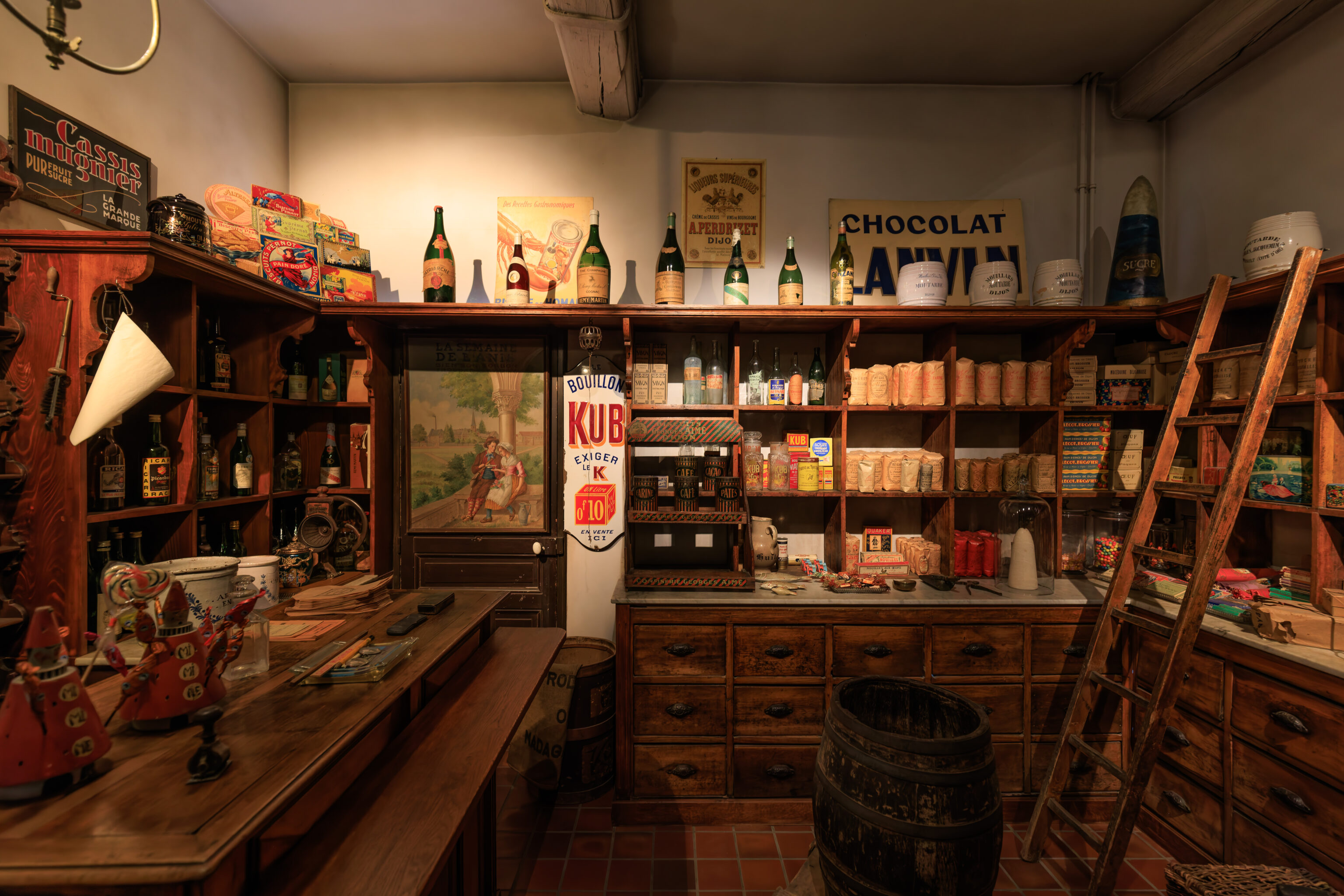
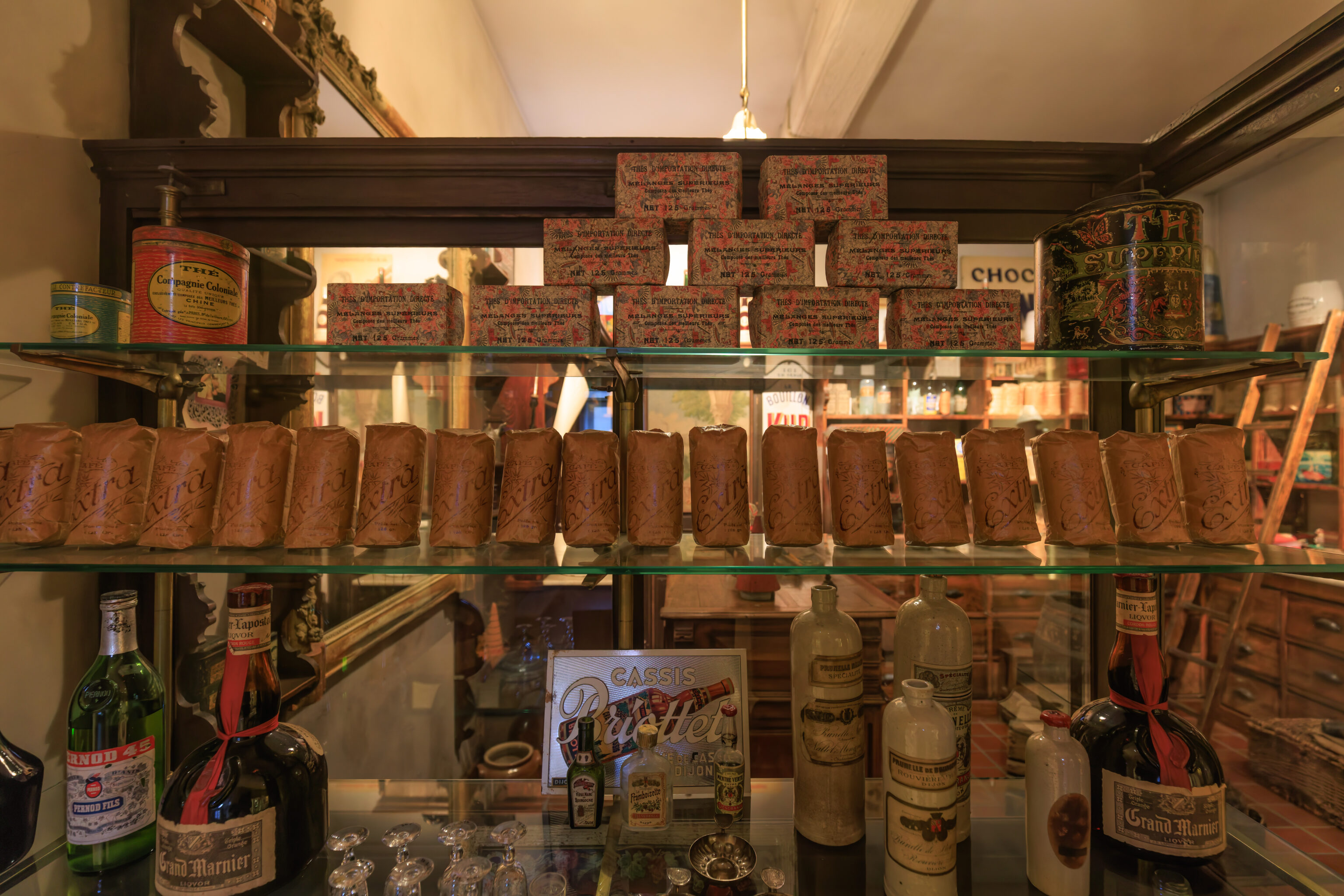
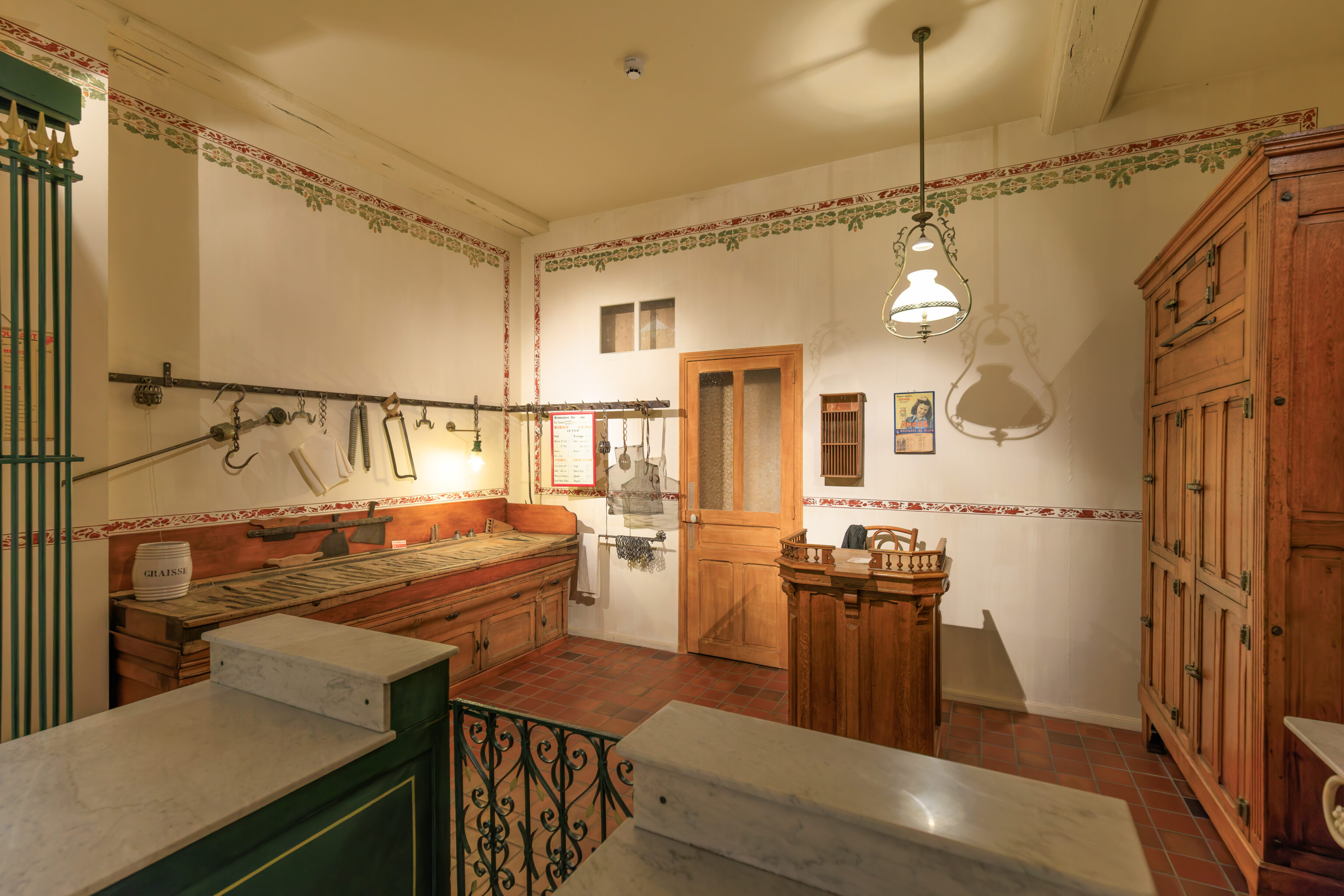
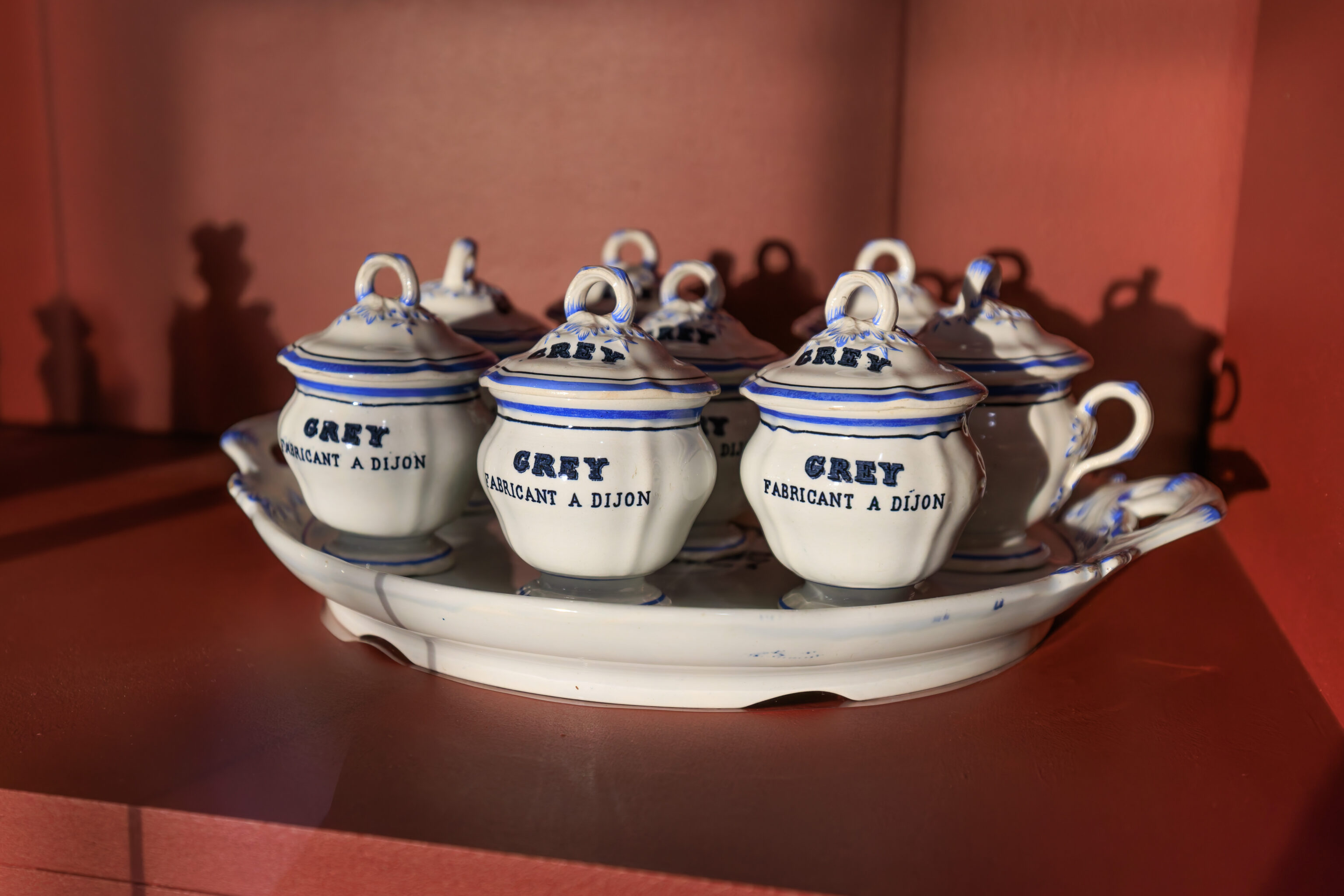
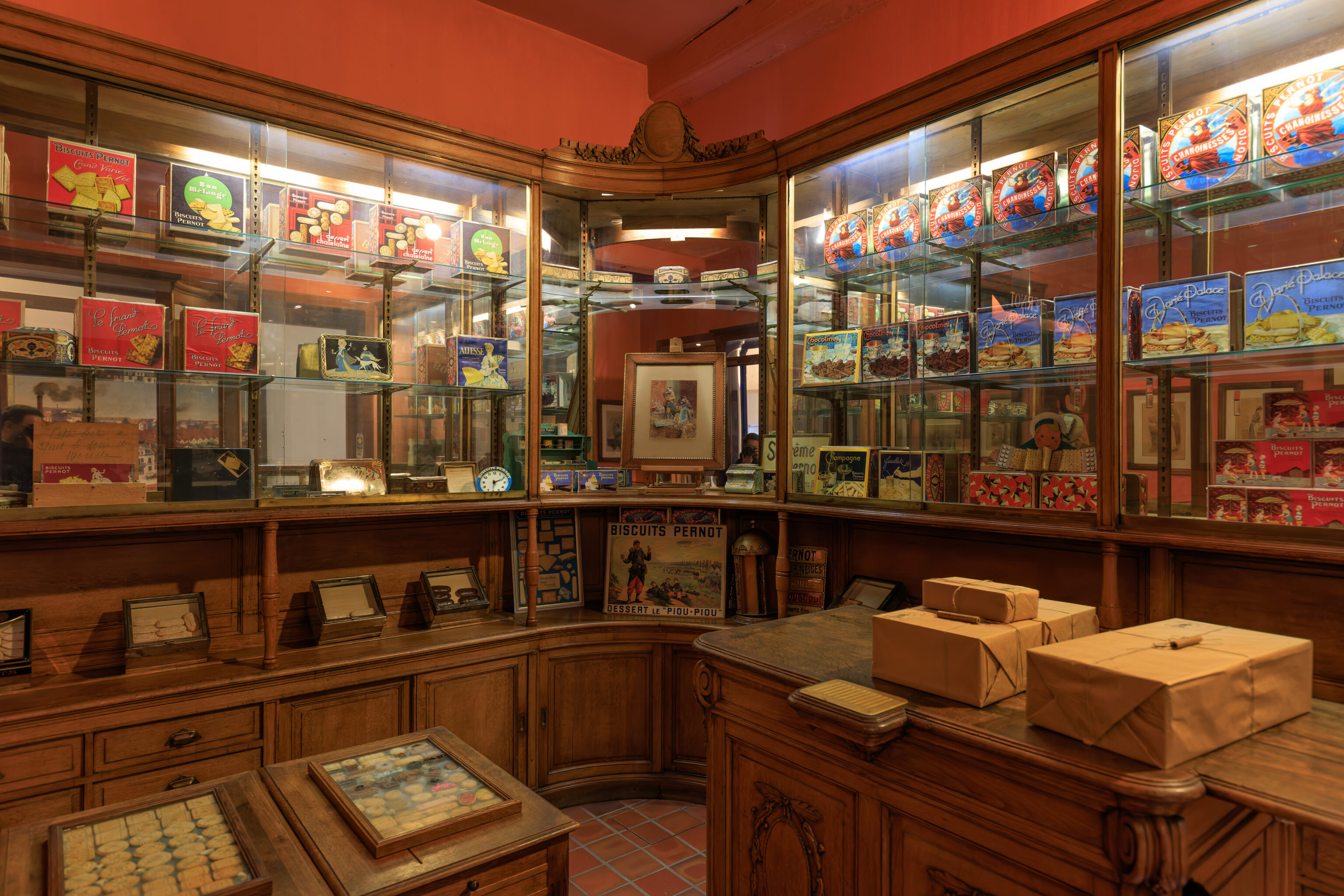
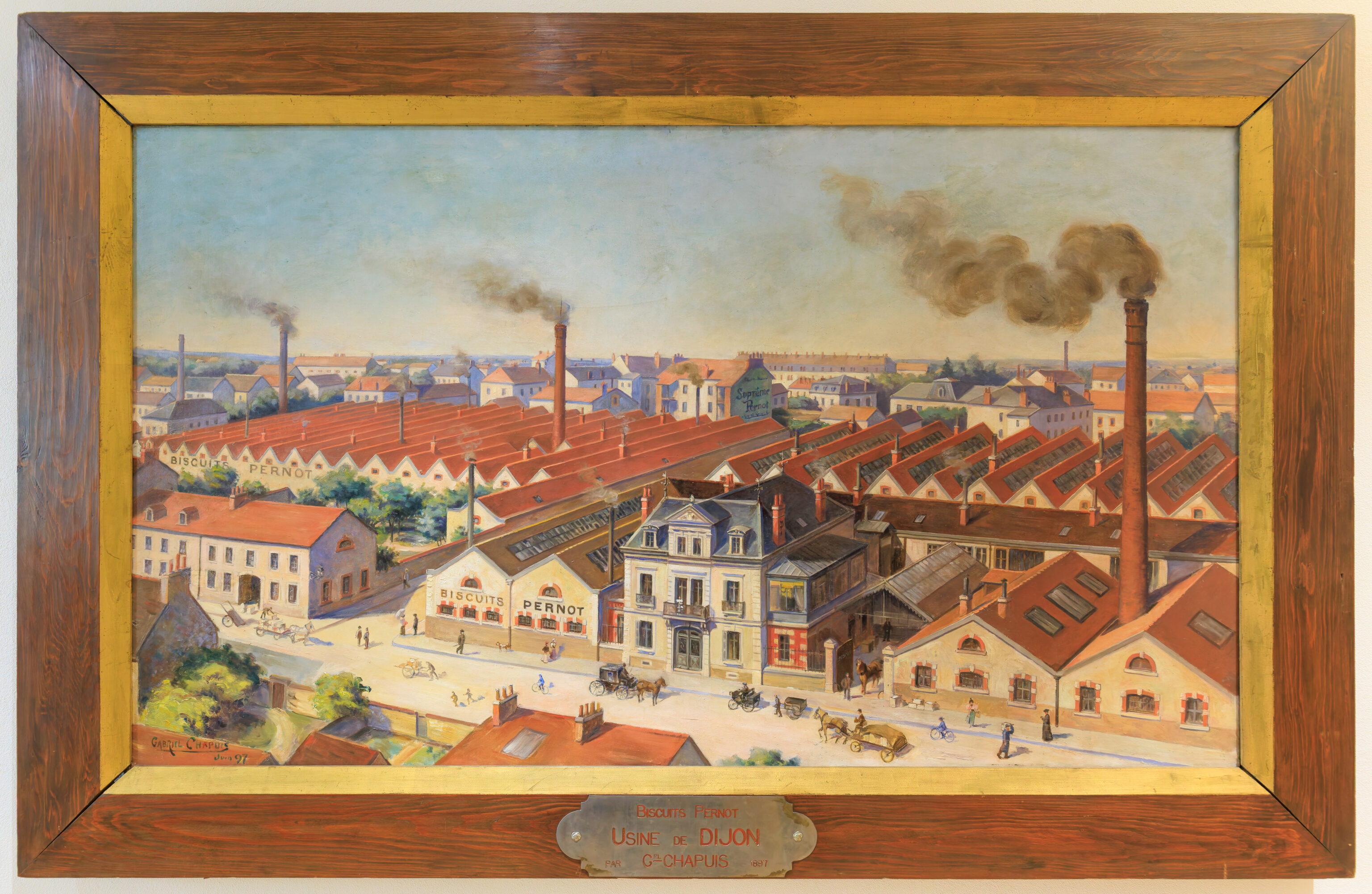
Gabriel Chapuis
Circa 1897
Oil on canvas
Inv. 88.19.6
Acquired with the support of the Burgundy-Franche-Comté Regional Council and the French State through the Regional Acquisition Fund for Museums
(Translated using Google)
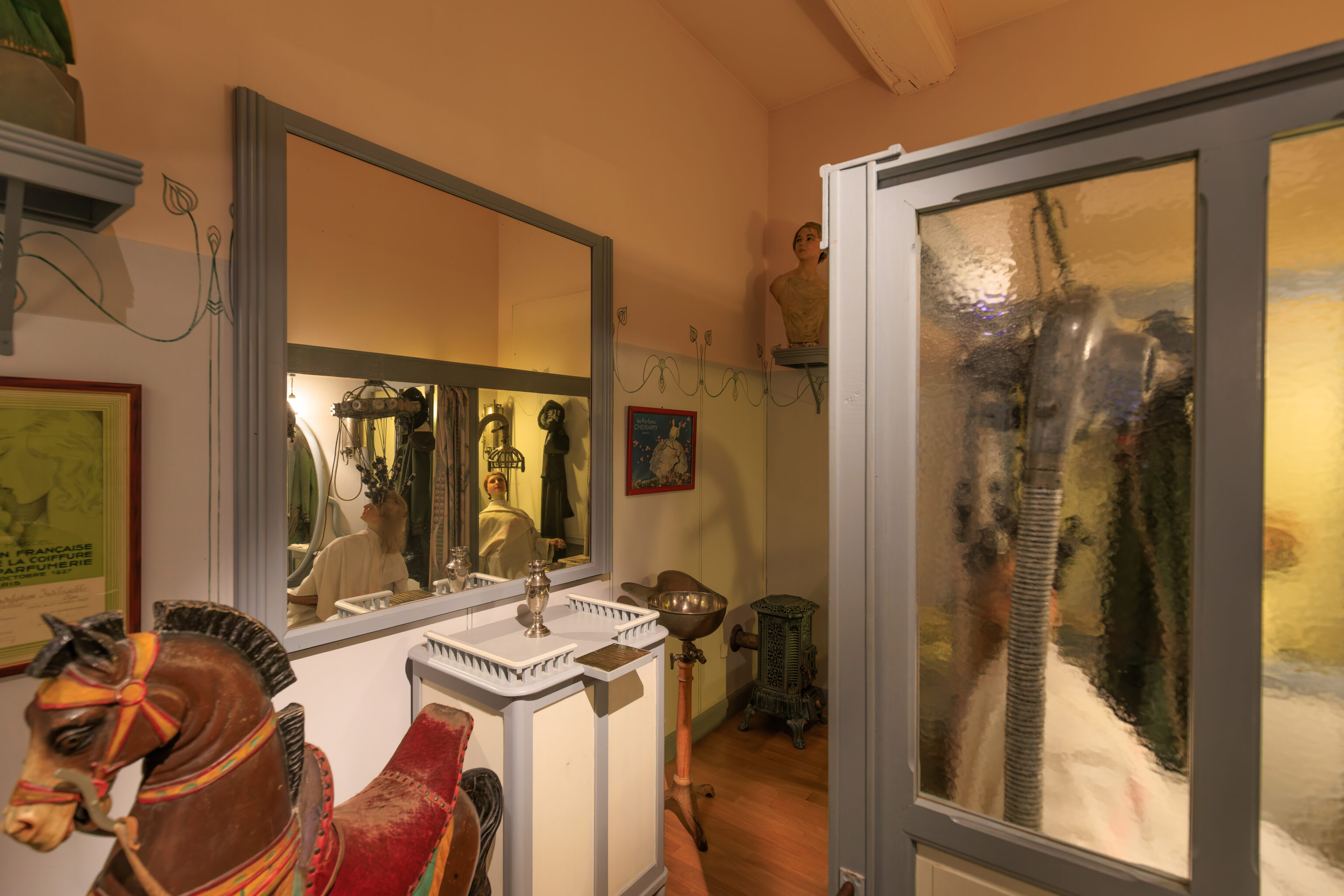
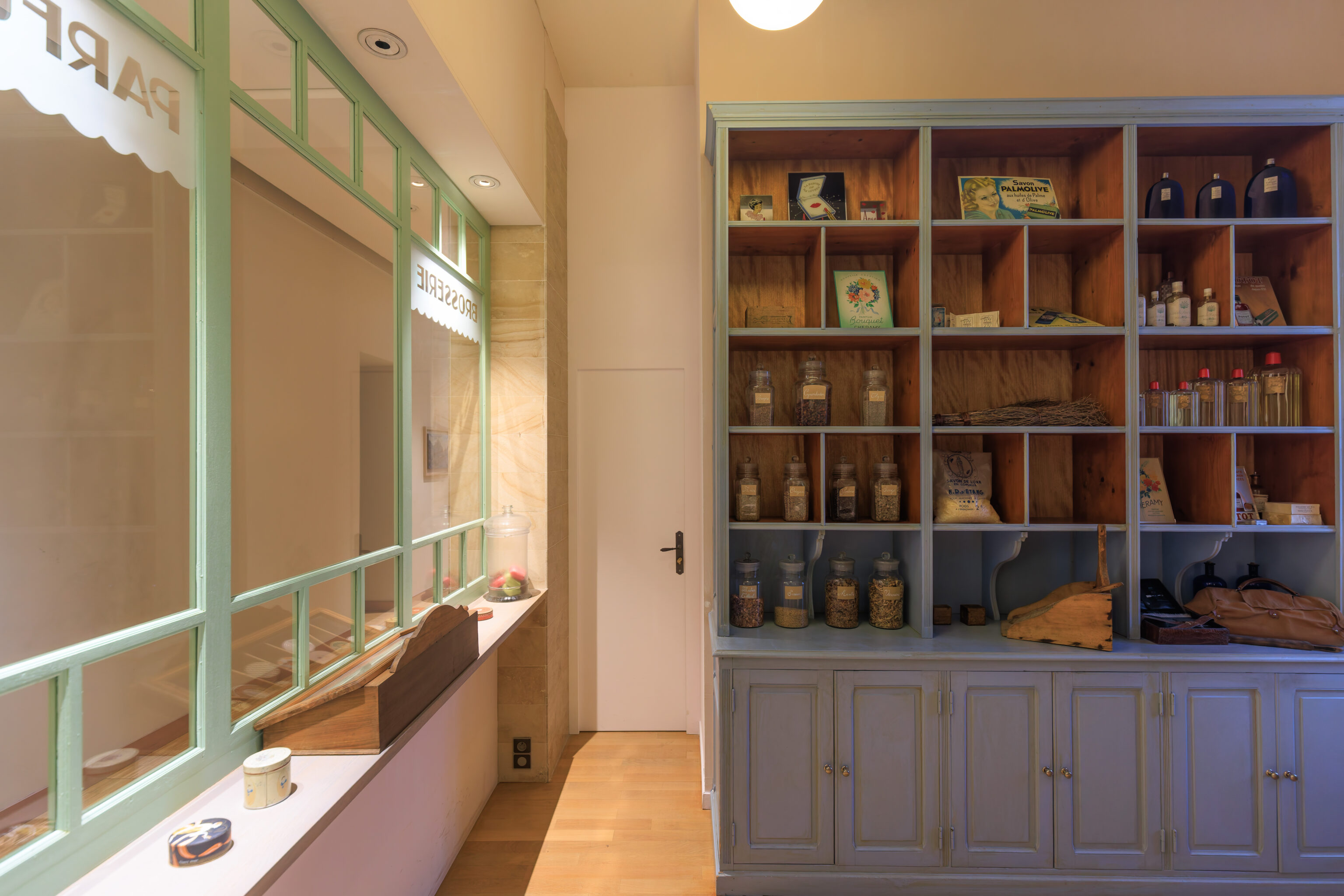
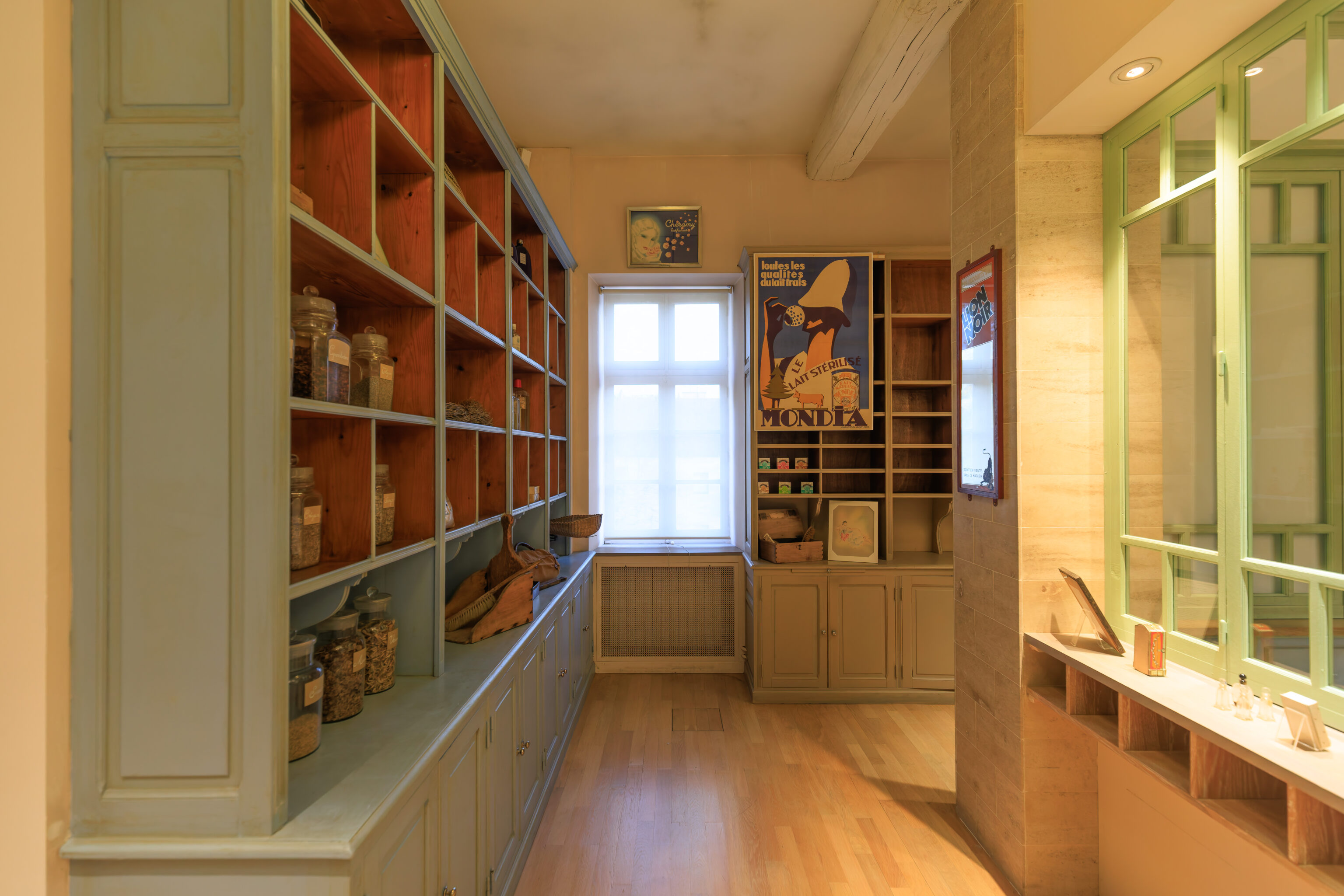
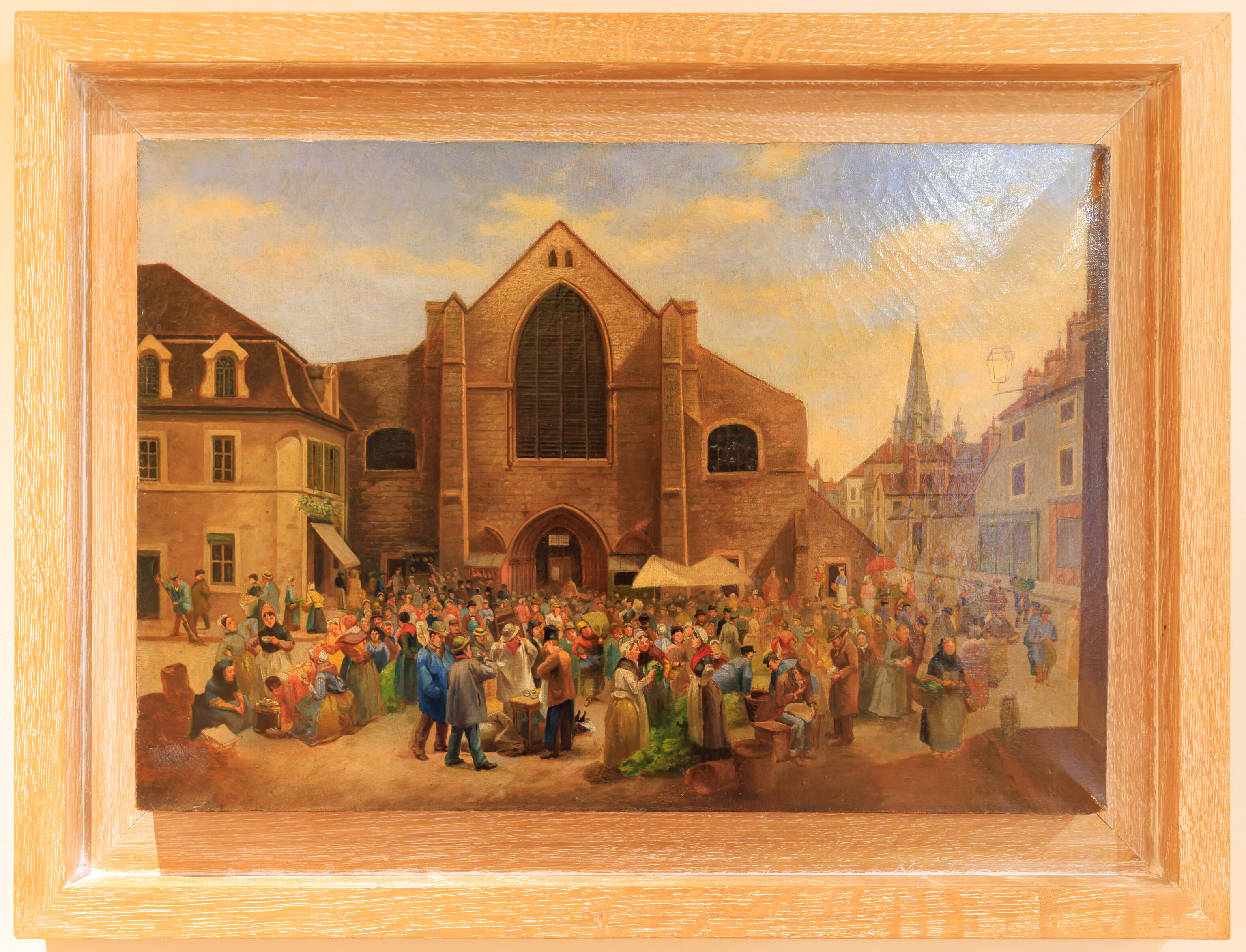
Oil on canvas by Jules Talmot. 1885
72.7.4
This painting depicts a market atmosphere in front of the Jacobins church, built in 1237 and demolished in 1874 to make way for the Ballard Market Hall, which is still frequented today by many a good housewife. This establishment marked the end of a series of relocations that began as early as the 15th century.
Indeed, the fish market was the subject of numerous regulations because it brought together, around the Notre-Dame church and then on Rue de la Poissonnerie, itinerant merchants, resellers, and vendors. The markets for pigs, hemp, and tanned hides were held on Rue Verrerie and Rue Chaudronnerie. The town center, the traditional location for butchers, had two markets: one for “herbs, roots, butter, milk, and local cottage cheese,” the other for “vegetables, eggs, and fruit.” But the congestion caused by the stalls was such that in 1708 the City built a market hall in Place Saint-Fiacre, which also housed the game and poultry market. The butter and egg market was established in 1764 in Place des Cordeliers.
These relocations were a consequence of the nuisances that the markets generated, and the repeated complaints describe picturesque, foul-smelling, and sometimes violent situations. Taming this tumult was a major concern for the city. As early as 1426, the Champeaux market halls welcomed merchants and vendors; they operated until 1807, the year in which the North Market, which is depicted in this image, was established in the Jacobins church.
(Translated using Google)
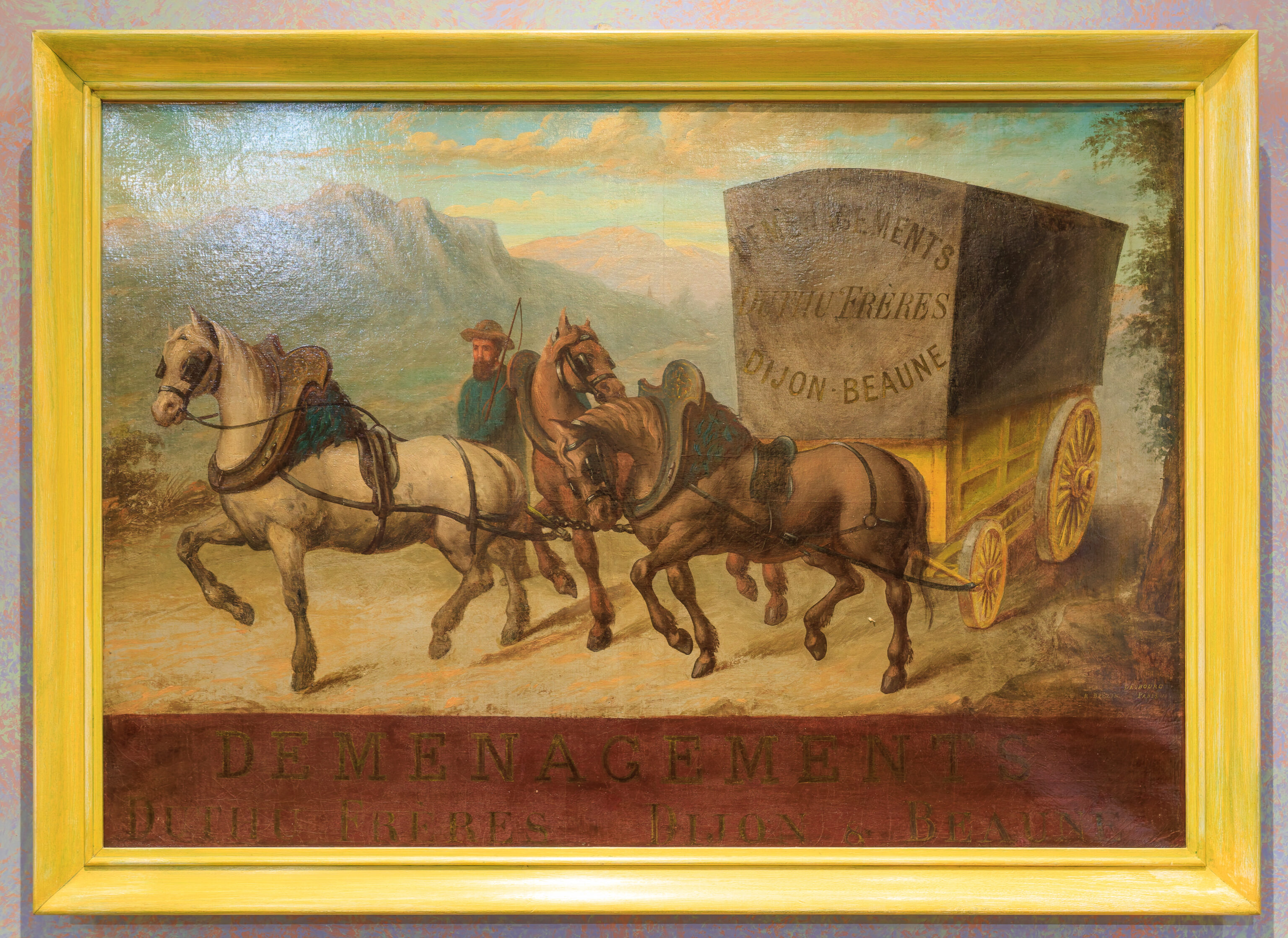
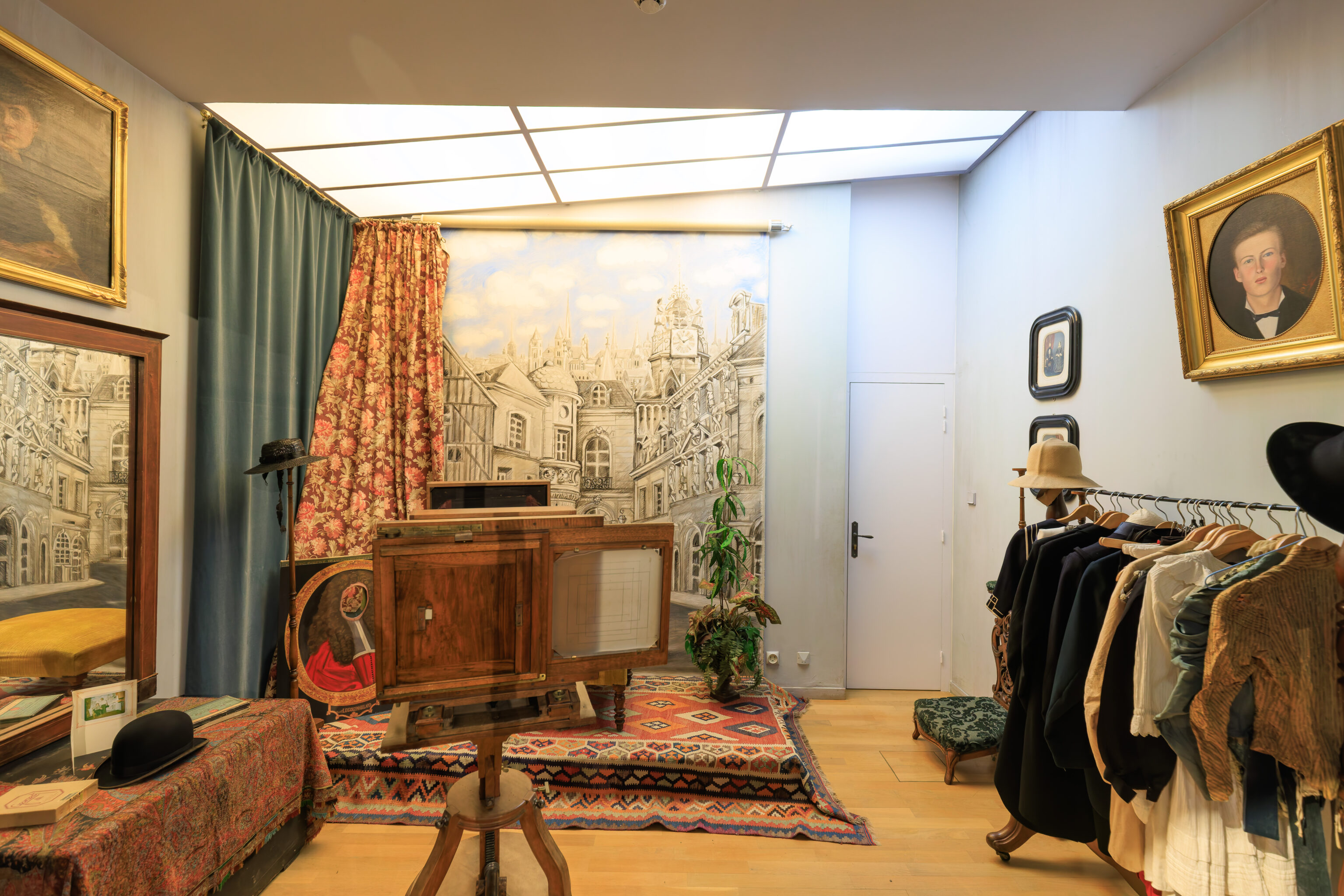
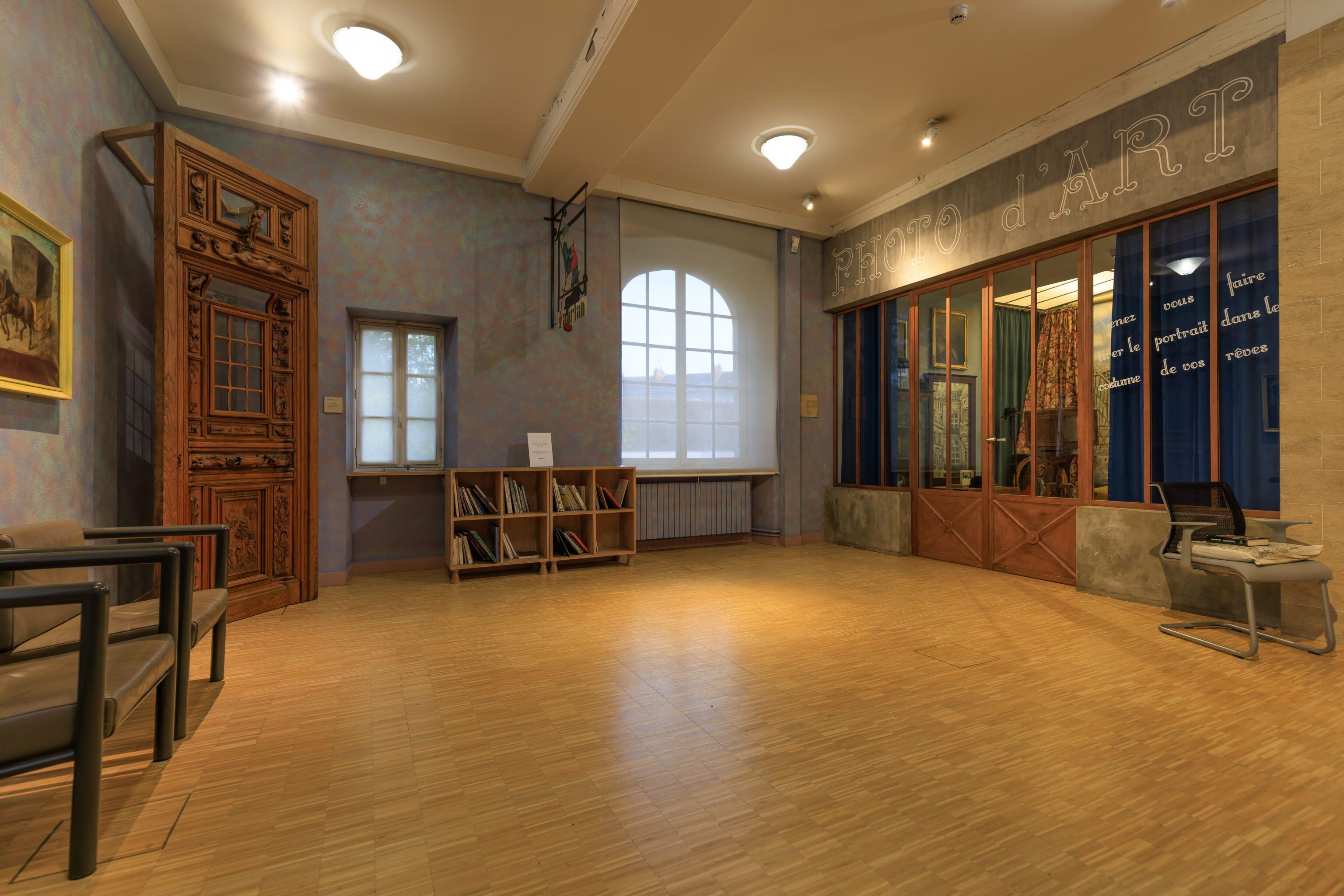
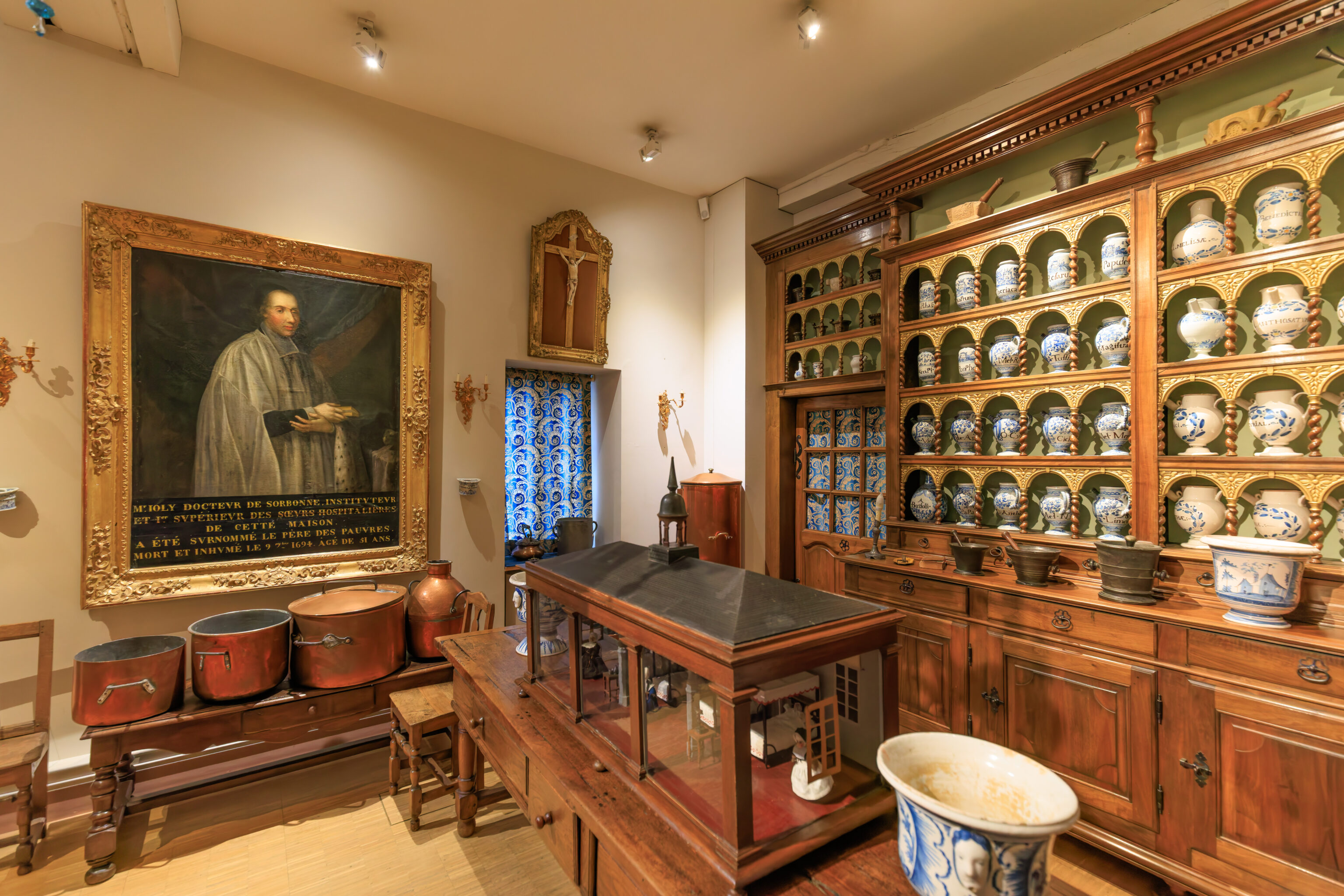
Henry Léopold LEVY (1840-1904)
Oil on canvas
1895
2013.5.1.1 and 2
Gift of the Society of Friends of the Dijon Museums
(Translated using Google)
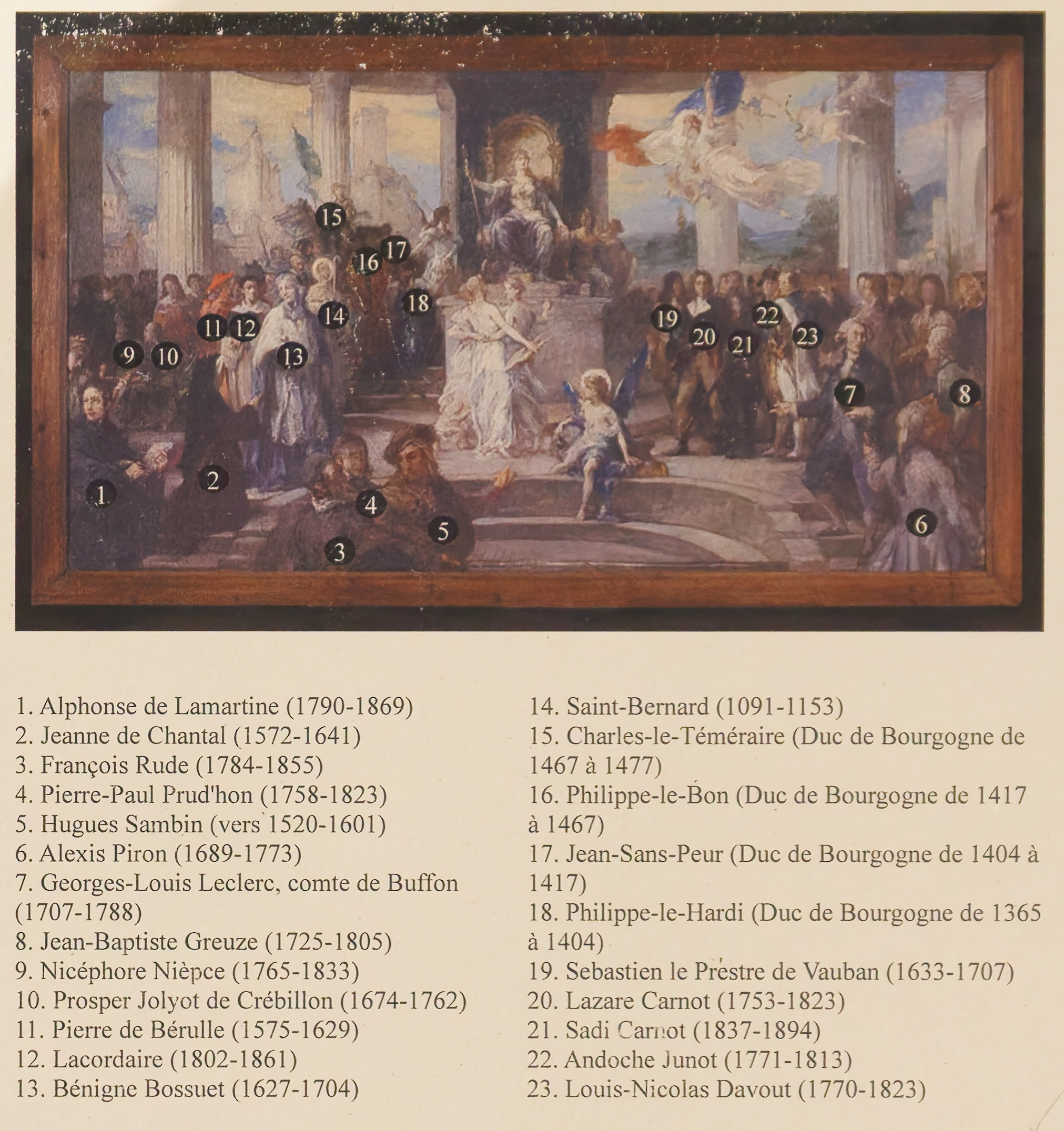
The painting’s sign identifies the people depicted.
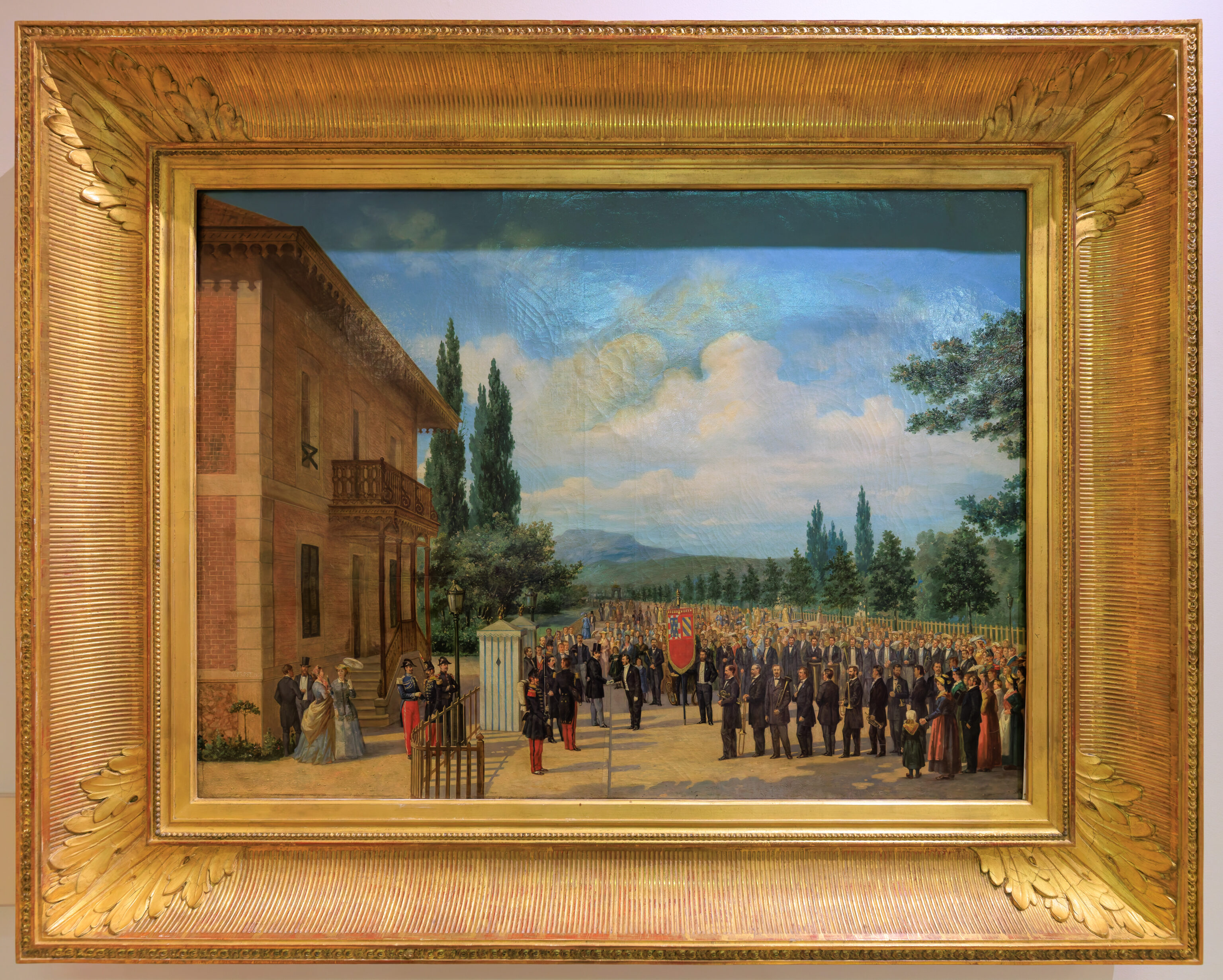
to Napoleon III, on July 24, 1864.
Oil on canvas by Victor Prost (1842-1912).
1868.
On loan from the Municipal School of Wind Orchestra.
(Translated using Google)
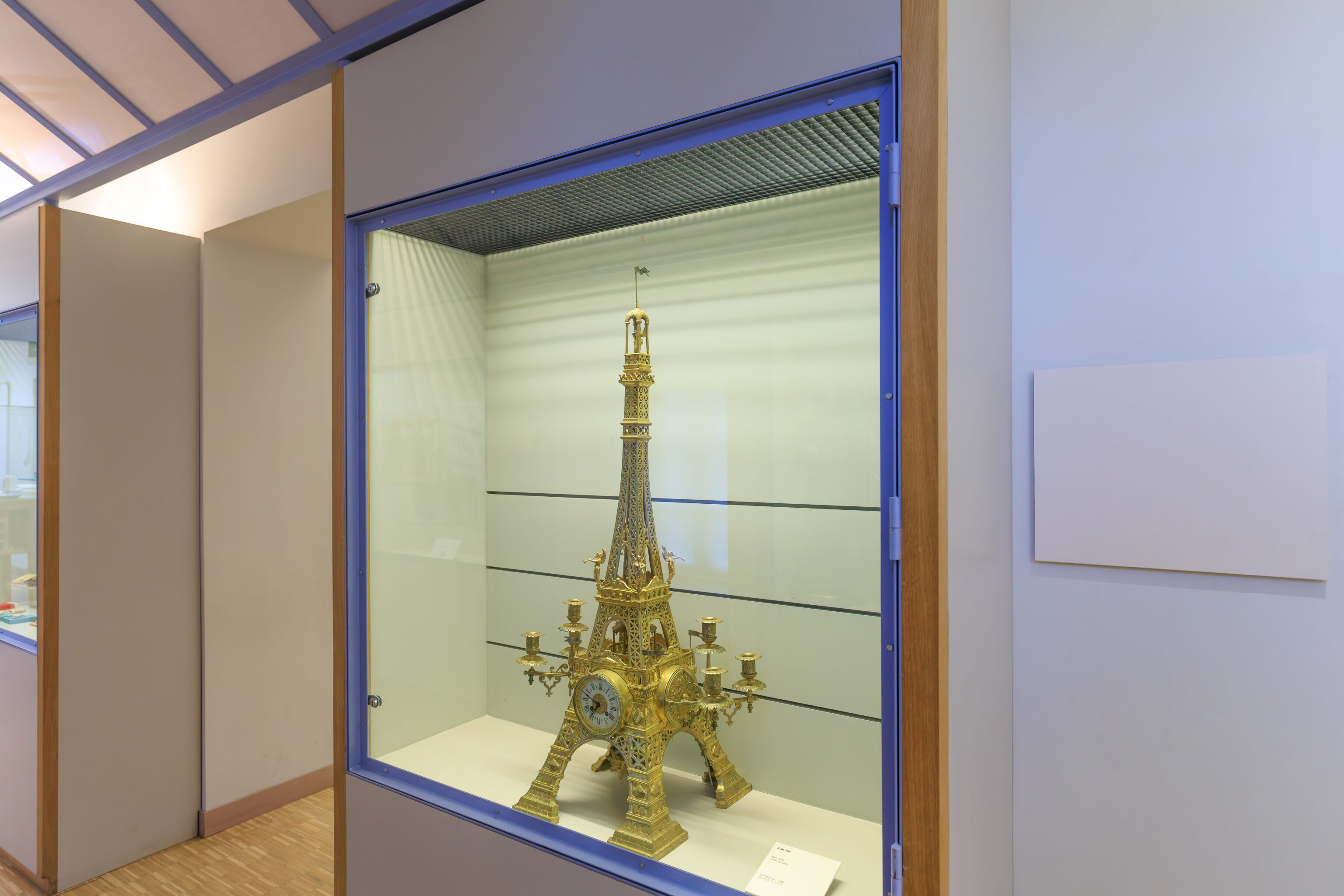
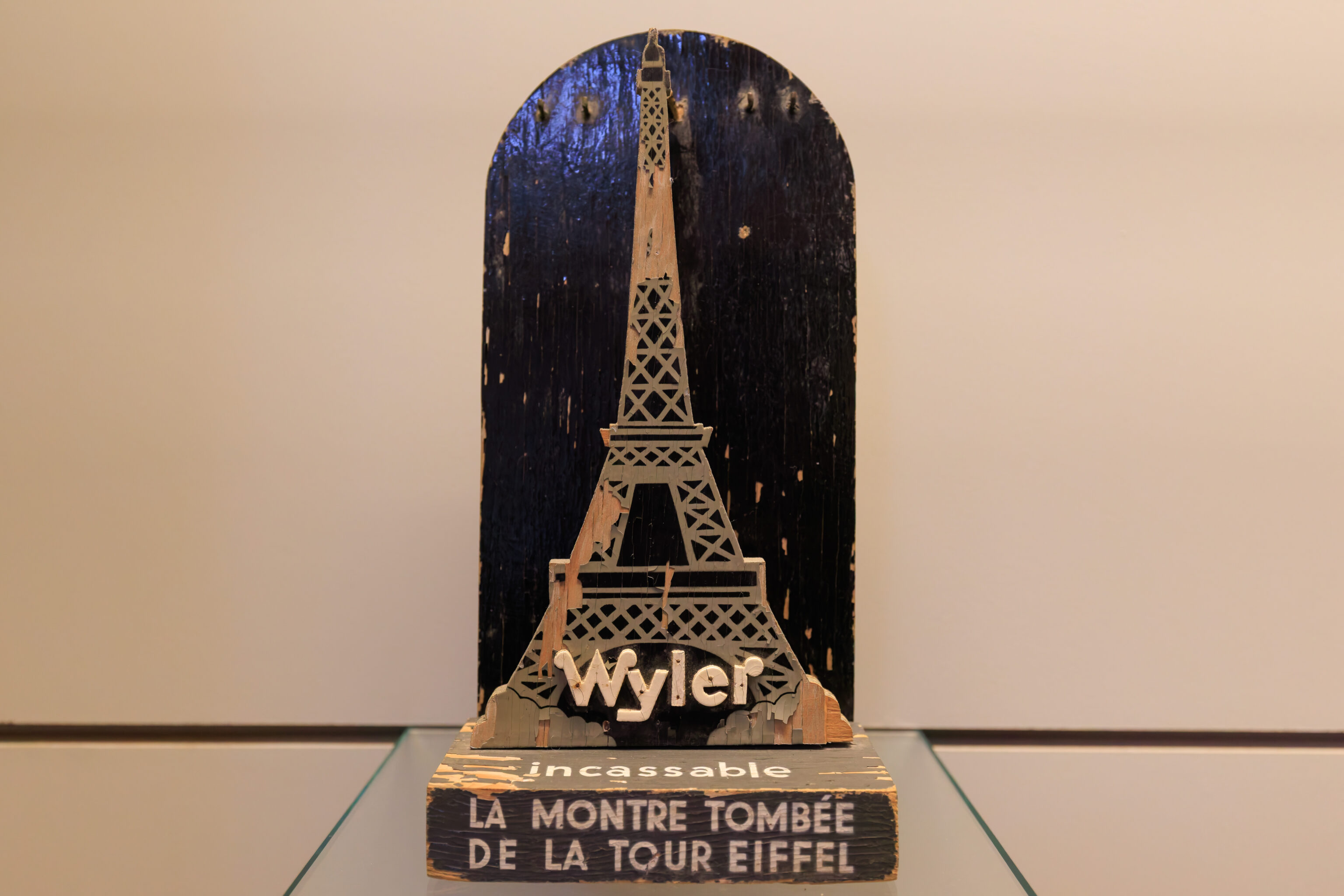
Circa 1899
Cast brass
Moricard donation, 1986
Inv. 86.61.37.1 to 11
(Translated using Google)
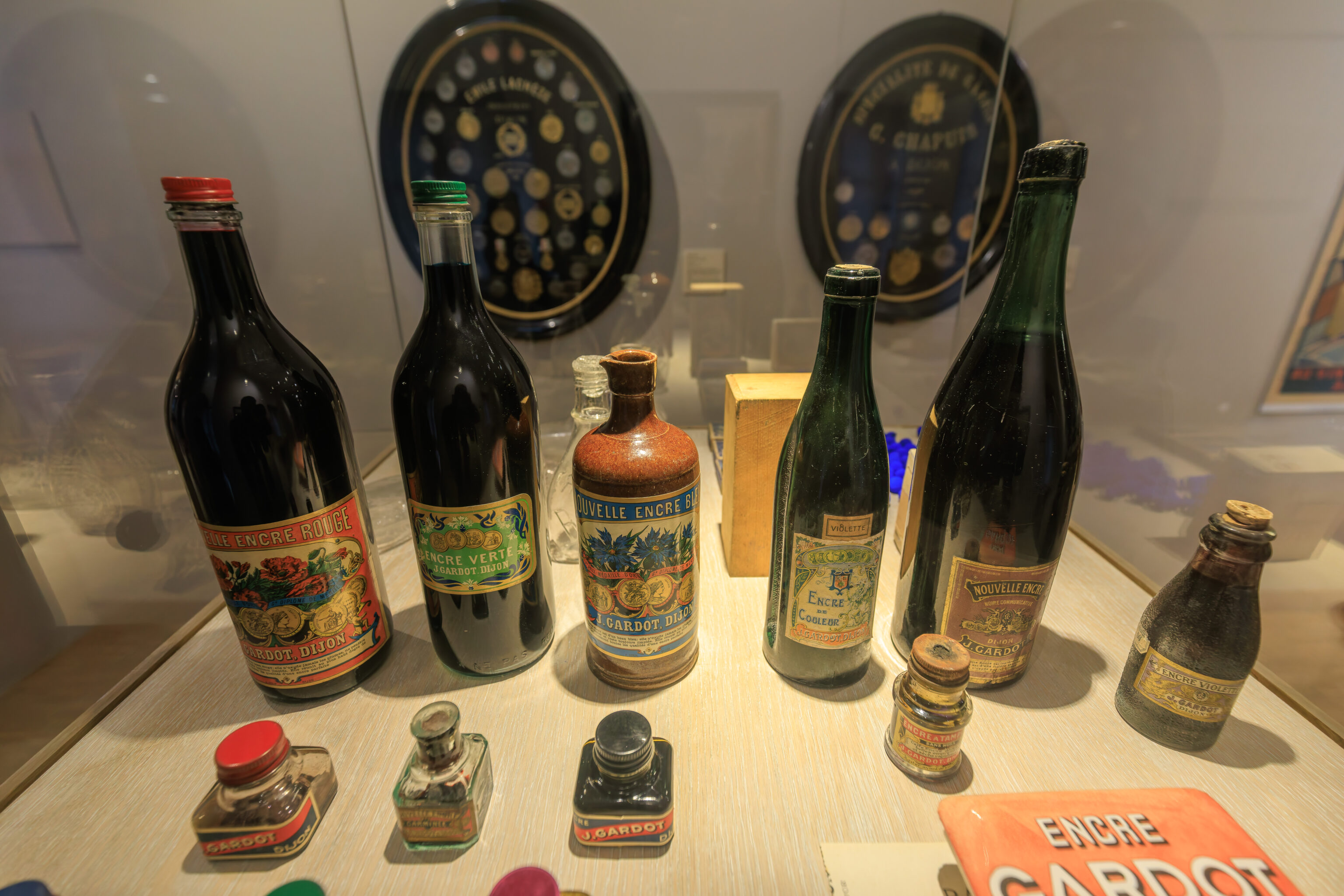
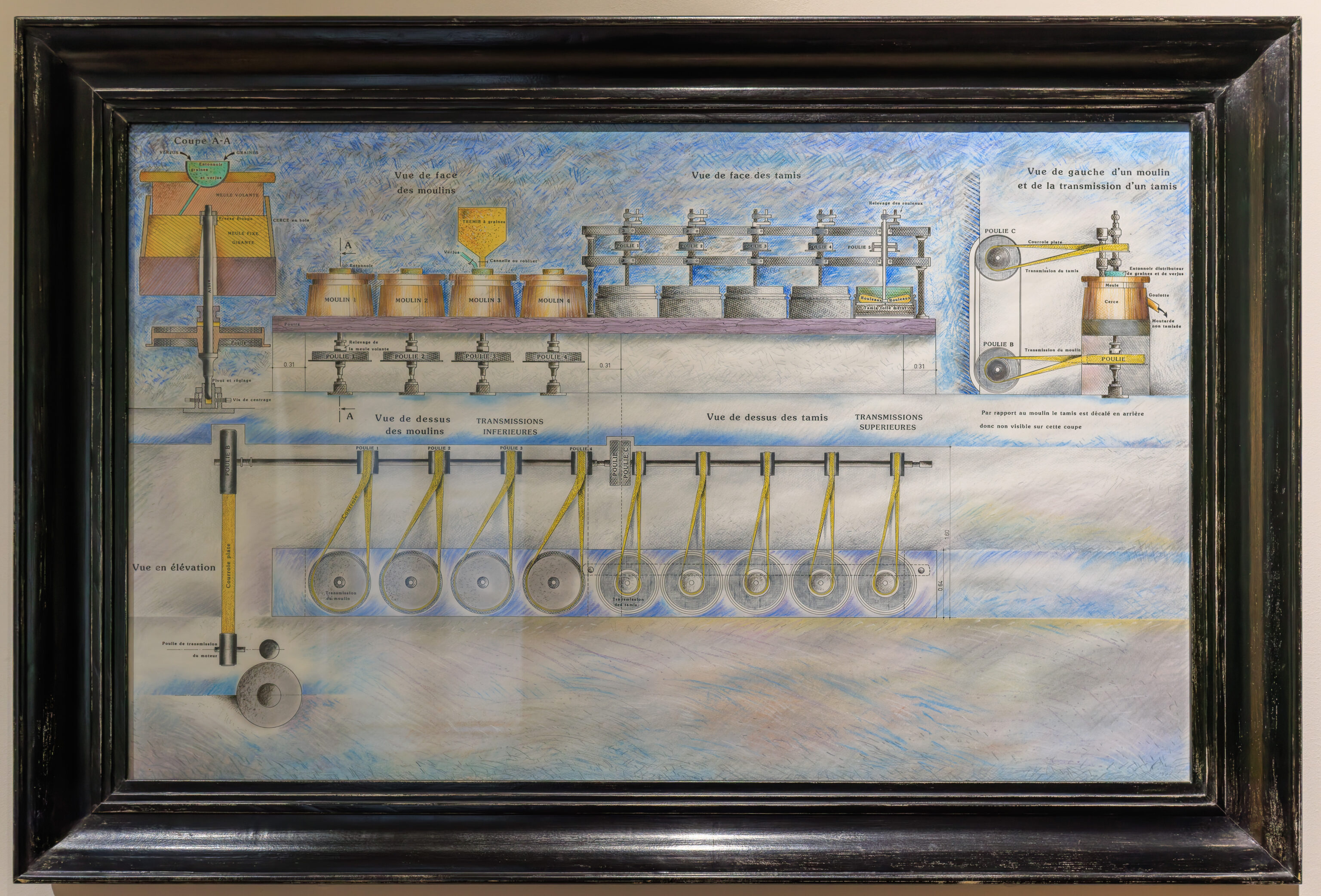
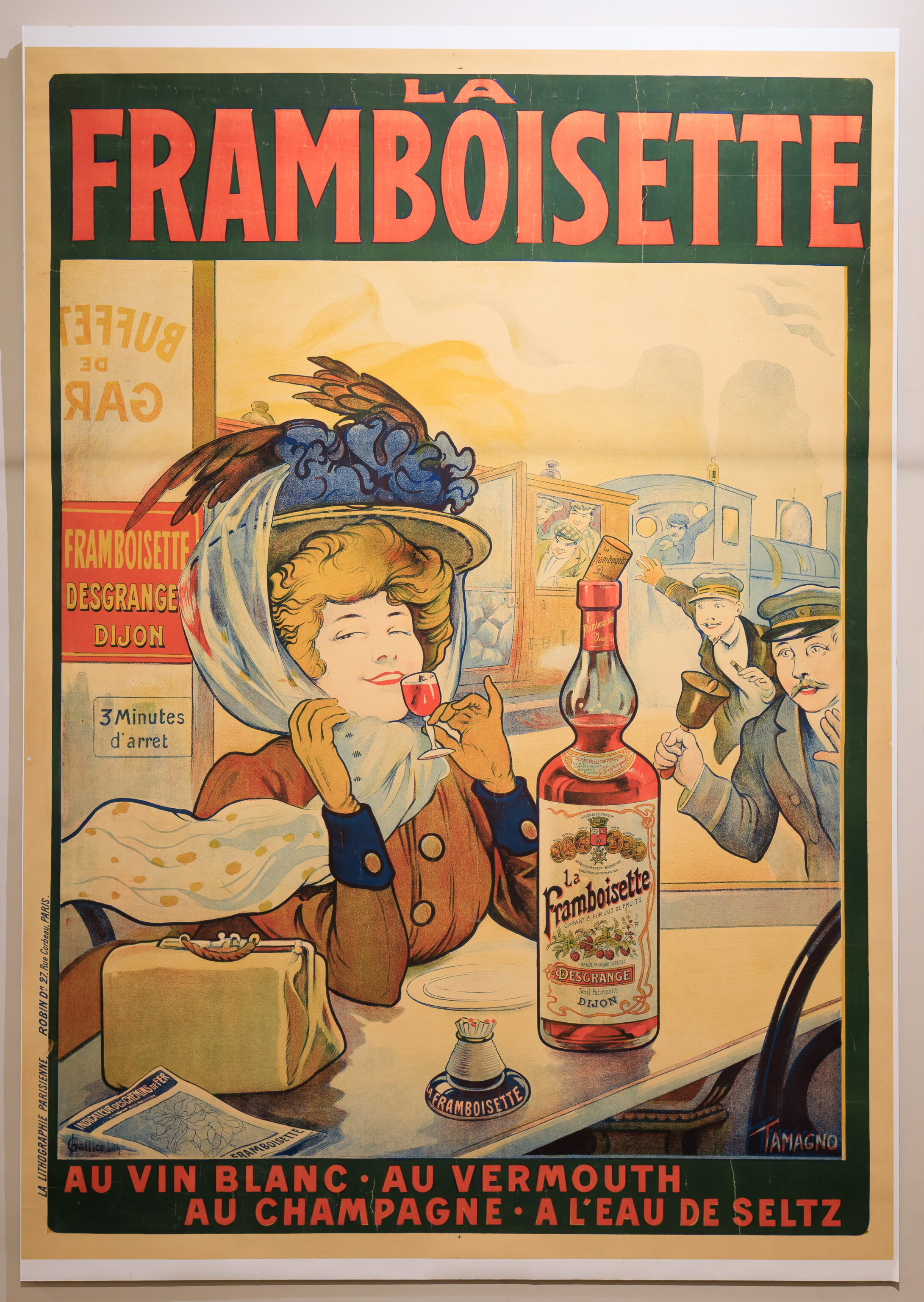
Maurice Tamagno
1891
Printer: La Lithographie parisienne
Chromolithograph on paper
Reproduction
Inv. 84.21.2
For conservation reasons, the original is kept in storage.
(Translated using Google)
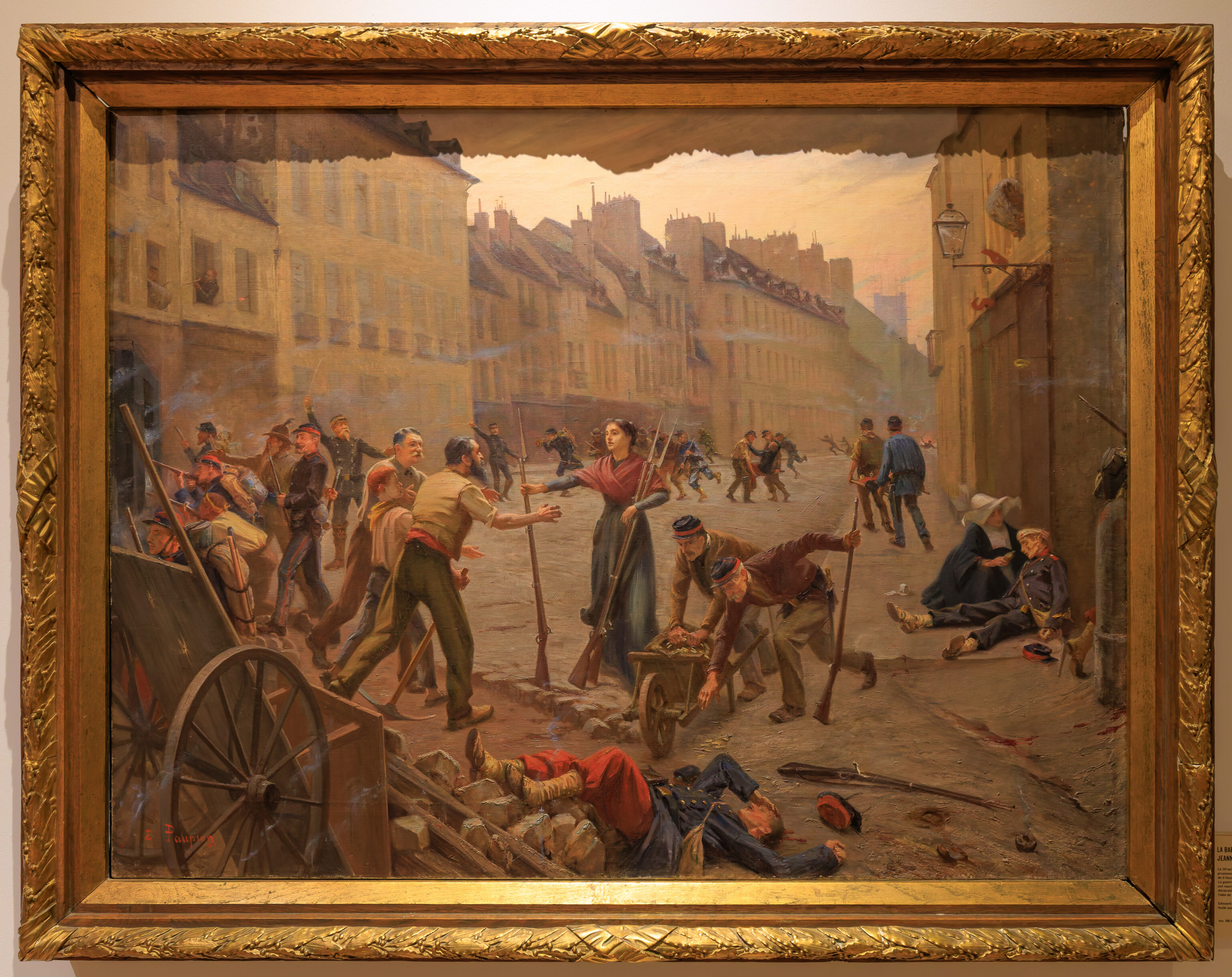
On October 30, 1870, during the Franco-Prussian War, the people of Dijon resisted for more than 5 hours behind an improvised barricade. The war of 1870 and the loss of Alsace-Lorraine fueled generations of French people. The declaration of war in 1914 was driven by the idea of revenge.
Edouard PAUPION (1854 – 1912)
Oil on canvas
Inv. 98.47.1
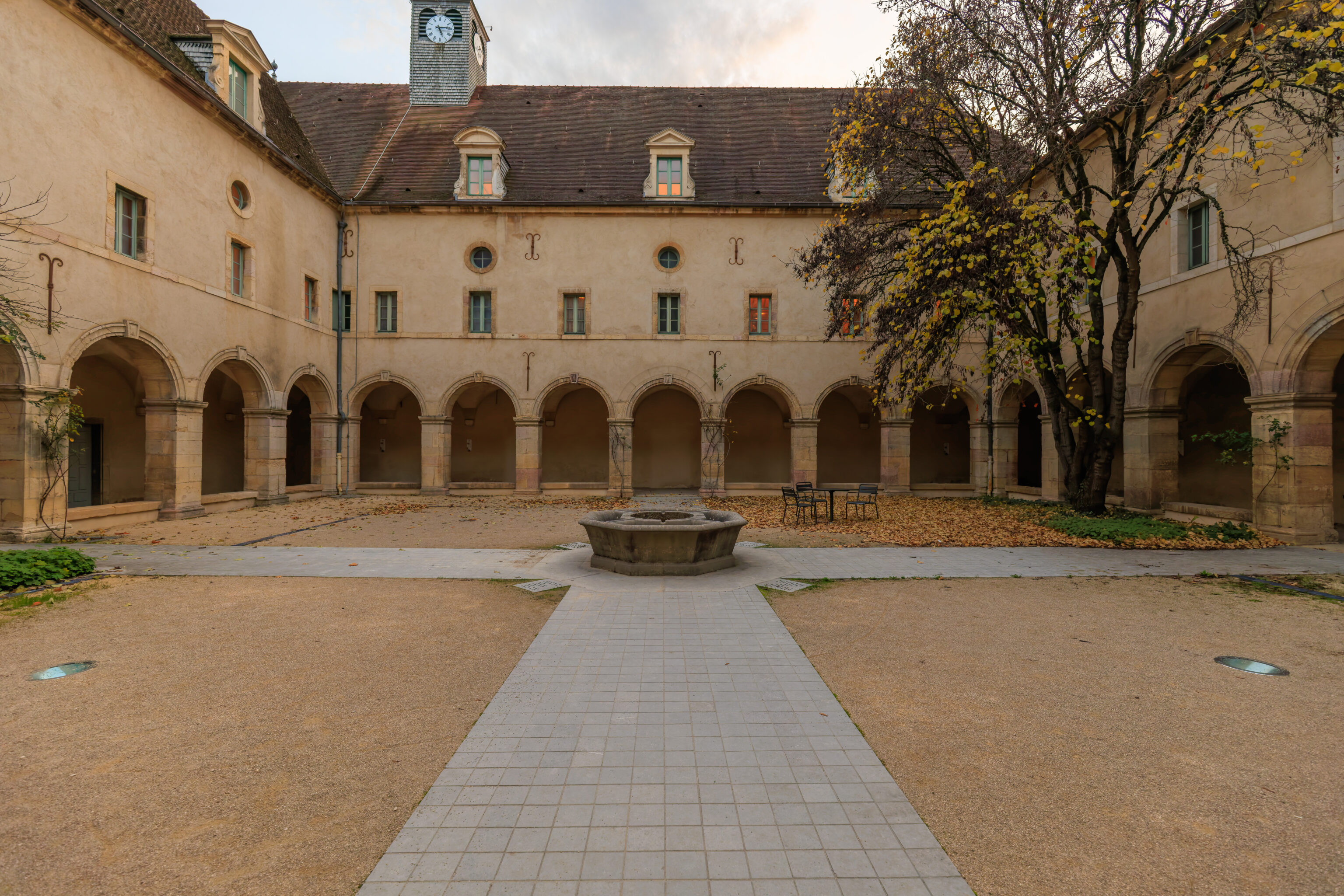
We passed by the courtyard again while exiting the museum.
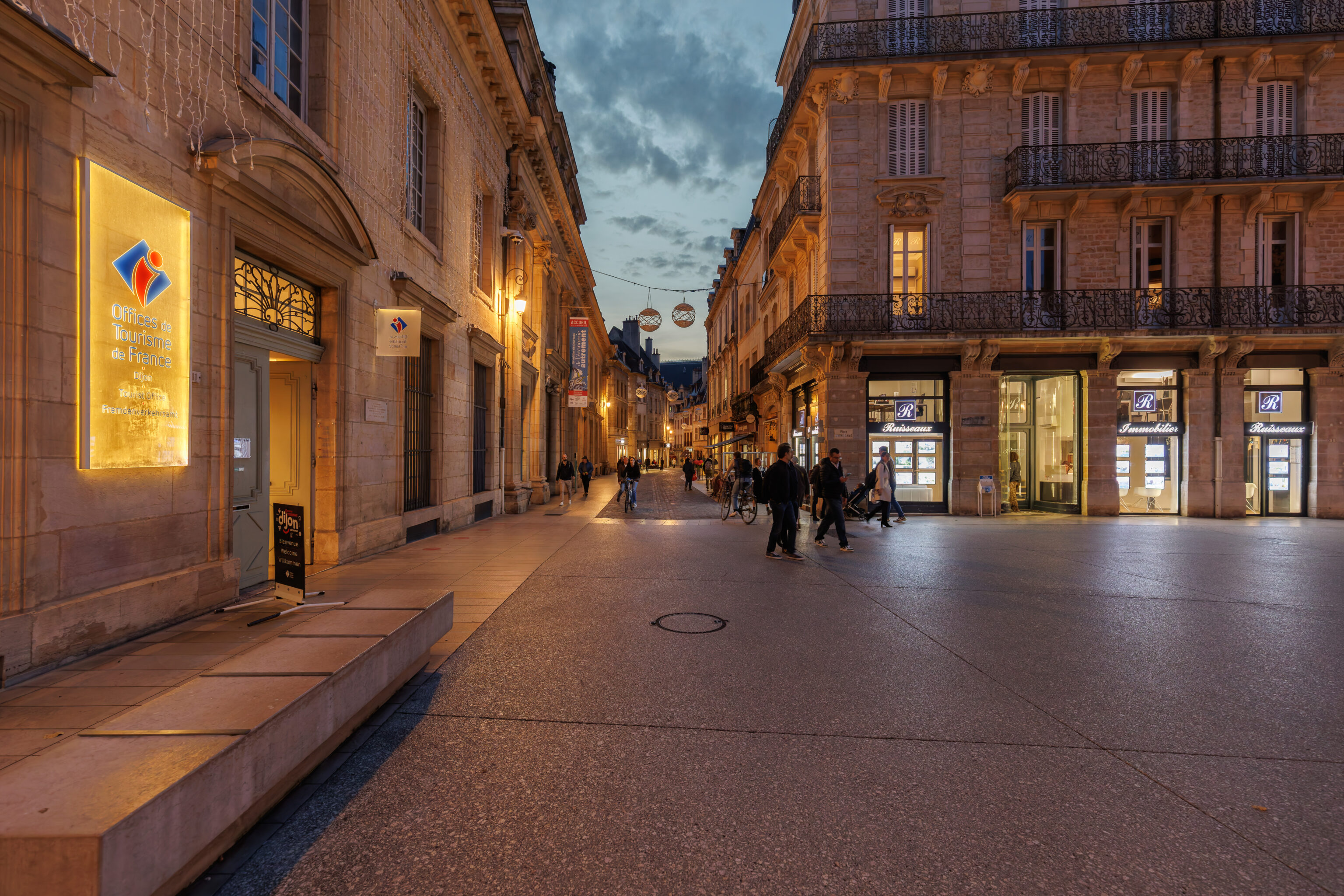
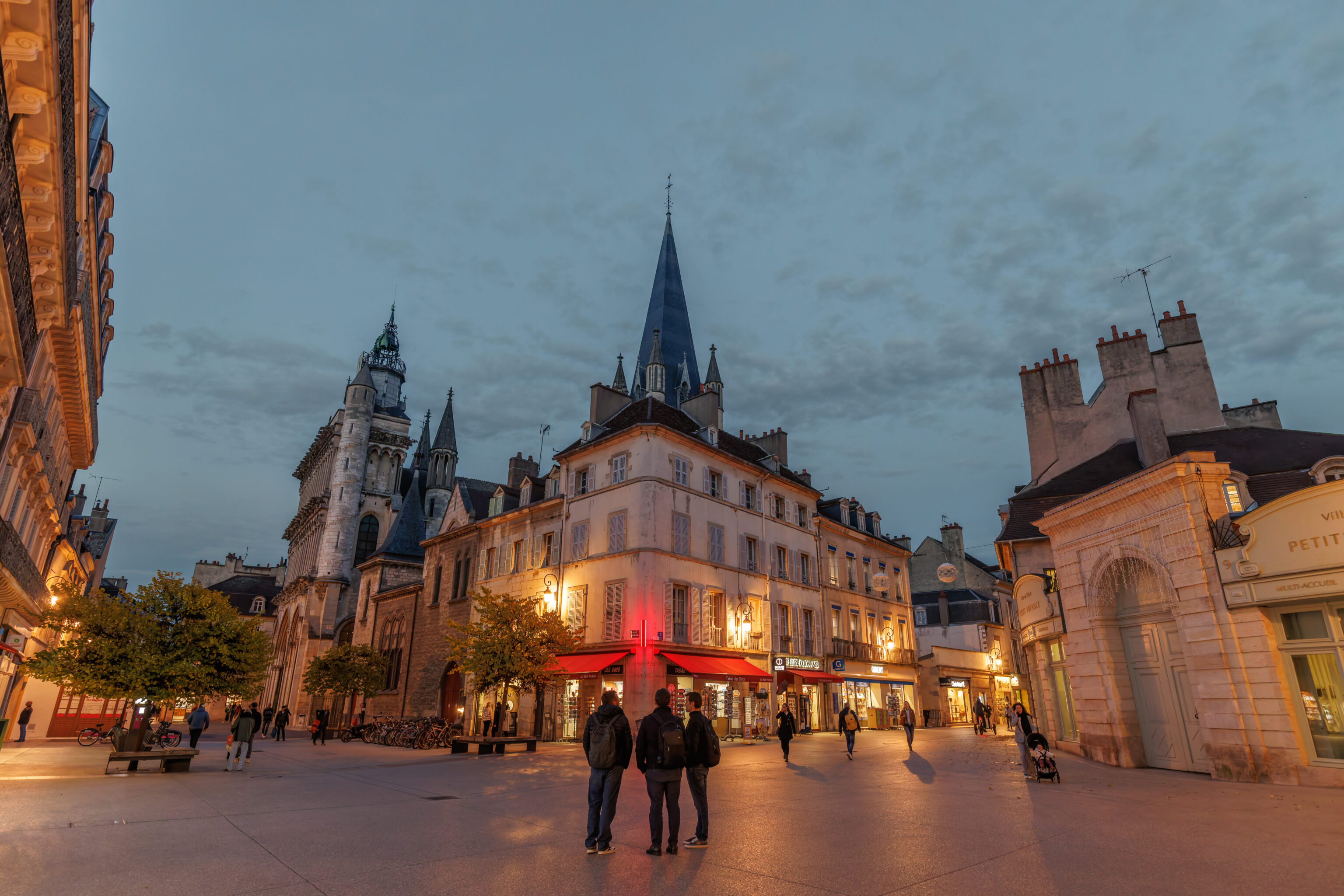
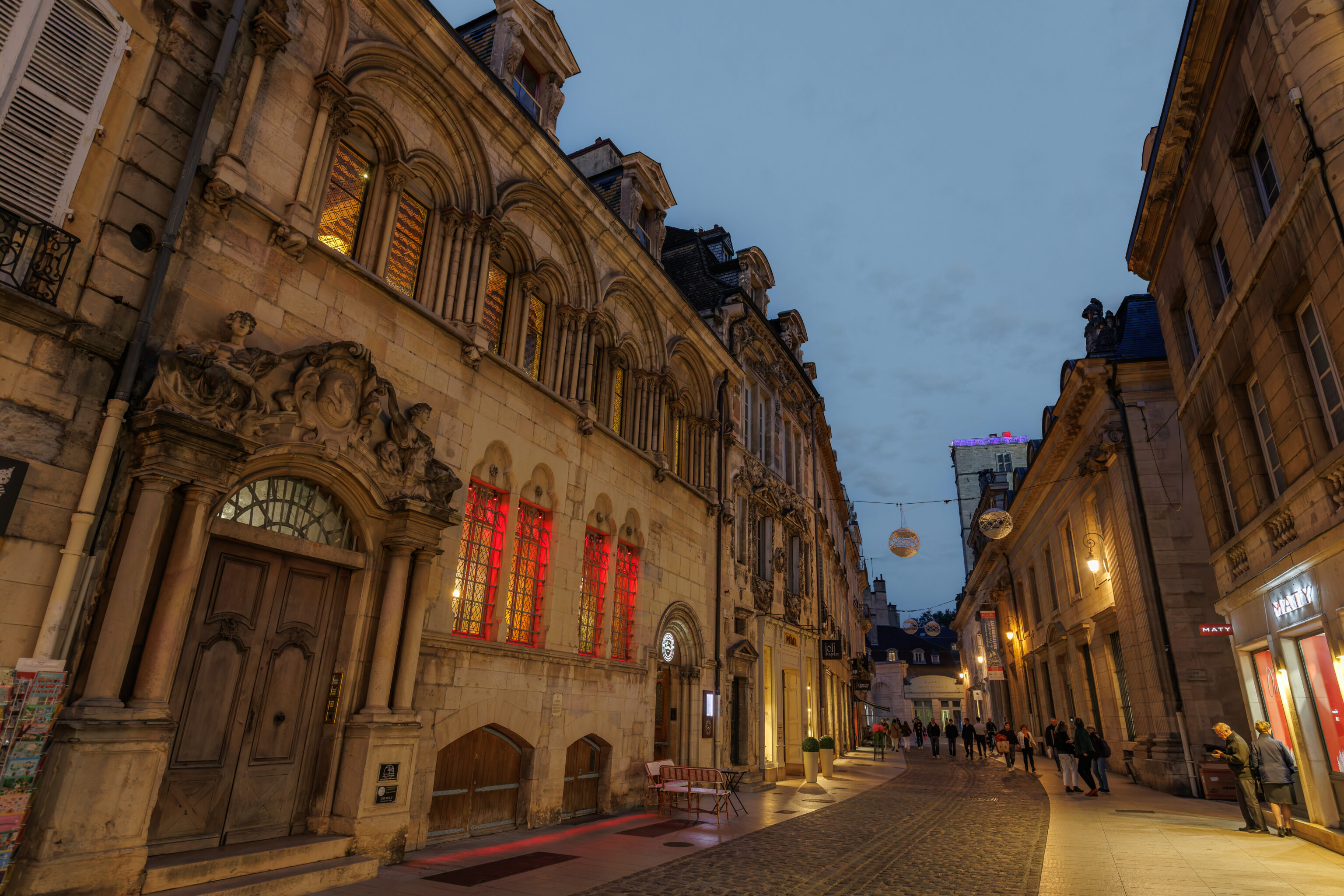
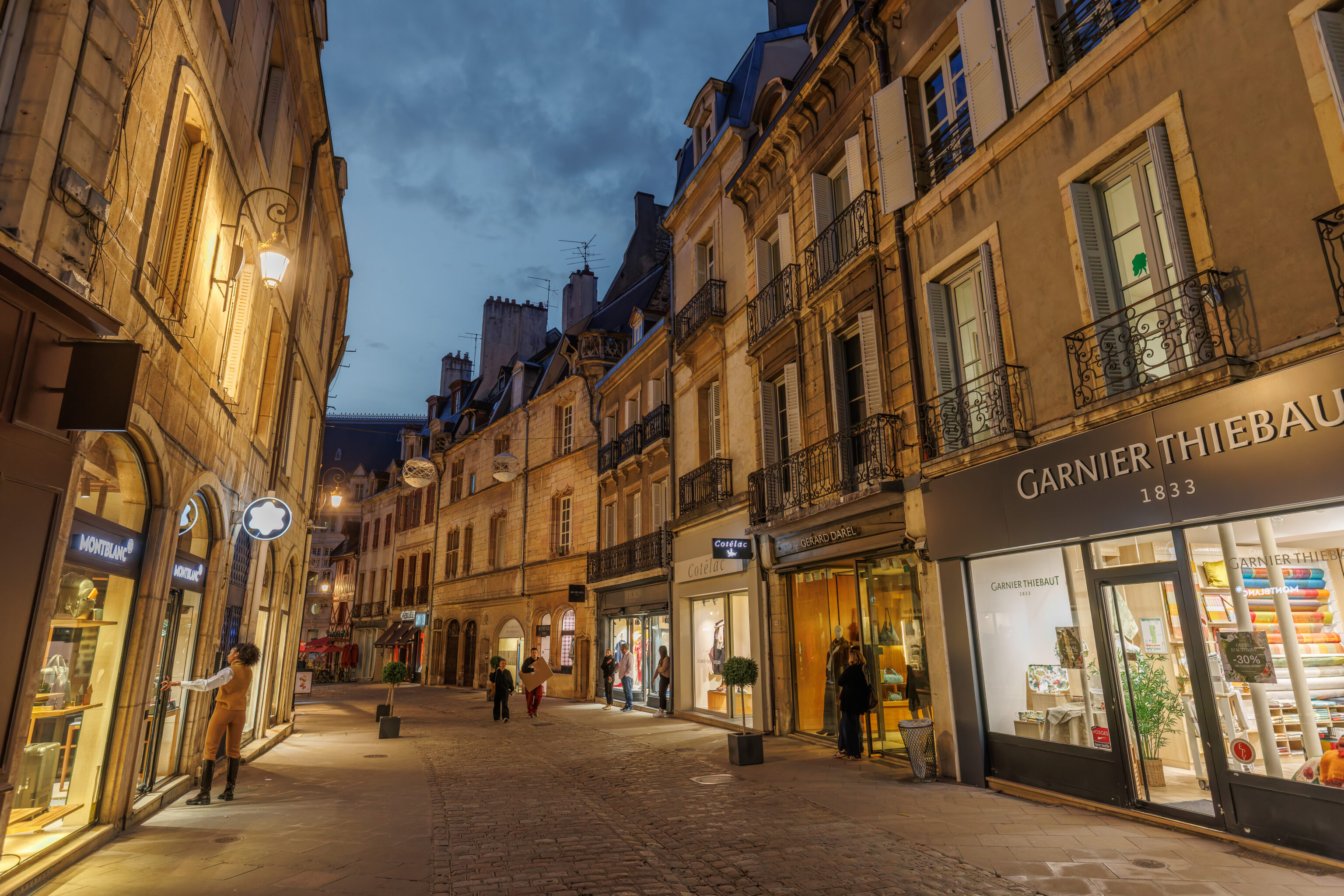
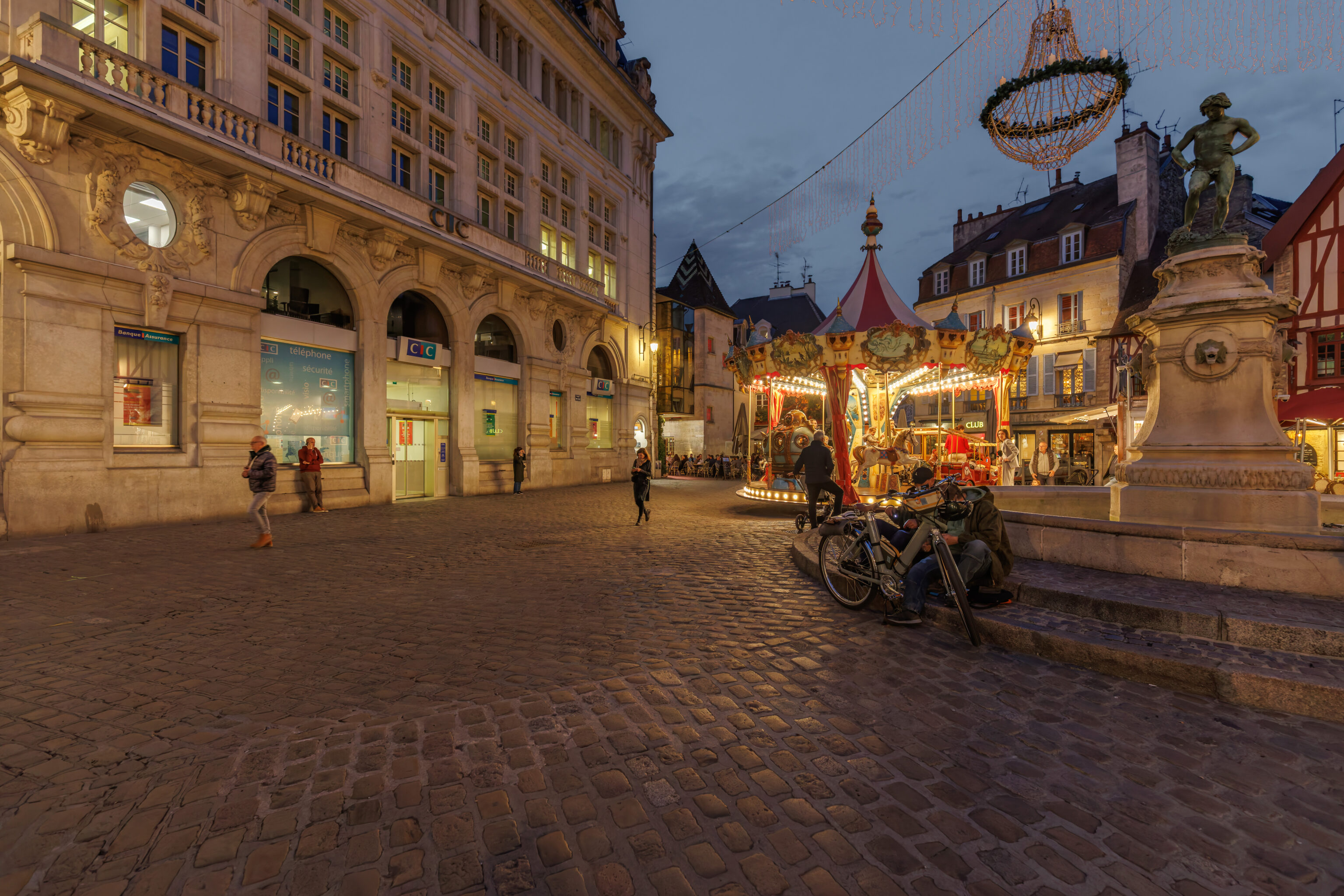
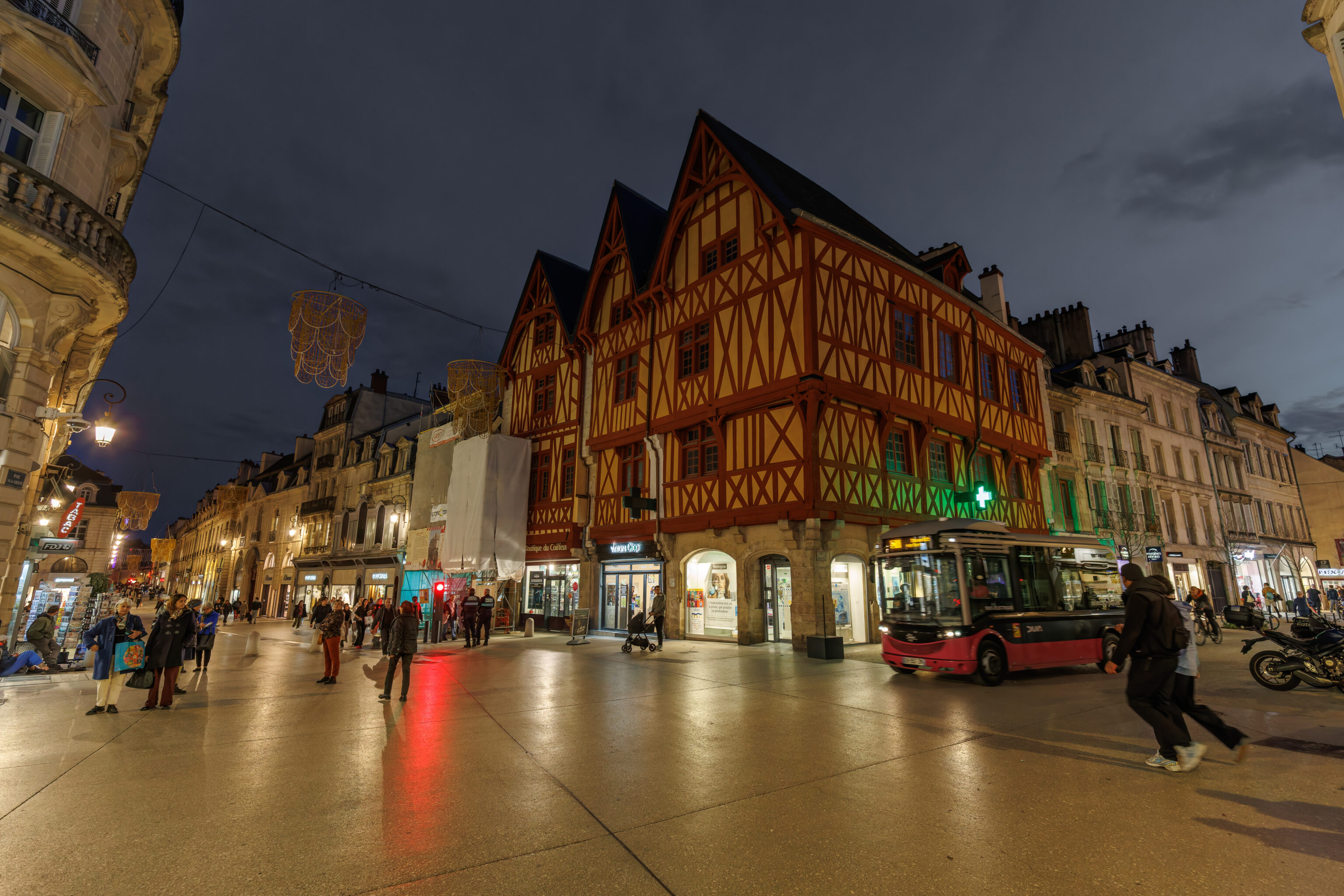
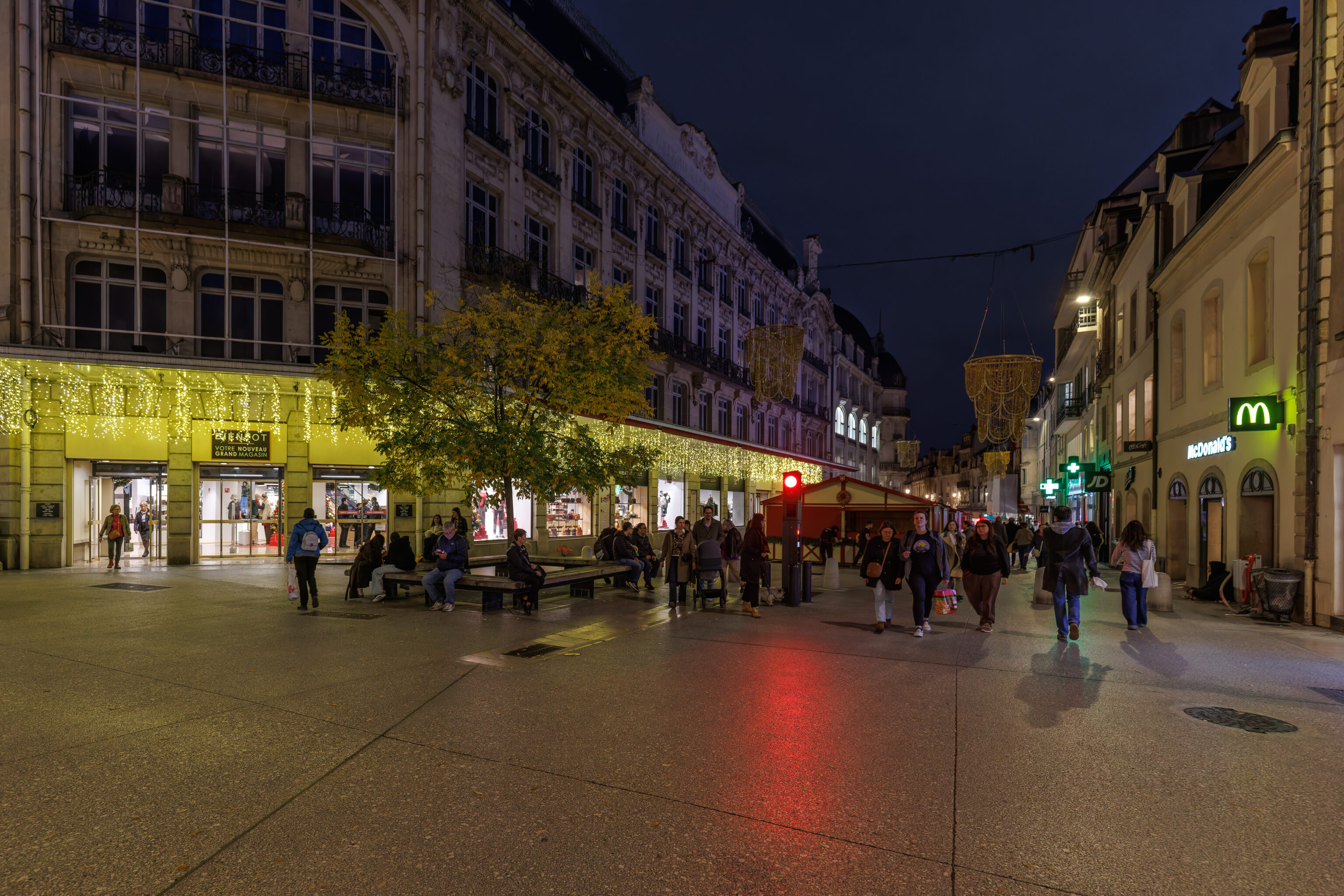
We walked back north to the center of the old city.
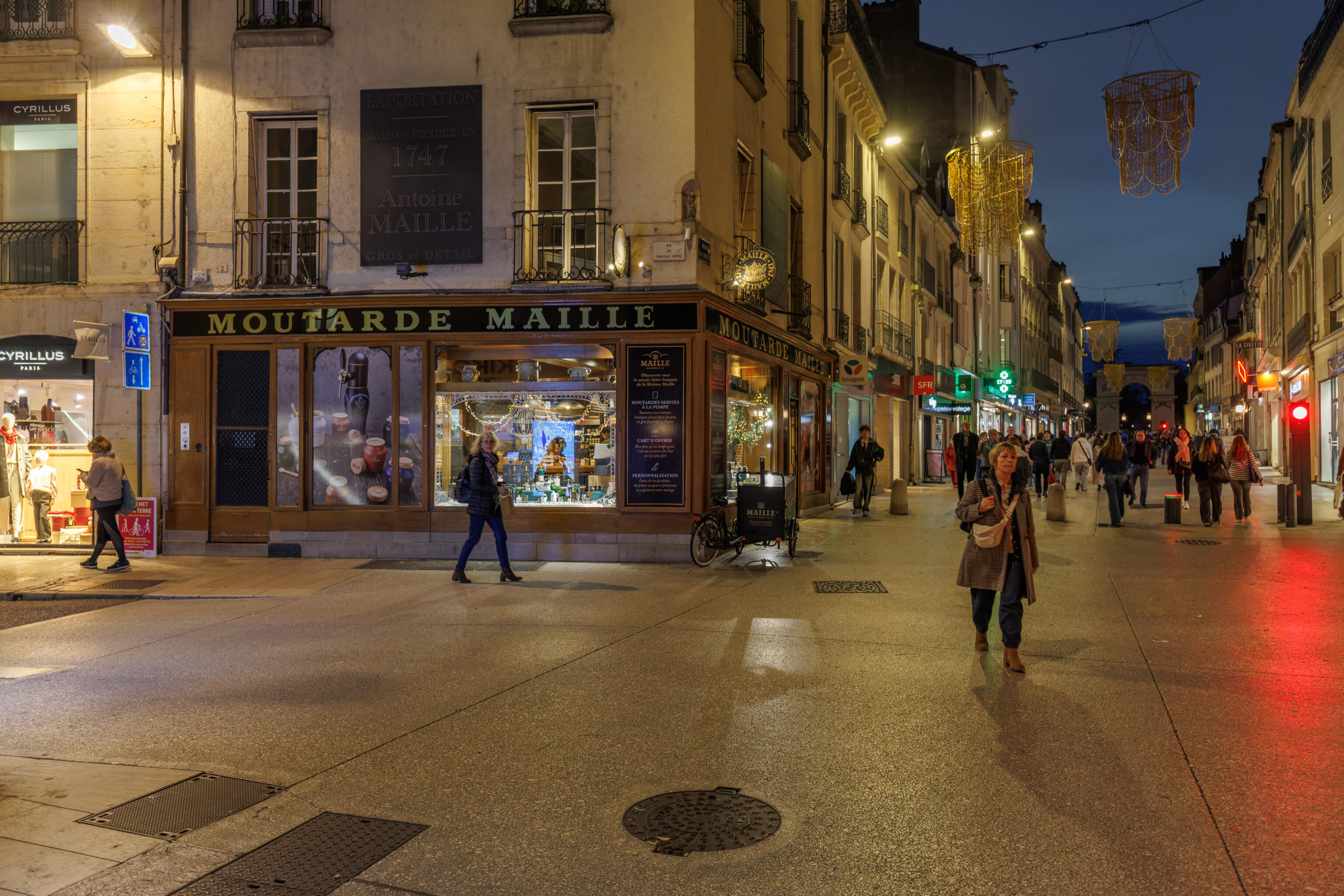
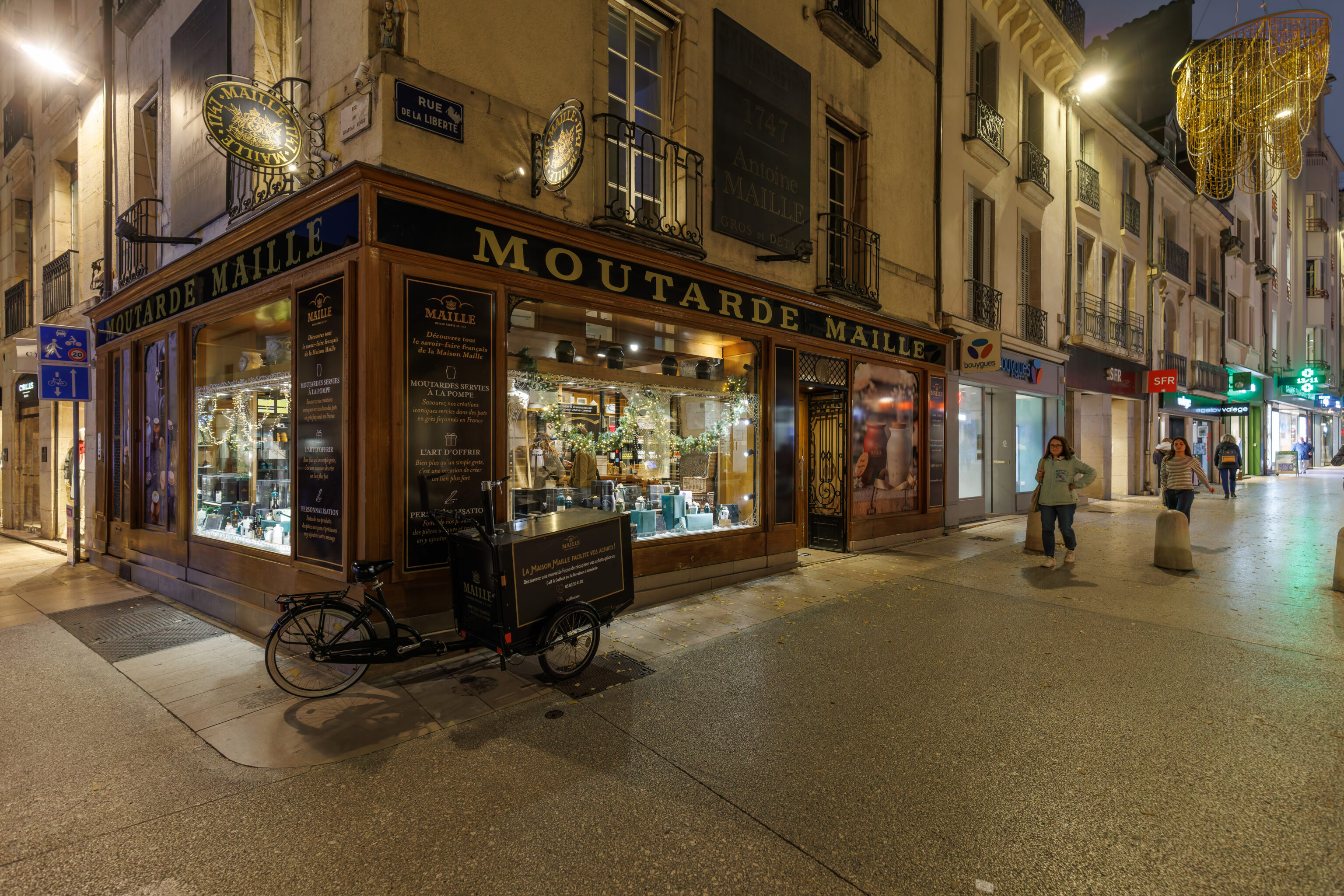
Our destination, La Maison Maille, a mustard manufacturer that started out making vinegar in Marseille. It is currently owned by Unilever. The shop has many varieties of mustard, all of which are available to taste and purchase.
We bought a few varieties of mustard.
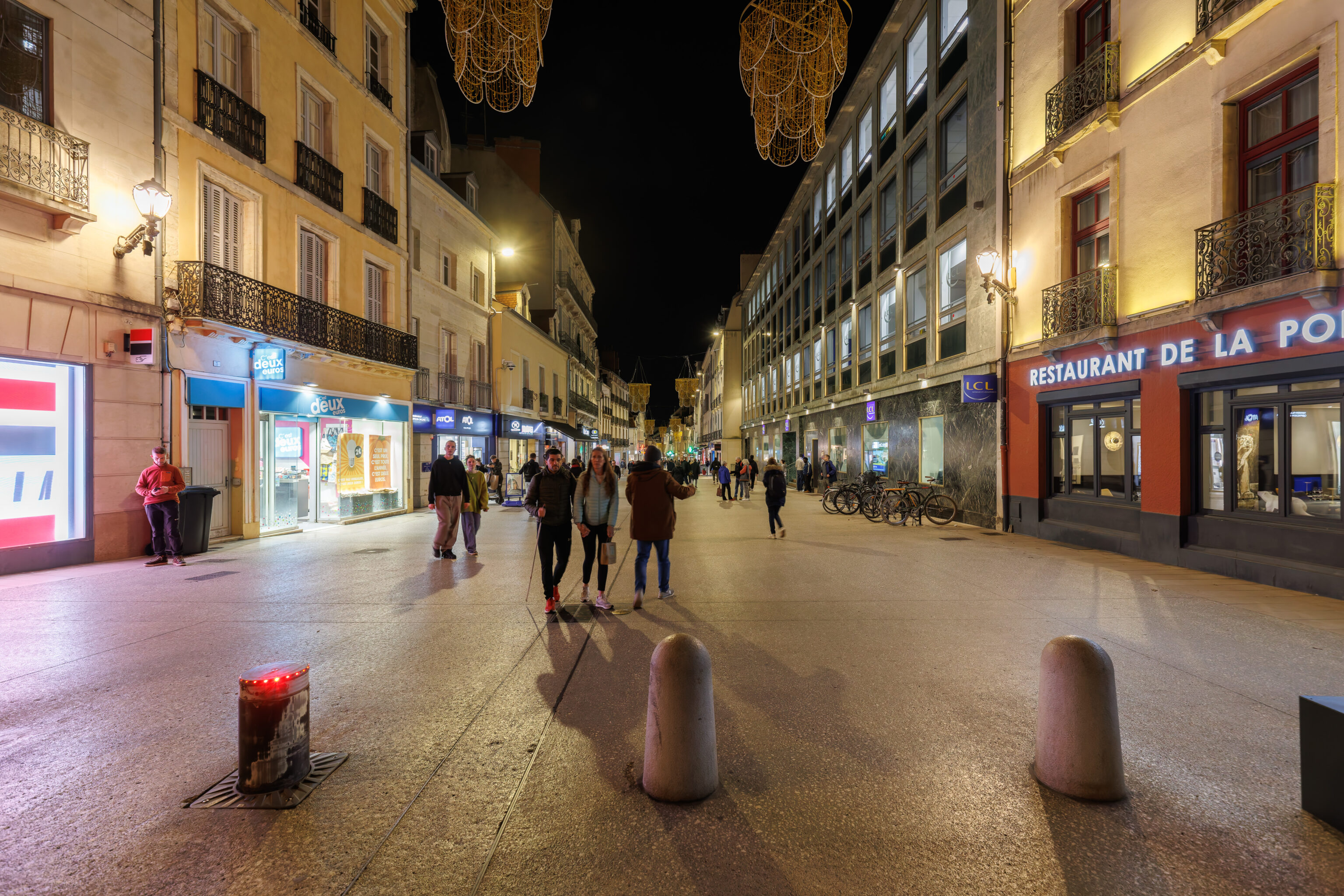
We continued walking to the west to return to the train station.
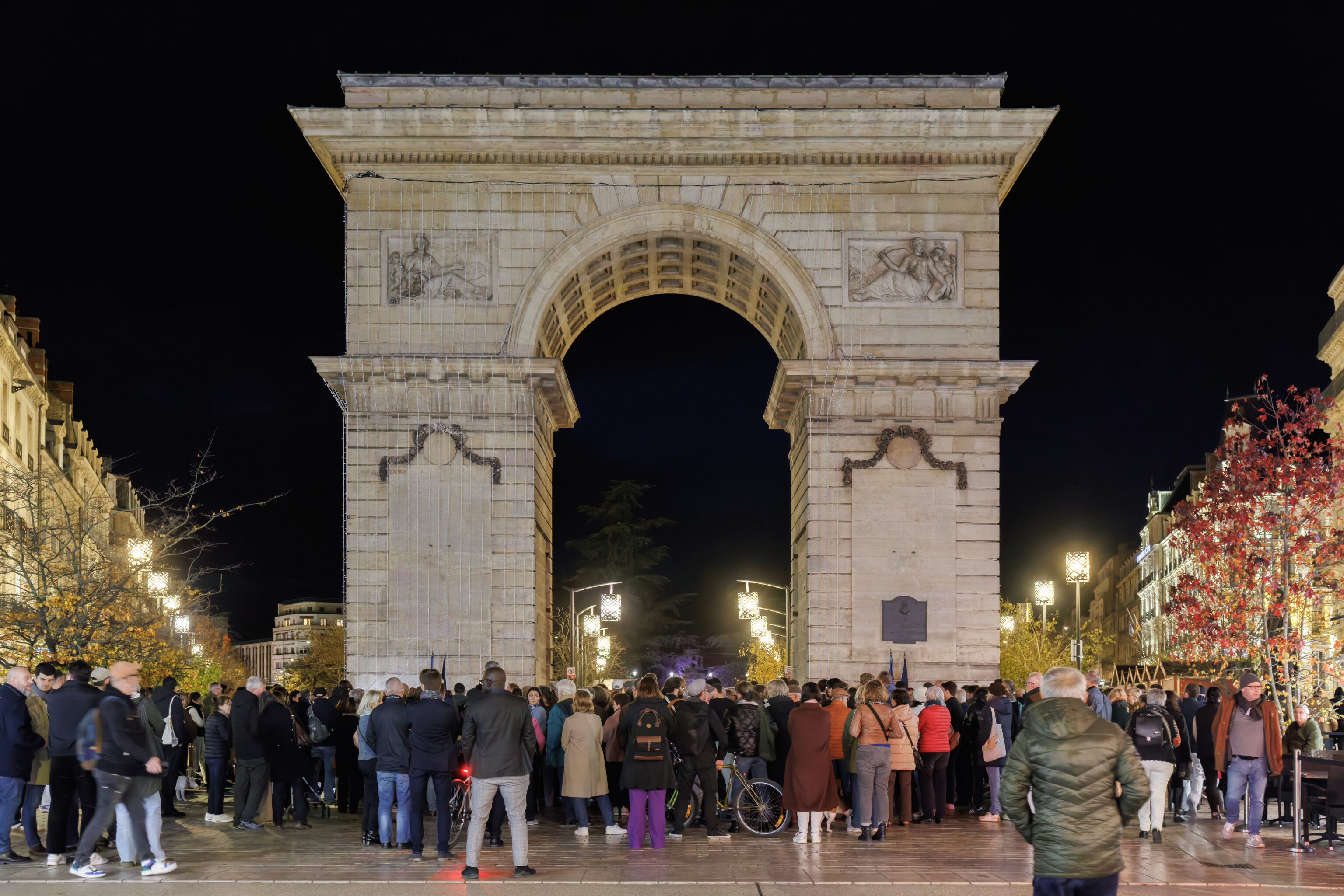
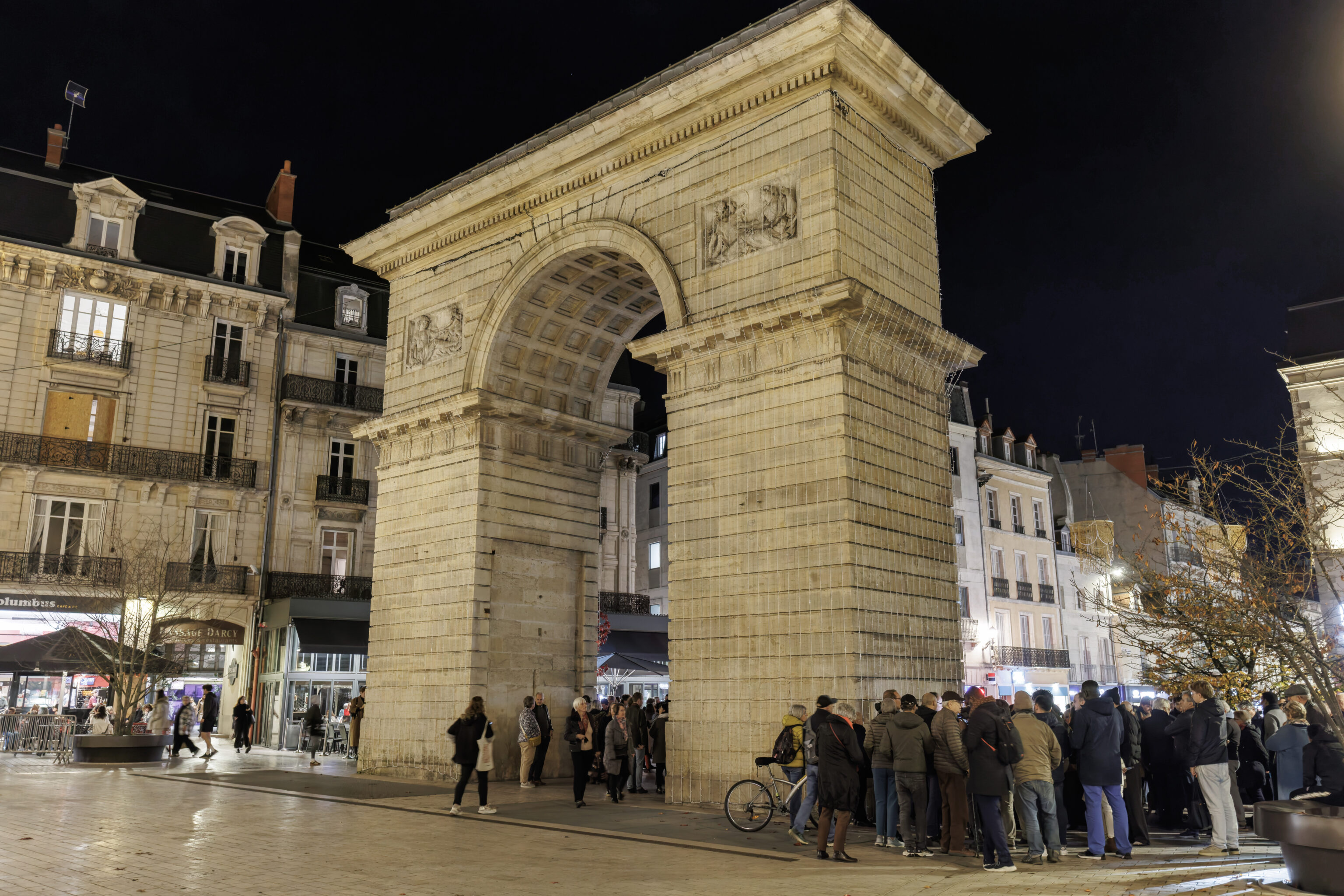
On the way, we passed by the Porte Guillaume, a city gate from the 18th century. There was a large crowd gathered in front of the gate. We couldn’t really tell what the gathering was for. However, a bit of research reveals that today, November 13th, is the 10th anniversary of the of the terrorist attacks on Paris in 2015. The gathering here is a memorial for the victims of the attacks.
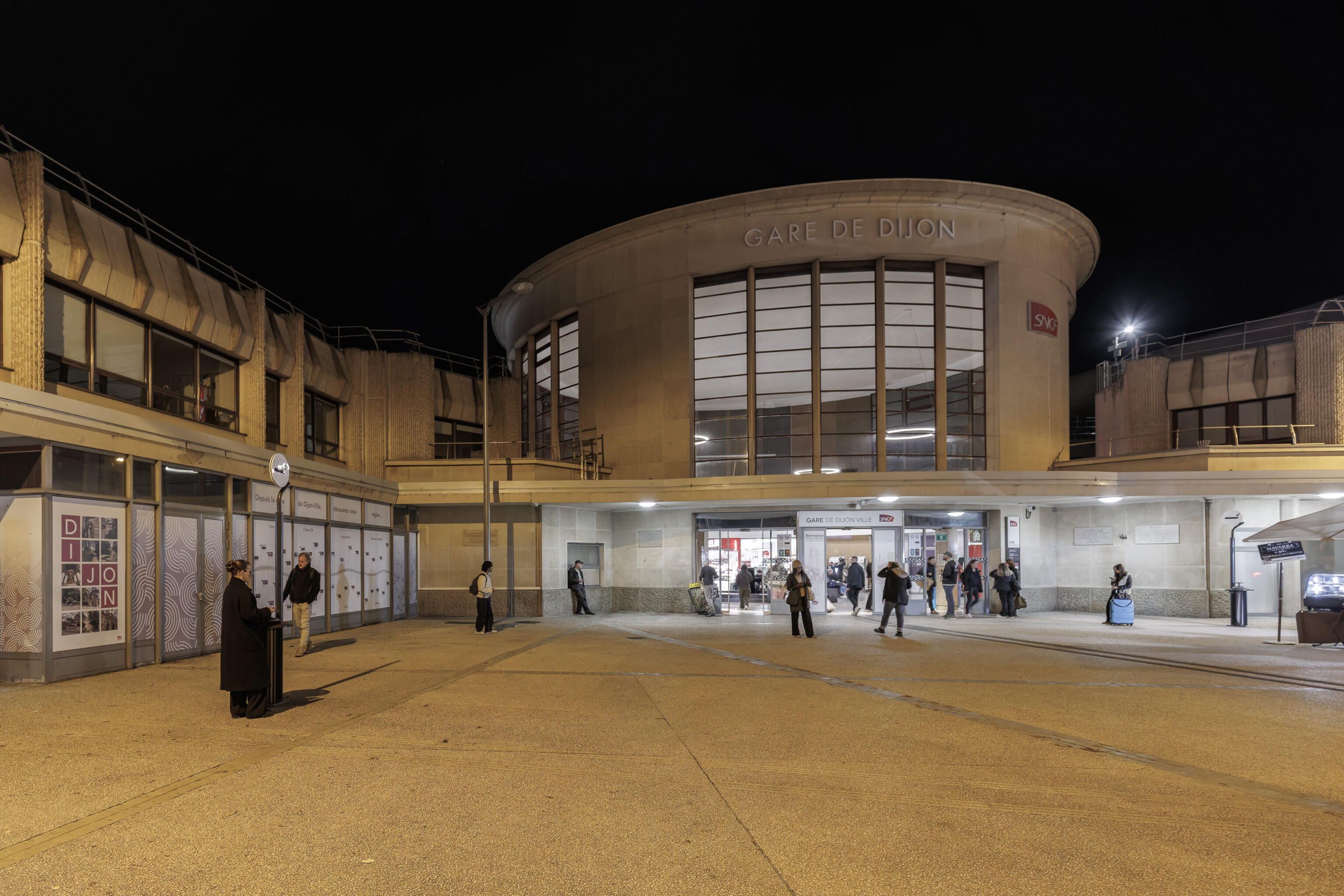
The Gare de Dijon-Ville is not particularly impressive.
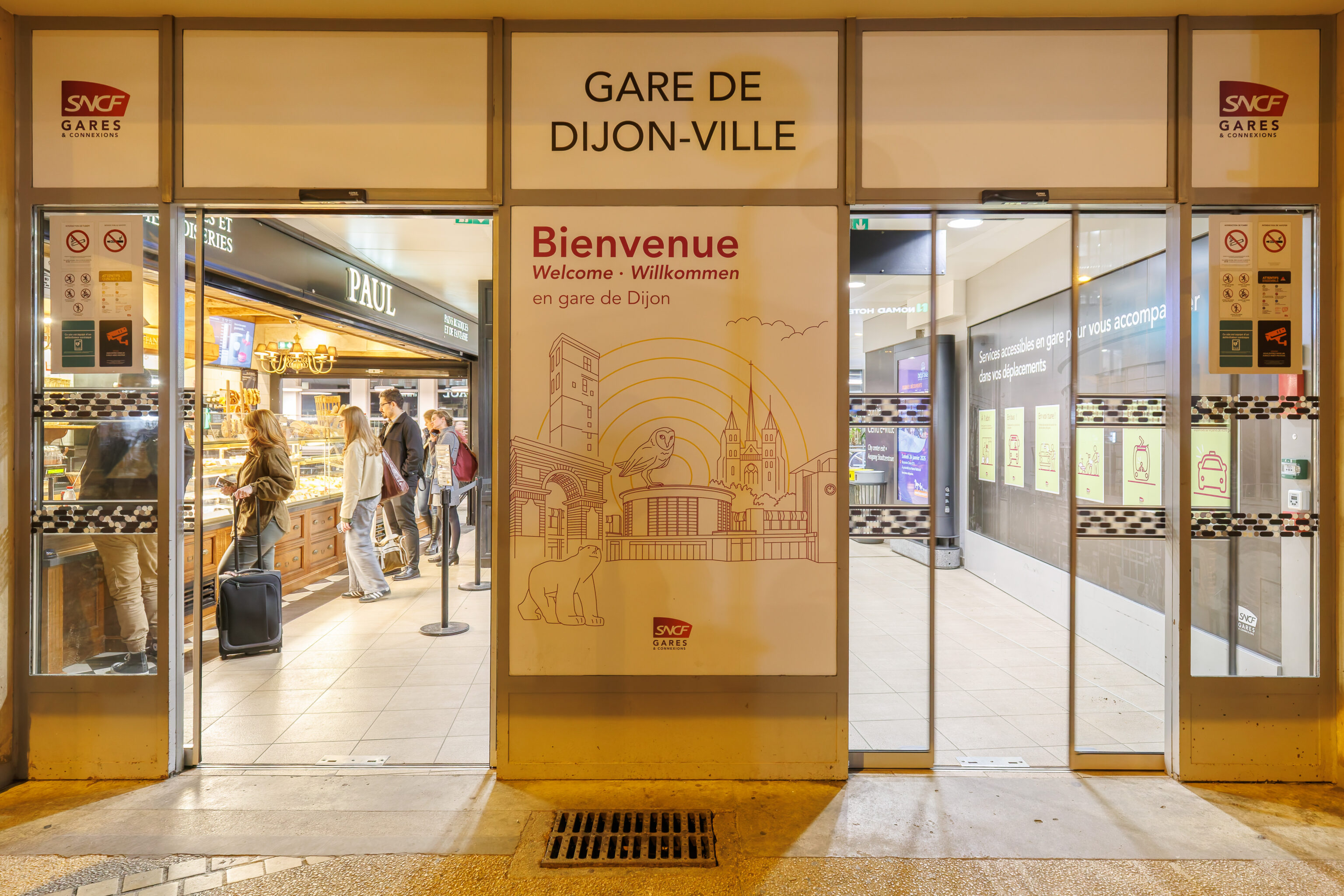
The station does have a drawing at the entrance depicting the city. It includes an owl as well as the polar bear sculpture that we saw in the Museum of Fine Arts.
Lyon
We didn’t get back to Lyon until around 9pm. We were a little hungry and wanted something quick. Fast food isn’t particularly prevalent here. However, there was a KFC at the station. Normally we wouldn’t go to a KFC when overseas or even in the US but it did have a 4.7 rating, something pretty much unheard of back home!
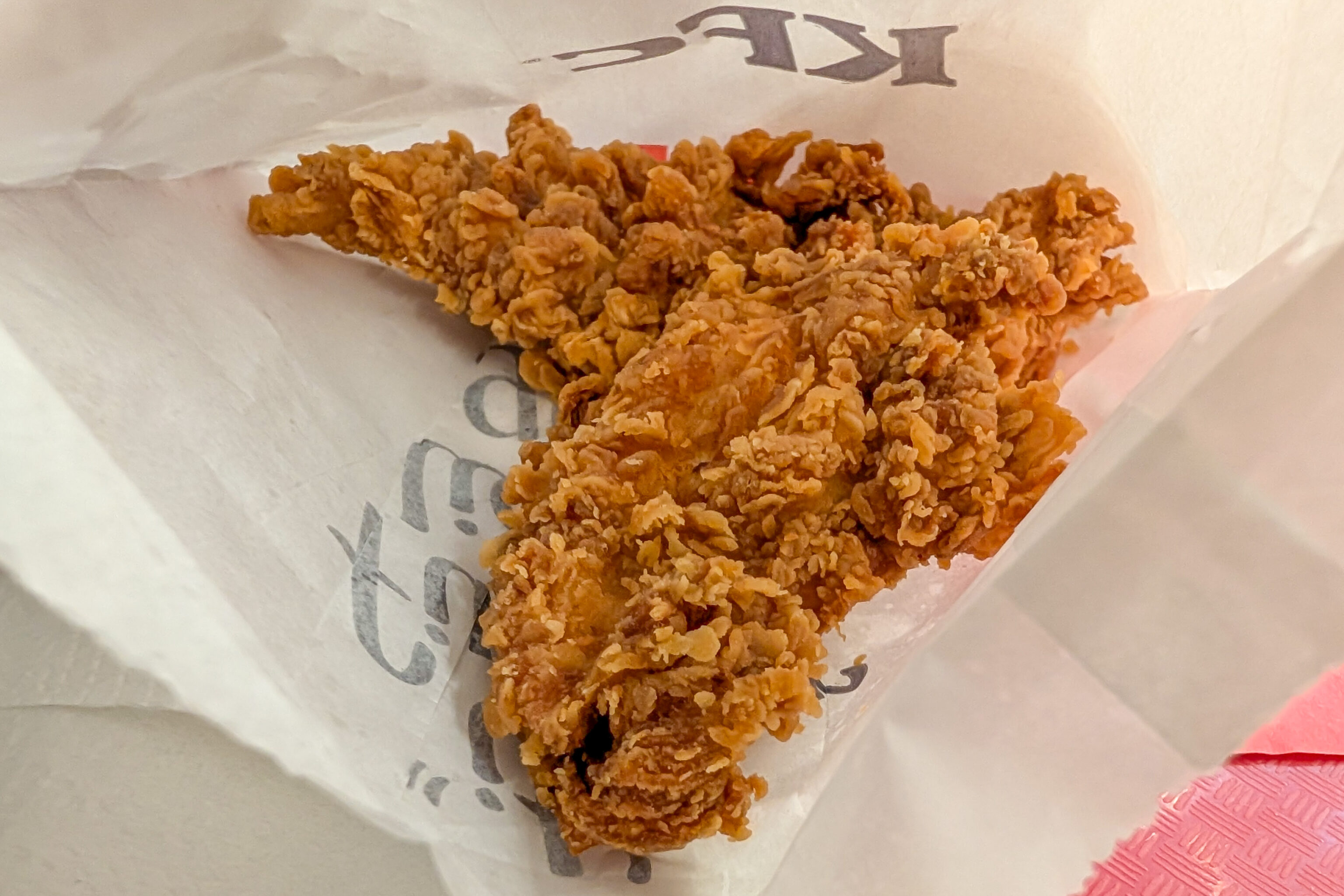
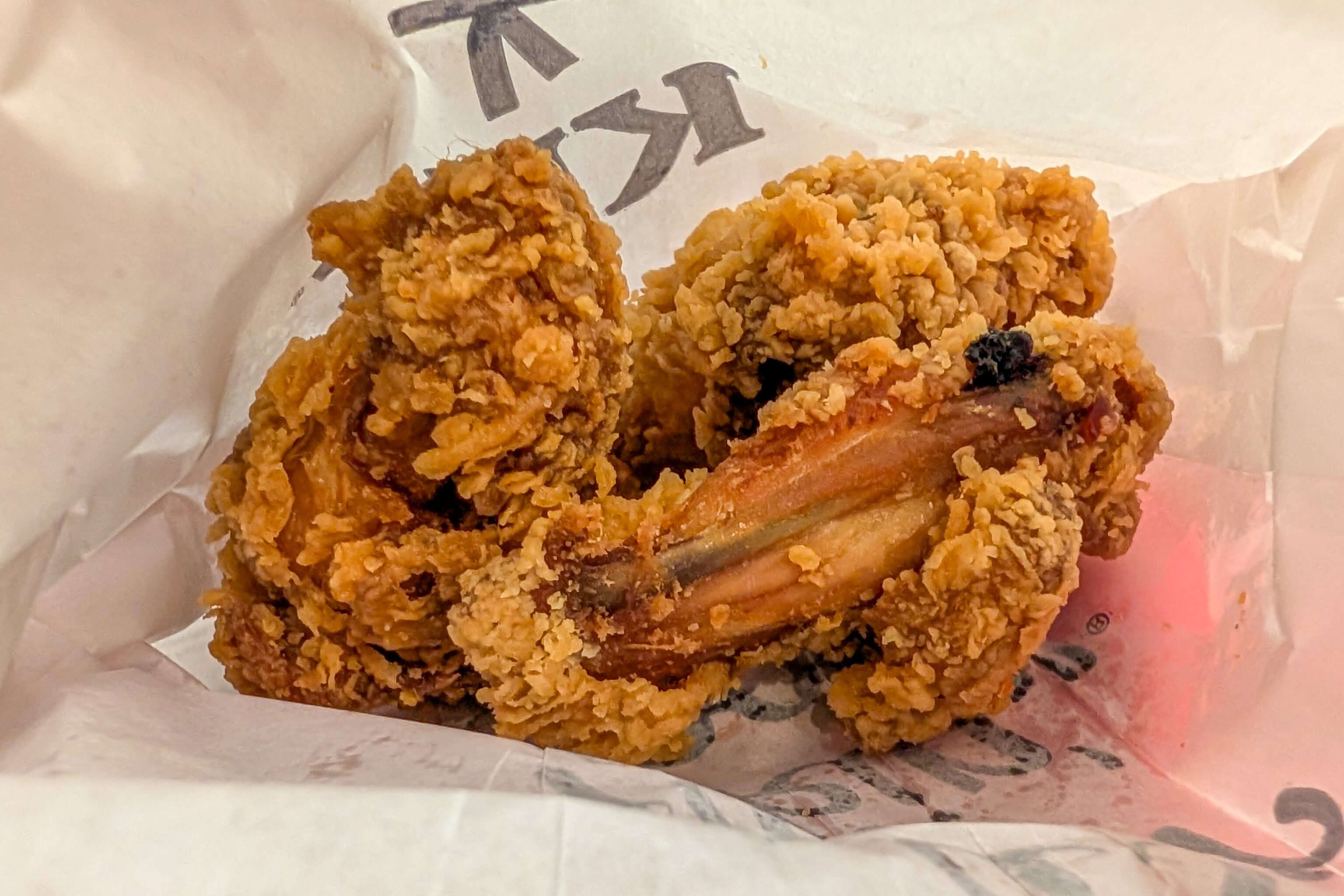
It certainly was better than any KFC we’ve had in the US. Interestingly, they don’t serve chicken pieces, other than wings, like they do in the US. We got the smallest wing and tender options. The wings were better than the tenders as the tenders were chicken breast pieces. Both were not greasy compared to KFC in the US and had that KFC flavor without being overcooked.
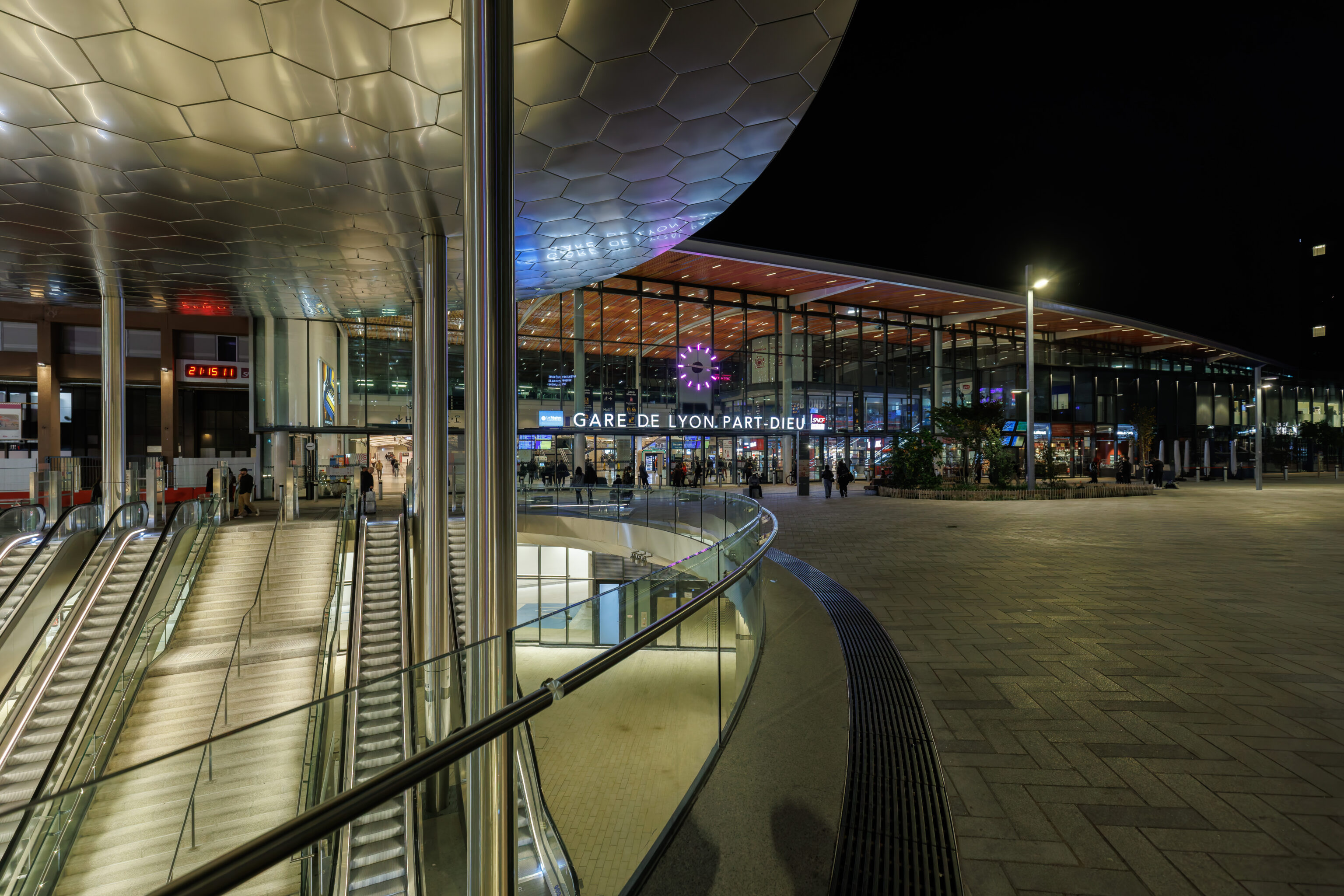
The KFC was at the bottom of the escalators seen here in front of the station. We walked over to the station’s tram stop which is behind us from this perspective. We took the tram back to the Liberté stop that we departed from in the morning.
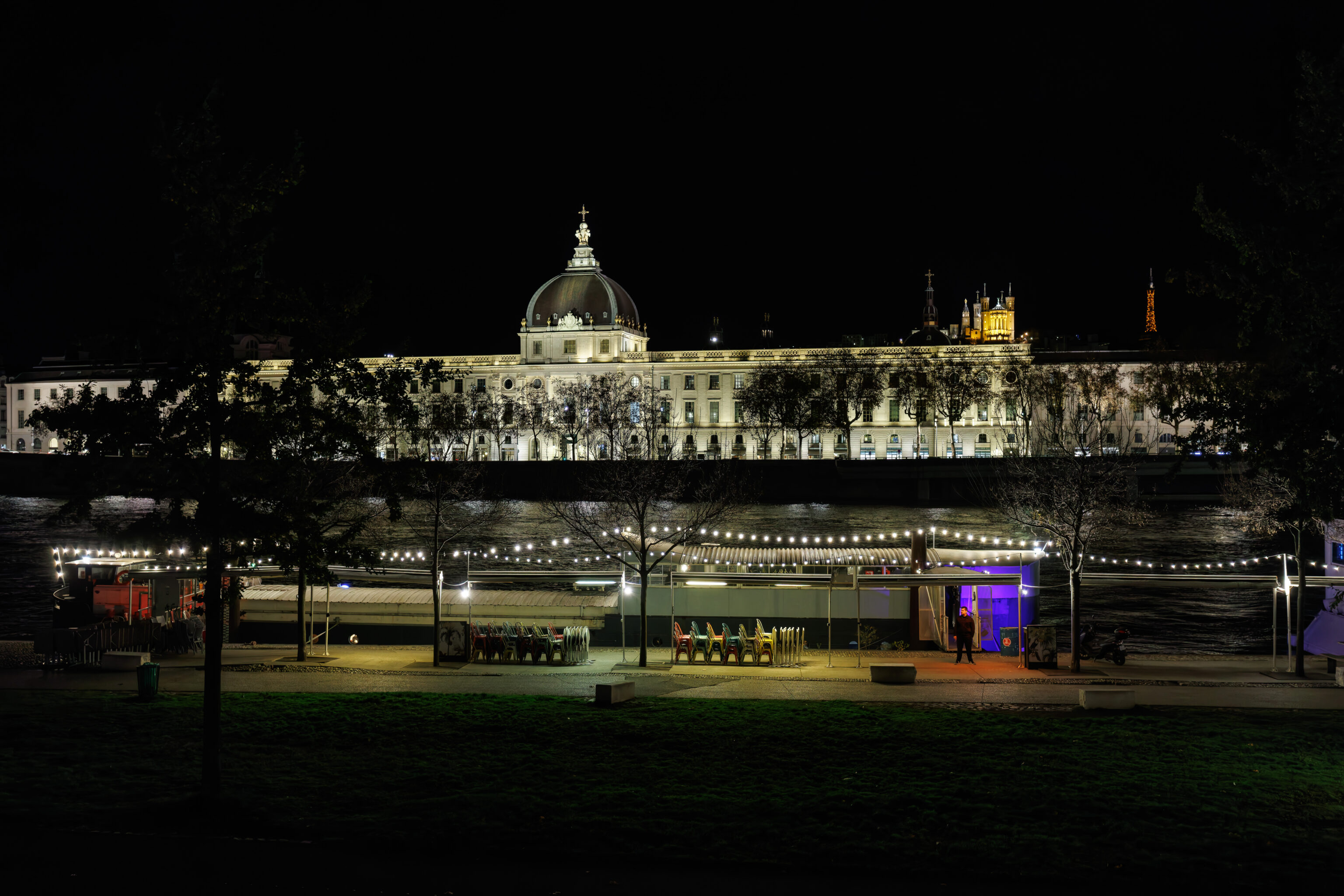
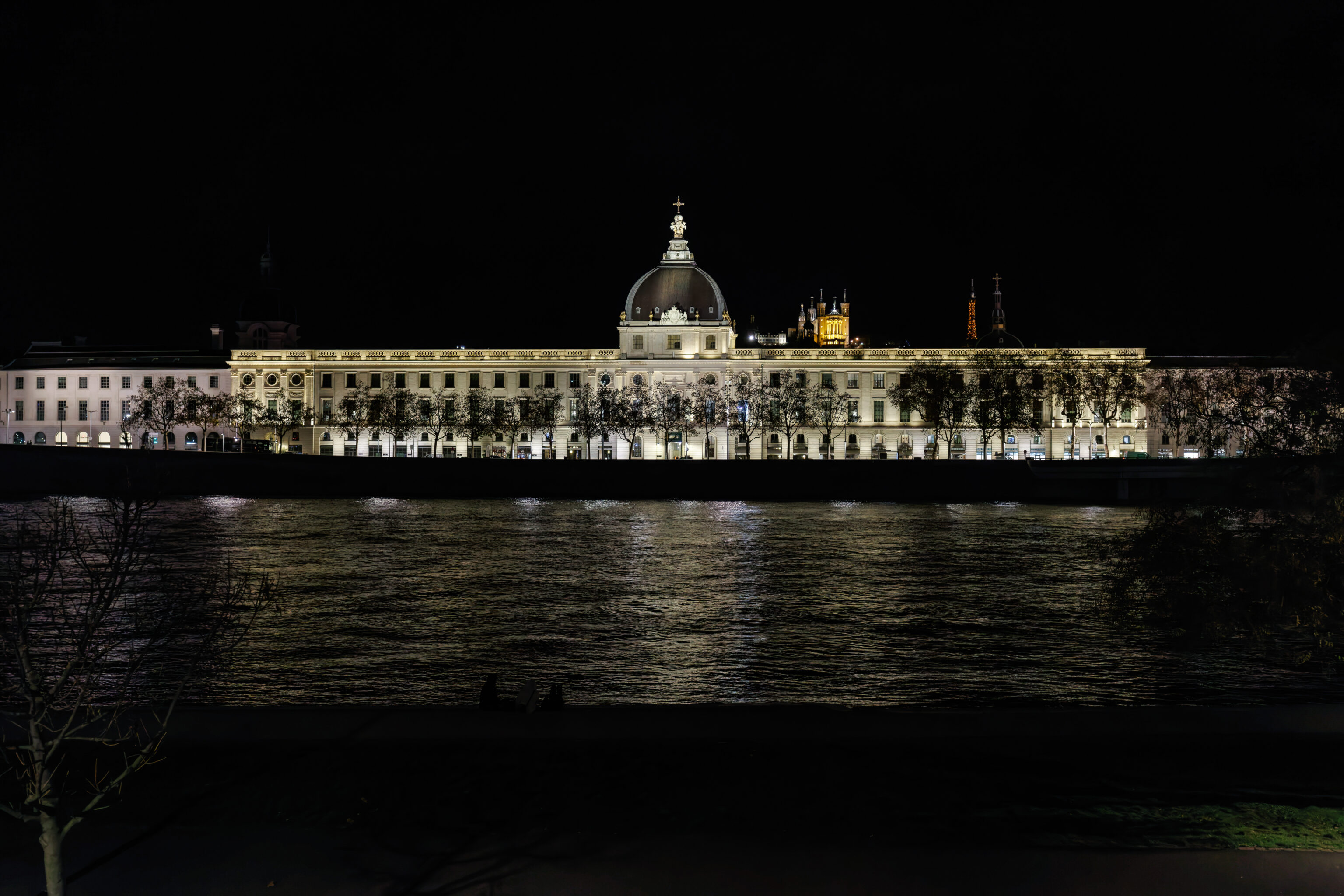
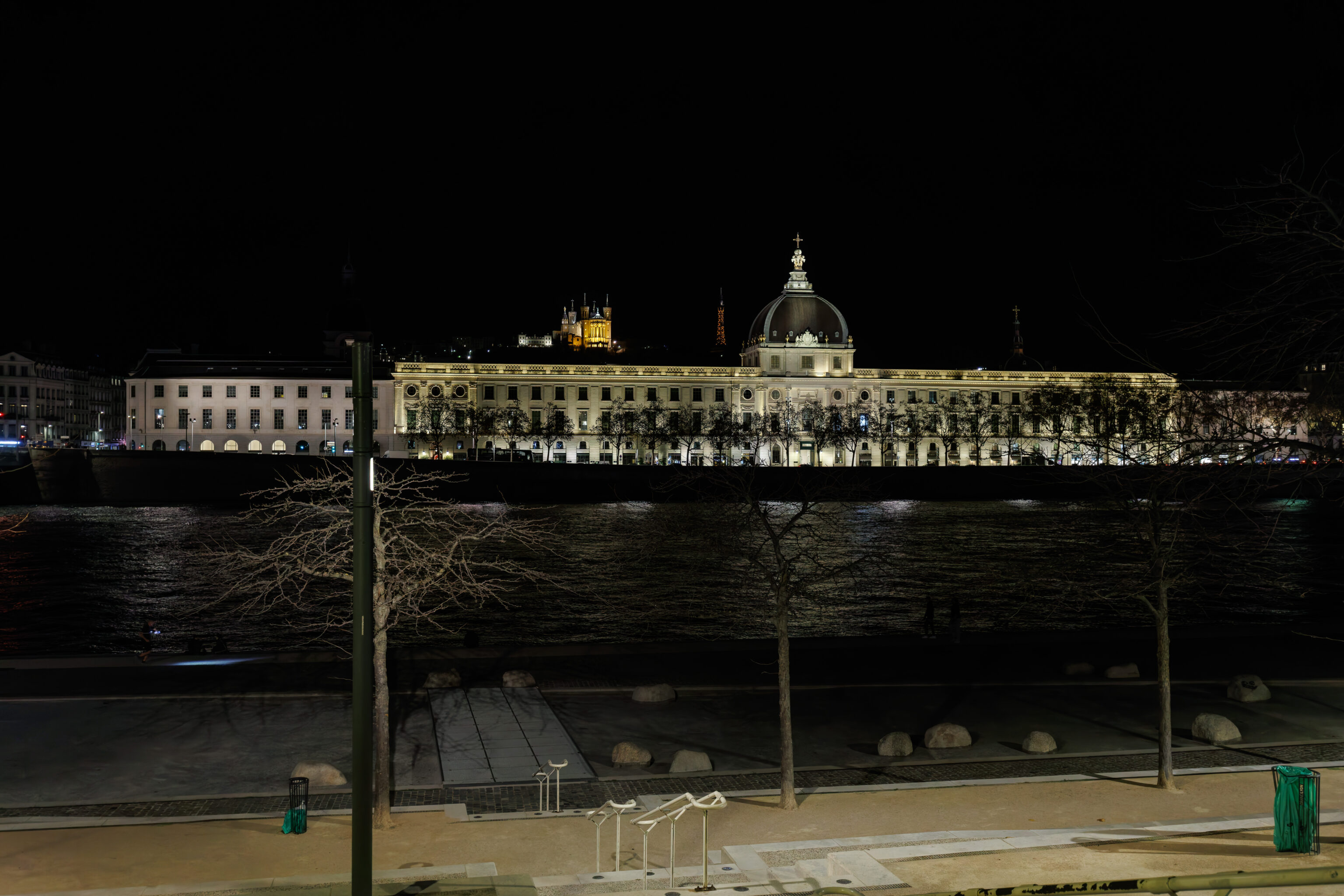
Rather than immediately return to the InterContinental, we decided to walk south along the east bank of the Rhone to the next bridge. We had a nice view of the hotel as well as the Basilica of Notre Dame up on the Fourvière Hill.
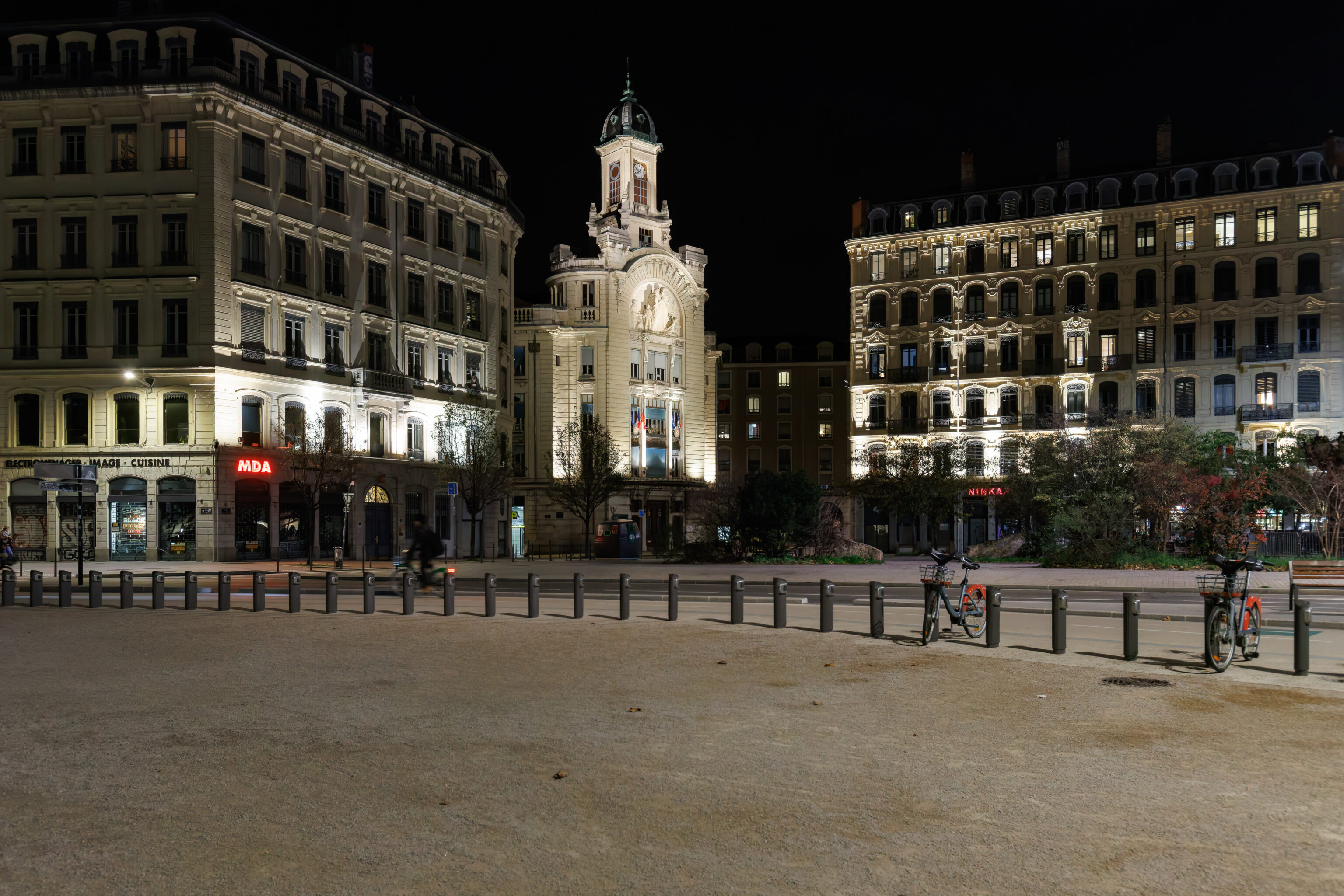
This building, which has a bit of a resemblance to a church, is the Palais de la Mutualité. It isn’t clear the exact function of this building but it seems to be a place that contains organizations related to retirement and mutual insurance. It also seems to function as a small conference center.
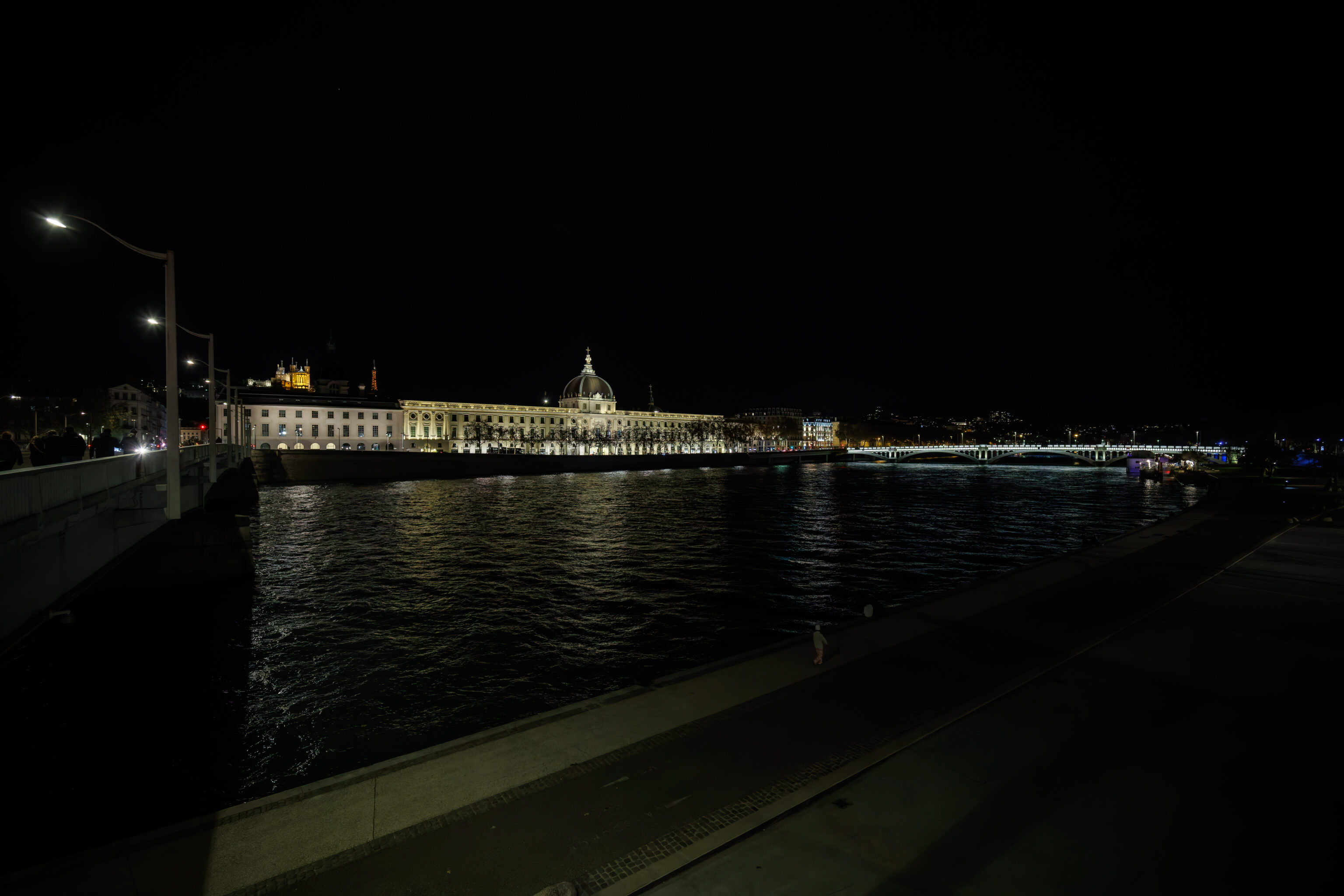
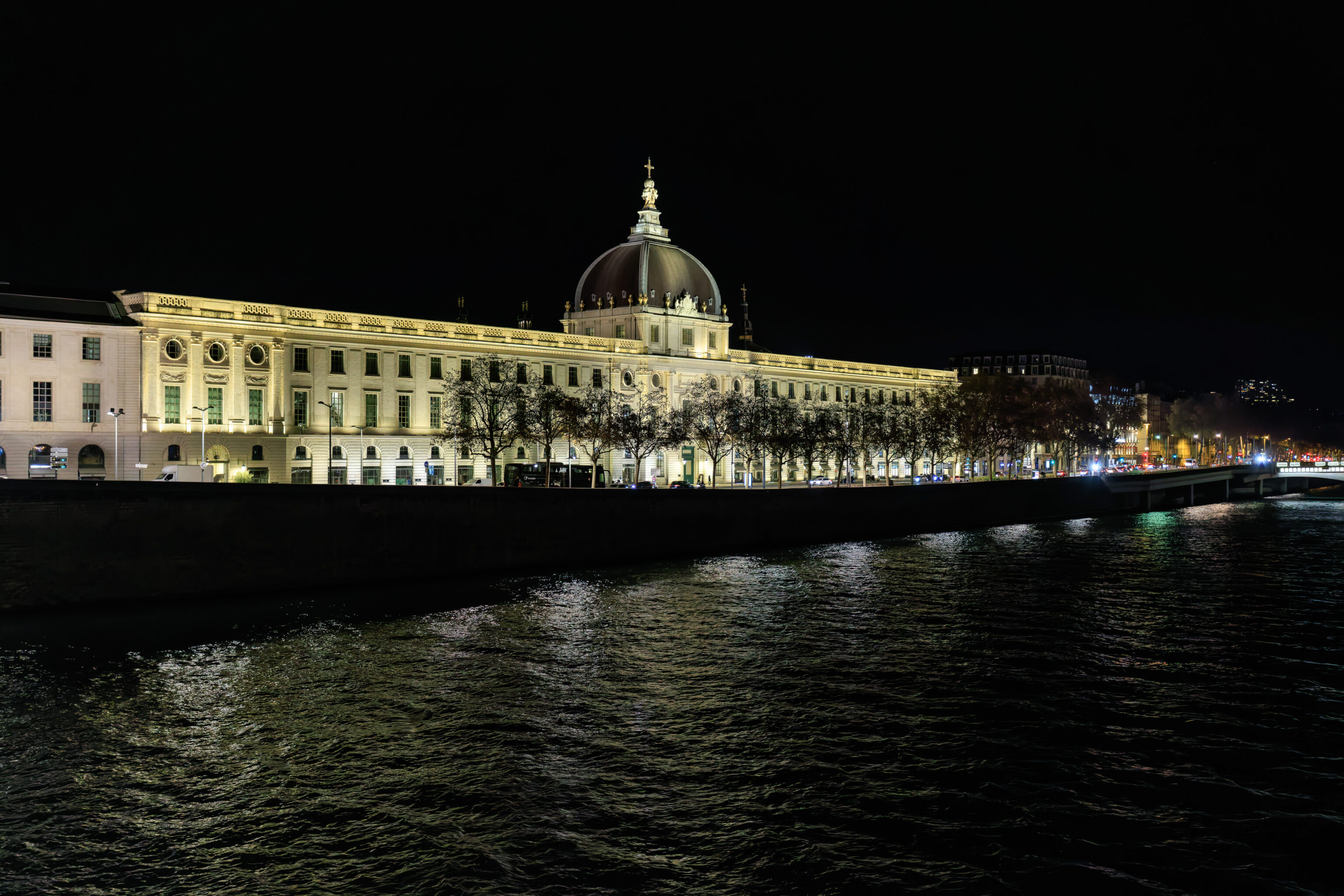
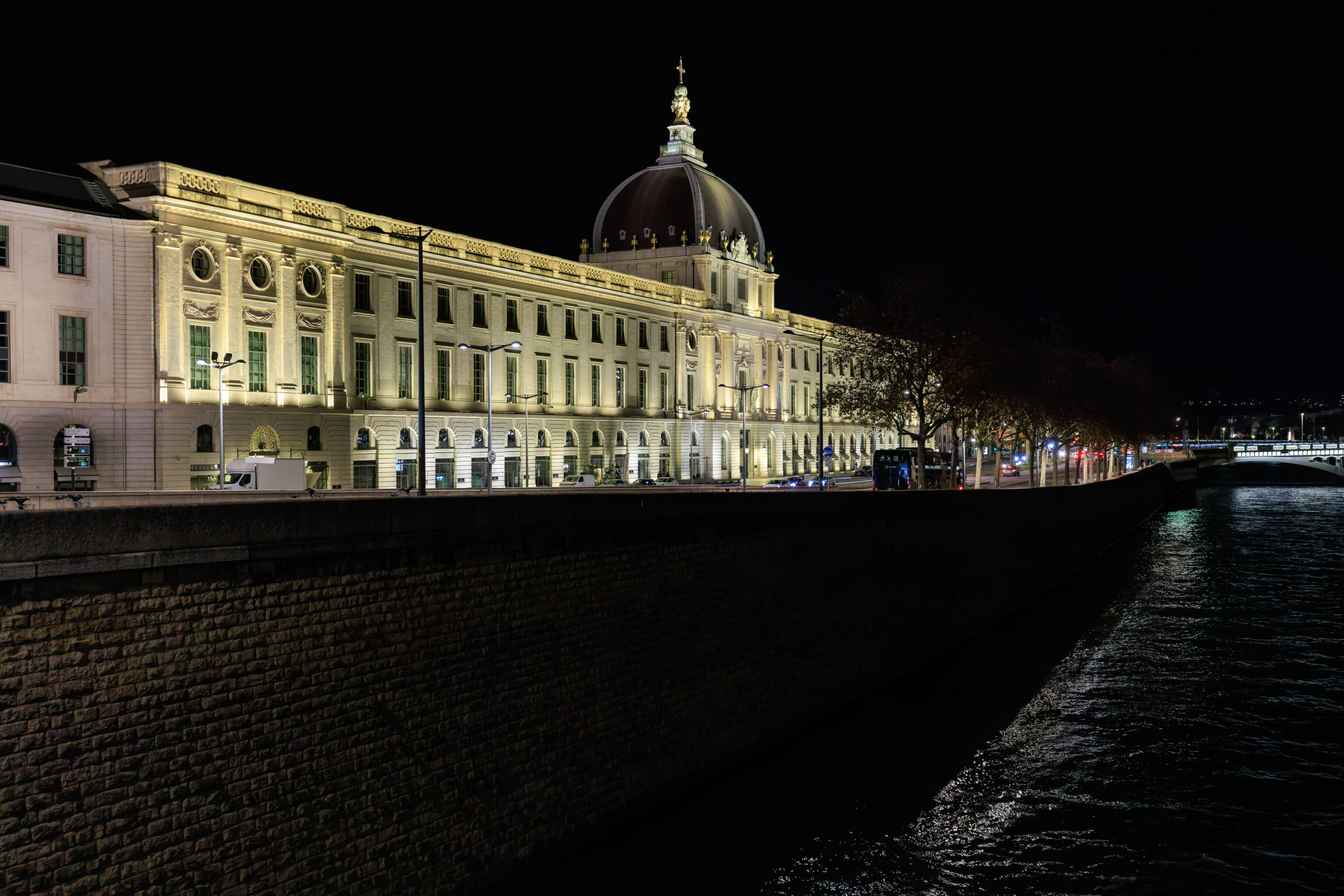
We walked across the Pont de la Guillotière to return to the InterContinental to end the day.