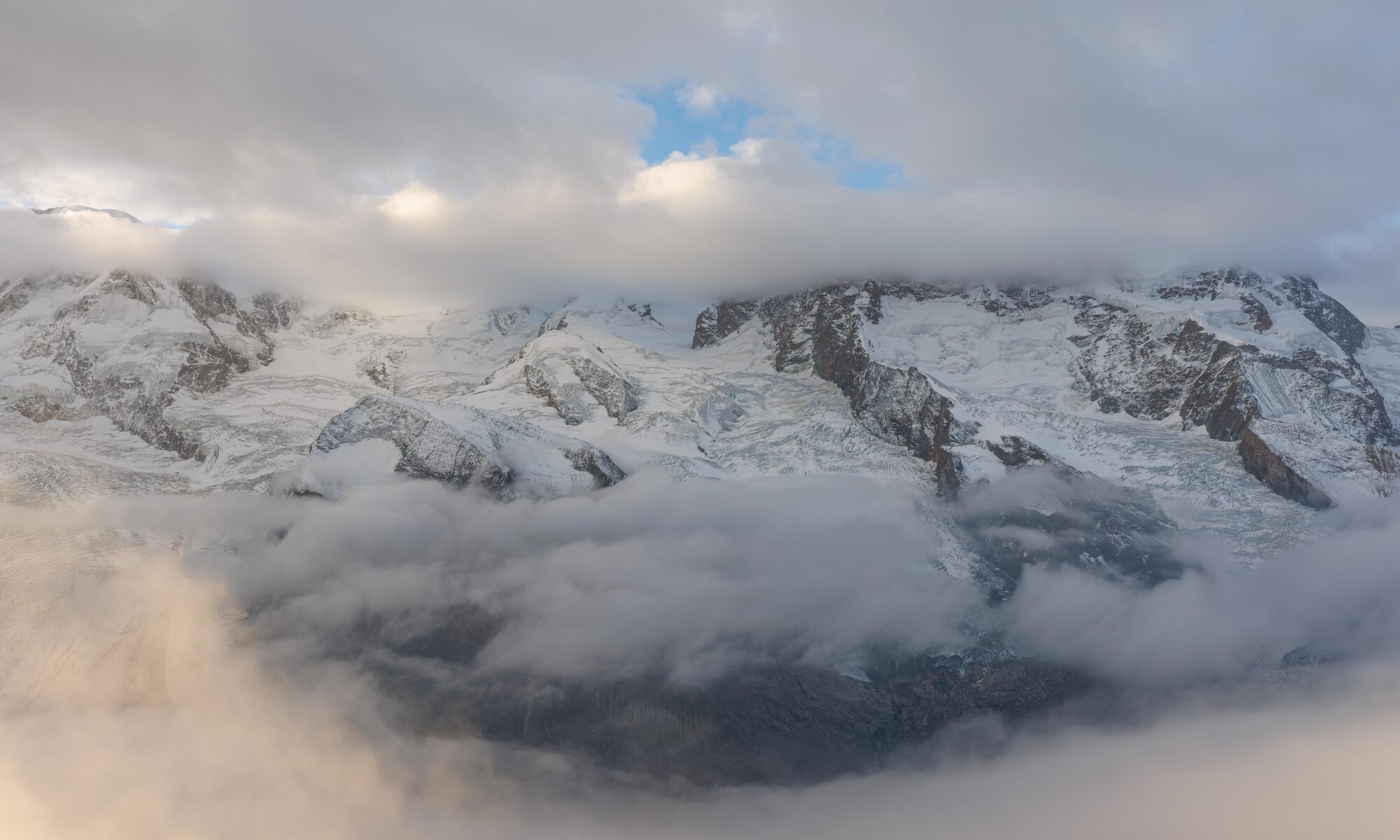

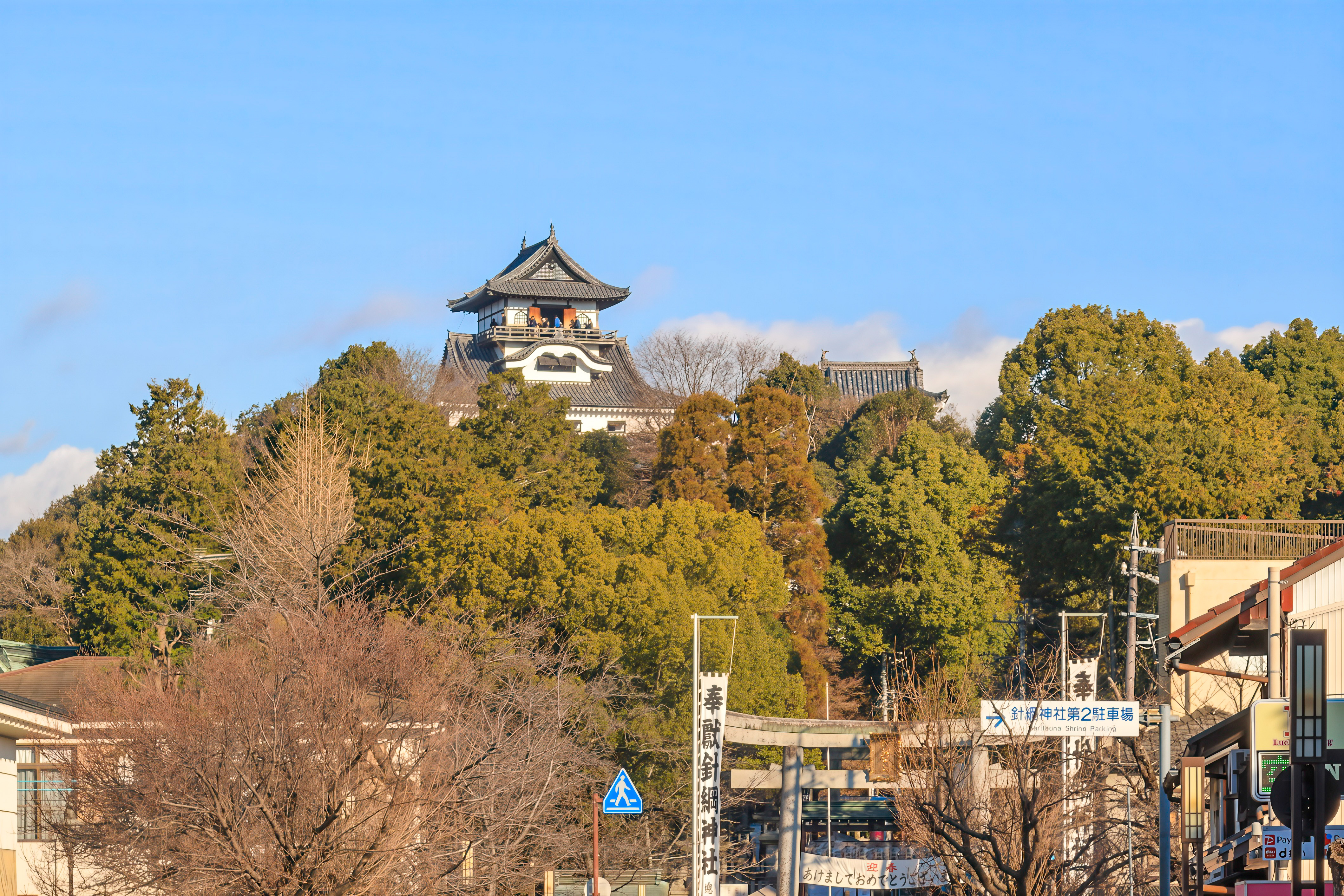
Happy New Year! We woke up before sunrise and headed up to the lounge at the 名古屋マリオットアソシアホテル Nagoya Marriott Associa Hotel for breakfast and for 初日の出 hatsuhinode, the first sunrise of the year! We then headed up to 犬山 Inuyama for 初詣 hatsumode, the first temple or shrine visit of the year, which we did at 針綱神社 Haritsuna-jinja. We spent the rest of the day visiting the 国宝 National Treasure 犬山城 Inuyama Castle and the nearby 三光稲荷神社 Sanko Inari-jinja. After lunch and snacks at the 犬山城下町 Inuyama Castle Town, we walked east to visit the large Buddhist 大聖寺 Daisho-ji, a temple on a hill overlooking the city, before returning to Nagoya to end our last full day in Japan of this trip.
Hatsuhinode
We woke up at the 名古屋マリオットアソシアホテル Nagoya Marriott Associa Hotel before sunrise. We knew from our previous visits to the 36th floor lounge that it had an east facing view where we could see the sunrise. We went up when the lounge opened at 6:30am, thirty minutes before the 7am sunrise time.
初日の出 Hatsuhinode is the Japanese tradition of viewing the first sunrise of the year. We attempted to do hatsuhinode last year at Niseko, a ski resort town in Hokkaido. That failed as while we had a fantastic viewpoint on Mt. Niseko-Annupuri, the weather did not cooperate. It was windy and snowing and all we saw was white everywhere!
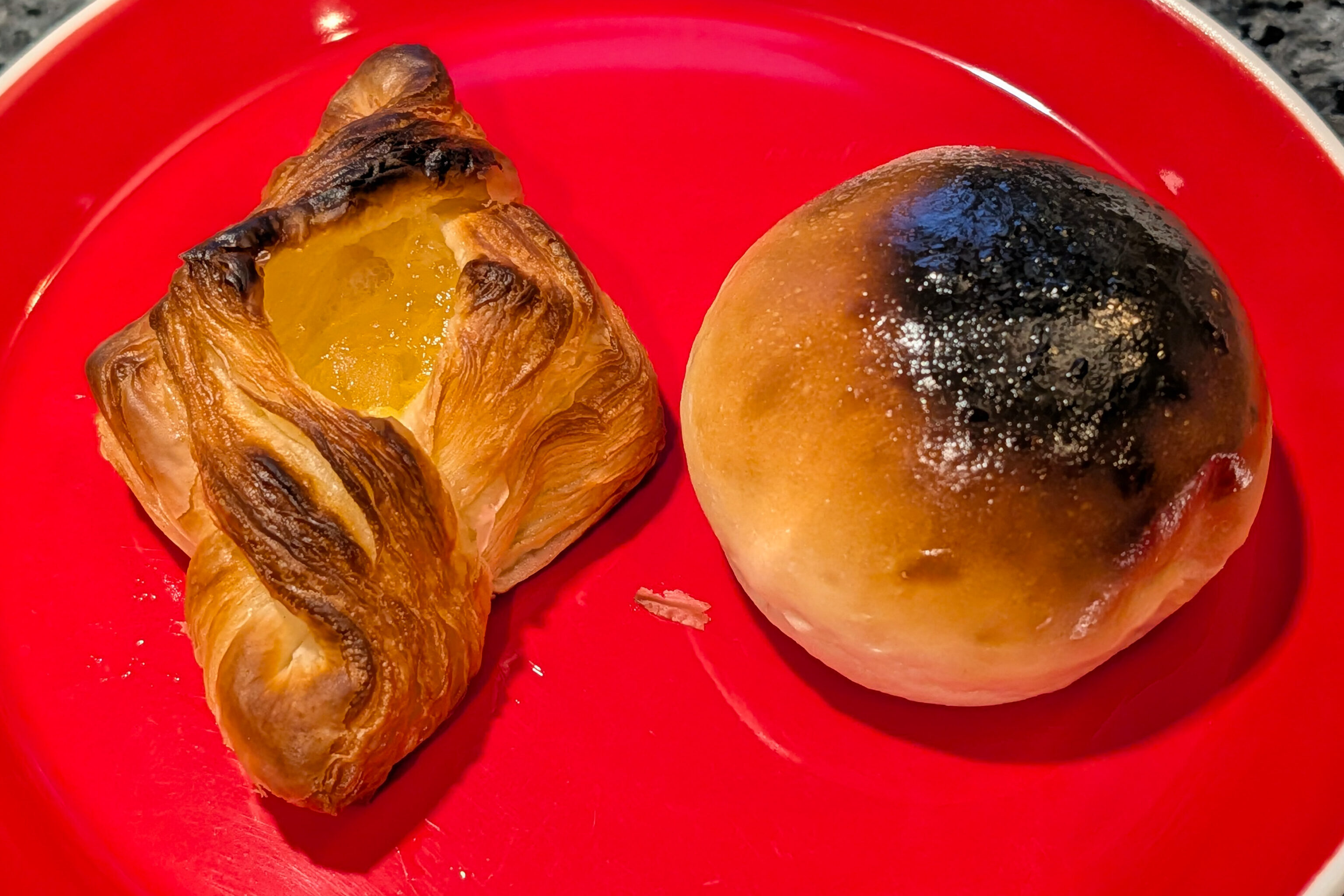
Breakfast in the lounge was mediocre as it has been every day during our visit. This is one of those places that exists to satisfy a Marriott corporate requirement.
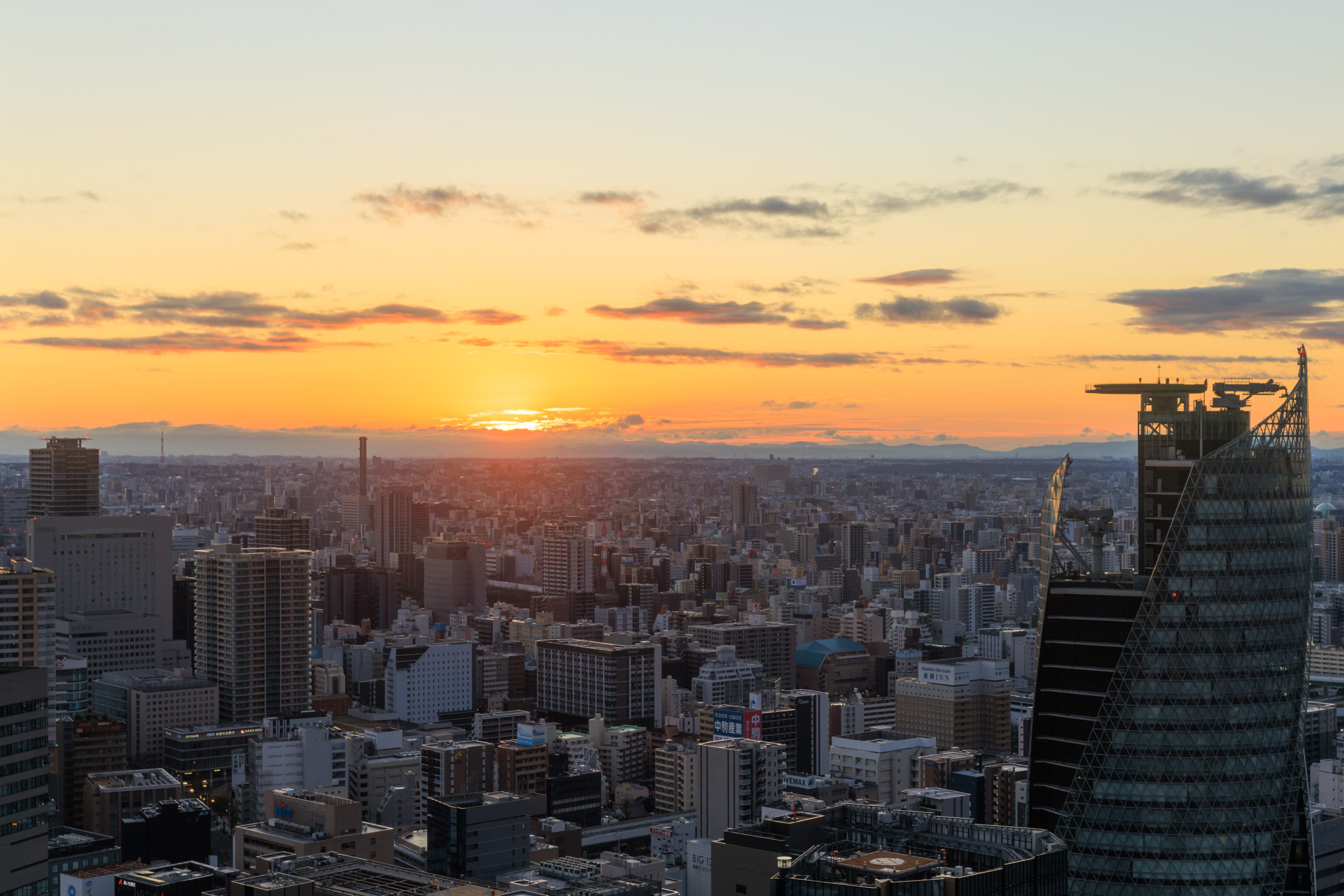
While sunrise was at 7am, there were clouds on the horizon. There are also mountains to the east, although they weren’t visible today due to the clouds. We started to see a bit of the Sun at around 7:04am.
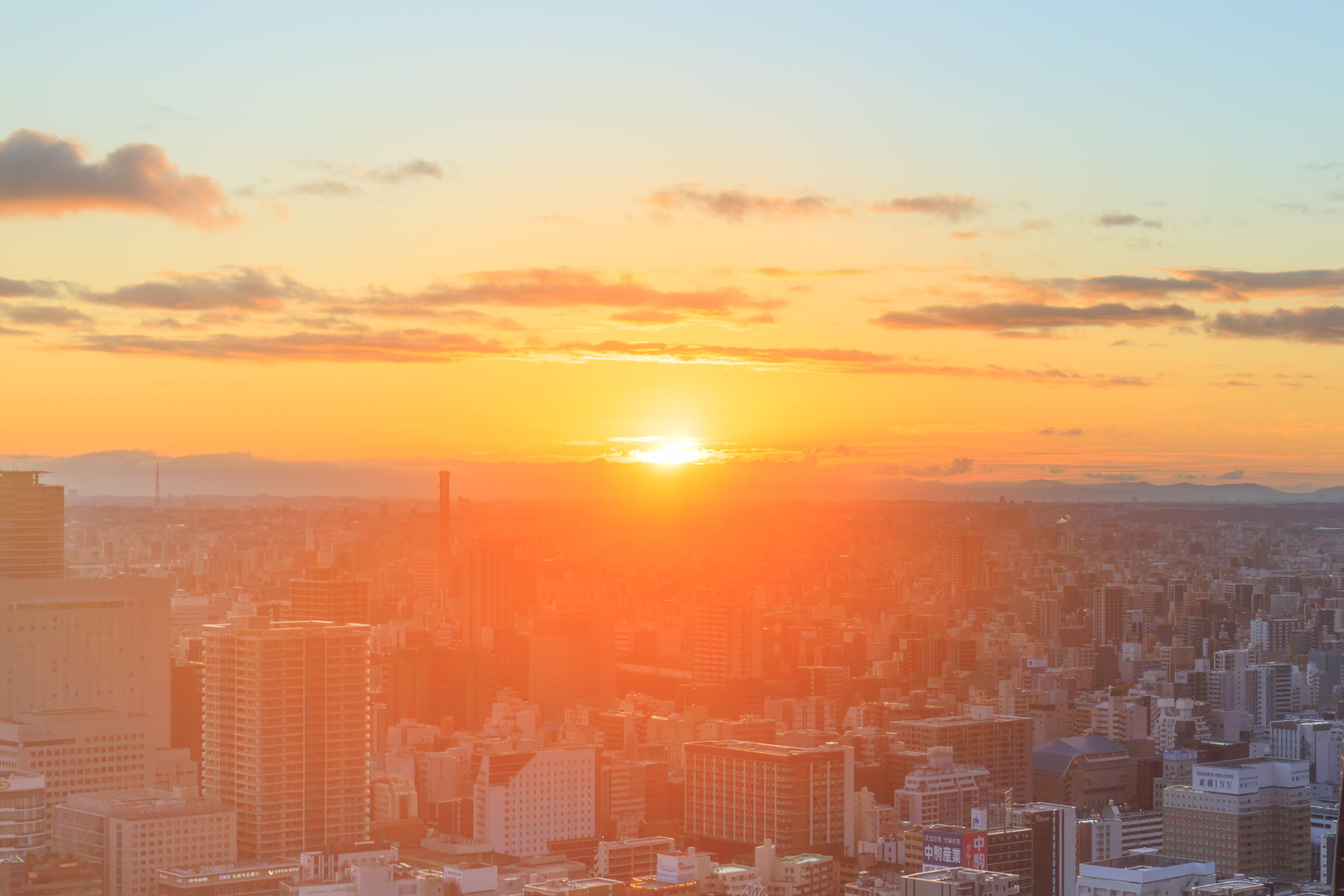
At 7:07am, the Sun finally became visible over the clouds!
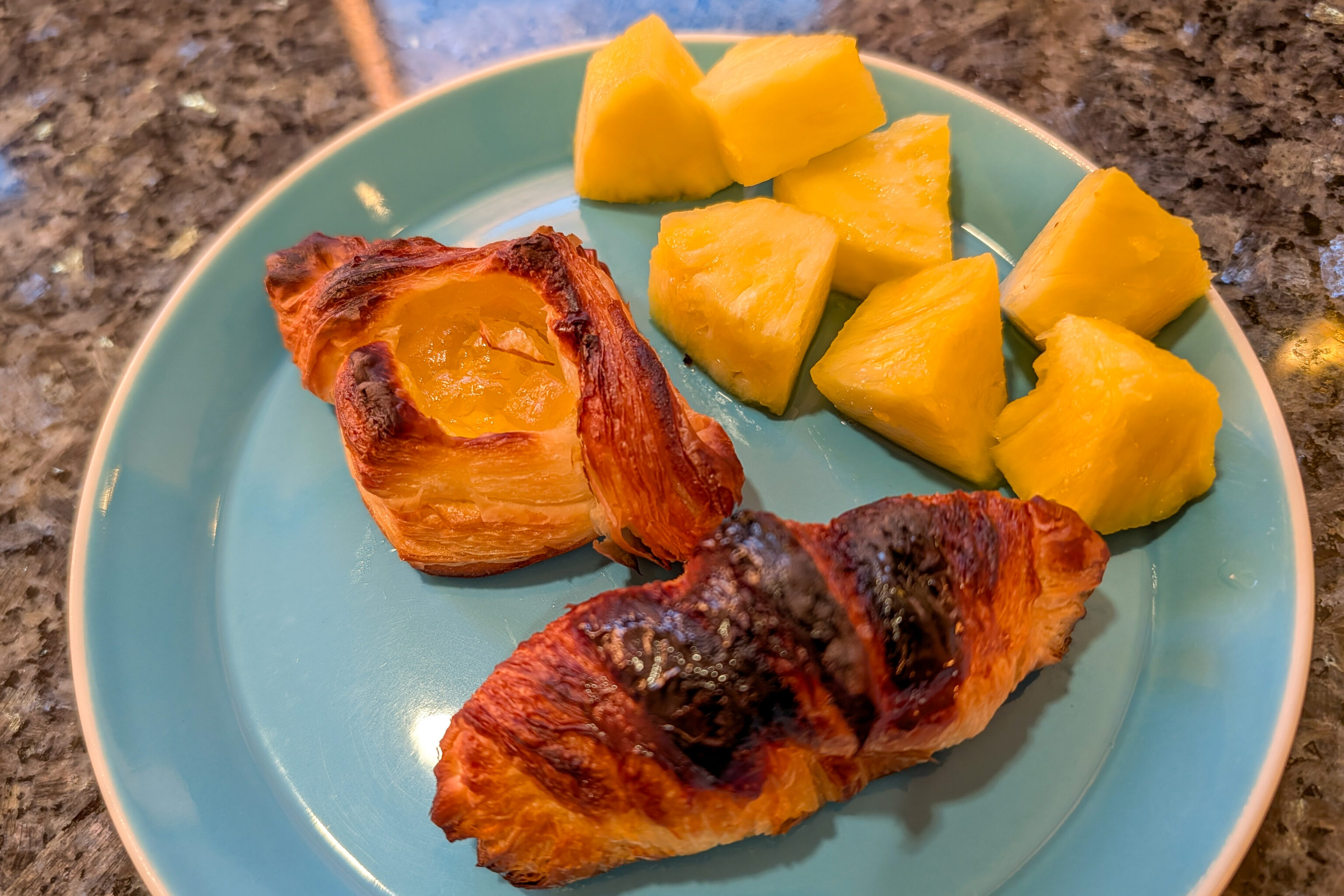
We grazed a little bit more before heading back to our room.
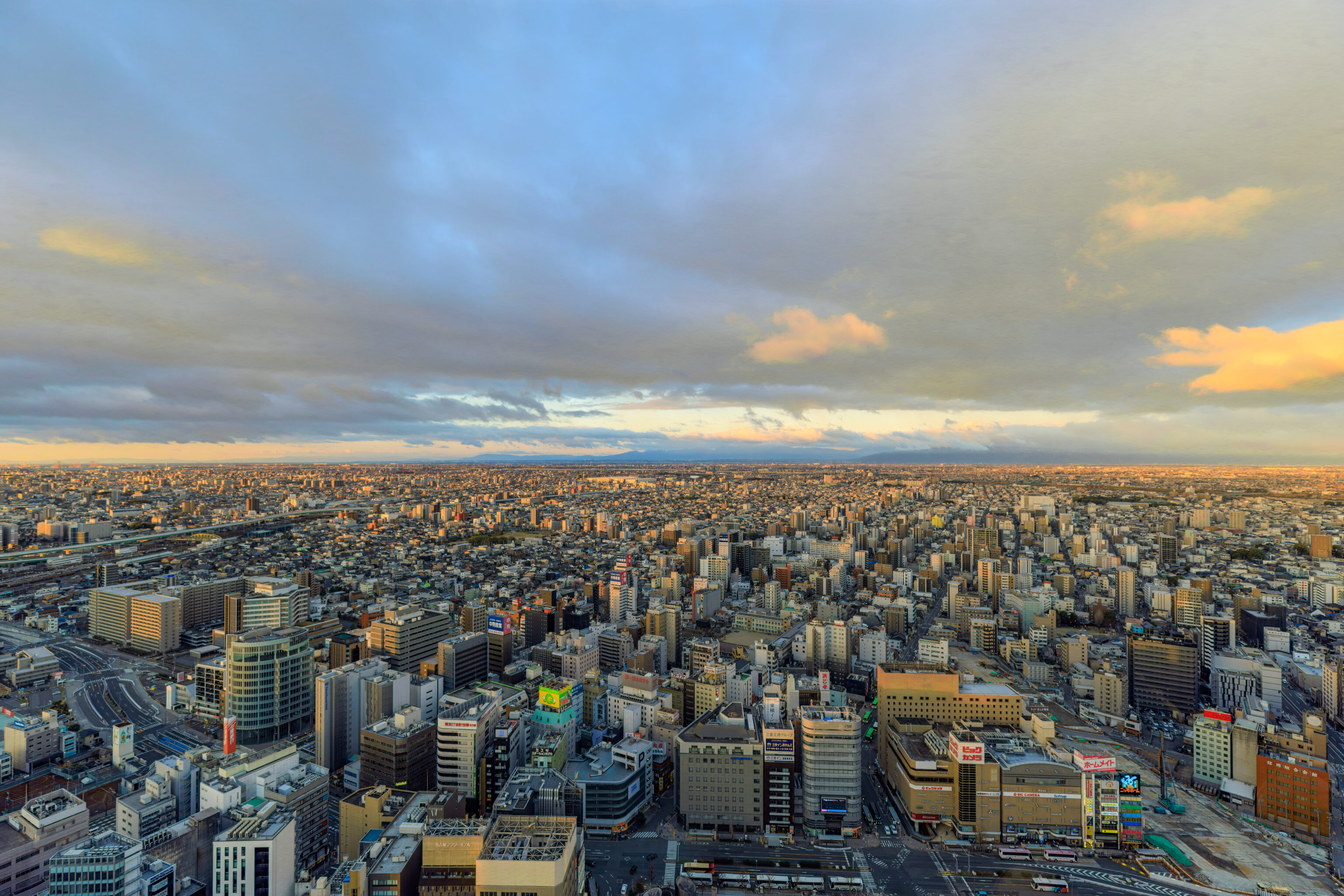
We were actually lucky with the weather today as the view from our west facing room at 7:17am was mostly cloudy!
Hatsumode
Having successfully witnessed the first sunrise of the year, we headed over to 犬山 Inuyama via the Meitetsu Inuyama Line, a trip that takes about 30 minutes on express and limited express trains.
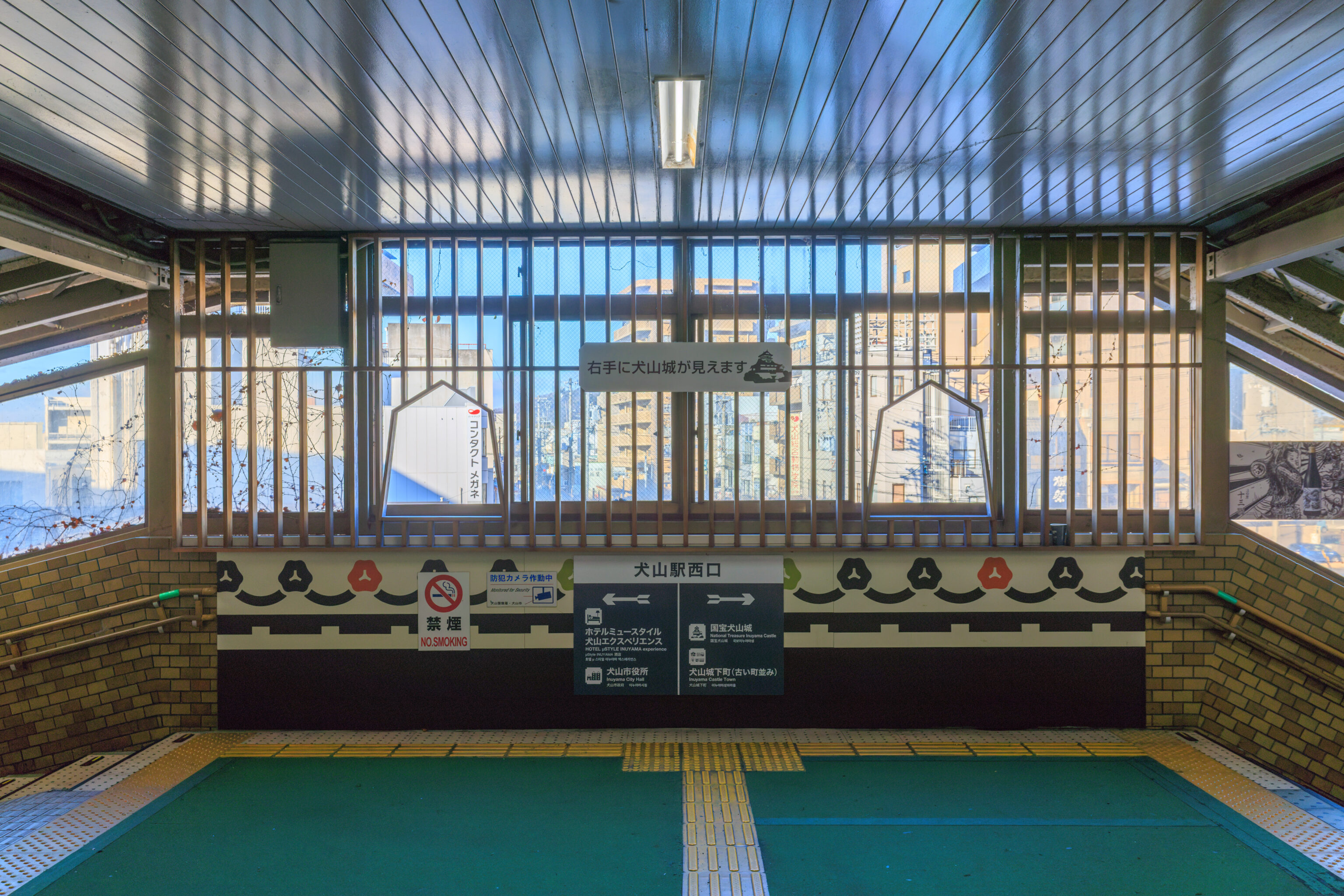
We arrived at 犬山駅 Inuyama Station at around 8:50am.
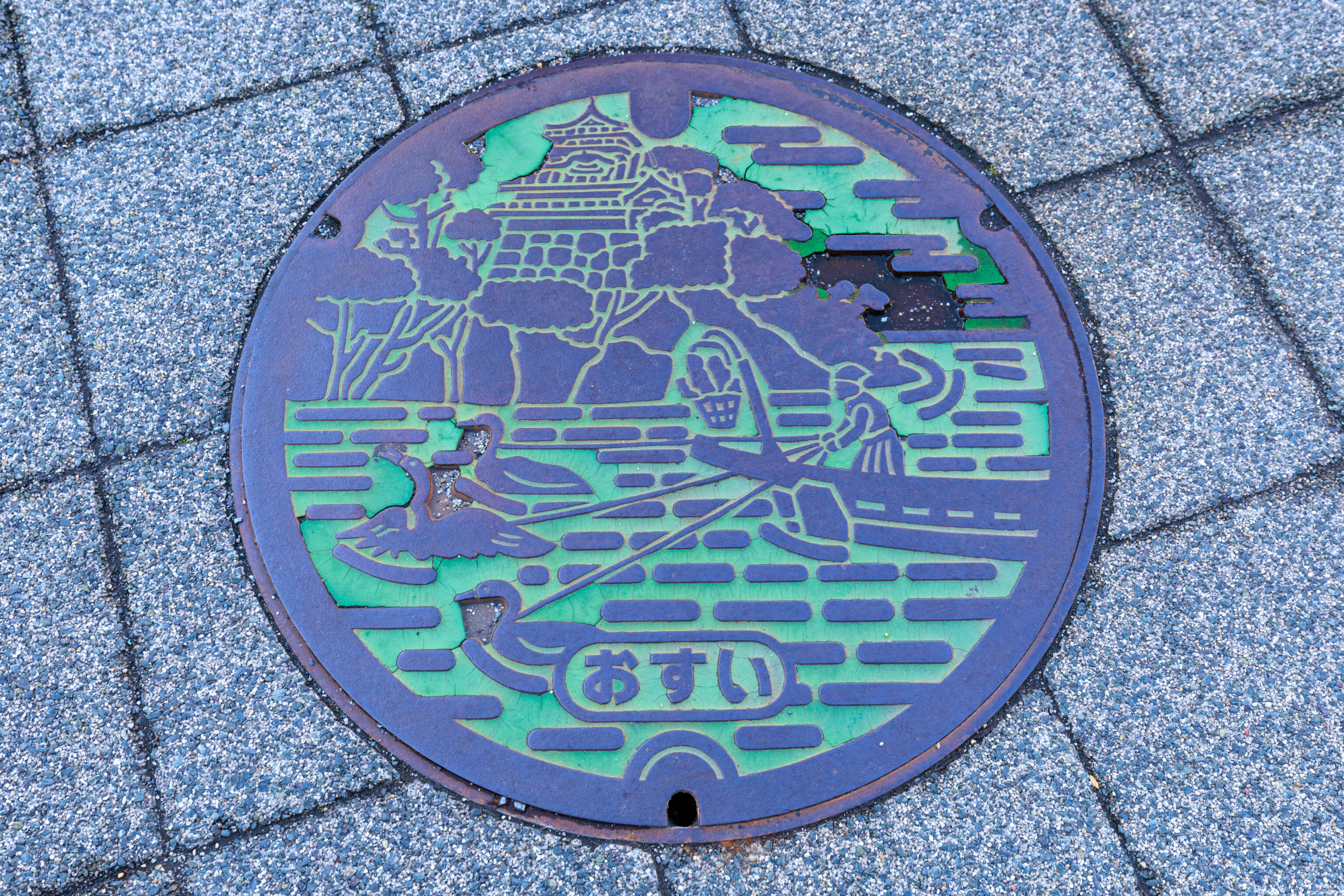
We headed outside to begin the walk to the city’s famous Inuyama Castle. There are some Shinto shrines in front of the castle so we plan on doing 初詣 hatsumode, the first shrine or temple visit of the year, there.
This utility cover features Inuyama Castle in the background along with cormorant fishing in the foreground in the 木曽川 Kiso-gawa.
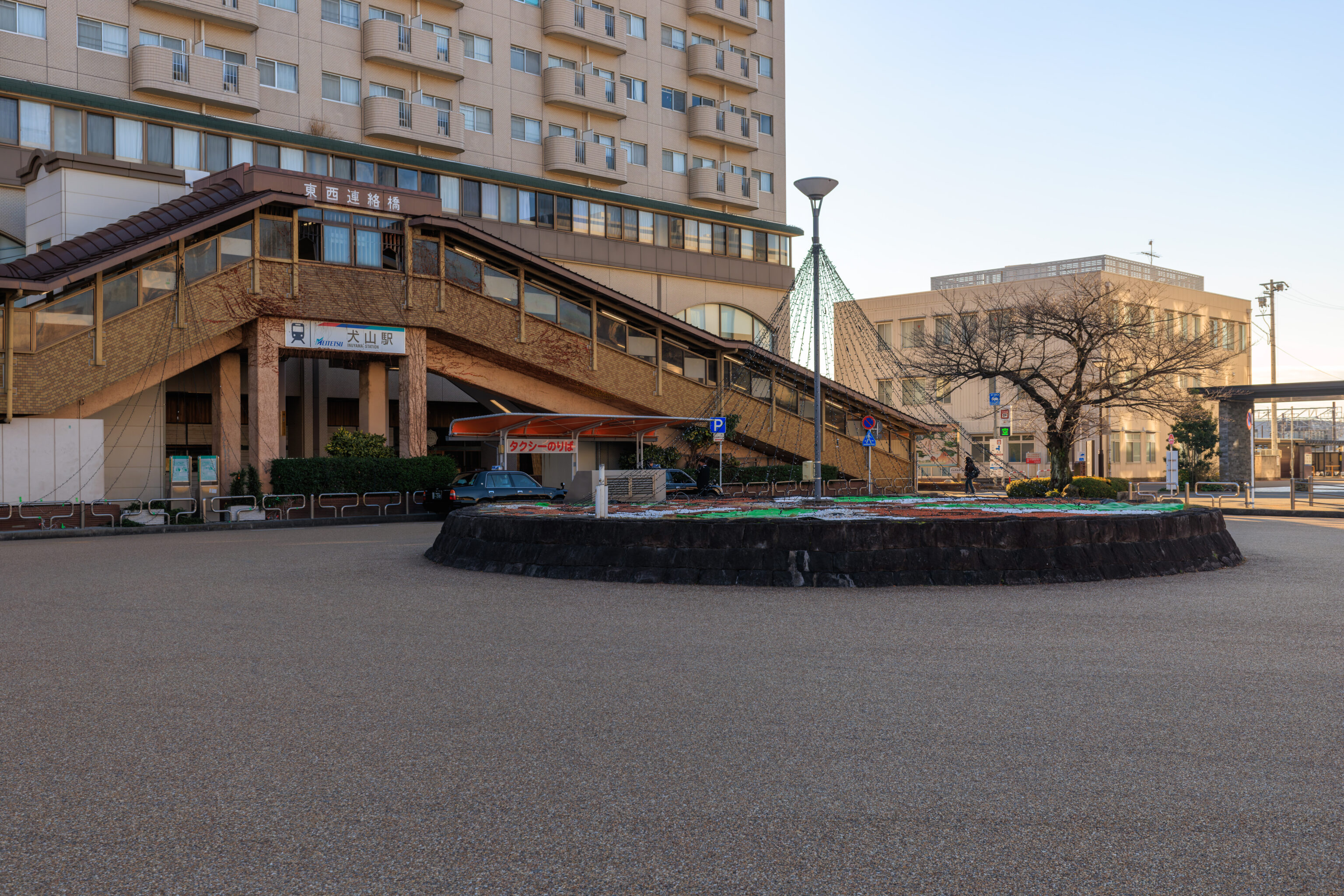
There was a big traffic circle in the middle in front of the station’s west side with what looked like some pattern created with flowers. Unfortunately, we couldn’t see what the pattern was from ground level.
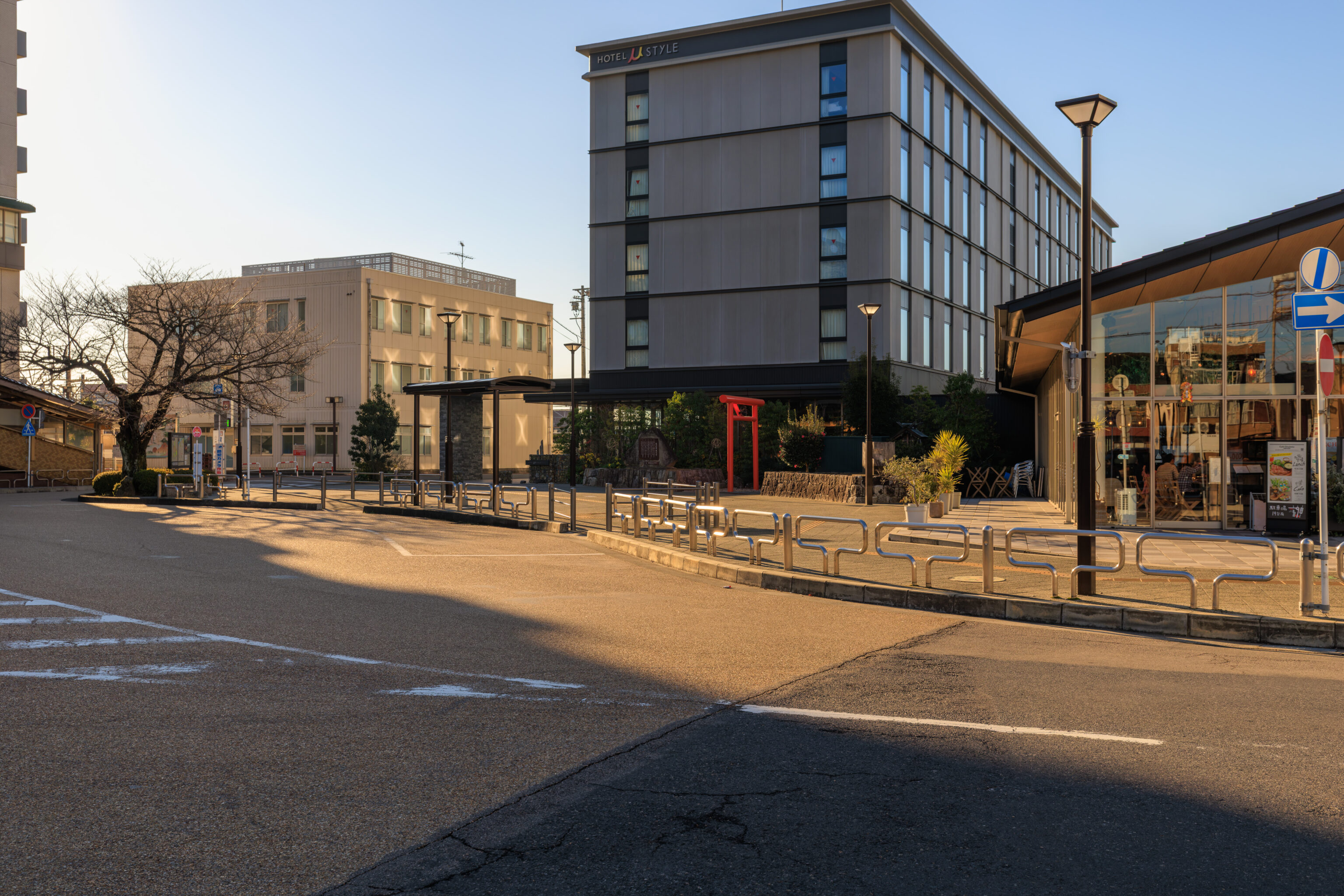
We started to walk to the west. We noticed this lone torii.
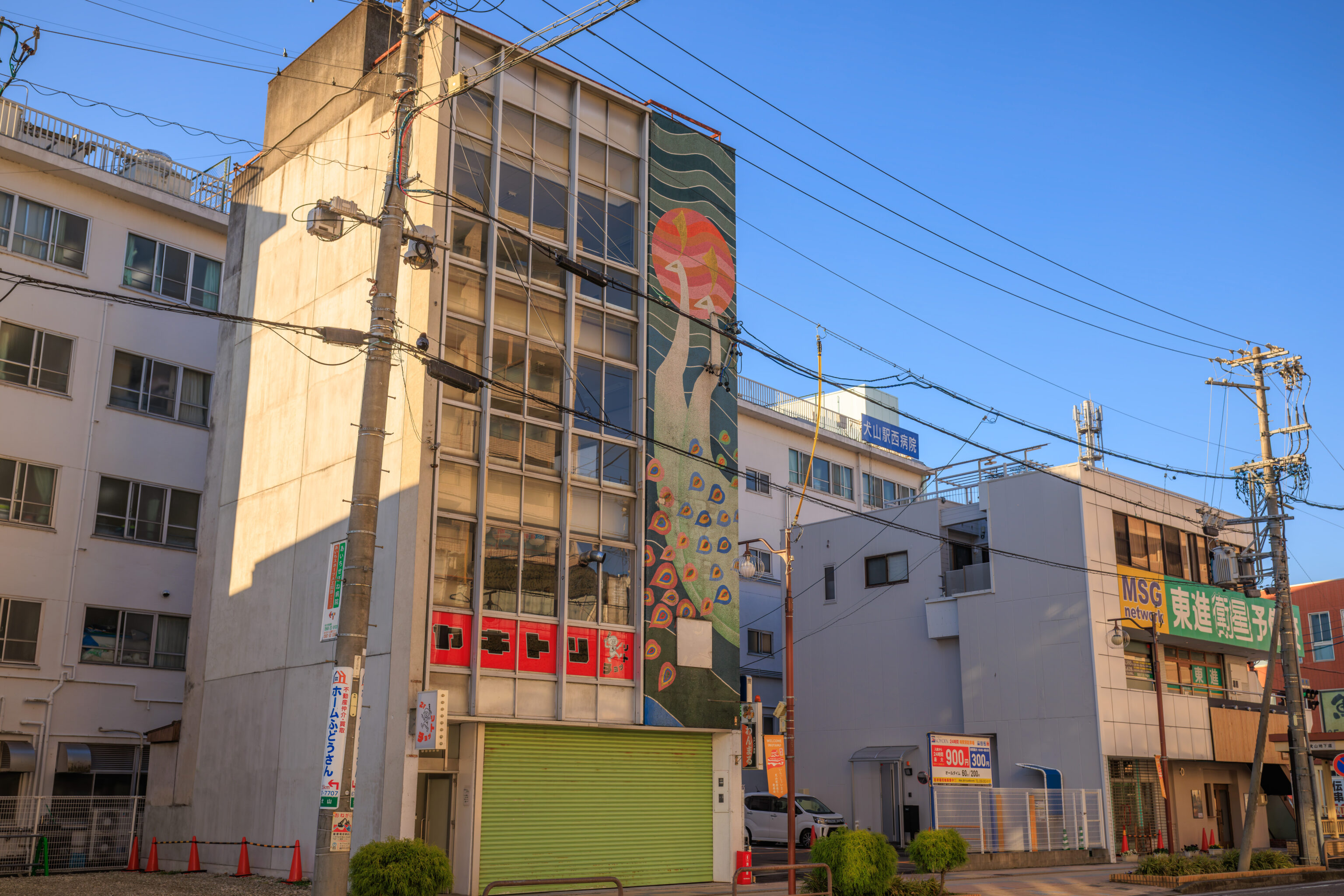
Just a bit further, we saw a building with a mural depicting peacocks in front of the rising Sun. Well, it might not be the rising Sun, its just the Sun.
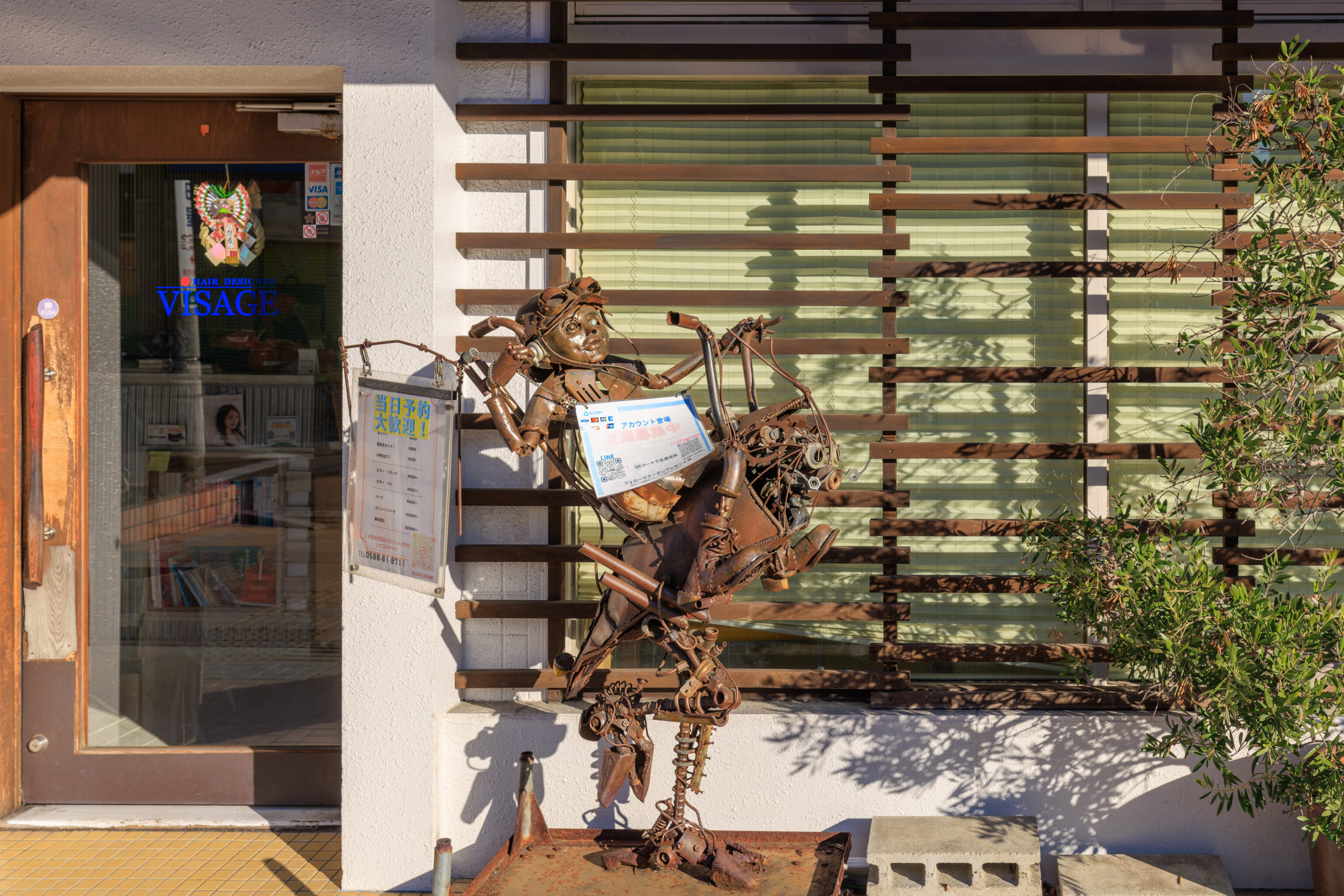
We walked past an interesting metal sculpture in front of a hair salon.
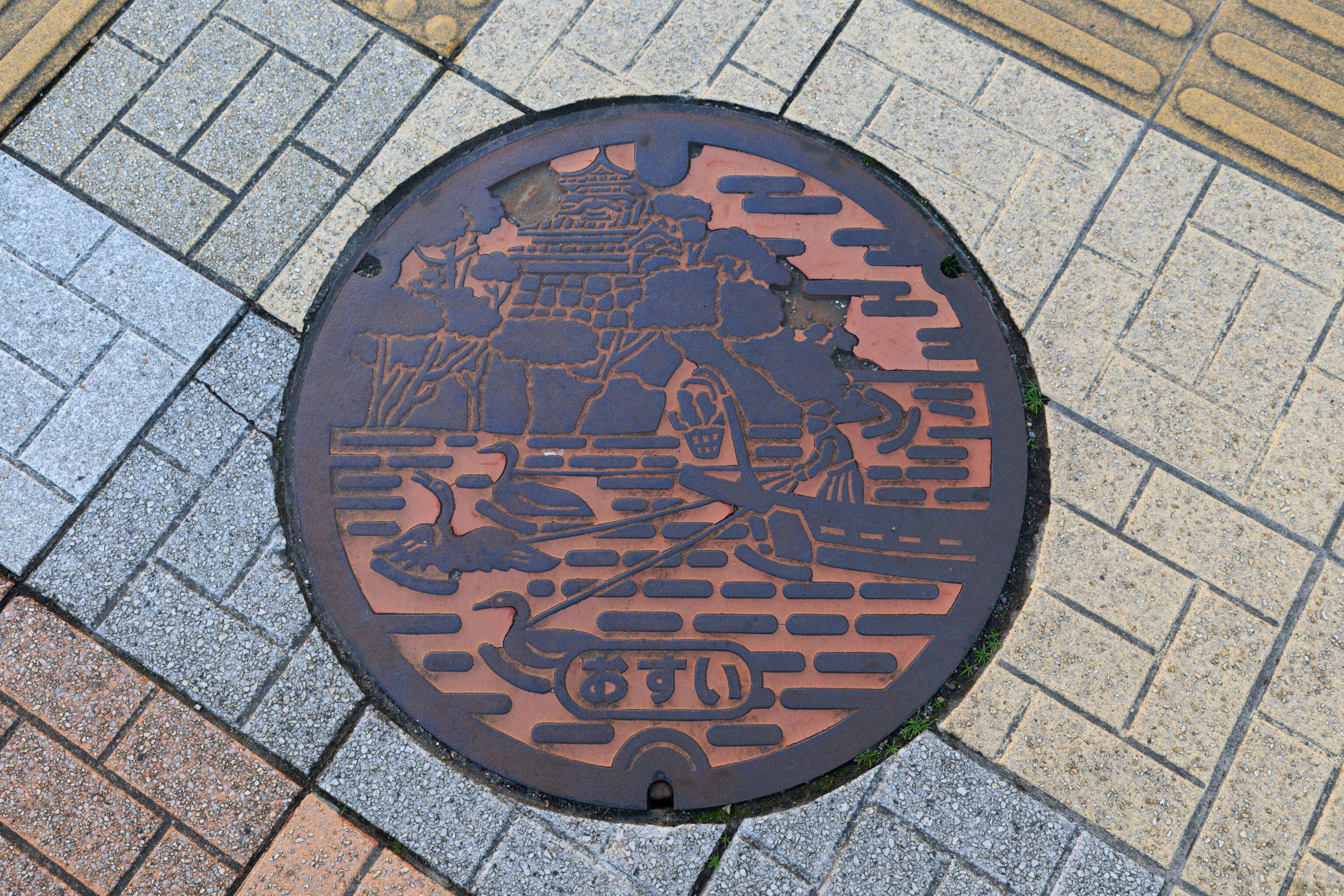
This utility cover was just like the previous one that we saw, except with a different background color.
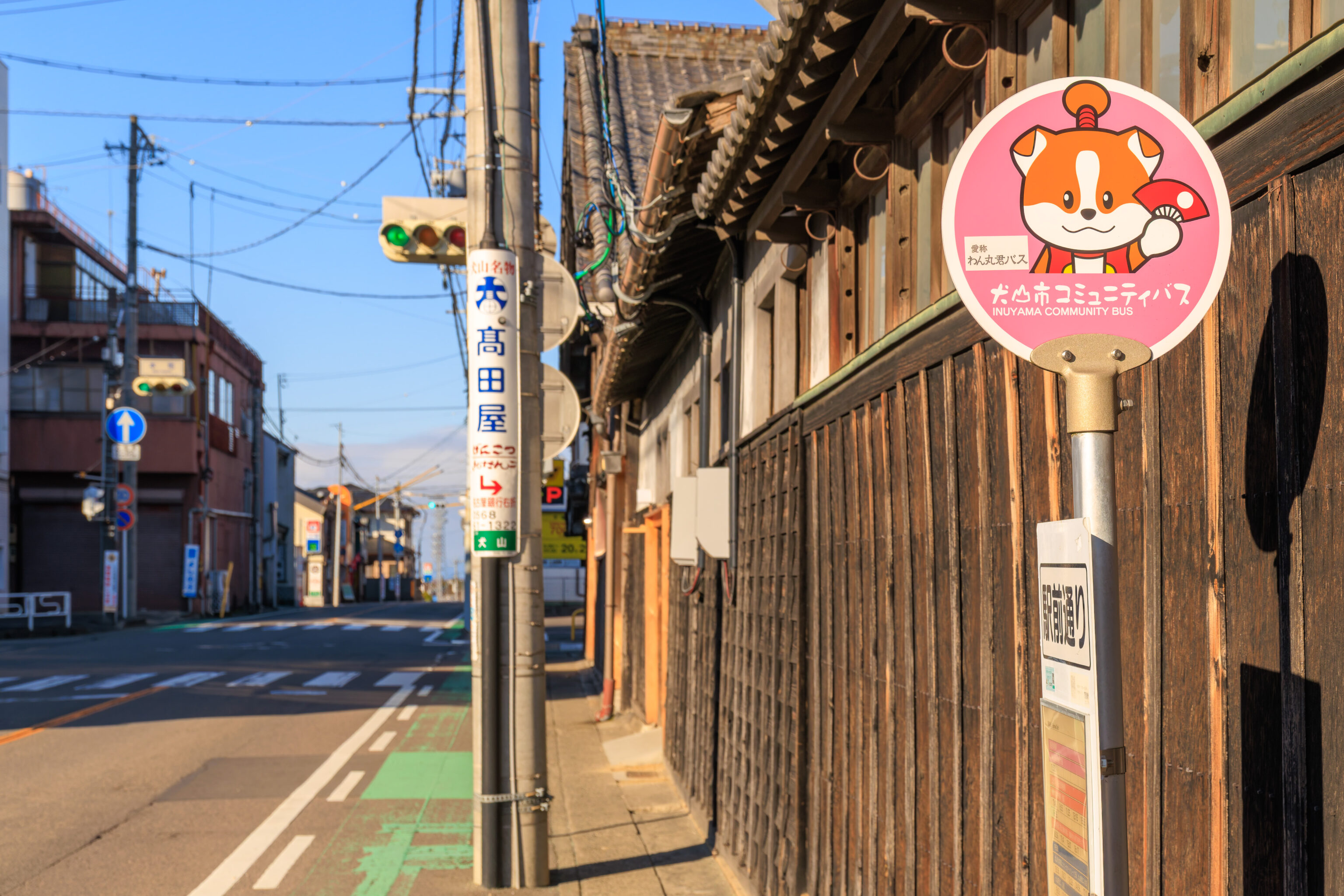
Although Inuyama does have a local bus, the schedule isn’t particularly frequent. But it does have a kawaii mascot! Inuyama literally means Dog Mountain so the dog mascot makes quite a bit of sense!
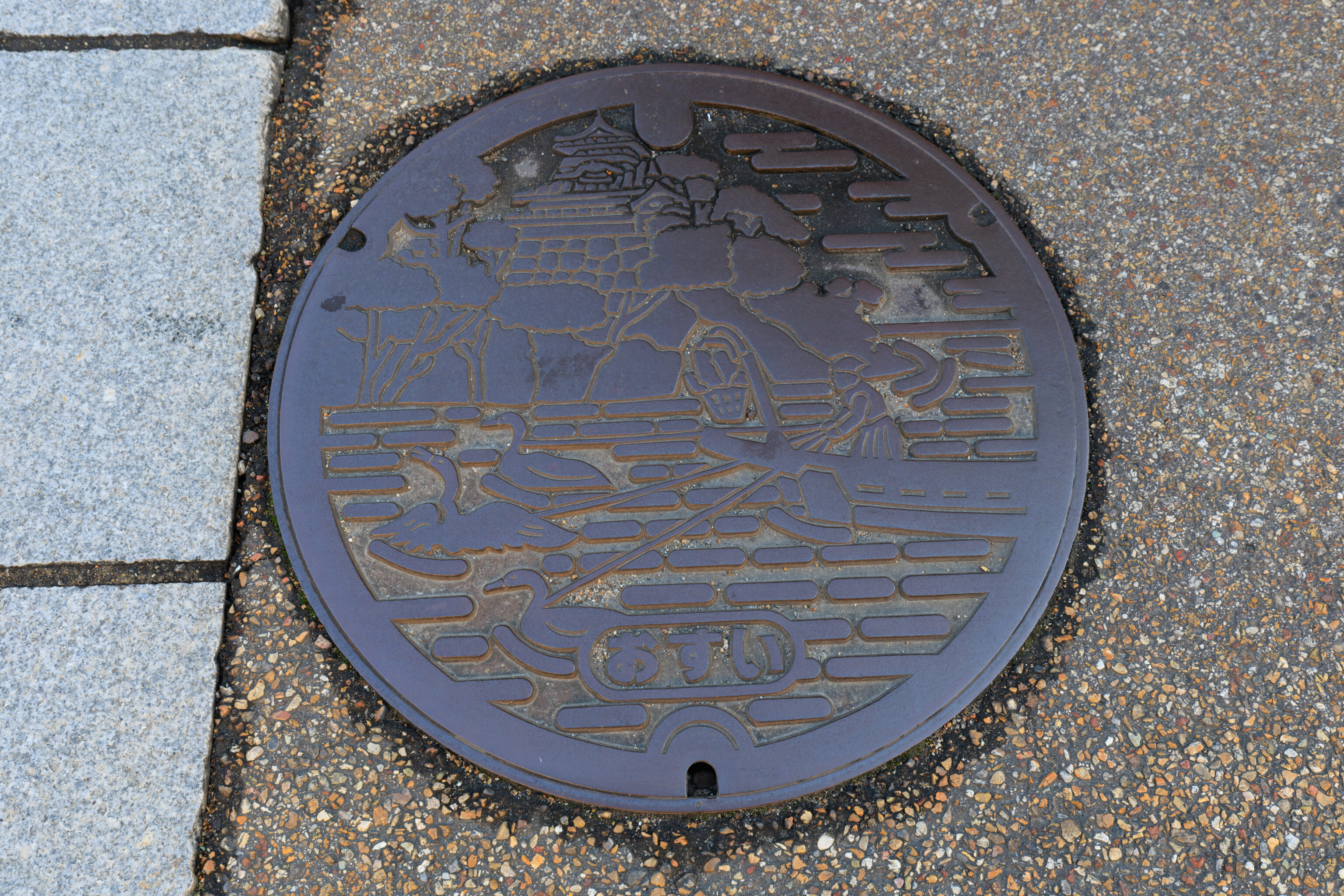
Another instance of the same utility cover. The background paint seems to have worn off, or maybe this one was unpainted?
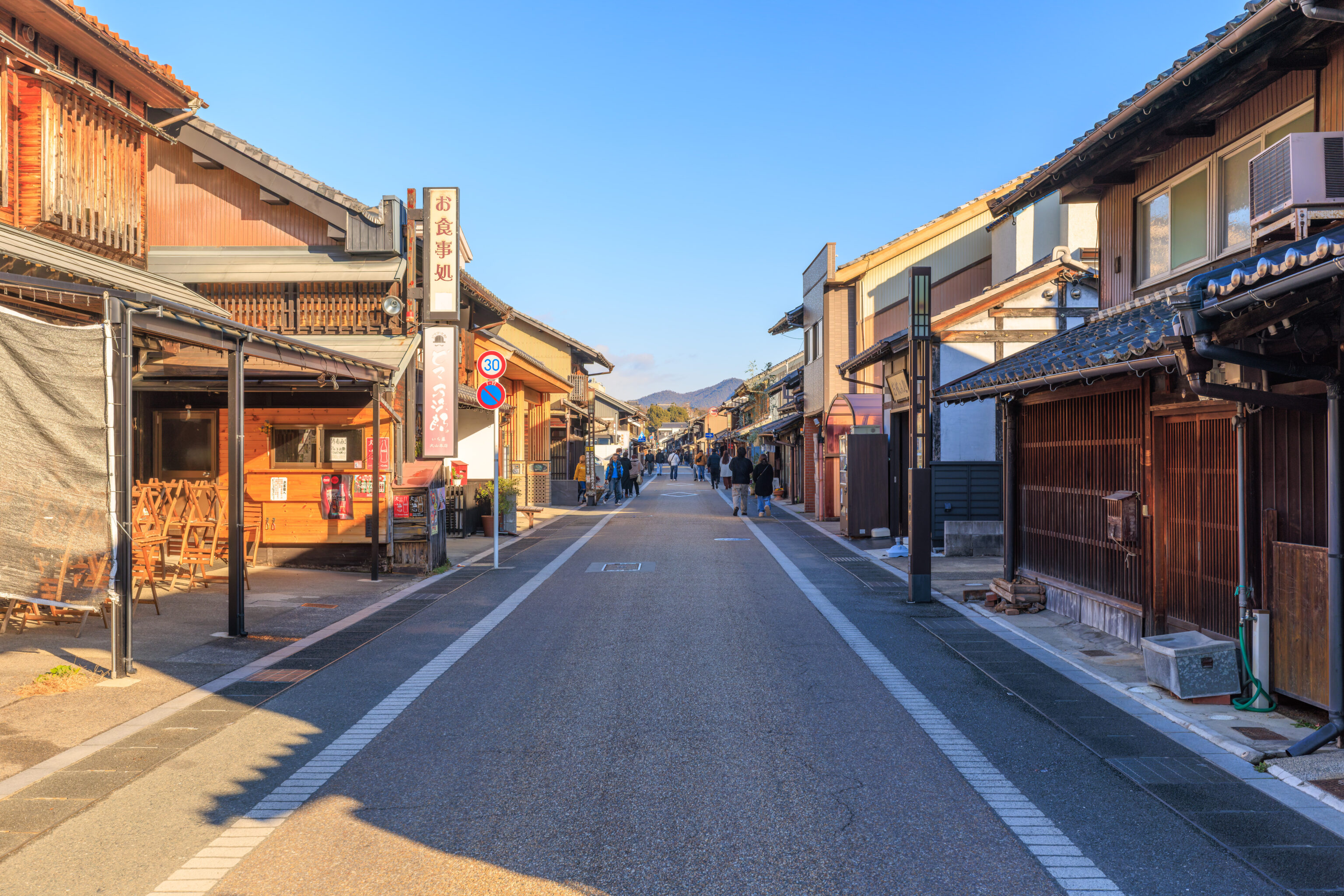
After walking to the west for about ten minutes, we turned right to begin heading north to the castle. This is also when we enter the 犬山城下町 Inuyama Jōkamachi (Castle Town), the historic area to the south of the castle.
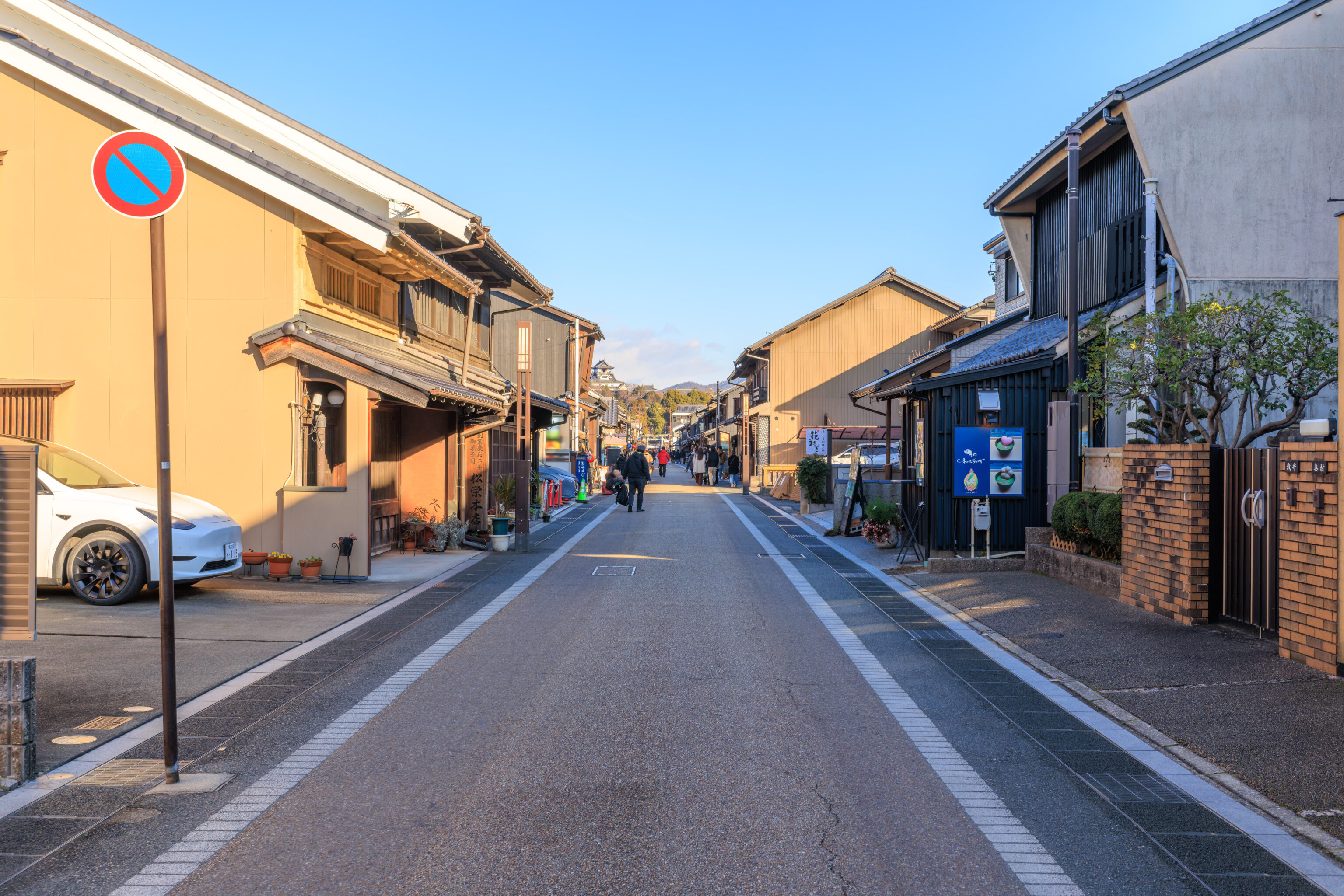
After walking for just a few minutes, we were able to see the castle come into view!
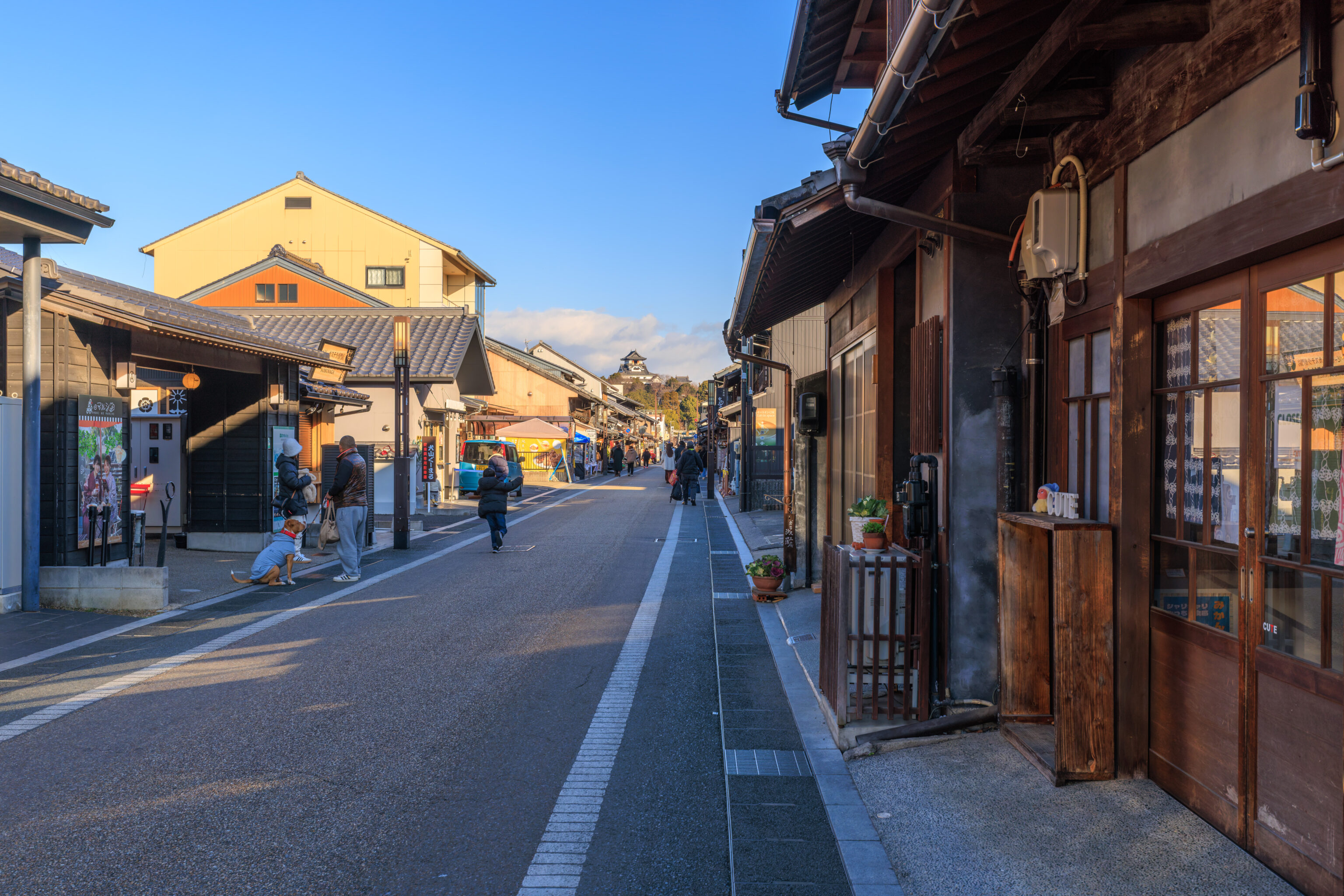
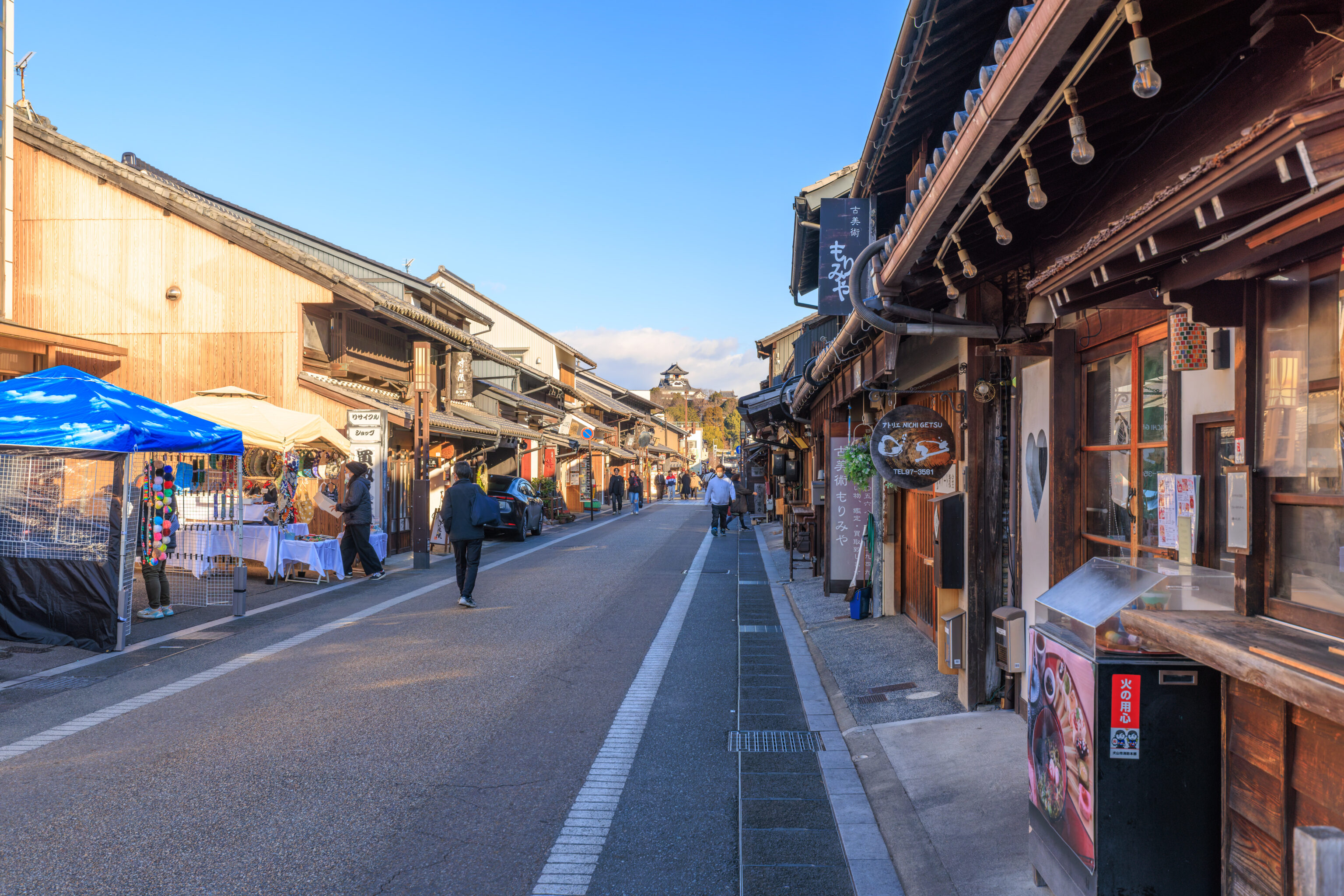
It was still fairly early, around 9:15am, so it was not busy at all.
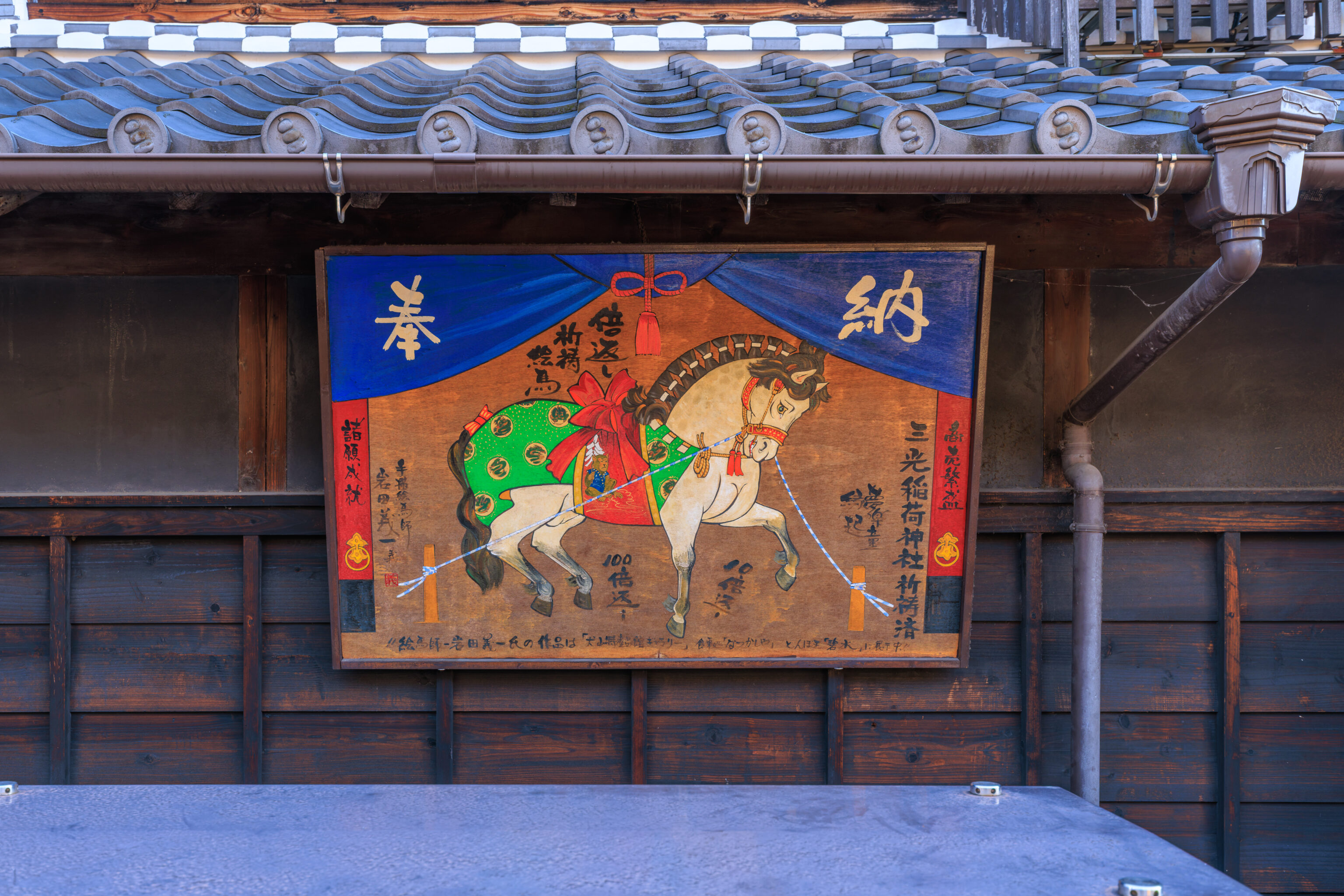
It is now the Year of the Horse in Japan! Technically, this date should be determined using the Chinese Calendar, however, the Japanese migrated completely to the Gregorian Calendar in 1873, although they still use years based on the Imperial era. So while it is the Year of the Horse here in Japan, it is not in China or Taiwan or any Chinatown around the world.
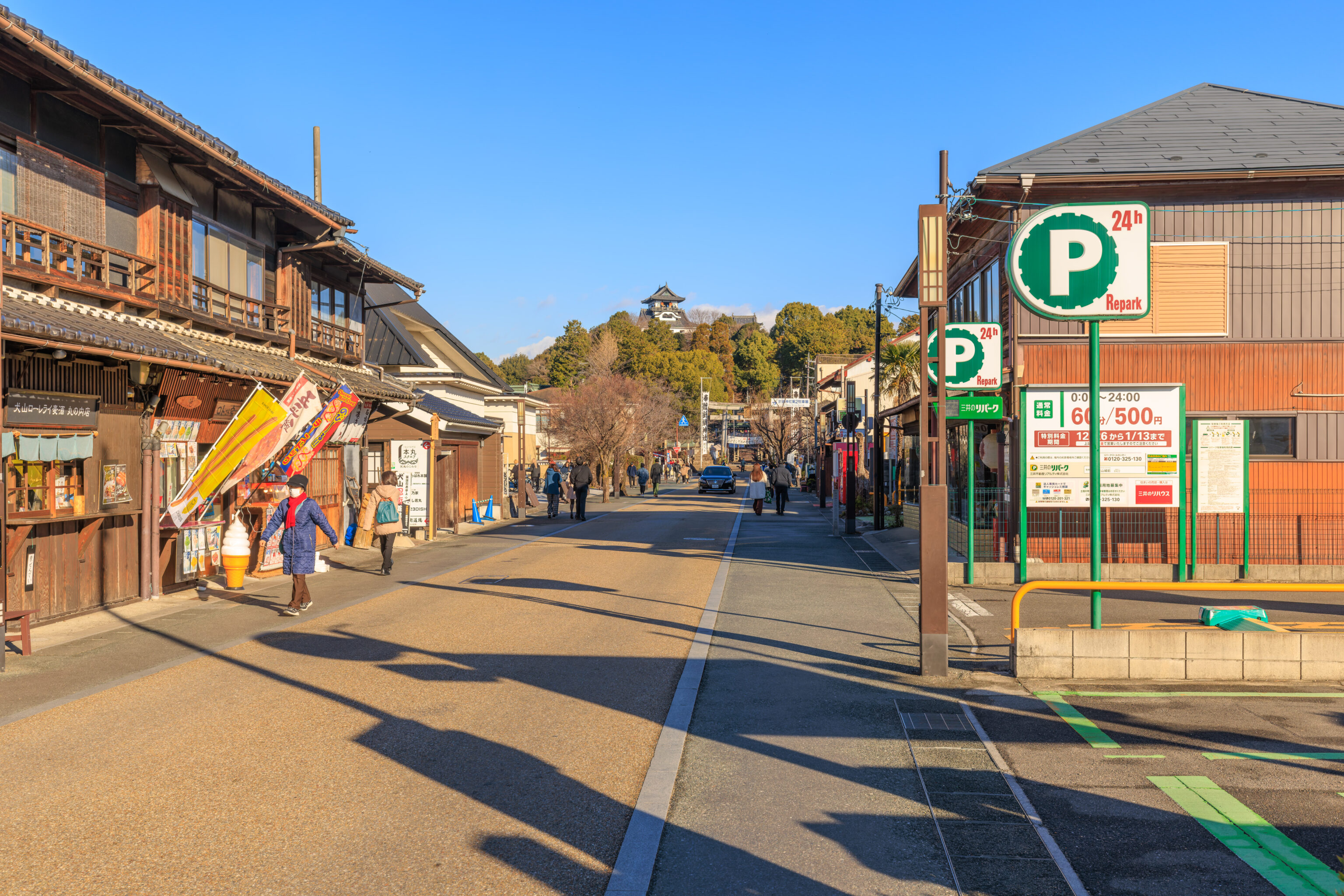
It took about ten minutes to get within a block or so of the base of the castle.
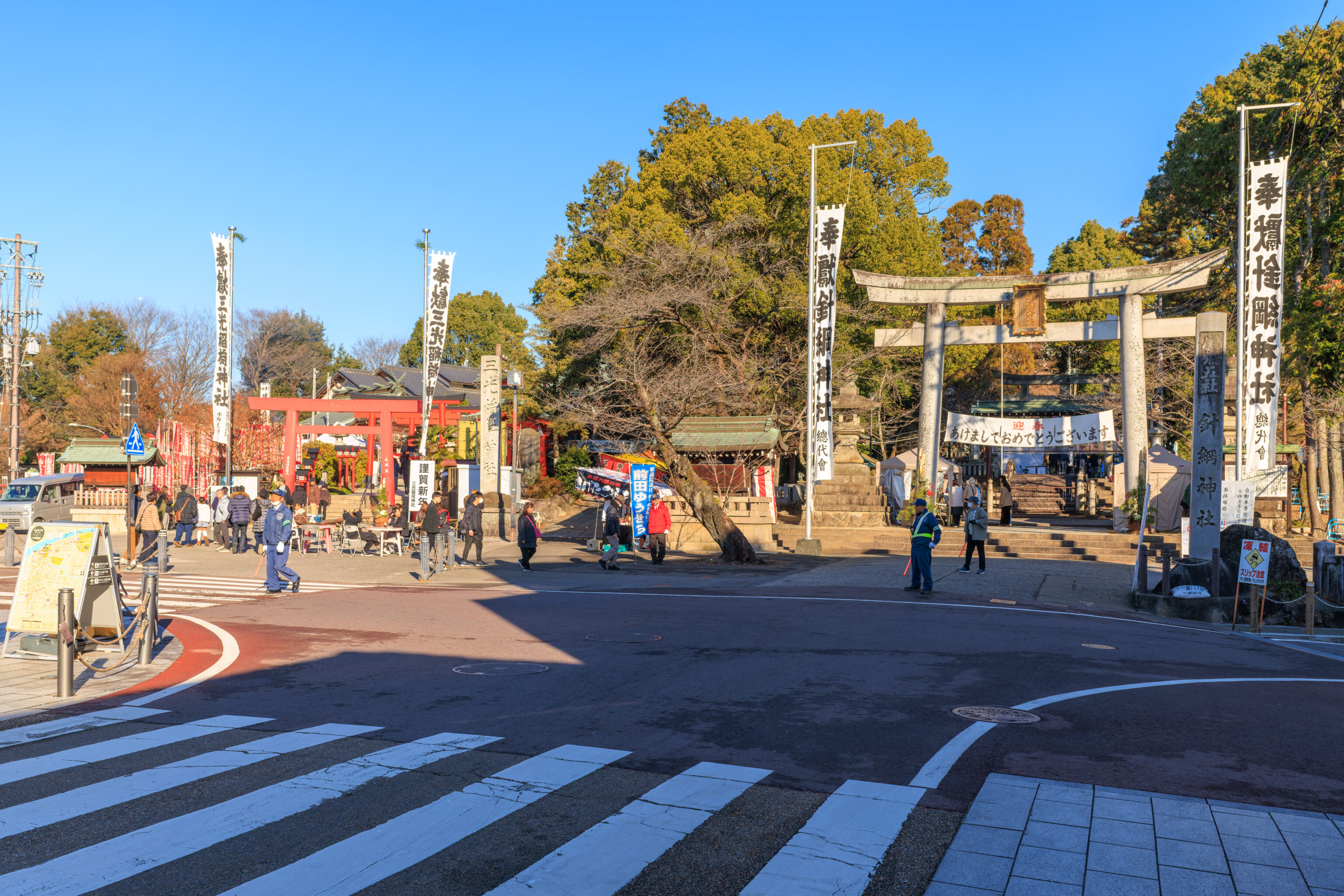
Although it was not busy at the time, we noticed that there were police directing traffic in front of the castle and its shrines. There are two main shrines here, one on the left and one on the right.
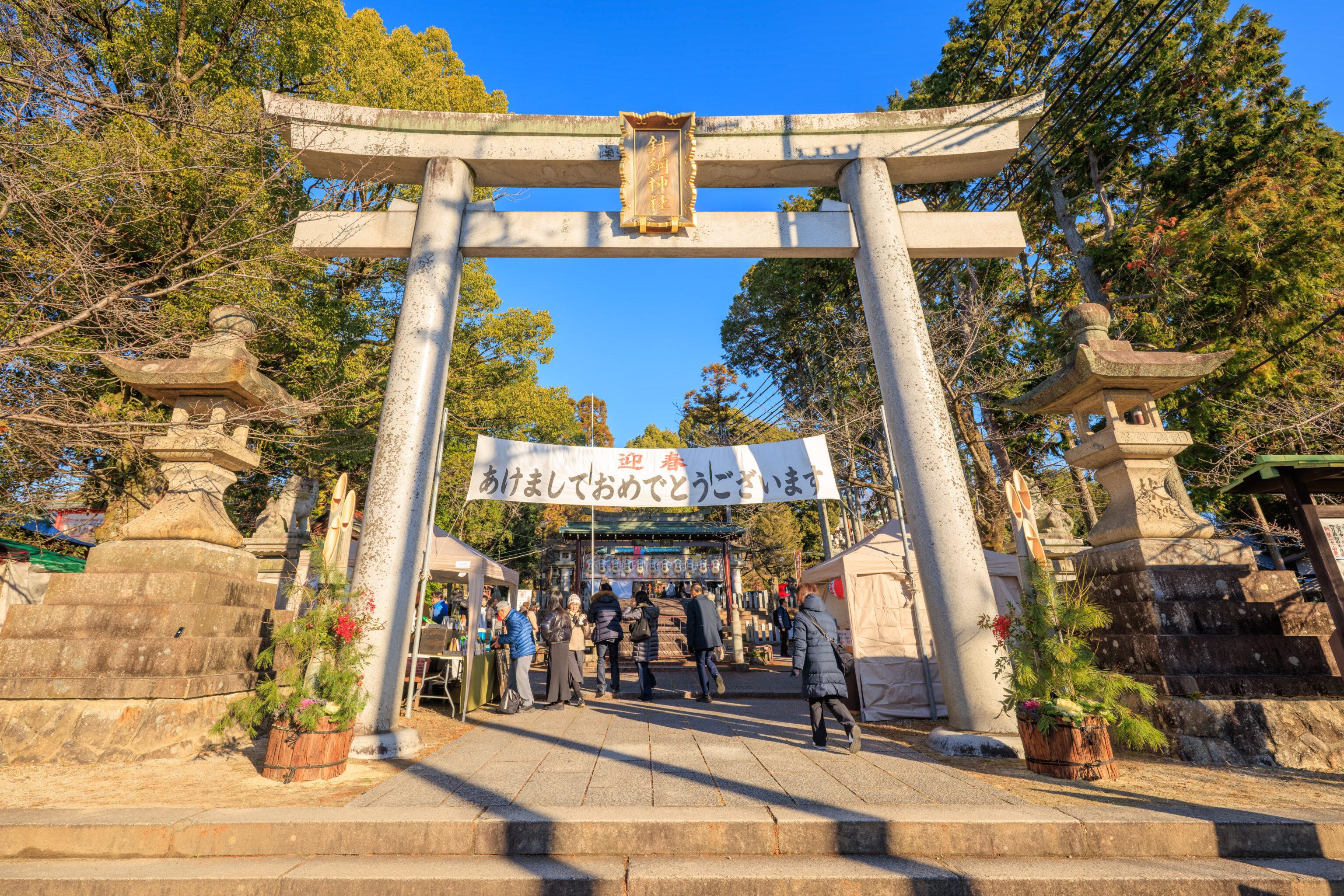
We decided to walk under the large concrete torii as it seemed to have a more direct route to the castle.
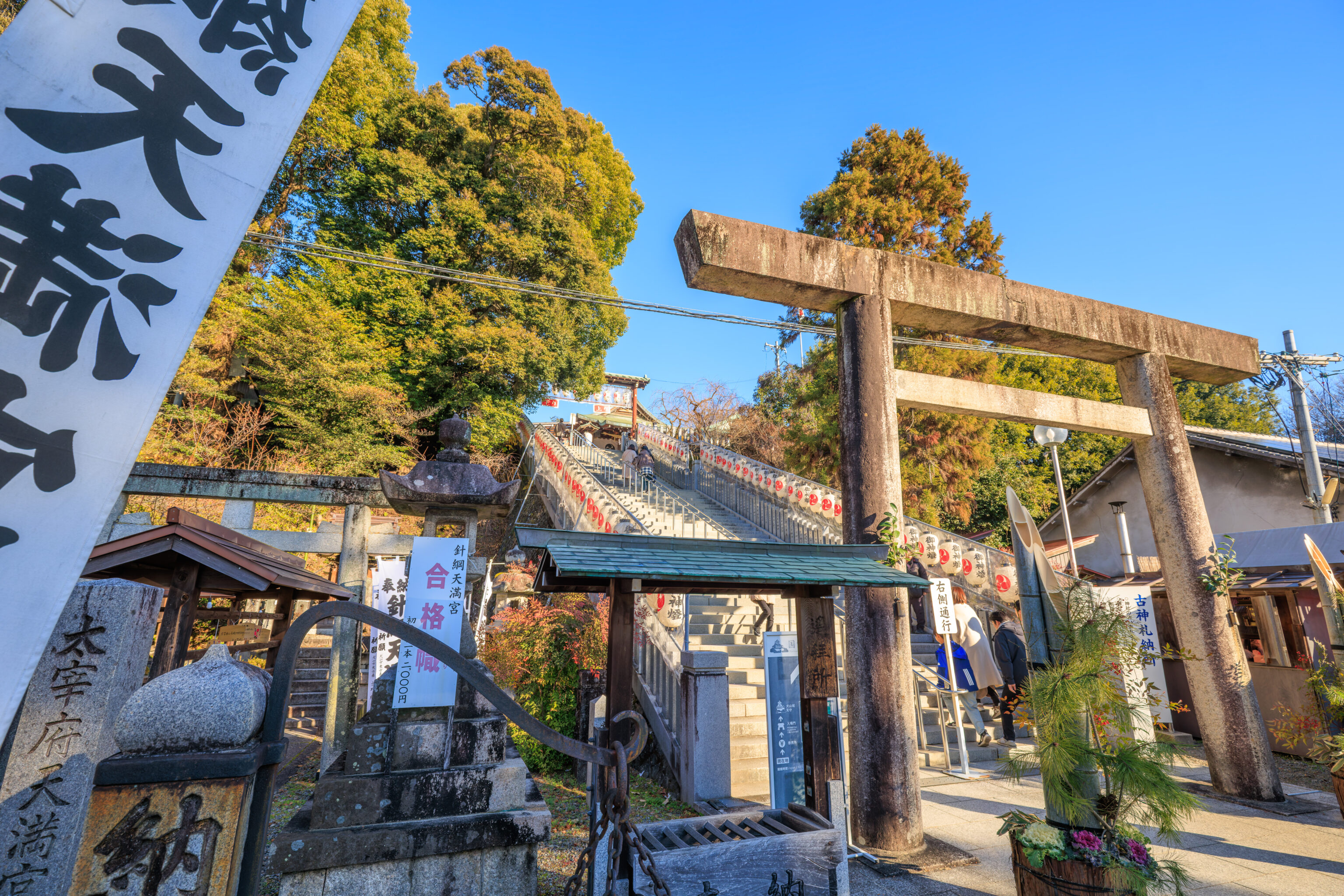
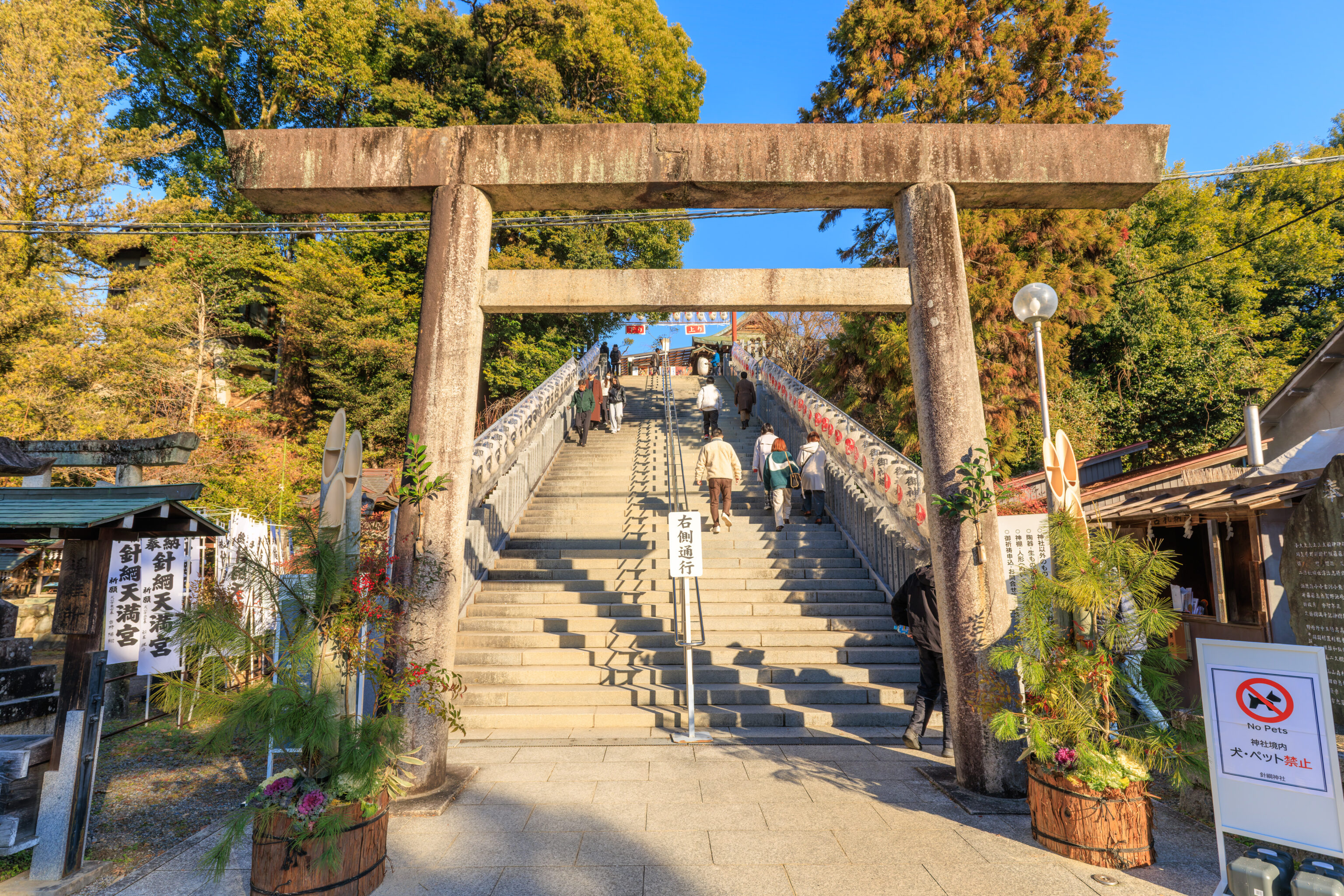
After walking a short distance, there was another concrete torii with many stairs beyond it. Up we go!
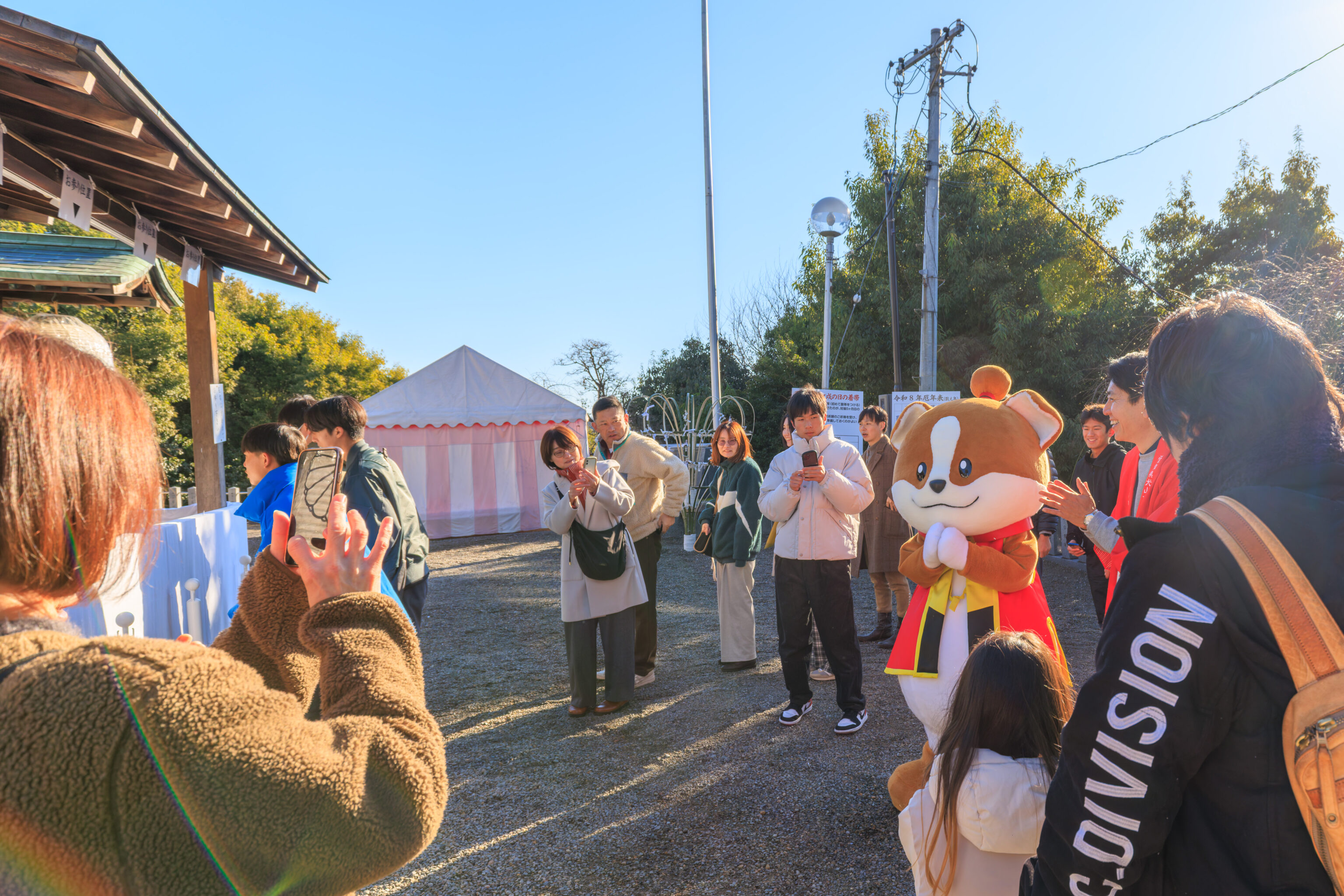
At the top of the steps, we came across a live Inuyama mascot! The mascots name is わん丸くん Wanmaru-kun, with わん wan being the onomatopeic word for the sound that a dog makes, equivalent to woof in English.
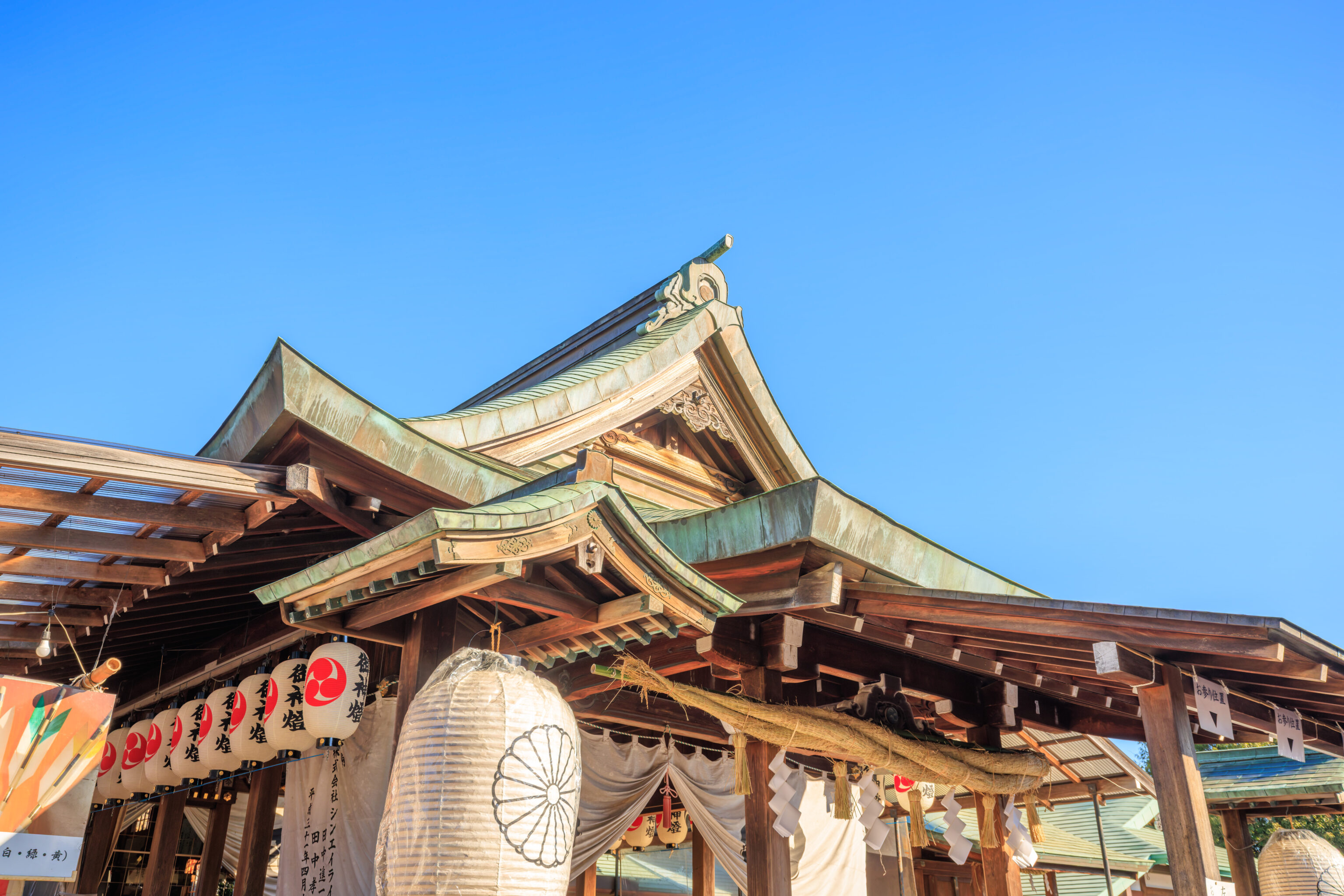
The main shrine on the path that we took is 針綱神社 Haritsuna-jinja. We decided to do hatsumode here as it was the first main temple or shrine that we came upon and it wasn’t busy. We expect it to become busier later in the day.
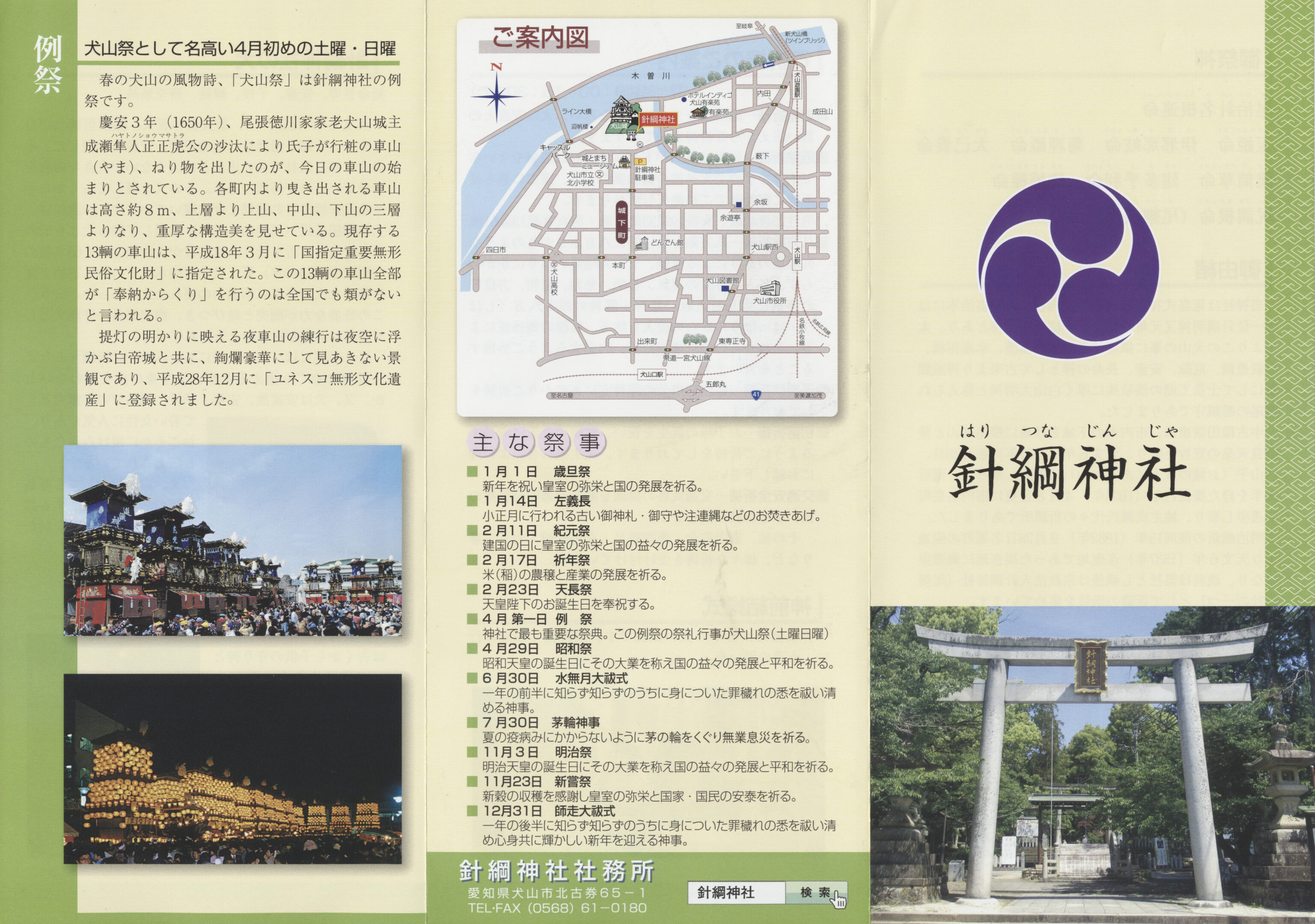
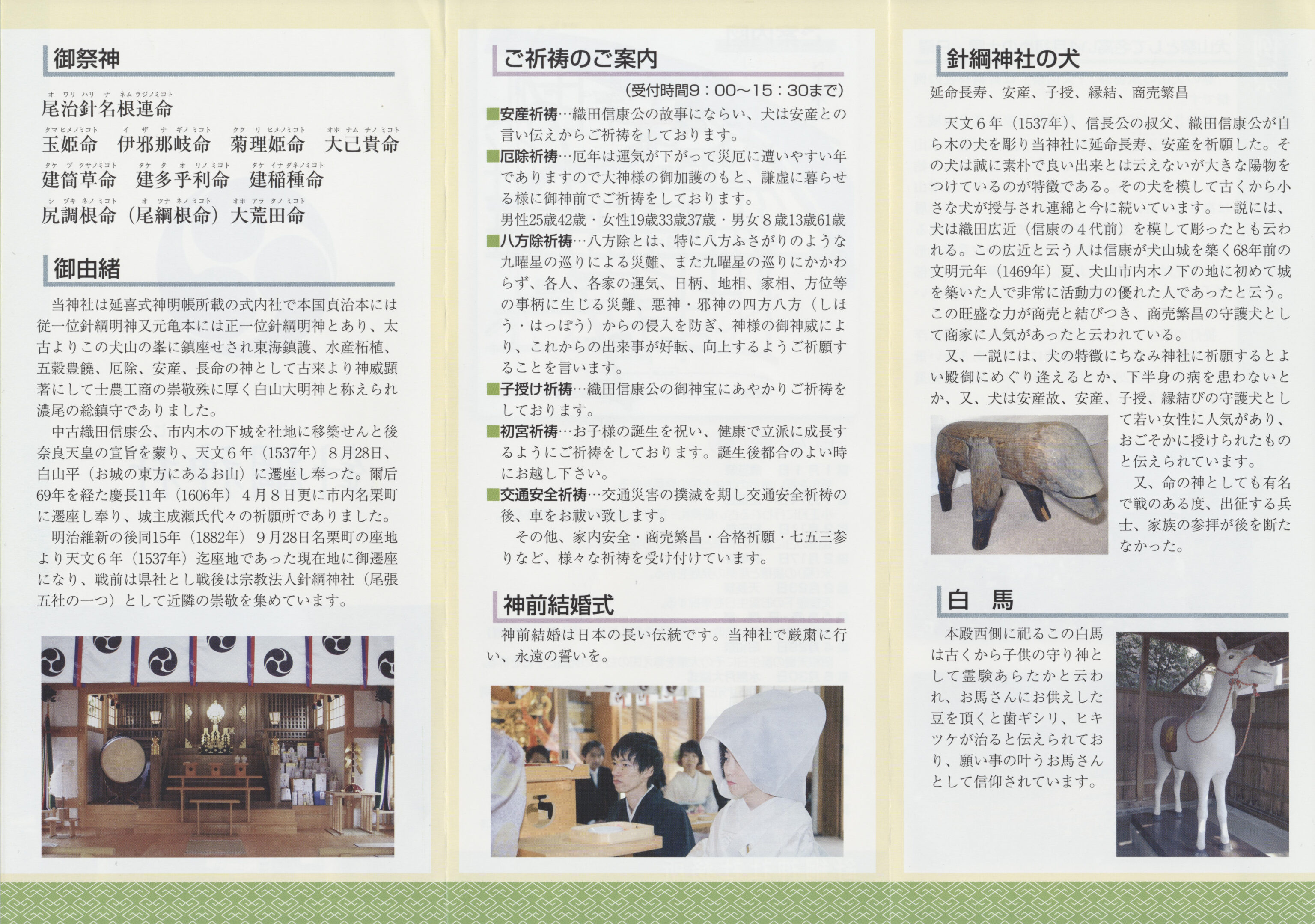
We picked up some information about the shrine.
Enshrined Deities
Oji-Harinanane-no-Muraji-no-Mikoto
Tamahime-no-Mikoto
Izanagi-no-Mikoto
Kukurihime-no-Mikoto
Onamuchi-no-Mikoto
Taketsutsukusa-no-Mikoto
Taketaterihime-no-Mikoto
Takeinadane-no-Mikoto
Shiritsukune-no-Mikoto (Ozunane-no-Mikoto)
Oarata-no-Mikoto
History
This shrine is listed in the *Engishiki Jinmyocho* (Register of Deities) as a *Shikinai-sha* (a shrine of high historical standing). Ancient records—specifically the *Sadaji* manuscript and the *Genki* manuscript—refer to the deity as "Haritsuna Myojin," holding the ranks of Junior First Rank and Senior First Rank, respectively. Since ancient times, the deity has been enshrined on this peak in Inuyama, revered for divine power in protecting the Tokai region and granting blessings for fisheries, abundant harvests, protection against misfortune, safe childbirth, and longevity. The shrine enjoyed deep devotion from all social classes—warriors, farmers, artisans, and merchants alike—and was known as "Hakusan Daimyojin," serving as the principal guardian deity of the Nobi region.
In the medieval period, Lord Oda Nobuyasu received an imperial decree from Emperor Go-Nara to relocate Kinoshita Castle (located within the city) to the shrine's grounds. Consequently, on August 28, 1537 (Tenbun 6), the shrine was moved to Hakusan-daira (a hill east of the castle). Sixty-nine years later, on April 8, 1606 (Keicho 11), it was relocated again to Naguri-cho within the city and served as the family shrine for successive generations of the Naruse clan, the lords of Inuyama Castle.
Following the Meiji Restoration, on September 28, 1882 (Meiji 15), the shrine was moved from its site in Naguri-cho back to its current location—the same site it had occupied prior to 1537. Designated as a Prefectural Shrine before World War II, it now operates as the religious corporation Haritsuna Shrine (one of the "Five Great Shrines of Owari") and continues to garner deep reverence from the local community.
Information on Ritual Prayers
(Reception hours: 9:00 AM – 3:30 PM)
■ Prayers for Safe Childbirth.
We conduct these prayers following the legend of Lord Oda Nobuyasu and the traditional belief that dogs are symbols of safe and easy childbirth.
■ Prayer for Protection Against Misfortune (*Yakuyoke*)
"Calamitous years" (*yakudoshi*) are times when one's fortune dips and one is more susceptible to misfortune. We offer prayers before the deity to seek divine protection and to help you live with humility during these times.
Ages: Men (25, 42); Women (19, 33, 37); Men & Women (8, 13, 61).
■ Prayer for Protection from All Directions (*Happoyoke*)
This ritual seeks to ward off misfortunes arising from the movements of the *Kuyo-sei* (nine astrological stars)—such as the state of being "blocked in all directions" (*happo-fusagari*)—as well as calamities related to personal or household fortune, timing, land and house layout, and directional influences. It aims to block the intrusion of malevolent spirits from any direction and invokes divine power to ensure that future events take a turn for the better.
■ Prayer for Child-Bearing (*Kozazuke*)
We offer prayers invoking the blessings associated with a sacred treasure of Lord Oda Nobuyasu.
■ Prayer for a Newborn's First Shrine Visit (*Hatsumiya-mairi*)
We celebrate the birth of your child and pray for their healthy and splendid growth. Please visit at a convenient time after the birth.
■ Prayer for Traffic Safety:
Aiming to eliminate traffic accidents, we perform a prayer for safety followed by a ritual purification (*oharai*) of your vehicle.
We also accept requests for various other prayers, including those for family safety, business prosperity, success in exams, and *Shichi-Go-San* (celebration for children aged 3, 5, and 7).
Shinto Wedding Ceremony
Shinto weddings are a long-standing Japanese tradition. Exchange your eternal vows through a solemn ceremony at our shrine.
The Dog of Haritsuna Shrine
Blessings: Longevity, safe childbirth, conception, matchmaking, and business prosperity.
In 1537 (the 6th year of the Tenbun era), Lord Oda Nobuyasu—an uncle of the famous Oda Nobunaga—personally carved a wooden dog and dedicated it to the shrine to pray for longevity and safe childbirth. While the carving is rustic and perhaps not a masterpiece of craftsmanship, it is distinguished by a prominent phallus. Small dog figurines modeled after this original have been distributed to worshippers since ancient times, a tradition that continues unbroken to this day. One theory holds that the dog statue was carved to resemble Oda Hirochika (an ancestor four generations prior to Nobuyasu). Hirochika was a highly energetic figure who, in the summer of 1469 (the first year of the Bunmei era)—sixty-eight years before Nobuyasu built Inuyama Castle—constructed the first castle in the Kinoshita area of Inuyama City. It is said that this vigorous energy became associated with commercial success, making the statue popular among merchants as a guardian deity of thriving business.
Another theory suggests that, based on the characteristics of the dog, praying at the shrine could lead to meeting a benevolent lord or prevent ailments of the lower body. Furthermore, because dogs are associated with easy childbirth, the statue became popular among young women as a guardian deity for safe delivery, fertility, and matchmaking; it is said that the figures were bestowed upon worshippers with great solemnity.
The shrine is also renowned as a place of prayer for life and health; whenever war broke out, there was a ceaseless stream of soldiers heading to the front and their families coming to offer prayers.
The White Horse
Enshrined to the west of the main hall, this white horse has long been revered as a guardian deity for children, believed to possess miraculous powers. It is said that consuming the beans offered to the horse can cure ailments such as teeth grinding and convulsions, and the horse is worshipped as a deity that grants wishes.
Annual Festival
The Inuyama Festival—held on the first Saturday and Sunday of April—is a renowned event.
The Inuyama Festival, a seasonal highlight of spring in Inuyama, is the annual festival of Haritsuna Shrine.
The origins of the current *yama* (elaborate festival floats) date back to 1650 (the third year of the Keian era), when parishioners—acting under the direction of Lord Naruse Hayato-no-Sho Masatora, a senior retainer of the Owari Tokugawa clan and the lord of Inuyama Castle—brought out floats and performance troupes for the procession. The floats, drawn out from each neighborhood, stand approximately eight meters tall and display a magnificent structural beauty, consisting of three tiers: the upper, middle, and lower sections. The thirteen surviving floats were designated as a "National Important Intangible Folk Cultural Property" in March 2006. It is said to be unique in Japan that all thirteen of these floats feature *karakuri* (traditional mechanical puppet) performances as a ritual offering.
The procession of floats at night—illuminated by the glow of paper lanterns against the backdrop of Hakutei-jo (Inuyama Castle) floating in the night sky—creates a spectacular, mesmerizing scene; this tradition was inscribed on the UNESCO Intangible Cultural Heritage list in December 2016.
– Text from the shrine’s pamphlet, transcribed using Google Gemini and translated using Google Translate.
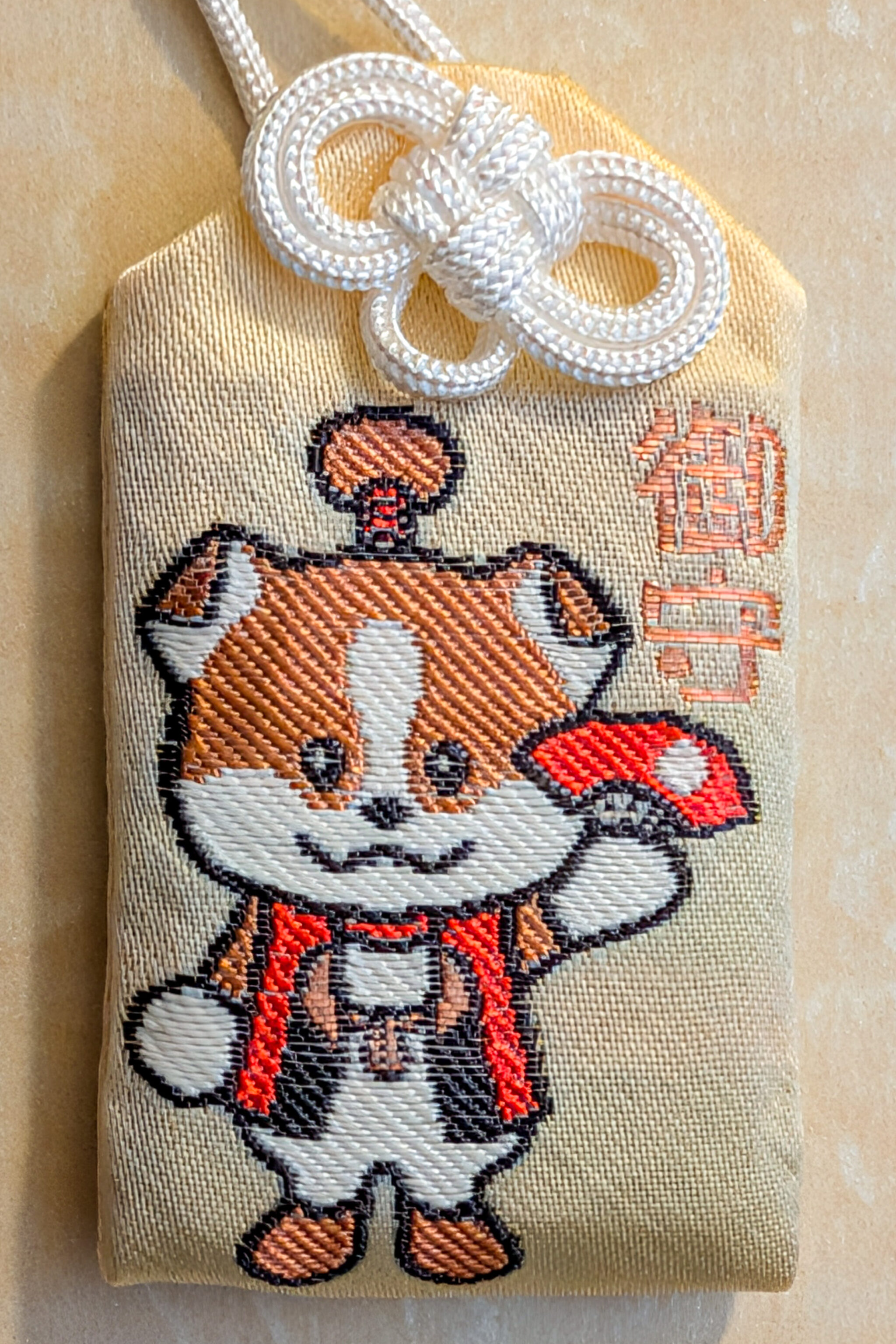
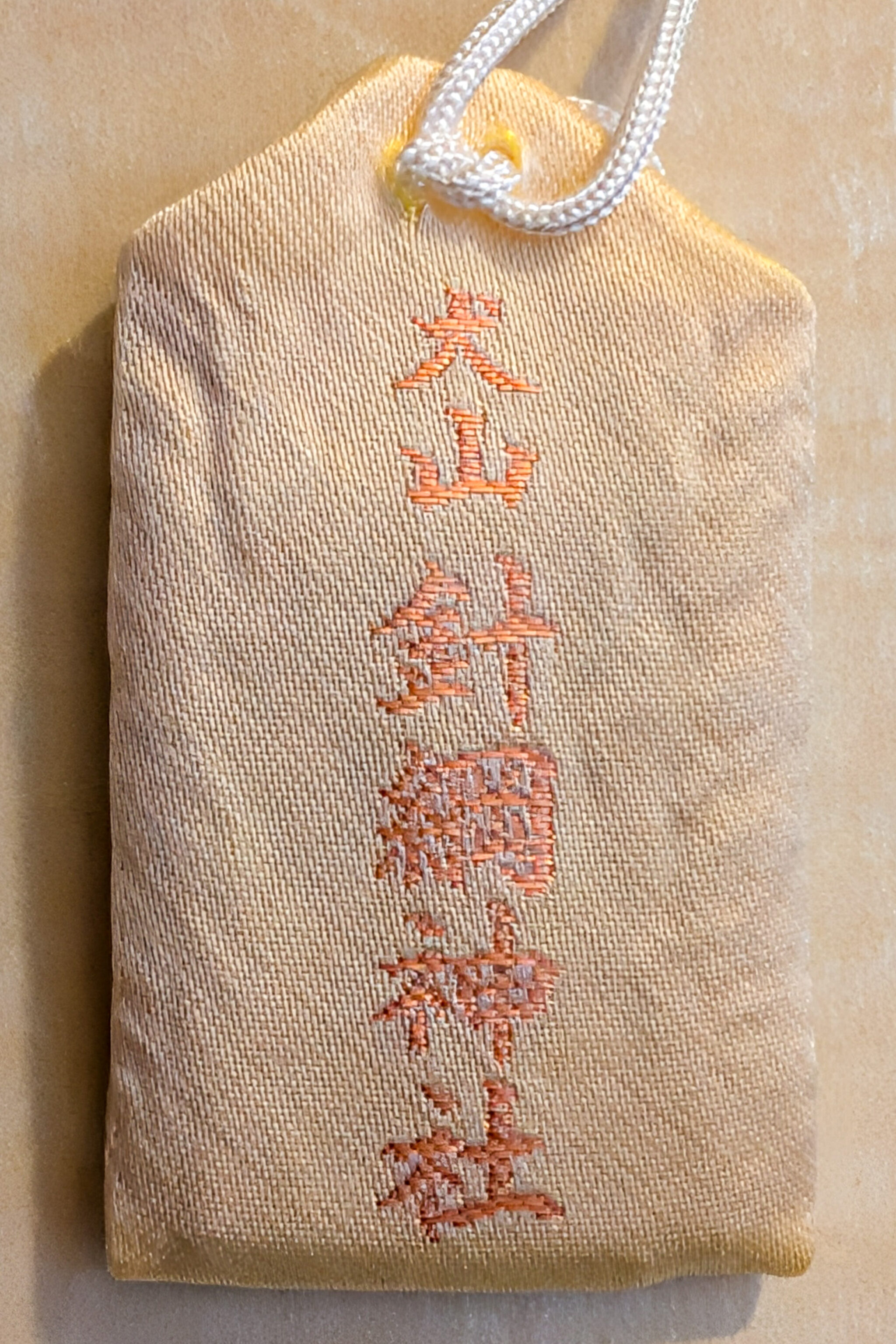
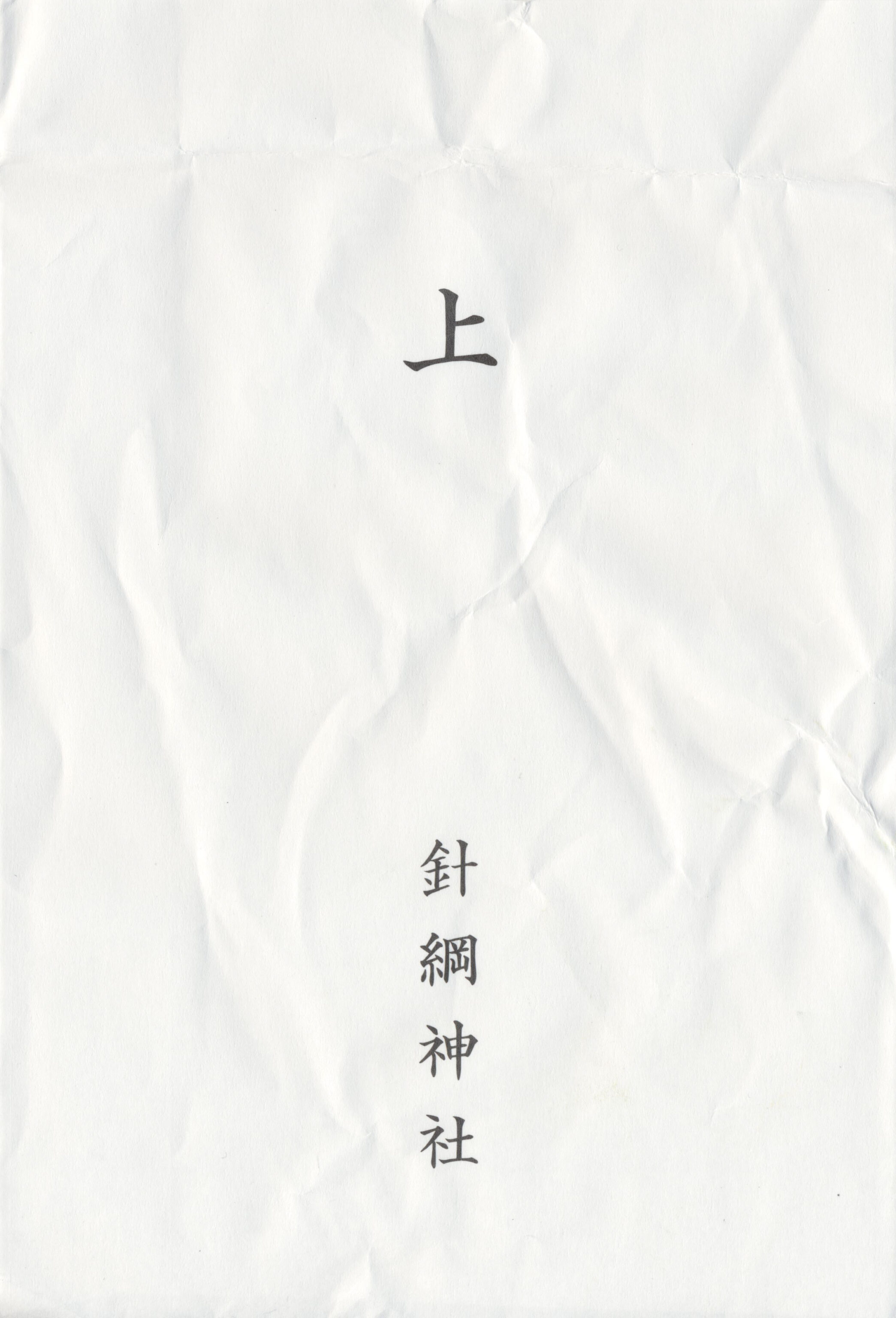
We also picked up an omamori featuring Wanmaru-kun!
Inuyama Castle
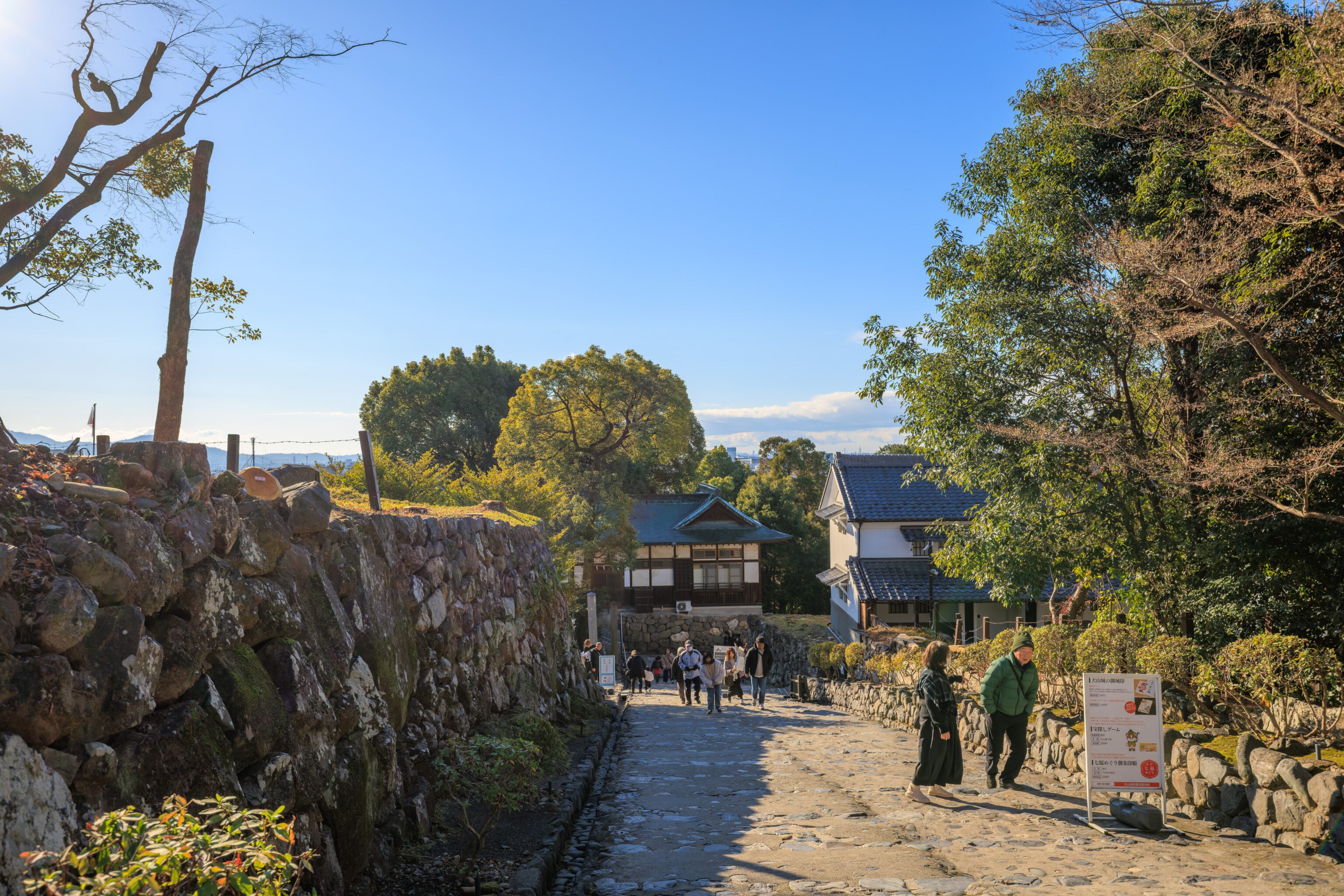
Having completed hatsumode, we continued on towards the castle. We walked past a different path that lead downhill.
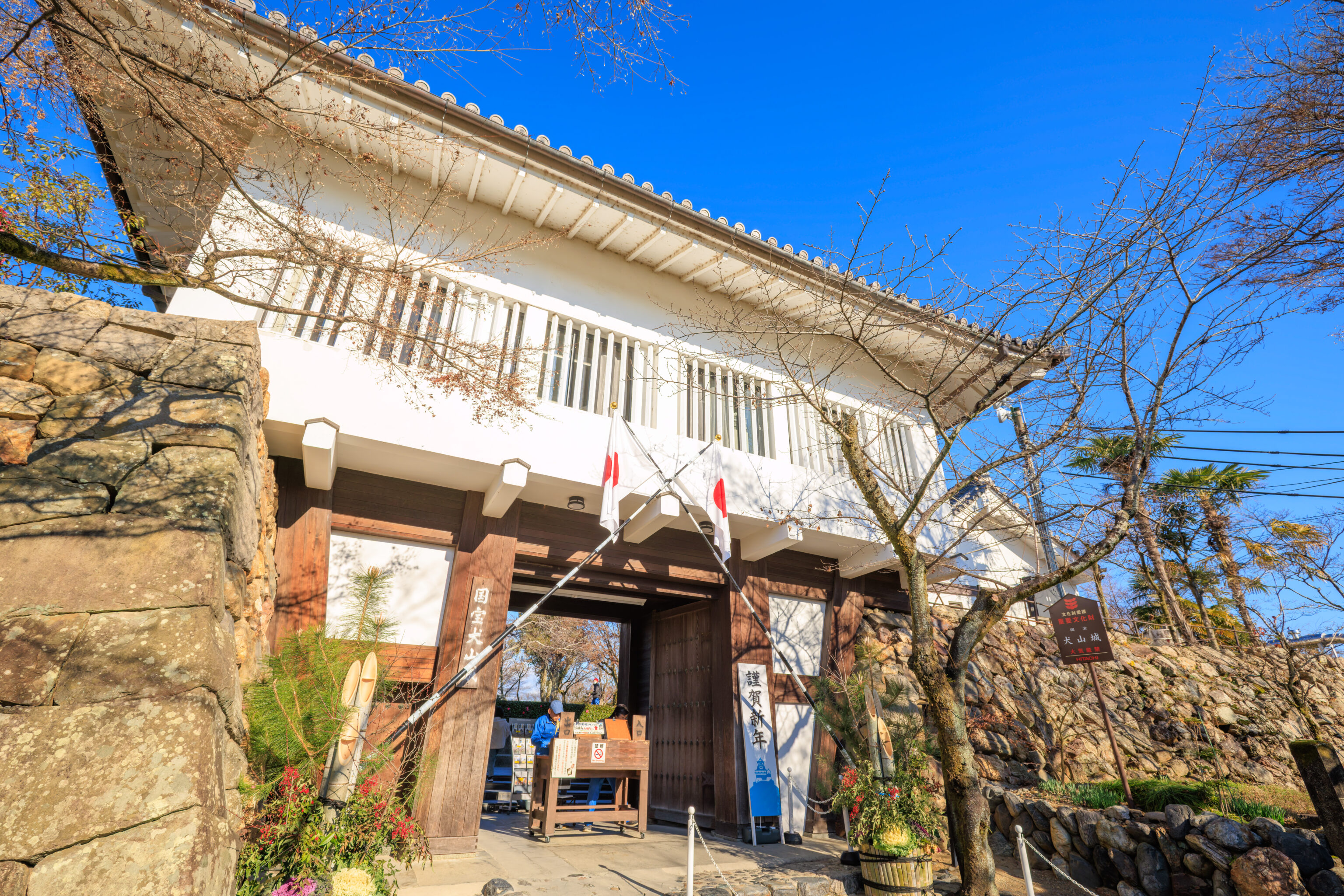
We reached the 犬山城 Inuyama Castle‘s modern-day entry gate at 9:40am.
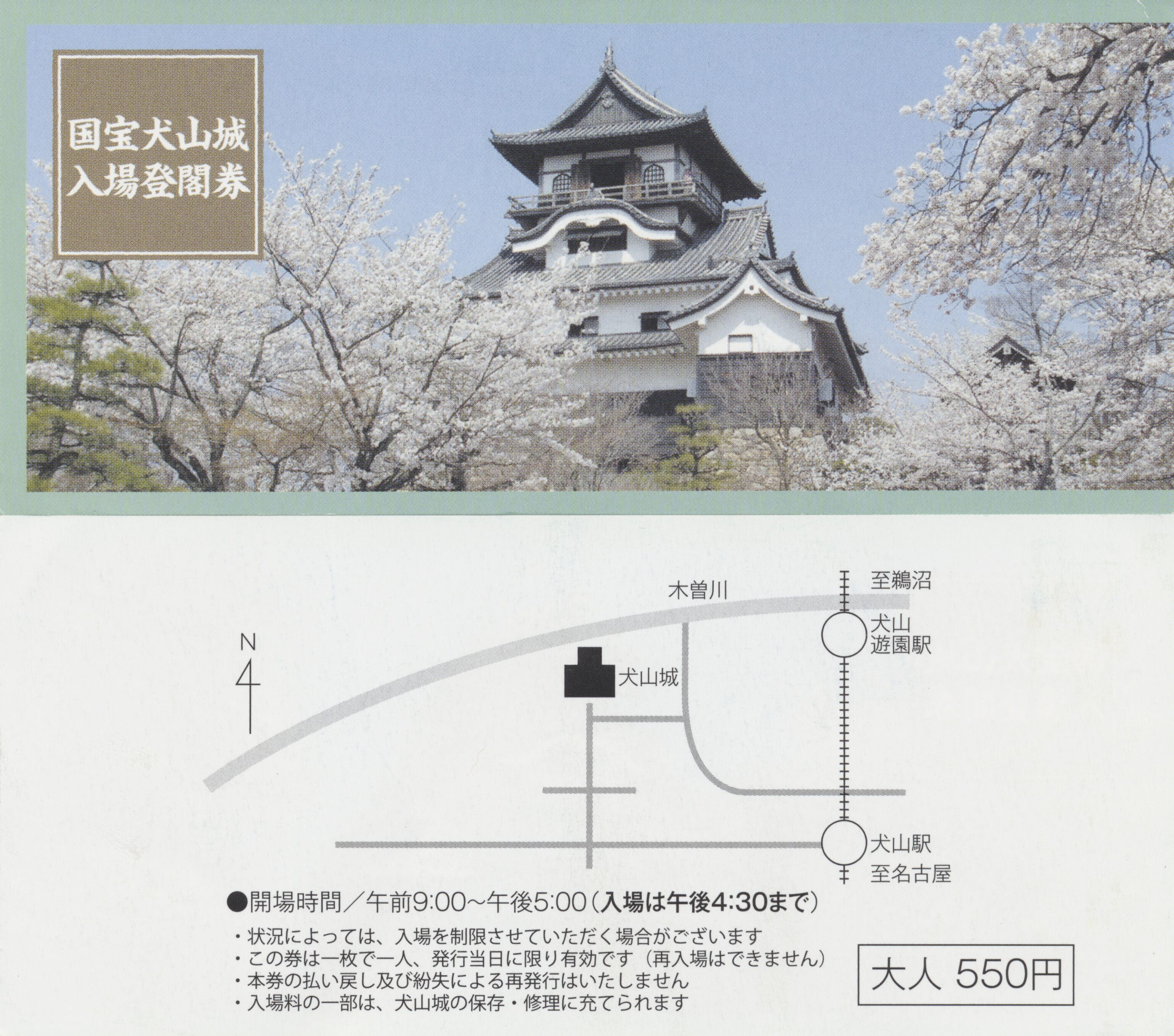
We purchased entry tickets at the gate.
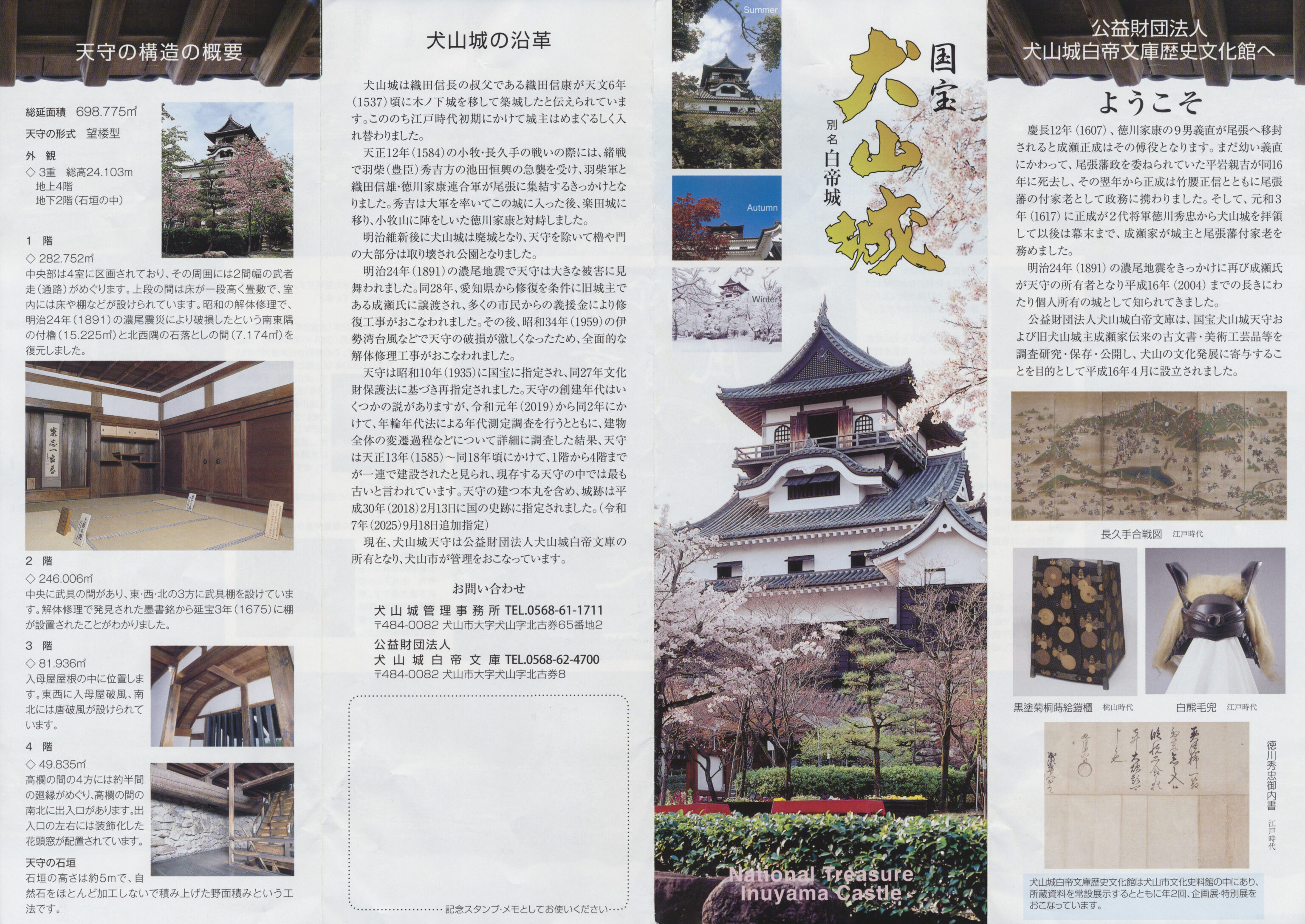
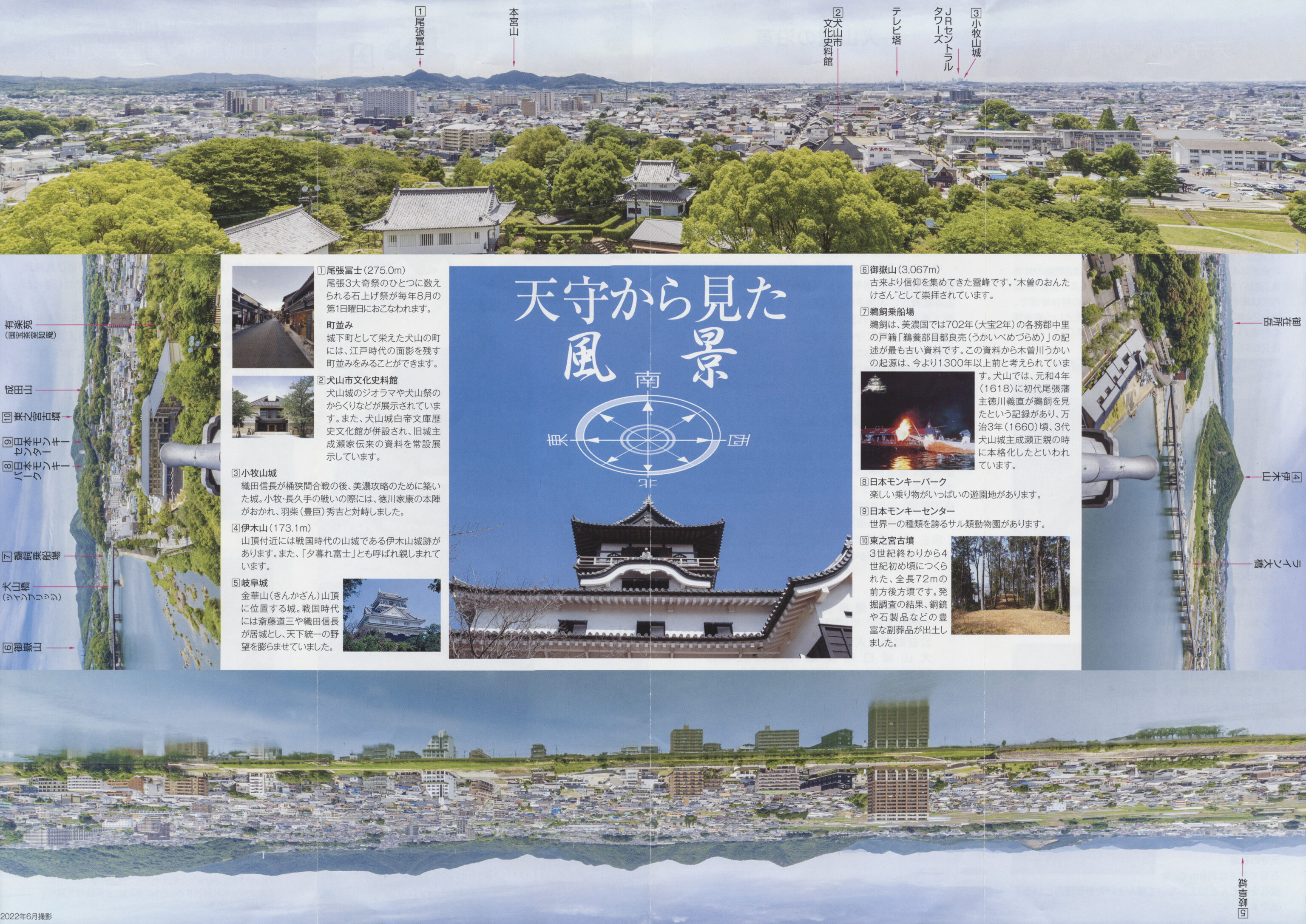
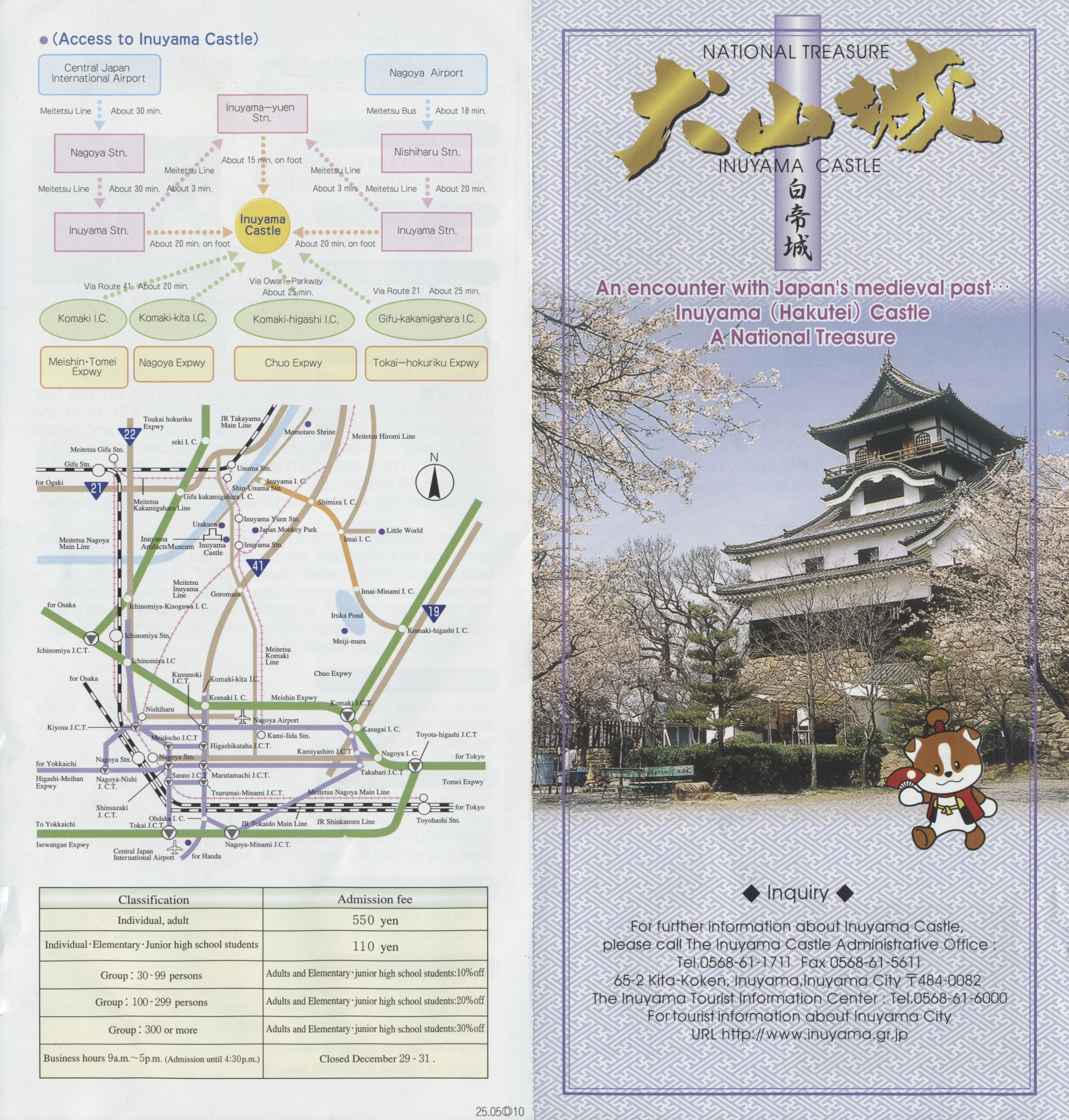
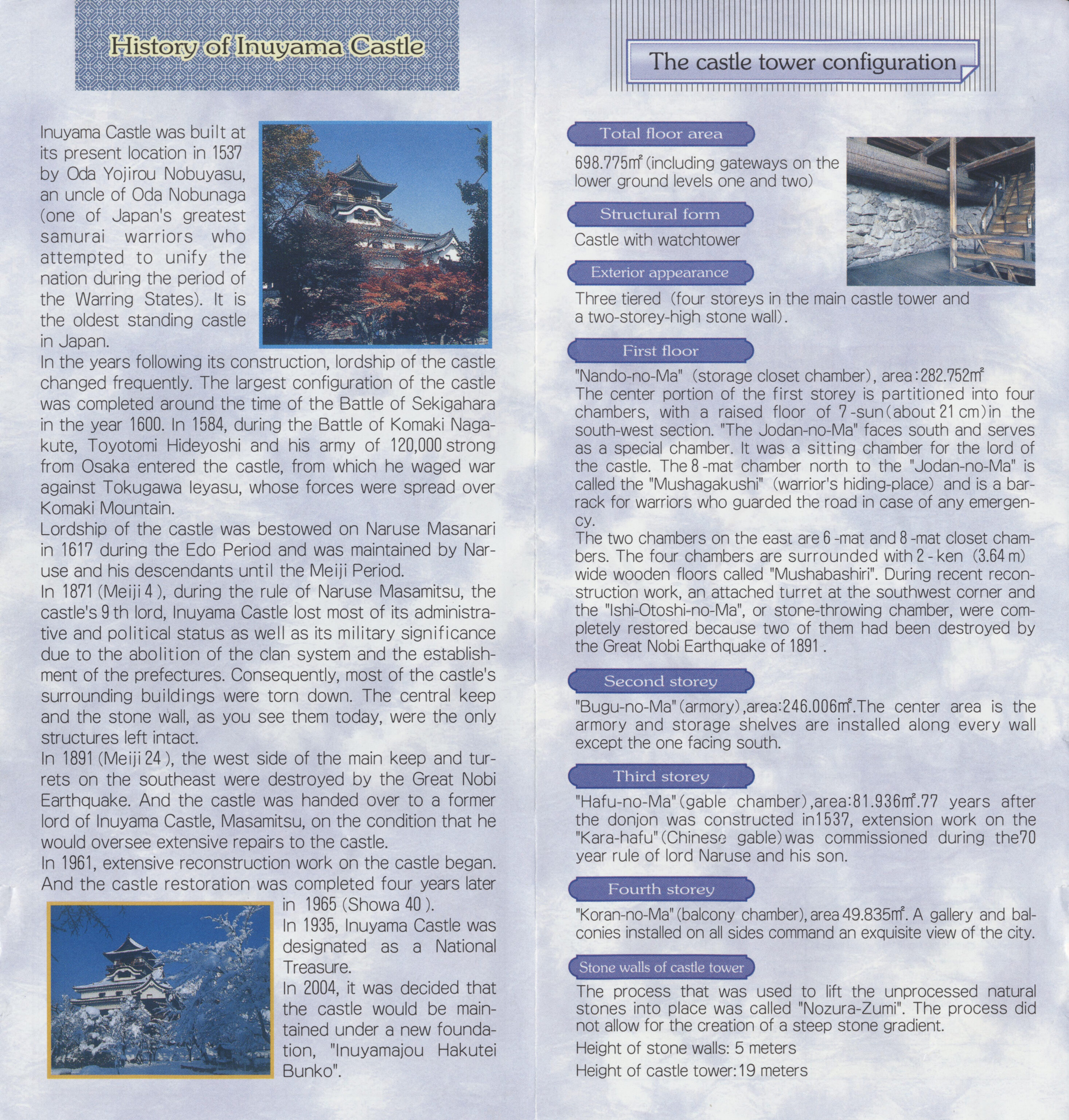
We also picked up pamphlets in English and Japanese.
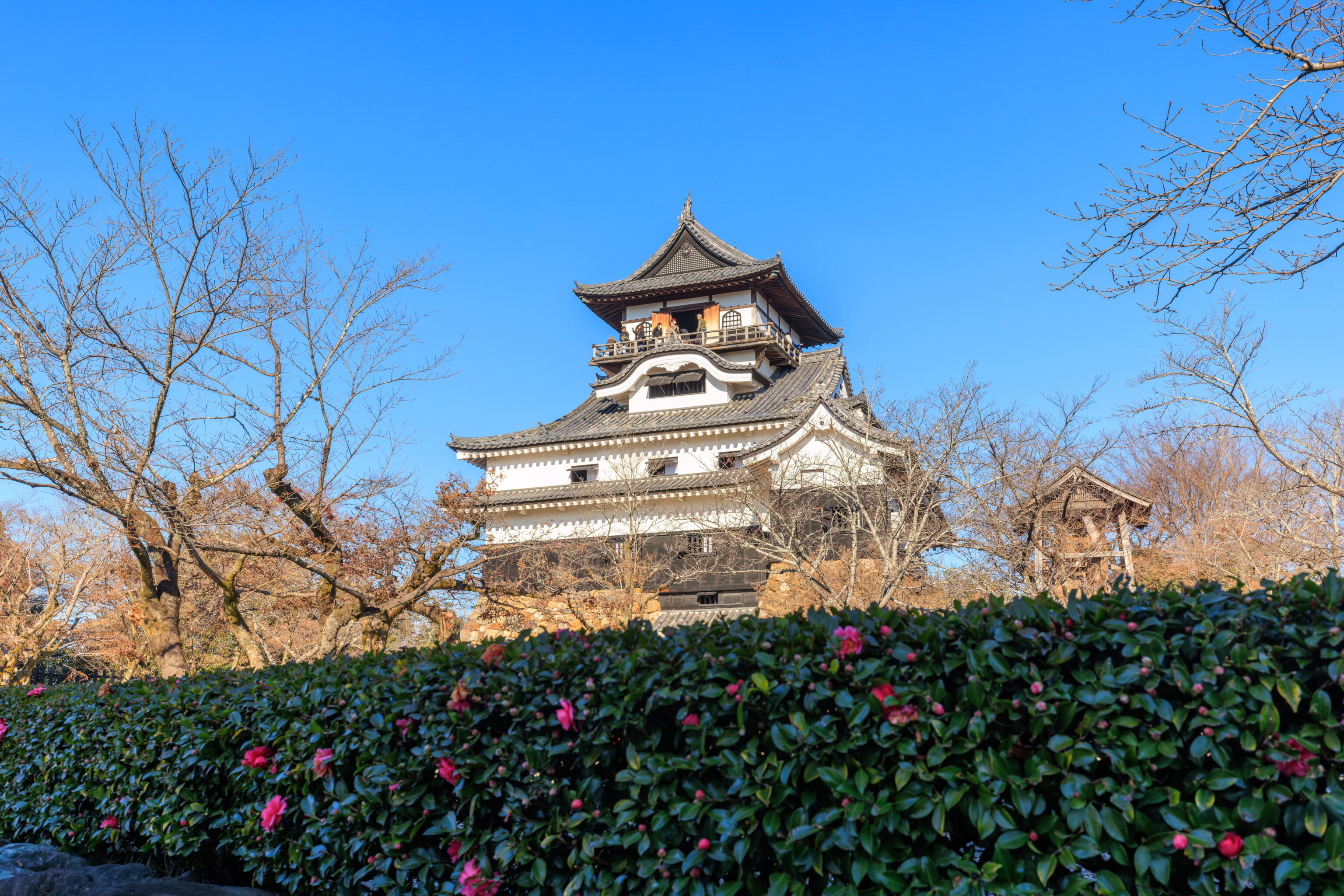
Just past the gate, we could see the 天守 tenshu, or keep, of the castle.
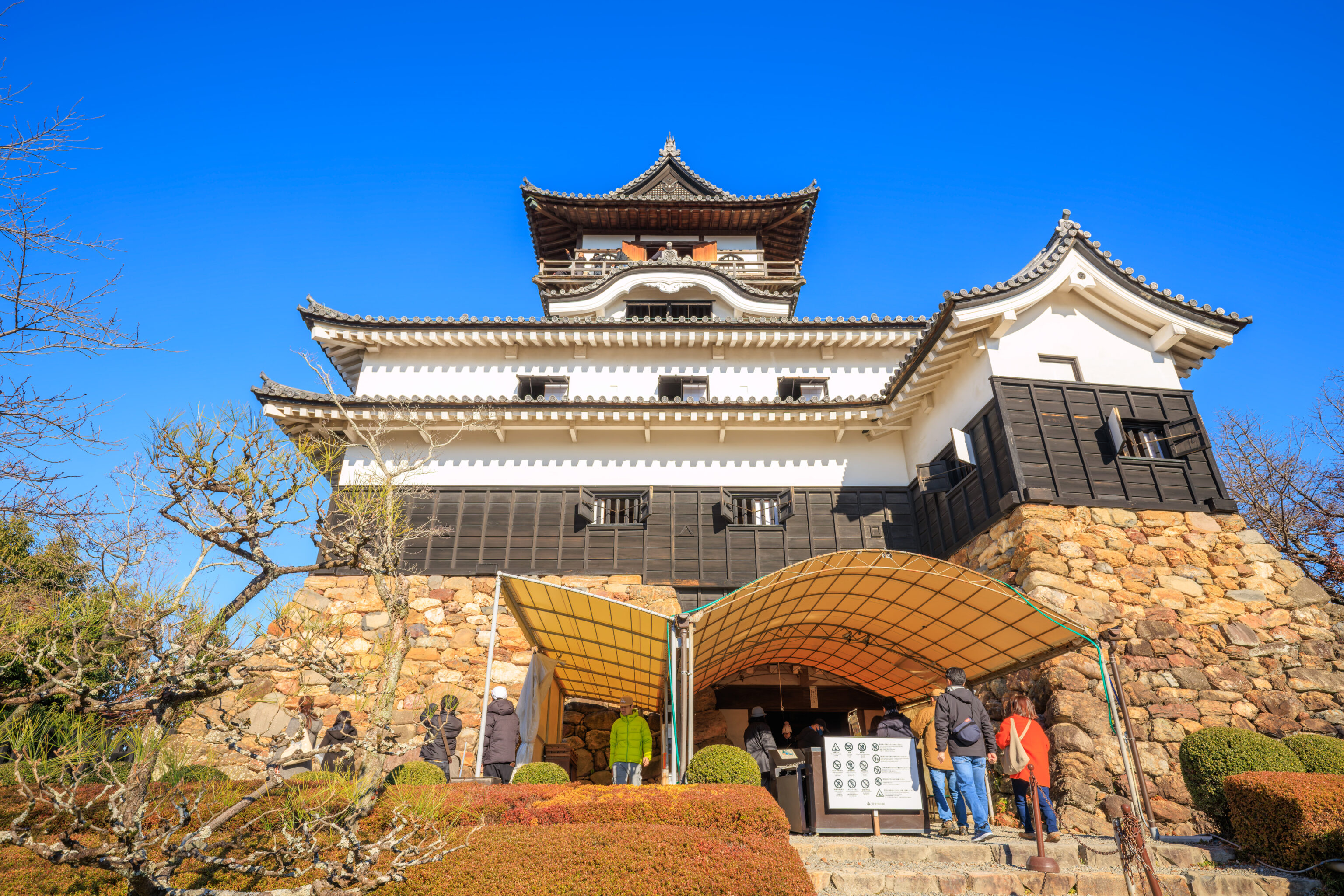
We headed directly to the tenshu to enter. Inuyama Castle’s tenshu is one of twelve remaining wooden tenshu in Japan today from the feudal era before the 廃城令 Haijōrei forced the destruction of many of Japans castles. Fire and war eliminated most of the remaining tenshu. Inuyama’s tenshu may be the oldest of the twelve remaining. Inuyama Castle was created in 1537 but it doesn’t seem clear when the tenshu was completed.
Not only is the tenshu one of the tweleve that remain, it is one of five that are designated as こくほう National Treasures. Including Inuyama, we’ve been to all but one, 松江城 Matsue Castle, which was added just over a year ago in 2015.
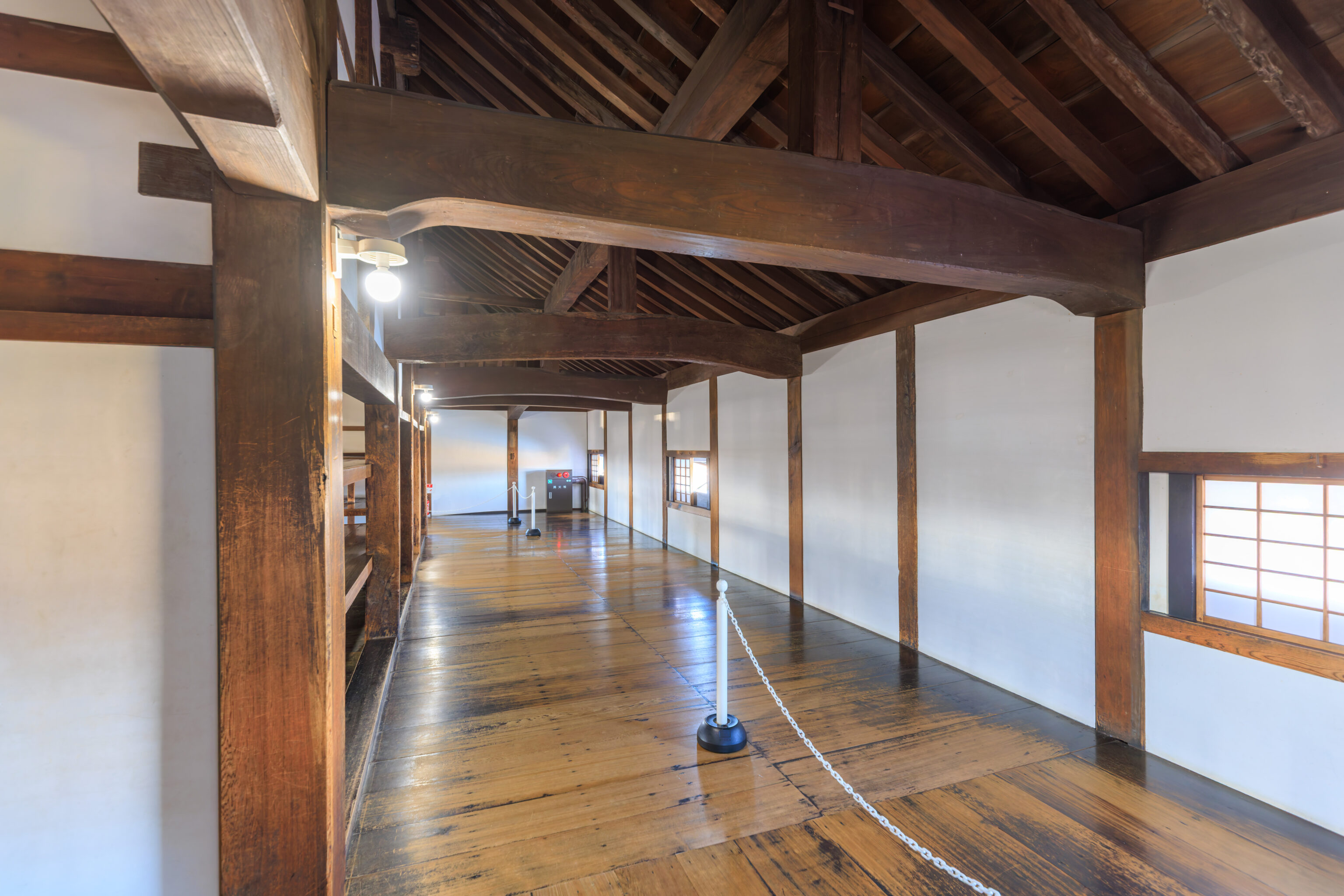
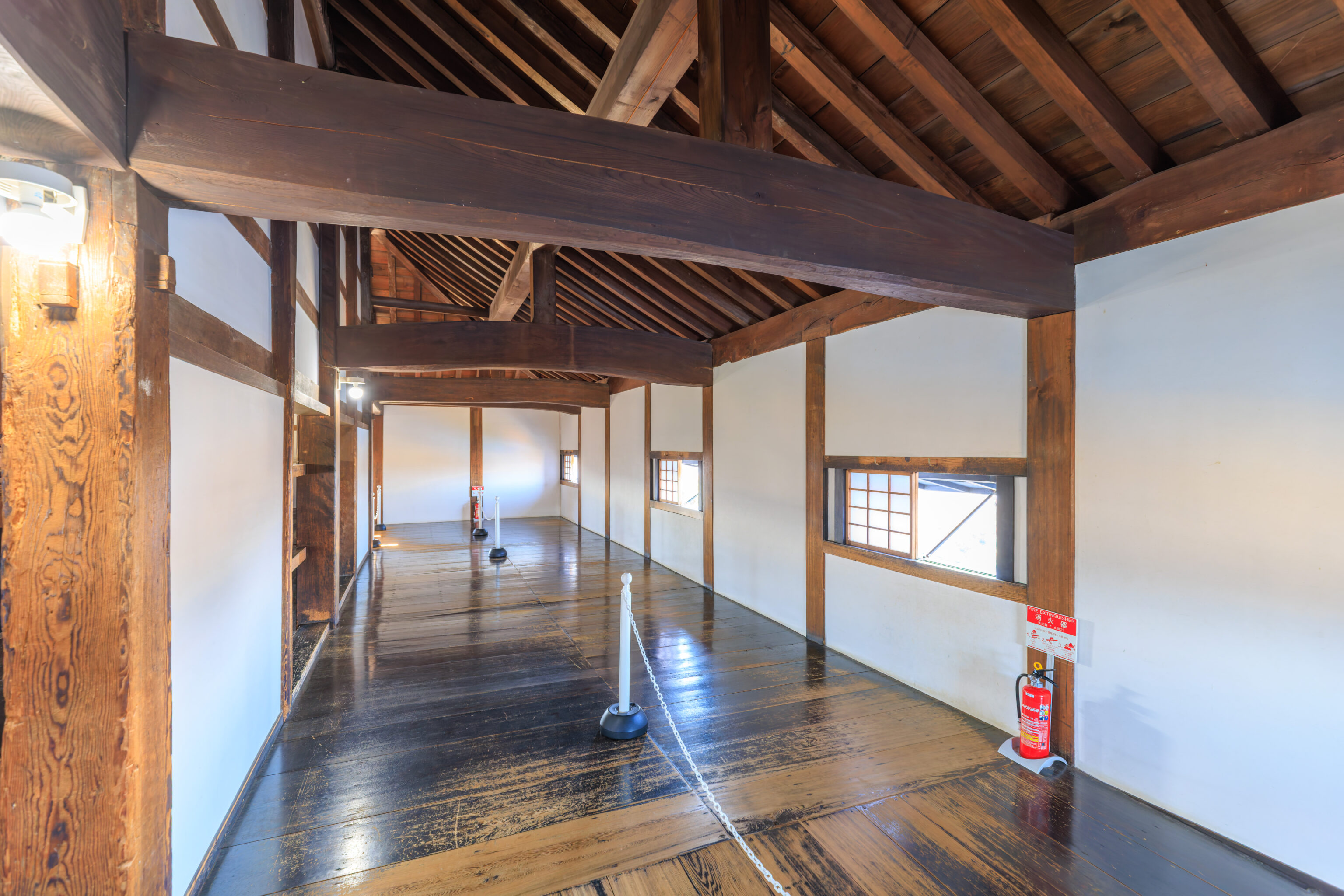
There was a well delineated route inside of the tenshu in order to separate incoming and outgoing traffic.
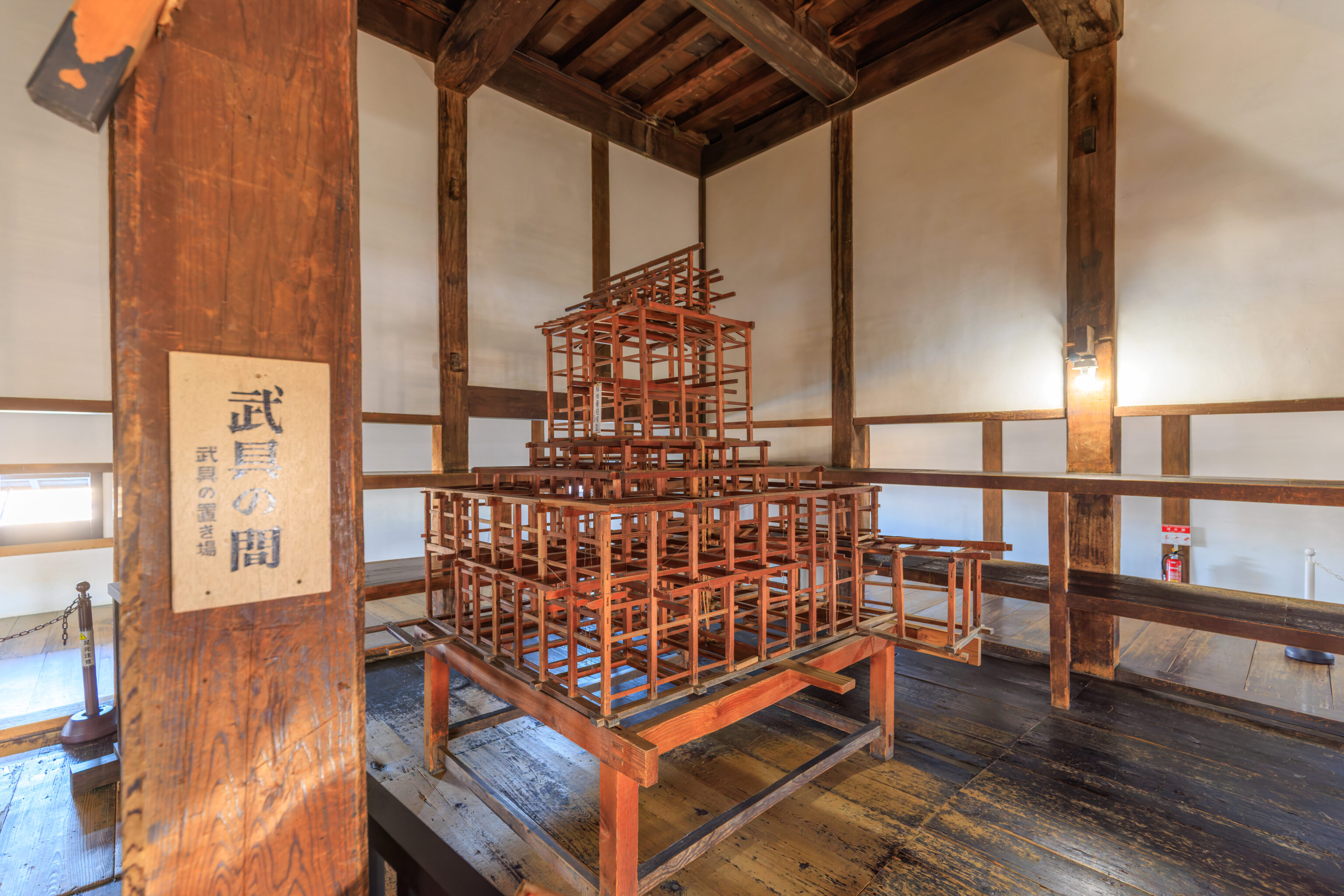
Inuyama’s tenshu is mostly empty with just a few signs and displays. This room on the 2nd floor, which currently contains a 1/10 scale model of the castle, was formerly the castle’s armory:
ARMOR ROOM
This room is used to store armor and weaponry, with the shelves on three walls.  The wooden floor 3.6 meters wide which surrounds the room is called Musha-bashiri (the warriors running).

Total area: 246.006 Square meters (144 mats)
– Text from a sign.
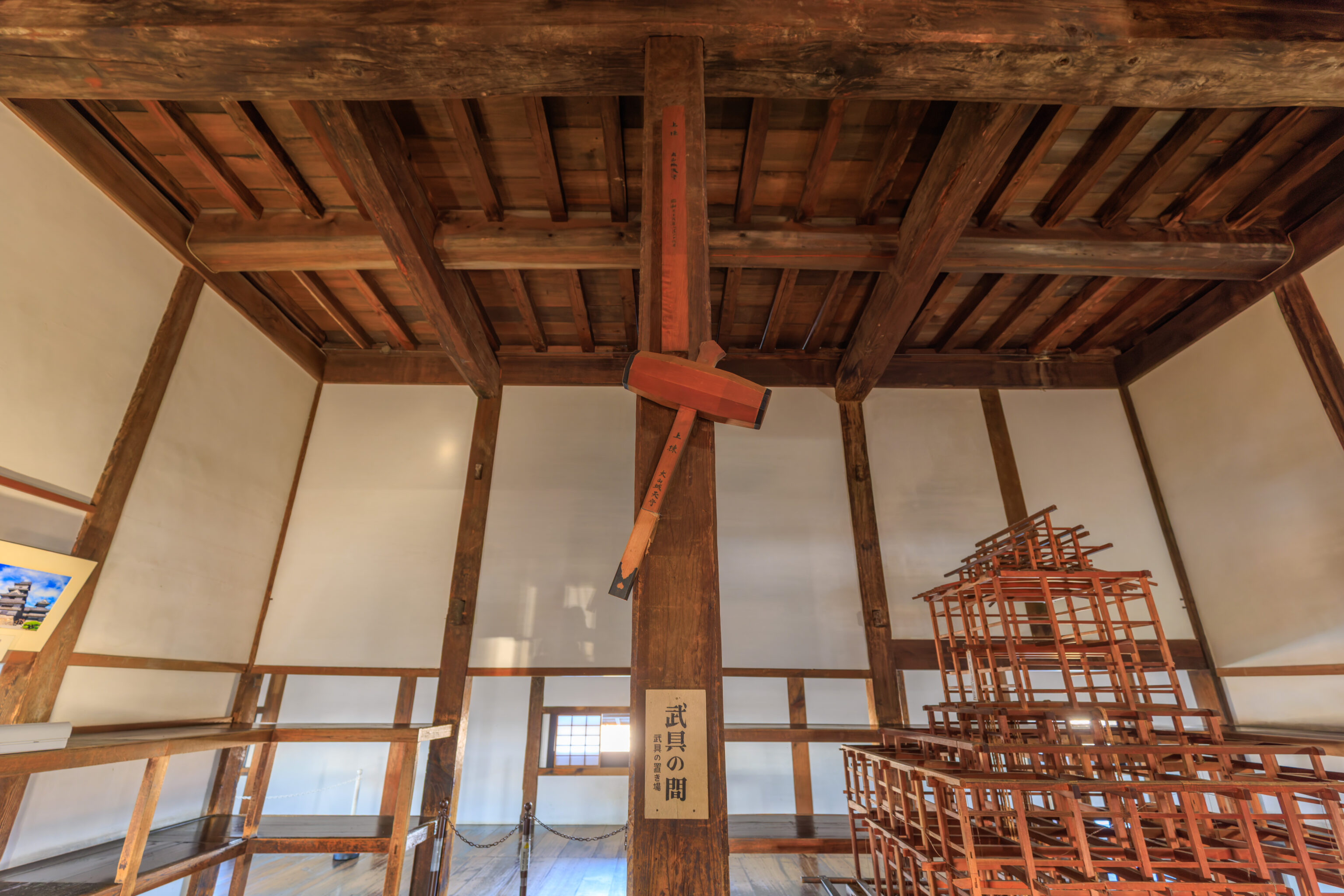
This wooden mallet has 上棟 jōtō written on it. This seems to be equivalent to topping out, when the final beam of a structure is put into place.
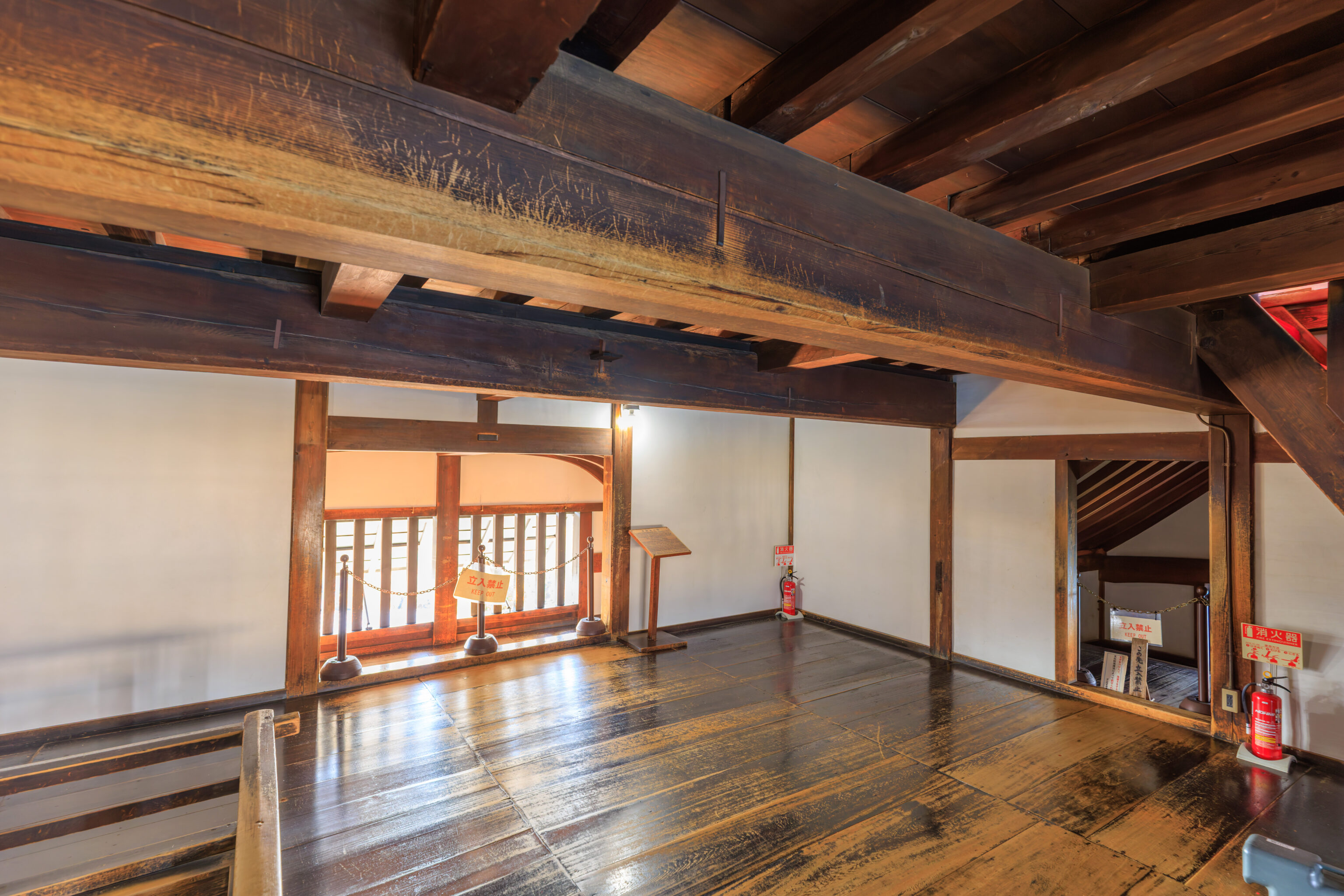
We continued on to the 3rd floor.
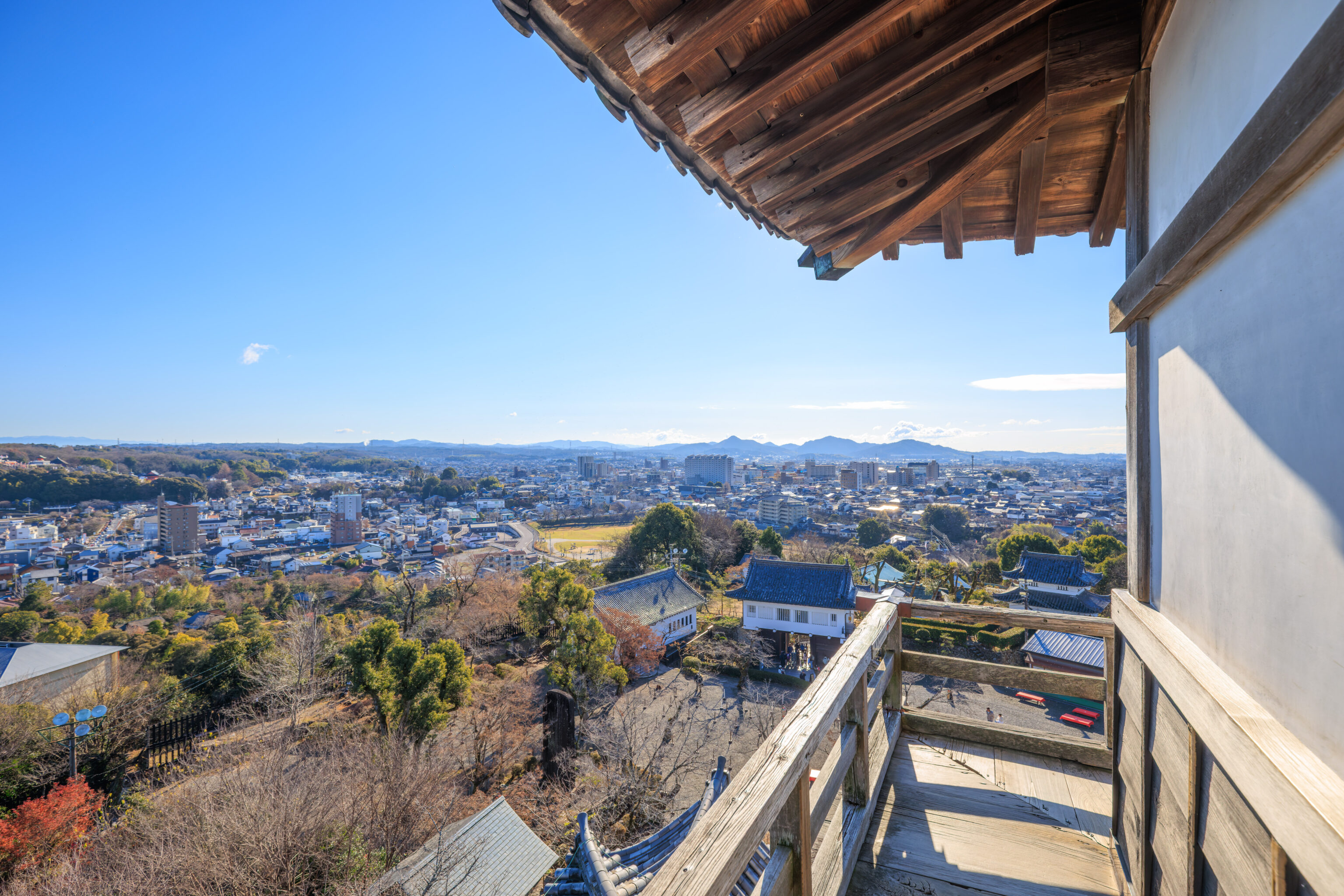
The fourth floor of the castle, the highest one, consists of a small room with a narrow platform on all sides. The railing at the edges of this platform is quite low and the platform is actually sloped downwards a bit.
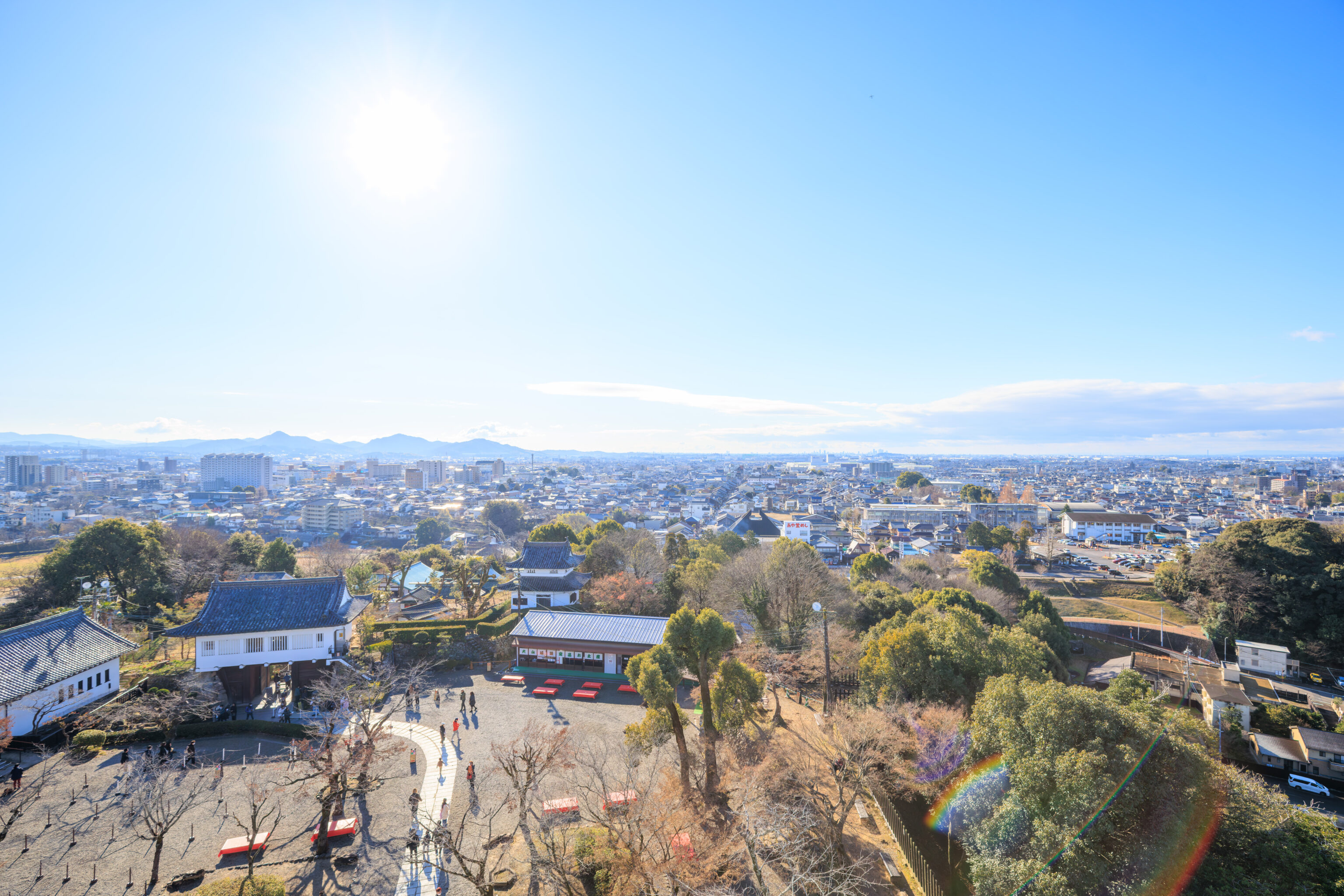
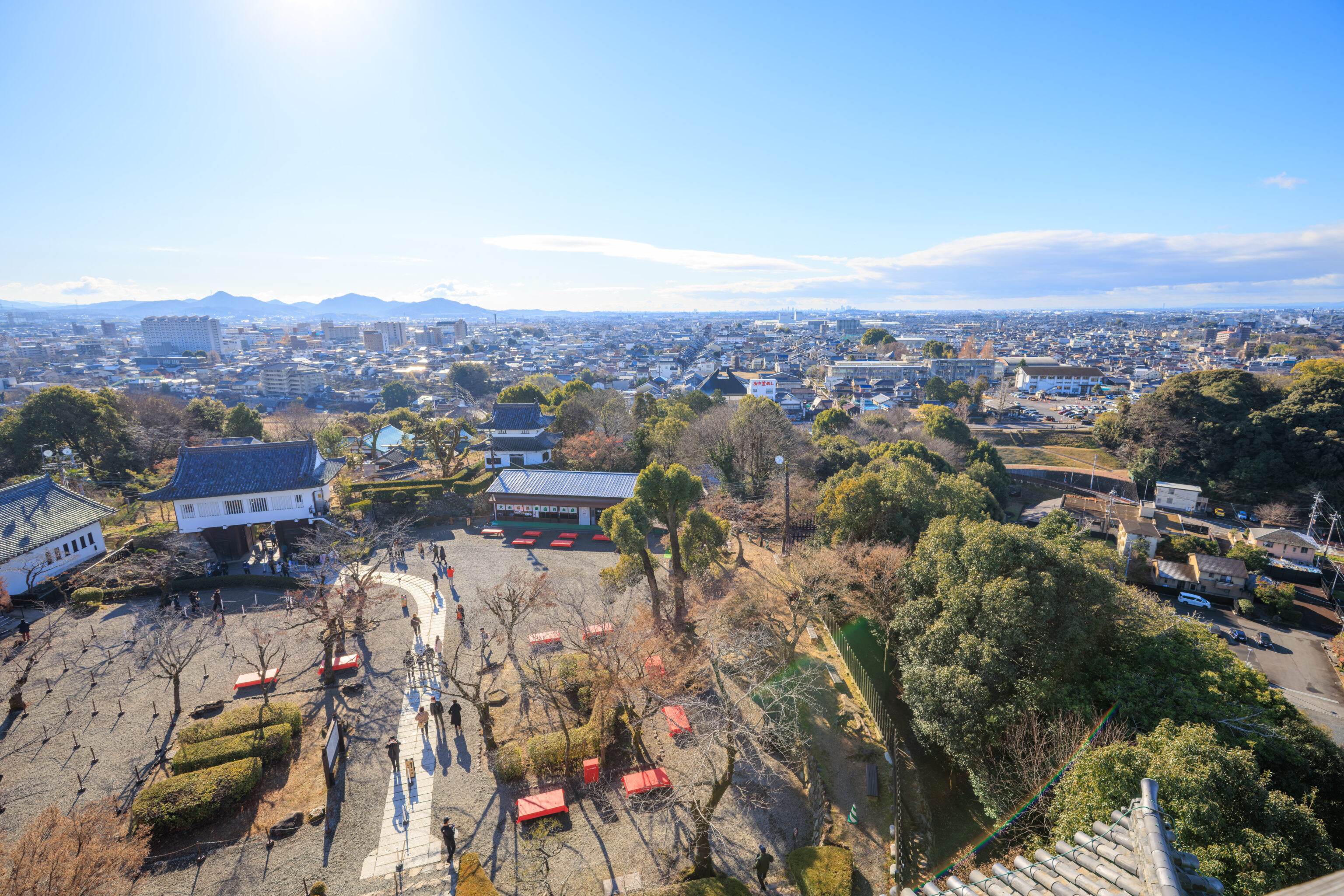
The castle is oriented perhaps 20° from north. Here, from above the castle’s entrance, we are looking roughly south south east. Central Nagoya can be seen on the horizon
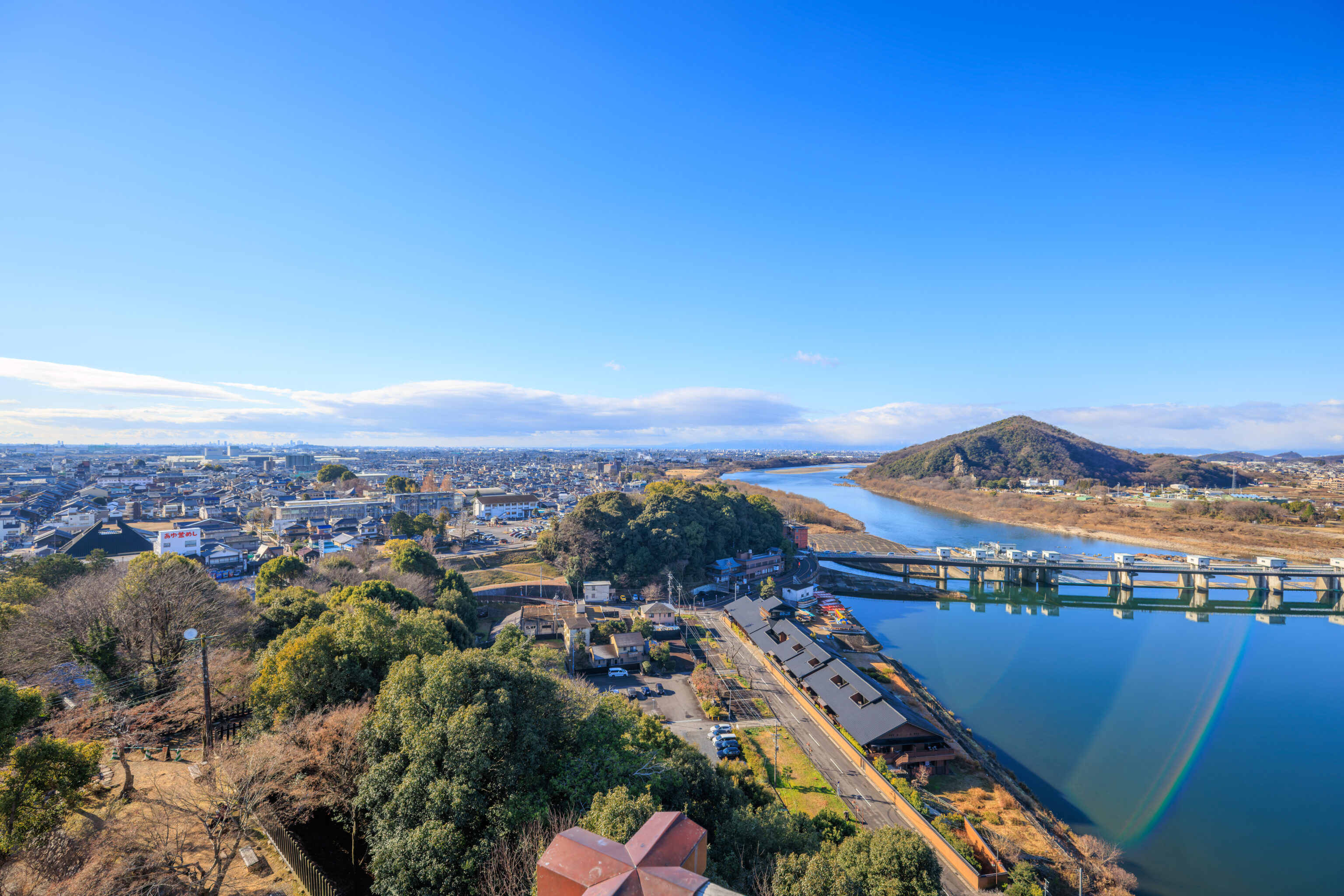
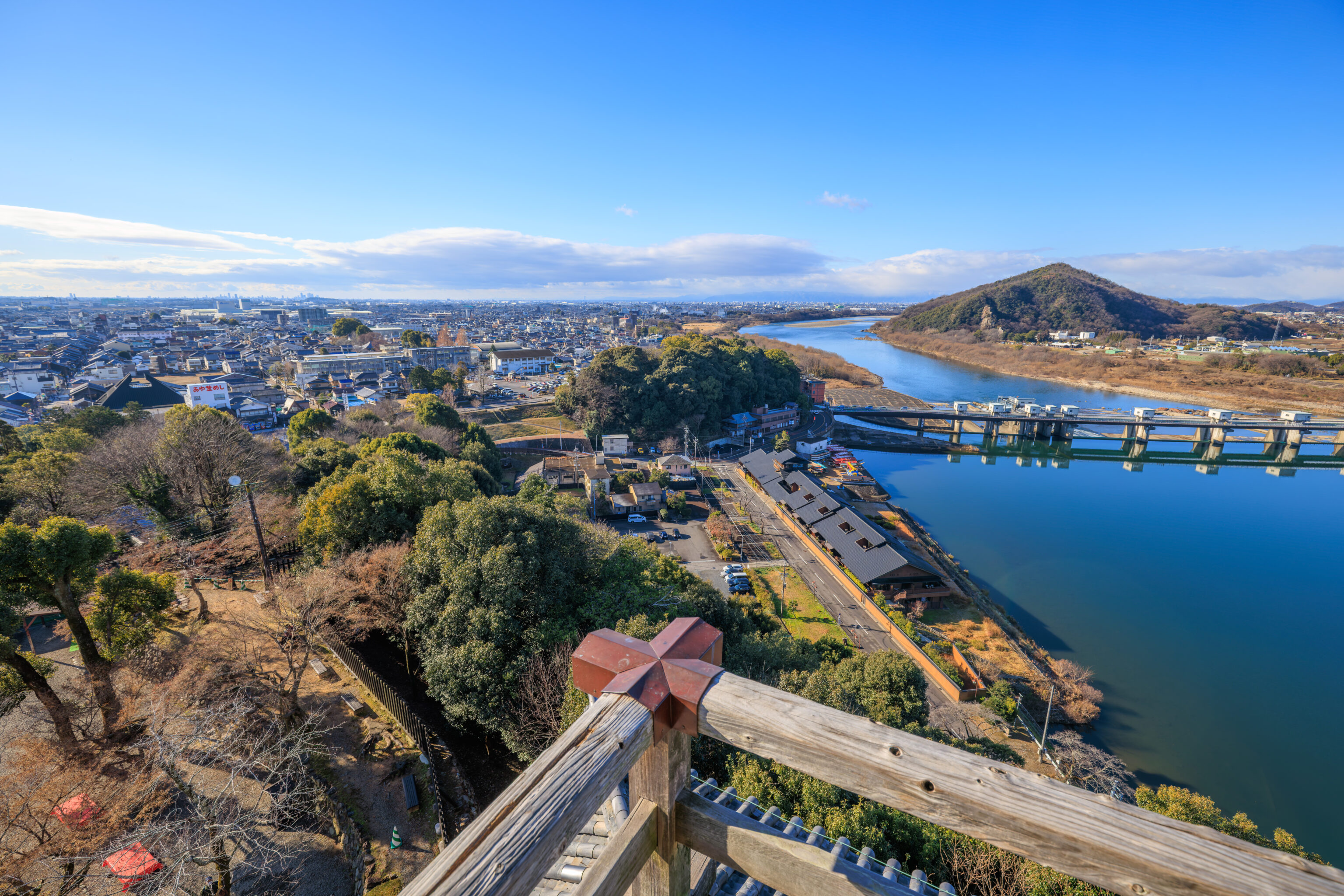
Rotating 45° to the right, we can see the Kiso River on the right. Nagoya is still visible but over on the left now.
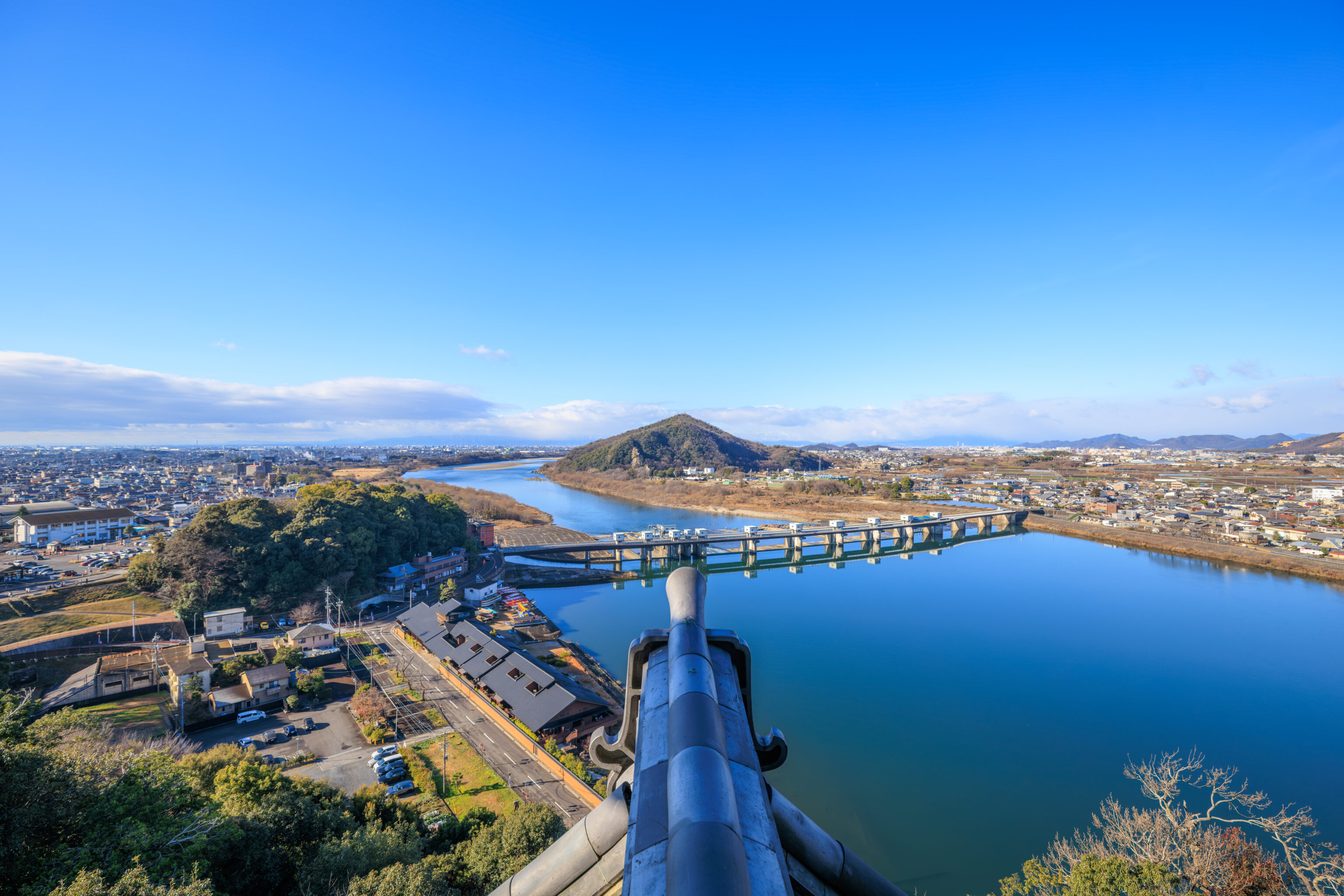
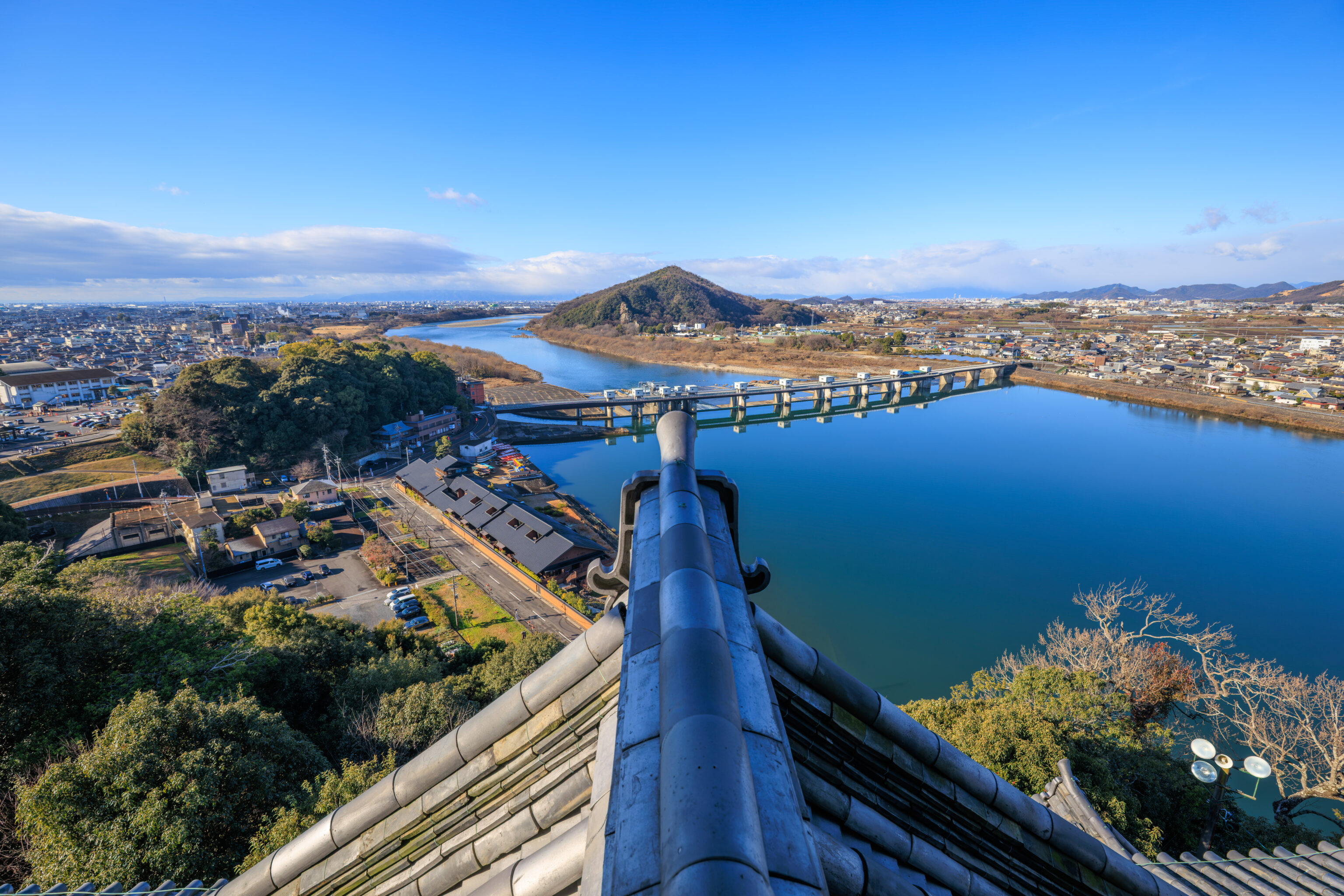
Another 45° to the right, this side of the castle points directly at 伊木山 Mount Igi, which is in Gifu Prefecture along with everything on the far side of the river. We are actually almost at the northernmost part of Aichi Prefecture, which contains Nagoya.
Gifu Castle should be visible here, perhaps a bit to the right of Mount Igi. Unfortunately, it is cloudy in that direction so we cannot see it.
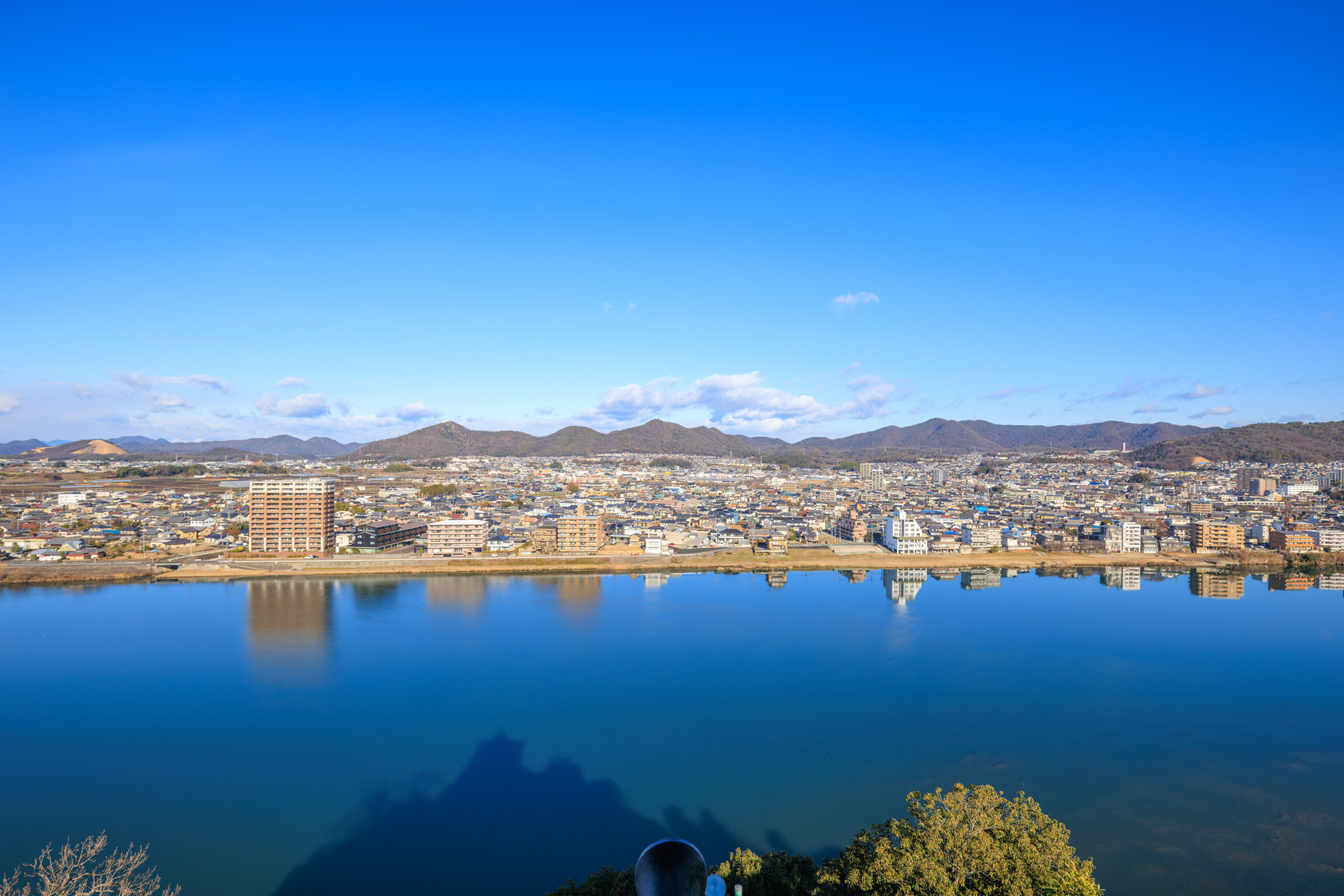
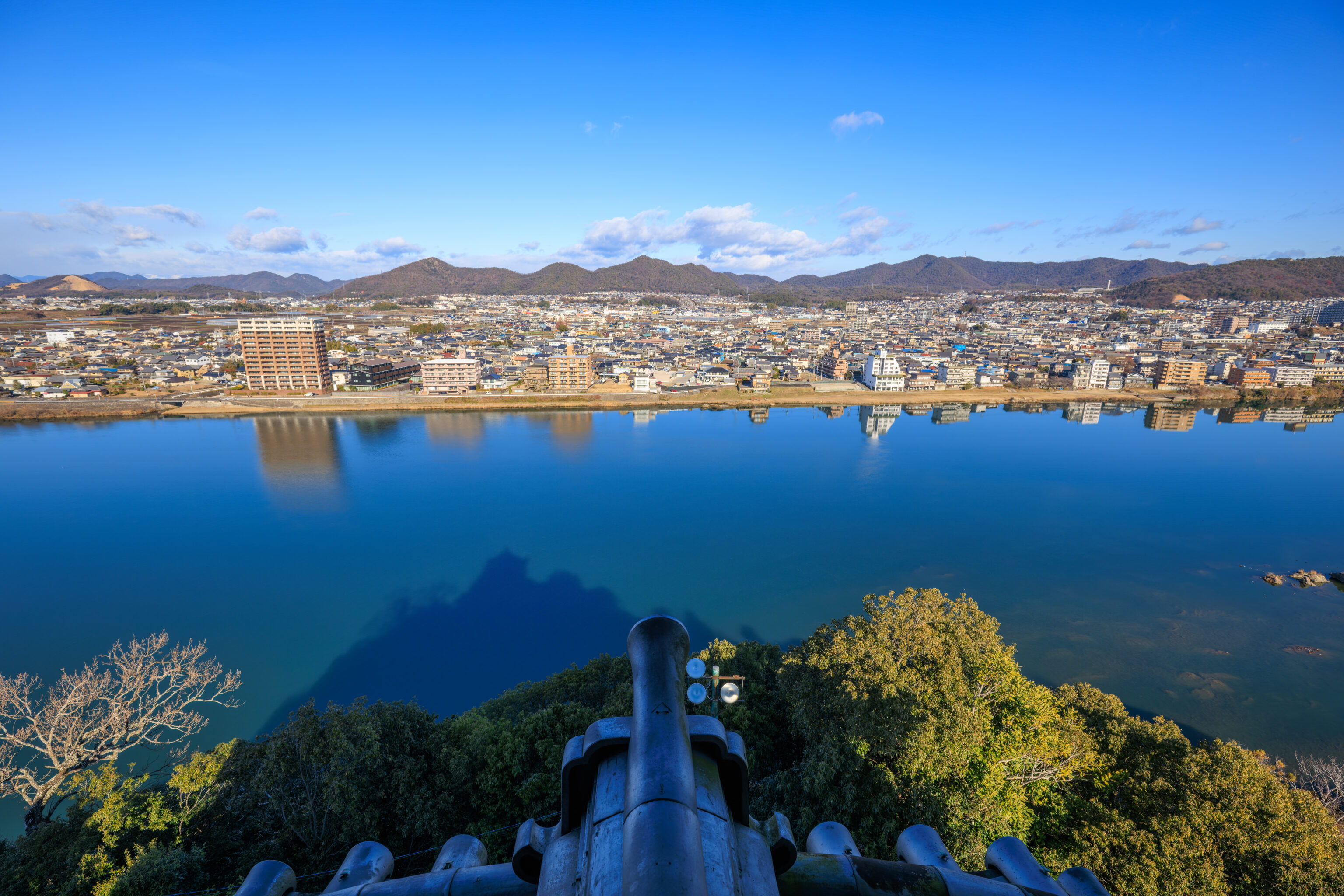
Now looking North North West, its all Gifu Prefecture out there!
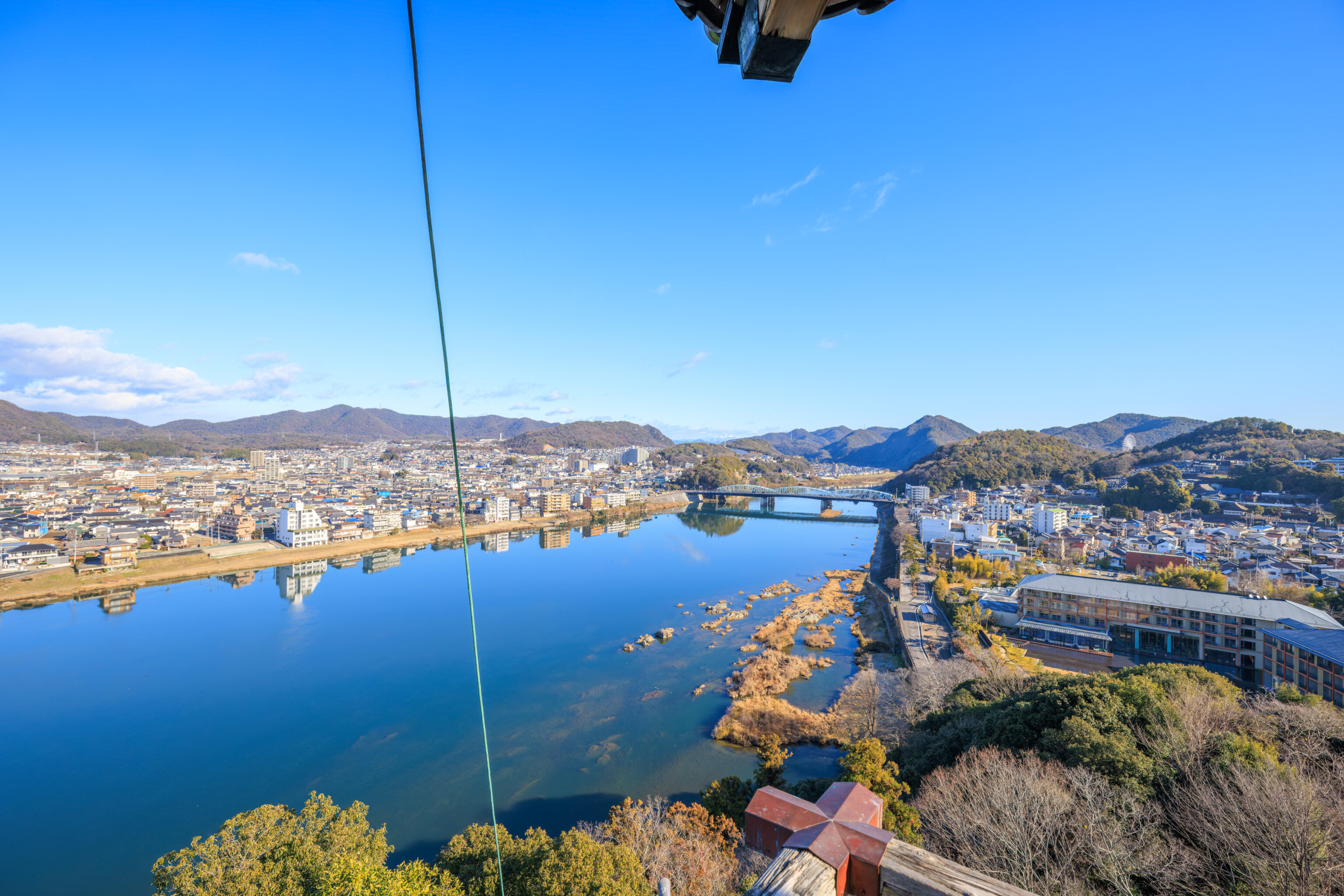
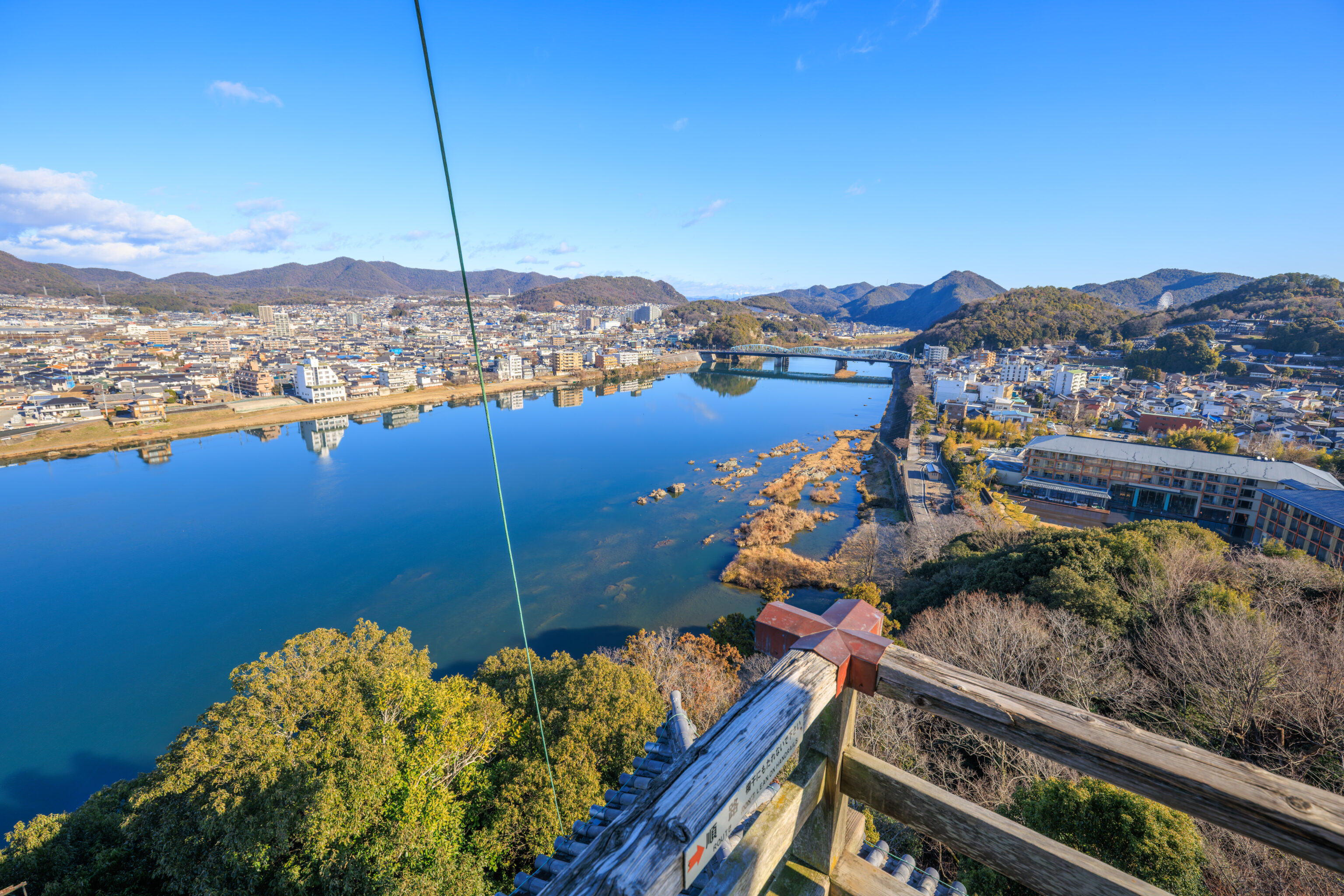
Looking North North East, we can start to see some of the temples in the mountains, or really hills, to the east of Inuyamayuen Station on the Inuyama Line, the next station after Inuyama Station.
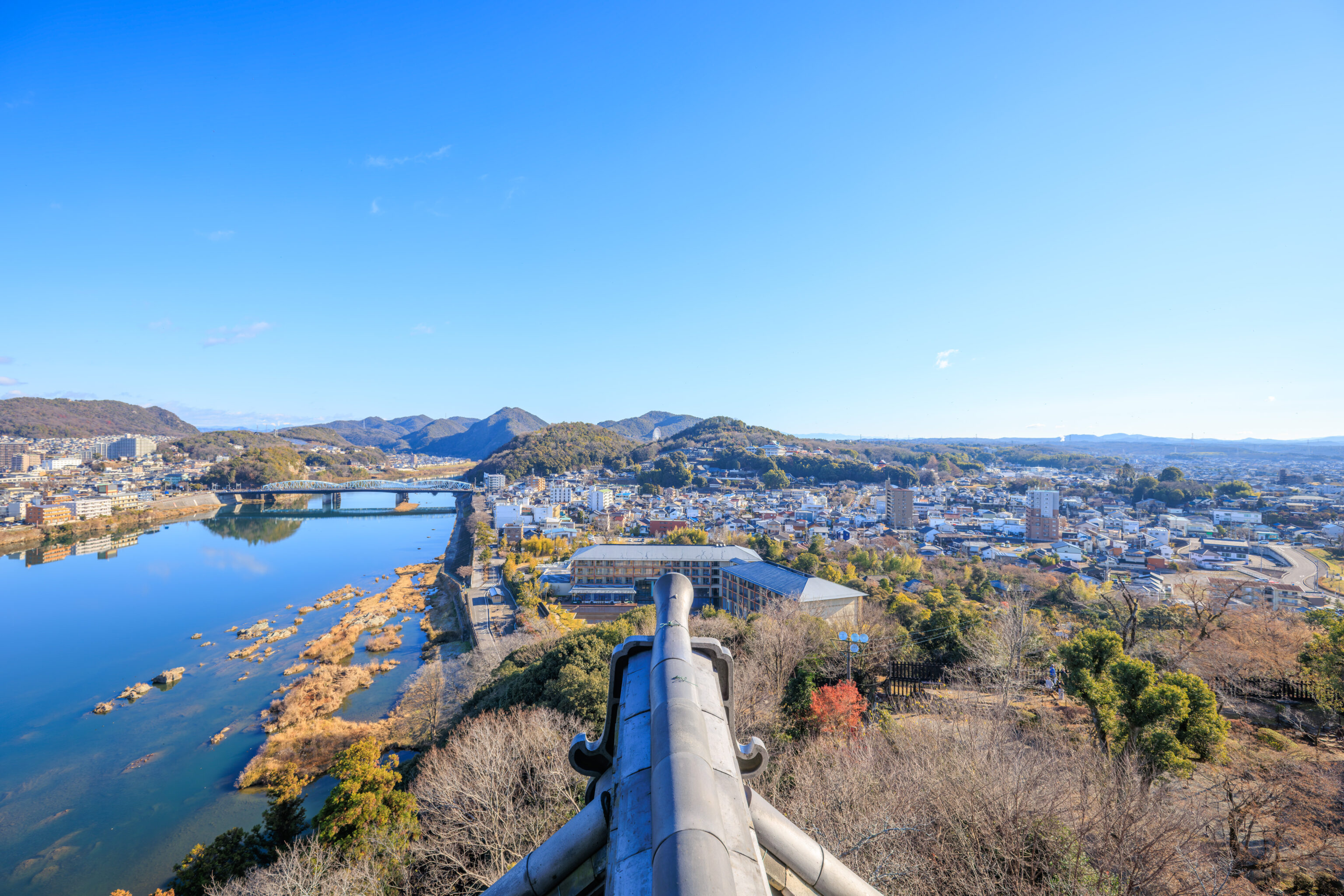
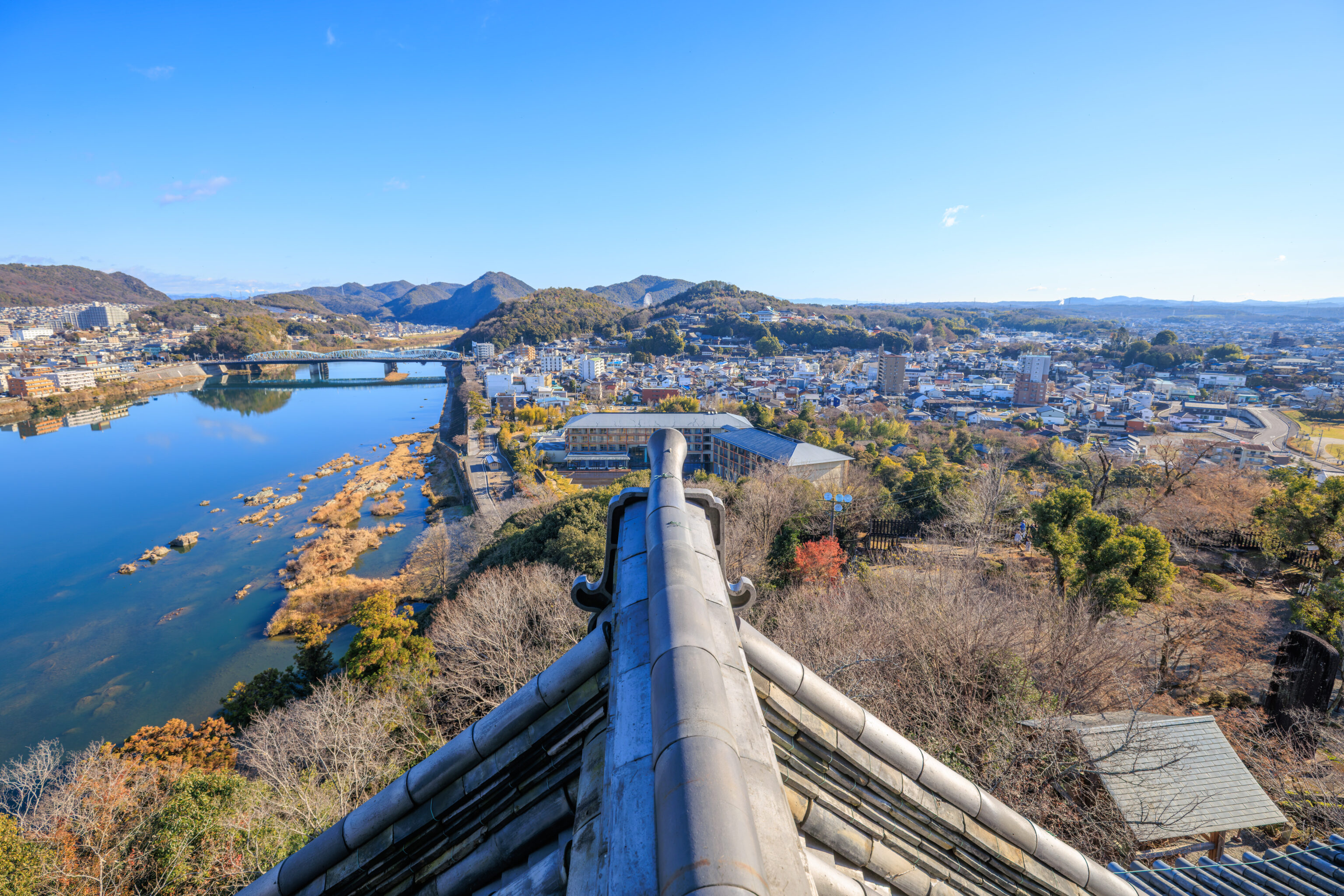
Now, we can see more temples! The largest one is Daisho-ji, just to the right of center. There is also a Ferris wheel as there is an amusement park on the other side of the hill!
The building that the roof seems to be pointing at is the ホテルインディゴ犬山有楽苑 Hotel Indigo Inuyama Urakuen. This new onsen hotel just opened in 2022 and seems like it would be an excellent place to stay.
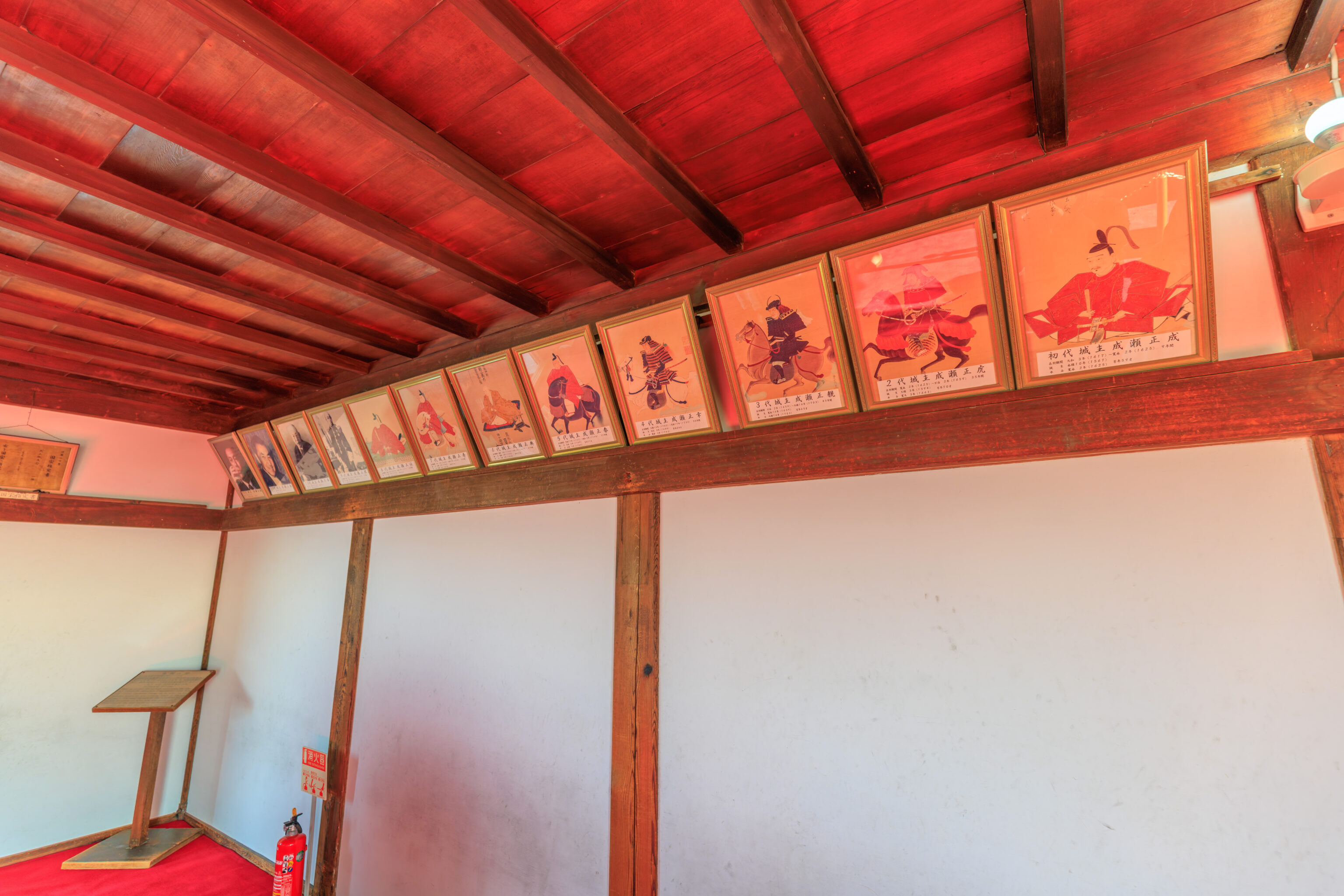
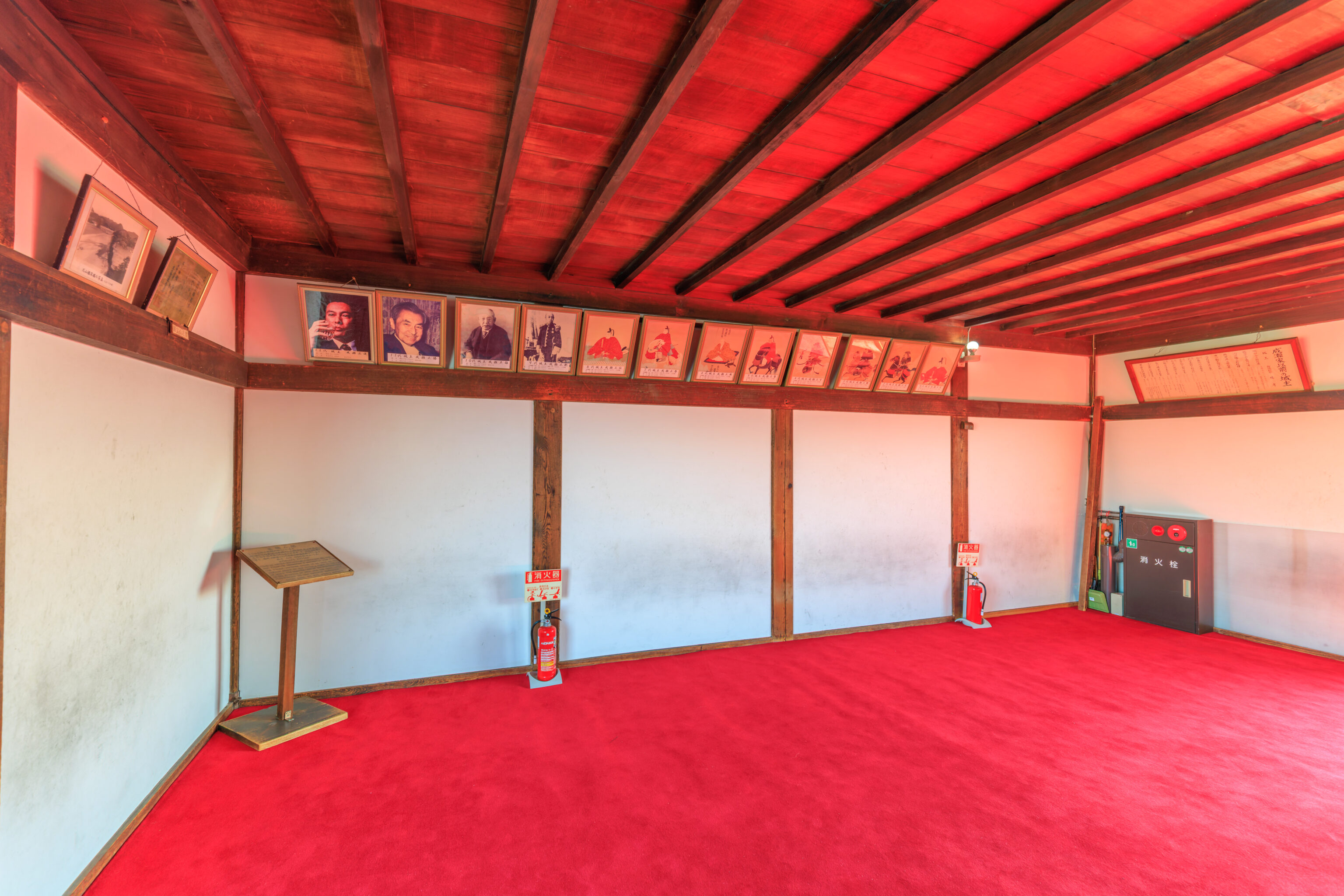
The portraits near the ceiling depict the lords of Inuyama Castle, starting on the right with 成瀬正成 Masanari Naruse in 1617. The castle and thus the Inuyama Domain stayed with the Naruse clan until the end of the feudal period. The castle actually remained owned by the family until 2004 when it was transferred to a foundation, the 犬山城白帝文庫 Inuyama Castle Hakutei Bunko, which owns the castle today. Thus, the 12th and final lord of Inuyama Castle was 成瀬正俊 Masakatsu Naruse, the leftmost portrait in the room.
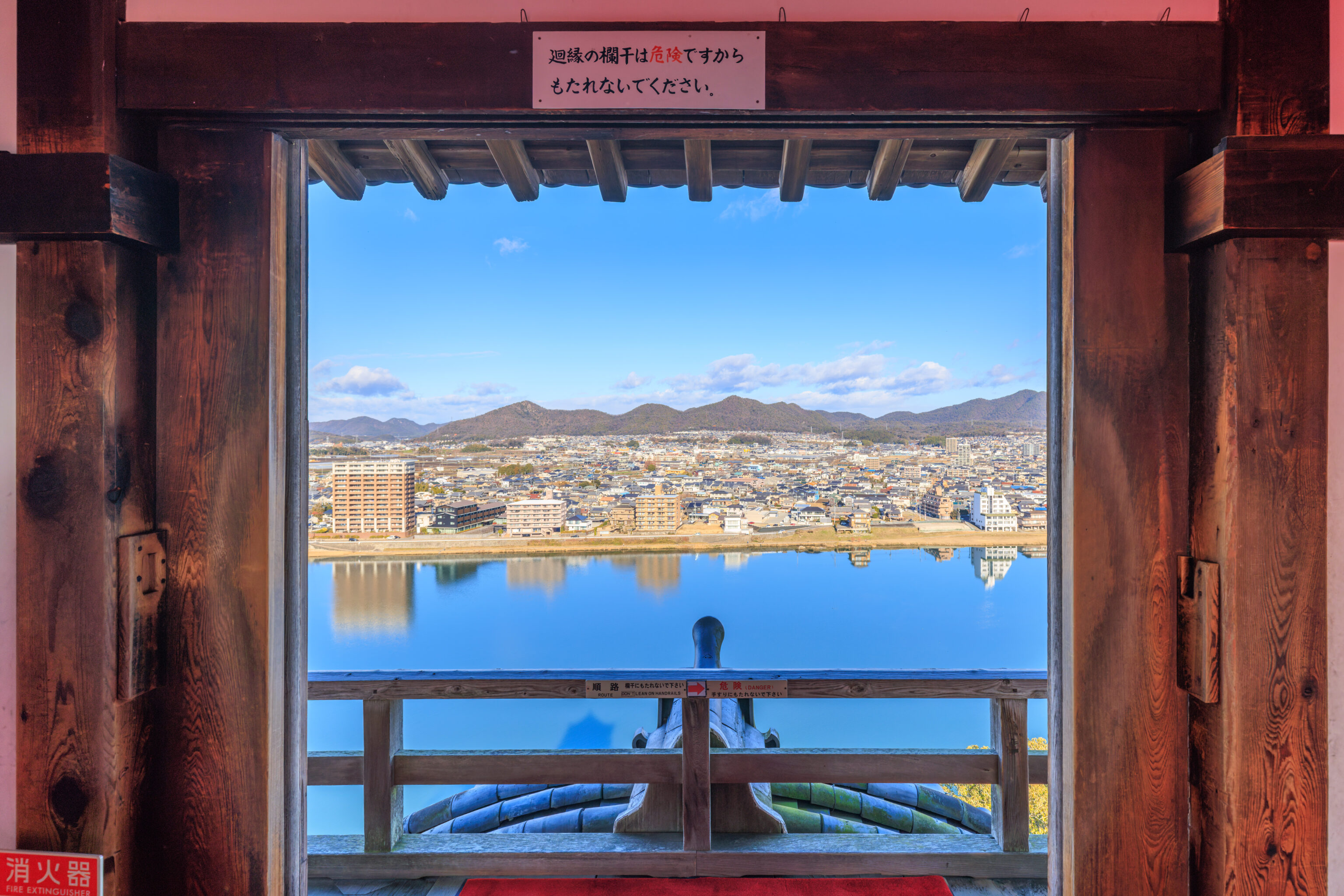
The view looking across the Kiso River from within the tenshu.
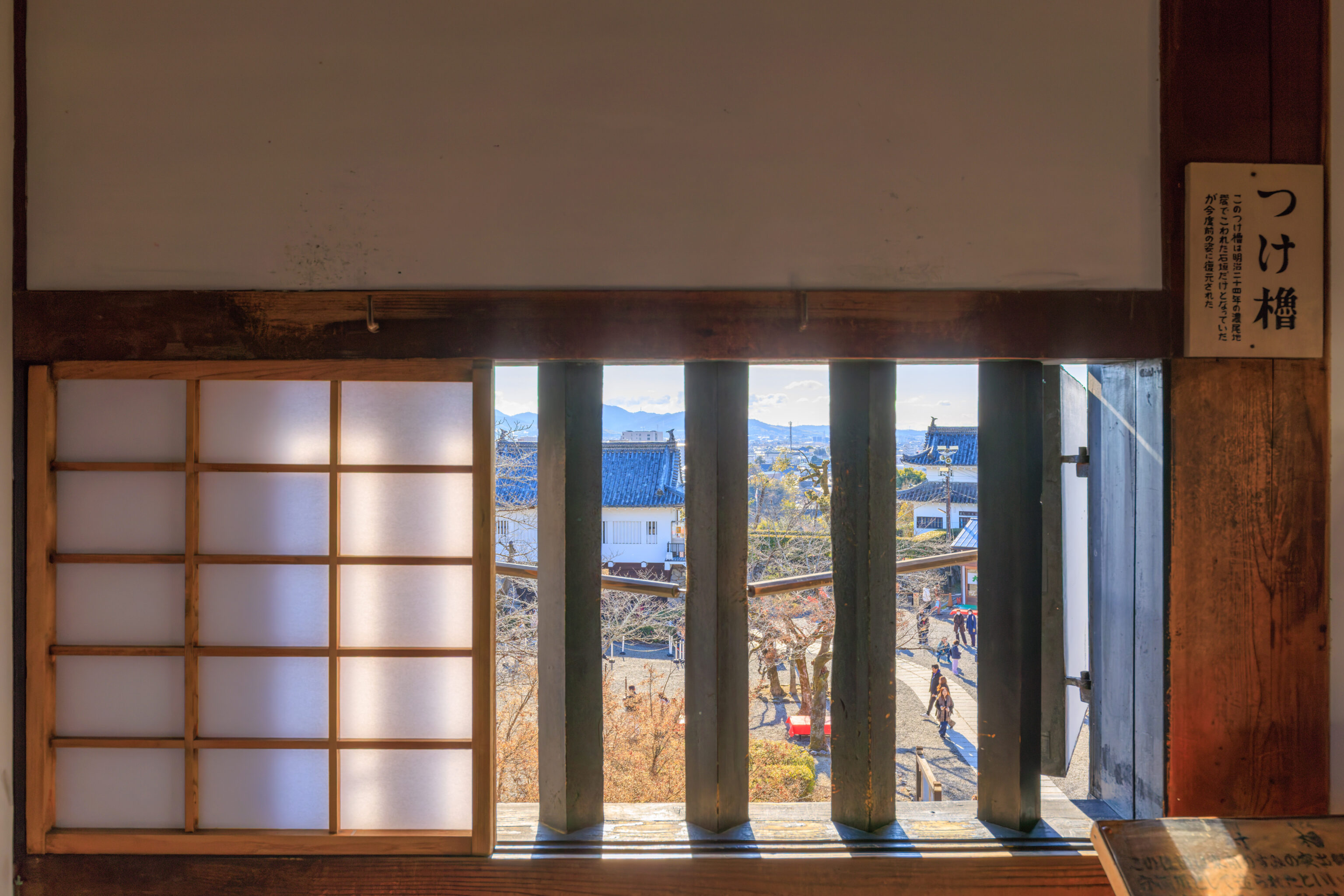
After enjoying the view, we started to head down. This room on the first floor that we are in here is within the つけ櫓 Tsuke Yagura, or Attached Turret. The first floor is actually above ground level as the wooden frame of the castle is built upon a stone foundation.
Attached Turret
All that remained of this attached turret was the stone wall, which had been damaged in the 1891 Nōbi earthquake.  It has now been restored to its former appearance.
– Text from the sign on the right, transcribed using Google Gemini and translated using Google Translate.
ATTACHED TURRET
This is the projection located on the South-east corner, constructed for the purpose of offense and defense.  It commands a good view of the far scenery through the two wooden-frame windows below.

Total area:15.22 square meters(a little over 8mats)
– Text from a sign.
This window faces the front of the castle, roughly to the south.
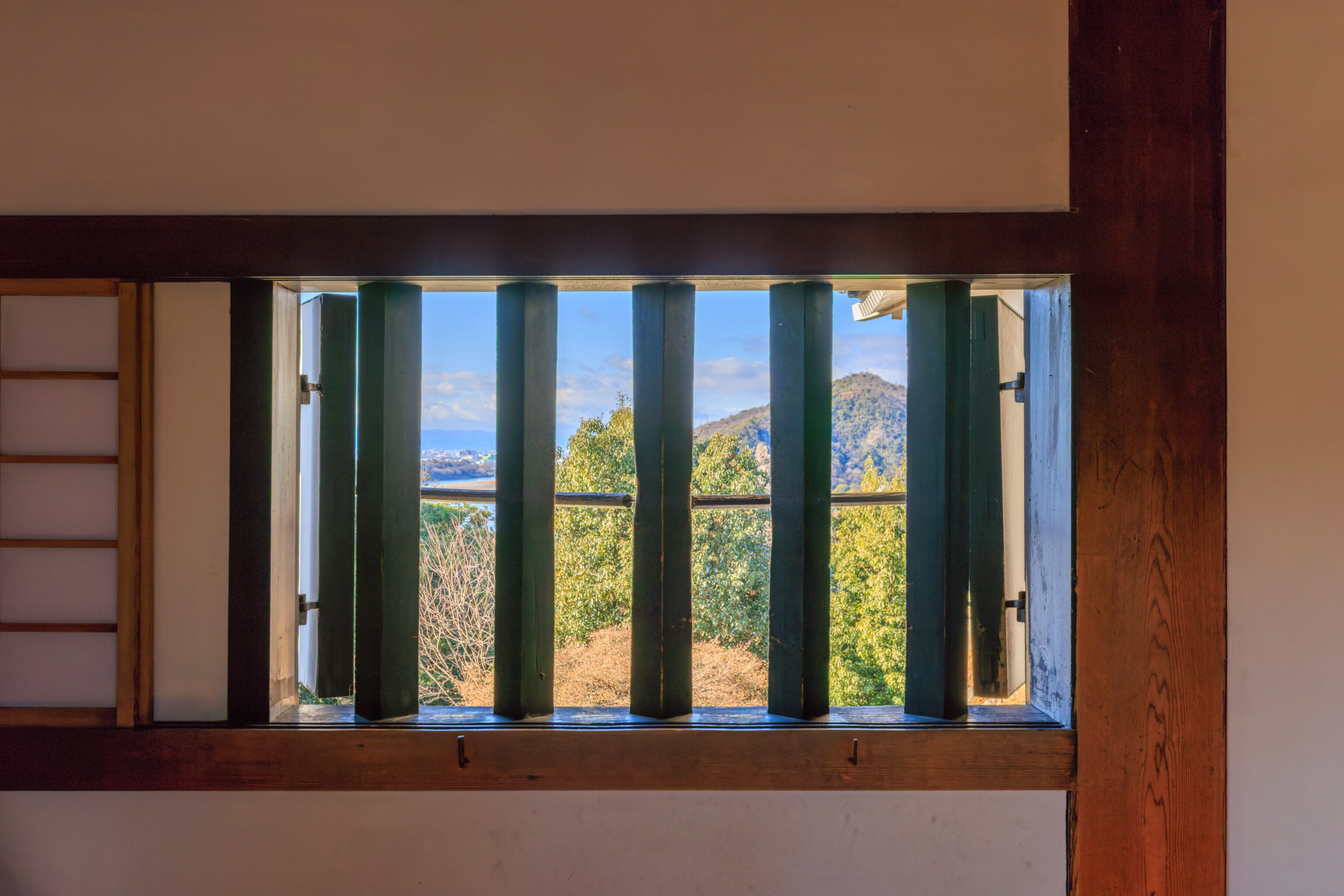
This window faces roughly to the west. The first floor also had an area to allow stones to be dropped down upon invaders. While there wasn’t really anything to photograph, there was a sign:
"Stone-Dropping Bay" (Ishi-otoshi-no-ma)
This area, located at the northwest corner, is known as the "stone-dropping bay" (*ishi-otoshi-no-ma*). It is a space designed to repel intruders by allowing stones to be dropped on them; a distinctive feature is that it projects outward beyond the stone wall.

Area: 7.17 square meters (approximately 4 *tatami* mats).
– Text from a sign, translated using Google Translate.
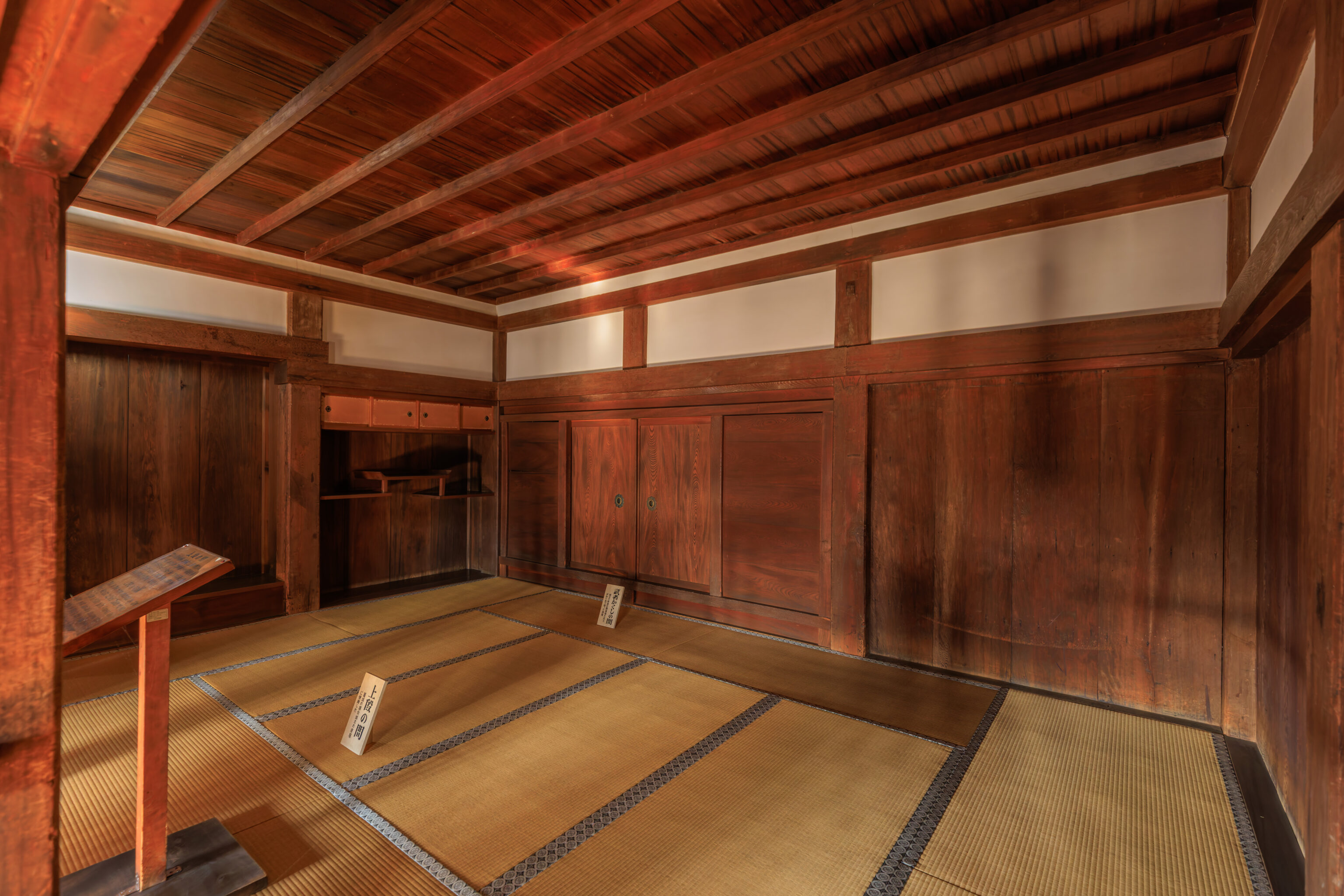
The first floor also includes the Lord’s Room, the only room in the castle with tatami on the floor.
Upper Chamber (Jōdan-no-ma)
This room, known as the *Jōdan-no-ma* (Upper Chamber), was used by the lord. The floor is raised one step higher than the rest, and it features a unique *saruhō-tenjō* (coved ceiling), marking it as the most prestigious room in the castle. Adjoining this space is a *musha-kakushi* (warrior concealment room), where samurai stood guard to protect the lord.
– Text from a sign, translated using Google Translate.
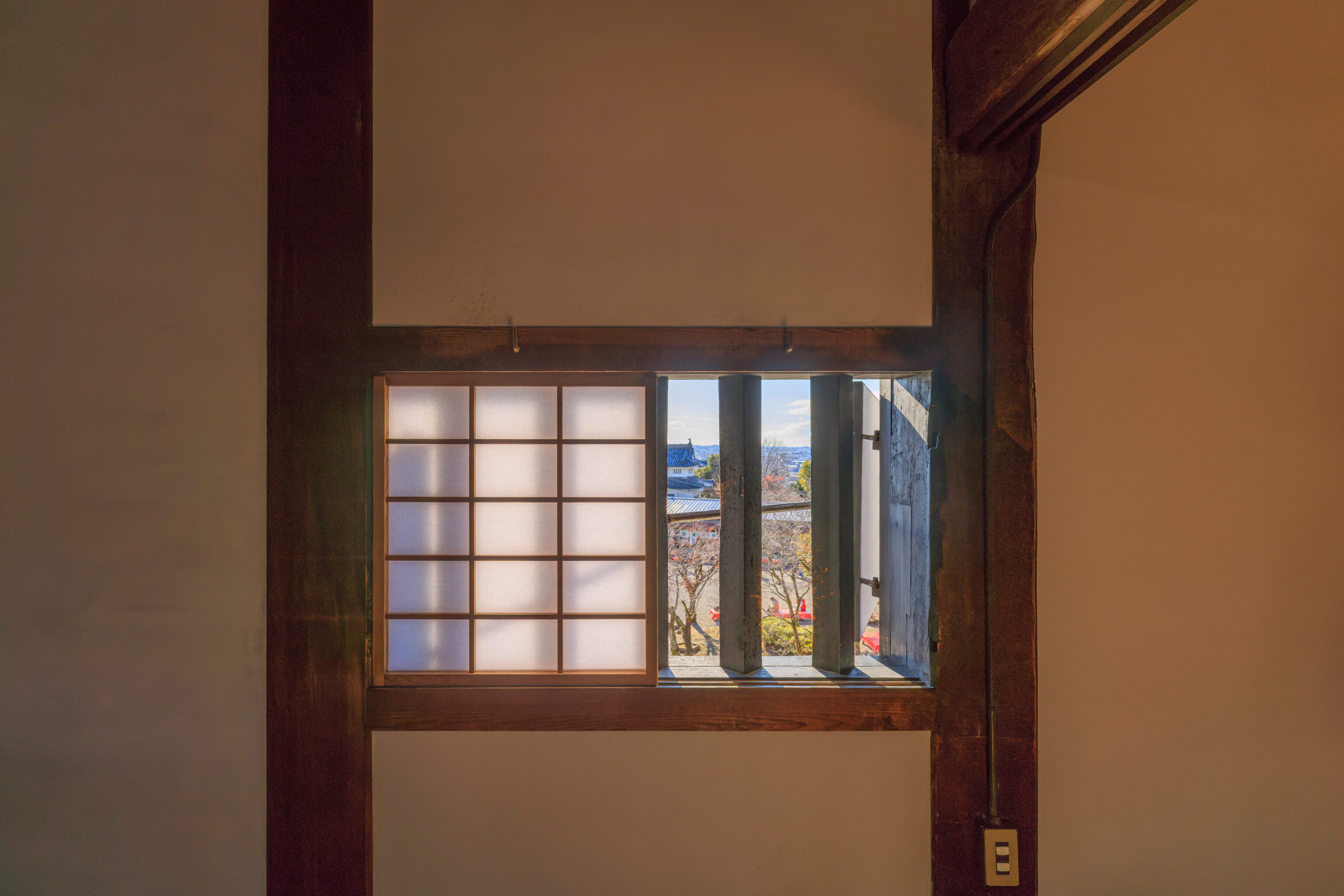
This small window faces the south.
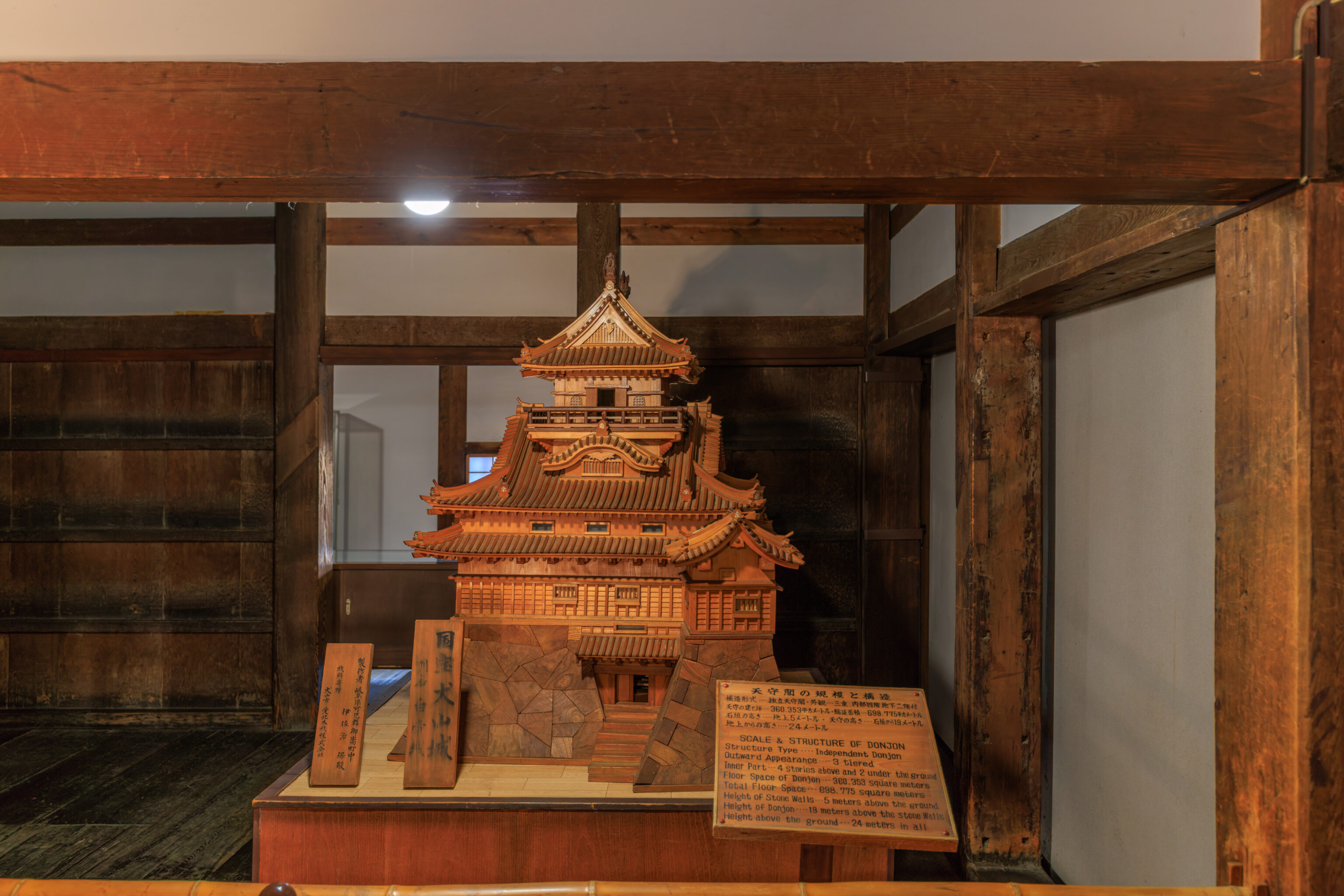
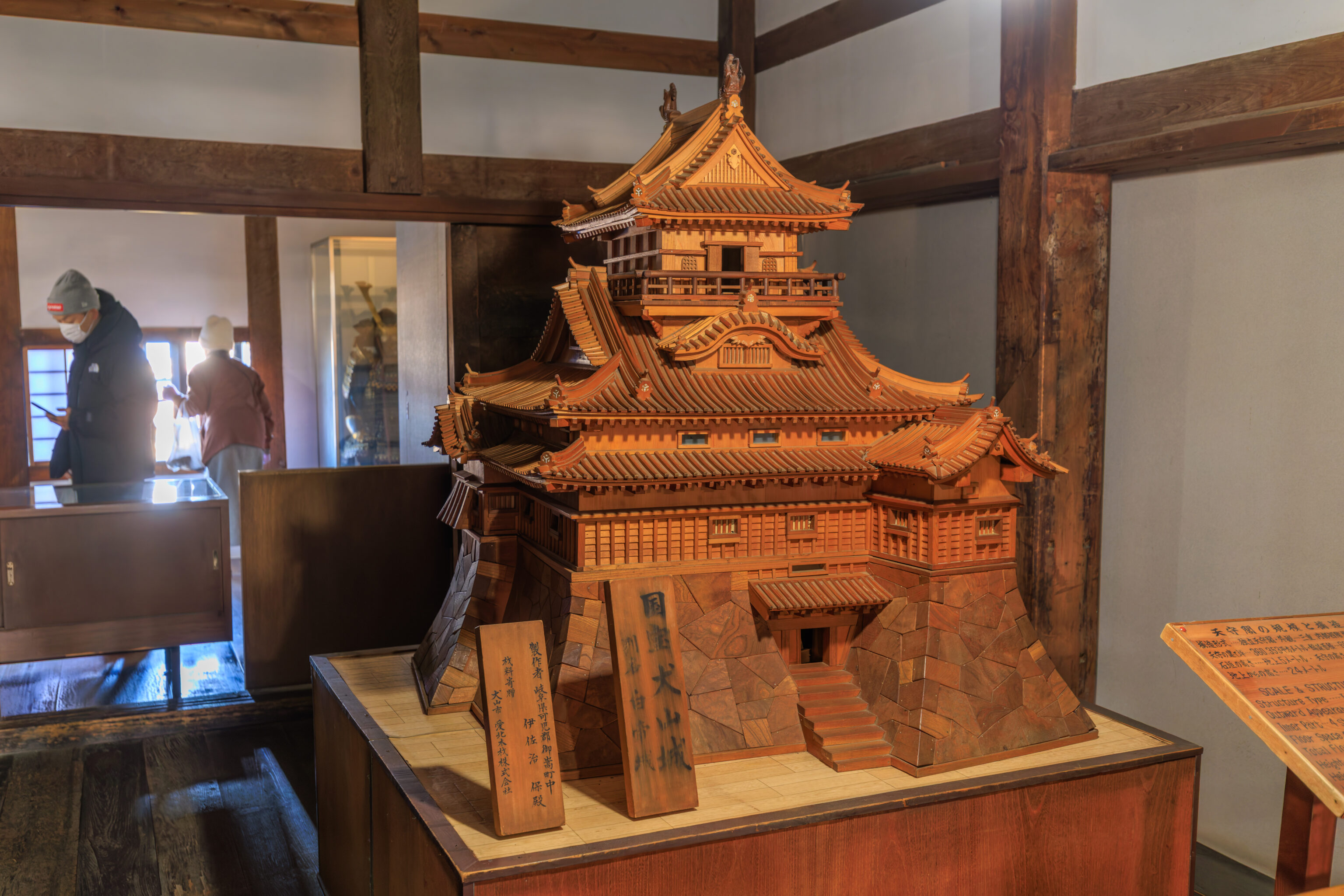
We came across another model of the tenshu:
SCALE & STRUCTURE OF DONJON
Structure Type ···· Independent Donjon
Outward Appearance ... 3 tiered
Inner Part ·.. 4 stories above and 2 under the ground
Floor Space of Donjon ··· 360.353 square meters
Total Floor Space ... 698. 775 square meters
Height of Stone Walls ... 5 meters above the ground
Height of Donjon .... 19 meters above the stone Walls
Height above the ground ... 24 meters in all
– Text from a sign.
For English speakers, donjon is the French word for a castle’s keep.
Outline of the Castle Tower Structure
Area: Approximately 200 tsubo (approx. 660 sq m)
Exterior: Three stories (four stories inside, with a second story within the stone wall)

First Floor: Storage Room, 150 tatami mats
There is a section in the center divided into four rooms. In the southwest, there is a raised floor, seven inches higher than the surrounding area, a so-called "upper room" facing south. Traces of the ceiling, alcove, and alcove sides are present, indicating it was a special room.

To the north of this is an eight-tatami-mat warrior's hiding place, a guard post for warriors in case of emergency. The two eastern rooms are both storage rooms, six and ten tatami mats in size. The two-bay wide wooden-floored area surrounding these four rooms is called the warrior's walkway.

Second Floor: Armory, 144 tatami mats. The central part is the armory, with armor shelves on the west, northeast, and east sides.

Third Floor: Curved Gable Room, 28 tatami mats (40 tatami mats including smaller rooms). This corresponds to the attic of the double-layered exterior.

Fourth Floor: Observation Platform, 28 tatami mats A veranda of approximately half a ken (about 1.5m) surrounds the building on all four sides, with a railing offering excellent views.

The low height of the castle tower's stone walls is characteristic of the Muromachi period.
– Text from a sign, transcribed using Google Gemini and translated using Google Translate.
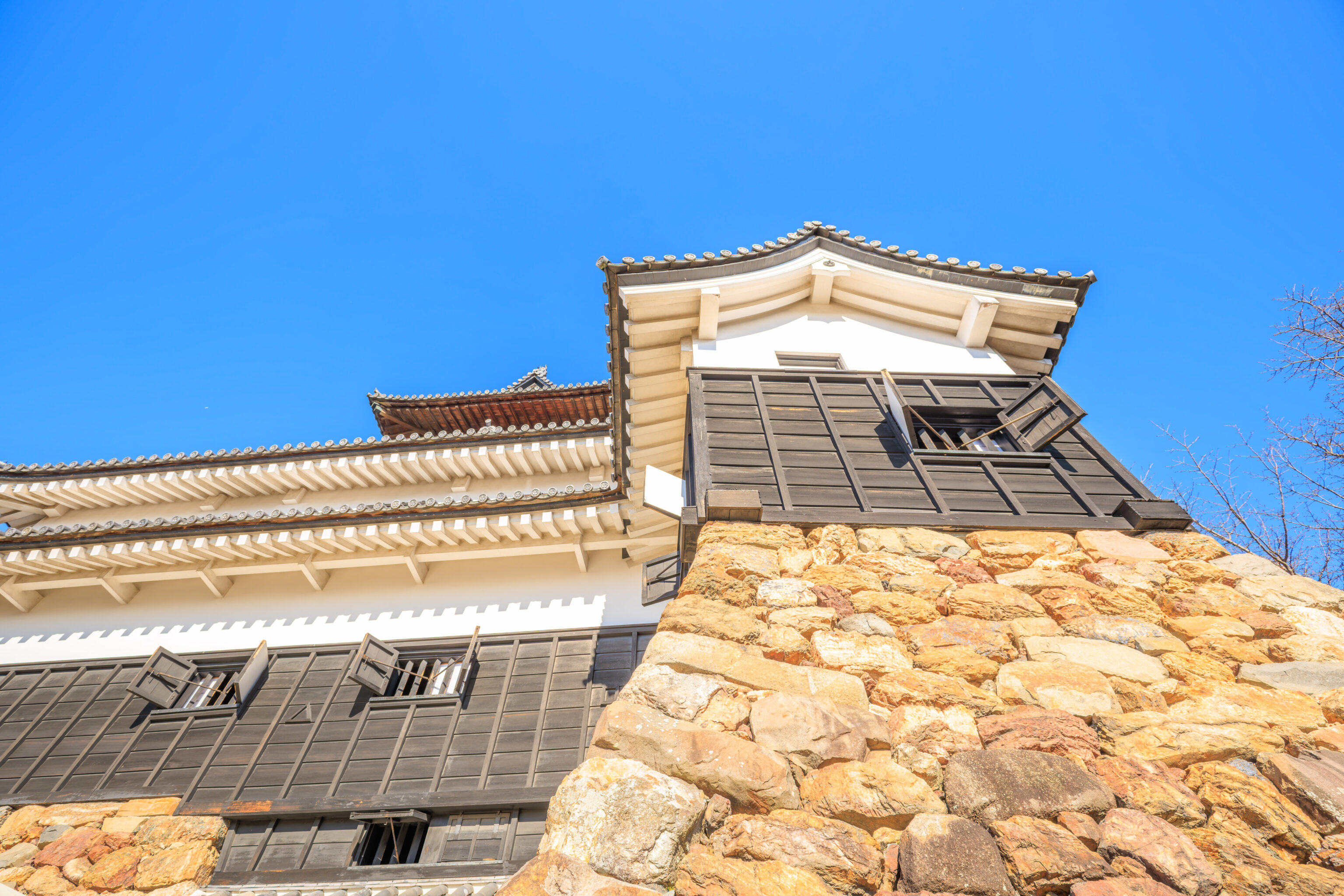
The Attached Turret, as seen from below near the entrance to the castle. The windows that we looked out through are open.
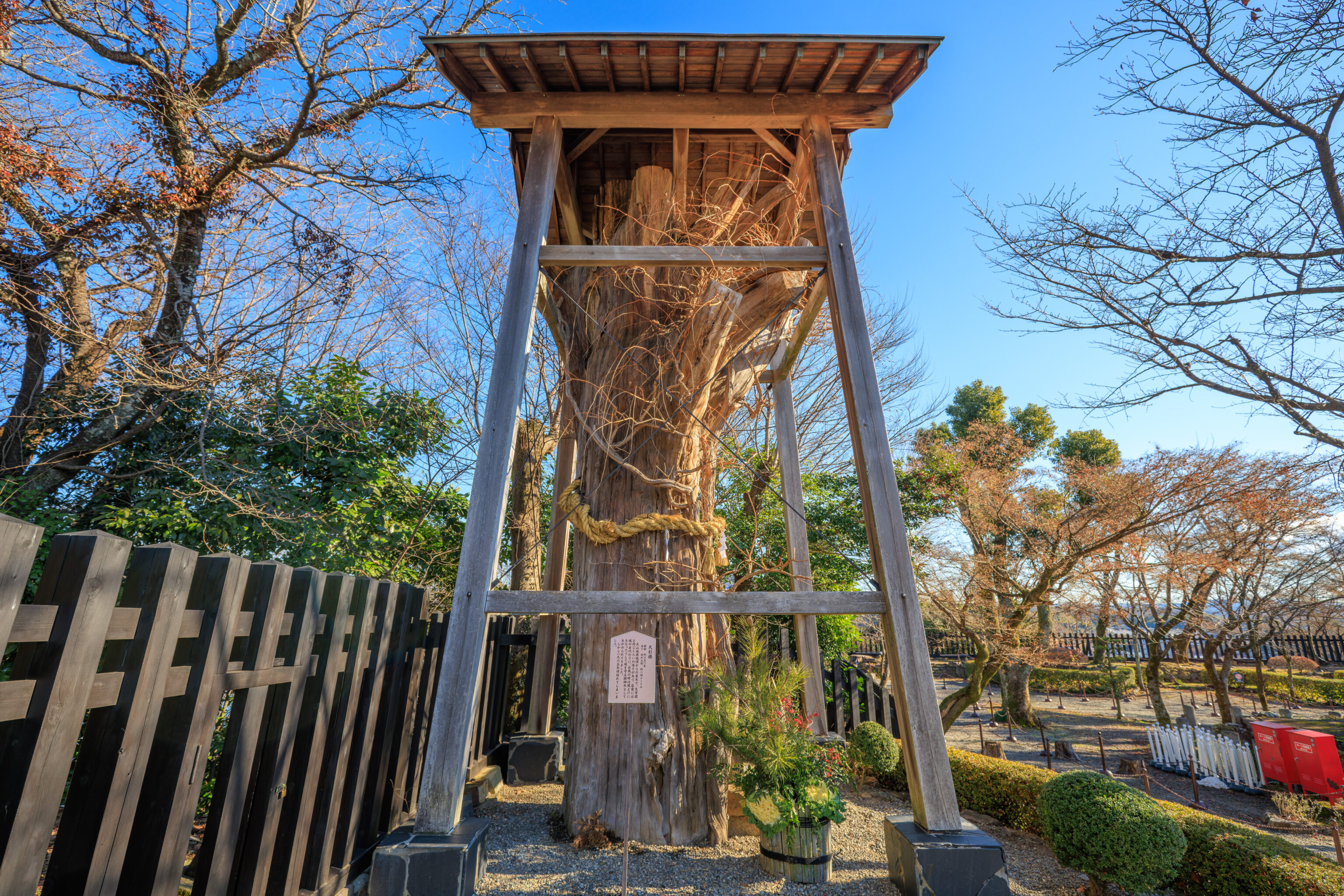
This cedar tree was here when the castle was built but died around 1965. It is believed to have been 650 years old.
The Great Cedar
Estimated age: Approx. 650 years
Height (before dying): Approx. 24 meters

This ancient tree dates back to the time Inuyama Castle was built and stood roughly as tall as the castle keep itself. It was revered as a sacred tree that protected the castle—acting as a lightning rod to shield the structure from strikes and serving as a windbreak during typhoons.

However, the tree withered and died around 1965.
– Text from the sign in front of the tree, transcribed using Google Gemini and translated using Google Translate.
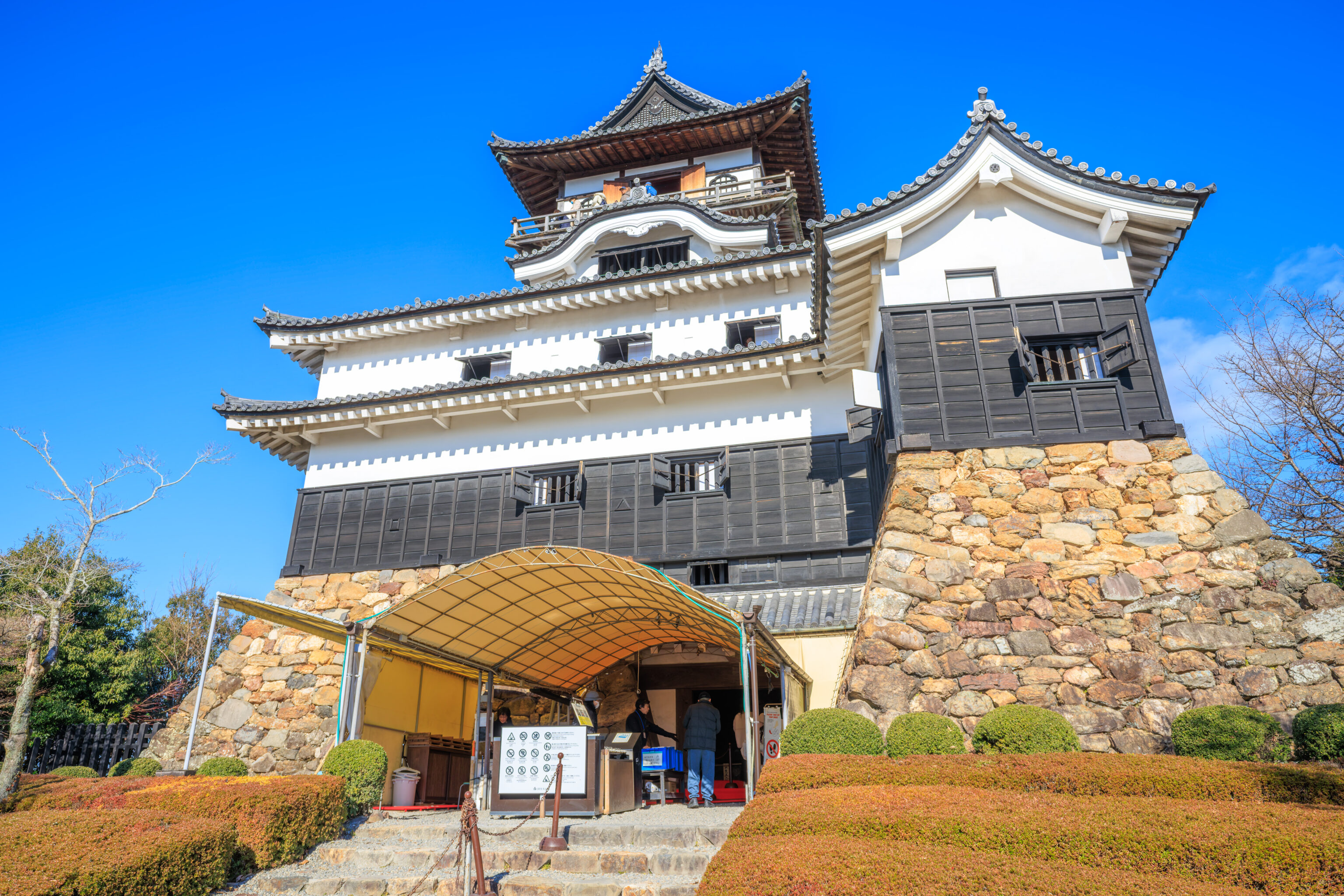
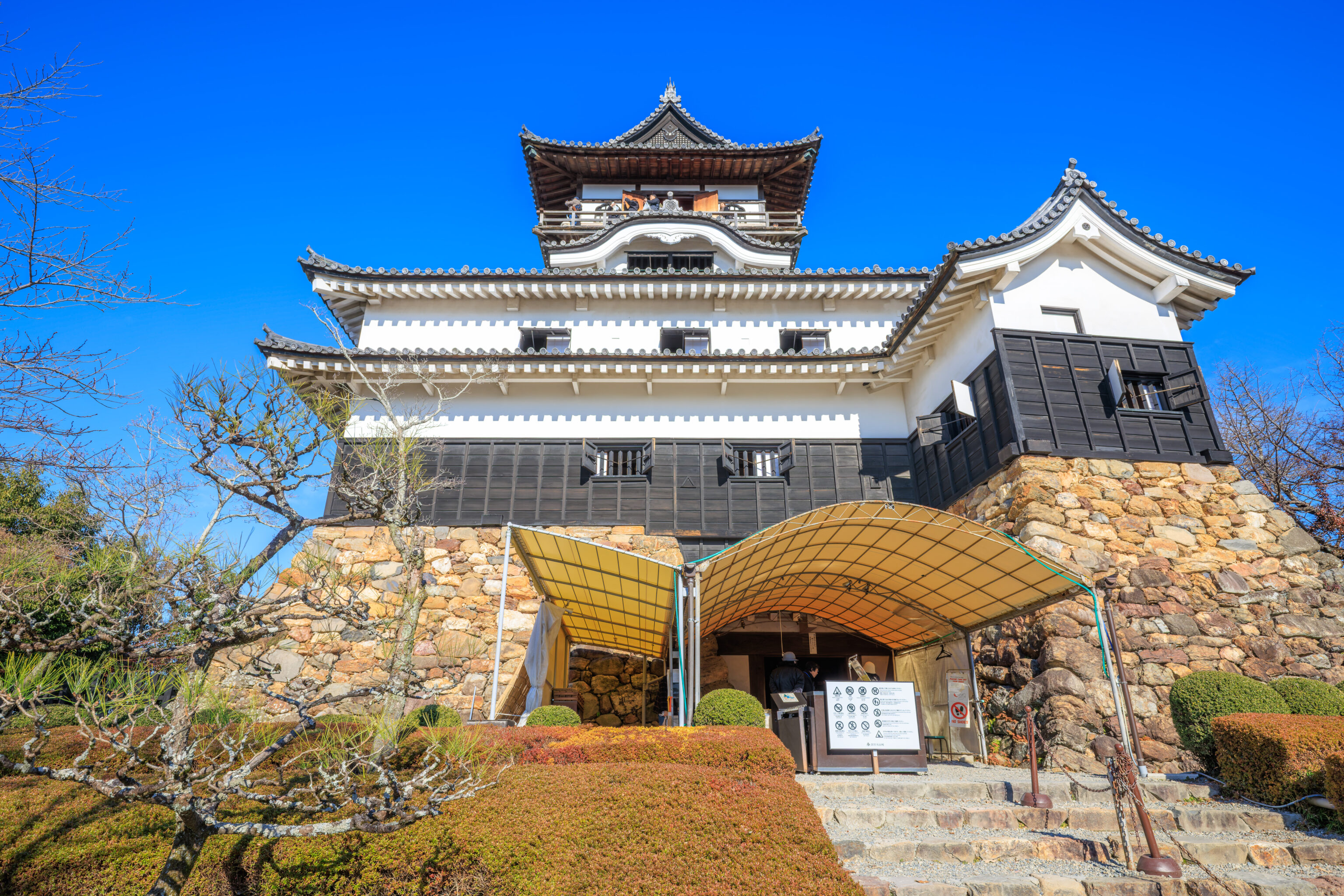
The tenshu, as seen from the south as we headed towards the castle’s shop to the south.
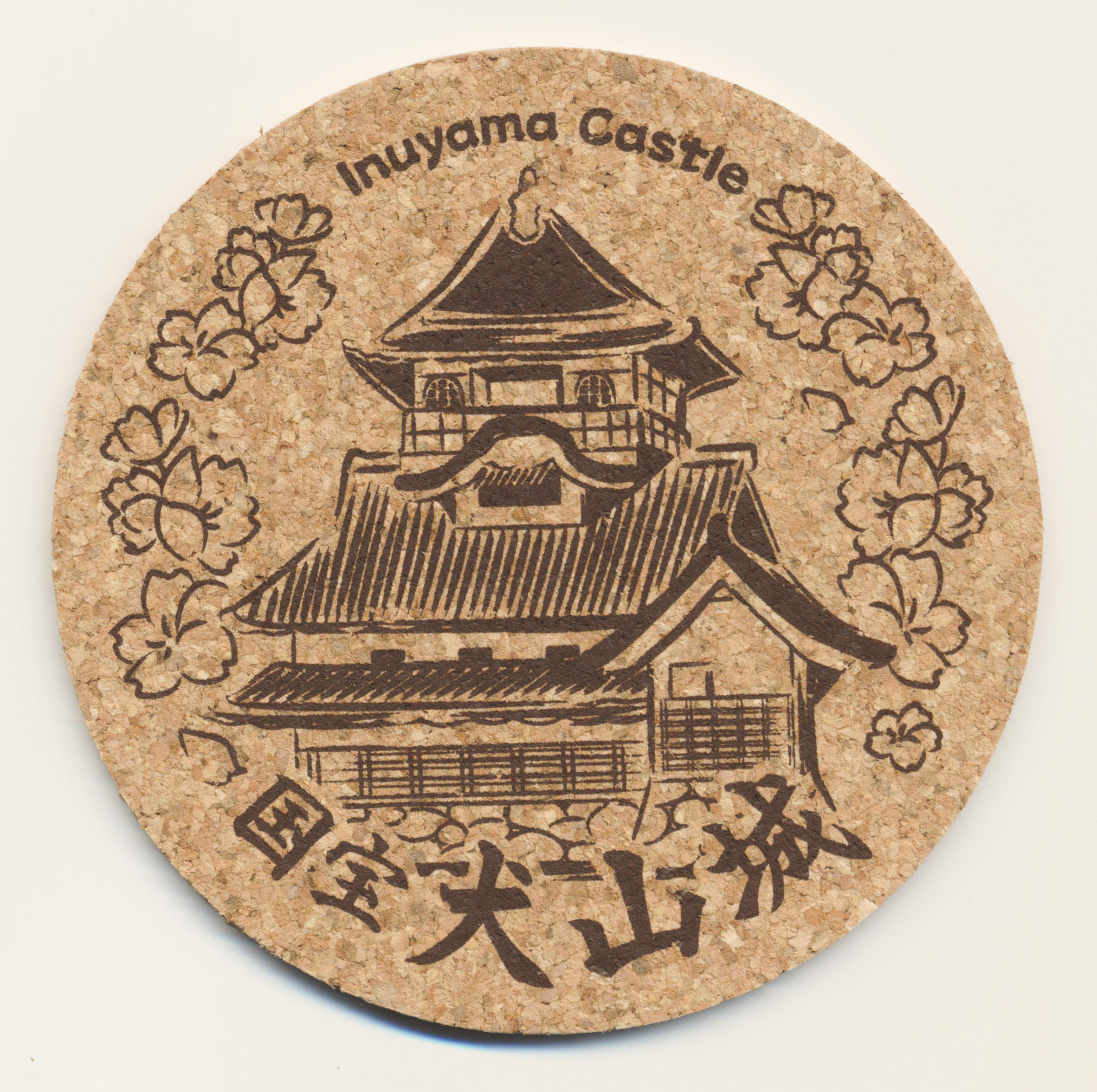
We bought a few items from the shop! We bought a coaster featuring an image of the tenshu.
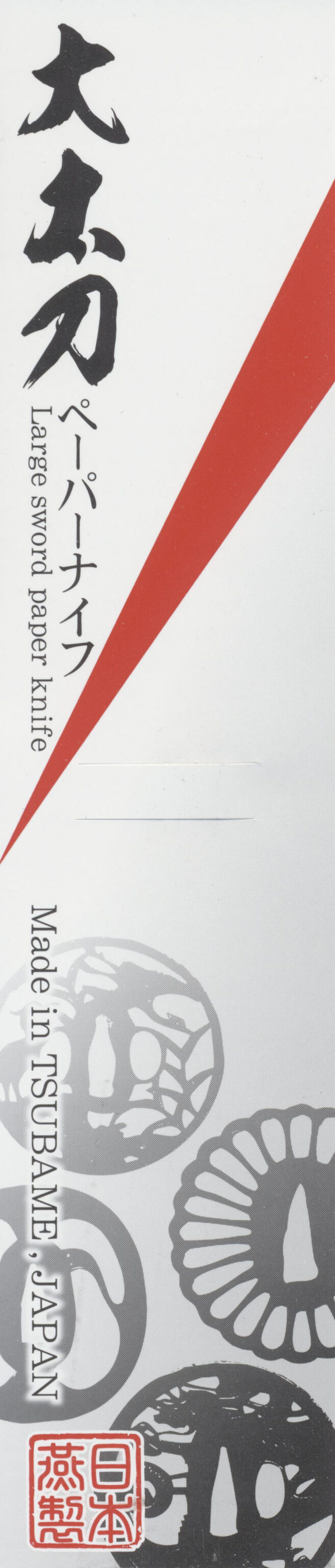
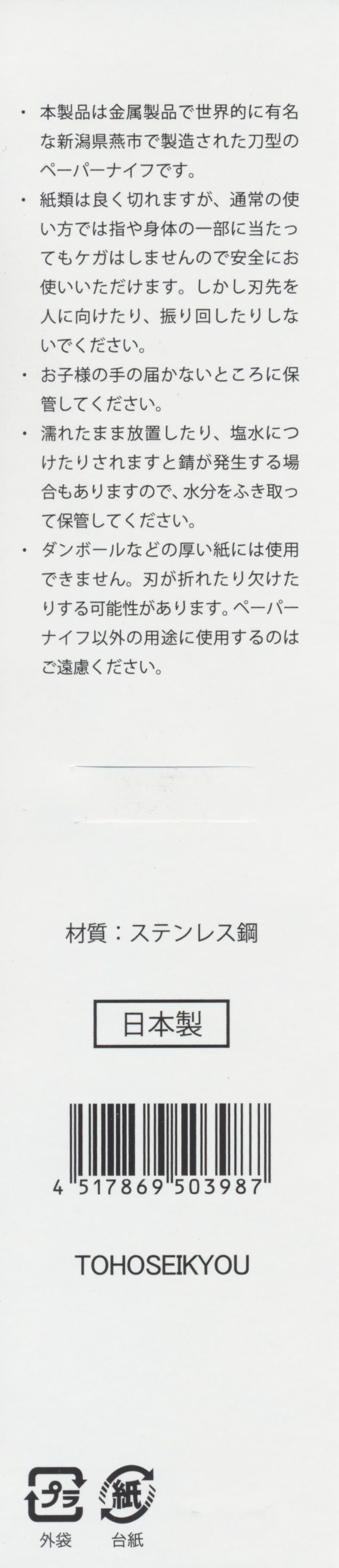
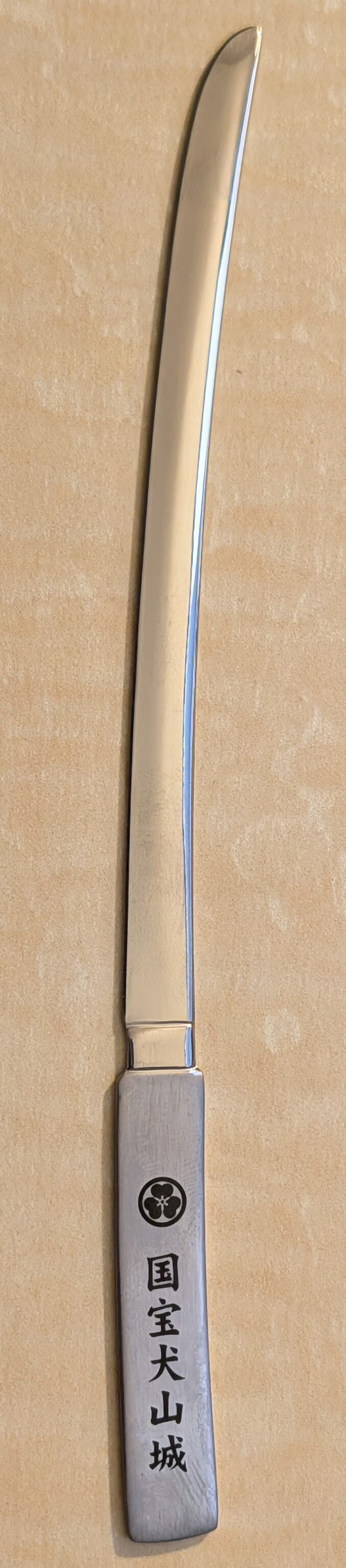
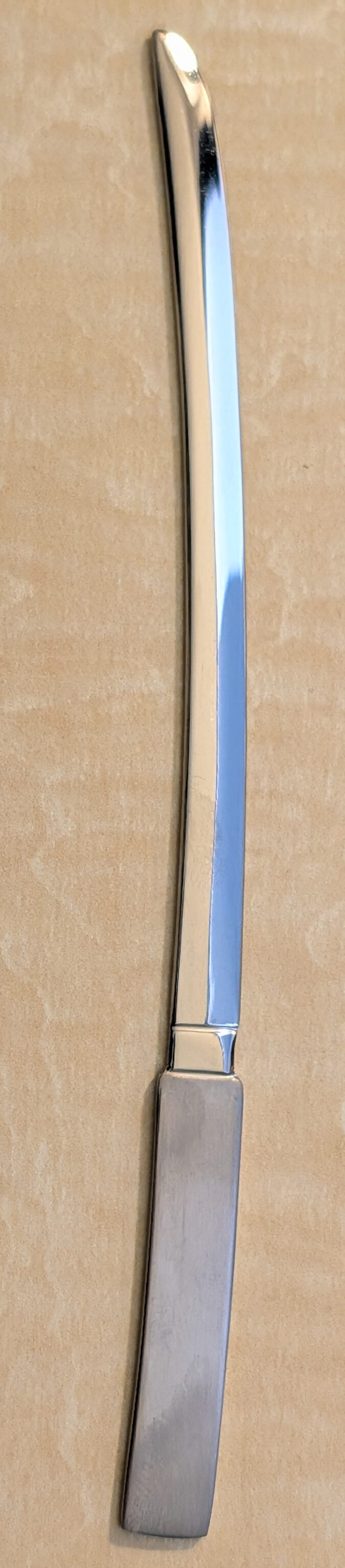
We also got a letter opener modeled after a katana.
· This product is a sword-shaped paper knife manufactured in Tsubame City, Niigata Prefecture—a region world-renowned for its metalwork.

· While it cuts paper effectively, it is designed to be safe for normal use; accidental contact with fingers or other body parts will not cause injury. However, please do not point the blade at others or swing it around.

· Keep out of the reach of children.

· Leaving the item wet or exposing it to salt water may cause rust; please wipe off any moisture before storing.

· Do not use on thick paper, such as cardboard, as the blade may break or chip. Please refrain from using this product for any purpose other than as a paper knife.
– Text from the back of the large sword paper knife packaging, translated using Google Translate.
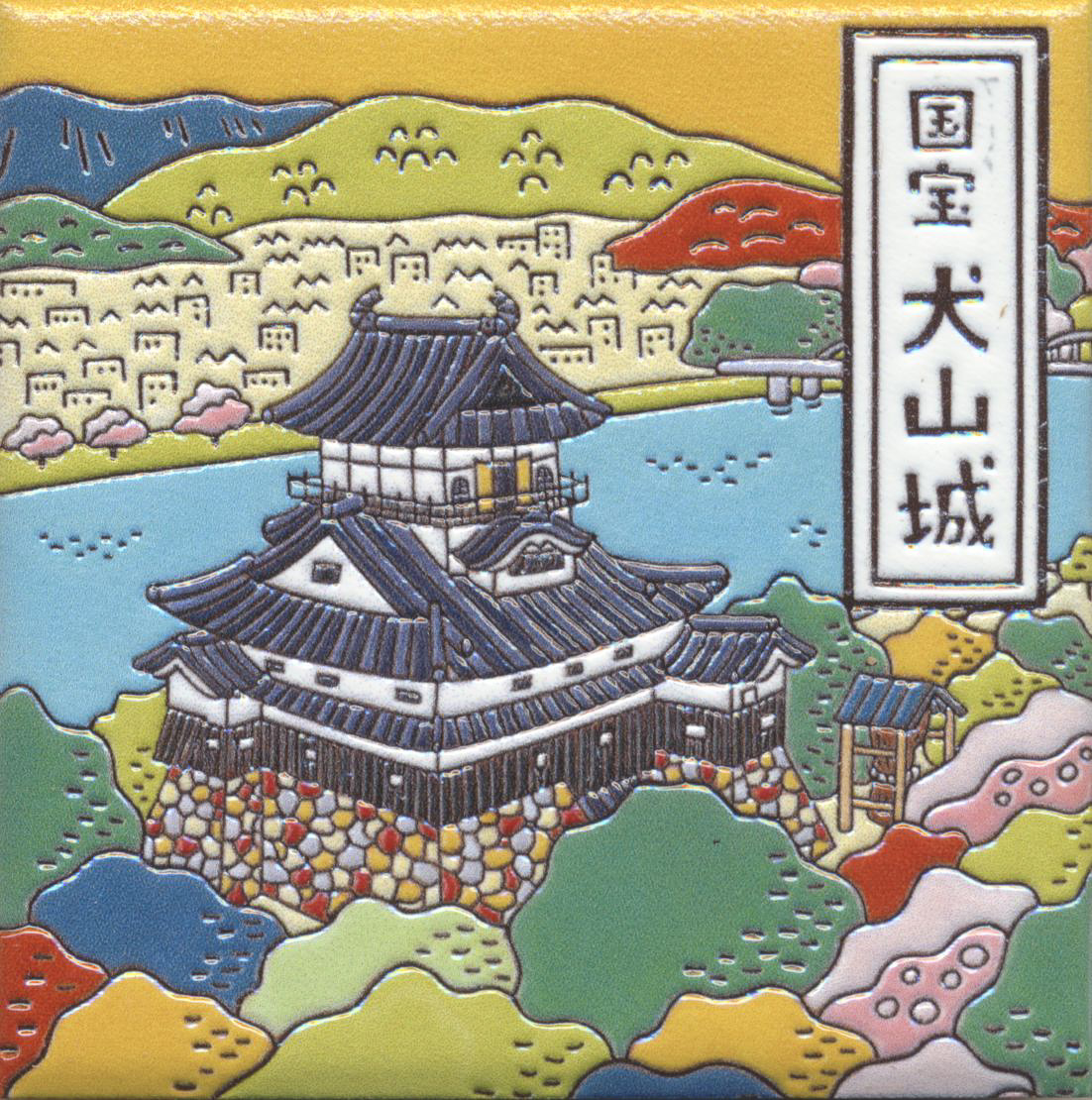
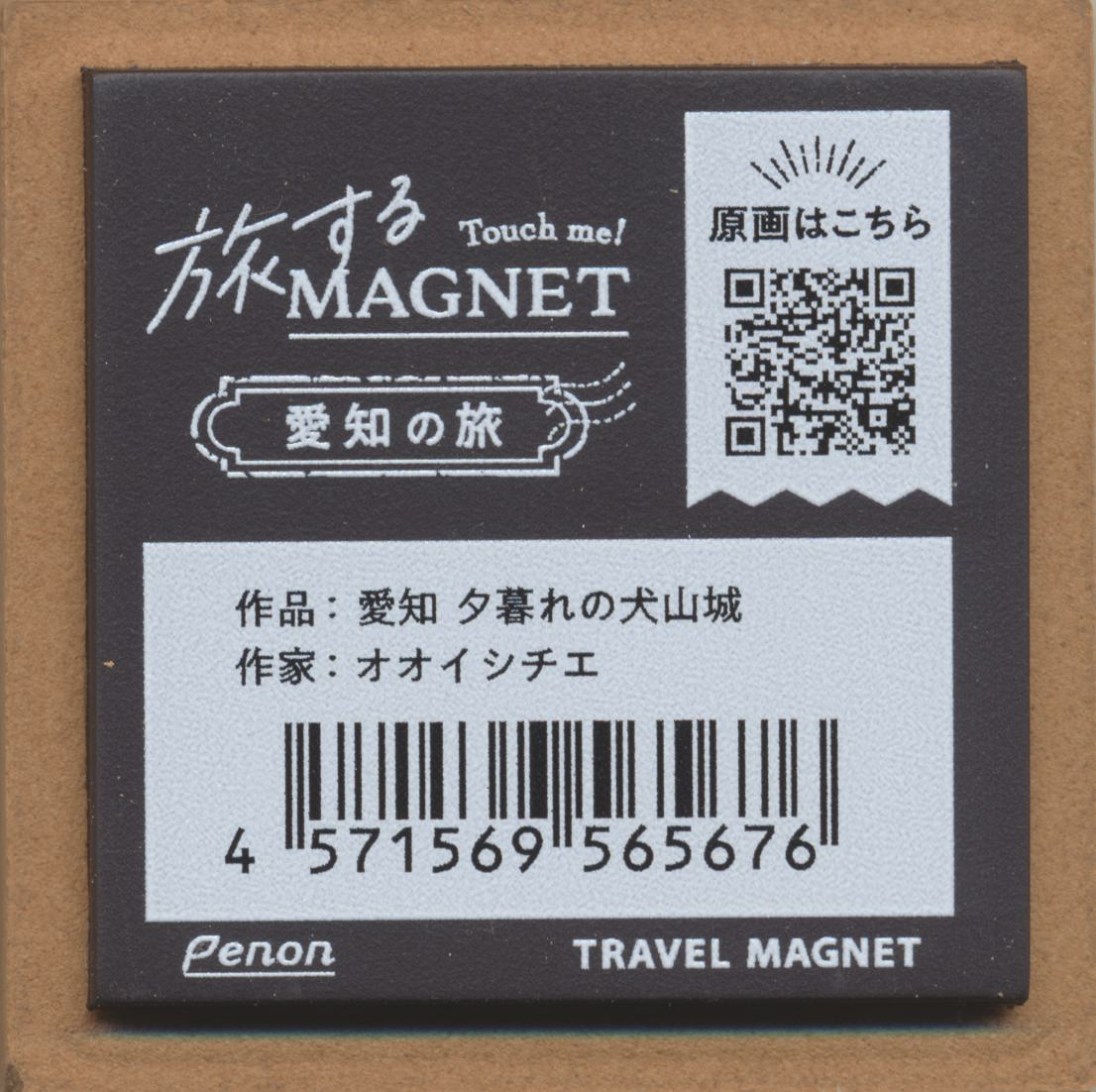
This magnet was nice and much more colorful than what we saw today!
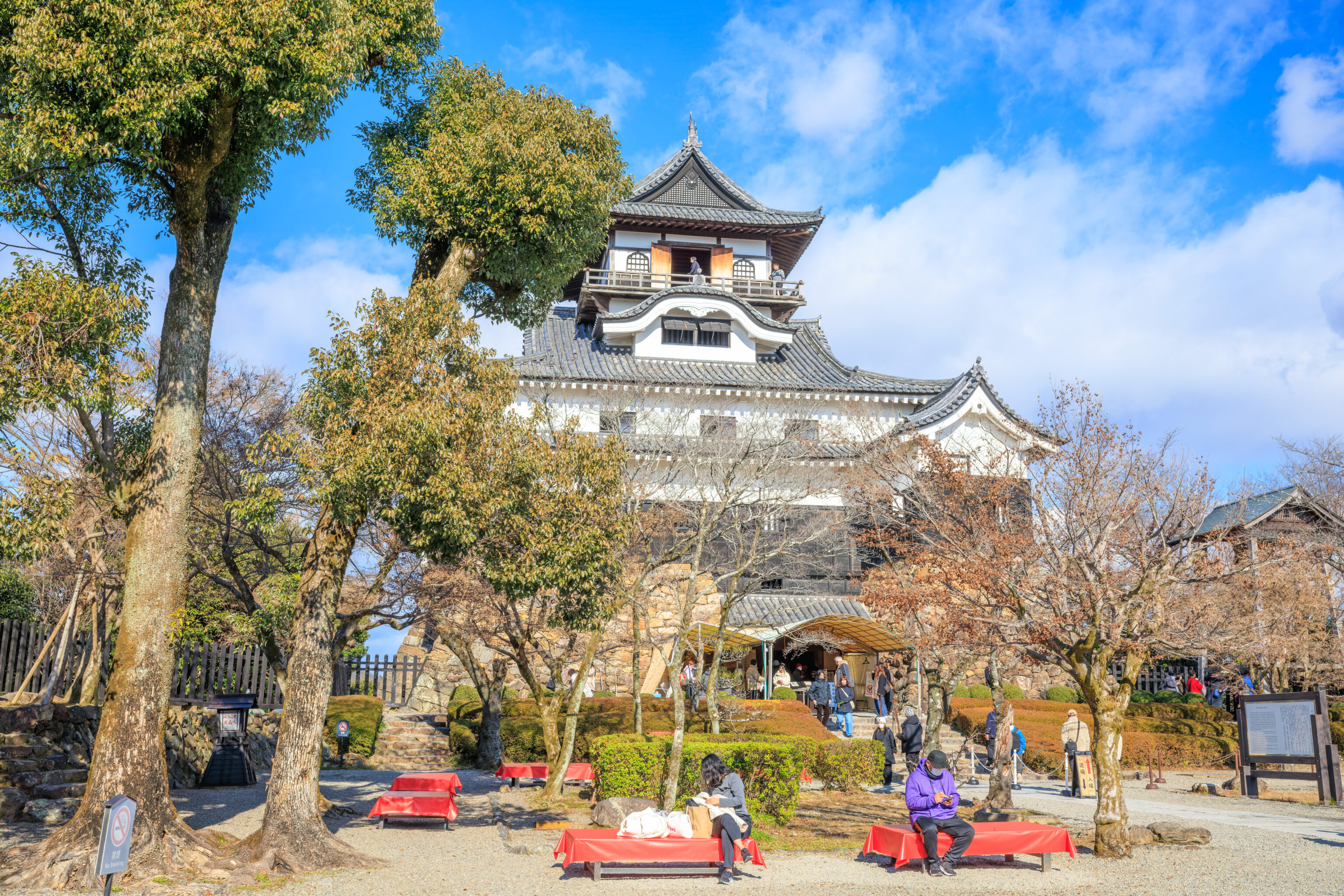
It was now around 10:30am and definitely busier than before!
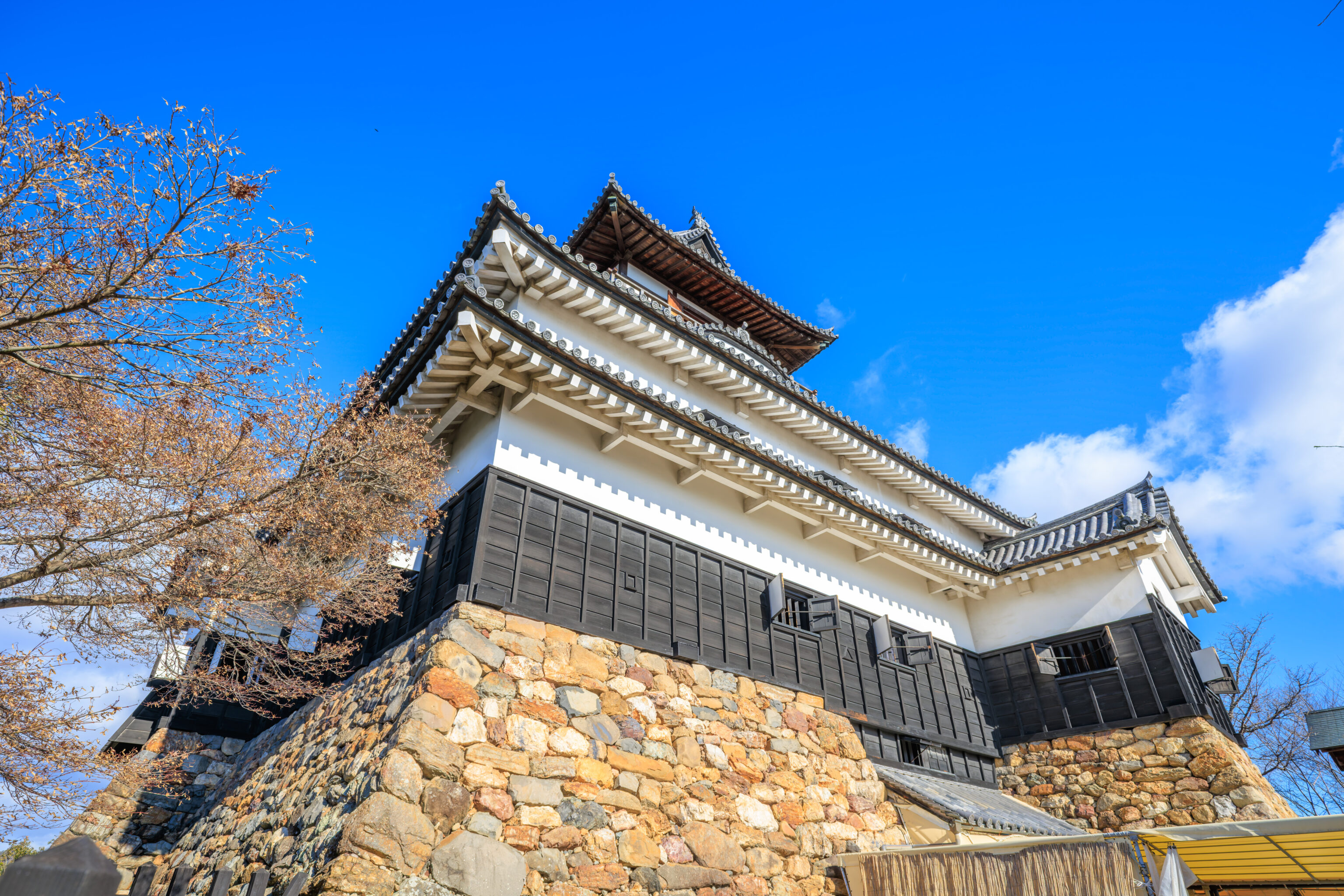
We went around to the west side of the tenshu to take a look but it isn’t possible to go any further than this.
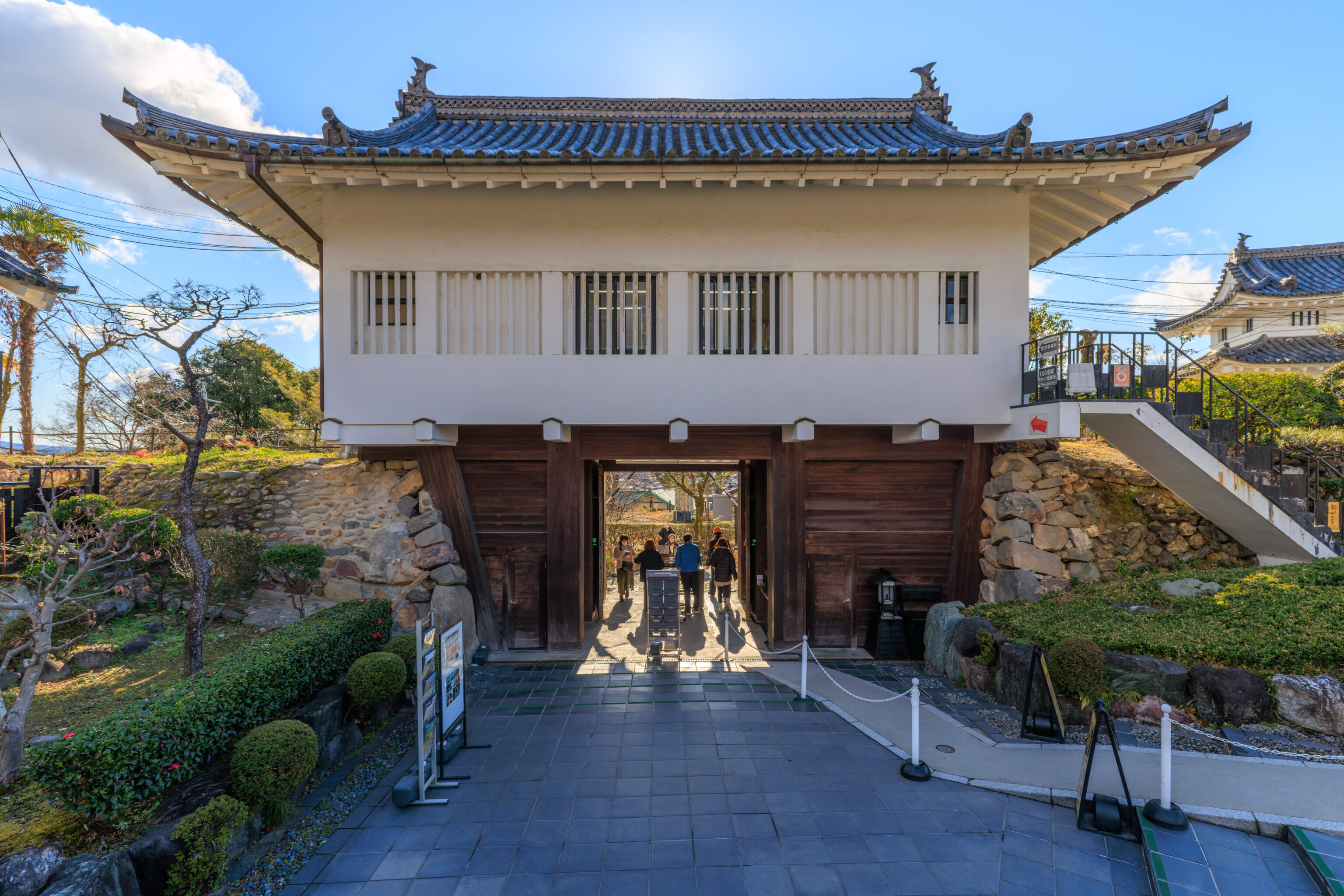
The gate that we walked into is the only way in or out.
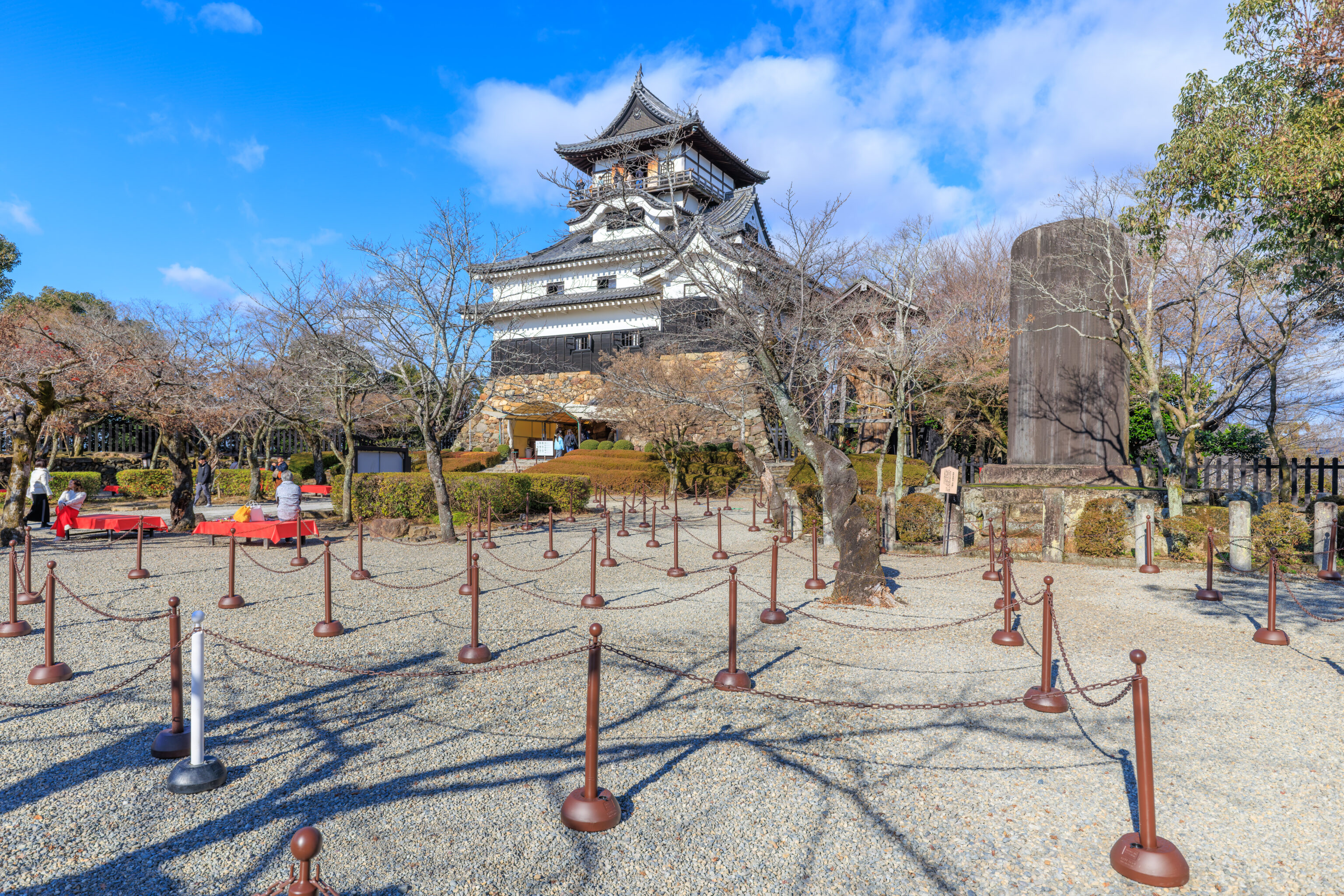
We decided to check out the northeast area here before leaving. The area was set up to provide a large queue for entry into the castle.
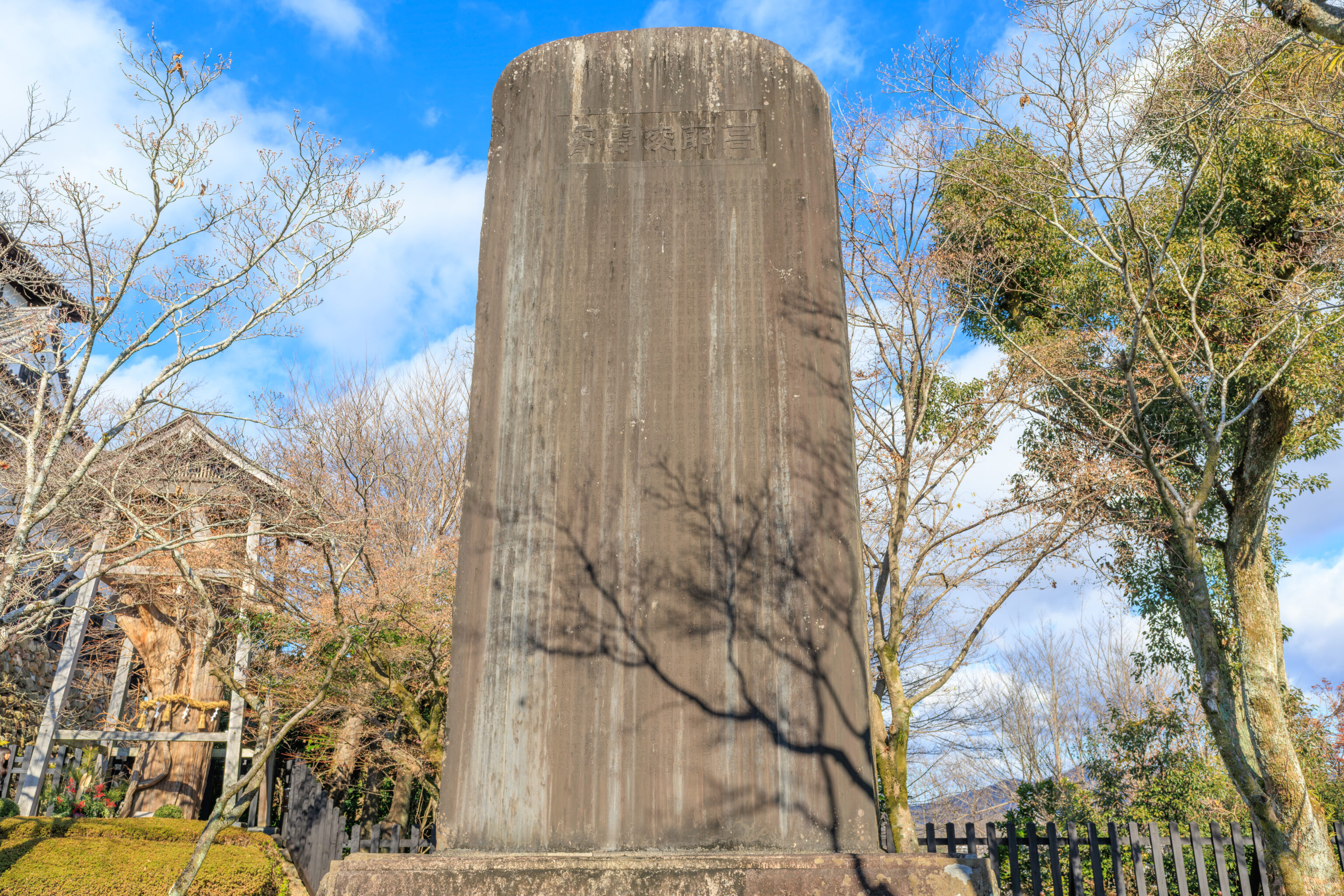
This large stone tablet is inscribed with quite a bit of text. Luckily, there was a much smaller explanatory sign:
"High Virtue Soaring Above the Clouds" (Stone Monument)
This monument honors the achievements of Lord Naruse Masazane, the ninth lord of Inuyama Castle. During the turbulent transition from the late Edo period to the Meiji era, he supported Tokugawa Yoshikatsu—the lord of the Owari Domain—and resolved various issues while upholding a stance of loyalty to the Imperial Court.
– Text from a sign, transcribed using Google Gemini and translated using Google Translate.
Presumably, the full text of this monument is somewhere. It would be interesting to read.
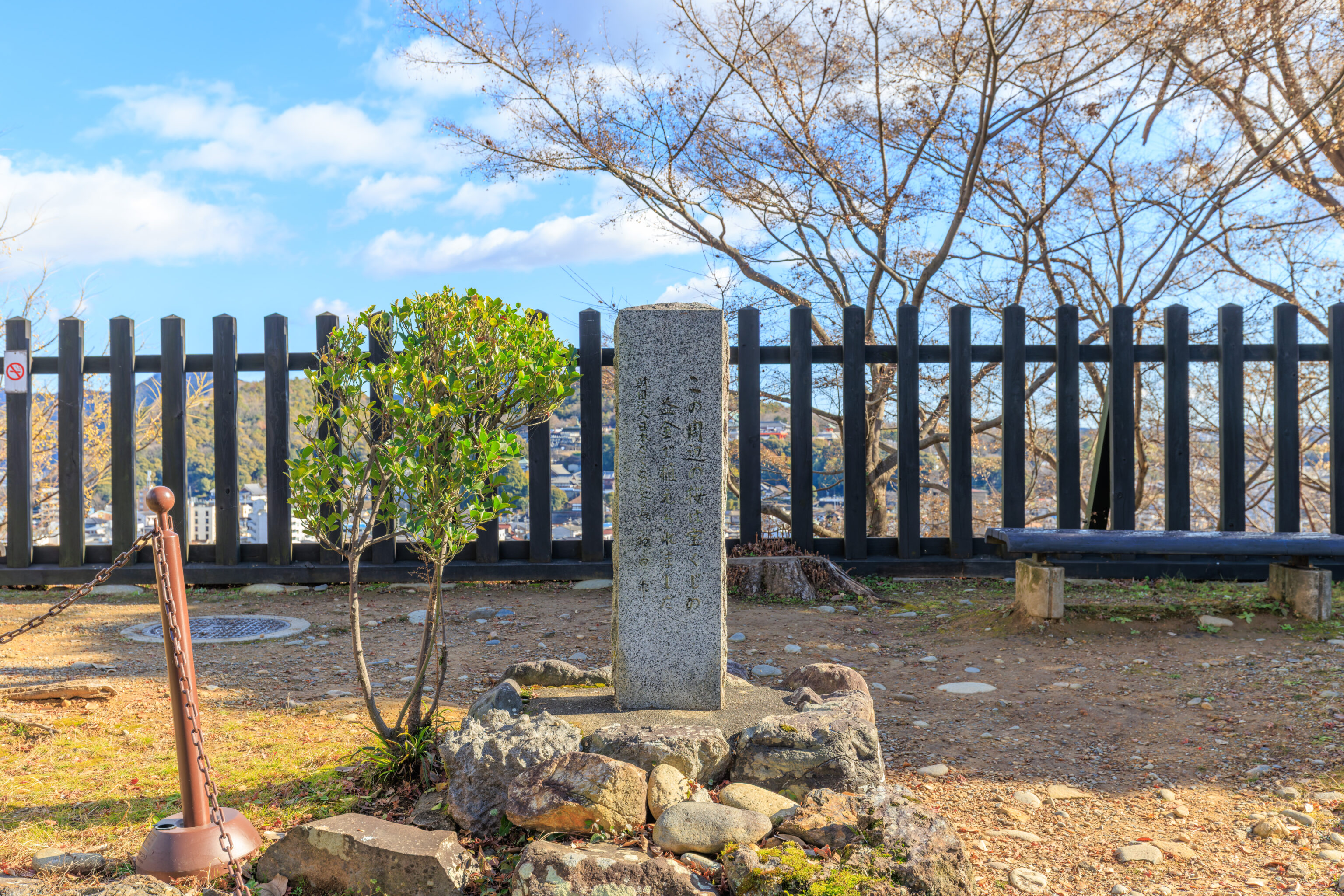
The inscribed text on this small marker is pretty hard to read due to poor contrast in places. Google Gemini claims to be able to read it though:
The cherry trees in this area were planted using proceeds from the lottery.

Takechiyo Matsuda, President, The Japan Cherry Blossom Association
– Text from the stone marker above, read using Google Gemini and translated using Google Translate.
There is also more text on one of the other sides:
Japan Lottery Association
Japan Cherry Blossom Association

November 1969 Inuyama City
– Text from another side of the stone marker above, read using Google Gemini and translated using Google Translate.
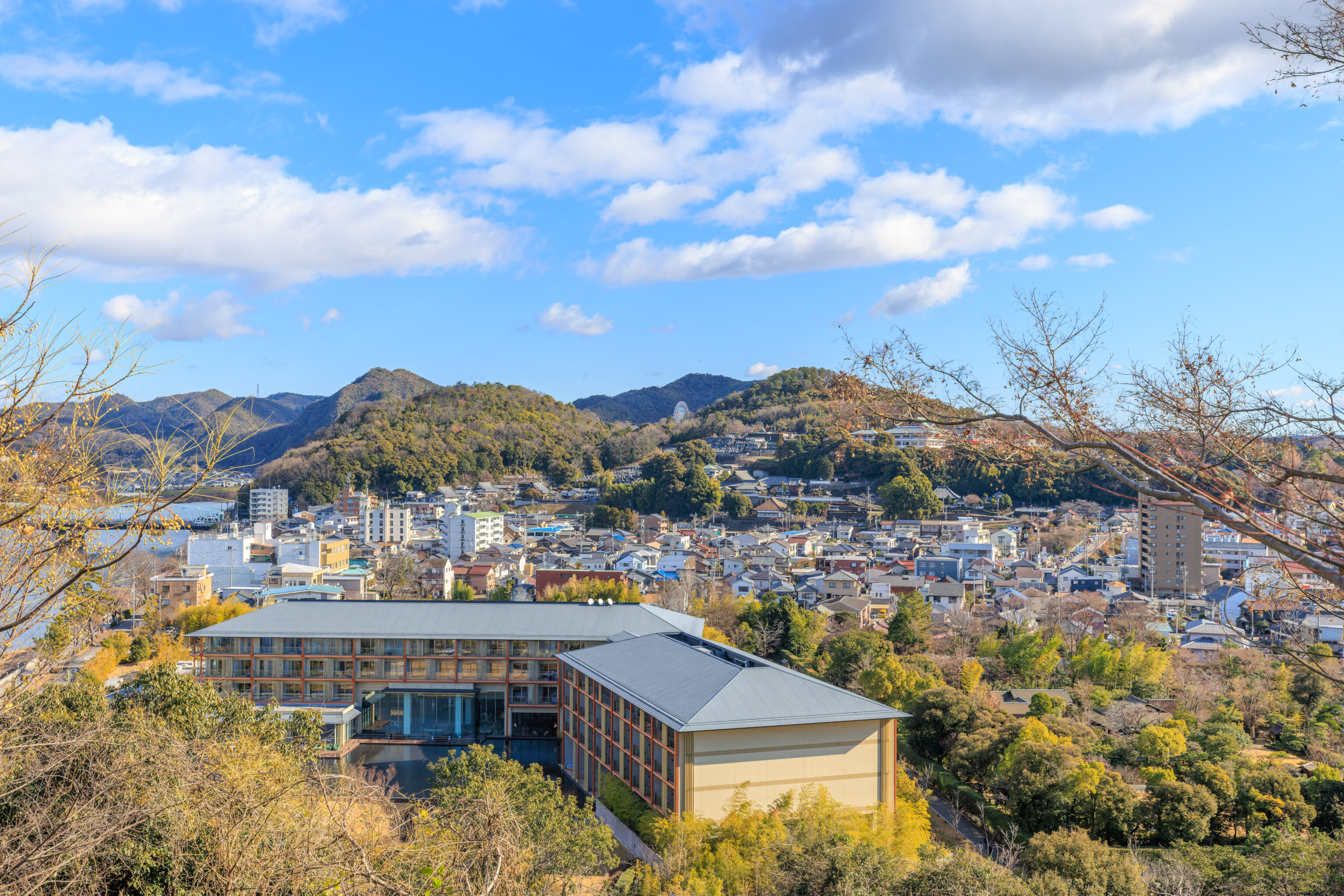
We had a view to the east from atop the castle’s walls. This perspective gives us a better view of the Hotel Indigo below.
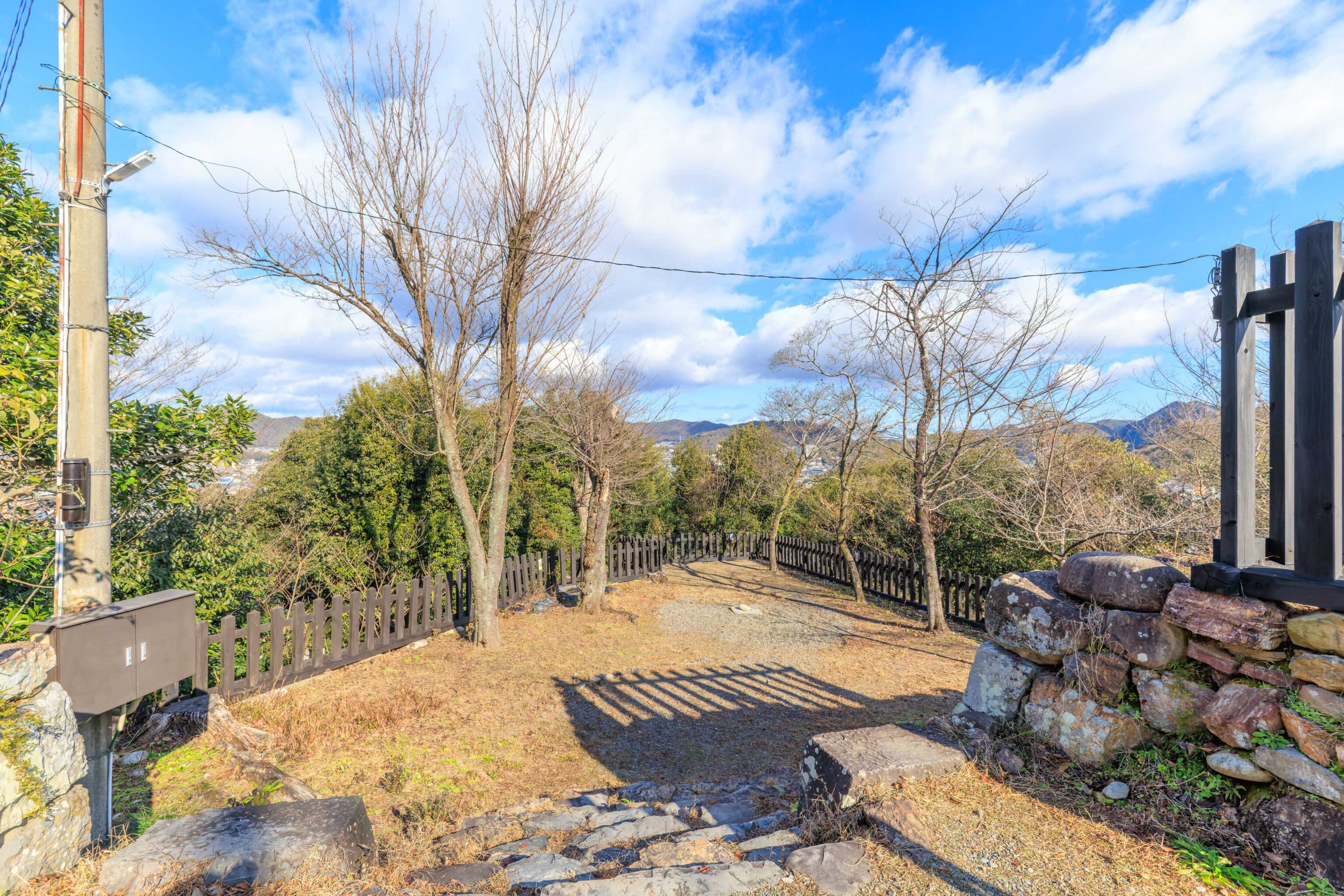
There was originally a gate here:
(2) Nanamagari-mon (Seven-Bend Gate)
The *karamete* (rear gate) area of the main enclosure featured a path known as the "Nanamagari-michi" (Seven-Bend Path), which wound through multiple sharp turns as it ascended the steep cliff rising from the Kiso River. During the Edo period, the Nanamagari-mon stood here as the final gate defending the main enclosure; today, only its foundation stones remain.
Based on old illustrations, it is believed to have been a *yagura-mon* (gate with a watchtower above) featuring an *agura* (raised floor) structure, and like the *Kurogane-mon* (Iron Gate), it was heavily fortified.
– Text from a sign, read using Google Gemini and translated using Google Translate.
While there are stone stairs leading down to the open area below, it is completely fenced in with nowhere to go.
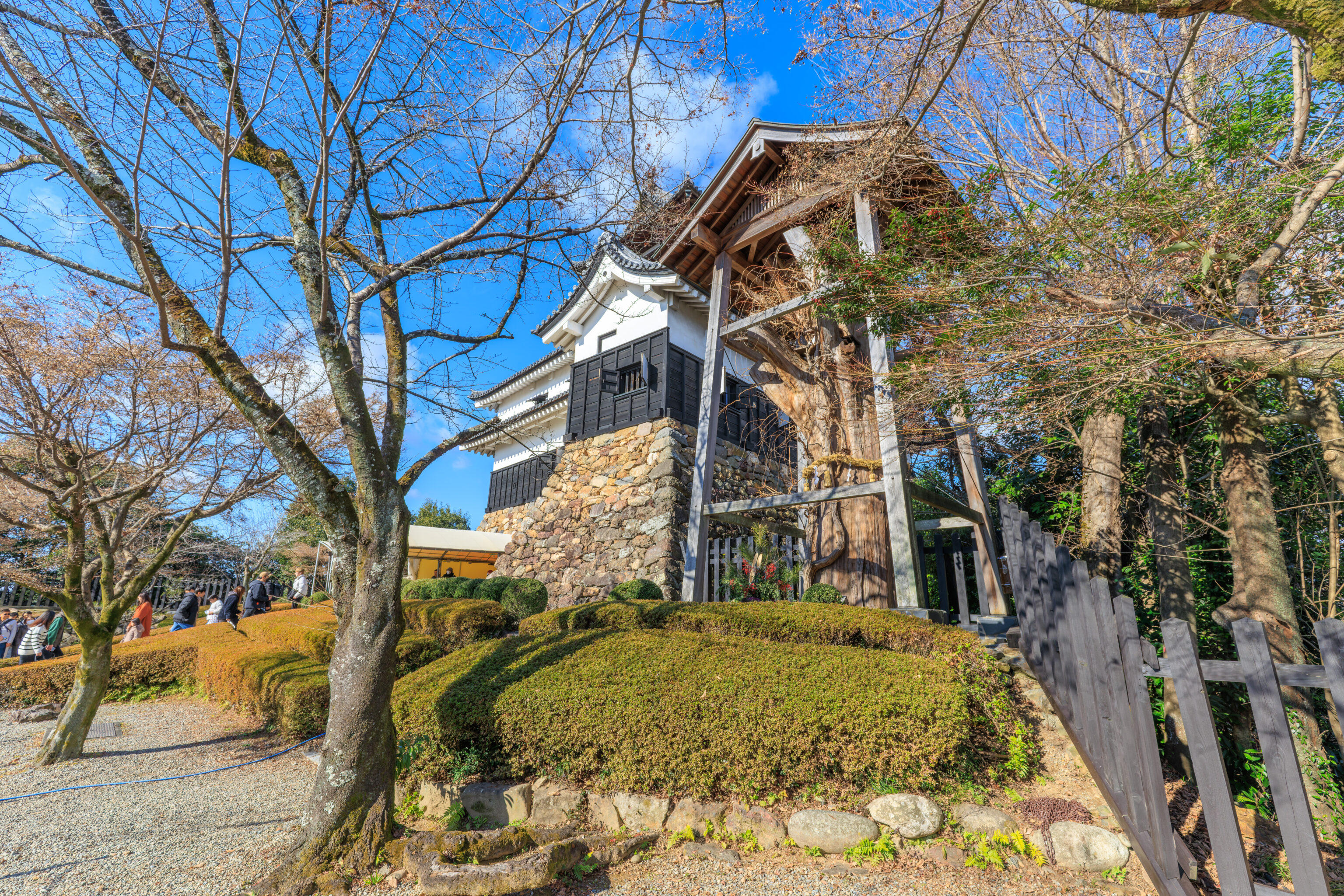
The tenshu as seen from the southeast as we headed back to the castle’s remaining gate to exit.
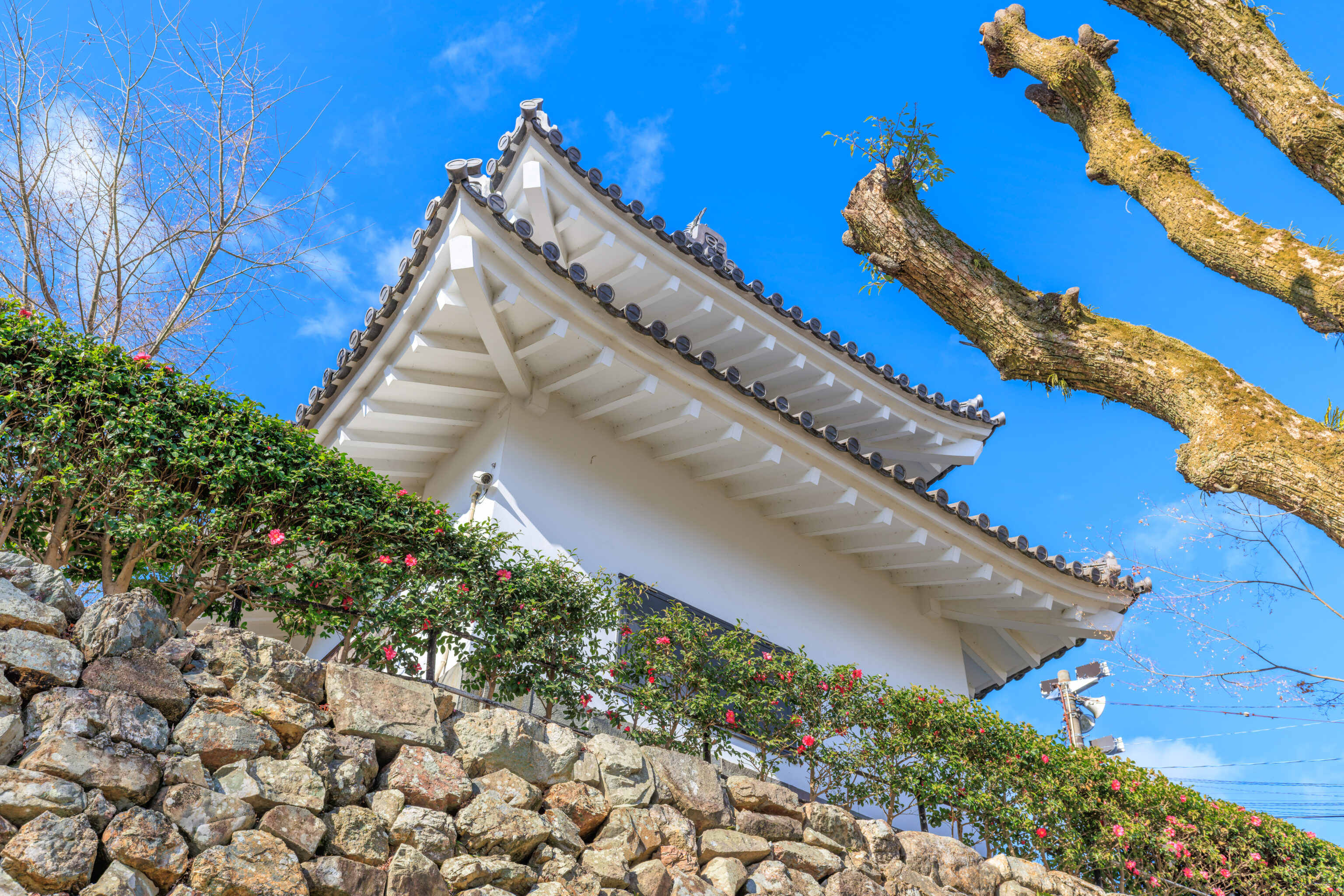
This is listed on Google Maps as being a restored 小銃櫓 Rifle Turret. It seems to be located behind the castle shop. There may be a path from the gate, however, it is not accessible to visitors.
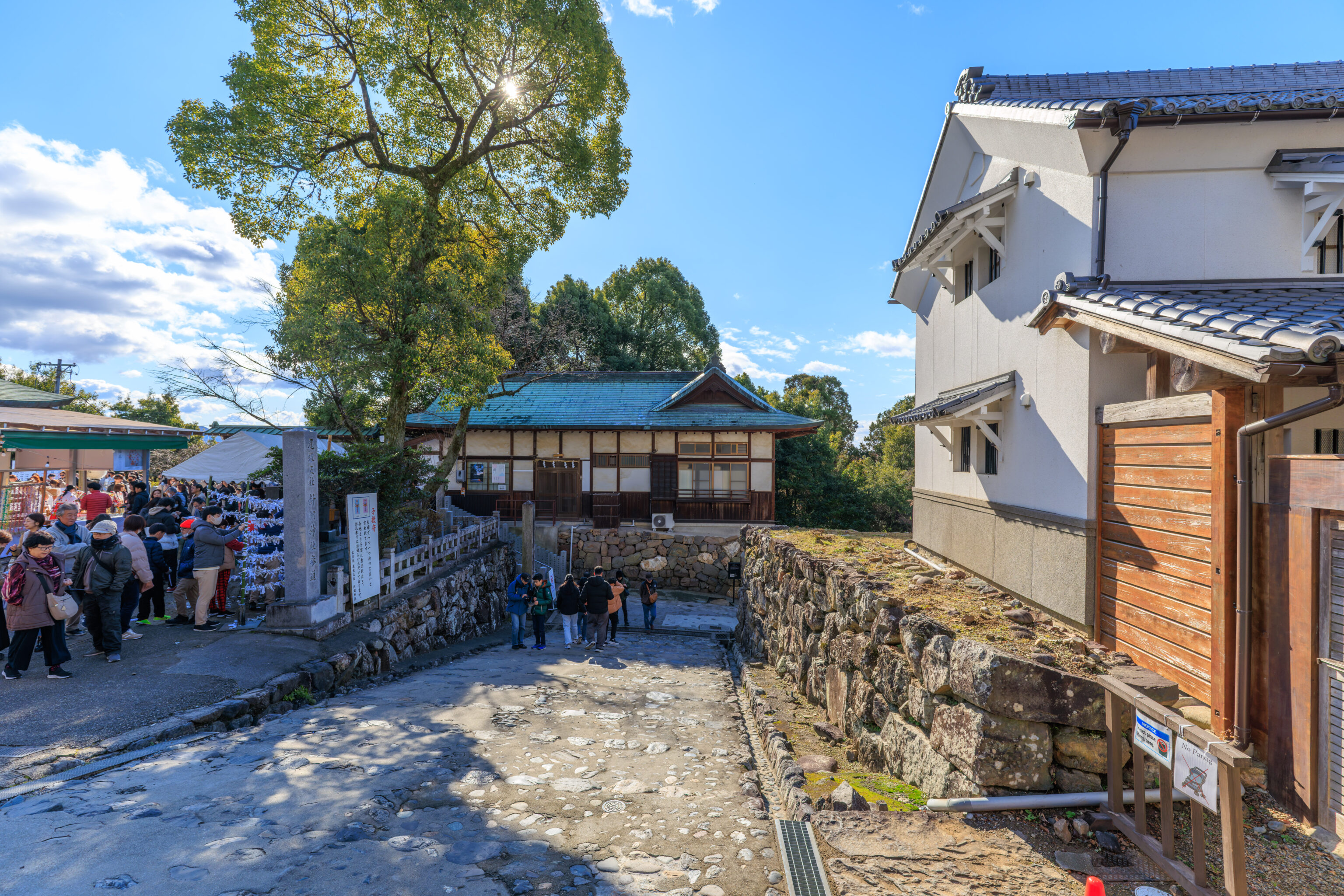
Earlier today, we arrived from Haritsuna-jinja using the path to the left here. We took a photograph from just in front of where we are now. It looks much busier now compared to before!
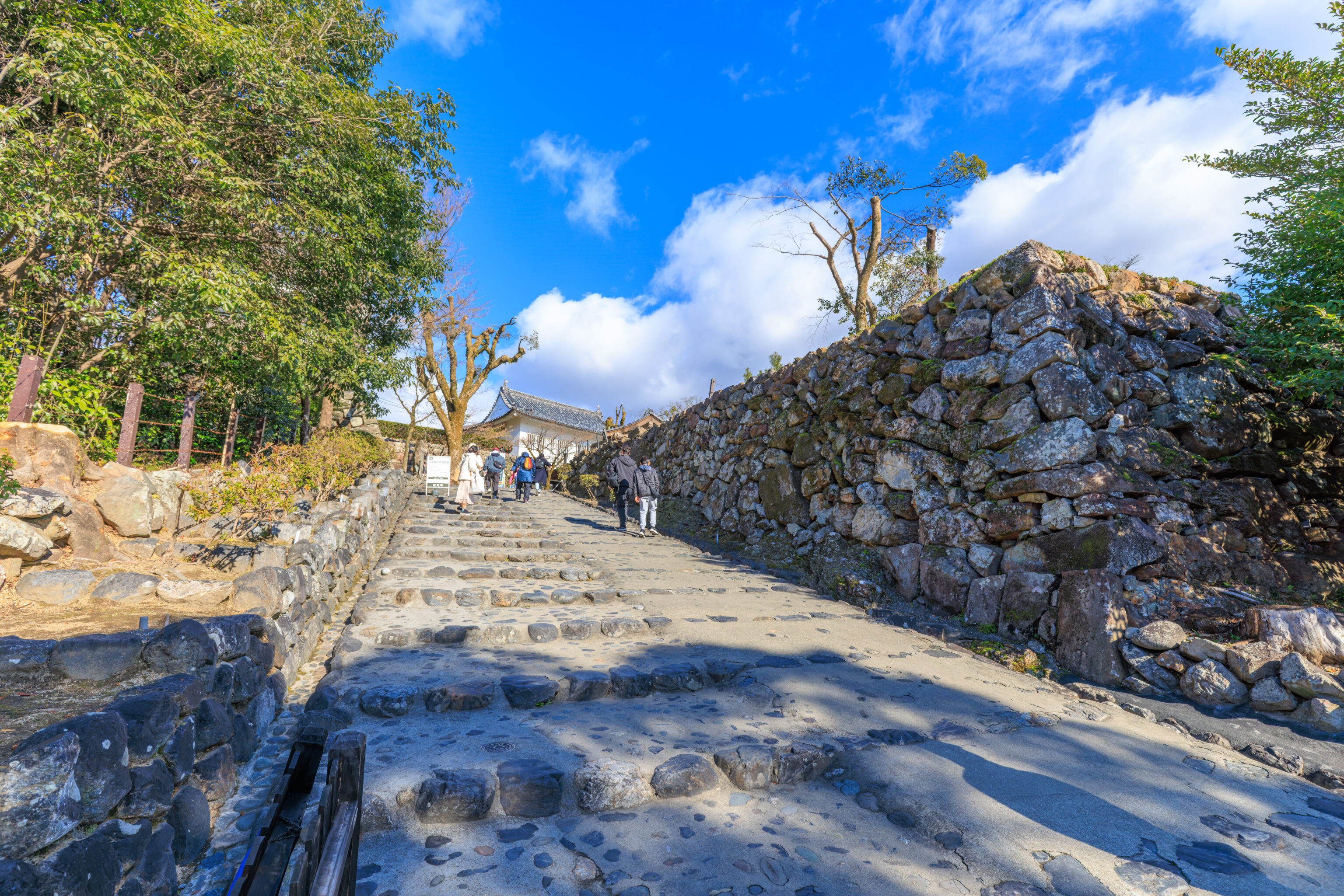
The view looking back up towards the castle.
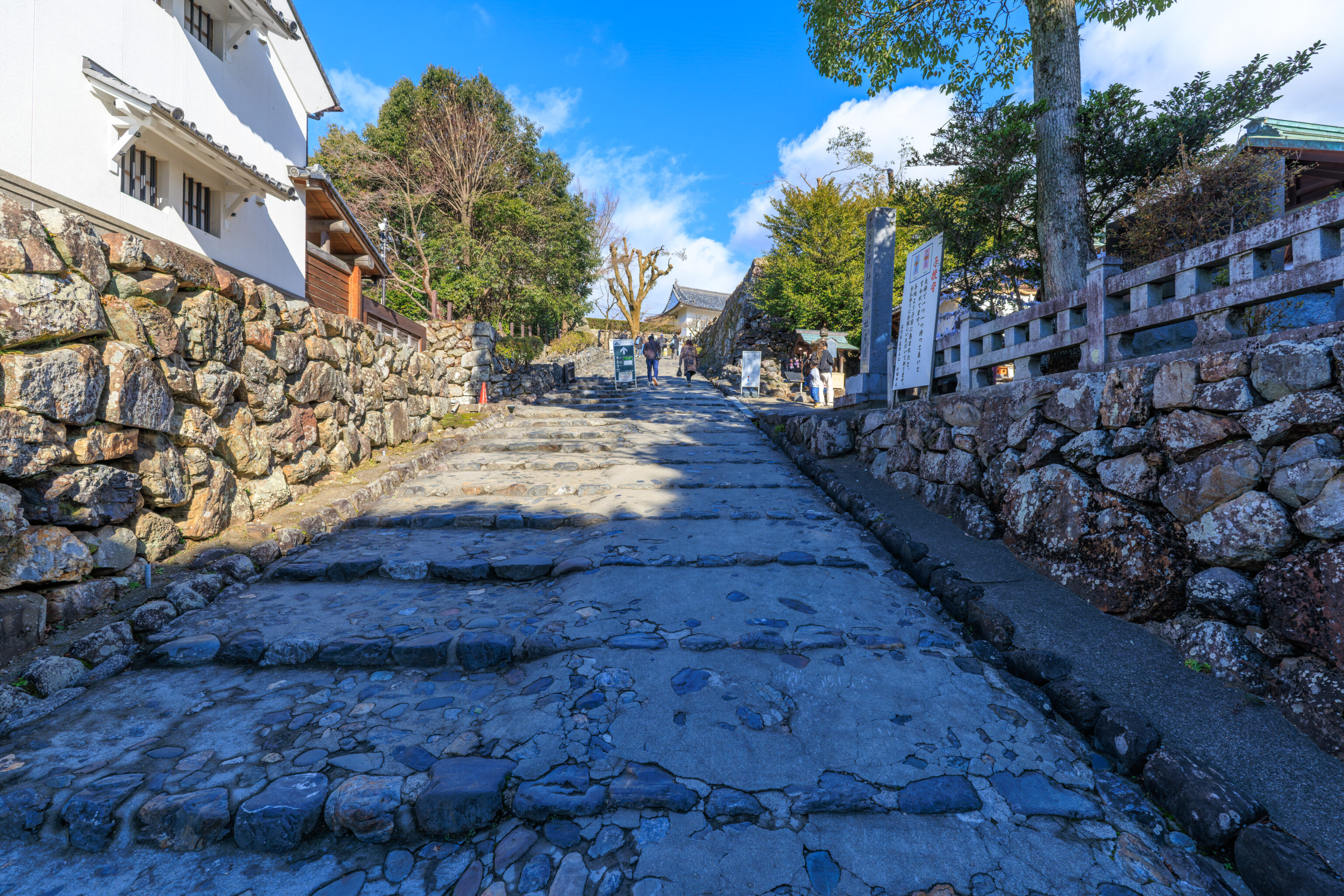
And again, the view looking back up after we walked past the path to Haritsuna-jinja. Half of the stone path here has been somewhat paved over to turn it into a ramp rather than stairs.
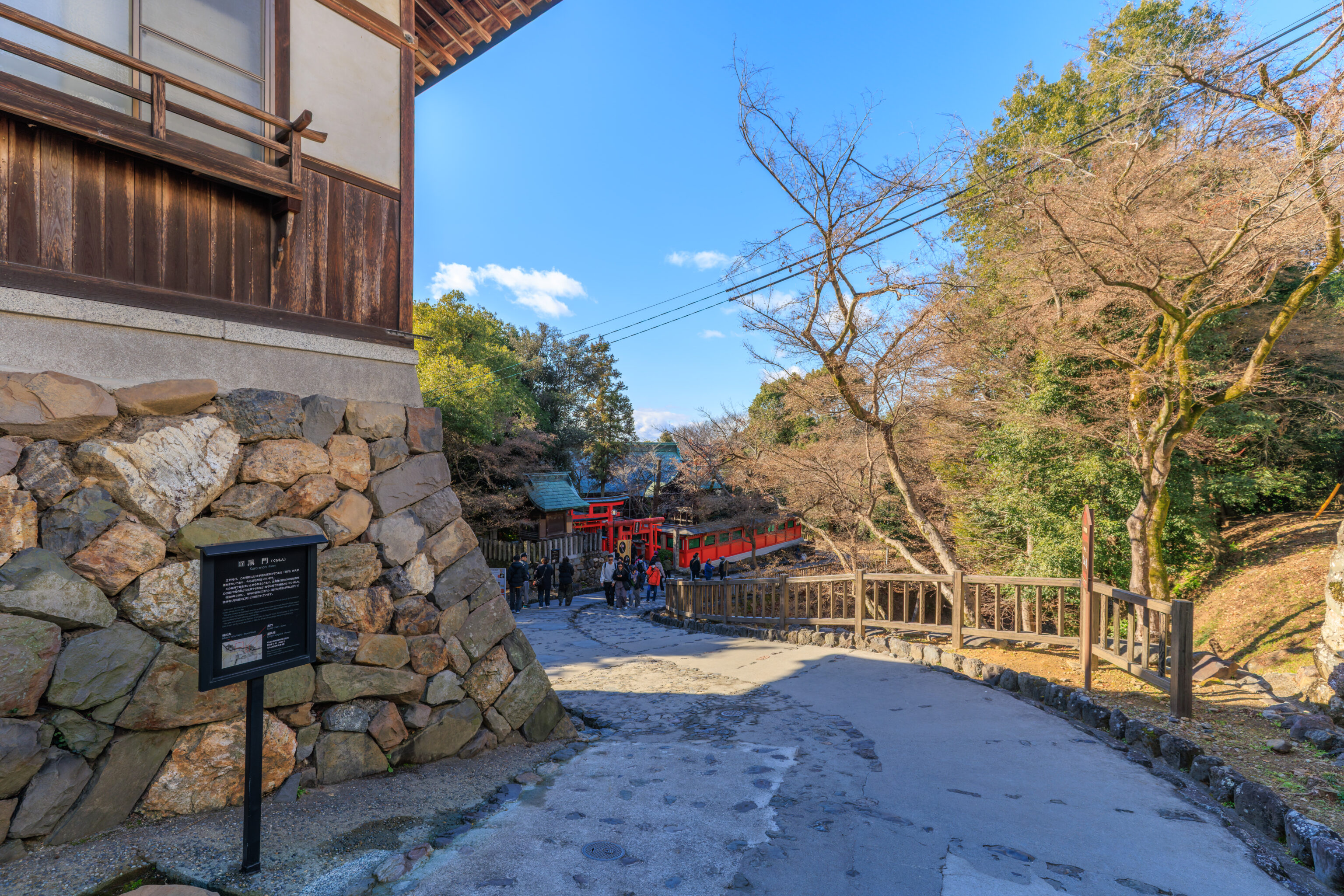
This was the site of another gate, the 黒門 Kuro-mon (Black Gate).
(17) Kuromon
During the Edo period, the "Kuromon" (Black Gate)—the third gate along the Ote-michi (Main Approach)—spanned the road at this location; the foundation stones still remain today.

The structure was designed for both effective offense and defense: it allowed for halting enemy advances while also enabling attacks to be launched from the Dogu-yagura (Tool Turret)—located where the shrine's administrative office now stands—and from the Momi-no-Maru area.

In 1876 (Meiji 9), the gate was relocated to Tokurin-ji Temple in Oguchi Town, Niwa District, for a price of 23 yen at the time (though some sources cite the year as 1880 and the price as 25 yen).
– Text from the sign on the left side of the photograph above, read using Google Gemini and translated using Google Translate.
This sign was numbered 17… The only other one we’ve seen was number two!
Up ahead, there was another gate, the 松の丸門 Matsunomaru Gate:
(12) Matsu-no-Maru Gate
During the Edo period, the area extending from Haritsuna Shrine to Sanko Inari Shrine was the site of a castle enclosure known as "Matsu-no-Maru," which housed a palace called the Matsu-no-Maru Goten.

The "Matsu-no-Maru Gate" stood here, serving as the entrance to and exit from the Matsu-no-Maru enclosure via the main approach leading to the inner citadel (Honmaru).

It is believed that the gate was relocated to Joren-ji Temple (in Chiaki-cho, Ichinomiya City) during the early Meiji era.
– Text from a sign, read using Google Gemini and translated using Google Translate.
And, beyond that gate, there was another, the 矢来門 Yarai Gate:
18 Yarai-mon Gate
Located here was the "Yarai-mon"—a gate built in the *kōraimon* style. It was the second gate along the main approach (*ōte-michi*) leading to the *Honmaru* (main enclosure/keep), situated just beyond the "Middle Gate" that marked the entrance to the castle proper. The layout was designed to allow enemy forces to be trapped and surrounded in the space between this gate and the "Kuro-mon" (Black Gate) located further along the path.

In 1874 (Meiji 7), the gate was relocated to Senju-in Temple (in Fusō Town, Niwa District) for a price of 20 yen—the cost at that time.

Moat
A moat has existed on the north side since the Edo period. Together with *kirigishi* (man-made steep slopes) and stone walls, it served to prevent direct access from the main approach leading to the *Honmaru*, creating a formidable, ironclad defense.

While there appears to have been a time when it was a water-filled moat, it was converted into a dry moat in later years.
– Text from a sign, read using Google Gemini and translated using Google Translate.
The cited location of the moat on the sign is a bit odd as it mentions the north side of the castle. However, we’re actually in the southern portion. The north side of the castle is basically a steep cliff that drops off into the Kiso River with just enough room for a narrow road.
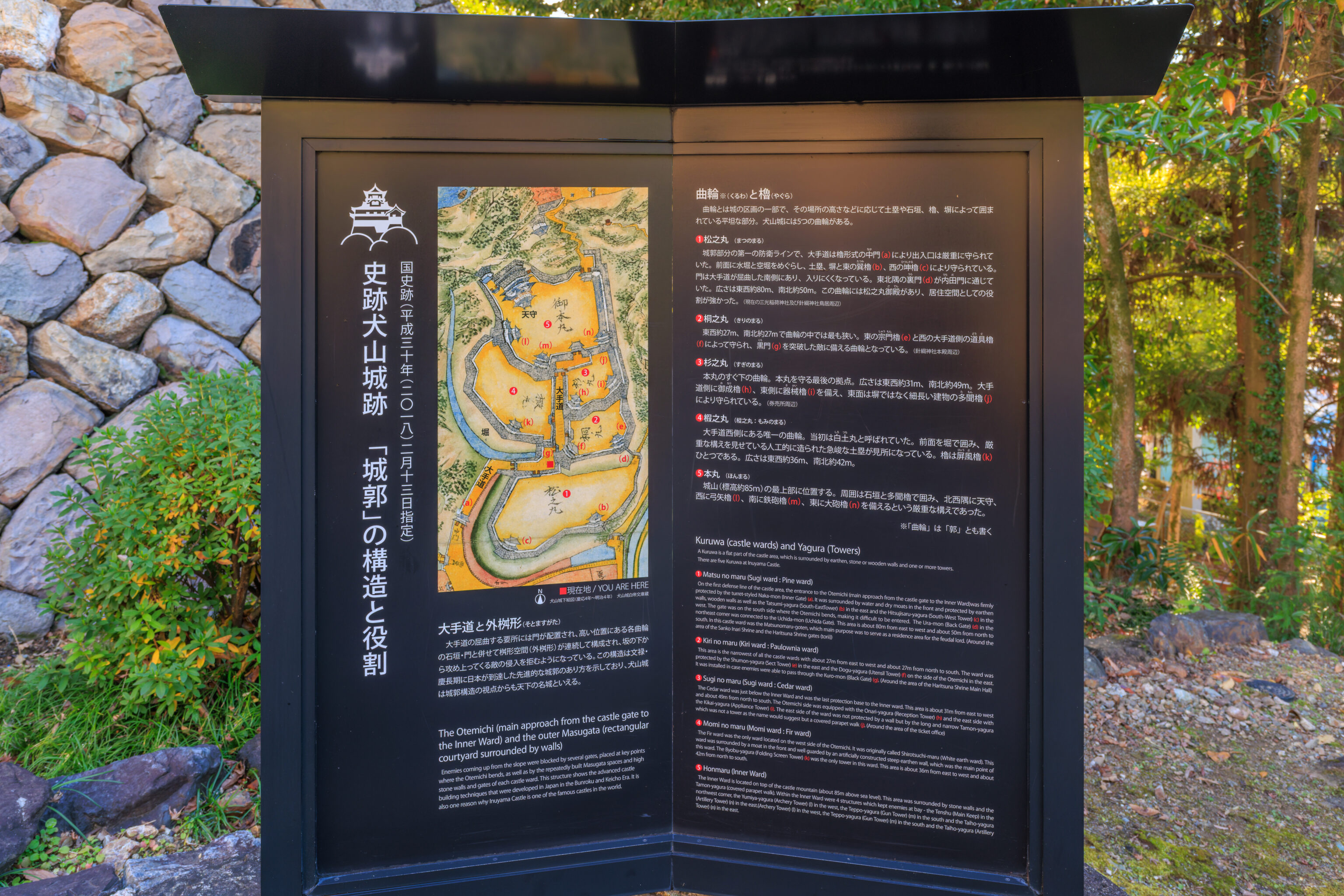
The map on this sign shows where we are relative to the castle’s historical layout. The path we are on was the original main path that led up to the castle. In addition to the path and the various gates, it also depicts the moat over on the west side of the castle. The sign discusses the various walled areas of the castle:
Historic Site: Inuyama Castle Ruins — Structure and Role of the Castle Complex
National Historic Site (Designated February 13, 2018)

The Otemichi (main approach from the castle gate to the Inner Ward) and the outer Masugata (rectangular courtyard surrounded by walls)
Enemies coming up from the slope were blocked by several gates, placed at key points where the Otemichi bends, as well as by the repeatedly built Masugata spaces and high stone walls and gates of each castle ward. This structure shows the advanced castle building techniques that were developed in Japan in the Bunroku and Keicho Era. It is also one reason why Inuyama Castle is one of the famous castles in the world.

Kuruwa (castle wards) and Yagura (Towers)
A Kuruwa is a flat part of the castle area, which is surrounded by earthen, stone or wooden walls and one or more towers. There are five Kuruwa at Inuyama Castle.

(1) Matsu no maru (Sugi ward : Pine ward)
On the first defense line of the castle area, the entrance to the Otemichi (main approach from the castle gate to the Inner Ward) was firmly protected by the turret-styled Naka-mon (Inner Gate) (a). It was surrounded by water and dry moats in the front and protected by earthen walls, wooden walls as well as the Tatsumi-yagura (South-EastTower) (b) in the east and the Hitsujisaru-yagura (South-West Tower) (c) in the west. The gate was on the south side where the Otemichi bends, making it difficult to be entered. The Ura-mon (Back Gate) (d) in the northeast corner was connected to the Uchida-mon (Uchida Gate). This area is about 80m from east to west and about 50m from north to south. In this castle ward was the Matsunomaru-goten, which main purpose was to serve as a residence area for the feudal lord. (Around the area of the Sanko Inari Shrine and the Haritsuna Shrine gates (torii))

(2) Kiri no maru (Kiri ward : Paulownia ward)
This area is the narrowest of all the castle wards with about 27m from east to west and about 27m from north to south. The ward was
protected by the Shumon-yagura (Sect Tower) (e) in the east and the Dogu-yagura (Utensil Tower) (f) on the side of the Otemichi in the east.It was installed in case enemies were able to pass through the Kuro mon (Black Gate) (g). (Around the area of the Haritsuna Shrine Main Hall)

(3) Sugi no maru (Sugi ward : Cedar ward)
The Cedar ward was just below the Inner Ward and was the last protection base to the Inner ward. This area is about 31m from east to west and about 49m from north to south. The Otemichi side was equipped with the Onari-yagura (Reception Tower) (h) and the east side with the Kikai-yagura (Appliance Tower) (i). The east side of the ward was not protected by a wall but by the long and narrow Tamon-yagura which was not a tower as the name would suggest but a covered parapet walk (j). (Around the area of the ticket office)

(4) Momi no maru (Momi ward : Fir ward)
The Fir ward was the only ward located on the west side of the Otemichi. It was originally called Shirotsuchi-maru (White earth ward). This ward was surrounded by a moat in the front and well guarded by an artificially constructed steep earthen wall, which was the main point of this ward. The Byobu-yagura (Folding Screen Tower) (k) was the only tower in this ward. This area is about 36m from east to west and about 42m from north to south.

(5) Honmaru (Inner Ward)
The Inner Ward is located on top of the castle mountain (about 85m above sea level). This area was surrounded by stone walls and the Tamon-yagura (covered parapet walk). Within the Inner Ward were 4 structures which kept enemies at bay - the Tenshu (Main Keep) in the northwest corner, the Yumiya-yagura (Archery Tower) (I) in the west, the Teppo-yagura (Gun Tower) (m) in the south and the Taiho-yagura (Artillery Tower) (n) in the east.(Archery Tower) (I) in the west, the Teppo-yagura (Gun Tower) (m) in the south and the Taiho-yagura (Artillery Tower) (n) in the east.
– Text from a sign, translated using Google.
Sanko Inari-jinja
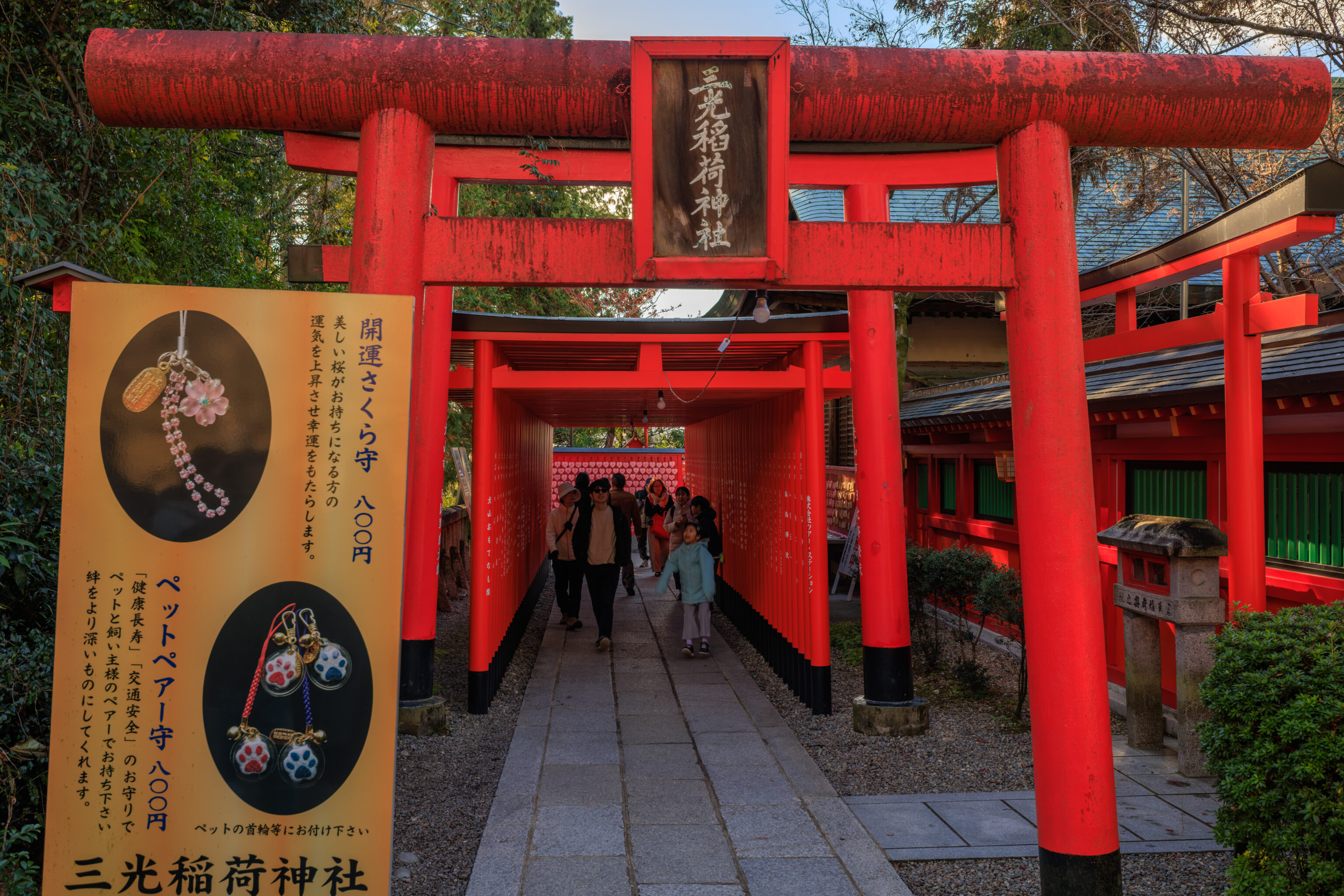
This torii lined path leads to the 三光稲荷神社 Sanko Inari-jinja.
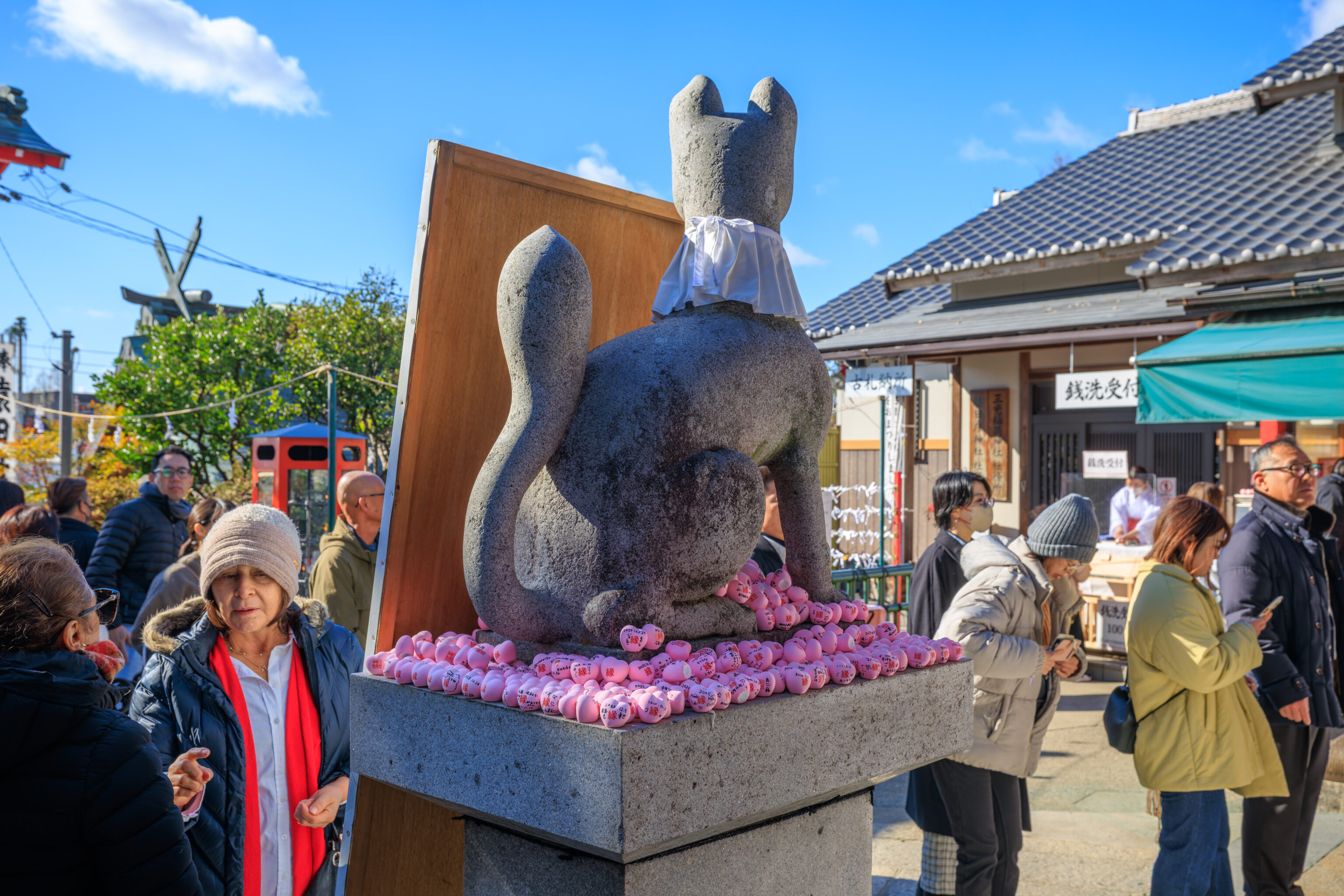
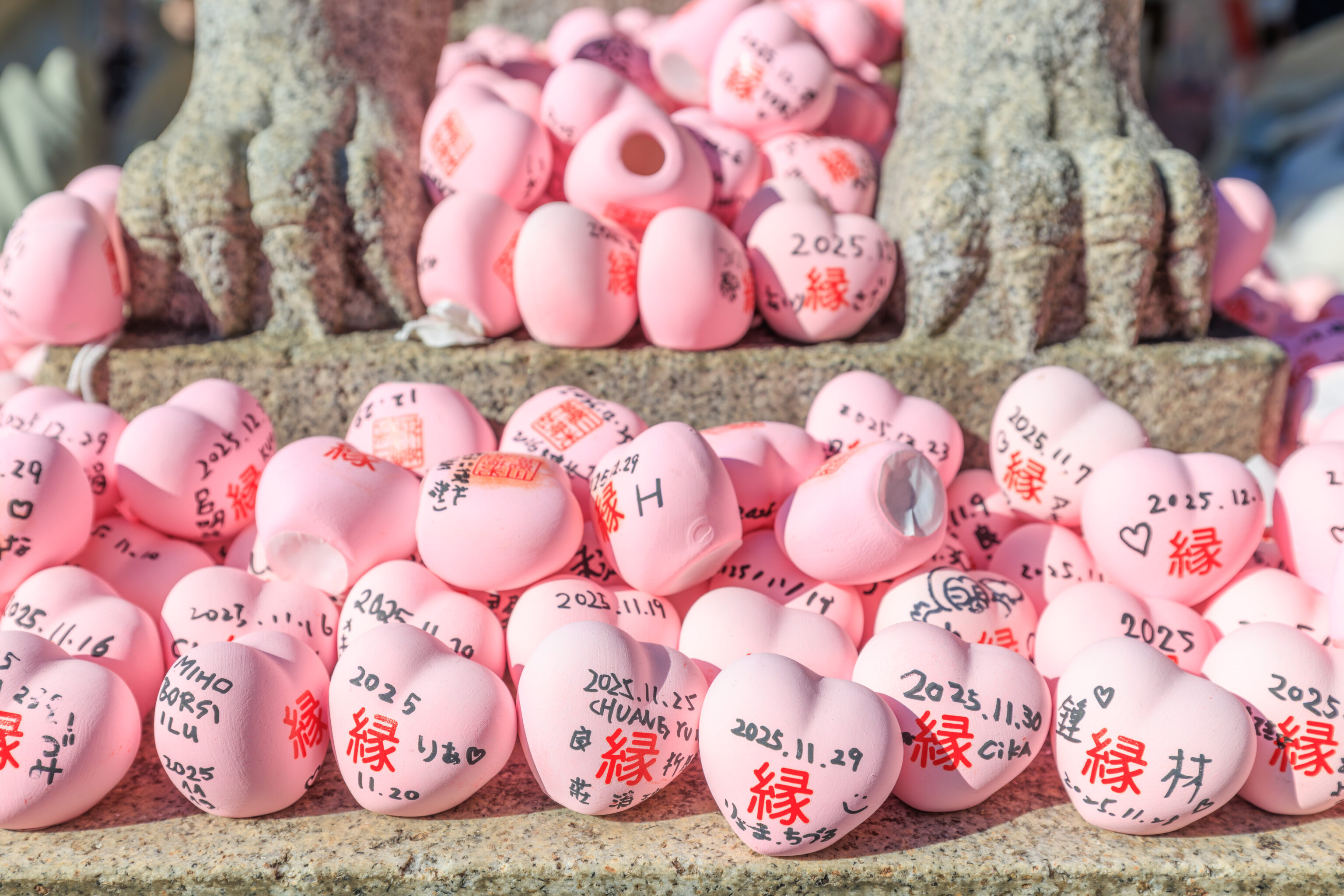
After walking over to the front of the shrine, we noticed this kitsune statue with many little hearts below it! The hearts appear to be おみくじ omikuji statues, or rather, sculptures! If you look closely at the few that aren’t upright, you can see the bottom portion that can be opened to pull out the fortune slip!
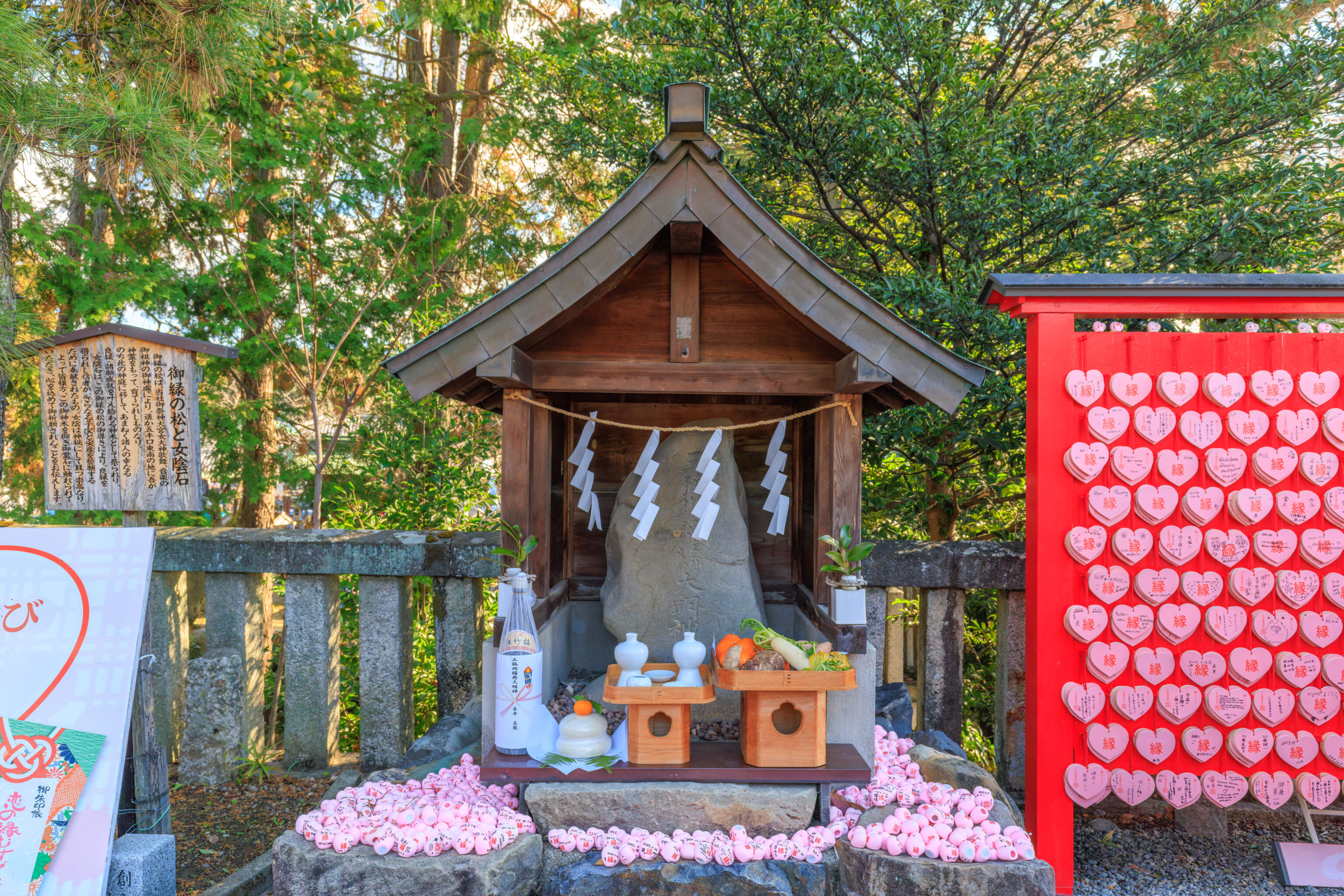
This enshrined stone is, apparently… well… the sign to the left explains:
The "Goen no Matsu" (Pine of Auspicious Connections) and the Female-Genitalia-Shaped Stone
The "Goen no Matsu" was nurtured by the divine spirit of the shrine's enshrined deity — Omiya-me-no-Okami, the ancestral deity of dance and music — at a location five kilometers to the southeast. It was later transplanted to these sacred grounds and is venerated as a sacred tree that grants people auspicious connections and the fulfillment of their various wishes.

The stone shaped like female genitalia was dedicated by a devotee who had found a fortunate match through the guidance of this pine tree; they offered it to pray for the blessing of children and a safe delivery. The form of the female genitalia is considered both mysterious and sublime.

We therefore invite you to gaze upon this sacred tree, touch the sacred stone, and offer your prayers with a sincere heart.
– Text from a sign, translated using Google.
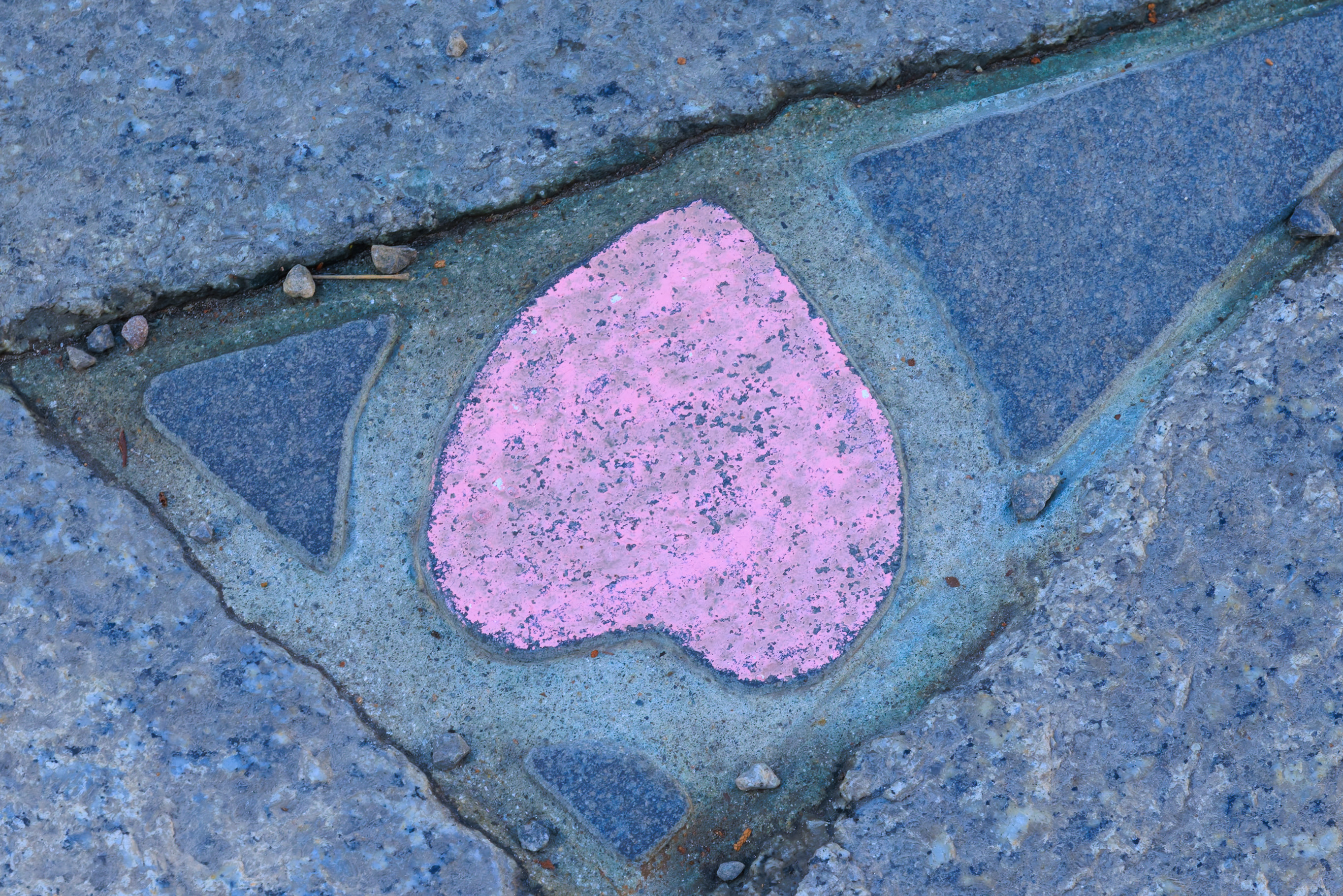
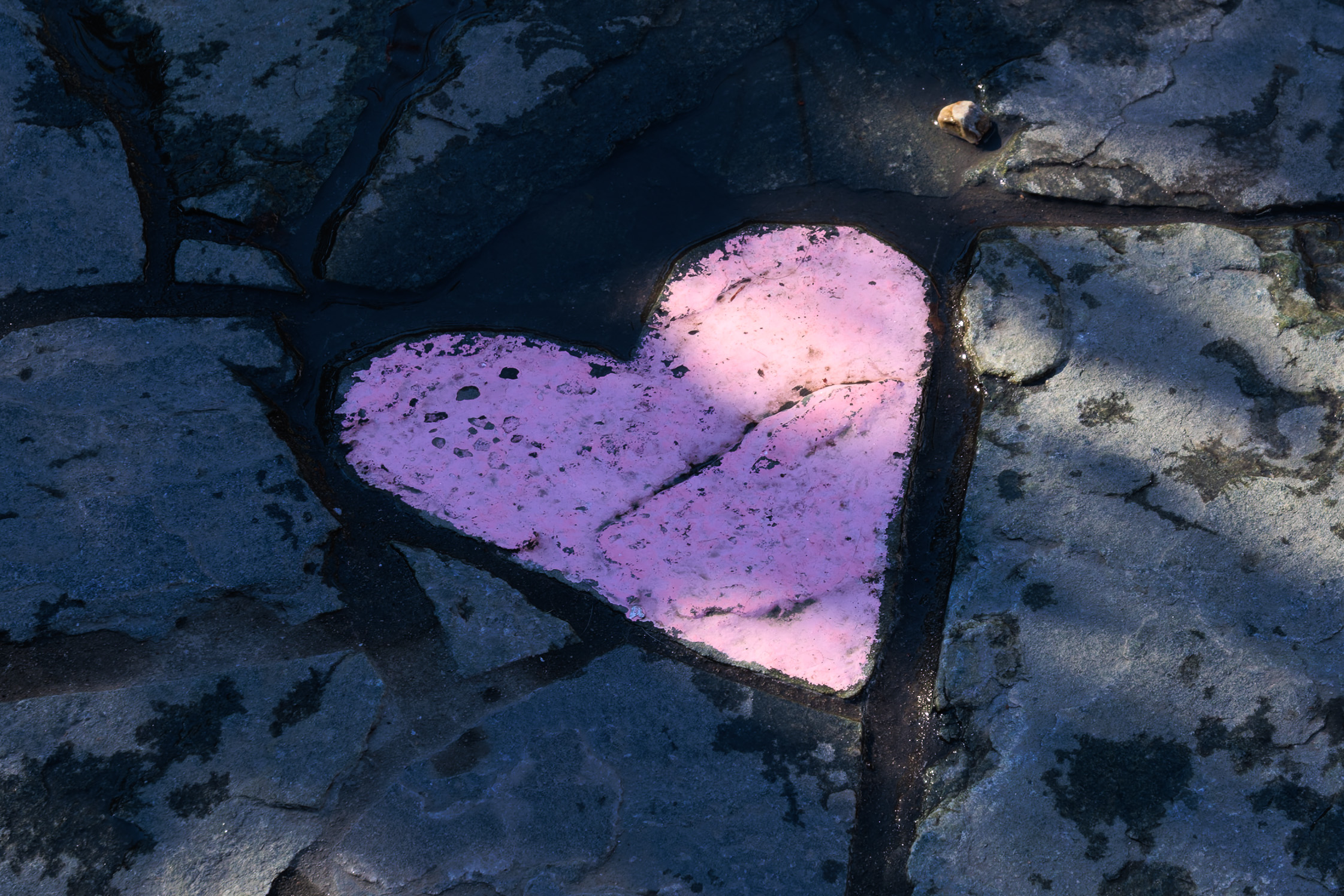
There were also some hearts on the ground!
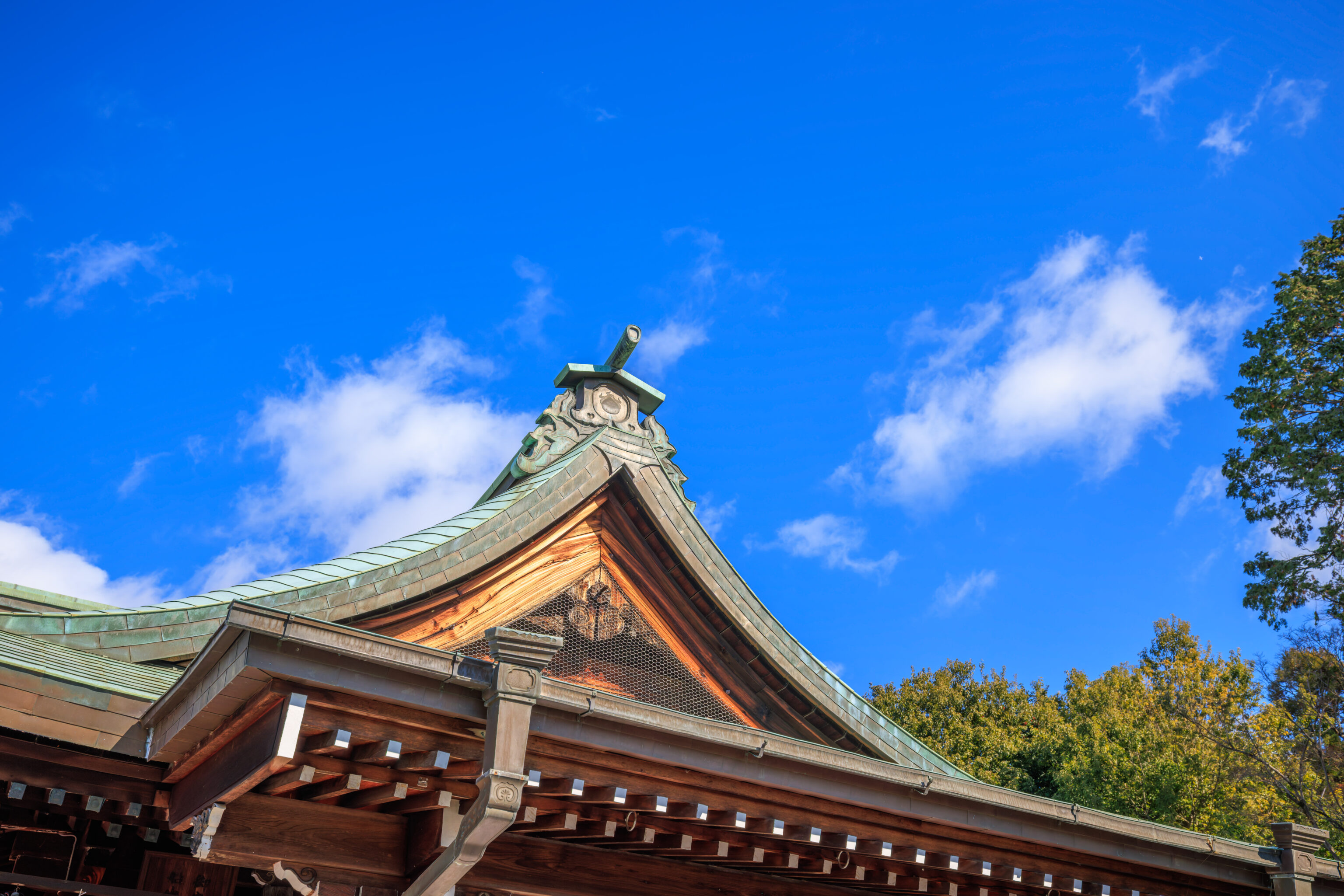
The roof of the shrine’s hall. During our visit, we got goshuin and also picked up a pamphlet.
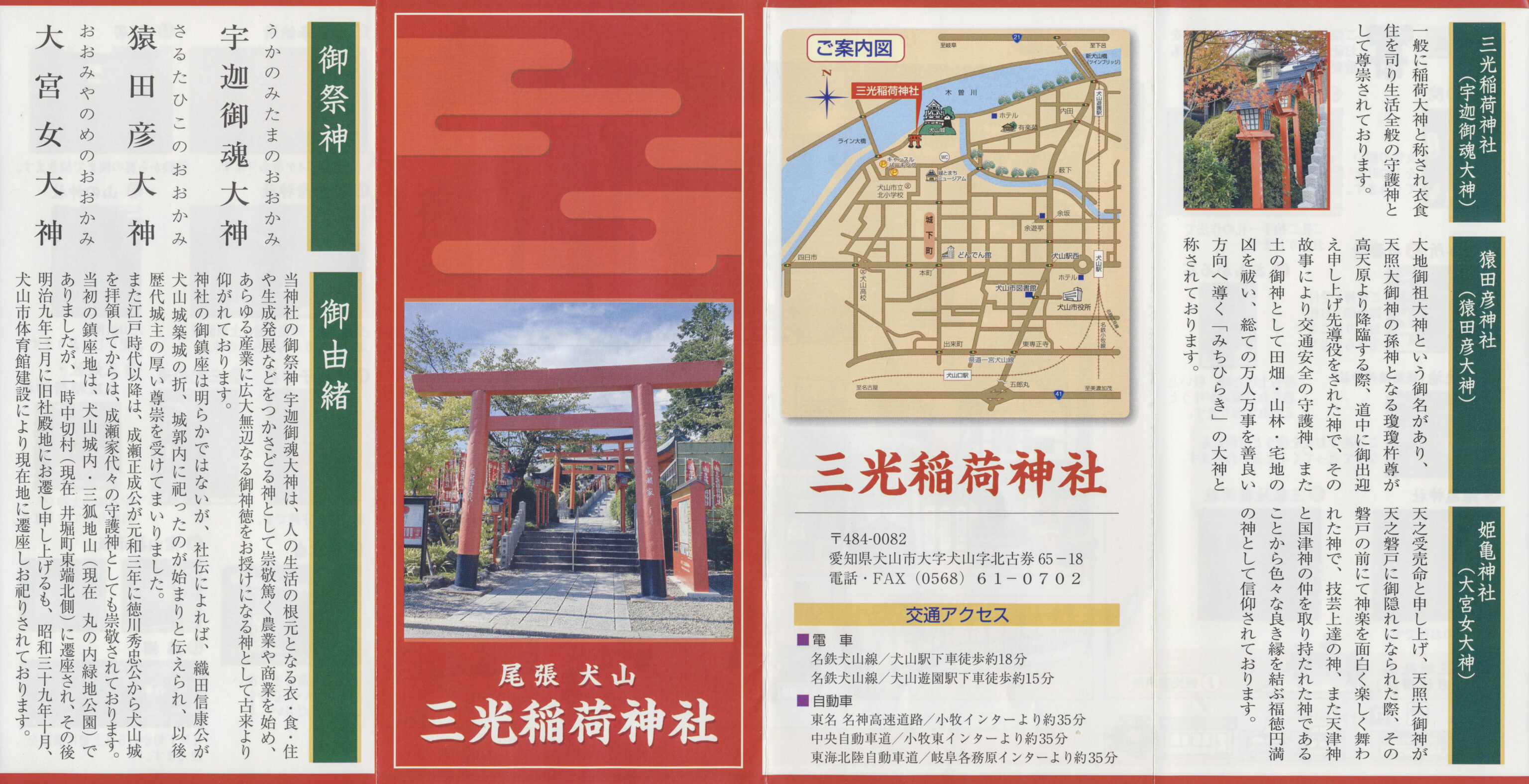
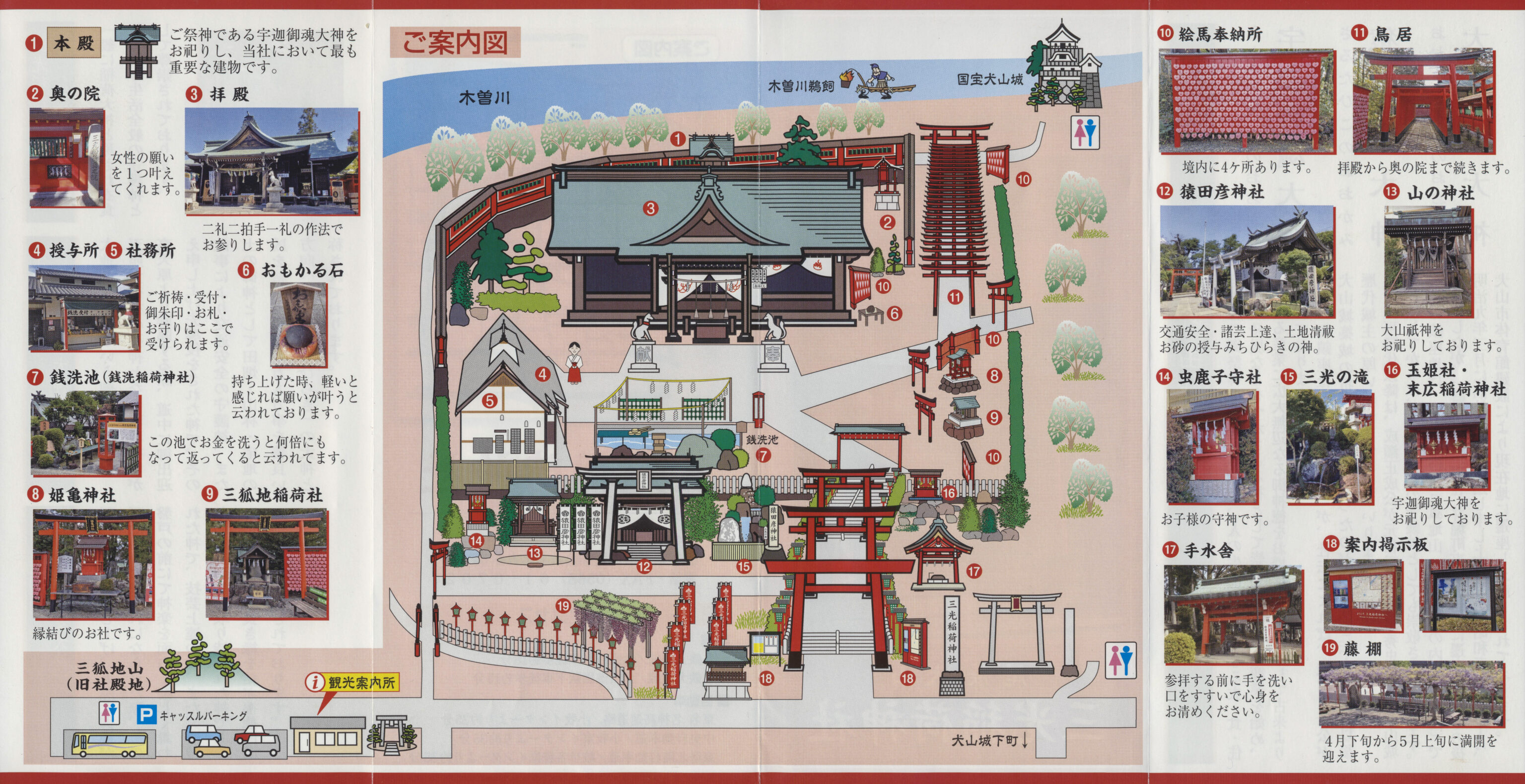
Owari Inuyama Sanko Inari Shrine

Enshrined Deities
Uga-no-Mitama-no-Okami
Sarutahiko-no-Okami
Omiyanome-no-Okami

History
The primary deity enshrined here, Uga-no-Mitama-no-Okami, is deeply revered as the deity governing the fundamentals of human life — clothing, food, and shelter — as well as growth and development. Since ancient times, the deity has been venerated for bestowing immense divine blessings upon all industries, including agriculture and commerce.

While the exact date of the shrine's original establishment is unclear, shrine records state that it originated when Oda Nobuyasu enshrined the deity within the castle grounds during the construction of Inuyama Castle; thereafter, it received the deep reverence of successive castle lords.

Furthermore, following the Edo period—specifically after Naruse Masanari was granted Inuyama Castle by Tokugawa Hidetada in 1617 (the third year of the Genna era)—the shrine has also been revered as the guardian deity of the successive generations of the Naruse family.

The shrine was originally located at Sankochiyama within the Inuyama Castle grounds (currently Marunouchi Ryokuchi Park). It was temporarily relocated to Nakagiri Village (currently the northern side of the eastern edge of Ibori-cho). Although it was moved back to its former site in March 1876 (the ninth year of Meiji), it was relocated to its current site in October 1964 (the thirty-ninth year of Showa) due to the construction of the Inuyama City Gymnasium, where it remains enshrined today.

Sanko Inari Shrine (Uga-no-Mitama-no-Okami)
Commonly known as Inari-no-Okami, this deity presides over food, clothing, and shelter, and is revered as a guardian of all aspects of daily life.

Sarutahiko Shrine (Sarutahiko-no-Okami)
Also known by the name Daichi-Mioya-no-Okami, this deity welcomed and guided Ninigi-no-Mikoto — the grandson of Amaterasu-Omikami — during his descent from the Plain of High Heaven (Takamagahara) to earth. Based on this legend, the deity is revered as a guardian of traffic safety and a deity of the earth who wards off misfortune associated with fields, forests, and residential land. Furthermore, the deity is known as the "Great Deity of Opening the Way" (Michihiraki-no-Okami), guiding all people and endeavors toward a positive path.

Himekame Shrine (Omiya-no-Me-no-Okami)
Also known as Ame-no-Uzume-no-Mikoto, this deity performed a lively and entertaining *kagura* dance before the Heavenly Rock Cave (Ame-no-Iwato) when Amaterasu-Omikami had withdrawn inside. Revered as a patron of the performing arts and skills, the deity also acted as a mediator between the Heavenly Deities (*Amatsukami*) and the Earthly Deities (*Kunitsukami*); consequently, the deity is worshipped as a benevolent figure who fosters auspicious connections and brings about good fortune and harmony.

Sanko Inari Shrine
65-18 Kitakoken, Inuyama, Inuyama City, Aichi Prefecture 484-0082
Tel/Fax: (0568) 61-0702

Access
■ Train
Meitetsu Inuyama Line: Approx. 18-minute walk from Inuyama Station
Meitetsu Inuyama Line: Approx. 15-minute walk from Inuyama-Yuen Station

■ Car
Tomei / Meishin Expressway: Approx. 35 minutes from Komaki Interchange
Chuo Expressway: Approx. 35 minutes from Komaki-Higashi Interchange
Tokai-Hokuriku Expressway: Approx. 35 minutes from Gifu-Kakamigahara Interchange
– Text from a sign, translated using Google.
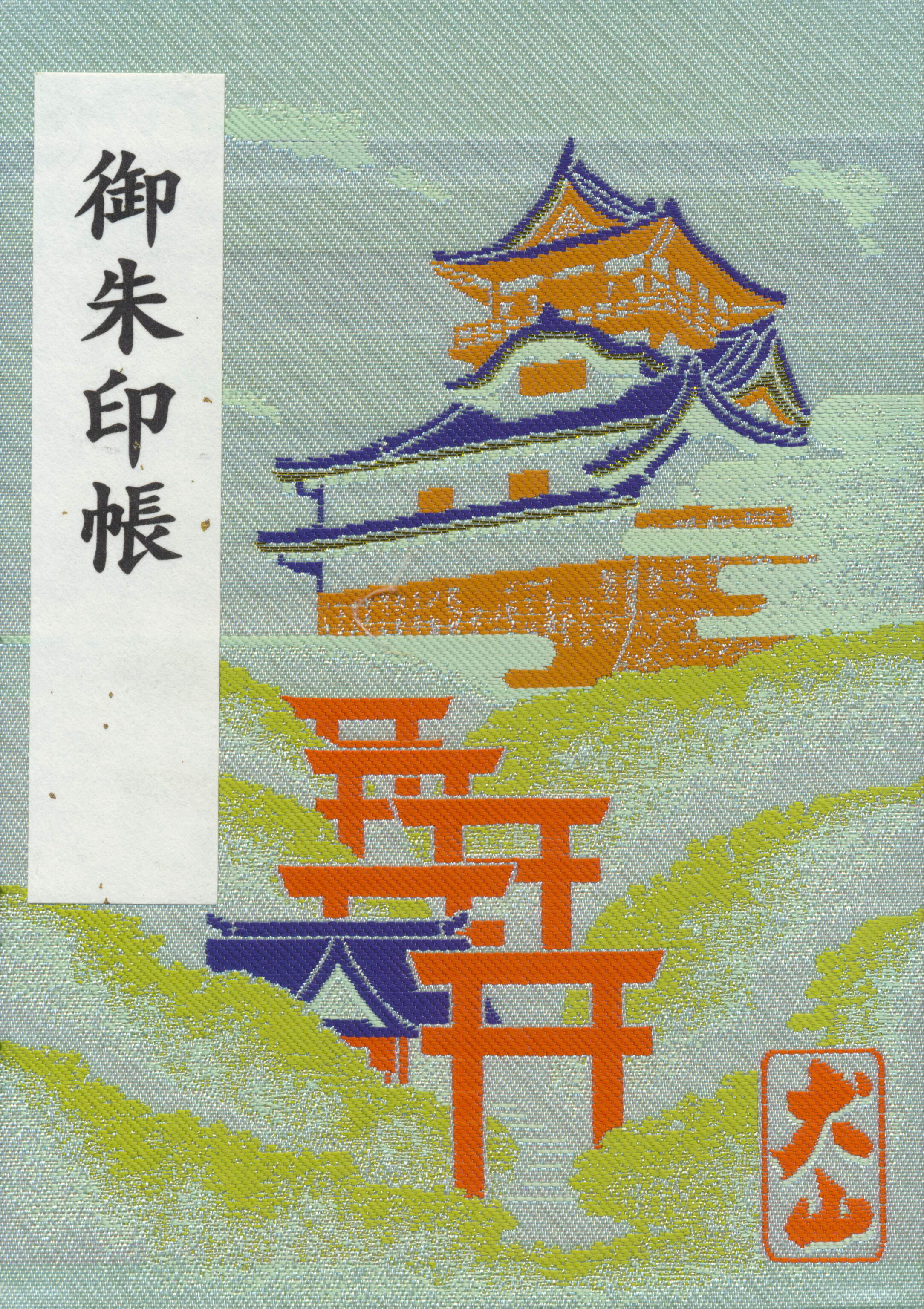
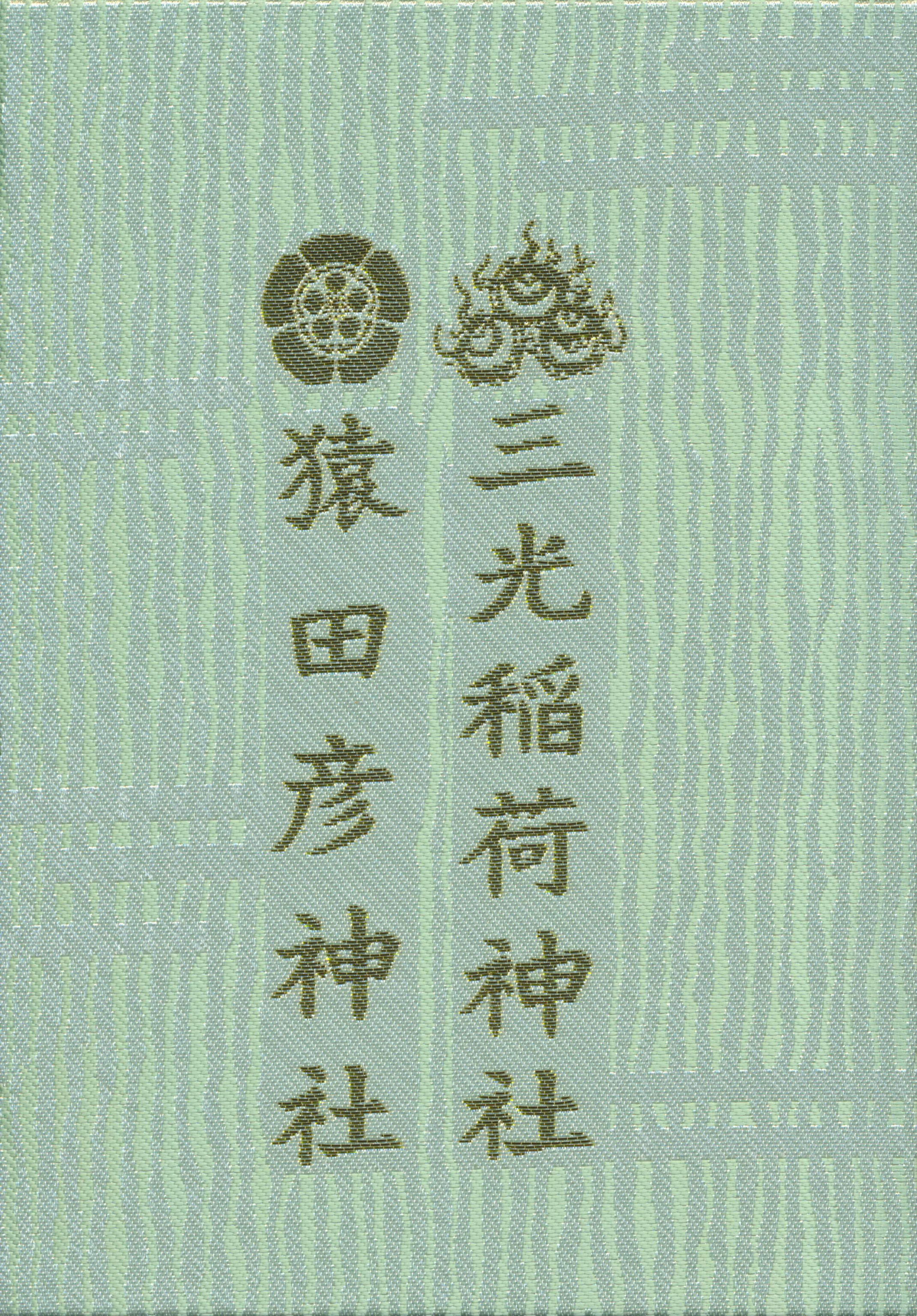
We also got a new 御朱印帳 goshuincho as our previous was about to be full.
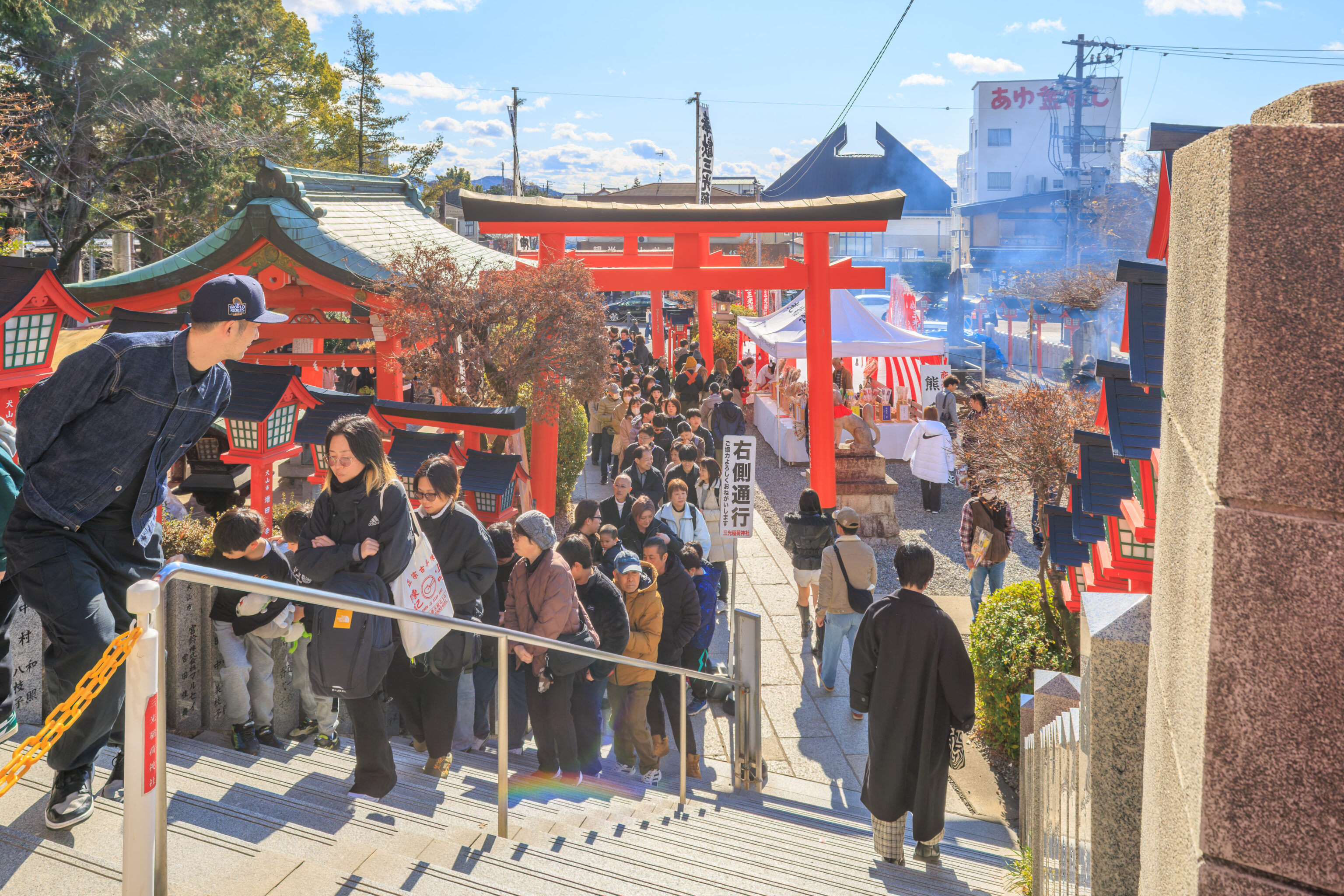
There was a pretty long line queued up the stairs to pray at the Sanko Inari-jinja.
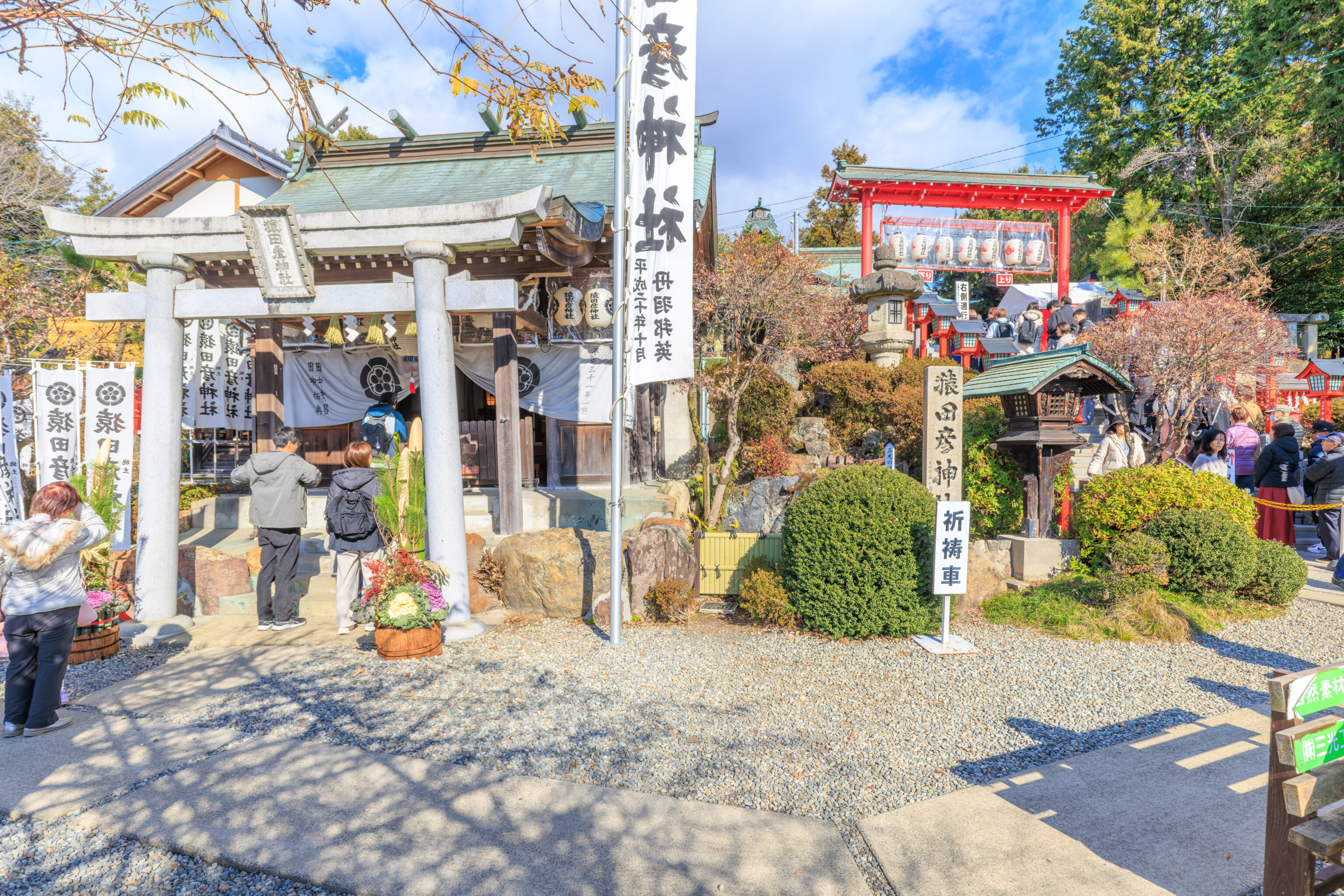
We walked to the next level down. There is another shrine on the left, the 猿田彦神社 Sarutahiko-jinja.
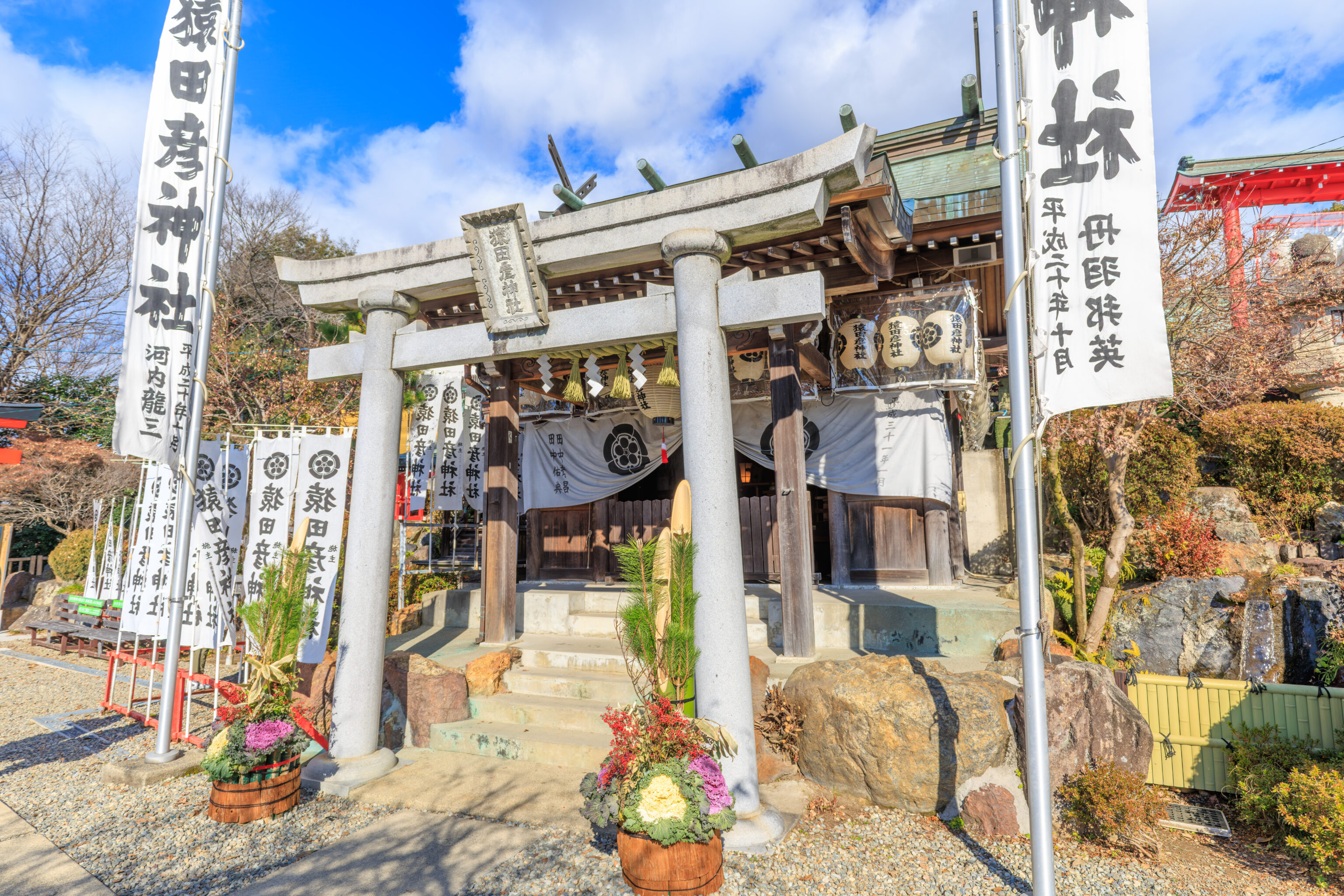
There was basically no one here at this much smaller shrine.
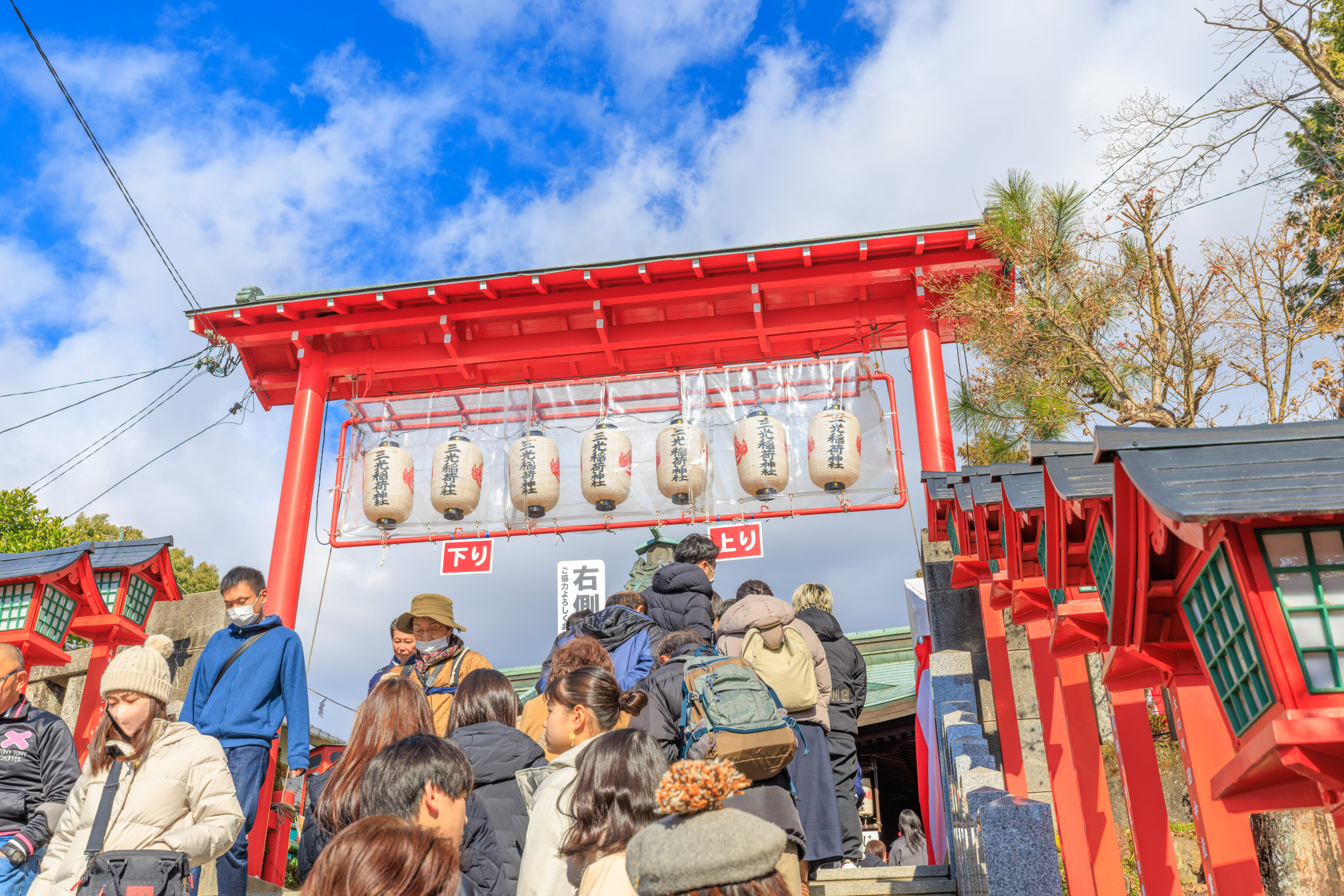
We decided to join the queue for the Sanko Inari-jinja.
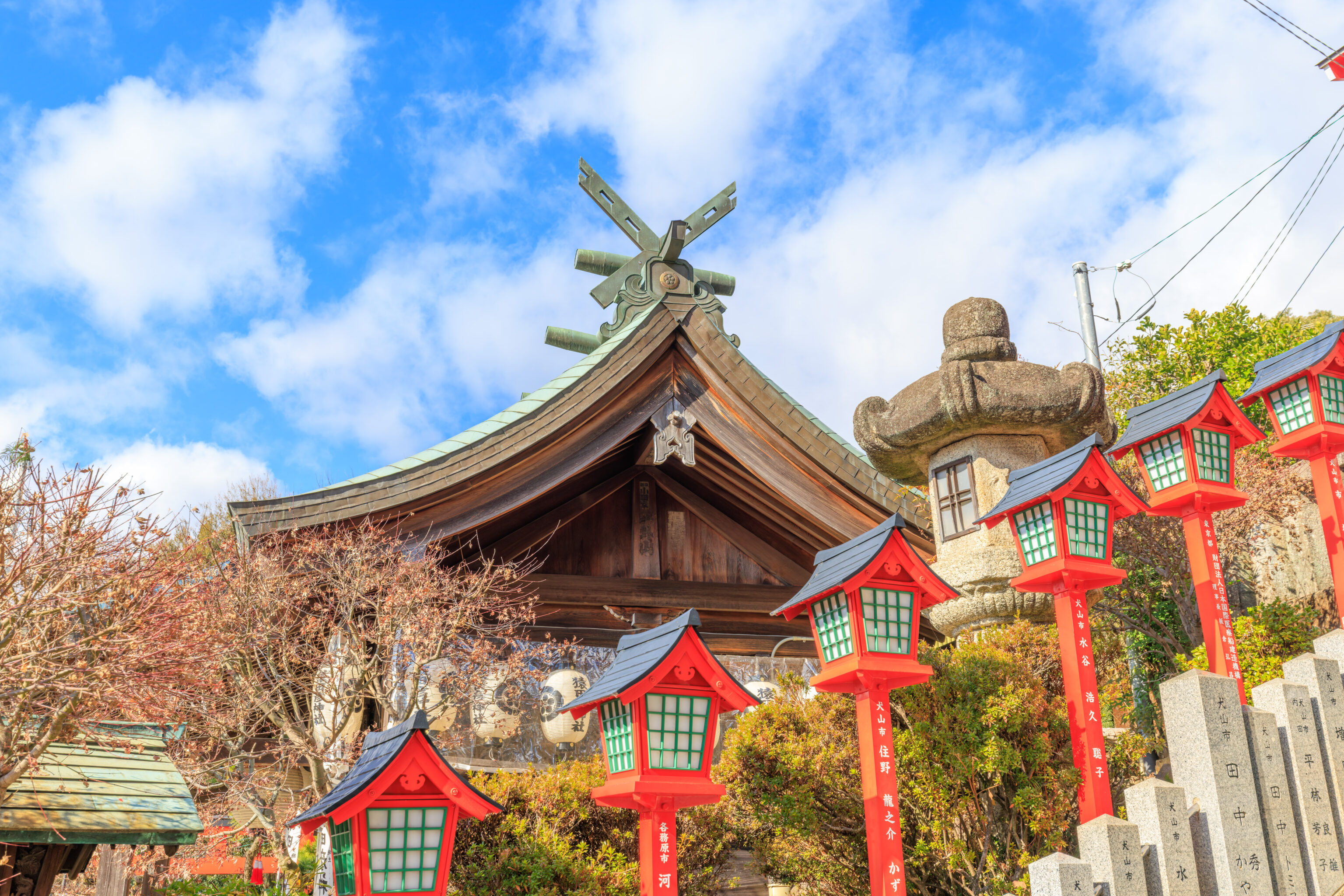
The roof of the Sarutahiko-jinja, as seen from the stairs as we waited in the queue. It didn’t take too long, maybe ten minutes or so.
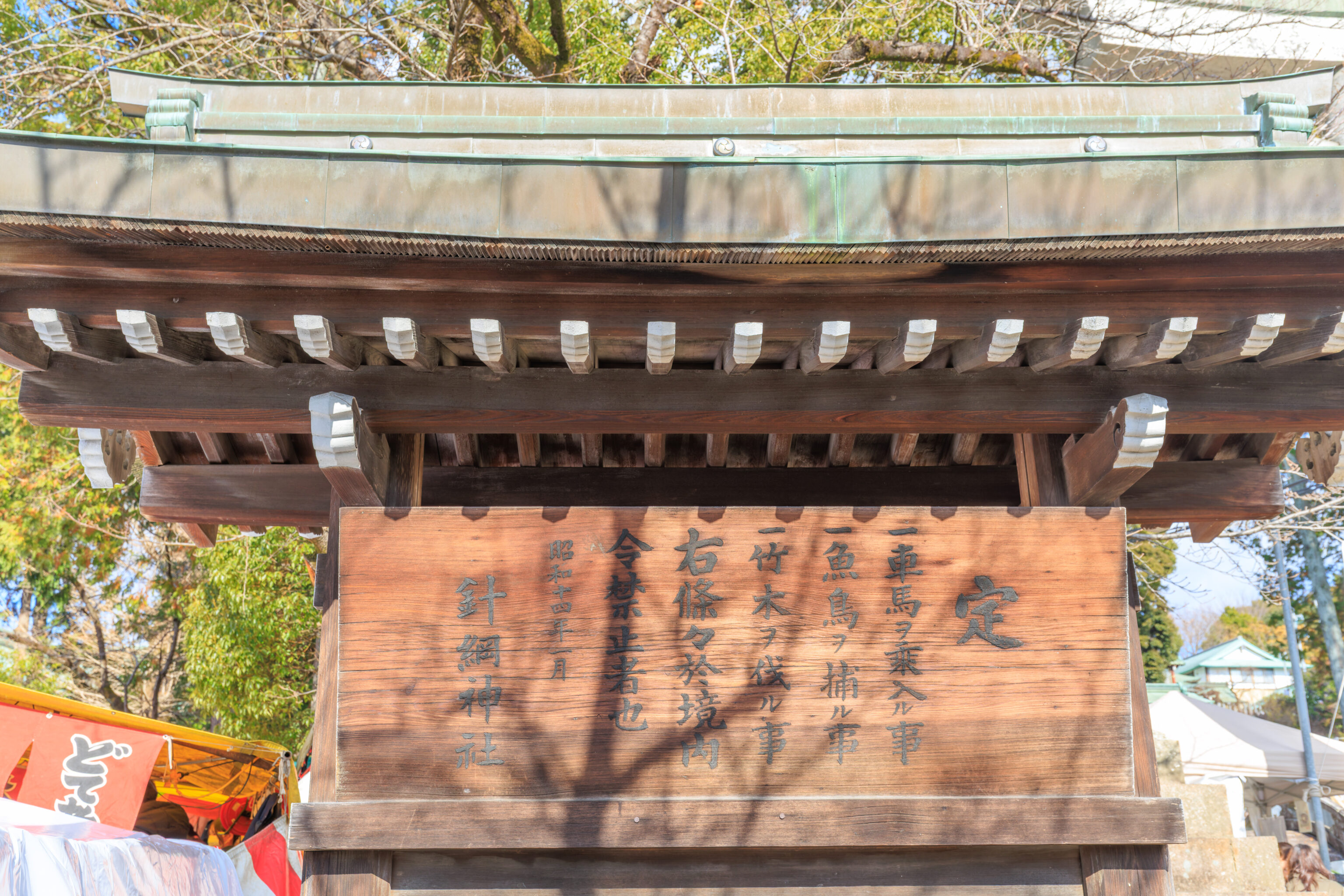
We headed back down to exit the shrine.
Regulations
- Entering a horse and cart
- Catching fish and birds
- Cutting down bamboo trees

The above rules within the shrine grounds are strictly prohibited.
January, Showa 14 (1939)
Haritsuna Shrine
– Text from the wooden sign in the photograph above, transcribed using Google Gemini and translated using Google Translate.
Phew! It’s a good thing we took the train and didn’t drive our horse and carriage!
Inuyama Jōkamachi
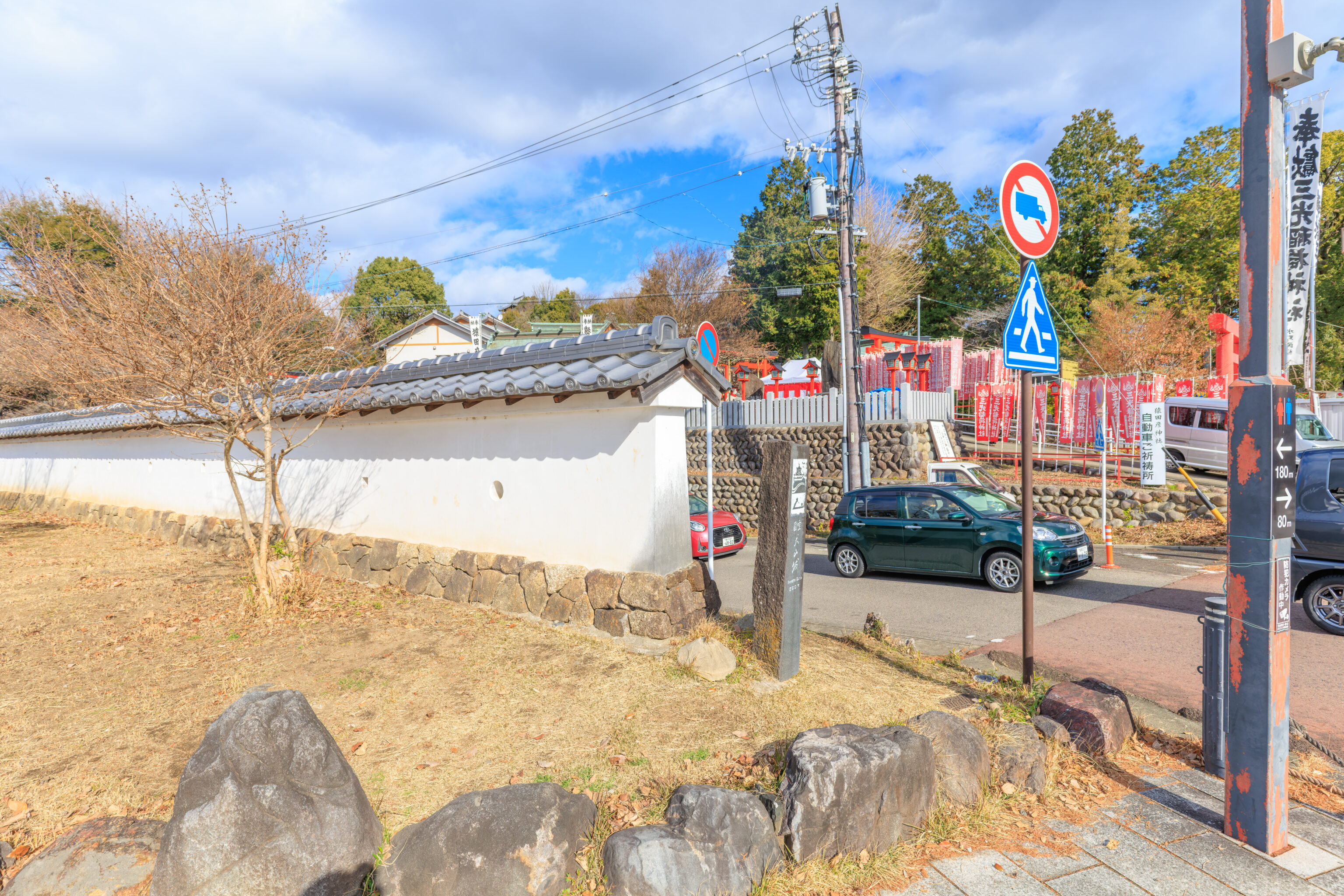
We decided to walk to the west a bit. This was the view looking back. The very top of Inuyama Castle is actually visible from here.
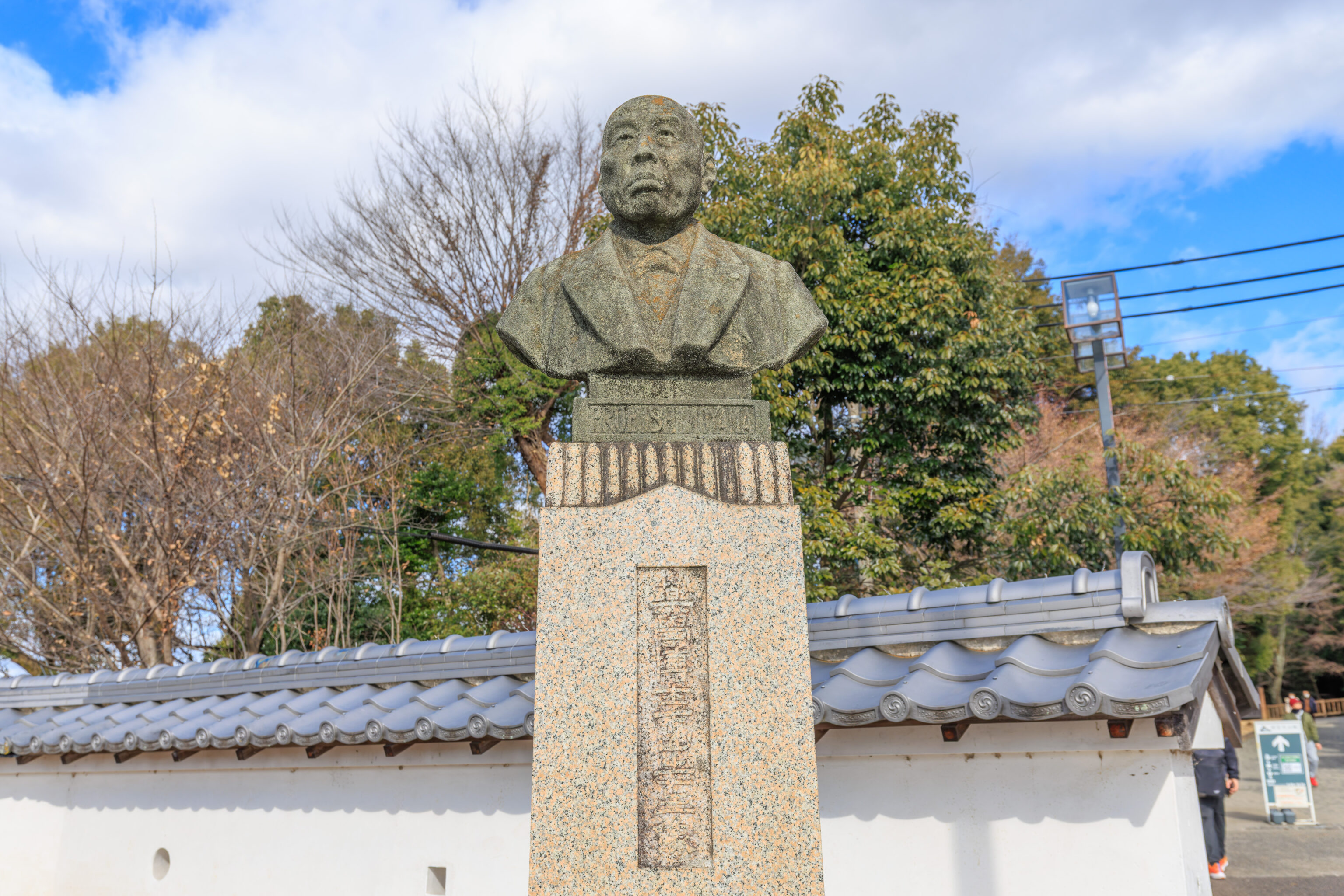
This bust depicts 下山順一郎 Junichiro Shimoyama. He studied pharmacology in Berlin, Germany and Strasbourg, France, and returned to Japan to become a professor.
Bust of Jun'ichiro Shimoyama
Jun'ichiro Shimoyama was born in 1853 in Inuyama Kitashuku (Miyukisho) as the eldest son of Kenji Shimoyama, a retainer of the Naruse family.

In his youth, he studied at the Keidokan academy. In 1870, he traveled to Tokyo as a government-sponsored student from Kagawa Prefecture and enrolled in Daigaku Nanko (a precursor to the University of Tokyo). Three years later, he chose pharmacy as his specialization and studied at the Department of Pharmacy within the University of Tokyo's Faculty of Medicine; the following year, he became an assistant instructor. Starting in 1883, he spent three years studying abroad, including at the University of Berlin in Germany, and became renowned for his research on the quantitative analysis of "Thymo" (thymol).

After returning to Japan, he served as a professor at Tokyo Medical College and, in 1895, was awarded an honorary degree by the Philadelphia College of Pharmacy in the United States. In 1900, he received the degree of Doctor of Pharmacy—becoming the first person in Japan to hold this title.

Beginning in 1906, he toured various Western nations and subsequently dedicated himself to the guidance and research of pharmaceutical science.

Later, he authored *Commentary on the Pharmacopoeia of Japan* (Nihon Yakkyokuhō Chūkai), a work into which he poured the heart and soul of his life's efforts. He passed away in 1912 at the age of 60.
– Text from a sign, translated using Google.
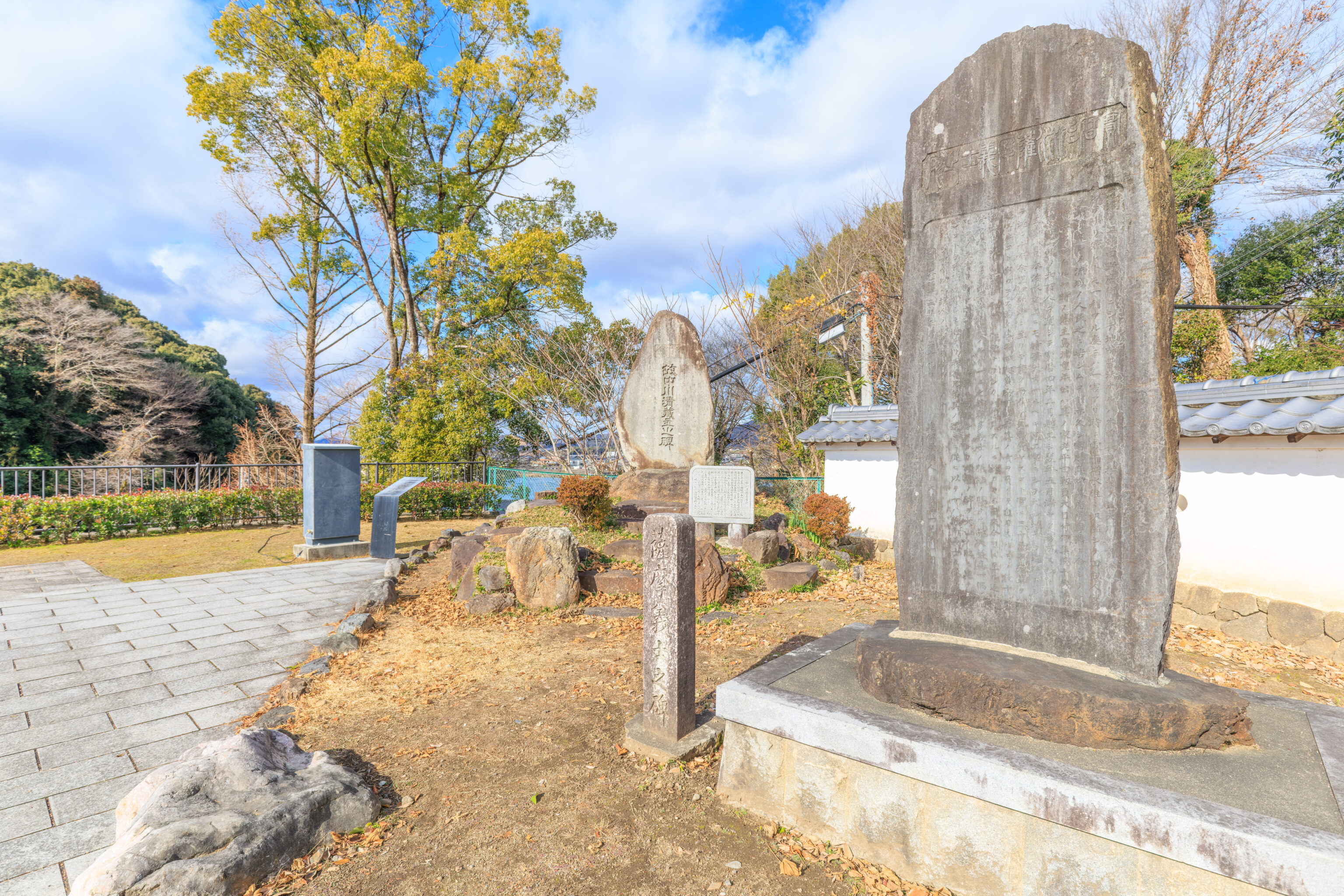
The large stone tablet on the right here is a monument to Dr. Shimoyama.
The smaller marker at bottom center is inscribed with the text, 薩摩義士之碑 Satsuma Retainers Monument. When we were in Kagoshima earlier on this trip, we came across another larger Satsuma Retainers Monument!
The Satsuma Domain was located in southwestern Kyushu and included Kagoshima. The monument there, next to the ruins of Kagoshima Castle, was erected in 1920 to honor the 80 people who died after being dispatched to the Nobi Plains, which includes Inuyama, to work on a flood control project along the Kiso River in 1753. This detail is not something we would have remembered if we didn’t see this marker!
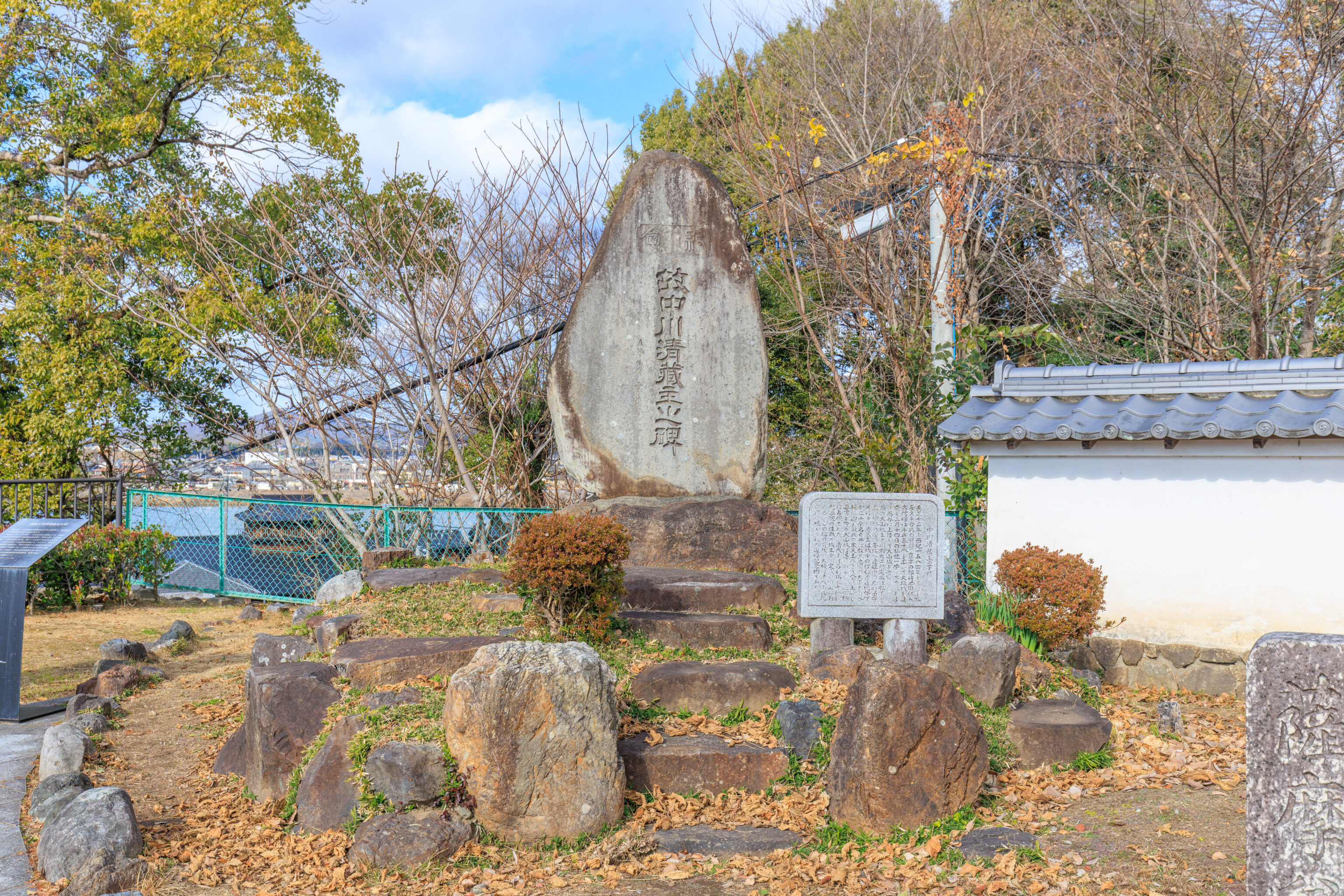
This stone marker was in the background of the previous photograph. The sign partially visible on the left explains what it is for:
The Enoki-zuka (Hackberry Mound) and the Monument to Seizōsu
Seizōsu was the third head priest of Ryūsen-in — a sub-temple of Zuisen-ji in Uchida — and the paternal uncle of Nakagawa Kan'emon Sadanari, the lord of Inuyama Castle.

In 1584, during the conflict known as the Battle of Komaki-Nagakute, Ikeda Shōnyūsai Nobuteru — a Toyotomi-allied commander and former lord of Inuyama Castle—led his troops out of Ogaki Castle. At dawn on March 14, taking advantage of the roar of the river swollen by heavy rain, he crossed the Kiso River and launched a surprise attack on Inuyama Castle. At the time, the castle lord Sadanari was away on a military campaign at Mine Castle in Ise Province. Seizōsu, who had been entrusted with the castle's defense, fought valiantly alongside a small force of just over twenty people — including even the castle's servants. After a fierce battle, he was killed in action at Nishitani-sakaguchi, and Inuyama Castle fell to the Ikeda forces.

He is buried at Ryūsen-in, and his posthumous Buddhist name is *Zenji Jōdai Seizōsu* (Former Head Priest of this Temple). A single hackberry tree (*enoki*) was planted at the site where he fell; this spot came to be known as Enoki-zuka (Hackberry Mound).

Today, only the stump of the hackberry tree remains at the site.
– Text from a sign partially visible on the left side of the photograph above, transcribed using Google Gemini and translated using Google Translate.
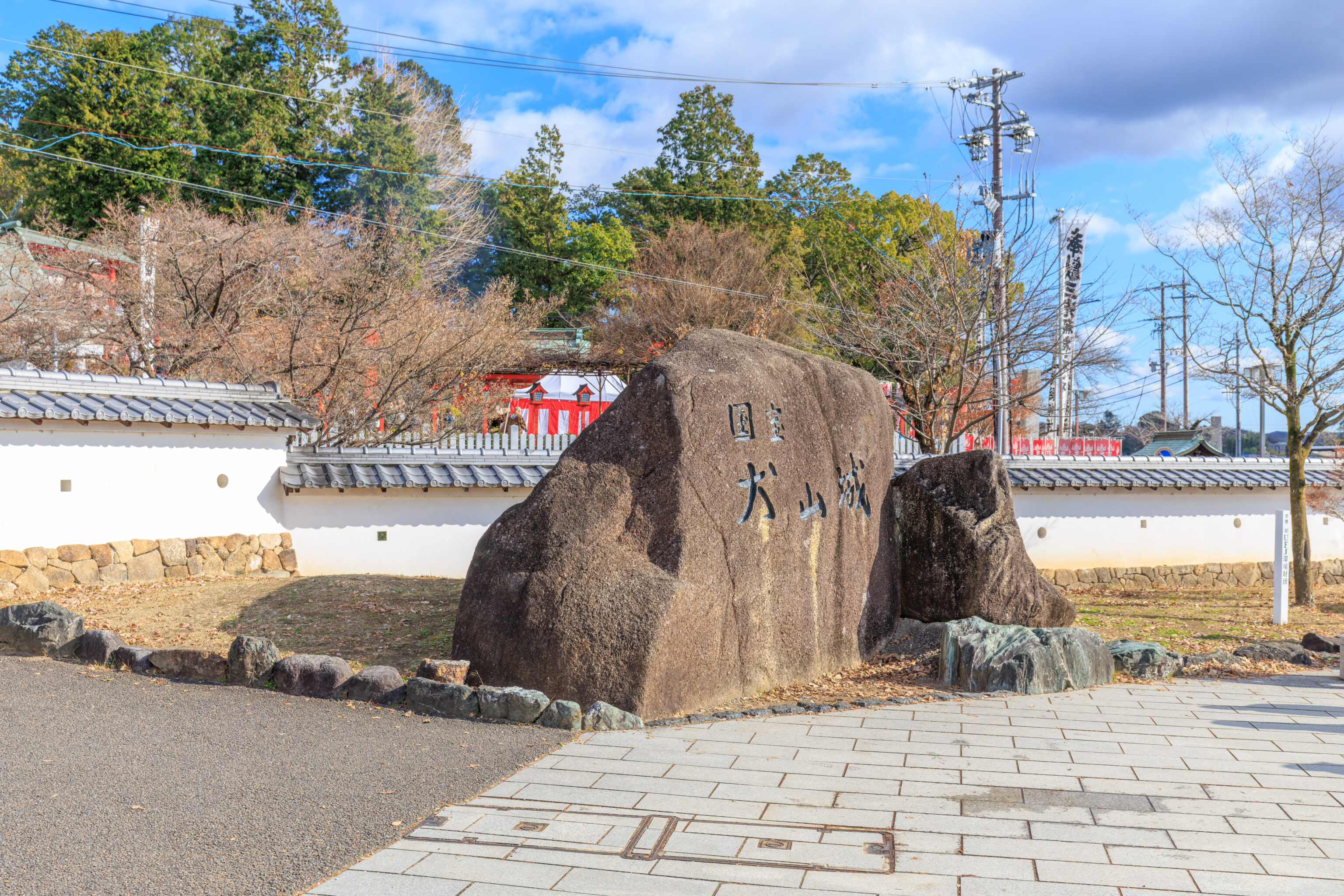
This stone sign simply says, National Treasure: Inuyama Castle.
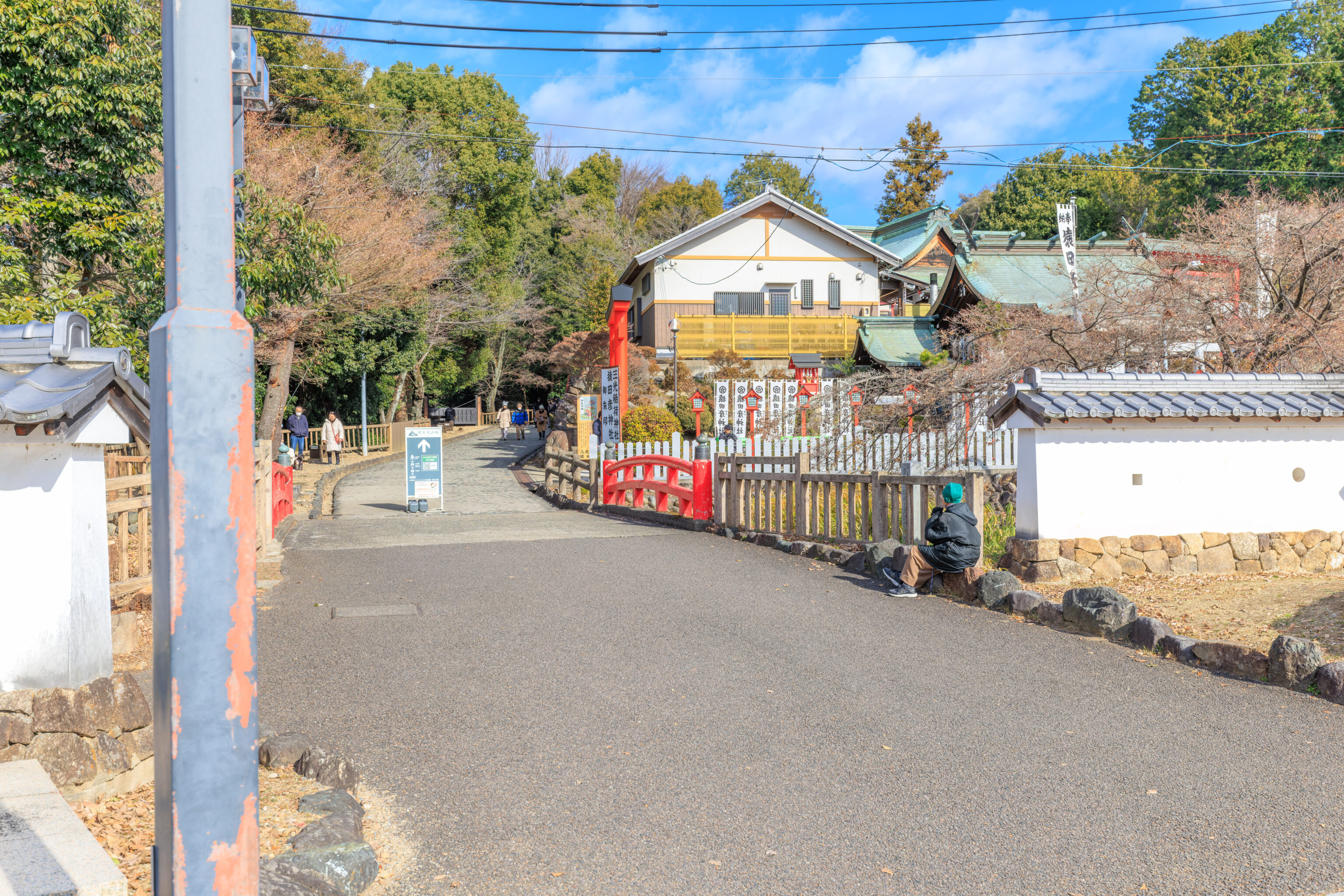
This path leads up to Inuyama Castle. We would have come out here if we did not turn left ti visit Sanko Inari-jinja on our way down.
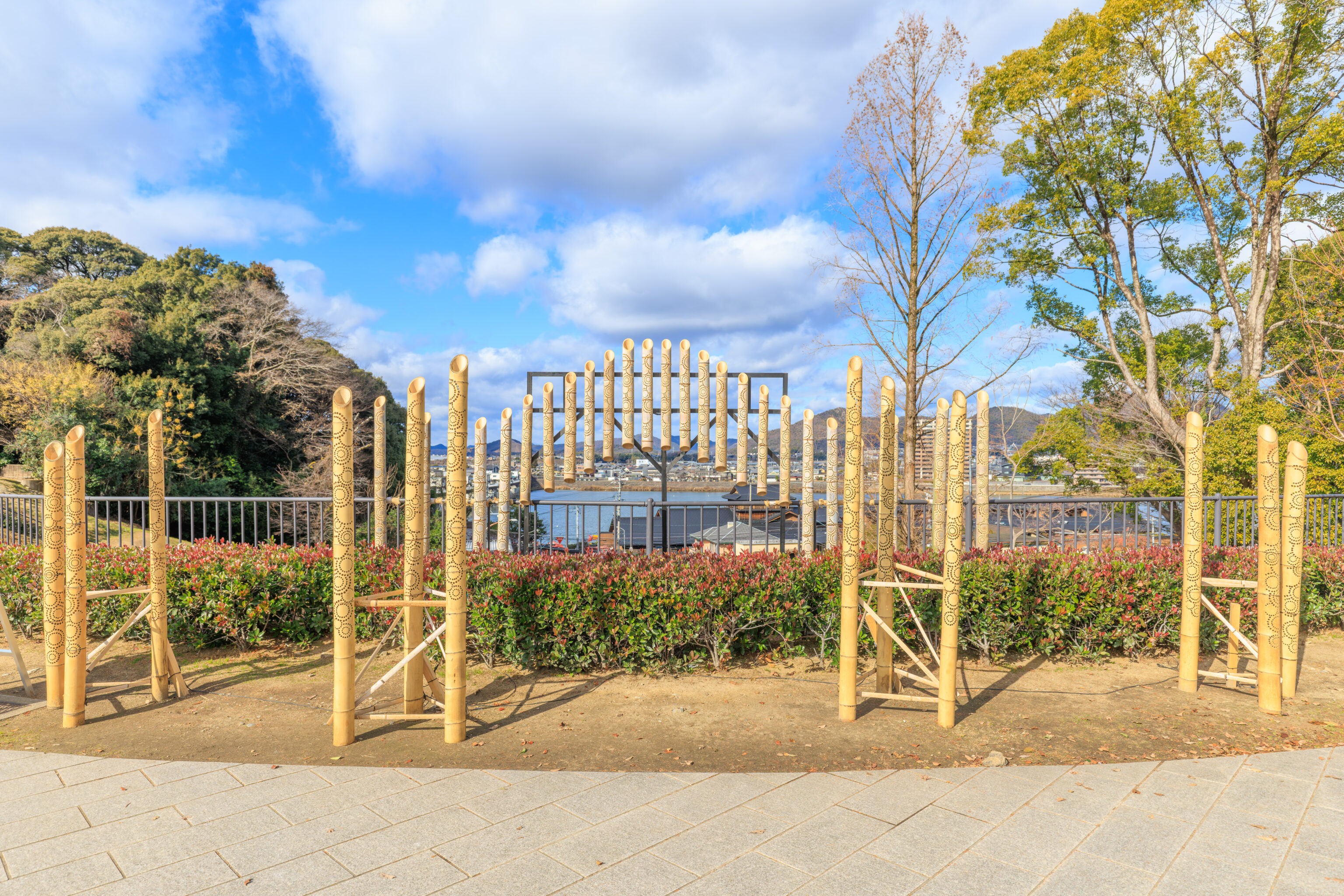
There is a paid illumination event that is taking place, Inuyama Yoi no Michi, from December 5th until January 31st. These bamboo poles are part of the event. The main part of the event seems to be a route through a bamboo forest on the grounds of the 伏屋神明社 Fushiya Shinmei Shrine near 善師野駅 Zenjino Station.
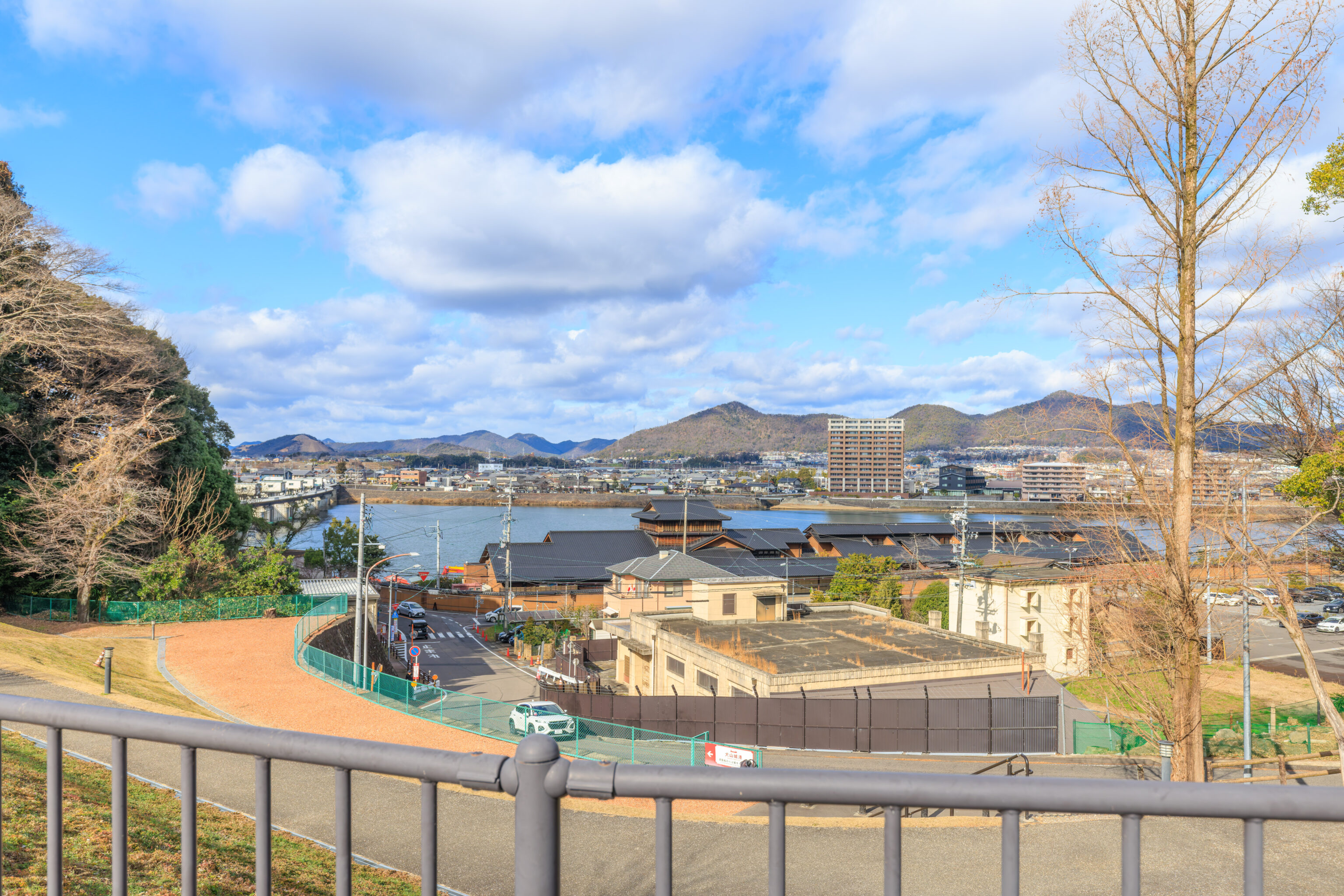
The area here has a view of the Kiso River to the north. The long building near the river is 灯屋 迎帆楼 Akariya Geihanro, an onsen hotel that looks pretty amazing. And expensive!
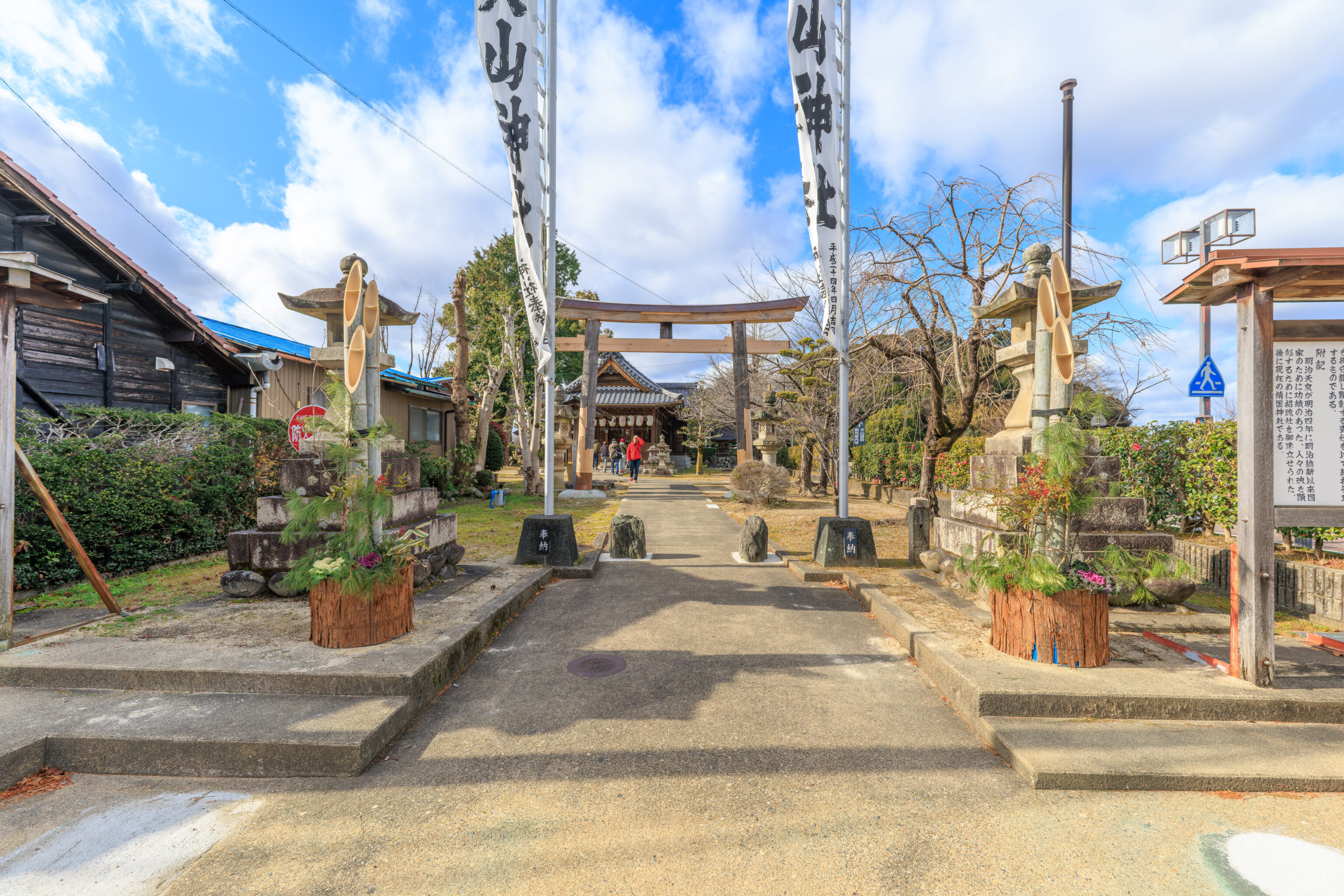
We crossed the street to the south to take a quick look at this shrine, the 犬山神社 Inuyama-jinja. Compared to the shrines closer to the castle, there was basically no one here.
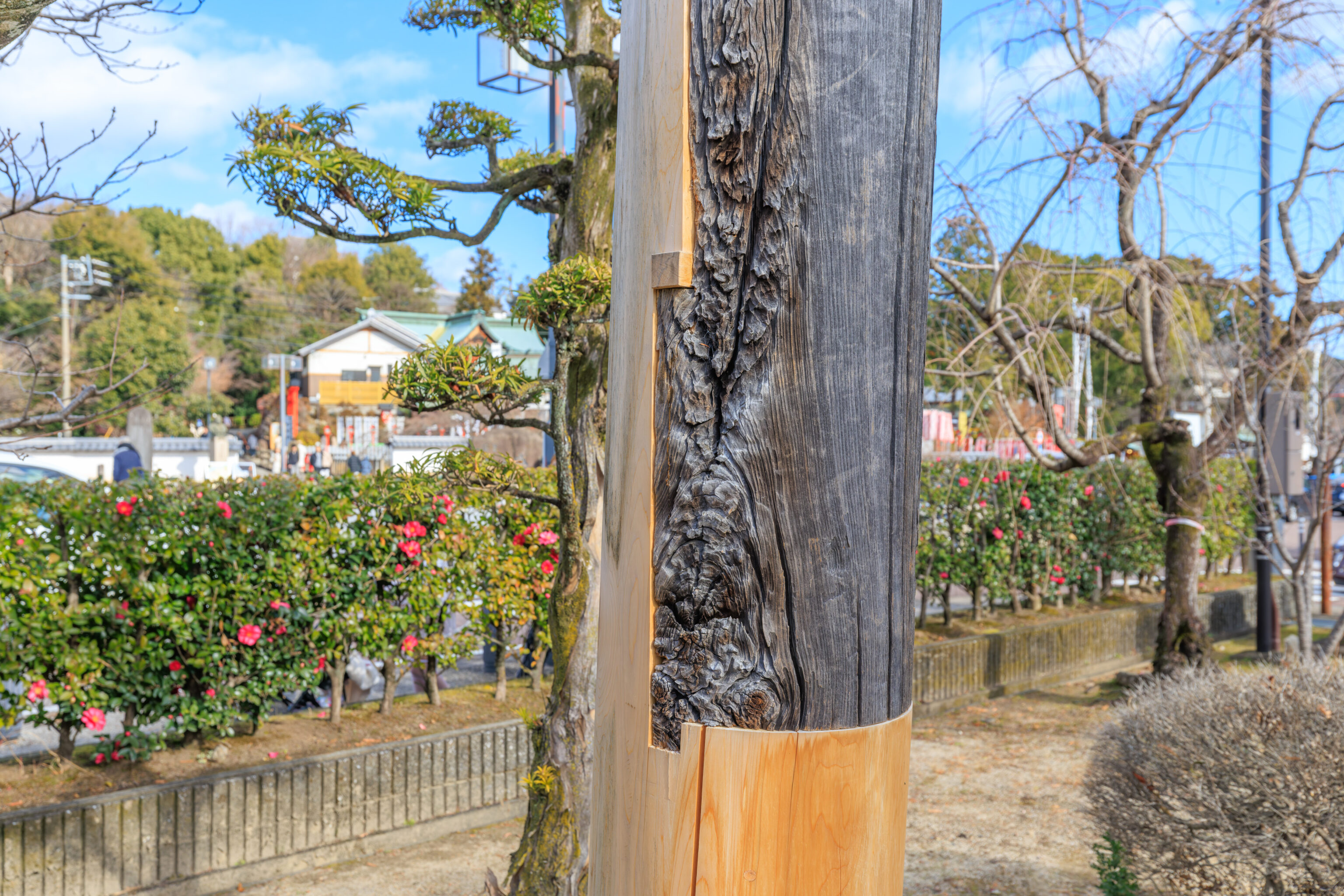
The large wooden torii had both old and new wood.
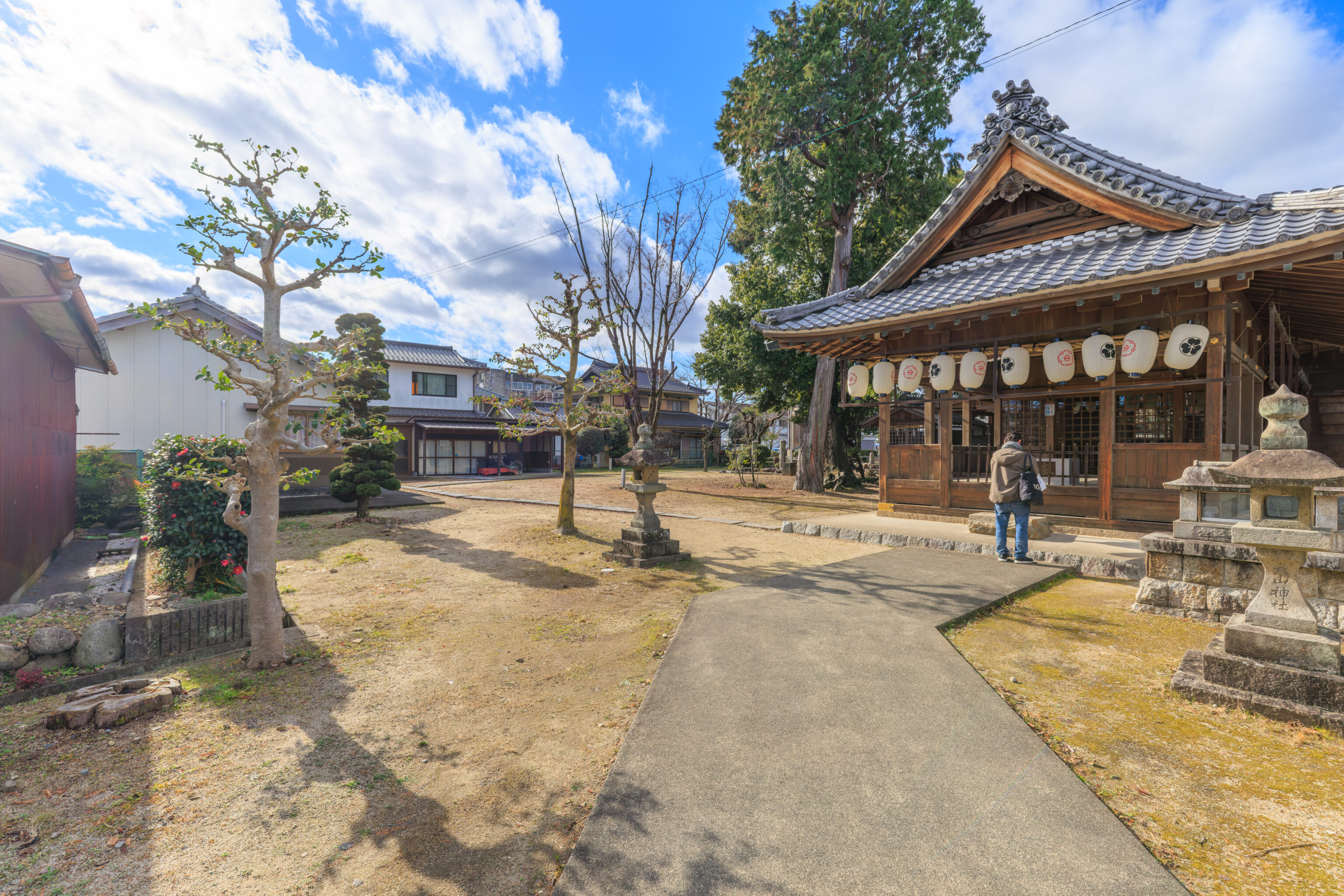
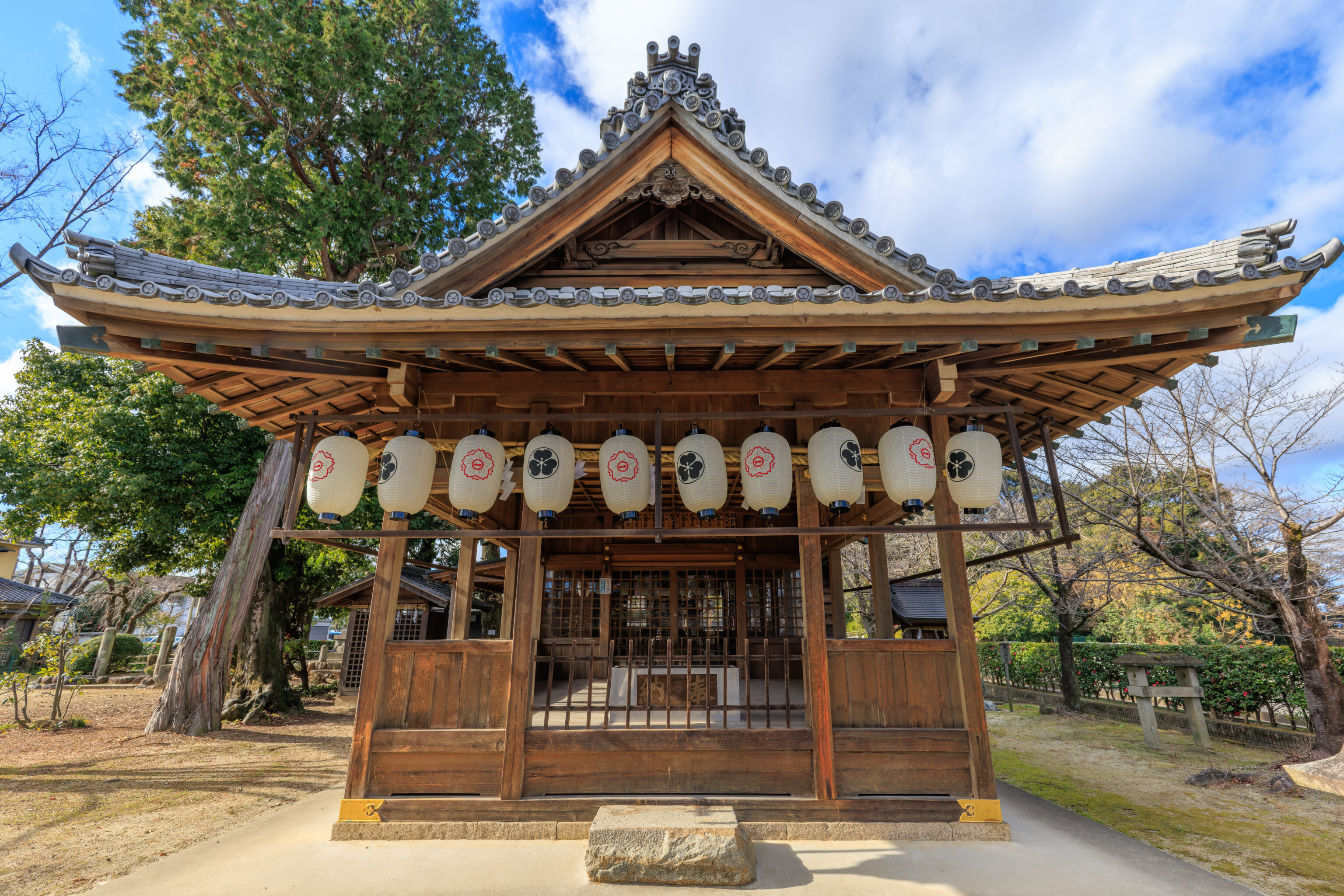
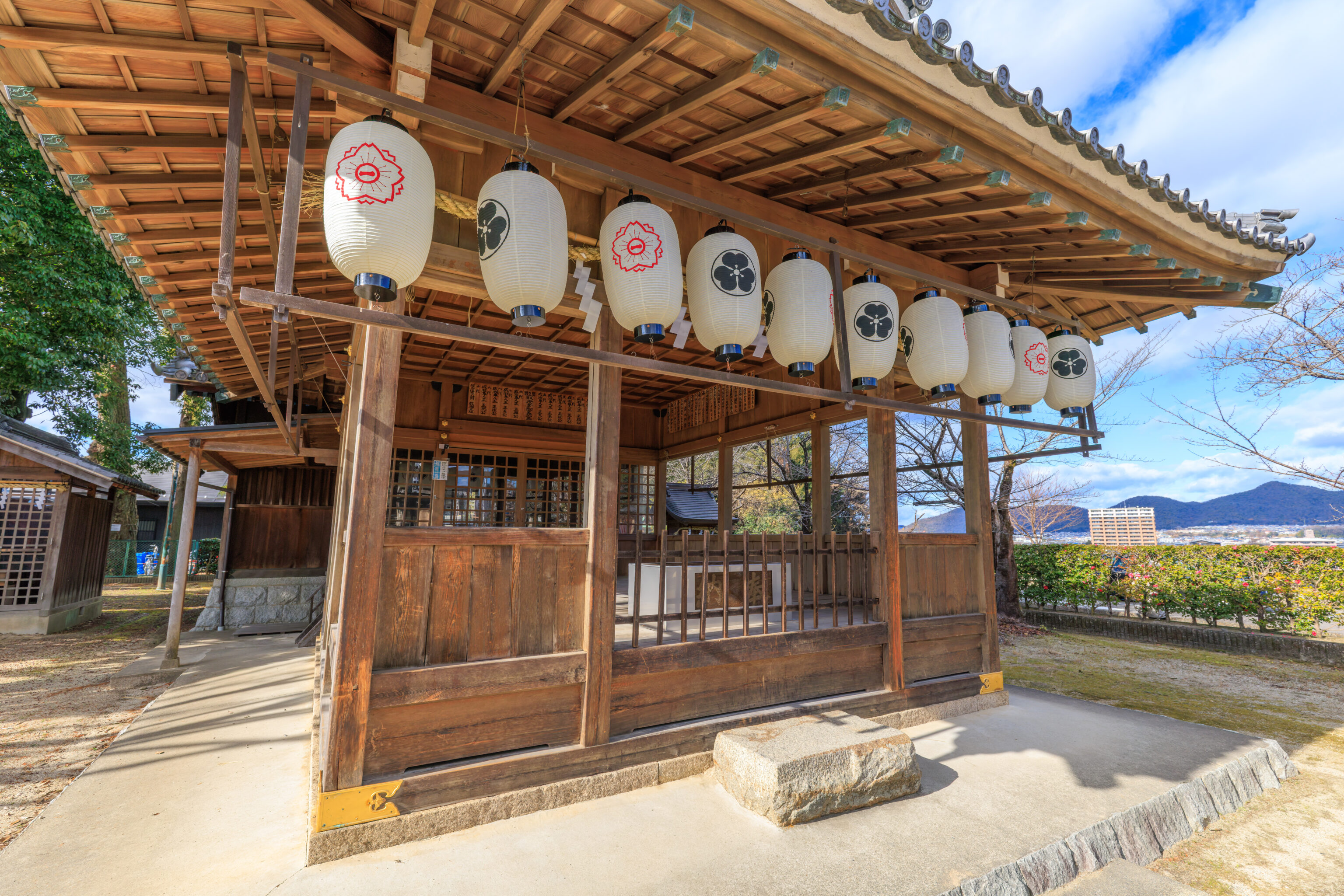
We just took a very quick look at the shrine.
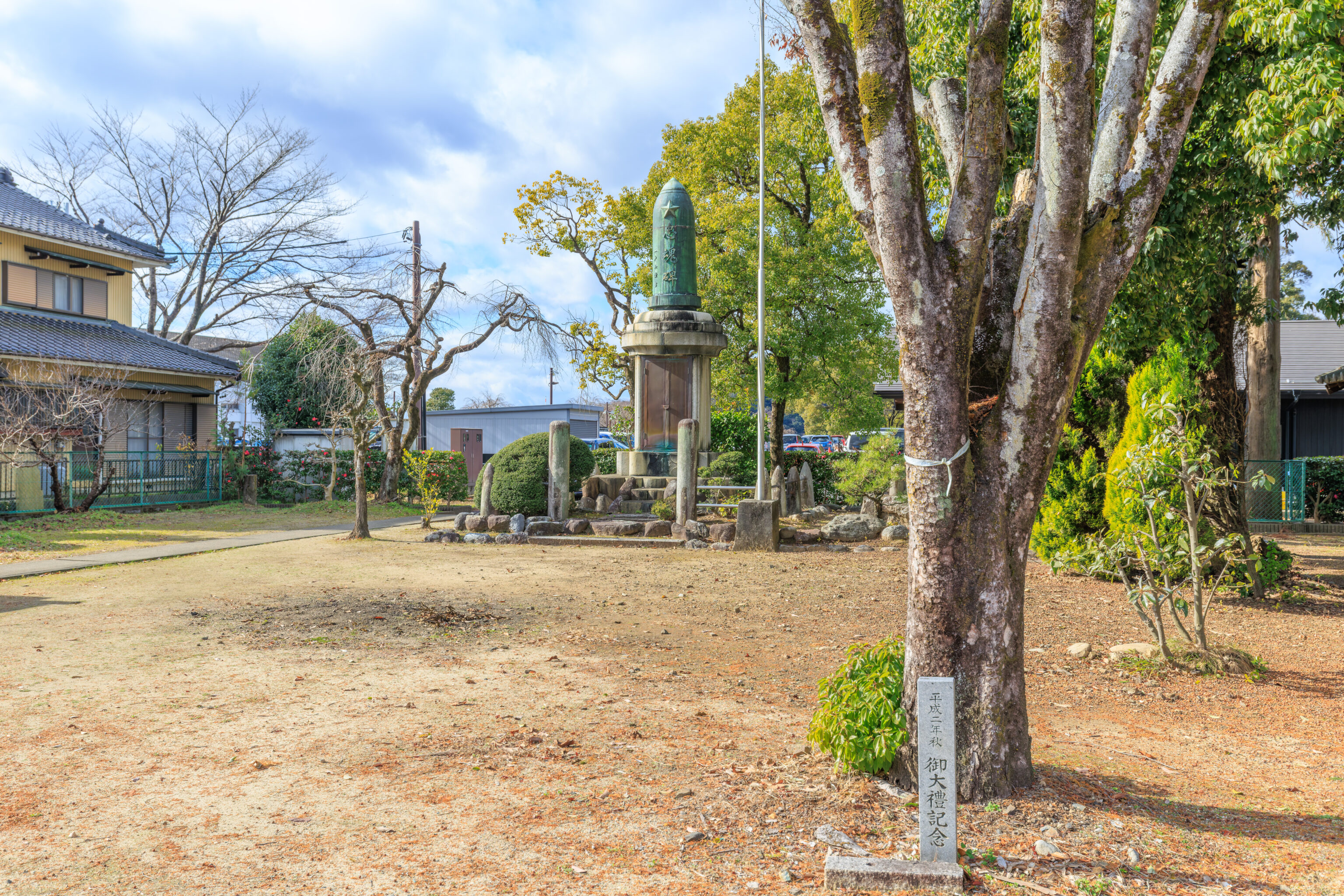
The memorial in the background that looks like a giant bullet, or rather a shell, is exactly that. It is a 忠魂碑 Chūkonhi, a war memorial.
Monument to the Loyal Dead
Written by Ichinohe Hyoe
– Text from the memorial, transcribed using Google Gemini and translated using Google Translate and Wikipedia.
Given the design, and the lifetime of the calligrapher, it probably dates from sometime in the early 20th century.
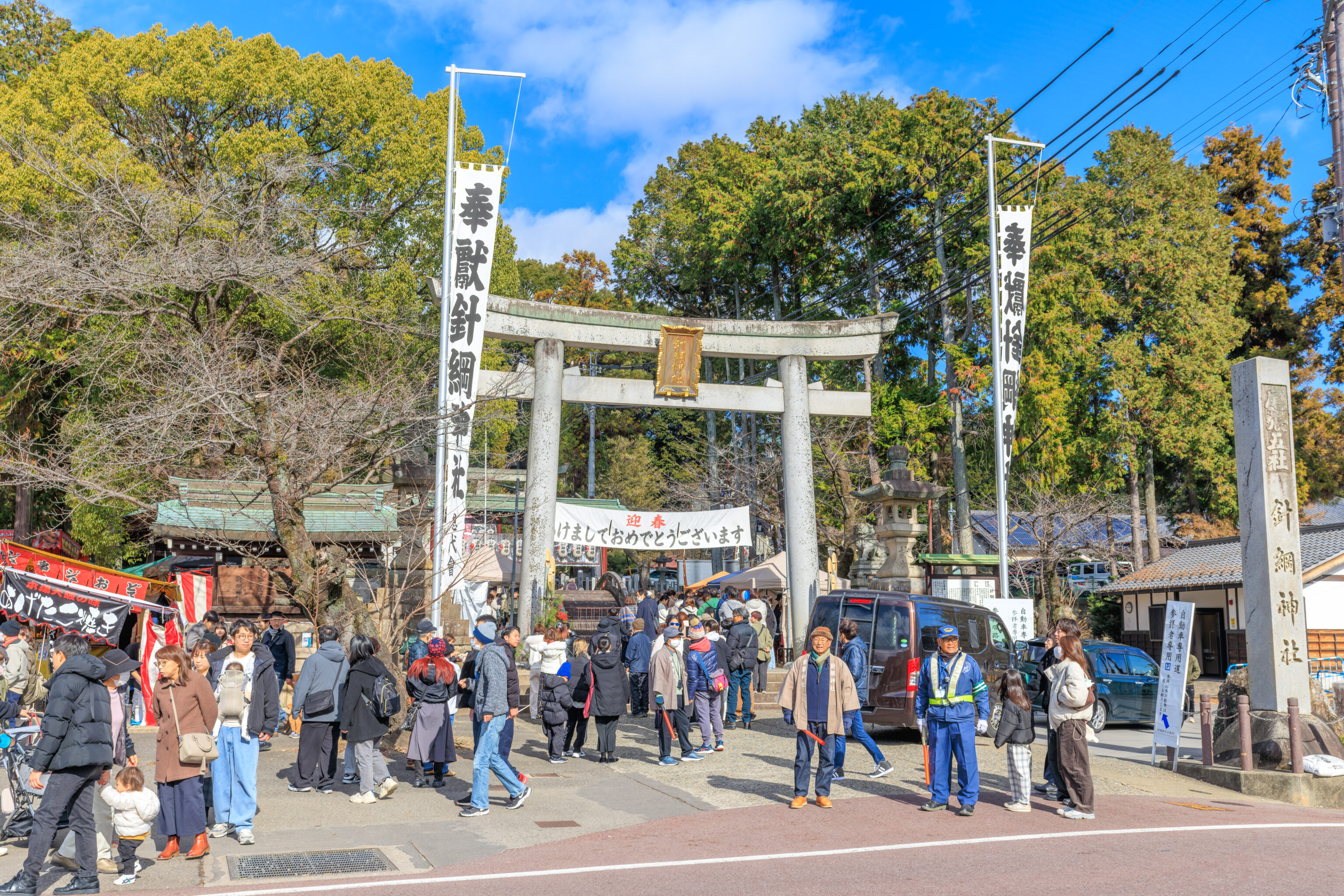
We walked east back to the main entrance leading to Inuyama Castle and the shrines at its base to begin walking through the main street of the Jōkamachi.
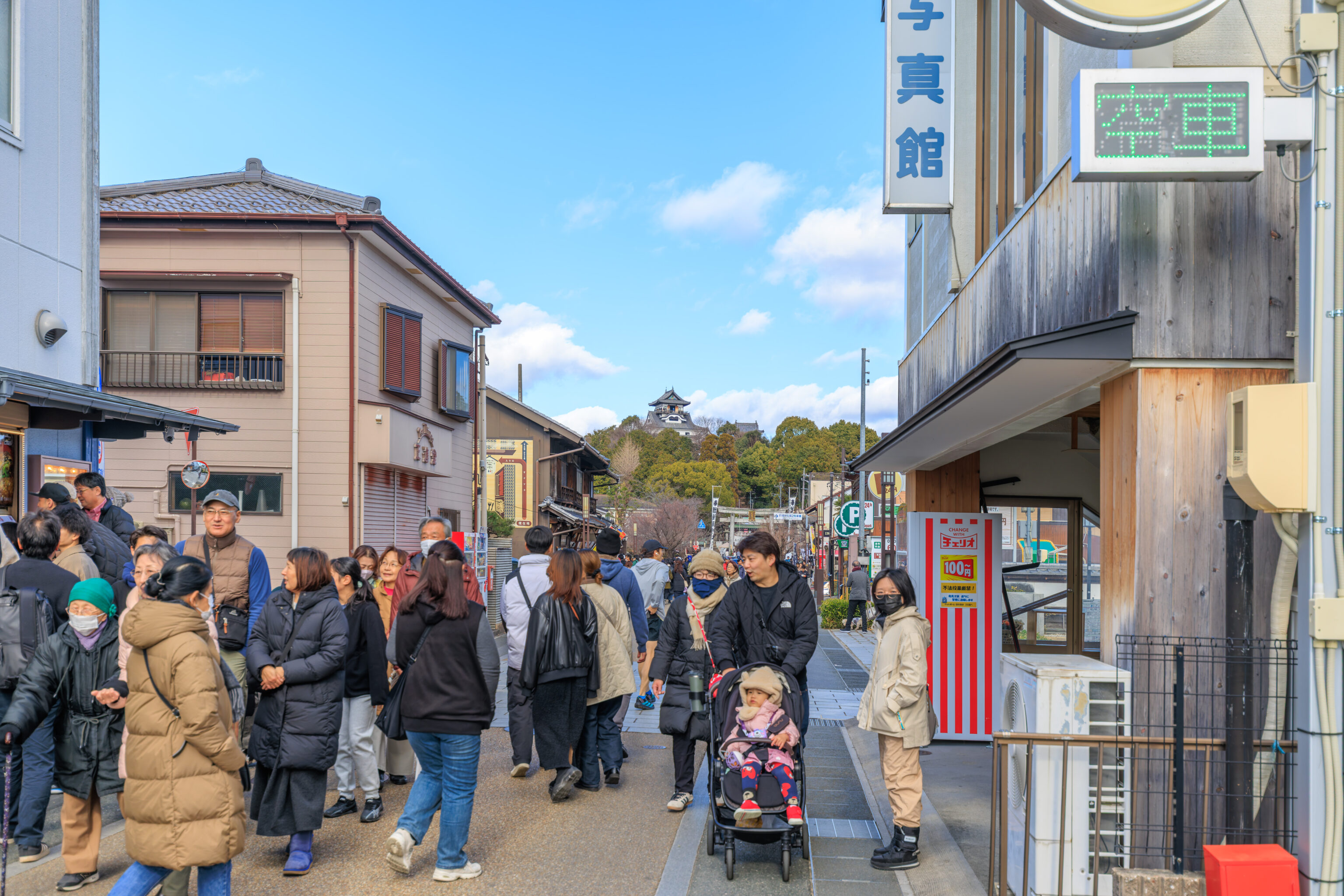
It was much busier than before!
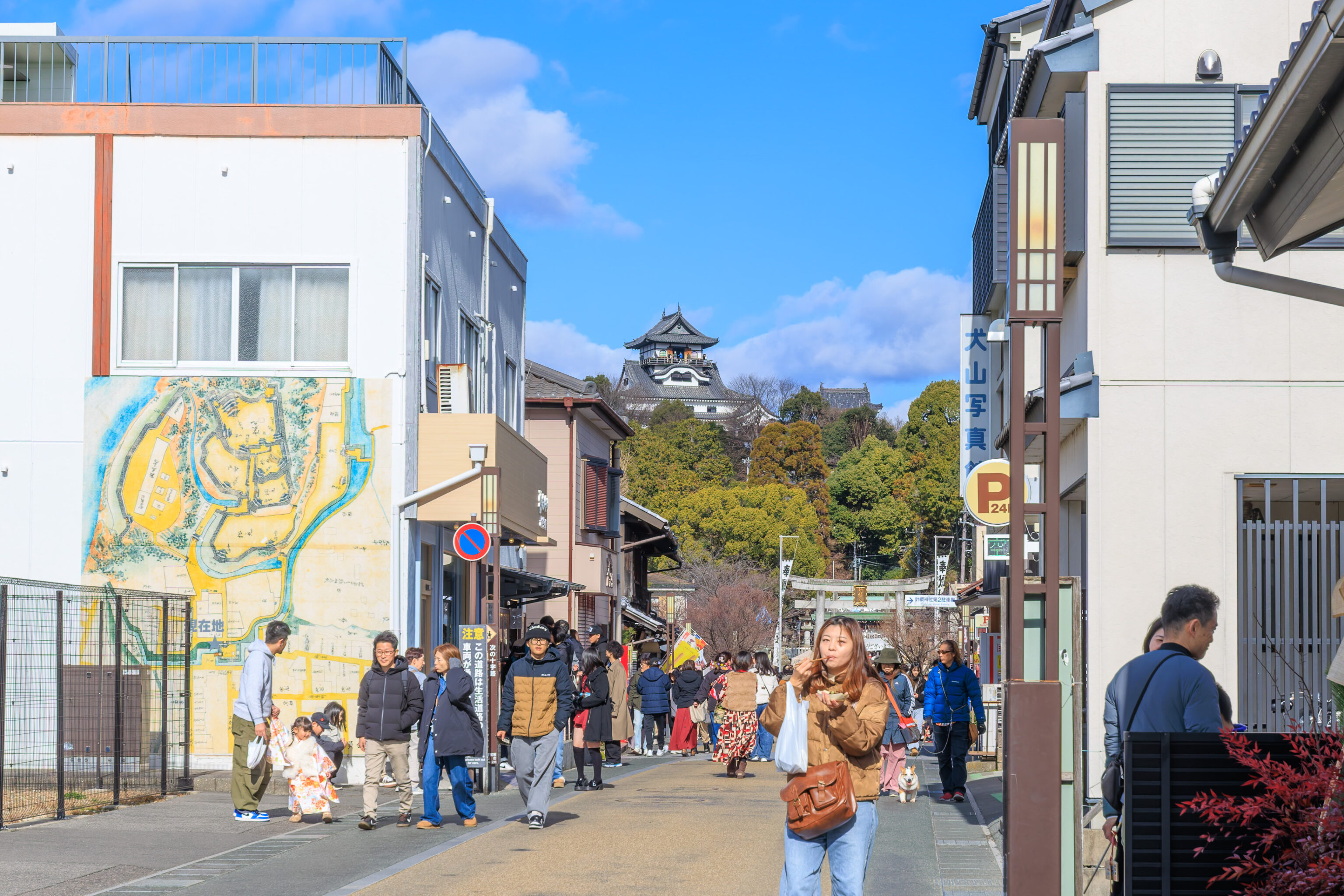
We noticed that there was a historical map of Inuyama Castle on one of the buildings. This may be the same map that we saw on a sign when descending from the castle, only it includes a larger area around it.
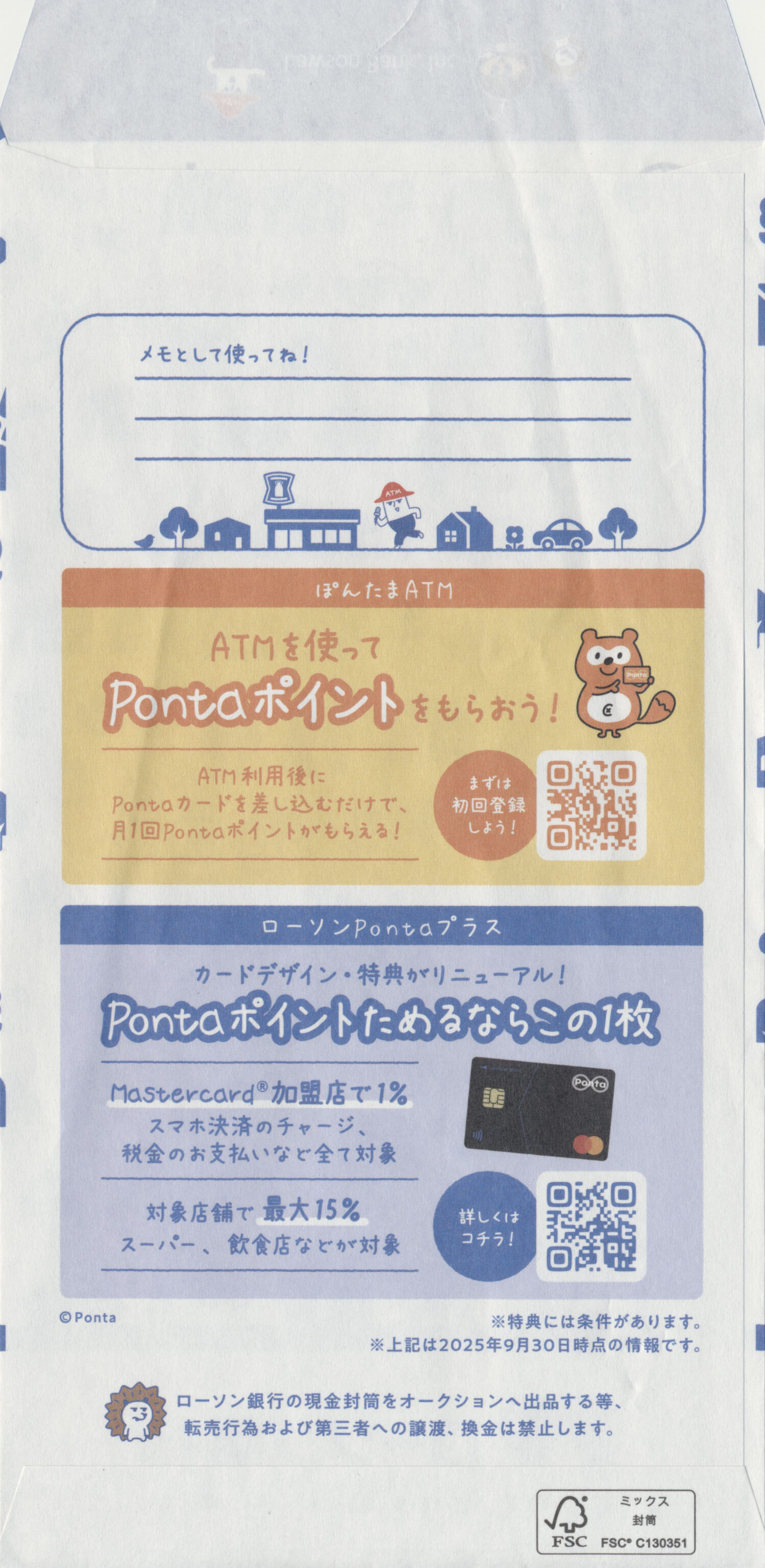

We realized that we were basically out of cash. Most of the food establishments here don’t take credit cards, which is pretty typical in these sorts of places in Japan. So, we needed to find an ATM. We ended up going south until we reached the road that leads to Inuyama Station to visit a Lawson near that corner.
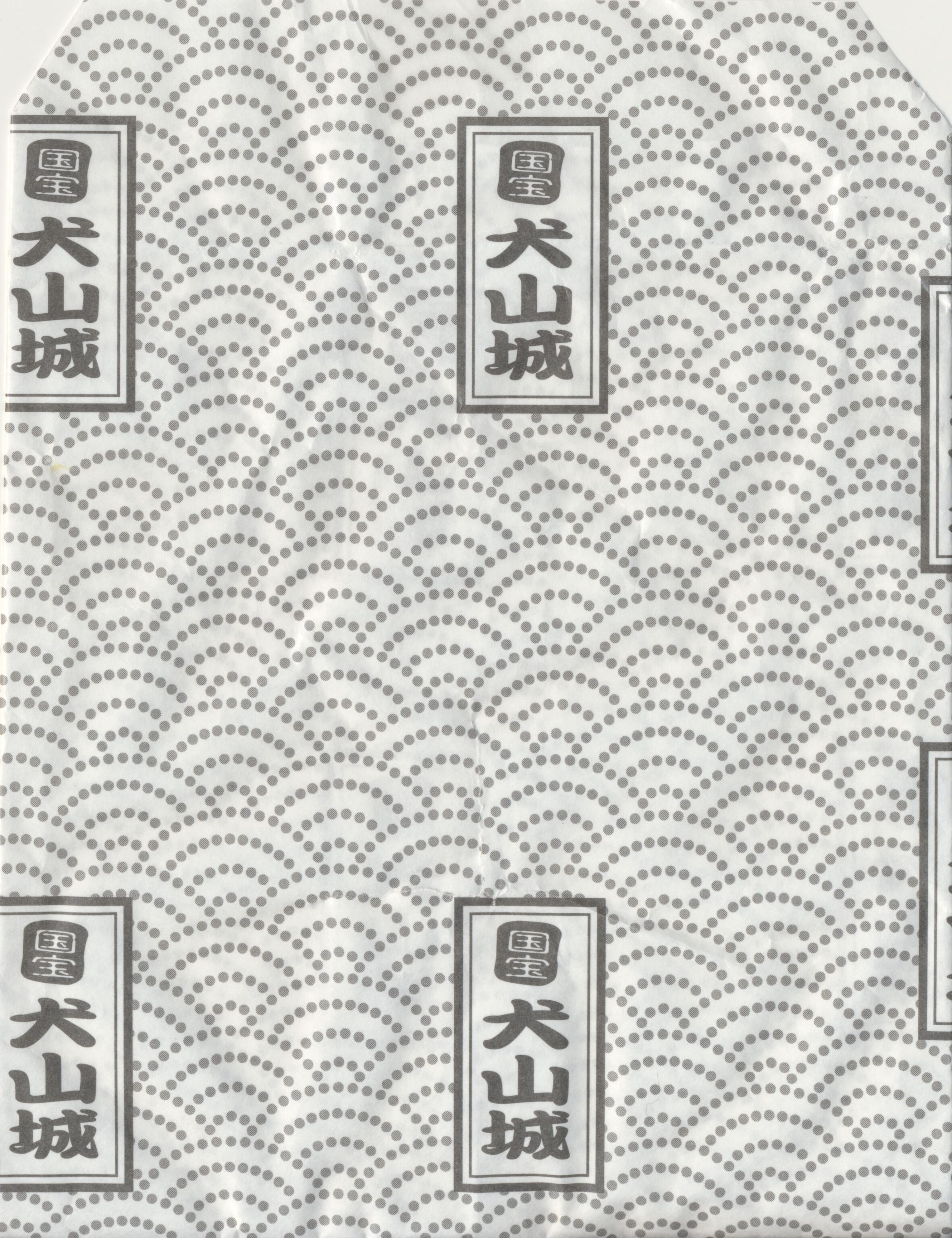
This cash envelope may or may not be from this visit…
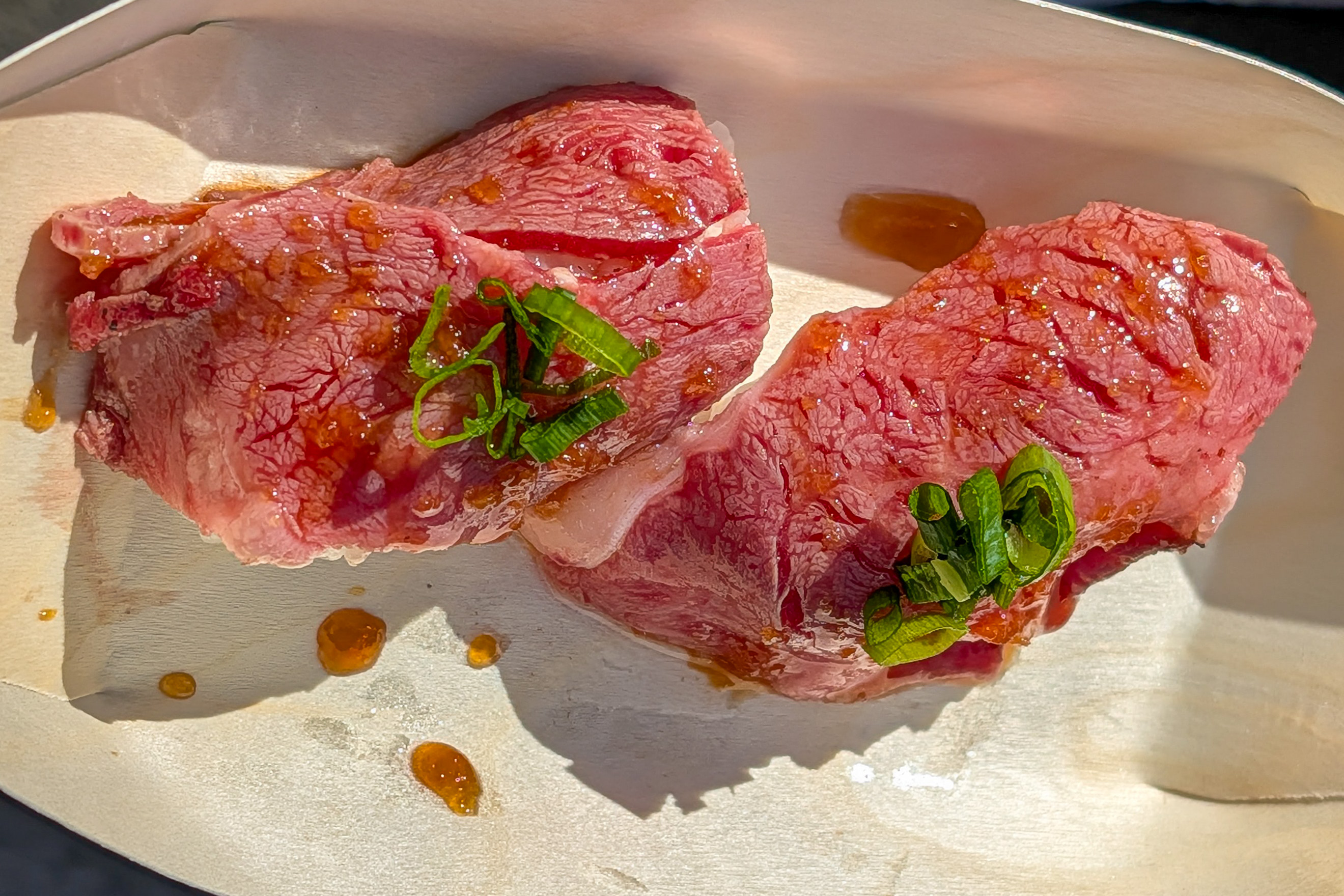
After getting our money, we had some Hida Beef, the local wagyu from Gifu Prefecture, sushi at 犬山牛太郎 Inuyama Gyutaro. It was good but a bit expensive.
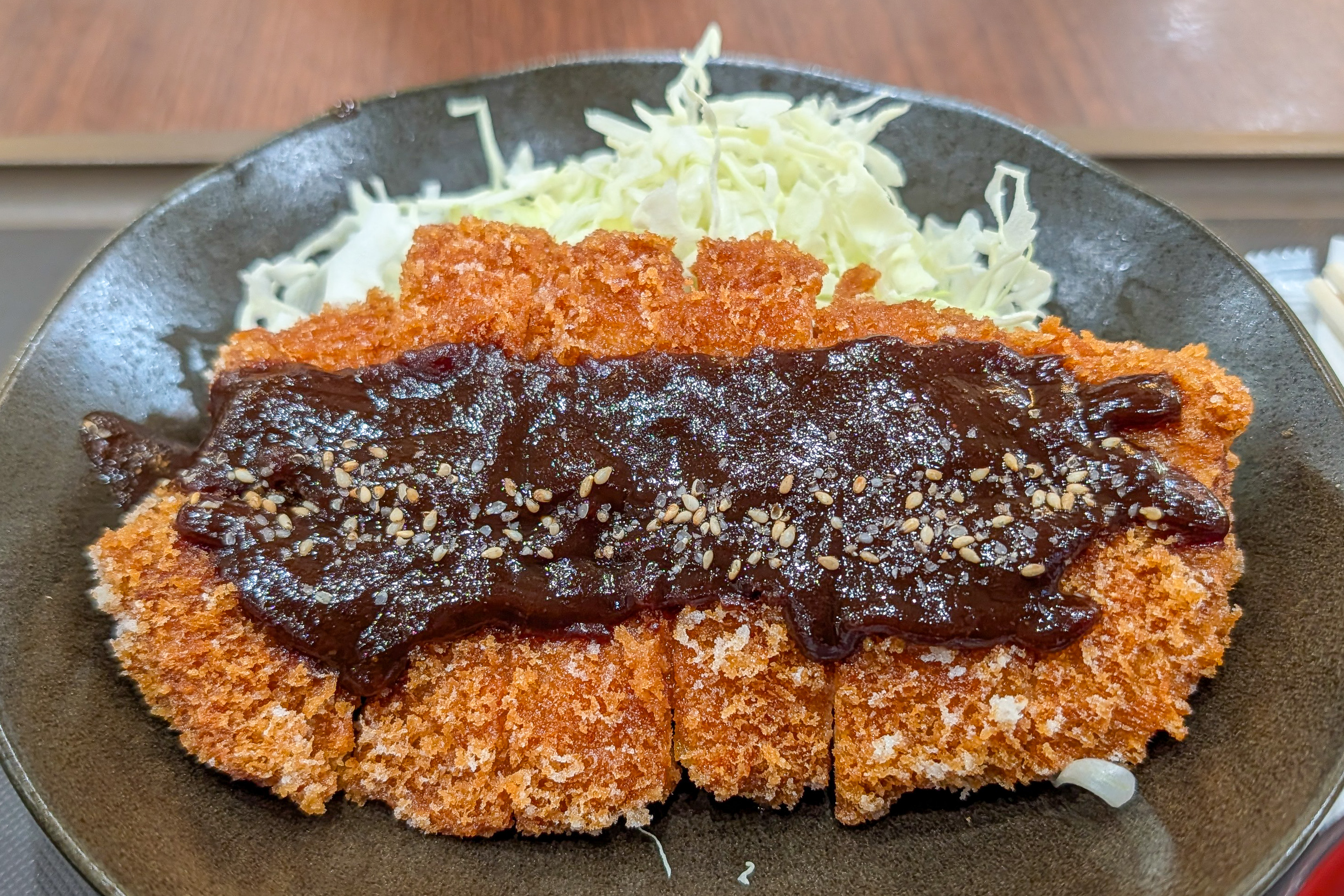
We went for something more substantial to eat at 犬山ぐーまる Inuyama Gu-Maru. This wasn’t our first choice of places to eat but many restaurants are closed for the New Year holidays. It was kind of like a food court style restaurant. We got just one misokatsu. While it was well cooked, the pork was of lesser quality than what we generally have in Japan.
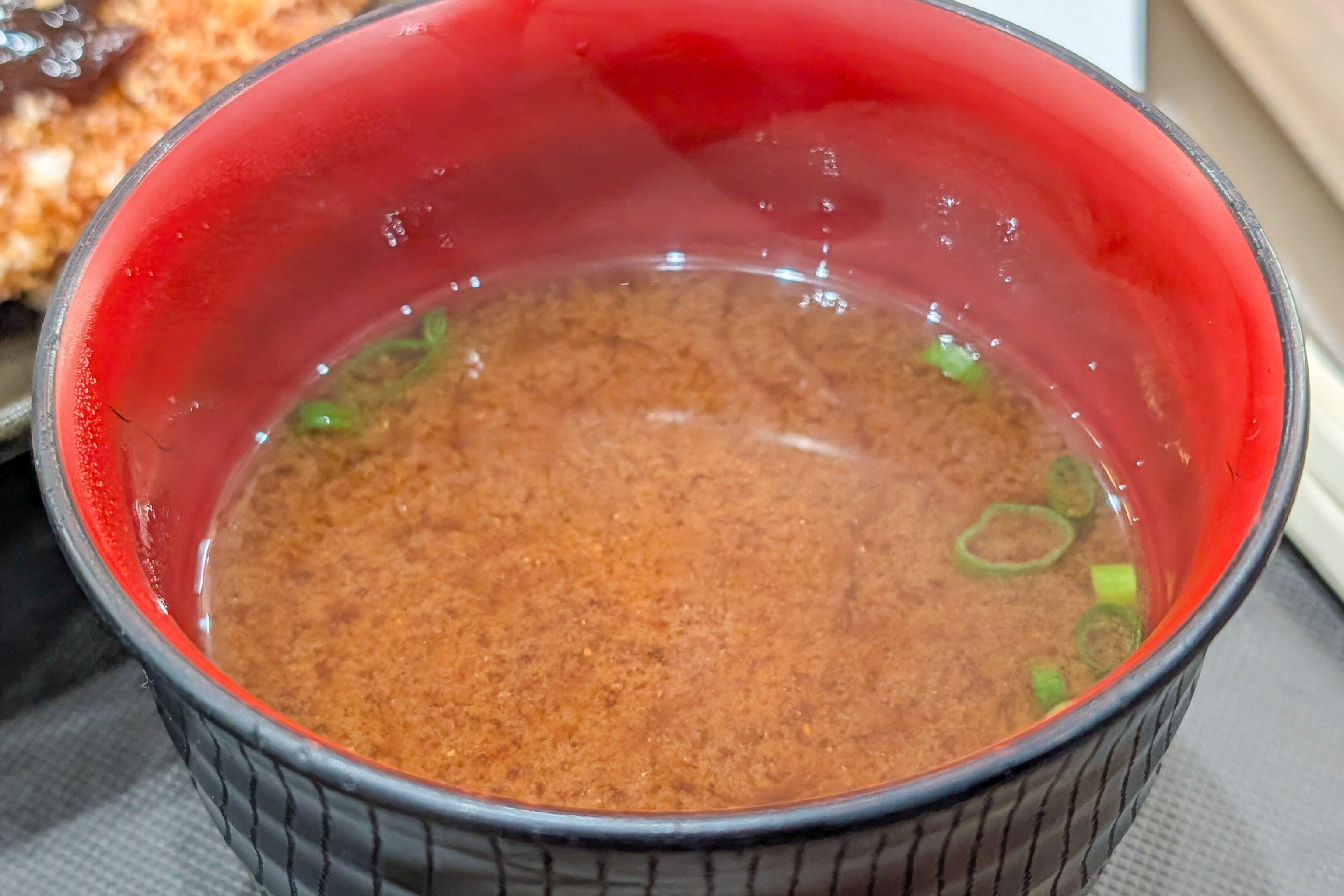
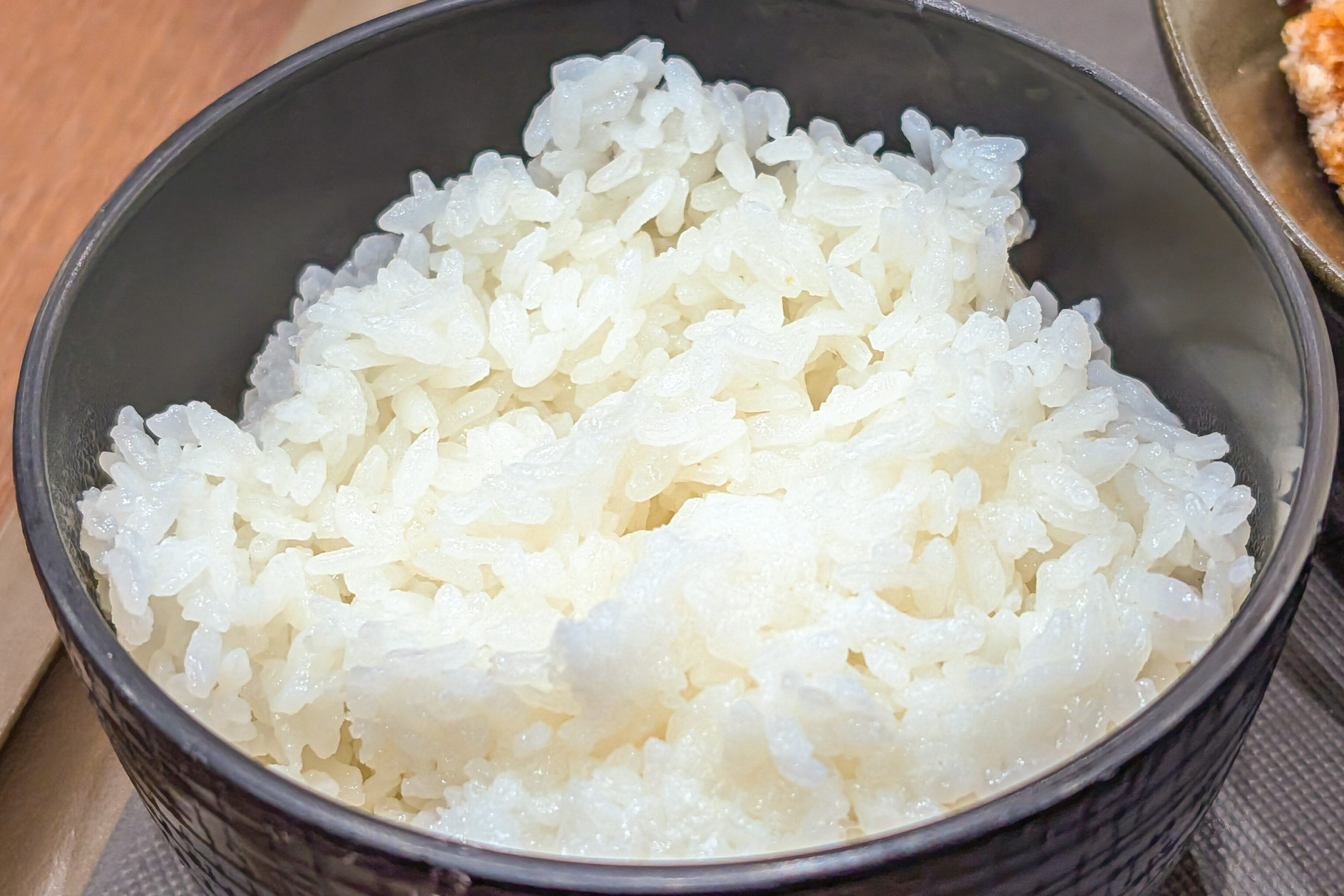
The meal also included miso soup and rice.
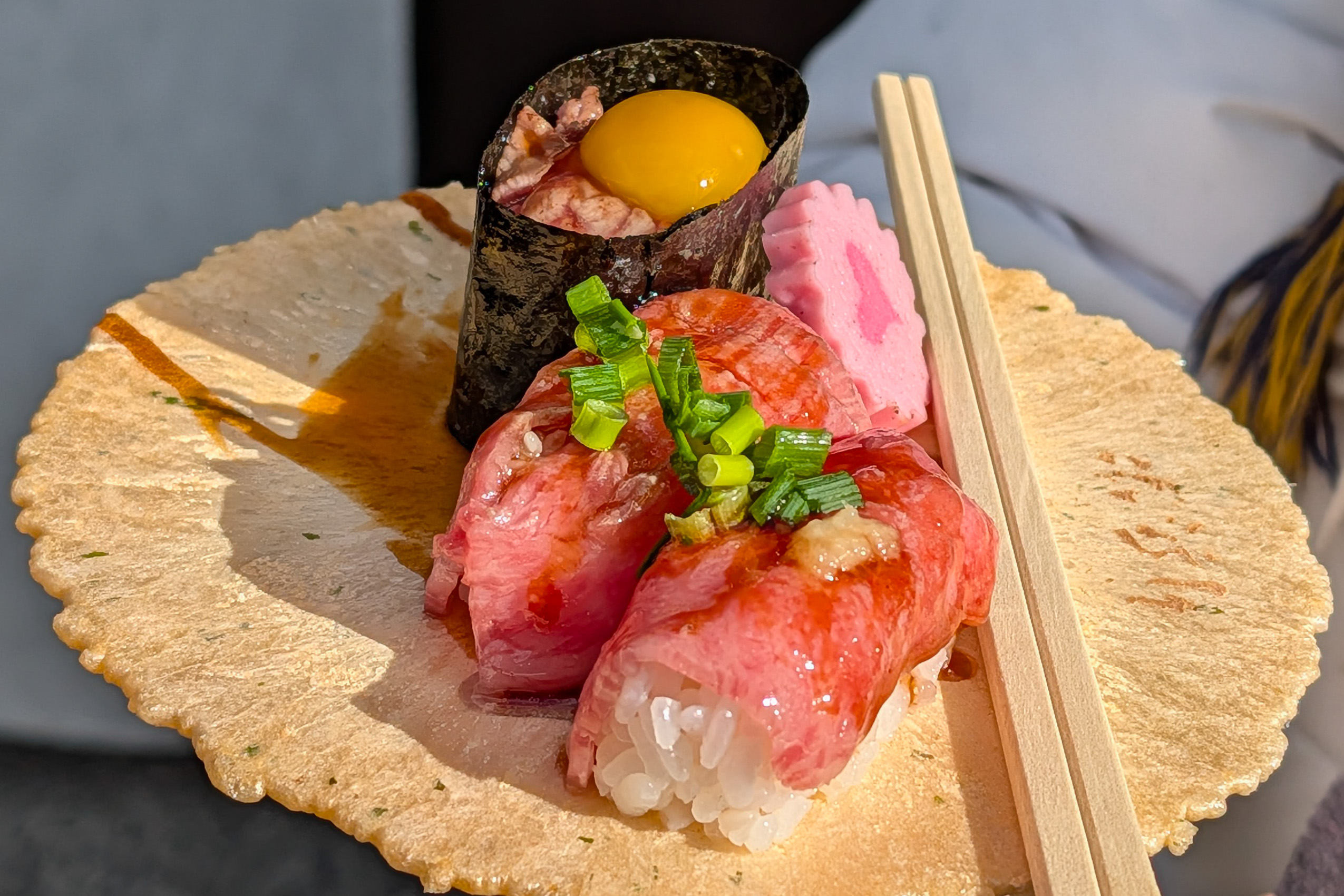
Luxurious Seared Hida Beef Sushi
We next got more Hida beef sushi at 肉兵衛 Nikubei. This shop actually has a full restaurant but it was closed. So, we visited their smaller shop instead. It was the kind of place where you order from a window outside. It was served on a large senbei. Again, very good, if expensive. The senbei was pretty strong and worked well as a plate. It required much more effort than expected to break in half!
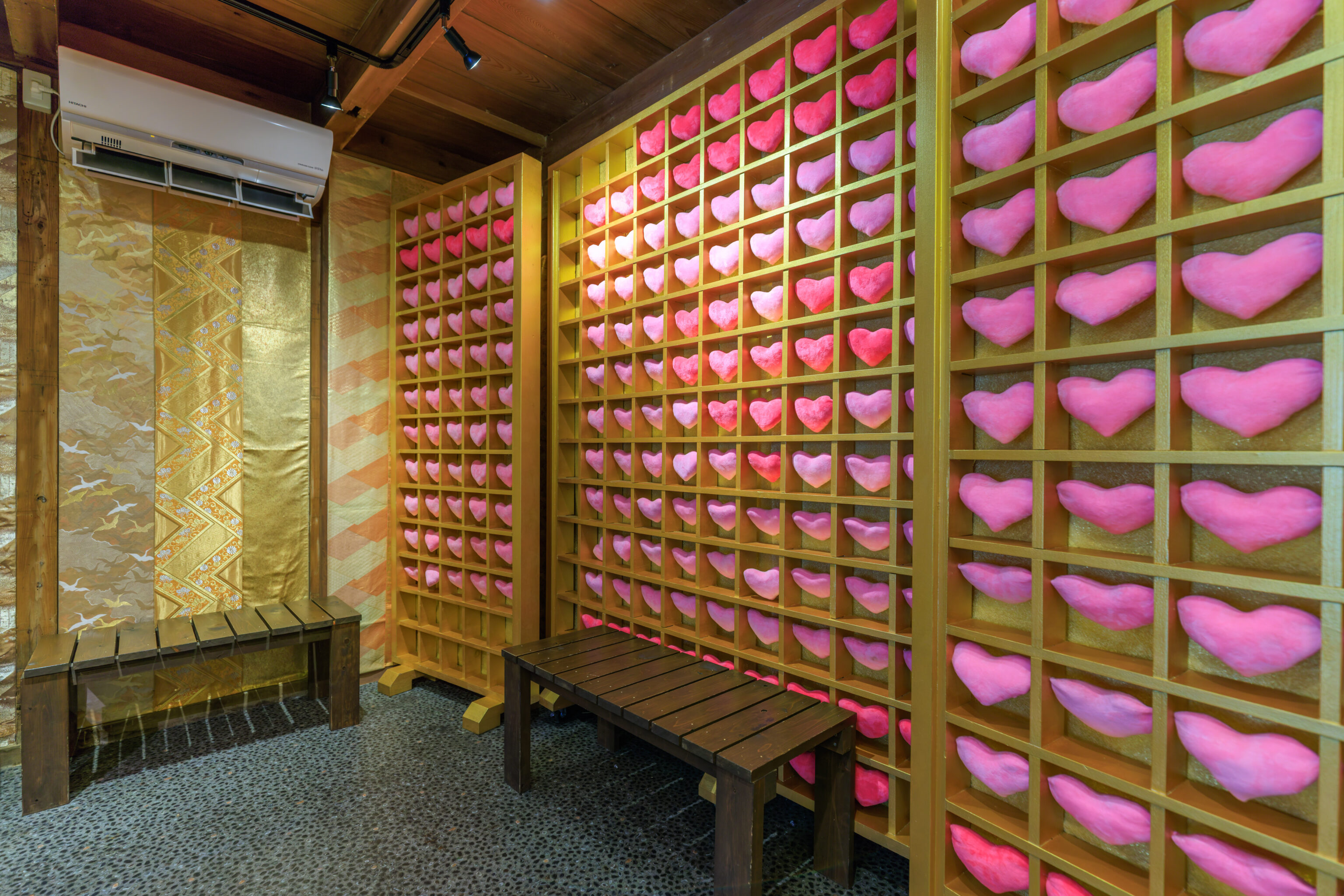
They actually had a little seating area if you didn’t want to eat outside. It was a nice little space with many hearts, just like at Sanko Inari-jinja.
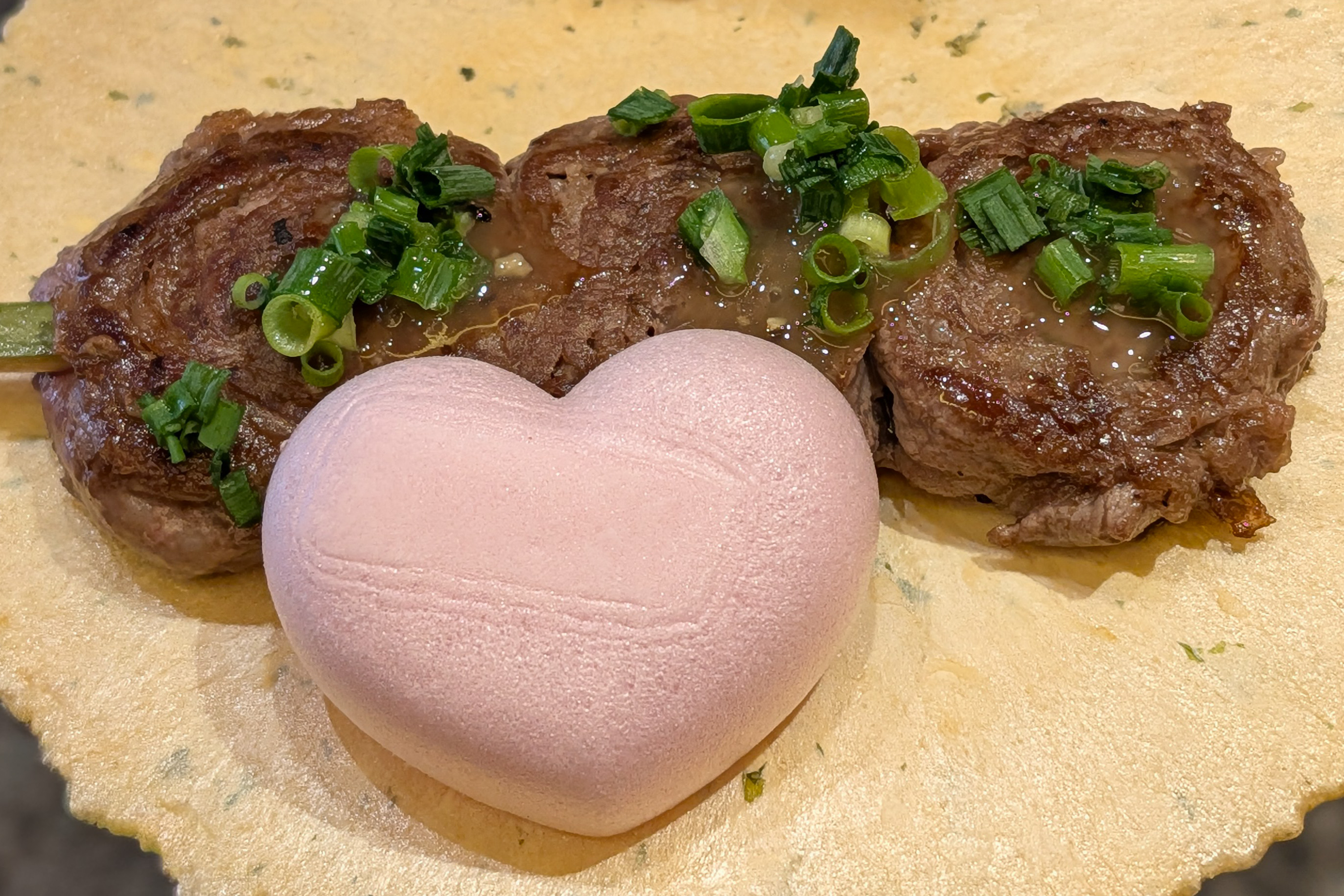
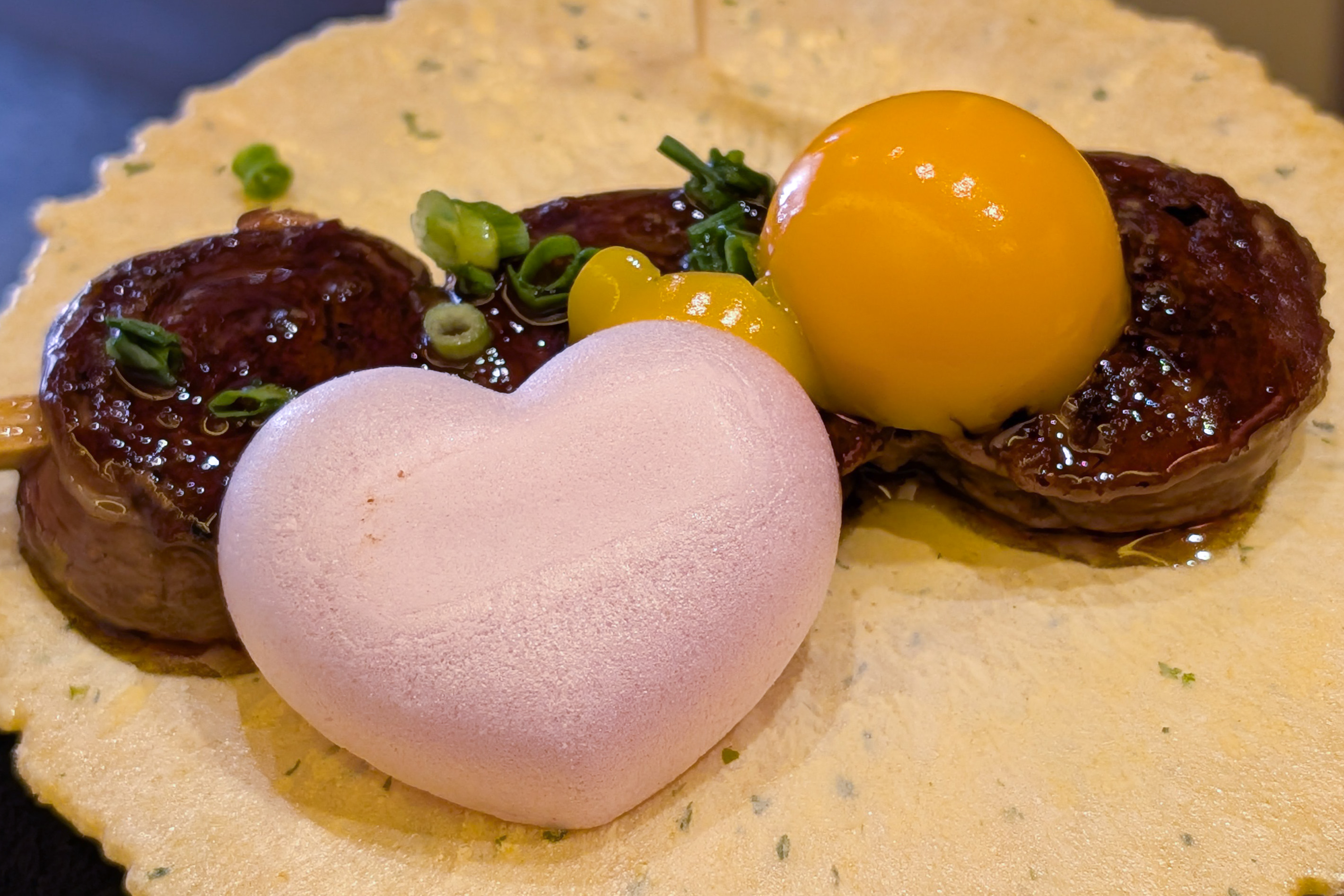
蘭丸 Ranmaru, the shop next door, sells grilled Hida beef skewers. We got the plain as well as sukiyaki flavored. The sukiyaki flavored one was better.
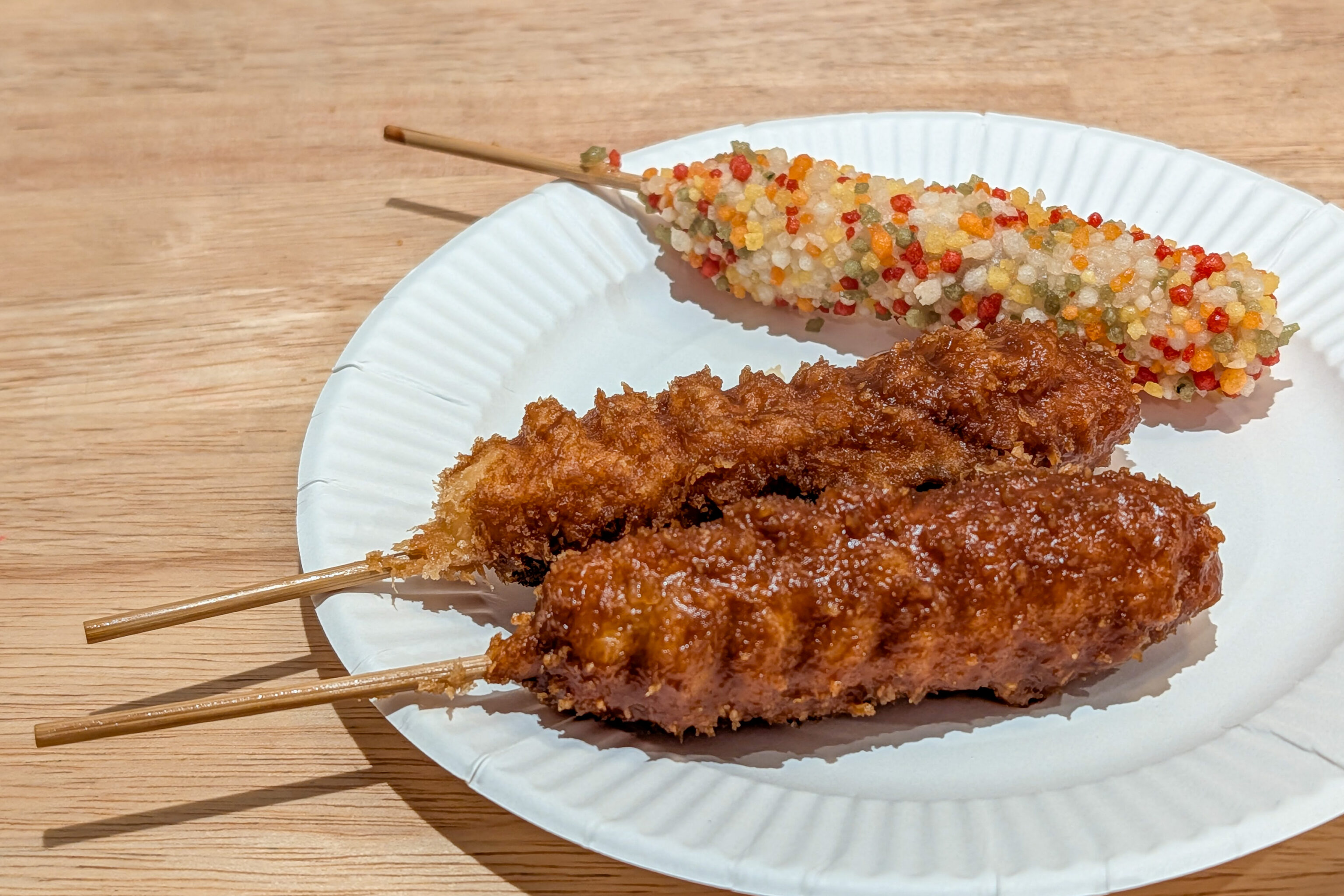
We got three kushikatsu, basically deep fried pork skewers, from となまる Tonamaru – two with miso sauce and a colorful one. The color didn’t add anything to the flavor, it was actually pretty bland without any sauce. All were rather small and light on meat. Like many of these sorts of snack places on shopping streets in front of temples and shrines, not a great value.
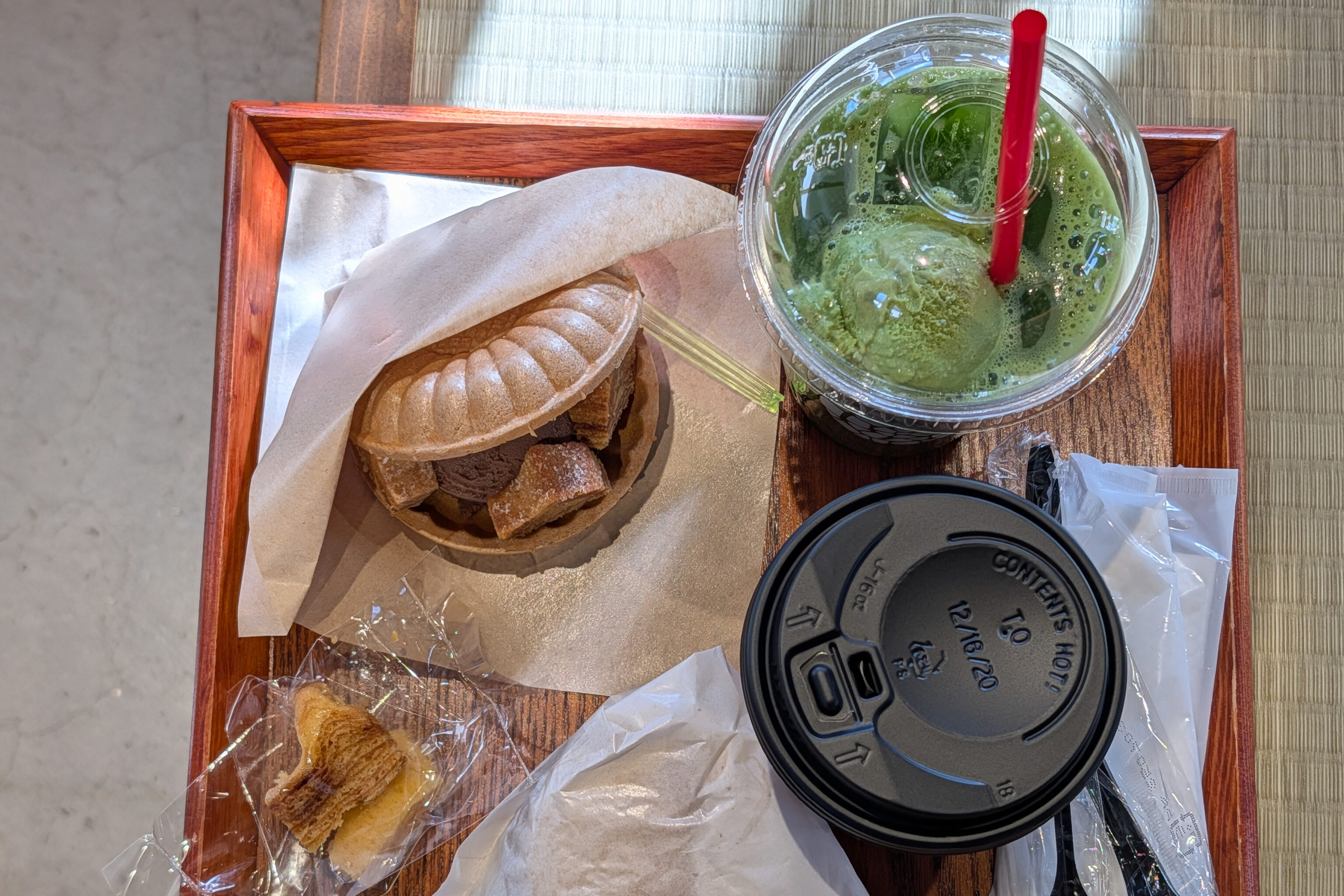
We got a final snack at ココトモ茶屋 Cocotomo Chaya. This shop is actually run by a rice farm! We got cold and hot matcha drinks…
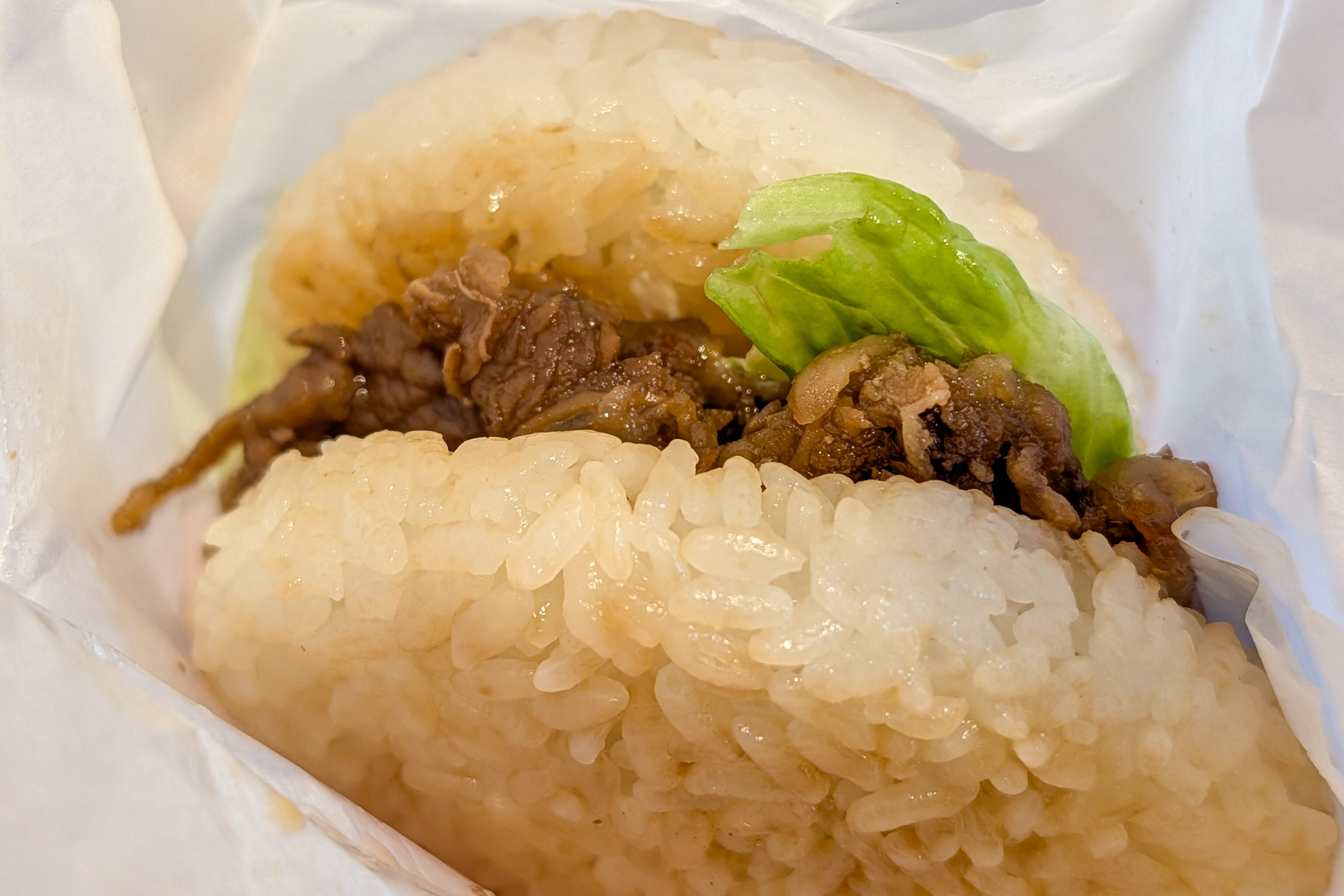
As well as a Japanese beef and lettuce rice burger…

and a hard baumkuchen brown rice parfait. Overall good but expensive.
After all that eating, we decided it was time to move on! Our ultimate destination was Daisho-ji, a Buddhist temple to the east, but there were some places to visit on the way. We started by heading back towards Inuyama Castle.
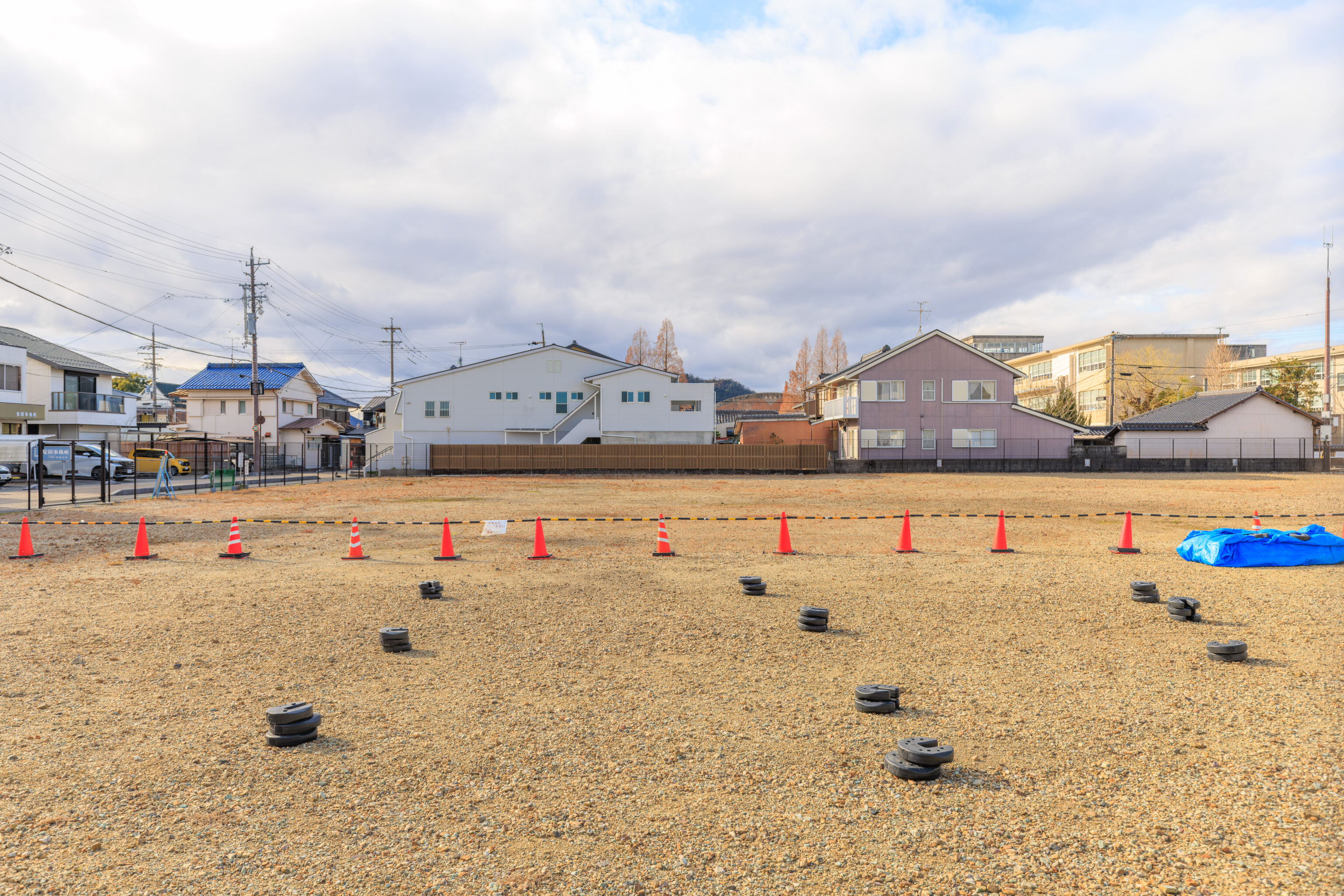
We noticed this fenced empty field. It turns out it is an archaeological excavation site!
Excavation Survey of the Inuyama Castle Ote-mon Gate *Masugata* Site (Former Site of the Inuyama City Welfare Center)

【Purpose of the Survey】
・During the Edo period, the area surrounding the former Inuyama City Welfare Center site housed the Ote-mon *Masugata* — a fortified gateway complex serving as the entrance to Inuyama Castle — which consisted of the Ote-mon (main gate) and associated structures such as stone walls, earthen walls, and moats.

・An excavation survey conducted in 2011 at the site's former parking lot revealed traces of a moat that formed part of the "Ote-guchi" (main entrance area) located to the west of the Ote-mon *Masugata*; this location is currently a candidate for additional designation as part of the Inuyama Castle Site, a National Historic Site.

・To evaluate the potential for this additional historic site designation and future utilization, an excavation survey was conducted from July to November 2021. The objective was to determine the extent to which underground features—such as moats and earthen ramparts—remain preserved, as well as to ascertain their dimensions and shapes.
– Text from a sign, transcribed using Google Gemini and translated using Google Translate.
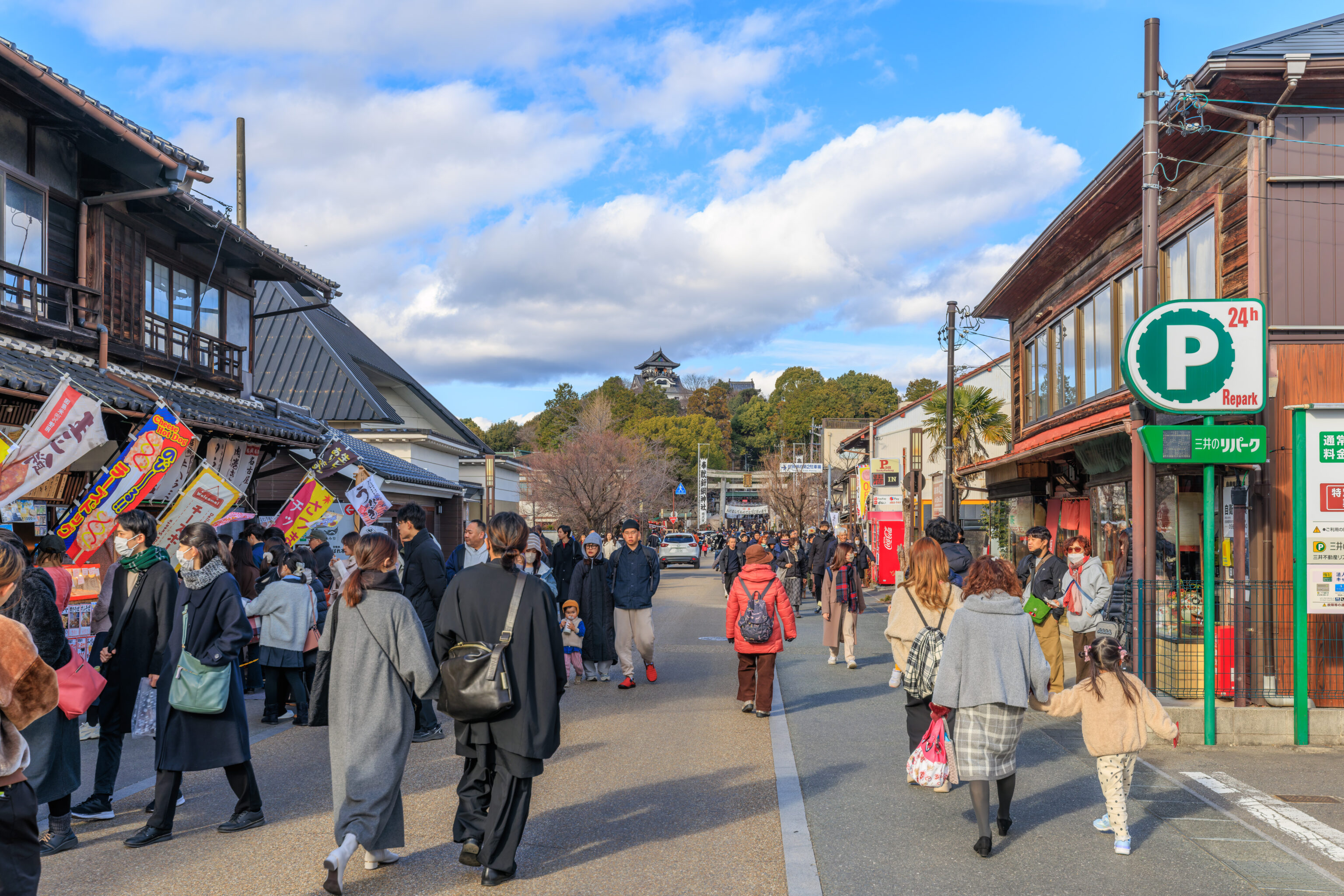
We continued walking north…
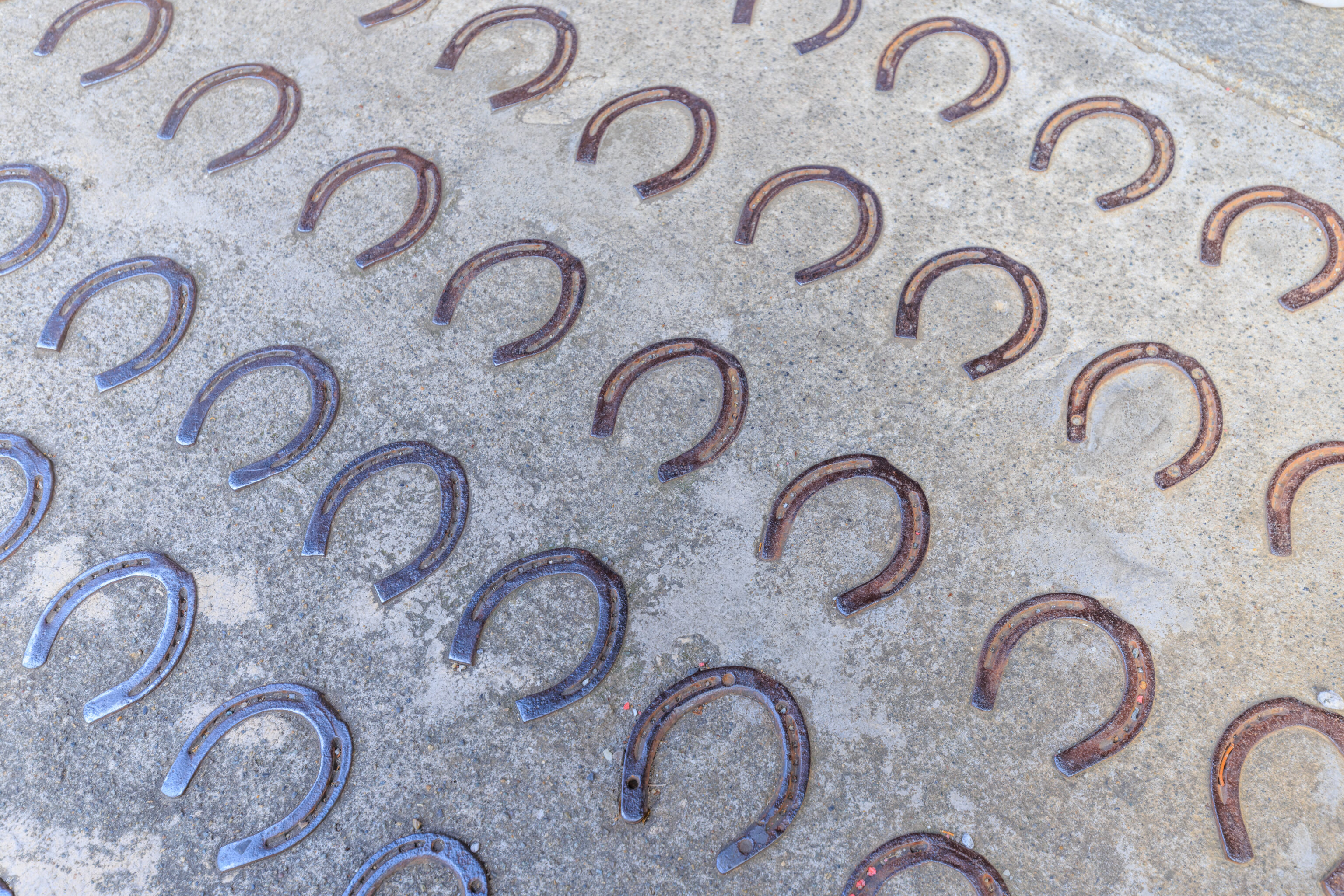
The ground here, incidentally in front of another Cocotomo shop, had embedded horseshoes!
Kiso River Promenade
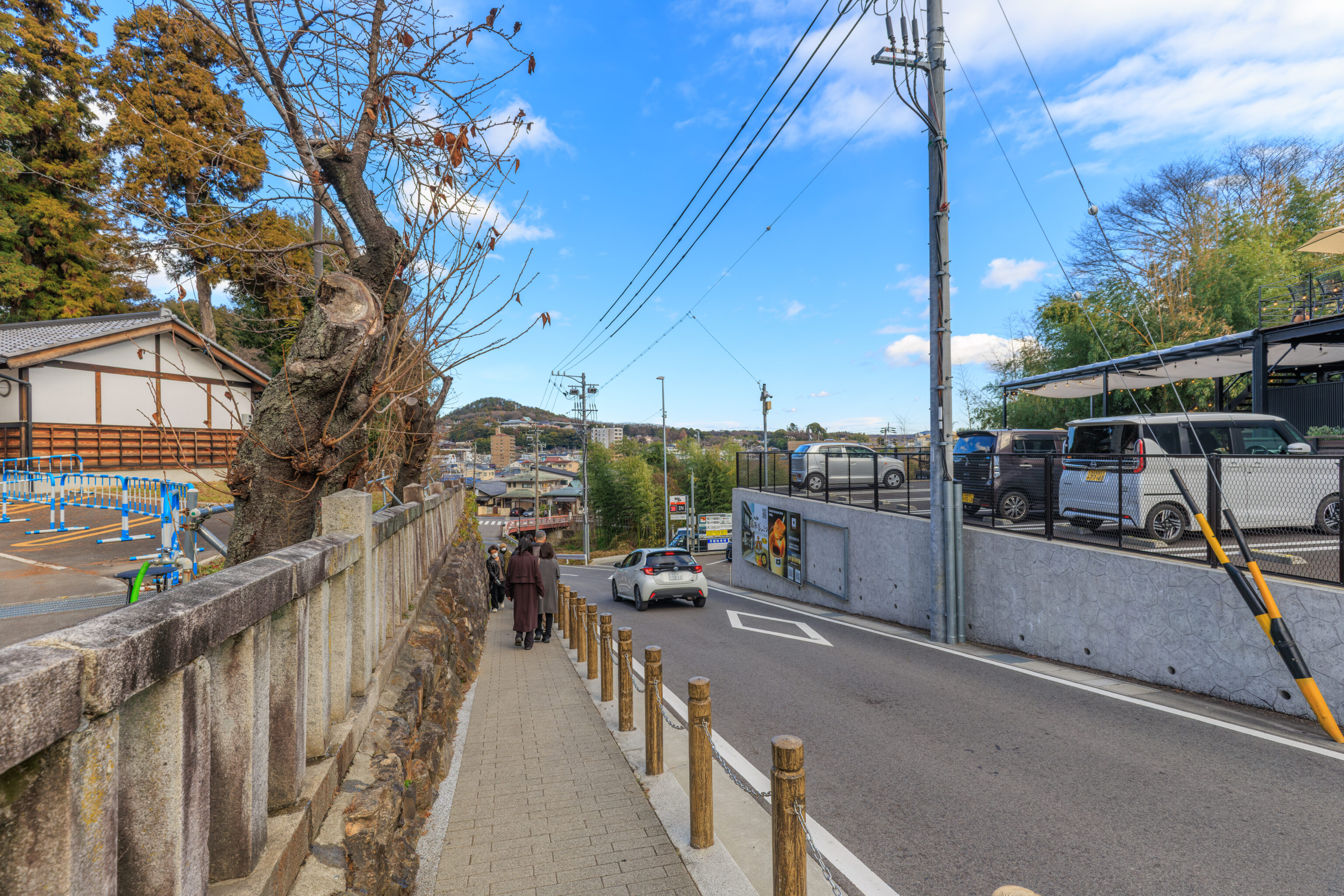
We turned right to head down this slope to head to the east.
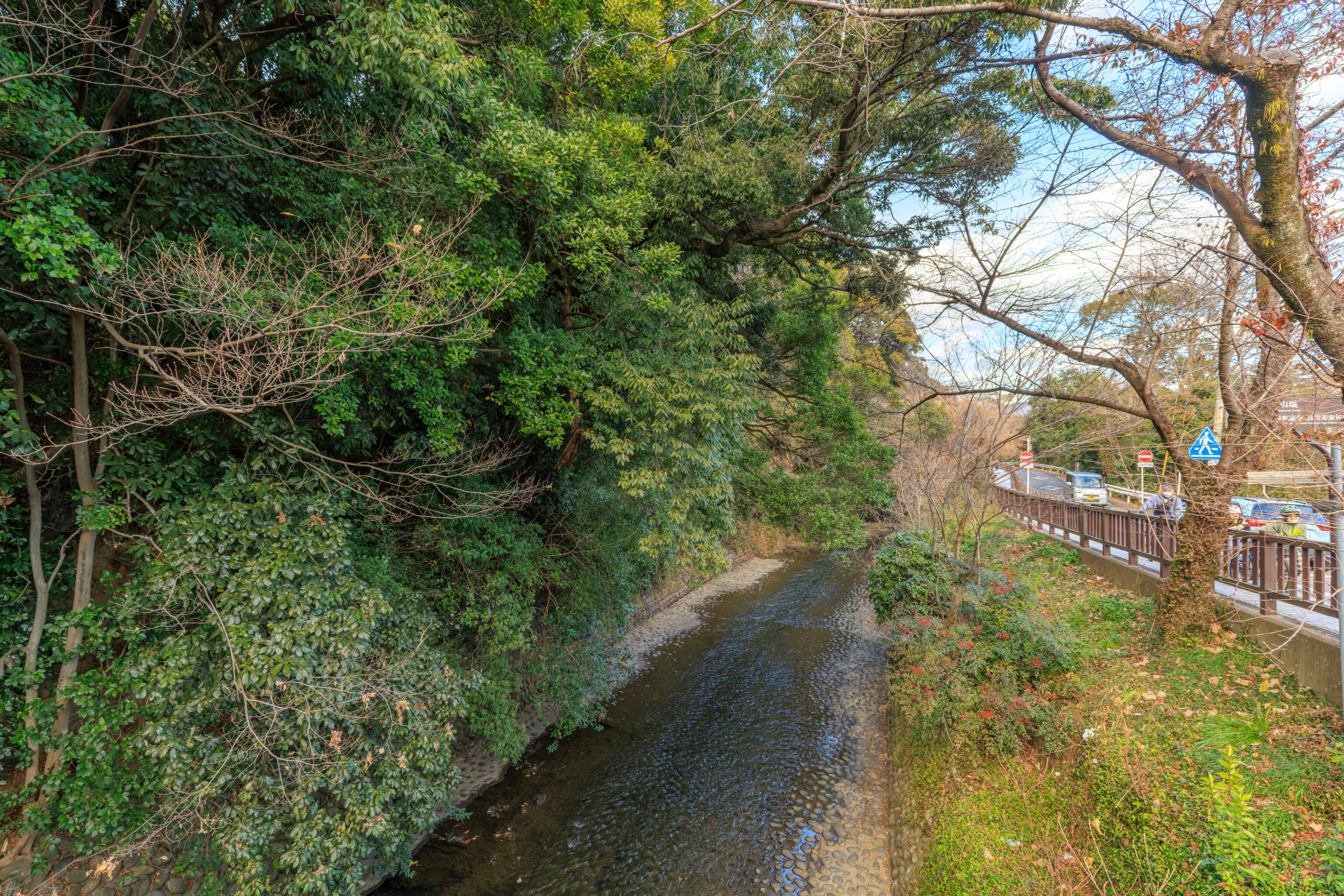
The road crossed over a small river, the 郷瀬川 Gosegawa. Technically, this part may be the 新郷瀬川 New Gosegawa as the Wikipedia page indicates that the part of this river by the Kiso River was rerouted and now flows through an artificial channel. It is labelled this way on Google Maps.
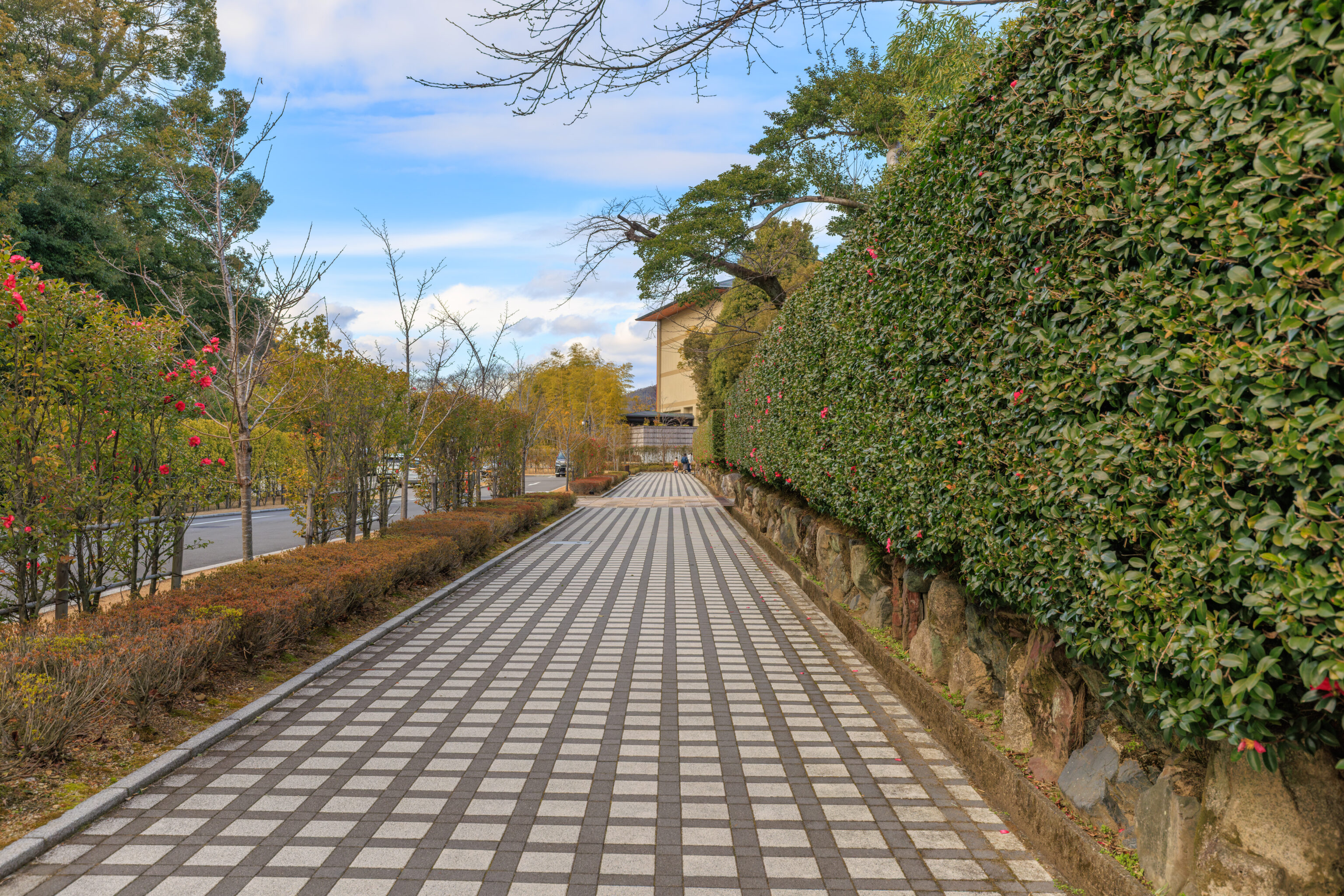
Earlier, while we were at Inuyama Castle, we saw the Hotel Indigo Inuyama Urakuen from above. The 有楽苑 Urakuen in its name comes from a garden which is on the other side of this hedge to our right. The garden is just to the south of the hotel’s two main buildings, one of which can be seen ahead.
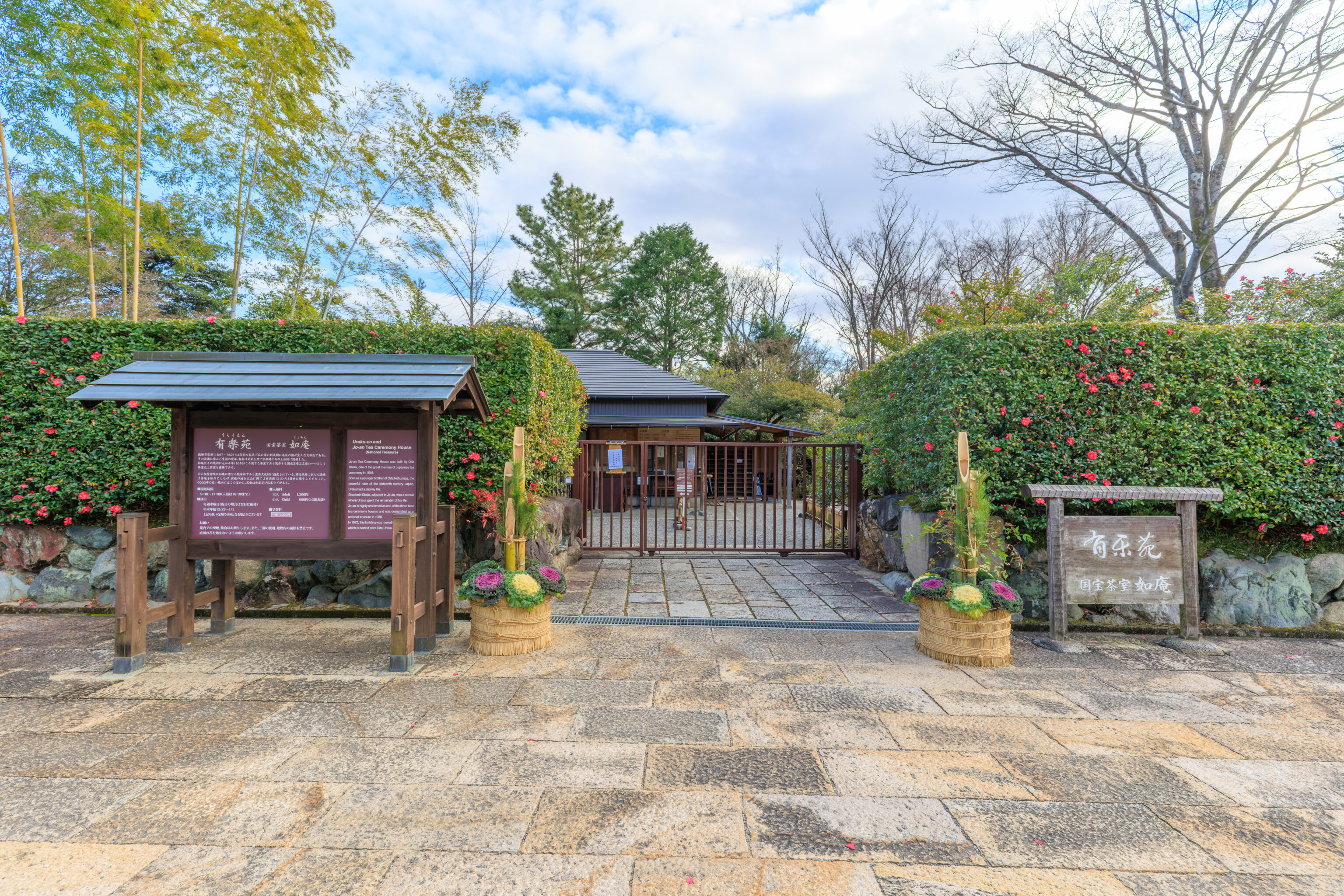
The main entrance was actually around the corner by the southeast corner of the hotel. And, it turns out that the garden is closed today!
Urakuen
National Treasure Tea House: Joan

Oda Urakusai (1547–1621) was the younger brother of Oda Nobunaga and a renowned tea master from Owari Province who flourished during the formative era of the tea ceremony.

In the twilight of his eventful life, Uraku left the samurai class to live in seclusion at Shoden-in, a sub-temple of Kennin-ji in Kyoto.

Joan is a tea house built on those temple grounds around 1618; it is a precious architectural legacy in the history of the tea ceremony, recognized as one of the three great extant tea rooms designated as National Treasures.

The former Shoden-in Shoin (study hall), which adjoins Joan, served as his retirement quarters and is designated as an Important Cultural Property. Since the Meiji era, these structures were relocated several times before finally finding a permanent home in Inuyama, where they were named "Urakuen" to preserve them for future generations.

The spacious 4,000-tsubo (approx. 13,200 m²) garden also features other tea houses, such as Moto-an and Ko-an.

■ Opening Hours
9:30 AM – 5:00 PM (Last entry at 4:30 PM)

■ Closed
Every Wednesday (if a national holiday falls on a Wednesday, the garden will be closed the following day instead)

Year-end and New Year holidays: December 29 – January 1

Please note that the garden may also close on an irregular basis.

■ Admission Fee
Adults: 1,200 yen
Children: 600 yen (under 12 years old)

■ Tea Service Fee
One serving of tea: 1,000 yen

Requests
Smoking, eating, and drinking are prohibited within the garden. The use of tripods and photography inside the buildings are also prohibited. Please refrain from stepping on the moss in the garden.
– Text from the sign to the left of the gate in the photograph above, transcribed using Google Gemini and translated using Google Translate.
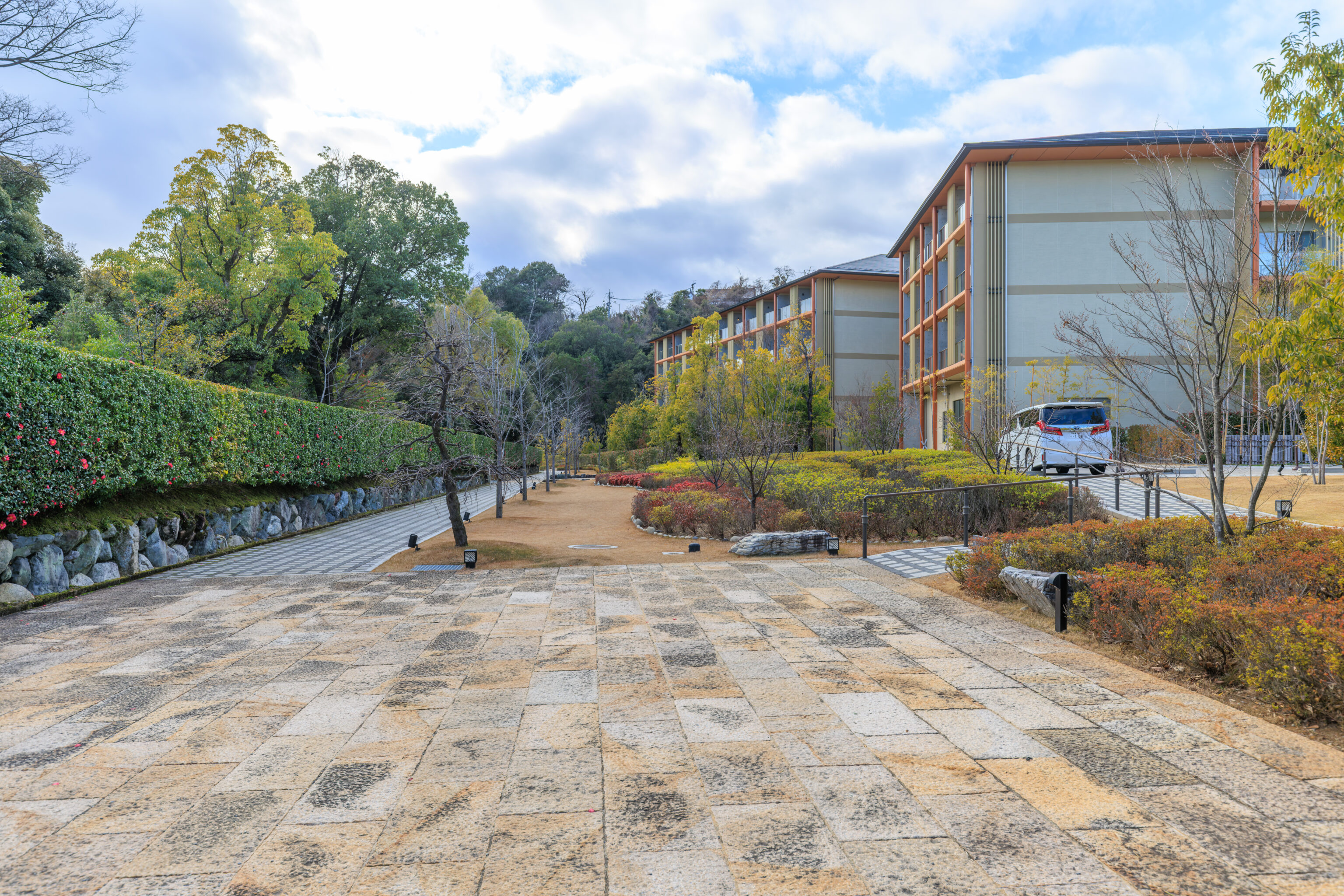
The view looking back to the west where we see the hotel’s two main buildings.
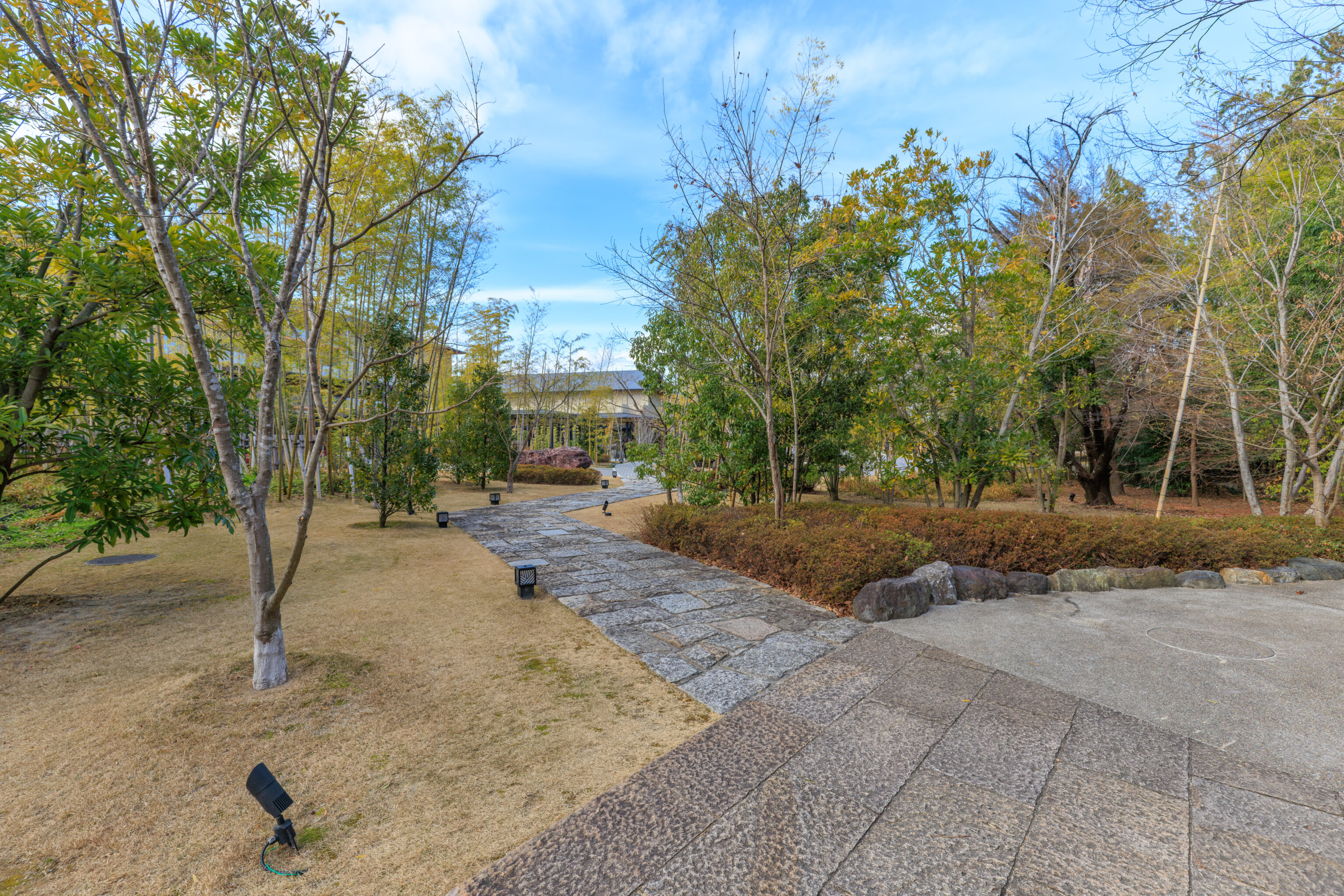
This path seemed like it would led to the hotel’s entrance. We didn’t really want to go there as we just wanted to go north to the Kiso River.
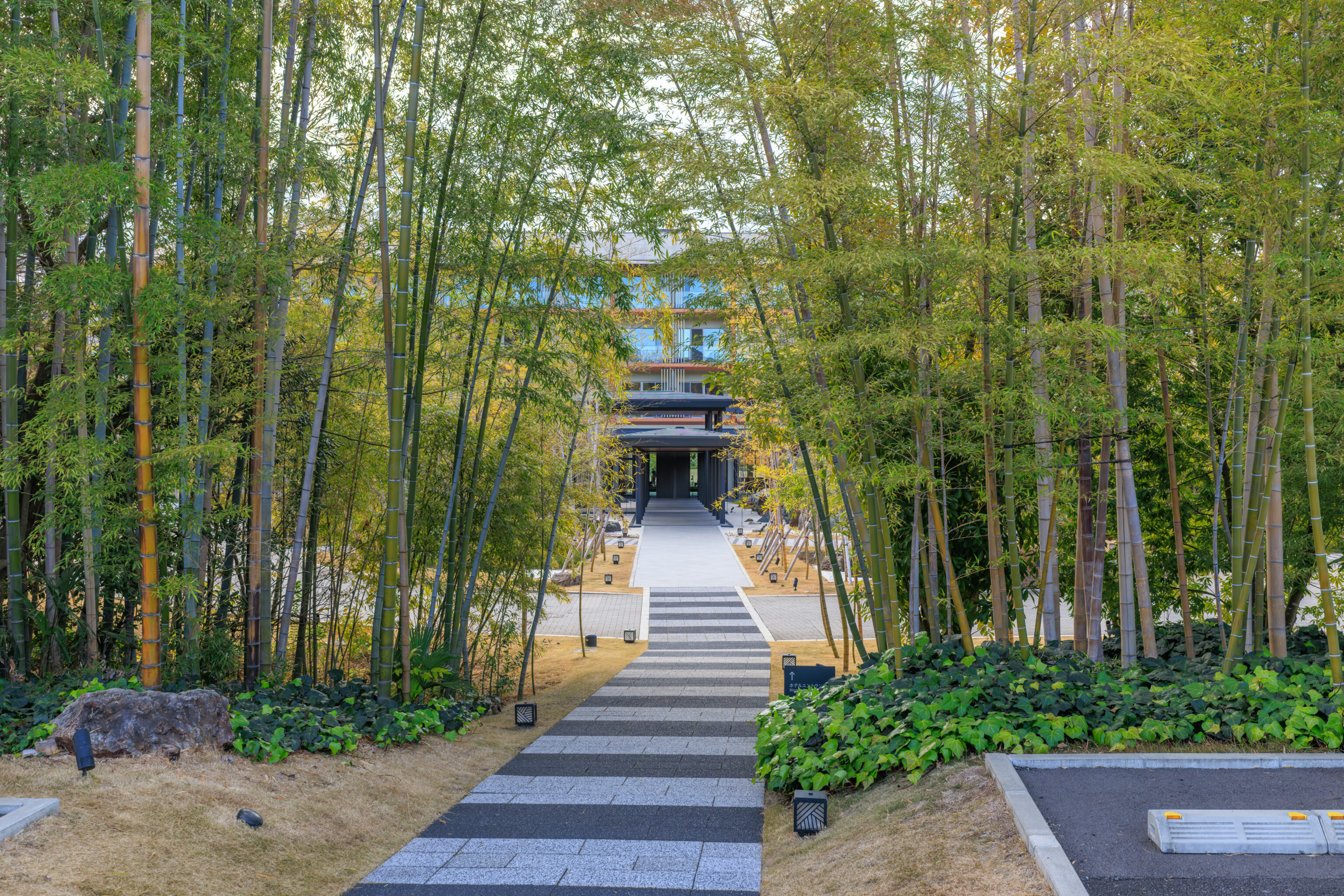
We ended up walking through the hotel’s parking lot. We passed by another path which led directly to the hotel’s main entrance.
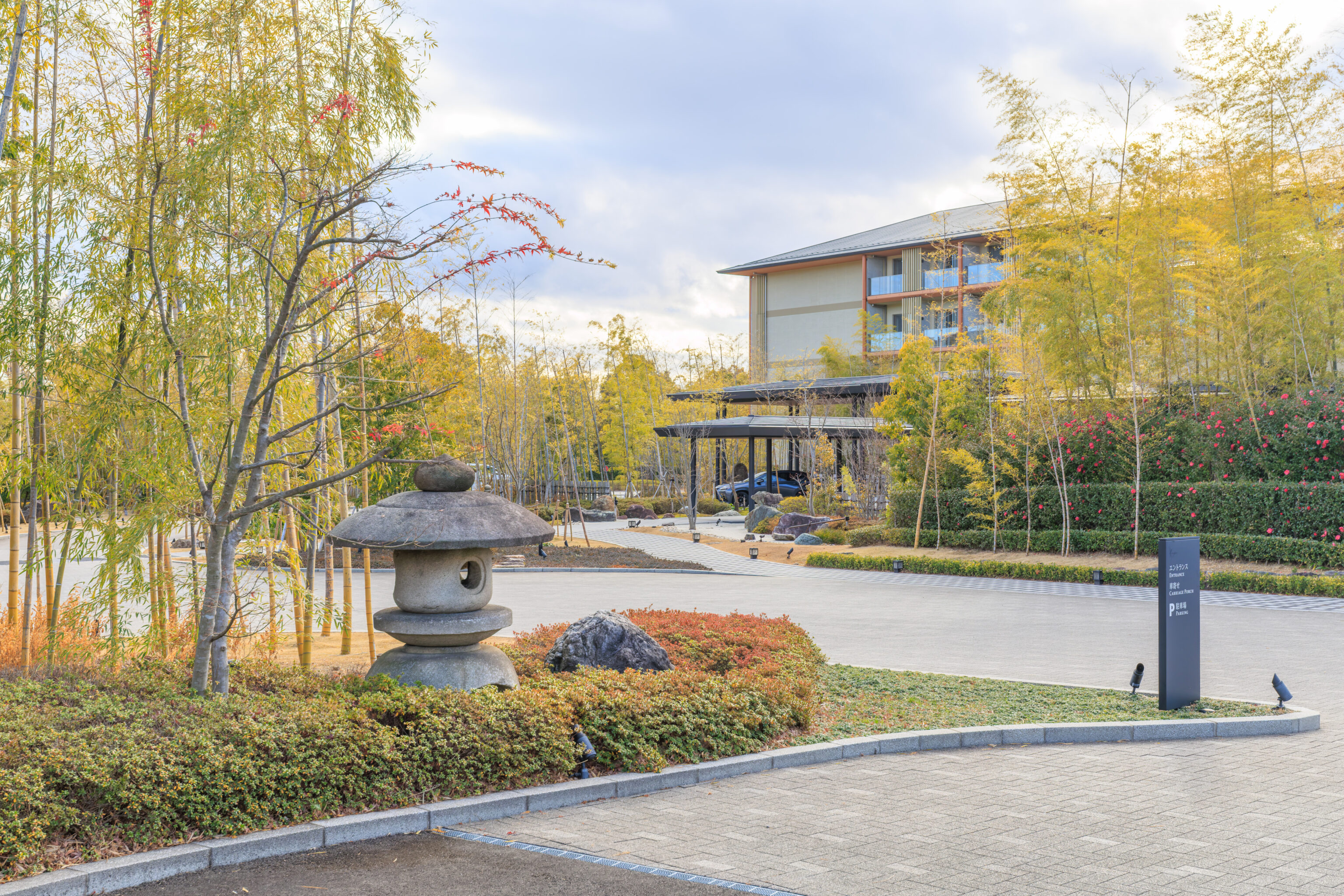
As we continued past the hotel’s eastern building, we looked back to see a stone lantern and the driveway that leads to the main entrance.
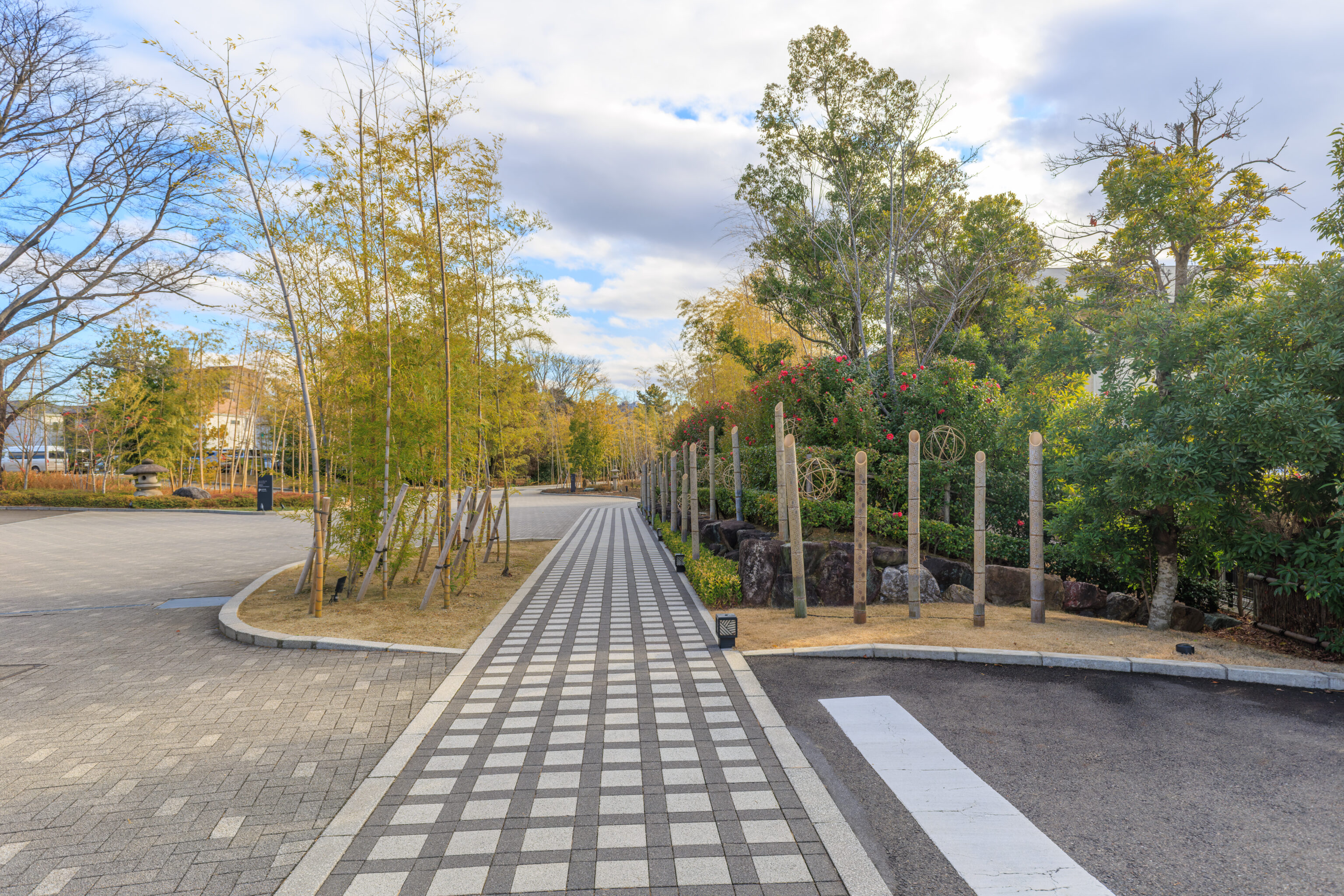
This was the view loking back from the northern edge of the hotel property. The bamboo poles on the right look very much like the ones we saw earlier that were part of the Inuyama Yoi no Michi illumination event. The event website does list the Urakuen as well as the Kiso River as locations where there is something to be seen.
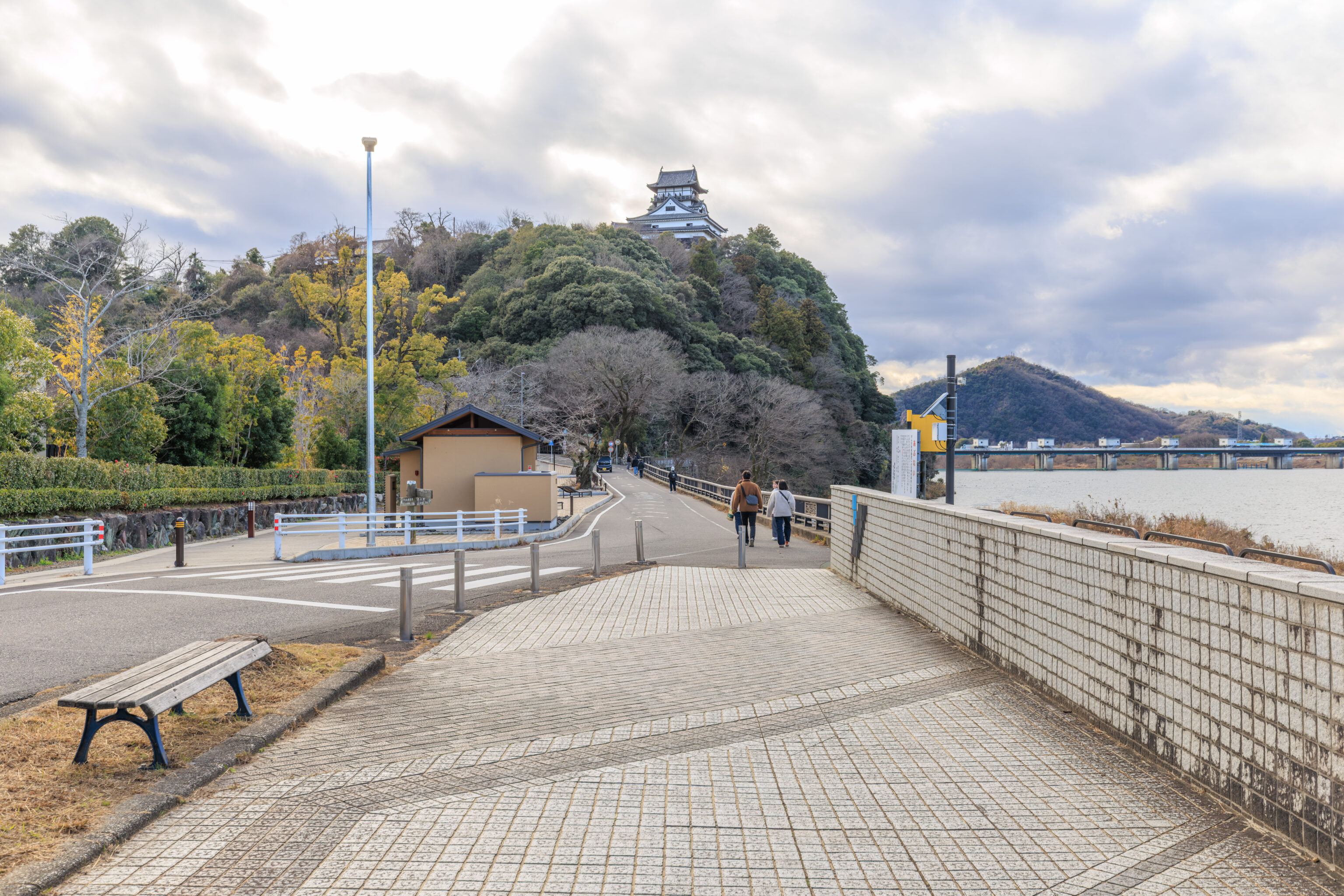
We crossed the street in front of the hotel to reach the 木曾川河畔遊歩道 Kiso River Riverside Promenade. This narrow park runs between the hill that Inuyama Castle sits upon and the bridge just to the north of Inuyamayuen Station.
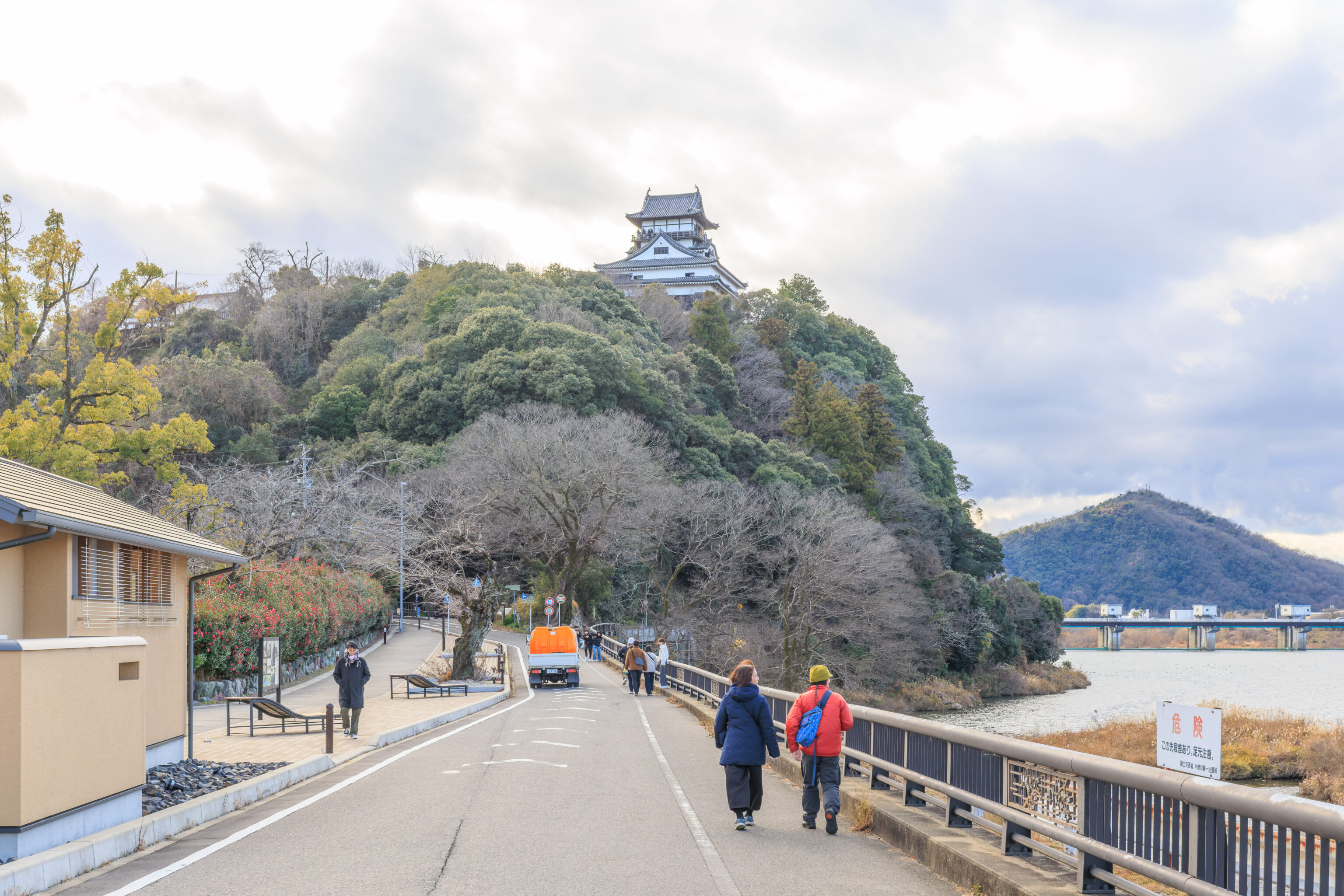
We walked to the west towards Inuyama Castle to get a better and closer view.
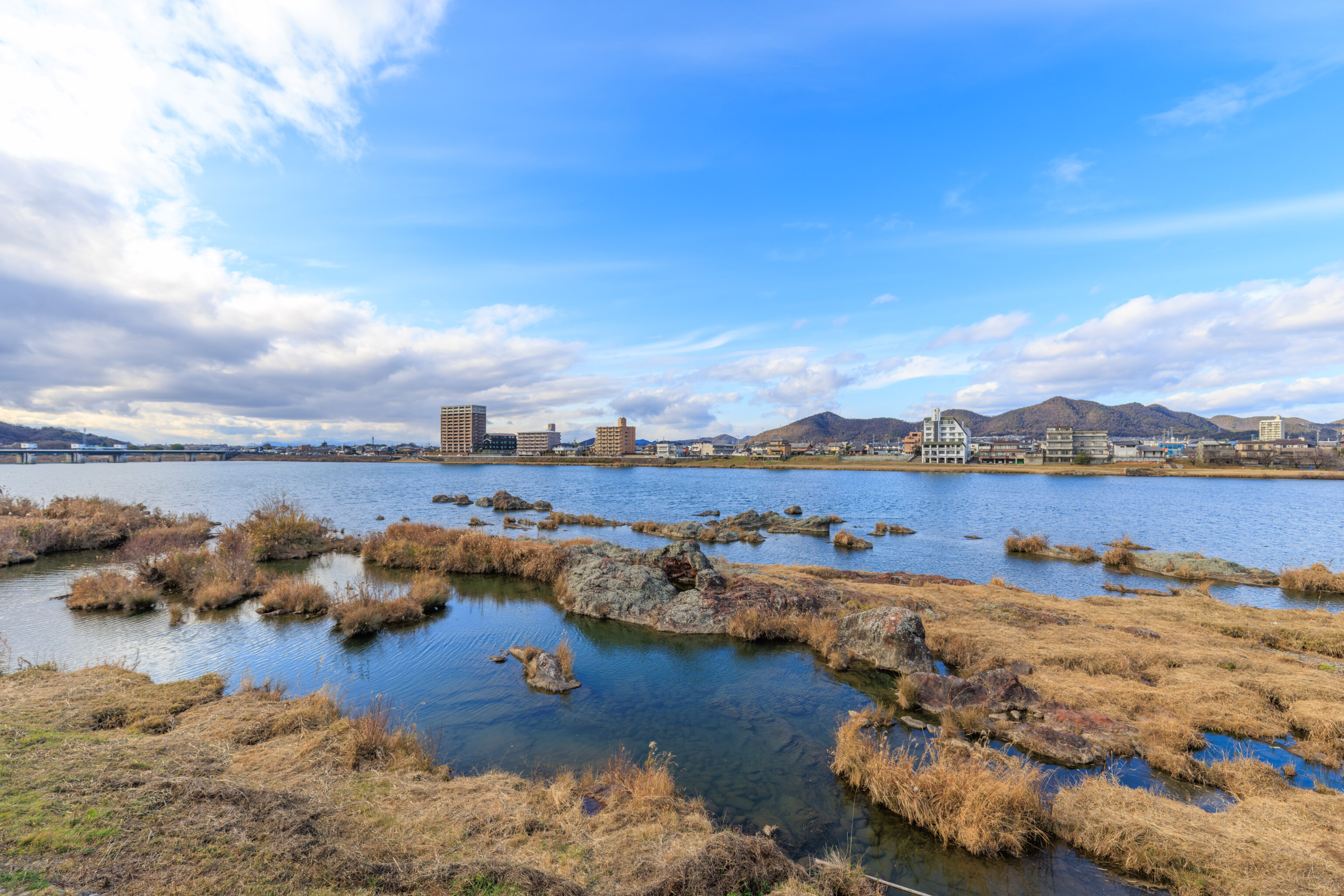
The view to the west looking down Kiso River.
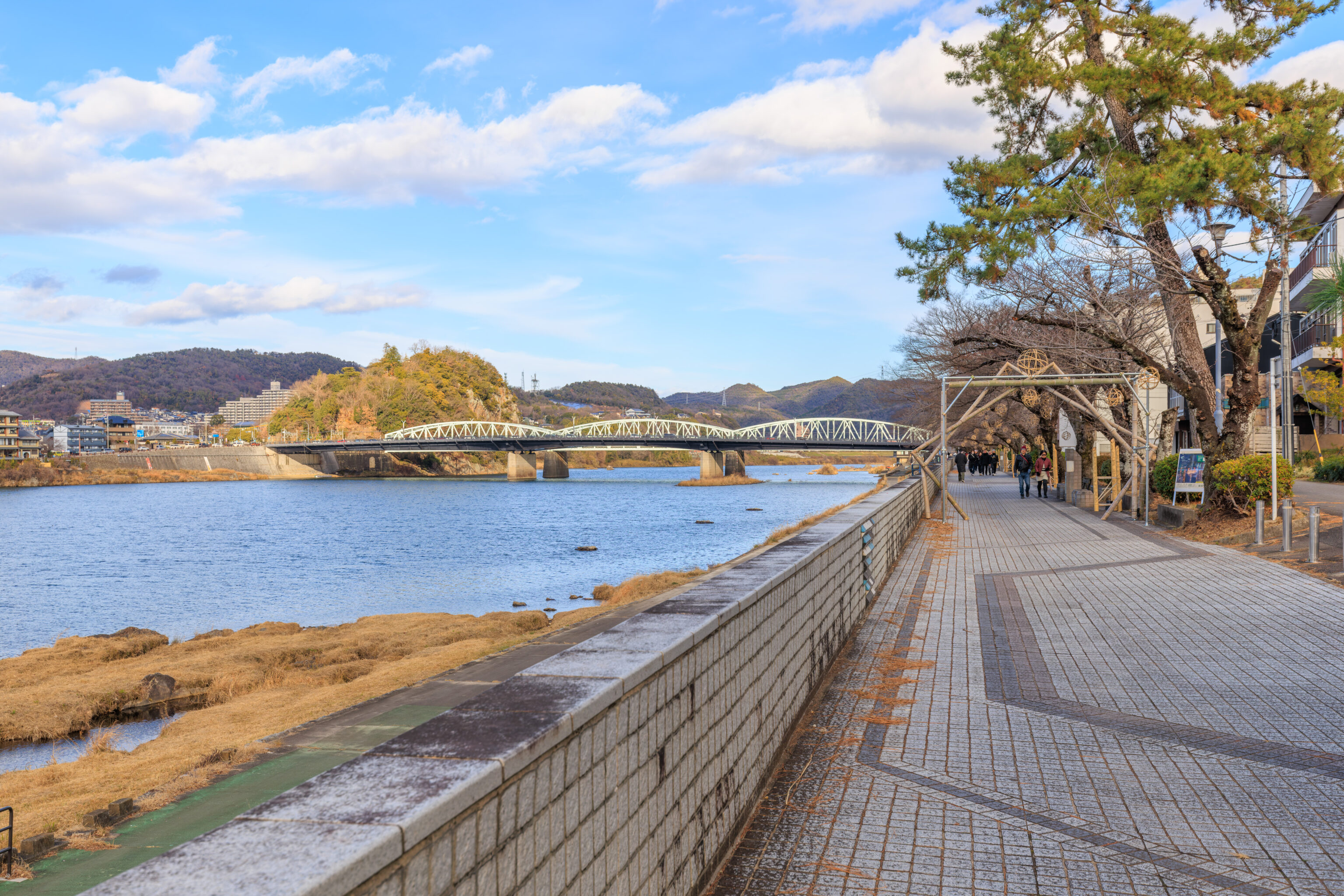
We turned around and started walking to the east. The park reaches the bridge in the background, the 犬山橋 Inuyama Bridge.
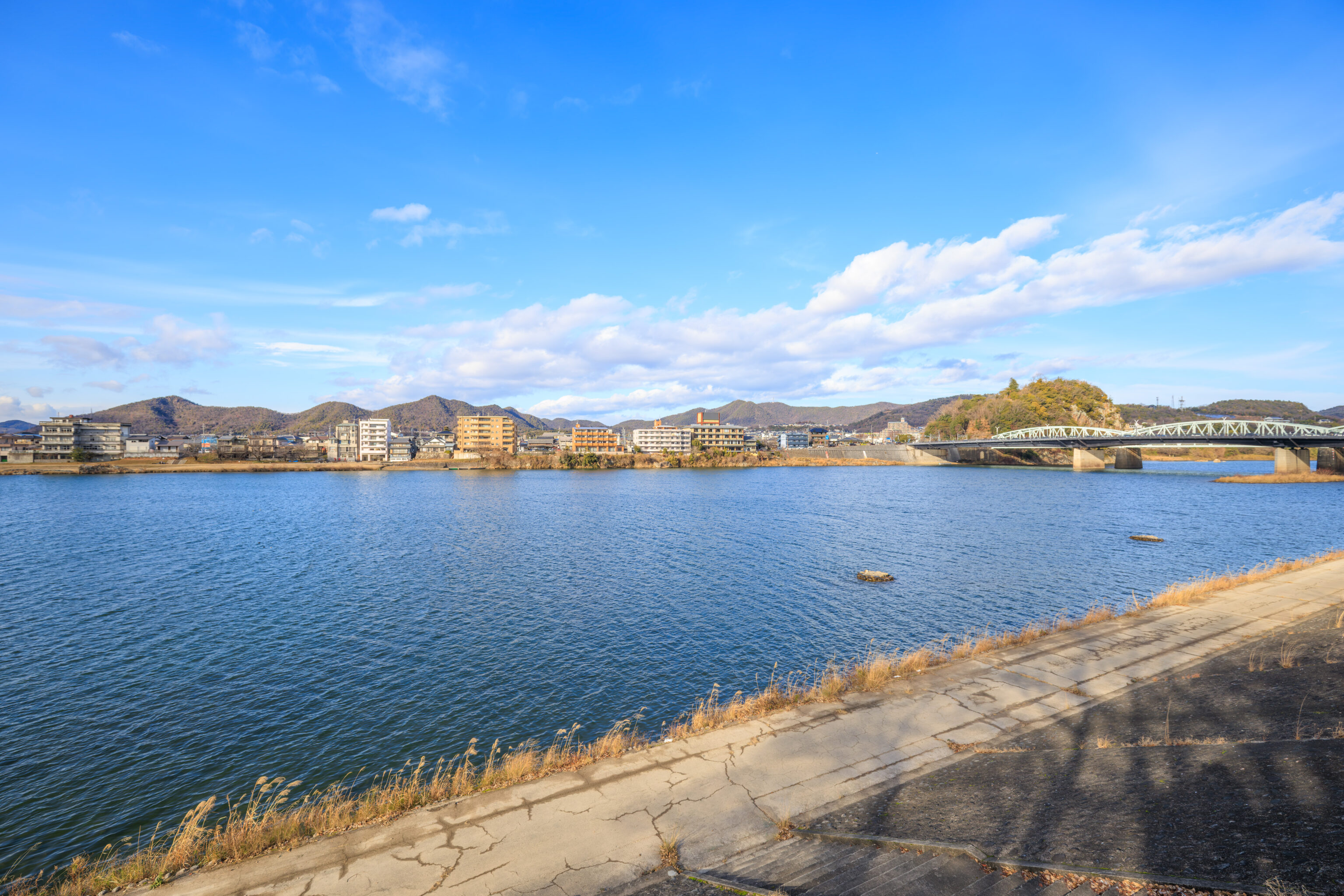
The path we were on was actually well above river level below.
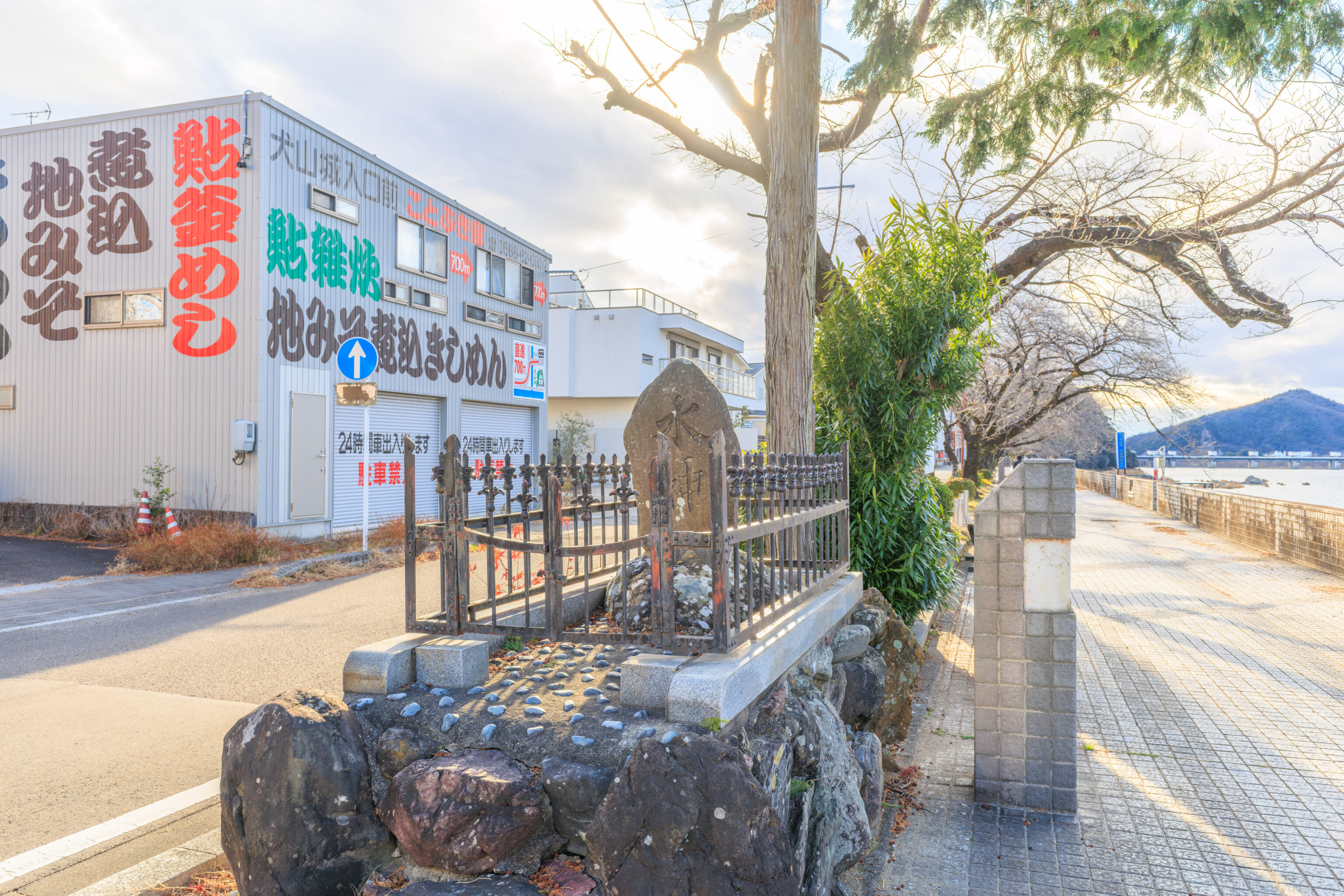
We walked by a small shrine dedicated to 水神 Suijin, the Shinto kami of water.
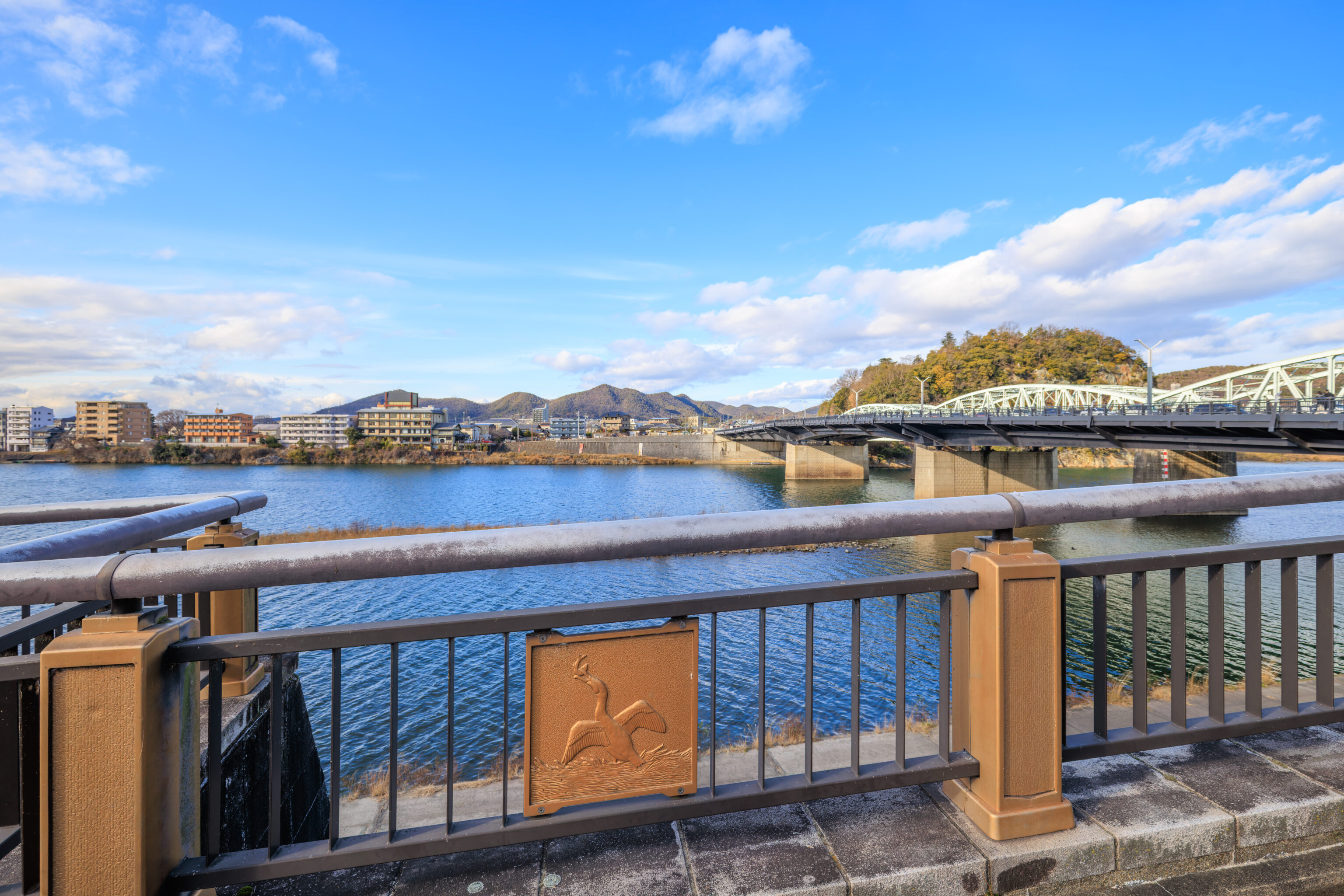
Like the Nagara River in Gifu, the Kiso River is a place where cormorant fishing was practiced. And like Gifu, it is possible to see it here as well.
Let’s Preserve the Landscape of the Kiso River
Preserving and creating a Kiso River landscape where magnificent nature, history, culture, and vibrant activity converge.
(Kiso River Landscape Council: Kakamigahara City, Gifu Prefecture & Inuyama City, Aichi Prefecture)

The middle reaches of the Kiso River straddle the border between Gifu and Aichi Prefectures. The area boasts a magnificent, expansive landscape set against a backdrop of lush green mountains and featuring gorges defined by unique rock formations. Rich in historical assets—such as the National Treasure Inuyama Castle and the ruins of Unuma Castle—the region remains a hub for tourism and cultural exchange today.

Kakamigahara City (Gifu) and Inuyama City (Aichi) have established the Kiso River Landscape Council. Working in close cooperation, the two cities aim to preserve and create the Kiso River landscape, ensuring that this beautiful scenery is passed on to future generations.

The "Kiso River landscape" is a collective term for the scenery formed by the river itself and the surrounding areas. It encompasses the natural environment (such as mountain ranges), the atmosphere steeped in history and culture, the bridges that facilitate local movement, the structures that maintain the river environment, and the activities of the people who live there.
– Text from a sign, transcribed using Google Gemini and translated using Google Translate.
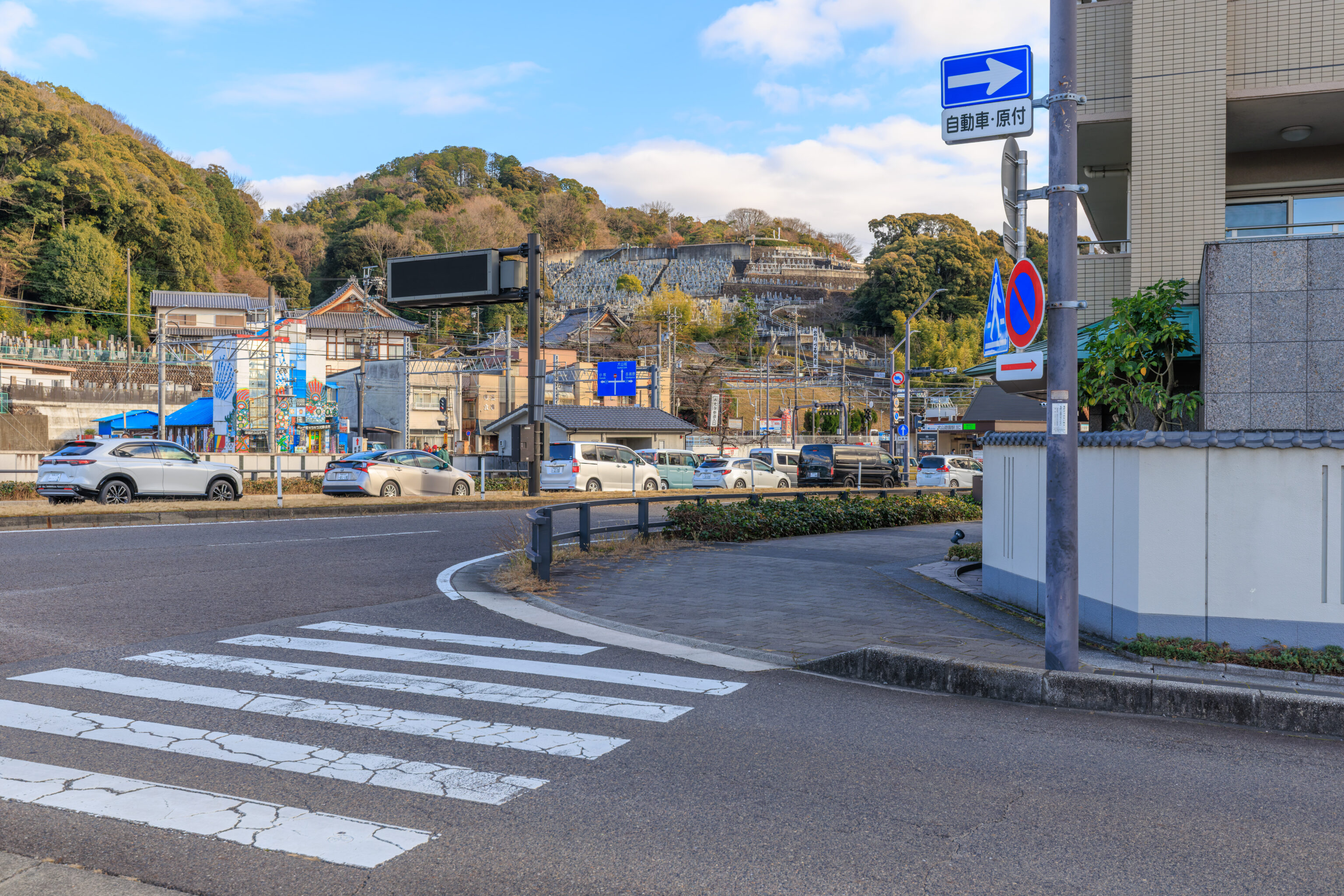
We contiunued walking until we reached the Inuyama Bridge. This was the view from the southern end of the bridge looking to the southeast. The hills here contain many Buddhist temples, most of which were visible from Inuyama Castle.
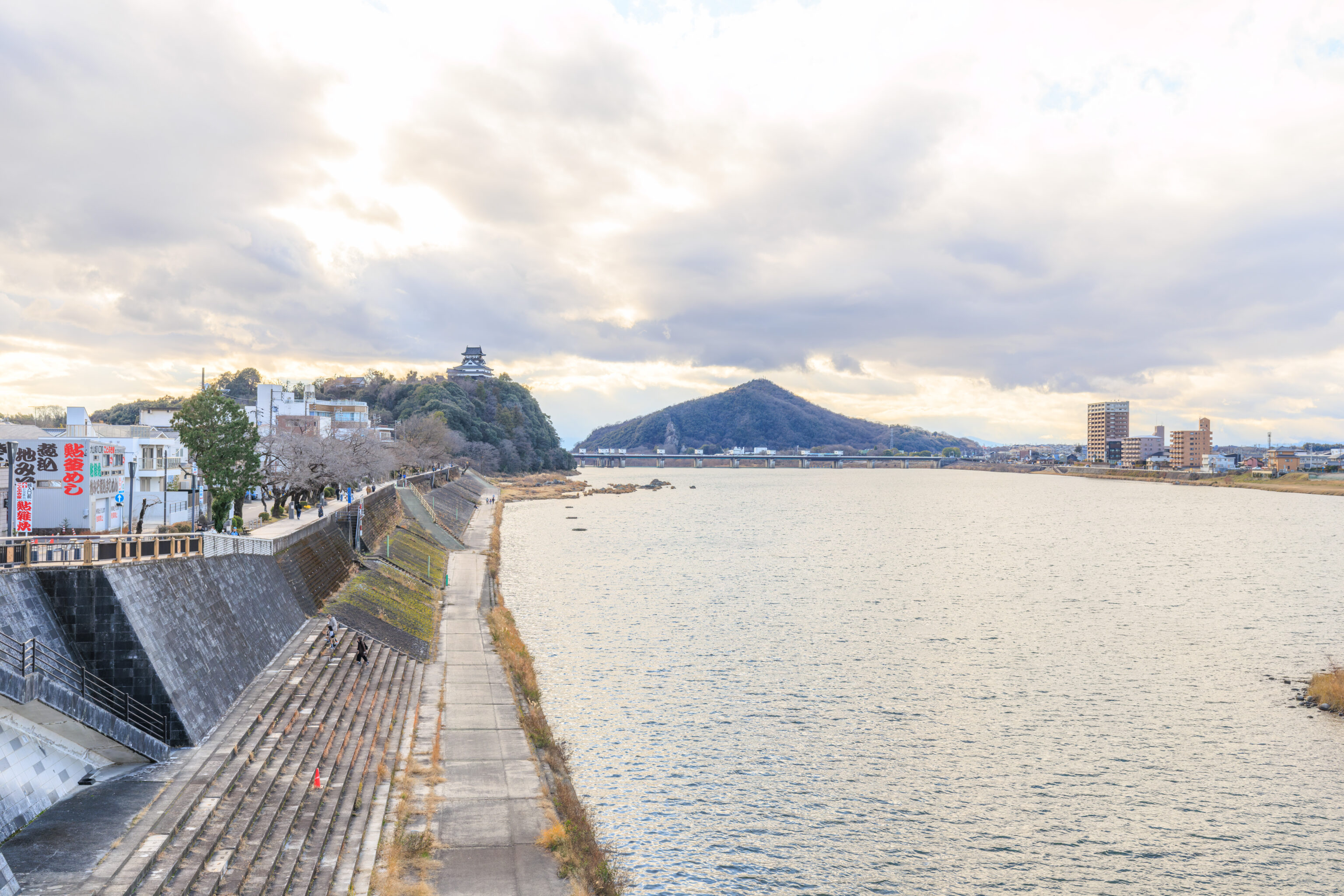
We walked out onto the bridge to see the view from the river.
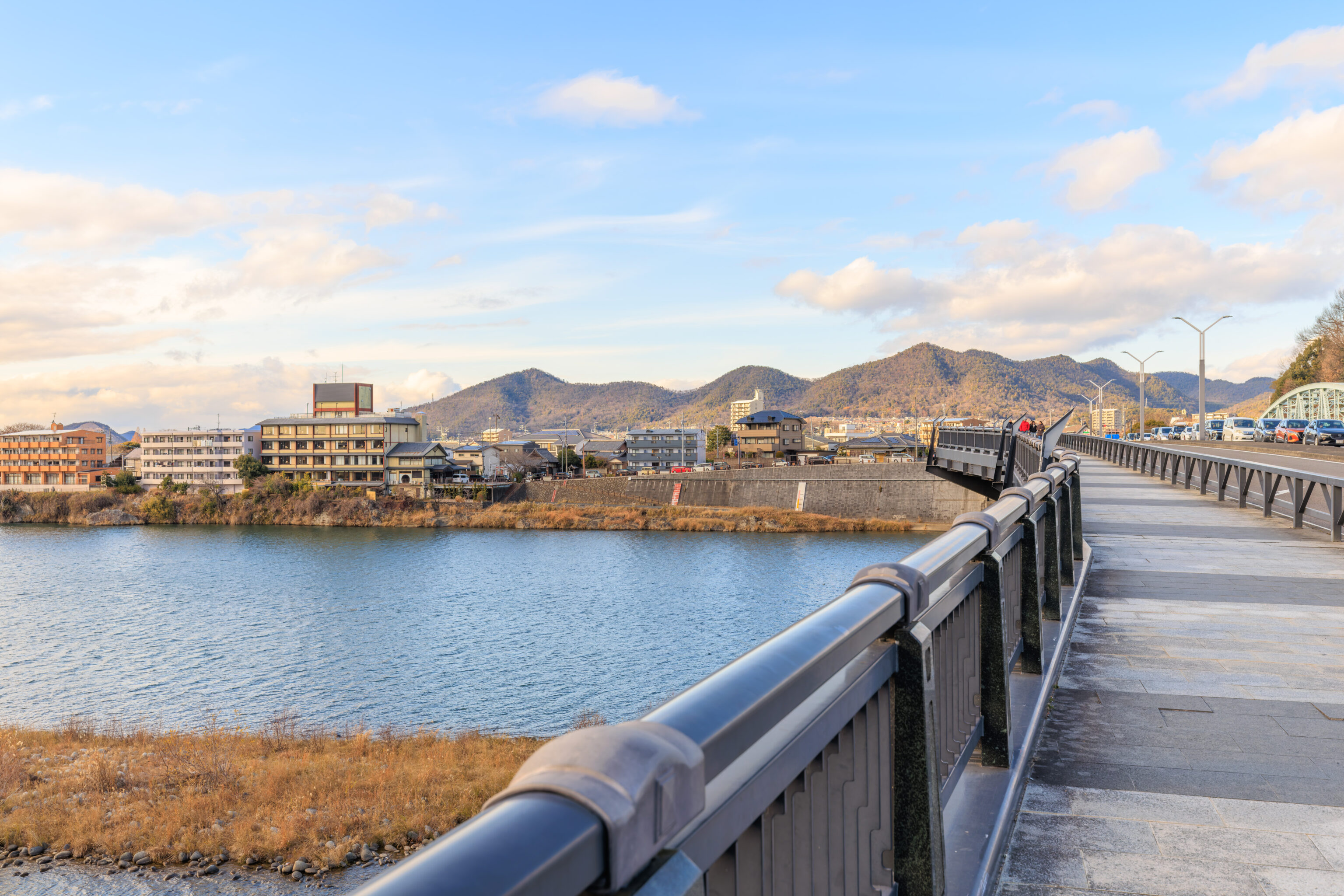
We didn’t go far at all though.
Daisho-ji
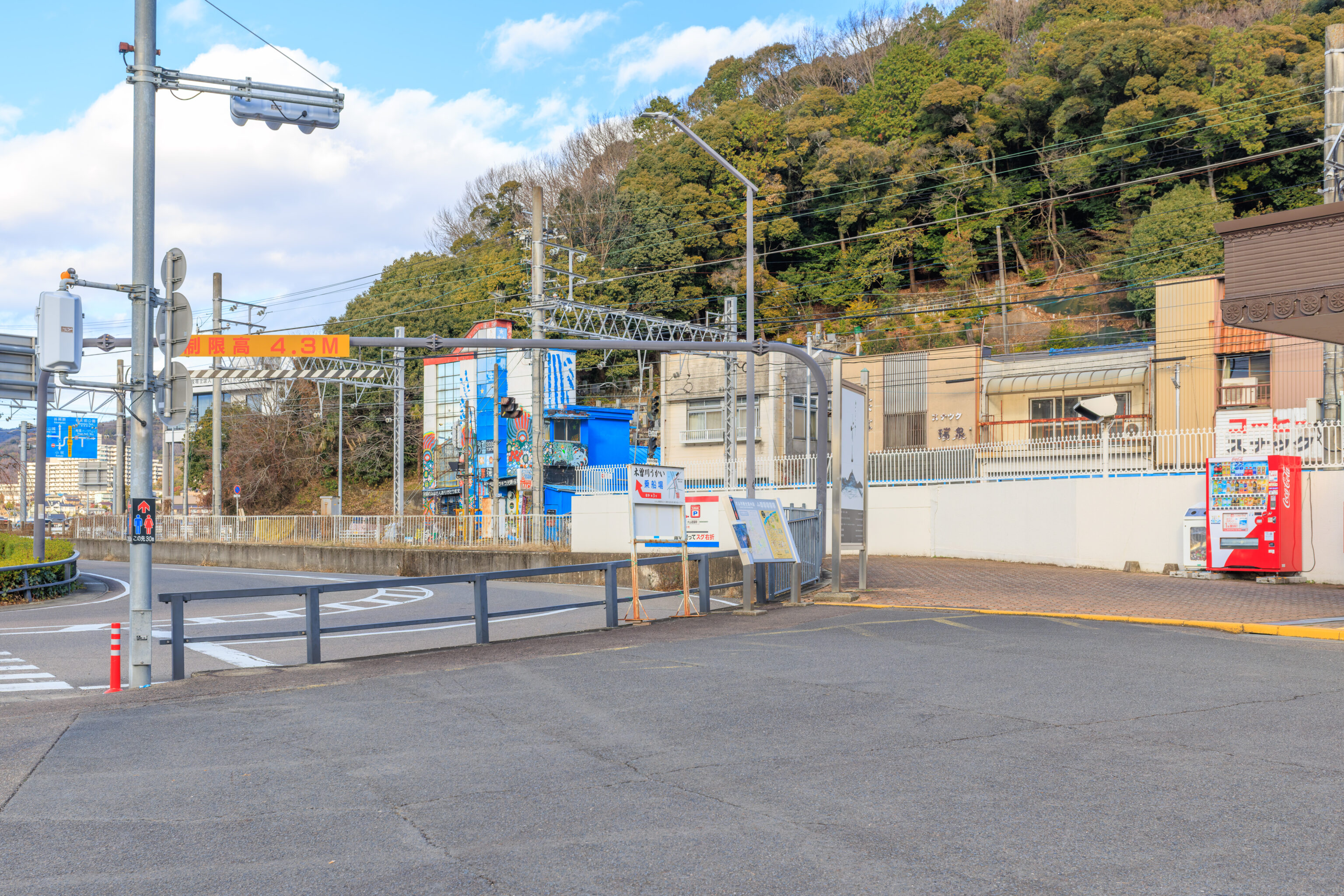
We turned around and started walking to the south to head to Daisho-ji. We turned onto a smaller road that runs by the railroad tracks. This was the view looking northeast from near the northwest corner of Inuyamayuen Station. The building left of center has a colorful mural painted on its sides.
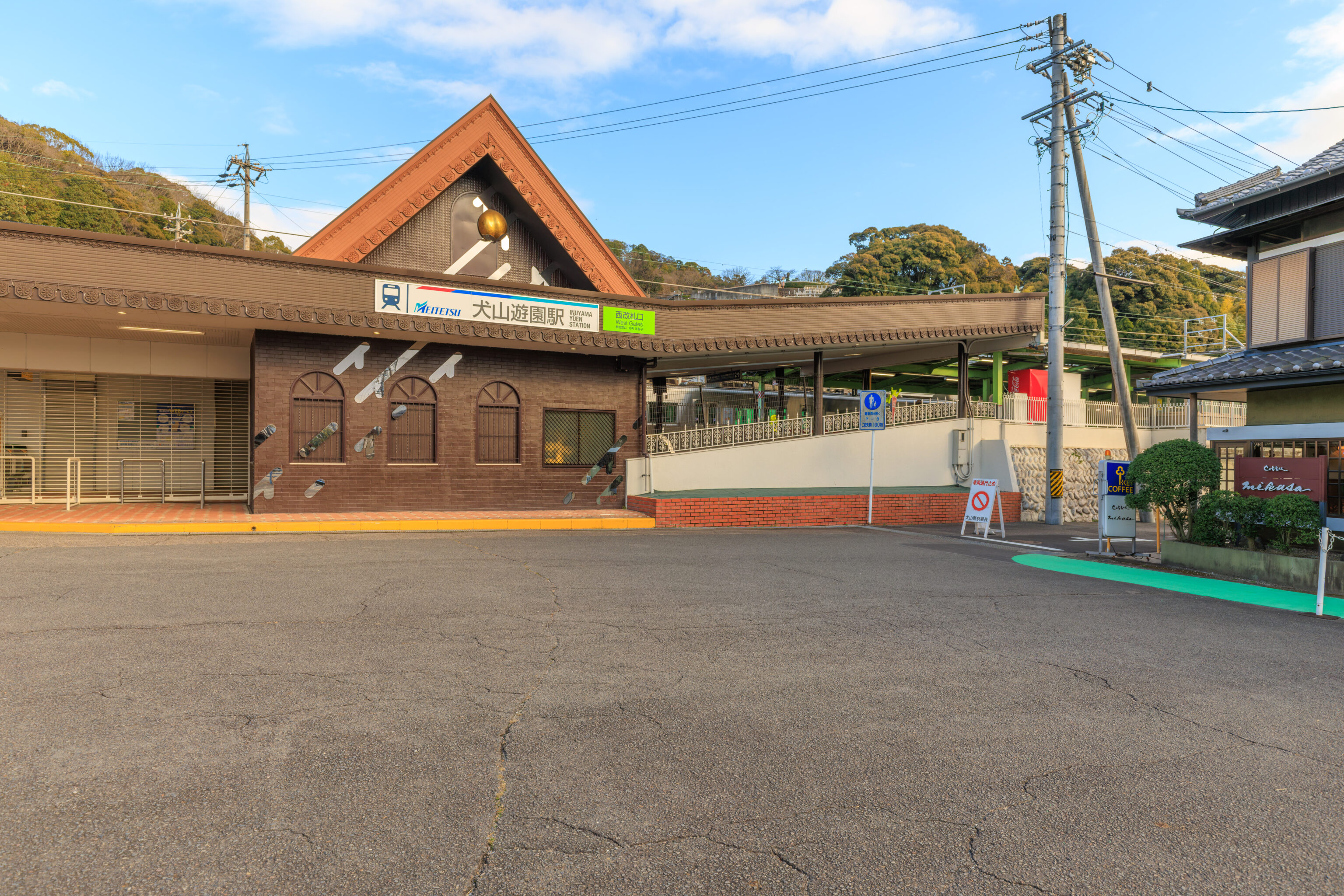
The station here is pretty small, just a small building and two platforms.
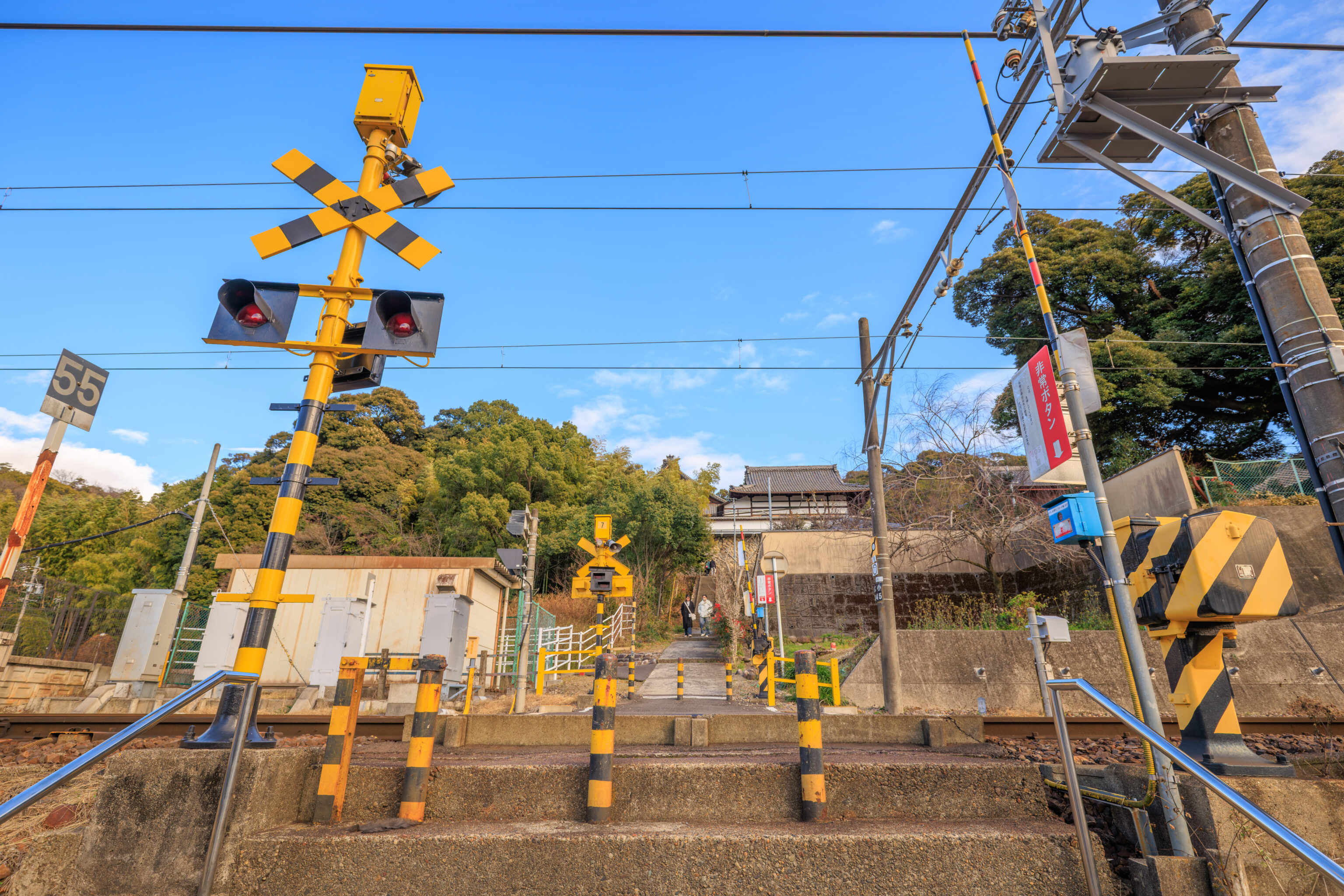
We considered crossing to the east side of the tracks here, just to the south of the station’s platforms. We weren’t sure if it was the best way to go though. In retrospect, it probably was. But we kept on walking south down the road that runs along the west side of the tracks.
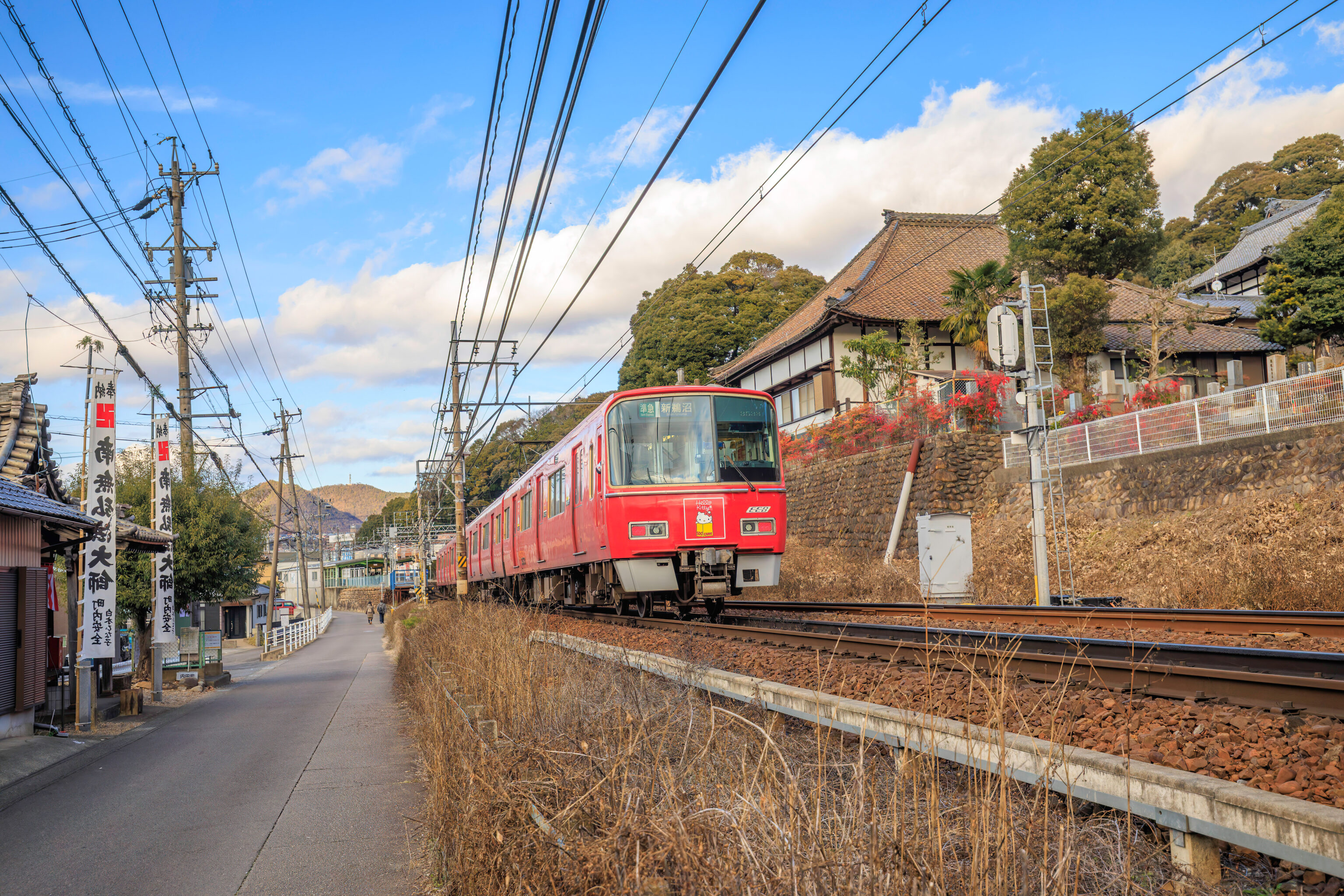
We saw a train pass by when we were near the next railroad crossing. This one had a Hello Kitty livery! Unfortunately, we were too slow to photograph the side of the train. We only got its rear as it headed north into the station.
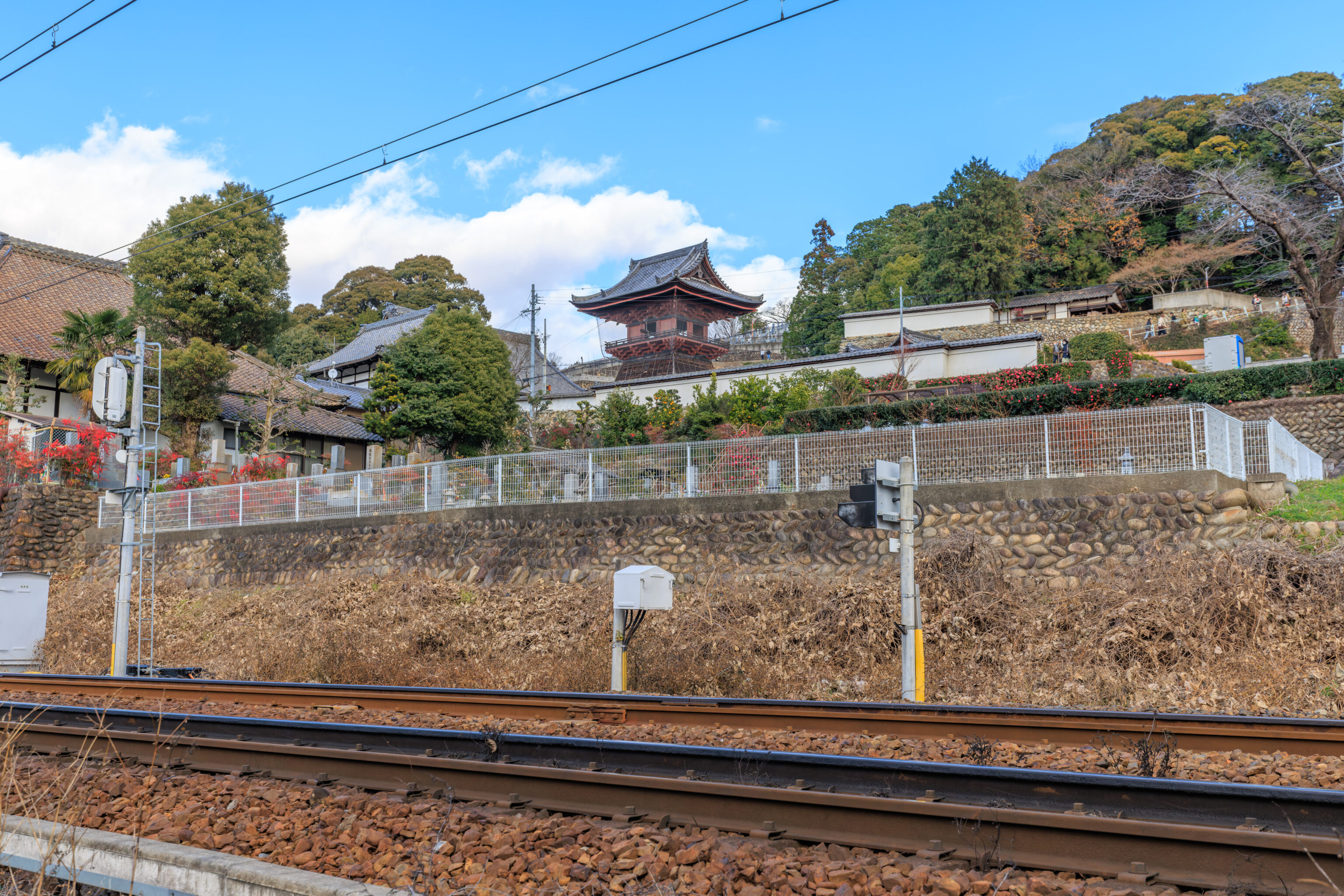
Looking uphill, we saw the top of a tall bell tower at one of the temples.
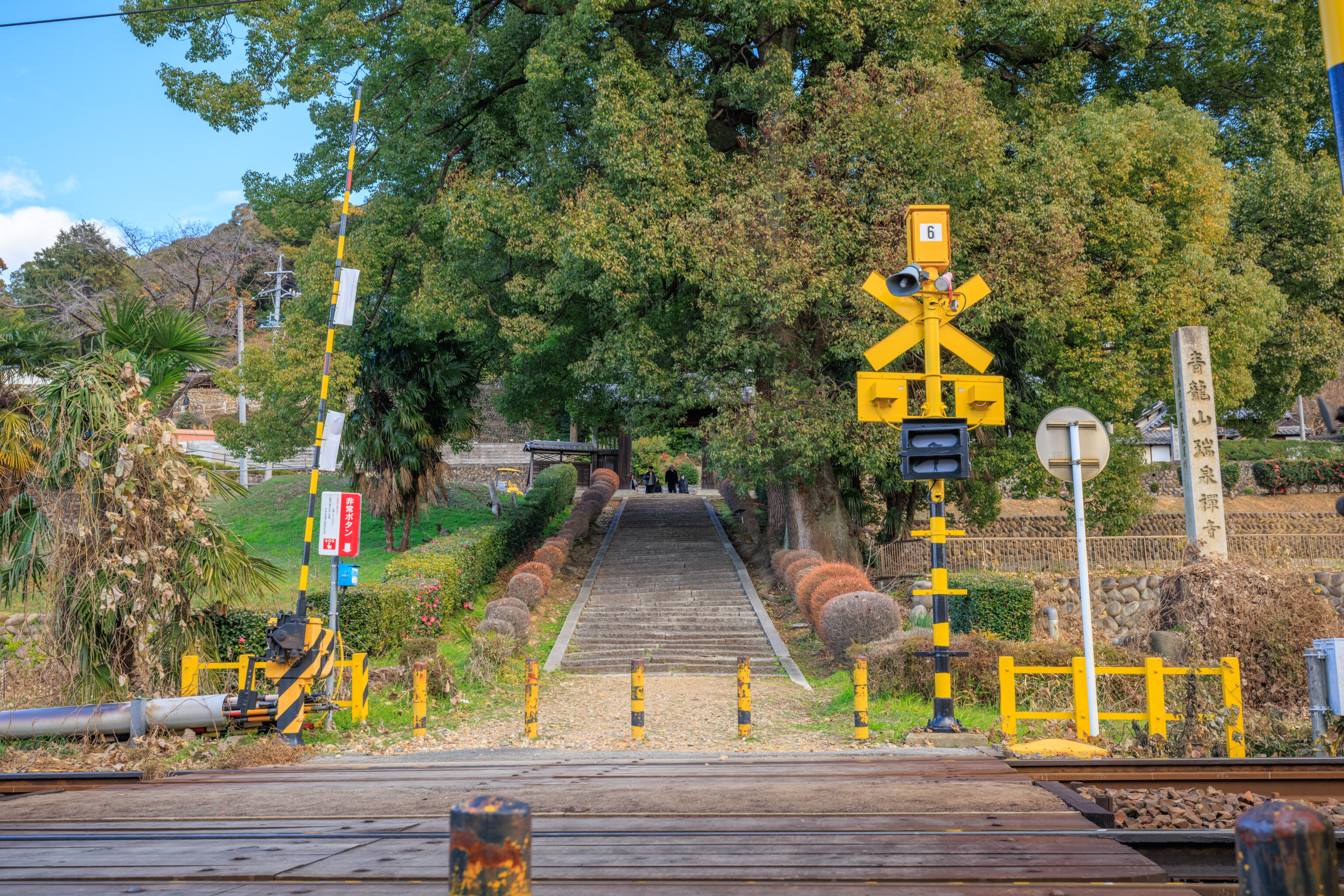
We kept on going south past this crossing as well.
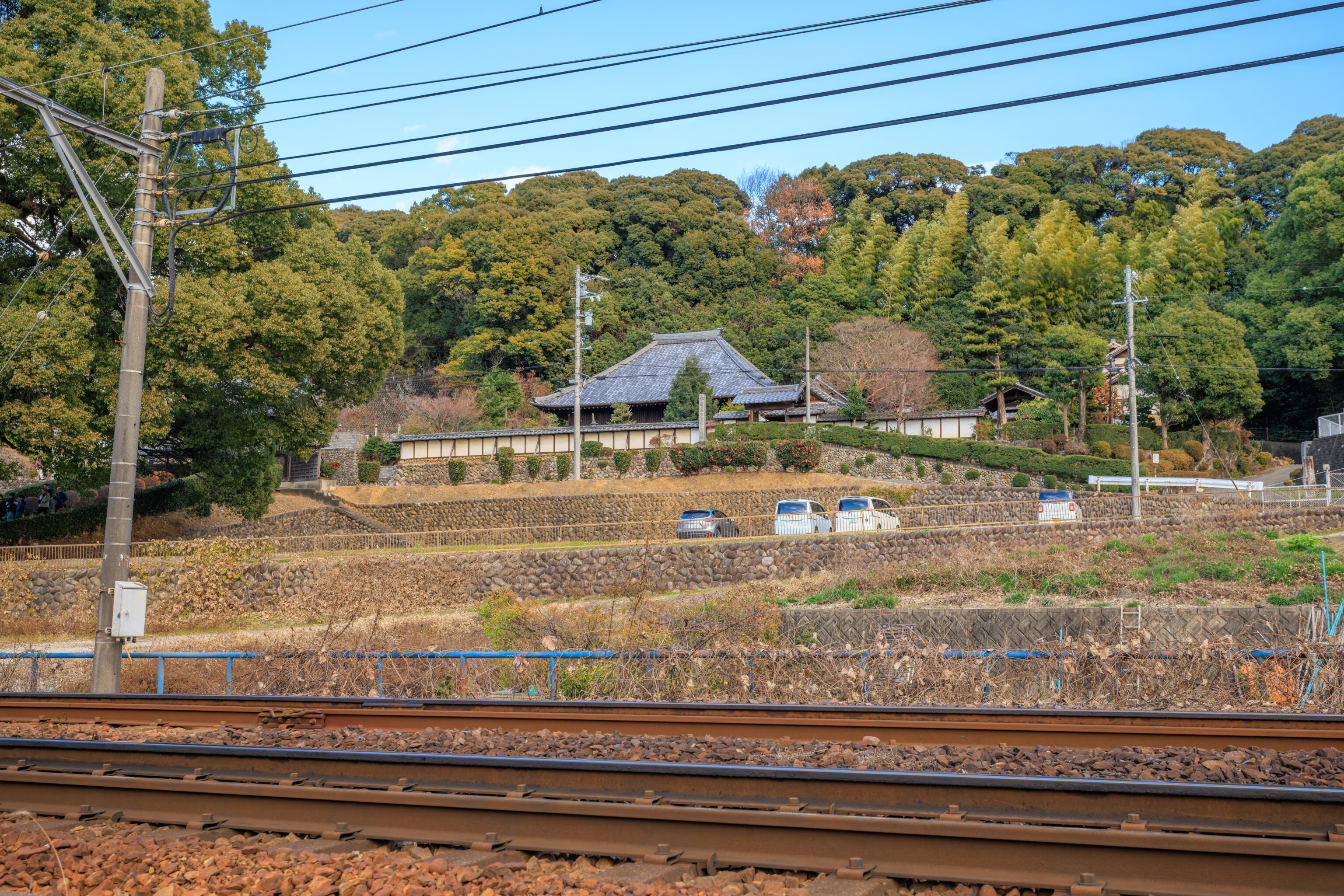
Another temple…
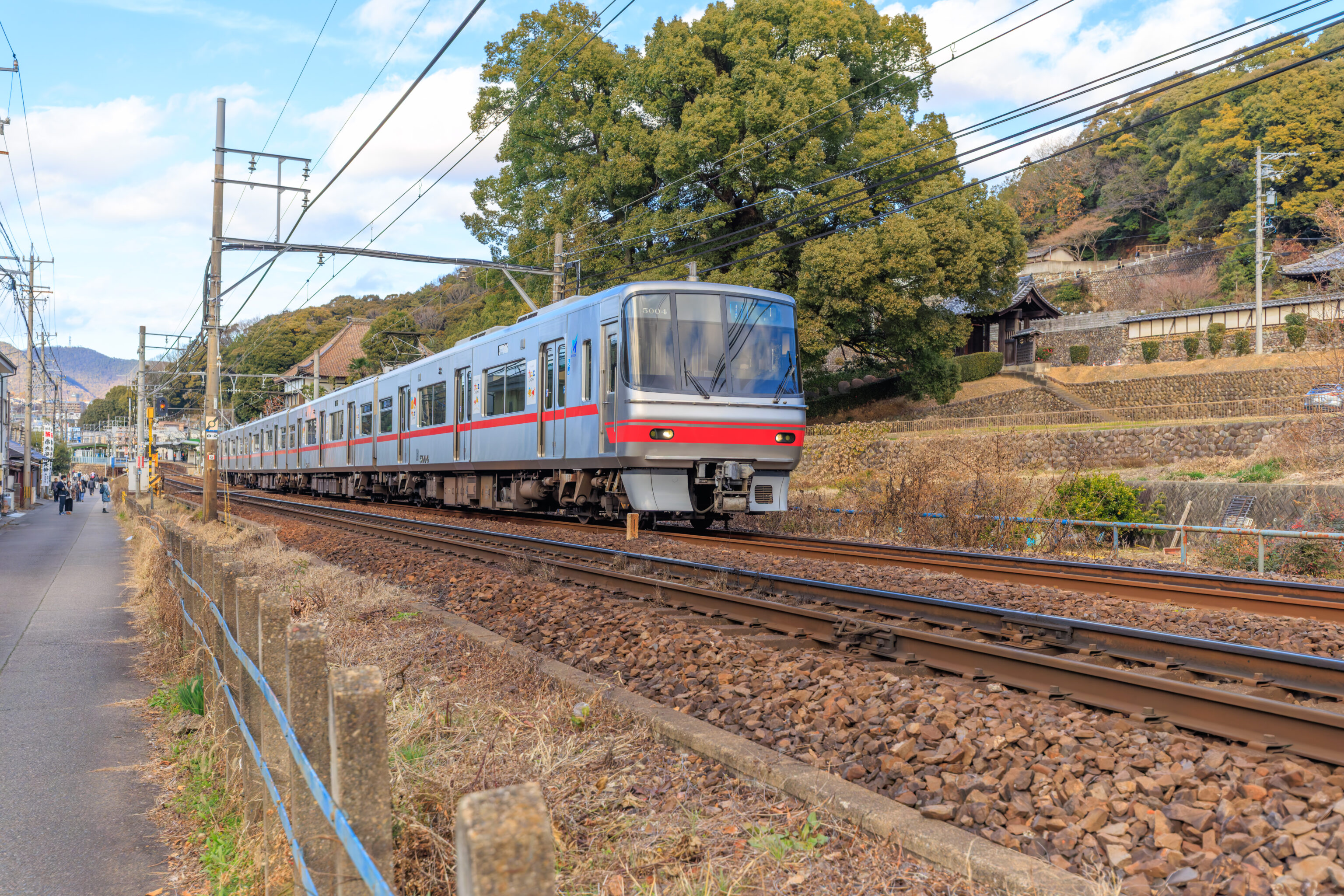
Anda another train!
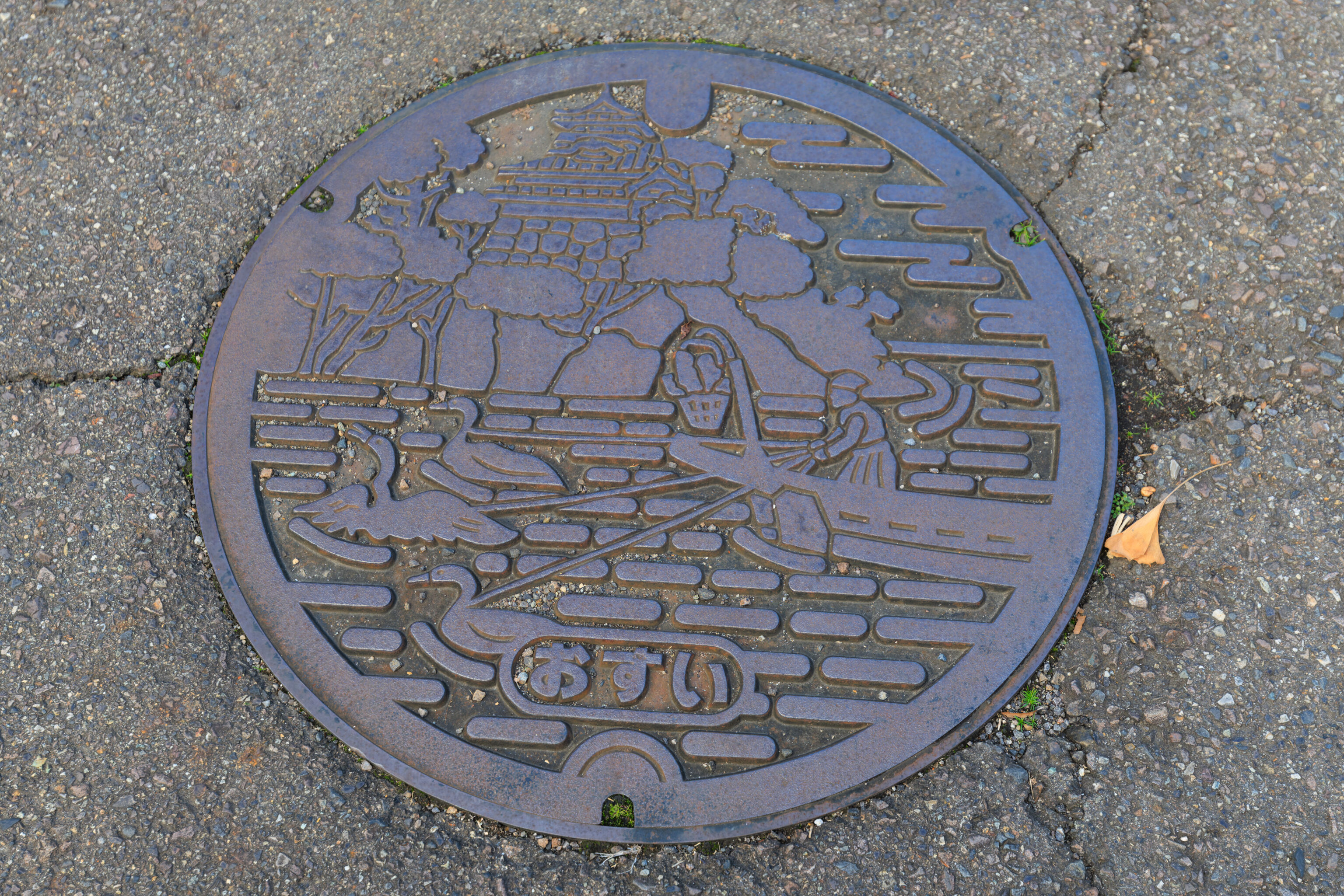
This is the same utility cover we saw multiple times earlier today.
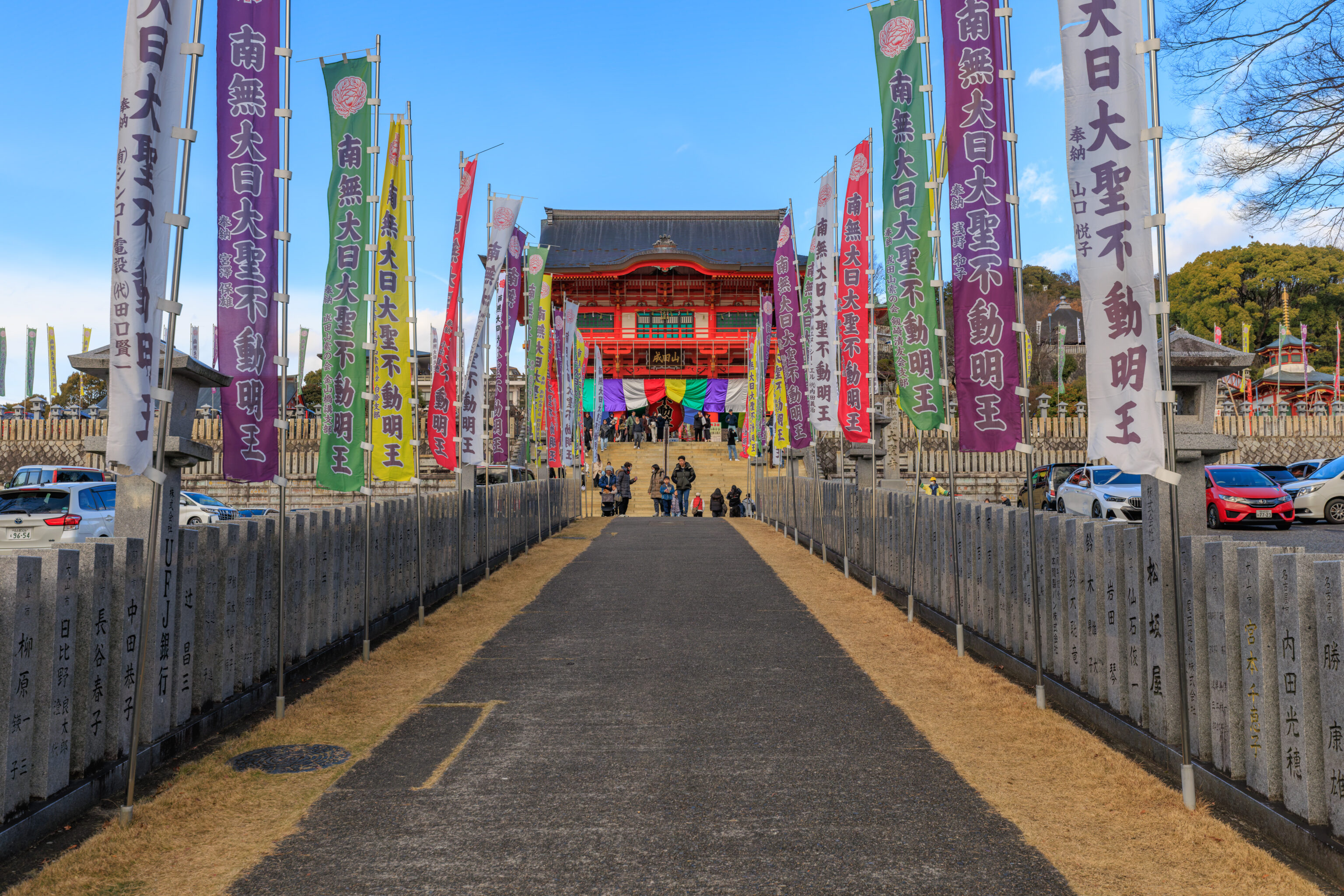
We ended up walking south until we reached the first vehicular railroad crossing. We turned to the left, crossed the tracks, and walked along the road as it went uphill. We again turned left to walk along this path that sits in the middle of the in and out lanes between the road and the temple’s parking lot.
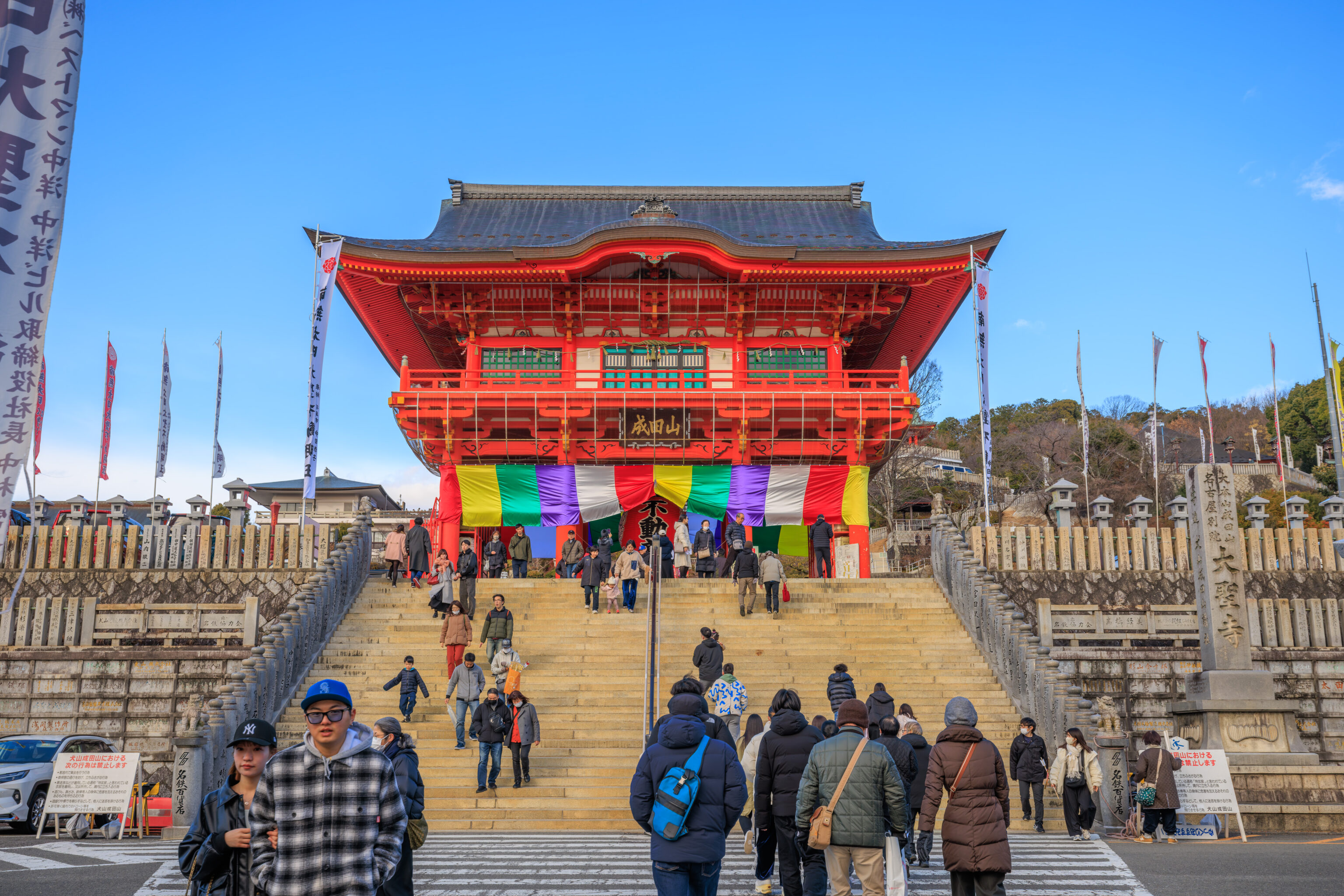
We walked north towards the main gate of 大聖寺 Daisho-ji. The lengthy full name of this temple is 大本山成田山名古屋別院大聖寺 Daihonzan Naritasan Nagoya Betsuin Daishō-ji. It is a branch of 成田山新勝寺 Narita-san Shinshō-ji in Narita, the city that is also home to Narita Intnernational Airport to the east of Tokyo. Despite the many times we’ve flown out of NRT, we’ve never visited the city of Narita or the temple.
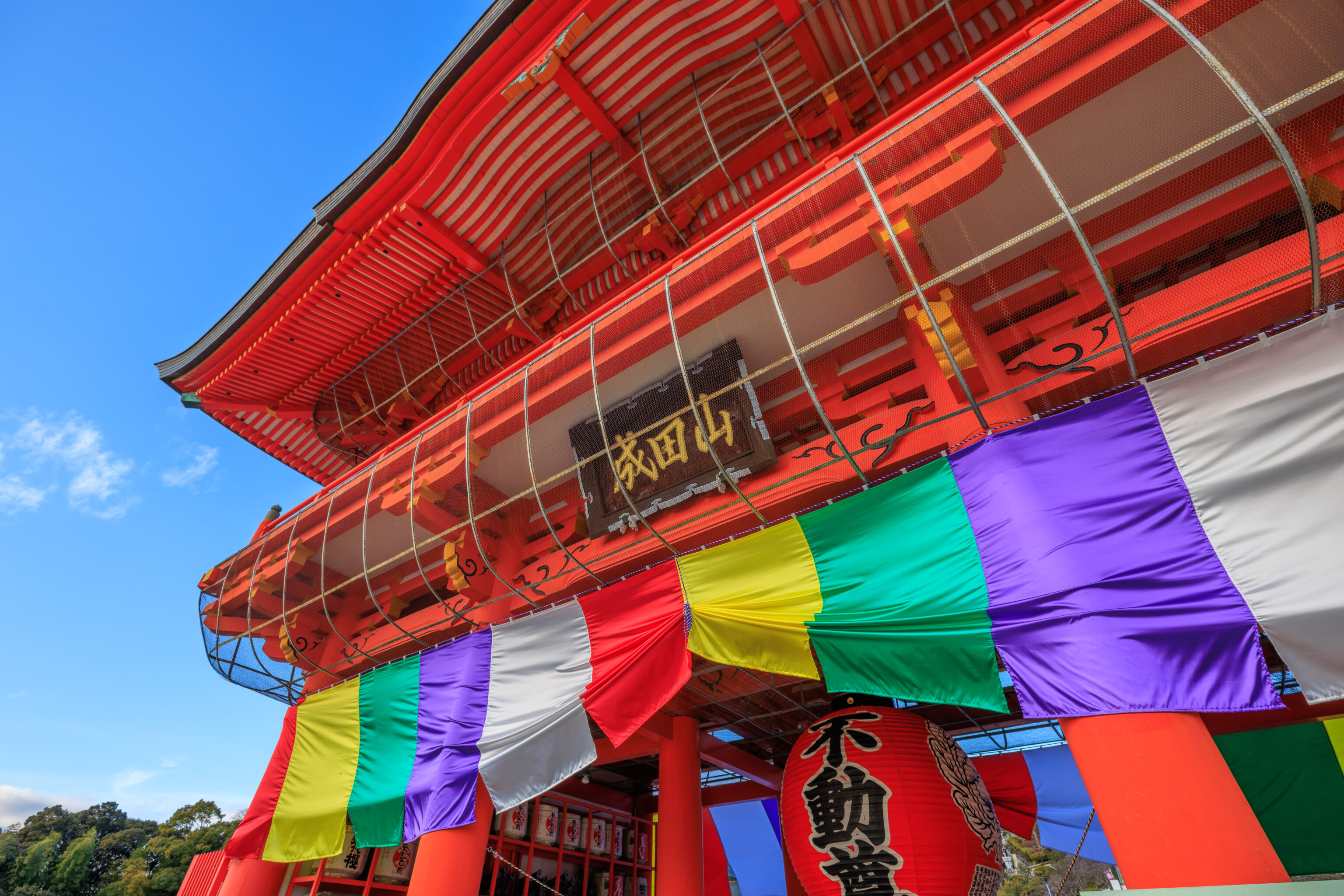
This large gate is the 明王門 Myoo-mon. The upper floor of the gate actually enshrines a statue of 不動明王 Fudō Myōō.
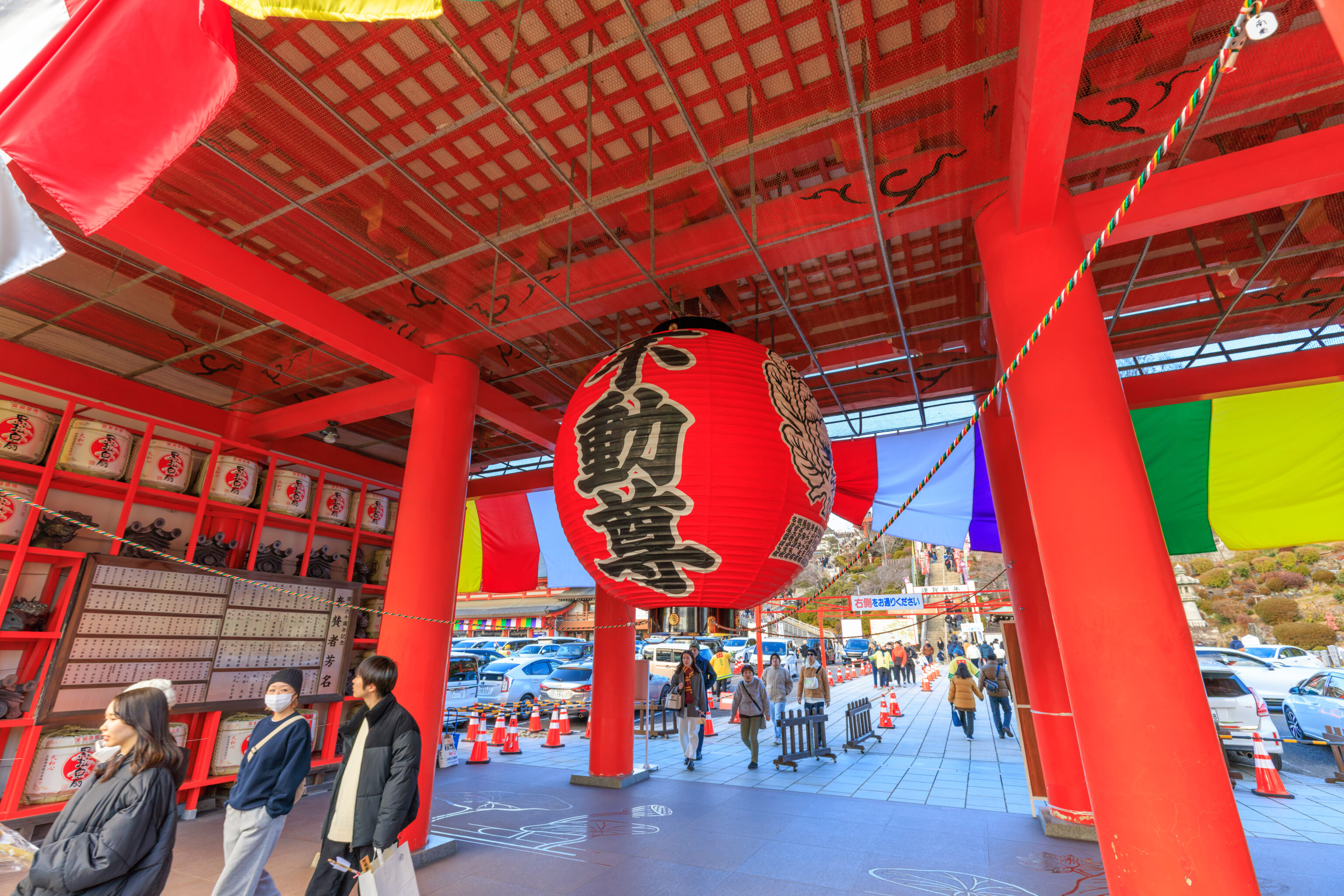
There is a large paper lantern hanging below the gate.
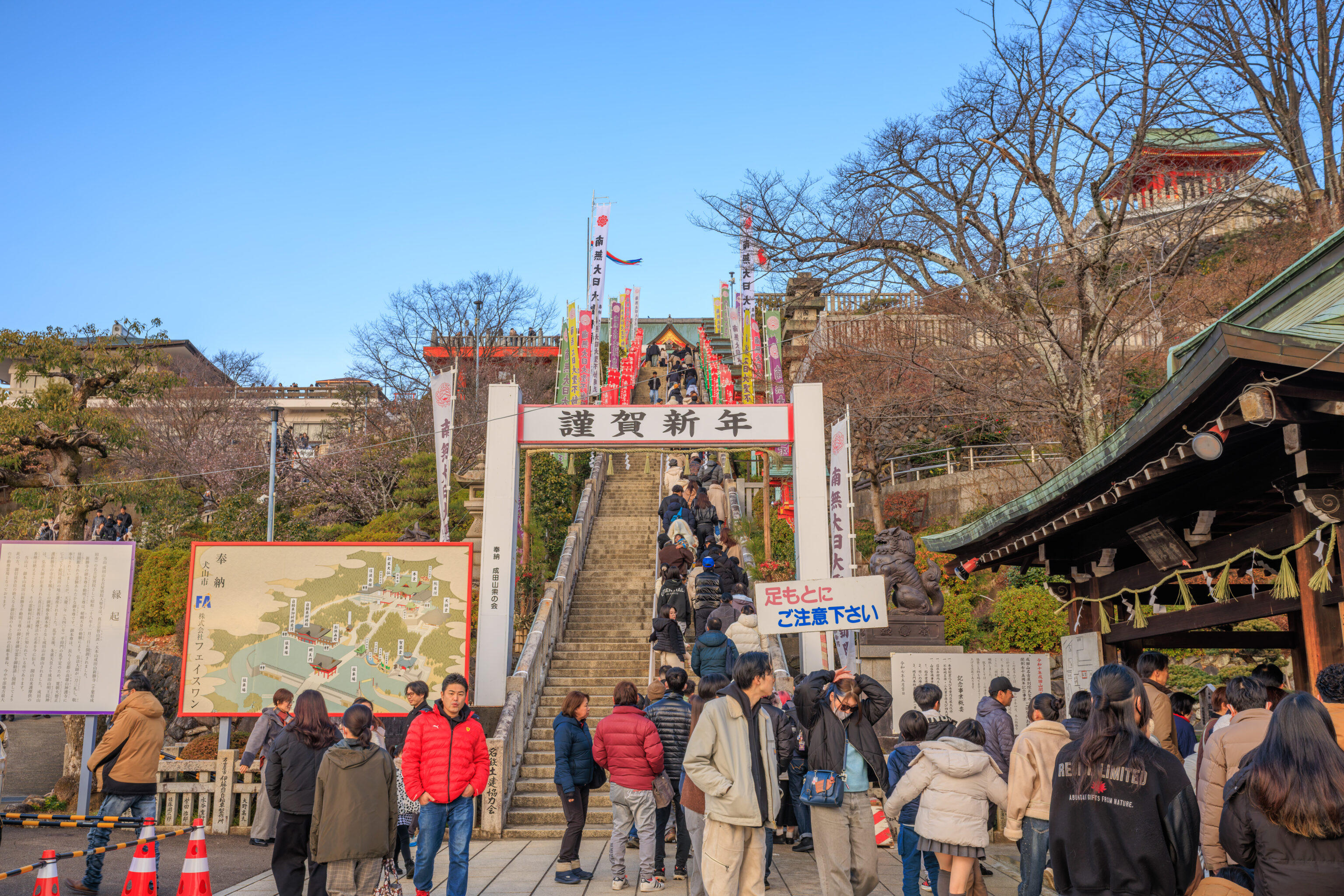
We contiued on through the gate to reach the stairs that lead up to the temple. The right side of the stairs was pretty busy with a crowd of people going up.
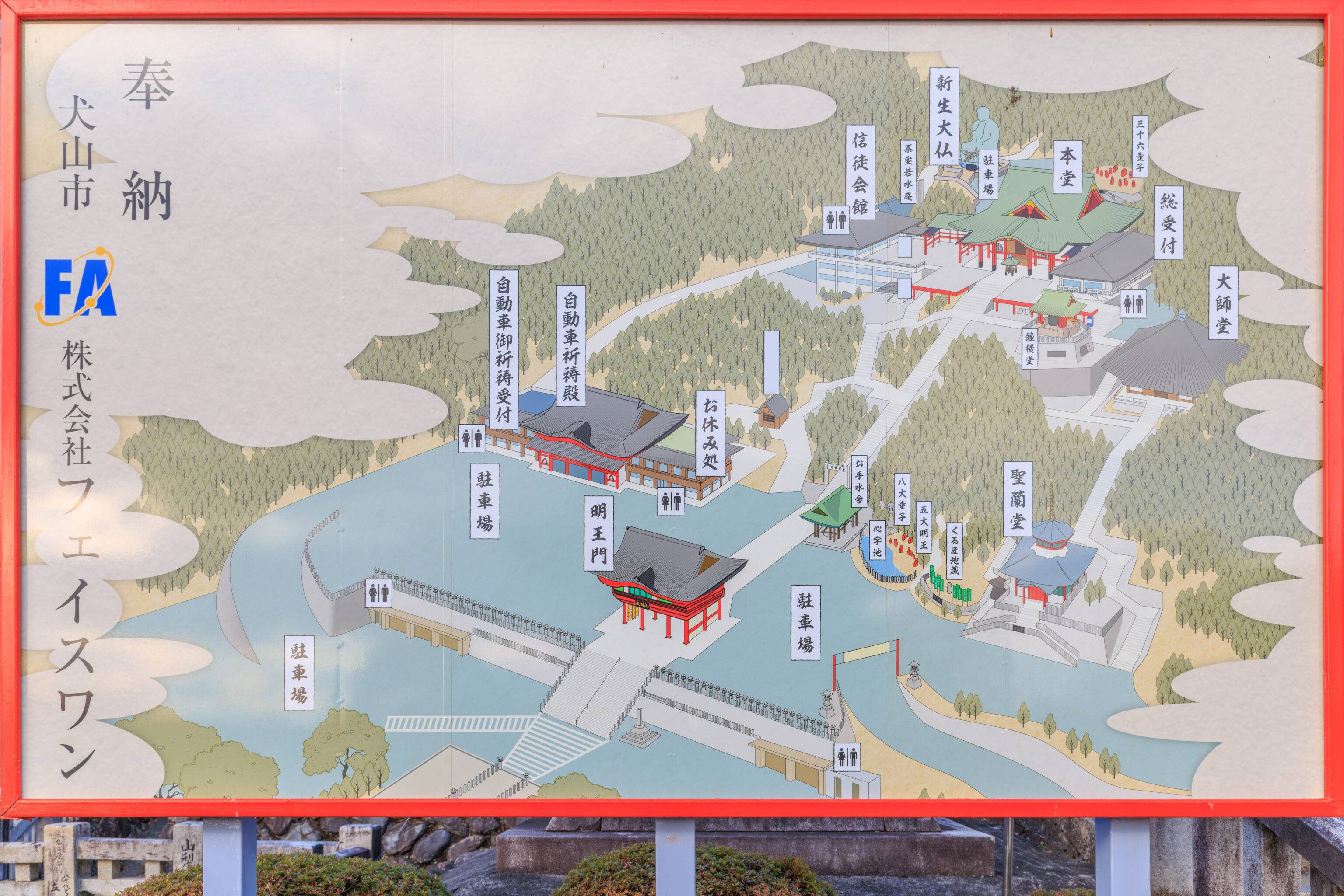
There was a big map on a sign to the left of the stairs.
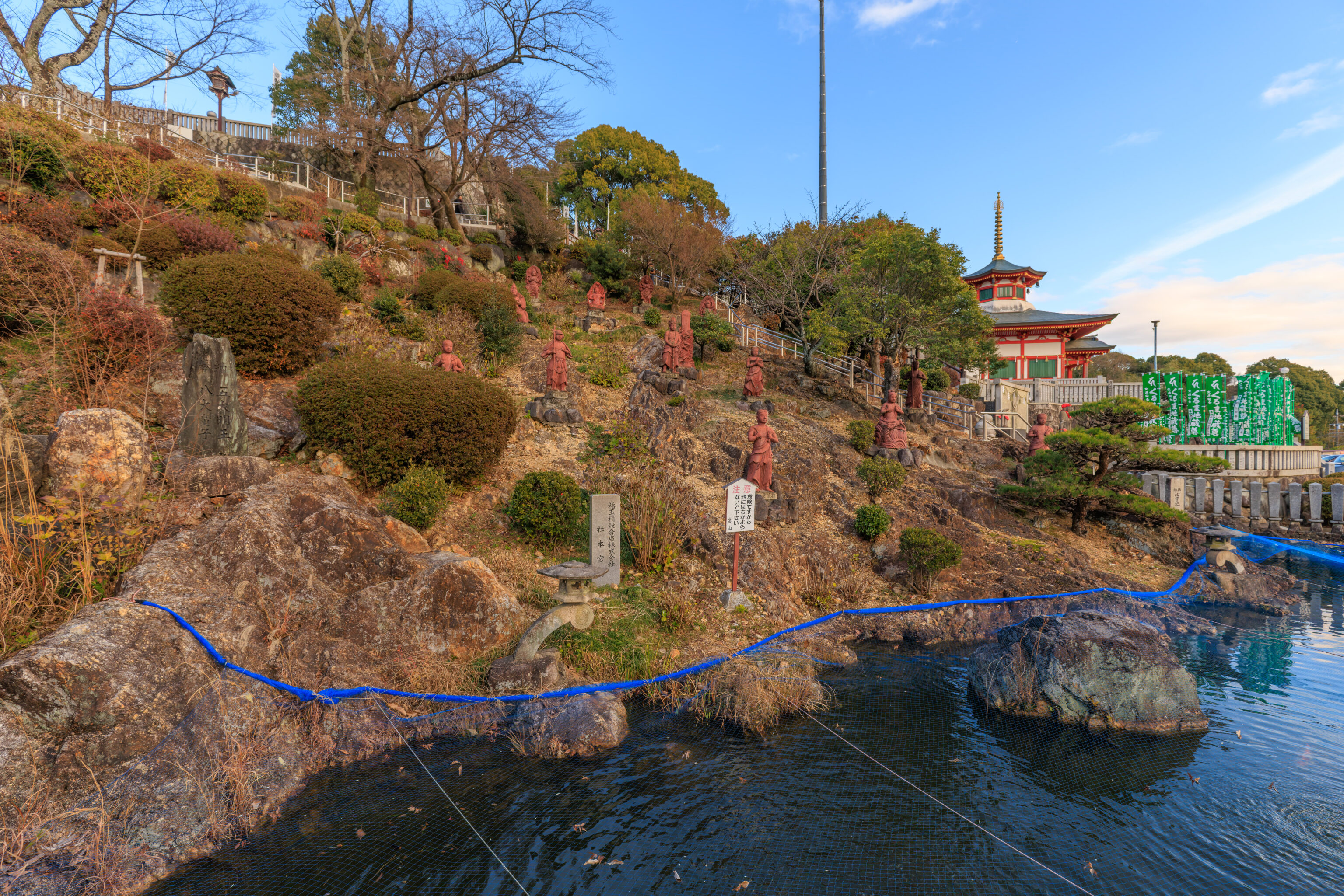
We decided to look at the area below the temple first before going up. Below, there was a small pond, the 心字池 Shinji-ike (Heart Character Pond). Its supposed to be shaped like 心. Maybe from above? There were many statues on the hillside above. It looks like there are 14 of them.
According to a sign, 5 of them are 五大明王 Godai Myōō (Five Great Wisdom Kings):
Five Great Wisdom Kings
Enshrined in October, Showa 31 (1956)
Fudo Myoo, Gosanze Myoo, Gundari Myoo, Daiitoku Myoo, Kongoyasha Myoo
– Text from a sign, transcribed and translated using Google Gemini.
They are probably the statues that have what might be called a mandorla, maybe 光背 kōhai in Japanese, behind them.
The other 8 are described as 大童子 Daidōji (Great Acolytes).
Eight Great Acolytes
Enshrined in October, Showa 31 (1956)
They are the attendants (kenzoku) of the principal deity, Fudō Myōō.
– Text from a sign, transcribed and translated using Google Gemini.
They are standing without anything behind them. And there is one last statue which seems to depict a sword-like object.
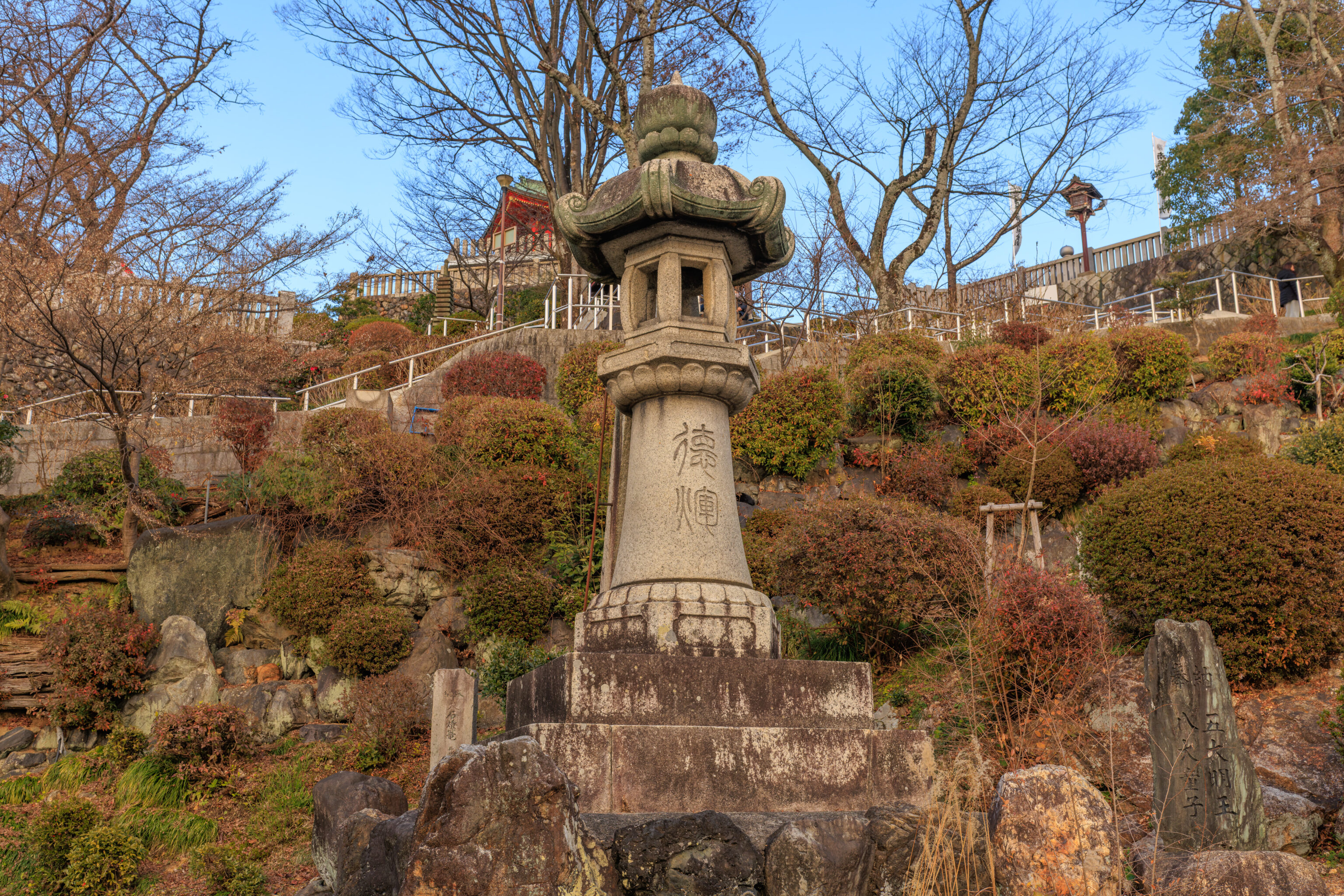
We also saw this large stone lanten. While it is drawn on the map, it is not identifed in any way.
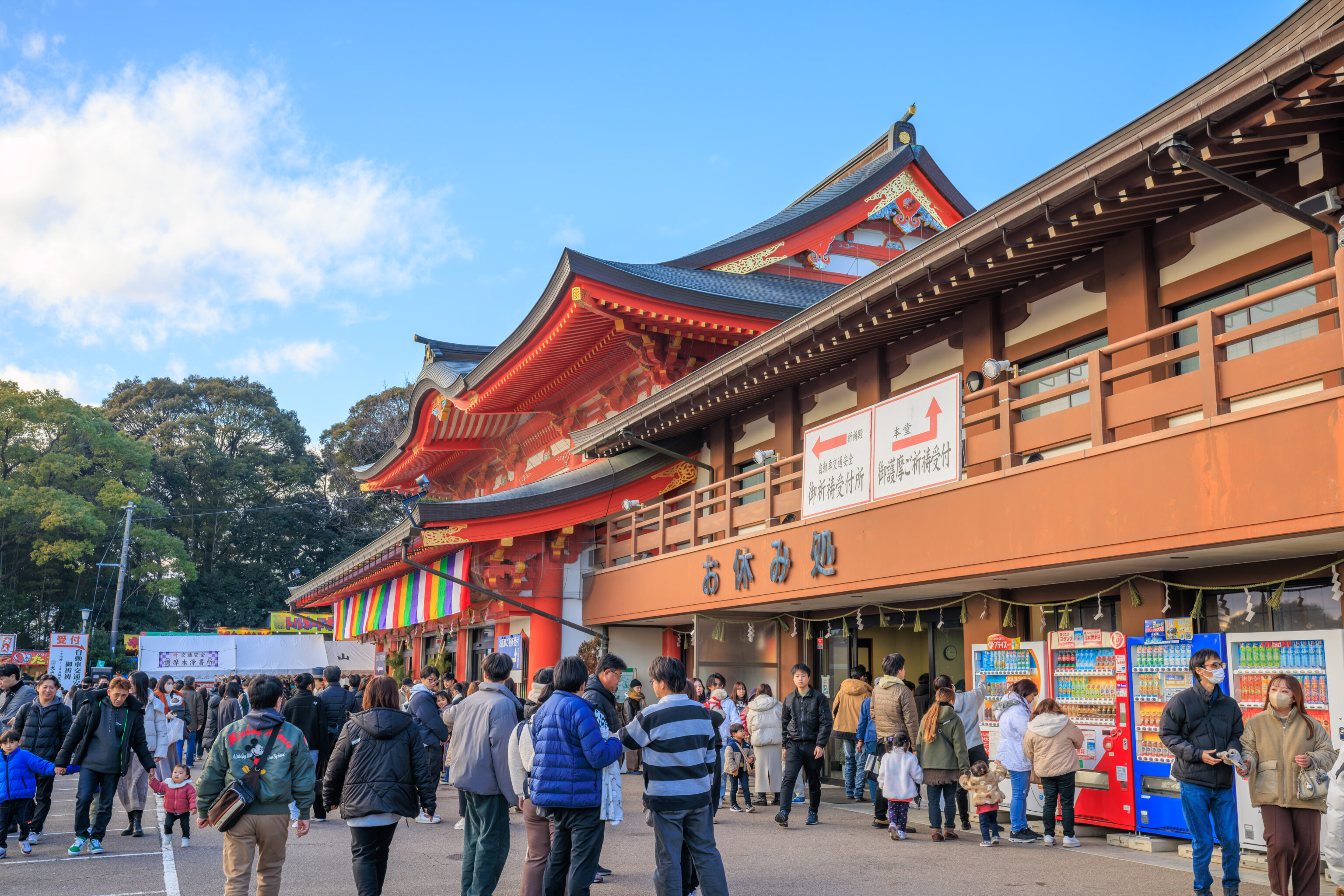
We went to the west side of the stairs to take a look at the temple building there. The sign says that it is a prayer hall, office, as well as the place to go for prayers and blessings for traffic safety. It seems that you can bring your car here and get it blessed.
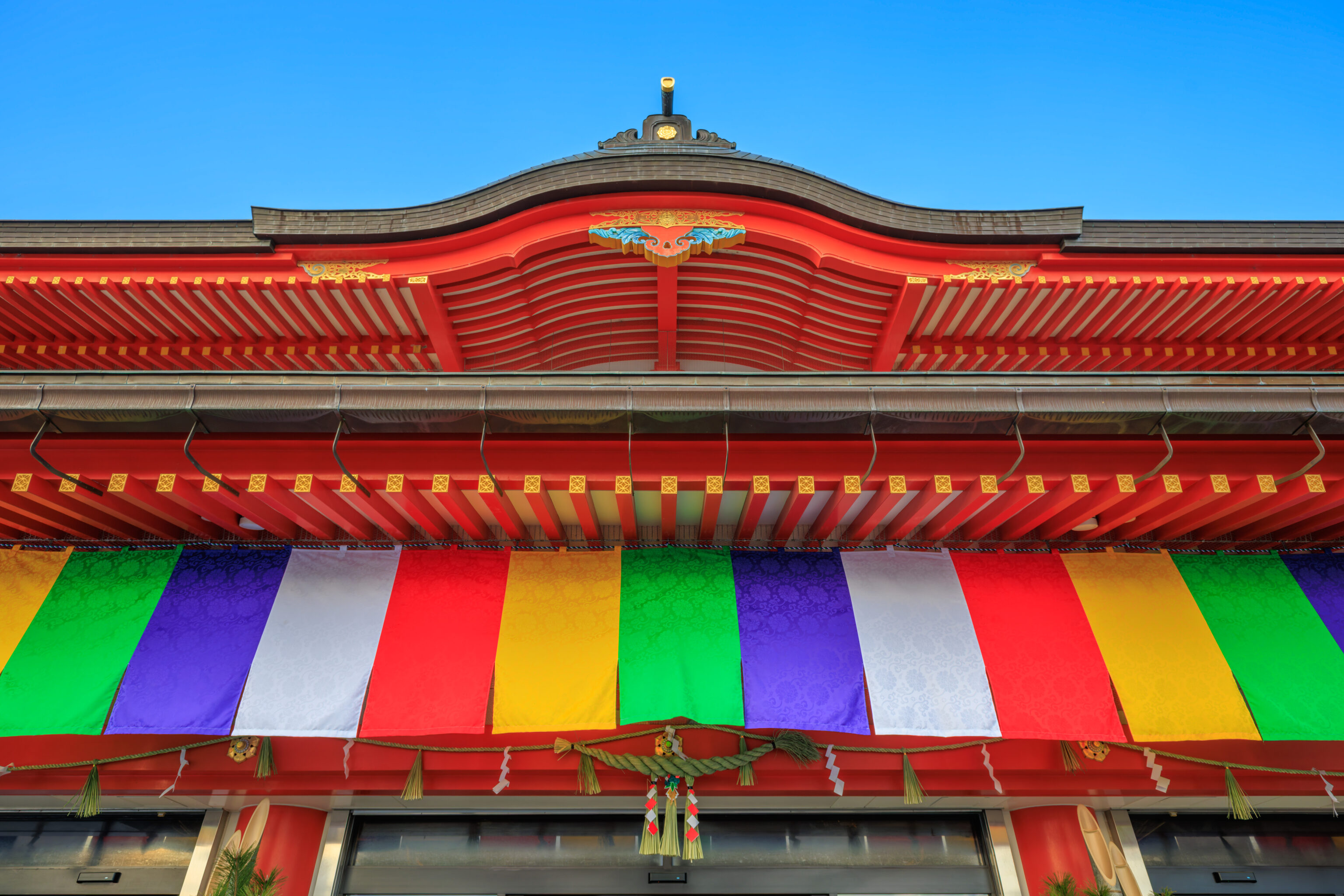
This building is simply identified on the map as the 自動車祈禱殿 Jidōsha Kitōden (Automobile Prayer Hall).
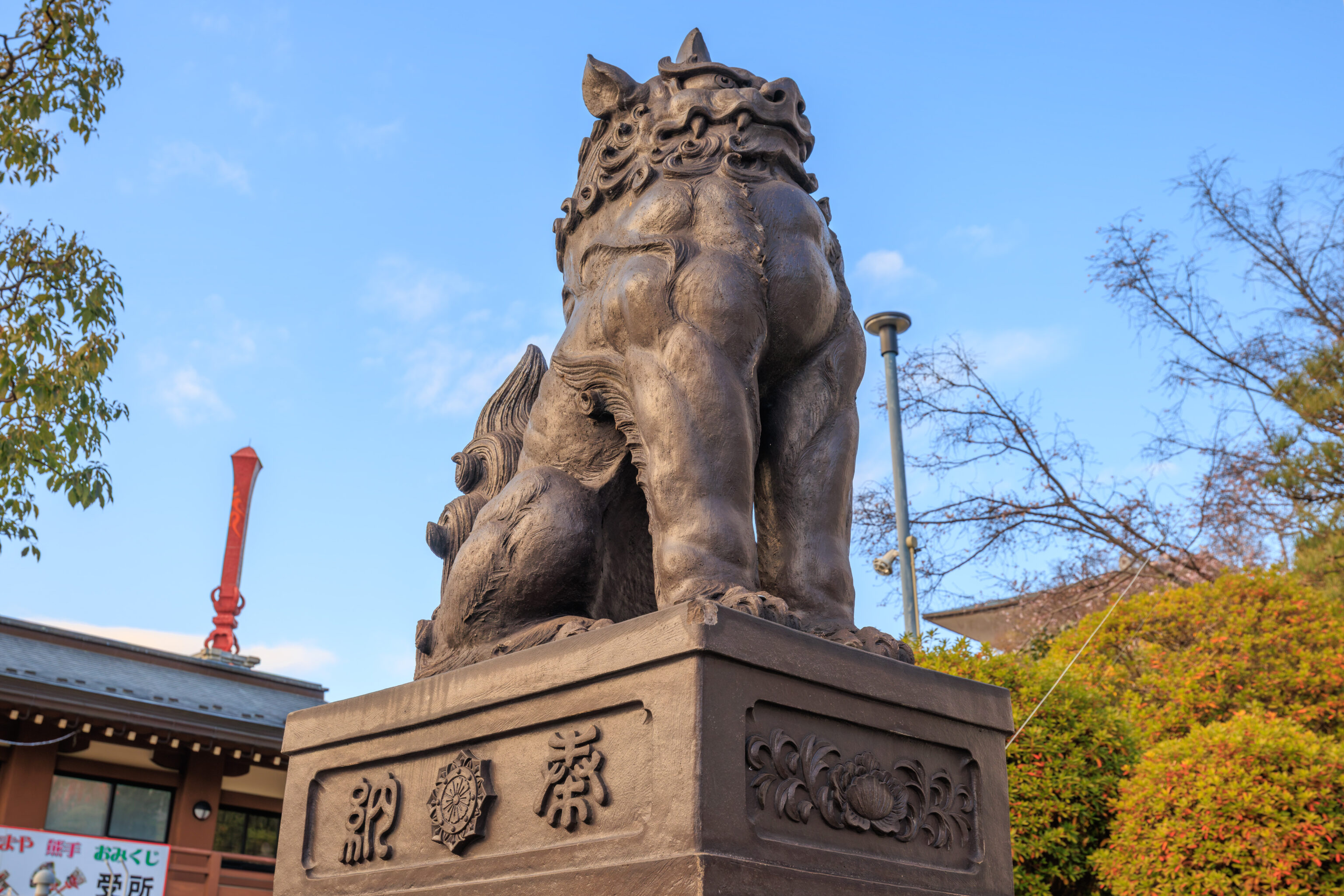
We walked past this 狛犬 Komainu.
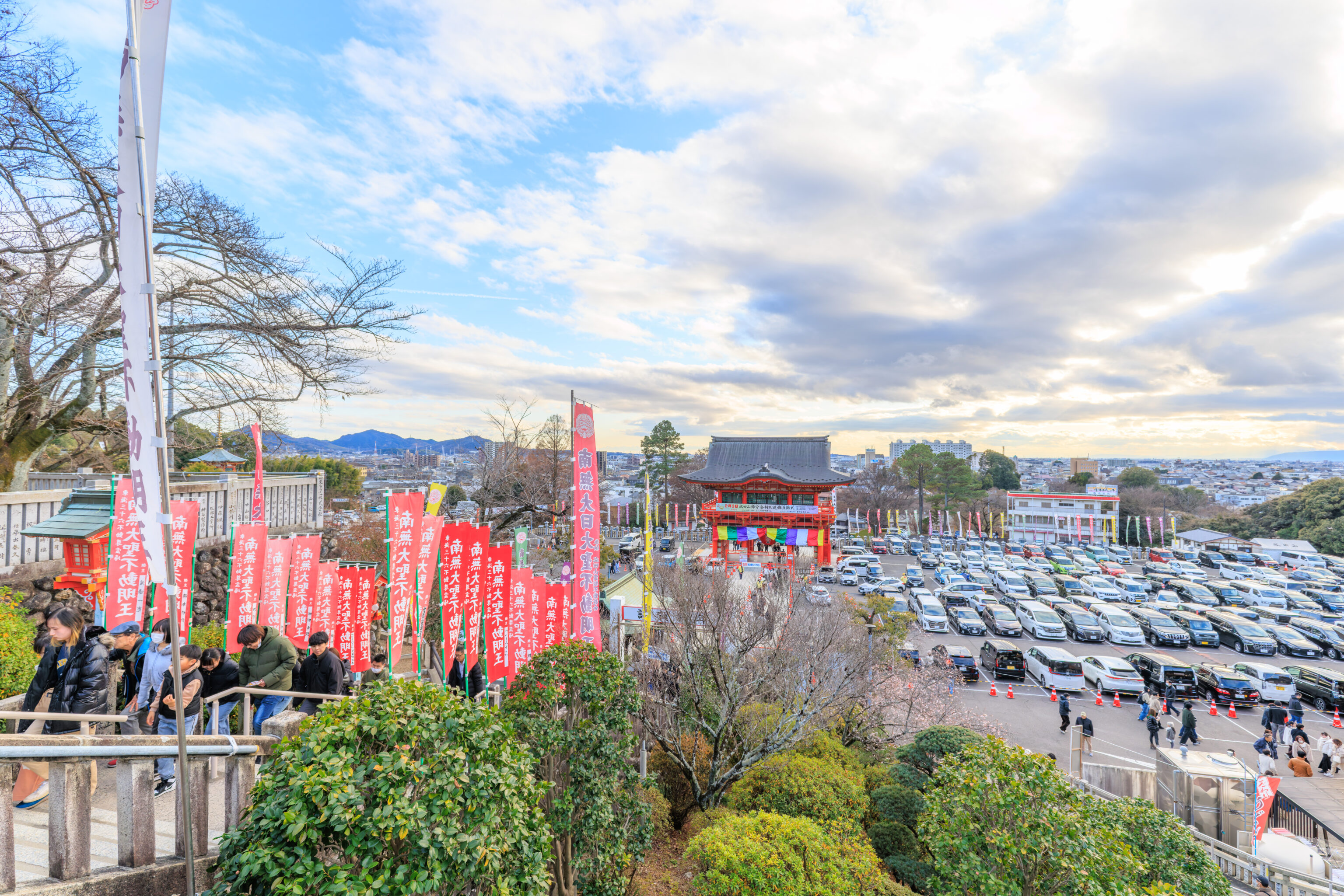
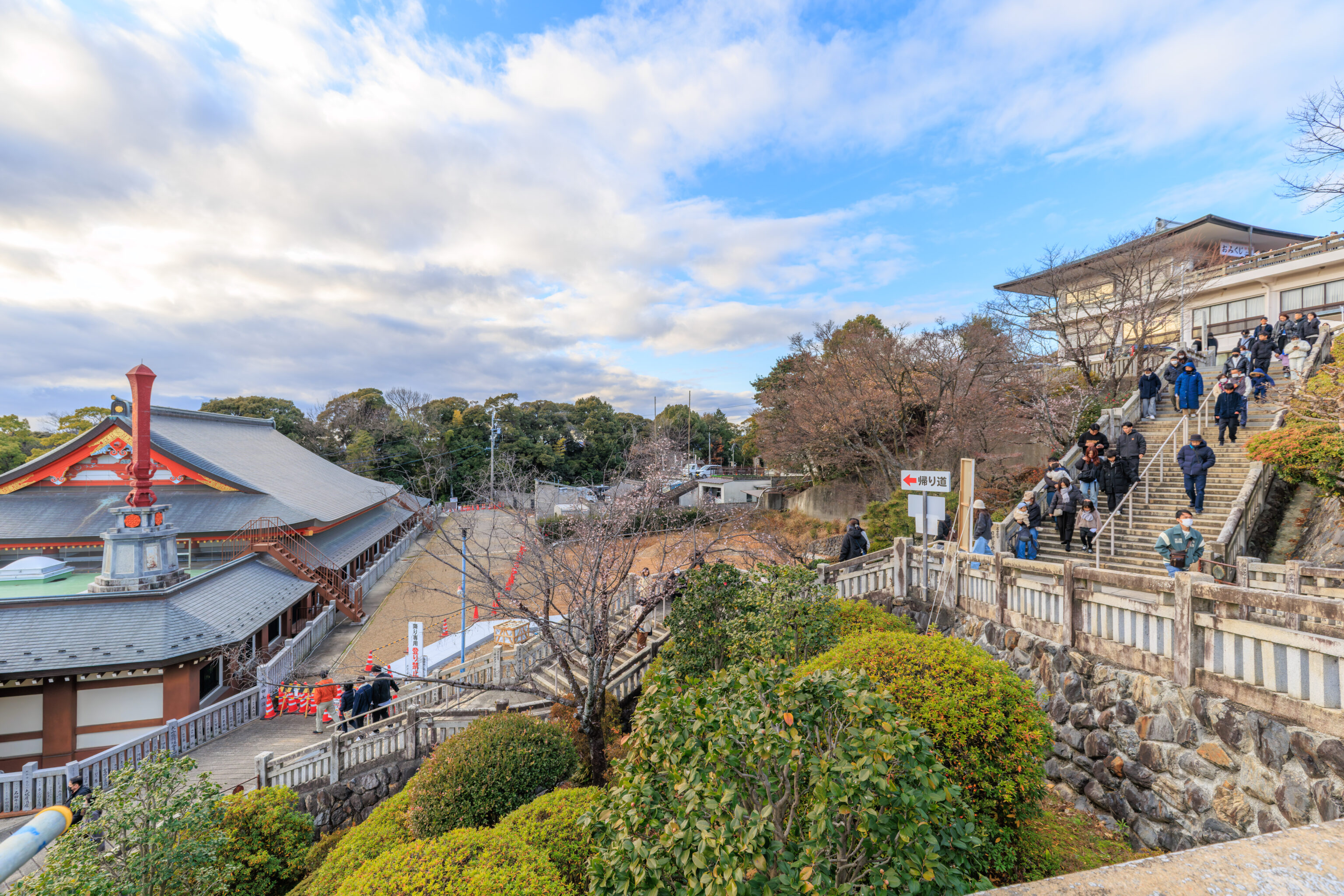
And headed up the stairs. We stopped at an intermediate level about halfway up.
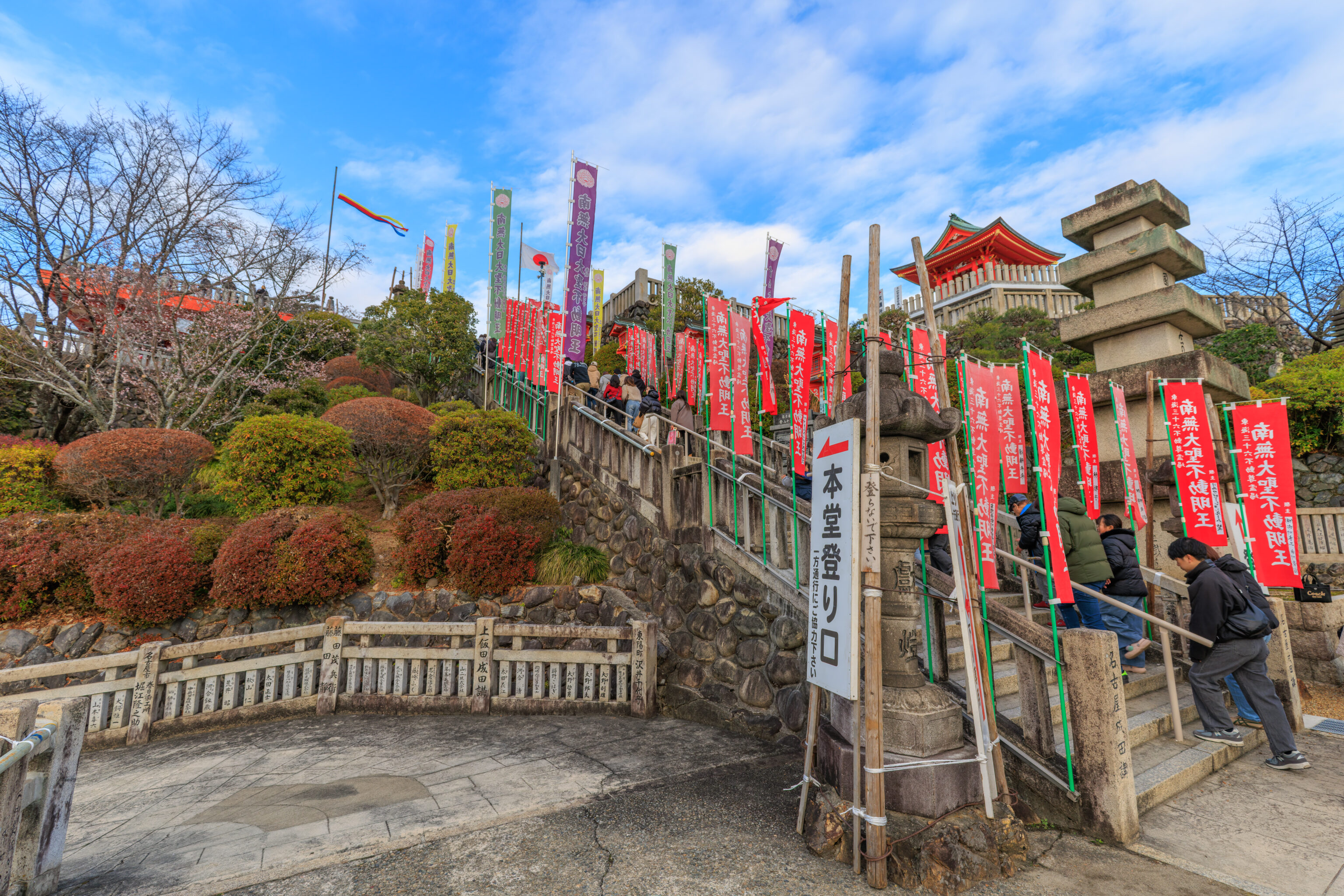
After taking a quick look around, we continued walking up the stairs.
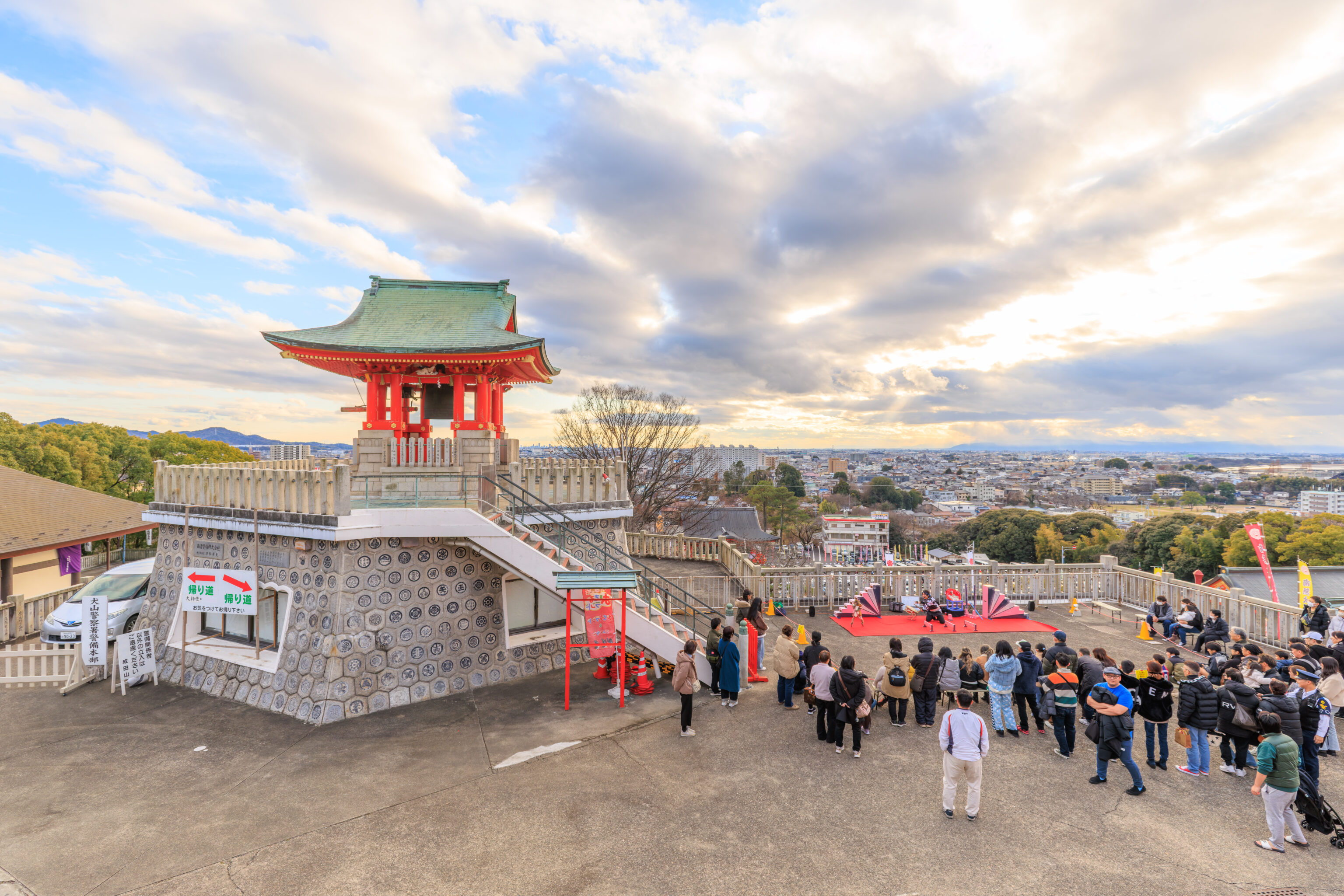
When we got to the very top, we noticed there was a crowd in the level just below us. It seems there was a monkey show going on. To the left, there was a bell tower.
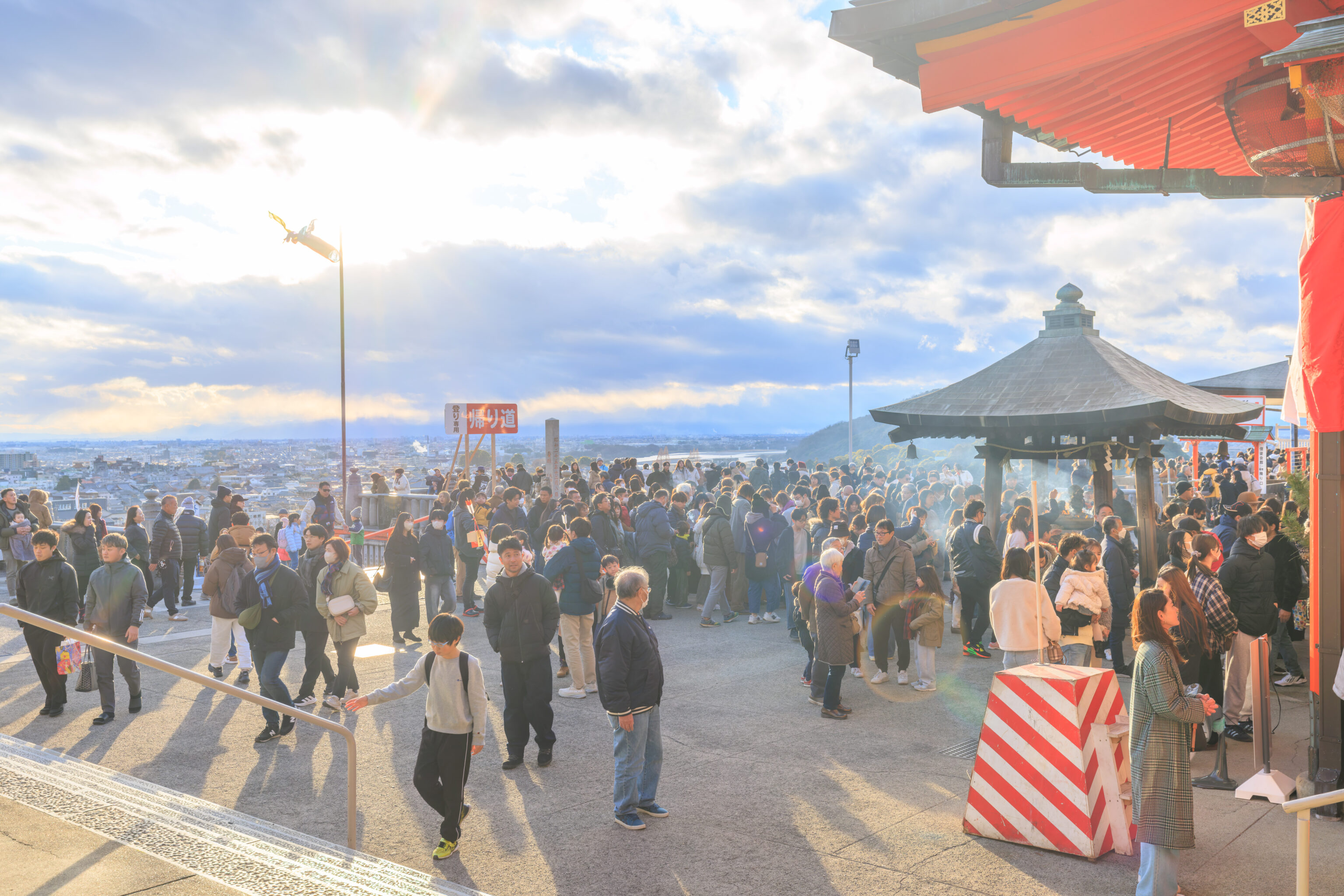
This level, which contains the temple’s main hall, was basically a large open plaza that overlooks the area to the south. It was very busy! And there was quite a bit of smoke from burning incense.
We walked around a bit, prayed at the Main Hall, and got goshuin as well as omamori. This could probably still be considered hatsumode as so far today we only visited Shinto shrines. This is our first Buddhist temple visit of the year!
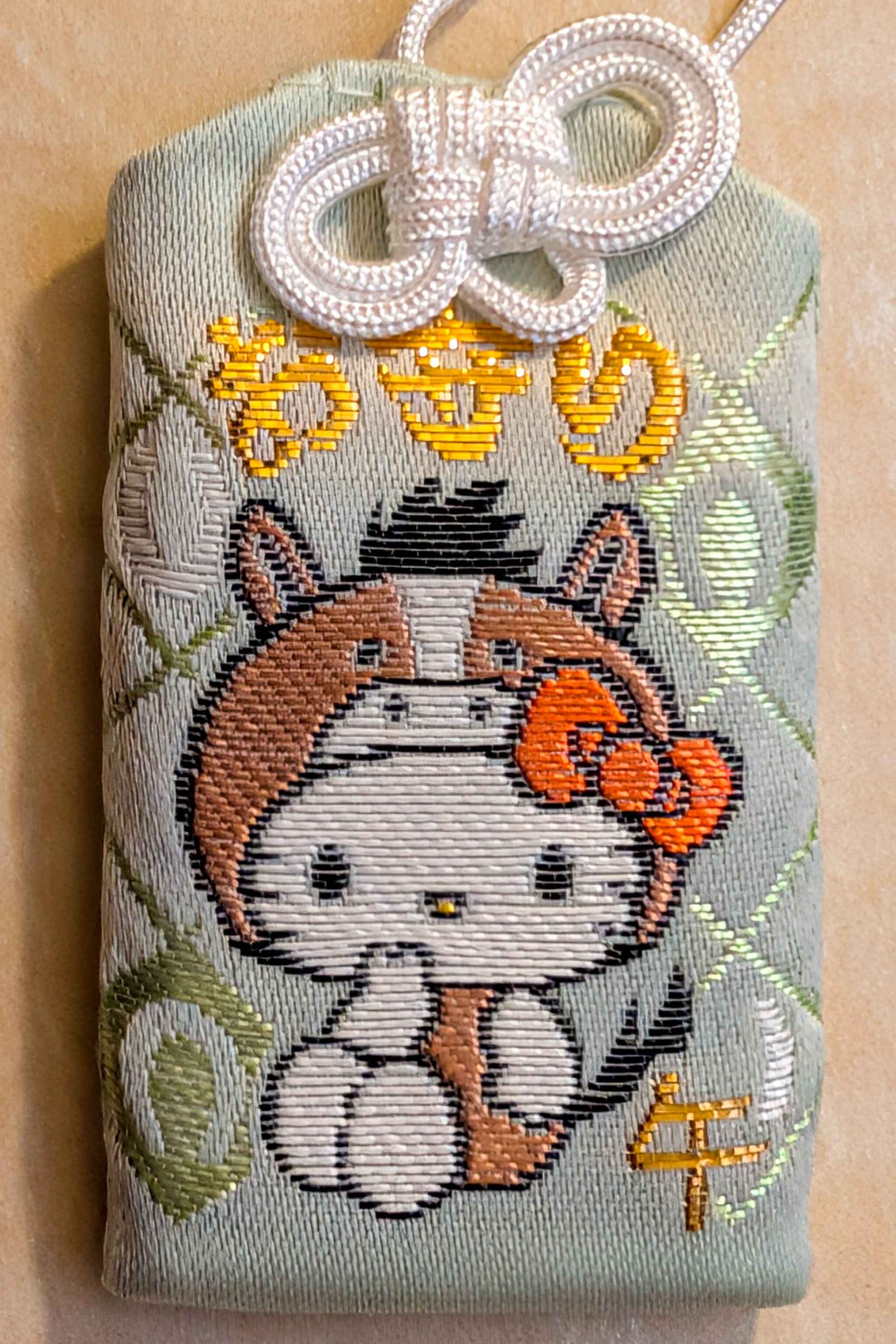
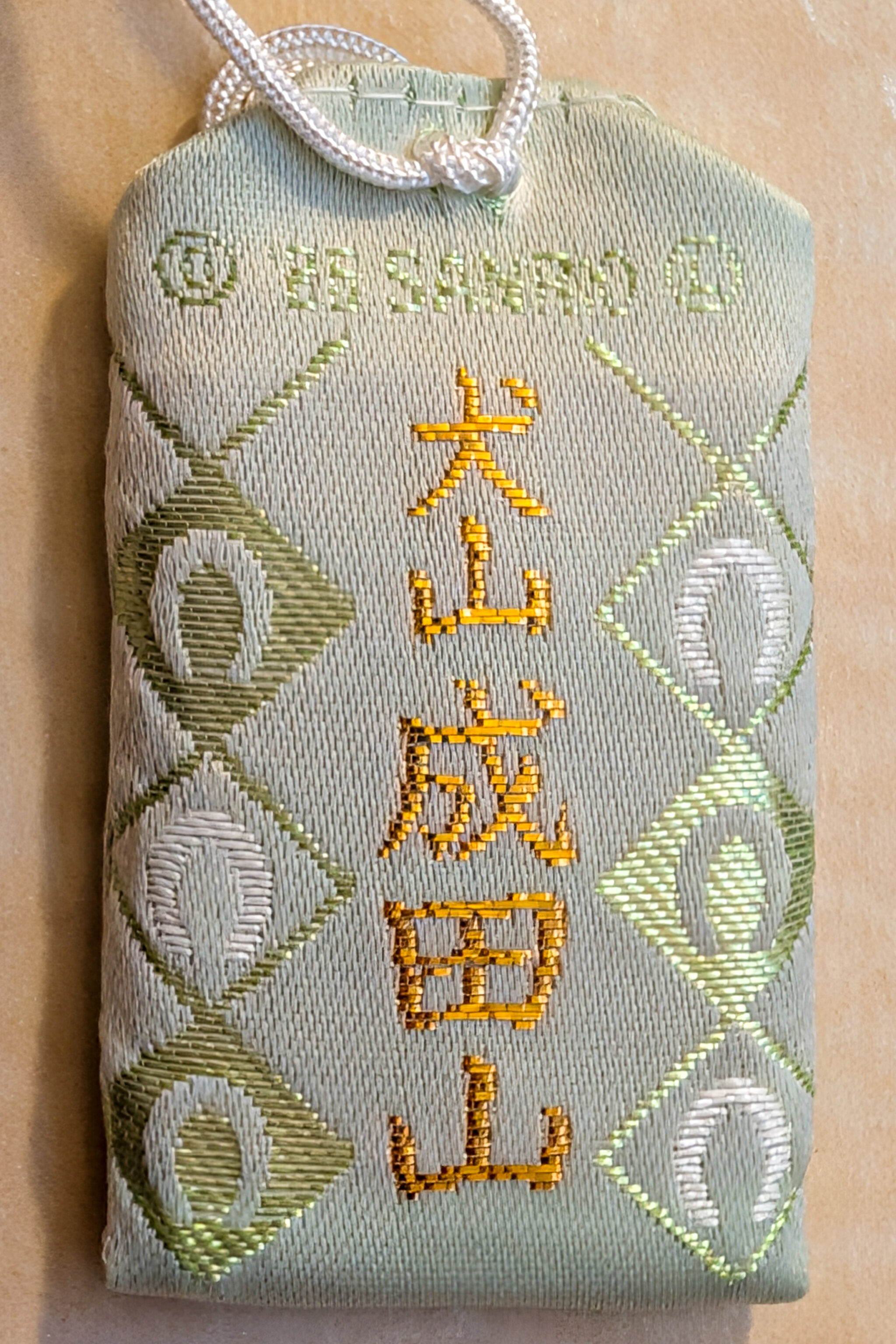
They had a horse themed Hello Kity omamori! It was the most special out of all the options so we got it.
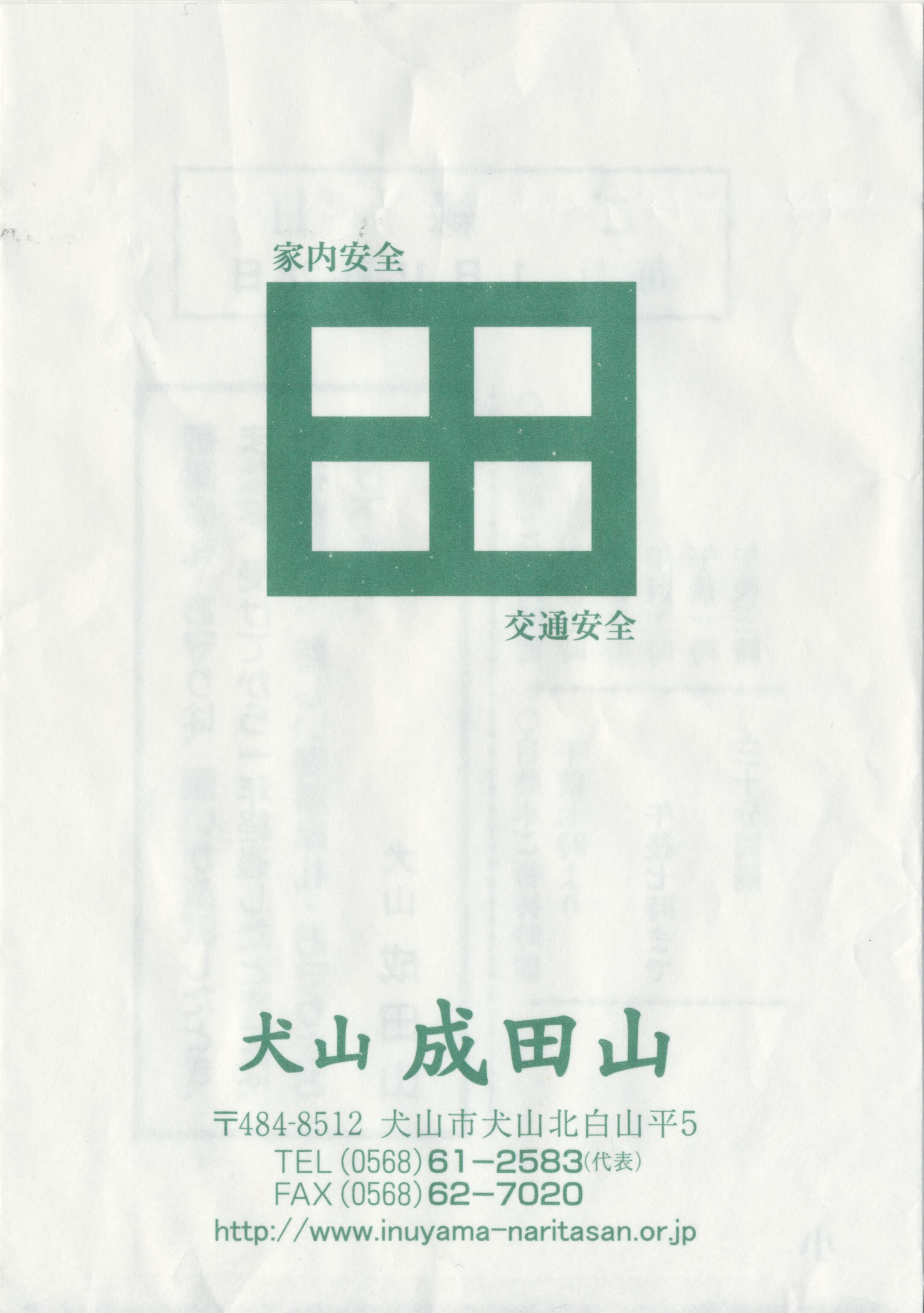
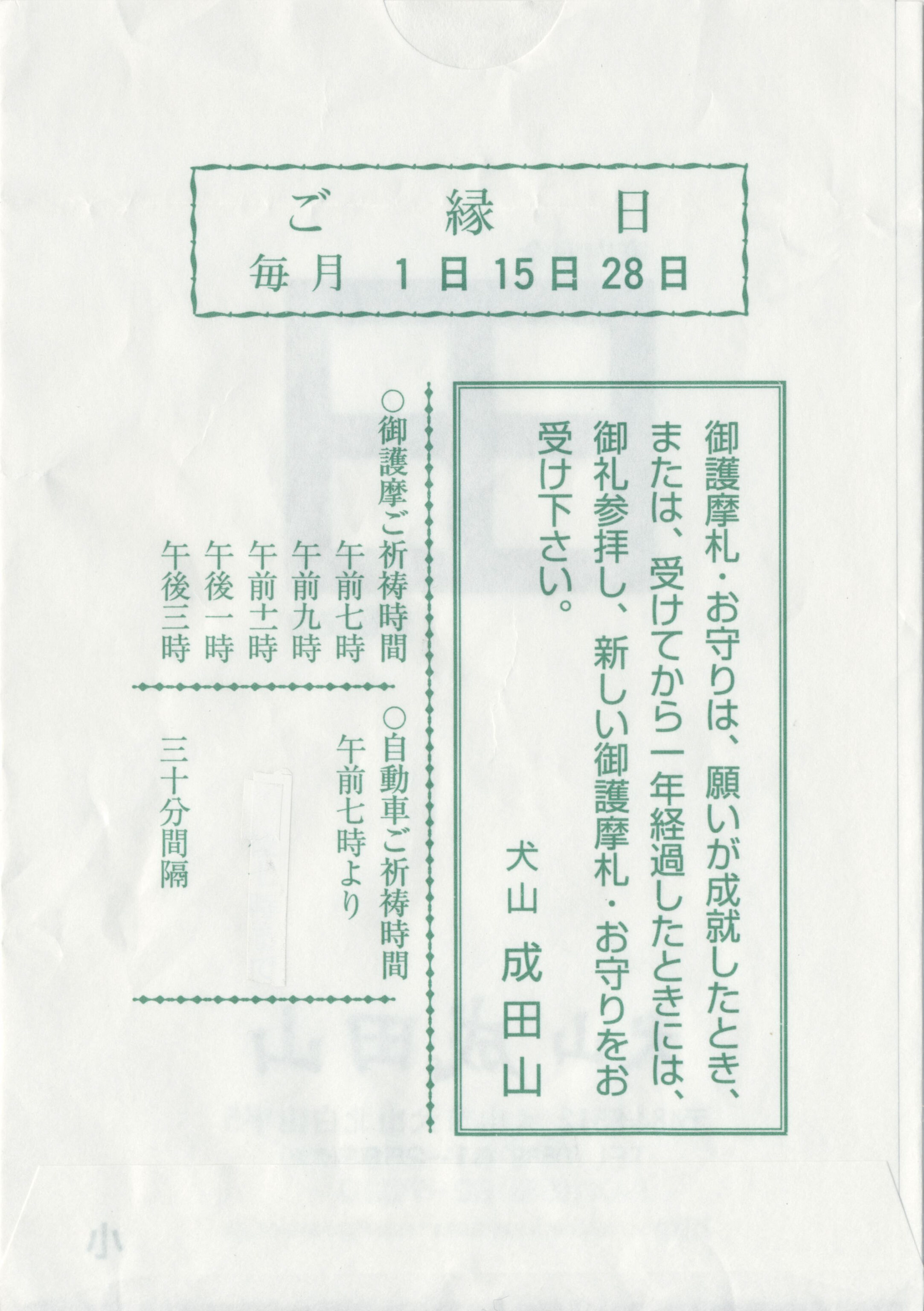
The temple’s bag actually has some instructions and information:
Festival Days
The 1st, 15th, and 28th of every month

When your wish has been fulfilled, or one year has passed since you received your *Goma* talisman or amulet, please visit the temple to offer your thanks and receive a new one.
- Inuyama Naritasan

◯ Goma Prayer Service Times
7:00 AM
9:00 AM
11:00 AM
1:00 PM
3:00 PM

◯ Vehicle Blessing Times
From 7:00 AM
At 30-minute intervals
– Text from the temple’s bag, transcribed using Google Gemini and translated using Google Translate.
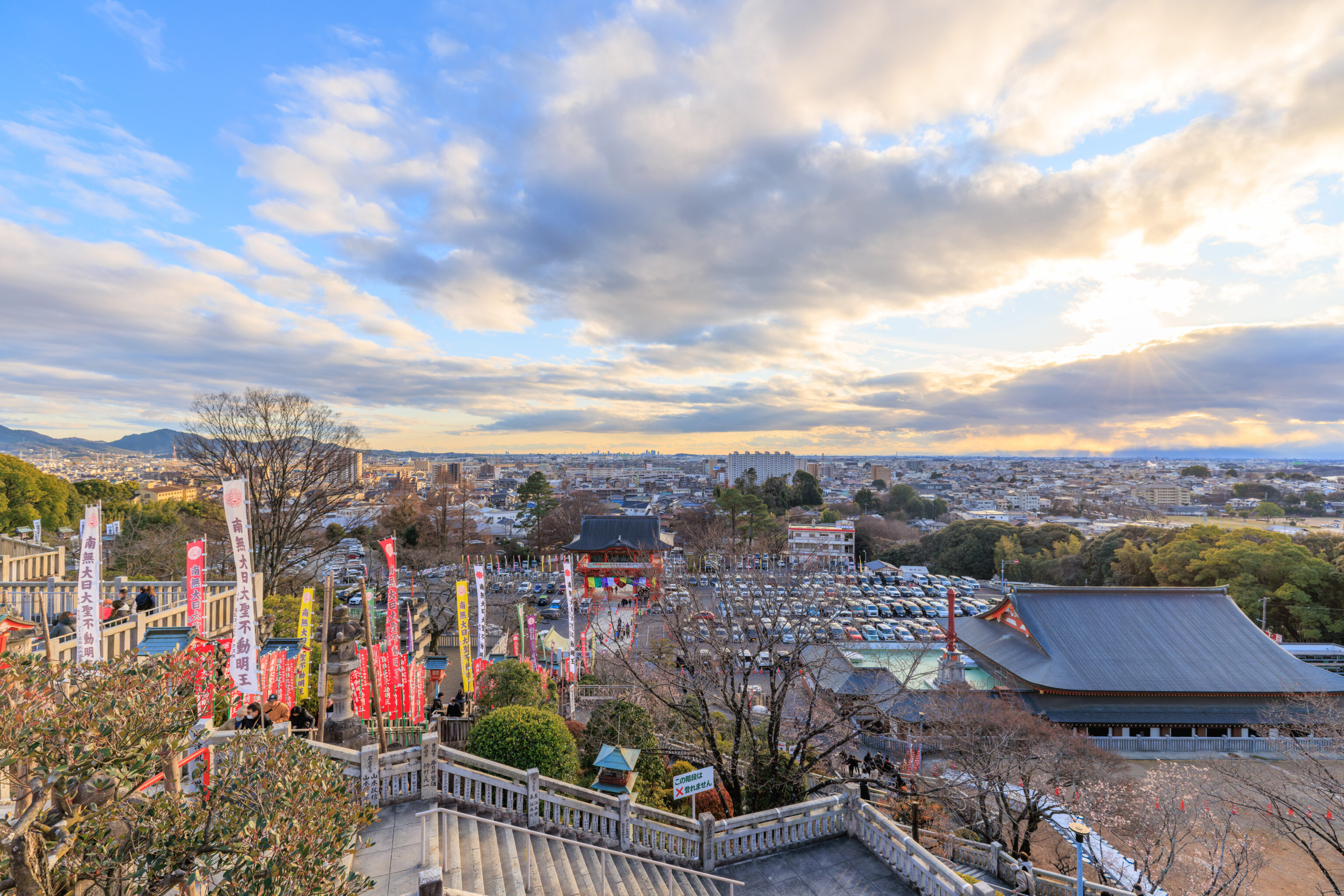
The view looking to the south. The tall buildings on the horizon are in central Nagoya. One of them contains the Marriott where we are staying.
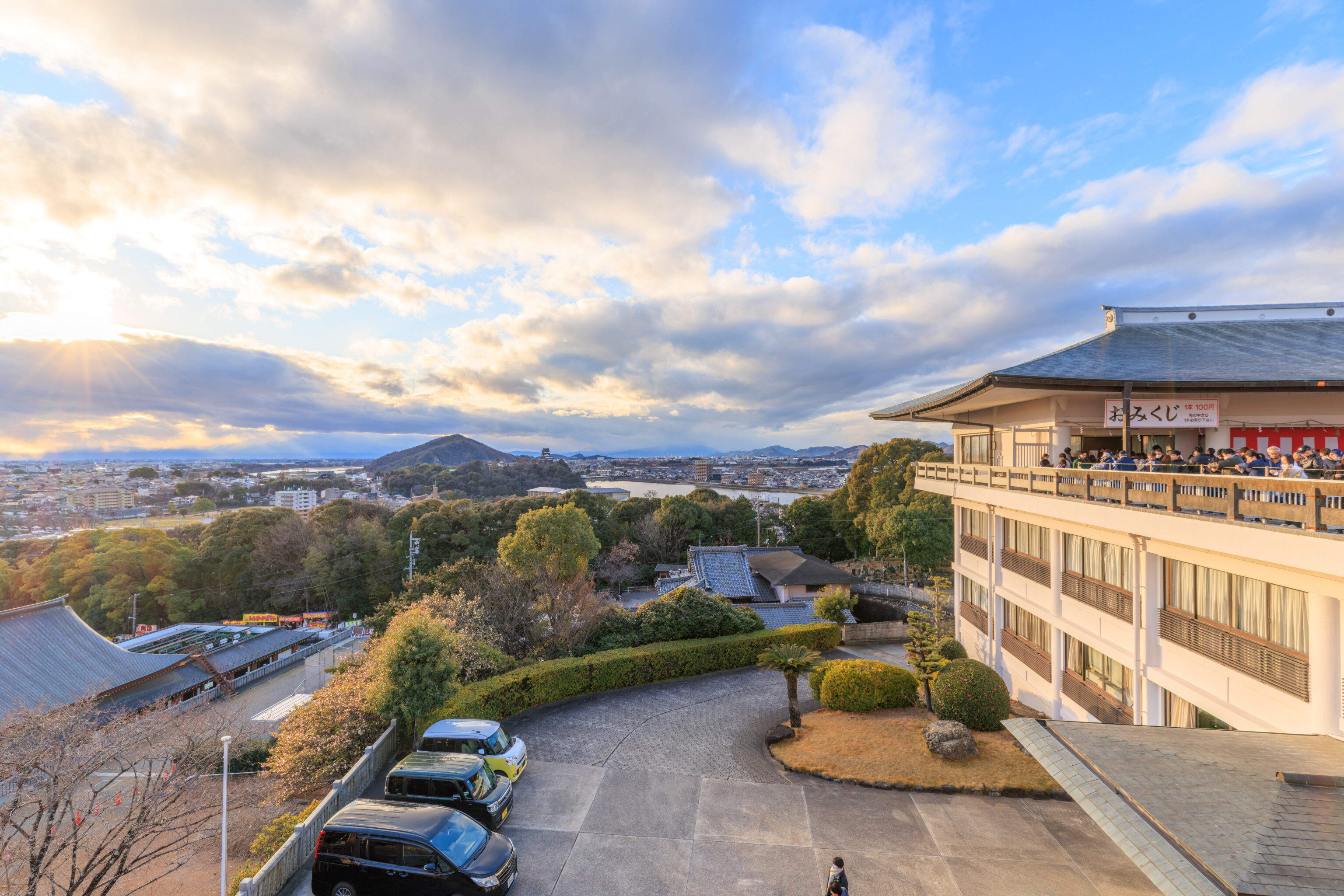
Looking to the west, we could see Inuyama Castle! Our camera has a two axis level. So, we can tell if the body is level or not. With the body level, Inuyama Castle is about in the middle of the vertical axis. So, it should be at more or less the same elevation as us.
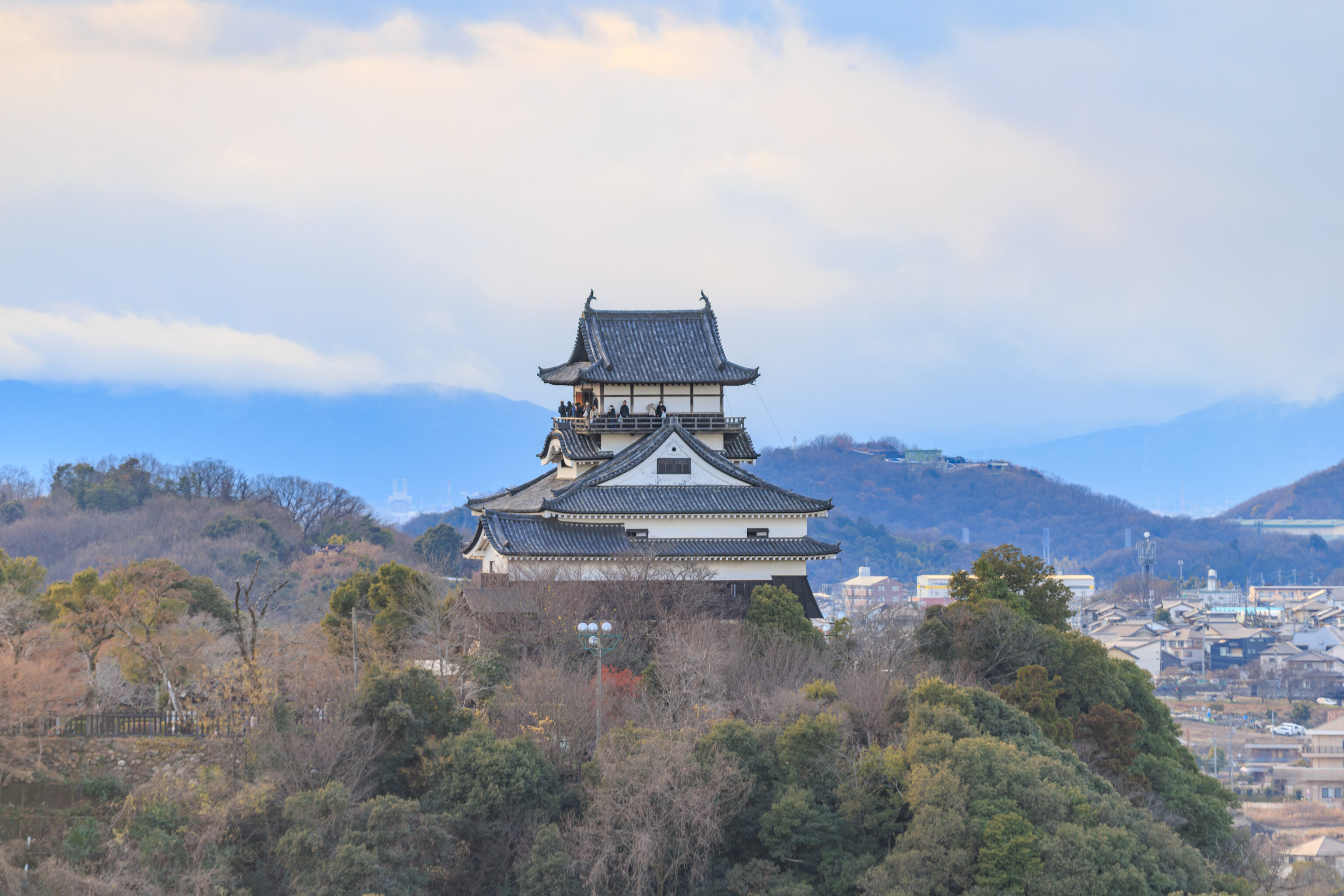
We swapped to the telephoto lens to take a closer look at Inuyama Castle.
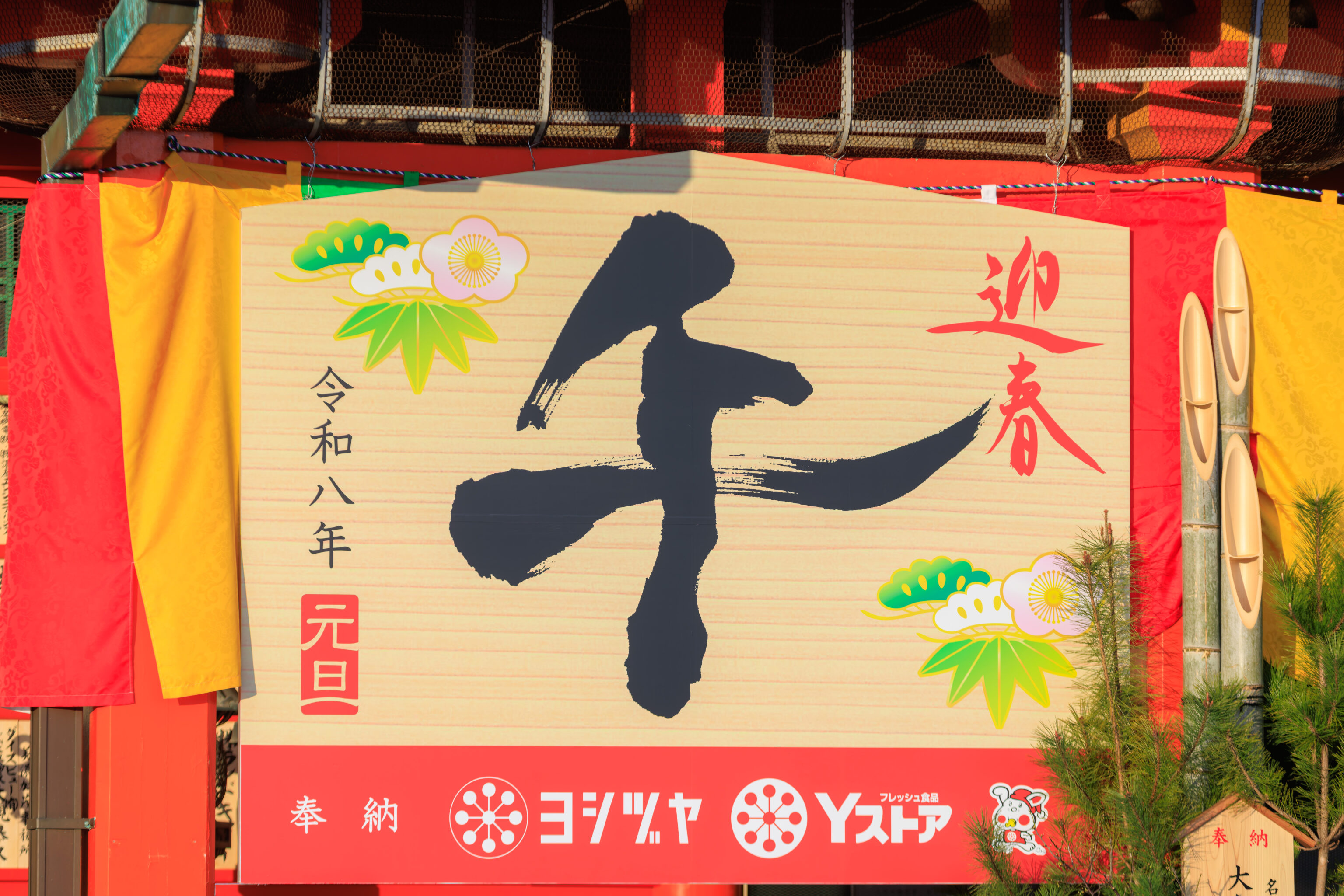
This large sign, styled like an ema, contains a large character 午. This character represents the Year of the Horse.
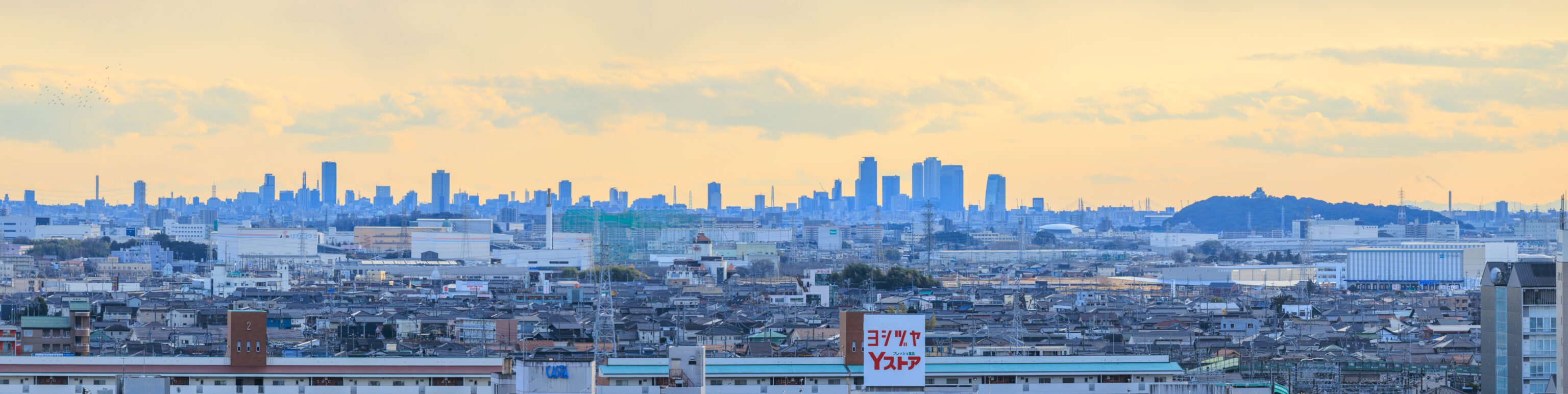
A panorama of the Nagoya skyline, as seen from the telephoto lens! The castle on a hill to the right might be 清洲城 Kiyosu Castle, a modern reconstruction from 1989.
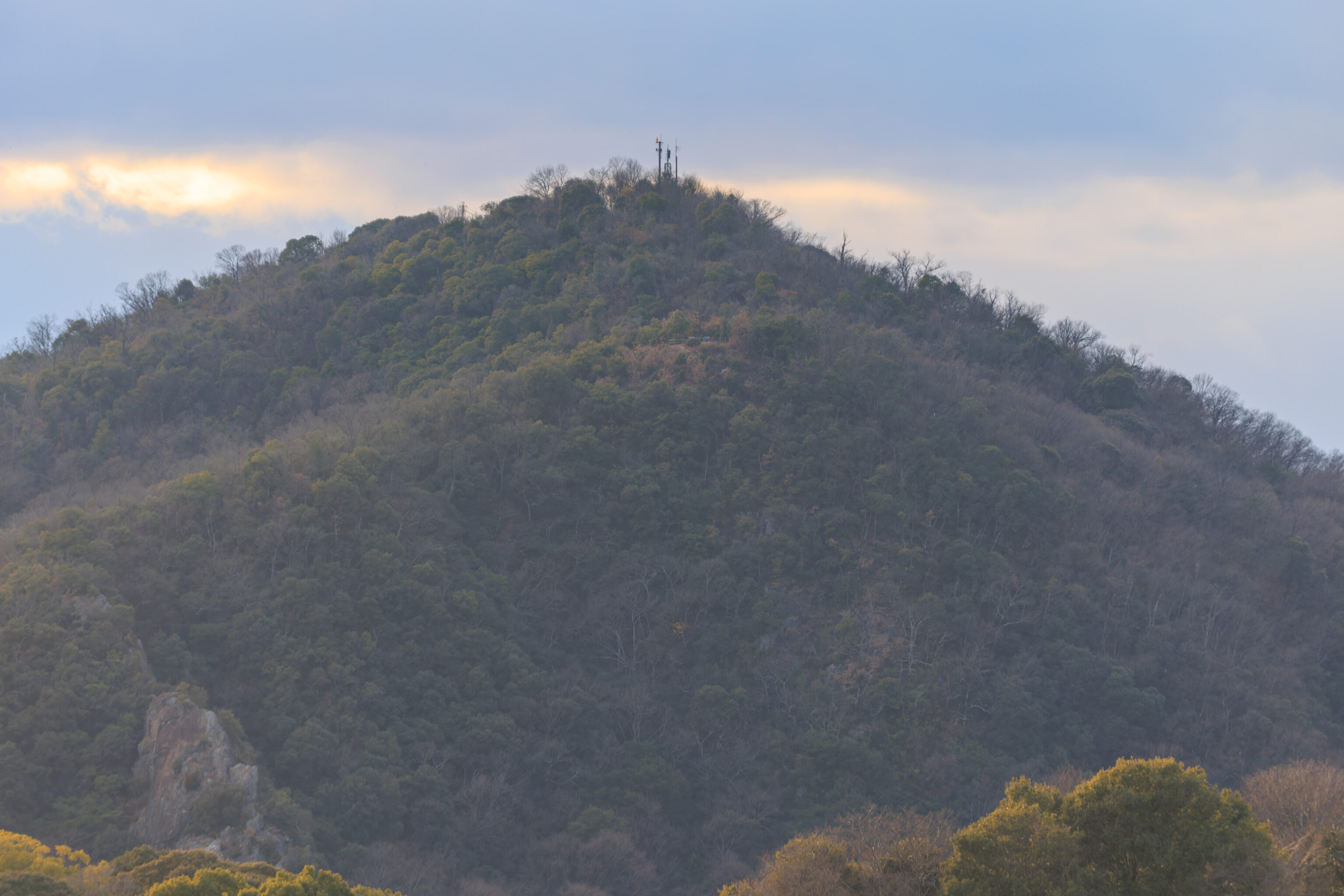
This is the peak of 伊木山 Mount Igi. It isn’t really significant other than something we had noticed from the top of Inuyama Castle.
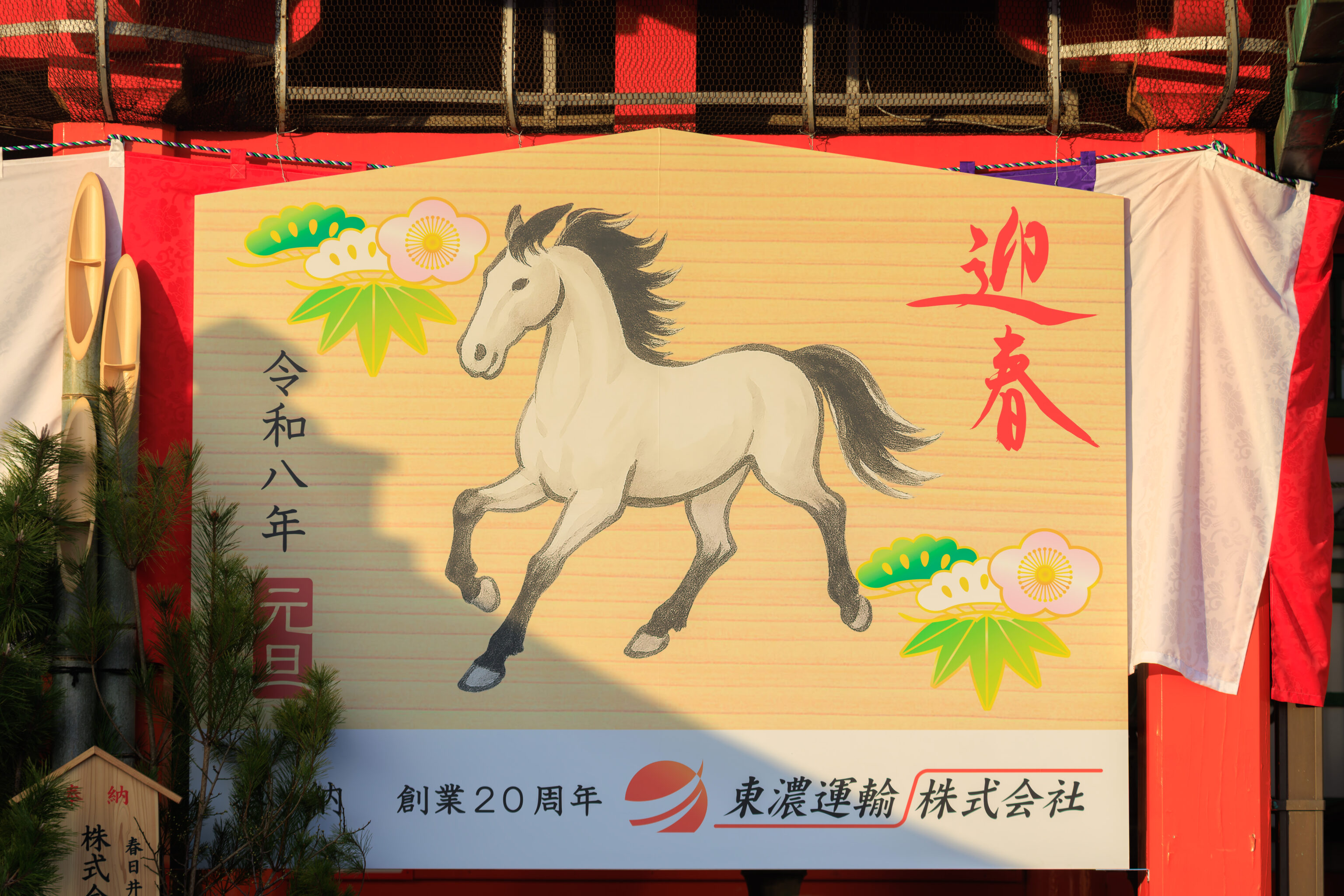
This large ema sign depicts a horse, because its the Year of the Horse!
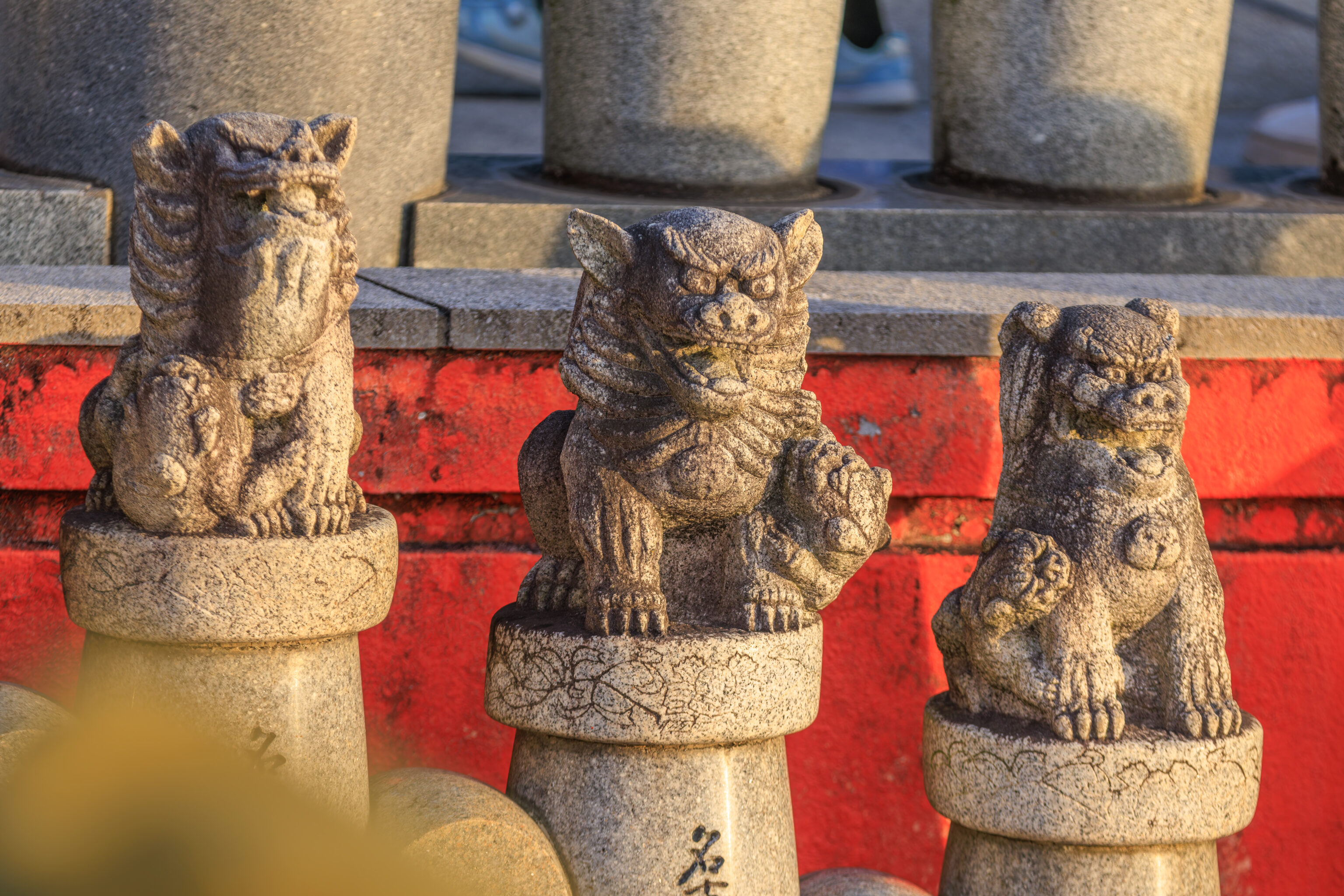
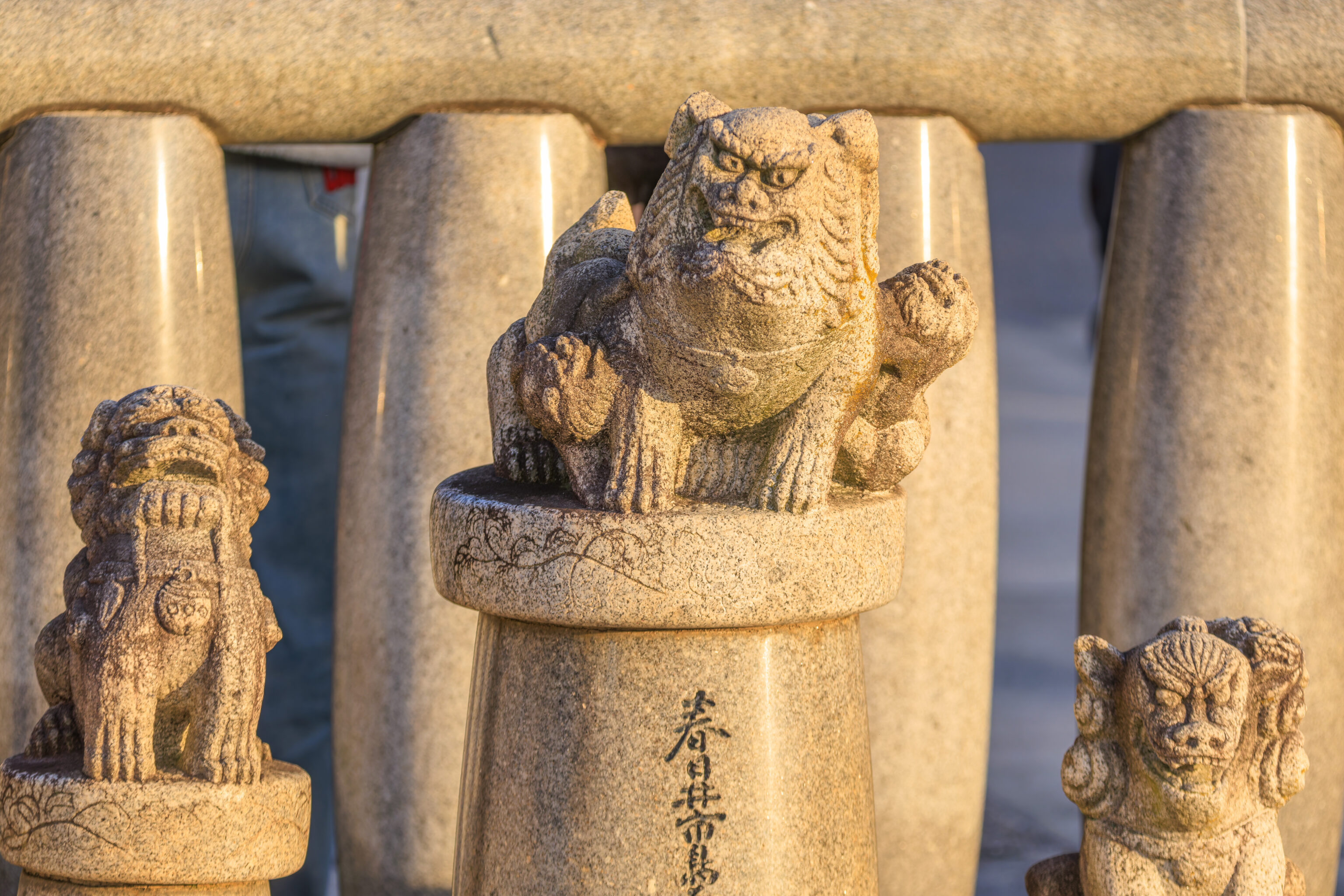
These little sculptures were by the stairs.
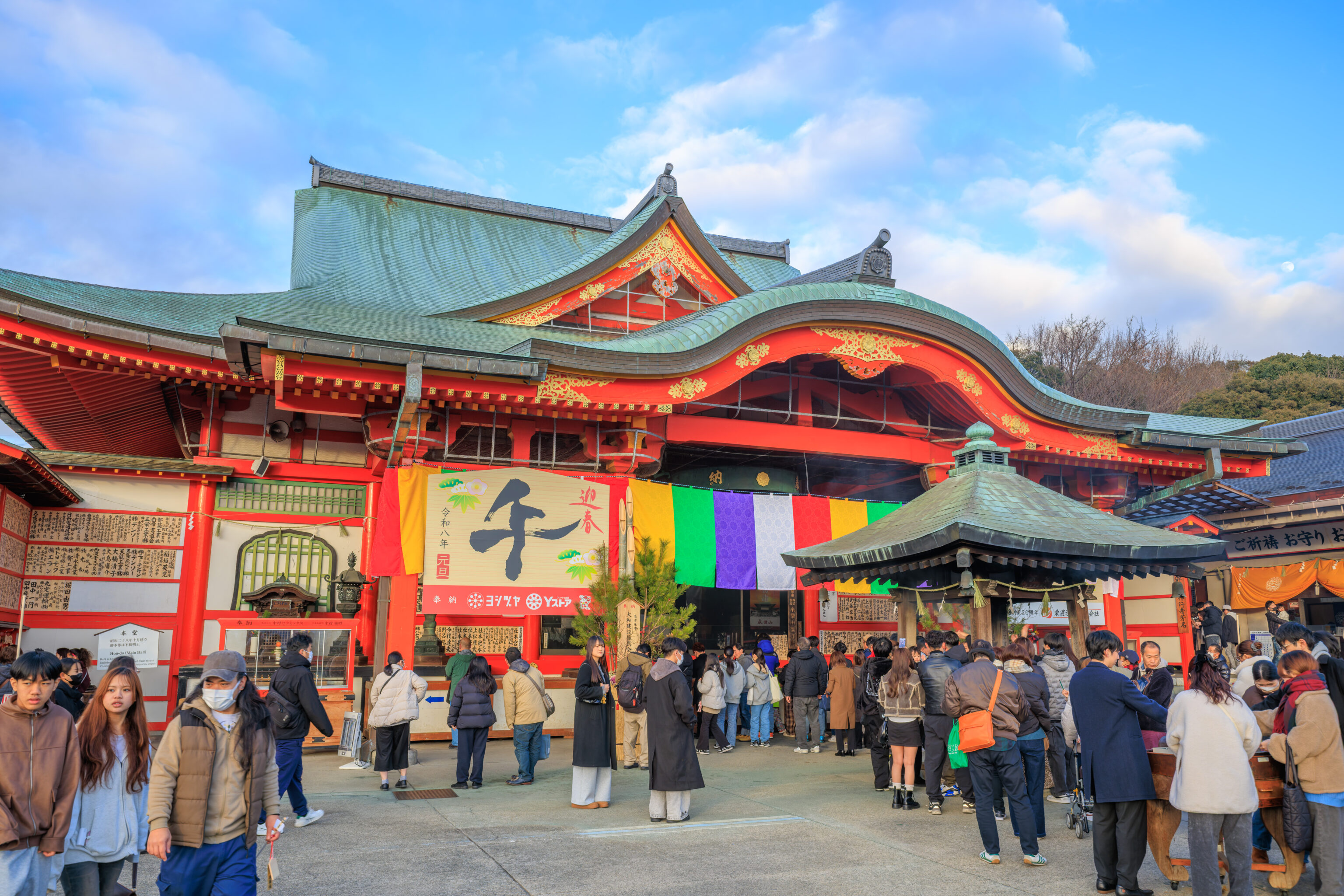
The very busy Main Hall, as seen from the front.
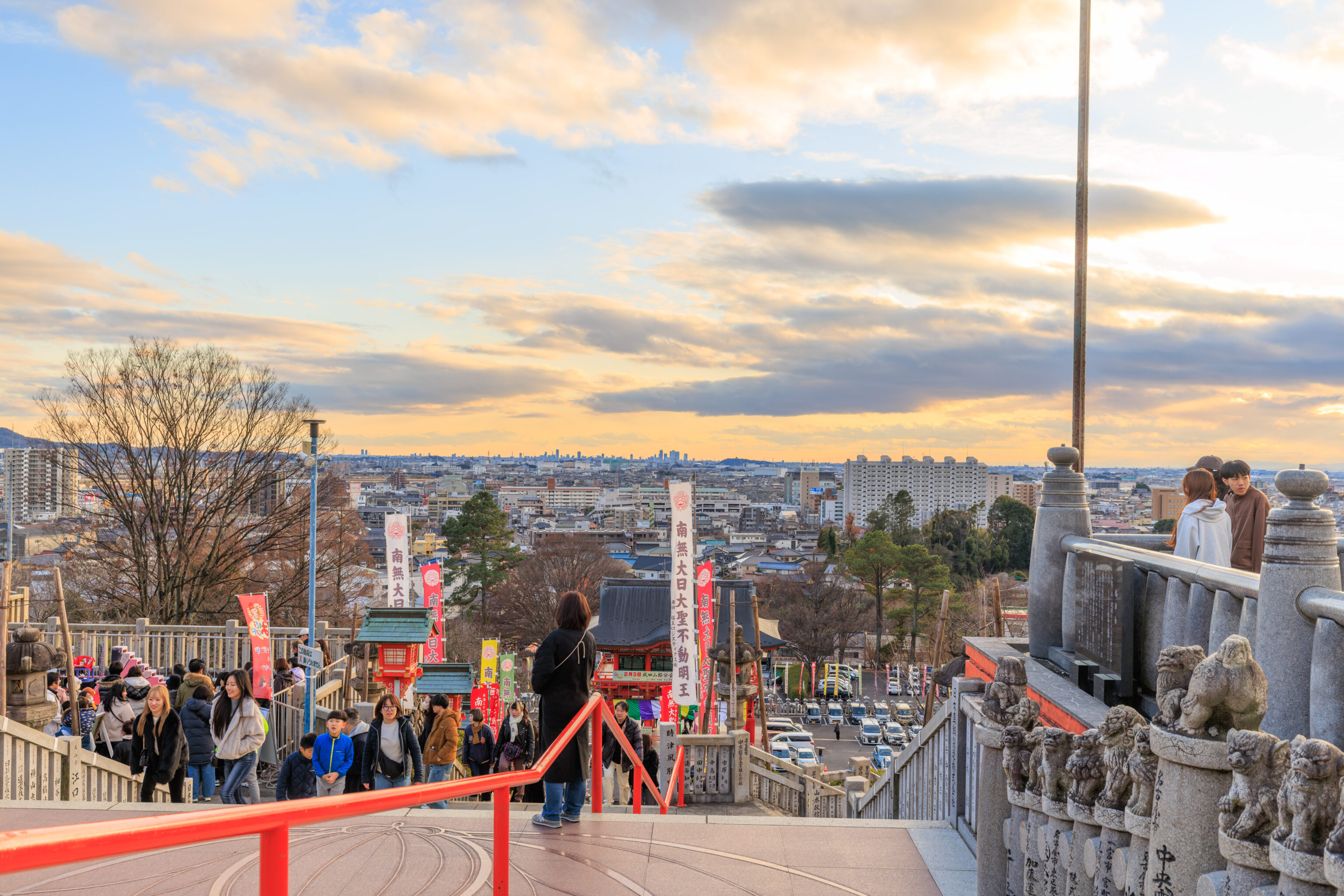
The view looking down the stairs on the front side of the temple.
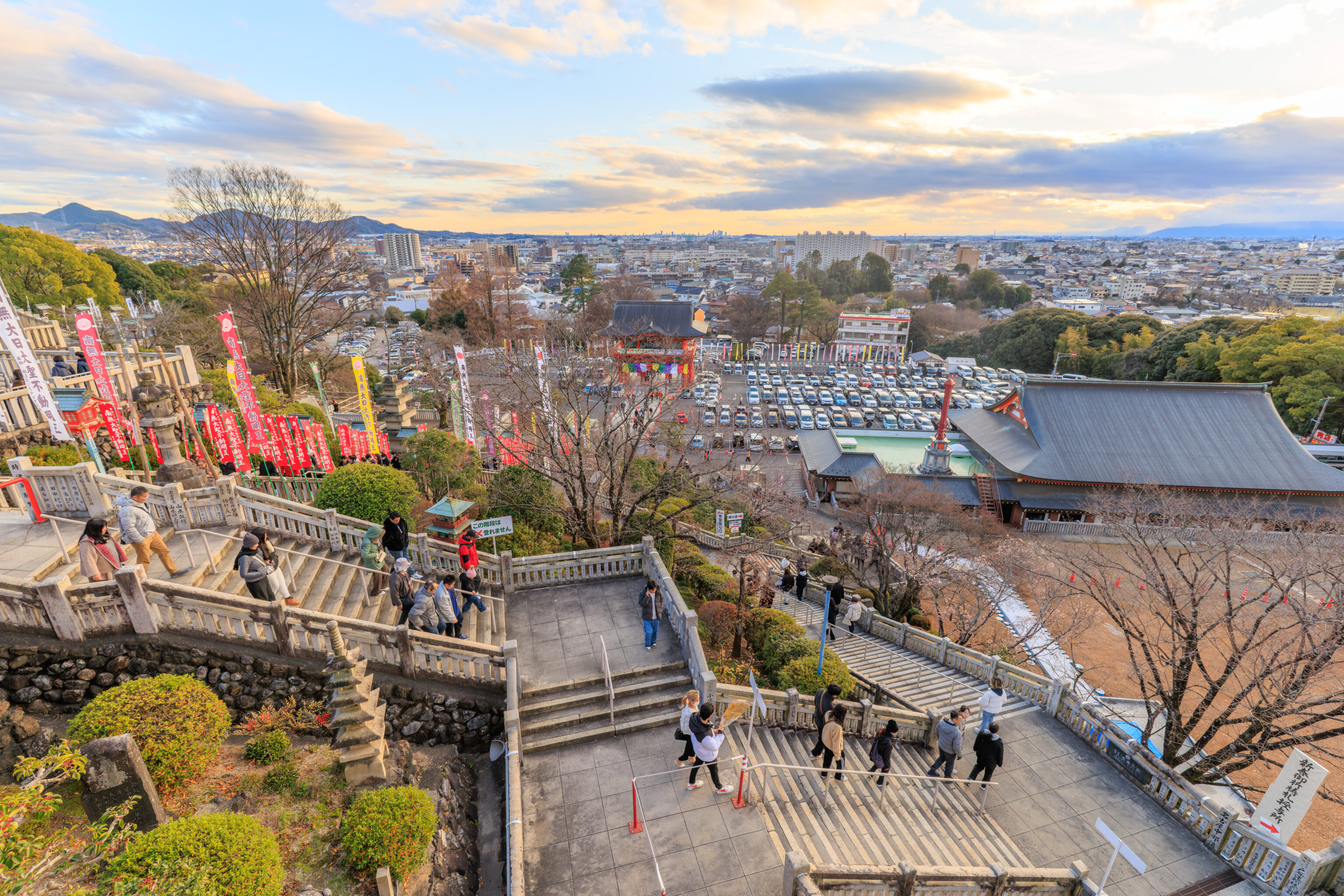
The zigzagging stairs here are an alternative path to the direct route that we took when arriving. We didn’t leave this way though.
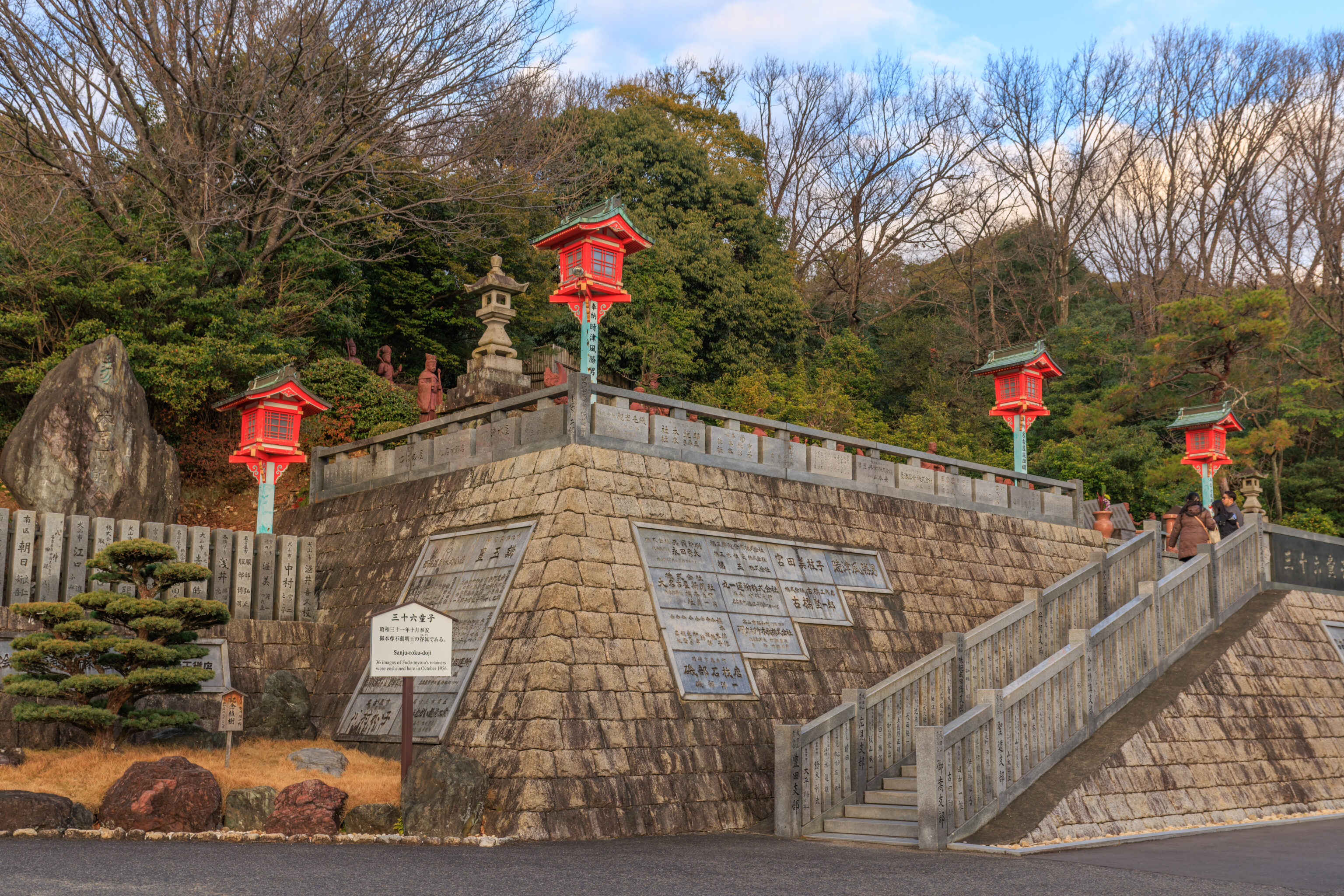
We decided to head to Inuyamayūen Station via the rear of the temple. Just behind the Main Hall, there are some parking spaces. And the this area at a higher elevation.
Thirty-Six Acolytes (Sanjūroku Dōji)
Enshrined in October, Showa 31 (1956)
They are the attendants (kenzoku) of the principal deity, Fudō Myōō.
– Text from the sign to the left of the stairs, transcribed using Google Gemini and translated using Google Translate.
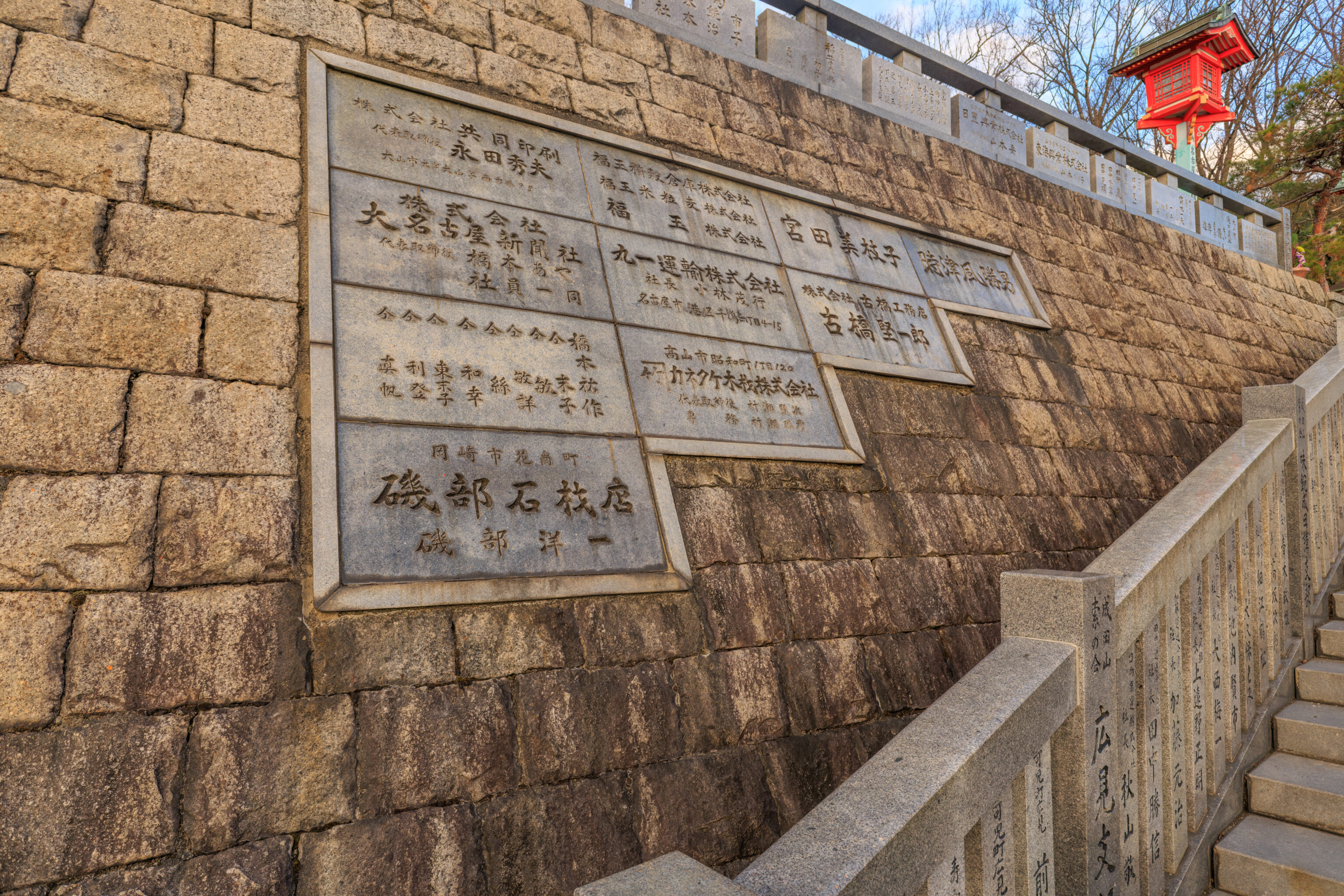
We walked over to take a look.
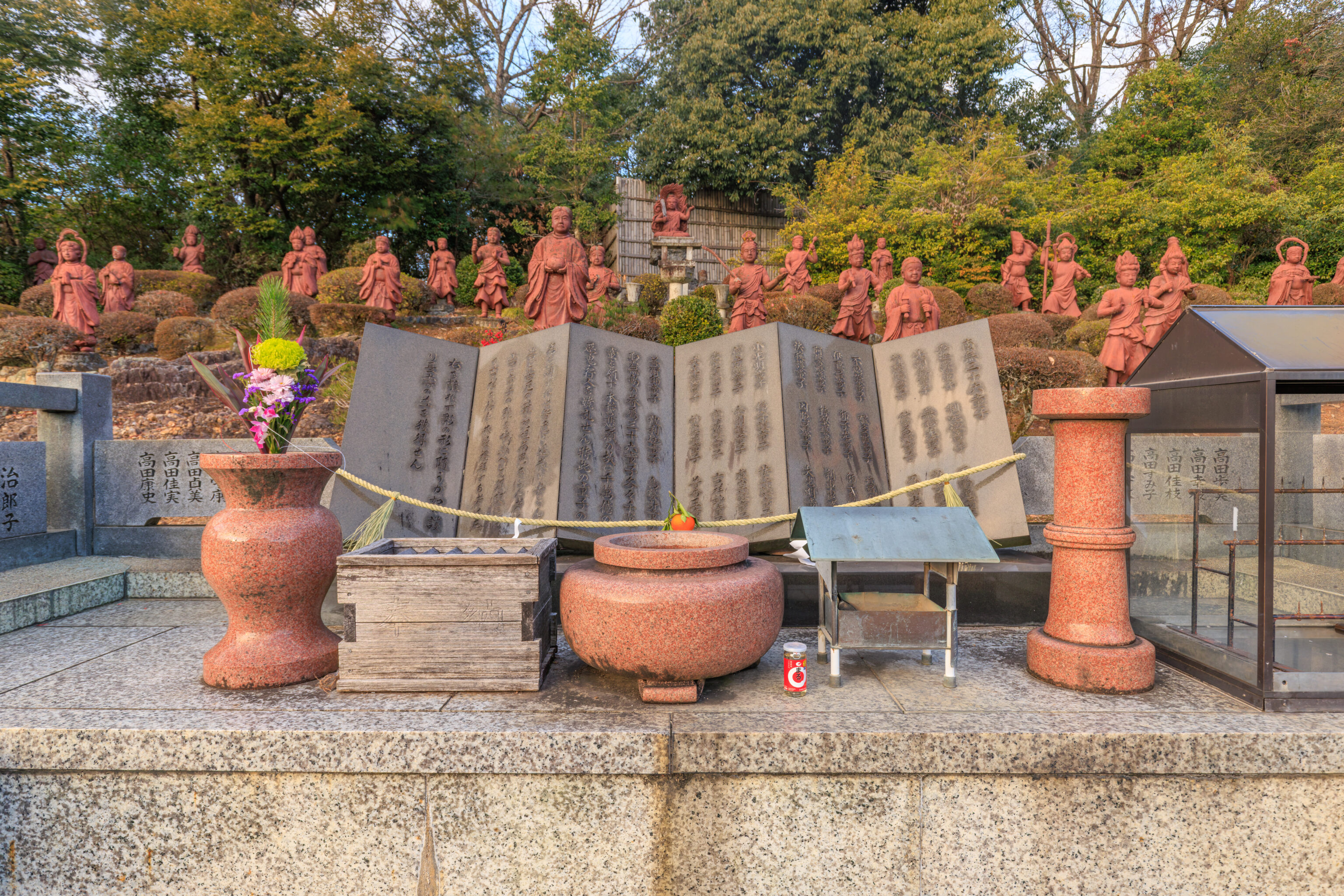
Are there 36 statues up here? Maybe…
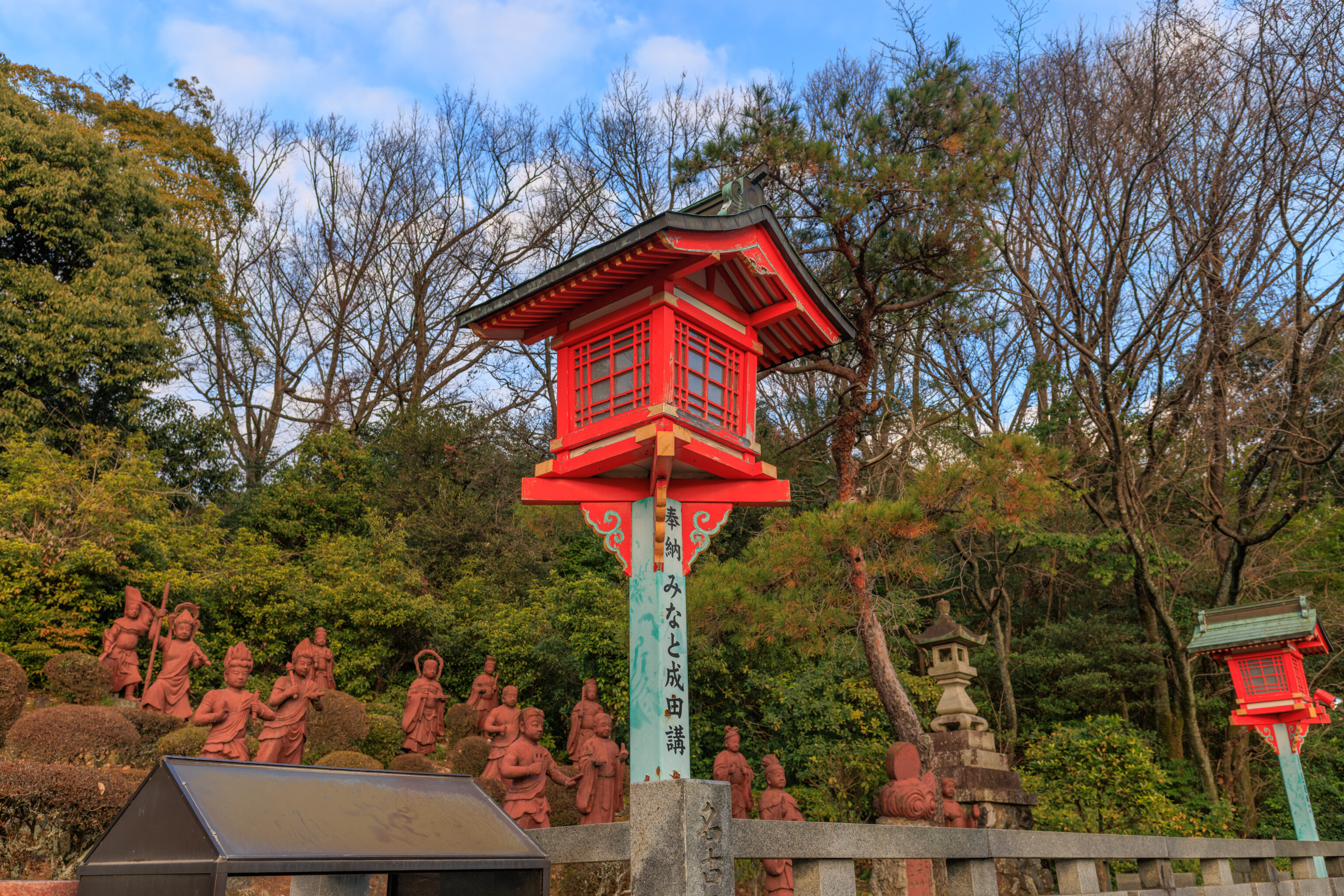
The lanterns here were very intricately painted. Pretty different from the typical temple or shrine lantern.
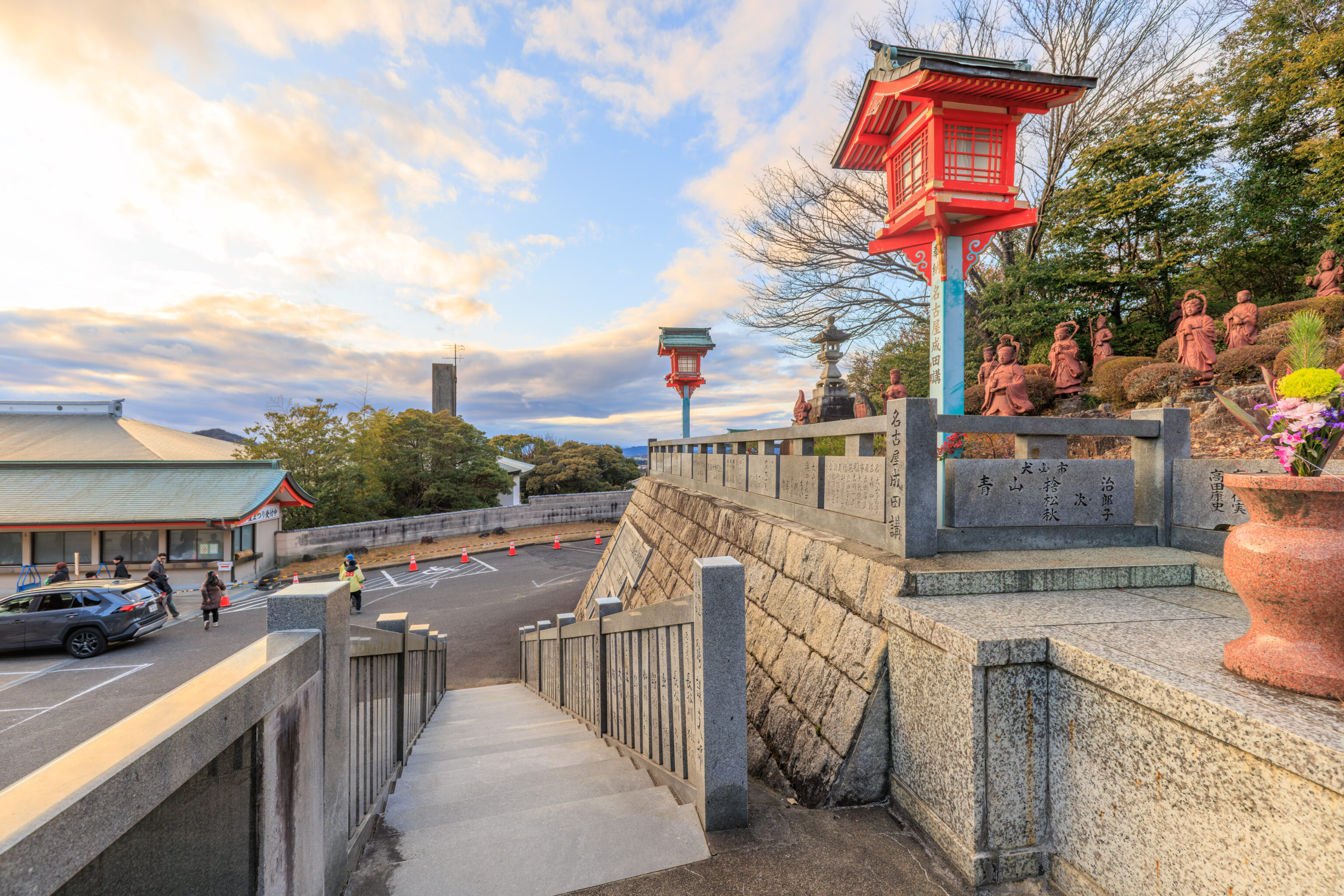
The view looking down the stairs that we just walked up.
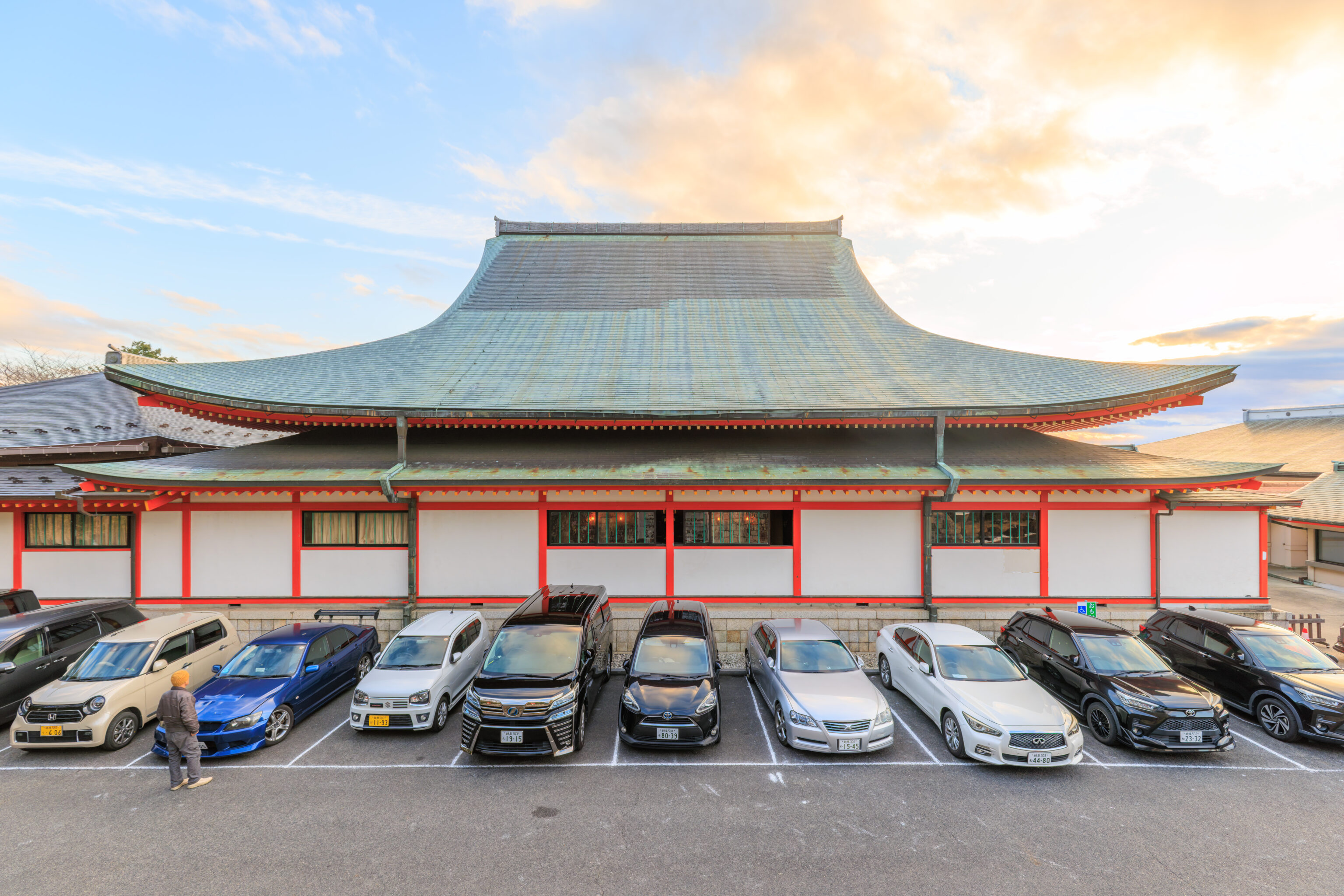
We also had a nice elevated view of the rear of the Main Hall.
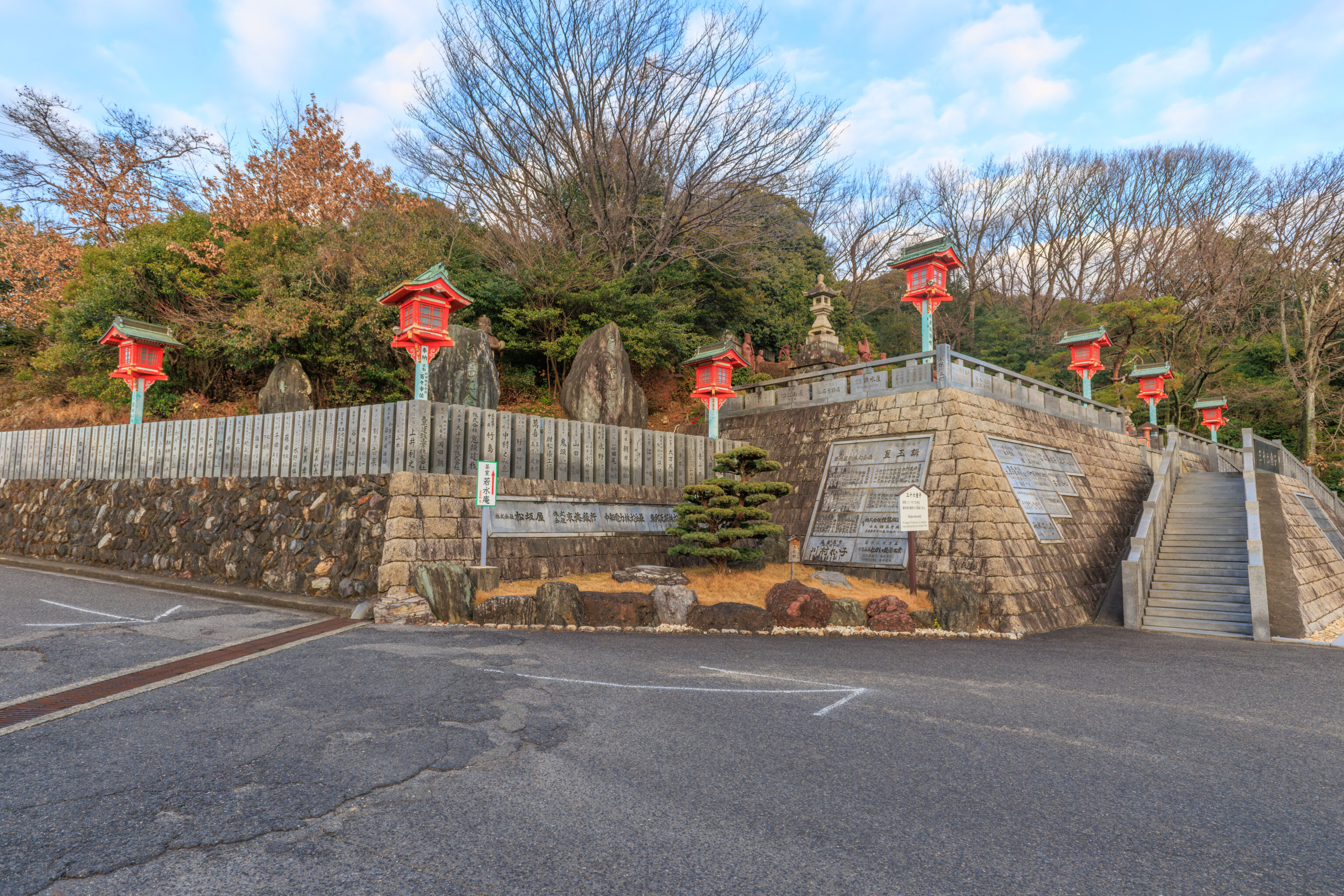
After walking back down the stairs, we continued to exit by walking to the north, which is to the left here in this photograph.
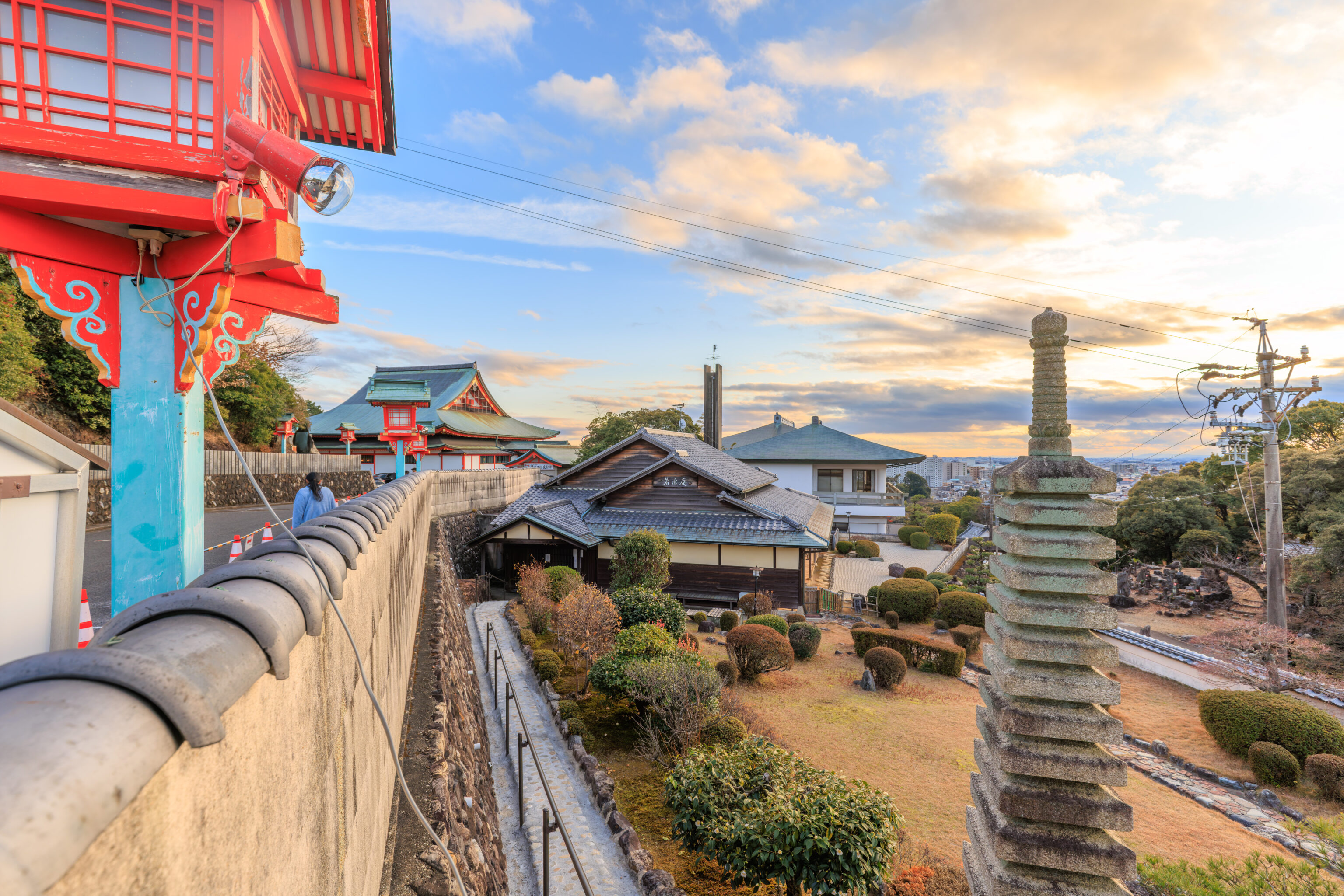
The view looking back at the temple as we walked to the north along the edge of the temple’s rear parking lot.
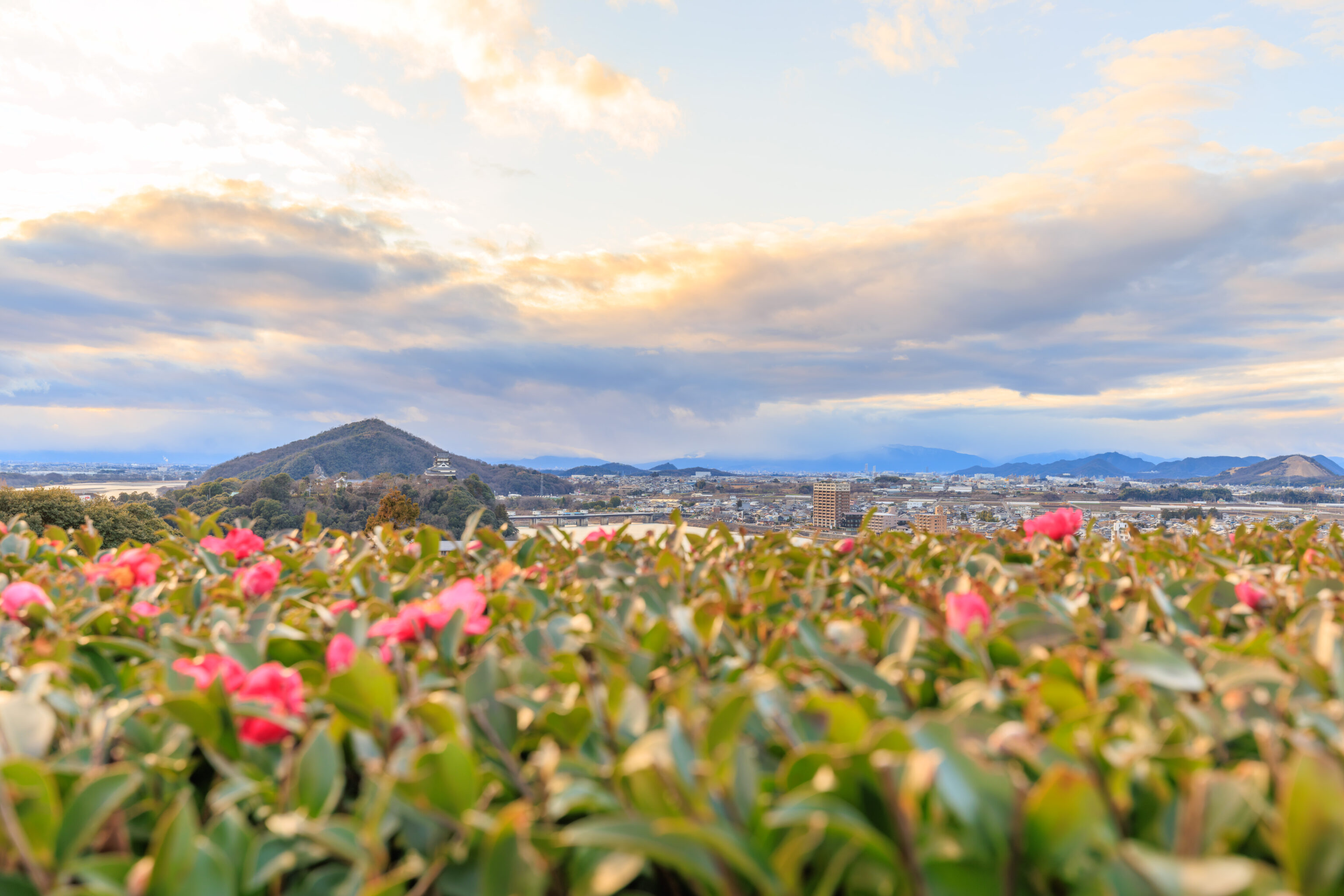
Looking to the west, we had a pretty view that included Inuyama Castle.
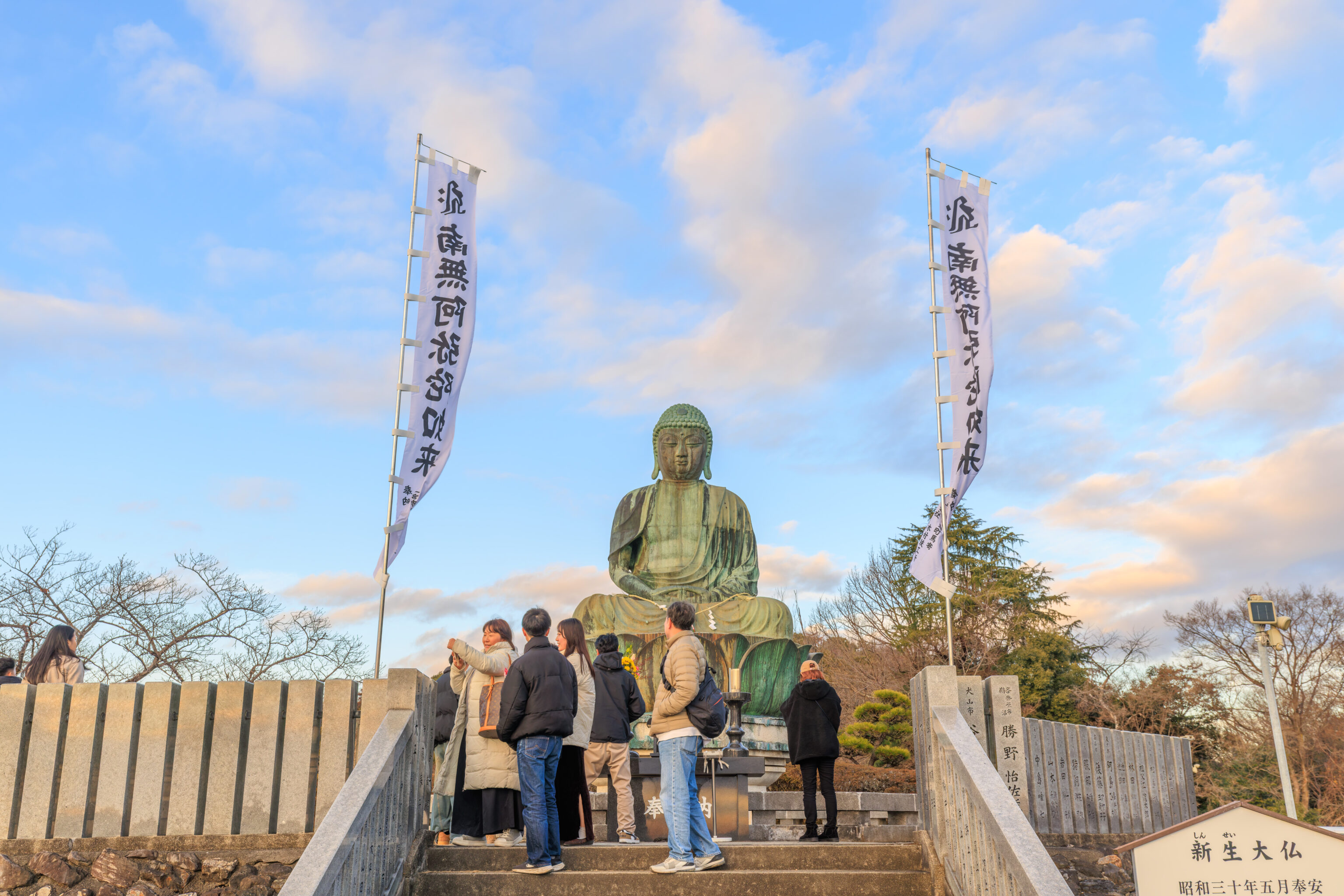
There was a 大仏 Daibutsu (Great Buddha) at the northern end of the parking lot, named the 新生大仏 Reborn Great Buddha. Although it wasn’t really busy here in the rear of the temple, there happened to be a small group here.
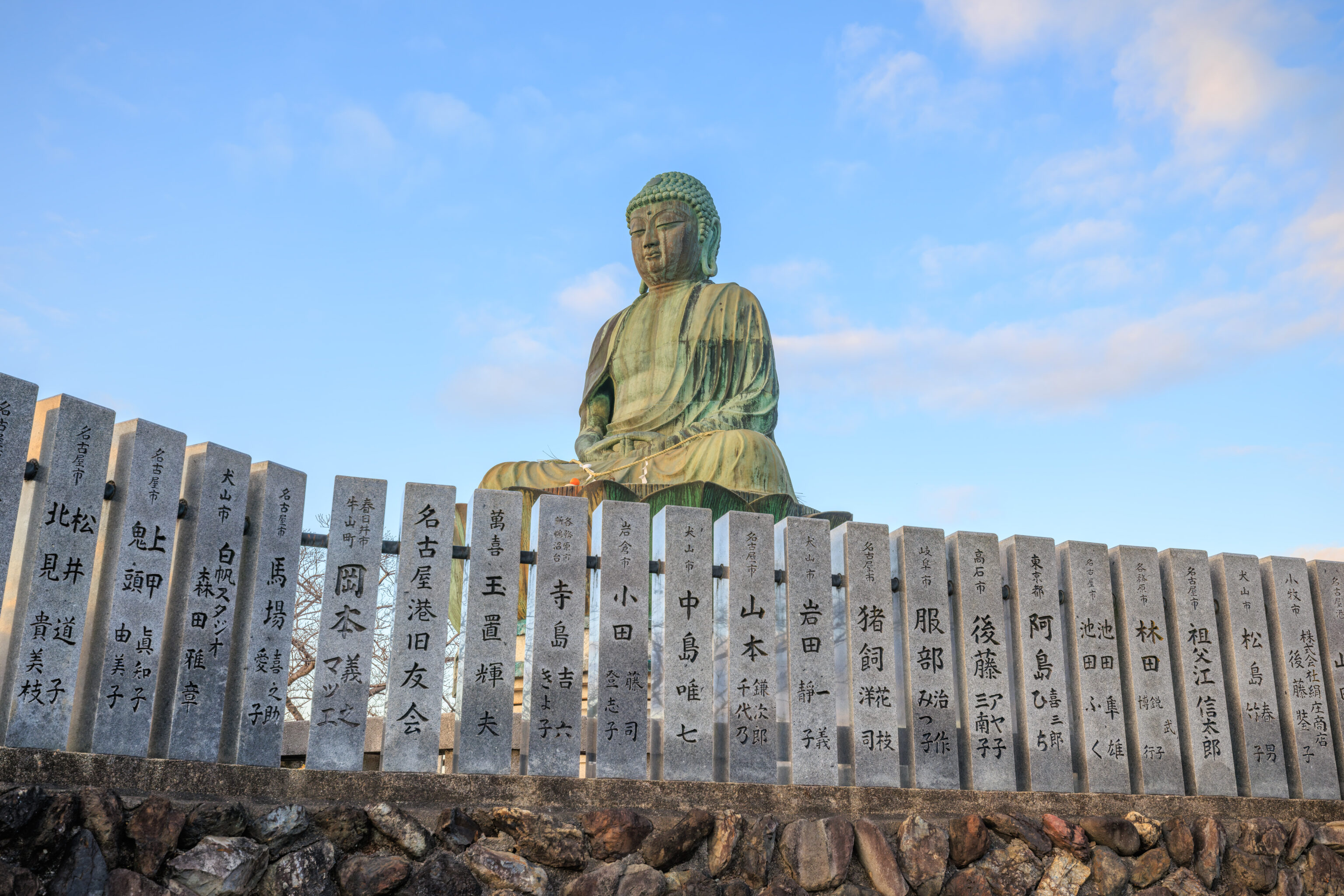
The statue as seen from the road.
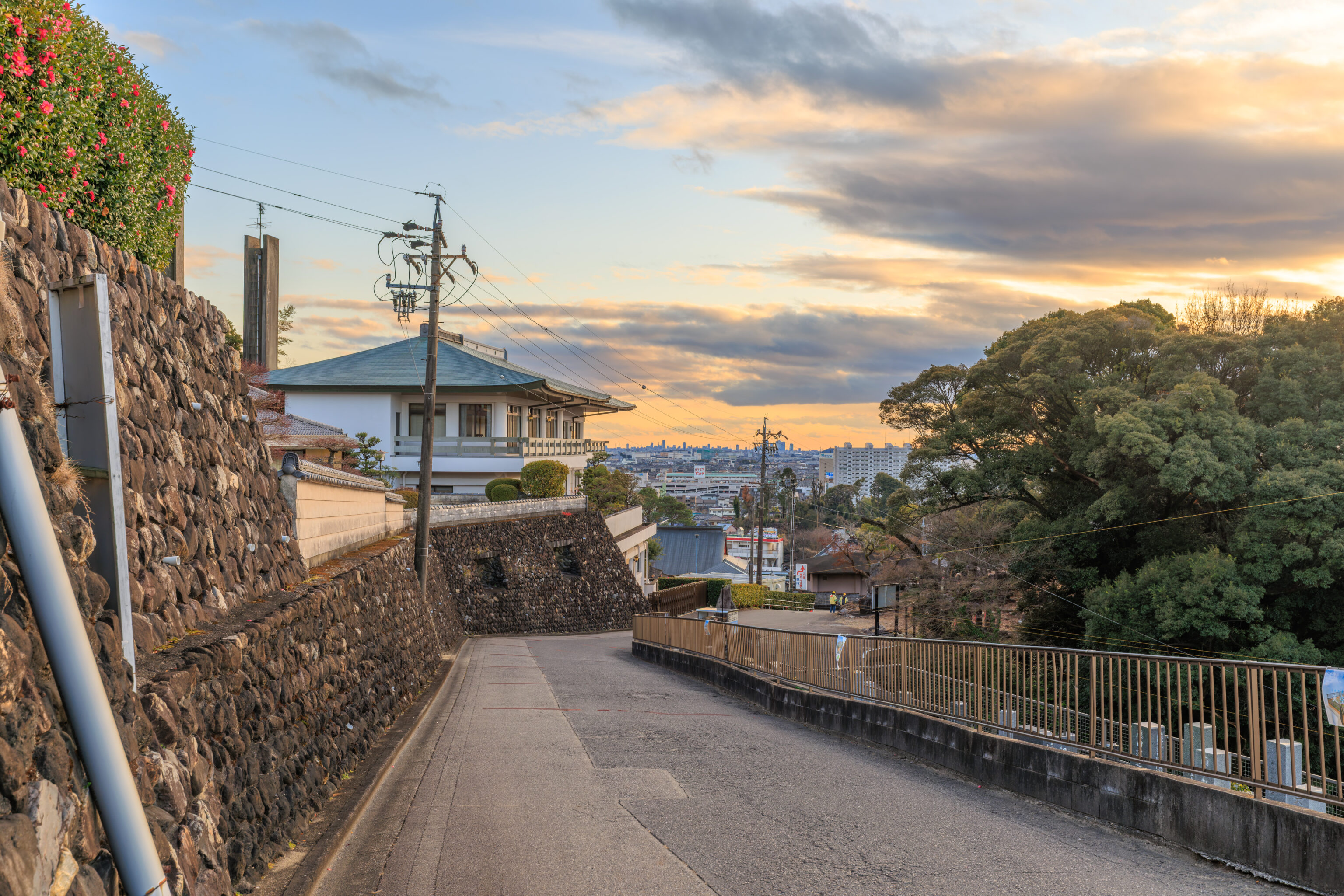
We followed the road out of the parking lot as it curved to the left and down around the Buddha statue.
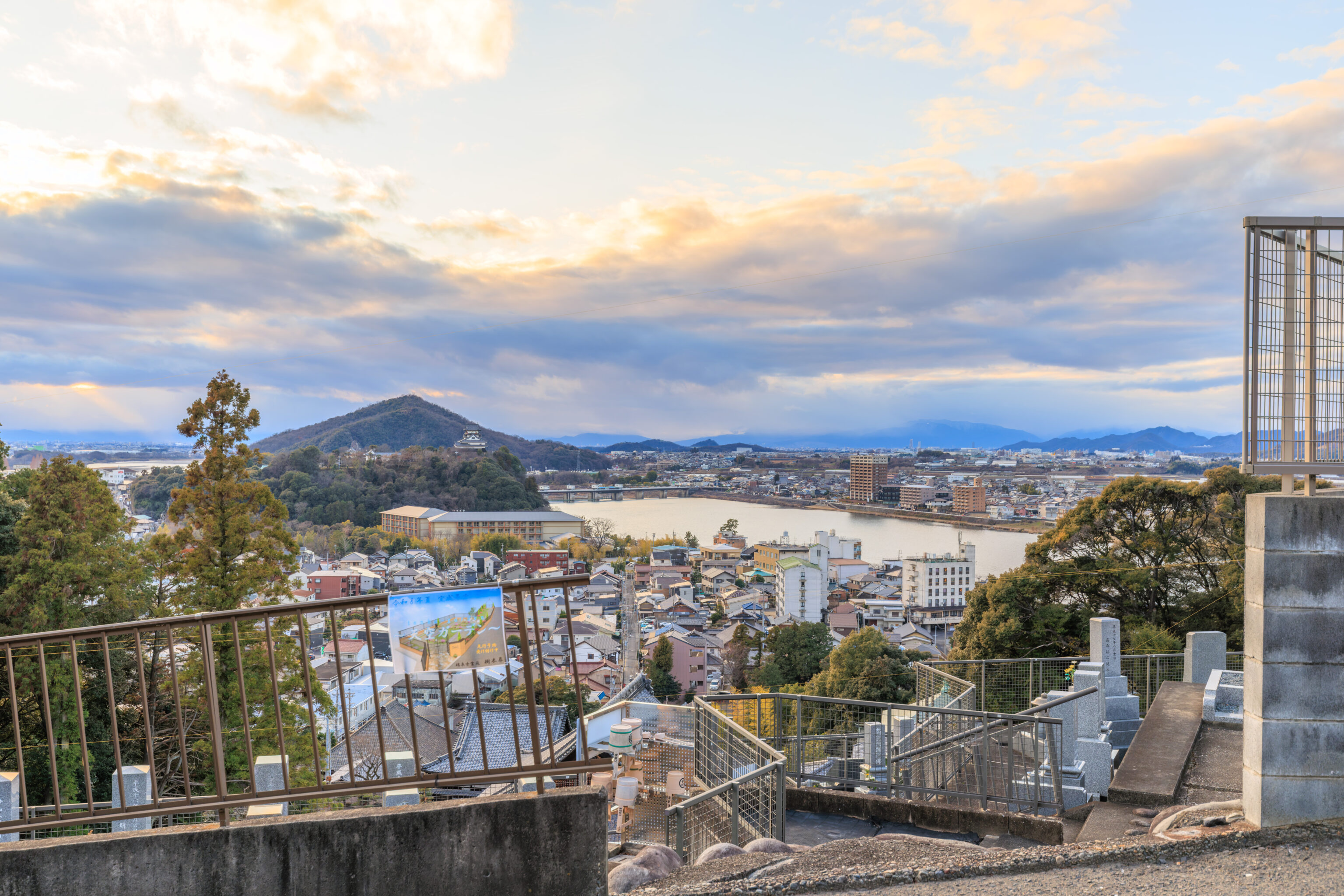
Another west facing view with cemetaries in the foreground on a steep slope. The two large buildings that appear on the left below Inuyama Castle are the two buildings of the Hotel Indigo.
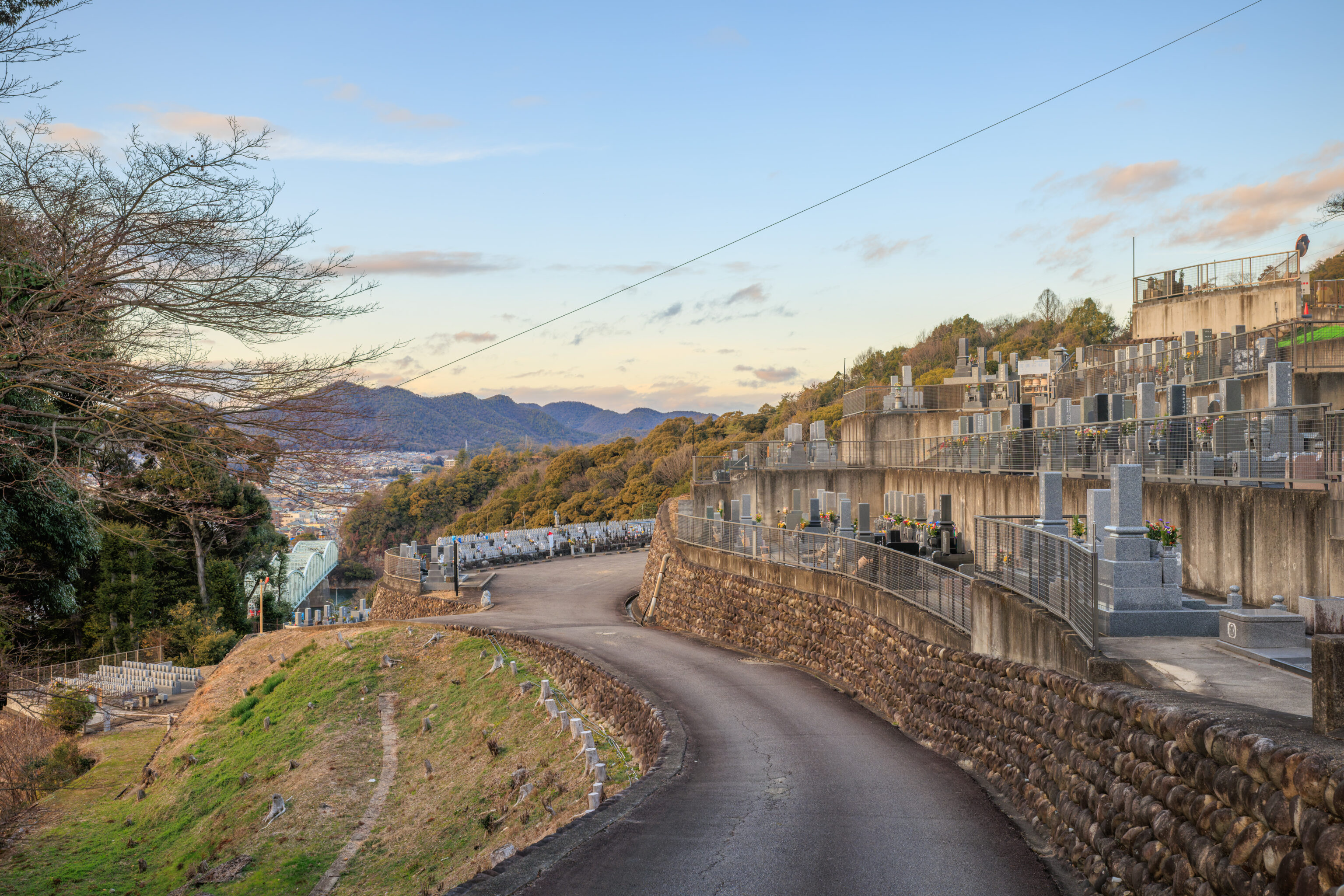
There was a junction ahead. The path to the right seemed to lead into the cemetary. It seems like it is probably possible to go down to the train station from this path. But, we didn’t take it. Instead, we followed the road that we were on.
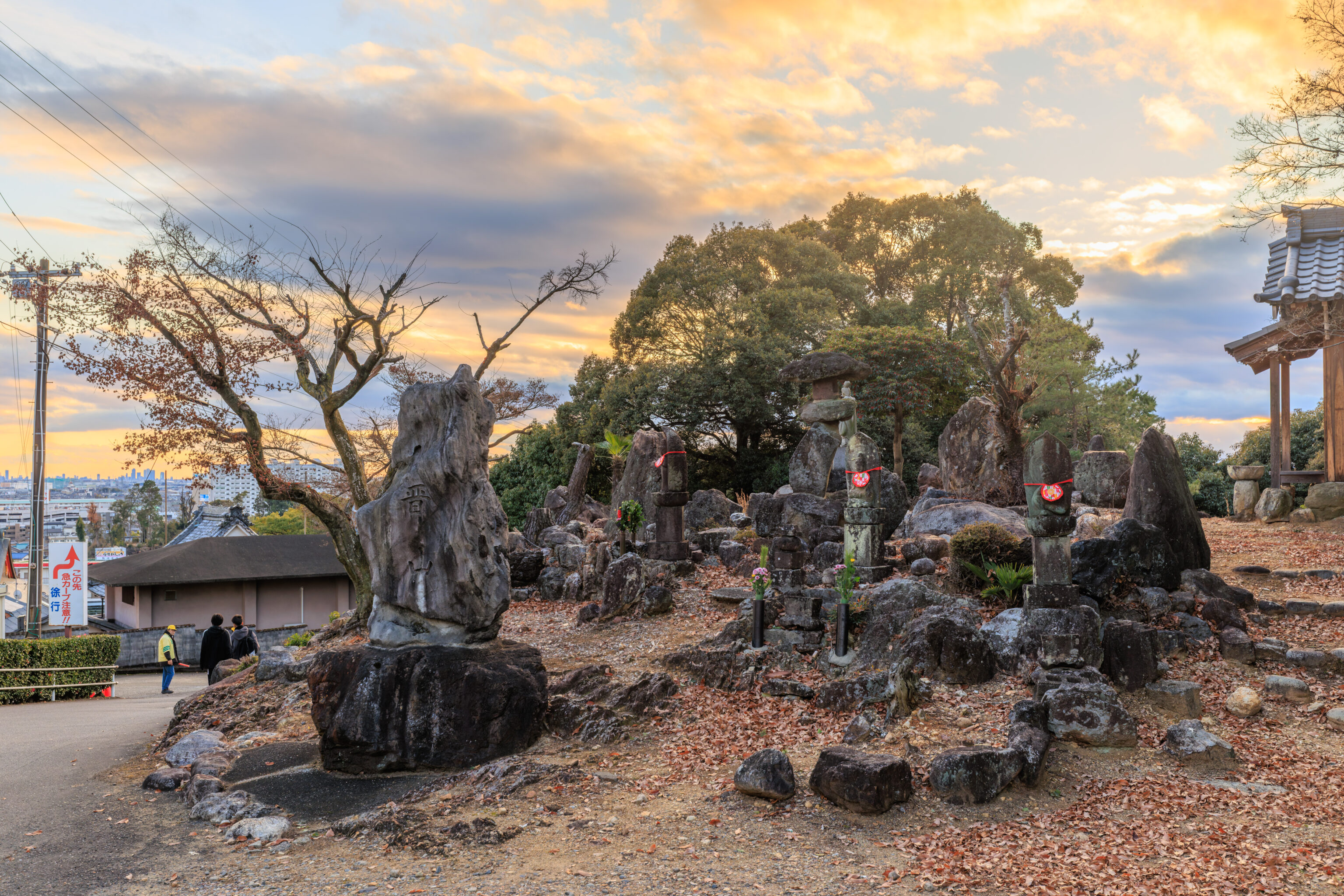
This area, below and to the west of the Daisho-ji Main Hall, contained a small temple building and some weathered statues and markers.
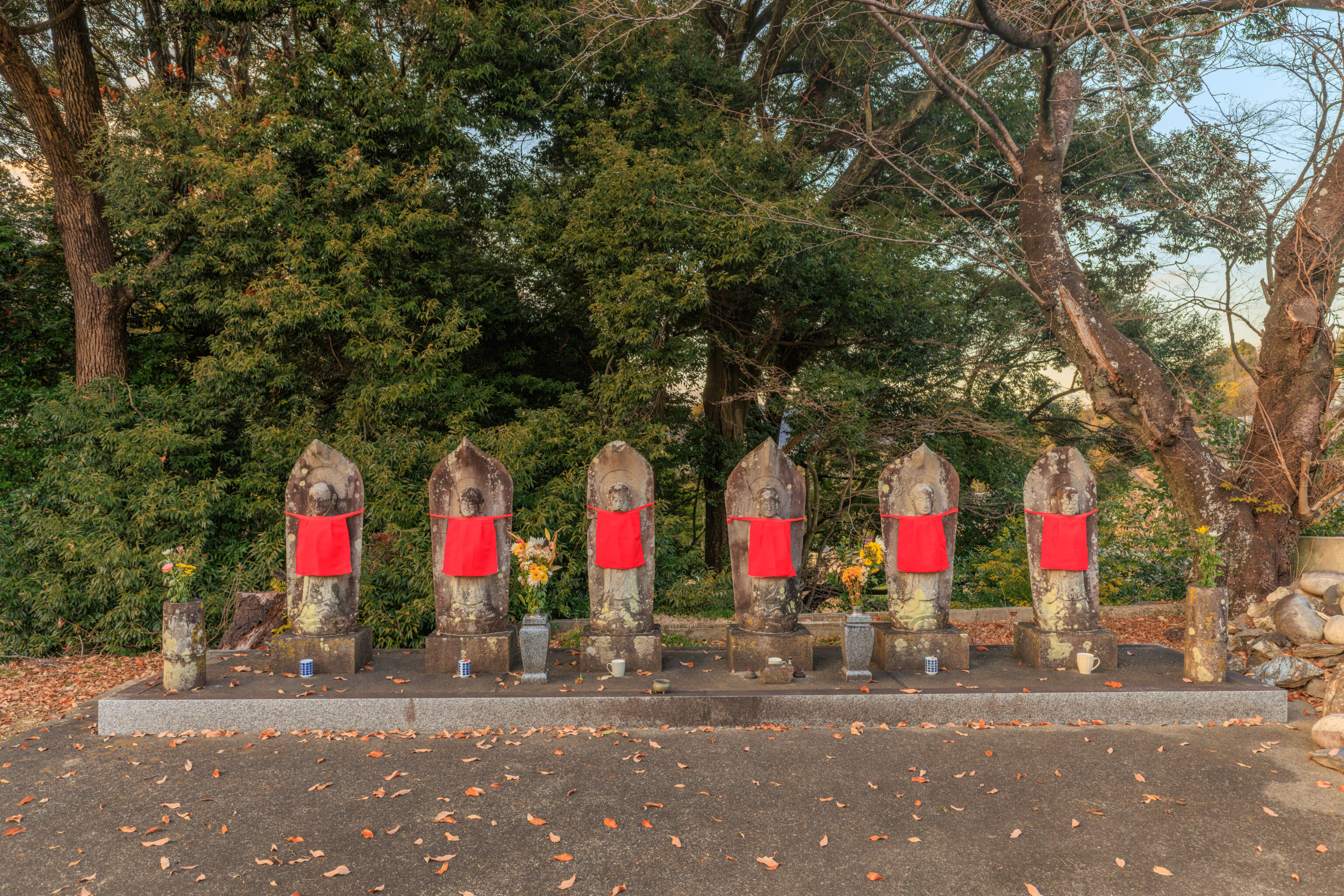
There was also a line of six statues.
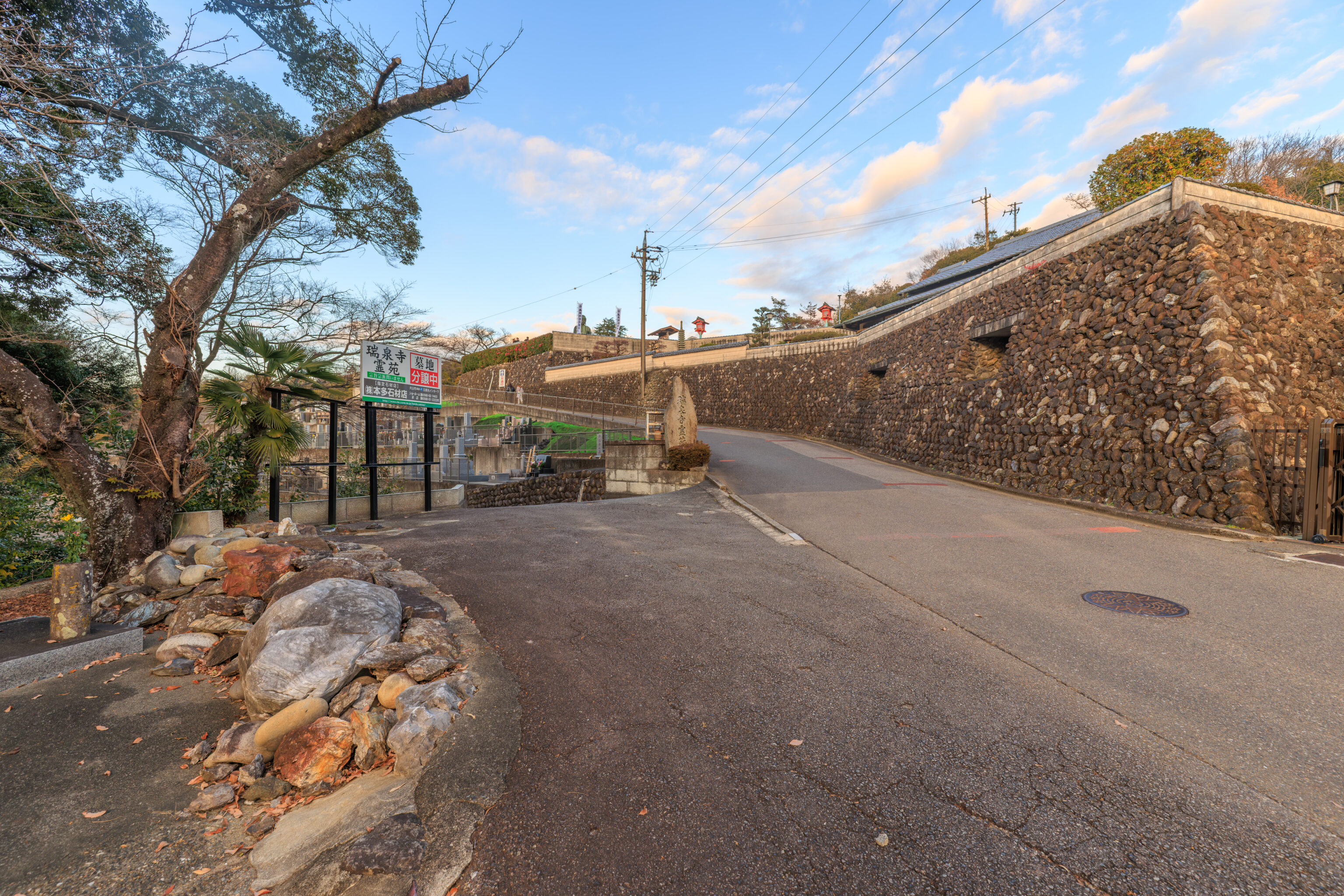
The view looking back at the road that we came down from. The top of the Daibutsu can be seen a little bit up and left of center.
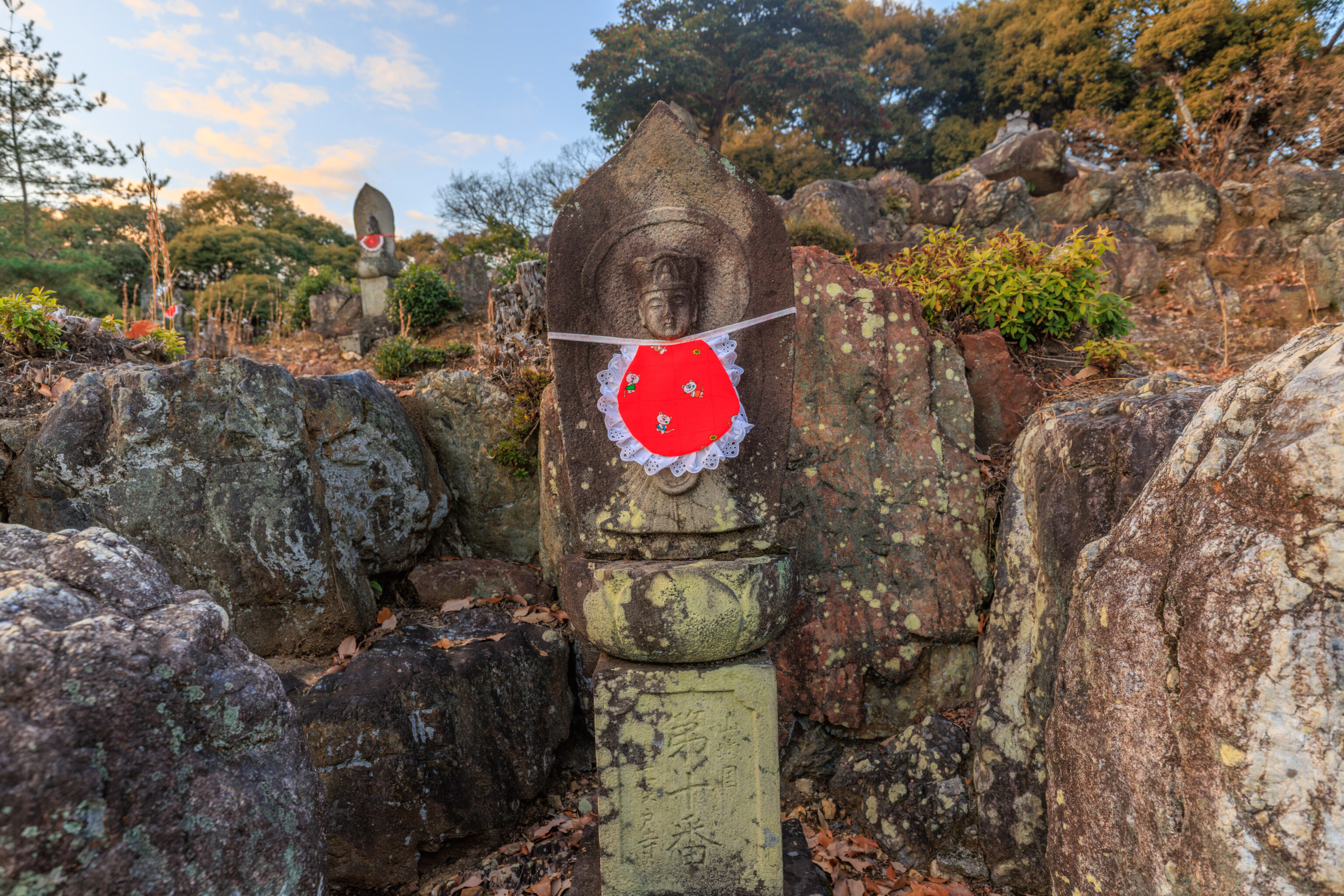
One of the statues with a rather cute cat themed bib.
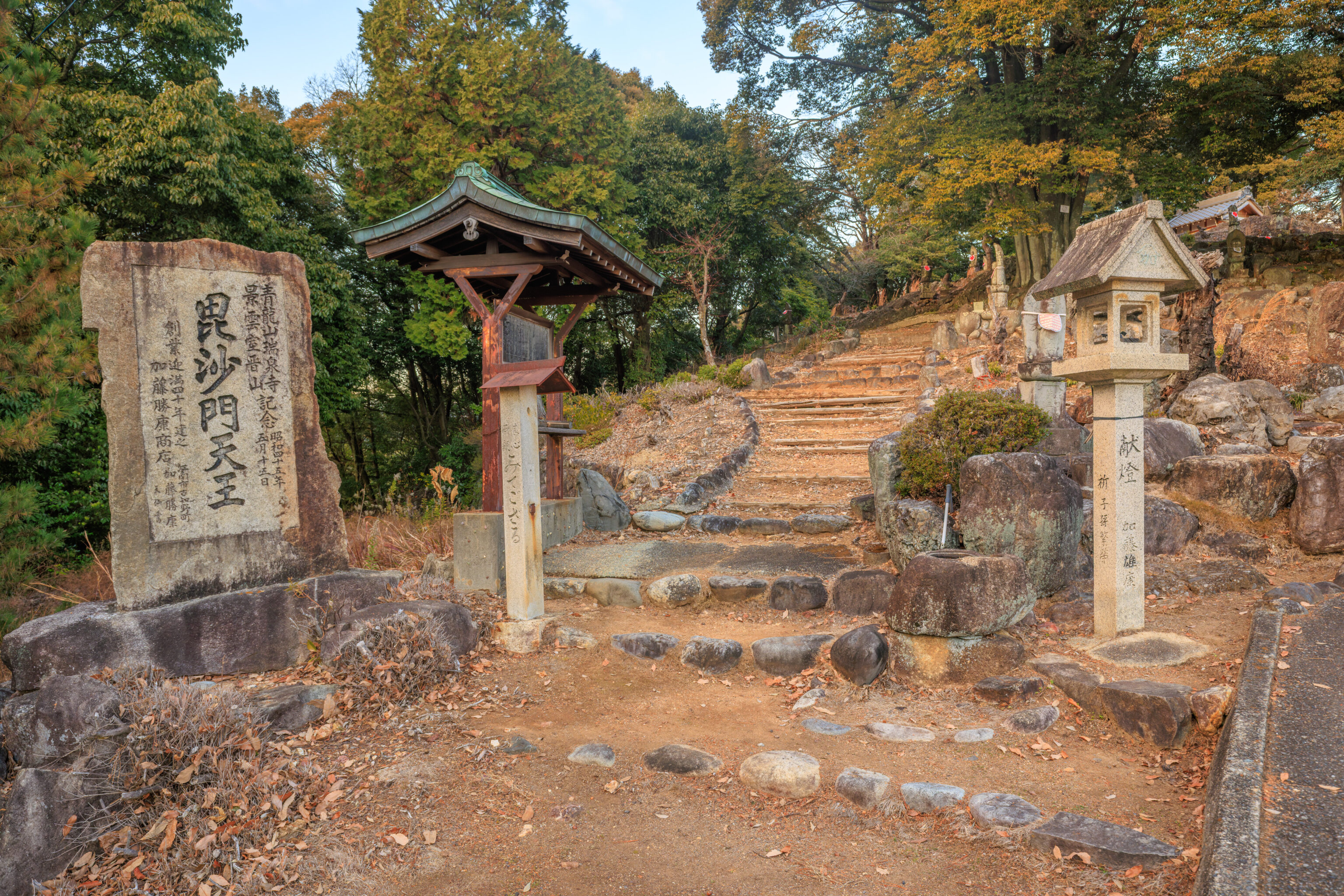
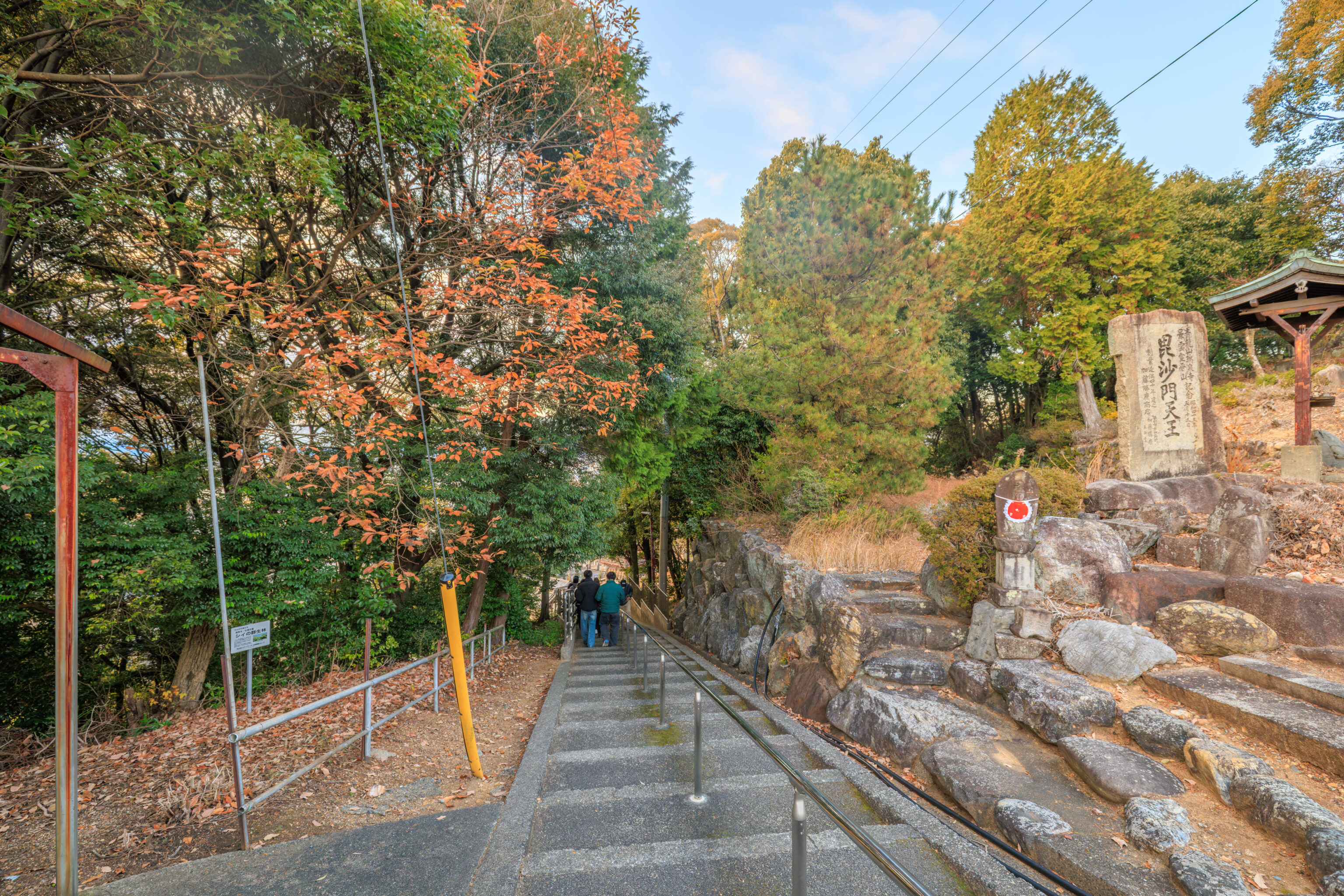
We continued descending on the road. Just a little bit ahead, we came to some stairs leading up and a marker.
Seiryuzan Zuisenji Memorial
May 15th, 1970

King Bishamonten

Erected upon reaching the 40th anniversary of business founding
Kato Katsuyasu Store (Kato Katsuyasu), Kochino-cho, Konan City
– Text from the marker on the left, transcribed using Google Gemini and translated using Google Translate and Gemini.
This area, probably including the statues that we just saw, seem to be part of another Buddhist temple, 青龍山瑞泉寺 Seiryuzan Zuisen-ji, which is just a little bit to the northeast of here.
We took these stairs as they seemed to head down to the northeast, the direction that we want to go towards.
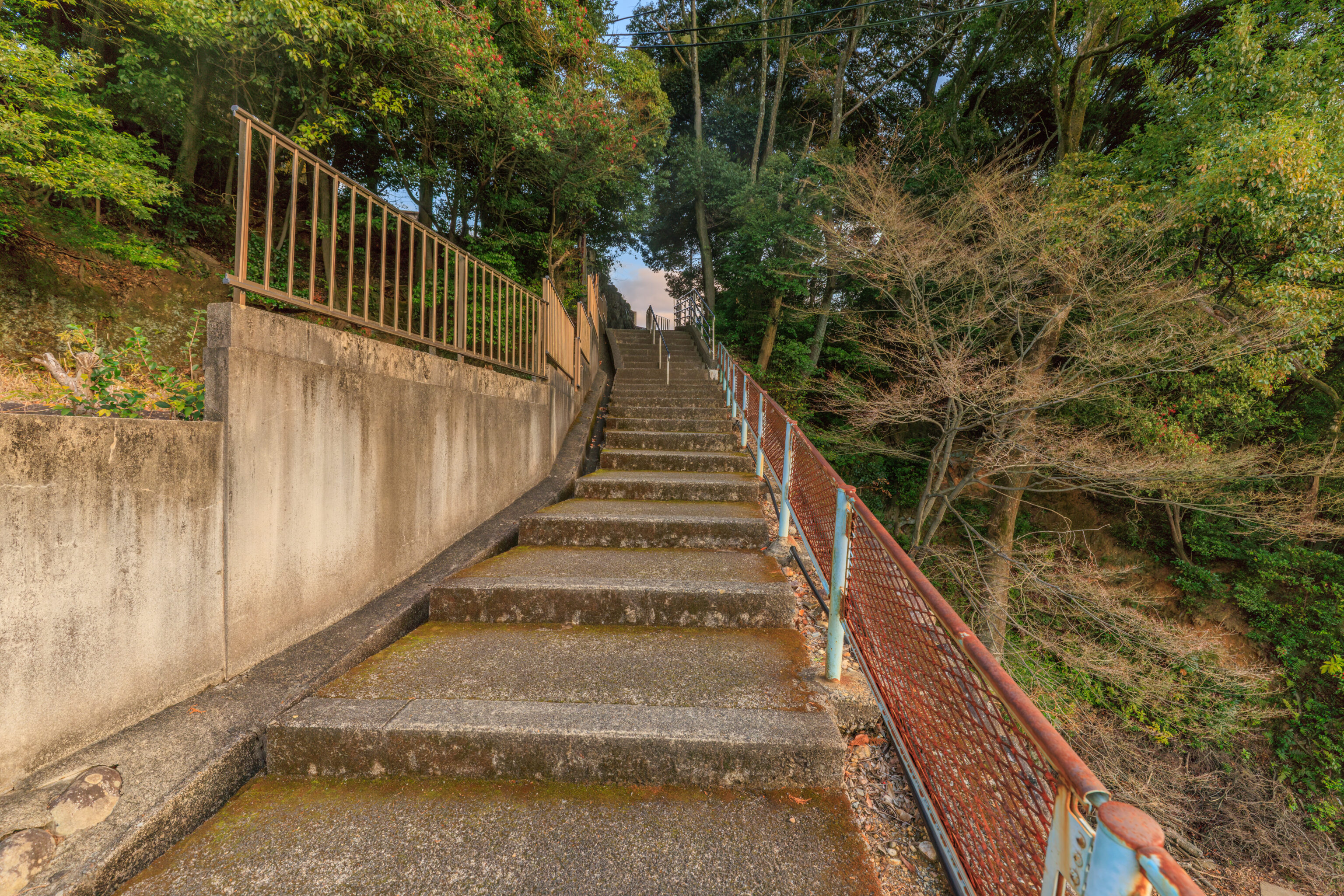
We descended through a small wooded area, seen from below.
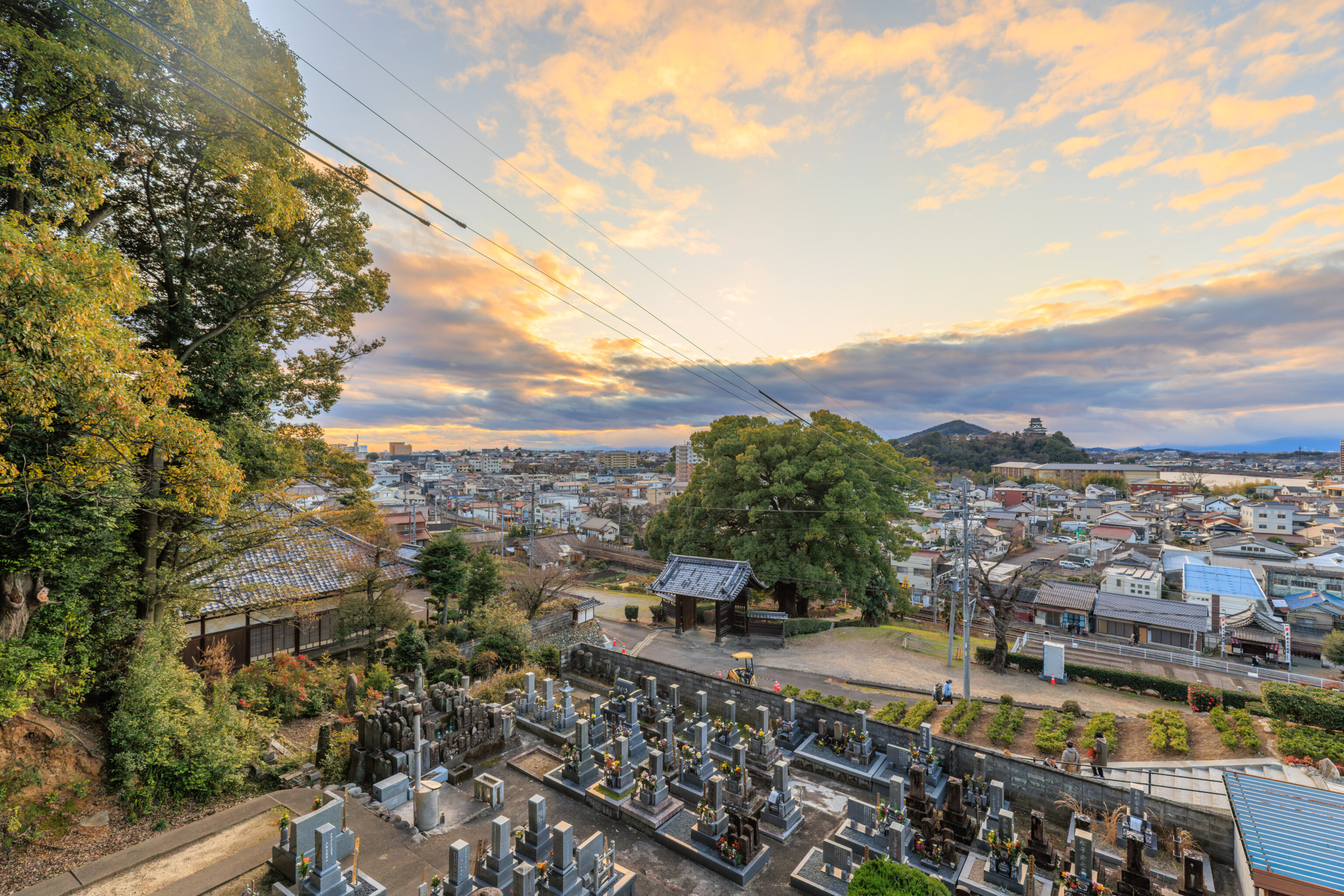
We had a pretty nice view once we came out of the woods as the stairs made for a very nice overlook. Well, other than the power lines. But this is Japan, electrical and other utility lines are everywhere! Over on the right, we could still see Inuyama Castle. By now, the Sun was pretty low on the horizon.
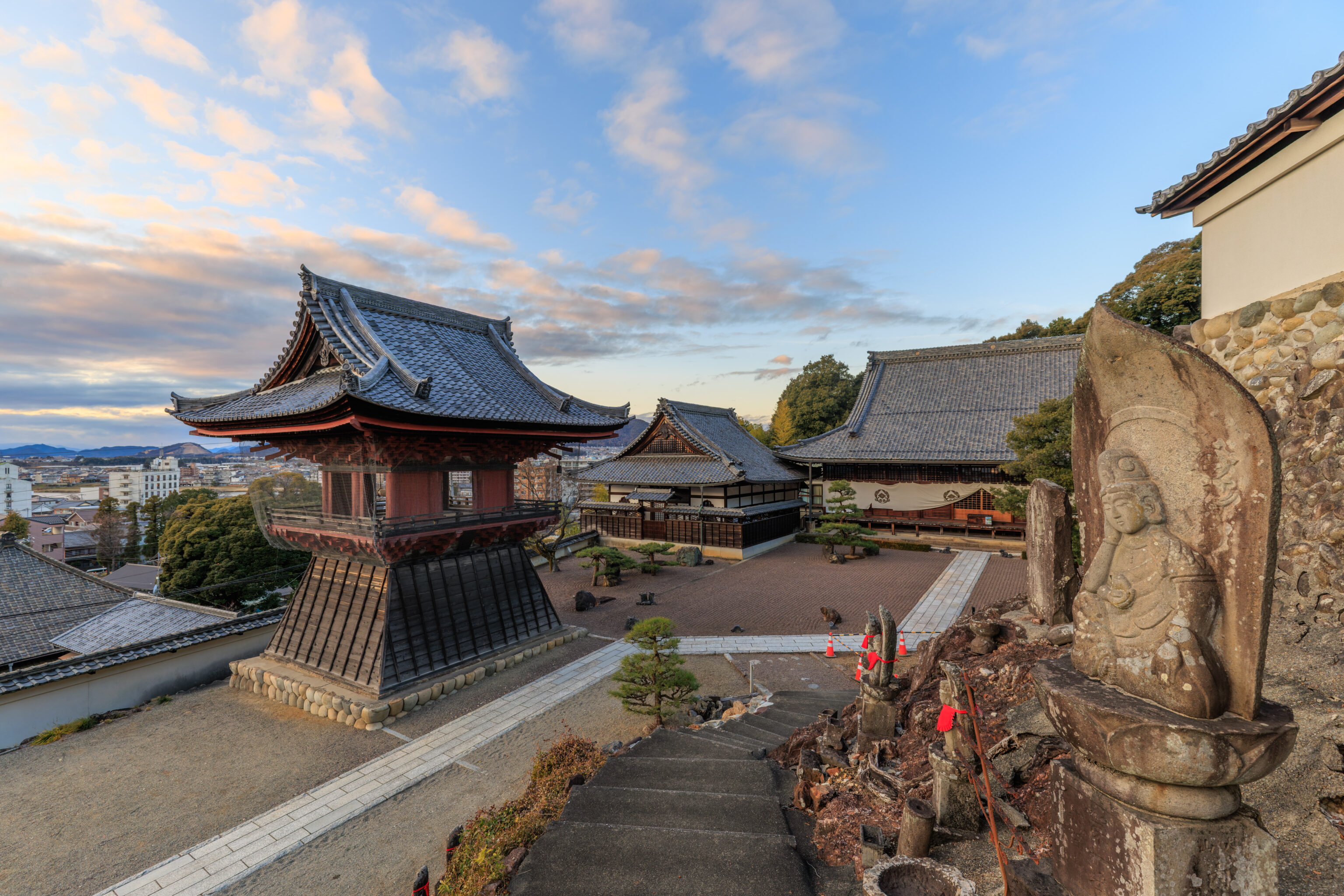
The path we were on ended with a junction. The stairs to the north led to the temple on the marker that we just saw, Seiryuzan Zuisen-ji. The temple’s bell tower was over by the end of the stairs. This is the same bell tower we saw earlier when we were walking along the road next to the railroad tracks.
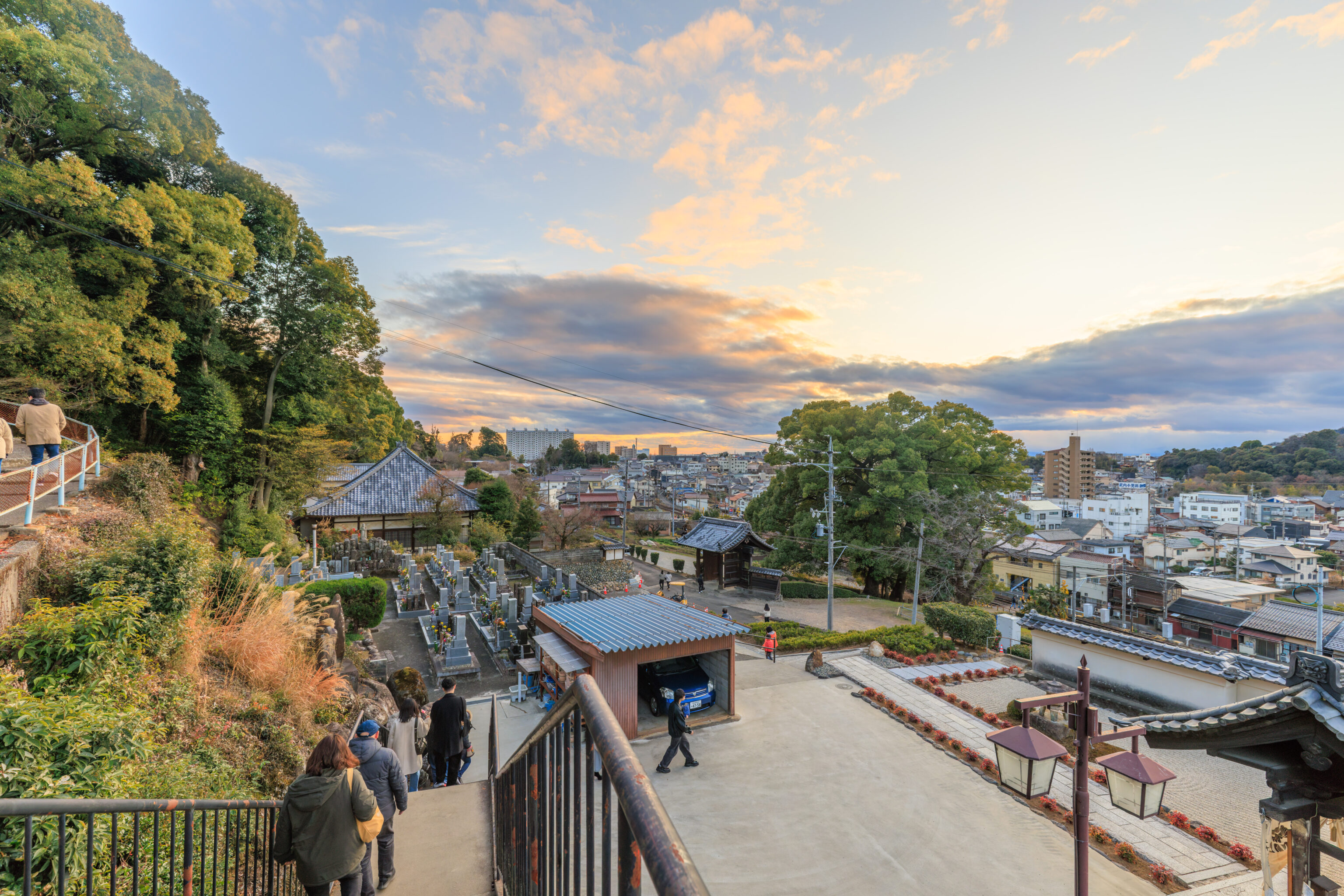
The stairs in the other direciton seemed to provide access to descend further.
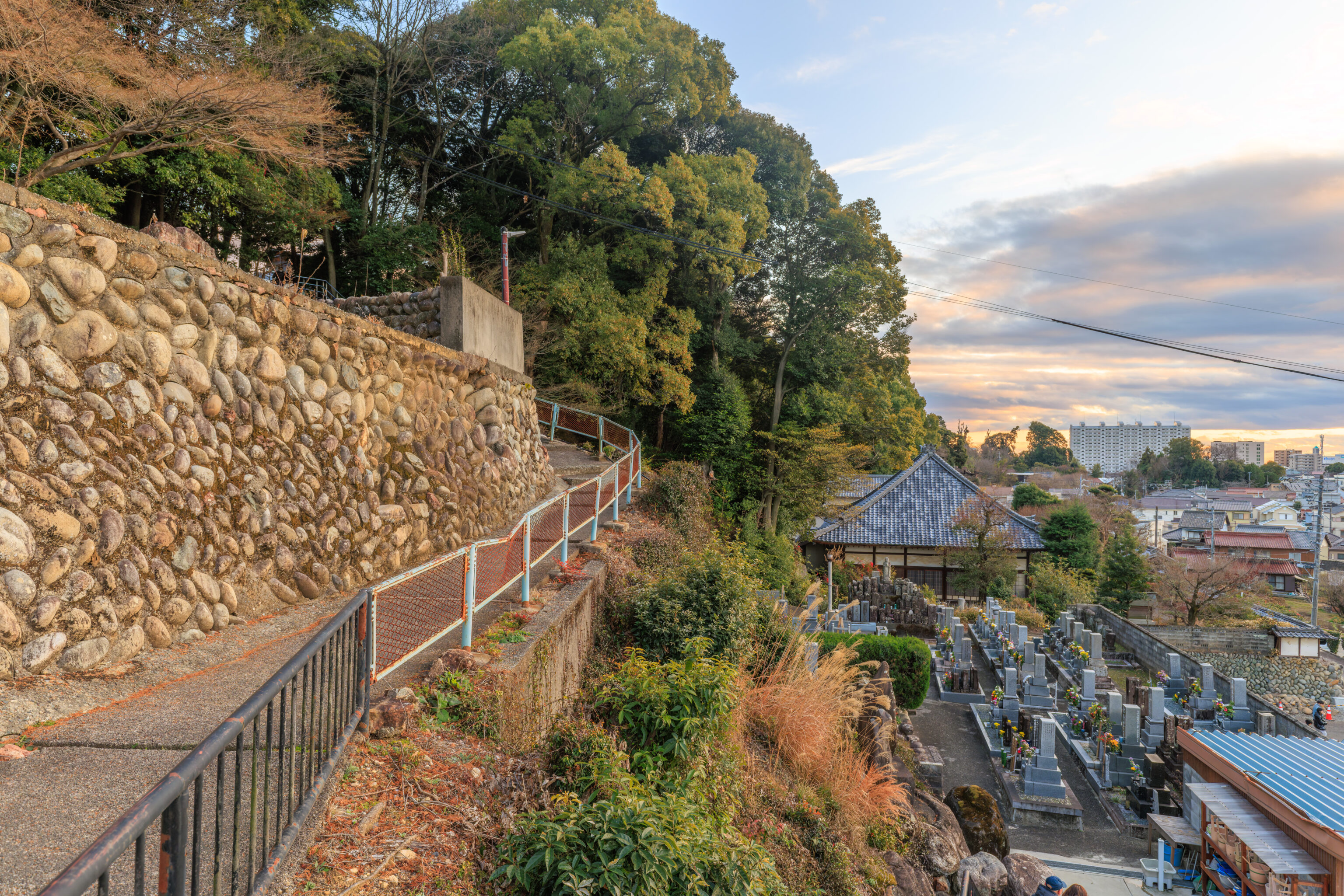
After taking a look back at where we came from, we descended to the south.
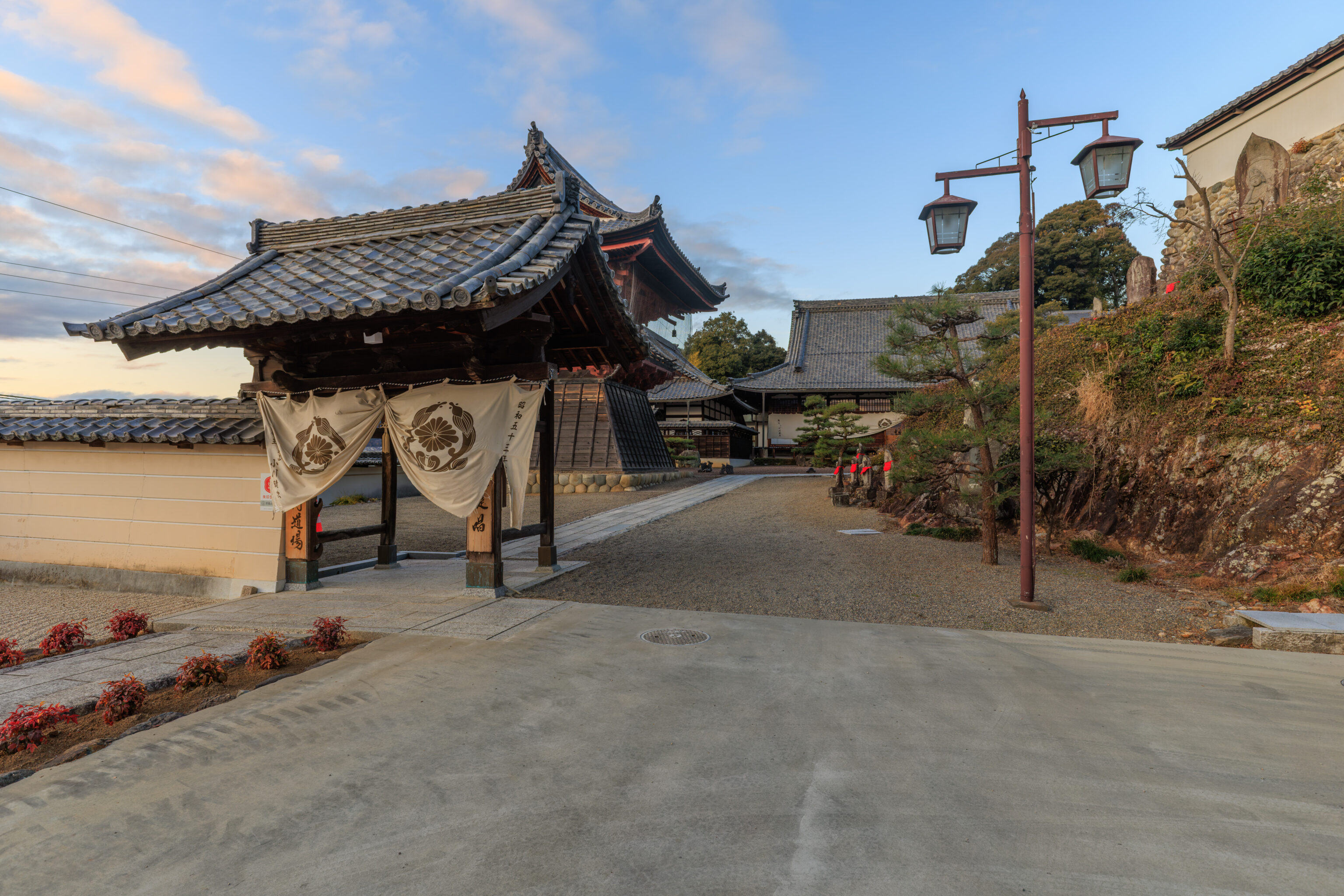
Once we were back on level ground, we looked to the north towards Seiryuzan Zuisen-ji.
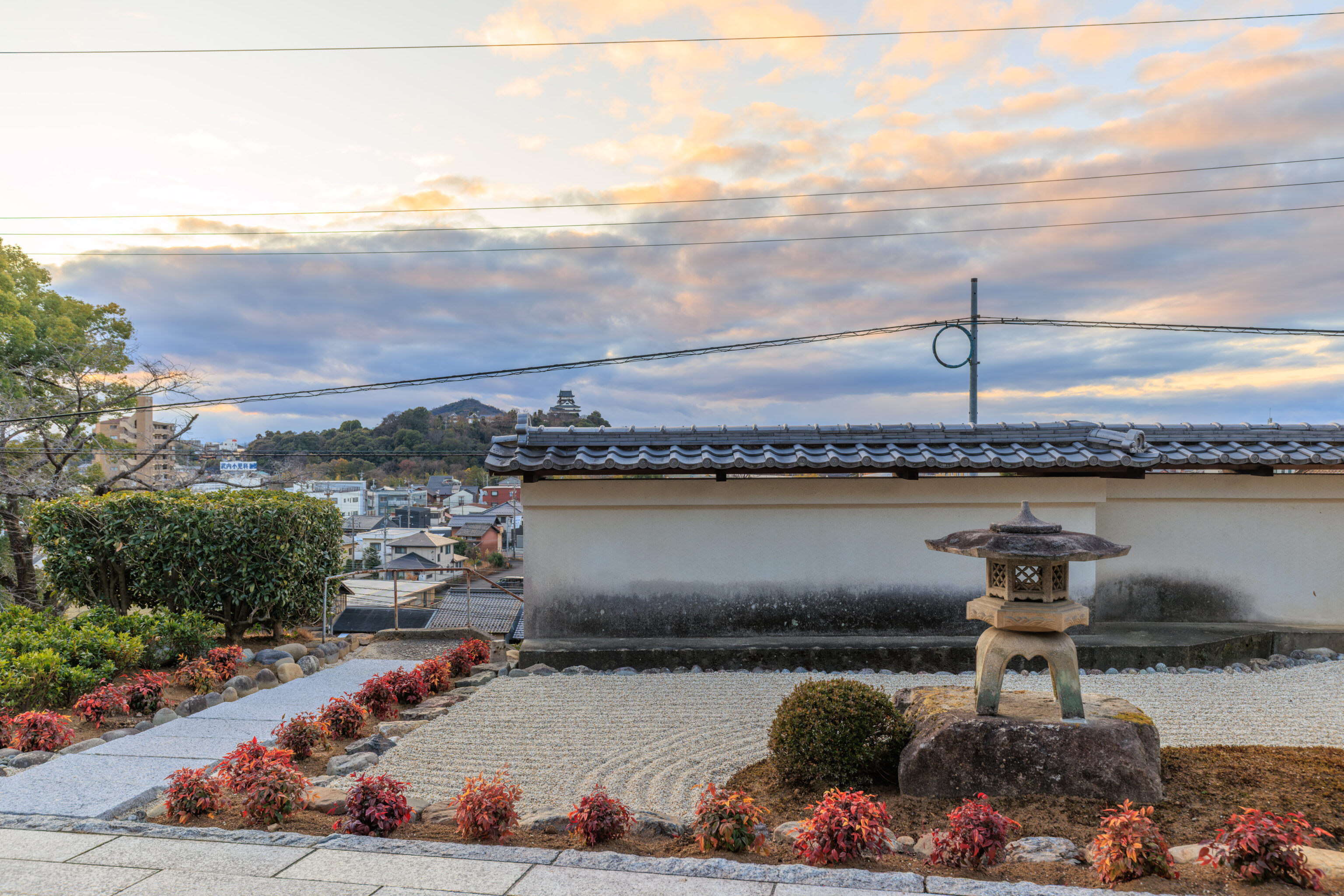
We walked to the south away from the temple. We reached the end of the temple’s wall. There was a stone lantern in the foreground and we could see Inuyama Castle right above the end of the wall. There also seemed to be a path that led to some stairs.
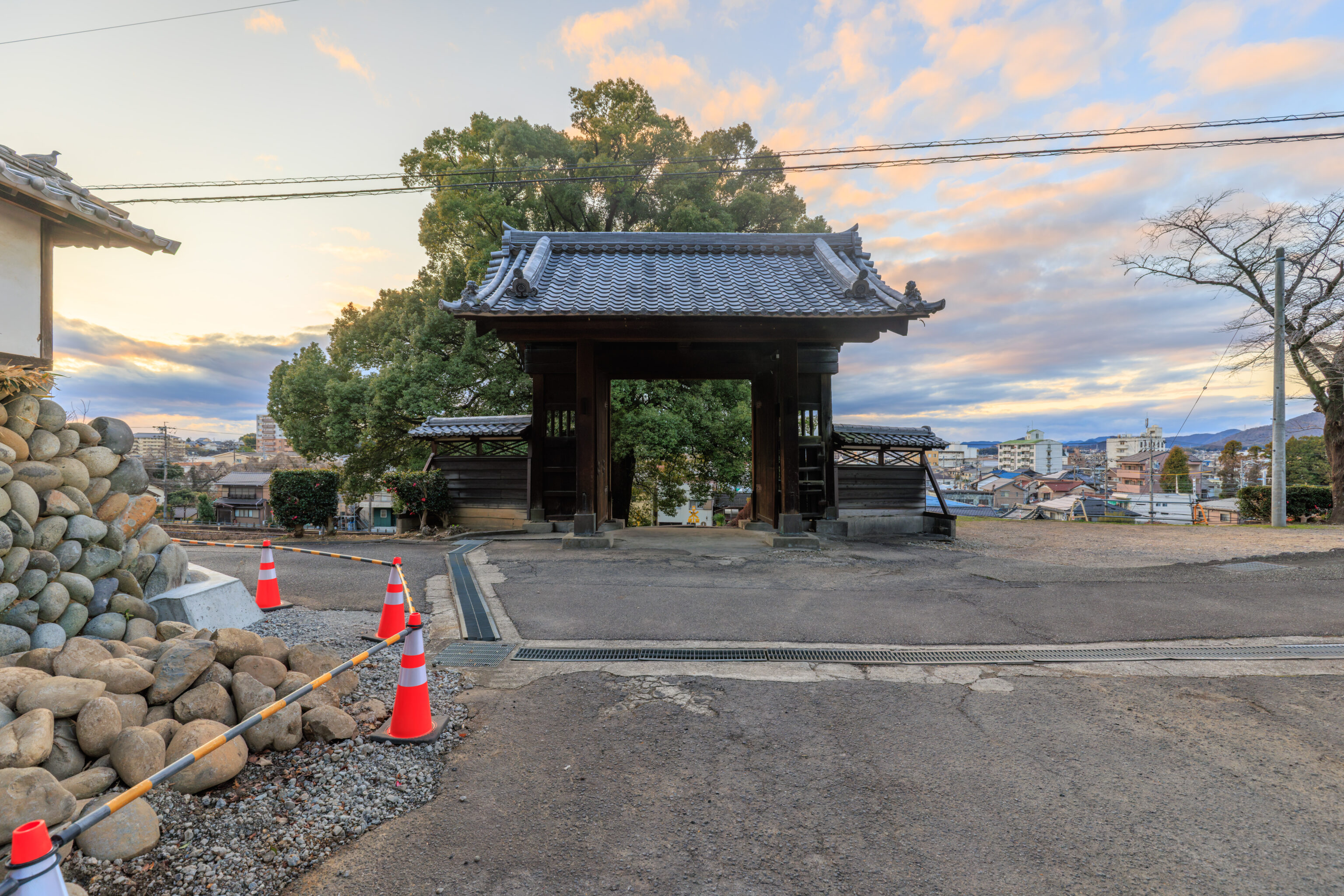
We kept on going though. The path beyond this gate leads directly down the hill to the west. This gate is at the top of the second pedestrian railroad crossing that we walked past earlier on our way to Daisho-ji.
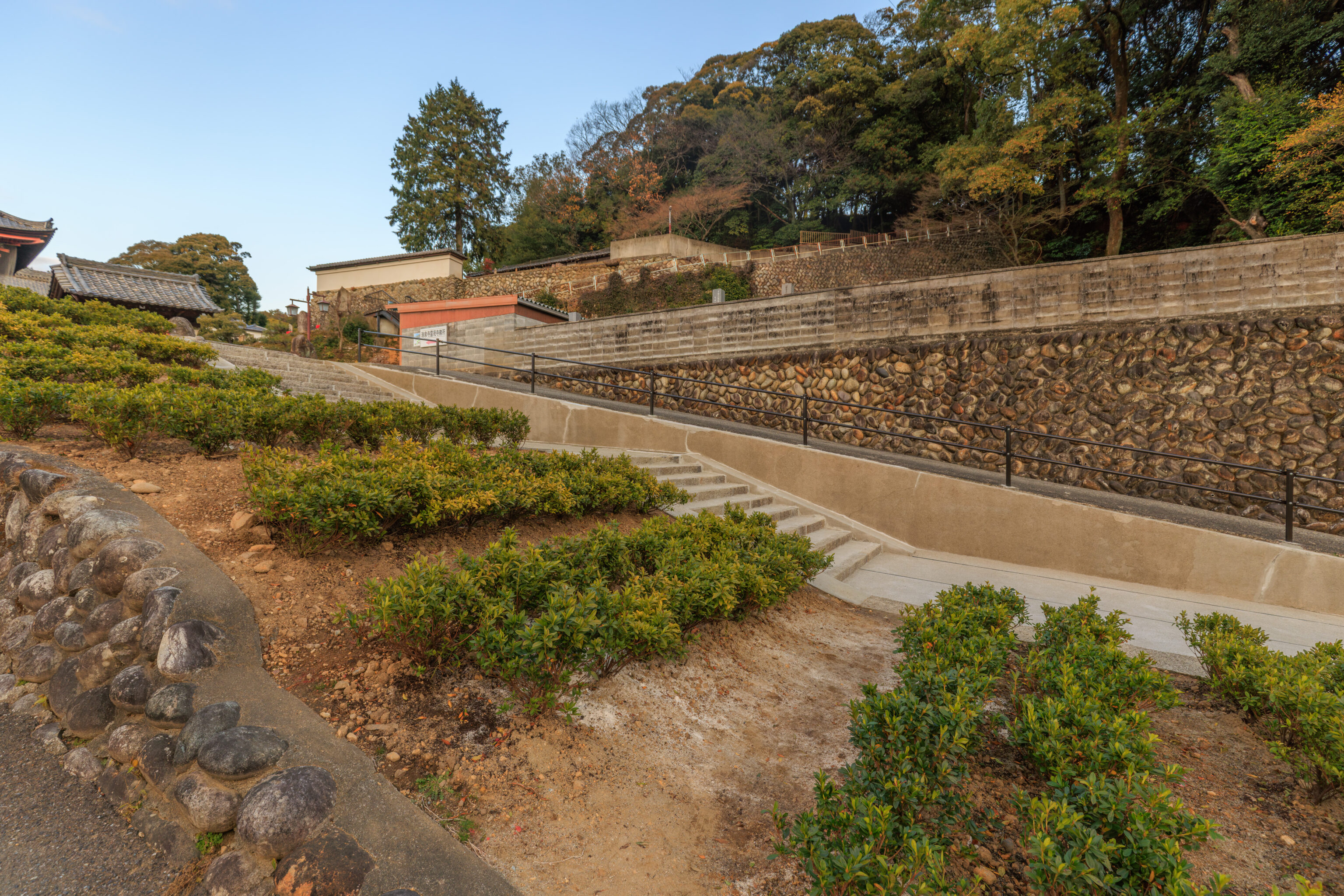
It turns out that there was another path just before the gate. We took that path to the north. Here, we’re on the path looking back up at where we just walked down from.
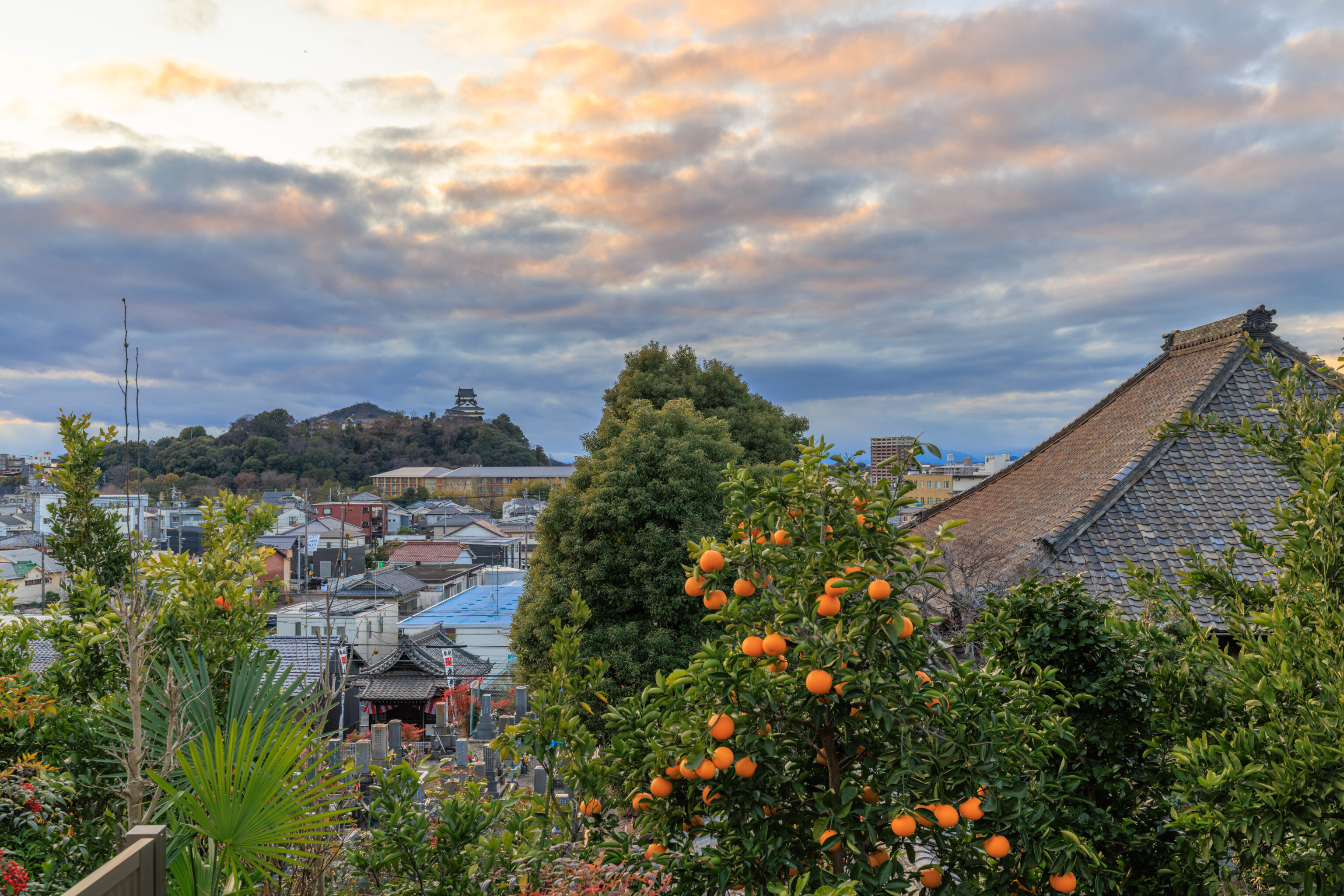
After walking a little bit to the north, we had another nice view to the west with Inuyama Castle in the background. In the foreground, there seems to be an orange tree! The roof that we can see on the right is probably 青龍山輝東寺 Seiryuzan Kito-ji, another Buddhist temple. According to an article from July 10th, 2004 published by 尾北ホームニュース Bihoku Home News, it seems to be a sub-temple of Seiryuzan Zuisen-ji.
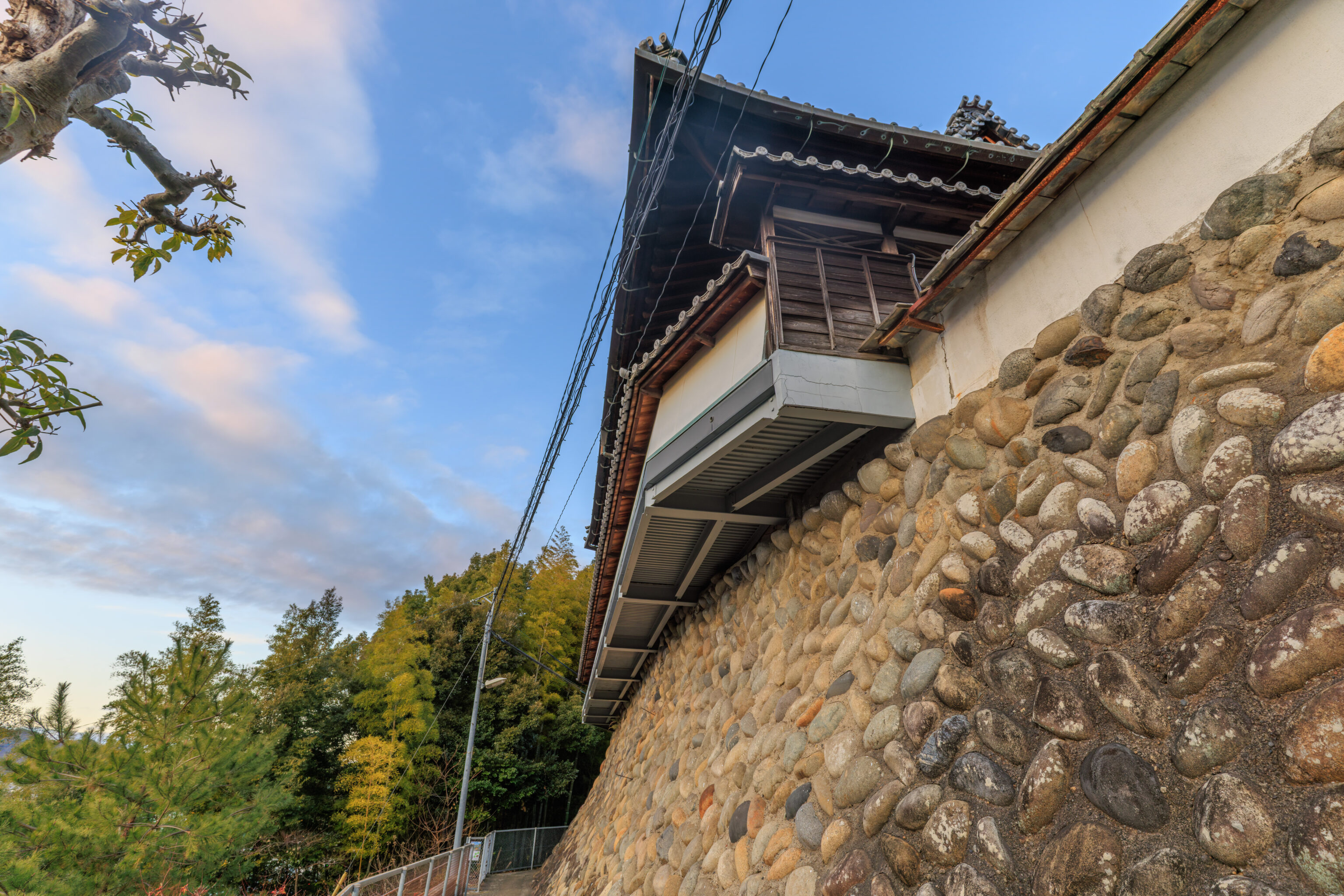
Just a little bit further to the north, we saw the western edge of one of Seiryuzan Zuisen-ji’s halls hanging a little bit over the wall below it.
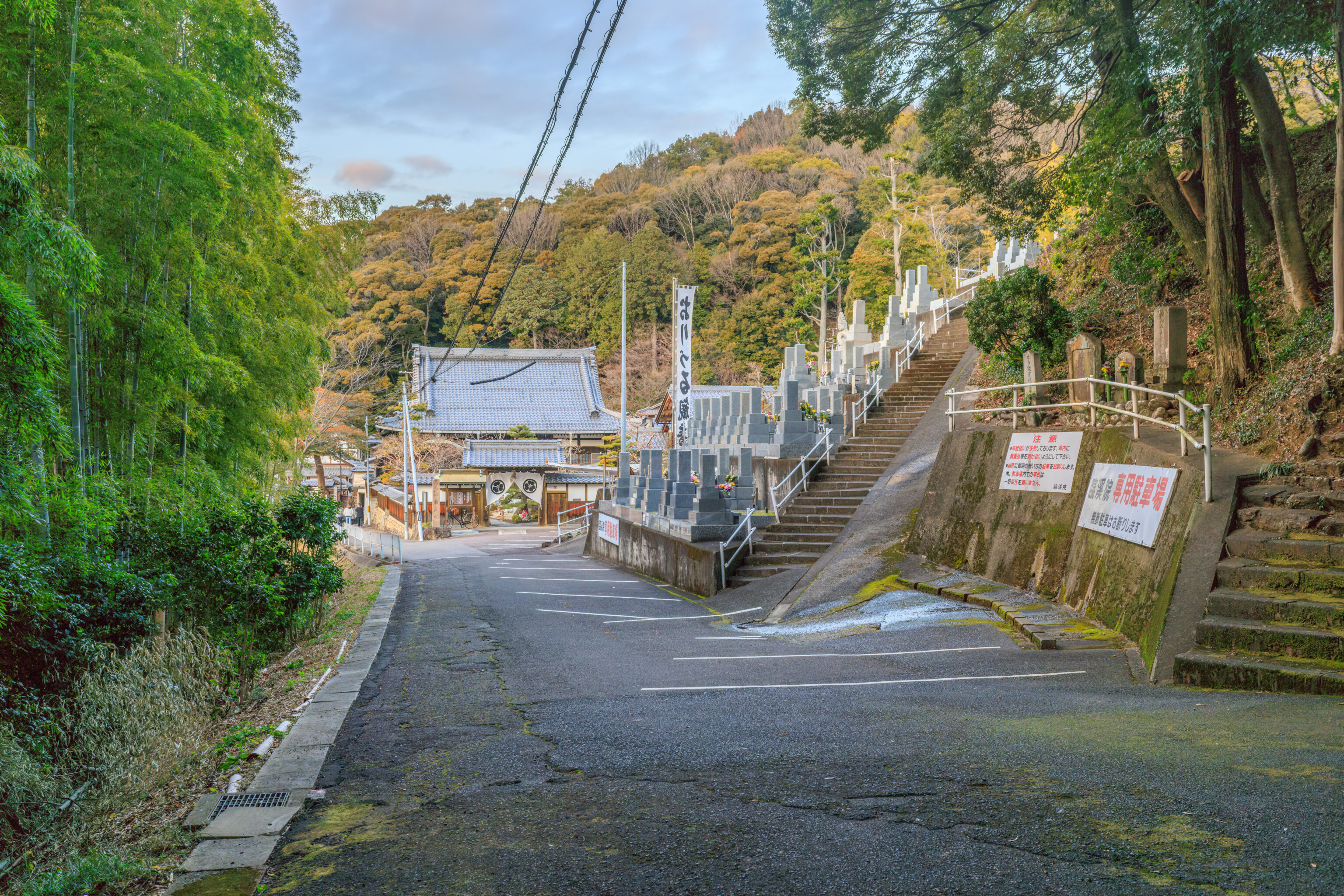
A little bit further along the path, we came to stairs leading up a steep slope. If we had taken the junction earlier that went into a cemetary, we may have come out from there.
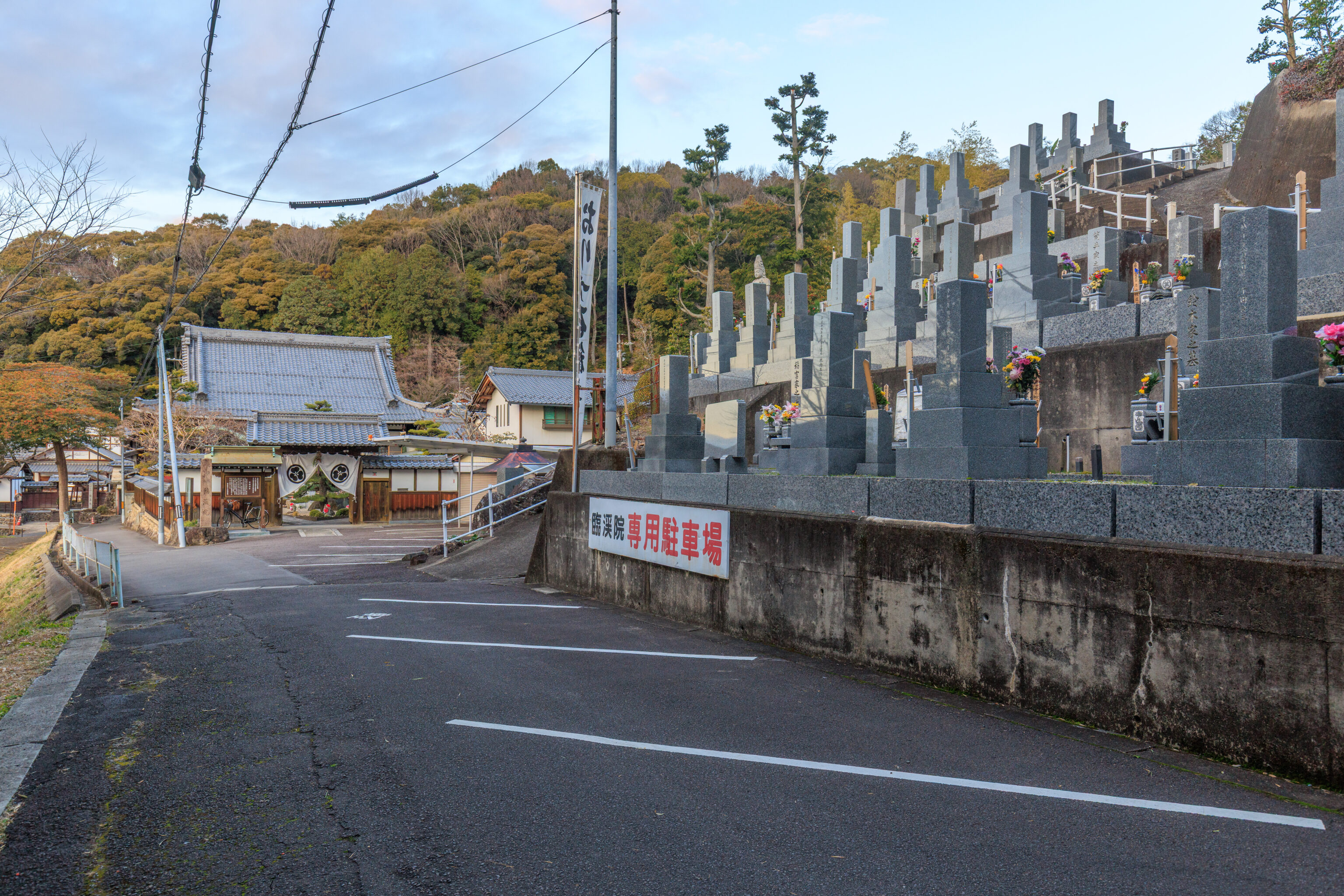
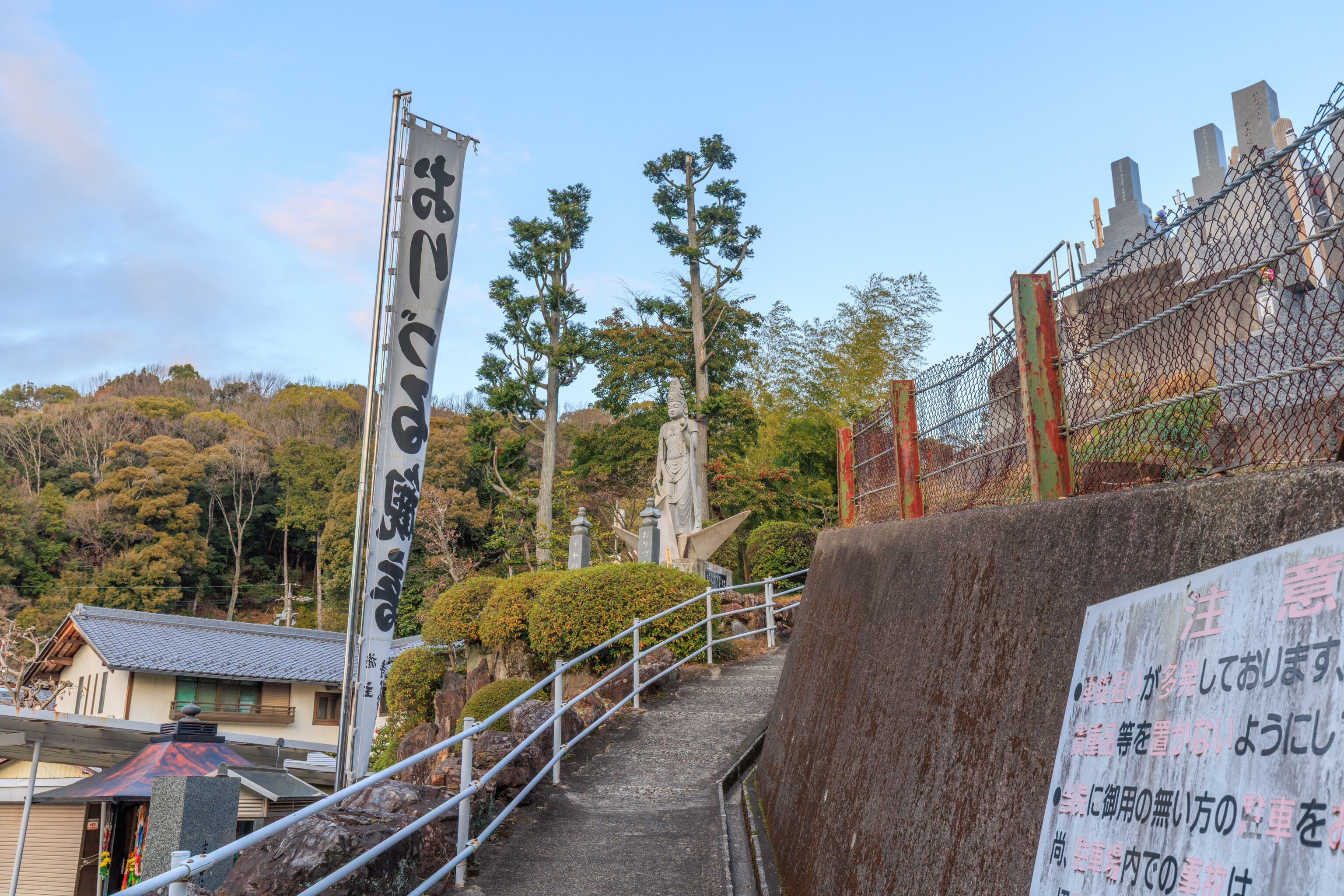
Continuing on, there was a second path that went uphill. We saw that there was a statue not too far away.
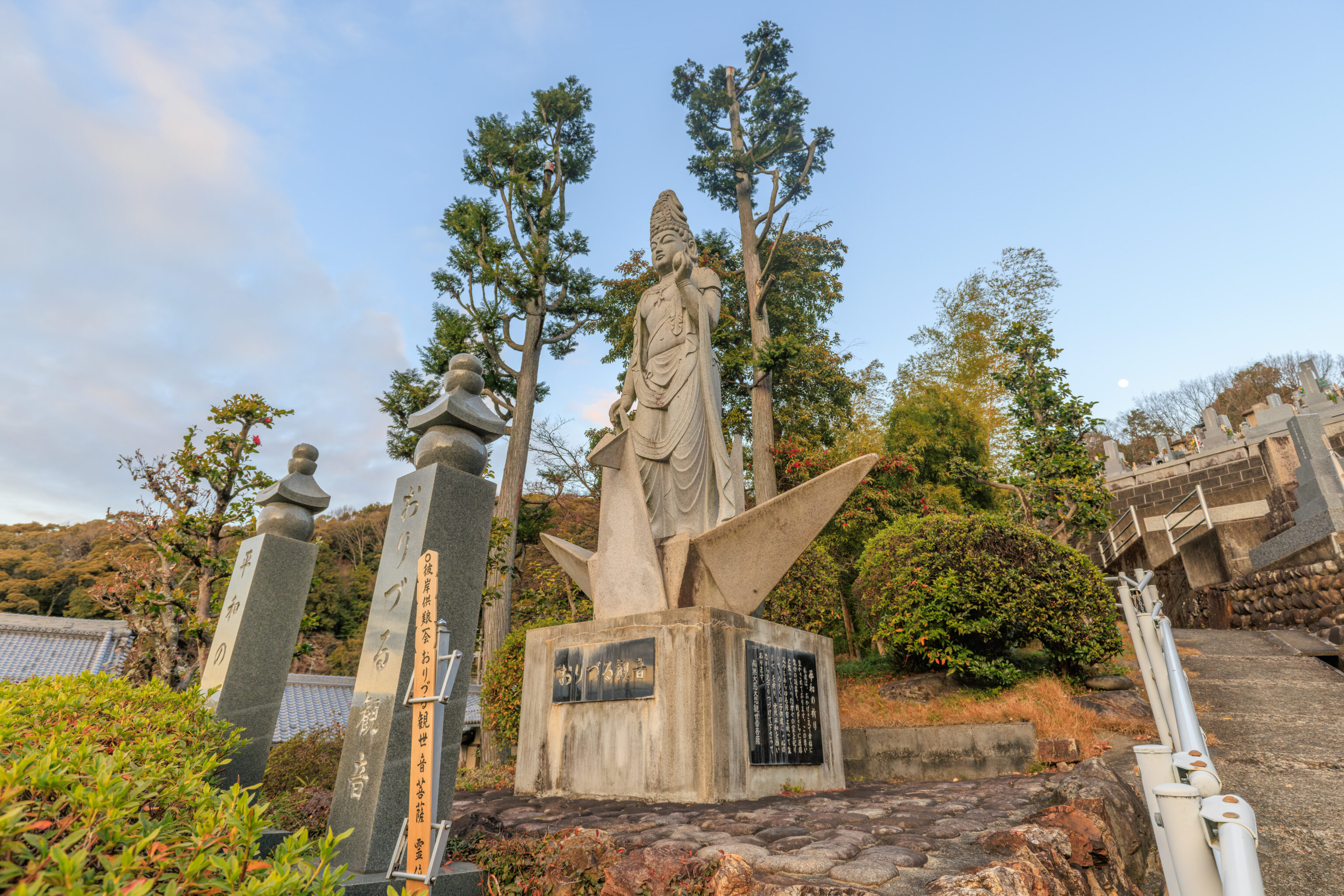
The statue is titled おりづる観音 Orizuru Kannon (Paper Crane Kannon). Because it is a statue of Kannon stanidng on a paper crane.
A Prayer for Peace
Thanks to the grace of others, we are able to live happy lives. This precious life of ours is watched over by the spirits of those who perished in war—and specifically in the atomic bombing—as well as by those who pray for "happiness of the heart" for the many children currently battling various hardships, all while wishing for world peace.

Namu Daiji Daihi Kanzeon Bosatsu
– Text from the plaque on the right side of the statue above, transcribed using Google Gemini and translated using Google Translate.
The last line on the plaque, 南無大慈大悲観世音菩薩 Namu Daiji Daihi Kanzeon Bosatsu, is a Buddhist chant. It seems to mean something like: praise to the greatly compassionate and merciful Kannon Bodhisattva.
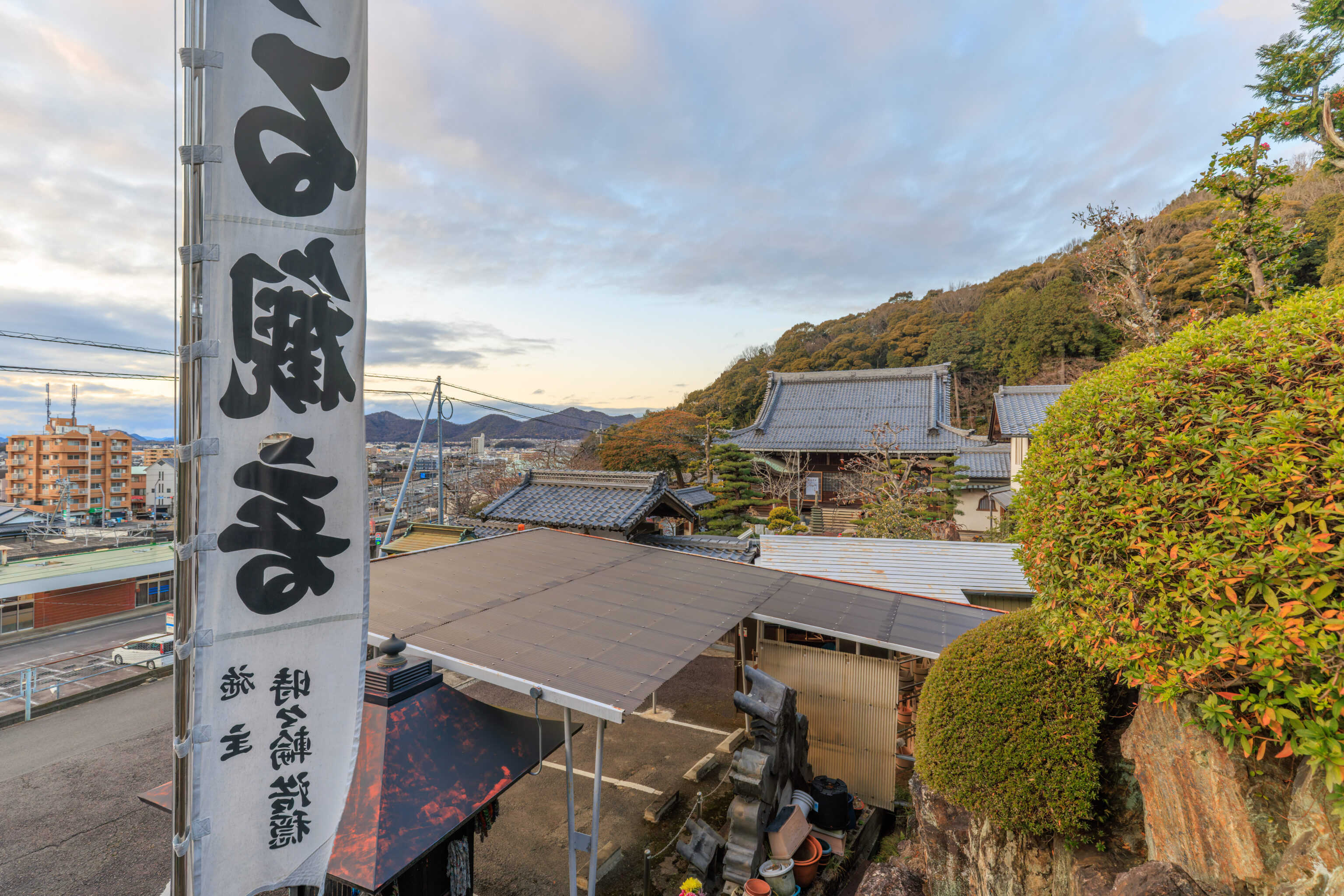
There is another temple, 臨溪院 Rinkei-in, to the north of here. The roof of its main hall could be seen from by the statue. It is another sub-temple of Seiryuzan Zuisen-ji.
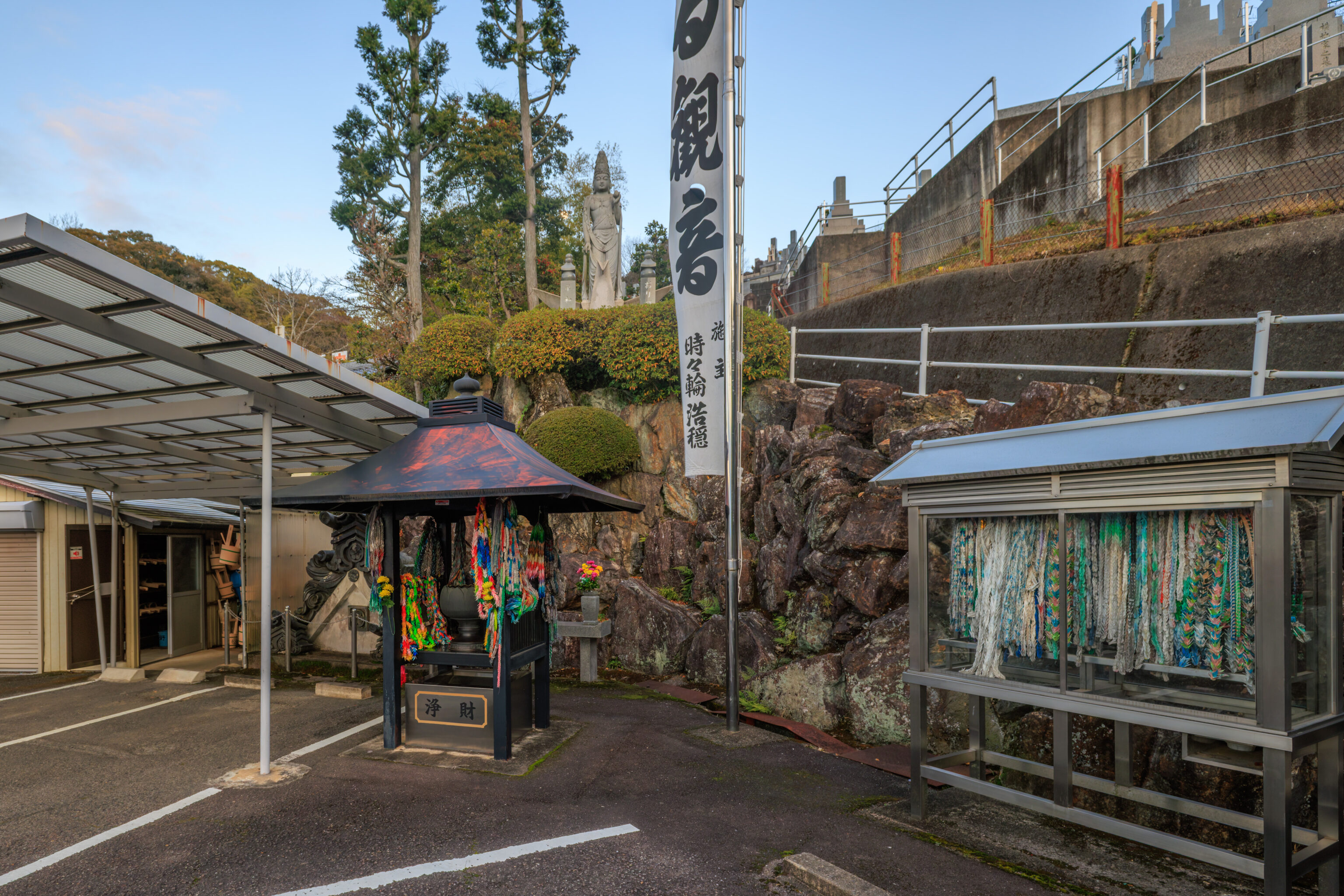
Below the statue, there were many folded paper cranes.
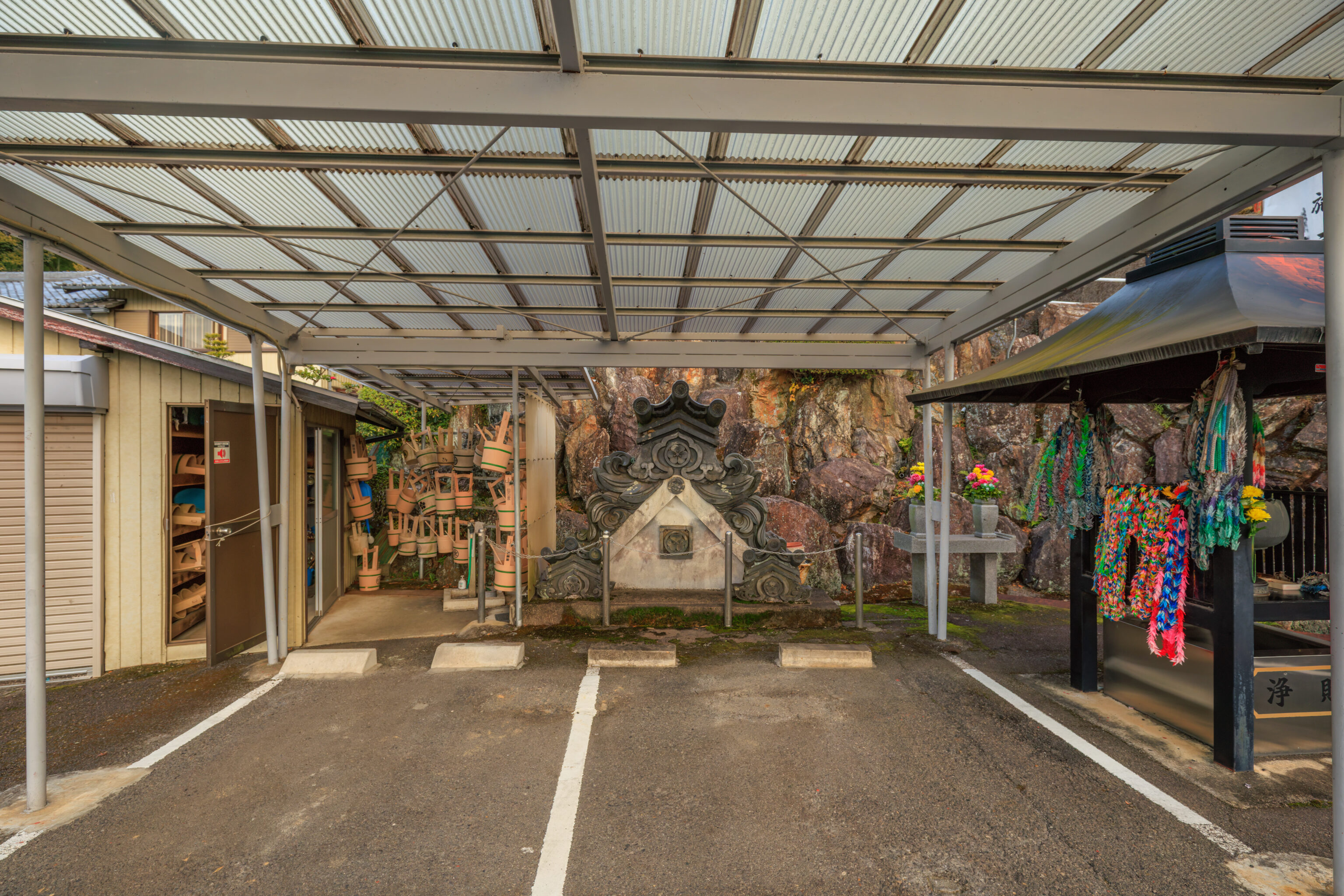
It isn’t clear why there is a semi-transparent roof over these two parking spots. The object at center seems to be the ridge of the roof of a temple hall.
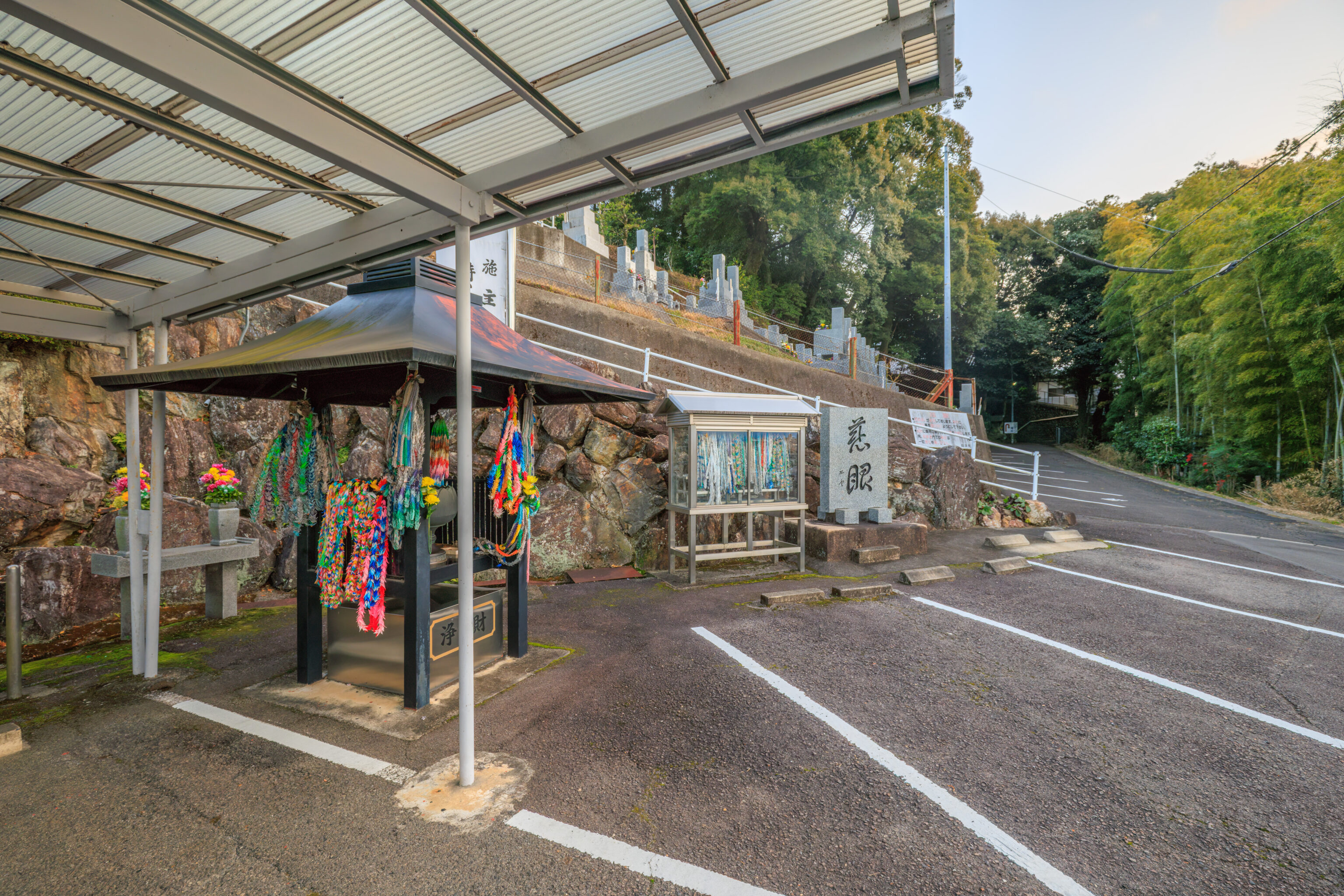
The view looking back to the south, more or less.
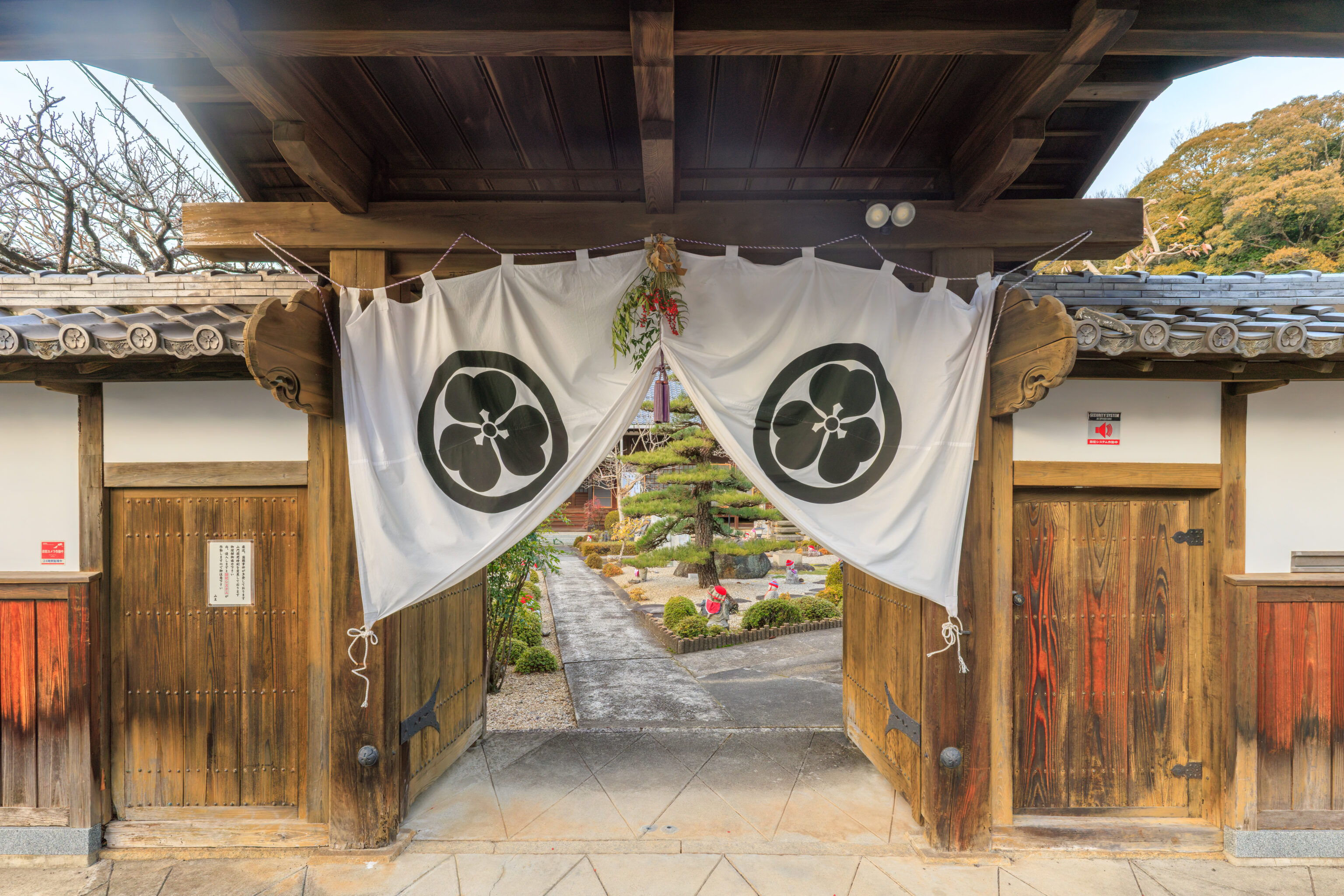
We went over to the temple’s entrance gate.
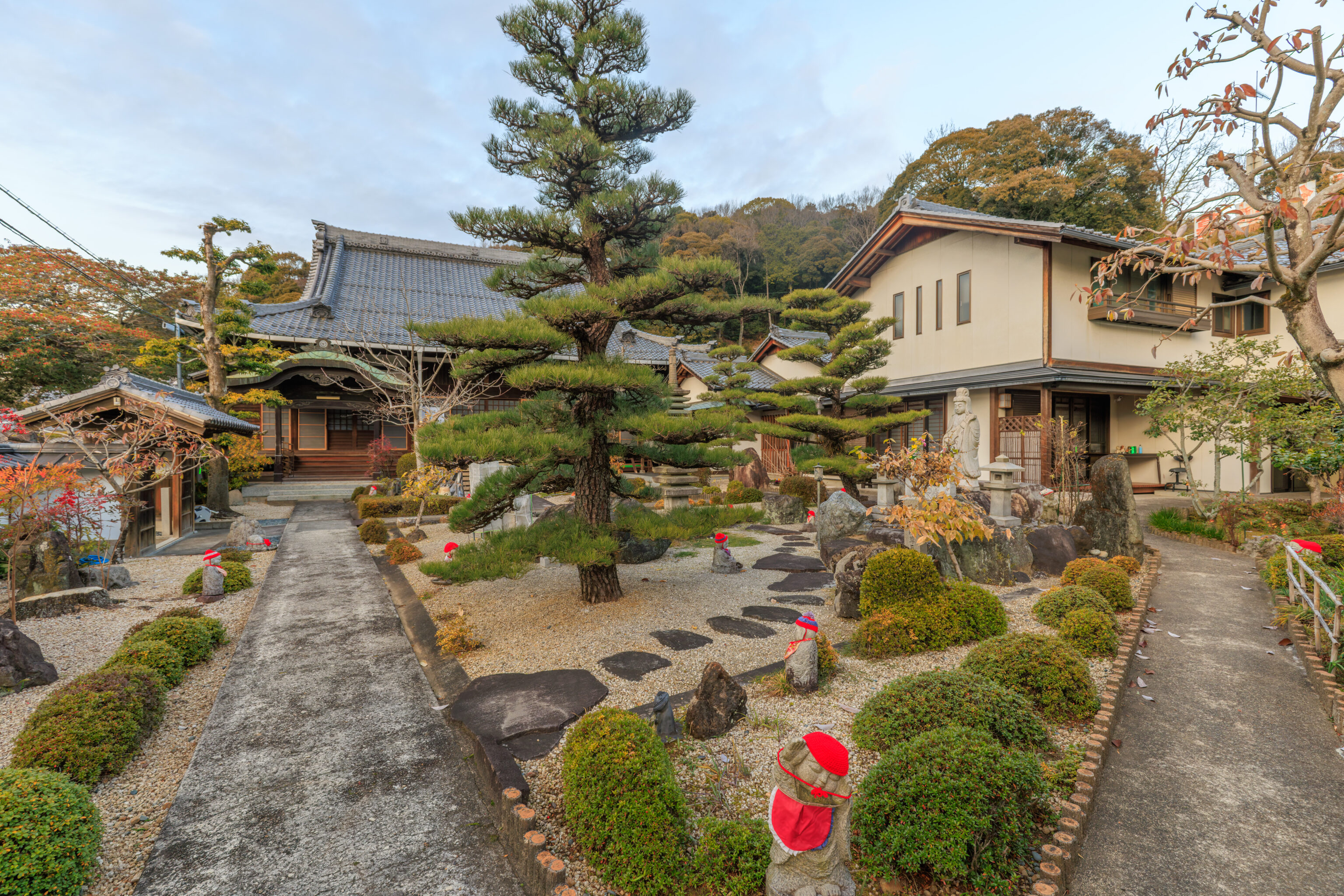
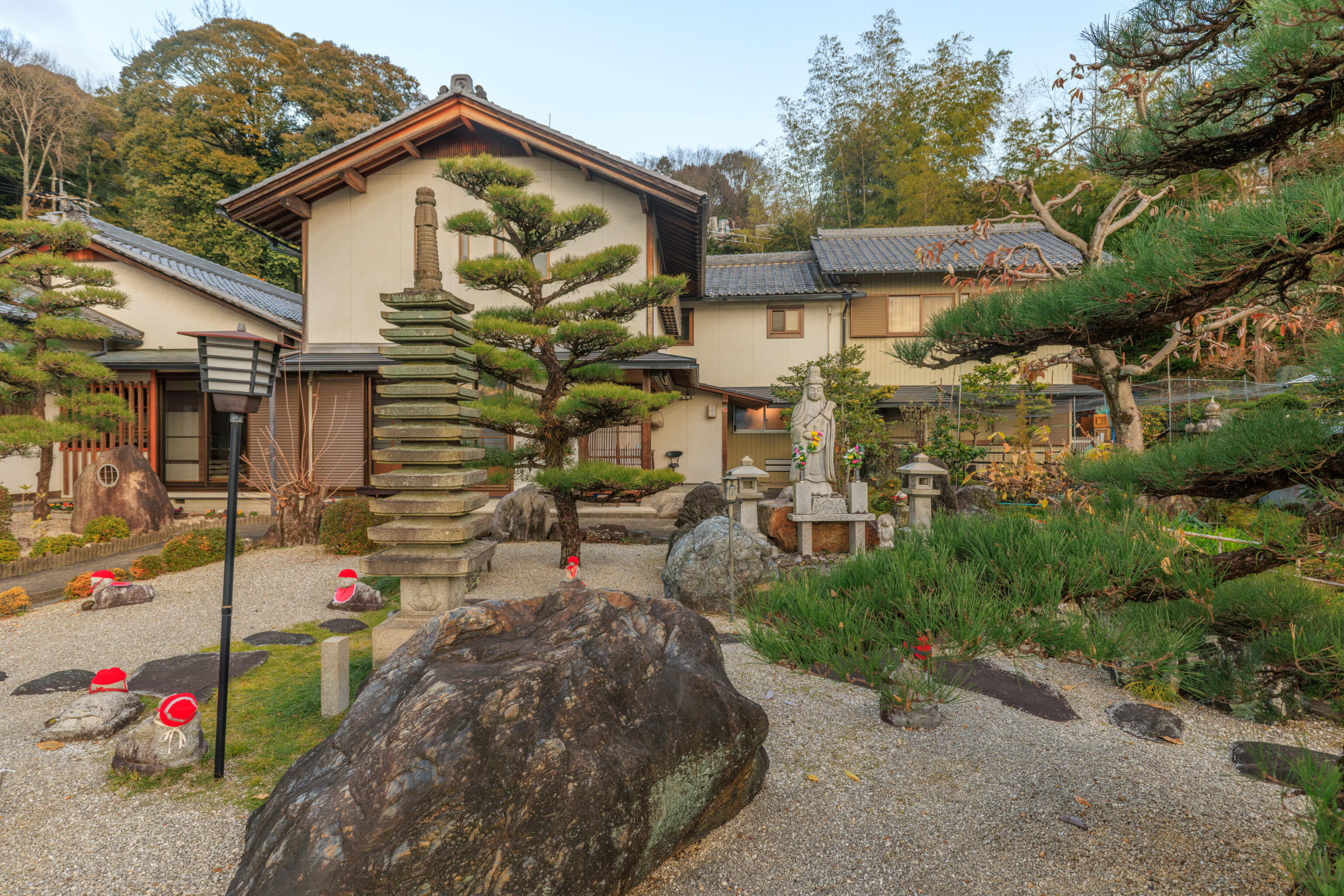
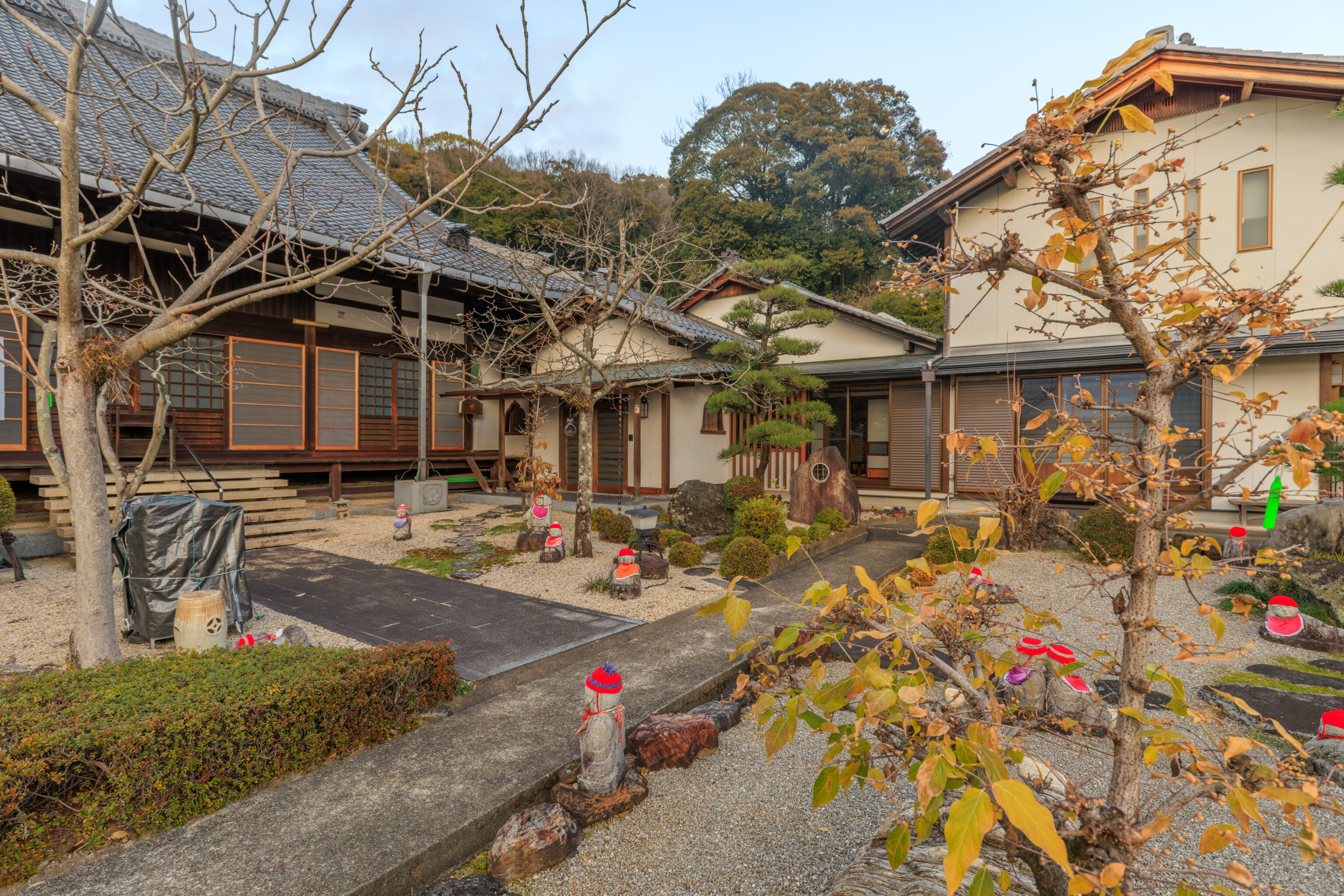
It was open so we went in to take a quick look. There was a nice little garden in front of the temple’s main hall. There were a few 地藏 Jizo statues here and there.
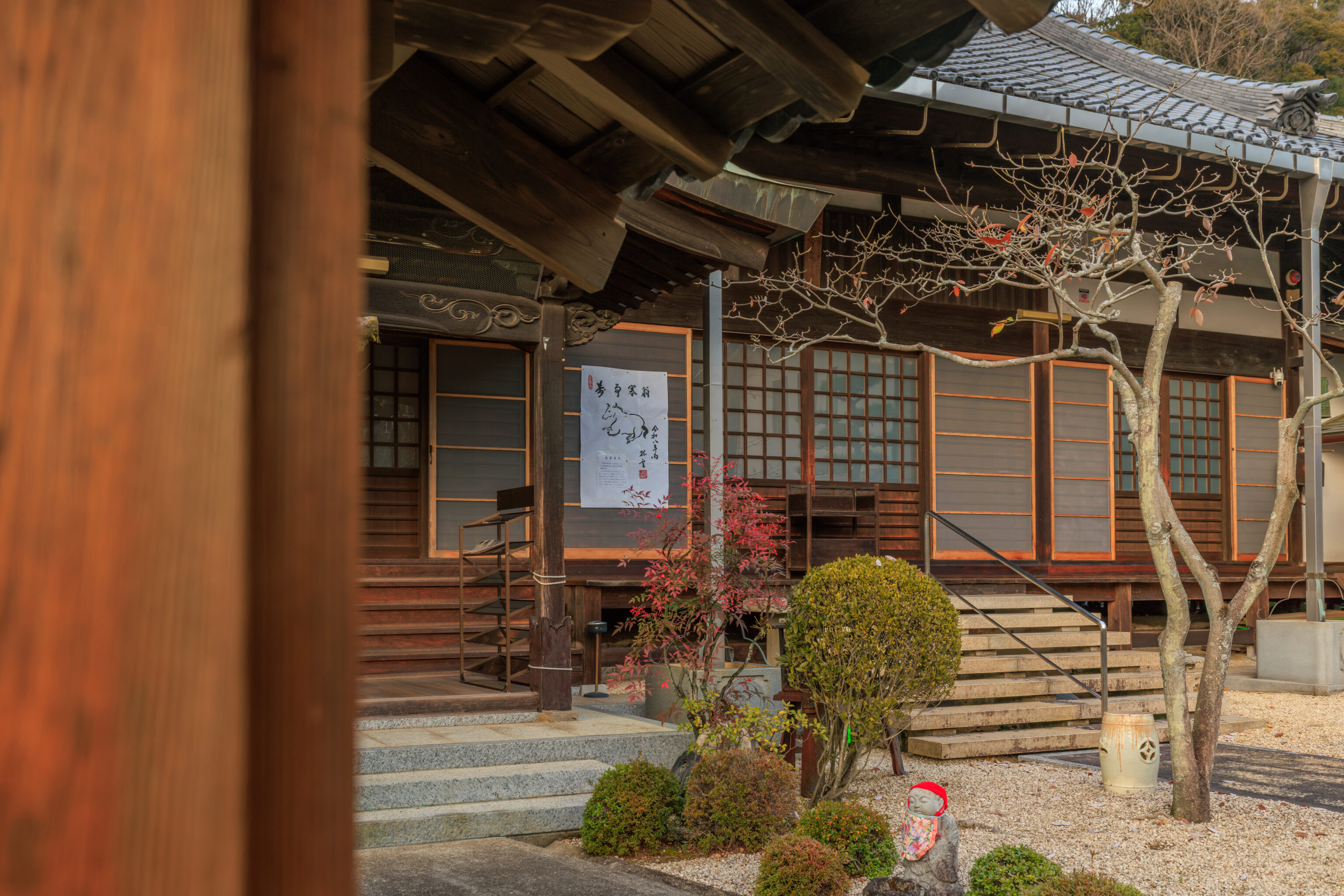
There was a depiction of a horse along with some calligraphy written upon nine sheets of paper attached to one of the sliding doors of the the Main Hall.
According to Google Gemini, the calligraphy reads:
萬事塞翁 Banji Saiō
令和八年丙午 Year of the Fire Horse, Reiwa 8 (2026)
孔雲 Kōun
– Calligraphy from the nine sheets of paper, transcribed using Google Gemini and translated using Google Gemini and Google Translate.
There is a printed note at the bottom right. The text is pretty small and hard to read. Google Gemini seems to think it can read it:
The Story of the Old Man at the Frontier
"Human affairs are like the horse of the old man at the frontier" (from *Huainanzi*), or as Kaiki Genki expressed it:

"Human affairs are like the horse of the old man at the frontier; one cannot sleep soundly with one's head on one's arm, yet one may sleep with one's head held high."

In life, one never knows what will happen. Misfortune can turn into good fortune, and good fortune can turn into misfortune; indeed, fortune and calamity are intertwined like the strands of a rope. While we are prone to being swayed by the events of daily life, we should strive not to lose sight of our true selves and to live in the spirit of the phrase, "Every day is a good day."
– Text from the printed sheet of paper taped to the larger nine sheets of paper, transcribed using Google Gemini and translated using Google Translated.
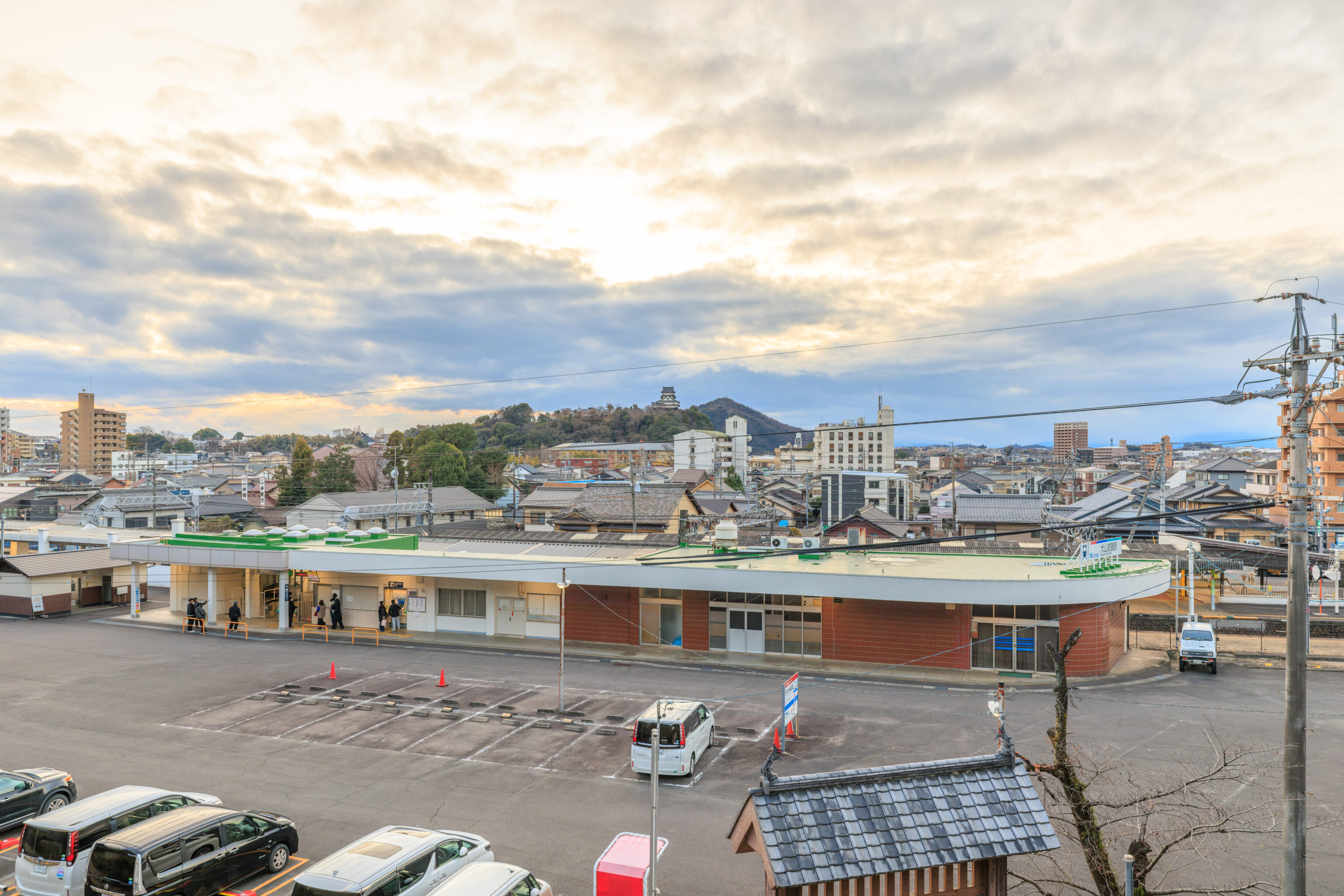
After exiting the temple, we walked to the north until we were at the northwest corner of its main hall. There was a path that led down to the eastern parking lot of Inuyamayuen Station below.
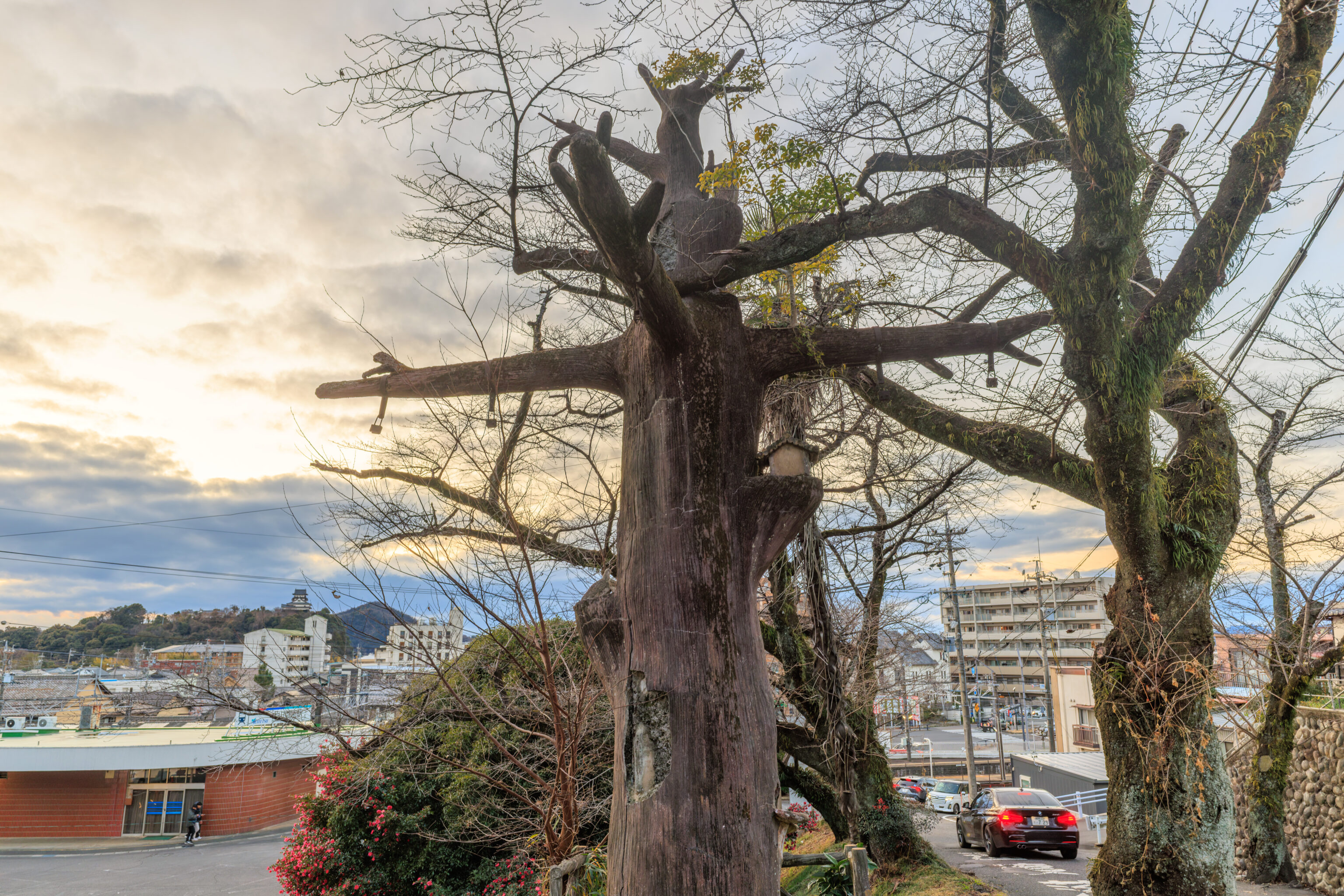
It seems here that the tree on the right has kind of grown into the tree on the left, which appears to be dead. And why does the probably dead tree have locks hanging from it?
Nagoya
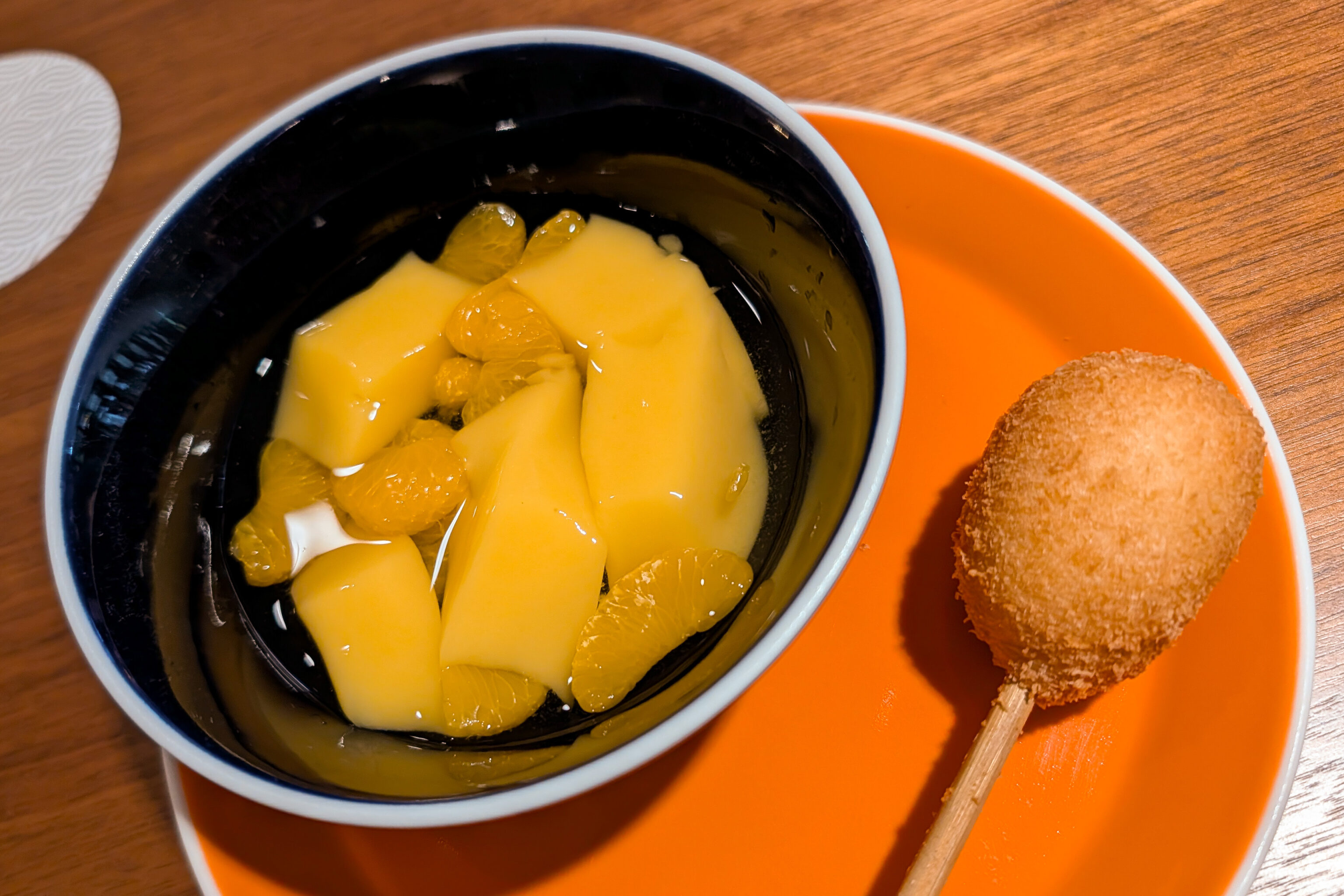
After taking the train back to Nagoya Station, we returned to the Marriott and went up to the lounge for a snack. They had the mango pudding again. They also had corn dogs, which were terrible. I can’t actually even remember the last time I had a corn dog anywhere!
We decided to go back down into the station to find something more substantial to eat. We even found some restaurant areas that we didn’t know existed in the floors below the Marriott’s lobby! Unfortunately most restaurants were closed tonight. This meant that any decent restaurants that were open had unreasonable queues.

We ended up going to McDonald’s. The Roasted Soy Sauce Double Thick Beef Samurai Mac was tiny but actually tasted decent due to its sauce and what seemed to be fried onions.
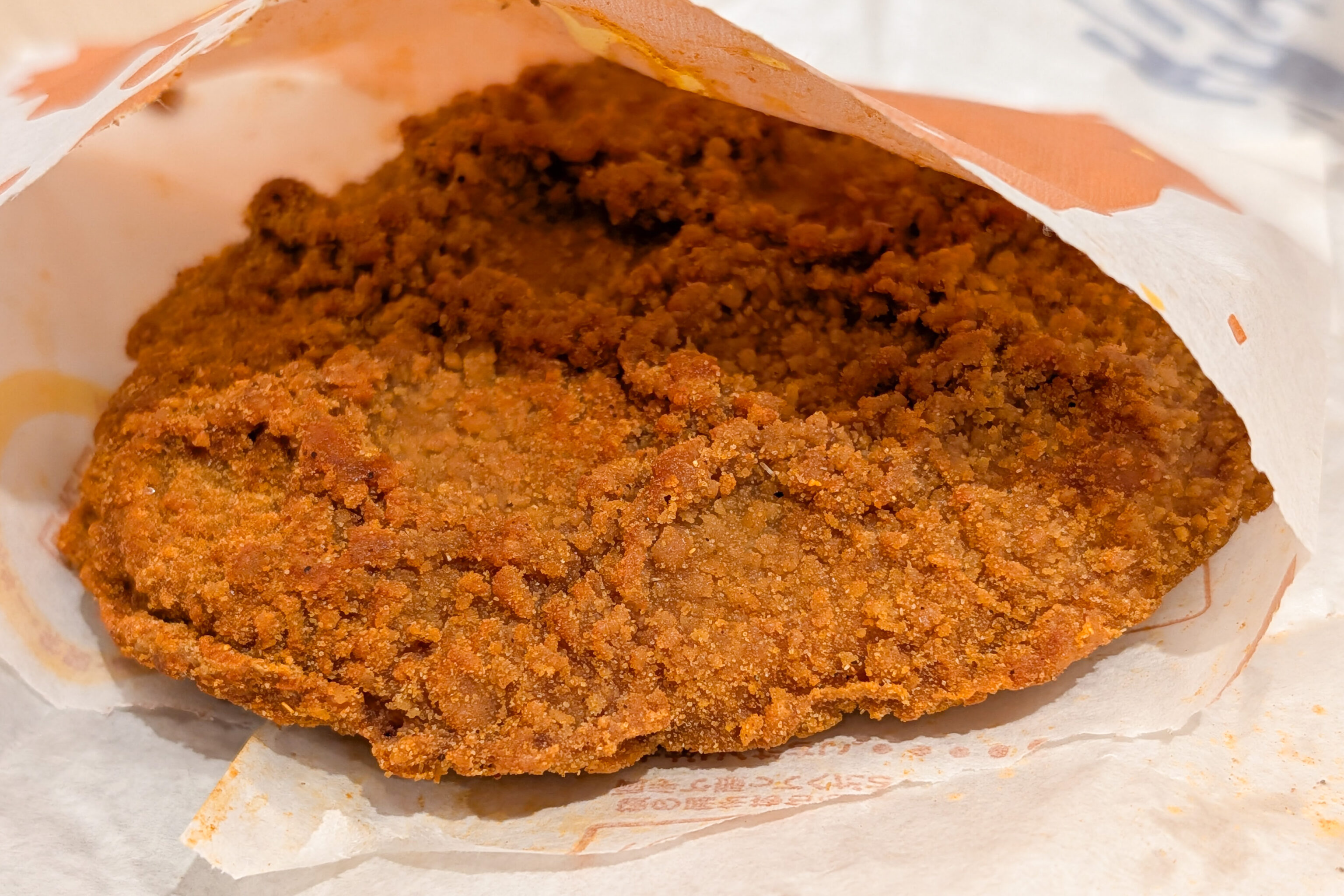
The Shaka-Chicki was basically a slab of processed chicken. We got the one with chili powder which added some flavor but wasn’t really spicy at all. It wasn’t great but not bad either.
Perhaps not the most auspicious way to end the first day of the year but at least we managed to do hatsuhinode, hatsumode at both a Shinto shrine and a Buddhist temple, and had many delicious snacks!