After breakfast at the 名古屋マリオットアソシアホテル Nagoya Marriott Associa Hotel, we ventured south to visit the 伊勢神宮 Ise Jingu, the holiest of all the Shinto shrines. We visited both the 内宮 Naiku and 外宮 Gekū and also spent some time having snacks and lunch before returning to Nagoya for dinner.
Morning
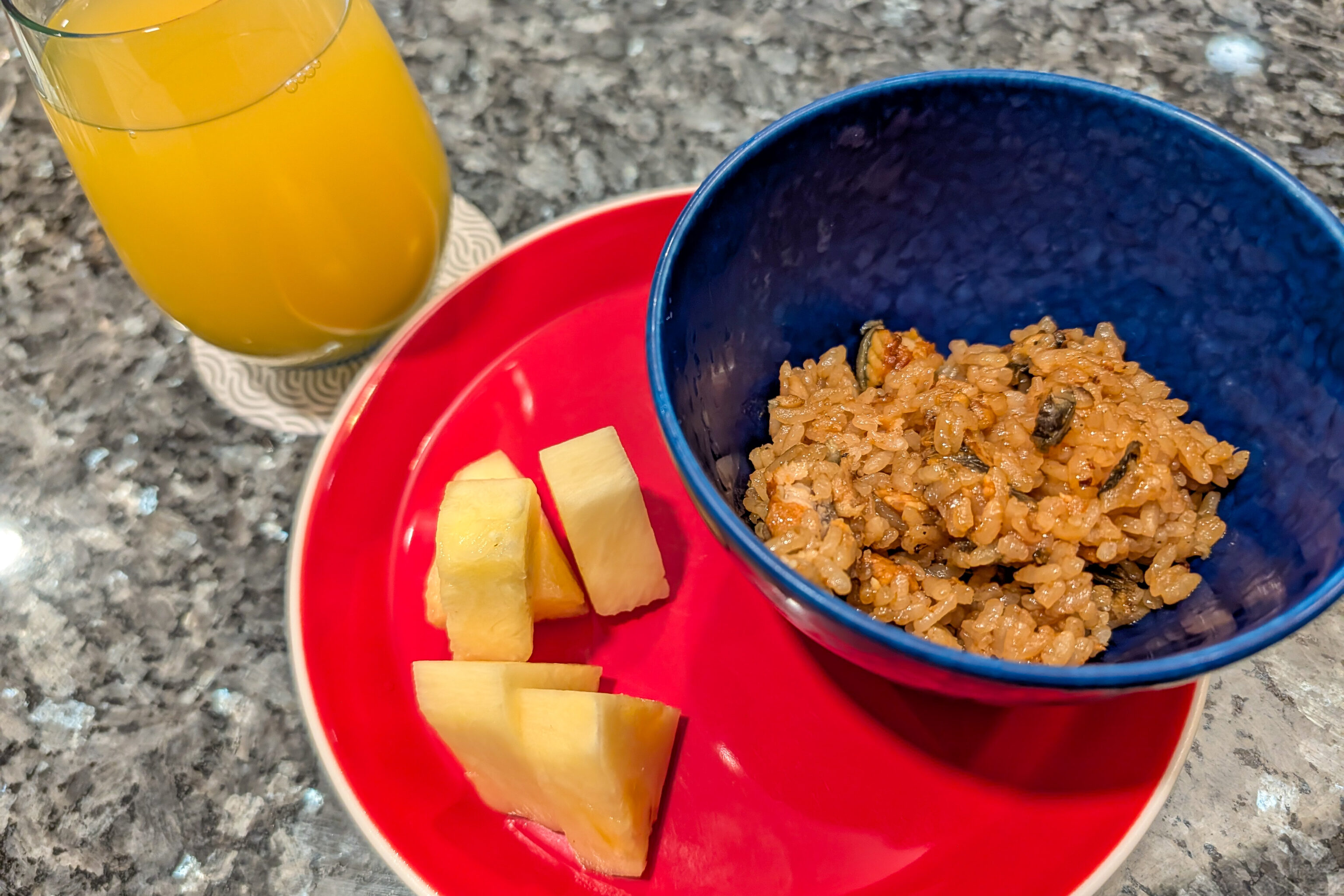
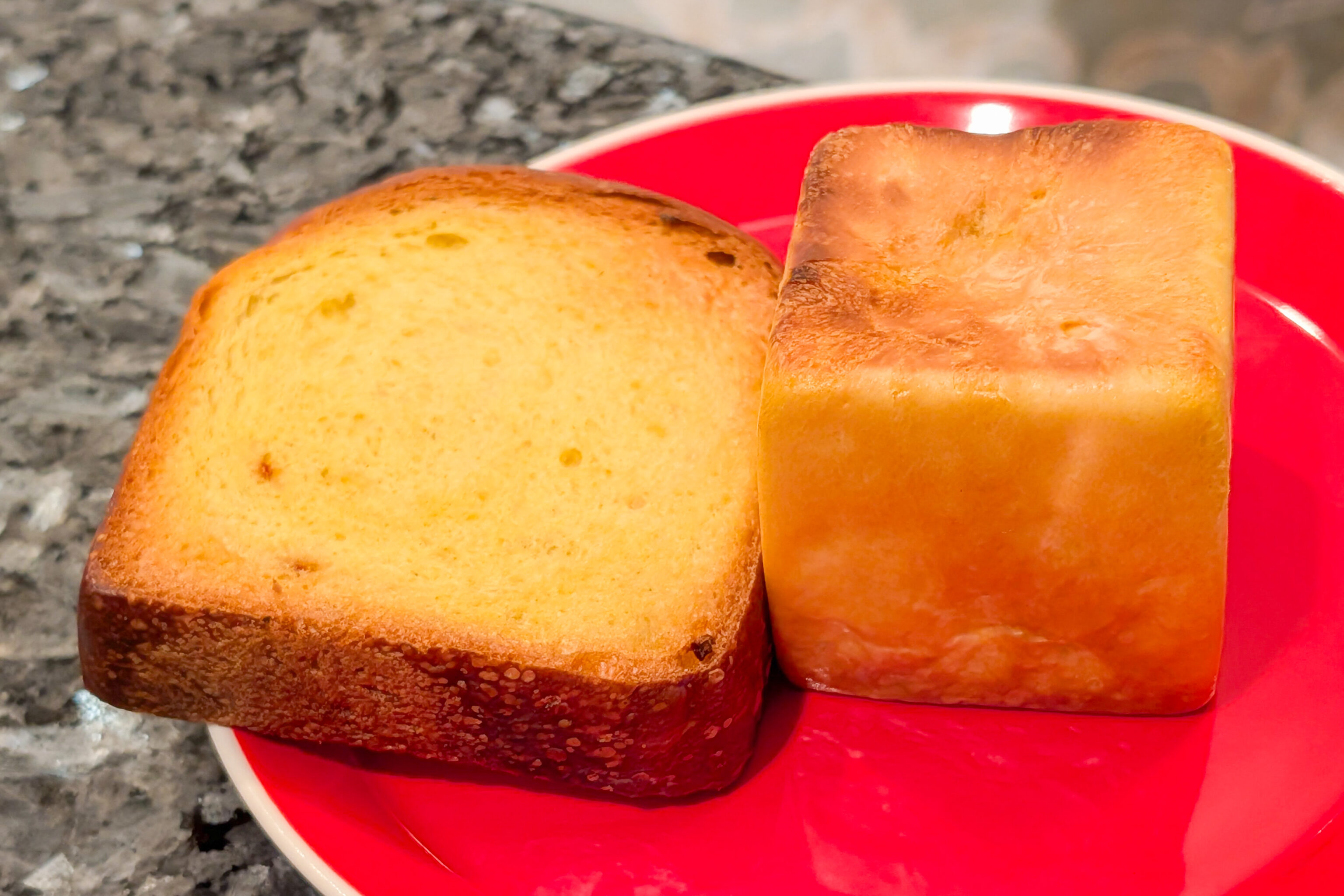
After waking up at the 名古屋マリオットアソシアホテル Nagoya Marriott Associa Hotel, we headed upstairs to the lounge for breakfast. It was pretty much the same as in the previous days.
Ise Jingu Naiku
We decided to visit 伊勢神宮 Ise Jingu today. This large Shinto shrine actually has two main areas, the inner and outer shrine. We decided to visit the 内宮 Naiku, the inner shrine, first.
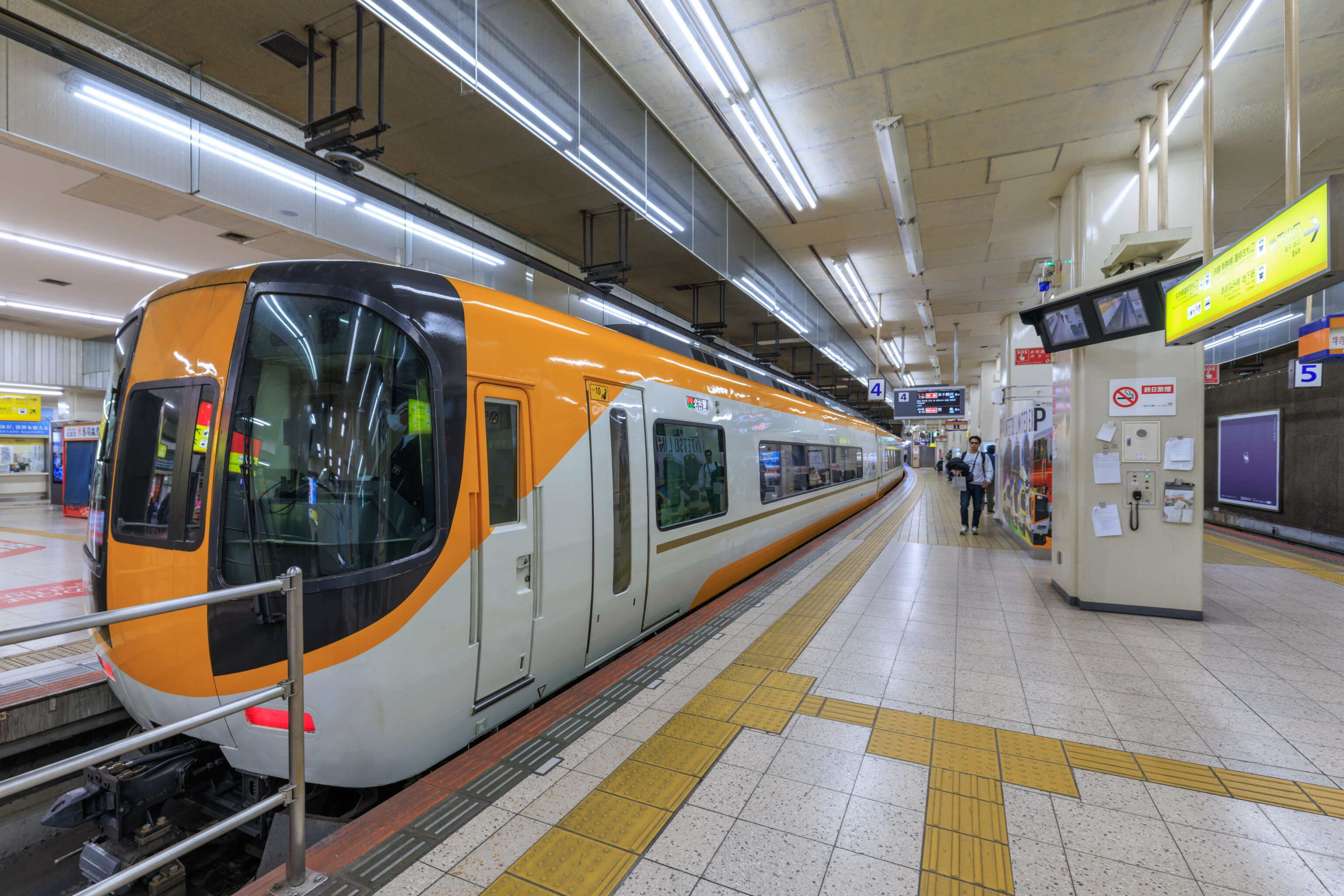
Both the inner and outer shrines are accessible via the Kintetsu Line while the outer shrine can also be accessed via JR. The closest station to the inner shrine is 五十鈴川駅 Isuzugawa Station. The trip takes 1 hour and 30 minutes on a limited express train. Kintetsu’s limited express is like JR in that it is a toll limited express – it requires a supplemental fare. A seat reservation is also required. This can be confusing in Japan if you aren’t familiar with the railway operator as there are limited express trains that don’t require any additional fare or seat reservations.
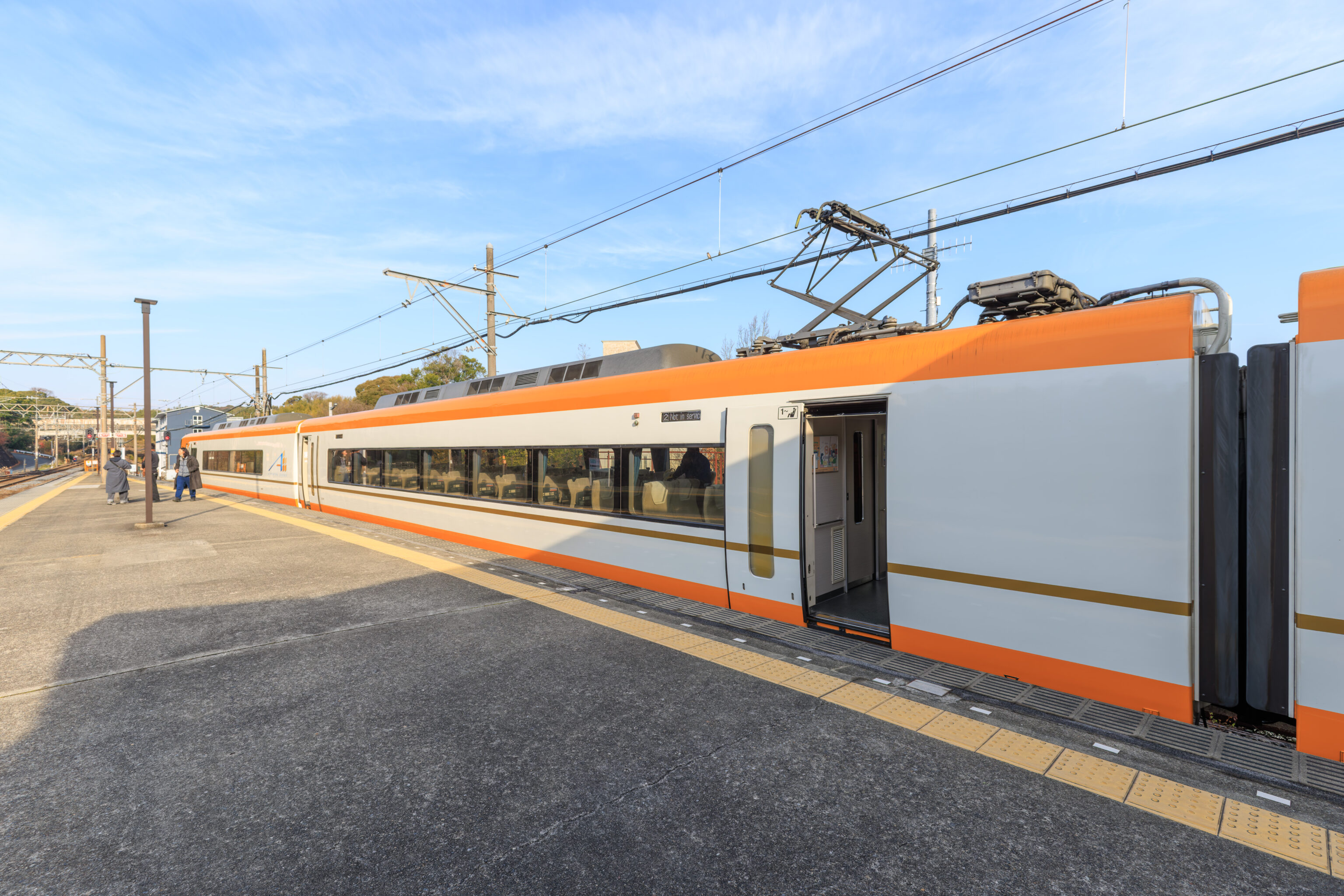
We arrived at Isuzugawa Station at around 9:30am.
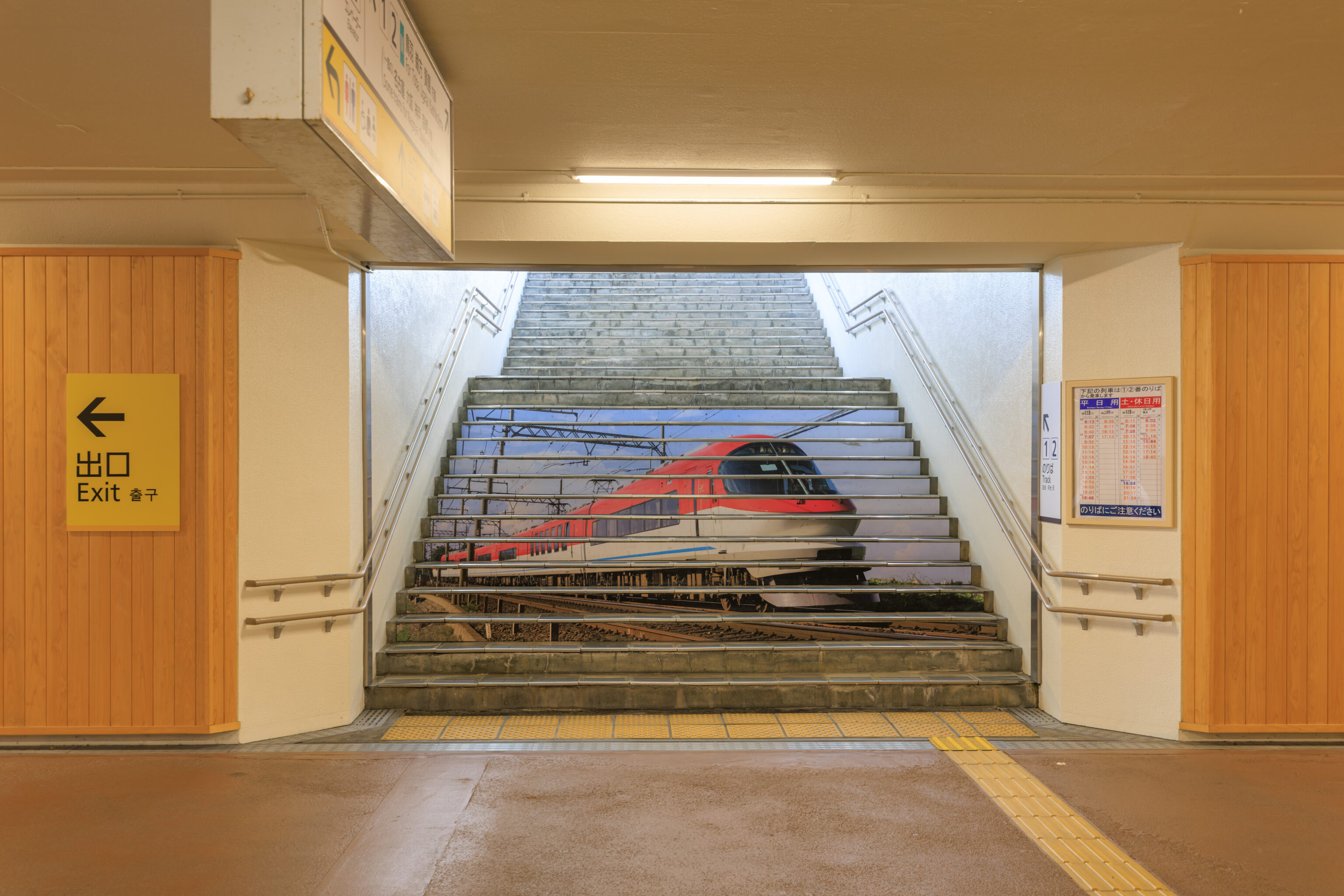
These stairs had a photograph of a train!
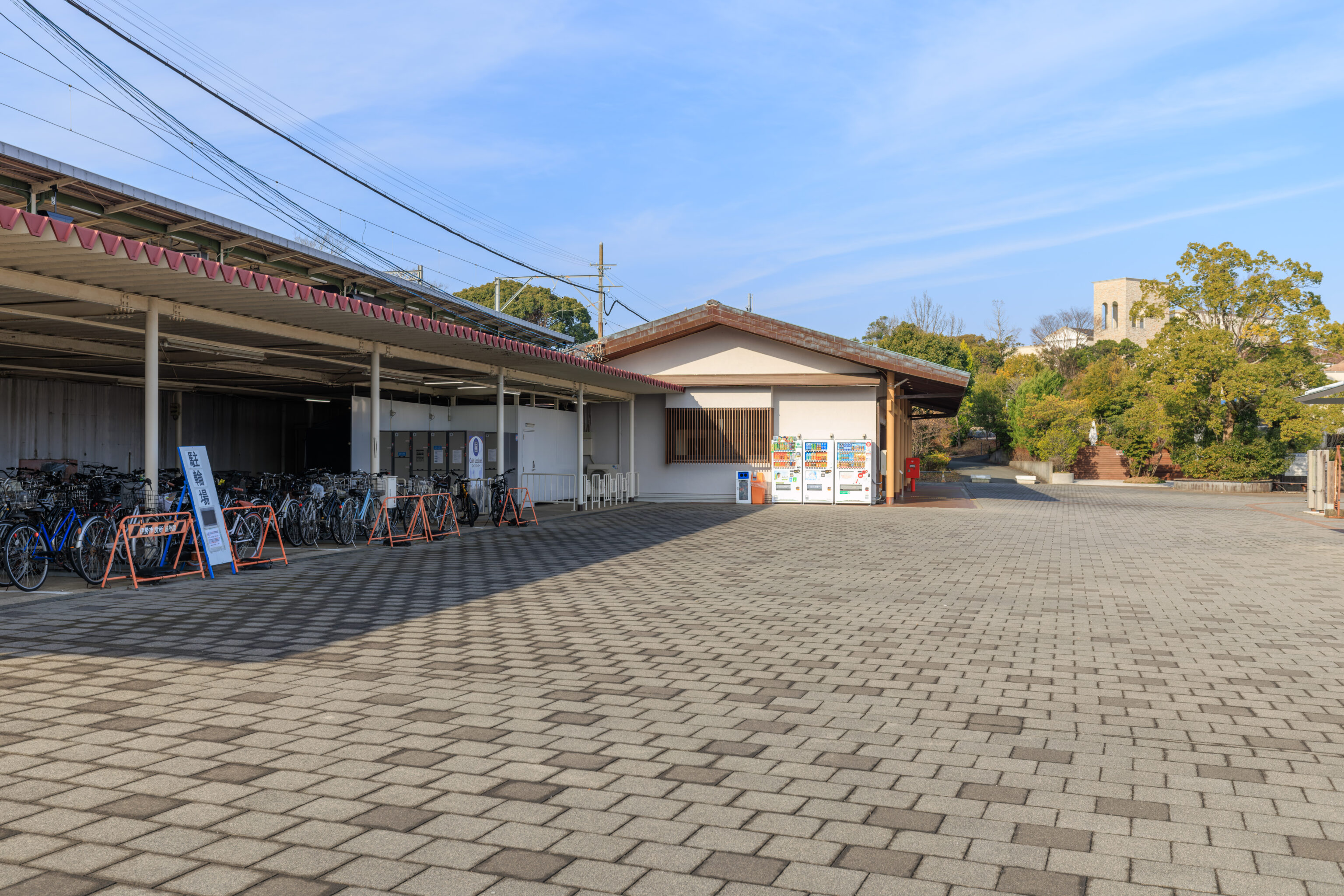
The station was pretty small. We decided to walk over to the Naiku, which is about 2.5 kilometers away and takes about 30 minutes.
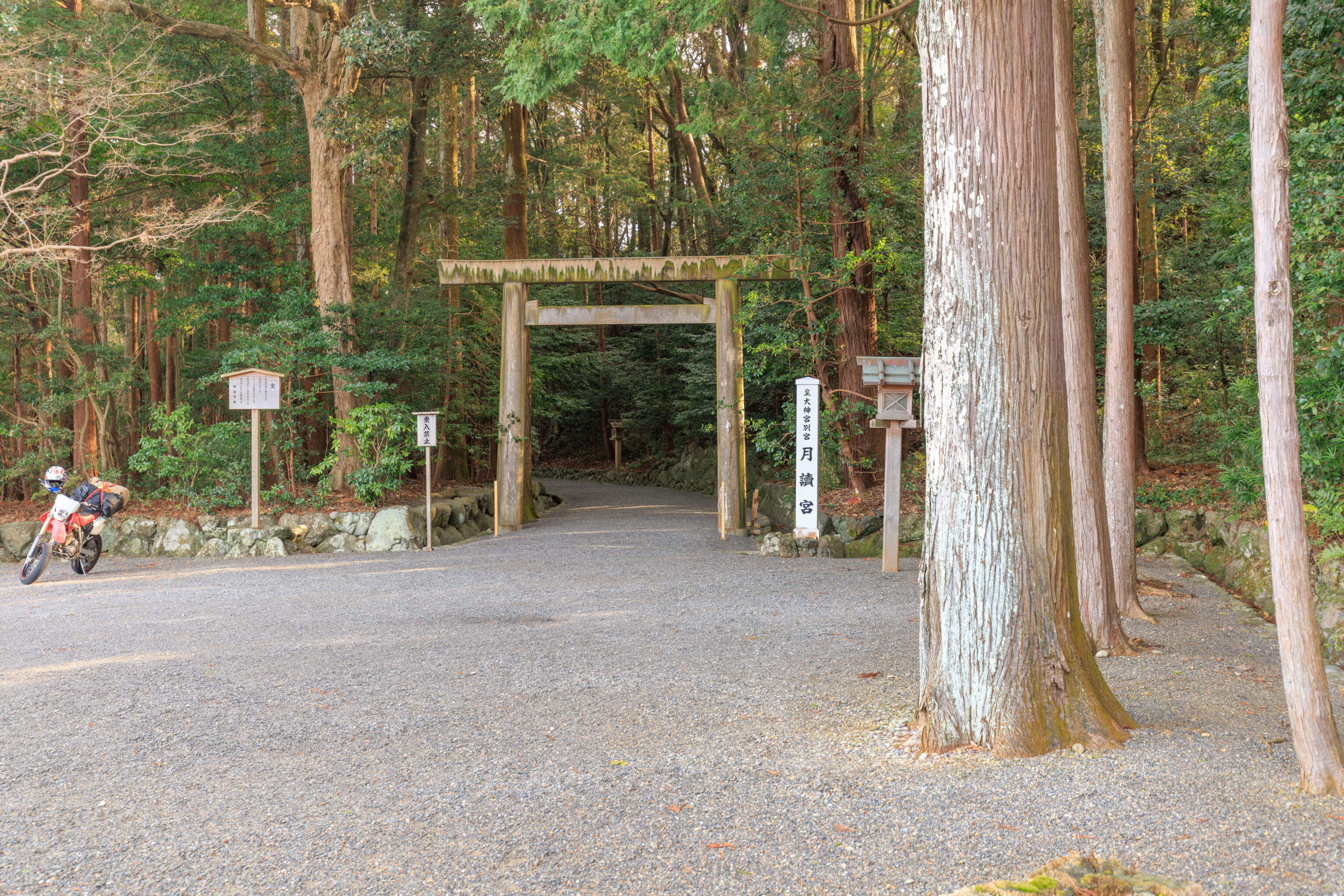
We walked past the 月讀宮 Tsukiyomi-no-miya, 別宮 betsugu of Ise Jingu. In trying to determine what the meaning of this term is, we discovered the Glossary of Shinto page on Wikipedia. A betsugu is a subsidiary shrine that houses an important 神 kami. It puts it at a level that is equal to or below the main shrine but higher than other shrines which may be present.
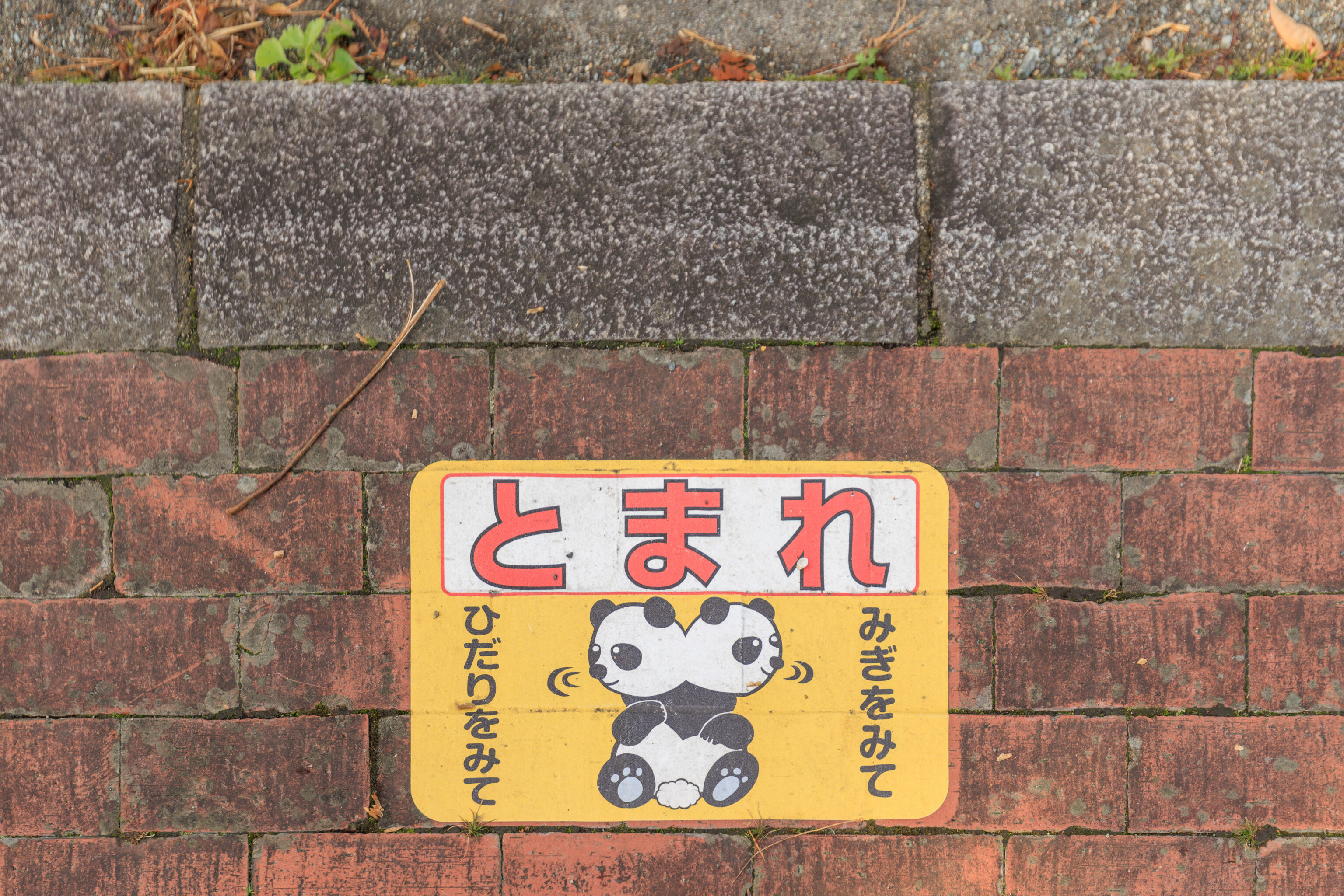
We’ve seen this particular look both ways before crossing graphic before. This one was in excellent condition!
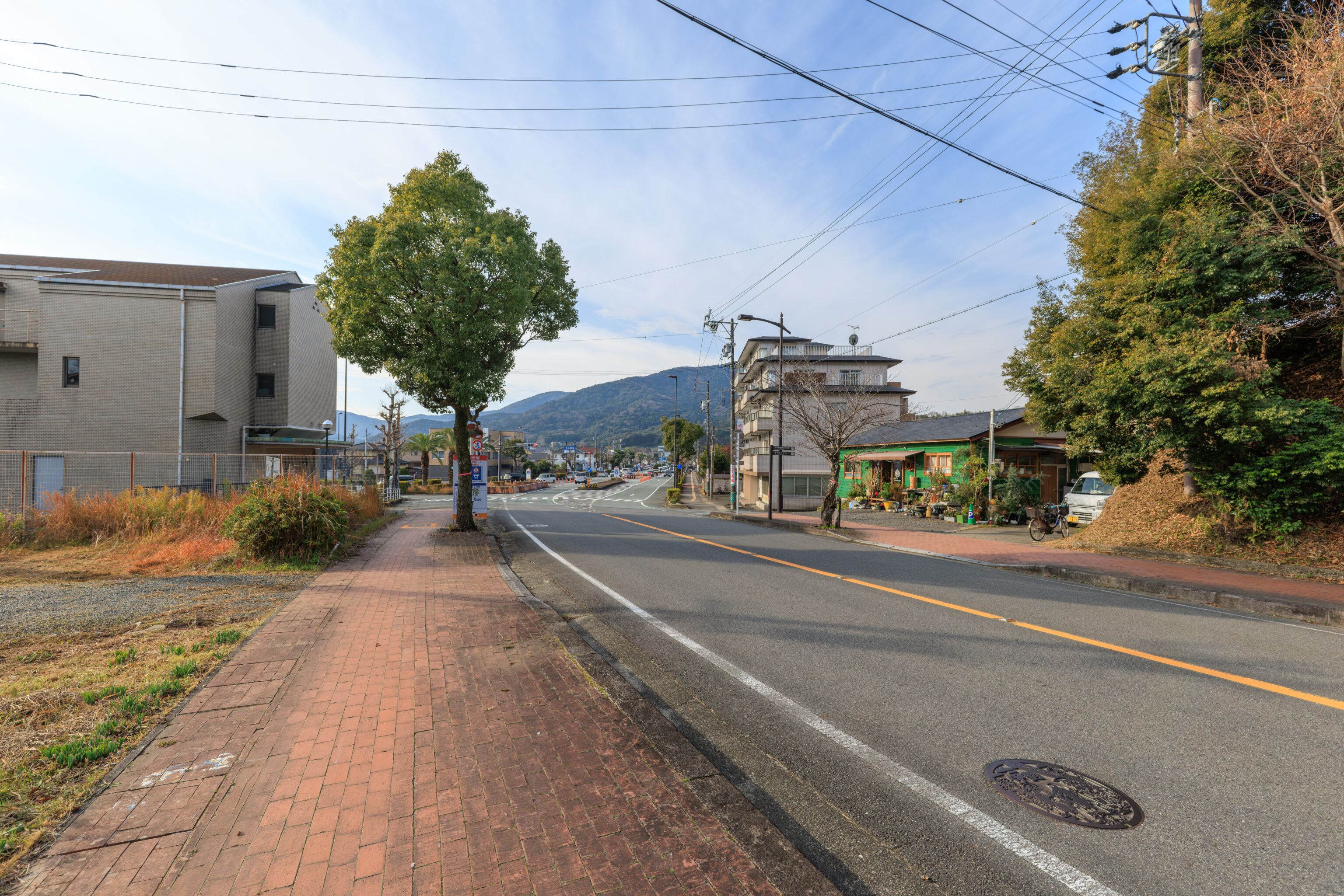
It felt like we had been walking for a very long time before we came upon the junction ahead, which isn’t really too obvious from this perspective.
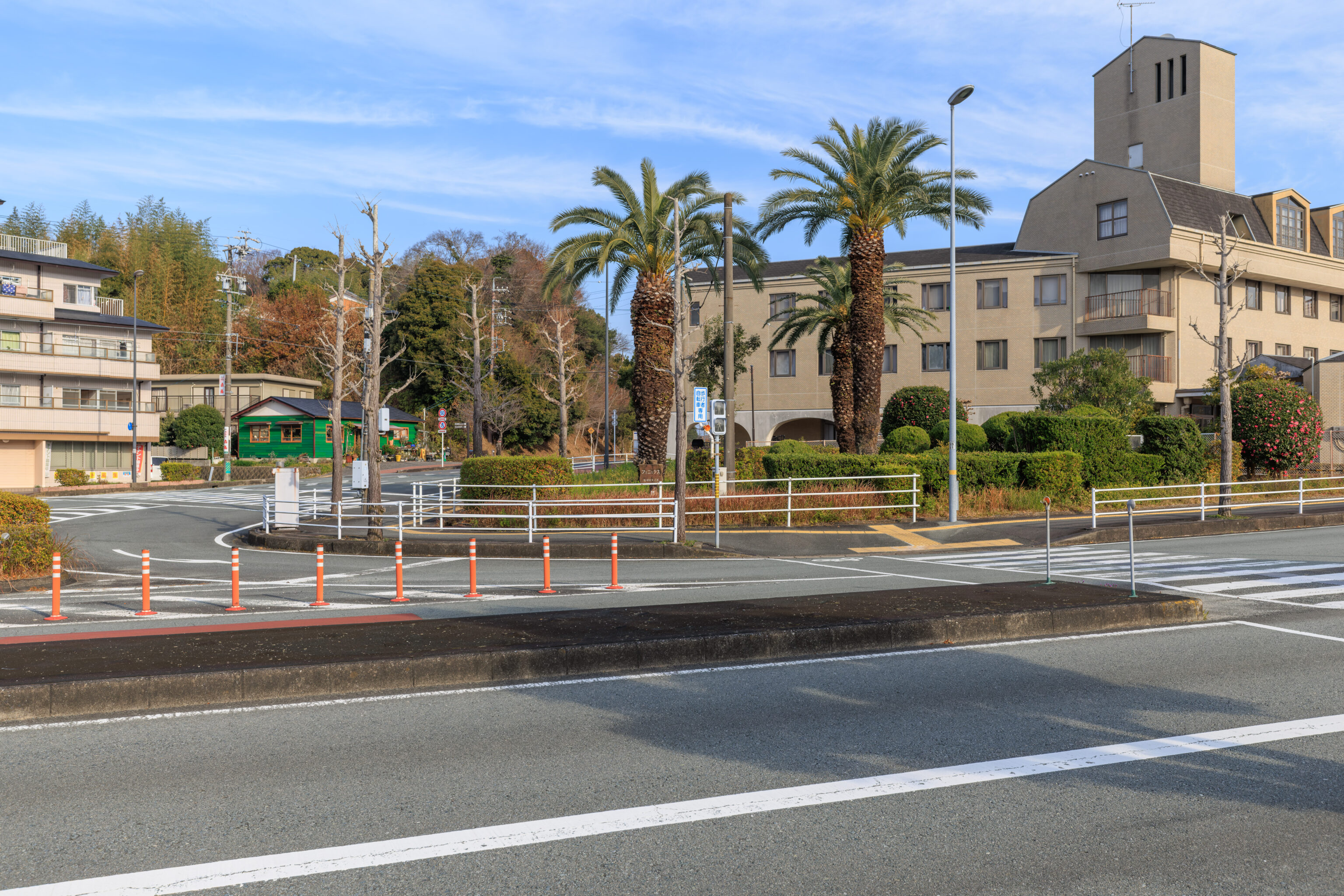
We saw some kind of palm tree, which isn’t really something we associate with Central Japan. The sign in front of it reads フェニックス Phoenix, and is dated November, 1988. Google Gemini thinks this is referring to the species of the palms, Phoenix Canariensis, which is native to the Canary Islands. That’s really far away from here. But these palms do kind of look like this species and they are able to be grown here in Japan so maybe its correct.
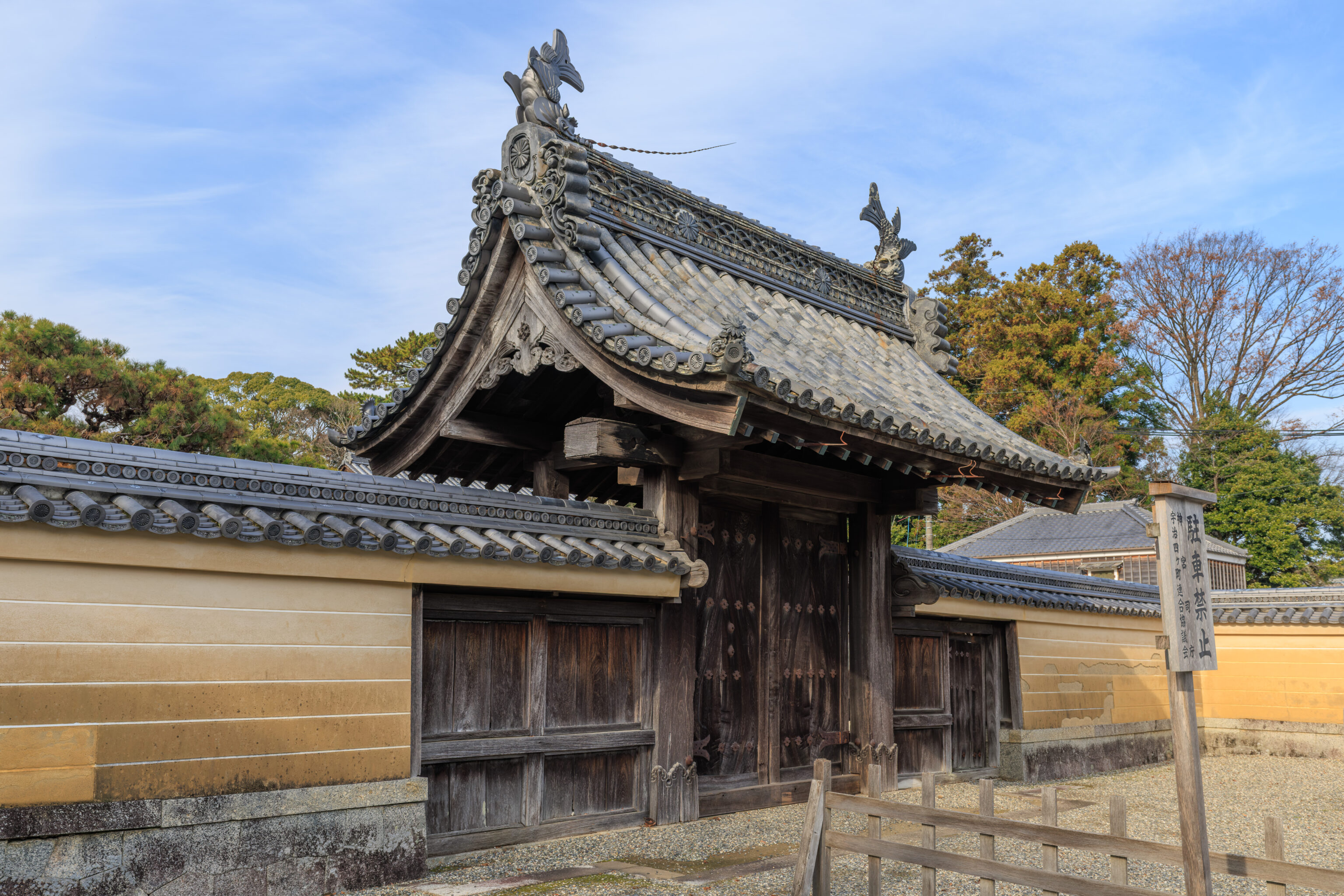
As we started to get closer to Ise Jingu, we passed by a closed gate. The sign basically just says No Parking. The building behind the gate is the former Buddhist 慶光院 Keiko-in. The building is currently owned by Ise Jingu and is, or maybe was, the residence of the 祭主 saishu. This appears to be a term that specifically means the head priest of Ise Jingu.
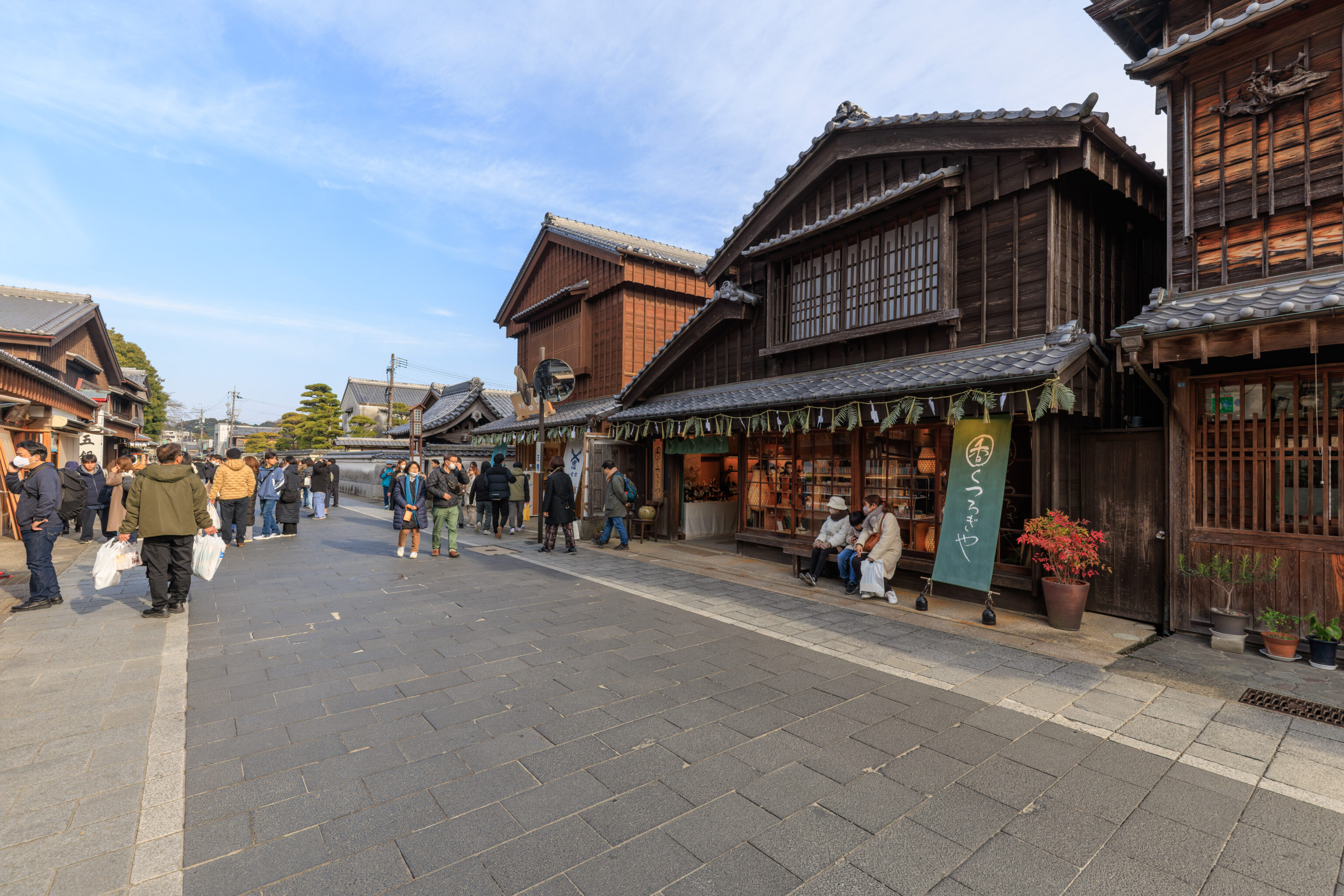
We started to encounter more people as we arrived at the shopping street near the shrine’s entrance.
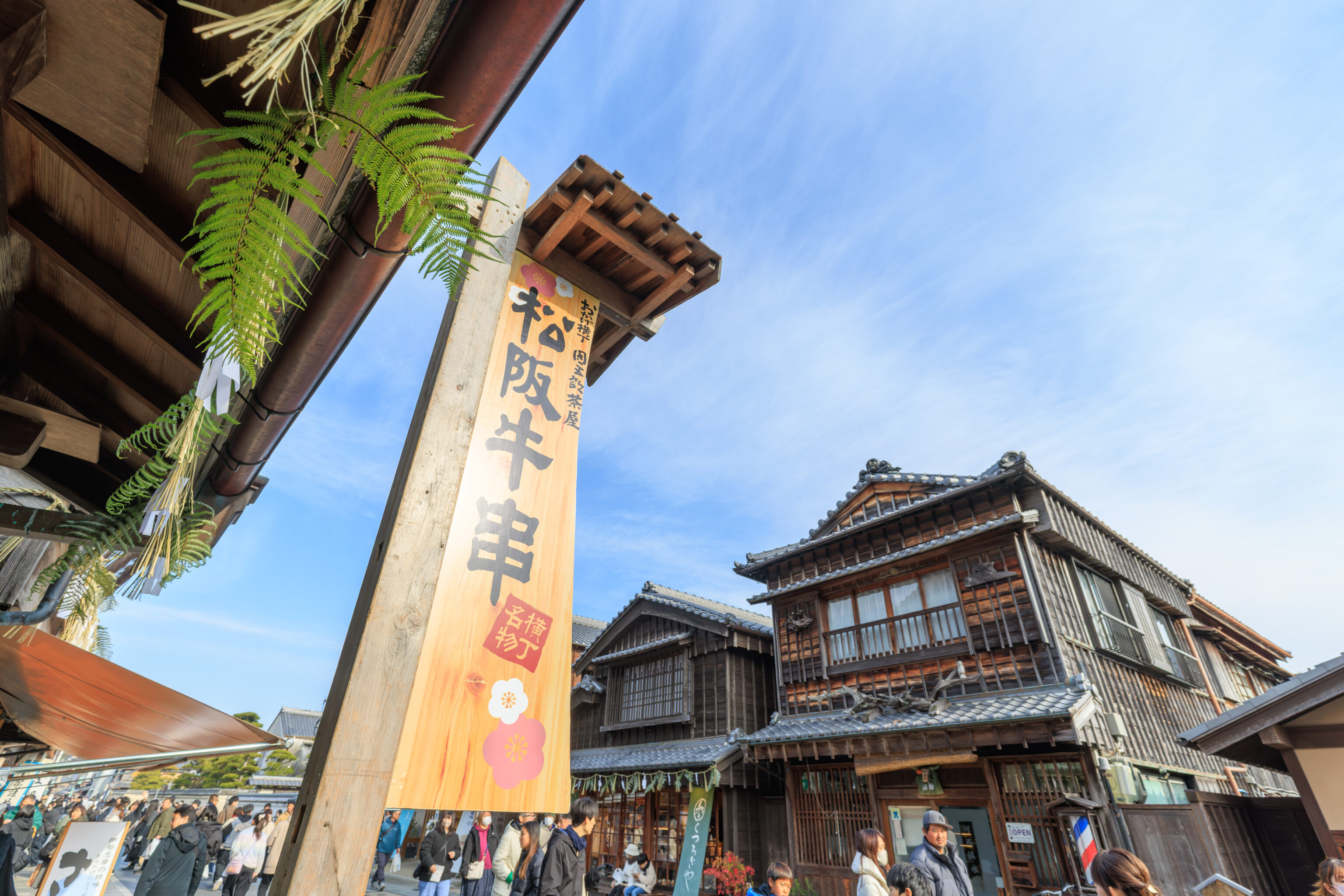
We decided to get our first snack of the day, a skewer of Matsusaka beef, one of Japan’s top named regional brands. It originates from Matsusaka in Mie Prefecture, just a few miles west of Ise, which is also in Mie.
松阪牛串 Matsusaka Beef Skewers
おかげ横丁 団五郎茶屋 Okage Yokocho Dangoro Chaya
横丁名物 Yokocho Specialty
– Text from a the sign in the photograph above, transcribed using Google Gemini and translated using Google Translate.
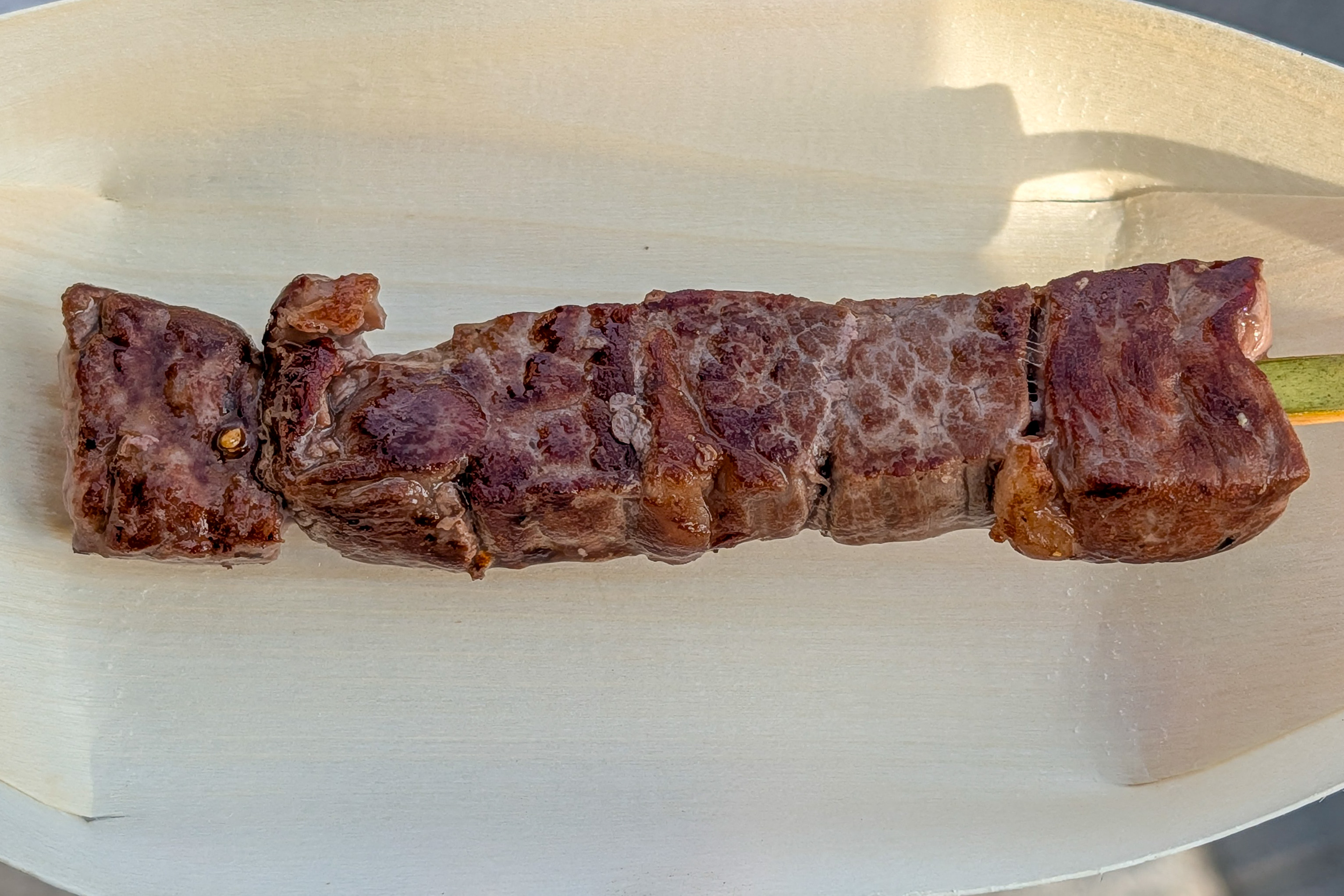
The grilled beef tasted excellent, although it was ungraded and a bit tough. The vendor, Dangoro Chaya, seems to have a larger tea shop in the Okage Yokocho, which is one of the side streets along the main shopping street that we were walking along.
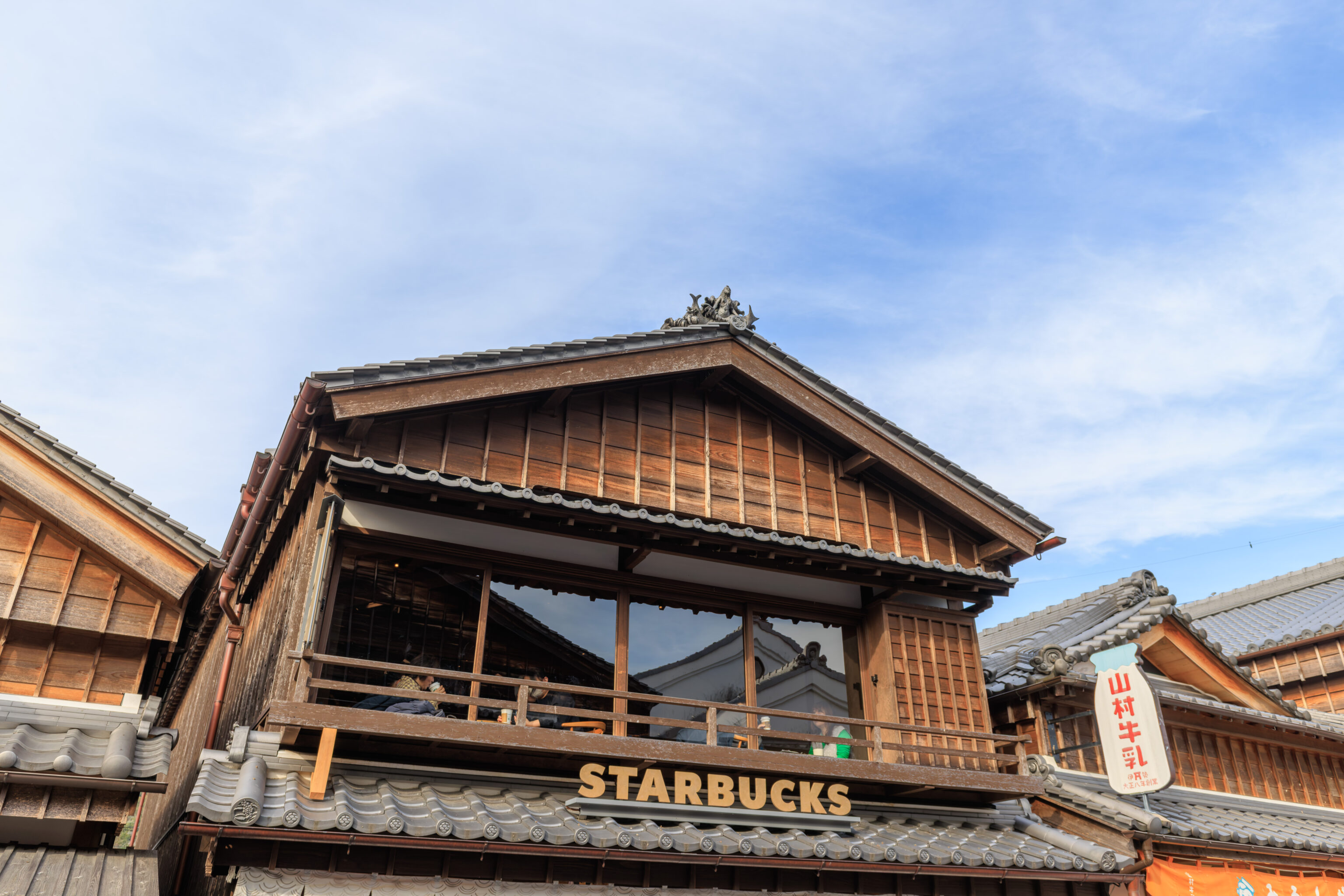
We walked by a Starbucks with a historic appearance.
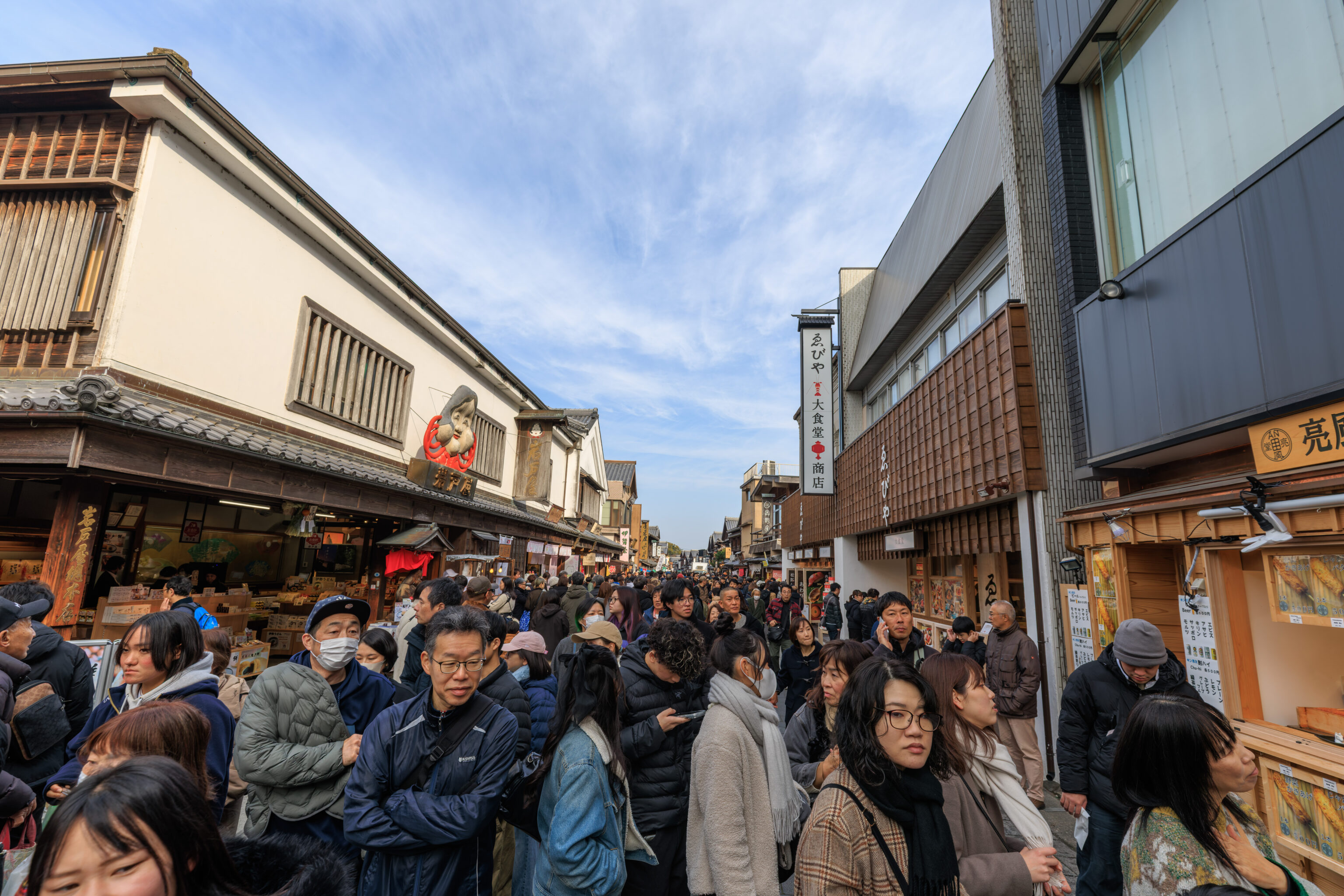
It started to get super busy as we got closer to Ise Jingu!
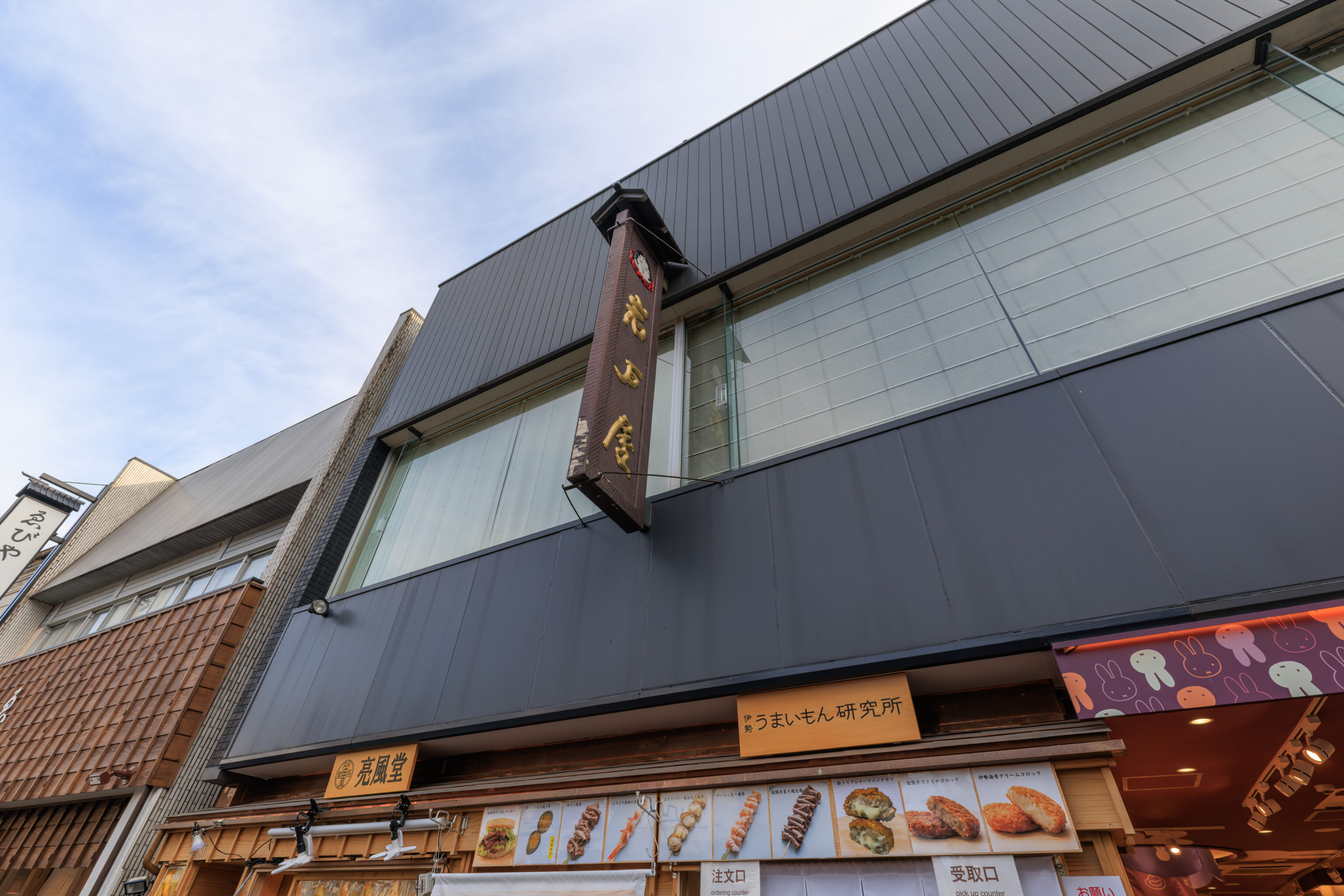
We decided to get a snack from this shop, 岩戸屋 Iwatoya.
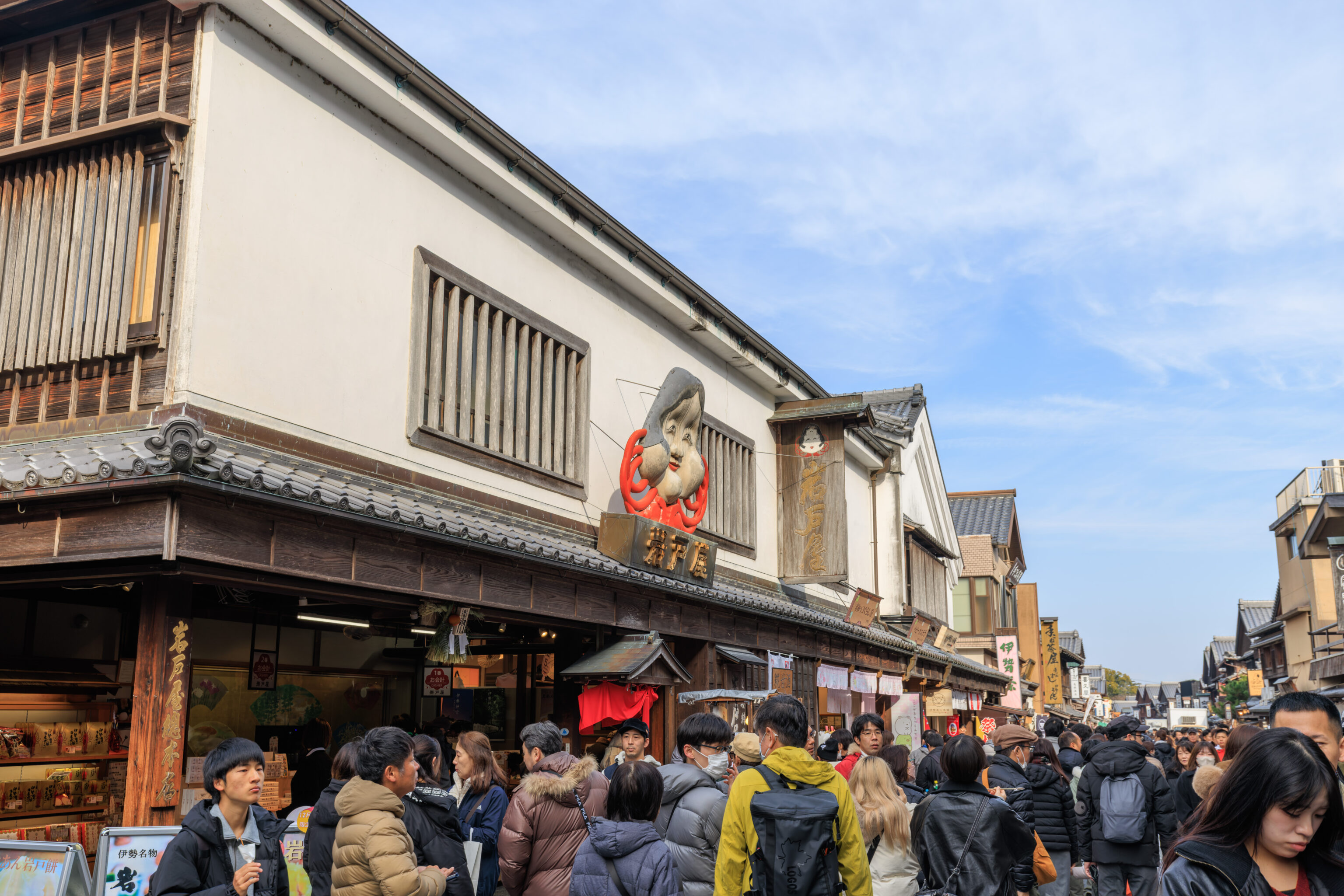
This was one of the bigger shops as they had more than one building.
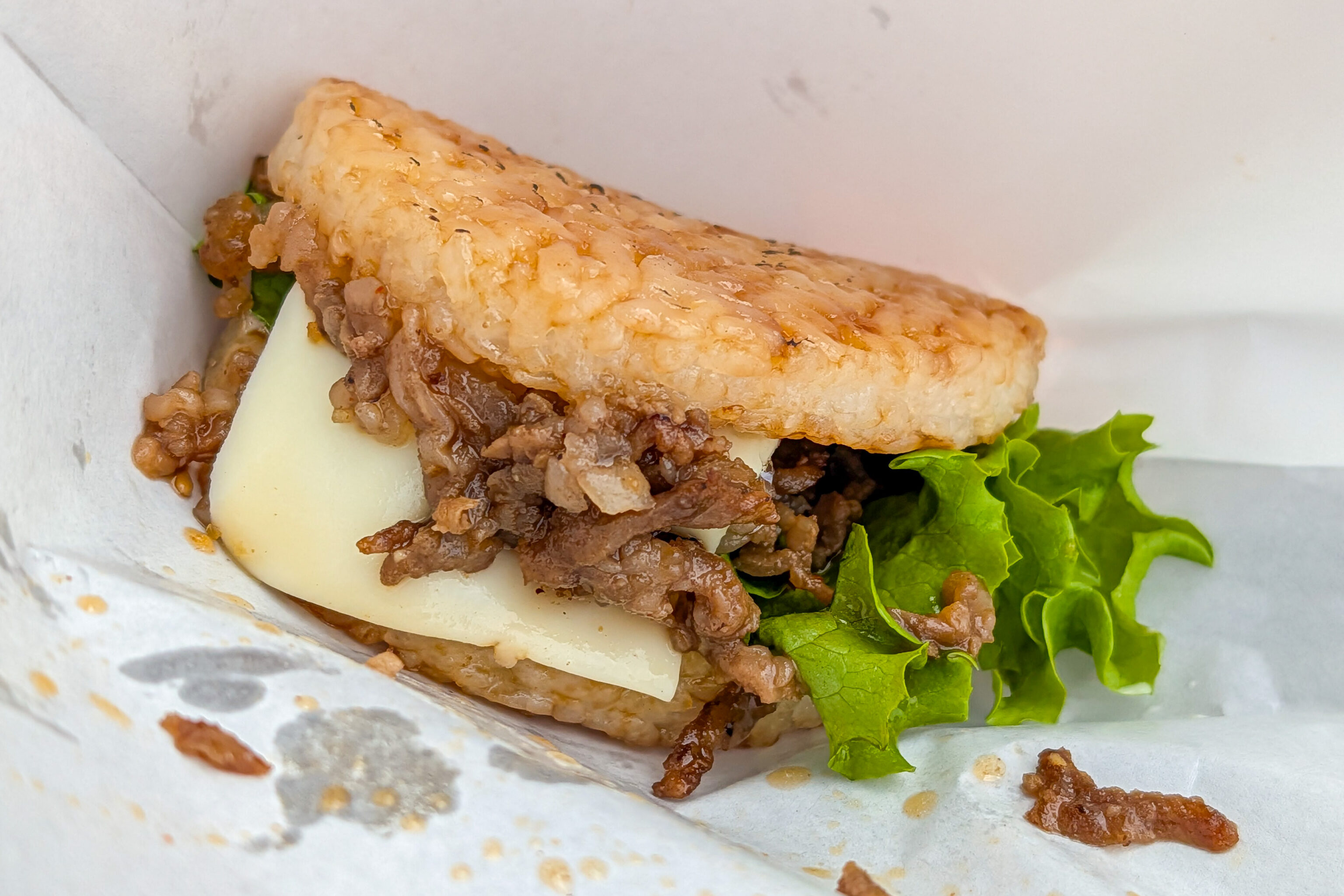
We got a Matsusaka rice burger, which was excellent though tiny.
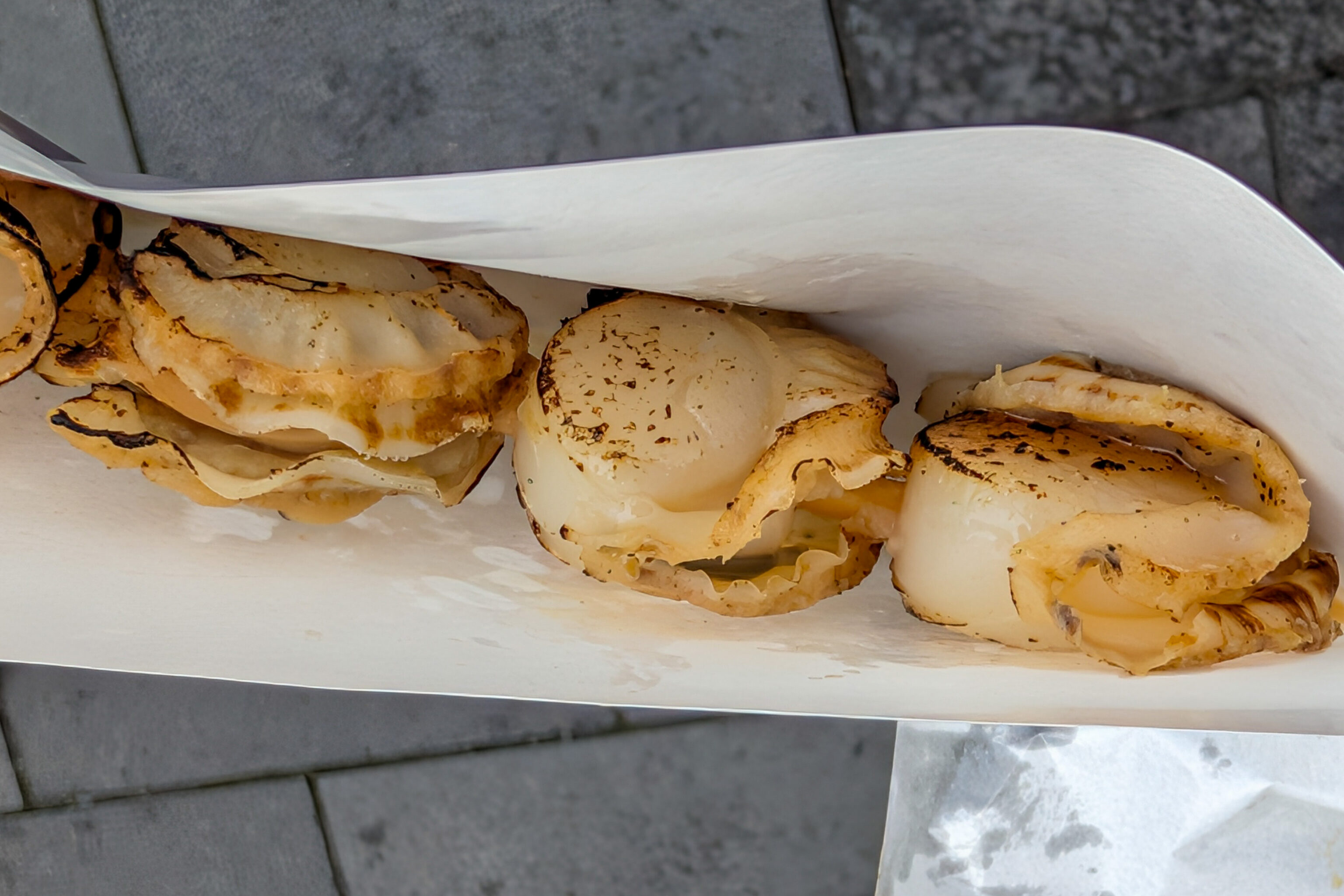
We also got a skewer of scallops. They were sweet and excellent.
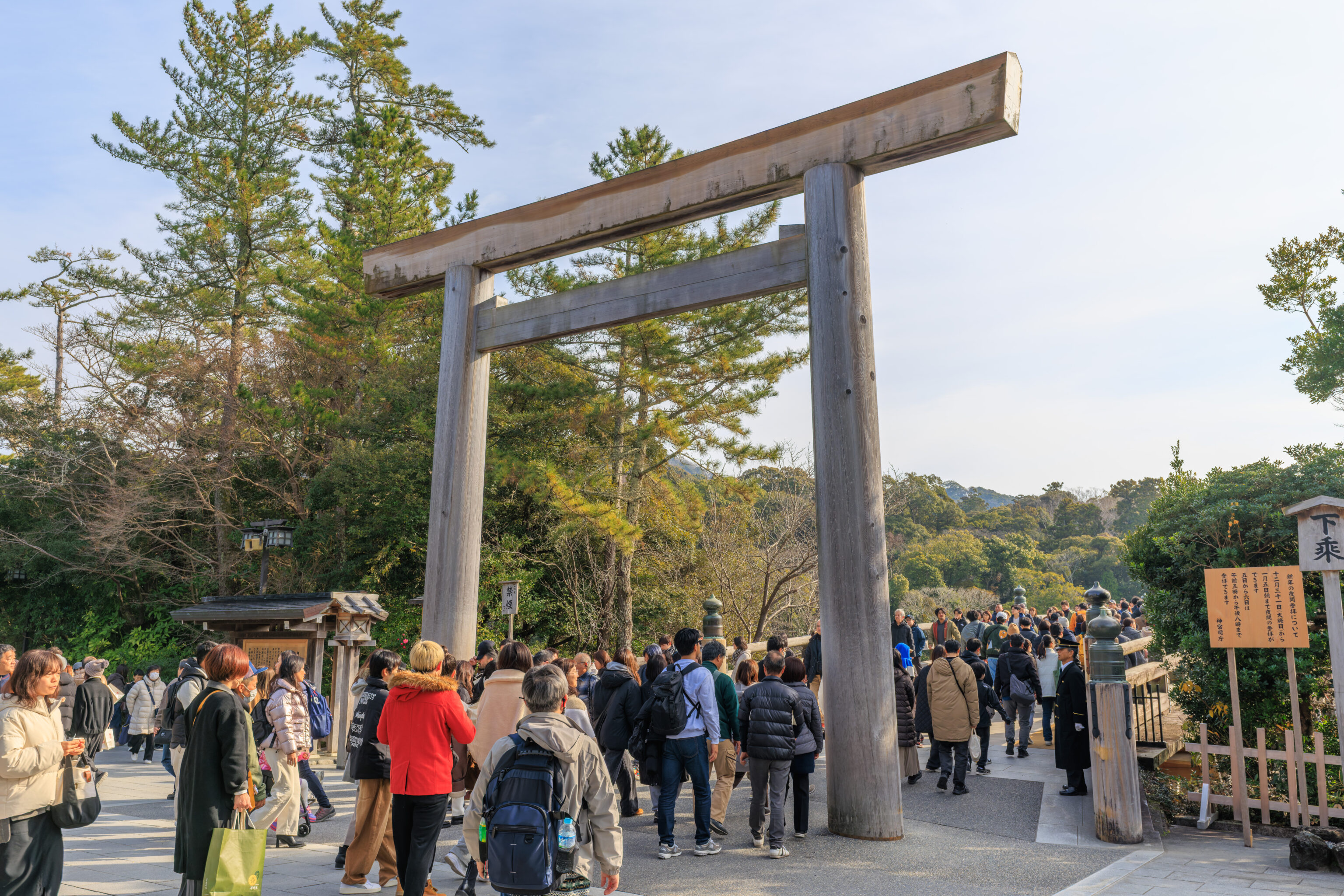
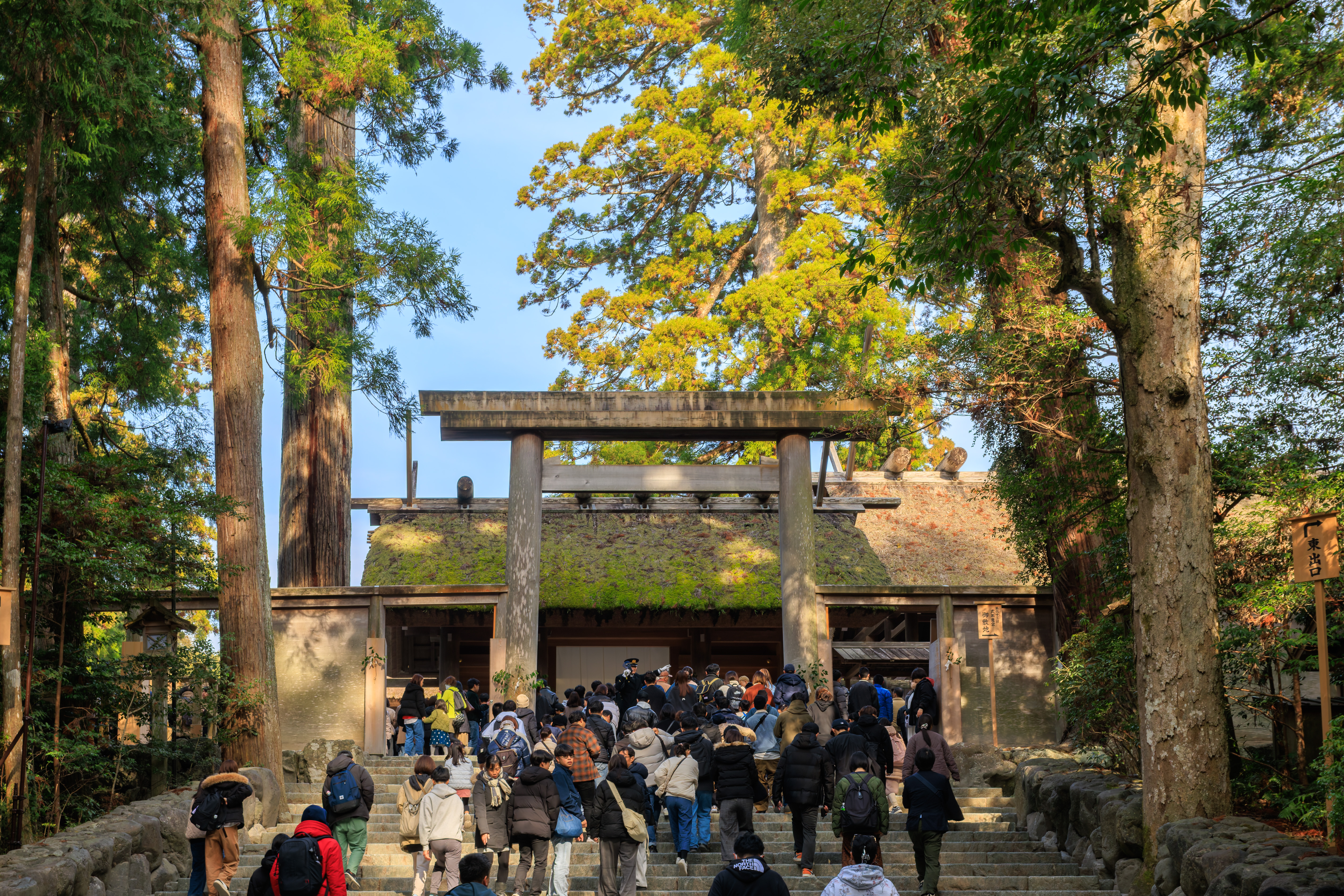
We then passed through a torii to enter Ise Jingu Naiku. The sign on the right indicates the times when the shrine is open during the upcoming Japanese New Year holiday.
Regarding nighttime visits to the temple during the New Year period:

From December 31st (New Year's Eve)
Nighttime visits are permitted until the morning of January 5th.

From the 5th to the 6th
Visits are permitted from 5:00 AM to 8:00 PM.

Jingu Administration Office
– Text from the sign to the right of the torii, transcribed using Google Gemini and translated using Google Translate.
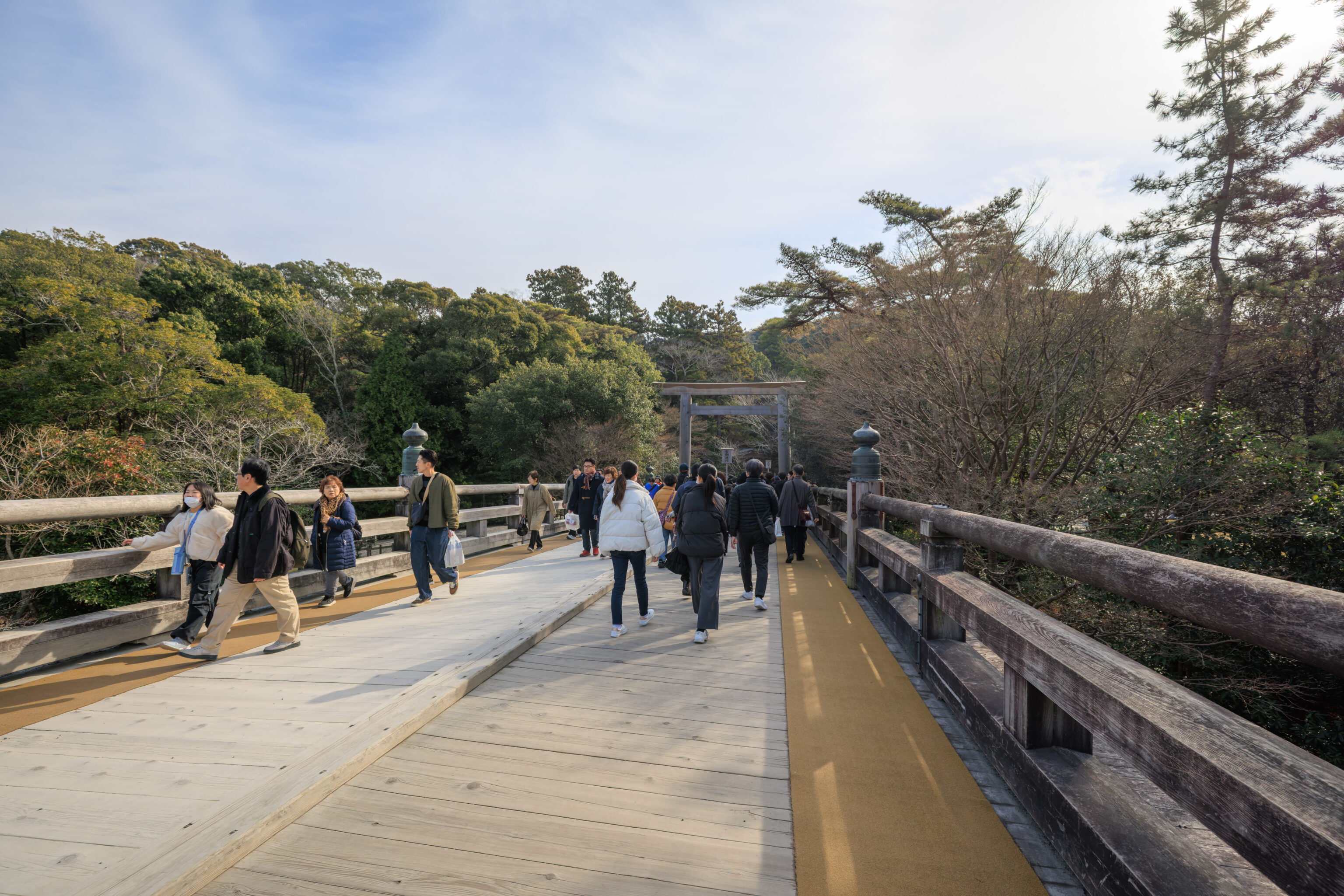
There is a long wooden bridge just beyond the torii. This bridge crosses over the 五十鈴川 Isuzu-gawa. The Naiku is on the east side of this river.
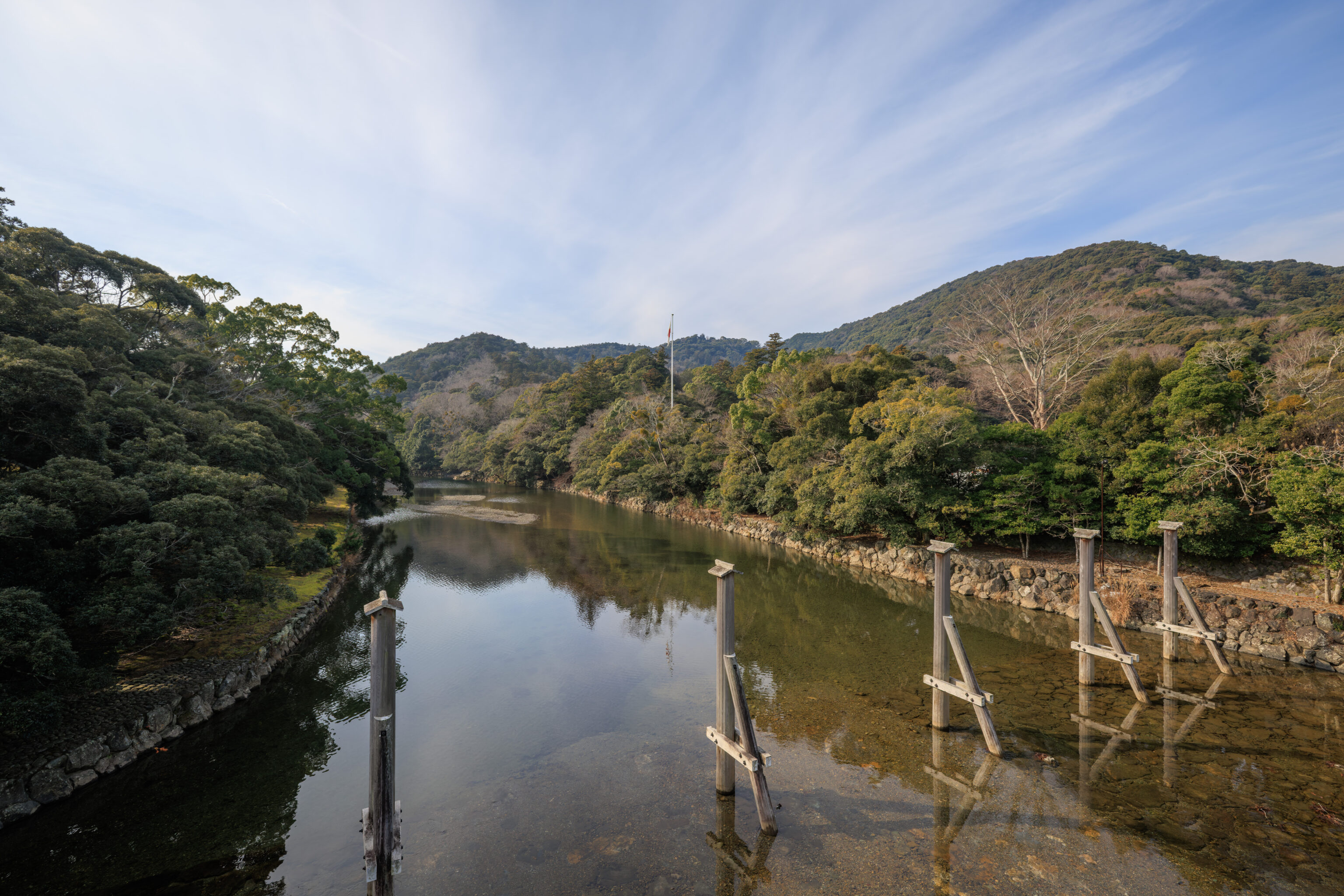
Looking to the south, we saw a very large Japanese flag on the west side of the river along with what looked like regularly spaced columns in the water.
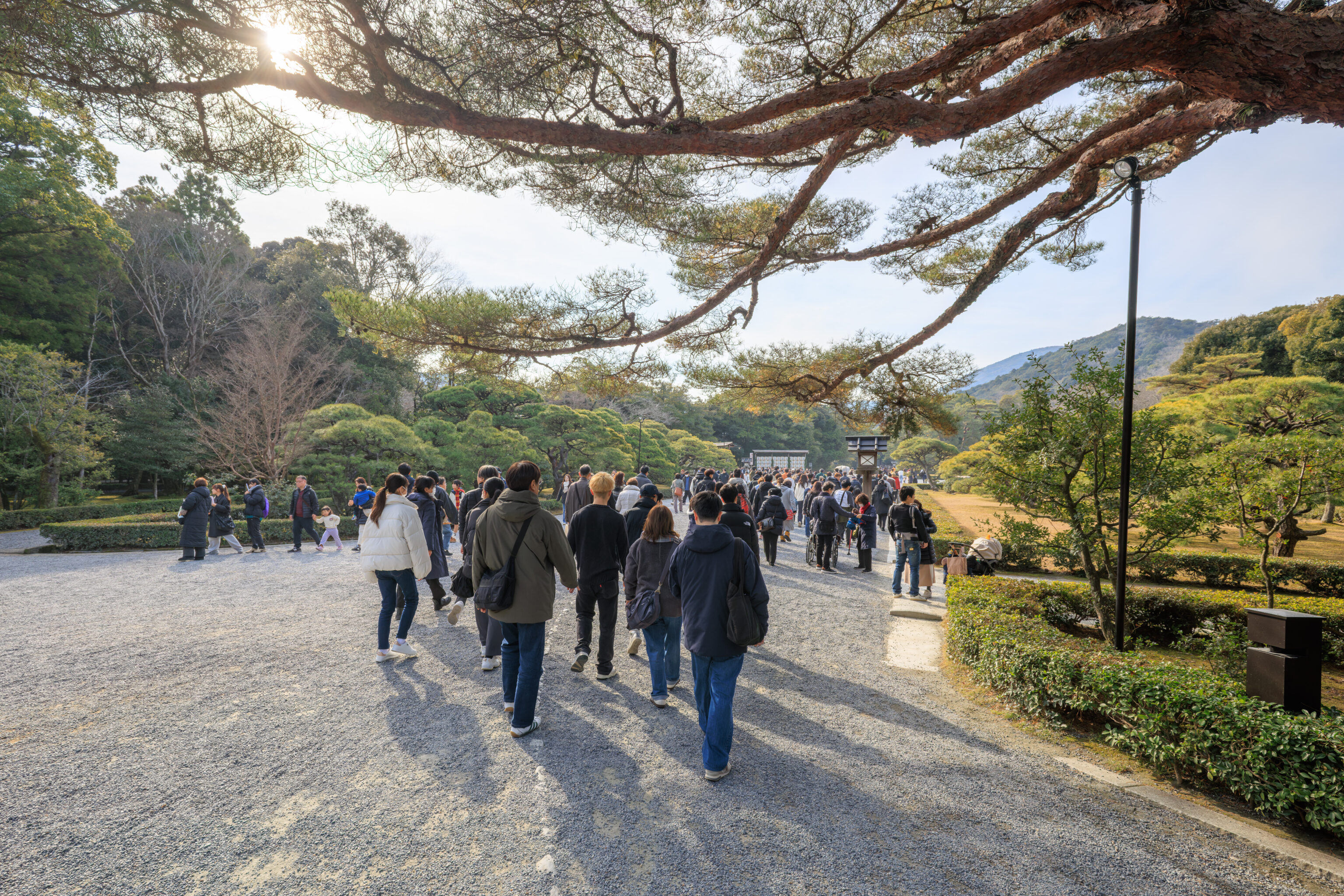
We were actually pretty surprised at how busy it is. New Year’s Eve is typically a particularly busy time at large shrines and temples due to the Japanese tradition of 初詣 hatsumode, the first shrine or temple visit of the year. But that’s not until tomorrow evening!
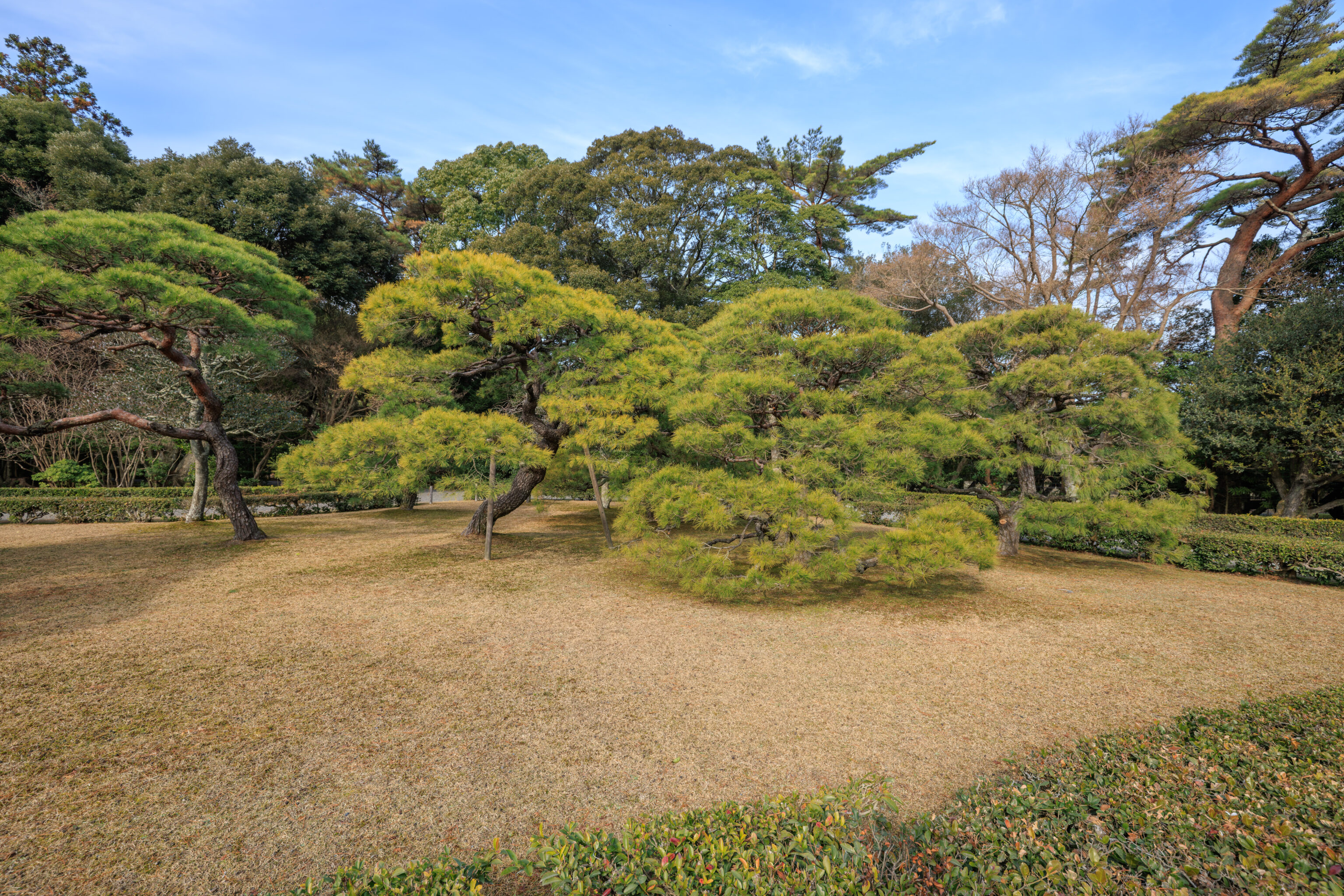
The area to our right, or west, seemed to be like a garden area.
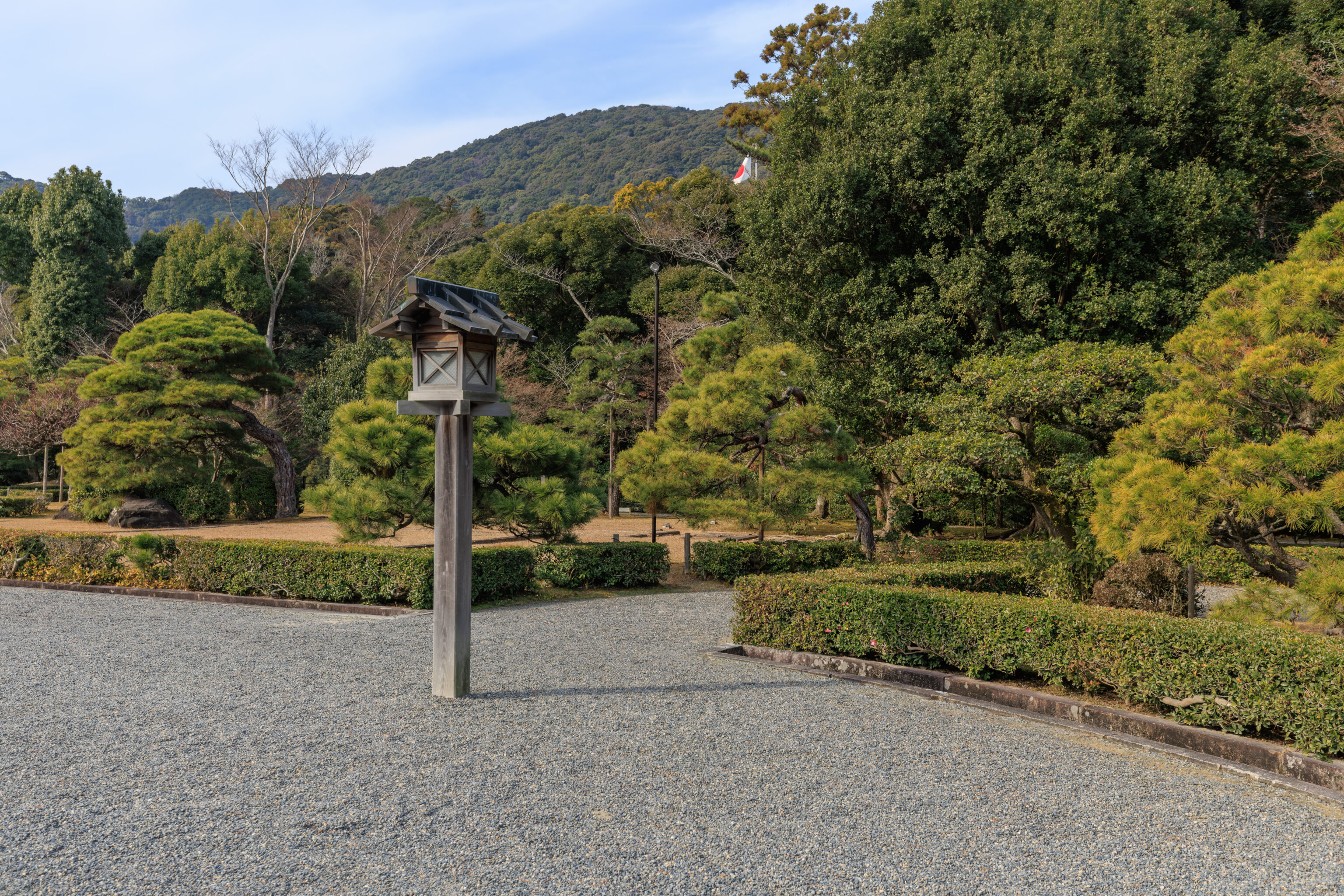
There was a lantern just kind of near the edge of the extremely wide path that we were walking along.
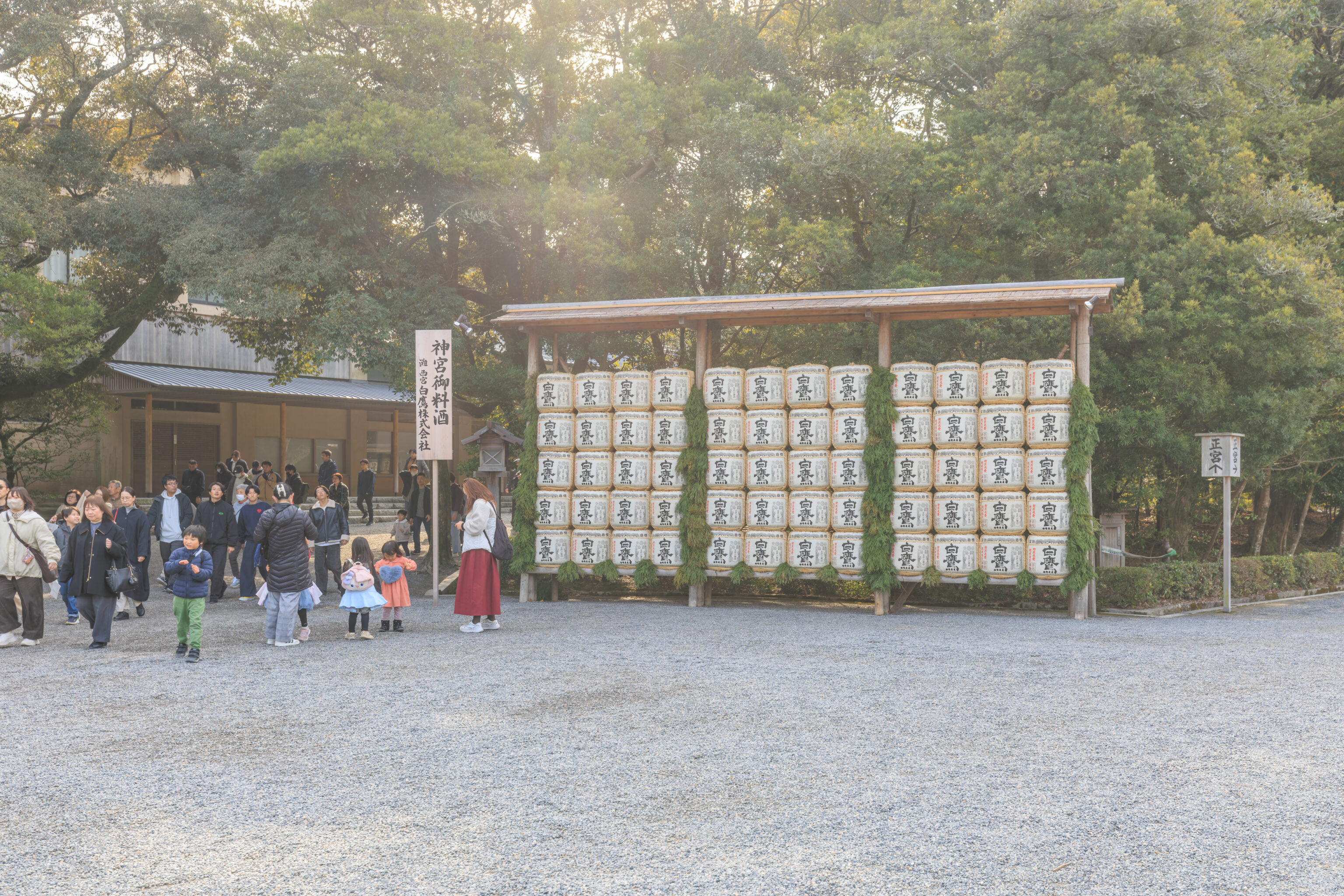
Sake is often donated to shrines with decorative sake barrels displayed like this. But, this is kind of a special case:
神宮御料酒 Ise Jingu Imperial Sake
灘 西宮 白鷹株式会社 Nada Nishinomiya Hakutaka Co., Ltd.
– Text from the sign to the left of the sake barrels, transcribed using Google Gemini and translated using Google Translate.
Assuming our understanding is correct, this is the only sake that is considered 御料酒 goryo sake (imperial sake) and the only one offered to the kami at Ise Jingu.
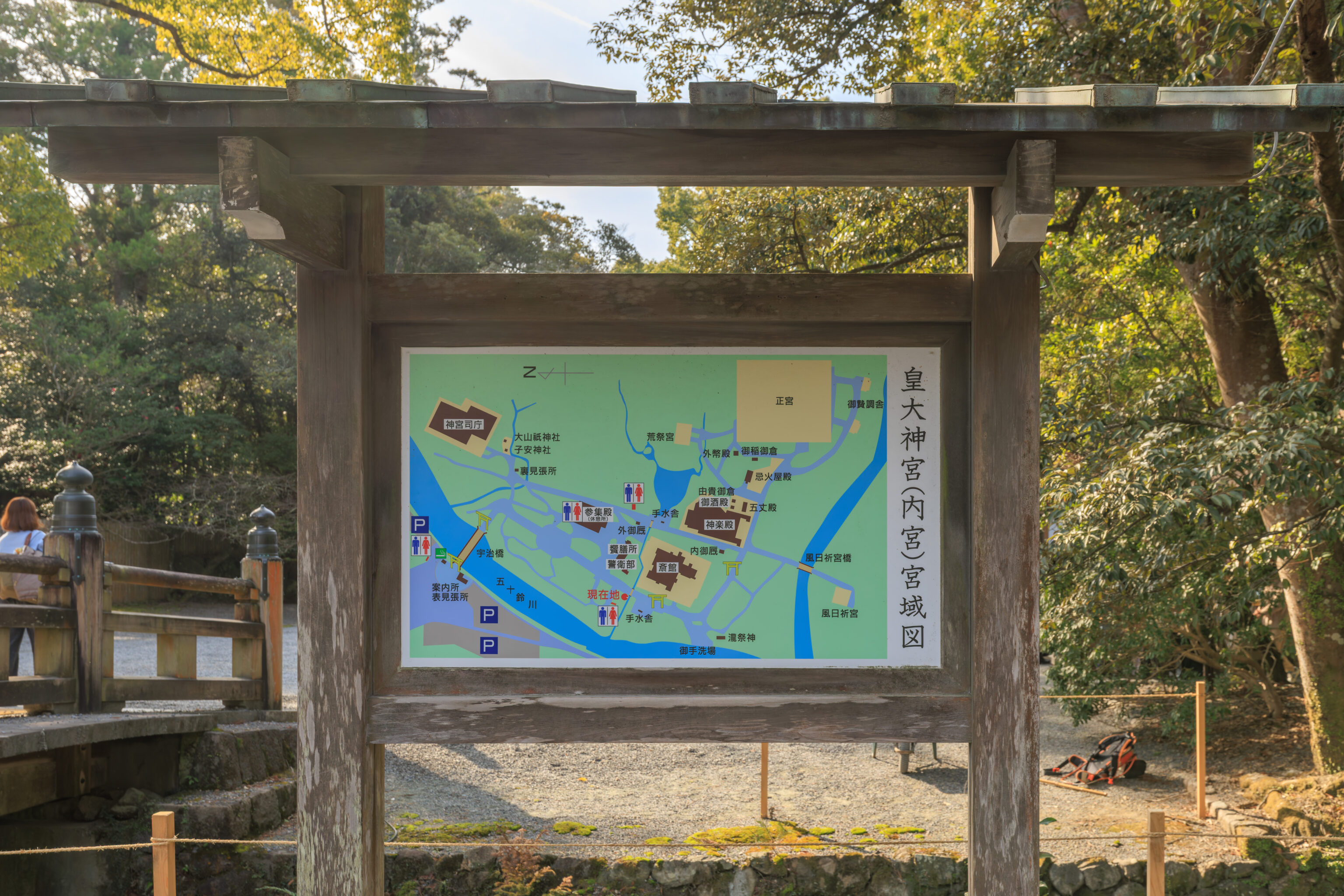
We found a sign with a map near a bridge over a stream. Our location is marked by a red dot and we arrived from the bridge on the left side of the map.
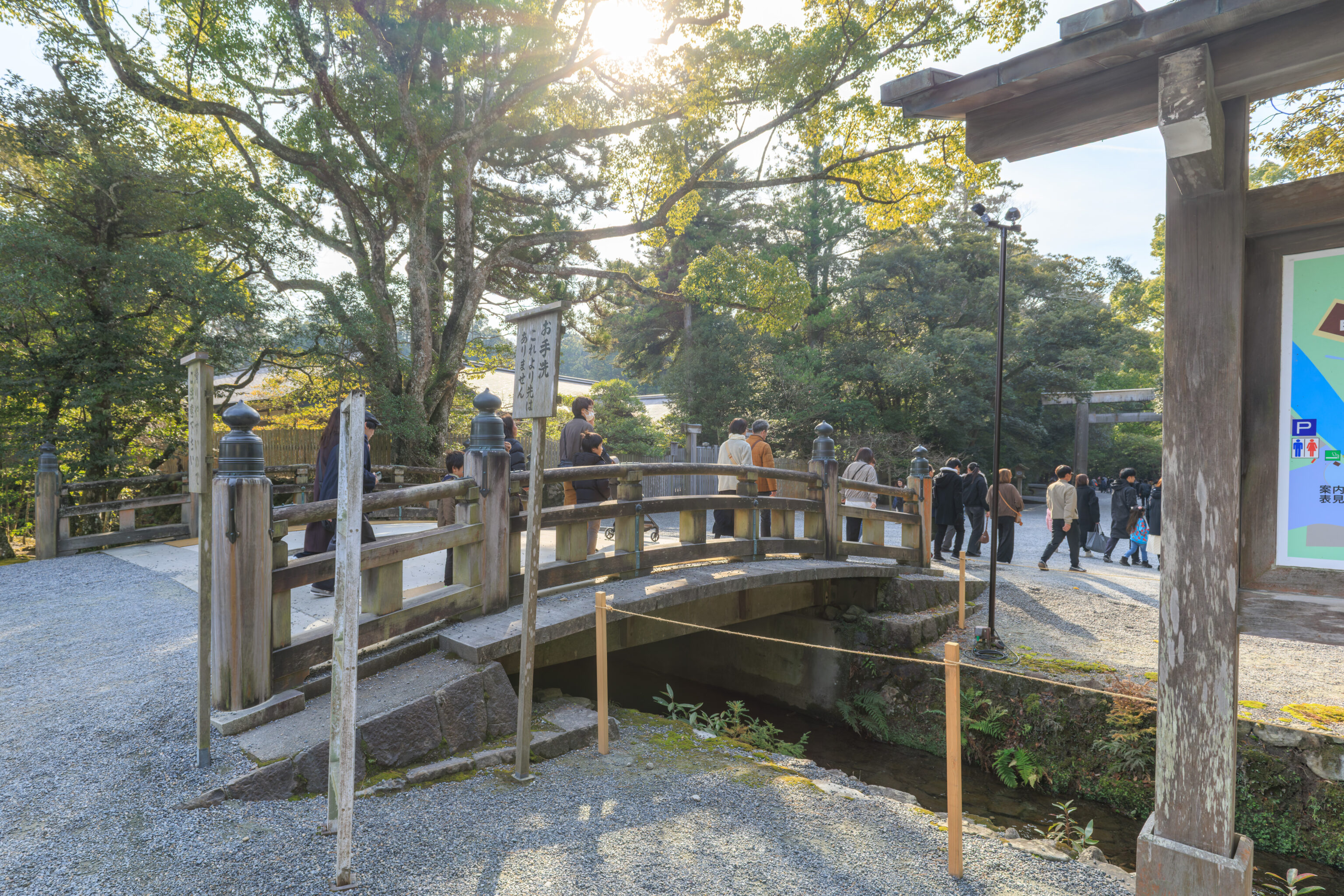
We continued on, crossing over this bridge. The sign on the right side of the bridge says that there are no more bathrooms beyond this point.
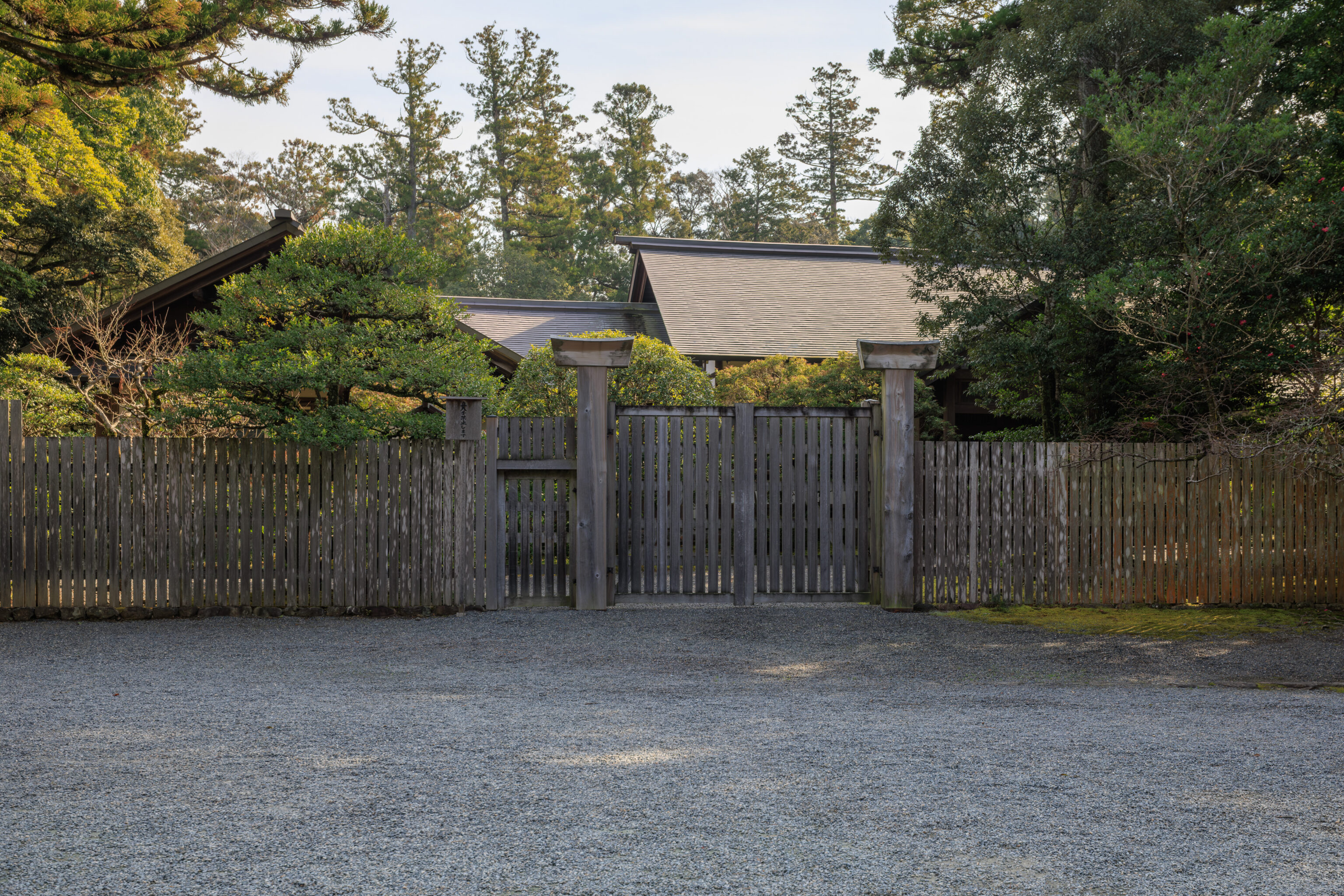
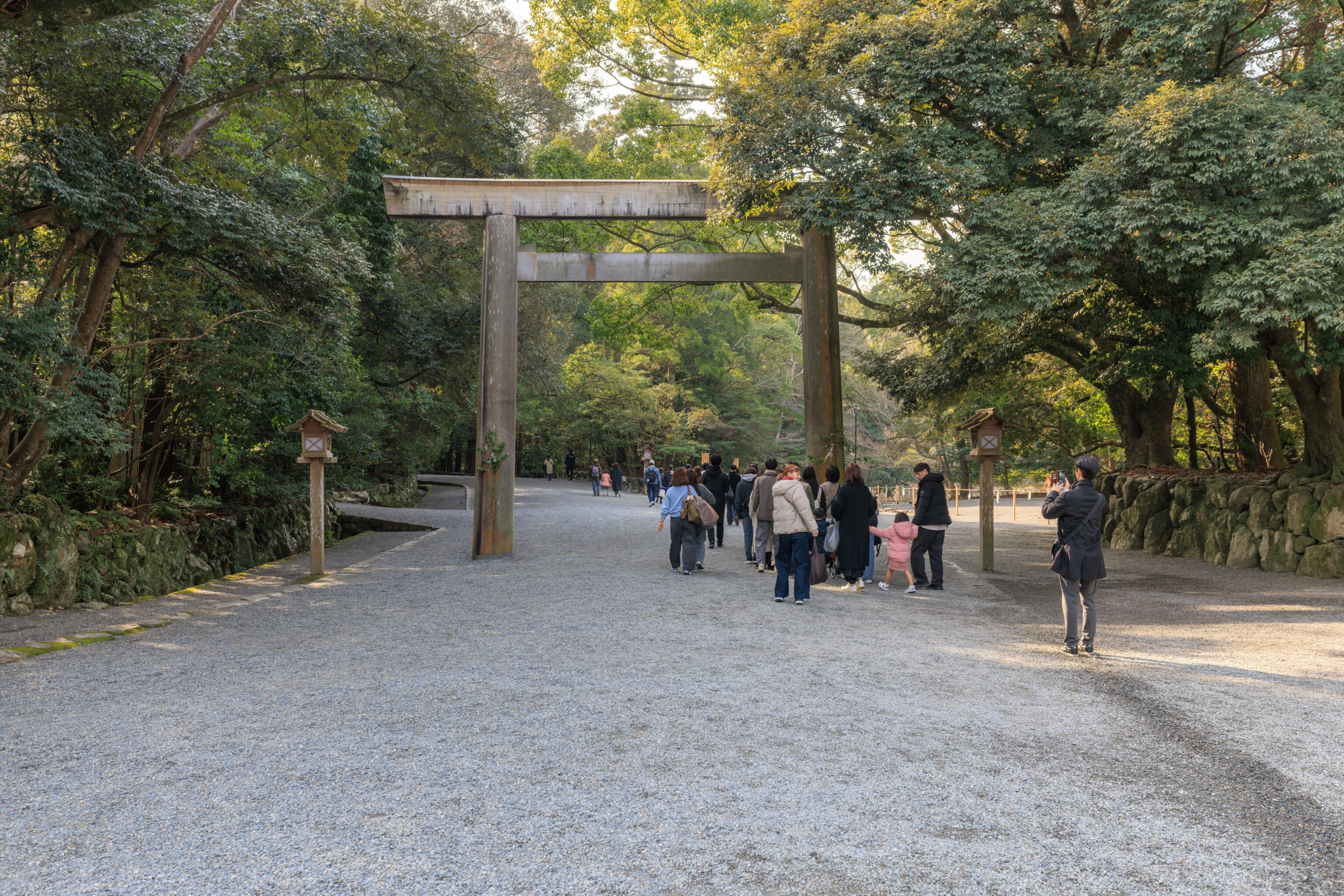
We continued walking down the wide path along with everyone else, walking under another torii.
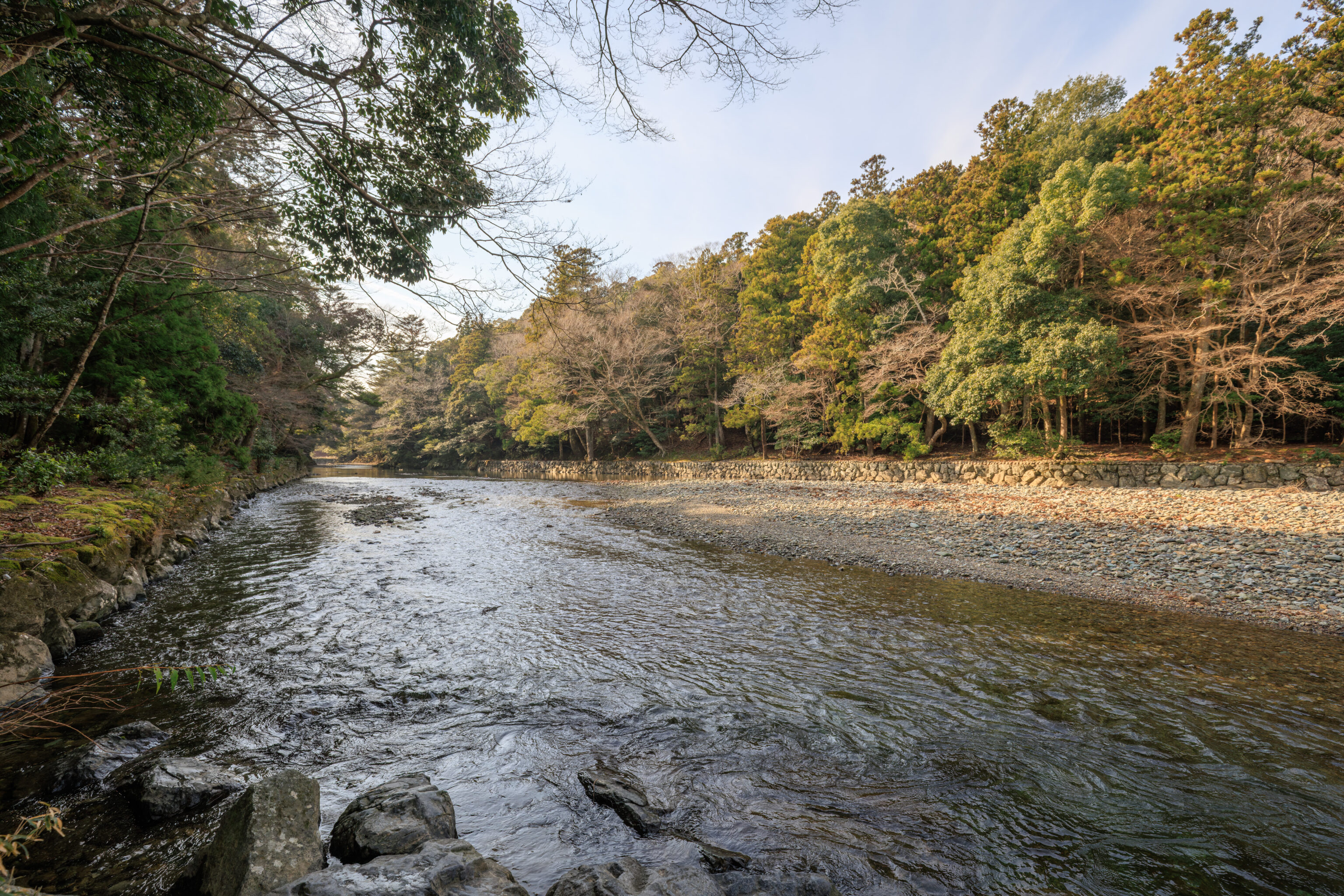
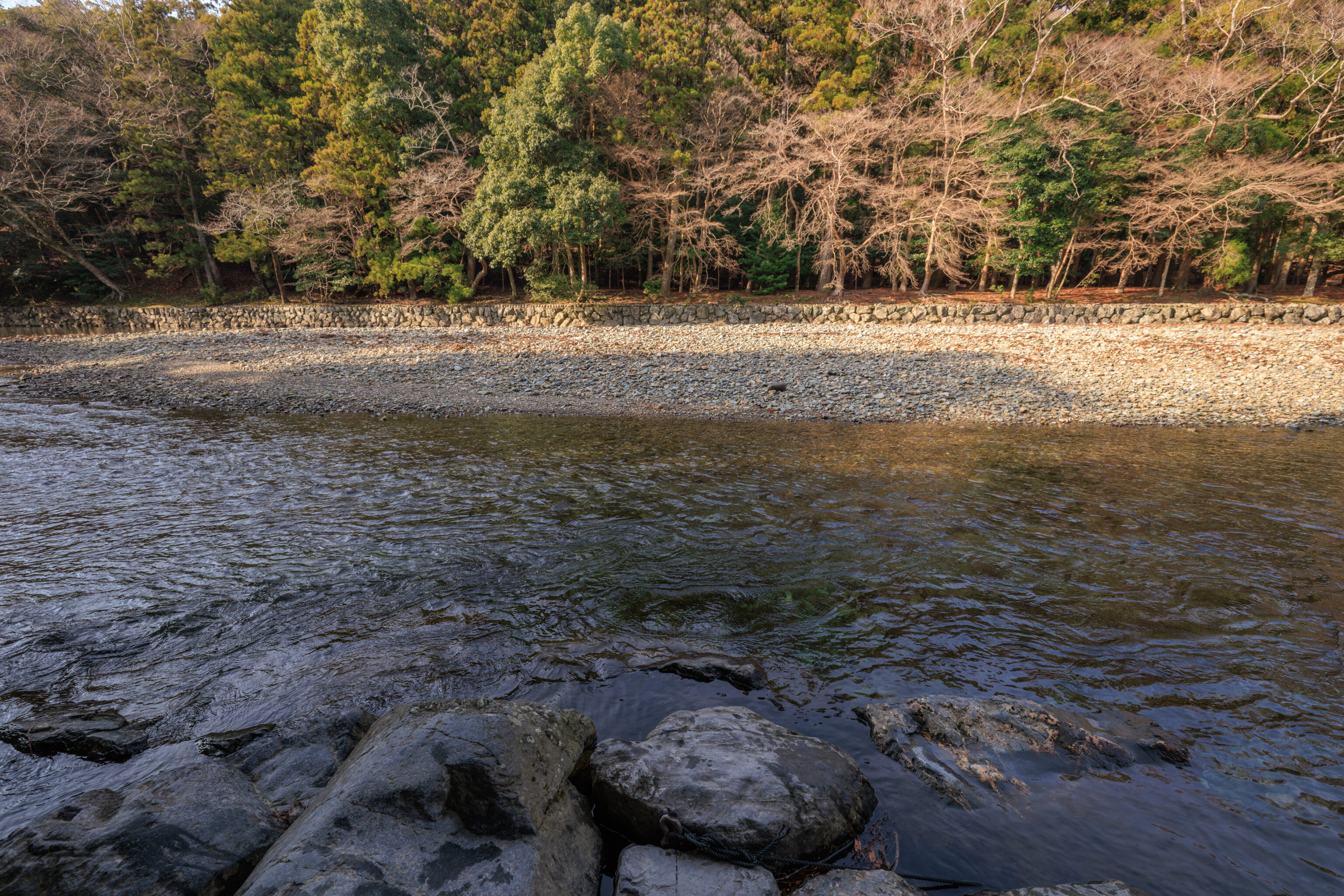
Beyond the torii, many people turned to the right so we did as well. We ended up at the edge of the Isuzu-gawa. This area was labeled on the map as a purification area.
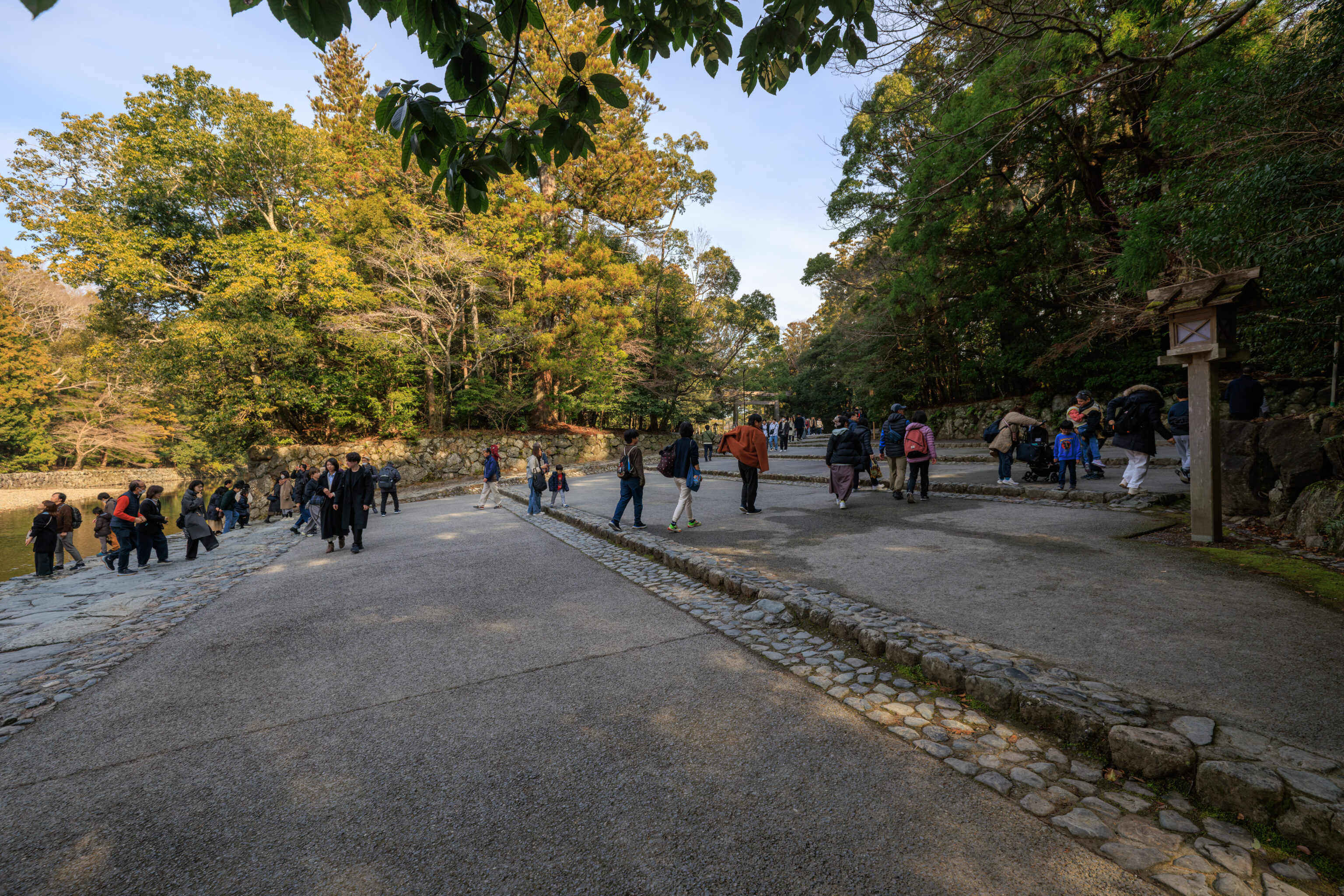
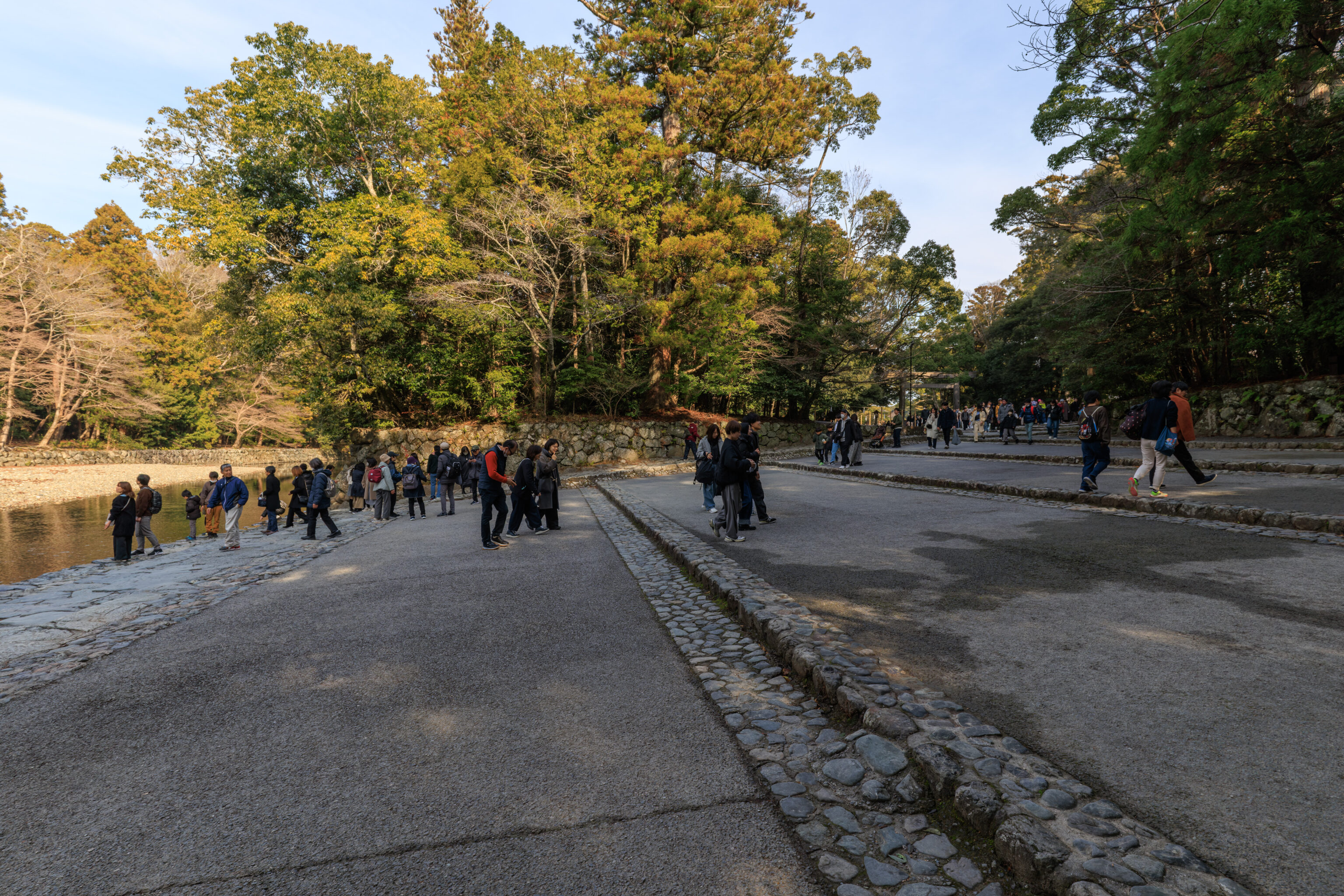
We continued on with everyone else…
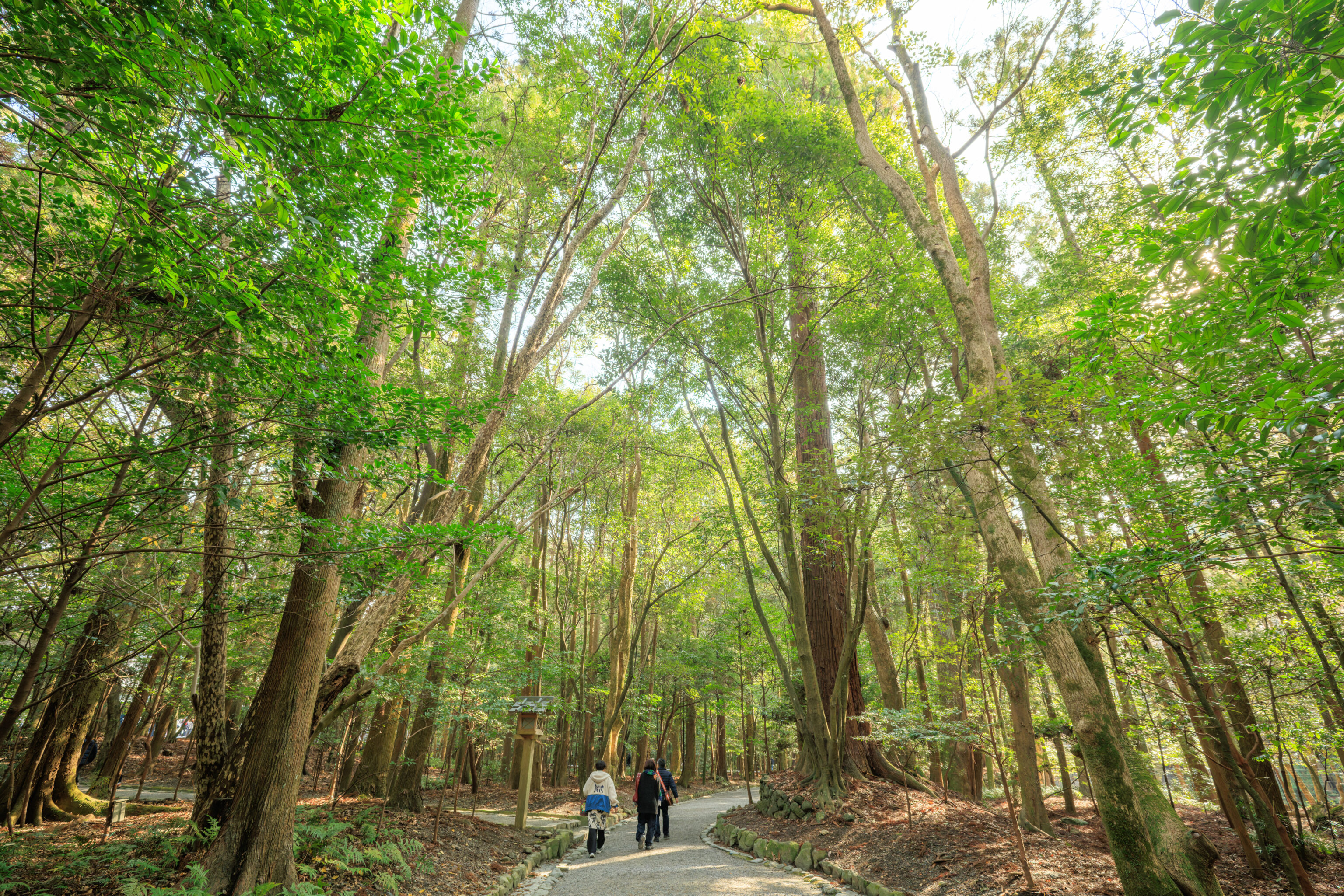
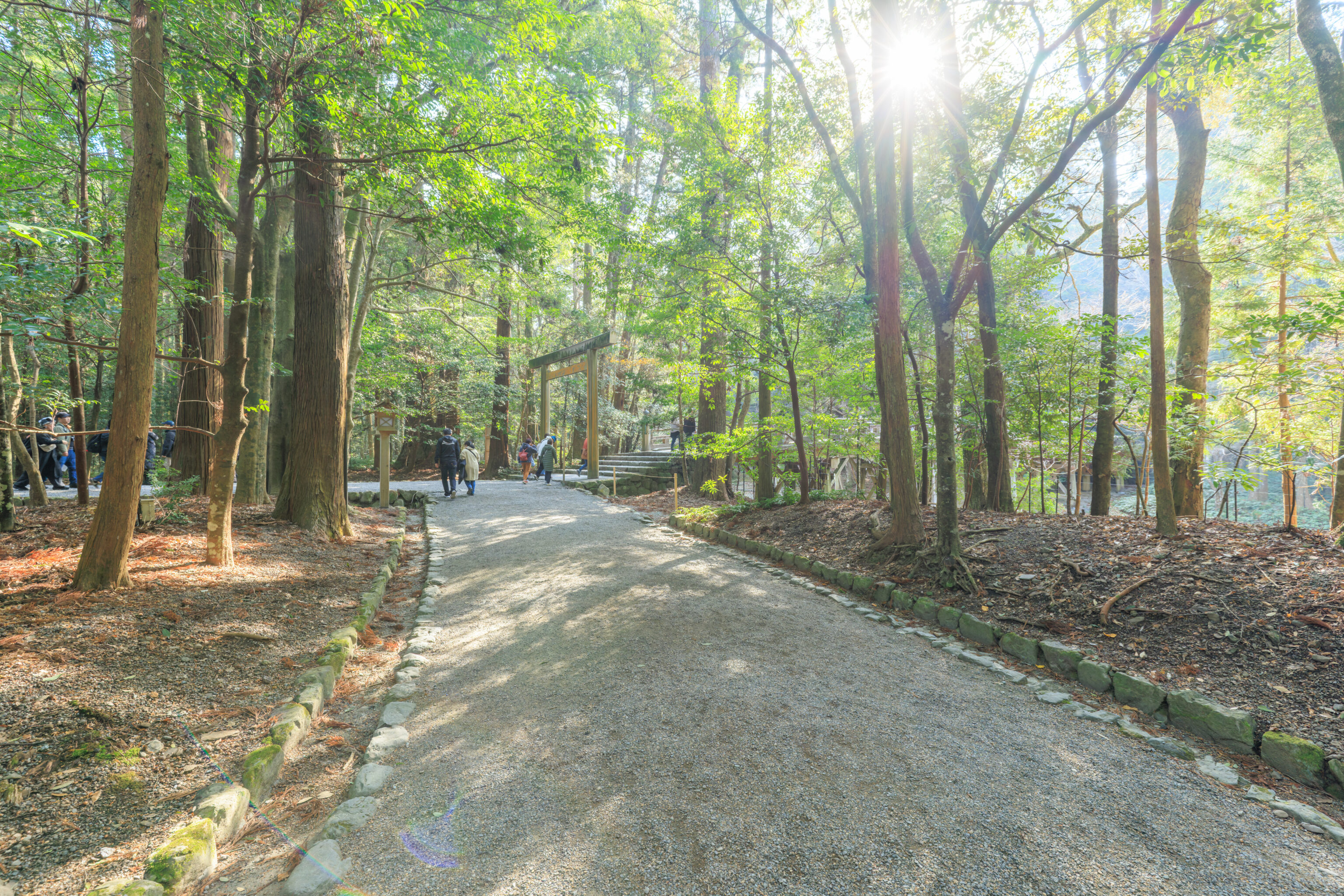
We came upon a junction. We decided to follow the path that less people were taking.
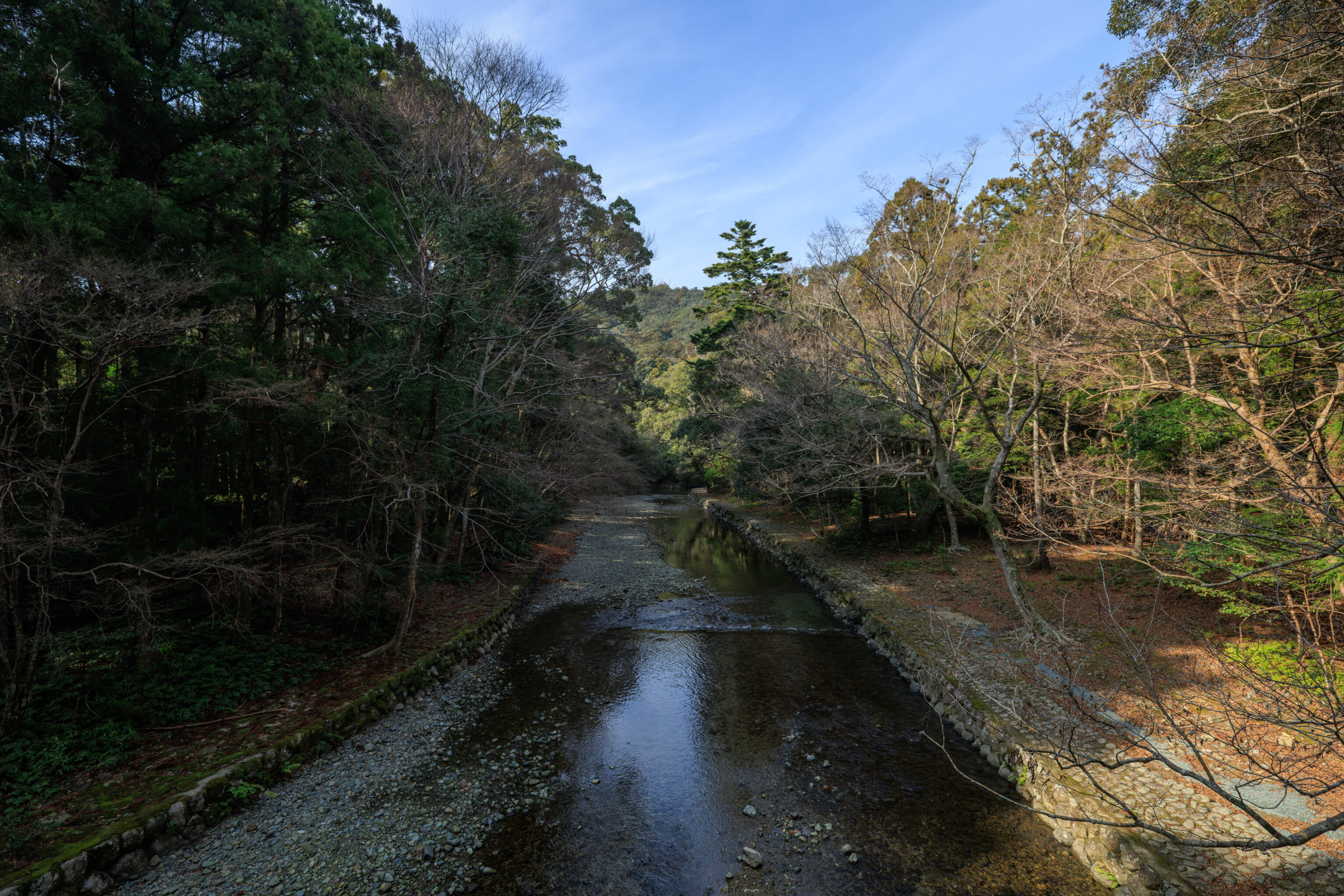
We ended up crossing over a smaller river via the 風日祈宮橋 Kazehinomiya Bridge, which was at the bottom right of the map on the sign we saw earlier.
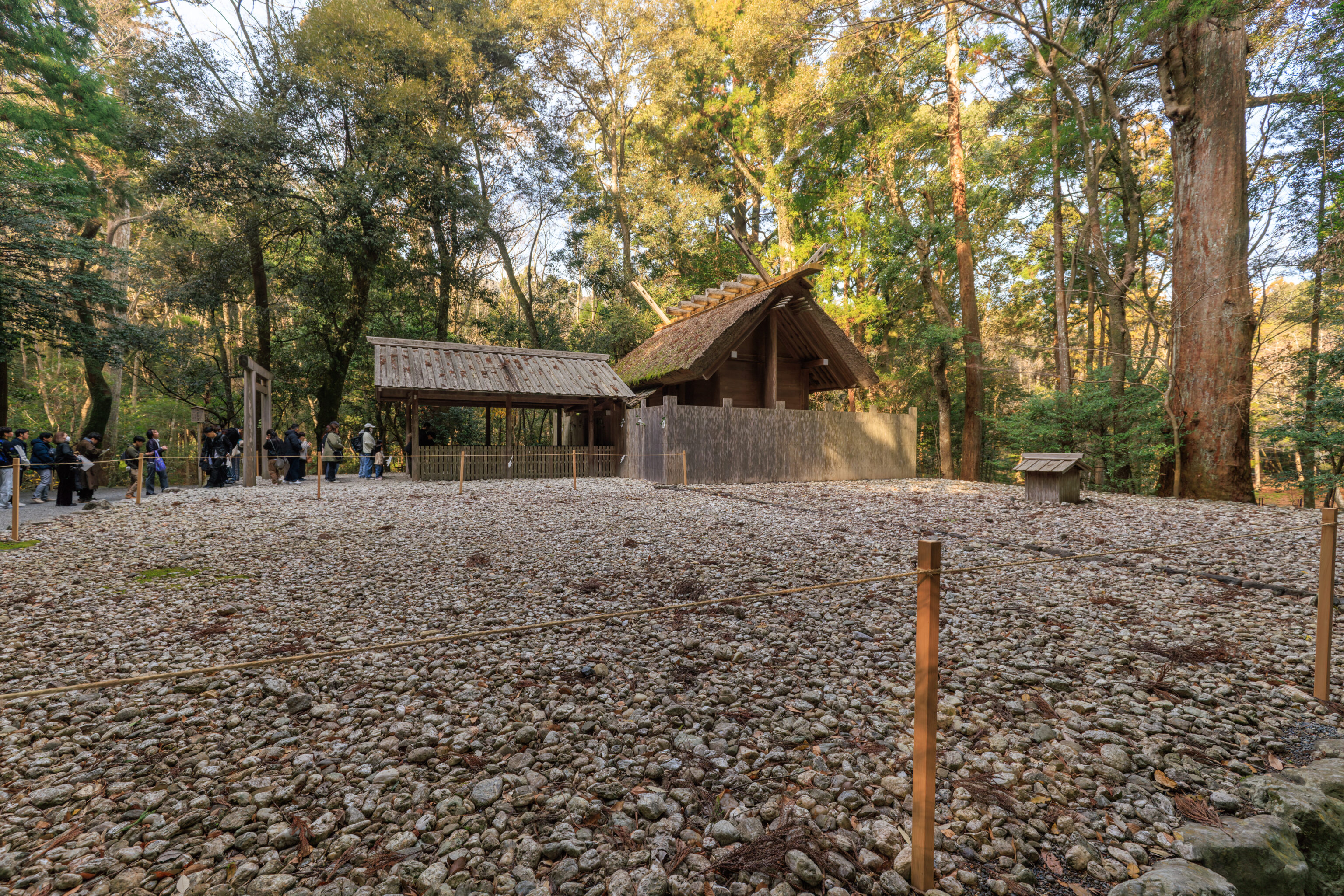
We ended up at this shrine, the 風日祈宮 Kazahinomiya. We took a look at it from afar before backtracking to continue on.
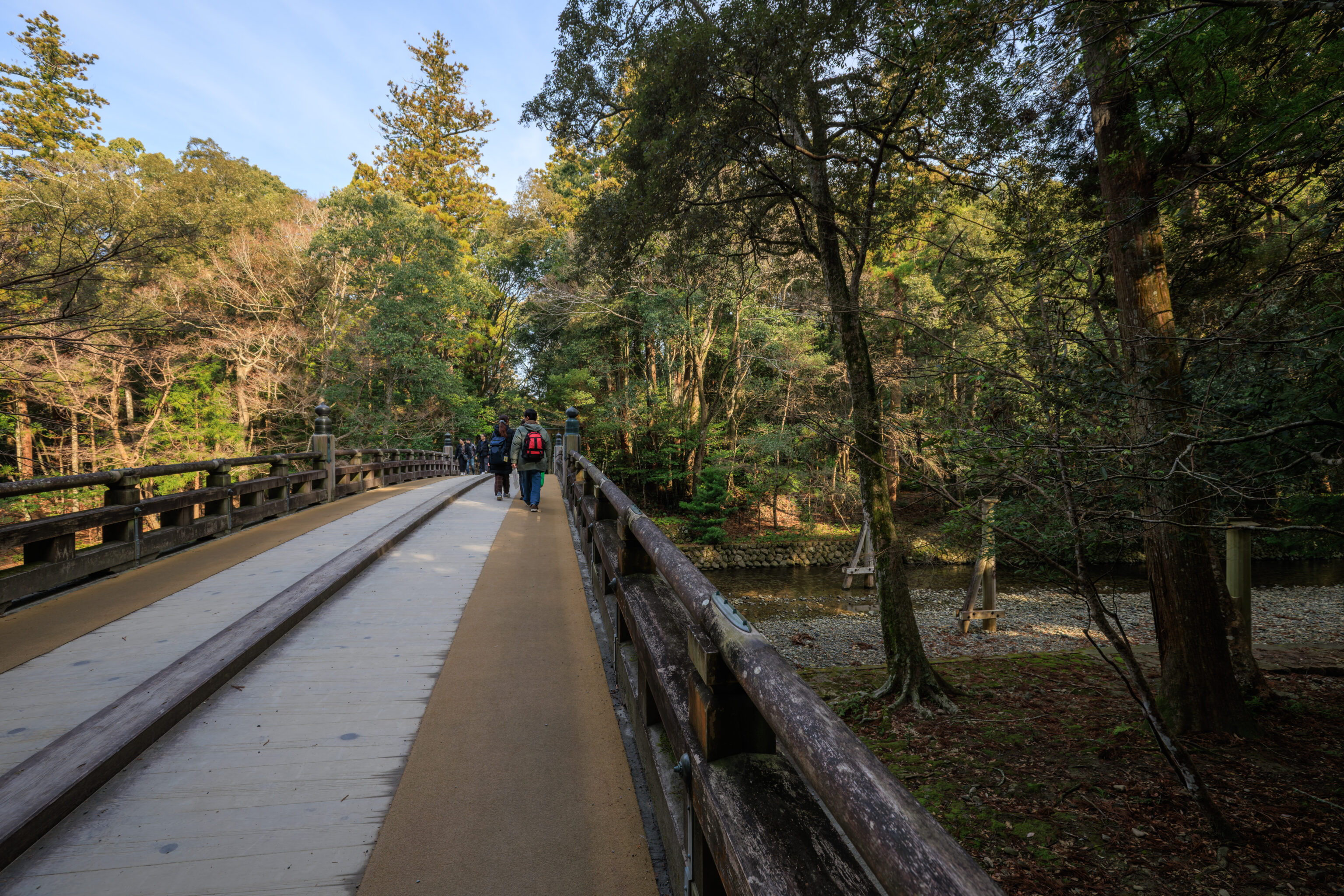
We crossed back over the Kazehinomiya Bridge.
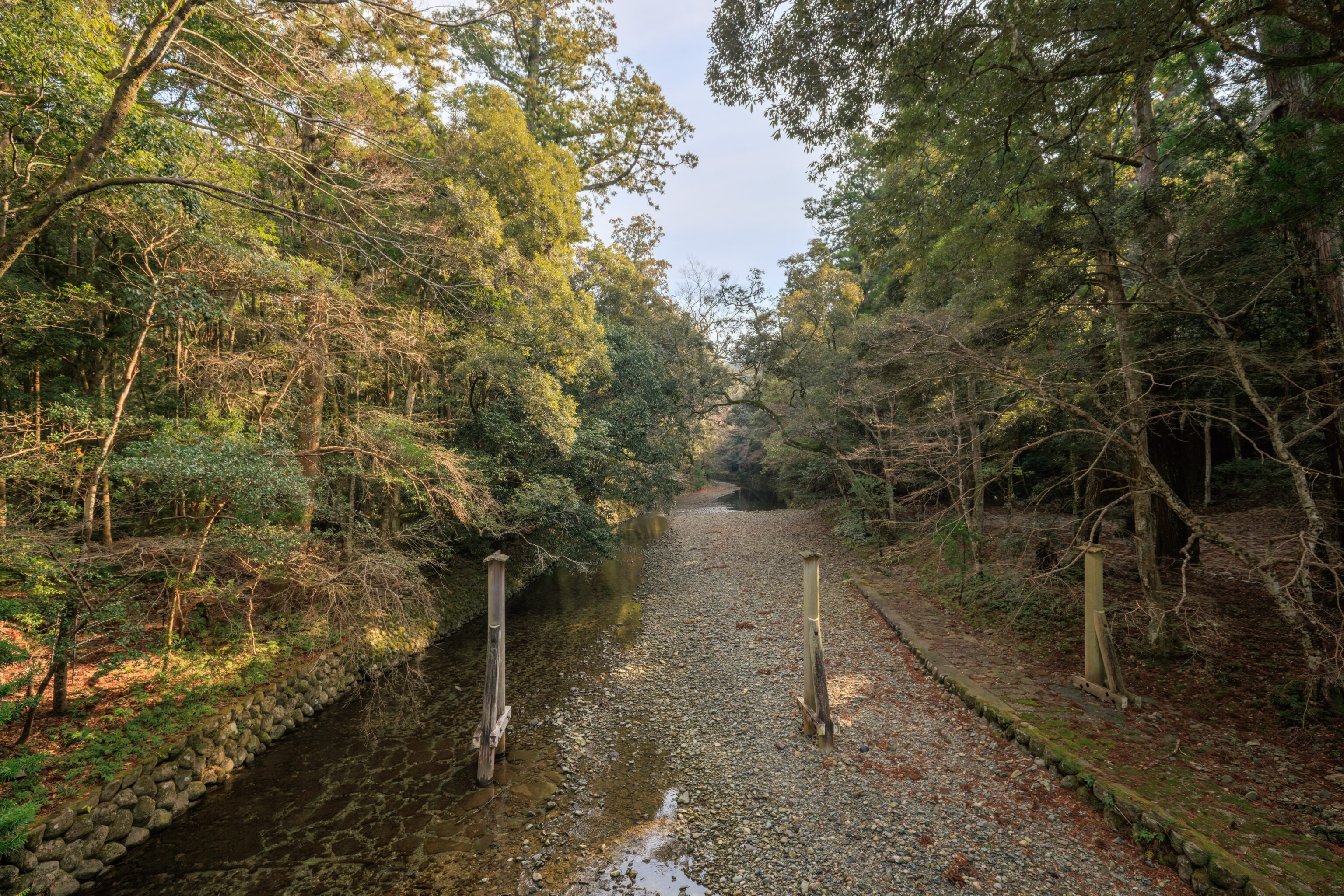
We again noticed these columns.
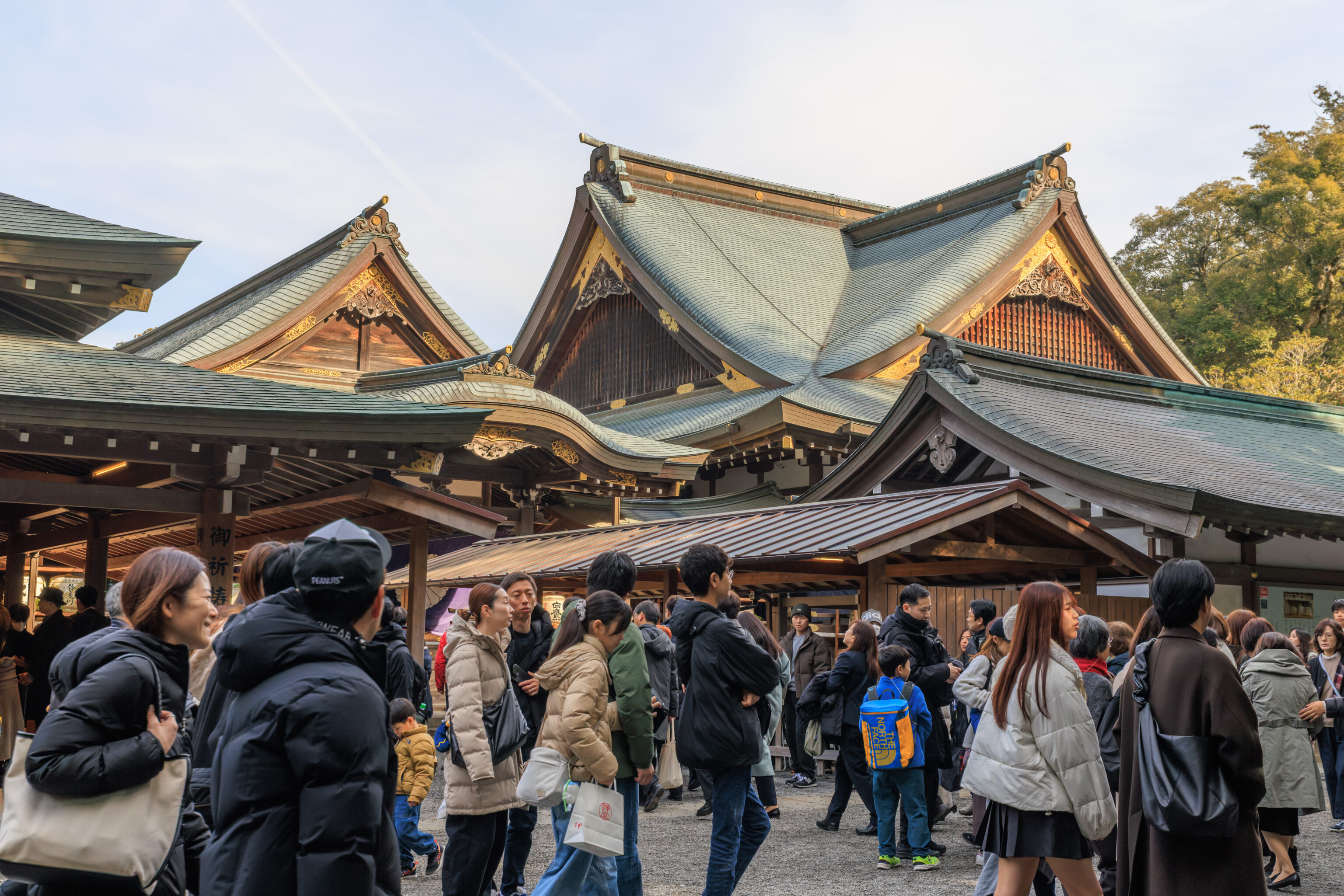
We walked straight ahead until we reached a cluster of shrine buildings. There are various shrine functions available here as well as talisman sales.
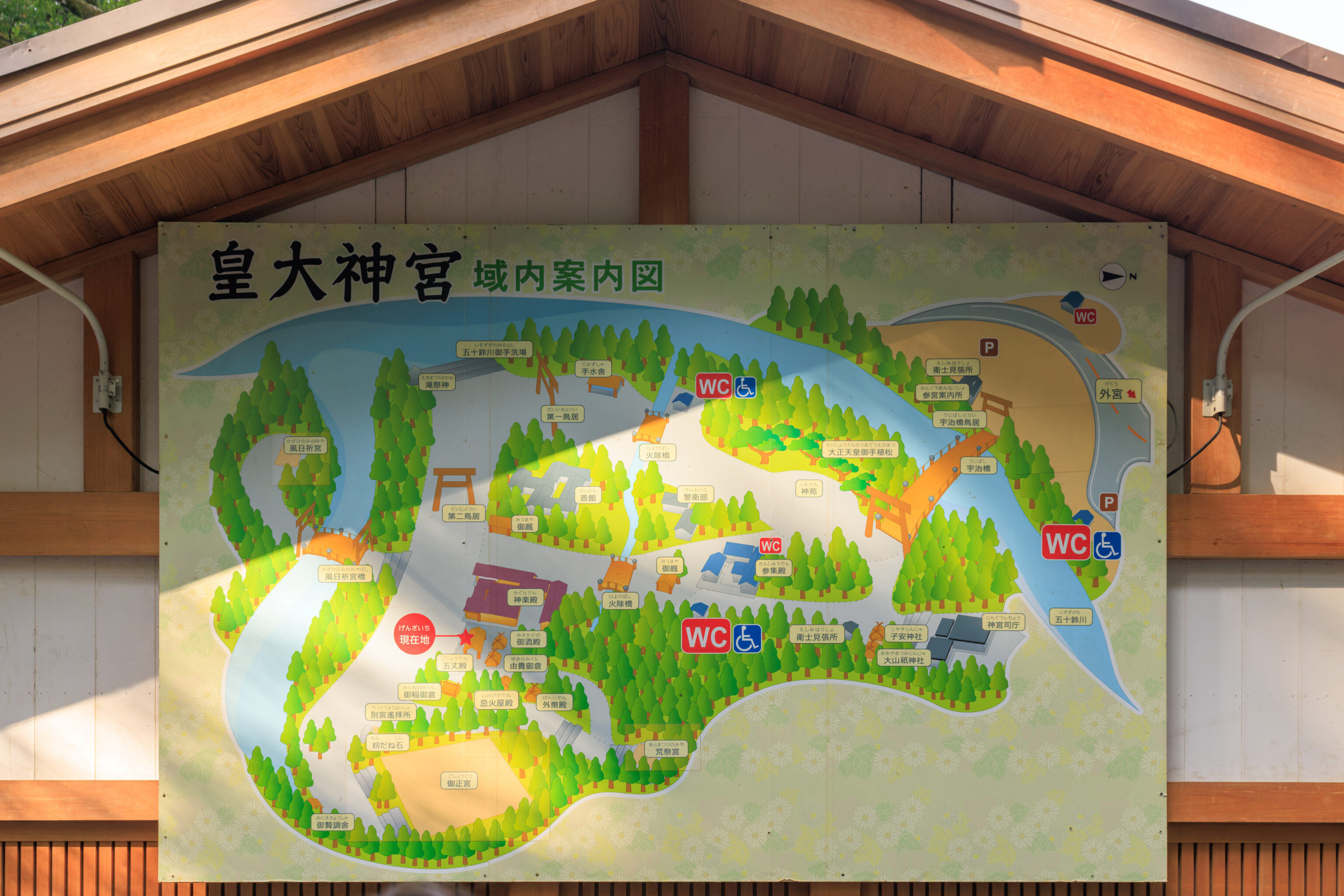
There was another map which was more colorful than the previous one, not really to any sort of scale, and focused on the individual buildings within the shrine.
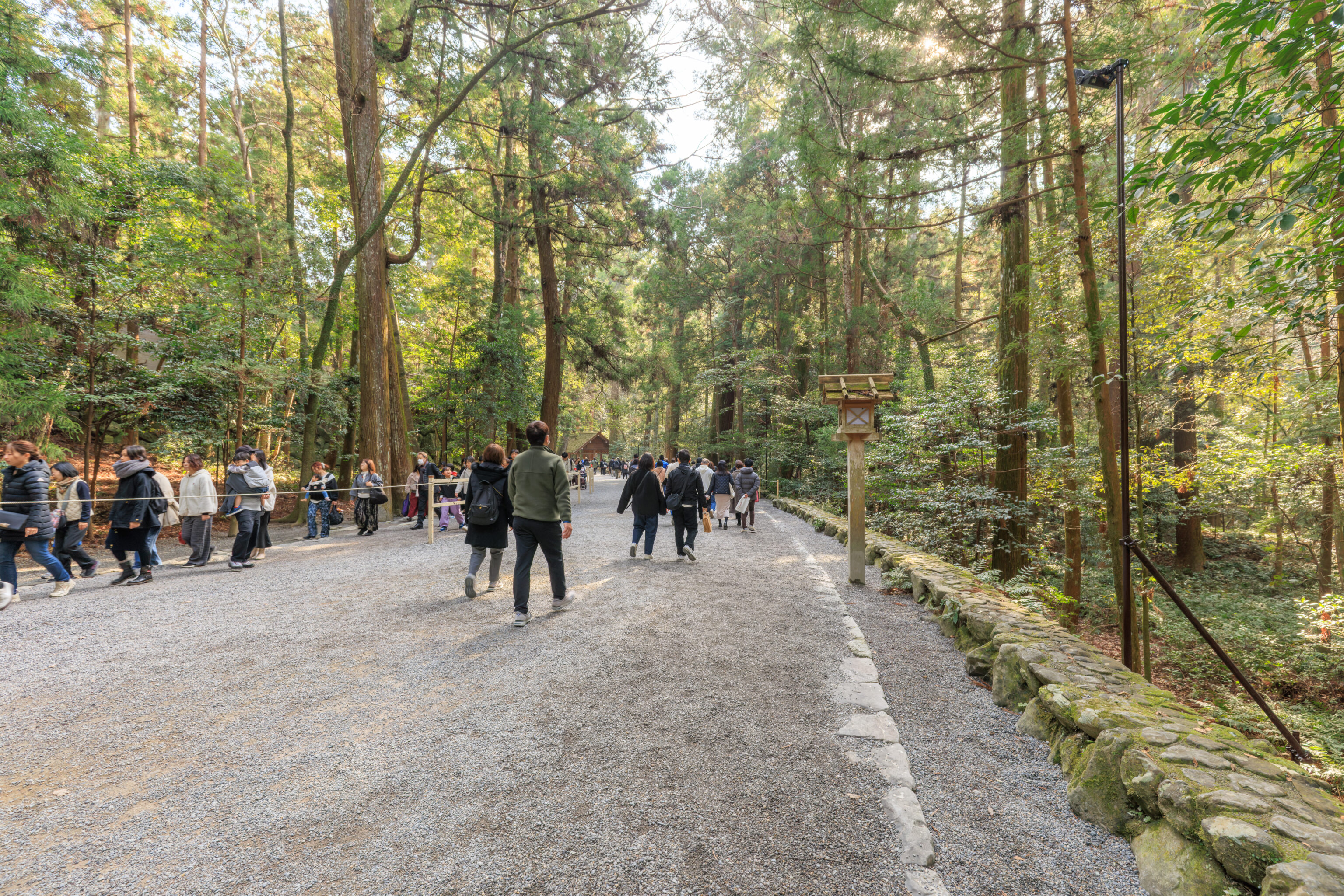
We turned and continued walking to the east.
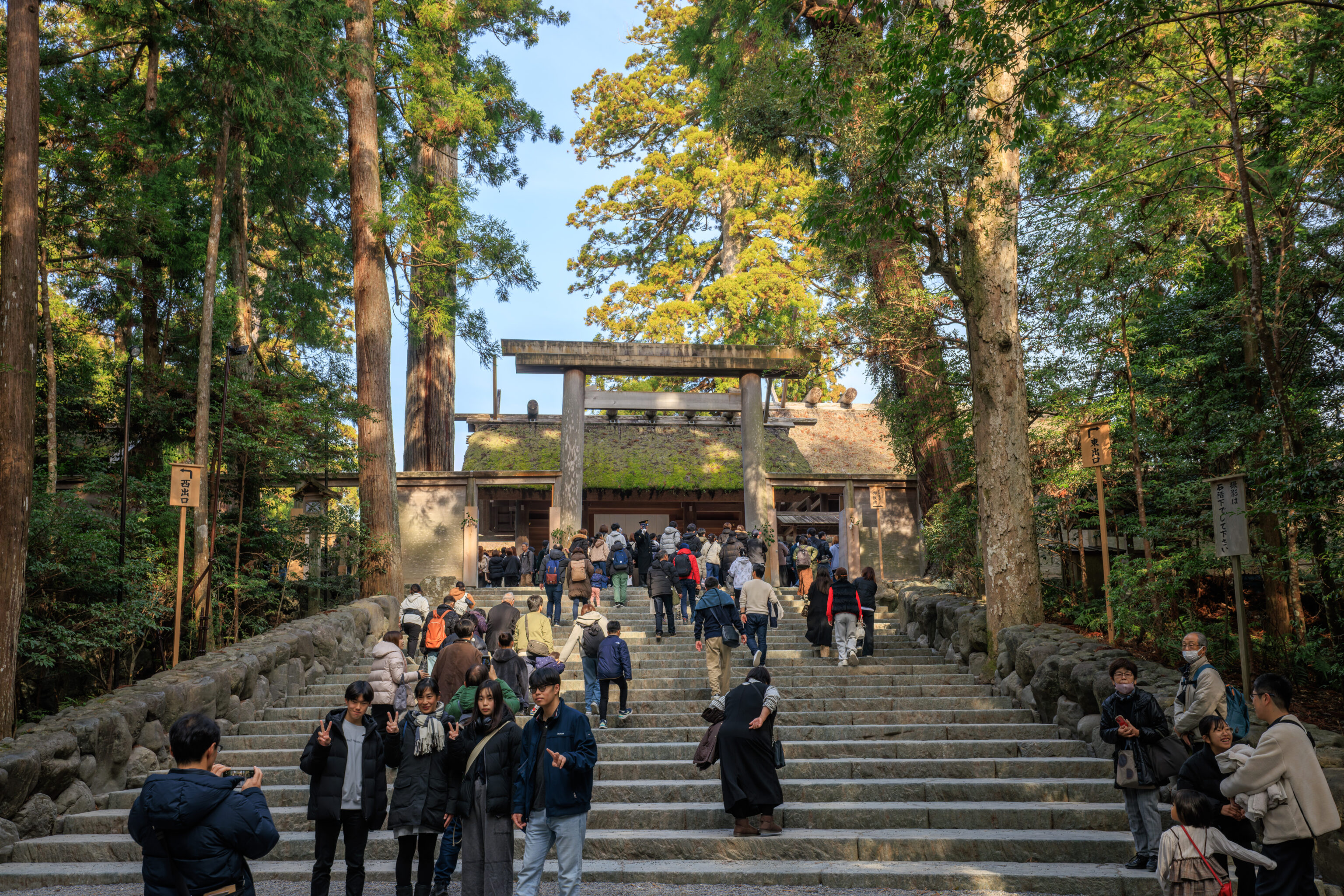
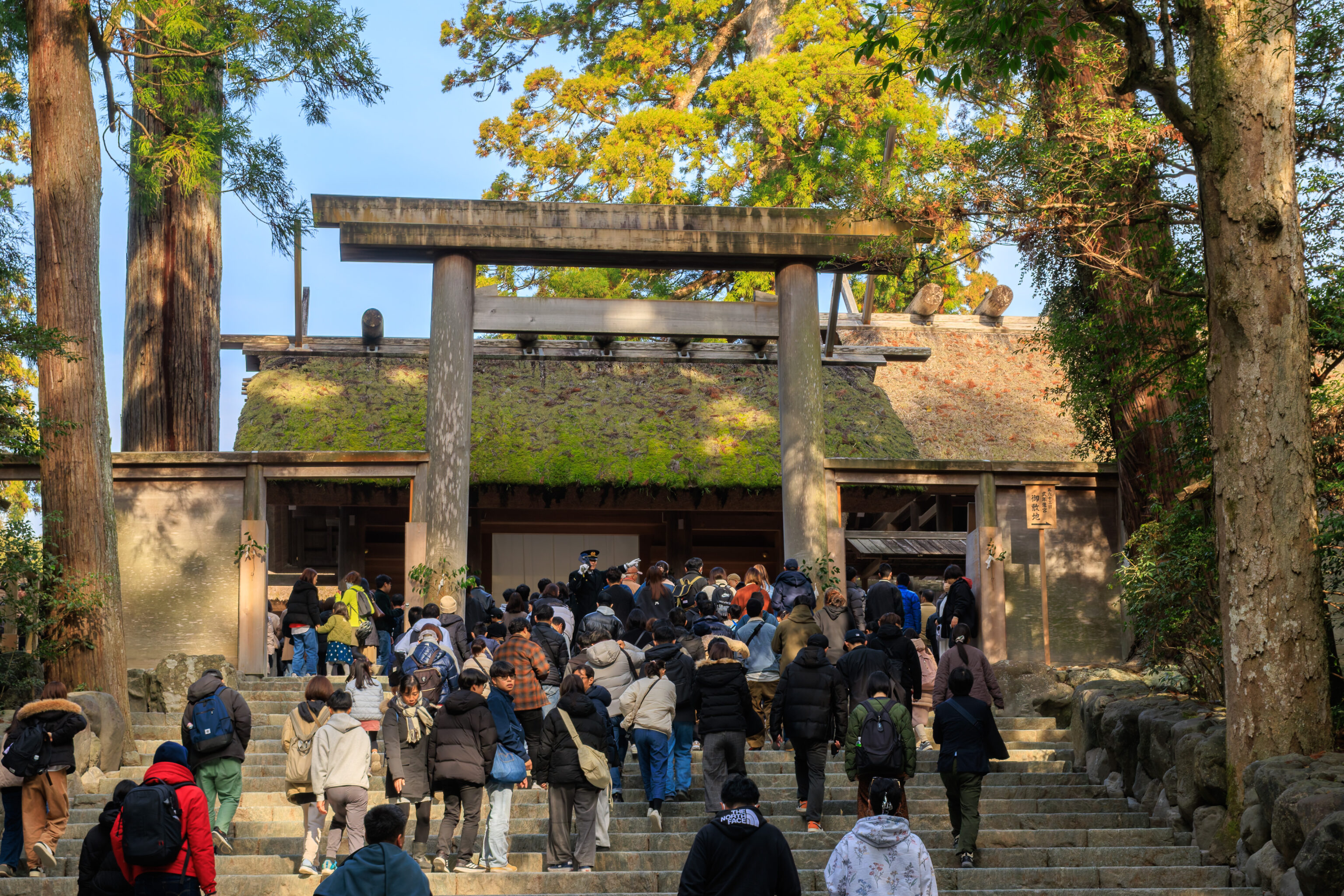
We then reached the Naiku. Based on our understanding, the Naiku was established by Emperor Tenmu about 1400 years ago, although it seems like it may have existed before that. The kami enshrined here is 天照大御神 Amaterasu Omikami, the goddess of the Sun. The legitimacy of the 皇室 Imperial House is derived from Amaterasu as the first Emperor of Japan, 神武天皇 Emperor Jimmu, was an ancestor of Amaterasu.
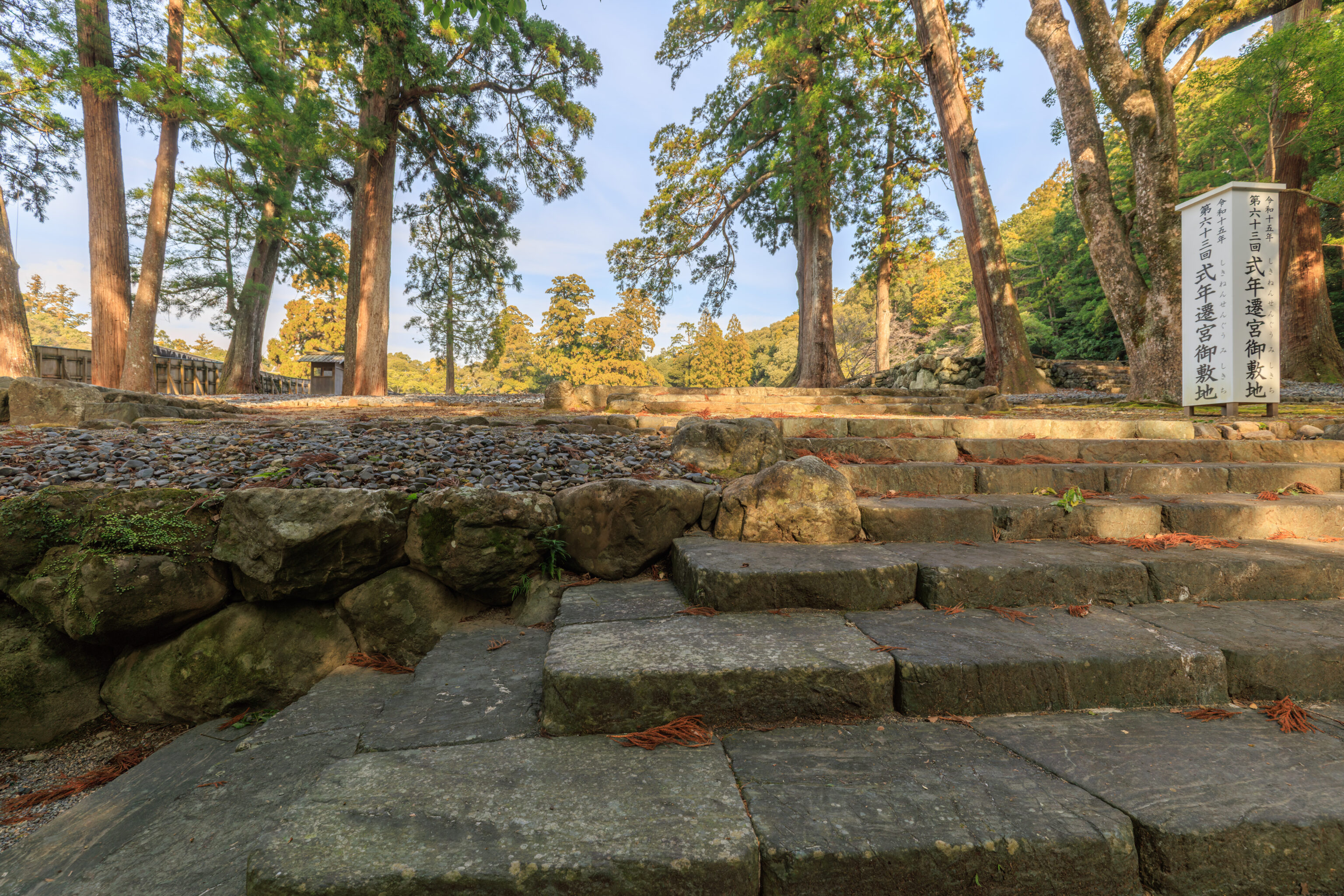
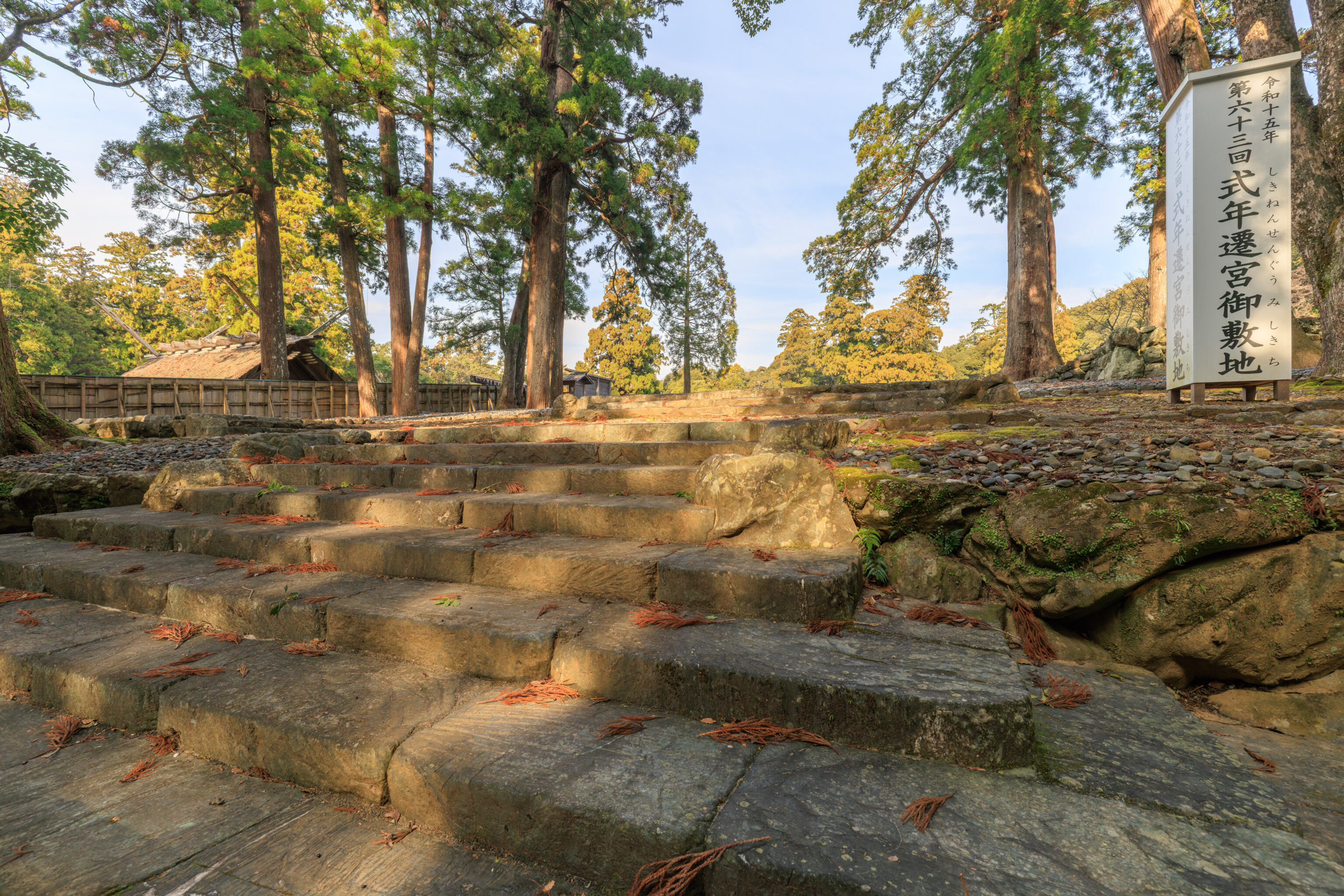
After praying at the Naiku, we walked over to the right. There is an empty plot here. A sign explains:
Reiwa 15 (2033)
The 63rd Shikinen Sengu Site
– Text from the white sign on the right side of the two above photographs, transcribed using Google Gemini and translated using Google Translate.
Another larger sign asks for donations and provides a few more details about the Shikinen Sengu:
Request for your support for the 63rd Shikinen Sengu (periodic rebuilding) of the Ise Grand Shrine

The Shikinen Sengu, held once every 20 years, is Japan's largest festival, in which all the shrine buildings, including the main sanctuary, as well as the sacred garments and treasures, are renewed, and the deities are moved to the new shrine to pray for the peace and prosperity of the nation and its people.

Initiated by Emperor Tenmu, the first ceremony was held in the fourth year of Empress Jito's reign (690). Since then, it has been passed down for 1,300 years, praying for the prosperity of the Imperial Family and the peace and security of the people. The next ceremony is scheduled for 2033, and preparations are currently underway.

To pass on the beautiful traditions and culture of Japan to future generations, we humbly request your understanding and heartfelt support.

Applications for funding the reconstruction (donations for the relocation of the shrine) are handled at the Kagura-den (Shrine Dance Hall).

Jingu Administration Office
– Text from a nearby sign, transcribed using Google Gemini and translated using Google Translate.
So basically, every 20 years, the shrine buildings are reconstructed next to the old buildings. The old buildings are removed and the process repeats. This seems to include things like the Naiku, various torii, and some bridges. The columns that we saw earlier adjacent to the bridges we walked across seem like they may be markers for where the replacement bridge will be built.
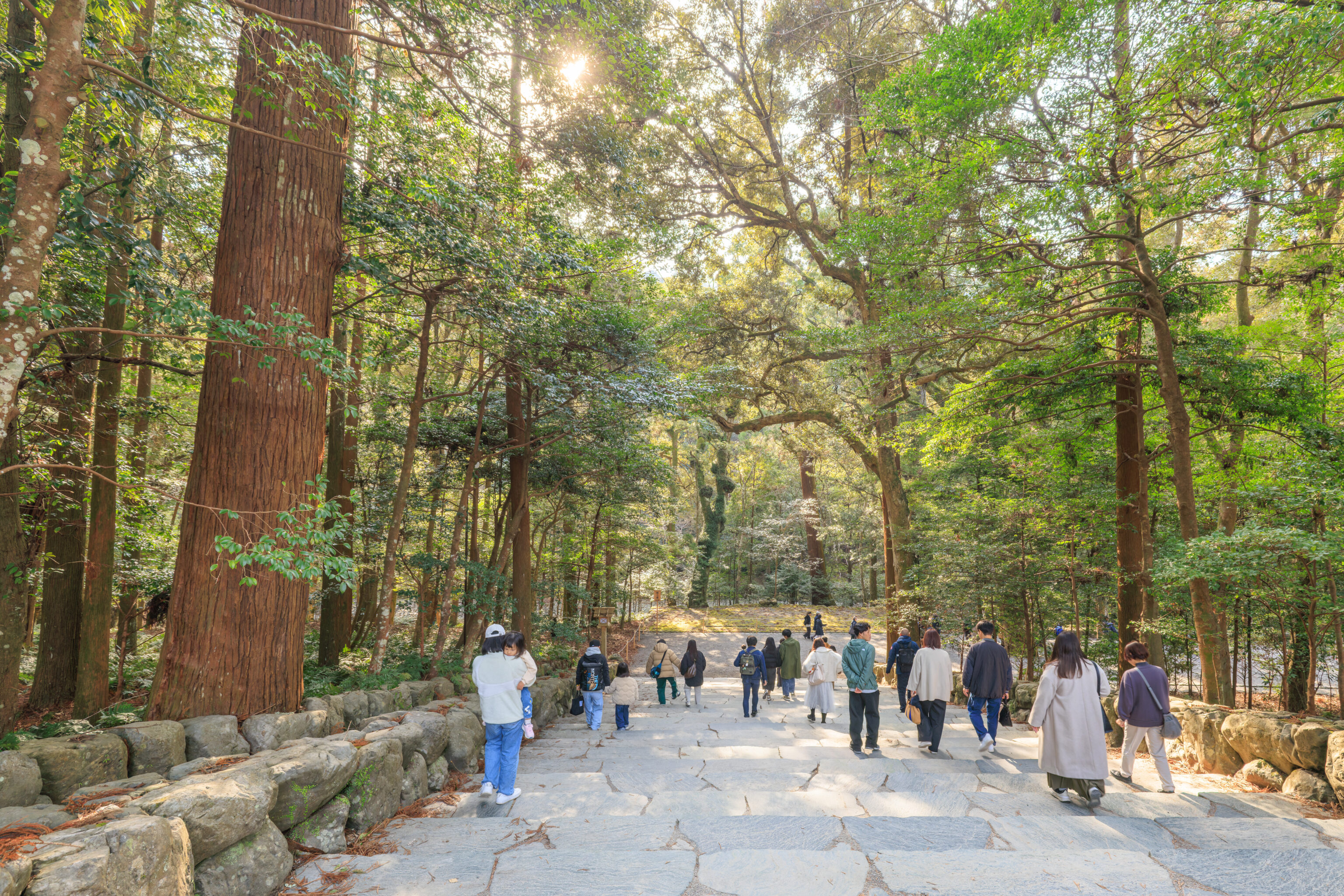
We walked down the wide stone stairs that will become the path up to the Naiku in 2033.
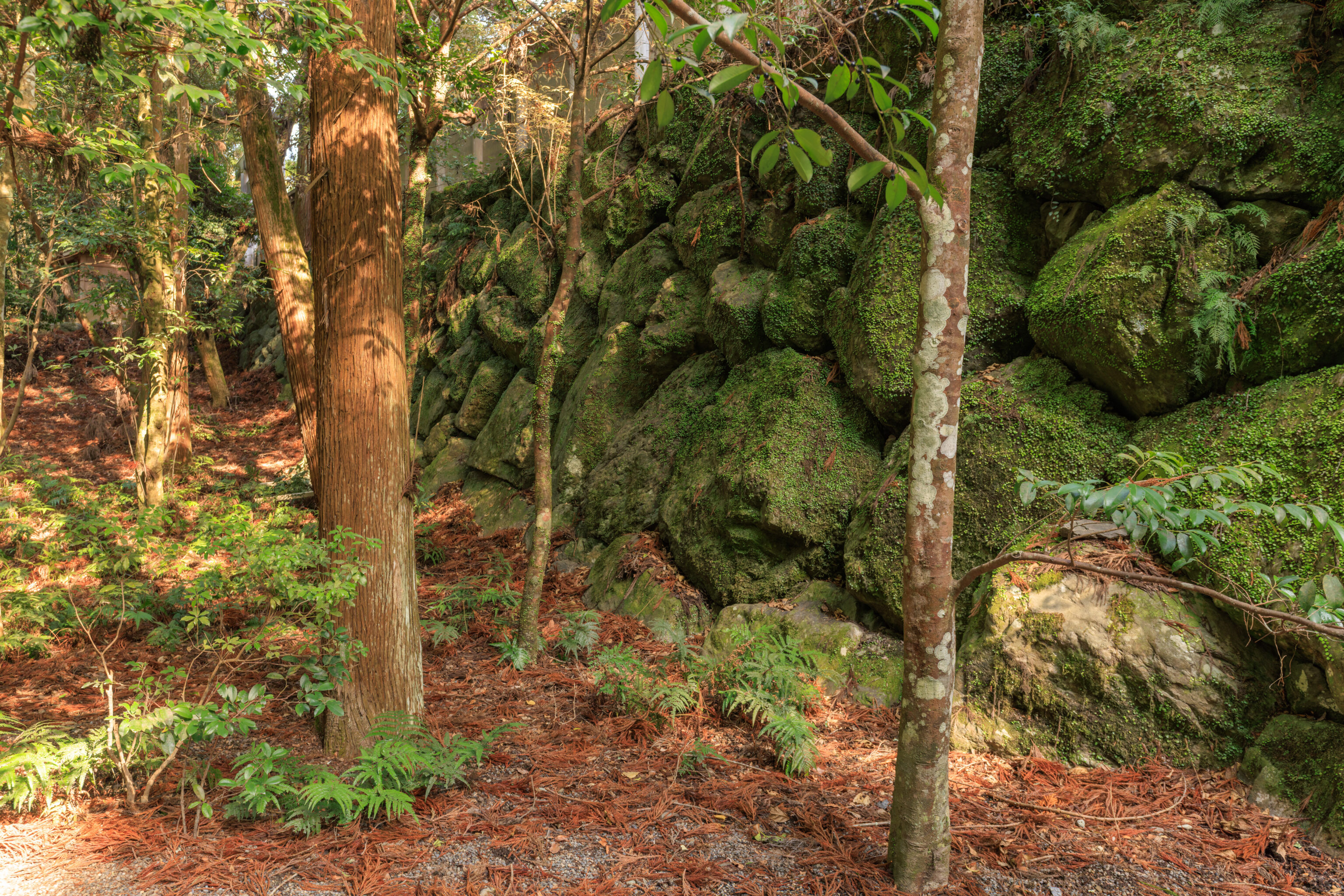
We started to walk to the west along with everyone else to exit. We noticed these moss covered stones on the way.
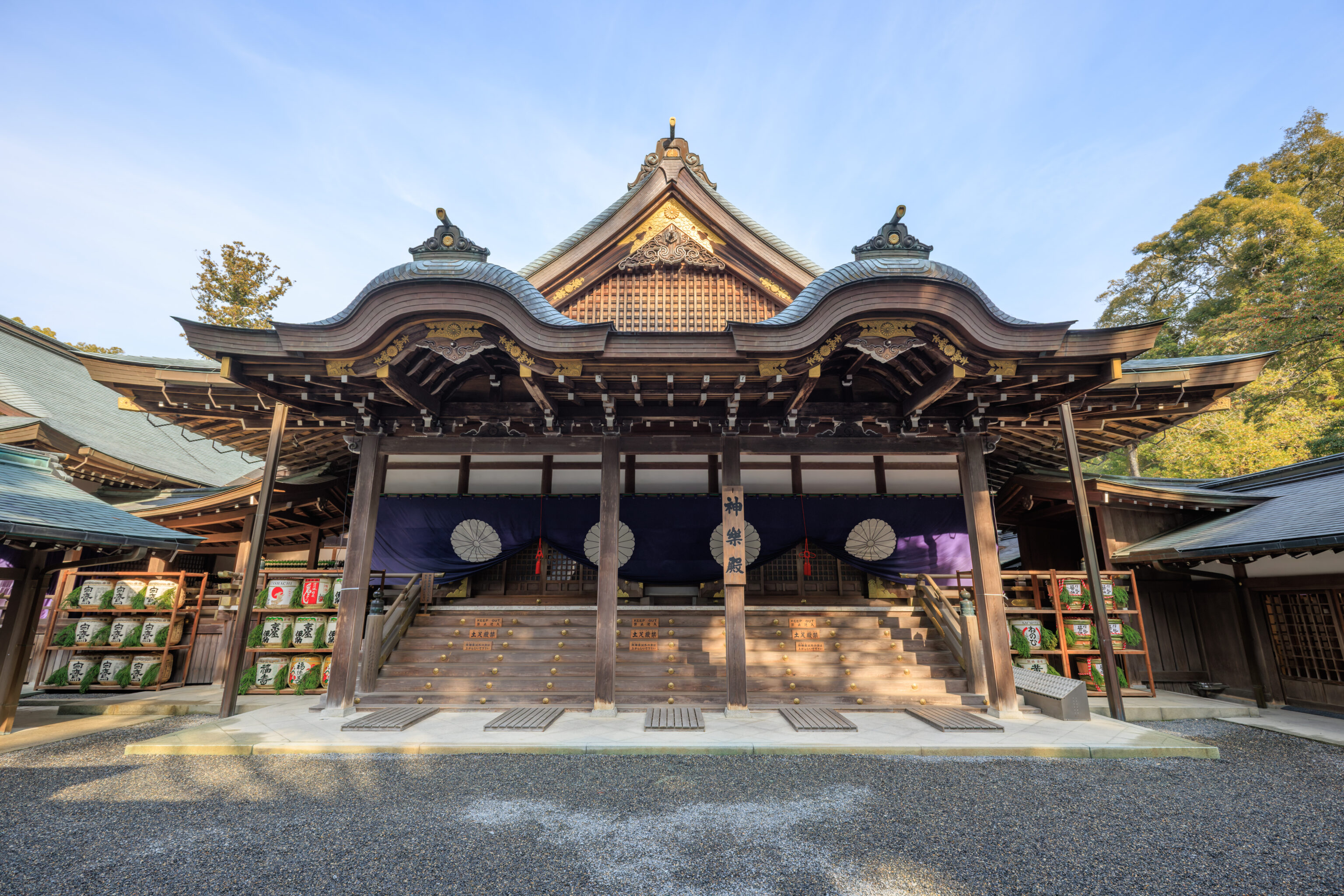
We returned to the cluster of buildings that we passed by earlier on the way to the Naiku. This building is the 神樂殿 Kagura-den, a hall that is used for ceremonial purposes. To the left, there are some additional sake barrels. There are other providers of sake to Ise Jingu for purposes other than as offerings to the kami.
Origin and History of the Grand Shrine
The Ise Grand Shrine, affectionately known as "O-Ise-san," is considered the spiritual home of the Japanese people. It comprises fourteen auxiliary shrines and 109 subordinate shrines, centered around the main shrines of the Imperial Grand Shrine (Naiku) and the Outer Shrine (Geku).

Amaterasu Omikami, the deity enshrined at the Inner Shrine, is revered not only as the ancestral deity of the Imperial Family but also as the great parent deity of the Japanese people. She is worshipped as the most revered goddess who nurtures all life.

Through more than 1,000 ceremonies held annually, prayers are offered for the prosperity of the Imperial Family, the flourishing of the nation, abundant harvests, and the happiness of the people.

The Sacred Dance and Prayers of the Shrine
"Okito" is the act of offering sacred food, reciting prayers, and relaying your wishes to the great deity.

"Okagura" is the addition of gagaku (ancient Japanese court music) and bugaku (court dance) to this ritual.

Let us look up to the boundless divine virtues of the great deity and live bright and refreshing days.

In addition, the Kagura Hall accepts donations for the reconstruction of the shrine for the Shikinen Sengu, a grand festival held once every twenty years.
– Text from a sign, transcribed using Google Gemini and translated using Google Translate and Gemini.
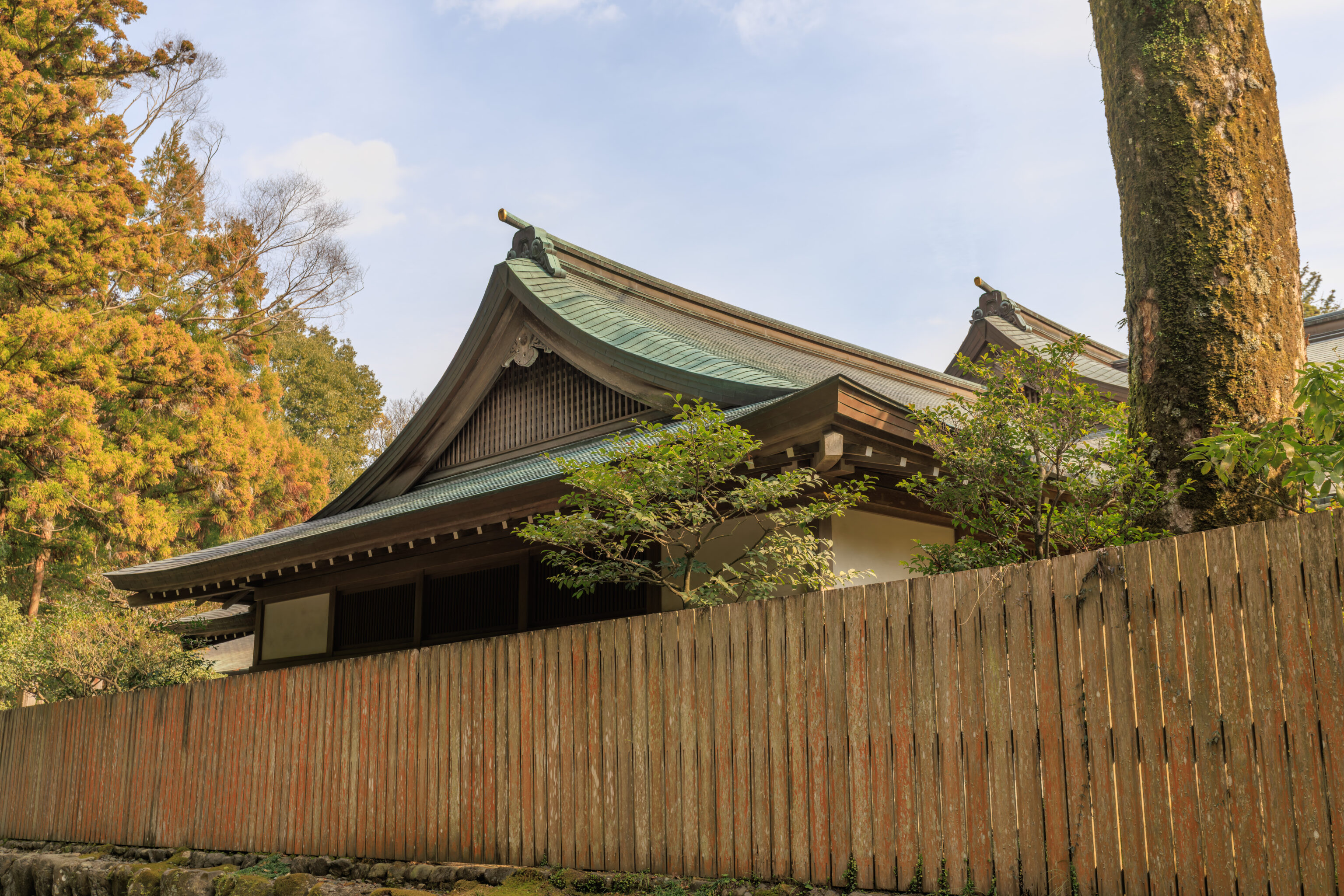
After spending some time looking at the 御守 omamori and 絵馬 ema that were available, we continued on.
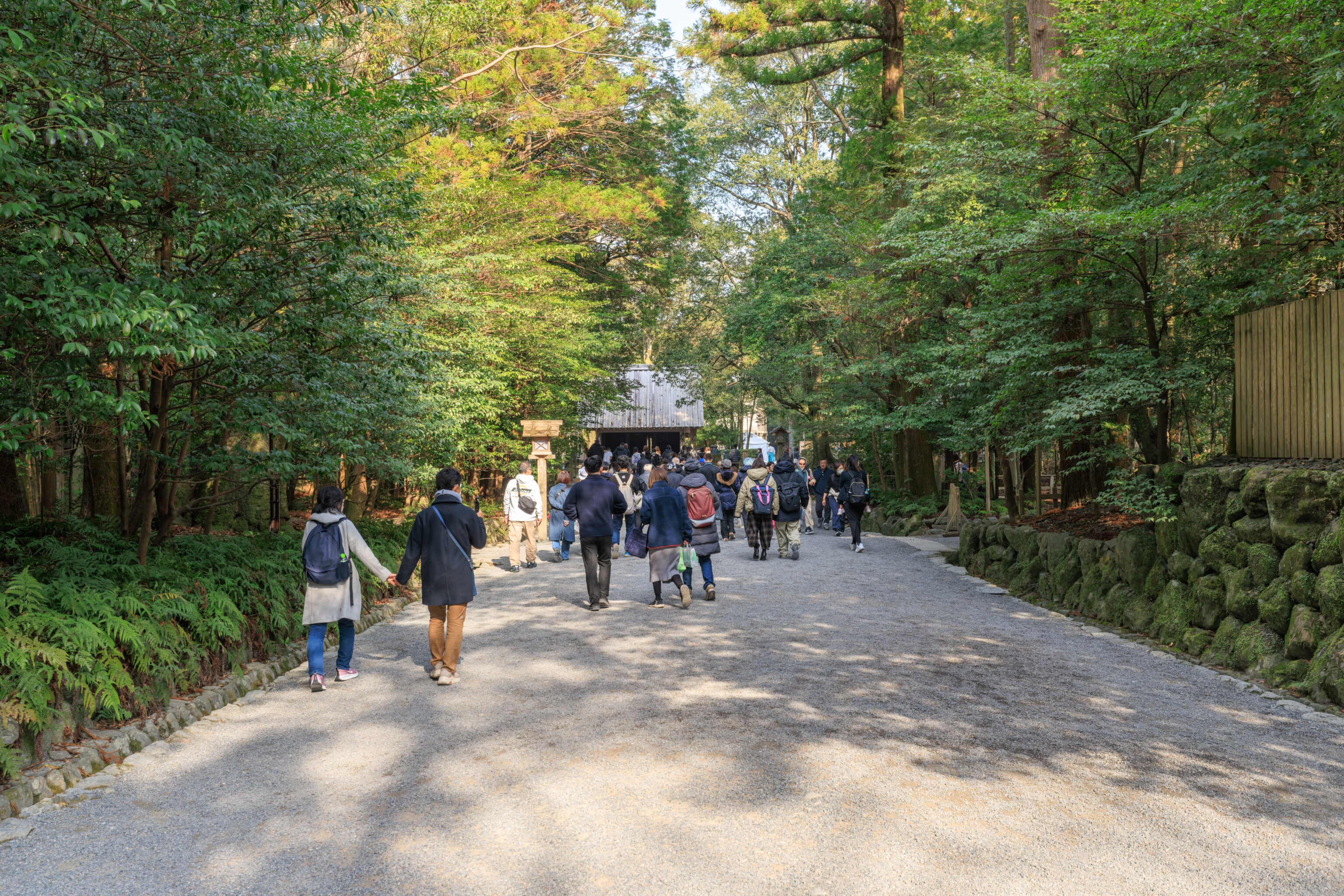
The exit route was separate from the entrance route. This might be just for the anticipated hatsumode crowds.
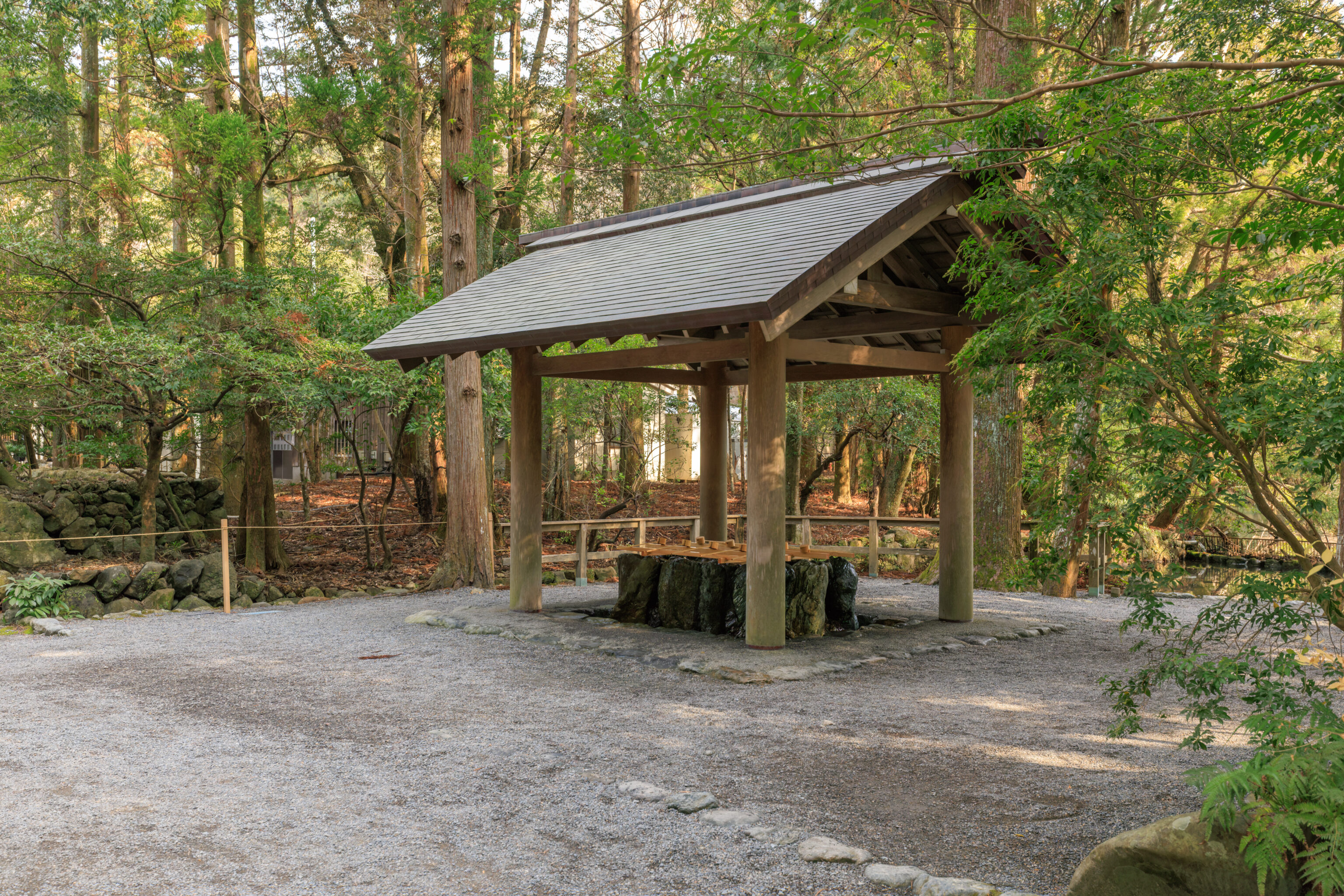
A 手水舎 purification pavilion. This would be near the entrance to the shrine area if this path wasn’t being used as an exit.
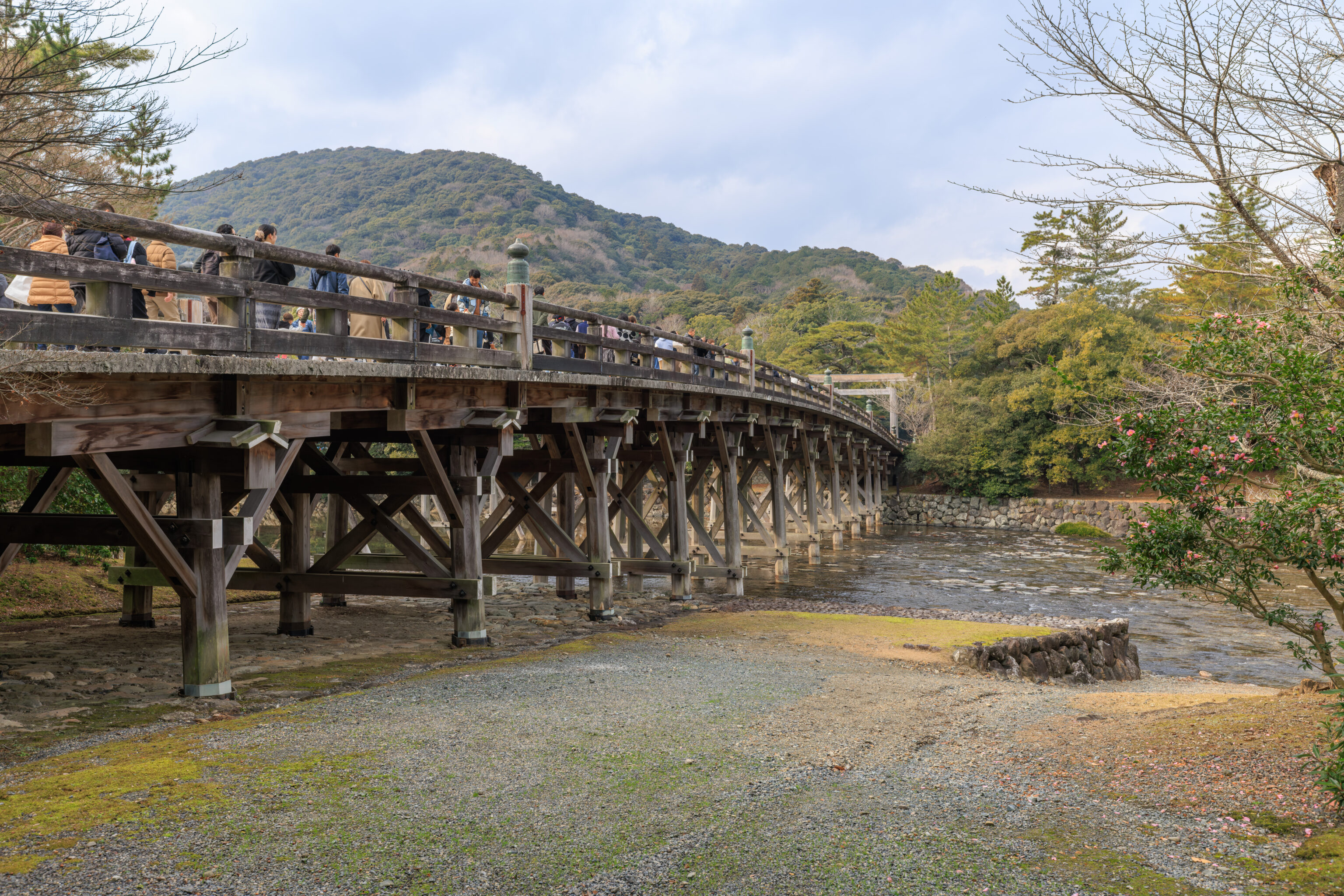
We went to take a look at the large bridge that goes over the Isuzu-gawa by the entrance to the shrine.
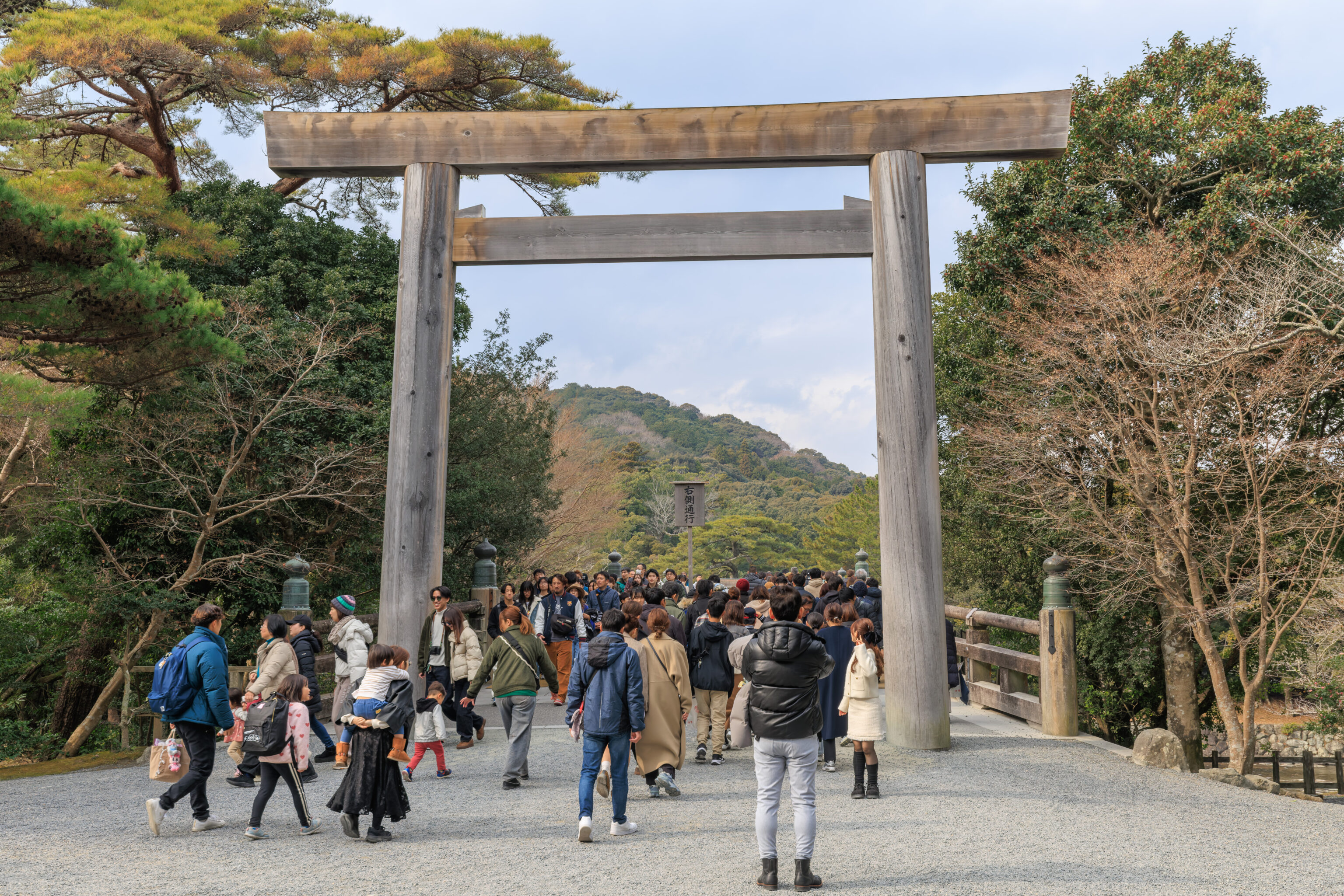
We walked under the torii at the eastern end to head back across the river.
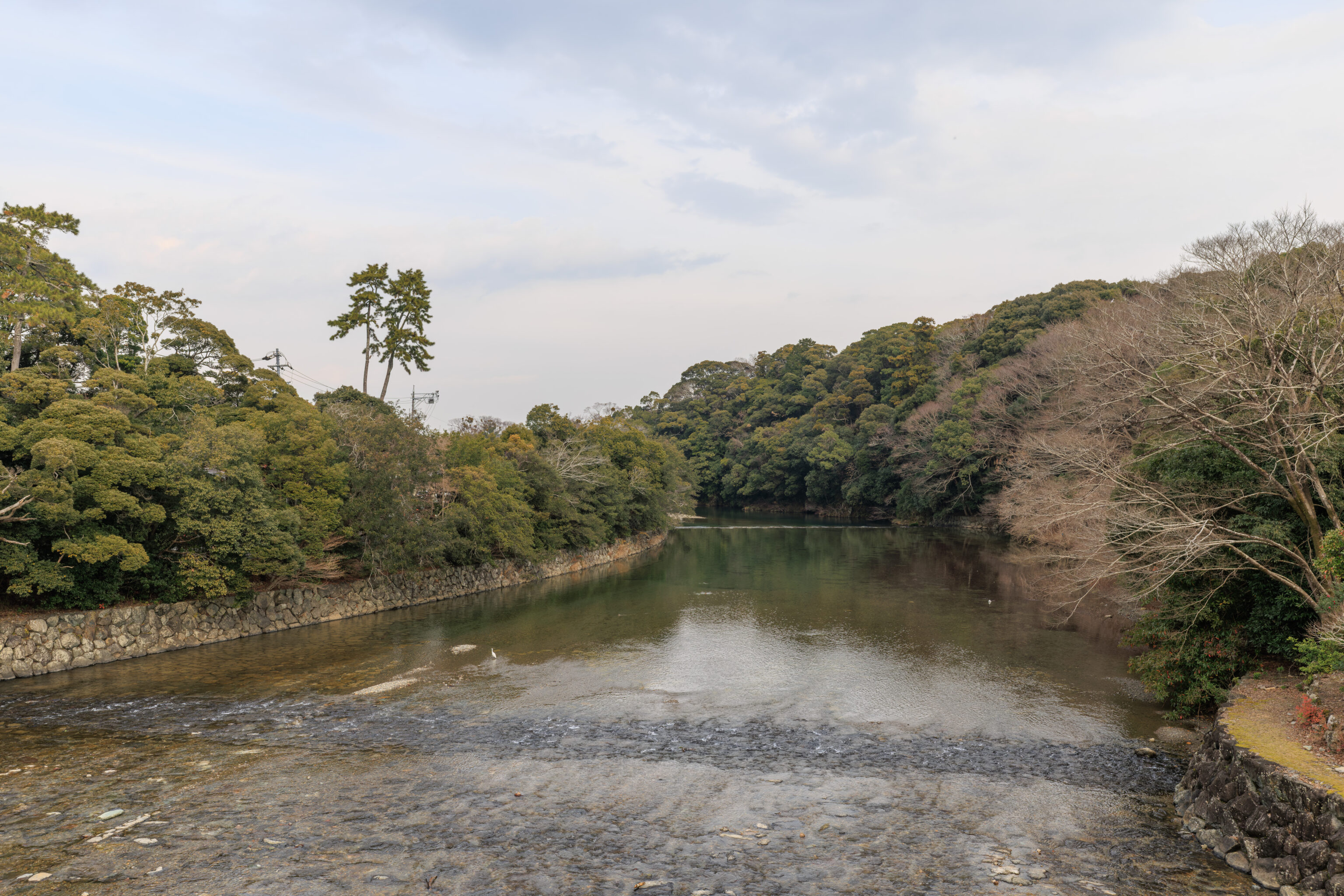
The view to the north, away from Ise Jingu.
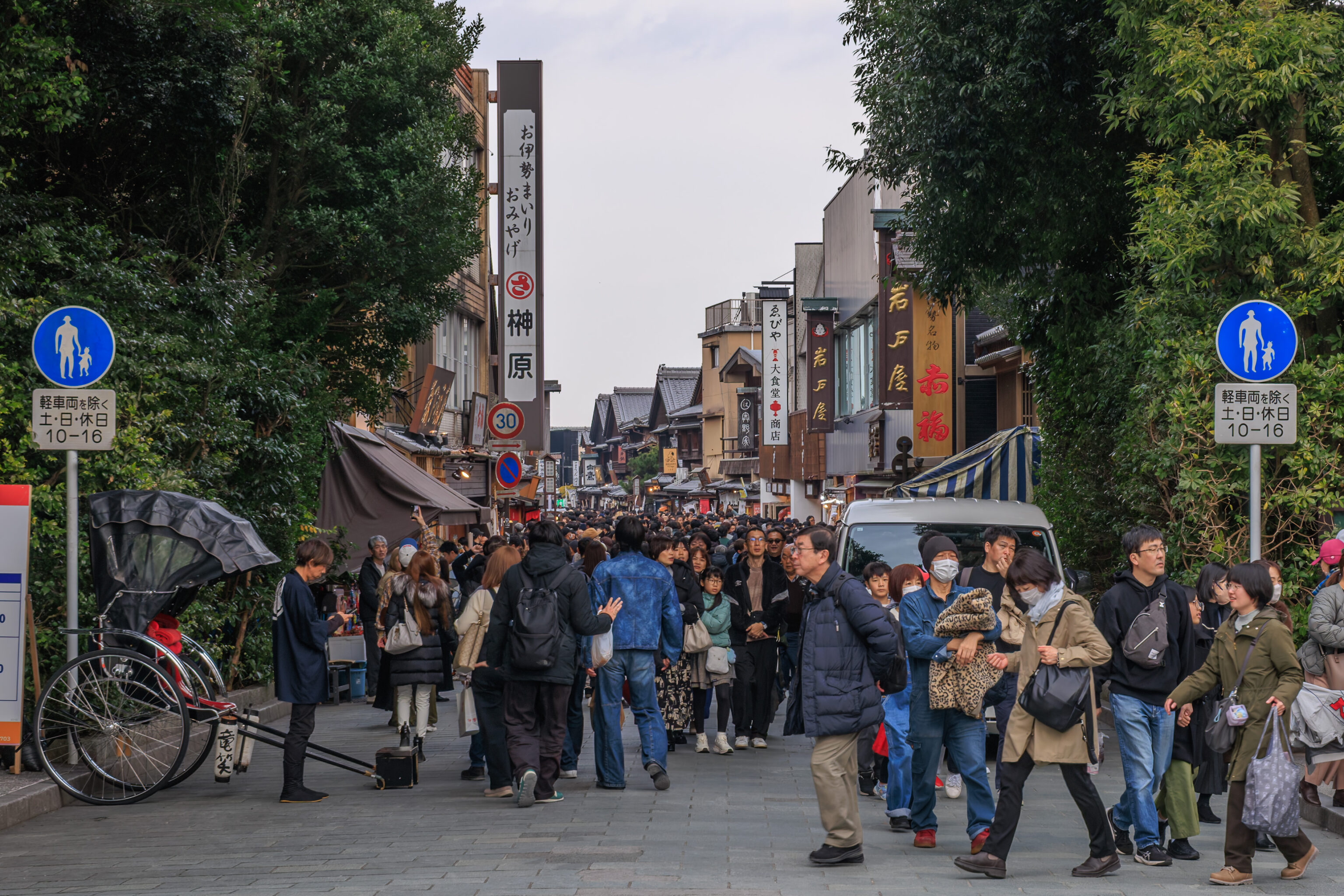
The shopping street in front of the shrine was even more crazy than before! We decided to brave the crowds to get some snack and perhaps a more substantial meal.
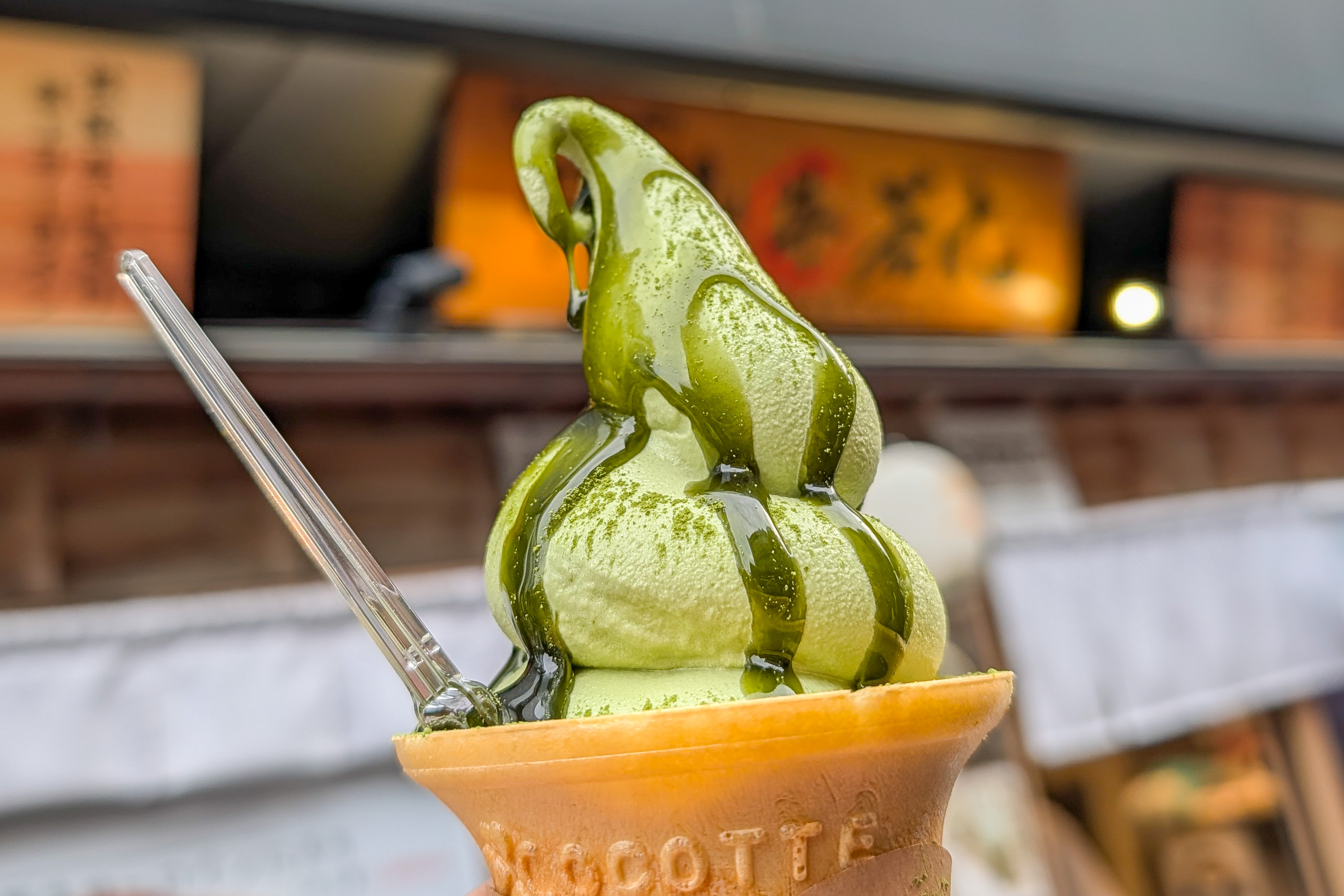
We started with a tofu matcha soft serve. The tofu flavor was extremely light, particularly compared to the matcha. It was a nice snack.
We decided to have lunch at the 参宮亭五十鈴食堂 Sangutei Isuzu Shokudō within the huge 岩戸屋 Iwatoya store. We had to wait 20 to 30 minutes before being seated as it was pretty busy.
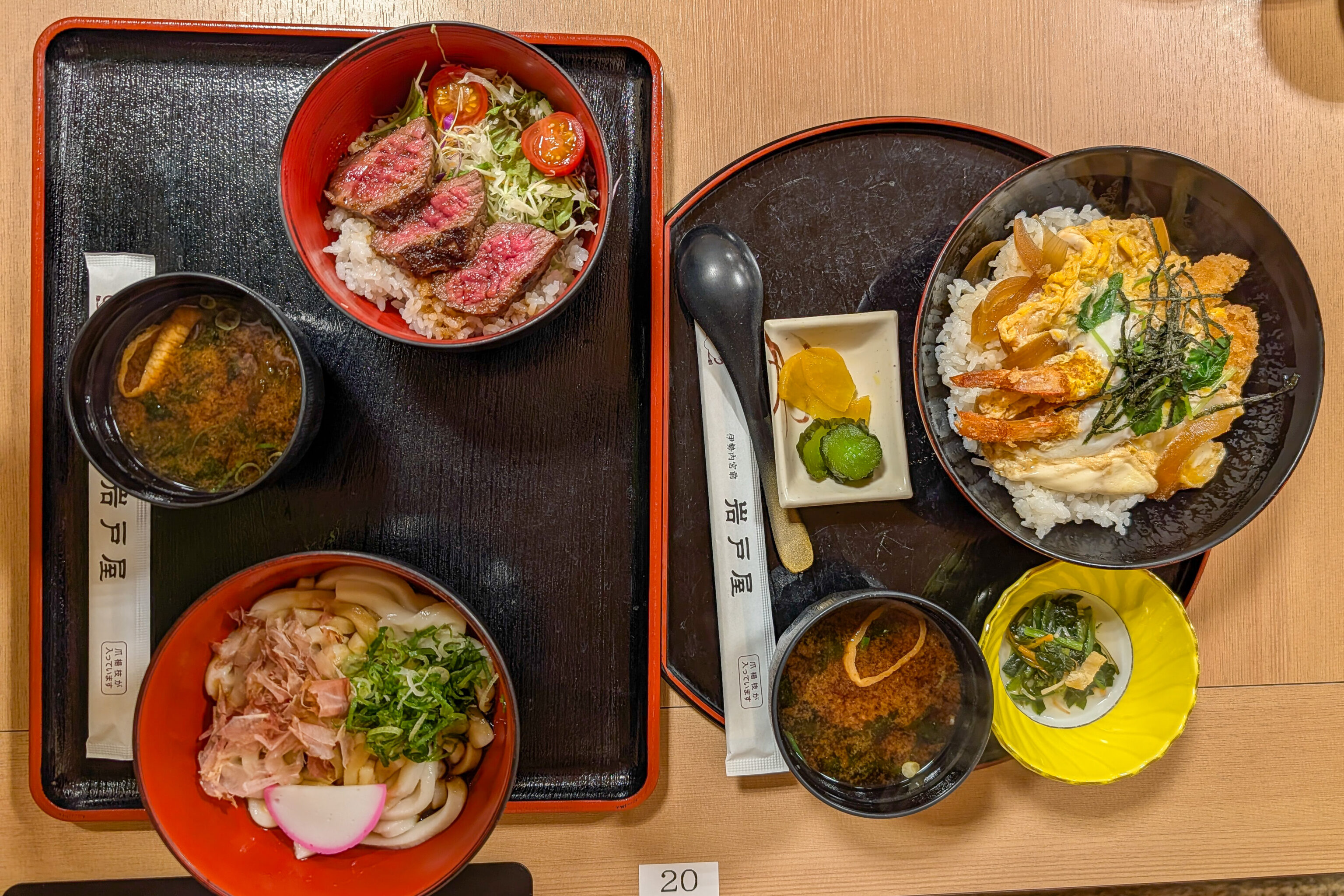
We ordered three dishes, all of which are above.
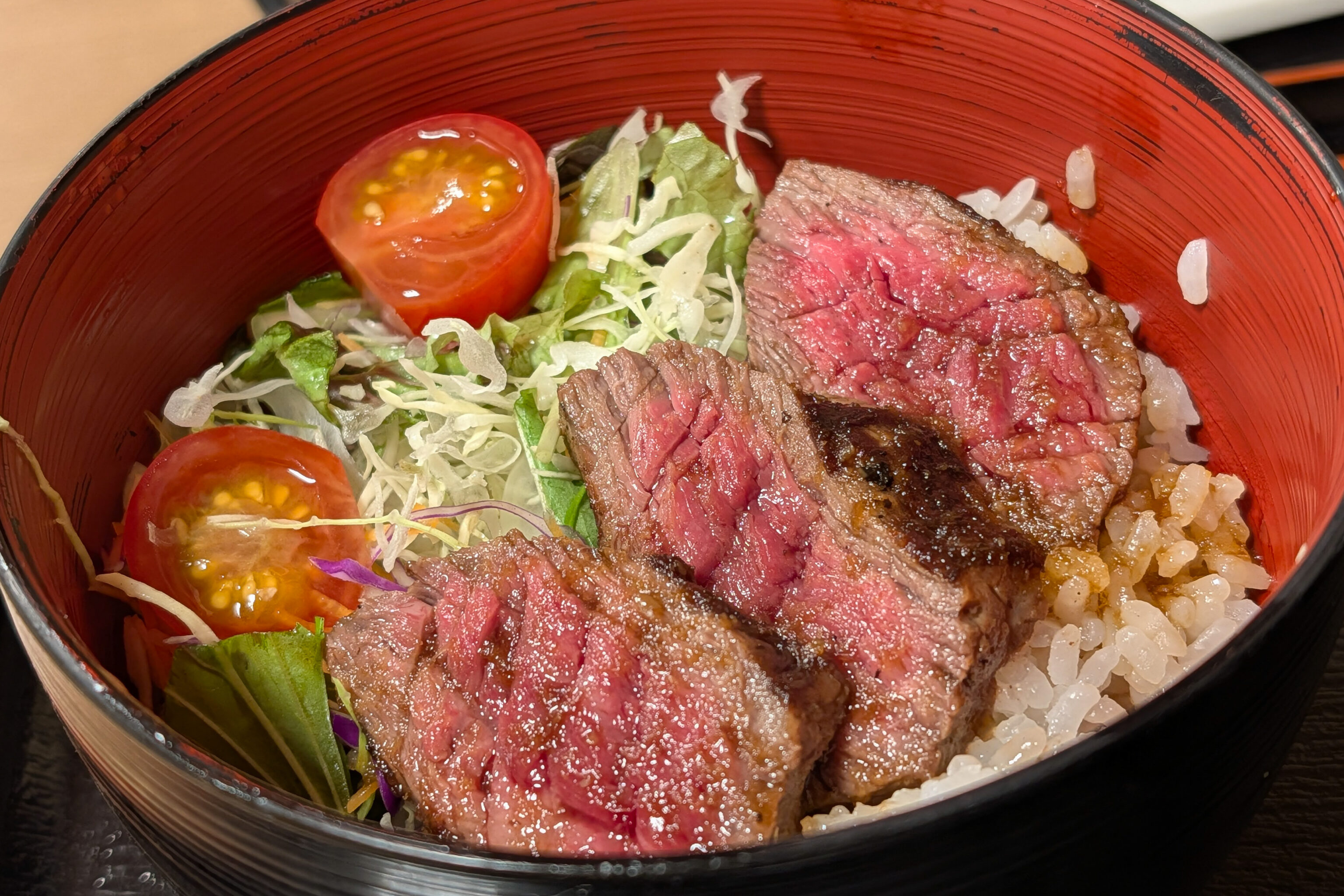
We had a Matsusaka beef mini steak don with ungraded Matsusaka beef. The ungraded beef was a bit tough, similar to the Matsusaka beef we had earlier in the day.
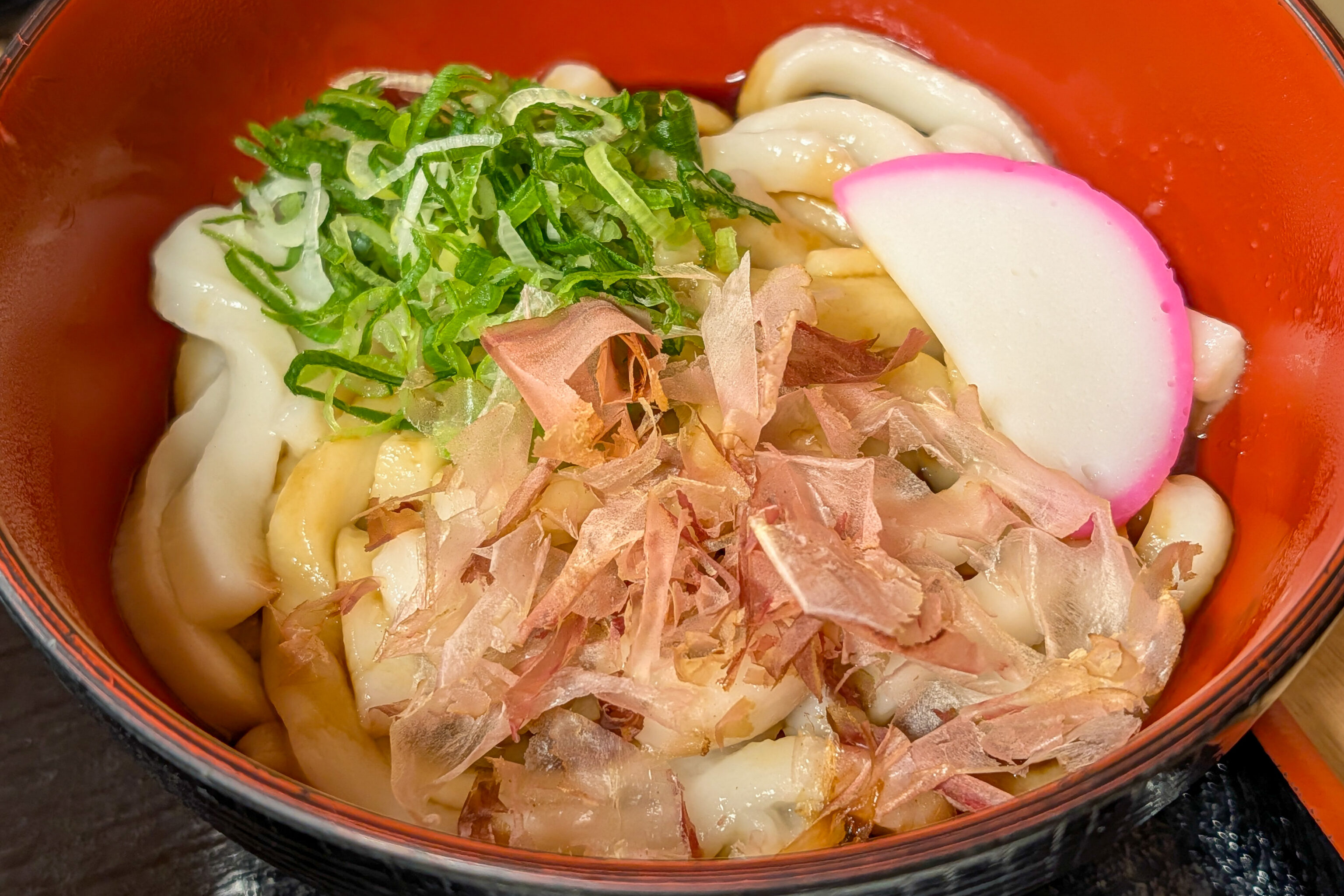
We also had the Ise udon set…
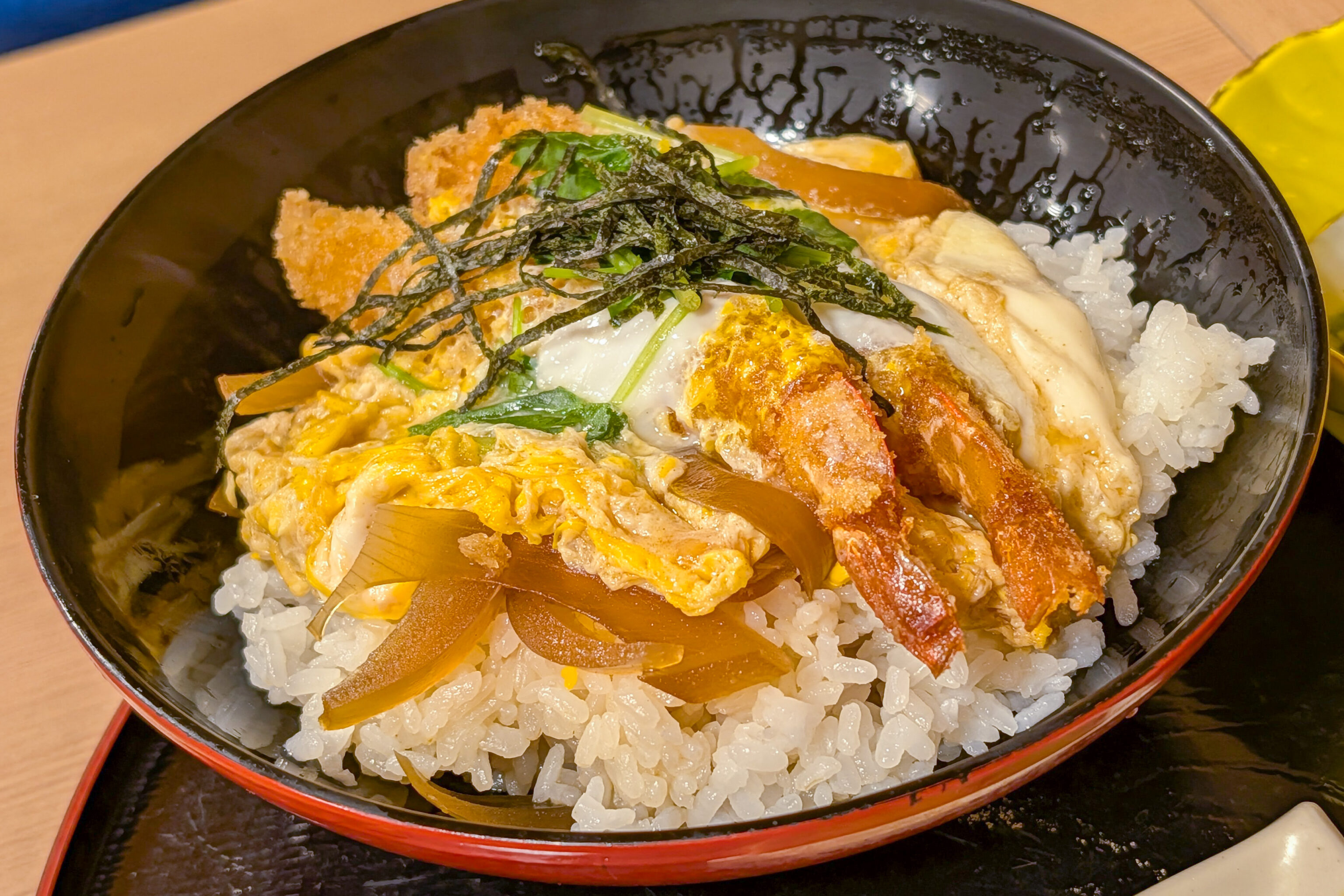
And the ebi fry don.
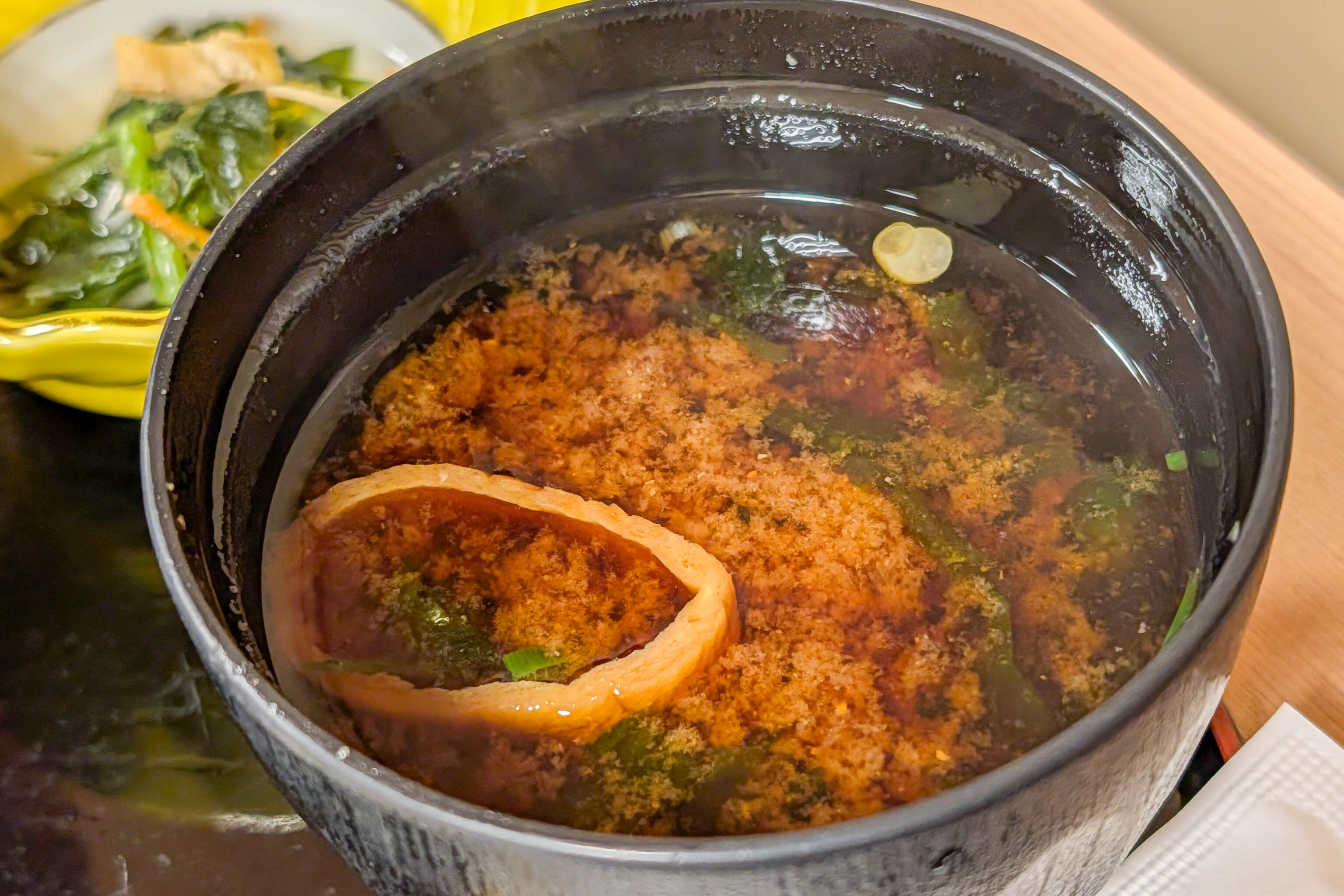
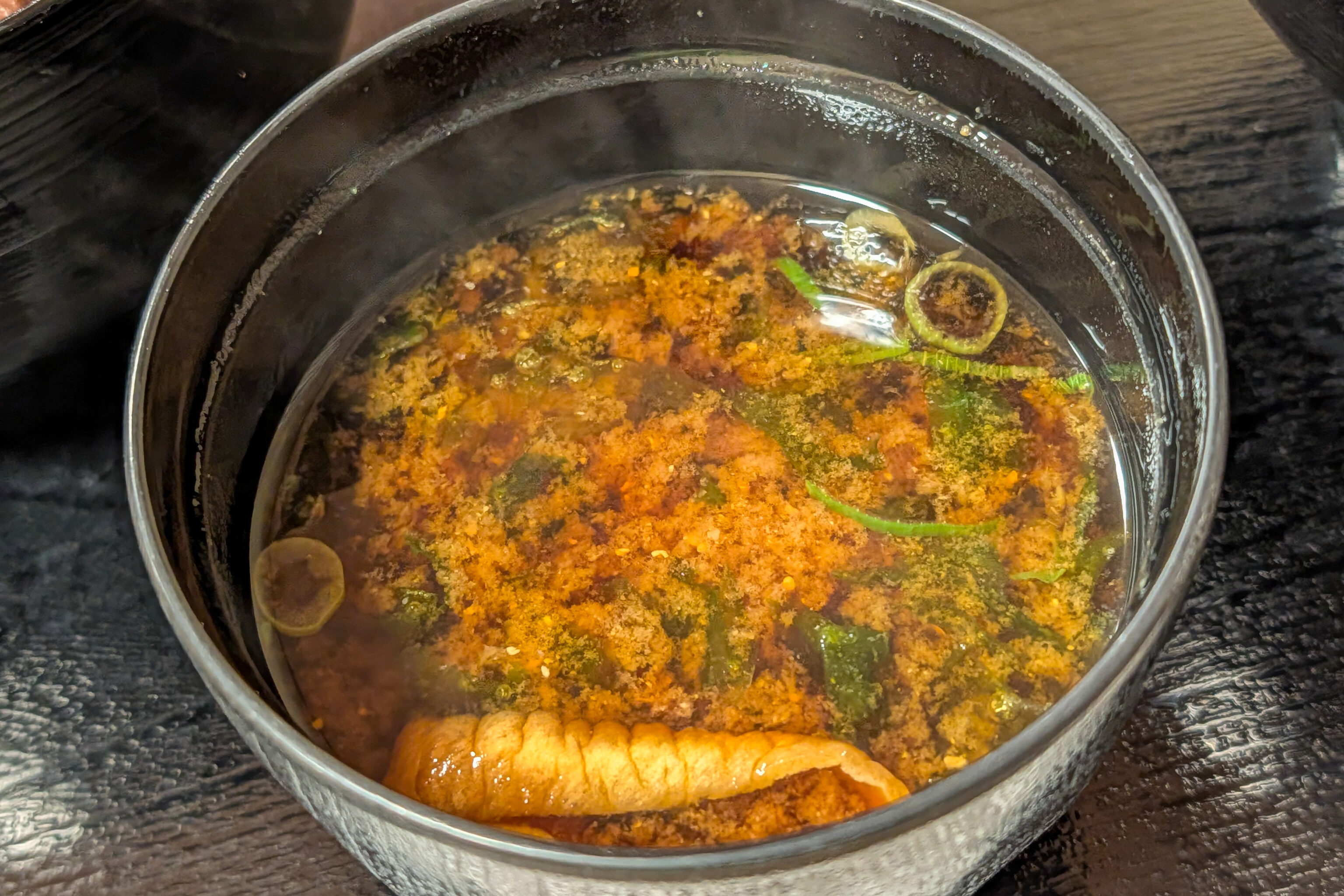
Soup was also provided. All was excellent in terms of flavor.
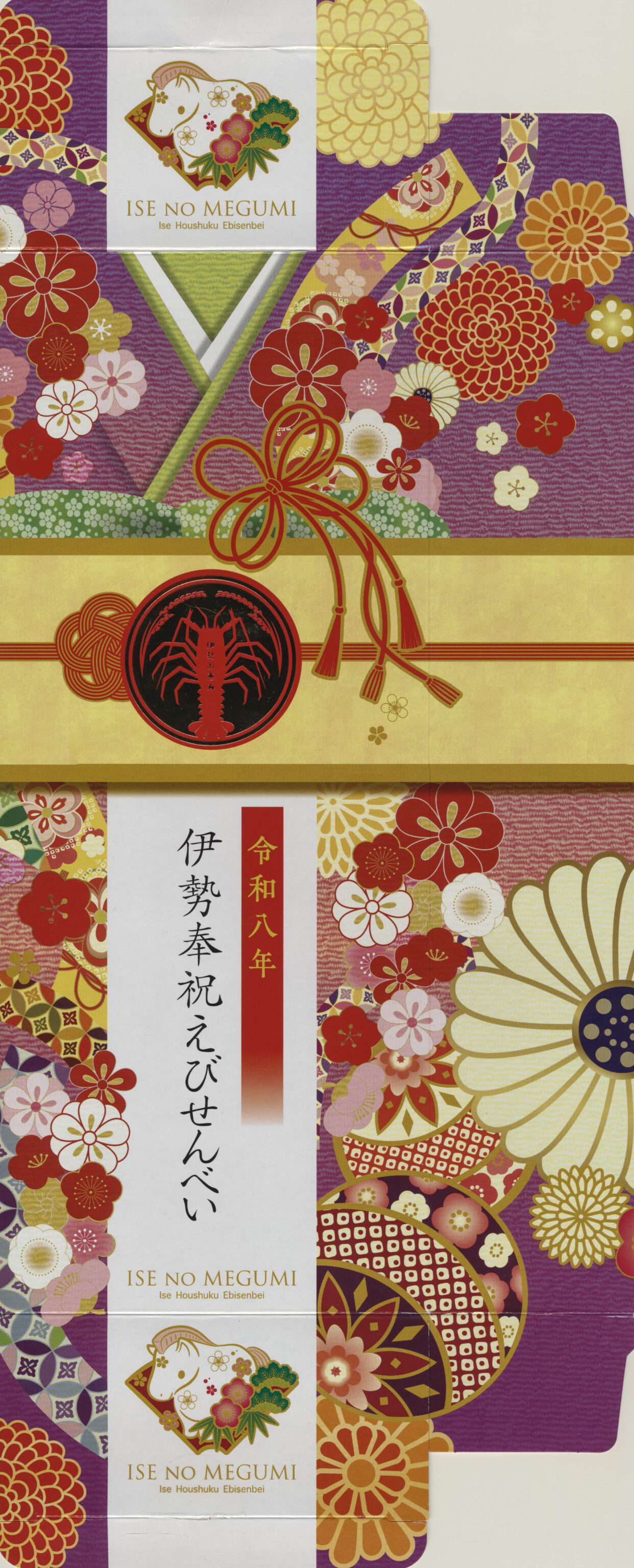
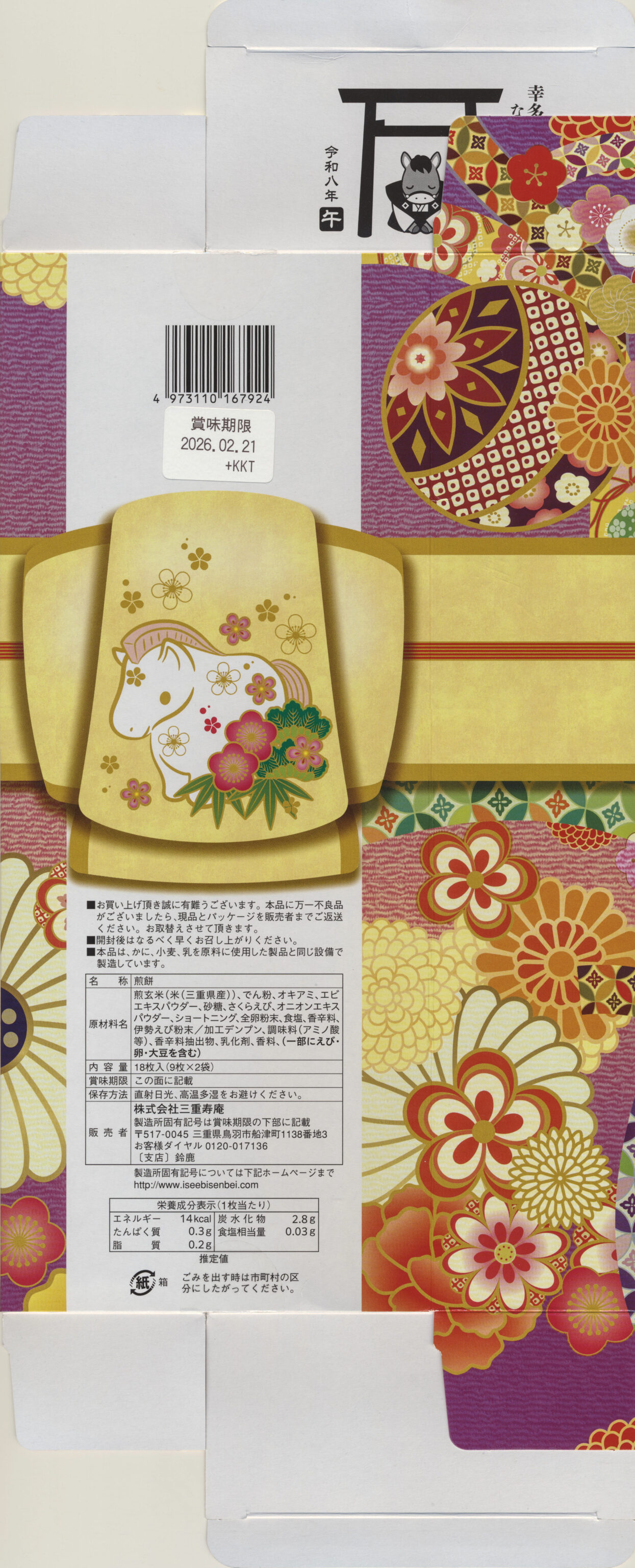
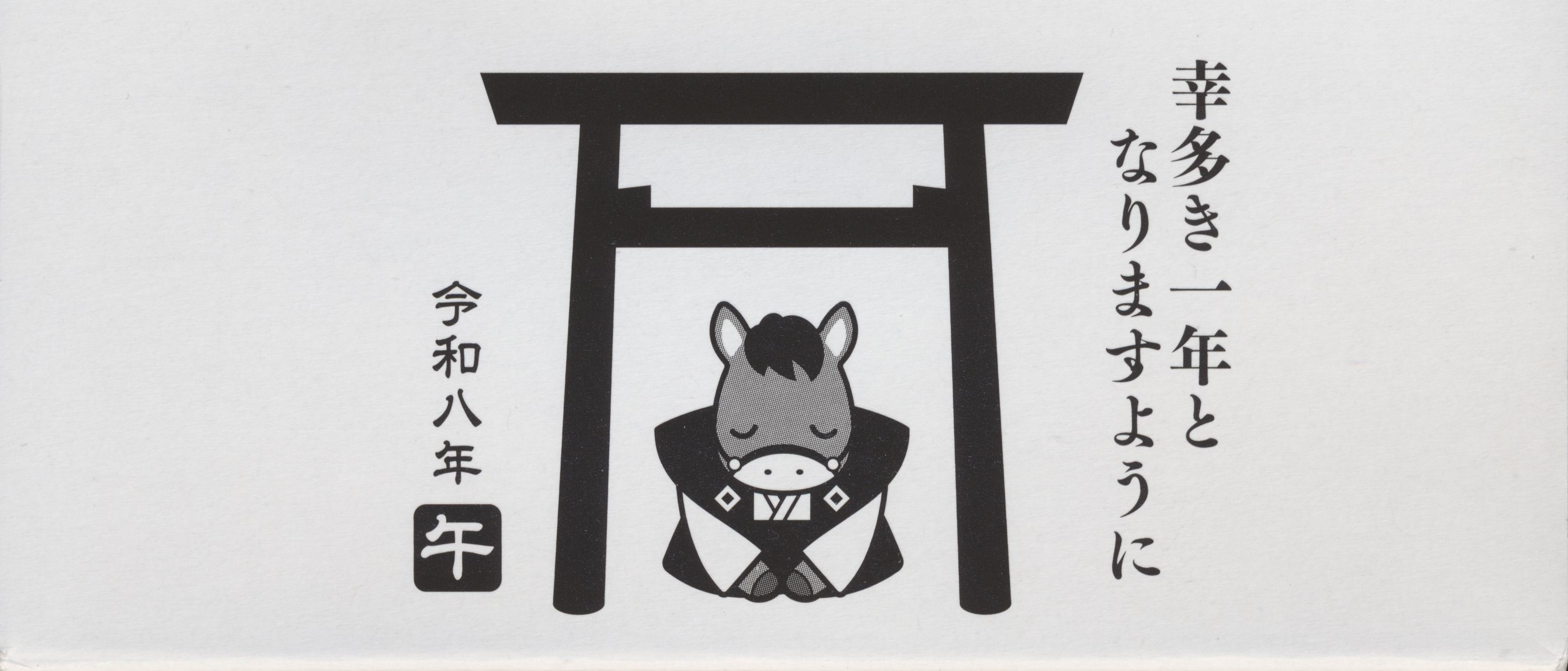
One of the local products that was for sale within Iwatoya was ebi senbei (shrimp rice crackers). We ended up buying some Ise no Megumi branded senbei made by 三重寿庵 Mie Kotobukian to take home and give as gifts as well as to eat ourselves. The packaging had a pretty year of the horse design.
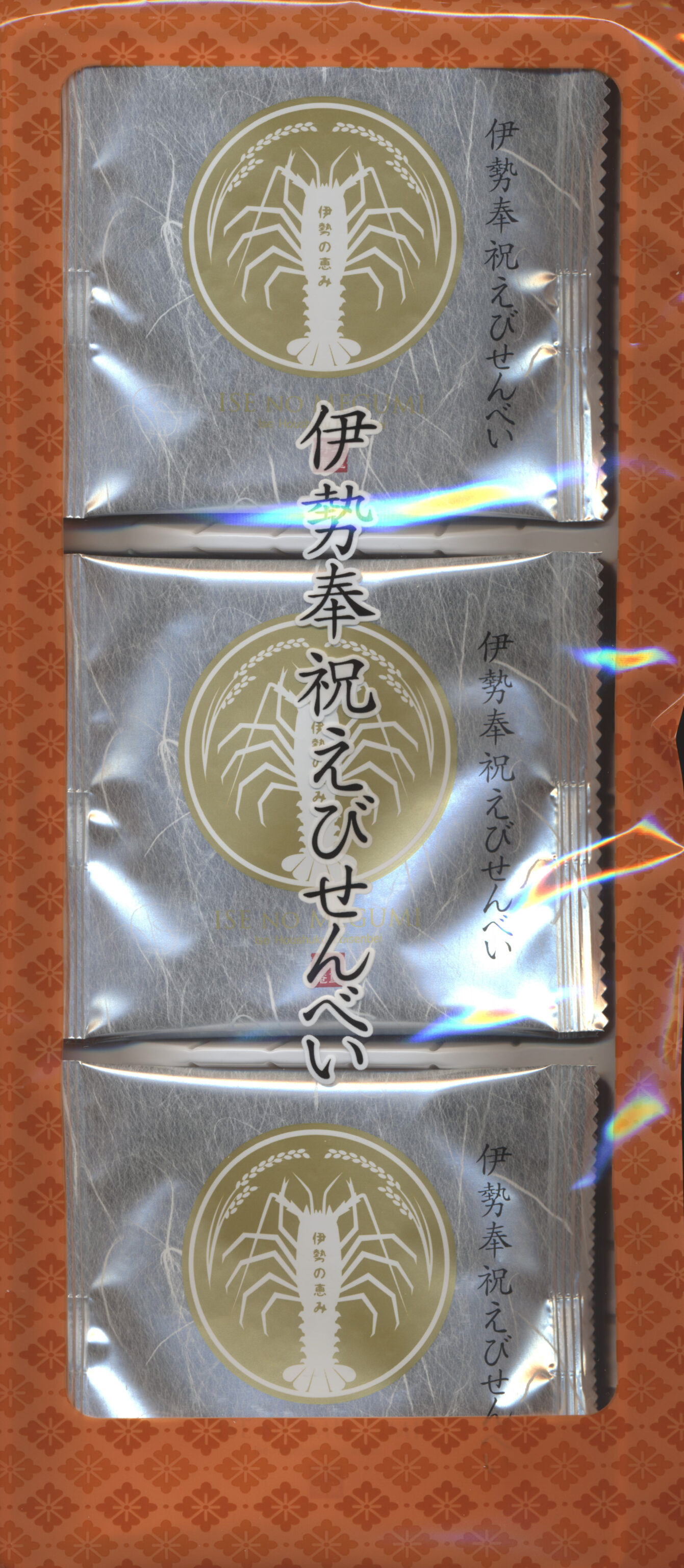
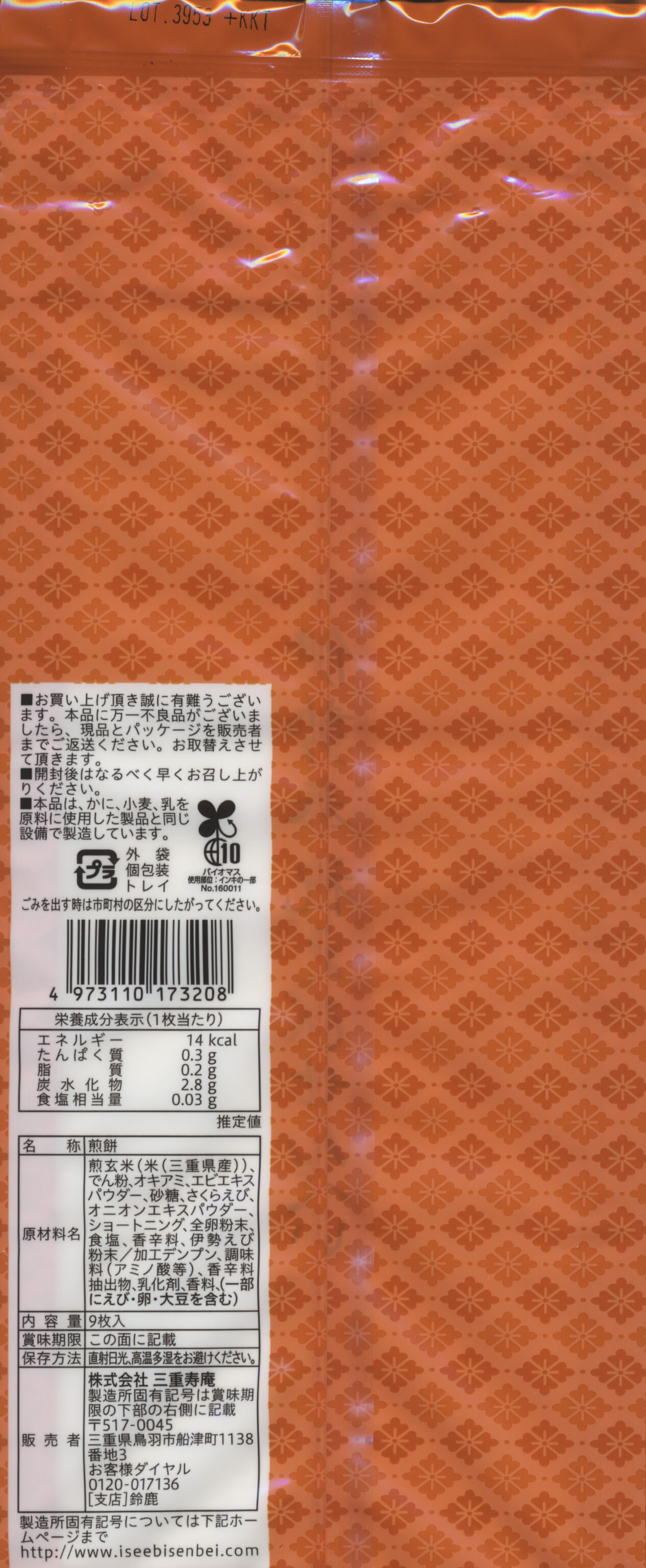
It is also available in less pretty packaging in case you just want some to eat rather than to give out as omiyage!
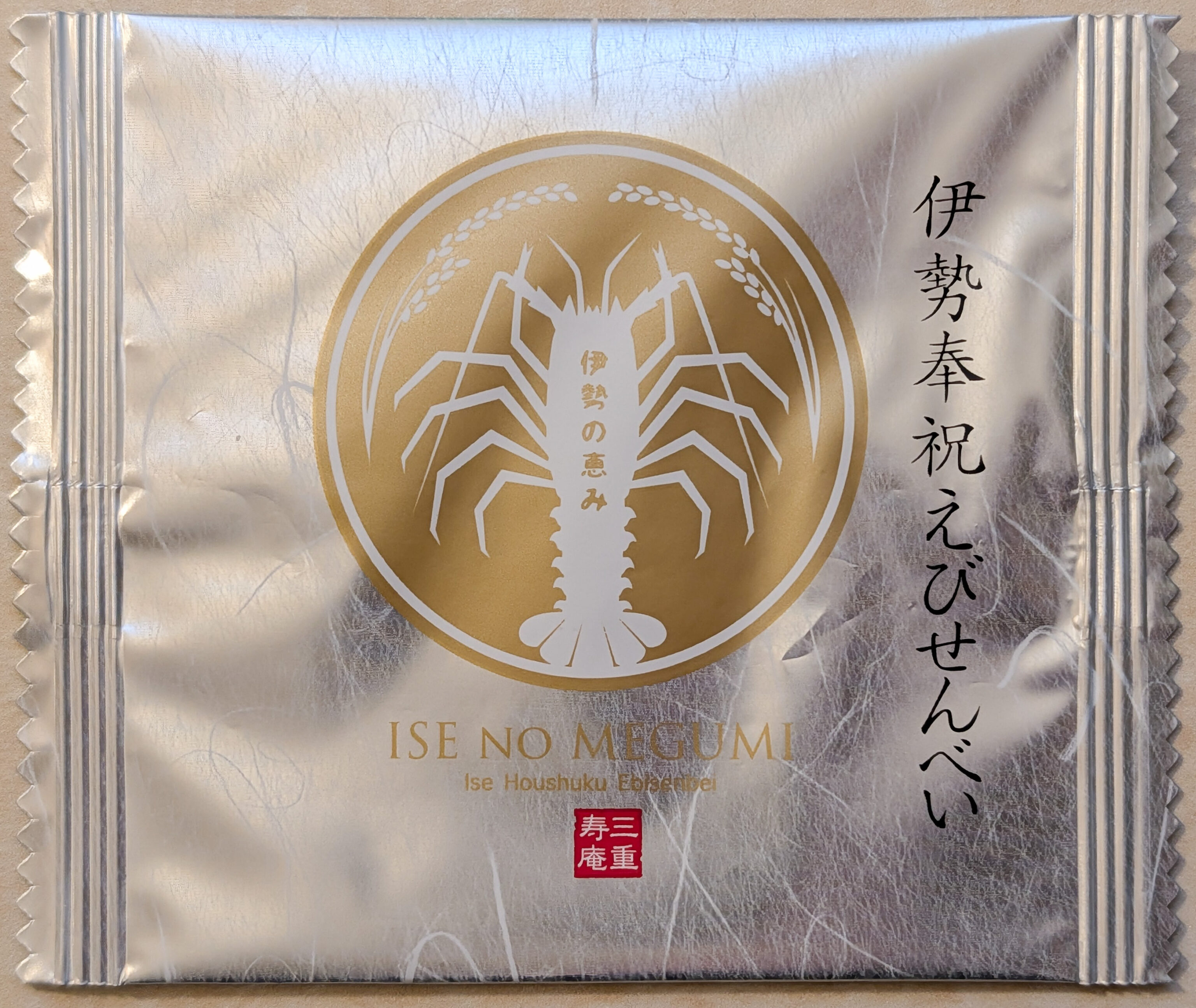
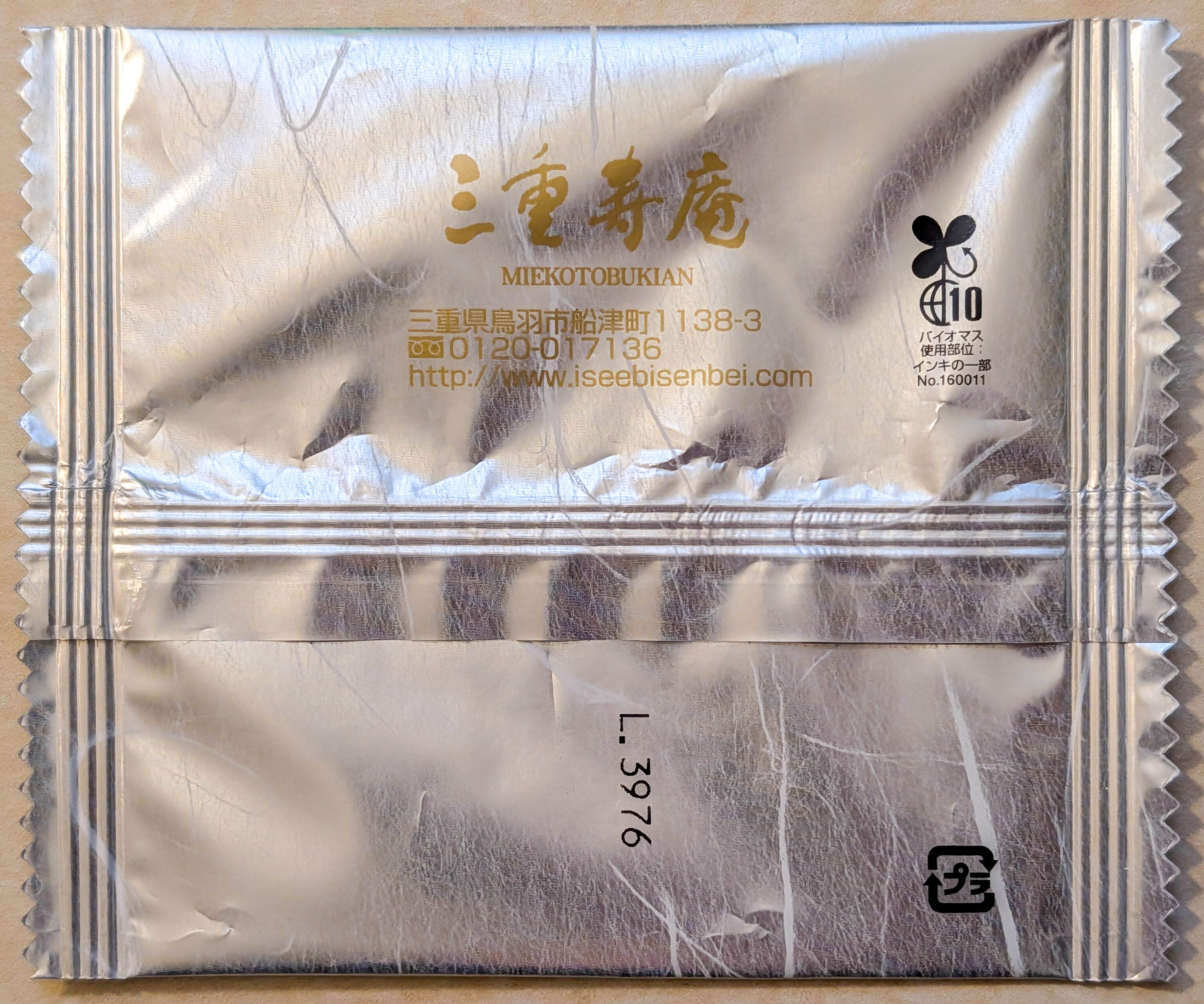
We photographed everything but the actual senbei!
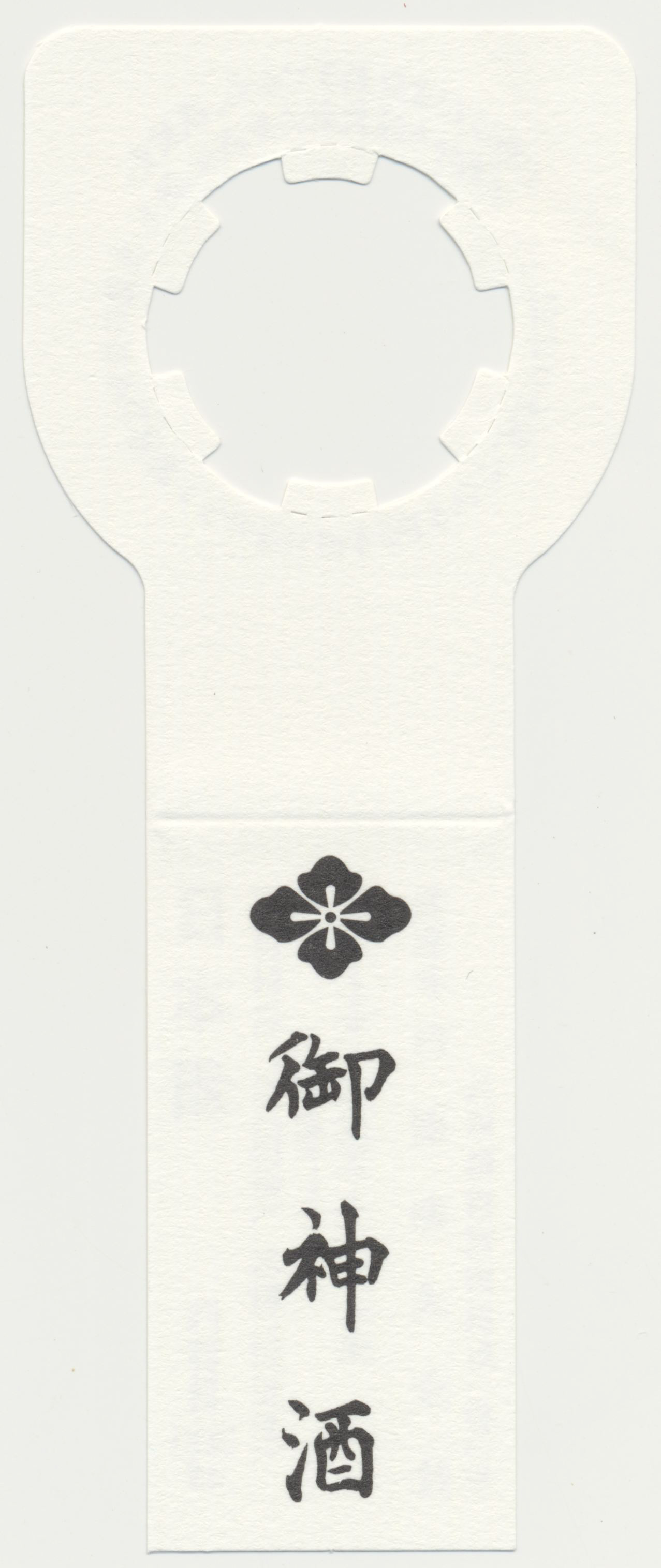
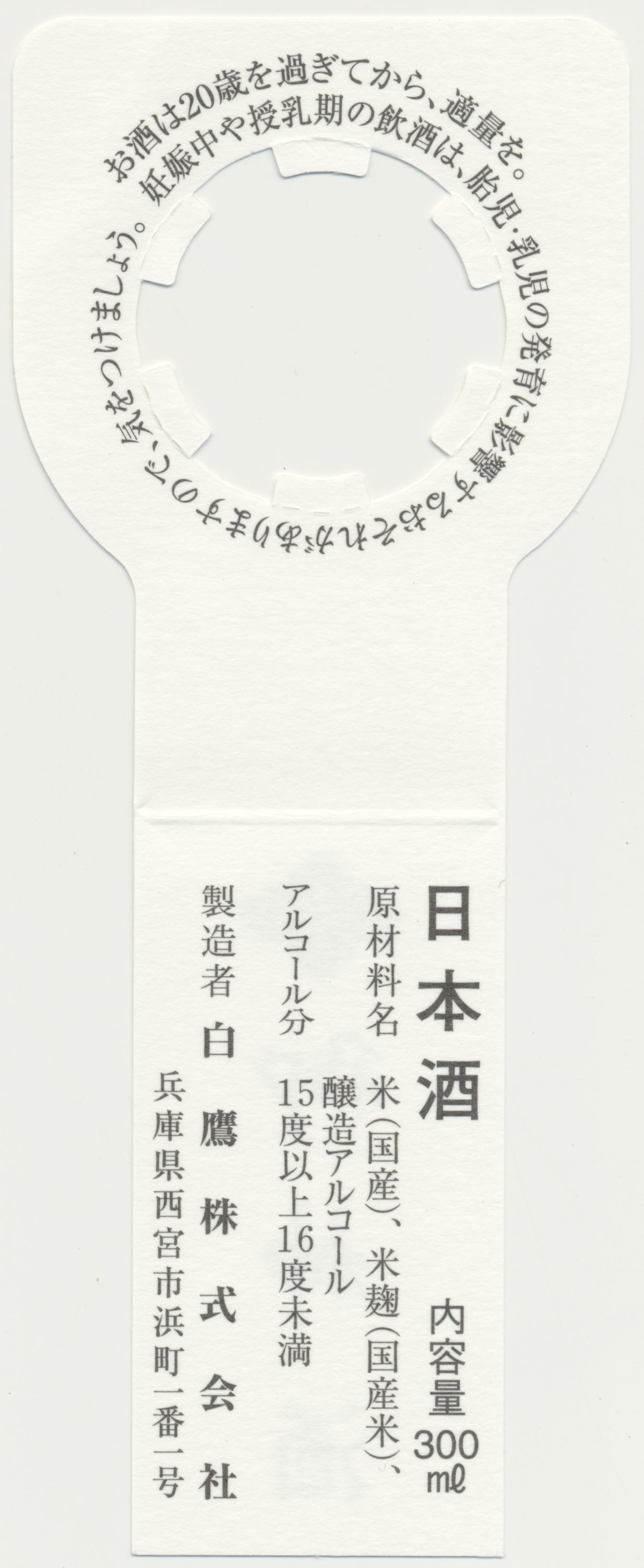
We also bought some 御神酒 omiki, the sake used as offerings to the kami. In particular, it was sake from Hakutaka, the Ise Jingu supplier whose barrels we saw at both the Naiku and Geku.
Ise Jingu Geku
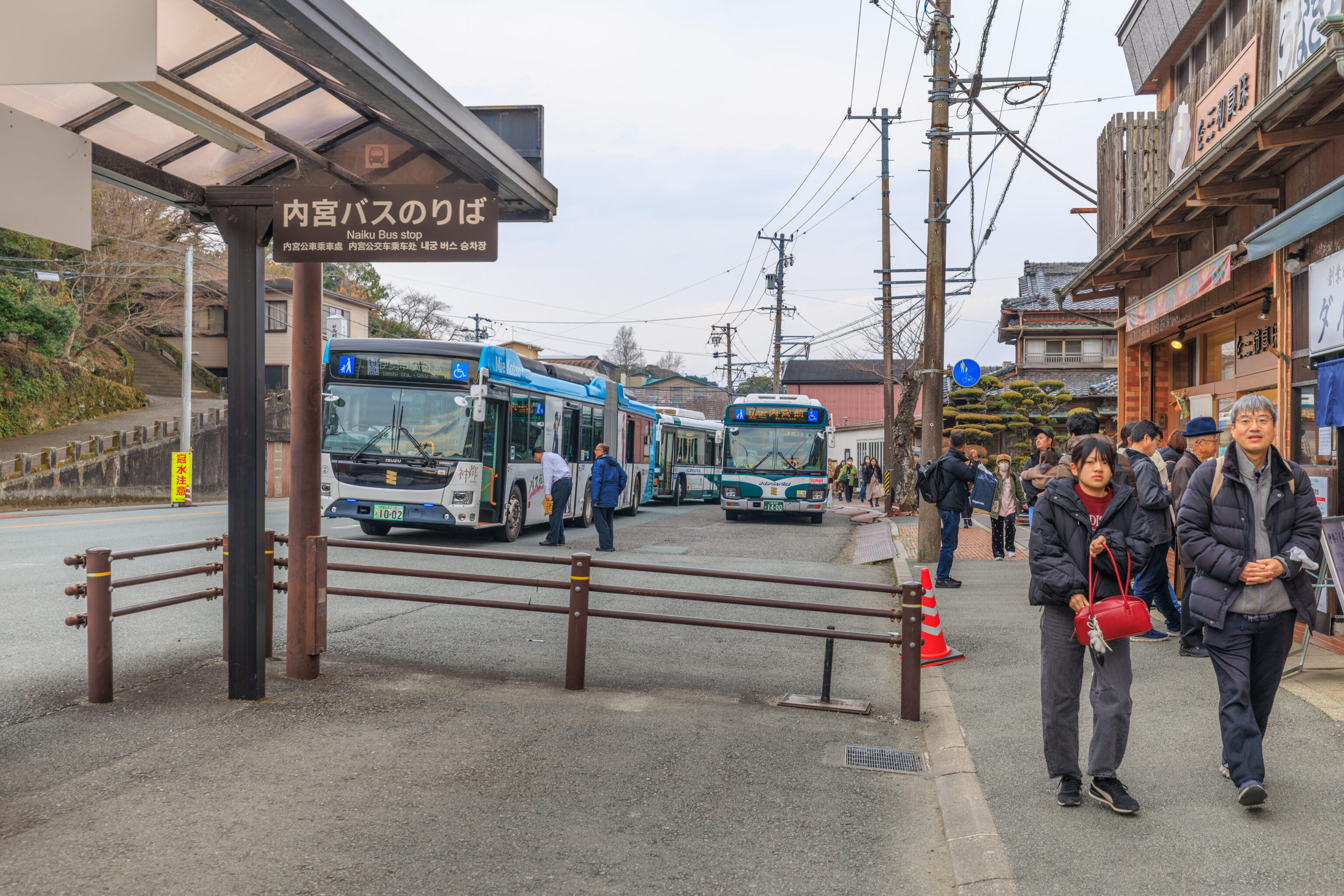
We decided to head over to the 外宮 Gekū, the outer shrine of Ise Jingu. The only sensible ways to get there are by bus or taxi. We decided to take the bus. The bus stop was near the shrine entrance and was pretty busy.
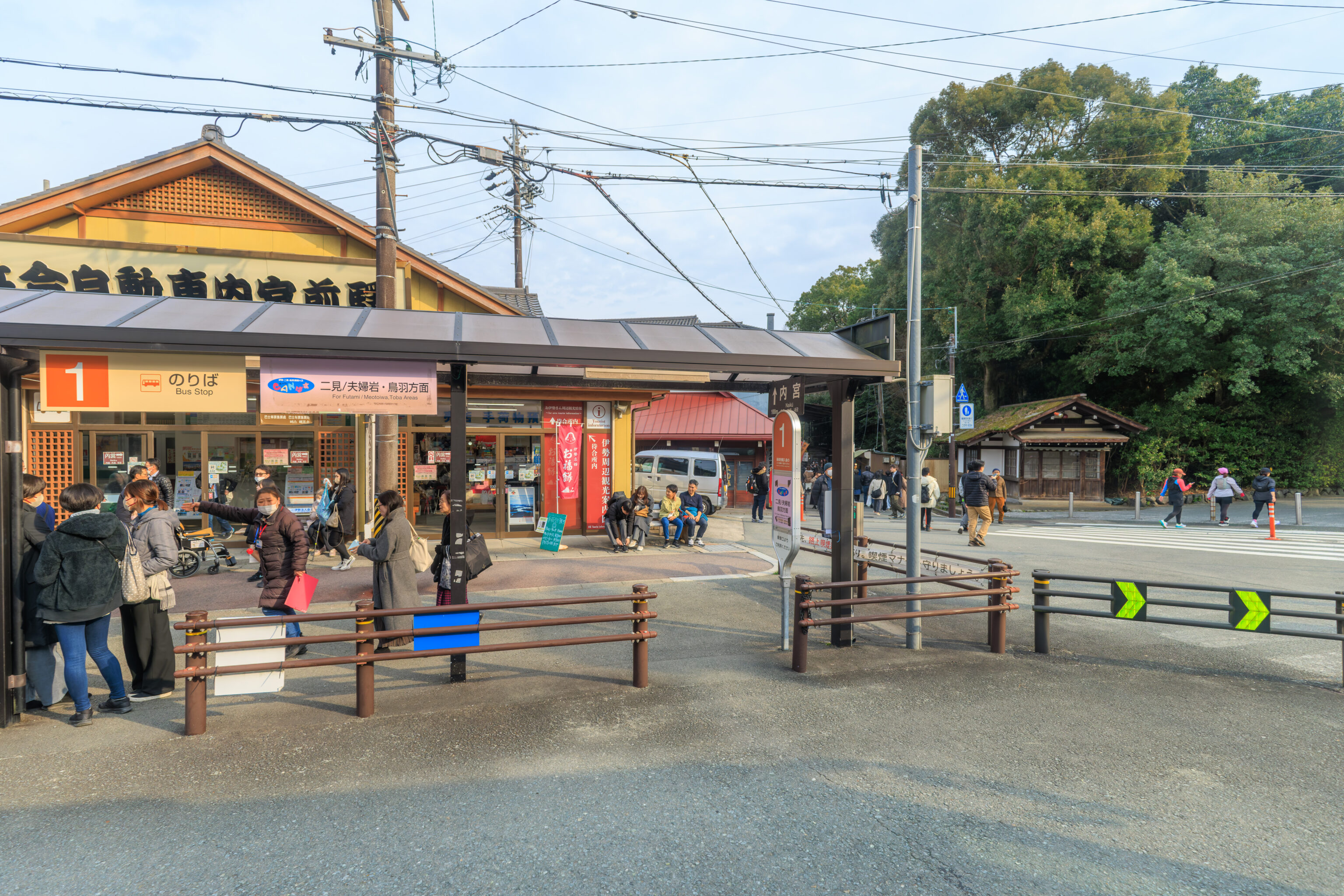
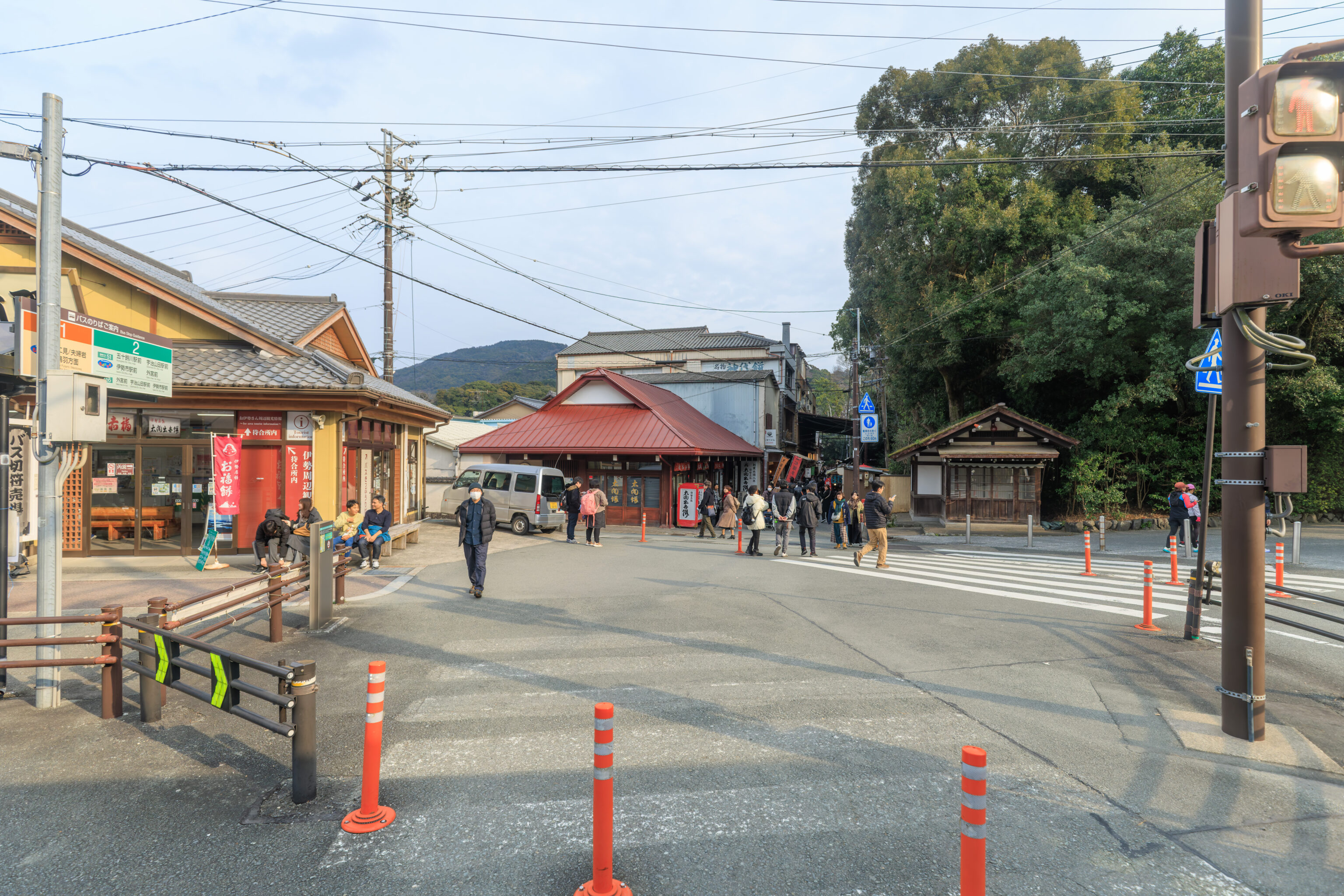
The view from the left side of the bus as we started to depart.
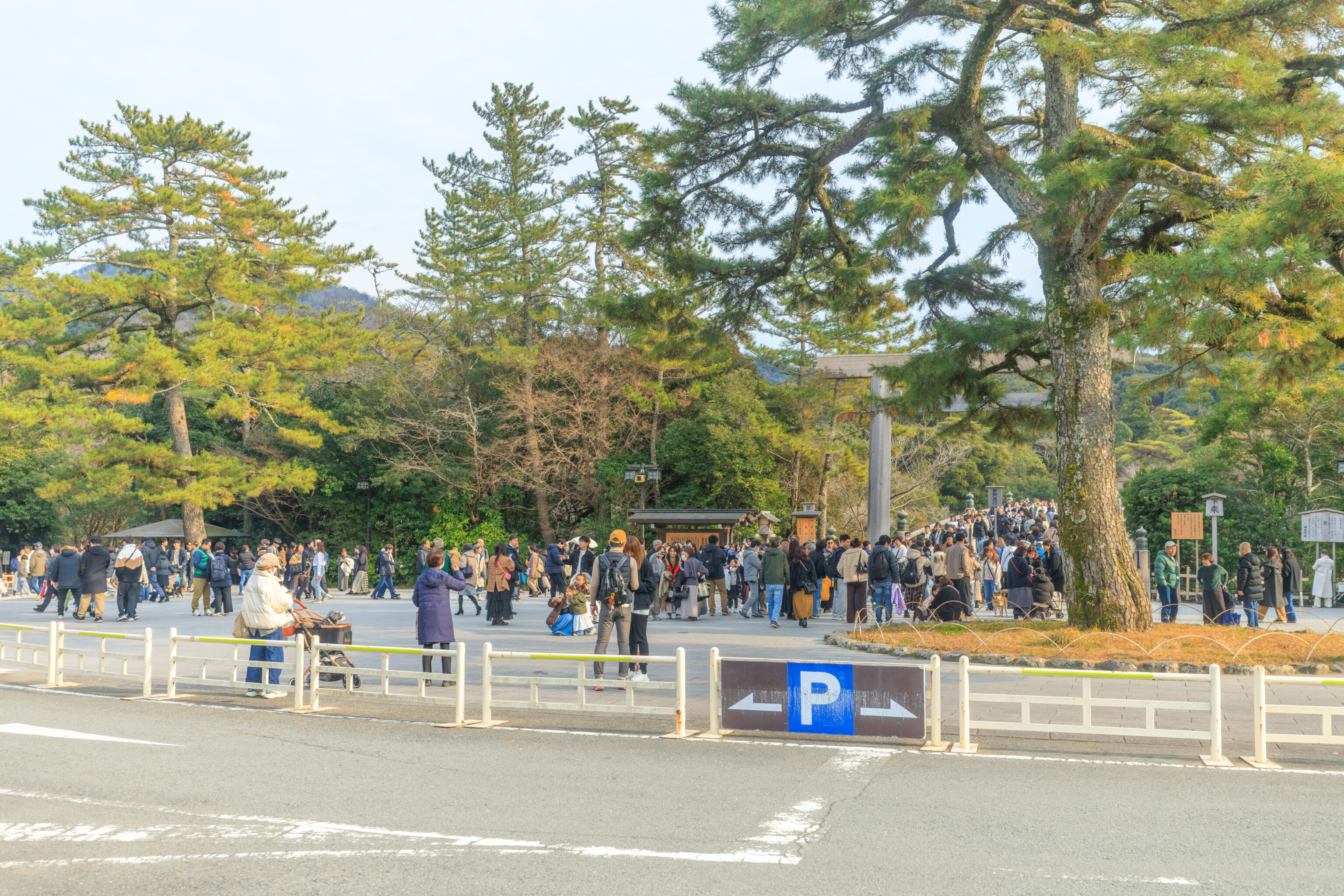
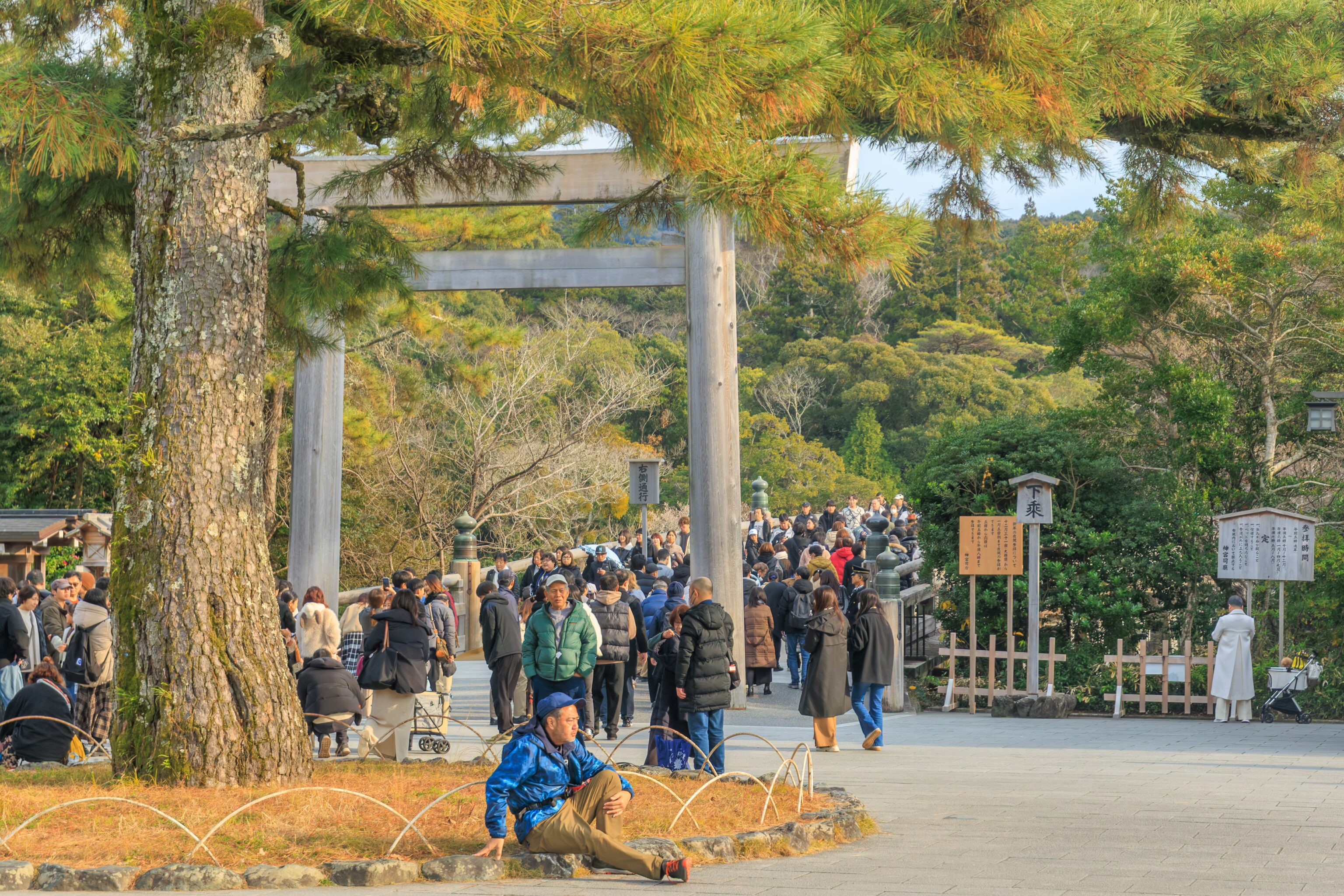
The entrance into the Naiku was much busier than when we had arrived in the morning!
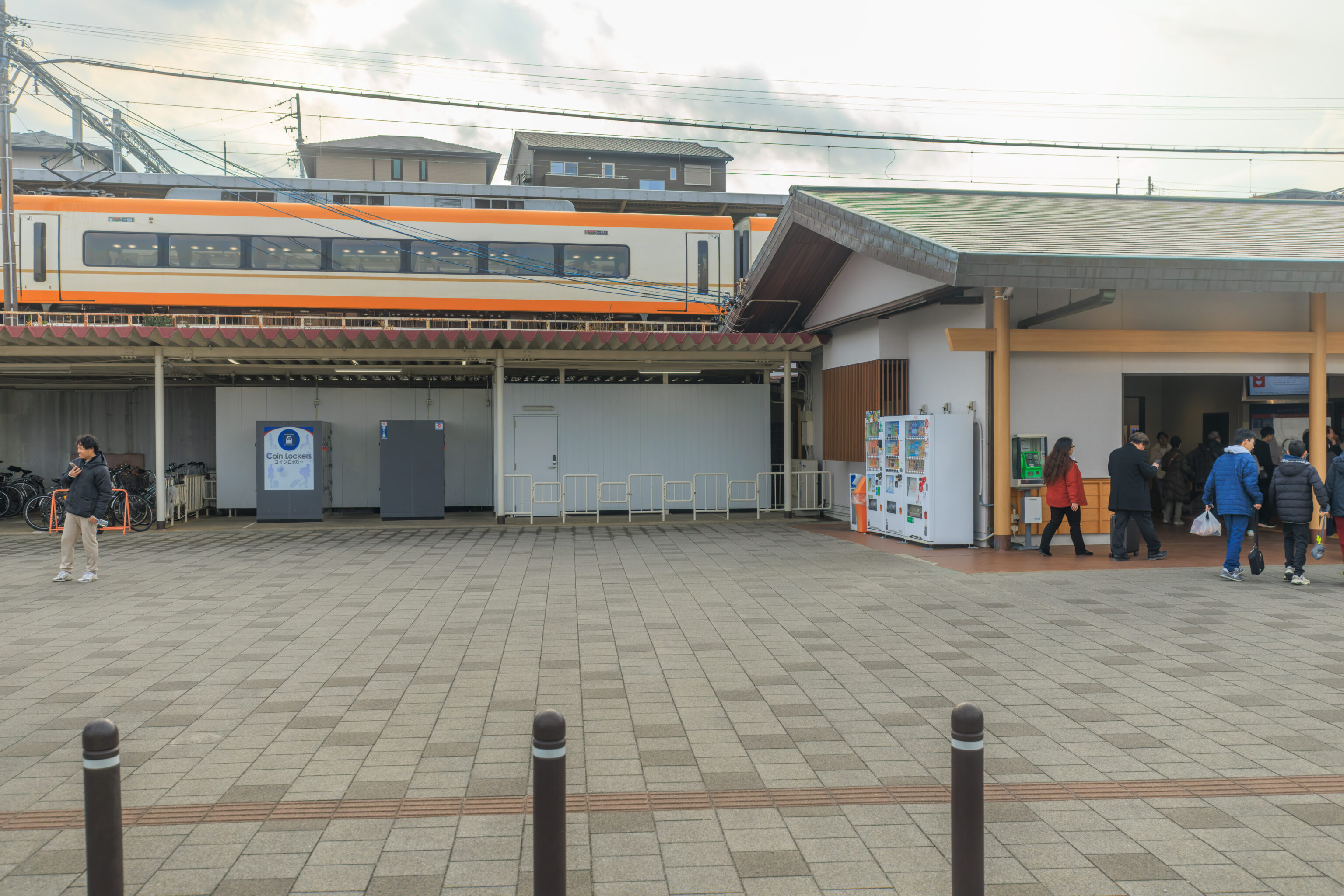
The bus stopped at Isuzugawa Station, a trip which took about 10 minutes. Much faster than our walk this morning from this station to the Naiku!
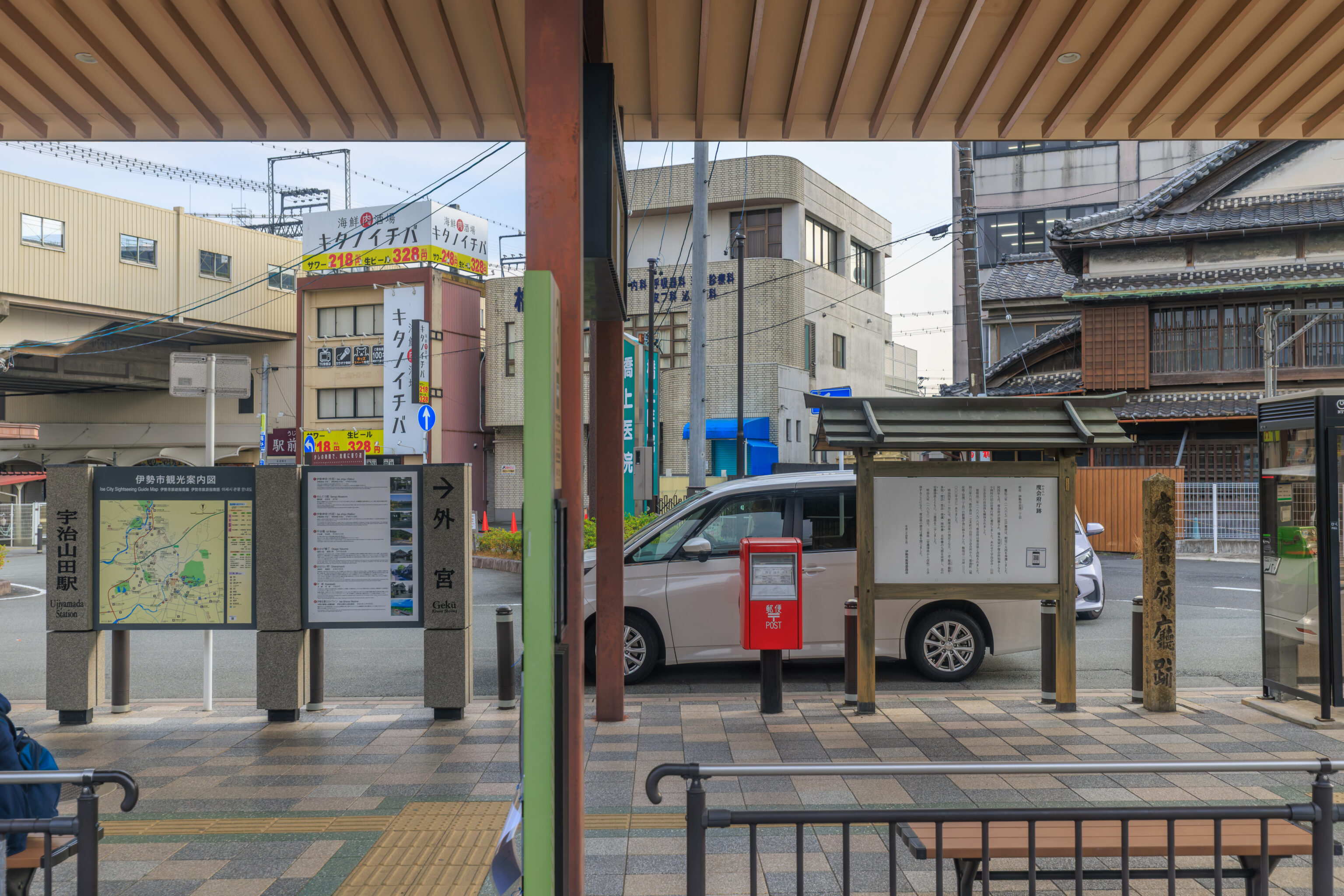
The bus also stopped at 宇治山田駅 Ujiyamada Station, the next stop on the Kintetsu Line, which took another ten minutes.
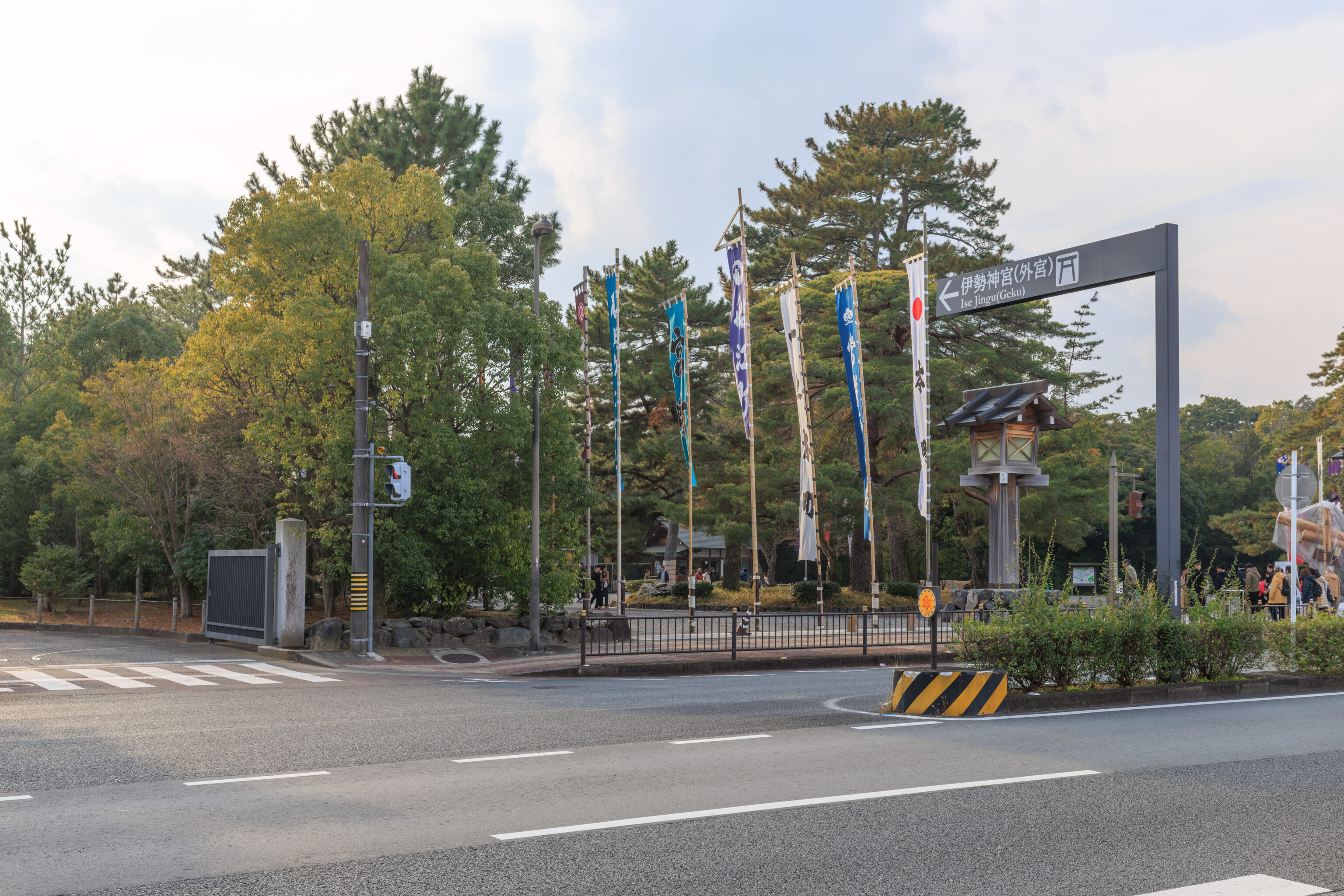
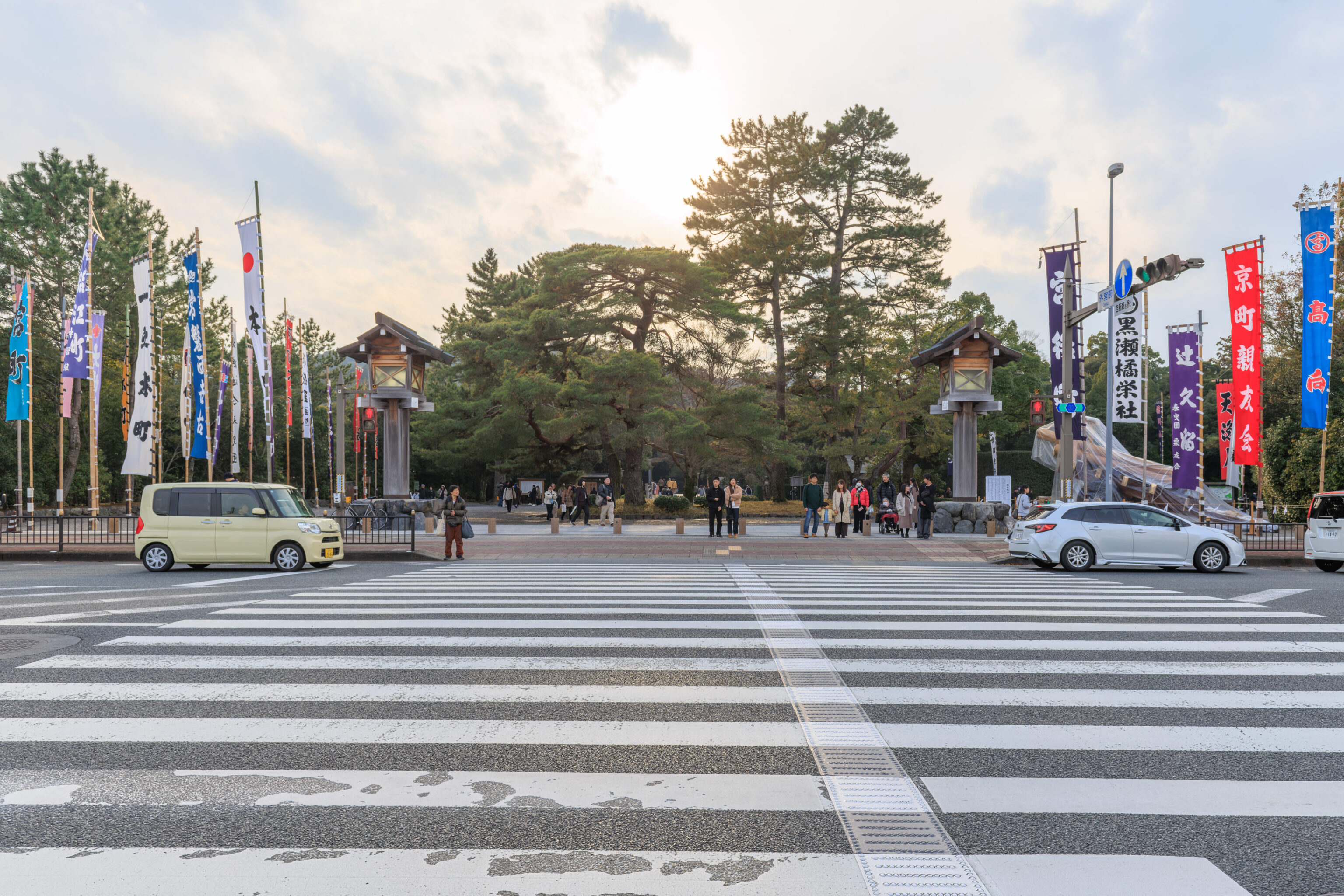
We arrived in front of the Geku after another ten minutes.
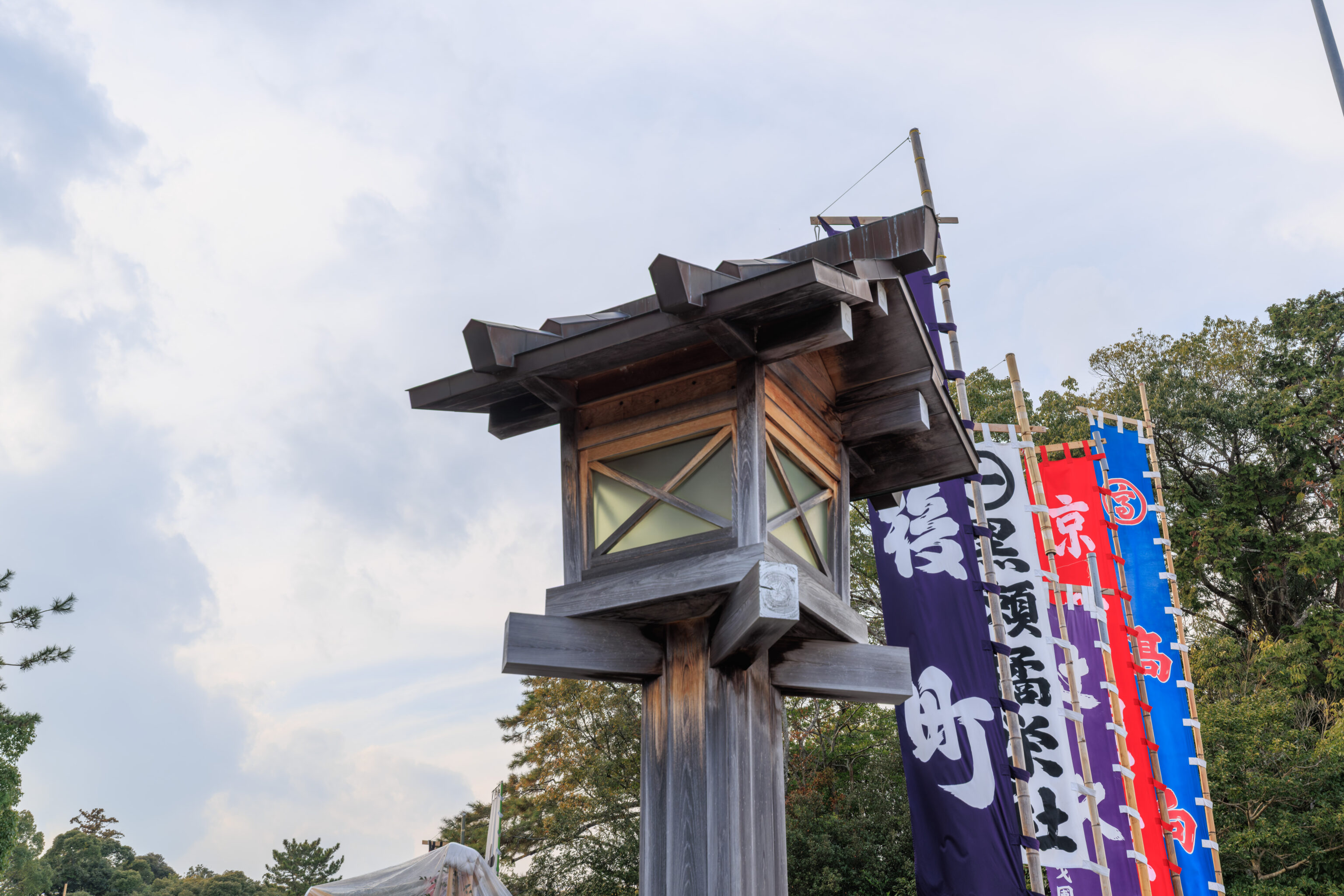
A close up of the two big wooden lanterns that were on either side of the crosswalk leading to the Geku.
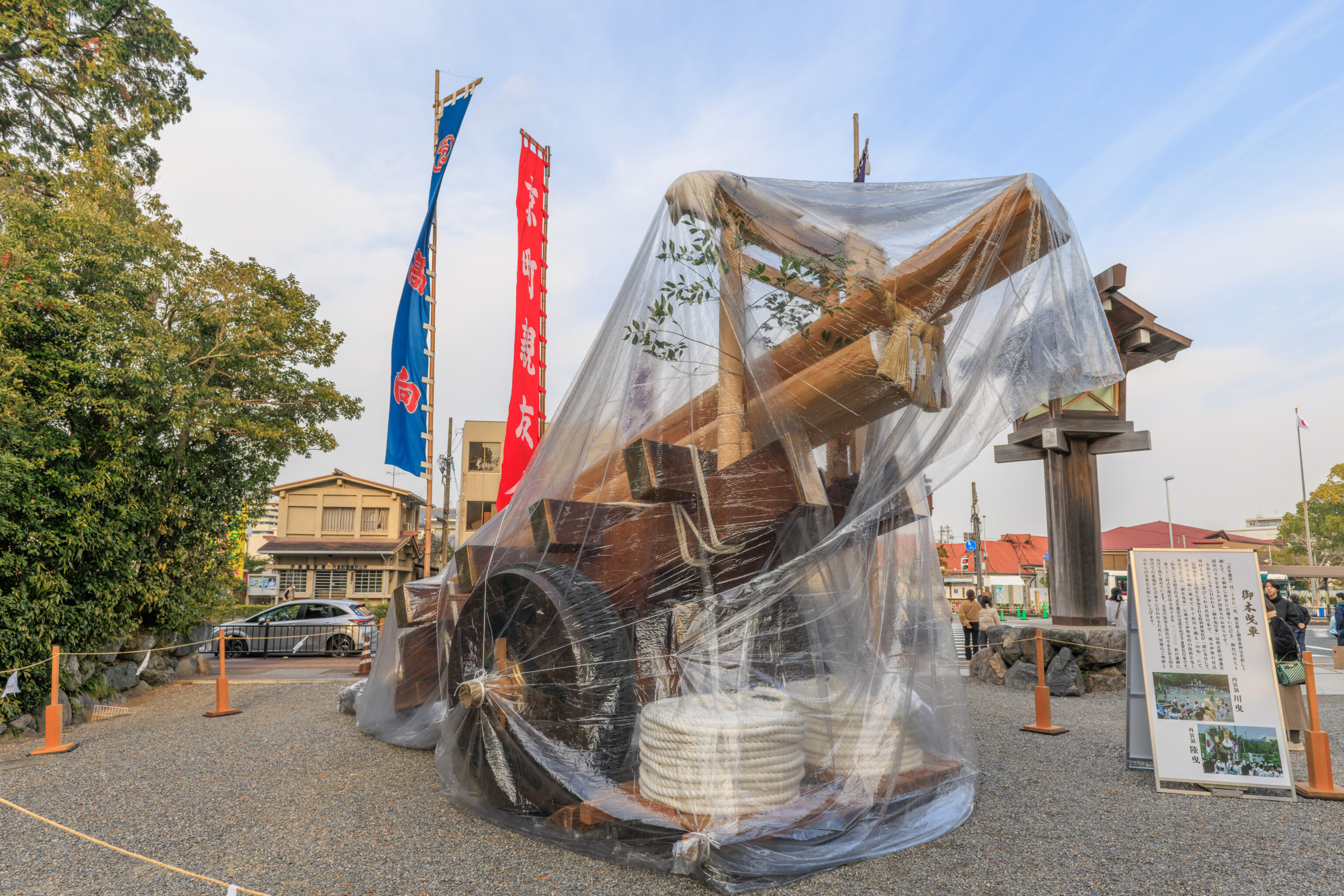
We noticed this…. wooden thing… wrapped in what looked like a giant plastic bag! What is it? Luckily, there was a sign to explain:
Okihiki Guruma
The Shikinen Sengu (periodic rebuilding of the shrine) is Japan's largest festival, held once every twenty years, in which the main sanctuary, sacred garments, and treasures are renewed, the deity is invited to move to the new shrine, and prayers are offered for the longevity of the reign and the peace of the nation.

The Mikibiki Ceremony, to be held in 2026 and 2027, is a folk event in which timber for the construction of the new main sanctuary is carried into the shrine grounds. Local residents of Ise (former residents of the shrine territory) and special residents from all over the country participate together in this service. At the Inner Shrine, the timber is carried up the Isuzu River on a wooden sled in a "river pull," and at the Outer Shrine, it is carried on a "timber puller" along the land routes of Ise City in a "land pull." This is an important event aimed at the completion of the Shikinen Sengu.

The 63rd Shikinen Sengu is currently underway, with the relocation scheduled for the autumn of 2033. We ask for your understanding and heartfelt support so that this solemn national ceremony, praying for the prosperity of the Imperial Family and the peace of the people, can be conducted according to ancient customs.
– Text from a sign, translated using Google.
This seems to be a 陸曳 rikuhiki, the timber puller referenced on the sign, used for the ceremonial hauling of timber to the Geku for the Shikinen Sengu.
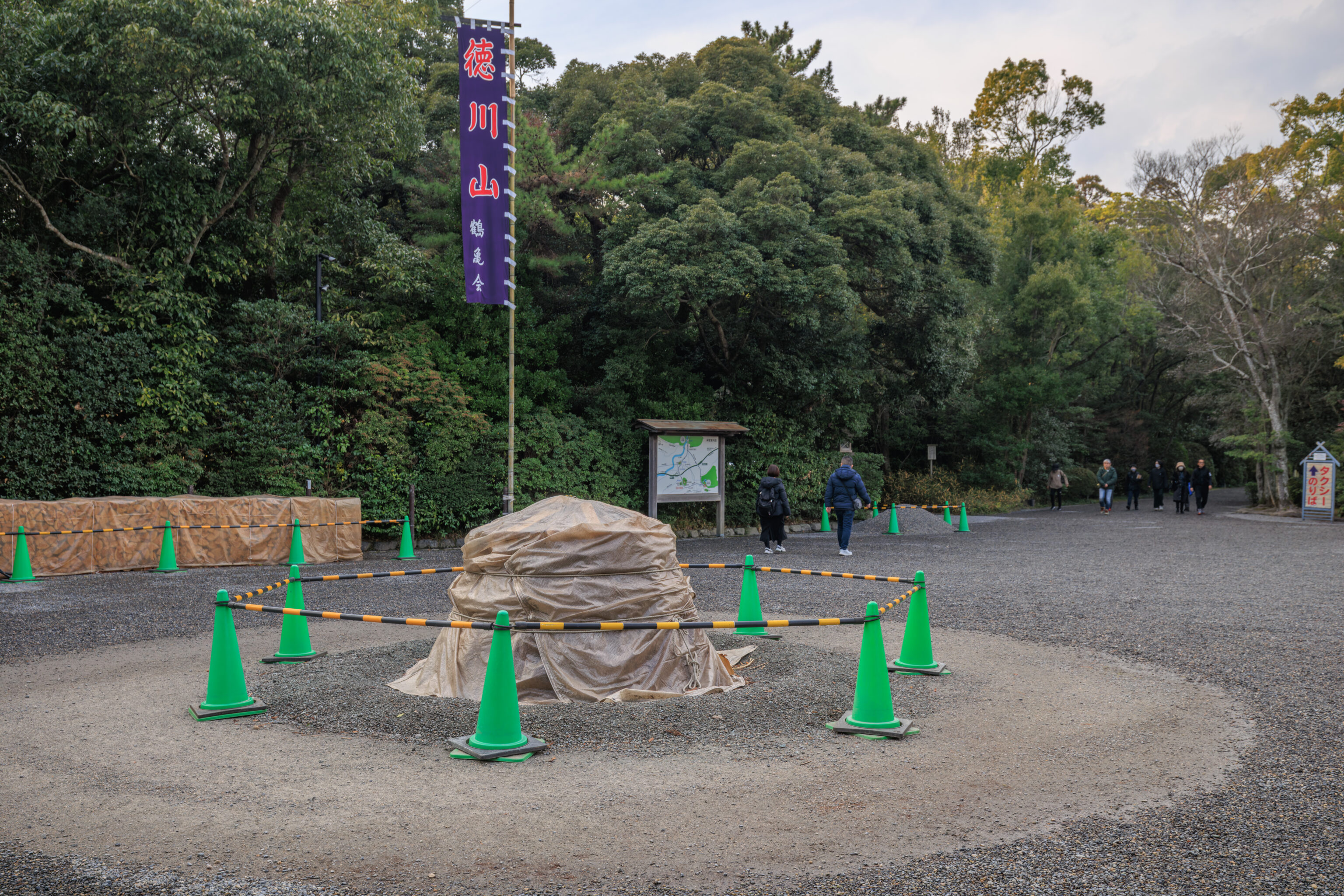
This seems to be a covered pile of wood with additional covered wood off to the side. Is it for a bonfire?
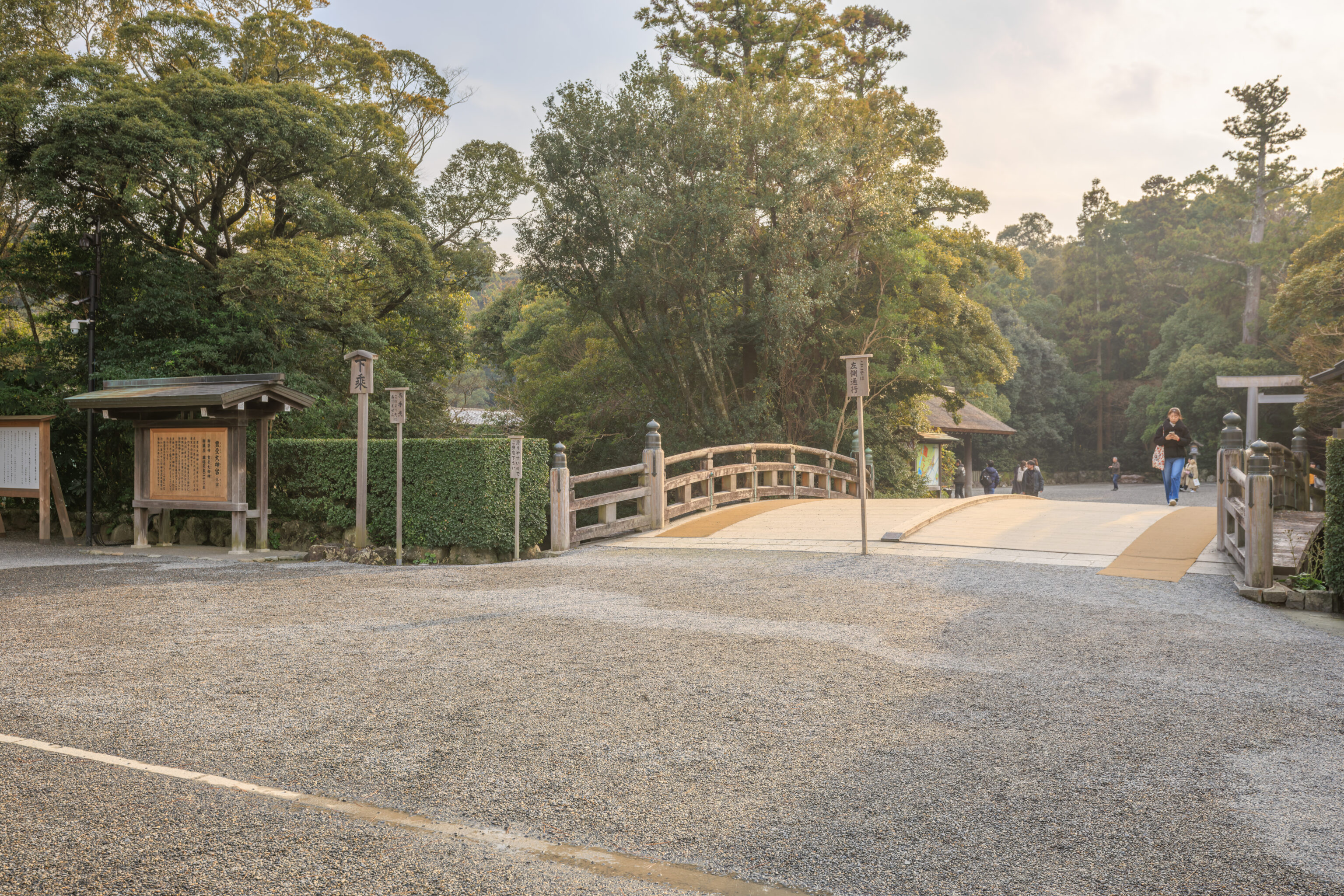
We crossed over this small bridge at the entrance to the shrine.
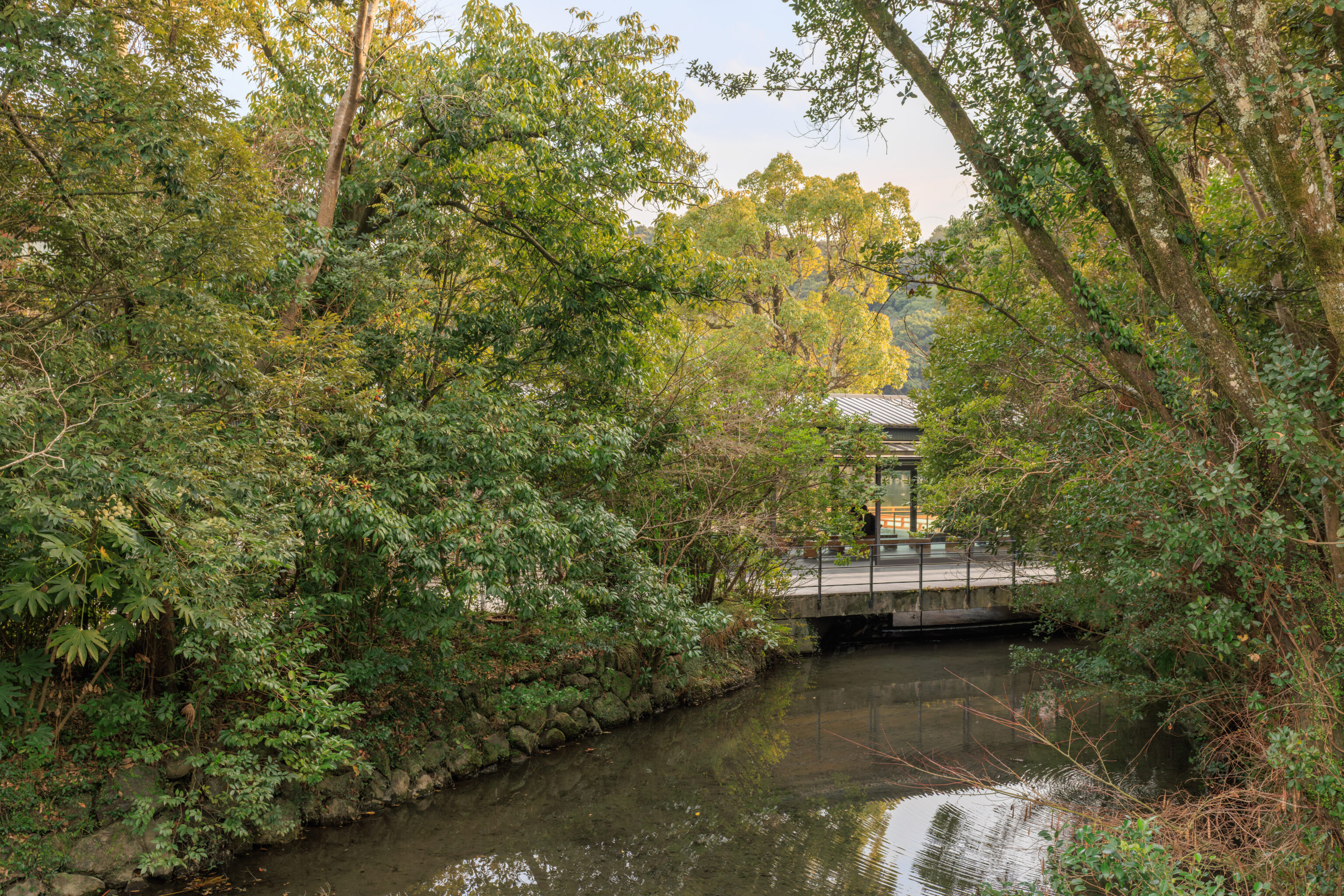
There seems to be something there to the east.
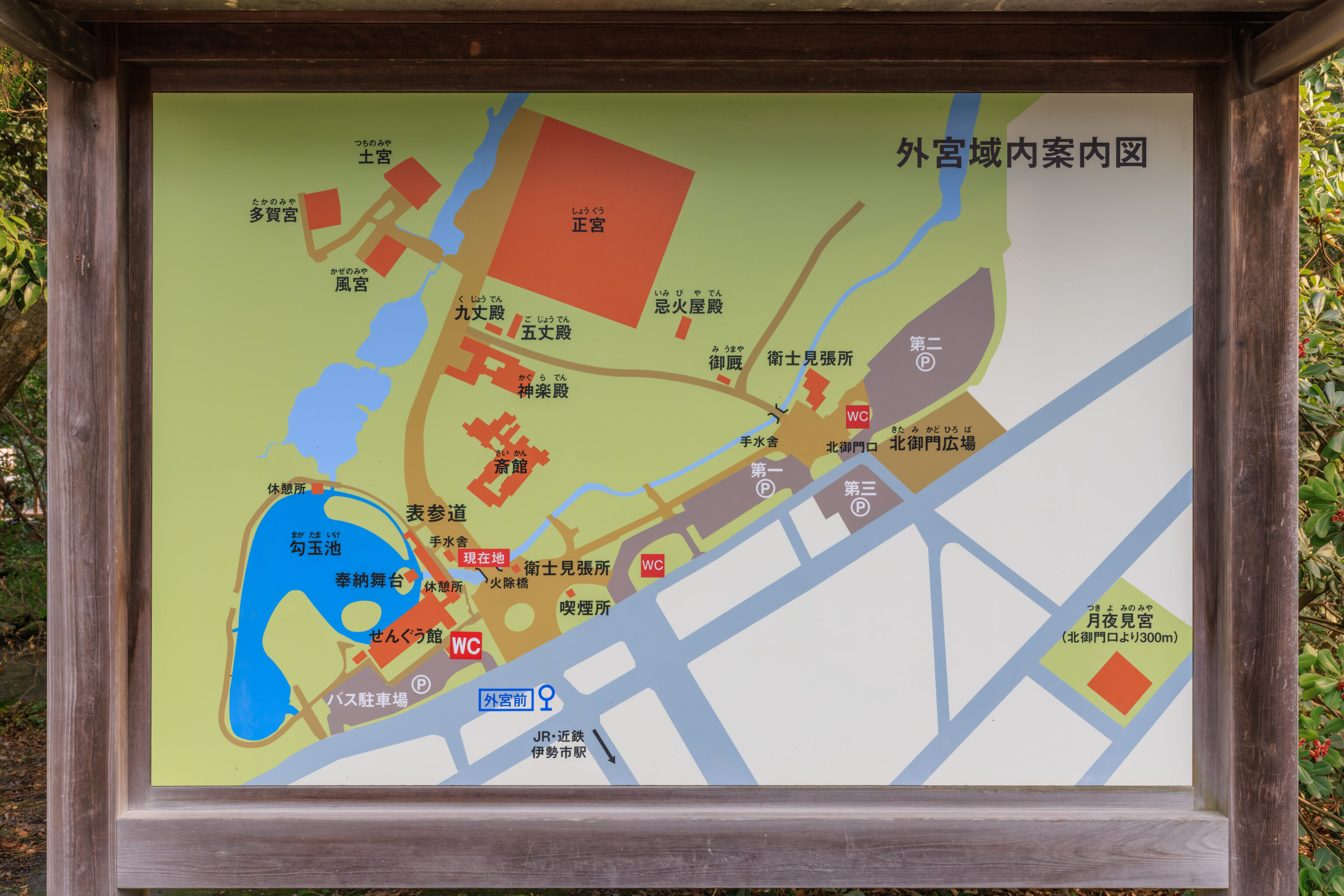
Ah, a map! It looks like we were looking at a rest area with a pond, the 勾玉池 Magatama-ike, beyond it.
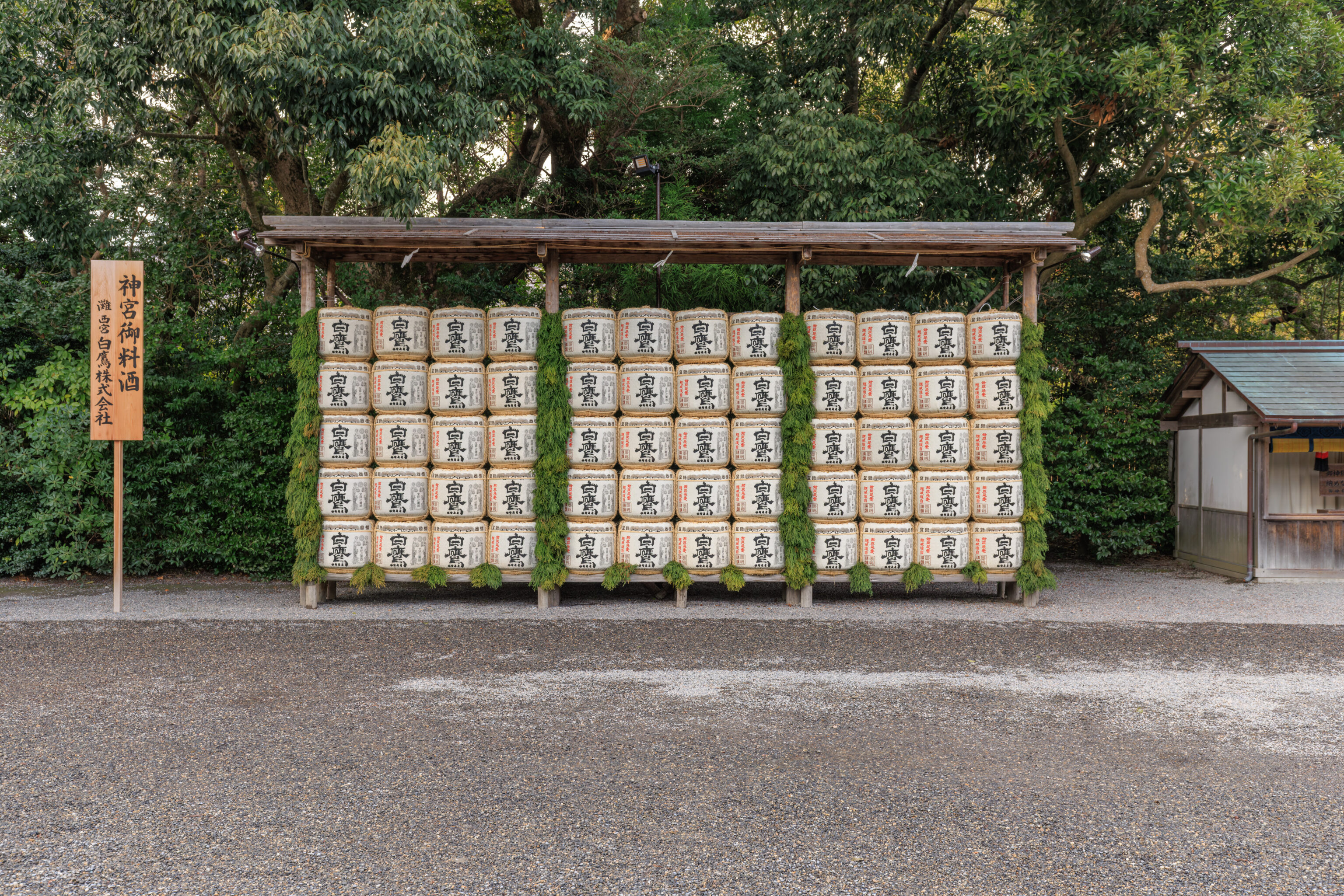
The same barrels of sake that we saw at the Naiku!
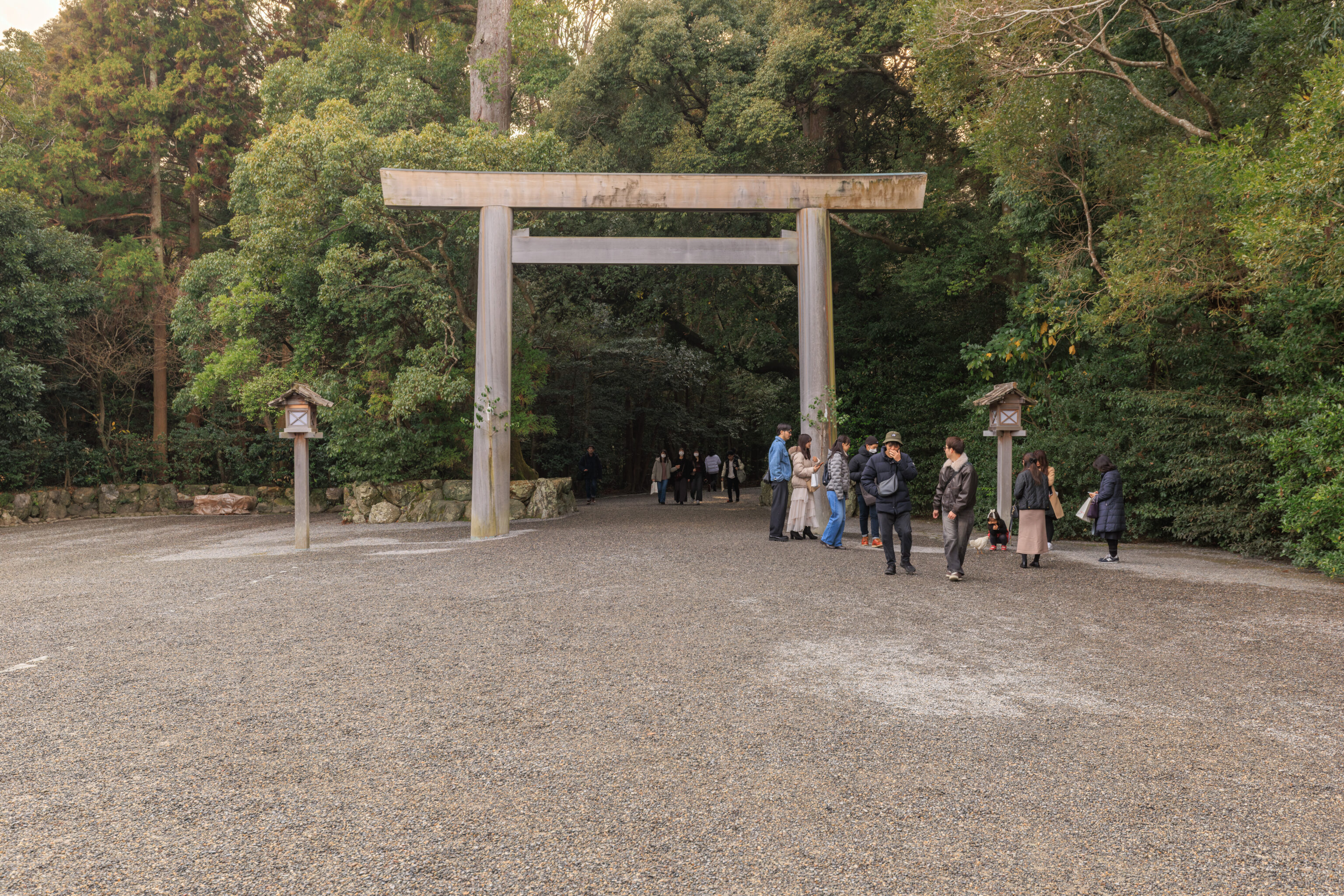
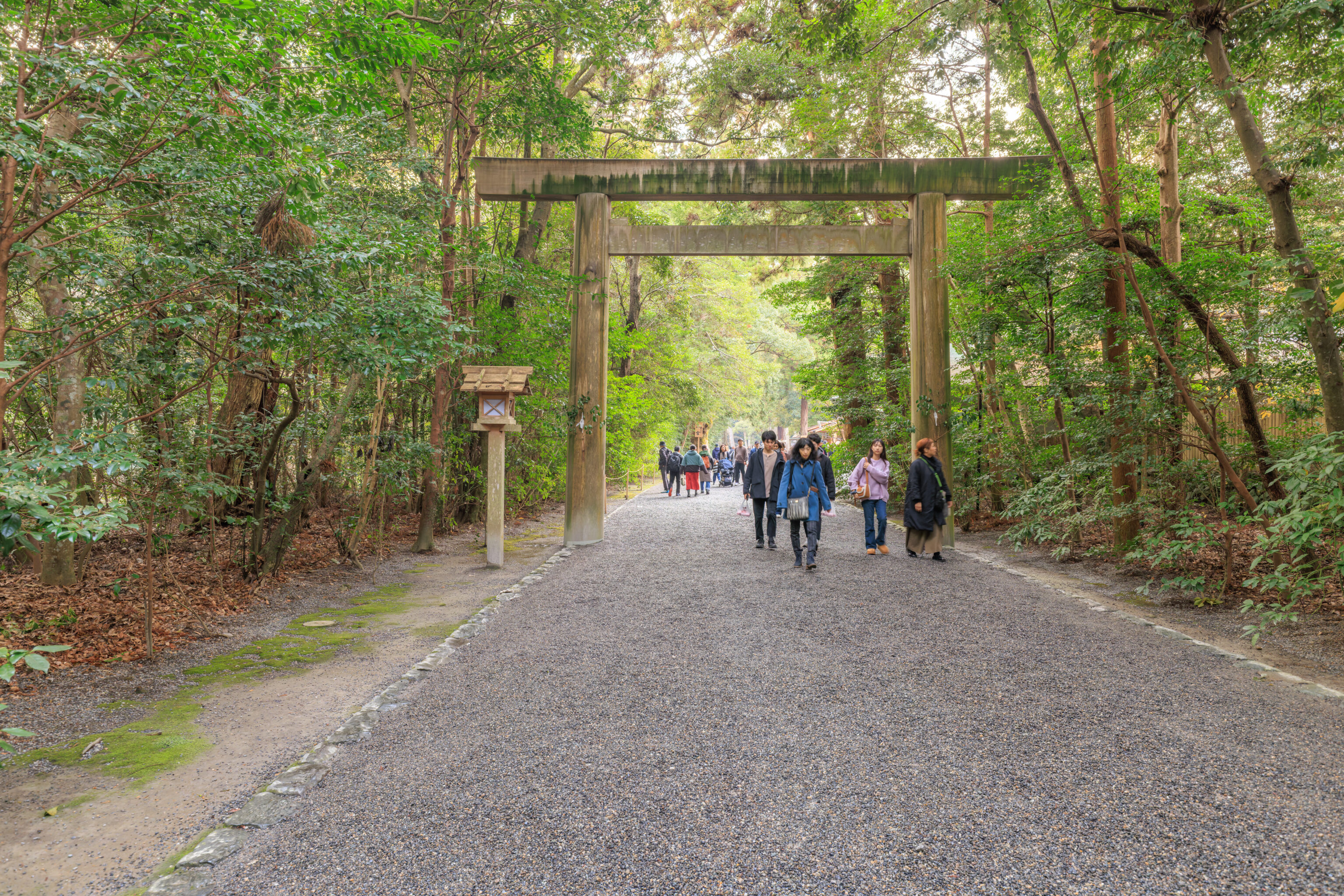
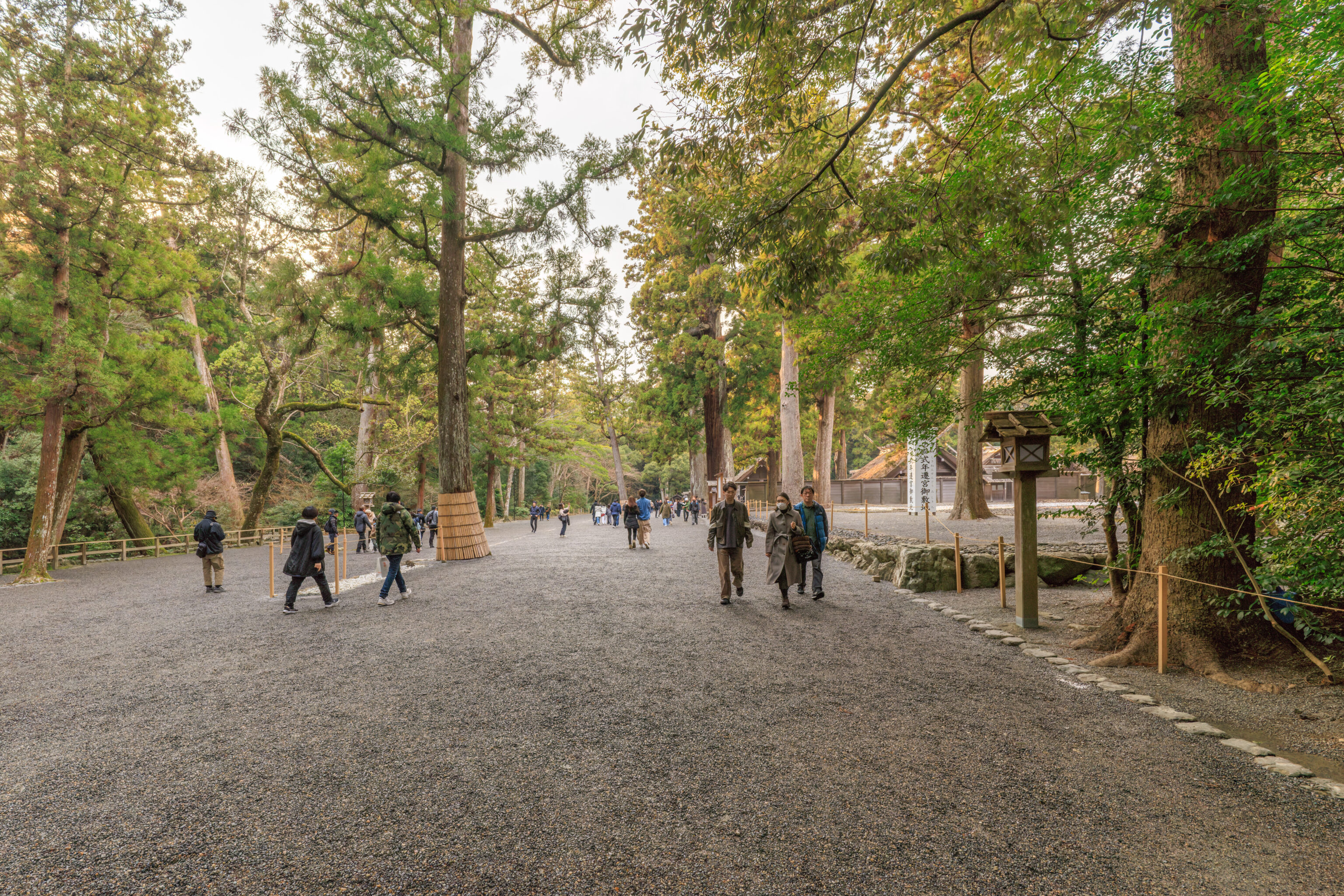
We continued on towards the Geku, passing through the outermost torii. It was much less busy here, possibly because you’re actually supposed to visit the Geku before the Naiku. Oops.
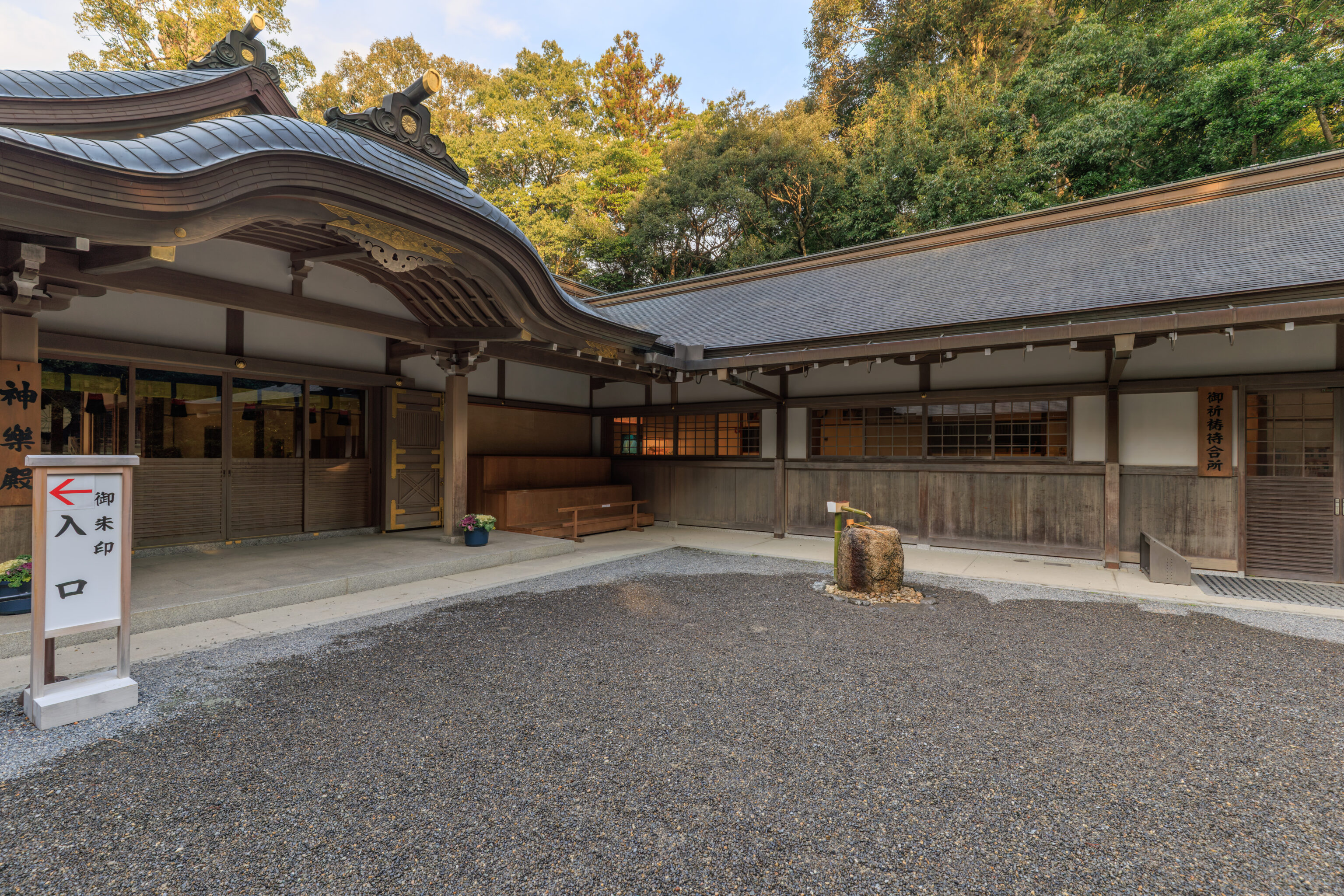
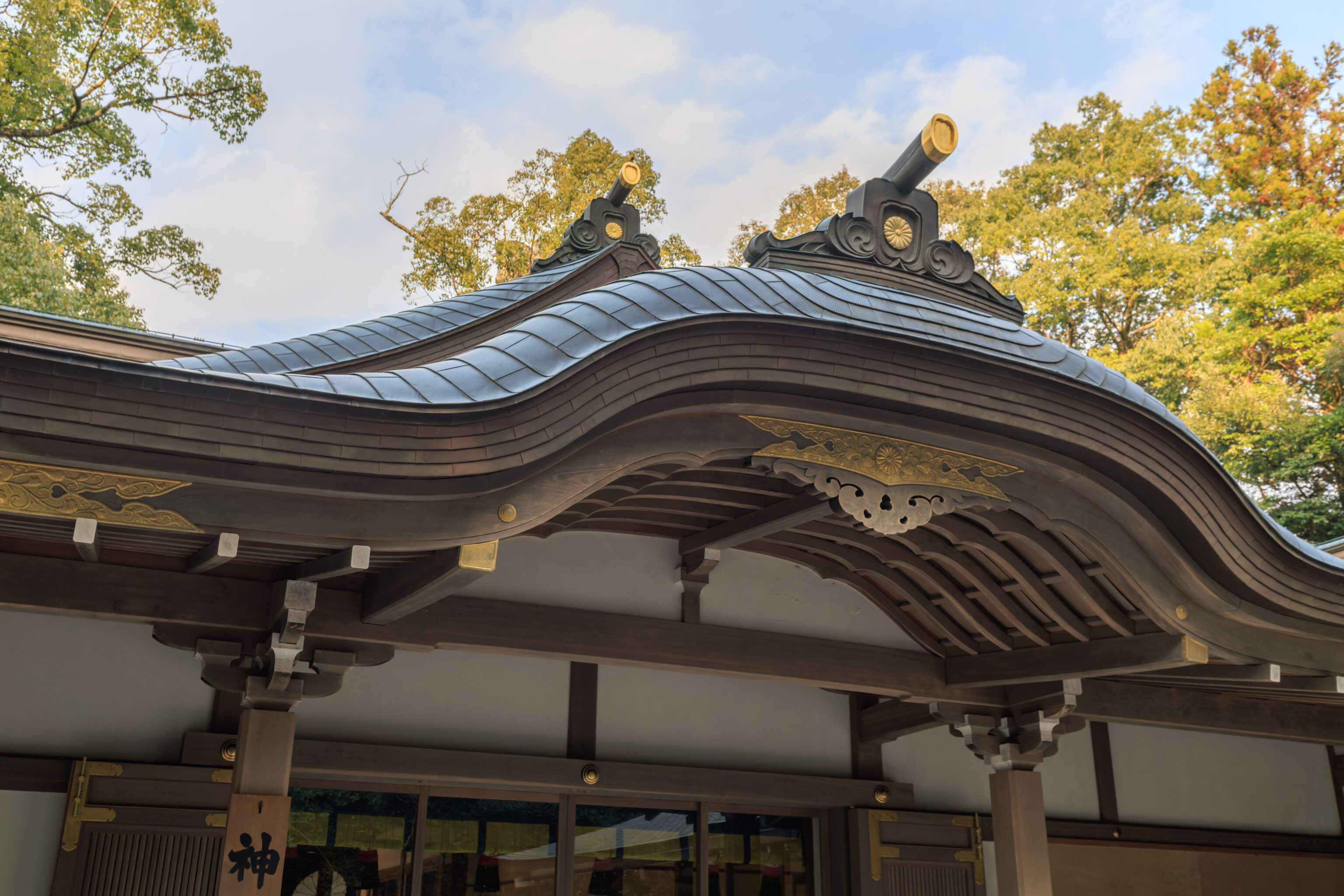
This seems to be the Geku’s 神楽殿 Kagura-den.
Just a little bit to the west, we saw a familiar white pillar.
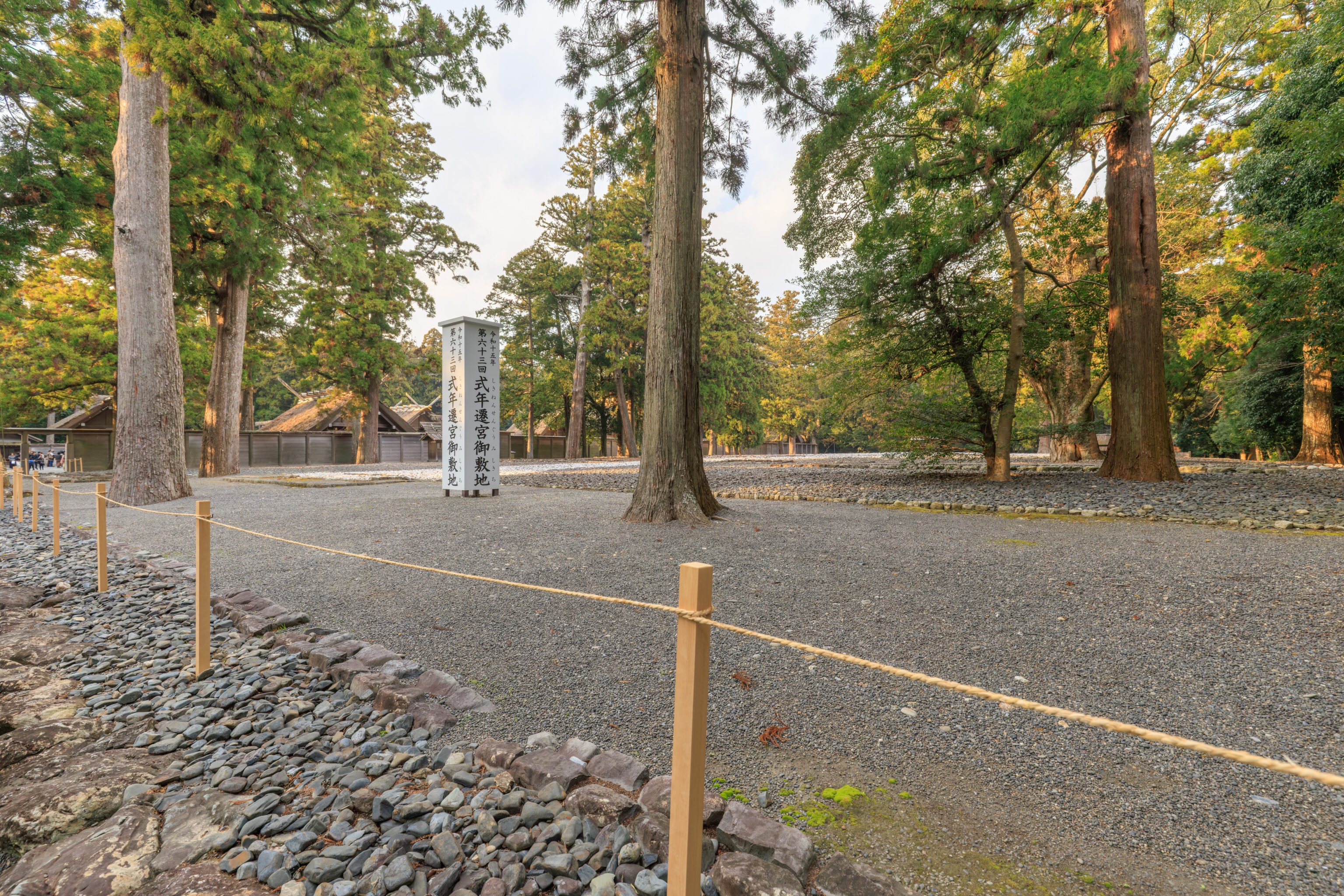
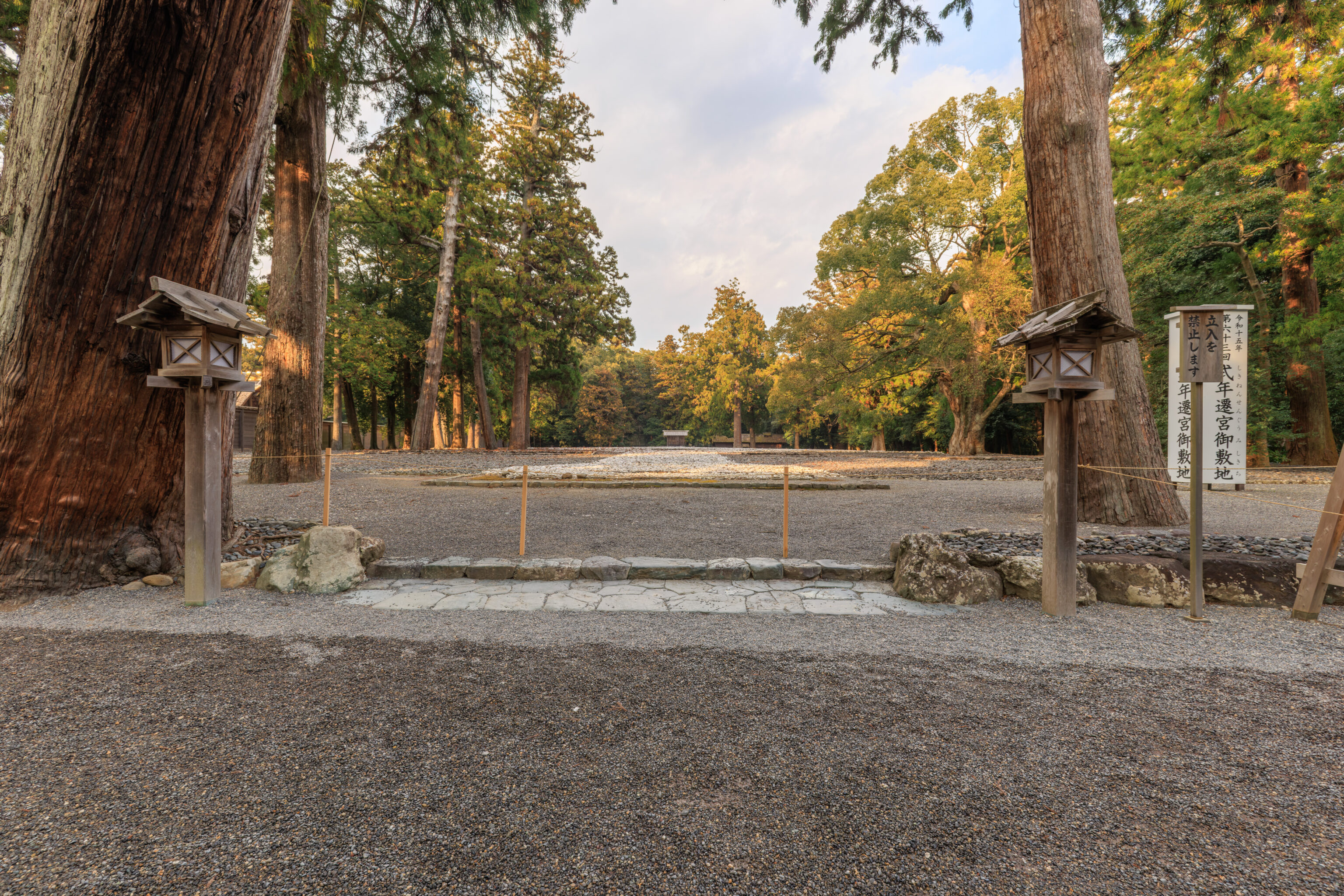
This is the spot where the replacement Geku will be built.
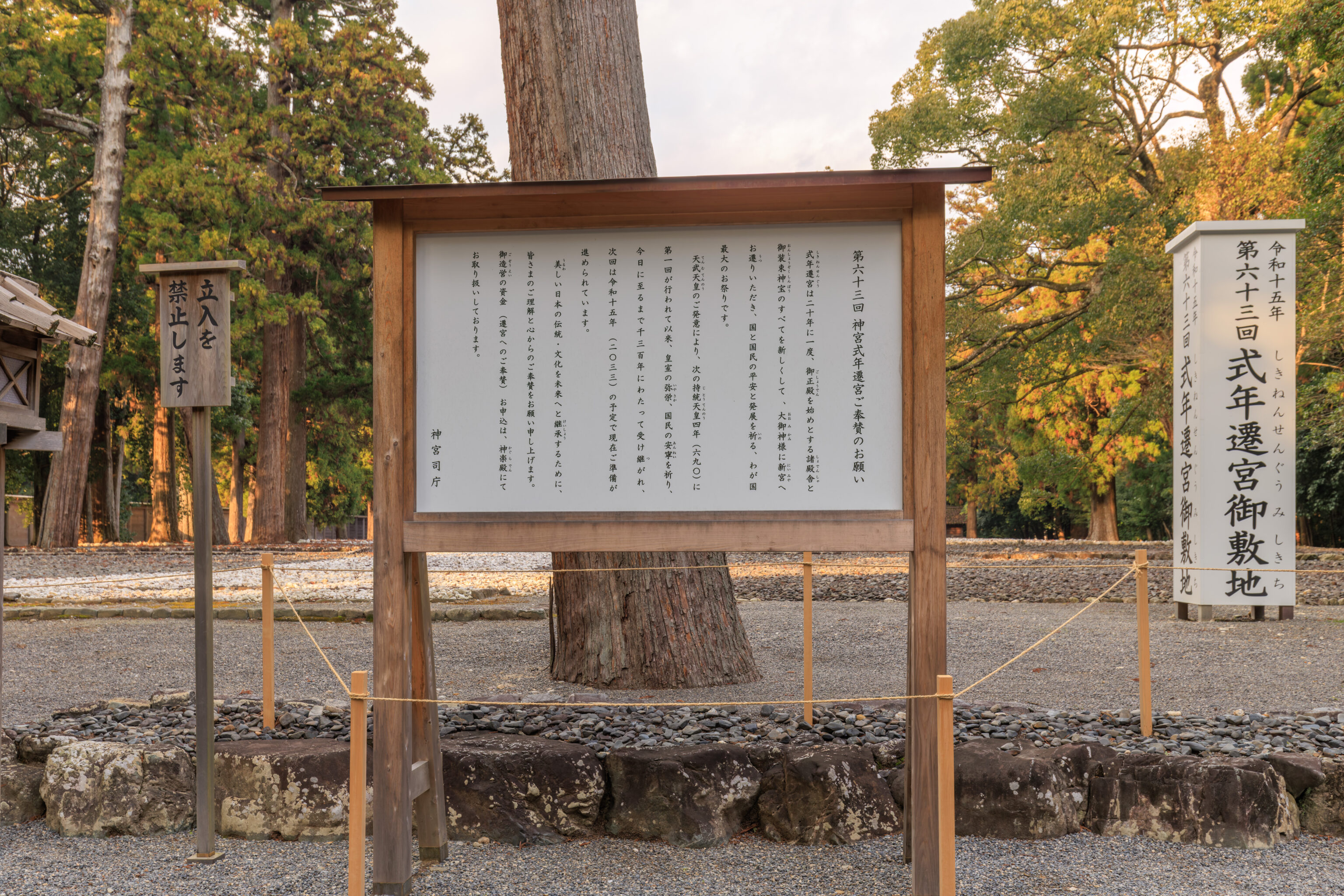
This sign actually has the exact same text as a sign at the Naiku. We quoted that sign but did not post a photograph of it.
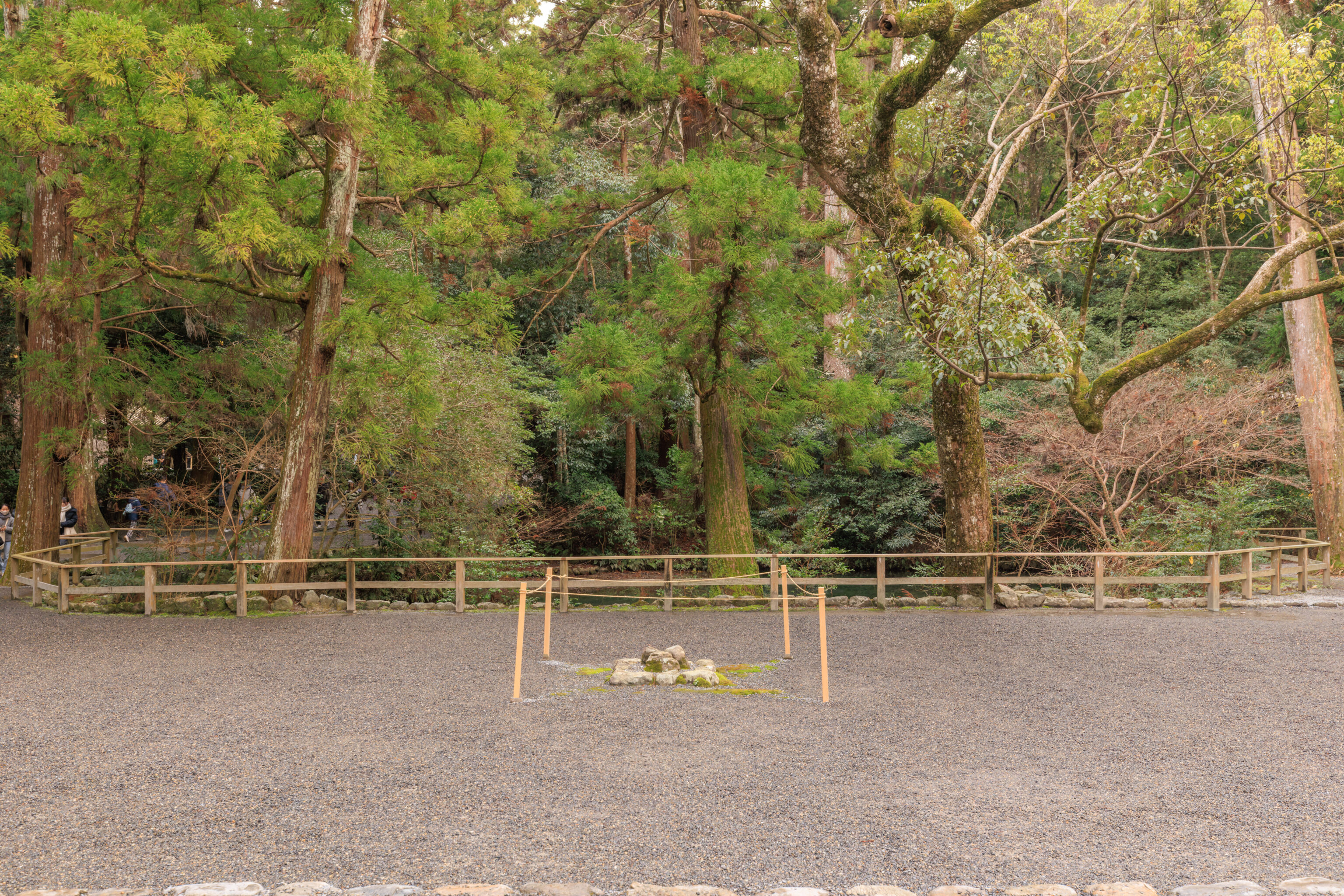
We’re not sure what these stones are! They’re clearly important. They are the 三ッ石 Mitsuishi, literally just three stones, the place where the 川原大祓 Kawahara Great Purification Ceremony takes place. This is a location where purification takes place during the Shikinen Sengu.
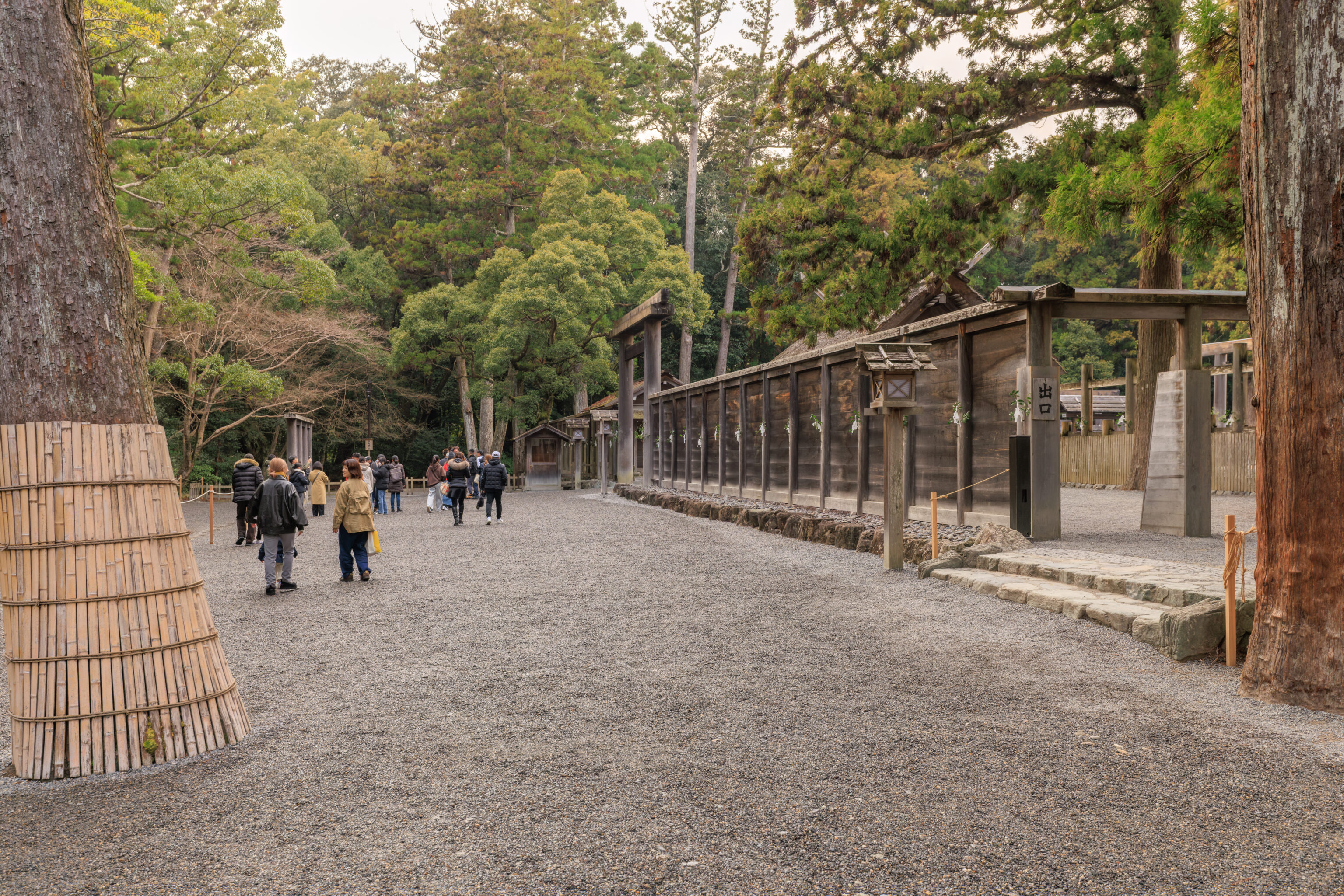
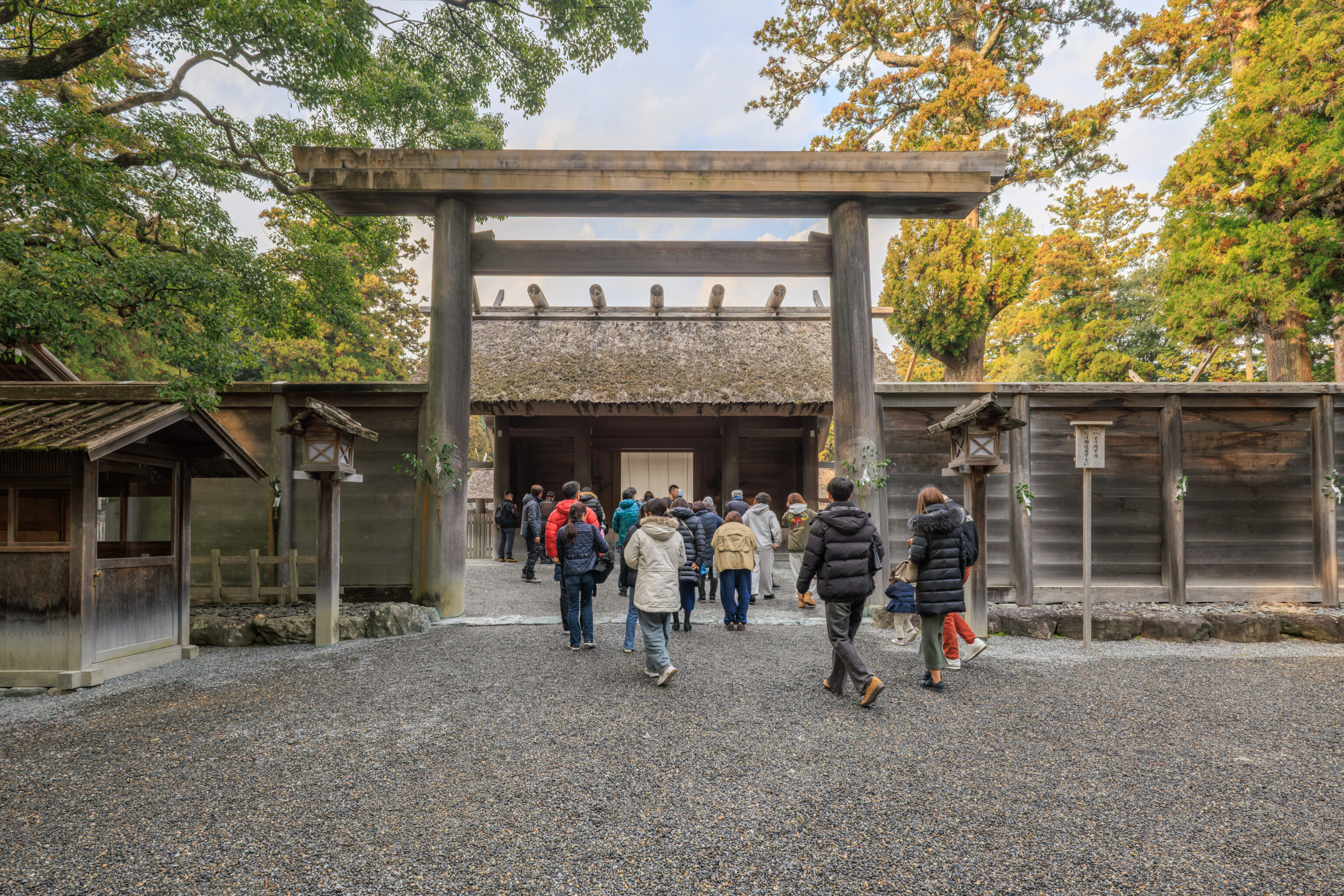
We walked just a little bit further to the west to reach the current Geku.
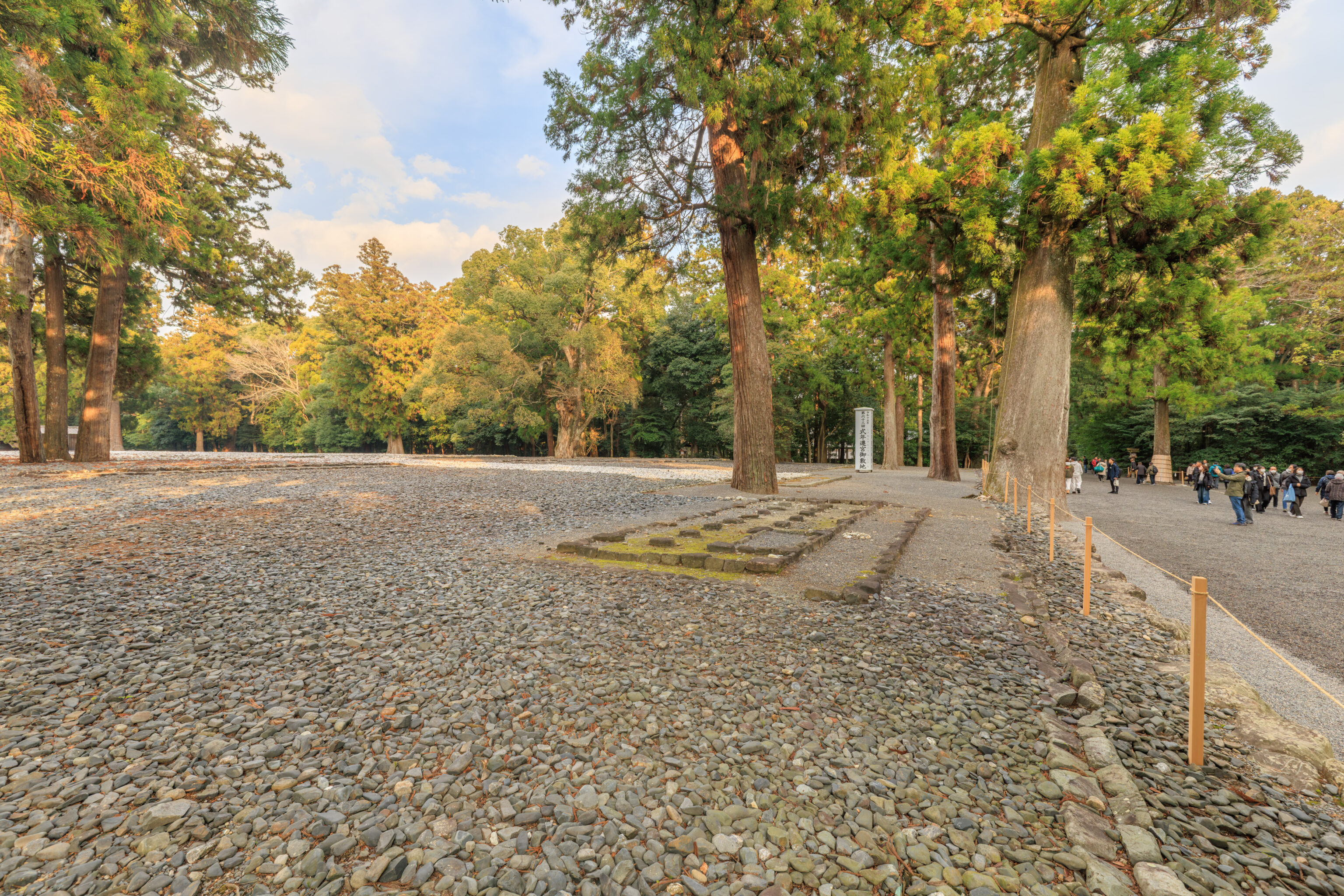
After praying at the Geku, we started to head back. This was a good view of the open ground that will become the next Geku in 2033.
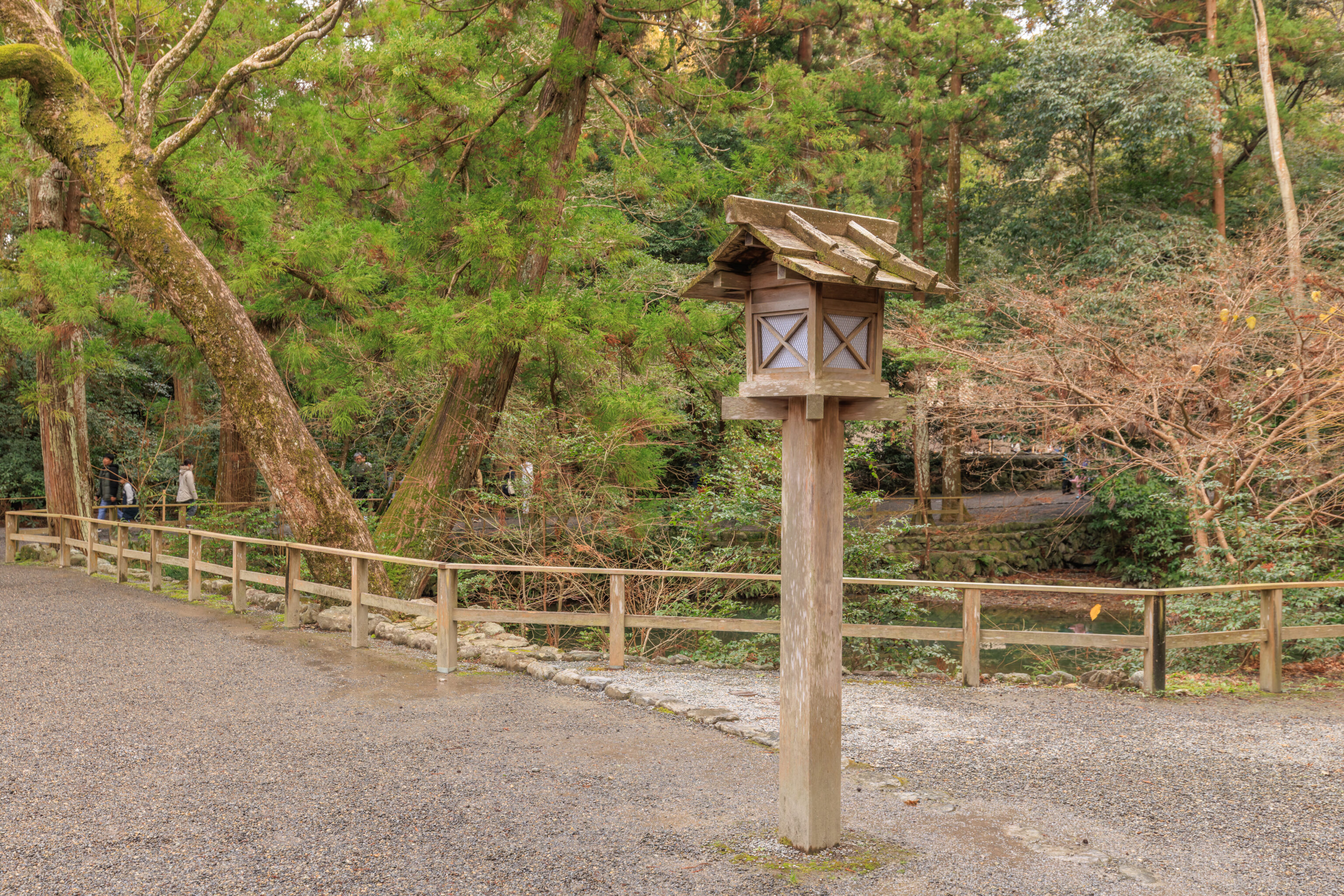
Just a scene with a wooden lantern…
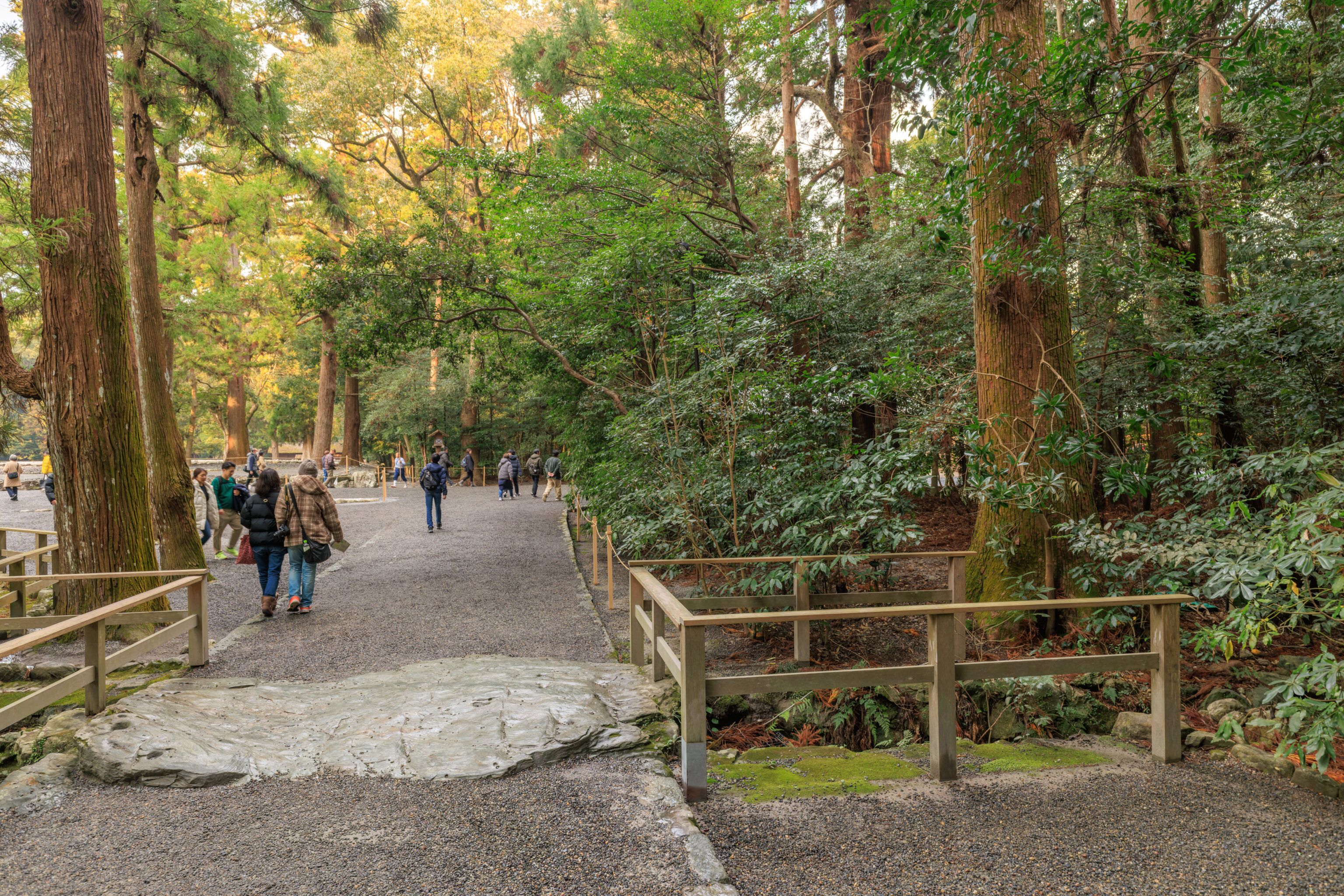
We noticed this small bridge was basically a big stone!
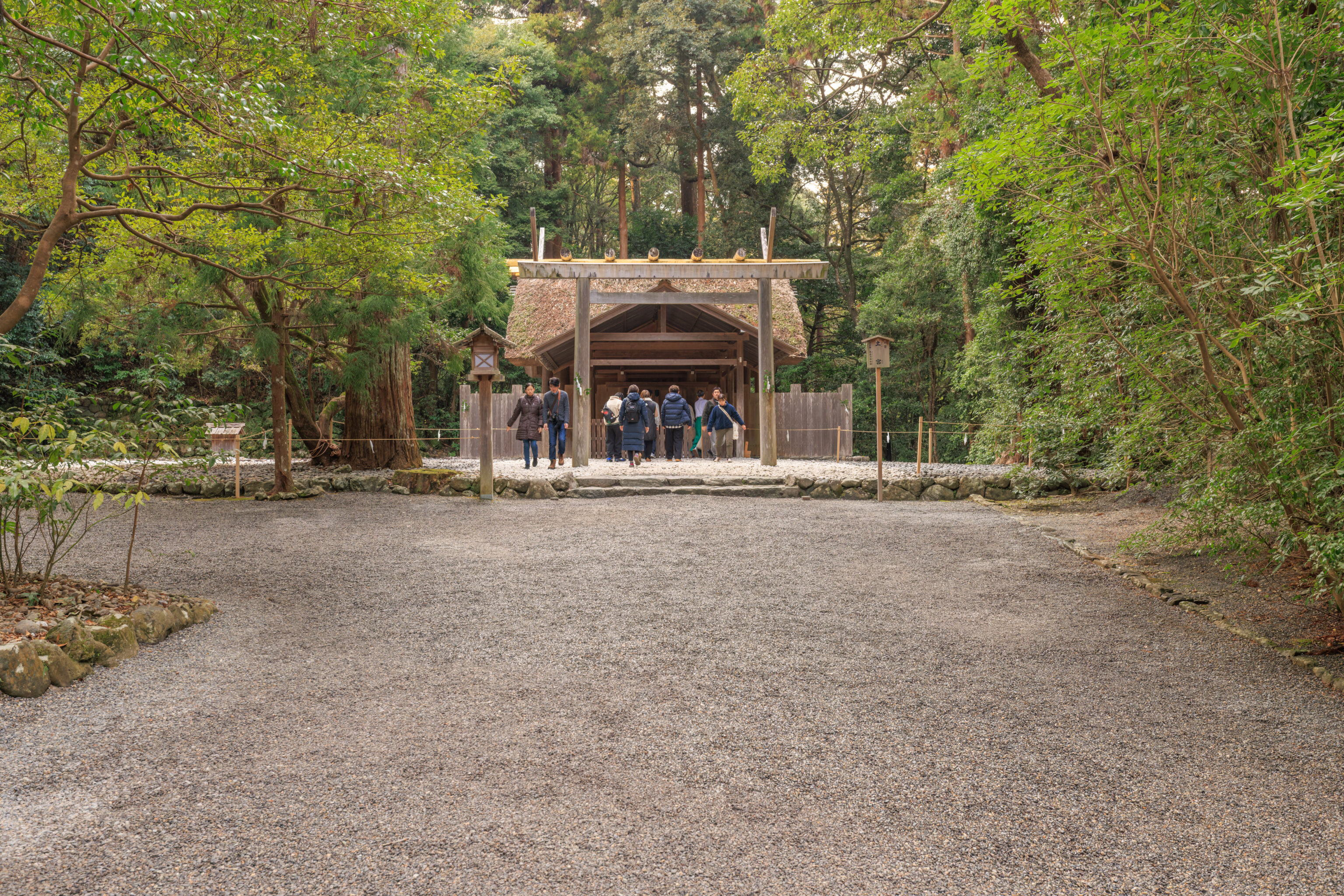
This shrine is the 土宮 Tsuchinomiya, a betsugu of Ise Jingu.
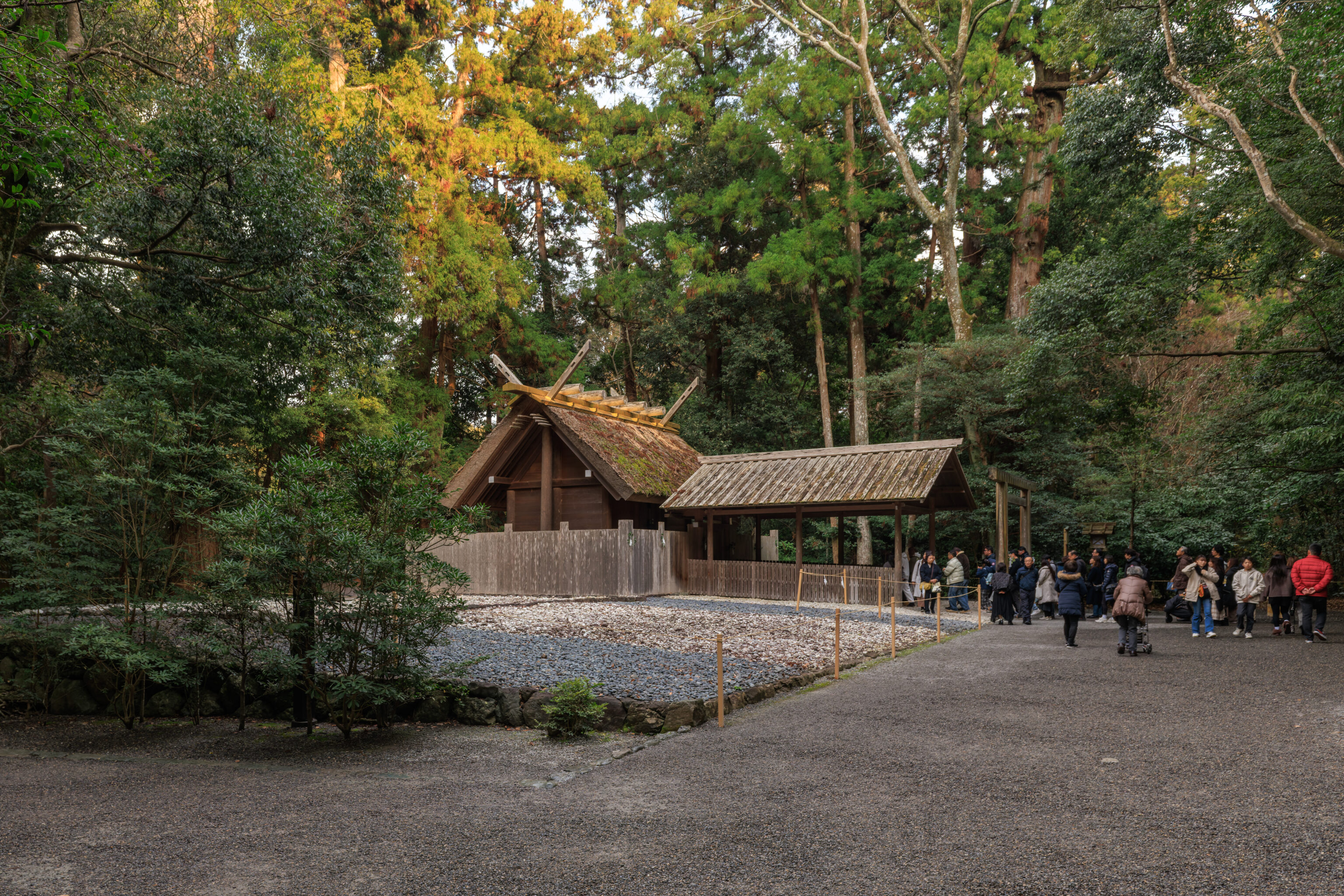
This shrine is probably the 風宮 Kazenomiya, another betsugu of Ise Jingu and pretty much right next to the Tsuchinomiya.
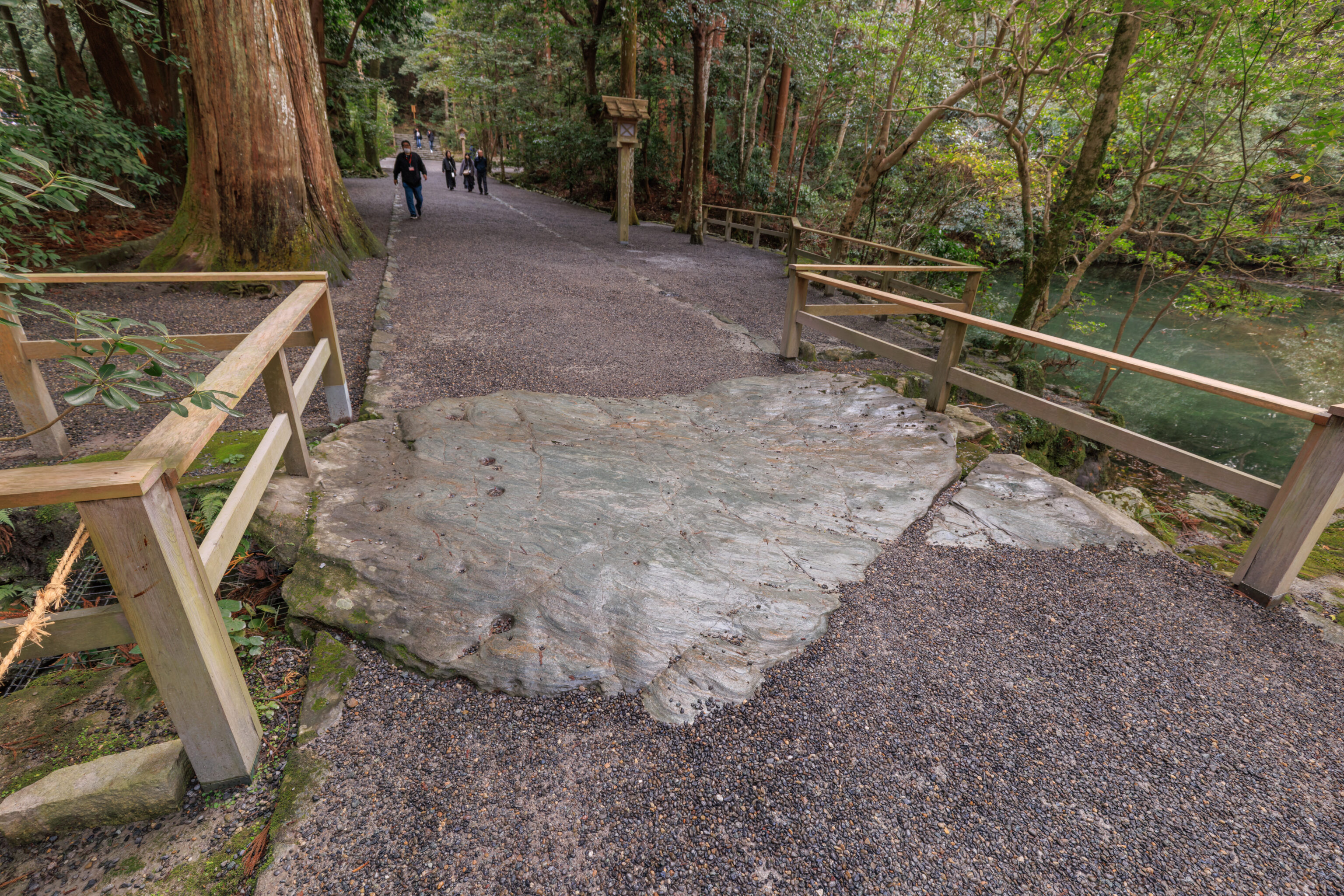
There is a 亀石 Kameishi (Turtle Stone) that acts as a bridge to the north of the area containing the Kazenomiya and Tsuchinomiya. This might be it? Does it look like a turtle?
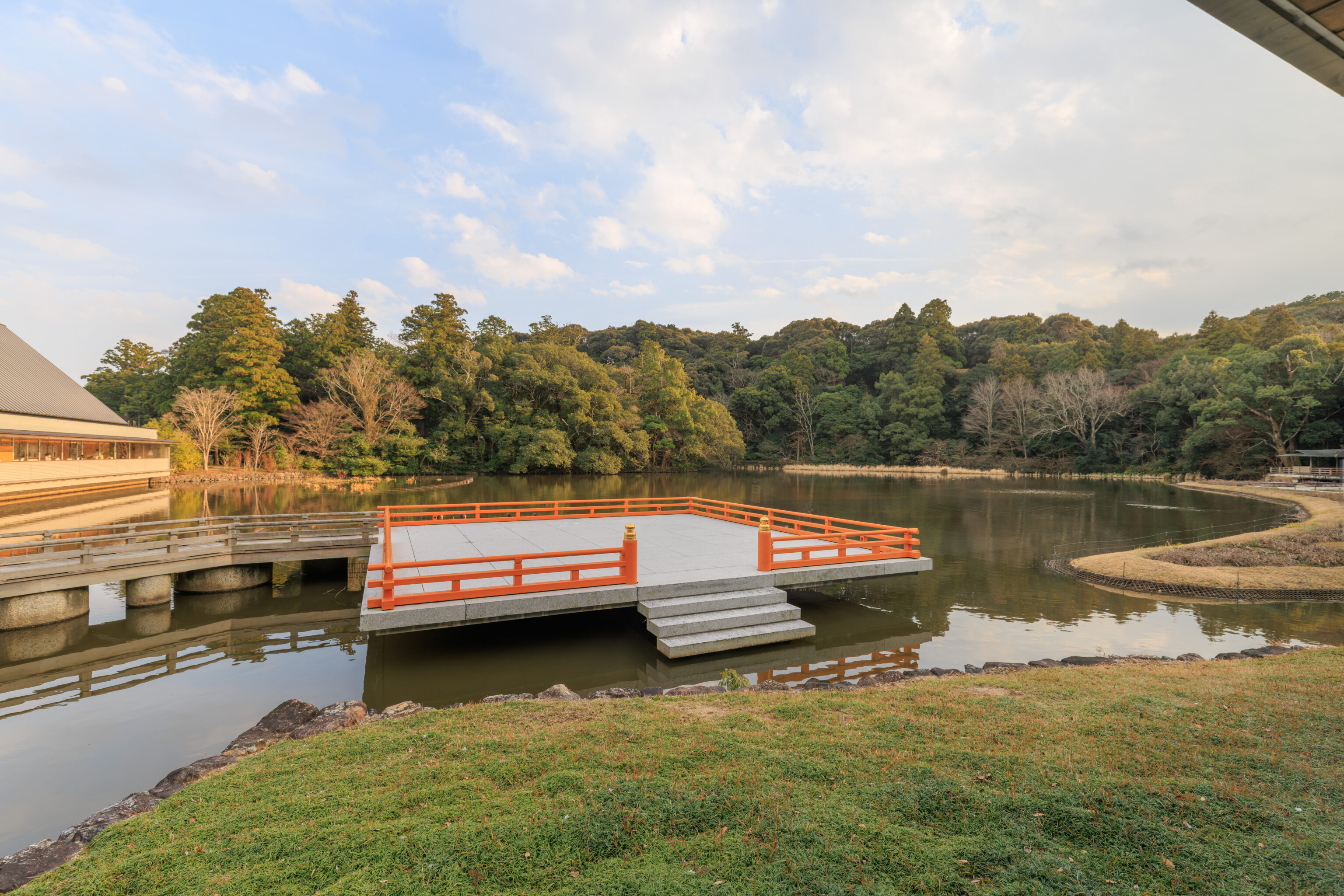
We walked over to the rest area that we saw earlier when we arrived at the Geku. The rest area is a pretty nice and comfortable space with huge windows that overlook the pond.
The platform on the pond is used for the 神楽祭 Kagura Festival and 観月会 Moon Viewing Party and possibly other performances.
There is also an attached museum, the せんぐう館 Sengukan, which covers the Shikinen Sengu.
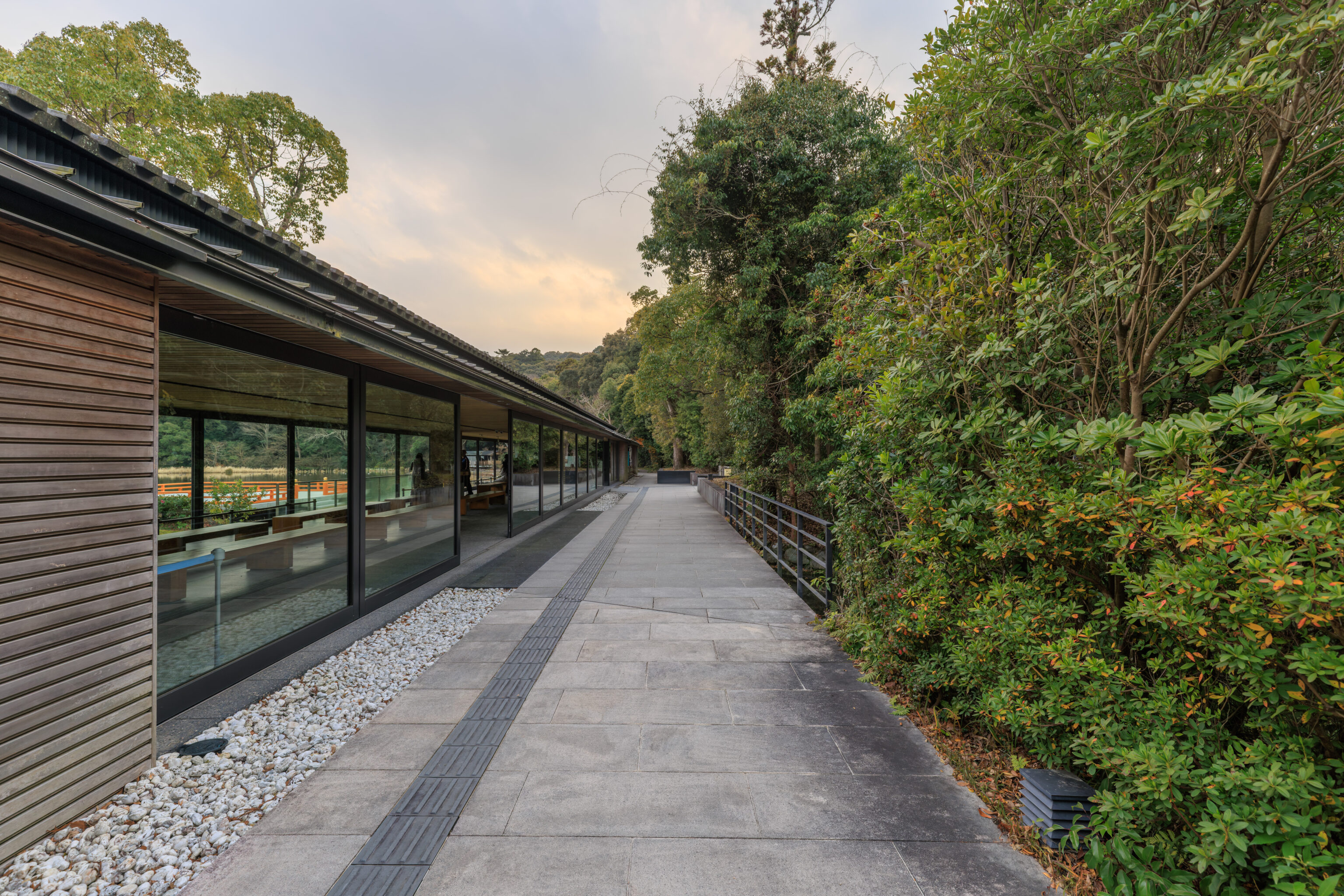
After resting for a bit, we headed back out.
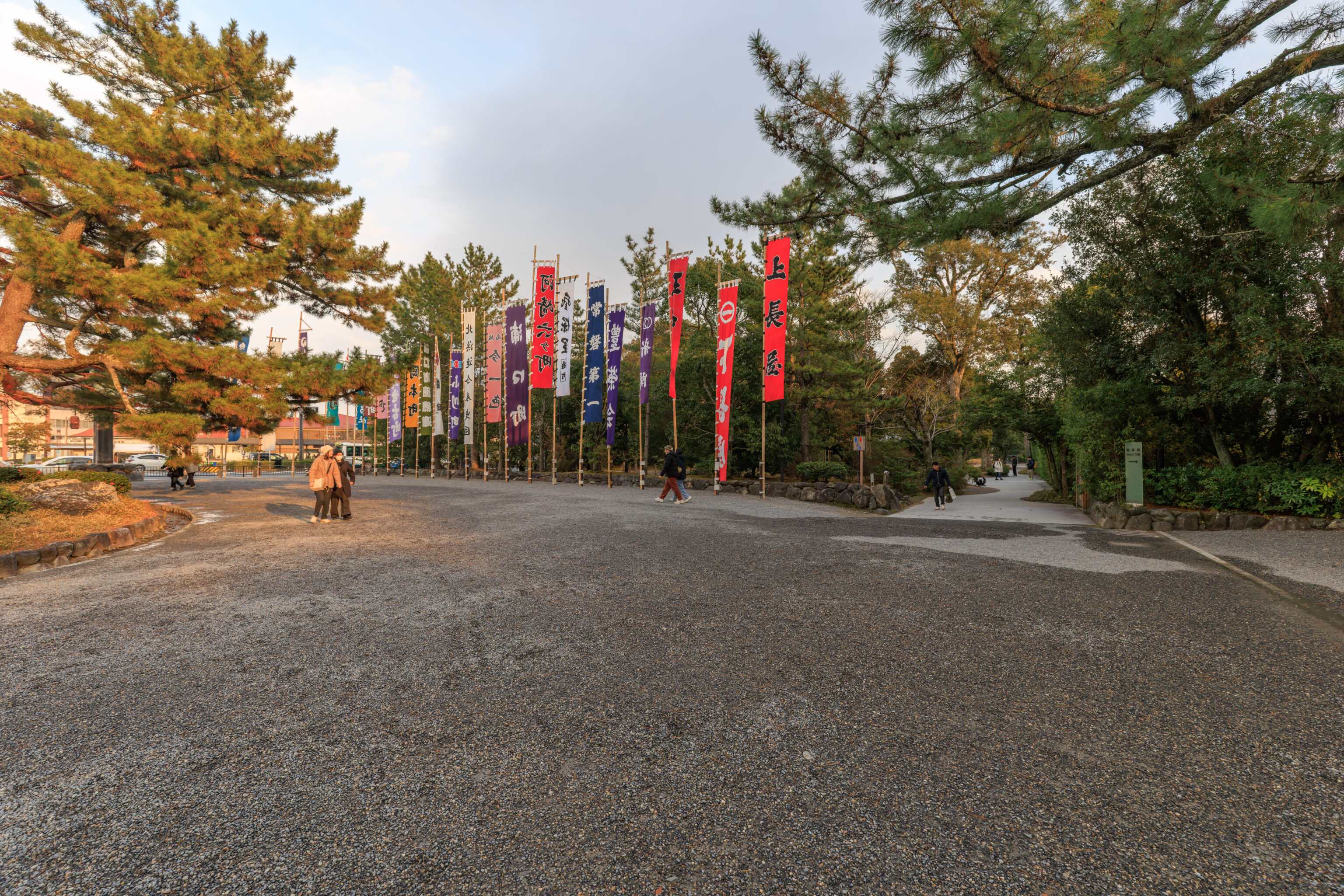
We exited the Geku at around 3:30pm and started to walk over to the nearby 伊勢市駅 Iseshi Station.
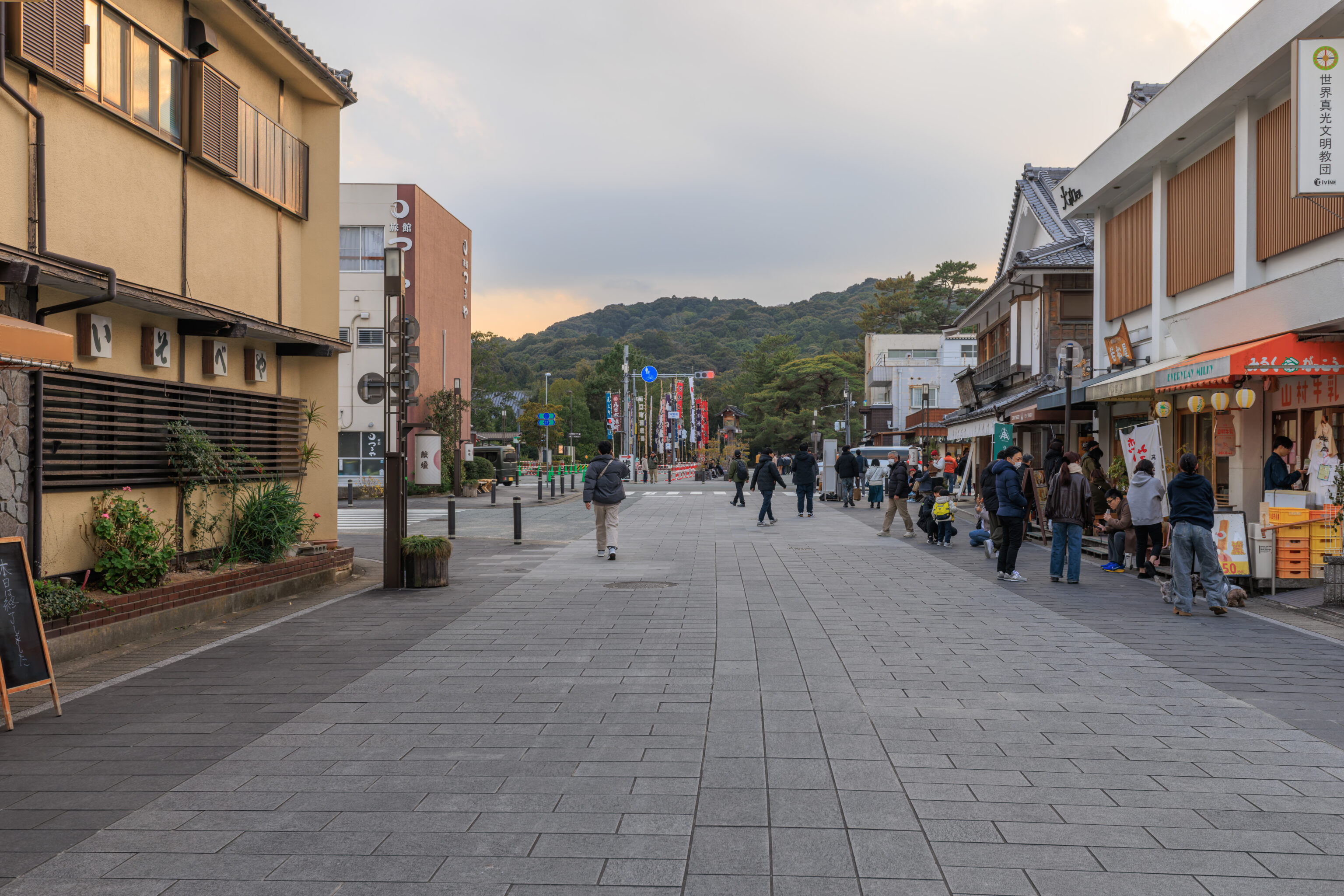
There is a shopping street here as well between the Geku and the train station, although it is pretty different from the one at the Naiku.
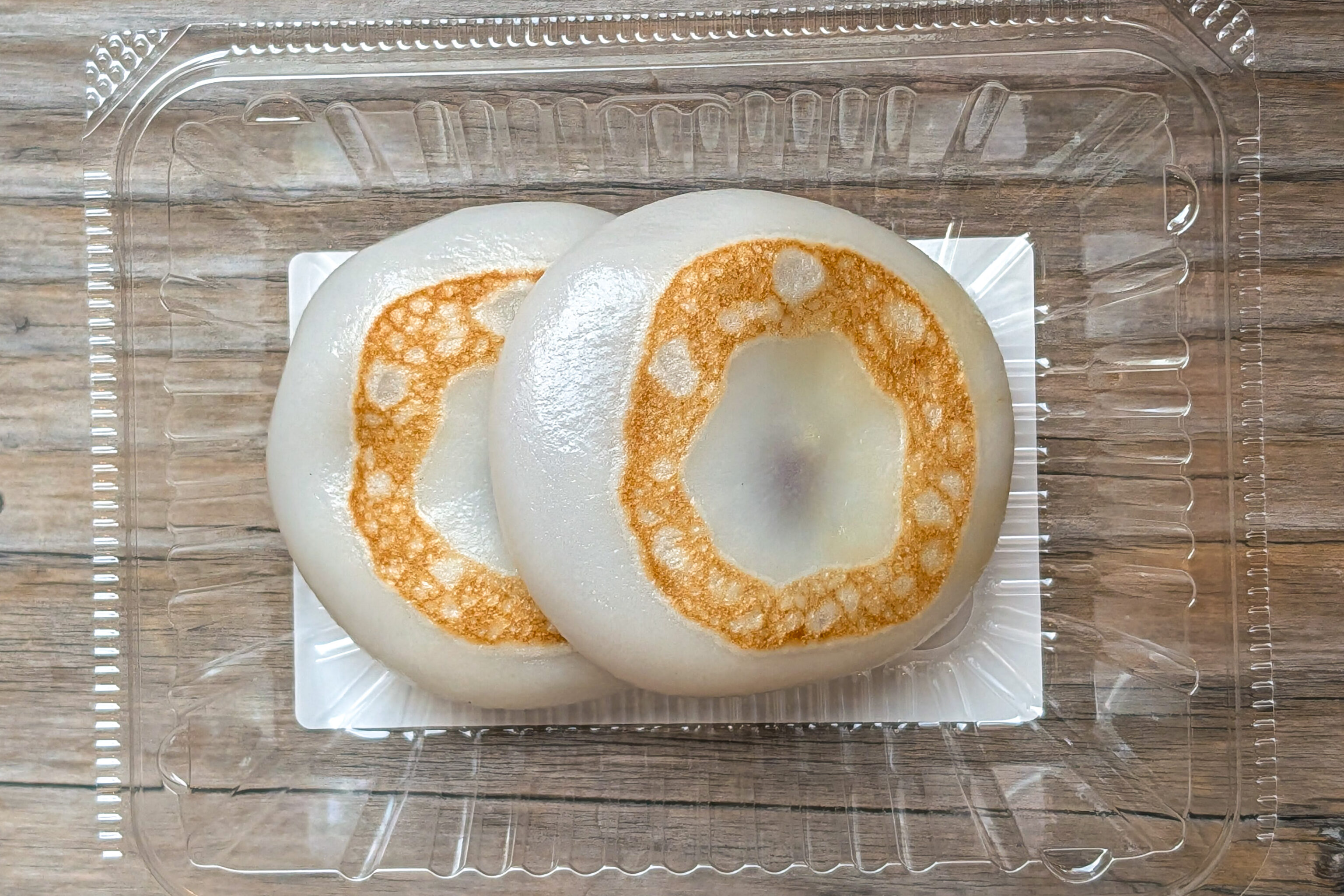
We got a へんば餅 henba mochi, an Ise regional specialty, from へんばや Henbaya, a shop basically just across the street from the train station. It had very smooth red bean paste inside and a very stretchy shell.
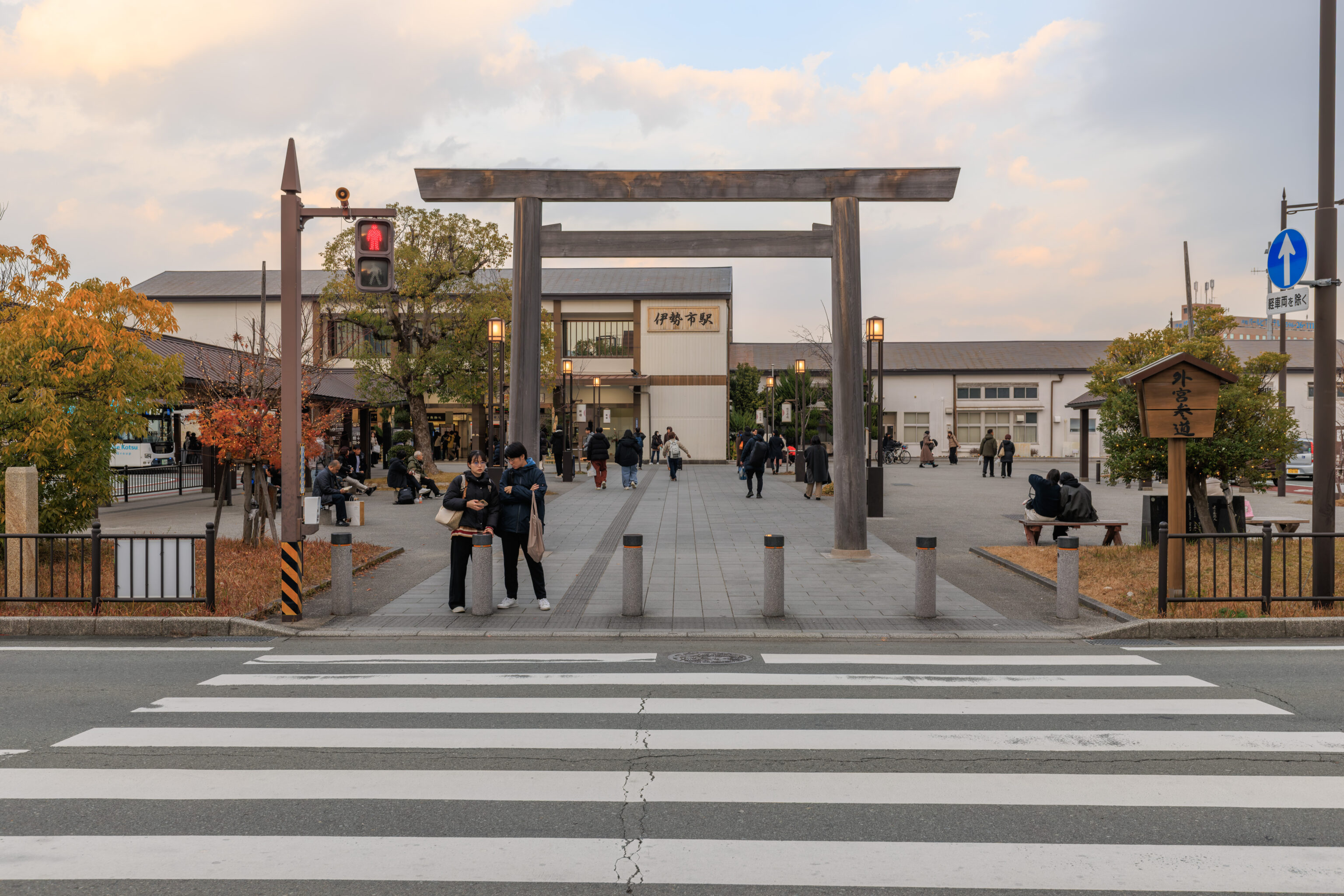
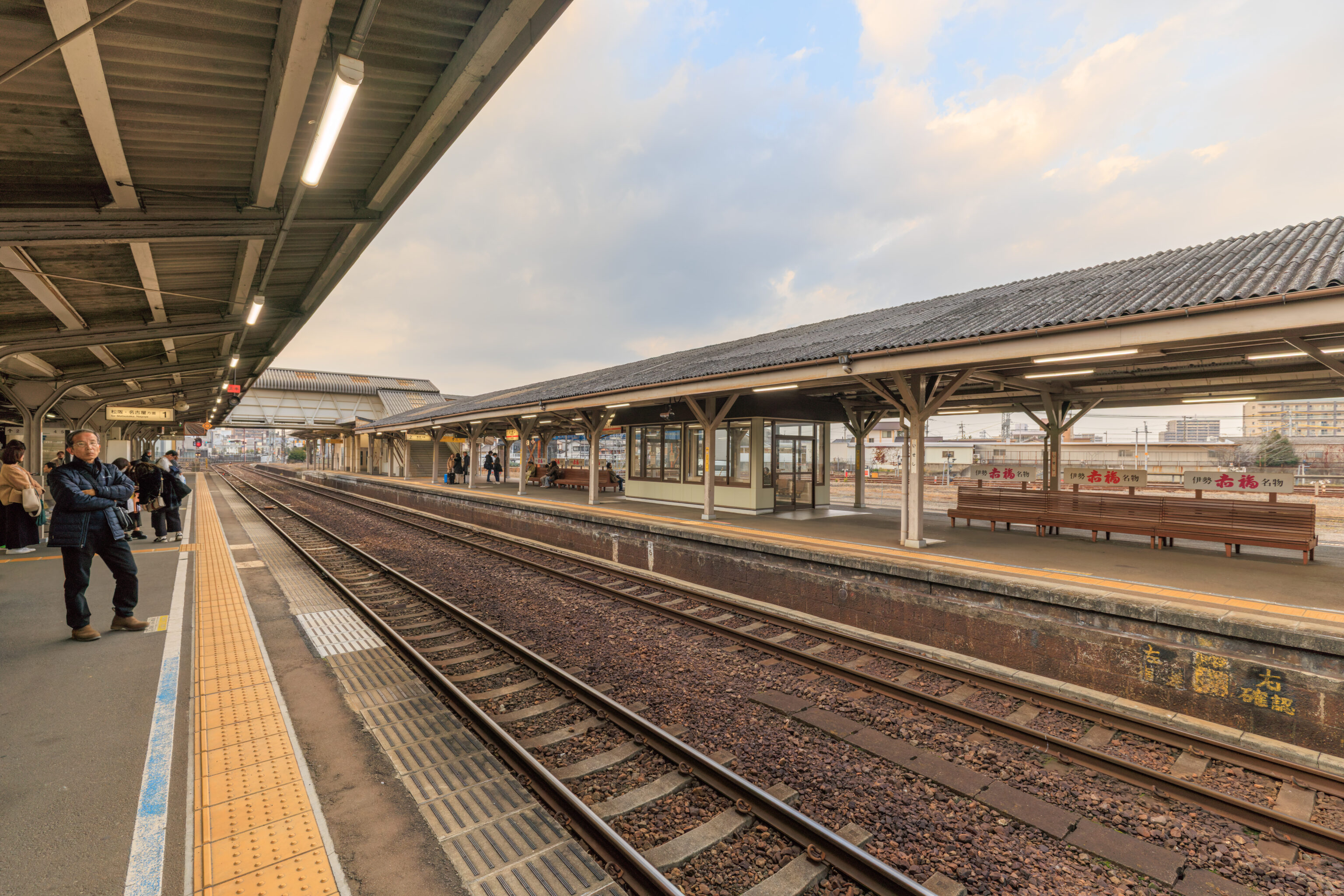
We decided to take JR for the trip back to Nagoya.
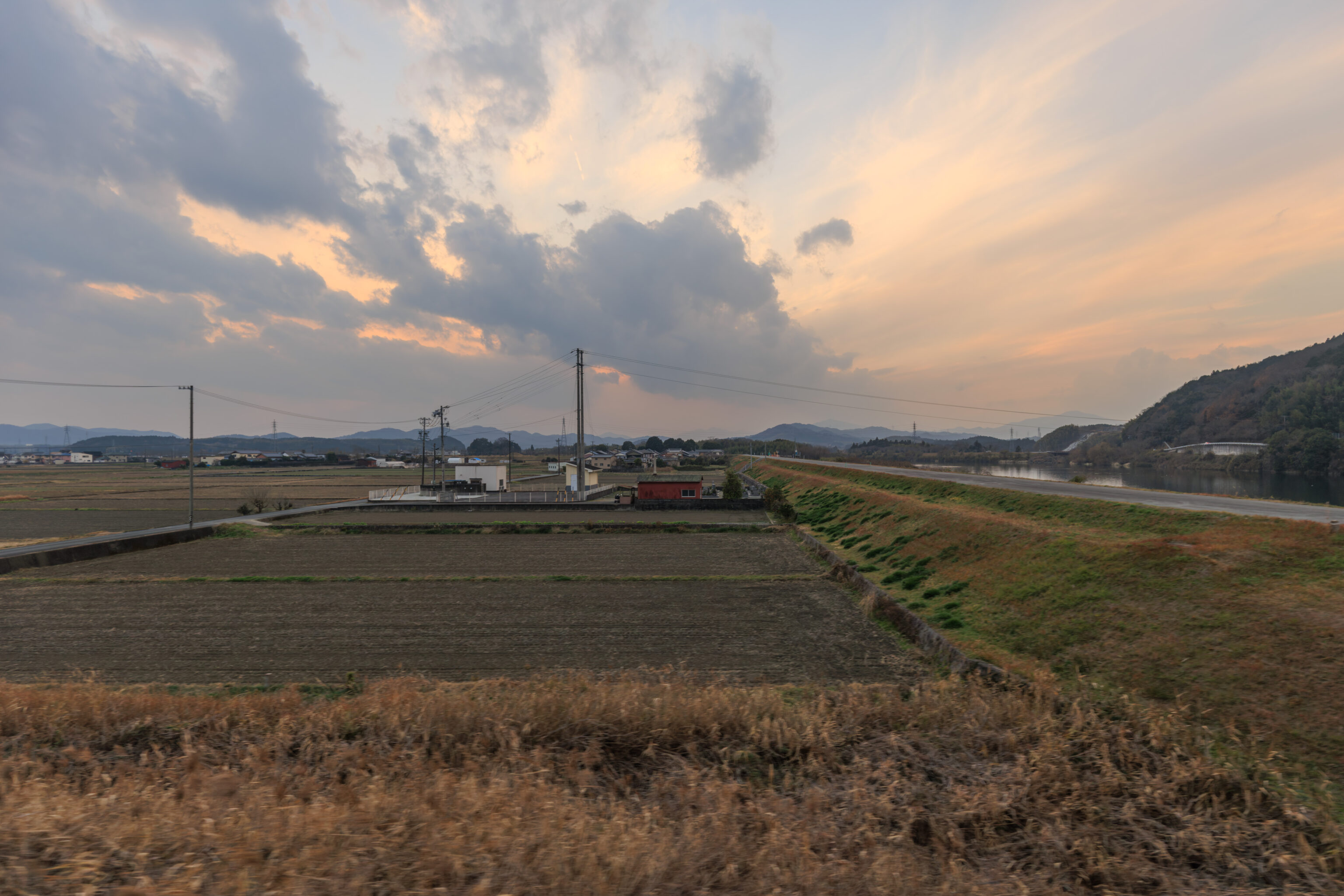
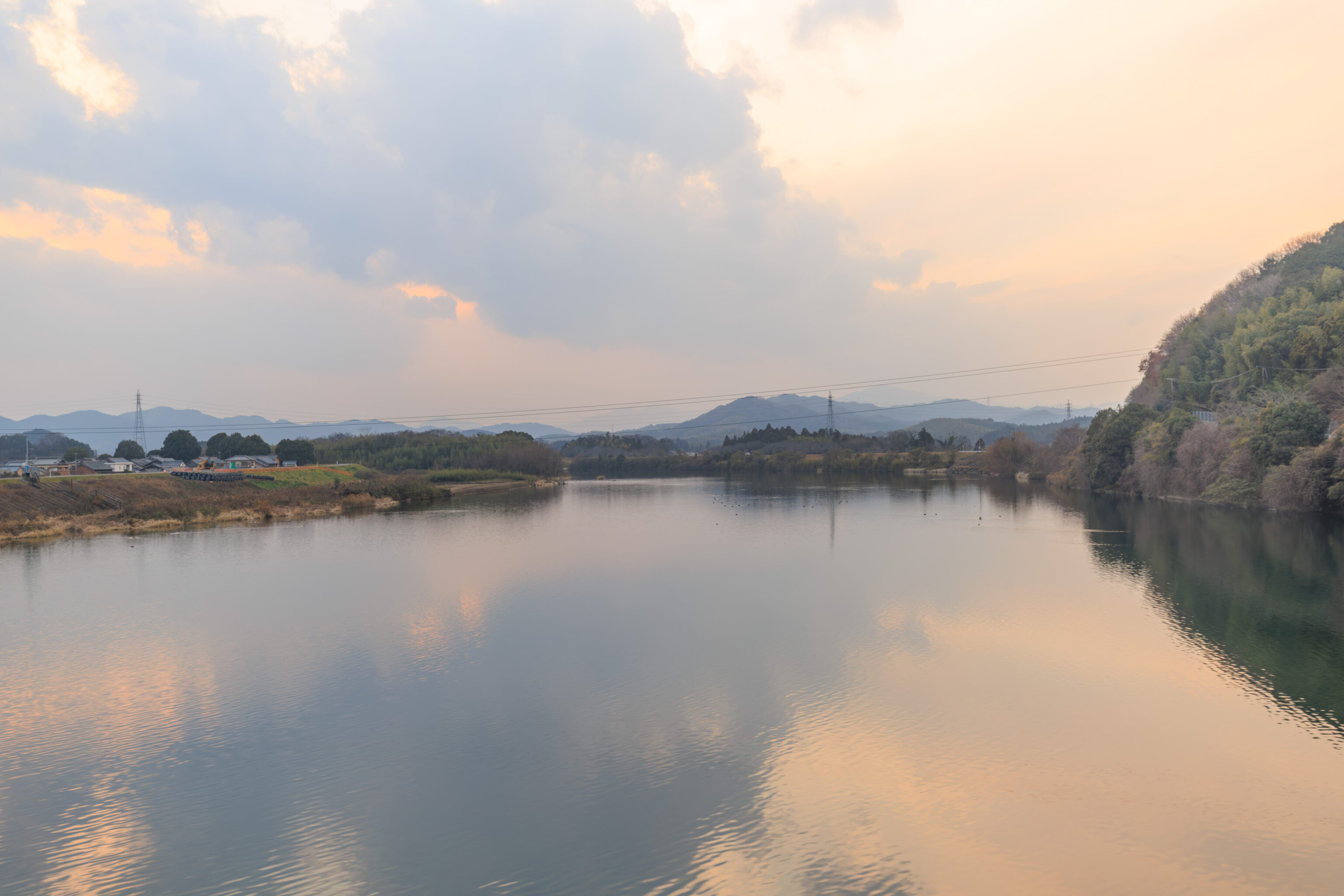
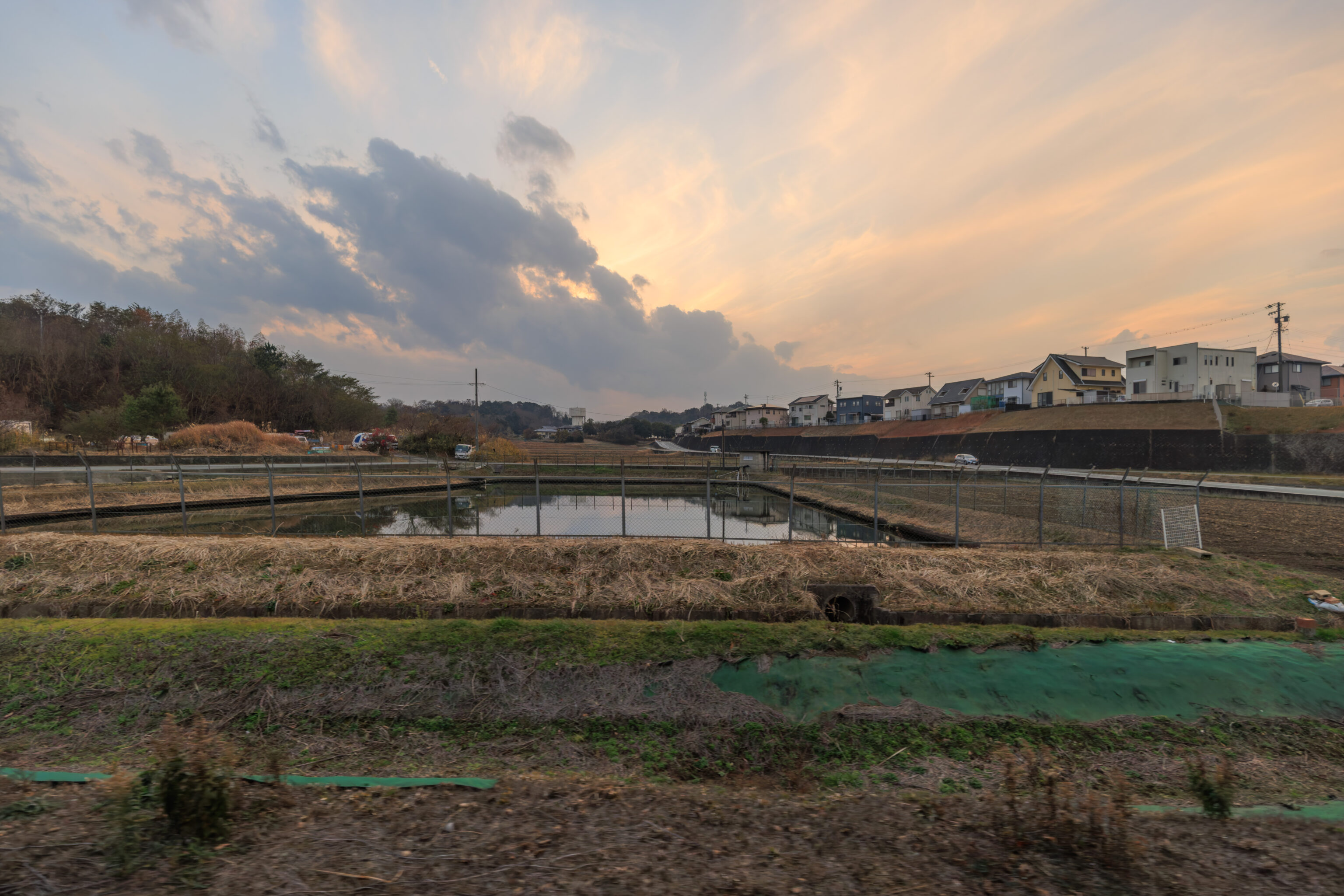
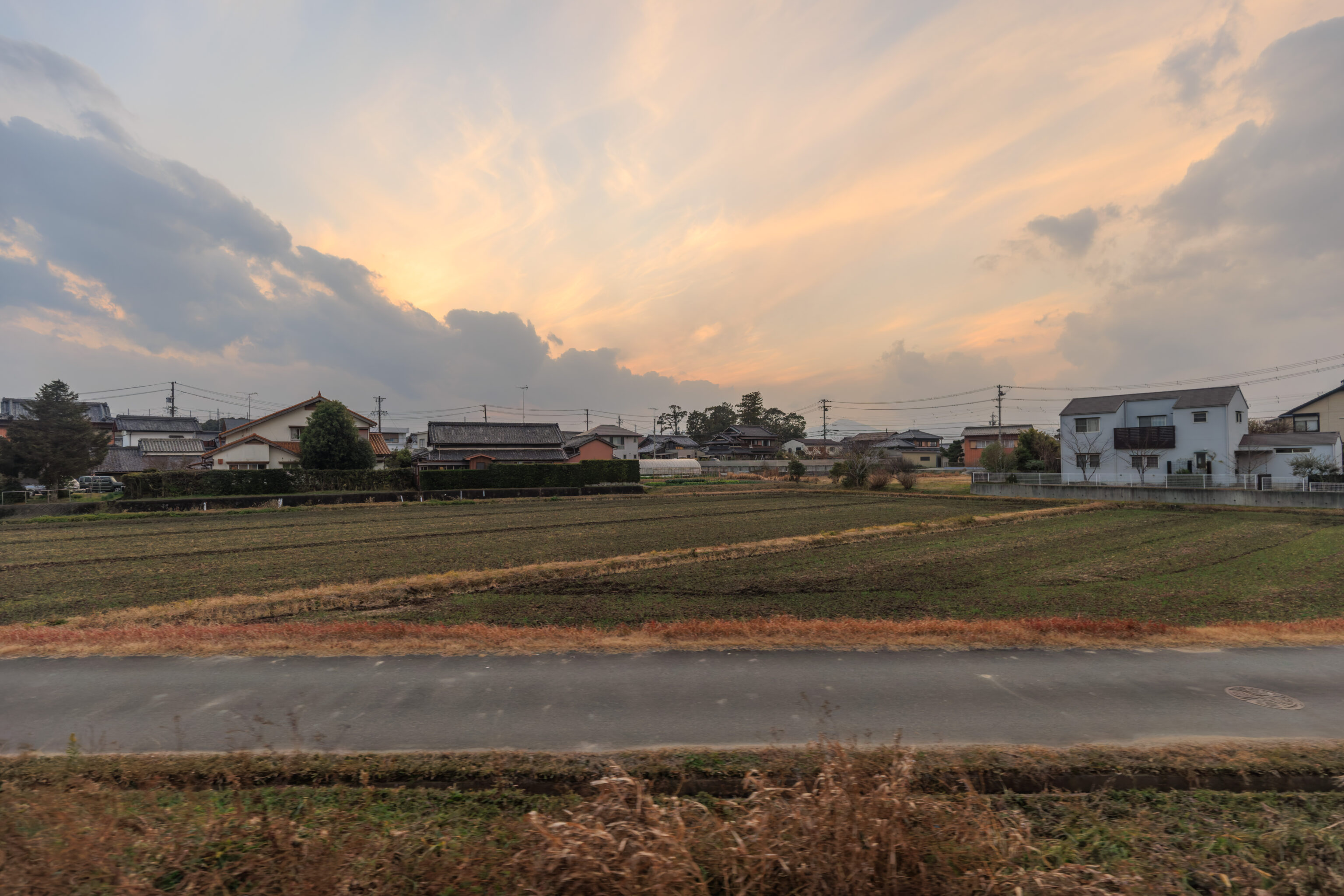
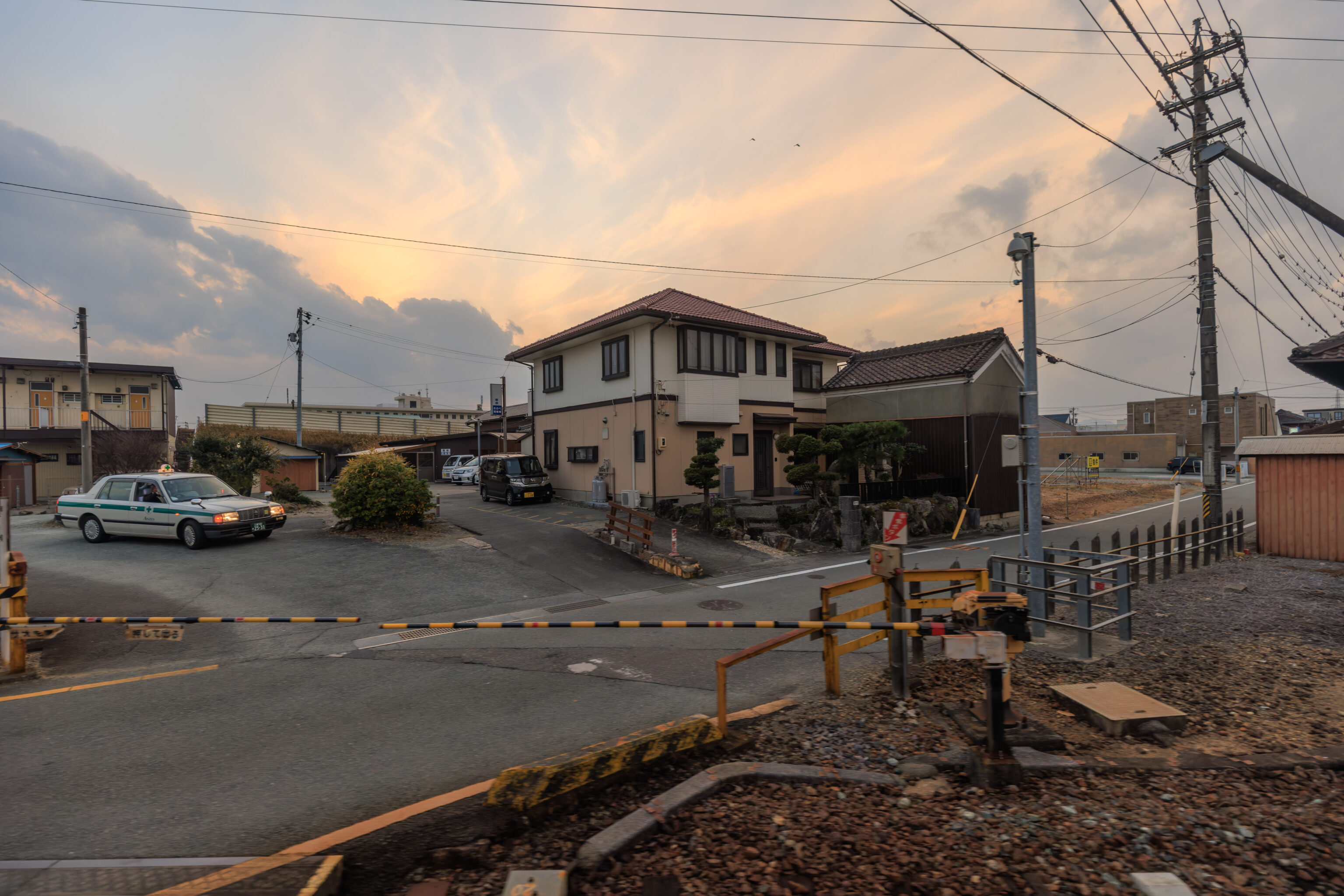
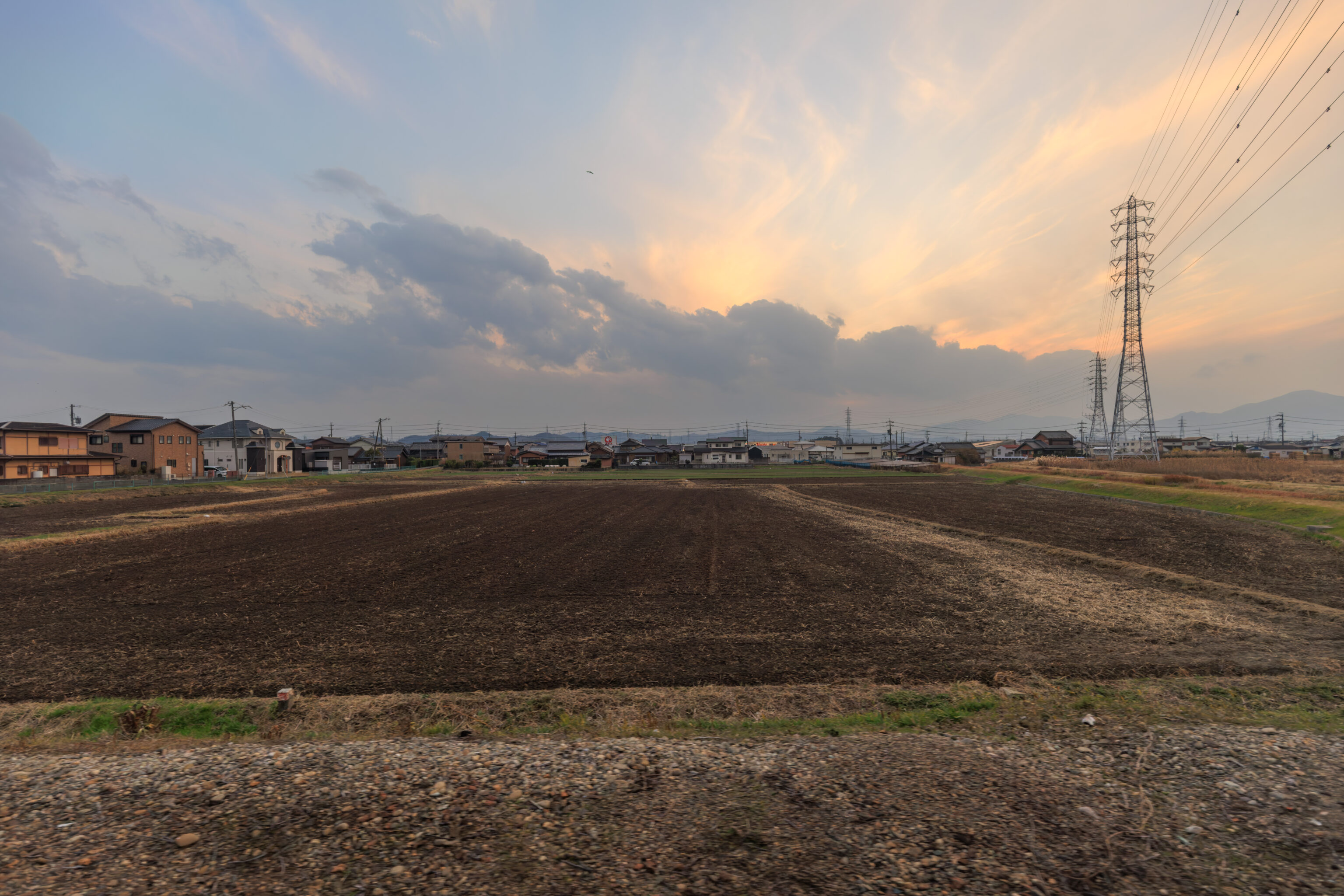
We enjoyed a bit of scenery before sunset.
Nagoya
We got back to Nagoya at around 6pm.
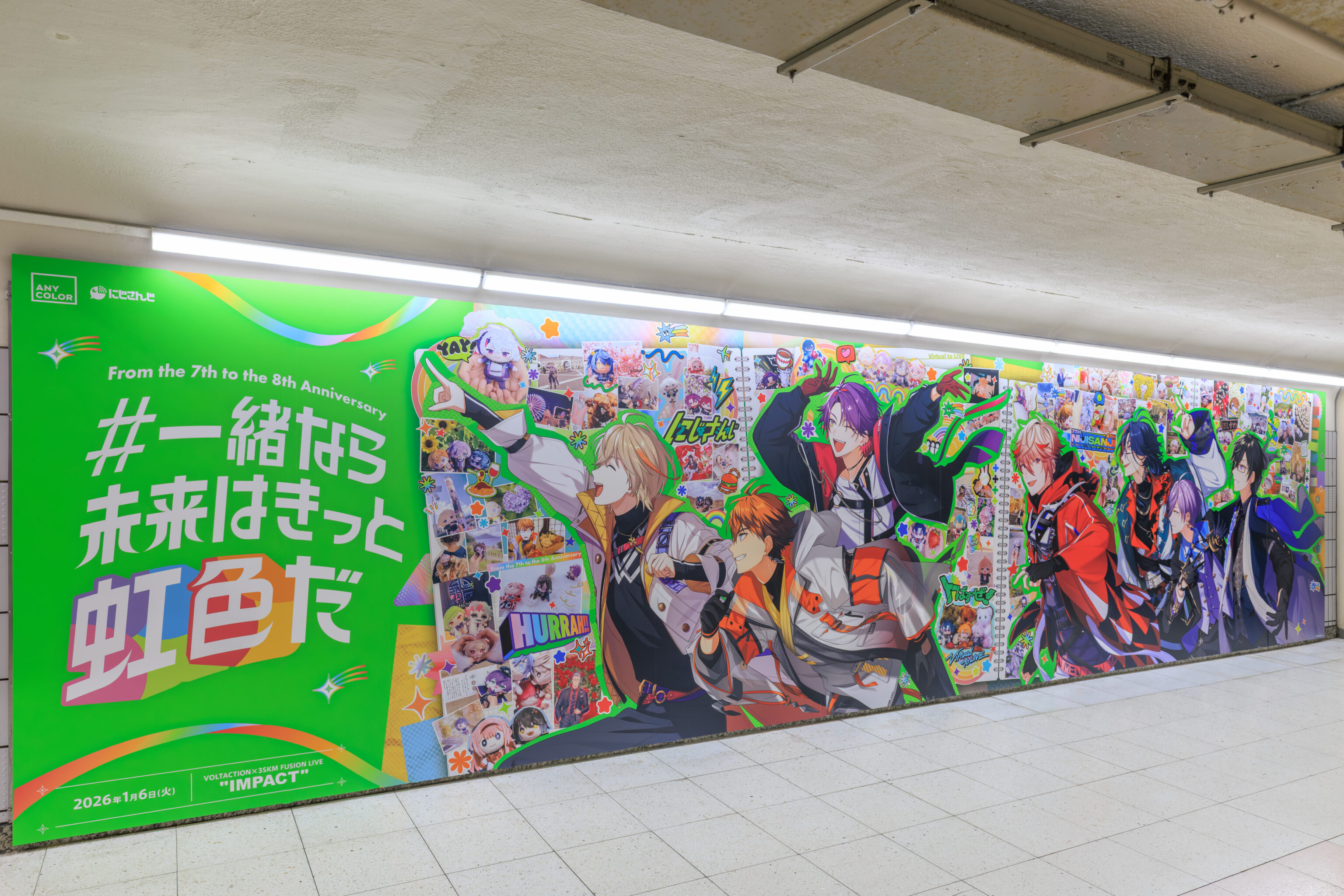
This mural is an advertisement for Nijisanji, which is apparently a VTuber agency. What is a VTuber? Someone who live streams but using a virtual avatar. Its apparently been a thing since the mid 2010s.
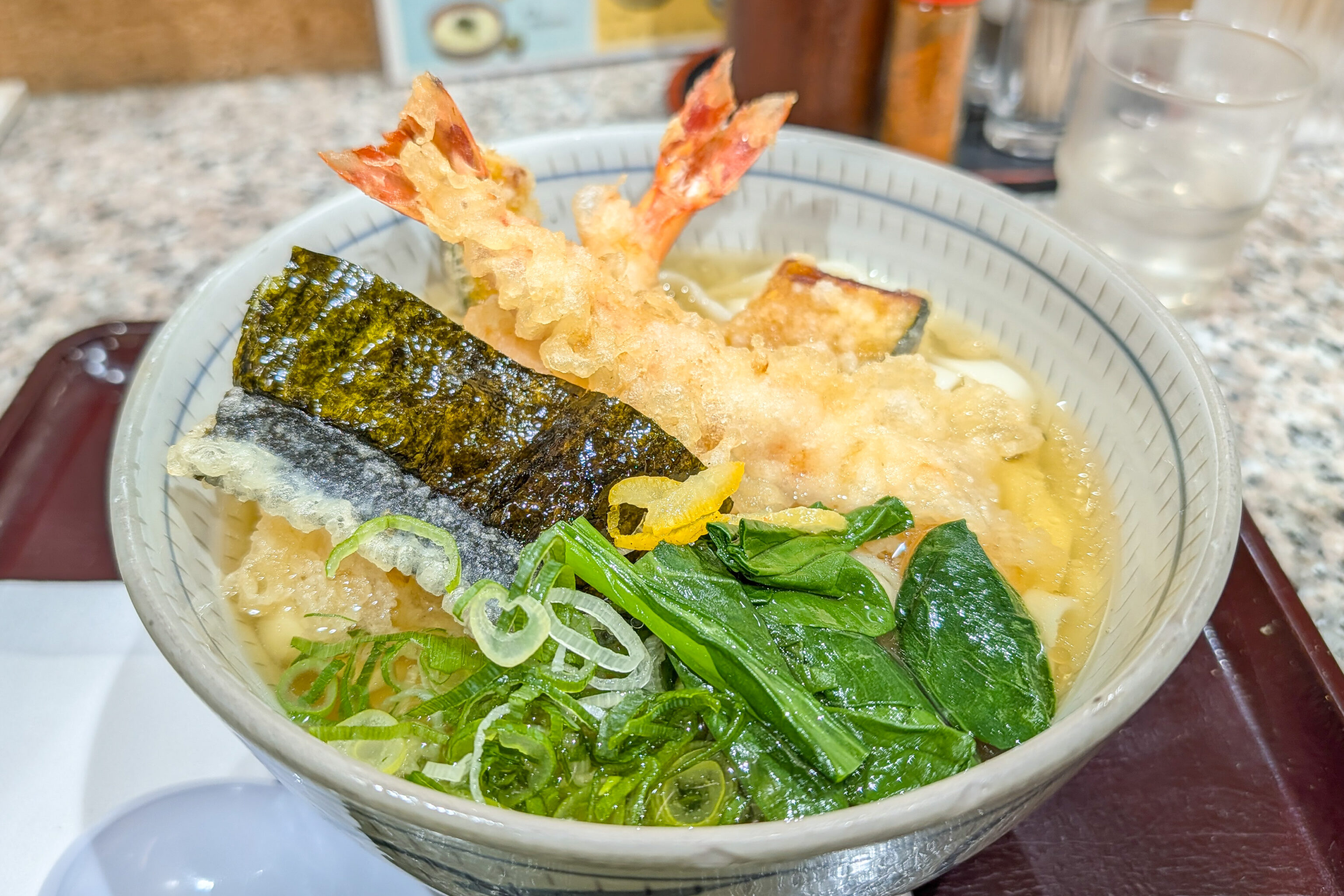
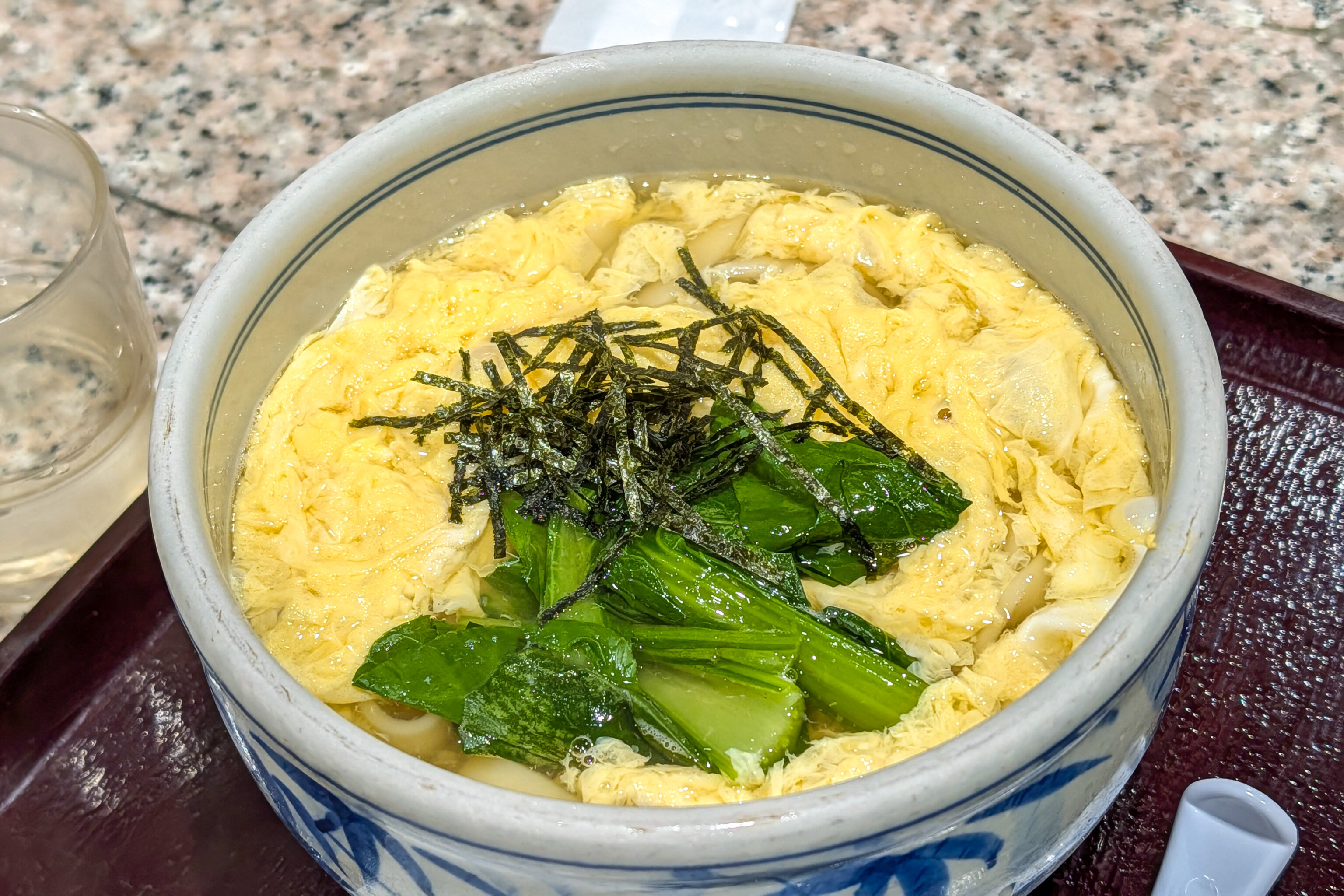
We decided to have きしめん kishimen for dinner at よしだ Yoshida. Kishimen is a type of flat noodle from Nagoya and Yoshida seems to be a business that makes these noodles in addition to operating two restaurants and a few stores.
The dashi used had excellent flavor! There were many options for additional ingredients with the kishimen, we opted for one with tempura and another with egg.
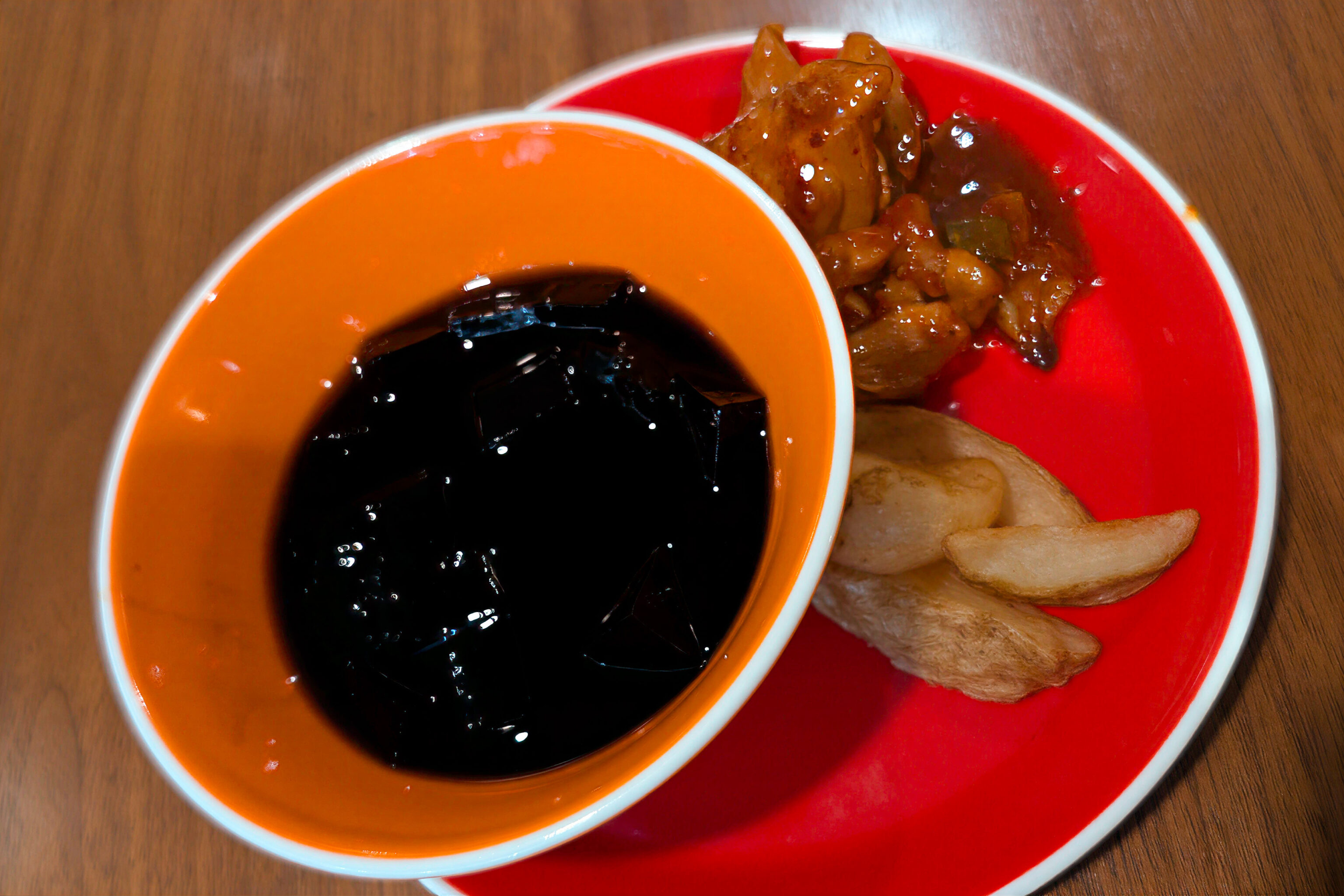
We visited the lounge again in the evening. We had some coffee jelly, which has a concatenated name in Japanese that sounds like “Jericho”. Which is funny because we had wanted to get this from Komeda Coffee, a local Nagoya chain, earlier in the evening but they were out of it! Unfortunately, it was a bit mediocre at the lounge.
They also had dak galbi, a Korean dish that is nearly impossible to find in most of the US. It was an absolute surprise to find it here given we haven’t really seen any Koreans lately and generally the Japanese don’t eat much spicy food. Although, there is a local spicy ramen they do eat that is referred to as Taiwan Ramen due to its origin at a Chinese restaurant in Nagoya, presumably run by Taiwanese.
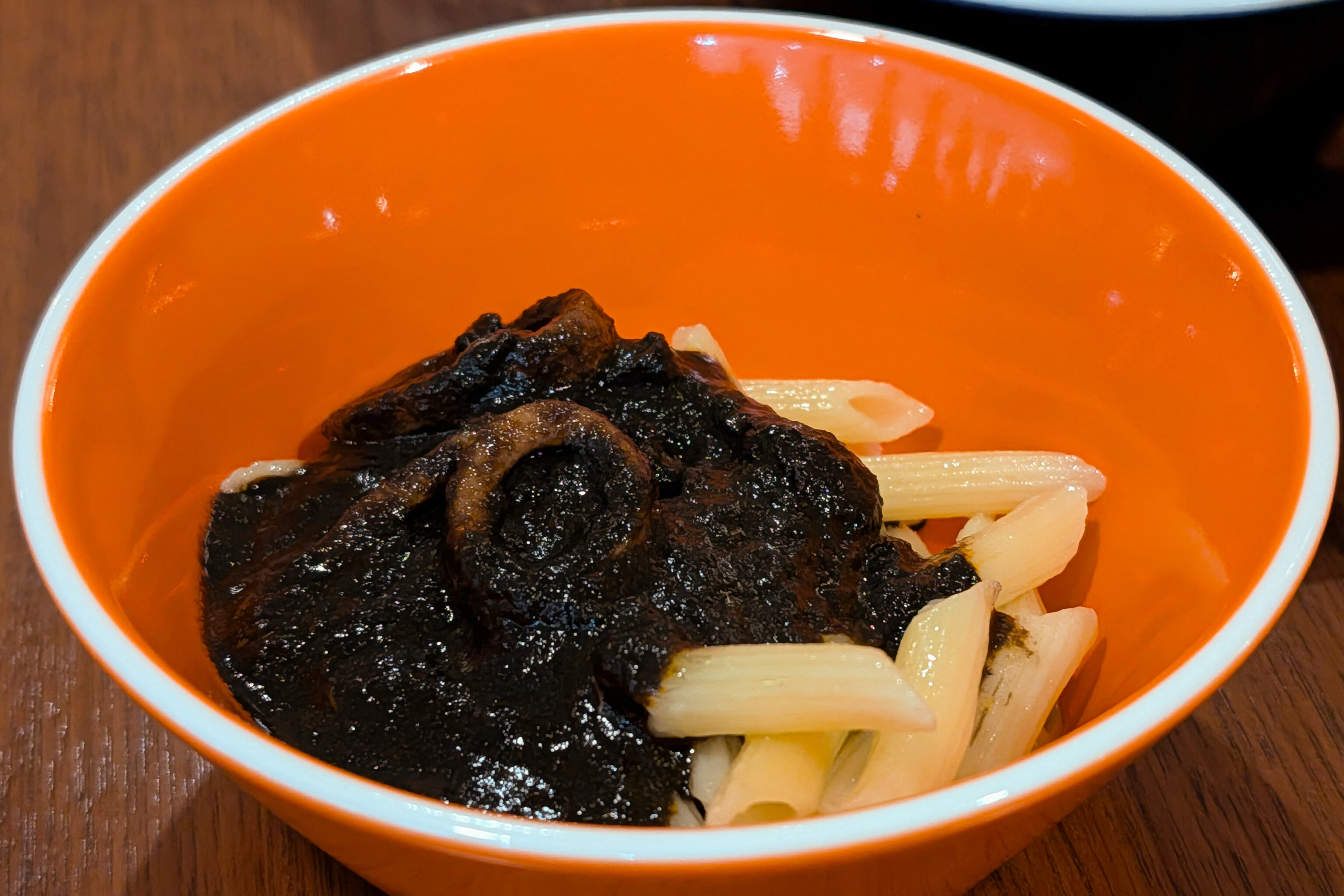
There was also squid ink pasta, another surprise. It was OK. Ultimately the evening lounge options have turned out to be quite varied, particularly compared to breakfast which has pretty much been the same every morning.