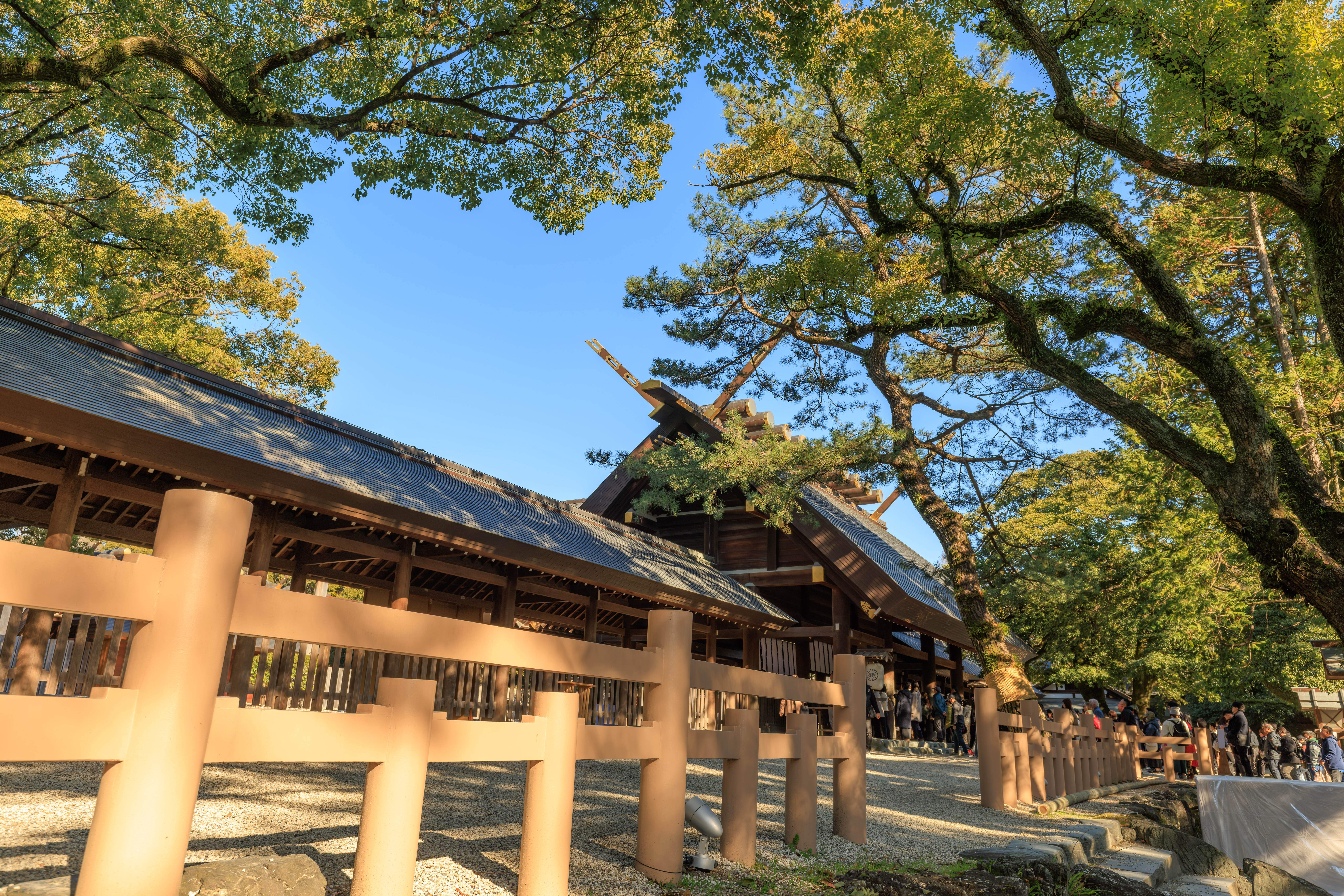
After breakfast at the 名古屋マリオットアソシアホテル Nagoya Marriott Associa Hotel, we headed out to visit 名古屋城 Nagoya Castle… which was closed for the Japanese New Year holiday! We ended up walking around it before having the local 味噌煮込みうどん miso nikomi udon for lunch nearby at 山本屋 Yamamoto-ya. We then visited 熱田神宮 Atsuta-jingu before spending the rest of the afternoon and evening around the 栄 Sakae district and オアシス21 (Oasis 21). We had dinner in the area at 矢場とん Yabaton, a local chain that specializes in the local 味噌カツ miso katsu dish.
Morning
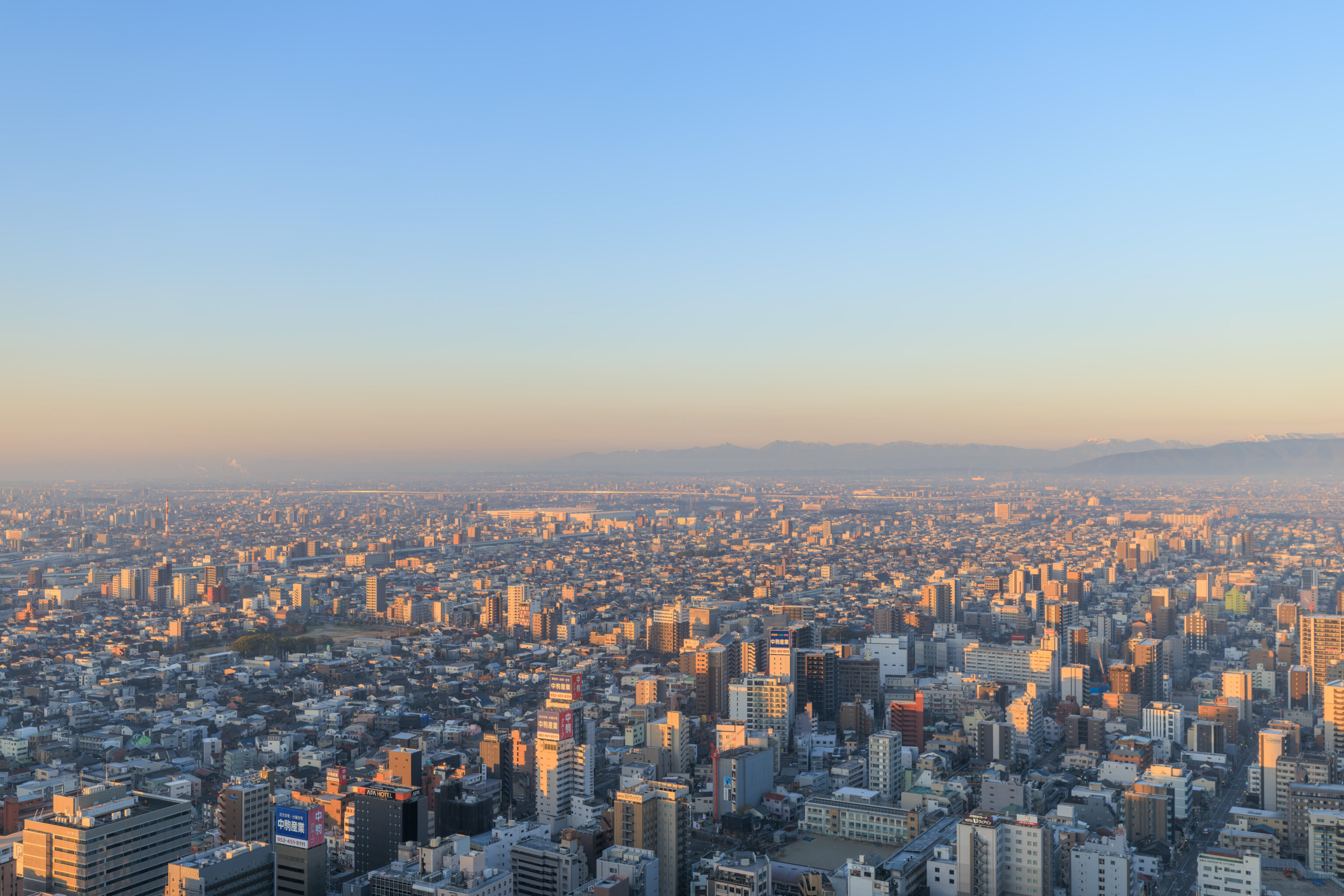
We missed sunrise by about twenty minutes or so after waking up at the 名古屋マリオットアソシアホテル Nagoya Marriott Associa Hotel.
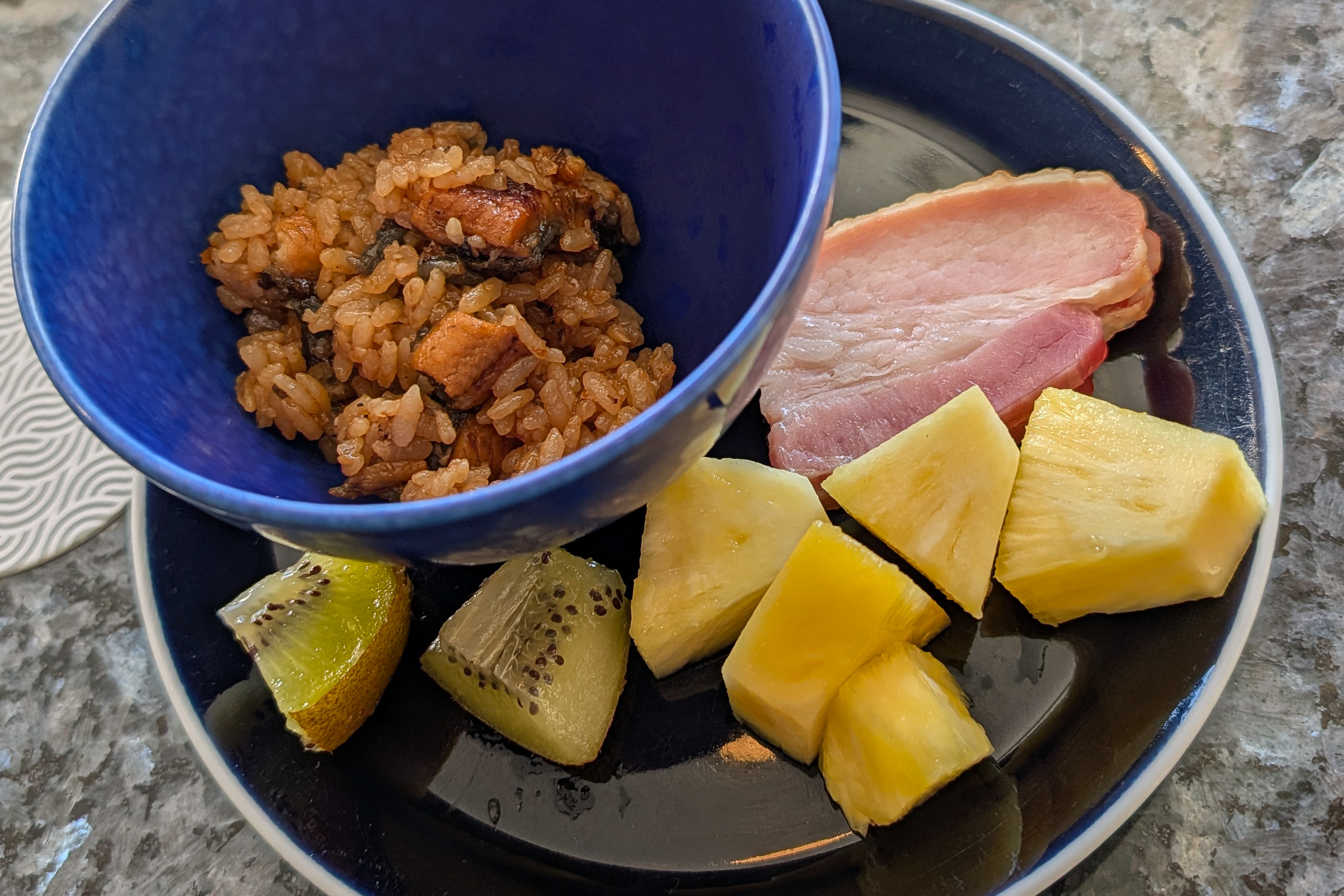
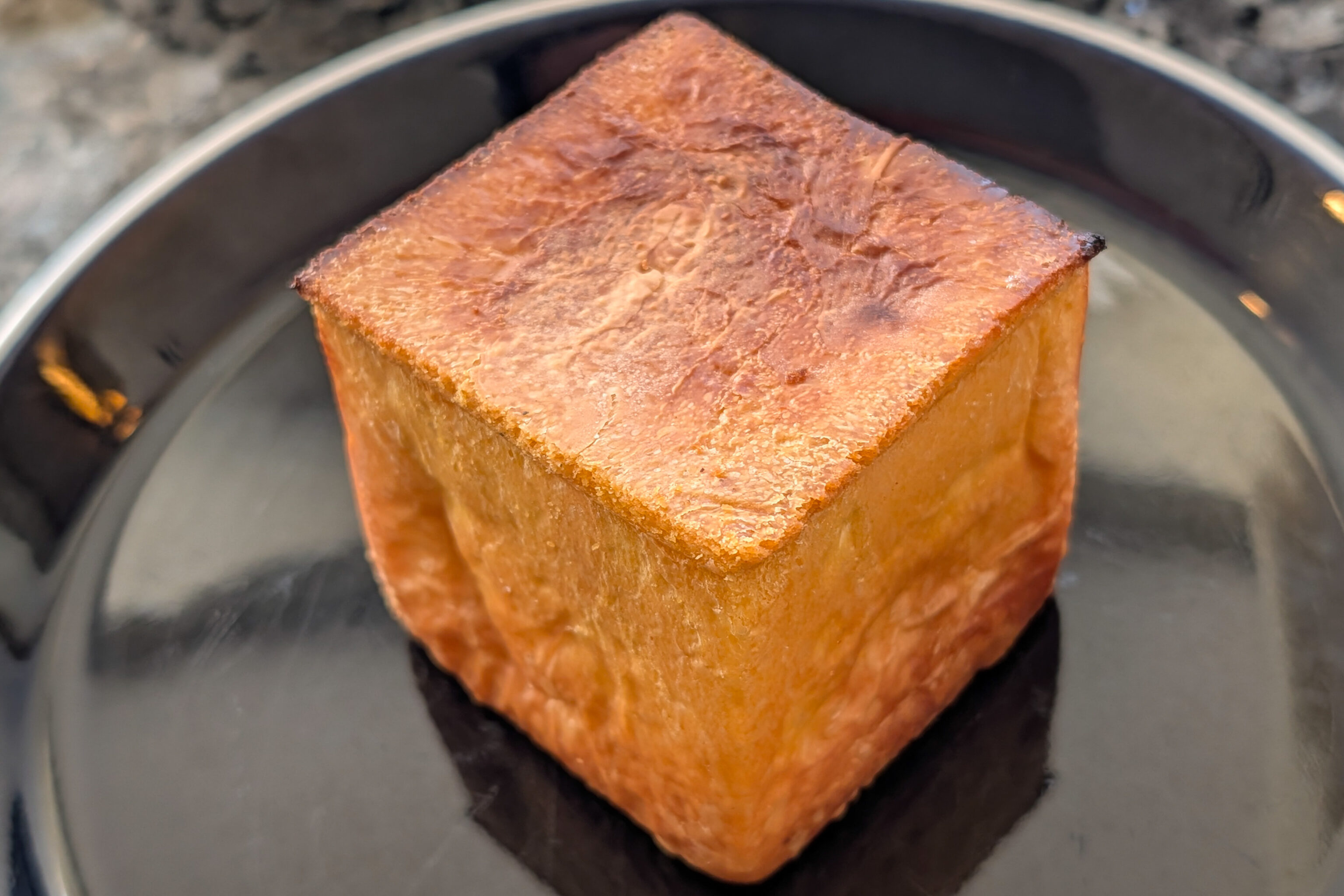
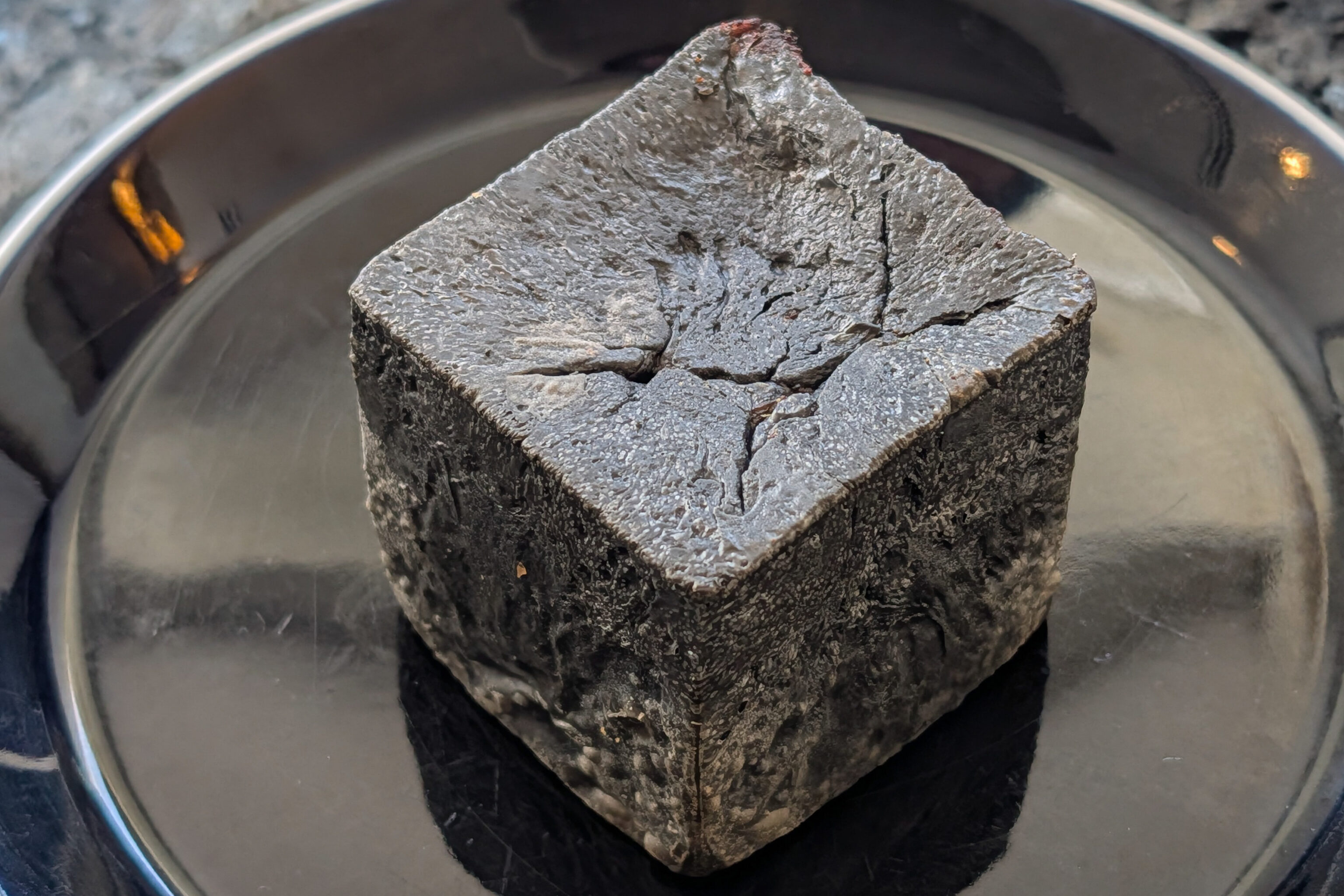
We went upstairs to the lounge for breakfast. It was similar to breakfast yesterday. The best items available were the hitsumabushi and the cube curry breads. We didn’t notice yesterday but there was a sign explaining these breads are from the large Japanese CoCo Icibanya chain. We’ve only had CoCo Icibanya once and never knew they had a bakery. There is actually one here at Nagoya Station named ココイチベーカリー Cocoichi Bakery.
Nagoya Castle
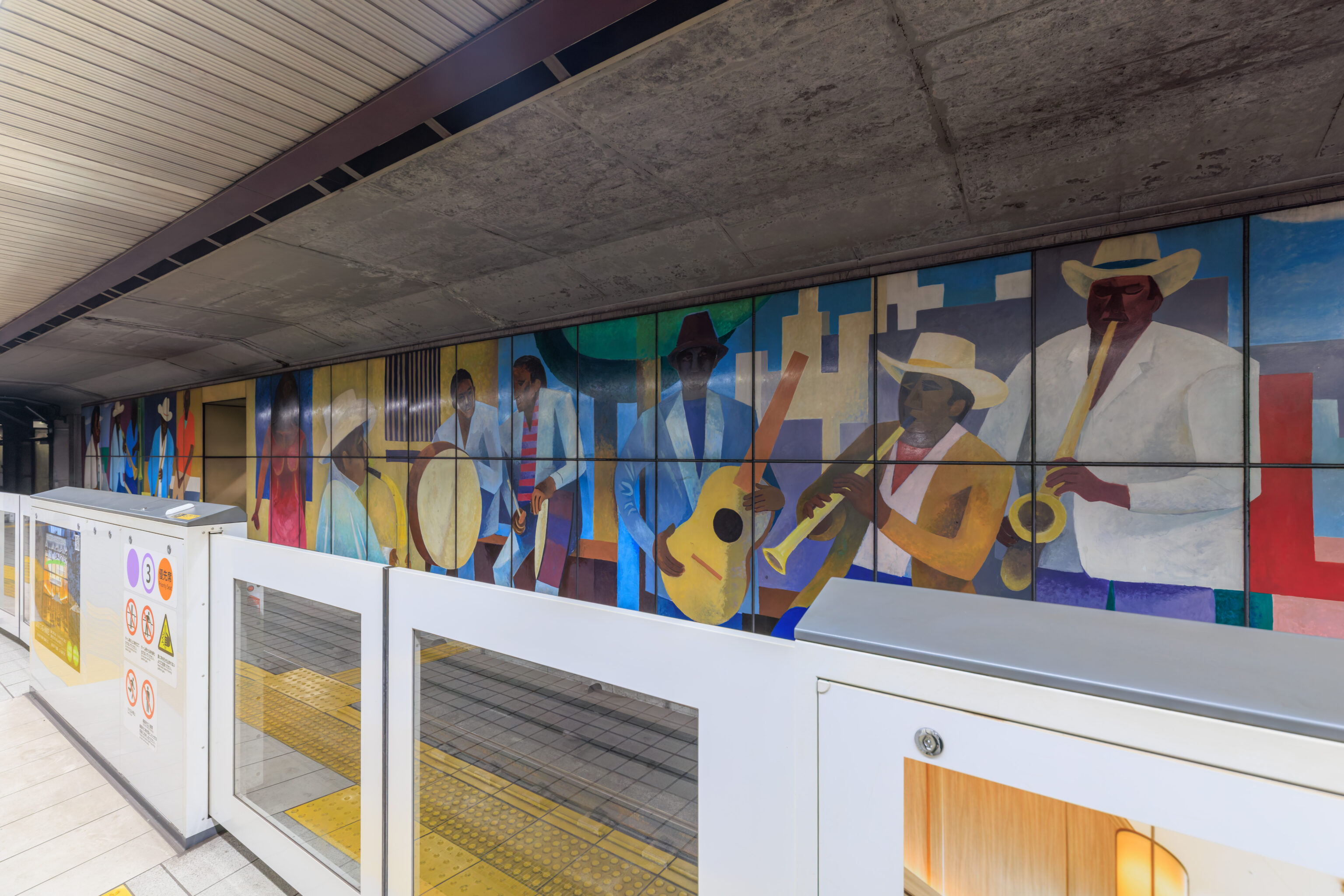
We headed out later in the morning for Nagoya Castle, which is to the northeast. To get there, we first took the 桜通線 Sakura-dori Line east to 久屋大通駅 Hisaya-odori Station. It is 人間讃歌 A Hymn to Humanity by 安藤幹衛 Mikie Ando.
The best information we could find about it was from 名古屋地下鉄散歩(1)久屋大通駅 Nagoya Subway Stroll (1): Hisaya-odori Station by 中京テレビ Chukyo TV, which confirms the title and artist. It doesn’t say much else about it other than it depicting Mexico.
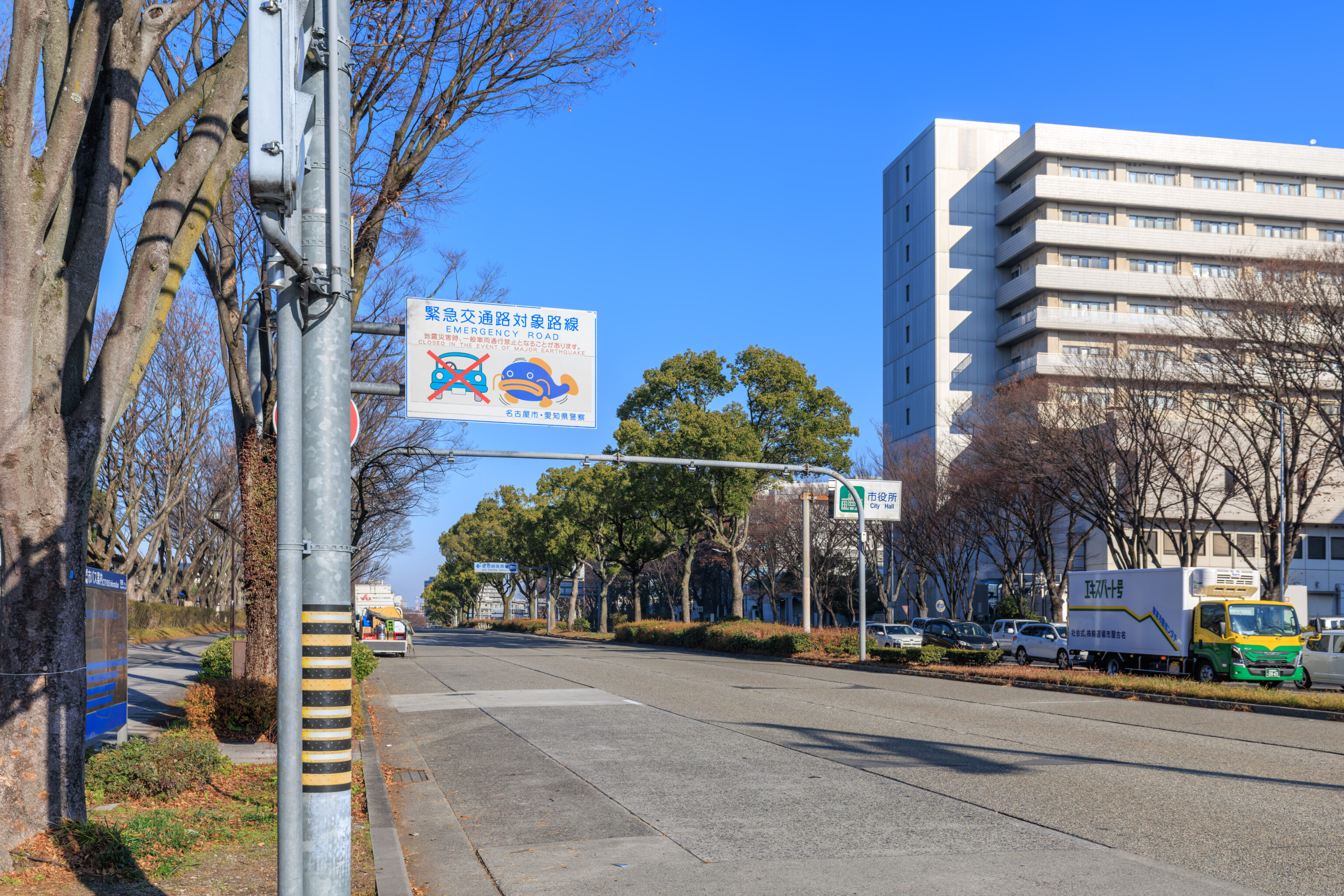
We transferred to the 名城線 Meijo Line and rode it once stop north to the 名古屋城駅 Nagoya-jo Station. Upon exiting the station, we saw that the road here would be closed if there was a major earthquake in order to leave it available for emergency vehicles. But why is a fish used as the depiction of an earthquake?
There is a Japanese legend regarding a giant 鯰 namazu, or catfish, that lives underground and causes earthquakes. Hence, the catfish on the sign above. This is also basically the plot to the 新海 誠 Makoto Shinkai anime すずめの戸締まり Suzume, except with the catfish replaced by a giant worm.
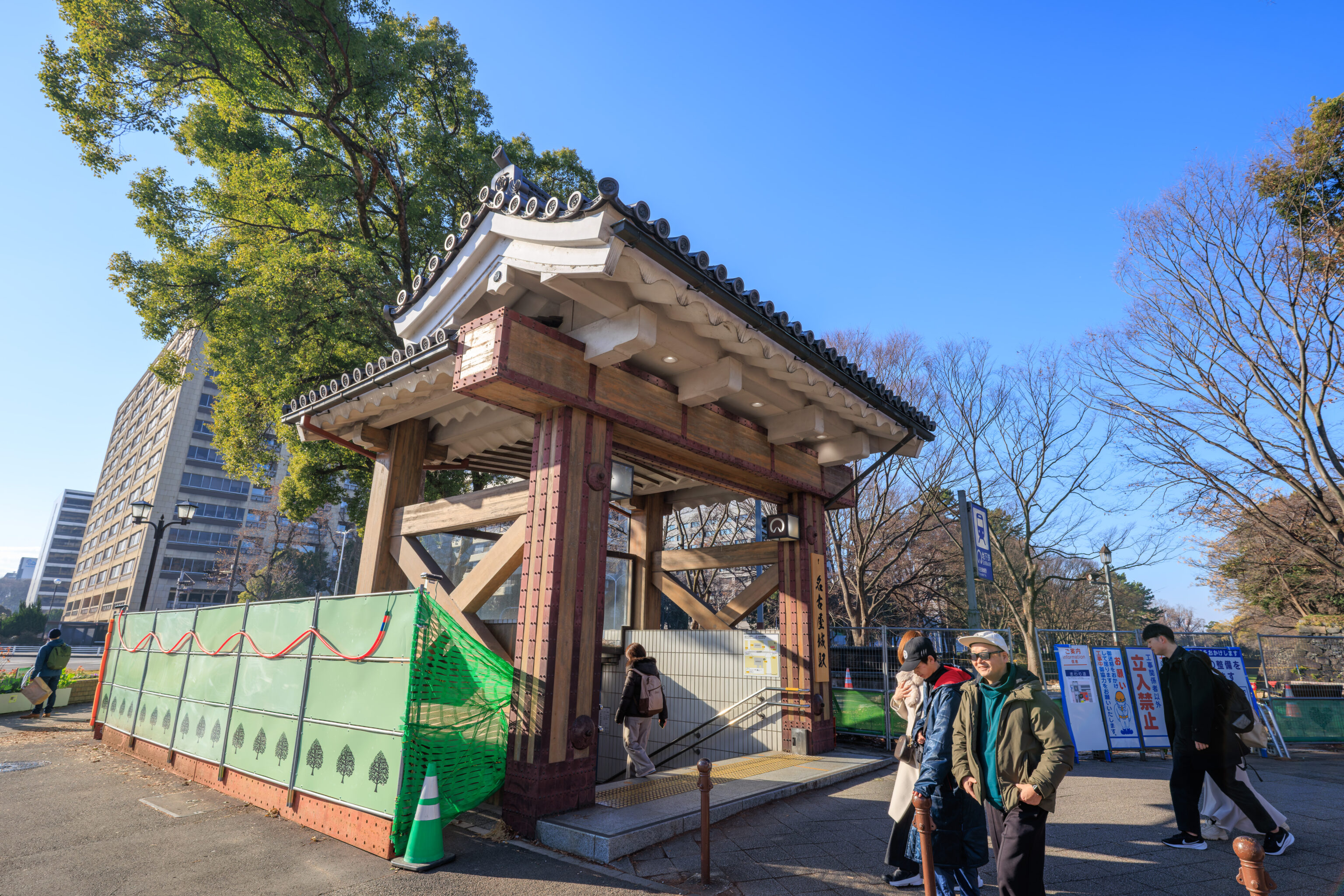
We noticed that this subway entrance had a roof shaped like what one might encounter at a temple or castle!
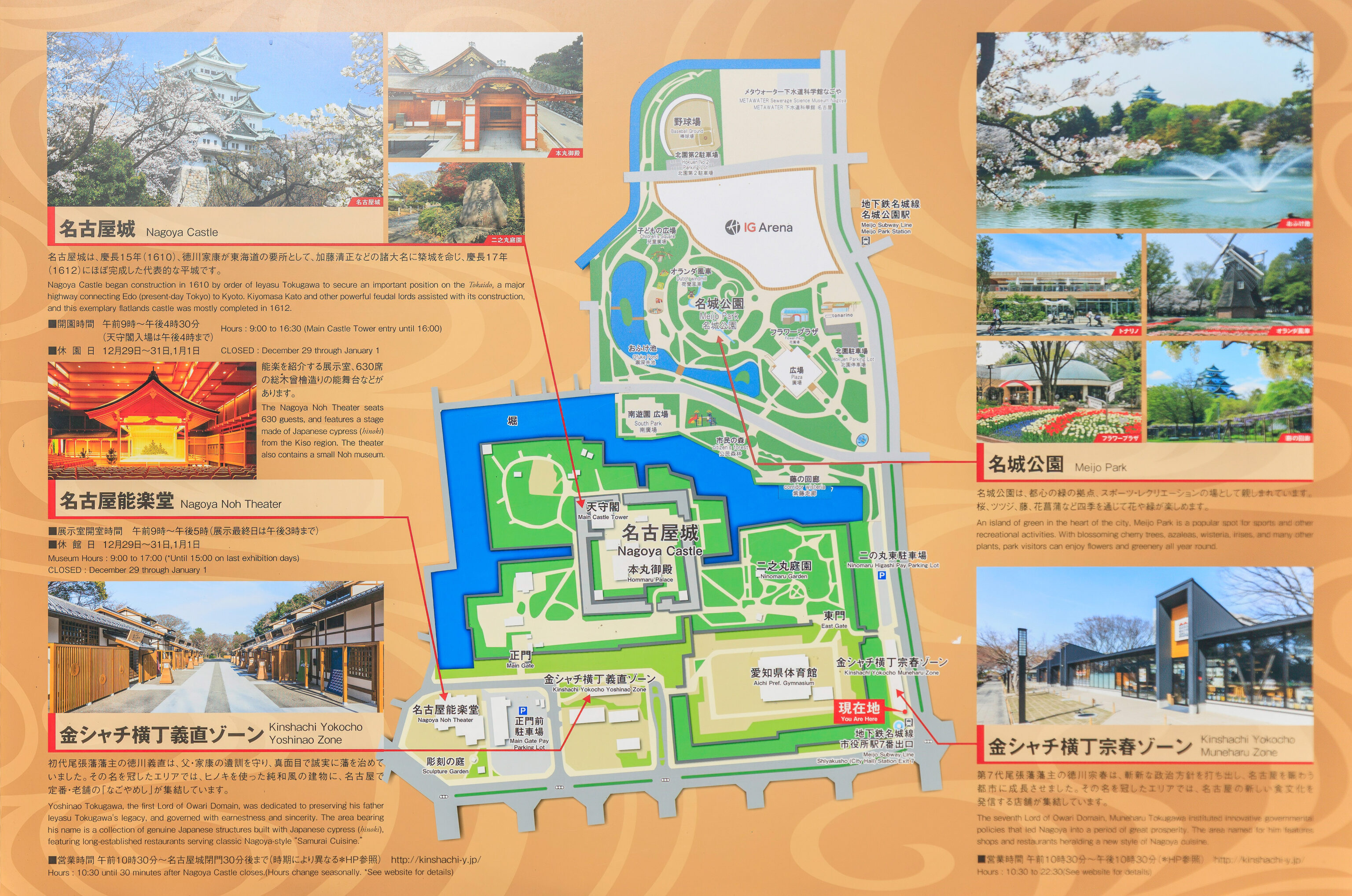
This sign shows 名古屋城 Nagoya Castle and nearby points of interest. The right side of the sign is blurry due to the sign being photographed from an angle. The blurriness was not easily correctable without effecting the text.

This sign shows a wider area.
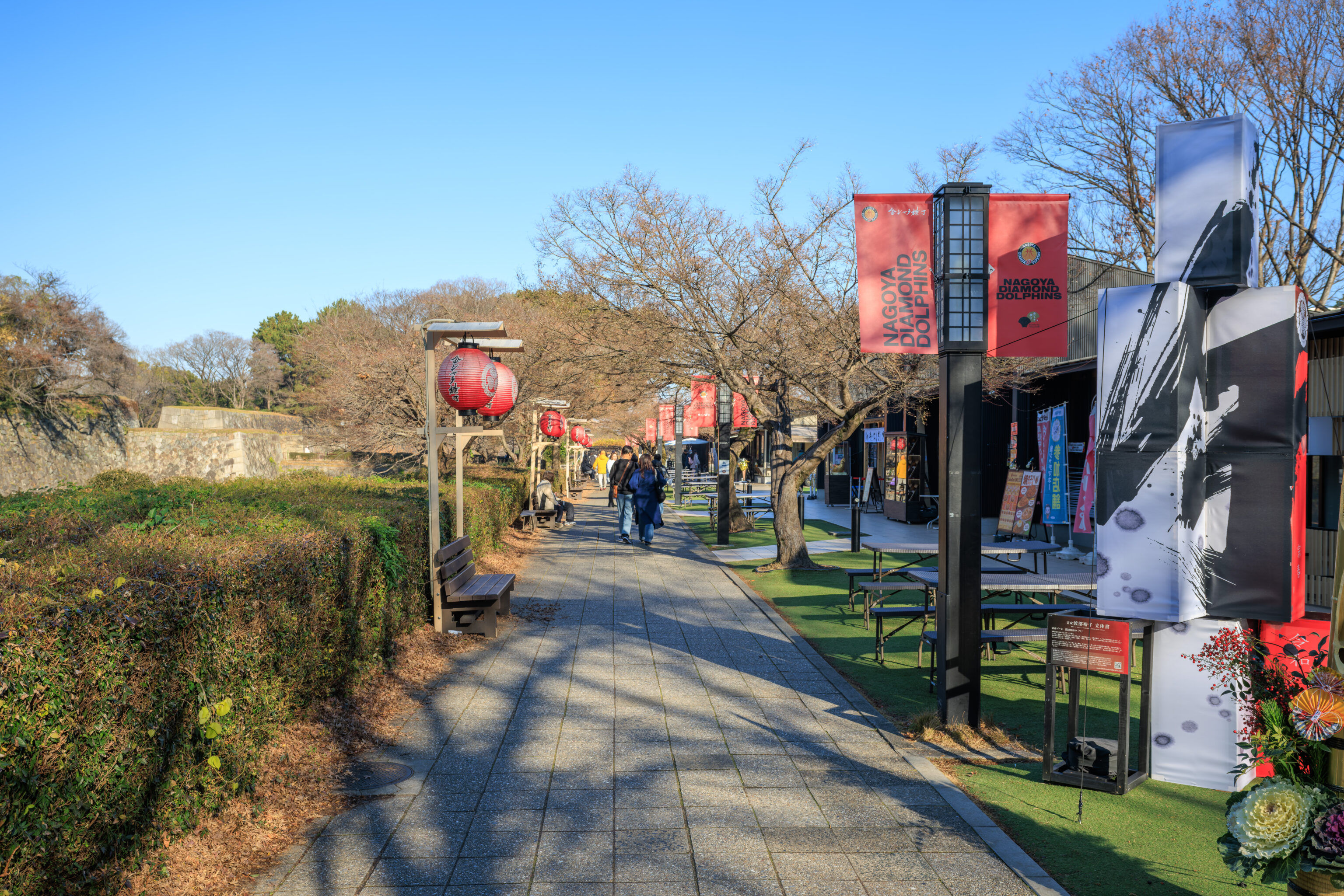
We started to walk to the north to reach the castle’s eastern entrance.
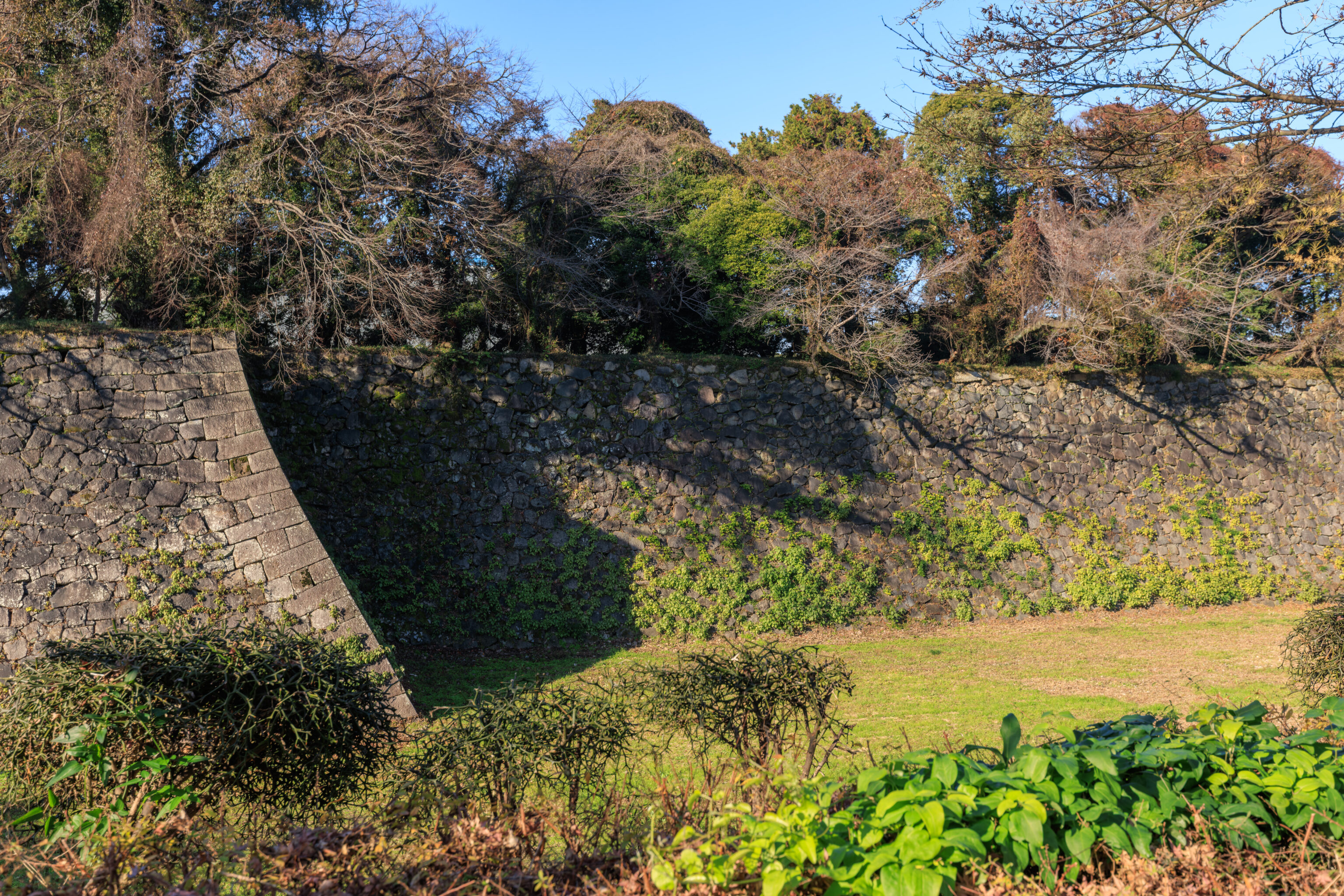
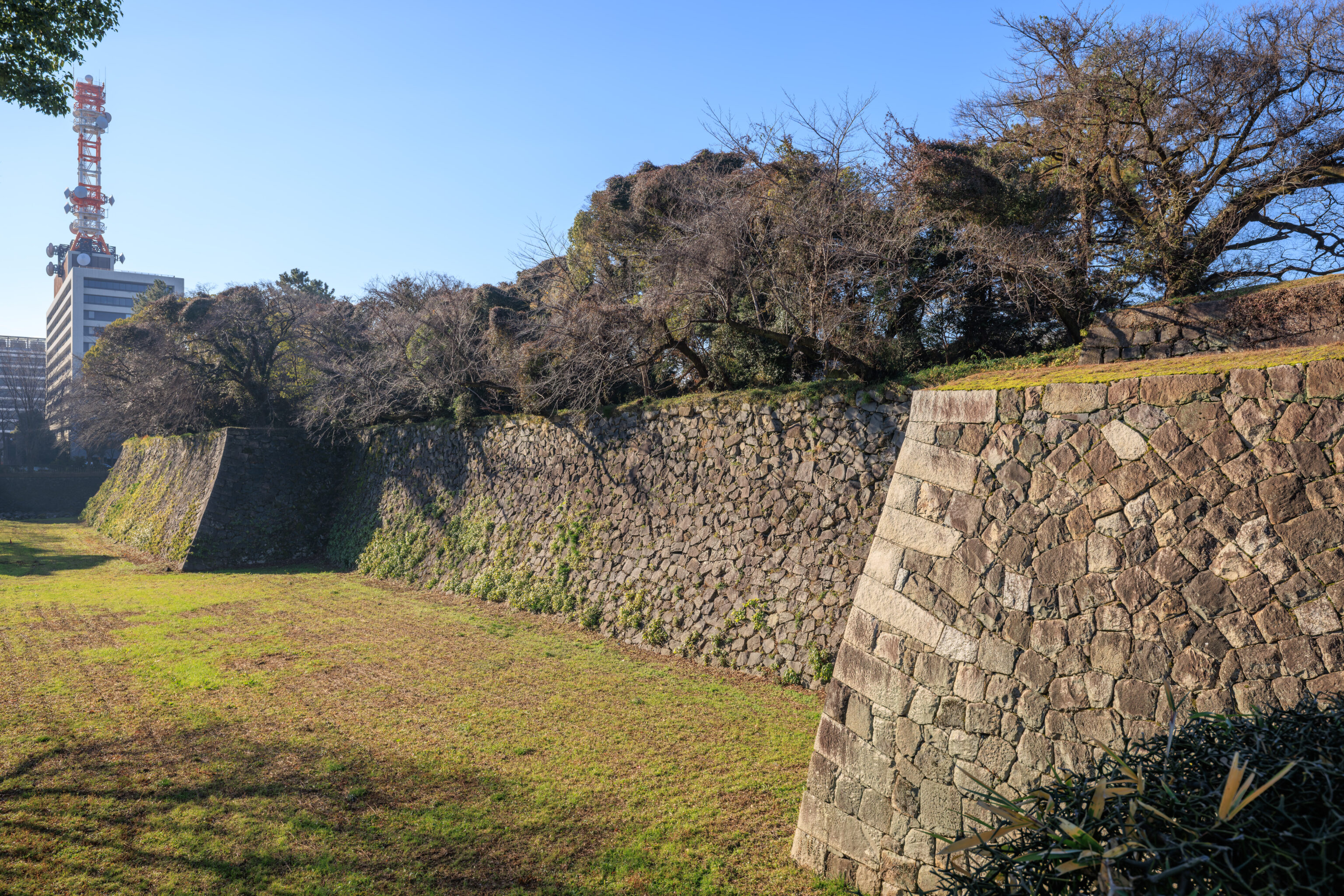
In modern times, there is a dry moat on the east side of the castle. The tenshu, or keep, was destroyed during an air raid in World War II along with other castle structures. But vast walls like these still remain.
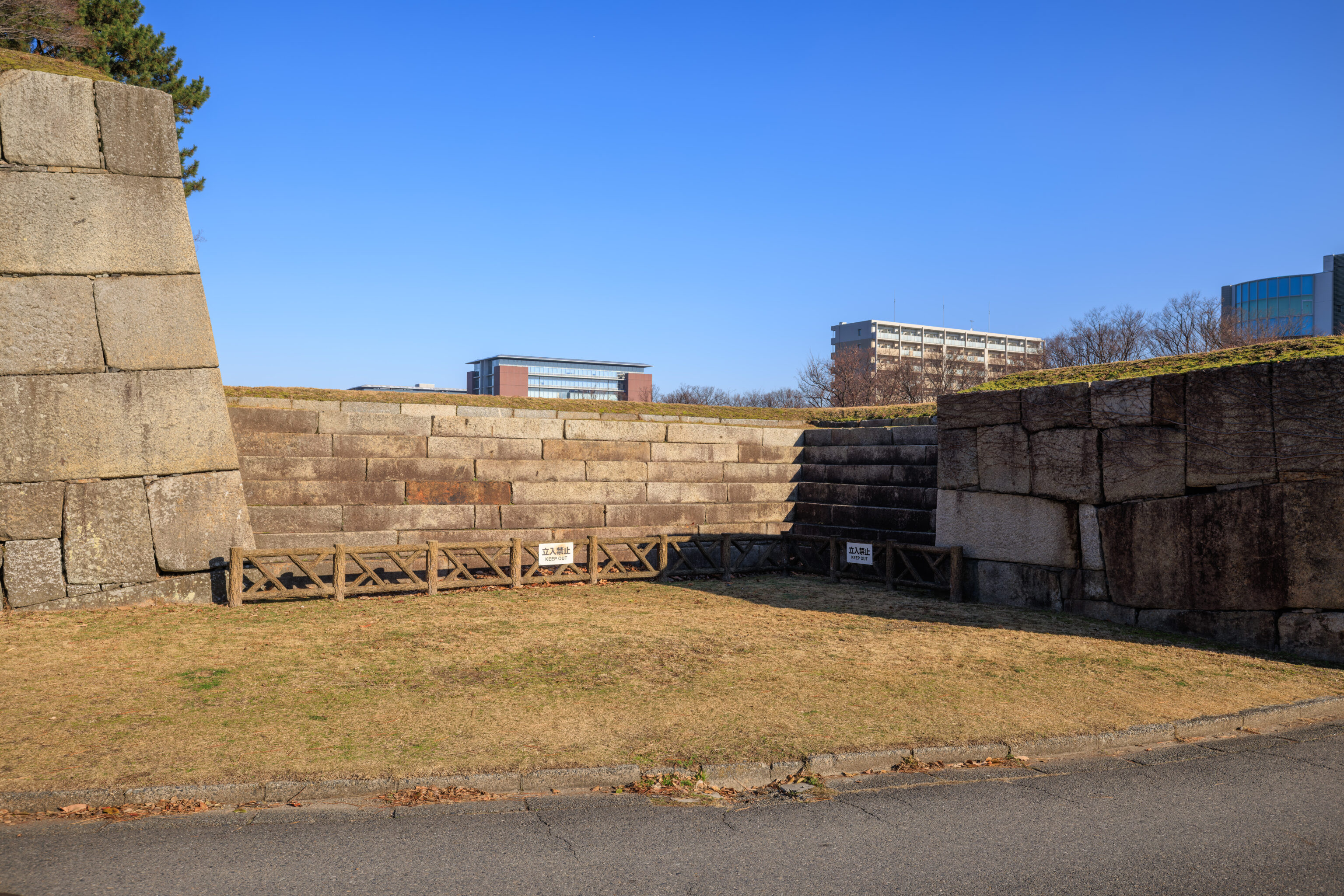
We turned left to walk west on a sidewalk along a small entrance road. Unfortunately, this was about as far as we were able to go. Up ahead, we could see that the castle was closed. It turns out that it is closed for the Japanese New Year holiday! We weren’t the only people to be surprised by this though! Perhaps we should have checked that it was actually open first!
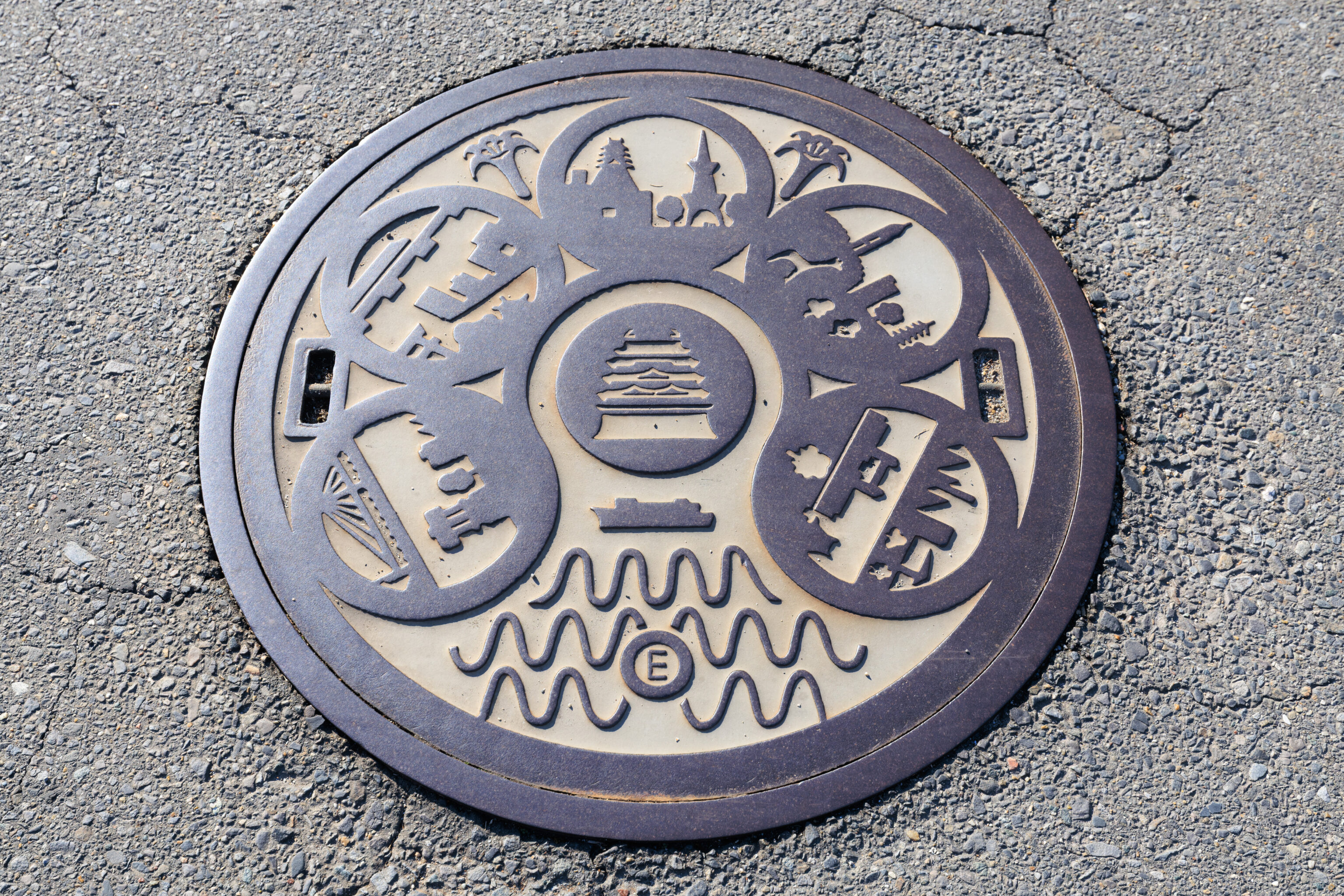
This utility cover depicts Nagoya with the castle at the center.
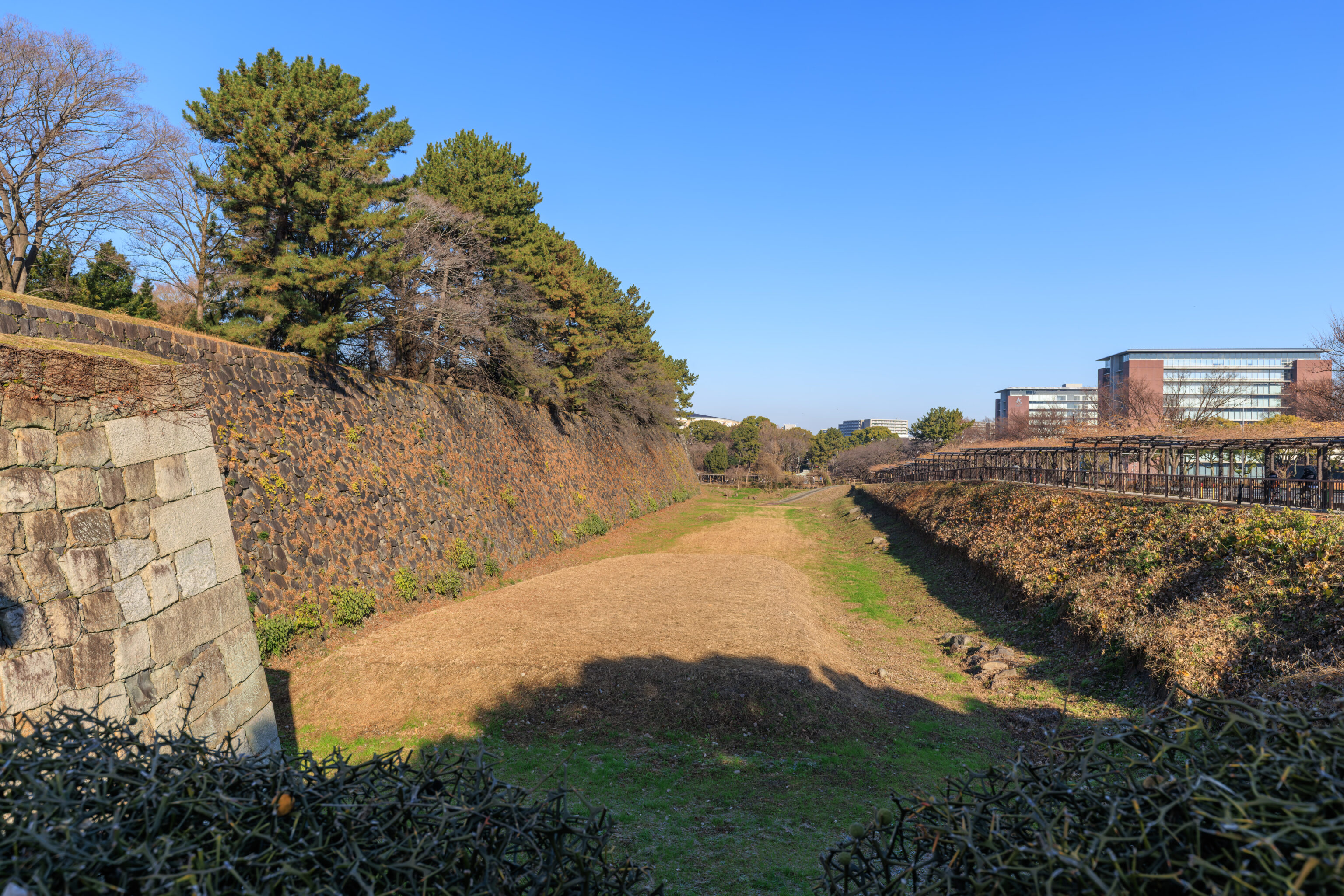
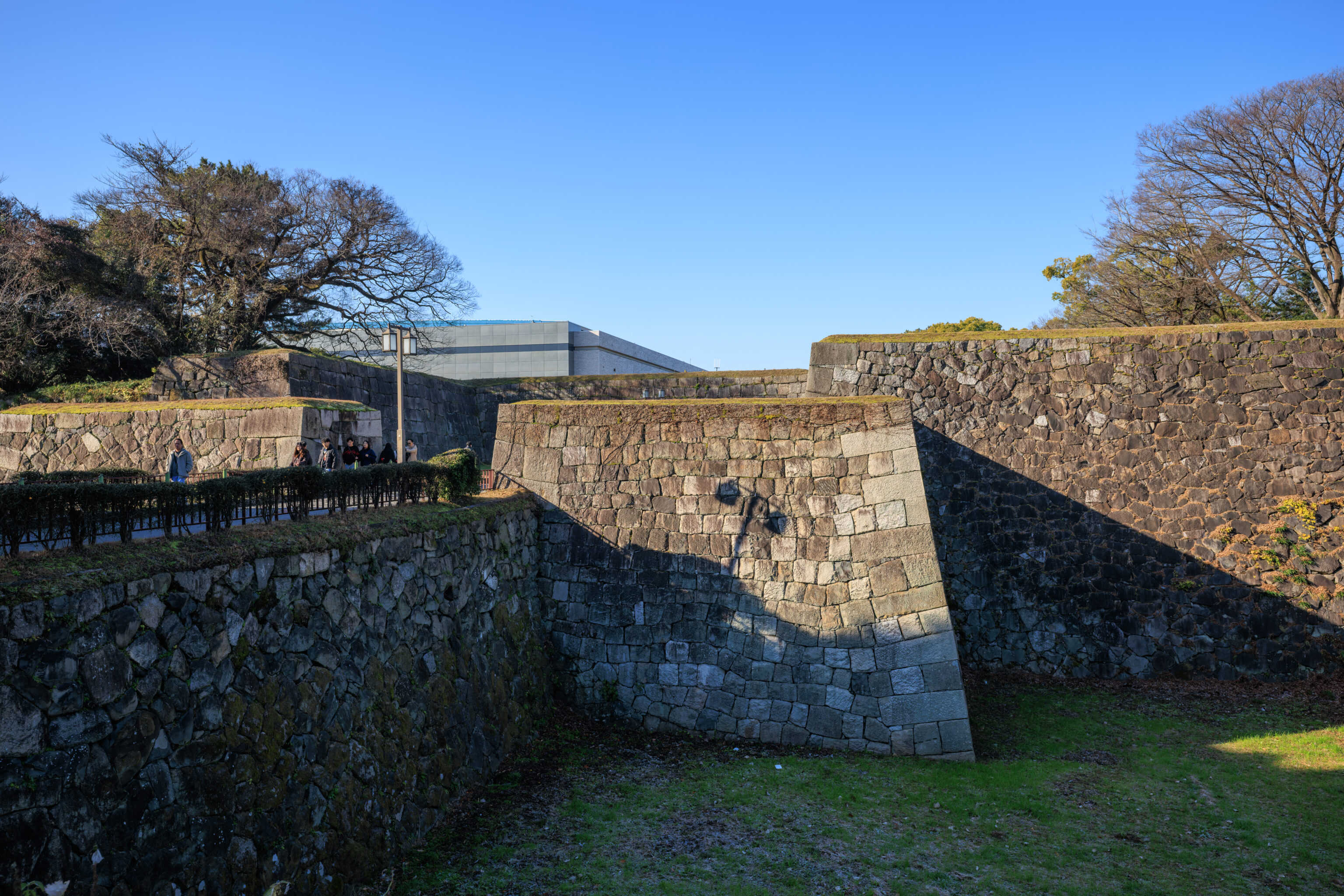
We walked back to the east… What to do now? We decided to walk counter-clockwise around the castle.
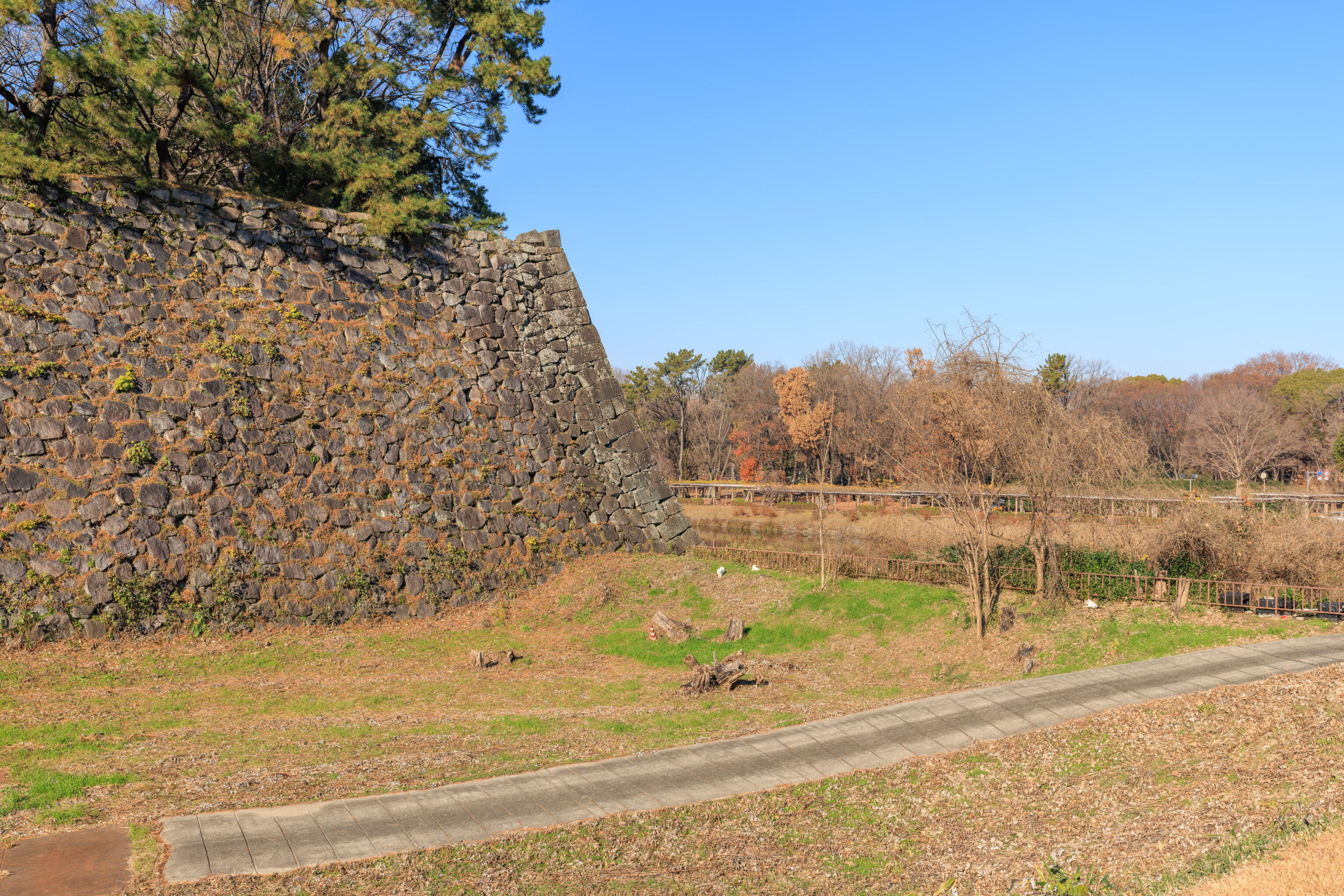
After walking to the northeast corner of the castle’s remaining outer wall, we were surprised to see three white cats lounging in the grass!
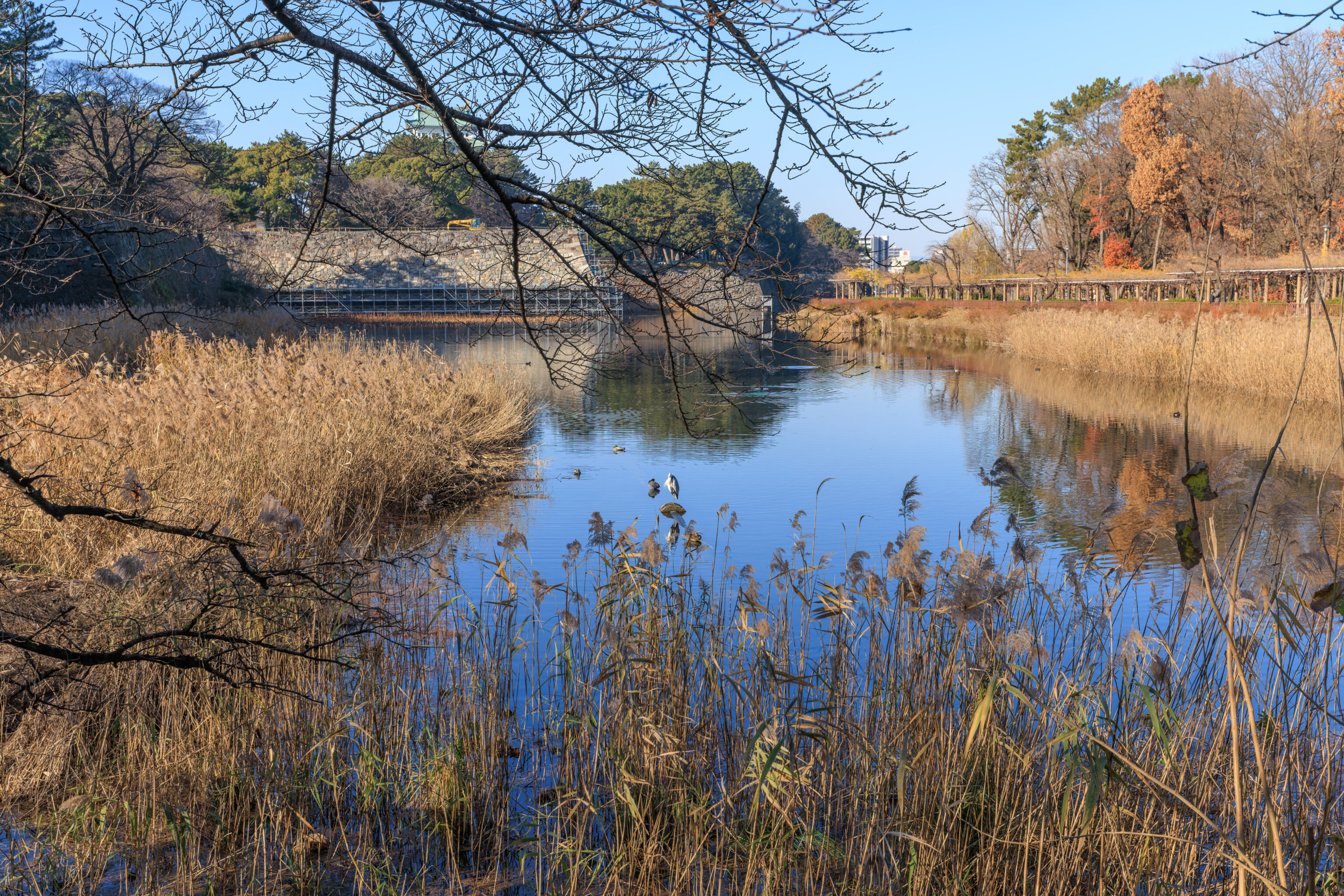
We had mentioned that the east side of the castle currently contains a dry moat. North of the northeast corner, it was a wet moat! And in that moat, there was what appears to be a heron, probably a Gray Heron, standing on some sort of mostly submerged pipe. There were also many other water birds present.
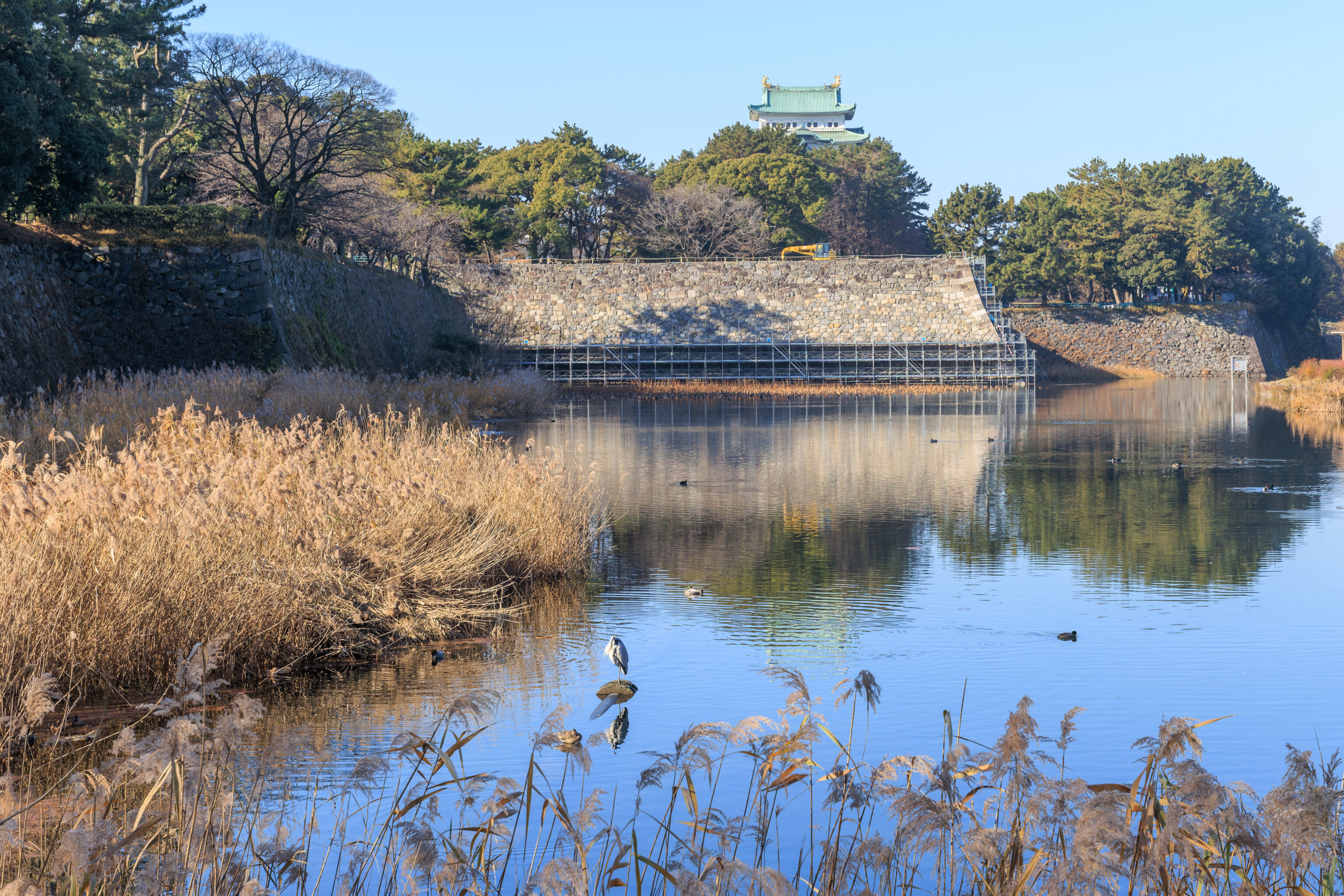
Walking a little bit further north, we got our first clear view of Nagoya Castle’s modern concrete tenshu, built in 1959.
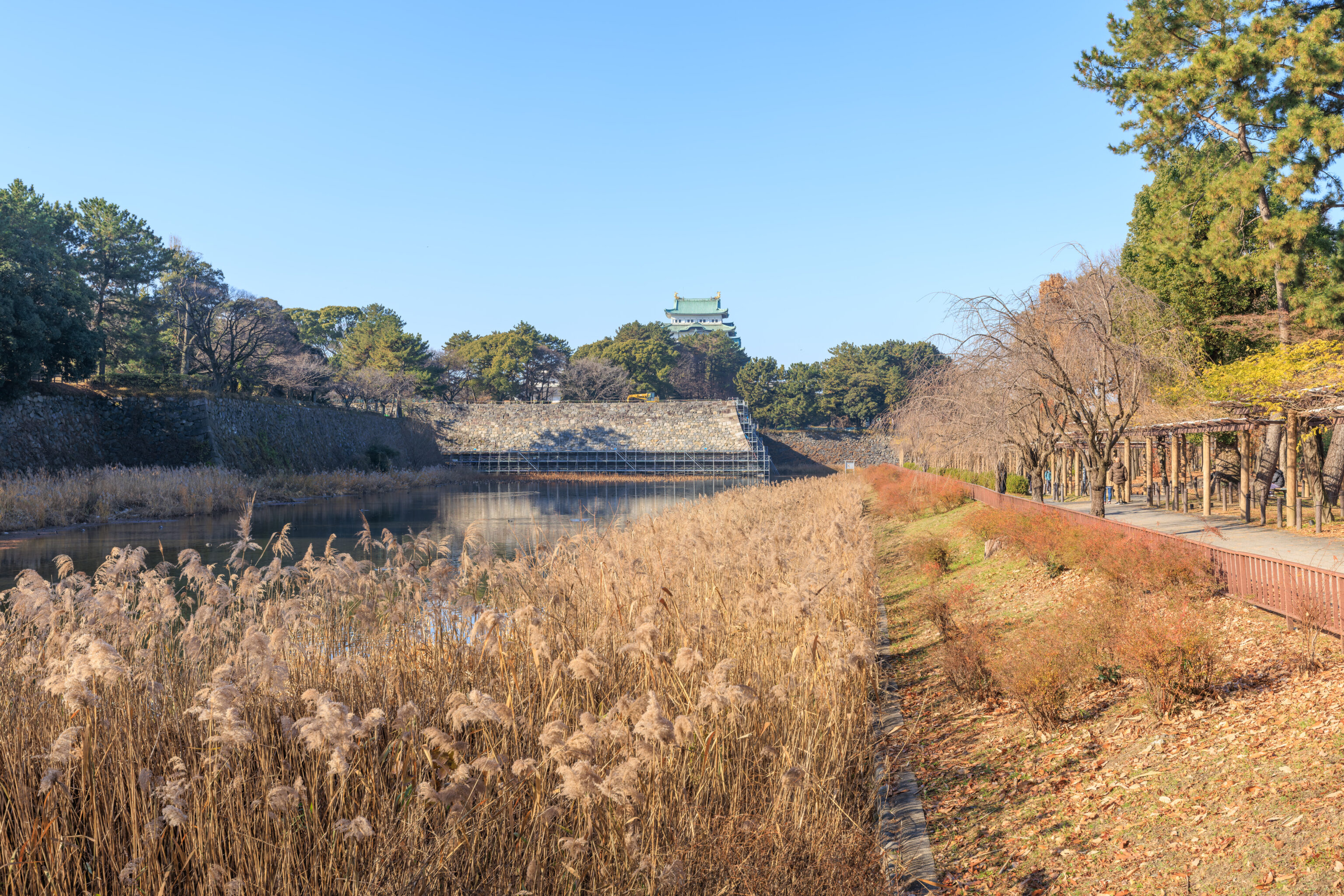
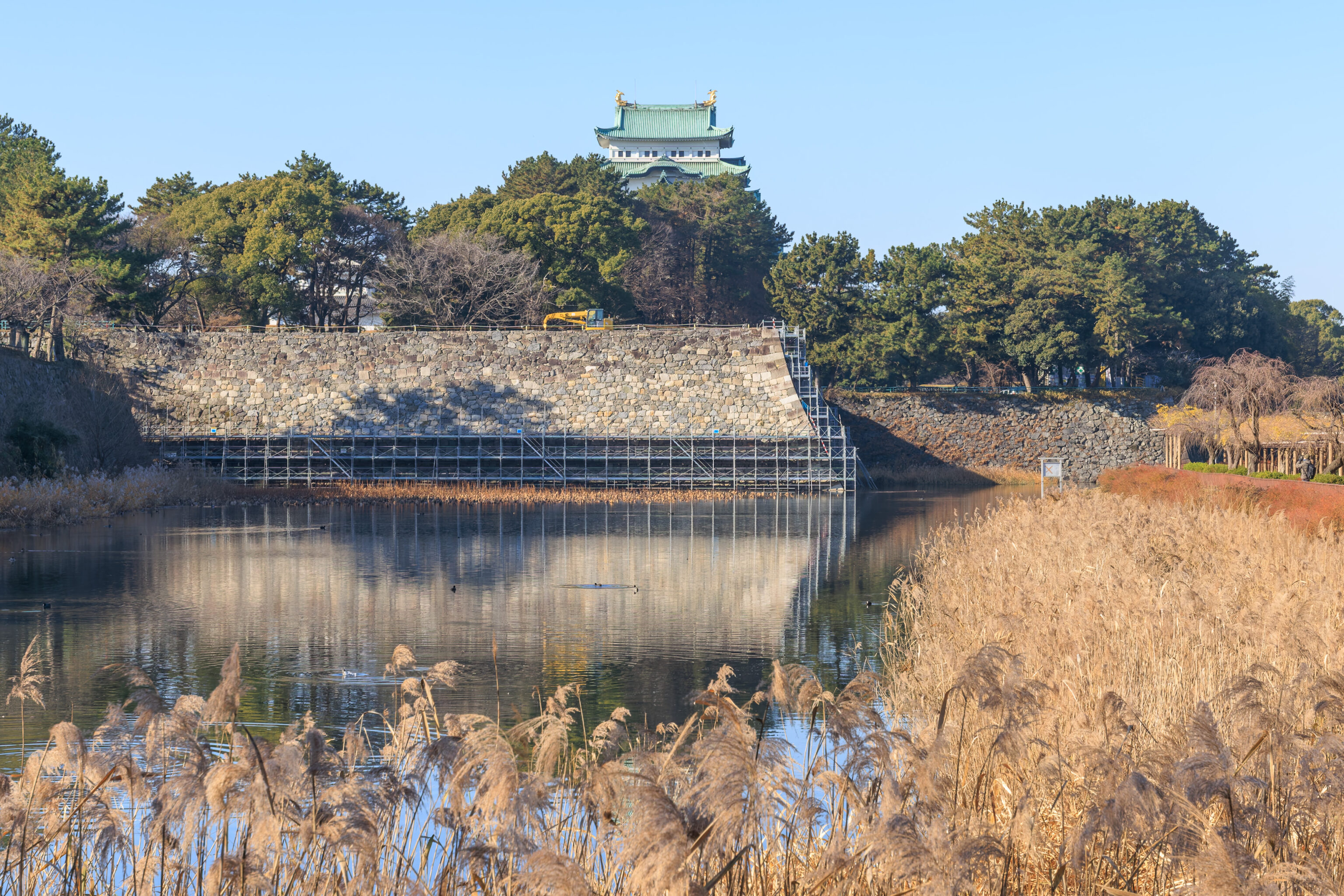
Its not original in any way, but it still looks quite impressive.
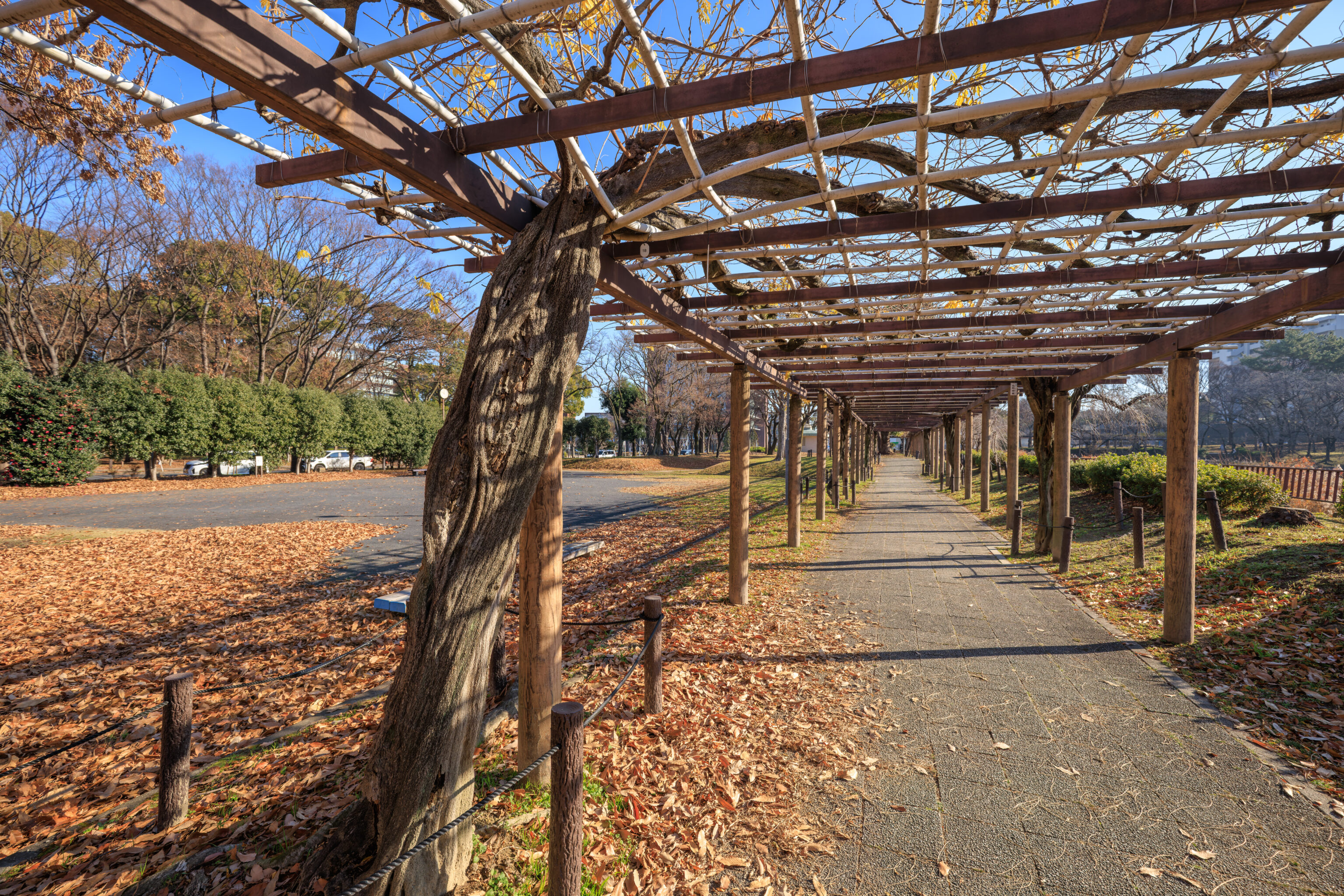
We walked a little bit further north and turned left at the first opportunity, walking below a long trellised path. It’s probably quite beautiful here in seasons that are not winter.
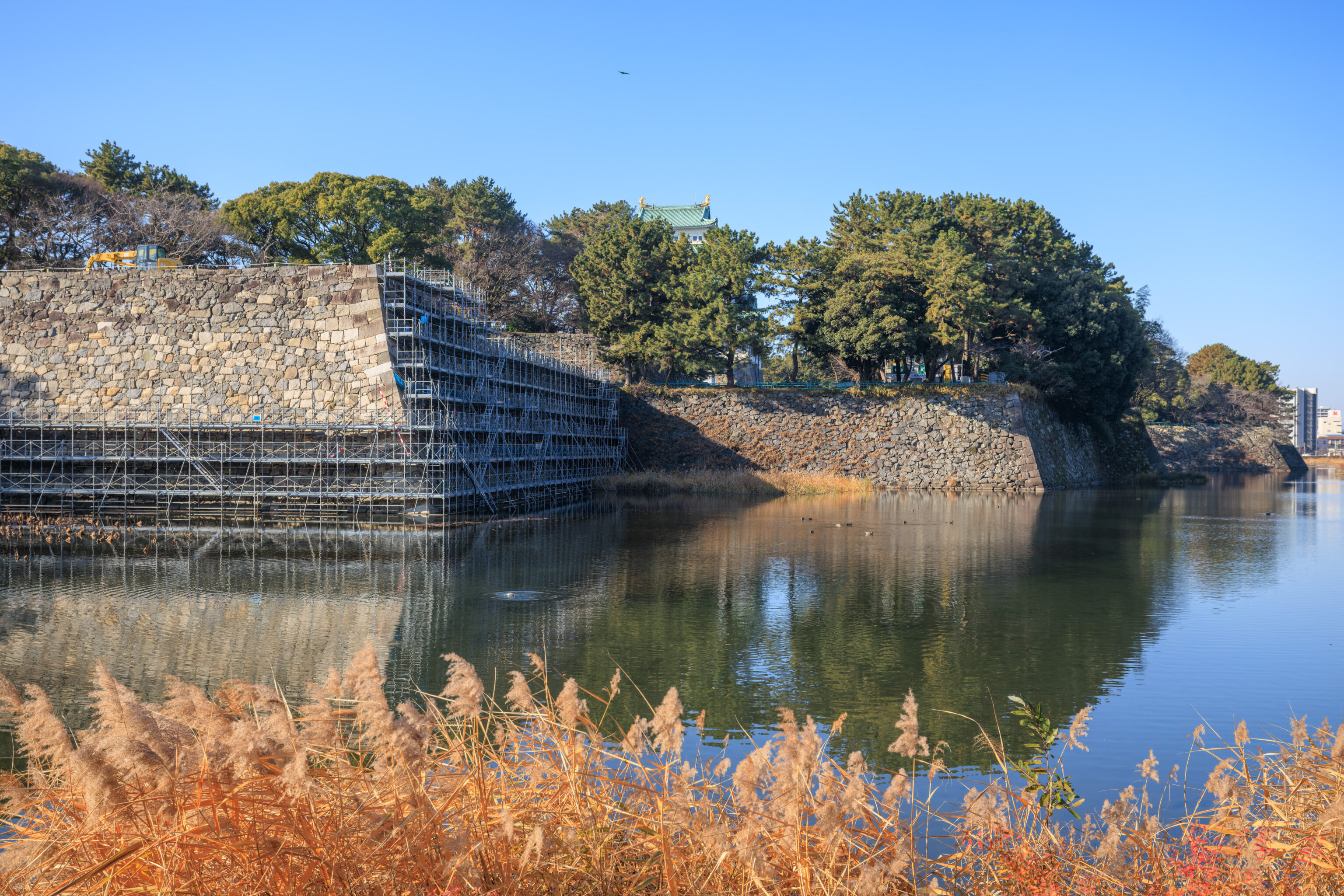
There was clearly some working going on at the stone walls here.
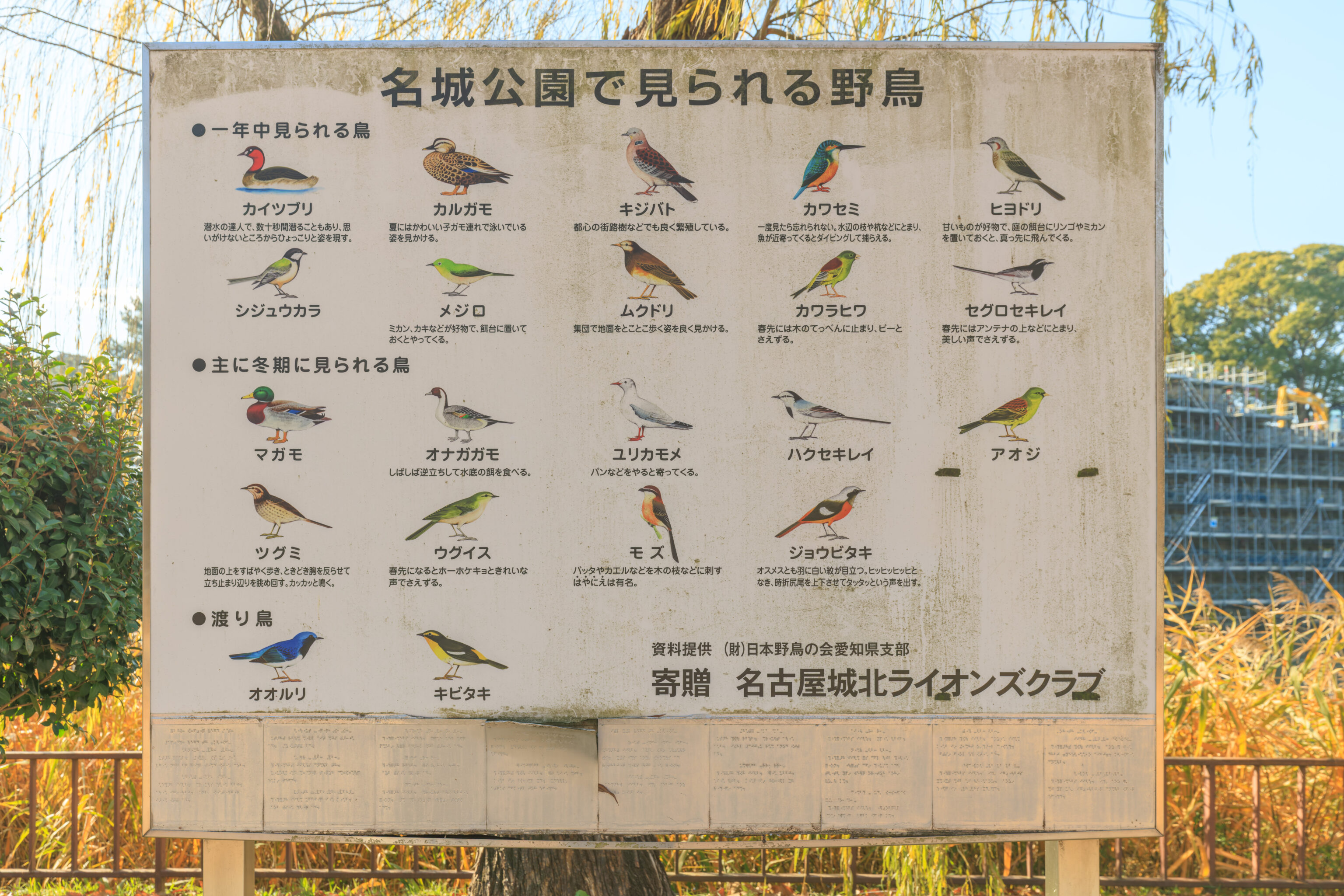
This sign shows the birds that may be seen here. While there are few species in common between Japan and the US, the general appearance of many of these birds is familiar to us.
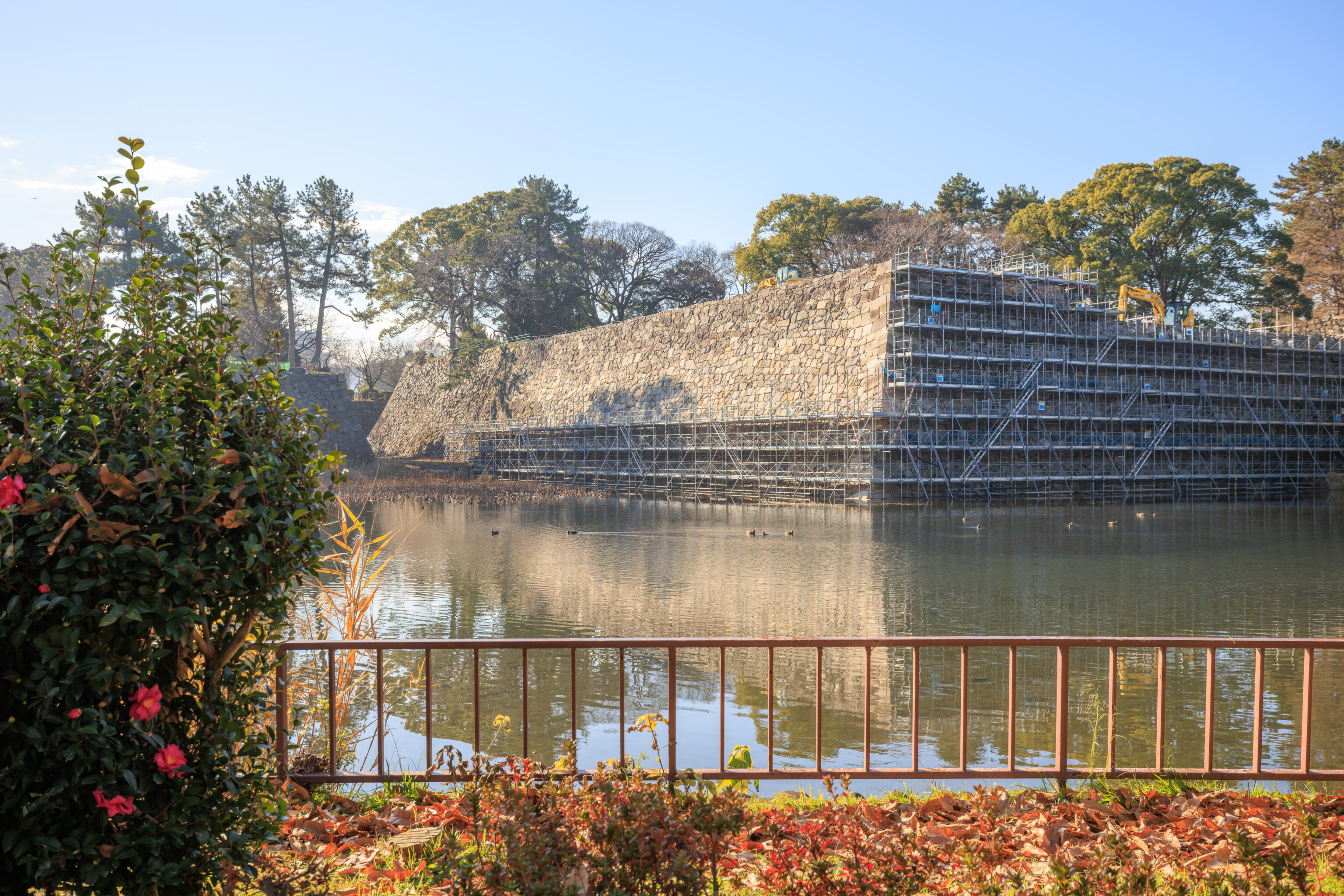
There were signs here explaining what was going on:
Special Historic Site, Nagoya Castle
Hommaru Karamete-Umadashi Area Stone Wall Restoration Project

Located in the northeastern portion of the Hommaru of Nagoya Castle is the Hommaru Karamete-Umadashi*, which is approximately 94 m from north to south, 52 m from east to west, and 14 m in height. The stone wall was completed in 1610, but it collapsed in 1682 and was then repaired. Over time the stone wall once again deformed to a dangerous state, so it was decided a dismantling and re-assemble effort focused on the bulging portion of the wall would be enacted.

The restoration project began in 2002, and since then more than 1500 square meters of the stone wall, comprising over 4000 stones, has been dismantled. In 2023, the process of re-assembling the stones to the wall began.

Note: Hommaru Karamete-Umadashi: A defensive facility located outside of the Hommaru gate area for samurai infantry and cavalry to gather and prepare for sorties.

Details of the restoration work
1. Dismantling of the stone walls
In order to ensure the stones are re-assembled to their original positions, each stone is given a number when it is removed and is stored within the castle.

2. Examination of the stones and analysis of restoration policy
An investigation into the type of stones, traces left from their processing, engraved seals and writing, and other details was launched. We also investigated the cause of the walls' deformation and examined countermeasures, and established a plan regarding the walls' reconstruction.

3. Stone repair and procurement and processing of new materials
Bonding techniques are used to repair stones that have been split open. In cases where the original stone is too damaged to use, a new stone is reshaped until it is identical to the original stone, and returned to the wall.

4. Restoration of the stone walls
The stone walls are being restored utilizing the techniques employed at the time of its creation in combination with modern technologies. In preparation for earthquakes, we have introduced modern construction methods, such as using geogrids, to the restoration of the walls.
– Text from a sign.
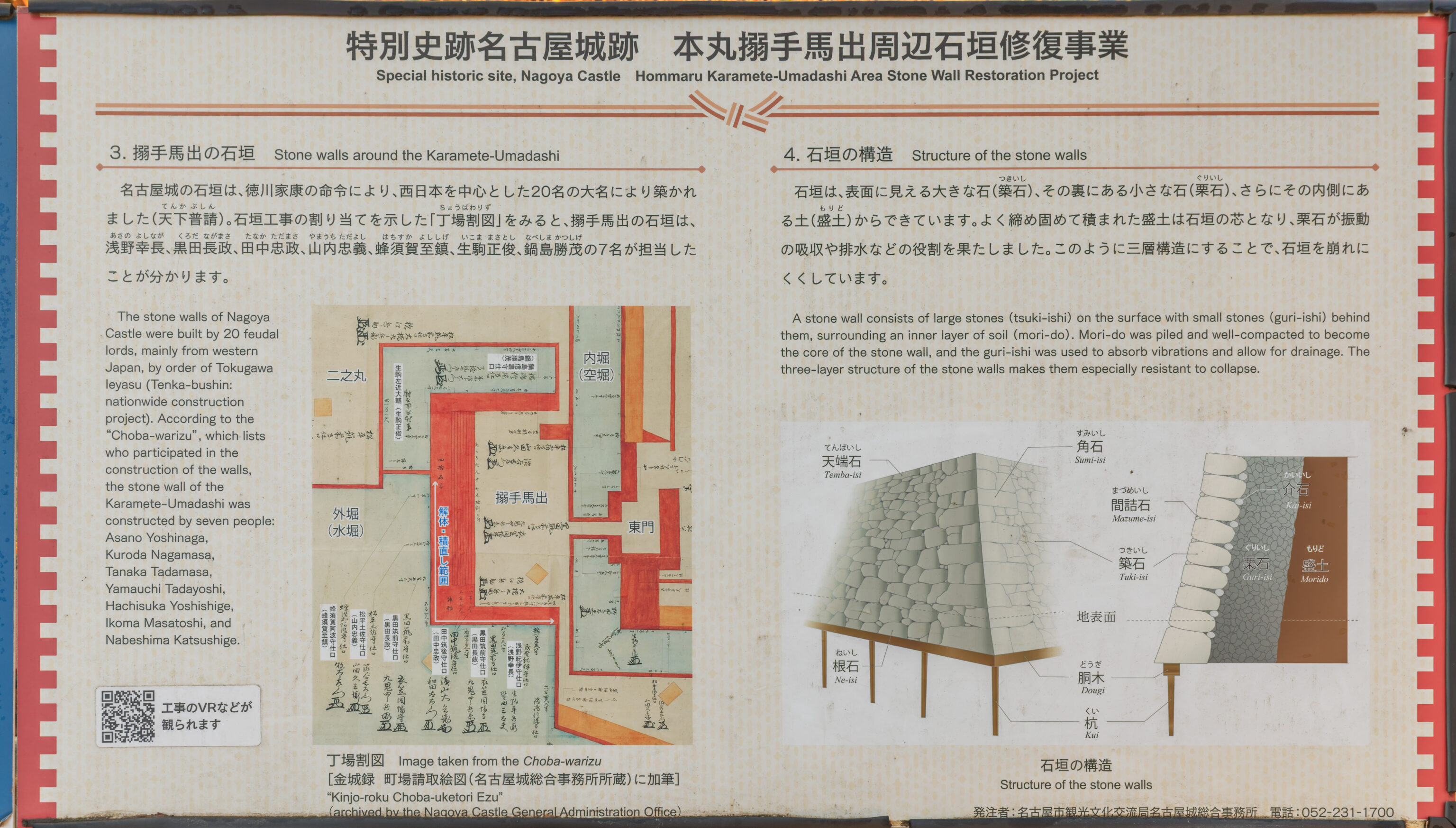
This sign contained drawings of the wall and its composition.
Special Historic Site, Nagoya Castle
Hommaru Karamete-Umadashi Area Stone Wall Restoration Project

Stone walls around the Karamete-Umadashi
The stone walls of Nagoya Castle were built by 20 feudal lords, mainly from western Japan, by order of Tokugawa Ieyasu (Tenka-bushin: nationwide construction project). According to the "Choba-warizu", which lists who participated in the construction of the walls, the stone wall of the Karamete-Umadashi was constructed by seven people: Asano Yoshinaga, Kuroda Nagamasa, Tanaka Tadamasa, Yamauchi Tadayoshi, Hachisuka Yoshishige, Ikoma Masatoshi, and Nabeshima Katsushige.

Structure of the stone walls
A stone wall consists of large stones (tsuki-ishi) on the surface with small stones (guri-ishi) behind them, surrounding an inner layer of soil (mori-do). Mori-do was piled and well-compacted to become the core of the stone wall, and the guri-ishi was used to absorb vibrations and allow for drainage. The three-layer structure of the stone walls makes them especially resistant to collapse.
– Text from the sign above.
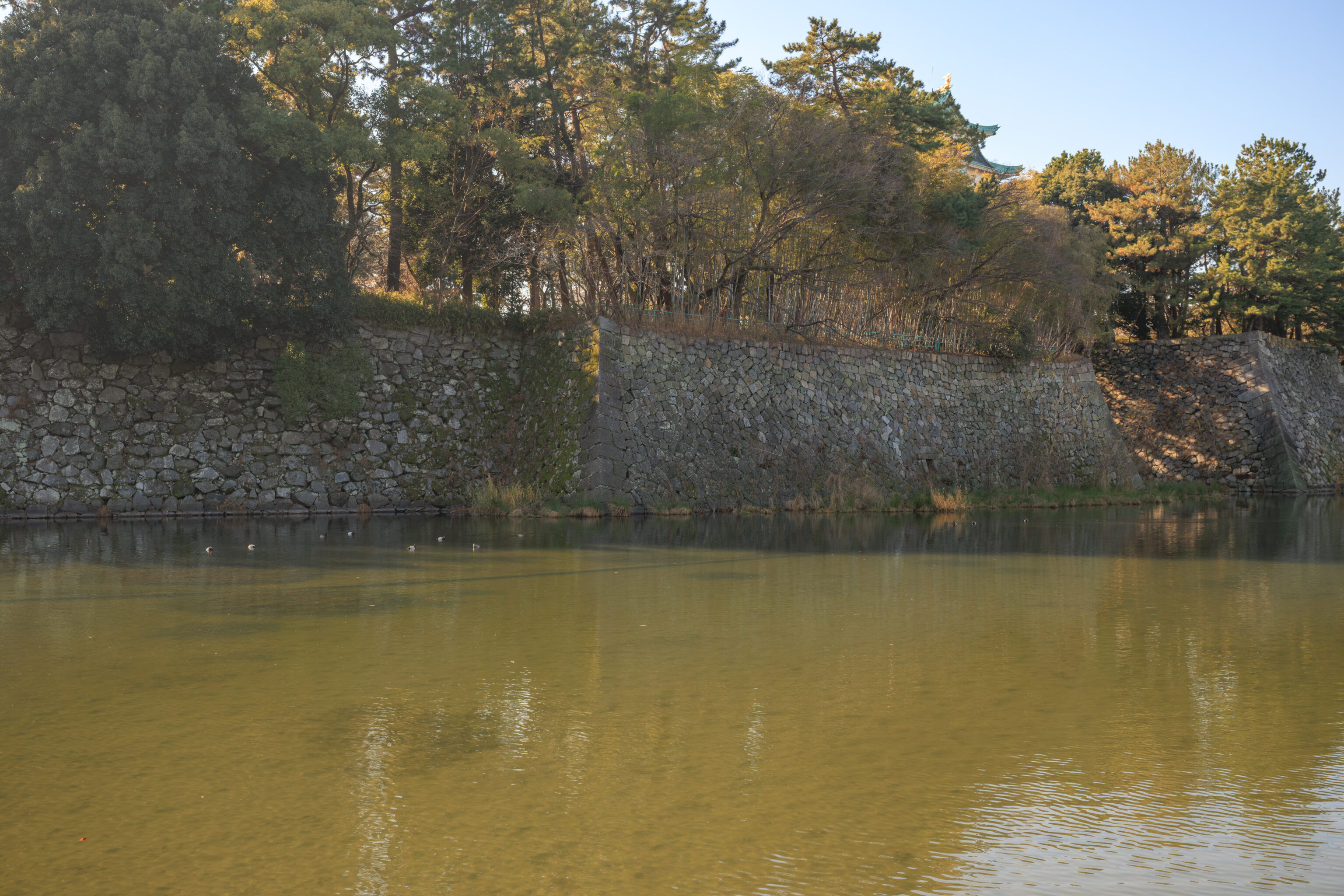
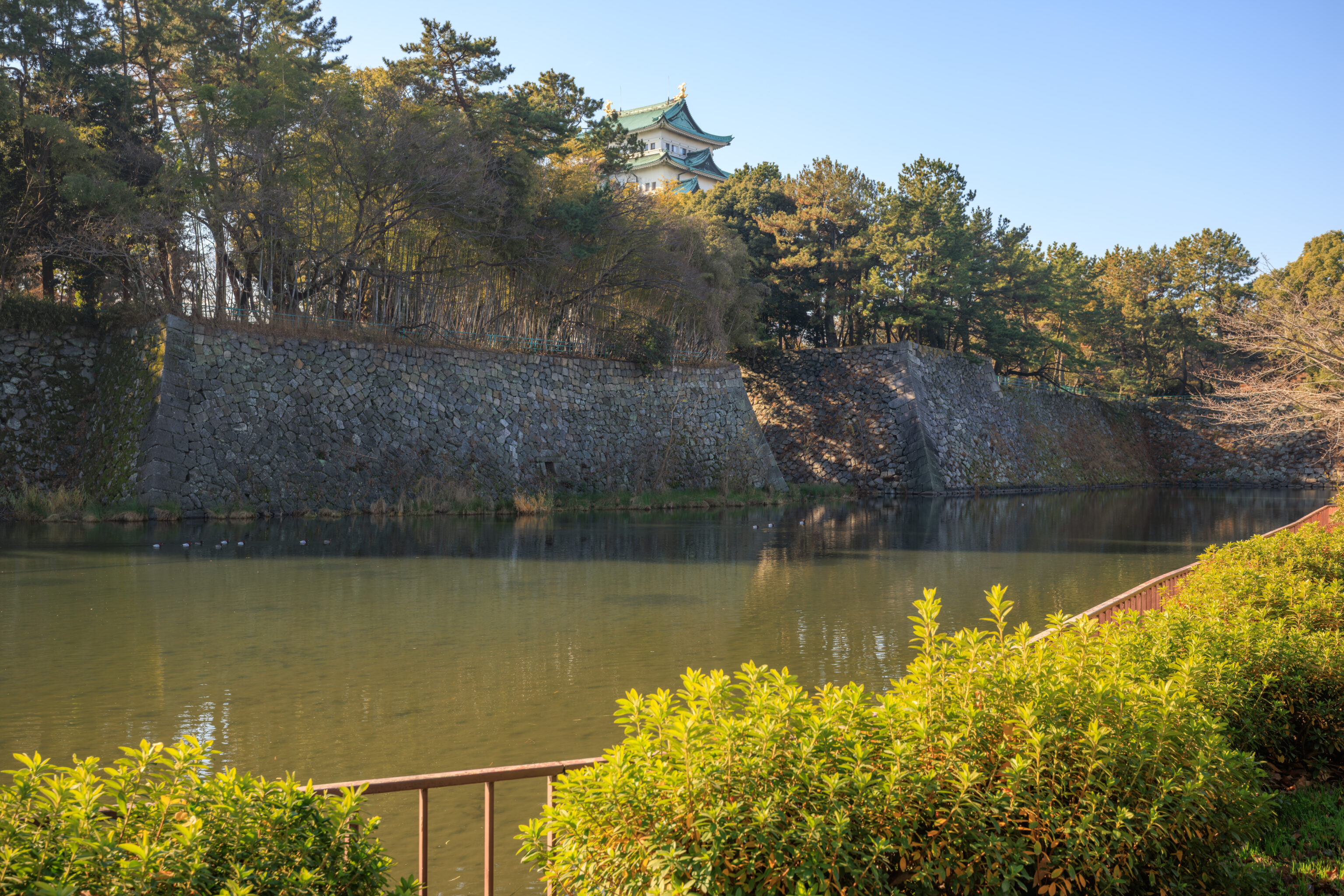
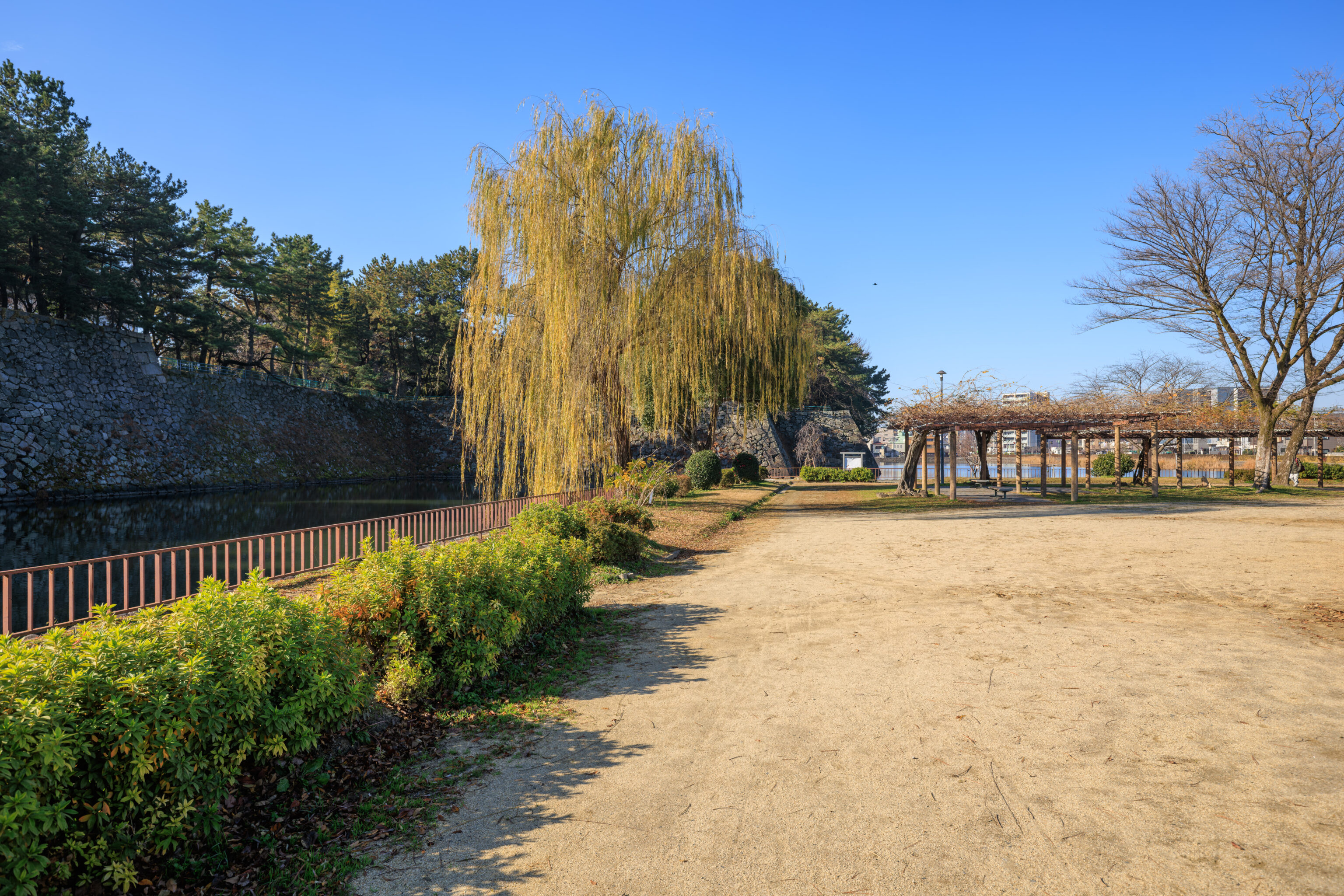
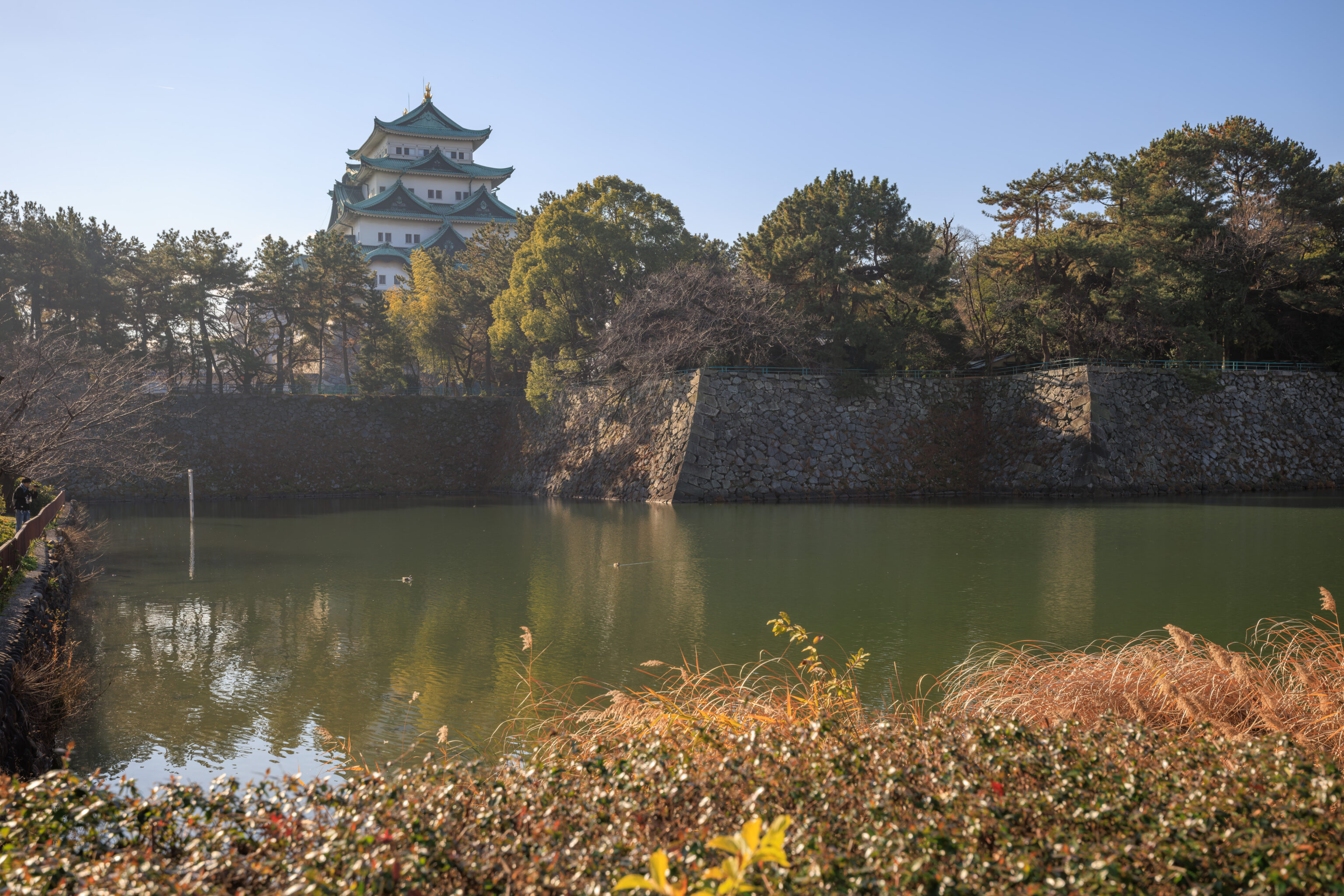
We continued walking to the east, passing by the castle on our left.
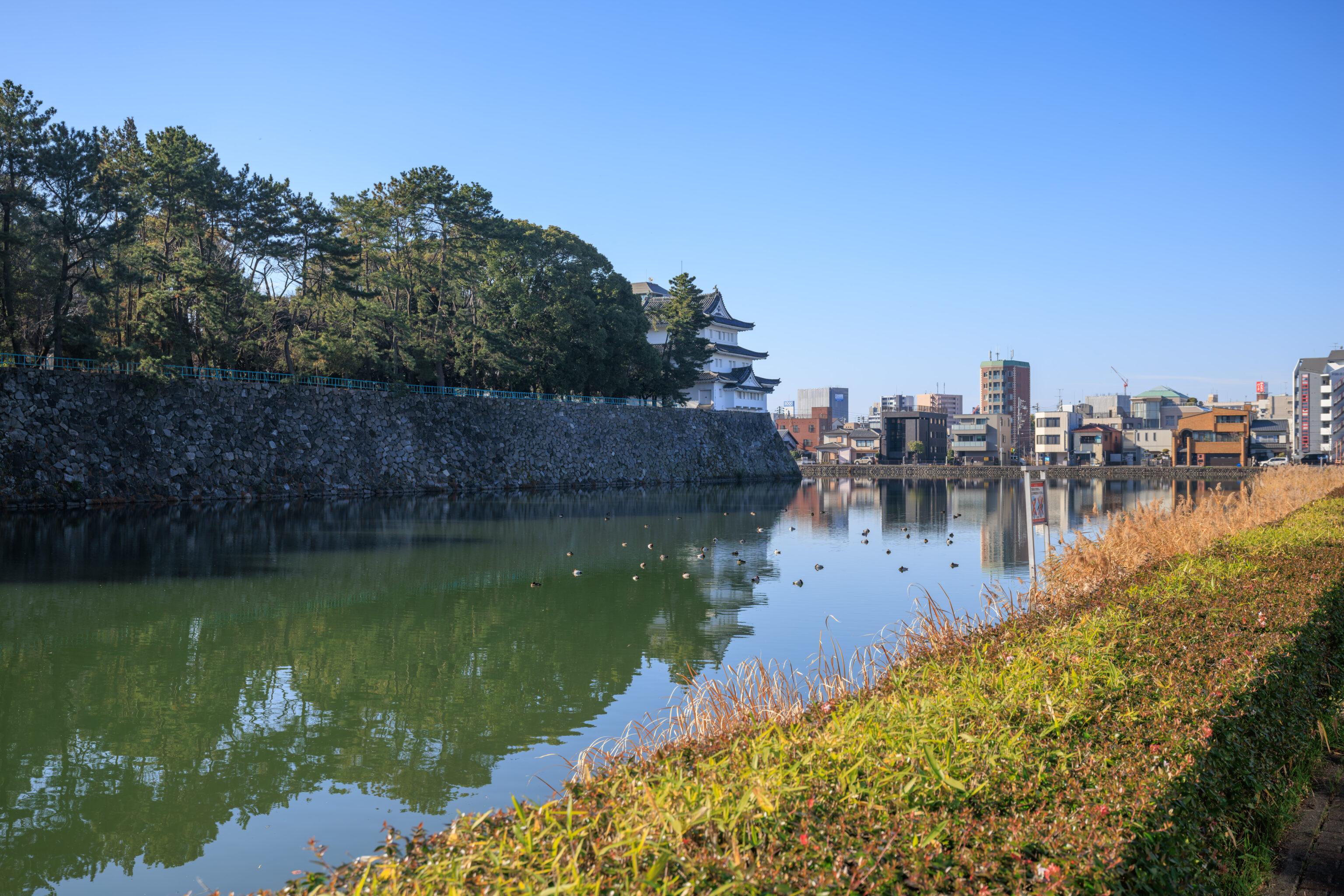
Soon, we started to approach the tower at the northwest corner.
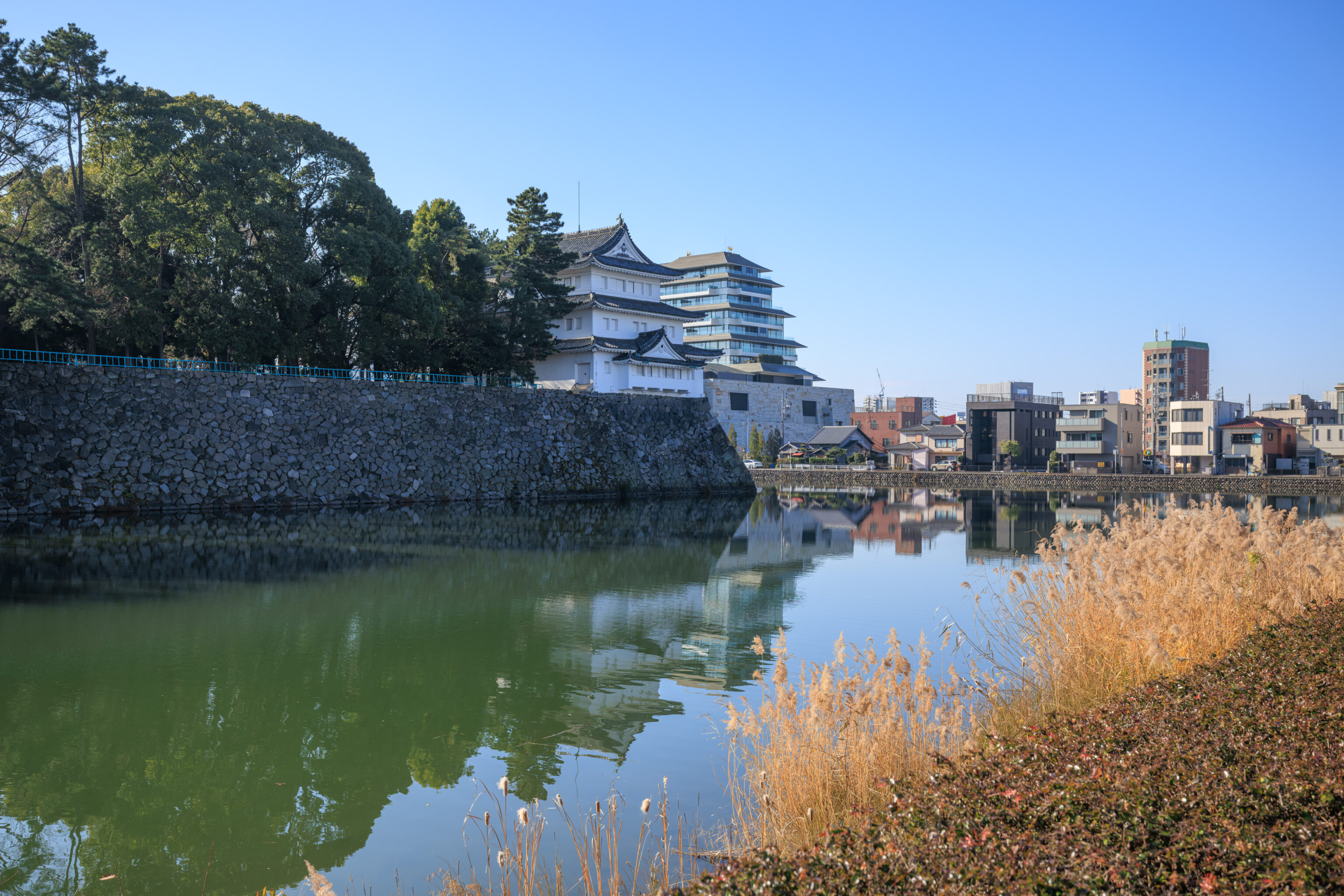
And then, another large castle-like structure started to come into view. What is it?
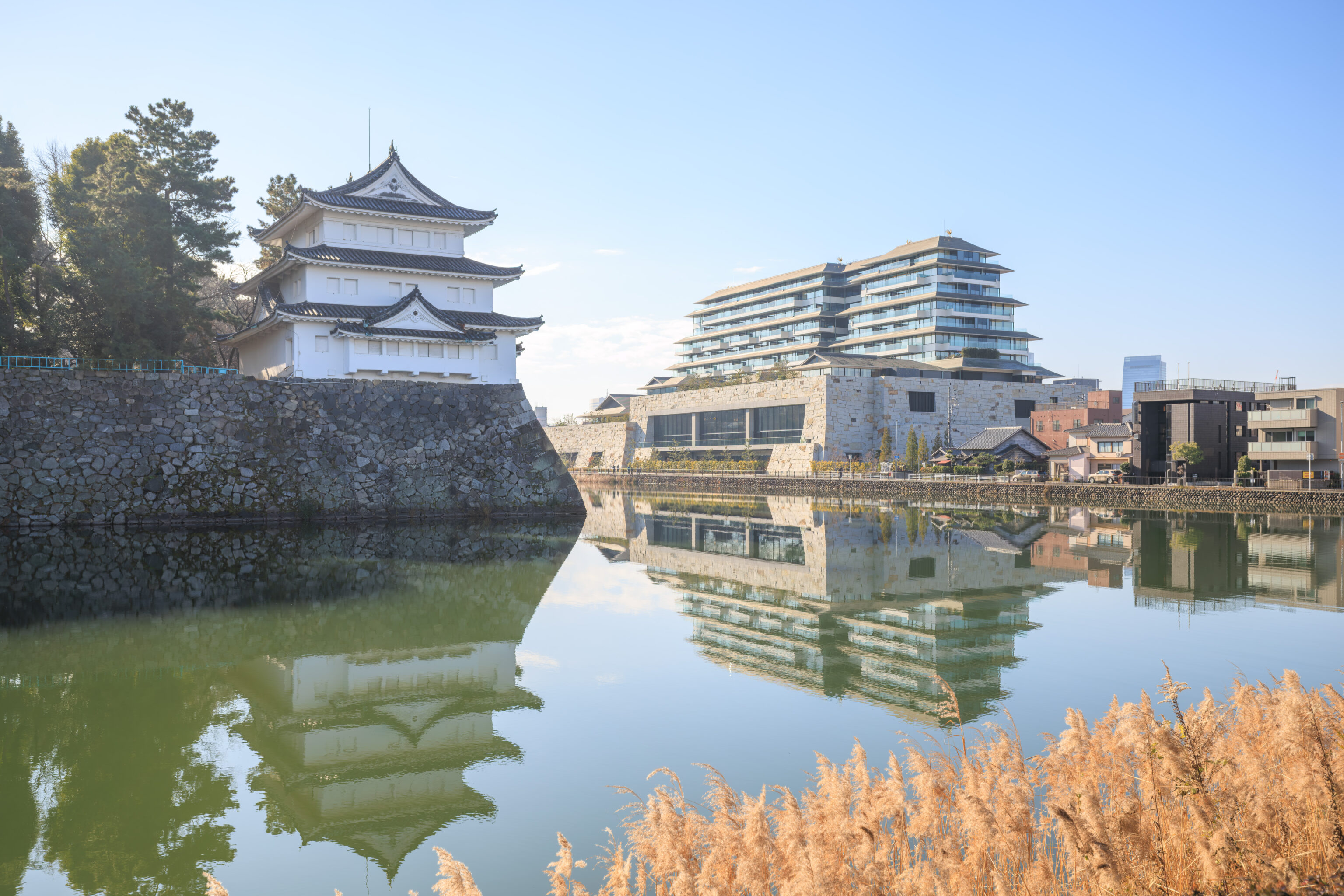
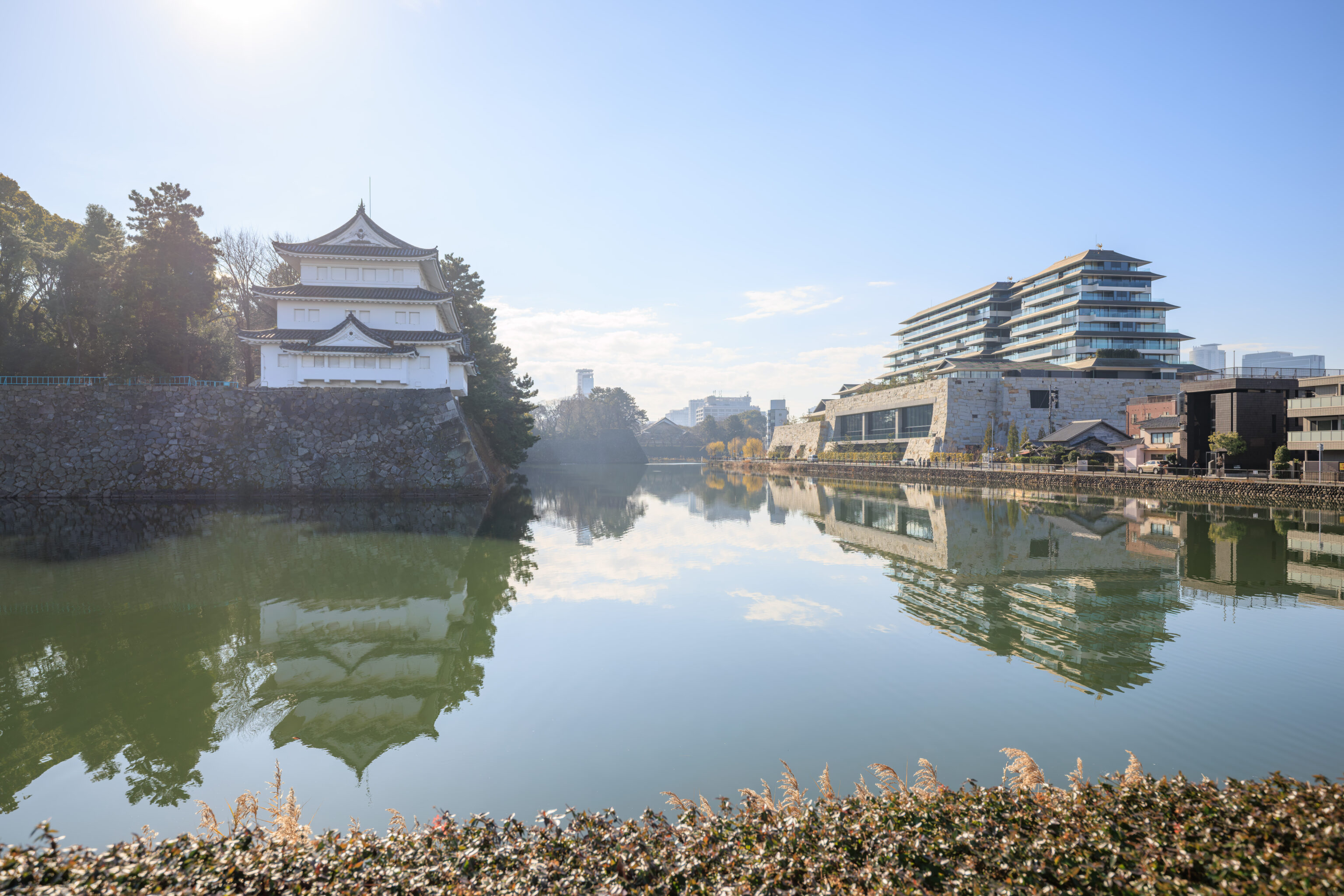
It turns out that this modern building shaped to look like a castle is a hotel! It is the エスパシオ ナゴヤキャッスル ESPACIO Nagoya Castle and recently had its grand opening on October 1st! It turns out that this property was formerly the Westin Nagoya Castle. It was a much uglier building that was redeveloped into what we see here today.
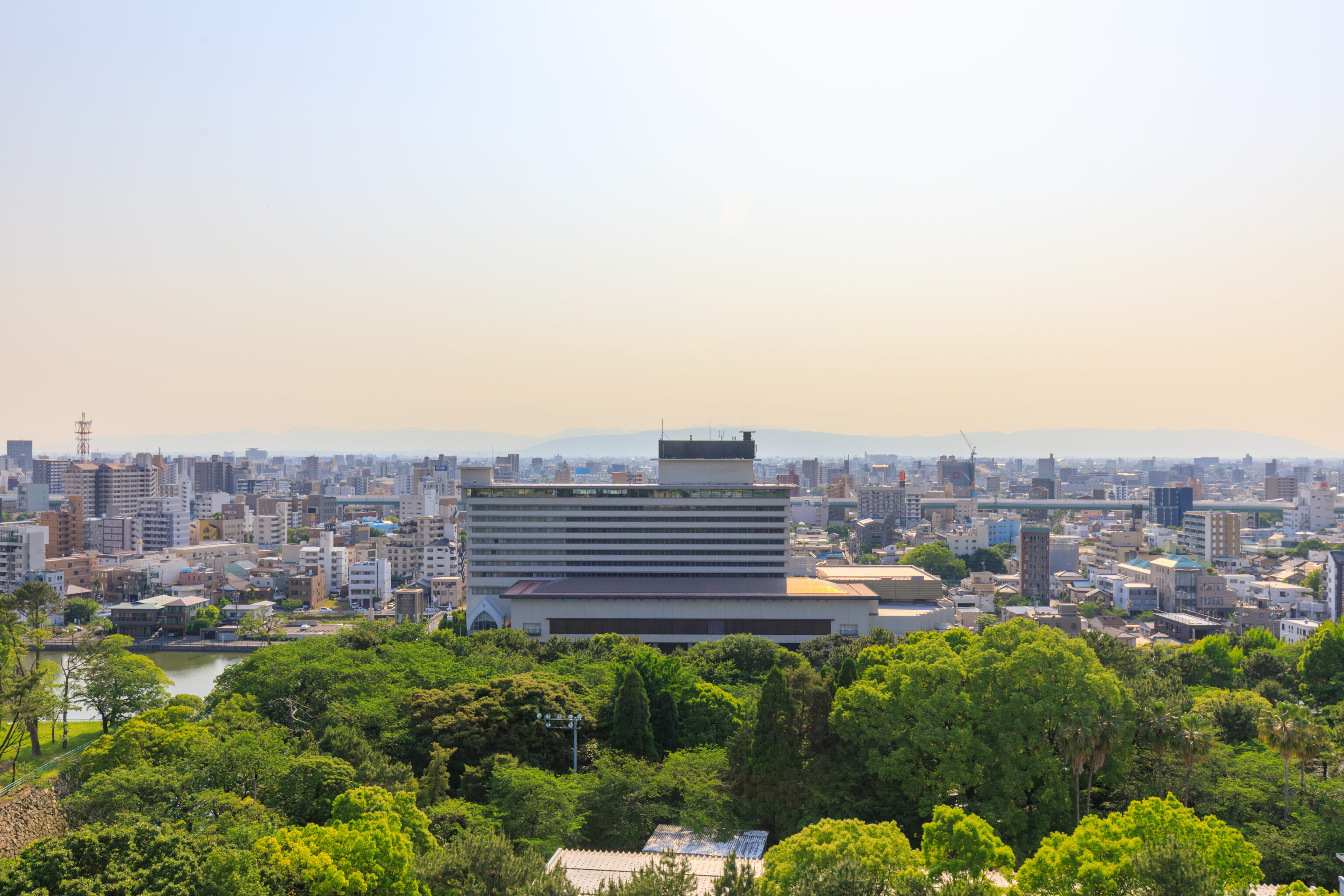
This was how the hotel appeared as a Westin back in 2017. A definite improvement!
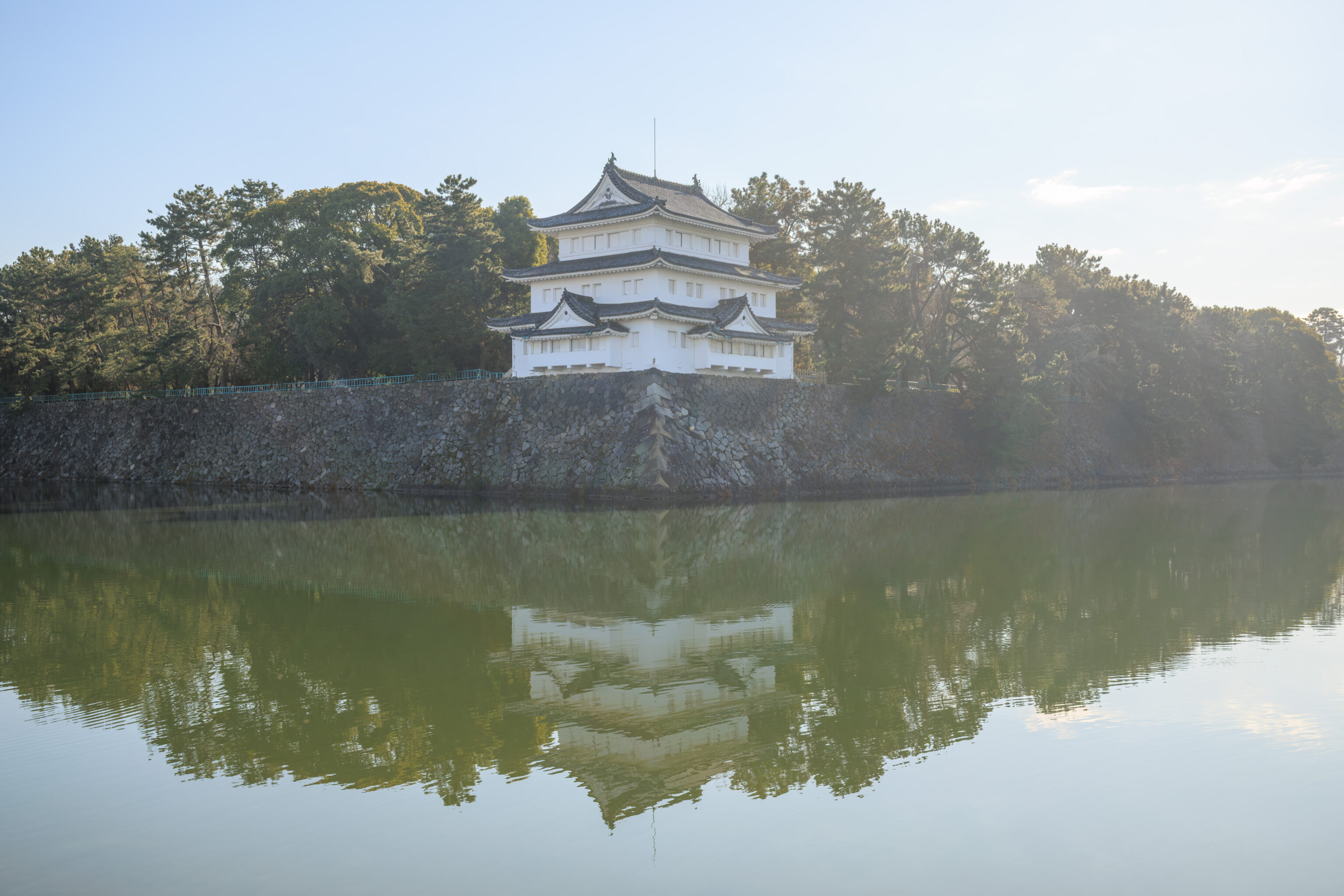
We continued on, reaching the northwest corner of the moat.
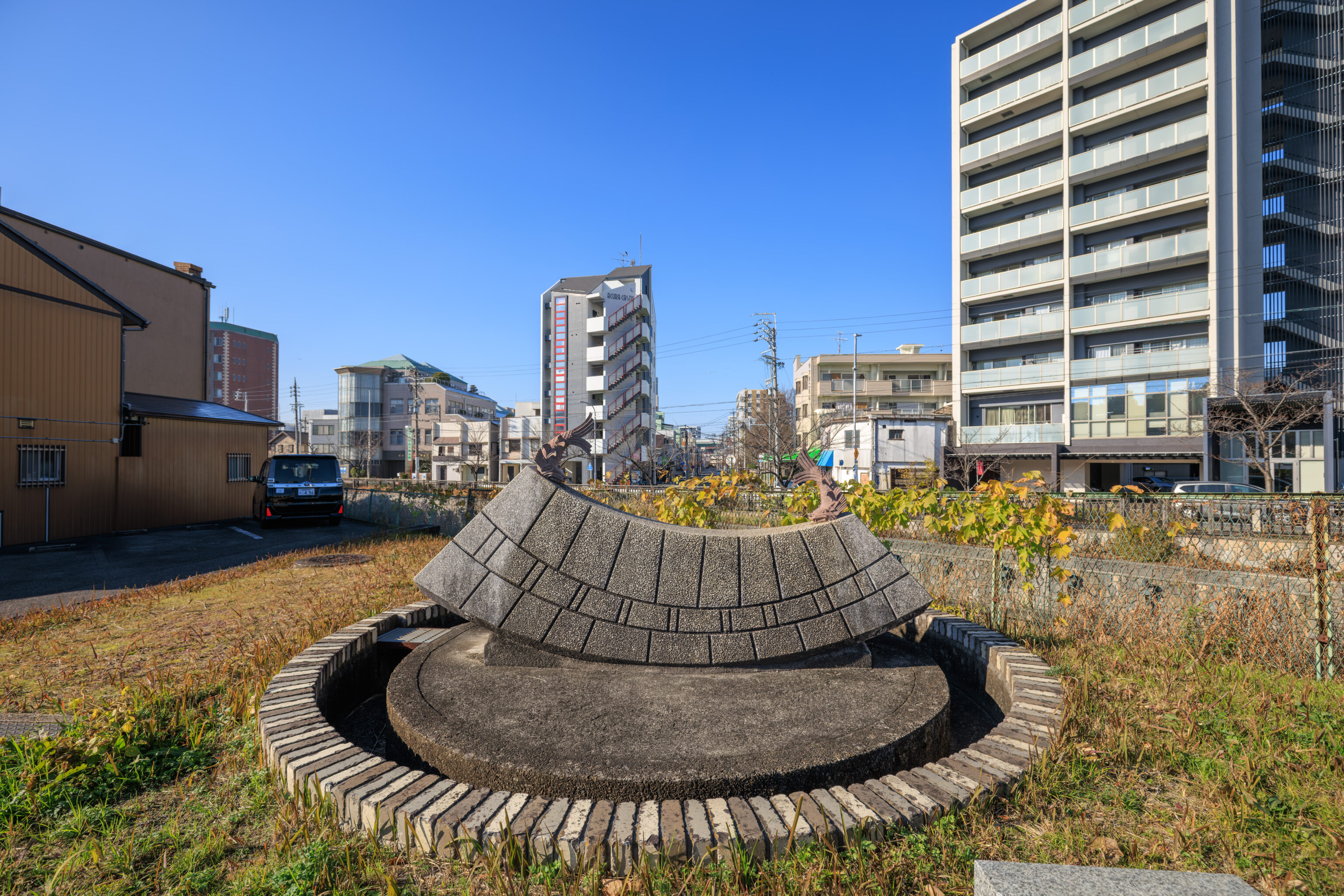
Across the road to the west, we saw this object. What is it? It seems to be a sculpture that depicts the roof of Nagoya Castle. Maybe.
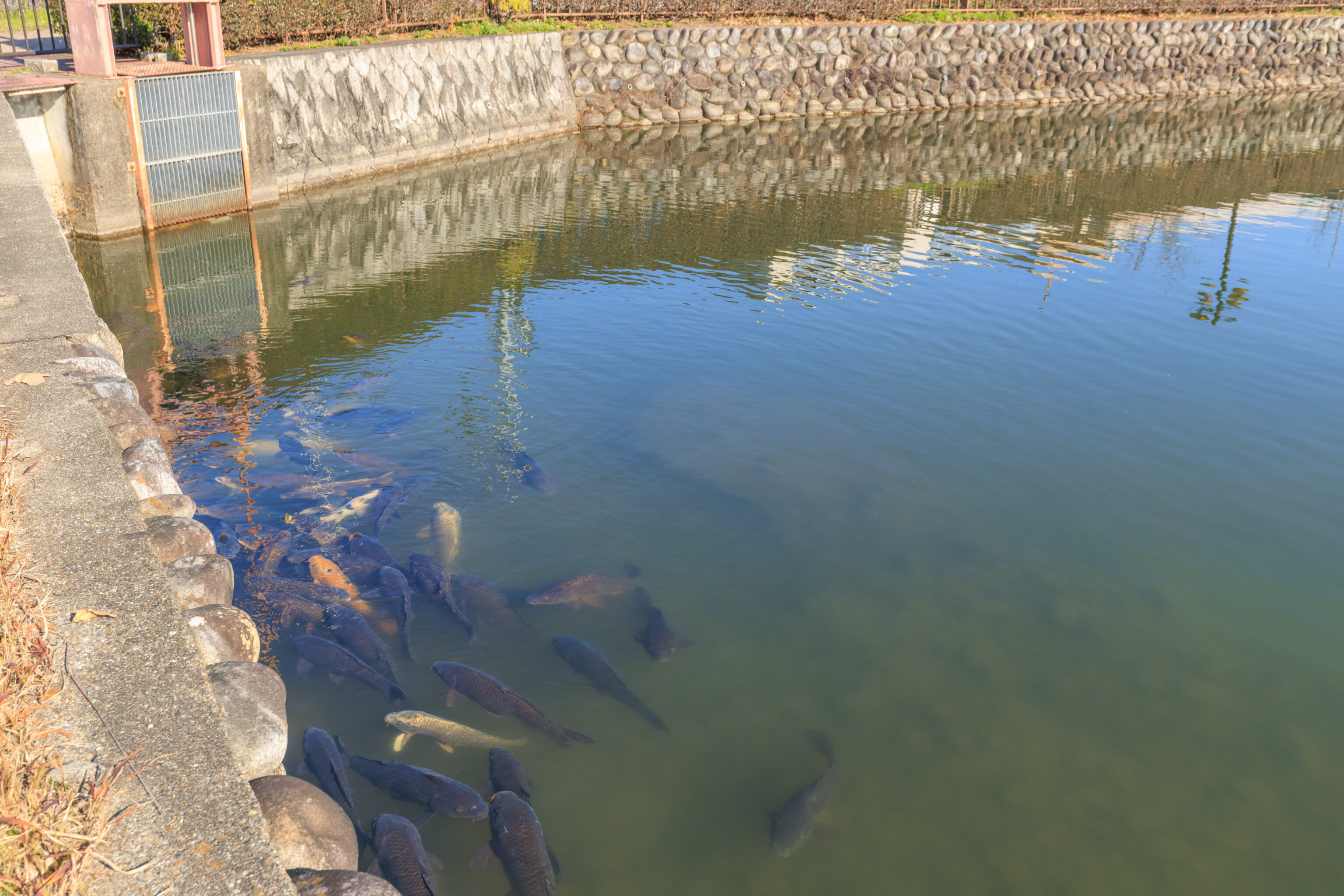
There were many koi gathered here at this corner of the moat. Sorry guys, no food for you.
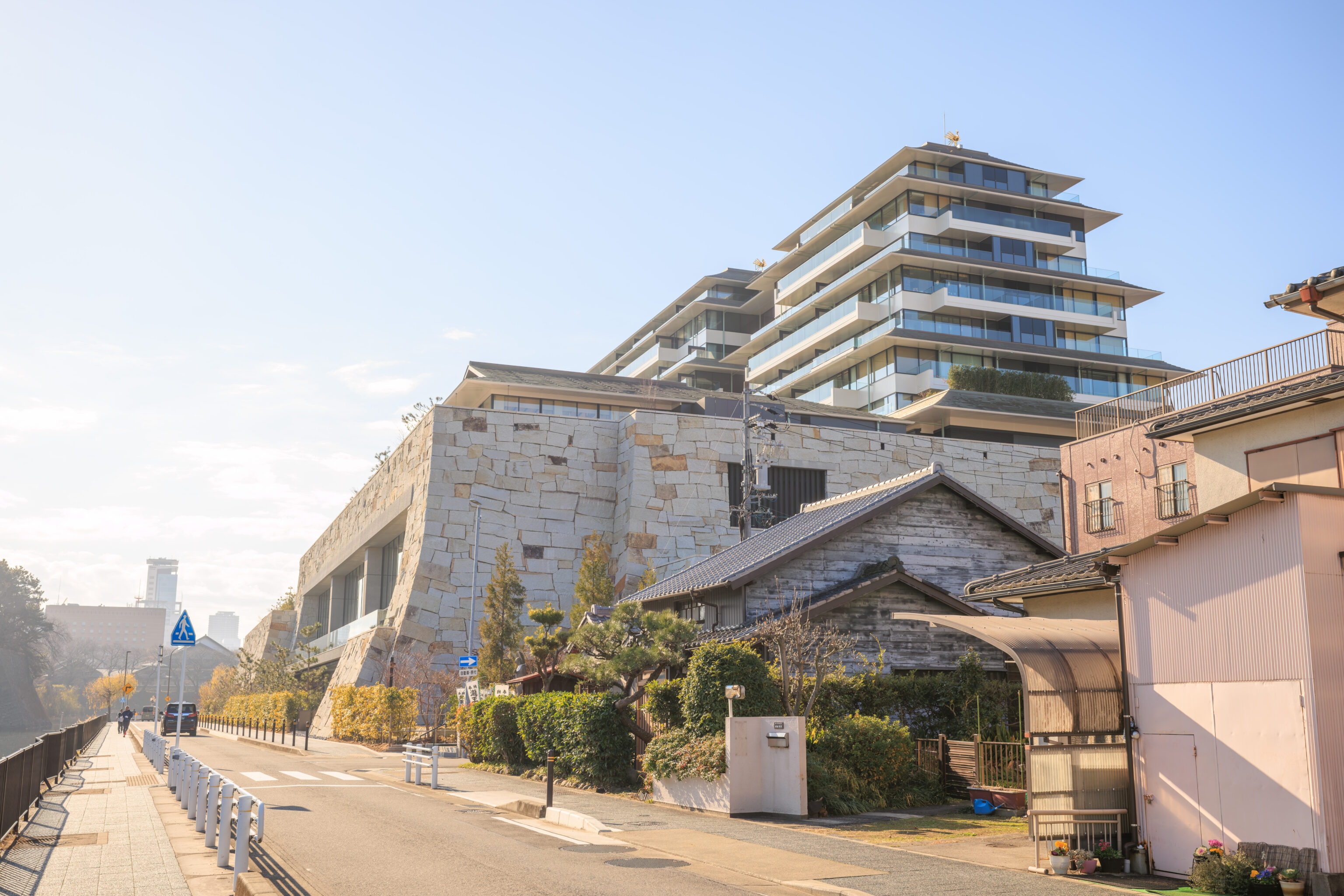
We continued walking to the south along the west side of the castle’s moat.
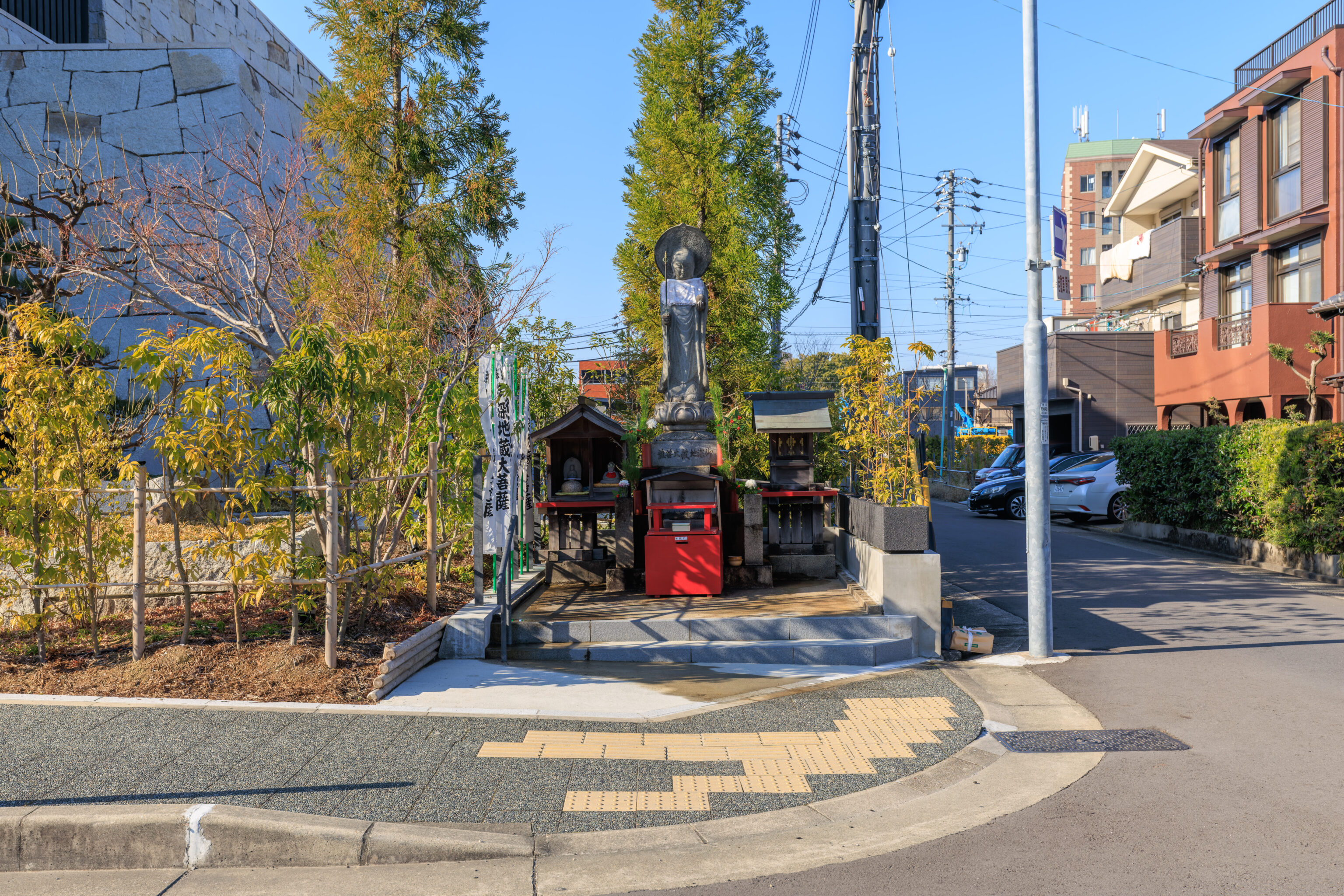
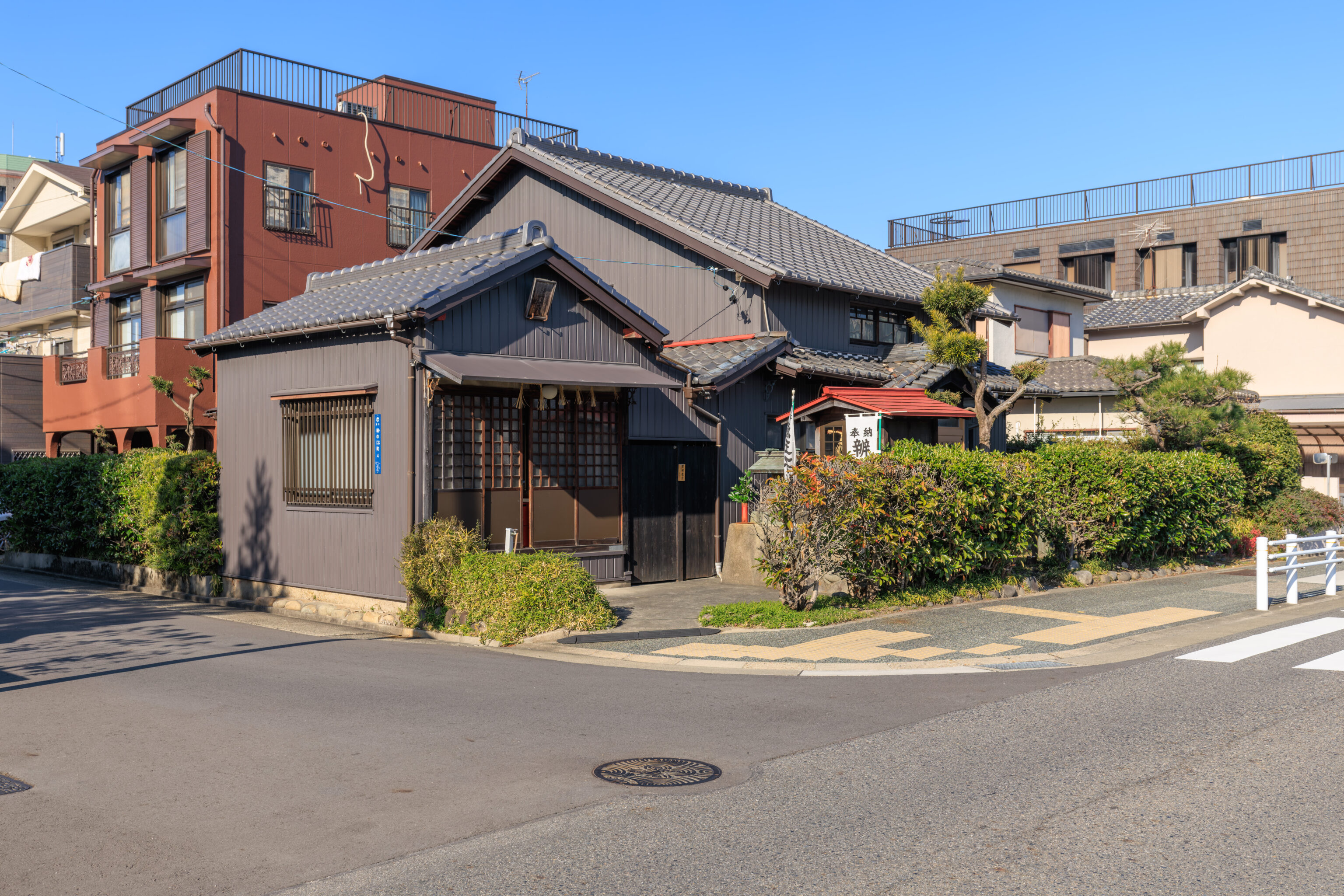
We walked by a small temple or shrine in what looks like a modern Japanese house by the northeast corner of the hotel. It had both Buddhist and Shinto qualities.
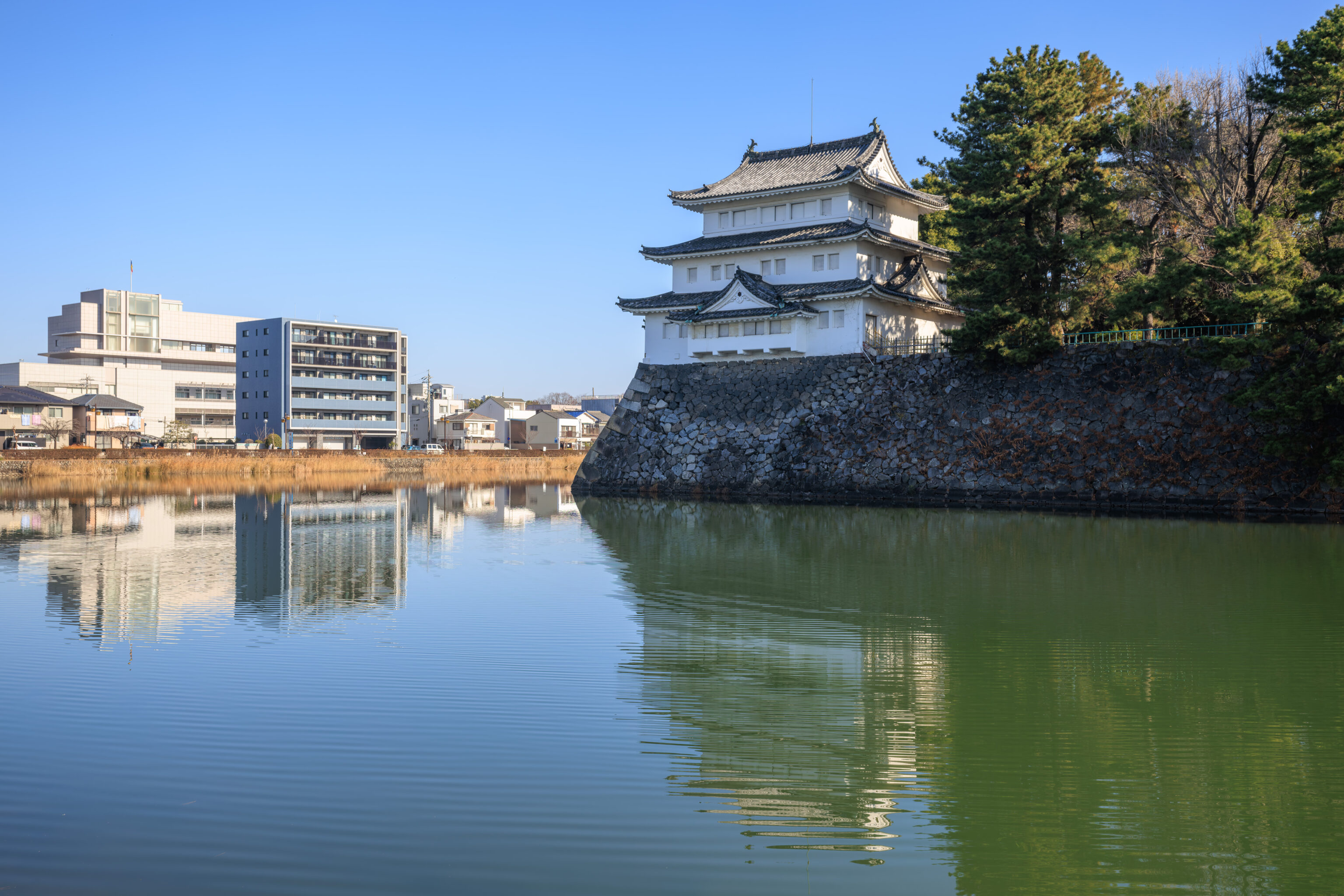
We continued walking to the south, leaving the tower at the northwest corner of the castle behind.
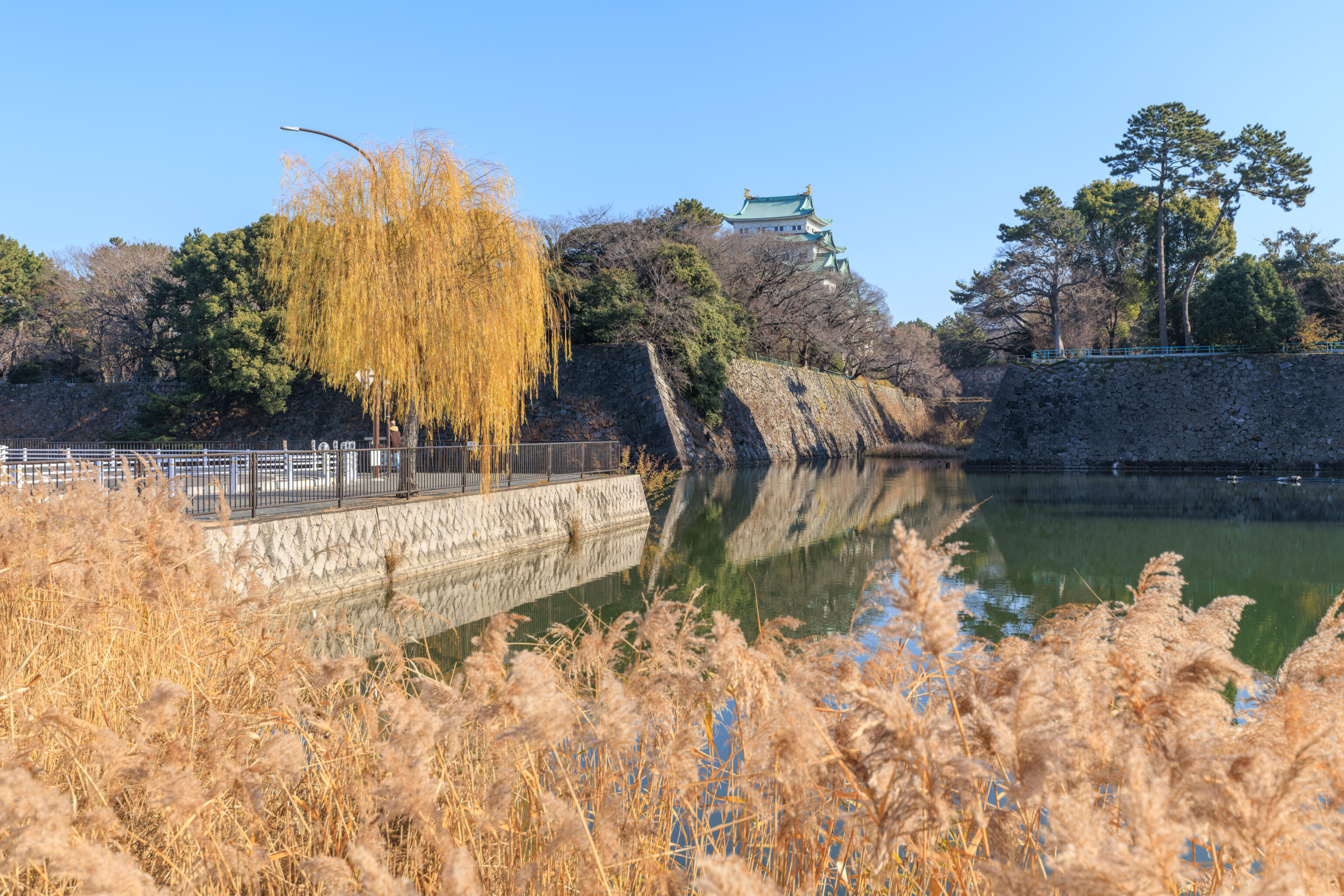
We were able to see some of the tenshu to the west.
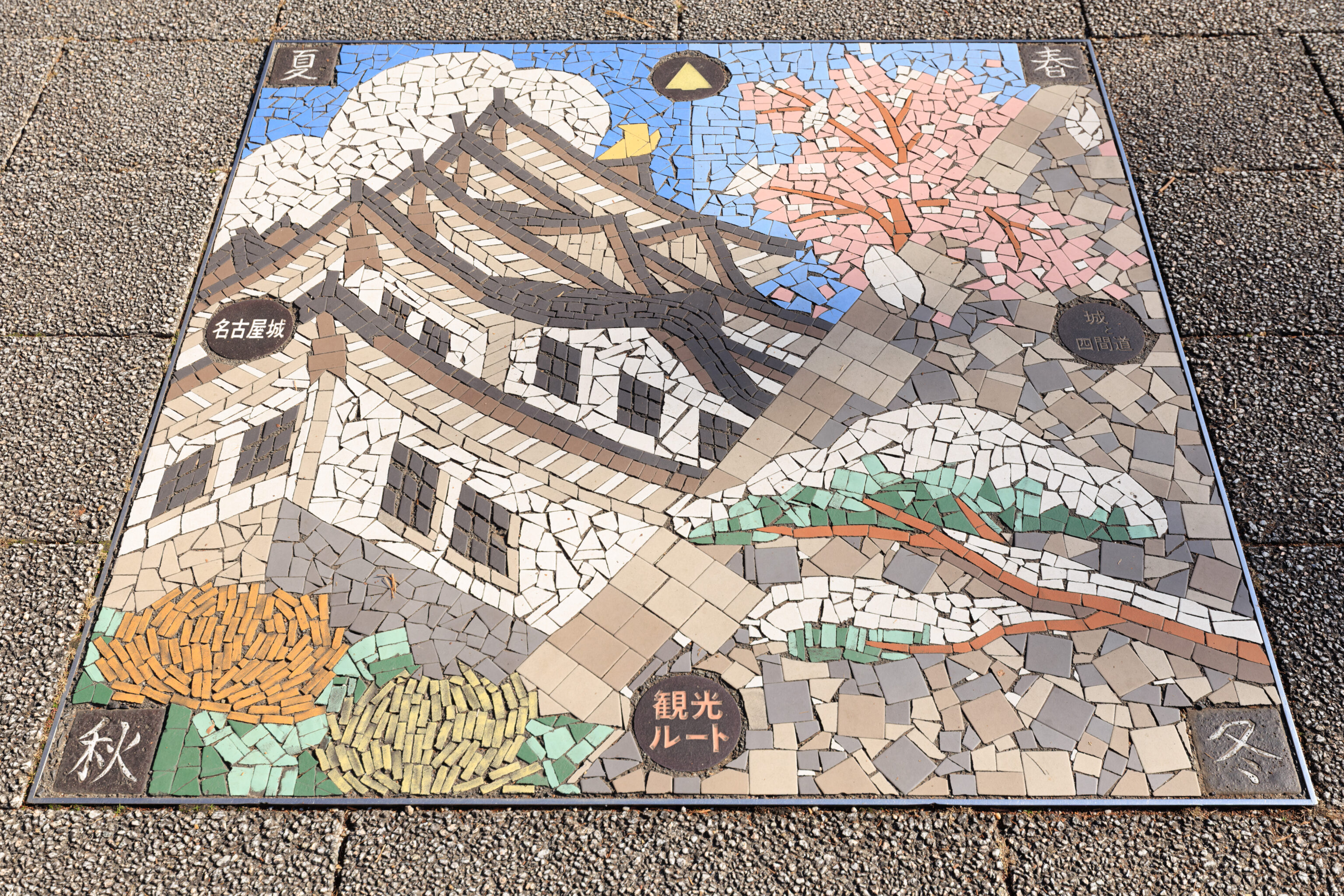
We walked to the southwestern corner of the moat and then turned to the east. Here, there was a dry moat to our north along the southern edge of the castle. We passed by this beautiful mosaic on the ground depicting the castle.
Continuing to the east, we came across the 金シャチ横丁 Kinshachi Yokocho, basically a short artificial shopping and restaurant street for tourists. Hitsumabushi Bincho, which we ate at yesterday, and Torikai, which we ate at two days ago, both had restaurants here. There was also a Misokatsu Yabaton, which we’d like to eat at while in Nagoya, but they have many other locations as well. We ultimately decided to eat at a restaurant to the south within walking distance.
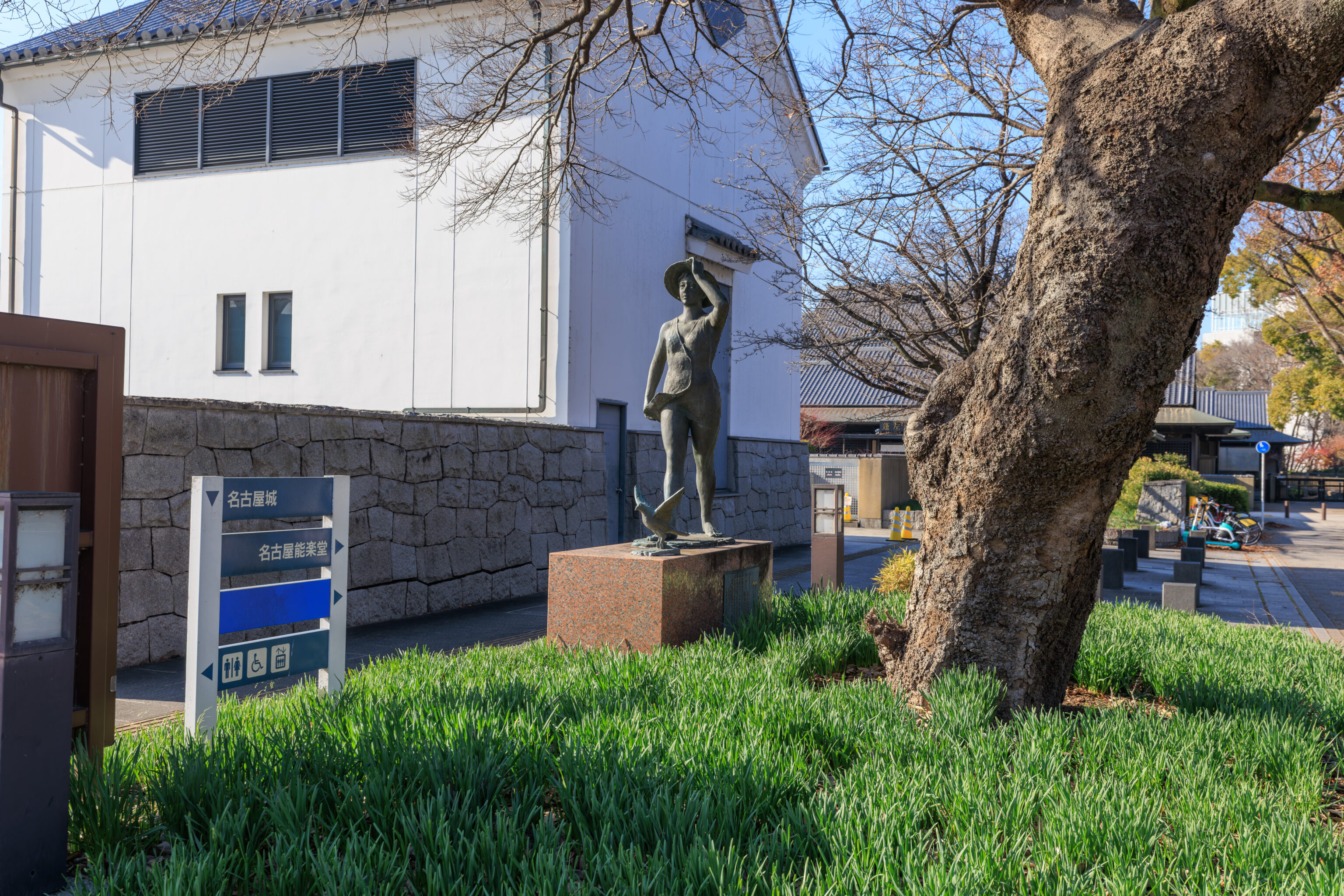
We ended up backtracking a bit to start walking south. We passed by a sculpture of a woman and a bird. The sculpture is 深緑 Deep Green by 山本眞輔 Shinsuke Yamamoto. A plaque, not visible from this perspective, had a brief description:
Deep Green
The Nagoya Army Hospital once stood upon this ground. We pray that the flames of war will never again disturb this greenery—this site of its founding.

Nagoya Army Hospital Volunteers
– Text from a photo on the アートある公園④ page of the DejiSanpo website of a plaque on the side of the sculpture’s base, read using Google Gemini and translated using Google Translate.
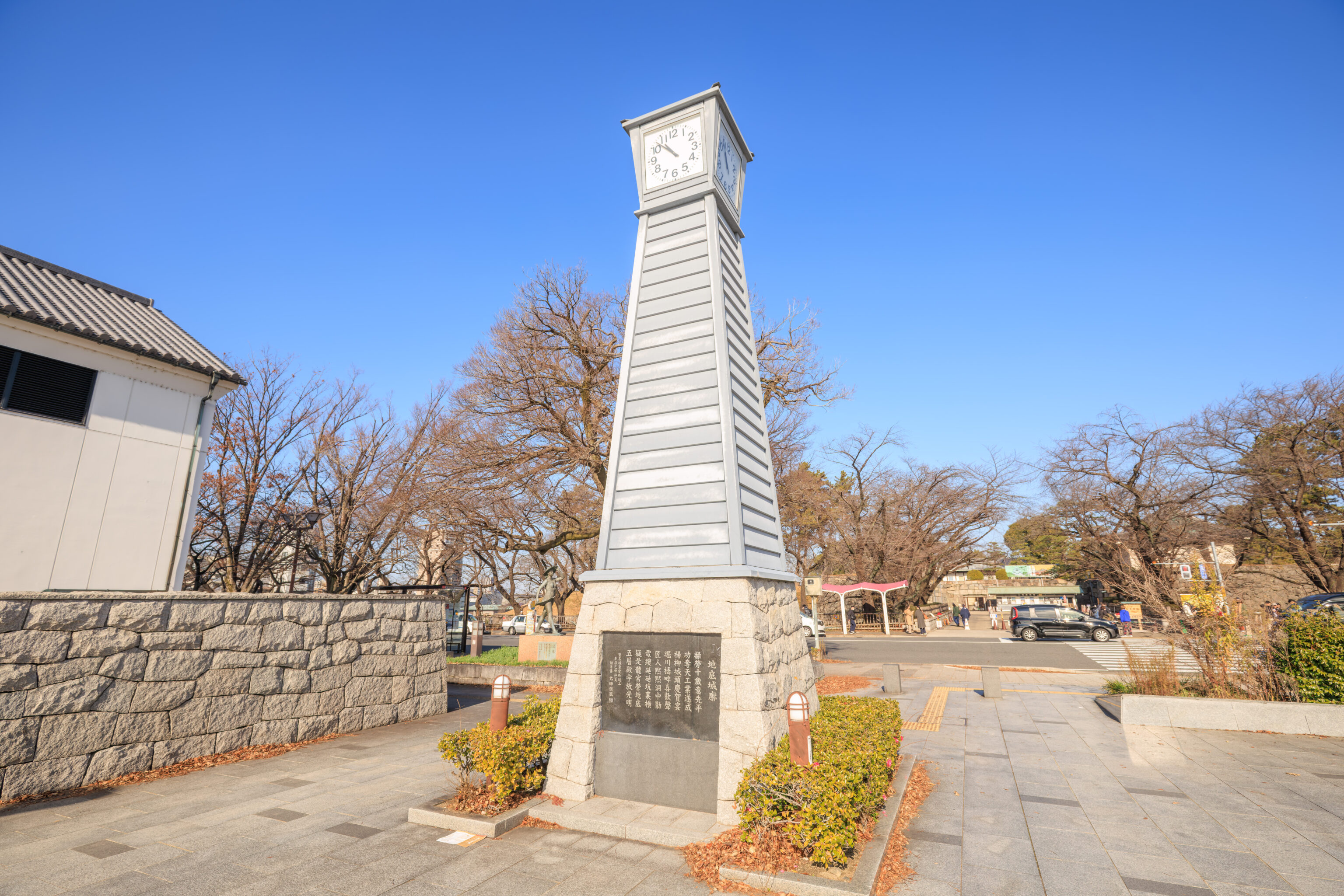
This is an interesting one. This is a monument to an underground electrical substation that was completed in 1999. It seems that it is below us here!
An Underground Citadel
At ten years of toil, a sense of calm prevails;
An industrial feat achieved, rivaling the works of nature.
Celebratory feasts held atop the ramparts,
Voices of joy ringing by the Horikawa Bridge.
Artisans labor silently within the cavern,
Cables stretching endlessly across the depths.
It seems a Dragon Palace built beneath the earth,
A five-storied hall radiating brilliant light.

Commemorating the completion of the Meijo Substation
Mid-summer, Heisei *Tsuchinoto-u* (1999)
Poem and calligraphy by Ota Kaifu
– Text from the stone plaque below the clock tower in the photograph above, read using Google Gemini and translated using Google Translate.
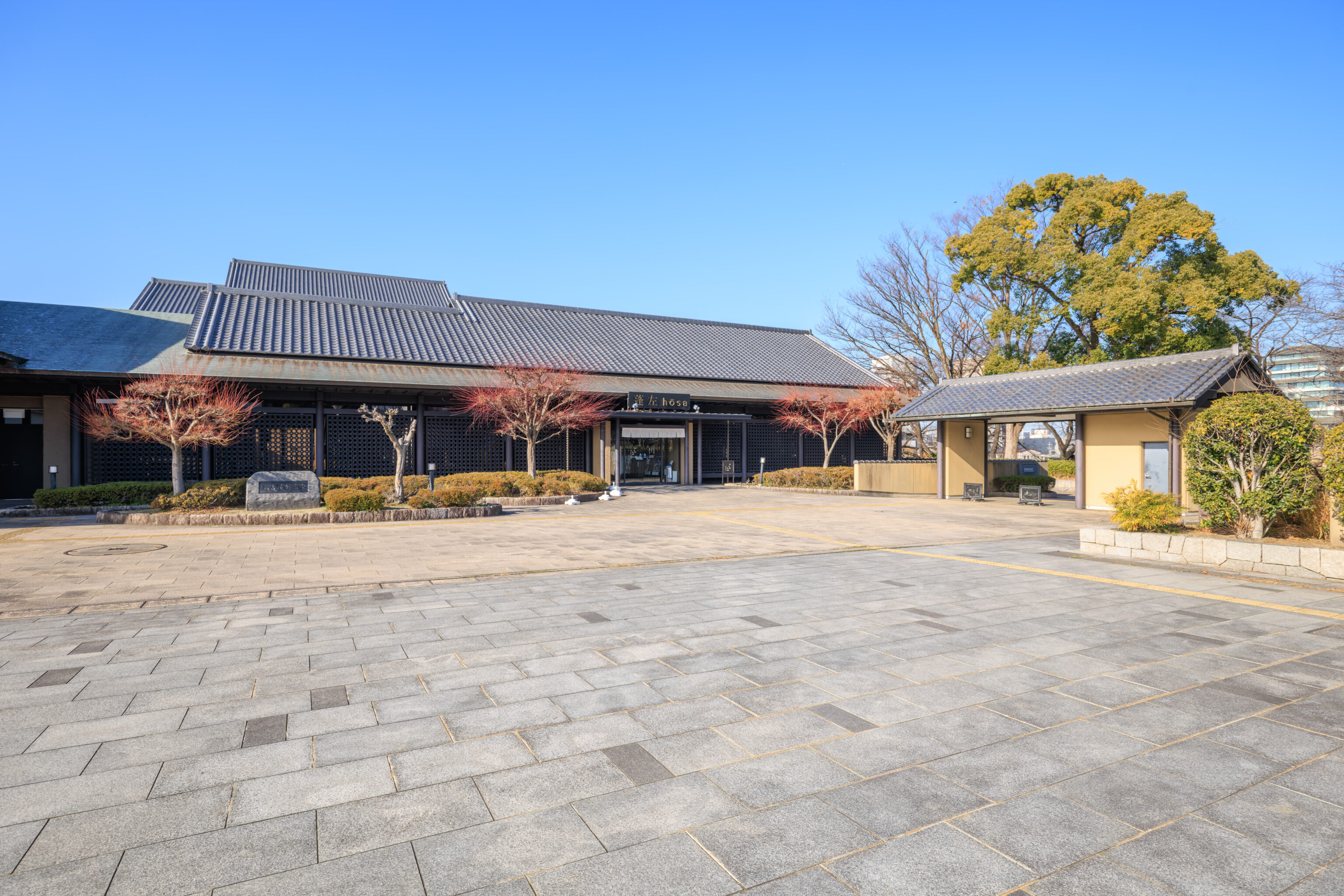
This is 蓬左 Hosa, a restaurant that opened in 2022. It looks pretty fancy…
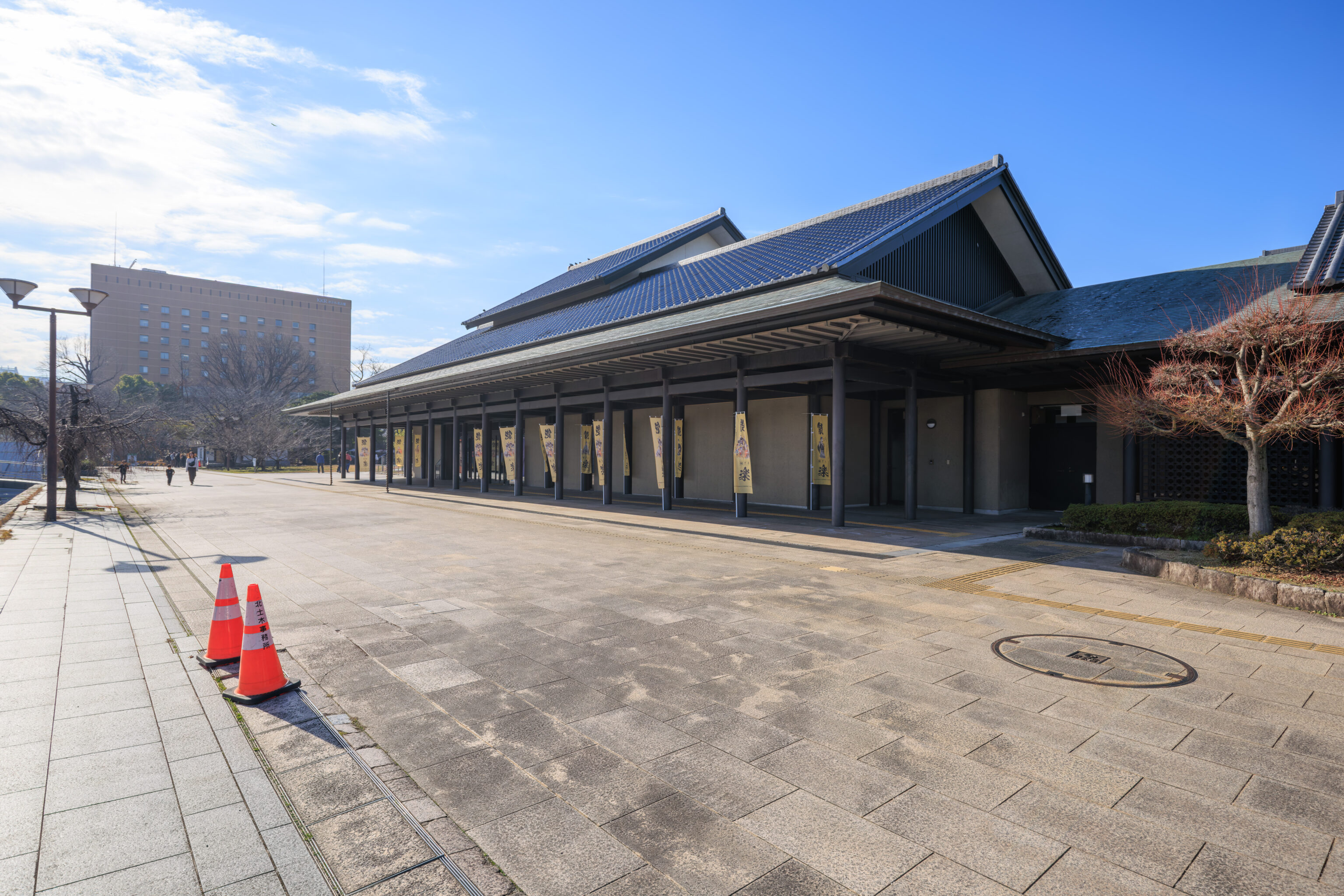
It is attached to the 名古屋能楽堂 Nagoya Noh Theatre. 能 Noh is a type of traditional Japanese theatre that dates back to the 14th century.
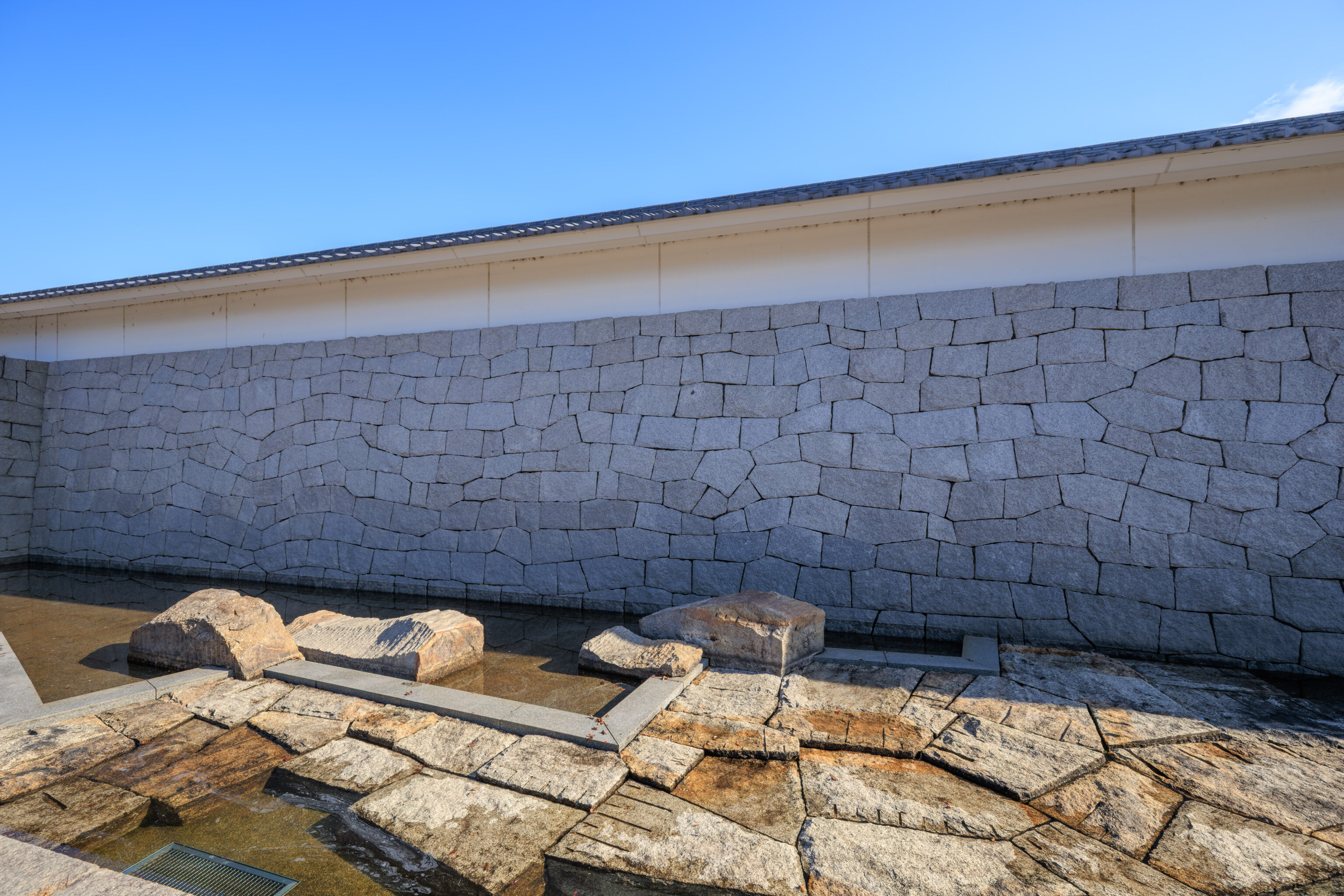
An interesting stone and water feature by the theatre.
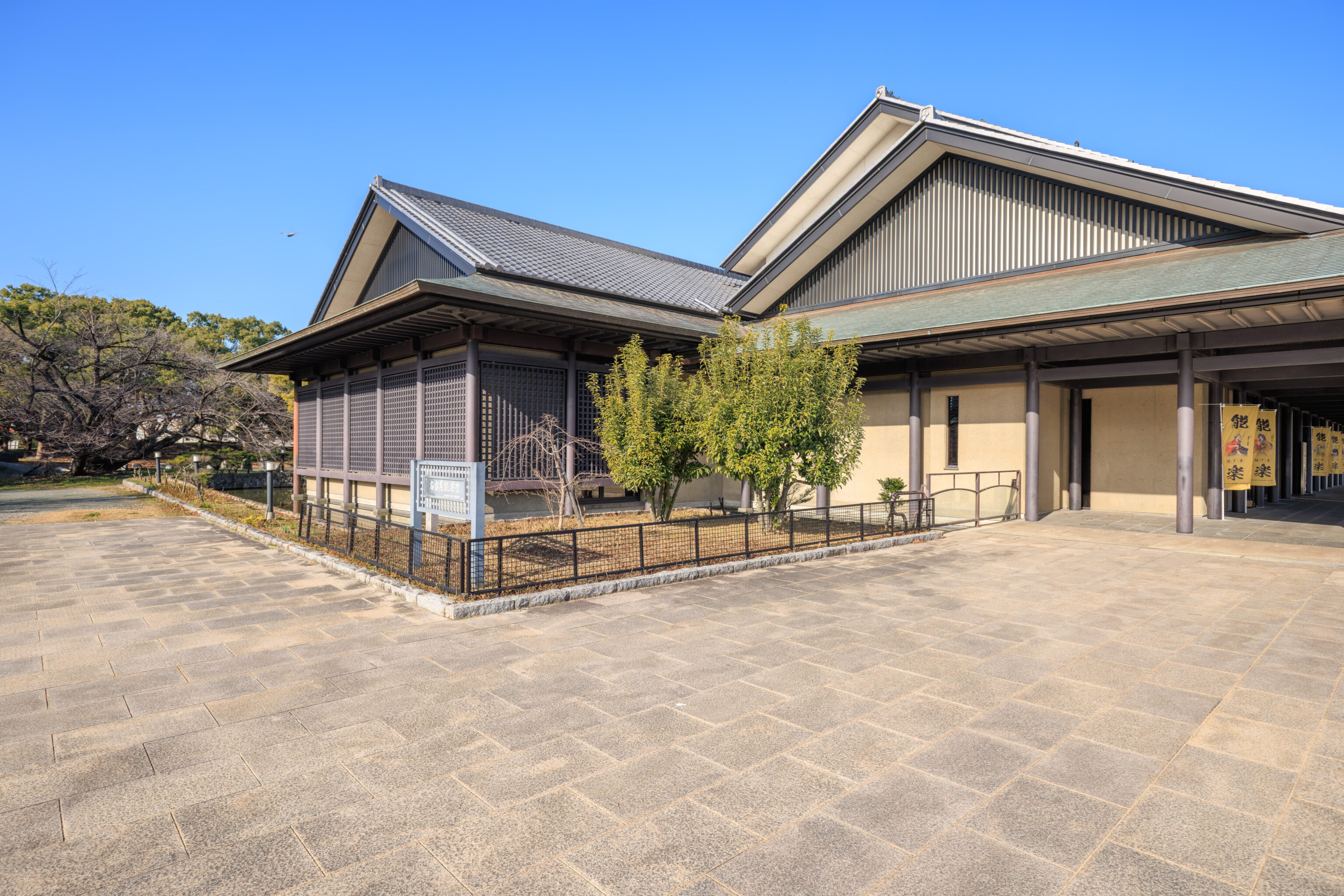
This building is fairly new, having been completed in 1997.
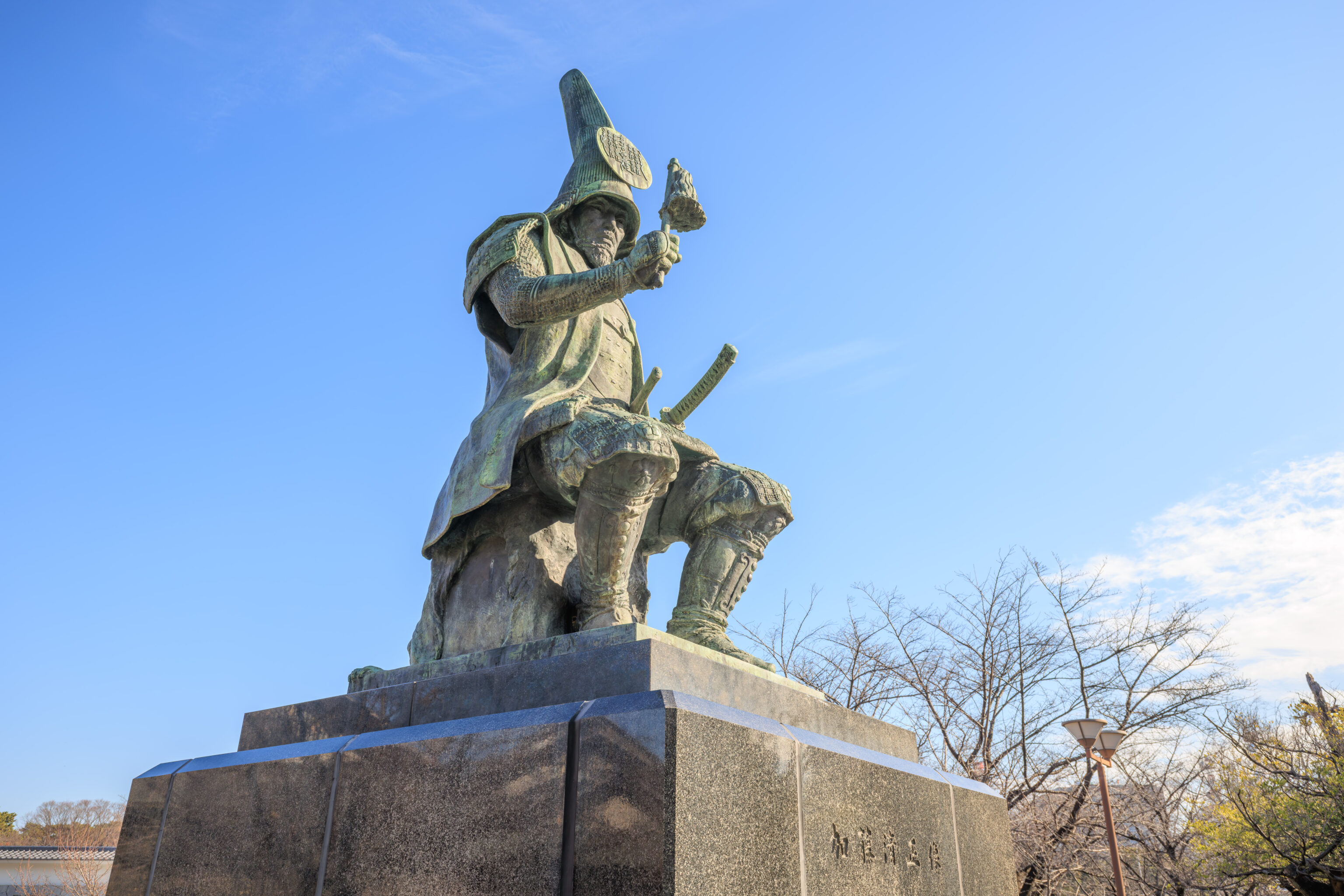
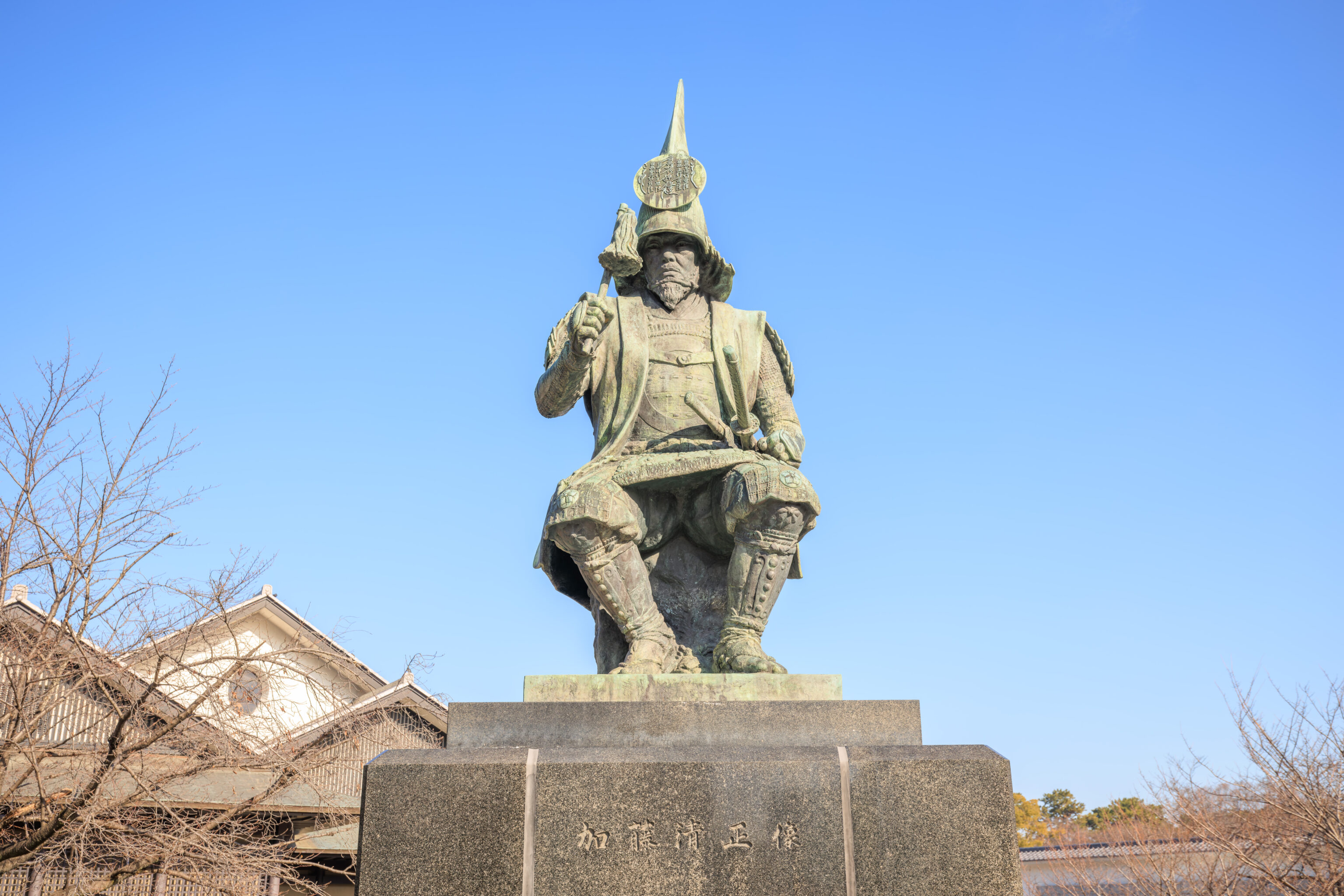
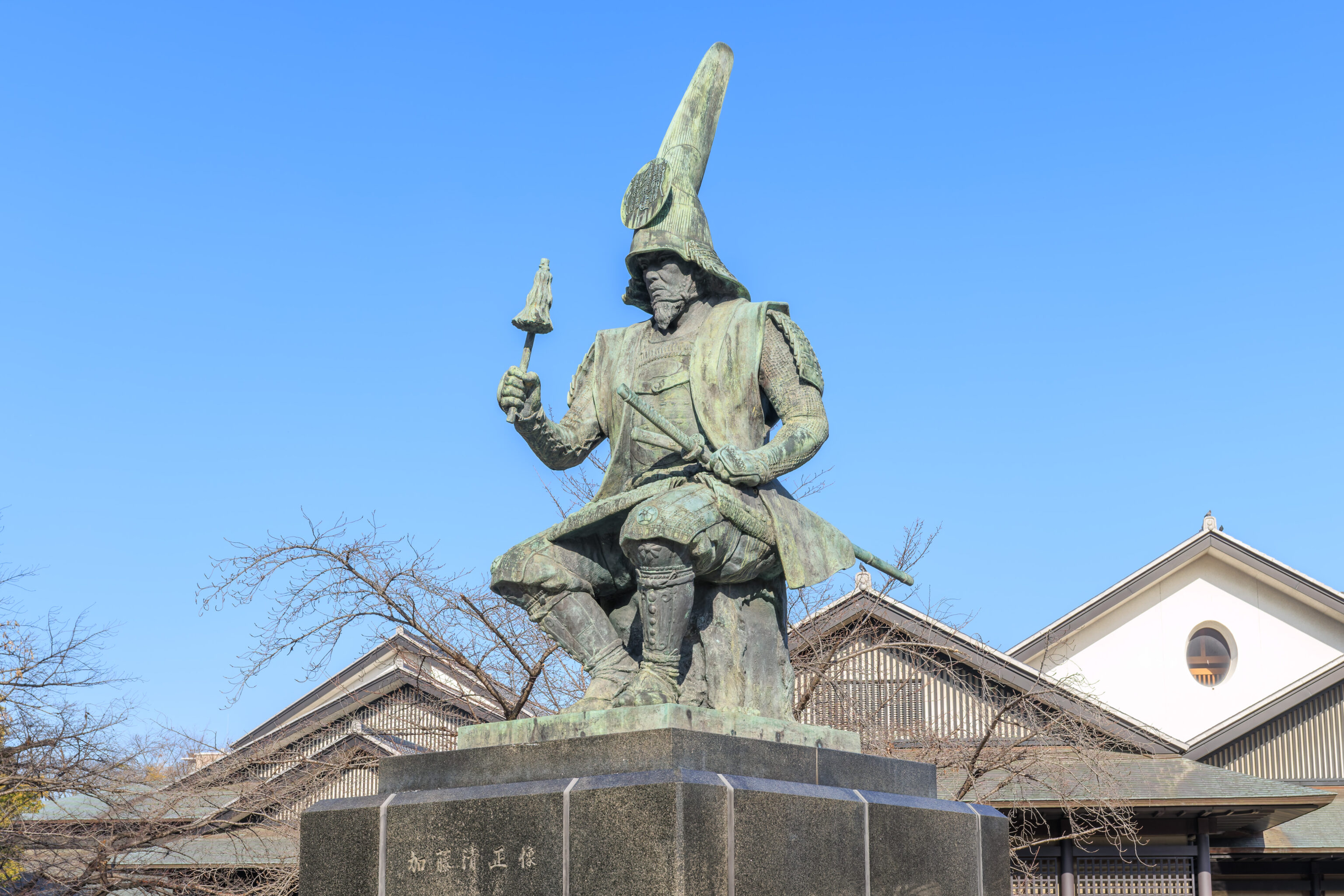
This guy! 加藤清正 Kato Kiyomasa, 肥後守 Higo no Kami, first daimyo of the 熊本藩Kumamoto Domain, and thus lord of 熊本城 Kumamoto Castle!
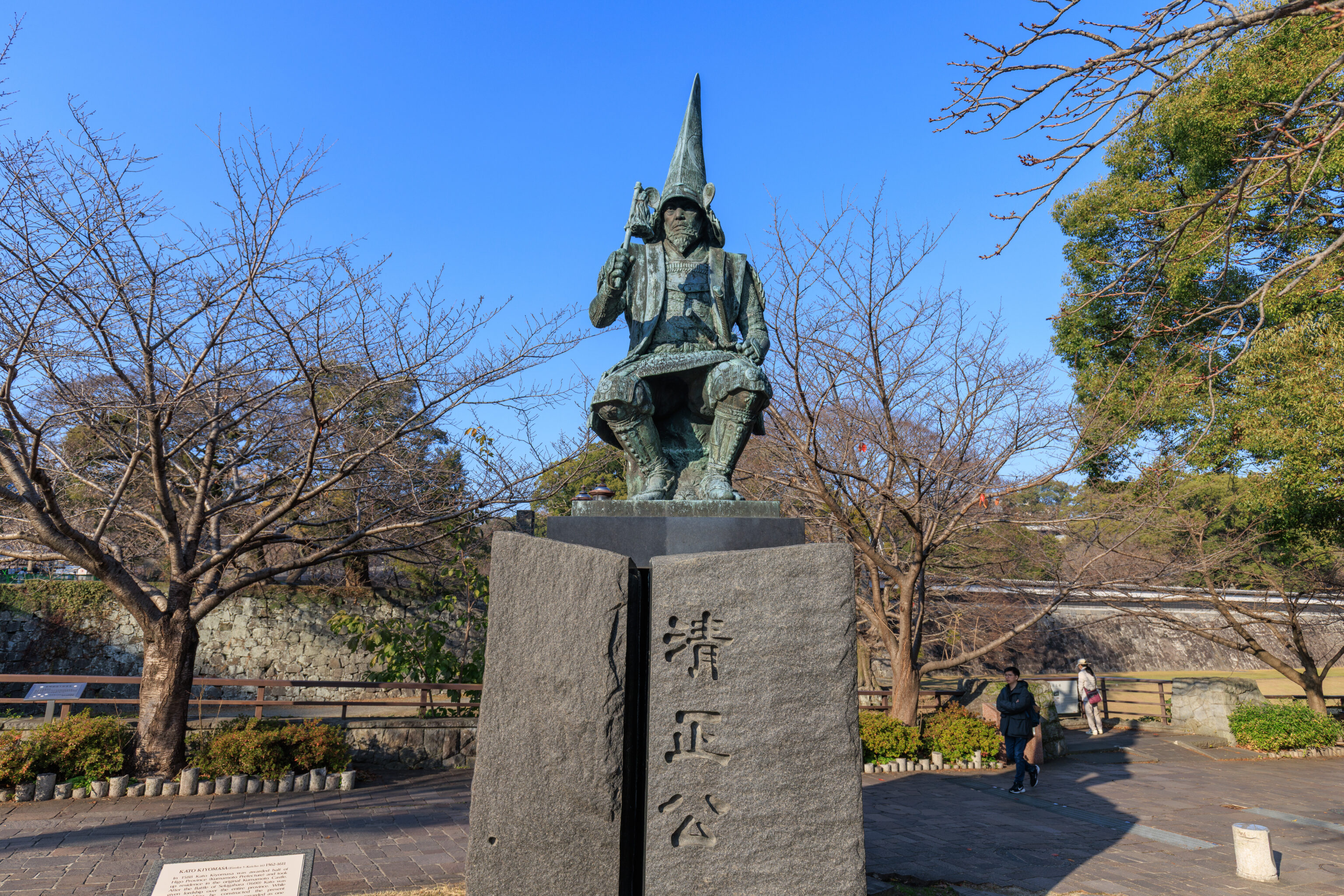
The statue here is almost identical to the one we saw by Kumamoto Castle when we visited Kumamoto eleven days ago on this trip!
Of all the powerful Japanese historical figures, Kato Kiyomasa has the most unique depiction! He is unmistakable!
So why is he here? He was actually from what is now Nagoya and was one of the daimyo assigned to help in building Nagoya Castle.
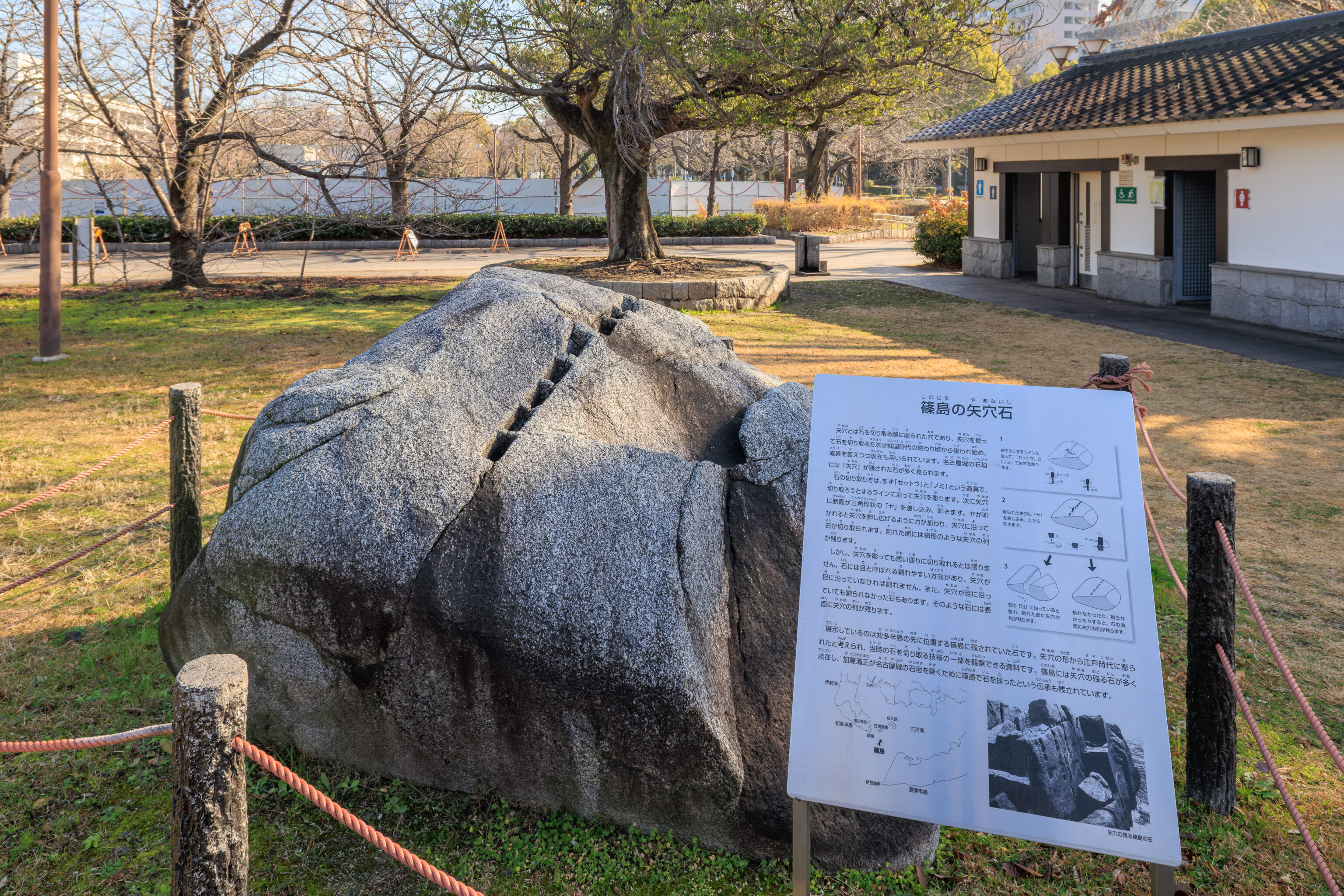
This stone, from an island to the south of Nagoya, has holes that are a remnant of the historical stone cutting process.
"Ya-ana" Stones on Shinojima

"Ya-ana" (wedge holes) are holes carved into stone when quarrying or cutting it from the bedrock. This extraction method emerged toward the end of the Sengoku (Warring States) period and, despite the evolution of tools, remains in use today. Many stones bearing these wedge holes can be found in the stone walls of Nagoya Castle.

To cut the stone, workers first carve a series of holes along the intended cutting line using tools known as a *settō* (a type of hammer) and a *nomi* (chisel). Next, they insert a wedge—which has a triangular cross-section—into each hole and strike it. Striking the wedge exerts force that pushes the hole outward, causing the stone to split along the line of holes. A row of wedge holes, resembling a series of tooth marks, remains on the fractured surface. However, simply carving wedge holes does not guarantee that the stone can be cut away exactly as intended. Stone has a natural grain—known as *me*—along which it splits easily; if the wedge holes are not aligned with this grain, the stone will not break apart. Furthermore, there are instances where the stone failed to split even when the holes were correctly aligned with the grain. Such stones retain a visible row of wedge holes on their surface.

The stone on display here comes from Shinojima, an island located off the tip of the Chita Peninsula. Based on the shape of the wedge holes, it is believed to date back to the Edo period, serving as a valuable artifact for observing the stone-cutting techniques of that era. Many stones bearing such wedge holes are scattered across Shinojima, and local tradition holds that Katō Kiyomasa quarried stone there for the construction of the stone walls at Nagoya Castle.
– Text from the sign in the photograph above, read using Google Gemini and translated using Google Translate.
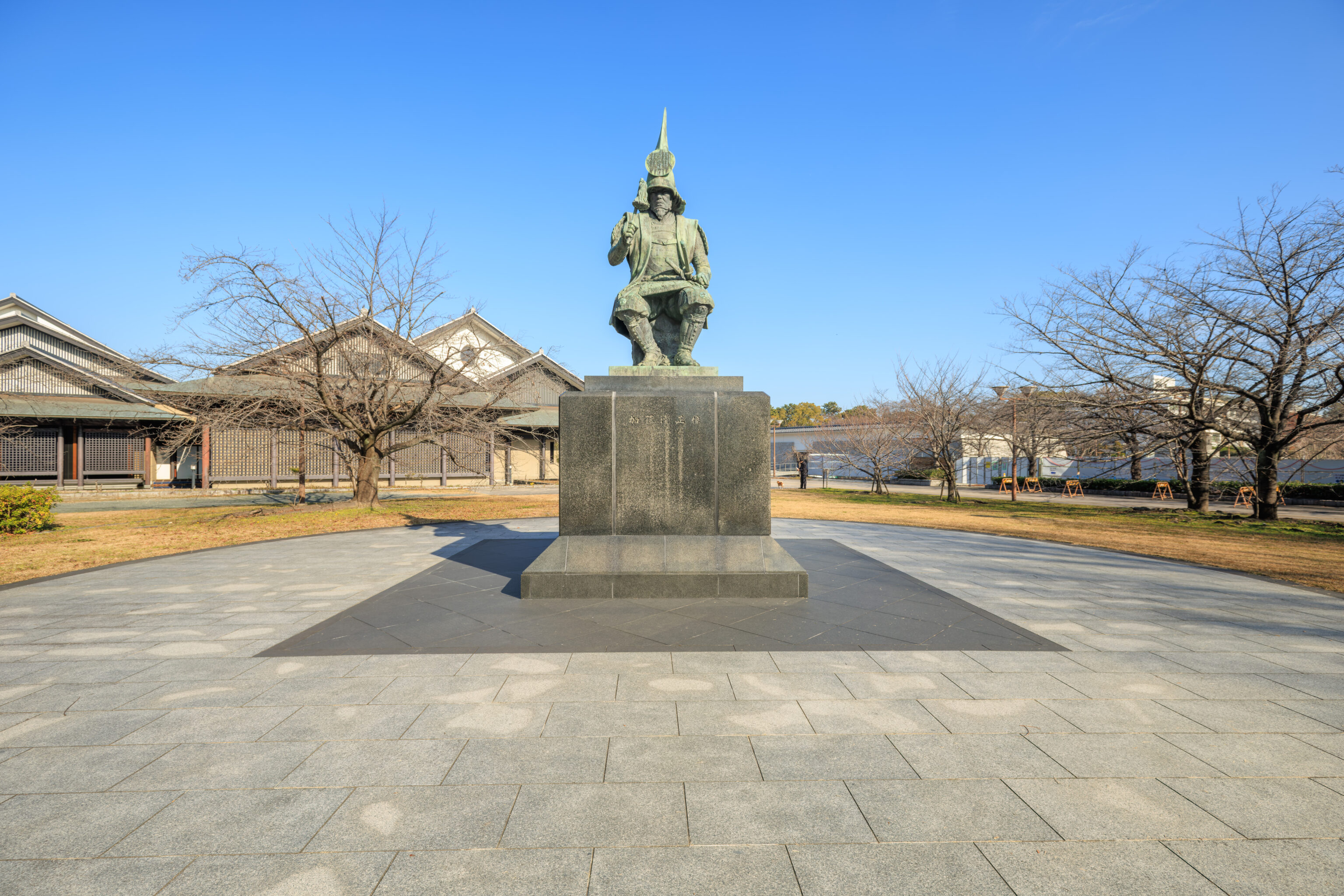
See you later, Kato Kiyomasa! We continued on to the south, away from Nagoya Castle.
Lunch at Yamamoto-ya
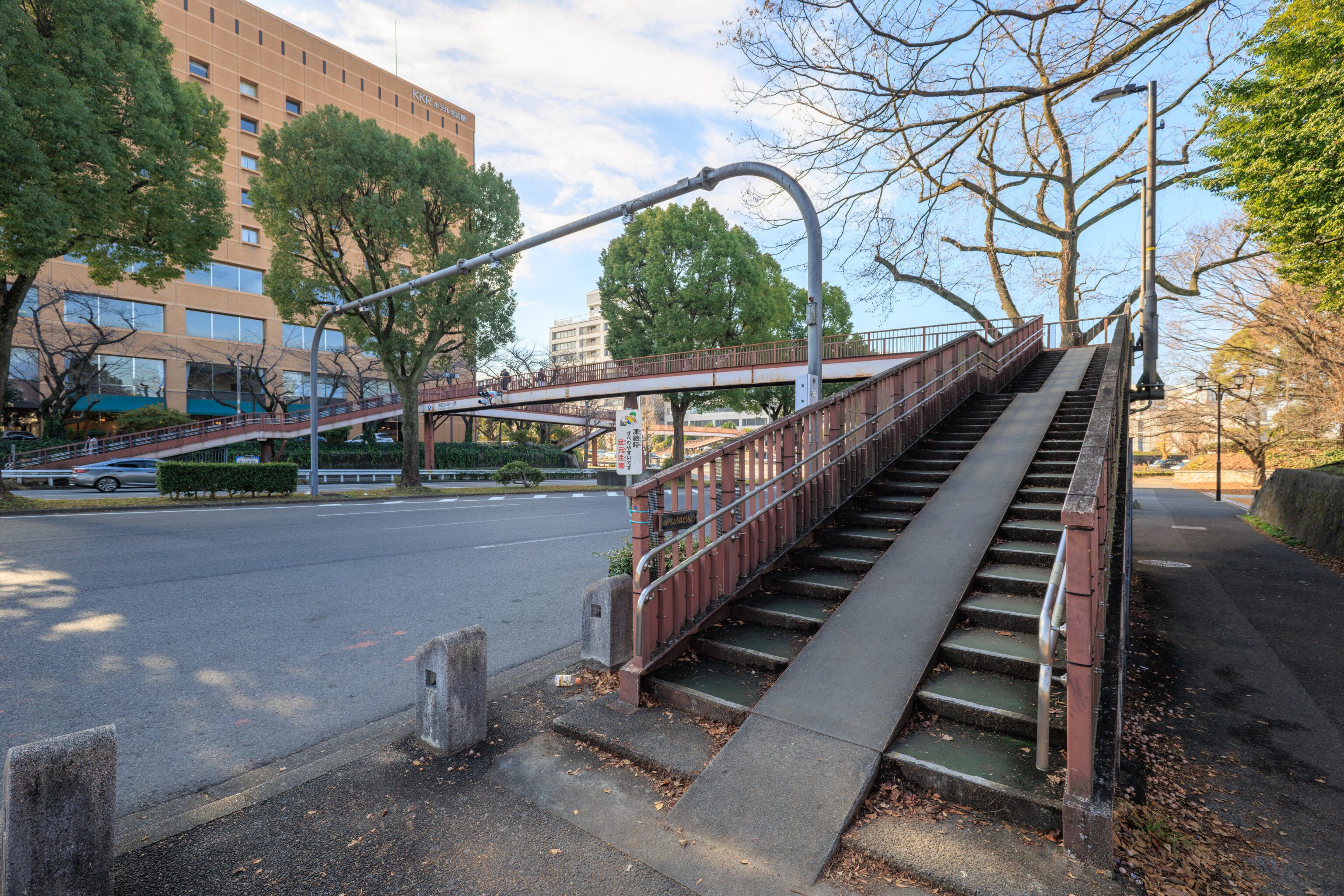
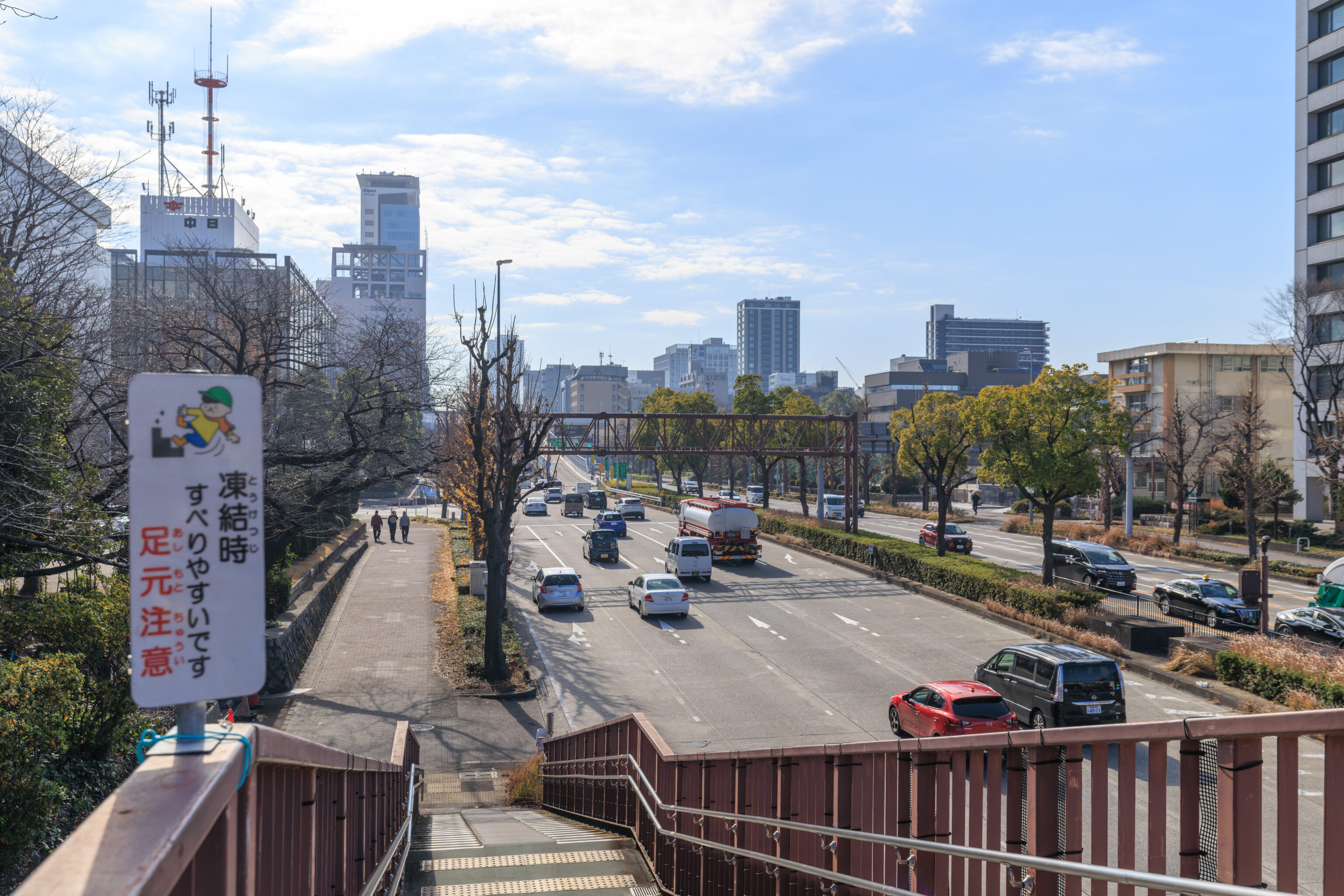
We had to use a pedestrian overpass around the intersection of a nine and six lane road to continue walking to the south.
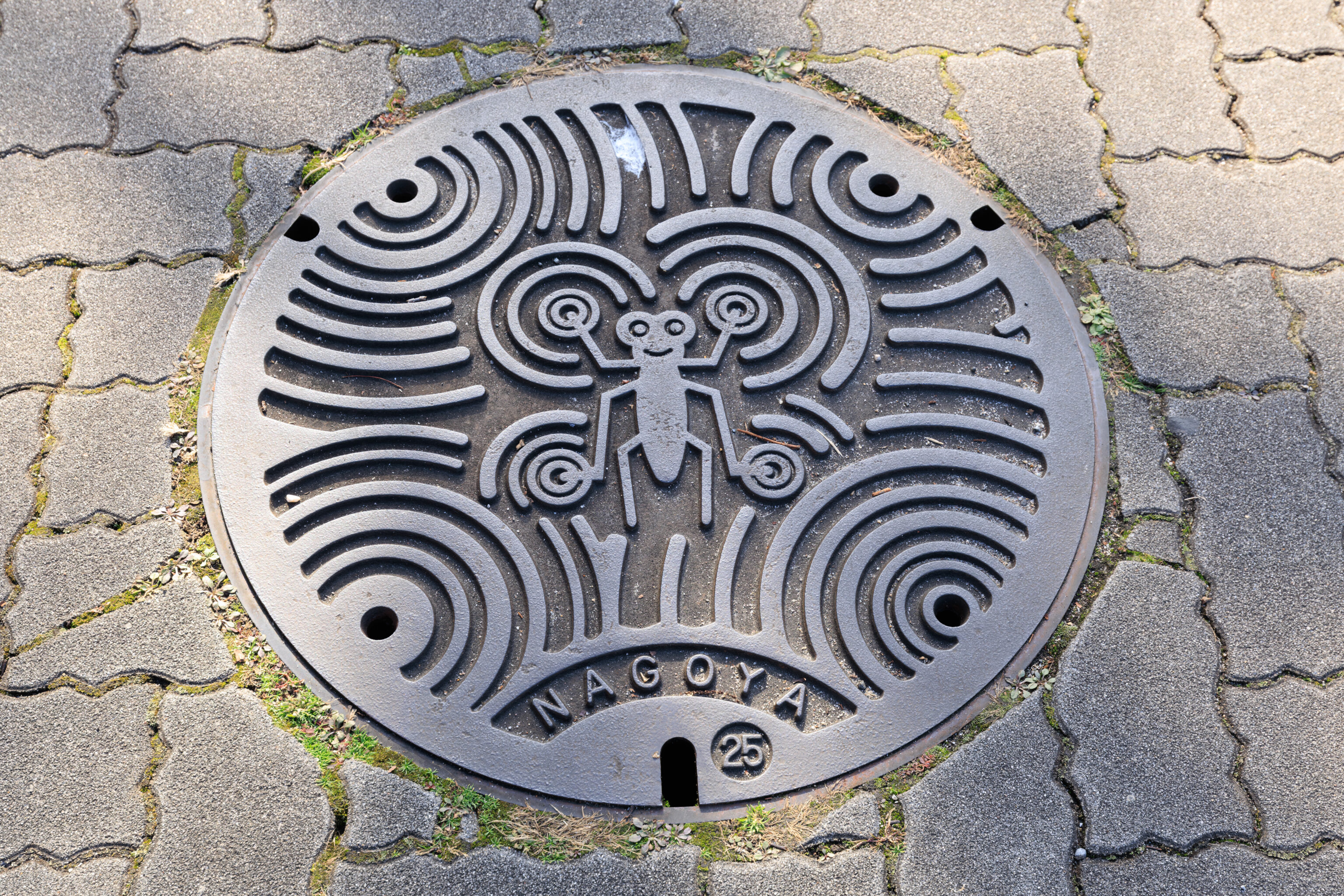
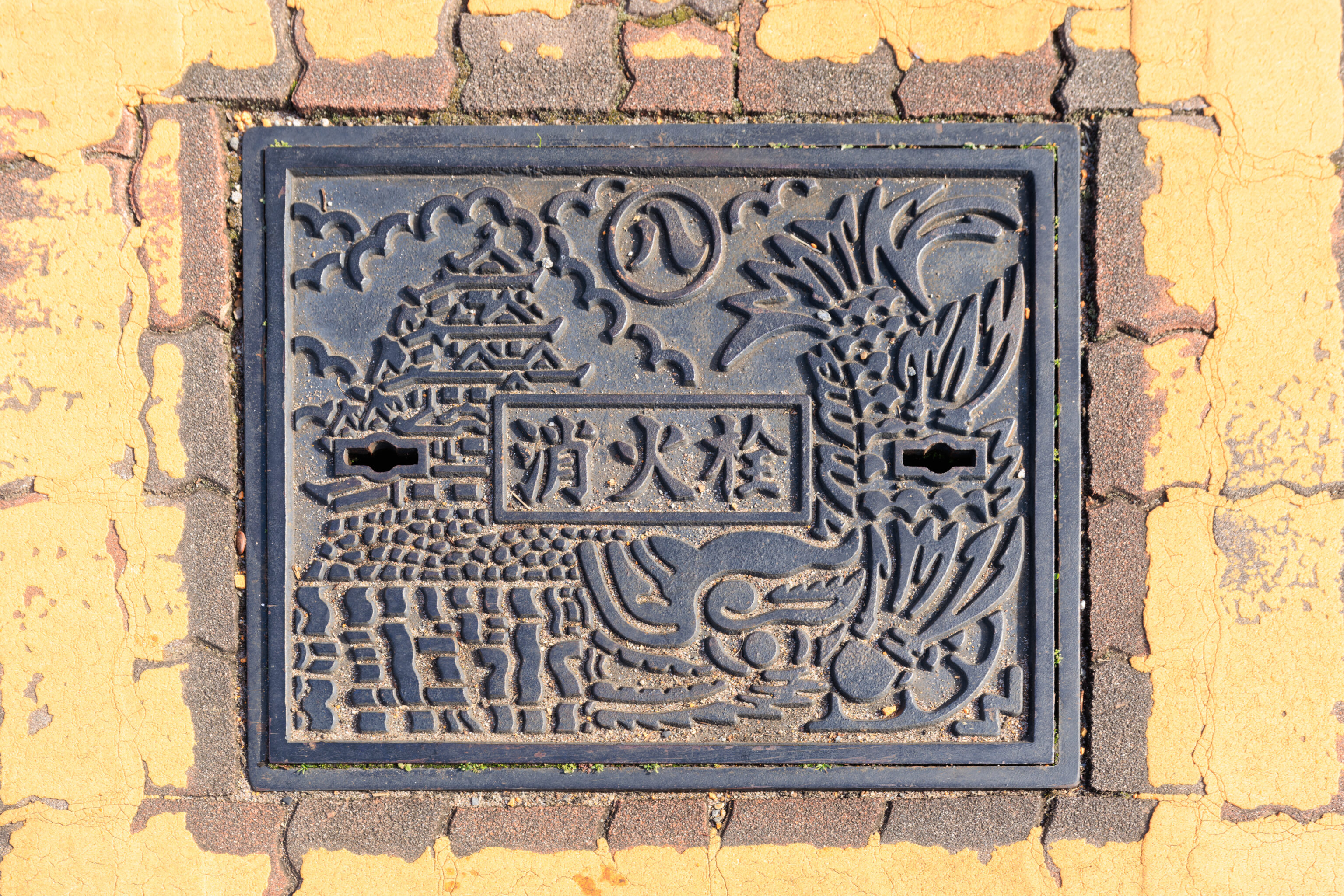
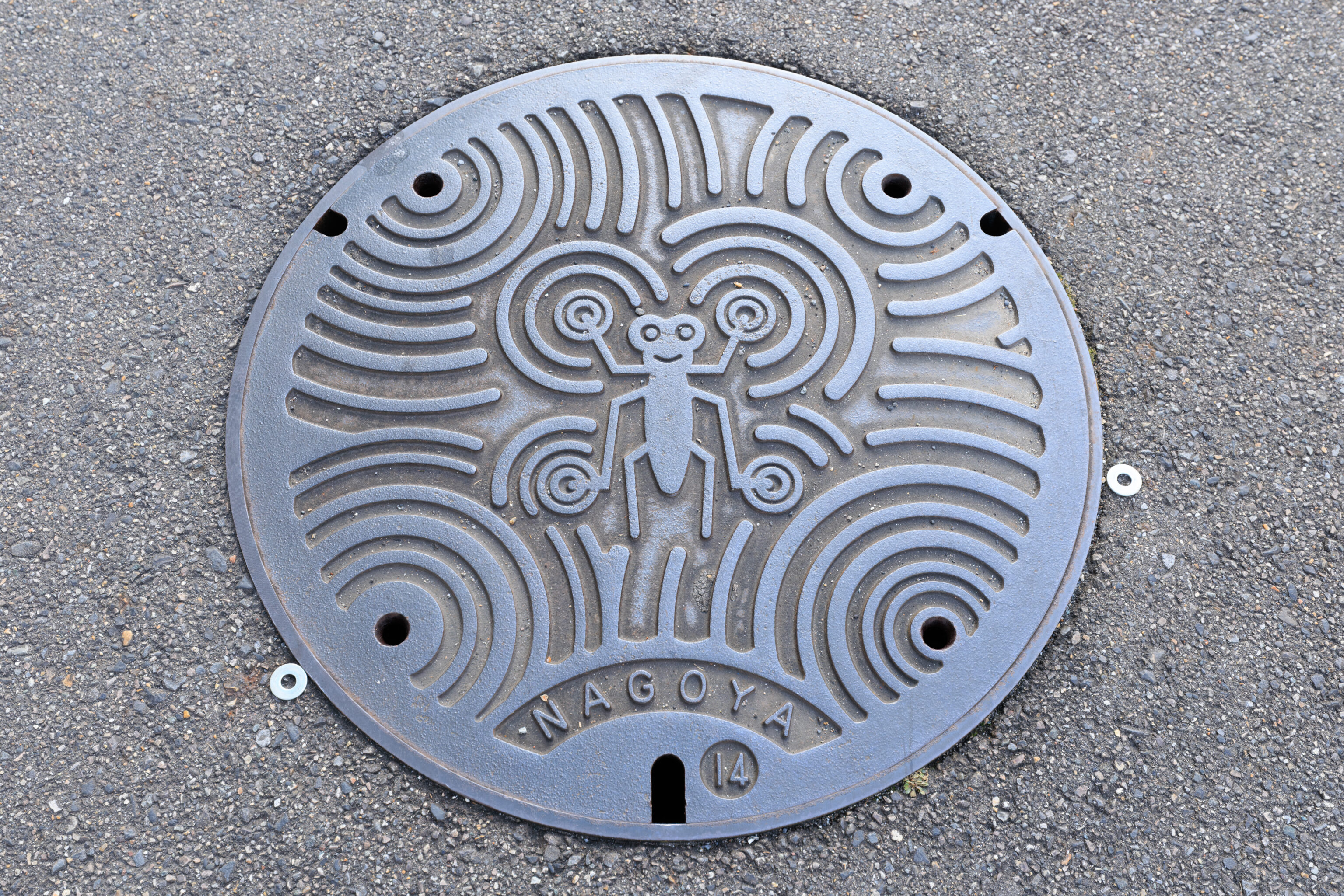
There were some nice utility covers on the way but in general nothing of interest to tourists. It took about twenty minutes to get to our destination, 山本屋 Yamamoto-ya. This restaurant specializes in 味噌煮込みうどん miso nikomi udon, a local dish from Nagoya. This is our first time having it. We actually saw a huge line as we approached but luckily it was for 佐とう Sato, a nearby ramen restaurant.
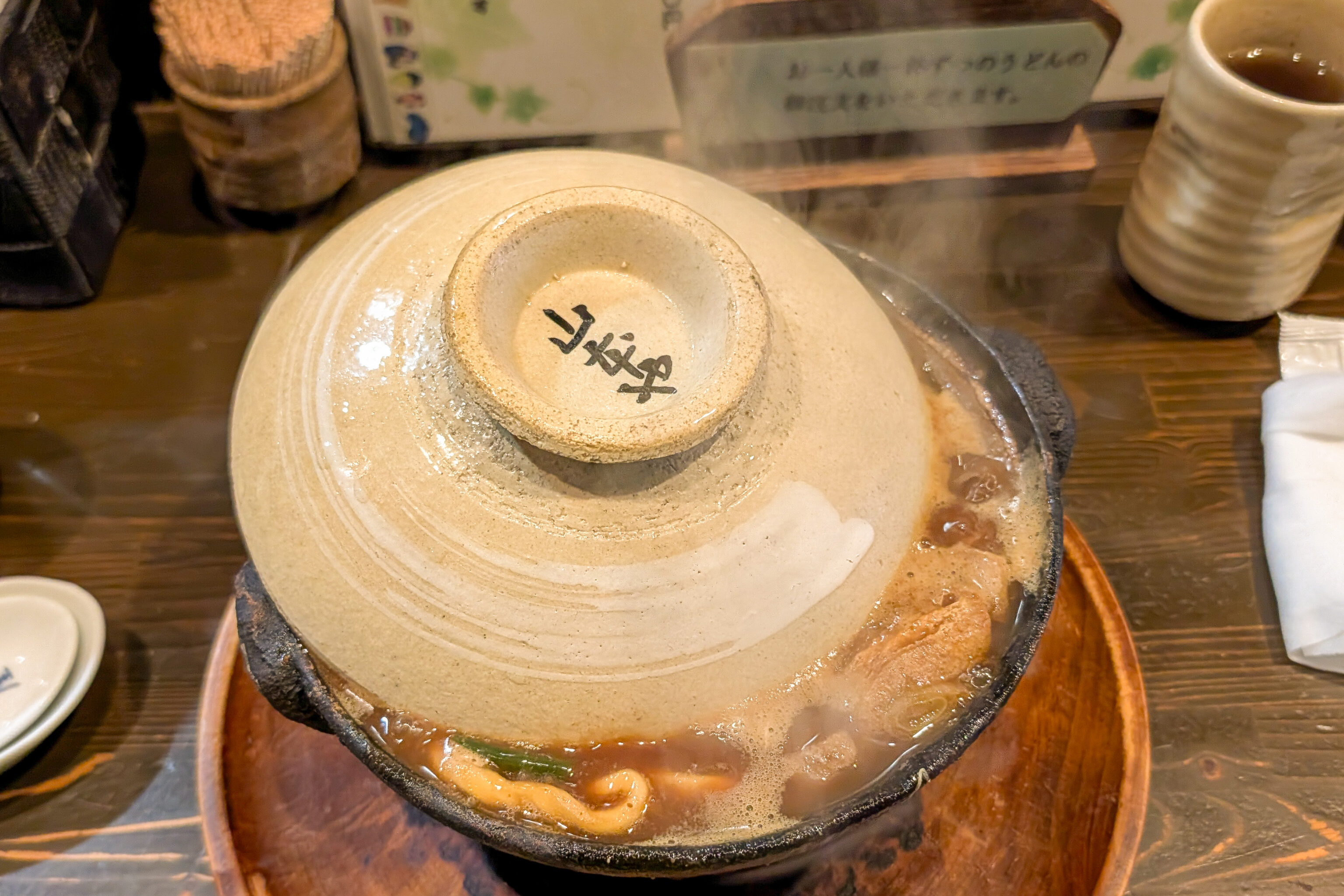
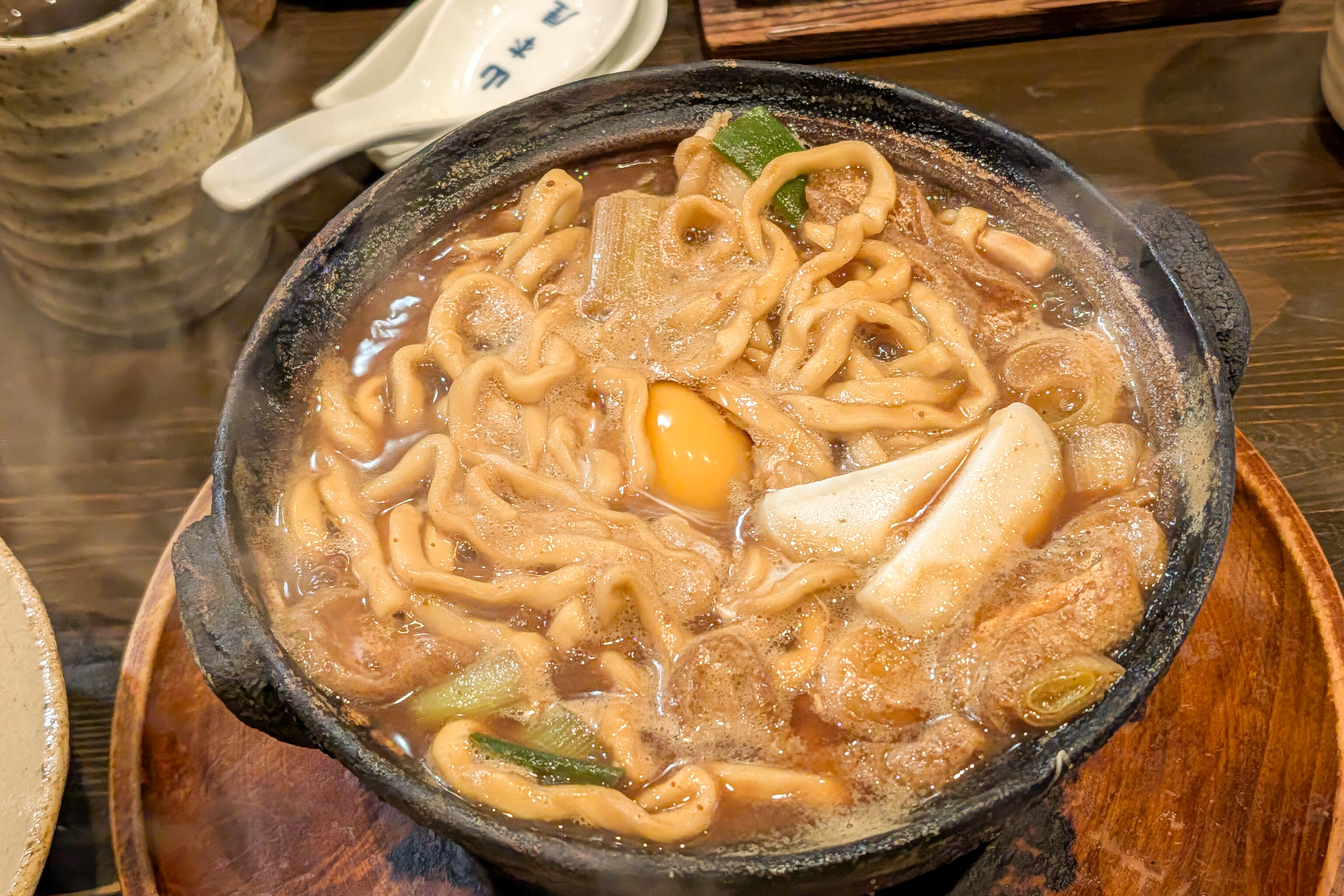
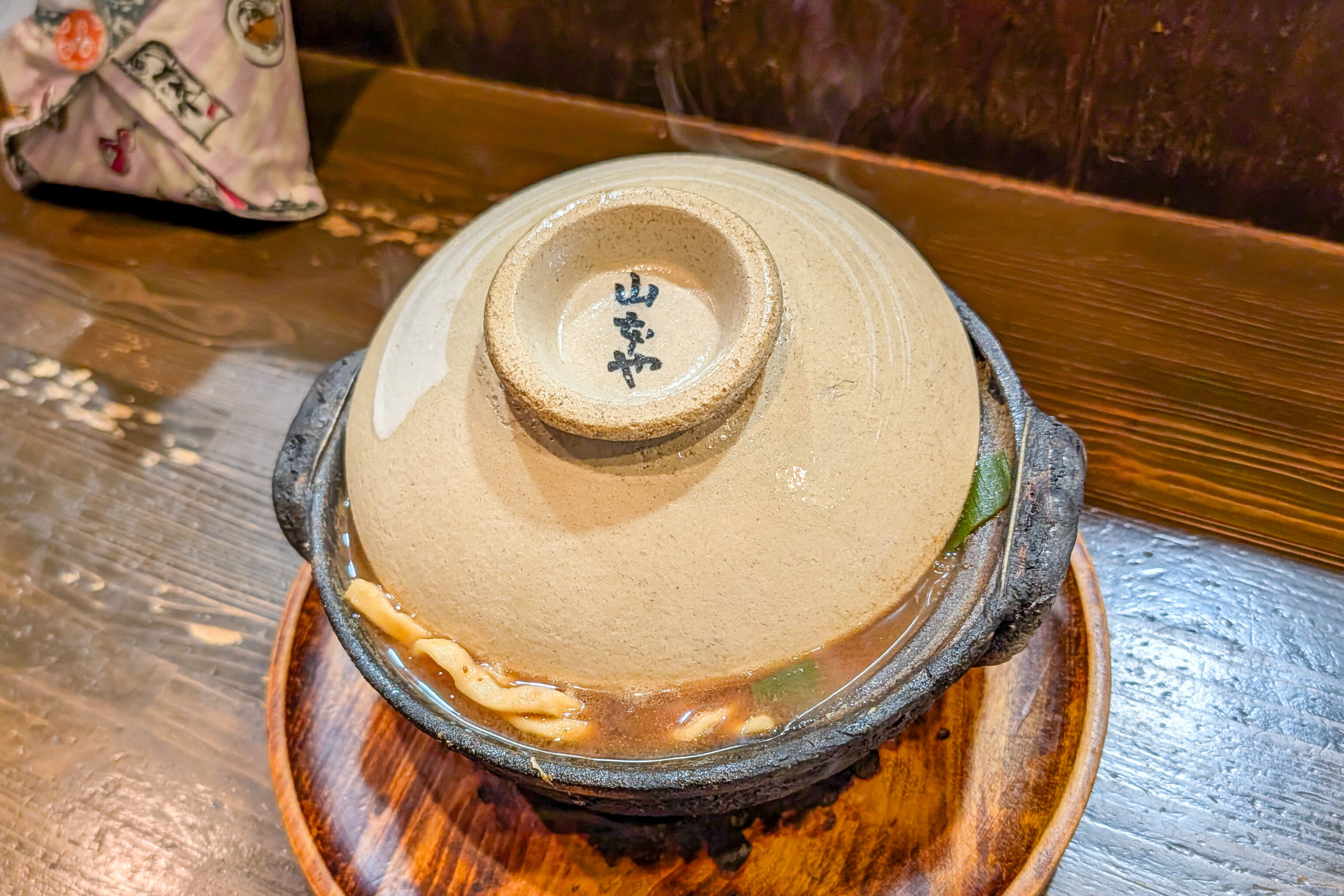
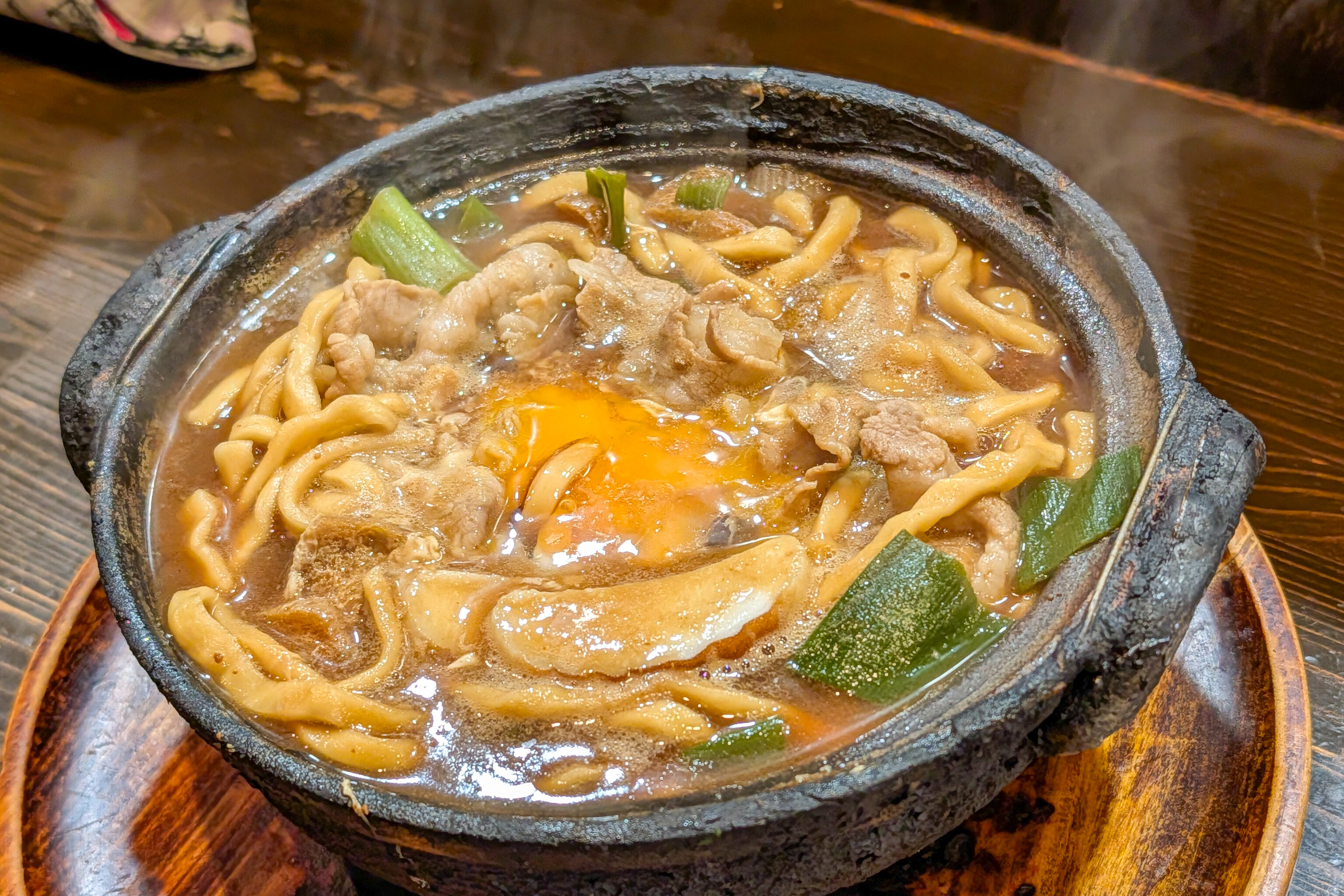
The broth used in the udon is a red miso dashi. We got one with chicken and egg, and the other with pork and egg. Both were excellent and satisfying on a cool winter day.
Atsuta-jingu
After lunch, we headed south to visit 熱田神宮 Atsuta-jingu. We took the subway down to the 熱田神宮伝馬町駅 Atsuta Jingu Temma-cho Station, a trip that takes about twenty minutes.
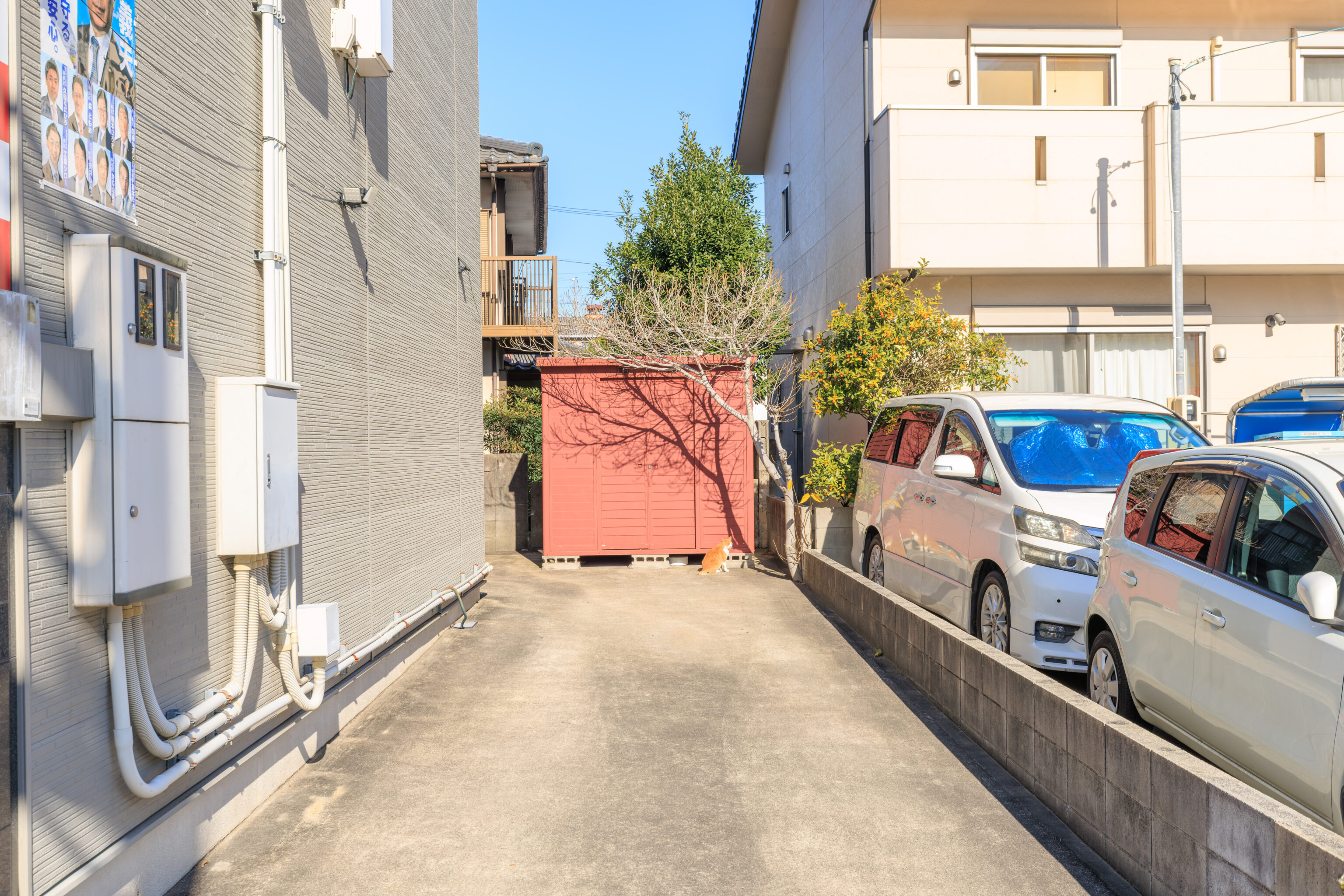
The station is near the shrine’s southern and main entrance. We started by walking northwest.
Why did I photograph a shed? Because there was a cat in front of it!
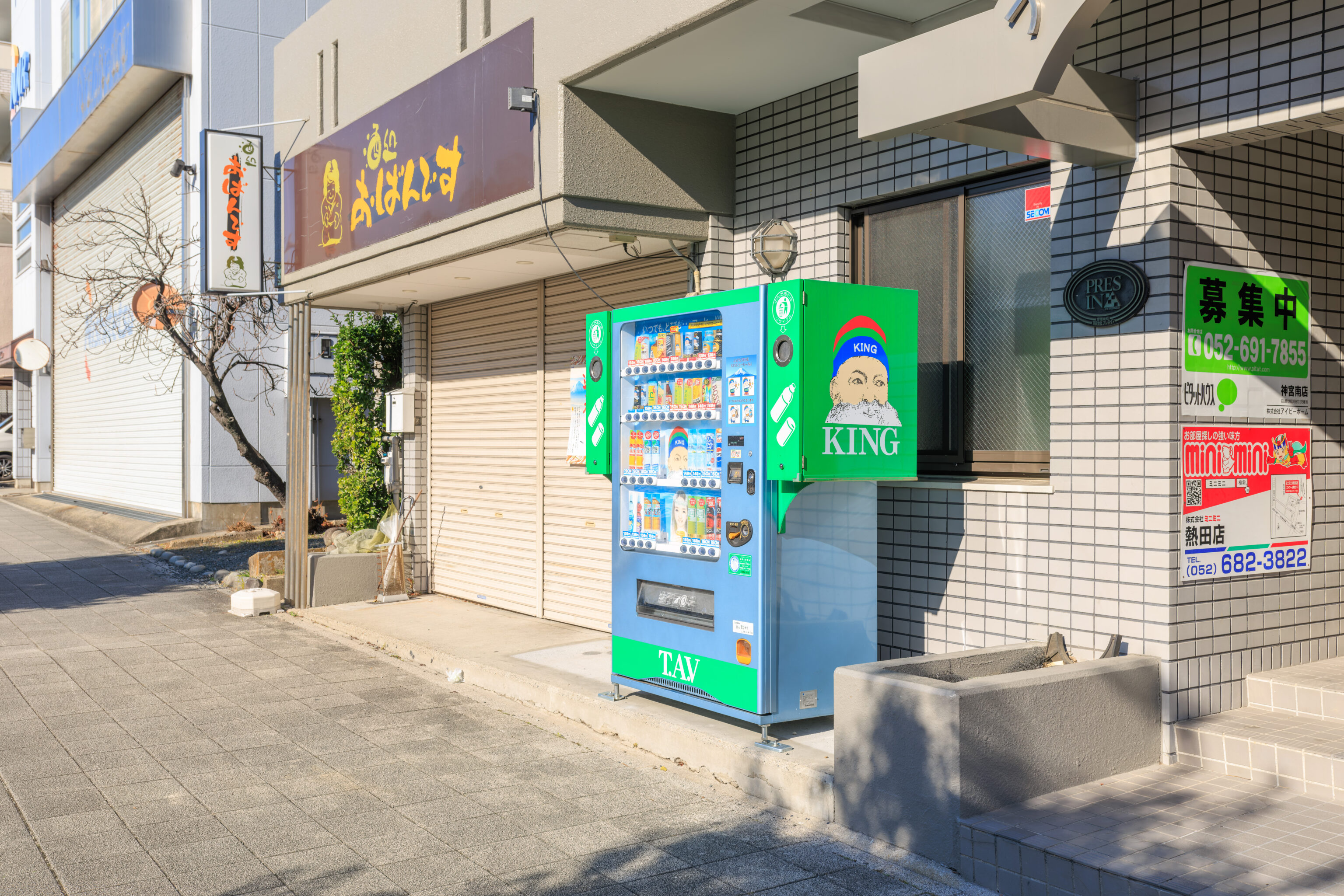
Some Japanese vending machines like this one provide recycling as well. There may have been a reason why I photographed this scene but I can’t recall at all!
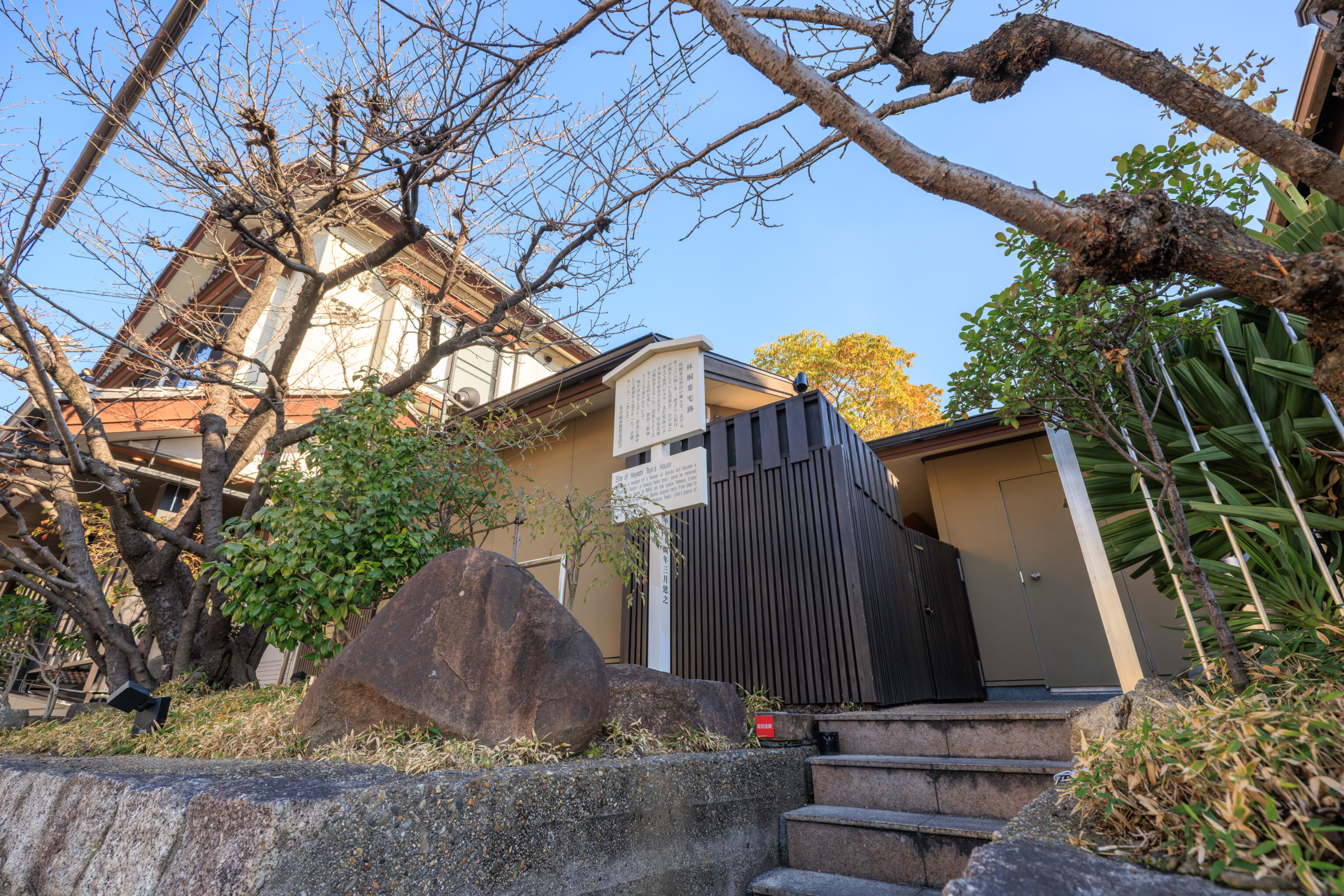
After walking four blocks, we turned right and walked another block to the northeast. We walked by this house which had a marker in front of it.
Site of Hayashi Tōyō’s Residence
Hayashi Tōyō was a native of Atsuta. In the winter of 1684 (the first year of the Jōkyō era), he welcomed Bashō—who was then on the journey that would become *Nozarashi Kikō* (The Records of a Weather-Beaten Skeleton)—into his home and became a disciple of the master. He played a pioneering role in establishing the Owari school of Bashō-style haikai, notably by introducing Bashō to Shimozato Chisoku of Narumi. Bashō frequently visited this residence, composing celebrated verses here; the collaborative linked-verse sequence *Atsuta Sankasen* (Three Linked-Verse Sequences of Atsuta) was also composed at this site.

In his later years, he adopted the pen name Gentiku and devoted himself to calligraphy, gradually distancing himself from haikai poetry. He passed away in 1712 (the second year of the Shōtoku era).

Nagoya City Board of Education
– Text from the sign in the photograph above, read using Google Gemini and translated using Google Translate.
The sign refers to this location, not to this house, which seems like probably just an ordinary house.
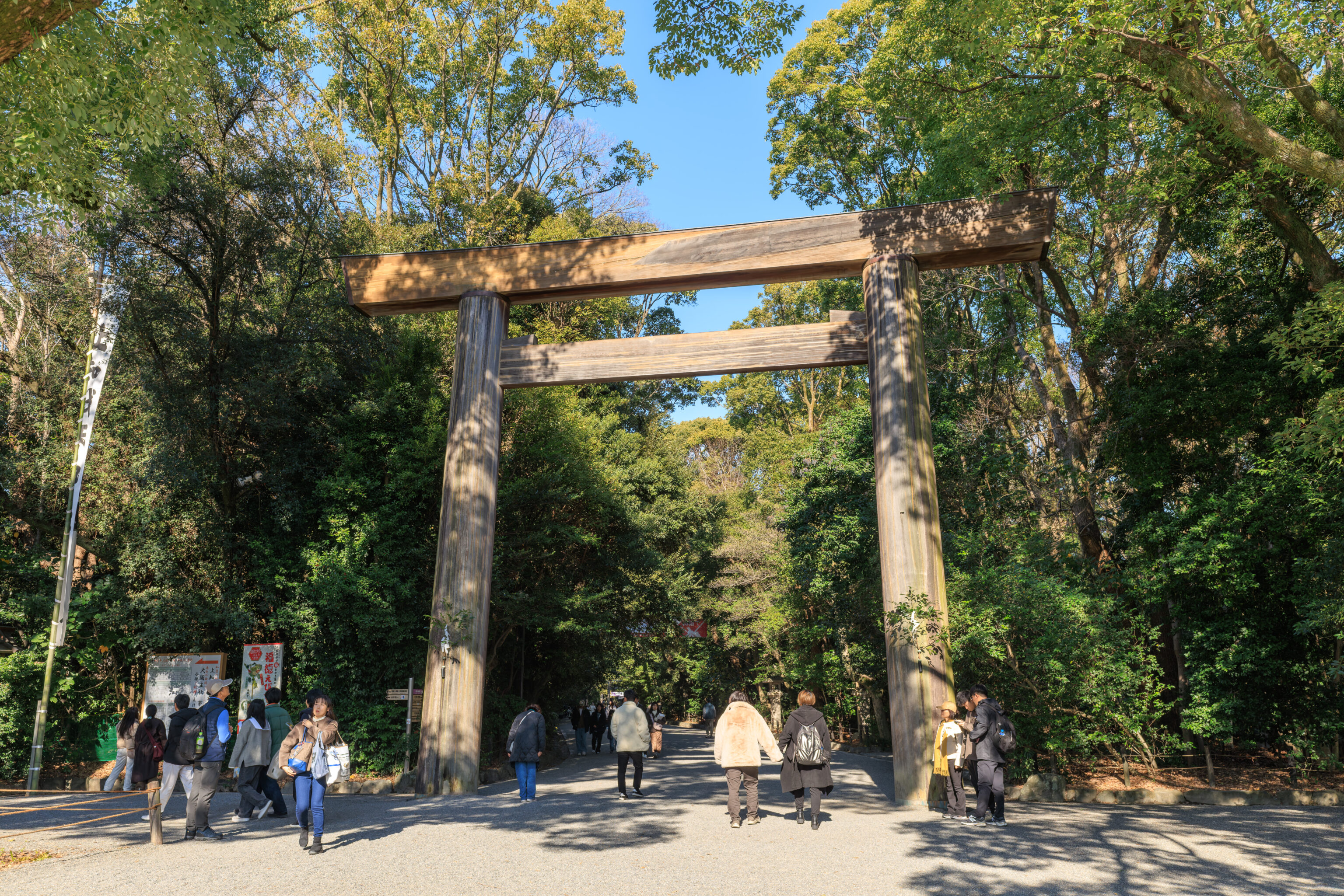
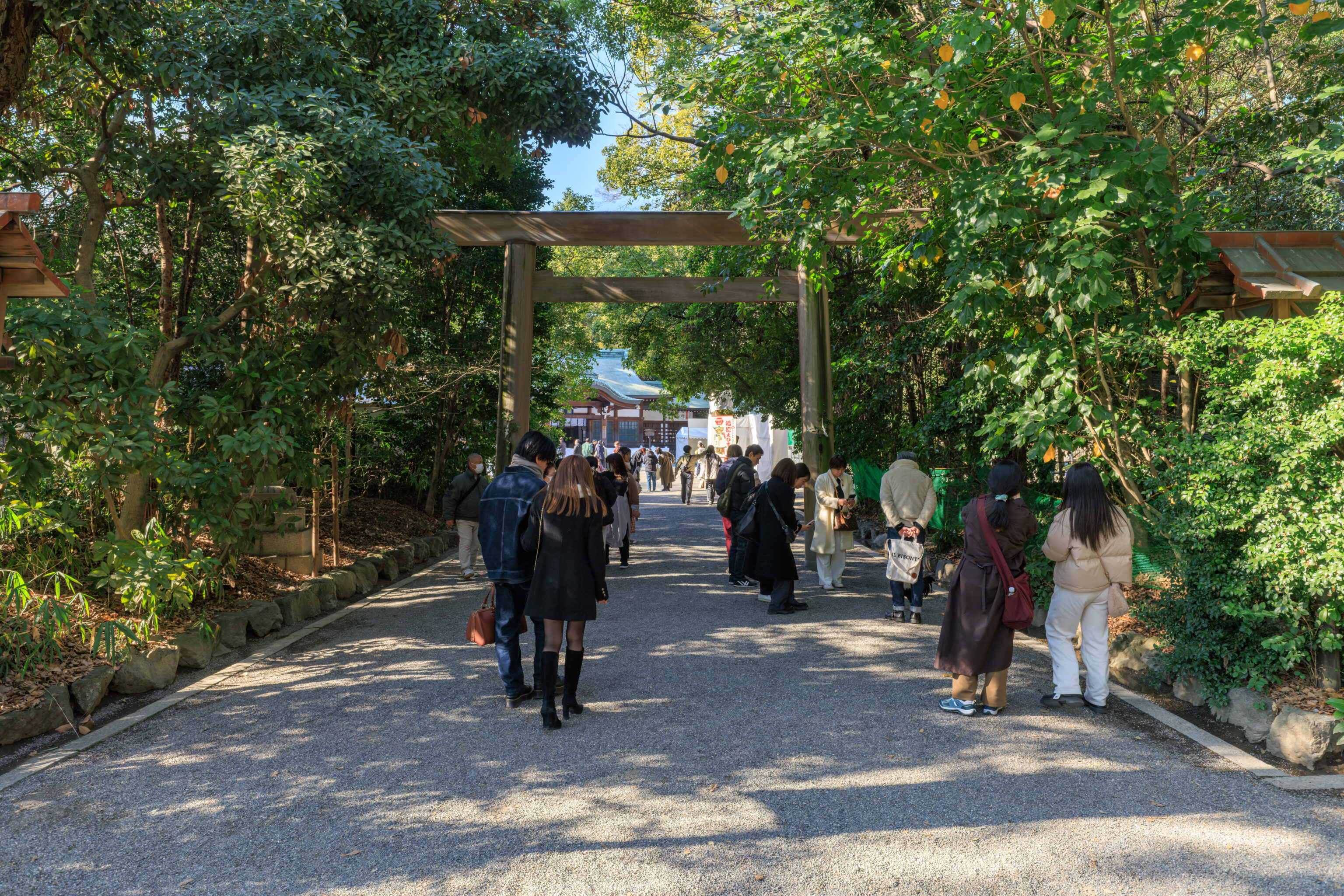
Just beyond the house, we entered Atsuta-jingu through a large torii.
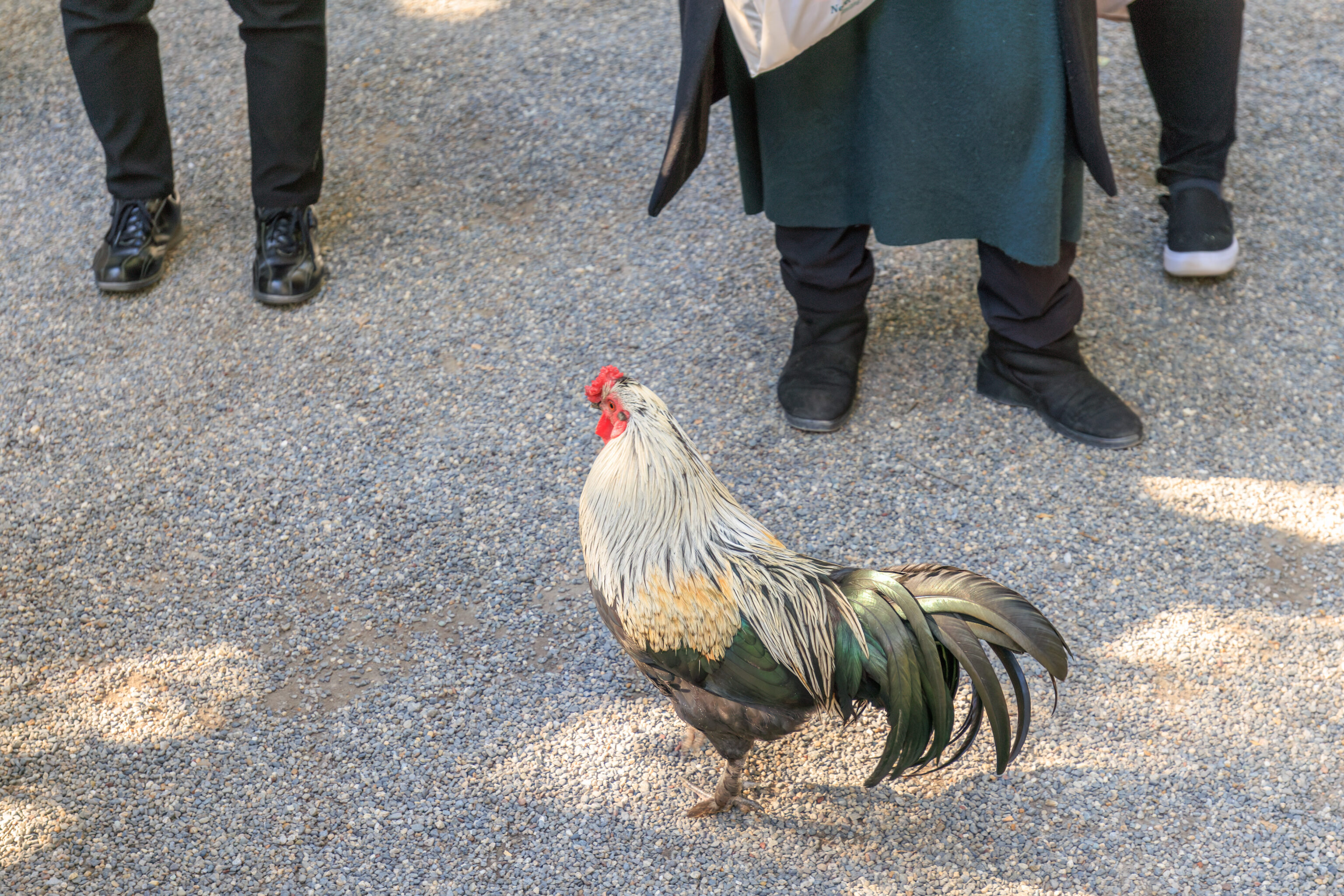
We were a little surprised to come across a chicken!
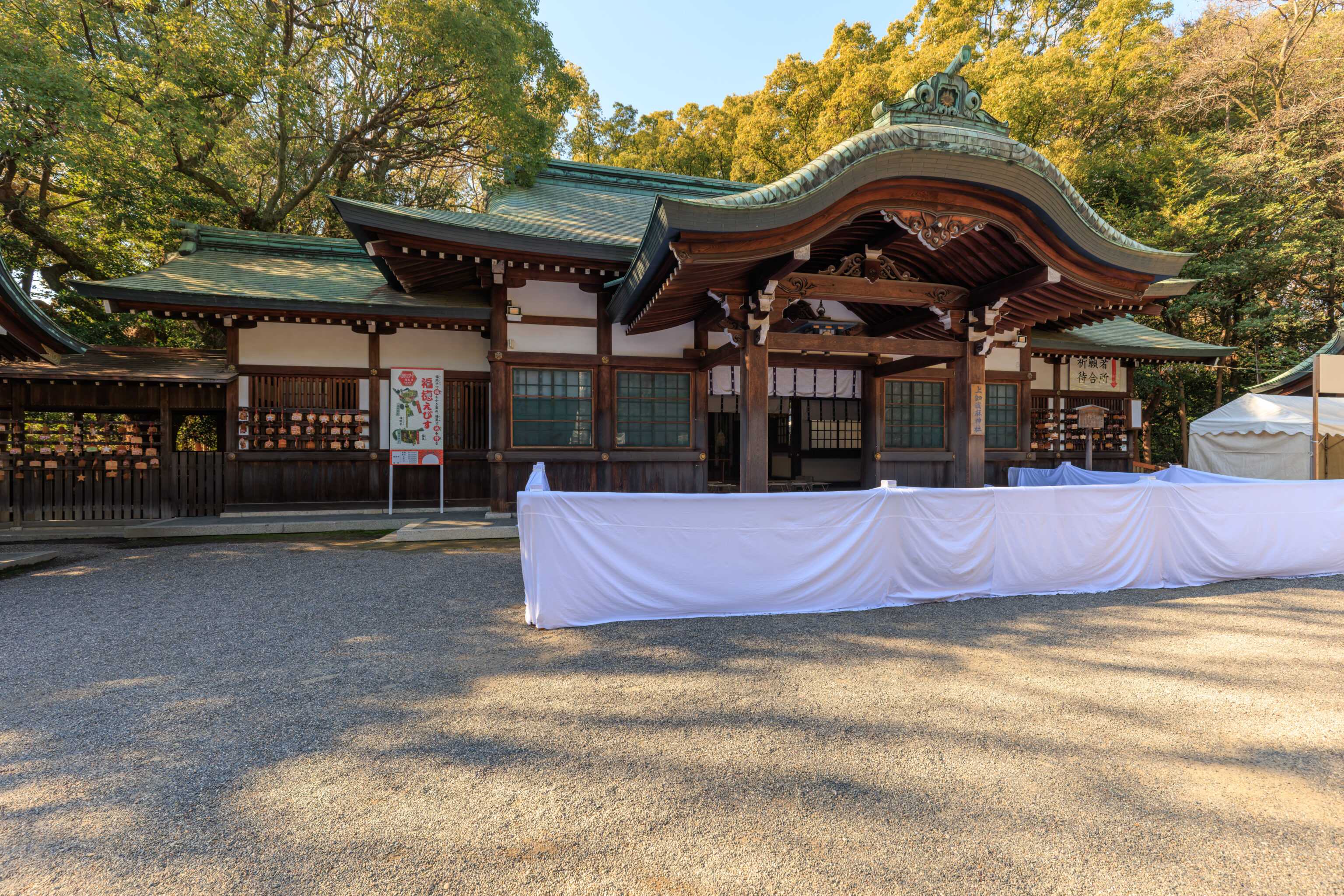
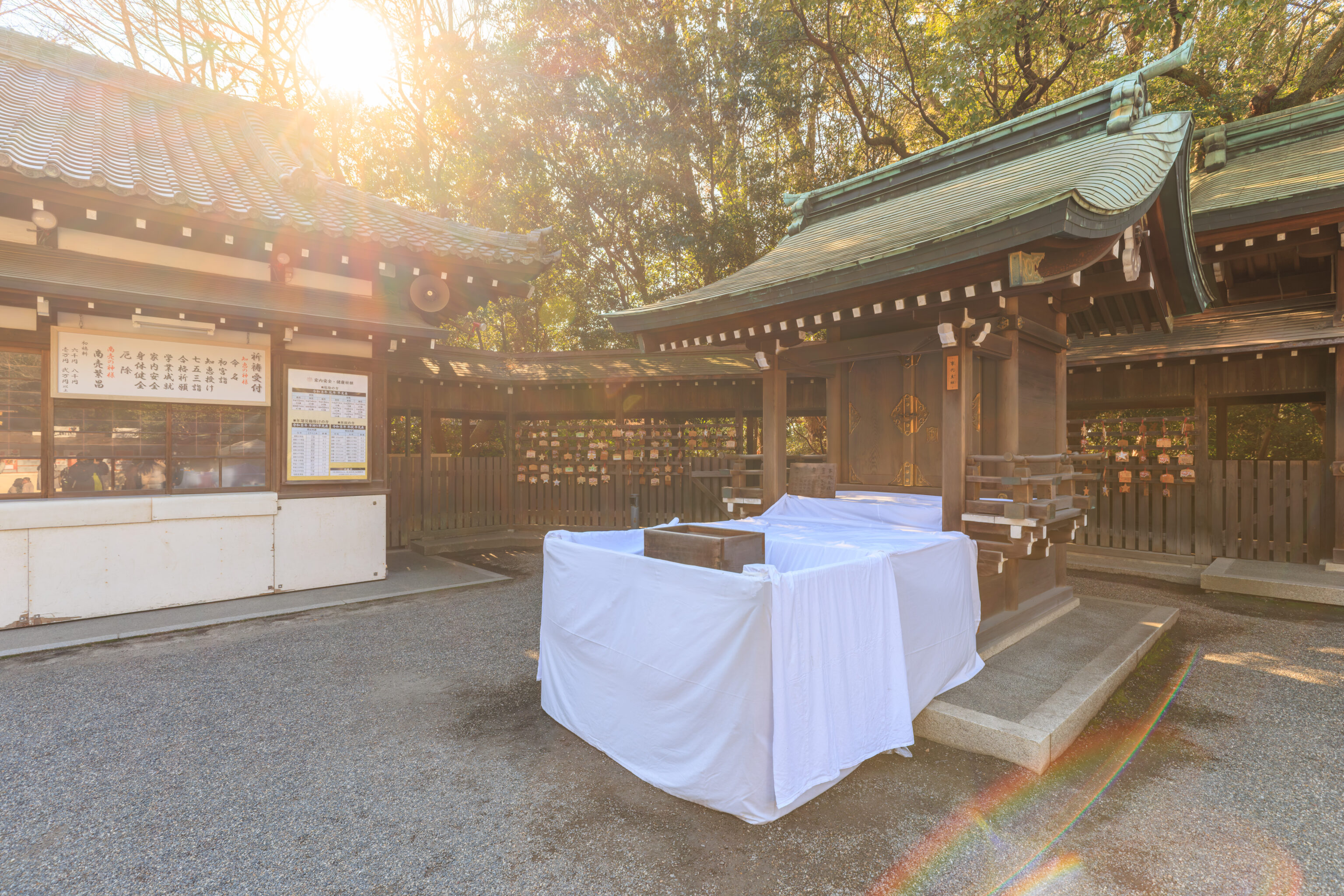
We turned left after passing under the torii and arrived at 上知我麻神社 Kamichikama Shrine, an 摂社 auxiliary shrine of Atsuta-jingu,
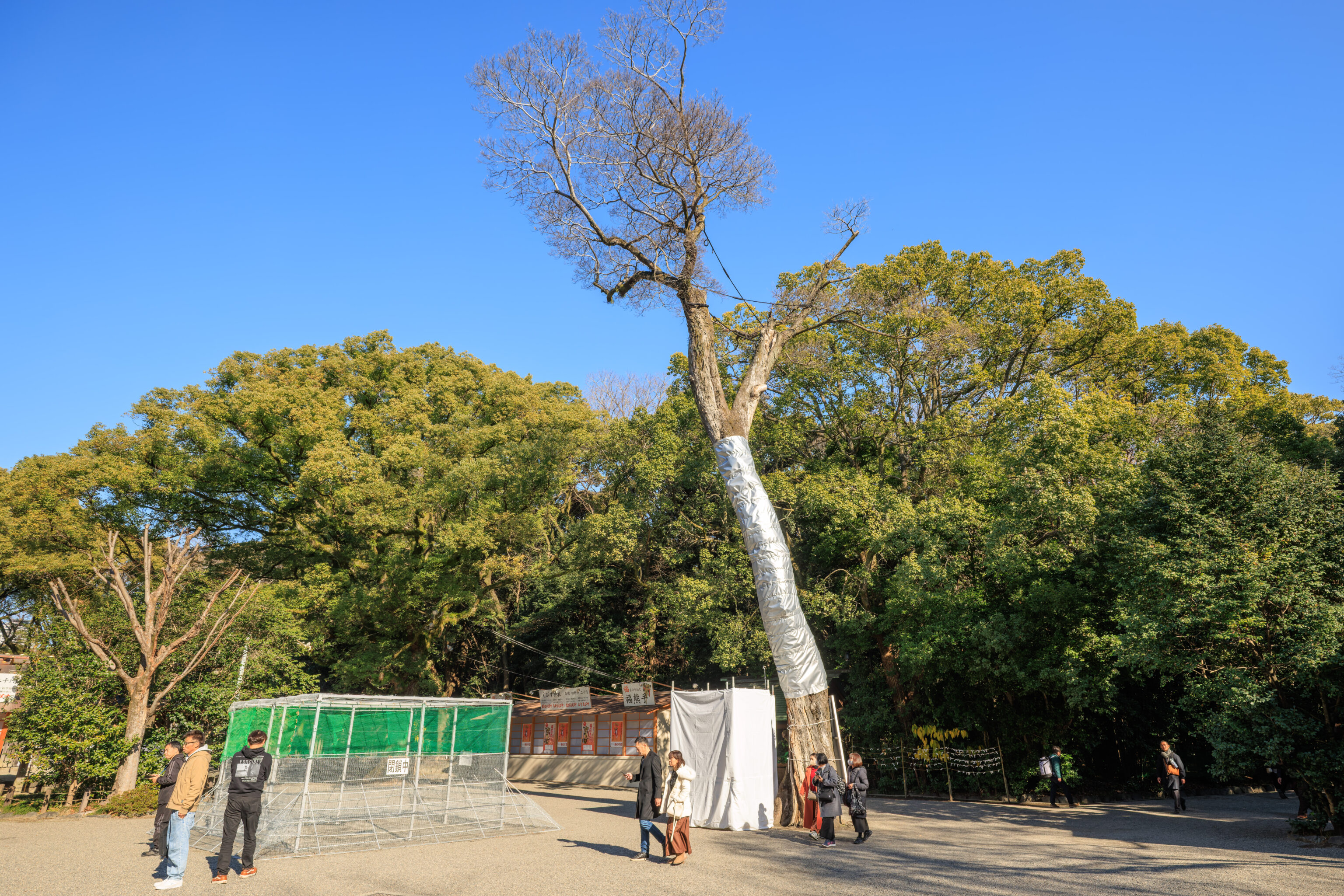
A rather tall tree!
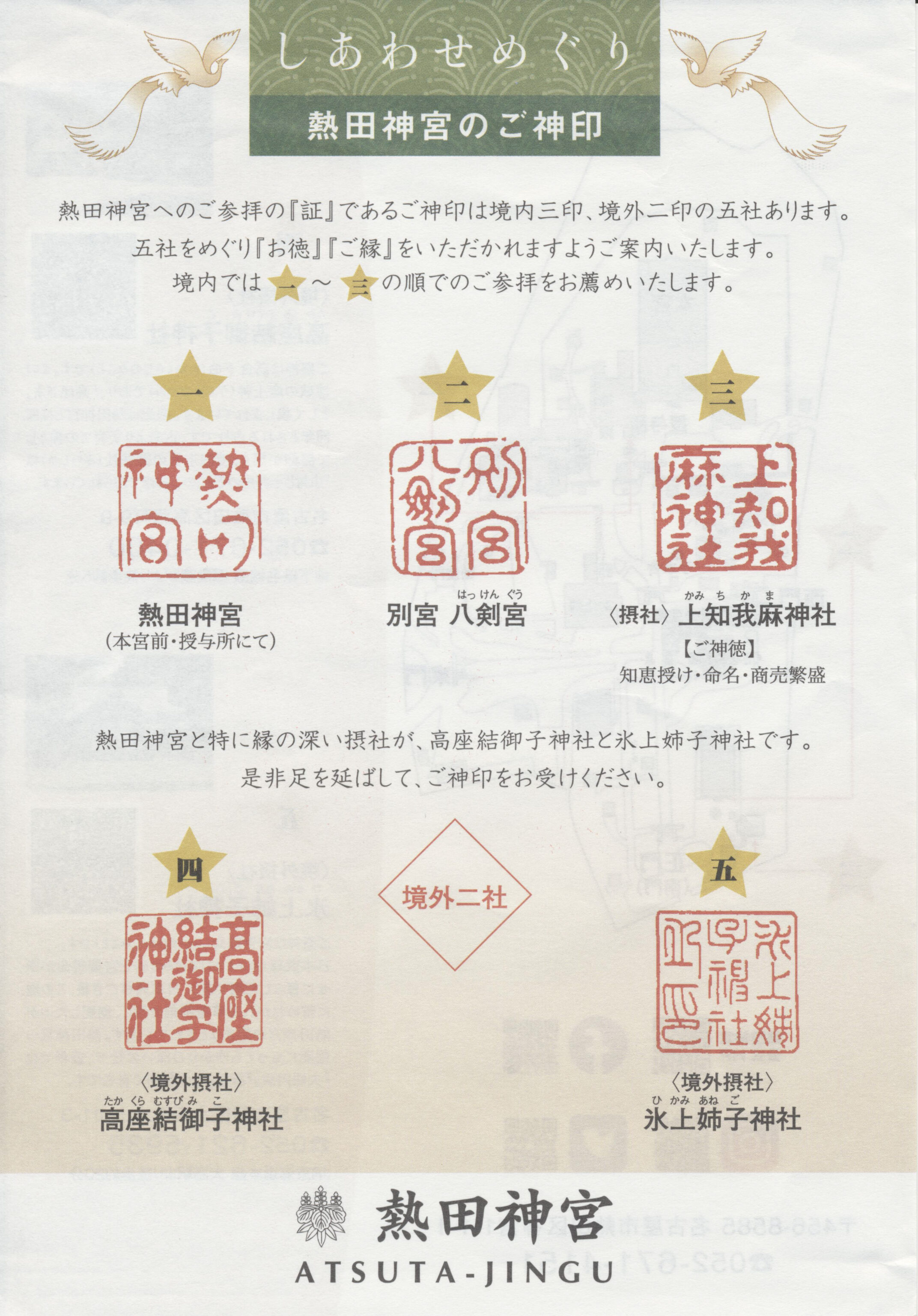
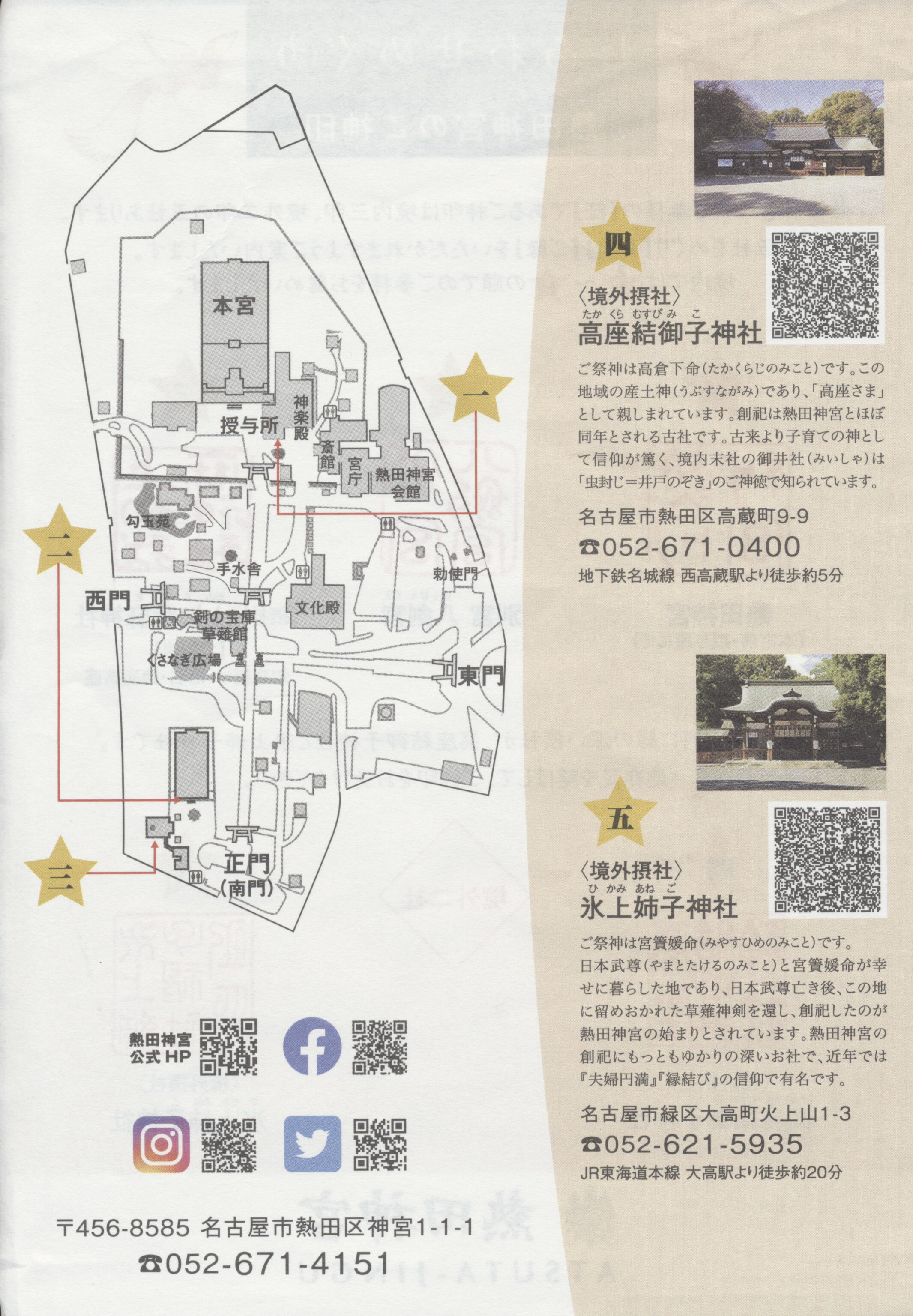
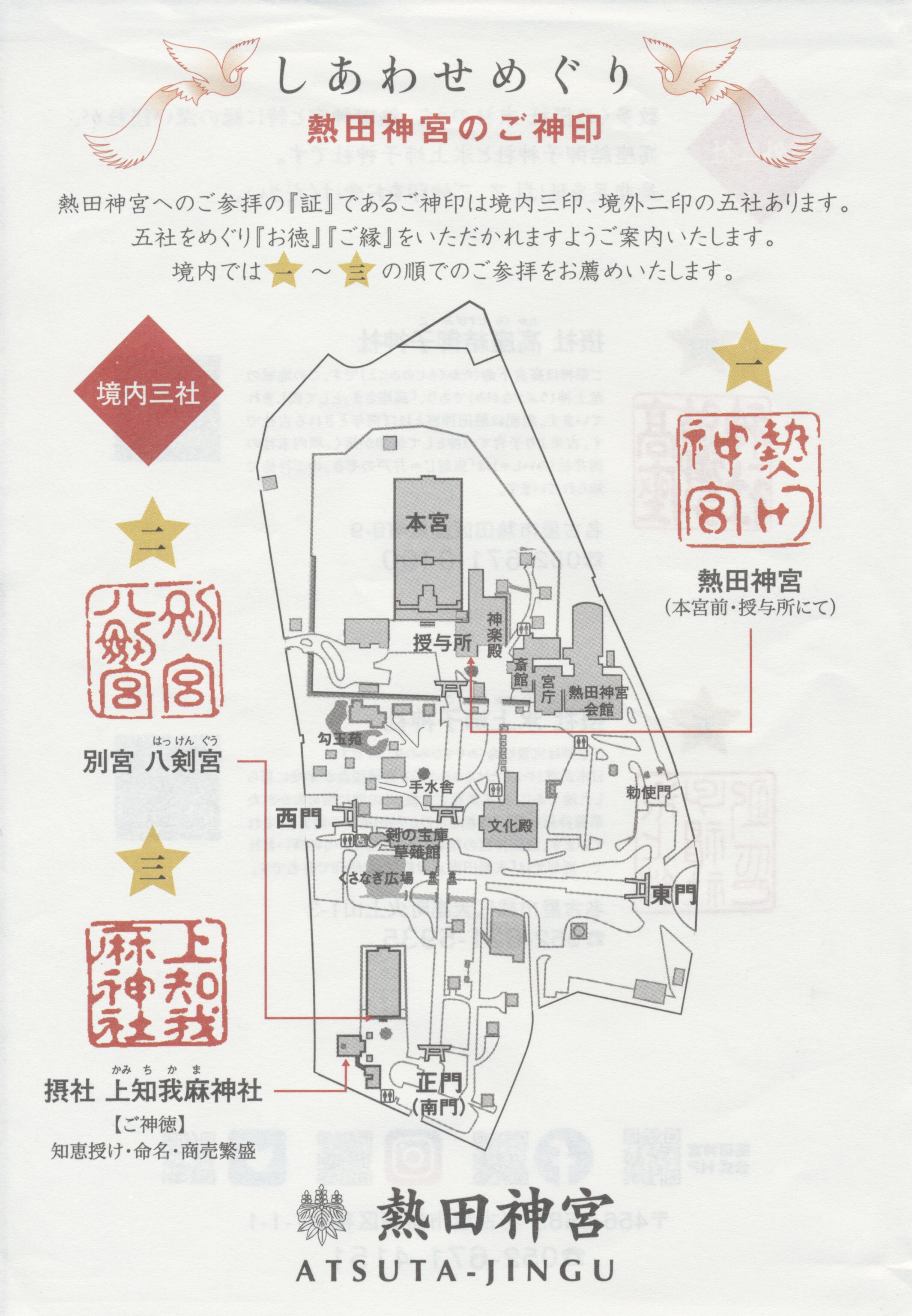
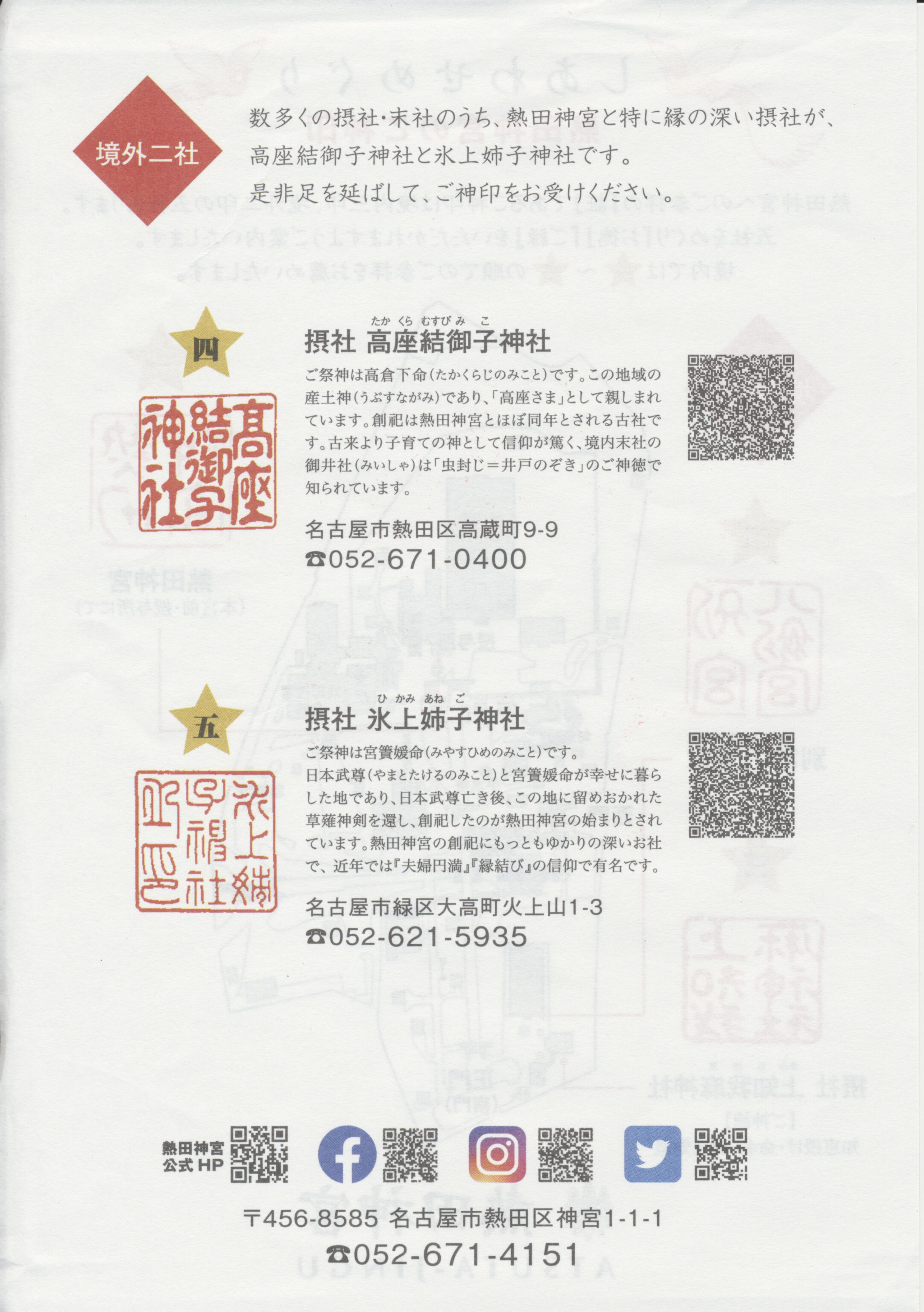
While inquiring about 御朱印 goshuin here, we picked up some information. These pages show the various goshuin that are available and their locations.
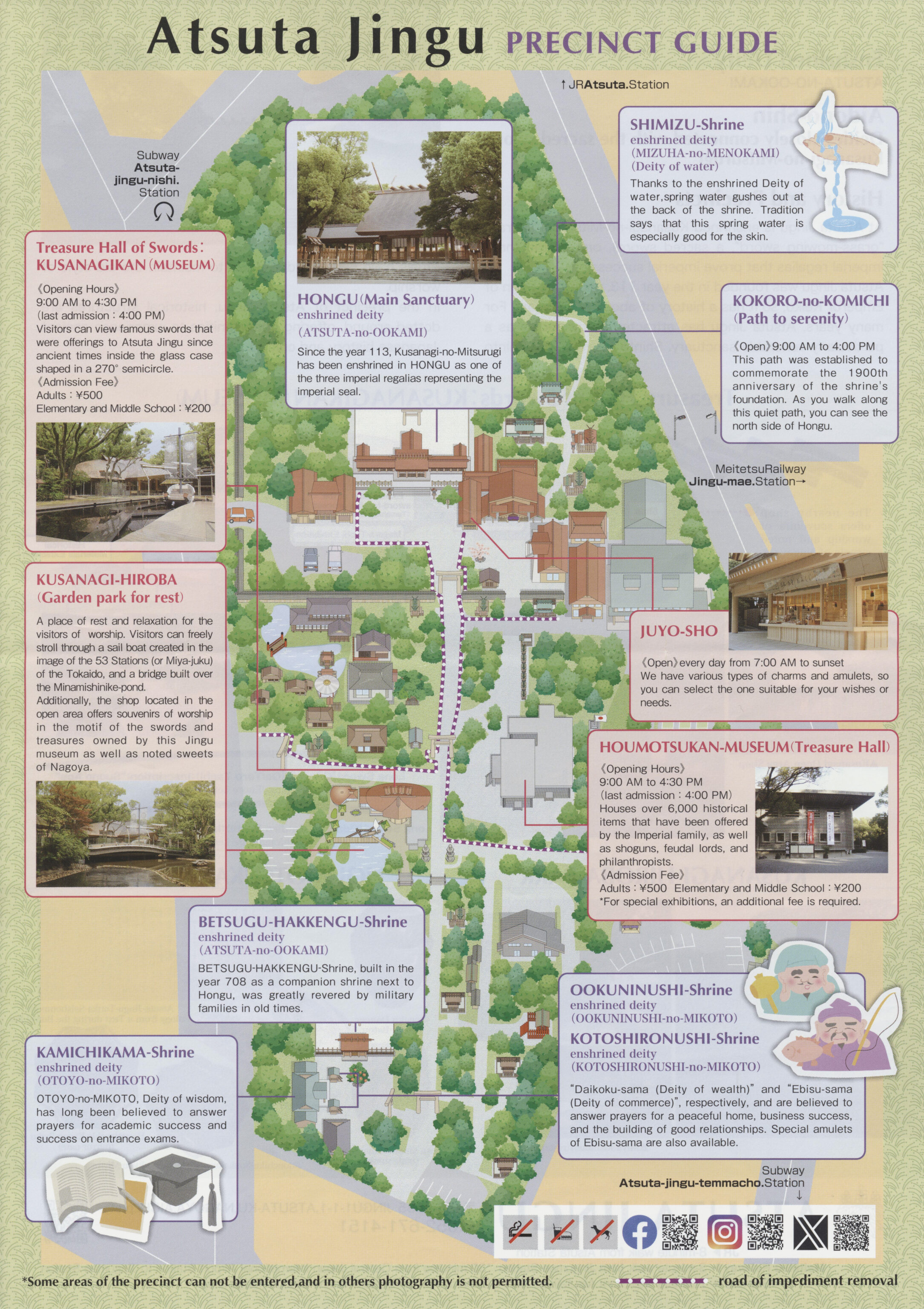
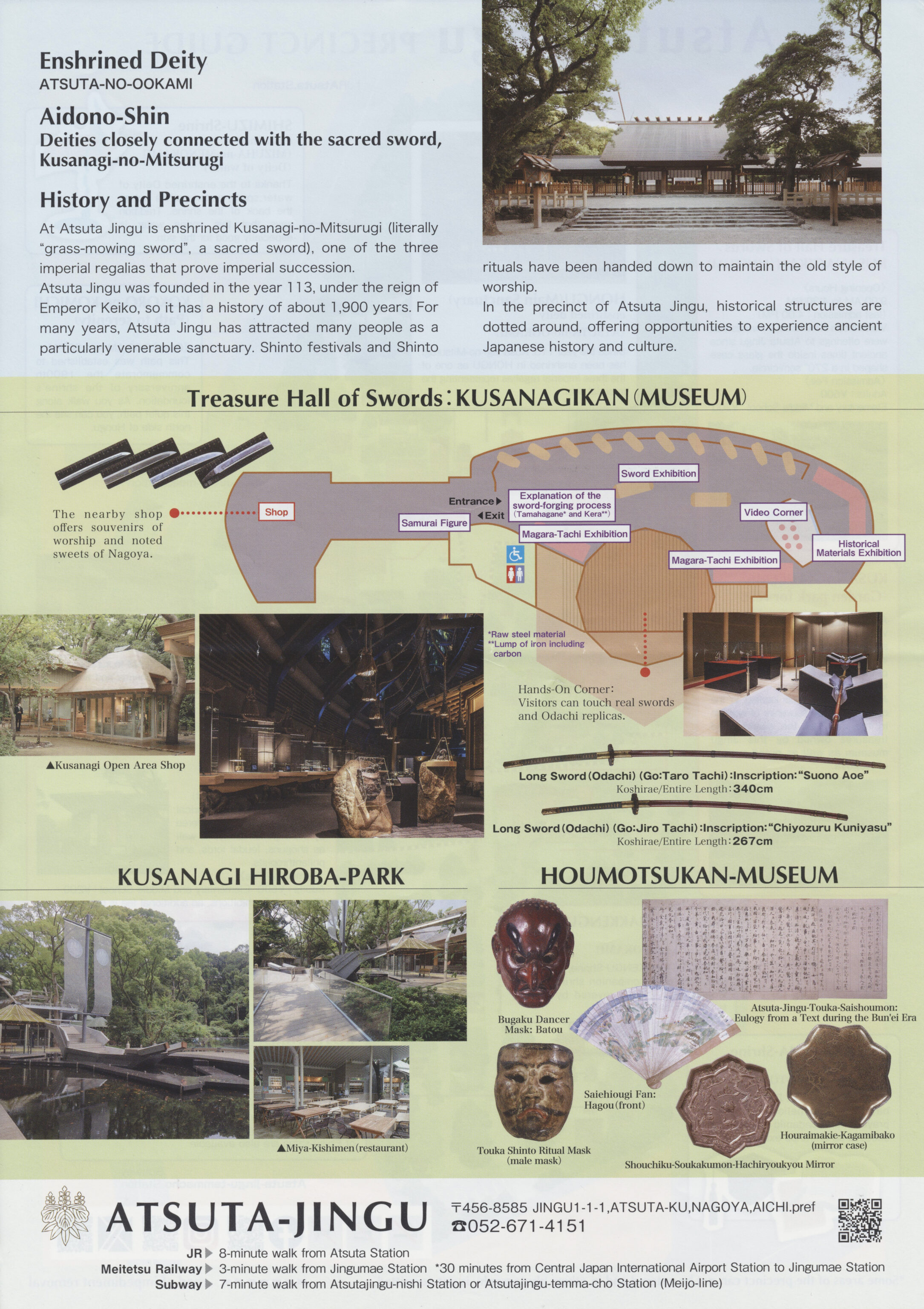
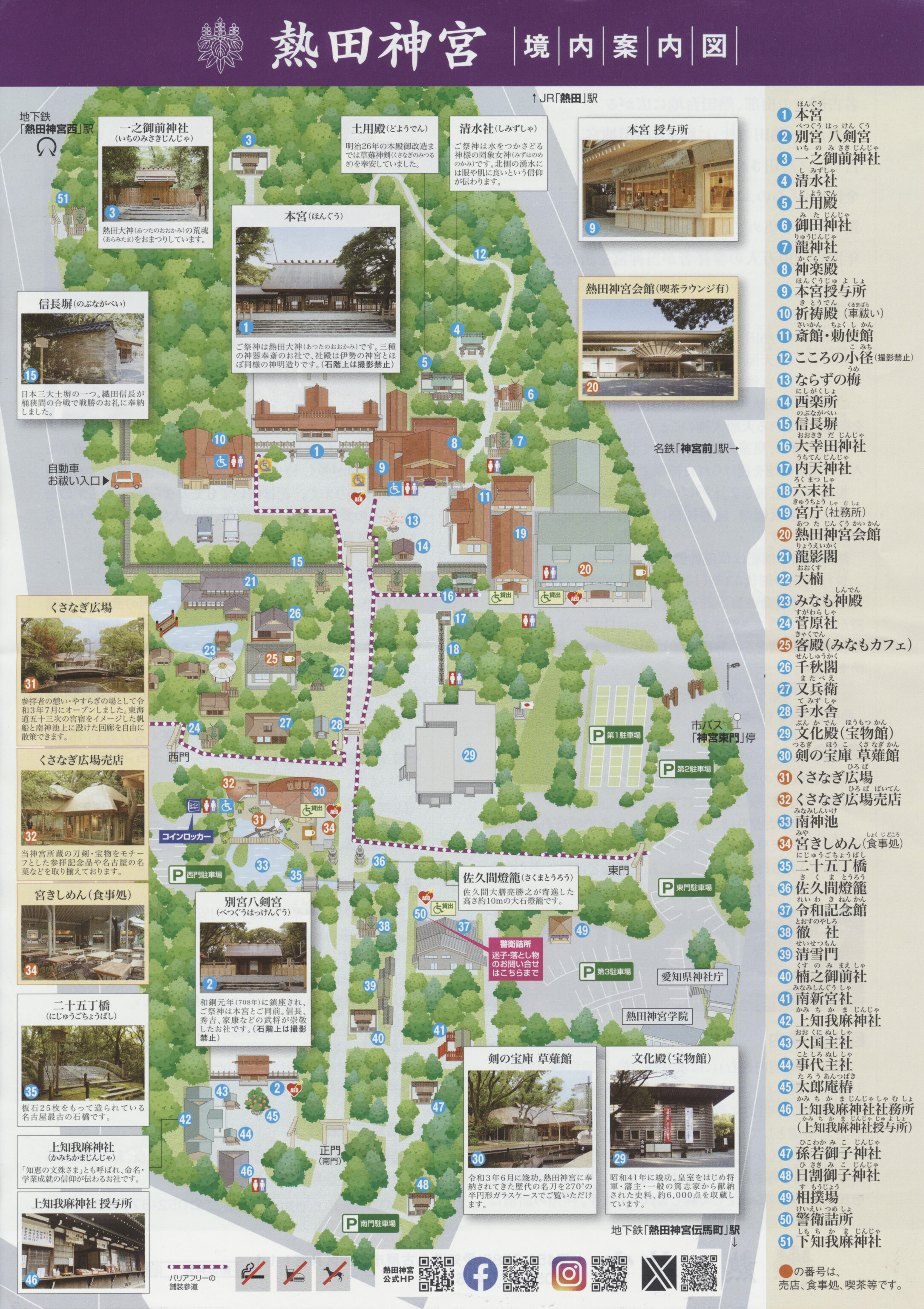
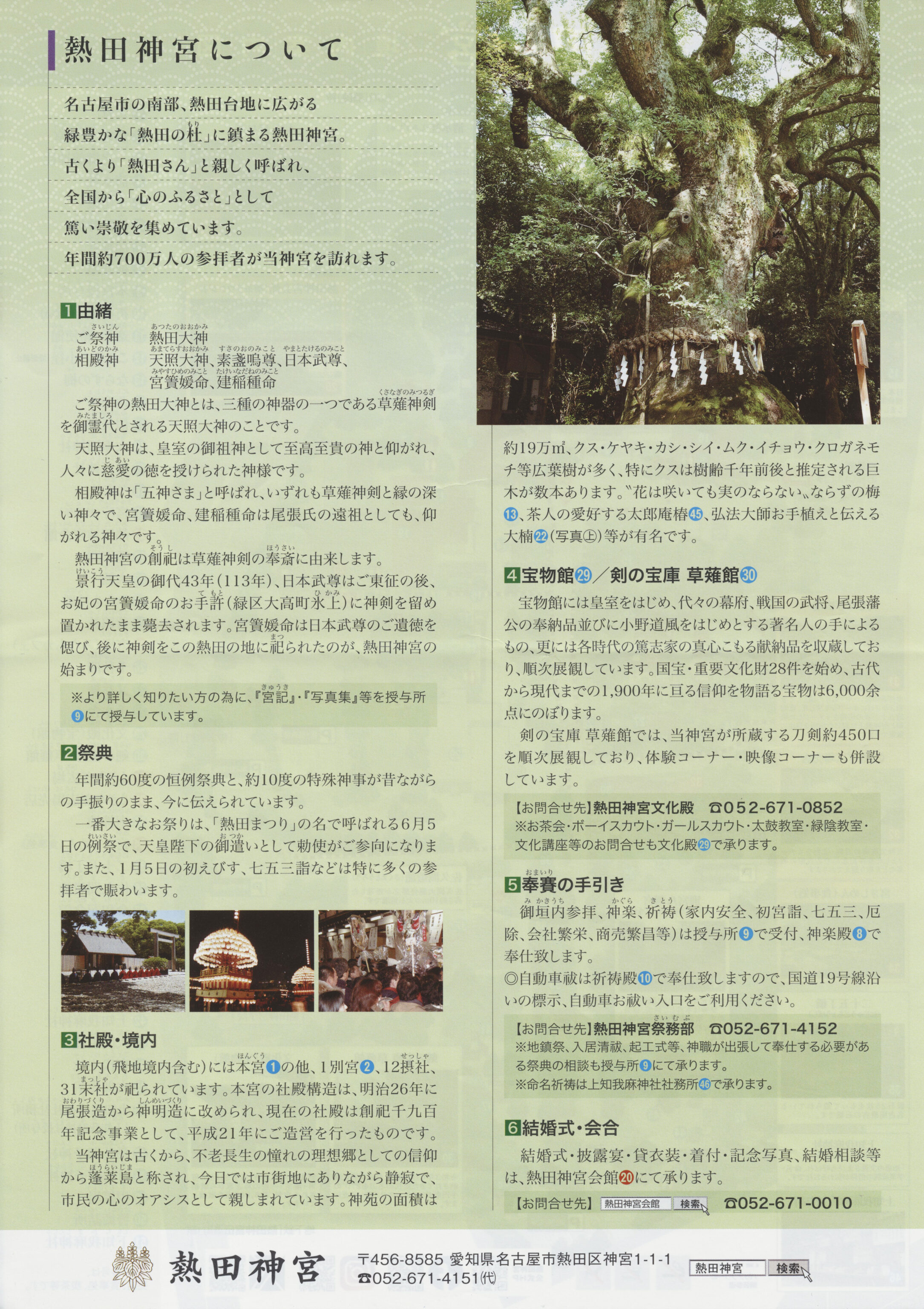
We also picked up maps in both English and Japanese with different content.
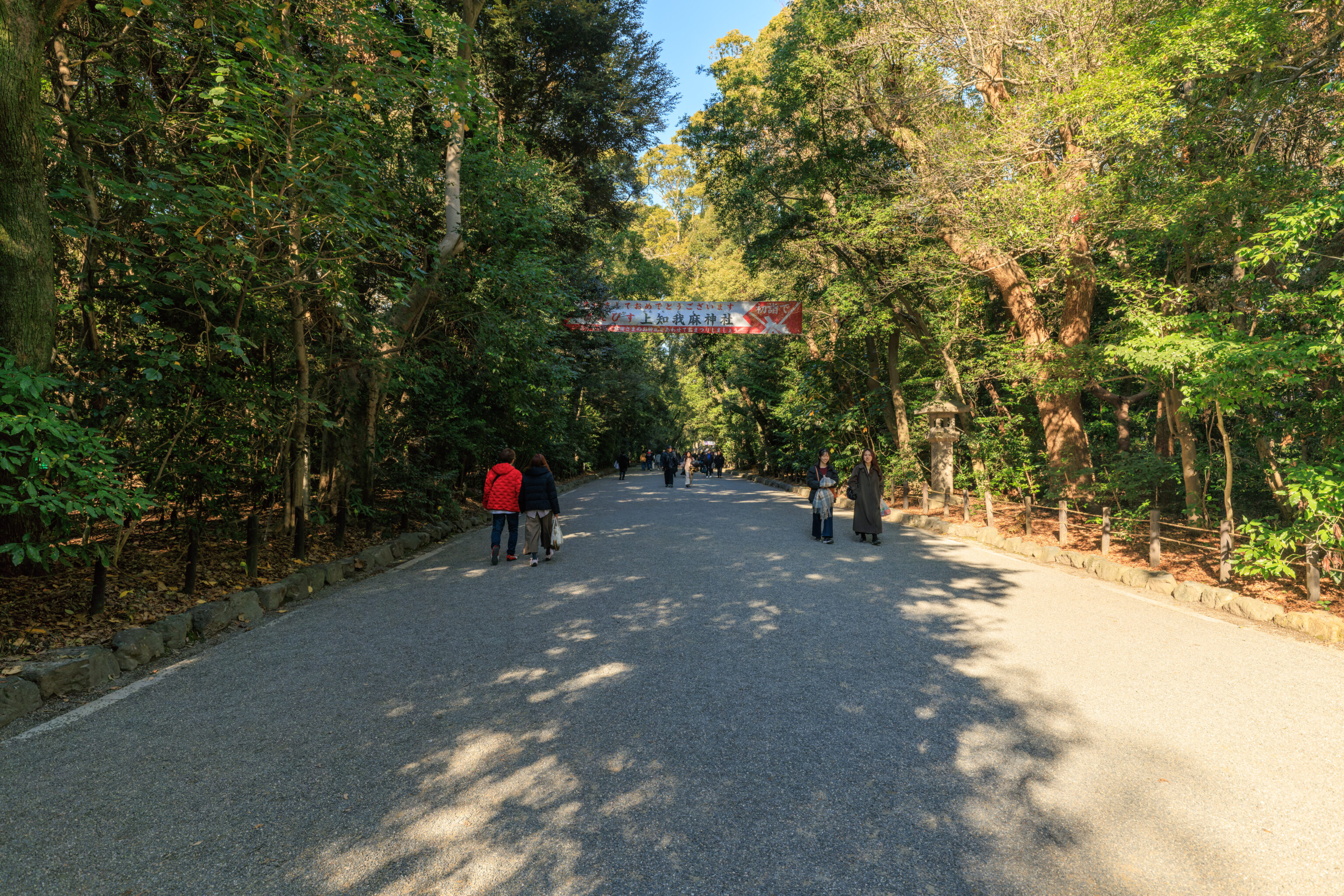
We returned to the main path to continue walking north. The banner up ahead is for the coming New Year’s Day. In Japan, one traditional activity is 初詣 hatsumōde, the first temple or shrine visit of the year. For larger shrines such as this, many people will gather on New Year’s Eve to pray after midnight. Hatsumōde typically takes place in the first three days of the year, meaning that temples and shrines may be extremely busy. There are typically preparations that must be made to handle these crowds.
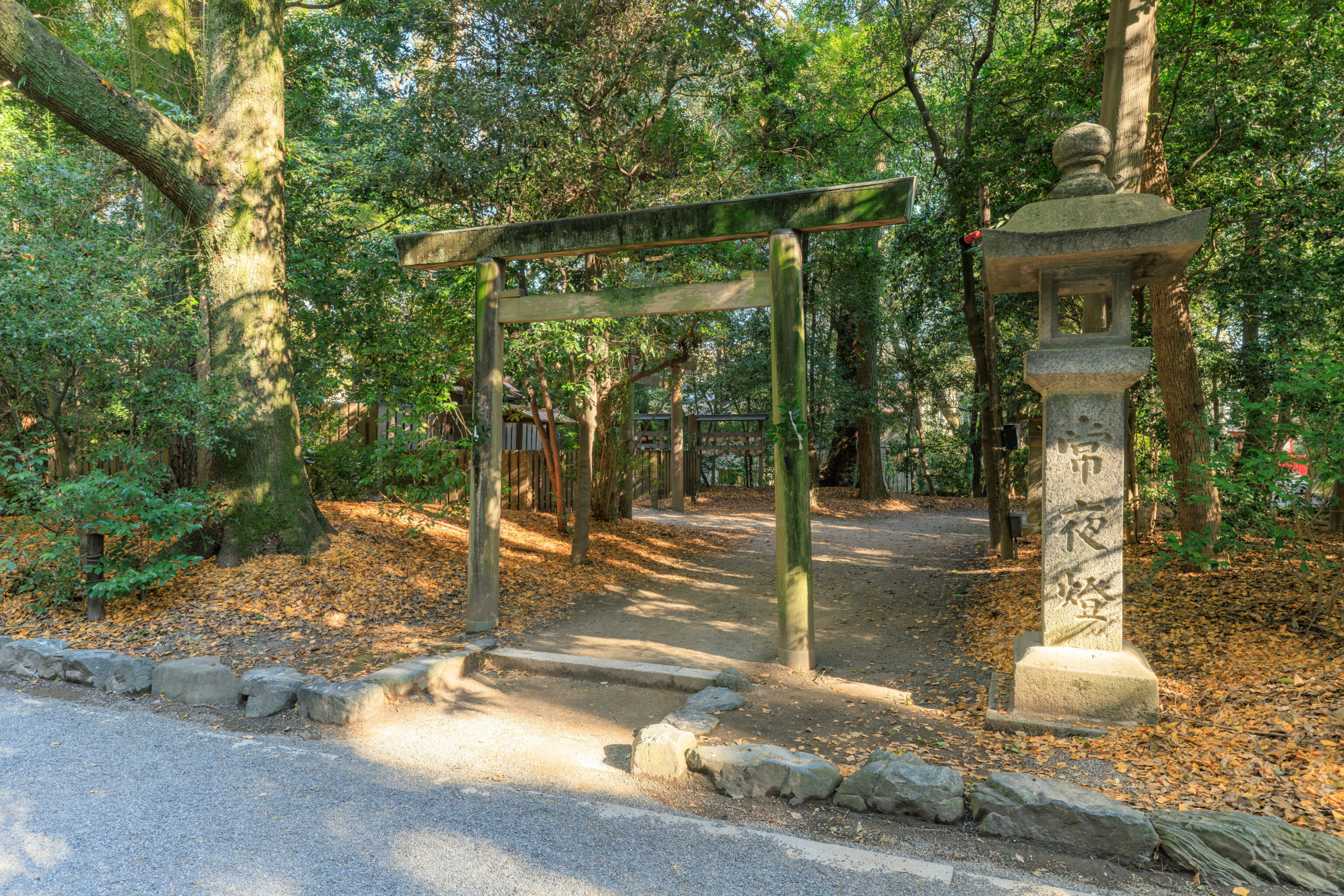
We continued on past anther auxiliary shrine.
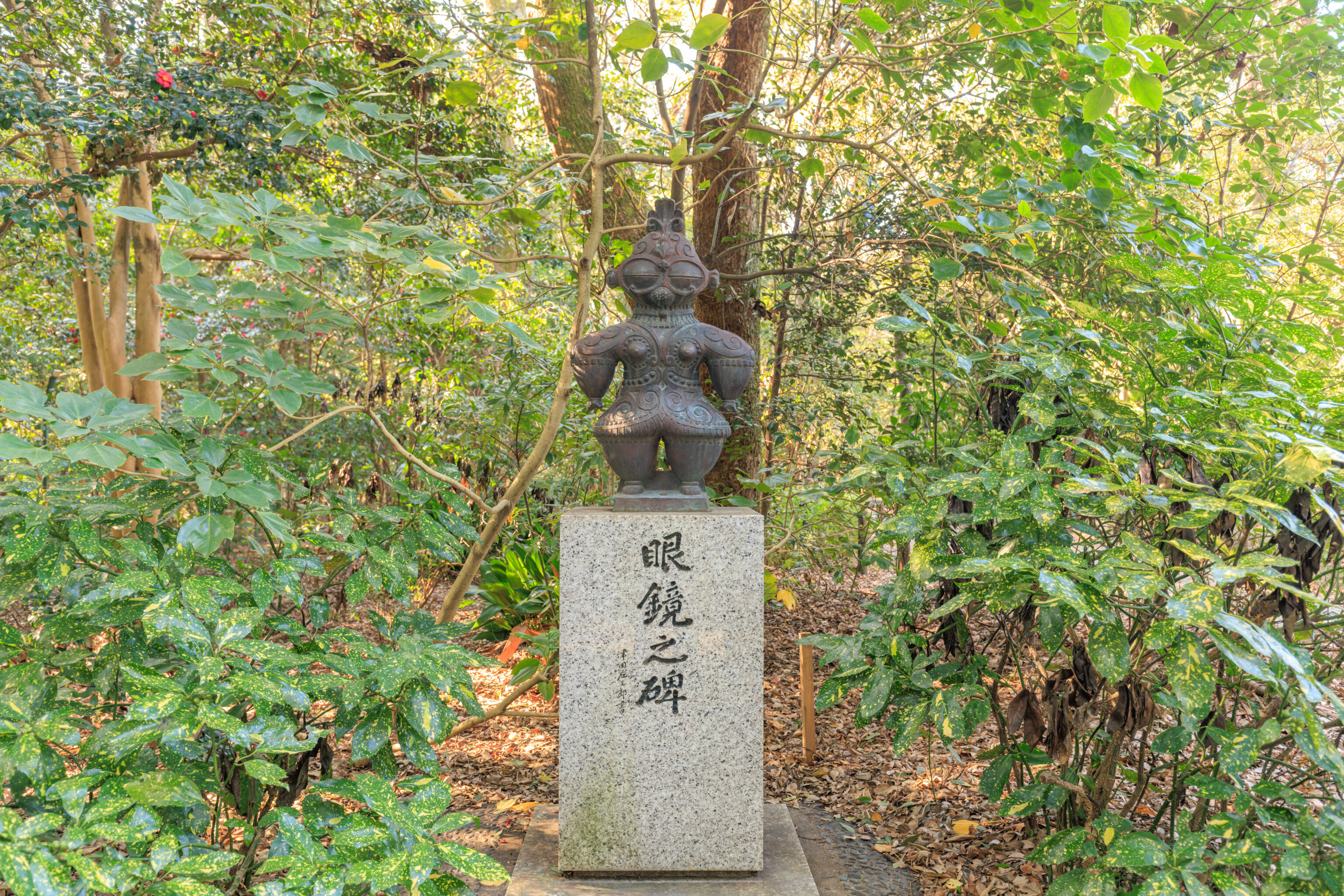
This is apparently a monument to eyeglasses!
眼鏡之碑 Spectacles Monument
津田庄三郎書 Calligraphy by Tsuda Shōzaburō
– Text inscribed at the base of the monument above, read using Google Gemini and translated using Google Translate.
It does seem to be wearing glasses…
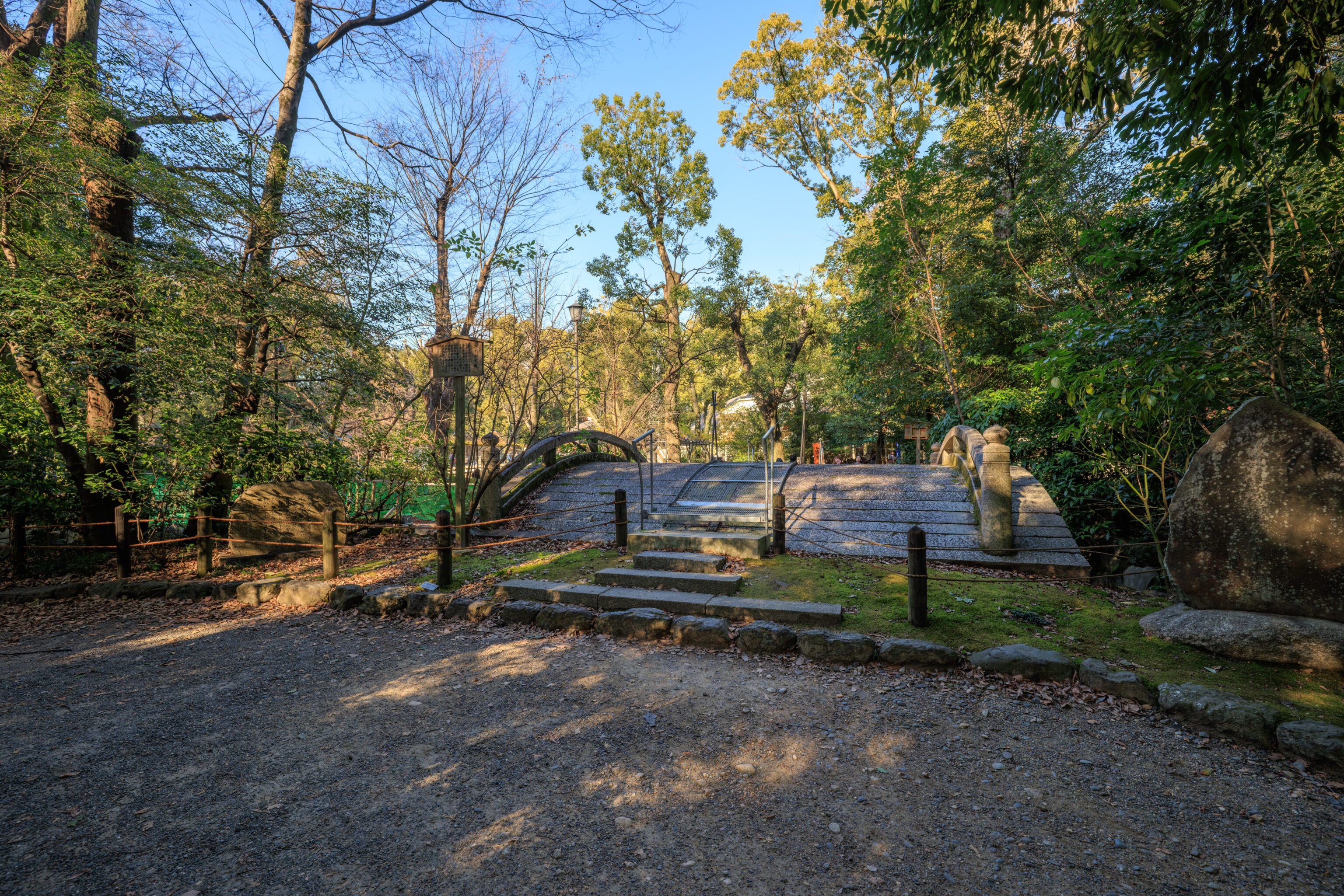
We turned left again at some point and came to this wide bridge.
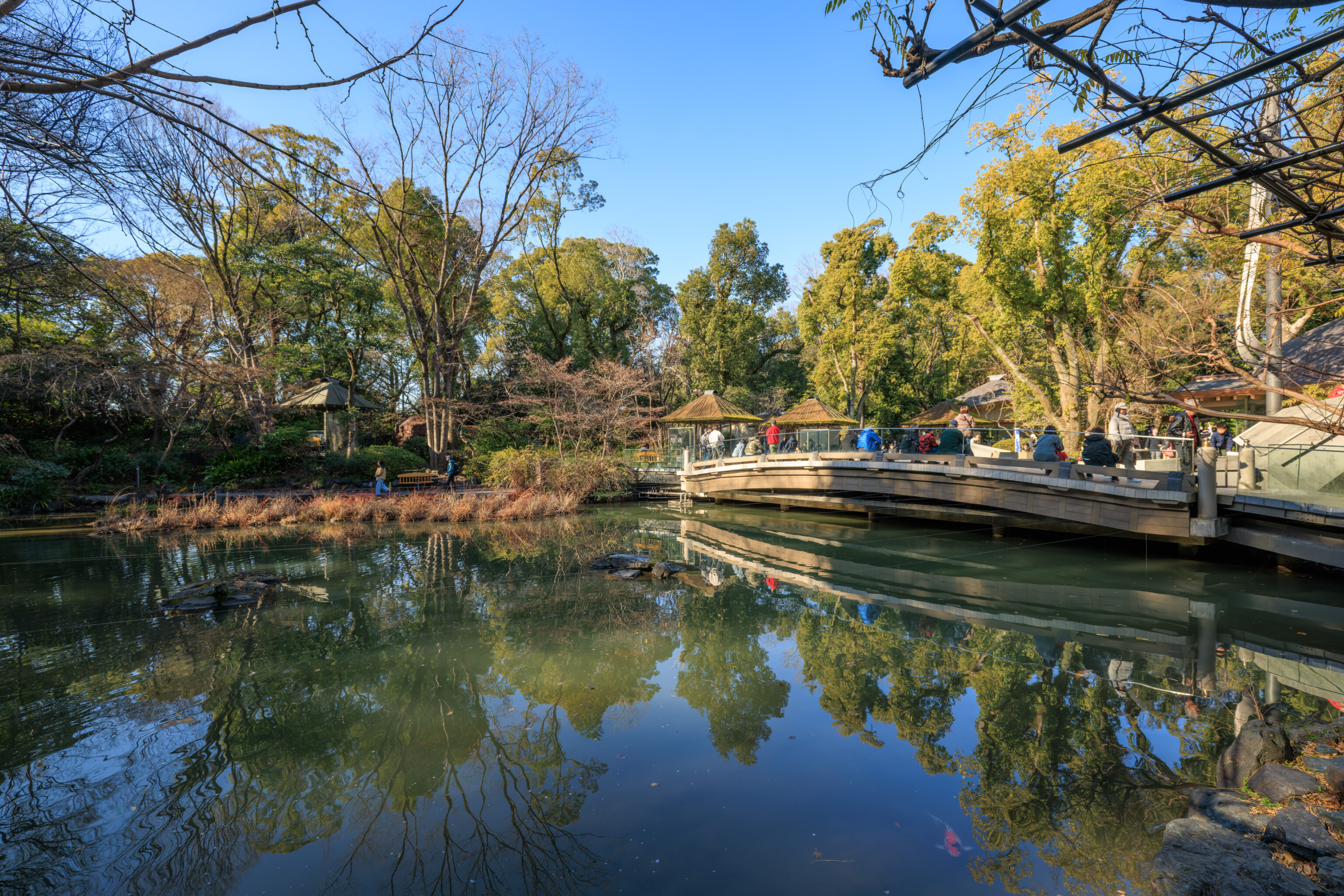
It led to a busy pond.
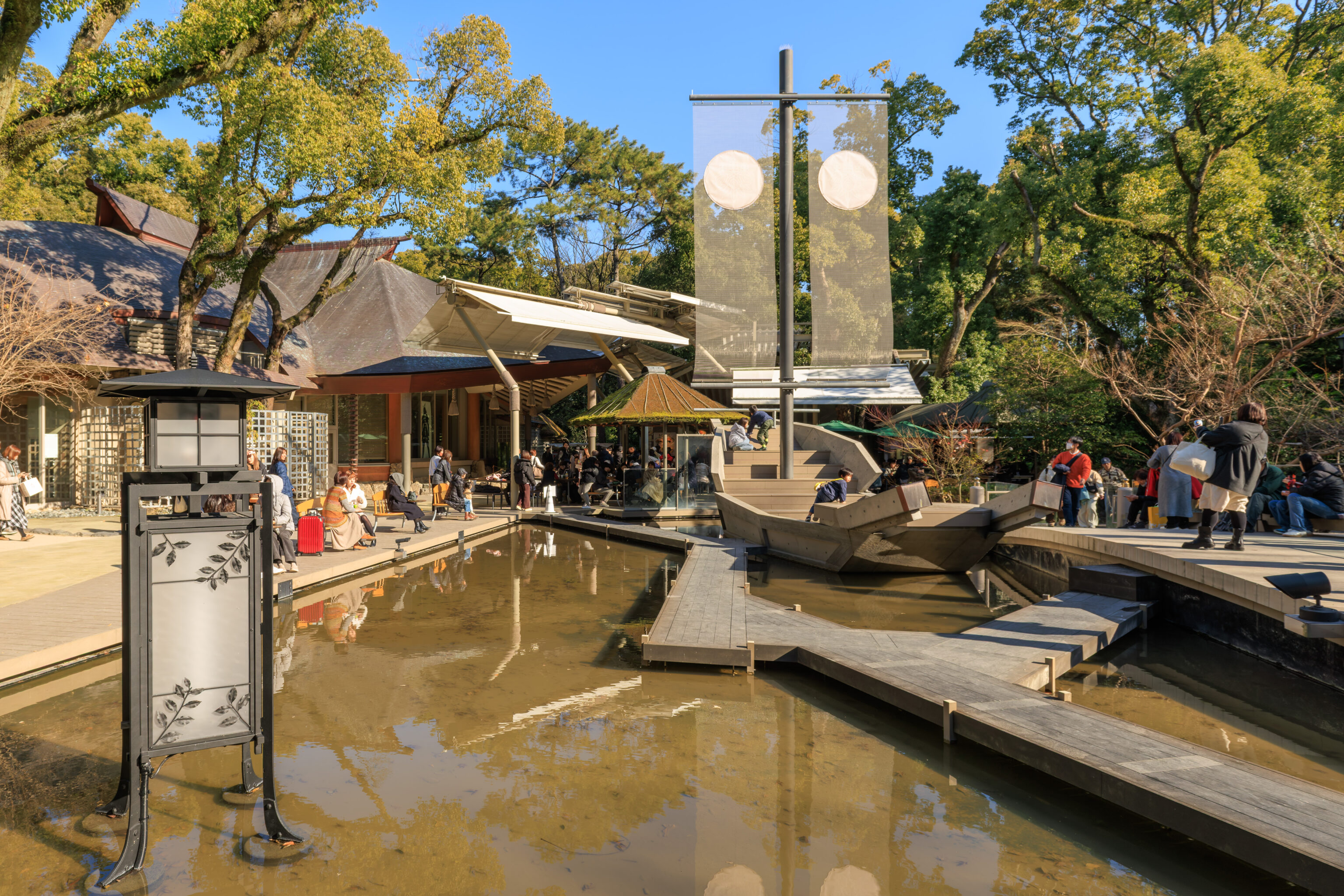
The pond had a model of a boat which children seemed to enjoy! This was a rest area within the shrine and included a restaurant which served a wide array of food items.
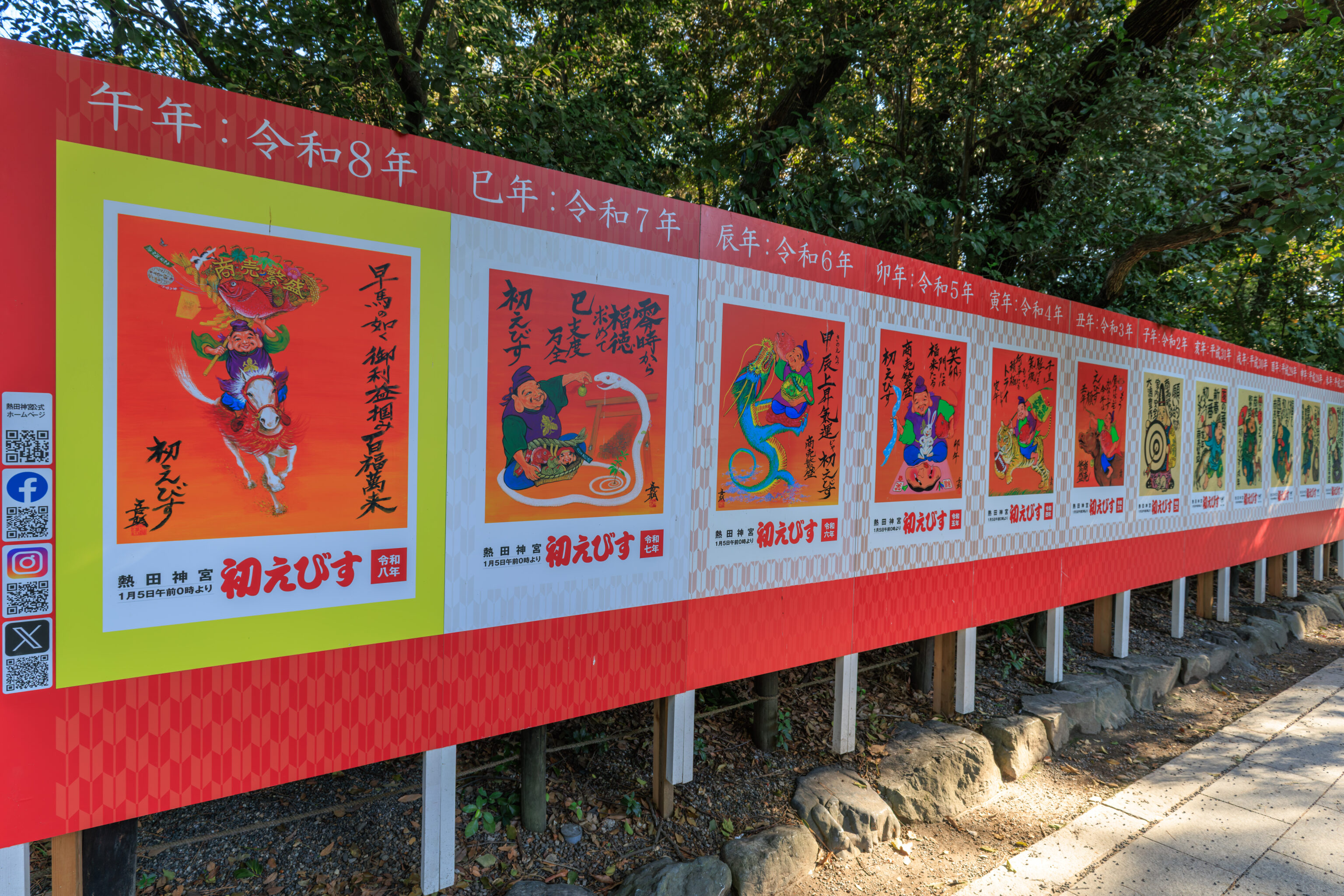
Back on the main path, this wide sign displayed artwork depicting the twelve animals of the zodiac. The leftmost image depicts the year of the horse, the upcoming year.
午年:令和8年 Year of the Horse: Reiwa 8

商売繁盛 Business Prosperity
早馬の如く御利益掴み 百福萬来 Seize divine blessings with the speed of a swift messenger; may a hundred fortunes and ten thousand blessings come your way.

熱田神宮 Atsuta Jingu
1月5日午前0時より From midnight on January 5th
初えびす First Ebisu Festival
– Text from the leftmost image on the sign above, read using Google Gemini and translated using Google Translate.
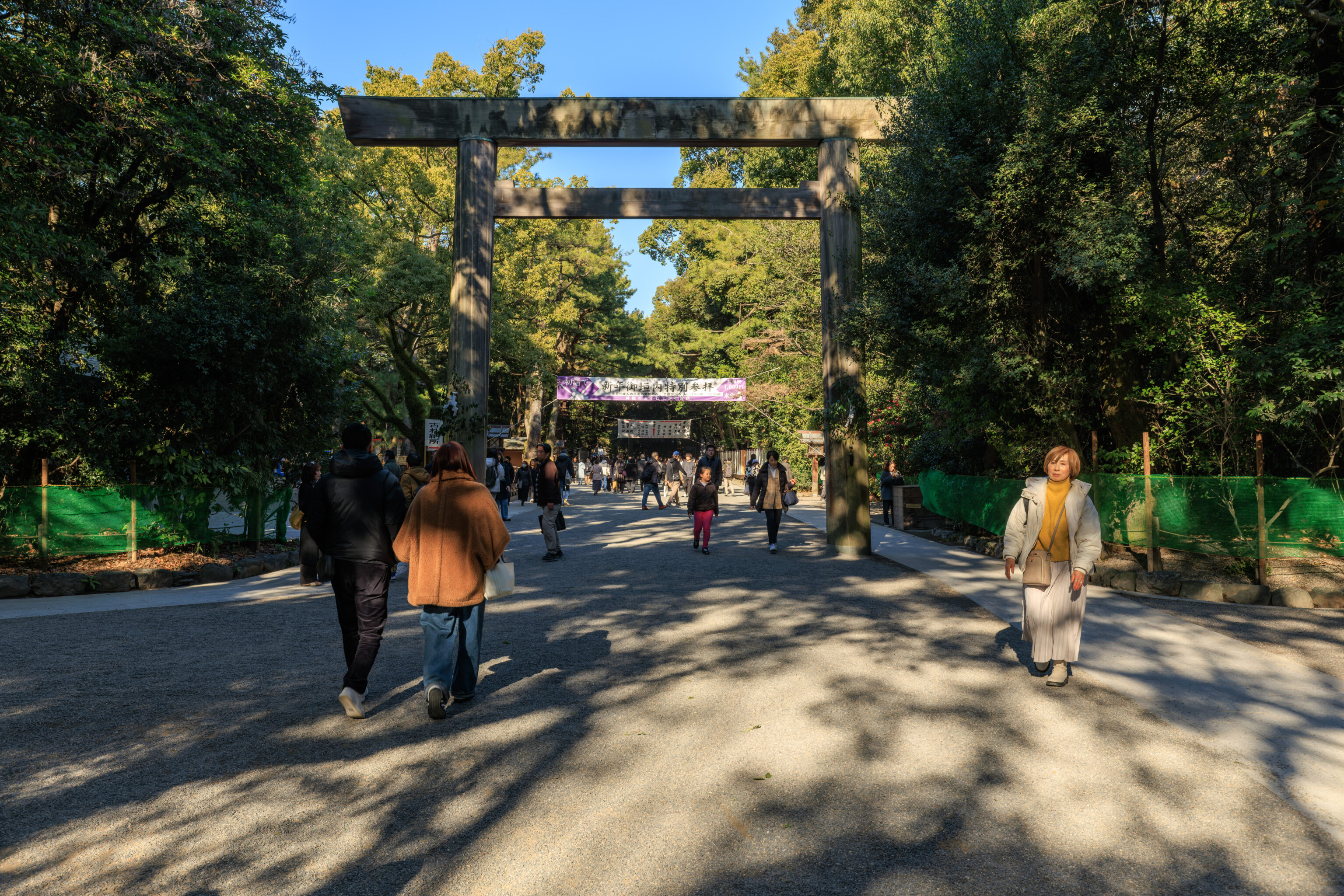
We continued walking north. The banners ahead display information related to hatsumode.
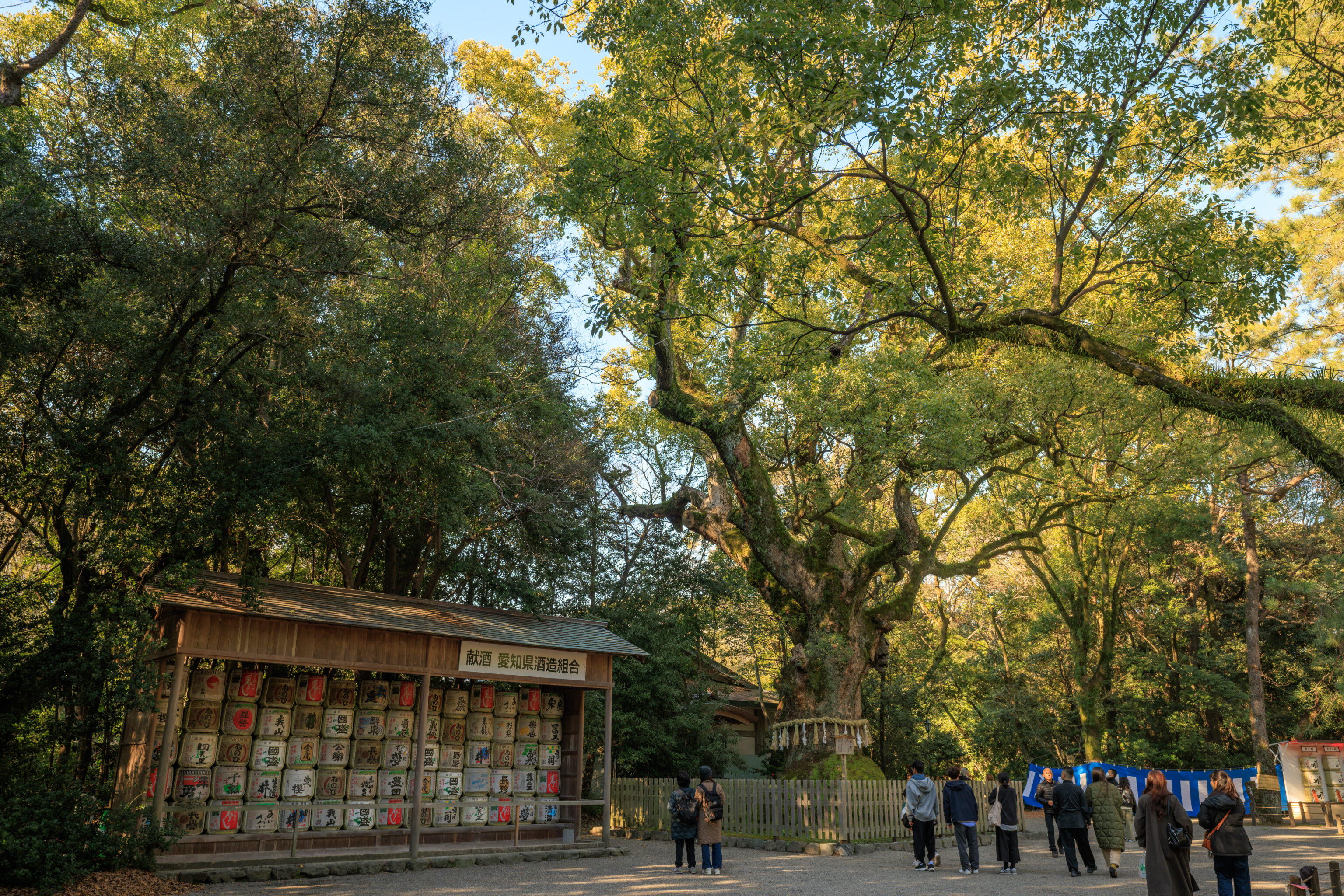
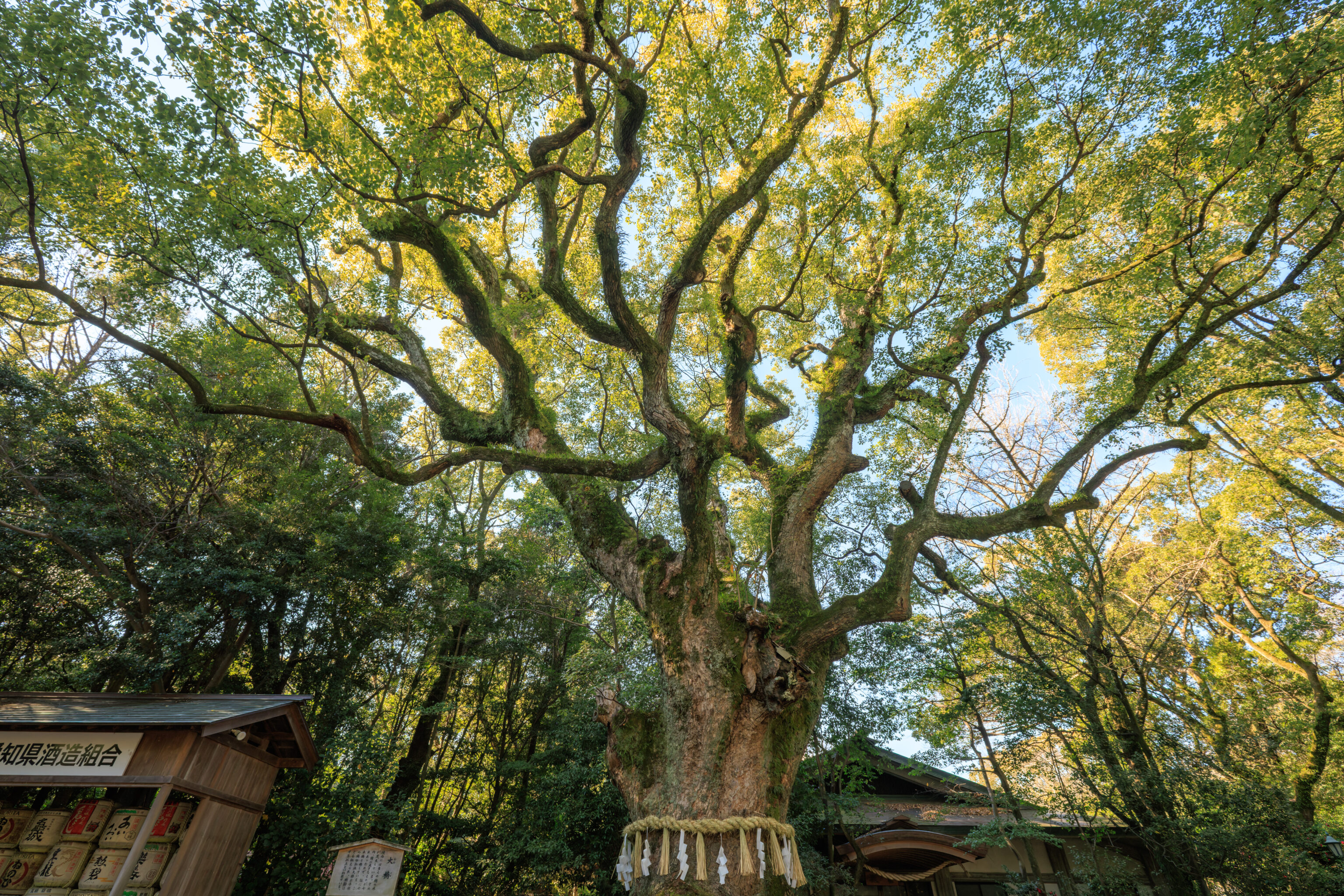
Its pretty common to encounter these large camphor trees at shrines, often with accompanying signs that provide some useful information:
Great Camphor Tree
Many camphor trees grow within the temple precincts. Among them, seven are particularly large, leading to the popular name "Seven Camphor Trees" (*Nanahon-kusu*). Legend has it that these trees were planted by Kōbō Daishi, and they are said to be over a thousand years old.
– Text from the wooden sign near the large tree in the photograph above, read using Google Gemini and translated using Google Translate.
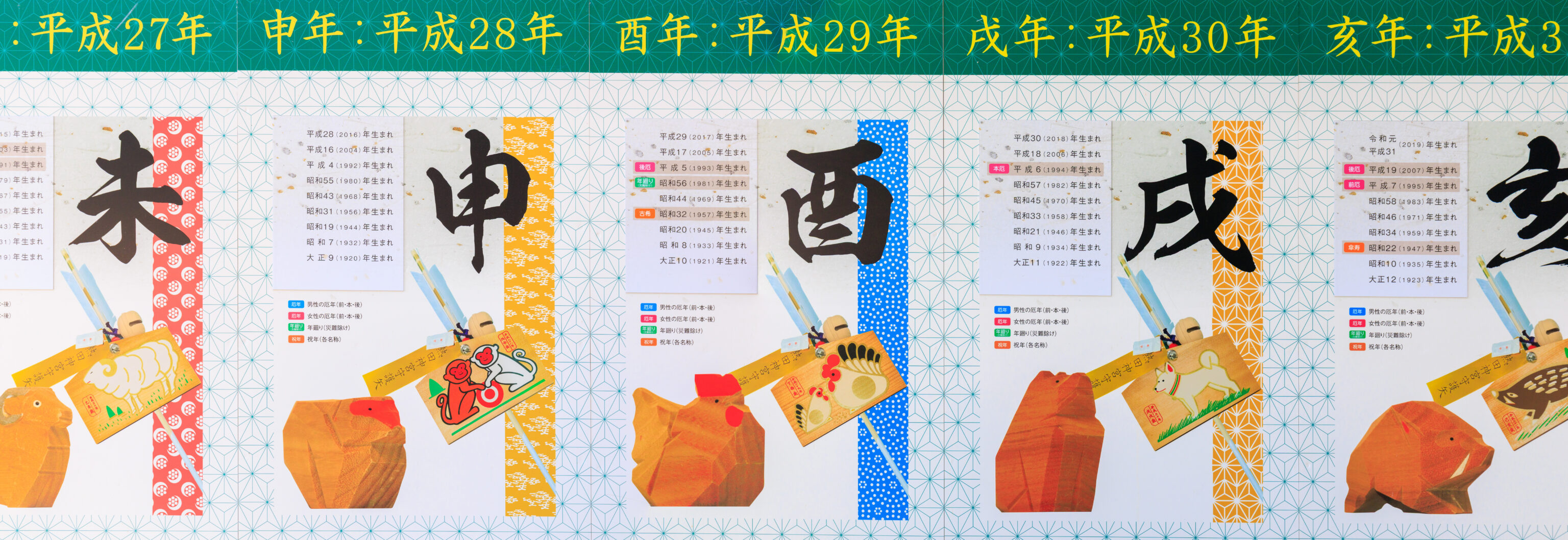
This is part of a sign that depicted the items available, perhaps described as talismans in English, for each of the zodiac animals. A translation of the year of the rooster, which last occurred in 2017, is below as an example:
Year of the Rooster: 2017

Born in Heisei 29 (2017)
Born in Heisei 17 (2005)
[Post-Unlucky Year] Born in Heisei 5 (1993)
[Protection Against Misfortune] Born in Shōwa 56 (1981)
Born in Shōwa 44 (1969)
[70th Birthday] Born in Shōwa 32 (1957)
Born in Shōwa 20 (1945)
Born in Shōwa 8 (1933)
Born in Taishō 10 (1921)

【Calamitous Years】 Men's Calamitous Years (preparatory, main, and concluding years)
【Calamitous Year】 Women's Calamitous Years (preparatory, main, and concluding years)
【Yearly Cycle】 Yearly cycle (warding off misfortune)
【Celebratory Years】 Celebratory years (specific names)
– Text from the middle portion of the sign above, read using Google Gemini, hallucinations manually fixed, and translated using Google Translate.
If this year is bad for your birth year, it may be a good idea to purchase more protective talismans! The two protective talismans shown are an 破魔矢hamaya, an arrow which symbolizes destroying evil, and an 絵馬 ema, which are used to communicate your wishes. One can also provide an additional offering to the shrine.
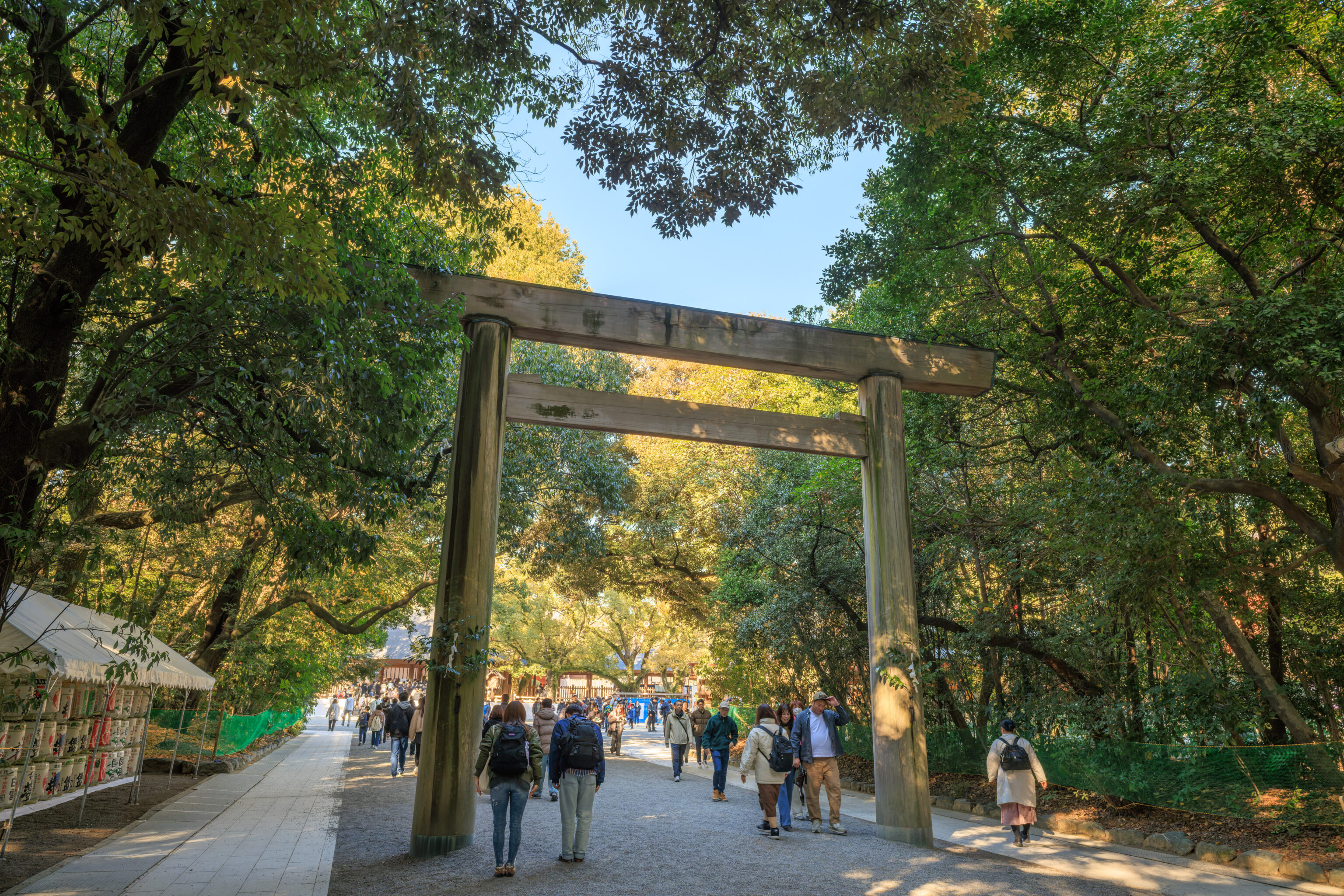
We continued on into the area in front of the 拝殿 haiden (worship hall).
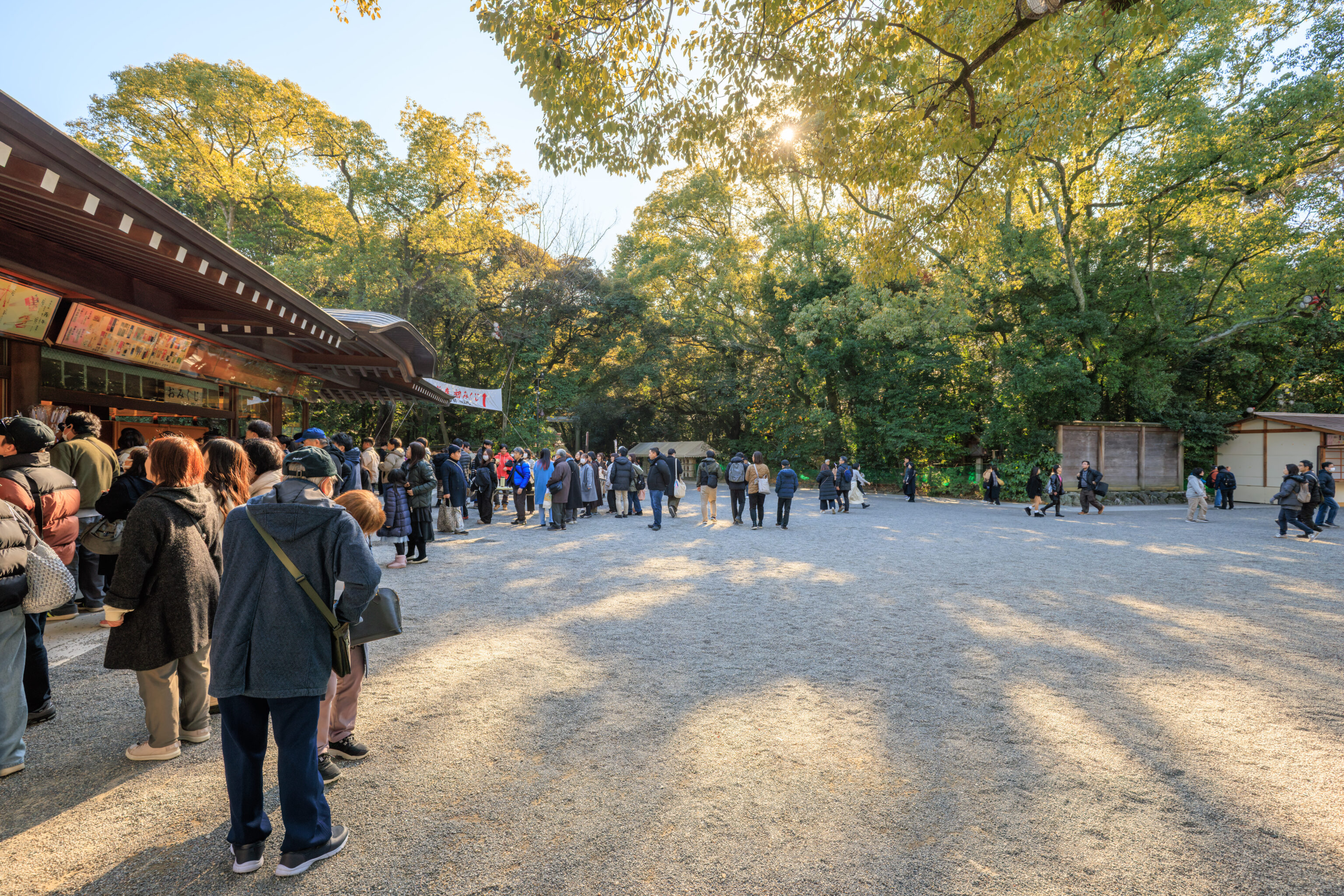
The shrine building where talismans are sold was decently busy.
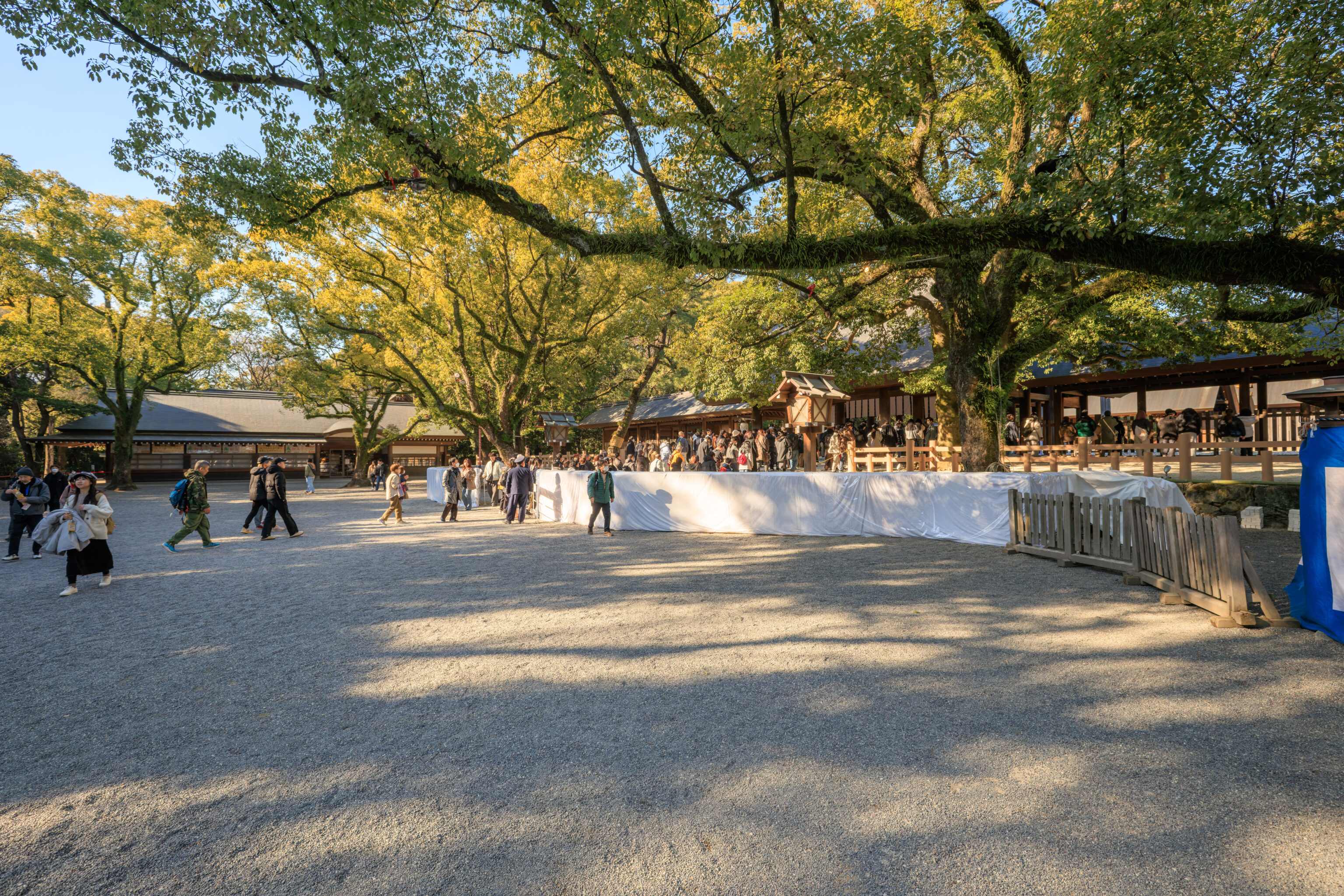
There was also a queue in front of the haiden. As people unaffiliated with the shrine, we can pray at the haiden but are not able to access any of the inner shrine areas such as the 本殿 honden (main hall).
At some shrines, including this one, it is possible to actually circle around the outside of the fenced compound that surrounds the honden. Sometimes, photography is restricted on these paths.
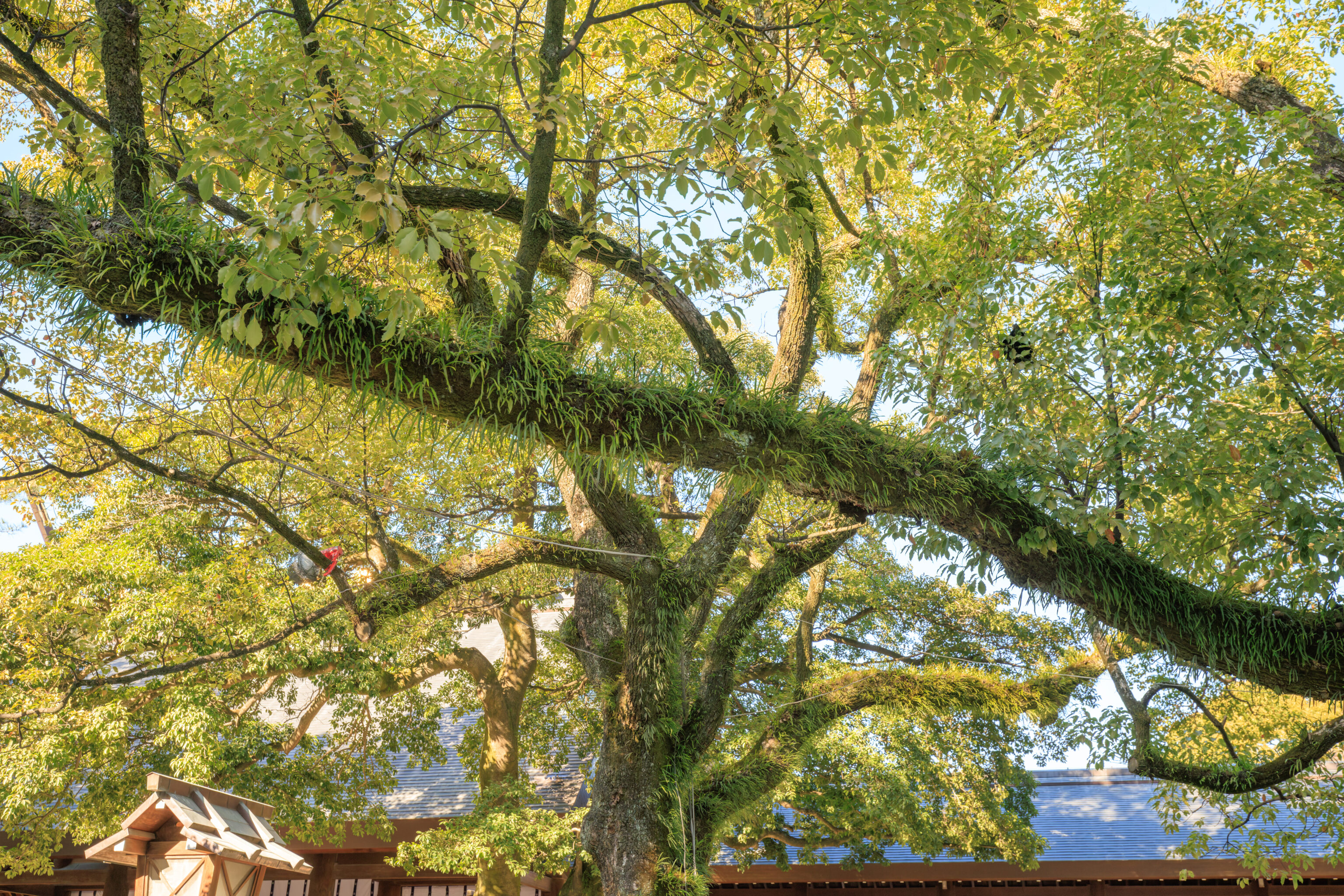
Some of the trees looked mossy but looking closer, it wasn’t quite moss but almost like grass growing on the branches!
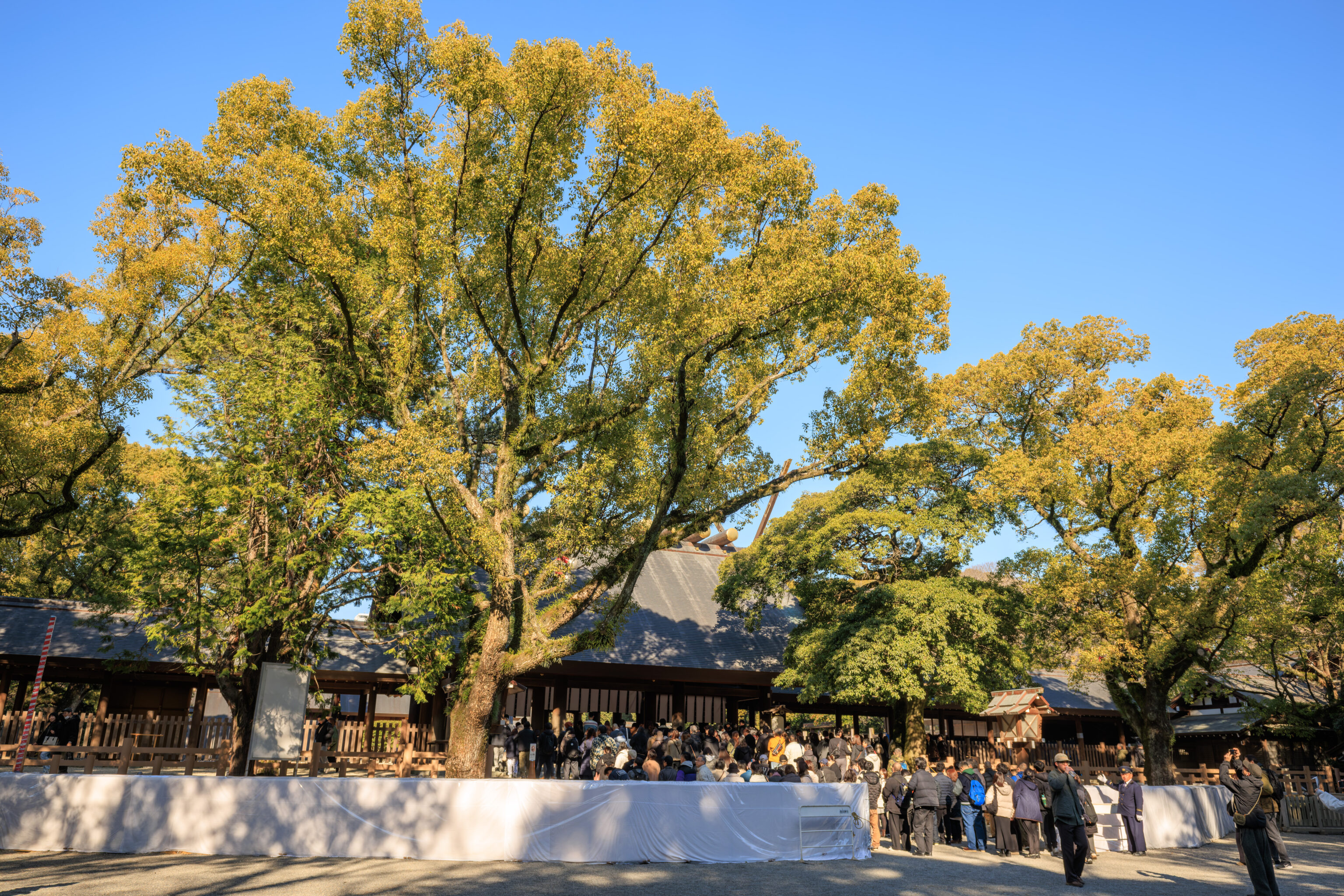
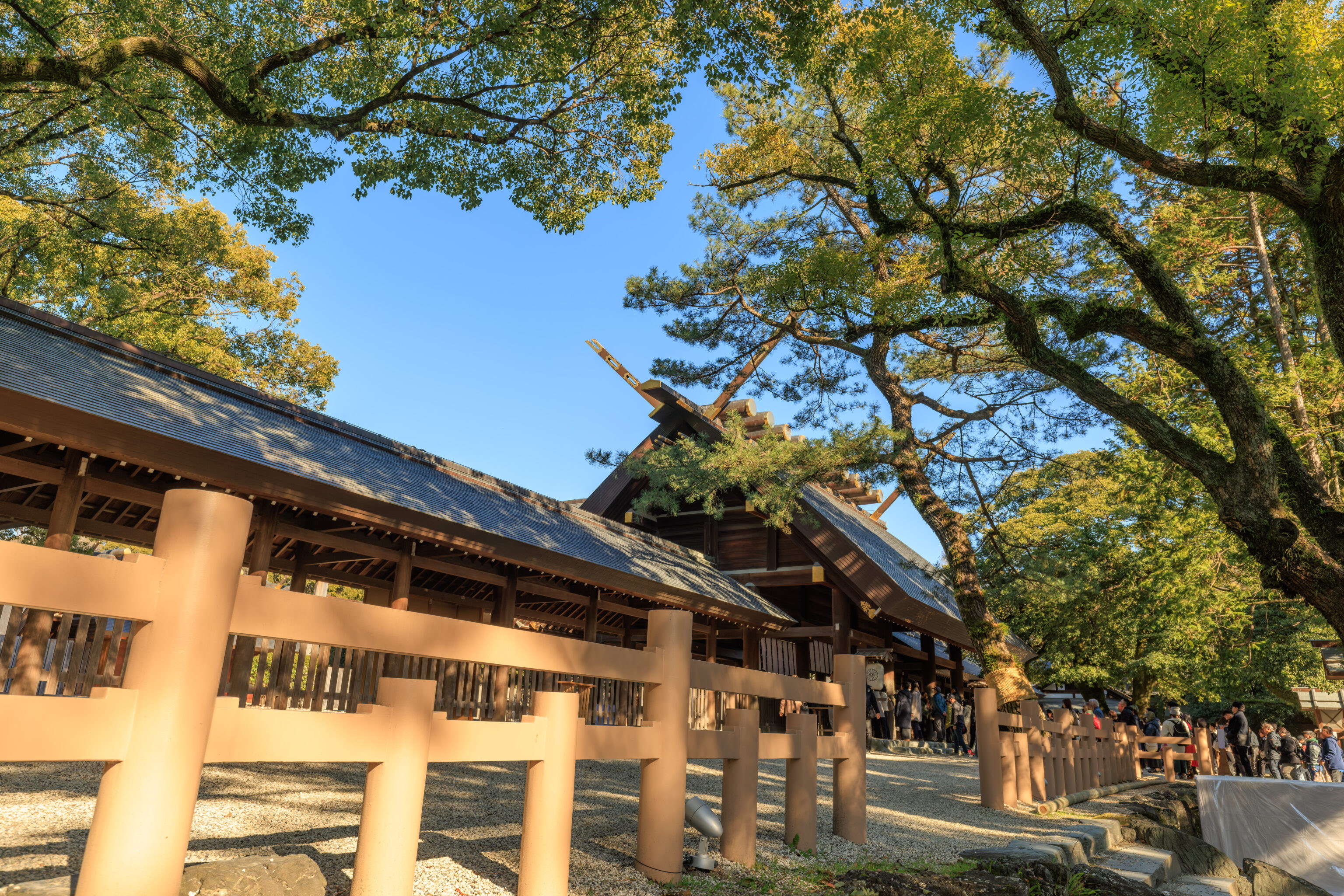
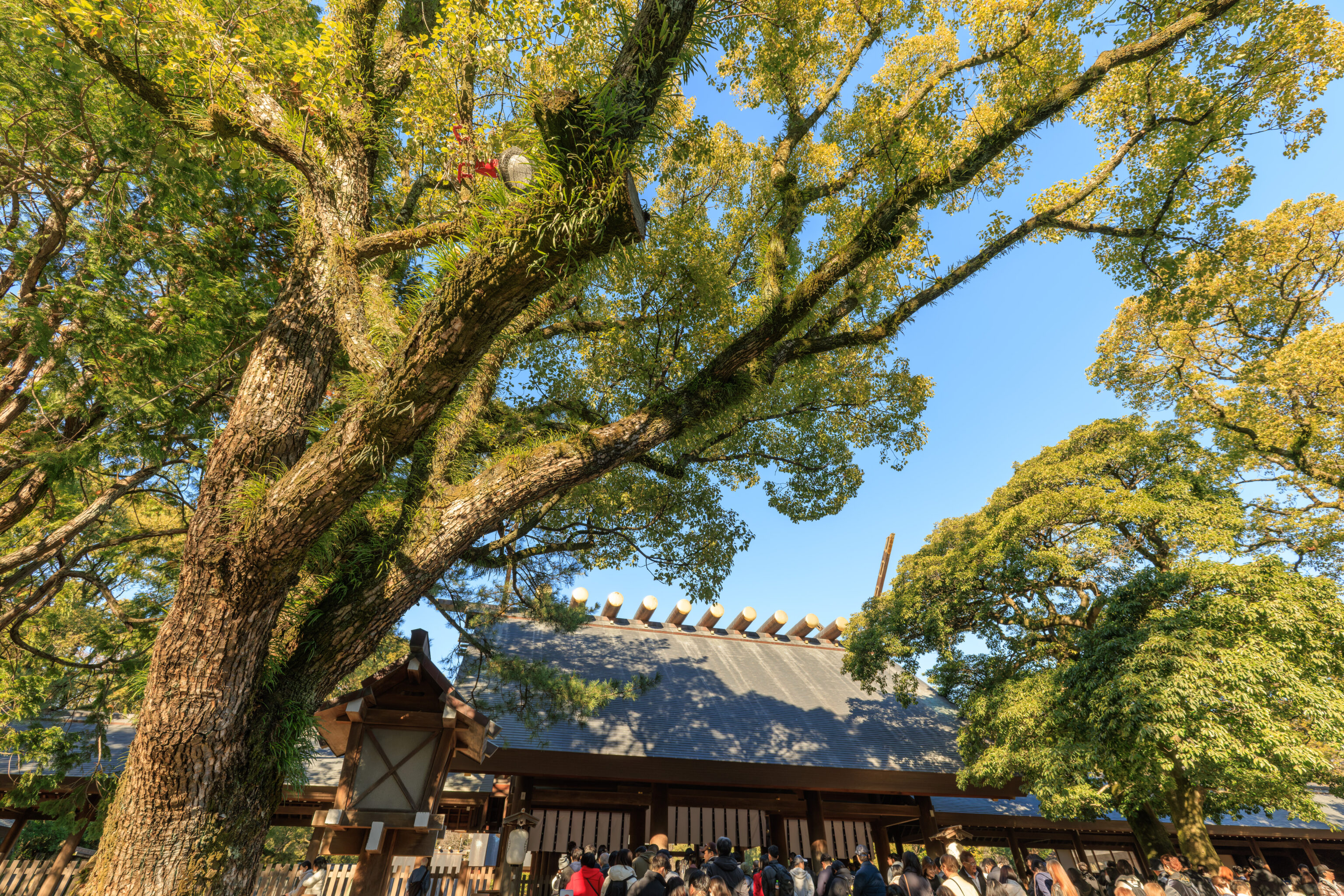
Atsuta-jingū is actually an extremely important Shinto shrine in Japan. It houses 草薙の剣 Kusanagi no Tsurugi, a sacred sword that symbolizes valor and is one of three items of the 三種の神器 Imperial Regalia. It is the only one of the trio not housed at the Imperial Palace in Tokyo.
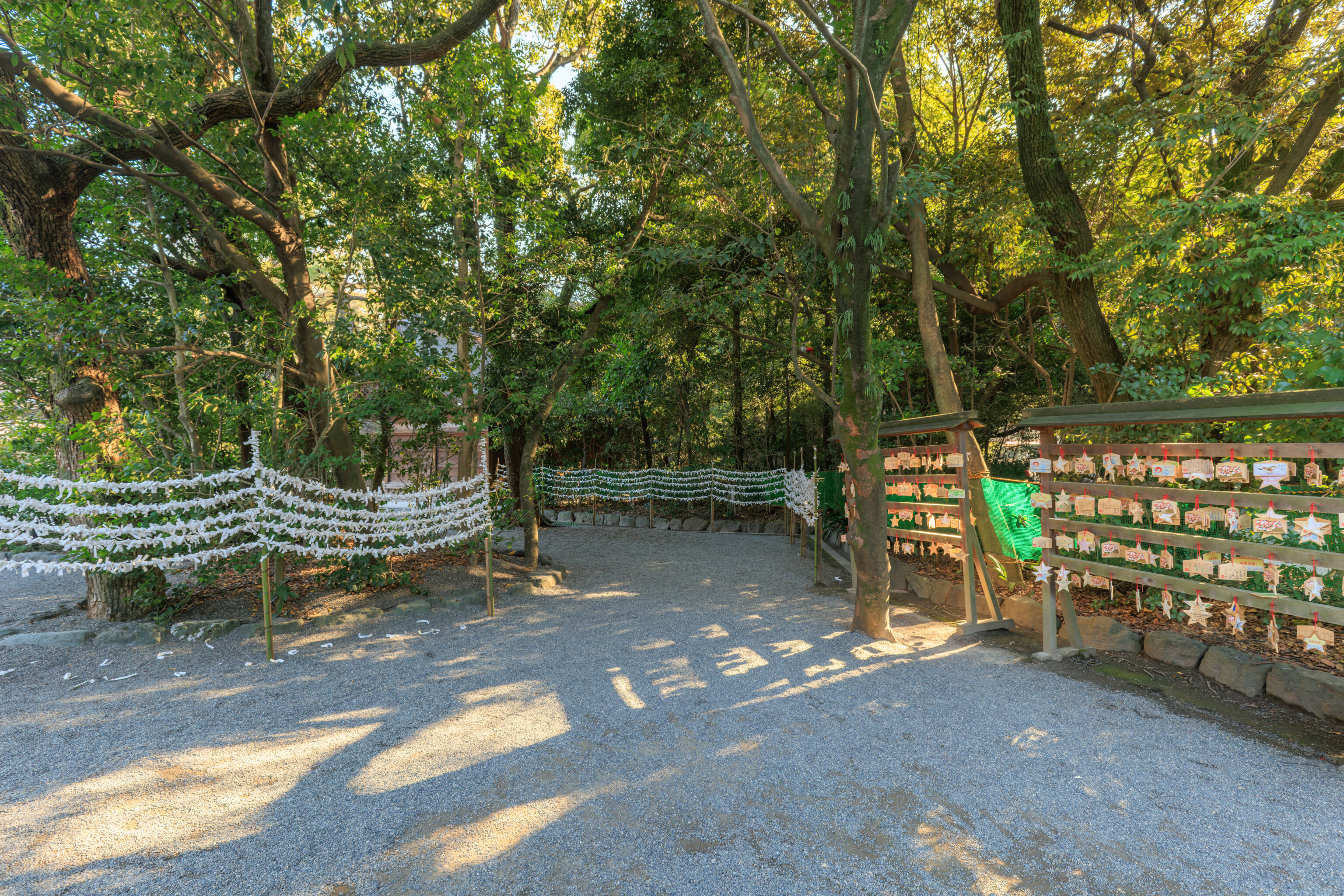
This area contained a large number of ema and おみくじ omikuji.
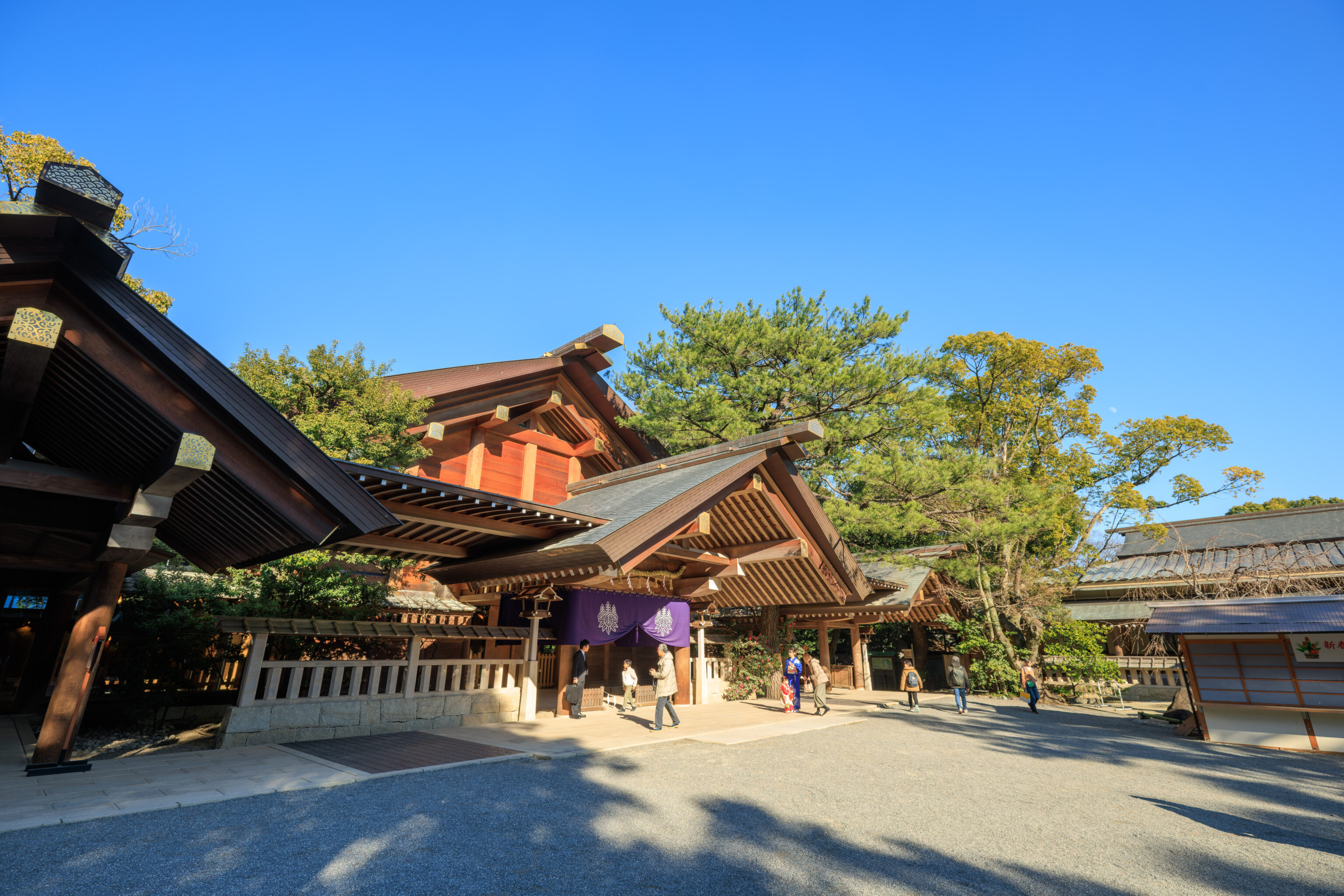
This building is the 神楽殿 kagura hall, a building used for ceremonial and worship purposes.
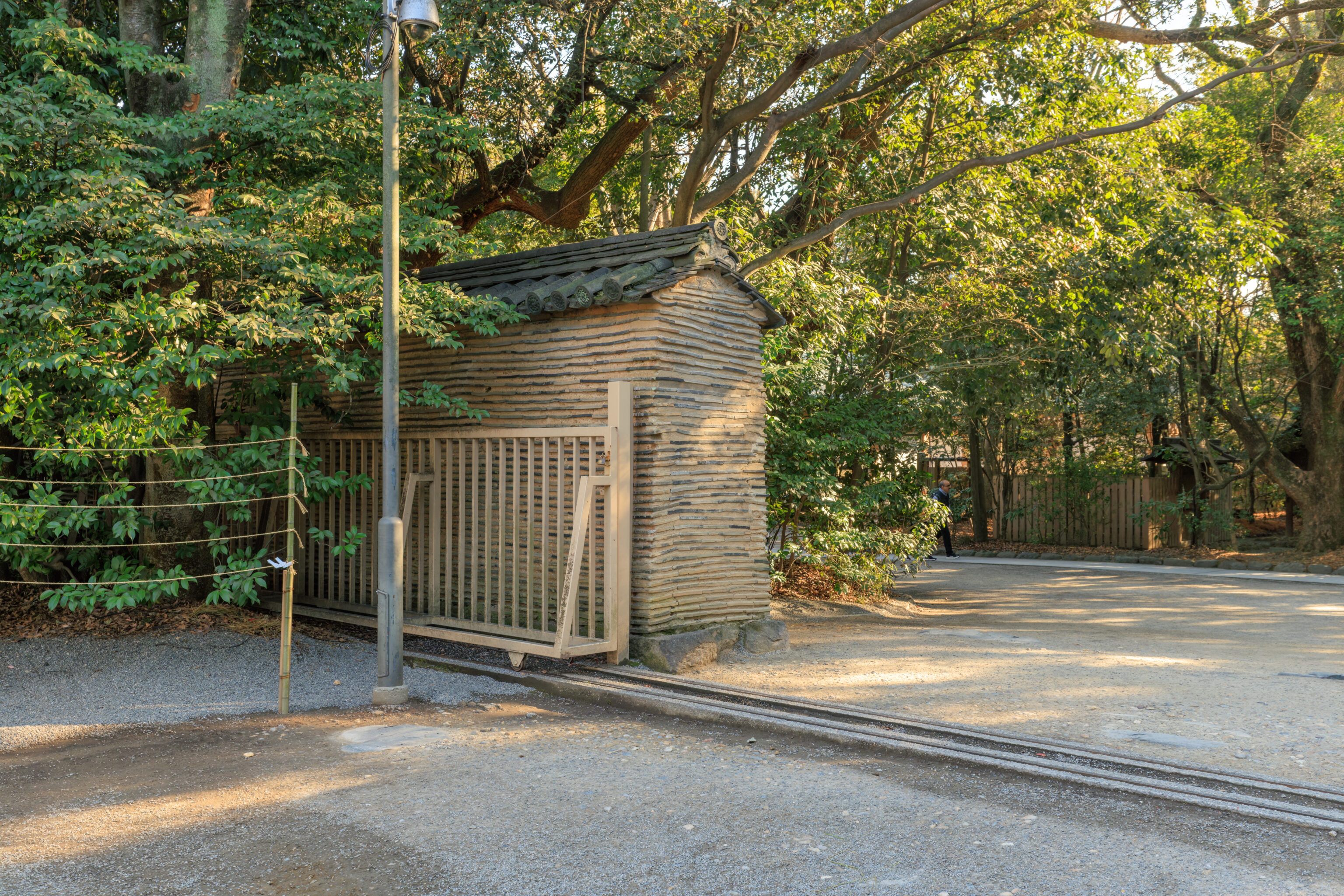
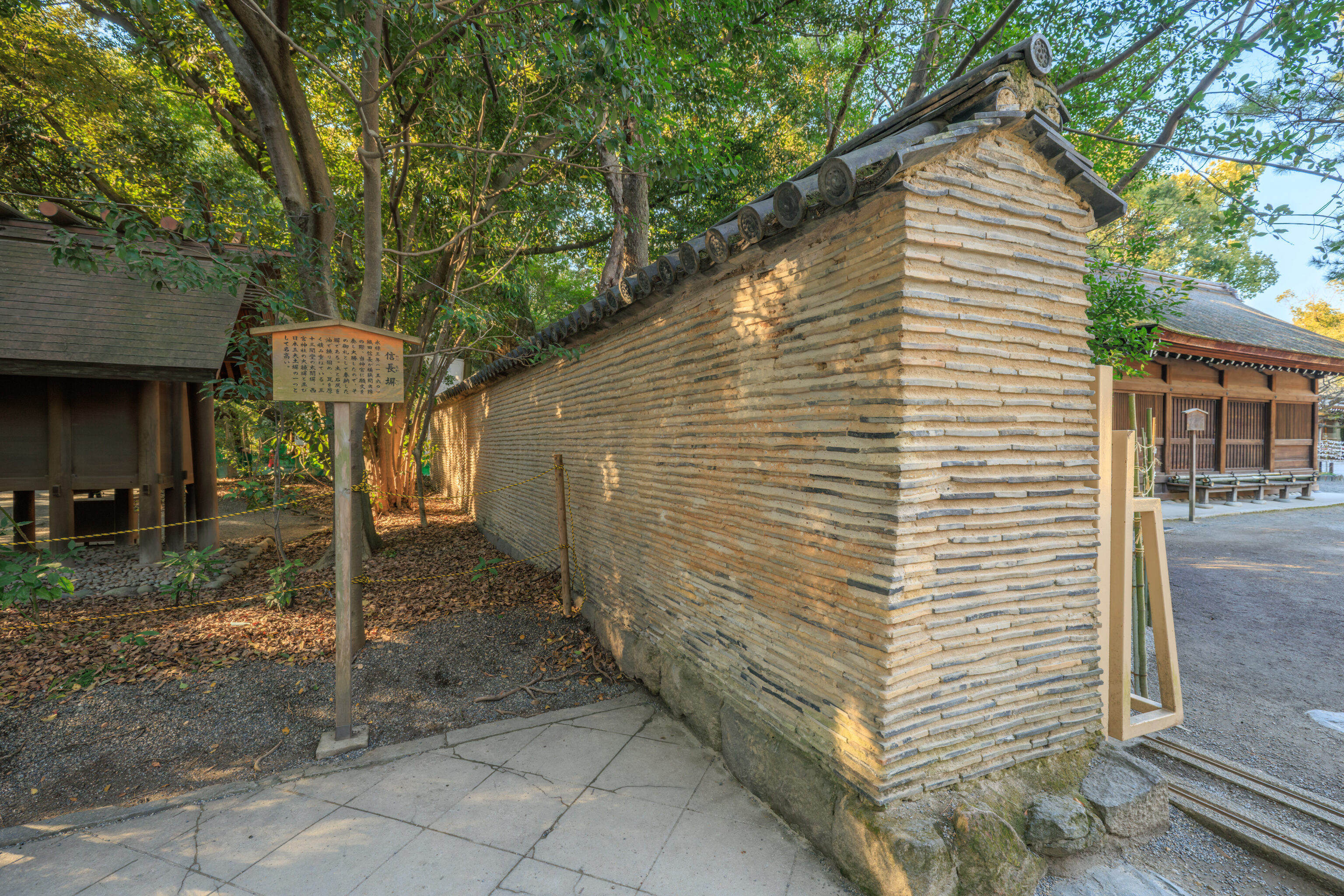
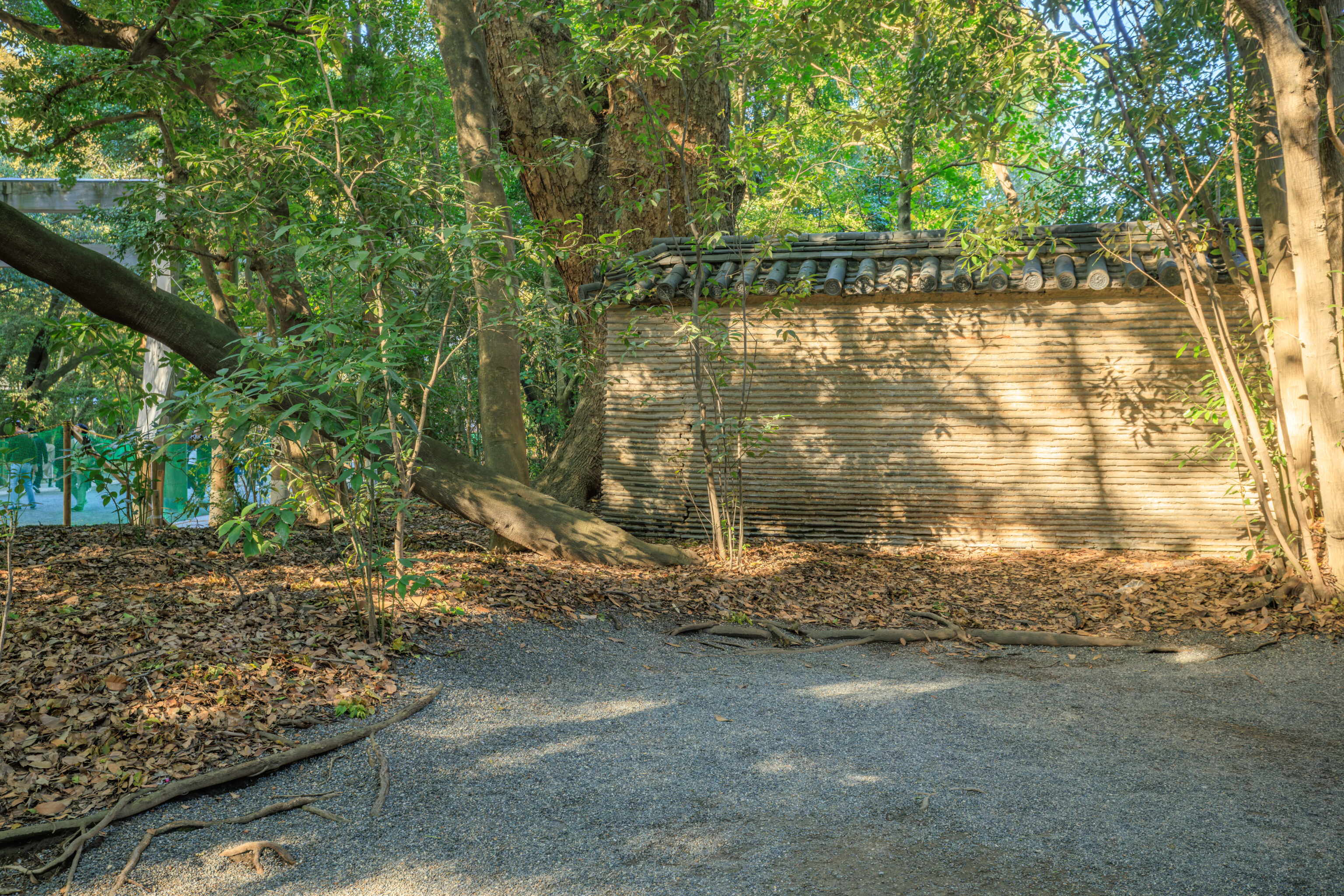
This wall was built in honor of Oda Nobunaga after his victory in the Battle of Okehazama after praying here at Atsuta-jingu.
Nobunaga Wall
Eiroku 3 (1560)

When Oda Nobunaga set out for the Battle of Okehazama, he offered a prayer at this shrine and achieved a great victory; this wall was dedicated in thanksgiving for that success. It is constructed by kneading a mixture of earth, lime, and oil into a solid mass and layering roof tiles thickly within it. Along with the Taiko-bei Wall at Sanjusangen-do and the Oneri-bei Wall at Nishinomiya Shrine, it is renowned as one of Japan's three great earthen walls.
– Text from the sign in the middle photograph above, read using Google Gemini and translated using Google Translate.
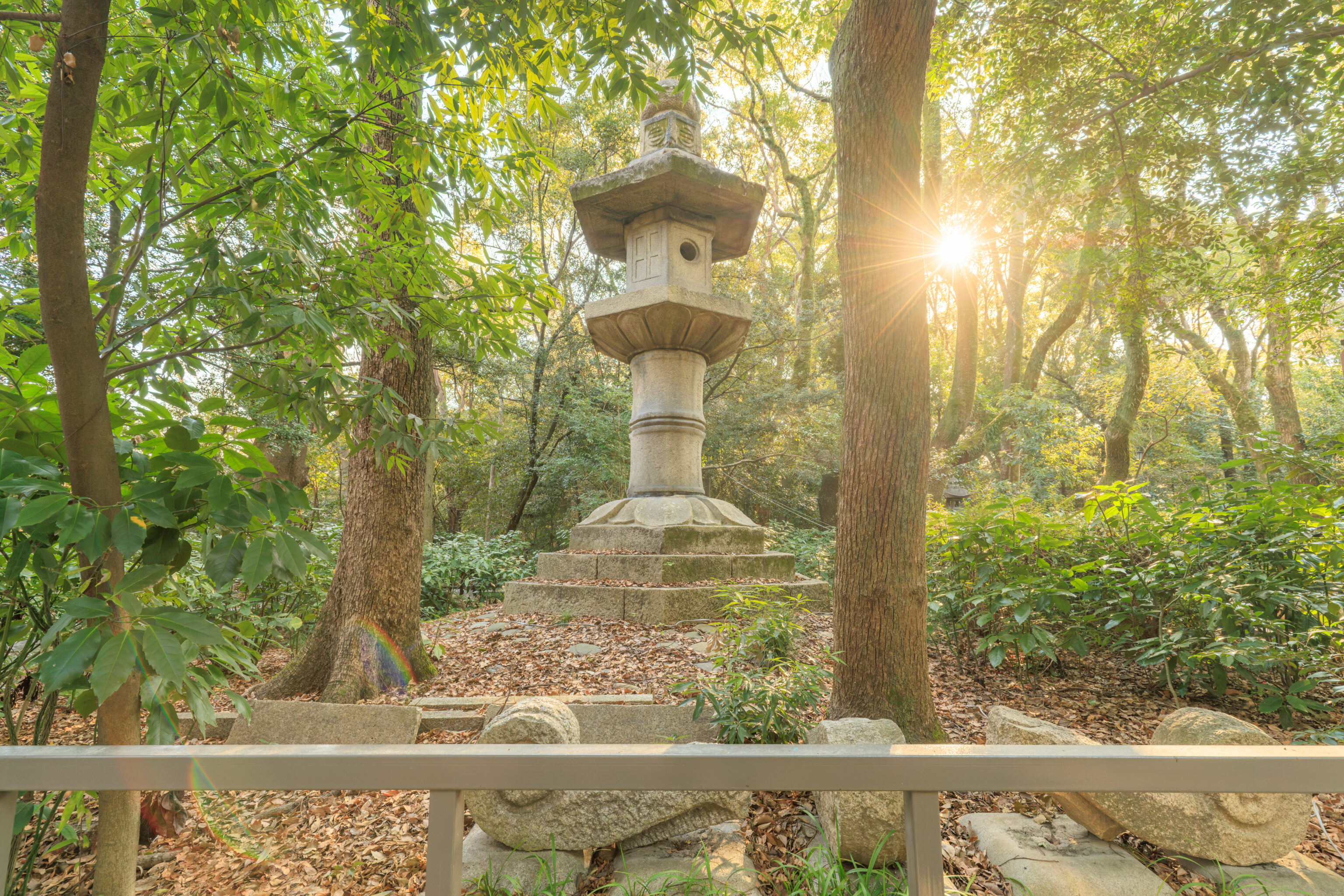
This is one of the Three Great Stone Lanterns of Japan. It is nearly 400 years old.
Sakuma Lantern
This lantern was donated in 1630 by Daizen-no-suke Katsuyuki—the fourth son of Sakuma Moritsugu, lord of Gokiso Castle in Owari Province—in gratitude for his safe deliverance from peril after praying to this shrine for protection when he encountered a typhoon at sea. It is renowned as one of Japan's three great stone lanterns, alongside those at Nanzen-ji Temple in Kyoto and Ueno Toshogu Shrine in Tokyo.
– Text from a sign, translated using Google.
We have been to the sites containing the two other Three Great Stone Lanterns, most recently Ueno Toshogu. We unfortunately did not notice any famous stone lantern. The same applies to our visit to Nanzen-ji.
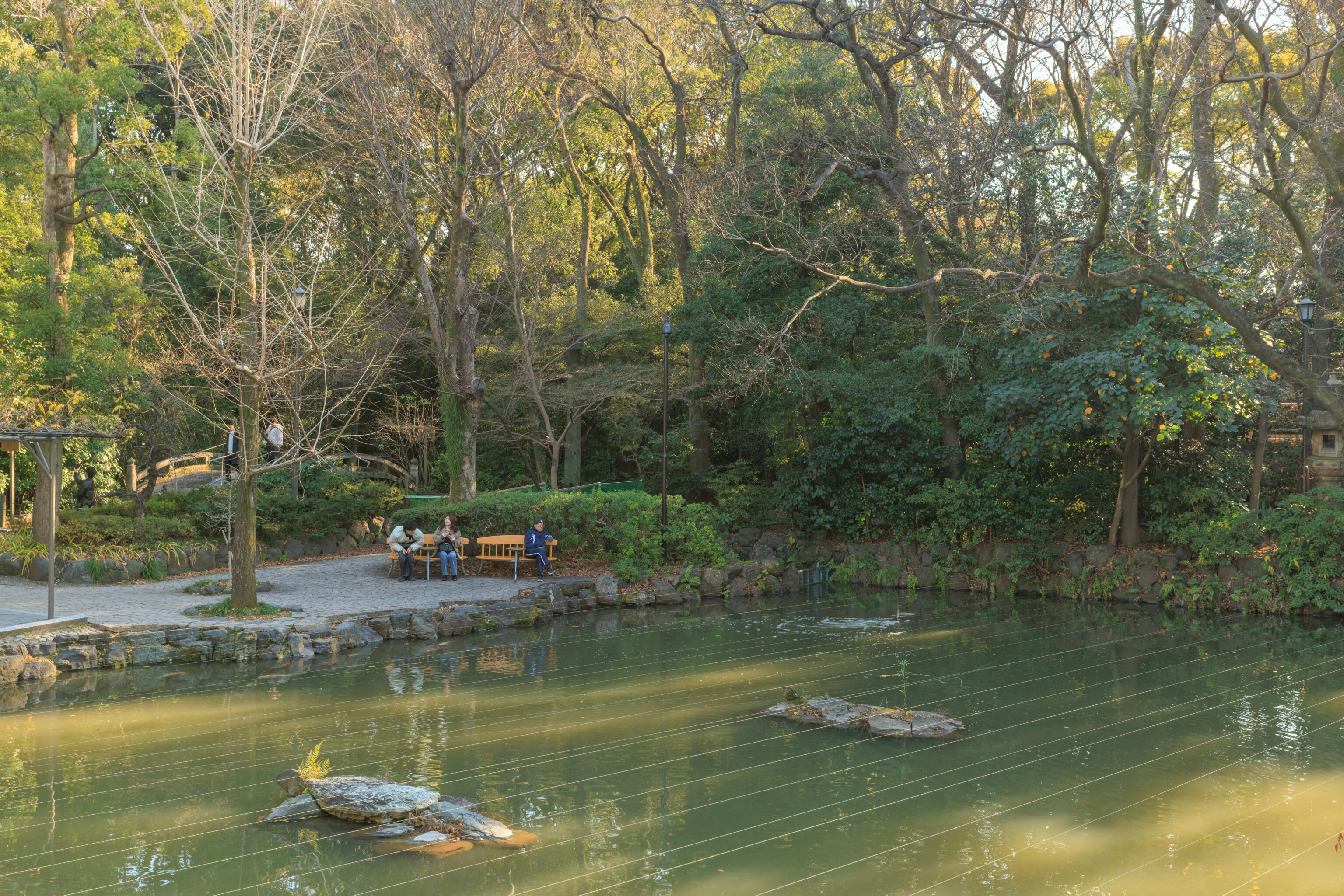
We returned to the rest area and its pond. We’re not sure what the wires are for, perhaps to protect the smaller koi from larger birds like herons?
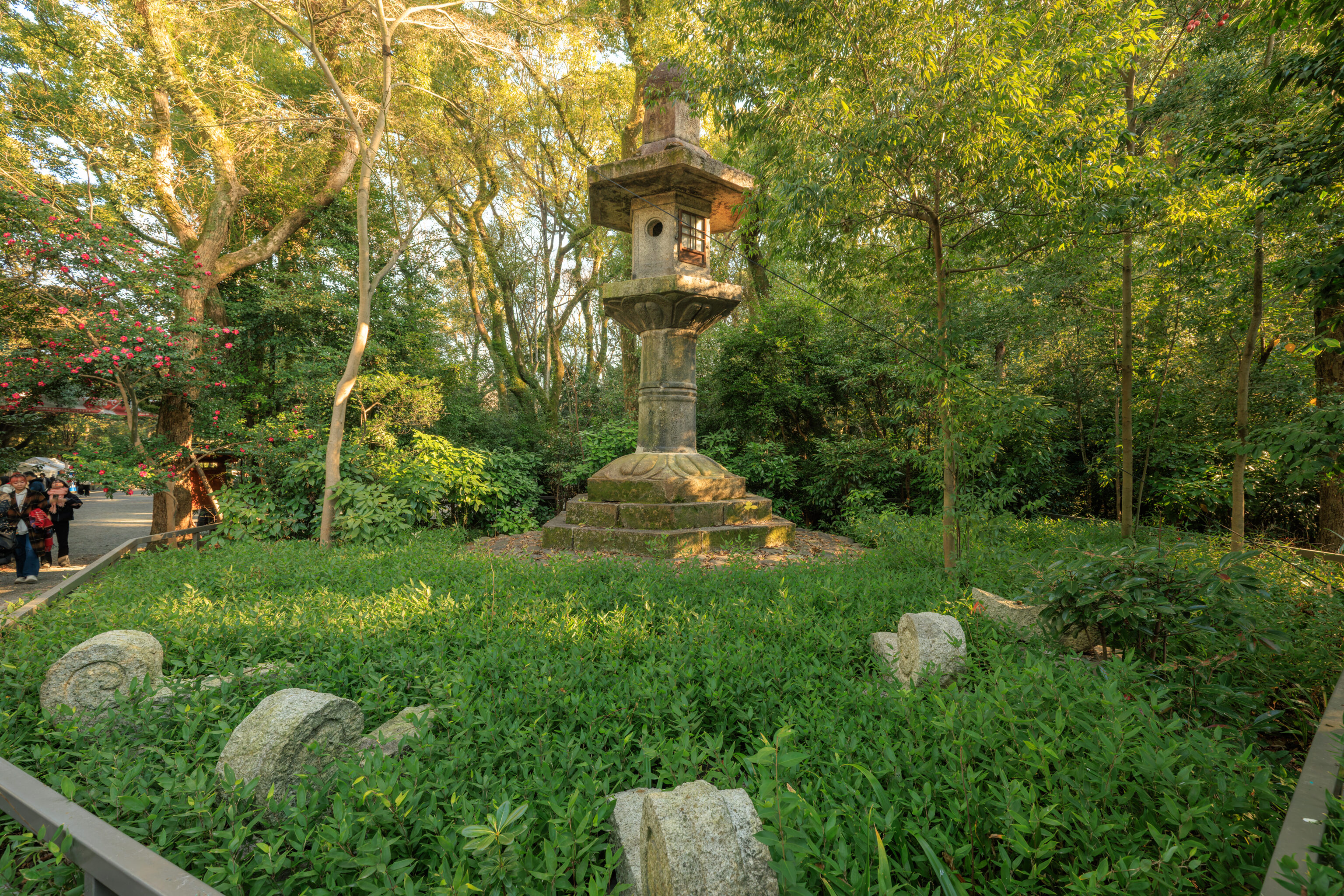
Another large lantern! Based on the inscription, it is from 1886.
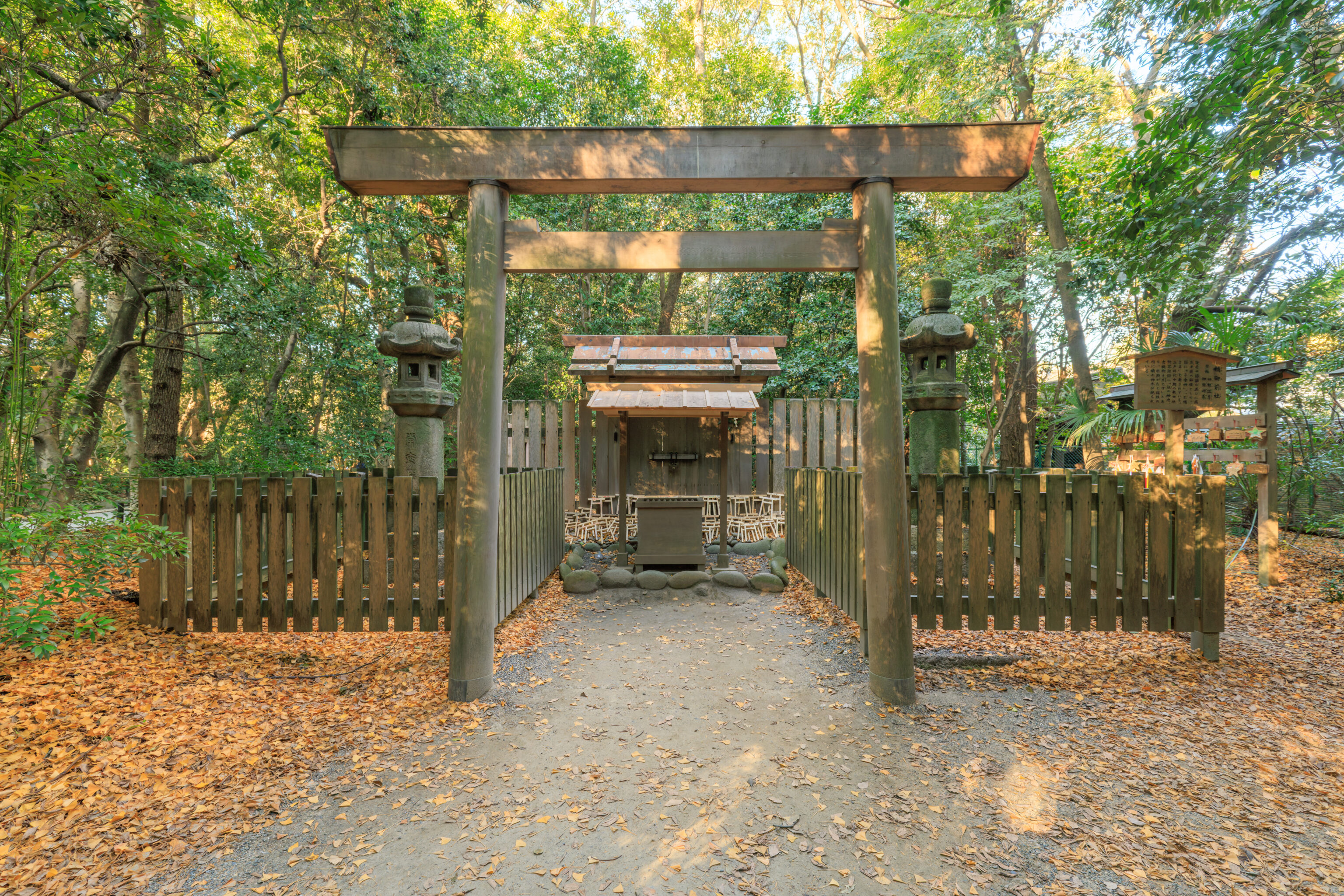
This deities enshrined here are worshiped for a variety of purposes:
Kusunoki Gozen Shrine
Enshrined Deities: Izanagi-no-Mikoto, Izanami-no-Mikoto

The deity is popularly known as "Koyasu-gami" (Deity of Safe Childbirth) and "O-Kusu-sama," and is worshipped for safe childbirth, matchmaking, and recovery from illness. A record from the mid-Edo period regarding the Atsuta Shrine states, "It is a shrine deity, with an ancient camphor tree as its central figure"; there is no shrine building, and the sacred camphor tree is enshrined within a sacred fence.
– Text from the sign to the right of the shrine, read using Google Gemini and translated using Google Translate.
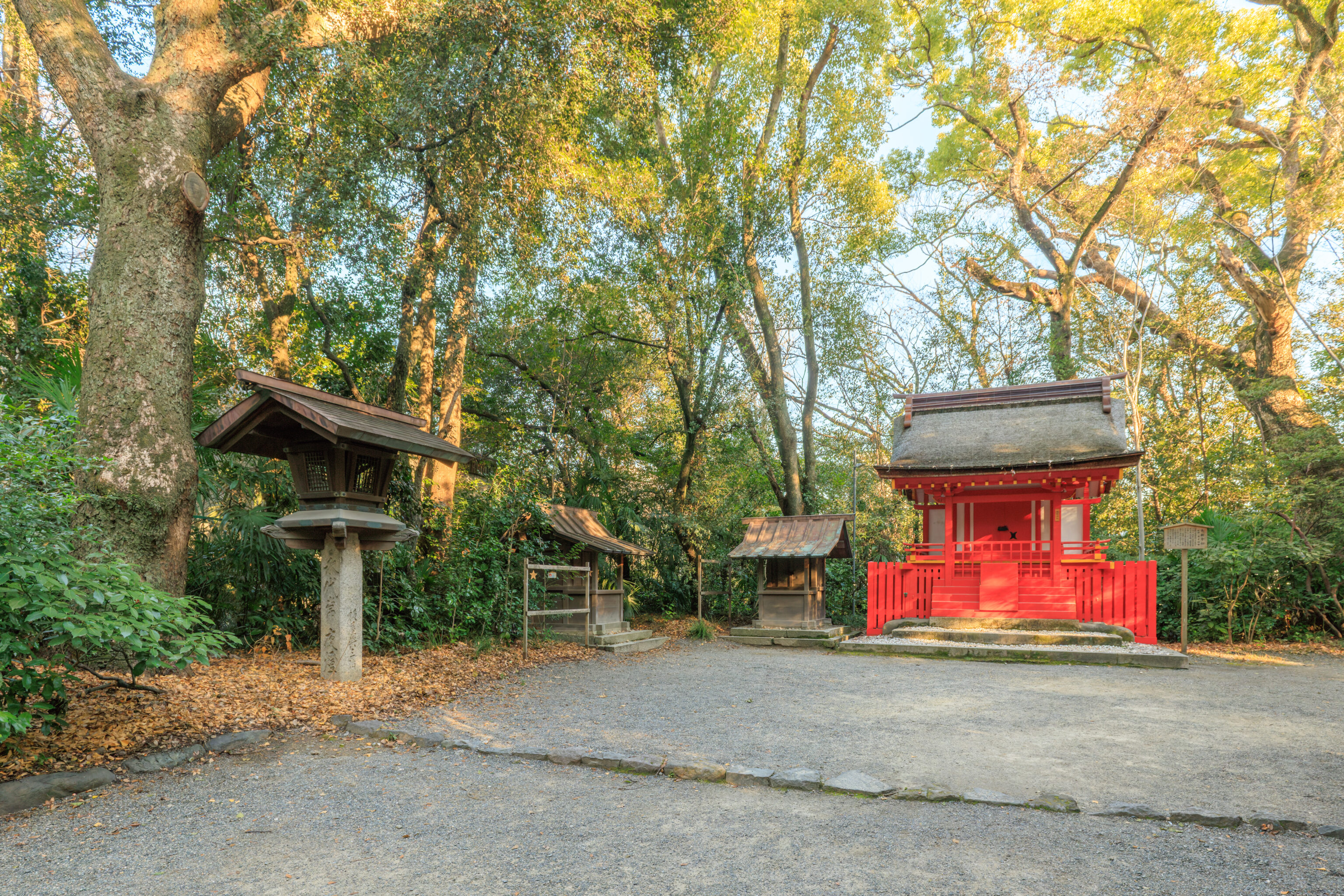
The final shrine we looked at before leaving was the only one with Shinto’s distinctive vermilion color here at Atsuta-jingu.
Minami-Shingu Shrine
Enshrined deity: Susanoo-no-Mikoto

The shrine building is the only one in the complex finished in vermilion lacquer. Historically, the shrine's annual festival has been known by various names, such as the Oyama Festival, Tenno Festival, and Gion Festival. Its origins date back to the mid-Heian period, when an epidemic swept through the area; local residents offered *hatahoko* (banner-topped poles) and enshrined the deity of pestilence here. Subsequently, these *hatahoko* were incorporated into the processions of *Oyama* and *Danjiri* (festival floats), but these practices were discontinued in the Meiji era following the installation of overhead power lines.
– Text from a photograph on Google Maps of the wooden sign to the right of the shrine, read using Google Gemini and translated using Google Translate.
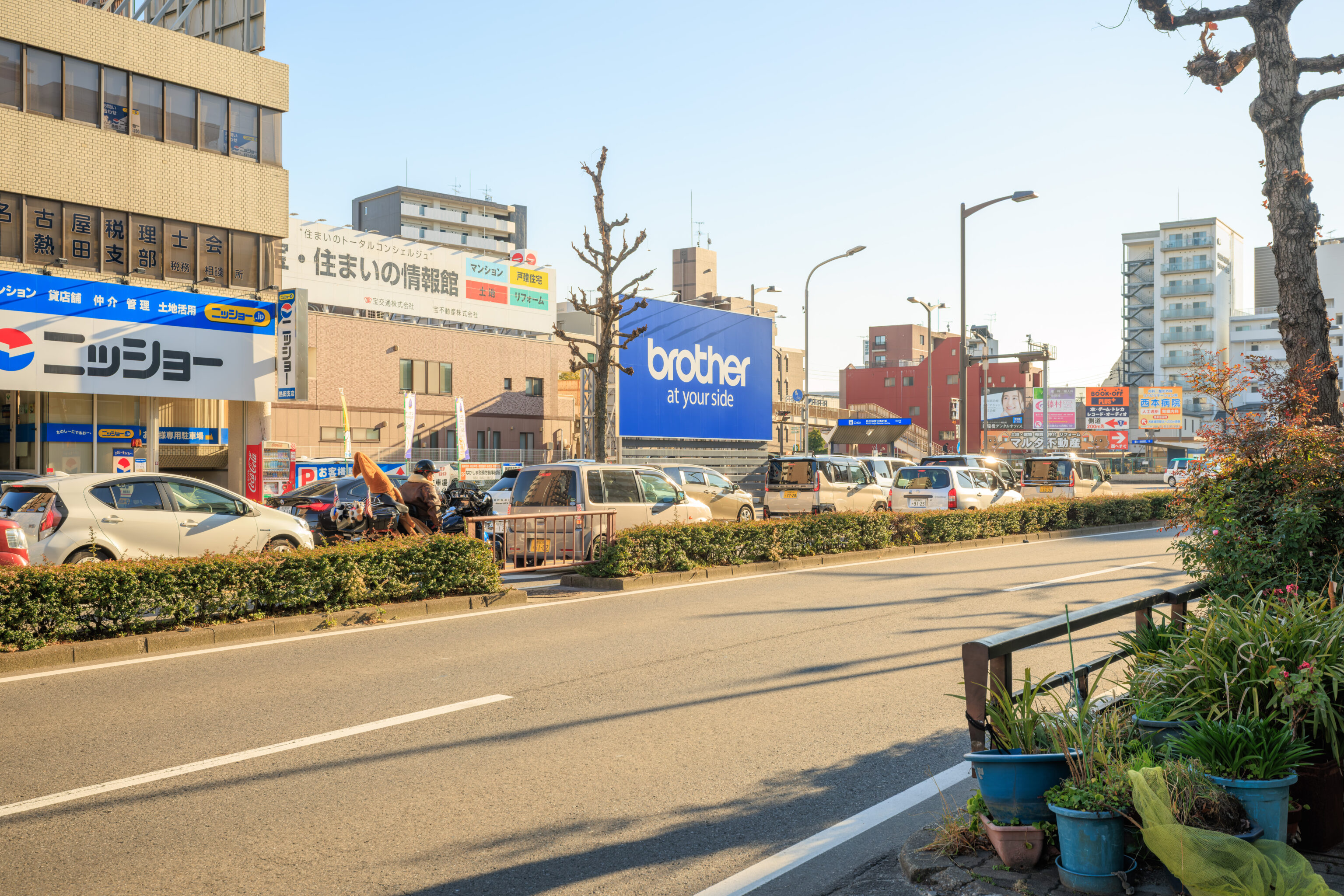
After leaving the shrine, we returned to the Atsuta Jingu Temma-cho Station.
Sakae
We took the Meijo Line north to 栄駅 Sakae Station, named after the 栄 Sakae district where the station is located. Sakae is the main shopping district in central Nagoya.
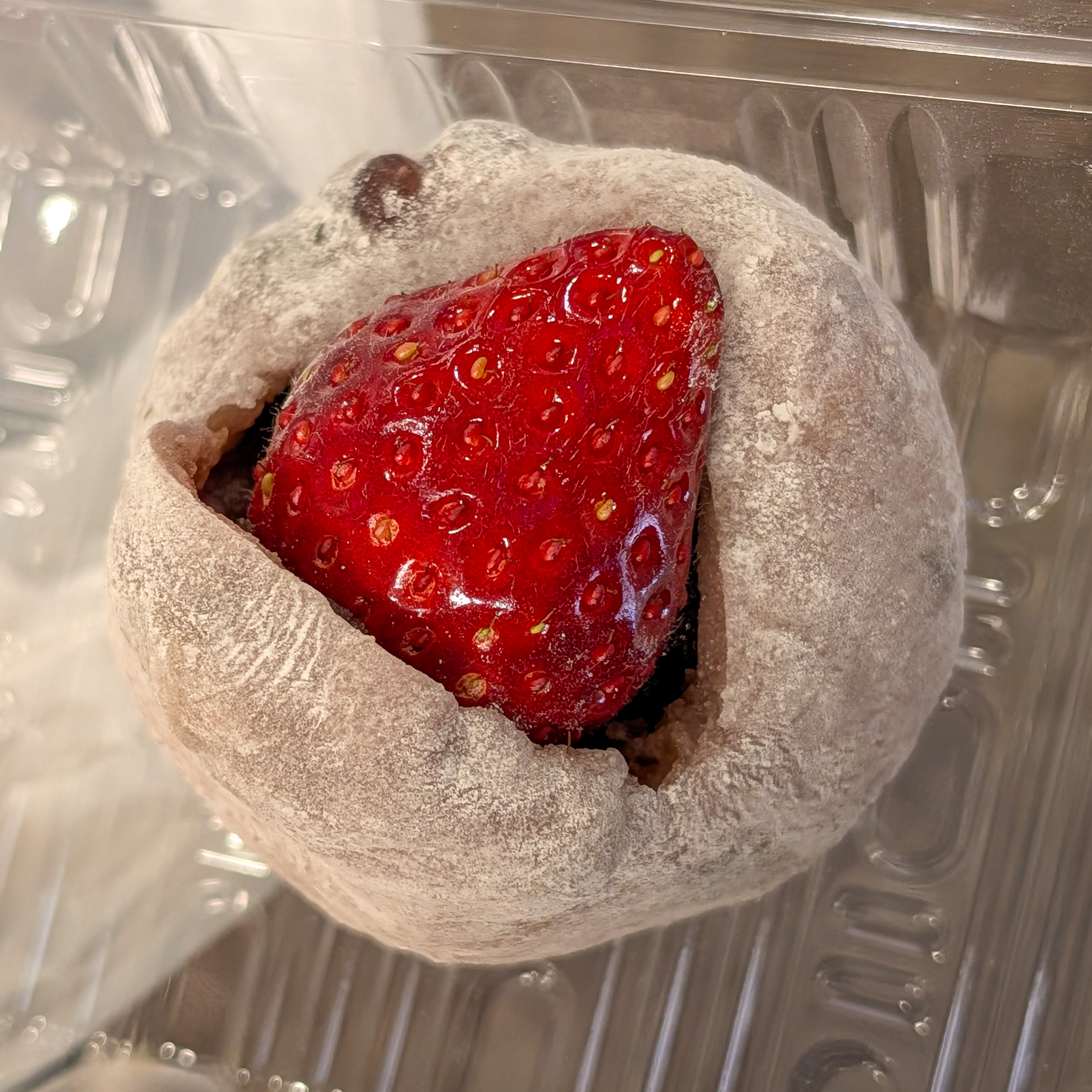
On the way, we stopped at a shop and bought a strawberry daifuku. It was delicious.
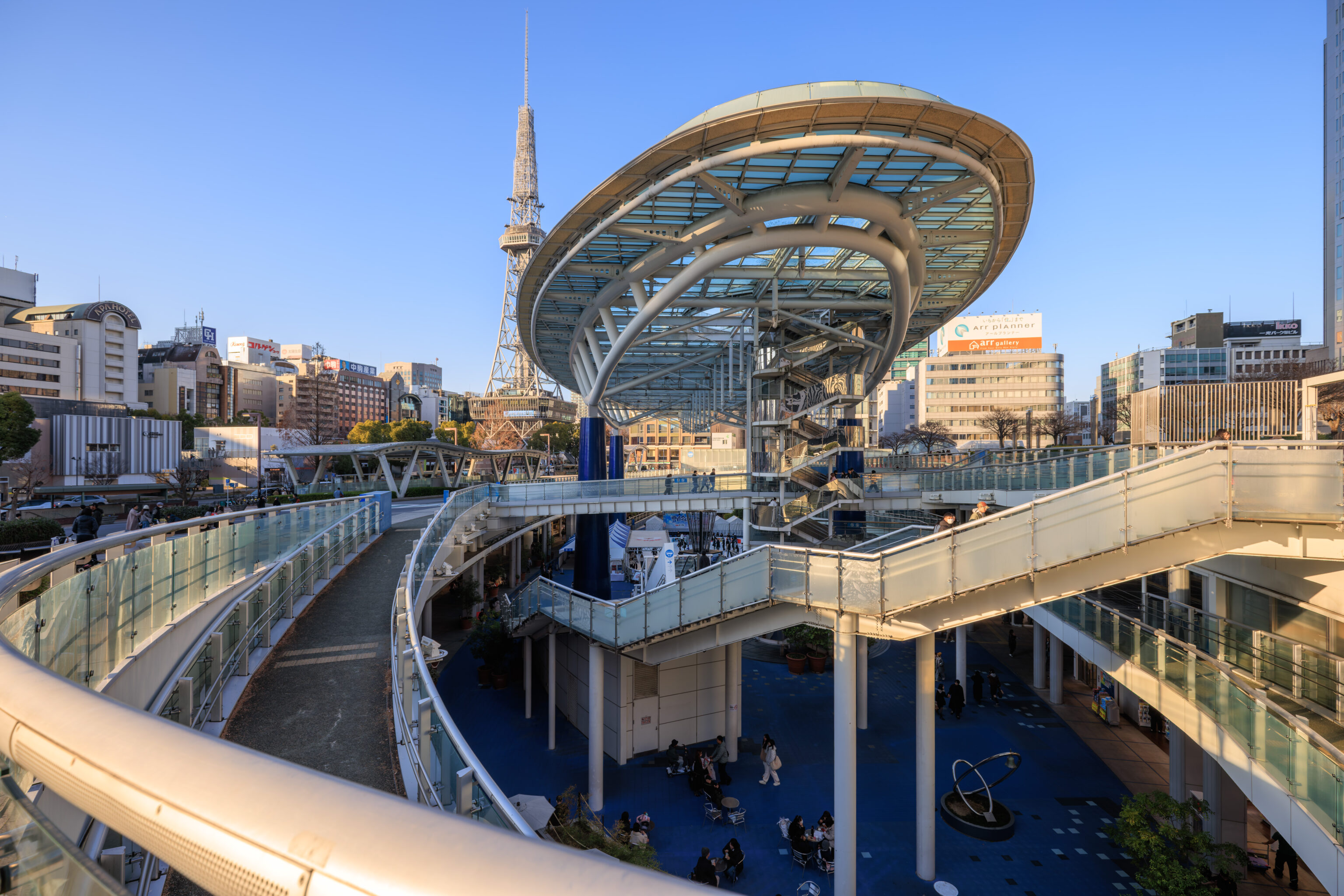
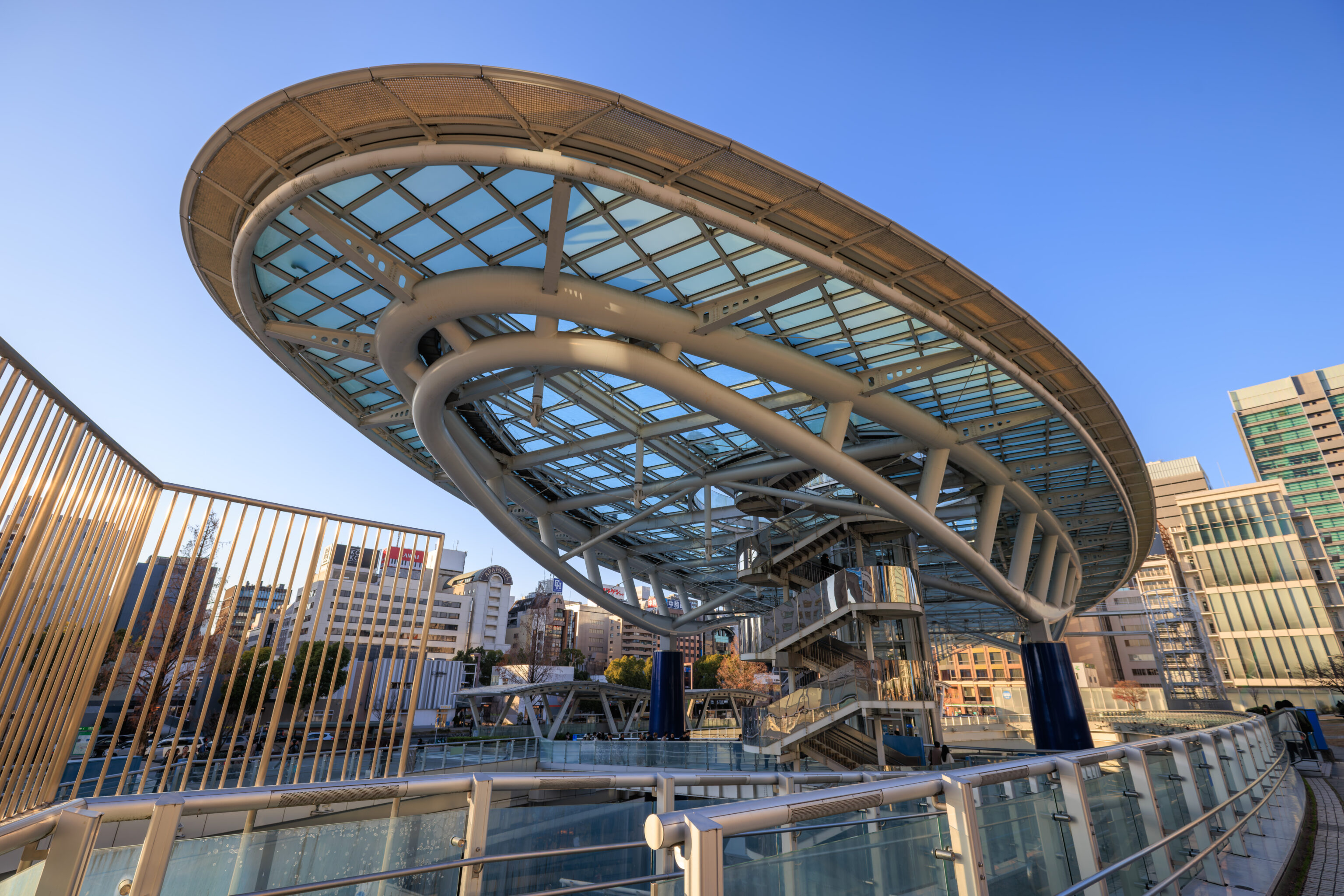
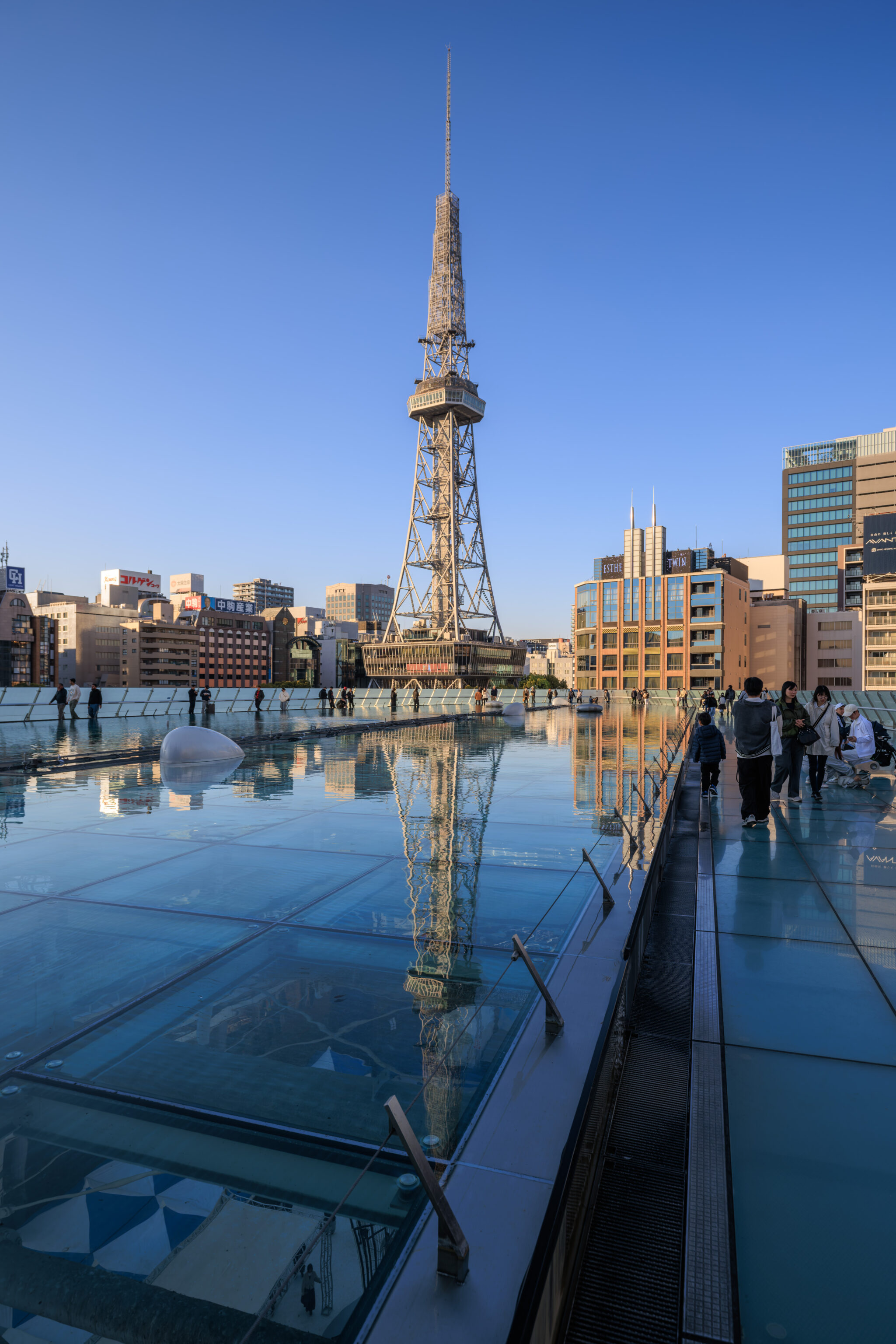
One of the most famous buildings in the Sakae district is オアシス21 (Oasis 21), this spaceship-like structure. It has a bit of a resemblance to USS Voyager, minus the warp nacelles of course. And it is in fact officially named 水の宇宙船 Spaceship Aqua!
It is actually possible to get here completely underground from the three nearby subway stations – Sakae, the one we arrived at, Sakaemachi, and Hisayadori. We came up from the underground levels here below Oasis 21’s canopy.
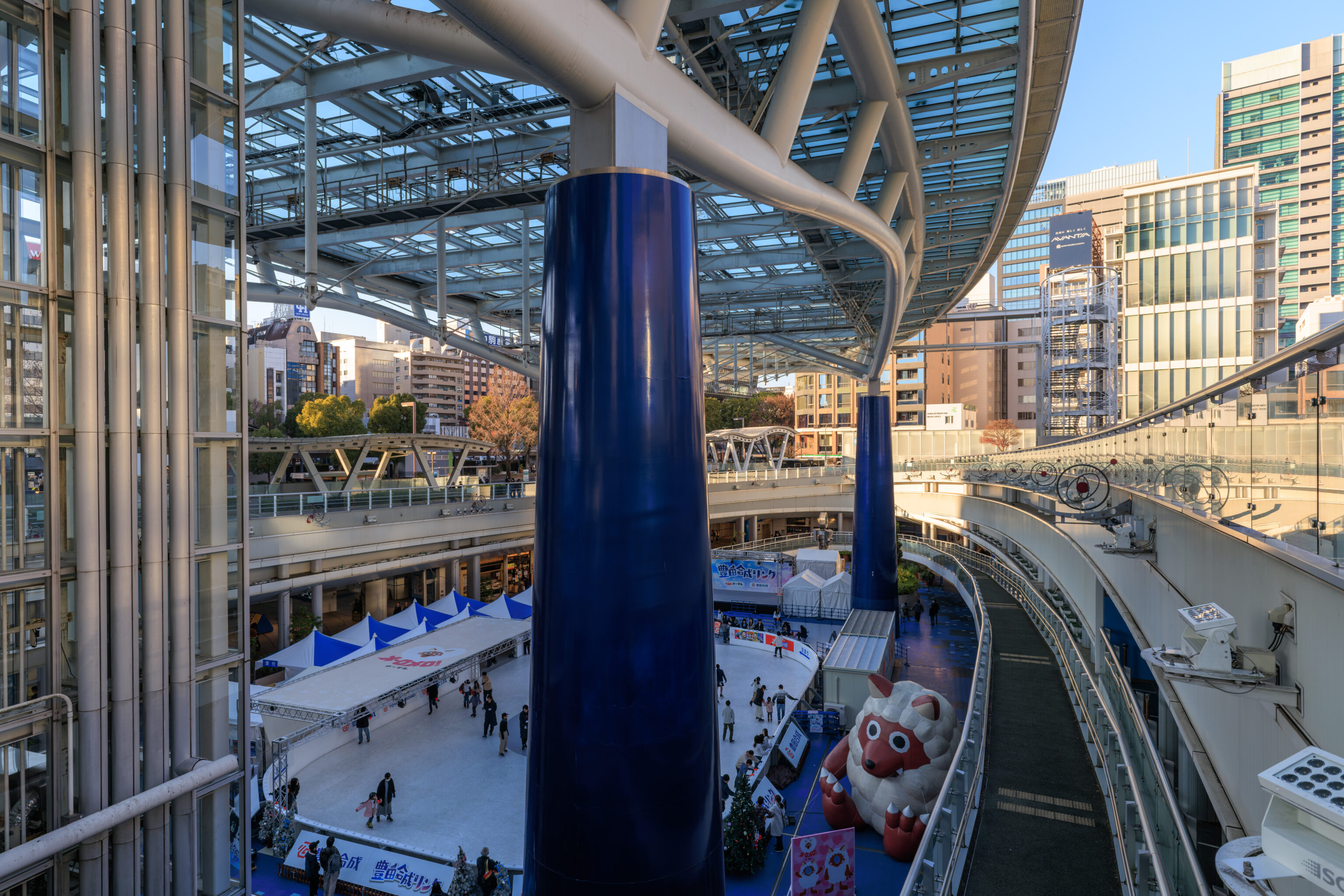
Below, there was an ice skating rink and a giant wolf in sheep’s clothing!
The glass canopy is not just an ordinary canopy though. It is possible to go up via stairs or elevator! There is a walkway that goes around the circumference of the structure.
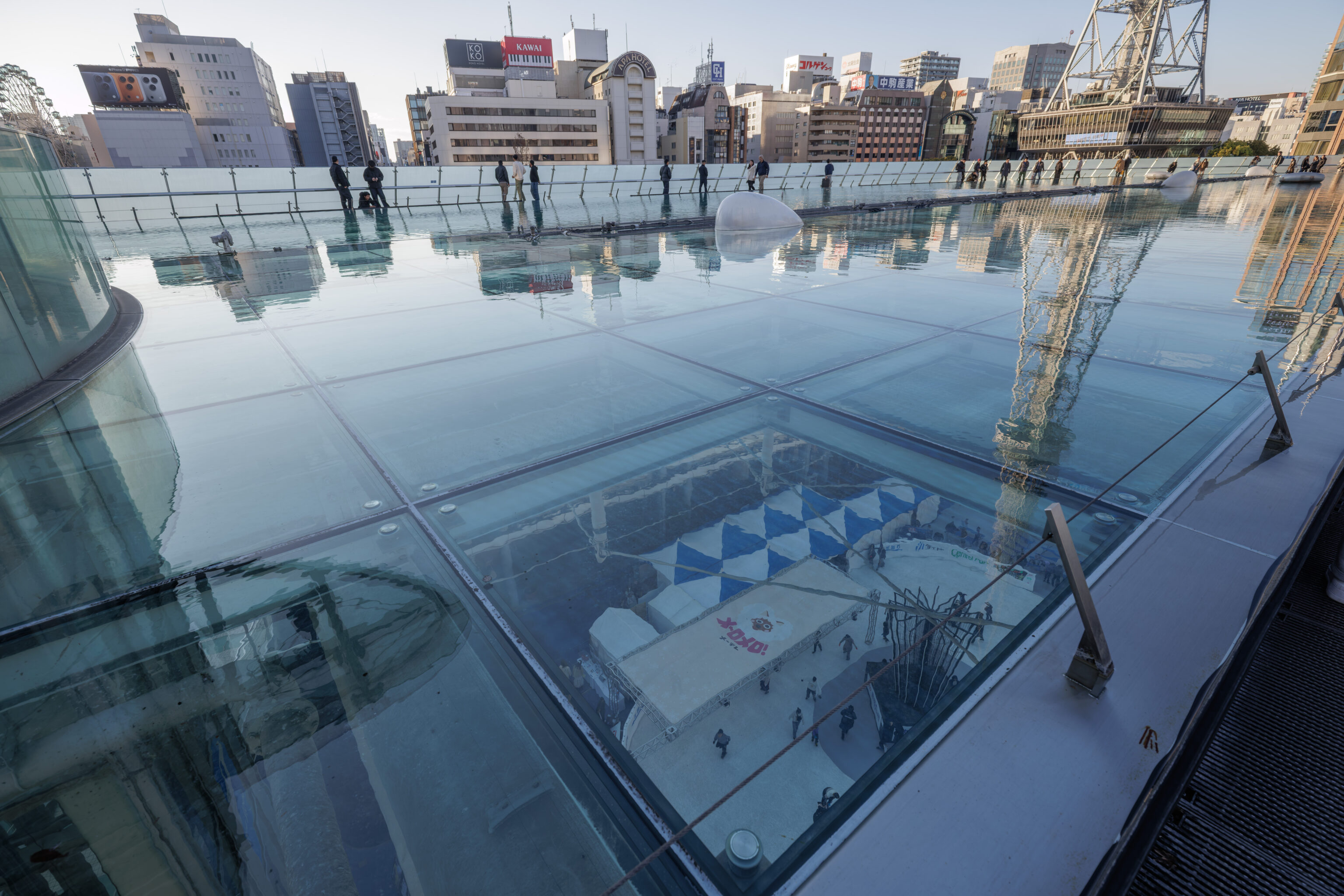
More incredibly, the center of the canopy is actually a pool of water! The water was pretty still during our visit, resulting in some excellent reflections of Mirai Tower, formerly the 名古屋テレビ塔 Nagoya TV Tower. There are also clear glass floor tiles below the pool which allow you to see down to the exposed basement level.
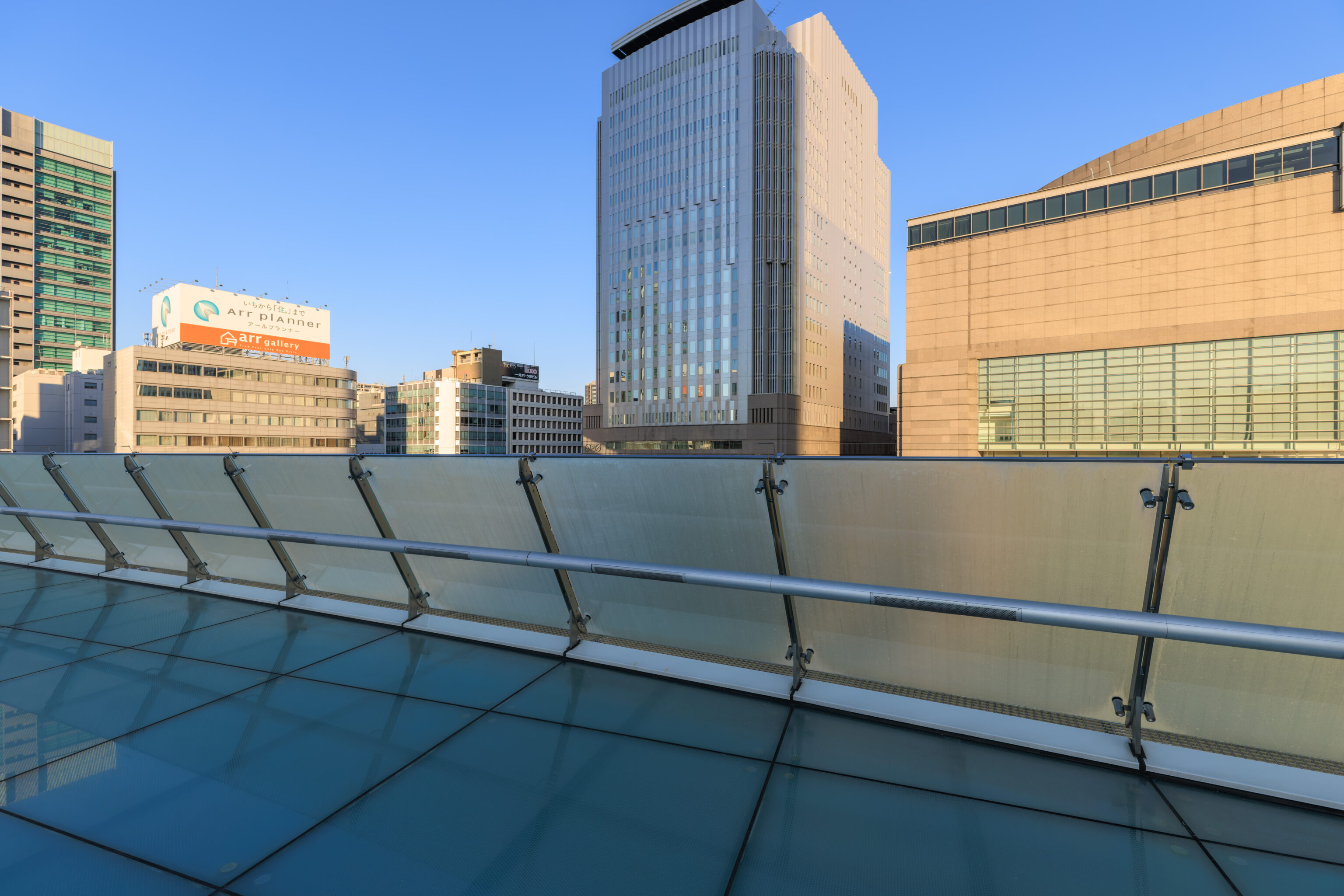
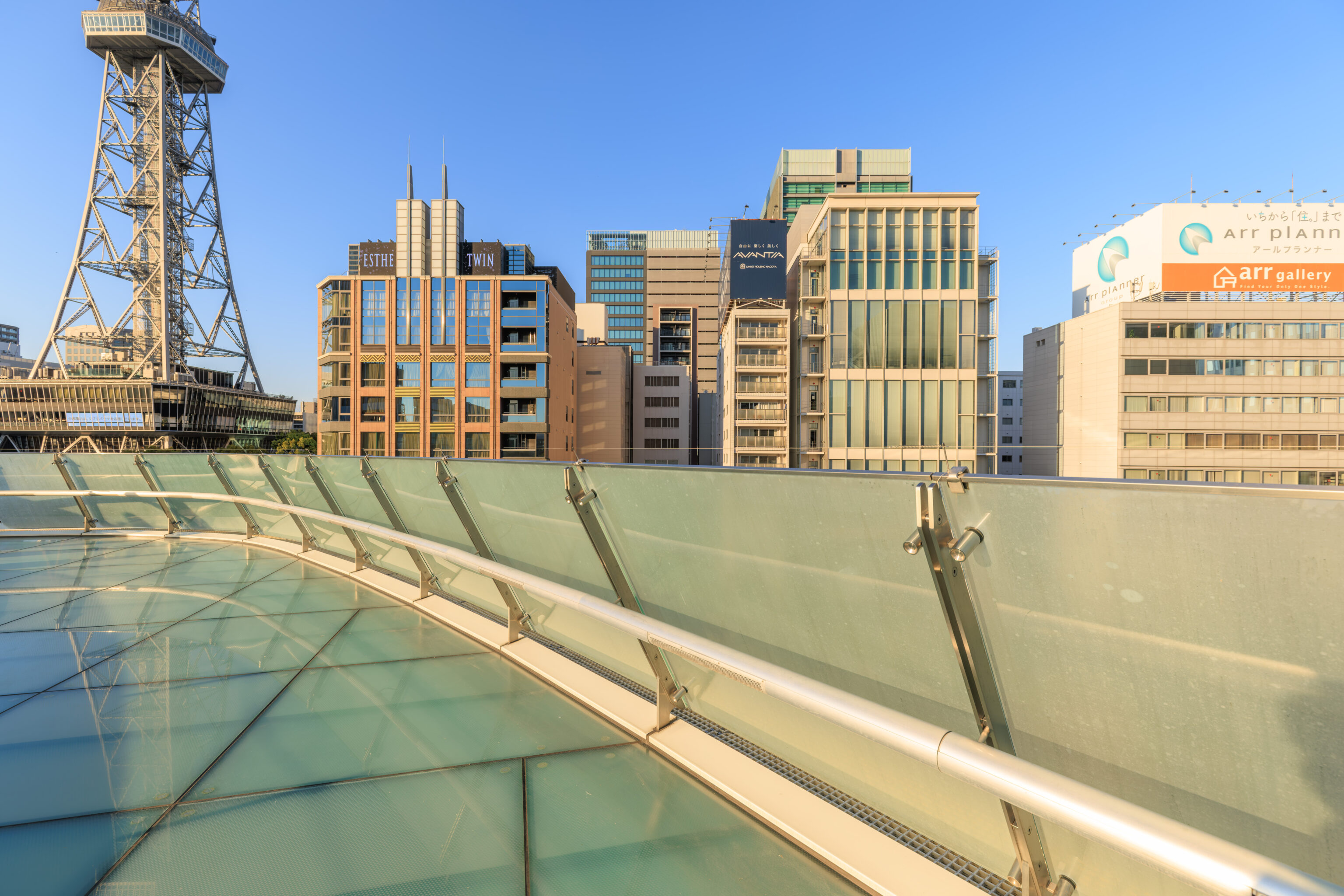
The floor is frosted glass for obvious reasons. And of course, there is a railing around the edge so visitors don’t accidentally fall off!
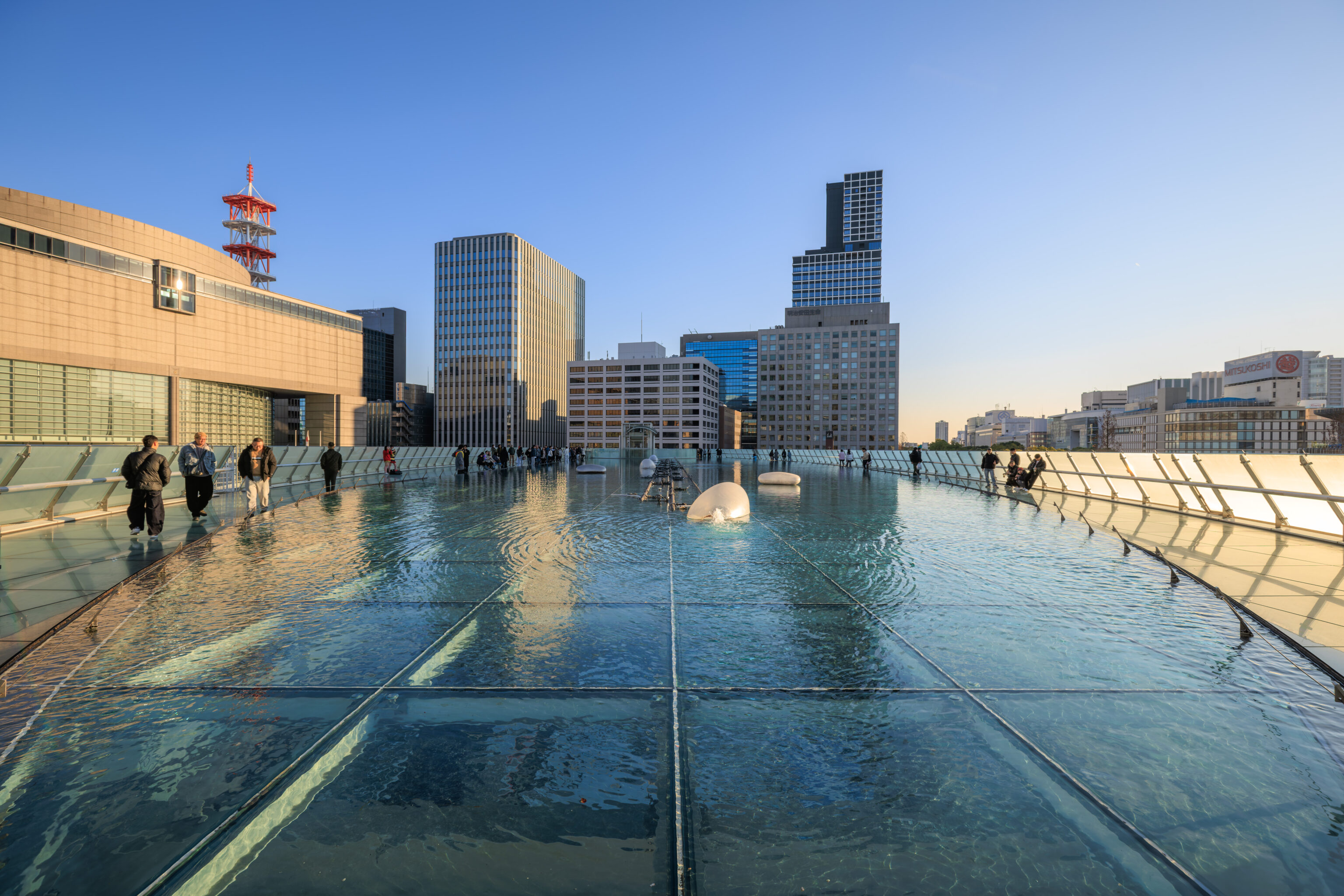
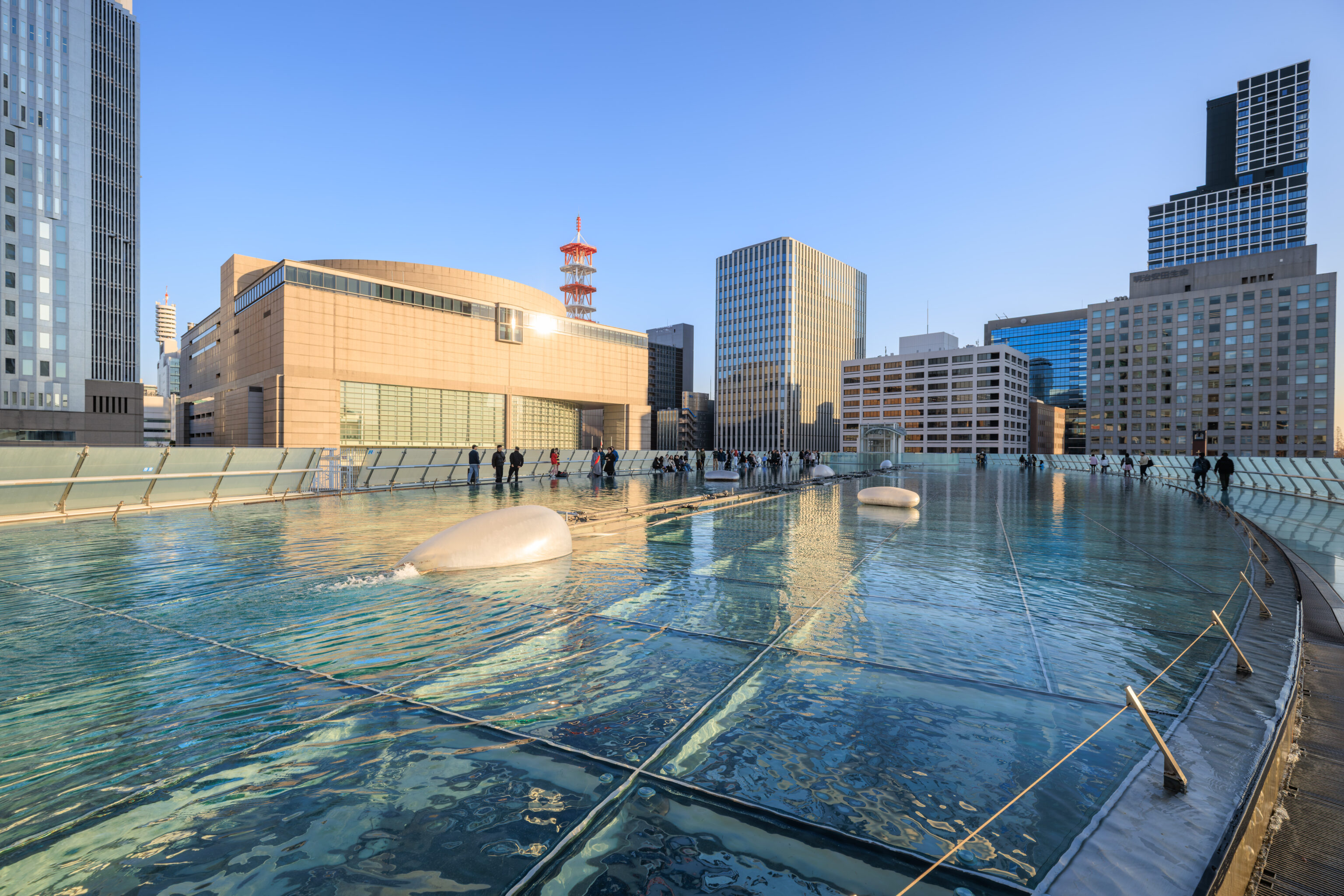
The view from the north end of the structure.
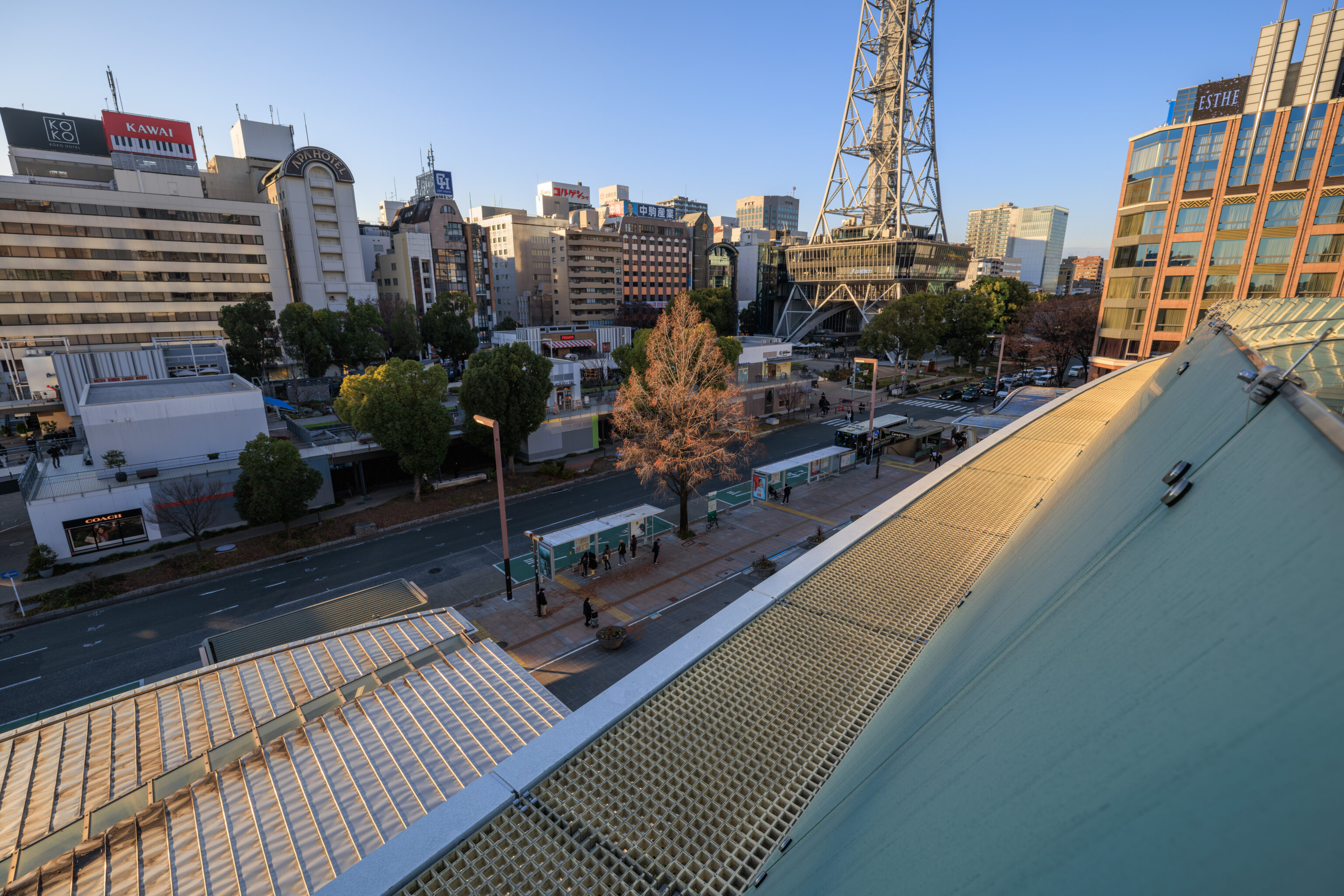
It is possible to look over the edge.
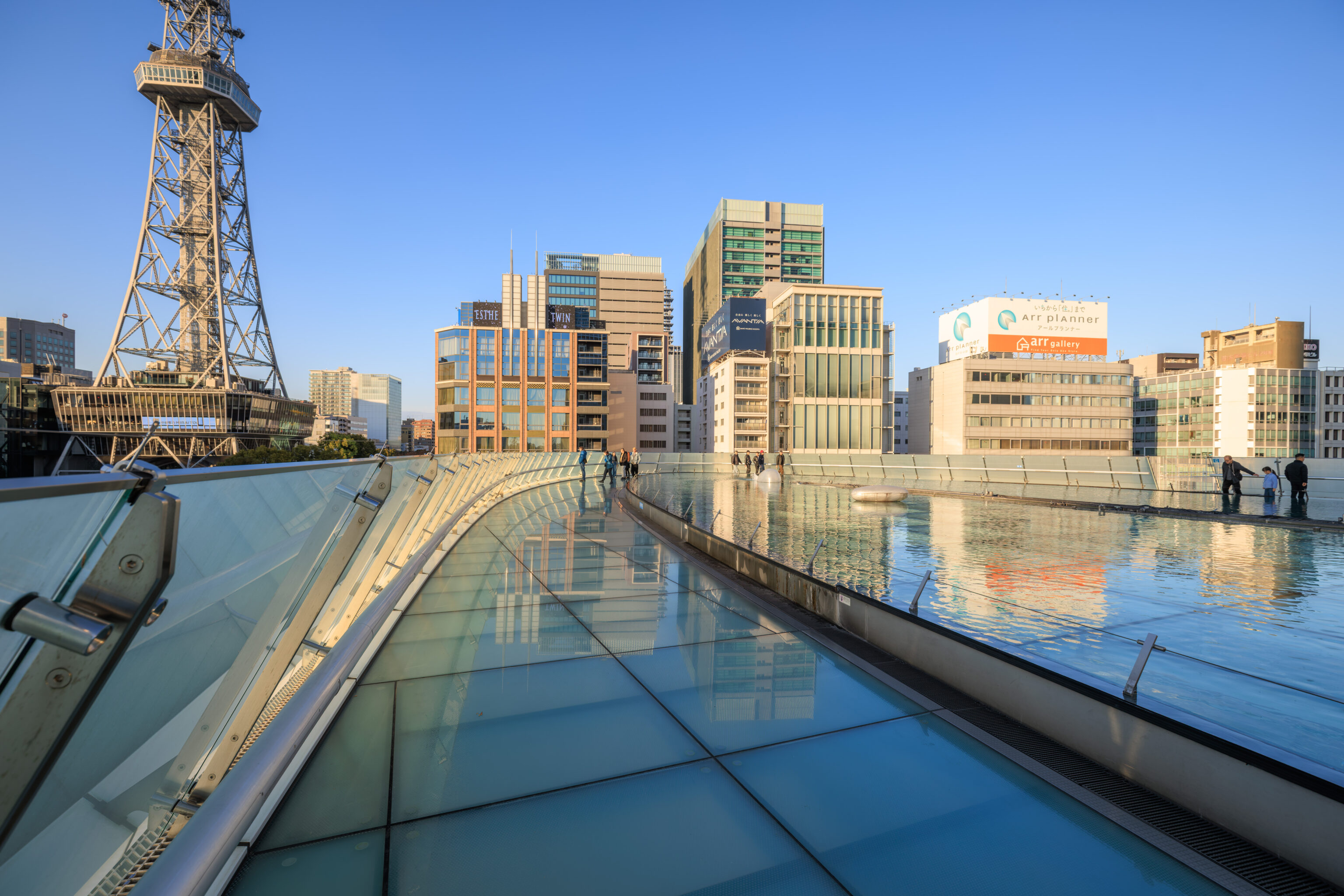
Its a pretty nice space! Despite walking on glass all the way around…
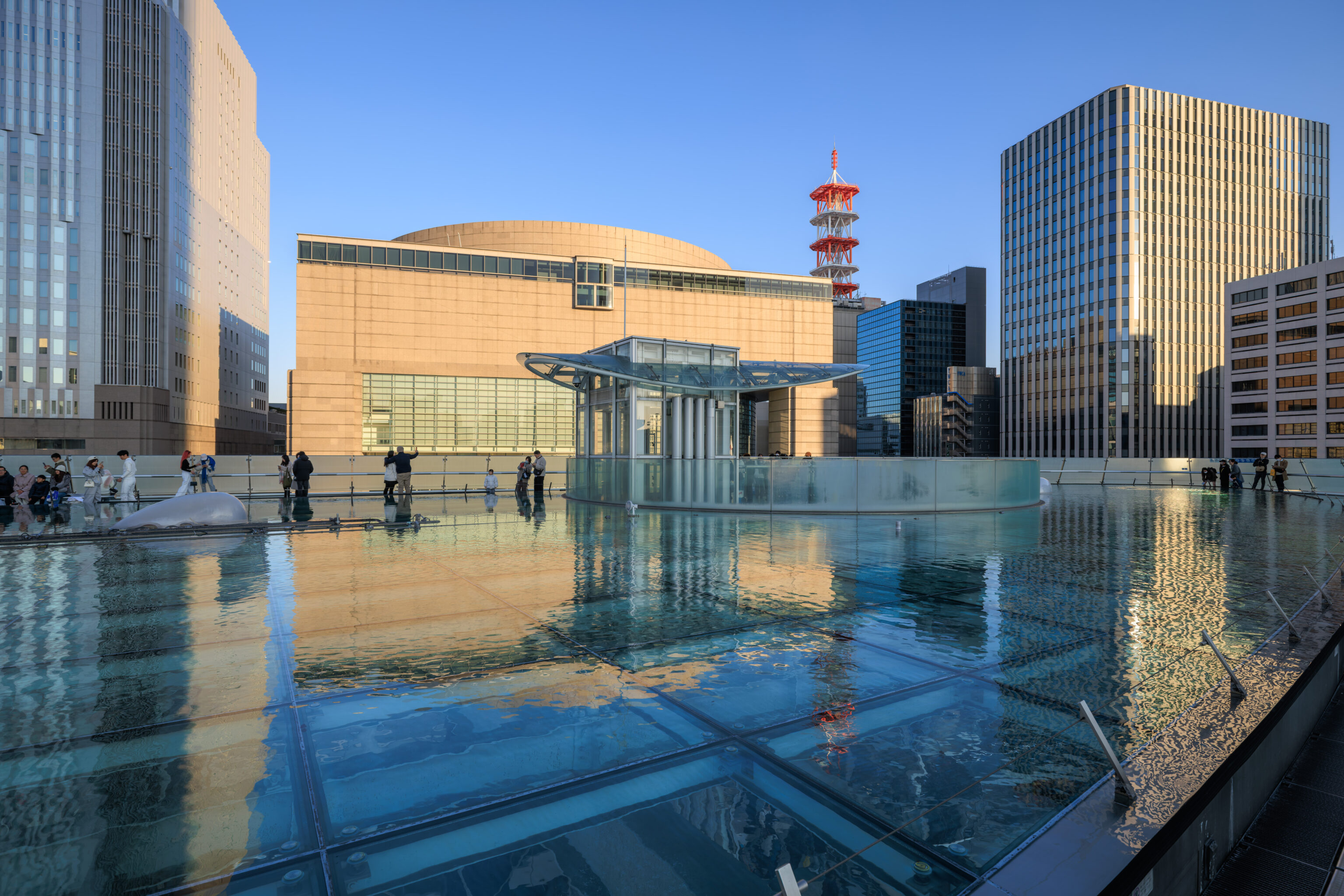
There is just one way up and down, through the stairs and elevator by the southern end.
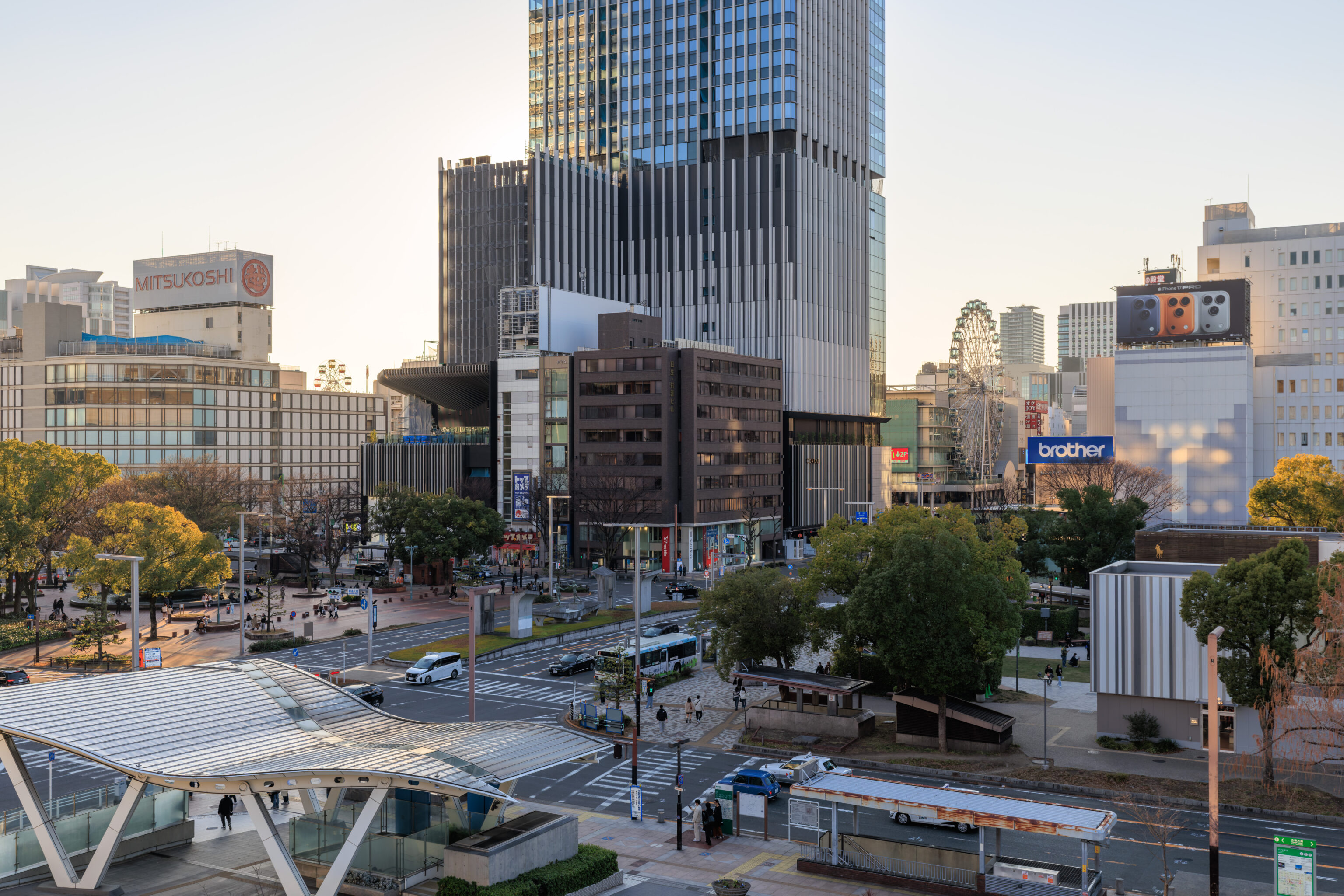
The Sakae district gets its name from an intersection to the southwest of here which is at the center of this photograph but on the other side of the tall skyscraper.
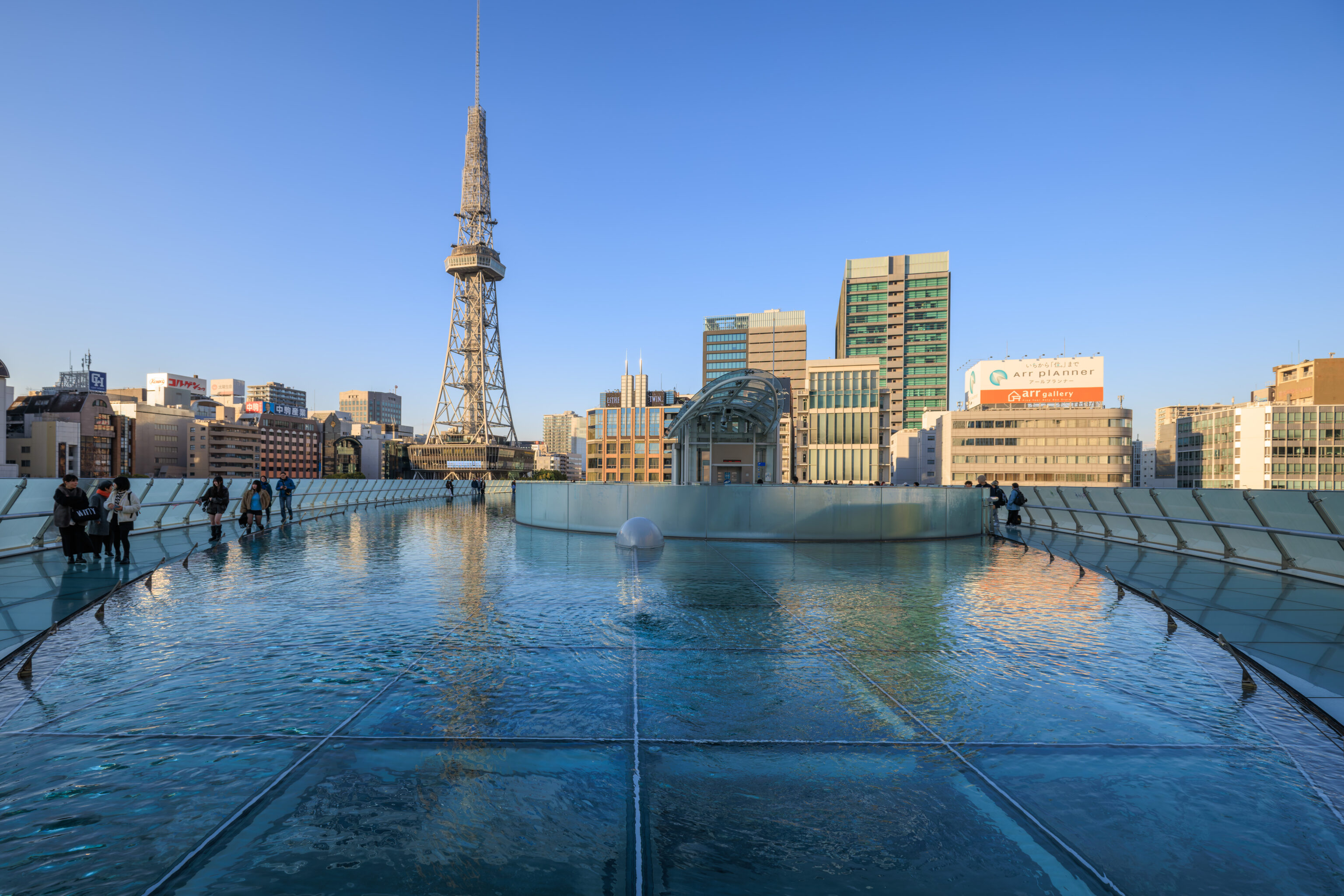
The view from the south end before we headed back down to ground level.
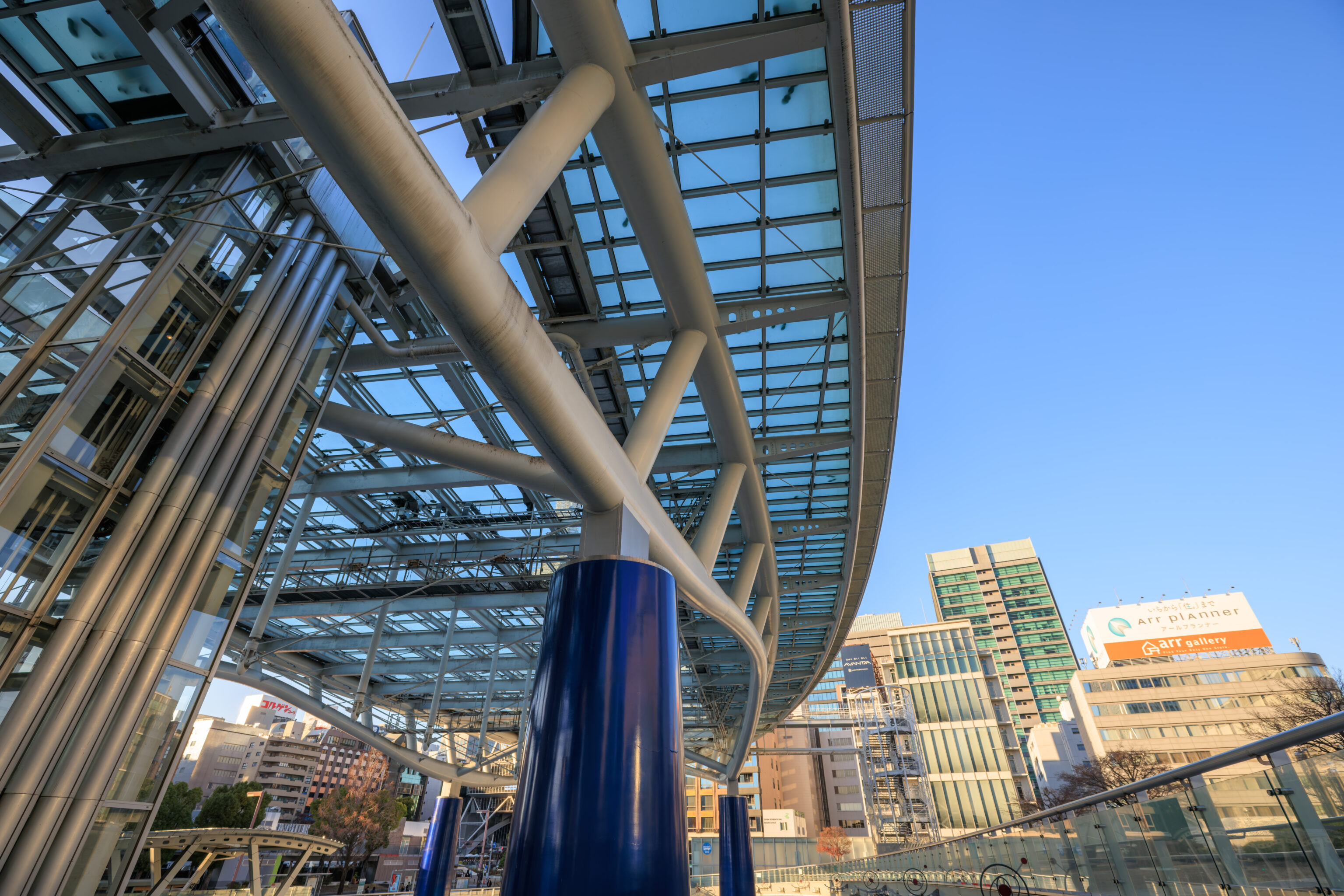
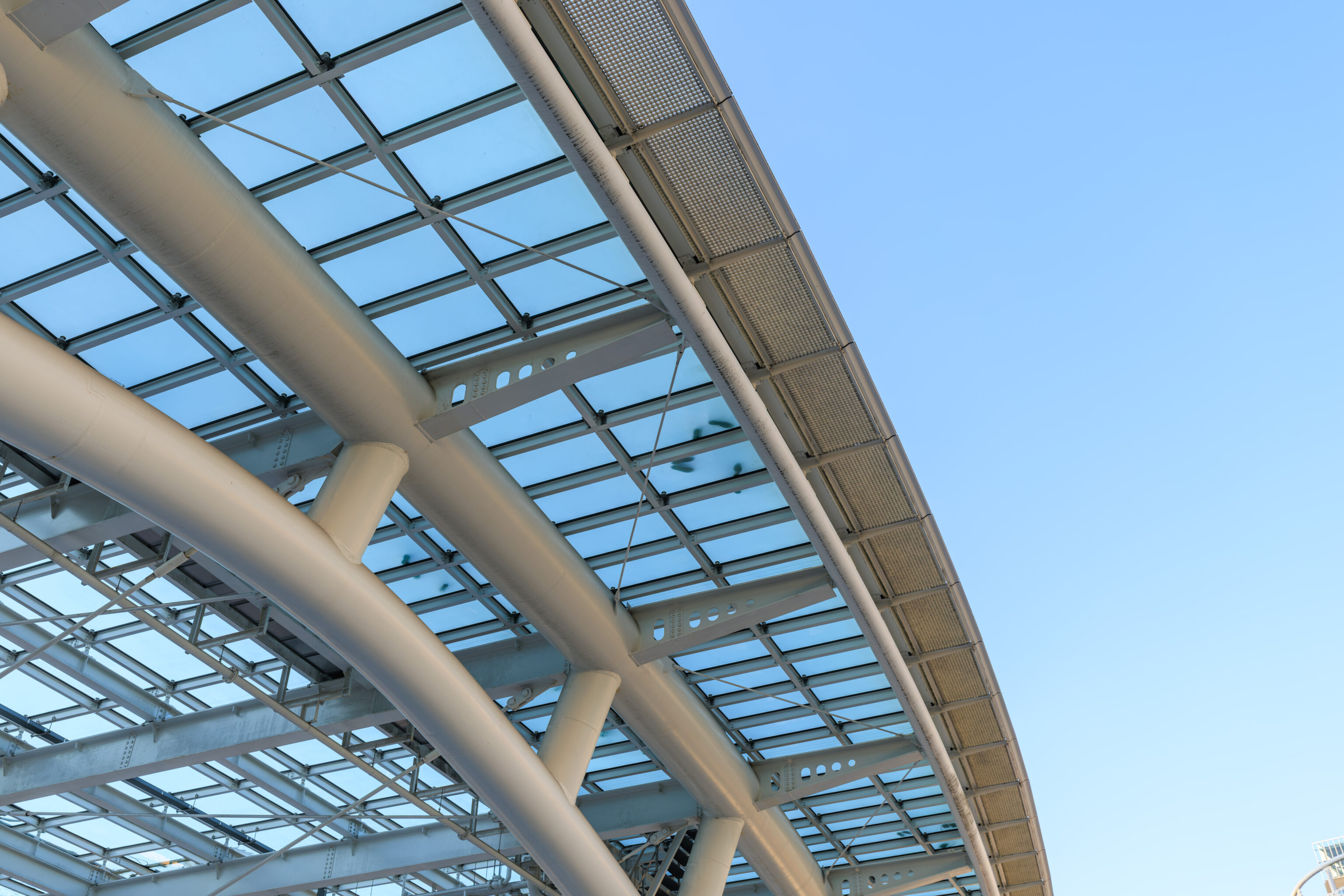
It is possible to see the feet of people walking above through the frosted glass!
We recorded a short video of the people walking around up above.
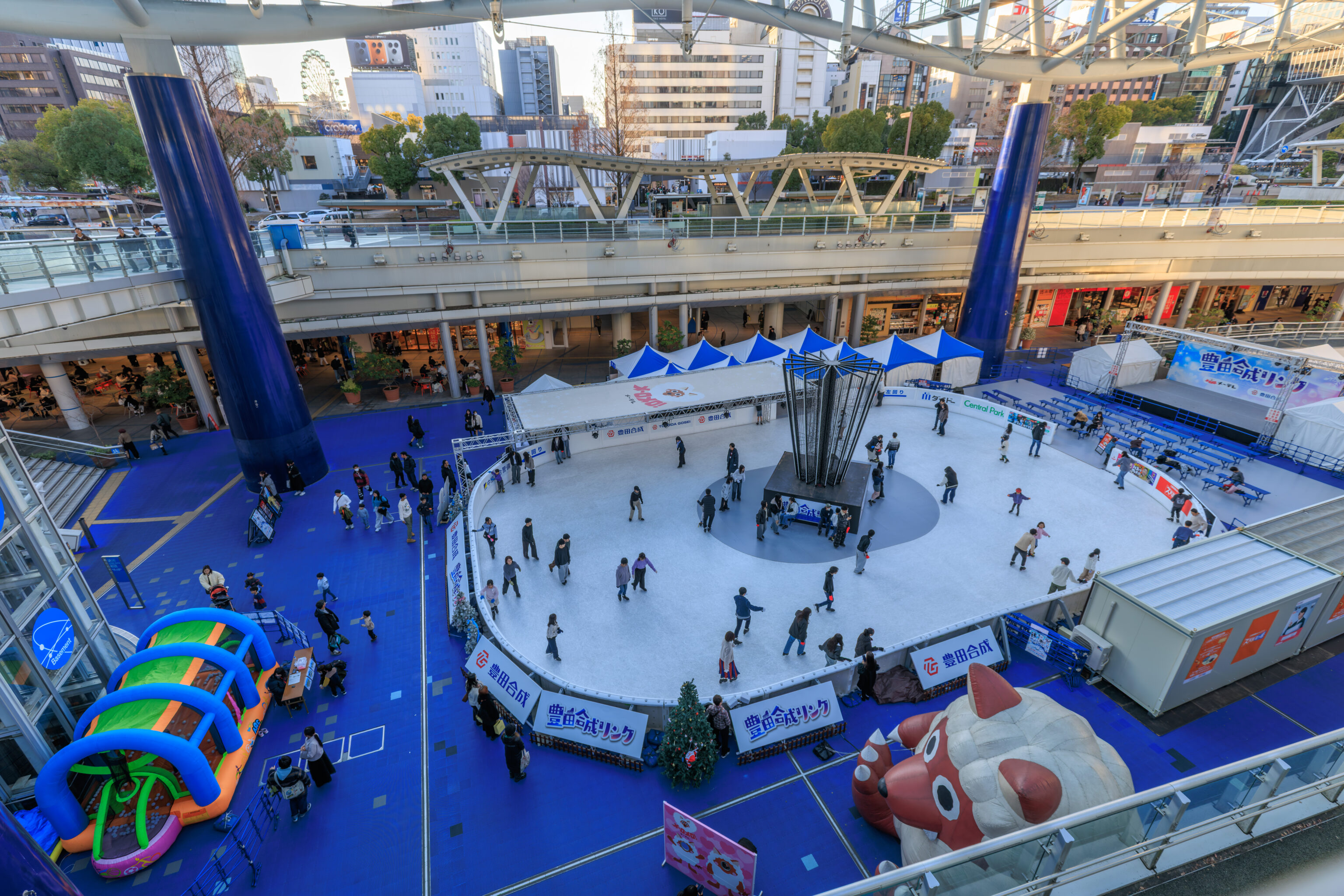
The view looking down from the east.
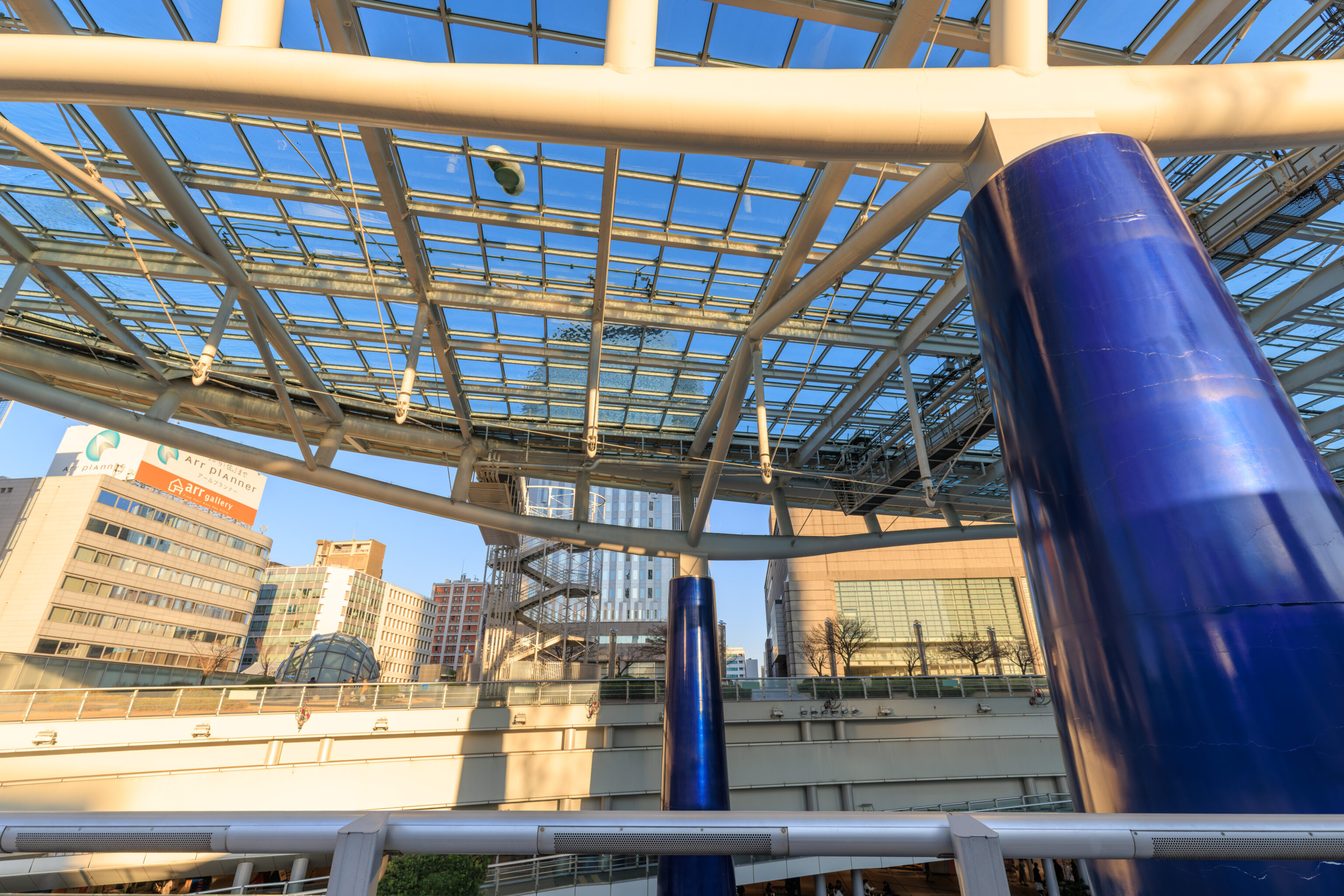
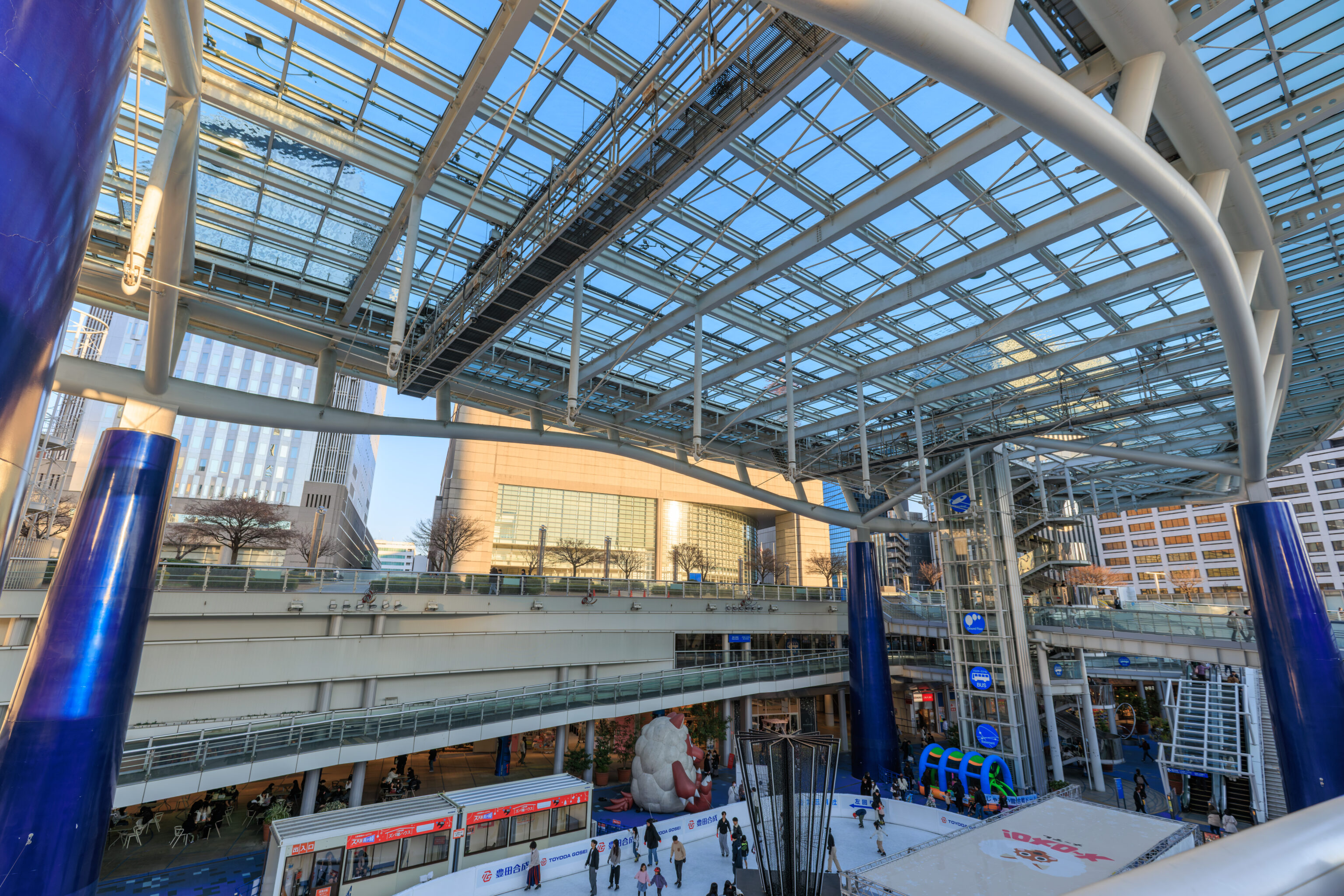
We ended up walking all the way around to the west side.
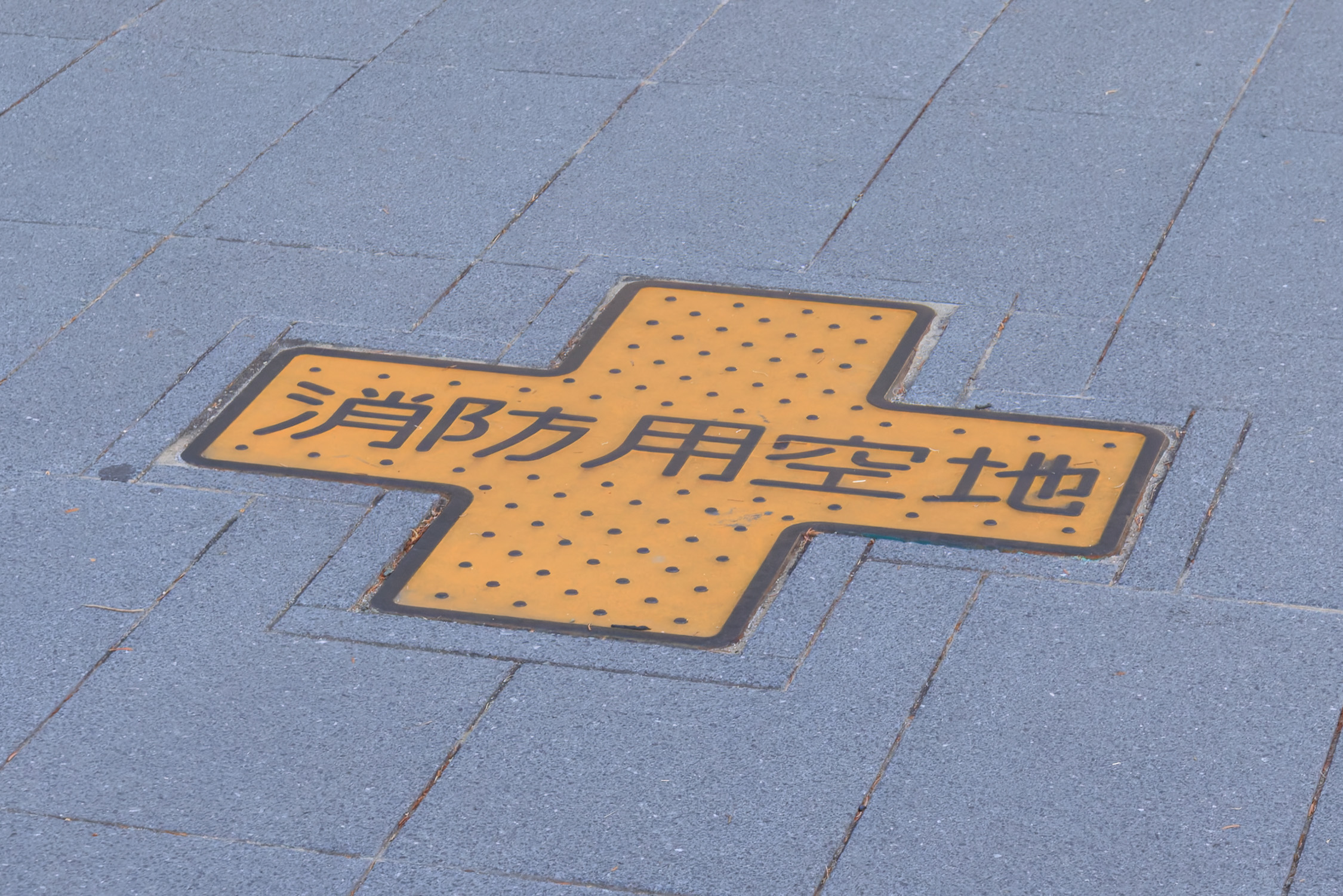
This kind of random bit of tactile pavement is inscribed as 消防用空地 Open Space for Firefighting Purposes.
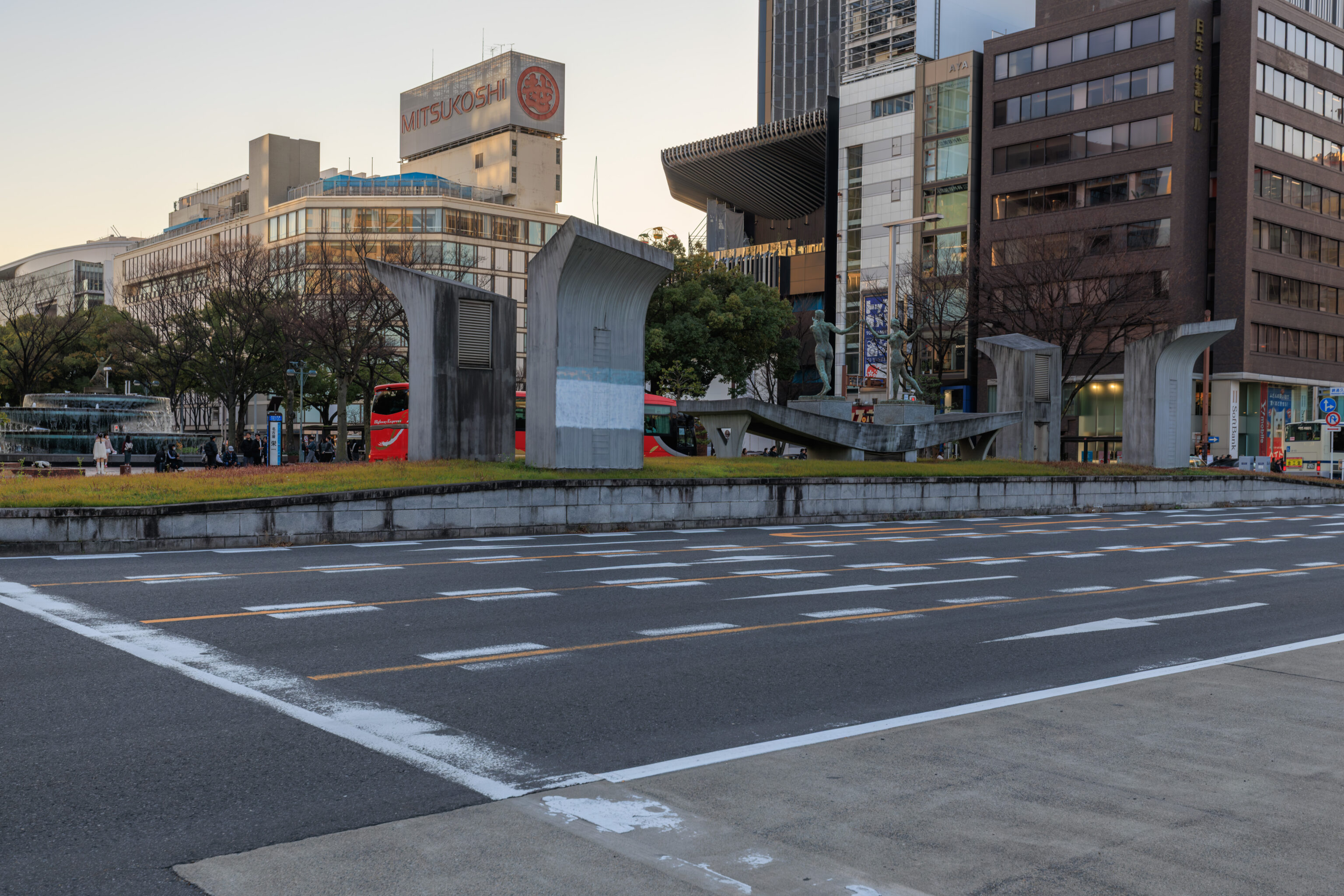
We decided to go walk around a bit and stated by heading south. The block to the west of Osais 21 contains 久屋大通公園 Hisaya Odori Park, a linear park that runs from near Nagoya Castle to about 16 blocks to the south.
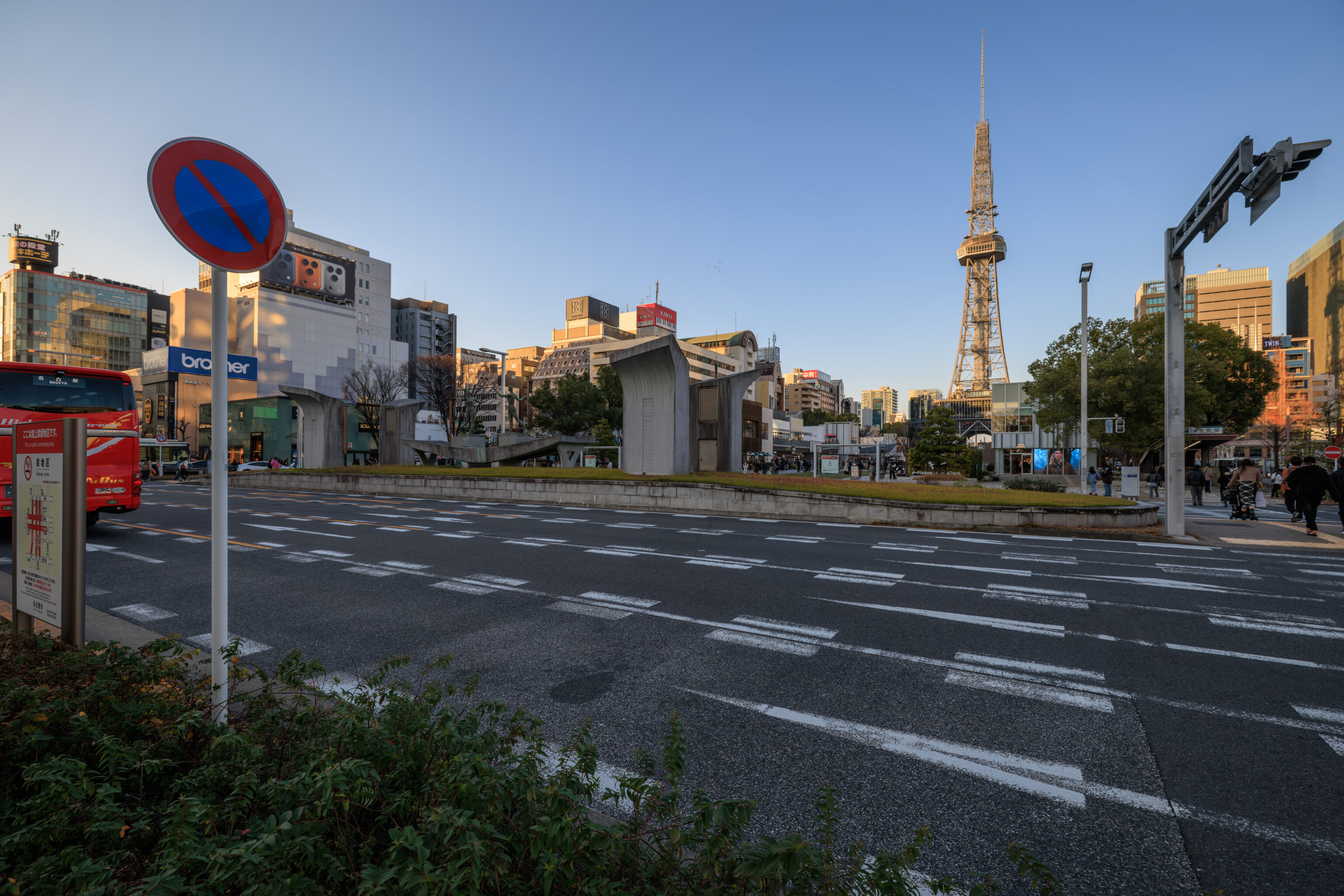
A strip of grassy median to the southwest of Osais 21 contained two statues and some structures that probably serve some practical function, perhaps as ventilation and access for the underground levels here. The sculpture appears to created by 野々村一男 Kazuo Nonomura. It might be named 双身像 Dual Body Sculpture but that may also just be a description of what it is.
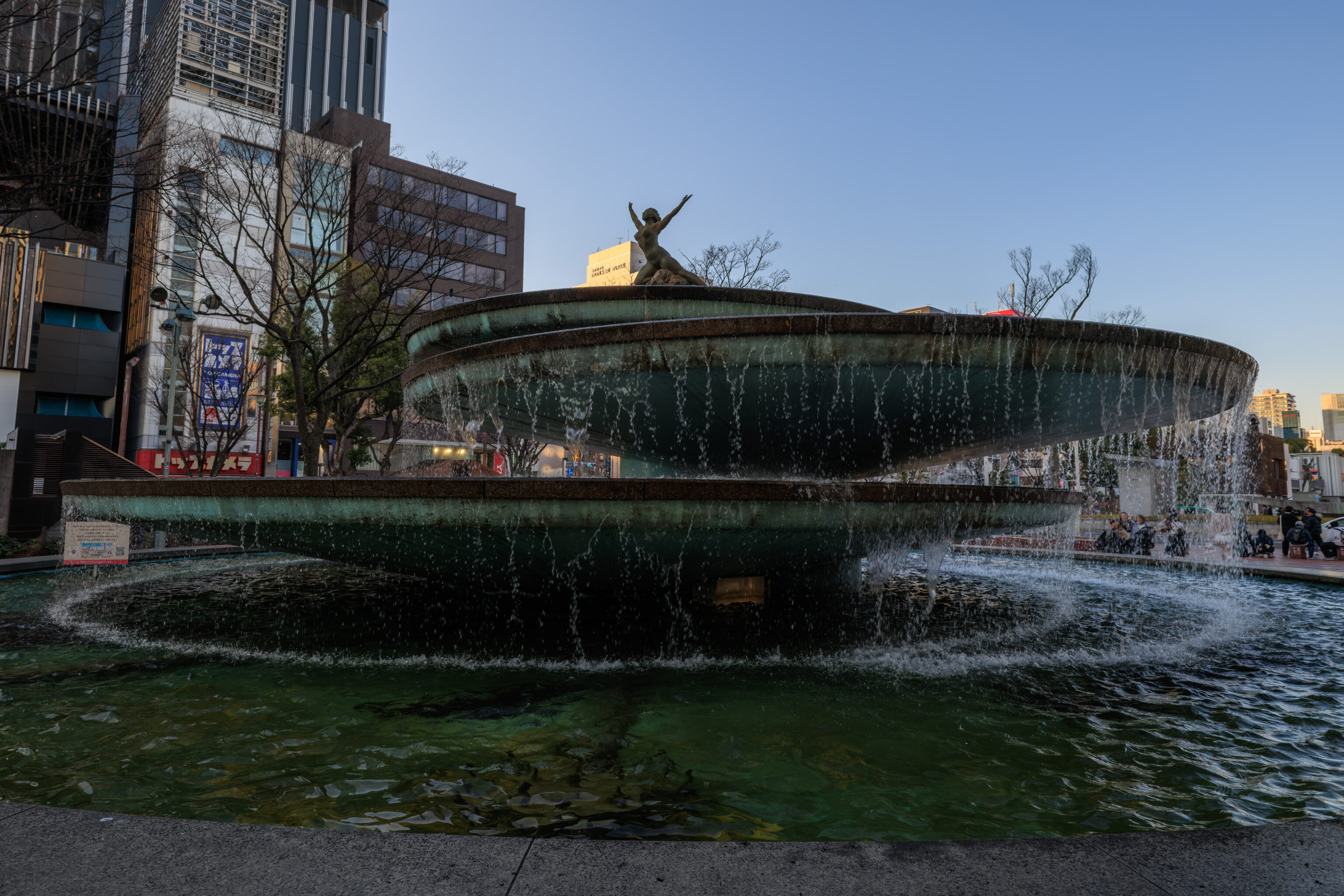
The block to the south contains the 希望の泉 Fountain of Hope.
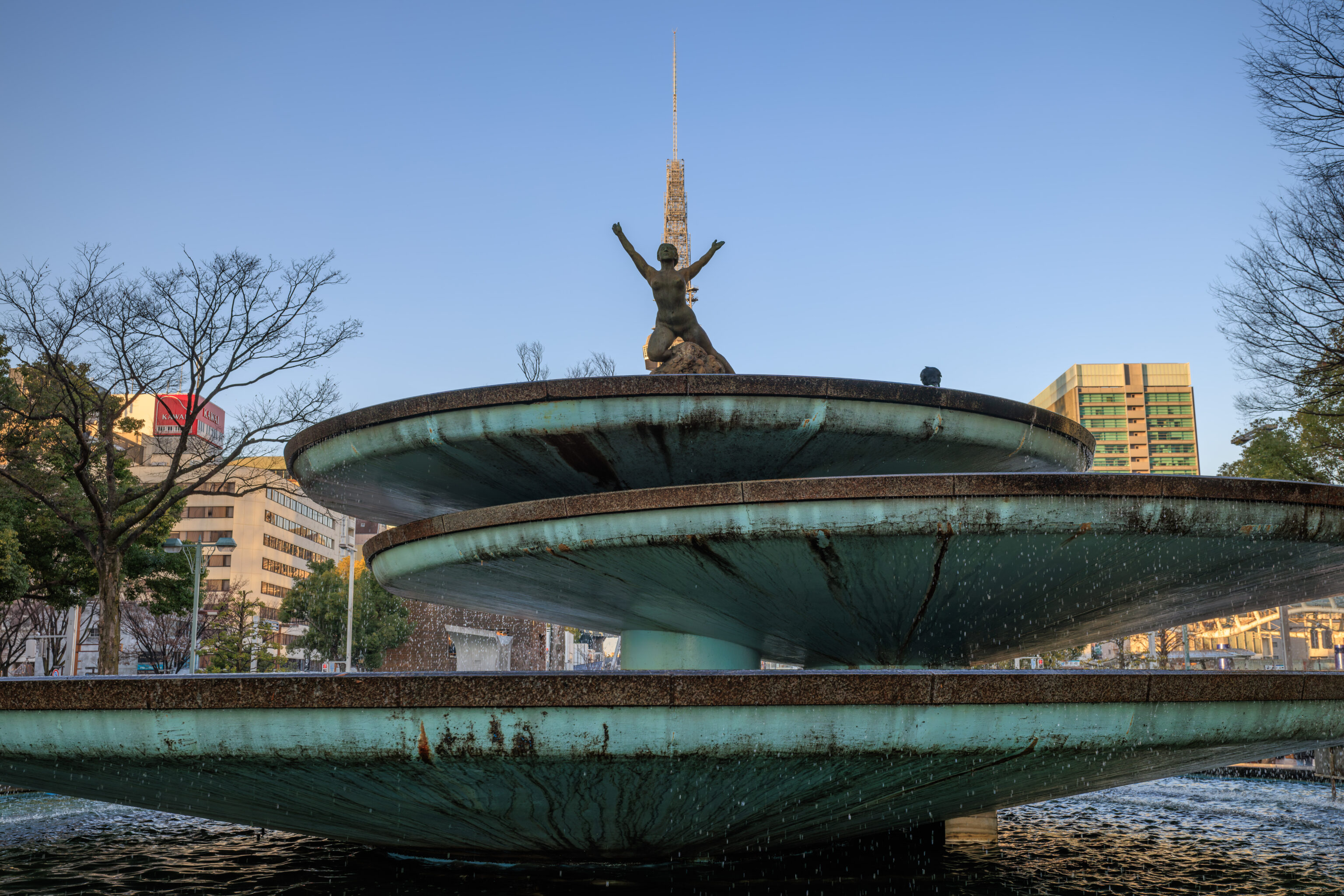
The fountain as seen from the south with the Mirai Tower in the background. It could use a bit of cleaning…
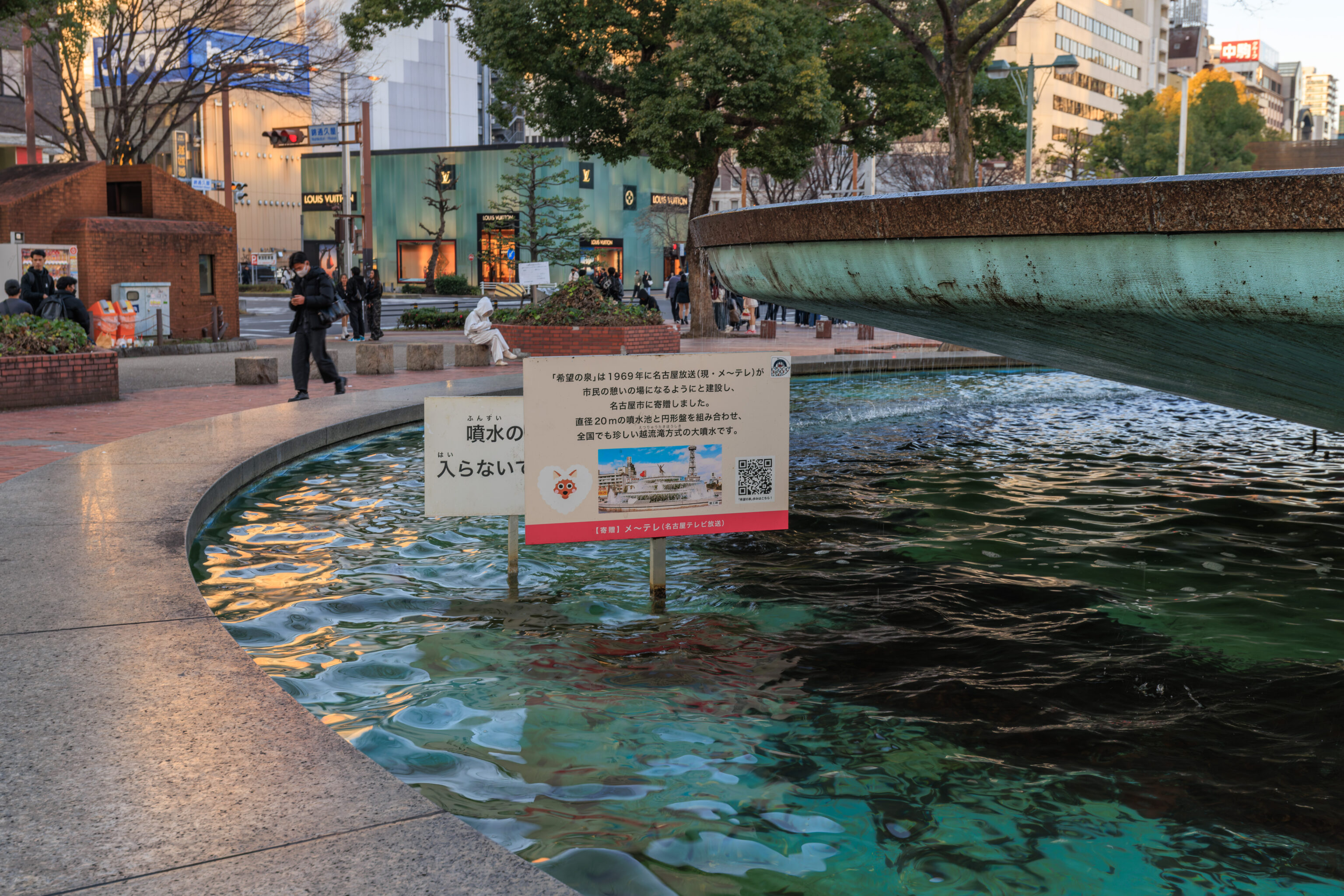
The sign in the lower part of the fountain provides a bit of information:
The "Fountain of Hope" was built and donated to the City of Nagoya by Nagoya Broadcasting Network (now known as Mē-Tele) in 1969, with the aim of creating a place of relaxation for the public.

It is a large fountain featuring a combination of a 20-meter-diameter pool and a circular platform; it employs an "overflow waterfall" design—a style rarely seen elsewhere in Japan.

[Donation] Nagoya Broadcasting Network (Mē-Tele)
– Text from the sign in the fountain, read using Google Gemini and translated using Google Translate.
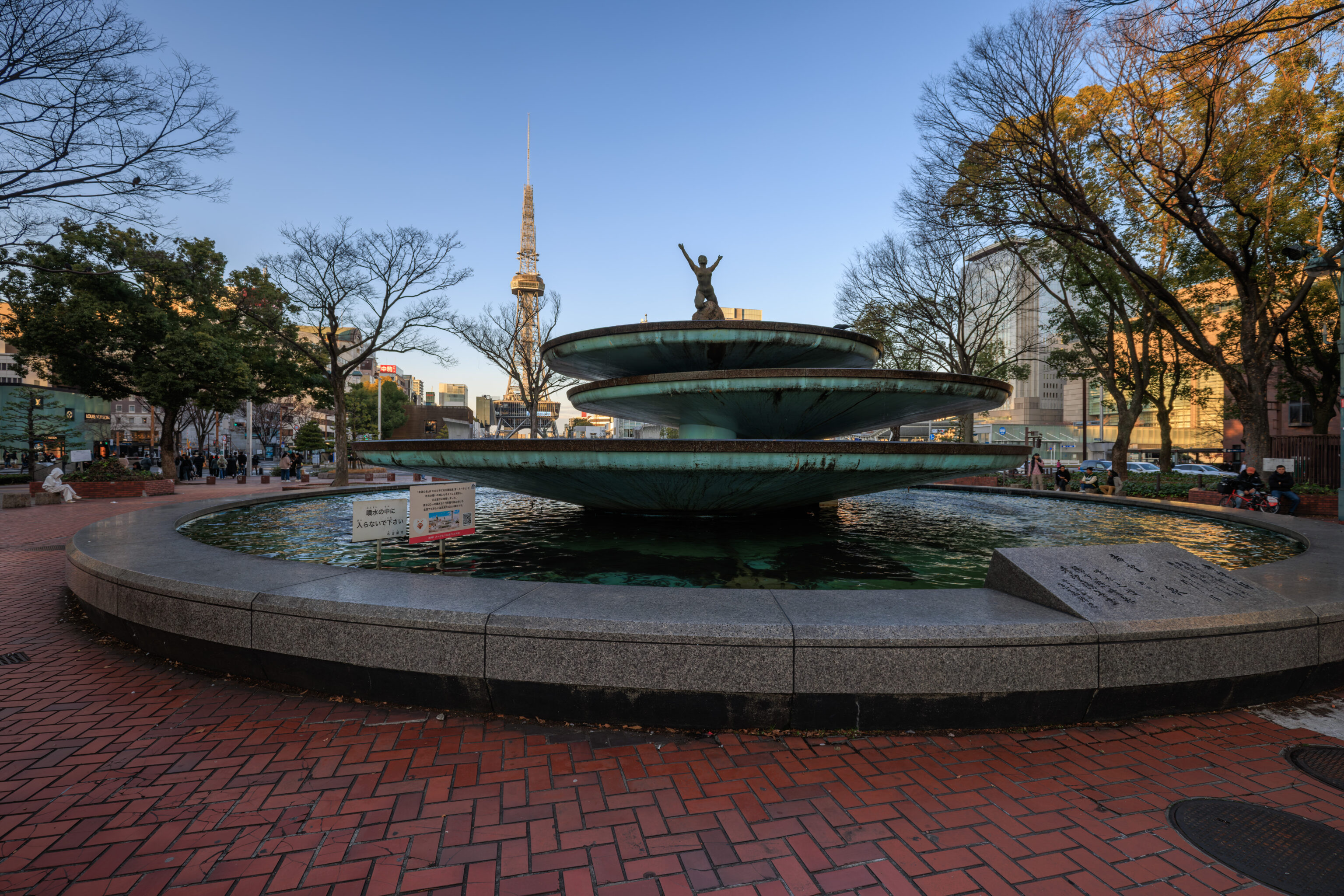
There is also some text inscribed upon the fountain:
A Poem of Hope
Hope is peace.
Hope is joy.
Hope is health.
Mayor of Nagoya Kiyoshi Sugito

Fountain of Hope
Shotaro Kamiya

Ode to the Spouting Water
Sunlight shines upon the fountain,
Endless hope surges forth.
Governor of Aichi Prefecture Mikine Kuwahara
– Text inscribed on the fountain near the bottom right of the above photograph, read using Google Gemini and translated using Google Translate.
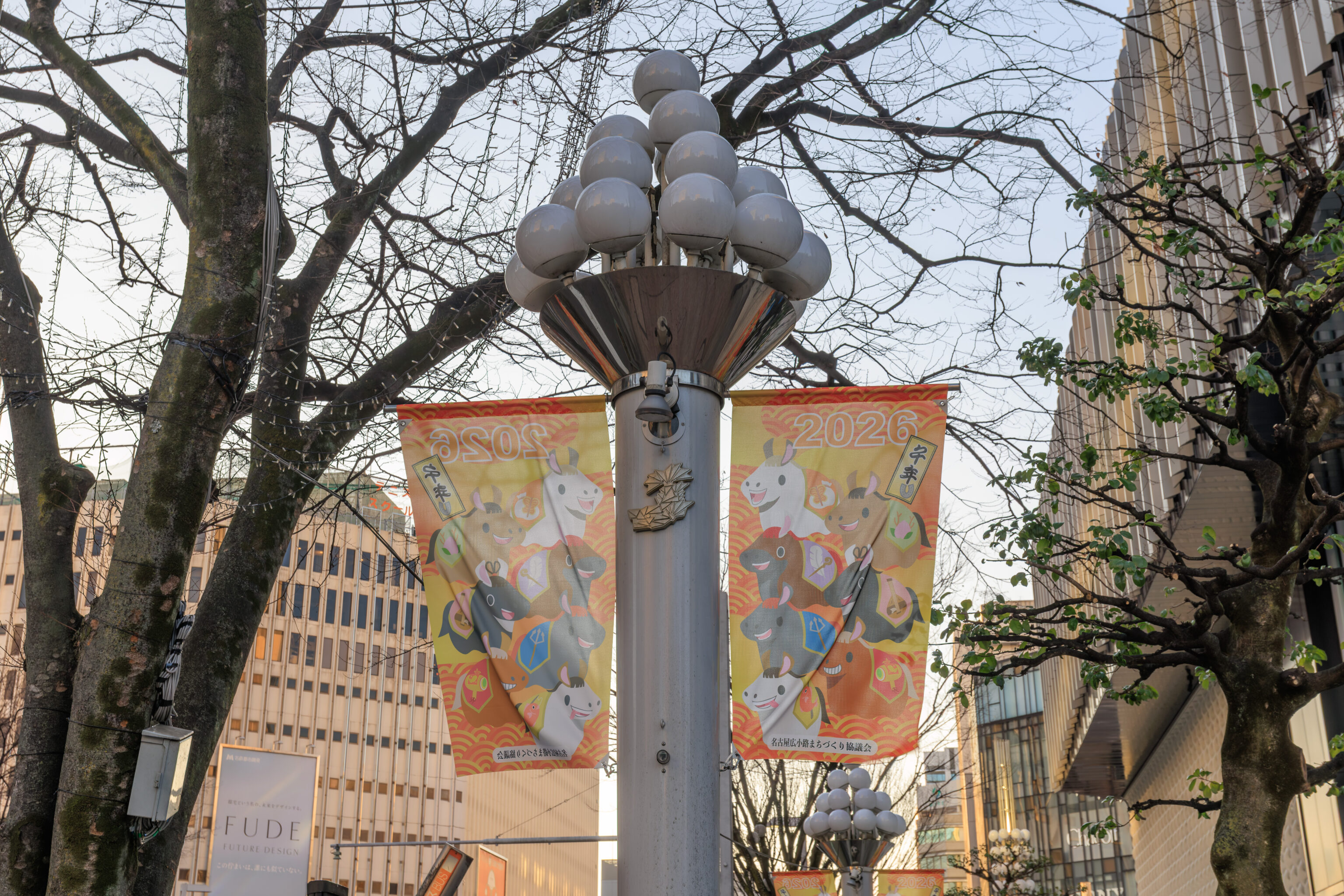
These banners hanging from the interesting lamps here depict happy horses for 2026, the year of the horse.
We had dinner at 矢場とん Yabaton, a local chain that specializes in the local 味噌カツ miso katsu dish, in the ラシック Lachic department store.
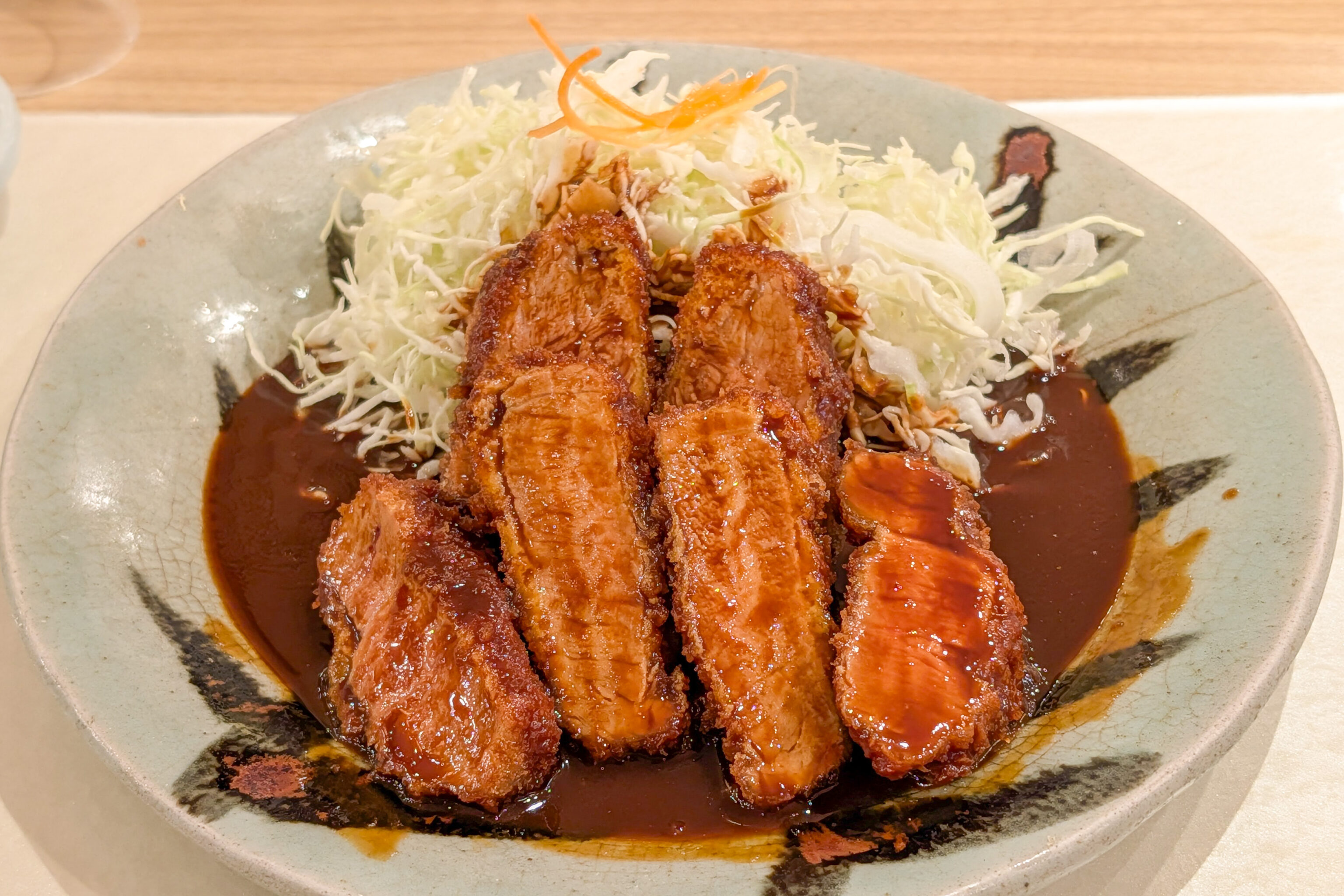
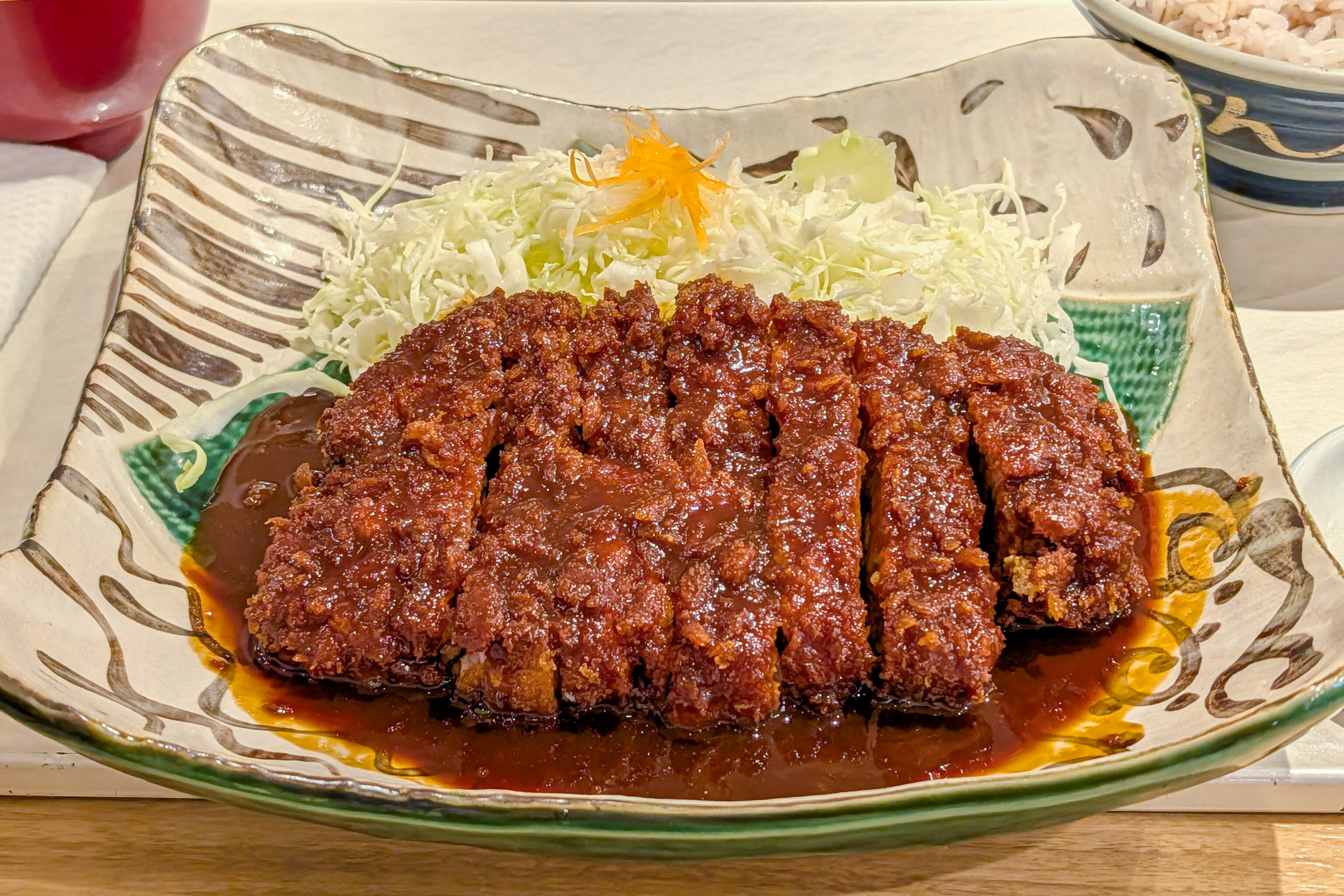
Miso katsu is basically a katsu with a red miso sauce. The red miso sauce is actually applied at the table by the staff when serving. We got fillet and rib loin. Both were excellent!
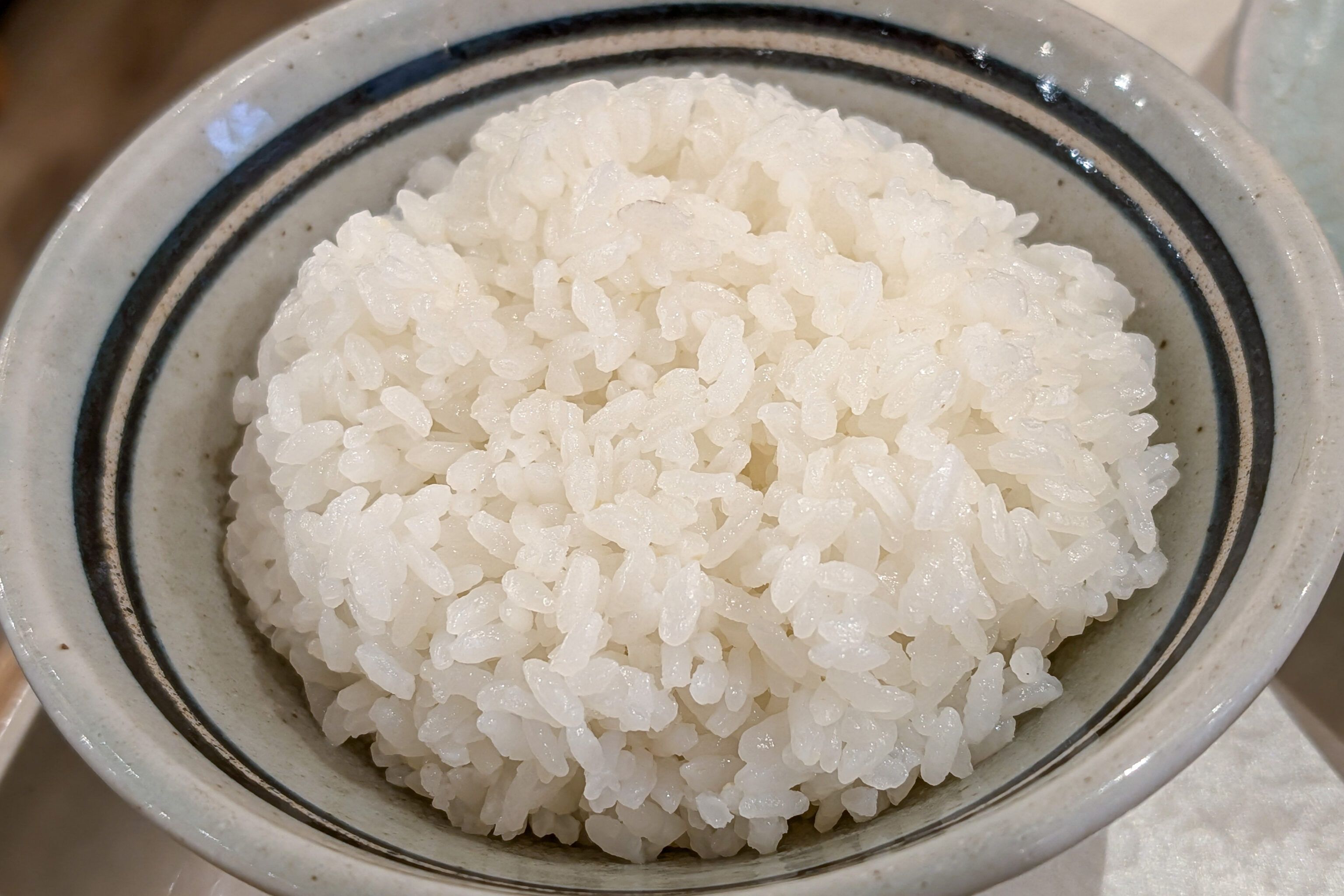
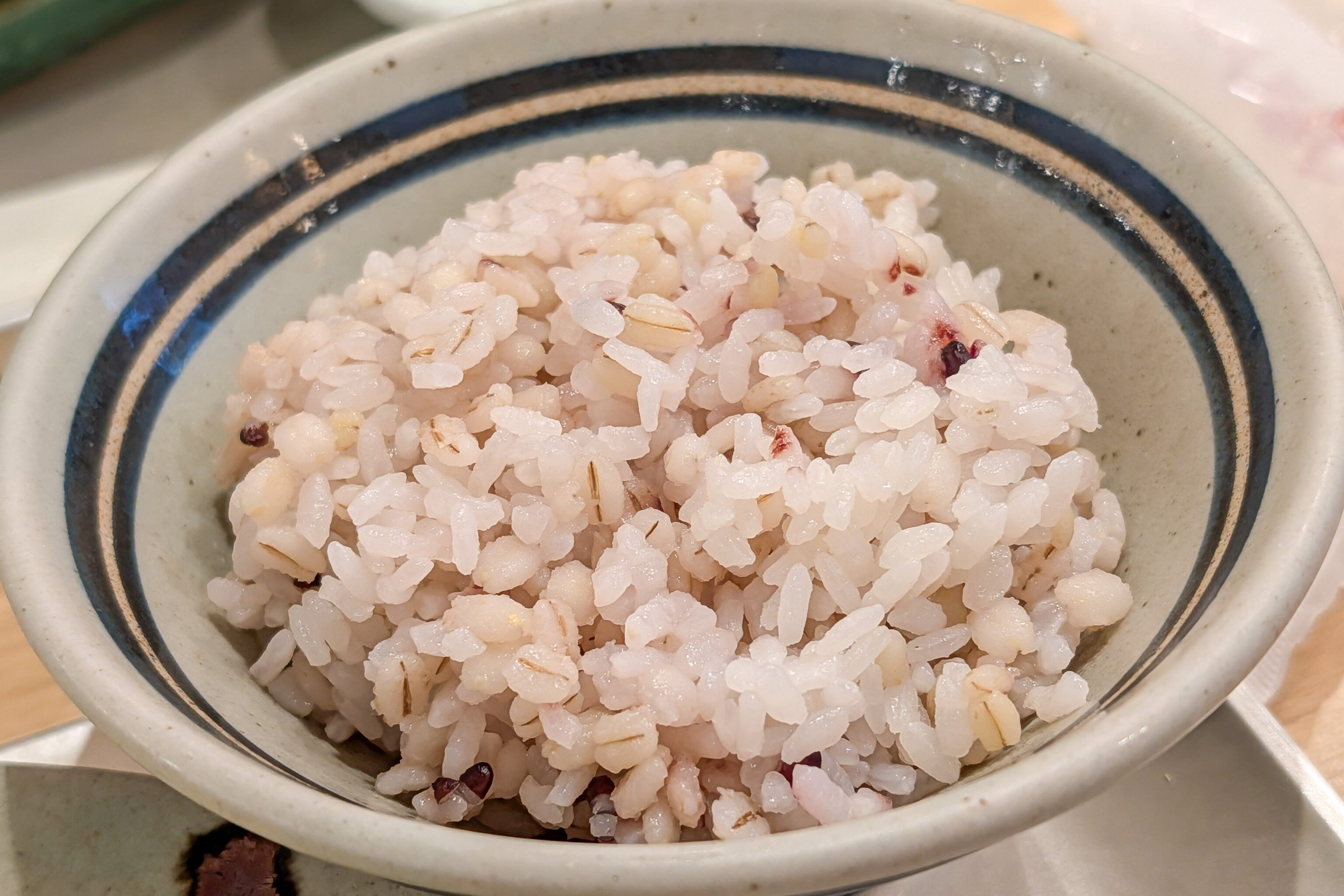
We tried both of the rice options.
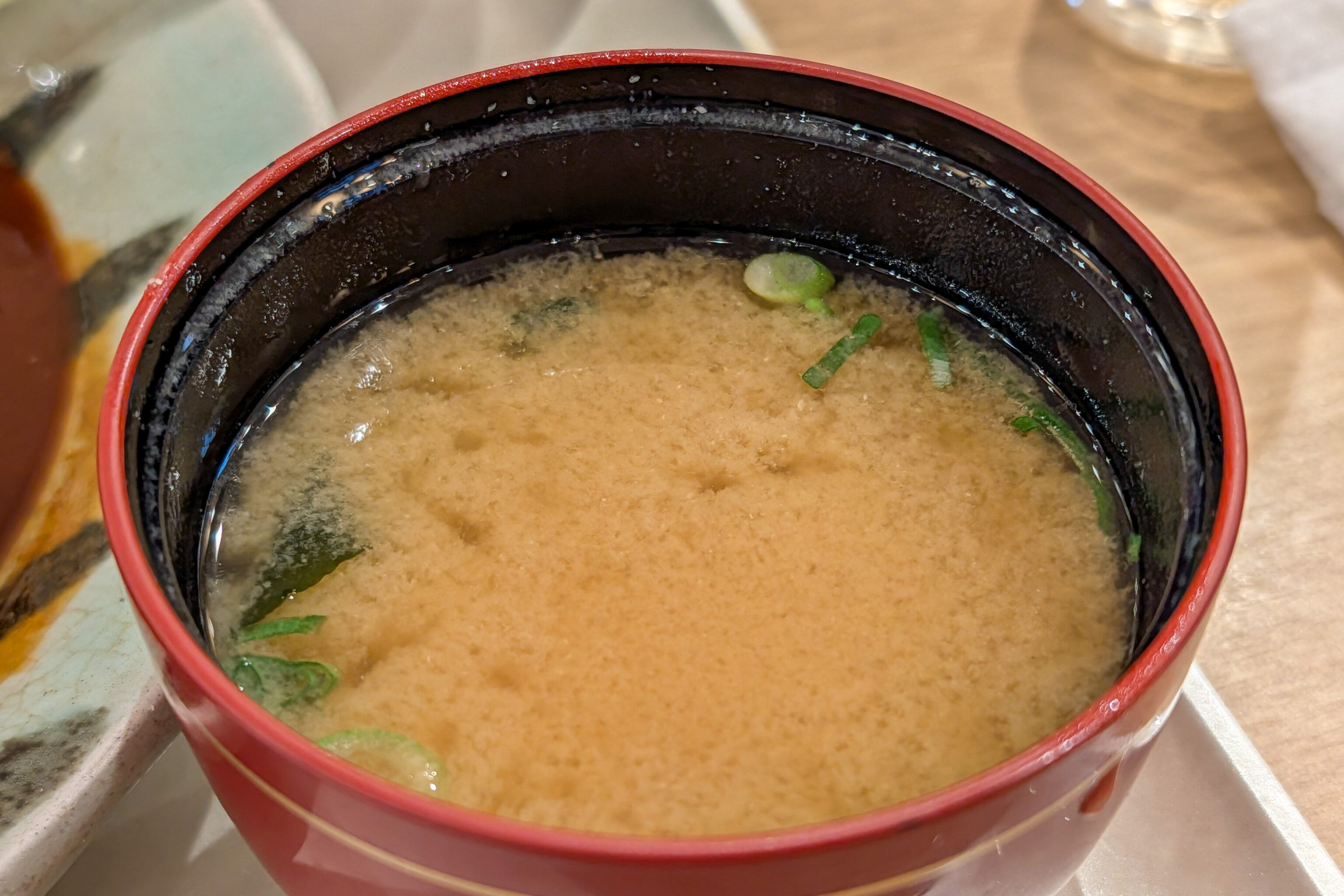
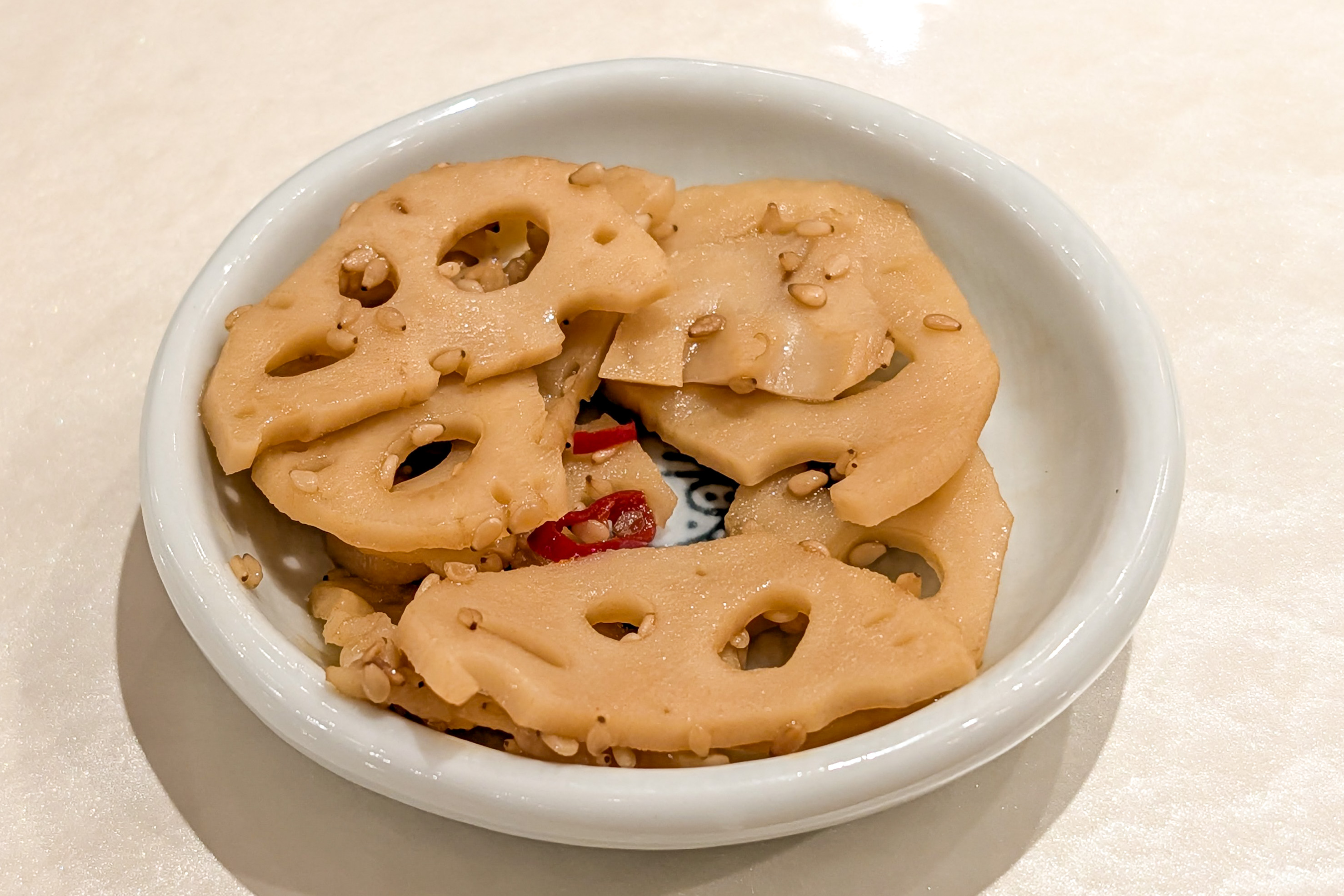
Soup and a lotus snack were provided as well.
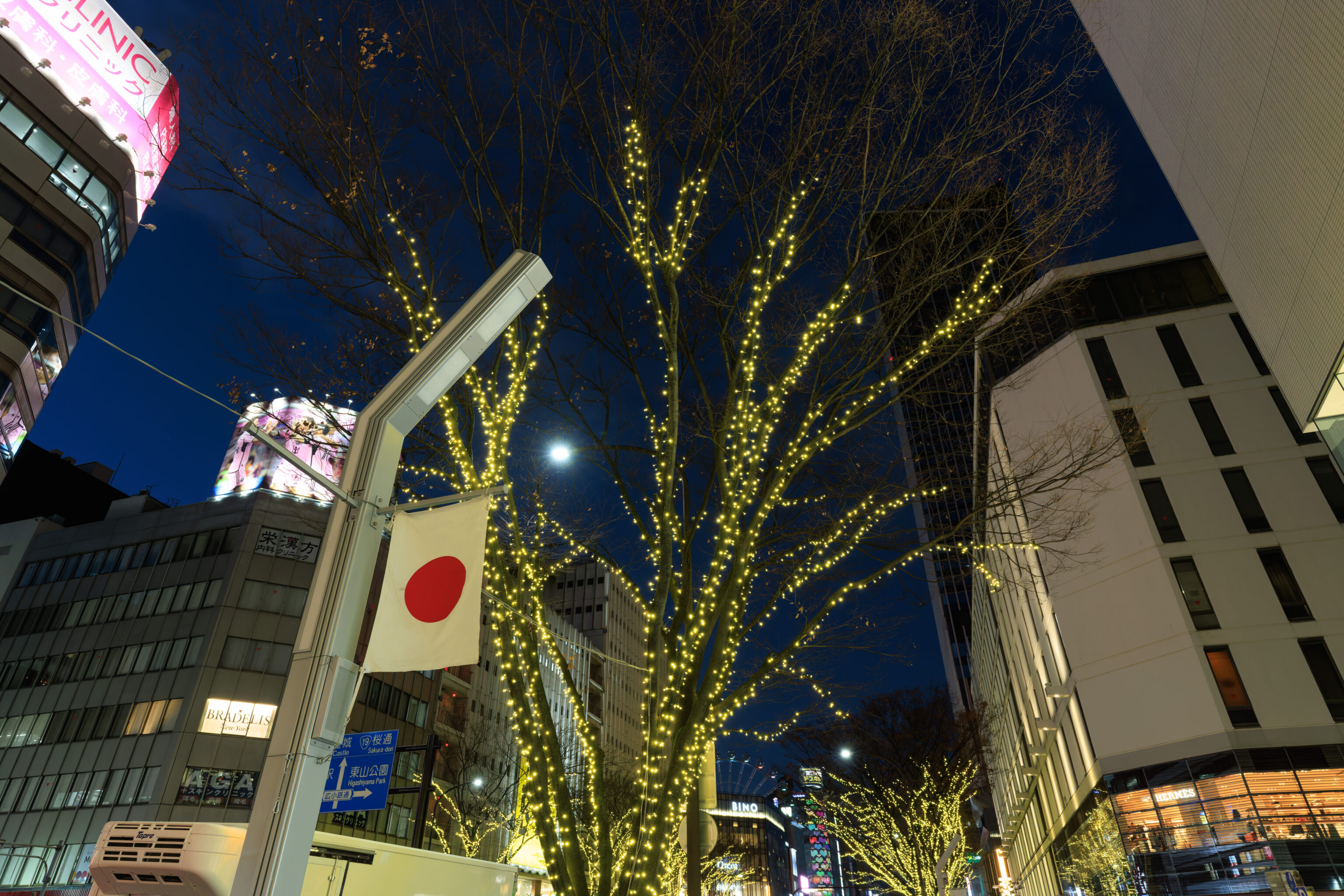
After dinner, we continued walking around and started to head back to Oasis 21 to the northeast of where we ended up. By now, 5:20pm, the sky was dark and trees were illuminated!
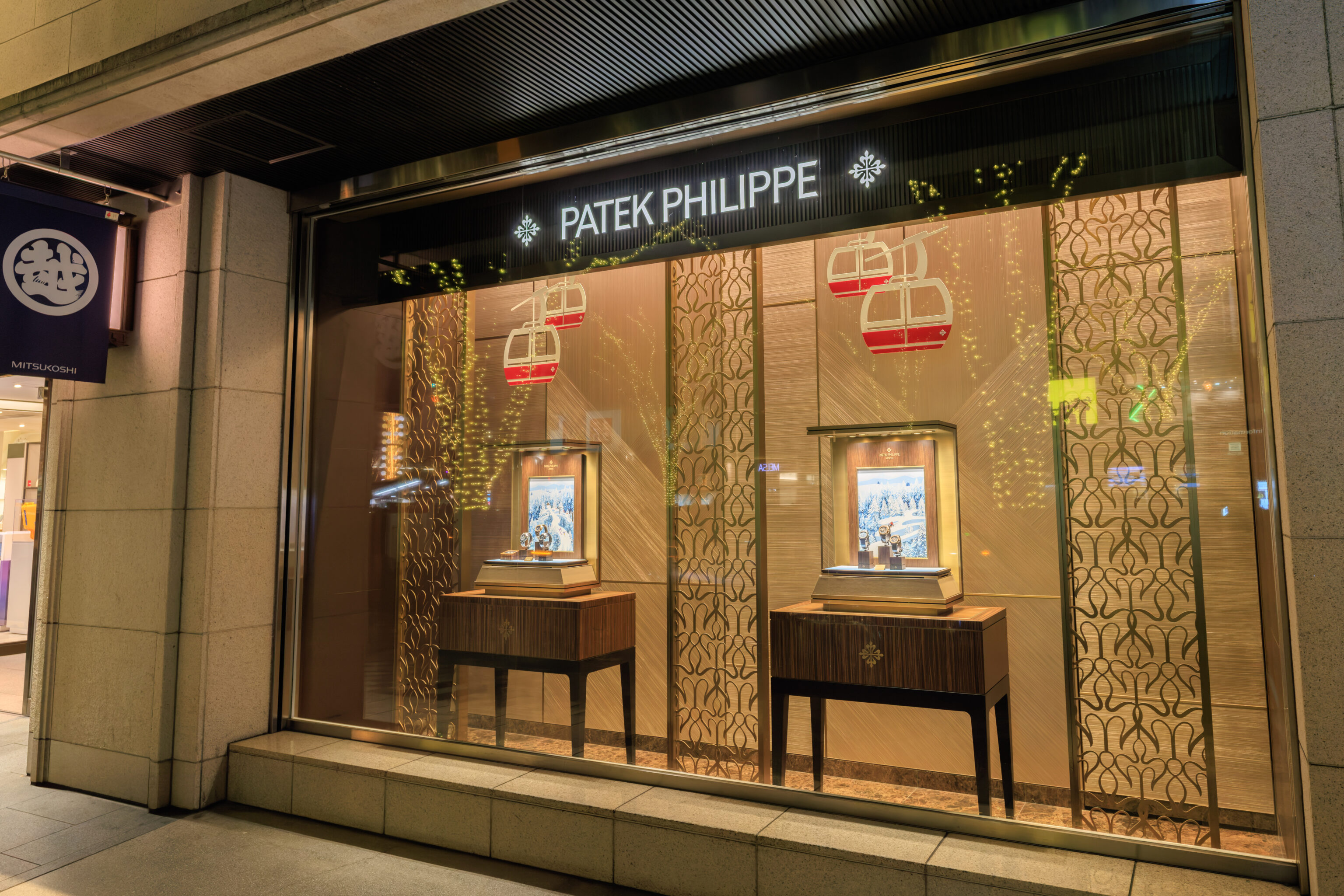
Patek Philippe! We’ve been to their museum in Geneva!
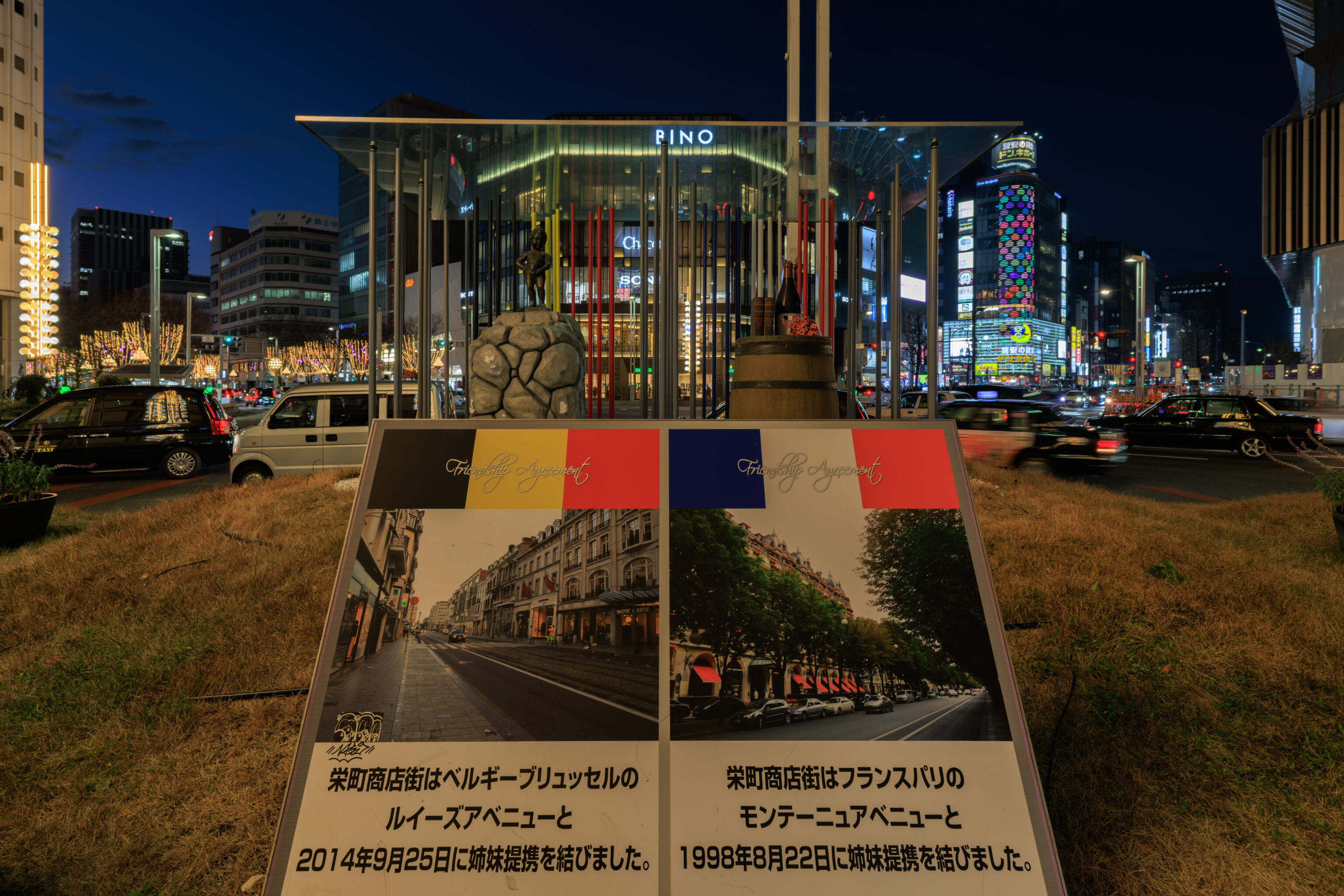
This sign is the first time we’ve ever heard of a sister-street agreement:
Sakaemachi Shopping Street established a sister-street partnership with Avenue Louise in Brussels, Belgium, on September 25, 2014.

Sakaemachi Shopping Street established a sister-street partnership with Avenue Montaigne in Paris, France, on August 22, 1998.
– Text from the two paneled sign above, read using translated using Google Translate.
Although we’ve been to both Brussels and Paris, we’ve never really been near Avenue Louise but have walked past the Avenue Montaigne.
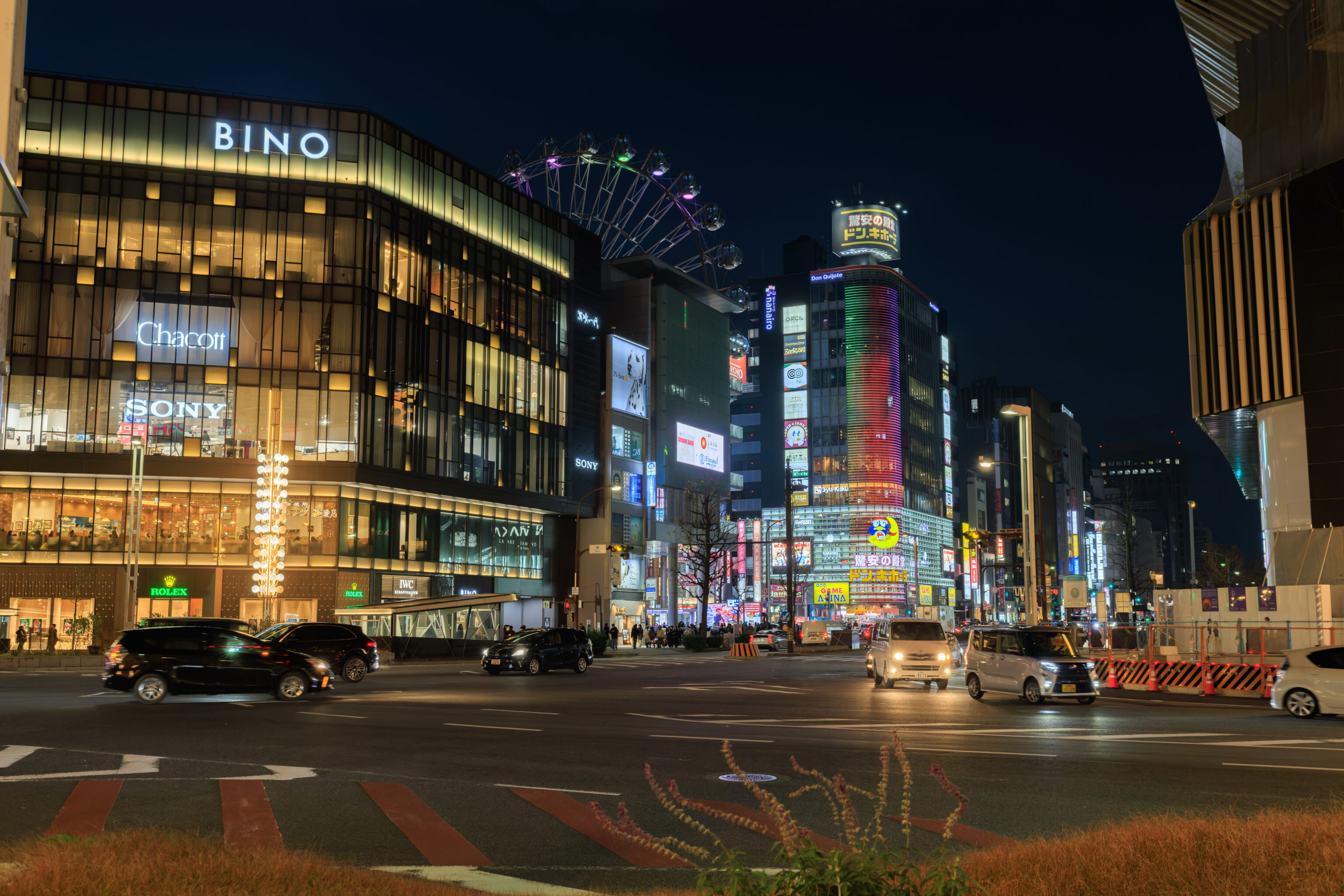
The Don Quijote store in the background is pretty colorful!
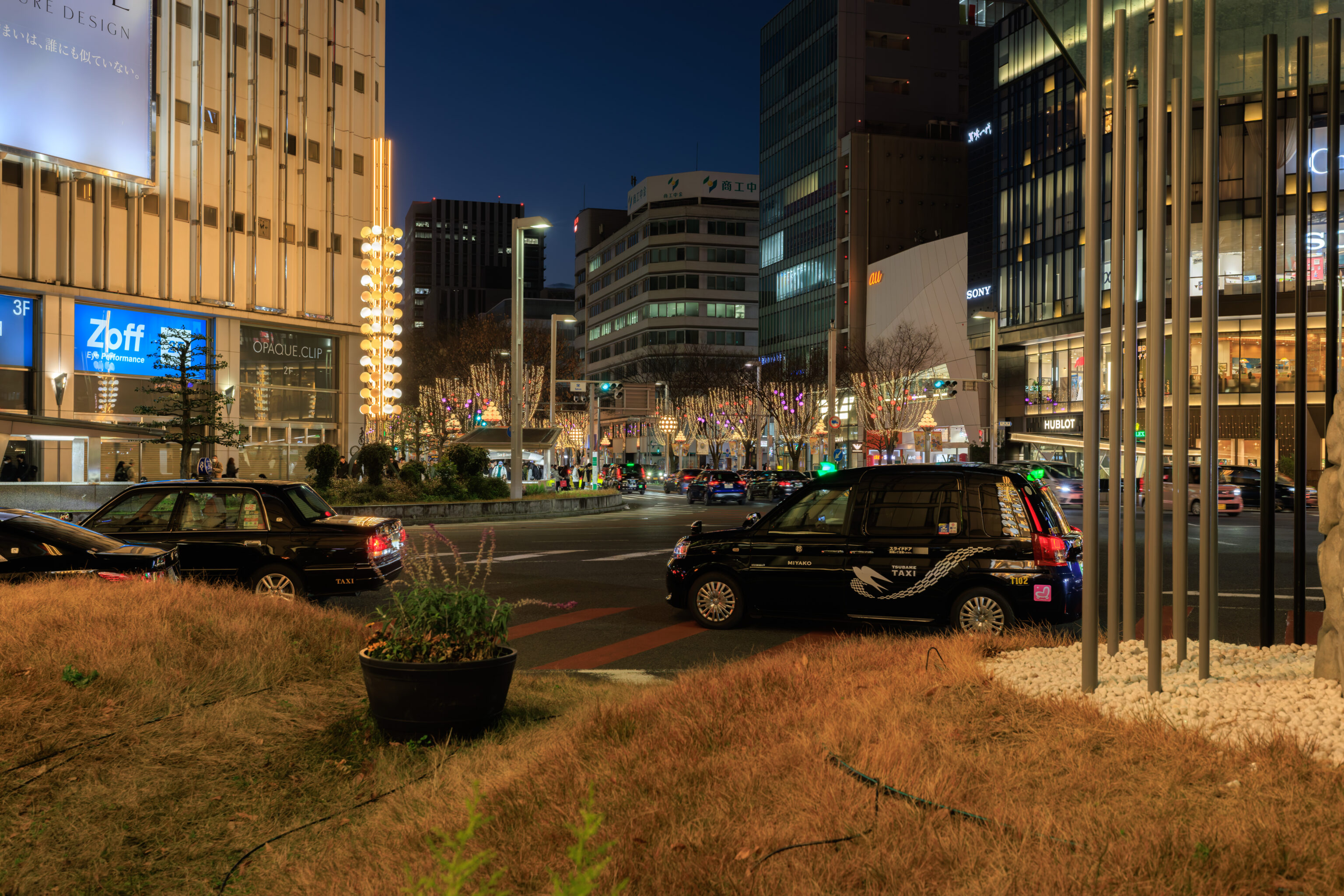
In Kyushu, they have the Tsubame Shinkansen. Here in Nagoya, they have the Tsubame Taxi!
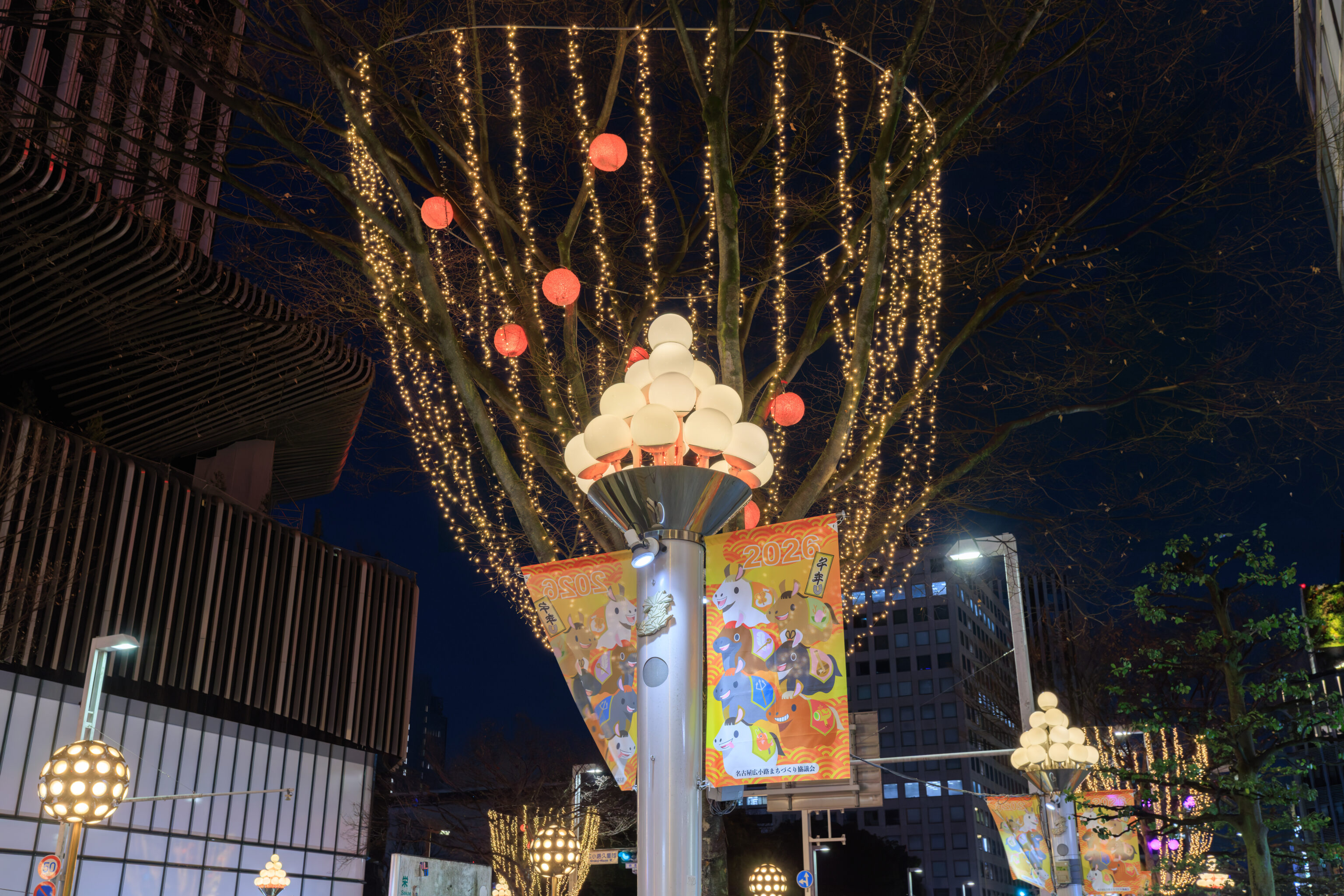
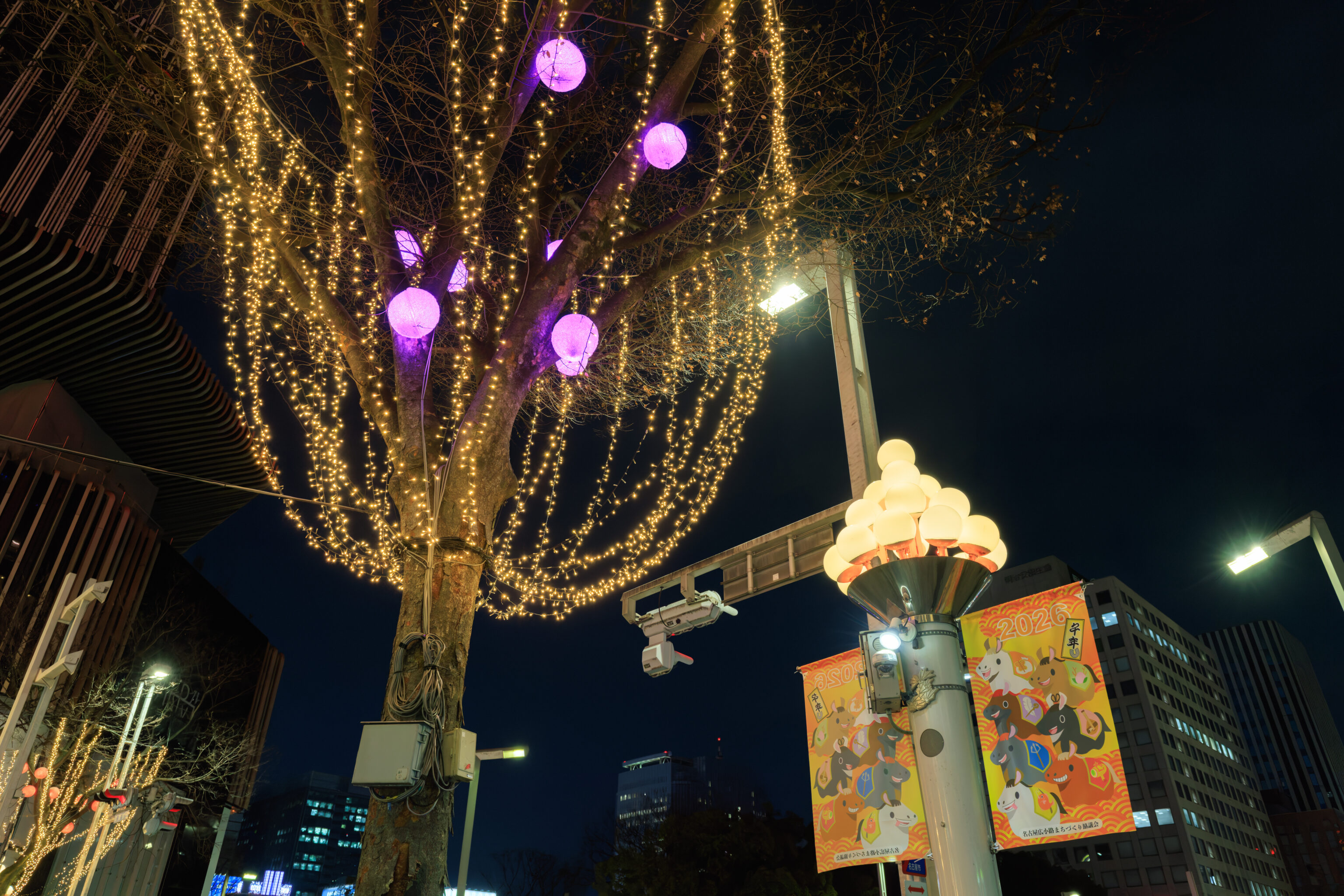
A closer look at the street lamps in the area as well as a particular style of illuminated trees.
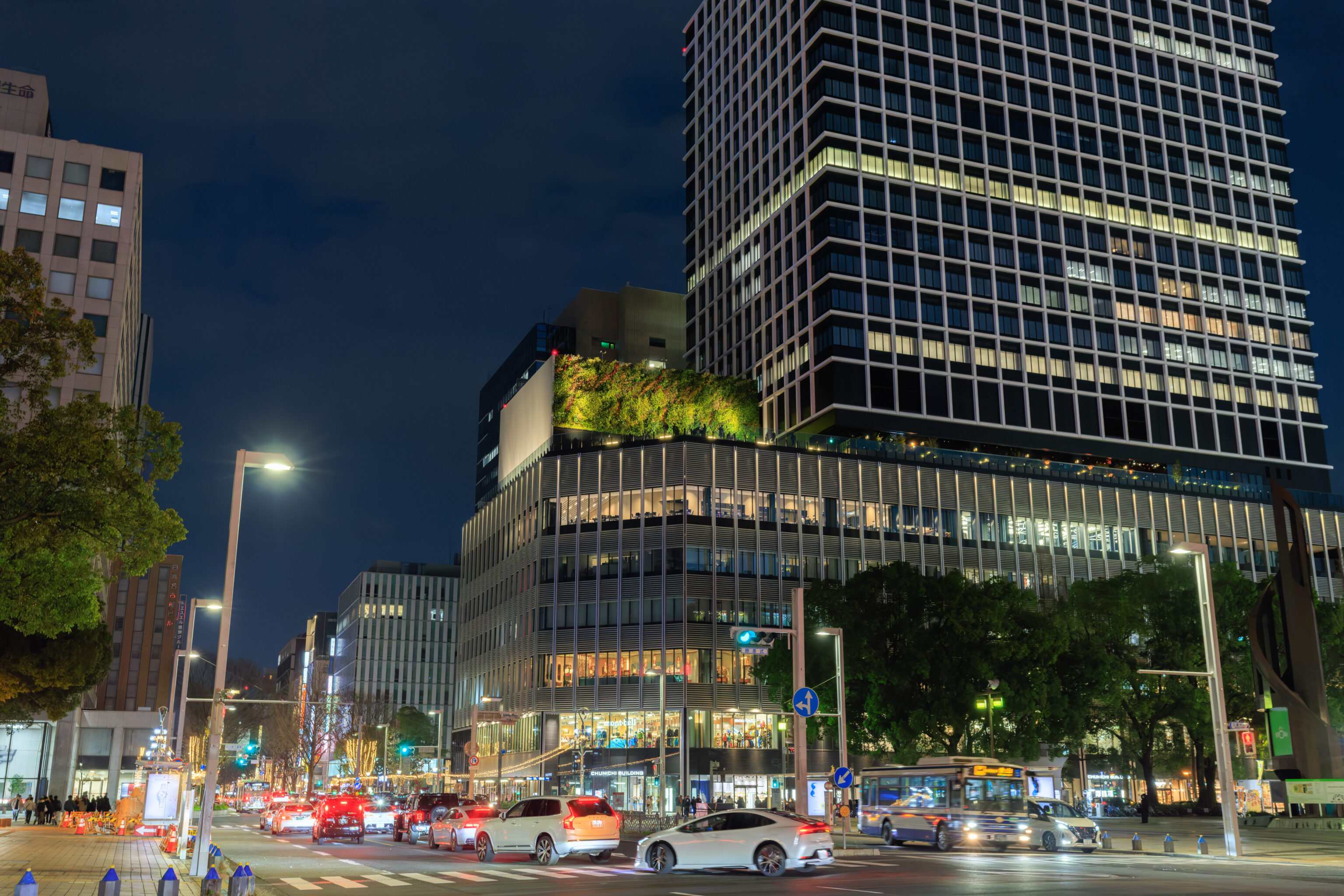
This building had an outdoor plant wall.
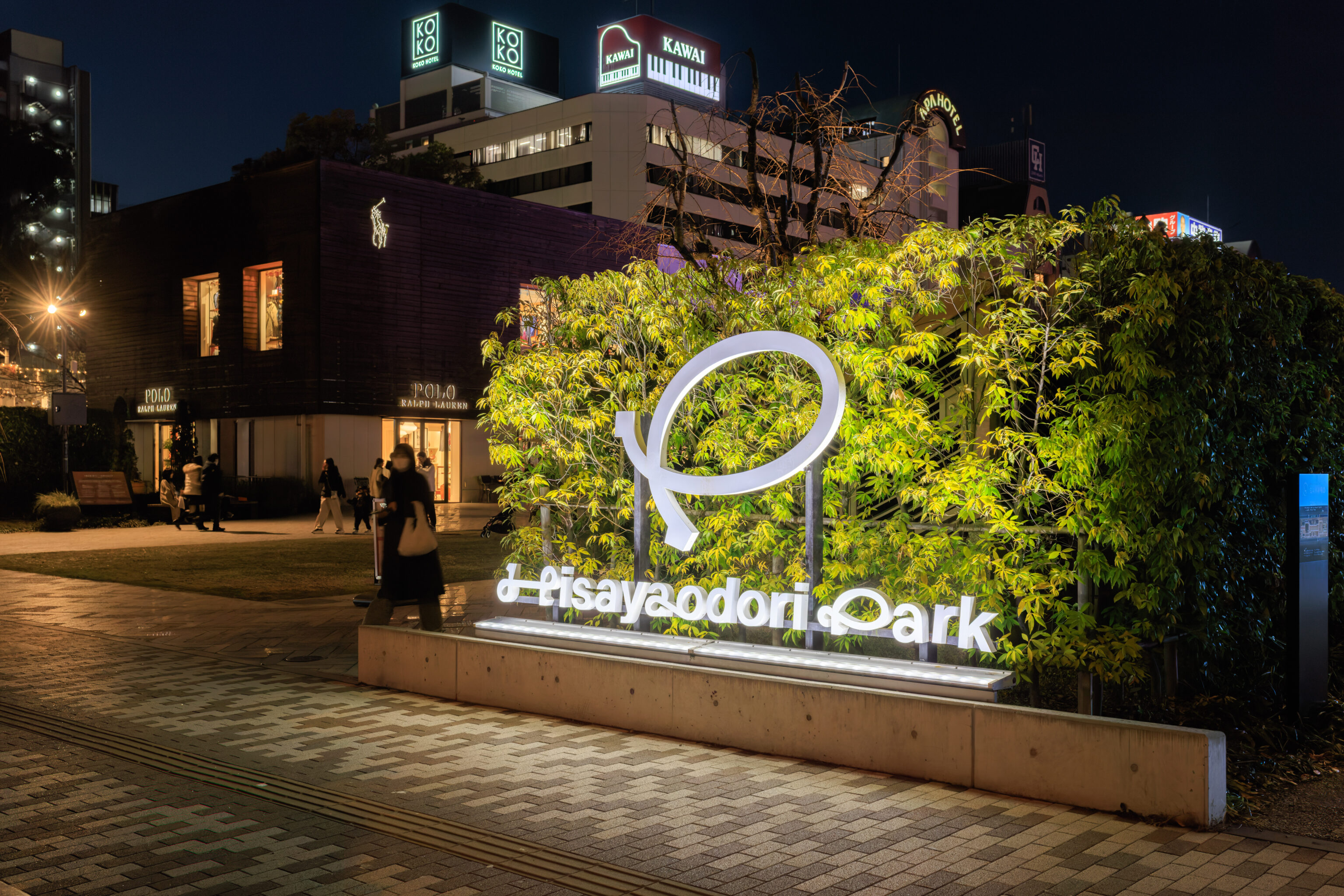
We returned to the Hisaya Ordori Park in the block to the west of Oasis 21.
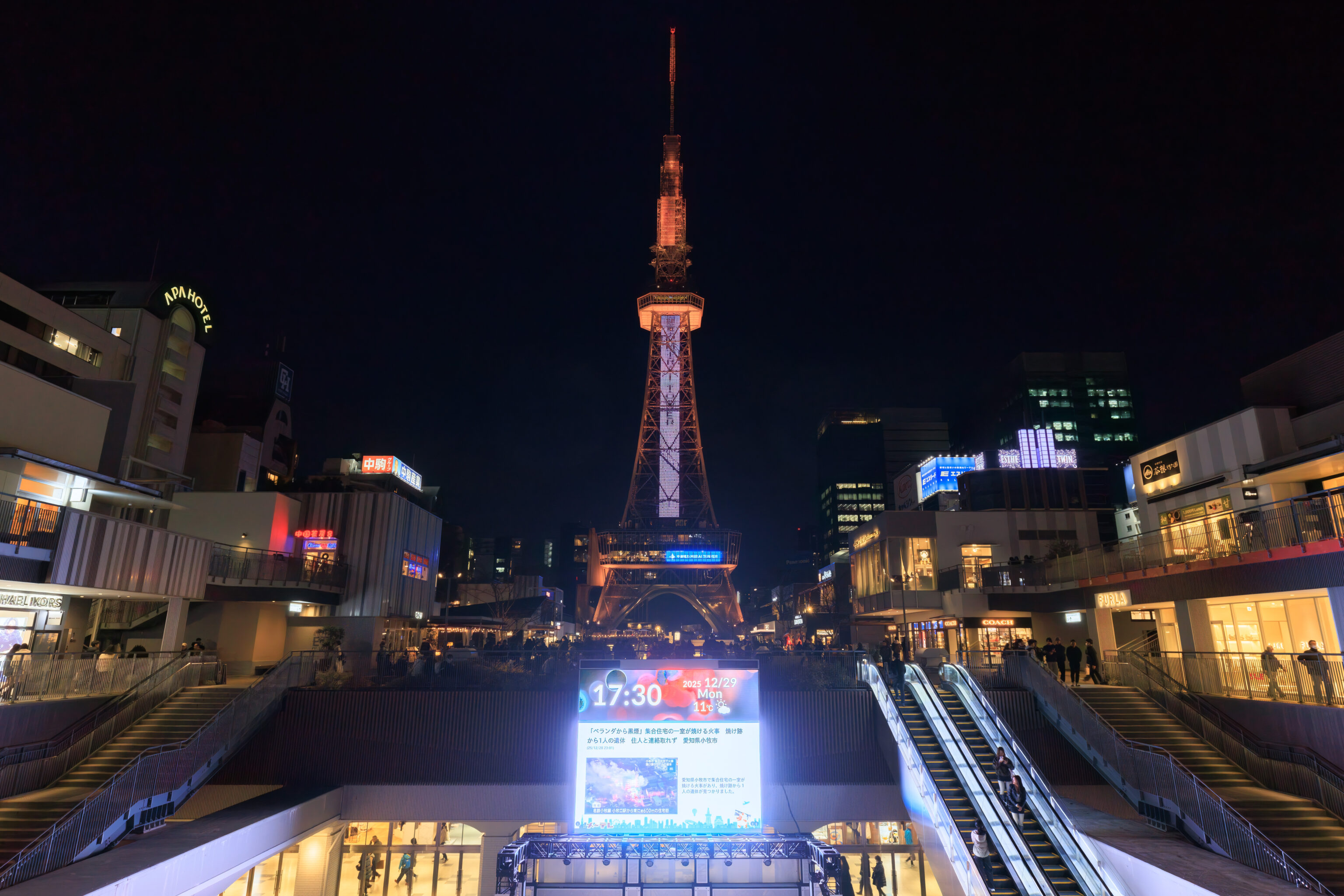
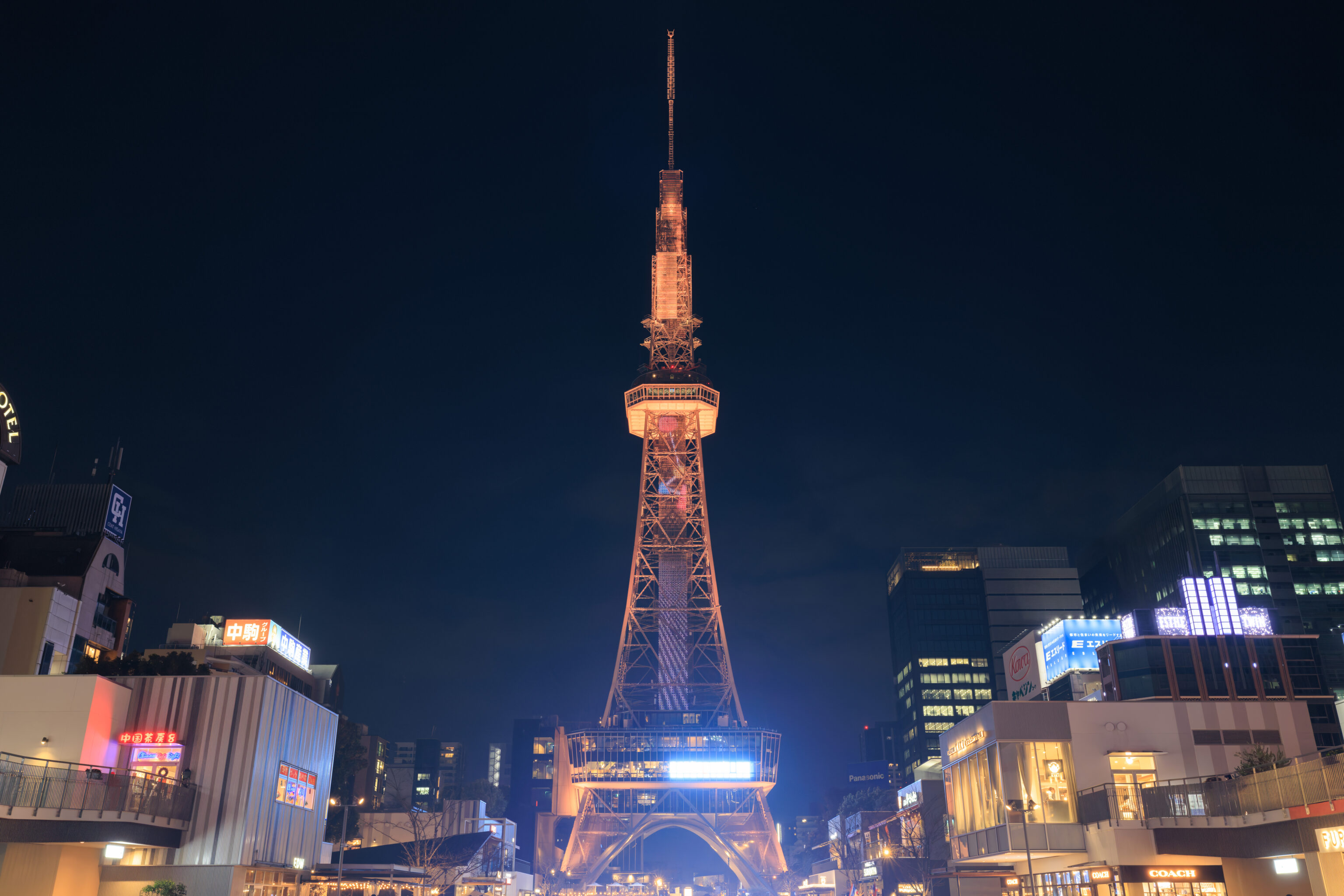
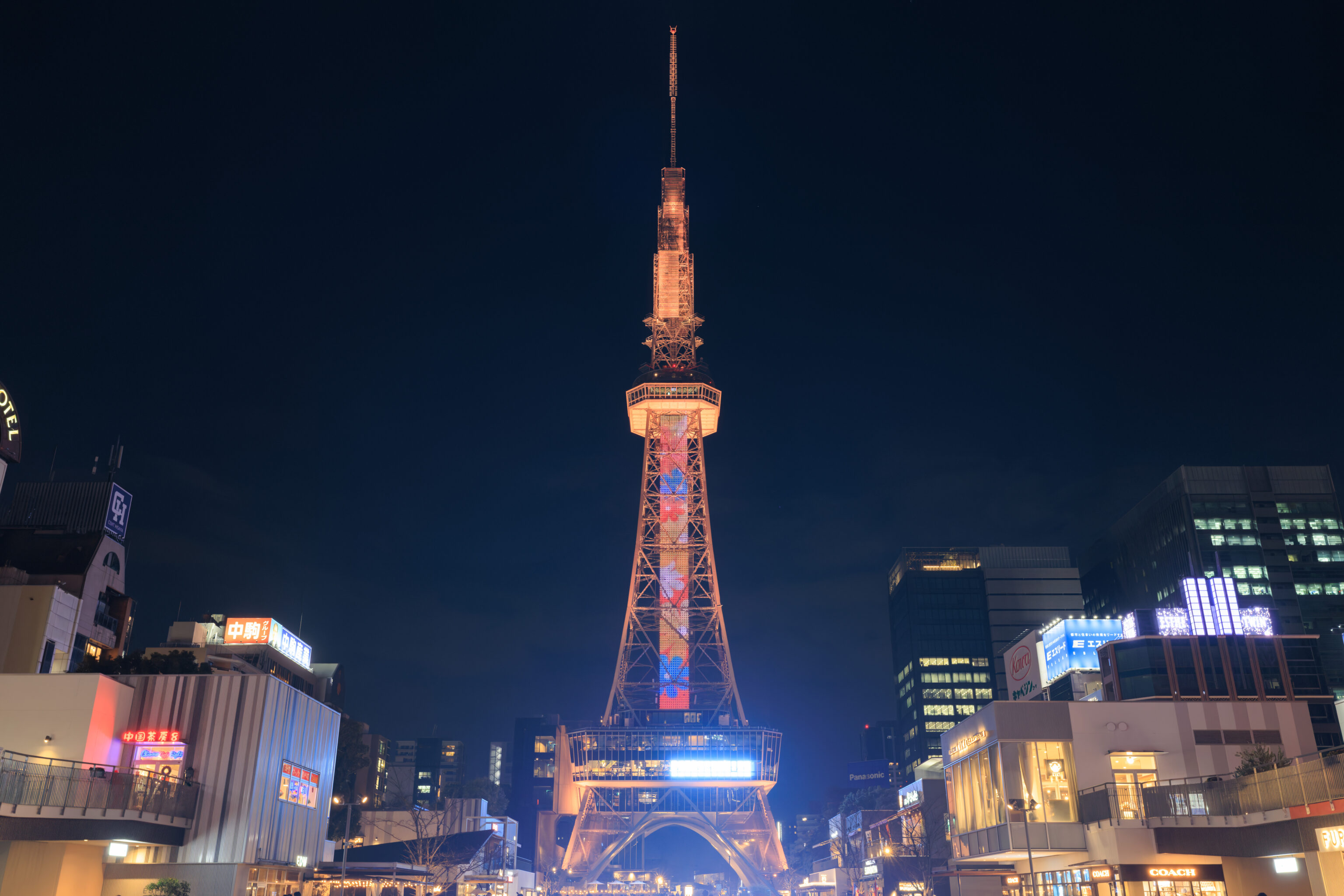
We walked to the north until we got close to the Mirai Tower. The LED lights between the upper and lower levels display various different scenes.
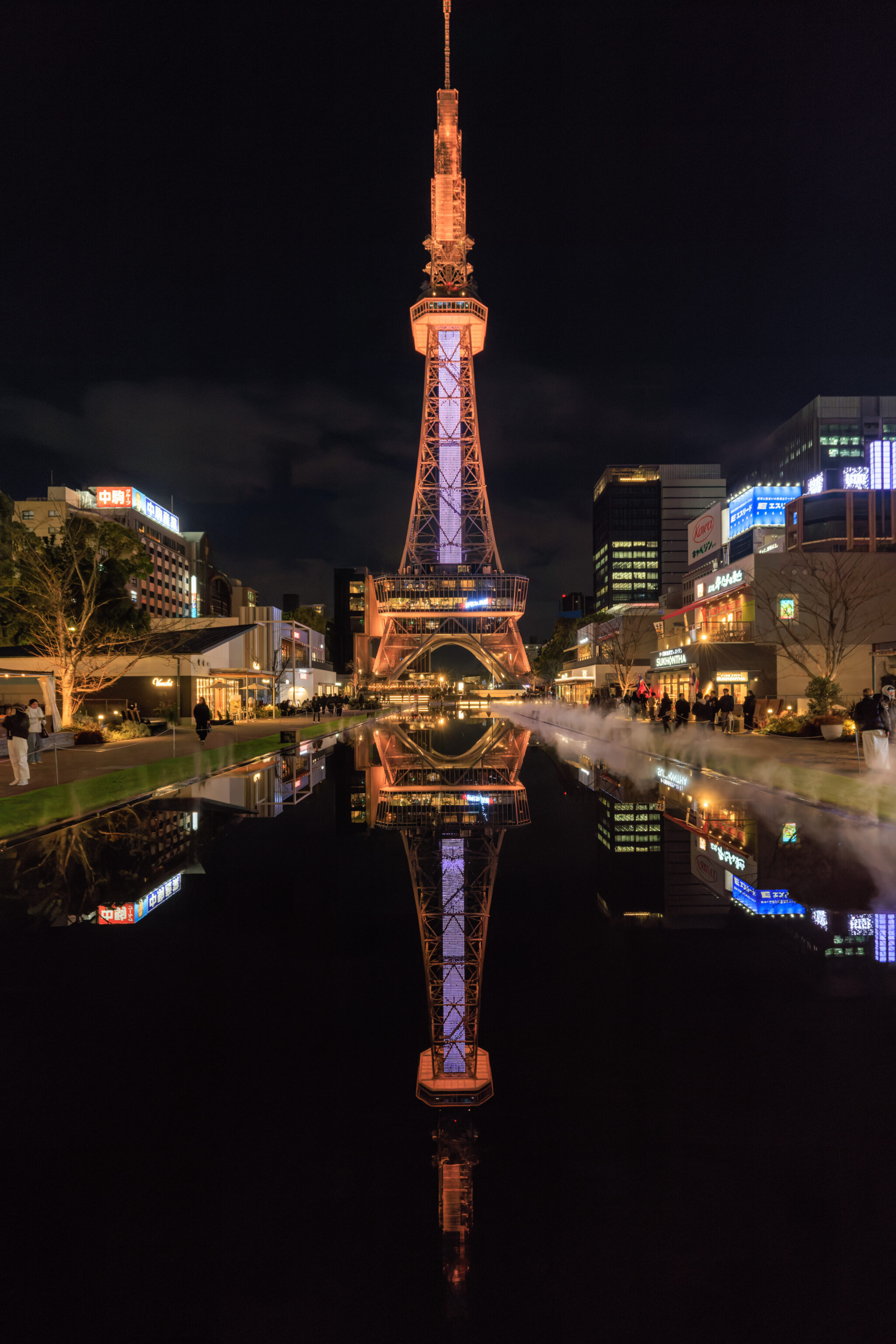
There was a shallow pool of water in the area directly to the south of the tower. We were surprised when we saw that the sides of the pool started to emit fog!
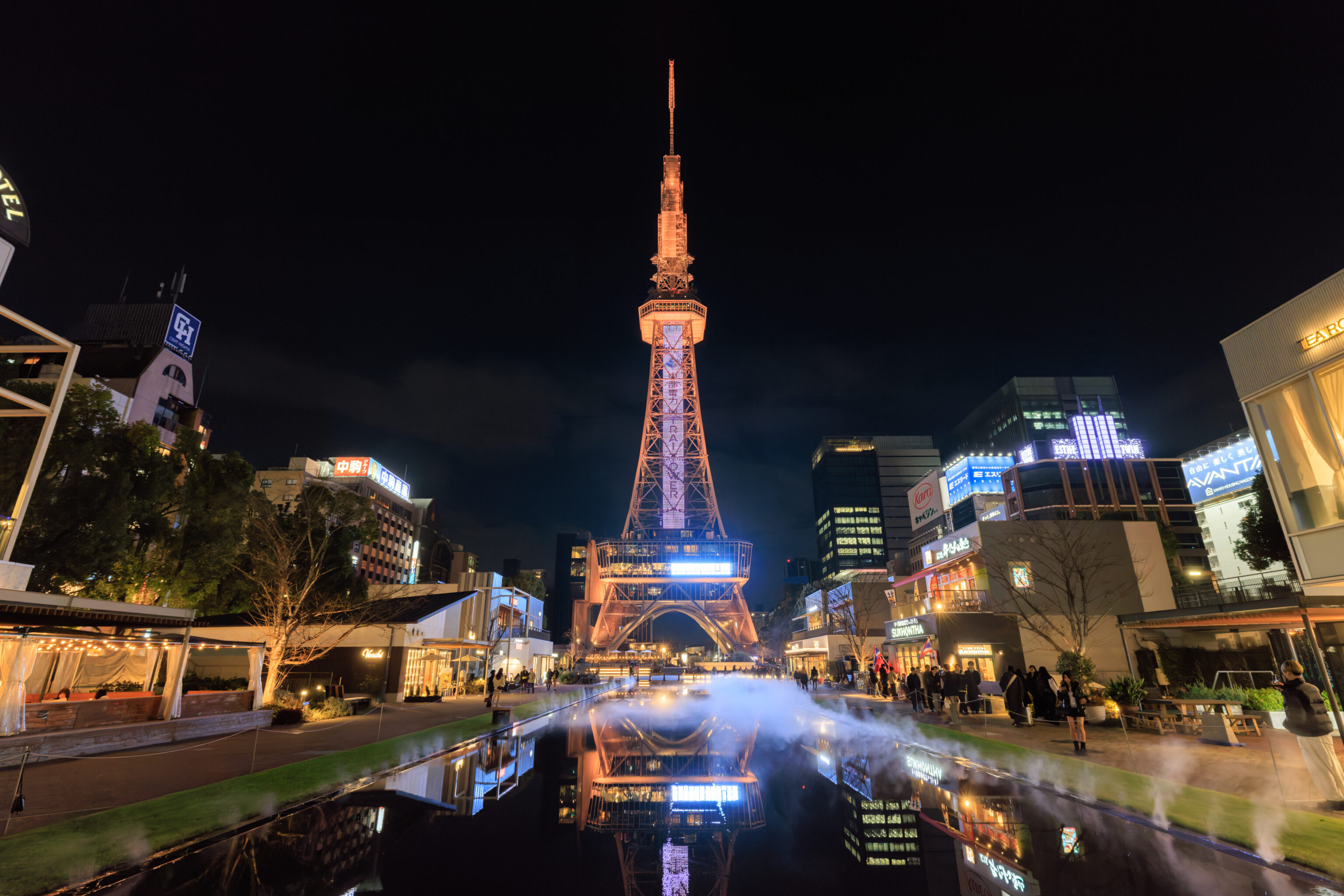
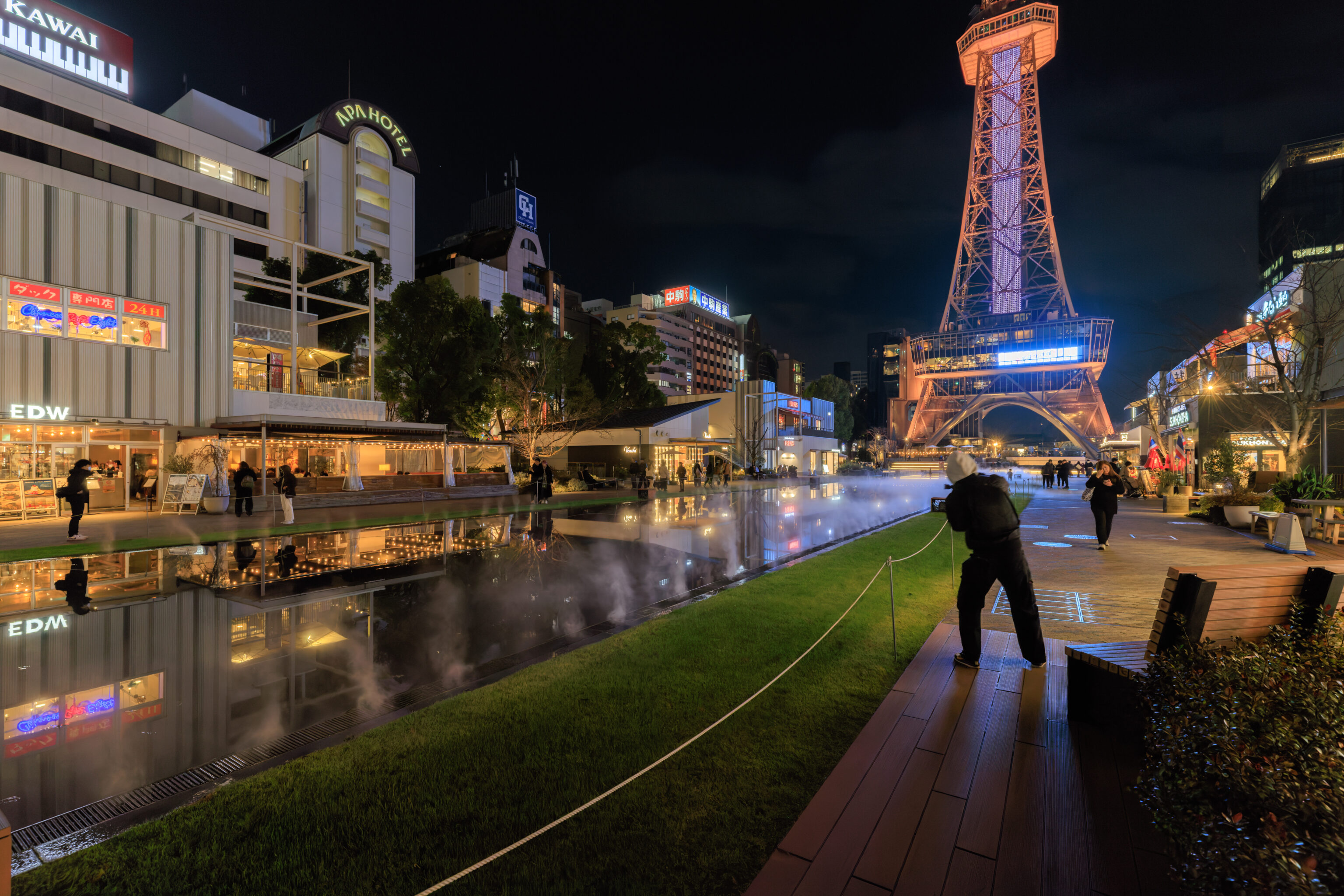
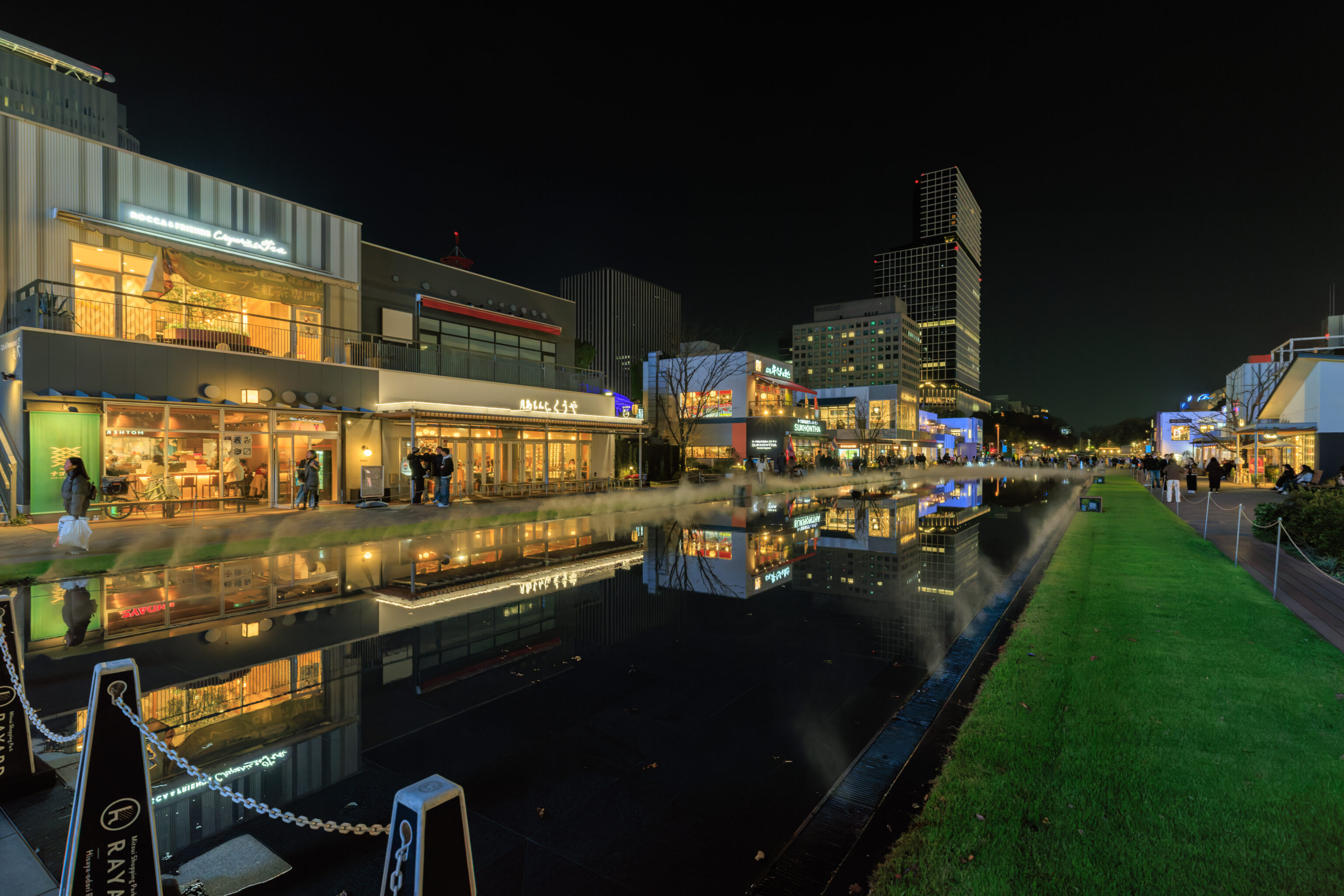
This is the third fog feature that we’ve seen on this trip!
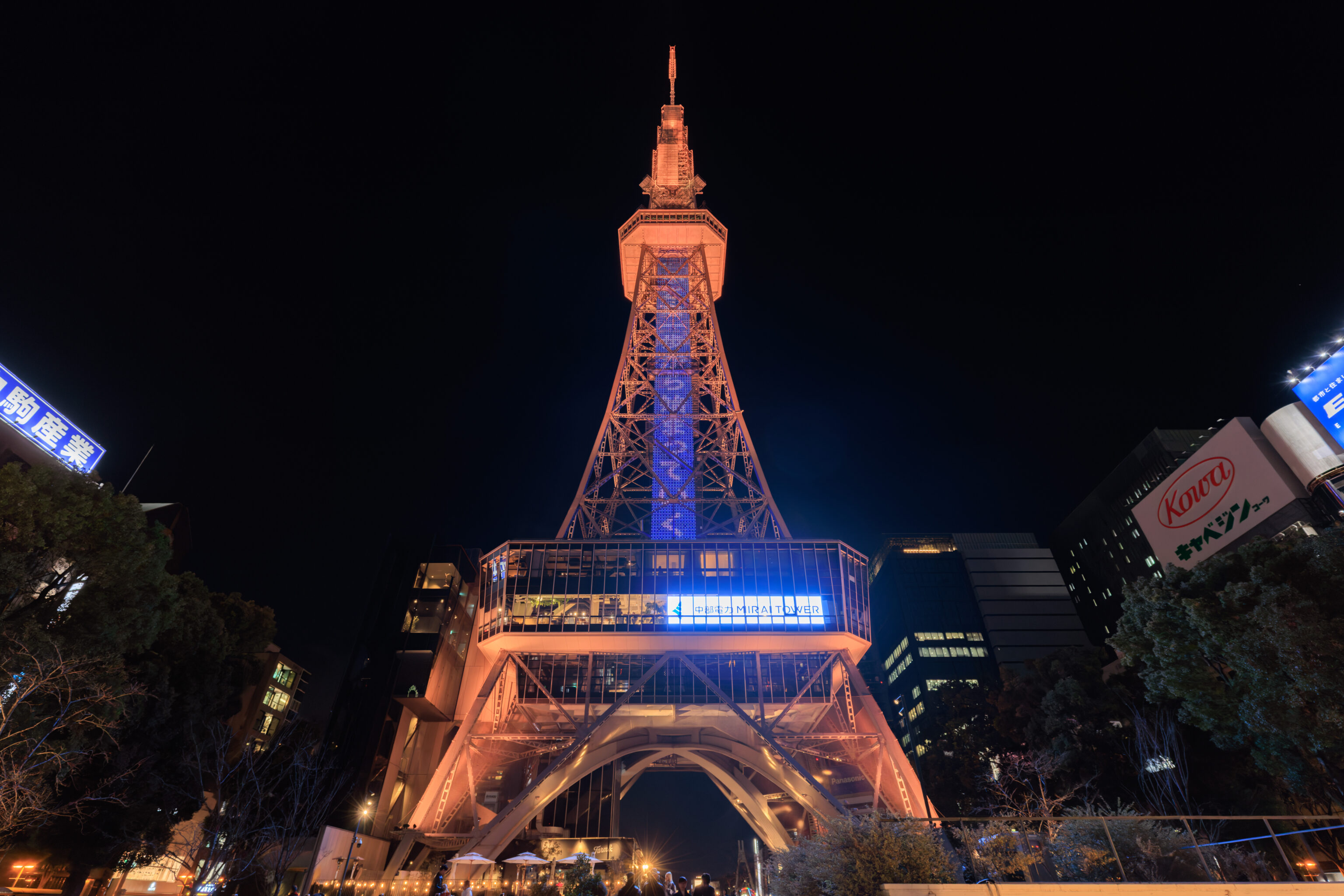
The Mirai Tower, a seen from the north side of the shallow reflecting pool.
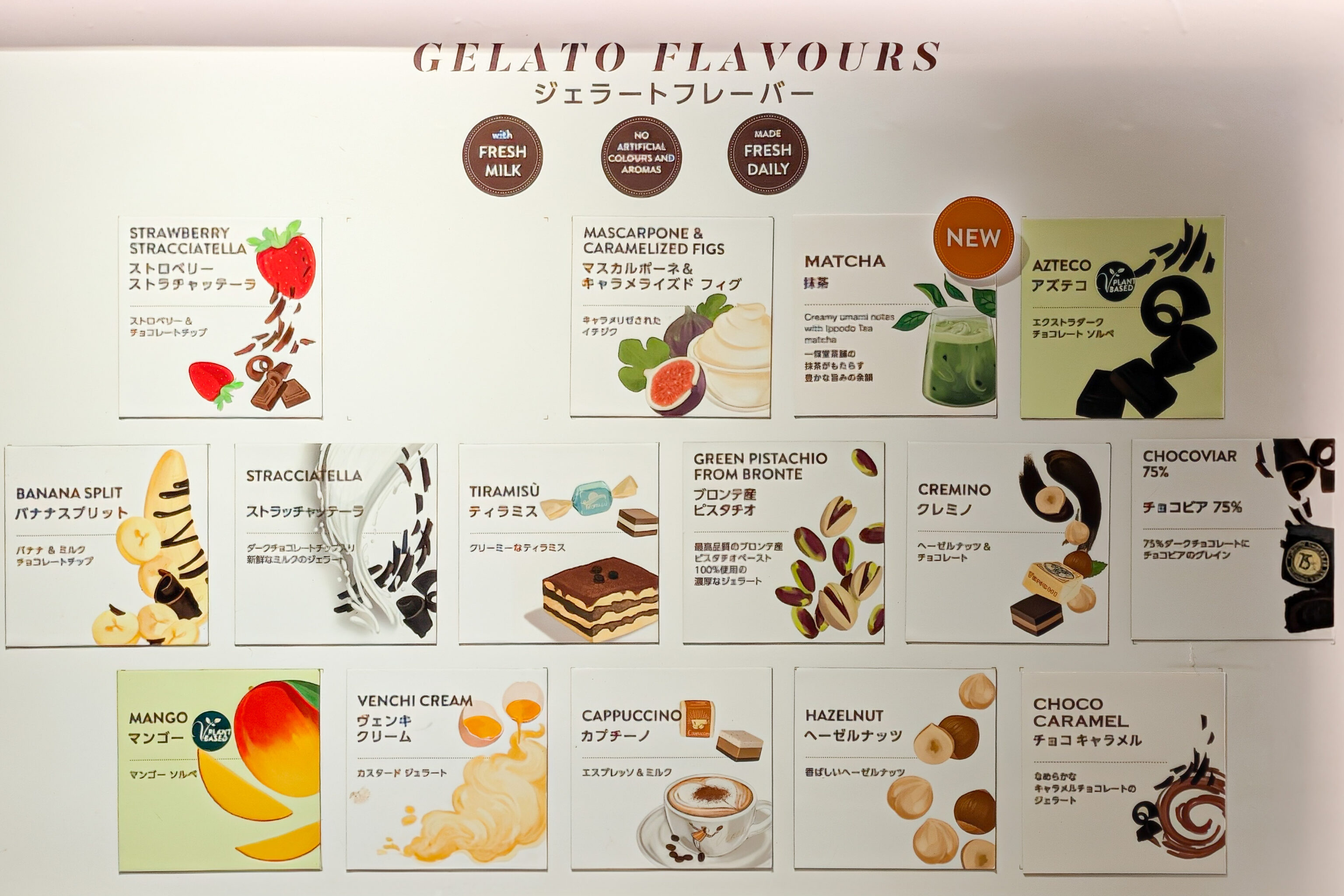
We expectantly came upon a Venchi shop! Although Venchi is actually an Italian chocolate company, they also make fantastic gelato! While it may not be the absolute best, they have been consistently good in our experience. So of course, we had to get some gelato!
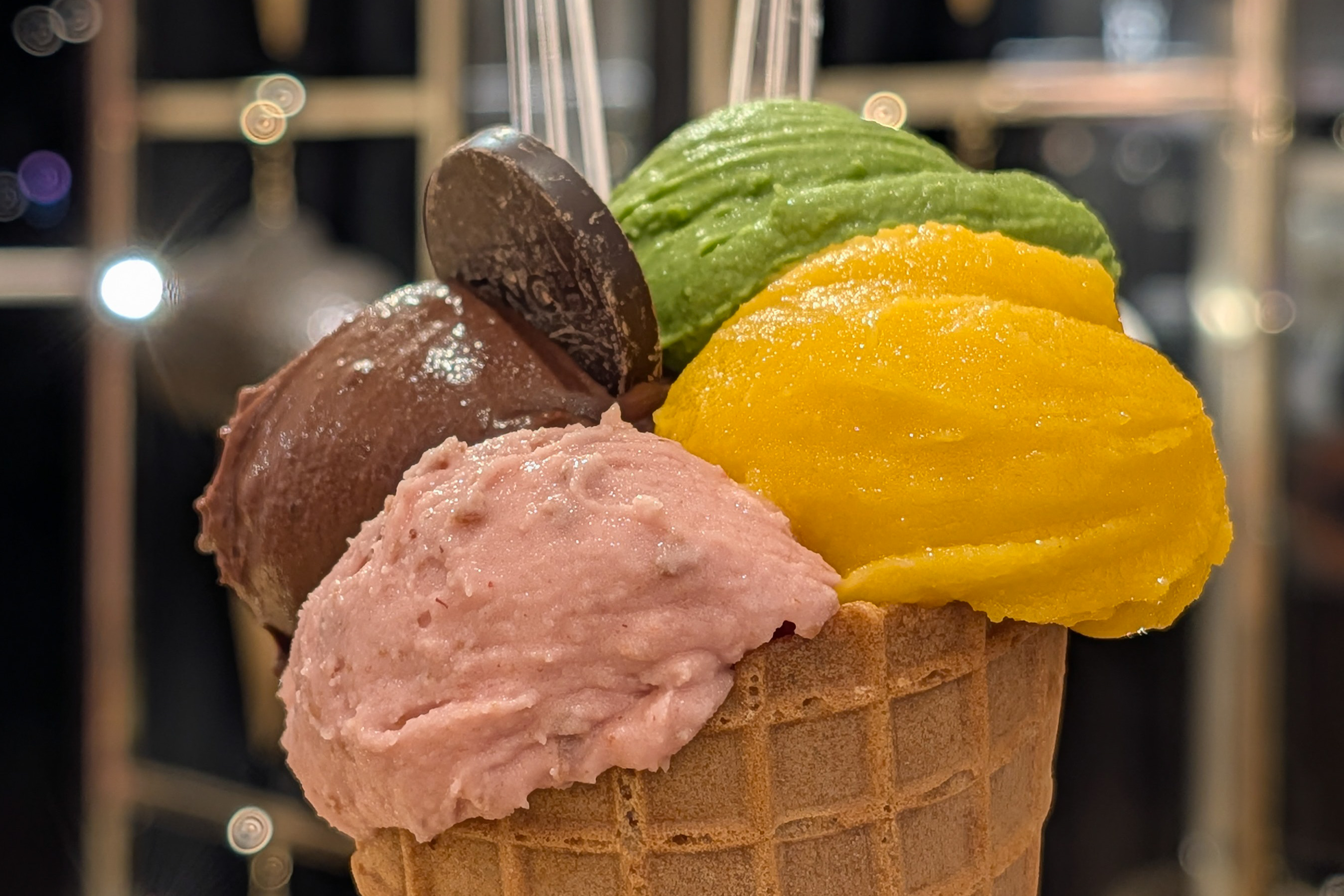
We got dark chocolate, matcha, mango, and strawberry. As usual, it was excellent.
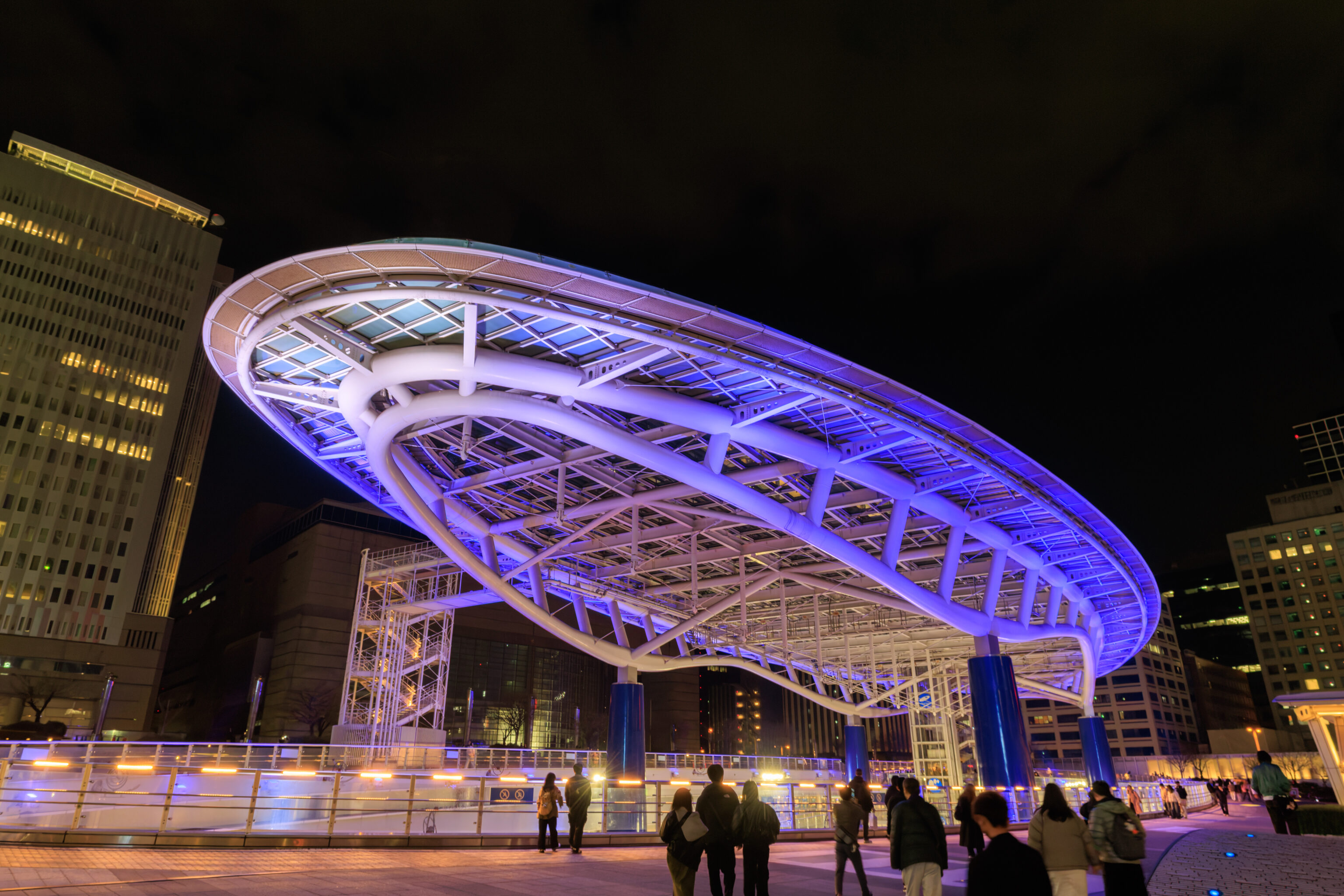
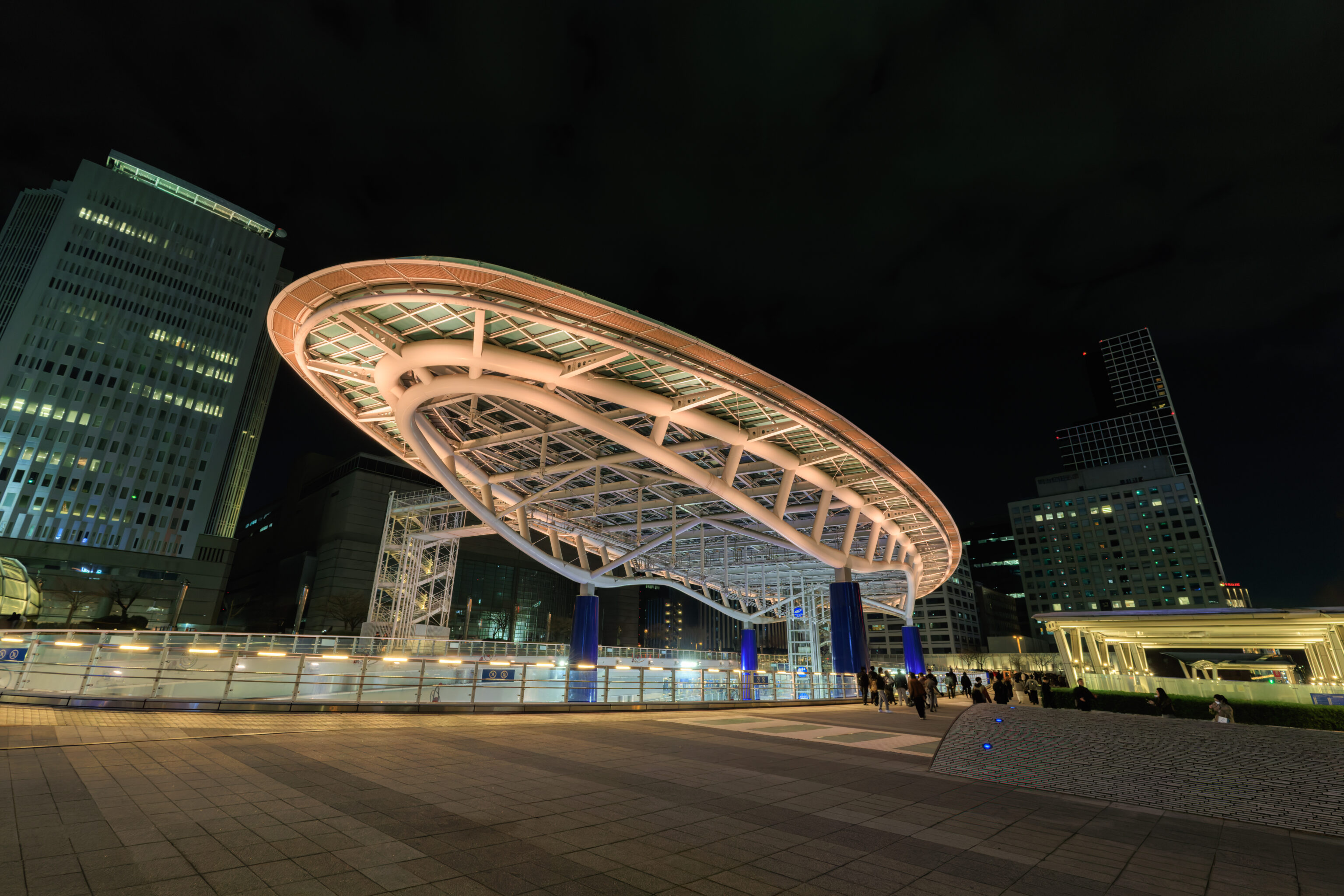
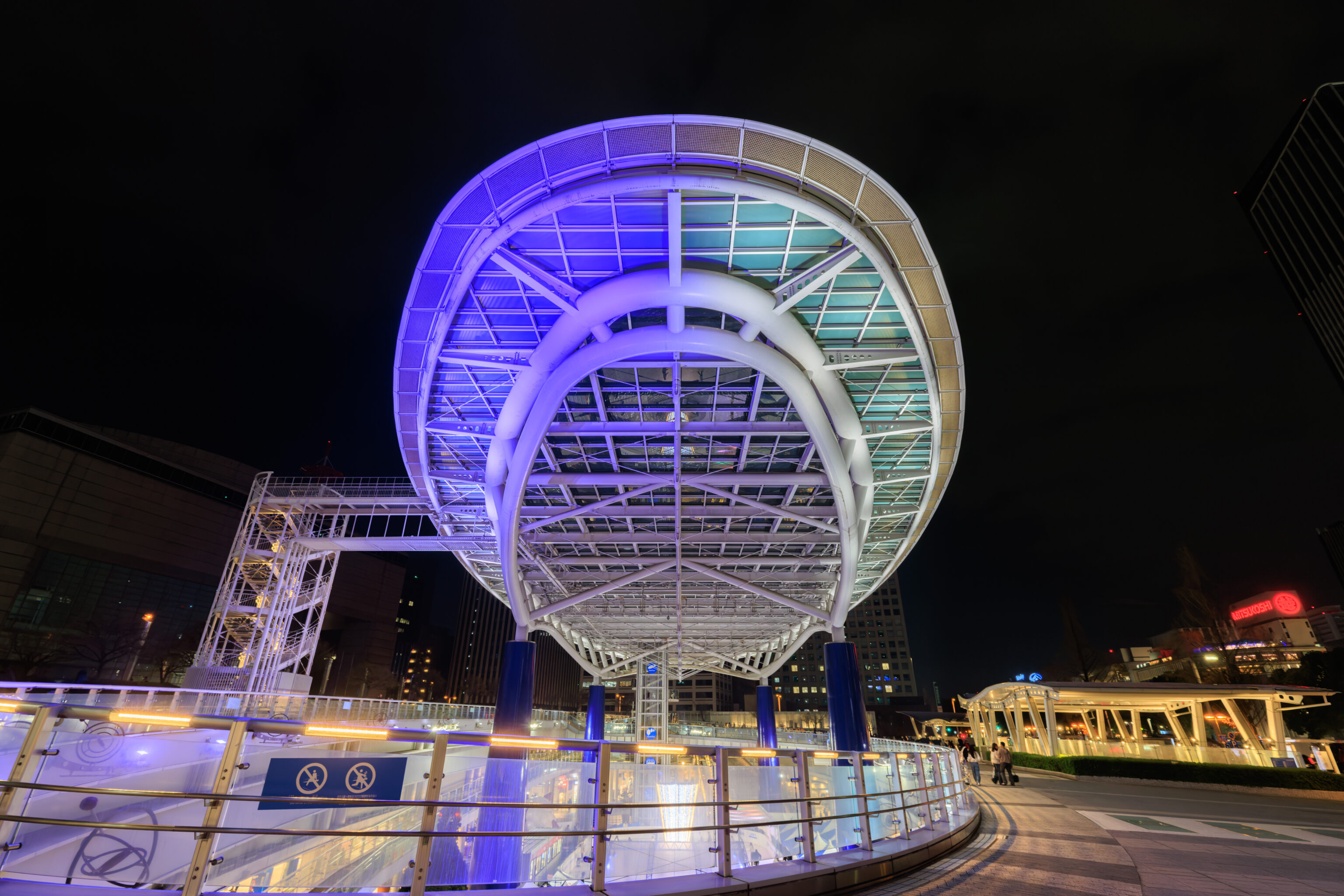
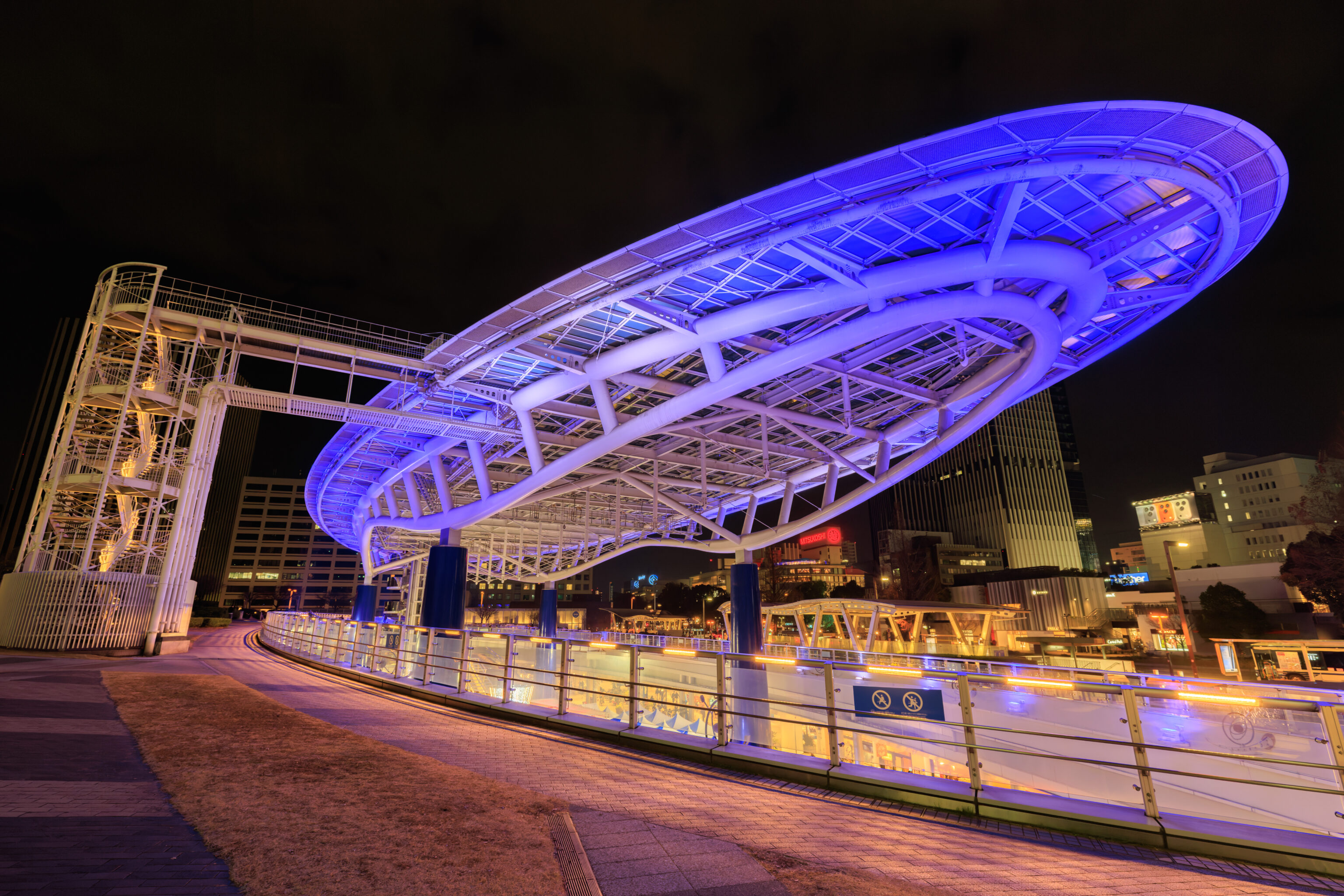
We returned to Osais 21 to take a nighttime look at Voya^H^H^H^H the spaceship canopy. It was illuminated in changing colors.
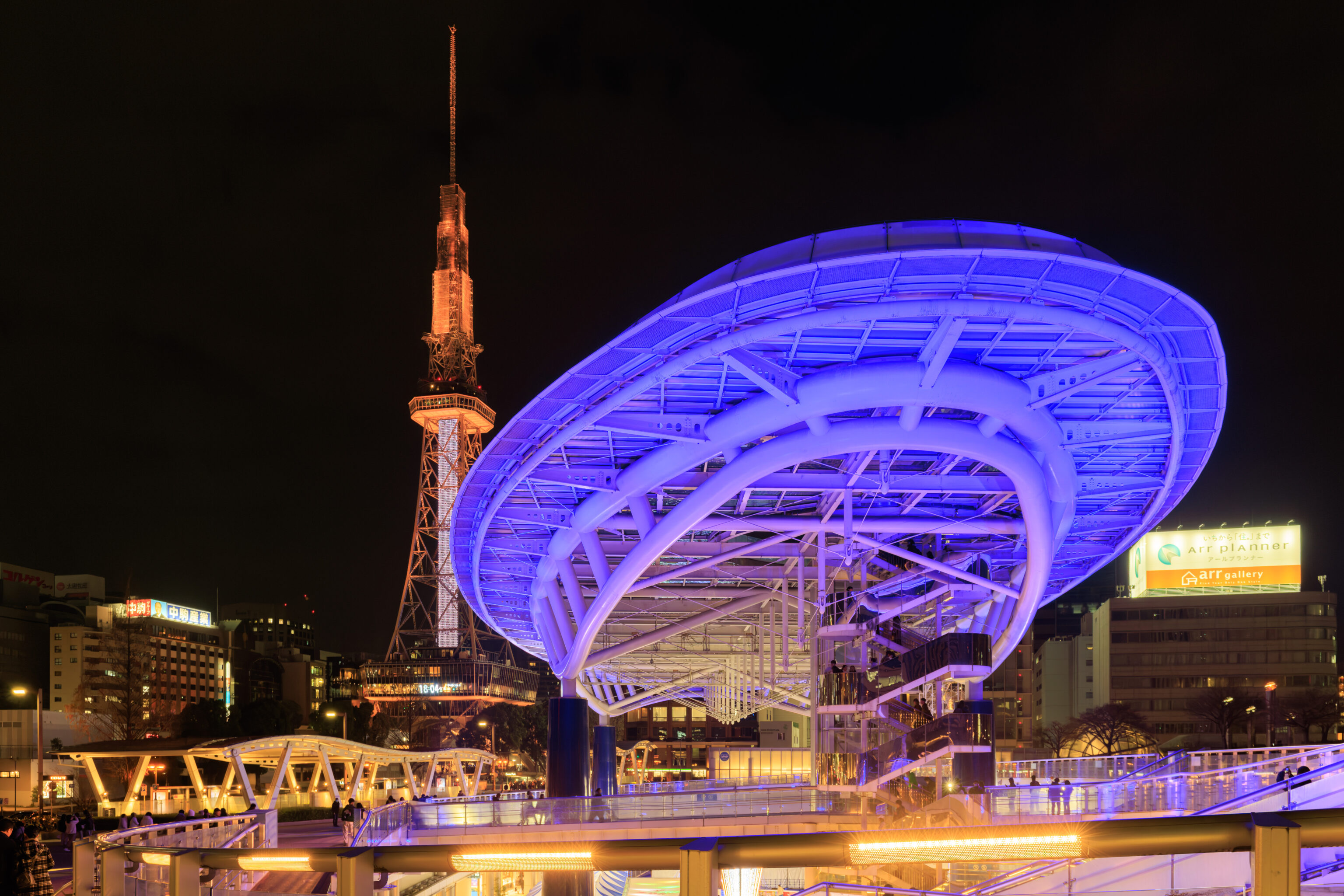
The view from the south with the entire Mirai Tower visible in the background.
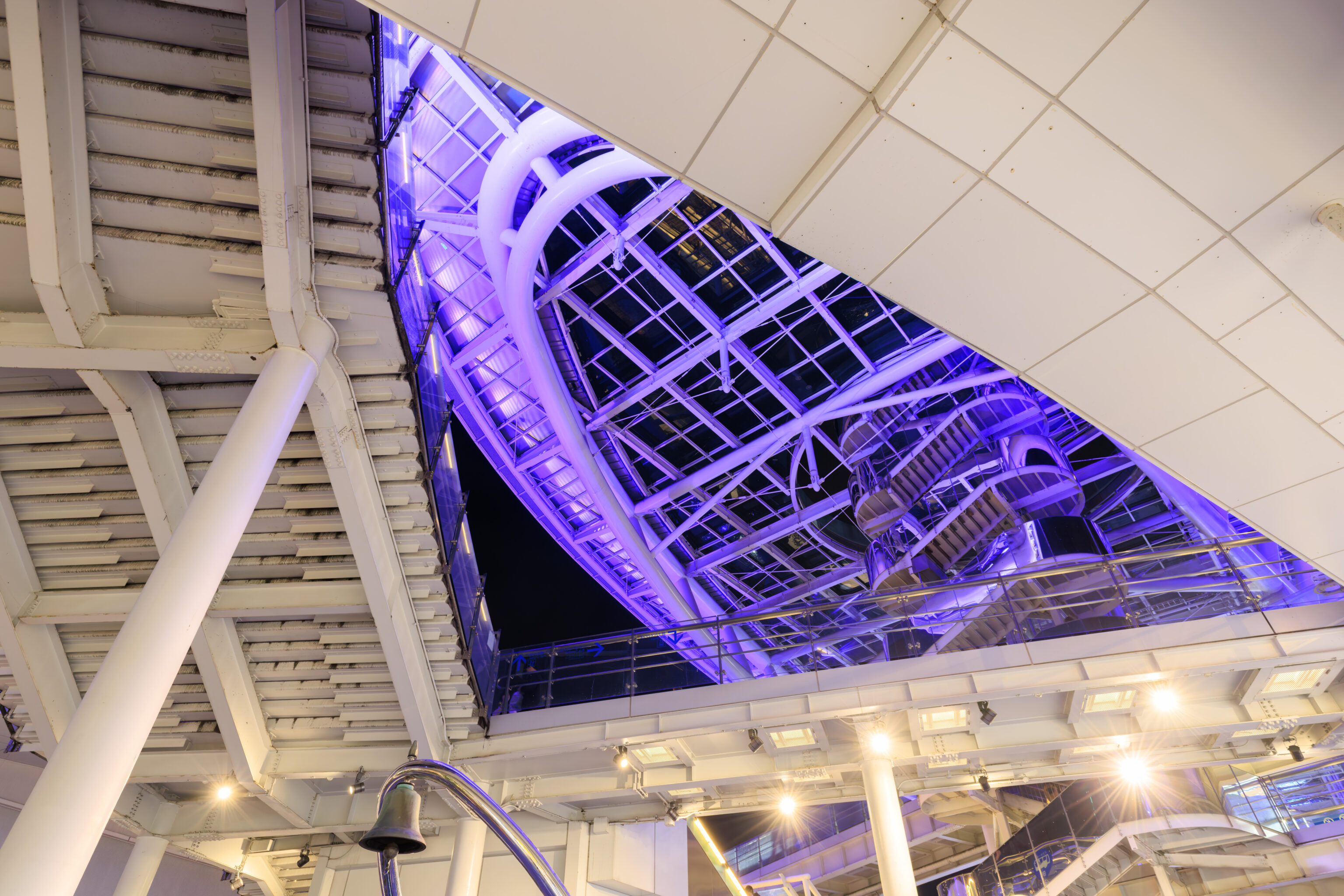
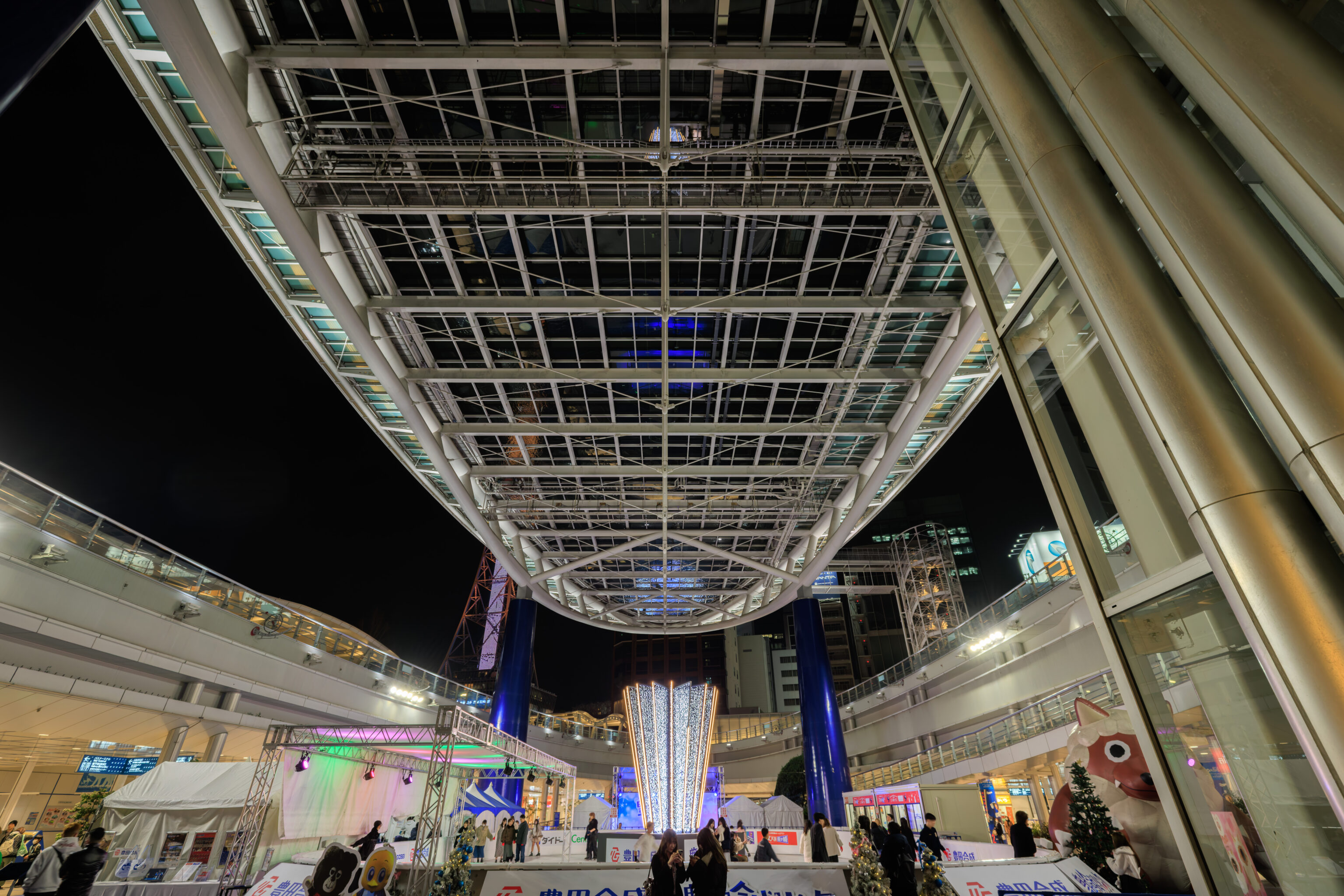
We went downstairs to take the subway back to the Marriott to end the day.
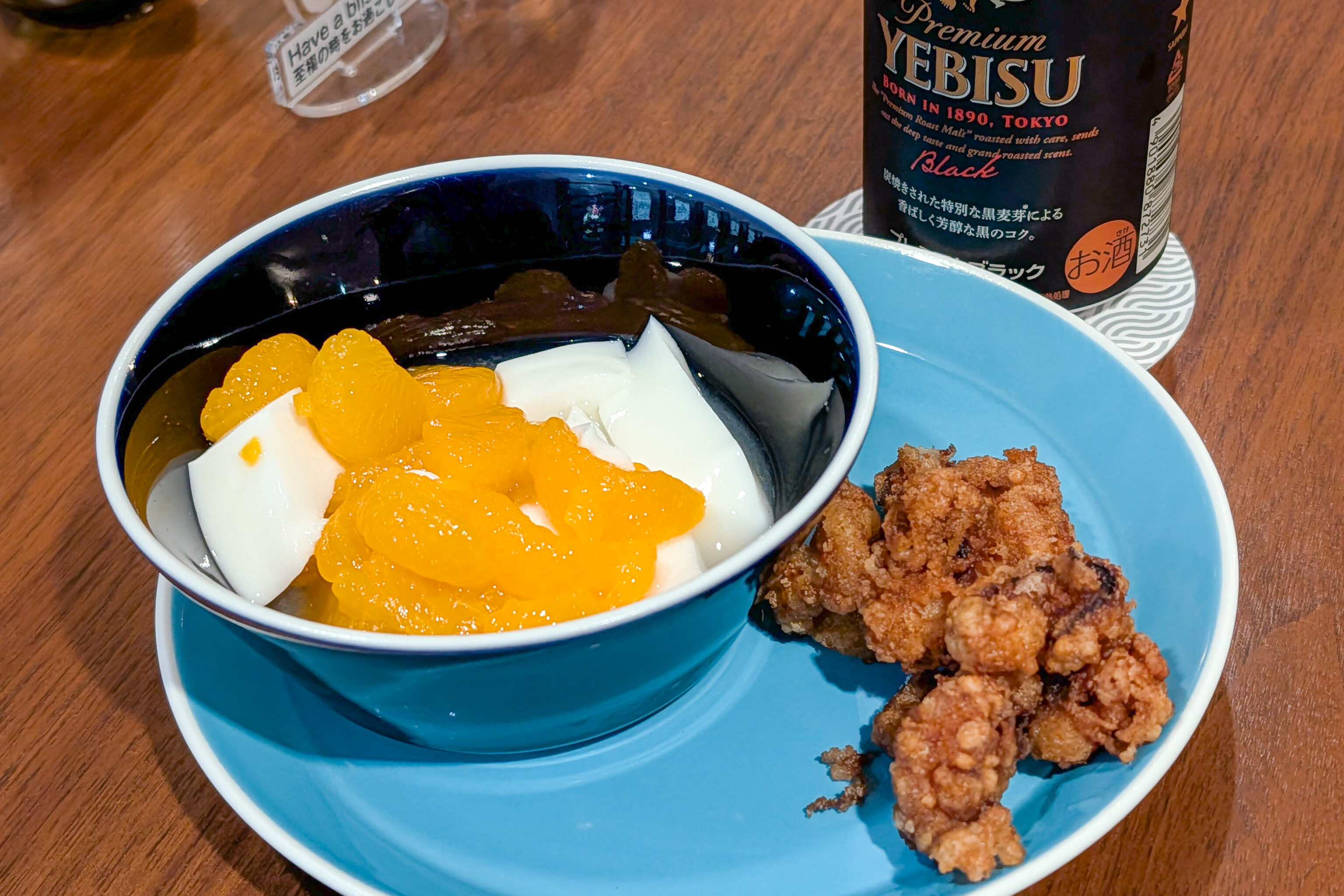
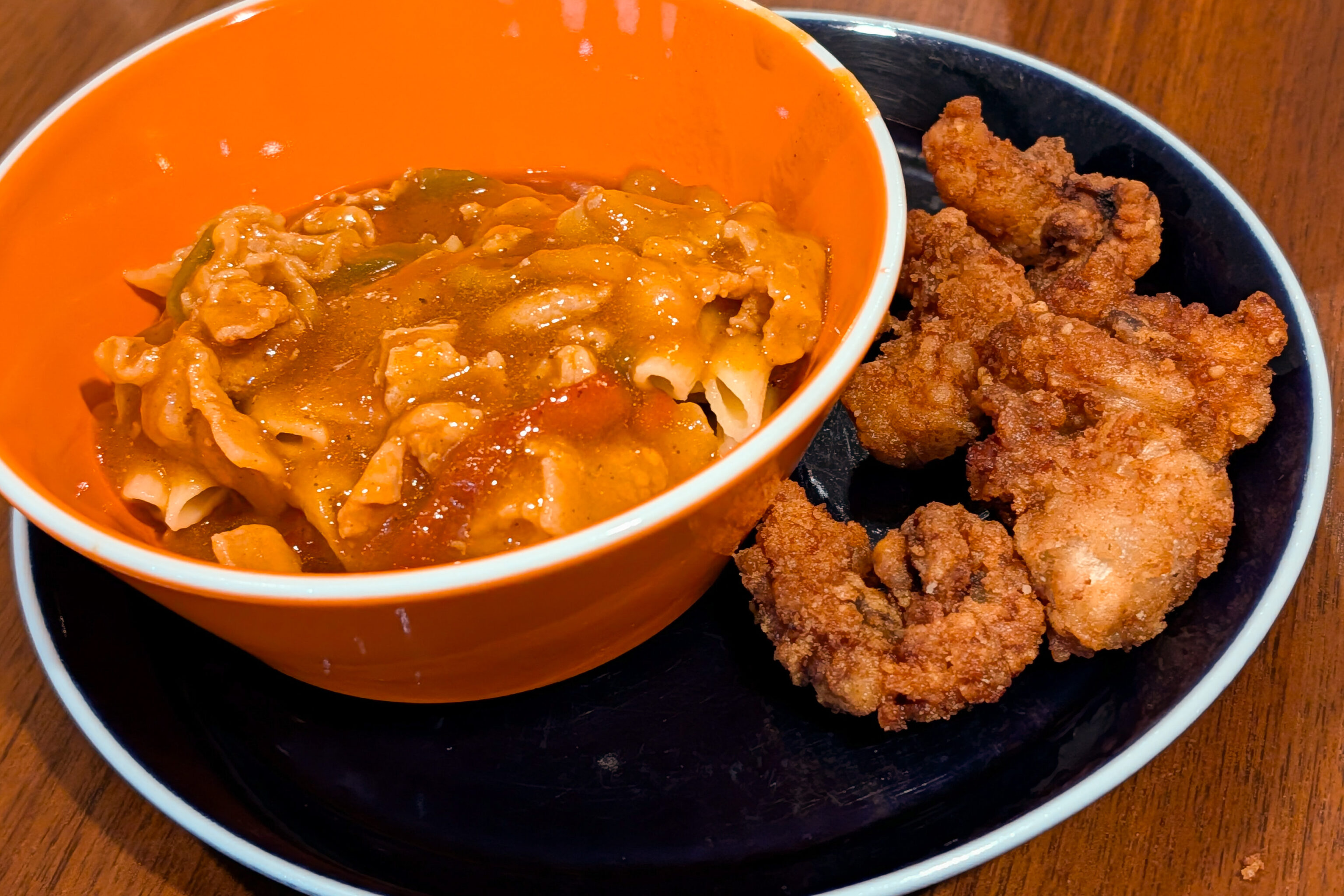
We went up to the lounge to graze a bit. Tonight, they had almond jelly with mandarin oranges (probably). They also had squid karaage, which unfortunately probably would have been good if freshly prepared. We noticed they had the local あんかけスパ ankake spaghetti, though not with spaghetti pasta. This is basically Japanicized Italian pasta. The similarities are simply the use of pasta and a sauce that includes tomato.
Its unfortunate that the Marriott’s lounge breakfast is comparatively disappointing!