

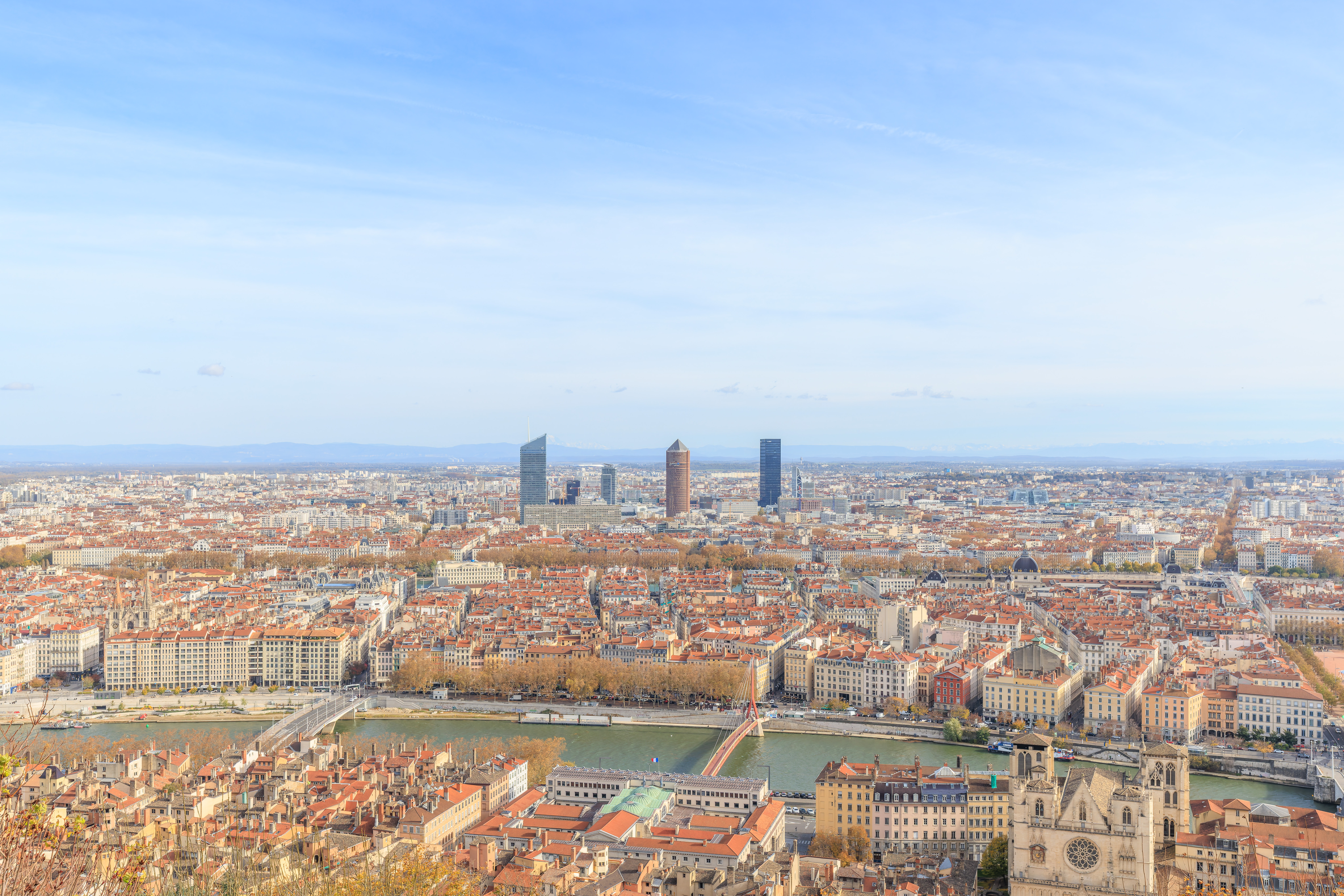
After breakfast at the InterContinental, we headed over to the Fourviere Hill. The ruins of the Roman theatres were closed due to wind but we were able to visit the Lugdunum Museum and Basilica of Notre Dame. After, we walked through a bit of Old Lyon before having dinner at a bouchon.
Morning
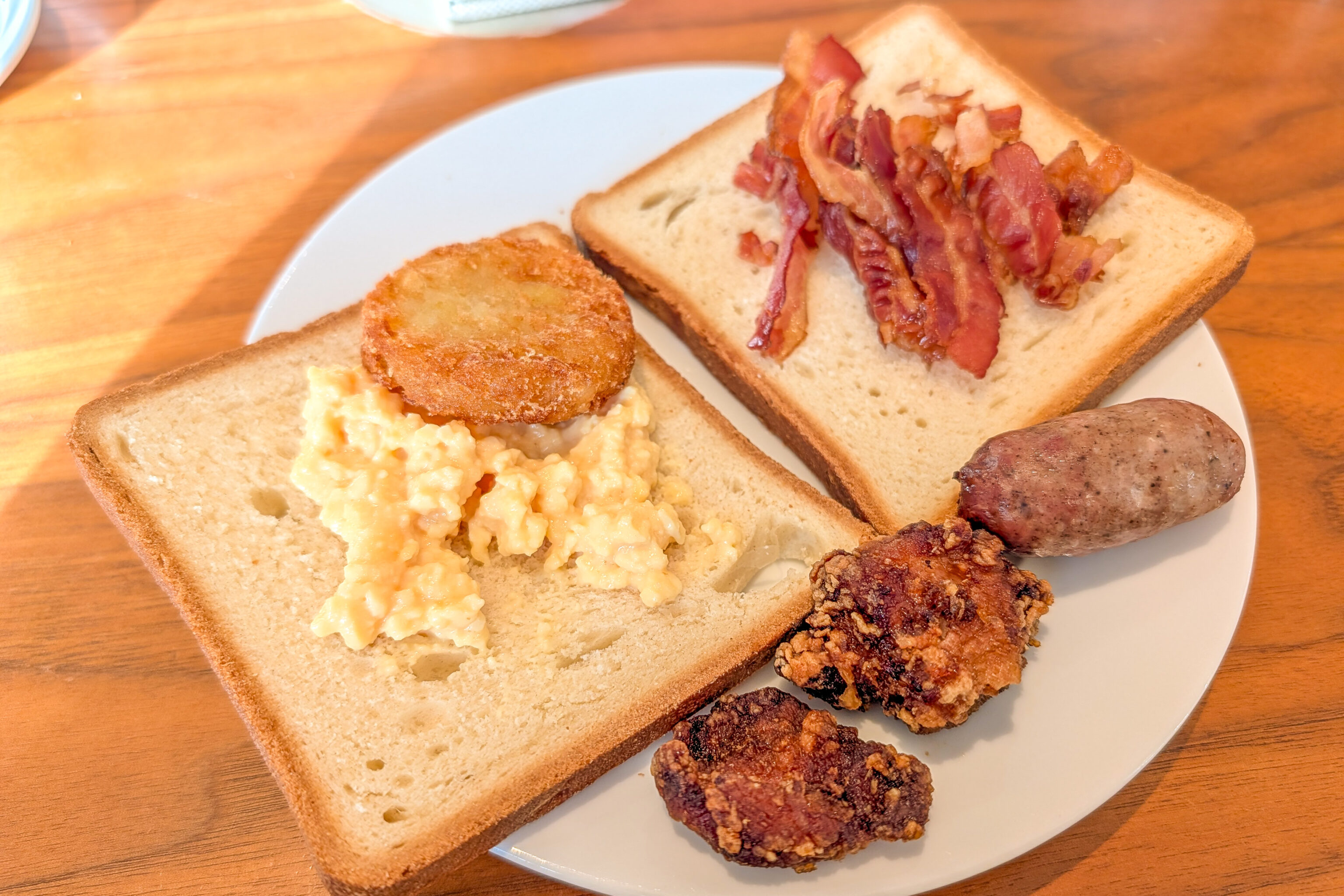
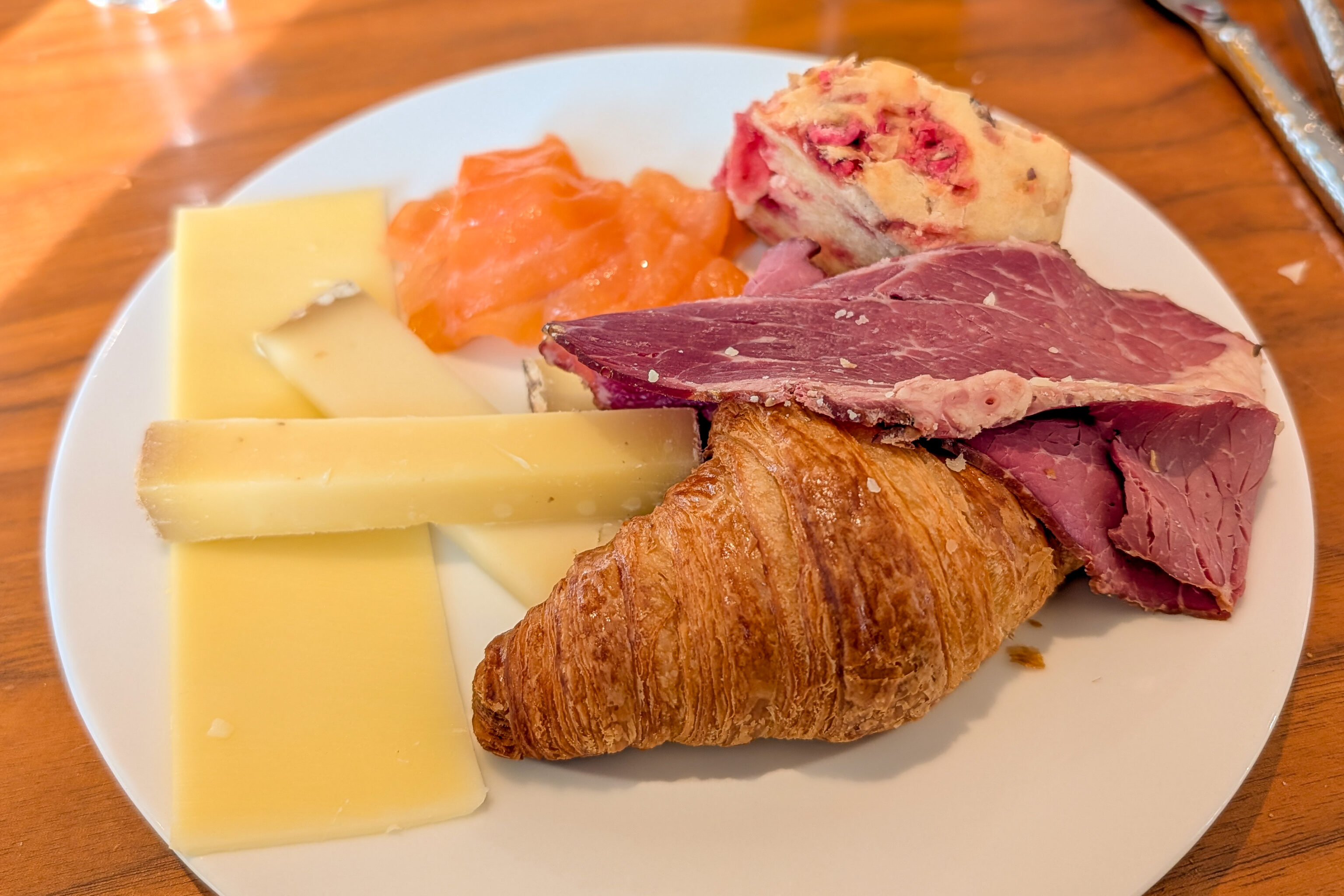
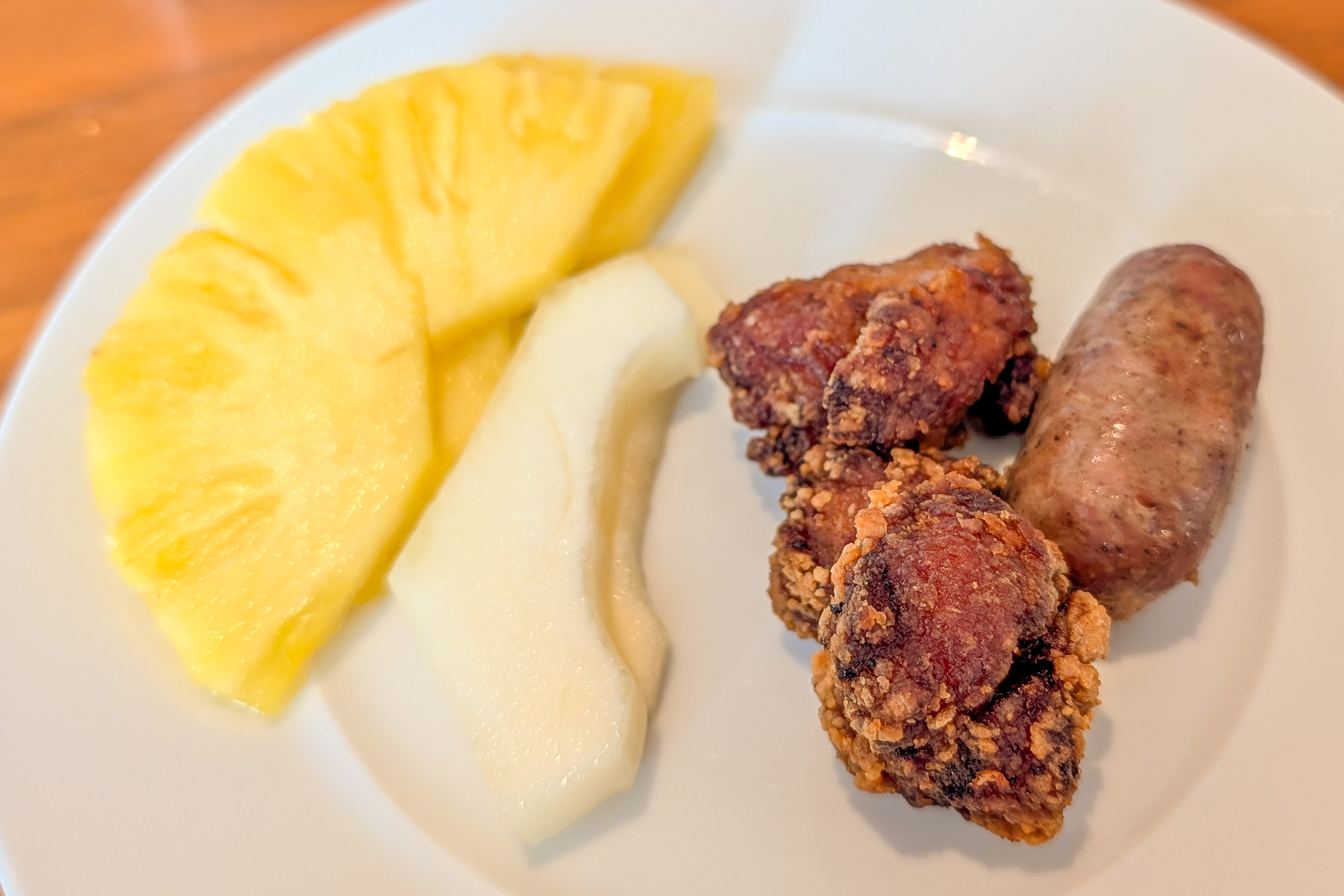
Breakfast at the InterContinental was on the ground floor in the Epona restaurant. It was a buffet with egg items available to order. We were still a bit full from yesterday so didn’t eat too much.
The buffet wasn’t too large but had a pretty typical selection of items. Some were good, some not so much. Unfortunately, the Korean fried chicken was in the not so good category, although that didn’t stop us from having it.
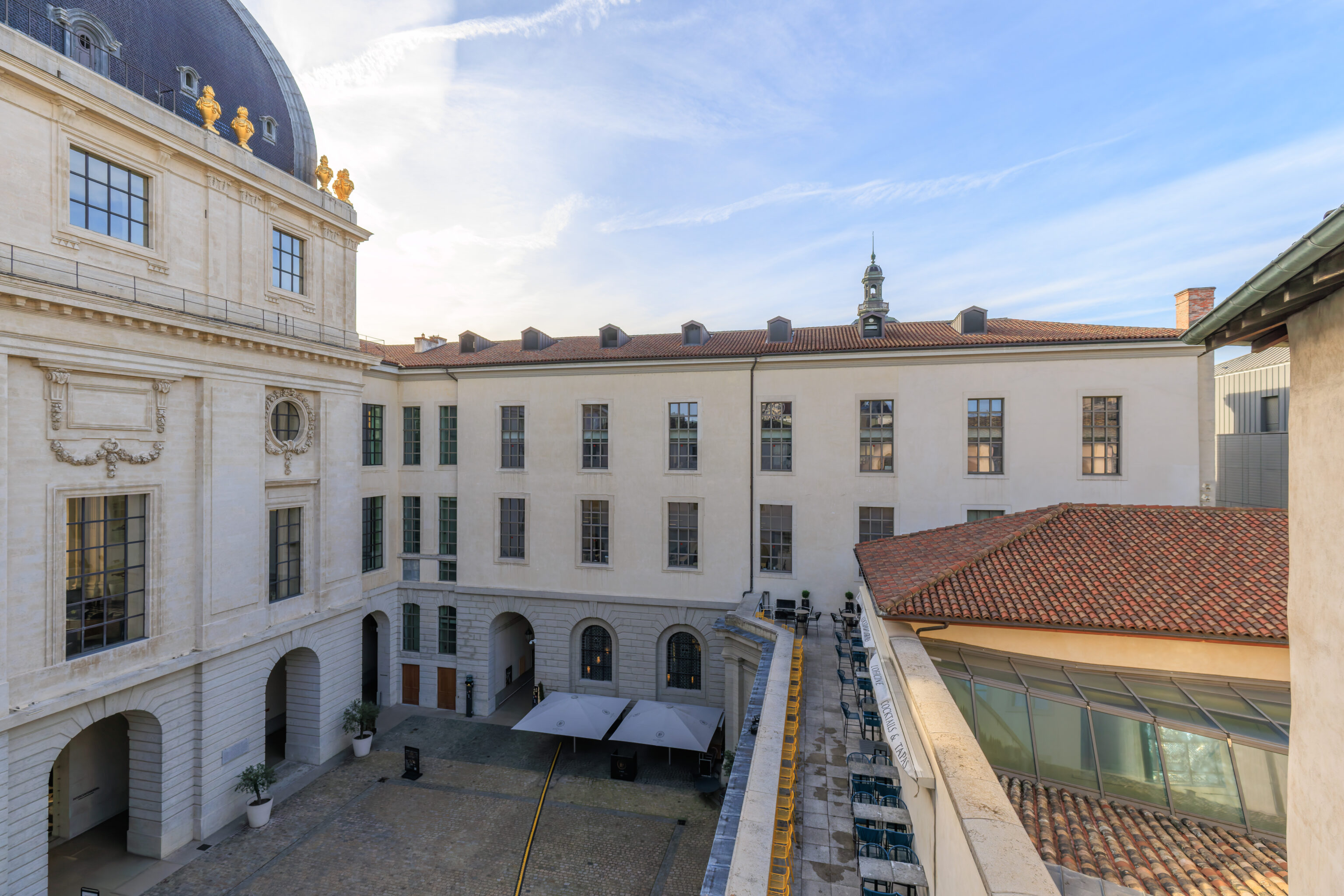
We had a pretty late start to the morning. This was the view from our room after breakfast.
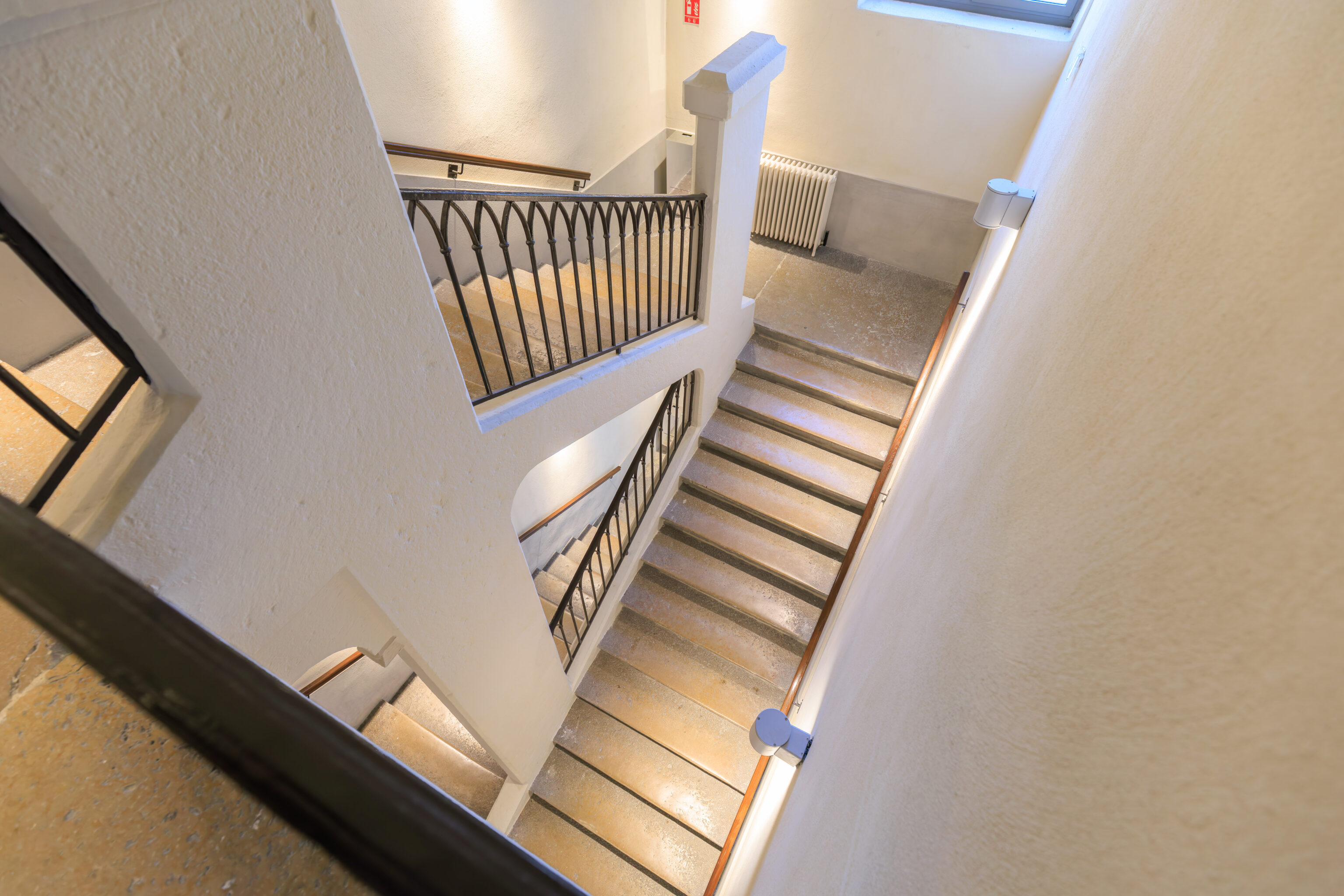
The hotel does have stairs as an alternative to the elevator.
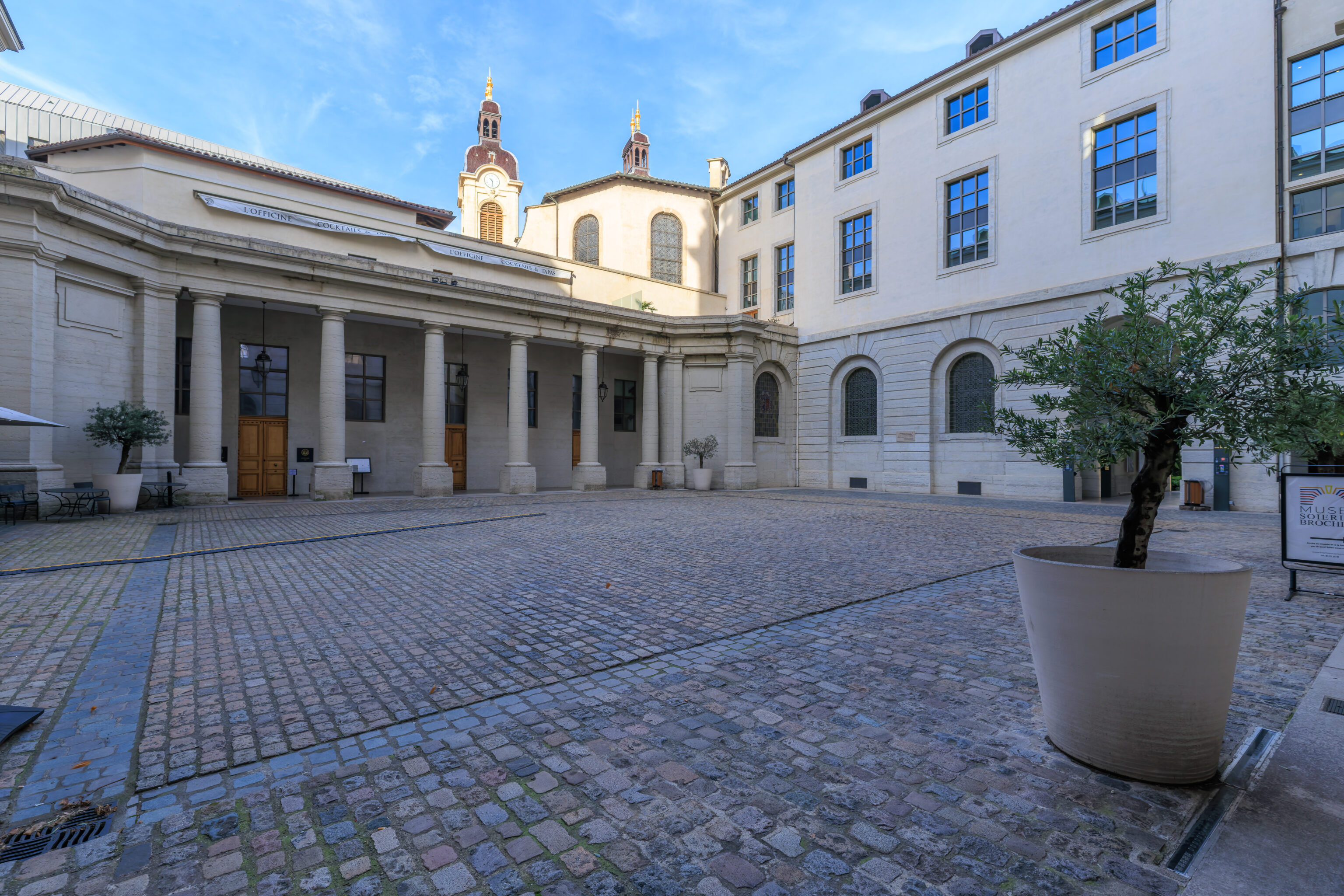
The courtyard view after exiting the hotel.
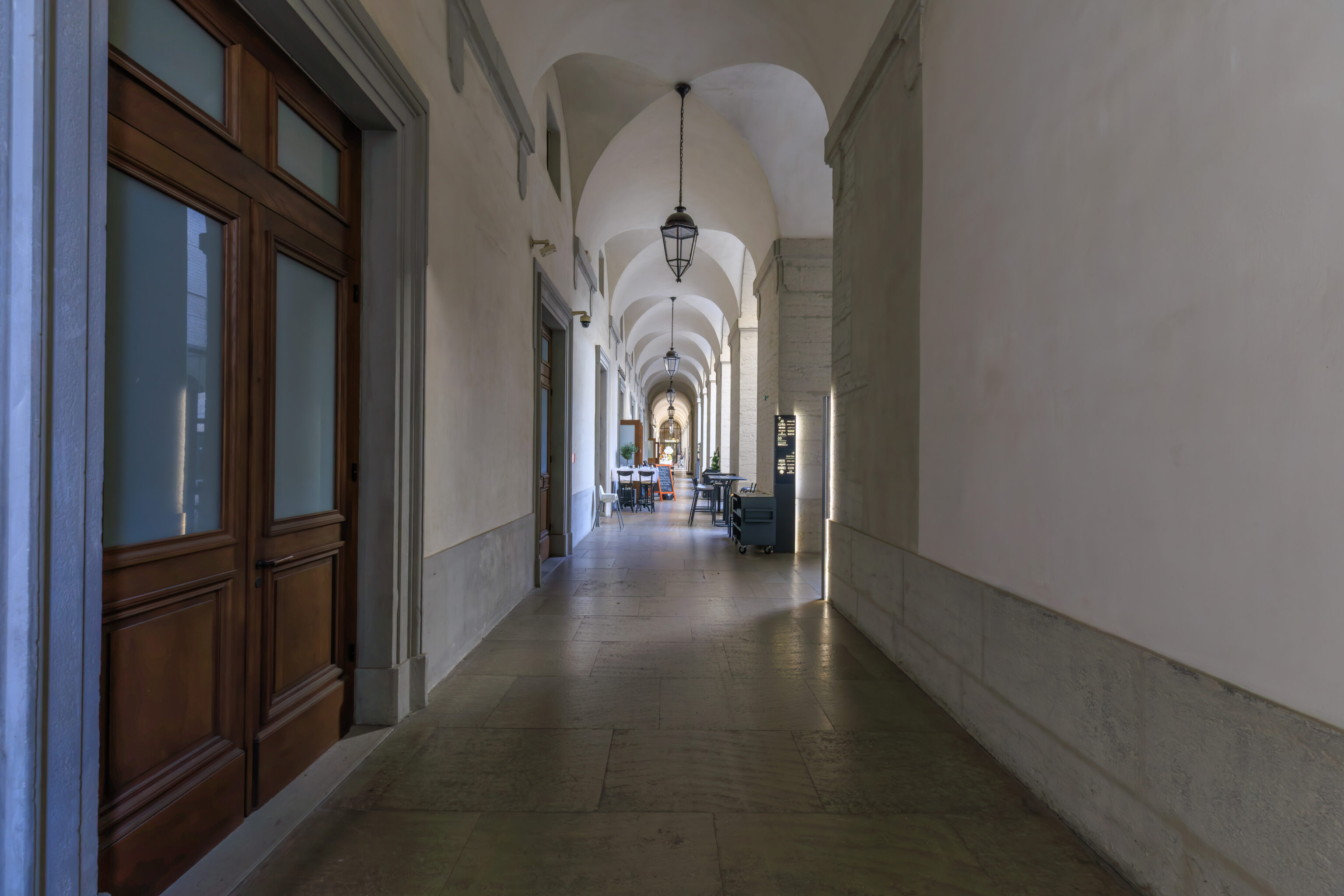
The corridors of the Hotel Dieu were still pretty quiet at this hour, around 10:30am.
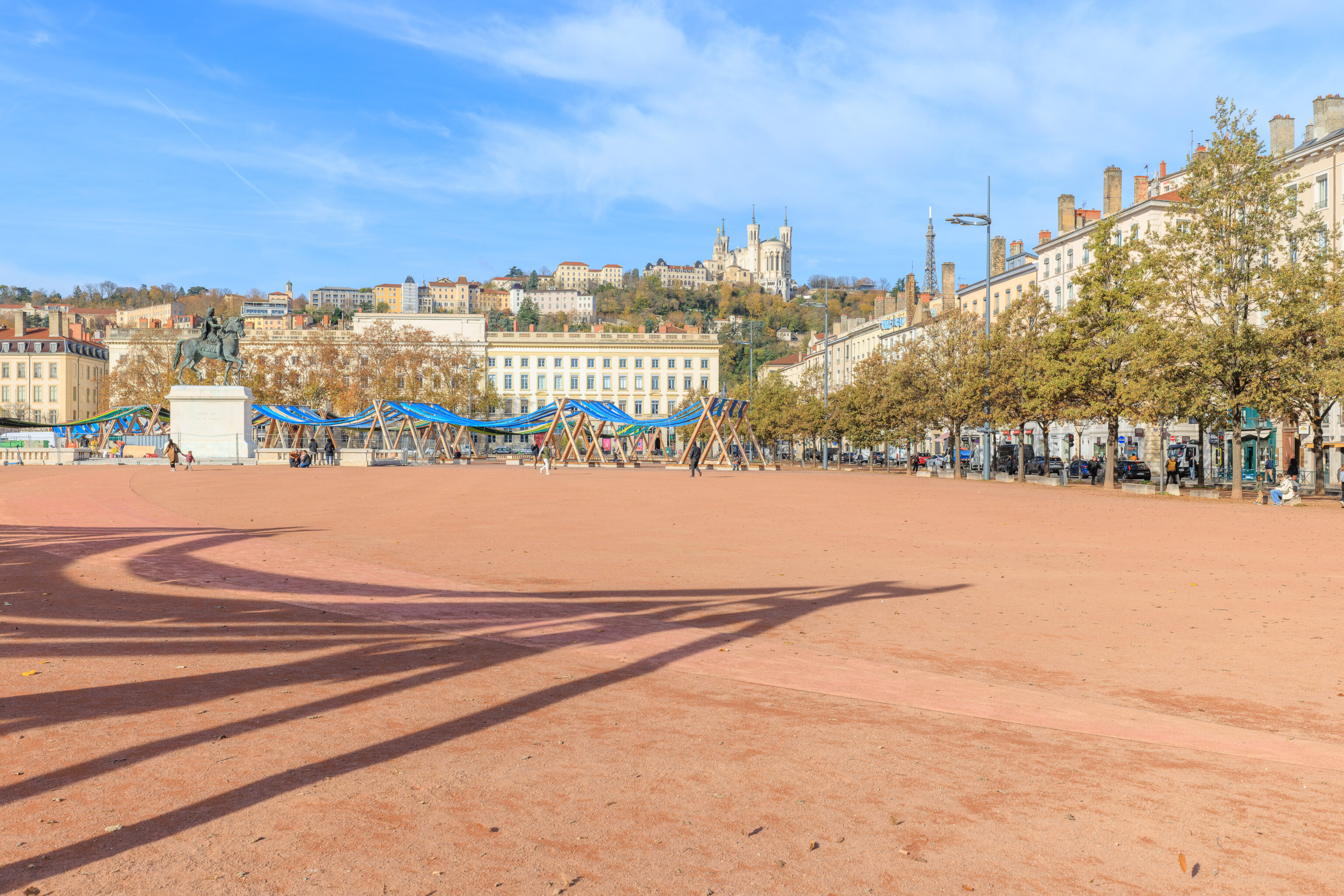
We walked over to Place Bellecour to take the Metro over to Vieux Lyon – Cathédrale Saint-Jean. We had a nice view of where we would be going, the Fourvière Hill! The Vieux Lyon – Cathédrale Saint-Jean Metro station is directly connected to the city’s two funicular lines. One heads northwest up to the Basilica of Notre Dame of Fourvière while the other goes southwest up to Saint-Just with an intermediate stop at Minimes Théatres Romains.
Fourviere Hill
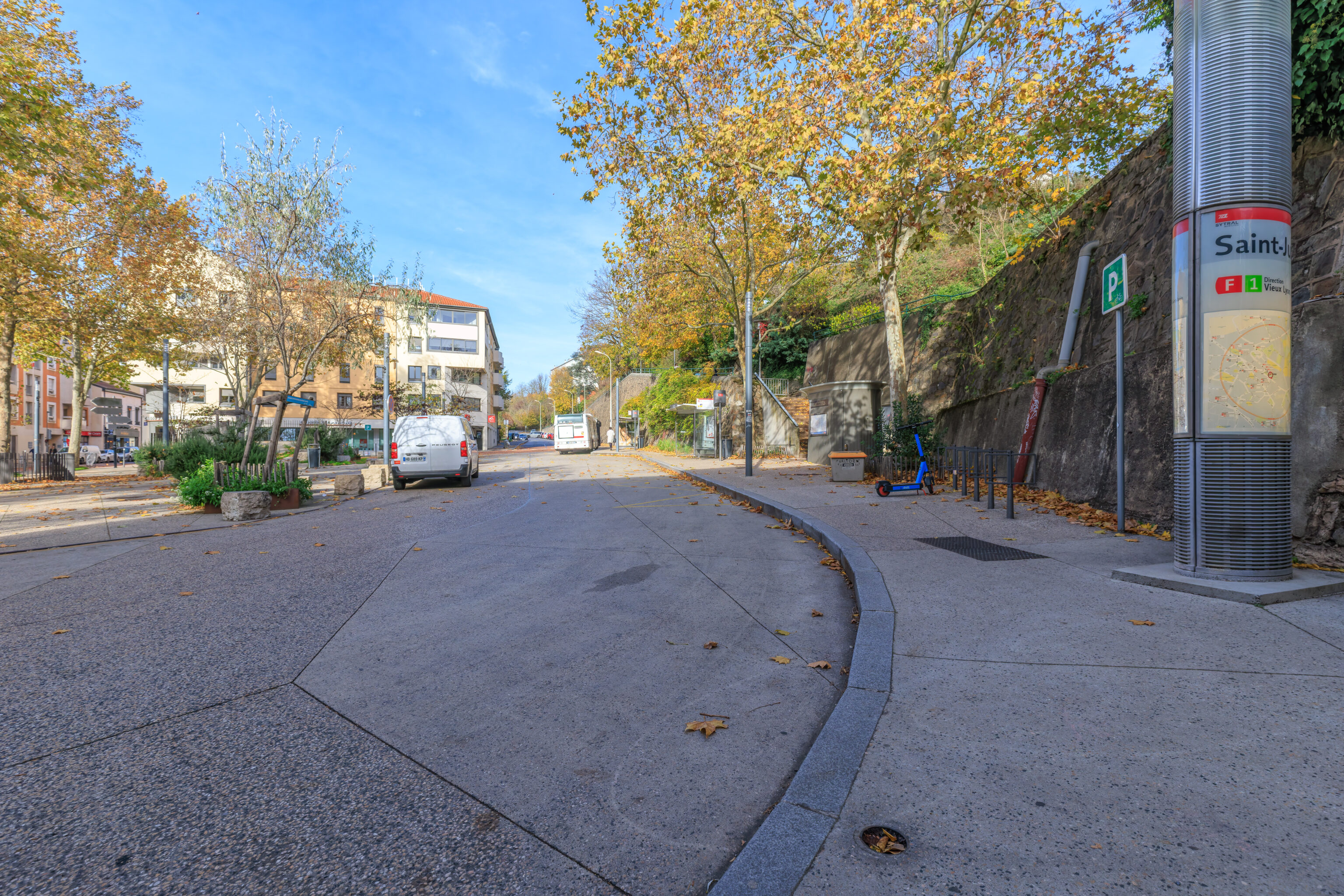
We decided to head up to Saint Just as there is a garden, the Jardin des Curiosités, with a nice overlook over Vieux Lyon. The Saint Just is in a residential neighborhood. We walked downhill a bit to get to the garden. Unfortunately, there was construction taking place and there did not seem to be any way to access the garden! That ended up being quite a failure!
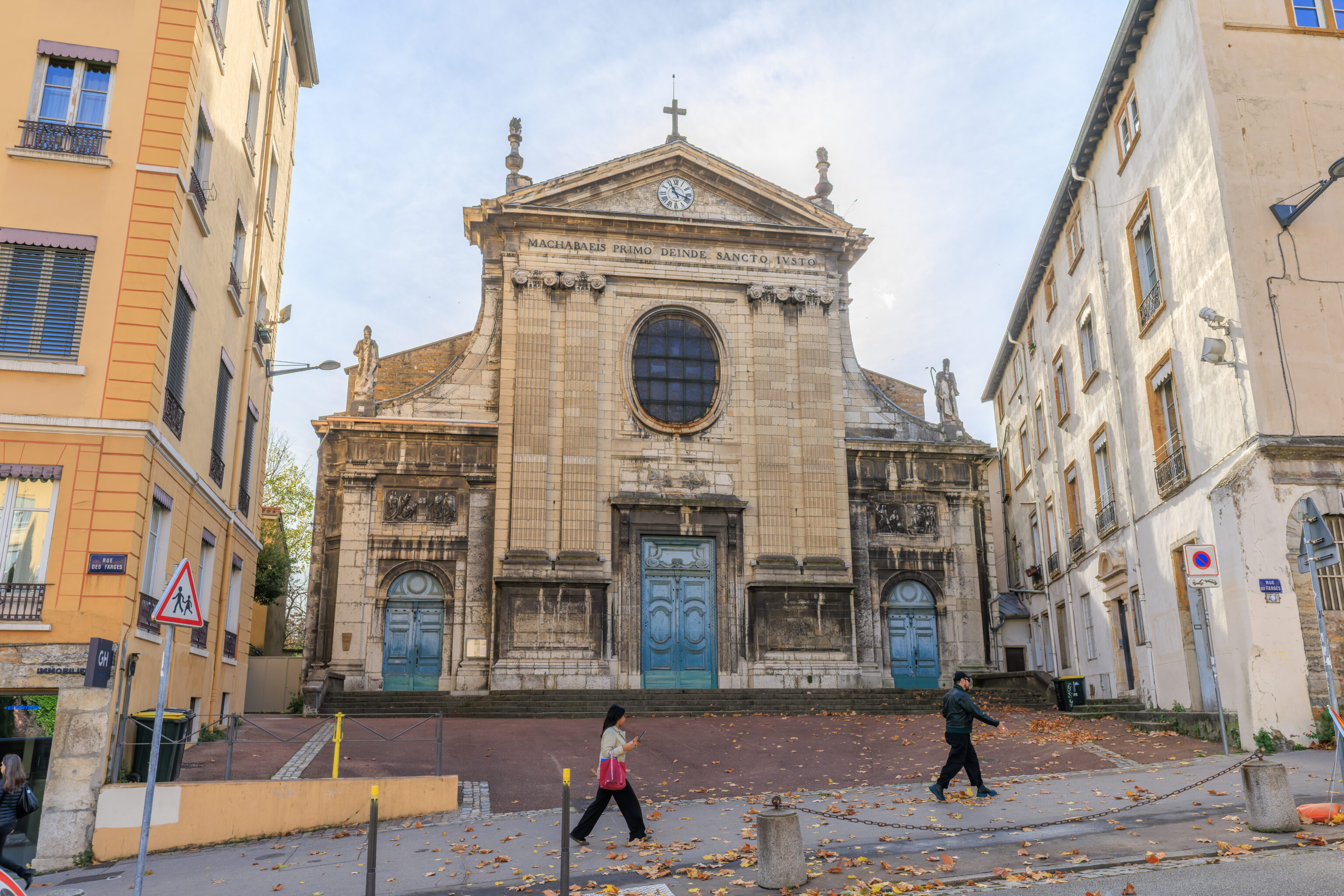
As we prefer to walk downhill, we decided to walk down to the ruins of the Roman theatres. We passed by this church, the Eglise Saint-Just de Lyon, on the way.
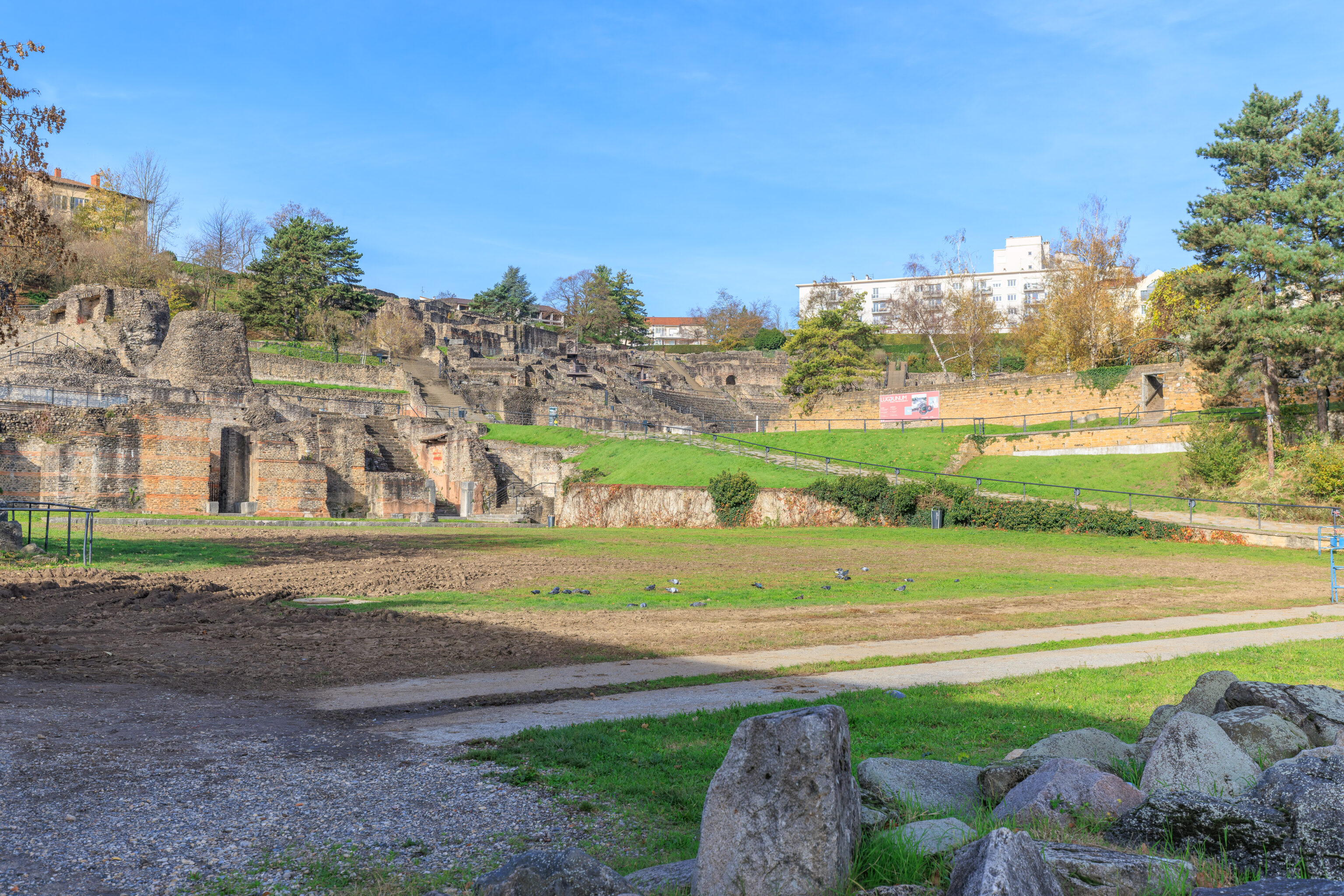
Upon reaching the ruins of the Roman theatres, we discovered that the gates were all closed. It seems they were closed? It did seem that the museum was possibly still open, although we weren’t sure.
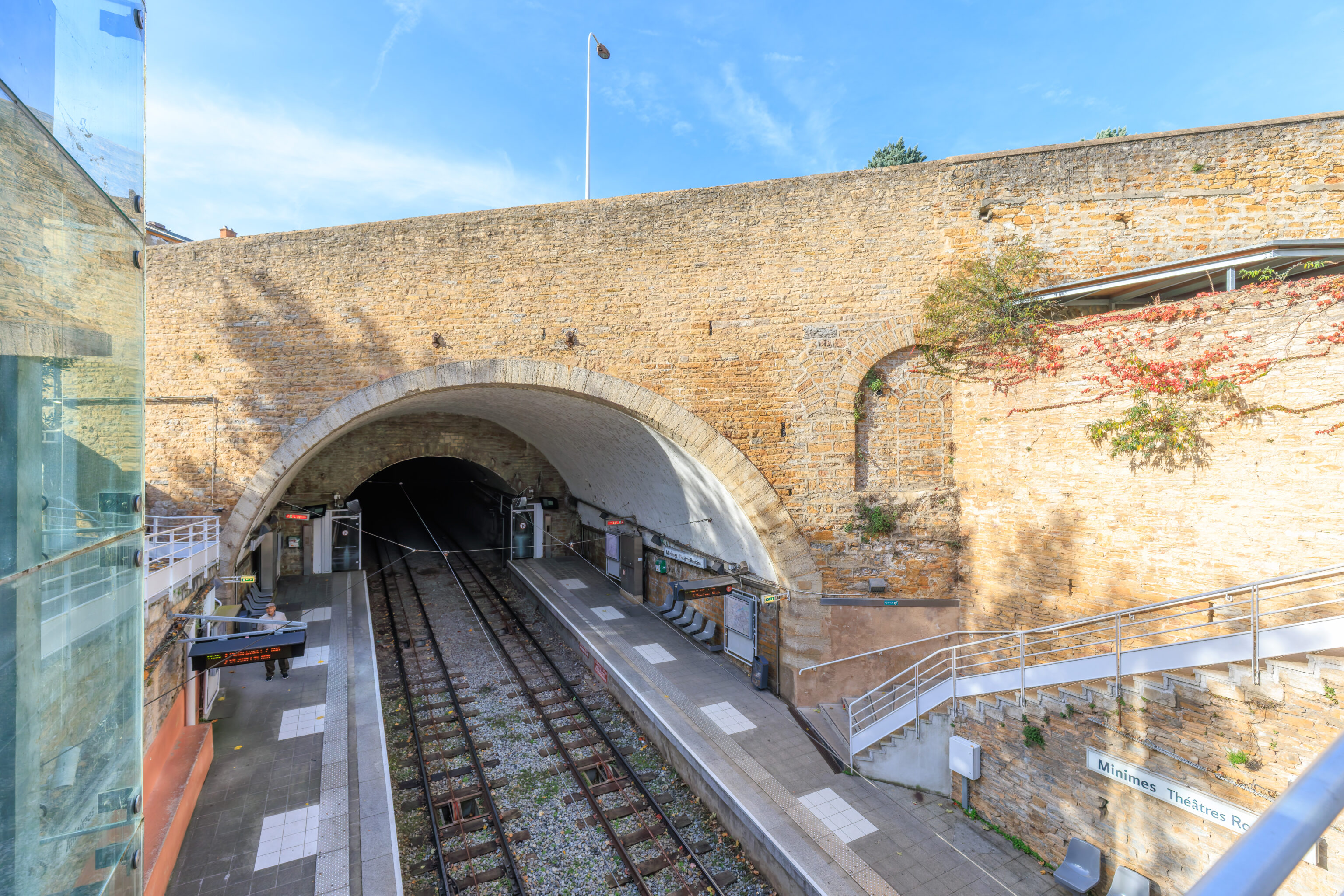
The walk to the museum was uphill. So, we decided to take the funicular back down to Vieux Lyon ad take the other line up to the Basilica of Notre Dame of Fourviere. From there, we would visit the basilica and the area first before walking downhill to the museum.
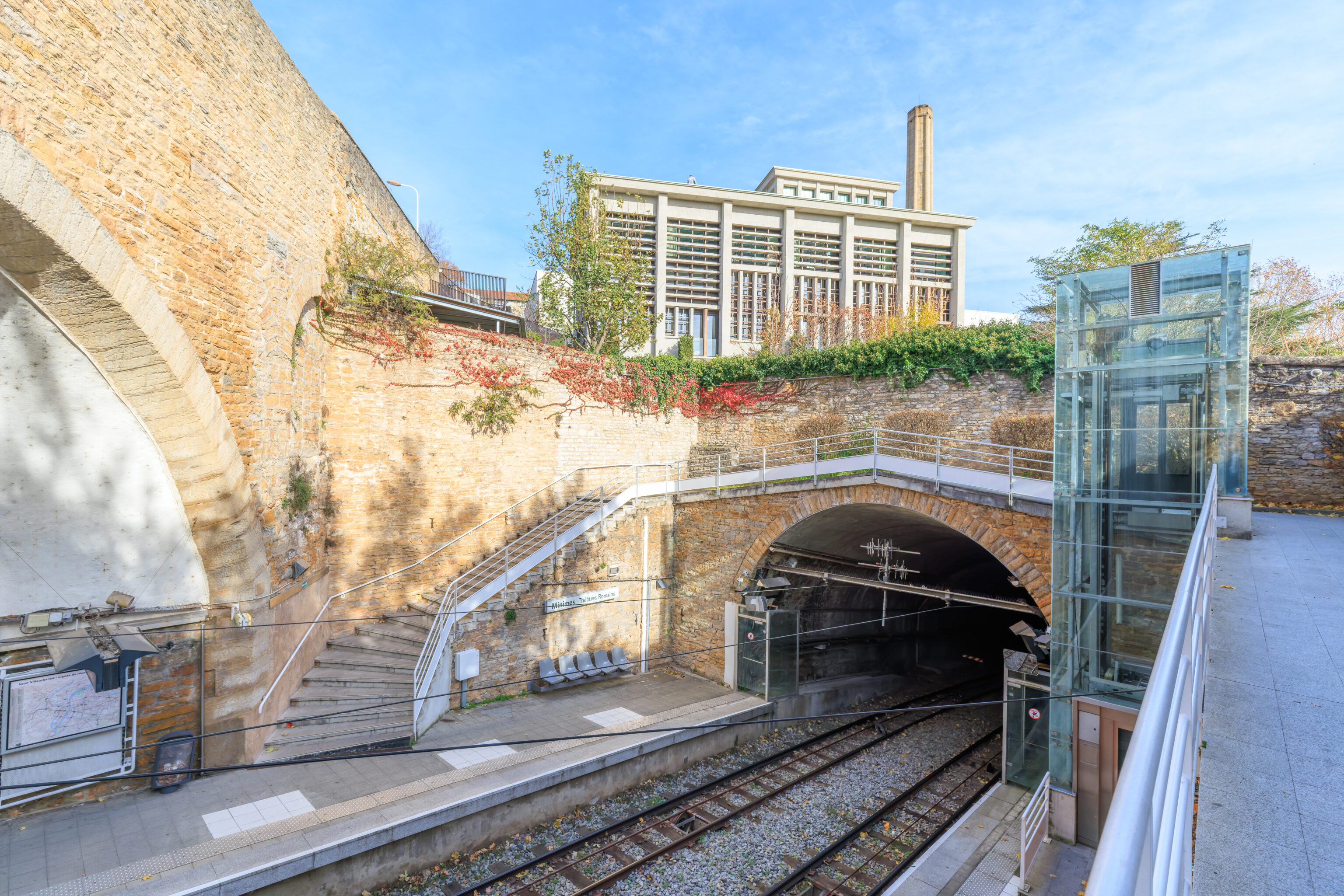
There only seemed to be an elevator for the left side, which goes uphill. We walked over to the other side to go downhill.
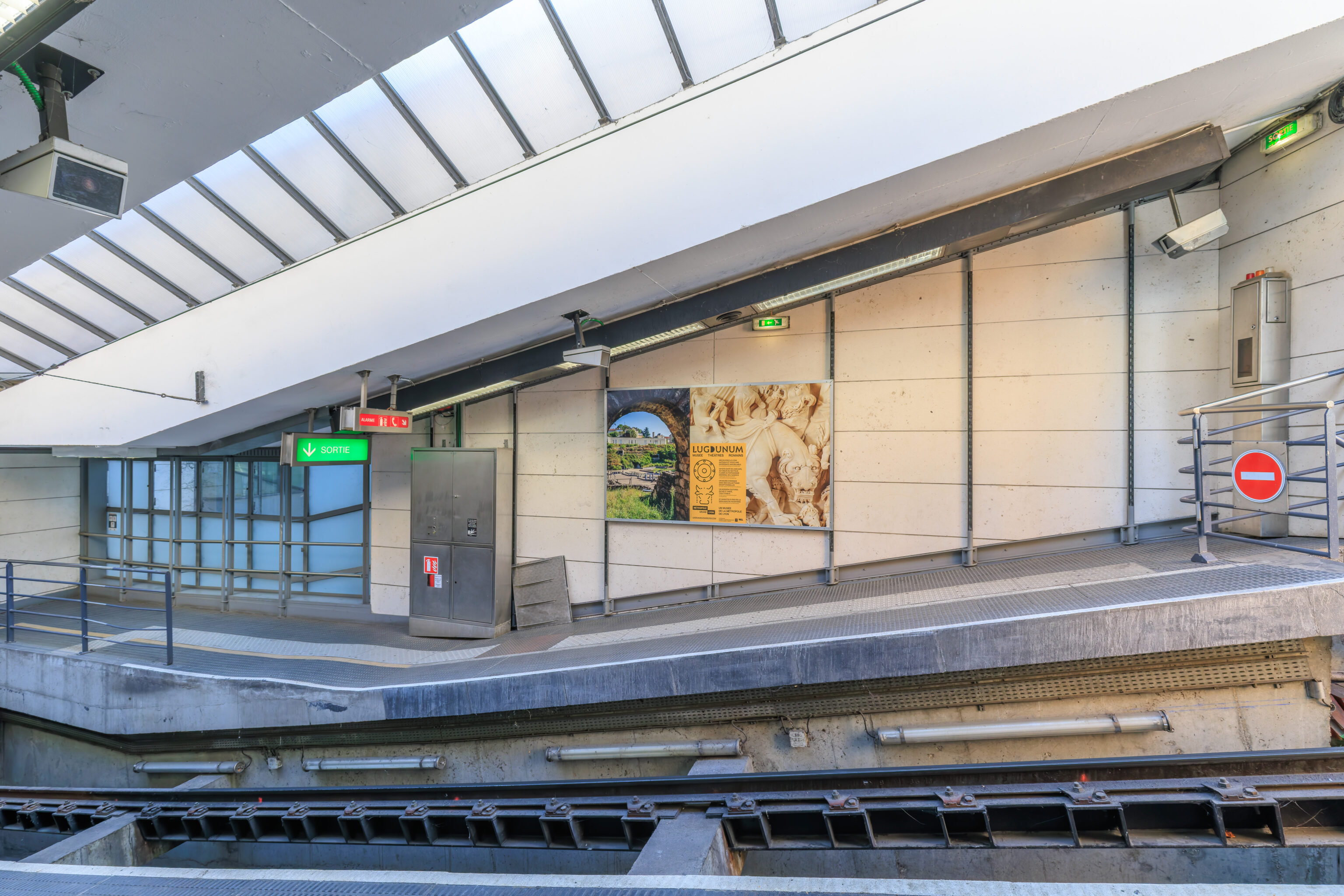
Luckily, the funiculars were not busy. Upon arriving at Vieux Lyon, we went to the other line to catch the next trip up.
Basilique Notre-Dame de Fourvière
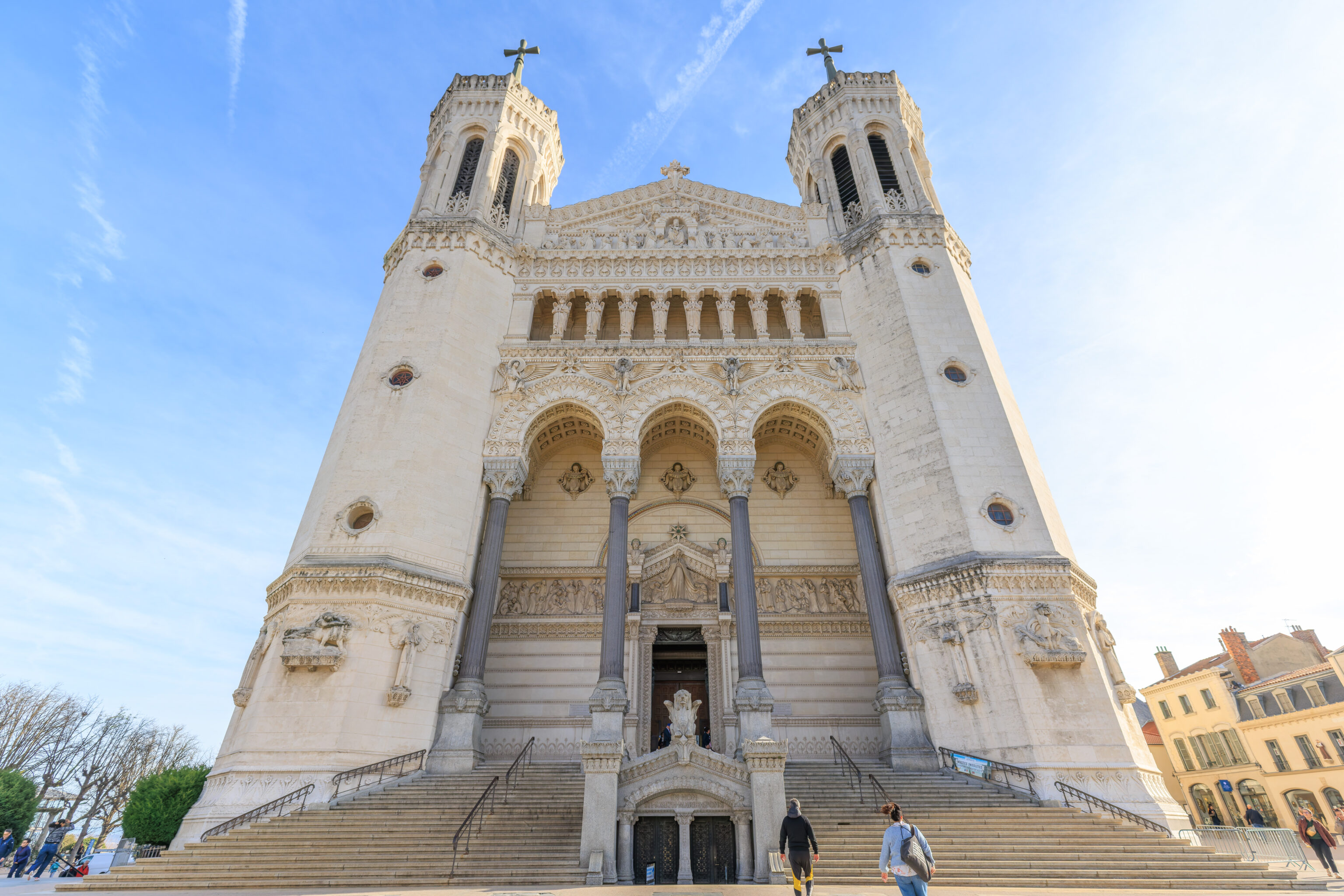
The Fourvière funicular station was right by the front of the Basilique Notre-Dame de Fourvière (Basilica of Notre Dame of Fourvière). Very convenient! The basilica was huge, which we already knew given that we could see it clearly from Place Bellecour.
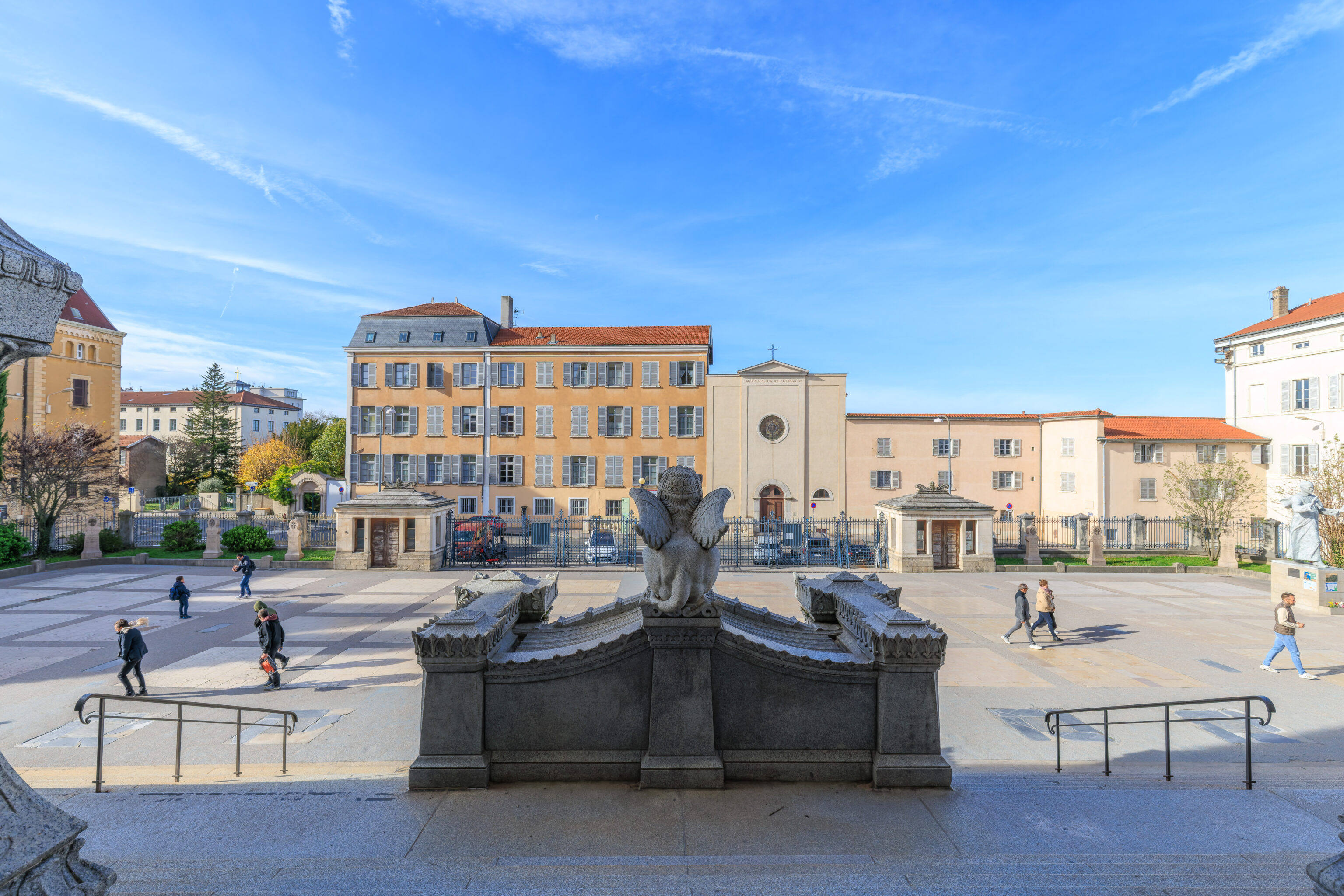
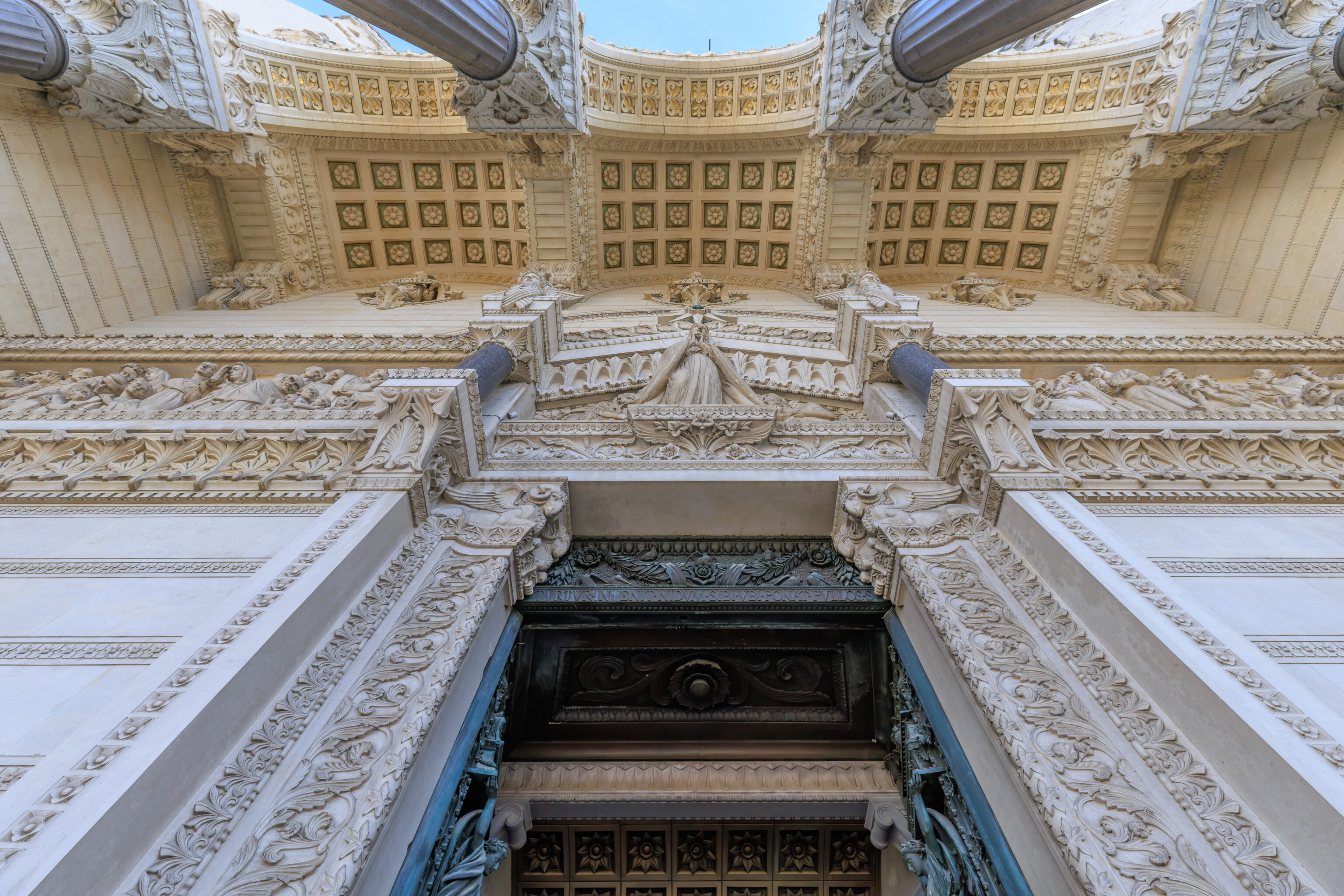
We walked up the steps to head in. Although it was sunny with just a few clouds, it was extremely windy at the time.
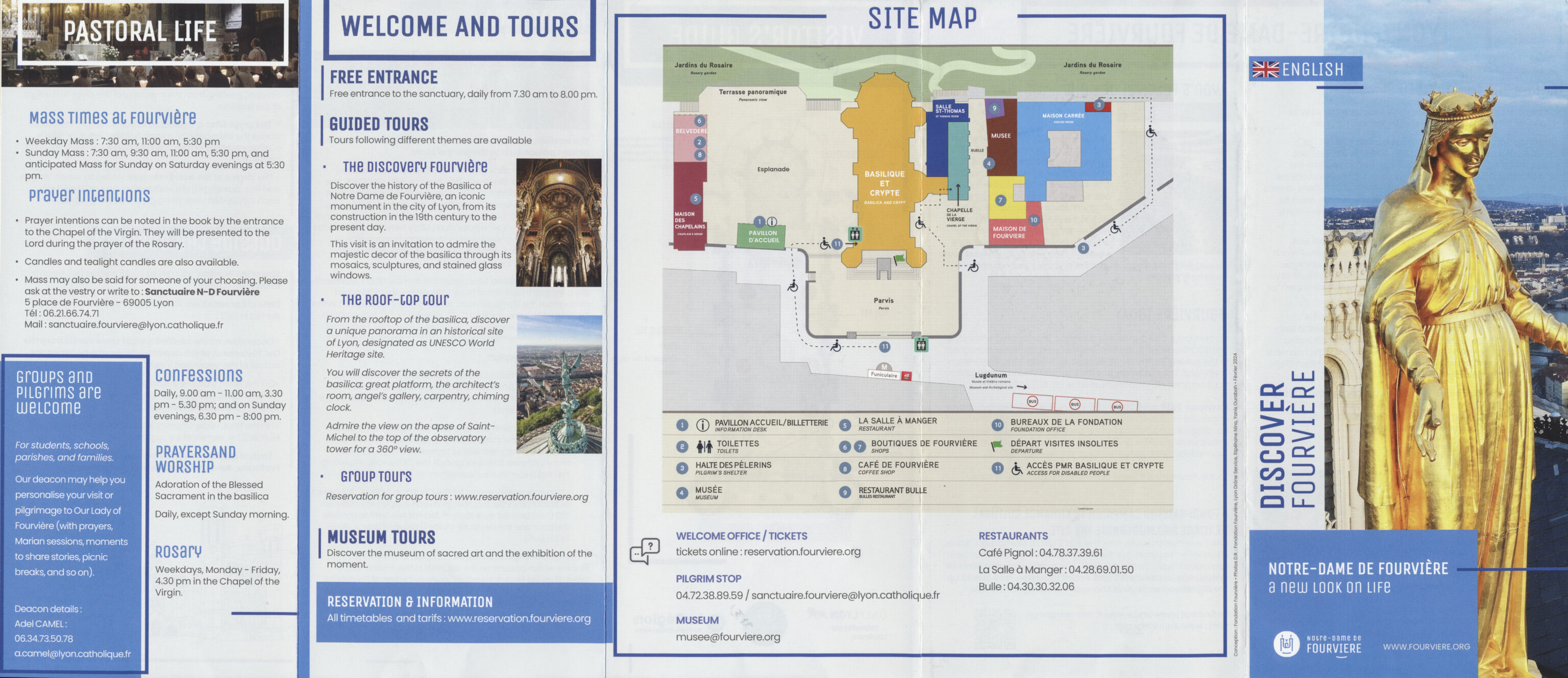
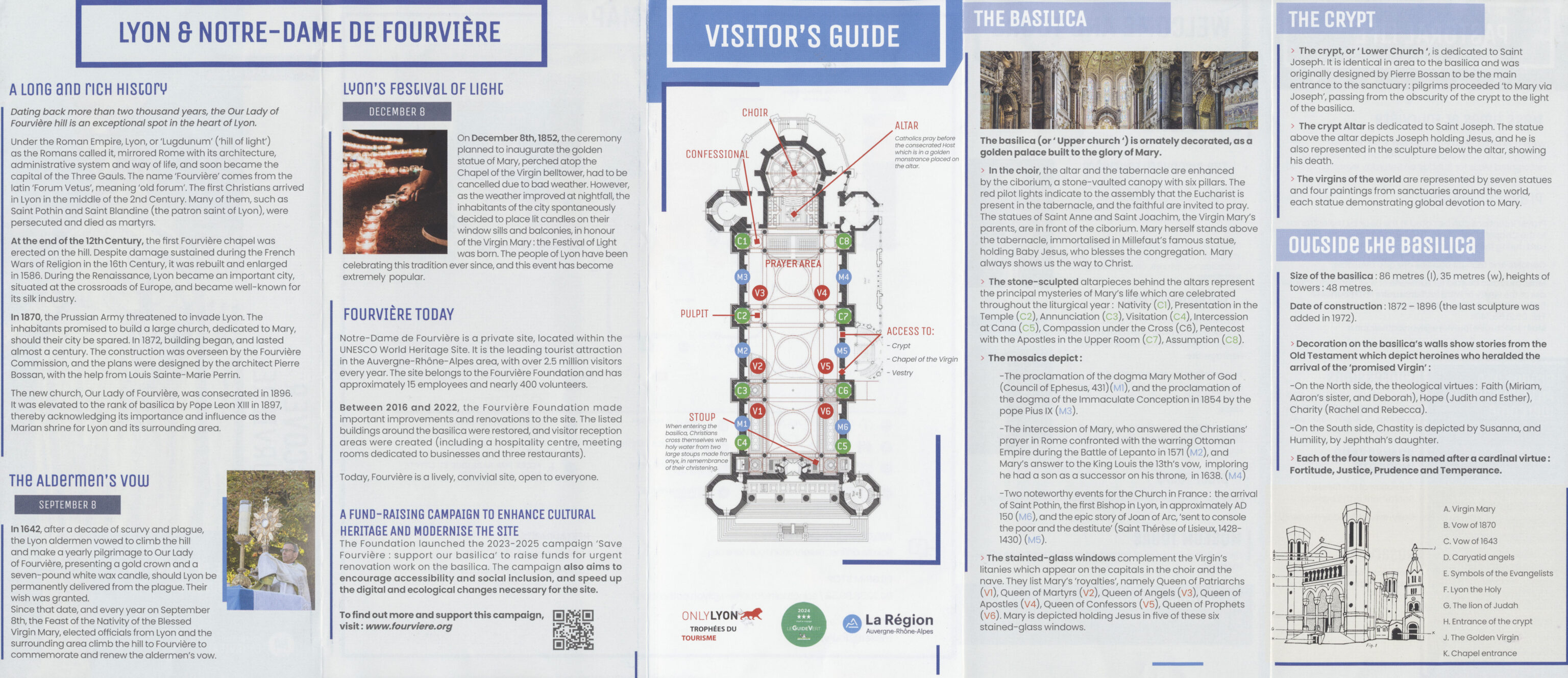
Inside, we picked up a pamphlet with information about the basilica.
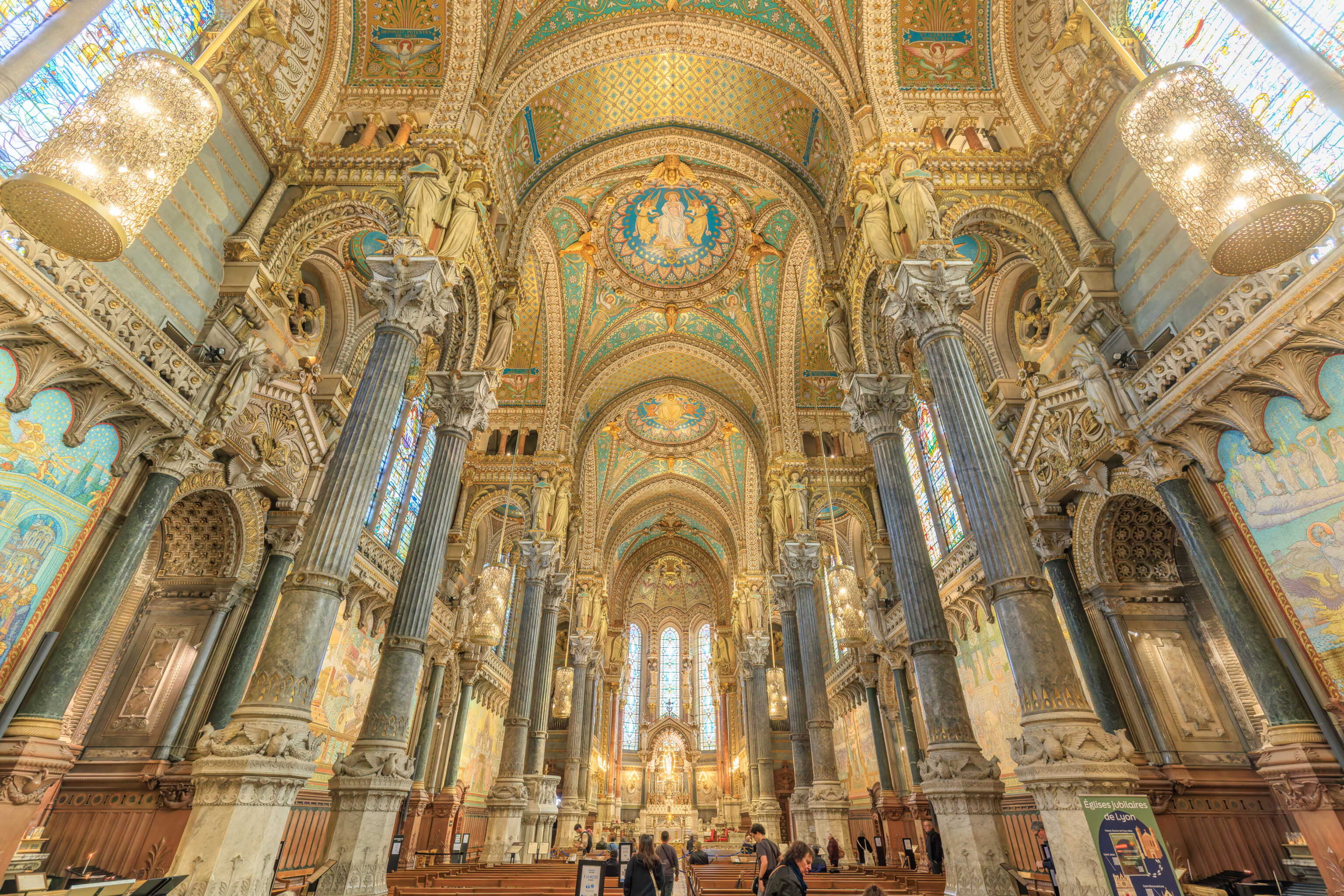
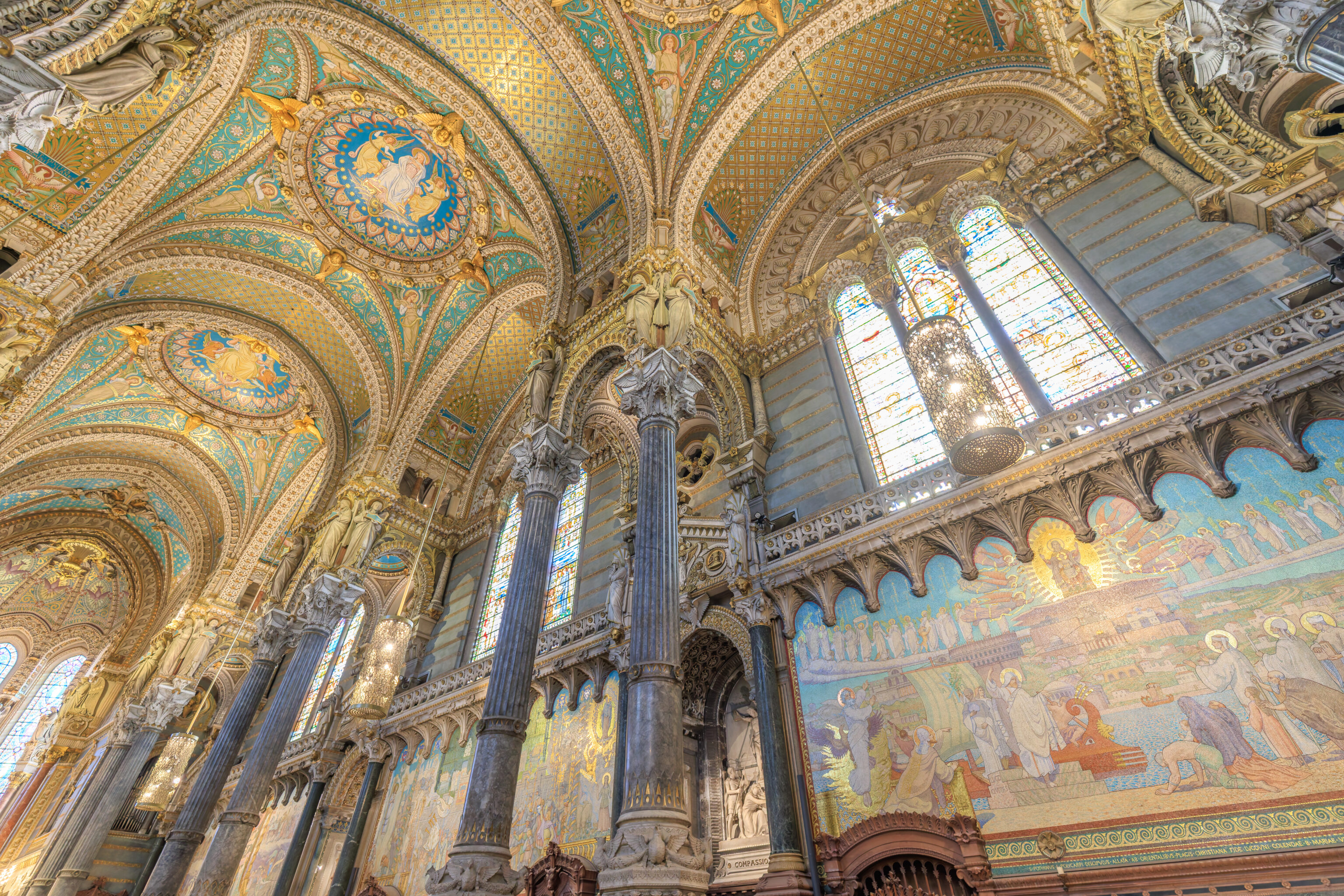
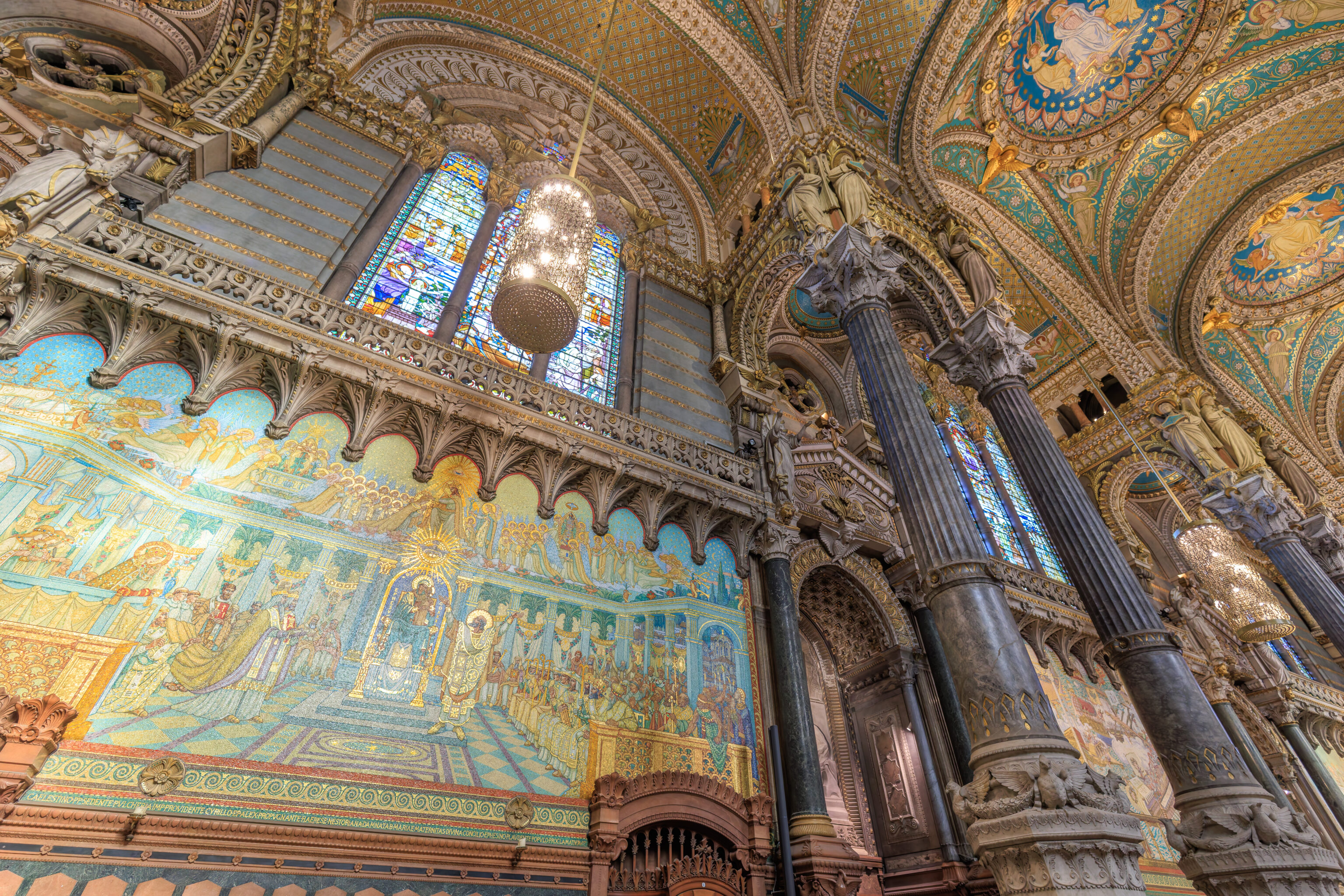
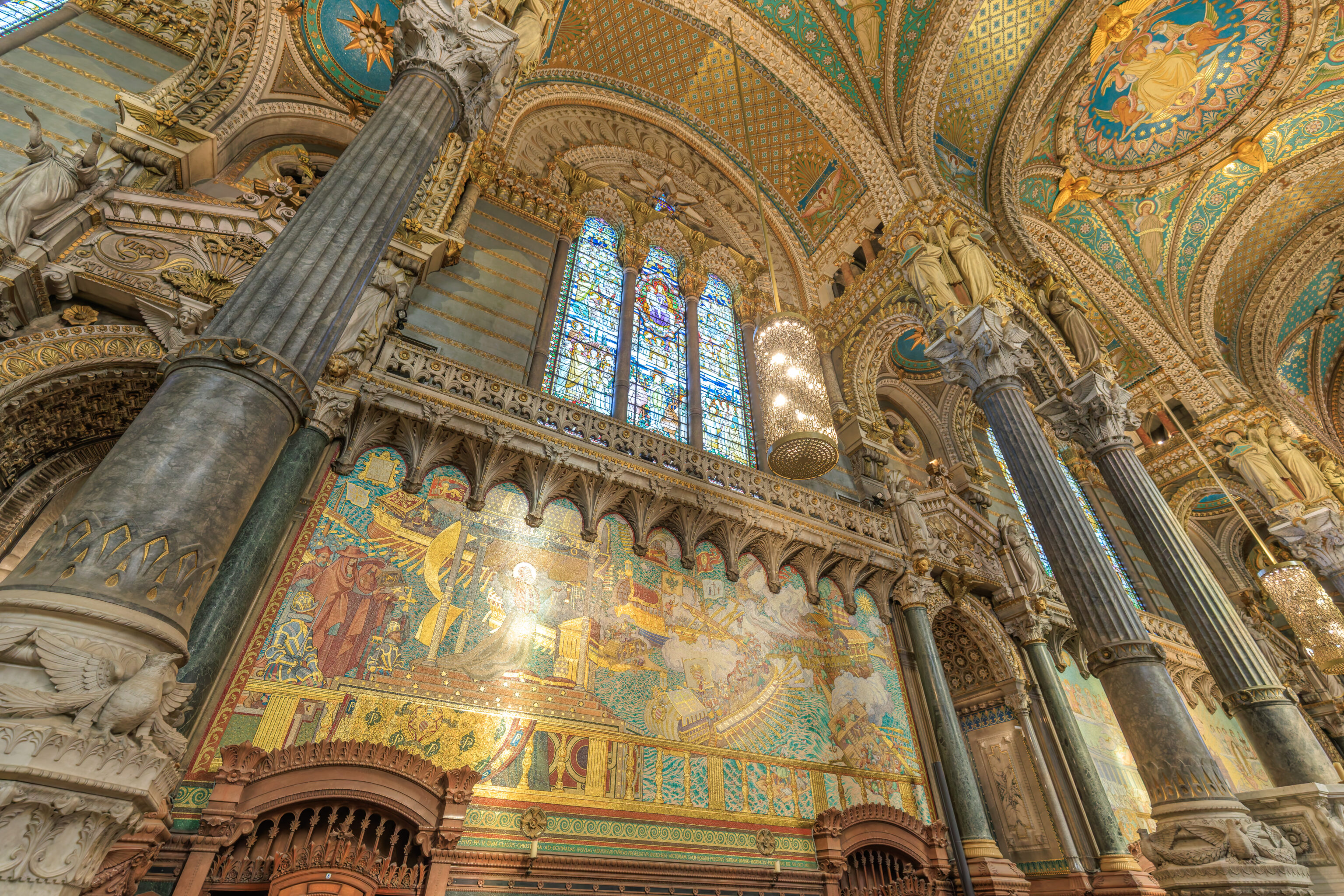
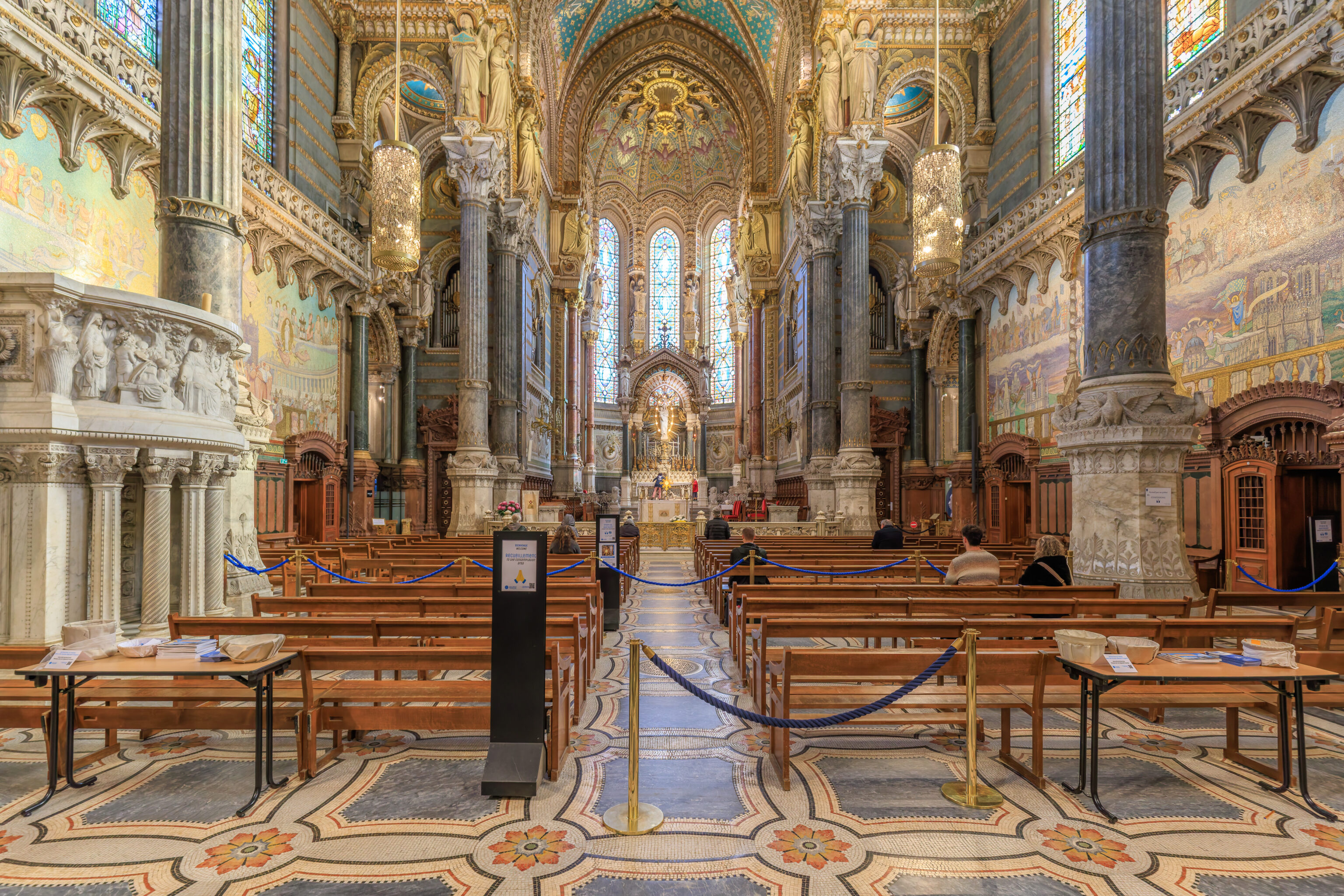
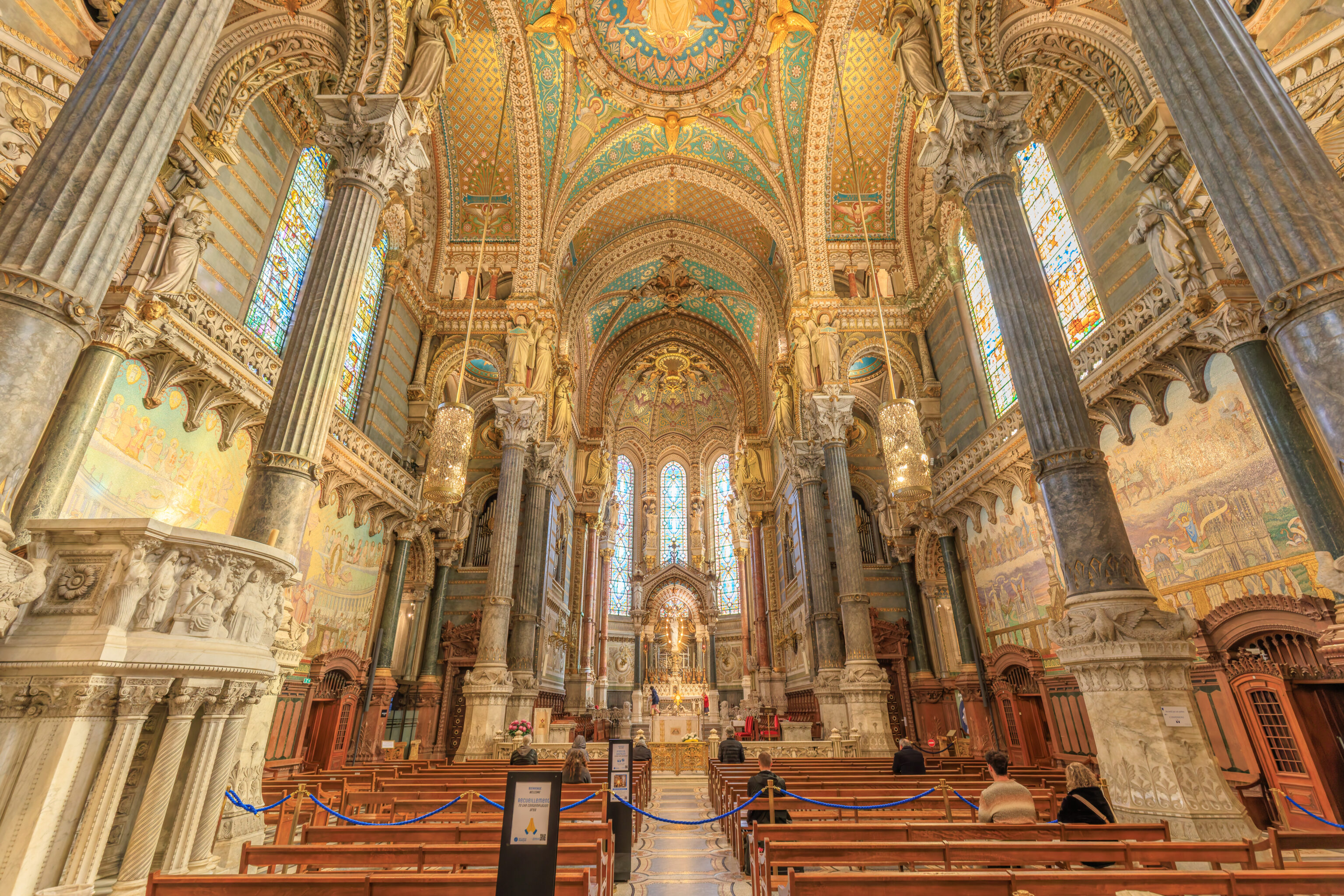

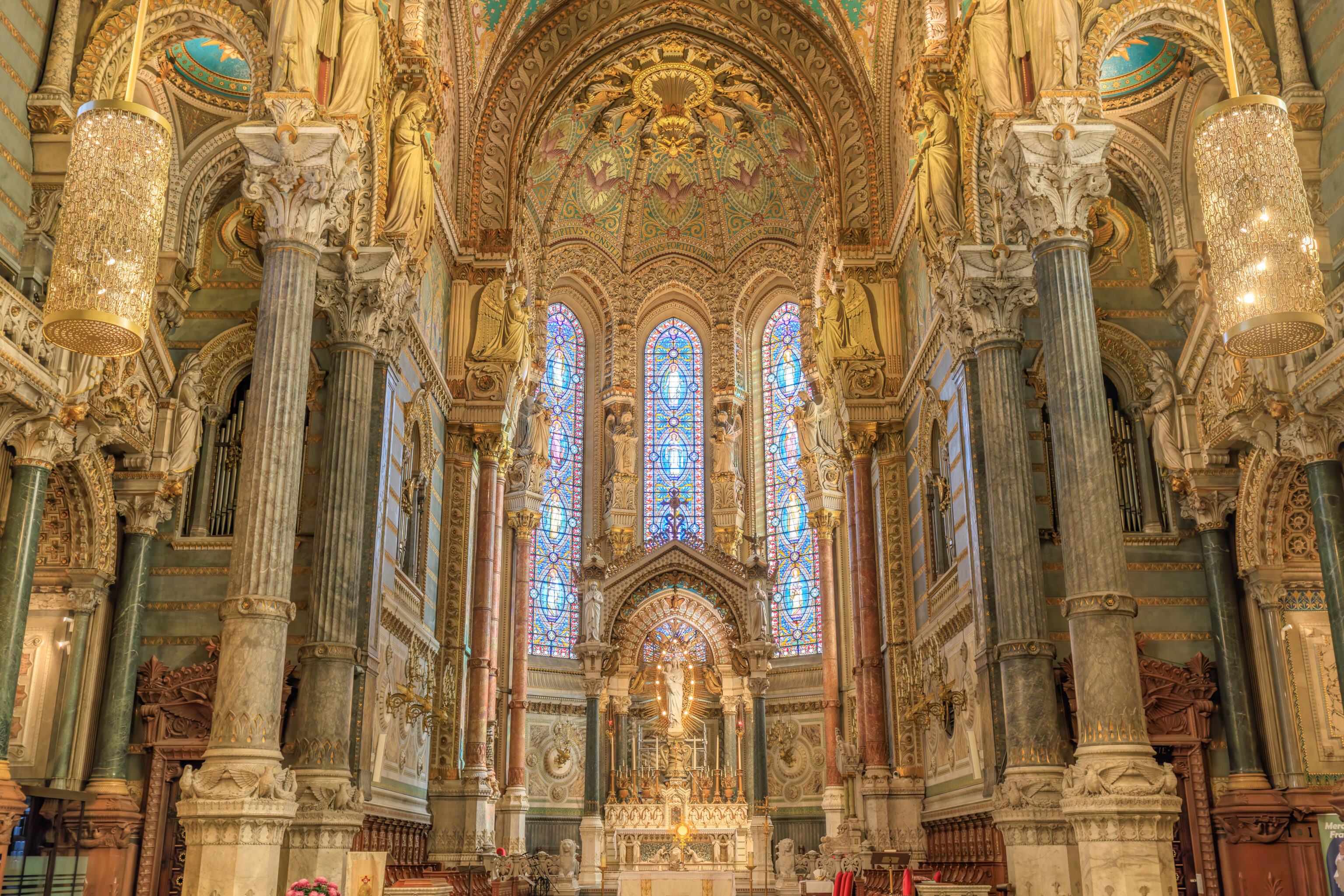
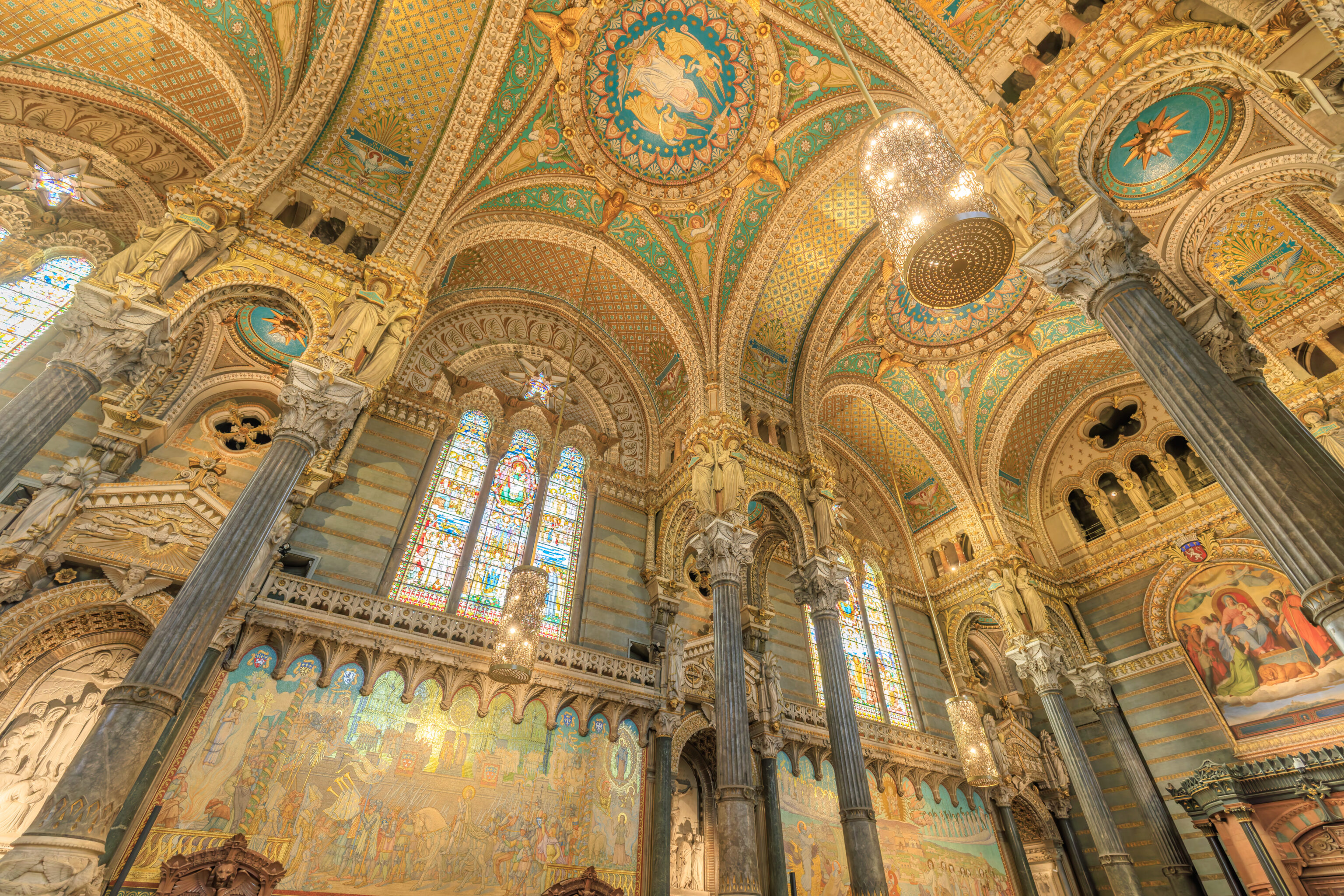
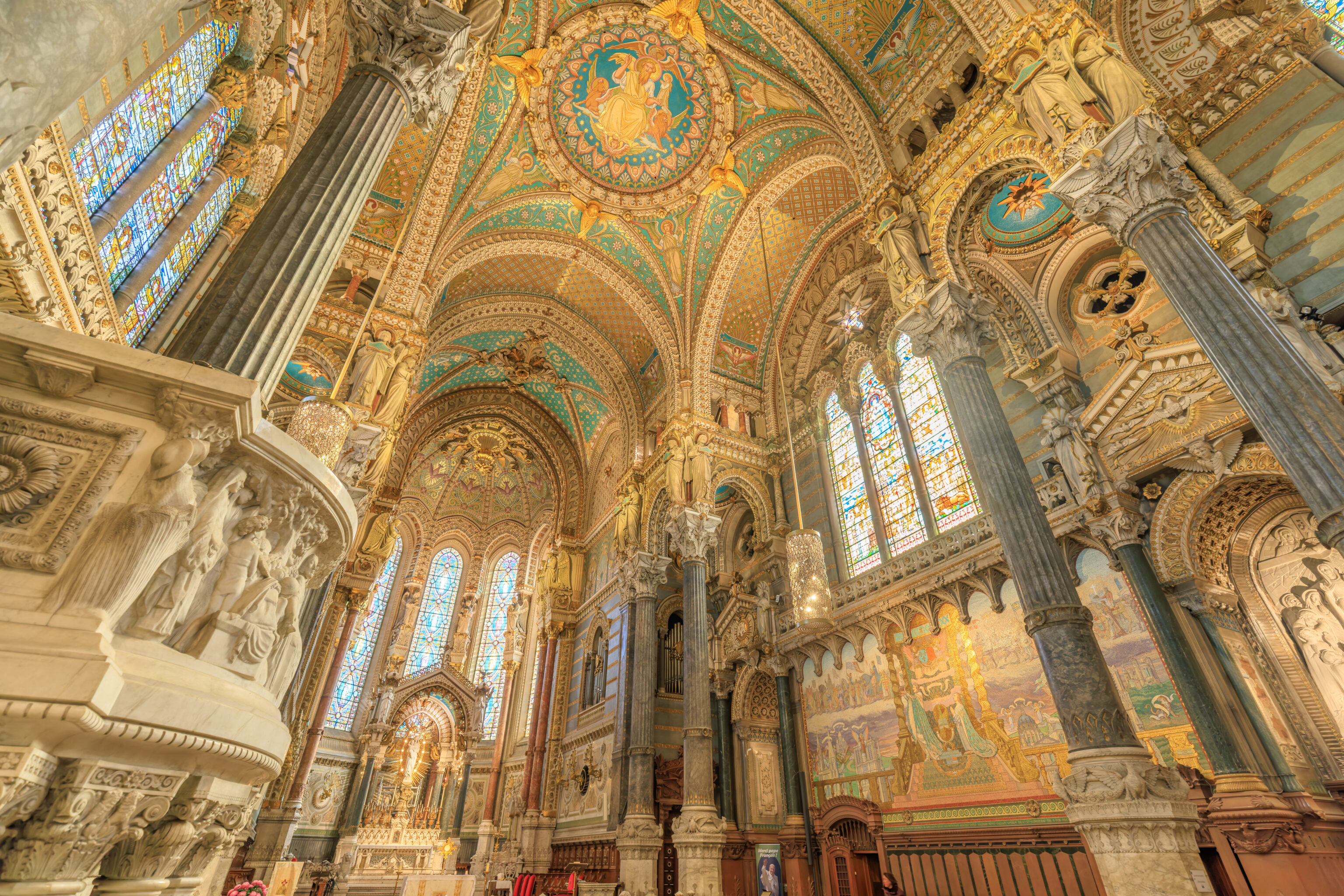
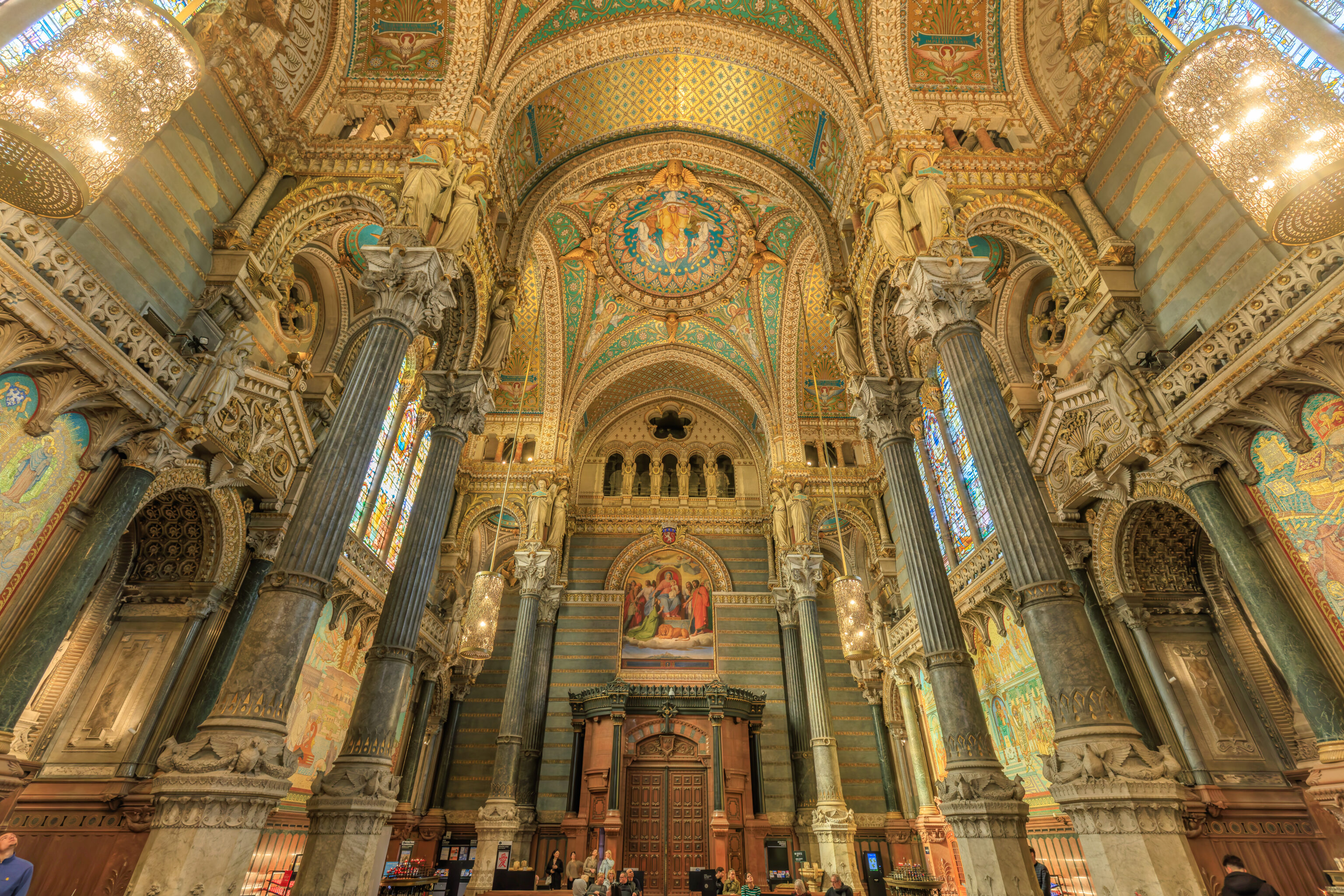
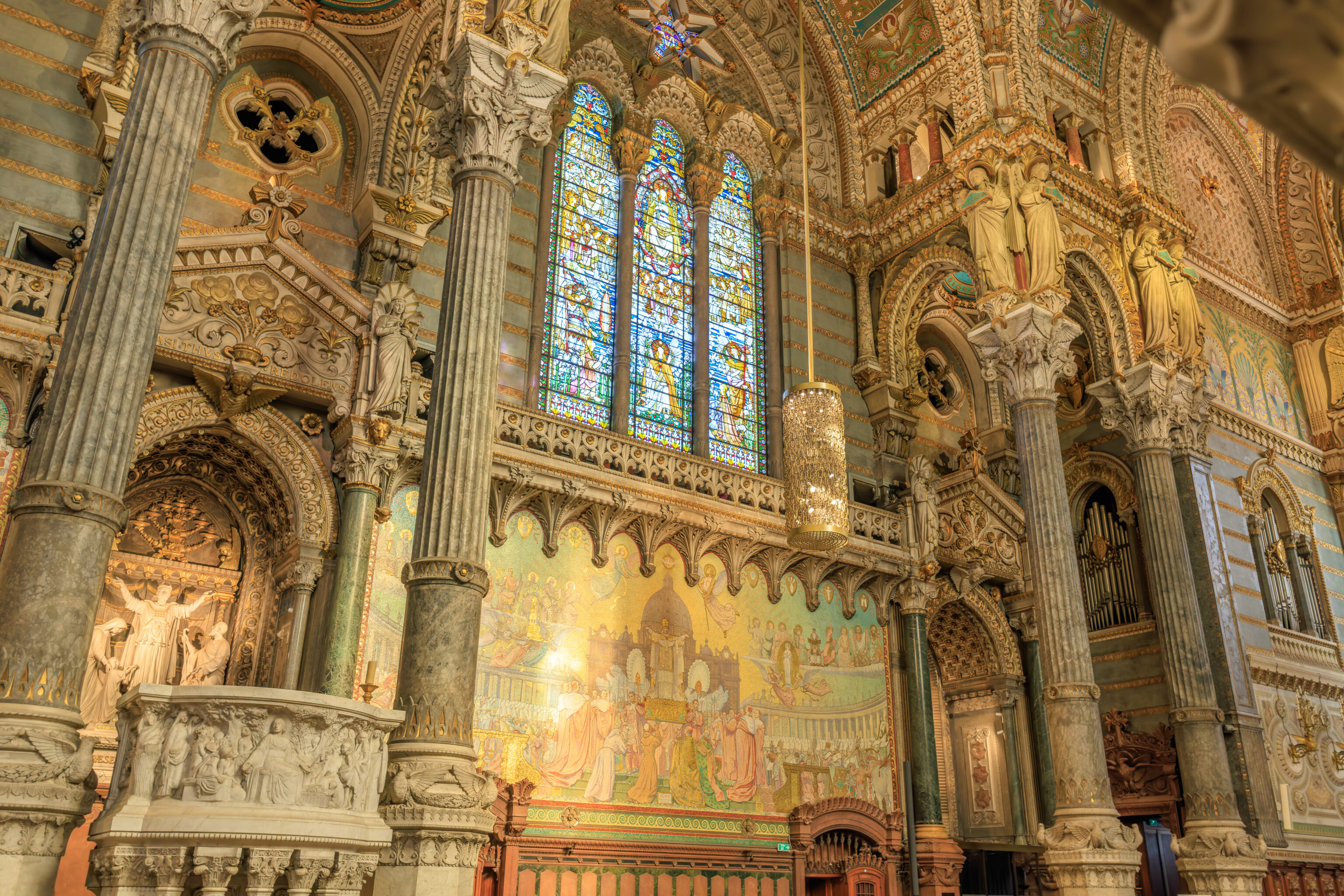
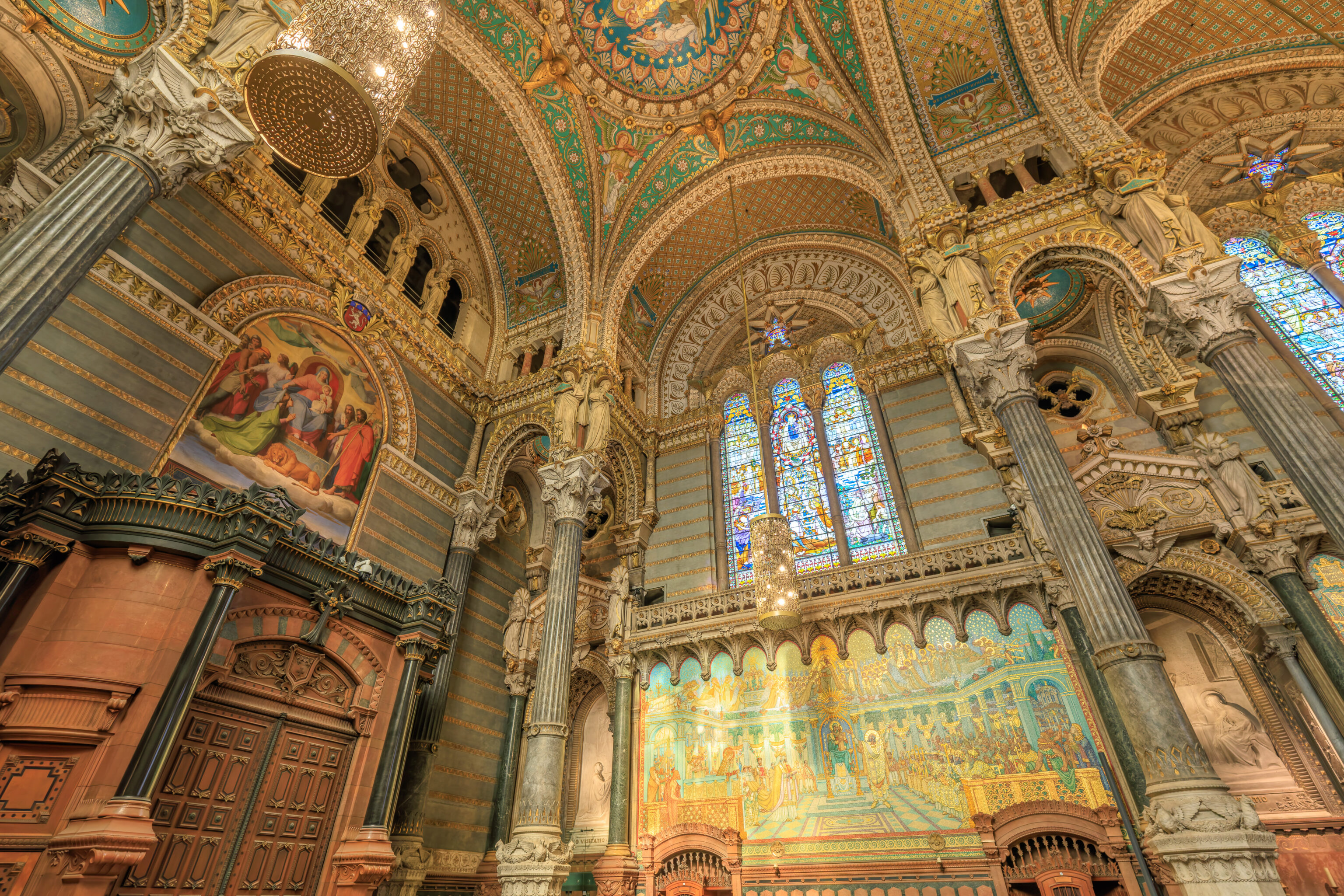
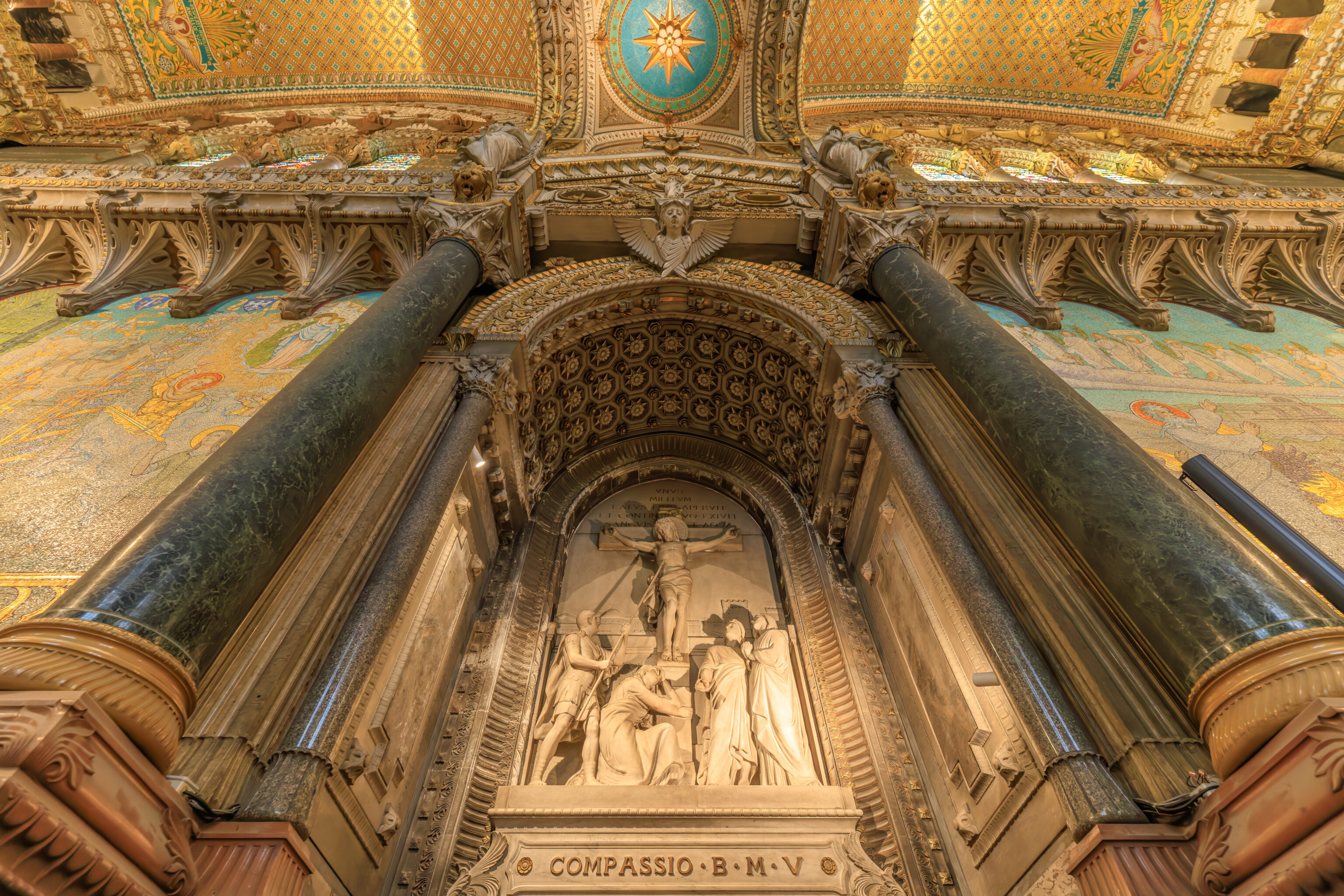
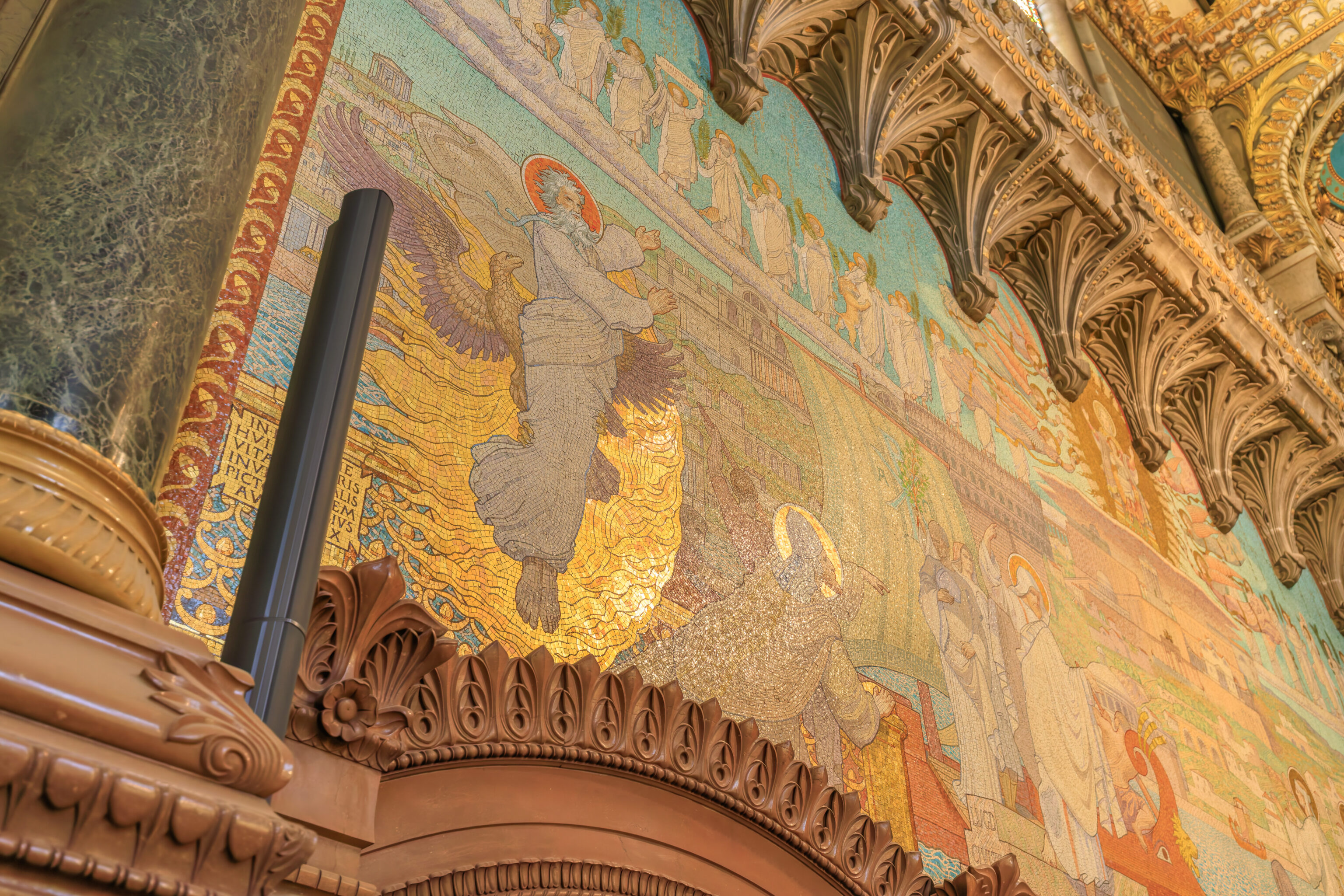
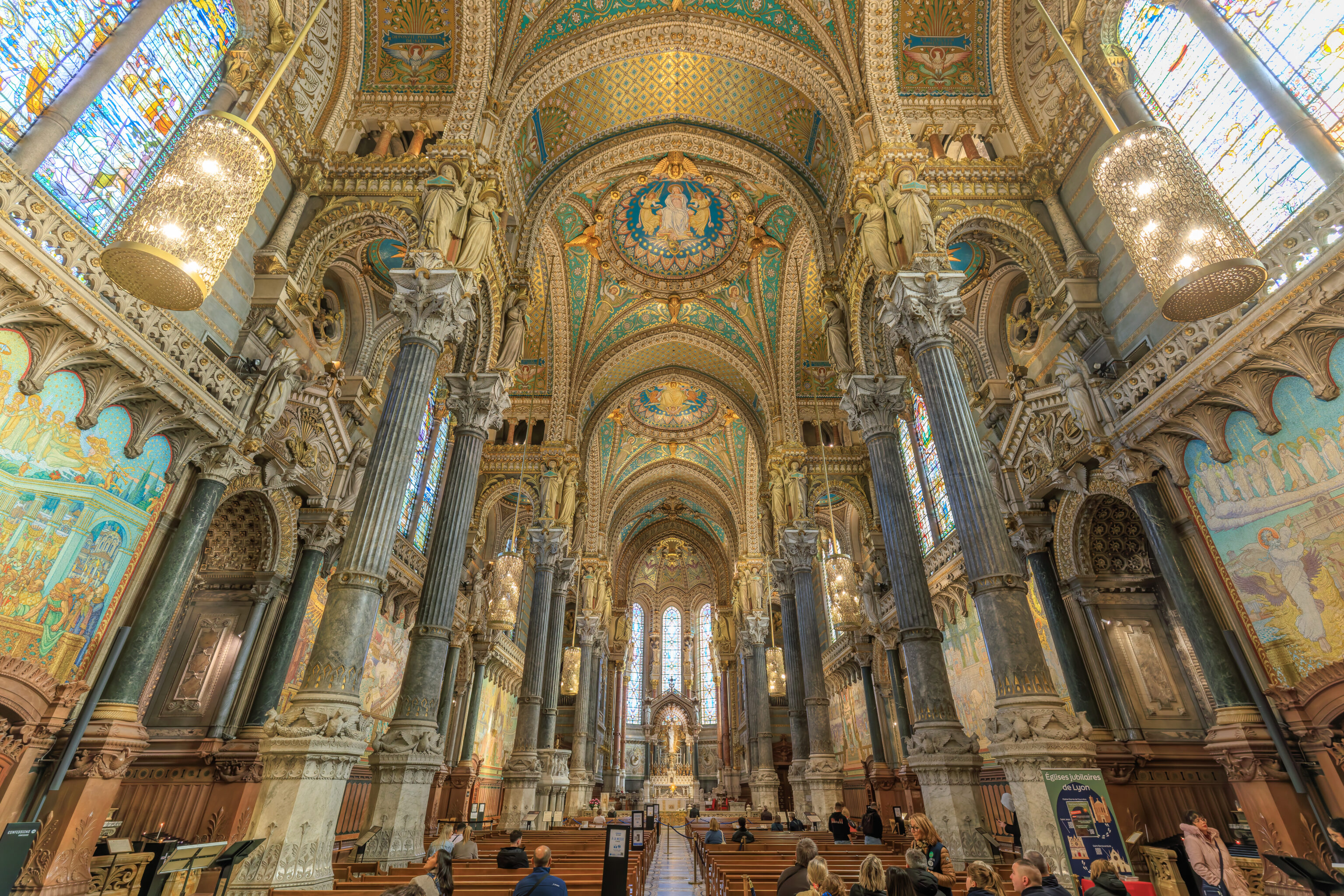
The interior of the basilica was much more ornate than the Église Saint-Nizier, the church we visited yesterday. It was quite beautiful. There were fantastic mosaics on the walls.
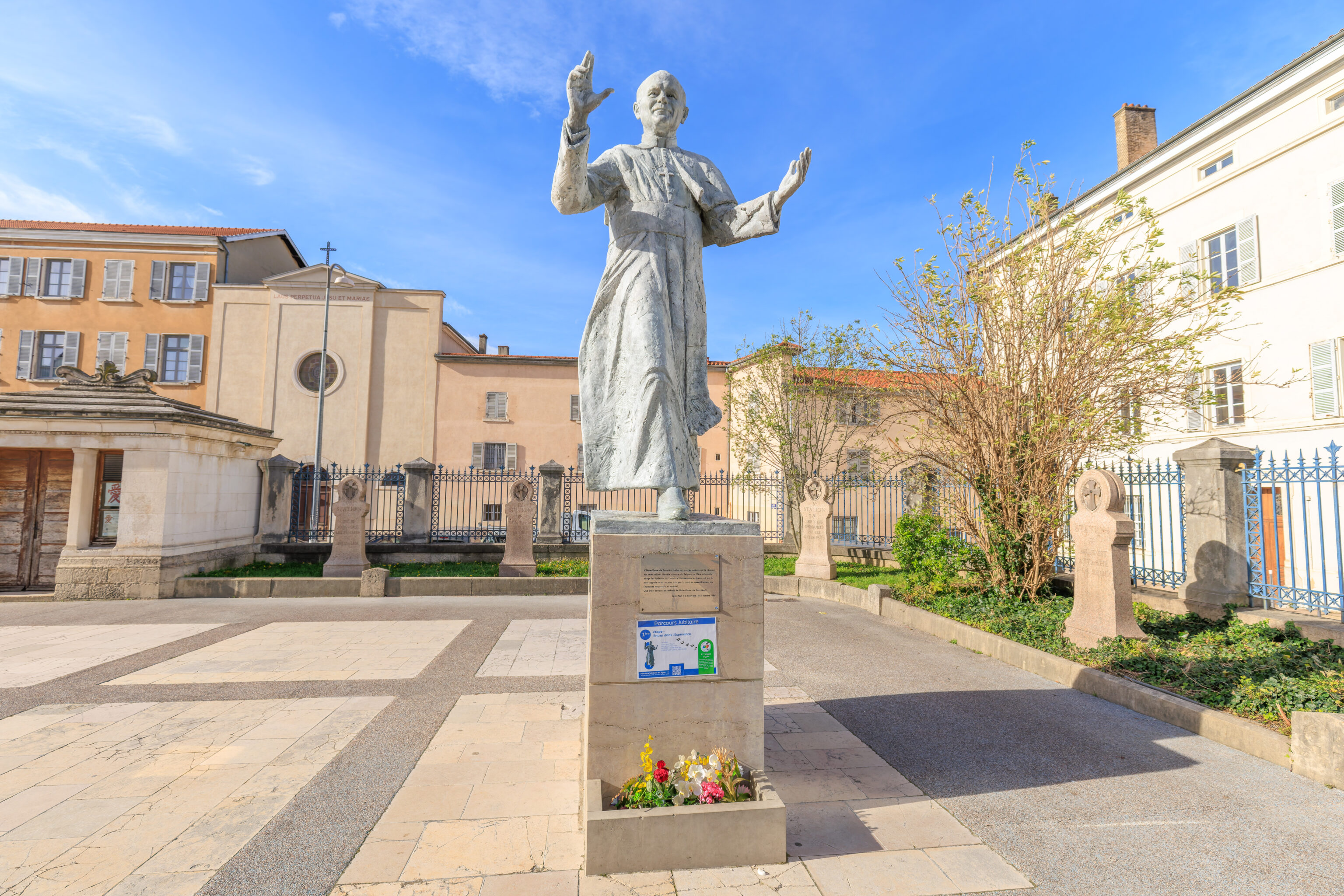
After spending some time inside, we headed back out into the wind to take a look around the area. We came upon a statue of Pope John Paul II. The plaque, translated using Google, reads:
"Our Lady of Fourvière, watch over all your children who venerate you
on this hill! Humble servant of the Lord and admirable Mother,
lighten our heavy burdens and show us the way to which your Son
calls us, to the path stronger than death, to the gathering of
humanity renewed and saved!

May God bless the children of Our Lady of Fourvière."

John Paul II at Fourvière, October 5, 1986
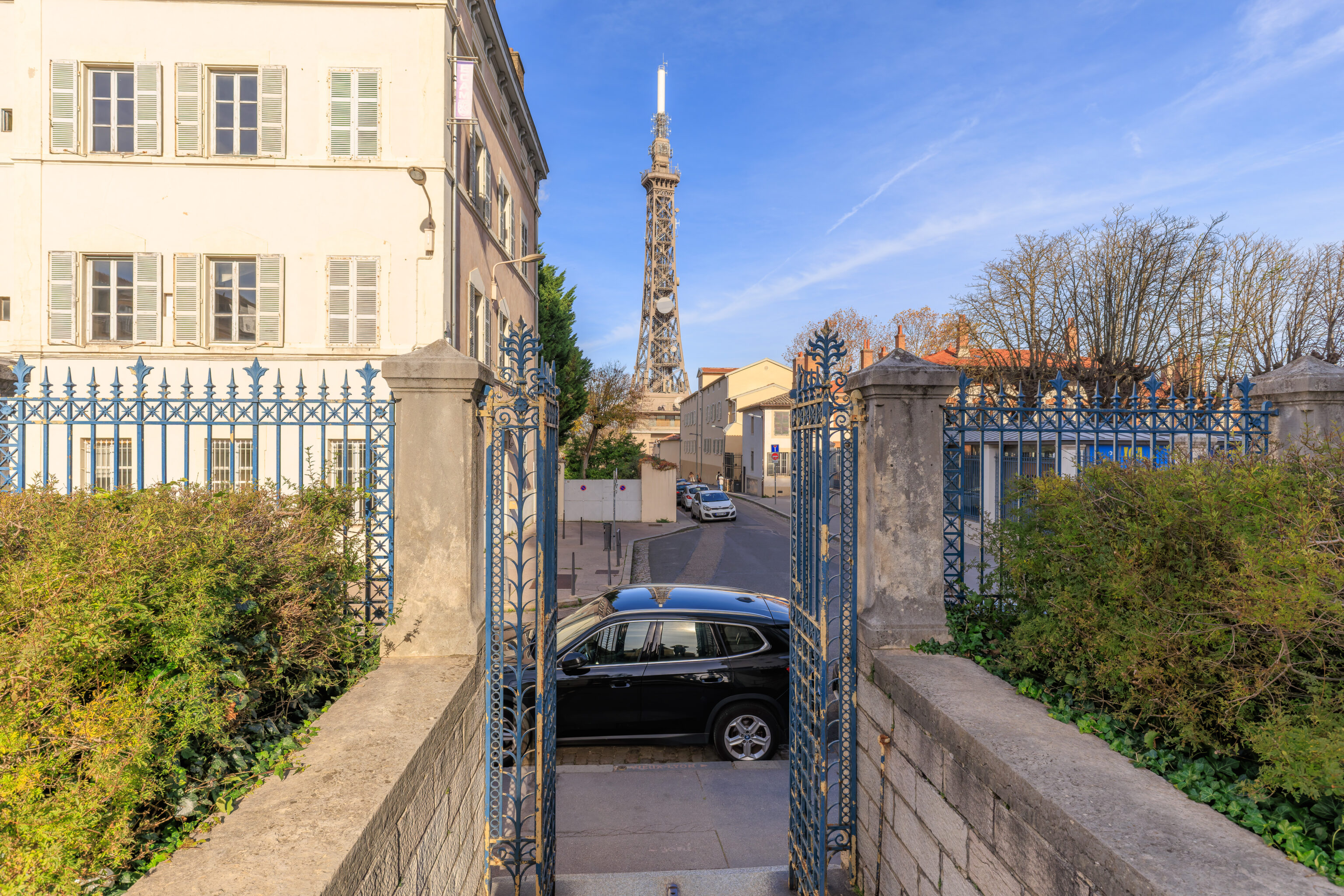
We walked over to the north side of the basilica. We saw the Tour Métallique de Fourvière (Metallic Tower of Fourvière) in front of us. It’s shape resembles a small Eiffel Tower.
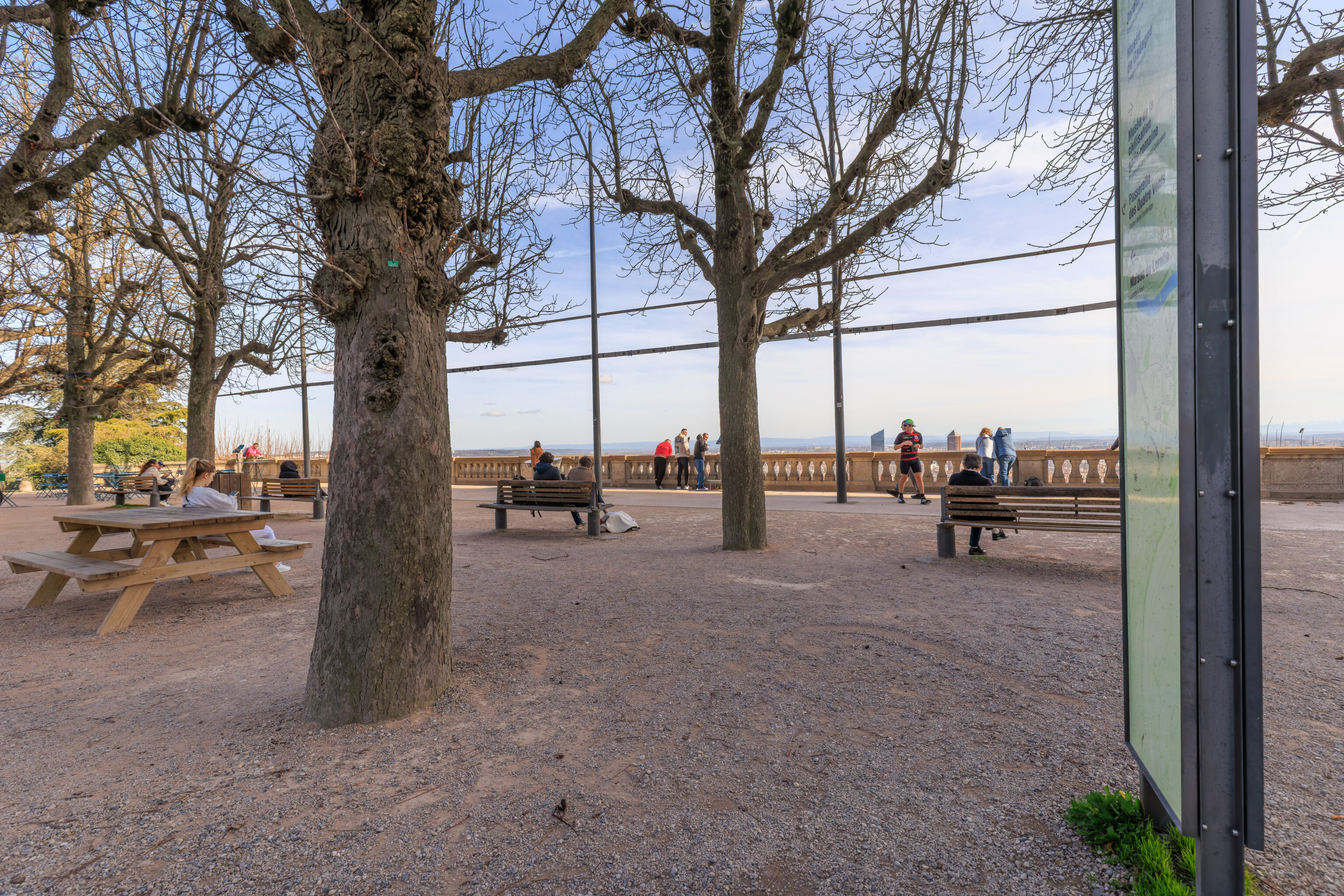
We walked to the east around the north side of the basilica in order to reach an overlook above Vieux Lyon. The area by the overlook had benches and picnic tables. It was a bit barren as it is winter but is probably very nice in the other seasons when there are leaves on the trees.
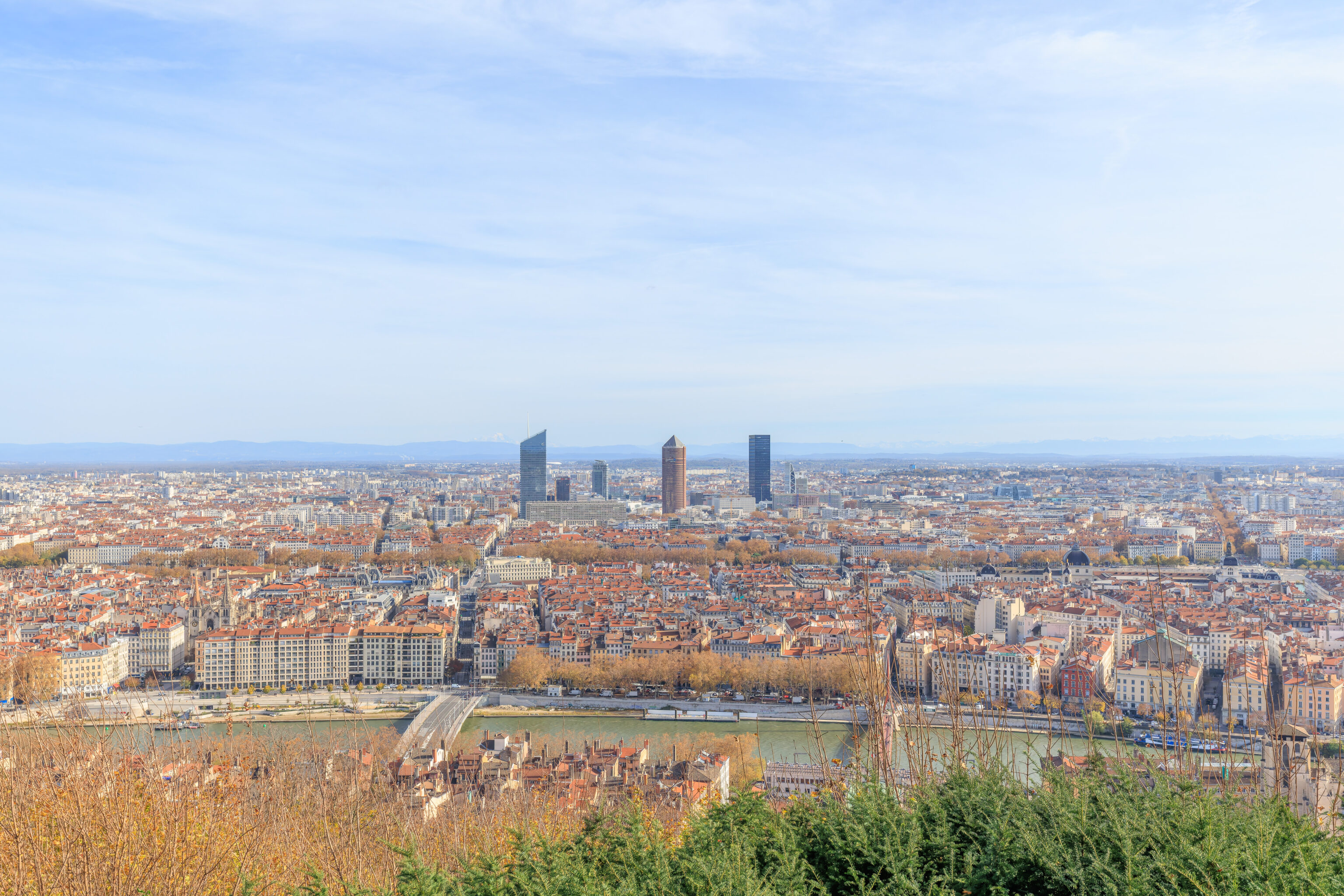
The view from the overlook was fantastic! Lyon doesn’t have very many tall buildings. The few it does have are located near Lyon Part Dieu, the city’s main train station.
The view here is to the east. Various sources state that Mont Blanc can be seen from here on a clear day. Although Mont Blanc is the tallest mountain in western Europe, it has never been a particularly easy one for us to identify. From here, we could see a prominent tall mountain in the distance.
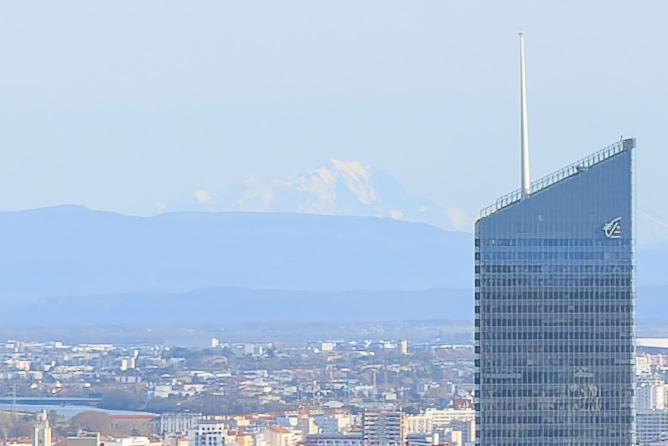
Looking closely, its shape does sort of seem like Mont Blanc, but we don’t know for sure. It is just to the left of the leftmost tall building in this view.
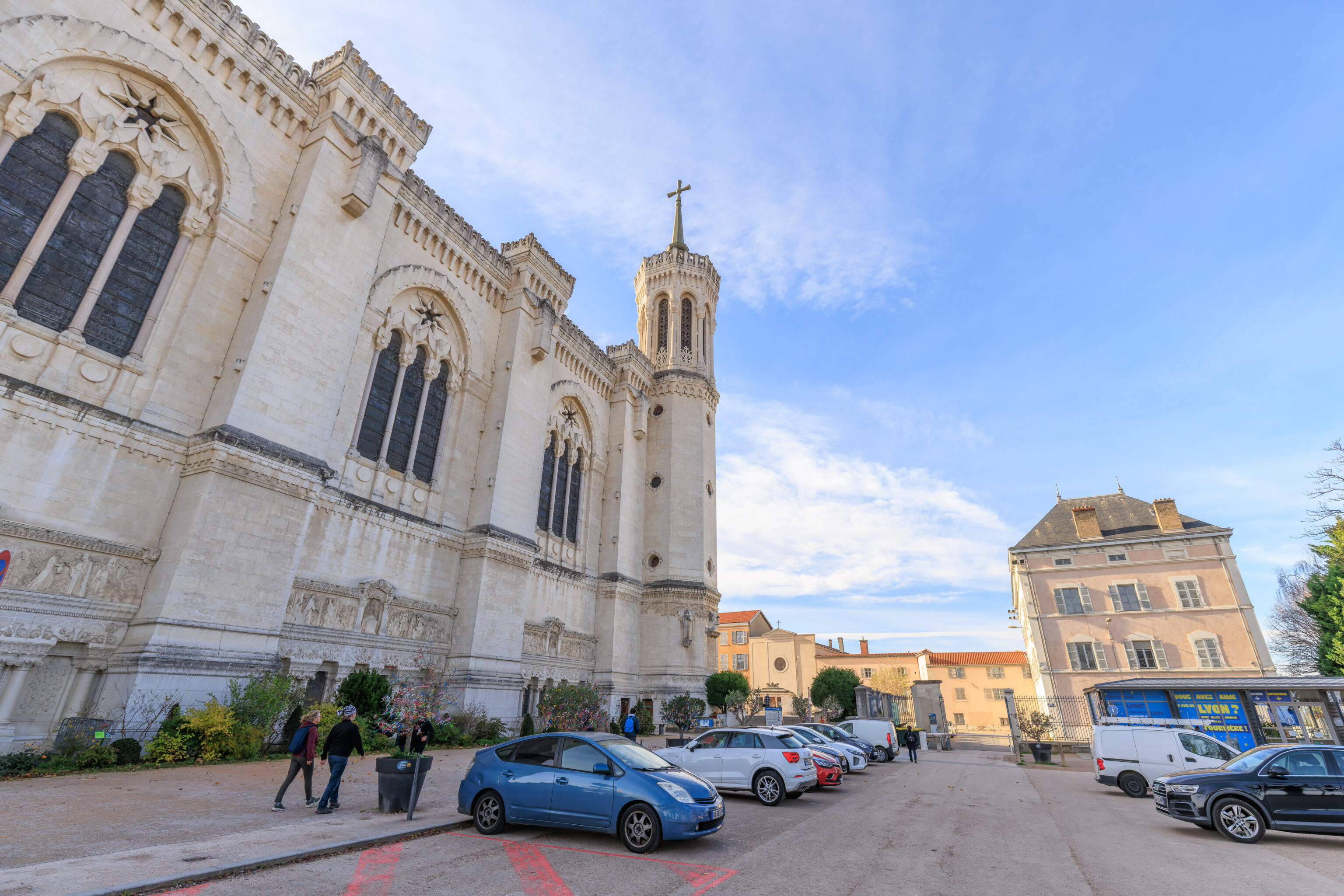
We decided to walk to the north to get a closer look at the Metallic Tower of Fourvière.
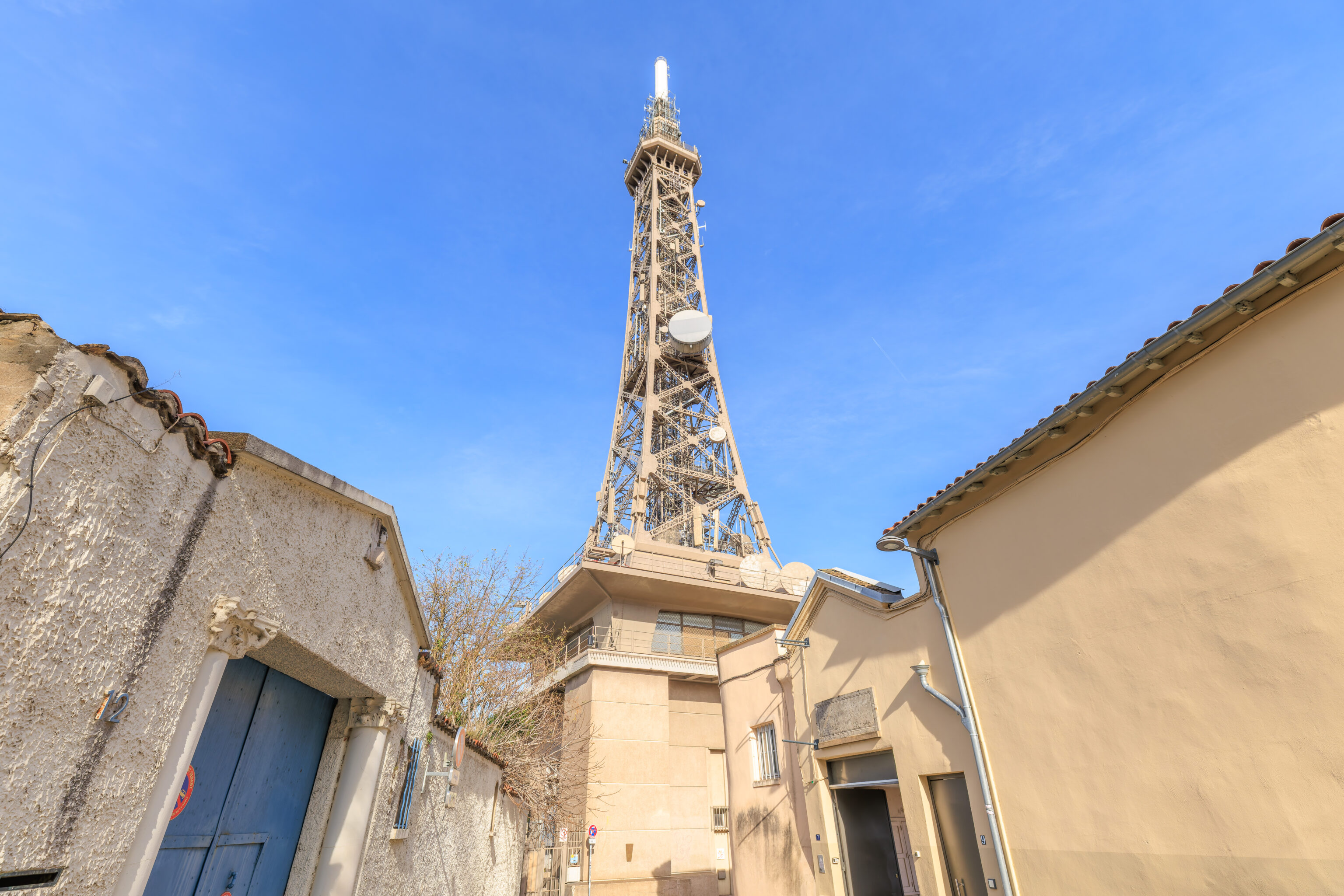
This was as close as we got before the road started going downhill. We didn’t try to see if we could get any closer as the tower is not open to the public.
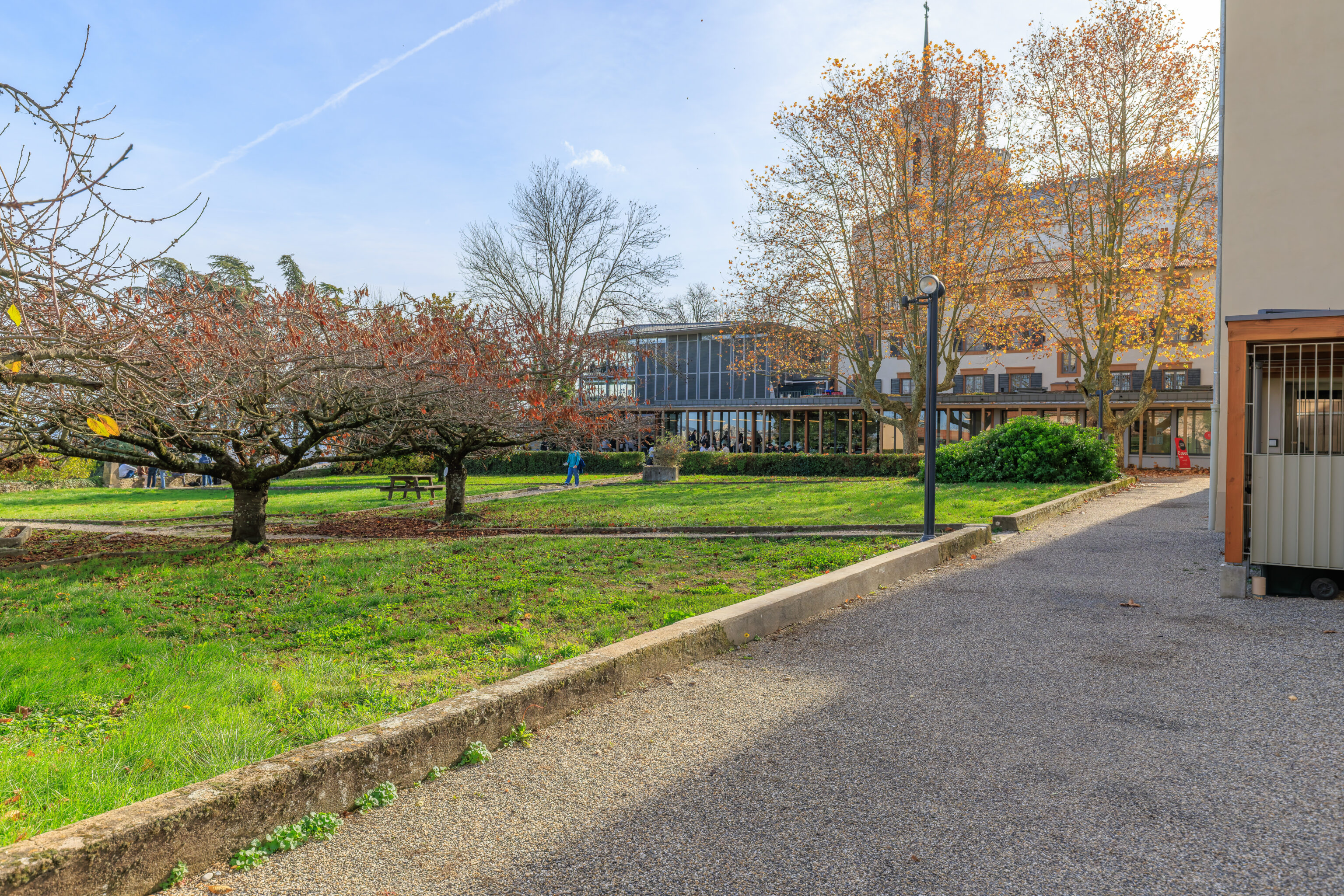
We walked by a little grassy courtyard-like area on our way back towards the basilica.
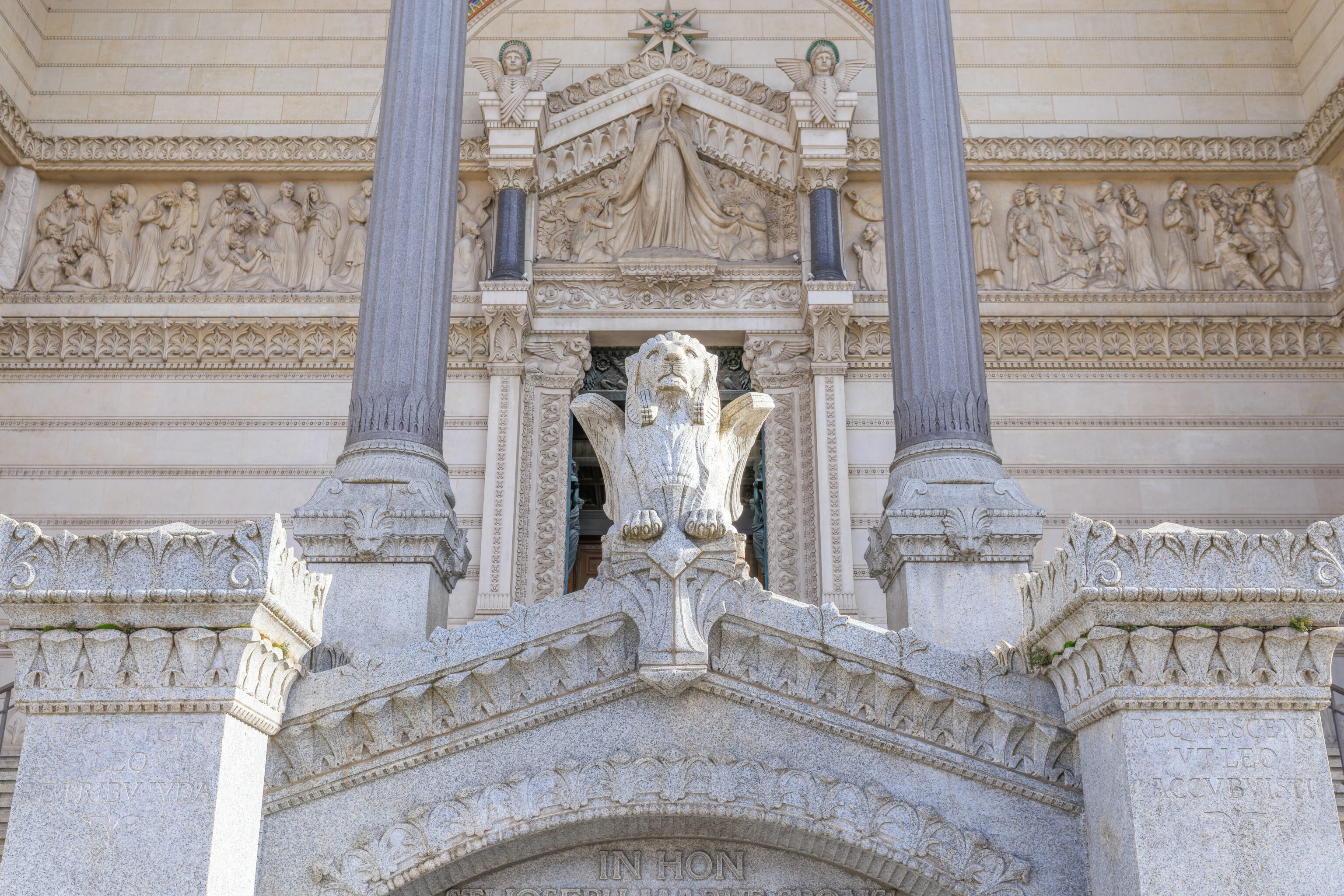
We passed by the front of the basilica again as we headed to the south to visit the Lugdunum Musuem.
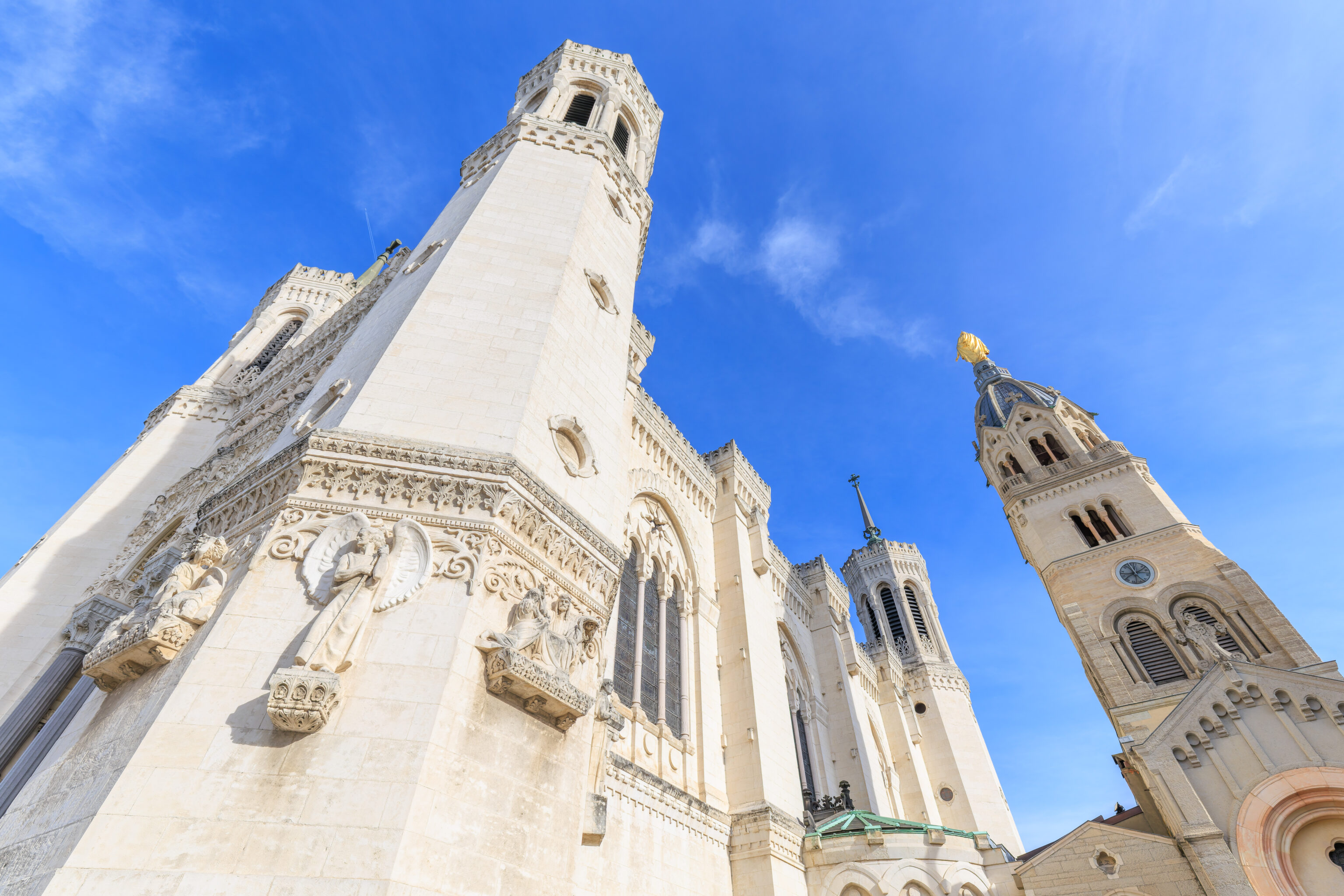
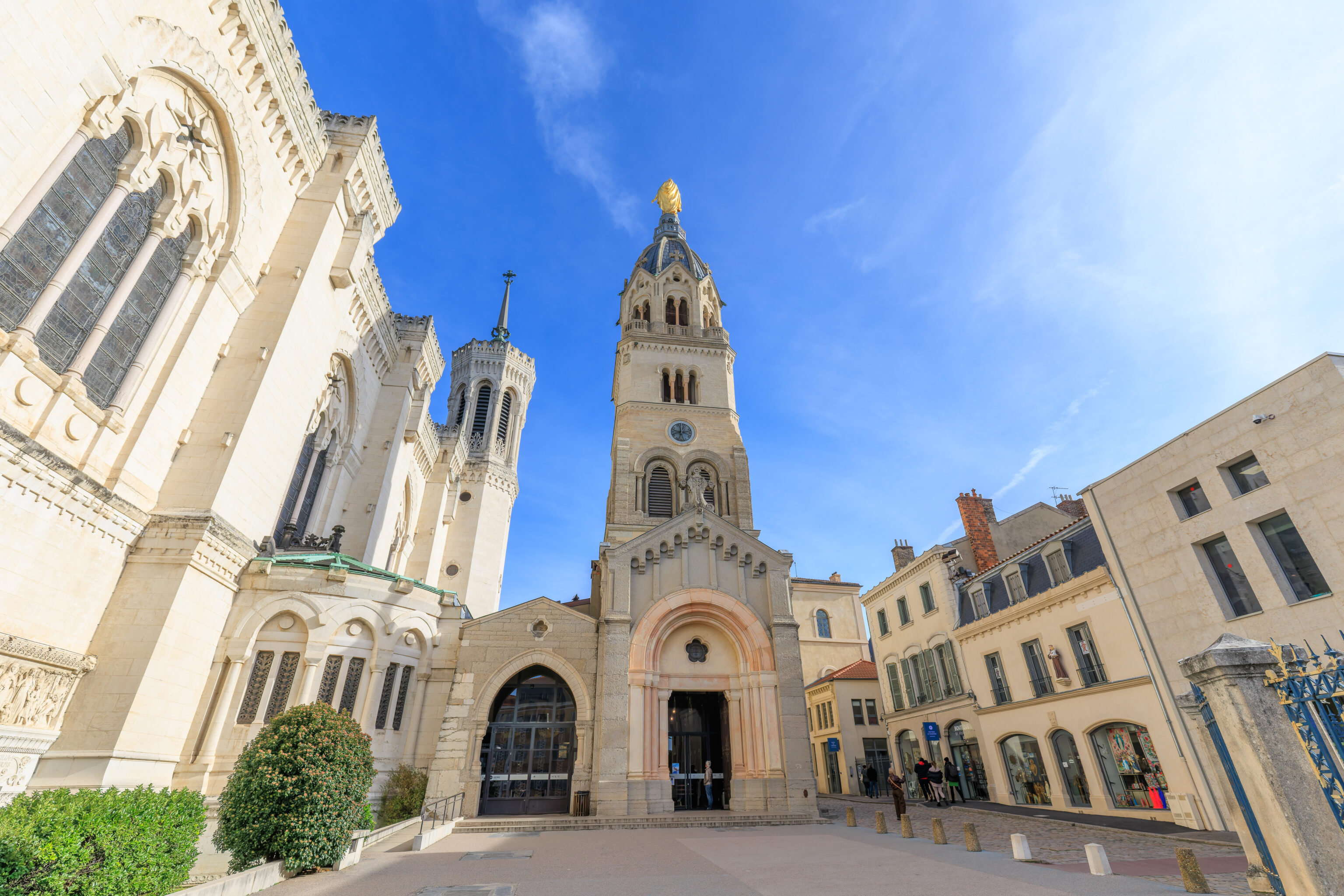
But first, a slight detour. The Chapelle Saint-Thomas is attached to the southern side of the basilica.
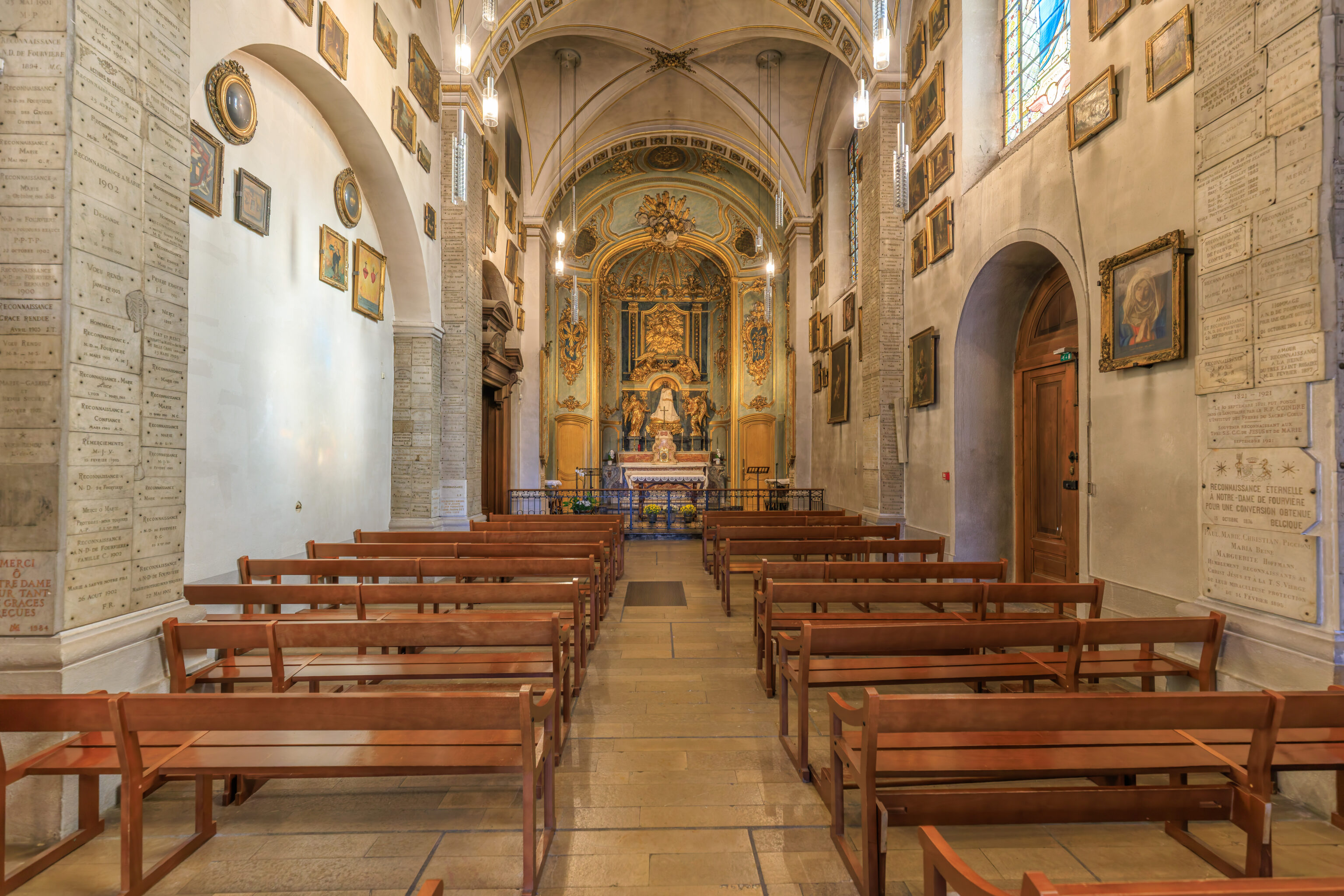
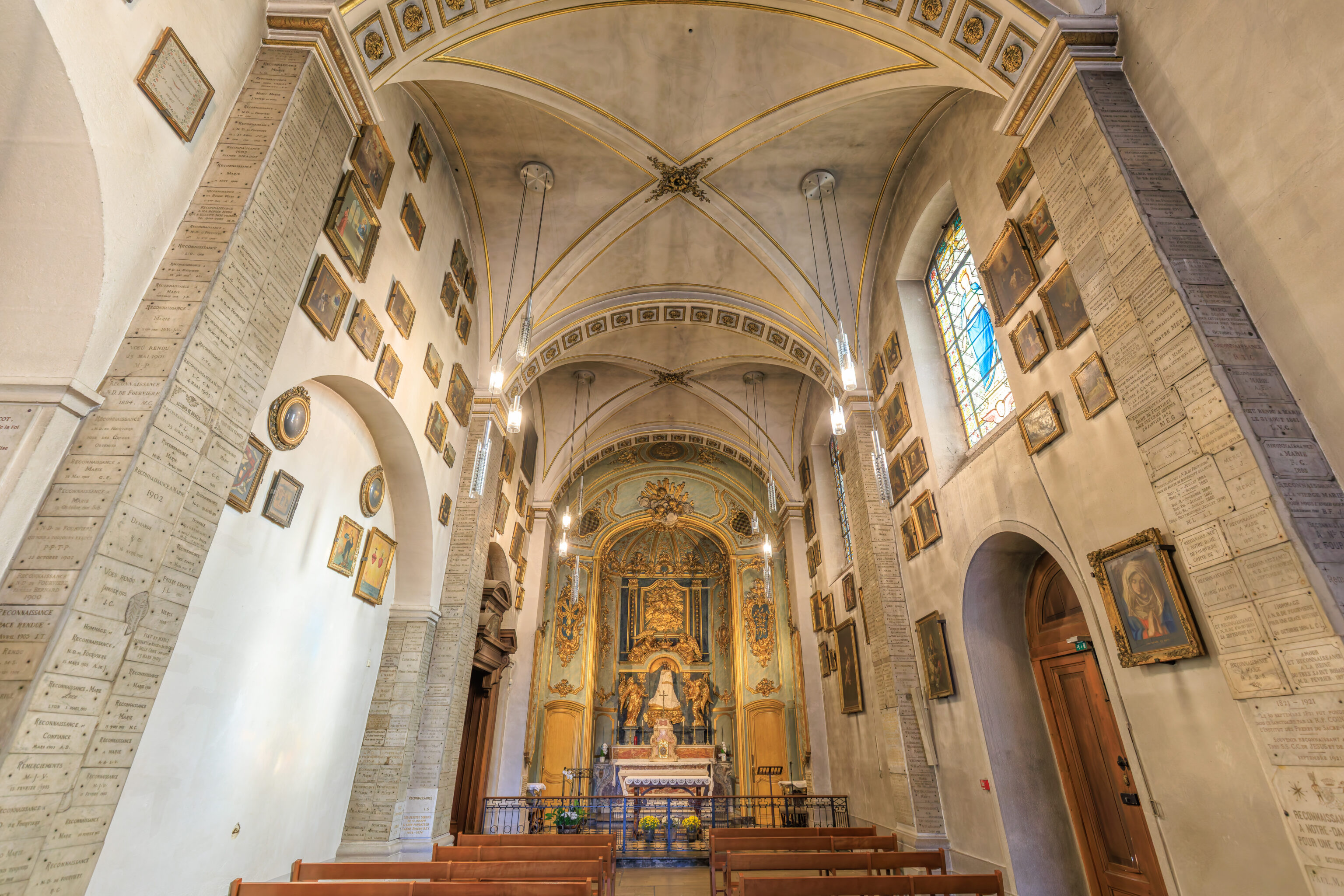
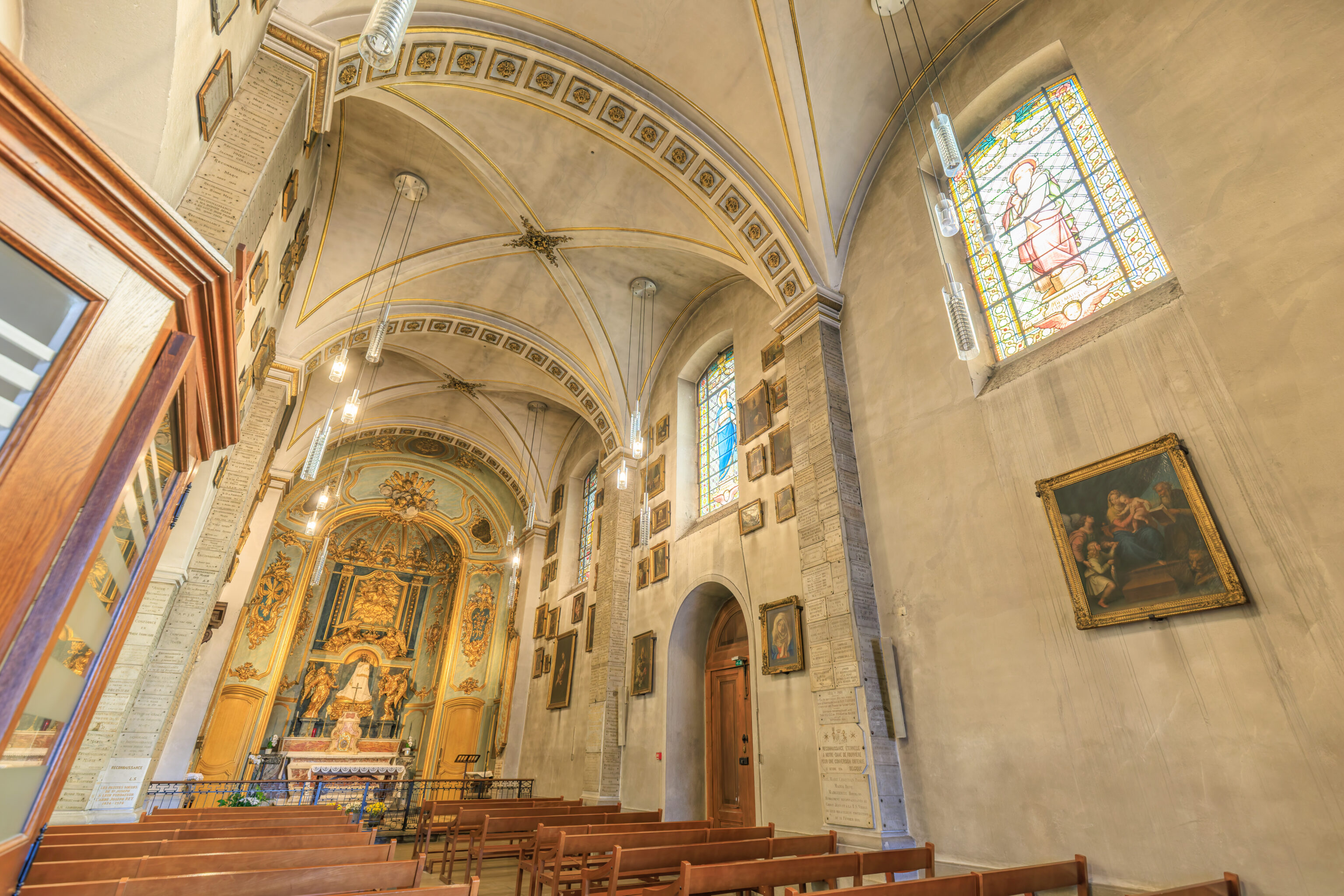
The interior of the chapel was quite plain, particularly when compared to the basilica!
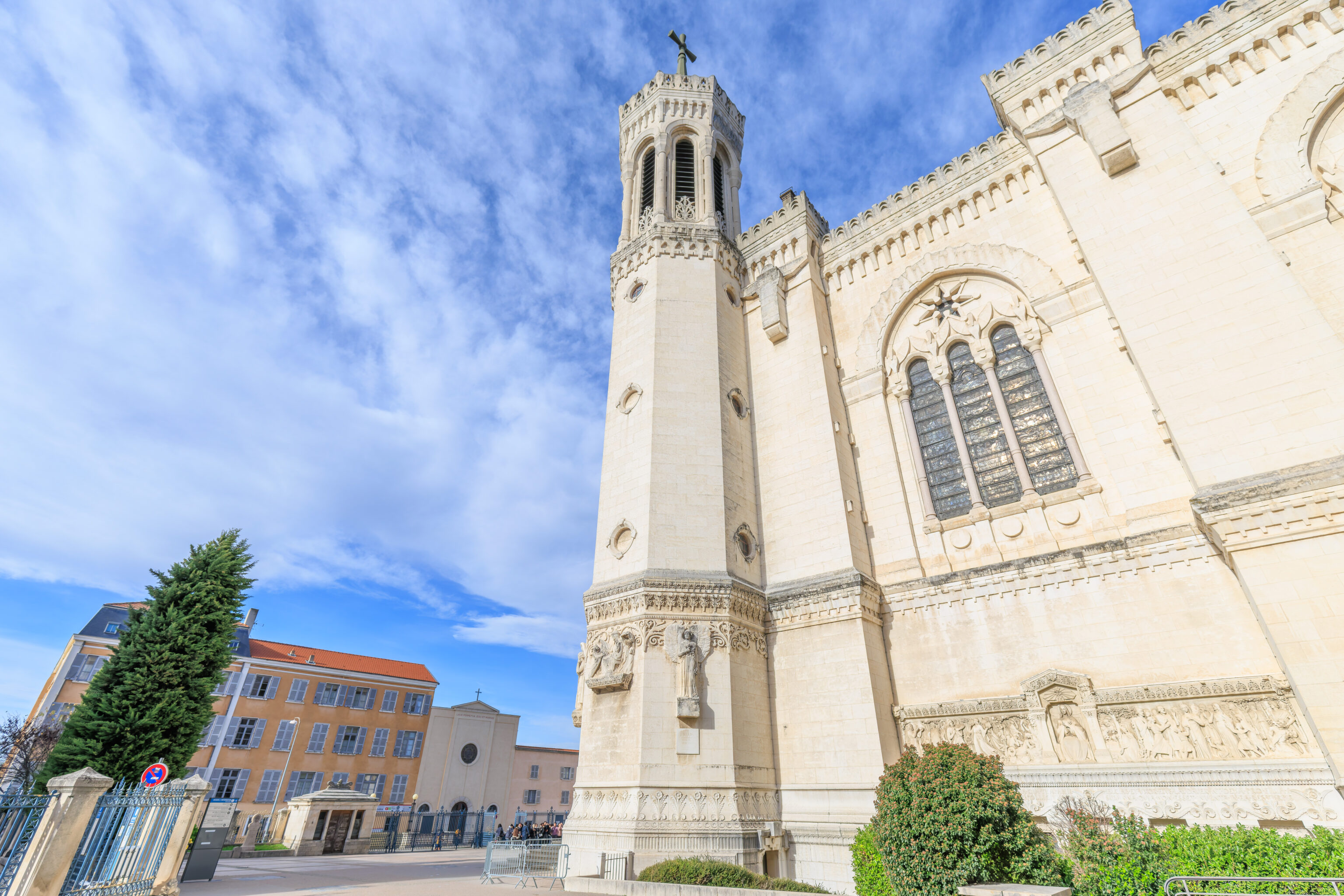
The basilicas southwest tower, as seen from the chapel after we headed back out into the wind.

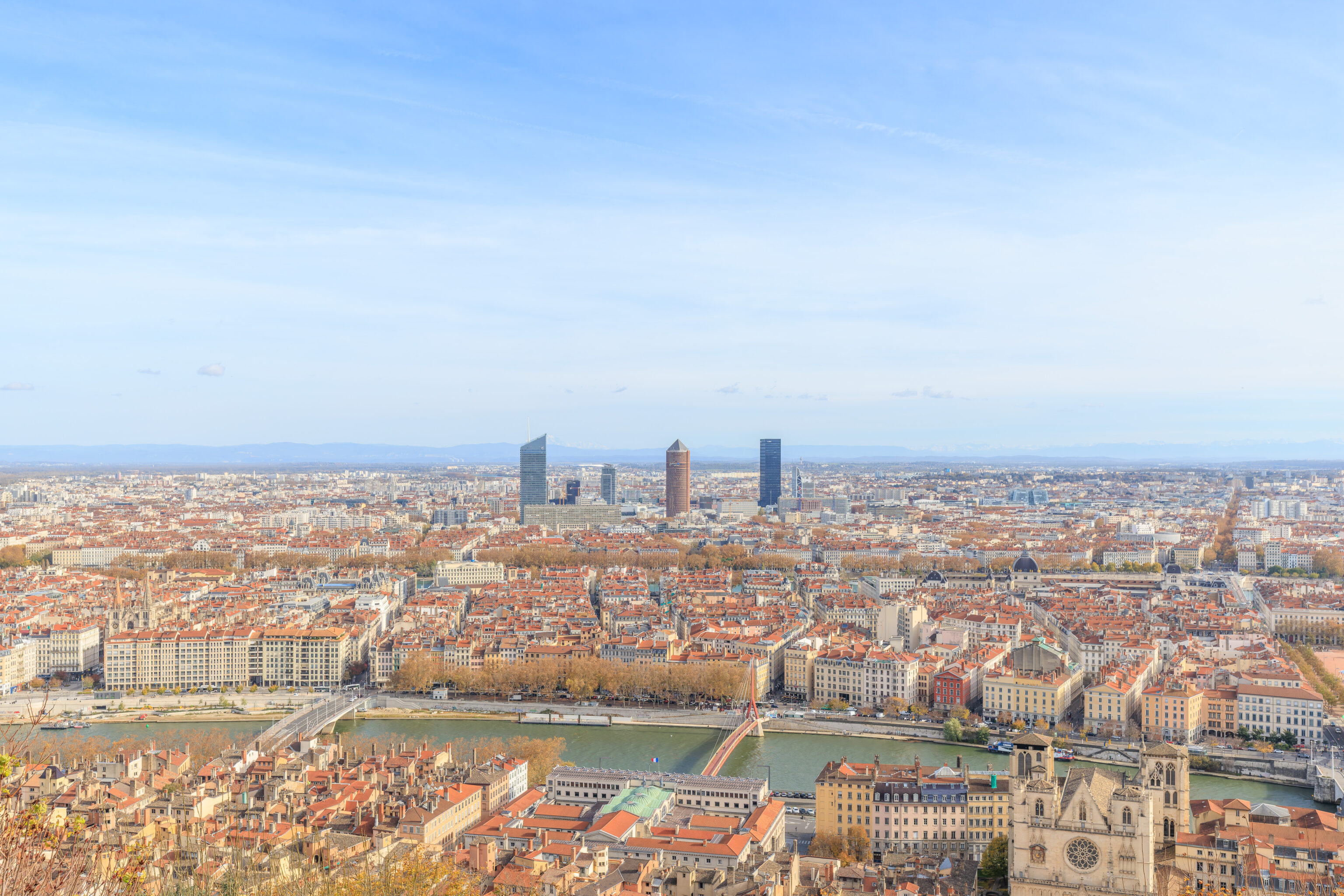
There is a small overlook on the south side of the chapel. The view was more or less identical to the view that we had on the north side of the basilica. There was actually a path that leads down into a park on the eastern slope of the Fourviere Hill. But, a sign indicated that it was closed due to wind. Was this why the Roman theatres were not accessible? Due to wind?
You can see the wind a bit here. But you can definitely hear it!
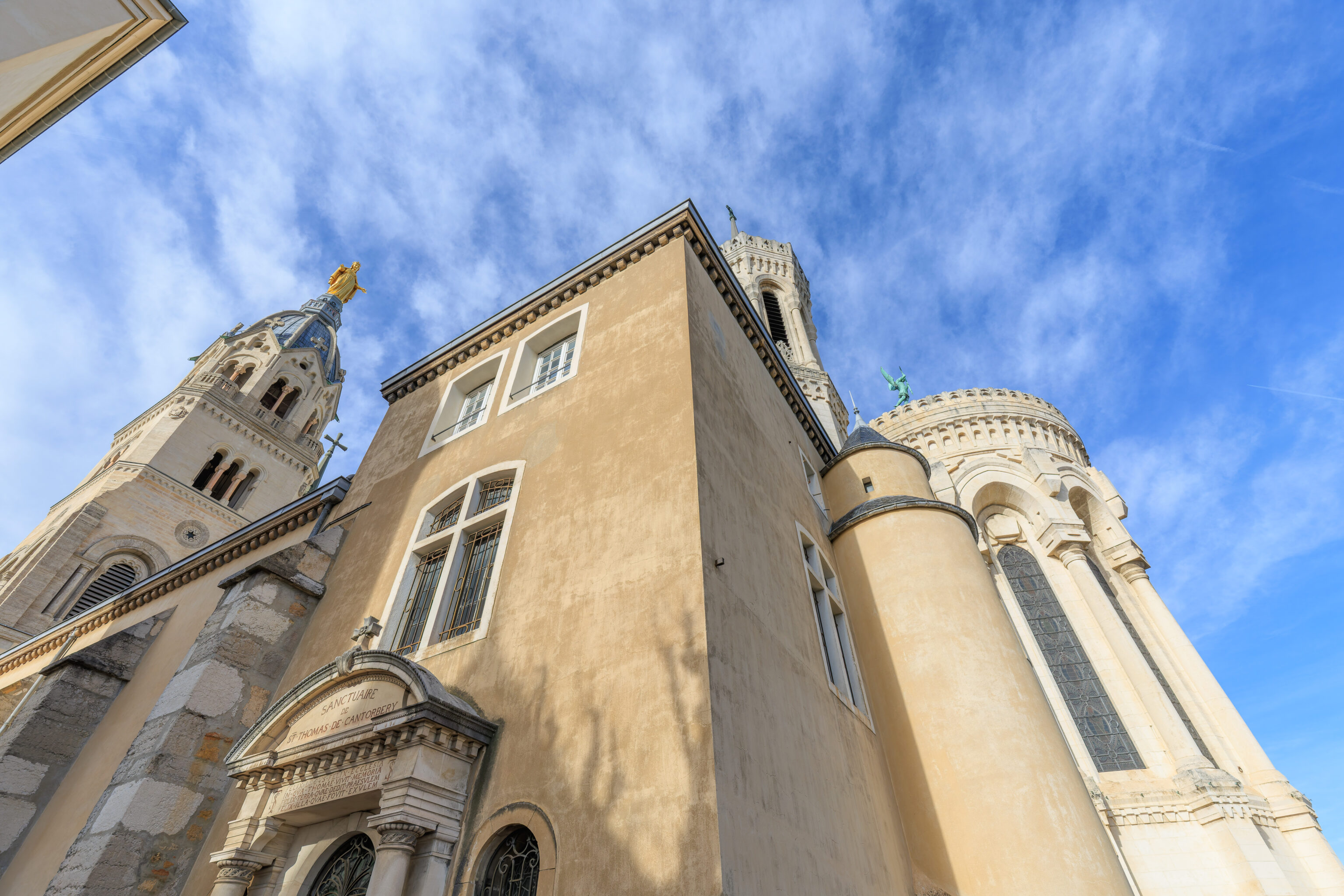
The chapel building looks quite different from the basilica behind it.
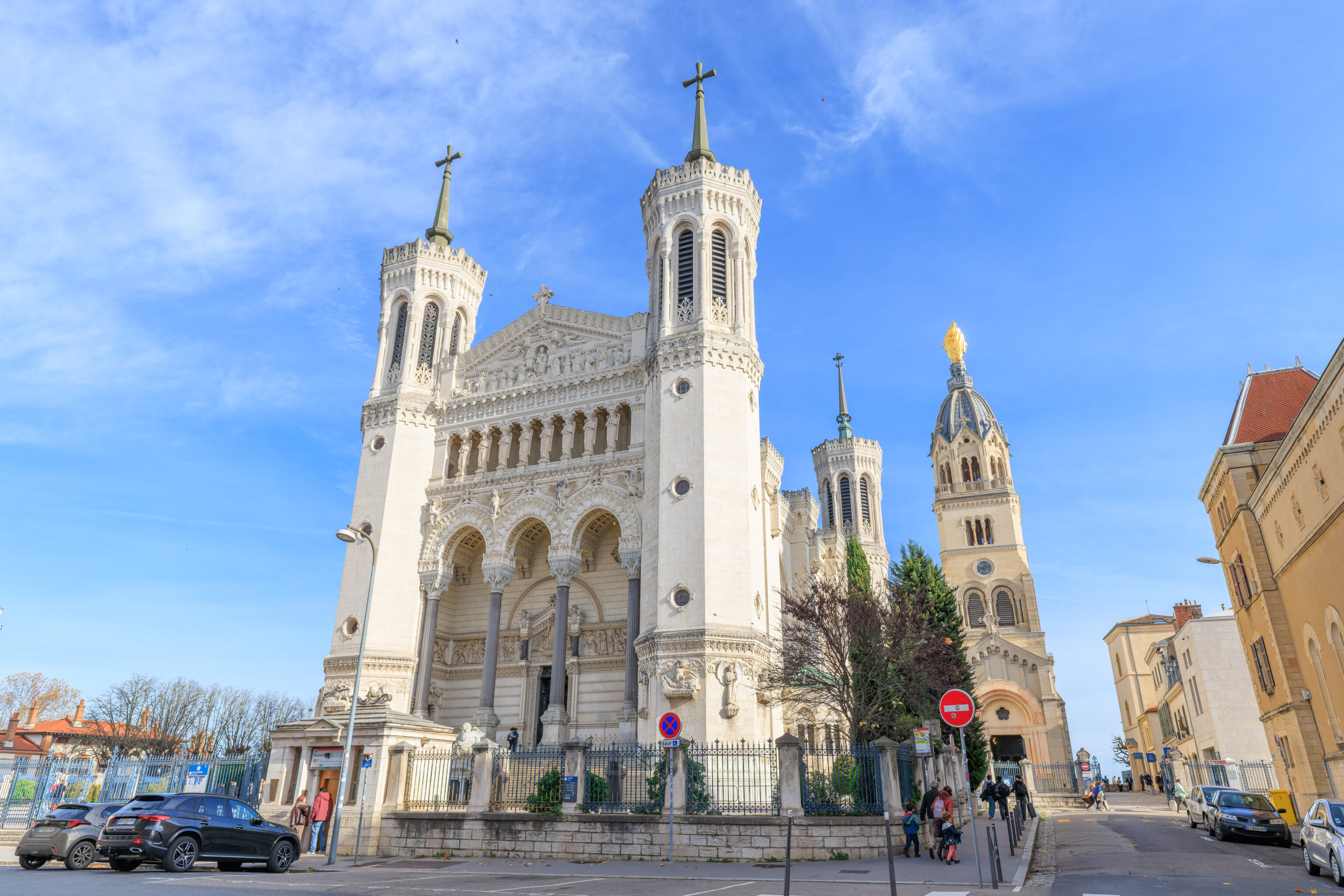
Although the chapel is quite small, its tower is actually pretty huge.
Lugdunum Museum
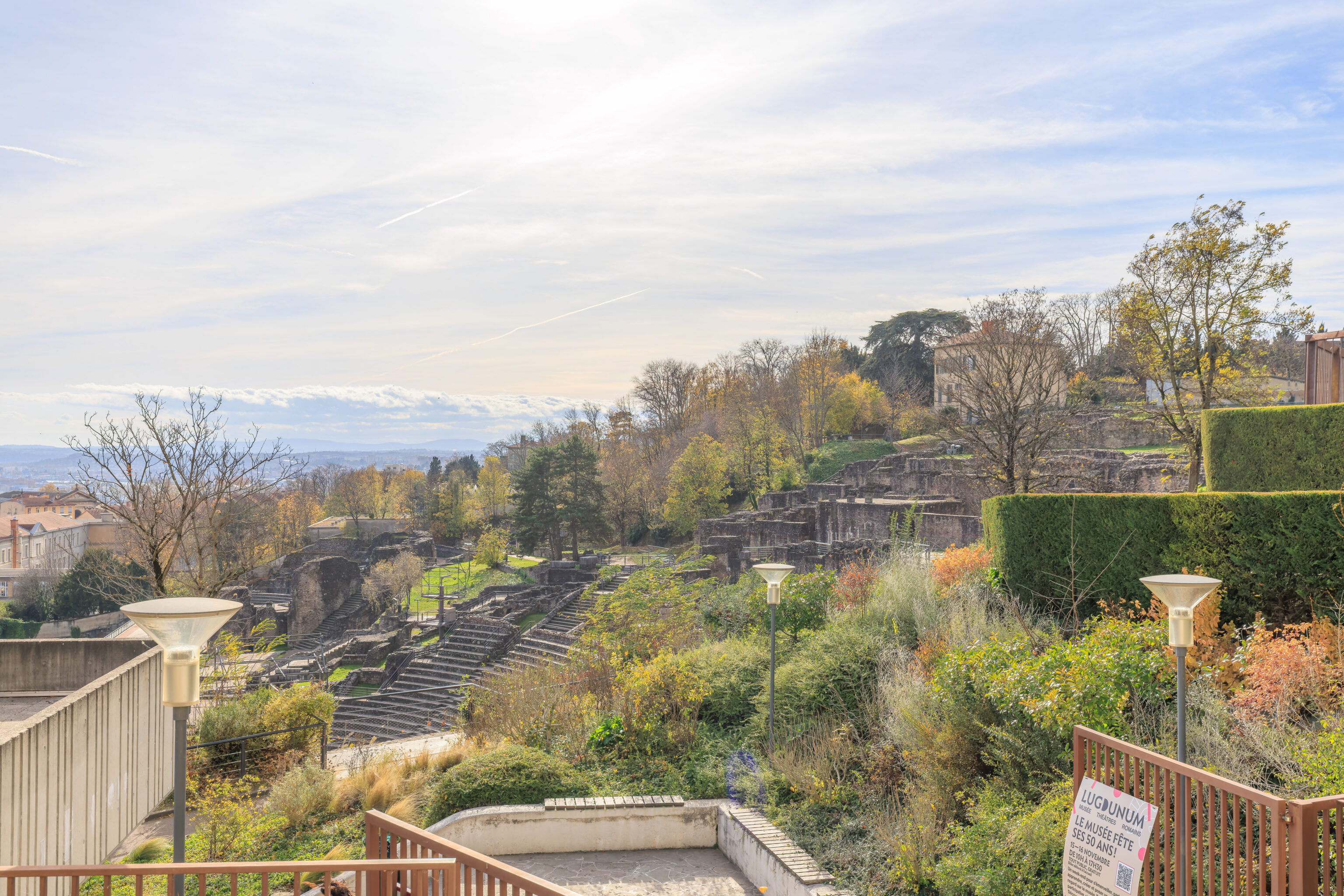
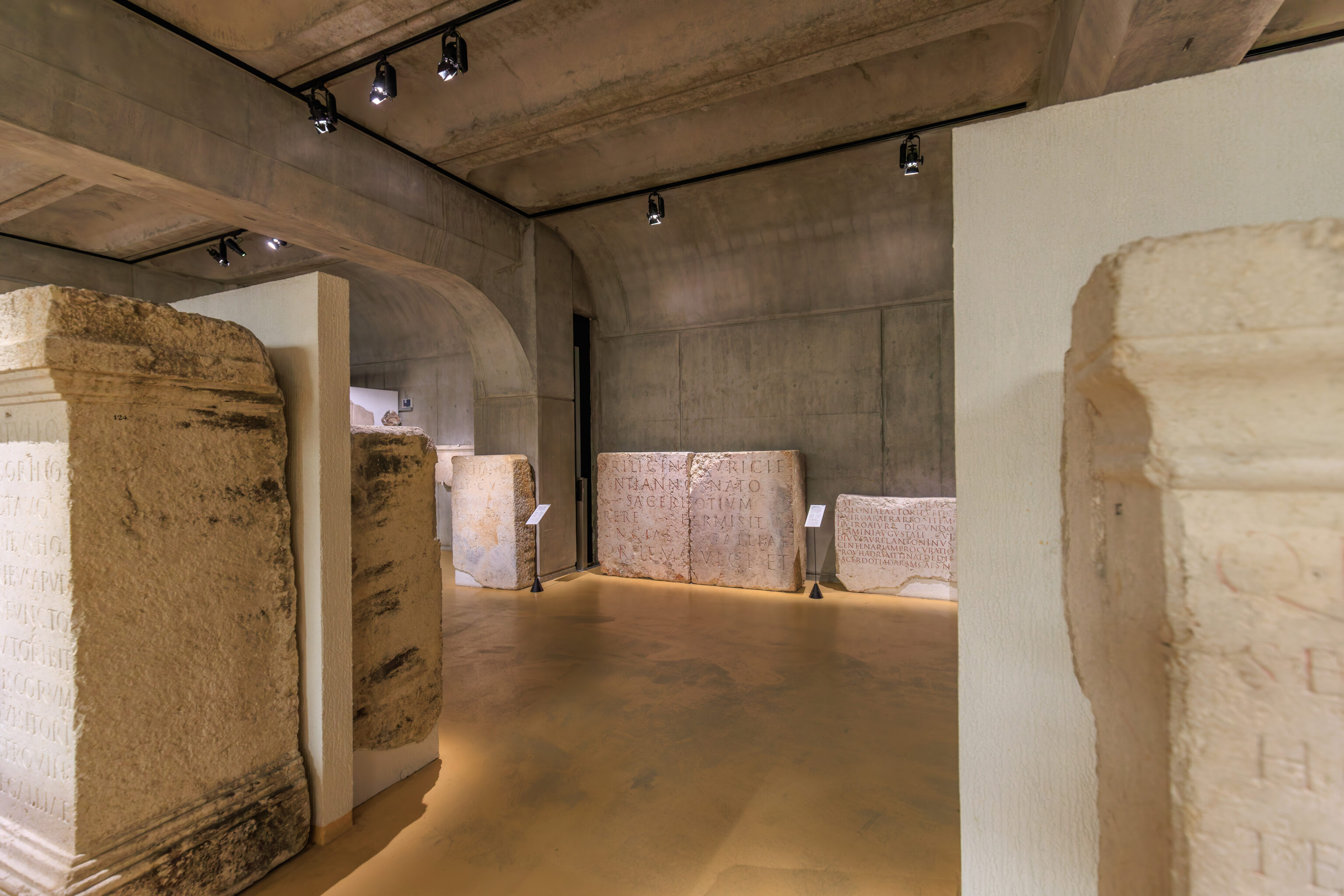
We walked downhill to reach the Lugdunum Museum. The museum is actually below grade from the road that we walked on to get there. There were stairs leading down to the entrance on the museum building’s west side. From here, we could see a bit of the theatre ruins.
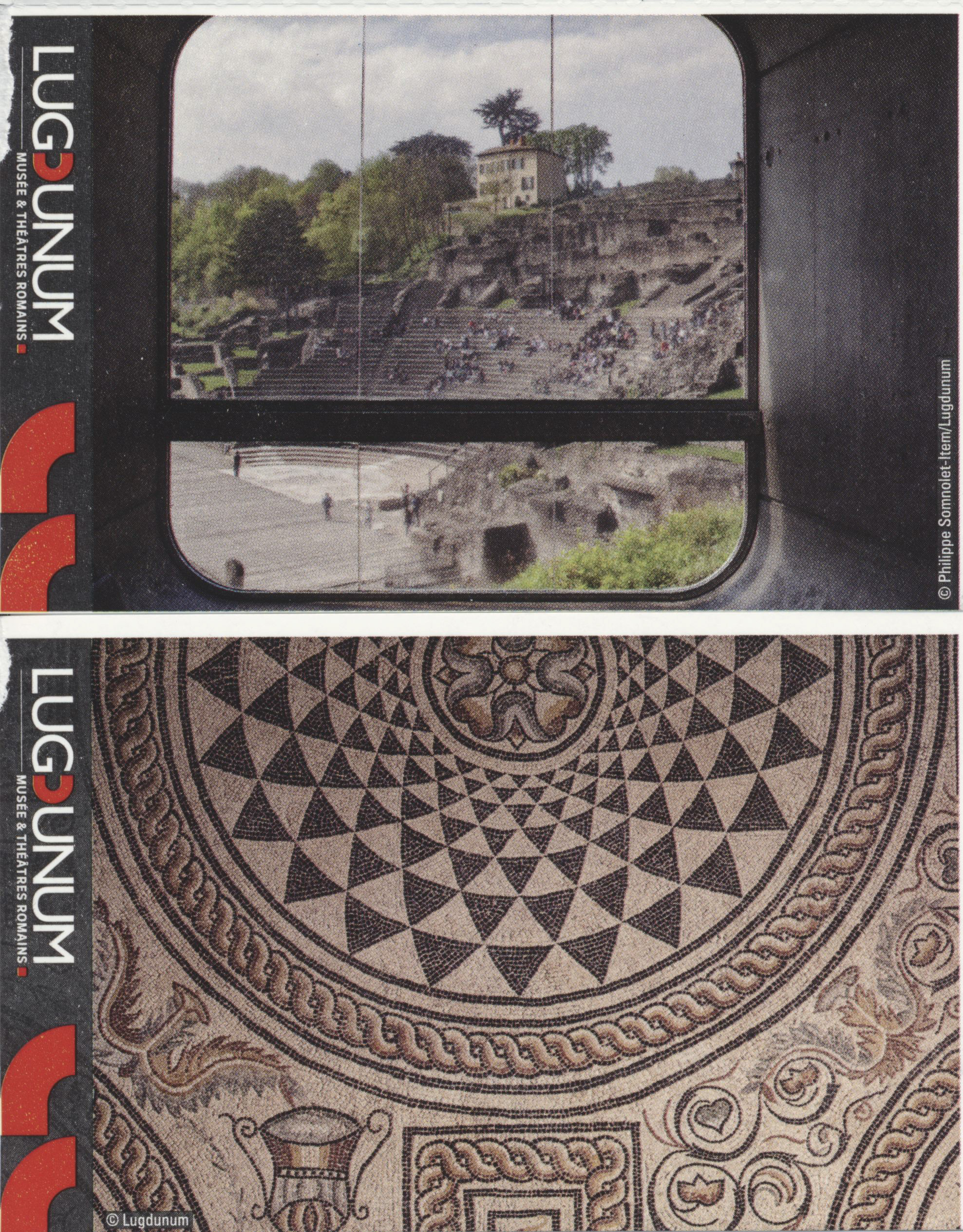
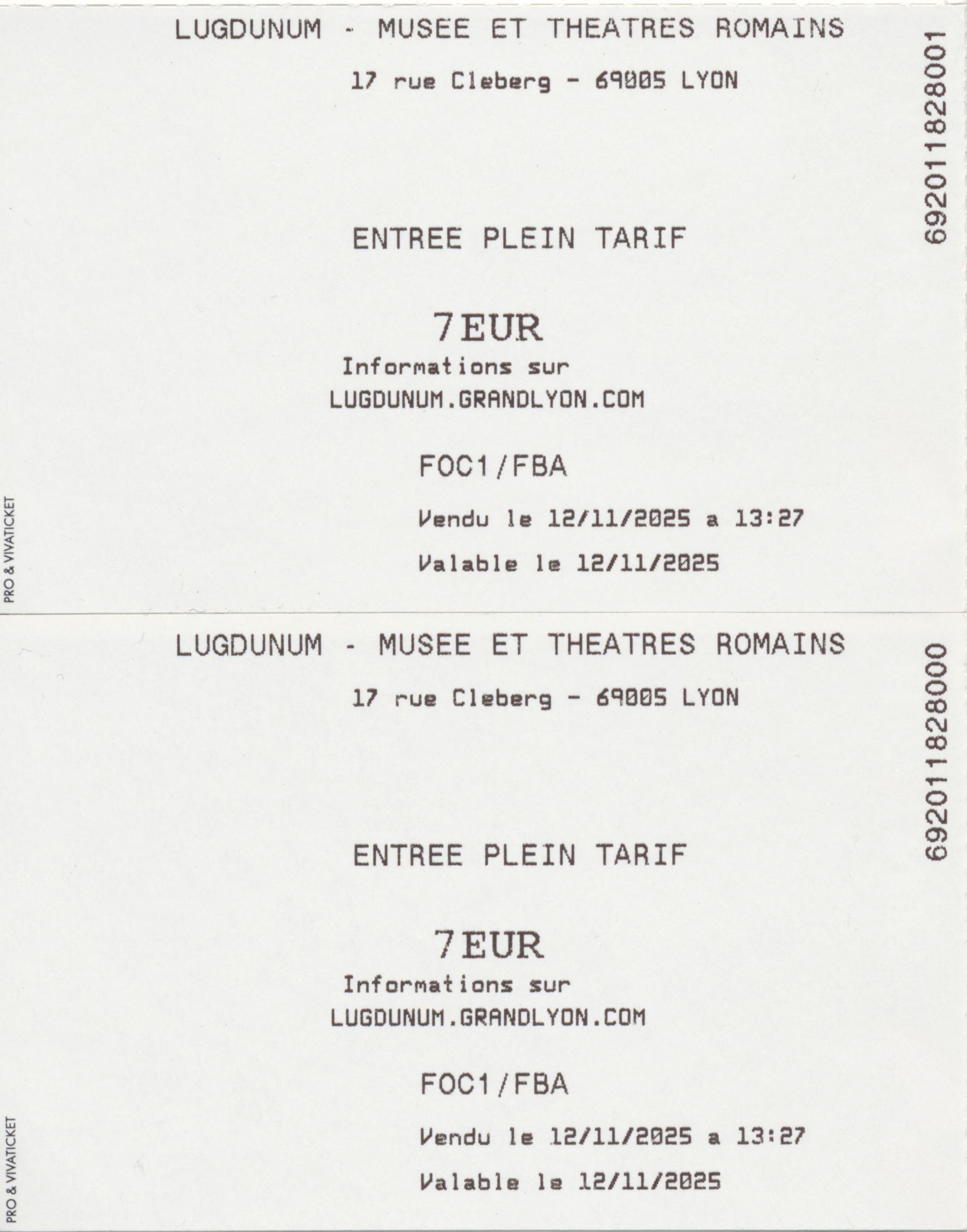
We bought tickets to enter the museum.
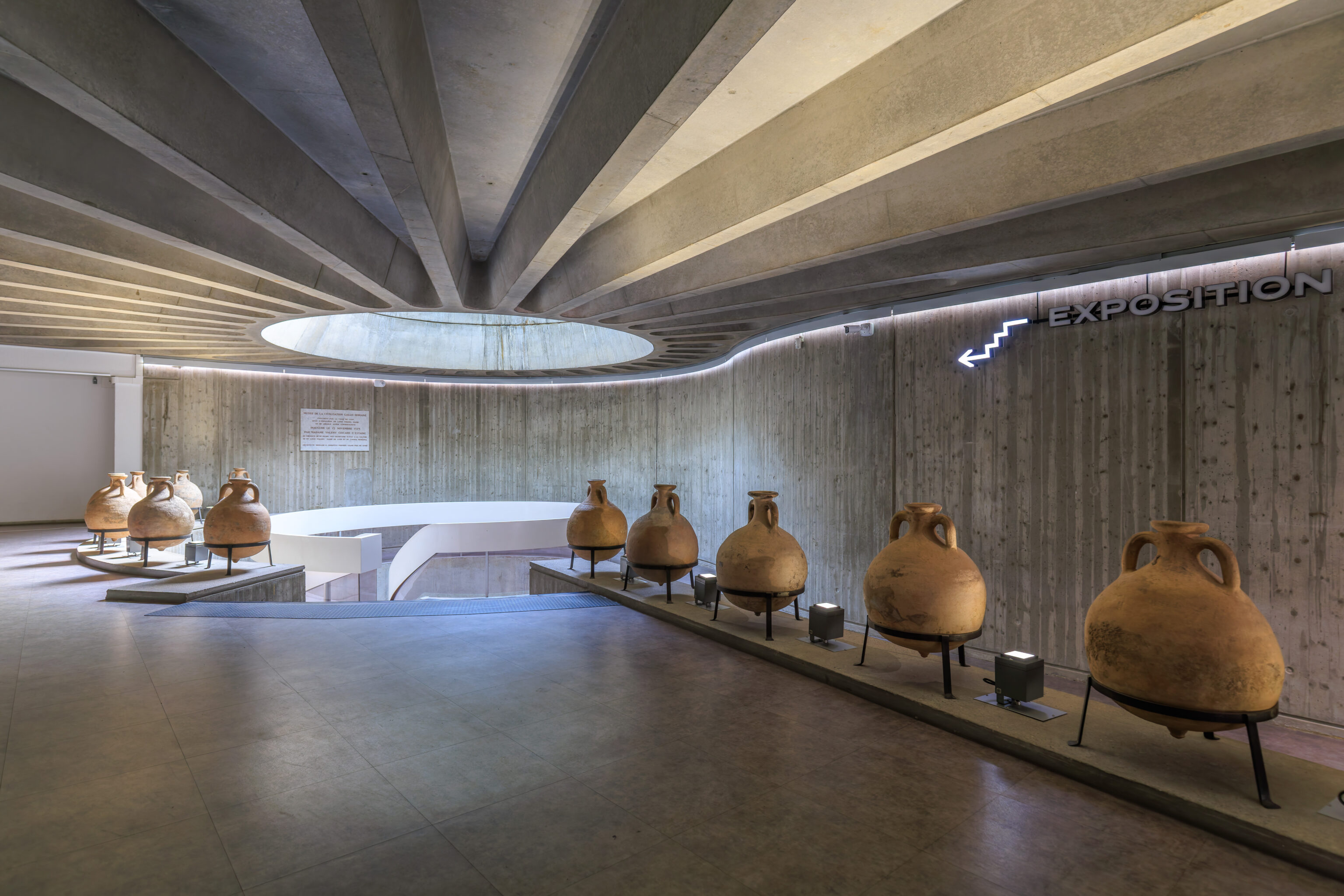
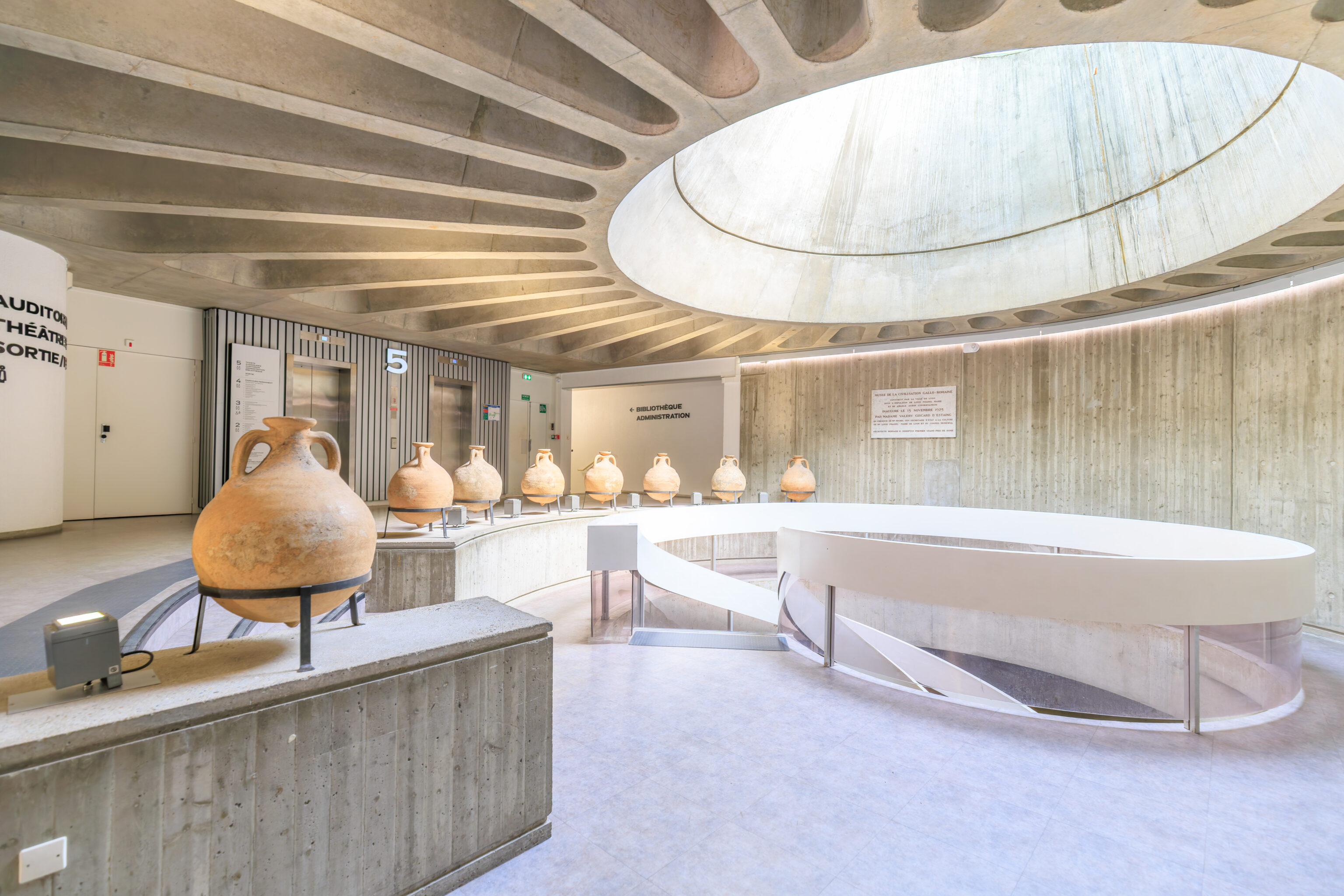
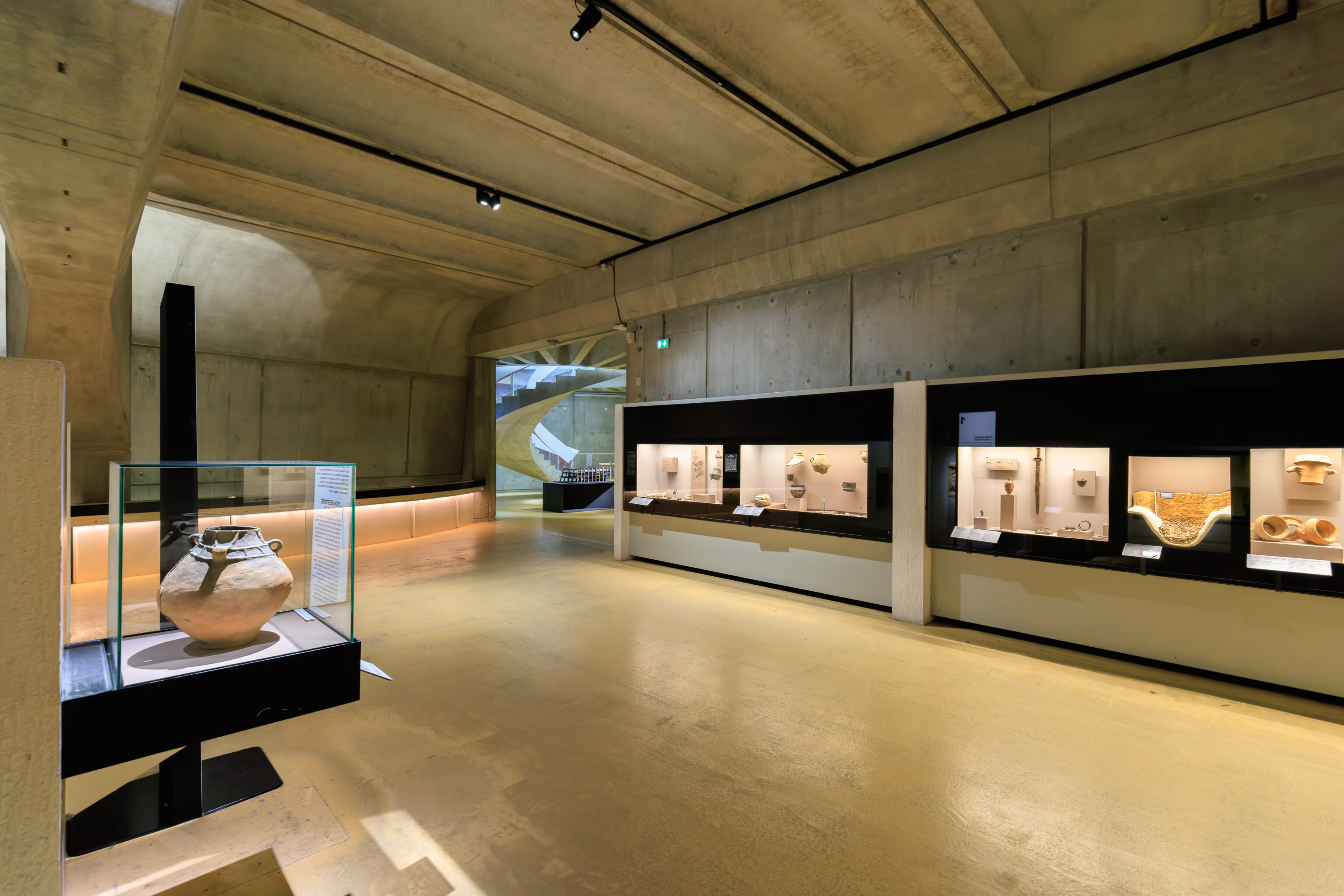
The museum building consists of multiple levels. The western entrance is on the top floor with a circular stairway leading down into the museum floors. There were many large intact jugs on display here.
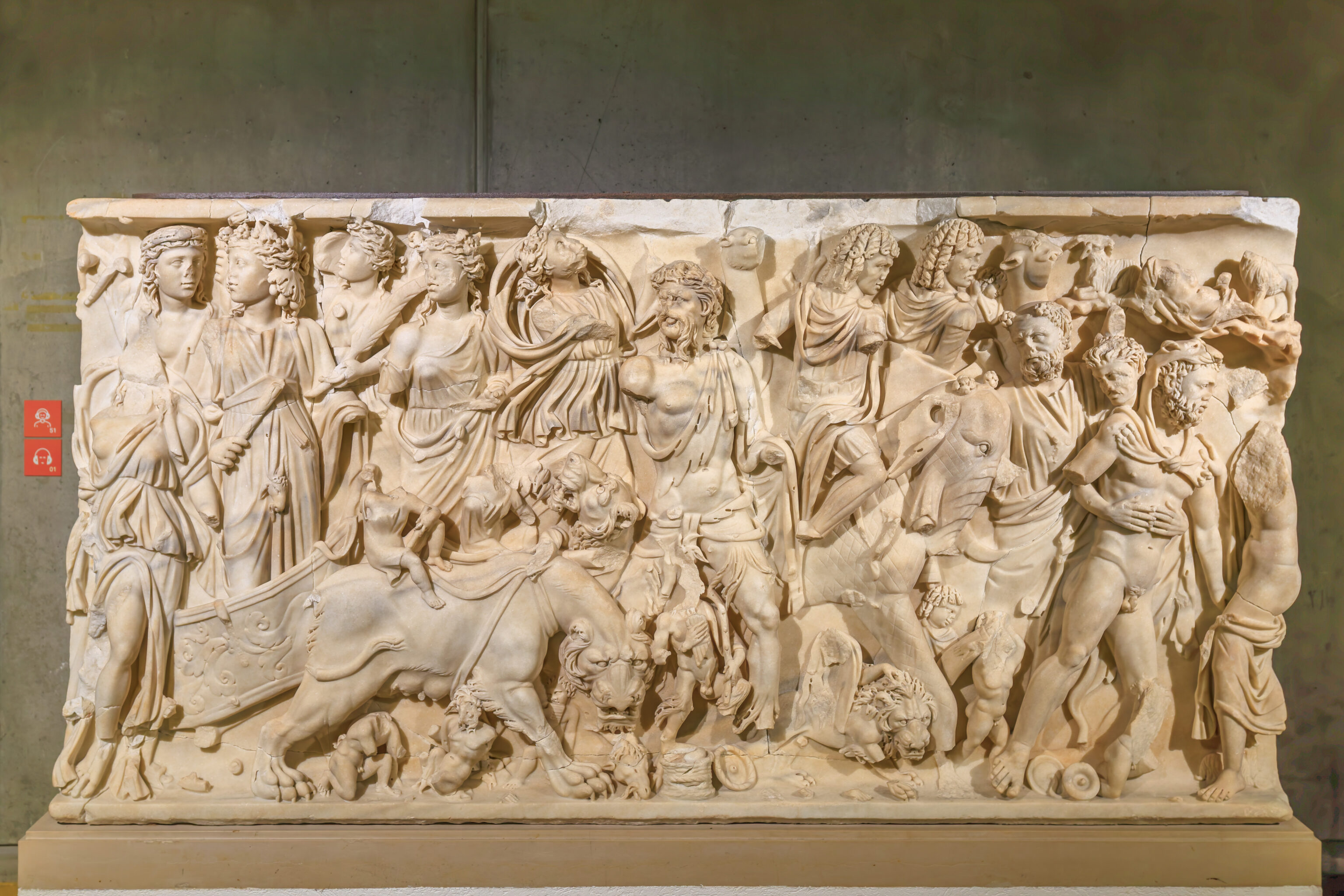
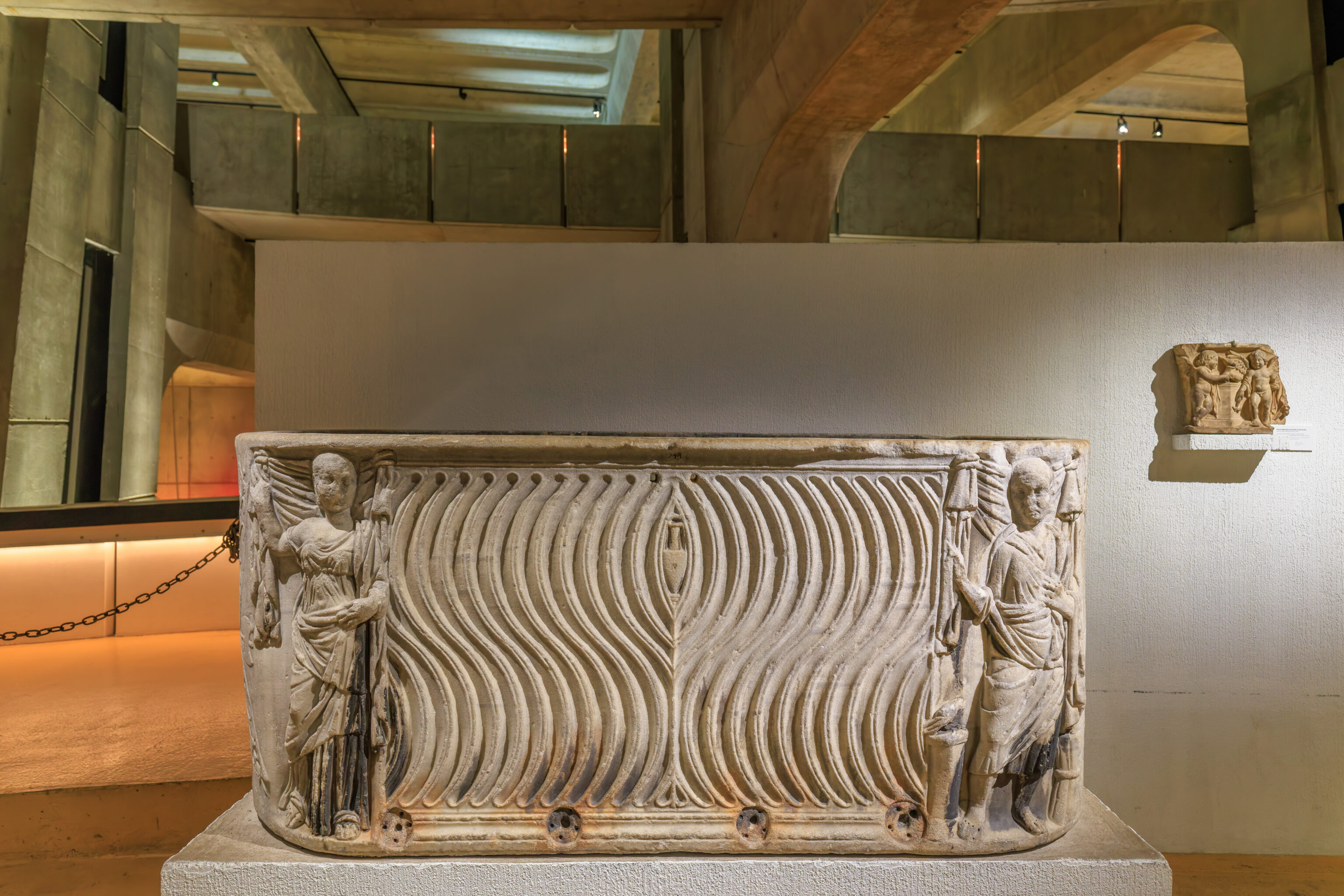
This sarcophagus, made in Italy and imported to Lyon in the 3rd century AD, is one of a number of decorated tombs featuring the god Bacchus-Dionysus.
The main scene, in high relief, can be read from left to right. It depicts the triumphal procession of Bacchus (god of wine) as he travelled through the different countries of the world, referred to here, figuratively, by various animals. On the central panel, to the left of the composition, Bacchus returns victorious from India on a chariot. Beside Bacchus stands Ariadne, his wife, crowned with ivy and grapes. To the right of the composition, a drunken Hercules can be recognised by the lion’s skin atop his head. This procession is reminiscent of the triumphal entries of emperors into Rome. For the deceased, this reference to victory over chaos and death conveys the hope of survival in the afterlife.
Marble, early 3rd century AD, discovered in 1845 on Fourvière hill, Saint-Irénée church (Lyon 5th arrondissement).”
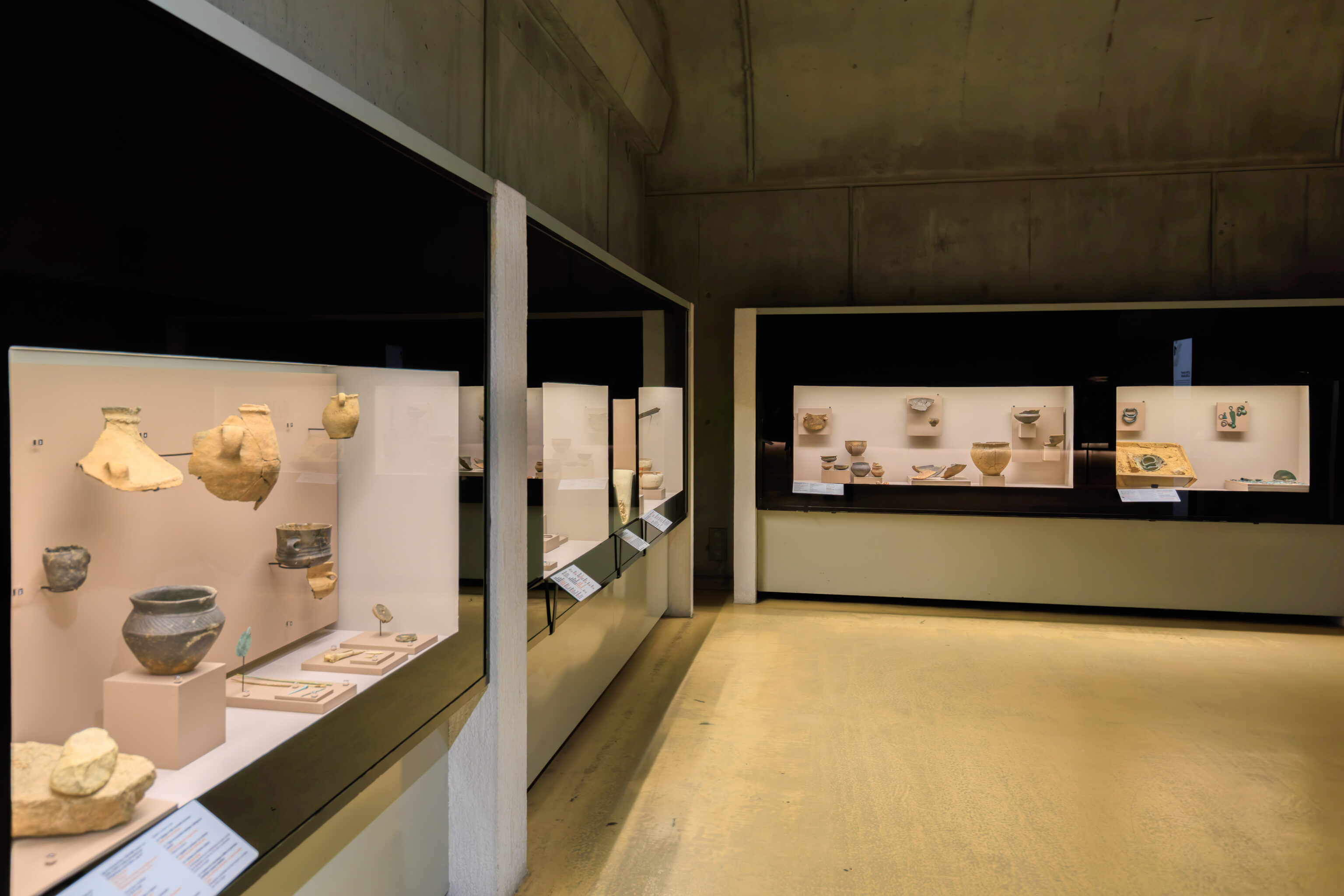
LYON BEFORE LUGDUNUM

Was the Lyon site occupied prior to the Romans settling there in 43 BC? The question long remained unanswered, due to the lack of remains. Given the Celtic origin of the name Lugdunum (luminous hill, facing the rising sun), some imagined a Gallic city, erased by Roman urbanism. Conversely, others pictured a pristine wilderness, untouched before the Roman conquest. Recent archaeology has provided new evidence.

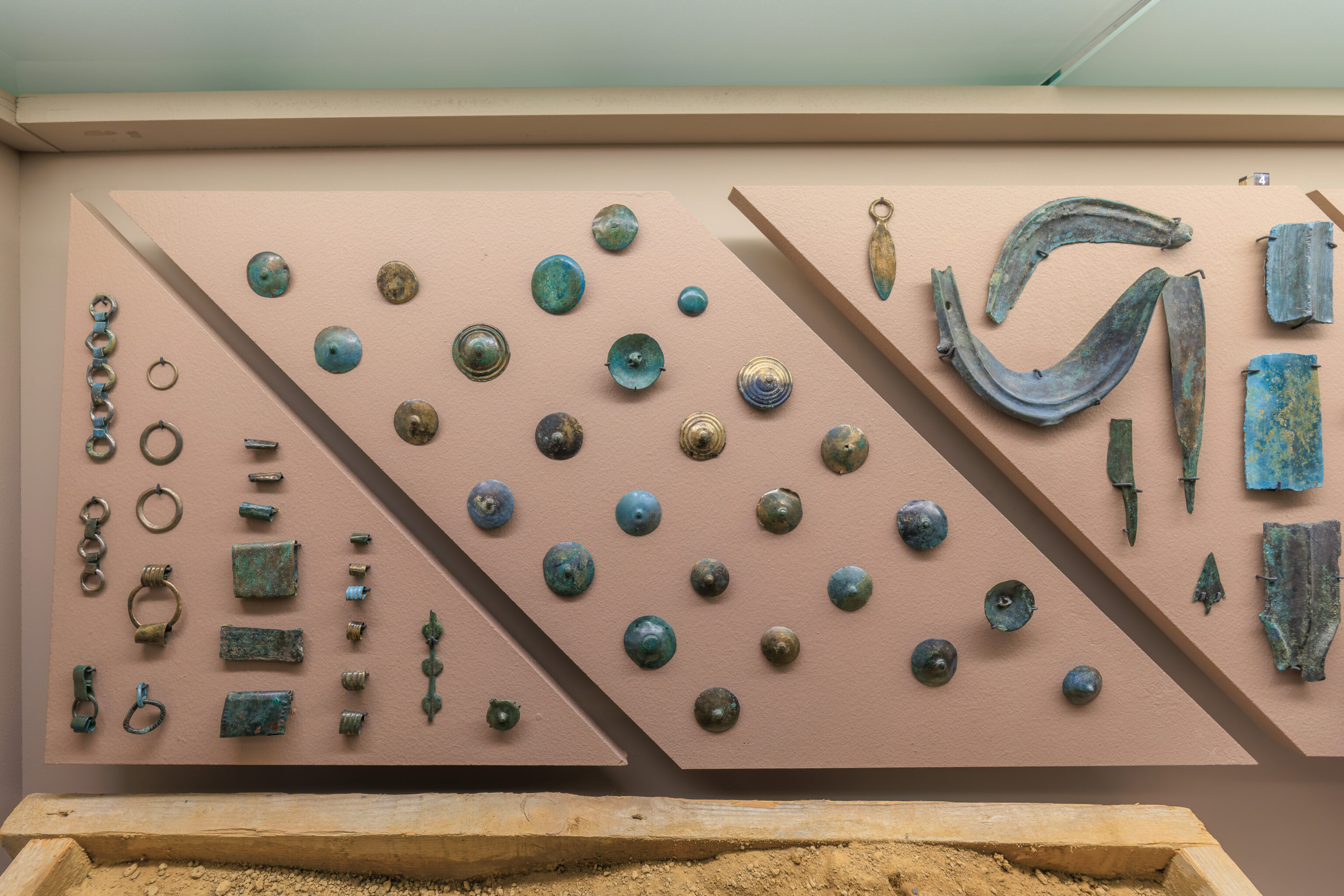
Since prehistoric times, the Lyon site has been occupied regularly, but not continuously. On the Vaise plain, a village developed around 1,000 BC, followed by a small town. The presence of Mediterranean imports, as early as the 5th century BC, confirms the vigorous trade on the Rhône-Saône axis.

There are numerous traces of settlements in the Vaise area and along the banks of the Saône by the Gallic Segusiavi people in the 2nd century BC.  The Fourvière hill hosted religious ceremonies and banquets. The presence of Gallic ramparts supports the theory that a fortification predated the Roman presence.
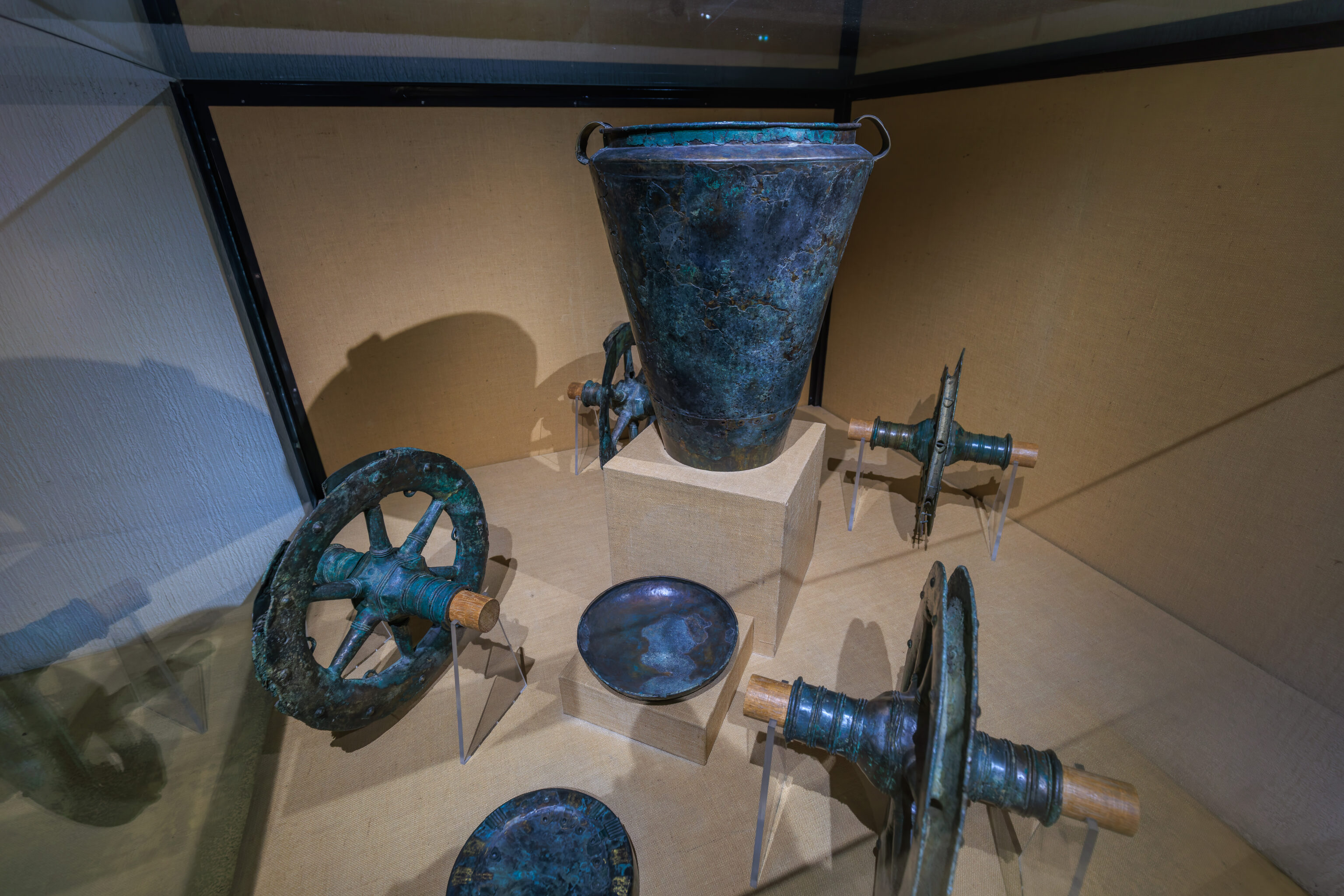
The four wheels, the bucket-shaped casing and base belonged to a chariot built at the end of the Bronze Age and the beginning of the Iron. Age (ca.700 B.C.).This was neither a transport vehicle nor was it designed for combat, but for processions; it was used for celebration, no doubt of a solar cult.
The chariot, as a whole, is unique in Europe, for while other wheels and casings have been discovered, such as the wheels of Stade (near Hambourg) or the casing of Vetulonia (in Tuscany), these were found individually and never evoke so expressively a picture of the ritual chariot
From a technical viewpoint, its execution is outstanding: the wheels were cast uniform whole, in compliance with the «lots-wax casting» process; the bucket casing and base are the result of skilful metalwork involving embossing, stretch-forming and swaging
The base of the sidewall and the lower part of the body, which during restoration were reassembled separately, were fitted on the outside with seventeen cast-bronze angle brackets, each comprising a trapezoid insert and two clamps on the rivets.
Discovered in 1888 at la Côte-Saint-André (Isère).Restored by C.R.H.S. in Nancy”
THE ROMAN FOUNDATION

The Roman city of Lugdunum was founded in 43 BC, during the civil war that followed Caesar's assassination in Rome. The Roman general, Lucius Munatius Plancus, was governor of the northern part of Gaul, which he had conquered ten years earlier. Implementing a decision of the Senate, Munatius Plancus founded a colony at the confluence of the Rhône and Saône rivers, settling a small group of Roman citizens, probably army veterans, on these recently conquered lands.

Granted the privileged status of a Roman colony, the free inhabitants of the future city were guaranteed the same rights as those of Rome. The new city was first called Colonia Copia Felix Munatia (the prosperous and happy colony of Munatius), then Colonia Copia Lugudunum, before taking the name of Emperor Claudius, who was born in Lyon, in the 1st century AD: Colonia Copia Claudia Augusta Lugdunum, often abbreviated CCCALugdunum.
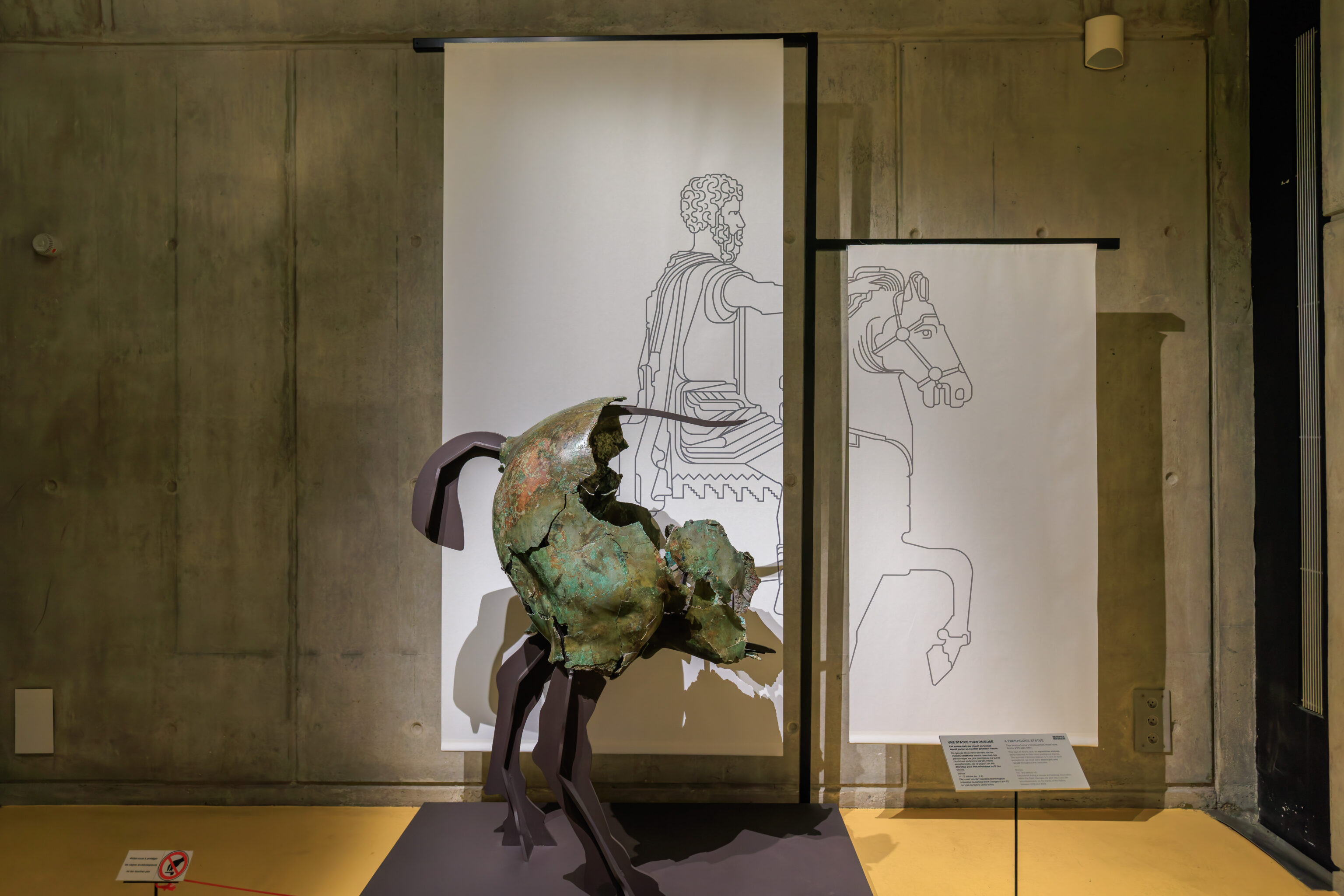
This bronze horse’s hindquarters must have borne a life-size rider. This type of find is rare, as equestrian statues were reserved for the most prestigious figures. The survival of bronze statues is in and of itself exceptional, as most were destroyed and recast throughout the centuries.
Bronze
1st- 3rd century AD
Discovered during a rescue archaeology excavation within the Saint-Georges car park site (Lyon 5th arrondissement), on the banks of the Saône, between 2002 and 2004.”
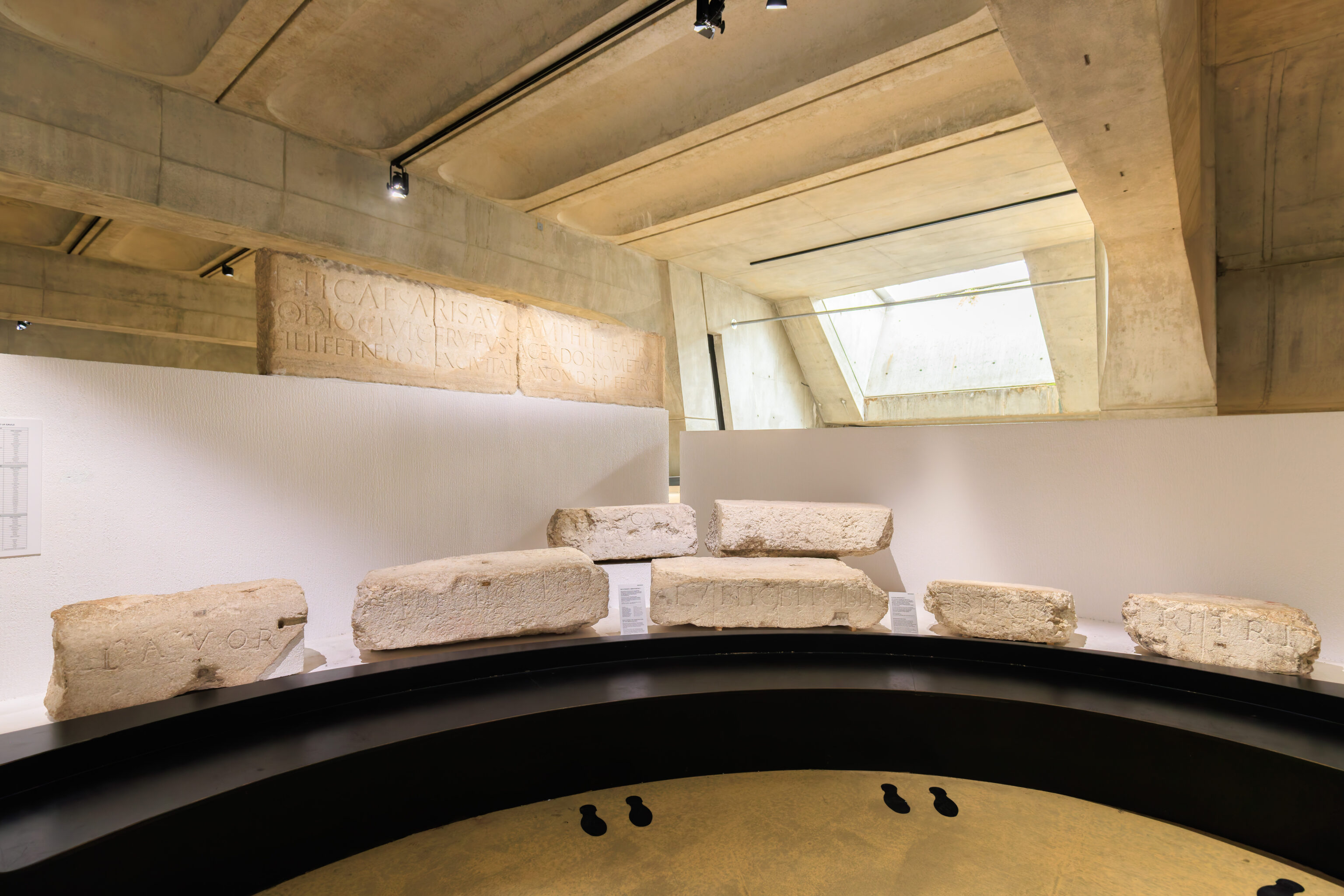
AMPHITHEATRE OF THE THREE GAULS

The oldest amphitheatre in Gaul, it was originally closely linked to the Sanctuary of the Three Gauls.

The first building, constructed in the early 1st century AD, was financed by a priest of the sanctuary to accommodate the 60 delegations of Gaul. With an initial capacity of between 2,000 and 3,000 spectators, the amphitheatre was later extended to accommodate nearly 20,000.

Gladiator fights, hunts and executions were held here. In particular, this monument witnessed the death of King Ptolemy of Mauretania in AD 40, and the persecution of Christians and Saint Blandina in AD 177. These violent spectacles, offered by wealthy private individuals, who were leaders of the city, showcased the power of the state and helped to unite the social body in a shared sense of belonging to the Empire. The building was abandoned at the end of Antiquity and used as a stone quarry

Rediscovered in the 16th century, it was not identified as an amphitheatre until the late 19th century. Its badly mutilated remains can still be seen on the slopes of the Croix-Rousse.
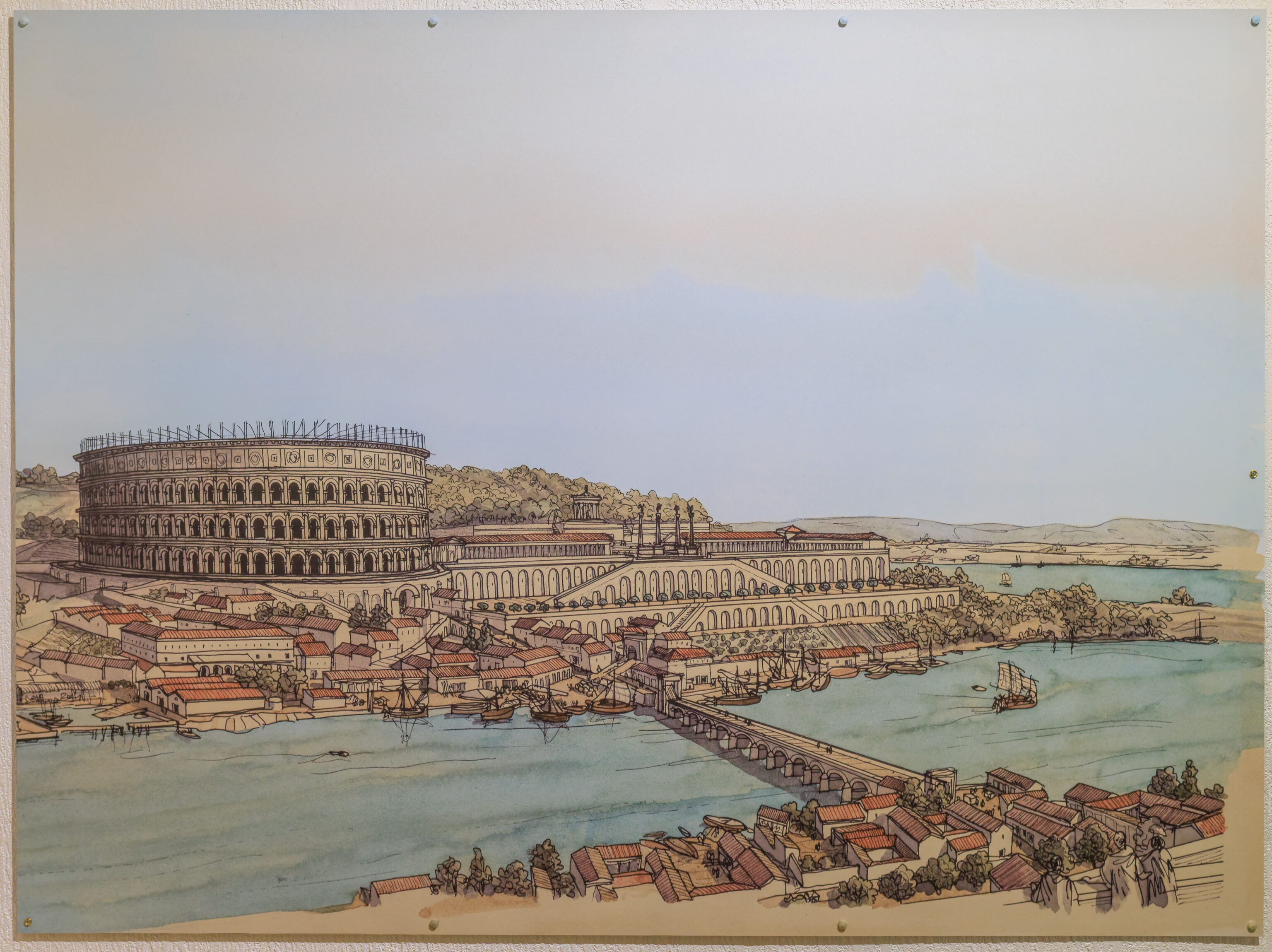
Architect, archaeologist and draughtsman Jean-Claude Golvin has created a reconstruction of the amphitheatre and sanctuary of the Three Gauls, the remains of which can be found on the slopes of the Croix-Rousse.
This view highlights the monumentality of this architectural complex. Our incomplete knowledge of the sanctuary, however, does not allow us to make a definitive reconstruction. As for the amphitheatre, researchers now tend to belreve that it was comprised of two-storeys.
Watercclour, Musée départemental d’Artes Antoue e J .. C. Golvin/iktitions Erance”
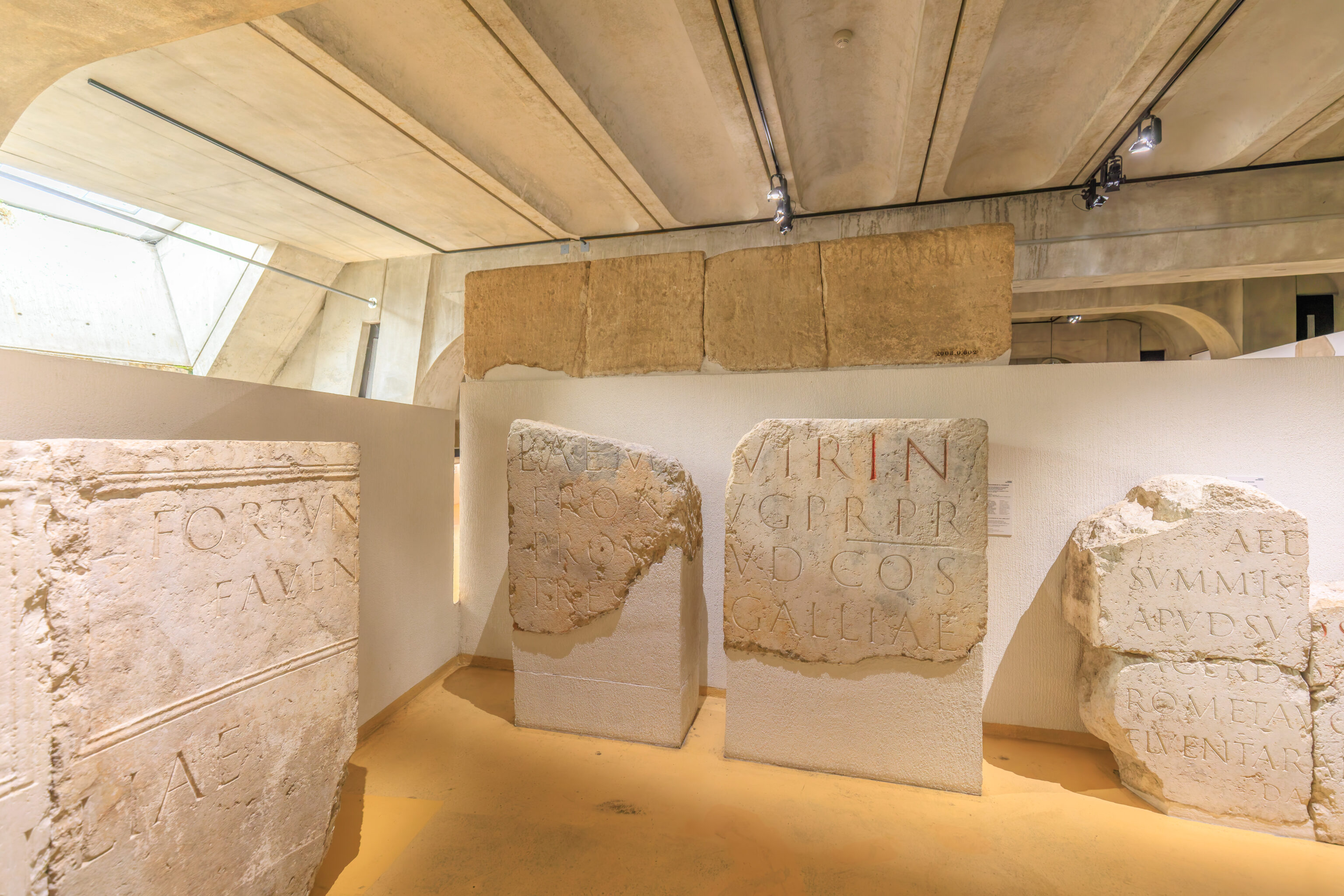
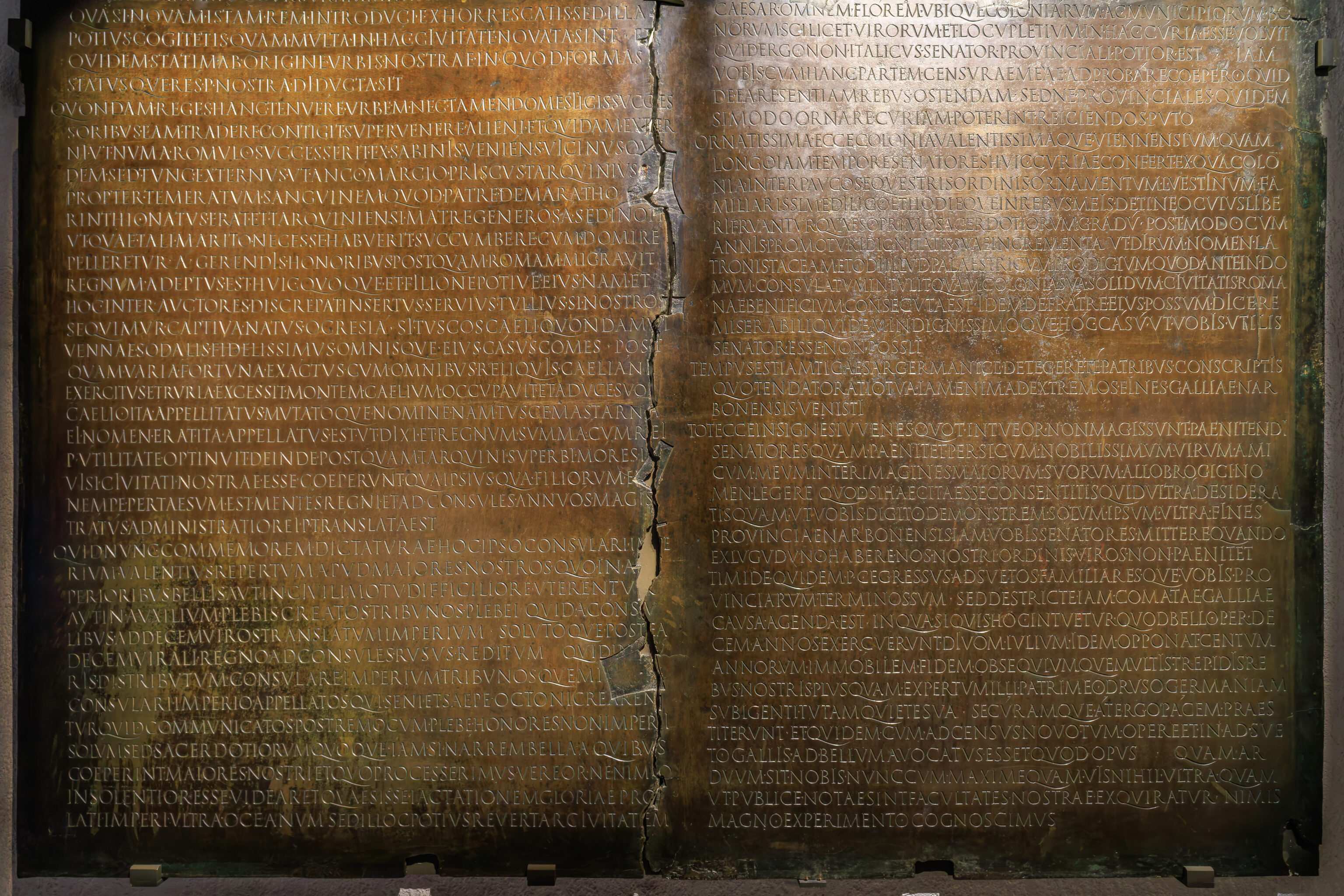
Bronze; 1.40 m x 1.93 m; 222 kg
Mid-1st century AD
Found in 1528 on the Croix-Rousse hill, Lyon 1st arrondissement.
This is a transcription of part of the speech that Emperor Claudius, born in Lyon, delivered in Rome in 48 AD before the Senate. It followed the receipt of a petition in which prominent Gauls demanded Roman citizenship in order to obtain the right to become magistrates in Rome and thus sit in the Senate. Following the emperor’s intervention, only the Aedui tribe was granted citizenship.
(Translated using Google)
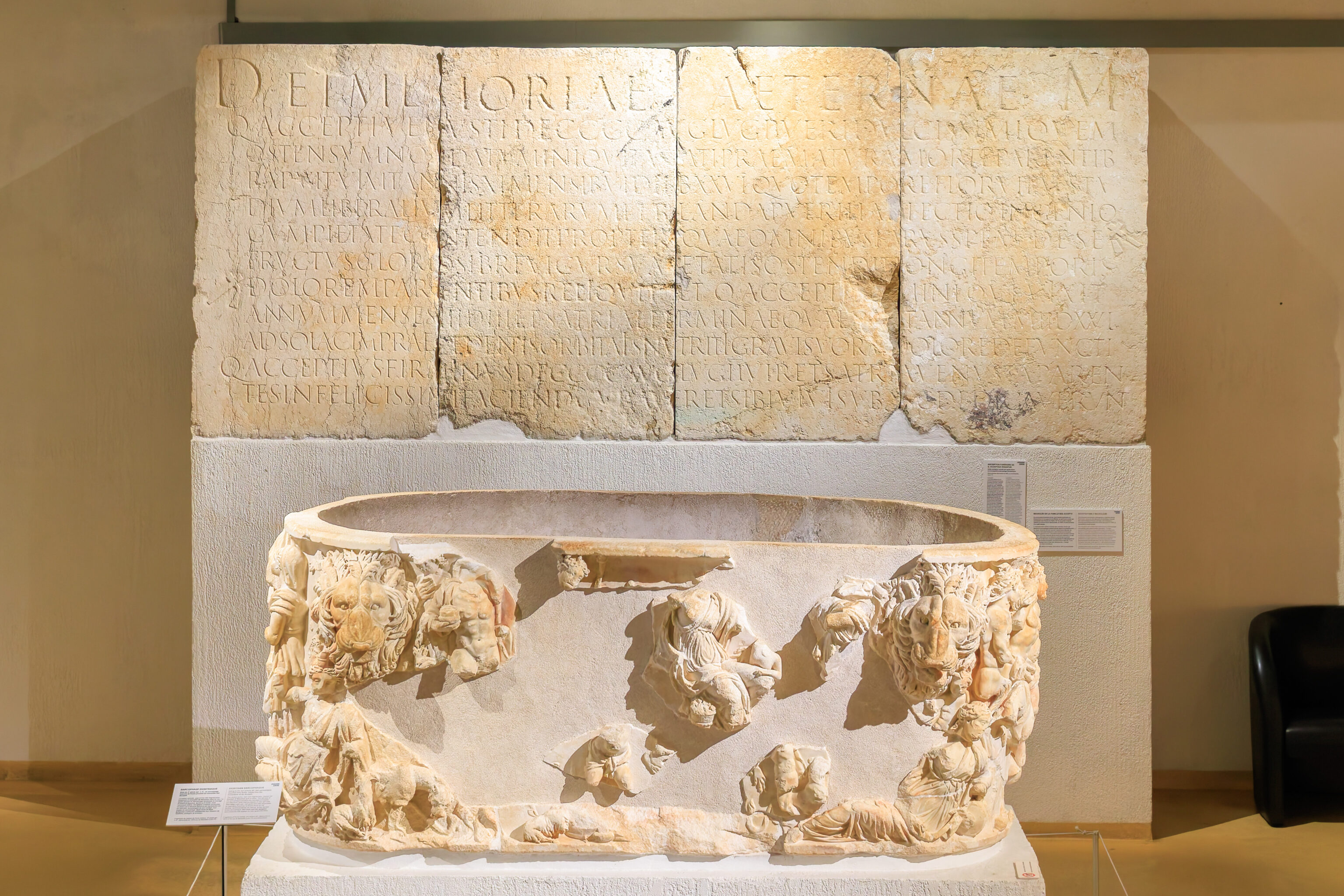
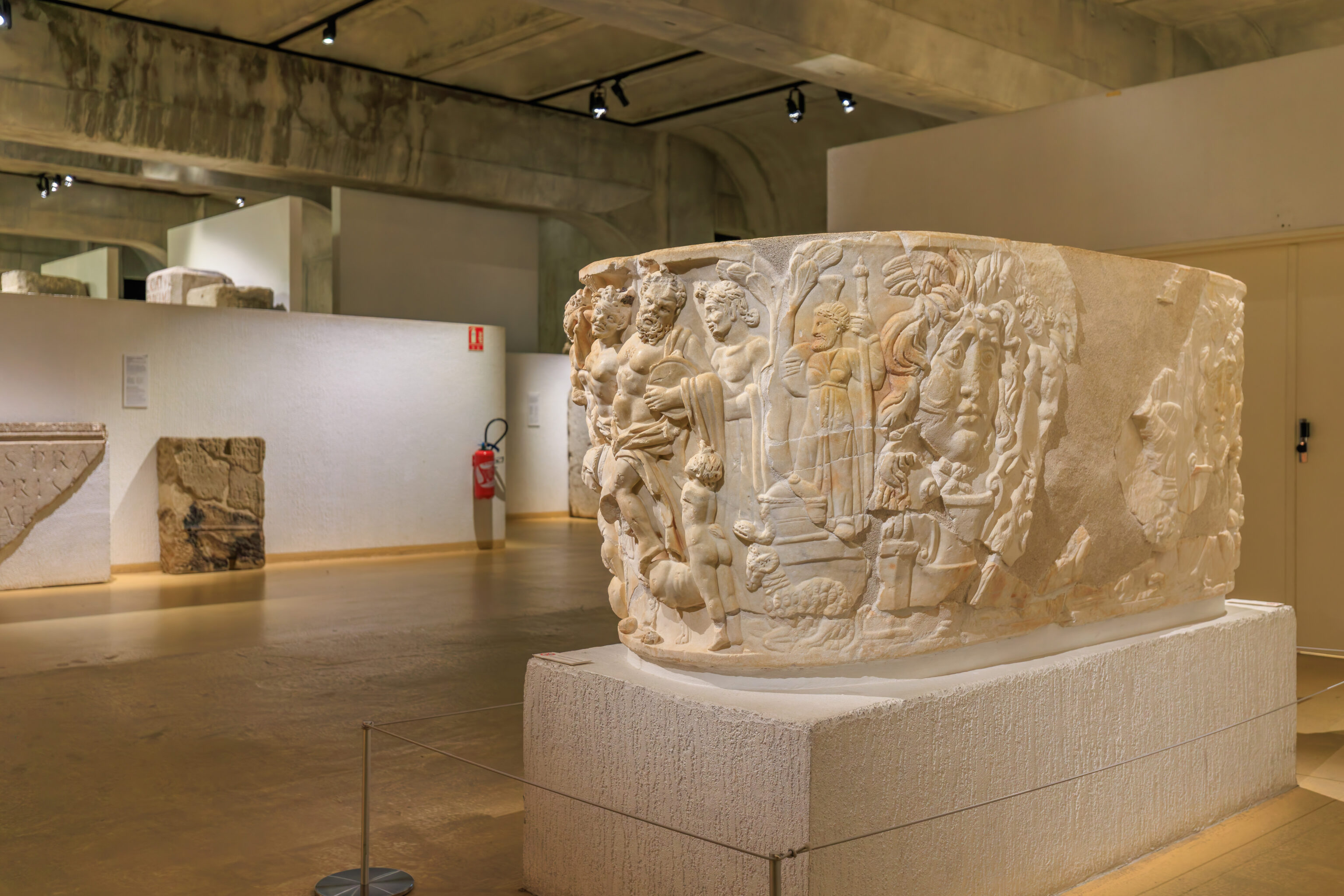
Dating to the 3rd century AD, this sarcophagus, imported from Rome, comes from the mausoleum of the Acceptii.
The central scene, now very fragmentary, depicts the triumph of Bacchus (god of wine). The left side of the sarcophagus portrays the marriage of Ariadne and Bacchus, while Silenus figures on the right side. This satyr (half-man, half-goat) who was responsible for educating Bacchus, is shown drunk on his donkey, accompanied by his retinue. At the corners of the sarcophagus, two lions and two gorgons (evil creatures with snakes for hair) guard the tomb.
Fragments of Paros marble, 3rd century AD, discovered in 1870 in the rue de Marseille (Lyon 7th arrondissement).”
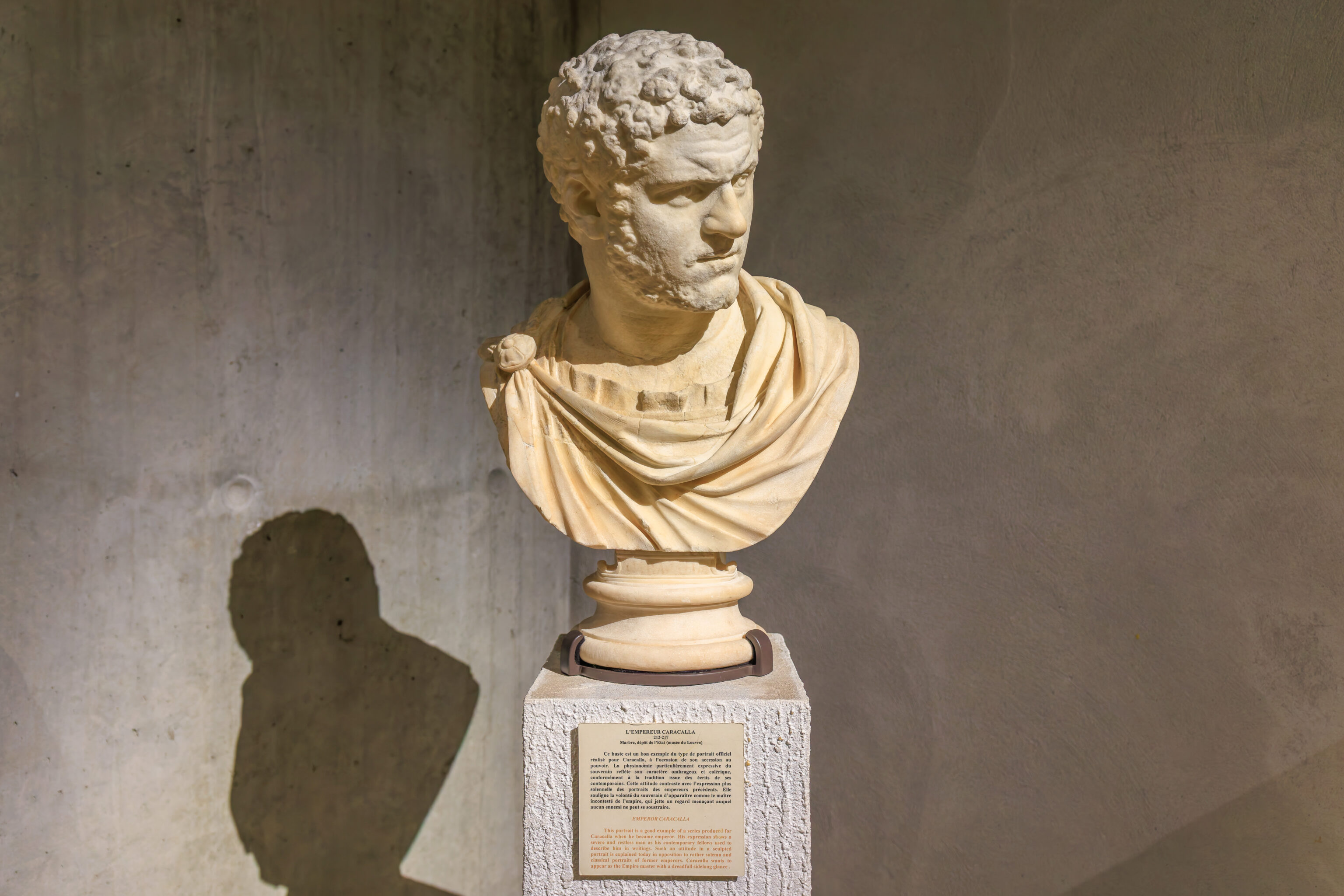
This portrait is a good example of a series produced for Caracalla when he became emperor. His expression shows a severe and restless man as his contemporary fellows used to describe him in writings. Such an attitude in a sculpted portrait is explained today in opposition to rather solemn and classical portraits of former emperors. Caracalla wants to appear as the Empire master with a dreadfull sidelong glance .”
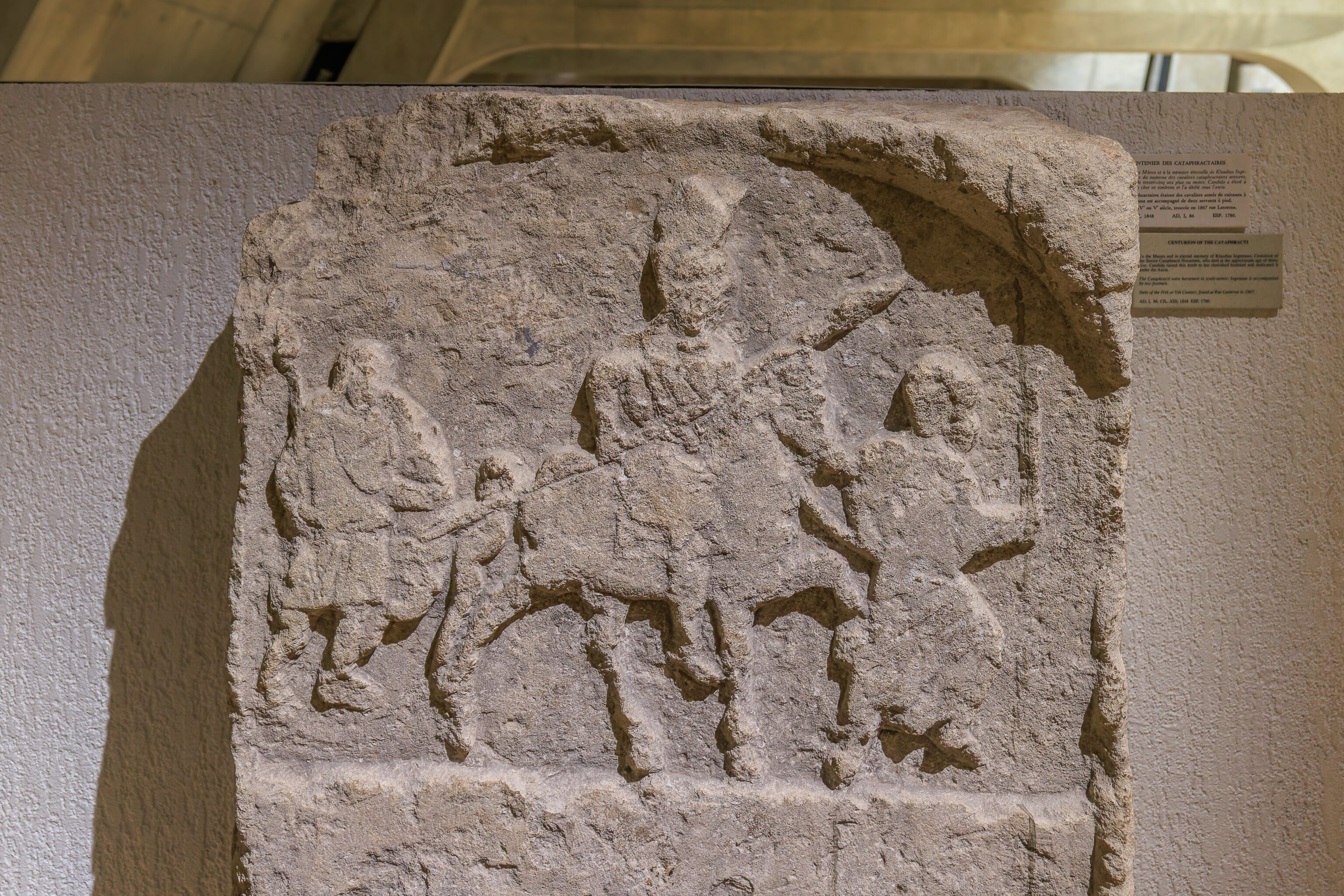
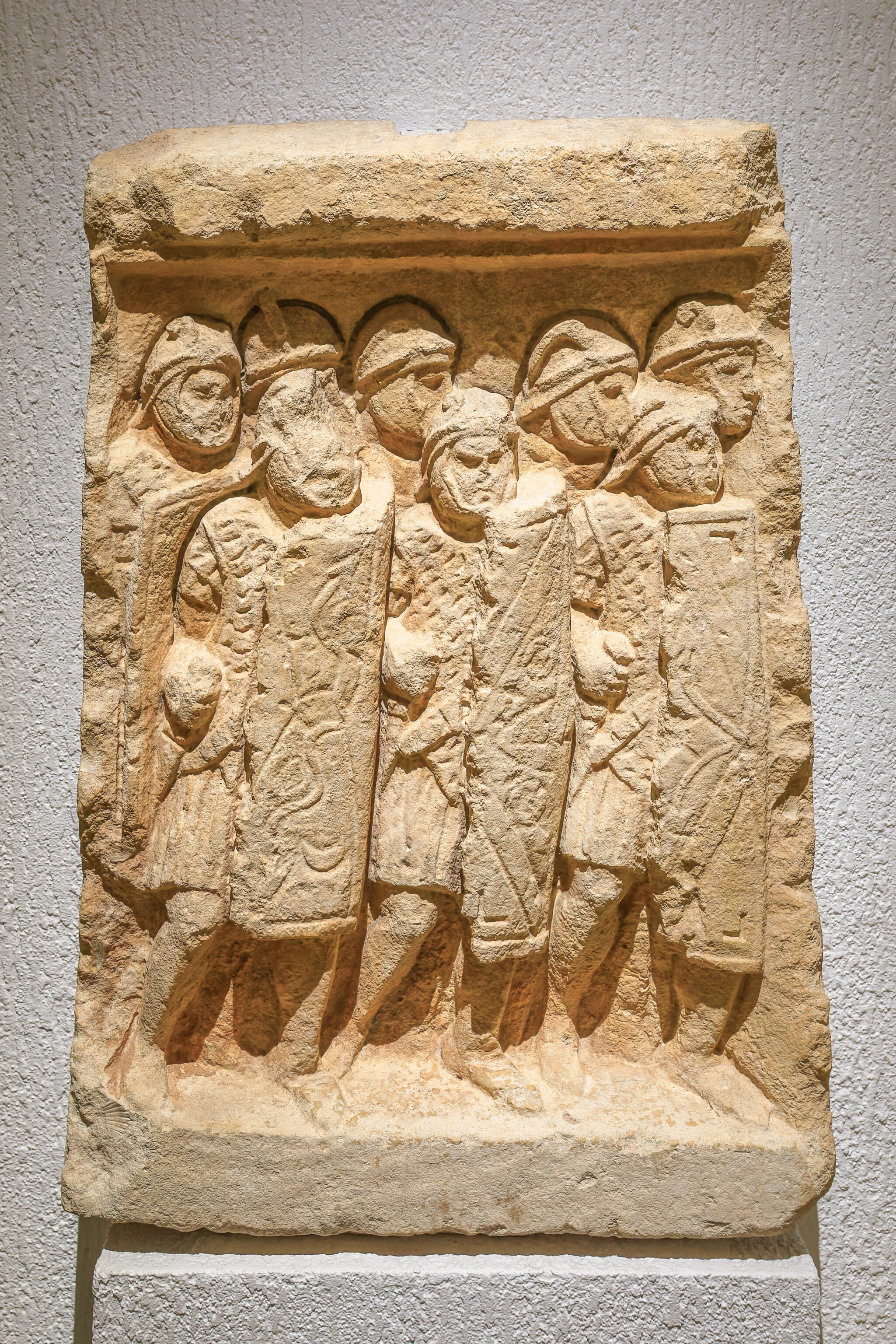
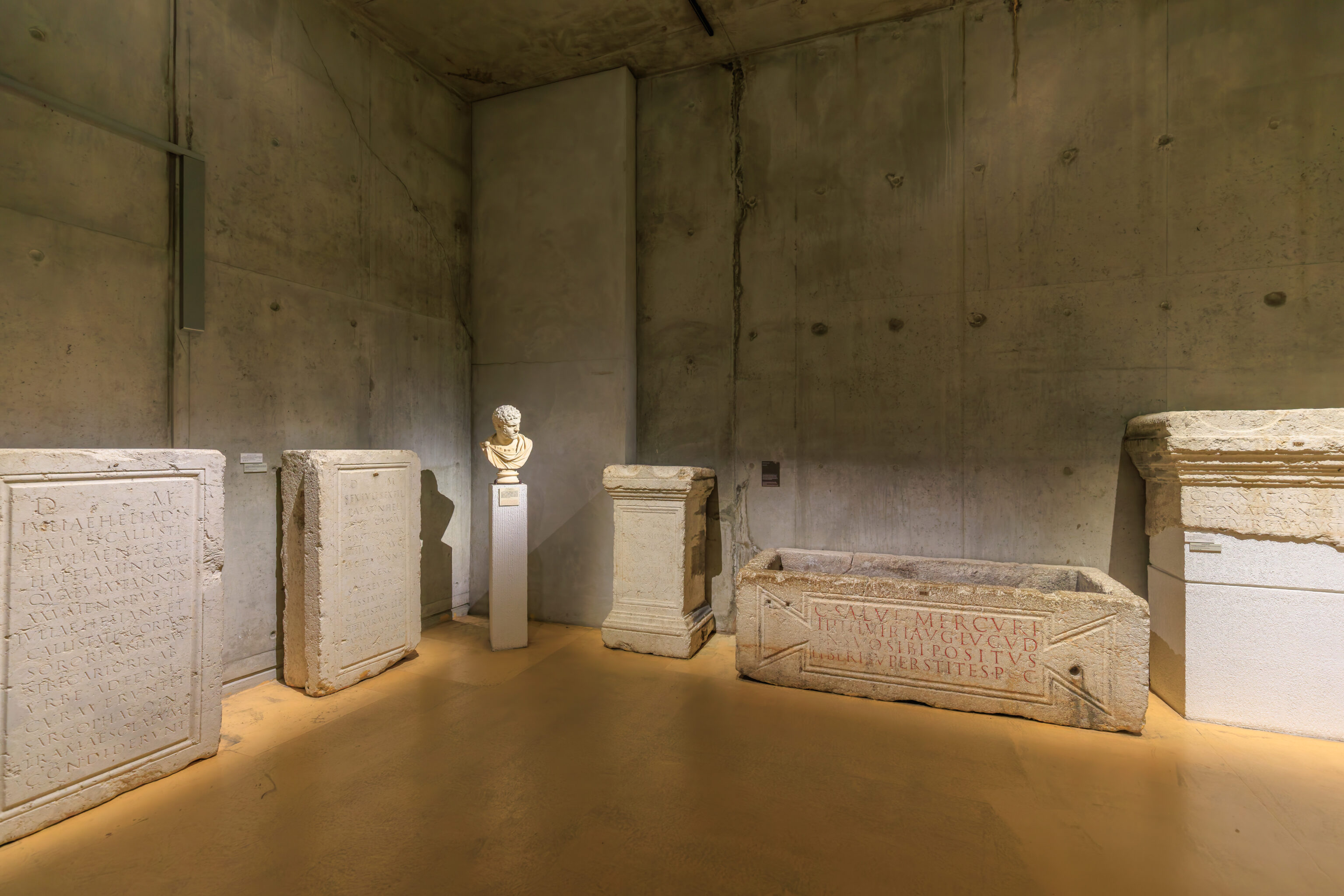
To the Manes and in eternal memory of Klaudius Ingemuus, Centurion of the Senior Cataphracti Horsemen, who died at the approximate age of thirty five. Candida raised this tomb to her cherished husband and dedicated it under the Ascia.
The Cataphracti were horsemen in scale-armor. Ingenuus is accompanied by two footmen.
Stele of the IVth or Vth Century, found at Rue Lanterne in 1867: AD, I, 86. CIL, XIII, 1848 ESP, 1780.”
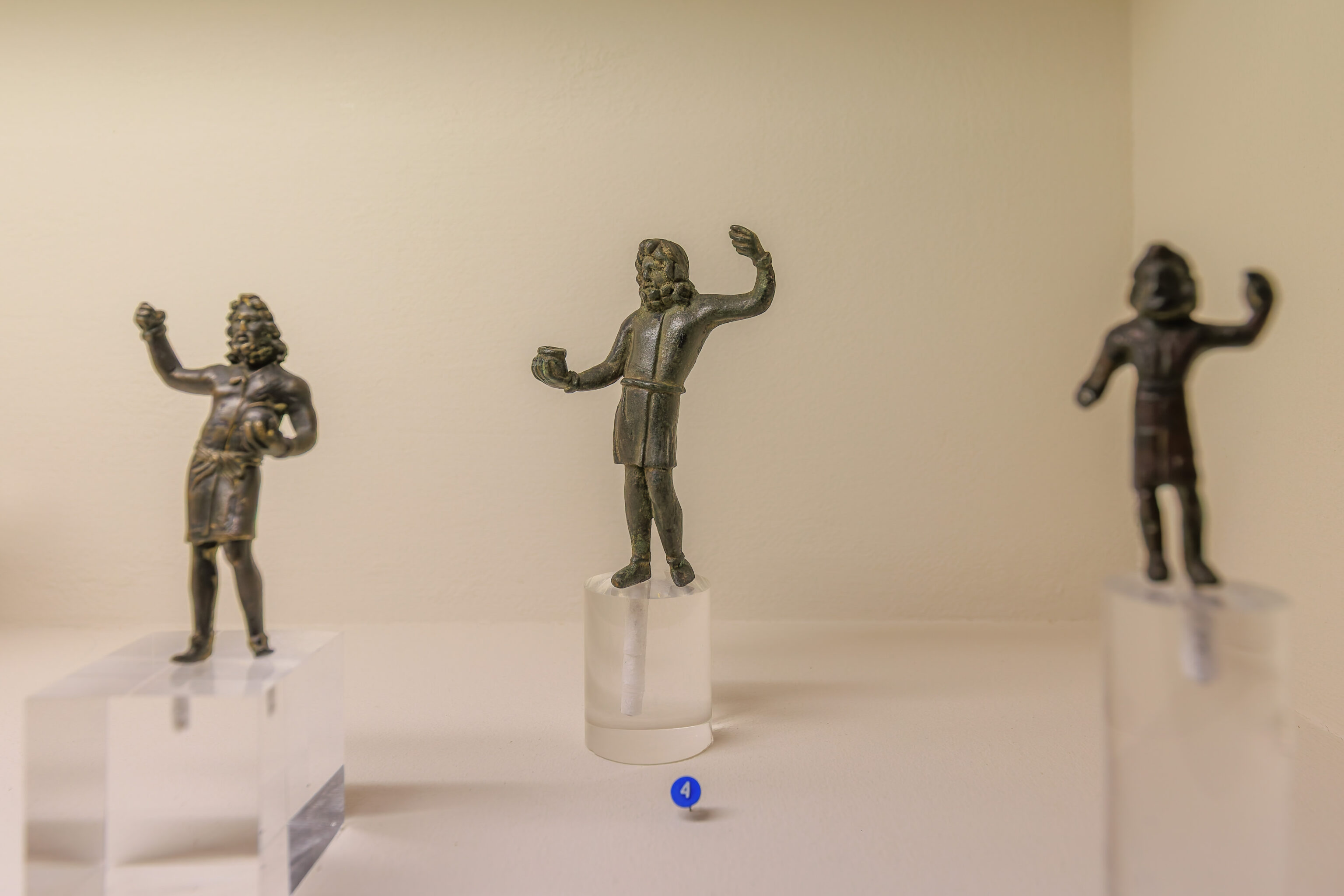
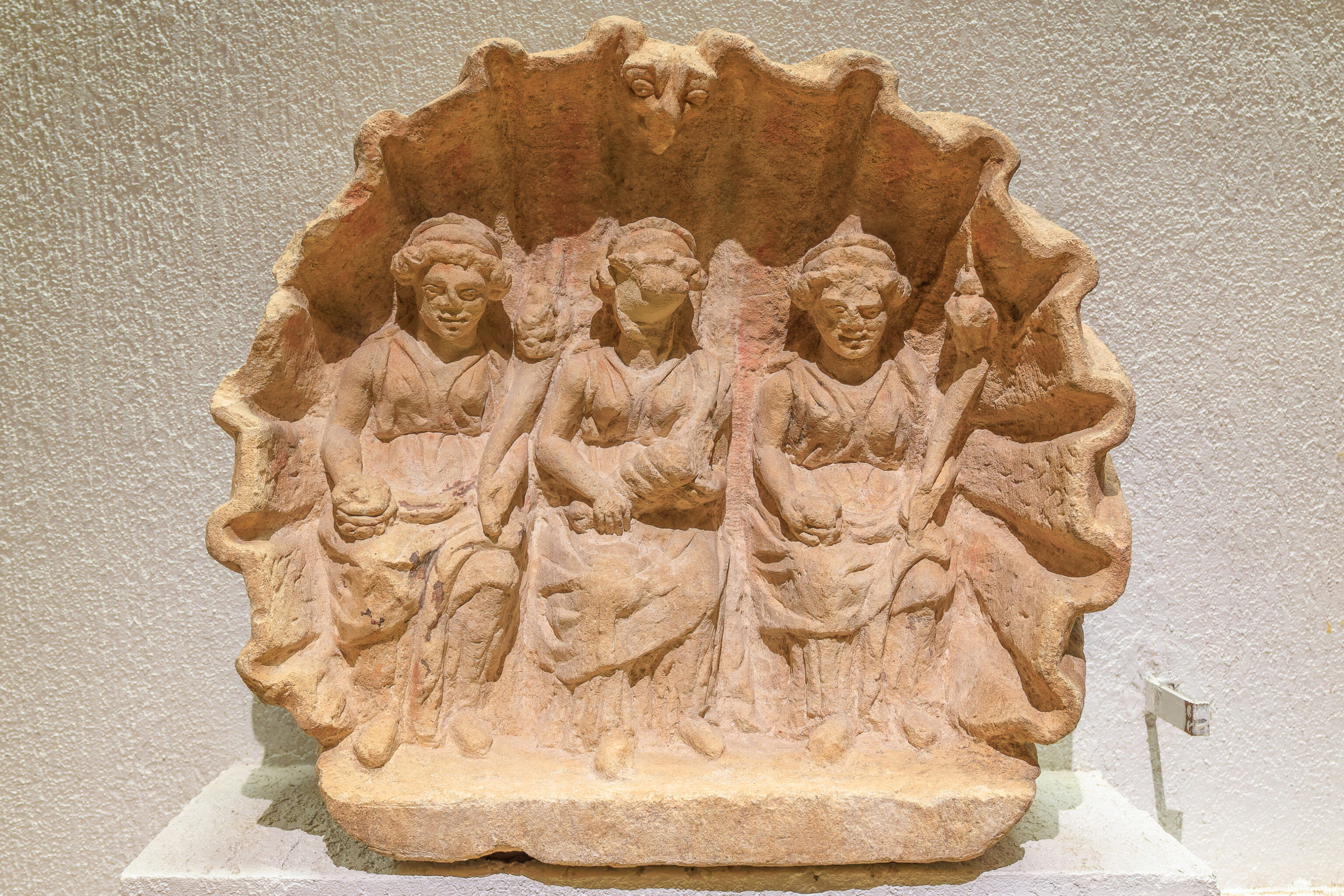
The three goddesses are seated in a shell-shaped recess. The one in the center holds a swaddled child, the other two each holding a patera and a horn of plenty. A griffin’s head appears at the upper edge of the shell.
ESP. 1742.”

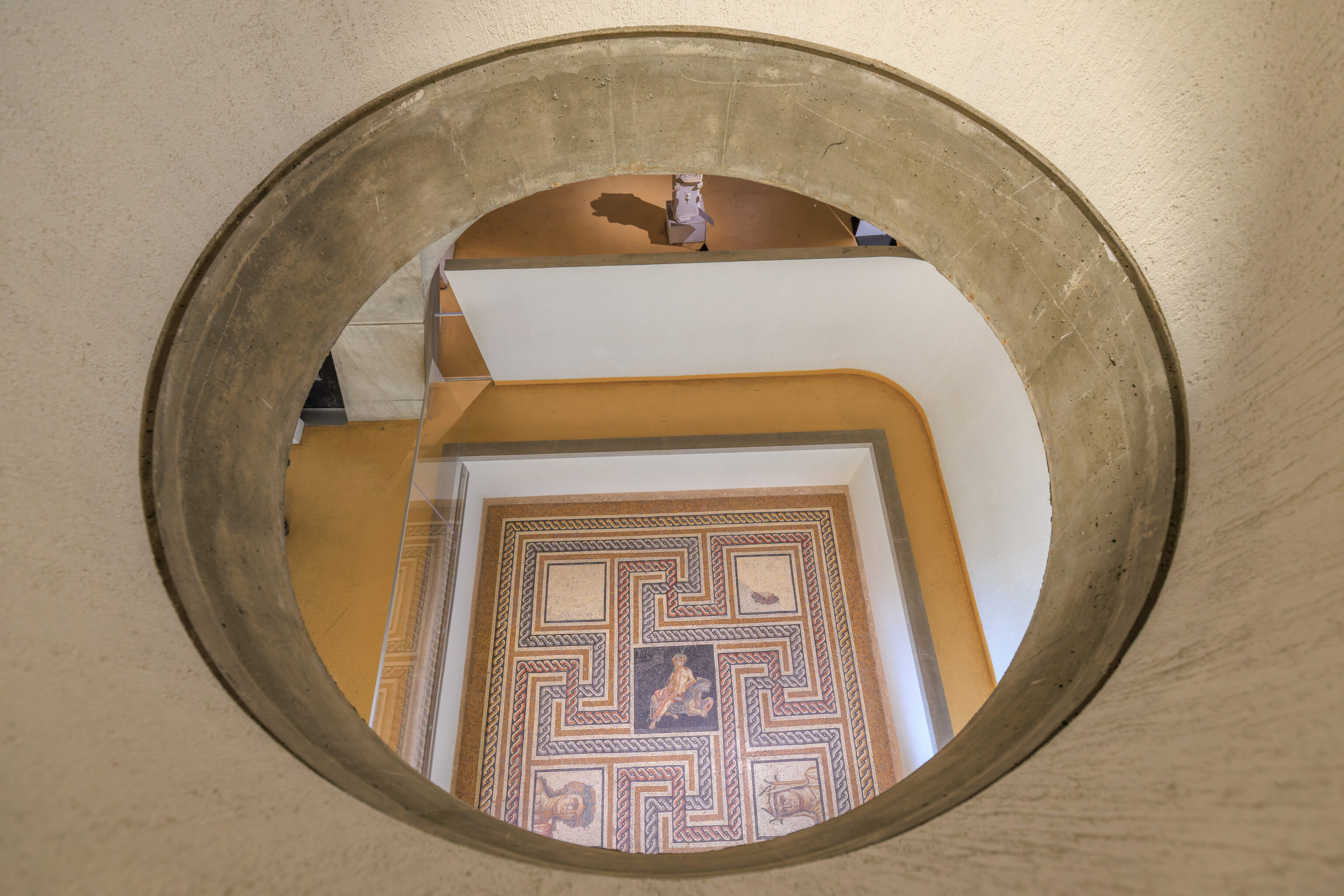
Mosaic
2nd-3rd century AD
Discovered on Fourvière Hill in 1911 (Lyon, 5th district)
Inv.2000.0.1207
Bacchus-Dionysus, god of wine, is known for having undertaken a great journey that took him to India, a country he conquered with his army, but also thanks to his divine powers.
He is often depicted with a retinue of kings accompanied by exotic animals, here with a panther.
Around the mosaic, only two seasons remain: Winter, a woman with a veil on her head, and Spring, a young man with long curly hair and a crown of flowers.
(Translated using Google)
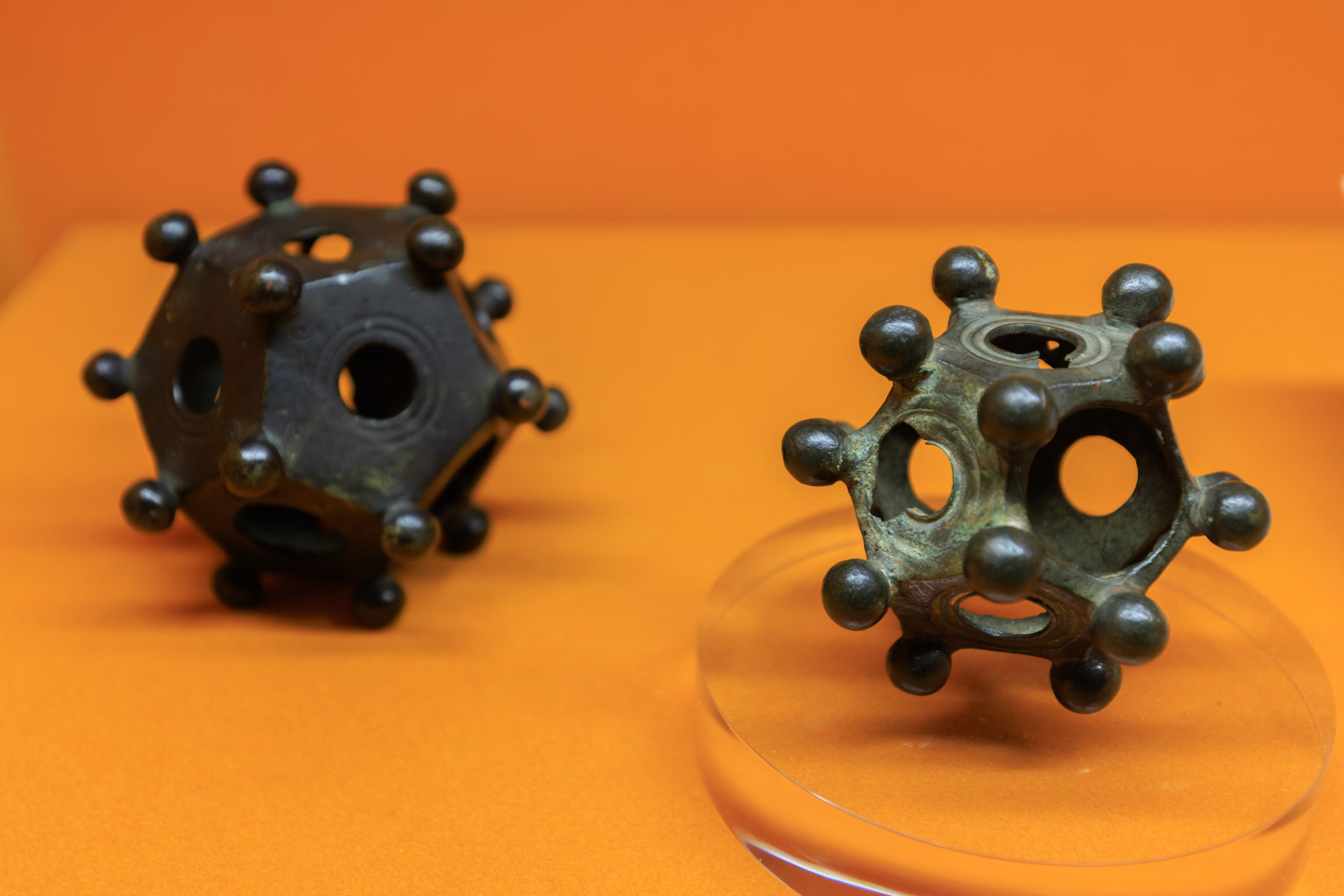
Around 60 objects of this type are known, found mostly in France, in Celtic territory. They are hollow bronze vessels with twelve equal faces (dodecahedron). Each face has a circular opening of varying size. What were they used for? This question, which has long puzzled archaeologists, has still not received a satisfactory answer! Decorative objects, games, measuring instruments, jewelers’ gauges…? As with many incomprehensible objects, a religious use has been suggested. Some were placed in tombs. They are thought to be related to astronomy: the dodecahedron is said to represent the sphere of the universe, its 12 faces the signs of the Zodiac and the months of the year, its 30 edges the days of the month…
(Translated using Google)
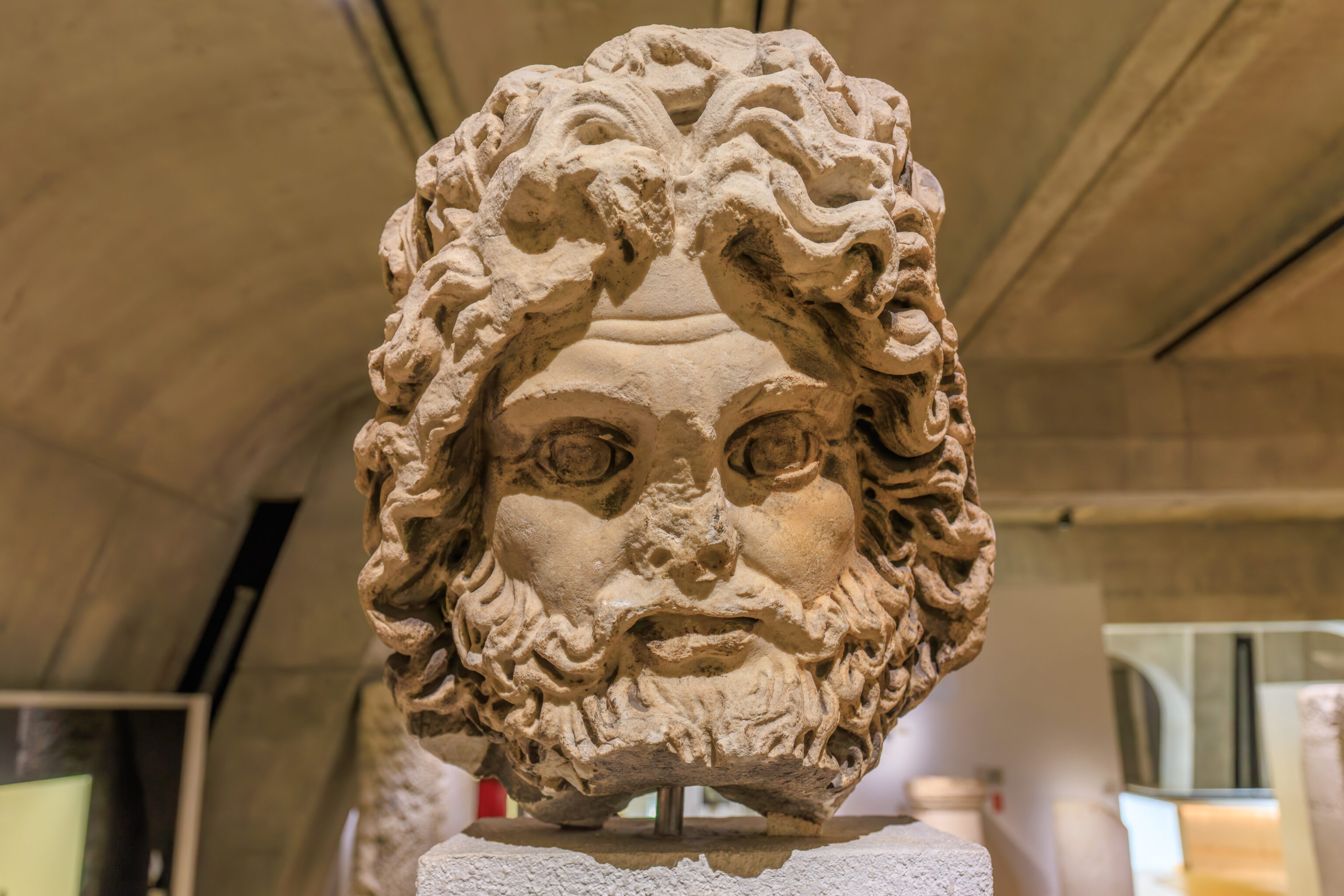
According to the size of this head this sculpture must have been 3 metres high and was certainly kept in a temple. Jupiter is recognizable because of his crown made of oak leaves and ornamented with an eagle. White marble, dated in the 2nd century A.D., discovered in the Fourvière-hill in the 19th century.
N°Inv. 2001.0.322″
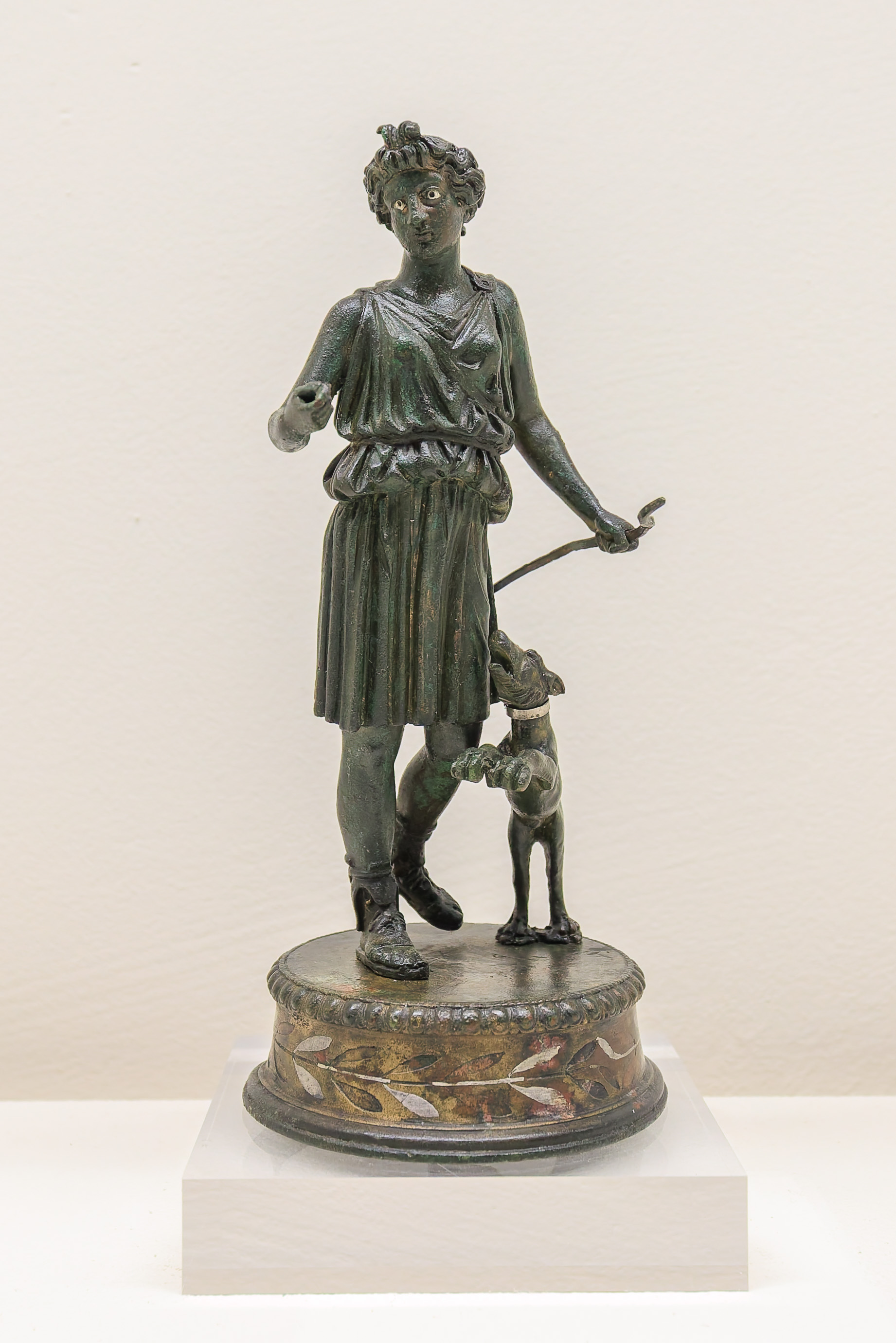
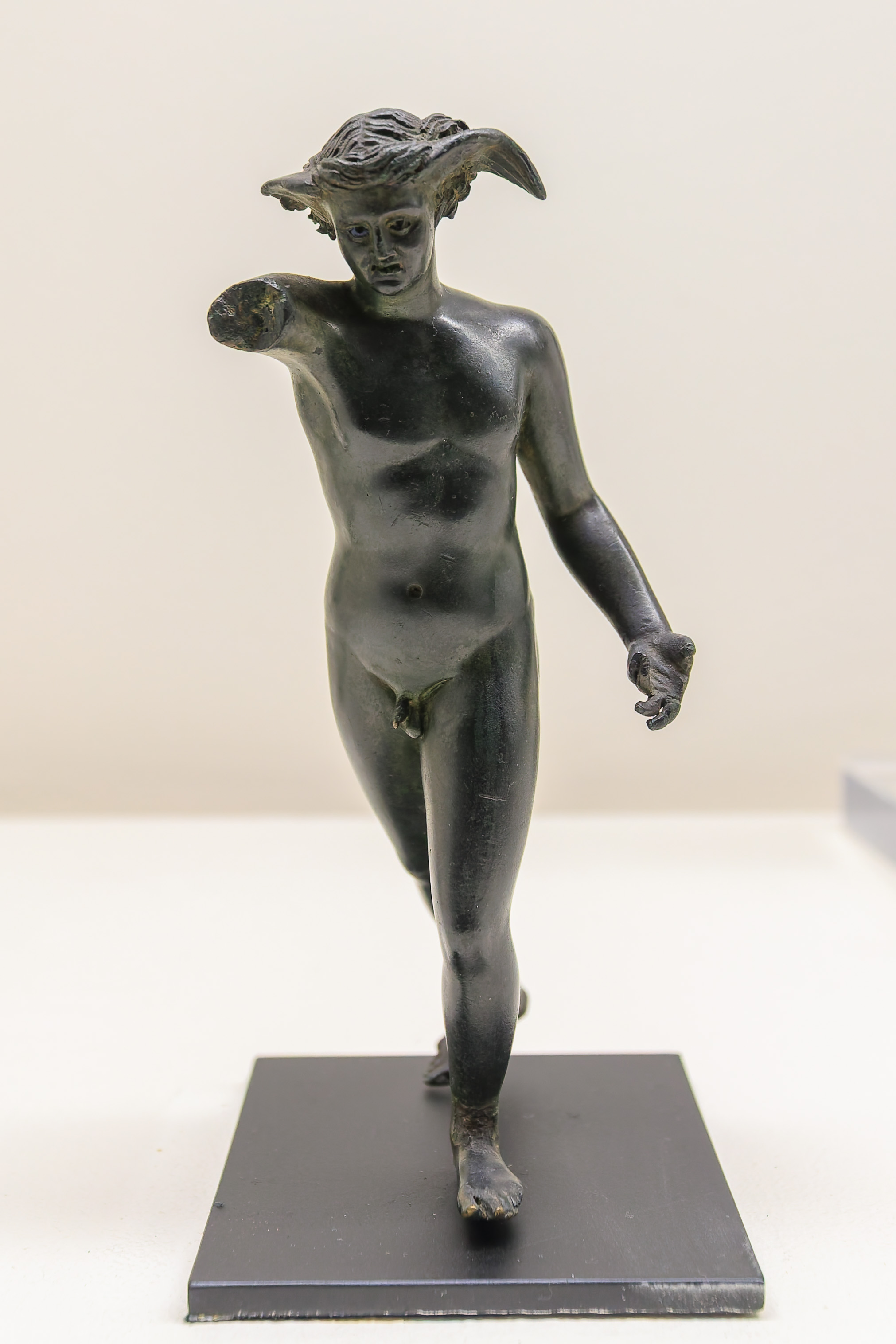
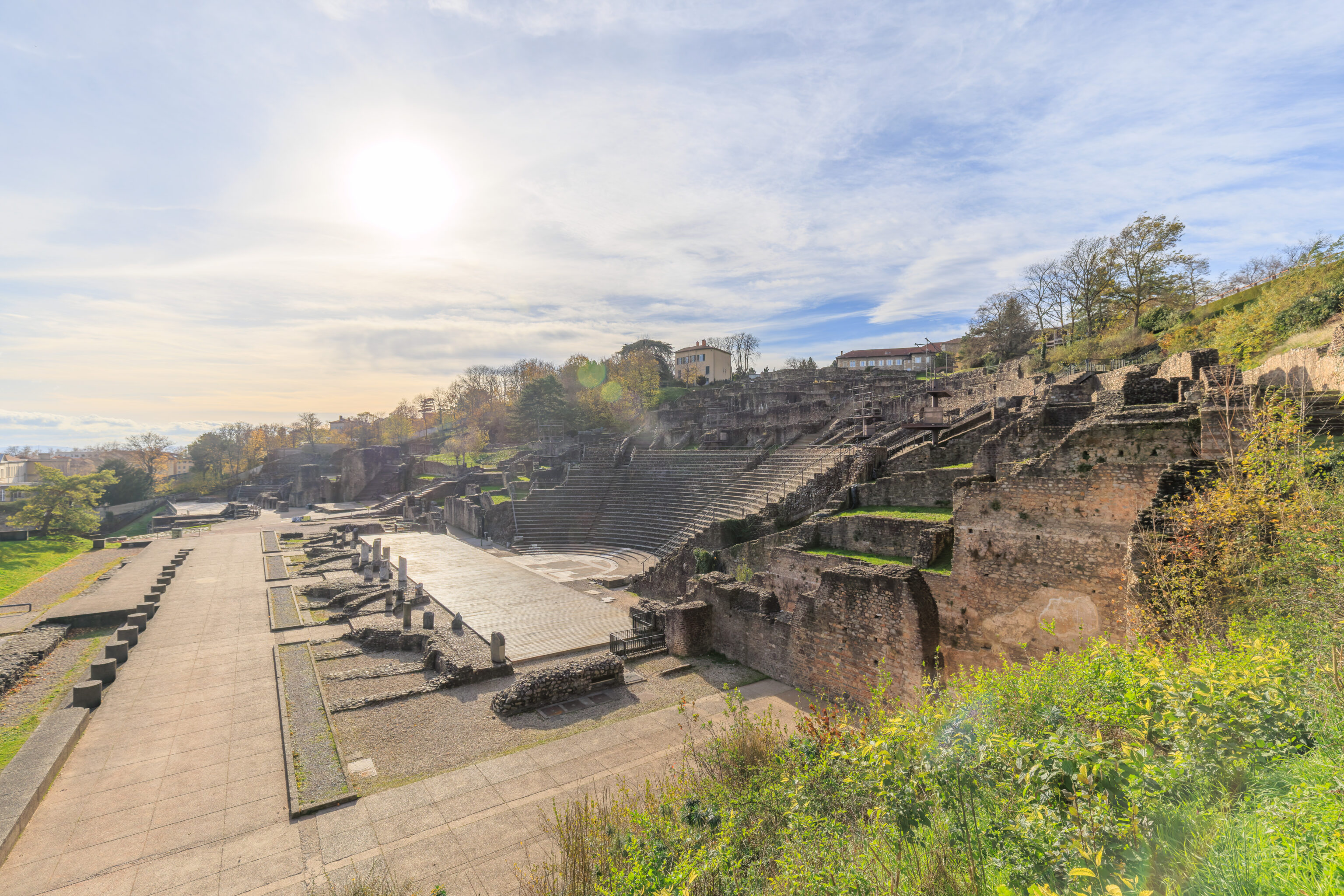
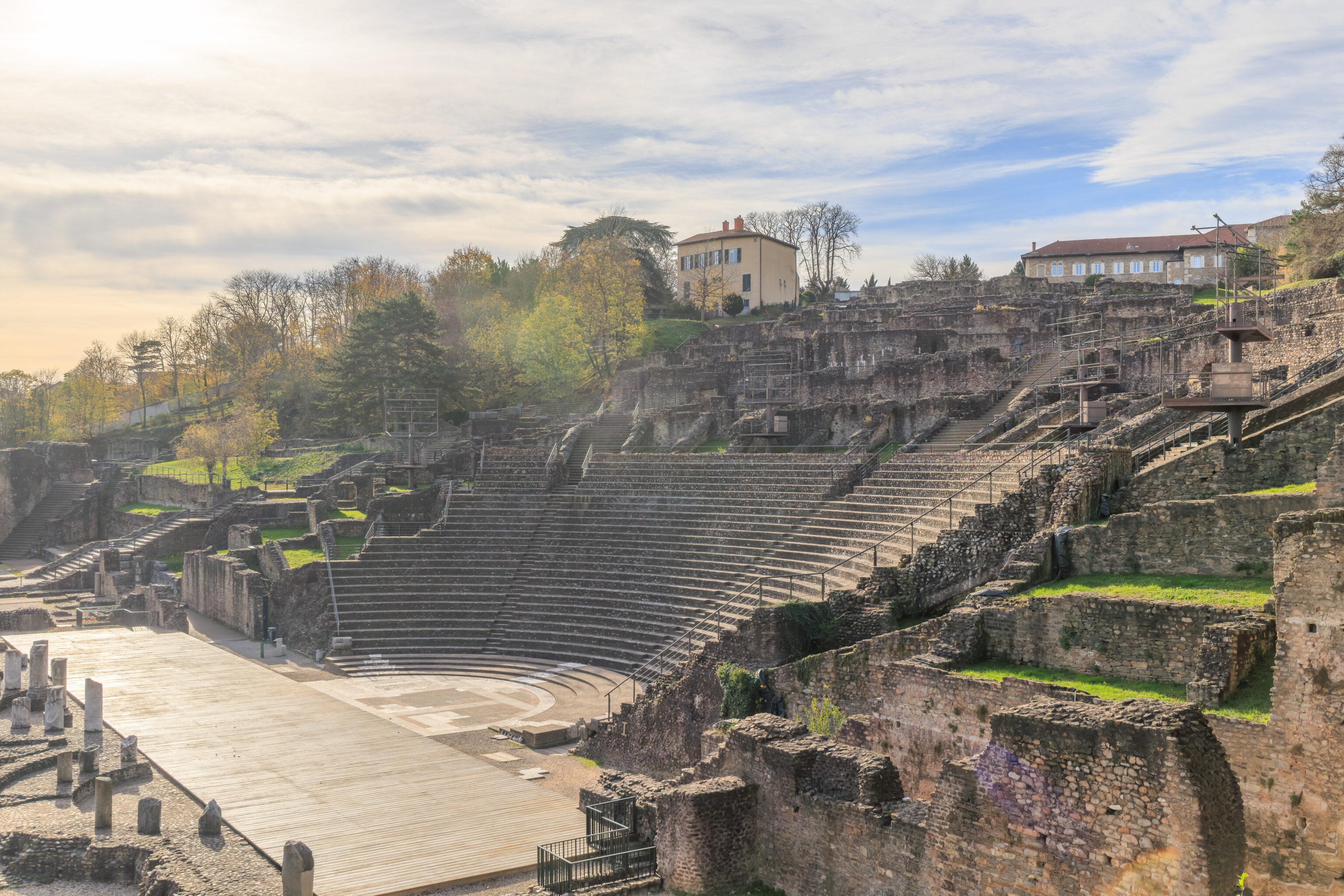
We got a better view of the ruins outside from these windows in the museum.
20th century AD
Discovered in Vienne, Isère, in 1841, inventory no. 2000.0.1200.1
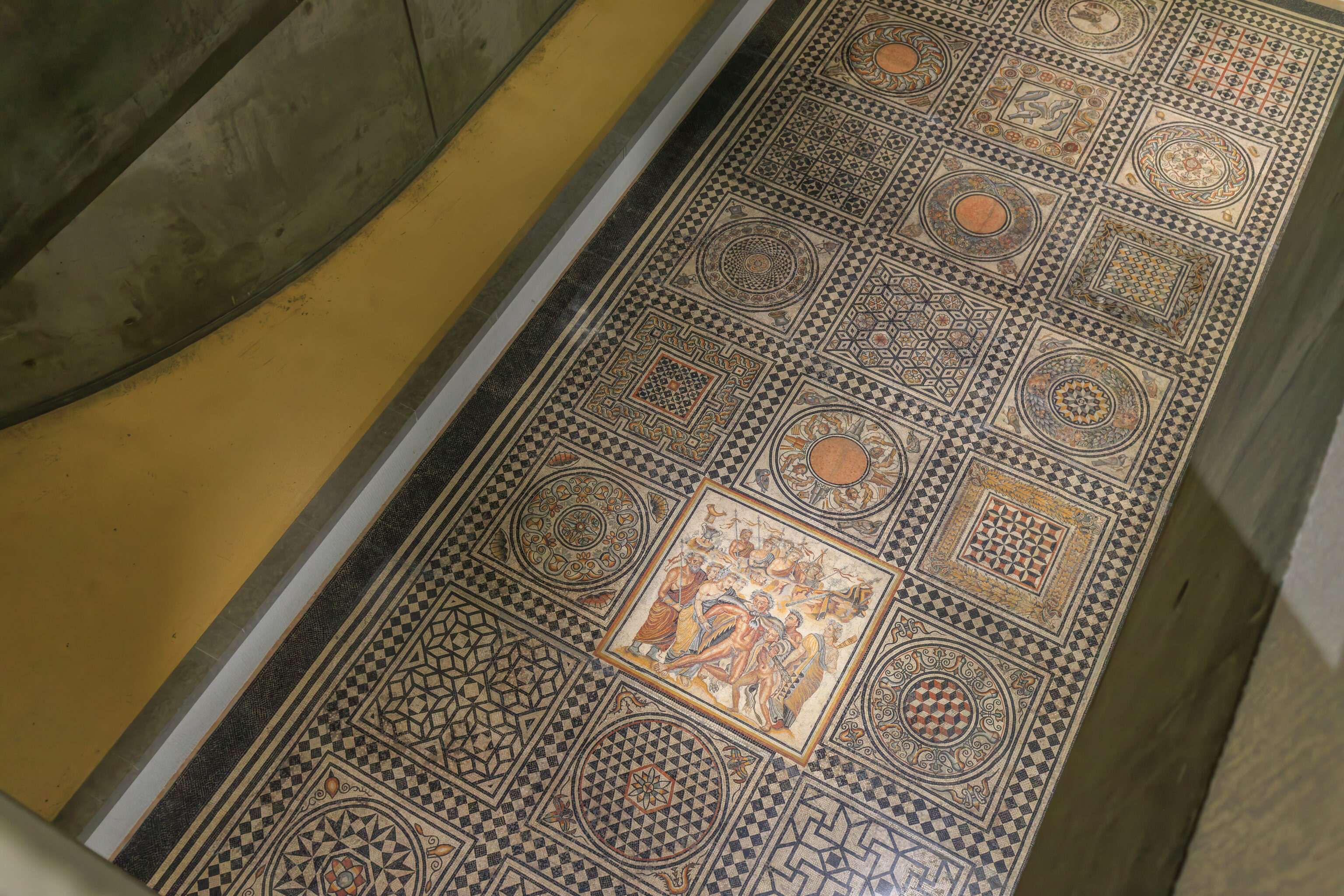
This mosaic decorated the floor of a large reception room. The division of the decoration into multiple geometric figures, the richness of the colors, and the diversity of the filling motifs are characteristic of the mosaic style of the Rhône Valley.
The main panel (emblema) depicts Hercules drunk, holding his club askew and supported by figures belonging to the retinue of the god Bacchus: a young satyr on the right and a bacchante on the left. Above, Bacchus, the god of wine, accompanied by other figures from his retinue, contemplate the scene.
(Translated using Google)
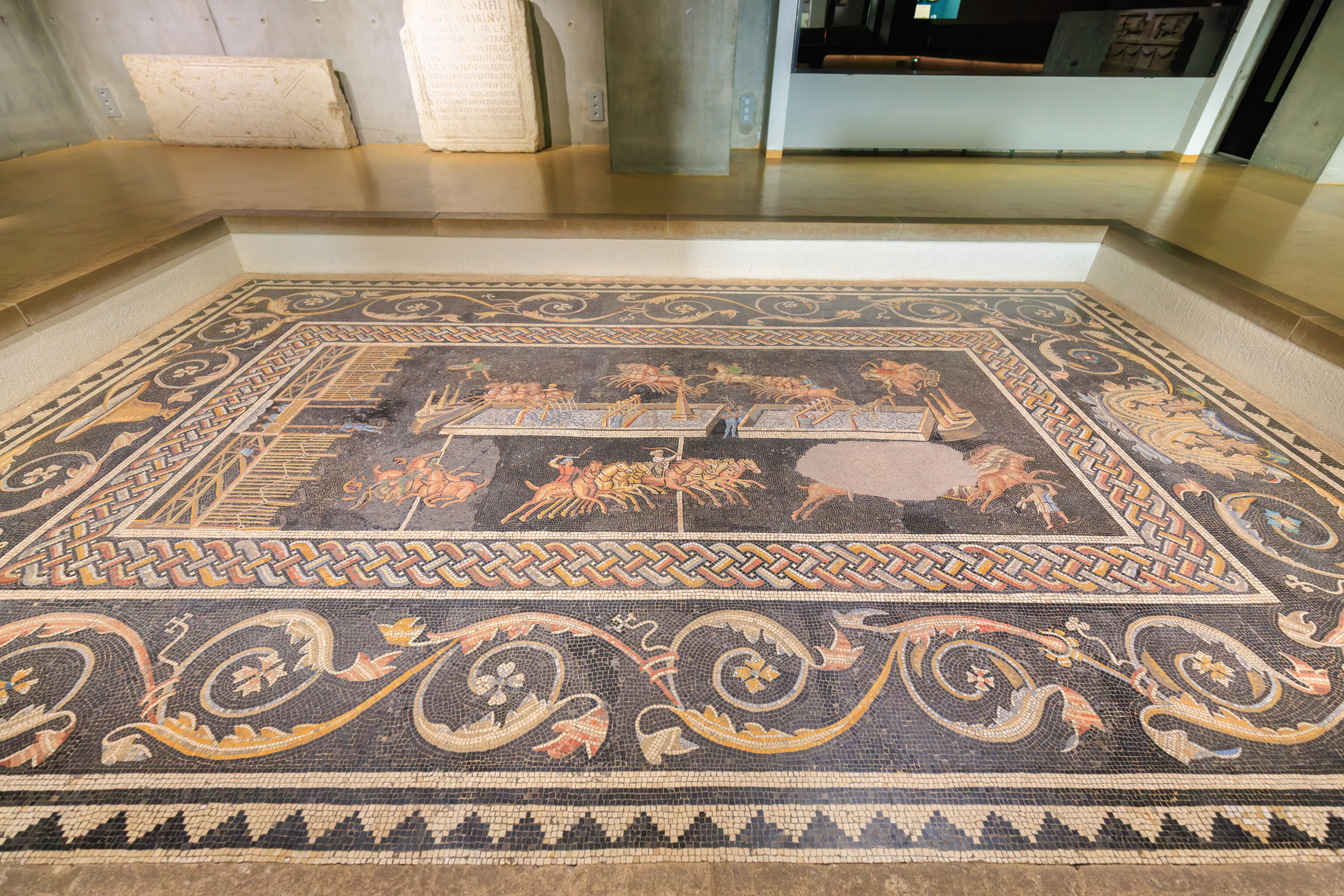
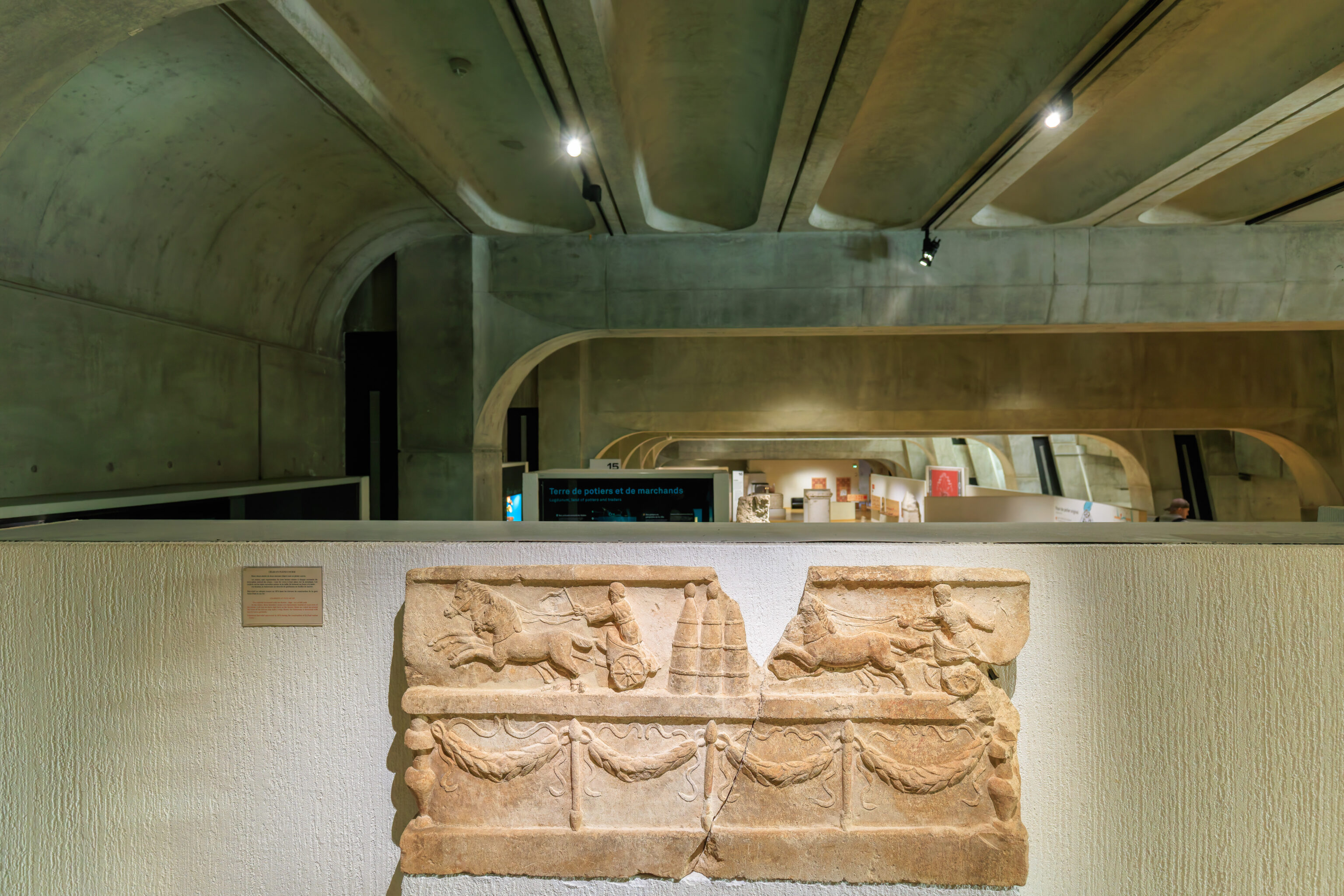
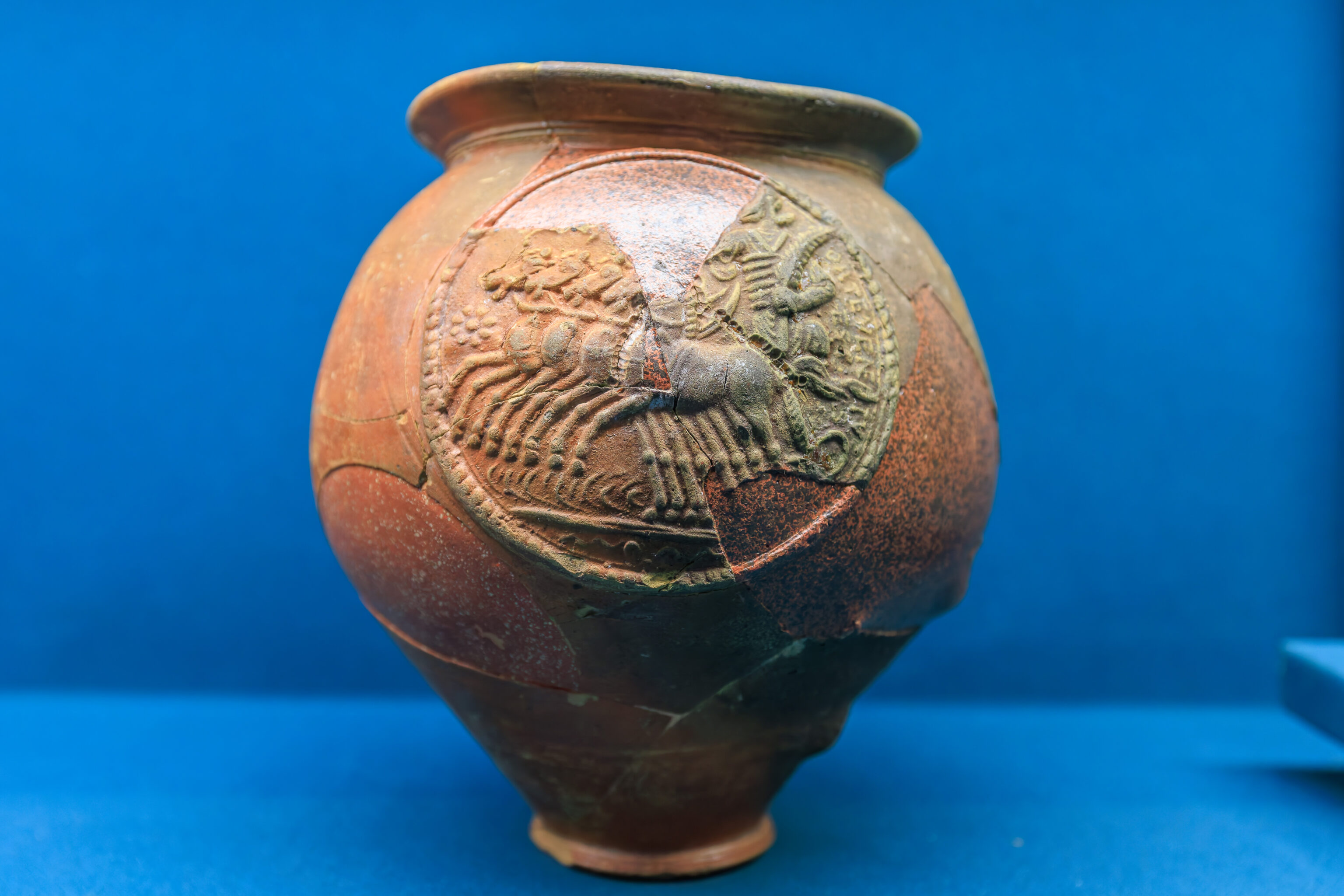
Several moments of the race are represented on the same scene : on the top left, three characters occupy the official stand. They will give the starting signal by dropping a white napkin. Chariots with four harnessed horses – quadriga – are rushing forward, running counter-clockwise. Drivers wear coloured shirts, according to the team they belong to, Driving is very dangerous : two chariots missed their bend and overturned !
In the middle, we can see how turns are counted thanks to statues of dolphins spitting water and balls put on poles. In the centre two children hold a palm and a laurel crown which will reward the winner,
Mosaic discovered in 1806, in Lyons.”
Found in Lyon (Upper Saint-Just) in 1975.”

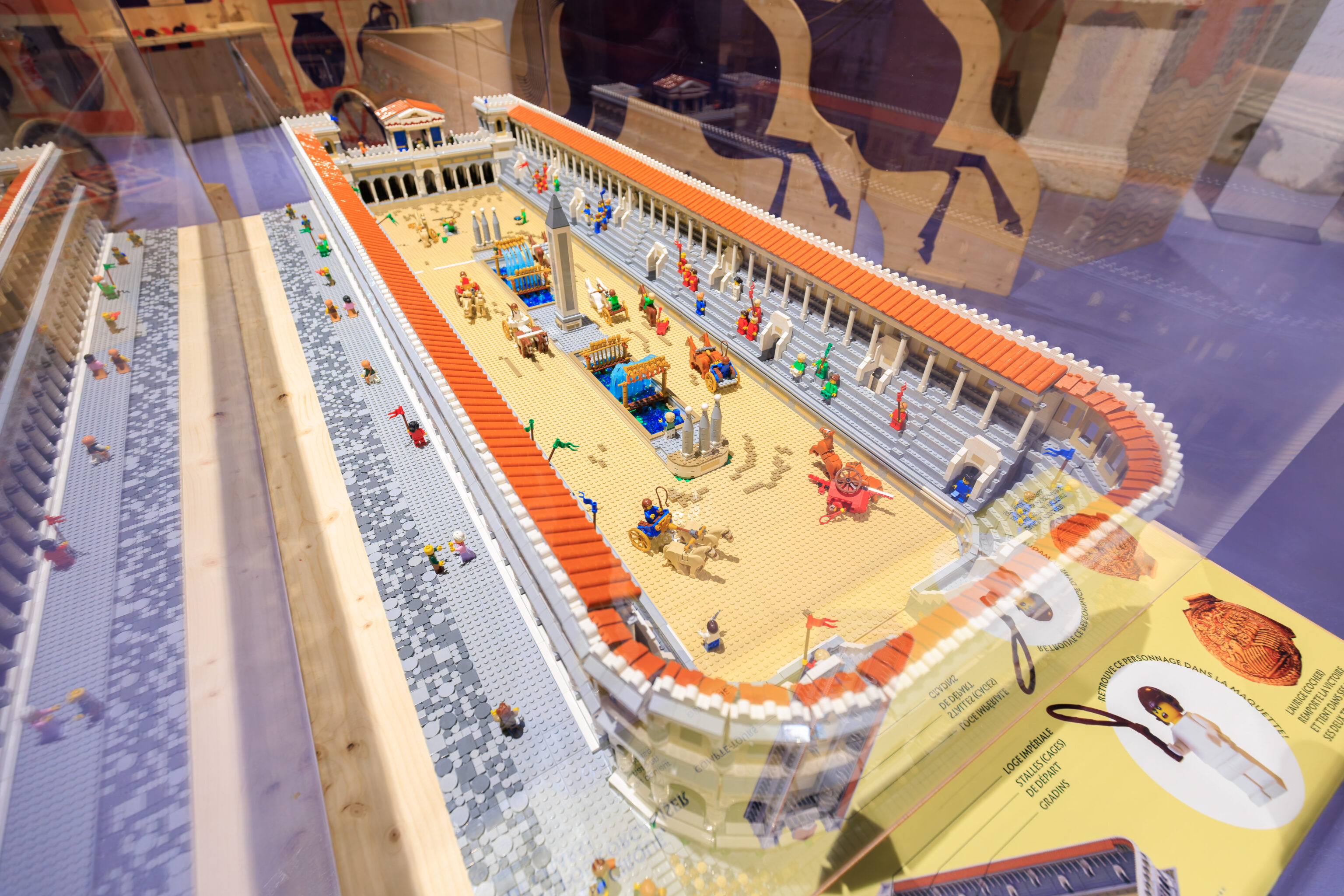
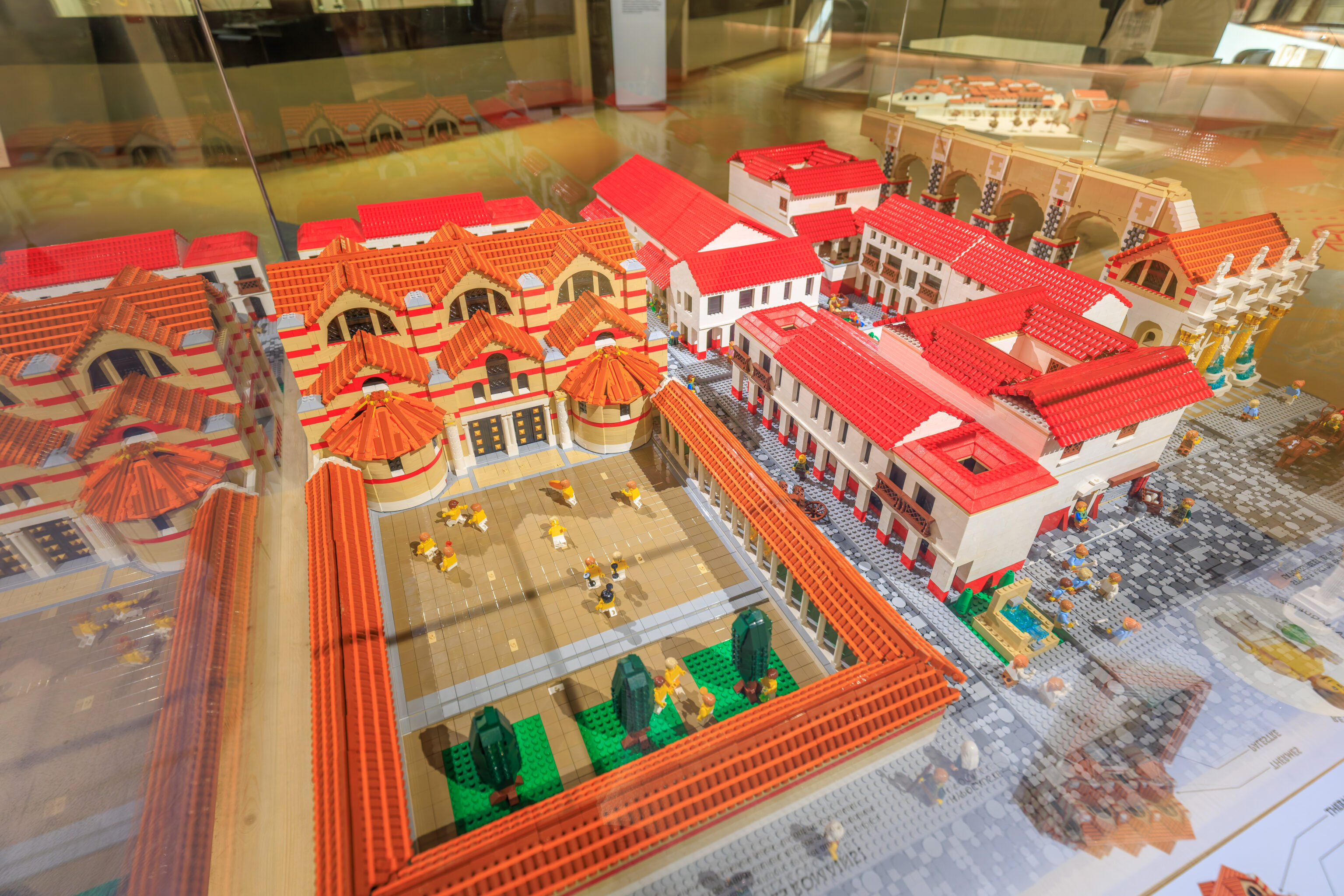
Legos!

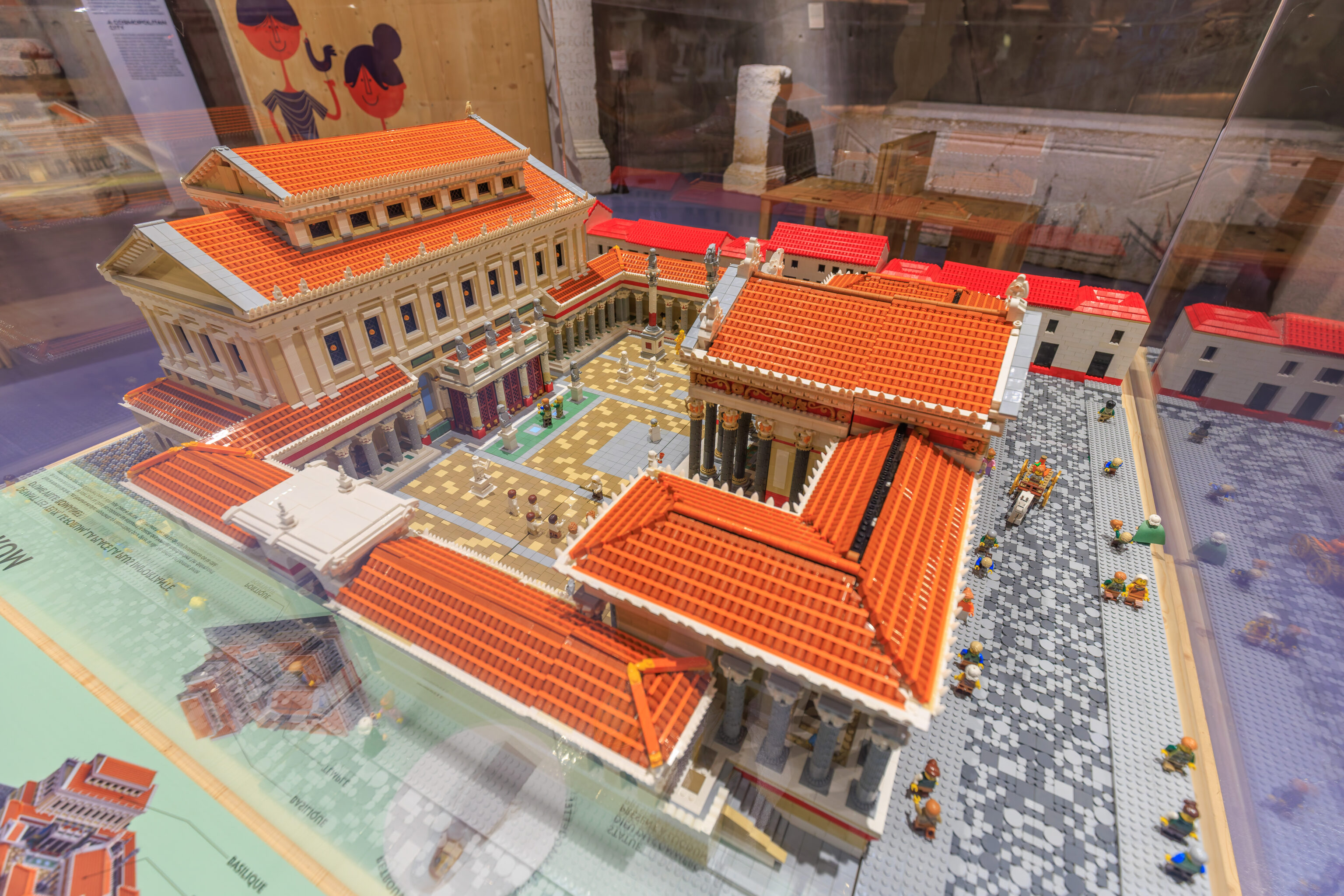
Before your eyes, the Forum, the most important square in a Roman city!
Everyone is bustling about! The most important Romans gather here to govern the city. In the center, a man tries to convince the crowd to vote for him. Under the columns surrounding the square, men haggle. A criminal enters the largest building to stand trial. In the temple, the Romans honor the city’s patron deity.
(Translated using Google)
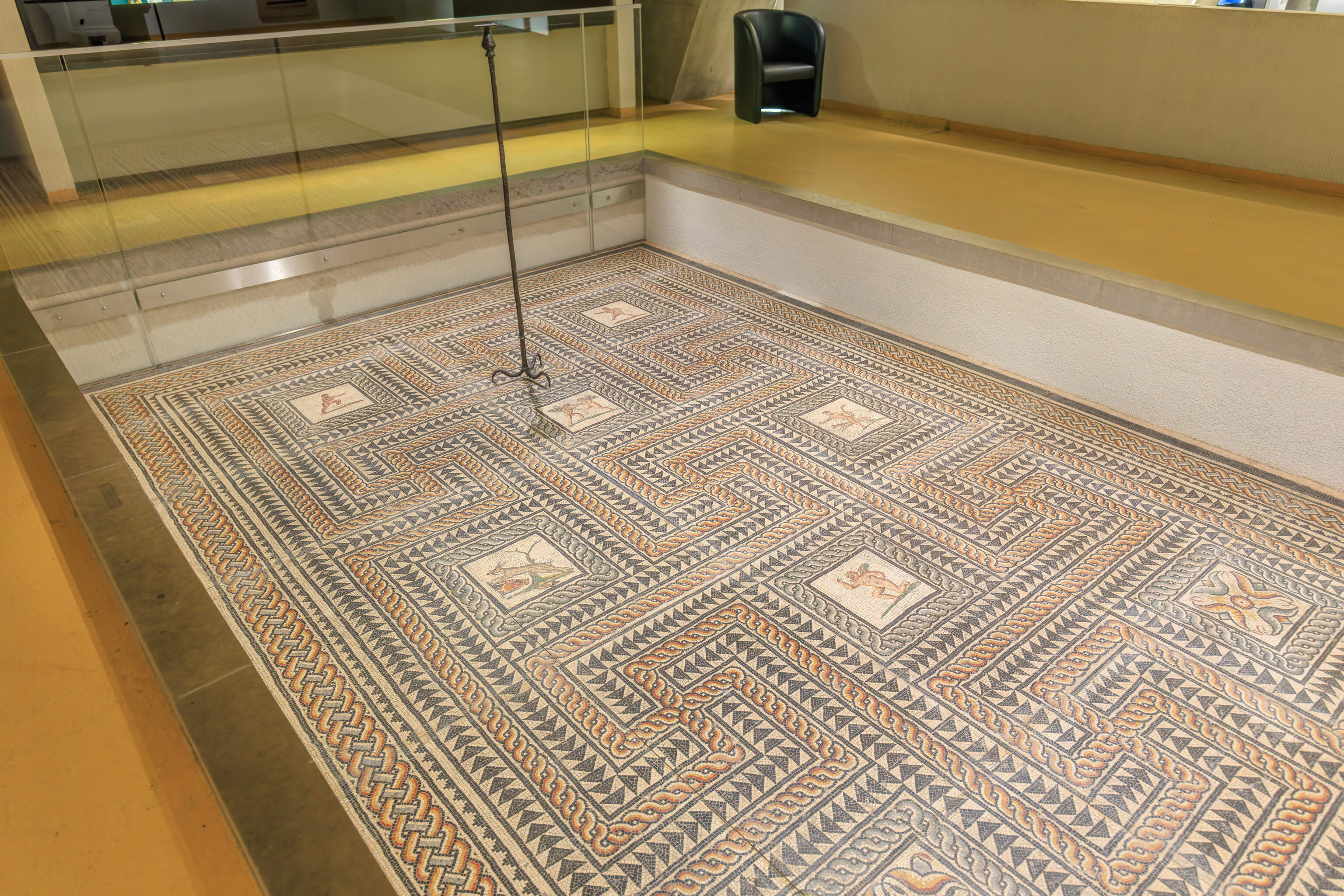
Discovered in 1822 in Vienne. Composed of limestone and coloured marbles. Scattered on the mosaic, little scenes. are represented on six square panels: two wrestling children, two fighting Cupids, a hare fleeing in front of a hunting child with his dog, and a kneeling Cupid.
These little scenes are rather ordinary in Roman art, but are exceptional here because of the quality of the mosaic. The two fighting Cupids are sometimes said to be Eros, god of passionate love and his brother Antéros, who embodied sharing, reasoned love, or even indifference. According to the style, this mosaic is dated between 150 and 200 A.D.
CANDELABRUM, used to support a oil lamp, found in Place de l’Antiquaille – Lyons -.”
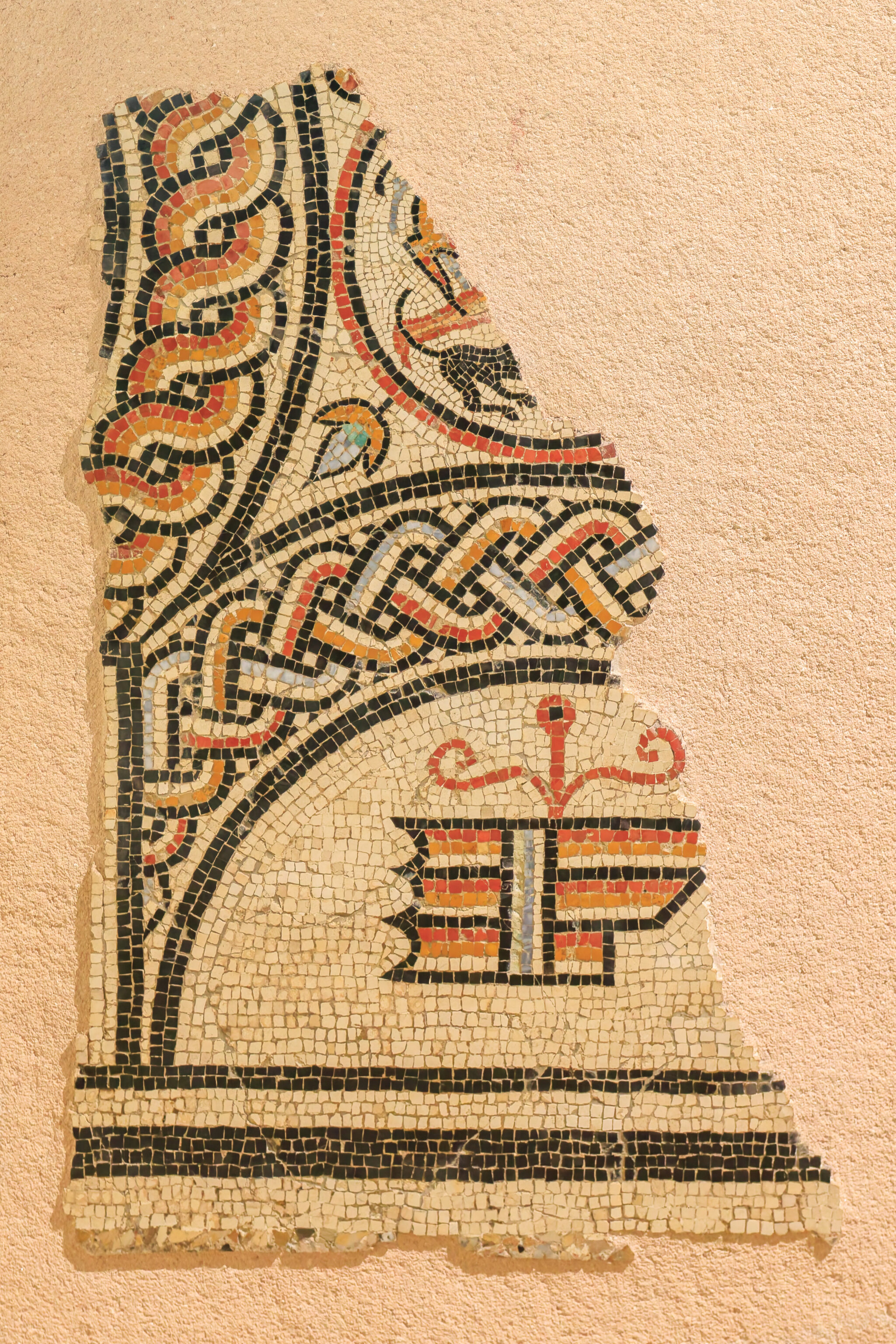
Found at # 7 Rue Vaubecour in Lyon in 1966 (donated by J. Cateland),
St., 103 C.”
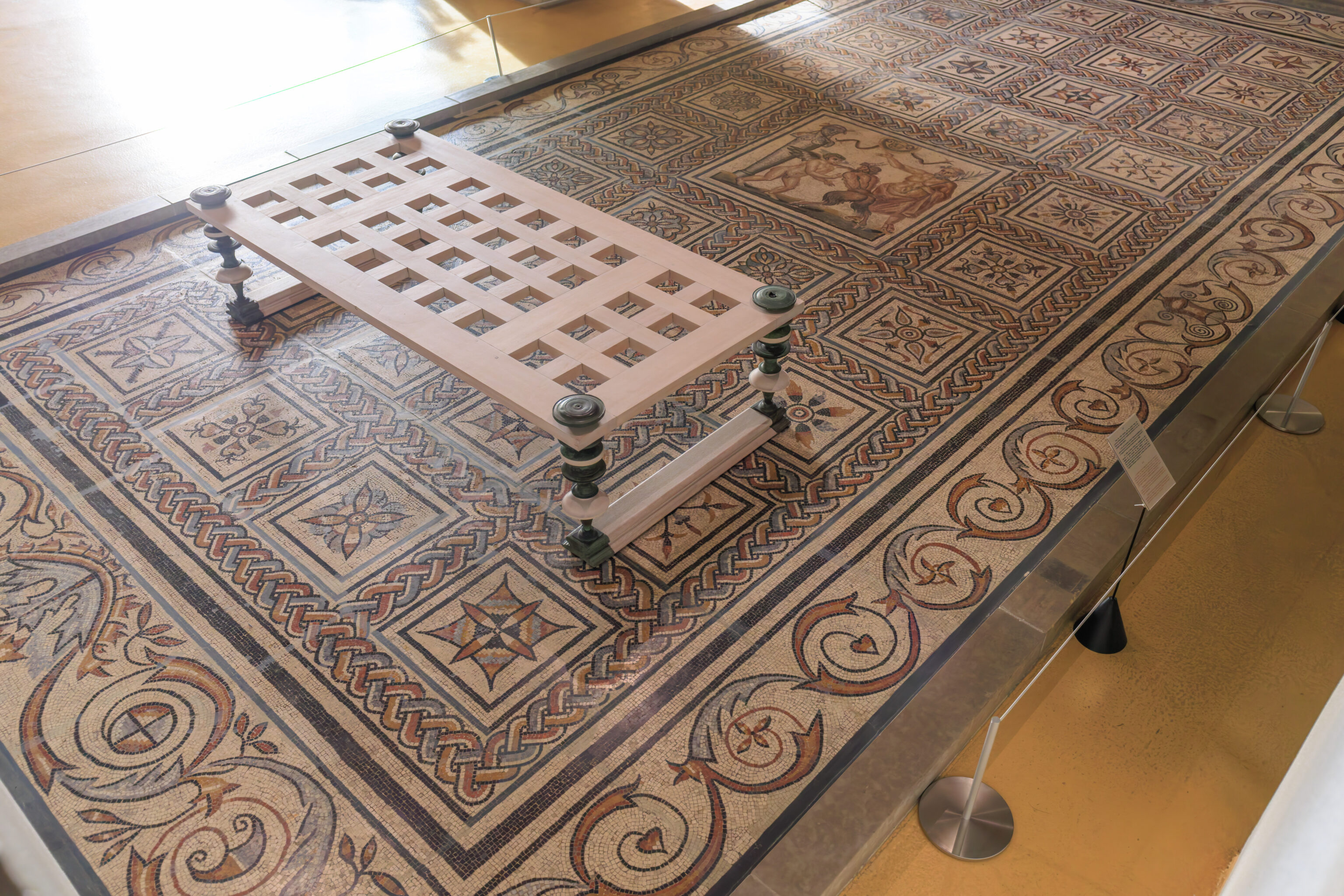
In wealthy houses during solemn meals, guests did not sit at the table, they rather lay on beds. Except for exceptional cases, such beds were generally made of wood that is why they almost always disappeared. This bed was reconstituted with metal elements discovered in Jallieu – Isère departement – in the 19th century. It might be a bed that belonged to a tomb.
The feet of the bed are made of bronze and look like those made óf whiddled wood. The mattress was reconstituted with planks but leather trestles would have been more realistic and more comfortable.
Usually, three beds equipped large dining rooms and were arranged in a U shape. In a Roman house, The dining room was named after the placing of such beds : dining room in Latin is said “triclinium” that is to say “three beds”.”
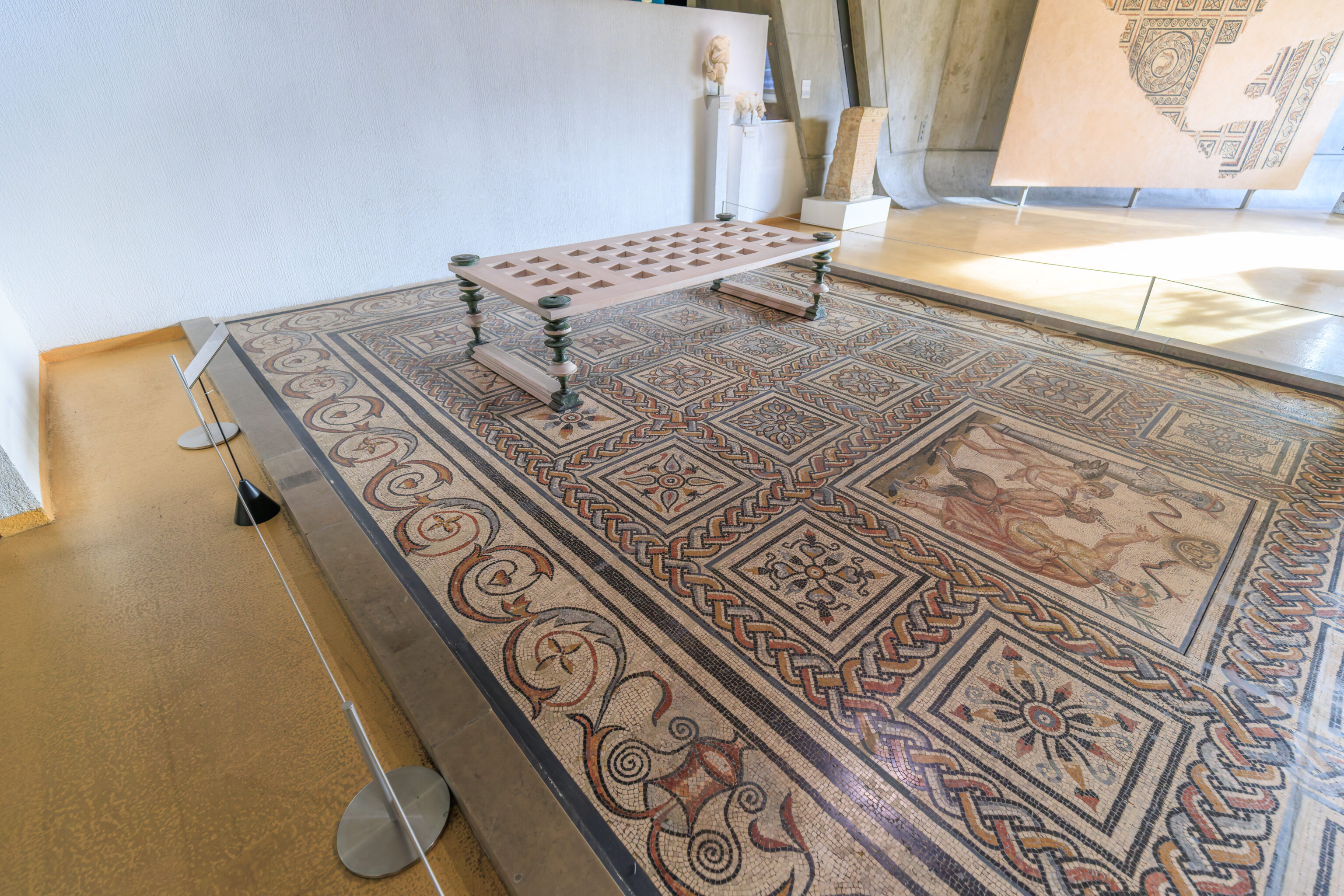
This mosaic is divided into 40 panels. The central scene illustrates the fight of Eros with Pan, a common theme taken up again by three other mosaics discovered in Lyons and Vienne. The god of love, represented as a young, naked and winged man is about to grab the god Pan, identified thanks to his horns and he-goat paws. The latter, half-man, half-animal, belonging to Bacchus’procession, is considered as the god of shepherds and their flocks. His left arm is bound to his back to balance the fight. On the left, stands Hermes. On the right, Silene plays the part of referee; he is an aged satyr and Bacchus’ friend.
Eros won the fight, symbol for the superiority of love over bestial desire embodied by god Pan, who was known for tirelessly harassing nymphs and young boys.
Mosaic from the 1″ half of the 3″ century A.D.”
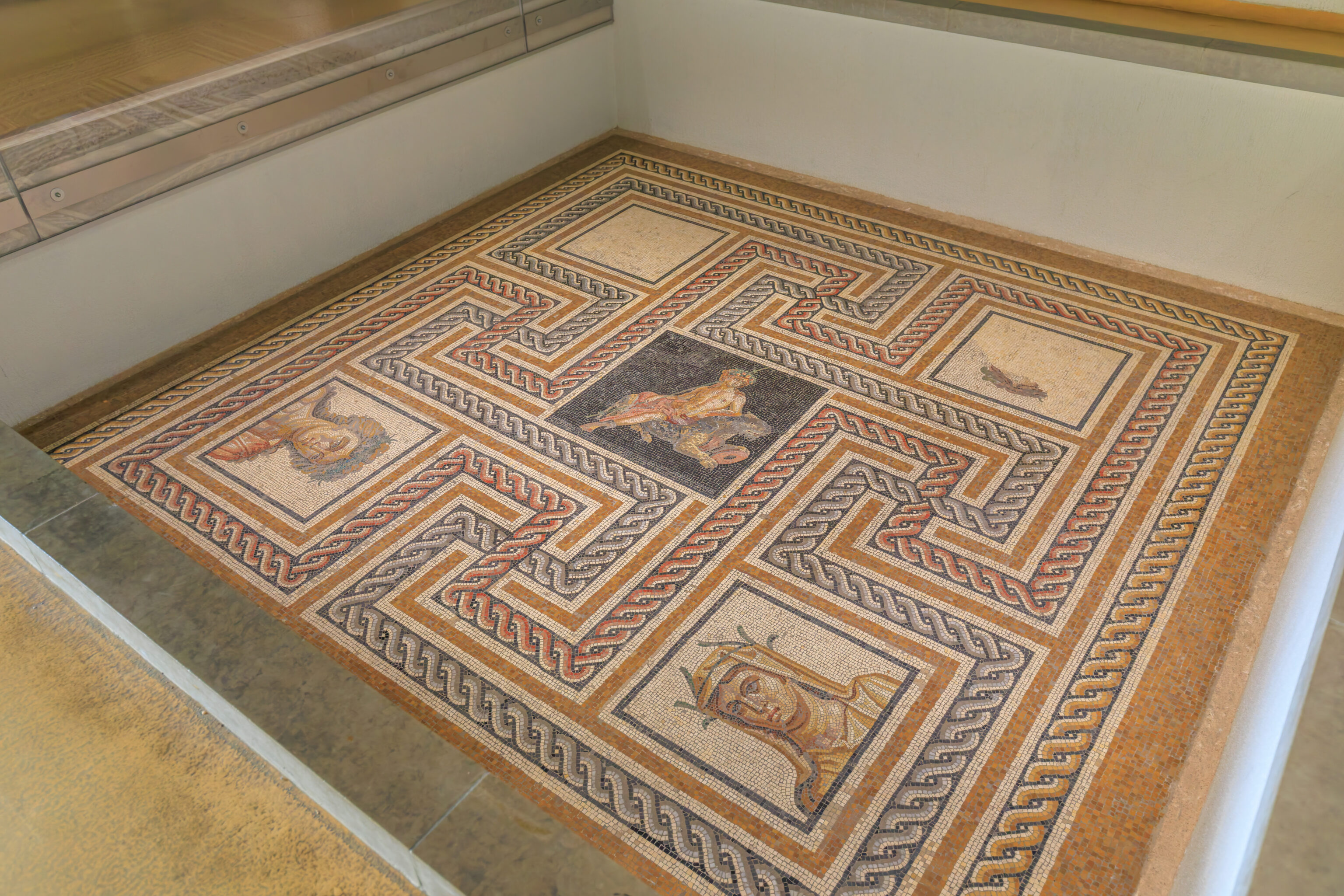
The god of wine is sitting on a black panther which recalls a scene of his triumph in India. Bacchus-Dionysus made a big journey which led him to India, a country he conquered with his army, and his divine powers. This story explains why he is often represented with a triumphal procession or more simply, sitting on a panther.
At each corner of the mosaic, the four seasons are embodied by characters. Two of them are well preserved, the Winter as a woman with a veil on her head, the Spring as a young man with long and curled hair and a crown of flowers.
Mosaic discovered in 1911 in a house of Fourvière hill (Lyon).
2nd-3rd century A.D.”
This is the same mosaic that we saw from the floor above.
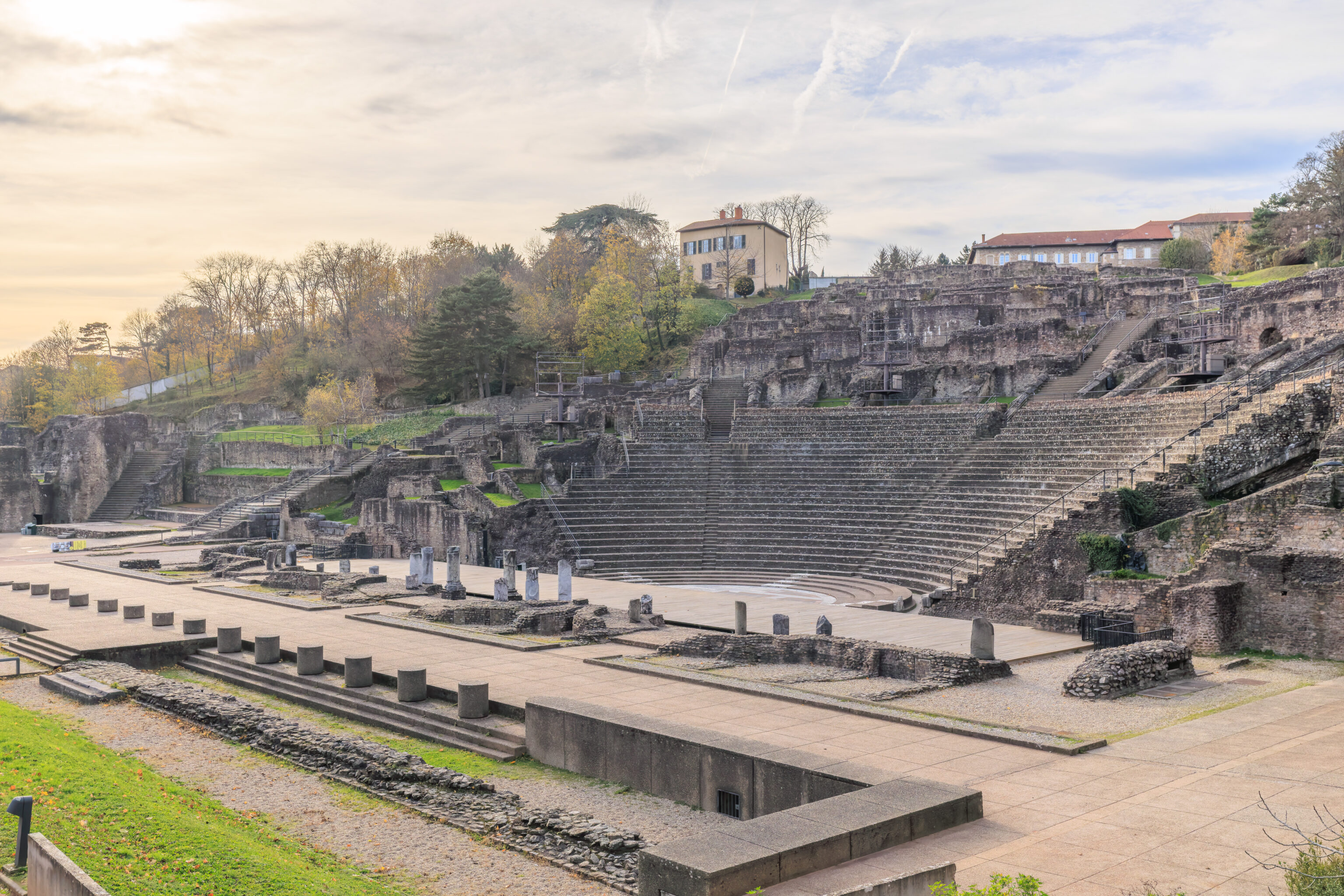
Again, a window offered a view of the ruins outside.
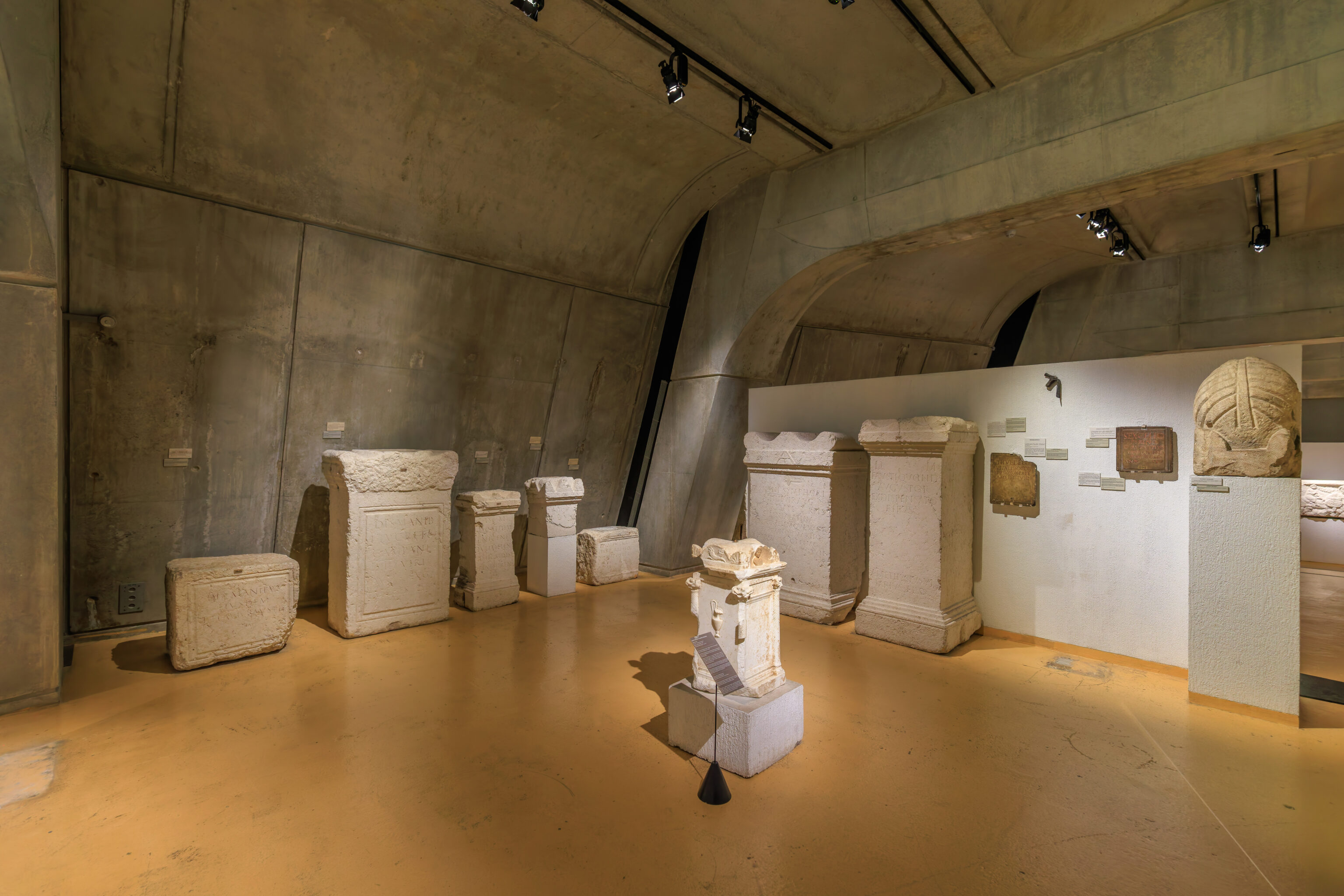
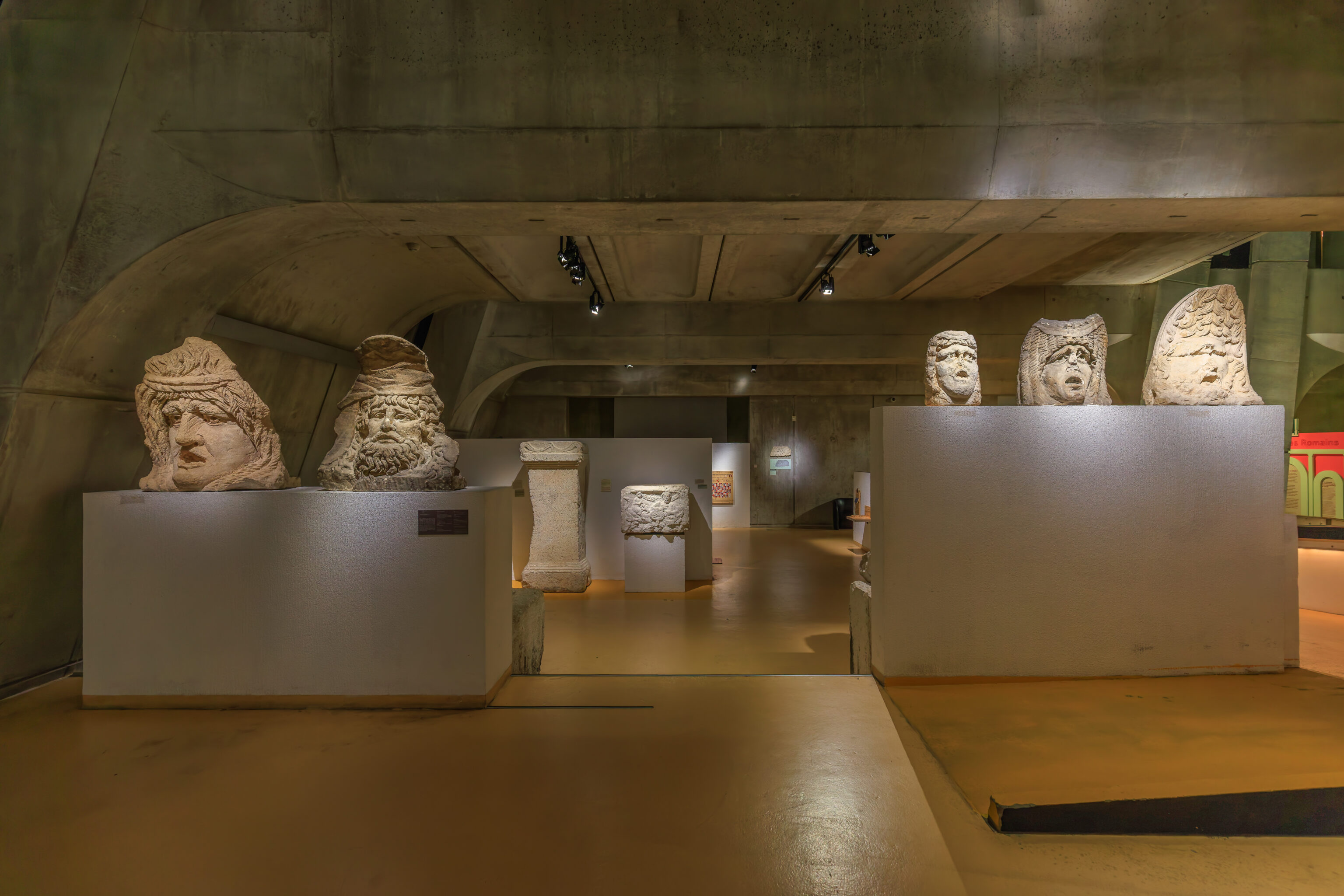
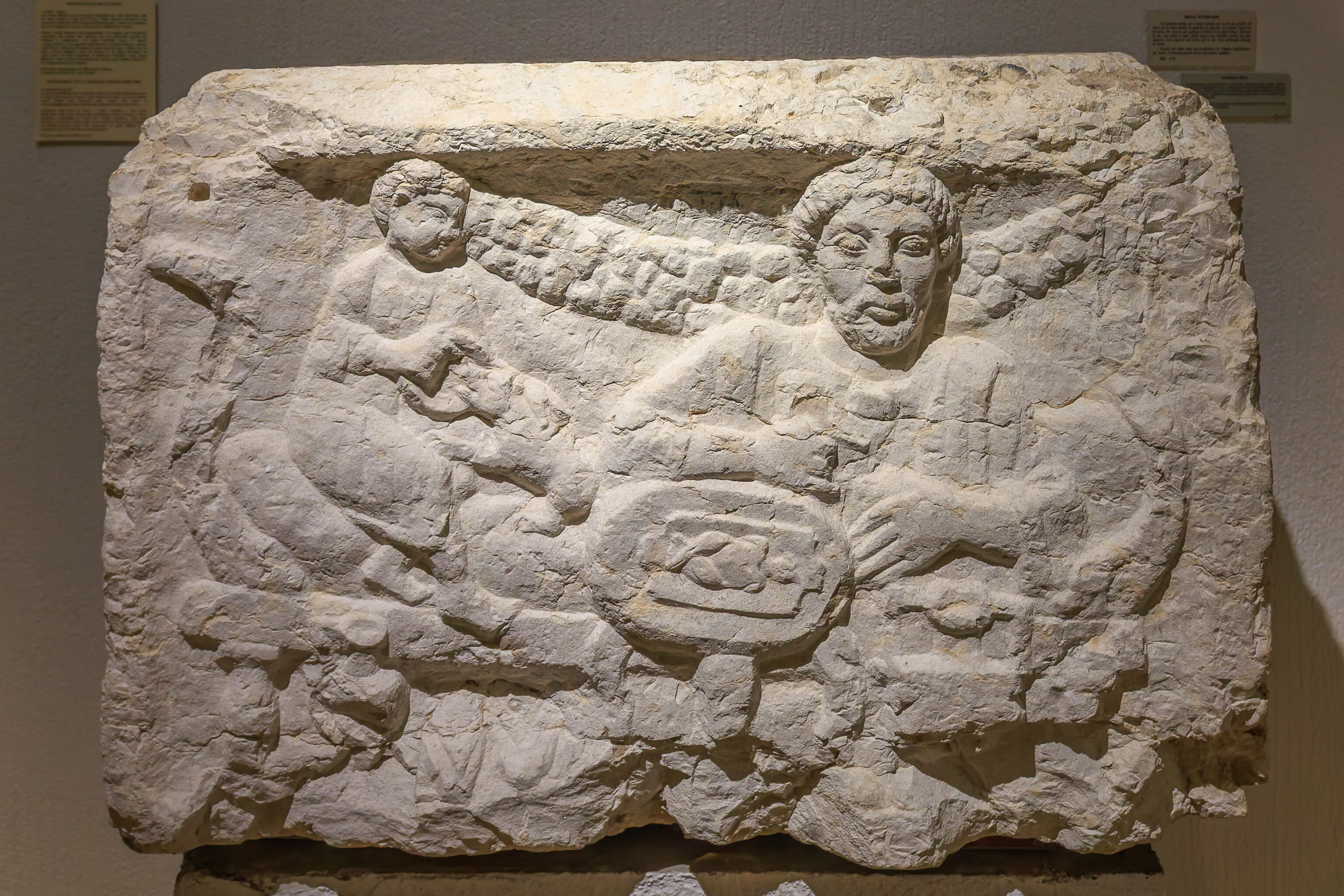
A bearded man half-reclining on a bed of the kind for lying in state, holds a goblet in his right hand. Left, a child seated on the same bed offers a plate to be licked to a small dog. In front of the bed, a three-footed table bears a fowl placed on a plate. A pitcher has been placed on the floor. The background is decorated by a wreath.
Found in 1844 in the foundations of Saint-Pierre-de-Vaise Church at the location of an ancient necropolis.
ESP. 1778.”
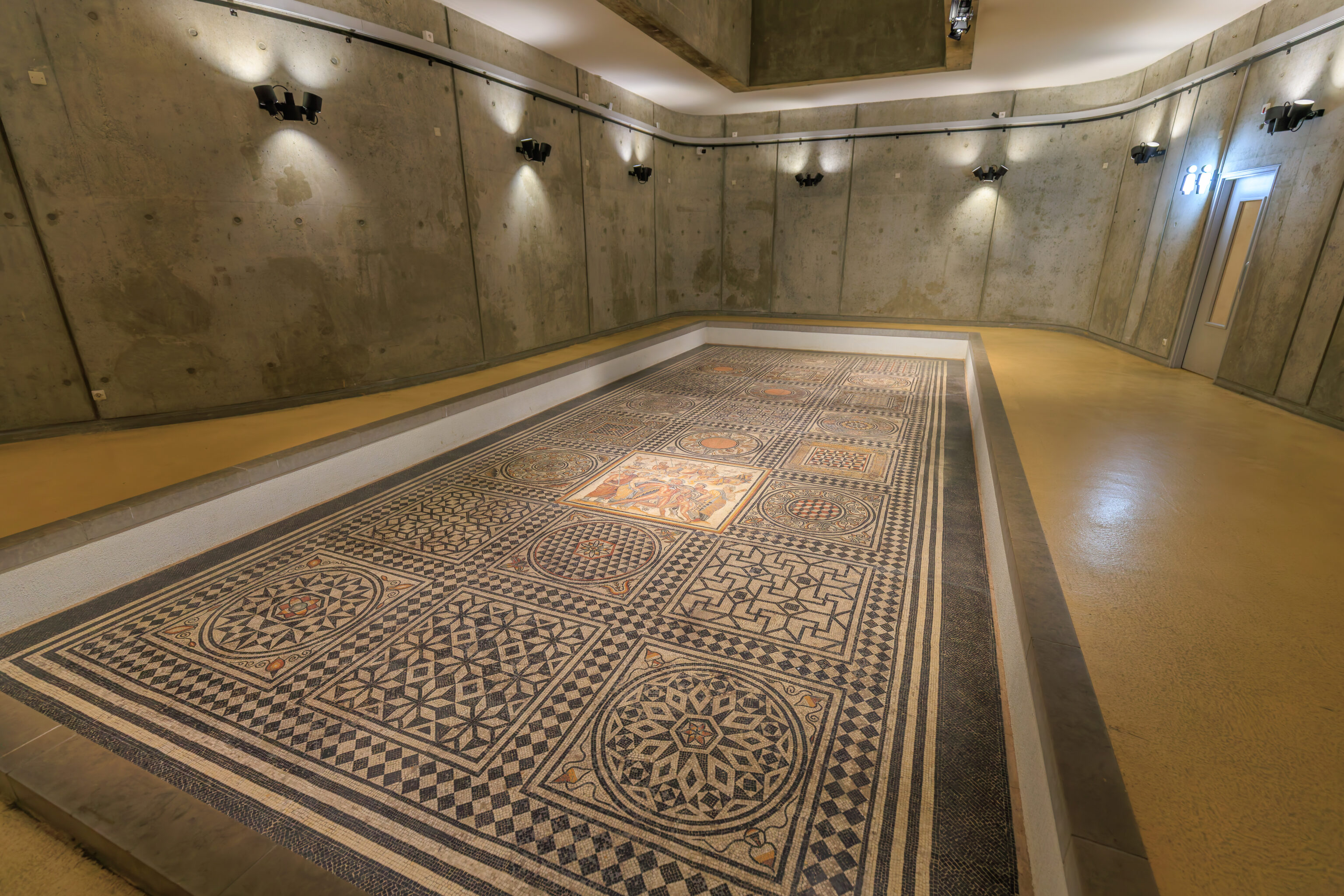
This mosaic decorated the floor of a large reception room, in a house in Vienna, France, in the 2″d century A.D. The room is 11m long and 7m wide, a few parts of the mosaic were not saved. Various mosaics can be seen in the museum of Saint-Romain-en-Gal, Vienne, France, as well as the model of this house.
The way the mosaic is divided in numerous geometrical figures, the richness of the colours and the variety of the themes stand for being typical of the Rhone Valley mosaics style.
The main scene represents Hercules, drink, unsteady, holding his club. He is held up by two characters belonging to the procession of god Bacchus : one young satyr on the right, and a bacchante on the left. Above them, Bacchus, the god of wine, with other characters from his procession, are watching the scene. All of them are wearing the thyrsus : the stick with a pine cone, orned with ribbons, emblem of Bacchus- Dionysus. On the top left, look at the horn used to drink ( rhyton ) decorated with a stag head, and the crater, big vase containing wine.”
This is another mosaic which we first saw from the floor above.
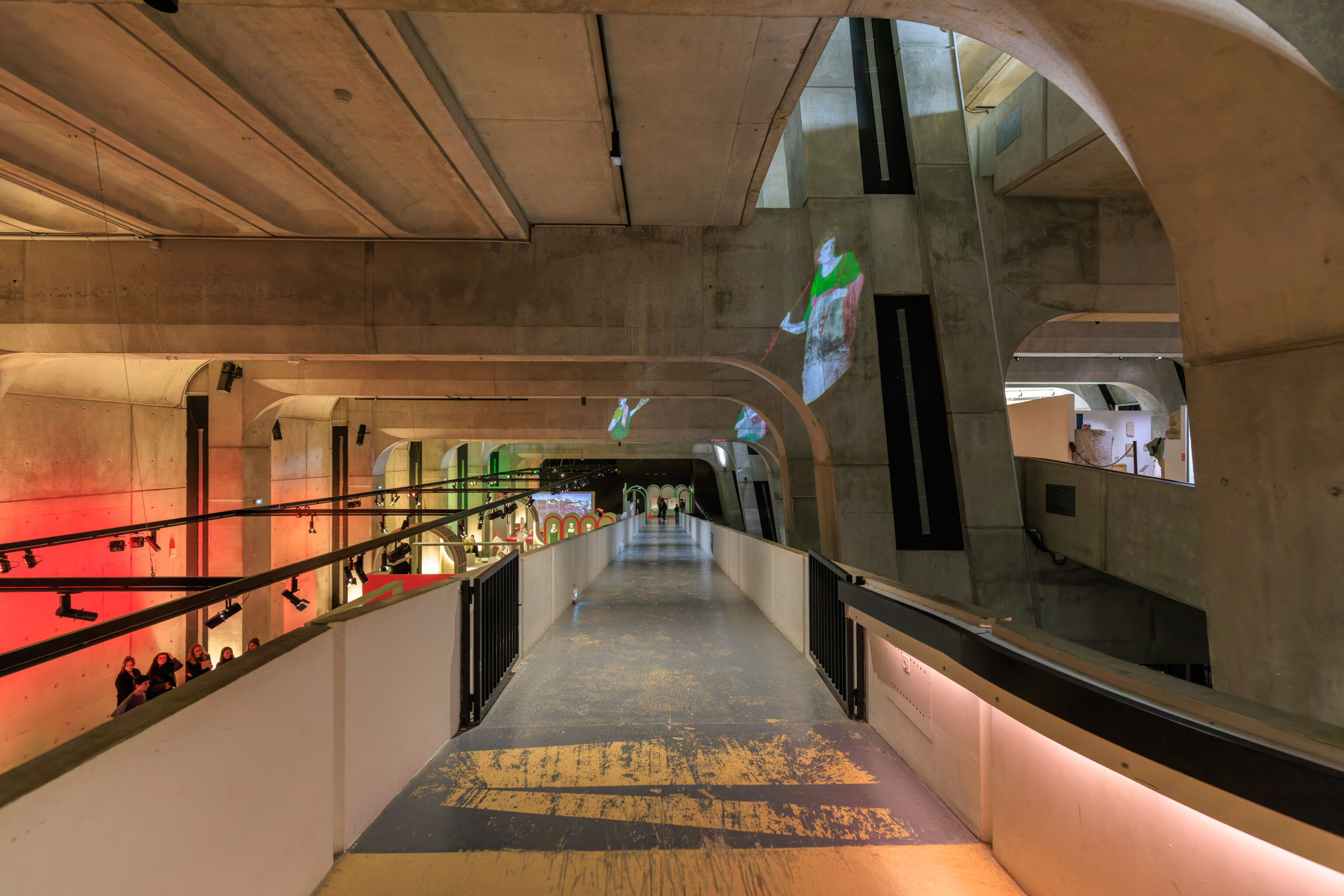
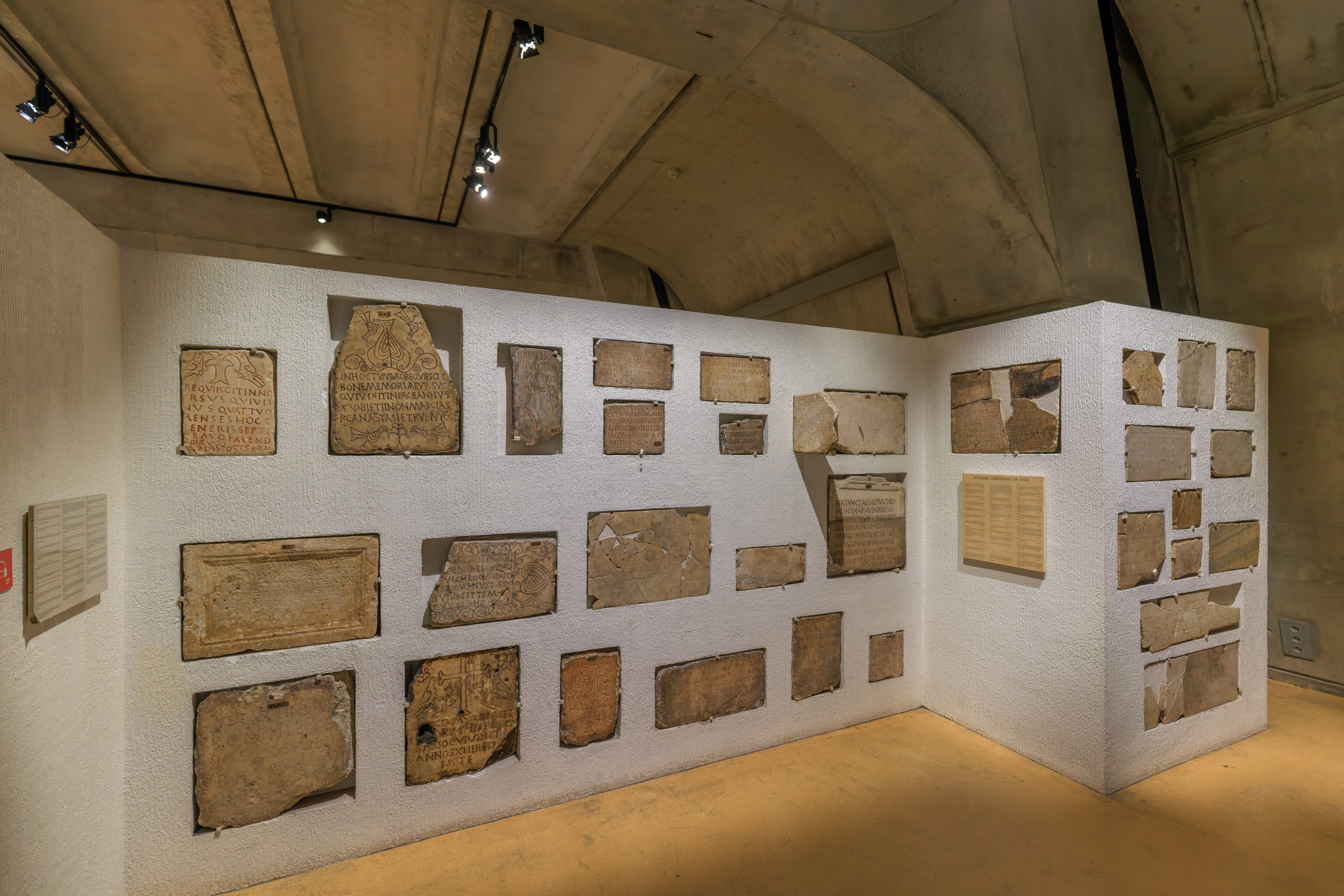
This was the end of the regular section of the museum. A special exhibition area was ahead, as explained by a sign:
The museum is celebrating its 50th anniversary in 2025!

Lugdunum - Museum and Roman Theatres is a centre for conservation and research, as well as promotion, education and transmission. To mark this 50th anniversary, we are presenting an exhibition exploring the relationship between Romans and art, featuring masterpieces from France and Italy.

Moving beyond mere aesthetics, this exhibition invites visitors to consider the context of the society that produced these works of art more than 2,000 years ago. What do we know about the places where they were displayed, and the artists and patrons behind their creation? Our aim is to gain insight into the artistic tastes of the times and the making of Roman art.

How did Roman art relate to Greek art? Where was art displayed in the city? Was art accessible to everyone? How were artists regarded? These are just some of the questions we will attempt to answer by drawing on archaeological, literary, and epigraphic sources.
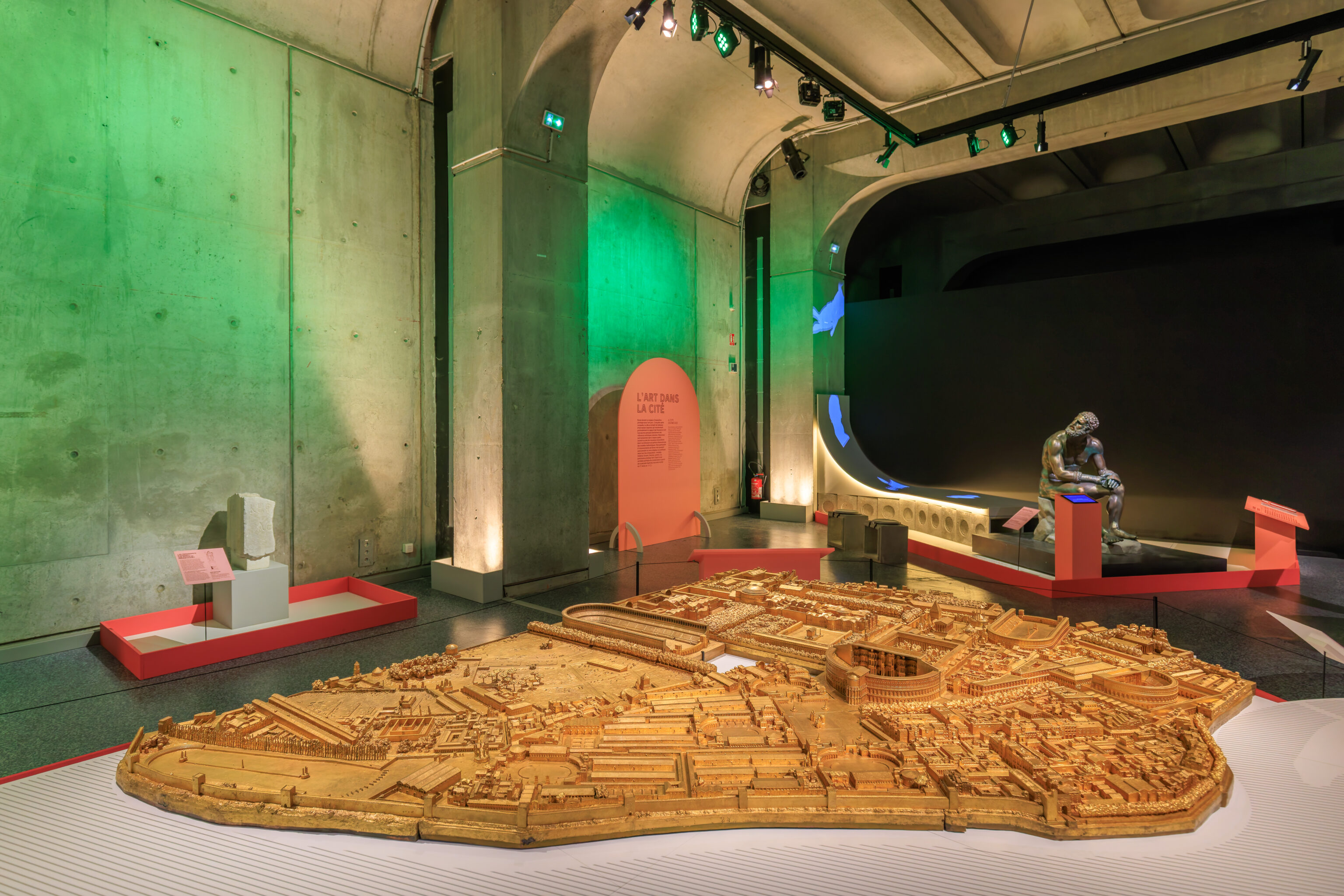

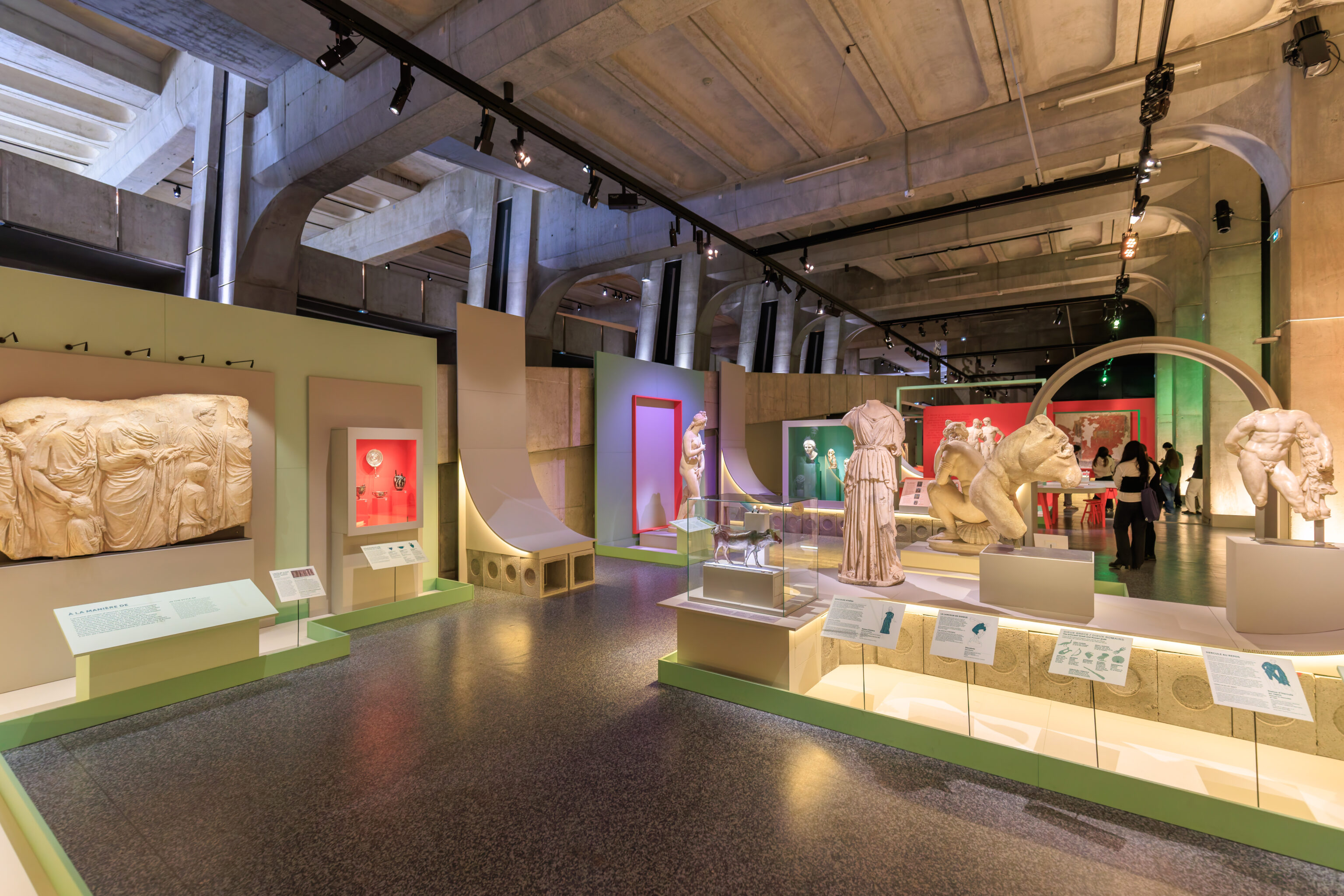
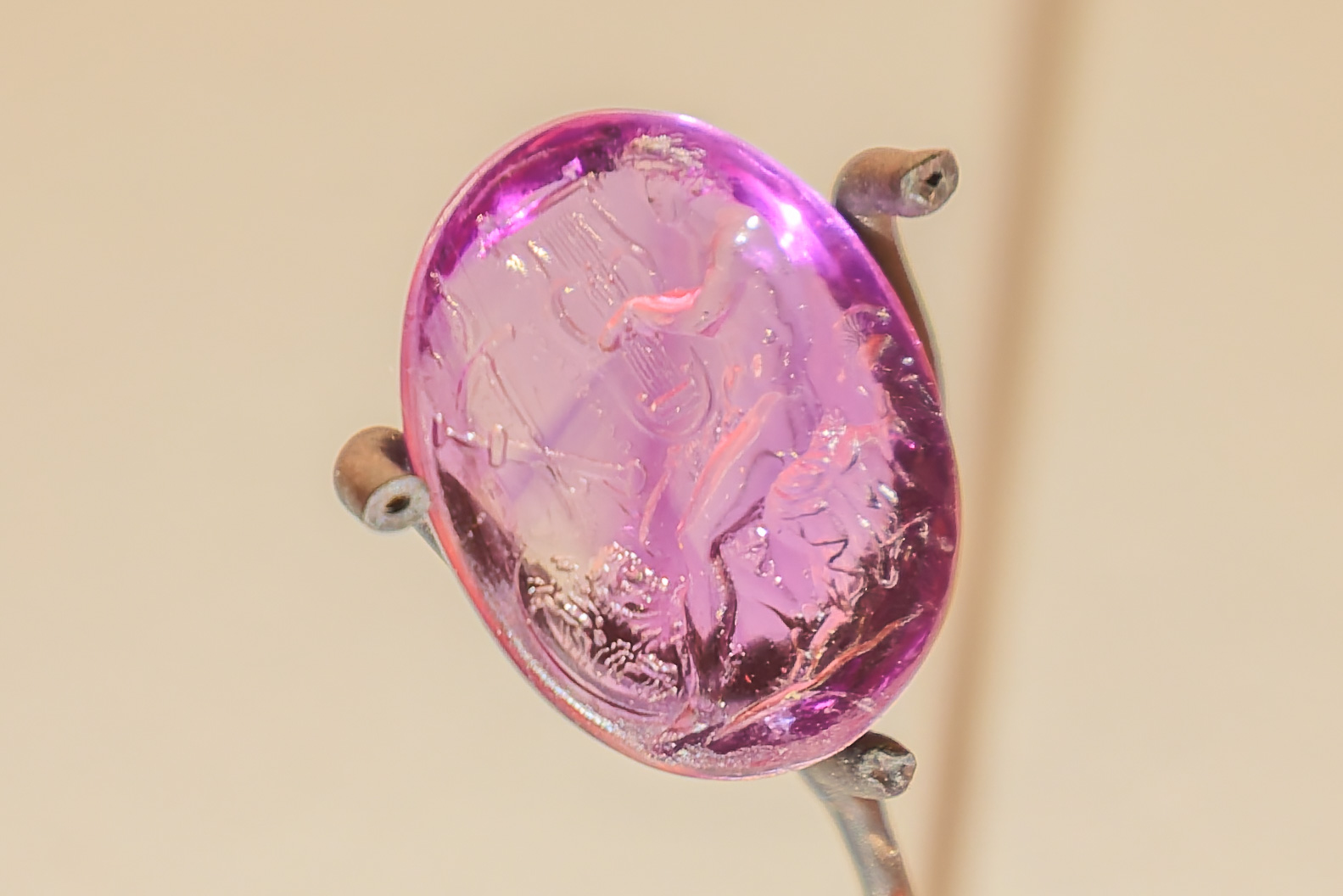
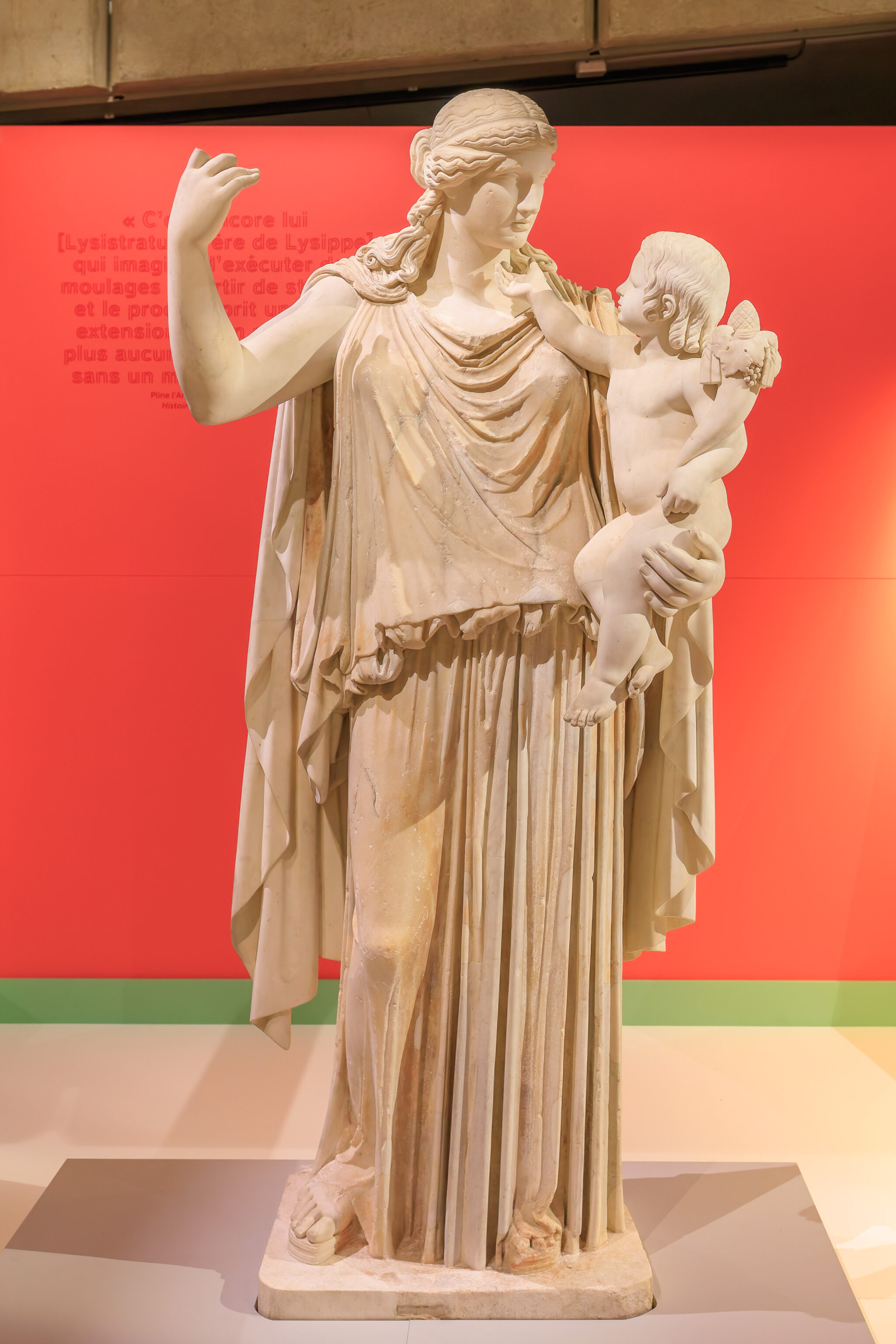
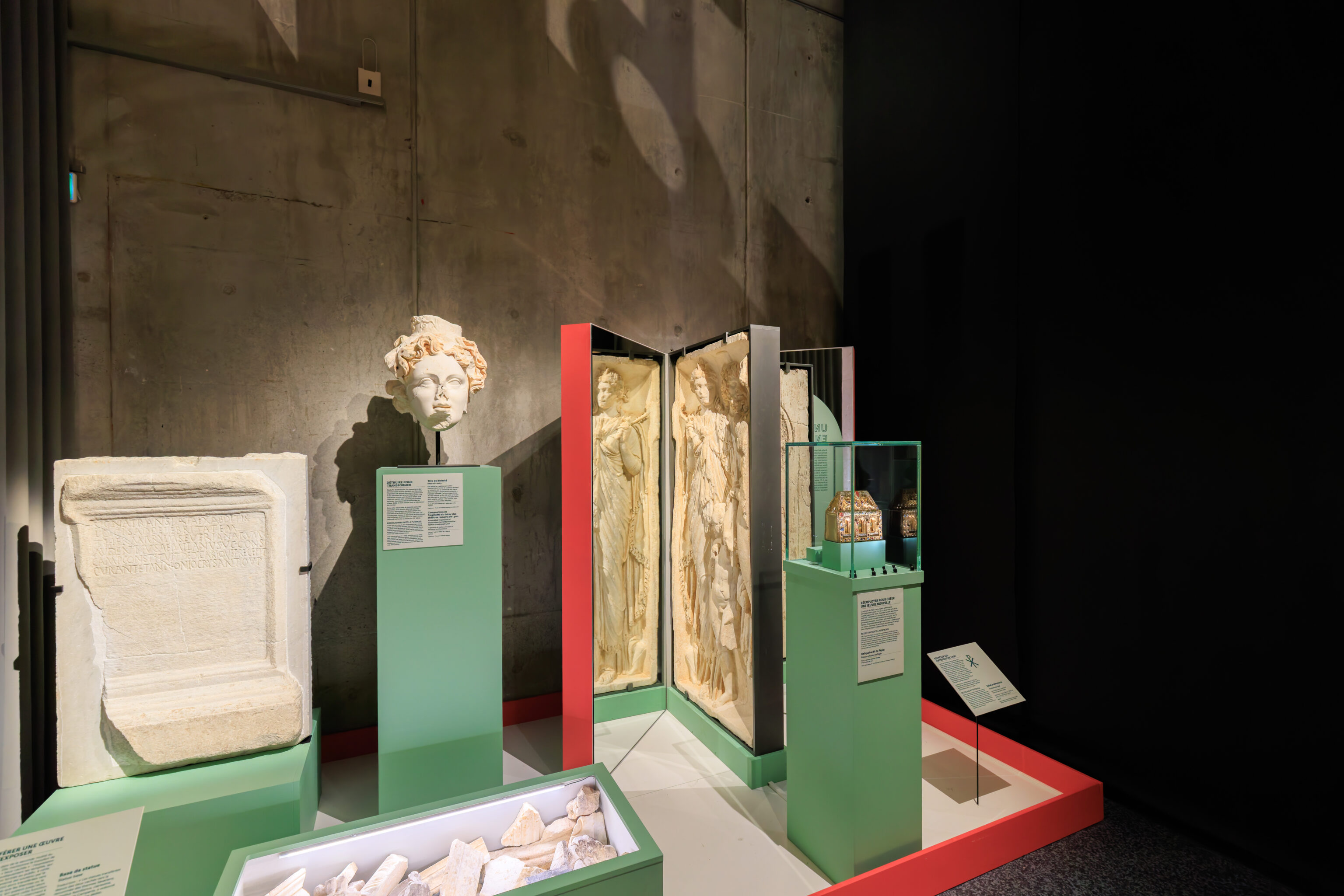
We ended our visit here and returned to the top floor to exit the museum. Normally, it would be possible to exit directly into the ruins. However, it was still closed due to wind. After exiting, we walked down to the Minimes – Théâtres Romains funicular station. According to signage, it seems the station had closed earlier in the day for some unknown reason. However, it had recently reopened when we arrived.
Vieux Lyon
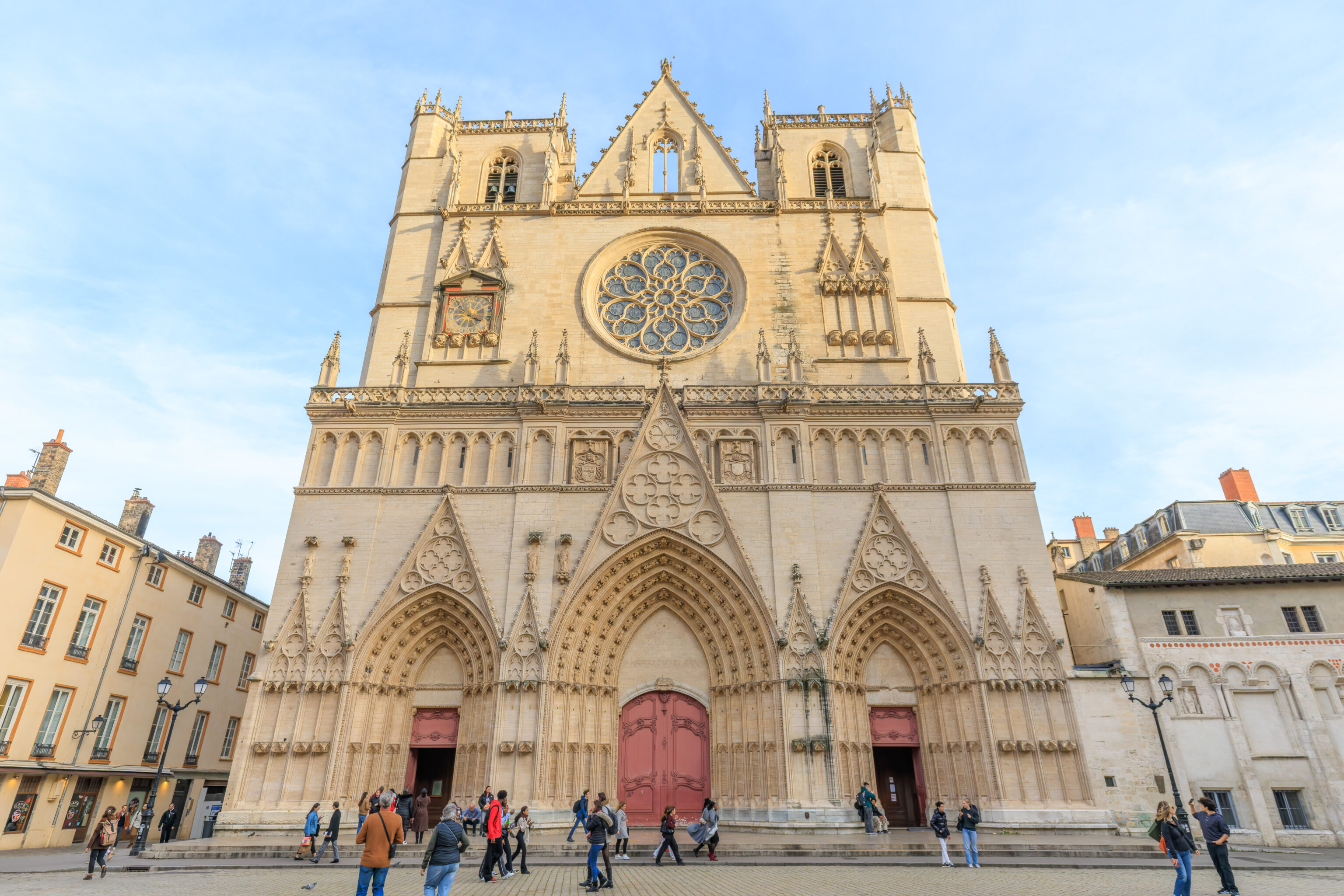
We took the funicular back down to Vieux Lyon. We then walked a block to the north to the Lyon Cathedral, known more formally as the Cathédrale Saint-Jean Baptiste (Cathedral of Saint John the Baptist).
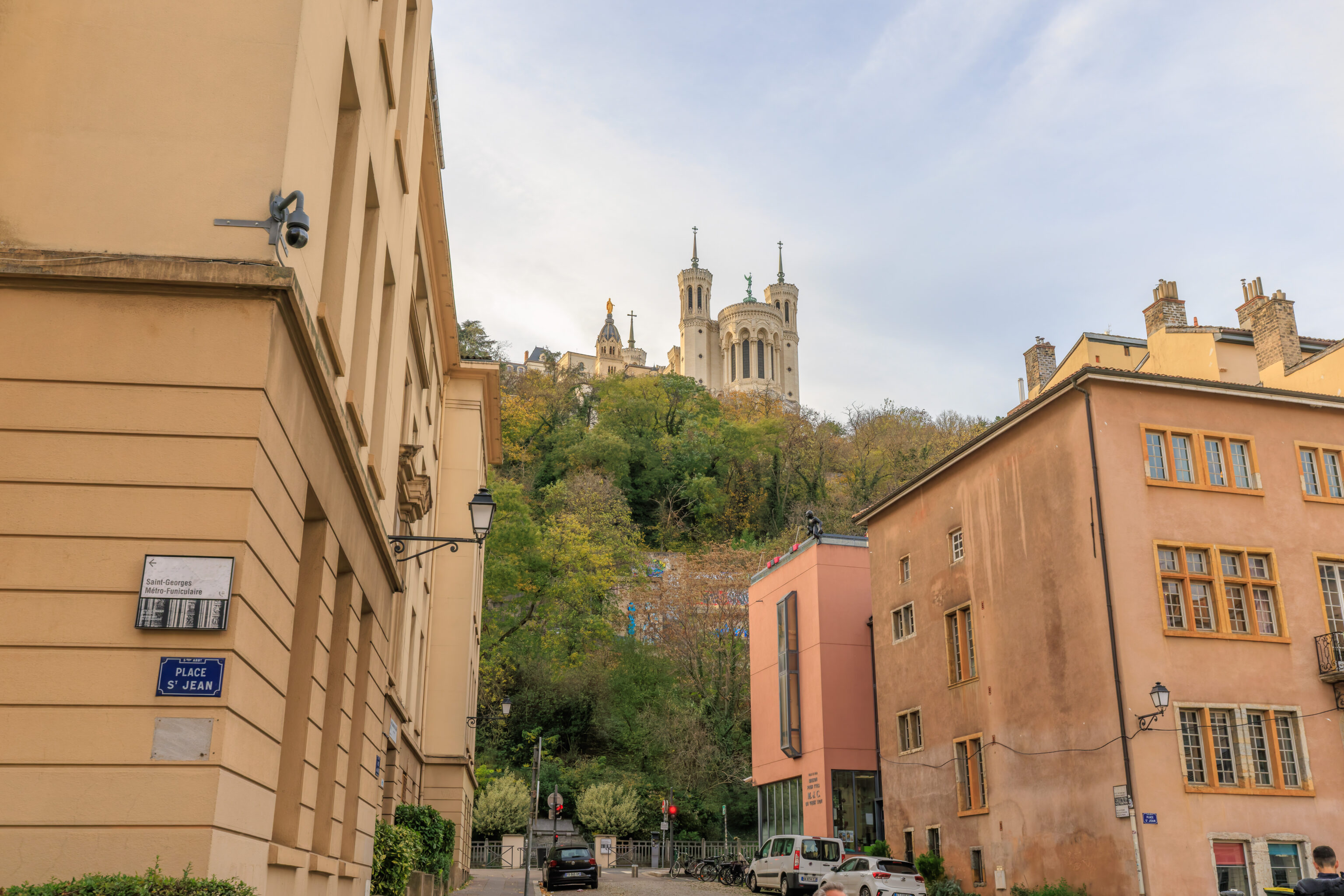
The square in front of the cathedral, Place Saint-Jean, had a nice view of the Basilica of Notre Dame of Fourvière above.
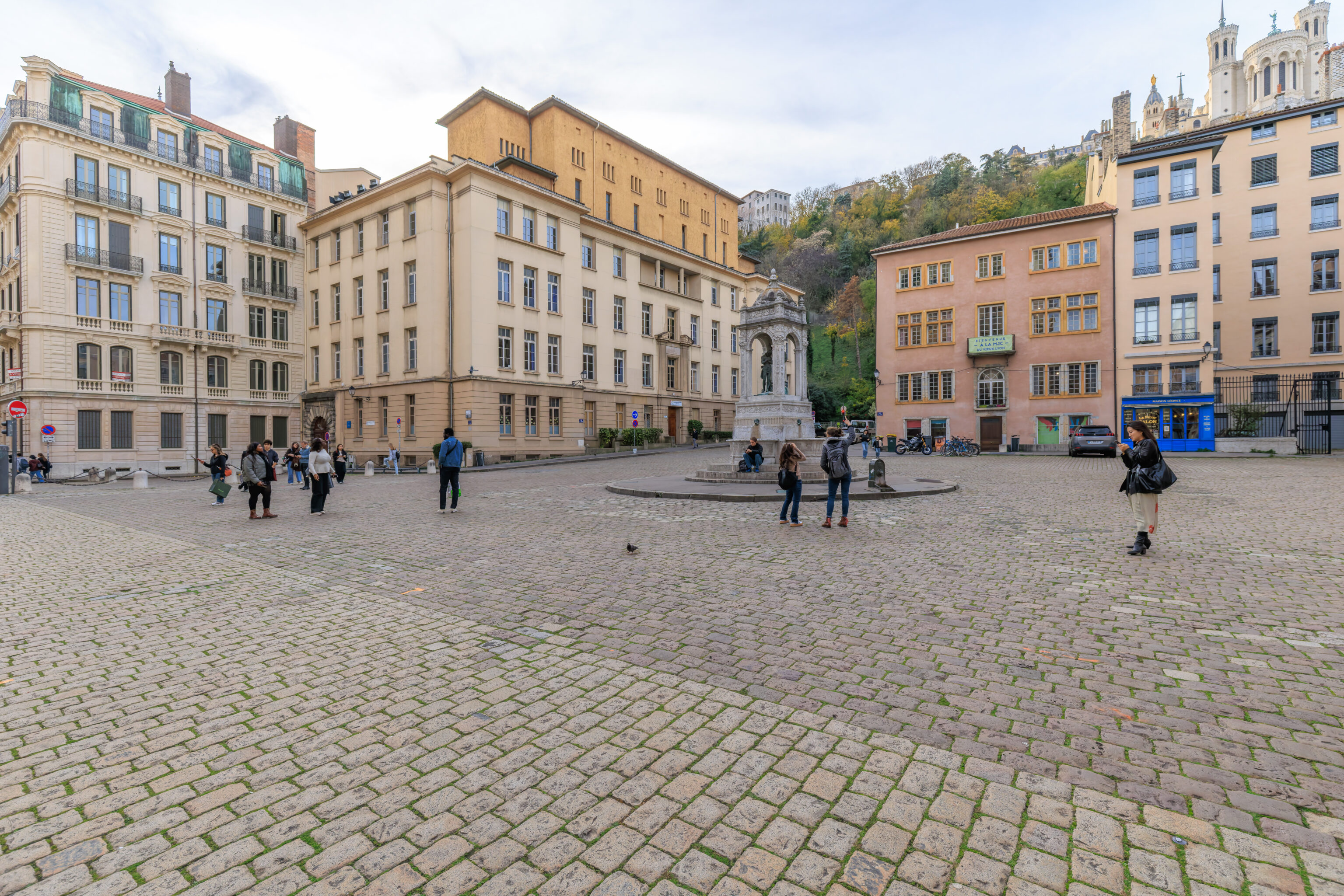

There was a fountain in the middle of the square.
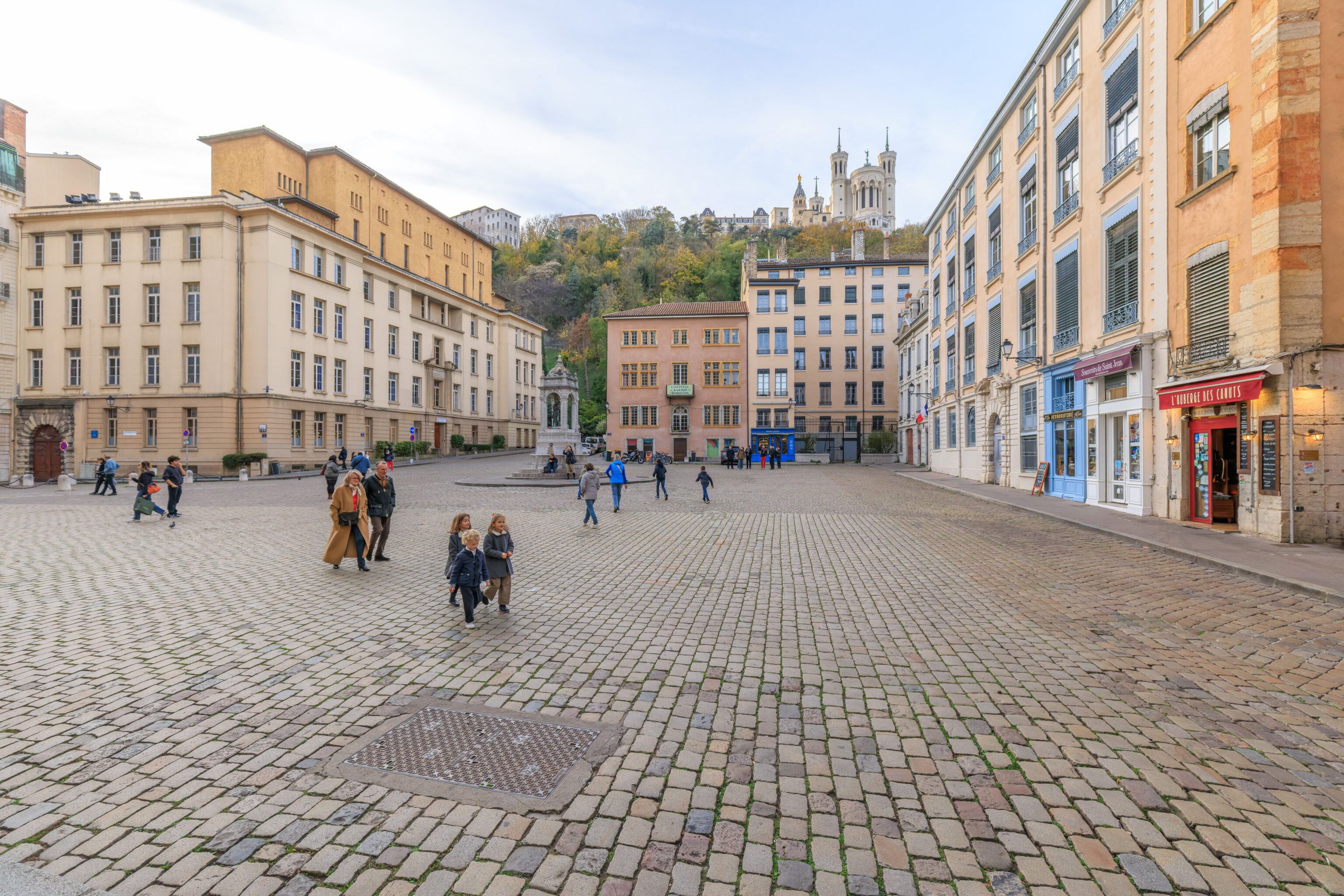
The front steps of the cathedral offer an excellent view!
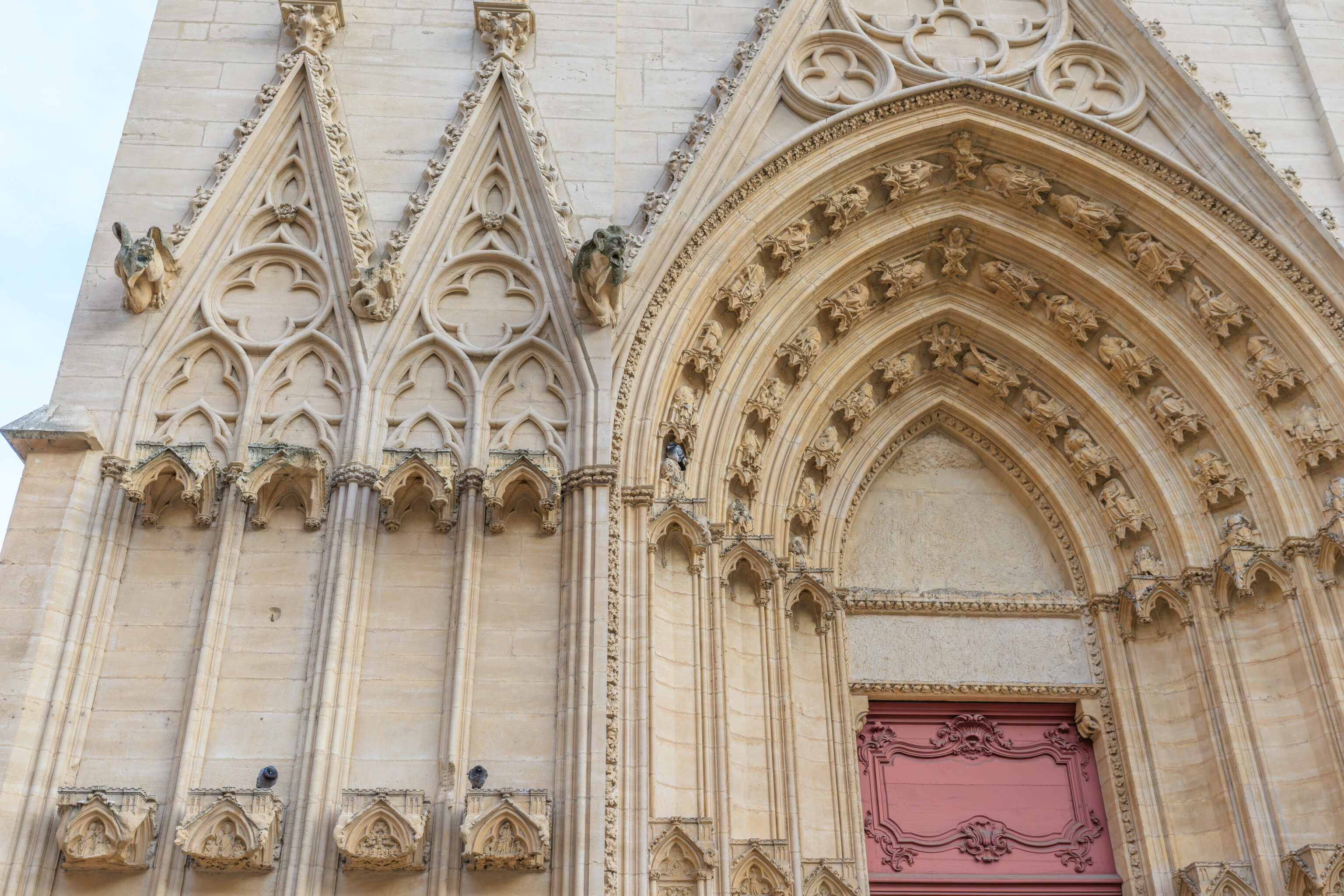
We went inside to take a look.
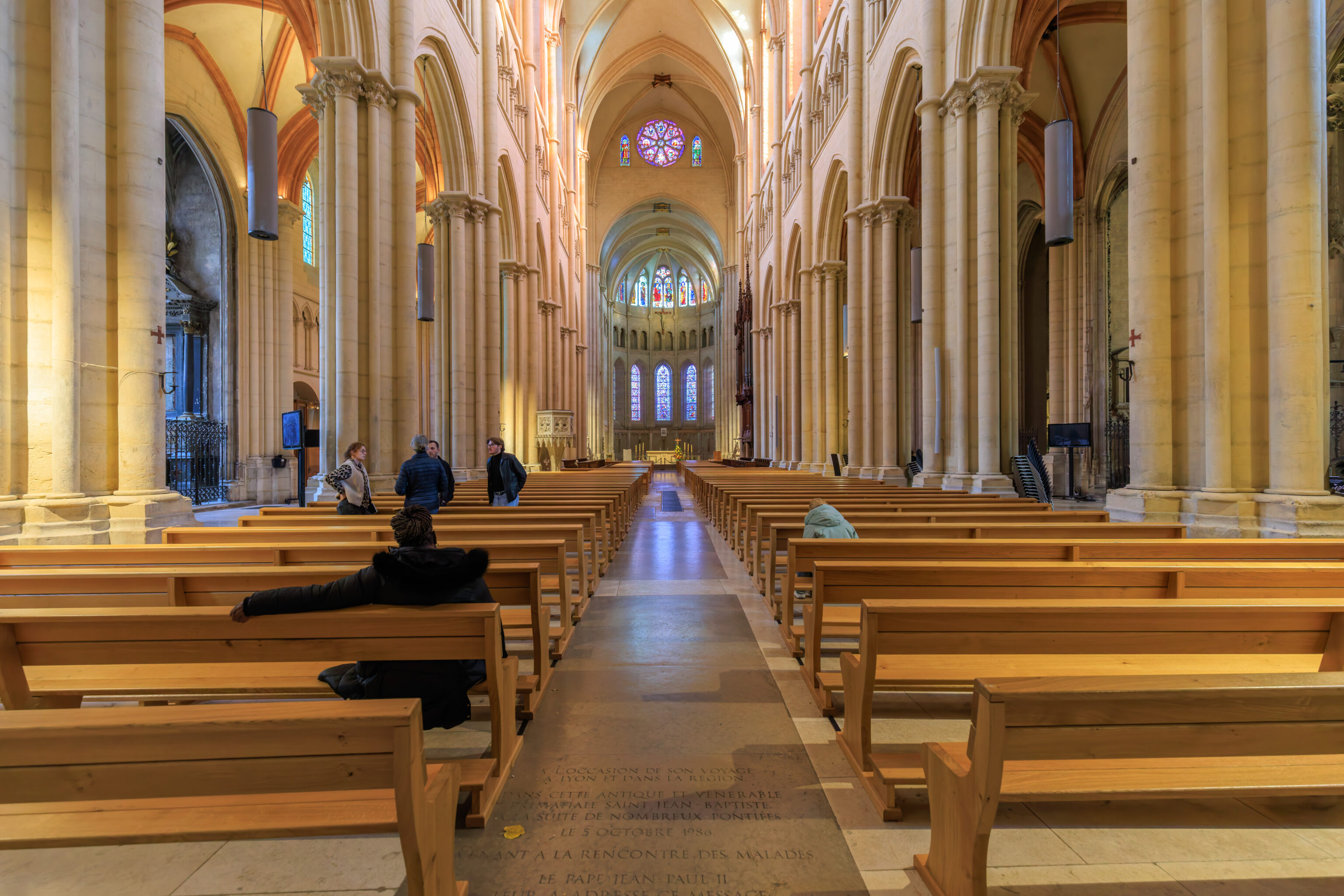
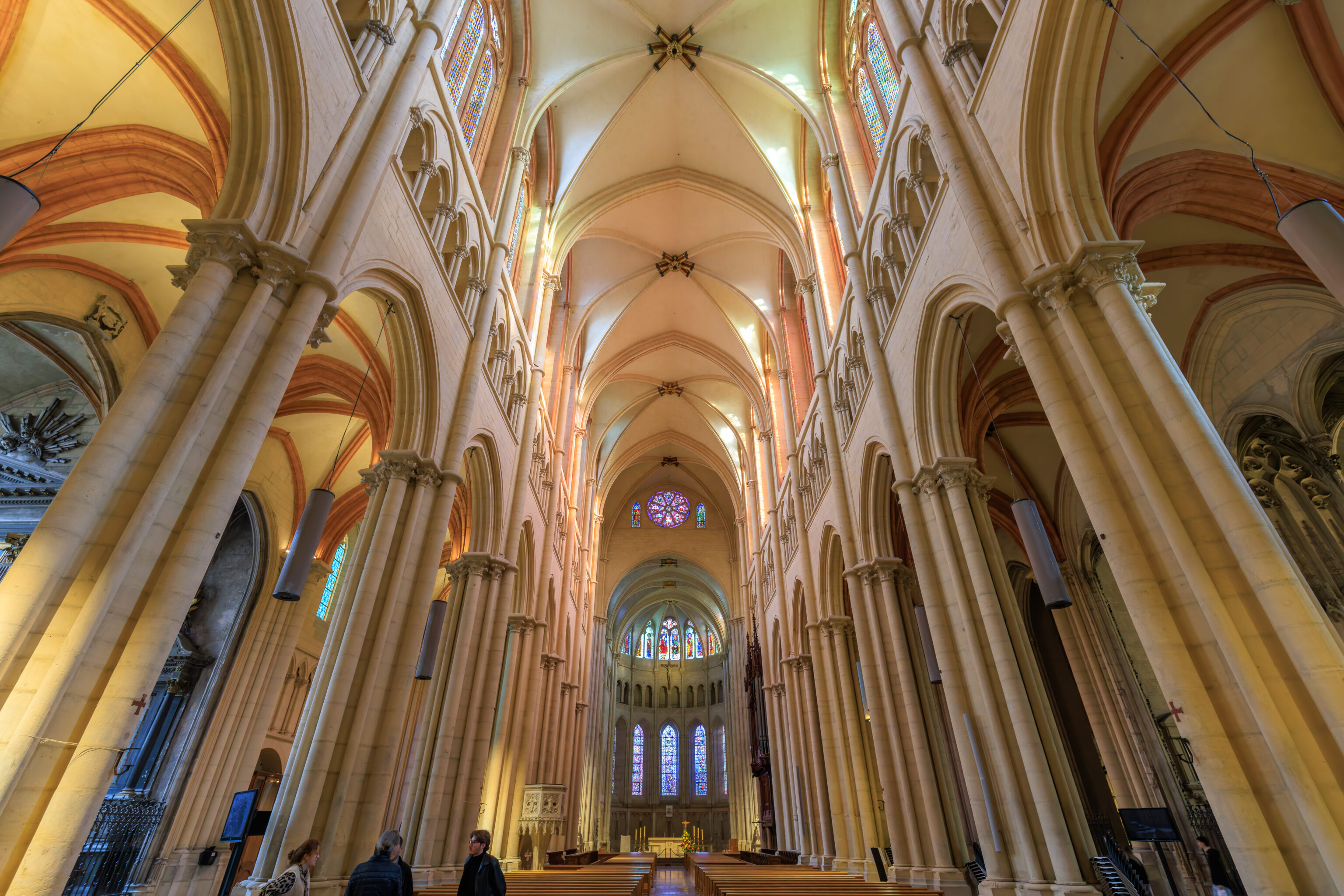
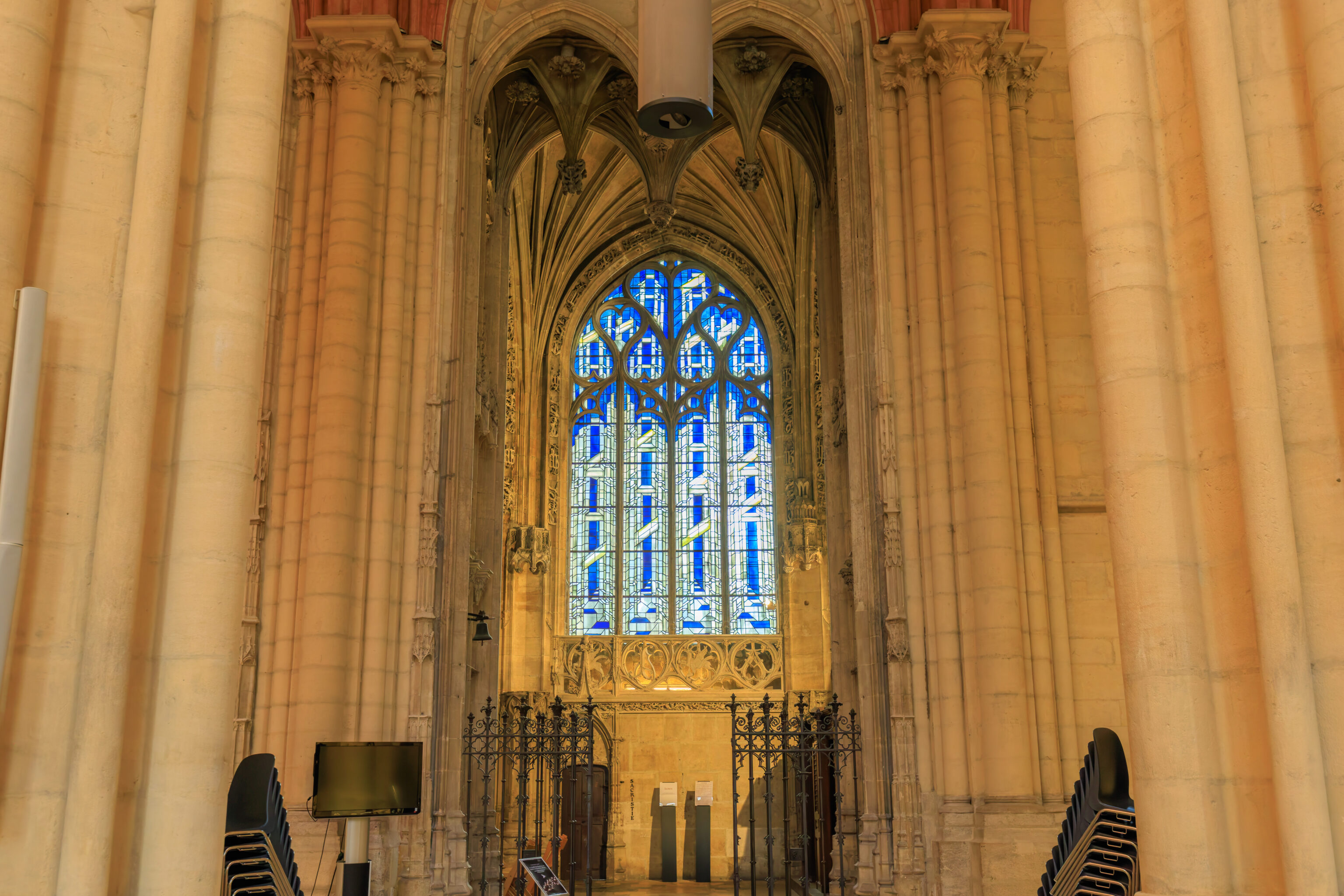
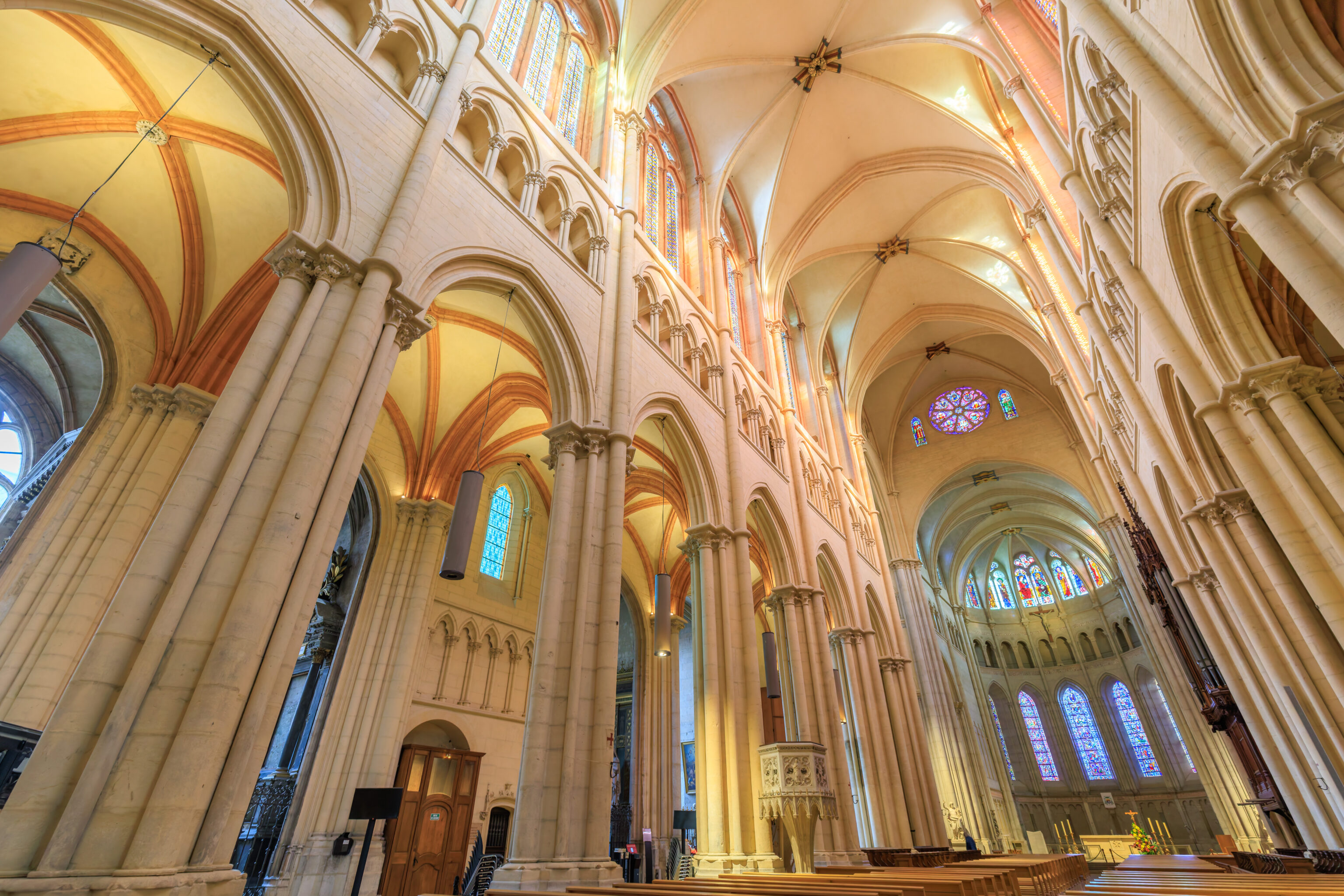
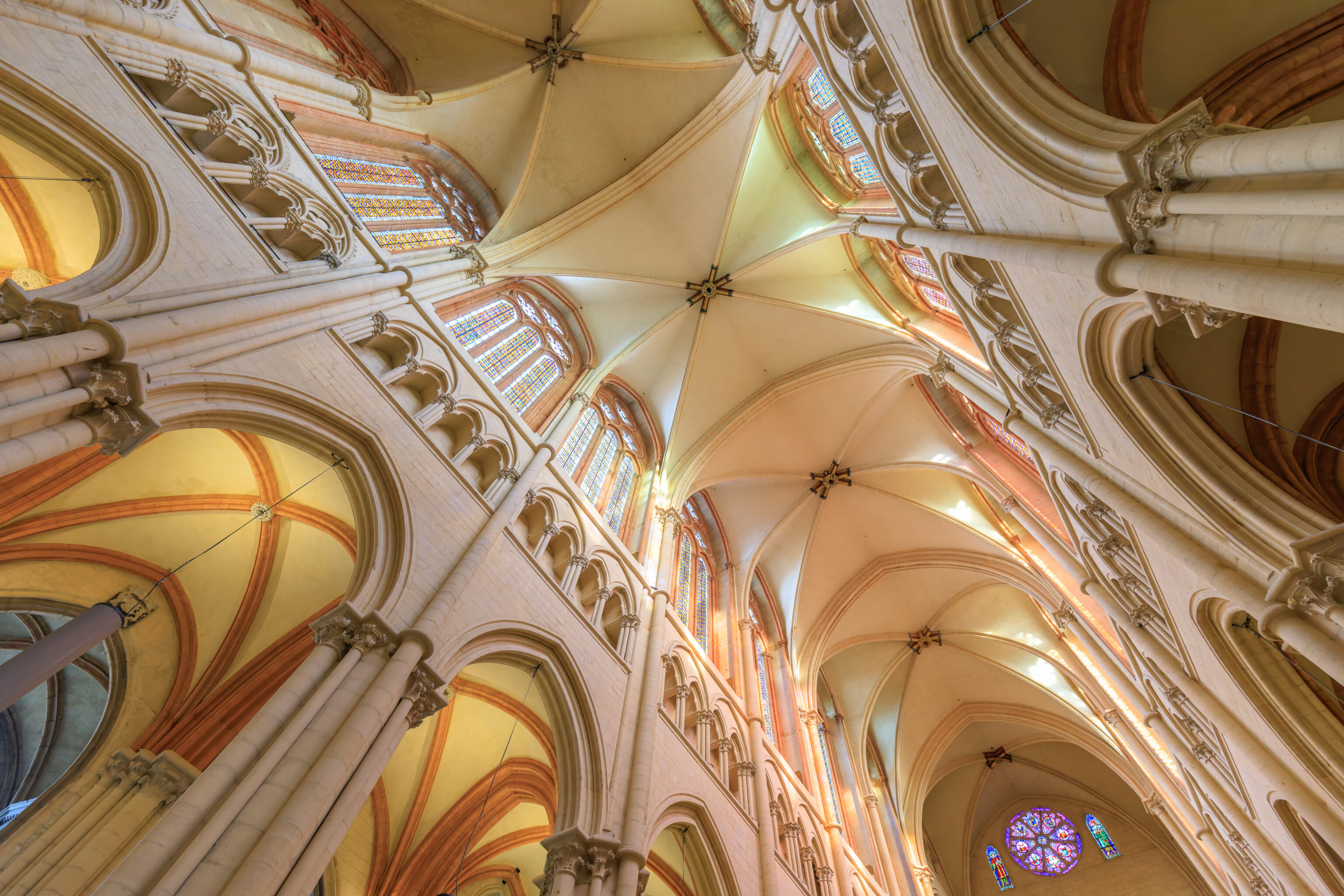
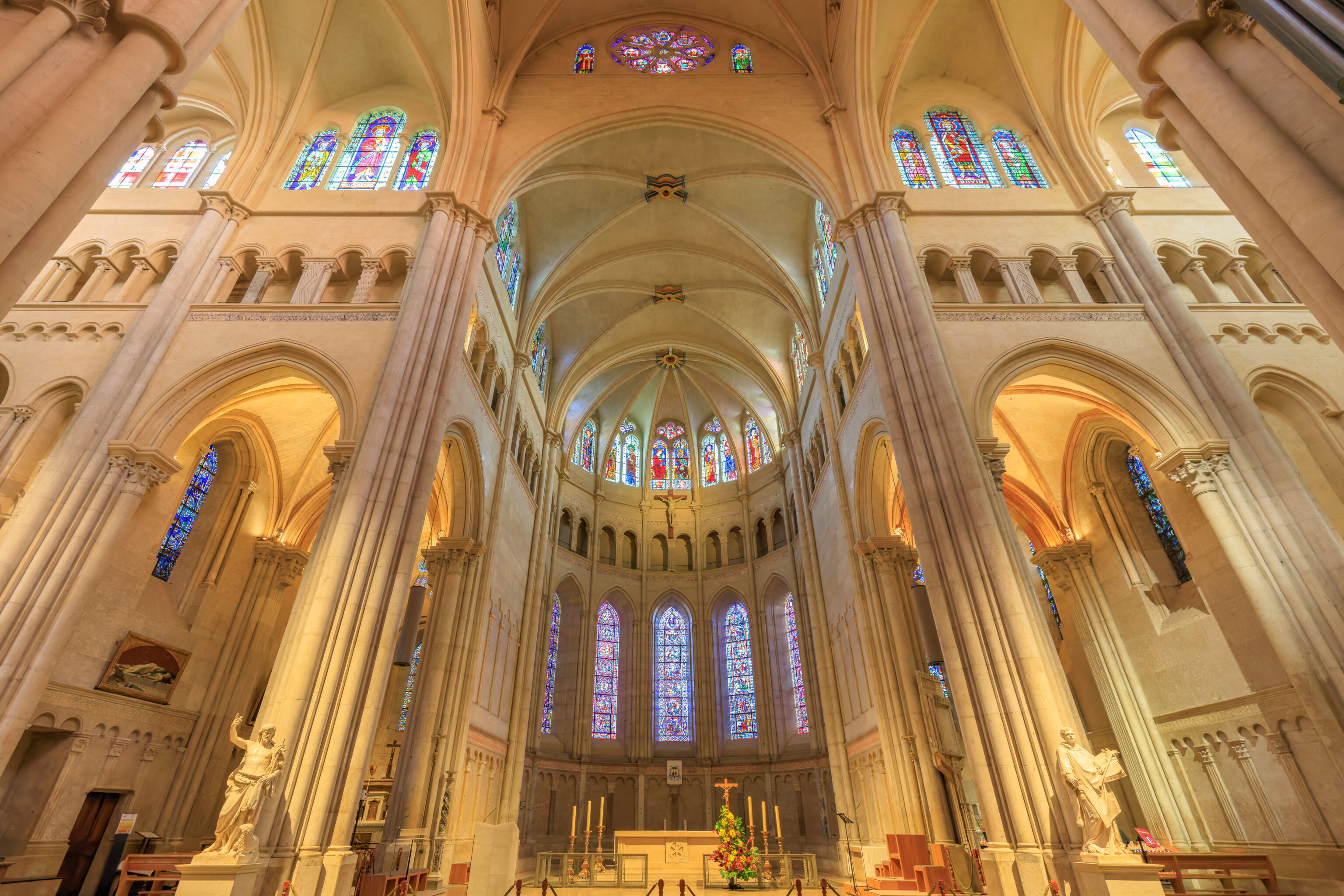
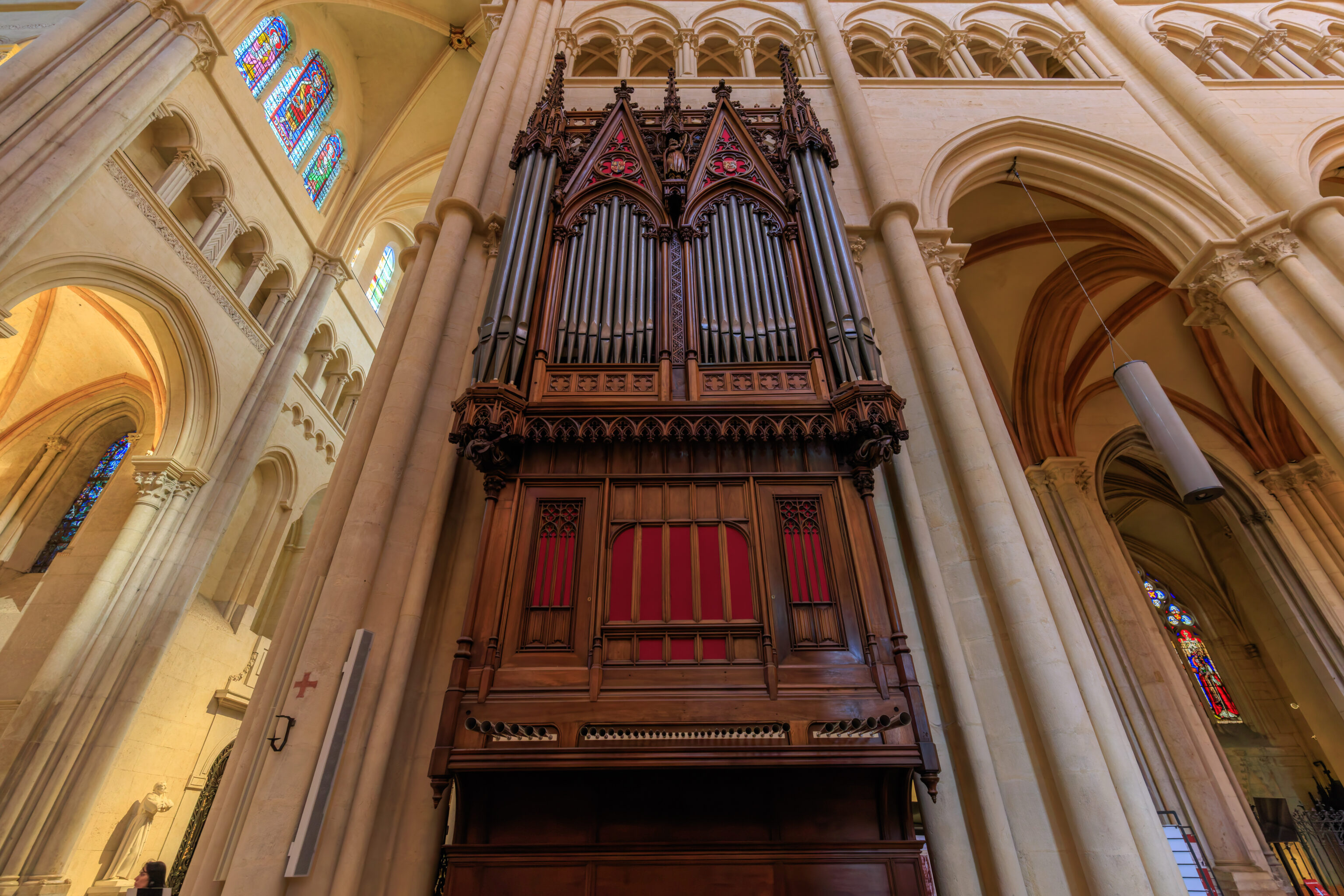
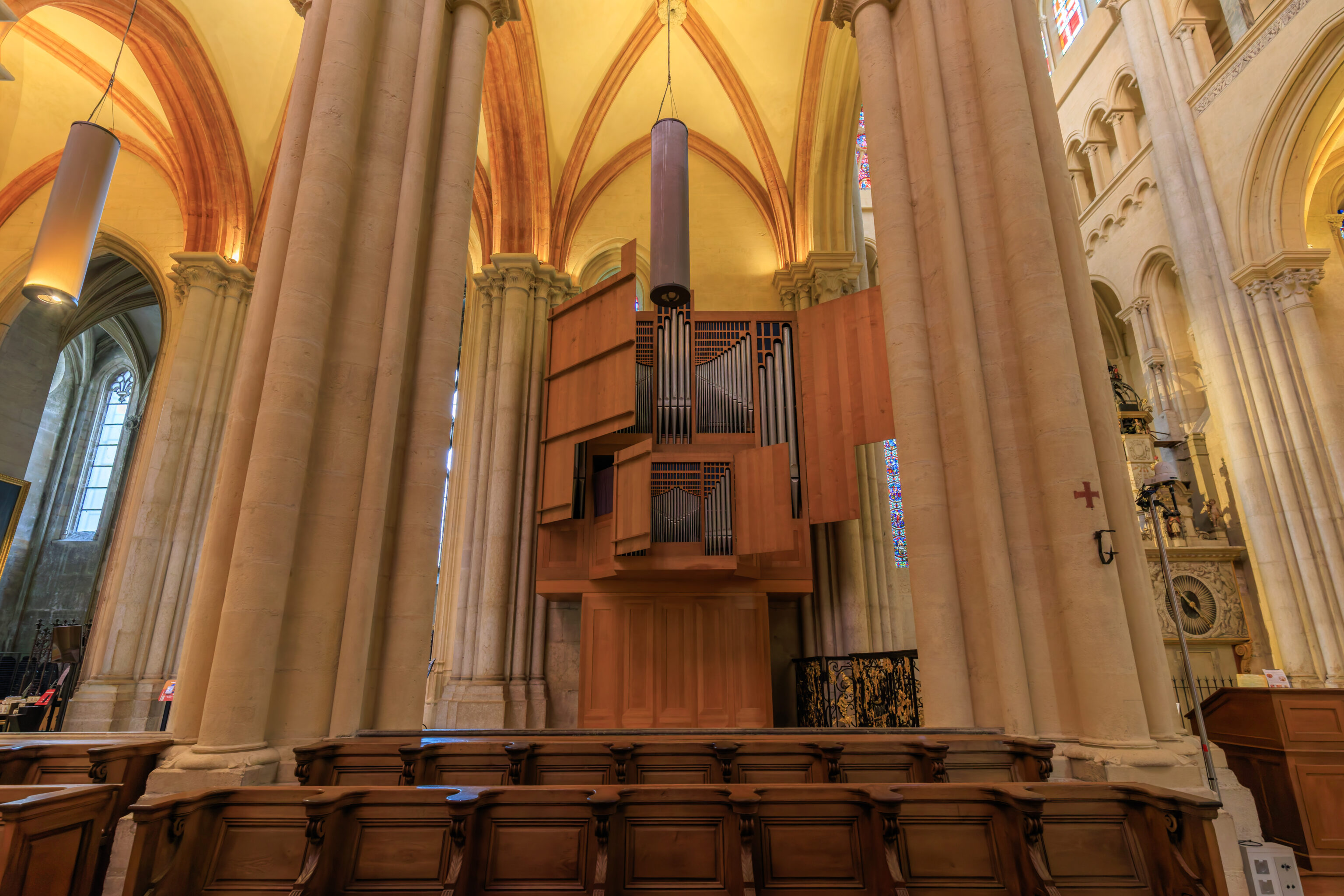
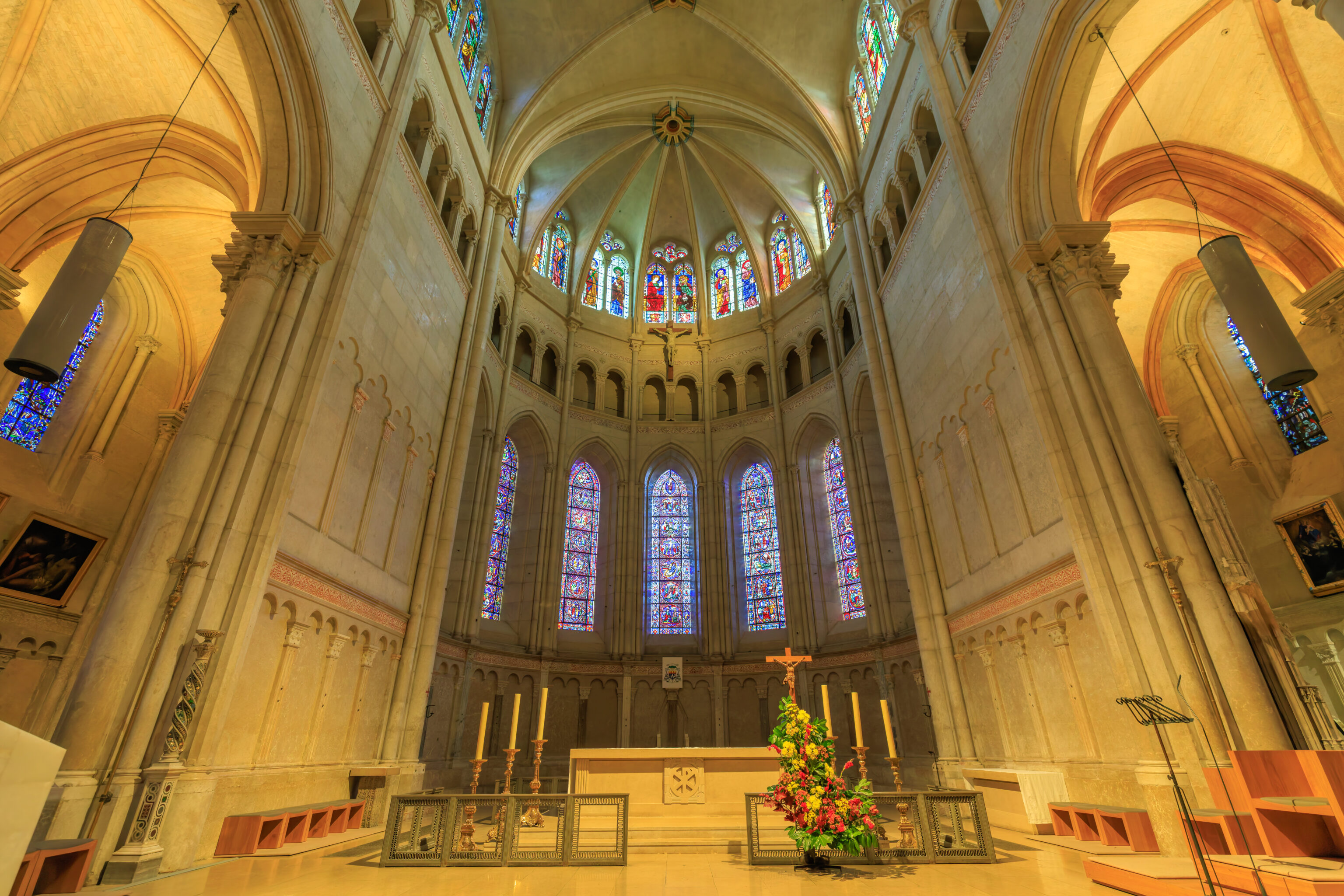
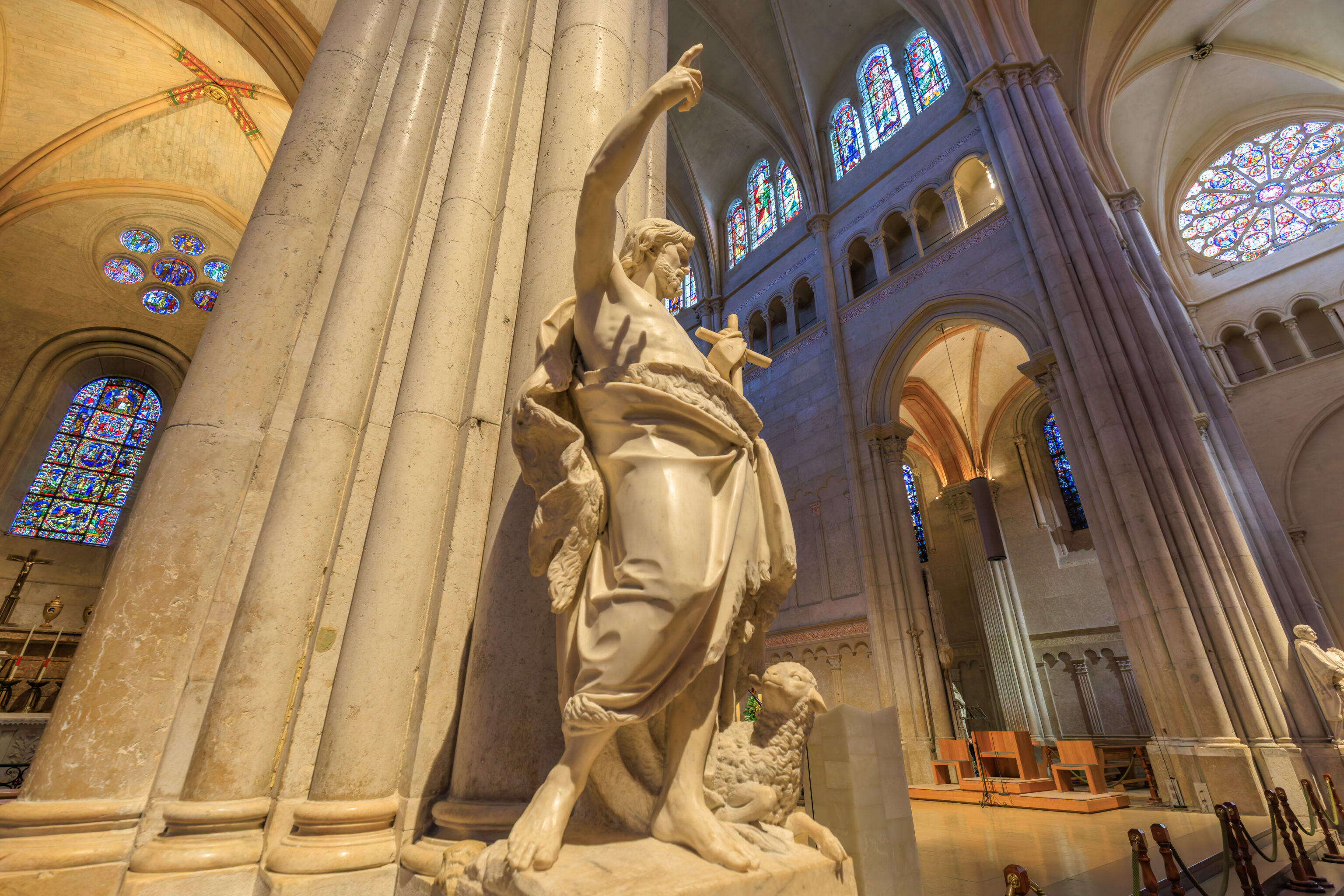
The interior of the cathedral was simple as far as European churches go. But of course it had beautiful stained glass windows and various sculptures of biblical scenes.
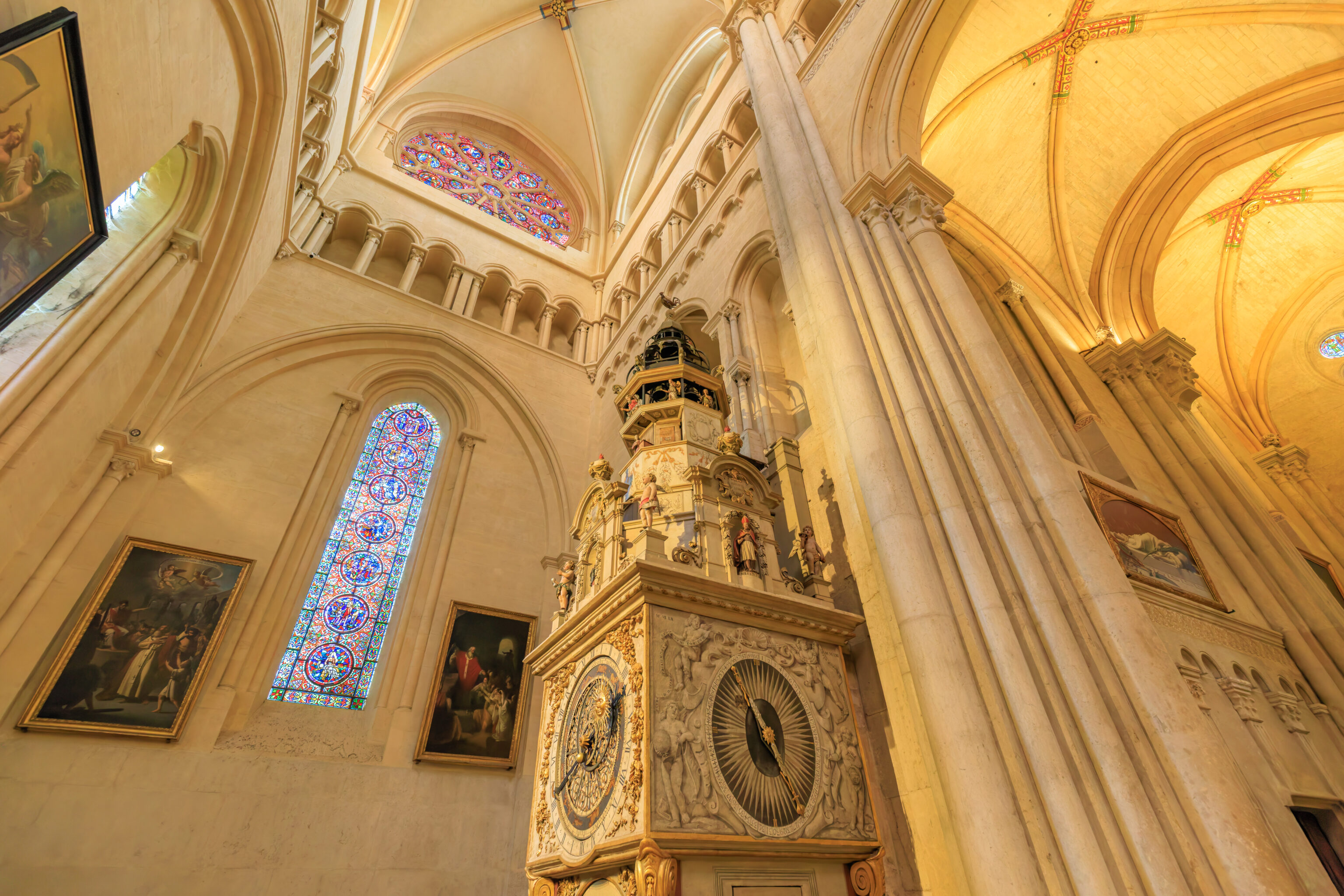
A unique feature of the cathedral is this clock. It is not just for telling time but also tracks astronomical events.
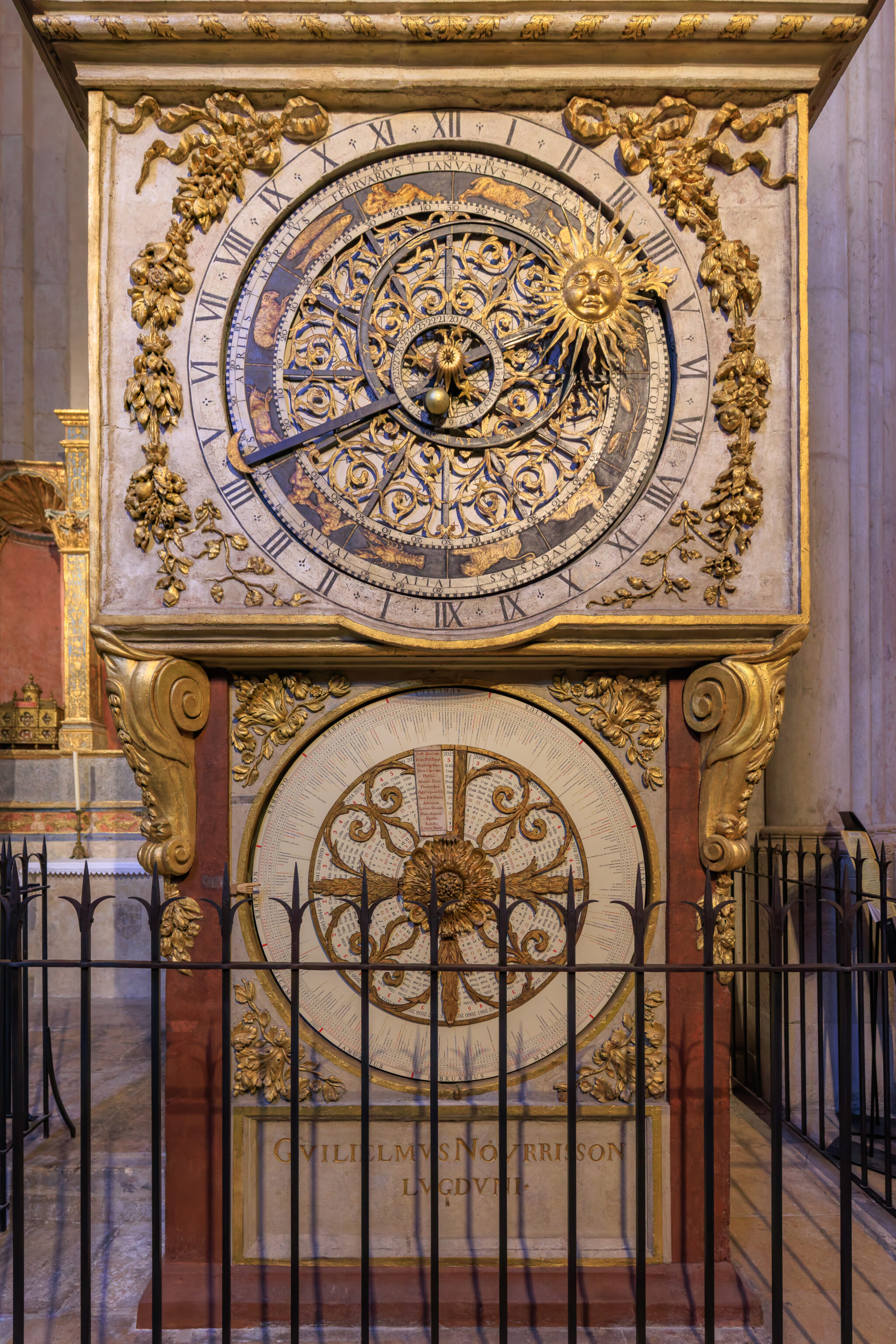
“The Astronomical Clock of Lyon”, translated using Google:
The presence of an astronomical clock in a cathedral may seem surprising. Like the bells, it indicates both secular time with its oval dial, telescopic hand, and astrolabe, and sacred time with its perpetual calendar, which allows the dates of various Christian holidays to be predicted.

The astrolabe provides astronomical data such as the position of the sun, the age of the moon, the month, the day, and the signs of the Zodiac.

The clock's centerpiece, it is extremely precise.

The perpetual calendar completes one cycle in one year. But it is accompanied by a computus, which completes one cycle in sixty-six years. The computus is a calendar of sacred time, which indicates Christian holidays such as Easter based on the positions of the Moon and the Sun. It functioned until 2019, and with new calculations, it's possible to restart it for the next sixty-six years!

While these two periods can be distinguished, they cannot be separated under any circumstances. This is precisely what this clock demonstrates: the eternity of God bursts into the everyday reality of our human lives.
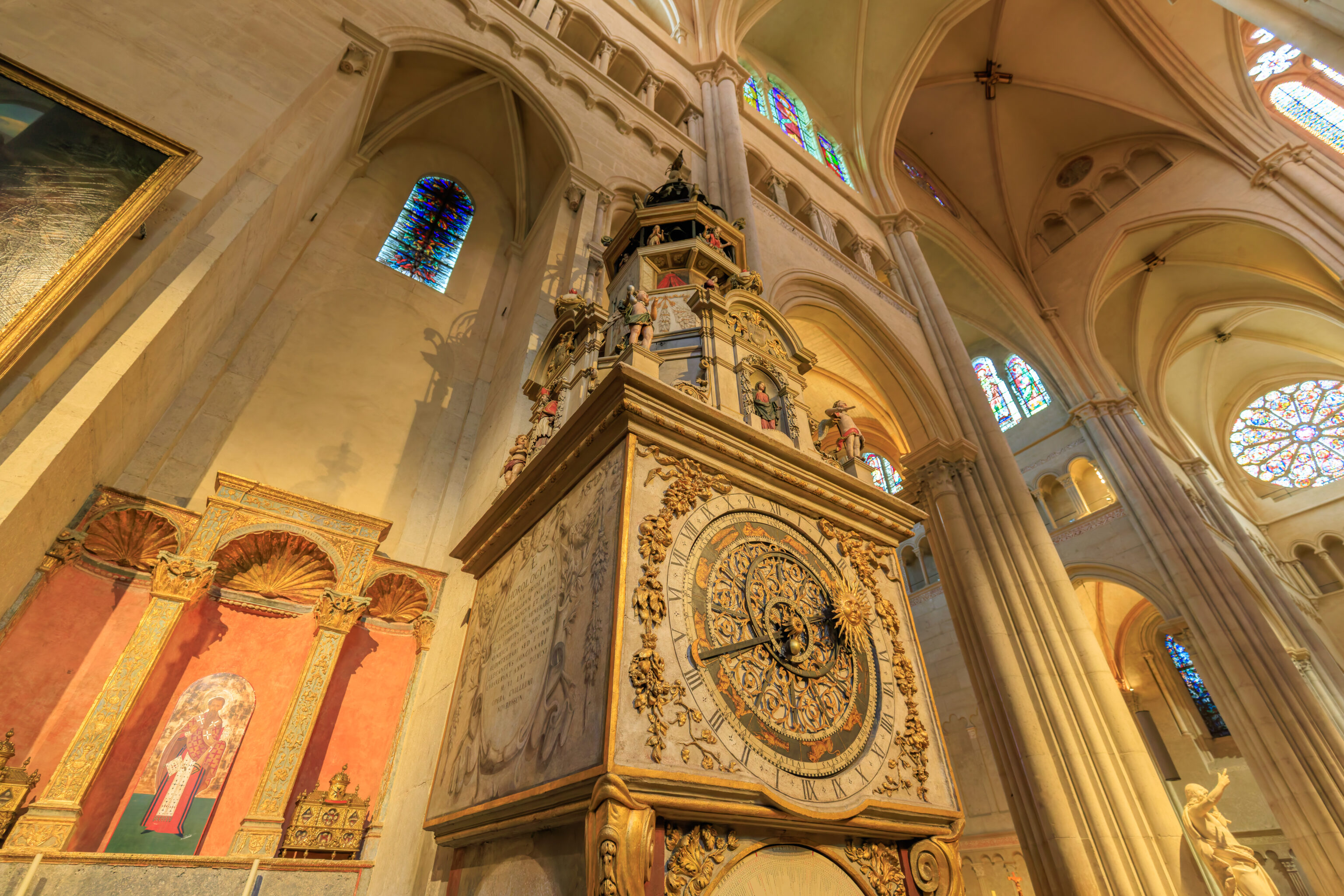
“Astronomical Clock”, translated using Google:
THE DIALS
On the right-hand wall, above the access door to the mechanism, a dial indicates the minutes: to complete one revolution in one hour and follow the edge of the dial, the hand extends and retracts. On the main face, the lower circle is a 66-year perpetual calendar, currently set until 2019. In the vertical window, one can read the dates of movable feasts, as well as the golden ratio. Also in the central position, the astrolabe dial constitutes the centerpiece of the clock. It indicates the time (from 0 to 24), the respective positions of the sun, the earth, and the moon, as well as the stars in the Lyon sky.

THE CHARACTERS
At the hour of the chime, 19 automata will begin to move according to the following sequences: Prelude: The angel on the left turns over his hourglass, the rooster crows and flaps its wings, the Swiss Guard begins his rounds, the angels in the gallery play the beginning of a hymn on small bells, the angel on the right keeps time. The Annunciation: In her room, Mary is praying, the angel Gabriel enters to announce to her that she will be the mother of the Savior.

The Virgin turns to him to answer him while a dove, the Holy Spirit, descends upon her. In the upper register, God the Father blesses three times, at the very top the Swiss Guard chimes the hour. In the central niche above the clock faces appears a small statuette representing each day of the week.

THE CLOCK'S STRIKING
"UT QUEANT LAXIS" is a 9th-century hymn written by the poet Paul the Deacon. In the 11th century, Guido of Arezzo used the first syllable to name the notes of the scale. Since UT was difficult to pronounce, the Italian composer Bononcini replaced it with DO in 1673. Since Gregorian modes only used six tones, the missing note had to be filled; it was added at the end of the 16th century by Anselm of Flanders using the S from Sancte and the I from Ioannes. The text taken from the Phymne of Saint John the Baptist contributes to the meaning: the Baptist is the forerunner, his feast day falls at the time of the summer solstice, when the days begin to shorten "He must grow and I must diminish."
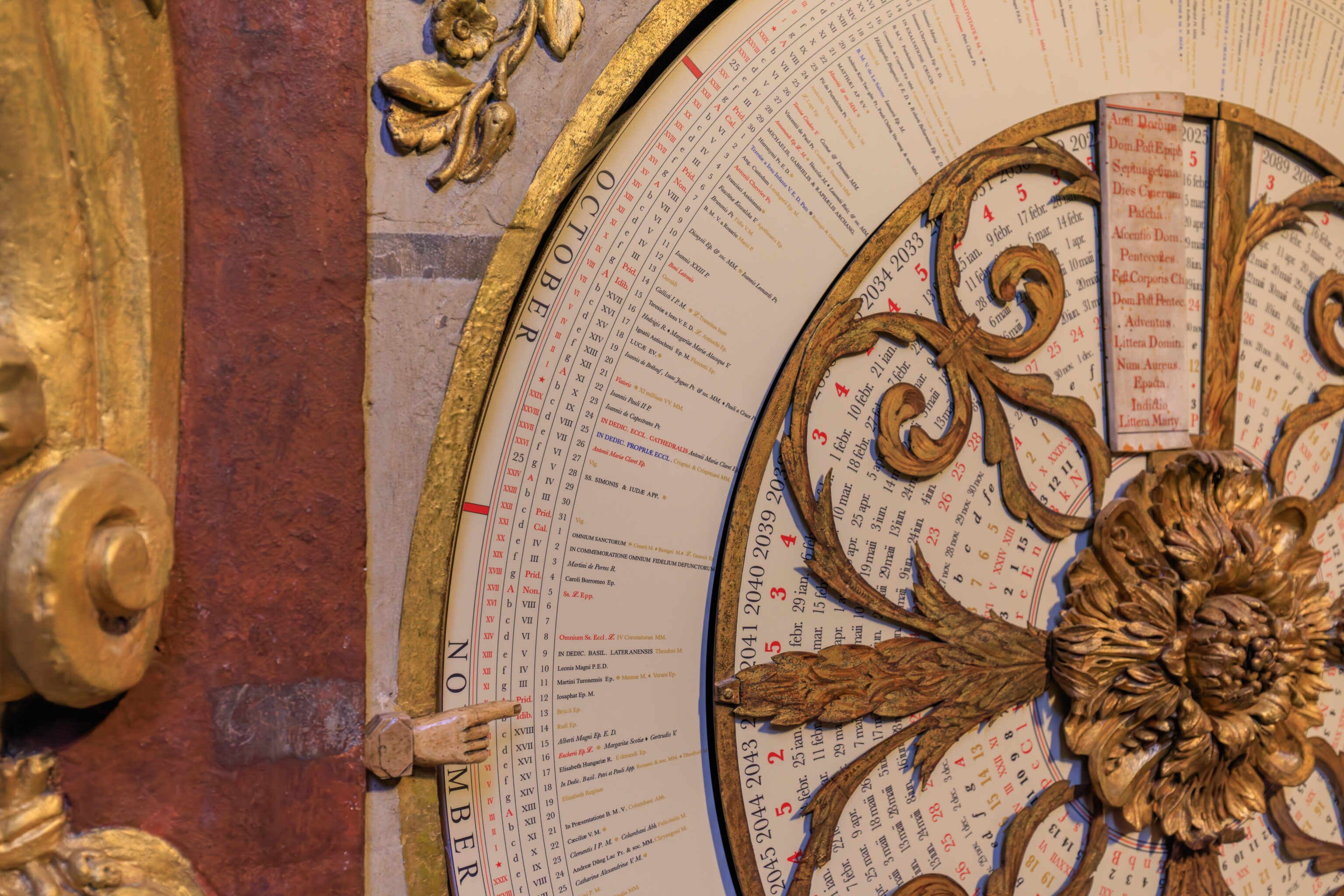
A closer look at the detailed events listed on the clock.
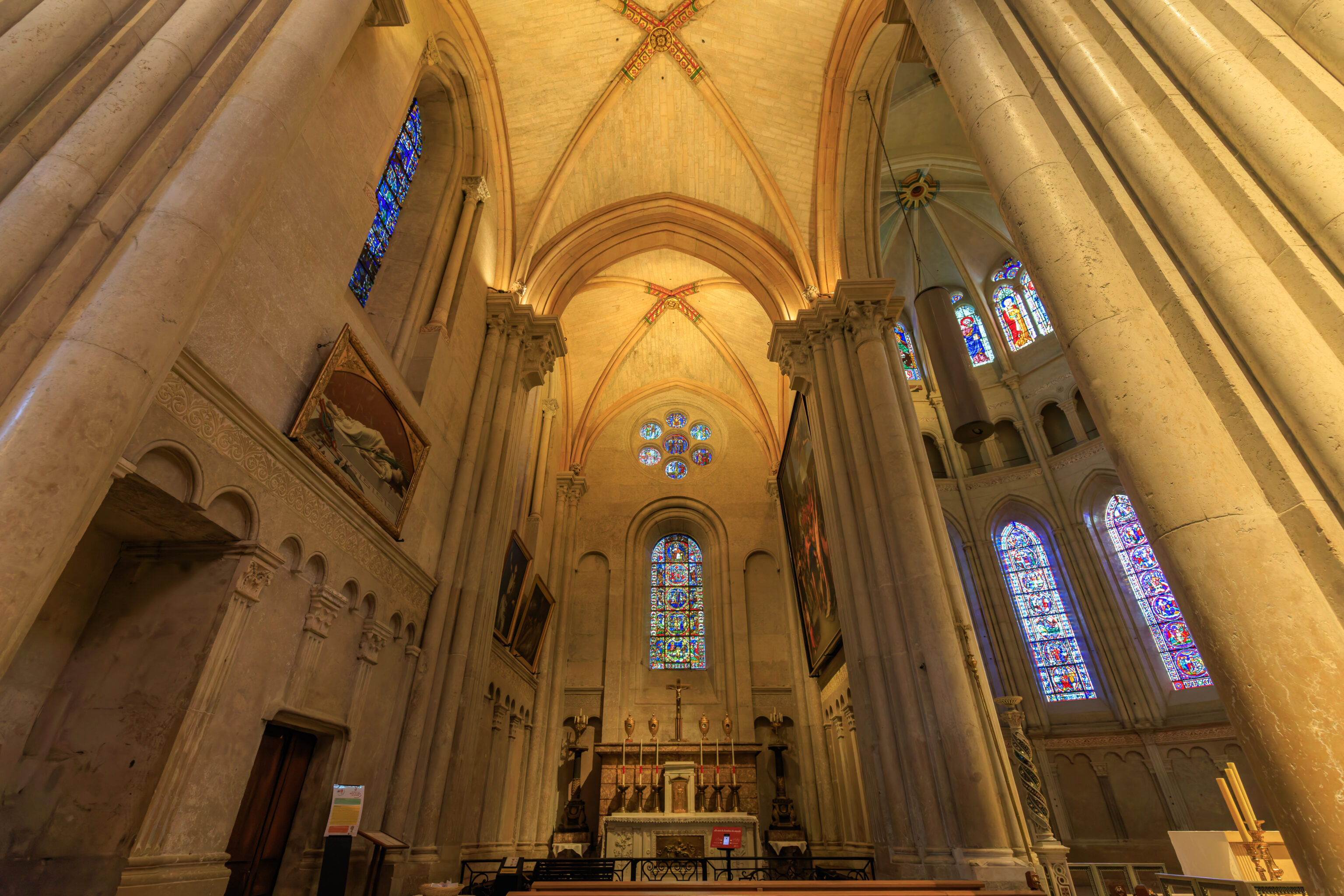
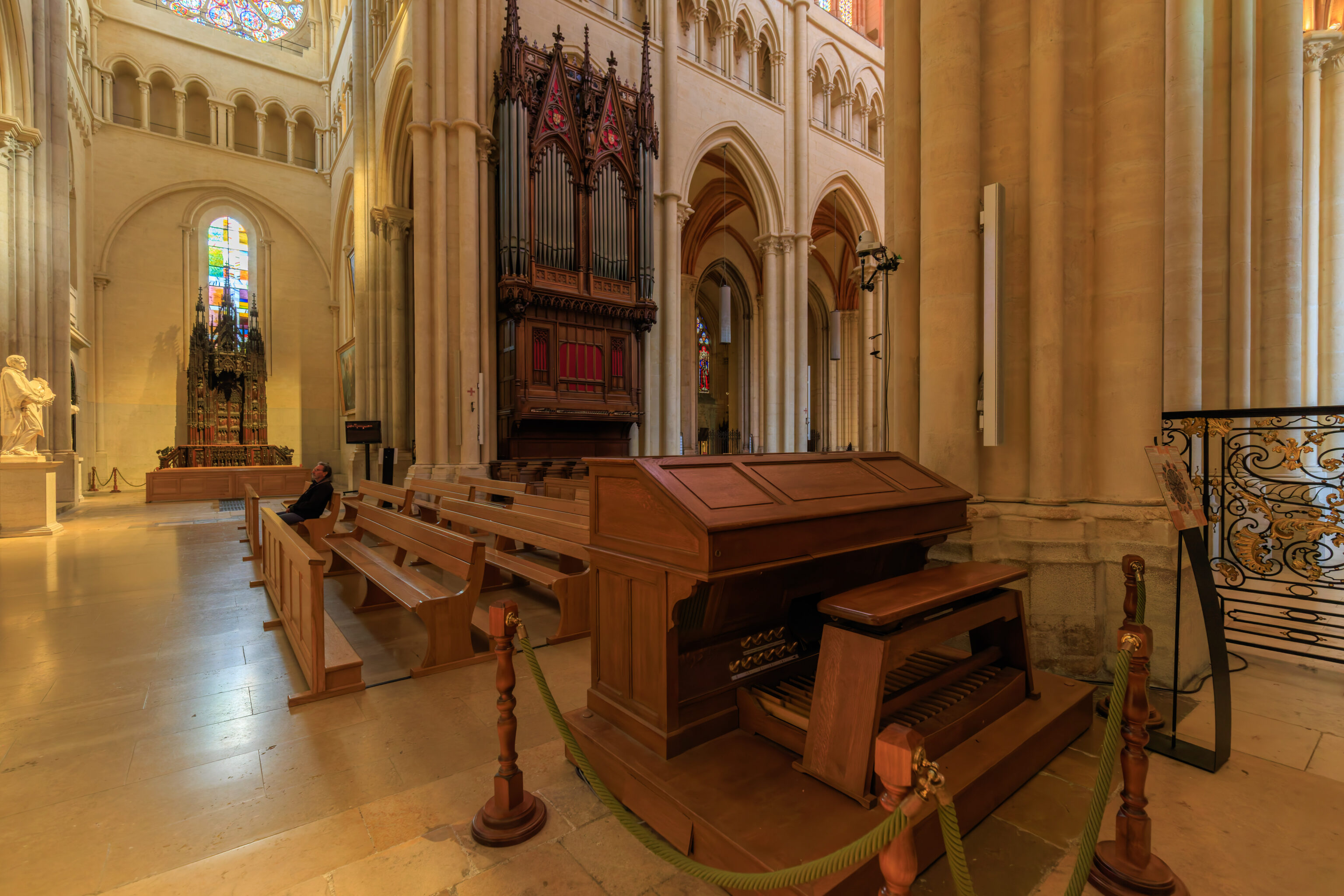
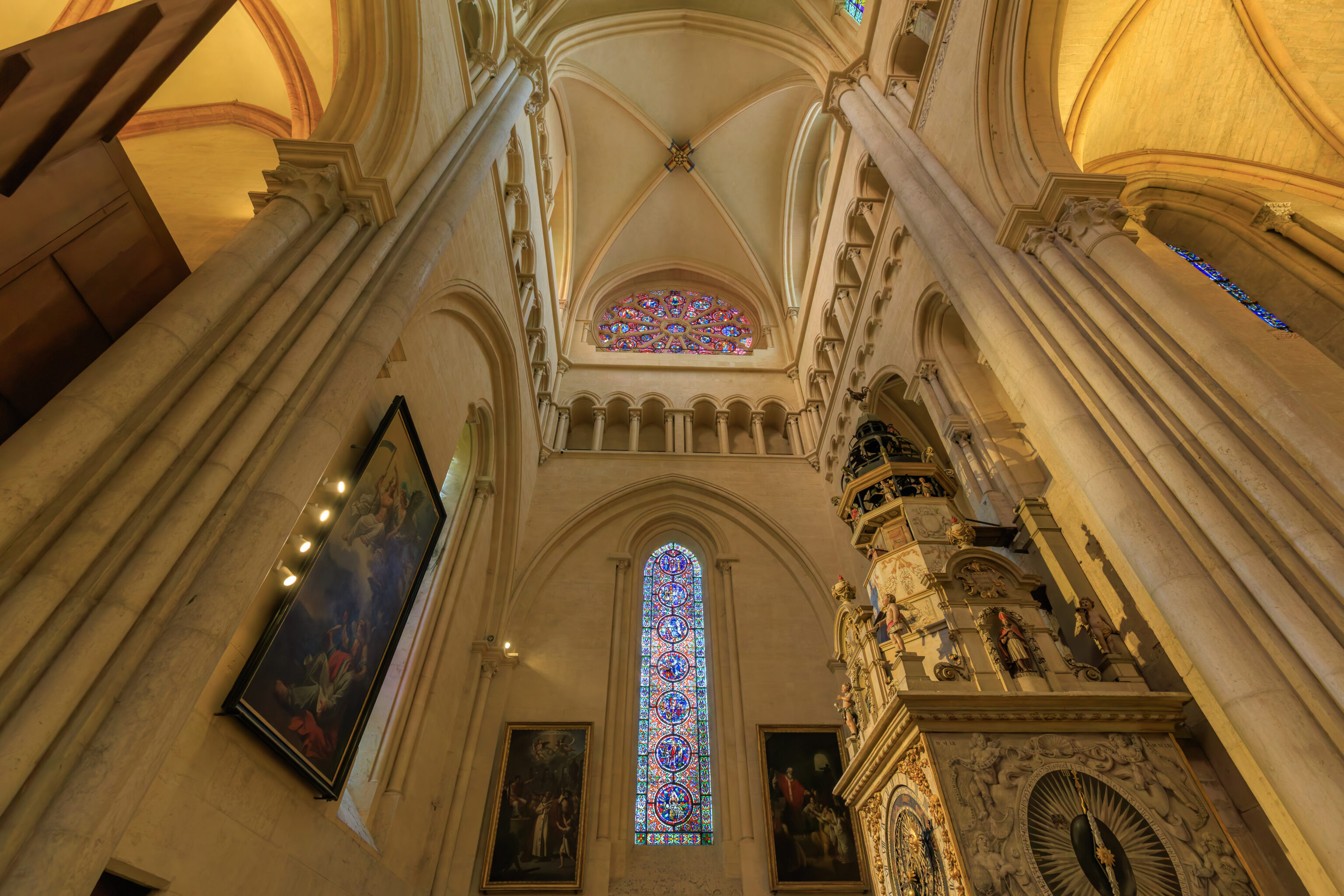

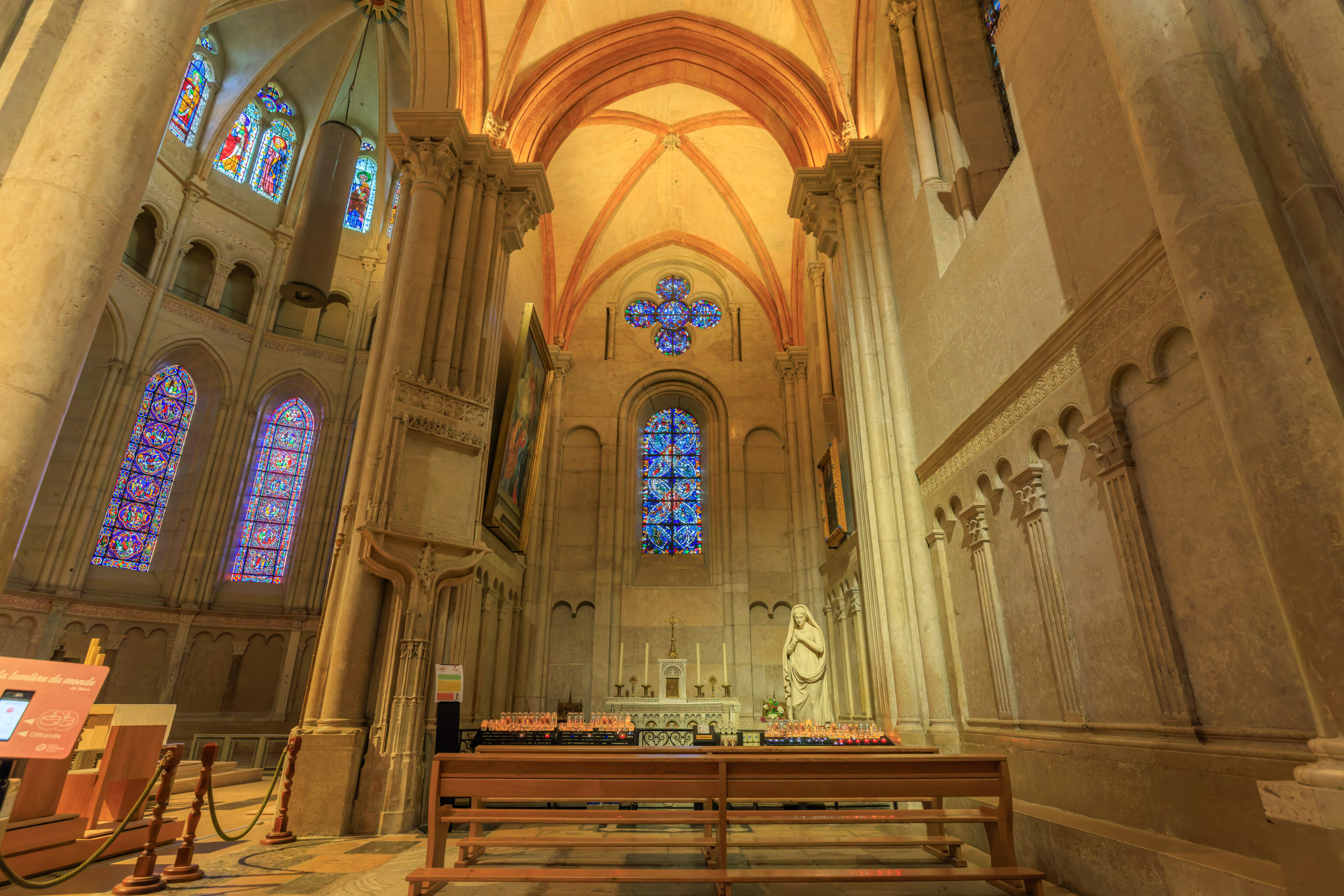
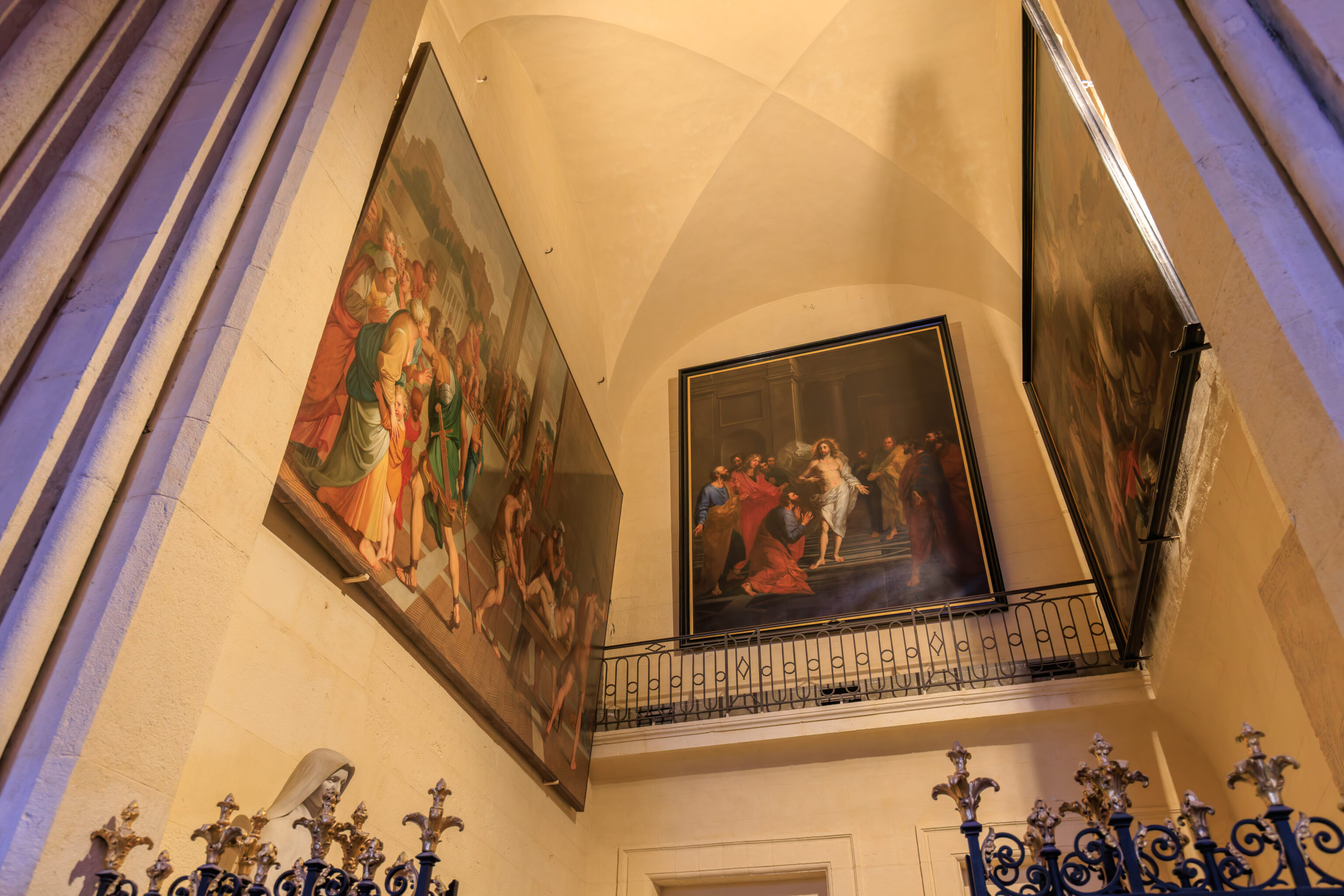
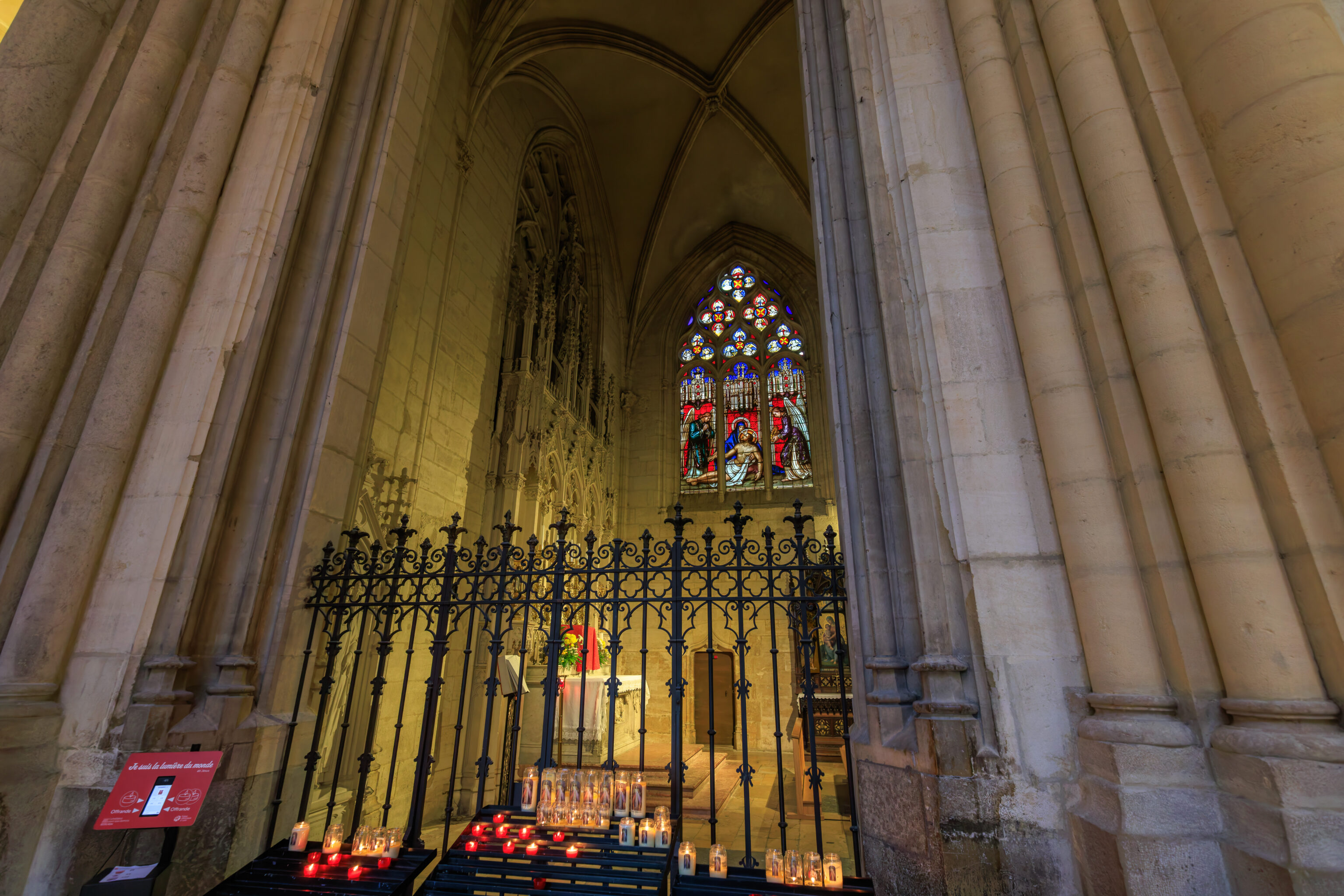
We continued walking through the interior of the cathedral.
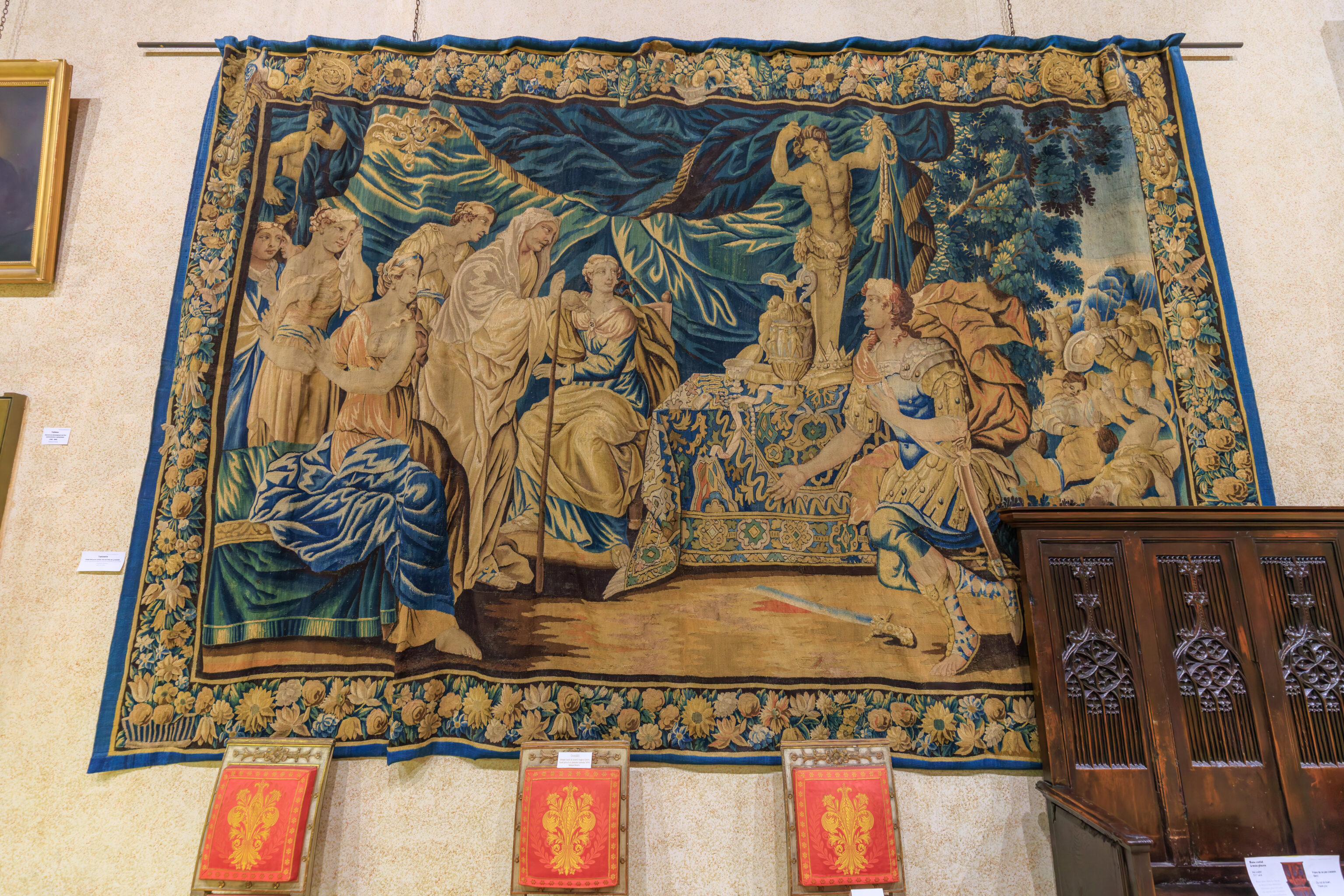
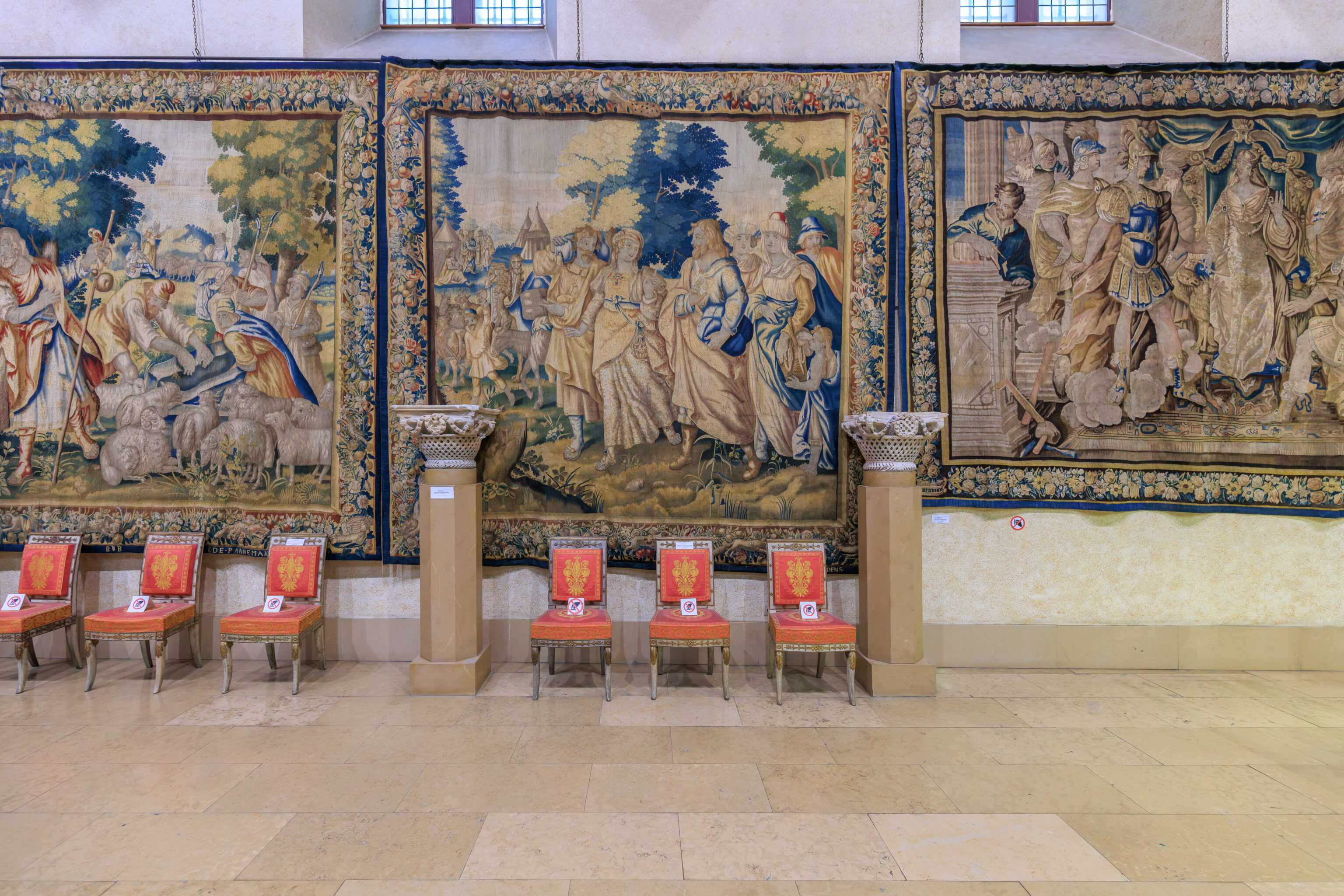
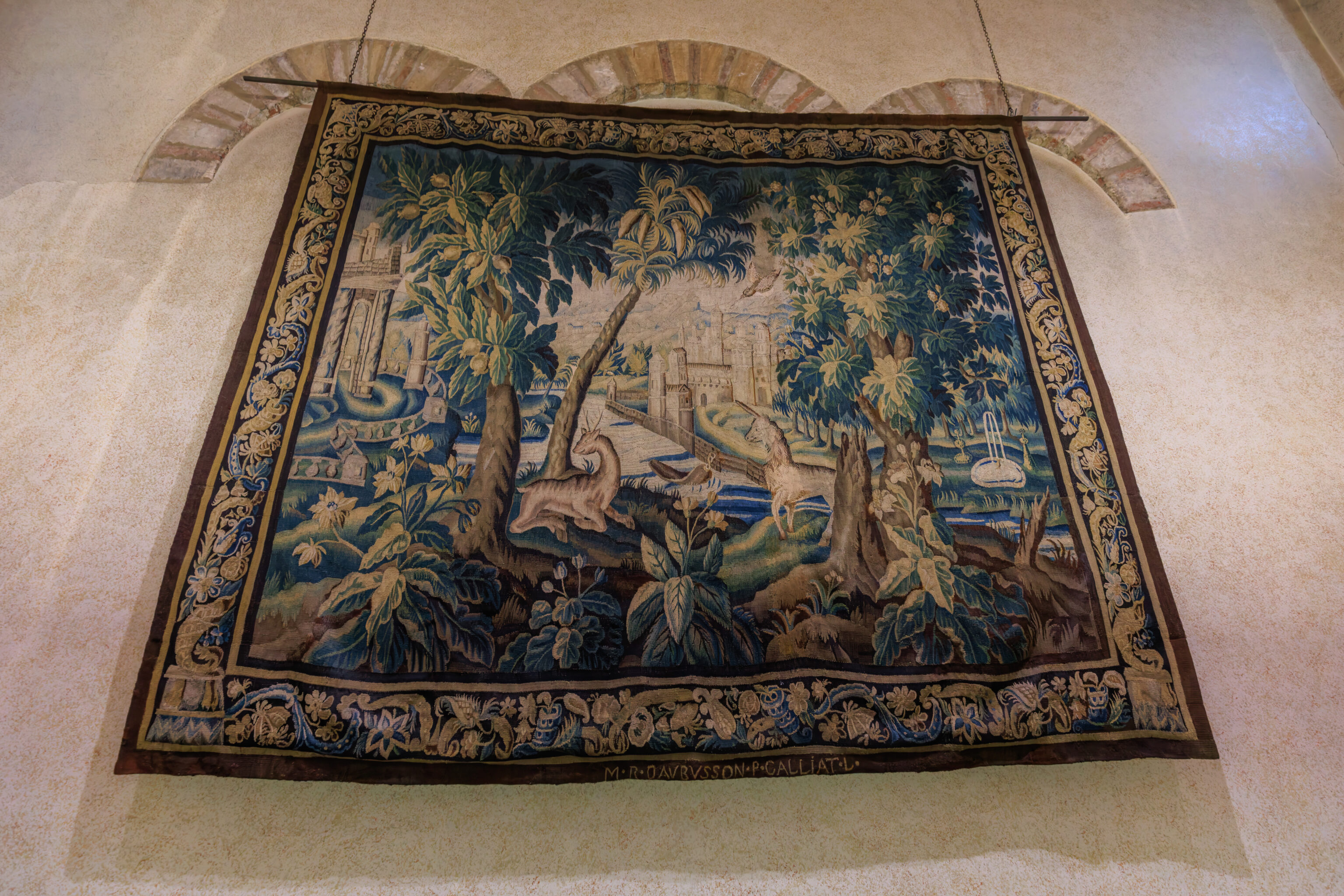
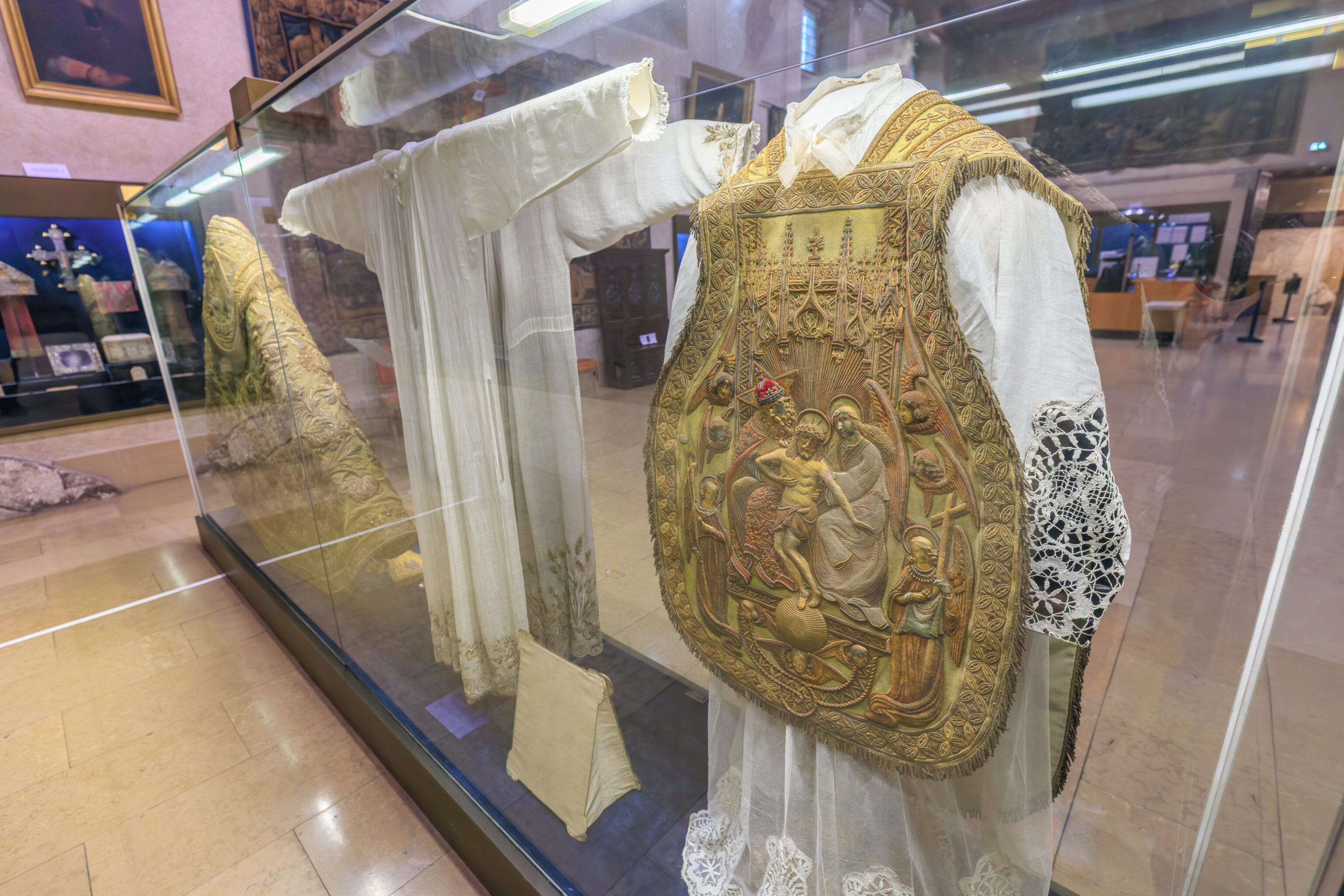
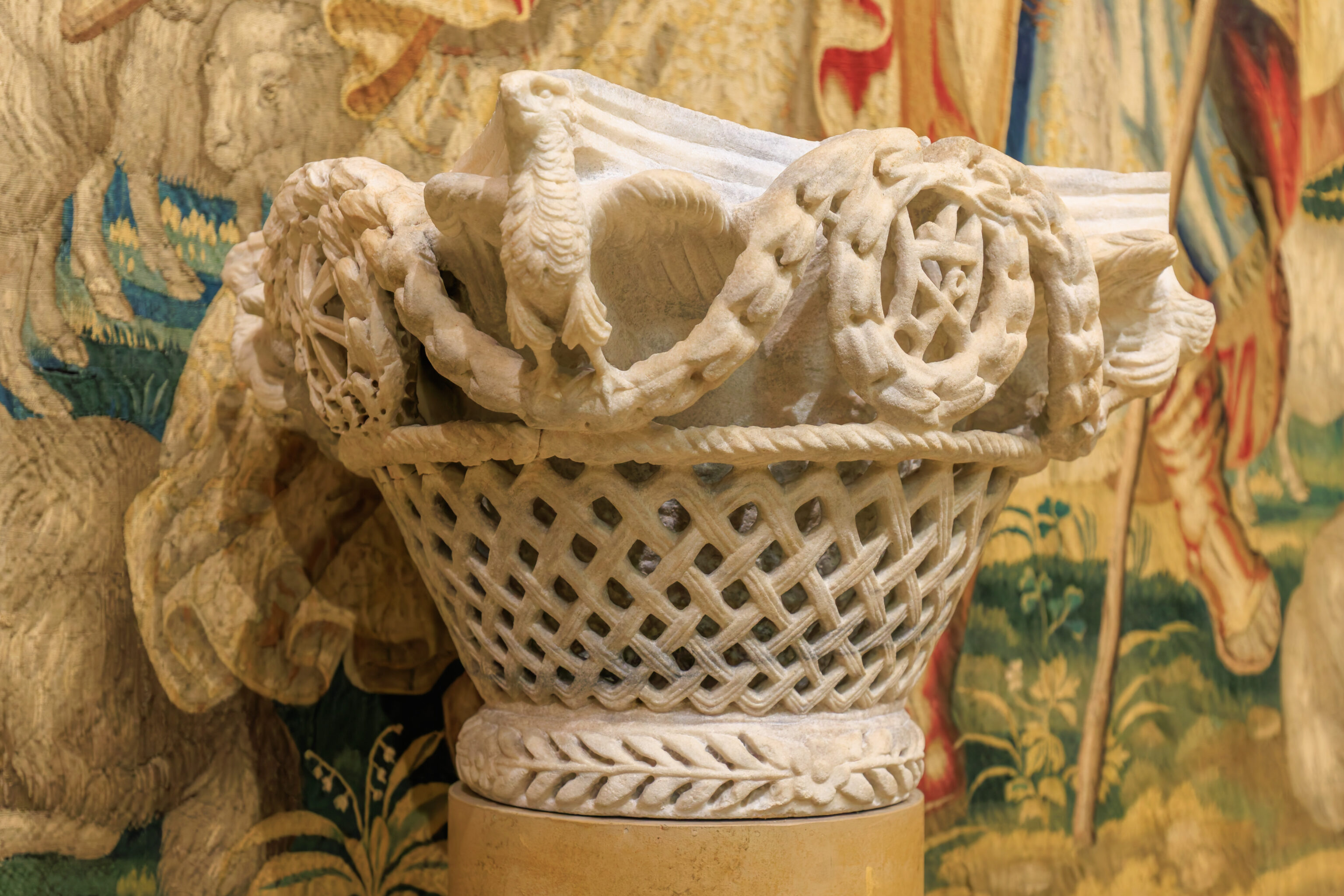
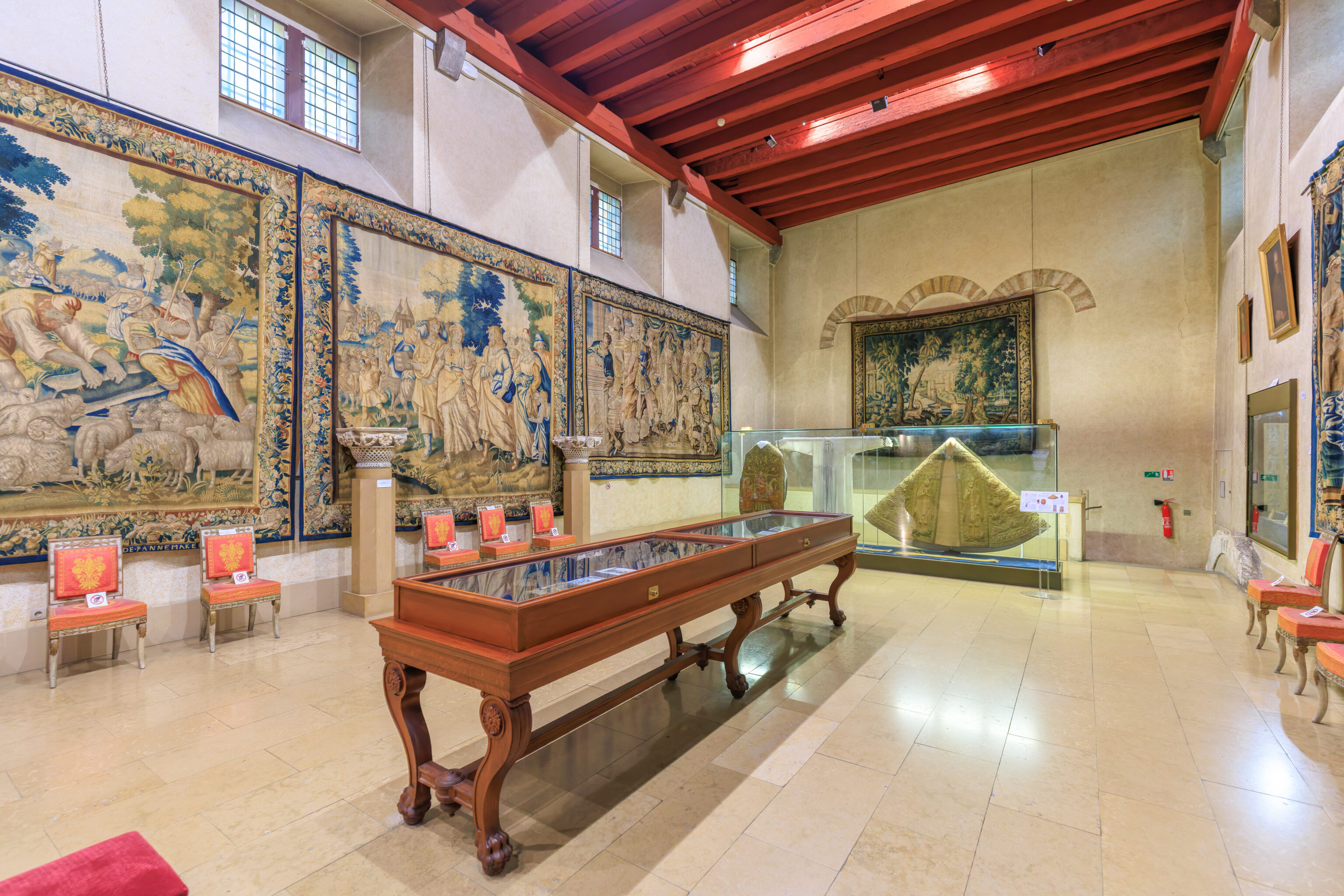
The cathedral had a small museum area with various artifacts.
We headed back outside to take a walk around Vieux Lyon.
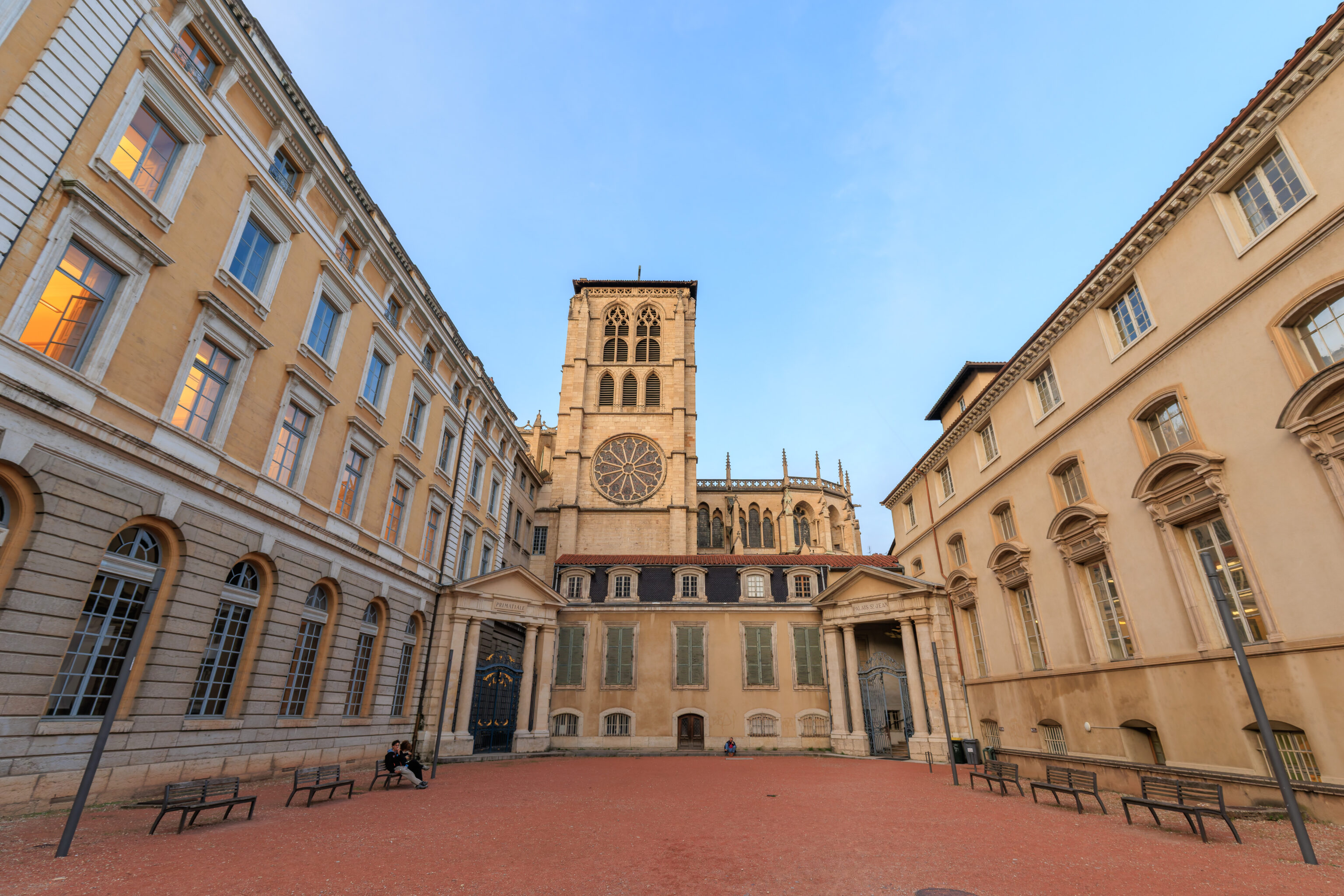
We passed by this space on the south side of the cathedral. The building on the right was the former residence of bishop of Lyon. It now houses the Bibliothèque du 5ème Arrondissement – St. Jean (Library of the 5th Arrondissement – St. John).


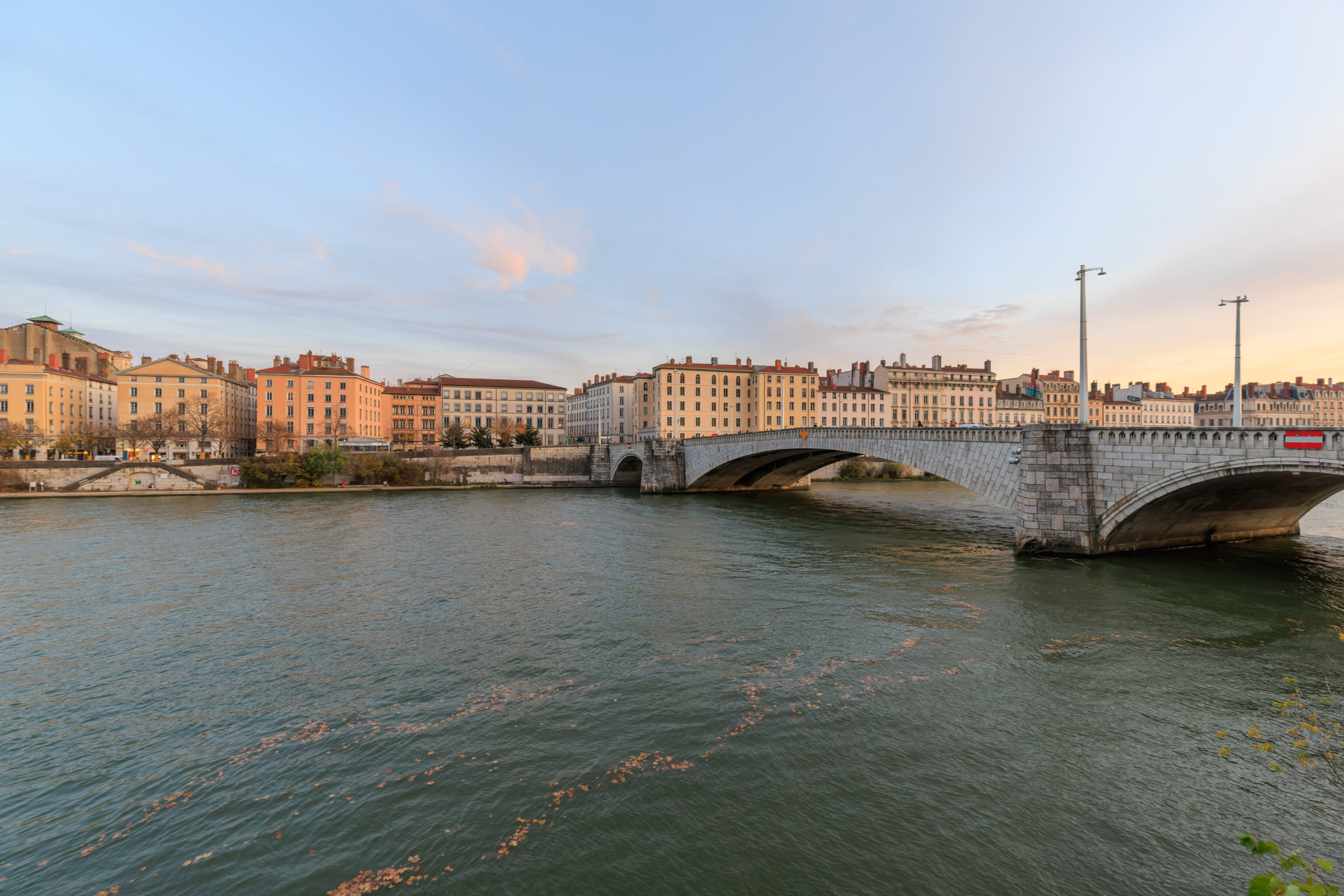
We walked a bit further to reach the west bank of the Saone. Upon reaching the river, we turned left to walk north.
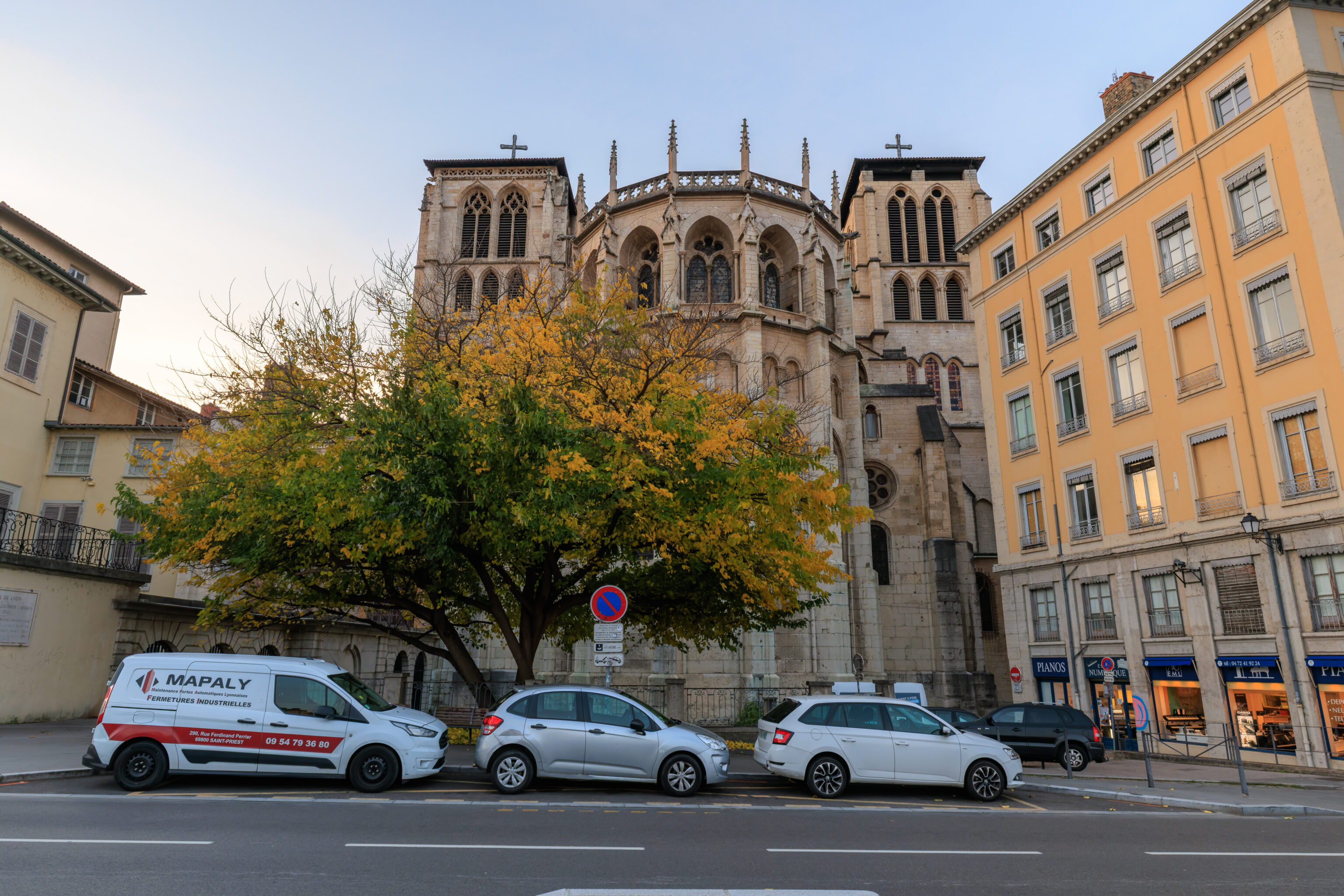
We passed by the rear of the cathedral.
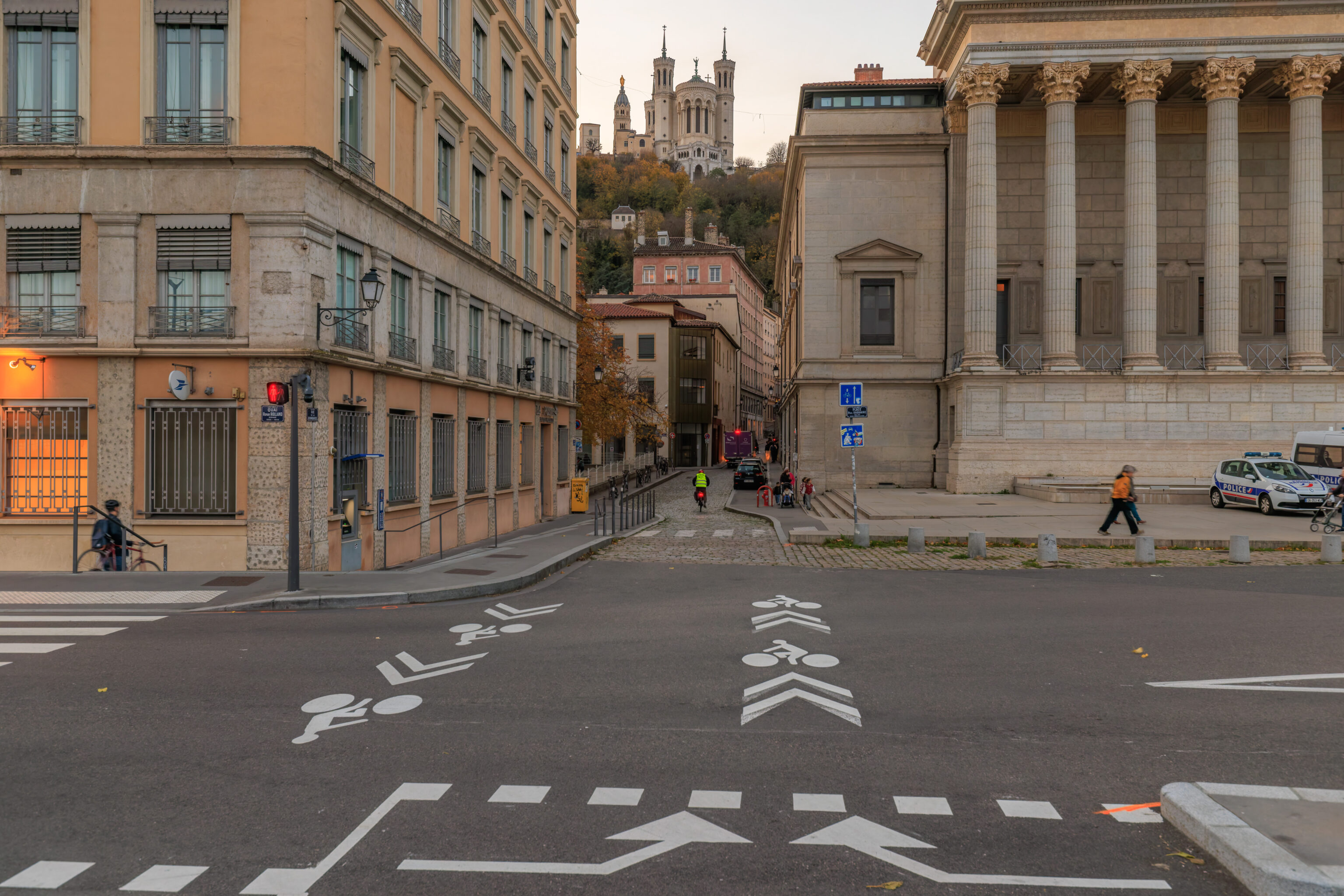
After walking a bit further, we saw the basilica up on Fourviere Hill.
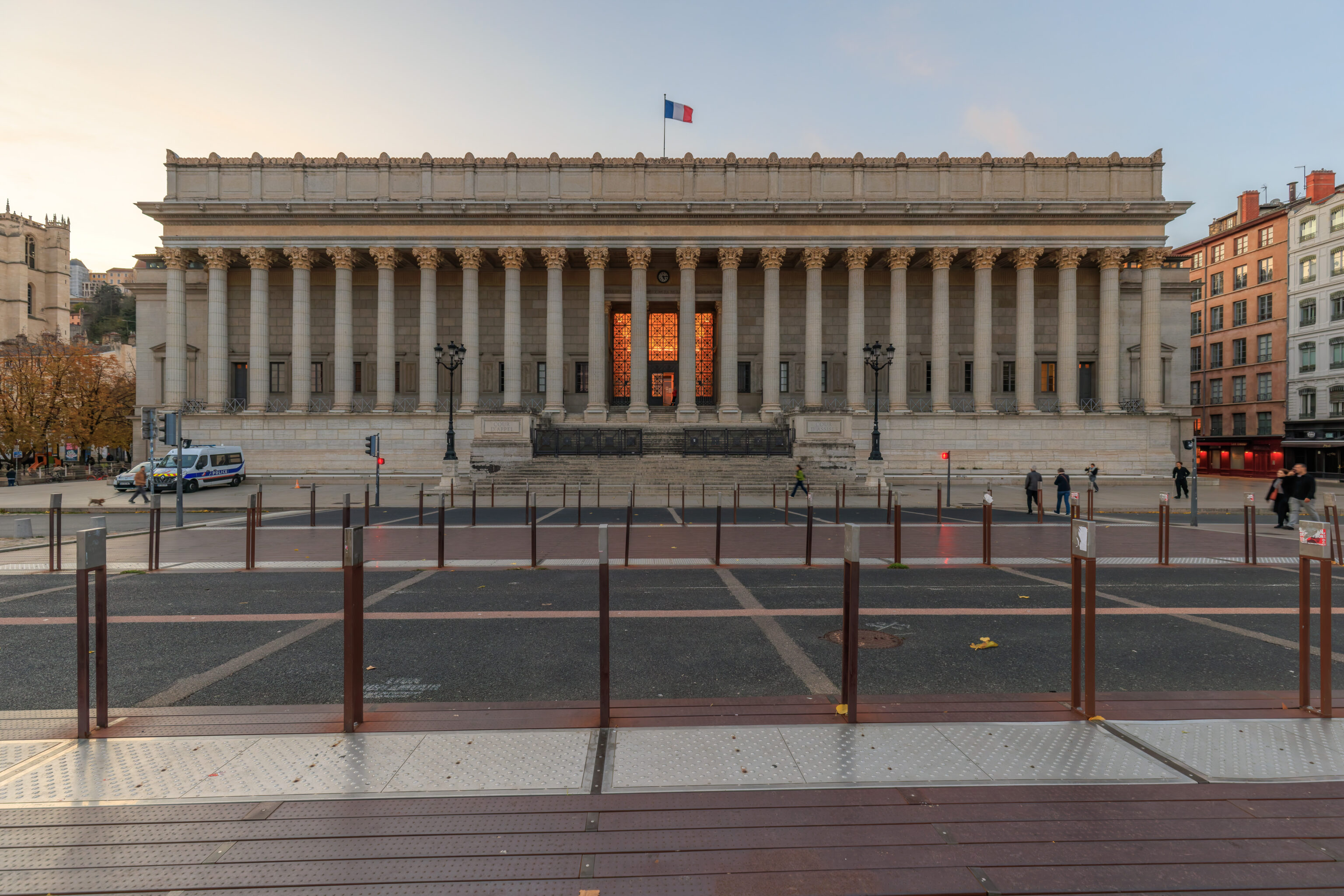
This large building is the Le Palais de Justice de Lyon (Lyon Courthouse). It was completed in 1847 and currently contains the Cour d’Appel (Court of Appeals) and Cour d’Assises.
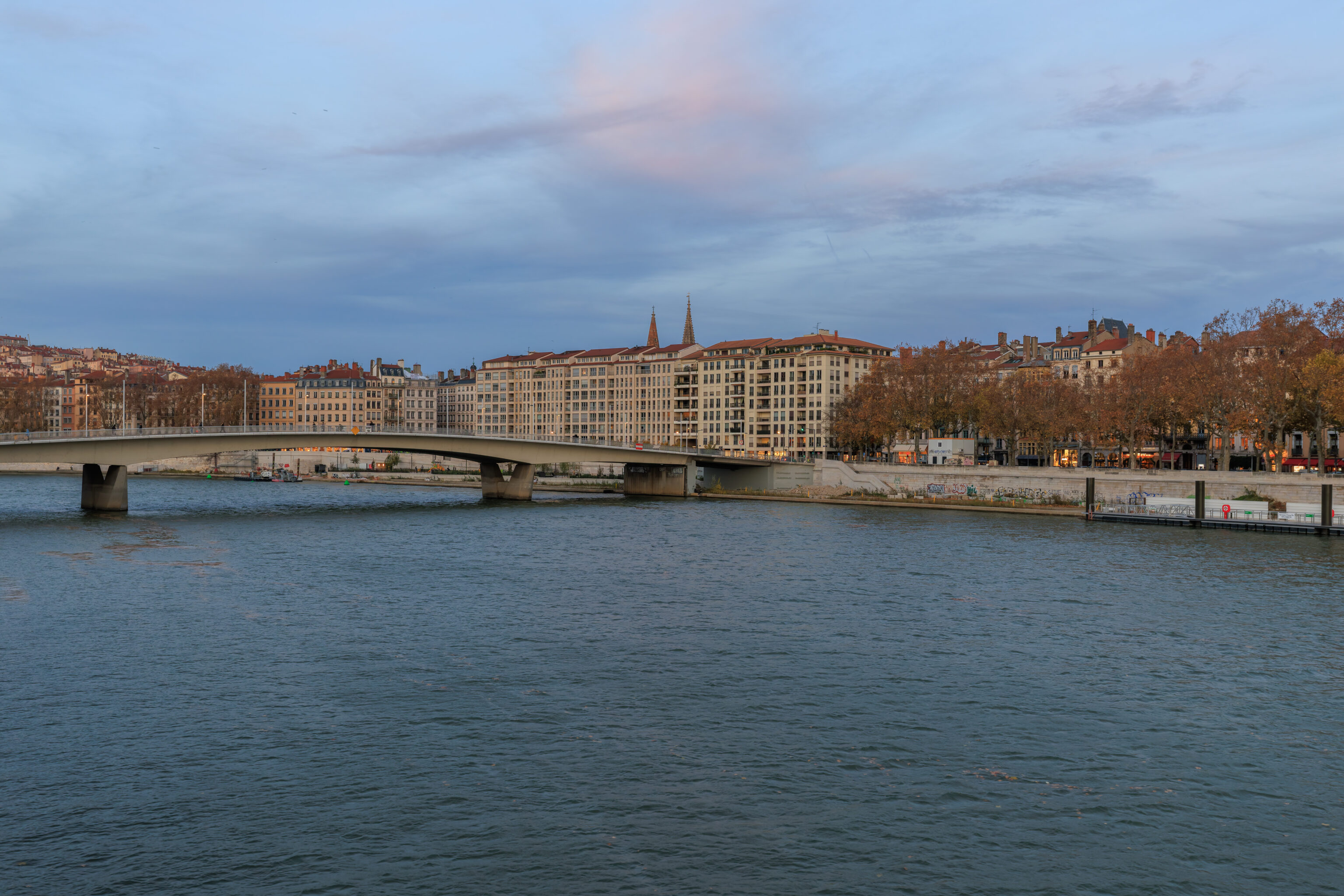
There was just a tiny bit of color in the sky at the time.

This sculpture stands on a post in the Saone in front of the courthouse. It is titled The Weight of Oneself. It is described as depicting a man saving himself from drowning.
Evening
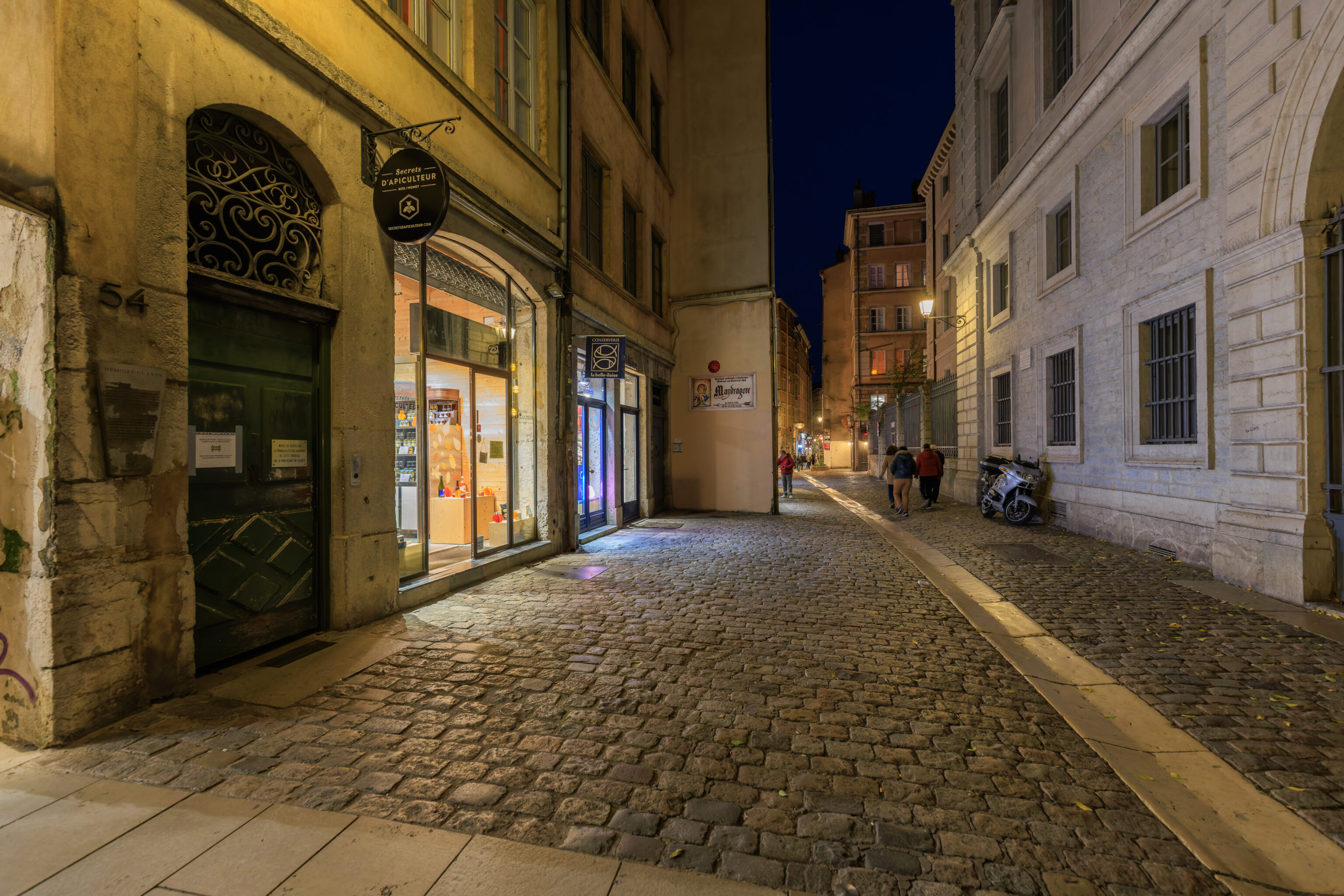
We then turned away from the Saone to walk further into Vieux Lyon. We encountered one or more attempted pickpocketers in the quiet area near the courthouse. We were pretty sure they were trying to distract us when they shoved a map at us and asked for directions to the Metro. They did not manage to steal anything as everything of value was either firmly held in our hands or locked away in our bags.
This is probably the most unfortunate thing about many parts of Europe. Petty theft and tricksters are prevalent, although generally they aren’t nearly as daring as thieves in the US would be.
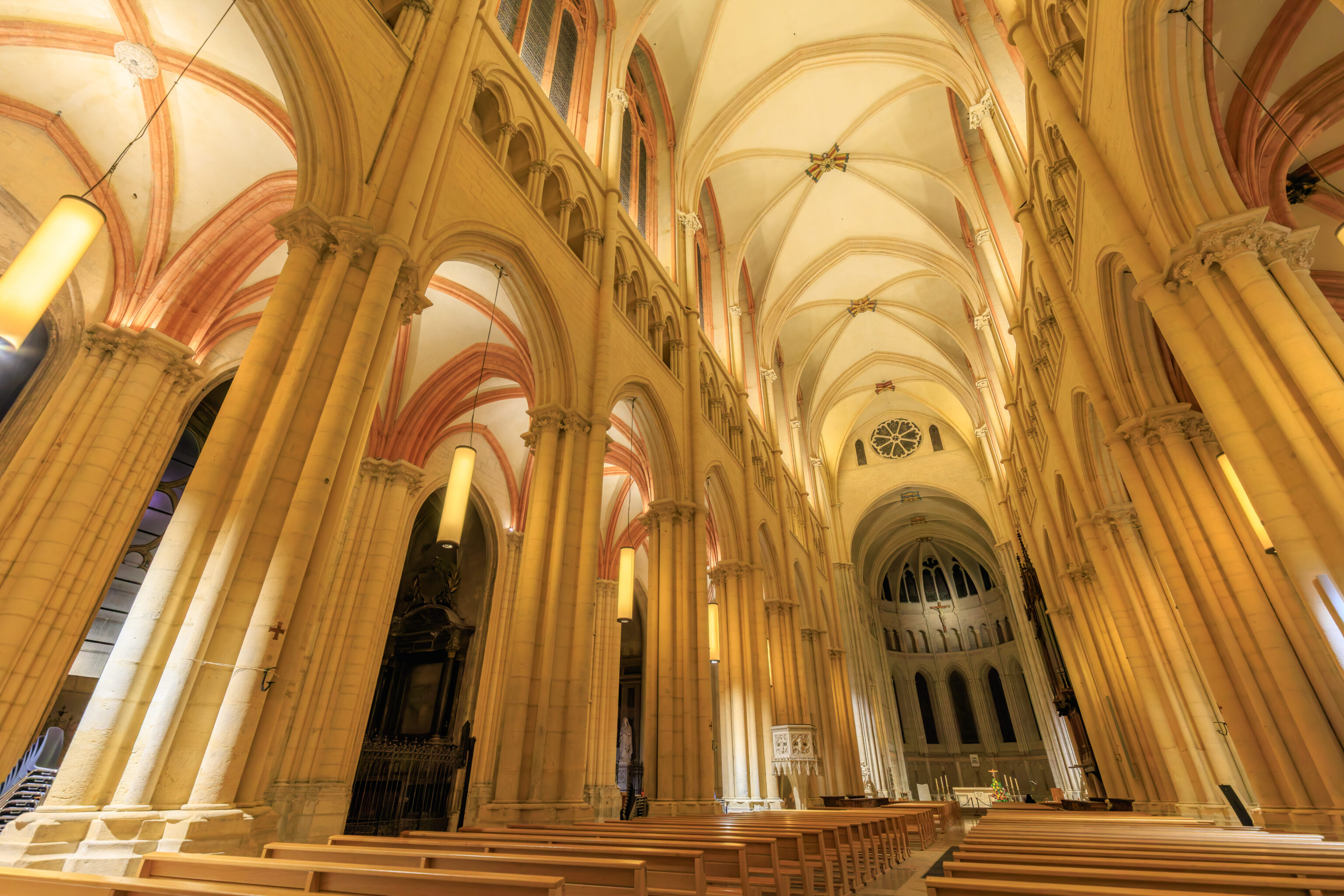
After walking around a bit more, we went back into the cathedral to figure out where to have dinner. It turns out that the cathedral was closing for the day not long after we had arrived.
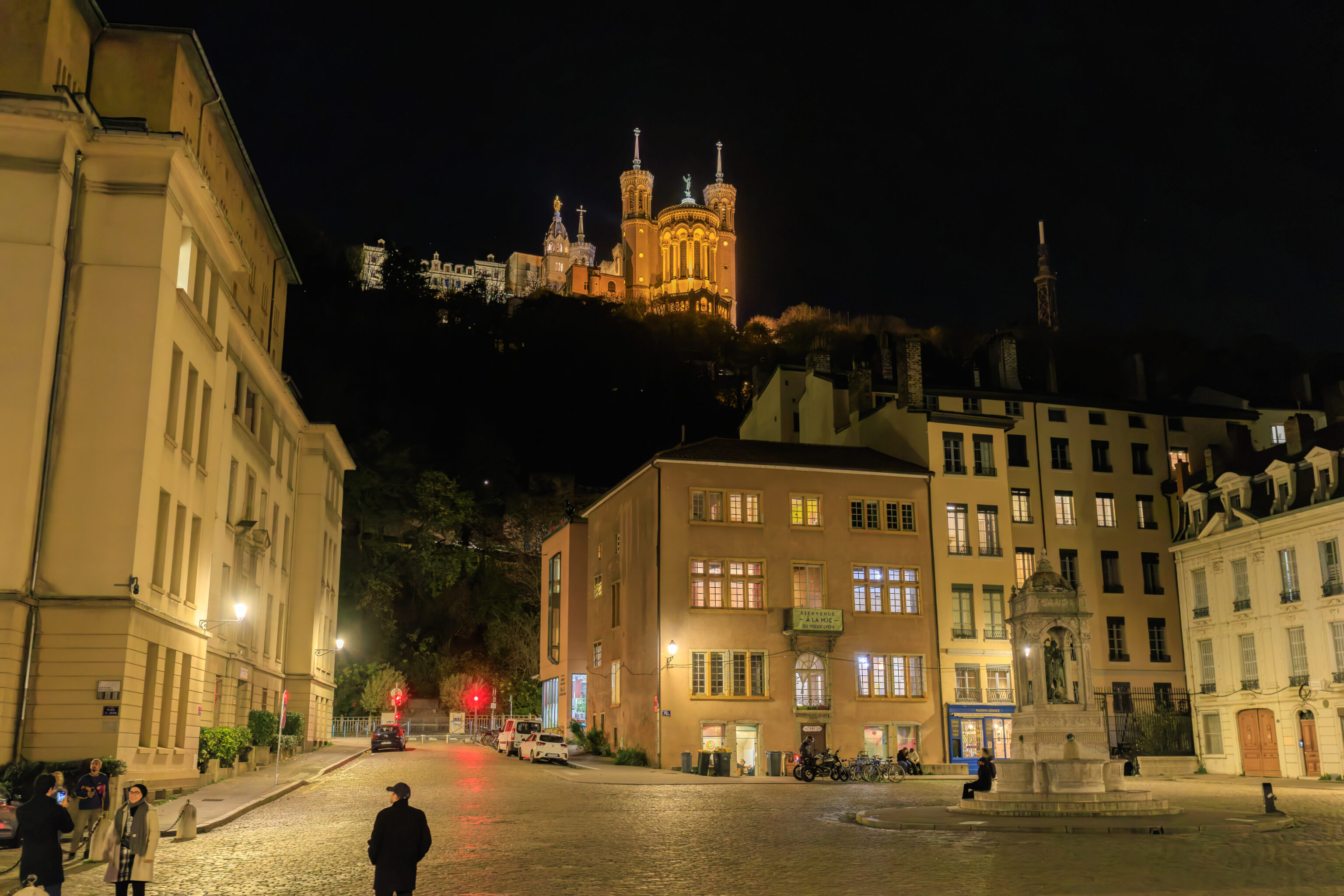
It was almost 6:30pm, still too early for most restaurants to be open. After exiting the cathedral, we had a nice view of the illuminated basilica above.
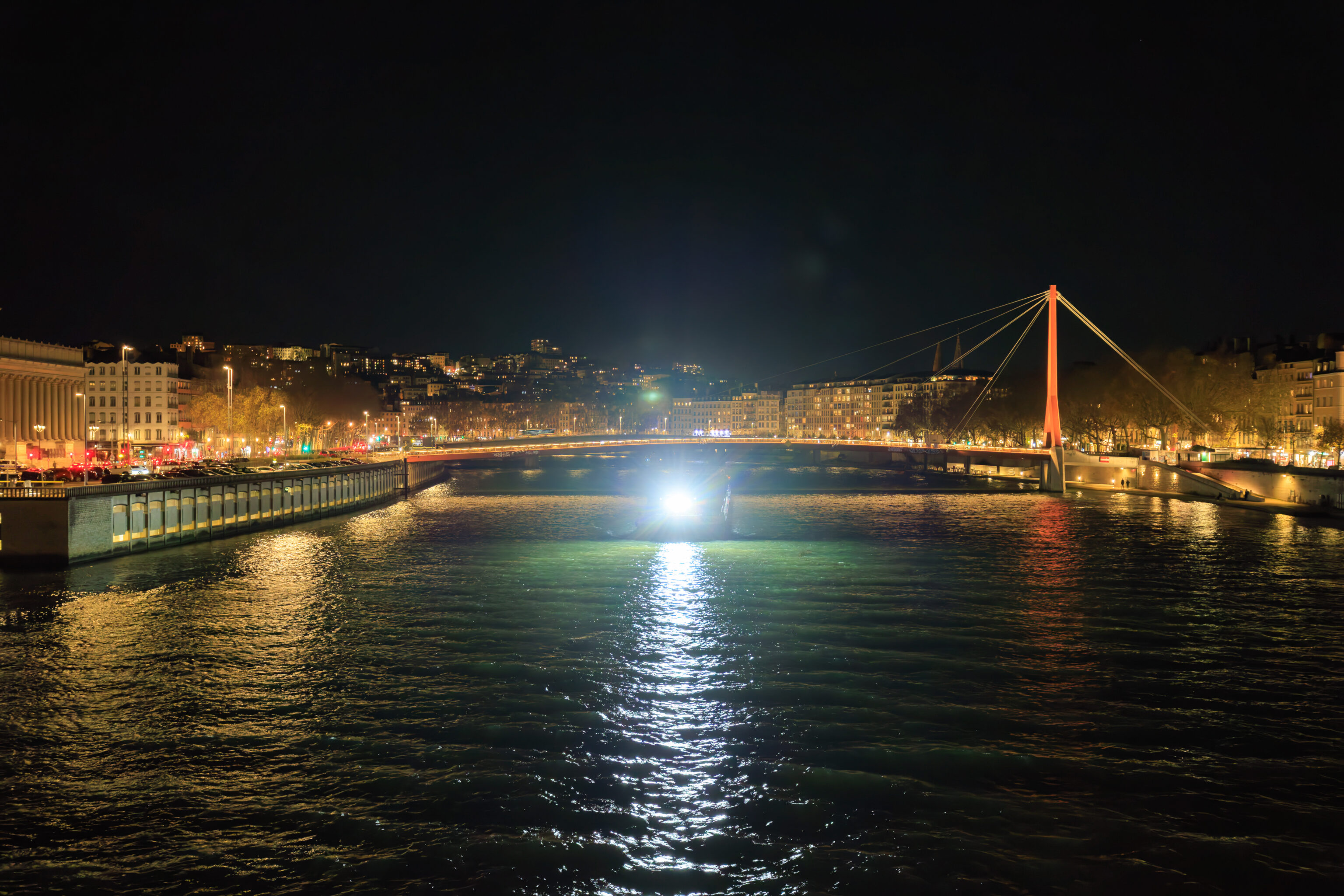
We decided to have dinner at Bouchon Léa, just across the Saone from the cathedral. We crossed over the river at the nearest bridge, the Pont Bonaparte. The Pont Bonaparte was built in 1950 to replace a previous bridge that was destroyed by the Nazis.
This was the view from the bridge looking to the north. The bridge that can be seen here is the Passerelle Pierre-Truche, a pedestrian bridge that leads to the front of the courthouse.
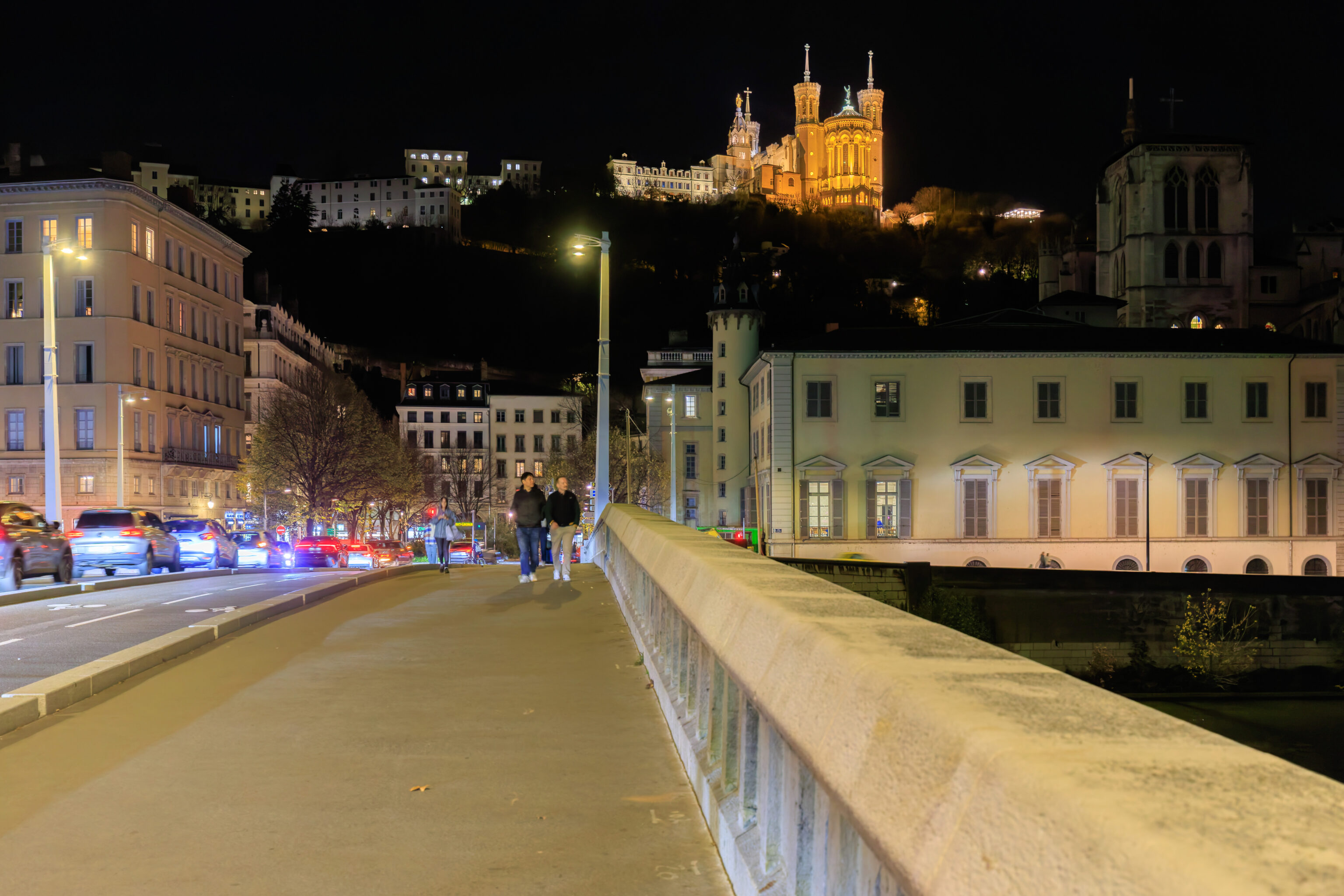
The view looking back to the west from the bridge.

It was still about 15 minutes before the bouchon’s 7pm opening time. So, we stopped at Machi Machi, a bubble tea shop that was nearby. We had hot “latte de sucre roux avec perles de tapiocas”. A bit sweet but of course sugar is one of the named ingredients.
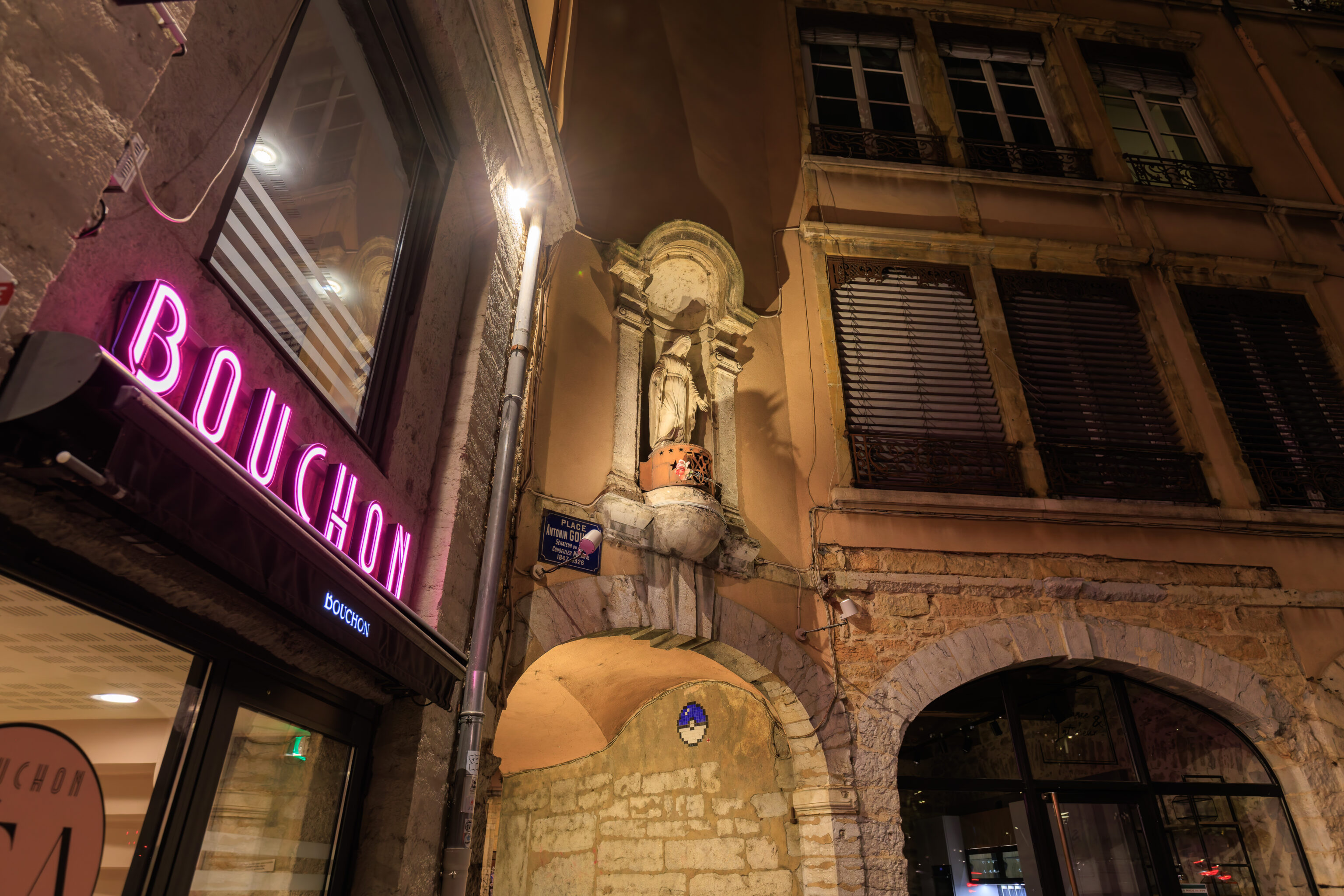
We had to still wait for awhile until the bouchon opened.
The bouchon also seems to have operated as La Mère Léa but seems to go by Bouchon Léa now. There are still internet references to the previous name as well as this business card. Not all bouchons are certified Bouchons Lyonnais, however, Léa is.
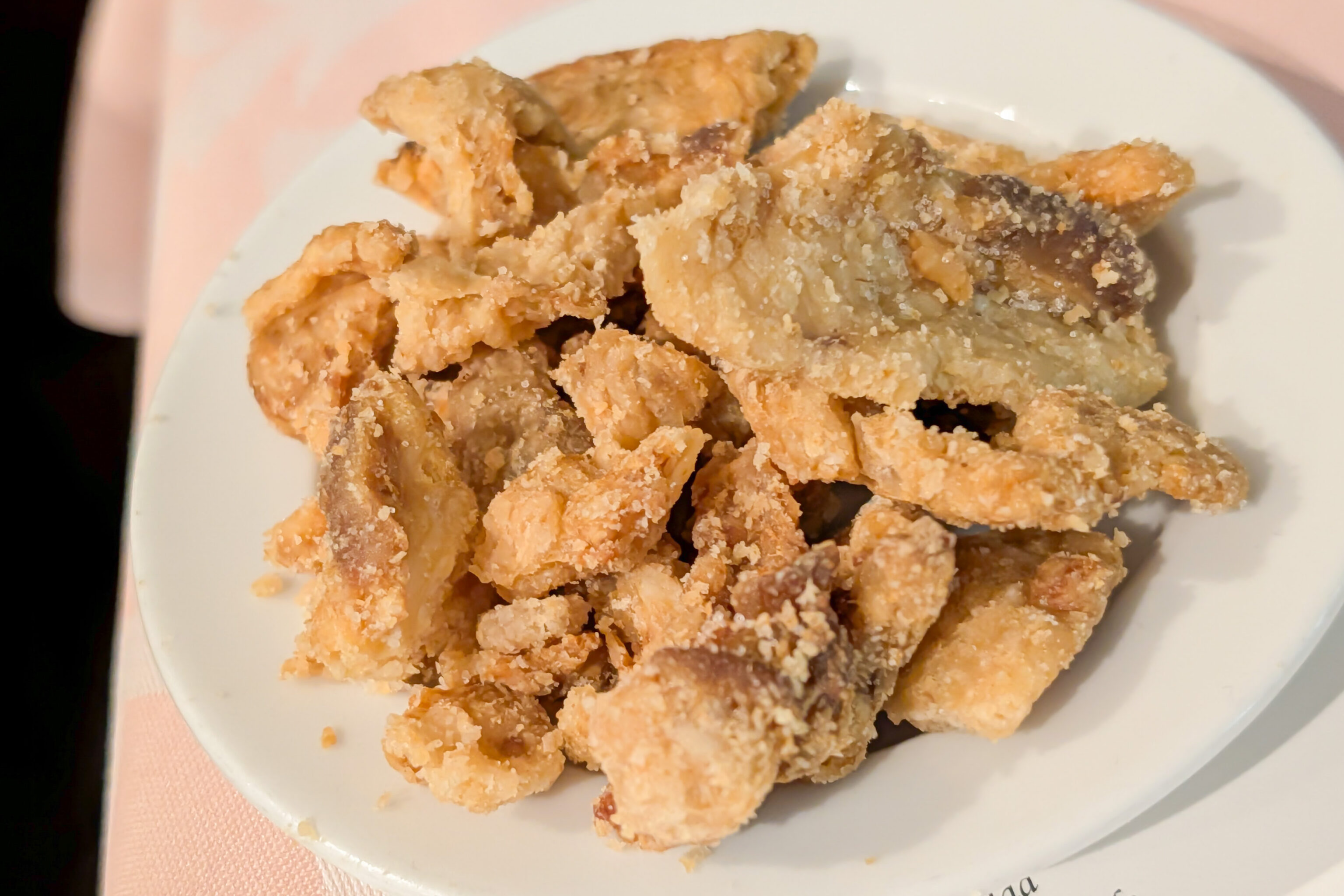
We were provided a complimentary plate of what seems to be pork cracklings, possibly grattons.
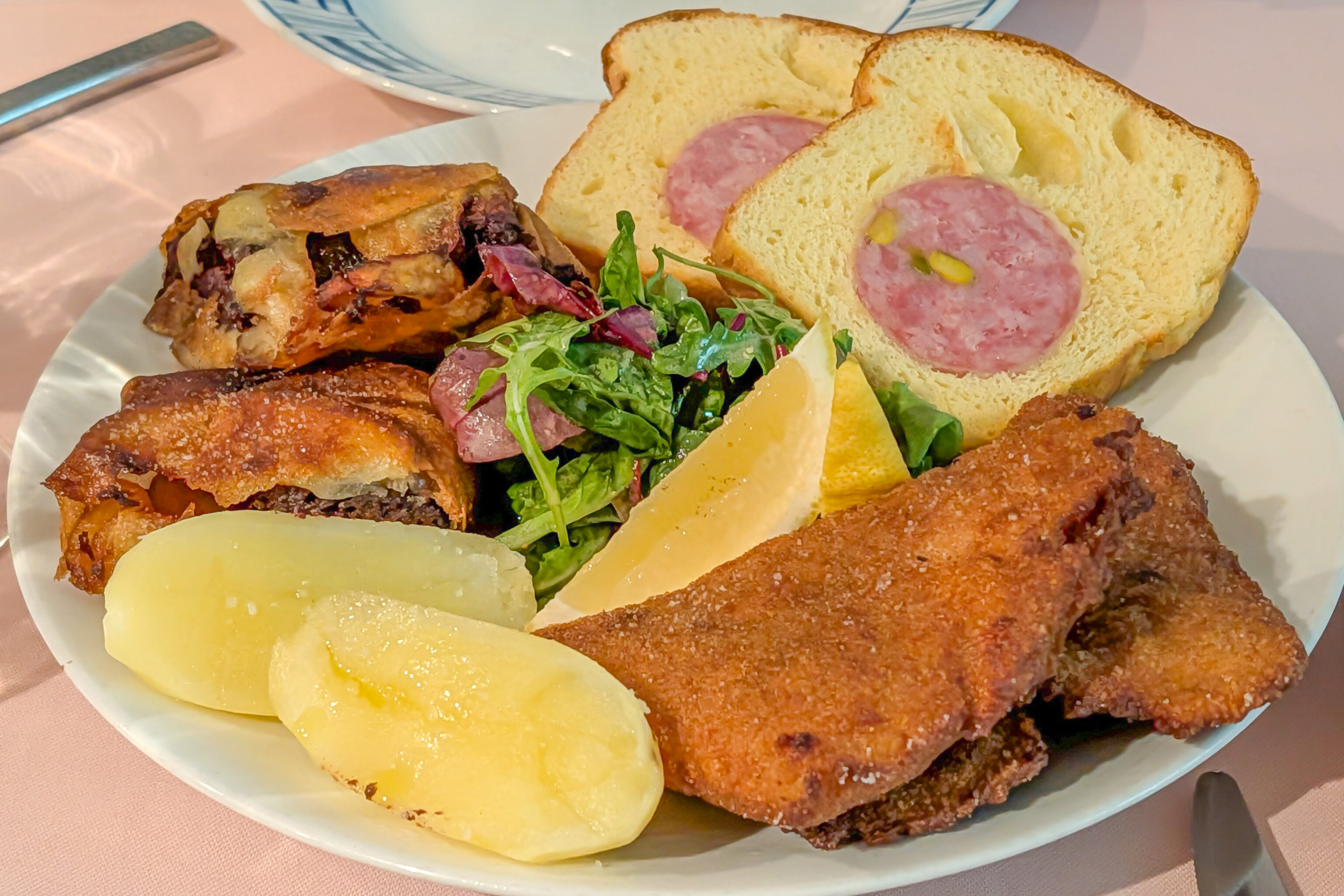
All 3 of the dishes were served at once, which actually seems like a communication error on our part in trying to say the dishes could be served in any order.
In this photo, in the upper right, “Croustillant de boudin noir aux pommes, vinaigrette de cidre”. This was basically fried blood sausage with a crispy shell, kind of like a fried egg roll shell.
At the bottom, “Saucisson brioché, sauce Mâcon et salade mélangée”. Basically sausage baked into bread, kind of like pigs in a blanket in concept but executed very differently.
Finally, in the upper left, “Tablier de sapeur de la Triperie Bouhours, pommes de terre vapeur, salade verte et sauce gribiche”. Kind of like a tripe schnitzel with a relatively strong tripe flavor.
Everything was well prepared. As to taste, that really depends on preferences. I definitely wasn’t a fan of the tripe with it’s soft and squishy texture and flavor. The saucisson brioché is by far the most compatible with general American tastes.
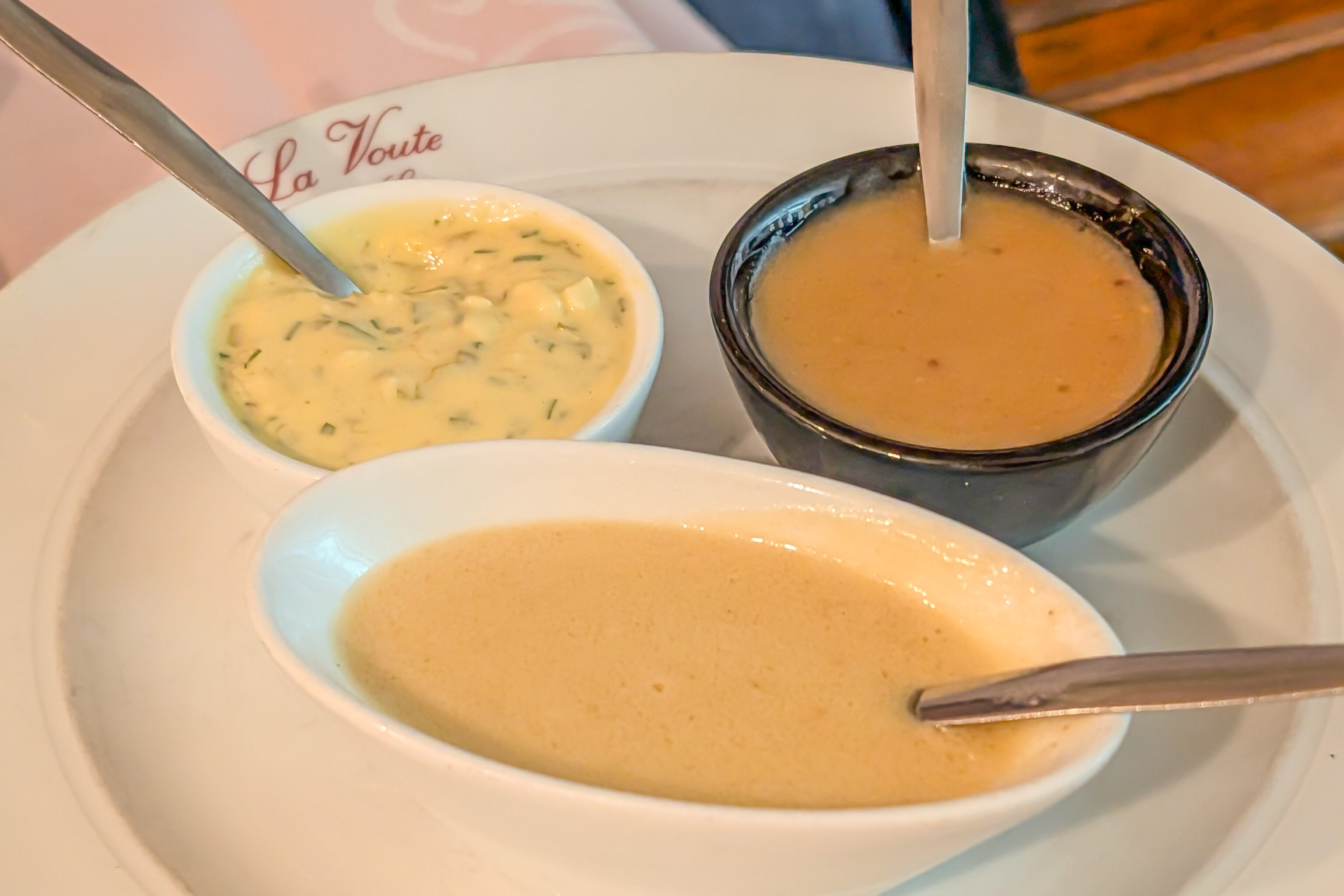
Sauces for the three dishes, in the same relative positions.
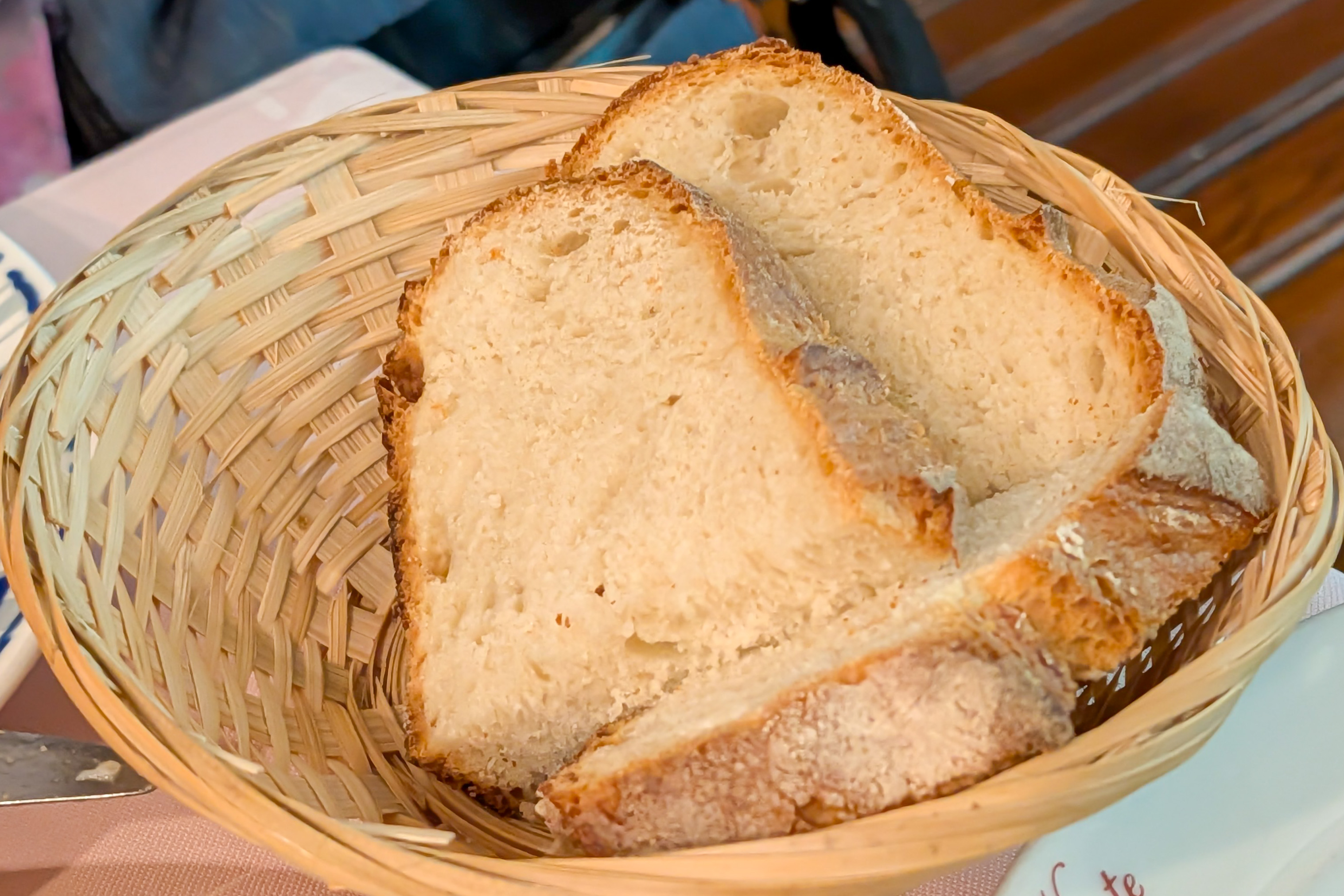
Some bread was provided.
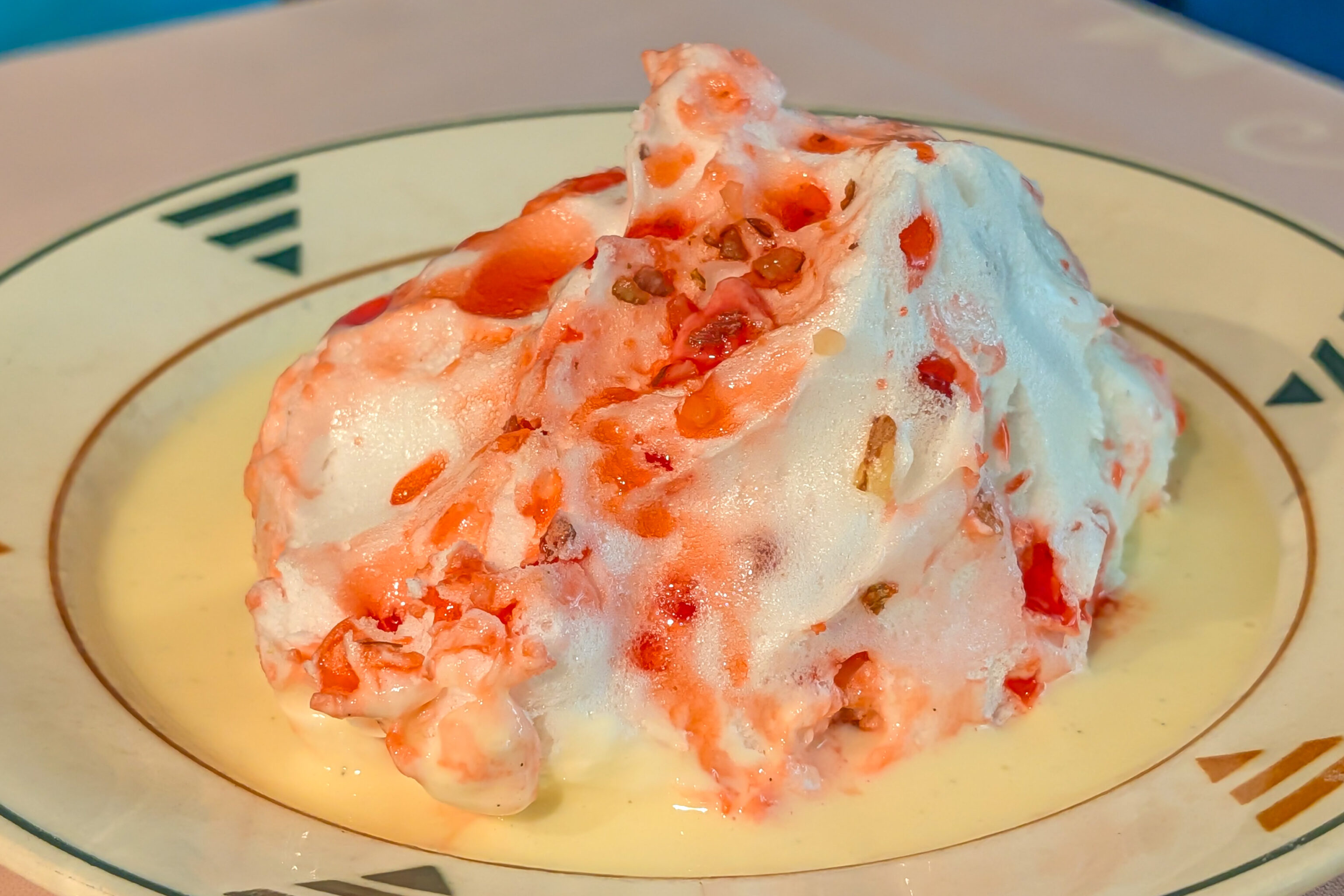
For dessert, we had “Œuf à la neige aux pralines roses”. This is basically fluffy white egg, kind of like snow. This also what the French name suggests. In English, this is apparently known as a floating island. It was good and an interesting dessert. The red sauce, which is common on a few Lyonnaise dishes, did look a bit like the mound of snow was bleeding as it slowly drained out!
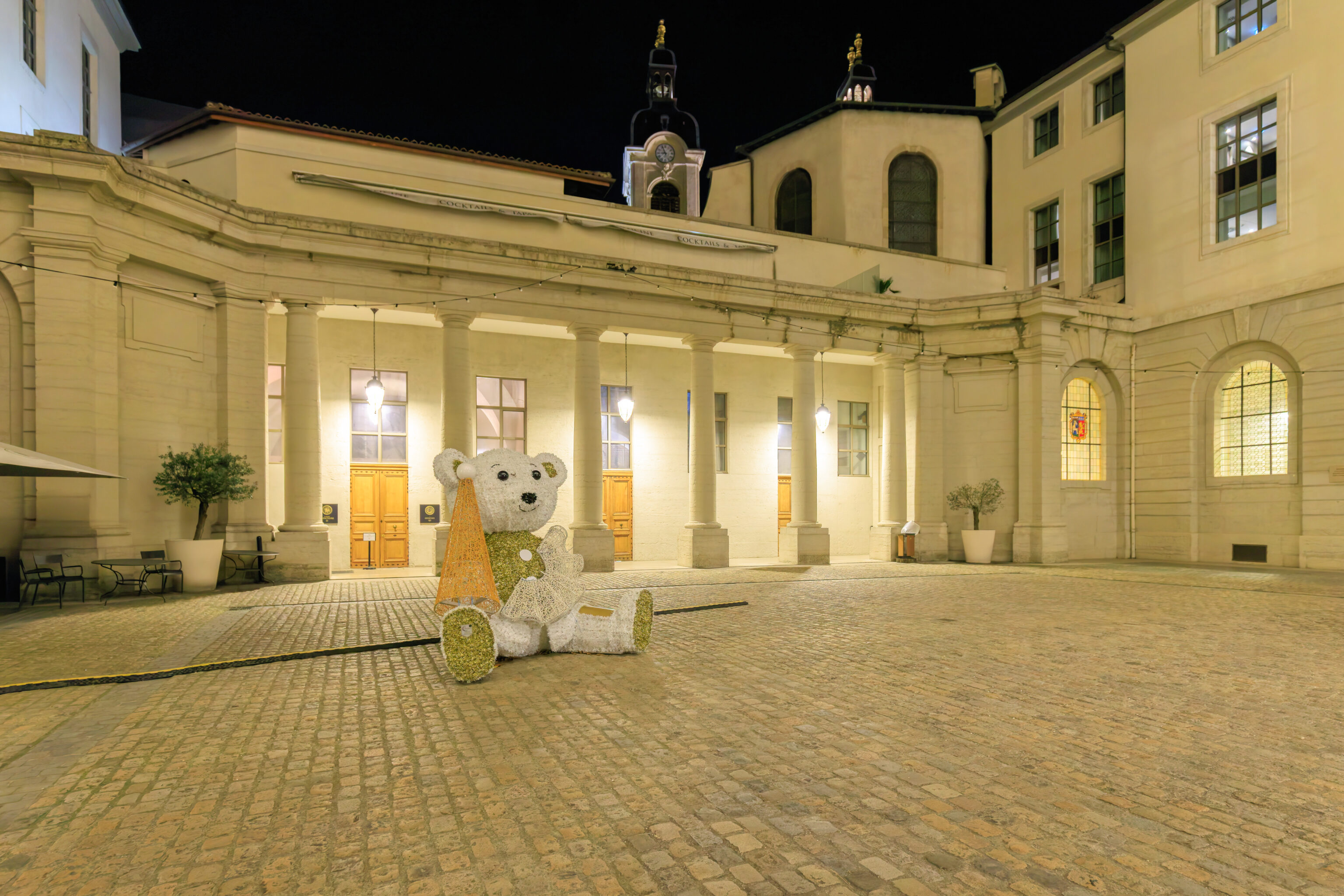
After walking back to the InterContinental, we saw that a large teddy bear had appeared in the courtyard by the entrance! Presumably, this is for the upcoming Christmas holiday, although it is still more than one month away.
One Reply to “Fourviere Hill and Vieux Lyon”