After our final morning at the InterContinental Lyon, we checked out and revisited the Roman theatres, which were closed for wind when we visited earlier on this trip. After, we had lunch at Bouchon Tupin before catching a train to Geneva, checked into the Crowne Plaza, and had dinner in the city.
Morning
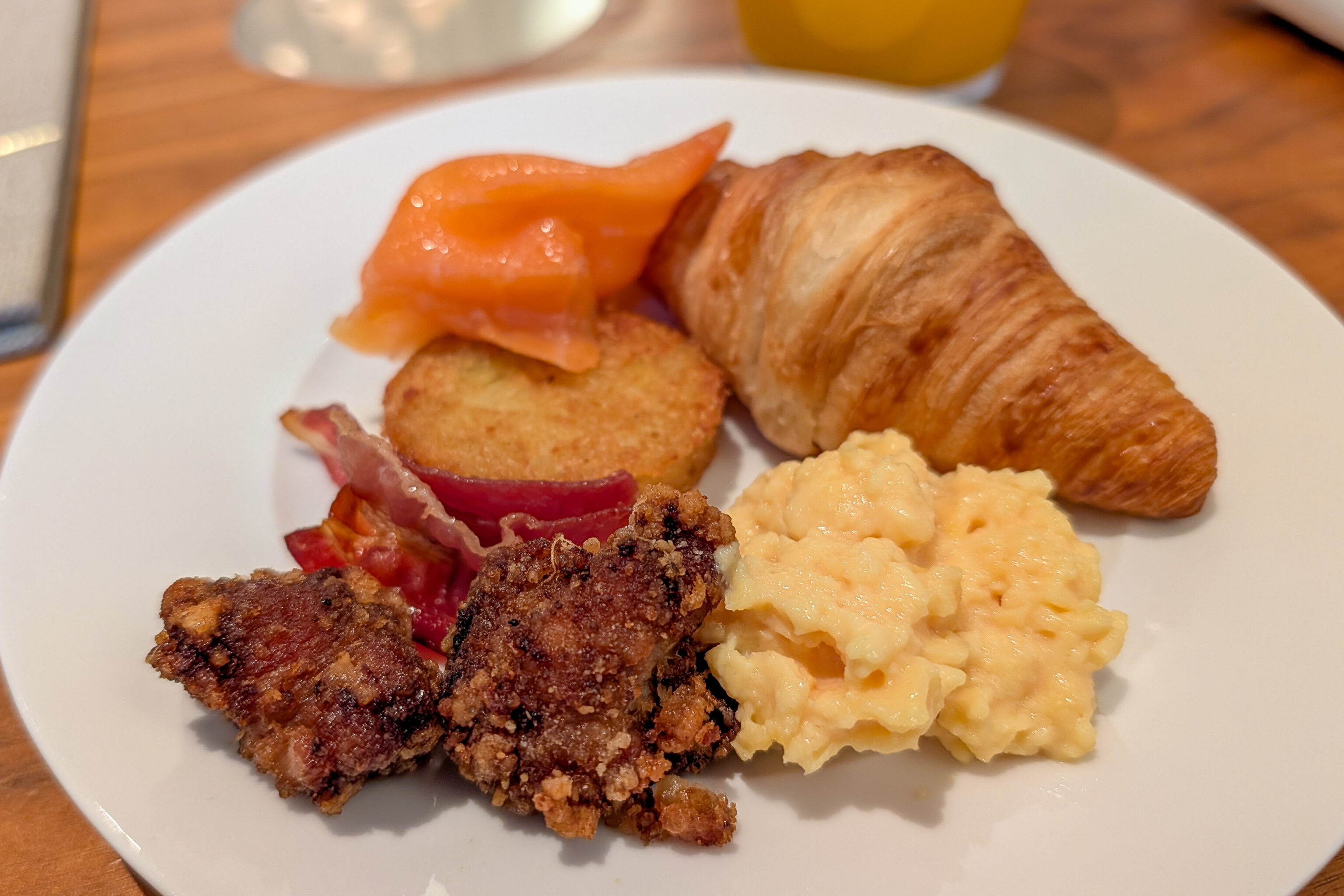
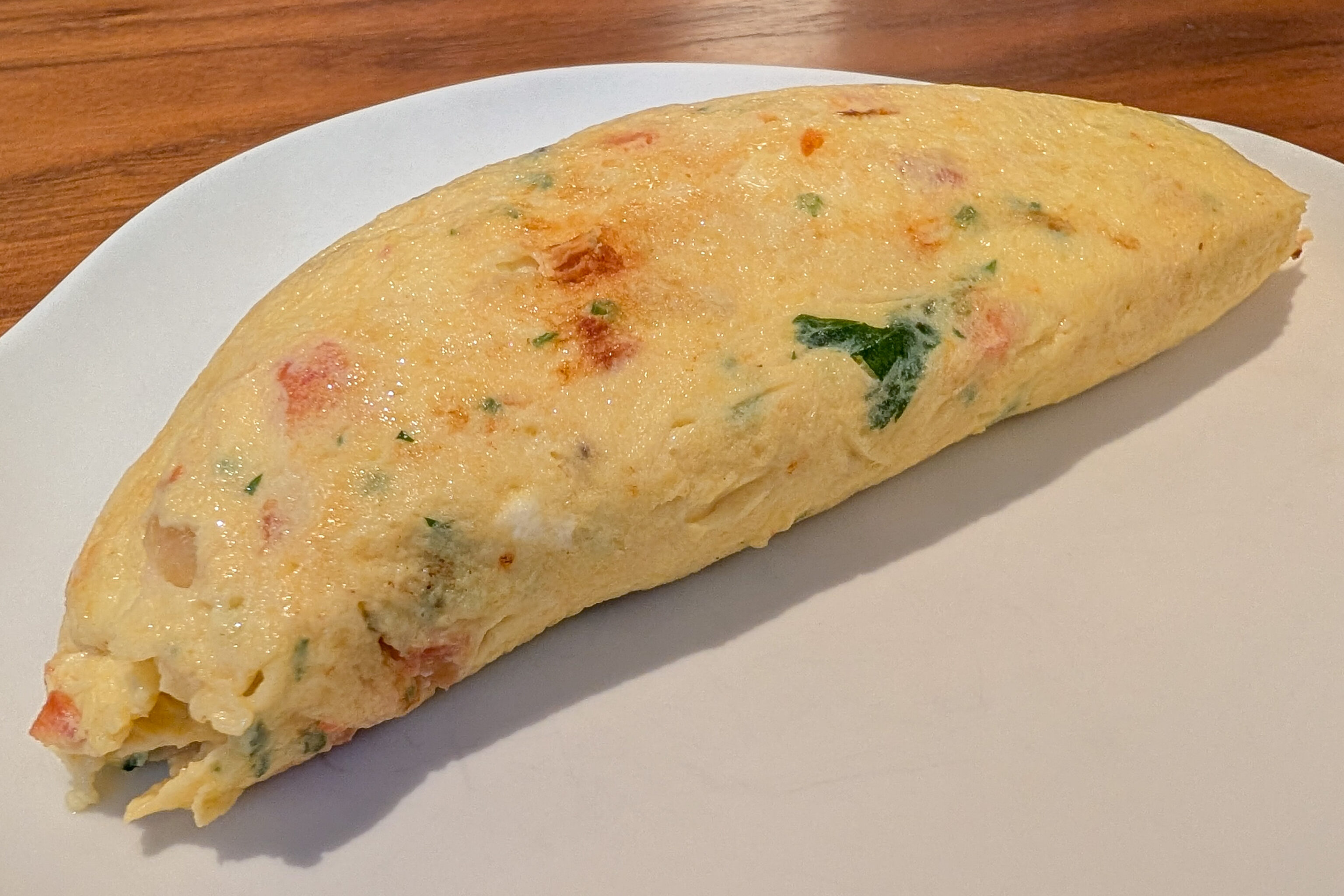
This morning, we had our final breakfast at the InterContinental Lyon Hotel-Dieu. It was the same as the other seven mornings of this trip.
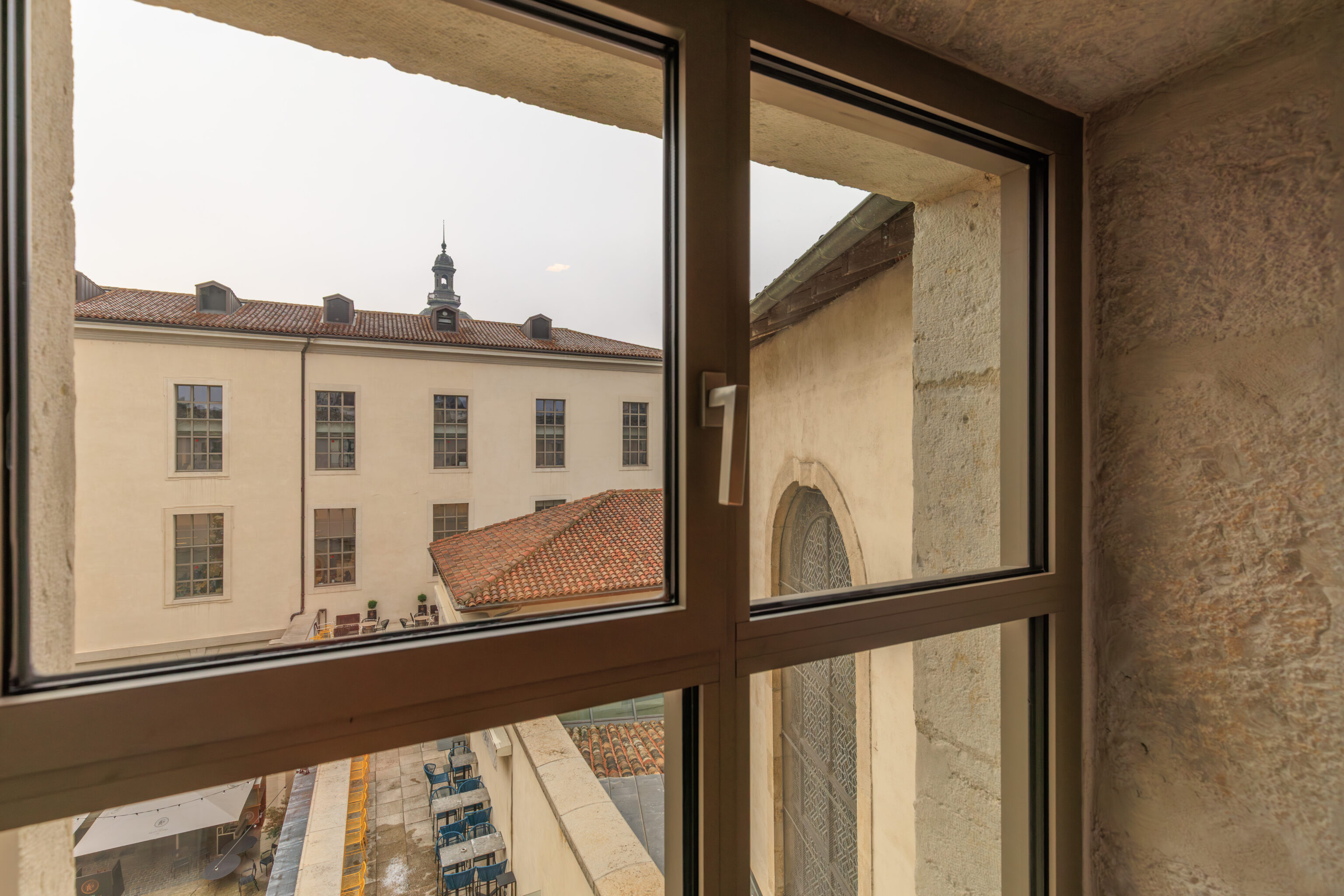
While the weather outside didn’t look too great, at least it wasn’t raining.
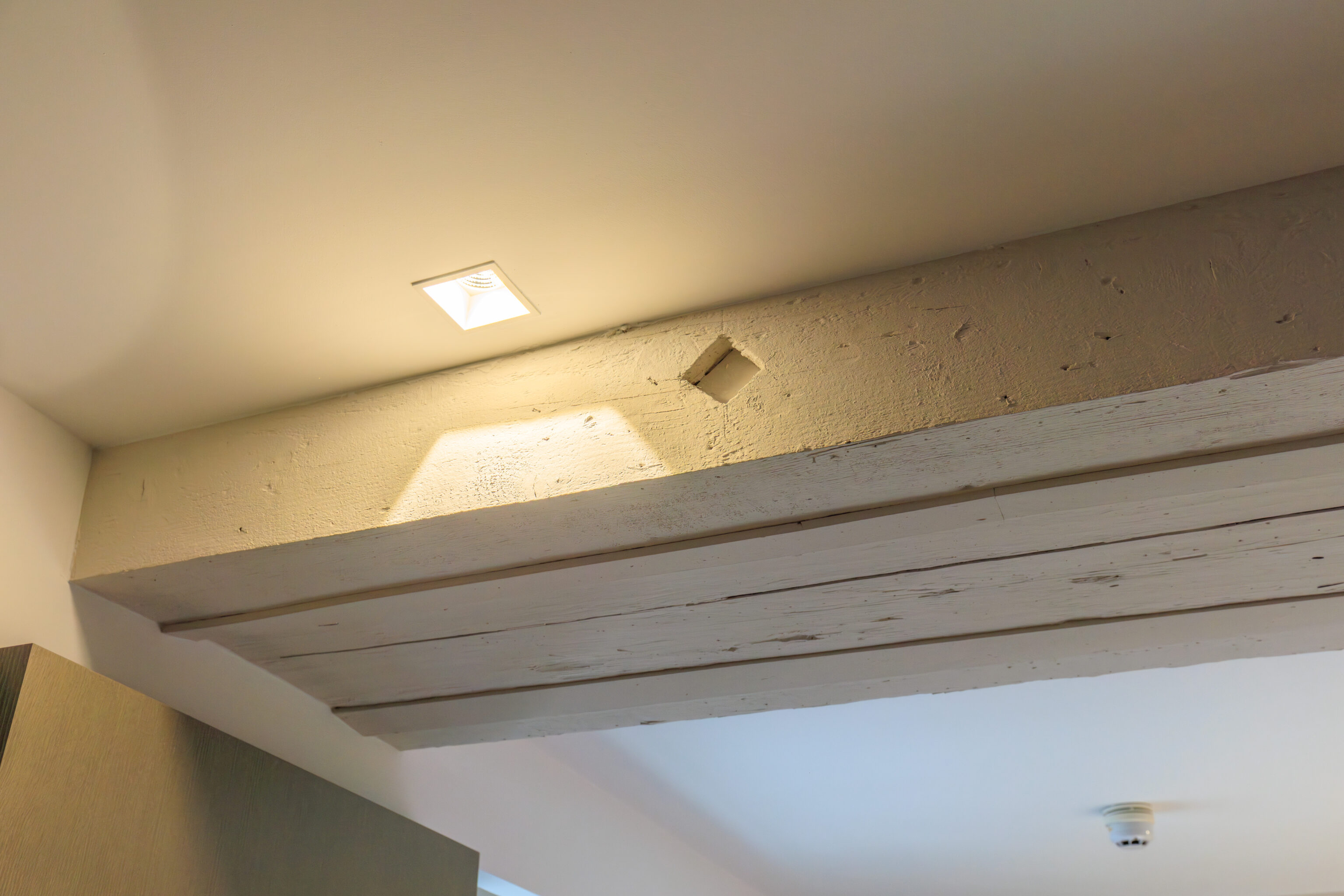
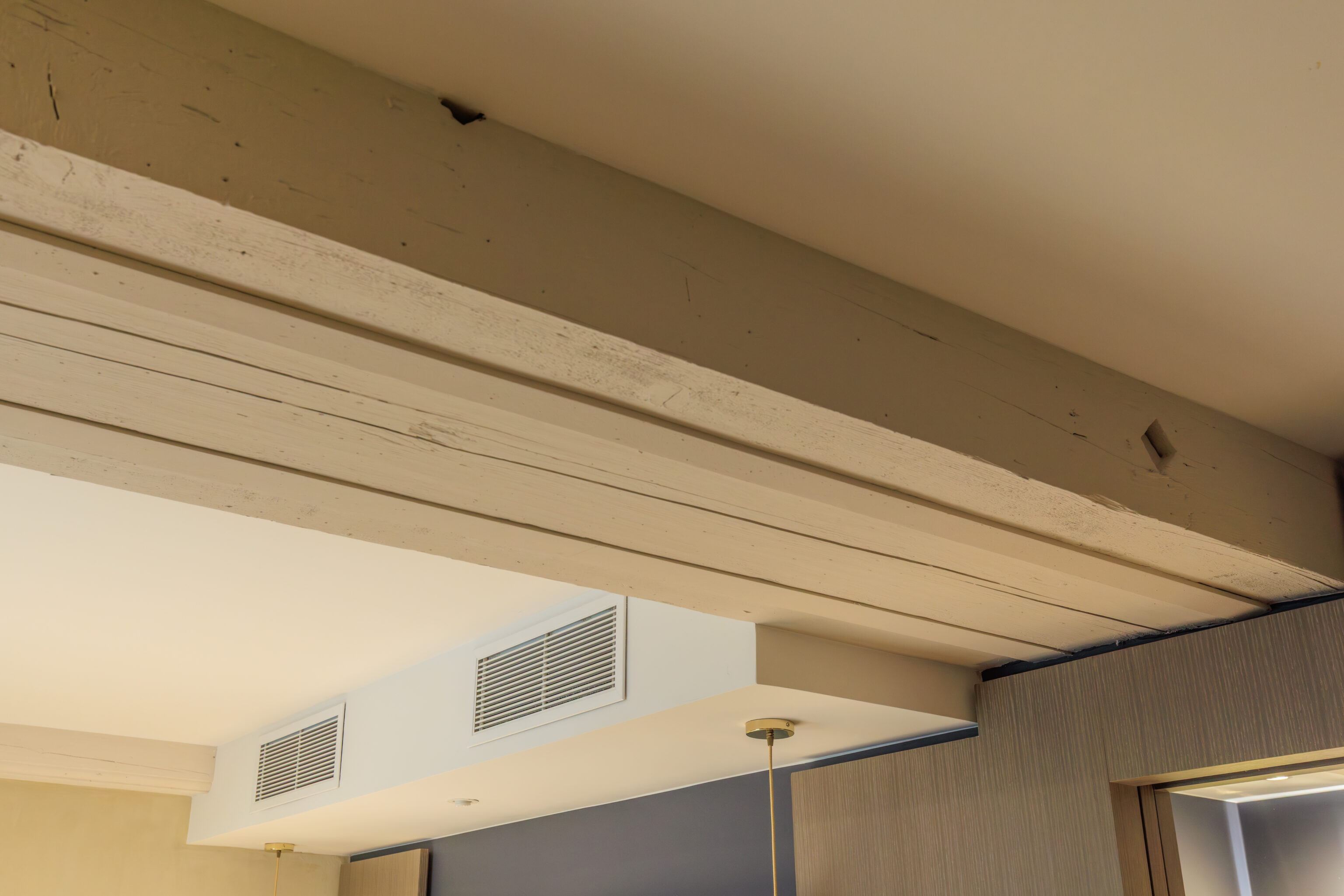
When we checked in, the front desk agent mentioned that the hotel does have some original features that were kept when this part of the Hôtel-Dieu was renovated into a hotel. One such feature was some wooden beams downstairs. These wooden beams in our room certainly seem like they could be original, or at least, historic.
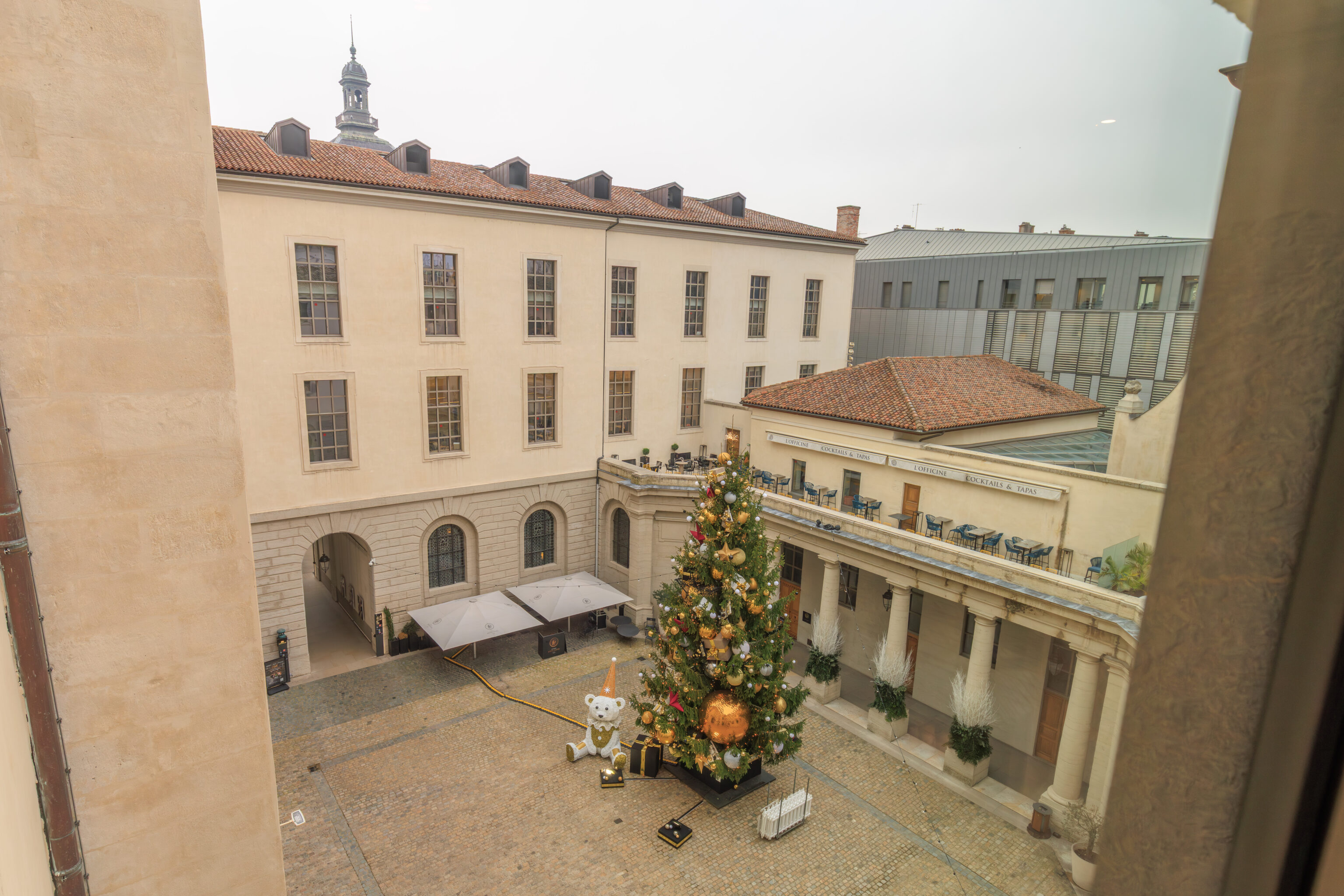
Looking down into the courtyard below on our way to check out, the Christmas tree is in the same decorated state as it has been for a few days now. It looks like there is some fencing that is about to get installed though.
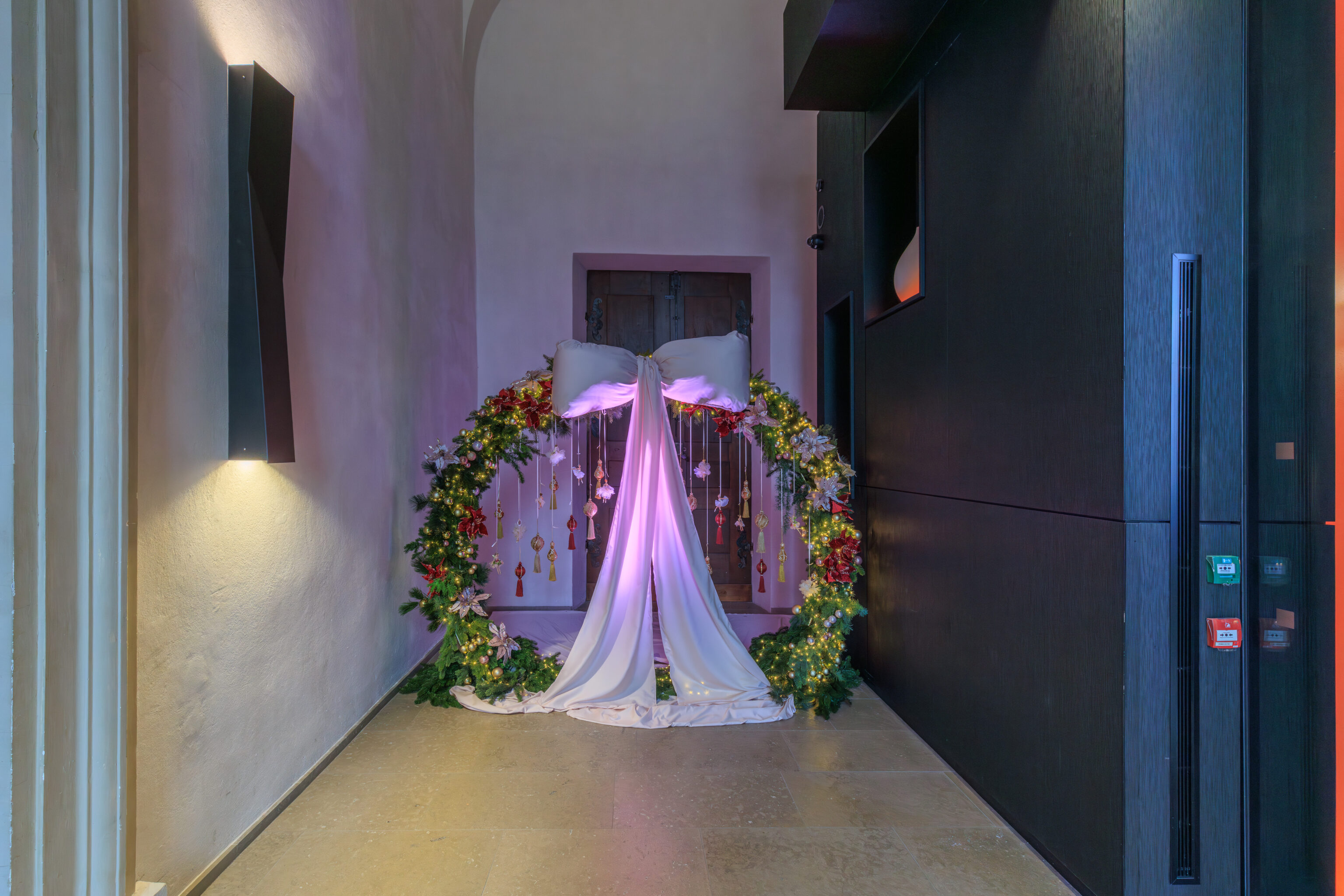
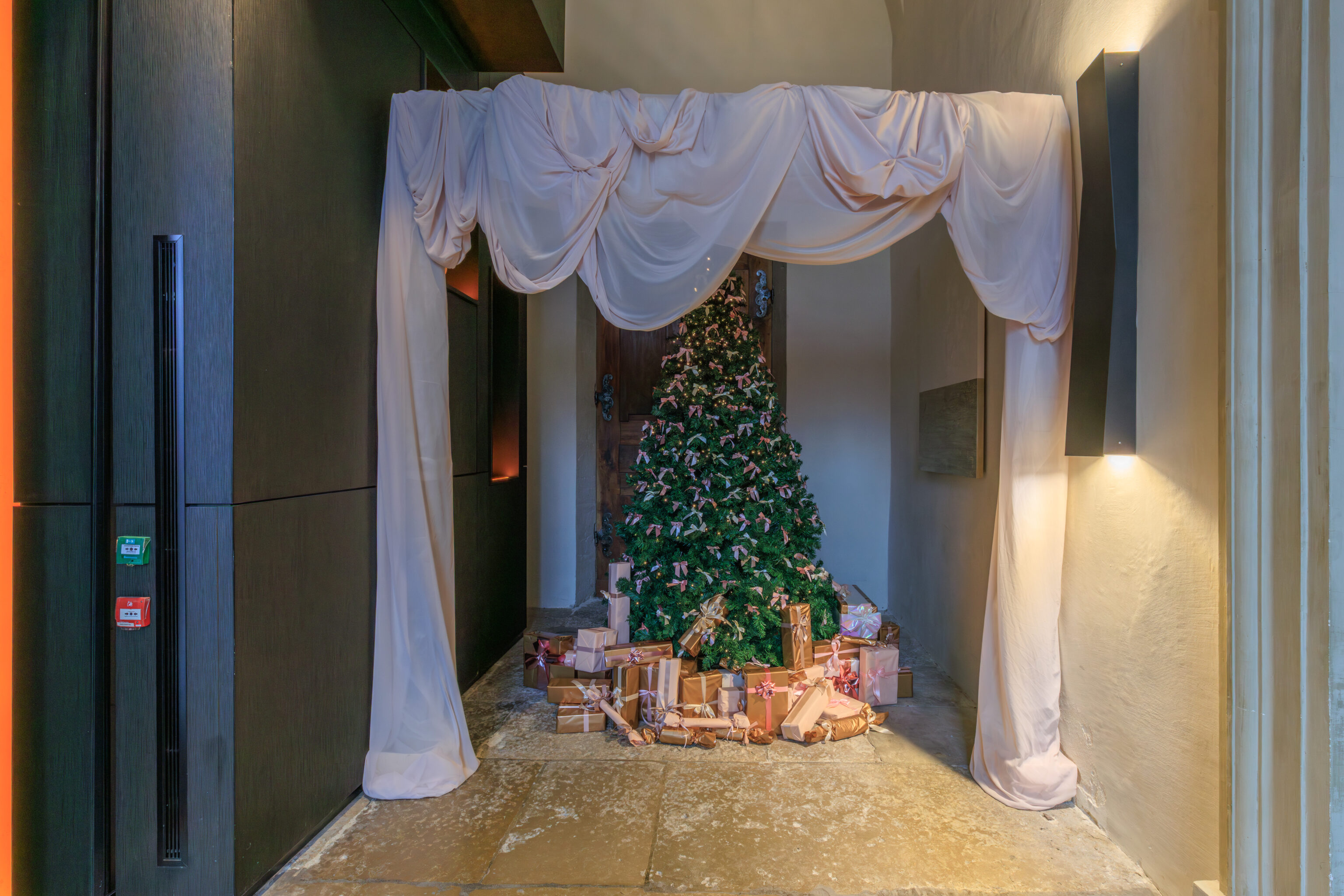
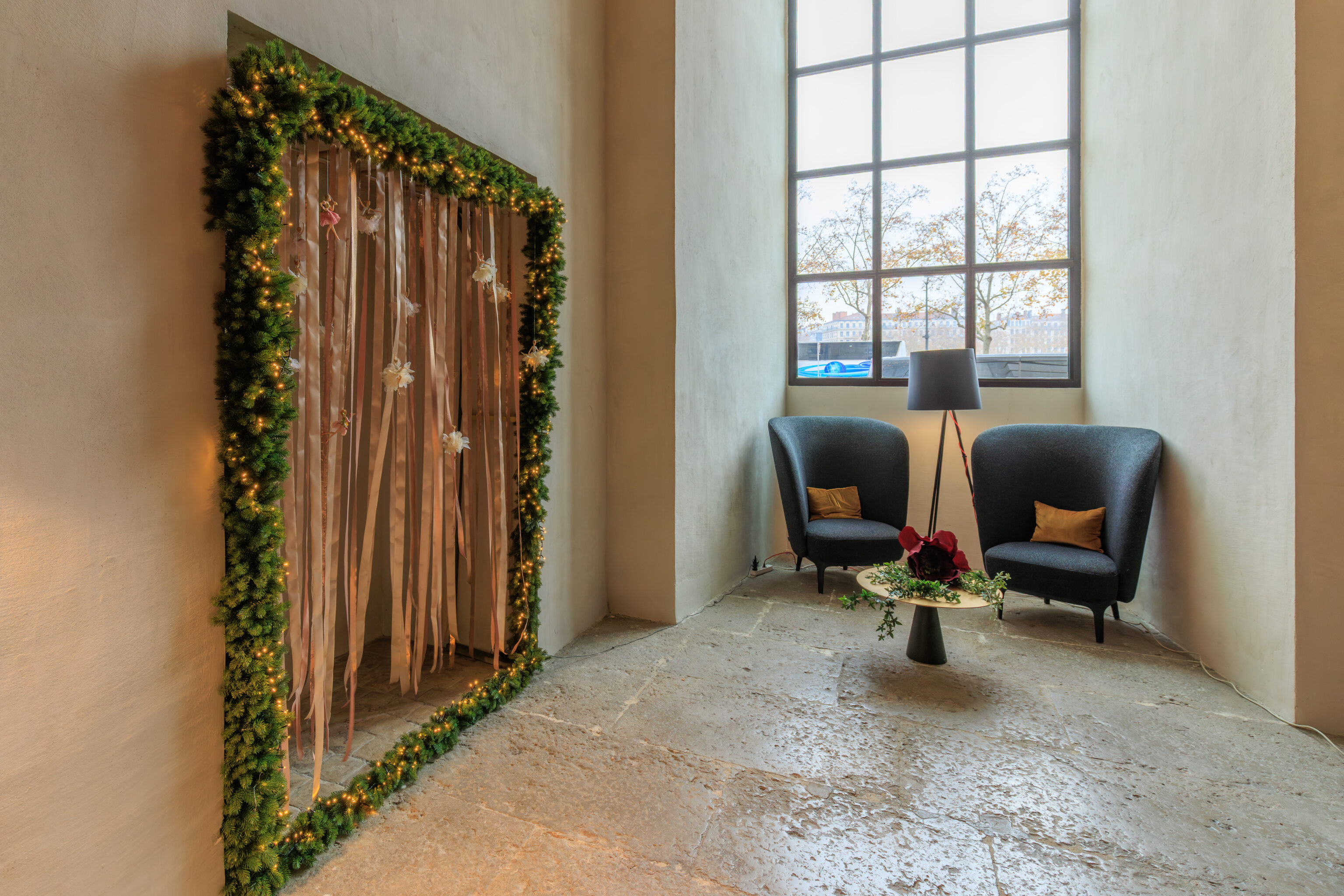
There were some decorations in the lobby area for the upcoming Christmas holiday season. After checking out, we left our bags at the hotel to pick up later when we leave Lyon.
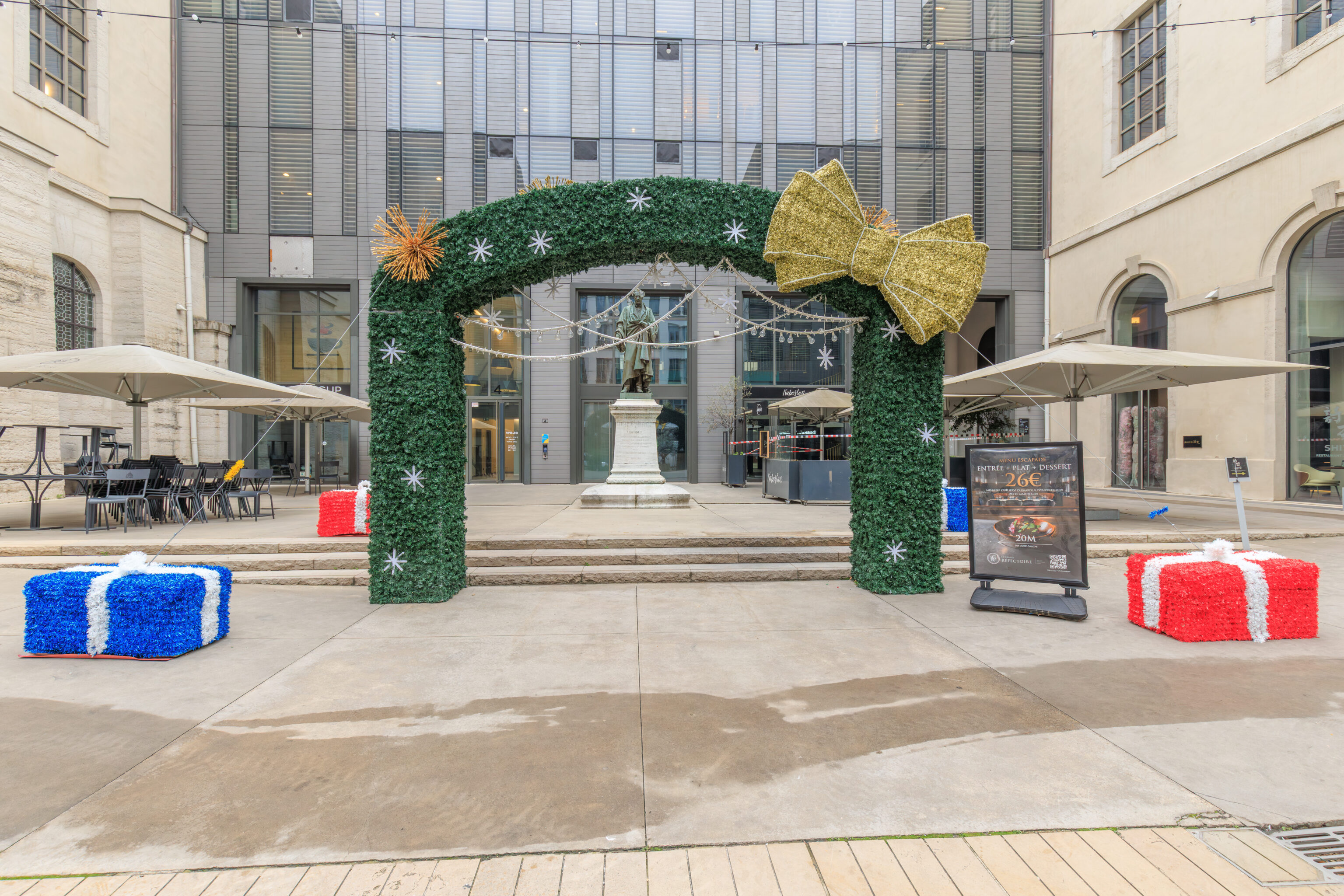
We decided to walk over to the Bellecour Metro station to the Vieux Lyon – Cathédrale Saint-Jean station. We walked by a decorative arch and some large presents on the ground by one of the Hôtel-Dieu entrances.
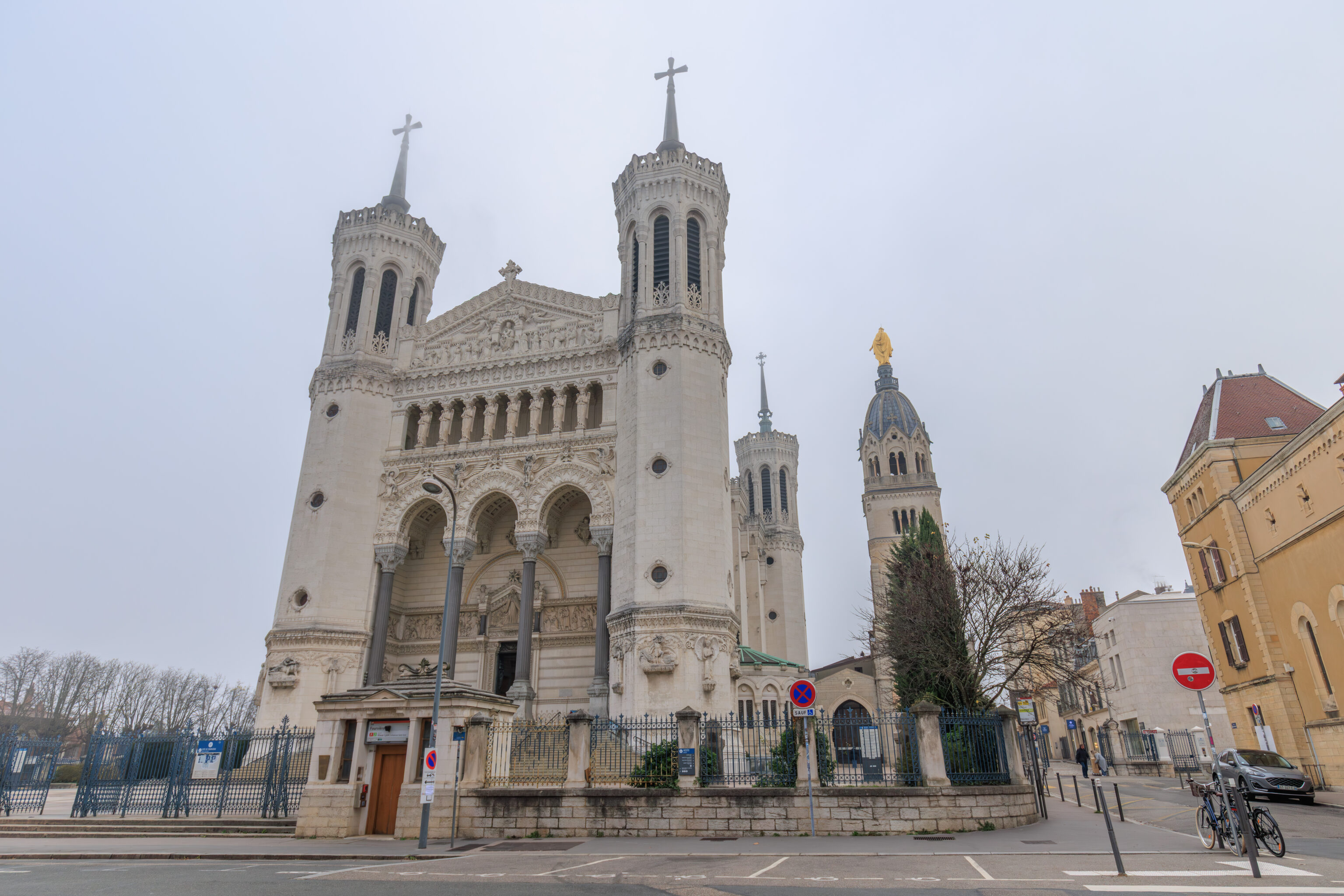
After arriving one stop away at Vieux Lyon – Cathédrale Saint-Jean, we took the funicular up to the Fourvière. We exited in front of the Basilique Notre-Dame de Fourvière. Having already visited on our second day in Lyon, we walked past it to the south.
Lugdunum Théâtres Romains
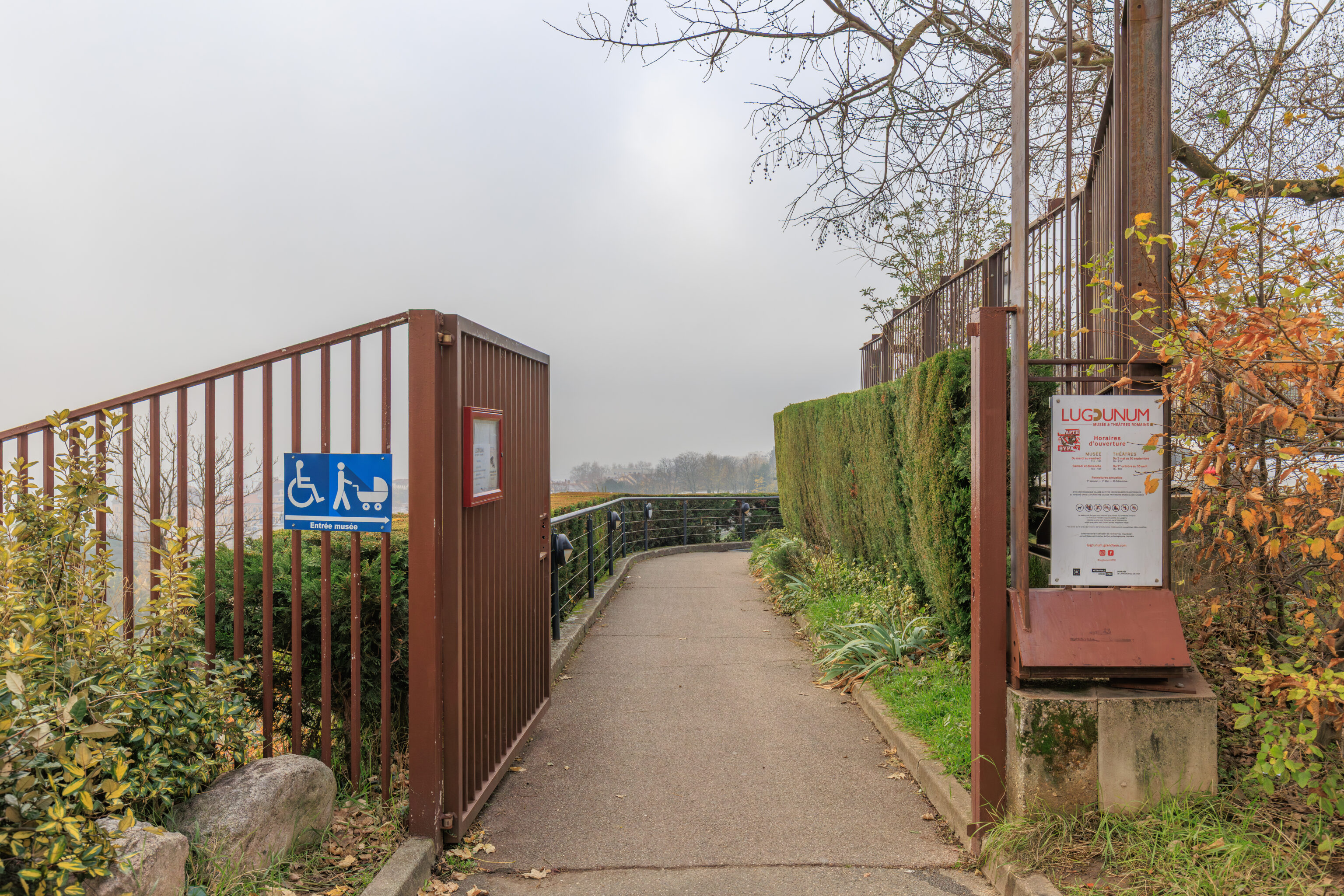
We were happy to see that the entrance into the Lugdunum Théâtres Romains (Roman Theatres) was open!
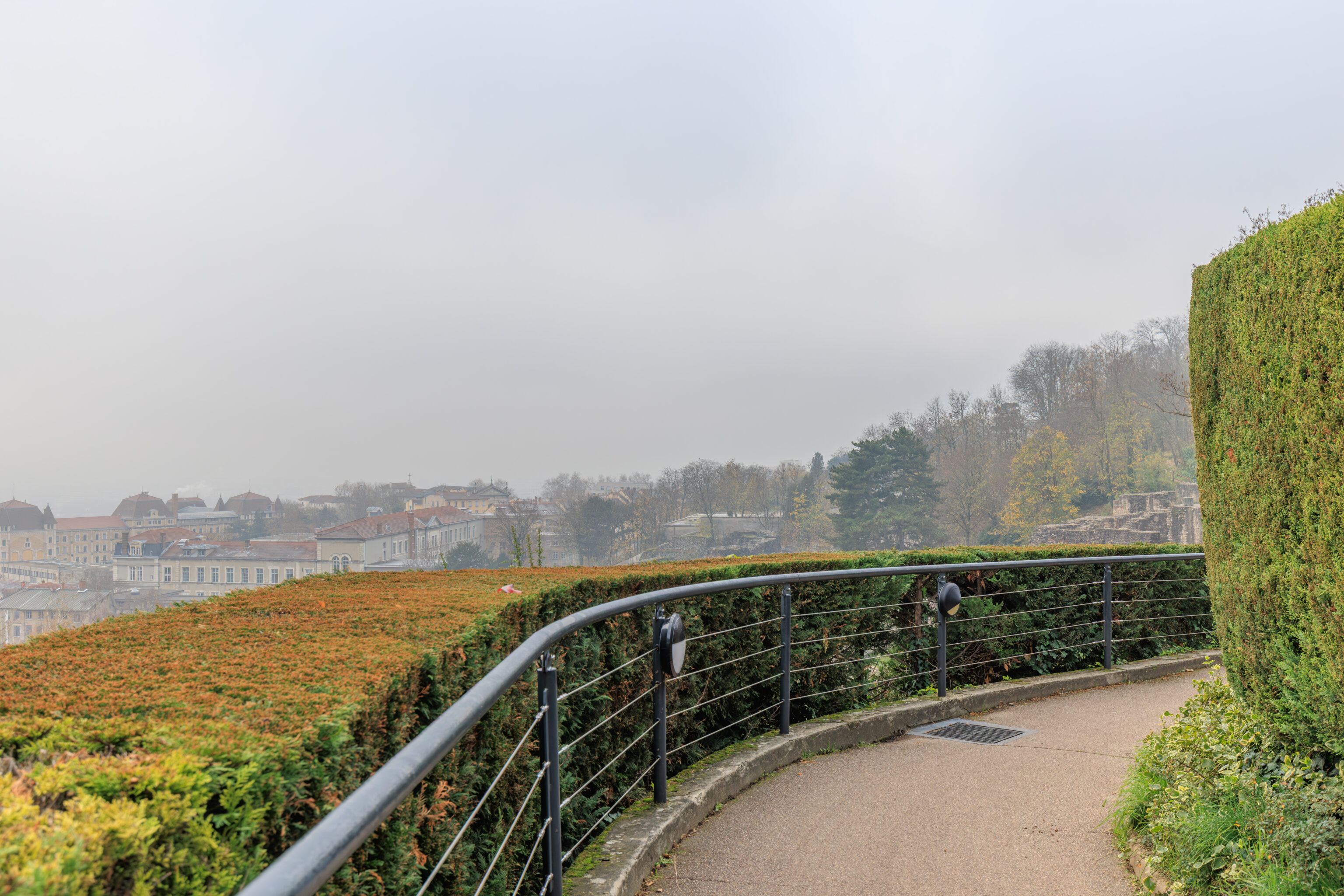
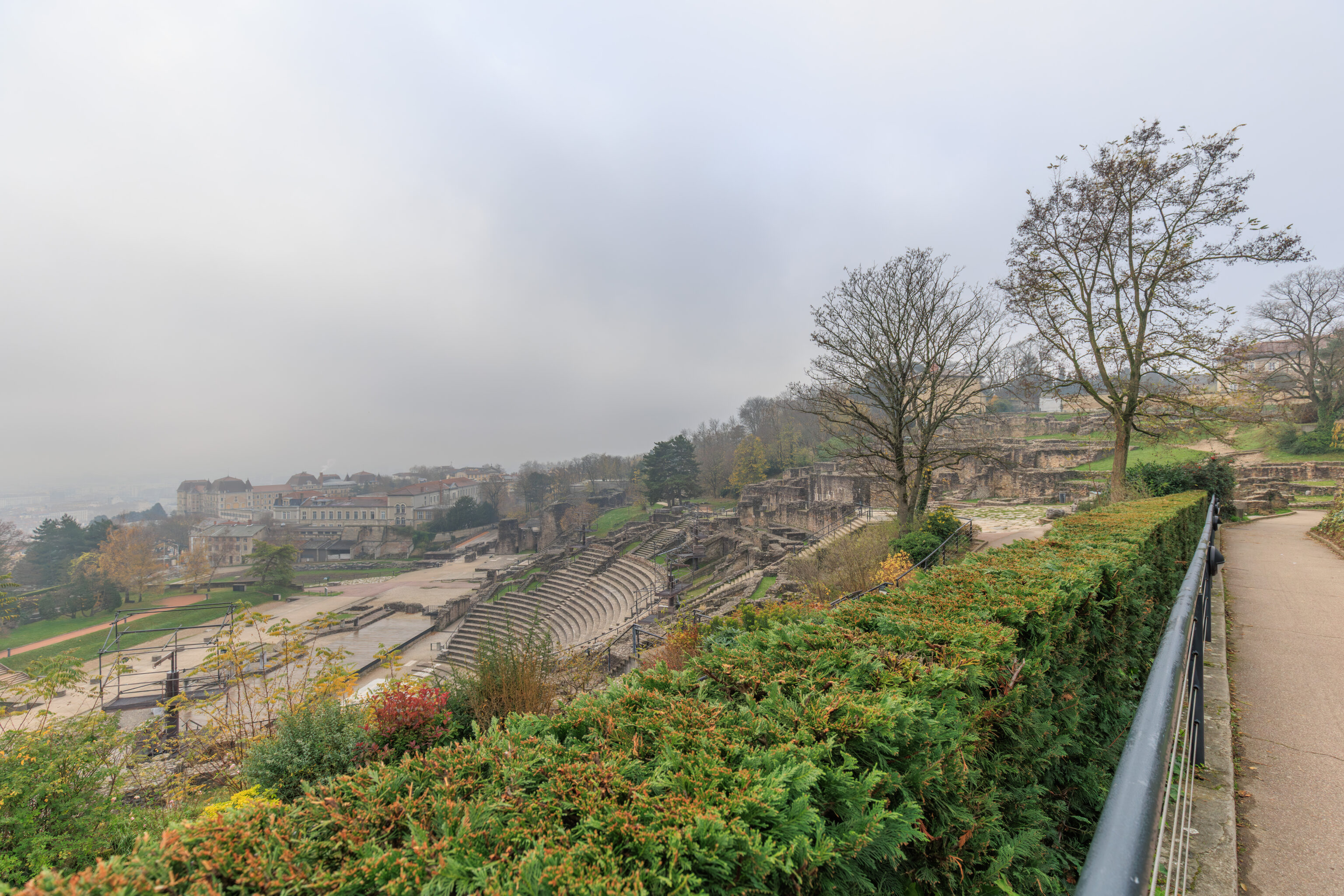
We chose this upper entrance as we knew the site was on the side of the Fourvière hill. By entering near the top, we hoped to mostly walk downhill during our visit. There is also a funicular station at the bottom so there would be no need to backtrack.
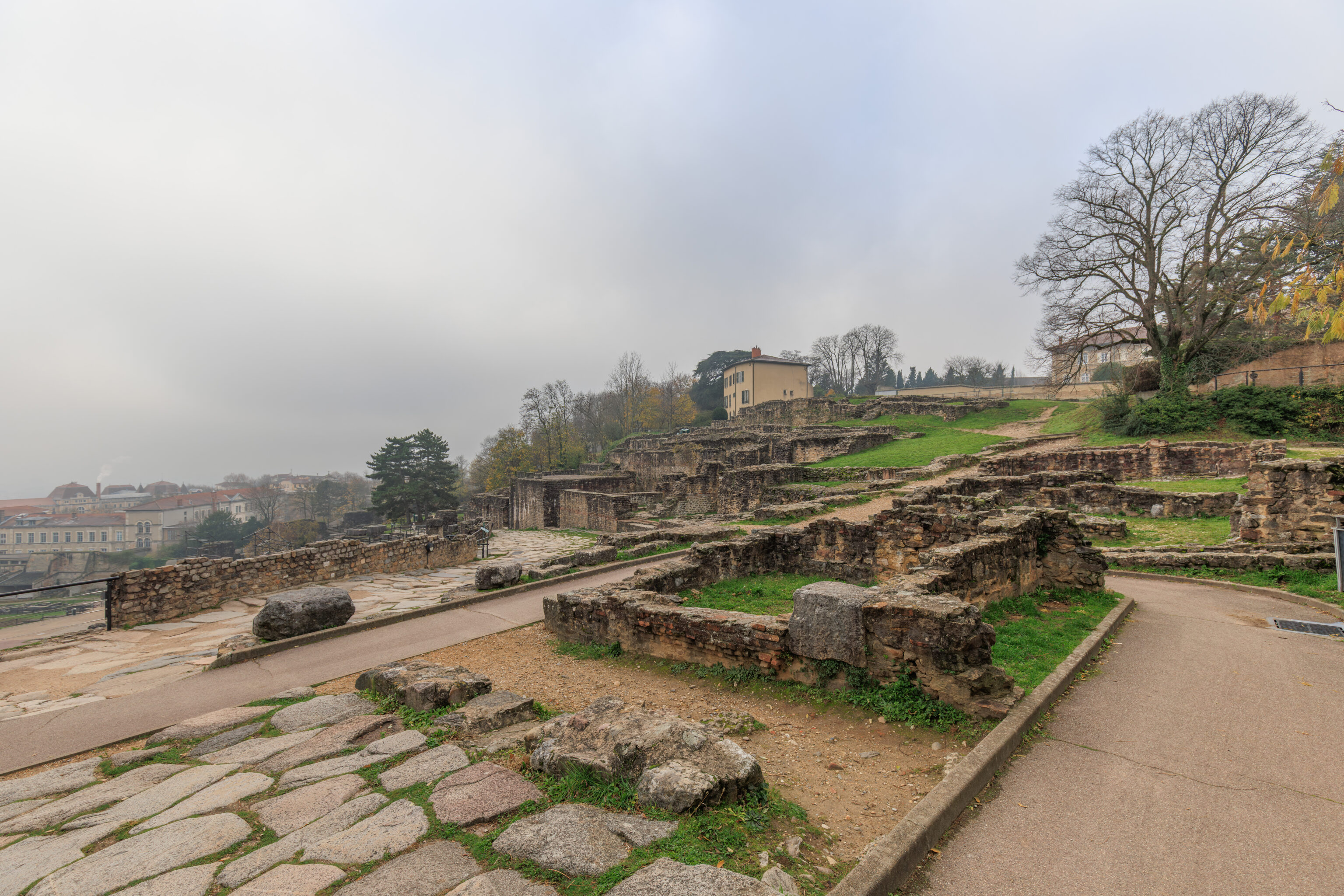
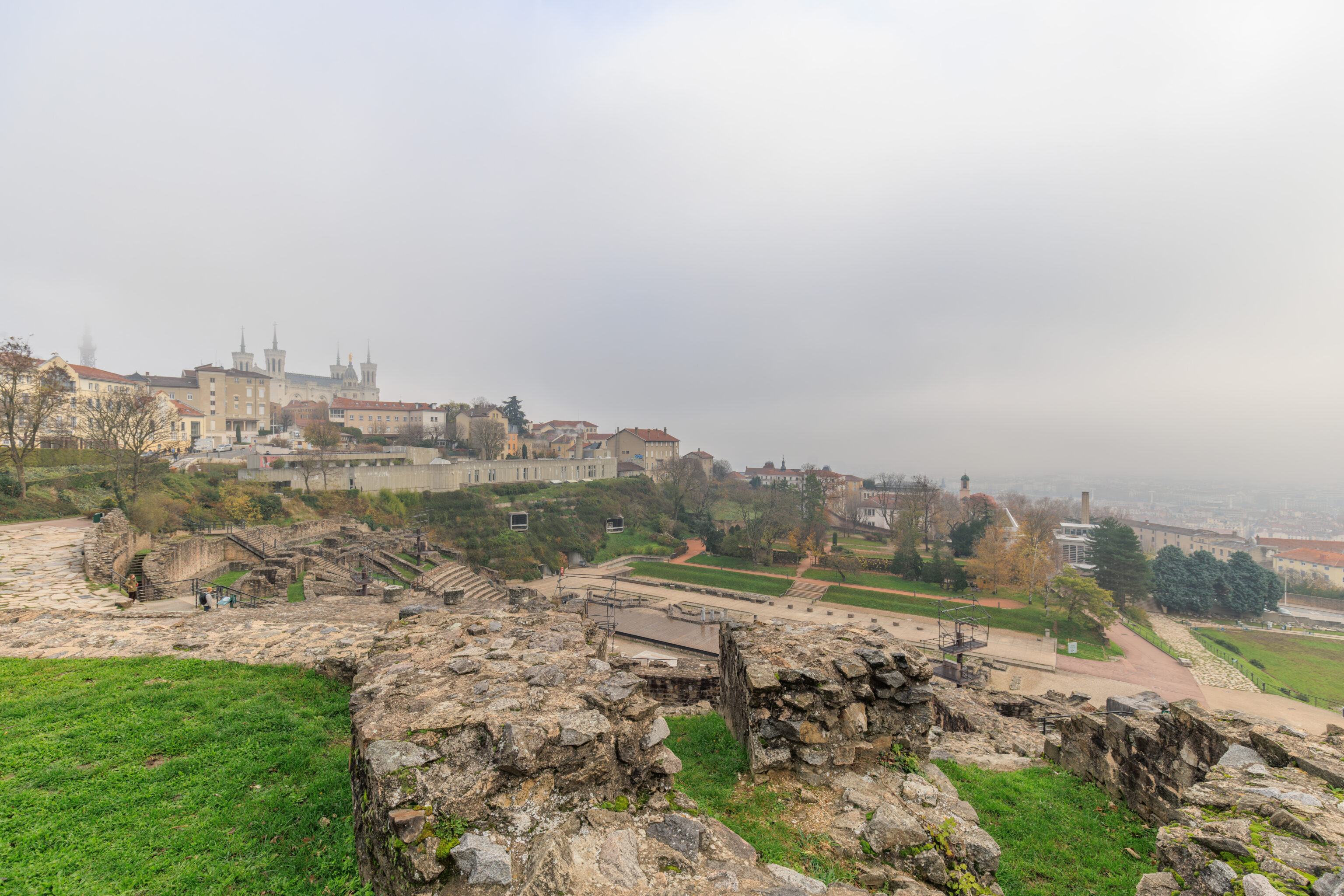
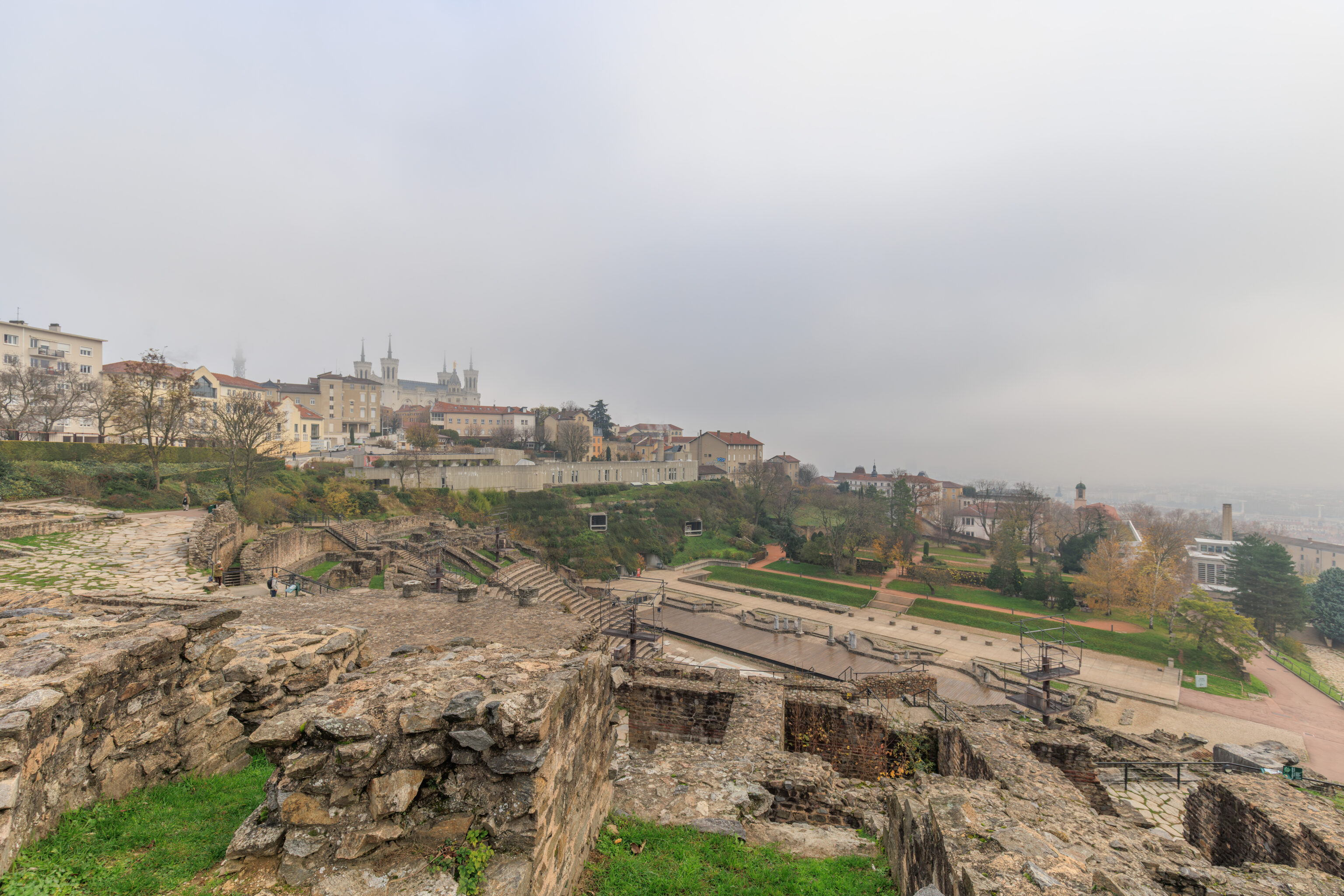
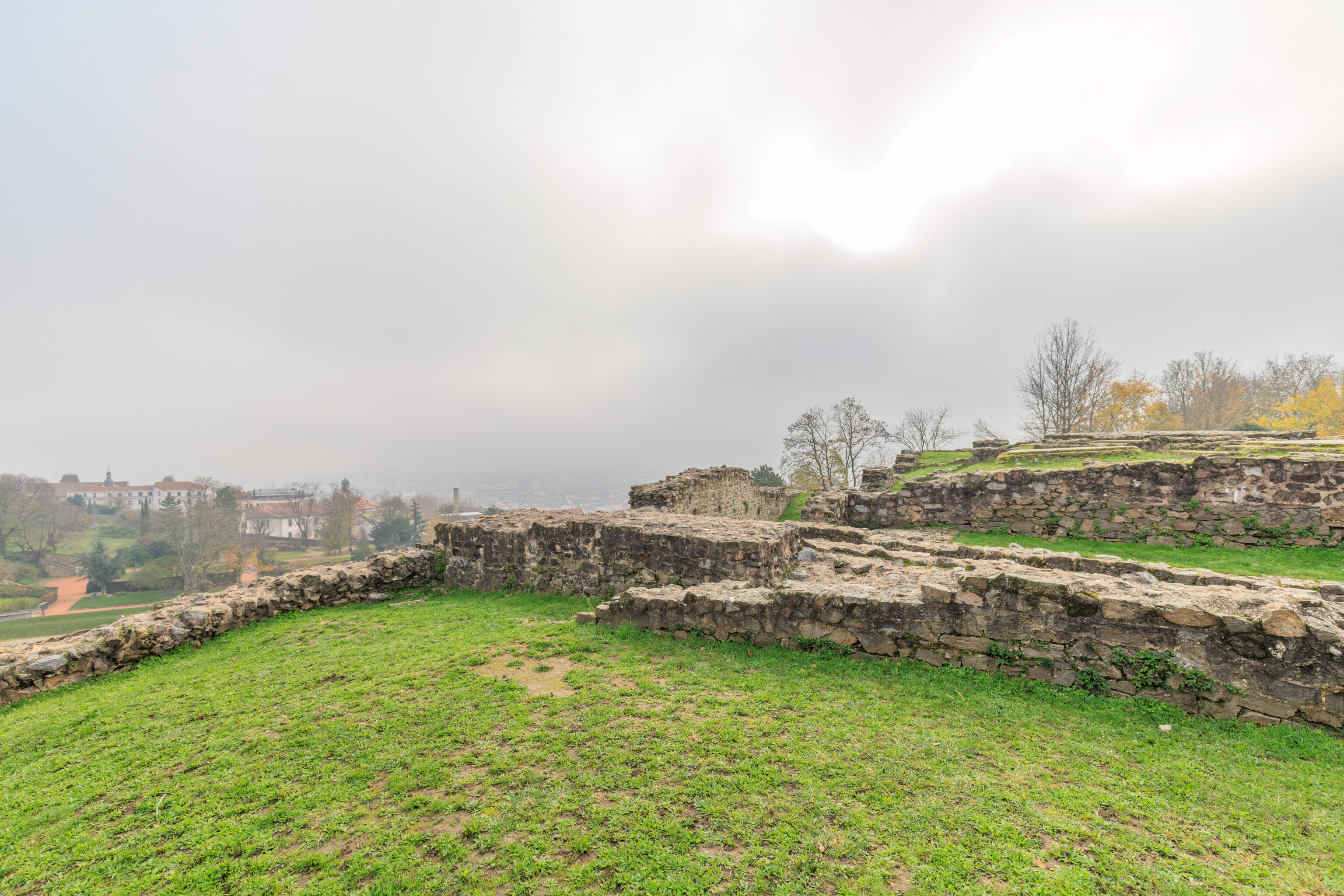
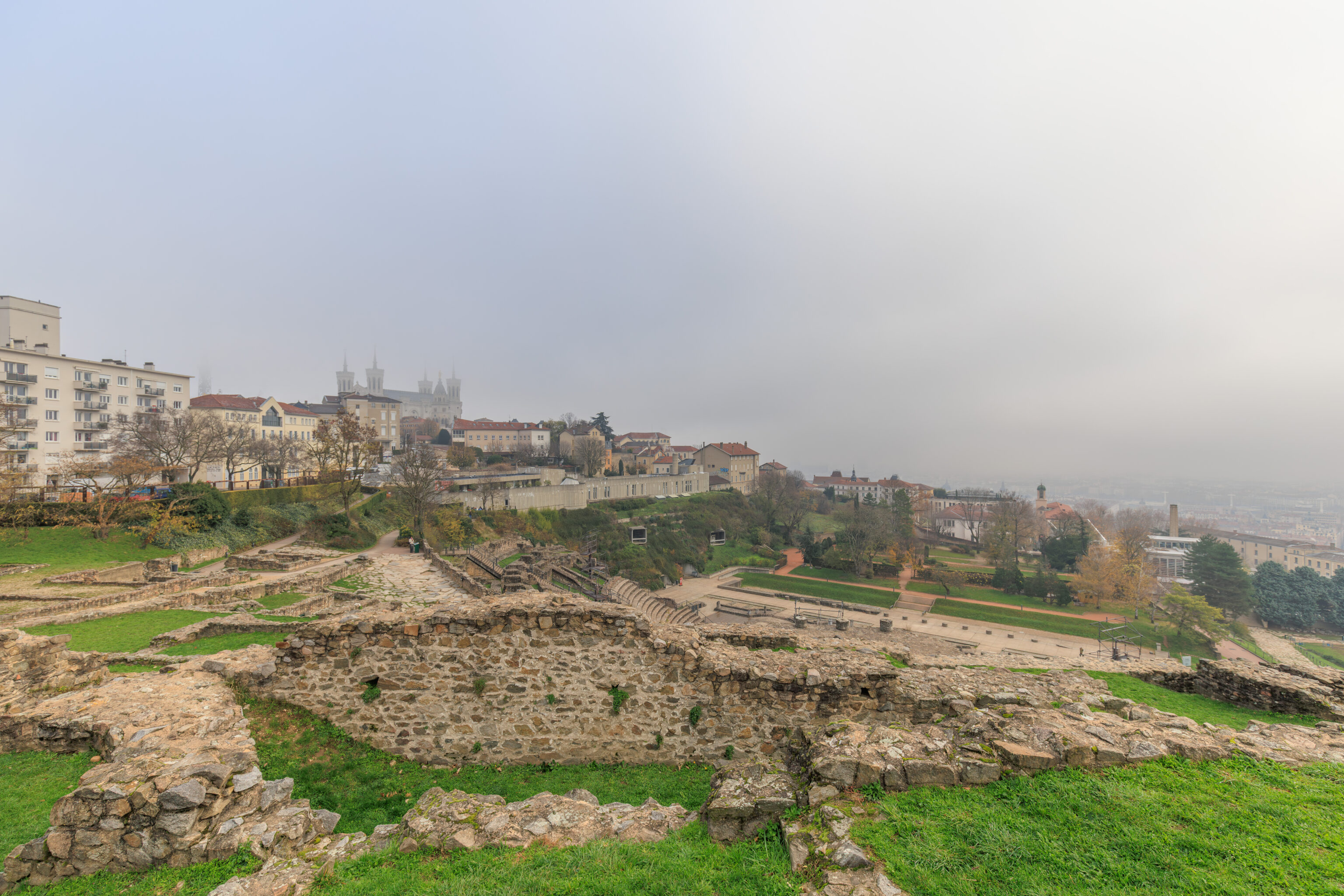
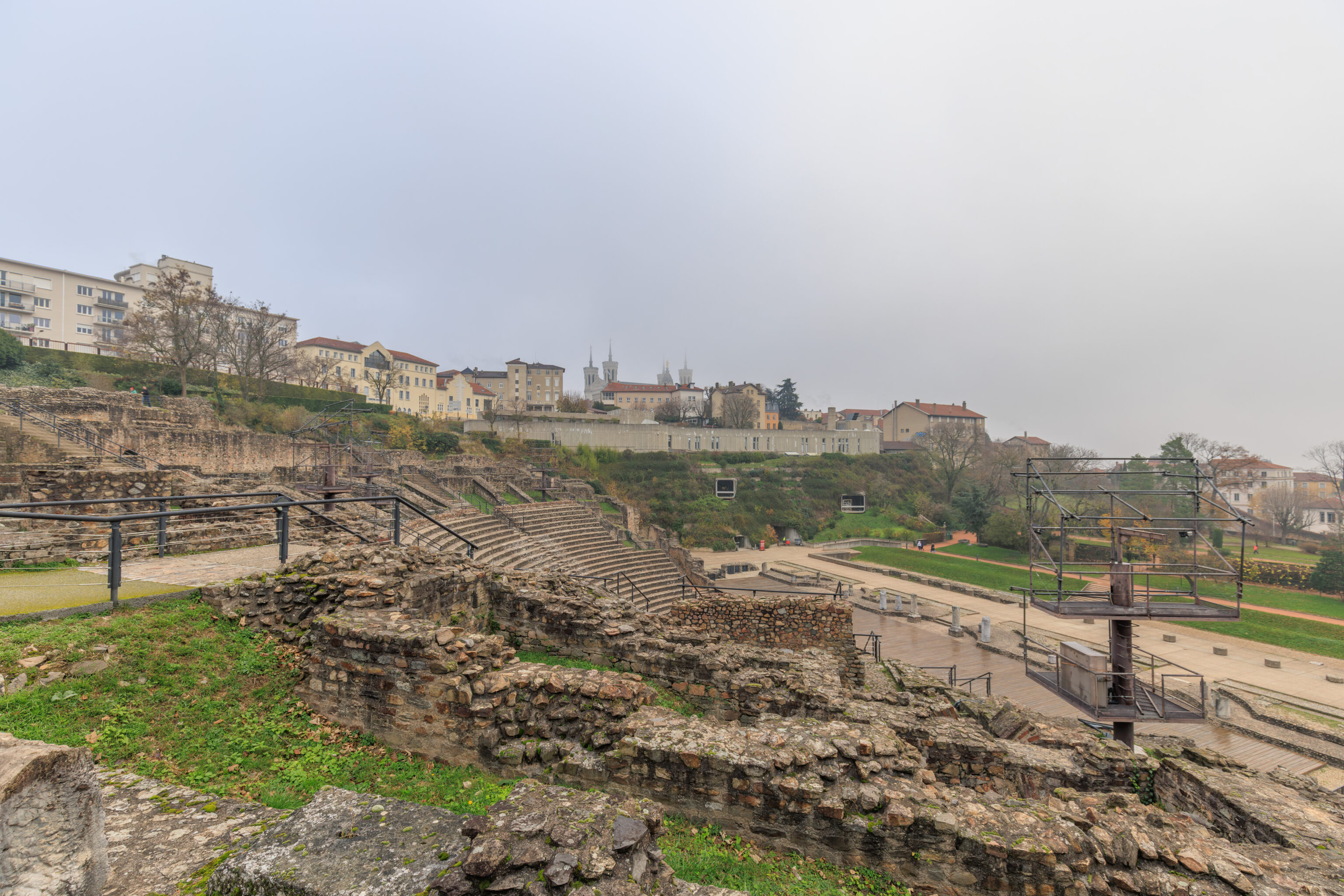
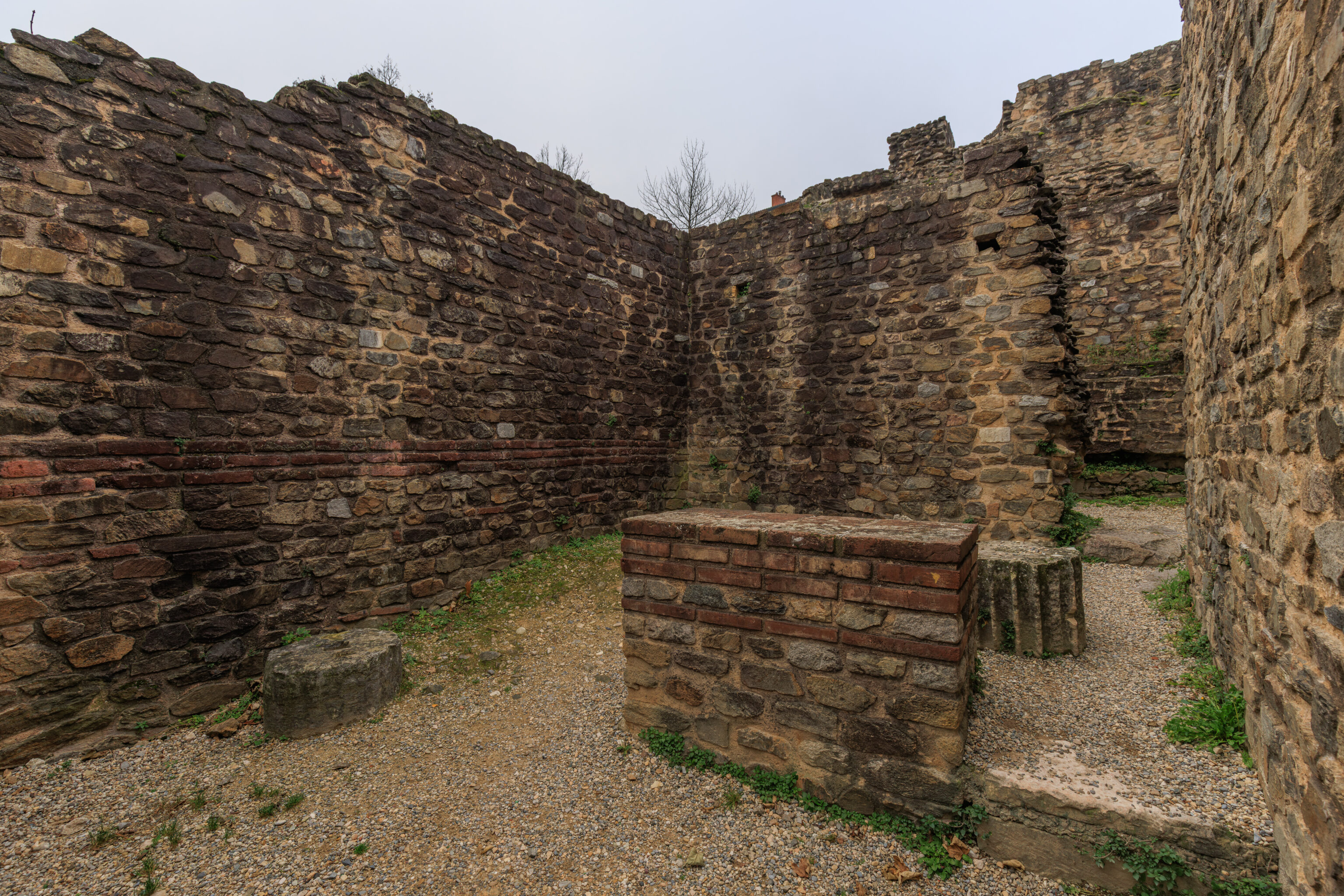
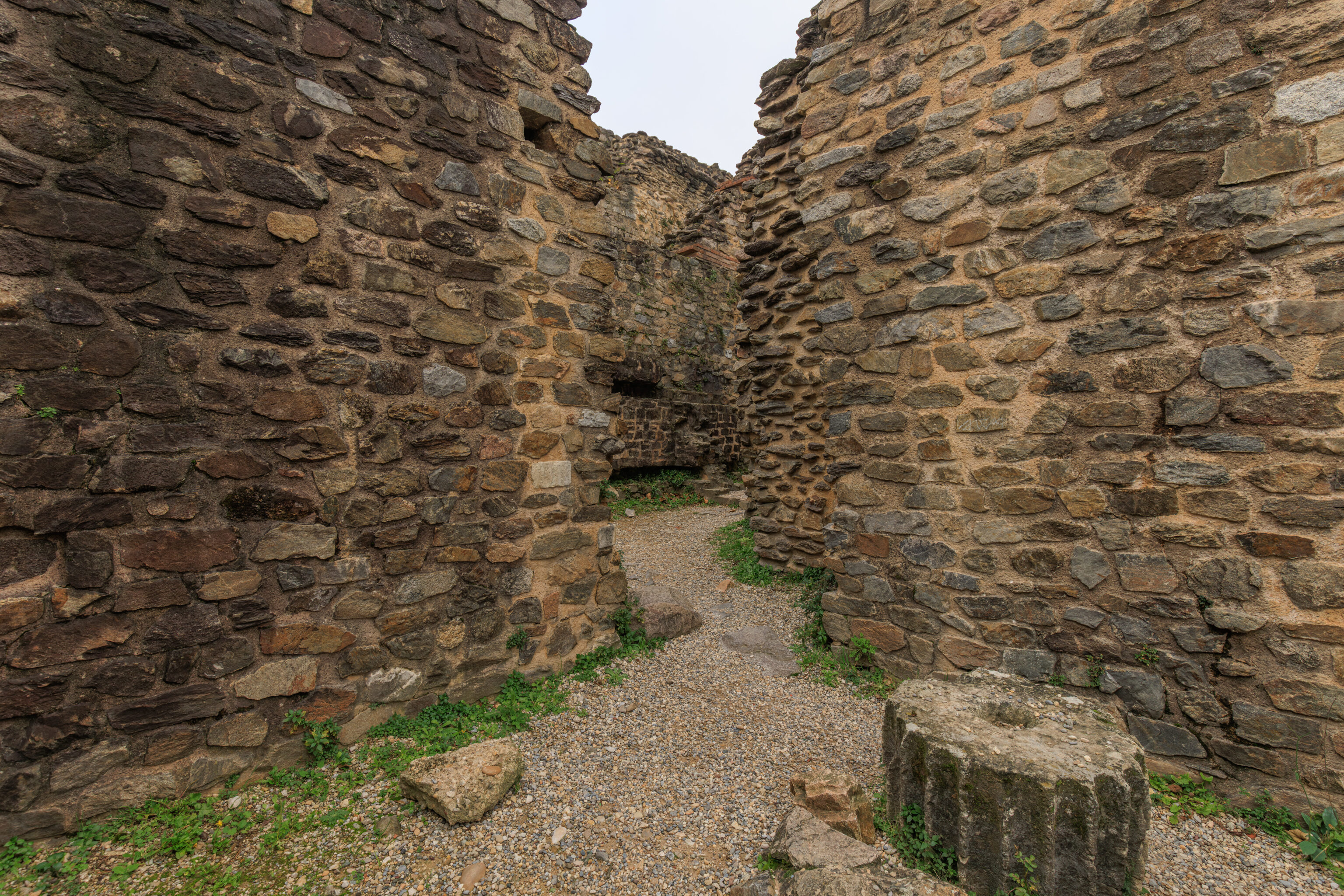
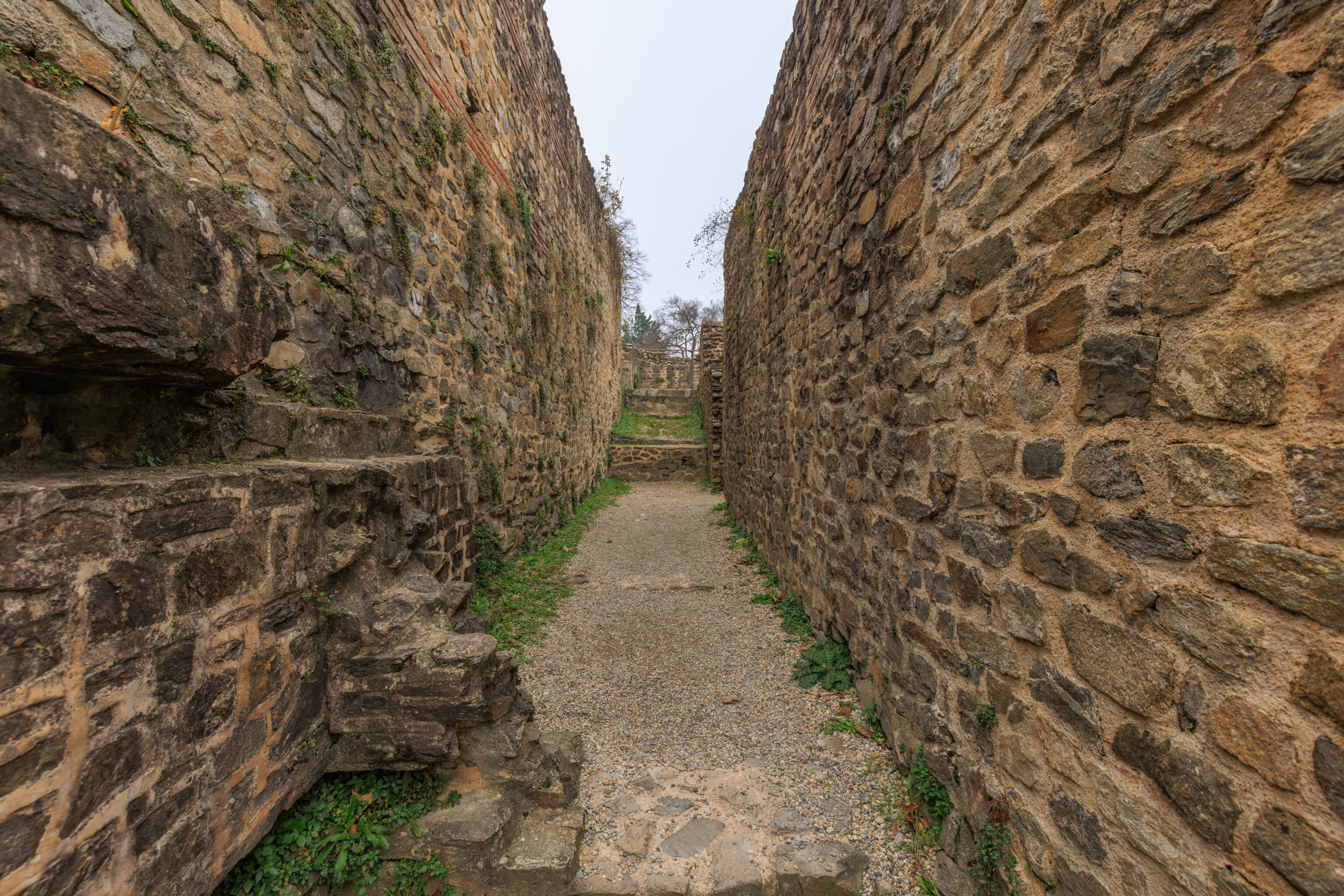
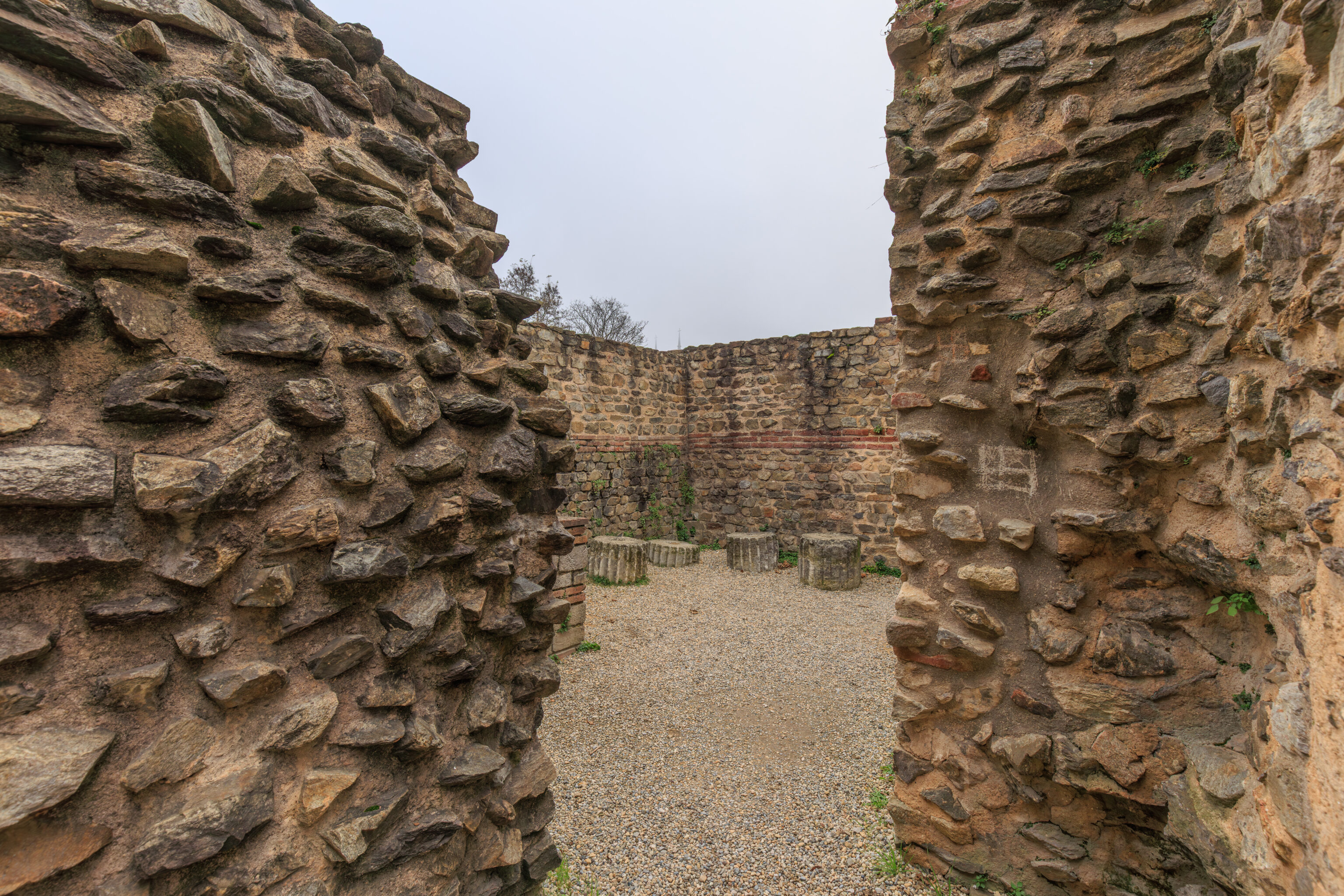
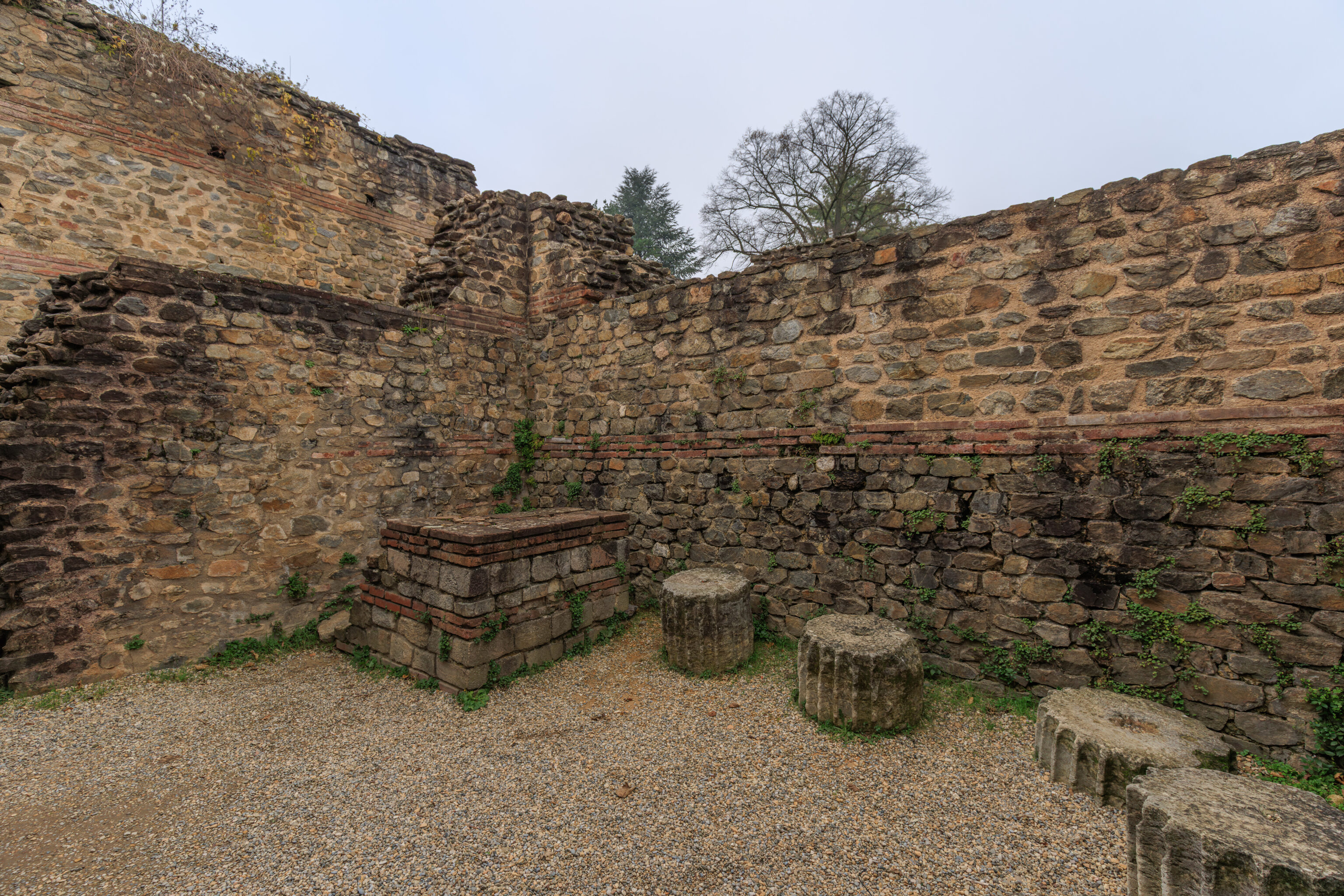
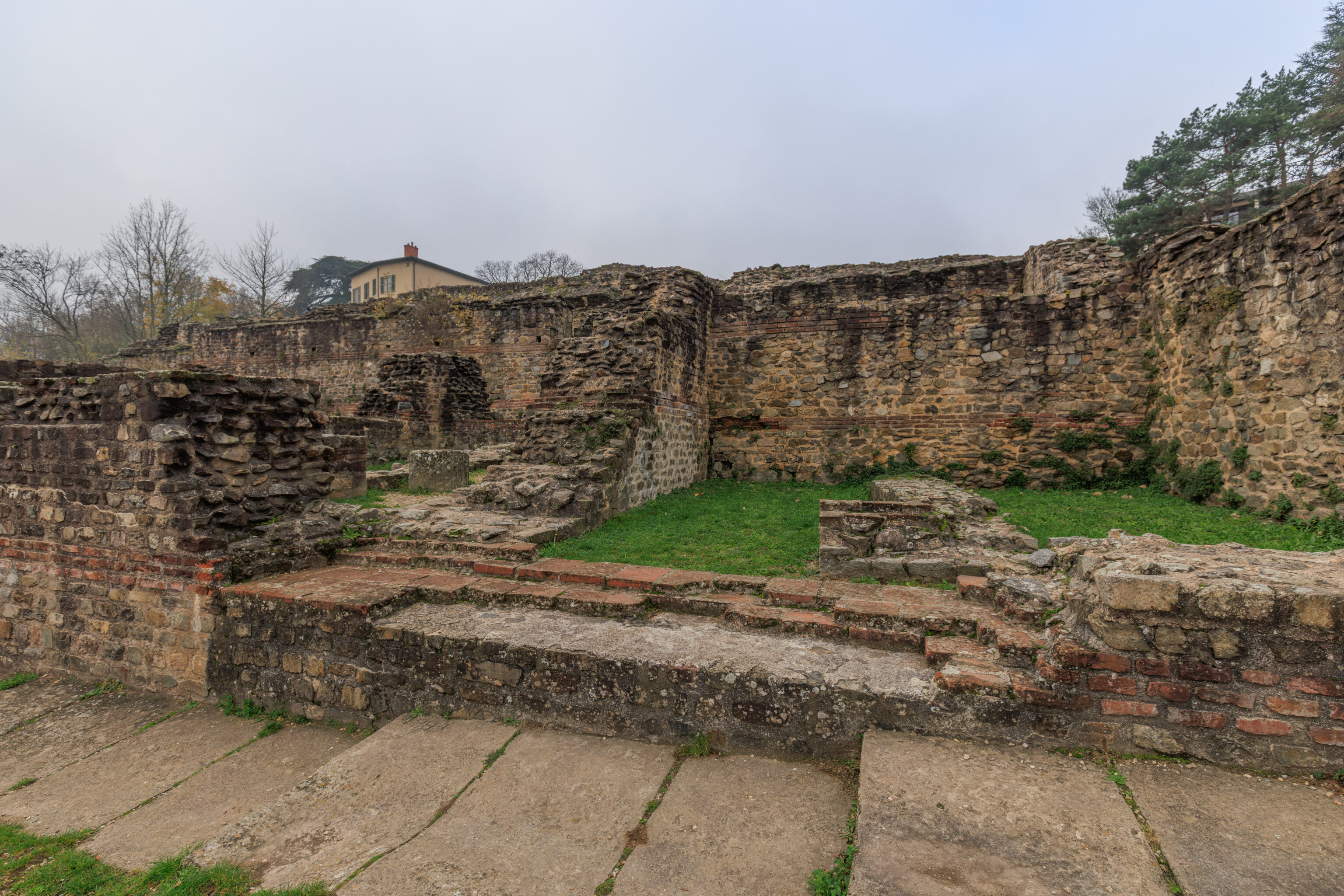
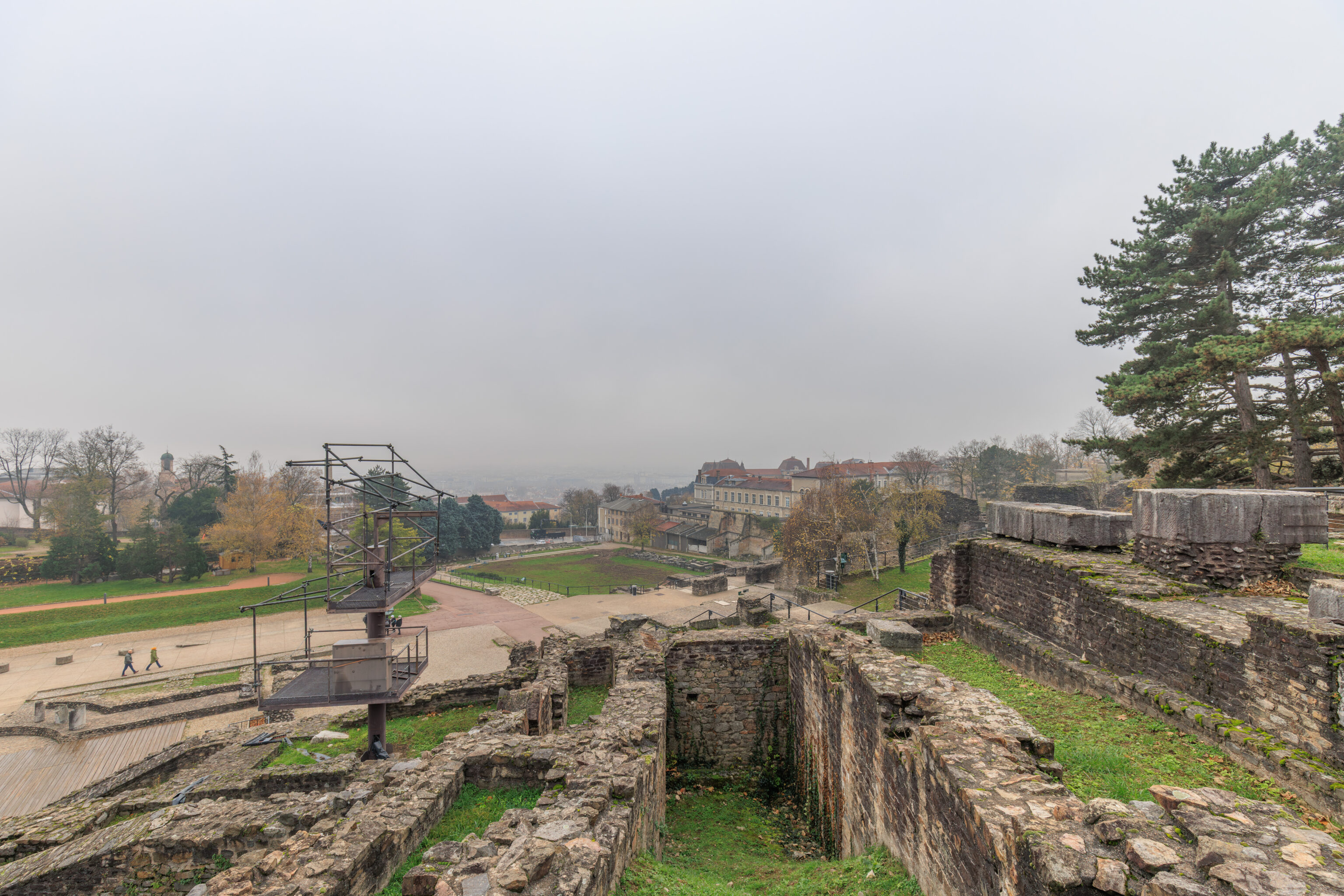
As is often the case, much of what is left is just foundations and lower parts of buildings.
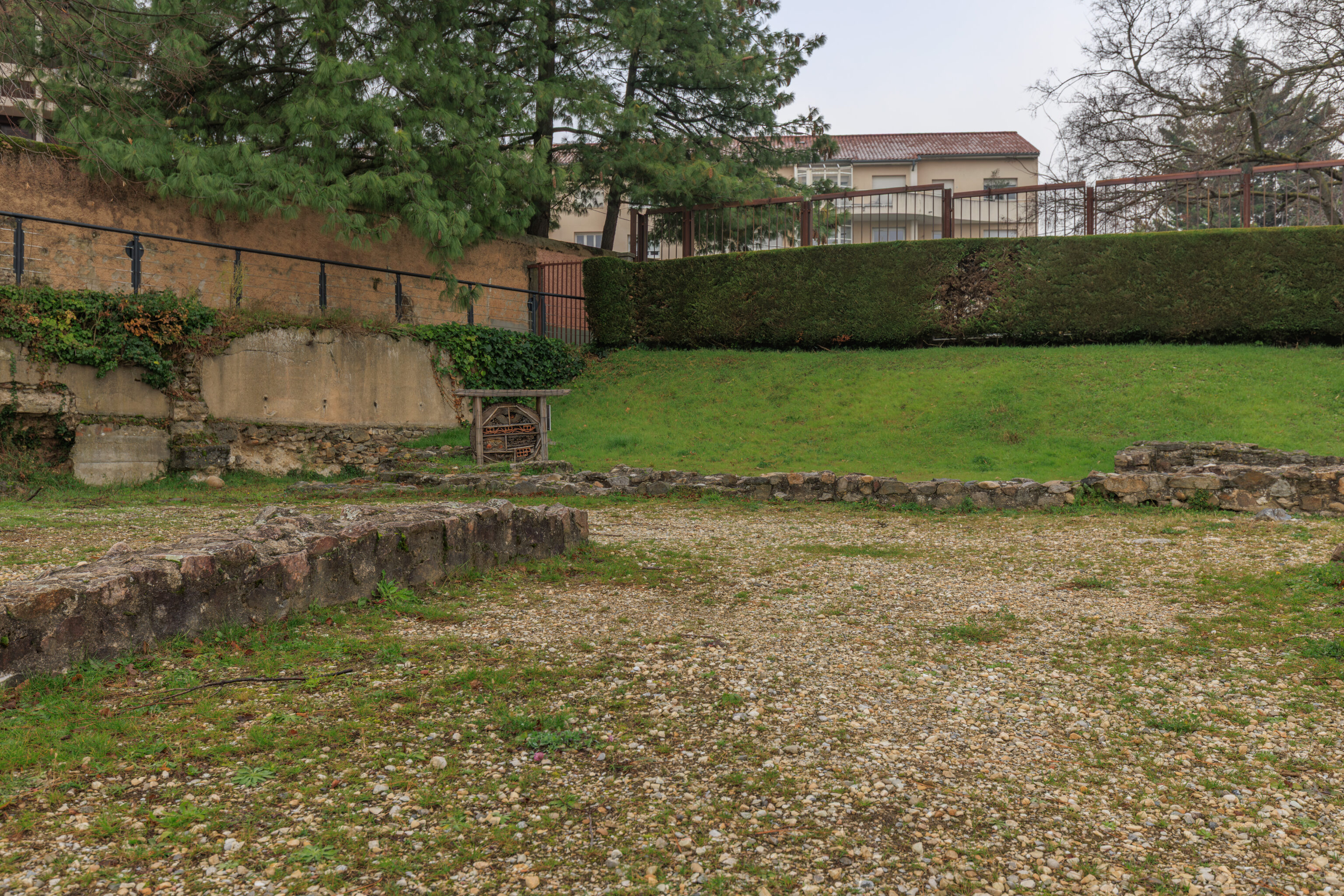
We spotted an insect house near the edge of the site.
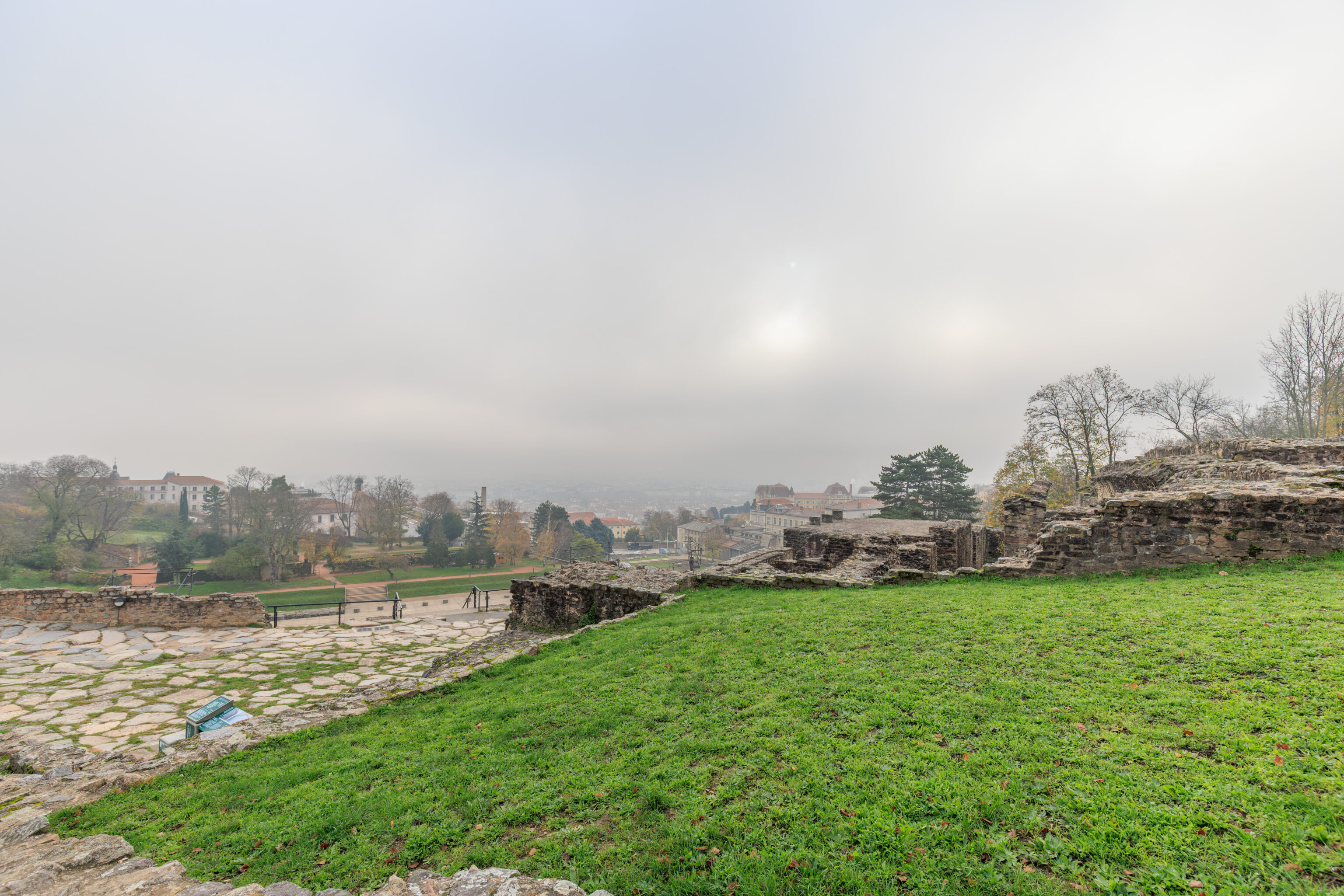
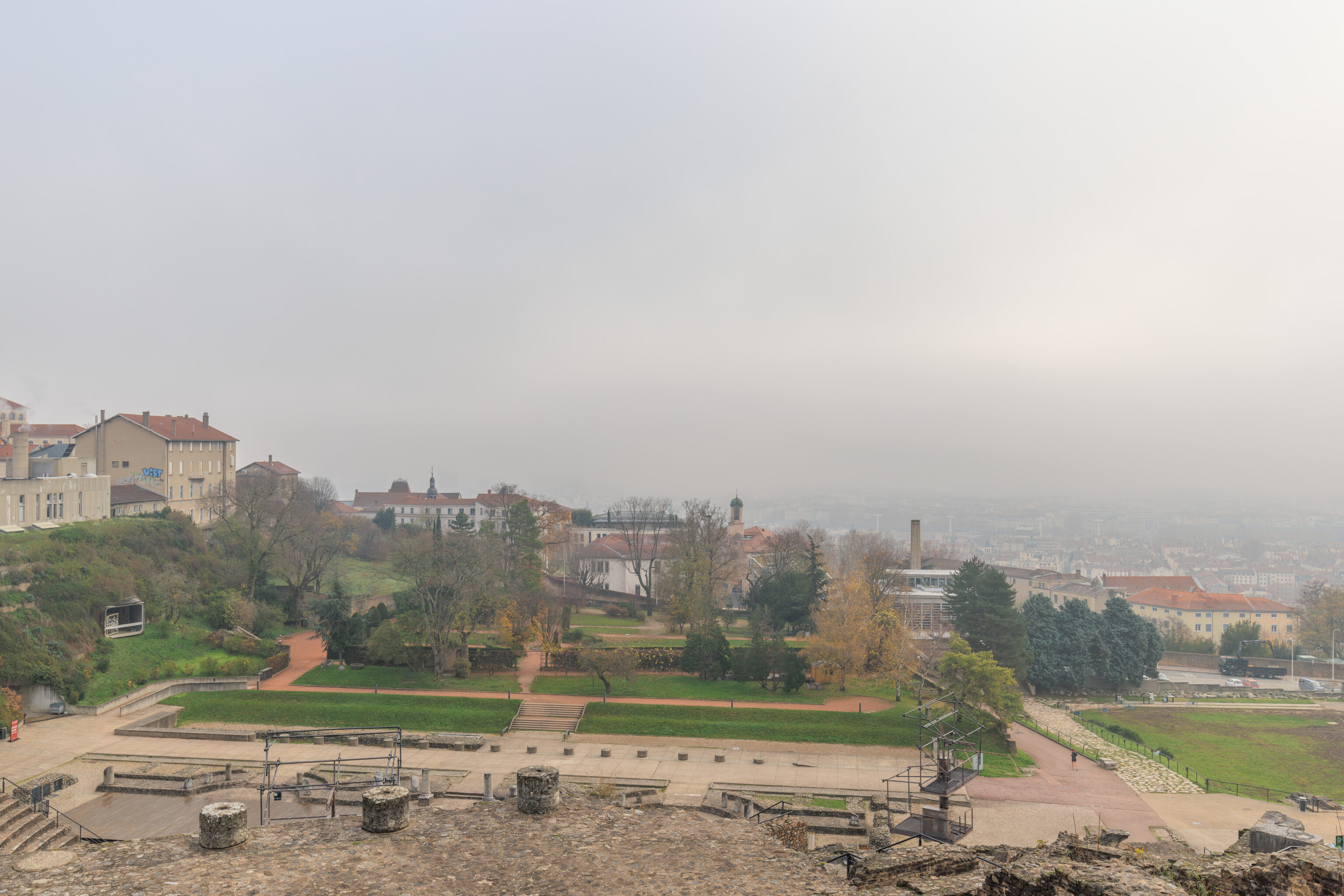
It was, unfortunately, a bit foggy, which limited how far we could see.
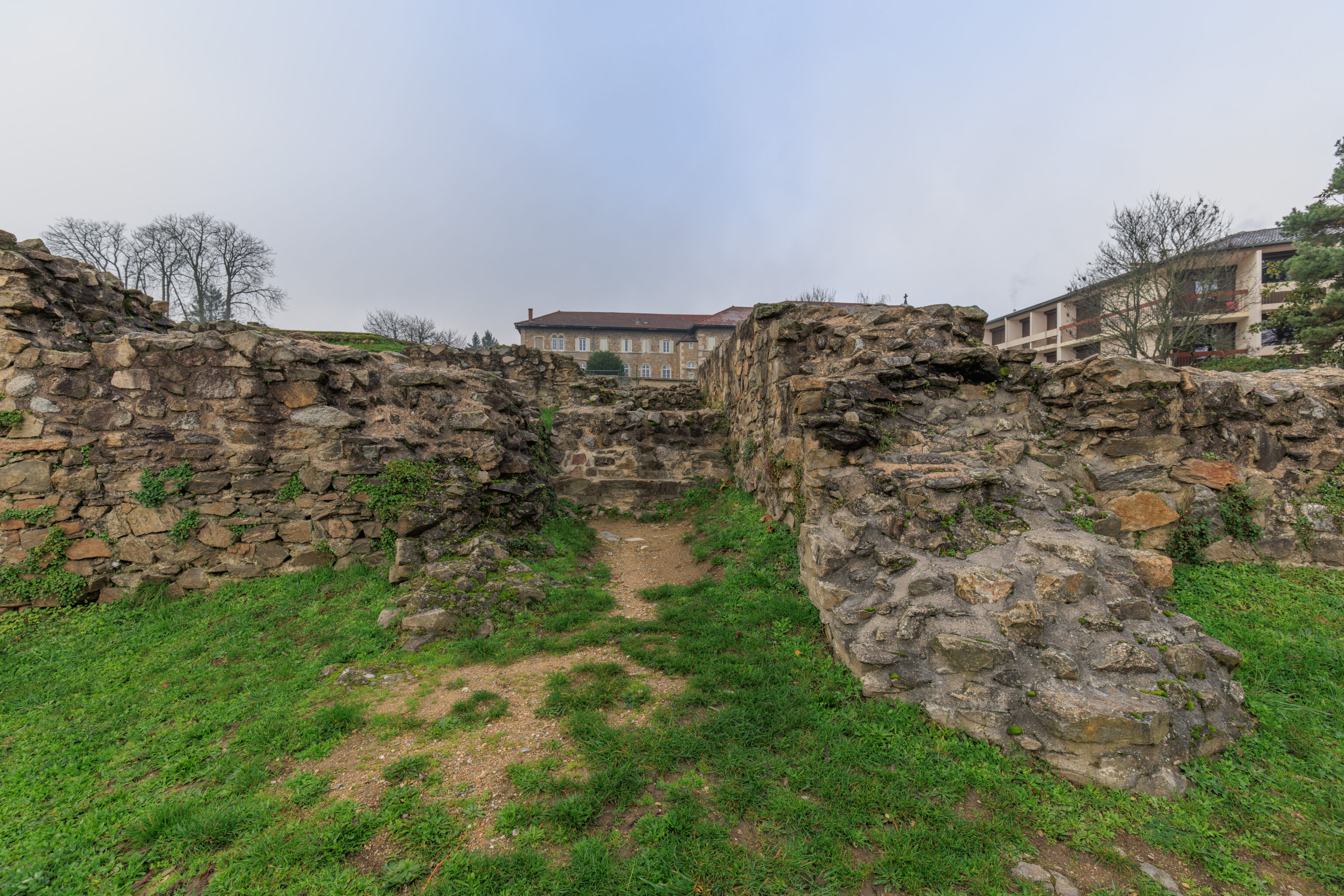
We decided to walk around the western part of the site first before going down to the actual theatres.
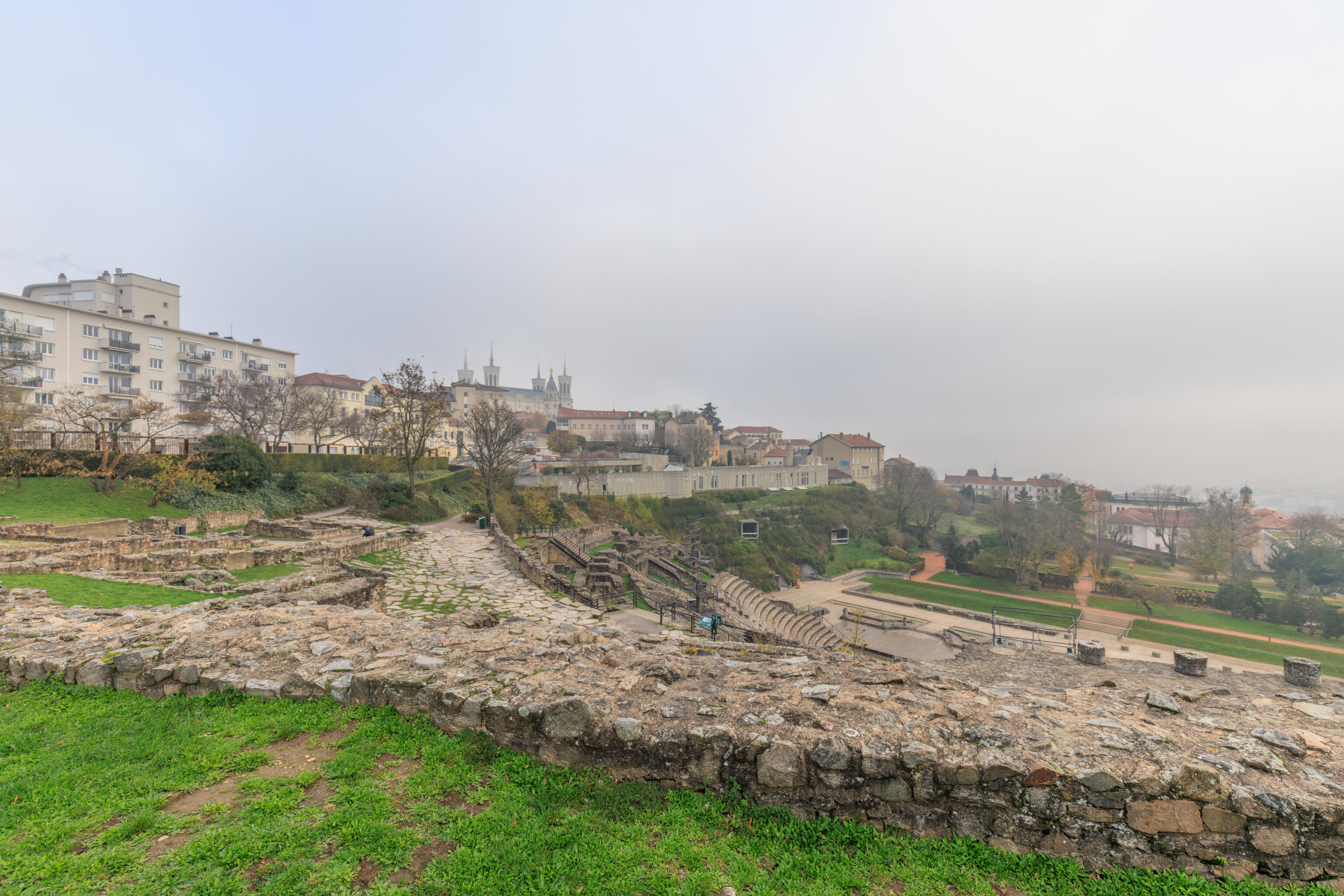
The Lugdunum Museum, which we visited already, occupies a portion of the north side of the site. Most of the modern building is underground.
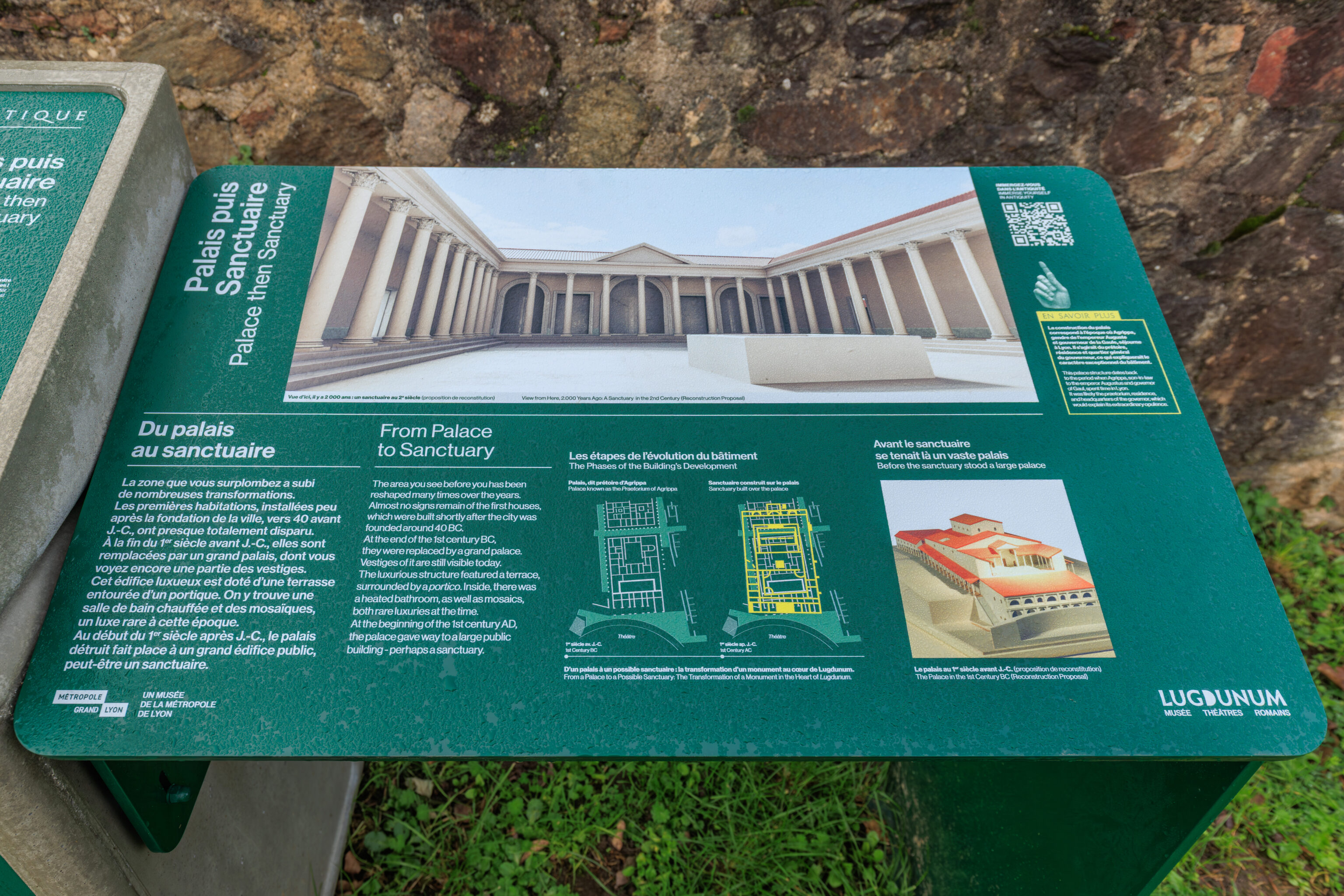
It is pretty hard to imagine what these ruins would have looked like in Roman times. Some of the signs helped, although it is difficult to correlate the visuals on the sign with what we see in front of us.
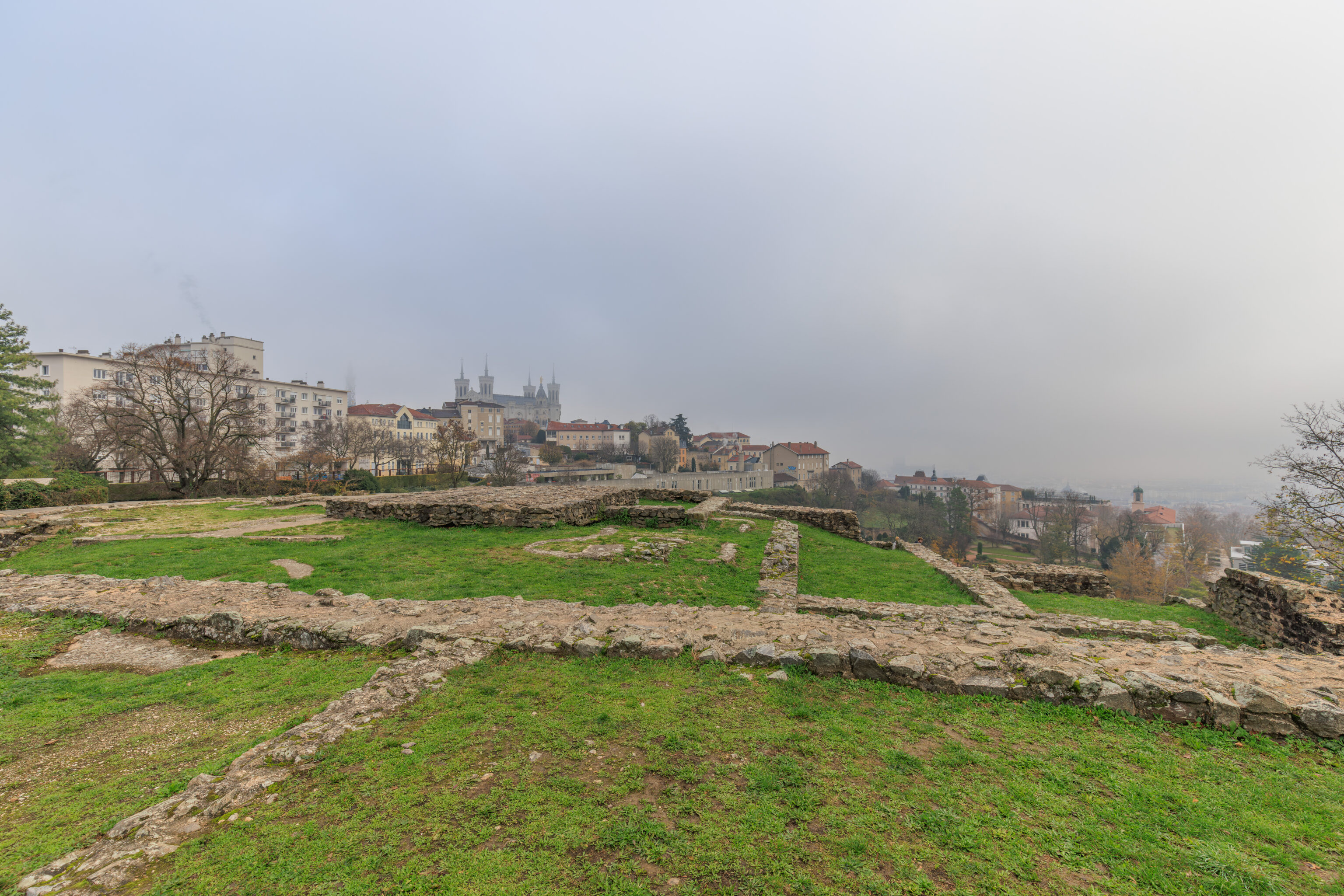
From Palace to Sanctuary
The area you see before you has been reshaped many times over the years. Almost no signs remain of the first houses, which were built shortly after the city was founded around 40 BC. At the end of the 1st century BC, they were replaced by a grand palace. Vestiges of it are still visible today. The luxurious structure featured a terrace, surrounded by a portico. Inside, there was a heated bathroom, as well as mosaics, both rare luxuries at the time. At the beginning of the 1st century AD, the palace gave way to a large public building -perhaps a sanctuary.
– Text from the sign above.
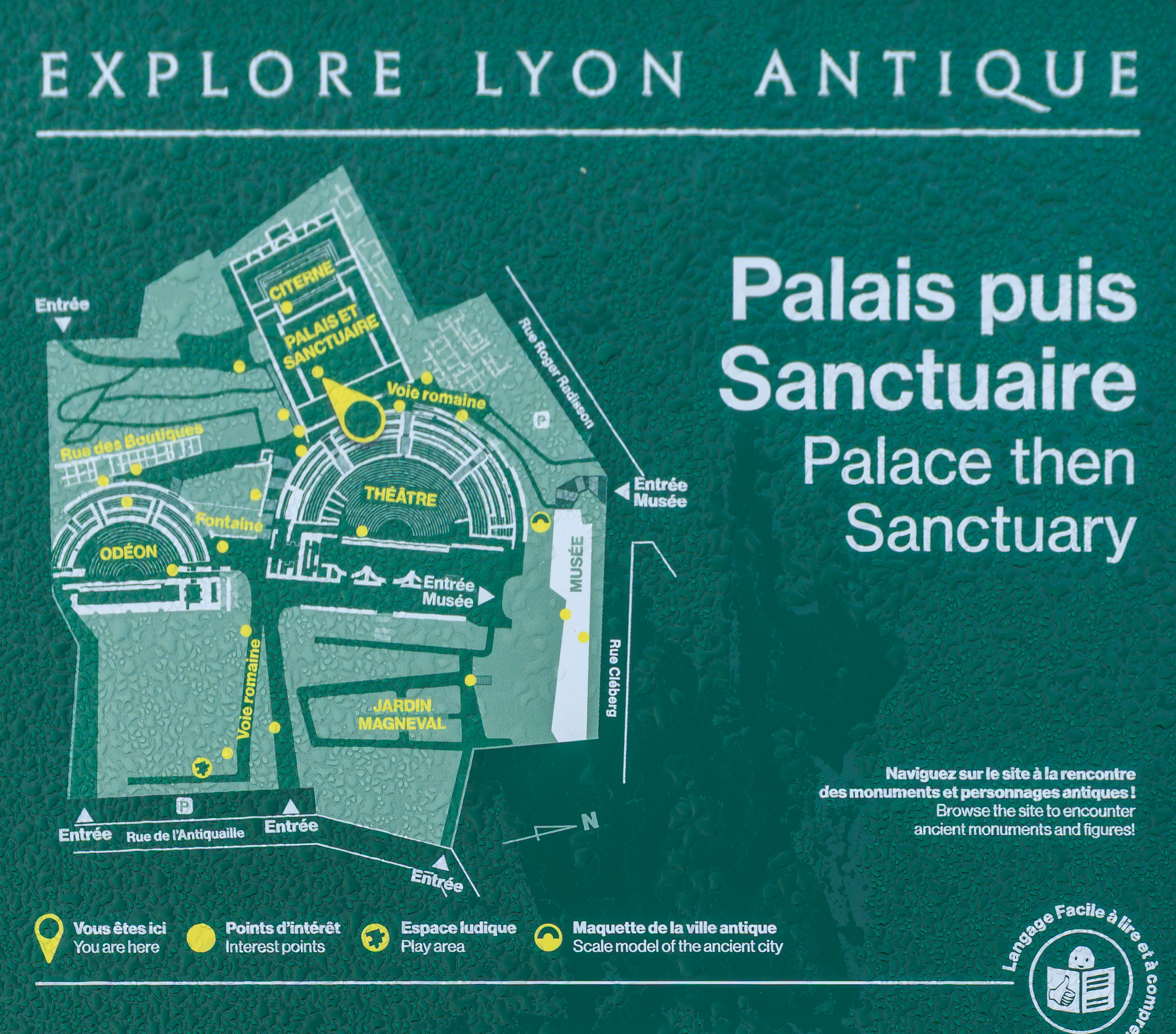
This wet sign has a nice map of the site.
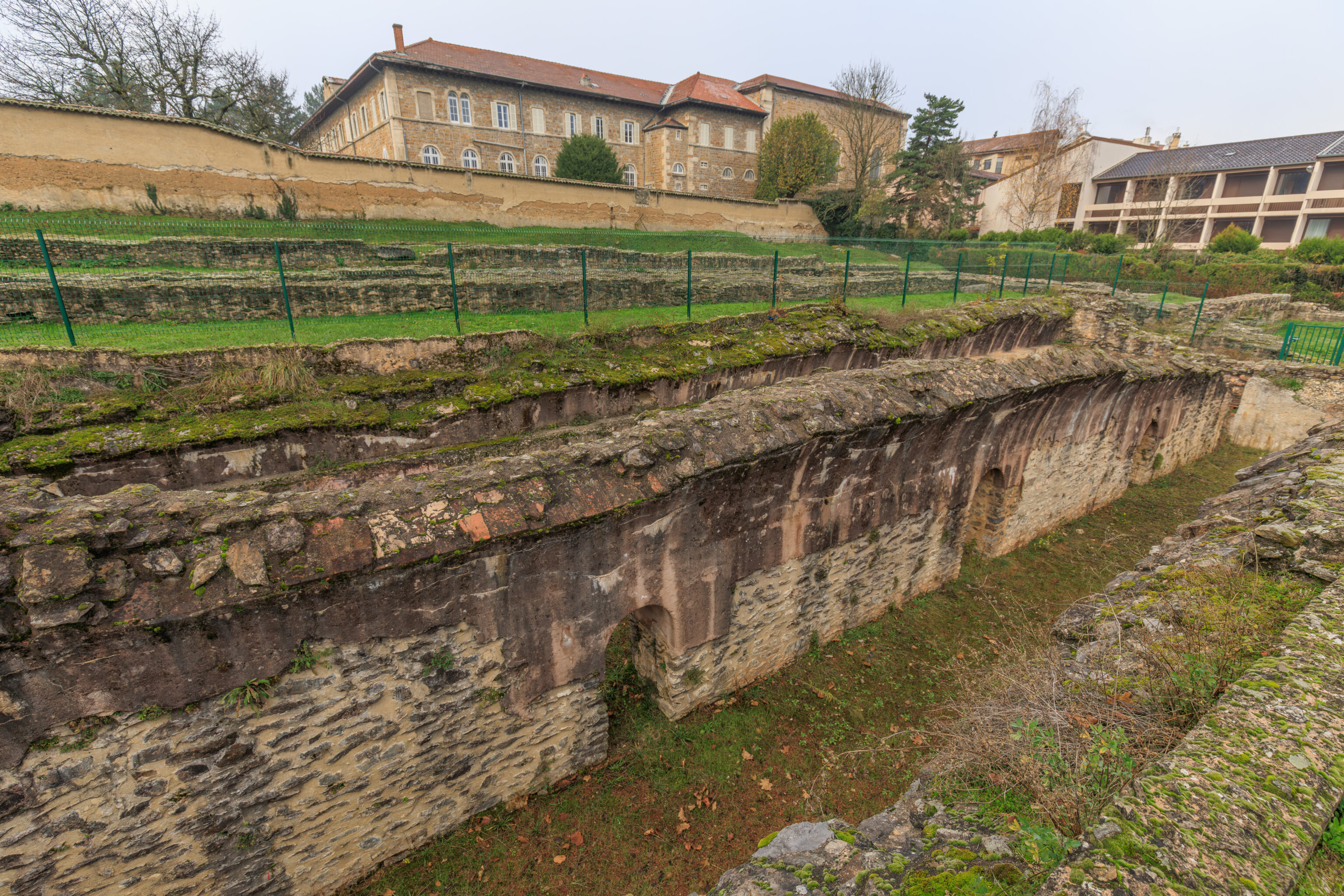
This area below was part of a large water cistern:
The Water Cycle
During the Roman period, water was first supplied to the Fourvière area through wells and cisterns. The system was later stepped up via four aqueducts, which collected water from springs and streams as far away as 40 km from Lyon.

This cistern was intended to collect rainwater. It had two chambers connected by openings, which allowed water to circulate inside, encouraging impurities to settle to the bottom. The cistern had a vaulted ceiling and could hold around 750 cubic meters of potable water.
– Text from a sign.
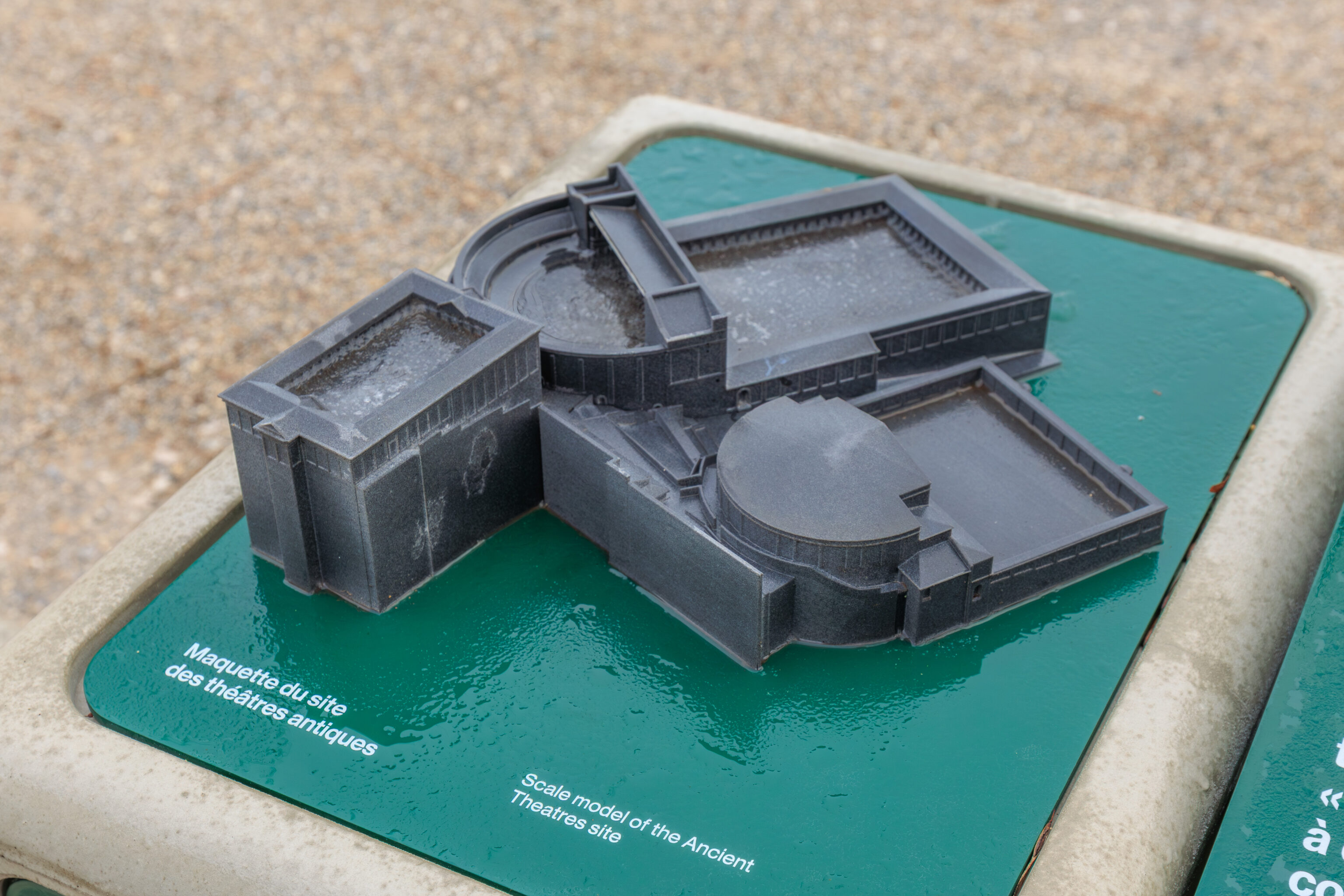
This scale model shows what the two theatres would have looked like.
Lyon's First Inhabitants
In the year 43 BC, the Roman general Lucius Munatius Plancus founded the Roman colony of Lugdunum. It was connected to the sea via the Rhone River and benefited from its strategic position along a vital transport route between the Mediterranean and the northern part of the Empire. Within a few decades of its founding, it had become one of Roman Gaul's largest cities. Its status as a "Roman colony" bestowed upon its inhabitants the same rights enjoyed by all citizens of Rome and Italy.

As you explore the Ancient Theatres site, you will discover the remains of a bustling section of the ancient city.  Occupied from the 1st to the 3rd centuries AD, it was hometo two entertainment venues: a theatre and an Odeon. Visit Lugdunum's Roman museum and theatres to learn about the daily lives of the first residents of Lyon.
– Text from a sign next to the scale model above.
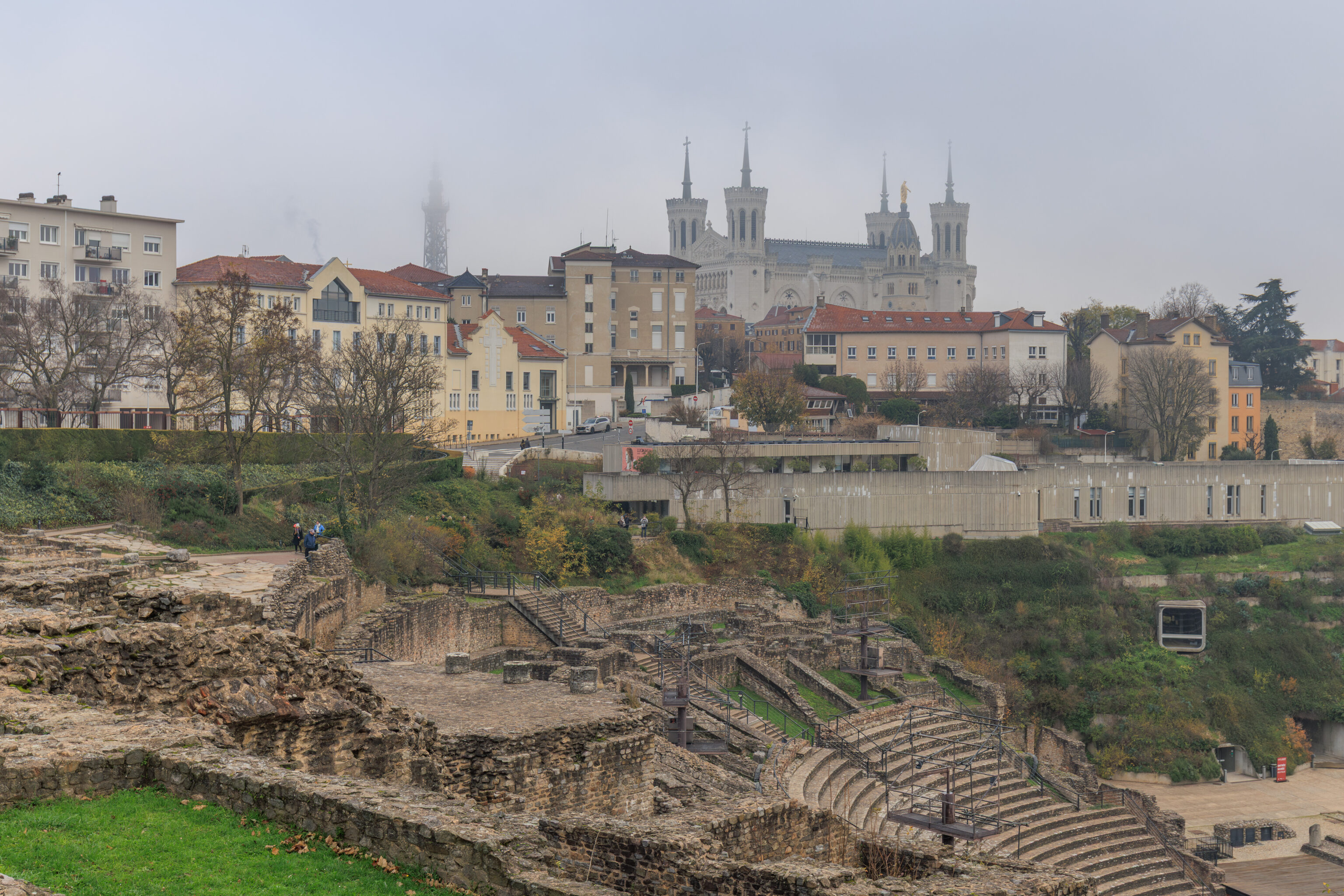
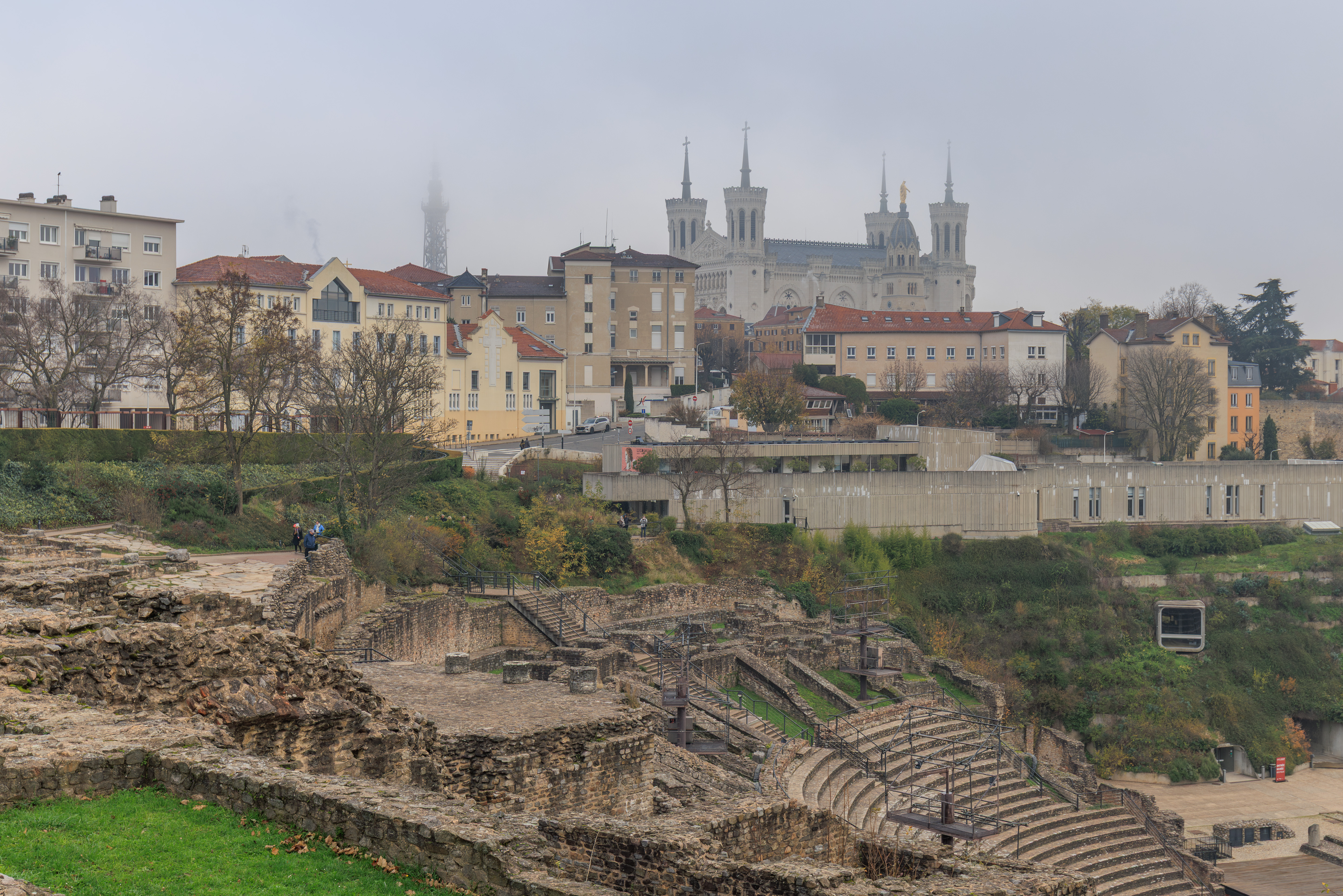
We were able to get an excellent view to the north with the massive Notre-Dame de Fourvière in the background along with the Tour Métallique de Fourvière.
A Hidden Underground Network
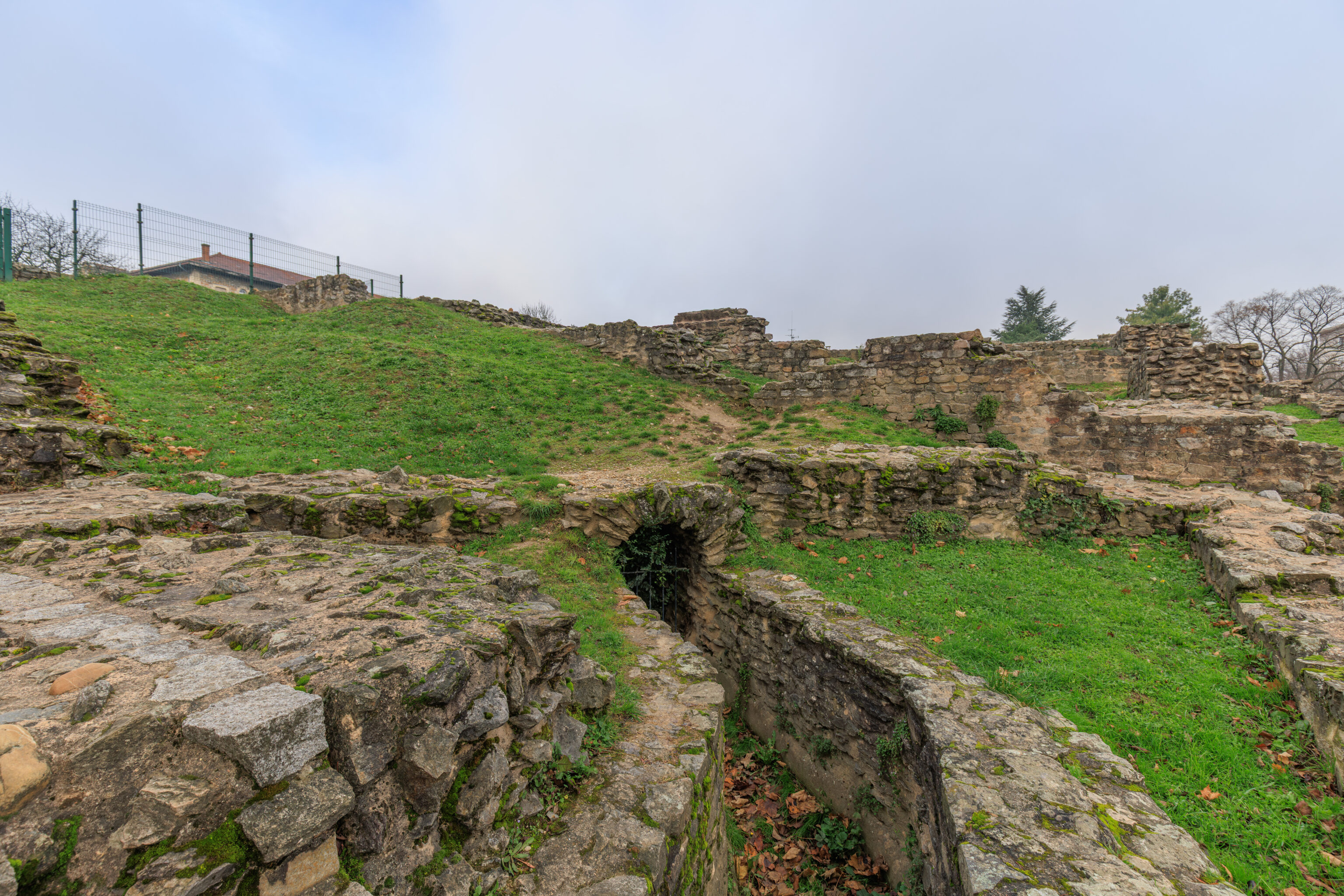
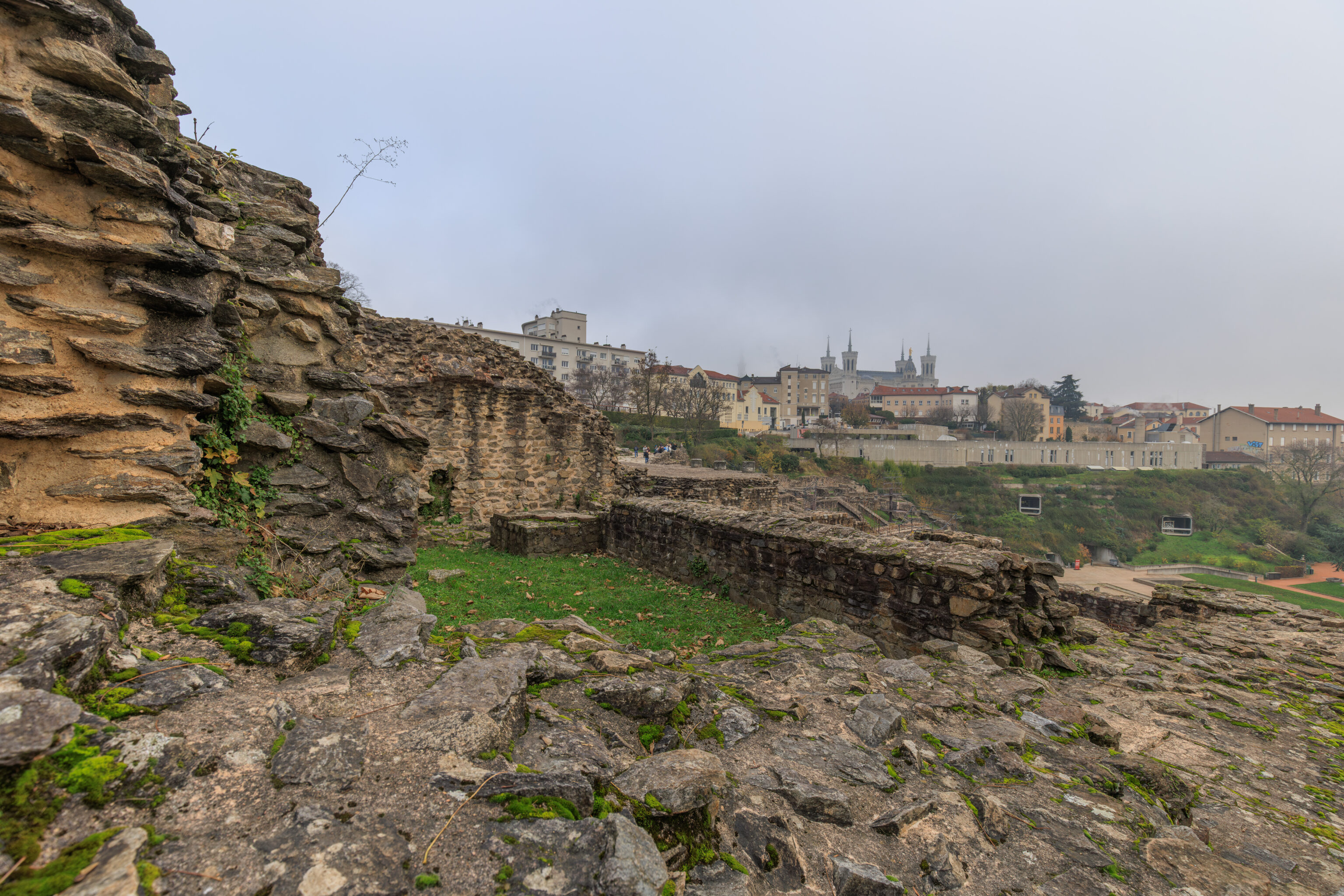
You are standing on an original Roman road. This street was used daily, not only by chariots and carts that moved people and goods from one quarter of the city to another, but also the daily flow of pedestrians who came to attend performances at the theatre. Hidden beneath this road, lies a dual system of pipes: one brought potable water to homes and fountains, while the other, buried deeper, carried away wastewater.
– Text from a sign, translated using Google.
Backstage Pass
Imagine yourself seated in the stands, gazing out upon a majestic, richly decorated, 30-meter-high stage wall. Overhead a velarium (a large cloth awning held in place by wooden masts) offers welcome shade.

The architecture itself plays a vital role in setting the scene and the mood for the performance. As the first notes of a flute rise into the air marking the start of the show, slaves activate a winch to spirit away the curtains. The main character enters through the central stage door and begins to recite his lines. The acoustics are superb, his voice and the music amplified by the marble décor.
– Text from a sign.
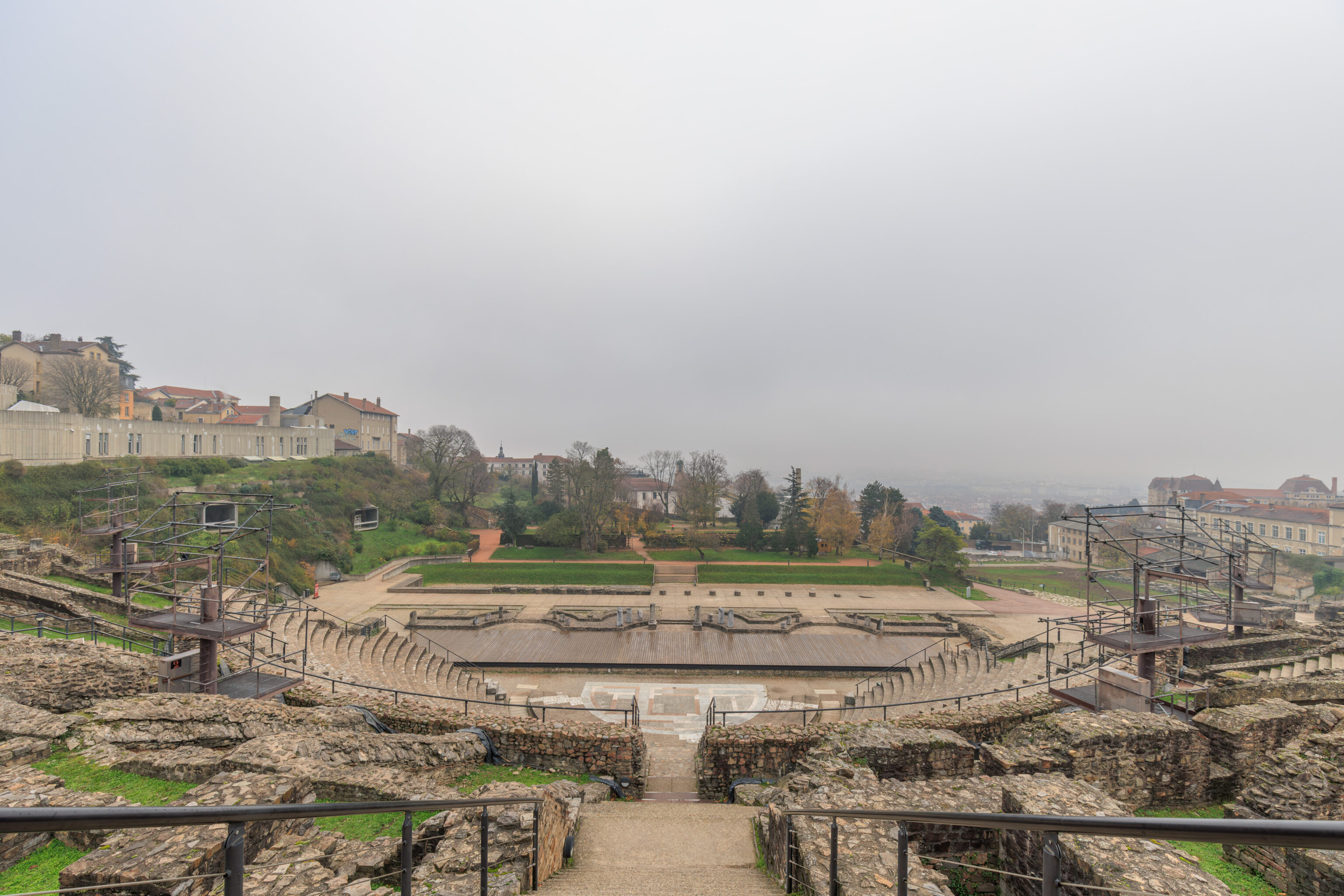
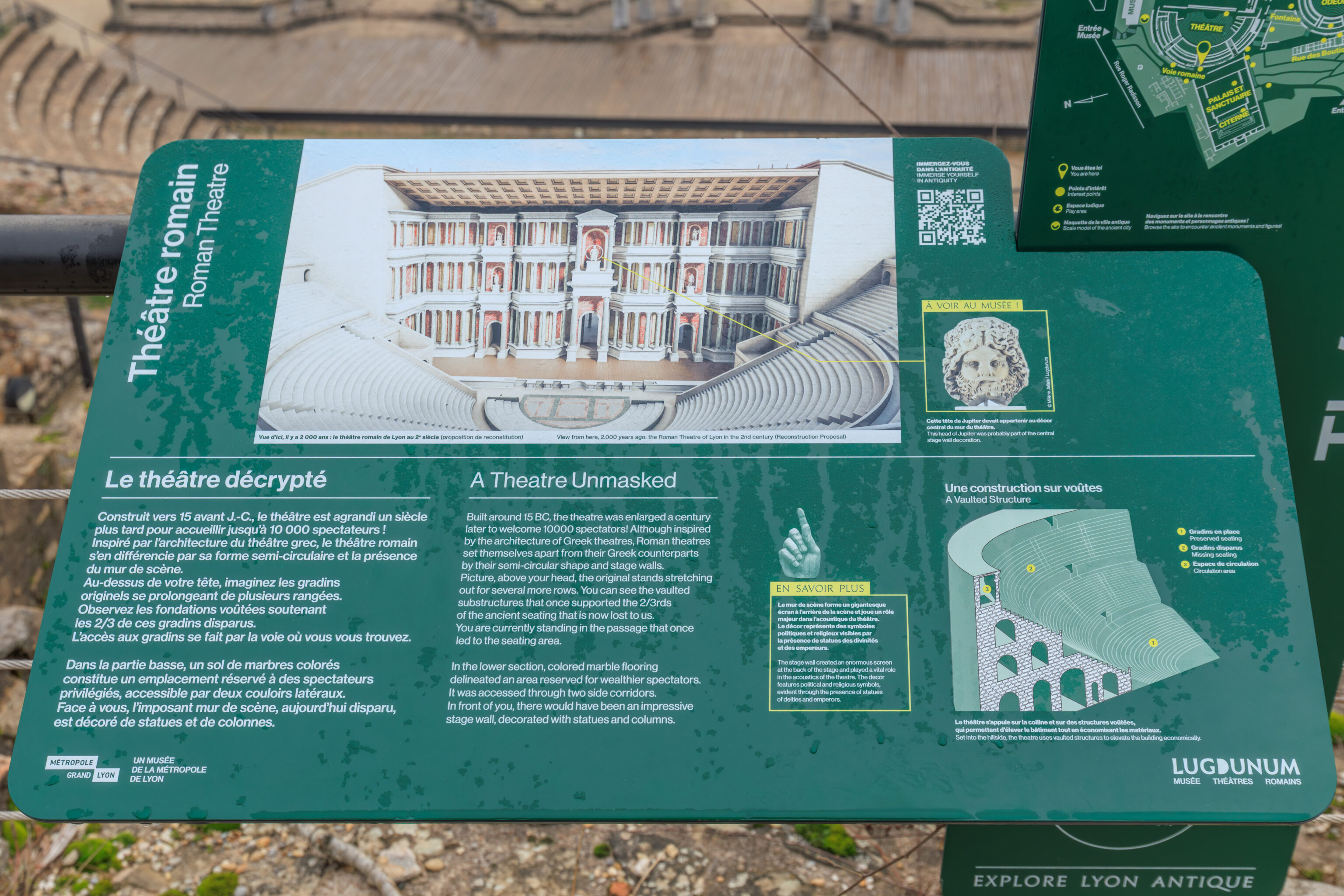
This sign gives an idea of what the view above might have looked like.
A Theatre Unmasked

Built around 15 BC, the theatre was enlarged a century later to welcome 10000 spectators! Although inspired by the architecture of Greek theatres, Roman theatres set themselves apart from their Greek counterparts by their semi-circular shape and stage walls. Picture, above your head, the original stands stretching out for several more rows. You can see the vaulted substructures that once supported the 2/3rds of the ancient seating that is now lost to us. You are currently standing in the passage that once led to the seating area.

In the lower section, colored marble flooring delineated an area reserved for wealthier spectators. It was accessed through two side corridors. In front of you, there would have been an impressive stage wall, decorated with statues and columns.
– Text from the sign above.
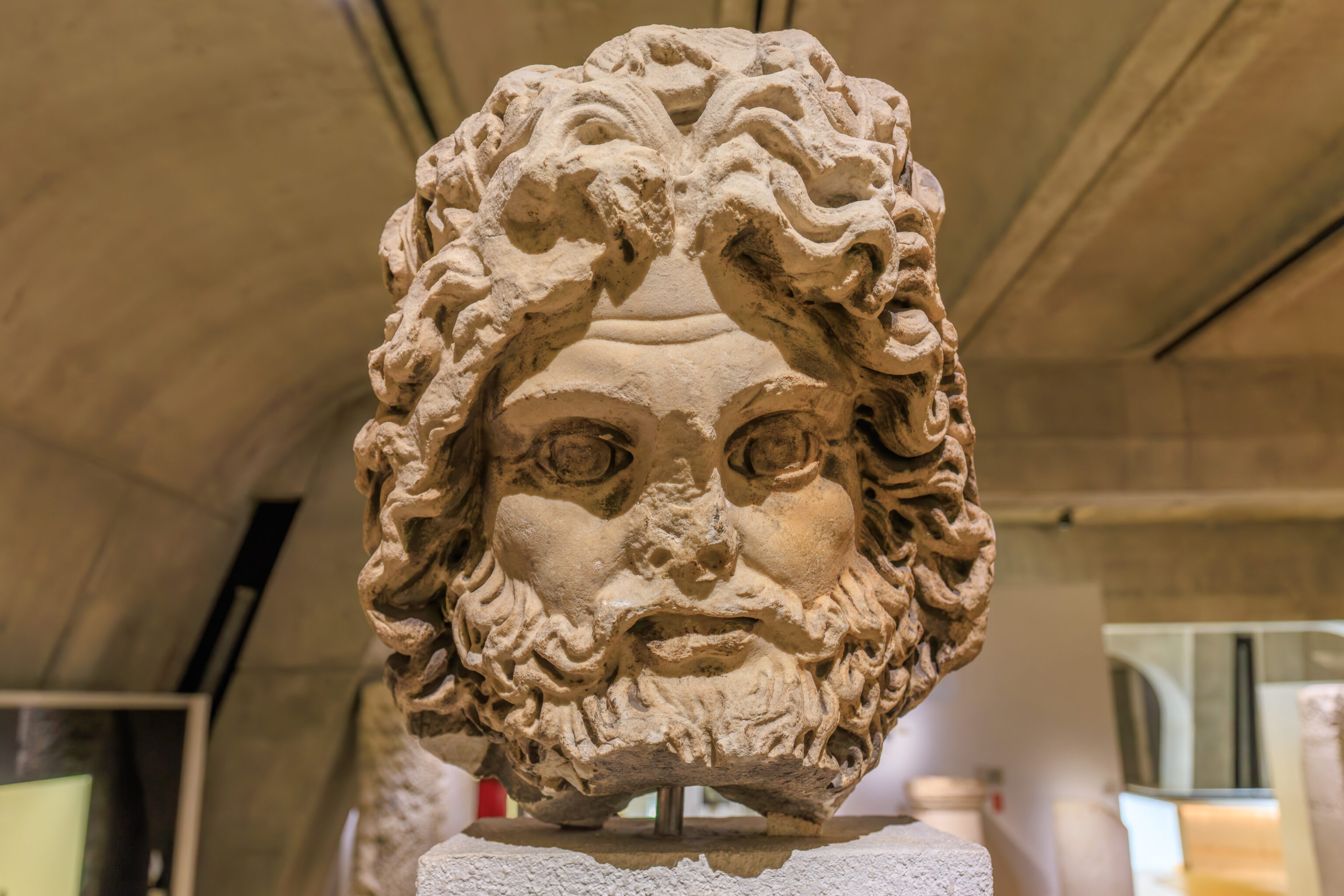
The sign above depicts a statue of Jupiter and includes a photograph of the statue’s head. That photograph is of this particular sculpted head, which we saw in the museum when we visited! That bit of context was not included in sign for the head:
JUPITER
According to the size of this head this sculpture must have been 3 metres high and was certainly kept in a temple. Jupiter is recognizable because of his crown made of oak leaves and ornamented with an eagle. White marble, dated in the 2nd century A.D., discovered in the Fourvière-hill in the 19th century.

N°Inv. 2001.0.322
– Text from the sign for Jupiter’s head.
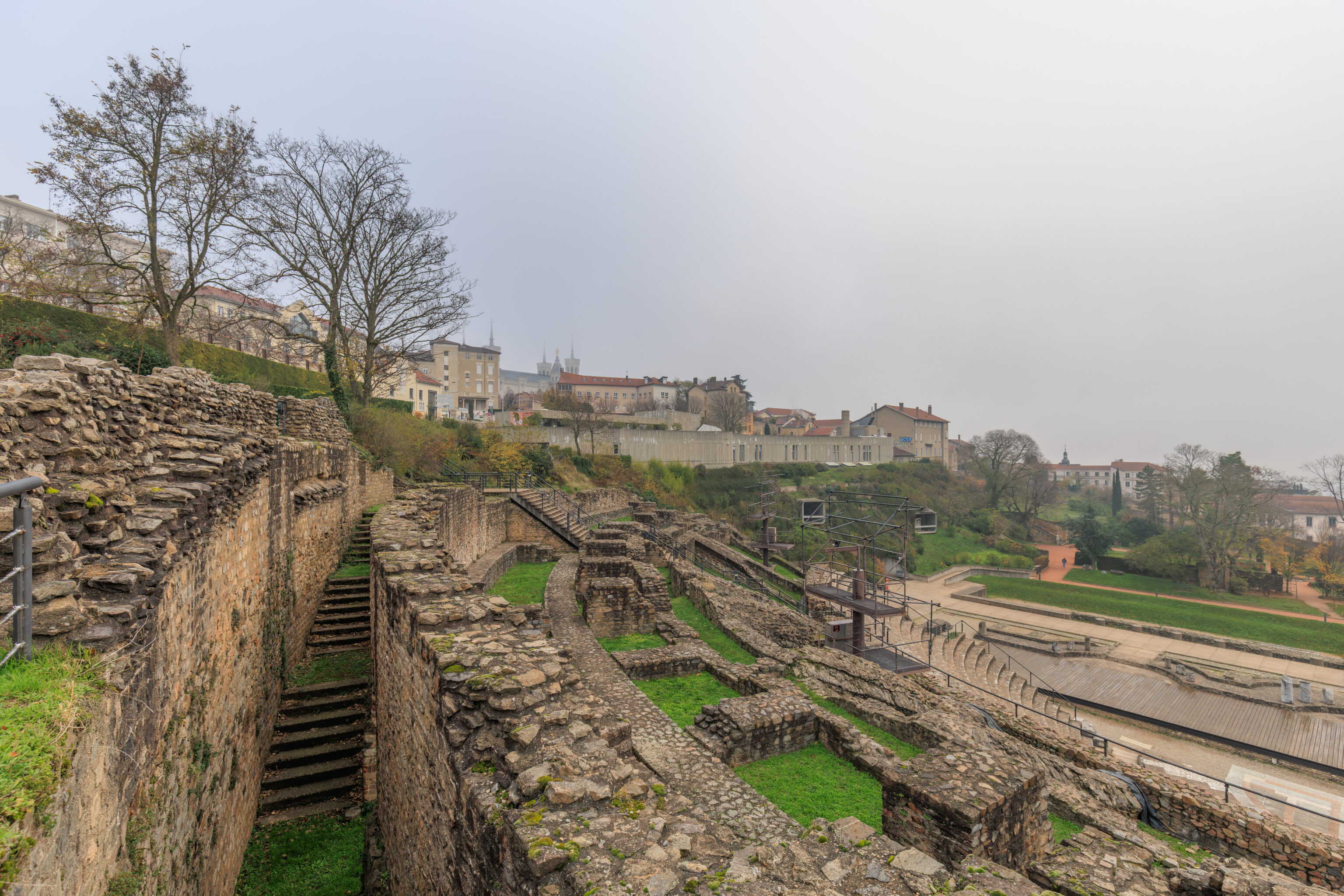
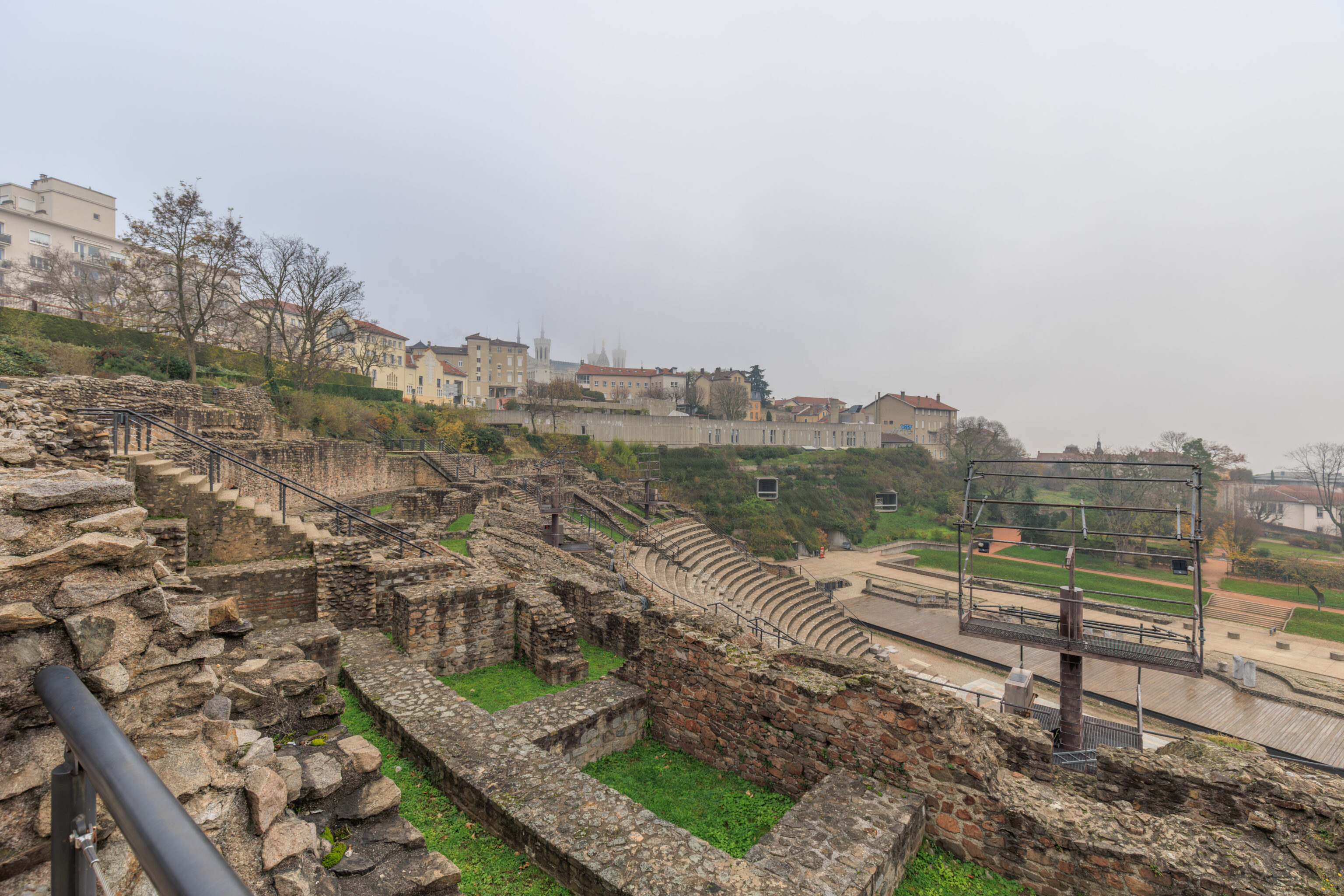
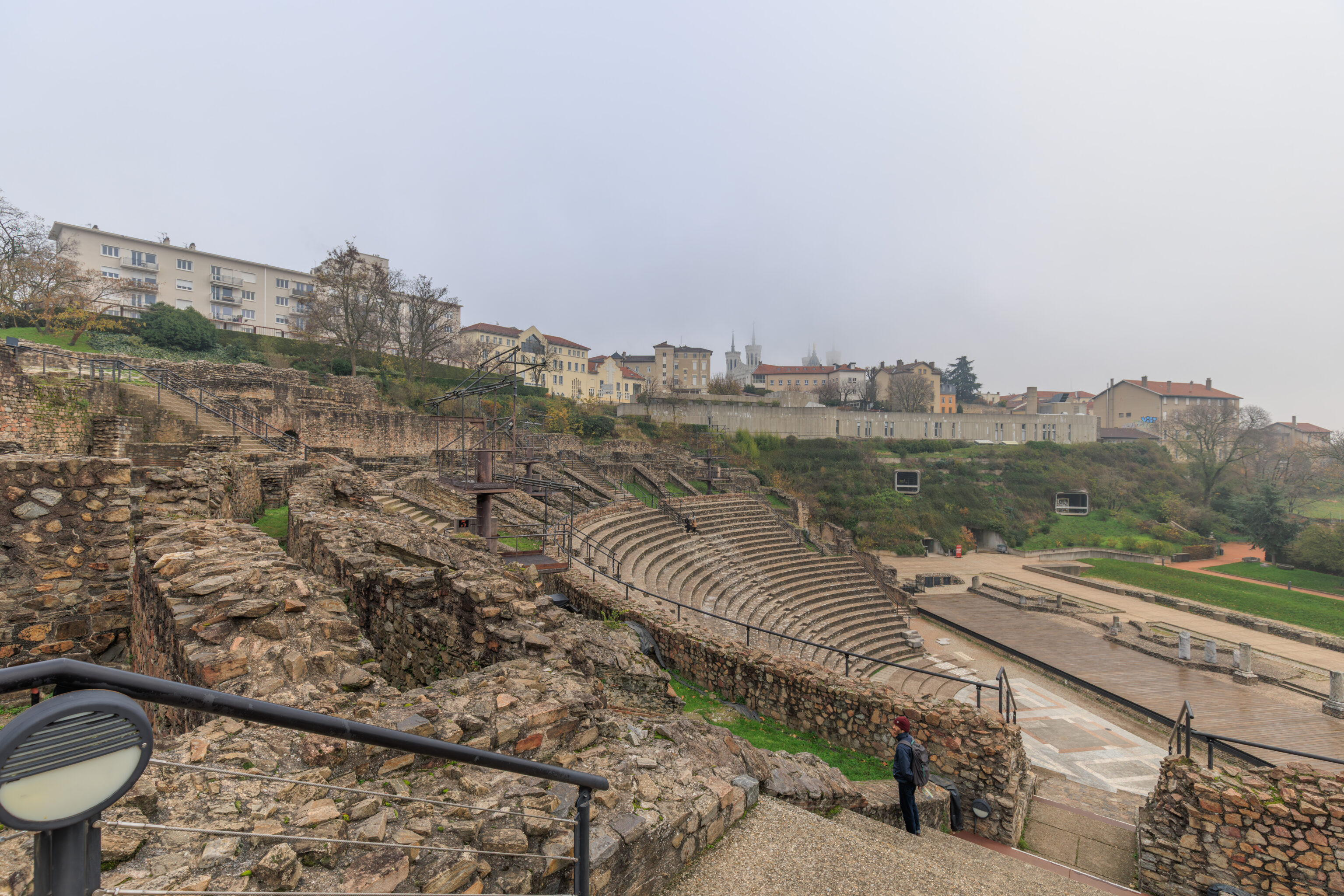
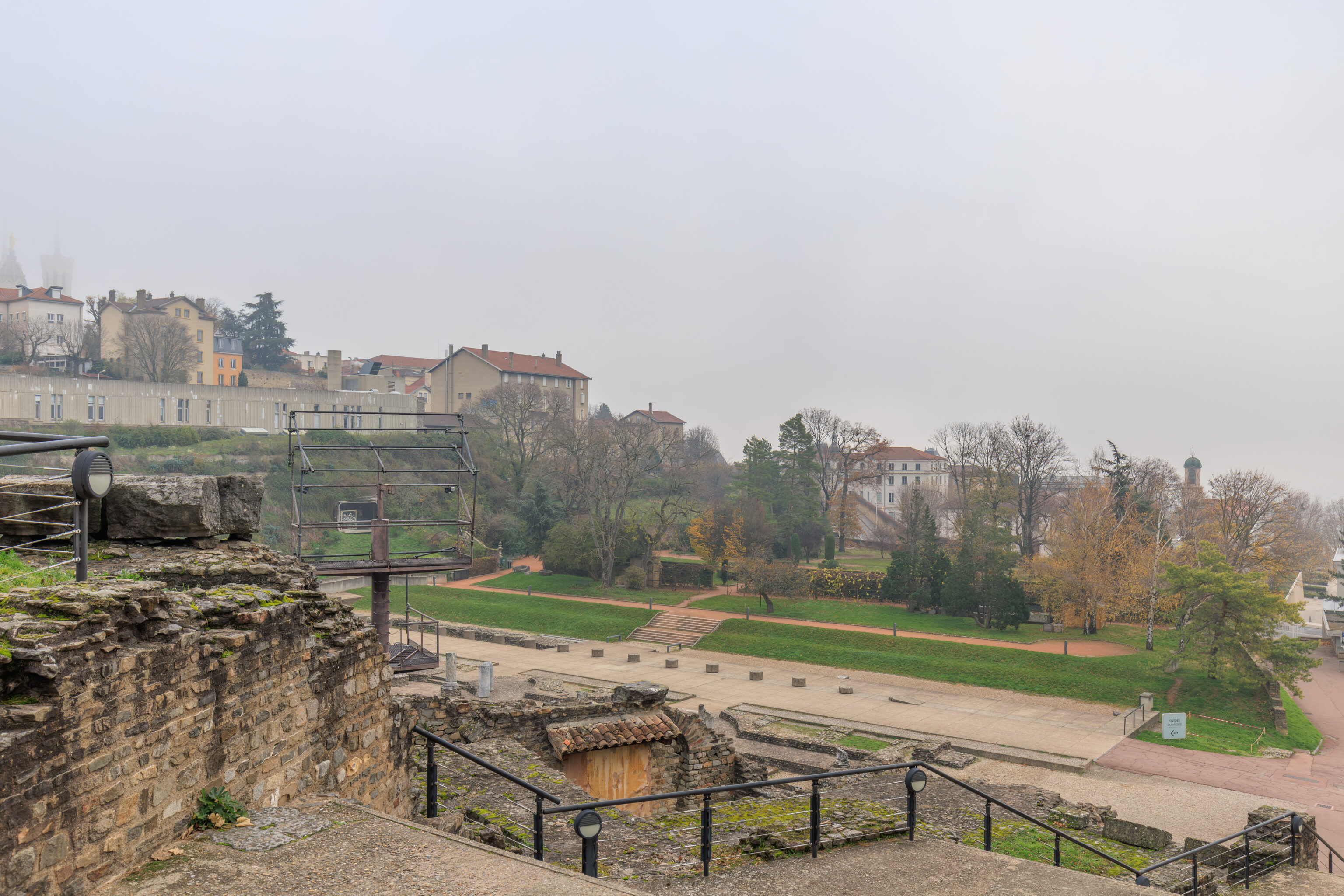
Rather than descend, we walked to the south along the upper ruins of the theatre.
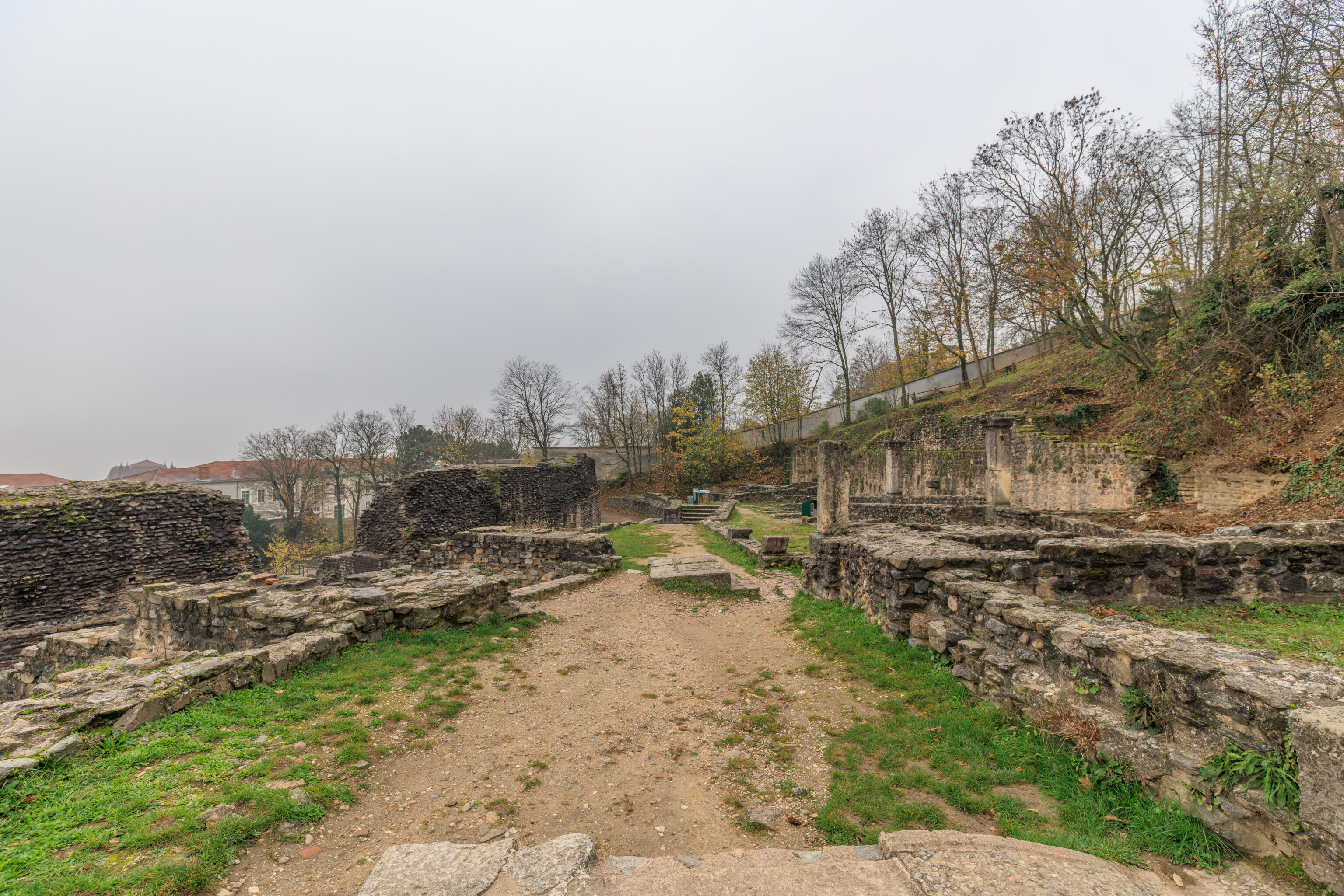
We continued on towards the adjacent odeon.
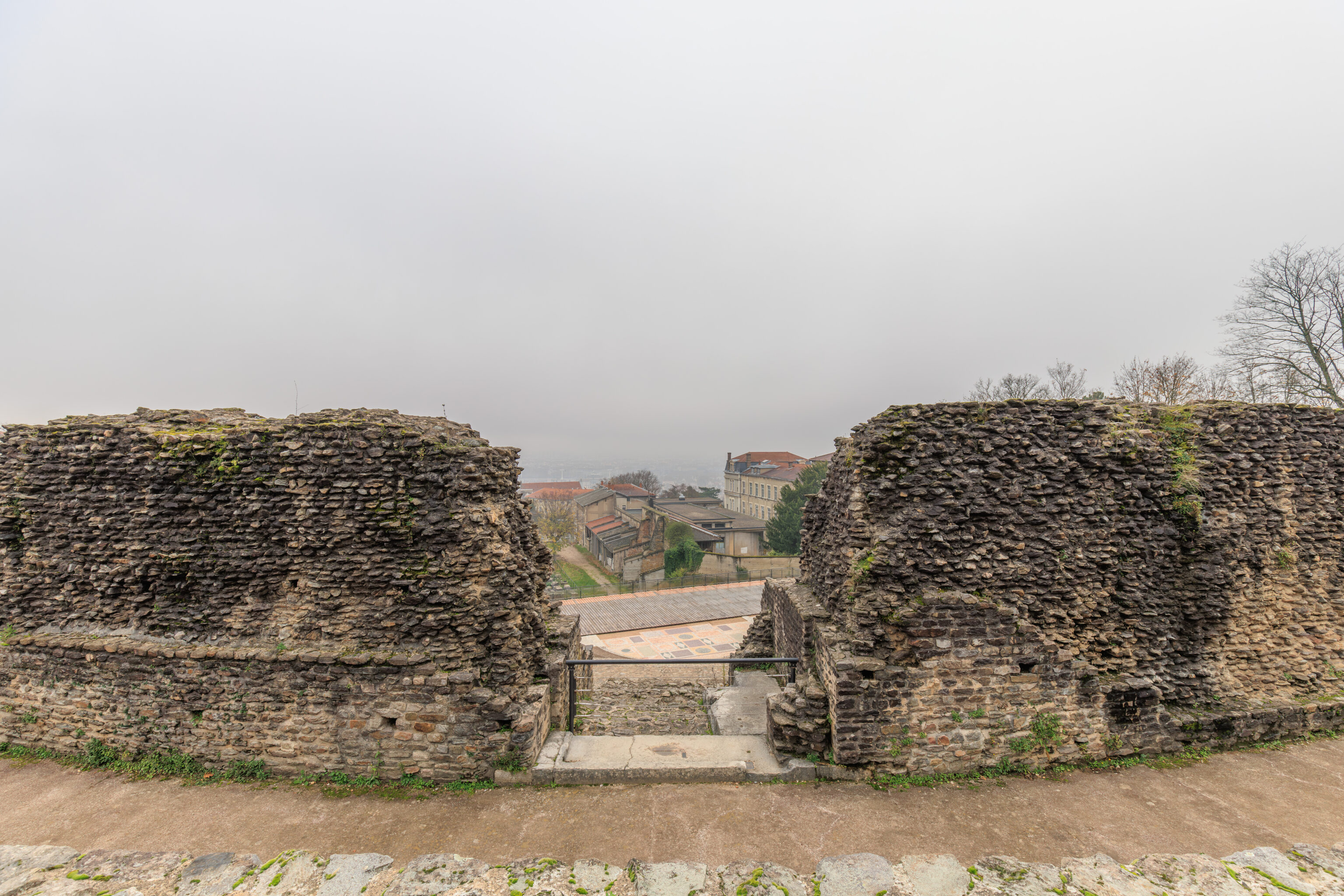
The path we were on was higher than an adjacent path at the top of the odeon. Our view from this perspective was limited but we could see some of a stage below through a gap in the structure.
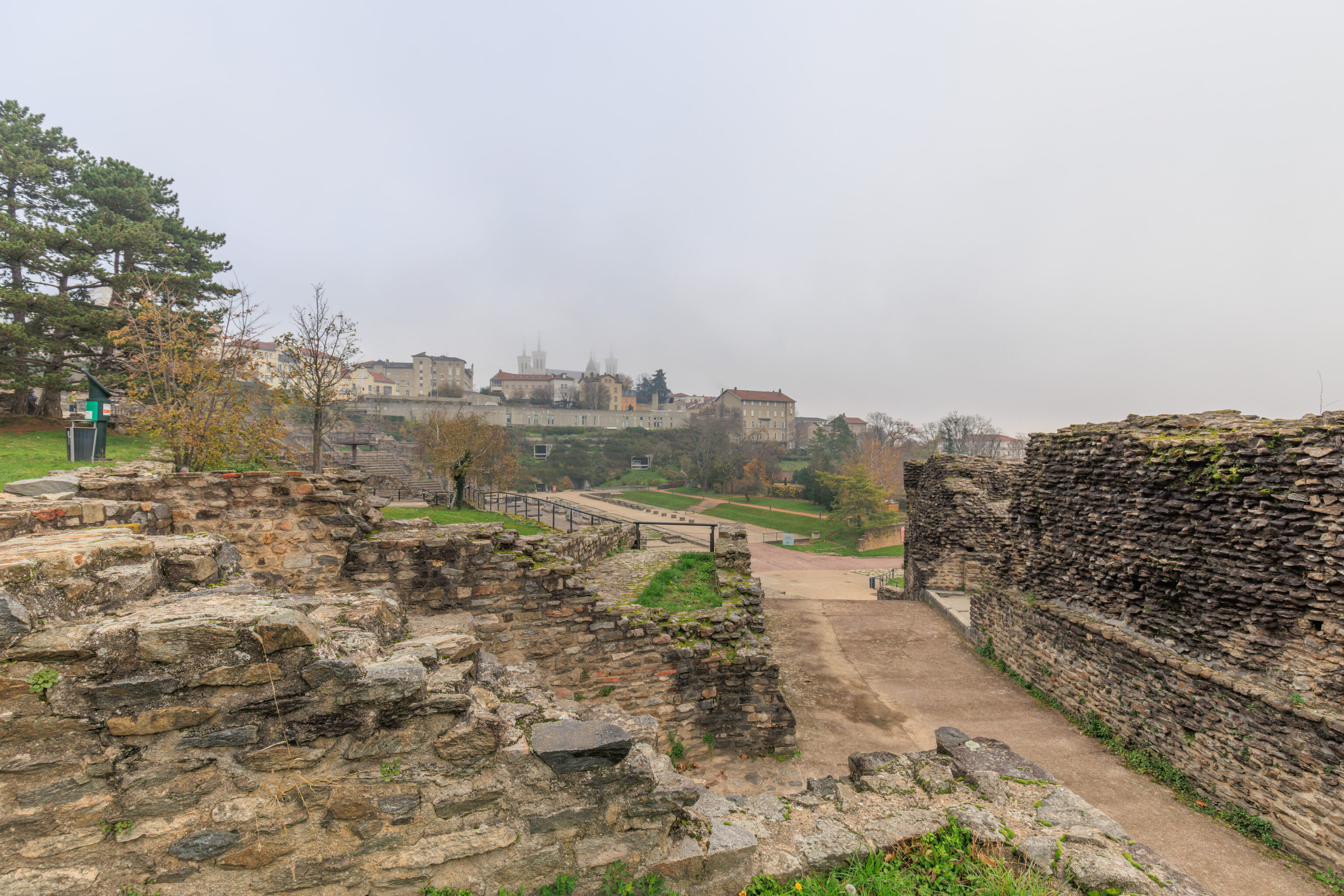
The view looking back to the north.
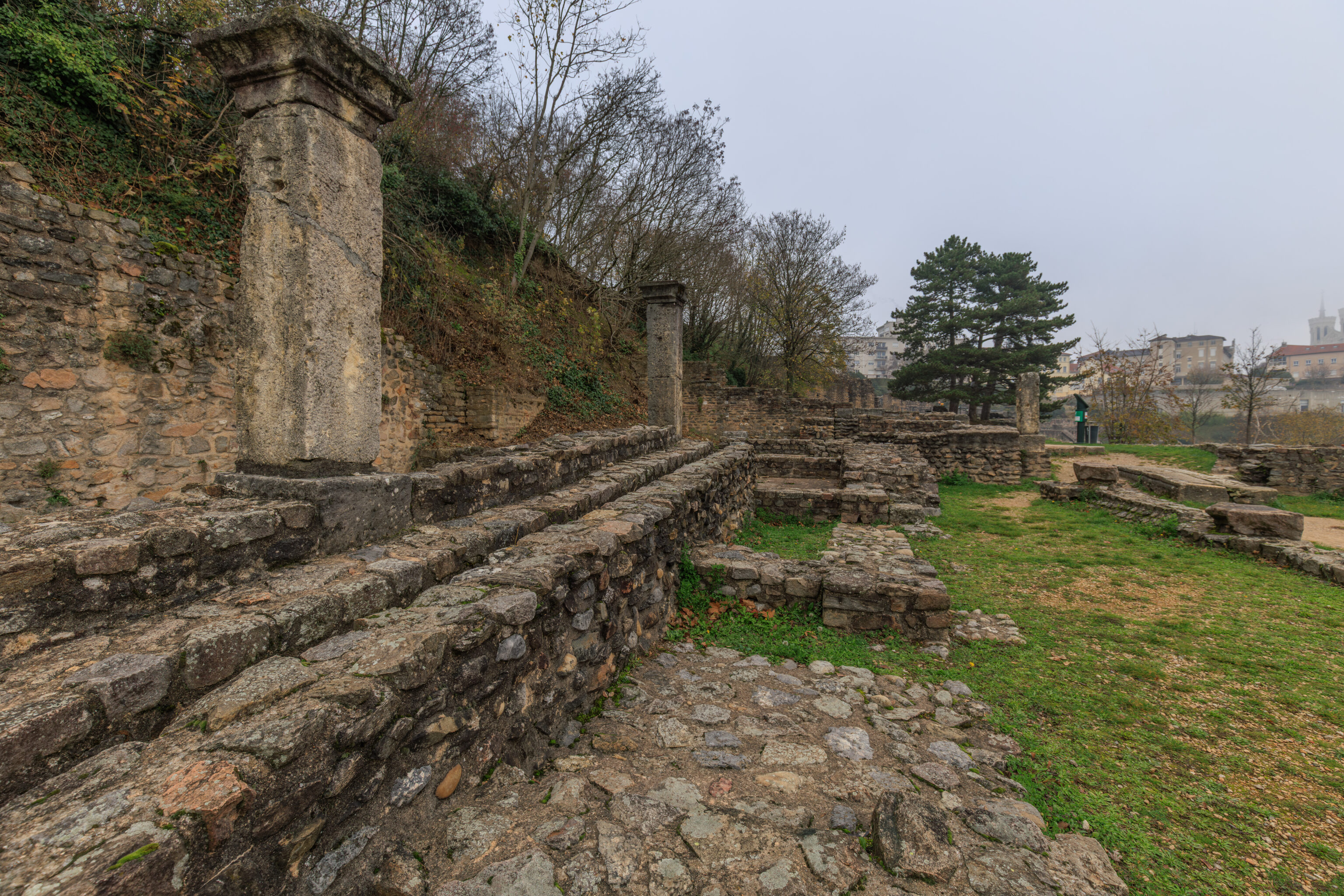
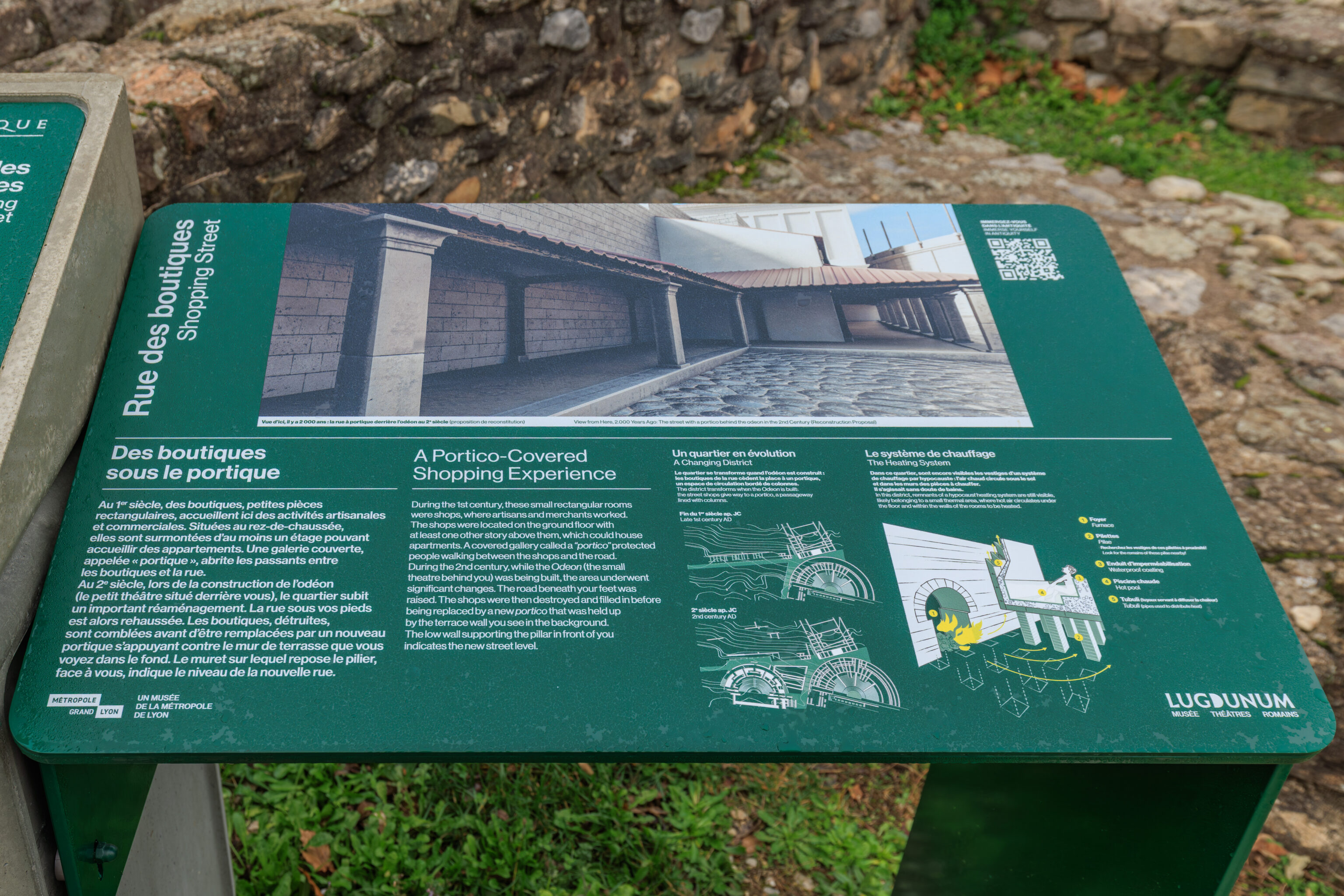
A Portico-Covered Shopping Experience
During the 1st century, these small rectangular rooms were shops, where artisans and merchants worked. The shops were located on the ground floor with at least one other story above them, which could house apartments. A covered gallery called a "portico" protected people walking between the shops and the road. During the 2nd century, while the Odeon (the small theatre behind you) was being built, the area underwent significant changes. The road beneath your feet was raised. The shops were then destroyed and filled in before being replaced by a new portico that was held up by the terrace wall you see in the background. The low wall supporting the pillar in front of you indicates the new street level.
– Text from a the sign above.
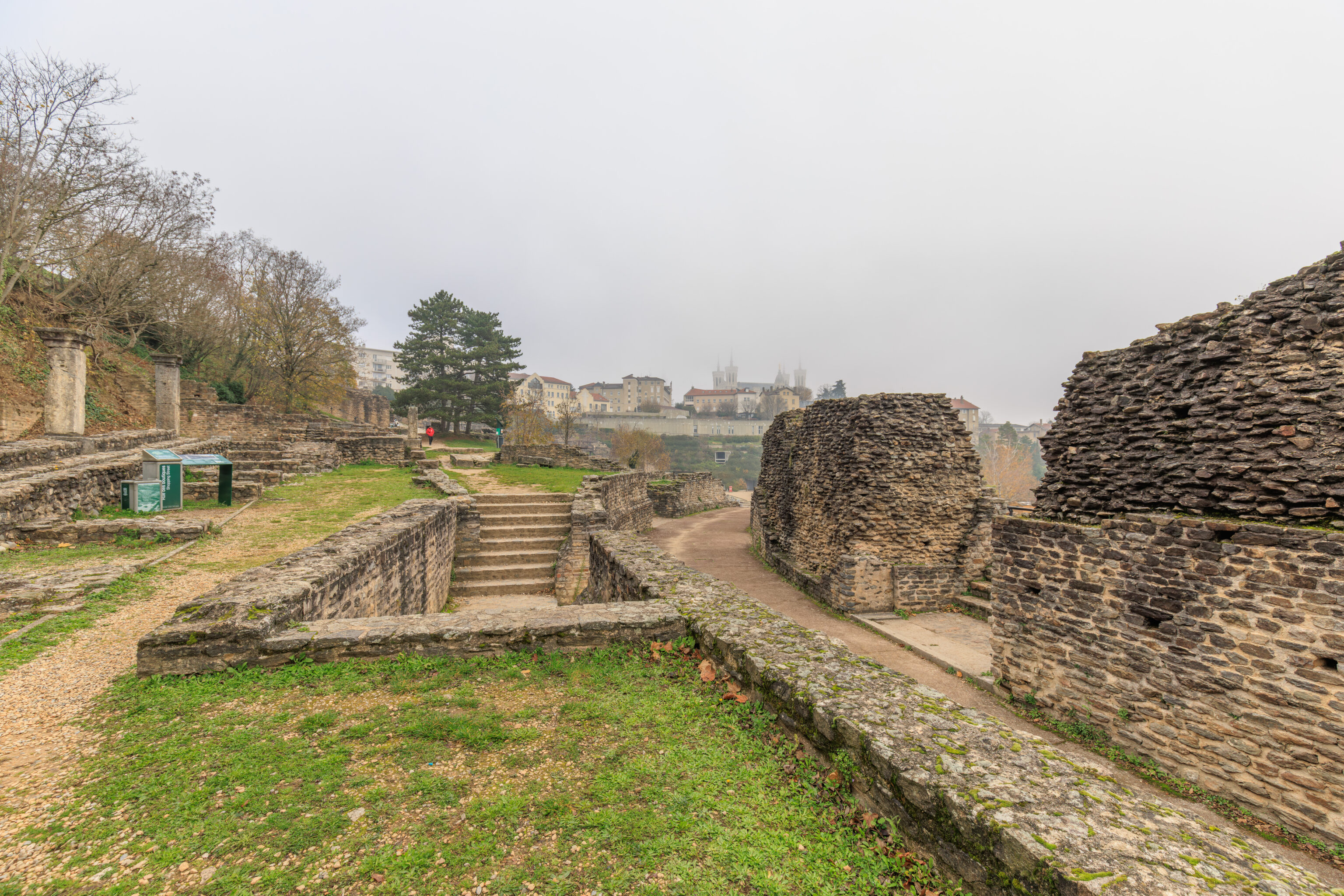
The Path to Prosperity
2.000 years ago, Fourvière hill was a heavily populated area built on terraced land and divided into quarters. The paved road you are standing on continues on past the current borders of the site. It led to a quarter that housed apublic therma, or bath complex, measuring 6600m2. as well as a prosperous housing area, whose vestiges are still visible in the archaeological gardens located on the modern day rue des Farges.
– Text from a sign, translated using Google.
The text from the sign refers to the opposite direction of the photograph above.
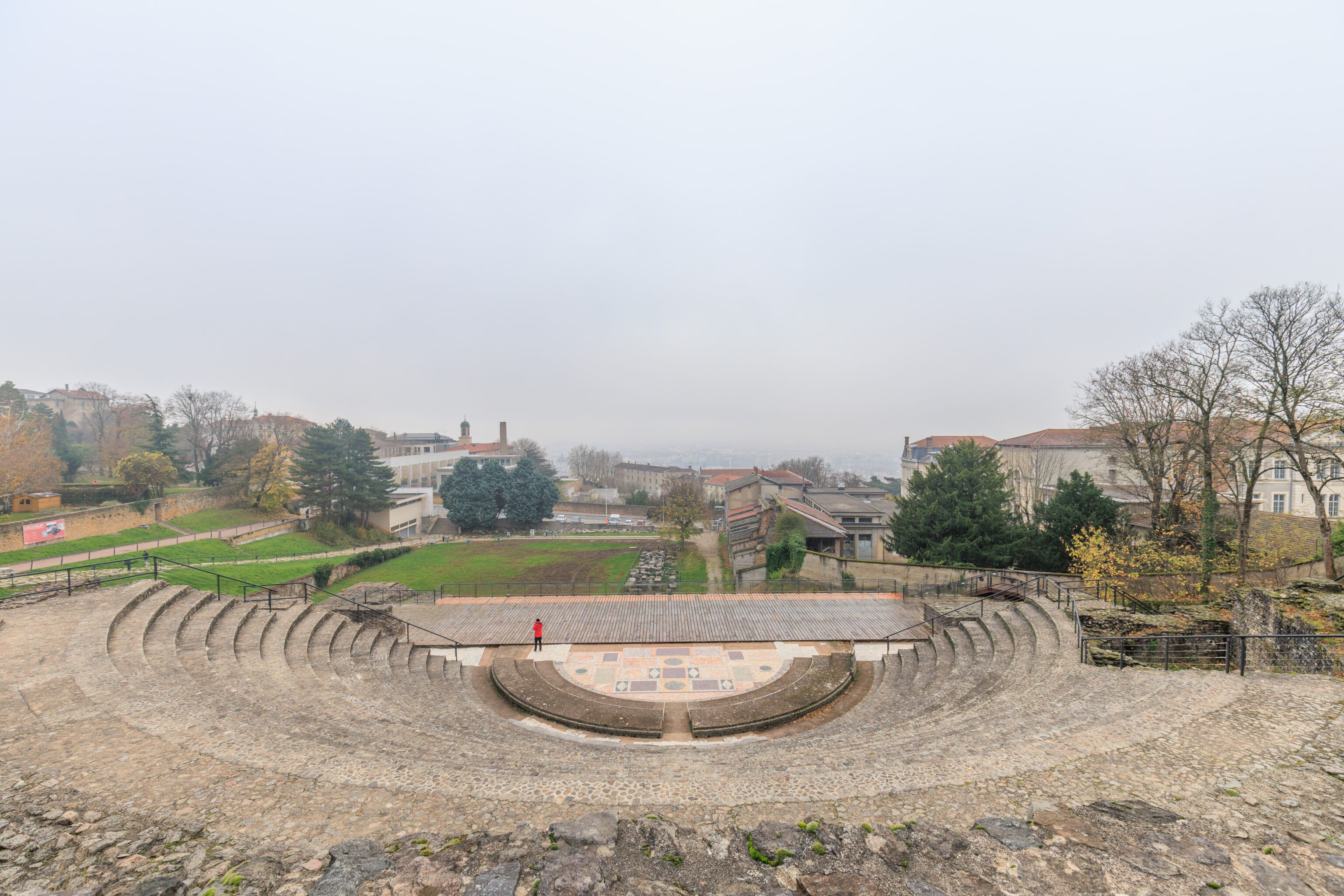
We descended via the steps visible in the photograph above this one to access the rear of the odeon.
The Odeon: Vestiges of Privilege
Lugdunum, which held a place of importance within the Empire, is one of the rare Roman cities to have been endowed with an odeon. It dates back to the 2nd century AD and illustrates the city's desire to distinguish itself with sophisticated monuments.

The Odeon could house 3000 spectators. A variety of productions were held here, from musical performances and political speeches to poetry recitations.

As you enter the building through the door behind you, you will find yourself at the top of the upper tiers of the seating area, ready to take in a show. As was the case in the nearby theatre, a stage curtain could be removed for certain performances, thereby revealing the stage wall and its décor.
– Text from a sign.
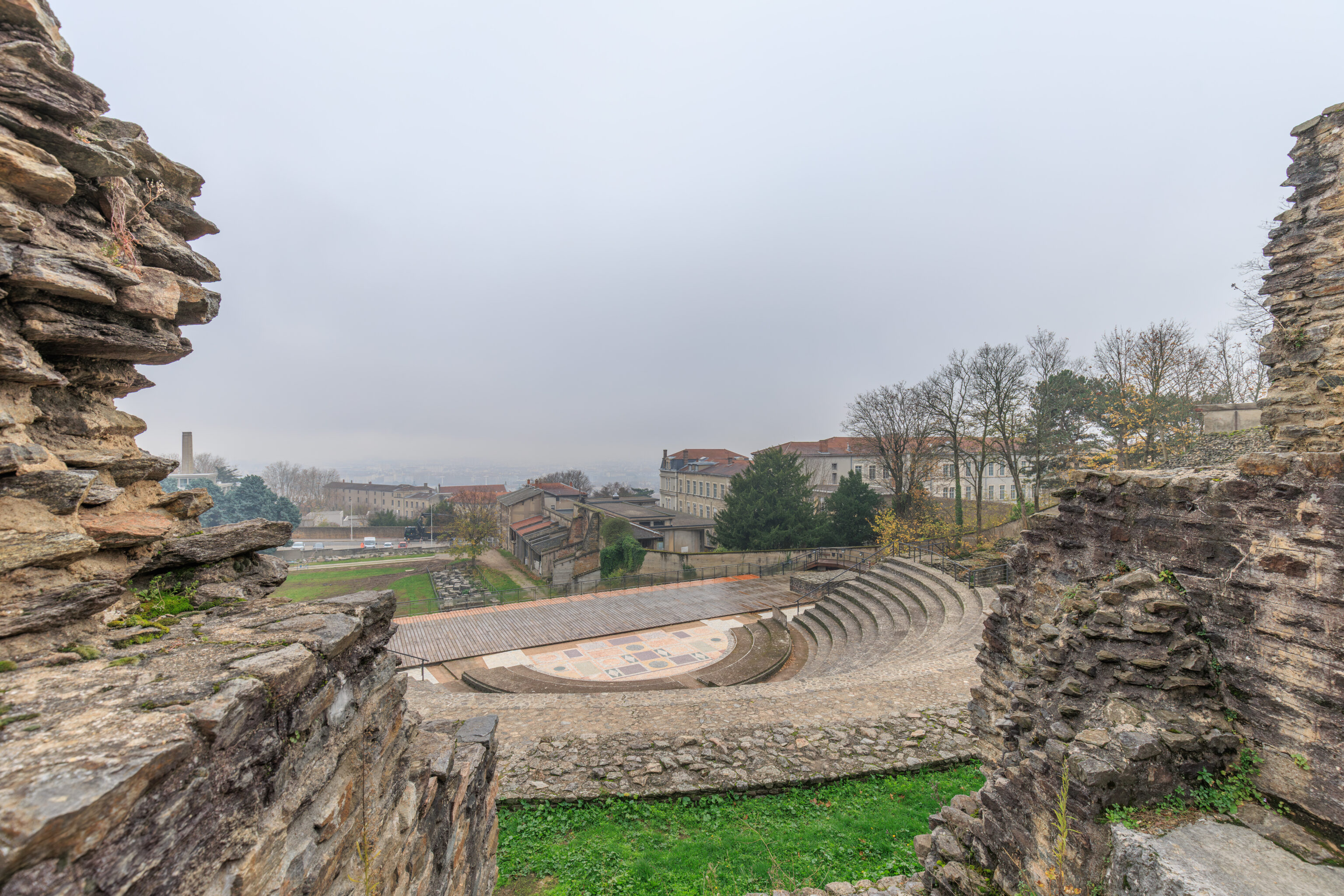
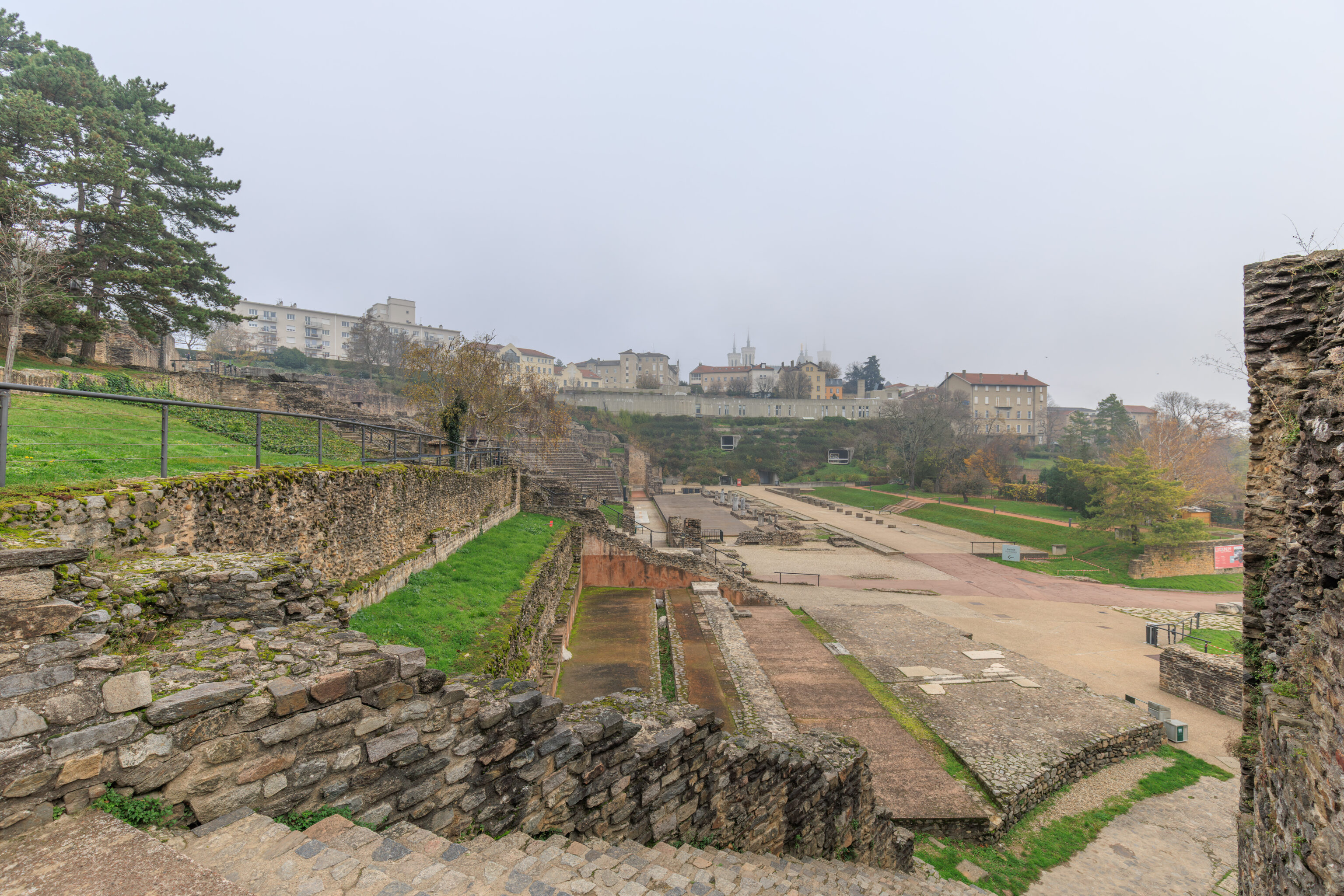
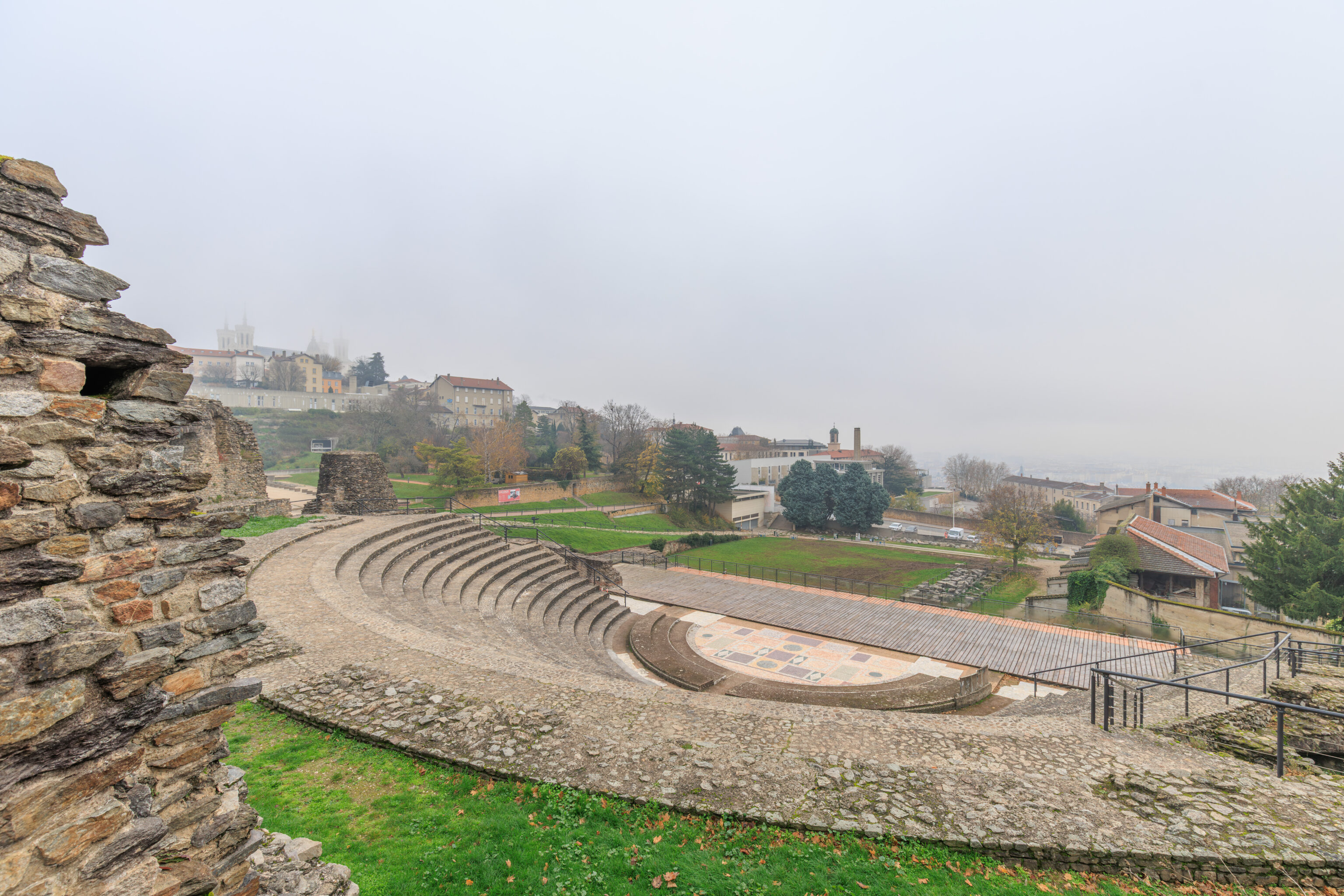
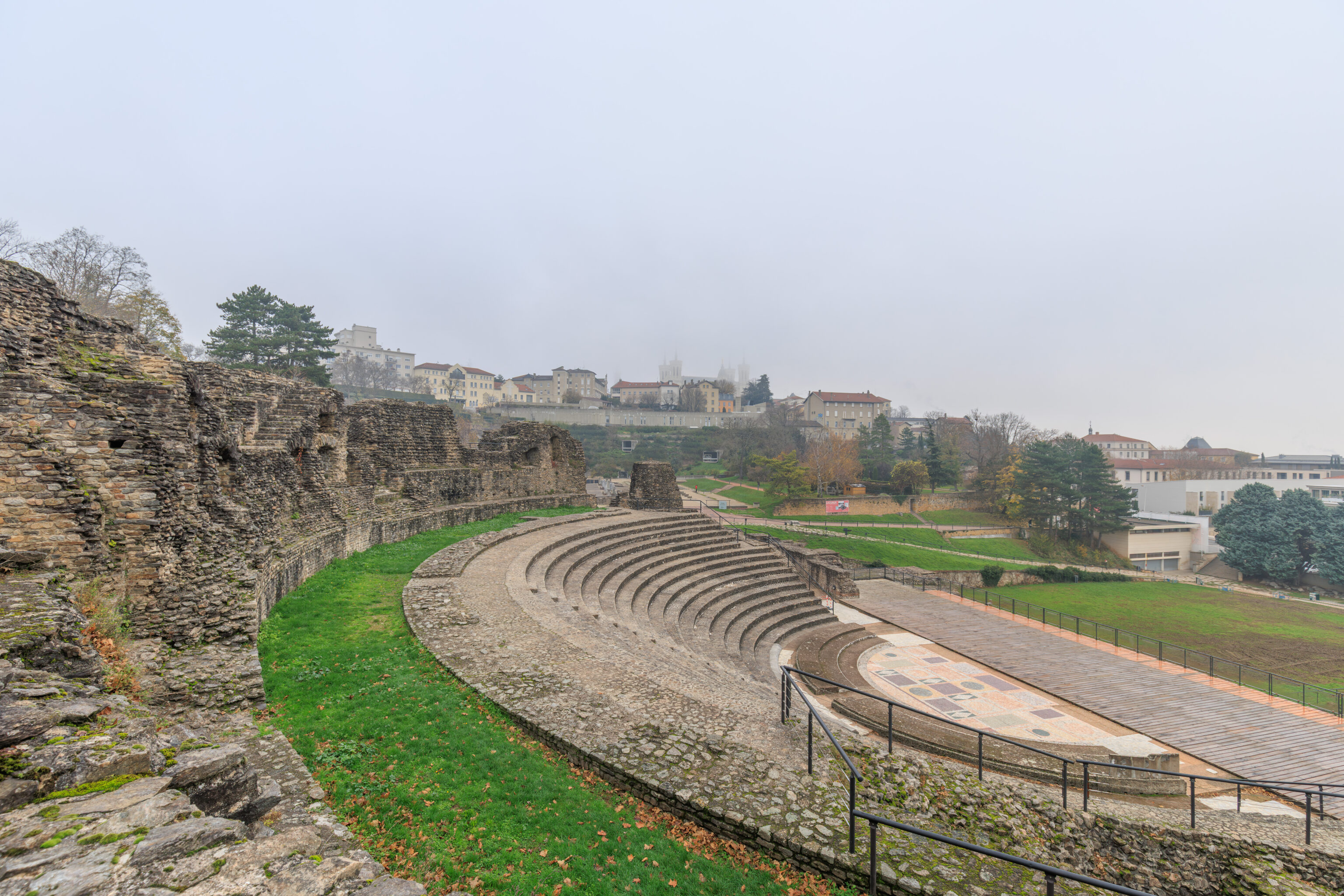
From Rock Quarry to Stage
After the Roman period, the theatre site served as a quarry, before later being transformed into an orchard and vineyard. The vestiges of the Odeon on your right remained visible throughout. From the 16th century on, they have been interpreted as the ruins of an entertainment venue. A few walls of the theatre, discovered at the end of the 19th century, were at first thought to belong to an amphitheater where the first Christians of Lyon were martyred. At the time, the discovery aroused much enthusiasm and debate.

It wasn't until 1933, under the municipal leadership of Edouard Herriot, that the site was progressively acquired and excavated by the City of Lyon. The structures were then identified as a theatre and an odeon and were gradually renovated. The restored theatre opened its doors for its first show in 1946.

Excavations subsequently continued into the 1980's, unearthing the areas of the ancient city located near both entertainment venues.
– Text from a sign.
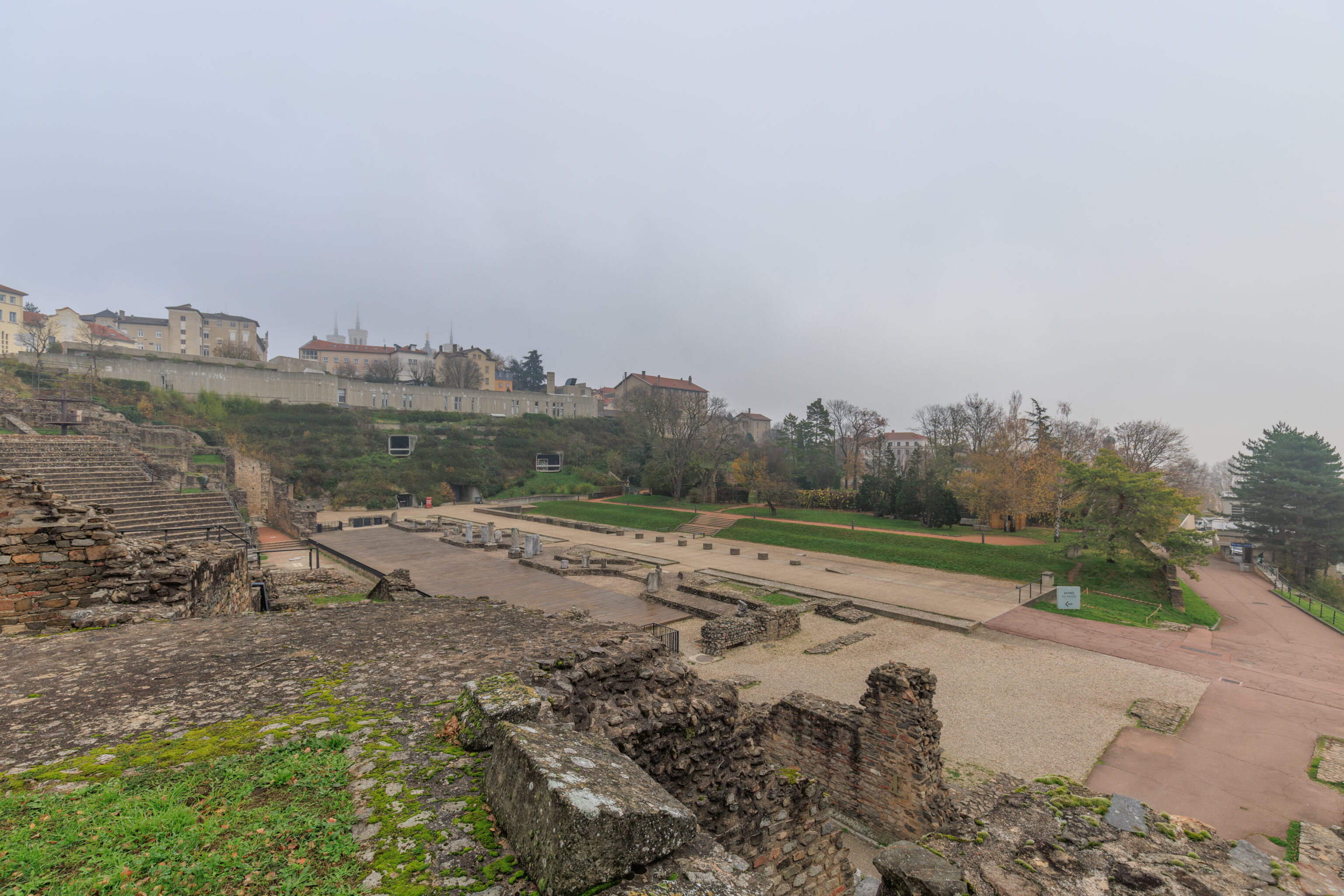
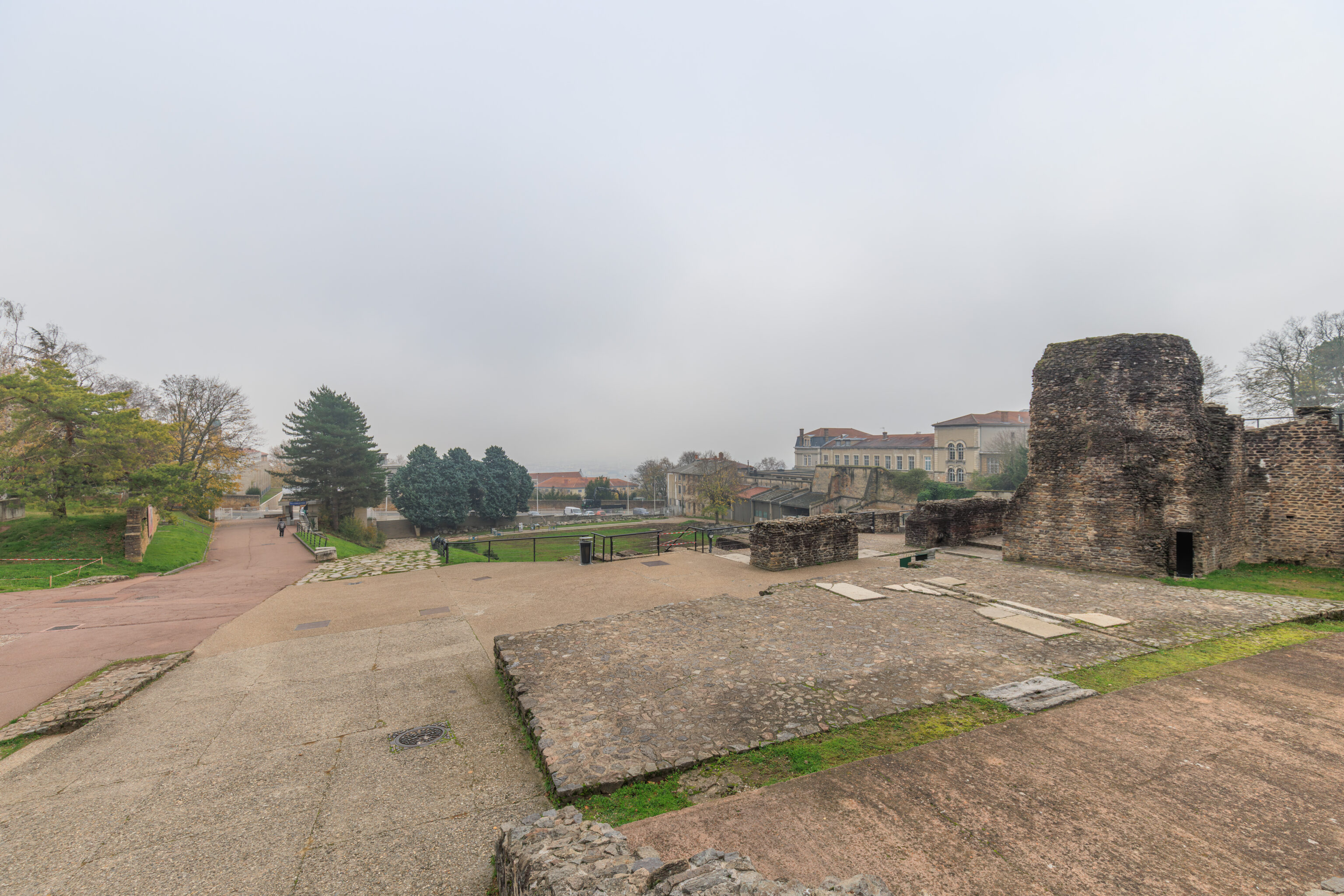
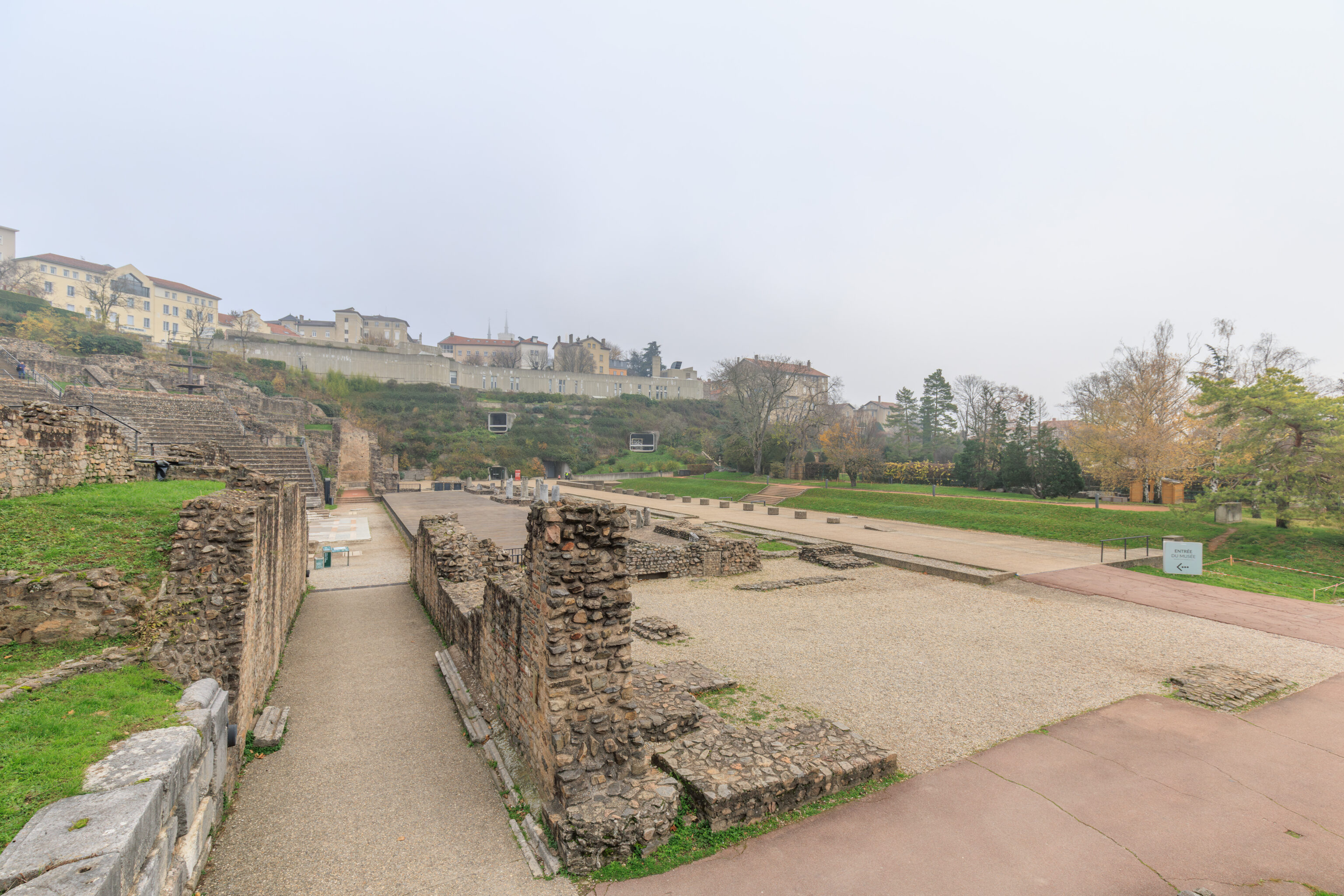
We descended between the odeon and theatre, ending up at stage level.
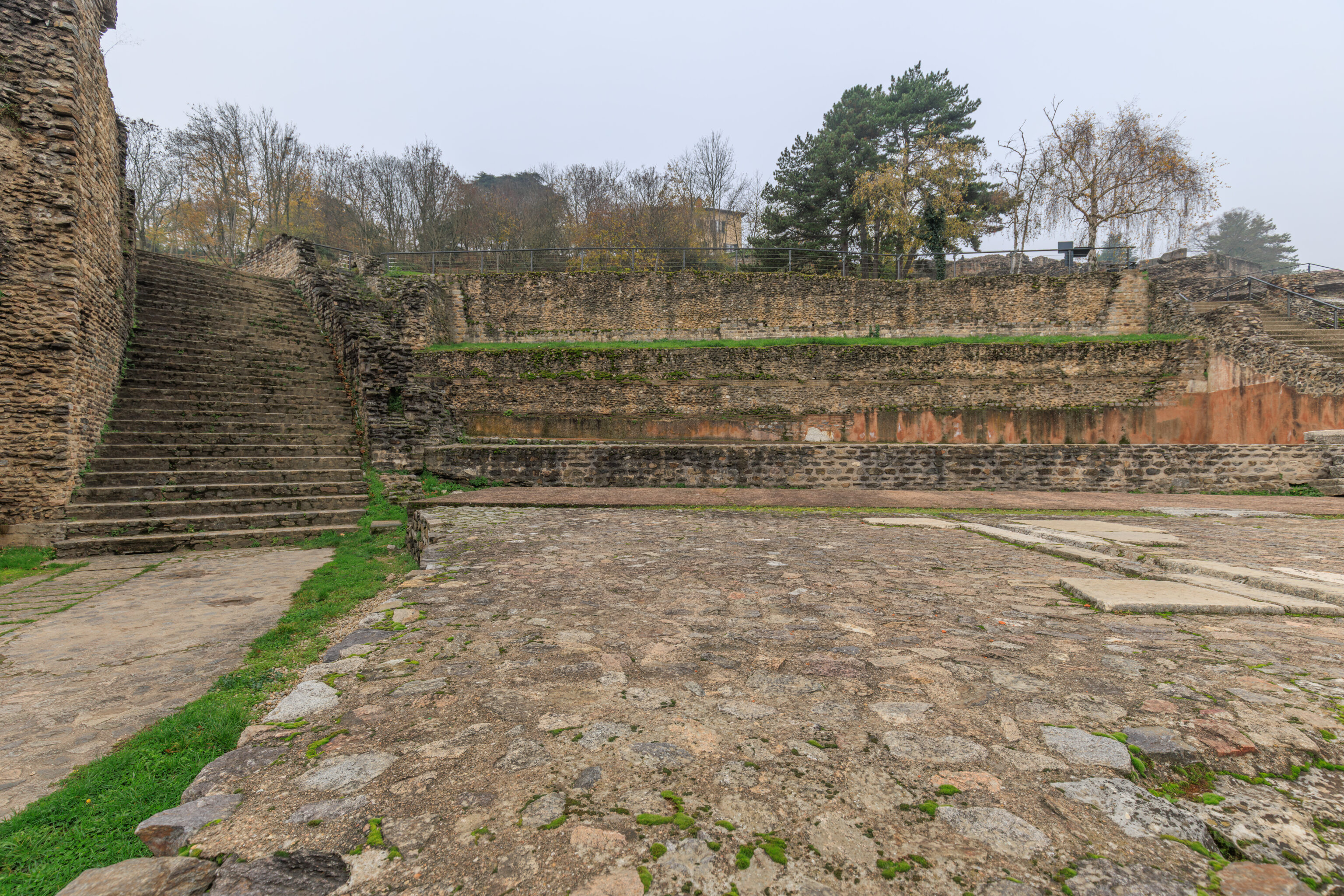
This area in front of us seems like it may have been a vast fountain, as described by the sign below:
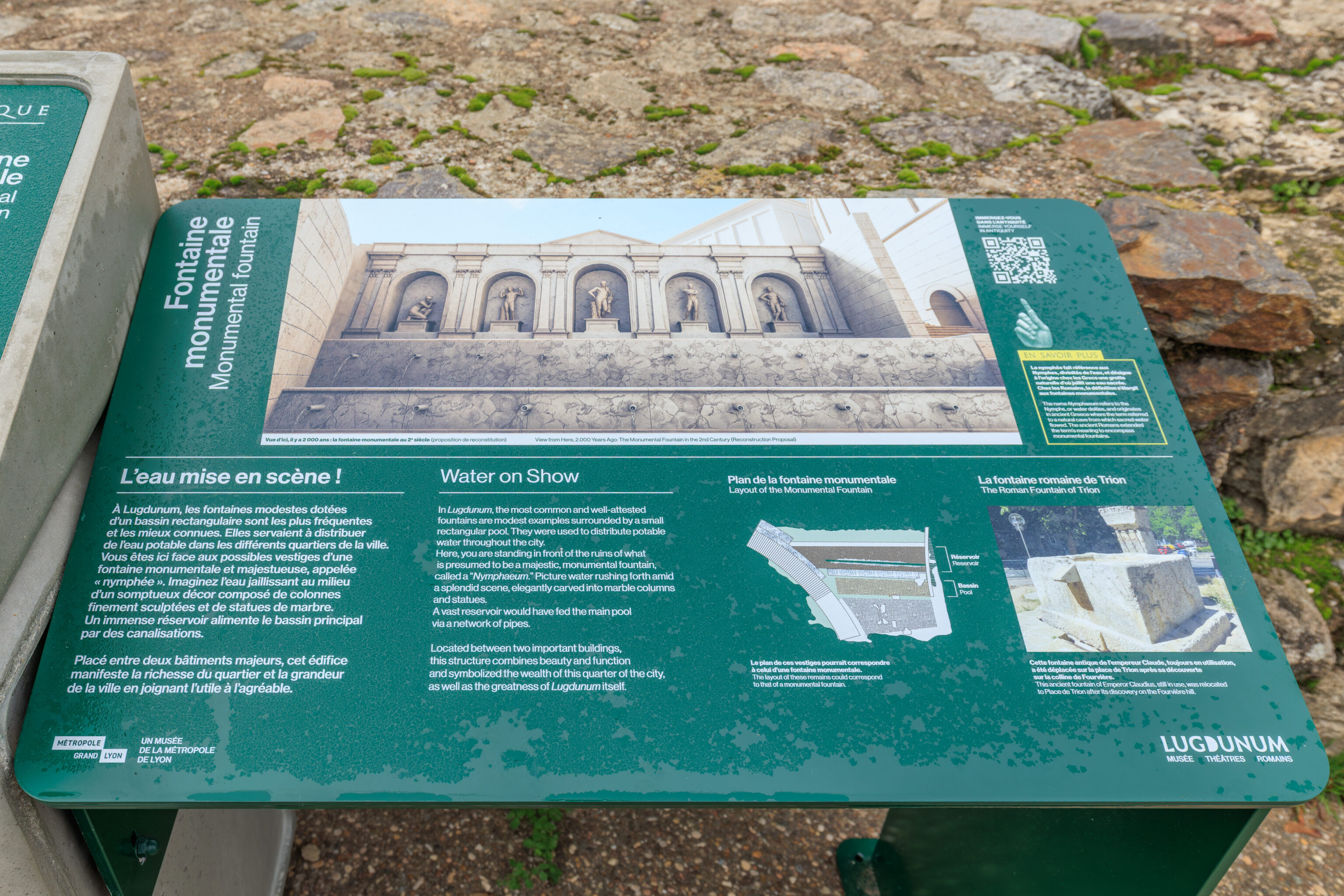
Water on Show
In Lugdunum, the most common and well-attested fountains are modest examples surrounded by a small rectangular pool. They were used to distribute potable water throughout the city.

Here, you are standing in front of the ruins of what is presumed to be a majestic, monumental fountain, called a "Nymphaeum." Picture water rushing forth amid a splendid scene, elegantly carved into marble columns and statues. A vast reservoir would have fed the main pool via a network of pipes.

Located between two important buildings, his structure combines beauty and function and symbolized the wealth of this quarter of the city, s well as the greatness of Lugdunum itself.
– Text from a sign, translated using Google.
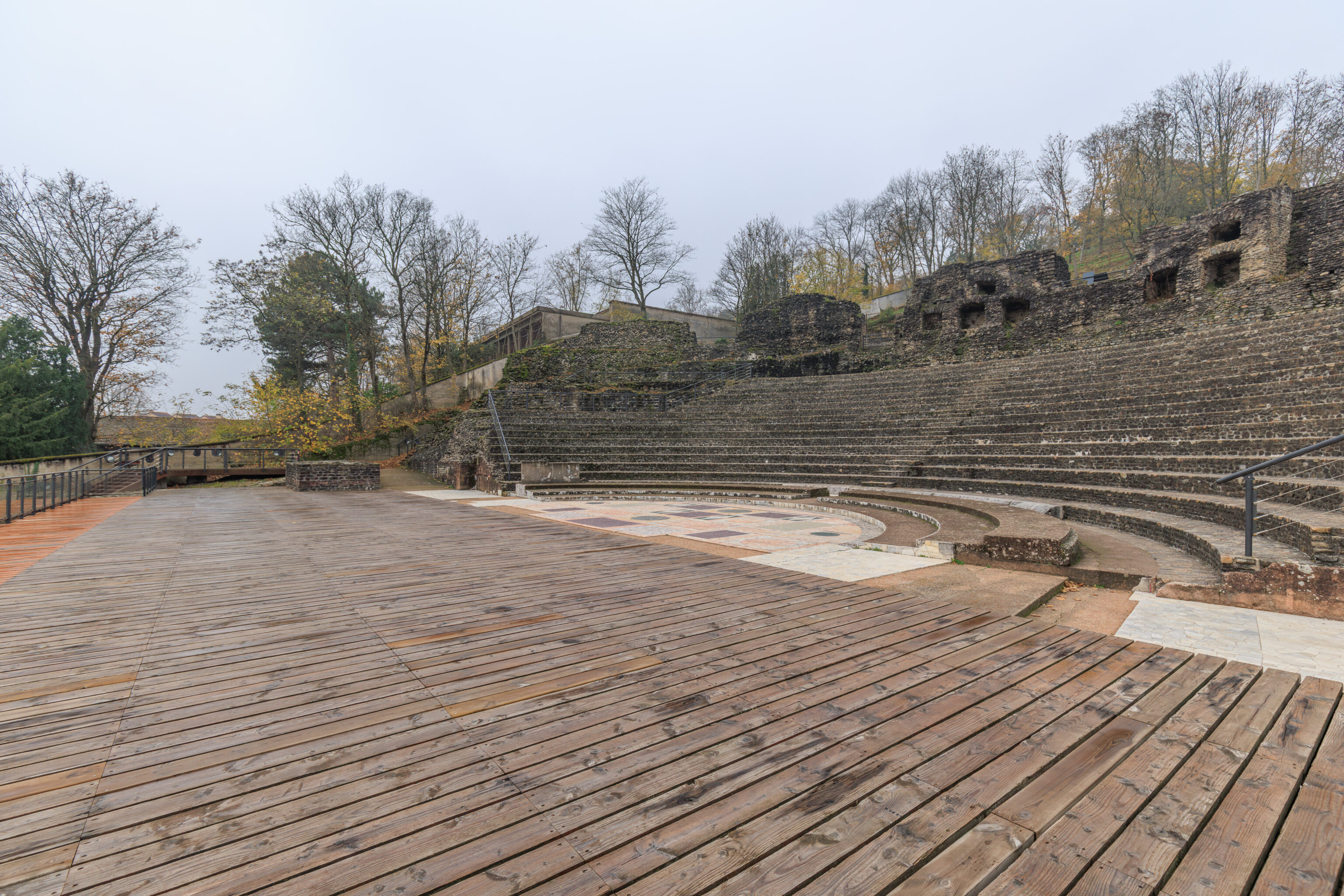
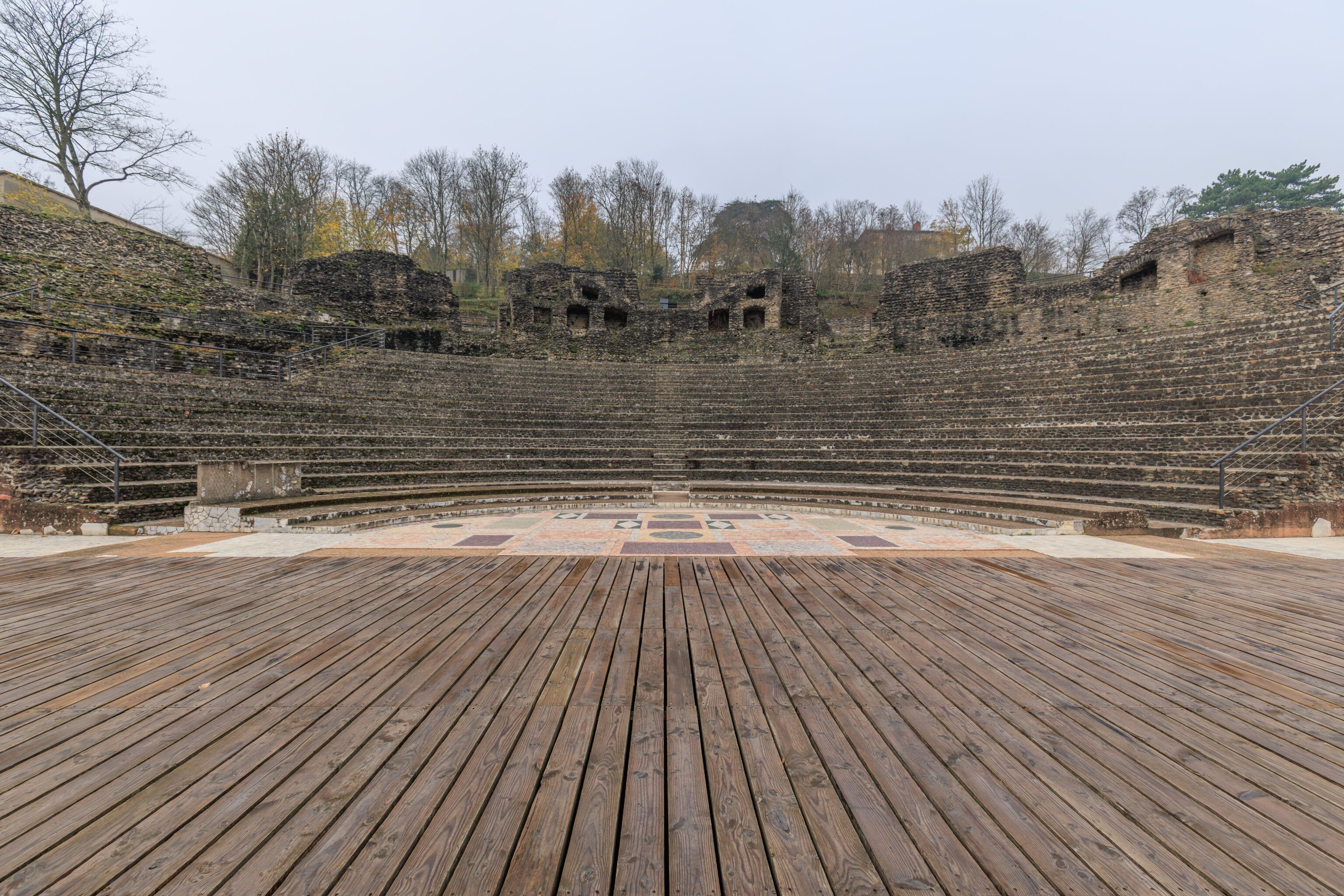
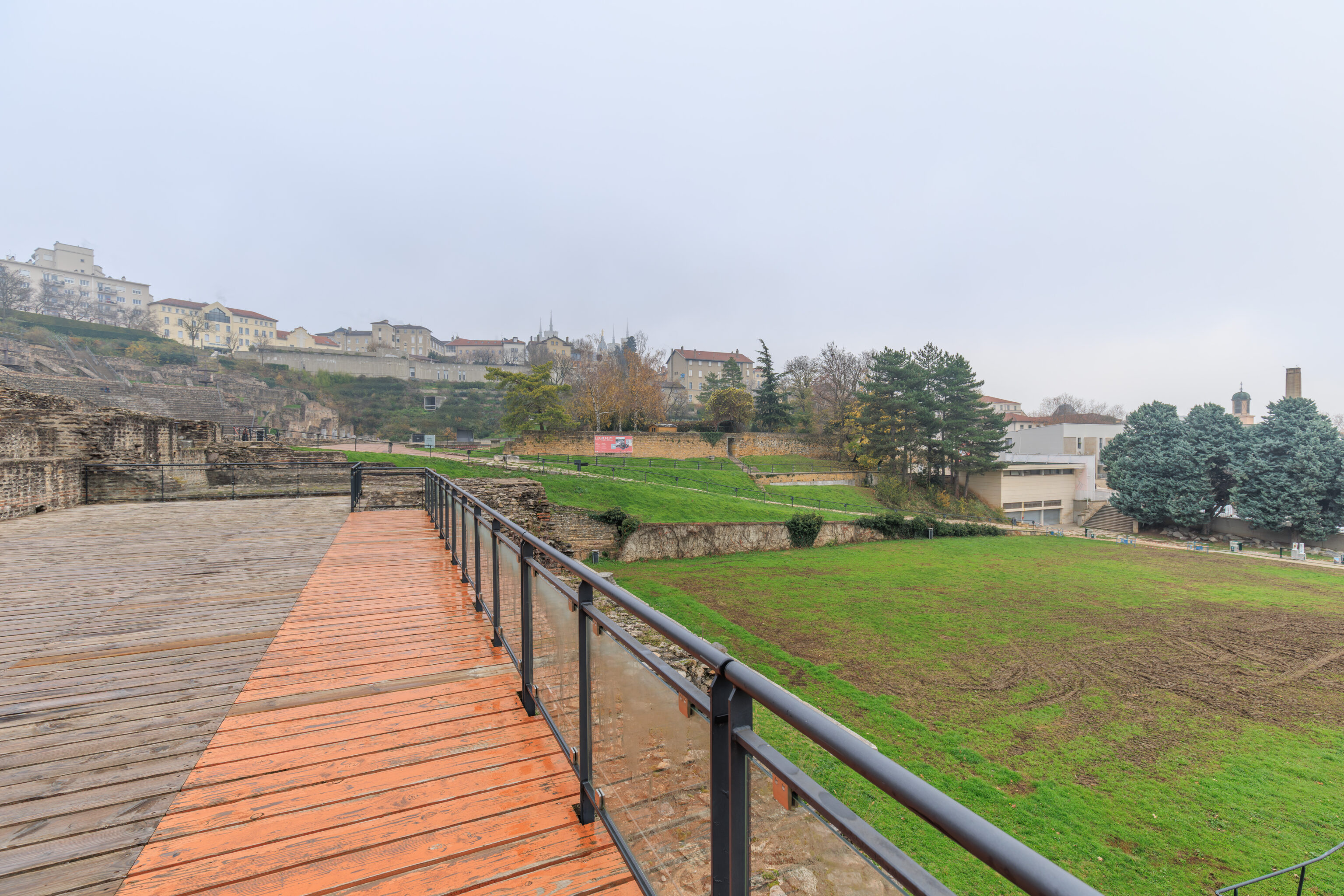
We headed south to check out the odeon’s stage.
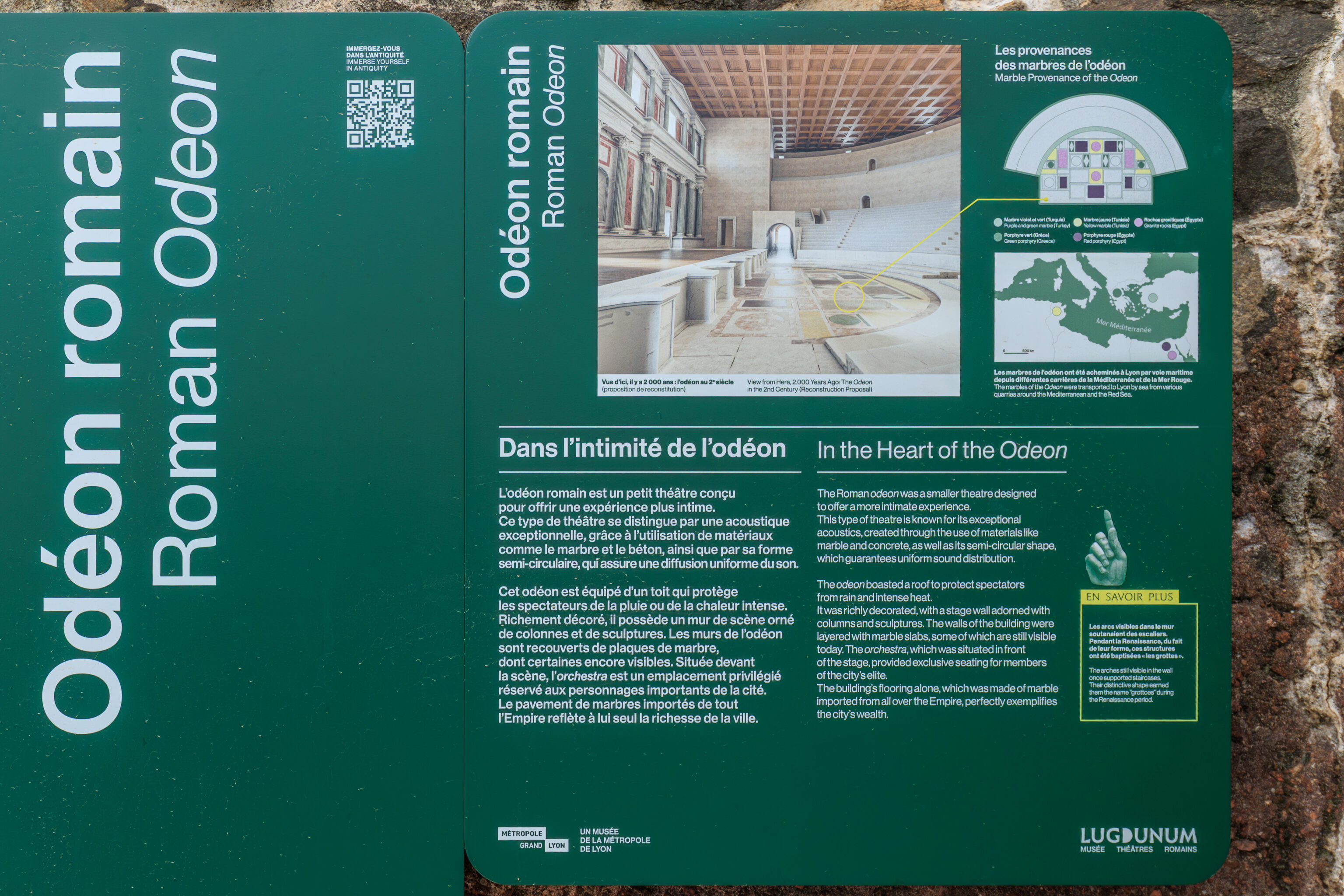
In the Heart of the Odeon
The Roman odeon was a smaller theatre designed to offer a more intimate experience. This type of theatre is known for its exceptional acoustics, created through the use of materials like marble and concrete, as well as its semi-circular shape, which guarantees uniform sound distribution.

The odeon boasted a roof to protect spectators from rain and intense heat. It was richly decorated, with a stage wall adorned with columns and sculptures. The walls of the building were layered with marble slabs, some of which are still visible today. The orchestra, which was situated in front of the stage, provided exclusive seating for members of the city's elite.

The building's flooring alone, which was made of marble imported from all over the Empire, perfectly exemplifies the city's wealth.
– Text from the sign above.
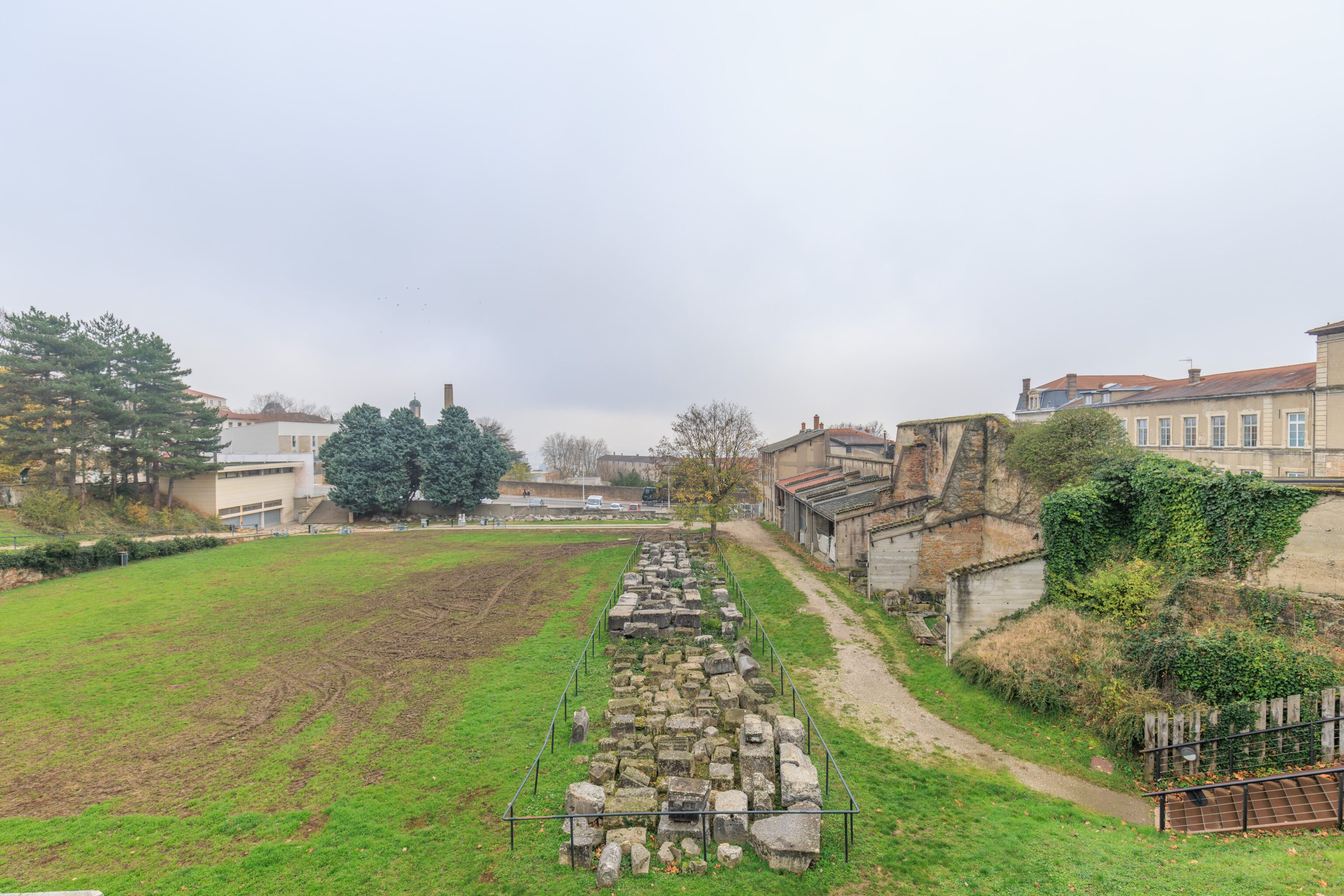
The view looking to the east from the edge of the stage. The funicular station is just beyond the fence at the edge of the site.
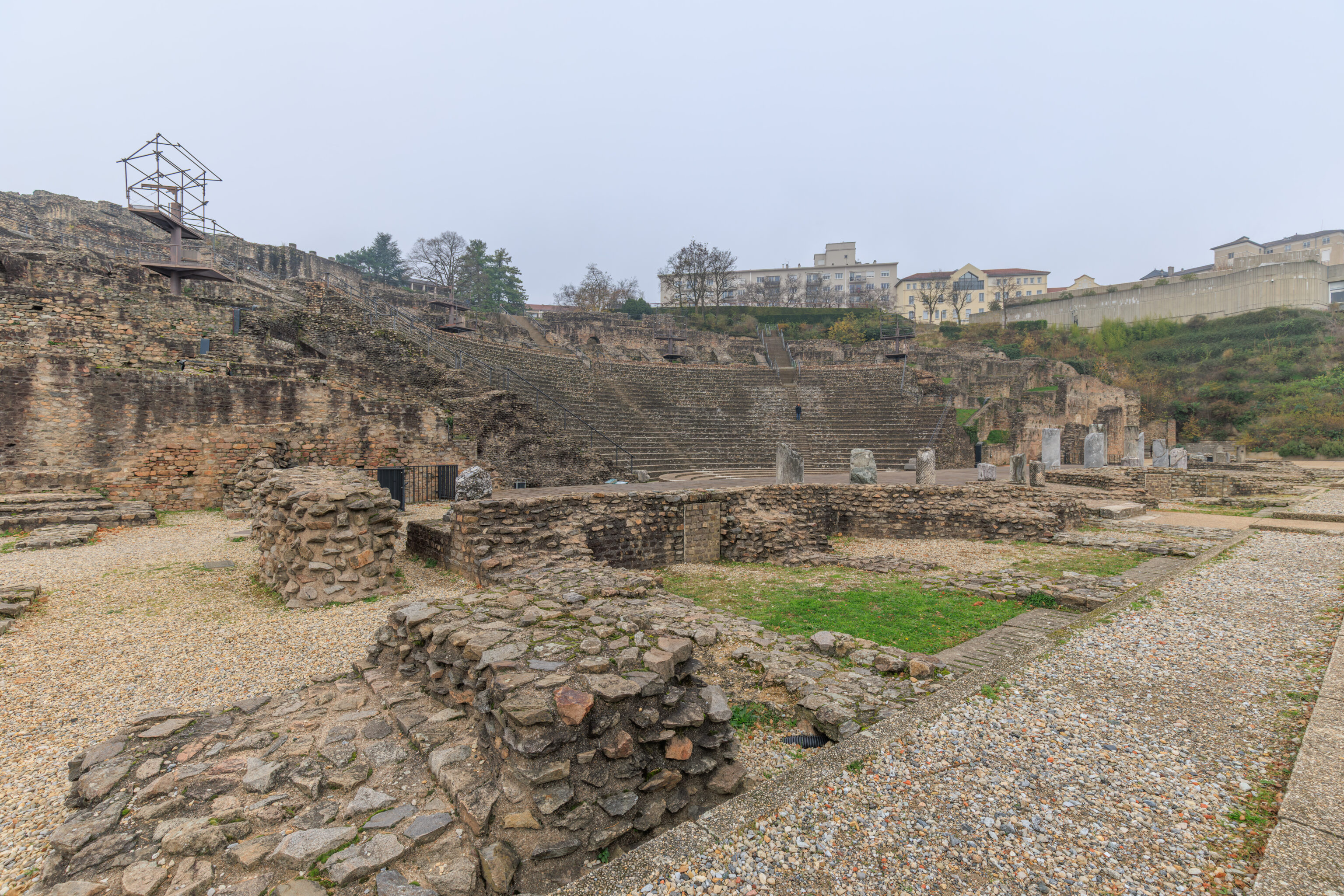
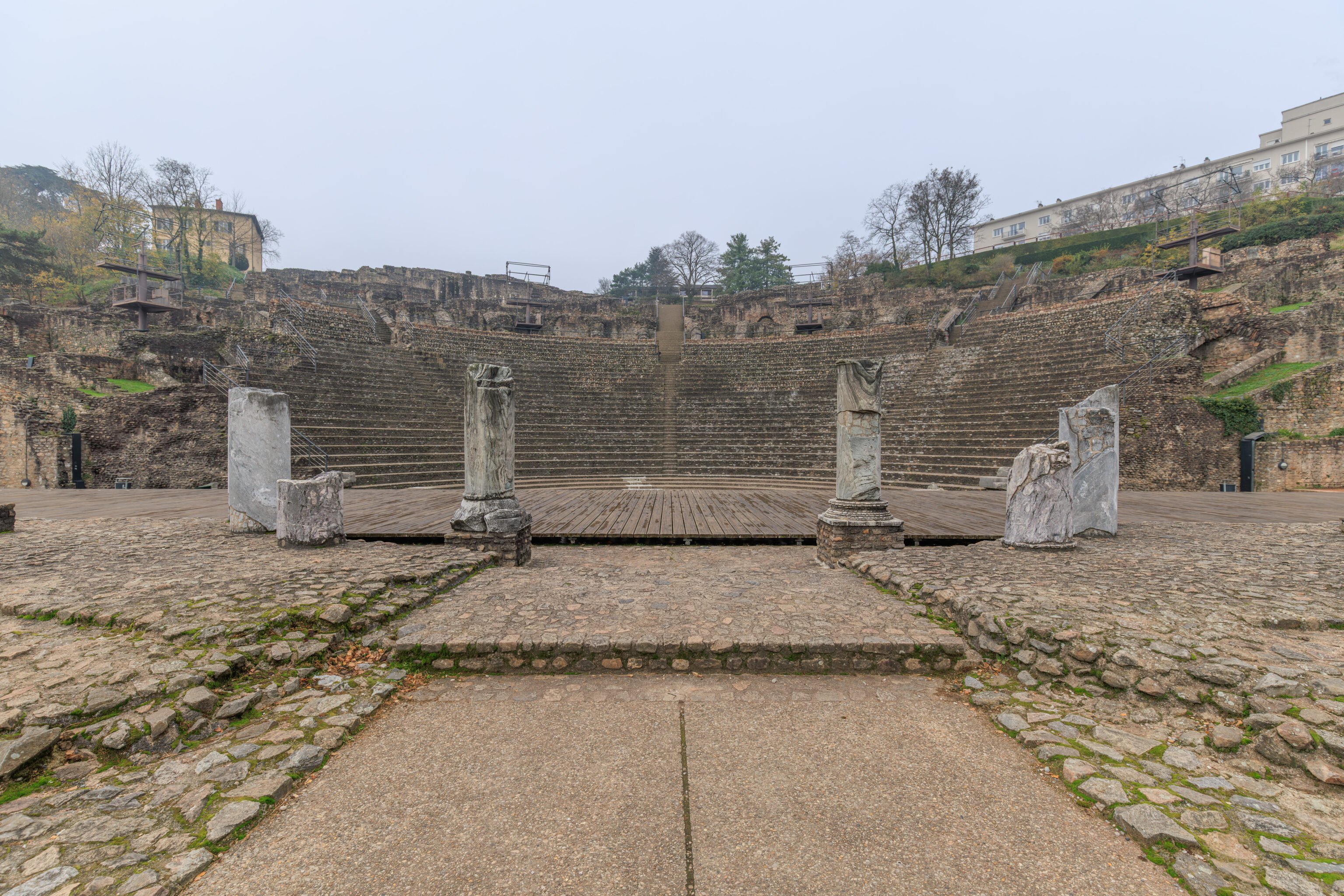
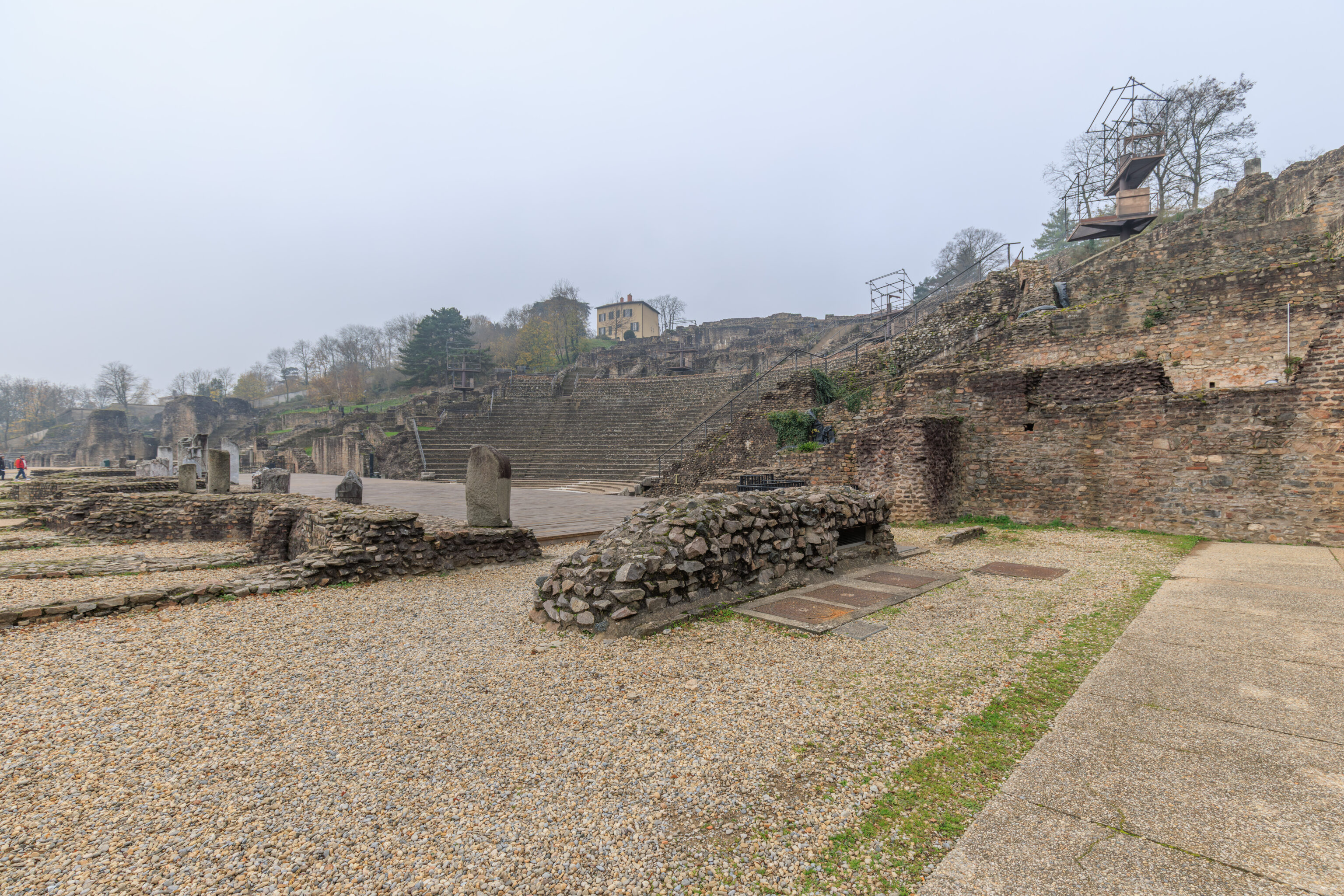
We then walked to the north to see the theatre’s stage, walking past it to go as far to the north as we could go. The lower exit of the Lugdunum Museum is around here.
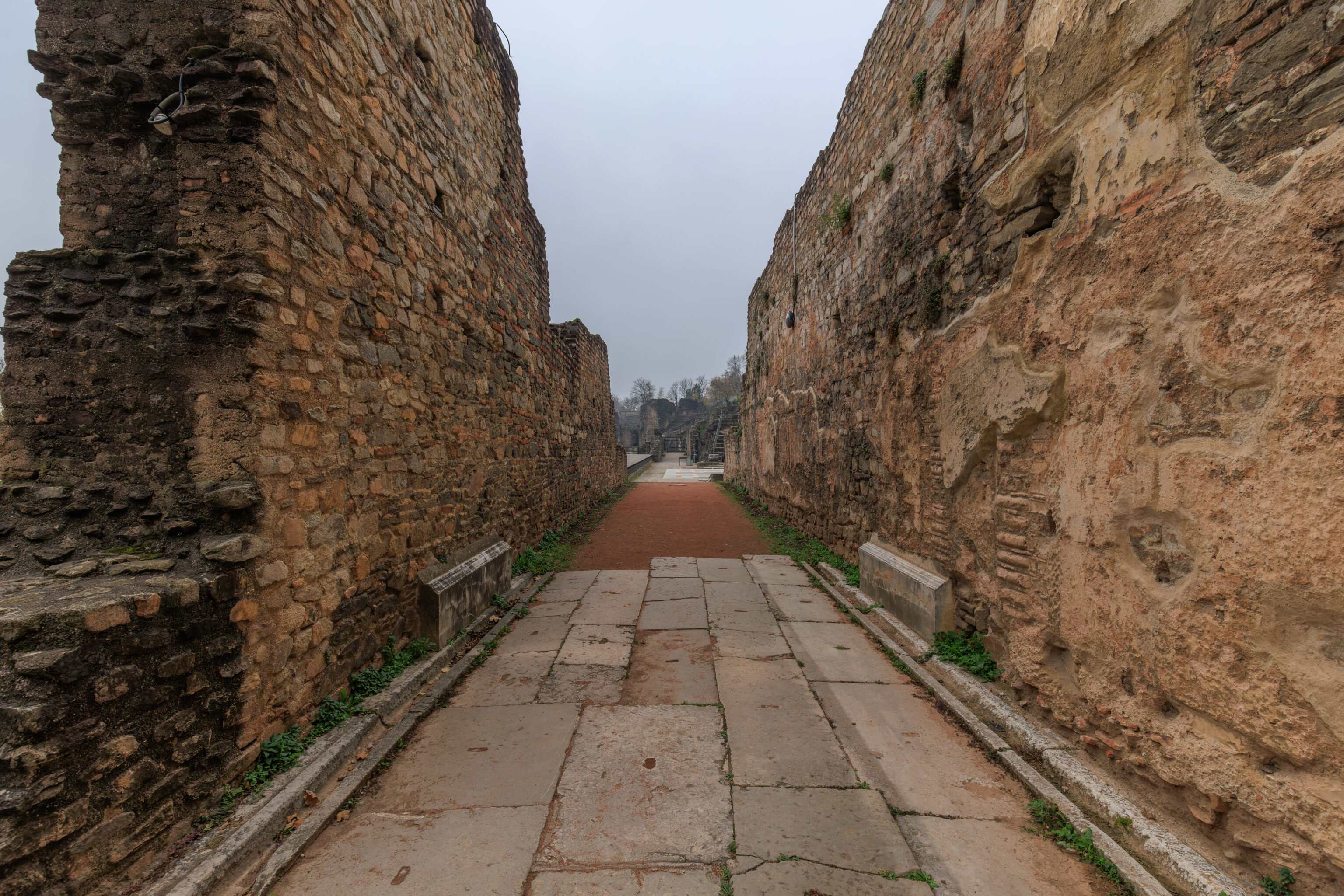
We then returned via this passageway.
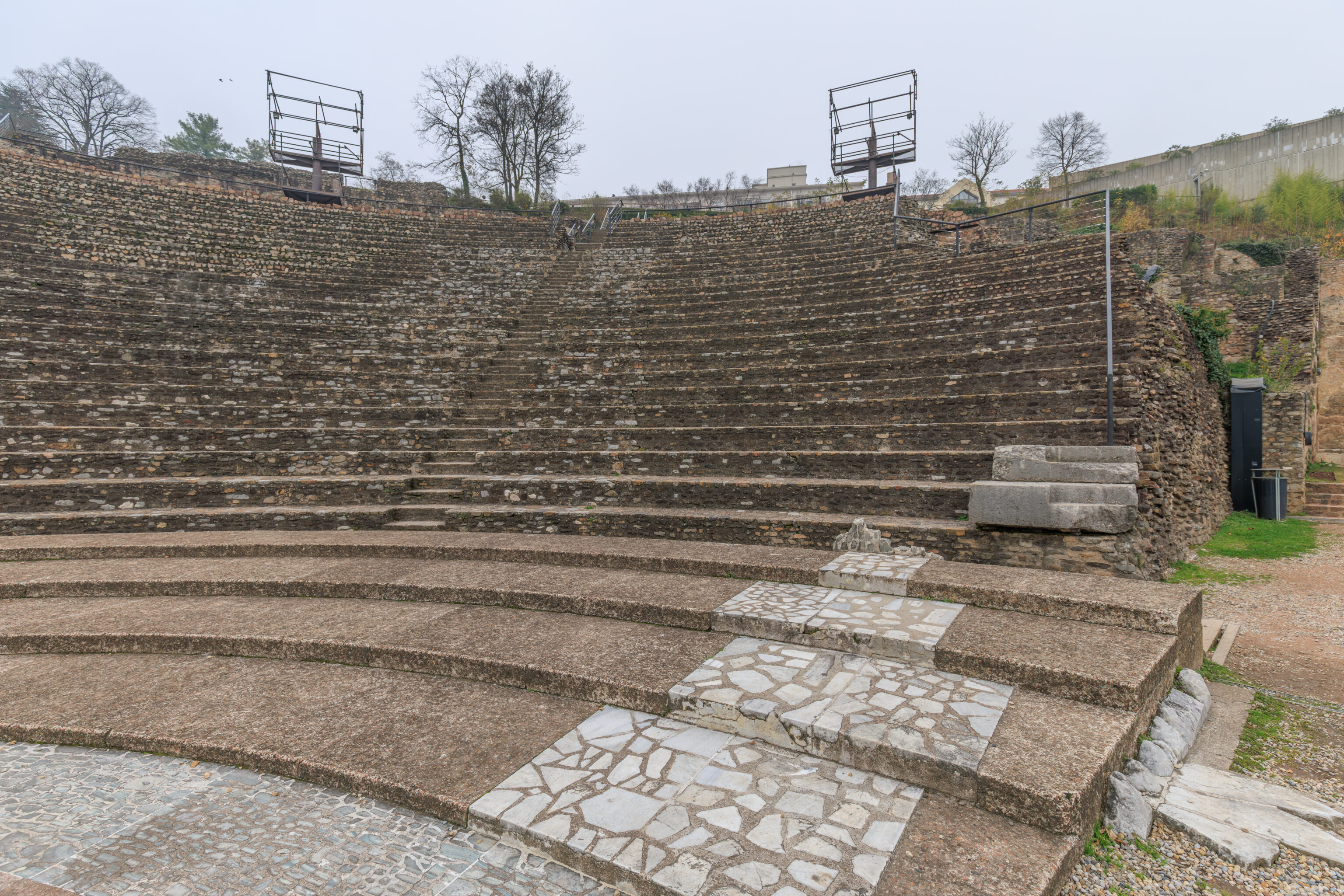
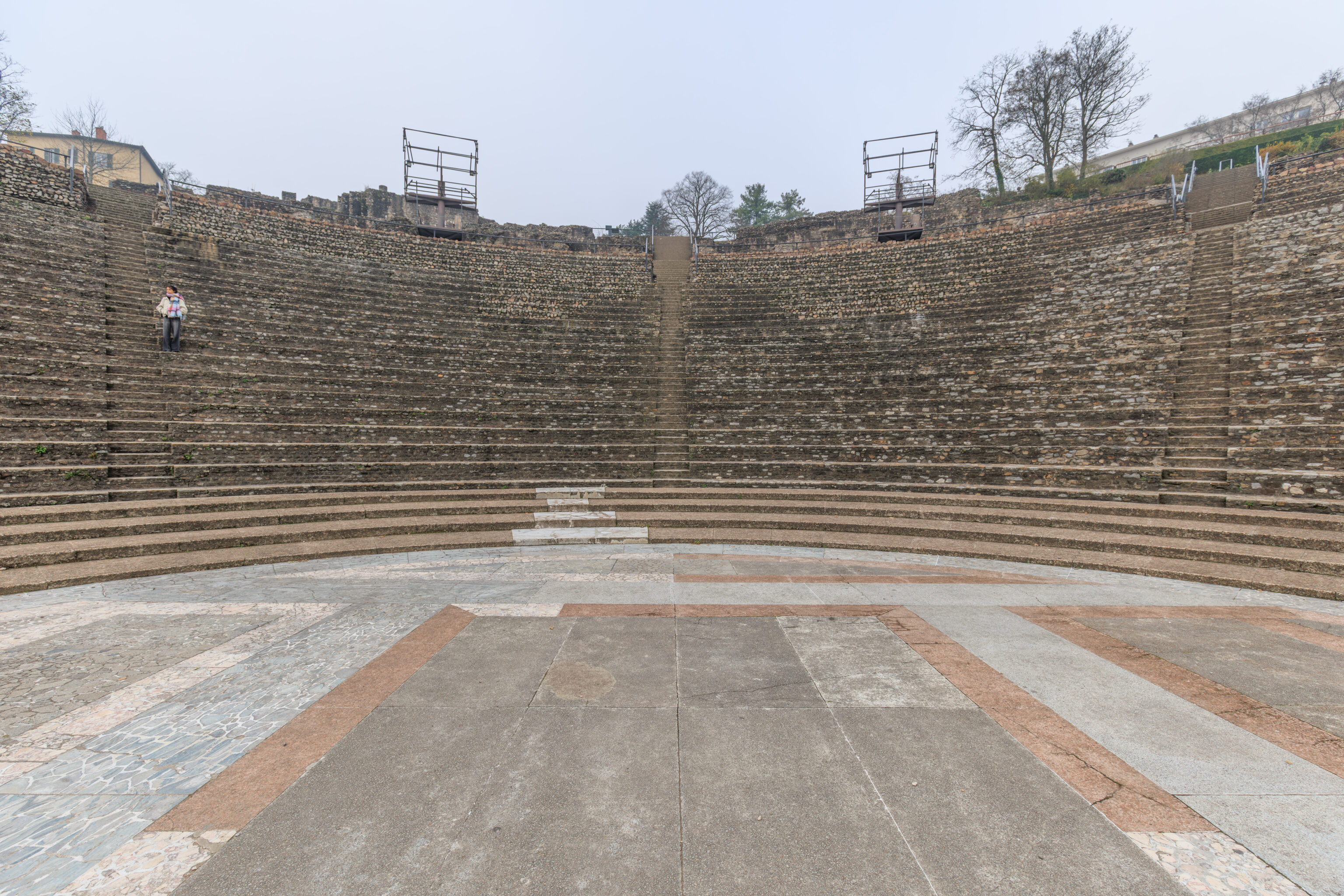
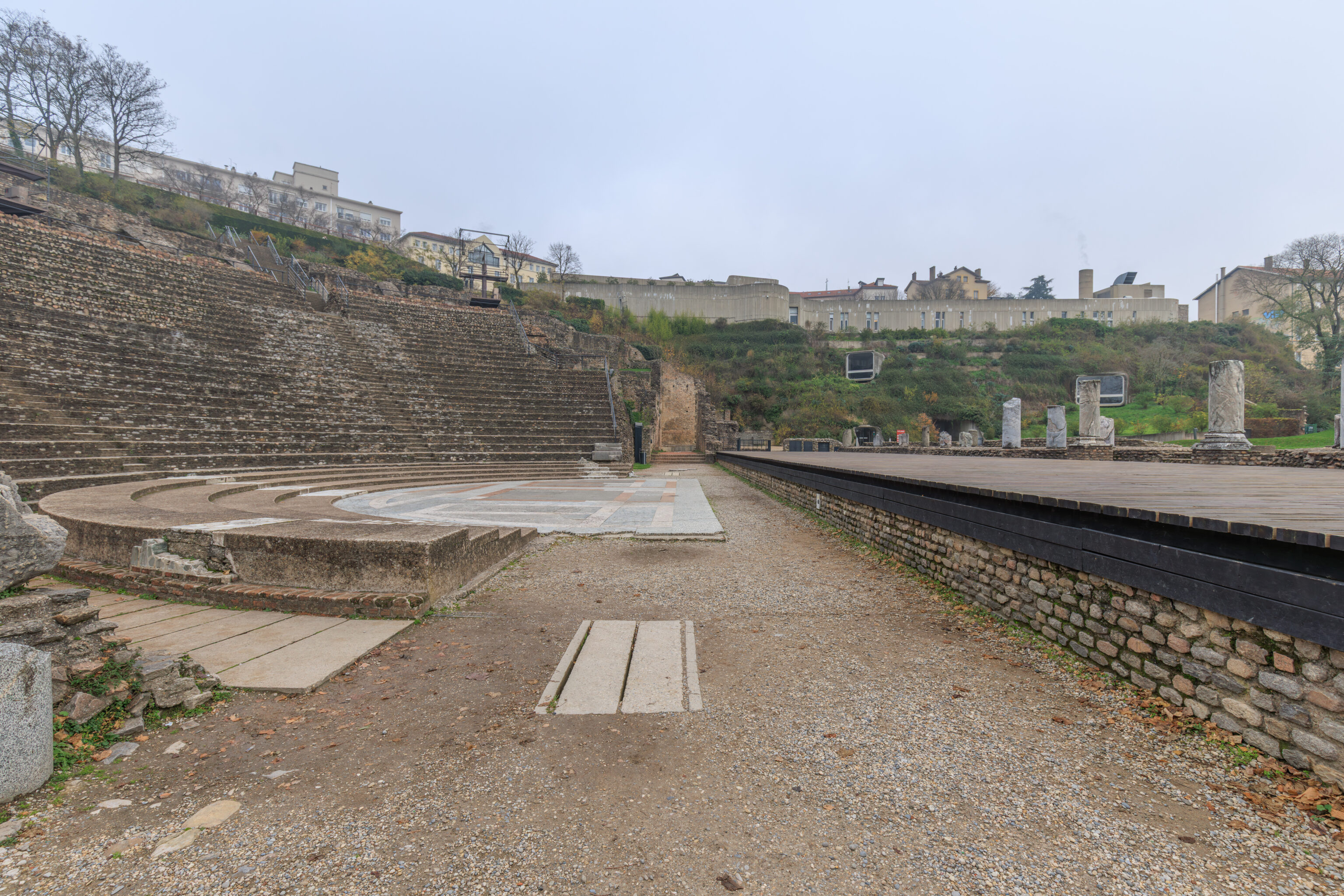
We were able to get a close look at the stage and seating. The stage seems to be more similar to what its historical appearance would have been compared to the odeon.
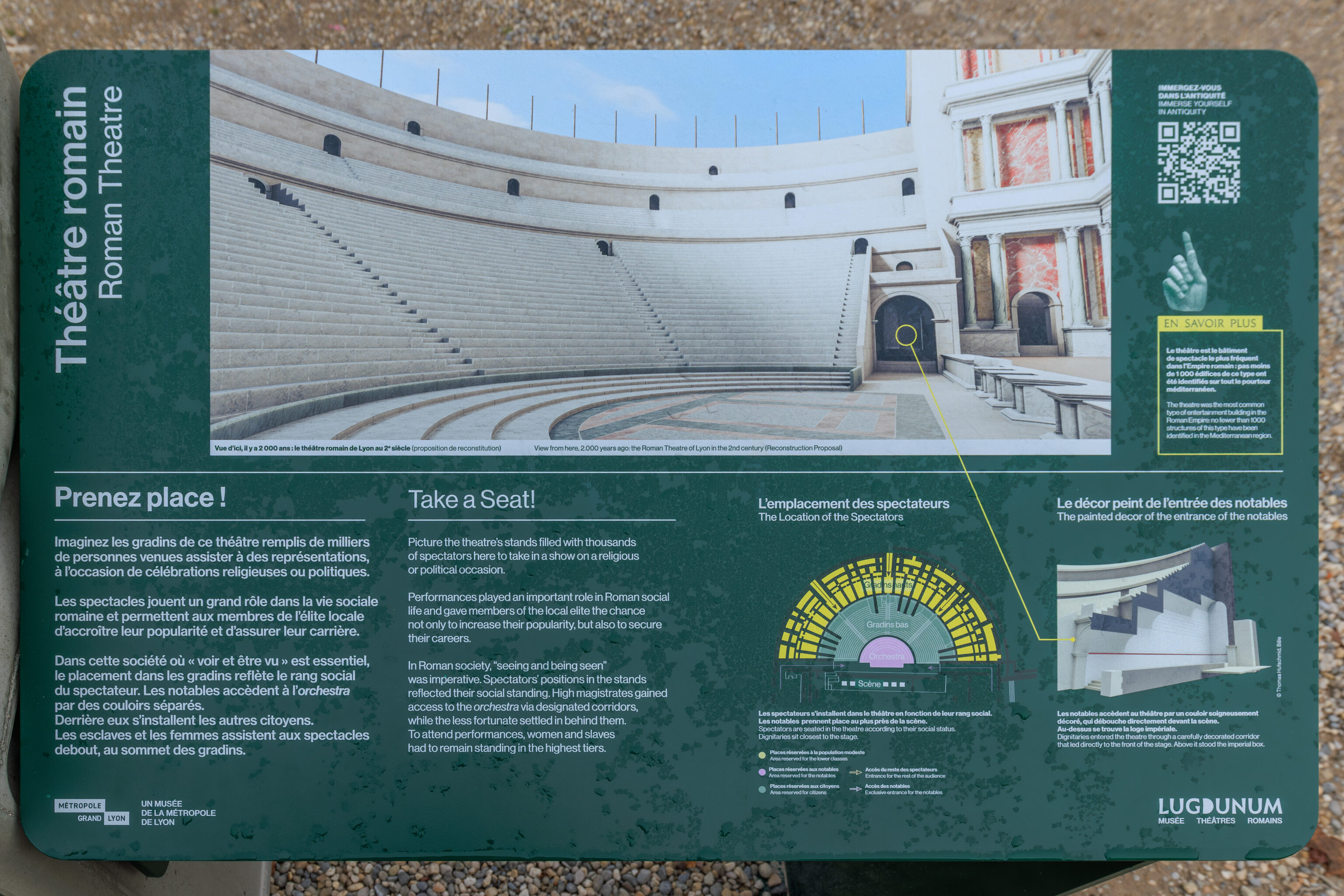
Take a Seat!
Picture the theatre's stands filled with thousands of spectators here to take in a show on a religious or political occasion.

Performances played an important role in Roman social life and gave members of the local elite the chance not only to increase their popularity, but also to secure their careers.

In Roman society, "seeing and being seen" was imperative. Spectators' positions in the stands reflected their social standing. High magistrates gained access to the orchestra via designated corridors, while the less fortunate settled in behind them. To attend performances, women and slaves had to remain standing in the highest tiers.
– Text from the sign above.
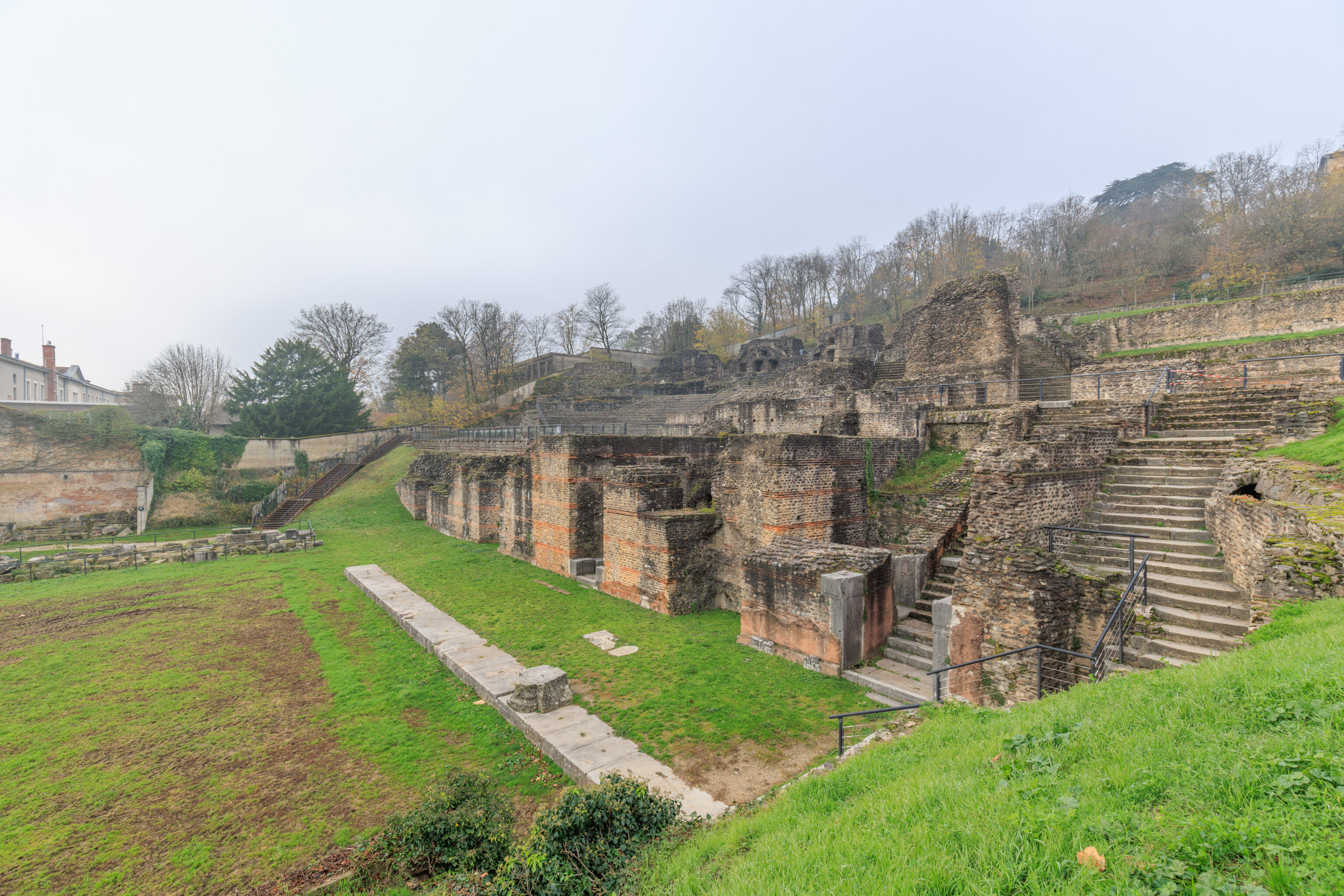
After leaving the theatre, we headed to the exit by a path that lead to the east. On our right, we could see the structure below the odeon’ stage. A sign describes this area:
A monumental meeting space
The enormous, seven-meter-high wall to your right supports the Odeon stage above it. It also held up a portico, creating a covered walkway bordered by columns.

This portico included an actors-only space from which to access the stage. On the ground floor, a 550-square-meter mosaic covered the floor, which is now overgrown with vegetation. The walls were richly decorated with murals, while statues sat in the alcoves that are still visible today.

Porticos served many purposes: as gathering places, protection from inclement weather, as well as monumental adornment.

On your left you will see a large plaza.
– Text from a sign.
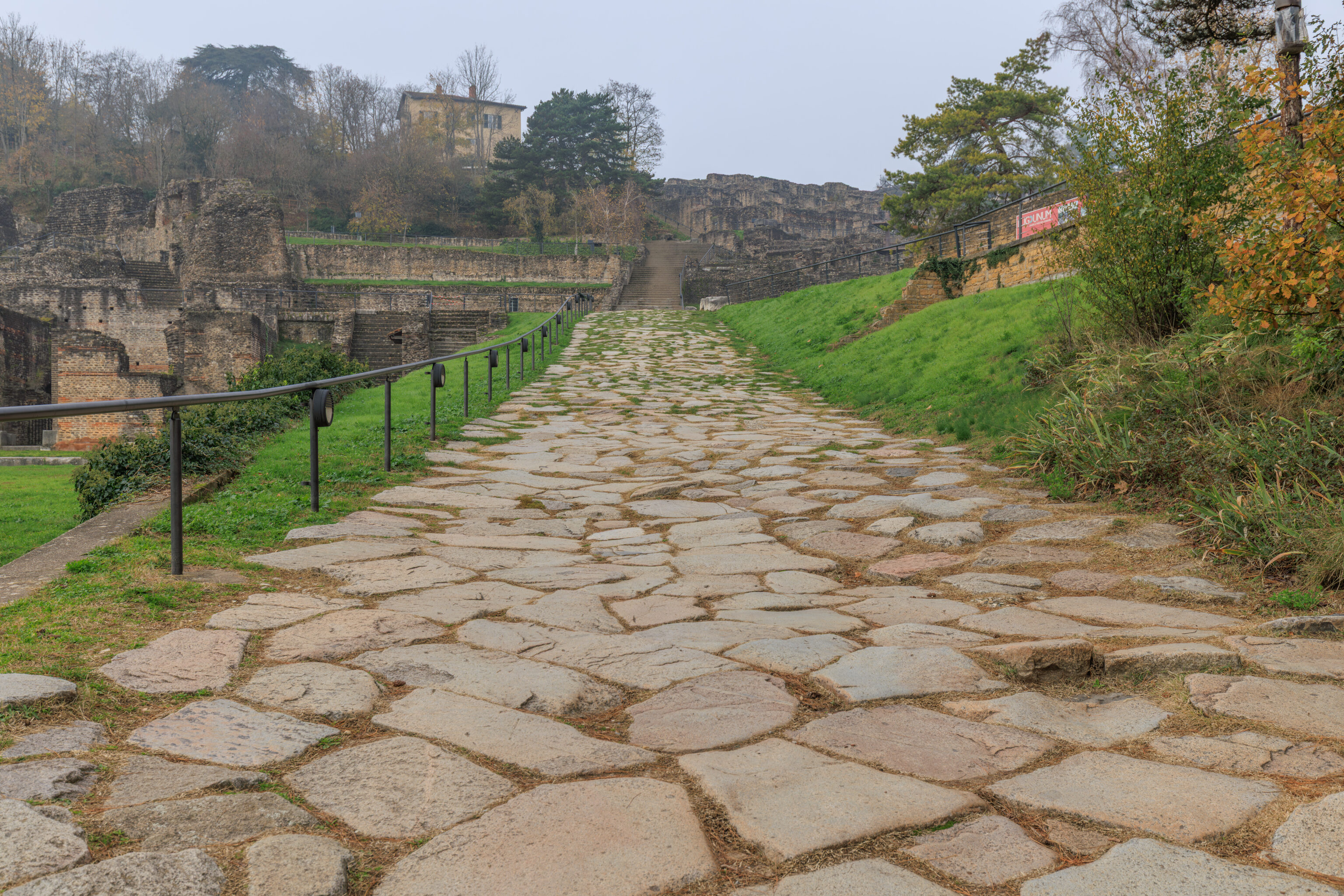
The view looking back up along the path we are walking down to exit.
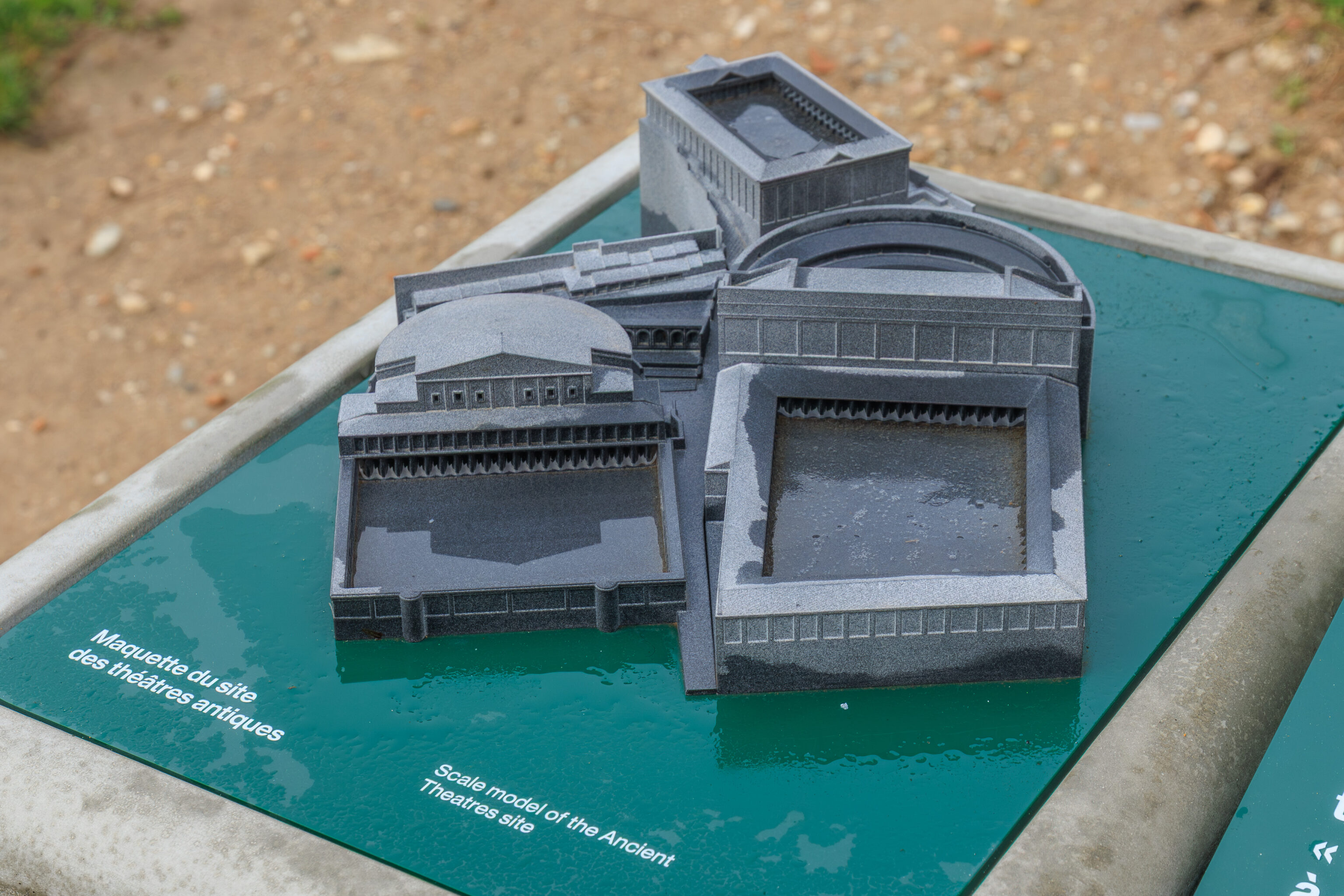
Another scale model of the site.
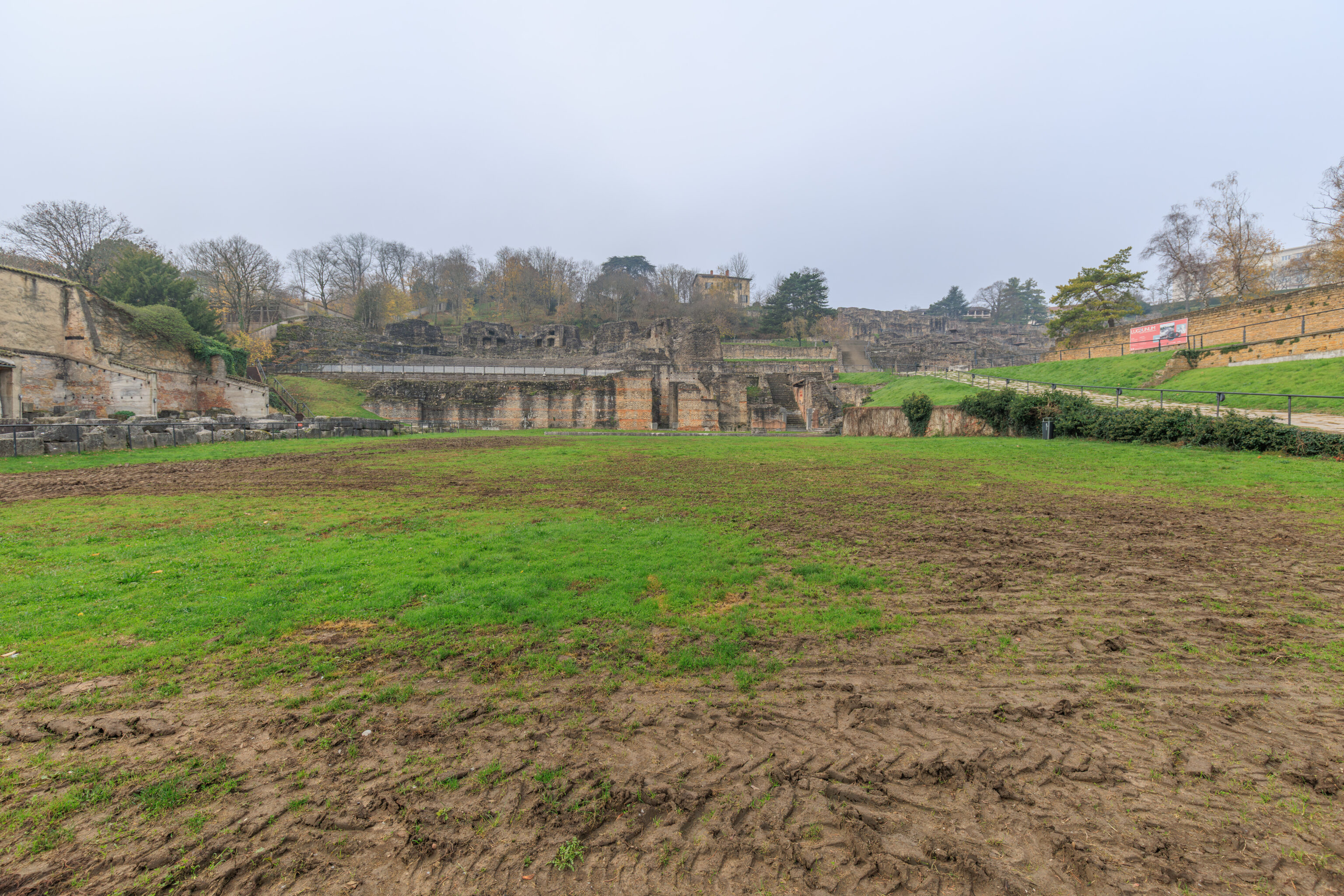
This area past the odeon was a bit of a muddy mess.
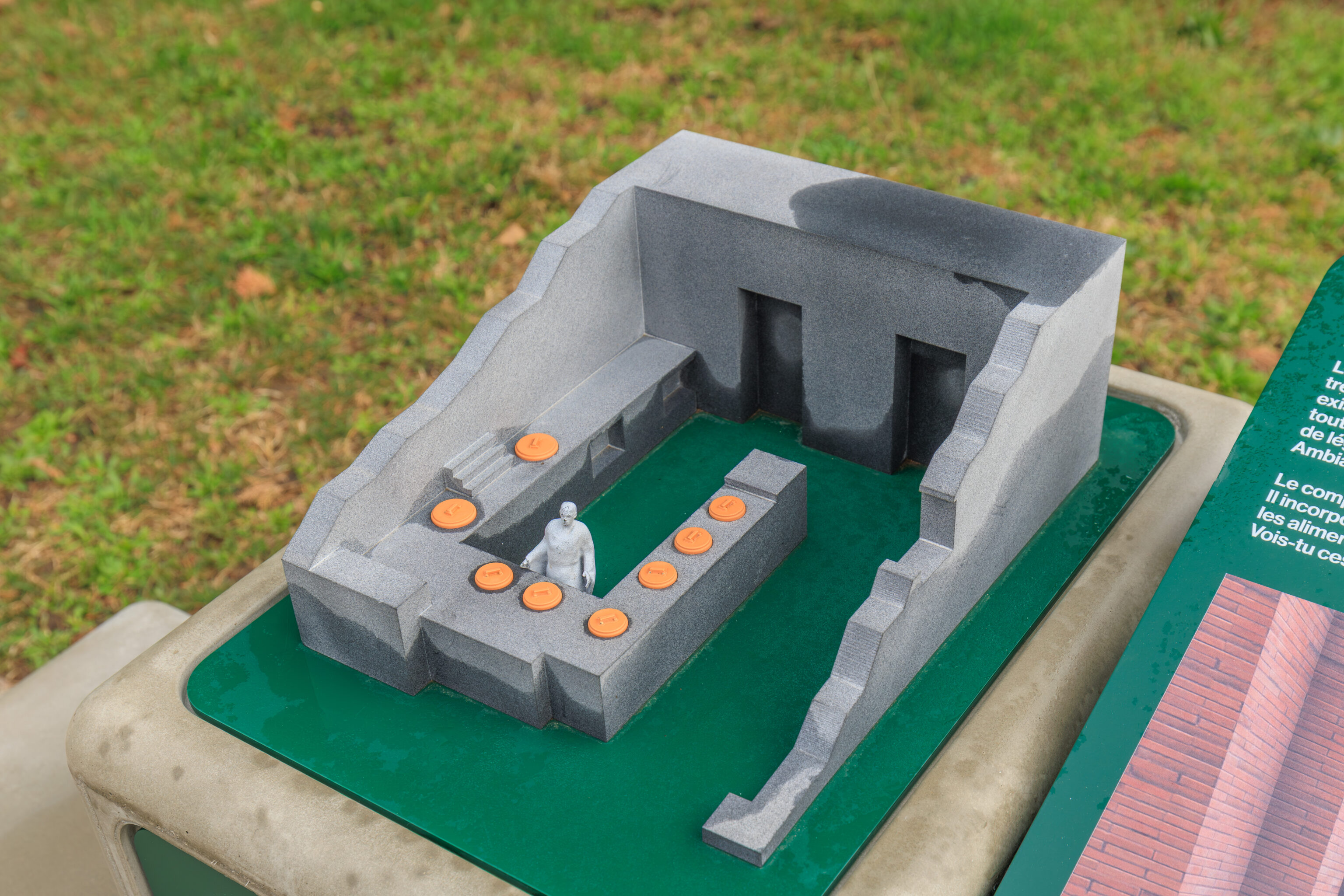
There would have been taverns here at the theatres:
Taverns, the fast-food establishments of Antiquity!
Taverns were immensely popular fast-food establishments frequented by ancient Romans. That's right! Fast food already existed more than 2.000 years ago! They served all sorts of hot dishes and beverages: vegetable stews, meatballs, porridges, wine... all dished up with a healthy serving of good cheer!

The L-shaped counter would have had deep holes cut out of it, which held large terracotta vessels containing the food and drinks on offer. Can you see these objects on the model?
– Text from a sign, translated using Google.
Afternoon
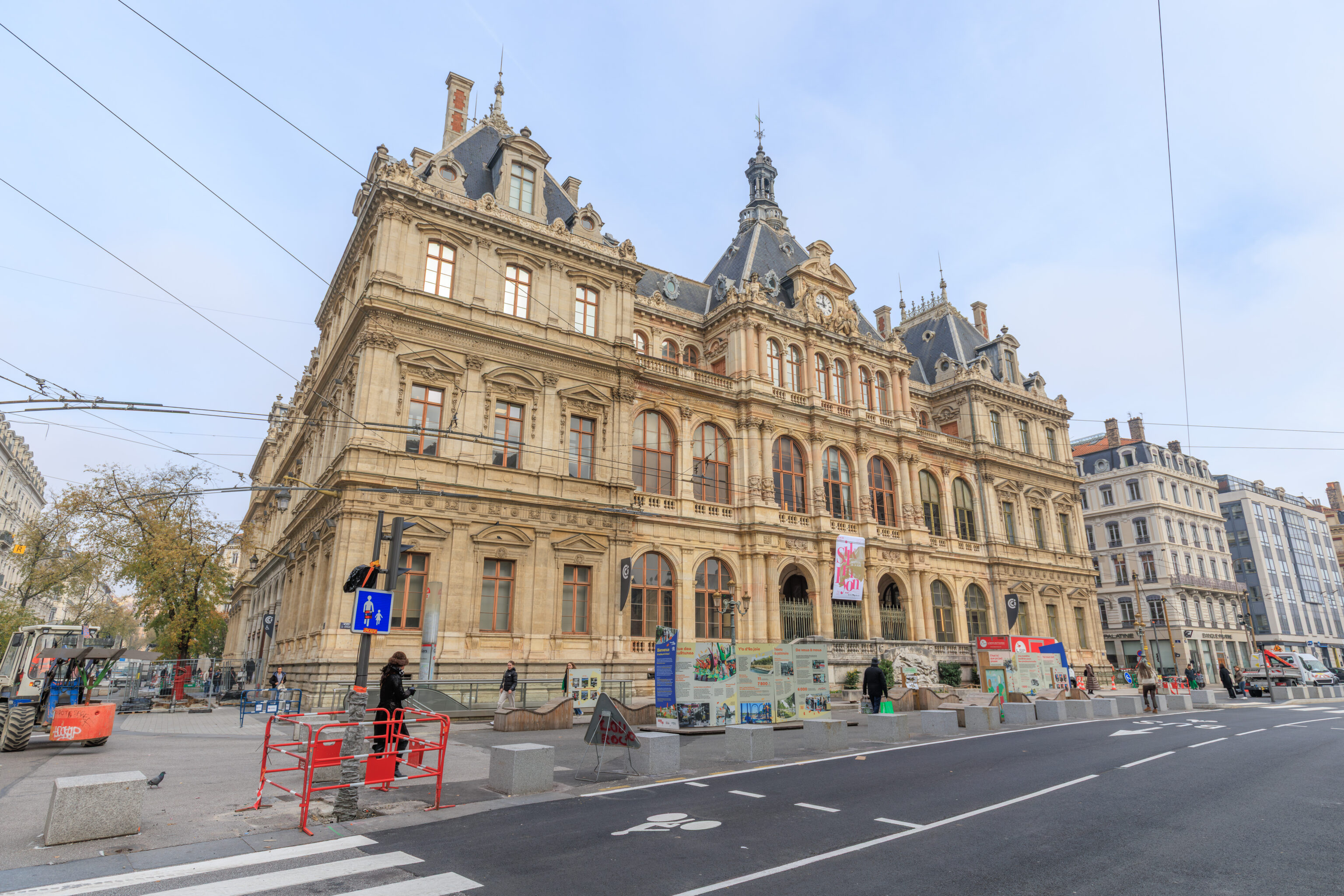
We descended via funicular and took the Metro over to Cordeliers, one stop north of Bellecour, the station closest to the InterContinental. We decided to see if we could get lunch at Bouchon Tupin, the restaurant we wanted to eat at last night. We exited the Metro by this building, the Palais de la Bourse. It was built in the mid-19th century for commerce related purposes and currently houses the Chamber of Commerce and Industry.
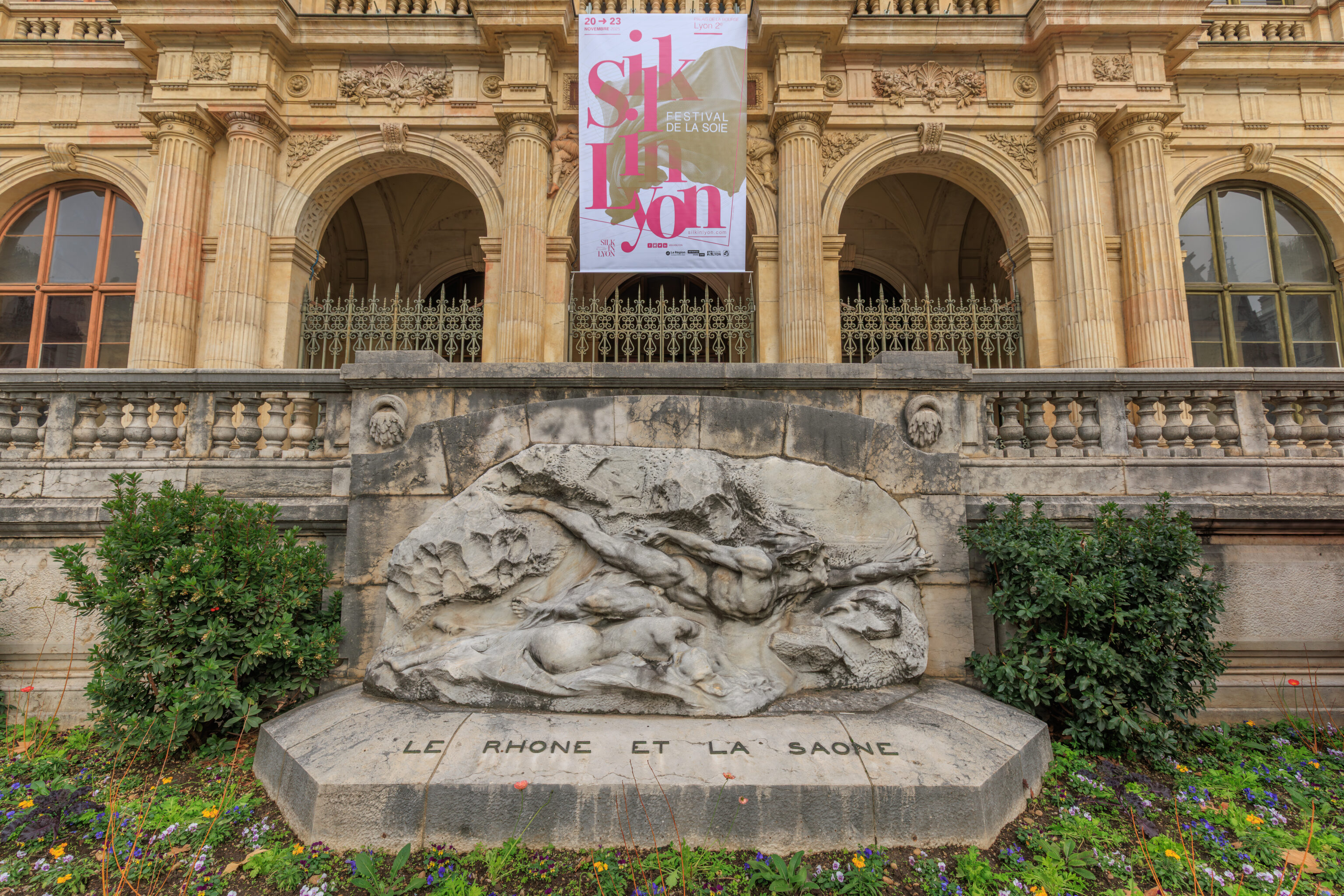
There is a sculpture in front of the building depicting the two rivers that run through Lyon, the Rhône and Saône.
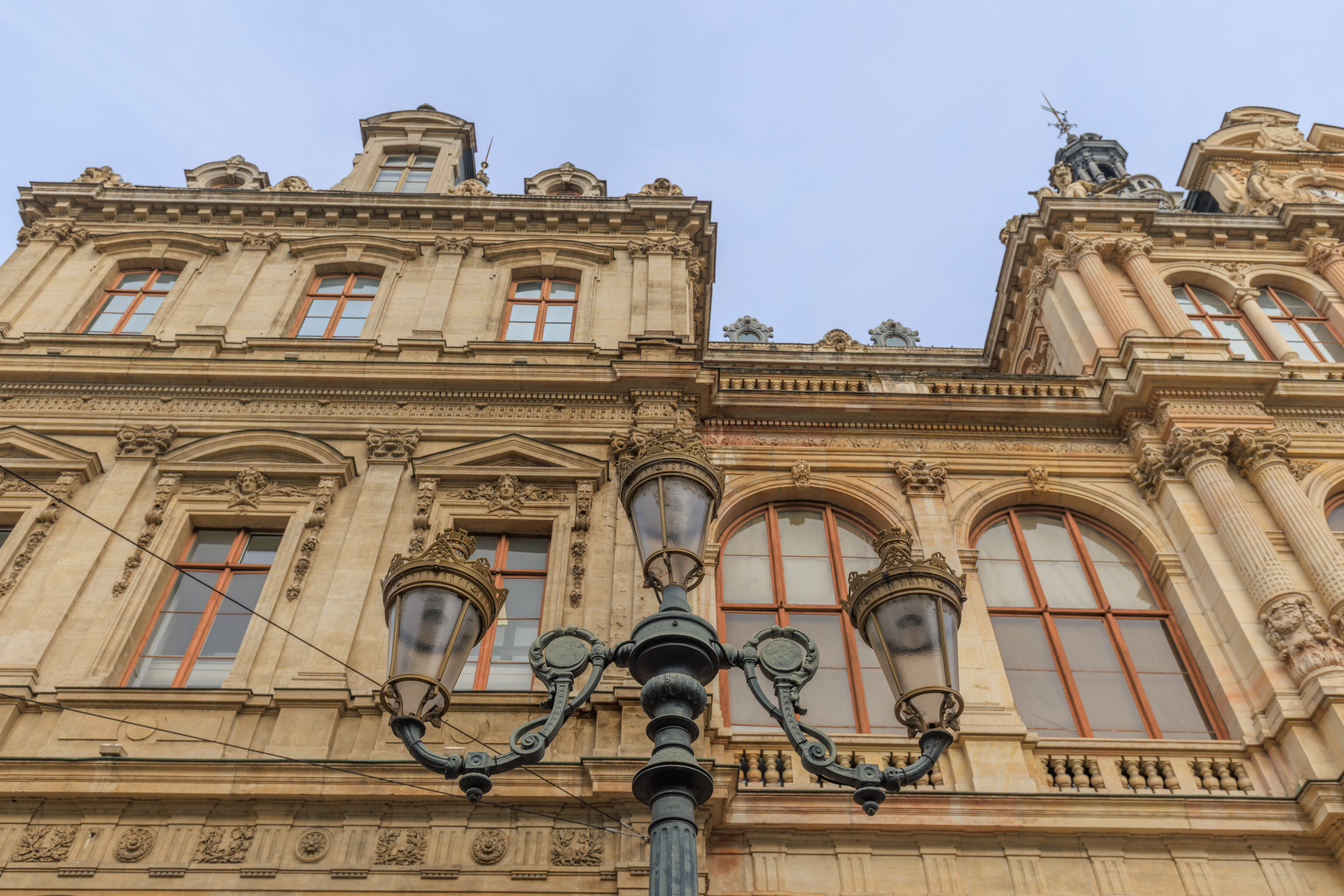
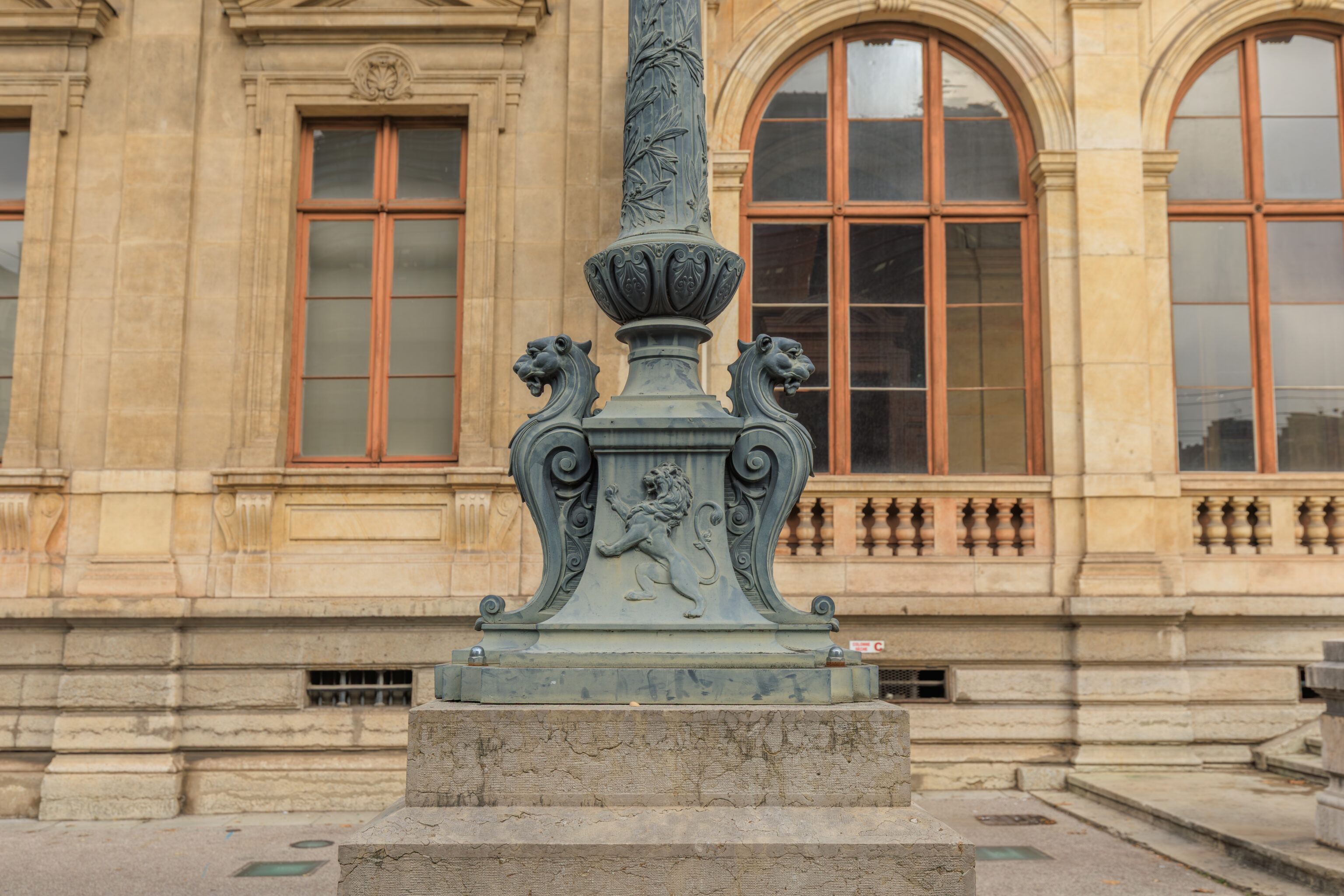
One of the lamps in front of the building.
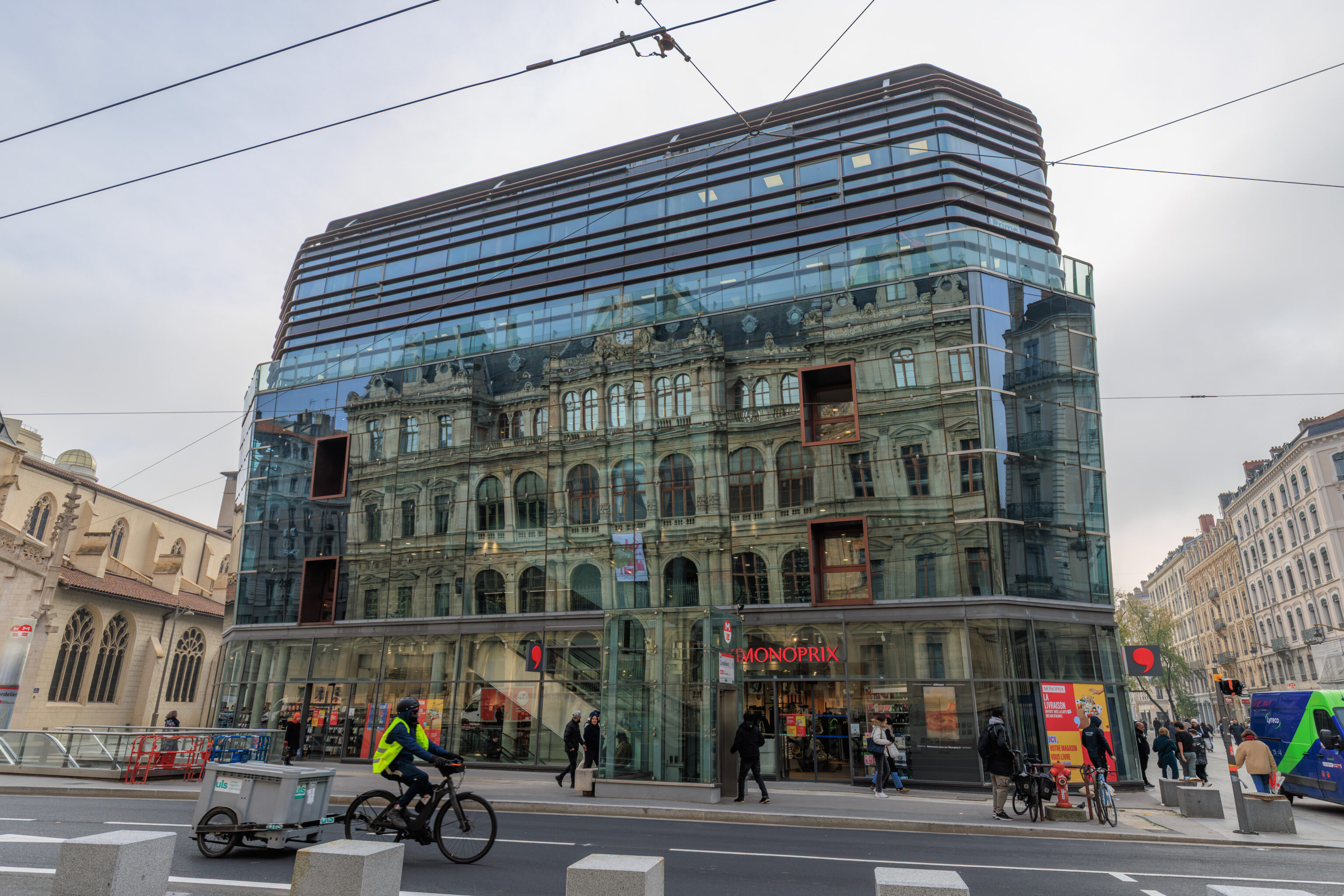
The building’s reflection could be seen on the glass facade of the building across the street.
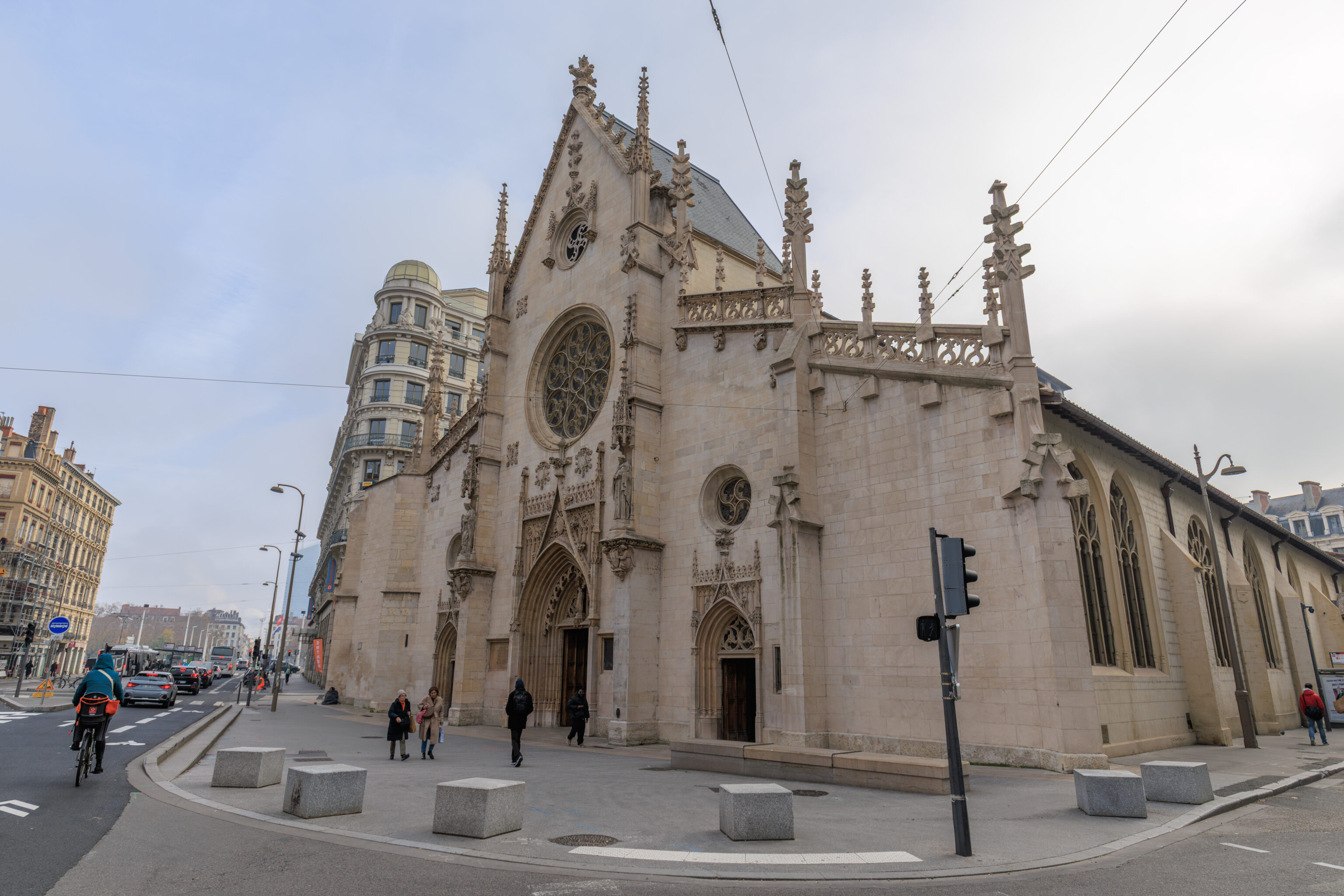
The Basilique Saint-Bonaventure is also across the street. Perhaps we should have popped in for a quick look?
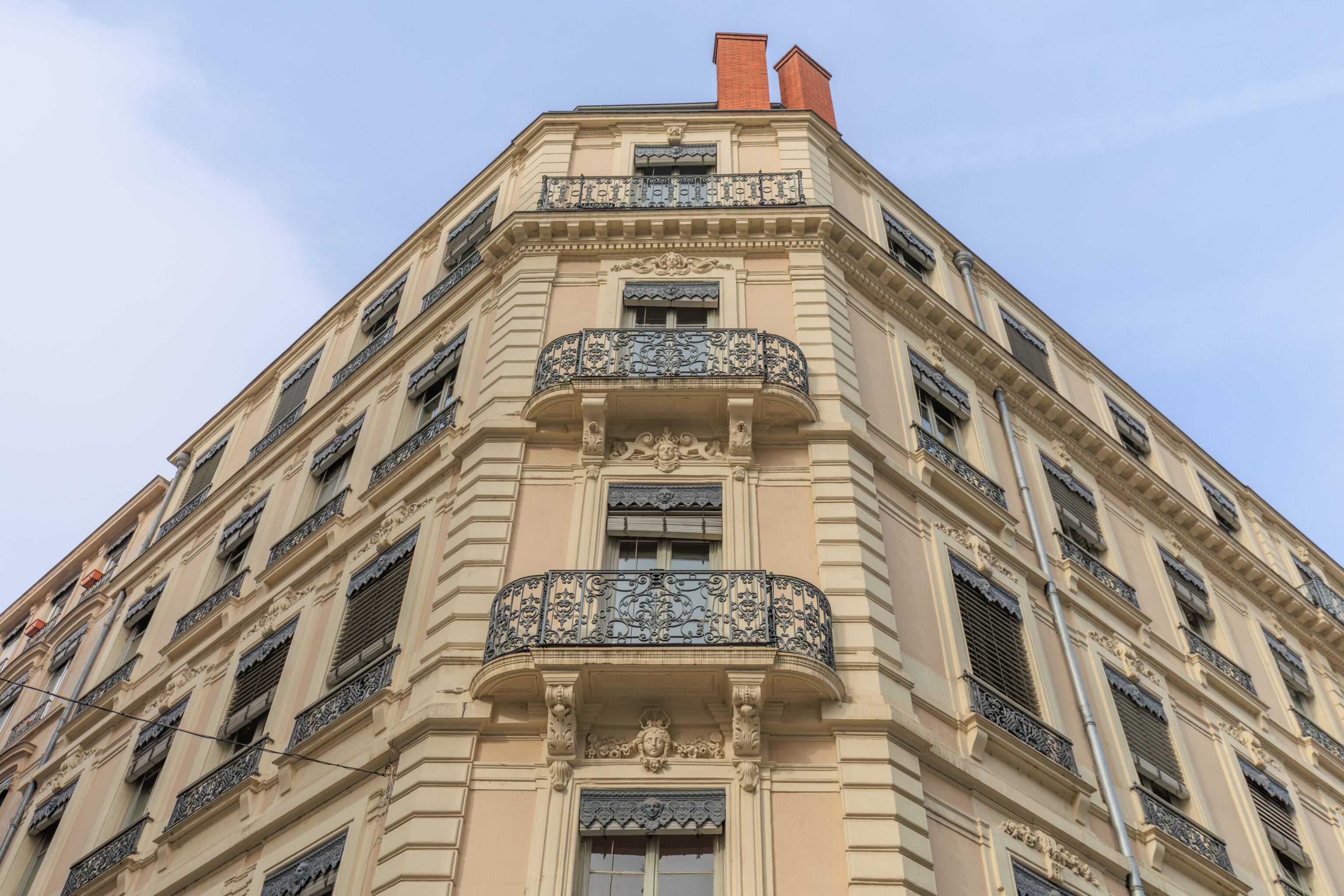
A building at the corner of Rue Tupin, where the bouchon is located.
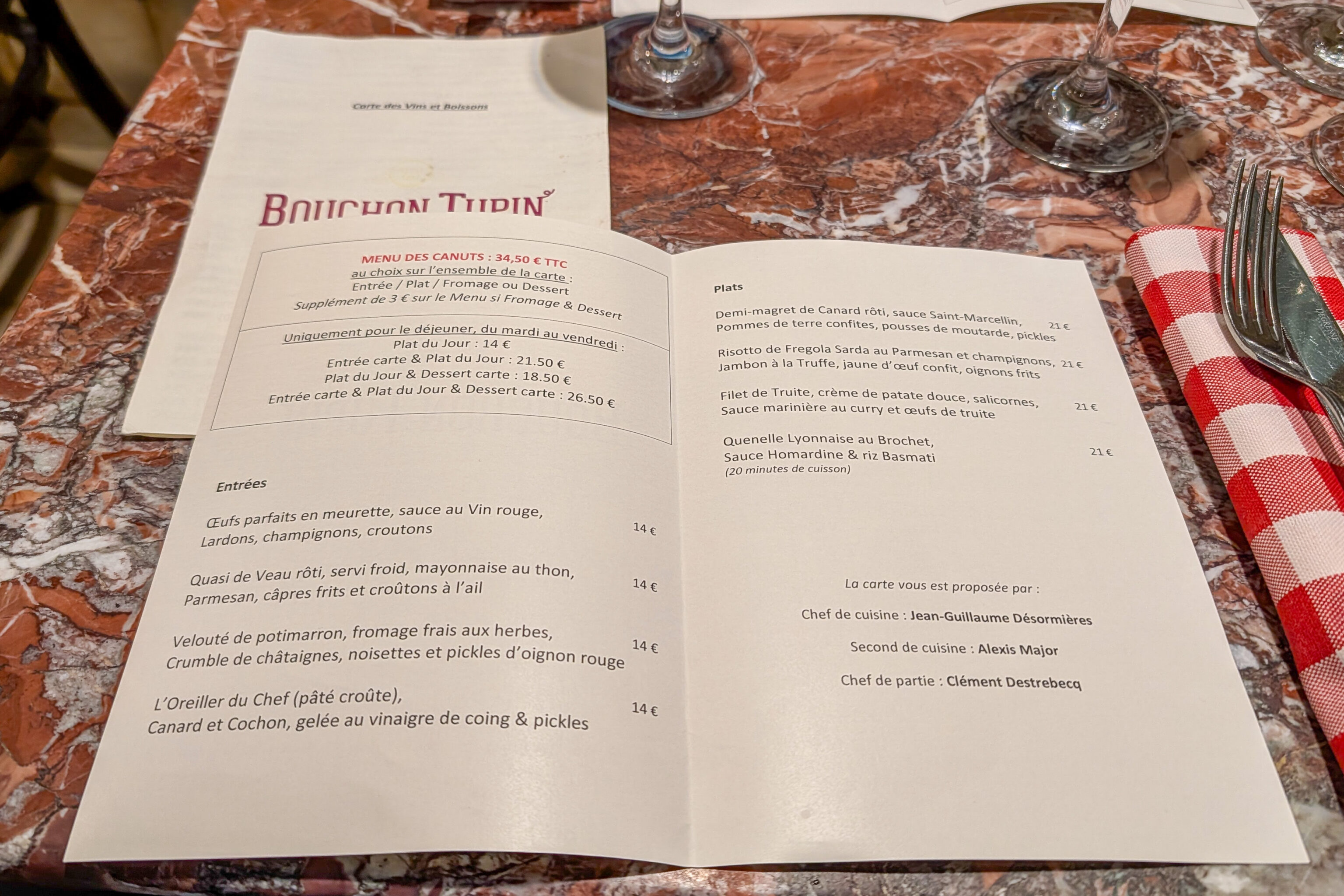
We arrived at Buchon Tupin around the noon opening time and were seated. We decided to order two mains.
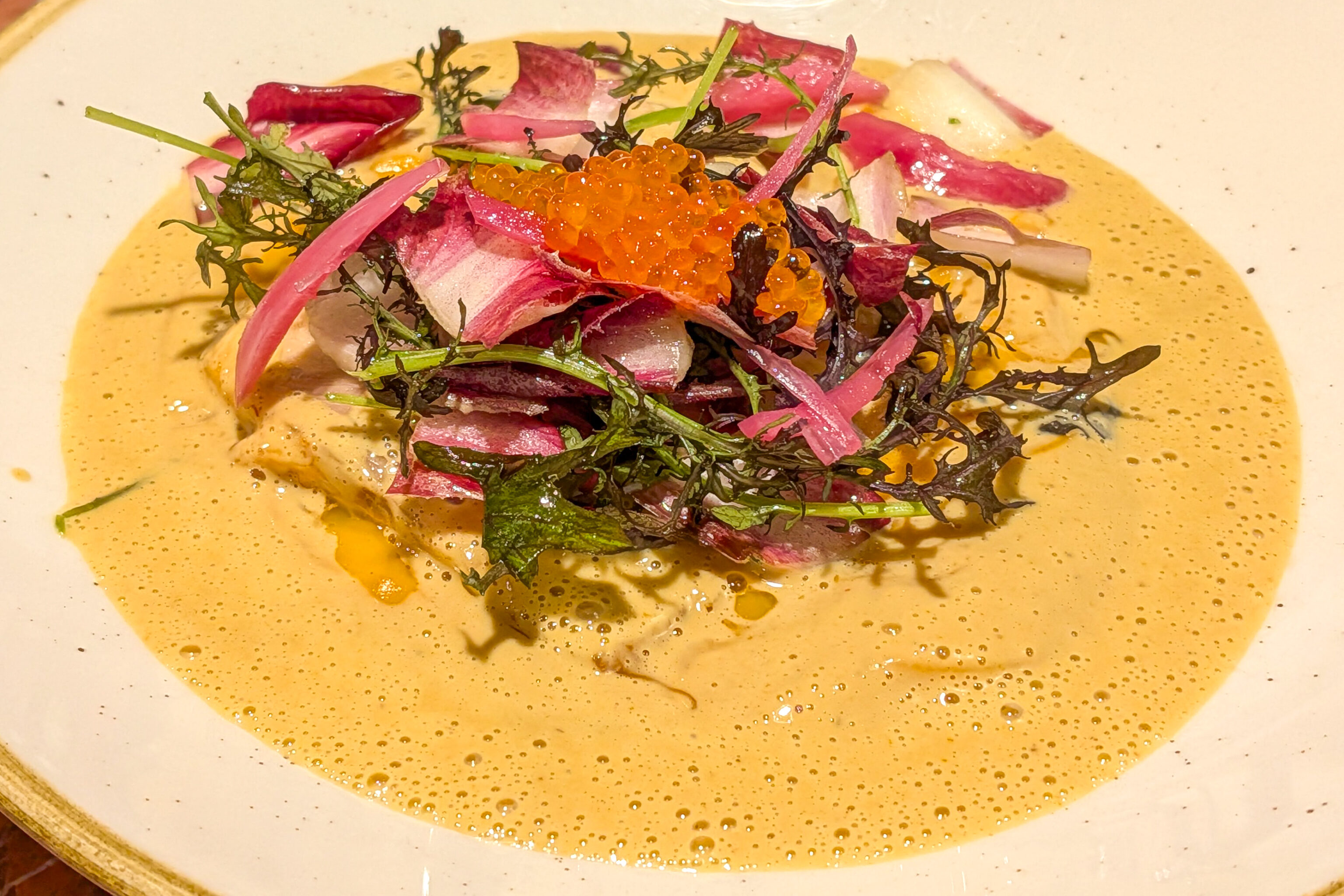
The fish was excellent. Trout roe isn’t as nice as salmon roe unfortunately.
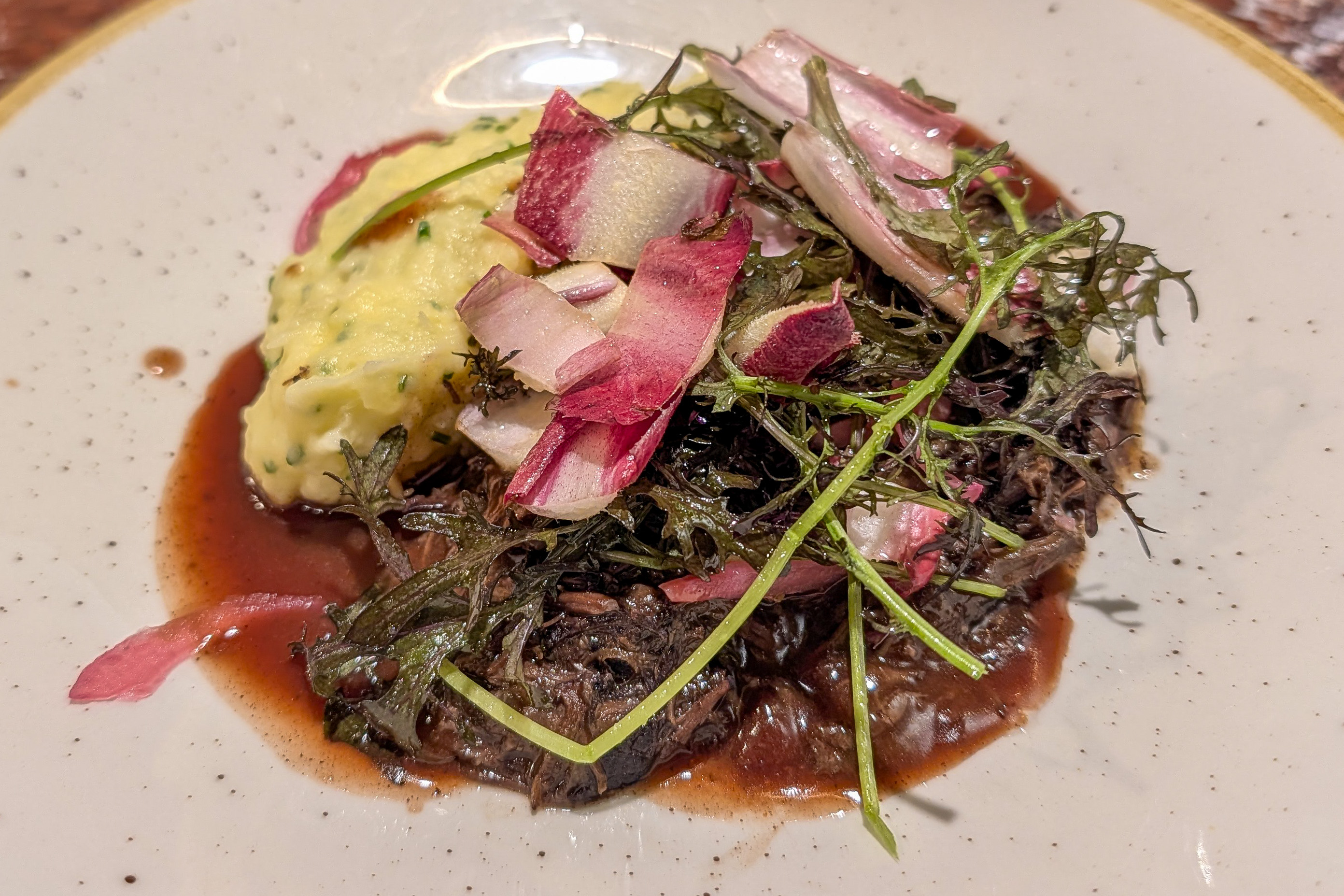
We also ordered the plat du jour. We weren’t exactly sure what it was going to be other than it having pork. It turned out to be what we’d probably describe in American English as pulled pork. It was good as well.
Both portions were pretty small compared to some of what we’ve had at other bouchons. We could have eaten more but wanted to get going to catch the next train to Geneva.
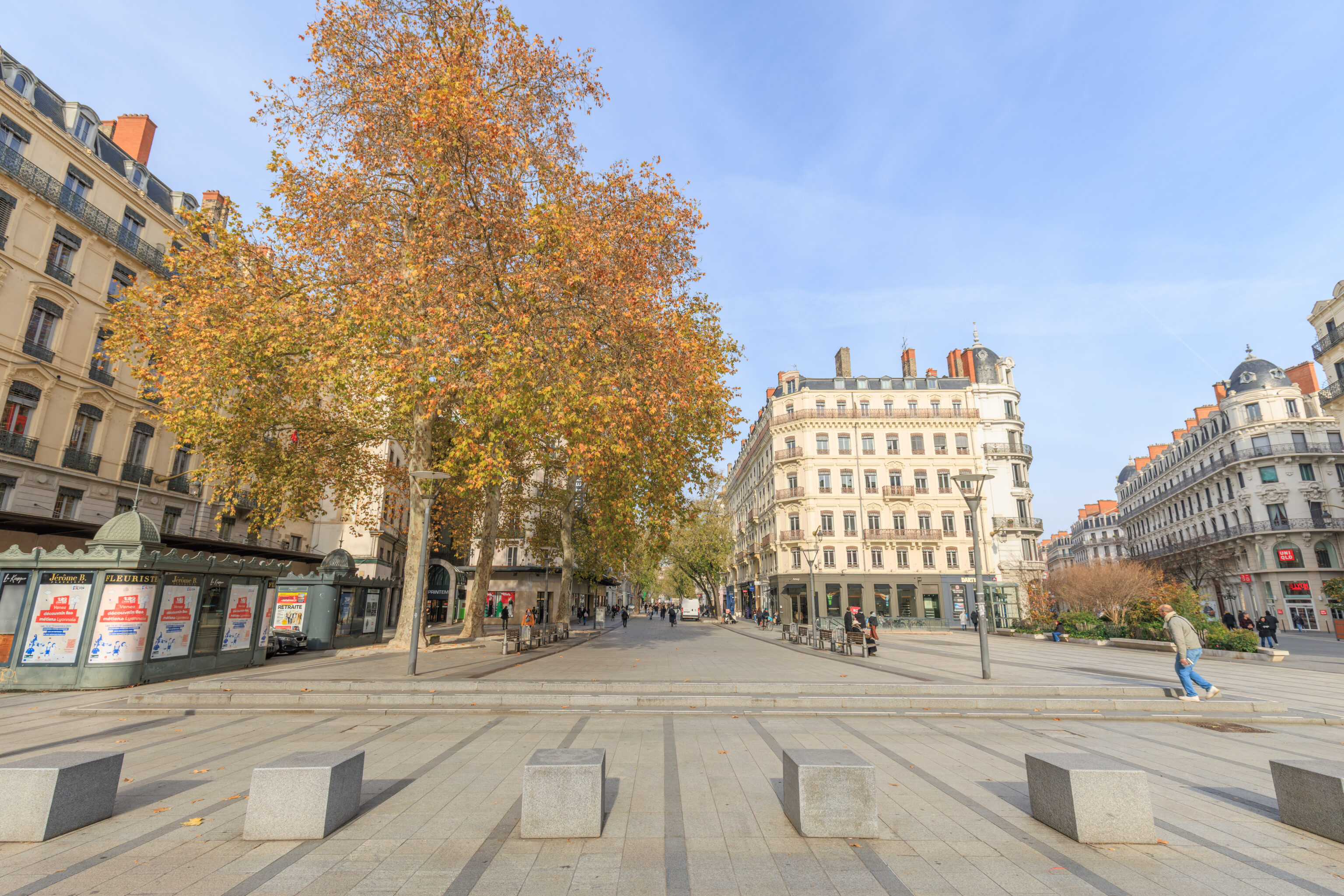
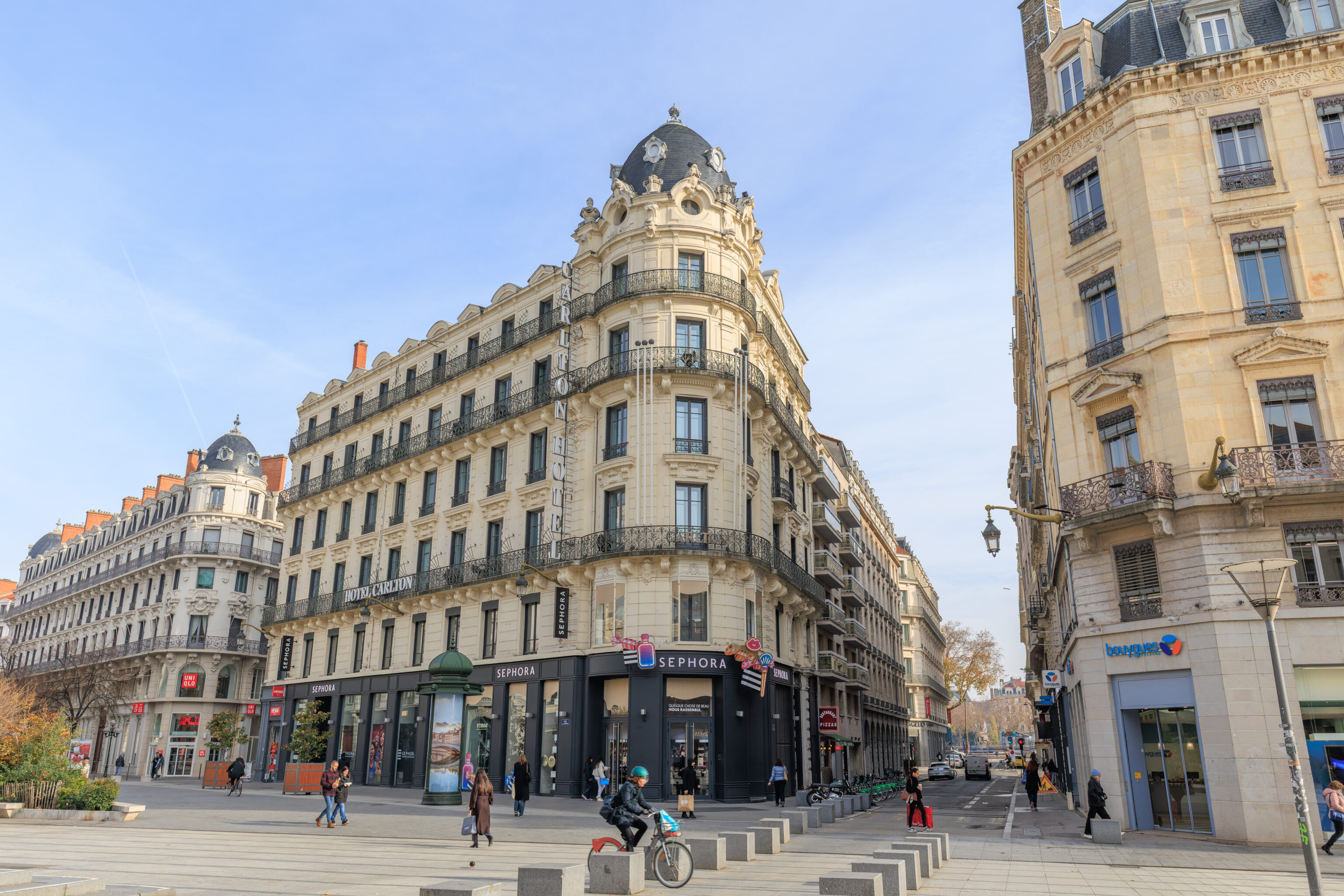
We headed back out after lunch to return to the InterContinental to pick up our bags. We walked past the Place de la République on the way.
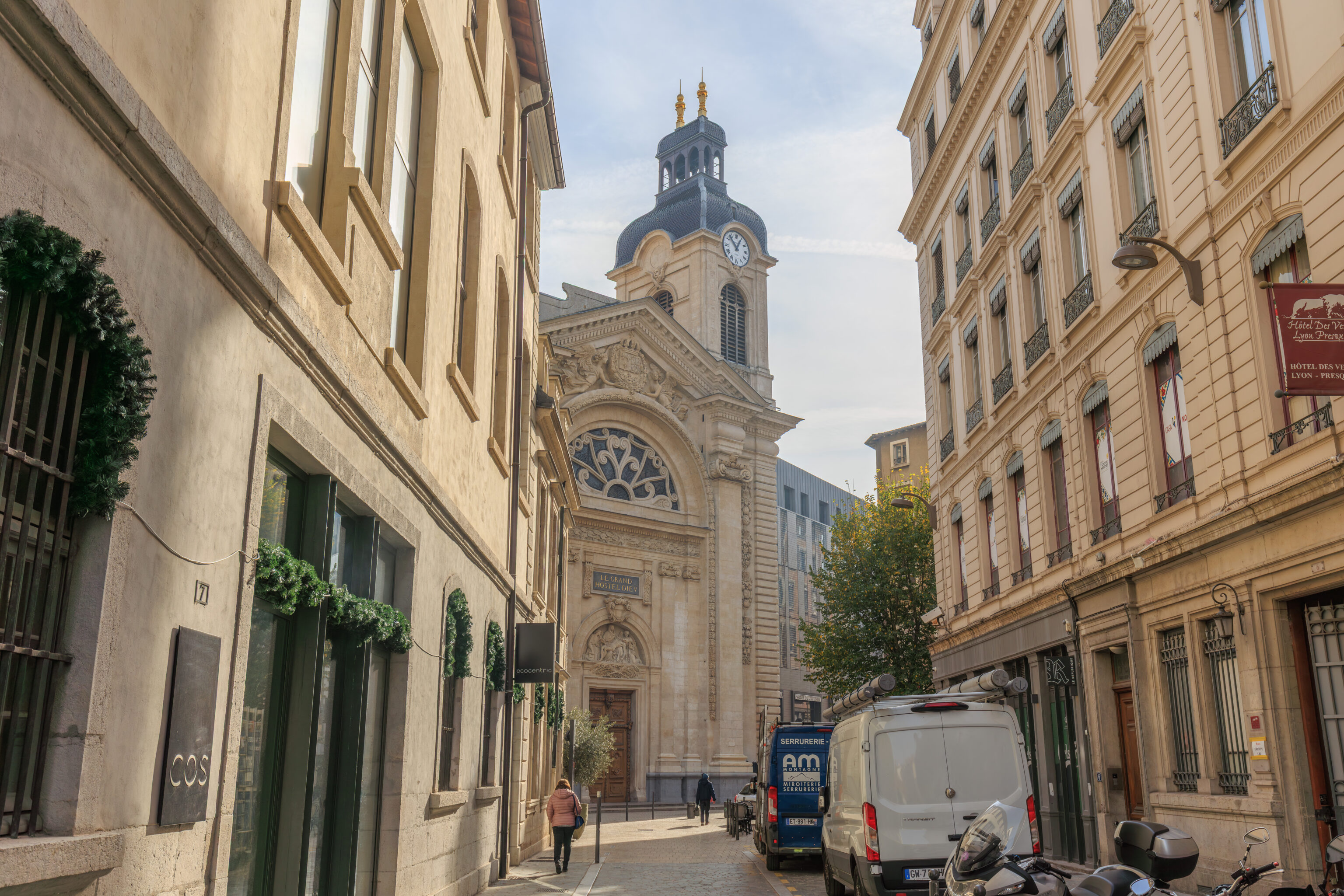
We approached via a diagonal road that leads to the front of the Hôtel-Dieu‘s chapel.
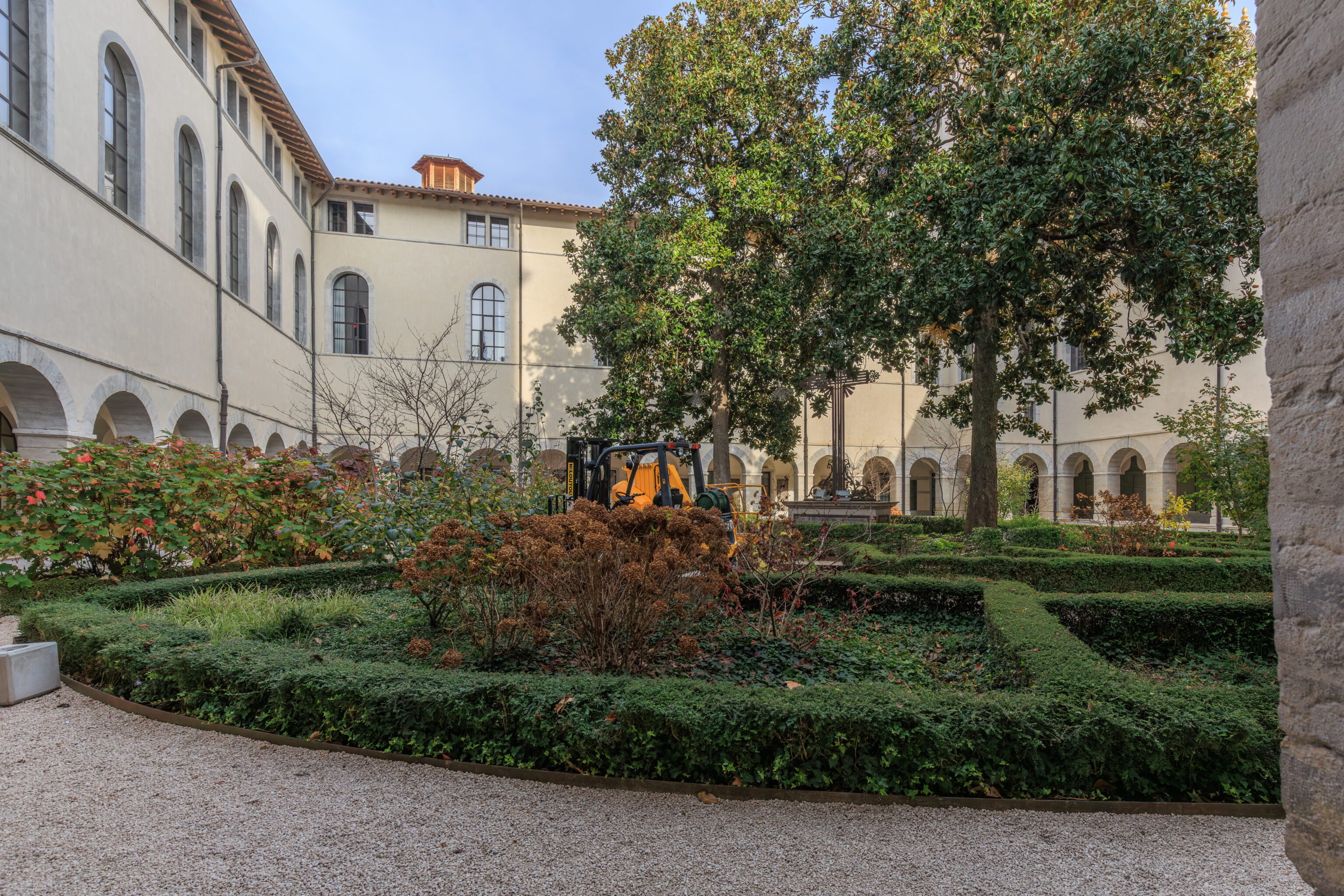
We’ve only recall passing by this particular courtyard at night when it is extremely dark.
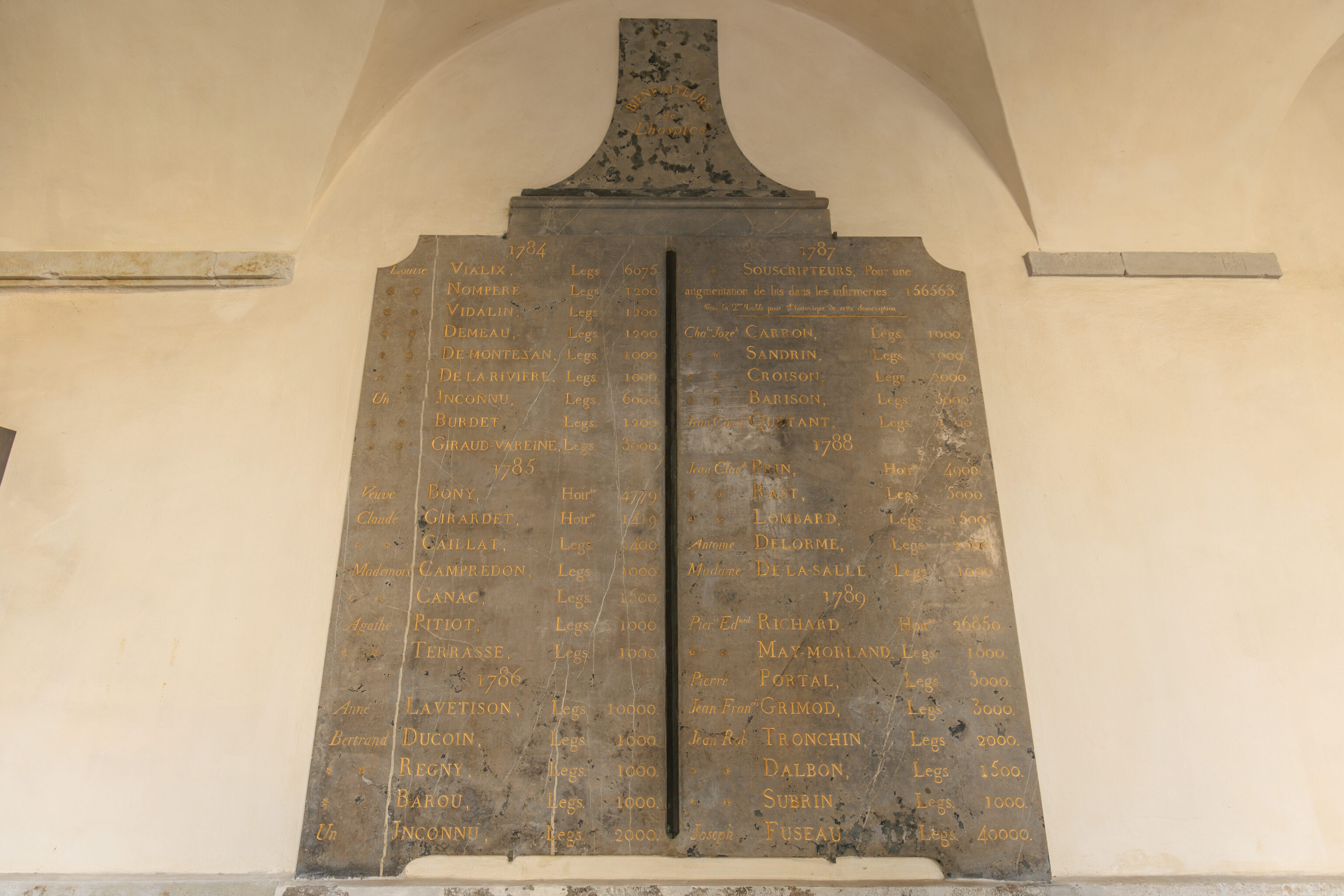
This tablet on the wall, one of many, shows what appears to be donors to the Hôtel-Dieu.
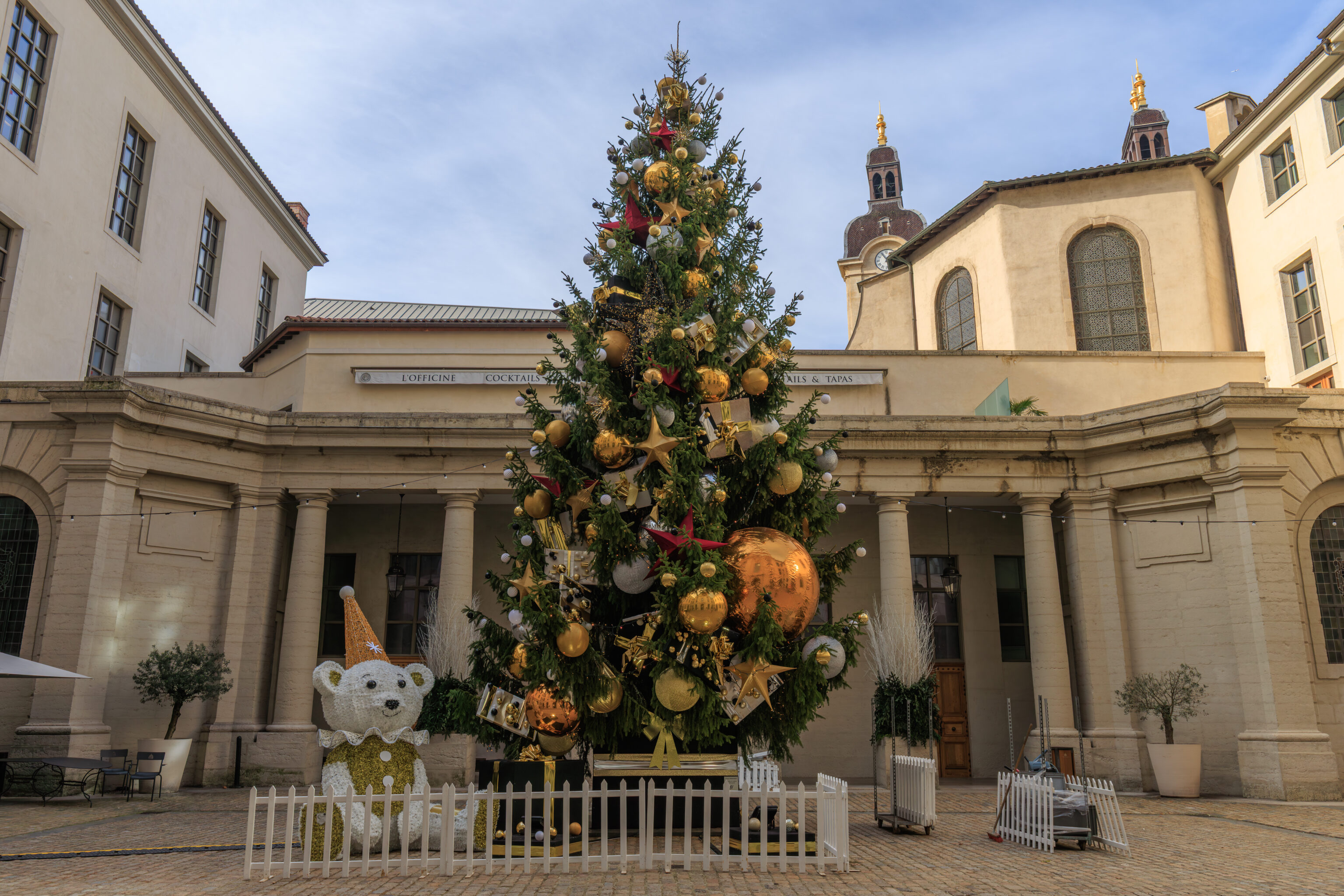
When we returned to the InterContinental, we saw that a bit of white fencing had been put up around the Christmas tree and bear.
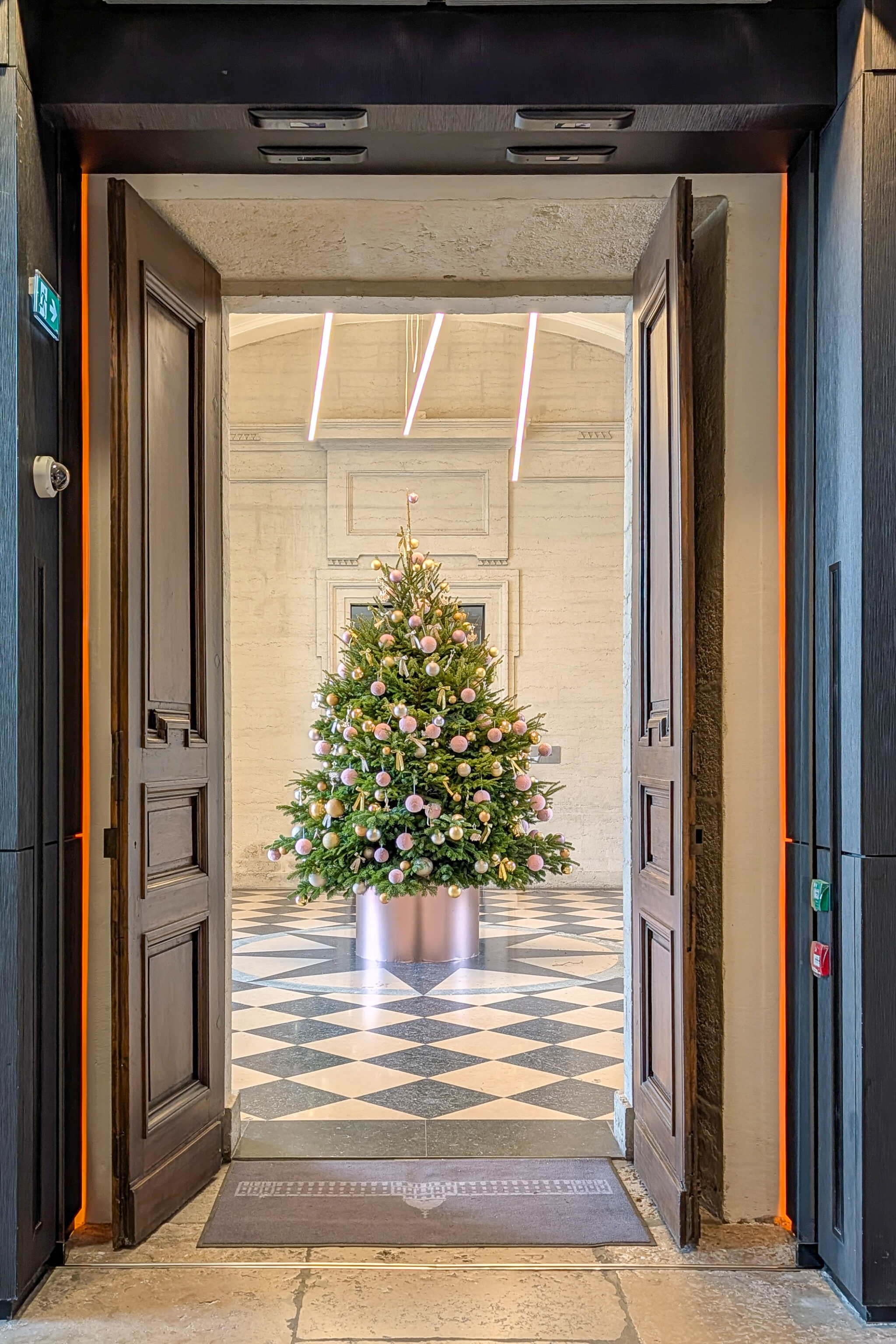
We got our bags from the hotel and headed over to Lyon Part-Dieu to take the train back to Geneva.
Geneva
After arriving at Geneva Cornavin, the city’s main train station, we caught a bus to the Meyrin, De Joinville stop. The Crowne Plaza Geneva was basically right across the street.
We checked in and headed up to our room.
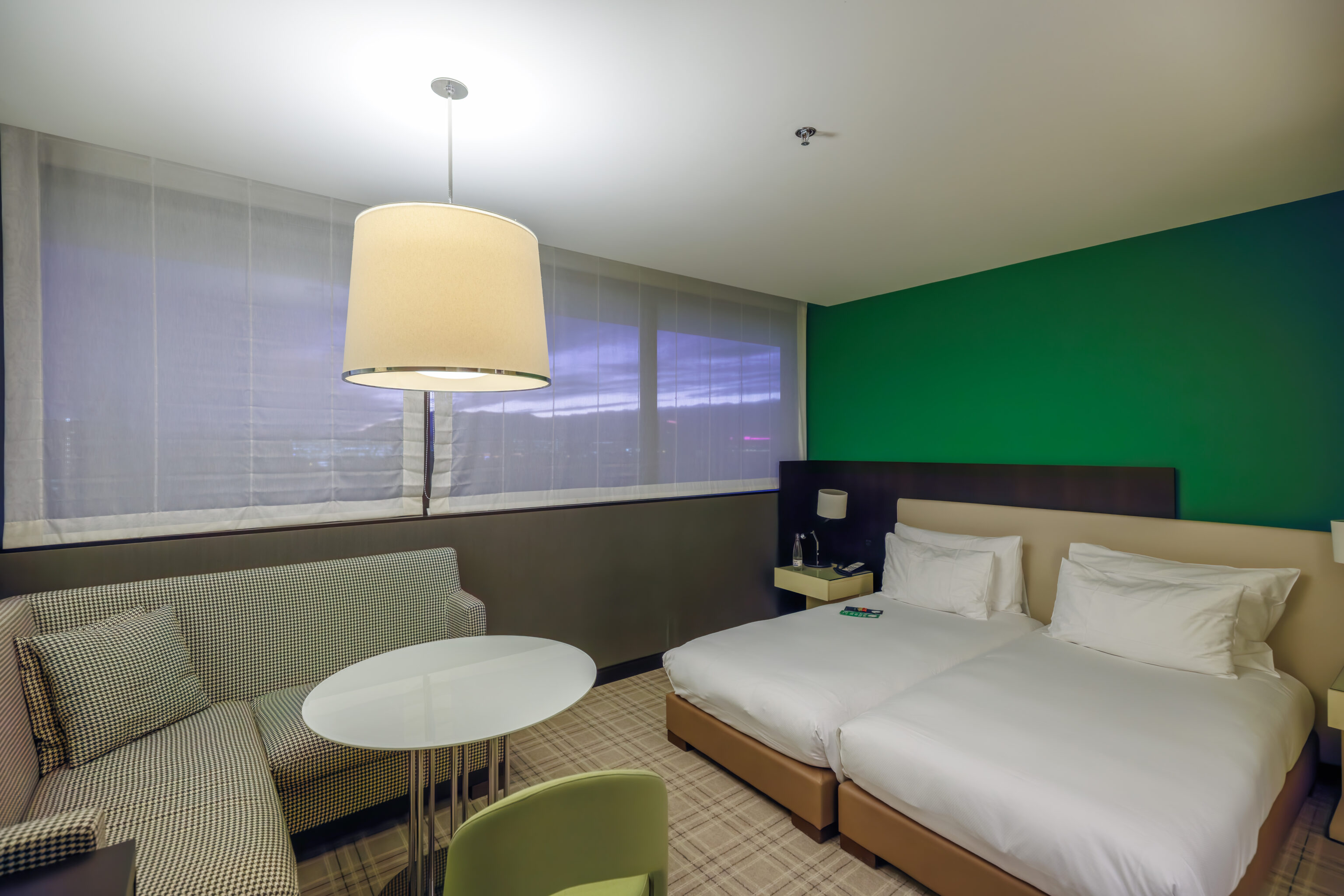
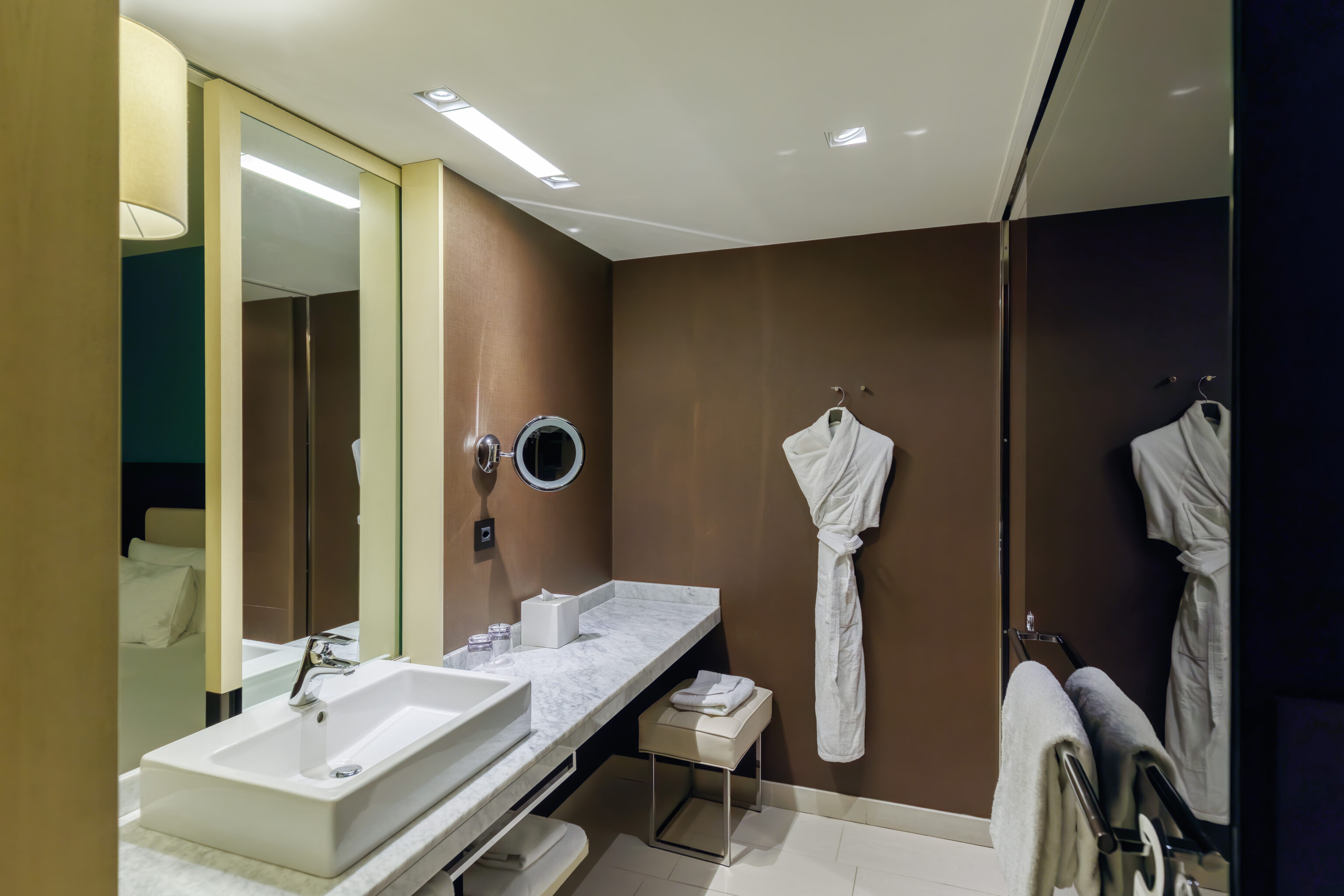
The Crowne Plaza is very close to the airport, which can be easily accessed by public bus or the hotel’s shuttle bus. The main reasons for staying here is that the location is convenient and there was an excellent rate using points. The property, last renovated in 2020, is not nearly as nice as the InterContinental in Lyon. However, it was substantially cheaper in a city that tends to be very expensive.
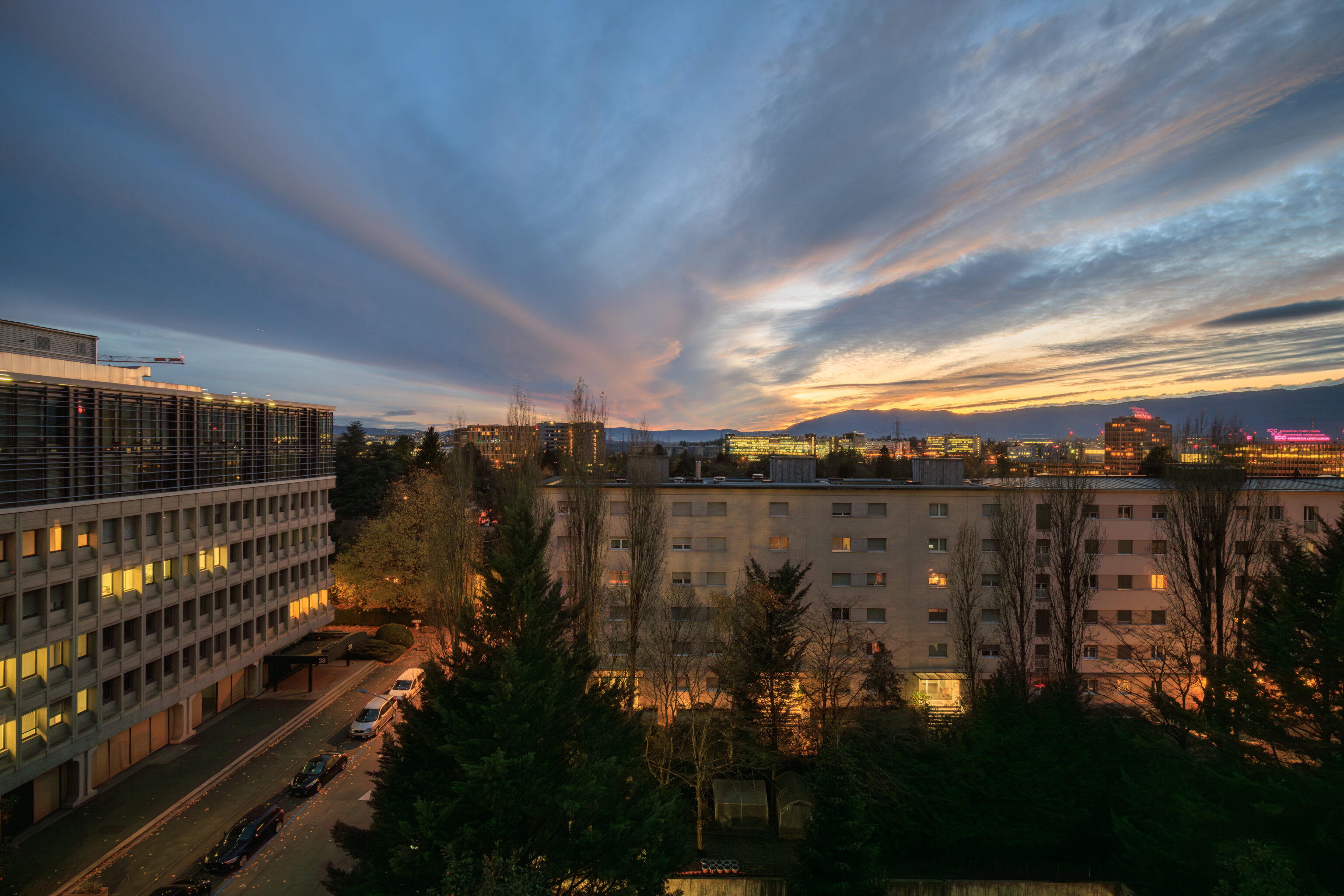
There was a bit of color in the sky around sunset.
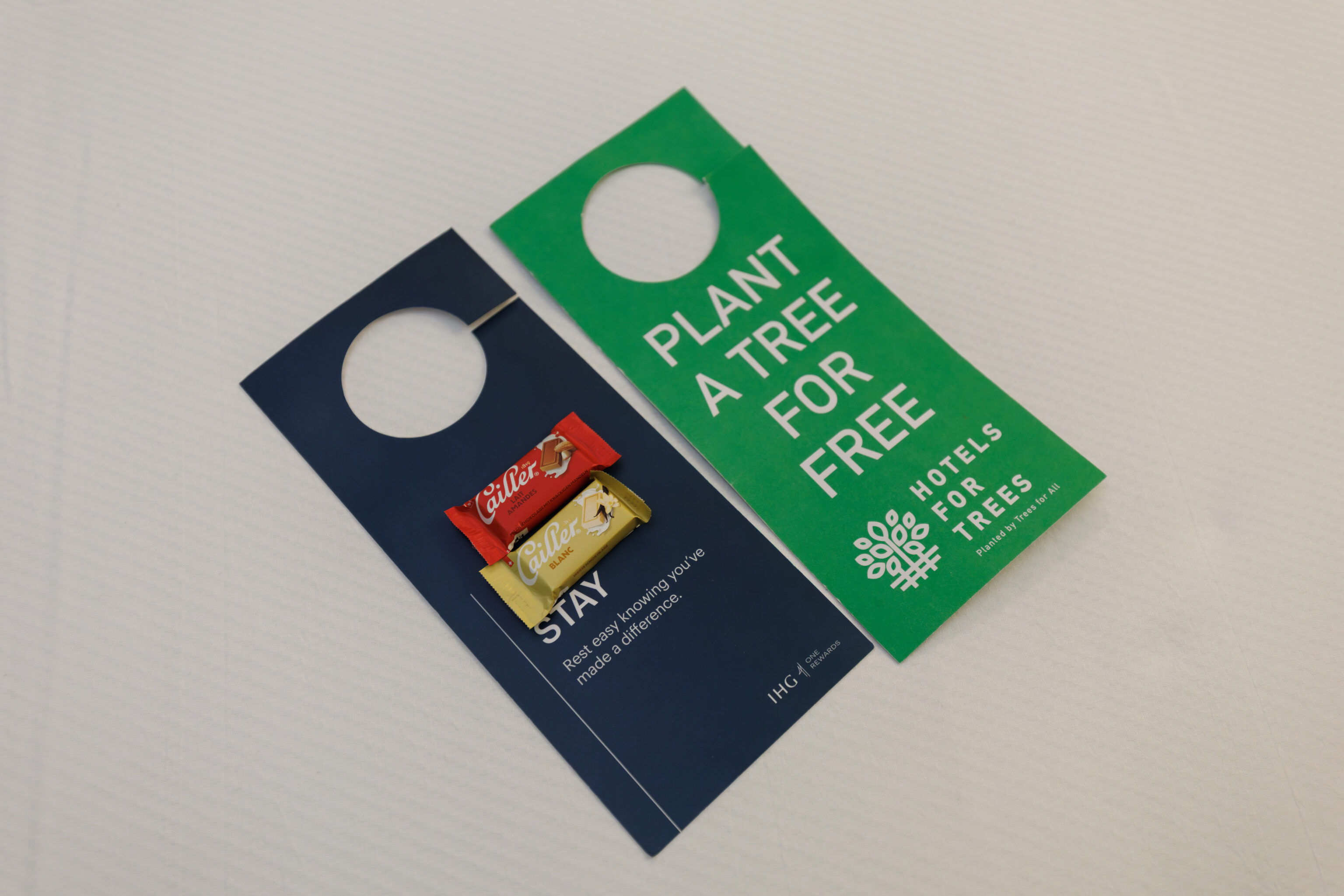
Two tiny Cailler chocolates were provided.
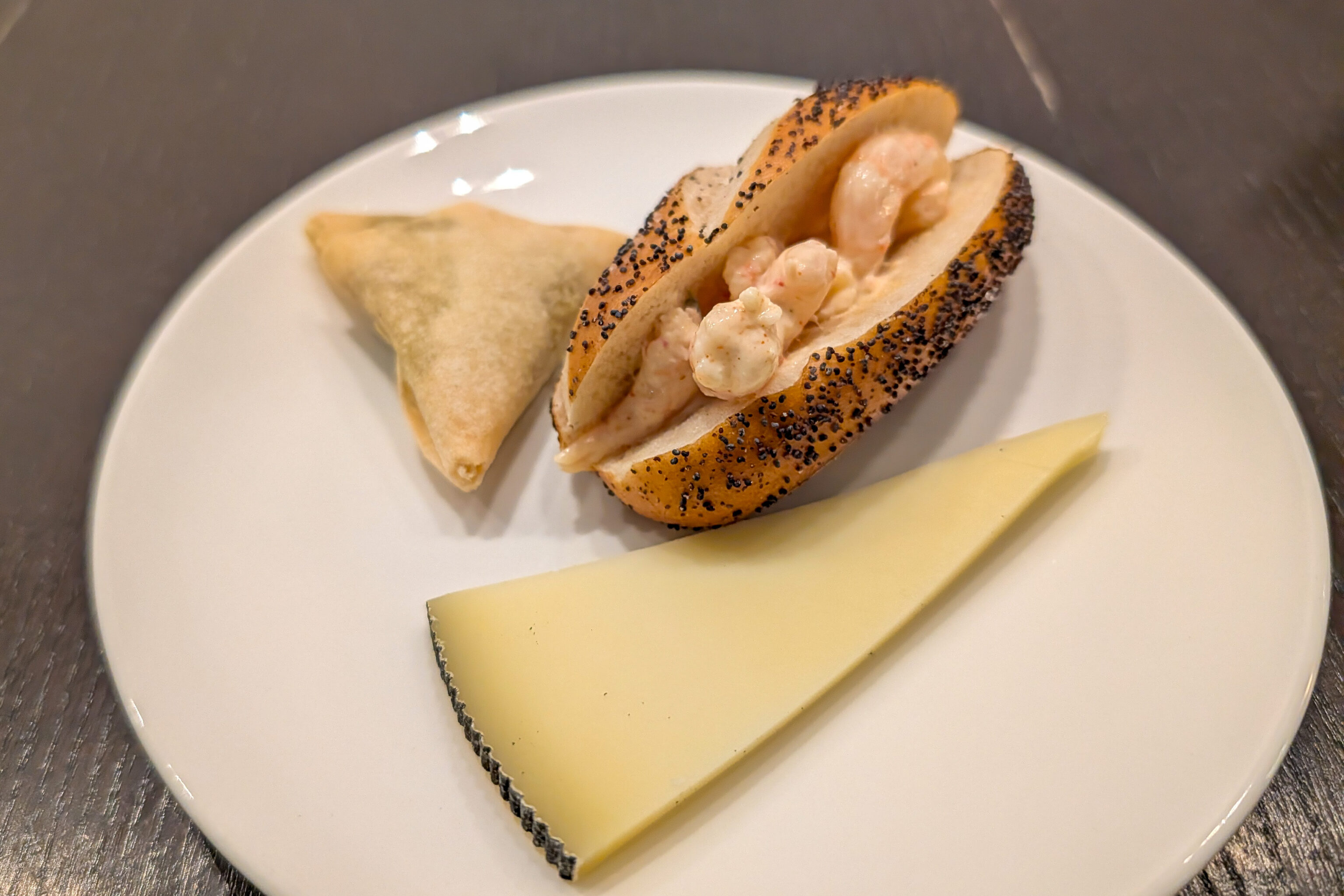
We went to the hotel’s lounge to see what they have in the evenings. It was overall a pretty poor selection, although the samosa-like thing was very good. We decided to head into central Geneva by bus to have dinner and to walk around a bit. Although we’ve been to Geneva multiple times for transportation purposes, we’ve only spent about a day in the city.
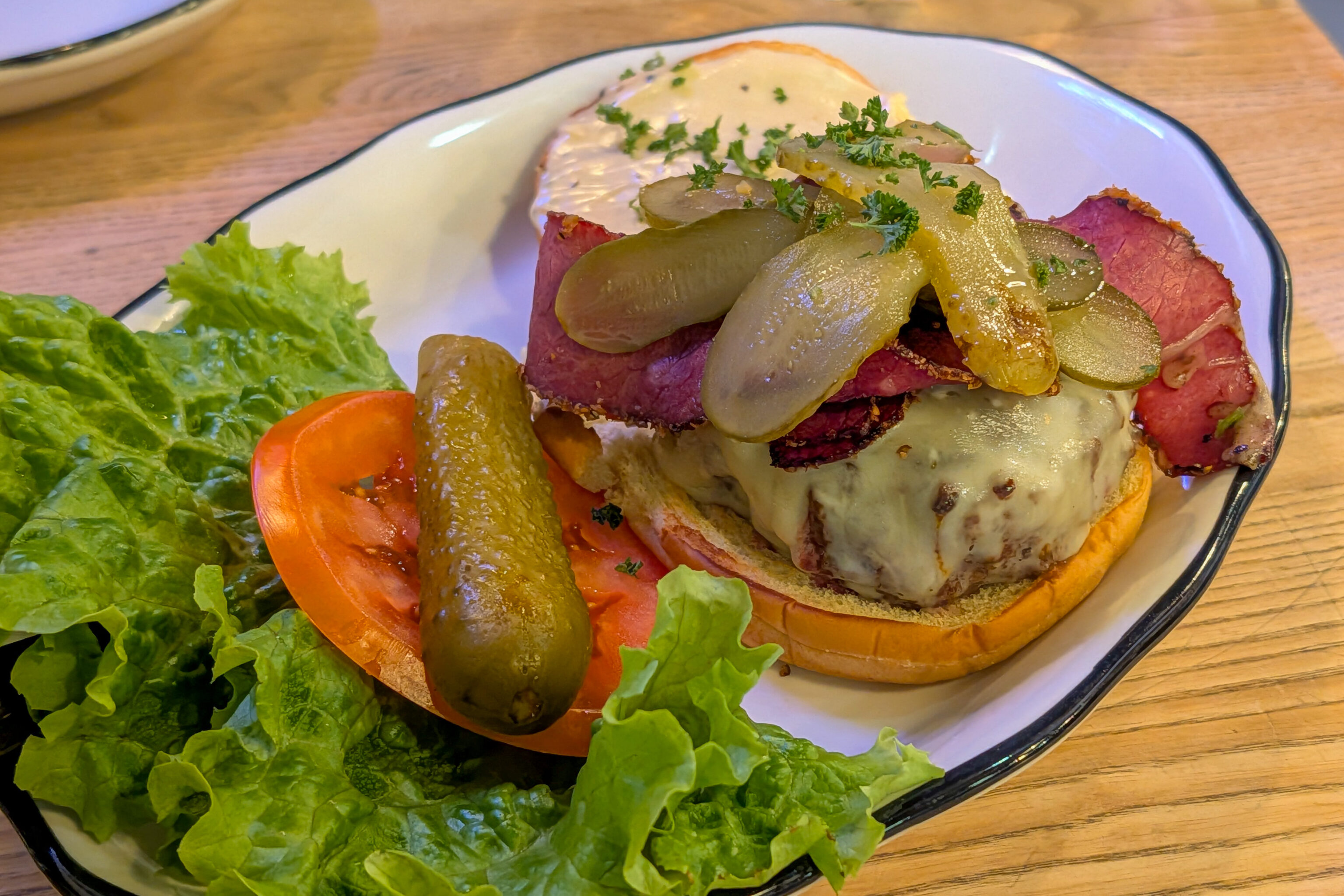
Compared to France, Geneva can be an expensive city. We wanted a quick meal that wasn’t too pricy. We settled on Black Tap, a burger restaurant that seems to be based upon the founders’ time growing up in NYC. Not very Swiss, but we’ve spent plenty of time in Switzerland over the years!
We got the pastrami burger medium rare. It was fantastic, not quite Melt in Leesburg, VA quality, but almost there. We ate it American style, without using the provided knife and fork.

We also got a dessert. The soft cookies and ice cream were pretty good.
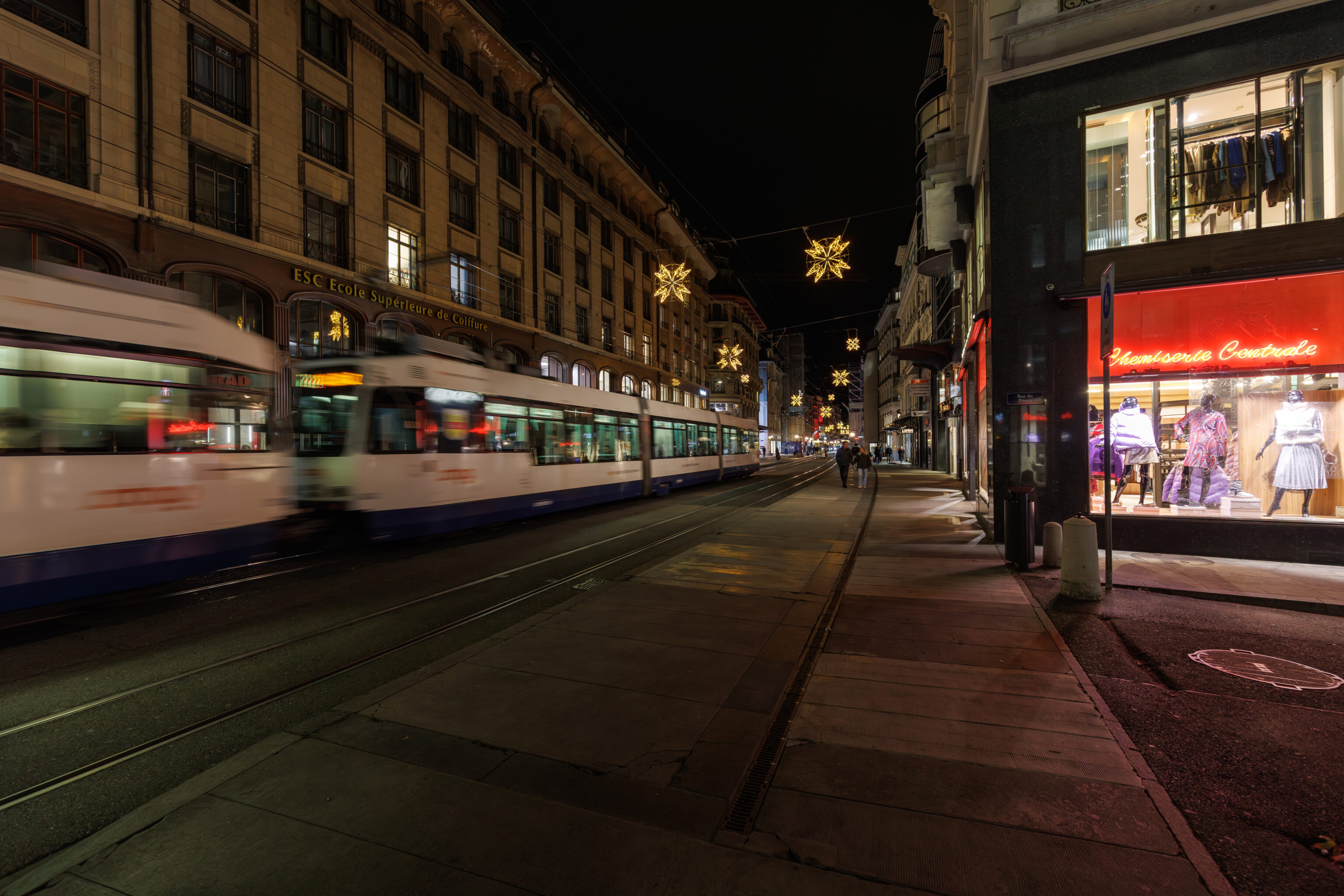
After dinner, we decided to walk around a bit. It was surprisingly quiet.
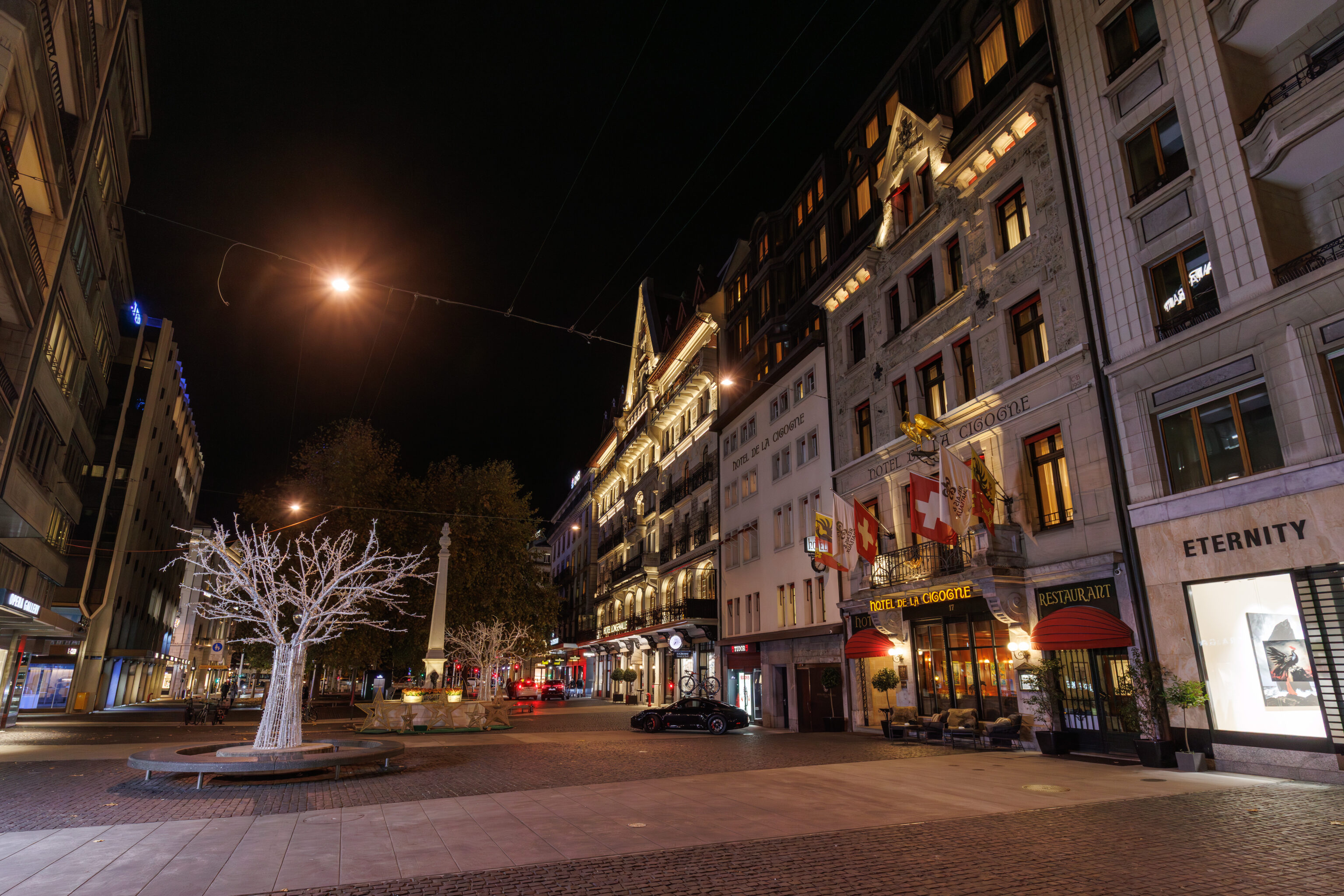
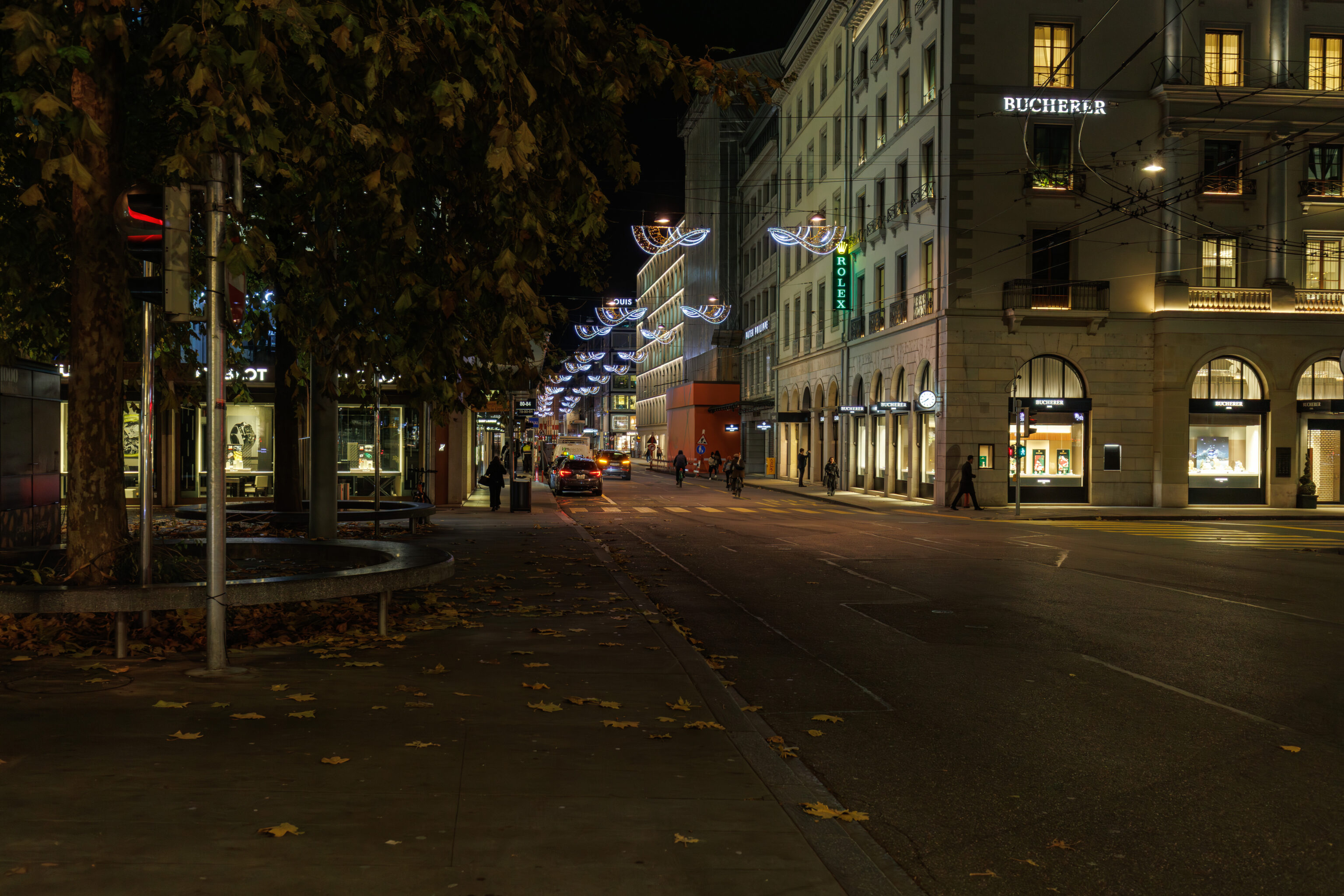
There was almost nobody around. We definitely expected it to be busier!
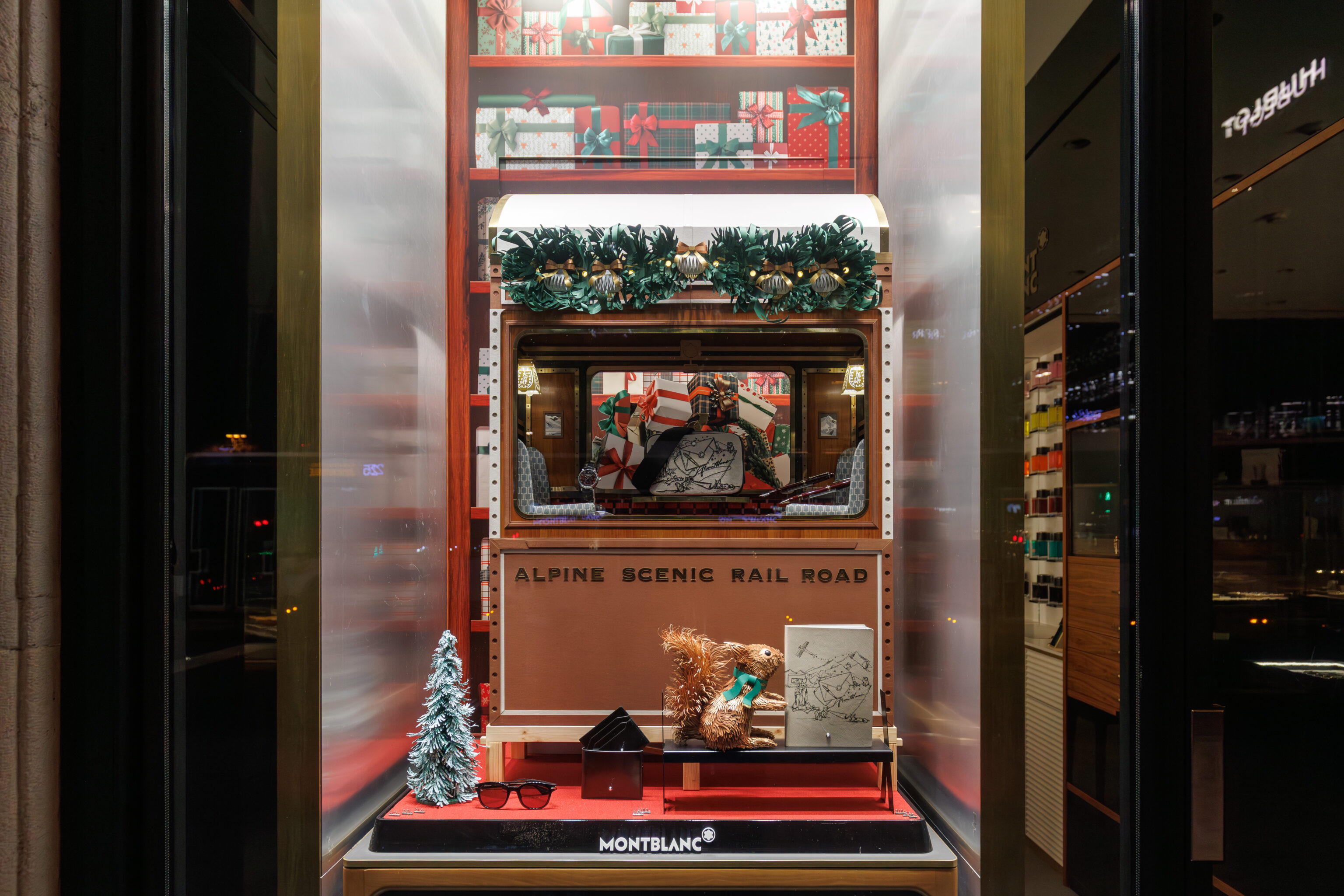
There were some Christmas displays in shop windows.
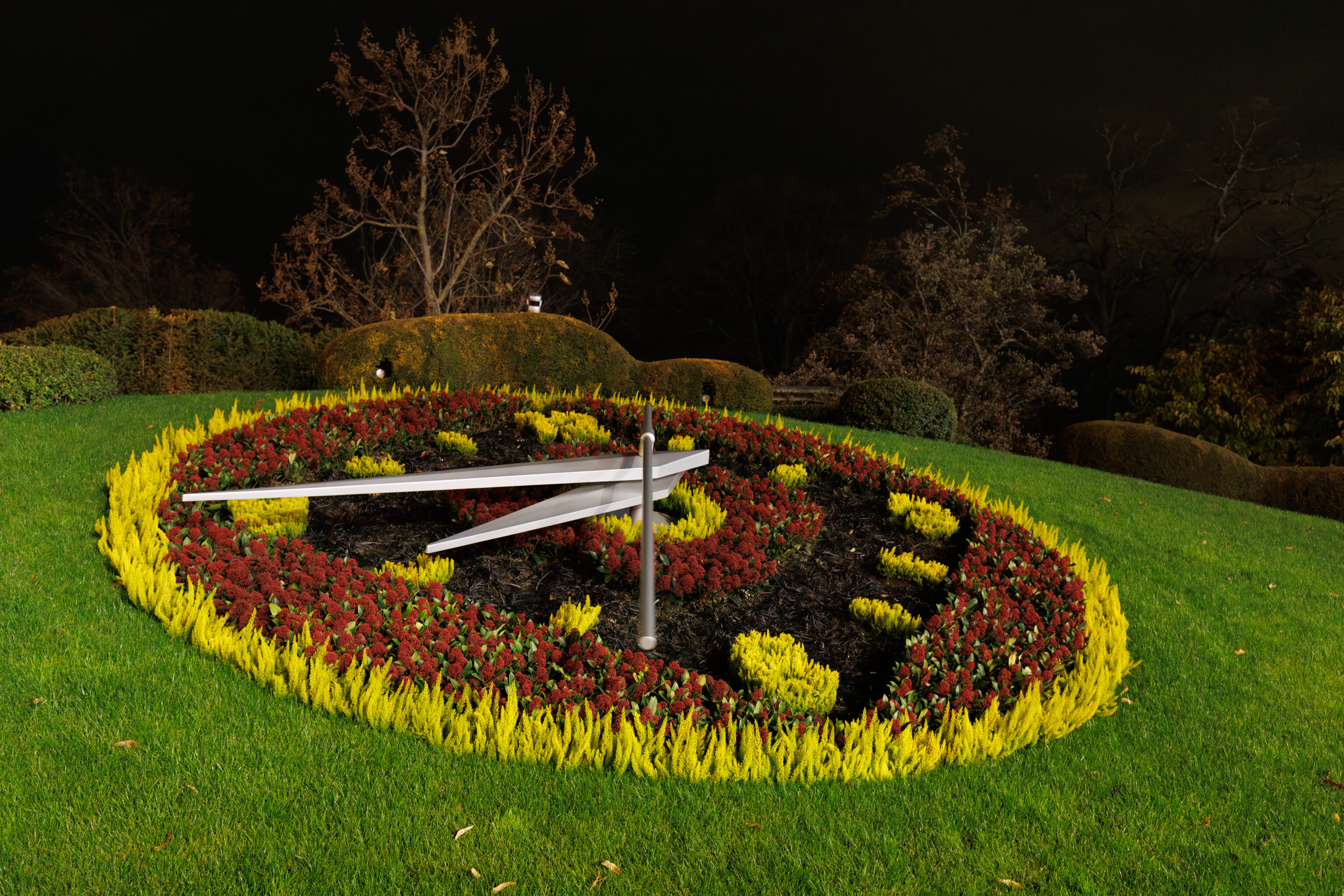
We walked over to the flower clock at the Jardin Anglais (English Garden). There was something about this clock when we visited in 2023, perhaps it was being maintained or new flowers were being planted?
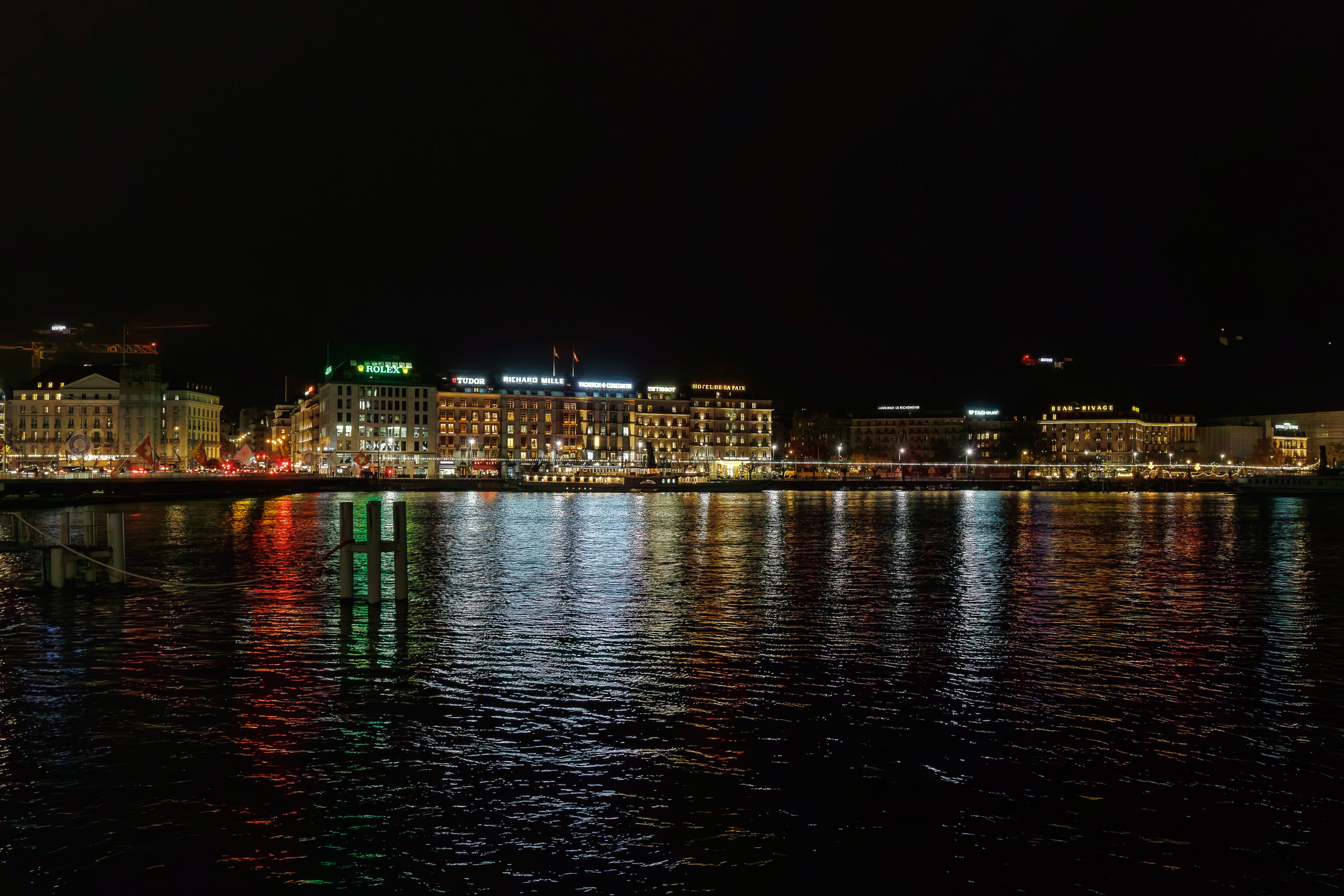
We walked over to the shore of Lake Geneva to take a look at the nighttime view. The hotels in the background are generally significantly more expensive than where we’re staying!
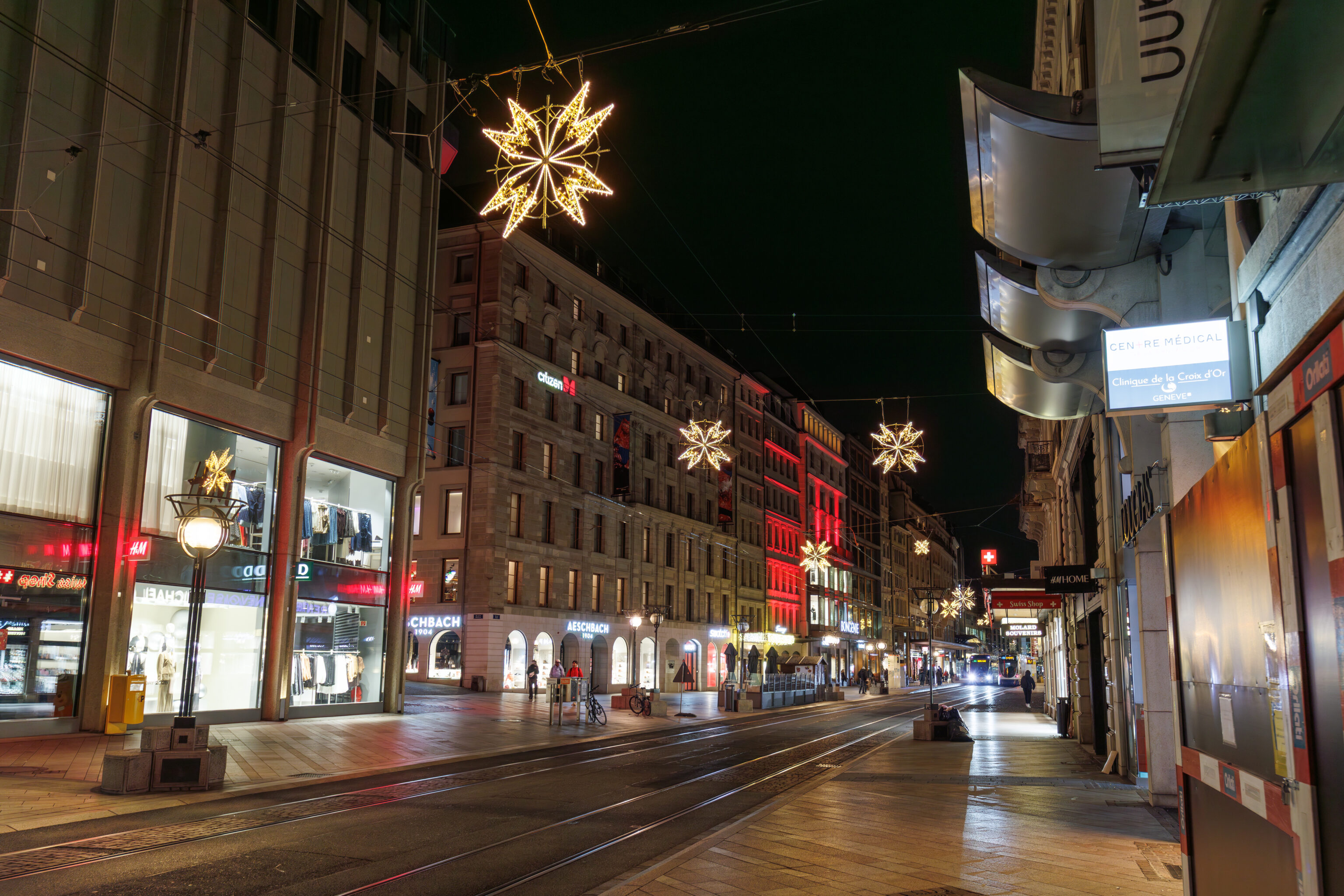
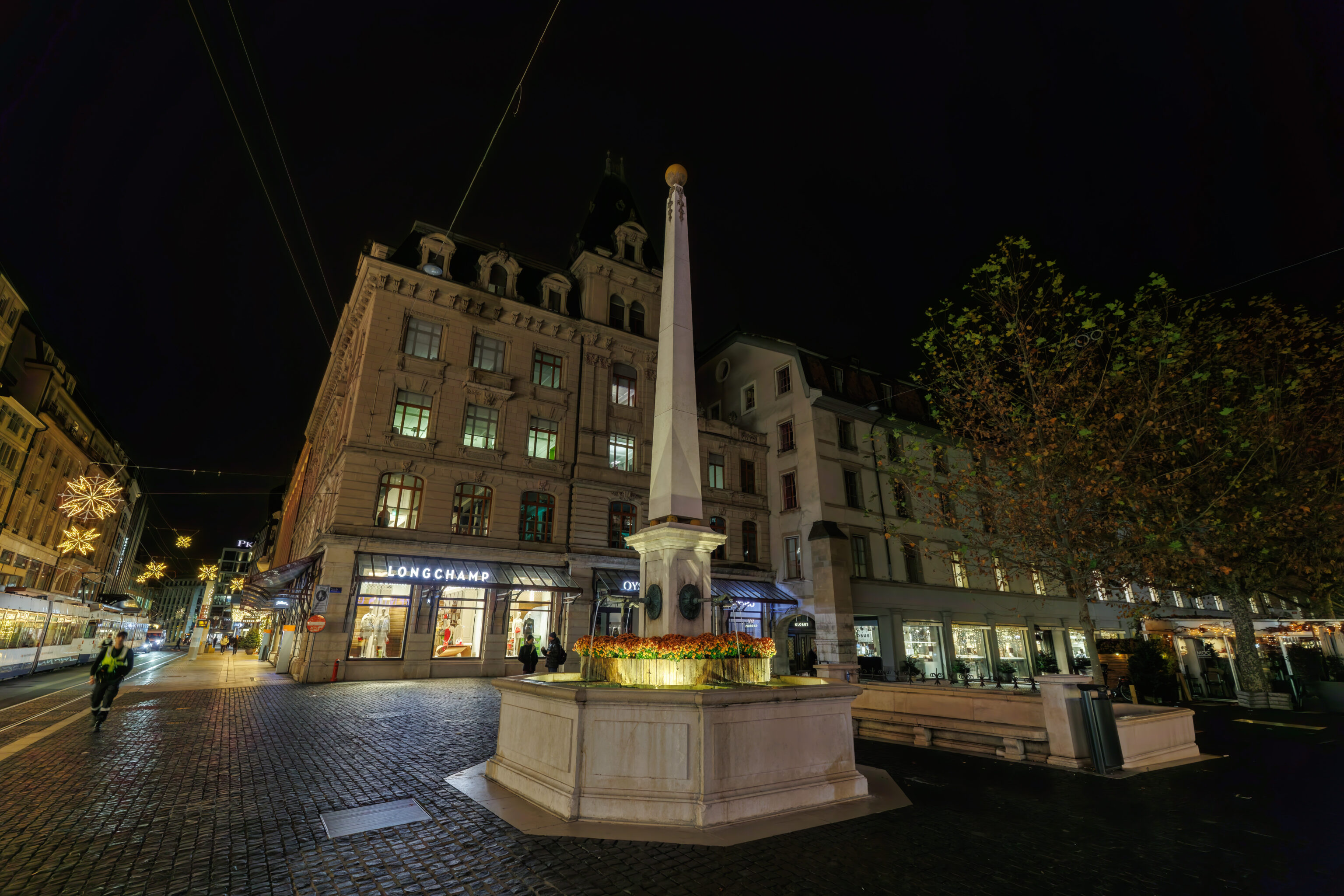
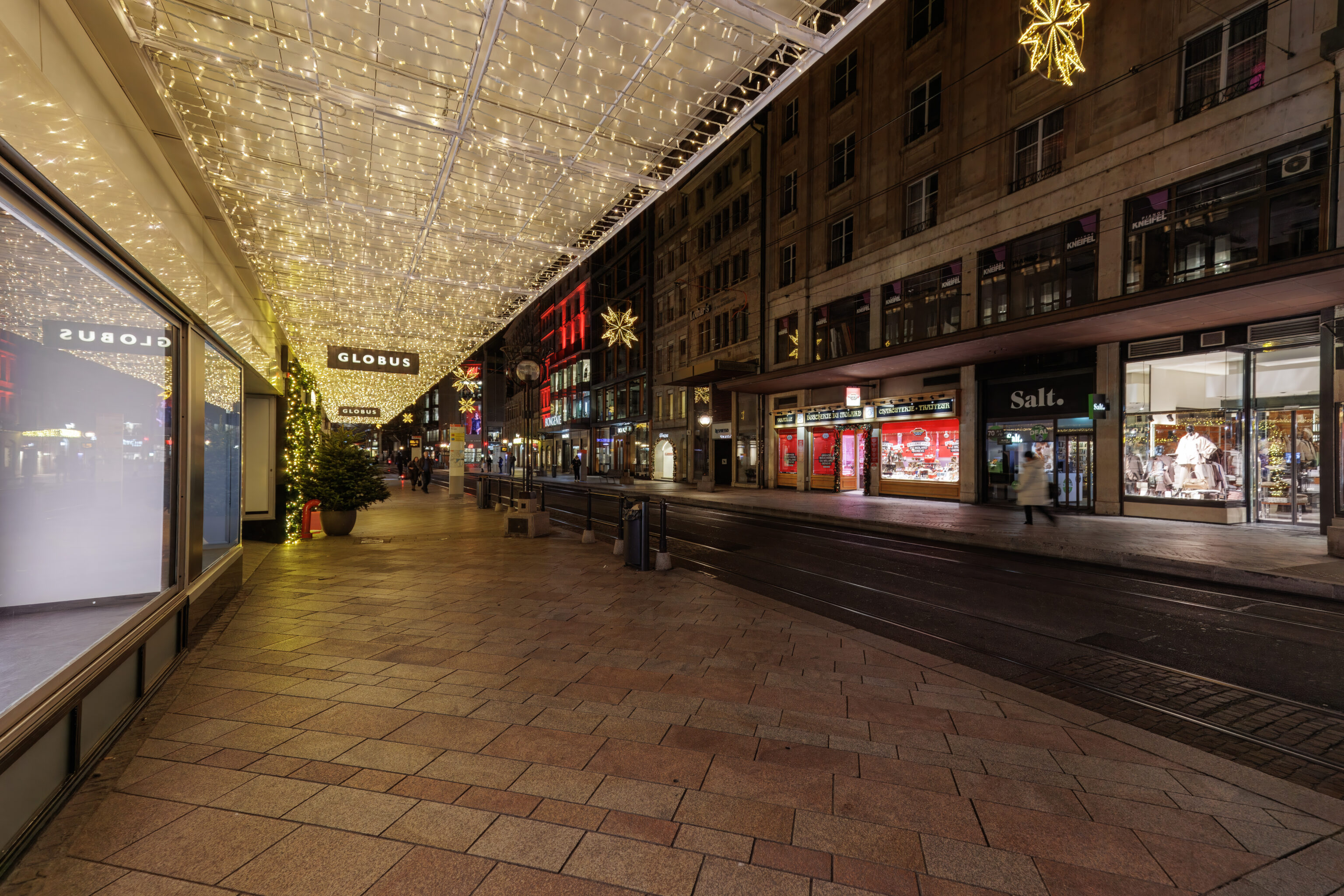
We then started to head back.
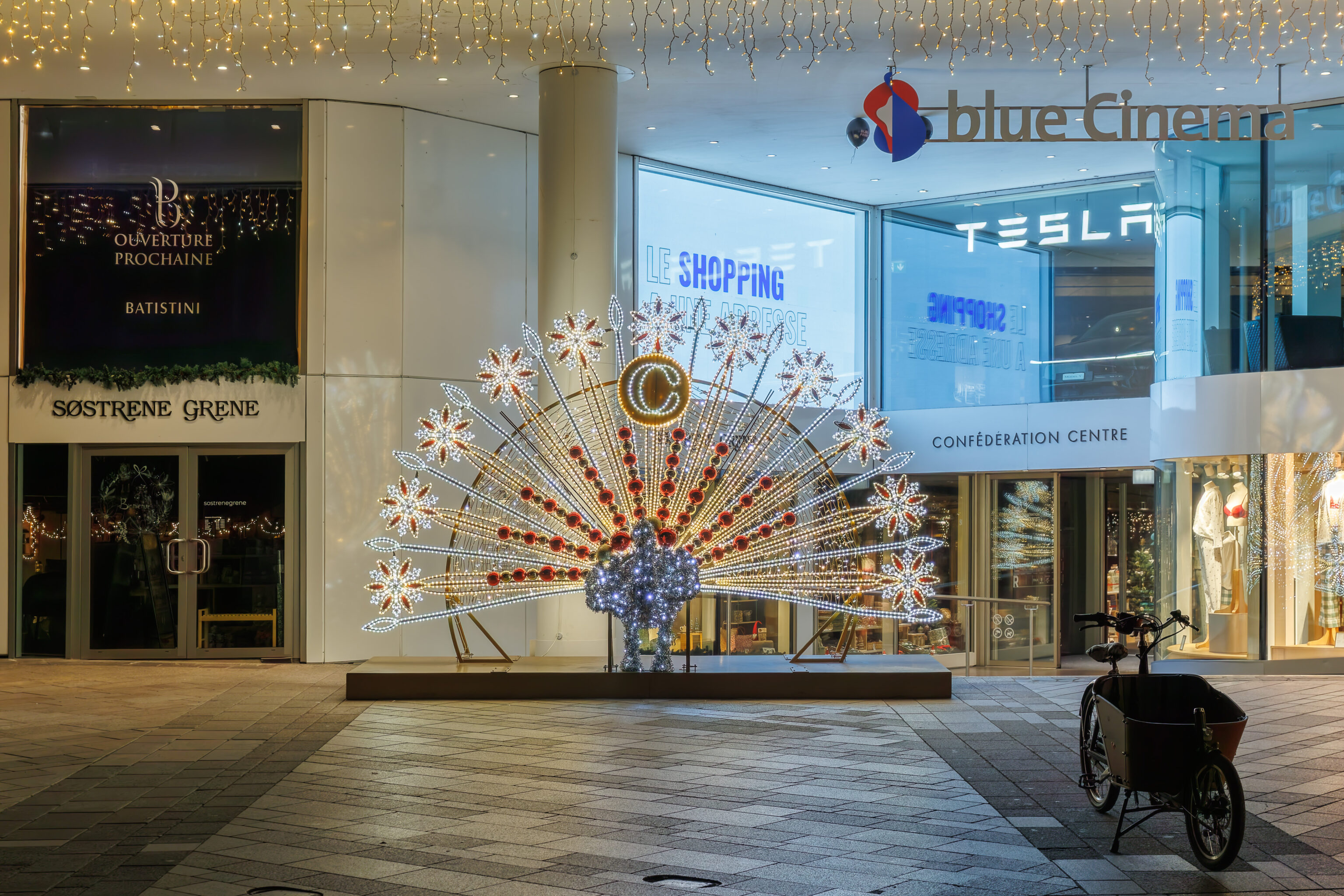
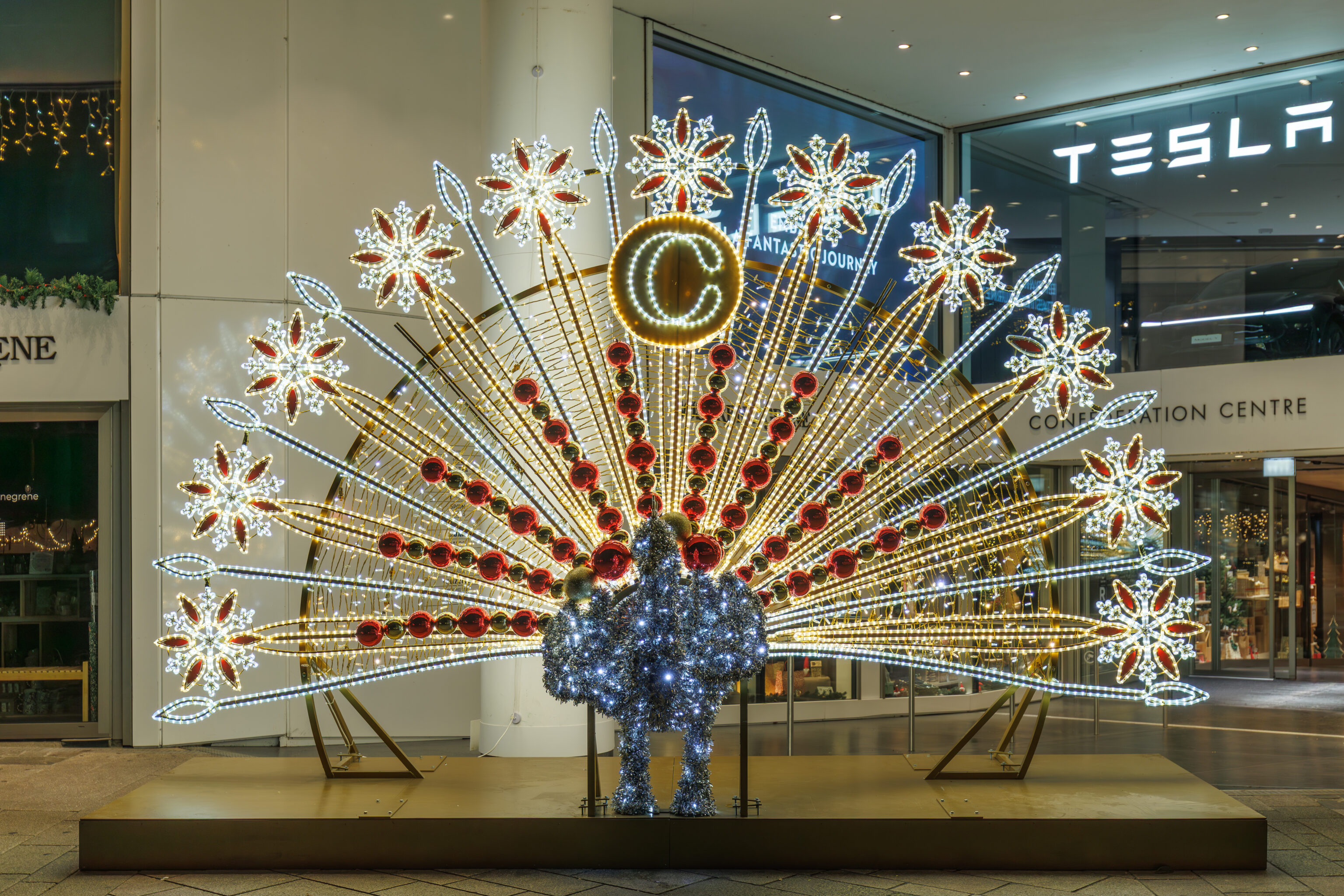
We passed by this lighted peacock in front of the Confédération Centre mall.
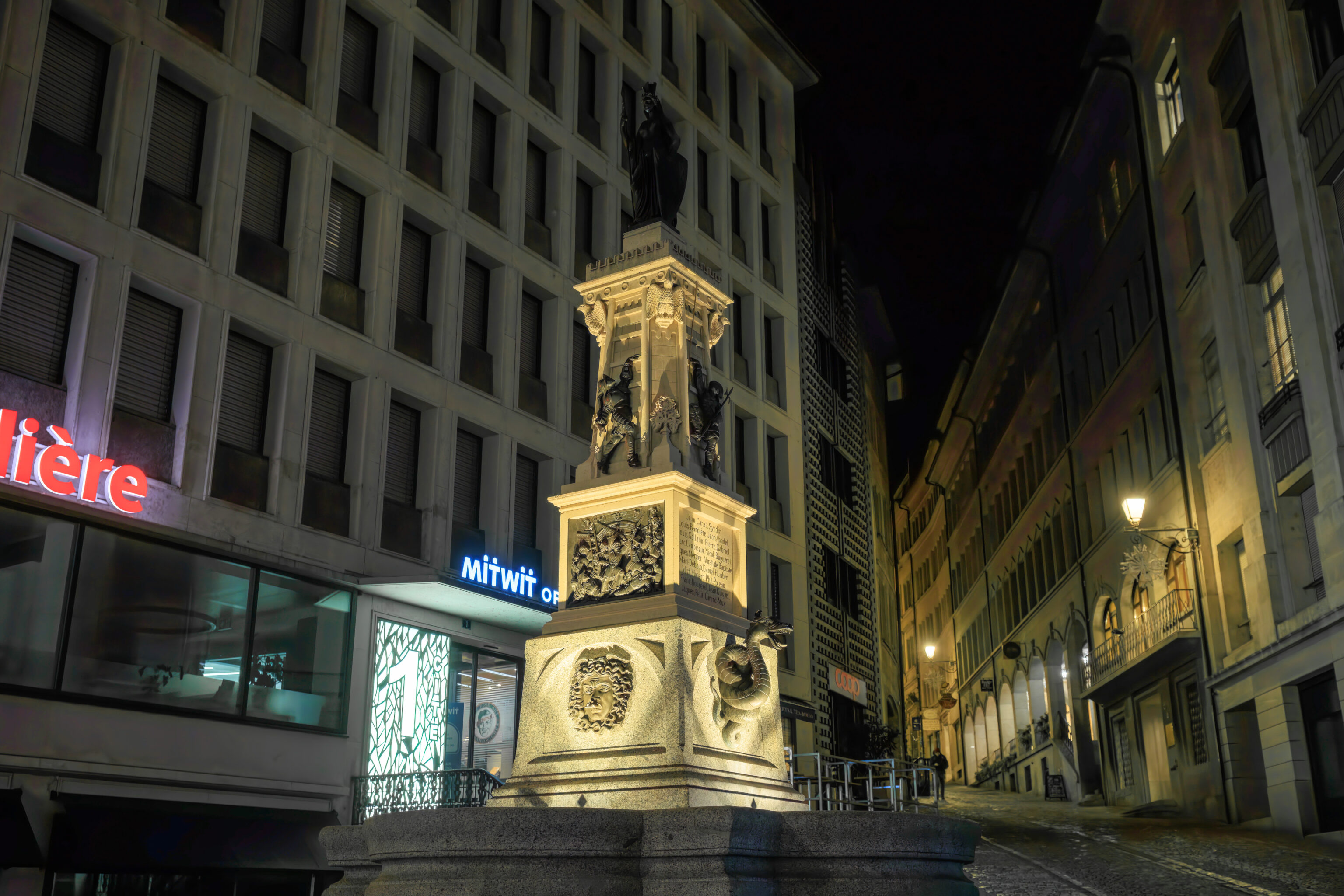
We walked by this fountain, the Fontaine de l’Escalade, when we were here in 2023. The name of the fountain refers to a failed attack on Geneva by the House of Savoy in 1602. There is an annual festival, l’Escalade, held in Geneva every year commemorating this event.
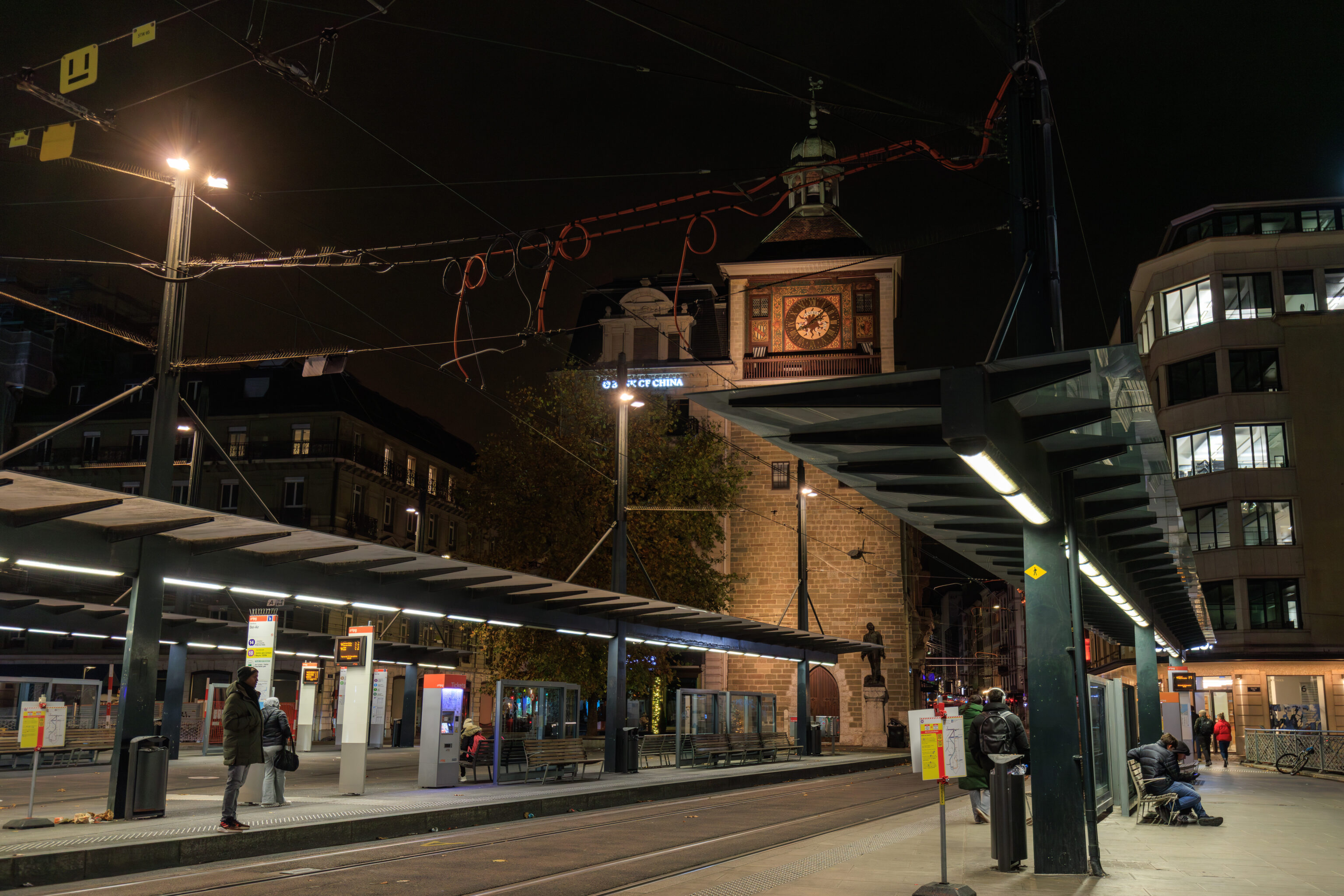
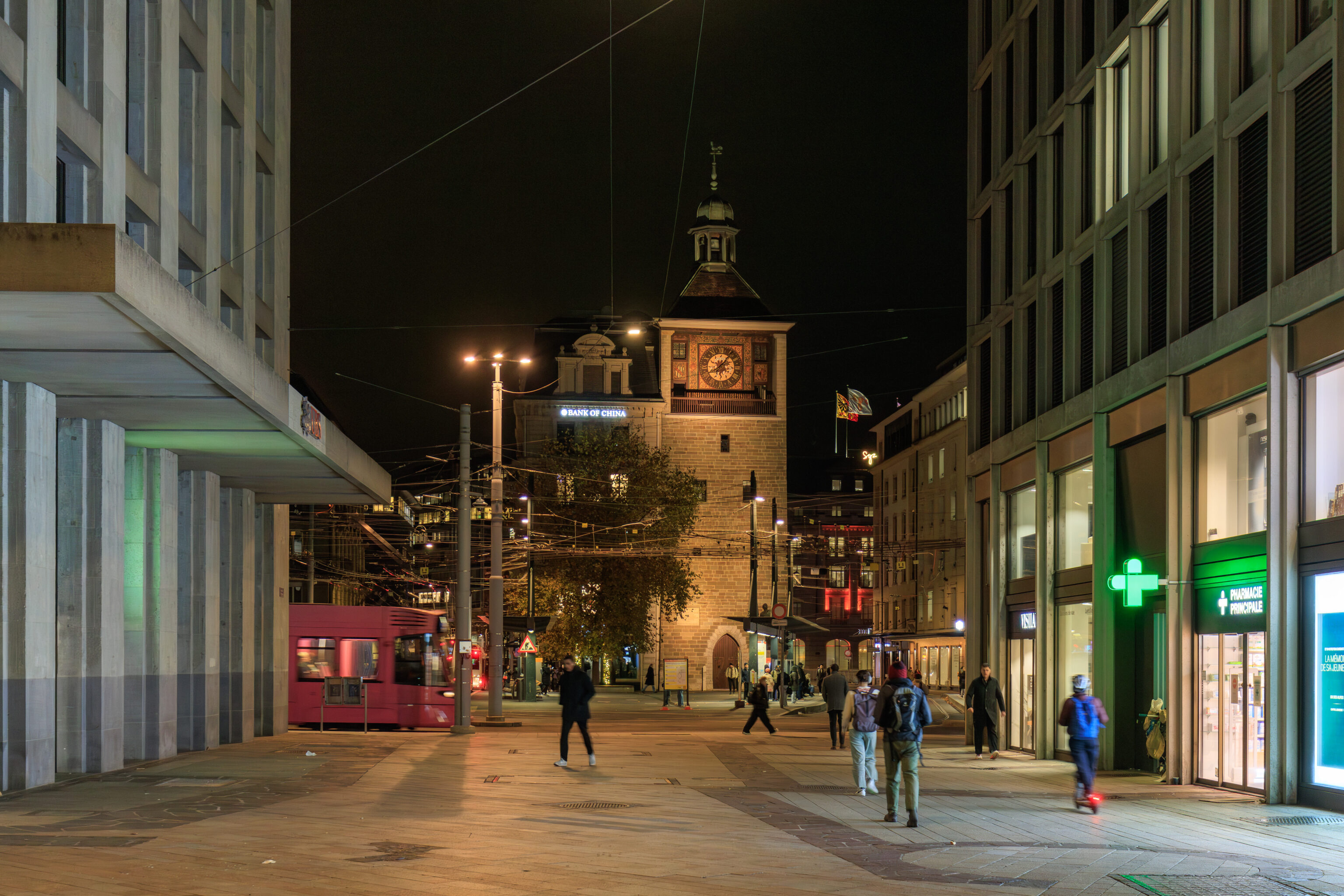
We turned to the north after the fountain to reach the nearby Bel-Air bus and tram stop.
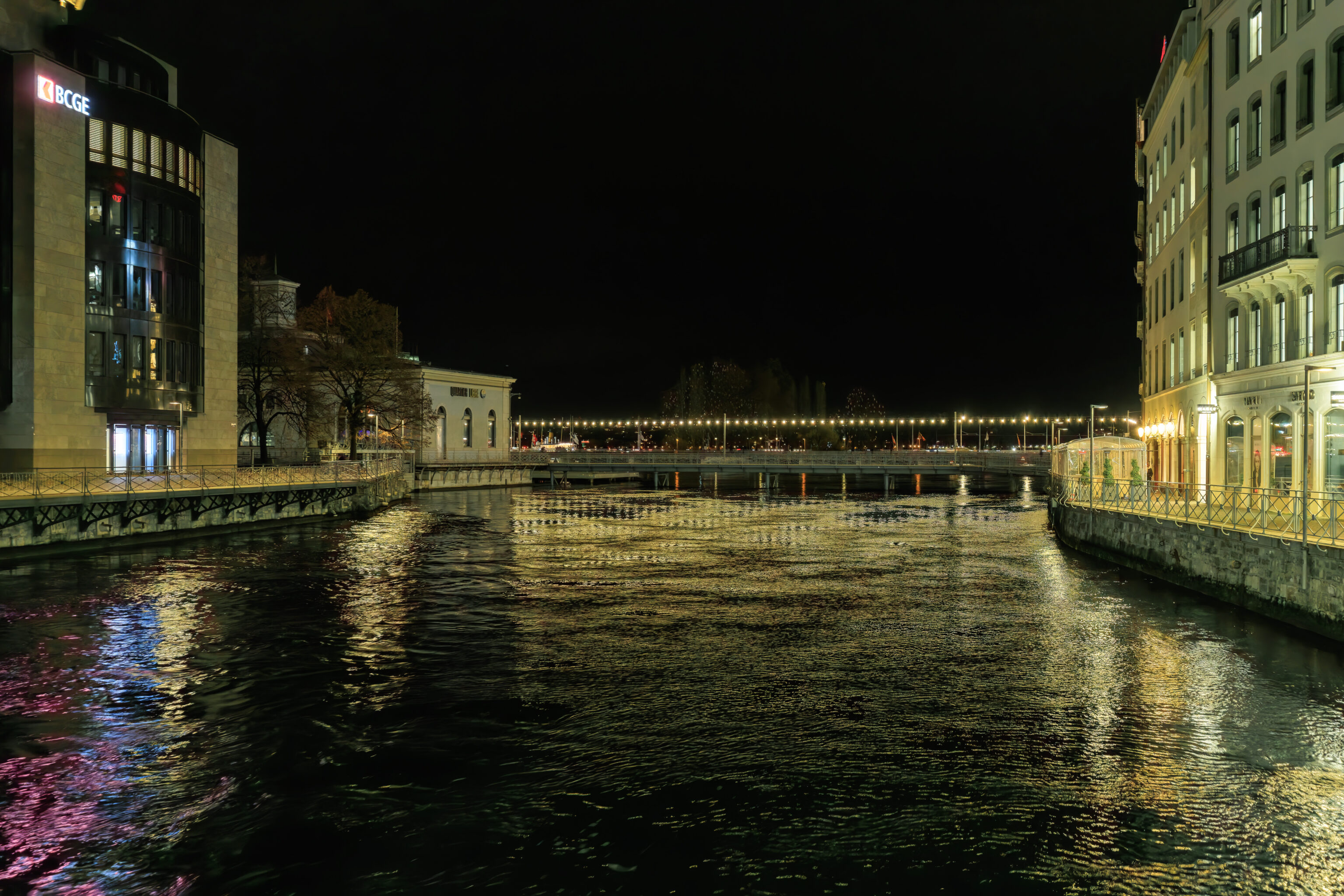
The view looking up the Rhône towards the nearby Lake Geneva, which is a few bridges away.